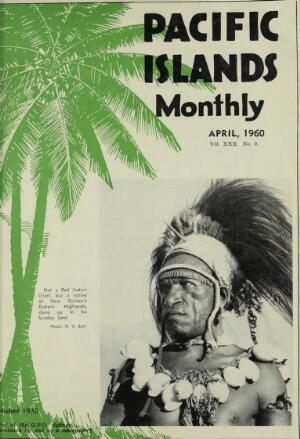
Pacific
Islands
Monthly
April, 1960
Vol. XXX. No. 9.
ilished 1930
led at the G.P.O. smission by post us a newspaper ]
Not a Red Indian Chief, but a native of New Guinea's Eastern Highlands, done up in his Sunday best.
Photo: N. V. Salt.
Advertisements & other items, pp. 2-6 (5 items)
Fly Oni Jejune
'V Ml A un «»i »i tu mini QAM T A J
AROUND
THE WORLD
OAKTAS
AUSTRALIA'S ROUND-THE-WORLD AIRLINE
050 74.119
if f
,4 #v : ' * ’ 4 ' ’ s’ ' ■-' '? d'//m I
Coleman
■ysty V ■". .w
LANTERNS. LAMPS
STOVES AND /RONS
STERNS;
etrol or Kerosene. ), 300 and 500 C.P. ‘si*** a**
THE
THE RESULT
OF OVER
50 YEARS'
EXPERIENCE
* 3
BLE LAMPS:
0 C.P. will give 12 hours ht.
IRONS:
Kerosene or petrol. Easy guiding, easy gliding.
SOLUS STOVES:
In silent and roarer types.
Representative for Pacific Islands
ROBERT GILLESPIE PTY. LTD.
22 YOUNG STREET, SYDNEY. PHONE BU 2221. CABLES; "ROBERGILL"
ALSO 334 QUEEN STREET, BRISBANE, QUEENSLAND.
ROBERT GILLESPIE (N.G.) LTD.
Lae, Madang, Rabaul, Port Moresby
PEARCE & CO. LTD.,
Suva for Fiji Islands
V For excavation, quarry work, road construction and general earth works— anything from sugar to earth to rock to phosphates there's a Michigan Model to do the job the most efficiently, the most economically.
CLARK EQUIPMEHT
REQUIRES ISLAND
In Industry, on Wharves, in Mines and in Logging operations, Clark Fork Lift Trucks move goods quicker, cut down cost. There are unlimited uses for these sturdy, reliable "materials-handlers"
REPRESENTATION
k CE 66-86 Clark Equipment specialise in rubber-tyred tractors and Fork Lift Trucks and are known throughout Australia for reliability and service.
With the undoubted potential of the Islands in mind, Clark wish to be represented by a progressive, ethical and sound organisation.
For full information, write
CLARK EQUIPMENT AUSTRALIA PTY. LTD.
BOX 50. P. 0.. HORNSBY. N.S.W. 47-1071. Cables: "Austrux" Sydney Head Office and Plant: SALISBURY ROAD. ASQUITH. N.S.W.
Branches: BRISBANE. MELBOURNE, ADELAIDE. PERTH
H
m m res* StT>r%do^3 y-#rd Hue*
TARGET SHOOTING IS GOOD SPORT!
o ■ On the inside of each new ICI .22 Rimfire Cartridge pack there is a practice target.
Your retailer also has free five-bull practice targets. Ask for them each time you buy .22 Rimfires your perfect partner for good shooting. & The new colourful packs in the ICI range contain the same high-quality .22 Rimfire Cartridges famous the world over for consistent accuracy and excellent performance. as
SPORTING CARTRIDGES
Manufactured by IMPERIAL CHEMICAL INDUSTRIES OF AUSTRALIA & NEW ZEALAND LTD.
THE CHINA NAVIGATION CO. LTD
(A British Company incorporated within the United Kingdom.)
hlcM/ Lii^C
■ iiii ■ Passenger and Cargo Liners: ■■■Hl
M.S. "SINKIANG"
M.S. "SHANSI"
M.S. "SOOCHOW"
S.S. "PAKHOI"
Regular services between Australia, Papua-New Guinea and Solomon Islands Regular monthly service with the modern motor ships:
"CHUNGKING"
"CHEFOO"
"CHEKIANG"
(Cargo only)
Connecting Japan, Hong Kong, New Guinea, New Hebrides, New Caledonia, Fiji and Tonga, thence return Japan direct.
For further particulars please apply to Agents or refer to the weekly advertisements in the “South Pacific Pa
AGENTS:
PAPUA; Steamships Trading Co. Ltd., Port Moresby, Samarai.
Cables: "Steamships", NEW GUINEA; Colyer Watson (N.G.) Ltd., Lae, Madang, Rabaul.
Cables: "Colyeram".
NOUMEA: Etablissements Ballande, Rue de L'Alma, Boite Postale 18, Noumea.
HONIARA: British Islands Trading Corporation.
VILA: Les Comptoirs Francaise des Nouvelles-Hebrides.
JAPAN; Butterfield & Swire (Japan) Ltd., Tokyo, Yokohama, Osaka, Kobe. Cables: "Swire".
FIJI: Morris Hedstrom Ltd.
SANTO: Les Comptoirs Francaise des Nouvelles-Hebrides.
APIA: Morris Hedstrom Ltd.
NUKUALOFA: Morris Hedstrom Ltd.
TAHITI: Etablissements Donald.
EASTERN MANAGERS: Butterfield & Swire Ltd., 1 Connaught Central, Hong Kong. Cables: "Swire".
General Agents in Australia
SWIRE & YUILL PTY. LTD. VSTSSJn,
1
FIC ISLANDS MONTHLY APRIL, 1960
April, 1960 Pacific Islands Monf
3
FIC ISLANDS MONTHLY APRIL, 1960
April, 1960 - Pacific Islands Monti
People
CDbably one of the youngest iintments to the rank of super ndent in any police force is that uuperintendent Brian Holloway, japua-New Guinea.
Illoway’s promotion from in -3,0r to superintendent was con >ed in March. He is 33 years of > comes from Adelaide, and for ;oast few years has been officer jiarge of Kokopo Police Station Rabaul. His new appointment » eventually take him to Port i:sby, where he will become irintendent Training for the □ Papua and New Guinea Con- Jilary. About, the same time rner superintendent from the aul district, Superintendent ray McNaught will take up ss at headquarters in Port 2«by as Superintendent Investi ng.
rst appointment of a Fiji m as head of a Government de cent became effective when John Amputch became Com ;oner of Labour at Suva early :pril. He succeeds Mr. Norman ion. who left Fiji in March to n to UK. Mr. Amputch has had iried career—apprentice with )Co., docket checker with Morris
[?]r way to England in March—attractive [?]Patricia Bain, of Suva. She probably the holiday—she was one of two official [?]rs seconded to the Commission of In tonation the Suva disturbances, which con its work on March 4 after taking down [?]pages of typescript evidence. The other [?]r was Mrs. Margaret Gould. The report [?]is expected to be released shortly.
Photo: C. L. Cheng.
Hedstrom Ltd., Vacuum Oil I representative in NW Fiji, Moi Hedstrom branch manager for N 1 and Tavua; then labour officer the Government Service, which joined in 1944. In 1952 he stud labour relations in Trinidad, tl did the Colonial Office train course. He is 48, married, witl daughter (a Sacred Heart nun NZ), and two sons (one studji for the priesthood in Australia, other at high school in Suva). * * * In a cloak and dagger atn phe r e, former Tahiti politic Pouvaana a Oopa, was in Ma spirited away from Papeete by si headed for a prison in Fra Pouvaana was sentenced to e: years gaol last October on cha; that included attempted murder arson.
In Auckland, in March, was Lehmann, of West Berlin, I sentimental journey with his and daughter. In 1914, Carl Lehn was a cadet in the German freij Elass, lying in Pago Pago har To avoid internment —as he tho —he and other crew members ' off” in one of the ship’s life: for Western Samoa, then Ge; administered. The nautical was greeted, however, by New land troops and soon Lehi found himself interned on Me Island, near Auckland. A while; Count Felix von Luckner joine? internees there, he having been captured in Fiji and then recap: in the Kermadecs after esc: from Motuihe.
Mr. Lehmann said in Auc: that von Luckner, still fit andt is now living in Hamburg. * * * Dr. T. T. Barrow, keeper of : and Pacific Islands historical lections at Dominion Museum, , ington, NZ„ is at present doing, months’ research work at Berm
In Sydney recently at a meeting of the nesian Association were Mick Kuresa of West Samoa, and Mick (Mellis) Spowa[?] Suva. —Tel[?]
lop Museum, Hawaii. He will ilete a book (for the layman) he riting on Peoples and Arts of Pacific Islands.
3e in New Guinea, as reported London newspaper interview • Countess Ingeborg de Beausacq: [hunters will eat somebody [like so as to absorb their kind- Once she tended a wounded hunter and he was so grateful he wrapped his arms tightly ud her, pulled out masses of her ;and began eating it. She was [ “just in time”.
. F. D. Betham, a European Jd member of Samoa Legis i Assembly, has been invited
[?]raphed in a thoughtful moment at the [?]dia (Netherlands New Guinea) conference [?]ch between Netherlands and P-NG officials Mr. H. C. Smith, Netherlands Embassy [?]e for New Guinea Affairs in Canberra. [?]s adviser to the Dutch legation. (See page 19.)
[?]t the Hollandia conference, Dr. John [?]r, Assistant Administrator of P-NG and of the New Guinea delegation, with Mr.
McCarthy of the Australian Department [?]ritories, Canberra (adviser to the Aus [?]delegation). They discuss a point with NG's Governor, Dr. Platteel (right).
by the Commonwealth Pari mentary Association to atten course in parliamentary pra< and procedure in London from 2 to June 2, and will leave . in April. Samoa Legislative sembly intends to apply for a ated membership of the Associa
For the fifth successive year Bob Bunting, MLC, has been el.
Papua-New Guinea State pres; of RSL. The three vice-presii are Messrs. W. J. Hughes Mainland), P. Bosgard (Papua): D. Barrett (NG Islands).
Mr. R. P. Berking, of L_ Apia, a pioneer German S 3 celebrated his- 80th birthds Apia on April 1. He arrive Samoa 60 years ago and, unti NZ occupation, was Collects Customs under the German Go ment. Later he took up plantim
Irakau, of Baliau village, on Manam New Guinea (where a volcano erupted in —see page 23), has his own plantati about 16,000 coconut palms on the islan told Government officials during the er "We know our island. Nobody is frigl We will only go if you want us to". body wanted him to.
Photo: K. Vellacott
Two well-known members of Port M[?] younger set, Miss June Roberts and Davis, who plan to marry at the end year and will live in Goroka in the Highlands.
Photo; Papuan
isered the coffee industry. He t looks 15 years younger than ]Age. * * * [;ther Virgil Copas, MSC, will be Bishop of Port Moresby rst. Patrick’s Cathedral, Too nba, Queensland, on April 27. iis the first Australian to be I>p of the vicariate —hitherto it coeen under the province of the cch Missionaries of the Sacred ft. The bishop-elect was at one [ business manager of Vunapope ).on, Rabaul, then at Samarai, re being transferred to Northern ritory as superior at Darwin. * * * :,irch 31 was a proud day for ,J. B. Fonoti, local merchant i importer in Western Samoa — mew £20,000 store building at waea was opened with a cele jon attended by 800 guests.
in. Fiame Mataafa, Prime Min of Western Samoa, who has in Middlemore hospital, Auck- NZ, receiving treatment for a injury, will be discharged this ;h. Retiring NZ High Com i.oner in Samoa, Mr. G. R. ;es, who has been given a new in India, was due to return to land on April 10 and intended to go with Hon. Mataafa to ington for talks with NZ Gov lent leaders. Mr. Powles made tfinal farewell speech to the Legislative Assembly on :h 22. ♦ * * -ss Patricia Butler, former ias air hostess in New Guinea, awarded substantial workers’ sensation by a Sydney judge in \, after she claimed she had •acted amoebic dysentry in 1955 - in NG with Qantas. Medical
Commodore of the P. and O. fleet of 38 [?]s Capt. H. P. Mallet, who is in command [?]e 30,000 ton "Iberia". Capt. Mallet [?] Commodore J. W. Last, captain of the [?]n" who has retired. The new Commodore [?]d a Tasmanian girl and they have their home in Melbourne.
evidence suggested that the met of infection was through na food handlers “whose supervij apparently was not good”.
New Hebrides businessman E Gubbay, accompanied by Japa;, fishing technicians, have been v ing the BSIP recently. They II been considering the possibilitie commercial fishing, including w ing, in the BSIP.
Mr. Anthony Garvey, the es son of the late Governor of Sir Ronald Garvey, now has o pleted his education, and has jo the Sydney staff of the well kn Australian mercantile house, Me Mauri Bros, and Thomson, Ltdfc
Mr. Alwyn Campbell, of the Government T cal School, Lae, New Guinea, who is a son of Pastor and Mrs. A. J. Campbell, known New Guinea missionaries, was m at the Seventh Day Adventist Church in S[?] recently to Miss Edna Spoor, of the S[?] Voice of Prophecy Radio. Pastor Campbell self conducted his son's wedding.
Photographed in Sydney recently, Mrs. T. mand (right) formerly Truda Camero[?] Nukualofa, Tonga, with her pretty da[?] Kelela. Also from Nukualofa is Miss Anna -Tele
acts to be married soon. He was . in Fiji, and was educated tcly in England. Sir Ronald wey, who retired in 1959 from IBritish Colonial Service, is now srnor of the Isle of Man. Lady wey was Miss Pat McGusty, [•'liter of a former Chief Medical >ser, Dr. McGusty, in Fiji. * * * uck in Fiji in March was Dr. I. adocks, of Melbourne University, savouring to solve a puzzling jtion that arose out of his visit ne Colony in 1958, At that time made 8,000 blood pressure tests oeople of all races in Fiji and . went back to Australia to Date the results. They showed rmarkable difference between the cd pressure readings of Euro ;is over 40 and those of Fijians : Indians in the same age group. he is sampling a large number mdian business and professional in the 40-60 group to find out usiness worries and responsibil send their blood pressure surg i as is the case with European
>rd Tedder, Marshal of the al Air Force, who was No. 2 to mhower in World War II as uty Supreme Commander of the ■id Expeditionary Forces, paid a It visit to Fiji early in April, with y Tedder, on the way to USA. iis now chairman of a British or vehicle company. During the „ it came out, surprisingly ugh, that Lord Tedder had been :ie Colonial Service before World I—and had served in Fiji as ildet. He made a nostagic “I -there” visit to Lautoka where was stationed between February September, 1914, when he re .ed to UK to take a commission the Dorsetshire Regiment. He lunted how he was instructed by then Fiji Colonial Secretary on
rng very pleased with himself, is Mr. Jim of Thio, New Caledonia, who has just ed and landed this outsize groper. Weight is 100 kilos.
the outbreak of war in August, 1 to organise the defence of Laut against possible attack by the C man warships Gneisenau a Shamhorst.
Queen Salote Tupou ,of Tc arrived in Auckland from Nukus by the Tofua on April 10, on a vate visit to NZ. She was aco panied by her two young grj daughters, Princess Pilolevu Princess ’Ofeina, who will atl school in the Dominion. Qj Salote is expected to make a U informal visit to Australia du May.
At the Polynesian Association of Sydne Martial Sage, of Papeete, Tahiti, who b a French friend, Mr. Jean Molie, also of P —Tele
Married at St. Mary's Catholic Church, New Guinea, in March —Mr. and Mrs. O Jean-Antoine Colombet. The bride was fon Margaret Anne Gold. A recording of the riage ceremony will be sent to the bridegn parents in France.
Photo: Otto Br[?]
R. A. Davis, a former Chief £1 Officer at Rarotonga, has nd his second book published Ji Makutu. Michael Joseph, its ji publishers, described it as a iJlealing with the old religious i of the Cook Islanders. Tom r Who is part-Polynesian and [mga-born, sailed his yacht ffrom Wellington, NZ, to USA, in 1952 when his term Ik Is. CMO ended. The saga voyage with his wife Lydia Dmily and his medical experi rn the Cooks became Doctor Islands, a book that caused [lively discussion in NZ and mga. Since then, in USA, he ;en working with the US Army ejects associated with the of extremes of climate and Eation of the human body, ime was considered for the Executive Officer for Health 5 South Pacific Commission at st SPC session in Noumea, eb job, under Australian sup
vent instead to
Dr. T. K. A.
Paul Hasluck, Minister for tries, will leave Canberra on ; 27, to attend the British onwealth Prime Ministers’ =ence in London with Prime er Robert Menzies. After the tnce, they will go on to USA re talks with UNO Trustee :ouncil members and will con h top Government and Islands :S in NZ on the last stage of journey. There was some -tion in P-NG that this trip presage Mr. Hasluck’s becom iternal Affairs Minister (held ?y Menzies since Mr. R. G. .was elevated to the peerage). .nberra officials took pains to out that Mr. Hasluck’s selec ts “because of his experience iivil servant at international sices” and because Terri affairs will be cropping up in is’ discussions.
and farewells were extended by many residents to incoming and outgoing of the Commonwealth Bank there in eaving for Sydney were Mr. and Mrs. [?]yant (left) after five years, and in [?]ere Mr. and Mrs. E. F. Glasson, from South Australia.
Advertisements & other items, pp. 7-17 (10 items)
5
ISLANDS MONTHLY— APRIL, 1960
Vl? An Z Bank
The Wife and I . . . (5 T—f K 7 We’ve been partners in running our home a long time. It was hard at first, but it’s easier now because we budget and have A.N.Z. Cheque and Savings Accounts. We really enjoy the convenience of having both accounts at the one A.N.Z. branch it saves time, effort and money. The children particularly enjoy having Savings Accounts at our Bank; they feel quite grown up.
A#Z tycru'QSi Hlko, ode
AUSTRALIA AND NEW ZEALAND BANK LIMITED
AUSTRALIA AND NEW ZEALAND SAVINGS BANK LIMITED Cheque Accounts—Savings Accounts
ANZ642. 2FC
KNOWLEDGE
THAT HAS
ENDURED WITH THE
PYRAMIDS
A SECRET METHOD FOR
THE MASTERY OF LIFE
Whence came the knowledge that built the Pyramids and the mighty Temples of the Pharaohs? Civilization began in the Nile Valley centuries ago. Where did its first builders acquire their astounding wisdom that started man on his upward climb?
Beginning with naught they overcame nature’s forces and gave the world its first sciences and arts. Did their knowledge come from a race now submerged beneath the sea, or were they touched with Infinite inspiration? From what concealed source came the wisdom that produced such characters as Amenhotep IV, Leonardo da Vinci.
Isaac Newton, and a host of others?
Today n is known that they discovered md learned to interpret certain Secret Methods for the development of their inner power of mind.
They learned to command the inner forces within their own beings, and to master life. This secret art of living has been preserved and handed down throughout the ages. Today it is extended to those who dare to use its profound principles to meet and solve the problems of life in these complex times.
This Sealed Book—FREE Has life brought you that personal satisfaction, the sense of achievement and happiness that you desire? If not, it is your duty to yourself to learn about this rational method of applying natural laws for the mastery of life. To the thoughtful person it is obvious that everyone cannot be entrusted with an intimate knowledge ot the mysteries of life, for everyone is not capable of properly using it. But if you are one of those possessed of a true desire to forge ahead and wish to make use of the subtle influences of life, the Rosicrucians (not a religious organization) will send you A Sealed Book of explanation without obligation. This Sealed Book tells how you, in the privacy of your own home, without interference with your personal affairs or manner of living, may receive these secret teachings. Not weird or strange practices, but a rational application of the basic laws of life. For your complimentary copy address your request to: Scribe T.B.
"We Rosicrucians (amoro
BOX 3988, G.P.0., SYDNEY, AUSTRALIA
Influenza colds
Children’s coughs
Rasping throat
Croup
CHECKED INSTANTLY WITH
bods
GREAT
PEPPERMINT
COMPOUND
Provides wonderful relief and is completely free from habit forming drugs.
Always keep a bottle in the home W. 71
THE
FAMILY
REMEDY
(UmtMalUfA.
is a “must” for
tropical baking
I
TWA
MARYS.
Aunt Mary’s Baking Powder is always fresh and maintains its full strength. It never deteriorates in its airtight container, that’s why your cakes and pastries will have extra lightness, and stay fresh longer when you use Aunt Mary’s Baking Powder. You also cook with the important, and in the tropics, the vital advantage of adding the rising agent when you do your mixing that is the right time the best time for sure results.
You’re in for a wonderful treat when you try Aunt Mary’s Tomato Sauce, Tomato Juice, Jellies, Custard, Baked Beans, Spaghetti, Lemon Butter and Canned Soup.
LOCK UP WITH
t&c/u&O&d
i I 1$
for top security..
Don’t take risks when your valuable and often irreplaceable possessions are at stake. Invest in a first class padlock—
a Lockwood —for “top security”.
Up to 78,000 different key combinations
ensures that only your key will open your padlock. The shackles are of casehardened steel or all brass, and are available in various lengths. Most
Lockwood pin-tumbler padlocks can be
“master-keyed”.
” < l?" i ' ,CYL,N °ER„o R T,,
l/JIJU locks.
O f—Precision, deper EJ/.LTM L b,, “ y ’ Secu rit 111 1 Moving parts soJ J brass Over 30 a '•j I * (0d I P ,J cations in a j
[]'L J . Av ailabl« as
master-key’ systen No C 100 No 201 S 206 307 night latches.
Sturdy, reliable mechanism Avertable with or without snib. Nos. IUO. 201 and 206 illustrated.
LATCH
Just push door open, pujj j, to cJo Easy to install a Matures strong sn 30 a O, 3001101 latch sturdy. Attract- Can be stubbed from in- i Ne. 300/im
STREAM LATCHES.
Many popular fumble fimsh«.
No. 211 illustrated. No. 200 Narrostile” also available. side. 300/101 “as exterior fever handles.
NO’s 403
PNEUMATIC CLOSER NO
401. For all doors up to 40 lbs. weight.
404 HYDRAULIC
CLOSERS.
For all doors. Brackets and arms for every installation.
OGDEN INDUSTRIES PTY. LIMITED
Edward Street, Huntingdale, Victoria.
Largest manufacturers of cylinder locks in the Southern Hemisphere.
PARKE-DAVIS
CAMOQUIN TABLETS
Effective Single Dose Treatment for
MALARIA
SPECIALLY FLAVOURED TABLETS AVAILABLE FOR
CHILDREN
SUPPRESSIVE DOSE—
For Adults: 3 tablets to be taken as a single dose once weekly, or 1 tablet three times weekly.
For Children: 1-2 years, one INFANT FORMULA TABLET once weekly or half-tablet twice weekly. 3-5 years, two INFANT FORMULA TABLETS once weekly or one INFANT FORMULA TABLET twice weekly.
IMPORTANT:—CAMOQUIN should
TREATMENT DOSE—
For Adults: 3 tablets taken as a single dose. A second dose of 3 tablets may be given in from 24-72 hours If fever has not subsided completely.
For Children: 1-2 years, one INFANT FORMULA TABLET as a single dose. 3-5 years, two INFANT FORMULA TABLETS as a single dose. be taken immediately after or during a full meal.
Obtainable from all chemists and suppliers of
PARKE-DAVIS products
PARKE, DAVIS & CO., SYDNEY
So nice to go home with . . . m £ m 6092 . a bottle of <:S.^ ,v>
GIN
'll
Going places?
Your trip will be much happier if you know that every detail has been settled in advance but there is no need to do it yourself. Much time and trouble can be saved by letting the Bank of New South Wales Travel Department assist you.
What the “Wales” Travel Department offers you Whether your journey is in Australia or overseas, the “Wales’ will gladly plan itineraries, make transport bookings and hotel reservations, arrange travel finance, and, for trips overseas, advise on passport, visa, and taxation clearance procedure.
Travel finance The modern way to carry money safely is by Bank of New South Wales Travellers’ Cheques, which are readily accepted by all banki and by principal tourist bureaux, transport offices, hotels, restaurants and stores.
Ho* These services are available through all branches of the
BANK OF
NEW SOUTH WALES
FIRST AND LARGEST TRADING BANK OPERATING IN AUSTRALIA.
NEW ZEALAND. FIJI, PAPUA AND NEW GUINEA ( INCOBPOKATED IN NEW BOTTH WALKS WITH LIUITBD LIABILITY ) «5447 n
PLANTATION OWNER!
For advice and time-saving hints on the you need "Power Farming and Better proper maintenance of your machinery Farming Digest".
In addition this journal problems. to a comprehensive coverage of farm machinery developments, provides readers with a free advice service on their mechanical Subscription rate is 37/6 (British Commonwealth) or 43/- (Foreign) for 12 issues post free. If you prefer, write for a sample copy to; "POWER FARMING", BOX 1813, G.P.0., SYDNEY, AUSTRALIA
PACIFIC ISLANDS YEAR BOOK
Bth Edition
The "Pacific Islands Year Book" provides authentic information relating to Administrations, Geoqraphy History, Industries, Trade and Commerce (full statistics and lists of mam Trading Firms) of the Pacific Islands. Also included are many maps and indices plus many Special Sections, such as: Communications; Notable Developments in the 1940-59 period; Islands Port Facilities; Chronology of the Pacific War (1941-45); etc.
Price: 37/6
British Commonwealth, 2/3; Foreign, 4/-; when ordering direct (in U.S. currency, $5 000, including postage).
Available from leading booksellers in Australia and New Zealand and at the main Pacific Islands stores and booksellers, as well as from the publishers
PACIFIC PUBLICATIONS PTY. LTD.
TECHNIPRESS HOUSE, 29 ALBERTA STREET, SYDNEY
(Box 3408, G.P.0., Sydney, N.S.W., Australia.)
Step out of
An Executor's Shoes
NOW!
that.
Th e Whether Executorship was thrust on you years ago or days ago, you should re-consider your position immediately. It’s easy to obtain all the facts about an Executor’s heavy obligations. Burns Philp Trust Company Limited will forward you a 20-page booklet on request.
After you—and the person for whom you agreed to act—have read this free booklet, there will be no hesitation about transferring your responsibilities to the Company. Executorship is no job for inexperienced people whose hands are full already, and who may, in any case, be physically incapable of acting promptly in an emergency.
This valuable booklet is available at all branches of Burns Philp (South Sea) Limited, Burns Philp (New Guinea) Limited, Burns Philp (New Hebrides) Limited, or from the Trust Company’s nearest office.
DIRECTORS: James Burns Joseph Mitchell P. T. W. Black Eric Priestley Lee MANAGER: L. S. Parker
SECRETARY: E. R. Overton, F.A.S.A.
BURNS PHILP TRUST COMPANY
LIMITED
Executor • Trustee • Attorney Head Office; 7 Bridge Street, Sydney.
Telegraphic Address; “BURNSTRUST”. Box 543, G.P.O.
Also Registered Offices at Melbourne, Brisbane, Port Moresby (Papua), and Vila (New Hebrides).
Order now from your Nearest S
HOT PACKS
16-oz. Vegetables & Steak. 16-oz. Steak & Kidney Pudding. 16-02, Steak & Tomato. 16-02. Irish Stew. 16-02. Beef Steak Pudding. 8-02. Irish Stew. 8-02. Steak & Kidney. 8-02. Vegetables & Steak. 8-02. Vegetables & Sausages.
COLD MEATS
12-02. Trim (Pork & Beef). 12-02. Camp Pie. 12-02. Corned Beef W/C. 12-02. Taper Corned Beef. 6-!b. Taper Corned Beef W/C. 6-lb. Taper Corned Beef. 12-02. Taper Corned Beef W/C. 12-02. Al-Tayib Hal a 1 Corned Mutton. 12-02. Al-Tayib Ha I a I Curried Mutton.
SAUSAGES
16-02. Beef Sausages. 16-02. Oxford Sausages. 16-02. Cambridge Sausages 16-02. Pork Sausages. 8-02. Vienna Sausages. 4-02. Vienna Sausages. 8-02. Frankfurters.
TONGUES
12-02. Sheep Tongues. 12-02. Lamb Tongues. 12-02. Calves' Tongues. 12-02. Lunch Tongues. 2-lb. Ox Tongues.
CONDENSED MILK
14-02. Sweetened Condensed Milk. 14i-02. Unsweetened Evaporated Milk. 12-02. Chocream. 8-02. Reduced Cream. 14-or. Natural Milk. 7-02. Tubes Sweetened Condensed Milk.
CANNED FISH
12-02. Flair Fish Cutlets.
CANNED FRUITS
16-02. Peaches. 16-02. Pears. 16-oz. Apricots. 16-02. Grapes. 16-02. Fruit Cocktail. 16-02. Cherries. 16-02. Loganberries. 16-02. Gooseberries. 16-02. Raspberries. 16-02. Solid Pack Apple. 29-oz. Peaches. 29-oz. Pears. 29-oz. Apricots. 29-oz. Two Fruits. 29- Grapes. 30- Crushed Apples.
"RIVERMEDE" BUTTER
56-lb. boxes Bulk Butter. 1- pats Butter. 2- pats Butter. 12-oz. tins Butter. 16-oz. tins Butter.
MUSHROOMS
8-oz. Sliced Mushrooms.
FRUIT JUICES
16-oz. "Berri" Tomato Juice. 30-oz. "Berri" Tomato Juice. 16-oz. "Berri" Orange Juice. 30-oz. "Berri" Orange Juice. 16-oz. "Berri" Grapefruit Juice. 30-oz. "Berri" Grapefruit Juice. 16-oz. "Berri" Apricot Nectar. 30-oz. "Berri" Apricot Nectar.
PEEK FREANS BISCUITS
In 4 lb. Tins and 8 oz Packets.
Bourn Vita Cream, Caramel Crunch, Cheddar Crackers, City Crackerette, Custoda, Custard Creams, Digestive Ovals, Ginger ■Slice, Honey Snaps, Lattice, Jeasure, Vita Weat, Wafers, Wilton Raspberry Cream, Dairy Milk Arrowroot, Wheat Crunch.
STOP PRESS
A VAILABLE NOW
"IMPERIAL*
CAMP PIE
IN A 12-OZ.
SQUARE CAN
Just turn the key provic and there you have t easy slicing, smooth textu: delicious “IMPERIL
Square Camp Pie.
MARGARINE DRIPPING
56-Ib. boxes Cake Margarine 16-oz. Tins Dripping. 56-lb. boxes Pastry Margarine. 37-lb. Tins Dripping.
AGENCIES: EASTERN TASMANIA FISHERMAN'S CO-OP.
Tasmania. (Flair Canned Fish). TONGALA MILK COMPANY, ("Jersey Cow" and "Mont Blanc" Condensed Milk), FOR
FRUITGROWERS CO-OP. ASSOCIATION LTD., Tasmania. {"
Canned Fruit ard Jams). PEEK FREAN (AUST.) PTY. LTD* Manufacturers).
w. ANGLISS & CO. (AUST.) PTY.
RIVERSTONE MEAT CO. PTY. LTD.
"Imperial" House, 255-257 George Street, Sydney, Ml
REDBANK MEAT WORKS PTY. LTD.
154-206 Stanley Street, South Brisbane, Queensland!:
\tuted in AUSTRALIA, TF ZEALAND and the
xng PACIFIC ISLANDS:
nn Territories: Papua. Norfolk I Island. Cocos Island, rrust Territories: New Guinea.
Nauru. 3Crown Colonies: Fiji. Gilbert and Ellice.
Solomon Islands, lish Protected State: Tonga, rritories: Cook Islands. Niue, •ust Territory: Western Samoa.
Territories: New Caledonia.
French Polynesia. - - French Condominium: New Hebrides.
IMories: American Samoa. Hawaii.
It Territory; Micronesia (Caroline, and Mariana).
Territory: West New Guinea.
Publisher:
R. W. ROBSON.
Editors:
TUDOR STUART INDER
Manager:
SELWYN HUGHES.
HNES: General Business, Editorial, tdvertising. Subscriptions:
9197-8, MA 7101, MA 4369,
MAI 395.
9.0. BOX 3408, SYDNEY.
sered Address for Telegrams, iirams, and Cables: "Pacpub", Sydney.
JUAL SUBSCRIPTION RATES:
Ific Is.—Papua-N.G., Samoa, Norfolk, , 8.5.1., Cook Is., , G.&E. Grp., Niue, -Hebrides, and other i South Pacific Terri- (includes surface oostage) £1 4 0 sacific Territories (N. nnia, Fr. Polynesia); dutch N.G. (includes Ee mail postage) ..£l7O >alia and N.Z. . ..£llOO British Common- It h Countries, and m (40/- Stg.) . .. £2 10 0 A. and U.S. Pacific ories ($6.00 U.S.) . £2 12 6 opies 2 6
BRANCH OFFICE, PAPUA-
NEW GUINEA
‘Publications (New Guinea) Ltd., Building, Fourth St., LAE, New ESuinea. Tel.: Lae 2577. >s Pat Robertson, Manager.
RANCH OFFICE IN FIJI:
:es Building, Gordon St., Suva.
Tel.: 4643.
EPRESENTATIVE IN N.Z.;
Whitcombe, P.O. Box 5179, Auckland. Tel.: 22.570.
EPRESENTATIVE IN U.K.:
ushburn, 13 Rood Lane, London, I. Tel.; Mincing Lane 8633. -RNE OFFICE; Newspaper House, llins St., Melbourne, Victoria.
Tel.: 63.7053.
All main trading firms and ■es in the Pacific Islands.
lIMES AGENCY IN AUSTRALIA
,s acific Publications Pty. Ltd., :ess House, 29 Alberta St., i (Telephone MA 9197-8), is the m Agent for THE FIJI TIMES of Suva, Fiji.
April, 1960 Pacific Islands Mont
7
' 1 F I C ISLANDS MONTHLY APRIL, 1960
9
'IFIC ISLANDS MONTHLY APRIL, 1960
10
APRIL. 1960 PACIFIC ISLANDS MONTH]
11
CIFIC ISLANDS MONTHLY APRIL, 1960
12
APRIL, i 960 PACIFIC ISLANDS MONTH
13
FIC ISLANDS MONTHLY APRIL, 1960
14
APRIL, 1960 PACIFIC ISLANDS MON"
Contents:
PEOPLE: Personal Para graphs of Islands’ Interest 5 Teiko Tragedy: Tongan Ship Missing with 21 Aboard .. 17 Netherlands New Guinea Will Establish New Guinea Council This Year ... 17 Release of Stockpiled Oi 1 Has Only a Minor Affect On the Copra Market ... 18 Australia the Bogey Man to New Caledonia Leaders .. 18 Mr. F. R. J. Davies Says: More Islands Scholarships Are Needed 18 Political Atmosphere at Hollandia Discussions ... 19 Bitter Dregs for Gor o k a Coffee Flotation 19 Fiji at Last Receives the Burns Report 20 Burns Report Summary by R. W. Robson .. 21 New Zealanders Under Fire From American Professor 23 New Guinea’s High Court Challenge 23 Manam Volcano Erupts ... 23
Commentary: A Look At
Pacific and World Affairs 25 The Editors’ Mailbag .. .. 27 Professor O. H. K. Spate Analyses the Burns Report 33 New Aerial Photographs of Fiji 35 An Appeal for Australian Financial Help for Fiji .. 41 New Moves on a Rabaul Swimming Pool 42 Mr. John Hohnen, MLC.
Appeals for Colombo Aid For P-NG 45
Is the Tola! Cocoa Scheme Getting Too Big to Handle? 47 Kosi, the Sculptor of Bipi .. 49 Tonga Clarifies Its Position With Japan 53
Territories Talk-Talk
with Tolala 57 Sydneysider’s WALKABOUT 65 A Quick Look at a Snarling World 71 What Will Replace the DC3 in New Guinea? 75
Magazine Section:
Tropicalities, 77; Crossquiz, 78; Ham Radio Enthusiasts, Do You Remember? 79, Memories of John Webster, 80; Brett Hilder Profile, 81; New Guinea Patrol Post, 82; The Land Divers of Pente cost, 83; Ship That Named a Peninsula, 83; Book Re views 84 The Month’s News of Ships and Yachts 97
Pacific Report: Round
up of Pacific News and Pictures (Index p. 17) .. 113
Obituaries: Mr. David
Smith, Mrs. Amy Lumley; Mr. Richard Stewart, Mr.
M. R. Meecham; Miss Elsie Walter; Mr. Clarke Mc- Guigan; Mr. George Christie; Mrs. Dorothy Roberts; Mr. Stephen Prasad, Mr. Harm Nam ... 146 Shipping and Airways Time tables 149 Commerce and Produce .. .. 152
Advertisements & other items, pp. 17-18 (3 items)
A Product of Pacific Publications Pty. Ltd., Technipress
House, 29 Alberta Street, Sydney (29 Alberta Street is 10 yards from the intersection of Goulburn Street and Wentworth Avenue.)
16
APRIL, 1960 PACIFIC ISLANDS MO NT!
as, British Paints Limited
ENAMELISED ROOF AND STRUCTURAL COLOURS
SETS A NEW STANDARD OF ROOF BEAUTY AND PROTECTI Rooj-Lusta is the only roof enamel with all these exclusive features. Maximum metal protection, exceptional durability and long lustre life. $ Resists dirt collection it’s selfcleaning. • Roof-Lusta is the only one-coat roof enamel.
O It’s wide range of decorative colours are brilliantly glossy and light fast. ® GUARANTEED TO CONTAIN ONLY THE HIGHEST-GRADE NON-
POISONOUS PIGMENTS WHICH MAKE ROOF-LUSTA HARMLESS
TO DRINKING WATER.
• ROOF-LUSTA IS RECOMMENDED FOR GALVANISED IRON AND
STEEL AND ALL OTHER METAL SURFACES.
• ROOF-LUSTA THE GENUINE ONE-COAT ENAMELISED ROOF
PAINT.
COlQi^s
ALL
Look tor the British P' Limited seal of guaran quality on the lid of e can.
MAXIMUM RESISTANCE TO MOULD & FUNGUS
Roof-Lusta is manufactured to withstand tropical climatic conditions in the Pacific Islands.
Important: ANTI-MOULD SOLUTION
For maximum protection against fungus £r mould growth always treat new on previously painted surfaces with British Paints Limited anti-mould solution.
Enquiries are invited from storekeepers to act as authorised agents for British Paints Limited quality prodw Write to British Paints Limited, Box 43, P. 0., Bankstown, N.S.W.
Teiko' Tragedy : Tongan Ship
Missing with 21 Aboard
From Staff Writer J. P. Shortall in Nukualofa, and Special Correspondents.
The Kingdom of Tonga is reeling from the effects of the wgic blow which follows the disappearance of its brand ?w tuna fishing vessel “Teiko”, carrying 21 people.
DSE aboard include the entire trained fishing staff from the Tongan training vessel Alai na, with which Tonga has id to enter the long line tuna ness; and the Japanese fishing >er who has been employed by [Tongan Government especially [-he work. crious pieces of the wreckage [ie Teiko have been picked up vide areas of the Tongan is s, but no substantial portions he wooden hull to indicate a olete breakup. No bodies have found. ne Teiko is 114 tons, and arrived Japan on delivery only last ±h with a Japanese crew, ih were replaced at Pago Pago n ongans for the voyage to Nu :ofa.
Sailed Empty
ie sailed from Nukualofa for i Pago empty on the morning search 17. There, after minor irs to a deck winch, she was lad ice and make her first fish bruise north of Samoa. hen she left Nukualofa she was :r the over-all control of the :-nese fishing master, Isamu and with a Tongan navigat i captain, Manase Latu. There 17 other Tongans aboard, plus Tonga-born Indian cook and vpanese chief engineer. :r last radio contact was on afternoon of March 18 when
she was probably just south west of Vavau.
It has been estimated that the Teiko in the next 24 hours would have passed close to the centre of a hurricane, but no distress calls were received at Nukualofa, Pago Pago or Apia.
She was due at Pago on March 22 at the latest, and an air search was requested on March 28 and began the following day.
Flying-boats of the RNZAF based in Suva, assisted by Tongan ships,
searched until April 2, when the RNZAF called off her aircraft.
Search Called Off In that time they found wreckage along the east coasts of many is lands in the Vavau and Haapai groups. One of the pieces had the name Teiko on it.
Teiko carried life rafts and life belts, but had no boat or life boat transmitter.
It was learned in Nukualofa that the stability tests on the craft car ried out in Japan were quite satis factory. A possible explanation to the disaster is that Teiko failed to receive the hurricane warning, or under-estimated its violence.
An insurance cover of thfe vessel, which is valued at about £50,000, had not been arranged at the time of the loss.
Teiko is named after the Tongan word for the sooty tern (see p. 53), and is latest of the ships ordered by Prince Tungi to help build up Tonga’s maritime fleet.
Teiko would have been the first South Pacific vessel to engage in Japanese long line methods of deep water fishing with an Islands crew, and her operations were being watched with the keenest of in terest. Tonga held great hopes for her (see p. 101).
The missing 114-ton Tongan vessel "Teiko”.
Dutch Ng Council
"This Year"
NETHERLANDS Interior Min ister E. Toxopeus told the Dutch Parliament on April 6 (as PIM was going to press), that a New Guinea Council with a majority of Papuan members would be estab lished in NNG before September.
This would be “the beginning of self-government”. Holland could not yet fix a date for total independence.
He said the conception of a Mel anesian union involving NNG should be considered as a “future pos sibility”, but the population would decide this. (See p. 19).
It was also announced a corps of Papuan army volunteers would be established this year.
Pacific Report
Turn to these inside pages
for more highlights of the
month’s news: Hollandia Celebrates 50 Years—113; West Samoa Trade Figures Brighter—113; New Caledonian Viet Problem: Relief for New Caledonia Drought; Rabaul Land Dispute—115; Honiara Shark Fatality: Better BSIP Flight Aids; Fight Against Malaria; New Guinea Copra Fund Revision — 117; Tinginagalip Tax Problem 118.
Apia Harbour Scheme —119; All’s Well With the PIR Now—119; Education Decision Causes NC Upset; The Spiking of Mr. Laksh man’s Guns—121; Renewed De mand for Suva Airport—123; Polynesian Airlines Takes to the Air; Some Sea Fare Reductions; P-NG Mail Charges Criticised— 125.
Rhino Problem for Some Time Yet —127; P-NG Land Tenure—127; Papeete Airport by November; Solomons Population—129; Fijians Return from H-Bomb Base—130.
Volcanic Manam Causes a Sensation —130; Sugar Agreement; Australia Buys Into NNG Timber—131; New Guinea Coffee Position Brighter; P-NG Land Scheme a Success: Fiji Tourist Promotion—132; Vila Costs; Changes in Fiji Education; Comment on New Guinea Educa tion—133; The Priest and the Pressman —134.
Hamac Goes Into Liquidation—134; Tongan Produce—134; Fiji Hotel Activity; Air Fares Cut —136; See ing the World by Wheelchair; They Think Tax is a Planter’s Levy—137.
Advertisements & other items, p. 19 (1 item)
17
2 I F I C ISLANDS MONTHLY APRIL, 1960
Only Minor Effect
Stockpiled Oil Release Has Only Minor Effect
From Judy Tudor LONDON April 2; The release of American stockpiled coconut oil seems to he having only a minor effect on the copra market • although due to peculiar circumstances, it is difficult to make a com parison between the price offered for stockpiled oil and those quoted for current production on the world market. .
The release of the first 6,000 tons (it is to he disposed of in parcels of about 6,000 tons each six weeks for 18 months ) was in January.
This was disposed of to four US manufacturers at from 171 cents to 184 cents per pound. , „ , , The second 6,000 tons was put up for tender in February, but such bids as there were evidently did not reach the reserve price and none of the 6,000 tons was disposd of.
Tenders were again called for 6,000 tons at end of March. This time only 2,600 tons were disposed of to Proctor and Gamble, at 16.71 cents per lb (equal to approx. £Stg. 133/10/- per ton ) ex-tank, Kansas.
Current price for Straits crude coconut oil is approximately £Stg. 124 per ton, cif UK/North European port. It is difficult, however, to make a comparison with the price paid for the stockpiled oil. It is obvious that only consumers who find the Kansas delivery point convenient bid for this lot. The cost of getting the oil into the tank in Kansas is an unknown factor.
Trading in copra and coconut oil in London was quiet in early April. Price for Philippines copra had eased back to about £Stg.B2 per ton but none of the copra experts were suggesting that it had anything to do with the reluctance of US manufacturers to take up all the stockpiled oil that was offering. Tenders for another 6,000 tons of stockpiled oil will close on May 10.
Australia The Bogey Man To
New Caledonia Leaders
From Fred Dunn, in Noumea Australia is once more the bogey man to French leaders in New Caledonia. Following Senator Lefleur’s recent charge that Australian businessmen were out to gain control of the New Hebrides (“PIM”, March, p. 23), Deputy Maurice Lenormand has now had something to say.
IN a letter written to the French Army Minister, and published in his Noumea journal, Avenir Caledonien, Mr. Lenormand asked the Minister to reconsider his direc tion which will in future force all New Caledonians living in France to carry out their military service in the European zone.
Formerly, New Caledonians re turned home for their military ser vice, and the present order could mean there is danger of the young conscripts being sent to Algeria.
"Disastrous"
Mr. Lenormand points out that if the Minister persists it would result in New Caledonian families sending their children to school in Australia instead of to France which would mean that New Caledonia would have to recognise Australian diplomas. Already, says Mr. Lenor mand, many requests have been re ceived to this end.
The French Deputy says that
Australian education for New Caledonians would be disastrous for French prestige and adds, “I have never been a party to an extension of Australian influence in New Caledonia, and I will make every effort to combat it”.
There has also been mention in Noumea’s daily paper of the arrival of a French radio inspector who hopes something might be done about the reception of Radio Noumea in country districts, which seemingly is subject to interference by Radio Australia.
Samoa's Draft Constitution
The draft of the first two parts of West Samoa’s proposed new constitution has been released in Samoa, and the Working Commit tee on Self Government has asked the public for suggestions and com ments. The draft is a straight forward document and contains no surprises.
Scholarships
More Islands Scholarships Are Need
New Zealand's Officer for Isla Education, in Wellington, put a point of view.
By F. R. J. Davies
Towards the end of the
years I had the responsibility taking on a scheme to send students each year from one
the Pacific Territories for sch
ing in New Zealand.
MY comments on this pra< were sufficiently strong tc least postpone the schem< knew all the clap-trap that absorbs from one’s reading—all we used to learn about b educated in one’s own environrr As one woman said to me at time, “What a wicked thing to these young children from t homes and place them in a for environment”.
I took over the scholarship gramme in 1948, quite prepare) terminate it as soon as possible, instead it has increased in strei annually, and it has now reach' stage where we should be abl assess its value. This is someti in the way of an assessment.
The idea of NZ scholarships Pacific students goes back s years. In 1945, the then New land Prime Minister paid a vis: the Pacific Islands, which rest! in the survey of education Id Commission —headed by the Zealand Director of Education.
He recommended the awart scholarships as a sh o r t-t * measure, until the Islands territ could establish suitable secon schools. A scholarship scheme been proposed by the Samoan c; shortly before the arrival of Commission there.
High Cost
Scholarships turned out to b important spearhead on the a; of education, and from 1945 toi about 14 students have been brc to New Zealand from the Pi' each year—and more than a qui of a million pounds spent oir scheme.
Financially the cost is high-j not really high in comparison the construction of second; schools to serve hundreds of t islands. It is necessary to children, in any case, long dish; and to take them away from
(Continued on page 139)
homes to put them into boarding schools.
It is necessary also to expatriate teaching staff to man these schools.
To attract these staffs, it is neces sary to pay much higher salaries than in their homeland, and so the
cost per student is much higher in the tropics than is usually antici pated. Buildings cost more than in a developed country but there is a saving on the upkeep of the hostel.
Usually food is cheaper, because the diet is geared to local production.
But when capital costs and in terest and maintenance are consid ered, overseas scholarships are probably cheaper than local pro vision for higher education —or at least they would be if parents had to contribute as much to their children’s upkeep as they do when at home.
"Scepticism"
Unfortunately, no one has yet dis covered a practical way of extract ing a proportion of the cost of overseas scholarships from Islands parents who are always more than content to let the Government bear the whole cost.
After a period of scepticism I was compelled to change my attitude to scholarships and came to realise that the progress made by students in New Zealand was incomparably greater than that of students in their own country. In areas where students never use English outside the schoolroom, it is well-nigh im possible to ever teach students to think in English. In the New Zea land environment, they soon learn to talk fluently and to think in English.
It also became obvious after a while that the mingling of scholar ship students with European chil dren in New Zealand did much to break down any feelings of racial prejudice. New Zealanders are usually quick to befriend strangers of whatever race or colour. In fact, their fault usually tends towards lionising their visitors. There is still
thing very important about a 0 coming from distant shores, nularly if the New Zealander 3ever been out of New Zealand, iit is that most students forget lire brown or of a different race most of them do return home eevery trace of racial prejudice ved The New Zealander, too, eearnt that Islands people can tery fine people and so these ambassadors are bringing Jit to both countries, uolarship students have shown \ they can compete quite well 1 New Zealanders. The majority passed their examinations. 8 has been a first-class pass 5e Master of Arts degree; three elor of Arts degrees; three have faed as medical doctors and are a large number of mts at various stages of pro onal and of trade training.
Disadvantages
;, lately, I have been wonder- Libout all this. I have reached Jtage where I can see so many ntages and disadvantages that mk that some more research is red. sese are some of the problems: me of those who have returned not applied their knowledge conscientiously as one would ex- Possibly, the most successful been the trained teachers and is probably due to a more in ve and longer course of train ademically, in New Zealand no i*,ould complain. They have been [people, respected and liked in cases. It is, therefore, strange on their return many seem to ge. ist, although they have suc ;d academically, tests tend to that only a few are outstand mtellectually—the extra success ;obably due to the drive exerted heir pride and the additional is that they, born of patience, prepared to devote. They are the academically that can be found, iin English at least their IQ’s usually only average. ►ere does seem to be a close re nship between intelligence and :tual behaviour, for even those through hard work secure :.fications, do not necessarily pay iends on return.
What Solution? udents are allowed to return to • homes for a holiday every 3 years. On their return to New and most show signs of being it. Usually, on their arrival in islands the parents and relatives so proud of them that they age feasts and visits to such an it that it takes the strongest lied student to resist the tempta to regard himself as something Itle super-human, hat then is the solution? Do we more scholarships or less?
It is true that they say that to create an intelligentsia is to raise a section of the community that is out of touch with its own people.
Although they might adopt demo cratic principles, the ordinary people are so far behind, they will not trust the intelligentsia.
But the world, I think, is too small a place now to shirk the task of helping the under-developed peoples.
Thus I think the fault lies not in sending scholarship students abroad but in sending too few of them.
Having gone so far to raise the level of a few we must speed up the process. We must hasten to bridge the gap before a few educated people become isolated from their own people.
The problem then is how to spread quickly the benefits the scholarship students have received so there will be a sharing of ideas among every body.
Advertisements & other items, p. 20 (1 item)
18
APRIL. i 960 PACIFIC ISLANDS MONTH
At Hollandia Meeting
Politics Key Question At Hollandia Meeting
By Stuart Inder
The spectre of Indonesia overshadowed the Netherlands Guinea Papua-New Guinea Administrative Conference in ollandia in March. Also there, just in the background, was e thought that 1960 politically could well be a crisis year for le two Territories.
3 conference was the second n NNG-P-NG co-operation—the :irst was held in Canberra in oer, 1958. The third will be held ■NG next year. :e Hollandia conference agreed much had been done, and it plans for more work yet. :e result will be a greater ex £?e of officials between the two • cries; with the comparative lie of the past expanding to a m, and this year there will be oubt in either territory that the parts of New Guinea are tak [lose interest in each other. :e exchange will be on all levels, more natives particularly will part, and the visits will be ;r than before. Teachers and ;nts will play a big part.
Political Future :t the carefully worded official mmique said nothing of the important developments of the ;;rence—the discussions on the ical future of the territories, i.ere was, in fact, little that I be put down on paper. Much ue exchange on political views done informally. It was obvious • officially Australia was not pre ii to agree with the Dutch view that the whole political ;rn of the two Territories had
to be more closely connected and speeded up. Time, insisted the Dutch, was getting short.
The main task of the Dutch at the conference seemed to be one of convincing the Australians that they really did not have 30 or 40 years before the New Guineans would be clammering to control their own affairs. It would come sooner than that, perhaps 10-15 years, and Australia should get off the fence and work with the Nether lands politically so that the two Territories could advance at the same pace together.
A Target Date?
The main stumbling block which has prevented Australia from accepting that viewpoint in the past has been the former External Affairs Minister, Mr. Casey. But since he has been elevated to the peerage and is not now in command, the Dutch appear hopeful that there will be a change of heart, and certainly are working hard at breaking down the Australian viewpoint. They have hinted that Australia’s attitude can create vast problems for herself.
What would happen, for instance, if sometime soon Netherlands New Guinea announced to the world a
(Continued on page 143)
[?]f the Netherlands delegation at the opening of the NNG-PNG conference at Hollandia in (it was covered by cameramen for TV in Holland and then closed to the Press) are Mr. [?]kstra, Director of Public Health in NNG; Mr. H. Veldkamp, District Commissioner, Geel [?]ay District; Mr. R. den Haan, Senior Officer, Department of Internal Affairs and former Officer at Port Moresby; Mr. H. C. Smith, Attache for New Guinea Affairs, Canberra; P. H. Ritter, Head of Section, East Asia and Pacific, Ministry of Foreign Affairs, The Hague, and Mr. C. A. B. Pley, Liaison Officer, Port Moresby.
tt date for self-determination :;s side of the border—say, set 10 to 15 years ahead? ;e Dutch, unlik? many Aus ,in leaders, are not convinced it would be a bad thing for a »e elite to develop as a result swift move towards self-gov i.ent. elite, they believe, is inevit -an elite can help passify the iibals just as easily as anybody It announcement of an early *t date in NNG would cause irrassment on the Australian :of the border. would precipitate much earlier expected, strong pressure from native people for similar con sation, and they would get ,y of support in UNO and else ie from the Afro-Asian bloc.
P-NG Legco Plans ere is some evidence that some :ie thinking on the Australian of the border might be a lot ir to the Dutch viewpoint than in the Netherlands suspects, e are some who believe that 10 5 years might be a lot more istic than 30 to 40 years. But it made clear at the Hollandia
conference that Australia will not vet go as far as the Dutch want her go There are to be some moves by Australia in the near future, but these are the result of pressures from within Papua-New Guinea and not from without.
There will be a recomposition of the Papua-New Guinea Legislative Council, which completes its term this year and is due for re-election.
Recomposition might be necessary anyhow depending on the result of the forthcoming High Court hearing in Sydney on the validity of P-NG income tax and other New Guinea machinery.
In any case there does not seem to be any doubt that the native
people will be given a greater role in the Legislative Council for 1960-63 and there could be increased Euro pean representation, although the majority will certainly still be in Government hands, This, the Dutch believe, might not be going far enough. They be lieve that the closer administrative liaison which will be established this year as a result of the Hollandia decisions will acquaint many more people on both sides of the border with the common problem and the fact that the two Territories must work as one, both politically and militarily.
But this would be a slow process, and the Dutch insist that there is probably not time enough.
Goroka Coffee
Mr. Powell Is "Out"
Bitter Dregs For Goroka Coffee Scheme
The widely and expensively
promoted “get rich quick”
Goroka Coffee project has
struck trouble, and the future of
the whole scheme is in doubt.
ALSO in doubt is the future of the money, totalling almost £300,000, that the public put up to finance a project that many people decided had looked like a “wildcat” from the start.
Floated in 1958, the company has already stopped paying dividends, for the time being, at least, and is short of money.
In addition, a number of its directors, and its auditor have left, or are leaving the company’s ranks for a variety of proclaimed reasons.
One who has left from the hierarchy is Mr. Frank Powell, who signed himself as the company’s Field Supervisor, and whose resig nation has now been accepted.
The company first came under notice in the first half of 1958 when, as Goroka Coffee (Holdings) Ltd., its promoters began an extensive cam paign aimed at selling the public “units” in a plantation at Kinjibi for £2OO each.
Particularly active in this cam paign, as well as in making field arrangements in New Guinea, was Mr. Frank Powell.
"Under Fire"
The company’s proposition soon came under heavy fire in sections cf the Australian Press.
In addition, the company was severely criticised in the New Guinea Legislative Council.
Despite this barrage the pro moters persisted with their cam paign, and ultimately raked in the best part of £300,000 from a public that succumbed to the “get rich quick” lure of a ‘“guaranteed 20 per cent”.
In the meantime, the directors of the company gave it a new name, Kinjibi Holdings Ltd., while most of the units sold in the old company were exchanged for £1 shares in Kinjibi Holdings.
It did not take long for the blow to fall on the subscribers.
In December, 1958, they got a 10 per cent, payout but this fell to 5 per cent, in August, 1959. Since then there has been nothing, and it is clear that future dividends, if any, will be much smaller than the 20 per cent, the holders were promised. (Over)
Payment of these dividends has taken £25,973, and even this is de
scribed as “possibly overgenerous”
by the new managing director, Mr.
F. J. Hibbett.
High "Establishment"
This “possibly overgenerous”
dividend payment to the people who put in the money contrasts strongly with the unusually high figure of £86,572 shown in the company s balance sheet as having been spent on “establishment account”.
This figure is almost one-third of the money put in by the public and is more than three times the dividends they have received.
At the annual meeting in Sydney late in March, shareholders re peatedly quizzed the chairman, Mr.
Hibbett, on this expenditure, and demanded an inquiry into how it had been spent.
They were told that most of the money had gone in advertising and in commission for share salesmen, and that a general inquiry would be made into the company’s affairs, past and present.
Highlight of the meeting was the presentation of three reports which told of changes in the personnel of the company, and irregularities in auditing and equipment.
The first of these presented by Mr. Hibbett, revealed that a director, Mr. D. M. Clarke, had re signed because of ill-health, and that two others, Messrs. P. Patroni and M, F. Kellner, were not offer ing for re-election.
Mr. Hibbstt’s report also showed that the resignation of Mr. Frank Powell had been accepted, and that the auditor, Mr. E. Davis-Raiss was not offering for re-election.
It also broke the news that no dividend was recommended at pre sent and only a small dividend at best could be hoped for at the end of the next 12 months.
"Needs More Money"
To wind up the parade of bad news came the fact that the com pany needed more money, although in another part of the report it was stated to be more highly capitalised than most New Guinea plantations.
Shareholders were asked to take up another £50,000 of shares but at the meeting this was later with drawn when it was stated that the company was “negotiating with a bank for loan funds”. The bank was not named.
The next report to raise the eye brows of shareholders at the meet ing came from a director, Mr.
R. H. S. Gray, and the plantation manager, Mr. H. J. Perkins. Both are continuing with the company, «■, Perkins is now a director T Them rep £ rt states ’ Ult would be less than honest if it were not observed that the best advantage has not m the past year been taken
(Continued on page 147)
available advice in matters of :cy and purchase of plant and [.pment”.
Whatever the available adviC3 iht have been, the results, as de id in the report, were: The factory taken over was not designed for efficient and domical operation.
A new warehouse, built of pre dicated aluminium on a concrete s was not entirely satisfactory.
A new diesel-electric engine ined larger and more costly to rate than was required.
A coffee grader has been in lied but was not satisfactory.
A new disc pulper was due for r very soon. It was questionable ether this was fully justified at -sent but it would be, at least, a lul and efficient adjunct to exist equipment. i addition, shareholders were i in this report that the planta <l was originally believed to be acres of mature or nearly mature I ? 00, fie report says that at this time was impracticable to arrange a ivey in this part of New Guinea when the survey was made the mtation was found to contain »y about 62 acres of mature coffee i about nine of immature coffee, apparently, the difference be :en 100 acres and 70 was not iily discernible. mother report to the meeting :i that the audit of the company
t 3 incomplete as certain docu
ints were not available.
"or the future, the company’s :ectors are talking of buying all : native coffee it can find, and ;ting it through its plant
There is also a programme of more plantings to offset what is now admitted to be one of the highest capitalisations of a coffee estate in
P_Ng
But' even if all this succeeds, directors stilladmitthatshareholders must expect lower returns L h The t Ma e te« y To run the company they now have some of the old connections, plus some new directors who were elected at the meeting.
These are Mr. S. E. Baume; Mr.
C. W. Ford; Mr. H. J. Perkins, the plantation manager; Mr. J. H. Lee; and Mrs. C. D. Rankin.
All, with the obvious exception of Mr. Perkins, come from Sydney and have no apparent connection with either the Territory or coffee.
If the company is ever to achieve anything like the glowing results
promised by its promoters the new board and administration will have to work wonders, Already too much capital is in vested and more is needed; the plant and equipment are admittedly unsatisfactory in many respects;
andsatisfied *that^he o changed
gcom
p e ' is to be hoped that the new board can achieve the rehabilita tion of the plantation and the re sumption of dividends to share holders. incidents such as the Goroka coffee affair could be damaging to investment prospects in the Terri tory in general, and the coffee in dustry in particular, But until solid results are visible it is difficult to feel any real optimism about the future prospects of the project.
Advertisements & other items, p. 21 (1 item)
19
CIFIC ISLANDS MONTHLY APRIL, 1960
THE Report: Fiji
Thinks It Over
On outside appearances there is nothing of consuming interes in “Fiji Legislative Council Paper No. 1 of 1960”, which is a blu covered book of 154 pages, but it caused plenty of excitement whe it appeared for the first time in Fiji on March 14.
THE Burns Report—the result of many months work last year by a commission of three —Sir Alan Burns, Mr. T. Y.
Watson and Professor A. T.
Peacock—had been long awaited as a blueprint that might solve Fiji’s growing ills.
Even the Suva riots of last December brought little in the way of remedial action by the Government, for it was waiting first to see what the Burns Re port had to say.
Can Solve Ills The Burns Report can, with care, solve the growing ills (see opposite) but because of the physical size of the Report itself, and the fact that first transla tions into the Fijian language were only sketchy, that fact was not immediately obvious in Fiji.
While undoubtedly the Report, in the words of the Fiji Times, “sent a blast of fresh air into stuffy corners,” it was almost impossible the first week to assess the public reaction. But soon it began to grow clear that the Report had administered a sharp shock to a good many people, who for the first time had to admit to themselves that they had been pretending that things really hadn’t been as serious as the Burns Report now said they were.
By early April it seemed that the real reactions were only now beginning and that there were plenty of opinions to be heard before the document would cease to be the most vital topic of discussion for years.
Digging in Heels
It was becoming obvious that some Fijian leaders were going to dig in their heels at the re commendation that the Fijian Administration be gradually abolished and absorbed by the central Government. There would be moves, it seemed, to retain the status quo in Fijian affairs, although Burns intends that the Fijian administration will be re
placed with Local Governmen Fijian leaders organised ; public meeting in Suva on Mard 31, but nothing of consequenc came out of it and it ended b making no decisions or recom mendations.
There were critics, too, wh said there had been “too mud telling and not enough per suasion”; that the commissio: should have tried to sell its idea first, although how this shoul have been done the critics did nc say.
First response by the Govern ment was to place an advertise ment asking people to submi written views on the Report’s re commendations.
Discussions First
Governor Sir Kennet Maddocks said on March 28 tha recommendations in the which particularly affected th Fijian people “would be fully dis cussed with them before decisior were made.”
But despite these appearance of being anxious to tread ward; the central Government at to levels was in fact imbued wit a “now or never” feeling badly wanted the big UK grar that would help to start the bai rolling, and it knew it couldni get the money on good o! kerekere terms.
The month of April, accordin' to the observers, would no douU bring some important new de velopments on Fiji Legislativ Council Paper No. 1, but most ♦ all it would bring the realisatic that the Burns’ way was til only way.
See also
R. W. Robson's Report ... p. 2
Commentary p. 2
Professor Spate's Views p. 2
"Australia Should Help
Fiji" p. a
Advertisements & other items, p. 22 (1 item)
20
APRIL, 1960 PACIFIC ISLANDS MONTH
Important Fiji Administration And Land Reforms
Will Clear The Way For Progress
If this had been war-time, and Fiji had been an infantry company, and Sir Alan Burns, GCAAG, had been the sergeant* and if this had been an address to a gathering of confused troops instead of the extremely courteous language of an II Report, this I think is about what Sergeant-major Burns would have said to the harassed Fiji company: f'Yes you've gone and got yourselves into a lovely mess. You've been sitting around in the sun and scratching your v, instead of facing up to your problems and doing the obvious things. You've got all the remedies in your own hands ,we got no new weapons for you. I can only tell you what to do. And what you've got to do is pull up your bloody and dig and do a bit of thinking and then dig some more. You've got all you need here, but you've got to work, and use your brains, and learn how to use what you've got. >He might have added some pungent remarks on the failure of the company's past leadership; but, being a wise and set sergeant-major, he probably would not. That is my summary of the long-awaited Burns Report. In other words, no is called for. If Fiji wants to get itself out of trouble, it must think more clearly, plan more efficiently and work.
From R. W. Robson, Publisher of the “Pacific Islands Monthly”
LONDON, March 22 The Burns Report is a thoroughly practical, down-to rth diagnosis of the Colony’s embarrassments and a blue int of the measures to be taken to meet and surmount them.
EE Report makes it clear that ihe whole policy and plan of iidministration and development to be changed in the light of zs since the Cession of 1874 — is which are racial, economic >.ch of what now is recommended Id have been done long ago.
Report is brutally candid, in sis, about the failure of the Fiji eminent (in other words, the =sh Colonial Office operating ugh its local Governors) to deal changing conditions. . the fundamental question of Iher Fiji’s resources are suf nt to provide Fiji’s population ne next 50 years with a good Hard of living, the Report is definite. Fiji’s resources, pro • handled, are sufficient. It is :ed out that Jamaica is com :ble in most respects with Fiji, Jamaica supports li millions, gainst Fiji’s estimated 375,000. it. if Fiji is to effectively feed care for its rapidly growing llation, the Administration must markedly in certain ►tions —in purpose, shape, char ■ and capacity. Land must be e available—and the land must fficiently used.
The Whole Plan ie Burns Report pulls no Ihes. Actually, it says little that ally new to us—but what it does ; to say, in one comprehensive, ;ess, logical summary, what ns of people have been saying hundred different ways in the itwo or three decades, se Commissioners believe and ;st certainly they are right— if their recommendations are ied as part of a complete plan, the whole plan implemented,
Fiji need have little to fear in the future: but they strongly and urgently warn the Government against accepting some of the recom mendations, and rejecting others.
There are two very important matters which the Report quite pointedly refuses to deal with. One is the capacity of the Fiji Govern ment, under the existing system, to carry out the blue-print of admin istrative reform and development set out in this Report. The other is the future relationship between the two largest communities in Fiji.
I refer to these matters in a special commentary on p. 25.
Where the Problem Lies
This part of the introduction to the Report, showing the why and the how of it, is worth quoting in full: We have approached the task of mak ing recommendations designed to overcome the obstacles to the economic development of the Colony with the view of maintain ing the present living standards in the Colony and, if possible, improving them.
That we have been led to recommend many changes in policy will be clear from this list of obstacles: The rapid rate of population growth.
The unequal distribution of land.
The existing dual administration—Central Government and Fijian Administration — which, among other things, results in a heavy financial burden on the com munity.
The policy of the Fijian Administration, which preserves the communal organisa tion of the Fijian people and retards their progress.
Government extravagance in the past which has resulted in liquidating financial reserves, and in the failure of the public to realise that government services cost money.
The development of social services to the neglect of important economic services such as communications.
The lack of an agricultural policy designed to suit the economic potentialities of the Colony.
The policy of perfectionism, which appears to have delayed progress in the past.
The apparent lack of a sense of urgency in dealing with the problem of adapting administration to the needs of economic development.
If that is not a very severe con demnation of the last half-dozen Governors of Fiji, and of Colonial Office policy regarding Fiji, I do not know what is.
In the Report itself there are no less than 124 recommendations and conclusions, which represent the backbone or structure of the blue print. Nearly every one, in its way, is of special interest or significance to some part of Fiji’s population.
This is how these various recom mendations fit into the over-all plan of administrative reform and de velopment.
The rate of population increase is embarrassing, and should be dis couraged in some degree. Steps already taken by the Government to encourage “family planning” should be enlarged through special clinics, married persons should be provided with free contraceptives, immigration should be controlled, and Government should lead the way in training and employing local personnel, rather than going over seas for skilled employees.
The Report flatly rejects any plan for deportation of any sections of the established communities.
Fijians 7 Way of Life There must be far-reaching re forms of the system of governing the Fijians, so as to (a) change the Fijian way of life from a communal to an individualistic system and (b) make Fijian-owned lands available for use by all communities.
This is the most important section of the report.
There is no suggestion that Fijian land rights, as established under Cession, should be challenged; but it
is regarded as vital that the use of land— especially that not needed bv Fijian communities —should be available to all races, on tenures sufficiently secure to allow the occupiers to obtain financial help
for development.
The Fiijan Administration, as it has developed side by side over recent decades with the Central Government Administration, is strongly condemned; and a whole series of recommendations provides for the gradual merging of the now separate Fijian Administration with the Central Administration in a well-designed system of local gov ernment.
Similarly, there is a series of re commendations designed to reform the system under which Fijian owned lands are controlled and ad ministered by a Fijian authority, so that land-control and land-avail ability may be brought into line with modern needs.
The Report is frankly critical (to put it mildly) of the failure of the Native Land Trust Board to delineate native reserves, and of the apparent inability of the Fijian land admin istrative machinery to co-operate with the productive and technical departments (especially Agriculture) of the Central Government.
A further series of carefully planned recommendations is de signed to remove these difficulties and anomalies, without interfering with the Fijians’ fundamental rights.
Here are some of the more significant of these recommenda tions; What are known as Schedule A and B Crown lands (about 200,000 acres) should not be transferred to the Native Lands Trust Board, as planned recently by the Government, but should remain as Crown land, held in trust for the Colony as a whole.
The Fijians’ right to ownership of all Fiji land, except Crown land (300 000 acres) and alienated freehold (420,000 acres) is not challenged. This leaves 314 million acres in Fijian hands.
The right of freeholders to their lands cannot be disputed.
The mataqali (family group) should continue to be the Fijian land-owning unit but, in order to allow loans for de velopment, each mataqali should be capable of registration as a corporate body.
Various reforms of the Native Land Trust Board are suggested, to enable the Board to come under the “cognizance” of the Legislature in regard to its policy and general conduct of its business.
The policy of setting aside native land reserves is questioned, but a change is not suggested until a change is favoured by Fiji public opinion; Fijians should not be allowed to occupy lands outside the reserves unless they lease the land and pay rent; heads of vanua or yavusa should no longer receive any part of the rentals due to mataqali; the functions of
the Native Land Trust Board should not be enlarged; owners of unused land of all descriptions (communally or privately owned) should be heavily taxed; landlord and tenant legislation should be enacted.
After criticising strongly the failure of the Native Land authorities to get on with the job of finalising reserves, the Report recommends; “A clear directive to those responsible that the finalising of all re serves within the Colony must be com pleted within two years, and that after completion no further reserves should be established.”
Fumbling Inadequacies
Some of the strongest language in the Report is used in respect of the failure of the Government to finalise the question of native reserves. It is called “inordinate and unnecessary delay” and it is pointed out that, 20 years ago, Governor Richards said that the work of “demarcating and settling the reserves should be completed in about two years”.
The Report attributes “much of the anxiety and uncertainty about land, most of the sense of frustra tion among farmers,” to these failures and delays.
The implication is that the Gov ernment, despite its eagerness to get on with the job, has been frustrated and baffled by the fumbling in adequacies of the Fijian native ad ministrative machinery, especially that section dealing with lands.
Hence the determination of the Commission that that machinery shall be reformed and streamlined, as part of the Central Government organisation.
The series of recommendations for merging the Fijian Affairs Depart ment with the local government machinery is all part of the same plan.
In so many words the Fijian community should no longer be treated, administratively, as some thing separate and sacrosanct. It now is to become increasingly a part of the Fiji community; and the problem of Fiji’s economic future will be as much a problem for the Fijians as it is now for the Europeans, the Chinese or the Indians.
Not Enough Agrarian Planning
Some sections of the Fijians will not like this plan to whittle away their special privileges, and there may be much howling. But there is no escape from the problem, and from the responsibilities it places upon all the communities.
The Report emphasises that “there should be an overall long term land use and agrarian development policy”, and then proceeds to show the failures and shortcomings of the past, and the immediate possibilities.
It is here that the Report dicates, In forthright manner disappointment at the failure o: Government to make the Agricu Department the instrument it st have been for agrarian develop] and better land use.
It quotes figures to show tha more money, as well as effort planning, had been allocate* medical and education acti 1 than to agriculture alth obviously social services cannc built up unless the country v supports them earns money their maintenance.
The Report examines in cons able detail the possibilities— vided that land and finance be available—of improving existin, dustries and establishing new For example: Sugar. It is emphasised that industry is limited by the world ♦ system. But it is urged that Indians should be encouragedl taught to combine mixed far and animal husbandry with cane-growing. It is also sugg that the same value of cane be taken from smaller areas, ¥ more scentific methods of ture and cane-selection. But ah too many Indians are crowd edl the cane-farms and, as no cane is needed, they must e.i their activities into other farnr Coconuts. The Report dej the fact that there has been soc new planting and recommeri series of measures to encourage activities in this direction.
Cattle. A series of recommj tions is made with a view to e lishing cattle-ranching, and! couraging small farmers to de both beef cattle and dairying..
Cocoa and Coffee. Recommr
(Continued on page 29)
Sir Alan Burns.
. to help establish these crops [based on the belief—supported xientific and expert data —that will succeed in Fiji.
Copra Position
I'pra Production. The Report ments adversely on the fact so much of the money saved Jthe Fijians in a special fund . their copra deliveries has been jit on housing, and so little on stations and equipment. It ngly urges that Fijians be per sed to spend more of this money rood driers, so that the quality iijian native copra may be im =ed. \nanas. The increasing tend to grow bananas on poor, hilly on a shifting cultivation ::m, is criticised. Banana-grow near the port of shipment, under e scientific conditions, to avoid )e, should be encouraged. :ce. The Report expresses nishment at the inefficiency of :ji rice-growing (despite the fact the Colony in 1958 imported ; tons, worth £323,000) and ugly urges measures to stimulate industry, both generally, and in *ort of the CSR Co.’s new Rewa me (under which it guarantees [per ton, for up to 3,000 tons, 960, 1961 and 1962). datoes. This crop is discussed at :th. The Report finds no reason ;the comparative failure of this istry—under care and guidance, nould be quite important. The :3rt comments favourably on the ipects of growing maize, ground „ pulses, tobacco, is at about this stage that the :Drt breaks off to again criticise haphazard character of the cultural development policy ;h the Fiji Government has fol >d for so many years; “Unless ething more than lip service and »yed action is paid to recom :dations made regarding agrarian lopment, and unless facilities this development are accorded east parity with those for social ices, it is clear that the time not be far distant when the utry will be unable to afford the sr.”
More Land Than Estimated .1 the subject of the land area liable for utilisation in Fiji, the :ort is most interesting, using its conclusions on the able soil survey made recently Messrs. A. C. S. Wright and I. T. ford, the Commission says that
“there is a larger area potentially suitable for farming than was pre viously estimated”. This may be shown thus, in acres: For Productive Farming Forest Useless Formerly 1,293,000 624,000 2,040,000 Now . . 2,519,000 1,166,000 380,000* * Now called “catchment protective forest”.
But the Report warns that “these new facts must be interpreted with care—it does not mean that there are available vast areas of contigu ously uniform land”.
But, under the right conditions of approach and control, there is much more land available in Fiji than was supposed.
Timber—Vast Neglected Industry
The Report expresses great sur prise that the use and development of the extensive forests of Fiji have lagged so far behind other develop ment; and says, “timber is one of the principal natural resources of Fiji and could contribute much to the economy of the country”.
A series of recommendations out lines plans for development of this great natural wealth through Gov ernment help in finance, in land tenure and in taxation help, and through afforestation. Quoting the Report: “About 28 per cent, of the land area of Fiji is suitable for sustained timber production. Here lies a vast natural and potentially valuable asset which if developed could be one of the major, if not the largest, industries in the country, and we urge that all possible steps should be taken to make it so.”
The timber always has been there.
New Guinea, Solomons, New Hebrides, have developed overseas timber markets. Why has nothing been done in Fiji? Echo answers, why?
A system of encouraging Fijian participation in sawmilling com panies is recommended, and long term timber concessions should re place the present licensing system.
“All possible steps should be taken to develop timber production,” says the Report.
There are innumerable minor re commendations, seemingly discon nected, but all fitting into the over all plan for a new basic economic structure in Fiji. They include— Better communications, such as a new wharf in Suva; better high ways to the north and south of Viti Levu, from Suva; more feeder roads; subsidy of shipping services between Suva and the outer islands.
There is emphasis on more tech nical education —more especially in regard to solving the problem of Fijian teen-age boys idle in the villages—and on the teaching of English in the primary schools, and in providing Fijians with university opportunities. But there is to be no increased expenditure on general education or on health and medical services.
The need for more individual sav ing is pointed out, and there is to be greater encouragement of both the Co-operative Societies and the Credit Union system.
The canning of fruits (pineapples), fish, meat, is discussed, as interest ing possibilities.
Planning of Pilot Industries It is recommended that the Colonial Development Corporation should investigate and participate in the following pilot industries: The establishment of a tea in dustry. Probable cost, £150,000.
Large-scale agricultural develop ment scheme on a 2,000 acre area in Vanua Levu—coconuts, cocoa, live stock —the establishment to be a demonstration centre for Fijian farmers in the Nav o n u Valley.
Probable cost, £150,000.
A cattle-ranch to be established for demonstration purposes on a property carrying from 1,000 to 2,000 head, in a suitable area. Probable cost, £lOO,OOO.
A fish-canning project—probably in Levuka area.
A sawmilling project, perhaps in association with private enterprise.
Development Commissioner
One of the most important re commendationsI—provided 1 —provided it is given effect to —is the appointment of a Natural Resources Council “to keep under review and advise the Gov ernor, through the Development Commissioner, on the policy and legislation affecting land utilisa tion, and the conservation and im provement of natural resources; to ensure co-ordination of activities as between departments; and to satisfy itself that the policy is bsing adequately implemented”.
It is to be non-statutory, and ad visory—six members ex-officio, and six nominated non-officials.
The Report recommends that the man in charge of this section, the Development Commissioner, should be very carefully selected, should be appointed for ten years, should be of equal status with the Financial Secretary, and should be responsible directly to the Governor and the Legislature on all matters pertain ing to the development of natural resources.
In other words, this high official would be responsible for the imple mentation of the plan set forth in detail in the Burns Report, and which is- expected to produce, in the
2,ssed Colony, a new outlook and T itless new opportunities—a new ren and a new earth, if you like
gphrase better.
'iiere are interesting comments tourism. me Report, quite rightly, points fthat an unknown —but possibly ilderable proportion of the sey left in the Colony by tourists vas £861,000 in 1958) is not profit \ the Colony, as much of the trials used in the tourist traffic ! food, and liquors and souvenirs petroO is imported from other iitries. owever, the Report strongly sup es the attempts to build up Jism, and recommends subsidy f tax concessions in various direc ts to assist enterprise—especially mcial help for small hotels and “publicity”.
Notable Angles
nere are numerous little sections ;h have their peculiar interest, le place of the Indian com dty in Fiji is not discussed. It >ly is accepted that the Indians there, and must be provided for. poor record of this Indian com lity in World War 11, compared l the Fijians’ fine record, is de oed as “unfortunate”, tie lack of individualism and pri enterprise generally among jins is remarked upon. There are isands of shops kept by Indians Chinese —scarcely one by a an.
T qualified lawyers, doctors and i.ists there are only two among the ans, 58 among the Indians, 74 tng Europeans. :ie effect of kerekere (the taking me’s property by one’s relations) tng Fijians is commented upon, Having a paralysing effect upon widual enterprise, le Commission underlines its it debt to Professor O. H, K. :te, of Australia, for his masterly ;£ in 1958-9, The Fijian People— nomic Problems and Prospects Prof. Spate’s views on the ns Report, see p. 33). ne Report does not attach much ortance to the criticism of the :»nial Office system of administra —expensive officials, expensively :oduced, being given frequent ipical leave” —a source of heavy to the Government. The Report i.ores “irresponsible criticism” of Civil Service. This is one place ire the Commission could have ;s better by examining the facts, here is a piquant reference to Carpenter group, under the ding of “Marketing”. The sug iion is that Carpenter’s are a bit lopolistic—they practically con the price paid in the Colony for •a, and their retail operations ion such a scale that they affect les. The Commission’s thinking ns to be a little confused.
Carpenter’s now are a very powerful organisation, but they do not wield monopolistic power in either buying or selling—they are kept in check (especially in the re tail field) by very strong competi tion.
And the planters are not com pelled to sell their copra to Car penter’s—they are quite free to go where they get the best price. One may assume that the three worthy Commissioners have a prejudice against Big Business.
The acceptance of the Commis sion’s recommendations would mean a special new expenditure of be
tween £lO millions and £l5 millions, spread over the next few years. The Commission calculates that this can be taken care of by special loans and Development Fund ad vances.
The Fiji Standing Finance Com mittee has made available £2,200 this year to send two further students to the UK to take a course in public and social administration.
One Fijian and one Indian student will be selected. Two Fijians have completed the year’s course and one other is at present taking the course.
Advertisements & other items, pp. 23-24 (2 items)
21
DIFIC ISLANDS MONTHLY APRIL, 1960
Fijian Administration Inadequate
22
APRIL, 1960 PACIFIC ISLANDS MONT
Fijian Administration Inadequate (Continued from previous page)
Kiwi Character
merican Professor Pulls No Punches
Kiwi Character Under Fire
By a Staff Writer
r What’s wrong with New Zealanders? [Enough things to fill a book, asserts an
irican professor, David Ausubel, who goes
td to prove it by publishing the book titled [Fern and the Tiki. It has just been released
vdney.
DFESSOR Ausubel collected his ammunition ruring 12 months in New Zealand on a Fulbright irant, and is not afraid to use it. ; is probably the most forthright criticism of New tnd character and the New Zealand Welfare ever written, and especially he doesn’t hesitate ot out the Sacred Cow of New Zealand race rela , and examine it publicly and at length.
gives a lay-it-on-the nose re >of the New Zealand character ji will startle most people, and irtain to generate a great deal :-ath in the New Zealand isles, o it will be a great surprise if nook is not going to be a best t.fessor Ausubel himself is in no ; that what he writes is going i; received in horror in some )ers, but he doesn’t apologise. ; even willing to have a crack •edicting future events, point out that there is no use him :mg over that prospect “since I ; already stuck my neck out too a interpreting the past and the nt.” lhat might I reasonably expect nd if, provided with a strong
bodyguard, I had the temerity to return to these shores in 1970 or 1990?” the professor asks, and happily he sees some hope for NZ’s future because of its youth. And anyhow, the “she’ll be right” habit of work will go by the board, and already “the honeymoon of prosper ously muddling through while reck lessly violating every known prin ciple of economics is over”.
But that is the future.
These are some of Professor Ausubel’s views on the New Zealand of today: • The approach of New Zealand mothers to their child rearing tasks is “more coldly impersonal and matter of fact and less spontaneous and relaxed” than the American approach, and like everything else that the New Zealand woman does “she is deadly serious about the business of mothercraft. The rear ing of children is not intended to provide enjoyment or emotional sat isfaction”.
Not Free Spenders • New Zealanders “could hardly be accused of being free spenders”. A disproportionate amount of mental and physical energy, even among well-to-do persons, is spent in planning and executing penny-sav ing operations and in fretting about petty over-charges that scarcely seem worth bothering about. The “do it yourself” dictum is carried to the point of fanaticism, possibly to save money. • New Zealanders appear to ex hibit a strong under-current of hostility towards foreigners, irre spective of whether they are Aus tralian, British, Dutch or American and he had “rarely felt completely welcome and wholeheartedly accepted in New Zealand homes”.
(Continued on page 141)
• Interpersonal relations in New Zealand seemed strained, tense, touchy and marked by a peculiar lack of graciousness, and the effects of a few drinks on NZ deportment is more drastic than in England or the US. • New Zealand school teachers
overgrown schoolboys them „ their chief trouble being that were never out in real life be- Lhey started teaching. One of results in the New Zealand I system is “one of the last [jints of Spartan discipline” and in need of a new 'However, any suggestion that /New Zealand school system H be run with a democratic Jline and genuine co-education irally unleash a torrent of de re and name calling reactions r\ w Zealand”.
Hew Zealanders have racial [ems, but not bad ones, with the s is, although it is the popular to deny it. He had been fed lith “all the pussy-footing and iance to call a spade a spade”, ad heard New Zealanders emit ide of venom and abuse against Maoris “that made the position Most American segregationists moderate by comparison”, tfessor Ausubel is Professor of utional Psychology at the Uni r;y of Illinois, and holds a cal degree, an MA and a PhD Fern and the Tiki was pub- Ji in Sydney in March by 3S and Robertson Ltd., who will ibly be pleased to have the i of the Tasman between New ind readers and their printing Ees.
High Court
Challenge
(ter a wearisome delay of almost months, during which opposition languished somewhat and tempers • cooled, the High Court challenge the NG Taxpayers’ Association inst the validity of the P-NG In :e Tax Ordinance is expected to icard in Sydney shortly, r. John Holmes, QC, will represent Taxpayers, assisted by Mr. D. L. i.oney, who appeared in the P-NG reme Court hearing last year. The irney-General, Sir Garfield Bar will appear for the Common -Ith. r. Holmes is the third counsel en :d for this case by the Taxpayers’ nciation —first, Mr. R. McFarlane iquished the brief when he was ointed a judge; then, recently, his iessor, Mr. Gordon Wallace, was made a judge.
Who Cares About
That Old Volcano?
These Manam islanders don’t— they’ve been living with their vol cano too long. Life went on as usual as Manam began to erupt in March (see page 130). The Luluais in the bottom picture are being addressed by Administration officers, who are telling them the Administration is not particularly worried either.
Photos: K. Vellacott-Jones.
Advertisements & other items, pp. 25-26 (3 items)
23
’ I F I C ISLANDS MONTHLY APRIL, 1960
24
APRIL, 3960 PACIFIC ISLANDS MONTI
Edstrom Ltd
a n (Artist's impression of Morris Hedstrom's modern new store under constructi Thomson Street. Suva.)
General Merchants, Produce Buyers, Importers and
Exporters, Ship Owners, Plantation Owners, Commission
and Insurance Agents.
HEAD OFFICE SUVA, FIJI
AUSTRALIAN REPRESENTATIVE:
Morris Hedstrom (Aust.) Pty. Limited, Wales House, 27 O'Connell Street,
SYDNEY
REGISTERED CABLE ADDRESS:
Deuba—Suva, Morrished—Levuka, Morstrom—Sydney, Suvamark—London, Morrisco —Nukualofa, Deuba—Apia.
LONDON OFFICE:
Morris Hedstrom Limited,
Barclay's Bank Buildings,
73 Cheapside,
LONDON, E.C.2.
CODES: All.
SOLE AGENTS FOR;
A. B. Bahco Primus Products British Drug Houses Ltd.
China Navigation Co. ‘Chula’ Copra Dryers Electrolux Limited Ford Motor Co.
General Electric Co., Ltd.
Goodyear Tyre & Rubber Co, Imperial Chemical Industries Ltd.
Matson Navigation Company Max Factor & Co., Inc.
Pacific Islands Transport Line Ransomes Sims & Jefferies Ltd.
Rootes Ltd.
Vacuum Oil Co. Pty. Ltd.
Yorkshire Imperial Metals Morris Hedstrom Limited are LLOYD’S AGENTS in Fiji and Samoa For Friendly Service and Complete Satis * faction it's Morris Hedstrom Limited in
FIJI - SAMOA - TONGi
Cpmentary
o Alternative To Burns an But Chaos
Unless the four communities of Fiji Indians, Fijians, uropeans and Chinese, in their order of numerical importance ■ face up to their major problems (too many people in relation non-usage of available land ) and deal with them competently, sey could meet economic and political disaster within 10 years.
IE Report of the Burns Com mission, published in mid- March, described the Colony’s Jtion fairly and impartially, and nes for the communities a plan [hich they can cope with it. If do not adopt the plan, and •; it work, they will have only i.selves to thank for whatever ortunes come upon them, jere appears to be no alternative lie plan, except chaos. Nonethe it is in some ways bitter )cine for the people of Fiji. )e Colony’s troubles have been >-ed by three major factors; and oresent generation of Fiji people not responsible for any of them, factors are — i The peculiar systems of land :;rship (especially the mataqaU im) through which too much has been held unavailable for i The phenomenal growth of Introduced Indian community.
The failure of British Colonial le (either its head office or its personnel—no one knows) to ;jnise the seriousness of the de oing problems and to deal with ,i firmly and effectively.
Appeal for Fijians' Help
ne Burns Report is late. We can hope it is not too late. It is [product of highly-skilled men, ;e logical—and ruthless—con :ons are based not only on a □ugh scientific examination of facts and on lengthy experience denial problems, but also on an :,rently sincere wish to apply necessarily drastic remedies a minimum of injustice and I ship. hether we like it or not, there among the Report’s recom dations certain proposals which of the Fijian native people a ;jure of discipline and sacrifice :h is not asked of the other :ons. something like the Burns Re had been made and acted upon ears ago Fiji would not now be d with its present embarrass
ments. The same remedies probably would have been called for in 1940 as in 1960; but there then would not have been the same unbalance of population, and the essential re forms might have been introduced more slowly and painlessly.
Now, because population unbal ance and the system of land ownership have created peculiar economic and social troubles which are rapidly worsening, there is need for a degree of haste in the re adjustment of the Fijians’ social and economic structure that will — quite naturally—be sharply resented by the Fijian native people.
Nonetheless, the Fijians’ funda mental land rights and privileges are carefully guarded and preserved in this plan. The new proposed pressures upon the Fijians are mostly social in character, and are designed mainly to hasten the pro cesses of change from a communal to an individualist system. Those changes are coming, anyway—noth ing can stop them.
It is in the Colony’s interest that the changes be shaped, guided and controlled. In this, it is vital that the Government has the goodwill and co-operation of the Fijians'’ leaders.
And part of the changes that are upon us lies in the fact that the native leaders of the future are not necessarily the chiefs.
Plan Cannot Be Altered Much The Burns Report had been care fully constructed, designed to Secure a certain result. Any extensive modi fication of it will almost certainly distort its structure and destroy its effectiveness.
The gravest threats to it will, of course, come from ignorance (so many people cannot see the wood for the trees); from inexperience (the Fijian problem must be ex amined against a wide background of colonial history, which naturally is lacking in Fiji); and selfishness (for all sorts of people who think their private pockets and petty privileges will be threatened will
fight against the plan, irrespective of who ultimately gets hurt, so long as they escape).
The plan means sacrifice in some directions, hard work generally. If it is not accepted, the outlook will be dismal. If it is accepted, two or three years must elapse before its effects will be felt. But it could open the way to the kind of com fortable, happy country that Fiji should be, with its rich natural re sources, and the good classes of people provided by its diverse com munities.
The Next Steps The plan can—and should be— implemented by a wise and strong Governor, assisted by the type of first-c lass administrative official that is provided—though not always —by the British Colonial Office. But they will have no enviable task. . .
As this writer sees it, the following will be the steps to be taken: 1. The fullest possible discussion of the plan by the Legislative Council —with the Governor laying stress 1 upon the urgency of the situa tion, and the fact that the main structure of the plan cannot be altered. 2. Special measures to explain to the Fijian native people why it is necessary to make these changes in the administration of native affairs and in the supervision of the Fijian lands system—with emphasis on the facts that the Fijians’ fundamental land rights are being strictly guarded and preserved, and that it is land usage and not land ownership that is under review. 3. Streamlining of local govern ment and revision of native lands control to be undertaken within the shortest possible time. 4. The creation of a Natural Re sources Council and the appoint ment of a top-ranking Development Commissioner at the earlest practic able moment, so that there may be effective co-ordination of the scores of activities—administrative, political, economic, industrial, edu cational, social —which must be en couraged and stimulated if the plan is to be implemented.
Streamlining
Through that Council the Gov ernor may secure the benefit of the experience, skill and influence of the leading men of the non-official classes of all races which, in cidentally, he must have, if the plan is to succeed.
There is little doubt that a section of Fiji public opinion will demand, as an alternative to the Burns Re port, that Fiji shall thrust aside as much as possible of Colonial Office control, and be allowed to fight its own way out of the entanglements which now threaten to smother it.
It is significant that the Burns
Report leaves that angle severely alone.
If Fiii had only one or two com munities there might have been something to be said in favour of thatidea But under present con ditions it is impossible.
It would mean a supreme Parlia ment of some kind, elected on a common roll almost certainly a place of loud demagoguery, of racial antagonisms, a policy of Have-Nots against Haves. Heaven save Fiji from such a fate!
The job can be done in a peaceful and just way, at this stage of Fiji’s social growth, only under the pre sent system of government— always provided that the British Colonial Office can produce men wise and skilful enough to do it.—RWR. ☆ ■ ☆ ☆
Charity Should Begin
At Home
r ERE have been some recent sug gestions, reported elsewhere in this issue, that the Colombo Plan aid scheme should be extended to some other territories, including Fiji and New Guinea.
Whether or not that kind of aid need or even could be extended und r the Colombo Plan doesn’t matter—the point is that Australia should be spending some of the millions of that Plan on those just as needy, requiring just as much goodwill, a little closer to her own doors. • Fiji is as much Australia’s re sponsibility as Britain’s, and now is the right time to extend her a helping hand when she most needs it. • Up to the end of last year, £4 million had been spent on the education of Asian students at Aus tralian schools and universities, yet while that money is being spent there are in New Guinea a group of people who should benefit from some type of Commonwealth-sponsored education scheme but don’t. These
are the mixed race —the Euronesians —who are forgotten.
There have been all sorts of promises made to do something for the Euronesians, but nothing happens, and meanwhile their wages are low and they cannot yet obtain Australian naturalisation.
What are the feelings of the hard working, loyal, presentable and capable members of this race when they hear that Australia has poured £4 million into the secondary educa tion of Asian people who are not even Australian protected citizens as they are?
One of their spokesmen, Mr. Harry Spanner, puts it surprisingly mildly when he says, “We think that
charity should begin as clos home as possible”.
It certainly should. ☆ ☆ il
The Dilemma Over
Netherlands N. Gume
THERE can be no doubt following the Hollandia coi ence (see p. 19) that the E have meant it when they hinted in the past that they going to push Netherlands Guinea towards self-governmei fast as they possibly can. Ps New Guinea has not been nean anxious to proceed with any se and now the dilemma which the; tralian territory is to find hi. in is becoming obvious to evei casual observer.
What will happen as the; halves of New Guinea prc towards self-government at a so much out of step that it is a', ludicrous? Certainly it can bes the Dutch are planning to pro far too swiftly. But it can aI:J said that political progress Papua-New Guinea is far too and that is where the trouble lie. P-NG can help itself by li ling the recomposition of its II lative Council in a bold fashioi the end of this year.
Man At
Work
Goro Pipi, of the Port Moresby village of Hanuabada, is Papua's first dental practitioner.
He was trained at the Central Medical School, Suva, and returned to Papua last year to take up his appointment with the Department of Public Health. Here he attends to the teeth of a young primary school pupil at Sogeri in the ranges above Port Moresby.
Photo: N. V. Salt.
Advertisements & other items, p. 27 (1 item)
Ic I F I C Islands Monthly April. 1960
Tragic Loss Of The "Teiko"
It looks, at this stage, that Tonga’s new tuna vessel “Teiko” and met mth a tra 9 ic end in South Pacific waters. ha 'PJ )e r io d to them might turn out to be as big a which still surround the Joyita”, the Melanesian and the lan Crouch” , of fhl 1 Paci f Lc 'will Put out their hearts to the relatives Japan • They wiU also be conscious of the “TriWnfnhf ( the tragic Personal blow, the loss of the uninsured easTatfX c Se ? ere ec°nomic blow for Tonga, which cannot easuy afford to lose such a valuable shin, nor to see her hor>p<t of n cvr of the venture. mdustry 80 Gently shattered right at the beginning
Advertisements & other items, p. 28 (1 item)
26
APRIL, 1960 PACIFIC ISLANDS MONTH]
The editors' Maillag
End To That
Division Line"
vmething that “Tolala ” said in "‘Talk Talk ’ column in March caused Rabaul man Gus Smales 30 “scone hot”, to use a good M nglo-Saxon phrase. Gus is a md not a Before, a fact which , shortly become obvious. But <> is a lot in what he says, if y'.an be permitted to make that \trial comment without em jing ourselves in any controversy \h may follow. Here is Gus 2es’ view: was disappointing to see an Tver of the calibre of Tolala juce a statement in his Talk last month of a type which is ming increasingly irritating to ; Rabaul people, gscussing the poor attendance at sabaul war memorial occasion, Ma said: “There is a nuance reen the pre-war and the post people (of Rabaul) difficult to xibe or understand, and it is hasised on occasions such as ith fully-acknowledged defer to Tolala, it is nevertheless jested here that remarks of this [.re, without qualification, do Ling but nourish the very nuance [hich he refers. jiis reply to his statement must Ibe construed as defence of a ;t-care attitude towards the town :S negation of the value of past its. either is it denied that a dis hful situation has come to pass :i only a handful of people ember a day of national ifice. But that is not the point 111. ae point lies in placing the ae on “a nuance between pre sand post-war people”. To make a differentiation is to produce ;e unfortunate and unnecessary Its. the first place it suggests con nation without trial of the 3r people of Rabaul by inferring they have no feelings, have memories, and have no interest way. the second place it provides blanket protection for the mde of all pre-war people, [pective of how many of these ile really care a jot about ;aul or its history. Admittedly, :3urse, most of them feel other or they would not have re :ed after the war, the third place it encourages Ilf between two groups of people, if no differentiation existed :nally. r all means let the community Rabaul be verbally roasted if monies go forgotten, if occasions
go unhonoured, if civic pride goes unserved. But please let the distinction exist between the people who care and the people who don’t care, not between the people of 30 years standing and the people of 10 years standing.
To continually suggest that a certain year forms a division be tween two sets of people will most surely destroy any attempt to close the division.
It is not denied that differences in background must exist, but the same differences exist today in Canberra and Collingwood, in Cremorne and Cooparoo—and even in Campbelltown between the people who lived there 30 years ago and the people who came there 10 years ago. The differences are purely temporal, not inherently unyielding. So it is with Rabaul.
Those of the newer people who hold a genuine interest in Rabaul, who have a true desire to see the town go ahead, who acknowledge a recognition of past achievements and setbacks are the people who are irritated and disappointed by claims of a basic difference between them and the earlier residents.
Criticise the people fully when they forget to behave as citizens, but don’t criticise them simply be cause they forgot to buy one-way steamer tickets to Rabaul in 1925.
The Ship Was
The "Brundah"
Old Islands hand Bill Baverstock writes to say: Surely the Gilbert Islands wreck, mentioned in Mailbag (PIM, Feb.), is that of the Brundah? A passenger steamer owned by the now defunct North Coast Steam Ship Company, Brundah ran from Sydney to Byron Bay before she was replaced by the Wollongbar and Orara. Brundah went to the Gil berts when she was sold to On Chong and Co.
The wreck of an interesting vessel that has received little notice is that of the Alexa, a lovely and lively little barquentine that was burned out in Butaritari in the 1930’5.
Alexa was the last square-rigger trading regularly out of Sydney.
Originally a barque, she was built in Holland and before going into the Islands trade ran across the Tas man. She was the “schoolship” for many present-day Australian ship masters who saw in her their last chance to get a sail-trained master’s ticket out of Sydney.
Alexa was at one time skippered by Capt. A. B. Gerard, who was Chief Shipping Inspector at Sydney until a few years ago. Another Islands identity who skippered
Alexa was Capt. Taylor later skipper of W. R. Carpenter’s schooner Mascot.
That Mysterious
Islands Association
A letter, or to be accurate, four letters, from John Antonio, formerly of Fiji and now of Sydney, whom we mentioned in March, p. 51, for his part in the abortive attempt at welcoming back to Syd ney the Australian troops who helped clean up Vila after the hurricane. He sends three copies of his letter to various people at PIM, including the Publisher, all at special delivery rates, registered.
However, we heard him the first time, and he has nothing of con sequence to add to our March story except that he is the Hon. Secre tary of the “South Pacific Islanders Association of Sydney” (which we said we had never heard of), and that this organisation is a social one “which has been in existence 12 months and which has 200 members”.
When we checked to find out how we had missed hearing of the exis tence of an Islands association in Sydney with such a large member ship, we were told by another of its office bearers that the associa tion had been formed as a break away from a better known organ isation, that its membership “is about 20 or 30, not 200, and that most are not Islanders anyhow”.
As far as we’re concerned, we still haven’t heard of it.
Rob Wright's
Aerial Photographs
There has been much favourable comment in Fiji lately over the quality of the latest batch of aerial photographs of Viti Levu taken by Rob Wright. Some of them are reproduced in this issue, although we can’t do justice to the originals.
The last by Rob were taken about 10 years ago when he flew with pilot Tom French in an old Taylor craft. Since then, says Rob in a letter, it has been difficult to get an aircraft manoeuvrable at low heights until Tom French recently came up with his latest aircraft, the Piper Caribbean. Rob hung out the door to take the shots.
Rob also takes the opportunity to point out that our attractive cover photograph in March of Suva girl Ethelwyn Garnett was not taken by Rob, as credited, but by Robert Steele of Steele Produc tions, Auckland. While Rob was chasing something underwater not quite so photogenic, Robert aligned his camera on the deck of the Maroro with the results shown. In cidentally, since the photo was taken Ethelwyn has left for New Zealand and plans eventually to end up on Queensland’s Gold Coast.
Advertisements & other items, pp. 29-34 (7 items)
27
CIFIC ISLANDS MONTHLY APRIL, 1960
28
APRIL, 1960 PACIFIC ISLANDS MONTH
Of OOUHtt W»
NILE
NILE
NILE
ss
NILE
NILE
Life has so much more
to offer
c sect Philips radio is world-famous for its ability to give superb reception of broadcasts from all over the globe. But for complete home entertainment for all the family, radio alone is no longer enough. Today, Philips tape recorders, record players and records can give you a fuller, happier life. Only Philips can offer such a
comprehensive range of equipment, with every
instrument carefully matched for use with any other in the range. See , . . and hear . . . Philips complete home entertainment equipment at your dealer’s now!
PHILIPS
PHILIPS
Philips tape recorders Increase your enjoyment of everyday living.
Capture your children’s first words . . . your family’s laughter. Re-live your happiest moments with a Philips Tape Recorder.
Designed and developed by the world’s finest sound engineers, it will record and reproduce every sound with complete fidelity.
Philips radio From powerful portable sets to large ‘Bandspread’ instruments capable of mains or battery operation.
Philips make a tremendous range of first-class radi Buy Philips, and you buy for tomorrow as well as I
complete home entertainmen ;
Philips record players Philips make many superb record players for use either as self-contained amplifiers, or in combination with Philips radio togive outstanding stereophonic reproduction. Philips record players are the pinnacle of modern technical achievement.
Philips records The world’s greatest soloists, conductors, and orchestras record the music of all continents for Philips many of them exclusively. World-wide experience and superior technical equipment enable Philips recording engineers to capture for ever superb performances that live again whenever you play Philips records. homes of Philips’ Agents/Distributors can be found on page 131.
For Complete Food Service—Always Send to
McILRATH'S
Sydney's Leading Grocery
and Provision Store
202 Pitt St. Sydney, Australia
Cable Address: ROTUNDA, Sydney All Prices F. 0.8. Sydney—no additional charge for ordinary cases or packing.
FLYBANE i gal. cans 21 A INSECT SPRAY 5 gal. drum 74/6
FLYBANE AEROSOL FLY SPRAY
No Mess Just Press. 5/11 can
EAST
or
WEST
Orient & Pacific Lines’ vast, triangular Pacific services link Australasia with North America and the Far East—by the largest and fastest ships on the Pacific . . . providing an ideal foundation for an infinite variety of recuperative and relaxing voyages on holiday or business.
All Orient & Pacific sailings carry passengers to Canada and U.S.A. . . . direct or via the Far East. There are some through- Pacific voyages for Europe which proceed via Canada, U.S.A., Panama Zone, Jamaica and Bermuda to Le Havre and London.
Orient & Pacific Lines
9 P & O S. N Co.. Inc. in England with limited liability.
T 1* ORIENT S. N. CO. LTD.. Incorporated in England.
D
THE CRACKER BISCUIT
exactly right in size, shape and crispness for perfect savoury servings Made by DAVID WEBSTER & SONS PTY. LTD., Annerley Rd., Sth. Brisbane. Phone: J 1253.
T here Must Be A New Outlook
29
CIFIC ISLANDS MONTHLY APRIL, 1960
T here Must Be A New Outlook On Fiji's Resources (Continued from page 22)
30
APRIL, i 960 PACIFIC ISLANDS MONT HI
31
CIFIC ISLANDS MONTHLY APRIL, 1960
32
APRIL, 1960 PACIFIC ISLANDS MONTH
Fijians “Must Foot Their
Share Of The Bill'
professor O. H. K. Spate, Professor of Geography at the Australian National »-sity, Canberra, is the author of the Spate Report on the Economic Problems i°rospects of the Fijian People, published in 1959 and quoted frequently by sport of the Burns Commission. Professor Spate is now in the United States on jure and study visit of at least six months, and en route he wrote two articles C PIAA" giving his views on the Burns Report. The second article, dealing with Effects of the Report on the future of the Fijians, will be published in May.
Special to Pacific Islands Monthly by O. H. K. Spate.
When, in December, 1952, the Legislative Council of Fiji .issed its resolution asking for a Commission of Enquiry into \sources and population, it was presumably rather worried, ww, seven years later, it has got what it asked for and will i-esumably be still more worried.
jit isn’t, it ought to be: a lot >.ore babies have been born, rid a lot more resources used jind the Report is anything but sally optimistic. concludes with a demand for [ireath of realism” not only in xnment policy, but also in “the ook of the general public and ilcularly of the members of the slative Council”. ji the strictly economic side, the ort itself is a gale, or even a or hurricane, of harsh realism; it was time! lere had been storm warnings xe, notably the Reports of the al Review Committee. These, sver, did little more than »cate stern deflation, a recipe it as appropriate to the temper [he times (and the real needs ”iji) as one of Mr. Gladstone’s sets. ue merit of the Burns Report hat it is really comprehensive, olaces, perhaps, it achieves this :he price of superficiality—the tons on fisheries, minerals, and istries are rather slight; but at ;t we have a large-scale chart of >s difficulties and a possible way Possible, that is, if Fiji puts mind to it—and that is a big ition.
Shocking Details
he Report makes positive iposals. involving heavy ex fiiture —over 10 years, some 1,000,000 (£A15,750,000), more i could possibly be met locally. 3 “can only be implemented if United Kingdom Government is Dared to make a sizable grant [Fiji”. One suspects that this ,1 suggestion, and the first of 124 definite recommendations — .ich advocates free contraceptives married persons) —will be the it generally popular.
Ihe general fact that Fiji has n earning a smaller income than
she should, and living beyond it, is familiar enough. As presented in the Report, the details are shock ing. They may be briefly set out as follows: Between 1936 and 1958 • population rose by about 80 per cent. • while value of agricultural ex ports rose about six times, volume (except for sugar) was erratic at best, in fact practically static. ® sugar production is restricted by quota—and has exceeded the amount which can be sold by the agreement. • while at least two-thirds of the coconut area is over-age, the rate of replanting was under one-ninth of what it should have been. • apart from gold, a wasting asset, cocoa, not yet commercial, and a little light industry, there have been no substantial new developments. • the value of imports of commodities which might be pro duced locally has risen over 19 times.
Well and grimly in the red!
Most of the technical recom mendations are devoted to the crying need for intensification and diversification of primary industry, and here are found some of the sharpest criticisms in a Report which does not spare the rod; complaints, for example, of the poor standards of copra plantations and processing, and of the “policy” (clearly, in the Commission’s view, a courtesy title!) of the Fijian Development Fund Board (incidentally, two-thirds of its balances are invested in develop ing Australia).
There is justified reproach for the Indian obsession with cane as the only worthwhile and dignified kind of farming, a very short sighted attitude, especially in view of the fact that Fiji’s sugar quota could be raised from a smaller area than is now under cane, thus re leasing good land for other crops.
These basic matters, vital as are, are not the most costly: capital expenditure allottee agriculture is under £F2,77 against nearly £F7,500,000 for munications—the lion’s share £Fs,ooo,ooo, for a new wharf storage at Suva and for sealin Suva-Nadi road. Of the agricu. total, a round million is allotte subsidising fertilisers, three-qm of a million for increased cultural credit, and £F330,000 pound-for-pound subsidy for nut replantings.
These are probably economies”; and if one is not so sure about the main roac against more feeders), incr production will mean incr traffic and so make improve essential.
CDC Help
Three specific projects are re mended, with the suggestion the Colonial Development Cor tion be asked to find two-t of the money: these are “ schemes for tea, coffee, and ranching. These proposals soundly based and argued; fc may be quite as difficult to the land—Fijian land?—as money. At all events, the mission’s programme is a vasi provement on the piece suggestions made hitherto.
It is a programme, not a with capital P. In several jj the Report distinctly warns ernment off private prese notably in regard to marke concerning which I would lil remark that I am at a lo;< understand how my modest pie a Marketing Officer (an “m broker” merely, as the Comm;, puts it) could be taken or taken for a scheme for a full-lf official marketing agency.
Tries To Bring Order
That is by the way: the po.i that the Commission’s approach the economic side anyhow) id doctrinaire, but does try to I duce some order into the got mental activity which is essent Fiji’s economy, private as we public, is to become steady cc feet.
In this connection, the prot National Resources Council —w> Development Commissioner, in status to the Financial retary, as chairman and witl; non-official as well as six oc members would be valuabc provided only that (as is imr but hardly strongly enough) first co-ordinating job should co-ordinate out of existence of the medley of overlanping B£ which clutter up the Civil Lise On what might be called geie as distinct from purely agricui diversification, the Comm.i rightly attaches great impon to livestock and forestry (in . perhaps rather overlooking the e
3.es involved in Fijian landhold ,, and deplores once again the —deplorable neglect of fisheries sr all, tinned pilchards are so fcdy so fish imports are on a shelf teeming with fish!) ; has some sensible things to say rut tourism including a re ader that not every would-be list has all the dollars in the id to throw about, and that the mary travelling public in Fiji needs hotels. Indeed, Korolevu Yasawa publicity, with its );estion that only Princes and ji Men need apply, may scare more tourists than it attracts.
Sometimes Hot and Cold
n secondary industry the Com i;ion, understandably, seems to 7 hot and cold. If secondary ustry could be brought off, the nl as well as economic con j.ences might be immense: solid manent urban employment, sh would at least take the edge the larrikinism of the declassed an who has drifted to Suva; nings for female labour, which giving better standing to Indian jien might in time take the edge i one of the most potent and Jiamental (if not the most )ous) factors in Fijian-Indian :nt antagonism—differing sexual aides within each race (NB; does NOT mean miscegena !!); mixed employment provid a more neutral ground where jms and Indians could meet not competition but “on the job”. 0 doubt the Commission is right ;e cautious, and so much depends ;the jack-pot question: is there is there not cheap hydro :tricity in them thar hills? (Or, 1 a few years—what about a >,kage” nuclear reactor?) No Magic Power he natural reaction of “less sloped” countries (already d e r-developed”, originally a nemism for “backward” or oendent”, has become a stigma :!!) is to think that industriali m is a cure-all: one magic =er station, and the desert shall isorn as the rose. In far more well nd countries than Fiji—Burma, ion, for example—this delusion wils rational thinking on what [is to be done. Fiji has some :it advantages and more dis iintages for secondary industry; abilities, once given power, are but limited: popular thinking cersally looks to possibilities ier than limitations. All the ie reason, therefore, to give more died consideration to this topic.
Commission’s reasoning is id enough, but one feels that warrants more than two out of pages. he Commission insists that, ior detail apart, its recommenda is must broadly be taken or left
whole; they hang together too ;lly for overmuch picking and
’esing to be possible.
Not Detailed Report
j.e Report is not a meticulously liled blueprint, but it is rather ; than a first rough sketch, oints out that so far there has little conscious attempt to oce resources available in any : year with possible alternative and that economic planning i.s to have been regarded simply government activity with little riy thought given to its relations private enterprise—or world iitions. adds, wisely, that “such an [trtant part of the Government’s ; is not something that can seft to any junior officer due a spell in the Secretariat, how i enthusiastic and hard working nay be”. What the Commission >done, then, is to set a course ih, resolutely taken, may bring >out of the doldrums otherwise by an economic hurricane,” resolutely taken” —will it be? ie sometimes feels that the old m custom of Kereksre —borrowamongst kin at the will of the ower—has become part not just :oecifically Fijian thinking, but :iie thinking of Fiji. Not one ne three major races is without :omic virtue (the Fijians are at good Distributists!) or without all. including themselves, will S 3 that the Fijians are not uccably economic men; the ans have their cane fixation, their peasant suspicion can Oit co-operative mutual aid s as much as Fijian feckless- Europeans are not exempt tr —there are not unwarranted [fiaints of monopolistic com sncy (I’ve known a Burns Philp say plaintively that copra too vital to be left in the Jis of one private firm —of course wasn’t referring to his own !!) and a good deal of European nold is as poorly used, or even ed, as Fijian land, with less ise. (Here the Report’s proposals taxation of such land —the ntive tax—are very commend t. The children have over it, and poor old Mothercountry [ld foot the bill . . .
Not Top Priority
ie can sympathise with the ng that colonies which give ole get grants, and that loyalty ;s own reward. But it can Ty be maintained that as lards population, economic ntial, or political or strategic trtance to the Commonwealth, is on a par with some African iaribbean colonies, needs and deserves some out aid: but, while it should not be ie bottom of the queue, it will Ibe at the top. That is a fact Fiii must face, ie Burns Commission envisages
\y substantial grants from the Jited Kingdom. But clearly the nntor is entitled —in fact, has the W —to demand, as a condition of grant that it shall be given possibility of being effective. 3s cannot be without very con tsrable psychological, as well as ninistrative, changes within Fiji: rhaps mainly from the Fijians, not exclusively. saradoxically, perhaps, at one rat this radical Commission is sservative enough to work against ;. In my view, the economic üblem is paramount, the political ondary, and the Commission is ;te likely right in discounting Bstitutional change from the sent Crown Colony system. r;ut with a legislature of 16 sials and 15 non-officials (in eee racially water-tight groups five, with two of two groups ruinated and all five Fijians in ±h more or less official), is it £ not possible for Government to with truth: you, the repre itatives of the peoples of Fiji, at such-and-such: therefore you st be prepared to take the con iiences and pay so and so much, Whether an unofficial majority nld really be more efficient and ►ously responsible than the pre jt Legco I do not know (I rather line to doubt it); but without :h representation it is very iicult to pin the responsibility really doing the job.
All Must Work jid yet, if anything is clear in :> tangled situation, it is that )e is a job which demands the :>rt of all groups—officials and 1-officials, Europeans, Fijians, Jans. Unless Fiji can and will :t its share of the bill for iabilitation, then outside aid will Just a shot in the arm—the in- Jon of a highly stimulant drug 0 an already over-wrought lent. The eventual collapse would complete, beyond repair within nreseeable future.
The Burns Report is deflating, 1 very properly; it is not .ationary. Assuming admini itive steps are taken to make programme feasible, and the isequential grants are made, it ;s with Fiji to ensure whether result will be to lay foundations really solid economic advance, for an inflationary catastrophe the first order. is now or never for Fiji; and ich it is depends very largely the reactions of the Fijians per. This is not to depreciate serious responsibility of Euro :ns and Indians; but in the last ■»rt, the Commission’s proposals work, or not work, largely in measure that the Fijians can ng themselves to work with them . to contribute their full share i.ead of being subsidised sengers.
Advertisements & other items, pp. 35-36 (3 items)
33
1 C I F I C ISLANDS MONTHLY APRIL, 1960
Leave
YOUR NEXT
Modern up to the minute homes between Dee Why and Palm Beach available to Island Residents for Holidays.
Write for information to: —
J. T. STAPLETON
PTY. LTD.,
ESTATE AGENTS,
133 PITT STREET, SYDNEY.
BL 5305, BL 1737
or any of the Branch Offices located at Dee Why, Narrabeen, Mona Vale, Avalon or Palm Beach.
"HANDS OFF PIDGIN ENGLISH"
by Professor R. A. Hall, Jnr.
Price: 10/- (posted; 6d extra within British Empire; Foreign, 1/-) or $1.50 U.S. (including postage).
PACIFIC PUBLICATIONS PTY. LTD.,
Technipress House. 29 Alberta St. (G.P.O. Box 3408), Sydney, Aust.
Specialising in Pacific
Islands Insurances.
FIRE—MOTOR VEHICLE—MARINE
—HULLS AND CARGO-
EMPLOYER’S LIABILITY.
BONDS —In accordance with Administration Ordinance —COPRA insured from drier to buyer—and all other classes arranged at lowest current rates.
Established Agencies throughout the Territory of Papua and New Guinea.
RABAUL, T.N.G.
Managing Agents: New Guinea Co., Ltd.
Island Representative: G. D. A. Kent, Rabaul Branch.
SUVA, FIJI.
Colony of Fiji Branch Office: W. R. Carpenter & Co. (Fiji), Ltd., Bldg., Suva.
Branch Manager: R. W. Connolly.
Southern Pacific Insurance
Co., Ltd.
Head Office: The Wales House, 66 Pitt St., Sydney.
\ K fn L . . . because there is a glass and a half of pure, fresh, full-cream milk in every half pound of Cadbury’s Dairy Milk Chocolate mdsb/zfc/s
34
APRIL, 1960 PACIFIC ISLANDS MONTH
The Fiji of the Burns Report
These aerial photo graphs of the more im portant centres of Viti Levu, the main island of Fiji, were taken re cently by Rob Wright, of the Fiji PRO. They cover roughly the same areas as aerial photo graphs taken by Wright in 1947, and show re markable expansion in Fiji.
The photo at right shows the important cane centre of Lautoka, with the new dock scheme in the fore ground
The township area of Lautoka, showing the main streets.
Sigatoka township and village spread out on the banks of the Siga toka River, with the bridge in the centre.
The heavily populated Ba district showing the township and the valley. (See over the page)
The Navua River, with the township on the right.
This is the commercial centre of fast growing Suva, taken from just above the harbour. Vic toria Parade runs along the bottom of the picture.
Another picture of Suva showing part of the main docks area. This is the area of the Suva markets and Rodwell Road, the scene of the rioting of last Decem ber.
The new Grammar Schools at Veiuto, on the left, and the Corpus Christi Training College, with extensive grounds, on the lower right.
Suva harbour and the centre of Suva are in the background.
Advertisements & other items, pp. 37-40 (5 items)
35
CIFIC ISLANDS MONTHLY APRIL, 1960
36
APRIL, 1960-PACIFIC ISLANDS MONTHK
Tooralac
w
As good as a cow
in your kitchen!
If Tooralac Full Cream Powdered Milk . . . genuine cow’s milk from Australia’s finest dairy herds . . . with only water removed. Whenever you need real milk, mix a little Tooralac Full Cream Powdered Milk . . . economical, handy, delicious for cooking and
drinking.
In 12-oz., 3-lb. and 28-lb. tins V'- For milk when you want it, do this: — 1 1 if Champion Australian Jersey cow. l. Add two heaped tablespoonfuls to 1 pint water. Always sprinkle powder on top of water - 2. Whisk well until dissolved This takes only a few seconds. 3. Milk is ready to pour. Buy the 12 oz. tin or the family 3-lb. size tin. 28-lb. tins also available. m
fUU CREAM
POWDERED
MILK
*P"AV DRIiD
p *o»uci OF austral*
TOORALAC
FULL (REAM
POWDERED MILK
Buy also: TOORALAC SKIM MILK
POWDER . . . pure pasteurised milk with fat and water removed. Retains goodness and flavour, cuts milk bills in half. 12-oz., 3-lb. and 28-lb. tins.
IIpORAUC
Enquiries diiect to BRITISH UNITED DAIRIES PTY. LTD., 141 Osborne St., South Yarra, Victoria, Australia. Cable Address: "HANDBURY MELBOURNE”; or through our »MY 10 Export Promotional Representatives for the Pacific Is.: —
® DEMKA PTY. LIMITED
2-12 Carrington Street, Sydney, New South Wales, Australia.
11
-~wki
SINCE 1924
Rich Creamy
COLUMBINE" CARAMELS
made by
Macßo bertsons
The Great Name in Confectionery Factory Fresh. Available at all leading Stores and Confectionery Bars Throughout the Pacific Export Agents for Pacific Islands: S. E. TATHAM & CO. PTY. LTD 178 COLLINS STREET, MELBOURNE Cables: “Set”, Melbourne ★ Buyers and Shippers ★ Pacific Island Traders
MALLEYS Fully Automatic Clothes Washer
DOES MOST OF YOUR
WASHDAY WORK
Save time and energy, and be thrilled with a really clean wash. Just sort out the clothes and load them into your Malleys Fully Automatic Washer for a big 12 lb. wash. Dial the washing time required (1 to 15 minutes), select the desired temperature and push the button. Your Malleys will pre-soak the clothes, heat the water to the right temperature, wash for the exact time, pump out the dirty water and rinse thoroughly three times. Finally, it will spin dry your clothes and switch itself off. /
FEATURES
Built-in water heater will not operate until the washing drum contains water.
'Swirl motion' washing action removes every speck of dirt.
Automatic fabric control you select the water temperature to suit the fabric.
Quiet, vibration-free operation.
Beautiful two-tone colours Pink with Charcoal trim. White with Blue trim.
MALLEYS SEMI-AUTOMATIC CLOTHES WASHER ALSO AVAILABLE
BUILT BETTER
TO SERVE YOU BEST
ORDER THROUGH YOUR
USUAL ISLANDS' AGENT
SYDNEY • MELBOURNE • BRISBANE • ADELAIDE
37
S I F I C ISLANDS MONTHLY APRIL, 1960
38
APRIL. 1960 PACIFIC ISLANDS MONTH
Fiji Rice At Last Makes Headway
Although there was initial reluctance by Indian farmers to change over from sugar-cane to rice-growing in Rewa Valley, Fiji, when the Colonial Sugar Refining Co. Ltd. closed down its Nausori mill late last year, many have now made the switch and over 8,000 acres are planted in rice.
CSR Co, has gone ahead steadily with the building of its new ricemill which, under the managership of Mr. G. M. R. Day, will be ready to mill padi when harvesting begins in June and July.
Farm machinery has been provided by the Government and the CSR Co., and agricultural experts predict the Rewa this year will yield
some 7,000 tons of padi. Not all of this will be handled by the CSR mill, of course, since there are other small Indian mills in the area, A CSR subsidiary, Rewa Rice Ltd., was registered in Suva in March with a capital of £200,000 “to operate as planters, cultivators, and sellers of rice, cereals and fruit of every kind”.
Advertisements & other items, pp. 41-42 (3 items)
39
CIFIC ISLANDS MONTHLY APRIL. 1960
Tropics
TRIPLE
SEALED
for the
TROPICS
The superior quality of Fountain Self-Raising Flour is maintained from the mill to your kitchen by the special 3-individual wrap-
ping-for-the-tropics packs. 2 lb.
packets or 2 lb. and 7 lb. tins.
FOUNTAIN Self-Raising FLOUR
Fountain Self-Raising Flour is a FIRST
PRIZE WINNER at the ROYAL EASTER
SHOW, SYDNEY.
Try this Prize-Winning
Recipe for Scones 3 cups Fountain Self-Raising Flour 1 teaspoon of salt 1 teaspoon of butter, f pint of milk Sift flour three times with salt added. Rub in butter with fingertips. Mix with a knife. Knead well and bake for 15 minutes in a moderate oven.
W. C. DOUGLASS LIMITED, FOVEAUX STREET, SYDNEY, AUSTRALIA.
STOP BAD BREATH
»* COLGATE
WHILE YOU
Fight Tooth Decay All Day!
3 / S-
Colgate Dental Cream
CLEANS YOUR BREATH
while it
CLEANS YOUR TEETH
Use Colgate Dental Cream to stop bad breath and fight tooth decay. Colgate’s active, penetrating foam gets into hidden crevices between your teeth, removing decaying food particles, the cause of much bad breath and tooth decay.
Protect your teeth the Colgate way.
To stop bad breath, to fight tooth decay, to keep your teeth sparkling white, brush your teeth with Colgate.
Children love its extra minty flavour.
You will love it too.
JUST ONE BRUSHING
WITH COLGATE
STOPS BAD BREATH INSTANTLY
FIGHTS TOOTH DECAY ALL DAY
KEEPS TEETH SPARKLING WHITE
FOR WHITE TEETH AND
FRESH BREATH . . . MORE
PEOPLE BUY COLGATE
7 THAN ANY OTHER DENTAL
CREAM IN THE WORLD! J
w 101
40
APRIL, i 960 PACIFIC ISLANDS MONTH
‘Australia Should Help
An Australian's Plea to Australians
‘Australia Should Help Fiji Out Of Trouble ’
Australia should take a larger interest in Fijian affairs, Rev. L. D. ullerton of Suva, told a large theatre and radio audience in Sydney March Australia should, he said, be prepared to give Fiji d to help the Colony follow the terms of the Bums Report. Australia mid give Fiji an interest free loan. Mr. Fullerton is Chairman of the Vi-lndian District of the Methodist Mission in Fiji, and has been a the Colony 17 He is an Australian and while on leave in \ustralia in the last few months has been doing a good job in making mstralians more aware of the problems of Fiji.
his Australian broadcast in March, Mr. Fullerton said that vhat happened in Fiji was of tiiderable interest to Australia, ne Burns Report had been a re i.ic appraisal of the Colony’s ire, and fostered no false optim- It faced frankly the possibility growing unemployment in Fiji a decline in the standard of ig. Fiji’s problems were serious, iviting Australians to take a =er and intelligent interest in an affairs, he said Australia, as irew in stature as a nation, had accept responsibility to extend ilping hand to the little countries •:by, and Australia’s associations i Fiji and many other Pacific fitories had anyhow been close.
“Don't Forget Fiji"
r:t would be a pity if Fiji’s needs is forgotten because of the claims 3ig needy neighbours, in whose □lems we have rightly become [rested,” he said, t is nothing short of amazing the British taxpayer, even e the war, has contributed so h financially to the welfare of ittle British Colony like Fiji. =ely the whole conception of the omonwealth means that Aus la can take some of the respon lity that England has shouldered, IFiji, too, moves onto her own lonhood.” ;e said there must also be busi es men in Australia who were pared to take the risk of invest money in Fiji, not in the ex tation of getting high profits but ;a contribution to the develop ;it of the community in return reasonable profits.
Ir. Fullerton made these points: In the Suva riots of December re was no evidence of deep bed anti-European or racial feel , although the riots did show an ii-European flavour. The rioting lid not be blamed on agitators— 7as an expression of an economy it was badly out of gear. Too ny people were compelled to live
on a wage that was “woefully in adequate”. • The Burns Report put the aver age income of Fiji at £F7O per per son a year, and it had shown no increase over the last 10 years. Aus tralia’s national income on the other hand averaged £5OO per head. • As a minister, he had continu ally marvelled at the patience of his people in making ends meet, but in the last couple of years he had felt their patience was wearing thin.
There had been a continual rumble of complaint about the apparent in justice of the European wage scale being so much higher. • The dilemma that faced Fiji was that at the present stage of development the economy could not stand significant wage increases. • The winds that blew over the rest of the world blew over Fiji too. What was happening in many of the underdeveloped countries of the world was “intoxicating news” for the Fijians. • There was a great surge forward in education in Fiji at pre sent and a surprising number of
students were also leaving Fiji for overseas study. • More potential leaders were coming to light in all racial groups, and amongst the Fijians leadership in the future would be more and more determined by ability rather than rank.
Speaking of race relationships, Mr.
Fullerton said that, everything con sidered, the different grpups got on remarkably well, but Fiji was not at the moment an integrated com munity. There were far too many “coconut curtains” separating the people.
“We could have real racial tension in Fiji. I do not personally expect serious racial bitterness. It is more likely, I believe, that our different racial groups will be a source of strength in our future development,” said Mr. Fullerton. “The Christian church has no more urgent task than to exercise the ministry of re conciliation”.
Mr. Fullerton said Australians got on well with other people but to him it was a tragedy that the Australian immigration policy did not reflect this. In the eyes of the non-European world, her immigra tion laws discriminated against a man purely because he was not white.
“It is salutary for us to remember that many Asian and Pacific people link Australia with South Africa in their minds. Our immigration policy to them is a policy of apartheid. It is time that there was a far stronger Christian conscience about this issue.
I have heard no defence of our im migration policy that is not basically selfish.”
He advocated a quota system to allow non-Europeans to enter Aus tralia.
In Fiji while making their inquiry—the three men of the Burns Commission. They are, from left, Mr. Thomas Watson, Sir Alan Burns and Professor A. T. Peacock.
Advertisements & other items, p. 43 (1 item)
41
CI7IC ISLANDS MONTHLY APRIL, 1960
Solve Its
The Old Argument Again
Rabaul Tries To
Pool Problems
From a Rabaul Correspondent Swimming pool facilities ir Rabaul —which for years have, been restricted to European use only—are in the news again following a move in the town for the establishment of a public swimming pool. r[E move has come from insi Rabaul Town Advisory Count where a three-member su committee is now preparing fat and figures for presentation by t council to the Papua New Guin Administration.
The membership of the su committee is: • Mrs. A. Phillips, a cub-mistro who once had a rude awakenii when she took a group of you Chinese boys for a swim in t present pool, and was told they we not allowed there. © Mrs. P. Woods, an active worU in church organisations, who at a stage is understood to ha suggested (most rashly in Rabau that the present pool should opened to all comers. • Mr. G. D. Kent, a straigH talking businessman who has t) double distinction of strongly u holding the all-white policy of tt swimming pool (he is a meml of the committee controlling ii and who at the same time advocating the proposed new poc Since the formation of the sc committee, its general feeling 11 boiled down to one of agreeing w Mr. Kent’s point of view, and tH seems to be the attitude which t Town Advisory Council will ado in the matter.
But whether or not Rabaul v
This photograph shows the Rabaul swimn[?] pool as it was immediately on completion 1939. Rabaul people were proud of it. when the Pacific War came it was partly troyed. The pool was not repaired again a few years after the war ended.
: its public pool is a different ttion altogether. It is one £g for the community to [Tally agree that a new pool is iled, but it is another to raise £60,000 at least which will be iled. ne control and operation of the Bent pool is something which :*r fails to make newspaper Jilines in Australia because of race distinction involved. At jsame time the situation should [be viewed over-hastily. w group of Europeans planned [pool in 1938 with the expressed ;y of dedicating it to the lory of Australian soldiers killed he 1914-1918 war, and with the •essed policy of confining its to Europeans. They raised the i.ey themselves (although there a small Government grant) they went ahead and built the
"Destroyed"
:ie pool was destroyed in the :.fic War, and was rebuilt after :ls by the re-formed Rabaul mining and Lifesaving Club. ;; club still owns and controls pool, and is within its legal its in saying who shall use it. uy argument based on legal iinds to throw the pool open :he public is probably doomed failure. i any case there has been some Sestion from members of the nese community in Rabaul that ▼ may be interested in building mol of their own. ny move for a public pool would ime superfluous if this sugges were carried out. fork commenced on the new x View Hotel at Lautoka for lay Hotels (Fiji) Ltd. on March ;nd the building is scheduled to ieady for occupation in 36 weeks, istruction of the same company’s :r tourist hotel at Saweni beach commence before the end of year.
Successful Year For
Pacific Islands Society
The Pacific Islands Society, of Sydney, now in its 23rd year, had a most successful year in 1959, the Society’s annual general meeting has been told. Membership increased, and the monthly meetings held in Sydney were all well attended.
Mr. N. H. Foxcroft was re-elected president for 1960 and vice-pre sidents are Messrs. N. B. Casey, I. A. R. Howell, G. W. Mackaness, H. Sabben and A. Stephan, Hon. secretary-treasurer is Miss M. M. McGann.
[?]abaul swimming baths as they appeared [?]O shortly after being reopened. They had [?]st something of their pre-war beauty.
Advertisements & other items, pp. 44-46 (5 items)
42
APRIL, 1960 PACIFIC ISLANDS MONTHI
recommended by
SIL ROHU, 143 ELIZABETH ST., SYDNEY —MA 3540 To our many Friends and Clients in the Islands. We invite you to consult us in your problems and wants in Shooting requirements—Rifles, Ammunition and Accessories, etc.
Also Fishing Tackle to tackle your fishing—large or small. Queries, etc., promptly answered.
Underwater Spear Fishermen also very adequately catered for.
Mail Orders Our Speciality Write For Our Catalogue
She's wise.,. she fights tooth
decoy and bad breath
with
the toothpaste
recommended by
8 out of 10 dentists
Yes, she's following sound advice indeed when she uses Ipana tooth paste, because Ipana contains WD 9 (sodium lauryl sulphate)—the antienzyme which destroys decay-causing bacteria better than any other. And Ipana's refreshing flavour leaves the mouth clean and breath sweet for hours.
Be wise and always use Ipana, the toothpaste recommended by 8 out of 10 dentists.
A product of Bristol-Myers.
43
CIFIC ISLANDS MONTHLY APRIL. 1960
Tilley
KEROSENE
PRESSURE
\ ' o r
irons
smoother
faster!
7 / \ \
EASY TO USE.
DRAUGHTPROOF - USE IT IN OROUTOF DOORS.
NO WIRES OR FLEXES.
COMPLETE AND SIMPLE HEAT CONTROL
BURNS 4 HOURS ON ONLY *rd PINT
OF KEROSENE.
If you have any difficulty In obtaining TILLEY Products, please contact your nearest representative for further information.
I
REPRESENTATIVES
FIJI;
Mr. K. WITHERINGTON, 2 Burn* Philp Buildings, SUVA.
AUSTRALIA & NEW GUINEA:
T. H. BENTLEY Pty. LTD. 1092 Mt. Alexander Rd., Essendon, Victoria.
CATERPILLAR
Z \ J when, where and the way you need it No, you'll not need mechanical service on Cat Diesel Tractors very often, but, when you do. service is close by. Give us a call, and our factory-trained serviceman will be there in short order, equipped with labour-and-money-saving tools to cut your down time to a minimum. He'll carry the Caterpillar spare parts you need for a perfect repair job, too. And these parts have the precision fit and fitness of ones that came on your Caterpillar Diesel Tractor.
CATERPILLAR
CtUrpiiiai «na Cat are Registered Trademarks of Caterpillar Tractor Ca. U.SA H 0425 Full information & prices from
HASTINGS PEERING
(NEW GUINEA) PTY. LIMITED
Milford Haven Road, Lae, New Guinea Box No. 61 Telephone; Lae 2487 Blanche Street, Rabaul, New Guinea Port Moresby, Papua Box No. 138 Telephone: Kone 4328
44
APRIL, 1960 PACIFIC ISLANDS MONTH!
Why Not A Colombo Plan
For New Guinea?
From a New Guinea Correspondent One of the best-received statements to come out of the *apua-New Guinea Legislative Council in recent sessions was hat of Mr. John Hohnen, MLC, who suggested that Australia 'hould provide greater aid for her territories at the expense of Colombo Plan aid.
IE comments on Mr. Hohnen’s jstatements have been par ticularly noteworthy because of wide strata of the community ch has indicated support, here has also been some element jpraise for the courage which Hohnen took in making a cement on a subject which can sxtremely touchy at times, tr. Hohnen’s comments were ie during a call for what he de ;oe as “a full-blooded develop jit in Papua-New Guinea”. He i.e right out in the open by sug iing that there were other ntries bigger and more suited to 0 Asia than was Australia. 3e said: “We are getting about ;000,000 a year from Australia, I believe that for the full »ded programme which we need, amount should be closer to ;ooo,ooo.”
Development Scheme
Ir. Hohnen also suggested the mation of a New Guinea Aus iia organisation backed by banks, national companies and govern nts to bring full development to Territory.
Ihe general feeling among many liking men and women in Gov ment and private enterprise in oua-New Guinea is that the :ombo Plan aid dished out by itralia is a magnificent national •ertisement, but little else. . leading businessman in Lae put his way: “To Australians in Aus .ia, the scheme seems good. Here are extending a helping hand countries which are under icloped and over-populated, they .m.
IBut to the Australian out of stralia, the scheme takes on a ierent perspective.
The Australian in Papua—and :iua is an Australian possession— S shocking native housing condi :is around him, and sees a score other uses to which more money Id be put.
The Australian in New Guinea — :sre the people are Australian tected —sees the same problems, li possibly a few more.
Are we fools to throw out money a foreign country when so much needed on our own soil and our 1 protected soil? I think we are.”
In Rabaul, Mr. J. L. Chipper had already been outspoken on the same lines at meetings of the Town Ad visory Council, of which he was a member until the middle of last year.
In some Rabaul circles the feel ing has been even stronger—that Colombo Plan aid was going to nations who gave Australia no guarantee of security, and which might create a dangerous situation in the not so distant future.
In Port Moresby, Mr. V. T. Sanders came straight to the point in ex pressing his opinion. Mr. Sande.s said: “The Australian Government is giving 100 buses to Indonesia under Colombo Plan aid.
“Now we hear a statement from Indonesia that the country must be prepared to go to war if necessary over its claims to West New Guinea.
“In view of these threats to a country adjoining our own Terri tory, I submit that the gift should be cancelled immediately and that the money should be used for the welfare of the natives throughout New Guinea.”
But perhaps the plea with the deepest meaning and sincerity has come from Mr. Harry Spanner, one of the leaders of the mixed race people in the Rabaul and Kokopo districts.
Between Two Standards Mr. Spanner told a meeting of Kokopo Town Advisory Council: “We are the people who are only too often forgotten.
“We are the people who are caught between two standards—we try to live the best possible life and yet our pay is not great.
“We, in the main, want to live as good citizens and want the right to Australian citizenship, but so far citizenship has been denied us.
“We particularly need financial aid for housing and settlement schemes. We admire Australia for her aid to the Colombo Plan, but what about us, her own protected people, and many of us with Aus tralian fathers?
“We suggest respectfully that charity should start as close to home as possible, and that much of the money spent on Colombo Plan aid would be better spent in New Guinea.”
Advertisements & other items, pp. 47-48 (3 items)
45
iCIFIC ISLANDS MONTHLY APRIL, 1 9 P 0
The United
WESLEY COLLEGE
Paerata, N.Z.
A Boarding School for Boys,
Forms 111 to VI.
ROLL: 160 TO 180 BOARDERS.
COURSES; Academic, General, Agricultural.
Boys are prepared for the following Examinations: School Certificate, University Entrance, Junior University Scholarship.
The College is set in beautiful surroundings, 28 miles south of Auckland, with a farm of 400 acres attached, providing a source of revenue and an excellent training ground for Agricultural students. The school is well-equipped, with modern classrooms, excellent hostel facilities, firstclass playing-fields. All staff are residential.
Fees: £73/6/8 per Term, plus "extras".
Write for Prospectus and Enrolment Forms to The Principal, Wesley College, P.O. Box 58, Pukekohe, New Zealand.
Obtain your copy now!
“PACIFIC ISLANDS YEAR BOOK"
BTH EDITION
Price 37/6. Postage: British Commonwealth, 2/3; Foreign, 4/-; when ordering direct. (In U.S. Currency, $5.00 including postage.)
PACIFIC PUBLICATIONS PTY. LTD.,
Technipress House, 29 Alberta St., Sydney. (Box 3408, G.P.0., Sydney, N S W., Aust.)
The UNITED
Insurance Co. Ltd.
(Inc. in New South Wales) cq t
FIRE, MARINE AND ACCIDENT
INSURANCES EXPERTLY
ARRANGED
PAPUA AND NEW GUINEA
Branch: 18a Central Ave., Lae.
O. V. Spurrier, Manager.
FIJI
Branch: McGowan Building, Thomson Street, Suva.
C. H. Cornish, Manager.
PROVEN TO BE THE. . .
Four Best Performers with Speed
and Sea Worthiness.••
38 - ft. ’COMMANDER'
37’6”x 12'x 2*9" with twin Chrysler 177 HP speed 27MPM Sleeps six in comfort. This boat is offered with custom modification in arrangement where the full balance and basic hull strength scheme are not affected.
16-ft.’SERENA'
16’* 6’ beam# sleeps two. This miniature cruiser is a practical type of hull for rugged all around use. Ideal ski boat with 4oHP outboard motor.
•ft.’SPORT-CRUISER'
x 8* beam. This express cruiser is 21 -equipped with two berths,toilet, ice box I sink and galley, with Chrysler 177 HP * speed 35MPH.
15 - ft .'SKI BOAT'
15x6 6 beam. This outboard runabout has an extremely roomy cockpit for water ski equipment and cruising gear.
Powered by outboard motors from IoHP to 75HP.
INQUIRIES FOR PLEASURE CRAFTS
FROM NEW GUINEA
PLEASE CONTACT;
C. SULLIVAN (NEW GUINEA) LTD.
P. O. BOX iw, AUGUSTA HOUSE
WIRRAWAY ST., RABAUL N G '
A Manufactured by :
SCIENTIFIC SERVICE CO., LTD.
447, Alexandra House, Hong Kong, P. O. Box 923
46
APRIL, 1960 PACIFIC ISLANDS MONTH!
Big To Handle?
Whither The Tolai Cocoa Scheme? [?]s It Getting Too Big To Handle?
r '?rom a Rabaul Correspondent
36 swift progress of the Tolai
0 Project in New Guinea ates that the time is fast
caching when the Papua
> Guinea Administration will to decide on the scheme’s scheme has now been fully oerative for four years since lie Administration introduced it ji attempt to encourage the : natives of the Rabaul district cdw, process and market their cocoa. : scheme has outstripped the r;t hopes of its originators. =gral factors have been re ible for this phenomenal :h. One was the lucky choice irop which has achieved gener ouoyant prices since the time cheme started. •ther was the fact that the people have a basic interest riculture, rather than in sea ;, animal husbandry or crafts :iip. [bird factor lies in the inde mce of the Tolai, who likes his ;and holding, home and village. 1 unfortunate fact has to be now, however, that the agri ral and economic success of the ie has raced ahead of the •ercial and business ability of f'olai himself to manage it.
Supervision Problems
'eminent supervision is becom iore and more impracticable as ffieme goes ahead because it is :ng the realm of big business.
Government is neither geared aerate commercial enterprise, iior does it want to operate it. ; Department of Native Affairs Ihe Department of Agriculture i done outstanding work in set up the scheme and putting it feet. Conceivably they could pected to claim that they have their part, and could now [raw. . there is a lack of executive among the natives, which is »asis of today’s problem, 'eminent officers connected the scheme have already given iroblem much thought, present a Government account- Mrs. T. Smith, of Rabaul, at to the finances of the scheme.
The scheme pays her salary, but there is no payment for the overall managerial supervision which Gov ernment officers give to the scheme —and this often runs into many hours of work.
As the scheme expands, the man agerial supervision necessary will become greater.
An obvious first step, then, to make the scheme tidy within itself would be to raise charges against it equivalent to the time spent on its affairs by Government officers.
This would provide a more realistic indication of the finances of the scheme.
Its Growth
Later, consideration will have to be given to cutting the scheme free from direct Government control but employing a trained European executive staff to carry on. To work out the final details of such a plan will be no easy task, but it appears to be the only logical solution.
Some idea of how the scheme has
grown can be gained from the fol lowing figures which were released in the middle of March when the scheme passed its fourth full year of operation: Total sales of dry cocoa beans for the 12 months of the fourth year amounted to 1,000 tons, which was nearly 300 tons greater than sales made in the previous year, and which would carry an approximate value of £A270,000.
The scheme is opeating 17 fer mentaries and plans to build two more in the next 18 months, by which time it is believed 1,000,000 cocoa trees under cultivation by members will be in bearing.
Total borrowings by the scheme have been authorised to more than £220,000, by way of bank advances from the Bank of New South Wales secured by the Papua-New Guinea Administration, The redemption rate on the loan is £25 per ton of cocoa, and more than £50,000 has already been re paid.
Advertisements & other items, pp. 49-50 (3 items)
47
IFIC ISLANDS MONTHLY APRIL. 1960
Healthful'-
. & 35 o** at* vt* F?
Talk about digestion!
Feel happy after meals Chew P.K. Gum.
Pleasant chewing aids digestion.
Freshens mouth sweetens breath.
Healthful'-
Refreshing!
Delicious!
TRIPLE-WRAPPED
MOISTURE-PROOF
PACKETS
1 ok. * * * * W *■ * * t 0 Pi *1 rt * *
WHEN NOT IN USE,
KEEP IN A CLOSED
TIN TO MAINTAIN
CRISP FRESHNESS
Qrnott's
Biscuits
There is no Substitute for Quality
X/EXMA/5
48
APRIL, 1960 PACIFIC ISLANDS MONTH
Of Bipi
Host, The Seulpfor Of Bipi
KOSI, the sculptor, lives on Bipi Island, off the western *nd of Manus, New Guinea, where he is the leader of a native school of wood-carving.
lIS work, and that of his pupils, takes most of the prizes for carving at the annual show at Esngau, the district Administrative ire of Manus. Bipi Island is also wn as Sisi Liu. i;osi’s work shows a natural blend originality and ancient tradition, it of some of the other carvers ;w strong influences from the
nan Catholic Mission, especially
sards Christmas time. ’osi was born about 1910, the son : ?apoi, and his brother Kawas is present Luluai at Bipi. Kosi rried Siwa, and had two sons, s first was killed as a boy by Japanese, while the second is ;wn-up and married. As a young Kosi learnt the craft and lore woodcarving from the old master mahoun, who died about 1920, er handing on the traditions of craft.
Business Manager
have not been able to get any ormation about ancient or even pieces of carving; the specimens iave seen have all been done in last five years.
"he wood used for carving has in either coastal callophyllum or harder kwila. The former has idish and creamy tints while the ,:er is more like teak, of a khaki our and with carving qualities aewhere between cast iron and ;ive wrought iron. It also stains
the hands brown, which does not matter to Melanesians, when I first met Kosi, a couple 0 f years ago, he was accompanied by friend Daikai, who acted as his business manager. Daikai is now sai( j to he working in Rabaul, where he is probably managing some white master’s home with great effici ency f ro m behind the scenes. He (Over)
THE sketches and photographs on this and the following page show some of the wood carvings of Kosi. of Bipi. and some carvings done by natives other than Kosi.
The three figures immediately above are not by Kosi. The two tall figures are by unknown natives of Mokarang, near Lombrum, Manus, and according to Brett Hilder show signs of Hawaiian influence of an unknown period. The Mokarang people are more under foreign influences than those in remote Bipi, for they have had local neighbours through the years from Germany. China, Japan, the Philip pines and America. The smaller group of the three above is a very graceful wood carving of two mermaids, mother and daughter, by Lomai of Bipi, who is a friend and possibly a pupil of Kosi. Hilder says it is to a slight degree after the style of Henry Moore, the British sculptor.
The large wood carving by Kosi at the top of the page is about four feet long.
It represents the Legend of the First Canoe, which tells of a waterlogged canoe drifting ashore at Bipi carrying a merman with a long tail. He was unable to come out of water, where he had many marine friends, but he was fed with vegetables by the one unmarried woman of the village, who was no beauty.
She was later allowed to marry him, for want of anyone better, but the mar riage could not be consummated on ac count of his lack of manly parts. Eventu ally this was altered by witchcraft, after which the merman walked ashore and lived for some years.
When he and his wife died, or were killed, their bodies were launched out to sea on a canoe which formed the subject of a later carving (see page 51). The First Canoe (above) has a head like both man and fish. The native woman is (Over)
Brett Hilder Reports
(With His Own
Illustrations) On
Kosi, the sculptor, as seen by Brett Hilder.
also done some woodcarving self, and can therefore fix the es asked for carvings with ng sympathy for the artists, xjsi’s larger works have been =ed as high as £l5, representing )e months of work. The most utious work I have heard of was [pageant of the traditional tmony of welcome at Bipi, in :eh a couple of dancers perform a raised platform in the village are, surrounded by a dozen or >e of the villagers. :ther carvings are priced in pro don, down to £1 for a crocodile s semi-human figure, but there very few available. The prices subject to some negotiation tn buyers are in short supply, a bag of rice has been known □e acceptable when money was ~t.
Polynesian Contacts
he main island of Manus is pre jiinantly Melanesian in race and lure, but the islands along the ihern coast show traces of ynesian contact in their carv especially on Bipi. ;pme of the others incline more cubism and conical points, which 'r be from Micronesian contact, fiiile the carvers of Manus dis (Over)
saluting her fishy spouse, who has his hair in the ancient Manus style with a knob. The sides of the canoe are decorated with marine life and hung from it are 16 “tambu” signs, both male and female.
The wood carving by Kosi shown on the top left of page 49 is of the Queen of the Mermaids.
She wears a form of marine crown over her long locks, and her throne is reminis cent of the sterns of old Spanish galleons.
It is supported by two swimming mer maids of the court, and is decorated by some marine animals.
The style is slightly European however, says Brett Hilder, and not so likely to be classed as traditional native art.
The two wood carvings by Kosi below are of a crocodile and of a mermaid with the body of a mammalian porpoise. It is unlike the merman of the First Canoe, and this mermaid may have developed from the dugong, as the European legendry mermaid was supposed to have done.
These carvings are about 14 inches long, in kwila wood.
Another variation of the mermaid is that shown in early Indian art, in which the maid is shown with two legs ending in fishy tails, like the famous bronze mer maid in Copenhagen Harbour.
Most of Kosi’s crocodiles show a strong affinity to Chinese dragons, which are supposed to have developed from the Komodo dragon, or monitor lizards, which grew to eight feet long on Komodo Island in the East Indies (see Tropicalities, this issue).
The five wood carvings shown in the photographs are all in the possession of Brett Hilder. The sketches were done in New Guinea.
The canoe on which the bodies were launched, following the Legend of the First Canoe.
more of Kosi's carvings. For a [?]iption see the [?]all type above.
trict cannot rival the Malagj carvers of New Ireland, nor the oi pouring of art from the Sepik Rr district, they do appear to sh more freedom and originality. T may lead to their undoing, if tl absorb too much from Europe sources, and lose their nat traditions'.
If we describe art as the mir of social culture, we must remem that mirrors can play some trie As the native artists become m sophisticated, the sated artists our civilisation have jumped bi to the “primitif” style of art, better express the basic forces life.
Indeed it is this pre-occupat with cruder styles which has p duced the present world-wide terest in native forms of art, hi ever crude they may appear to If we could understand the u which produces the great volume art in the Sepik, compared with absence of art in some distr nearby, we might be able to unc stand more about the human anir For he is the only species, aj from a few Bower birds, y spends so much energy on art.
Story of a Drift?
The Bipi legend of the F Canoe, as shown by two of the il. trations, may be the story o< Polynesian survivor in a large ca which drifted to Bipi in the I ago.
The story that he was unable leave the water because he hadi legs to walk on, may have cove up the fact that he was too af: to walk ashore. The spiral end! the canoes reveal a Polyne;: source, possibly from the Trobrii Islands, away to the south-east..
The canoe with the twin t suggests the larger double hu canoes of central Polynesia, w; the blunt bow might have an from the canoe being broken ot the bow, or at least ha v: lost its ornamental prow.
In any case, the legend appe to be the most important in mythology of Bipi Island, and i deserves to be recorded.
Advertisements & other items, pp. 51-54 (4 items)
49
iCIFIC ISLANDS MONTHLY APRIL, 1960
50
APRIL. 1960 PACIFIC ISLANDS MONTH
Mont Blanc
i m : 111 Es! mm
MILK PRODUCTS
Yours For Qualify Flavour and Value
Pasture fresh Products from one of Australia’s
most modern Milk Food Producers.
MONT BLANC and JERSEY COW Sweetened Condensed MILK.
Prepared from pure, creamy cow’s milk, keeps its wonderful flavour right to the bottom of the can.
MONT BLANC Evaporated unsweetened MILK.
It’s richer, creamier and retains all its smooth, farmfresh flavour right to the last drop.
MONT BLANC. Natural pure whole MILK.
Use straight from the can. Sterilised for added purity and long lasting qualities.
MONT BLANC CHOCREAM.
A delicious blend of milk and chocolate that may be used for iced drinks or as a topping for Ice Cream or desserts.
SWEETENED condensed MILK in TUBES.
Stops waste. Just the thing for picnics, boating, camping. Keeps for a long period, stays fresh.
MONT BLANC Reduced Cream.
It’s rich—it’s pure—it’s wholesome—Serve it straight from its flavour-saving gold-lined can.
TONGALA MILK PRODUCTS LIMITED
MELBOURNE AUSTRALIA
Associate of BERNESE ALPS MILK CO. f
SWITZERLAND
TMB/240
Introducing
CORRASCOPE FILMS
in Beautiful
50 ft. (Bmm.) £Stg. 2.5 100 ft. (16mm.) £Stg. 5.15
60 DIFFERENT SUBJECTS
Japan Hong Kong Macao Formosa Bali Bangkok Angkor Malaya Singapore India Suez Riviera Paris Rome Venice Spain Coronation England Switzerland, etc.
Catalogues Upon Request
FILMO DEPOT
313 Marina House, Hong Kong
AIR PHOTOGRAPHS
Every city and town In New Zealand, including rural and scenic areas.
Norfolk Is., Lord Howe. Noumea, Suva, Lautoka, Nukualofa. Apia.
Aitutaki, Rarotonga. Papeete, Moorea, Kermadecs, Rabaul, Port Moresby, Lae.
Sizes 10 by 8 Inches —7/6 (N.Z.) ea., plus 1/- pack and post. Enquiries invited for colour or larger sizes.
WHITES AVIATION LTD.
P.O. Box 2040, Auckland, New Zealand.
Furnished
Serviced
Suites
In Sydney
Ranimbla Hall, 19-28 Tusculum St., Potts Point, 5 minutes city, next Kings Cross, modern, 9 floors, harbour views, restaurant. S.C.. furn. serviced suites with separate Lounge. Bed and Bath Rms. and Kitchenettes. Refrig.. H.W.. from £2/15/- dally for 2. from £3/15/for 3. Ti«,der new management.
Write or Phone: FL 4141 (9 lines); after hours. FL 4149. Telegrams: “Kanimblahall”, Sydney.
VHtfl v
M/T/AS
your
attention
please!
“. . . Announcing the departure of flight No. 335 on the Bird of Paradise route to Sydney via . .
Going south this year? A mainland furlough, meeting old friends or seeing your children at school, is an event to look forward to.
Make it a carefree holiday. Let the Commonwealth Savings Bank’s Travellers’ Cash System take care of all your
holiday finances.
Call at any of the following branches for further information: — Port Moresby Goro\a Madang Rabaul
Kavieng
Wewa\ Honiara Bulolo Lae
Norfolk Island
COMMONWEALTH
SAVINGS BANK
58.128.83
51
CIFIC ISLANDS MONTHLY APRIL, 1960
Landmarks Go
Those peculiar concrete “sunn houses” on tall legs which I graced the foreshore at several po round Suva Point drive, have appeared. Erected during the as searchlight emplacements, have been deemed unsuitable; the atomic age. All the window the nearby new Grammar So were flung open to prevent tt being blown in when the last placement and, apparently, favourite one for Suva lovers— sky high in February.
Advertisements & other items, p. 54 (1 item)
52
APRIL, 1960 PACIFIC ISLANDS MONTH
[?] "Close Relation"
onga Clarifies Its Position
Between Japan
And Tonga
lit is not true that the Kingdom Tonga is about to enter into very close association with pan, says the Secretary to the overnment of Tonga, Mr. W. . A. Miller. However, there is '“potential for increased con cts with Japanese agencies on
jpurely scientific and commer
ill level”.
JR. MILLER makes these obser i vations in a letter to the editor of PIM, in March, referring to article published in February saded, “Japan, Tonga Move >oser Together’ ”.
The article consisted almost en- Eely of a verbatim report of a oadcast made from Radio Japan, English, on February 3, and xen down on a tape recorder by a \M staff man.
Commenting on several of the .itements in the report, Mr. Miller’s Iter says; “The article indicates that a »entific expedition from Kyoto diversity is to visit the Kingdom the invitation of the Government, actual fact, whilst in Japan at ;e end of last year, the Premier uS approached by the Kyoto Uni rsity authorities to discover jiether such a proposed expedition iuld be welcome. They were ad ,jed to refer the matter to the overnment and a formal request is since been received and is be g considered by the Government.
Not Japanese Crew “It would appear from the section the article devoted to the fishing issel Teiko, that the vessel has ;en obtained with a full Japanese :ew, whereas the only person en- Sged in Japan for full-time service . this vessel is the Chief Engineer the vessel’s main engine and the Eijority of its ancilliary mechanical luipment is Japanese.
“The delivery crew from Japan :ought the vessel as far as Pago igo and were repatriated from lere by air shortly after their irival. The Delivery Master for this :,rticular voyage was Mr. I. Naoi, :io is a Fisheries Officer in the onga Civil Service and has been iployed as such since mid-1957.
“A Tongan crew took over the issel at Pago Pago and it is at
3 sent on its first fishing voyage in targe of Mr. Naoi, in the capacity I Fishing Master.
PThe Japanese broadcast which ji have so extensively quoted in :ur article is based to a large ex ht on an error in spelling. The gglish spelling of the girl’s name aquestion is Tateiri Keiko and not [iko. ?Teiko is the Tongan name for the hty tern and was chosen as there !» several Tongan names for sea- Dds which begin with the letter ' and these can be appropriately ed when it is decided to acquire wre fishing vessels.
Tt will therefore be appreciated at the reported episode concern ;-r a little girl and a doll had noth v whatever to do with the nam v of the fishing vessel concerned.
“In conclusion, I would refer to s impression which is to be gained tom this article that the Kingdom 2s or is about to enter into a very stse association with Japan.
"Erroneous"
“This is erroneous and overlooks E reason for acquiring this fishing ssel from Japan, which recognises Ee fact that the Japanese are pre- Ainent in the sphere of tuna fish g, especially in long-line methods >d that it is axiomatic to obtain rvice and other forms of assistance om the best available sources.
“Additionally, with the consider lle industrial development which ipan has achieved over the last 10 Ears or so and the large range of oducts that has thus been made sailable at competitive prices and view of the efforts which are iing made by Government to in- E3ase productivity in the Kingdom ;ere is naturally a potential for creased contacts with Japanese icncies on a purely scientific and mmercial level.”
I[ EDITOR’S NOTE: Mr. Milter’s \ferences to Japan-Tonga relations )Cak for themselves. With reference the tuna vessel, although the adio Japan broadcast may have ven the impression that a Jap iese crew would be used in ,T eiko”, “PlM’s” news column of the \me issue, p. 136, reported specific ly that she would be the first •:ruth Pacific vessel to engage in \\panese long-line methods of deep \iter tuna fishing with an Islands \ew. An index reference to this em was given on the same page the Radio Japan report. What 'IM’” now learns for the first time a result of Mr. Miller’s letter is *at the Tongan vessel bears a yngan name and not a Japanese le. Mr. Miller’s letter was received •fore the “Teiko” was reported i issing. ”PIM” hop°s the news of er will be better than it looks as ■ese pages are being printed .]
Advertisements & other items, pp. 55-56 (3 items)
53
ACIFIC ISLANDS MONTHLY APRIL, 1960
Sisalation
m 9 horsemen like GRANT’S Stand Fast Scotch Whisky Agents for Fiji, Tonga, New Hebrides, Gilbert & Ellice Islands and Western Samoa: CORRIE & COMPANY, P.O. Box 45, Suva, Fiji.
as-
moke
home
15° cooler
WITH ALUMINIUM
SISALATION
ANOTHER
PRODUCT
SISALKRAFT DISTRIBUTORS PTY. LTD.
YOU GET WHAT YOU SEE
Taking pictures with the ROLLEI 1 pure joy. Nothing photographic wil seem difficult; there will be nc trouble in focusing, no guesswork in framing and composing the picture the superbright „Rolleiclear" focu sing screen always shows the pre view of the picture to be, alway visible in exact negative size, colorfu with maximum sharpness,brightanc brilliant, exactly as it will come ou
You get what you see
This is the important feature of th ROLLEI. Perfect design, precisio and quality are accepted as take for granted with this world-famou camera.
FRANKE & HEIDECKE • BRAUNSCHWEIG • GERMANY
a / ft
just right!..
made by
aohhvih'«
In the heart of Northamptonshire, more than 1400 John White craftsmen are now producing millions of pairs a year just right in style, comfort and value-for-money. with This smart] Oxford stylee storm-welt ist particularly populan TRADE ENQUIRIES from bulk-buyers for wholesale quantities can be addressed either to John White Footwear Ltd., Higham Ferrers, Northamptonshire, England or their Agents for the Pacific Islands Messrs. E. Whiteaway & Co., 4/7 Chiswell Street, London, E.C.i., England. i
MADE IN ENGLAND
54
APRIL, 1960 PACIFIC ISLANDS MONTH LJ
New Islands’ Stamp Issues
Norfolk Island and Netherlands two new stamp tissues.
ANEW definitive series will bs issued in Norfolk—the denominations of Id, 2d and 9d to be released on May 23, and 5d and 8d on June 20. First Day Covers will be issued.
Efforts are also being made by Norfolk to arrange for an issue later in the year to mark the estab-
New Guinea are shortly to release lishment of Local Government in Norfolk Island.
In NNG, the Postal Administra tion will issue two stamps between April 7 and May 4, on the occasion of the World Refugee Year.
A limited number of First Day Covers will be available.
Advertisements & other items, pp. 57-58 (3 items)
55
ACIFIC ISLANDS MONTHLY APRIL, 1960
Take A Closer Look !
hll
& V 1 \ >
fit
/I * \
TAKE A CLOSER LOOK !
If you are looking for a new export market take a close look at New Guinea. Others have and have been enthusiastic with the potential. Enthusiastic, too, with the results they have achieved by placing their distribution in the hands of Colyer Watson. We at Colyer Watson specialise in selling top class merchandise specialise, too, in marketing coffee, cocoa and shell throughout the world.
Distributors of:
Humber, Hillman and Sunbeam Cars. Commer Trucks; Willys Jeeps and Trucks. V.B.W. Tools. Coventry-Victor Engines.
Bentall Coffee Machinery. British Ropes Ltd. Rental Soaps.
Charles Hope Refrigerators. Primus Appliances. Vaughan Radio- Telephones. Sherwin-Williams Paints. Robbialac Paints. Killrust Paints. Nordex Hardboard. Ushers Green Stripe Scotch Whisky.
Agents for:
The China Navigation Co. Ltd. New Guinea Australia Line.
The Hong Kong New Guinea Line. Lombard Insurance Co. Ltd.
Union Assurance Society Ltd.
COLYER WATSON (c£) LTD.
RABAUL • MADANG • GOROKA • LAE
GENERAL MERCHANTS
PLANTATION PROPRIETORS
SHIP OWNERS
ASSOCIATED WITH:
Colyer Watson Pty. Ltd., Sydney, Melbourne, Brisbane, Fremantle Colyer Watson & Co. Ltd., Wellington, Auckland, Christchurch
B R
COLONIAL
N T E s|o W< se' vO- (V e A &s> ***
CORNED MOTtoj|
:•. ’f RO& U c T OF
BRONTE" & "COLONIAL" BRAND
SPECIALLY PACKED FOR THE PACIFIC ISLANDS
:ORNED BEEF CORNED MUTTON SHEEP TONGI
HORNED BEEF with CEREAL. ROAST MUTTON OX TONGUE
WINCED BEEF LOAF CURRIED MUTTON
lOAST BEEF
HURRIED BEEF
Available in 12-ozl6-oz. and cans.
Products of THE COLONIAL WHOLESALE MEAT CO. PTY. LTD.
Canning Factory:
STATE ABATTOIRS, HOMEBUSH, SYDNEY
N.S.W., AUSTRALIA
TELEPHONE; UM 8436. CABLES: "WOOLMILL," SYDNEY
56
APRIL, 1960 PACIFIC ISLANDS MONTHI
Territories Talk-Talk
By Tolala
/ see where the New Guinea Times Courier has sent wut an S.O.S. for the “derivations of the mountains” known on \the official maps as the Whiteman Range. They lie between [Talasea and Kandrian areas on the Isle of New Britain.
T will be interesting to see whether any old-time carto i graphers will come forward with explanation. &s a stab in the dark, without supporting evidence, I would offer the suggestion that the range [named after Steve Whiteman —a se-time well known Rabaul resident id an all-high host.
“U one time he was engaged by ieen Emma as an accountant; he xrted his own trading emporium Rabaul and was fairly successful 7 a time. His assistant was T. C. see. During the First World War, Eeve was instrumental in captur g one of the German vessels (could r ve been Komet ) down Talasea xy, which was recorded by First 0r 1 d War historian Seaforth Eackenzie or Capt. Lyng.
Steve (known as the best-dressed tan in the Pacific—principally be juse he wore Saigon linen suits in ead of the orthodox white drill) Id open house for visitors to abaul. Everything was laid on —resat everything. Nothing could have ien simpler than that surveyors, ateful for hospitality, bound for >e south coast of New Britain, :reed to perpetuate the name of reir host in some appropriate anner.
Steve married an Australian lass — [leen Deering, whose father was mnected with the turf in some ay. She made an ideal partner tr Steve, and after his death in ustralia (the date I forget) she ill carried on the traditions of the Whiteman hospitality in her home 1 the east side of Casuarina venue.
In the Thirties, Eileen retired to ;r Kokola plantation over on New teland and later married a sea plain by the name of Ovie Hertz, fith other Territorial women she ns evacuated in December, ’4l, took on board the Neptuna, was put hore at Townsville, where she led a few days later.
'Townsville is a long way from the "hiteman Range in New Britain I now, but it is a link in memory’s lain when one starts recalling the ,ist.
And talking of naming mountain ;aks and ranges after local entities, I saw once a map (I think was displayed in the old Macdhui )
which contained the names of nearly every pilot in Guinea Air ways, at the time, for the many peaks and ranges in the Morobe dis trict. I do not recall seeing these names on modern maps. I wonder why?
POSTCRIPT ; In a subsequent issue of Times Courier I note where the indefatigable Mr. A. Richards, Rabaul, has a similar idea as to the origin of the name. Richie should know.
A Silver Jubilee
Another New Guinea news item gives one food for thought. At a meeting of the Rabaul TAC, Rev.
Wesley Lutton suggested that some effort be made to mark Rabaul’s 50th anniversary as “the seat of Government”.
In 1910, the German Government transferred the capital of the colony from Herbertshohe (Kokopo) to Simpsonshaven (Rabaul), a township carefully planned with a wharf suit able for overseas vessels in the heart of the town and constructed by the Nord-Deutsch Lloyd Company, which owned practically all the townsite,
with the exception of Government allotments.
In 1941, “the seat of Government” was in the process of being trans ferred from Rabaul to Lae when the kite went up. The post-war seat of Government was selected as Port Moresby after the amalgamation of the two territories.
Not wanting to split hairs, but just the same Rabaul has not been a seat of Government for 50 years.
However. . . . There is no reason in the world why Rabaul’s jubilee as a town should not be commemorated.
In fact there is every reason, for few Pacific towns have experienced the vicissitudes which have assailed this port, and these are too well known to be enumerated here.
If the people of Rabaul can stage a Celebration half as good for Rabaul’s Jubilee as it did for the Coronation Ceremony of George VI, in 1937, it will do well. Let’s hope the modern trend to neglect the commemoration of historical events does not prevail in this instance.
Panoramic
Views Apexians in Rabaul have been doing a good job of work in clear ing the site of the old Government House on Namanula, which is un doubtedly the best spot from which to view the town, harbour and sur rounding scenery. And what a panorama!
I recall standing on the Govern ment House verandah one day after one of these delightful luncheon parties the McNicolls used to stage for touring VlP’s, and talking to J. H. Curie, the author-cum-Mining Engineer (The Shadow Show, To day and Tomorrow ) a man who
This aerial photograph shows what it looks like to peer down into Vulcan, in Rabaul Harbour. It was an island in 1937 but is now joined to the mainland and there is a dispute over the new land. This is discussed by "Tolala" on page 61.
1 travelled most extensively. >[e waved his hand at the vista core us: “The finest panorama ■* seen in the Pacific,” he said. 0 you really mean that? ’ I cried, thinking of his travels and mte powers of observation. /Most emphatically,” he replied 1 I felt he was being quite sincere, turned to Essington Lewis, who s accompanying him on a trip to Morobe goldfields, who supported n in his opinion, tjid it was a lovely view; The blue l-bour, the varied greens of the eeground with the long lines of inues and the splashes of coloured ngalows beneath the trees. That s before the eruption in ’37. res; Apexian Darcey has the right ea to build a Look-out Hut on s fine site for tourists —especially *se eager to take colour films, jt doesn’t take much to imagine the years to come some pro ?ssive person starting a night :b there with a shuttle service to foot of Mount Mother, connrct with a funicular railway taking ntors to the top of the mountain : moonlight nights ! mcidentally, I’m a bit puzzled why ! old Government House is re- Ted to as “the old German Resid :«y”.
Certainly it was erected during the :rman regime, but was only rupied by the German Governor about four years, while Aus- Ilian Administrators were domi ed there for 27 years, and for s last few months before the Japs ilved was used as a hospital, dis cing a large Red Cross on its :»f. ft was the last building in Rabaul be destroyed by Allied bombing : 1944.
I Missing
icle
Elave any of our readers met up Lh an Edward Clarke at any time?
A. niece of his, Mrs. Edith Kane, ;50 Bickerton Street, Christchurch, w Zealand, is making enquiries 3 thinks he may have been around £ in 1943, after the Japs had left ire. He would now be about 87 irs of age, and hailed originally im Birmingham England. Drop ;s. Kane a line if you know any mg about him.
Old
rande
The par. in my February Talk \lk mentioning the old Penduffryn :erande) plantation has brought nostalgic screed from Roy Mac jgor, of Madang, who was off ler and book-keeper to Phil :elley there in late 1914, before :Dving off in August, 1915, for ir I. ile recalls the days spent “with über tappers out before daylight; ora making; banana culture com led with the cutting and grading
cf same and shipments on the Mindini and Kulambangra and the clearing gangs in the rear, the rest of the day was your own. One had no time for verandah overseering.”
It was from Berande, writes Roy, that Jack Laycock left to go re cruiting on Makira and got killed by the natives.
Yes, Roy, they were the good old days and there were some sturdy characters in the old Sorrowfuls at that time.
I held the fort a year later (1916) at Faisi, where such old-timers as Julius Oien, Sam Atkinson, “Long Jack,” Dick Havener, Jack Cruik shank, Tommie Mason and Hughie Scott used to foregather, waiting several days at times for the old Mindini (with old Voy and Corrigan
aboard) to arrive. ... I wonder if Dick Havener’s ghost still haunts the Lofung inlet? ... Whp is the friendly host in the Faisi store, where once Phil Coote presided?
Coffee
Promotion
It is good to know that lan Downs, the very capable president of the Highlands Farmers and Settlers’
Association, is satisfied with the arrangements made this year for coffee sales in Australia. Let’s hope that sales promotion is stepped up as a consequence.
I live in an average NSW country town and find it impossible to obtain New Guinea coffee. A recent survey I made of local super
tfkets, delicatessens and common 3 garden grocers showed their >iks consisted of American coffee 9/6 lb; Continental (9/-), iTess-o (12/6), Mocha (9/6), Kenya < ) and Caramel (9/-). “No New nnea coffee?” I enquired. “Never iTd of it,” answered the majority the salesmen with a puzzled air. is no small task to place a new on the shelves of shops tied rwith chain stores, cartels and n-like modern ramifications of ; Business. » r ell, here’s hoping the NG pro :t every luck. md while on the subject of coffee that wide-awake Highlands F l Assn., I’d like to mention the lands Quarterly Bulletin which made its initial bow as the As sation’s official journal.
"is a tidy, well-printed magazine, ked with useful information on > [cultural matters of interest to ihlands settlers and seems well ported by local and Australian Bertisers.
Man's id jack in 1937, when Vulcan spewed of the sea and rose to a height • over 600 feet, nobody gave a jught to laying claim to this mass ugly volcanic ash and boulders. was nothing but a pain-in-the -k for everyone: a mass of un i.ile-looking brown earthy vomit. :i 1945, however, after the slopes I turned to green from bushes rn, presumably, by winds and Jls, the mountain lost its stark mess and a great deal of its ght as well. And now. . . Reports m to indicate that litigation is the offing between the Tolai truants and the local Turf Club [Rabaul, which leased the land m the Administration. note that the newspaper report is: “. . .. a volcano burst out of centre of the island. . . .” Actu r, the eruption originally broke just off the north shore of Vulcan md, on which was located a PHD .rantine station. .t the time I remember dis cing the matter of future owner :p, in the Tolai dialect, with a ravia native who was an ardent usion lad. “It was an act of God,” said. “Therefore the land be gs to God.” . few days later I asked another iive. “Who knows?” he remarked, ;cidly. “The quria was the work tambarans. It is something which ;Dngs to them. We don’t want any ng to do with it.”
Jut in these modern days when i ibarans have lost much of their irsomeness in the native mind II God has become the god of immon to others. . . . Well, I ask i. Have they not become well iculated members of the Welfare vte, dependent upon the fatherly
Government in every emergency, with faith that their colour will en sure ultimate satisfaction to them?
Methinks it will take a Solomon to sit in judgment on such a com plex matter. Our legislators, it would seem, will have to make provision in their Land Ordinances for such contingencies as land created since the days of Genesis.
No Colour
Discrimination
Without apology, but with acknow ledgement to Peter England and the Times Courier, I lift the following
paragraph:
At Moem Army Depot, Wewak, Australian Army Engineers and native members of the Pacific
Islands Regiment are working side by side.
In order to demonstrate this beautiful mateship and equality that is spreading over the world, the CO ordered a squad of Australians to empty the pans and clean the latrines of the native troops.
They did it.
The CO has demonstrated his point all right—and quite a few other points that I don’t suppose he would know anything about.
This must come as a reassuring gesture to those University students and others who demonstrated re cently in Sydney’s Martin Place against apartheid tactics of the South African government and the distressing riots in that country.
But. . . . (Over)
.} it not bending over backwards cttle too much in an endeavour to sw that colour discrimination is its way out? I feel quite sure native troops did not genuinely nreciate the gesture. When I was [;he Army— back in the dark days ,;he First World War—it was in i.ed in me that an officer would ier give an order which he, him would not be prepared to carry . Would that apply in this case? jeter England was most circum rct in his remarks. I will go ;ther and say that I think it was jery poor show on the CO’s part, 1 I’ll leave it at that.
Ih or Ihiro? must buy into the divergence opinion regarding the identity of Japanese who met up with hop Wade in 1942 ( Editors’ Mail , March, p. 27), although Alf jig’s comments must be treated h the greatest respect, owing to long (no pun meant there) as iation with the Numa Numa upany and Tosh being employed Ithat same concern, hiring the early days of my in ament with the Japs in Rabaul ieard that Tosh had visited Kieta a senior naval officer on one of Jap ships. Later I heard he had m killed in the British Solomons wuadalcanar, I expect.
"ashiro (who was a nasty piece of •k so far as we prisoners were icerned) was in and around aaul for some time and his rank 15 that of a Warrant Officer of Civilian-Naval type, lefore the War, Tashiro was con ted (ostensibly) with the local anch of Japanese merchants Dwn as the Nanyo Boyeki Kaisha. :5 little Jap steamer Takachicka \ru, with a base in the Carolines, d to service the company’s stores oughout the South Pacific, which wrongly suspect were nothing less n espionage centres.
One of the first Japanese interpreters I met when the Japs came in was the supercargo of the vessel, a congenial sort of a bloke to all appearances. Anyway he did us no particular harm.
Ito, the barber, long domiciled in Rabaul, also arrived as an interpreter with the Nip forces. I believe he was killed in the Solomons.
All the Japs kept their ears to the ground before the war. Many of them thought they were getting away with quite a bit. I remember hearing of one such, living in an isolated area, who regularly sent to Japan charts with soundings and so forth, of outlying islands, which were duly picked up in Rabaul by
Security, opened, soundings altered and then sent on to Japan. And everyone was happy. This particular Jap was promptly grabbed when the kite went up.
But as for Tosh (Yatoshi), who was a fine tennis player, he was the most popular of them all. He bore the hall-mark of good breeding and was accepted everywhere as a wel come guest. He may have done a good job for the war lords In Japan, but he certainly also did a good job for his employers at Numa Numa.
The best adjudicator in this argu ment is the Bishop himself. Come in Bishop Wade! He probably will reads the PIM, even if he is in the States.
Advertisements & other items, pp. 59-64 (7 items)
57
ACIFIC ISLANDS MONTHLY APRIL, 1960
58
APRIL, 1960 PACIFIC ISLANDS MONTHL
Berec
Cable: 'Tangerine ”, Sydney.
Also at Melbourne, Brisbane Adelaide, Perth.
N/ W. J. BUSH & CO. (AUST.) PTY. LTD. 129 Parramatta Rd. Five Dock, Sydney, Australia.
For Lemonade
/ / 'orfj .5 'antedC\)/iti !ilij
ESSENCES
Creaming Soda Kola
Raspberry
COLOURS
ESSENTIAL OILS
PERFUME COMPOUNDS
FREE TECHNICAL SERVICE
Don’t Hesitate to Write Immediately on all your Technical Problems.
Orange
Grenadine
Sarsaparilla
Ginger Ale
• Islands Representatives: DEMKA PTY. LTD., 2-12 Carrington Street, Sydney.
<5
BERIf,
The longer lasting batteries that really save money!
BEREC
TRADE MARK
DEMKA PTY. LIMITED Shell House, 2-12 Carrington St., Sydney, N.S.W.
THE
£joect&o
Cuts fine lawn and jungle growth
with equal ease!
• Automatic Height Adjustor • Foldaway Handle • Safety Ring Guard • 3.6 H.P. Victa Engine Obtainable from: SUVA MOTORS LTD., Suva, Lautoka.
ISLAND PRODUCTS LTD., Port Moresby.
NEW GUINEA CO. LTD., Rabaul, Madang, Lae, Kavieng, Kokopo.
ILLY developed for
ISLAND USE . . .
WATERPROOF
DRY-ROTPROOI
PLYWOOD
New Material with a Hundred Uses!
Cemac Chemists have developed a patented PERMANIZING Process which makes "Seaply" completely and permanently rotproof—and proof against attack by lyctus and anobium borer as well.
At the same time this process improves the strong, tough and waterproof qualities for which genuine "Seaply" is famous.
PERMANIZED "Seaply" is the ideal material for constructing boats, yachts, ships—and ashore for hundreds of jobs, from complete buildings to an odd piece of furniture.
PERMANIZED "Seaply" retains all its natural, timber beauty. It can be polished or painted in the normal manner, and worked as easily as standard "Seaply".
Seaply is now available in two grades: Standard, and Permanized. If you are in any doubt as to the grade you require for your job we will be pleased to post you full information, together with typical samples.
Also available: plans for dinghies and launches you can build yourself.
"PERMANIZED" is patented (prov.) patent 41948/58. This process has been approved by the Division of Wood Technology, N.S.W. Forestry Commission, as complying with the provision of the Timber Marketing Act.
SEdPLV
PERMANIZED
CEMAC PTY. LTD.
695 Gardeners Road, Mascot N.S.W.
STANDARD 1
SELF
PLAIN AND
RAISING
FLOUR,
d&k ifc*c 4#/
ESTABLISHED 1868
Agents for Fiji, Tonga and Samoa: C. SULLIVAN (PACIFIC ISLANDS) LTD., Suva, Fiji.
The Test of Time . . .
Manufacturers for over 50 years of tough, reliable "S. & L" PIPES and FITTINGS specially made for GAS, WATER, STEAM and other purposes.
Distributors, also, of GALVANISED IRON —plain or corrugated—NUTS and BOLTS,
ELECTRODES AND WELDING EQUIP-
MENT—JOHN VALVES AND SAUNDERS
VALVES (SPECIALLY SUITED FOR
DIFFICULT FLUIDS.)
STEWARTS AND LLOYDS
(DISTRIBUTORS) PTY. LIMITED
Agents for New Guinea Territory: Burns Philp (N.G.) Ltd.
Fiji Agents: Burns Philp (S.S.) Co. Ltd., Suva GO
M m
GROVE
m mm.
W. H. GROVE
& SONS LTD.
Established 1896.
P.O. BOX 490, AUCKLAND,
NEW ZEALAND.
ISLAND
MERCHANTS
REPRESENTING
MANUFACTURERS
THROUGHOUT THE
PACIFIC ISLANDS
In Fiji as:
W. H. GROVE & SONS
(FIJI) LTD.
Bank of New South Wales Chambers, Suva, Fiji.
Office and Sample Room
STEAMSHIPS TRADING COMPANY LTD
PAPUA, PORT MORESBY and SAMARAI
♦Vholesale & Retail Merchants, Shipowners, Planters, Sawmillers, Slipway Proprietors, Enginee; Cordial Manufacturers, Bakers and Pastrycooks, Cold Store and Ice Manufacturers, Shippin Customs and Insurance Agents.
MANAGING AGENTS for:
COCOALANDS LTD.
ACME BAKERY COMPANY
MARIBOI RUBBER LTD.
RUBBERLANDS LTD.
KEREMA RUBBER LTD.
AGENCIES:
NEW GUINEA-AUSTRALIA LINE
CHINA NAVIGATION CO. LTD.
LOLORUA RUBBER ESTATES LTD.
HARVEY TRINDER (N.G.) LTD.
ARMSTRONG-HOLLAND PTY LTD
Earth Moving and Logging Equipment.
FOWLER ENGINEERING PTY. LTD
wmvfnS 11 and Material Handling Equipment W Je^p Y Veh7cfel AND EXPORT CORPORATION
HILLMAN, HUMBER AND SUNBEAM CARS
SOLE DISTRIBUTORS for
INTERNATIONAL HARVESTER CO. OF AUST. L']
'.V s f i.v International Motor Trucks.
International Industrial Tractors and Equipme McCormick-International Equipment.
Farm Tractors
Australian Agents:
NELSQN & ROBERTSON PTY. LTD., 197 Clarence St., Sydney and Stanley St., South Brisbane
59
X C I F I c ISLANDS MONTHLY APRIL. 1960
60
APRIL, 1960 PACIFIC ISLANDS MONTHL
61
iCIFIC ISLANDS MONTHLY APRIL, 1960
62
APRIL, 1960 PACIFIC ISLANDS MONTHU
Tokelaus
No Change In Tokelaus
' The administration of the zokelau Islands, about 300 miles zorth of Western Samoa, and n integral part of New Zealand, will not see any flanges as a result of West mmoan independence.
The Islands have been ad ministered in Apia for the past ij years on behalf of the New Zealand Government. But the mmoan Cabinet has resolved nat the administration of the alands should still be based on ipia after independence. The Office work will be handled by he New Zealand representative.
Advertisements & other items, pp. 65-66 (3 items)
63
CIFIC ISLANDS MONTHLY APRIL, 1960
Huttenbach
<s> o D O o
and
you think of
HUTTENBACH
RUBBER
MACHINERY
Producers throughout the Tropics have learned to depend upon Huttenbach.
They know that Huttenbach Sheeters —hand or power driven, high or moderate speed—all work on the same principle: to produce the thinnest, toughest sheet rubber in minimum time.
Huttenbach can help you, too. Sheeters are constructed to suit all sizes of plantations. Creping Batteries, and Dryers for crepe or sheet rubber, also give high grade results in less time, for less money.
TYNESIDE FOUNDRY & ENGINEERING CO. LTD.
SKINNERBURN ROAD, NEWCASTLE UPON TYNE, 4. ENGLAND Agents : PAPUA: The B.N.G. Trading Co. Ltd., Port Moresby.
NEW GUINEA: Burns Philp (New Guinea) Ltd., Port Moresby, Rabaul, Lae, Madang and Kavieng.
FIJI, SAMOA, TONGA: Morris Hedstrom Ltd., Suva, Fiji.
SOLOMON ISLANDS: Mendana Enterprises Pty. Ltd., P.O. Box 73, Honiara.
COPRA PRODUCERS I
“Chula” Copra Dryers give purer copra and cut labour costs. Power, Natural Draught and Oil Fired.
For a lifetime of hard wear in all types of weather insist on only Genuine WARDEN proofed Duck The protection of your property is assured because WARDEN is guaranteed waterproof, rotproof and colourfast.
Your guarantee is branded on the selvedge.
64
APRIL, 1960 PACIFIC ISLANDS MONTHU
Sydneysider Goes Walkabout
Spain’s The Place To Live
TORREMOLINOS, SPAIN: I hadn’t been here a week before I had built at least seven metaphorical houses, all com bining the best of Spanish and New World architecture, and commanding assorted, excellent views of Mediterranean or mountains, or both.
d ND with me, a subconscious in \ terest in real estate and the local building techniques is a ure and dangerous sign of being :n rapport.
I have never had a yen for a piece f land in England, France, Ger nany or Italy; I’d need consider ate inducement to live for any :;ngth of time in any of them. But can think of worse fates than hav [ig to live on the sunny coast of [pain. And for no particular reason.
The climate is good; but no better ban that of the NSW coast. The tabulous, Mediterranean beaches of he travel brochures are just a joke d an Australian. Some of the habits f the peasantry are a lot more primitive than those of the Stone- Age New Guinea Highlanders.
The people are happy, good latured, good mannered, but in a vay, a lot like Polynesians who have Iheir own occasional and peculiar vays of driving Westerners up the vail. ust About Everybody
Jkes Spain
The lack of social advancement, he poverty of a large proportion of the people, the political system may also be disturbing elements, if 7ou happen to be troubled by such hings.
But taking it all round, I’ve met ’ew people who “didn’t like Spain”; and many, like myself, who would ie happy to stay, find a spot in the ;un, put their feet up and leave the lard work to the donkeys.
But if you can’t build a castle n Spain, you can always rent a villa, and this can be an experience well worth the price of admission.
Villas large ones, all marble doors, sun terraces, tiled swimming
pools, big gardens—come very cheap in Spain in the winter months, but cheap as they are, they still are not as cheap as a good hotel in the same off-season.
It was a better economic proposi tion for our party of three to stay at a local hotel—each with a lavish room, private bathroom and glassed in sun lounge with three meals a day—than it is to hire this villa,
with maid Trinnie; the black beast in the kitchen that masquerades as a stove; and the lavandera who comes each week to do the laundry and eat us out of house and home.
But if we had not made the ex periment, I should never have learned why Spaniards eat lunch at 3 p.m. and dinner at 11 (it takes that long to get it cooked on the equipment provided); I should never have had the experience of wading through the fish-guts and squid at the local market, twice weekly, to buy what’s probably the best sole in the world.
I should never have seen the in side of a Spanish butcher shop, where the strangest looking organs stare you in the face, and where the carcases hang from hooks at eye level and bear a strange, chewed appearance where the butcher hacks tiny bits off here and there to please the whim of the frugal Spanish housewife.
Nor should I have met Antonio, Trinnie’s amigo, who assists the butcher who is a bull-fight fan, and is clued-up on the noble art himself. (Is that where the meat in last night’s stew came from?).
There are, of course, entries on the other side of the ledger.
But the Domestic Cross Is So Heavy Probably if an autopsy were currently performed on your Sydneysider I’d be found to have cocina engraved into one side of my heart; lavandera into the other.
These seem to have been the two heaviest Spanish crosses I’ve had to bear.
The cocina (stove) according to Jose Manuel, who let us this villa, works on the slow combustion prin ciple. It’s slow alright; but of com bustion there is often nil. It con sumes a black substance that Trinnie calls carbon; Jose Manuel
You can get a lot of Spanish villa for £lO a week. "PlM's" party has been living in this one, complete with tiled patios overlooking the Mediterranean.
I;:hracite; and the rest of us some mg a bit more picturesquely Aus- Ilian. It looks like black stone. ’The lavandera is another story. c e is dark, buxom and not bad iking. At first we were told that e would cost “about” 25 pesetas - day and would “eat at your mse”. By the time she had made r appearance, this had been liked up to “50 or 60” pesetas per w , but she certainly eats at our Luse.
On the first day she came around E3O, swooning with hunger. After ting revived with a plate of corn ykes and milk, three slices of toast ;th the trimmings, and a pint of flee, she was able to stagger off ».;o the laundry, clutching the jmdry-basket, two bars of green Sbon, and a big bottle of some :.ing that smells like peroxide and used as a bleach.
Ihy Buxom Wenches xe Buxom *An hour later she was back in the ,:chen, chatting with Trinnie and siting for her lunch (soup, cold =eat, two fried eggs, salad, cake id coffee). She had, we were in xmed decided to soak the clothes sat day; next day she would re irn to spend the whole day with rinse the clothes and hang them [Not on our sacred oath she auldn’t! Even an Australian worm 11 turn. But it took three phrase ioks, a dictionary and the com ned Anglo-Spanish efforts of Jose sanuel and Yours Truly before we it the idea across that 50 pesetas :irth of washing required no more an four hours’ labour, plus one reakfast and one lunch. No more, i) less But we still have to restock the mtry, after each week’s visitation.
When it comes to woman power irsus the machine, I’m all for the Itter. My own modest washing ;achine in Sydney will accomplish iree times more than any Spanish ivandera, six times faster and 10 mes more efficiently. What’s more, doesn’t eat breakfast or lunch; asn’t got a donkey or a pig for horn we must keep the pea shells id potato skins; nor a family that saved from the brink of starva :on only by our bread scraps and .eat from the soup pot. ot a Country For
ophisticates
The Spanish do their own sorts ; things very well; it is when they y to follow the footsteps of more iphisticated countries that the re fits are unexpected and frequently ightful. In no department is this iore so than in their cooking. It as the standard fare at tourist
hotels that finally drove us to villa life. . The fish that comes out of the sea hereabouts is excellent, yet it is frequently served fried to a dry crisp. The markets and shops are full of fruit and vegetables, but what happens to the vegetables thereafter is a mystery. Perhaps they are considered fit only for peasants; certainly they rarely appear on tourist hotel menus, which have a deadly monotony that you can soon learn off by heart like a litany: (1) Soup or hors d’oeuvres; (2) Fish —good, indifferent or terrible, according to the luck of the game and the temperament of the chef, with octopus easily avoided if you are so minded (it looks like onion
rings, fried in batter); (3) the mam course of either thin pieces of fried meat and chip potatoes: or baby lamb and ditto; (4) a despondent piece of fruit-filled pastry optimistic ally called a flan; or a piece of fruit. (You take the fruit).
The baby lamb needs a chapter to itself; this animal presumably having been delivered by Caesarian section, two months premature. A leg is as large as a normal lamb chop; and the forequarters, from which we take our chops, like some thing you’ve ripped out of a book of matches. This dish is regarded as a national delicacy, yet at each of my encounters with it, I felt as guilty as though surprised in some indecent act of cannibalism.
It takes four waiters to serve this
sal. The headwaiter, who kiwws me of the key words in English, /write it down; No. 2 who carries * order to the kitchen; No. 3 to sch it out and leave it on a serv •; table to freeze; and, finally, No. who will, at some stage, shift it to your icy cold plate.
The things a Spaniard can do to flee are bad, but what he can do tea is terrible. Served in glasses [±h lemon (Madrid), or in big cups ;bh goats’ milk (around the ncante coast), it is invariably a old, amber liquid that might have «n produced by soaking a bale of /y in an irrigation ditch. -But vino is cheap and good, uere’s a thin red wine from the irth; or the sweet muscatel of alaga that was famous even in se days of the Moors; or, from Tez, the famous sherry, dry, □dium or sweet, to please all Hates. ne Mediterranean Is
Busy Place
■ k But man doesn’t live by bread and no alone. Past our door, along )th the lateen-sailed fishing boats id the diesel-powered trawlers orking out of Malaga, pass the tips of the world making for or ming from the Strait of Gibraltar; & O and Orient liners; Mr. ciassis’ giant tankers; warships; merican, Italian, Greek and oanish passenger ships cruising □se inshore to give their customers iclose look at Spain. lOverhead occasionally screams a ;»sse of three American jets from >eir base further up the coast; or trainee from the Spanish base a w miles away doing his bumps and □ps. [lnland are the ancient mountain iwns like Cordoba, Honda and ranada, where Moor built on □man remains and Spanish over •e top of both. Or Sevilla, with its mares decorated with orange trees nd its magnificent cathedral en >wed with all the wealth of the 3W World when Spain was at the ;ak of its power. [Nearer at home, within half an our’s ride are the hill villages, addled together, whitewashed, aversed by streets a few feet wide, tat haven’t changed in centuries iid look as though they never will. ustralian Gums Greet
Spanish Spring
After the spring rains the whole »untry looks as though a million vanderas have been at work, reen crops and pasture spread ght up the valleys where two onths ago it was brown and nrren. The land round the olive ees has been freshly ploughed; the aves are unfurling on the figs and
late oranges are being harvested from laden groves The snow is melting on the ranges bevond and the dry river beds of a few weeks ago are running bankers, the Australian gum trees that line their banks are standing up to their ankles in water.
The sun is warm, and down on the beaches the tourists are breaking out their Bikinis and acquiring their first sunburn.
We pack a basket and take to the hills, squeezing through the villages like a royal procession, bowing and
waving to the women sitting work ing at their embroidery m the door ways; taking pictures of the donkey men who laughingly point to their patched pants and say they have better ones at home, Just off the road, under the olive trees, we make our picnic and are usually left in magnificent silence and solitude but occasionally a couple of young goat-herders will appear to share our lunch and to watch the traditional boiling of the billy. They howl with laughter when we come to the time when you sink
Life appears fairly untroubled in Spain apart from the black beast of a kitchen stove which "Sydneysider" complains about.
But on a broader canvas the situa tion is not quite so light-hearted.
R. W. Robson looks at world poli tics in the accompanying article.
?e tea leaves” by bashing the side the billy with its lid, or a stick. r )W crazy can an Inglesi get?
Into this Spanish idyll came a ♦Lef, unscheduled visit to London. is getting on towards spring there, o. Purple, white, pink and yellow ocus poke their heads up above Ee grass in the parks. Daffodils oom in window boxes, and with lips and iris (at a bob a piece), >t in the flower stalls. The shops eb full of spring fashions. But from sere on in, it’s patchy. /Within five minutes of arrival I is put sharply back in place. No, adam, it was impossible to get a itch cleaned in less than three *eks. No madam, it didn’t matter nere I was going in a week—it is just impossible to get it done :oner in this country—everything ;ok time, since they were so beaten t during the war! imdon Again—Where There Still a War On Observing— but strictly to myself Ithat they were probably still suf iring the after-effects of Water ;d, too, I bought myself a small j- worth of alarm clock to see ;e over the time till England re vers from her war disabilities. [For reasons of expediency I took er a young relative’s flatlet in W 8 nd this was my first experience of Bus-and-Bed-Sitting-Room Lon on.
'This area is populated partly by ’erseas students and lower-income racket tourists but mostly by de iched or semi-detached English imales of advancing years who tend their time feeding sixpences to meters in order to dry their Dollies on clothes-horses in front of te gas fire; or shoving four pennies to the telephone in the hall, press g button A, and having fascinating mversations, in high-nosed voices lat rattle the light fixtures, with iseen audiences all the way be tween W 1 and NWI2.
As a diversion to both pastimes, icy take matched pairs of poodles •r walks on leashes in order that ie poodles can relieve themselves i the pavements.
The statistics that say that there *e a few million surplus women in iritain surely don’t lie.
And What’s Your
Accent ?
At one time the Australian accent abroad stuck out like an arm in a splint. Now, with every one else living in everyone Oise’s country, and tourists gadding the whole time, its got to he almost inconspicuous.
An American woman in the Panama Hilton in Panama City, thought we came from Scotland and that the way we talked was just the very cutest thing. An American we met in Malaga, Spain, thought we were Canadi ans. It seems we are moving somewhat up the scale.
In London The Accent is swamped by accents from every country in Europe, Asia, Africa and the West Indies that have come here to live permanently.
I was fascinated by a Jamaican conductor who slunk up and down a Number 9 bus like a loose-limbed panther saying, softly: “Animal fizz, please.”
It took me the whole trip be tween Kensington High Street and Piccadilly Circus to con clude that he was asking for any more fares, please. —Judy Tudor, in London.
Advertisements & other items, pp. 68-72 (6 items)
66
APRIL, 1960 PACIFIC ISLANDS MONTHL
for top quality aluminium!
I\ow—a new symbol
This striking design is Aluminium Limited’s new corporate symbol and your assurance of the finest in aluminium ingot products, service and research.
Like the company it identifies, the new mark stands for primary aluminium with quality assured by Aluminium’s world-wide resources, unequalled bauxite and alumina facilities, massive hydro-electric plants and smelters, and the latest research facilities in the world.
For information on how these world-wide facilities can serve you—call our nearest office.
Alcan Australia Limited
(Incorporated in Australian Capital Territory) OCEAN HOUSE. 34 MARTIN PLACE, SYDNEY, N.S.W.
Sales Agents:
A LOAN '
New Zealand: RICHARDSON. McCABE & CO LTD Wellington, Auckland, Christchurch. '
*l"°* T °" ga: MORRIS HEDSTROM
Cook Islands: A. B DONALD LTD . Rarotonga. Cook Islands
ETABLISSEMENTS DONALD TAHITI.
French Oceania: Papeete, Tahiti.
New Caledonia and New Hebrides: ETABLISSEMENTS
BALLANDE
Territory of Papua—New Guinea; BURNS PHILP (NEW GUINEA) LIMITED Port Moresby
MORRIS HEDSTROM
(AUST.) PTY. LTD.
We are Australian Agents
MORRIS HEDSTROM LTD., Fiji, Tonga,
West Samoa.
W. R. CARPENTER (FIJI) CO. LTD., Suva.
MILLERS LTD., Fiji.
NEW GUINEA CO. LTD., Rabaul, Kavieng, Madang, Lae.
ISLAND PRODUCTS LTD., Port Moresby.
MANDATED AIRLINES LTD., Lae.
8.5.1. TRADING CORPORATION, Honiara,
Guadalcanal.
G.&E.I.C. WHOLESALE SOCIETY, Tarawa.
MORRIS HEDSTROM
(AUST.) PTY. LTD.
ISLAND MERCHANTS
Wales House, 27 O'Connell St., Sydney Box No. 2512, G.P.0., Sydney. Phone: BL 5421 Cable Address: "Morstrom", Sydney Bank of New Zealand, Sydney; Bank of New South Wales, Sydney.
W;
you Me
How refreshing to sit at ease with a glass of sparkling cool K.B. Lager . . . truly "lager as you like it" . . . truly the favourite of men and women everywhere!
Tooth's
Lage
BREWED AND BOTTLED BY TOOTH & CO. LIMITED
KB.IBS.Hff
We have been providing efficient
BUYING
and
WE
W. S. TAIT & CO.
PTY. LTD.
8 Spring Street, Sydney Cables: "SUCCESS specialise in the requirements of the Pacific Islands.
The experience of 70 years blended with the vigour of youth offers YOU a world-wide buying and selling network which cannot be excelled.
SELLING
SERVICE
Since 1890
A. B. DONALD LTD.
AUCKLAND, NEW ZEALAND
Cables and T'grams.: "KINGDOM” Auckland. P.O. Box 1509.
Fruit, Grain Cr Produce Merchants. General Merchants. Shipowners Cr Island Traders
PACIFIC ISLANDS BRANCHES
General Merchants (Wholesale & Retail) & Shipowners Importers & Exporters
EIABLISSEMENIS DONALD TAHITI
QUAI DU COMMERCE, PAPEETE. Telegraphic address: "DONALD, PAPEETE"
Branches throughout the Marquesas Islands.
A. B. DONALD LTD.
RAROTONGA COOK ISLANDS
Branches throughout the Cook Islands.
COOK with a
/ HOLBROOKS WORCESTERSHIRE SAUCE, already Australia's largest-selling Worcestershire, gets a new boost on city TV and county radio with Holbrooks hard-sell campaign, "Cook with a Kick."
In addition to TV and radio impact, strong merchandising backs up the promotion with colourful floor units, banners and feature cards.
The campaign runs for four hard-hitting weeks, from 21st March to 16th April, and promises a new boost to Holbrooks Worcestershire Sauce sales.
Give new life to your sales with Holbrooks “Cook with a Kick” campaign
STOCK UP NOW FOR SUPER SALES
HOLBROOKS—AUSTRALIA’S LARGEST-SELLING WORCESTERSHIRE
H2I6A/OP
Looking for the best? Then invest wisely . . .
McKinnons
COCOABEAN AND COFFEE MACHINERY
Manufactured by: WM. McKINNON & CO. LTD., Aberdeen, Scotland (Established since 1798) McKINNON'S MACHINERY IS NOT A NEW MANUFACTURE Its efficiency is known throughout the main COCOA and COFFEE Producing Areas of the World. The present range of machinery is the result of many years of experience in this field and its QUALITY and DESIGN are outstanding.
McKinnon "STERLING"
Cocoabean Driers have set the Standard of QUALITY for the New Guinea Market - For full particulars of McKinnon’s COCOA and COFFEE Machinery consult your nearest representatives: — NEW GUINEA CO. LTD. at Rabaul, Madang, Lae, Kavieng and Kokopo.
ISLAND PRODUCTS LTD. at Port Moresby.
Or the Agents:
w. R. CARPENTER & CO. LTD.
Telephone; 8L5421 Cable address: "CAMO™ H ° USE "' 27 °' C ° NNELL STREET ' SYDNEY
67
ACIFIC ISLANDS MONTHLY— APRIL, 1960
68
APRIL, 19 6a— PACIFIC ISLANDS MONTHL
69
ACIFIC ISLANDS MONTHLY APRIL, 1660
70
APRIL, 1960 PACIFIC ISLANDS MONTHL
A Snarling World
A Quick look At A Snarling World
International Relations, As Seen By R. W. Robson, in Europe
As seen and heard from this vantage-point in the centre of Western Europe, world con ditions today are ugly and
alarming.
FEAR of what the atom-bomb may do to humanity may prevent another world war; but a com bination of circumstances over population, Communist intrigues against old-style Western systems, the rising tide of African and Asian nationalism, the bumbling incom petency of United States diplomats in relation to international affairs, the unpredictableness of this vast, new Red China —seems to make peace and progress in human affairs simply impossible.
Wherever one goes, one senses a vast uneasiness. People are produc ing and training children, in In creasing numbers; but they seem everywhere to have a decreasing faith in the kind of world the com ing generations are to enter.
Beatnik types, individually and in gangs, wander unashamed in all the great cities. Their behaviour, like their clothes, express a spirit of don’t-care-a-damn —let us live only for the day. Any one, reading the world’s newspapers, watching the world’s so-called leaders assembling for their ceaseless, useless confer ences, listening to the world’s radio screeching, can scarcely blame the beatniks.
No Spanish Politics
I resided briefly in the South of Spain. Every morning, I saw Ameri can jet-fighters from a base near Cadiz, screaming back and forth along the coastline, watched silently by the Spanish townsfolk (who have learned, the hard way, never to express a political opinion).
Clearly, the Americans are taking over in Spain.
Every evening I listened to an English broadcast from Rabat (across the Strait, in Morocco) and learned much of the immeasurable fermentations going on throughout the Arab nations, from Northwest Africa right across to the Persian Gulf. I heard Cairo’s bitter threats against Israel.
They are shadow-sparring again in Cyprus. I was close alongside when de Gaulle clamped on the iron hand in Algeria, and savagely suppressed a minor revolution. My radio here tells me of nasty anti-British moves
tthe British West African colonies, Lich are not reported in any estern newspapers.
Today, British and French news :pers are screaming at Germany cause Germany is seeking military ses in Spain—seeking elbow-room • the inevitable day when the mton will lock horns with the onstrous Red Slav power created his eastern frontiers in 1945-6 the tragic errors of American :;atesmen”. They say that Ger jiny, for the third time in living smory, is building herself up into mighty military striking-force. :obably, they are quite right.
Chicken A La American How the chickens come home to mst!
In 1918, at President Woodrow ilson’s insistence, the League of j-tions was formed. After that, nerica refused to join the League Nations. The League virtually coi ned within eight years, and per tted the birth of the Berlin ')me-Tokio Axis, and World ar 11.
In 1945, the American and British fees smashed Hitler’s armies in estern Germany—and then, in eordance with undertakings given Roosevelt to Stalin, they stood ck and allowed the Russians to ter Berlin and establish the Iron irtain, and call the tune of the )ld War.
Iln 1956, realising that mounting :ian nationalism was opening the lole Middle East to Communist netration, Britain and France oved in to Suez to put a curb upon r. Nasser, now called here “Egypt’s Her”. They could have stopped e rot; but they were forced out ain by a distastrous combination Eisenhower incompetence and
Dulles intransigence. Now it is too late—the Communist emissaries are all through the Middle East and North Africa, and clamping an economic hold upon the Arab and Asian countries.
Khrushchev and Dutch N. Guinea Even as I write this, I have before me a copy of a London news paper, describing the visit of Mr.
Khrushchev to Indonesia. He has “loaned” Indonesia another £B9 millions Stg. (making a total of £132 millions, compared with America’s total loans of £l9O millions). He has made arrangements 1 under which thousands of Russian technicians will go to Indonesia, to help In donesians spend the money. He has assured Indonesia that he will back, to the hilt, Indonesia’s claim to Dutch New Guinea.
Which is bringing this section of the Cold War right to the front door of Australia and the Islands of the South Pacific.
Not long ago, I sat on the top deck of a ship in Balboa, in the Panama Canal, reading Time, of December 7, 1959. There, on page 26, was an account of how the Panamanians were demanding the withdrawal of the Americans from the Canal Zone; and a photograph of a GI defending himself with bared bayonet against a mob of Panama hoodlums, who obviously wanted to exterminate this symbol of American power. I suddenly re alised that, from were I sat, I actu ally could see the spot on the Zone border where that incident occurred, and was photographed.
"Why Not Us?"
An hour later, over in Panama City, I talked about it to a couple of ardent Panamanian patriots.
“If Nasser can take the Suez Canal off the French and British, and show that the Egyptians can run it, we can do the same with the Americans and the Panama Canal,” seemed to be their argu ment.
Truly, the little chickens of the well-meaning, altruistic Americans are coming home to roost.
Perhaps I am too old to see the future clearly.
But here, watching ;nis pande monium created by incompetent statesmanship and irresponsible journalism, I feel that there is no hope for the survival of Western type civilisation unless the Western nations are incomparably armed.
We of the West—especially the English-speaking peoples have given incalculable wealth, in know ledge and money, to the rest of the world; but, if ever they get the chance, the Communist, Arab, African, and Asian countries will tear us down and destroy us. A few weeks here, at the centre of the clamour, with leisure to read and listen, leave no doubt of that.
Advertisements & other items, pp. 73-74 (3 items)
71
ACIFIC ISLANDS MONTHLY APRIL, 1960
Minna
Bronchitis
If you cough, wheete, can't breathe or sleep well due to Asthma, Catarrh or Bronchltla attacks, get MENDAOO from your chemist or store today.
MENDACO works through the blood and bronchial tubes to dissolve and remove offending phlegm congestion. Then your cough Is curbed, you can breathe freely, sleep like a baby, and regain natural energy. Satisfaction or money back Is guaranteed. Save this notice.
SHI ITCH'
Min
Don’t let ugly, disfiguring Pimples, Eczema, Acne, Ringworm, Psoriasis, Blackheads or Itching, Cracking, Peeling, Burning Skin Troubles make life miserable and spoil your fun.
Don’t be embarrassed and feel inferior because of a bad skin.
Now every chemist has a new American Hospital Discovery called Nixoderm that stops the itch In 7 minutes, kills germs and fungus and in 24 hours begins to heal the skin clear, soft and smooth. No matter how long you have suffered or what you have tried, get Nixoderm from your chemist to-day under positive guarantee to return your money If not entirely satisfied
Stop Kidney
Poisoning Today
If you suffer from Rheumatism, Sleepless Nights, Leg Pains.
Backache, Lumbago, Nervousness, Headaches and Colds, Dizziness, Circles under Eyes, Swollen Ankles, Loss of Appetite or Energy, you should know that your svstem is being poisoned because germs are impairing the vital process of your kidneys.
Ordinary medicines can’t help much, because you must kill the germs which cause these troubles, and blood can’t be pure till kidneys function normally.
Stop troubles by attacking cause with Cystex—the new scientific discovery which starts benefit In 2 hours. Cystex must prove entirely satisfactory and be exactly the medicine you need or money back is guaranteed. Get Cystex f rom your chemist or store today
Spend only a short time training...
be secure, well-paid and successful
for the rest of your life
Success .. . that magic word which to you holds all the glamour of the unknown future . . . how is it to be won? Business training can be the road along which lies Position . . Prestige . . . Security ... in a word SUCCESS. To fit yourself for your career, adequate training is necessary because business today, in all its avenues, is just as much the subject for systematized study as other professions.
The Hemingway Robertson Institute, the most successful and experienced business training organisation in the southern hemisphere, has since 1897 been preparing young men and women for better positions in business.
H.R.I. Successful Career Training Includes: Accountancy Secretaryship Cost Accountancy and Factory Organisation Banker's Institute Examinations Local Government Bookkeeping (all grades) Farm, Station Bookkeeping Effective Correspondence Commercial Shorthand (Pitman's) Business Fundamentals Advertising Selling and Sales Management Ticket and Showcard Writing Business Administration Merchandising Management All Business Subjects.
To H.R.I. —Please send me informative literature FREE!
Uemingtvay Habertson institute
Name Age.
Q& Consulting Accountants - - - Professional Tutors
126 BANK HOUSE. BANK PLACE, MELBOURNE
126 BARRACK HOUSE, 16 BARRACK ST., SYDNEY Offices all capital cities, Geelong, Newcastle & L'ceston Address.
Interested in.
GILLESPIE'S
► Gillespie’s Anchor Floor Is milled from selected high quality Australian wheats and is entoleted for parity. Its consistent high quality has made It the best-known, mosti asked-for brand of flour In the Islands. (Entoletlon is a special new purifying process which re-! duces the risk of Insect ln-i fectlon).
NCHOR
FLOUR
GILLESPIE BROS. PTY. LTD., ANCHOR FLOUR MILLS, SYDNEY Cable Address: Gillespie, Sydney.
Q.I.BTi
72
APRIL, 1960 PACIFIC ISLANDS MONTHL
Russian Schooner
To Call at Apia
The Russian 580-ton magnetic survey schooner “Zarja” wiU xrrobably call at Apia in April, according to advice received in Wellington early in March.
The three-masted schooner vailed from Hobart on March 5 yor Wellington, where she was expected about a week later. A \\tay of about ten days was vlanned at Wellington, and Apia was given as the next port.
The scientific party aboard .‘Zarja” is interested in visiting Vhe New Zealand Department of ’Scientific and Industrial Re search’s magnetic observatory at Apia. Originally established \n German times, it is the only permanent magnetic observatory m the South Pacific Islands area.
Advertisements & other items, pp. 75-76 (2 items)
73
ACIFIC ISLANDS MONTHLY APRIL. 1960
I Lagbr
I YOO'U
\ eoiMf!
jtzy/tfor
WAYS
andyouV/ioKe fa difference
>T / V I 0
Fresh Foods
The C 80 will conserve up to 100 lb. dry weight of pre-frozen packaged foods.
Even fresh foods may be kept for several weeks or many times longer in the CBO than in an ordinary refrigerator.
Cold Drinks
Up to 80 bottles can be stored in the four wire baskets supplied with the C 80; beer and all kinds of soft drinks are rapidly and economically cooled even in places where there is no electricity available.
The C 80 cooling unit carries a 5-year guarantee; the chest and other parts are guaranteed for one year.
KEROSENE-
OPERATED
The C 80 is the first cooler in the world to operate without electricity or blocks of ice. Economic in use pays for Itself in a short time.
LECTROLUX
W. R. CARPENTER & CO. LTD., The Wales House, 27 O'Connell St., Sydney. BL 5421 Ltd. Rabaul, Madang, Lae, Kavieng, Kokopo. Island Products Ltd., Port Moresby, •v.. . Noumea. 8.5.1. P. Trading Corporation, Honiara, Gizo. Burns Philp (NH) Ltd., Vila, Santo. F.J. R.
Simmonds, Norfolk Island. iuv n. o»v cuisn quality product
What Will Replace
P-NG Wonders
What Will Replace the DC 3 ?
From a NG Correspondent With the arrival at Lae recently ■f a de Havilland Caribou freighter, sapua-New Guinea saw the fifth new \r craft in less than six months Uher to go into service or to be remonstrated in the Territory.
IITHE expanding needs of civil 11. aviation here are not being forgotten,” commented an oerator who saw the Caribou go trough its paces at a trade and nblic demonstration.
' The other four new aircraft to be i;en in the Territory recently are jie Handley Page Dart Herald demonstrated), Fokker Friendship demonstrated), Piaggio (in service Jith Patair, based at Port Moresby), nd the Lockheed Electra (in ser ).ce with Qantas, in transit at Port loresby).
Operators have also expressed in vest of a passing nature in the :cottish Aviation Twin Pioneer Ihich has gone into service in lalaya but which has not yet been i;en in Papua-New Guinea, although has worked on the Netherlands >de of the border.
The Caribou The Caribou is a high-winged ionoplane with two engines and large rear door and landing ramp, (chicles were driven up the ramp fito the fuselage during the demon oration.
The aircraft is designed to operate •om short and rough strips if neces ary. The take-off run is only 540 set, and can come as low as 300 set into a 10-knot wind.
Its stalling speed is below 70 idles an hour, making it an ideal iircraft for supply drops.
The current trend for aircraft nanufacturers to demonstrate their utest models has created consider ate speculation among P-NG people :oncerning the future.
People are asking what sort of ircraft can be expected in the i.ear future on domestic services, md are even now calling for bigger, aster and better aircraft. The cry ar something new has been notice- Ible from an number of town ad iisory councils in recent months.
The present mainstay of the aajor domestic services is the tried md trusted Douglas DC3, of a basic iesign going back to 1936.
A considerable survey of the ituation shows that newer, faster, md bigger aircraft might bring ireater economy to the operators, iut what would it bring to the passengers? It would mean fewer srvices per week (fewer mail fre uenc i e s to Madang, Wewak, lavieng, Rabaul and other centres),
it might mean re-siting of airstrips which are now close to the towns they serve, and it could possibly mean the abandoning of some smaller services because of airstrip requirements.
The balance is hardly worth the effort particularly when flight times between major centres would be reduced by only three-quarters of an hour or so at the very most.
The fact of the matter is that the DC3 is filling a requirement in P-NG (and particularly in New Guinea) to a much greater extent than is realised by the average person.
Furthermore, the fact that the DCS has a basic design going back a quarter of a century is not an m dictment of the aircraft today, but rather an outstanding tribute to wh&t h&s been one of the greatest designs in aviation history, It is not an exaggeration to say that everywhere airlines are un decided on how the DCS can pos sibly be replaced, except at very great expense. Aviation is becom ing more specialised, and most modern designs are ideal for one particular job, but not highly versatile.
Advertisements & other items, pp. 77-78 (3 items)
75
ACIFIC ISLANDS MONTHLY APRIL, 1960
Conquest'
The World's
Most
Popular
Hand Mower
ansomes
CONQUEST'
12" & 14" cut You’ll appreciate this elegant, streamlined mower for the way it keeps your lawns sleek and trim with an absolute minimum of effort. ★ Lightweight, perfectly balanced, with adjustable handle, it is delightfully easy to push. ★ Six cutting blades, instead )f the usual five, producing that perfectly smooth satin finish. ★ It cuts right up to edges and borders, just like the more expensive roller motor mower, eliminating hours of laborious hard trimming.
Send for details of the full range of Ransomes mowers to: this unique, popularly priced mower is years ahead of its time.
MORRIS HEDSTROM
LTD.
Suva, Lautoka and Ba, Levuka, Nukualofa,
Apia.
-mow V 1 thV/
'WORLD
Made by RANSOMES SIMS & JEFFERIES LTD., IPSWICH, ENGLAND
»>MEADOWS
HERCULES
ALL STATES EXCEPT N.S.W.
llfkm
]V
THESE ARE
THE ENGINES
THAT MAKE
AUSTRALIA’S LEADING ENGINE HOUSE
CALL
merlcins
FOR POWER
It’s easy to decide that an engine is needed . . . the real problem is what make and type is best suited to your power requirements. That’s where Perkins specialise.
With long experience and precise knowledge of working engines, Perkins’ name has become linked with the seven great internationally-known engines: Villiers, Chrysler, Kelvin, Meadows, Parsons, Hercules and Armstrong Siddeley.
Somewhere in the vast range of top quality machines manufactured by these names, Perkins has the answer to your problems. Let a man from Perkins call and discuss facts and figures with you. Make the most of Perkins’ experience.
PERKINS STEEL AND ENGINEERING PTY. LTD., 16 PARRAMATTA ROAD, LIDCOMBE. YX 2951.
SOUTH AUSTR CaPeI & Queensberry Sts " North Melbourne. FY 2231. QUEENSLAND: 112 Montague Road, South Brisbane. 44141.
TRALIA: 138 Port Road, Alberton, Adelaide. J 2831. WESTERN AUSTRALIA: 265-267 Great Eastern Highway, Rivervale, Perth.
M 3316.
A U NIT OF
AUSTRALIAN NATIONAL INDUSTRIES LTD
8949 A.
76
APRIL. 1960 PACIFIC ISLANDS MONTHL
Thopicalities
Pacific Islands Monthly
Magazine Section
A Lei for Rarotonga MERIC AN millionaires are said iL to be rather hard to please, so when the great majority of the (0 wealthy American tourists—pay cg £9OO and upwards—who make 3e round-the-world cruise in the orwegian luxury liner Bergensfjord )te Rarotonga as the most enjoy [.le stop on their entire cruise, that praise indeed. that was the result of a ».estionnaire circulated amongst the :,ssengers at the conclusion of last jar’s cruise.
The liner’s cruise lecturer, Mr. .i Prade, for 35 years Vice-Pre ilent of the famous firm of Cooks, iid this when the 18,500-ton liner Hied at Rarotonga again this year, nd with perfect weather and even htter items of entertainment for ie passengers in their dawn to dusk sit this February, Mr. La Prade tonounced the call a greater suc :ss even than last year. [For the only liner calling at arotonga in recent years—last year jis the first visit—Rarotonga makes \trgensfjord Day a gala day for •e island. There is a great deal of aining of dancing, singing, and .anting teams in preparation for ie big day, and the passengers cast •tes for the best team, which re lives a prize. [Rarotonga has no harbour, no ibs, and no taxis. There’s not a Ike box, restaurant, night club, isino, or other “tourist attraction”.
The tourists are brought ashore in launches and transported in motor trucks and private cars. All of which goes to show that there can be a few tourist plums for places with next to nothing in the way of what is normally considered essential.
Just what the island makes from these visits in hard cash is not known, but an effort is to be made to encourage similar day calls by other tourist liners, and the two highly successful visits by Bergens fjord should certainly be an aid to that end. The Rarotonga Crippled Children’s Society was expected to be a major beneficiary from the Bergensfjord visit as stalls were run on the Society’s behalf. The funds are used for sending crippled children to New Zealand for surgical treatment.
Get Into That Queue! riIAXI drivers who leave their cars JL to solicit business on the wharf when the big liners tie up at Suva, are likely to be in for trouble in future. Fiji Visitors’ Bureau has asked the police to take action. The Bureau is trying to do away with
the unseemly arguments between drivers over which tourist belongs to who, and they don’t like the vulgar shouting for custom. That may go in Marseilles or Port Said or even Taipei, but it wouldn’t have done for the Duke, sir, so in future taxis will approach the pick-up area in a well-ordered queue, and, millionaire or whatever, you’ll take the front car whether it be a 1938 Dodge or a 1960 Holden —at least until you get oif the wharf.
Doctors Were Cheaper Then! r:E following extract from the proceedings of the Cook Islands Parliament of 1897 recently appeared in the Cook Islands News sheet and should interest Islands heads of Medical Departments!
“The chairman (of the Hospital Board), Mr. C. Kohn, announced that he had interviewed Dr G.
Craig, who a few days previously bad arrived from New Zealand. Dr.
Craig held many testimonials as to his skill as a doctor, including strong recommendations from the New Zealand Government Inspector of Hospitals and Lunacy, and others, showing he was an eminent path ologist, and held the position of Demonstrator of Anatomy in Edinburgh, and had also given the greatest satisfaction in the em ploy of the New Zealand Govern ment. It was decided to engage him at the rate of £lBO p.a. Stg. For that amount he was to provide a nurse, medicines, food and attend ance to all patients at the hospital as required.
“Dr. Craig accepted the post and announced that the Government would also have the benefit of the services of his brother, who was also a member of the medical pro fession, free”.
Mysterious Bones
r[E “dragons” which patrol Officer lan Gibbons says P-NG natives declare grow to 20 feet in length and live on wallabies (Tropicalities , Feb.), are probably Komodo dragons not Komono.
Komodo is an island near Flores in the East Indies which has dragons in large numbers. They first came into the news when Sir Alan Cobham saw them on his flight from London to Sydney.
They are the descendants of the
dragons of mythology which in pre historic times were enormous creatures. Australian goannas are their living relatives.
In 1918, a Solomon Island resident found enormous bones in the bush on Gateki Island which had the local authorities on flora and fauna puzzled. He packed them up and shipped them to the Australian Museum, Sydney, on the chance that a zoologist would be able to identify them. But they never arrived. They were part of the cargo of the BP steamer Mindini, and are now among the coral at Meins'll Reef where Mindini met her end. — Bill Baverstock.
Saying It With Bananas ISLANDERS seek pen friends via many avenues —letters to news paper editors, city mayors, and club secretaries but there is probably none more novel than that increasingly employed from Fiji, Samoa, and Tonga, where banana packers are inscribing their re quests with name and address on the skin of the fruit itself.
One such banana arriving in an Auckland suburban fruiterer’s in February bore the following message: “Penfrien wanted. Sefo Naver, Aleisa. This banana, carrying a plea all.”
Life Goes On SOME items culled from recent Islands reading: An advertise ment in the Cook Islands News —“FOUND: False teeth at the LMS School compound. Owner please get from Pastor Aue Orometua. De scription before taking.”
From the Moripi Native Council News-sheet (NG) : “Councillor Kake has been in to complain about passengers who come to stay in his village to wait for the boat. He said the village people did not object to feeding all these people, but they do get cross when the visitors go and take all their hosts’ cups, plates and spoons.”
From the same News-sheet : “The secretary of Uritai Native Society, Ako Kaipu, invited the Kukipi Station people to attend his party.
Ako put mats out in front of t house and everyone sat down ai listened to several guitars. Lat there was singing and dancir While they were dancing sor crackers were let off and Mora Iru got cross about the noise. 1 came from his house and told the to be quiet, and told the Statit people to go back to their Static When he threatened to break th« guitars the people decided to stc Some other comments about wh happened at night cannot printed.”
Just An Old Grass Strip
IT’S hard to realise that FiJ Nadi airport—with its ma runway of 10,000 ft and ult modern terminal—the whole worth many millions as a result its recent monumental face 11 ( PIM , March) was not long a; born as a grass strip hurriedly pr pared on level land near the edi of the sea so that pioneer trar Pacific flyers Charles Ulm, Geor Littlejohn and Leon Skilling col land on it. But it was never us for that purpose. Their aircrs crashed into the sea before reach!
Fiji.
Charles Kingsford-Smith a r Ulm, in the famous Southern Cm had made an earlier landing in Fi in 1928, but this was in Suva. < the pocket handkerchief Albe Park.
Close to the site of that old Na grass strip the first runway f modem aircraft was laid in 1940-* It was built by a constructs squadron of the RNZAF—just gravel stretch. But when the Amei cans came into the war, the Amei cans greatly extended it. And frc those war-time days it has grov to its present position.
Pin-Ups Were Their Pin-Ups
THERE was a sequel to the acts of the Rev. Wesley Lutto chairman of the Method!
Overseas Mission in New Britaj who recently started a minor stoi in Rabaul when he complainr about the circulation of a calenct containing pin-ups in various stag of dress and undress (Tropicalitu March).
Following Mr. Button’s complaiu the Rabaul Town Advisory Count asked the Administration to decii if the calendar was an indecea publication.
In March, the P-NG Admit istrator, Brigadier Cleland, said felt the pictures could be classify as objectionable. He indicated t! legal position would be investigates But while all this was going the calendars were fast disappes ing from the walls in houses a:i shops in Rabaul, and were close becoming collector’s items!
Was This Fiji’s Worst Hurricane?
To the people involved, any hurricane is likely to be classed as the worst : ever”, but so far as Fiji is concerned there is a good deal of evidence that if the hurricane of March 4, 1886, was not the worst ever, it came close to being thef worst in European times. Yet somehow it does not seem to have been recorded by the meteorological boffins. . „ , First brief reports of the blow were received in Sydney on March 19, but the first detailed accounts did not appear in New Zealand newspapers until March 24 when the steamer “Arawata” arrived from Suva—indicating the slowness of com munications between Fiji and the outside world in those days.
From those reports it is clear that the worst hurricane in Fiji within living memory up to that time was in 1871. But the 1886 blow was said to have been much iworse. About 40 lives appear to have been lost, mainly seamen in local smallcraft, :amongst which there were heavy losses.
The hurricane appears to have passed close to Wallis Island, where considerable damage was also done, before crossing Fiji. Its centre seems to have crossed Taveuni though its course through the group is otherwise obscure. The SS “Suva”, sheltering in Buca Bay on the Natewa Peninsula of eastern Vanua Levu recorded a barometer reading of 27.57 inches or about 934 millibars. This is a very low reading but there is no assurance that the instrument may not have been in error.
Great damage was caused at Levuka, Ovalau. Suva was less battered.
In a summary of hurricanes which have effected Fiji in European times pub lished in the “Fiji Times” of January 13, 1959, and compiled from information pro vided by the Suva Meteorological Office, there is surprisingly, no reference whatever to this hurricane. The worst blow ever recorded, according to that summary, was on March 24-25, 1910. The blow of March 20, 1871, mentioned above, is spoken of as the first recorded hurricane to affect the entire Group. The summary says that 111 hurricanes, 36 less severe cyclonic depressions, and one tornado were re corded in Fiji from 1840 (presumably up to 1958). From 1848 to 1856 was the longest recorded break between hurricanes. Next longest interval was from 1931 to 3936—50 the law of averages is no great aid in predicting the possibility of hurricane damage in Fiji.—J. P. Shortall.
Advertisements & other items, p. 79 (1 item)
77
ACIFIC ISLANDS MONTHLY— APRIL, 1960
Crossqouiz
Across
I. —What is the term for the Household Cavalry regiment of the British Army? 6.—What is Canada's national sport? 8. —What frame is used in calculations? 9. —if the streets go East and West in New York, what goes North and South? 11. —Which is the smallest English county? 12. —What is a squirrel's nest called? 13. —What is a well-known burglar's tool?
(Solution on page 95)
15. —What word is used on a musical score to produce a brisk tempo? 17. —What was the one-tenth tax? 19. —What islands are East of the Philip pines? 20. —ln Greek mythology, who had a hundred eyes? 21. —What is the term for a poisonous organic substance?
Down
1. —Who invented the submarine? 2. —Who was the richest man in the world? 3. —What is a spout ing oil well called? 4. —What does length times breadth give? 5. —Of what State in the USA is Cfover the capital? 7.—Who played the male lead in the film revival of "The Student Prince"? 10.—What document compels a witness to appear in court? 13. —What engine did Frank Whittle invent? 14. —From what is a stereotype cast in a printing shop? 15. —What is the capita I of the British Gold Coast colony? 16. —What do you re quire four of to equa a pint? 18. —What f a m o u r school was founded in 1441?
Advertisements & other items, p. 80 (1 item)
78
APRIL, 1960 PACIFIC ISLANDS MONTHL v
The Hams Make Contact
With Mid Pacific
The world “ham” radio enthusiasts were able to make contact recently with the remote Tokelau Group, north of Samoa and administered by New Zealand, although there is no radio transmitter there. But they solved that problem by sending their own.
A MERICAN Dr. H. W. Meredith A and Fiji ham Peter Alexander sailed to the Tokelaus from H'iii set up in business for a week, made contact with 3,000 hams in 35 countries, and sailed back to Fiji again, after travelling a total distance of 1,780 miles.
On the way there, aboard the chartered vessel Maroro, they ran into part of the hurricane which devastated Vila, and on the way aack they ran into part of the lurricane which devastated Niue.
It was quite an exciting trip, ac cording to Mr. Alexander, who supplies PIM with a report.
Big Seas
Mr. Alexander says that out from : 3uva the Maroro ran into 30 ft seas und had to take shelter for a night nt a small cove in the northern Fiji group. The “rock and roll” con dnued all the way to Apia. But luckily the seas were calm, while :he hams got all their equipment ashore in what normally can be a dangerous landing at Nukunono Island, in the Tokelaus.
Petrol to operate accumulators was floated ashore in 44-gallon drums by the natives, pushing the drums with their chins.
Also aboard the Maroro were Mrs.
Meredith, Mrs. A. Akins, skipper Stan Brown and crew. They operated at Nukunono Island, which is a pretty spot four miles long and 300 yards wide and only a few feet above sea level. It is one of 30 islets in an atoll. Dr. Meredith and Mr. Alexander took turns in operating the transmitter.
Reports Mr. Alexander, “The hospitality of Rev. P. Desrosiers and his people was beyond words.
We were fed and feted like a regal party. Several local dances were performed for us and the children put on plays in English. The people are very self supporting and apart from the copra they grow and export there is very little in come, but they are very happy and contented”.
Heavy Costs
While there the radio men took the opportunity to make some re pairs on local receiving sets.
The cost of the expedition was “considerable” says Mr. Alexander, who adds, “It was shouldered by the Doc, without any thought of getting any of it back. As far as I know there were no sponsors and no free gear”.
Those are ham radio enthusiasts for you!
Nukunono, in the Tokelaus, seen from the “Maroro" as the ham enthusiasts approach the atoll.
Photo: P. Alexander.
Fiji ham Peter Alexander makes contact in the Tokelaus with world hams. He shared the task with Dr. H. Meredith, who financed the ex pedition.
Remember ?
Do You Remember ?
Looking at the issue of “Pacific
Islands Monthly ” of 20 years ago it almost appeared as if the war had disappeared. They were com
plaining about the shortage of
copra ships, certainly , hut in other ways it was still a “phony war .
The Japanese had not yet come into
the picture.
Here are extracts from the issue of April, 1940.
In Fiji the Native Land Trust Bill was passed on February 29, and described as “one of the most important measures ever designed in connection with the adminis tration of that Colony”. ♦ * * Australia had a new Minister for Terri tories. Mr. H. K. Nock making five Ministers in two years, and the Territories were complaining bitterly again that the post nearly always went to some unknown or untried Minister. * ♦ ♦ In Samoa. Mr. E. S. Paul bought the British yacht “Satenella” to begin a regular service between Apia and Pago Paeo, following the loss in January of the “Tutulla” which had run the service be tween the two territories. ♦ ♦ ♦ After lying idle for five years before being refitted, the Tongan Government vessel “Hifofua” (now, in 1960. in private hands in Fiji as the “Maroro”) was in trouble again in Tonga. Back on the jot for only a few months she had a serious engine breakdown and was lying idle again awaiting new parts from England. * ♦ ♦ Of topical interest today was the report of an attempt to float a company called “Mandated New Guinea Sugar Plantations Pty.. Ltd.,” to apply for 15,000 acres on which to establish a New Guinea sugai industry. Said “PIM”, “It is well knoWr that conditions in New Guinea are vers suitable for the growing of sugar cane but it is equally well known that Britisl Empire authorities discourage the furthei production of sugar, which has been ir considerable oversupply throughout th< world. It would have to be sold in th< world market with sharp competition.” ♦ ♦ ♦ Within a fortnight in February that yea; two hurricanes swept across the Nev Hebrides causing great damage, witl many houses blown away. One of th( hurricanes also seriously damaged Nev Caledonia. * * * As well as sugar they were talking abou tea growing in New Guinea. In Australii tea was rationed, and there were hope that New Guinea could be made to suppl it. * ♦ * There was still a serious shortage o ships in the South Pacific to lift coprs because of the seizure of British merchan ships by the British Government. Th Australian Government made urgent ap peals to London. As a result some relit was given when a freighter was divertec
Last Voyage of the 'Wanderer'
By Mrs. E. St Julian, in Suva
Captain John Webster, who has been in the news lately because of the visit to the South Pacific of Mr. Alan Lennox-Boyd, was my grandfather. He was with his friend Benjamin Boyd aboard Boyd’s yacht Wanderer when Boyd was killed by the natives of Guadalcanar (which was how grandpa spelt it).
GRANDPA was born in 1818 in Scotland and died as a result of an accident in Auckland in 1912. He was brilliant at school, and aways top in drawing.
He sailed down the Firth of Clyde as a passenger in the barque Portland in August, 1838. Portland was taking immigrants to Australia, and in Australia grandpa did much pioneering work.
In 1839 and 1840 he drove cattle 2,000 miles from Sydney to Adelaide, a journey of great danger at that time. He discovered and named the Edward River.
Tried New Zealand In April, 1841, he sailed for New Zealand to visit his eldest brother, who had started a timber mill at Hokianga, and grandpa helped his brother until the Maori wars broke out m 1845. Then grandpa volunteered to fight under the noted Ngapuhi chief, Tamati Wake Nene, the friend of the English. 4 n, Nen £ s was the first signature to the Treaty of Waitangi. The natives had been much opposed to signing, but Nene addressed them with great eloquence and changed the aspect of things
In 1862 Sir George Grey, Lt.- Governor, on behalf of Queen Victoria, presented a silver and gold jug to Nene as a token of esteem for his loyalty during the Hone Heke wars. In later years this jug was always referred to as a cup.
Unfortunately, the beautiful jug at the time caused great jealousy among the tribes, so Nene presented it to grandpa to keep. He kept it in his lovely home at Opononi, which was always a resort of Governors and distinguished people.
At these times the jug was filled with a good port, and everyone drank to the Queen.
Fired a Salute I remember that grandpa, until he was too old, himself always fired a Royal Salute on the arrival of any vice-regal party. He used a cannon mounted just inside the fence near the front gate, which was on Opononi beach.
My brother, sister and I would spend our Christmas holidays frbm school in these surroundings, and what happy days they were!
After grandpa died, my fatlu looked after that cup until tM Auckland War Memorial Museu: was completed. The family the gave it to the museum for sa;j custody The correct home for it shouj be Waitangi House, but fire always a danger in an old woode building. It was displayed ; Waitangi during Queen Elizabeth visit in 1953.
Many a time I enjoyed cleanin that cup for my dad.
After this Maori war (the of the forties was conducted witi great chivalry) grandpa went t Auckland and acted as agent fl Brown and Campbell, and toward the end of 1849 or early 18£ grandpa went to California, He sailed from the Golden Gatt for the South Seas in June, 182. with his friend Capt. Benjamr Boyd. The voyage extended ovj five months and many of its stirrirj incidents grandpa reproduced in of his beautiful water colours.
The Fatal Trip Capt. Boyd was several years oldb than grandpa, yet they had a gres
This is the jug presented by Queen Victoria to Maori chief Tamati Wake Nene. At right is one of Webster's watercolours, now in the possession of Mrs. St Julian, showing Stewart Island in the Solomons.
»oect and affection for each er. They arrived in Guadalcanar jut October 12, 1851, and I nember grandpa telling me of ± fateful morning Capt. Boyd up very early to go ashore to cot pigeons.
Grandpa has awakened just as dingy was pulling away from anchored Wanderer. He called to Boyd, who called back and sghed. It seems that they were h excellent shots, but grandpa Jl had more luck and Boyd cited to get even, i was fun that ended in tragedy.
When Capt. Boyd did not return breakfast grandpa became xious and took a search party to ± for him. They discovered proof this having been murdered and ving been dragged into the bush natives. ’There was never any doubt of this grandpa’s mind. He took no ;;ice of the rumours that reached dney later saying that Capt. Boyd 5S still alive and being held by : natives.
No Proof of Cannibalism really do think that grandpa .night his friend had been eaten, I don’t think he had sufficient •of. If he was not certain of .it, wno in the world could be?
Slaving failed to find any trace Capt, Boyd, grandpa reluctantly sail for Australia where, as srybody knows, additional
calamity befell him. The Wanderer was wrecked.
Grandpa published in Sydney in 1858 an account of this disastrous voyage in a small, now rare volume, The Last Cruise of the Wanderer.
I wish a British movie magnate would produce this historical story.
After the Guadalcanar tragedy, grandpa visited the Old Country to see his mother, and in England at the request of Queen Victoria he showed his watercolours to the Queen at Buckingham Palace. From all accounts, Benjamin Boyd had been a great friend of the Royal family. Grandpa also met some of Boyd’s relations.
Grandpa returned to New Zealand in 1855, and engaged in the timber trade on the Hokianga River.
He must have been nearly 40 when he married Emily Russell, daughter of one of the oldest settlers on the river.
She died before I was born and the last two or three years of grandpa’s life were spent next door to my dad’s home in Devonport.
Wonderful Stories
I often played cribbage with him and spent many hours listening to his exciting experiences. I was in my early teens and old enough to appreciate his stories.
The collection of 16 paintings of Wanderer cruise he left to his two eldest sons, George and my dad, John Groom. My sister and I were given the honour of dividing them.
Uncle George never married and he gave his eight to the Auckland museum, three of which were repro duced in PIM in 1957.
I have three of the paintings, two of the Solomons and one of the Wanderer leaving Hawaii. My sister has three also, including the fas cinating picture of the Battle of Guadalcanar.
Grandpa had enjoyed good health all his life and had all his faculties until he died. He slipped and broke his thigh while alighting from a bus right outside our place.
I will always remember him with love and affection.
At left is John Webster, the man who last saw Benjamin Boyd as he went ashore from the "Wanderer", never to return again. When this photograph was taken a few years before his death Webster was 90. The former British Secretary of State for the Colonies, Mr.
Lennox-Boyd, saw mementos of Webster, in cluding some of his paintings, when he visited Mrs. St Julian, writer of this article, in Suva during a recent Pacific tour. —Photos on these pages are by Rob Wright and Stinsons.
Advertisements & other items, p. 82 (1 item)
80
APRIL, 1960 PACIFIC ISLANDS MONTHL
Johnno The
Diver
Diver Johnstone Was
born at Liverpool in the U.K. in
1891. His grandfather, William,
had been a Navy diver since 1865, on the China Coast, and Johnno’s two brothers were
divers, too.
John Edward Johnstone
started serving his time as a shipwright in Liverpool, then came out to NSW in 1911 and finished his time on the Manning River, where his last ship was the Hall Caine.
Johnno qualified as a shipwright surveyor and when war broke out in 1914 he went home to England and enlisted in the 17th King’s Liverpool Regiment. He was put to work at the Portsmouth Dockyard and finished his training at the Royal Naval Salvage Section at Invergorden, where he qualified as a deep-sea diver.
For the rest of the war he was employed on war-time salvage jobs around the UK.
In 1919, he returned to Australia, working at Williamstown Dockyard, Melbourne, on the screeve-board for the building of the standard “D” and “E” ships for the Common wealth Line until 1923.
When the Union Company’s SS Karitani was wrecked on Deal
(Continued on page 99)
A Bren Wilder Profile
:id, in Bass Strait, she was laden 484 tons of blister copper from Mt. Lyell mines in Tasmania, copper was worth £7O a ton, so imo borrowed a diving suit and :d into the job. :iis salvage was a success, and :ino was able to buy a suit and uimself up in business as a diver. ;e then he has had no time ianything else, and his life has i packed with successful ad jures. is biggest and most publicised was in 1940, when the Niagara lost on a mine just north of kland, carrying millions of ids worth of gold. Another war !s job was the Bantam, on the ;t of New Guinea, but his jobs e been so many and varied that ir telling would take several mes. is present job is at Manus Island.
supervising the final clean-up of war-time scrap in that area. He has an interest in the results as well as the official job of Liaison Officer for the Anglo-Pacific Trading Com pany, who have sub-let the contract to the Matsukura Company of Tokyo.
In the last nine months, with a work force of only 46 men, they have shipped away 5,000 tons of scrap. They keep two small vessels busy and their present monthly production is 1,200 tons of scrap metal.
Johnno has a wife, Edith, living at Ivanhoe, near Melbourne; he has two sons and two daughters, and eight grandchildren. His life, his work and his adventures have formed the material for two books by the late James Taylor.
The first was about the Niagara and was called Gold From the Sea, published in Sydney, 1942. The second was Spoils From the Sea, about Johnno’s other adventures, published in Sydney and by Harrap’s, London, in 1950.
A third volume is at present in the press; it is to be called Johnno the Diver, a boys’ adventure book, edited by J. Lennox Kerr, and is being published by Harrap’s, Lon don.
This should complete the story of his life, providing that he can be persuaded by his wife to retire to a quiet suburbia. He is very fit and very active, but despite his excit ing life he has a gentle disposition which endears him to all who come
in contact with him.-
Brett
Hilder.
Advertisements & other items, p. 83 (1 item)
Tun That Ended in Tragedy'
(Continued from opposite page)
On Patrol in New Guinea
ONE of the latest patrol posts to be established in primitive i administered areas of Papua-New Guinea is at Nipa in the Ner Valley, west of Mendi in the Southern Highlands. Assistant Disti Officer J. Jordan has been at work on a station and airstrip in i valley, but while this has been going on the valley natives have be busily fighting each other—which is one of the normal activities in tl area. Some of the locals who are helping to build the station occasions excuse themselves while they take time out to have a fight with o of the nearby enemy groups. On one occasion Mr. Jordan, out on pat with native police, walked into the middle of a fight between sevet hundred tribesmen, but decided wisely not to intervene. One of i warriors, Mr. Jordan noted, had his right wrist, with which he dn the bow string and arrow, encased in an Australian beer can with i ends knocked out to give his wrist support. The beer can presumaj had been carried back or traded from more civilised parts.
Work is now going on in the area to explain to the tribesmen tl there are better things to do than to fire arrows at each other.
The photographs on this page were taken on a patrol which established a station in New Guinea's Nembi Valley. Above the patrol on the m[?] and the new station at Nipa, where an airstrip is partly constructed, seen from a distance. Below, the patrol fords a river—but there are o[?] ways of getting across such as by a shakey vine bridge made by the locals. —Photos by J. Jo[?]
The two women on the left have smeared their bodies with clay as a sign of mourning. In the background is the ceremonial dance house.
Advertisements & other items, p. 84 (1 item)
82
APRIL, 1960 PACIFIC ISLANDS MONTHI
They Jump From
Bc Films The Land Divers
Of Pentecost
They Jump From Seventy Foot Towers
Vhe famous “land divers” of Mecost Island, in the New c orides have been filmed by the television unit which recently Med the South Pacific. Thus what as on there is going to get a, much i'.er audience than in the past. c» New Hebrides Condominium Vtish “Newsletter”, an excellent U newsy monthly publication, scribed the BBC visit this way: IBOUT 400 yards inland from Martelli Bay, a clearing had been prepared for the ceremony, a steep slope. All undergrowth Ji been removed and the earth ;r up to soften the fall of those aping. At the top of the slope, a f er of poles lashed together with [igle vines had been constructed, e scaffolding, round a tree trunk jich had been bared of its inches. This tower was about 70 in height. detruding from it at various =els from about 30 ft upwards, ■:e 21 platforms lashed ingeniously a structure so that each cracked ;en a jumper landed after his dive :m it. A pair of pliant corkscrew ,iped vines, which reached down Eabout 8 ft from the ground where -sloped sharply away, hung from [,h “diving board”.
“Don't Be Afraid" 7he ceremony started with the iival of about 40 people, includ some women and boys, on the celled pieces of ground behind and ove the tower.
Phis group began to chant a iditional composition intended to courage the divers not to be laid of plunging earthwards from heights; as they chanted, the o ranks of the group stamped a v paces to one side, turned, and imped back again. Some of the icers carried carved clubs, others re leaves or a flower in their hair, rhe rather mournful sound of the ant filled the clearing during lost the whole of the early part the day.
Presently, one of the dancers :nbed to the lowest platform. The anting continued while the lower Is of the vines attached to the itform were hauled up and at ;hed firmly to his ankles. He then iod dramatically erect, face lifted vards the sky, and stretching his ms outwards and upwards, clapped ; hands several times above his ad.
(Continued on page 99)
He tempo of the chanting in wed and shrill cries seemed to !» spontaneously from some of i group behind the tower. The ■* cast away a sprig of leaves his right hand and plunged n to earth. his head appeared to be near dthe ground, the vines took up strain and his fall was arrested ire his head could reach the soft weral helpers then cut him free . the vines, and he walked off f nothing had happened.
Liroughout the morning, divers ;; forward, mounted the tower, one to yet a higher board, and =ged to earth while their friends iuraged them with their chants. me of those making their first
cd looked rather apprehensive
waited while they plucked up cage. One older man, certainly 50, dived with such obvious [;ht from about 60 ft, that it was •• he had frequently done so Te. Another, and younger, man, « soaring down, his legs work cas if he were riding a bicycle. orely did one of the vines break, then only at the last moment, re the diver reached the ground, tme seemed a little dazed after •r toppling descent, and it is re >kable that their legs were not !ged out of their sockets. . . . highest jump was made from Ilatform over 60 ft from the i.nd.
She Named A Famous
Ng Peninsula
The German corvette SMS “Gazelle”, during its voyages, 1874-76, under Captain Freiherr von Schleinitz, left at least two names on the map of the New Guinea Islands which are in use today: the Gazelle Peninsula of New Britain, and the Kaiserin-Augusta harbour on Bougainville. The ship was not a new one, having been launched in 1859; she had already made long voyages to East Asia and the West Indies before she was commissioned to go, via the Cape, to Kerguelen Island to observe the transit of Venus, and thereafter to the Central Pacific, returning to Kiel by way of the Strait of
Magellan. .»[|{
From Kerguelen she passed via Mauritius, Koepang, Timor, Amboina and Dutch New Guinea to New Hanover and New Ireland, as far down as Carteret Harbour, before crossing to Blanche Bay.
When she was there New Ireland and New Britain bore the names they bear again today, and the Bismarck Archipelago was known as Britannia Archipelago. The German names—Neu Mecklenburg, Neu Pommem, Neu Lauenburg (the Duke of Yorks) were only put on the map years after her return, when Germany decided to seize what became German New Guinea. In the account of the Gazelle’s voyage, published in Berlin in many handsome volumes in 1889, all the German names were put in that were not in use in New Guinea. There are separate volumes on zoology, geology, botany, meteorology, besides the account of the voyage. As well as charts and sketches of the coasts visited there are pictures of native weapons, masks, ornaments, and so on, all very scientific and thorough.
She called at Fiji, Tonga and Samoa, besides New Guinea.
The ship was in Blanche Bay in the middle of August, 1857, when the Gazelle Peninsula was named. The boiling water along the shore of Crater Peninsula was noted, as was the lack of drinking water, in fact the natives were seen digging holes for water on the beaches.
They came on board, showed empty pipes, and asked for tobacco in exchange for anything they had to barter. Evidently whalers and traders from Australia had already given them the smoking habit. — Lew Friday.
The German corvette SMS "Gazelle”, which in the late 1870's visited New Guinea and other parts of the Pacific.
Advertisements & other items, p. 85 (1 item)
83
ikCIFIC ISLANDS MONTHLY APRIL, 1960
Magic Carpet
There’s plenty of variety in this month’s reading, with some first class work among both fiction and fact. And as usual there are the also-rans.
Story With Something
To Say
DRING Back The Singing, by Eng lish novelist Stella Morton, is another example of the dangers of judging a book by its dust jacket. The rather shoddy jacket used here implies that the book might be one of those cheap lend ing-library romances without a line of original thought in it. But it isn’t so.
This story of the gradual break-up of a marriage, and a family, because each parent is pre-occupied with a separate career, is done with great sensitivity and understanding. What author Morton has to say is very real, and her narrative powers are such that the result is a book that is highly satisfying, whether viewed as an accurate piece of reportage on life, or as a plain piece of story telling.
Clare and Hugh Eagleton have a huge and beautiful home, servants, several cars—and four young chil dren who have everything they want except parental love. Hugh Eagle ton is a horticulturist in a big way —the largest grower in England. It’s a success he has strived for for many years, but now he has it he is wondering if it is what he really wanted; the early days seemed simpler.
The beautiful Clare is partner of a top-ranking fashion designer who, with her driving force behind him, has reached a peak where he has been invited to design for a Royal Tour. Clare, unlike her husband, cannot see that her career is affect ing the harmony of the home.
The crisis is reached towards the end of the book, and we are left to imagine the final developments for ourselves—and it is better that we should, for there are a hundred ways in which such a recurring problem can work itself out.
There are many ways, too, in which such a problem can develop in the first place, and one of the main ones is stressed by the doctor who explains to Hugh Eagleton: Males we may be. Men we aren’t.
J f we were men we’d have the guts to be heads of our households. We’d have the guts to tell our wives that a f} ome and a mother’s love of our children were the most important things in the world.
We’d have the guts to ksep out women—l don’t mean to earn enough money for them only,
though that’s important, heaven knows, but to keep them satisfied, content. Thousands do. But for the most part they are the so-called ‘little’ men the world doesn’t notice, or if it notices turns up its nose at, because they’re not sensational.
“They’re the ‘little’ men who for the most part live in Acacia Avenue and catch the eight-thirty and help bath the kids when they get home.
The ‘little’ men who go without cigarettes to buy Johnny good strong boots and take the family down to Littlehampton in August.
“They aren’t of any news value, and if the novelists write about them, they scald them with sarcasm or superimpose their own nasty traits on them —I tell you, Eagleton, that they’re nearer manhood than you.”
(Bring Back The Singing. Pub
lished by Hodder and Stoughton. Aus tralian price, 18/9.)
The Sea His
Magic Carpet
THERE was a time, years ago, when anything written of a visit to the South Pacific Islands was sure to find a reading public.
The Islands were unique. Everybody wanted to go there, and all were envious of anybody who did.
One would have thought those days had gone, yet several books we can think of in the last few years have dealt with the South Pacific from no other angle than that the authors happened to go there, and all have done tolerably well in the bookshops. The authors have relied on a readable style of writing, and on the fact that there is still apparently a reading public for the trivia and the routine of Islands’ life.
Peter Padfield is the latest of the writers who have nothing of special interest to say about the South Pacific, but insist on saying it in book form. And no doubt his book, The Sea Is a Magic Carpet, will have its 1 public, although we think this will be more because of its earlier chapters, than its final ones on the South Pacific.
Padfield is a young Merchant Navy officer who suddenly decided he wanted to get away from the comfort of the big ships (he was with P & O, in the Strathmore) and applied for, and was given, a chance to sail in the Mayflower II when she crossed the Atlantic under Alan Villiers in 1957.
In the first chapters he tells little of the story of that voyage Plymouth, illustrated with some his own not-terribly-good sketch but having got that off his ch« he takes the reader on a rout; voyage to Australia on the P & steamer Bendigo ; on a voyage fr England to New Zealand to deli a tug; and on a holiday visit to 1 Solomons, during which he he search for the missing Melanesi lost mysteriously in 1958 (and d ing the search, Padfield ran i BSIP ship Myrtle aground).
Padfield seems a friendly fell with an easy if not expert sty I attributes which, no doubt, A.
Villiers recognised when he si gested to Padfield that he sho write this book. We would hs thought ourselves that what Padfi has to say would have made a bet series of articles than a book, 1 we wish him luck with it. (THE SEA IS A MAGIC CARPET. F lished by Peter Davis, Ltd. Austra: price, 22/6.)
Picture Record of Old
New Caledonia
BEFORE the war, when I f went to New Caledonia, I for a dreamy and dilapidated isla. visited by few people, completely the grip of the Nickel Company s the great business houses, nota Maison Ballande. Yet it was easy become captivated by the beauty the country and interested in wl remained of the old life and trai tion among the hospitable natn Then the war came, and one s with regret the Americans—few whom ever took more than a sup ficial interest in the place—dem ing the countryside of its links w. the past, old carvings, weapons, g so on. In giant crates these w shipped off to the USA, generally l officers. (“What’s happened to th old totems?” one would ask at native village. The reply was variably the same—“ The America took them”.) The French Caledonians let th things go because the dollar r bringing them unanticipated weal and few were interested enough* their island to care about preserve its relics of the past.
Today there is little excuse the islanders, how ever occupied tl; may be with politics, not know* something of the past. The W 1 ings of grand old Professor Le<f hardt, and of Baudoux, Maria and other excellent writers, hi put Caledonian literature on map. One of the most knowledf able men on the island’s history day is Maurice Lenormand, Cs donian deputy in Paris.
In France the indefatigable Mai Father Patrick O’Reilly has be publishing year after year records of Caledonian and Hf ridean men and books, all ino
usable to the future historian, nh him as its secretary, the New edonian Centenary Committee , since 1953, also come out with uccession of first rate books. We se Mariotti’s Centenary book, as Person’s la Nouvelle Caledonie and the Geography of 0 Caledonia by Faive, Poirier and hthier. ihe latest—unfortunately it is to Uhe last—book to be issued under committee’s sponsorship, evokes colony in a particularly suc btful way, in nearly 100 pages of z.ures culled from all sources ise the days of the discovery of island by Captain Cook in 1774. ;; is wonderful to have this >;orial record under one cover, and congratulates the compilers, irick O’Reilly and Jean Poirier [professor of Literature at Lyons) the comprehensive nature of ir collection, though a few pic ess from our Mitchell Library ■jht still further have enhanced '■value. lere is a visual documentary of iive village life, costumes, masks .ipons, money, canoes, agriculture, nces, fishing and so on, as seen white navigators and early □nists. xmong the once universal bee )e-like huts of the island it is in vesting to come across the pic ?e of a large, low, rectangular in’s house, very like one I saw at cnbon Island, off New Ireland, ;y the other day. in its latter half the book con ns sketches of incidents in the ; always happy relations between ! indigenes and the white in fers —for instance the clubbing 1 death of lay brother Marmoiton ien the first Catholic mission at Jlade was destroyed in the 1840’s.
Another section is devoted to lumea and its evolution since 10. This includes humorous -toons of social life, and a skit the first nickel boom which ought in amateur as well as pro ssional prospectors. The Noumea the convicts, and of the Com imard deportees is there.
A sketch of the Joubert sugar mill the Dumbea reminds one that 3 Joubert family, which built dney’s St. Malo and operated the me Cove ferry service in Syd y, were also among the biggest udowners in New Caledonia.
And there is a drawing of the ;esent Noumea Town Hall with a minder that it was once the head ;arters of the New Caledonian mk whose crash ruined the ilony for a number of years.
The introduction, “Aspects de la s Traditionelle”, is excellent and vealing. It makes a timely plea at memory of the old native ilture should not be lost in these ;ys when tribal life is fast dis tegrating, when commercialism debasing the old native arts into e making of curios.
But this introduction contains one grave flaw which cannot help irri tating the reader: time and again one is referred to numbered pages for pictures to illustrate the text; but on referring to the pages it is only to find a different set of pic tures —the pictures one hoped to see are usually pages away and one has some difficulty in finding them. For tunately, the pictures are correctly listed in the contents at the end of the book. — L. Friday.
(Nouvelle-Caledonie, Images Et
DOCUMENTS ANCIENS, par Jean Poirier et Patrick O’Reilly. Published by Nouvelles Editions Latines. Paris. French price, 2,500 francs (25 of de Gaulle’s new French francs).
White House Versus
Capitol Hill
POWER politics and ambition in high places combine to weave the theme of Advise and Con sent, a first novel by Allen Drury that has been topping the best seller lists in the USA.
Lengthy (638 pages) but tightly written, it is a compelling and timely book that can be recom mended as an interpretation of modern life in official Washington.
US legislative power is invested by its Constitution in a Congress, consisting of Senate and House of Representatives. The Senate, 100 strong (two from each State), is
entrusted among other things with the power of giving or withholding its “advice and consent” to the confirmation or rejection of major appointments made by the President.
The novel opens with Mr. Pre sident seeking the acceptance of the man he has appointed to be his new Secretary of State. Robert A.
Leffingwell, the nominee, has made enemies, Senators among them, on his way up to his present post of Director of Office of Defence Mobil isation, and it won’t be a unanim ous vote.
A sub-committee of inquiry, chaired by able, young Senator Brigham M. Anderson, hears evid ence that casts some doubt upon Leffingwell’s loyalty—a charge that years earlier he had been a member of a university campus communist cell. Instead of closing its hearings, as expected, with a favourable re port, the sub-committee is recalled by Anderson to investigate further.
For a President to fail to gain confirmation for his cabinet appoint ments is almost unheard of, and there ensues a ruthless political battle between the White House and the Senate.
Believing that what he proposes is in the best interests and welfare of the nation, the President uses all his party influence, all the force of his personality, and all his powers of patronage to compel a decision in his favour. (Over)
Ihe story soon moves to a tremend climax. :orty-years-old author Drury con c3 a tense behind-the-scenes at pphere of realism; and he should I be able to, for he has sat in US Senate Press Gallery fbr past 16 years. ihis is both a powerful and enter -dng novel.
ID VISE AND CONSENT. Published by ms. Australian price, 26/-.)
iSuspense Novel a Bit
art on Suspense
GAME for the Living is a novel of suspense from the hand of Patricia Highsmith, who is a )t-class writer of suspense novels h a difference. Strangers on a in was one of hers. Miss High- Ith always writes with a careful for detail, and a shrewd eye character, and in this her latest Ik is no exception. The facts human nature one learns on way are worth the price of ■Qission.
'et A Game for the Living is not iirely a satisfactory thriller for simple reason that it takes long to warm up. The first jrter of the book (which deals h the murder of an artist named iia, who had men friends she e equals favours to, thus com tating the search for the rderer) could almost be dis ised with. . GAME FOR THE LIVING. Published Heinemann, Ltd. Australian price, .)
aven (Or Something) On
South Sea Island
DINNER, the reliable, self effacing chief clerk of the London firm dealing in Islands iduce, and Mackintosh, the »ttish sailor of good education II strictest morals, hadn’t much
in common, except each was looking for a heaven on earth.
They both found it —in a South Sea island roughly answering to the description of Tonga’s Tin Can Island, but with pearls instead of coconuts. What happens there is told in A Choice of Heaven, by J.
M. Scott, who wrote a book that was made into a film — Sea Wyf and Biscuit —but that was a better book than this is.
A Choice of Heaven is not the kind of book likely to find any admirers among Islands readers— but it might well stir romance in the breast of a Cockney lad fed-up with London weather, so long as his idea of what the South Seas are like has been gleaned from Holly wood.
Yet we might be unfair to that lad. Even those looking for sheer pscnnism would most likely be bor°d by this silly novel, which Mr. Scott probably dashed off one morning when he had nothing better to do. (A CHOICE OP HEAVEN. Published by Heinemann, Ltd. Australian price, 18/9.)
Coasts and Characters
Of Cape York
AUSTRALIAN husband-wife writ ing team Coralie and Leslie Rees took a look at the Coasts of Cape York around the north eastern tip of Australia, just below New Guinea, and this bright travel book, liberally sprinkled with characters, is the result.
They started off at Cairns and went right around the Cape to Normanton, at the base of the Gulf of Carpentaria, and although many of the stories of this area have been told before, the Rees’ writing team makes it all sound new.
Of special interest is their report on the activities at Weipa (pro nounced “weepa”) where there is enough bauxite to last the world for 400 years, some say. Nobody took any real notice of the reddish gravel until 1955, although Matthew
Flinders had marked the “low reddish cliffs” in 1802. Fifty years ago the bauxite was reported on and then forgotten, for nobody wanted it.
New Guinea hydro-power may yet be used to process the material into aluminium, and the coasts of Cape York may yet become as famous as the oil wells of Texas. (COASTS OF CAPE YORK. Published by Angus and Robertson Australian price, 27/6.)
African Mission
That Failed
WHEN Livingstone emerged from the interior of Africa in 1856, acclaimed as a great explorer and missionary, and with a passion ate, mystical, selfless belief in the future of Africa and in himself as the opener of its gates, the world listened to him, entranced. In triumphal progress through England, Scotland and Ireland he stirred enthusiam for his beliefs of what could be done to open the interior of Africa as a land of promise, a land which needed only white venture and white capital to make it flow with milk and honey.
The highway to the interior, said Livingstone, was the Zambezi, where for several months of the year a large vessel could navigate, enabling the settlers to be supplied and pro duce to be brought out.
In 1857 Livingstone was made the leader of a Zambezi expedition to explore further this scheme, and on his heels followed the Central African Mission, sent by the Church of England and four universities, and led by Charles Frederick Mackenzie, designated the Bishop of Central Africa.
The task of this mission was to make itself self-supporting in Africa, to teach the natives to cultivate and spin cotton, and, through Christian teaching, to destroy the slave trade.
Mackenzie’s Grave tells the tragic story of how that mission failed
and Buka
Masta Ben
j.use it was before its time. The ibezi was no highway to central cca and there was no milk and ey to be found. ret Mackenzie and his friends mot die in vain. Author Owen fcdwick (now Dixie Professor of sesiastical History at Cambridge) the detailed story of the ex jtion and explains its sequel in imple, straight-forward manner t;h adds a great deal to the nna of the events. His book is 65 than an important piece of orical writing—it’s a fascinating V of courage and adventure for I general reader.
MACKENZIE’S GRAVE. Published by eer and Stoughton, Ltd. Australian 37/3.)
iy On The
iback Trail Again
" all the writers of Australian '“outback” books there are few imore popular than Arthur ».eld, a 72-year-old Englishman, i.eld is the creator of the half t e Queenslander, Napoleon saparte, detective, ipfield came to Australia in 1911, did not embark on a literary >er until 1927. His latest (and /) published book, Bony and the ■;7c Virgin is well up to standard. is set in the drought-stricken lack of NSW, where two men been savagely battered to ;h on the desolate sheep station [ld man Downer. The vast, sun jched, sand-swept country reveals clues. But Bony’s uncanny :erstanding of the bush and the ole who live there —both white i and aborigines—leads him lently towards a solution of the ties. r ith professional sureness, Bony overs the strange story behind seemingly simple murders, but tragedy which results from his istigations is not bargained for, II by Detective-Inspector Bona ;e. phill’s characters fit lifelike into faithfully-painted Australian aground—John Downer and son, :, the station-owners; Pointer his artist daughter, Robin, the t-door pastoralists; Nuggetty a, head man of the local abos. his young, educated daughter, zee.
Dny And The Black Virgin. Pub
id by Wm. Heinemann, Ltd. Australian 15/6.)
t in the Local
de-books
lIIS is a not credible portrait of a Colonial Office schoolteacher (male) in Hongkong who falls a voluptuous Eurasian. Anna has -e paid for her services. The con of Hubert Phipps’ desire and his nented sense of guilt slowly leads . into drunken debauchery. Only
the Striking Wind, a typhoon, sets him on the straight and narrow again, with Agnes, his wife, and a young Phipps coming up.
Author Donald Moore, in The Striking Wind, knows the East, and has written half a dozen other novels of racial entanglements in the British pocket communities of Asia, but this one falls short of the target. (THE STRIKING WIND. Published by Hodder and Stoughton, Ltd. Australian price, 15/6.)
Getting Away From
It All-UK Style
WHEN his doctor told him to leave the city for his health’s sake, Englishman R. H. Ferry threw up his job, took a tent and a flea-bag and hied to a quiet river valley in the west of Britain.
My River Valley is a delightful account by a naturalist-at-heart of how he got to know the birds and the beasts of the field for a year while he regained his strength. The story is enlivened by the exploits of Carbide, the local poacher supreme, but the main characters are the blackbirds and wrens, the trout and carp, and the otters and rabbits of the valley that taught him again to taste the sweetness of country life. (MY RIVER VALLEY. Published by Hodder and Stoughton, Ltd. Australian price, 22/6.)
Corrigan Outsmarts
The Russians
IF Mark Corrigan, US special agent, who carries out an endless series of dangerous assignments, is your cup of tea, then you’ll swallow this one without grimacing; if he isn’t then you will grimace.
Corrigan gets around. His last four thriller-books have had him in Syd ney, Siam, Hawaii and Singapore.
This time it’s Russia —the trend today for the “hardboiled” school of
writers is to show how easy the heavy-handed, bumbled - footed NKVD (secret police) or OO (special police) can be outwitted.
In Girl From Moscow, Corrigan impersonates a Russian refugee, Nicky, who fled the Soviet, via the Underground’s escape route. His mission is to go to Moscow to find and bring out a girl named Katya, who carries in her pretty head a secret worth millions; Formula 77, a cheap substitute for petroleum.
First, Katya is snatched from escape-impossible Lubyanka prison; is caught again in the round-up net, and sent to a guarded, im pregnable OO laboratory to work on Formula 77. So Katya must be spirited from prison again.
How? Well, the guy Corrigan is doubling for had a comely, accom modating girl friend, Julie, and what would be more natural than for the racy Corrigan to take up where Nicky left off. By coincidence, Julie is secretary to the OO Com missar; again, by coincidence, Corrigan, at Julie’s flat on some extra-curricular activity, finds her using as a bookmark three blank OO passes for the laboratory-prison.
So, he borrows the book when he leaves in the morning.
Corrigan and the Underground ring the changes at the laboratory, but Katya comes to grief. But the Formula is not lost. Corrigan comes good in a twist ending and that threepenny gallon of coloured lolly water you’re running your car on now is probably none other than Formula 77. (GIRL FROM MOSCOW. Published by Angus and Robertson. Ltd. Australian price, 17/-.)
What's New in Paper Backs
rpHE selection of paper backs is X getting better and better, with something for everyone. Here is a current list —our copies from William Collins (Overseas) Ltd., Sydney.
A LAMP IS HEAVY, by Sheila Maokay Russell, one of the more successful of that great splurge of book-length anecdotes on hospital nursing which hit the English speaking world a few years ago, and may not be finished even yet. Miss Russell is an American writer on the subject, but the American problems are no different to the English ones. (GREAT PAN).
The Law Of The Streets, By
Auguste Le Breton, is set in the Paris underworld and centres around a couple of young thugs. It’s a realistic thriller, and apparently has lost nothing in being translated from the French. (GREAT
Pan).
OVERDUE, by Francis Clifford, an exciting, fast-moving thriller of a plane crash with four survivors—one of them a murderer. It’s full of suspense, and another story that can be read through at a sitting. (GREAT PAN).
THE WAY BACK, by Vincent Brome, is the true story of Belgian Army doctor, Albert Guerisse, alias Pat O’Leary, who was awarded 27 decorations by seven
nries for his behind-the-Hnes work orld War 11. He was betrayed in underground activities and tortured 3e Gestapo, but survived to take part 3e Korea war and is now living in mm. Reads almost Hue fiction, romended. (GREAT PAN).
OUBLE IN JULY, by Erskine Caldwch, known for “Tobacco Road” and a's Little Acre”. Here is the same > of raw stuff —plenty of basic urges [oppression and lynch talk —but more urges than anything. (GREAT
Cdng Man On A Dolphin, By
t«ny Thorne, is the ribald and light ed story of a man who finds himself ronly male on an island of Italian nn —and good-looking women, at that such as Lucia, “who had the best :: it was something to see her walk ; single step. Margherita’s eyes were congest, and she kept them lowered. >letta had the widest, most magical
. . (Great Pan).
5E Pearl And Burning Light, By
i Steinbeck. Two of his longish short ?s. One, a poignant tale of a fisher ,who found a great pearl that turned iinto every man’s enemy; and the about a circus triangle. (GREAT :G VERSUS CRIME, by Arthur Hol- His handler describes how Rex 111, -of Britain’s CIB police dogs, was ;d to capture criminals. Bex’s record: sarrests”. (GREAT PAN, Illustrated).
IZA CALLAGHAN, by Robert S. Close, sinned to die for a petty crime in in of the 1820’s, Liz Callaghan in [ lusty novel is reprieved from the ws and sent in a squalid prison ship ’Tasmanian convict settlement. Close “Love Me, Sailor”. (GREAT PAN). i»T CITIES, by Leonard Cottrell. An ;bing account of 10 lost cities (in ng Babylon, Ur. Pompeii, and Macchu ju of the Incas) —how they were built, Hived in them and how they were (GREAT PAN, Illustrated).
Mmer Of The Seventeenth
by Ray Lawler. An Australian play lor and setting) that has achieved a lire of prominence at home and over- The “doll” is the kewpie walking that Barney and Roo, canecutters North Queensland, bring down to inrne each year on their five months’ season. (FONTANA, Yellow). (%T FARRAR, by Josephine Tey. With ill briefing, Brat Farrar at 20 found •sy to take the place of a lad, an t identical twin, who disappeared years before. A suspense story,
At Pan).
IRROR STORIES, selected by Herbert llhal. A large section of the public to read about torture, sadistic mon chilling terrors. These 22 stories ted authors of the macabre constitute indish collection of terrifying tales.
Giant, 5/-).
[ROOM IN MOSCOW, by Sally Bel- Factual account of how a young -American girl set out to see Russia the inside. She landed a job in i»w, and the book is a fresh frank t on everyday life in the Soviet ill. Some may recall the author’s r, Cedric Belfrage, a London daily naperman, who did a writing tour of •acific in the 1930’5. (GIANT PAN), LLEY OF GHOSTS is one by the late ited Edgar Wallace—Dr. Andrew Mac does the detective work, scenting out vil that surrounds a murder. (GREAT
E Second Ghost Book. Twenty
rs including L. A. G. Strong and f Spain let go their imaginations on y stories. Entertaining, horrible.
At Pan).
THE SMALL WOMAN is Alan Burgess’ true story of Gladys Aylward, the maid who became a missionary in China. The book inspired the film, “Inn of the Sixth Happiness’’. (GREAT PAN, Illustrated).
Odds Against Tomorrow. William
McGiven, who wrote “Margin of Terror” produces another thriller of the American underworld. Good stuff, very fast. (FONTANA, Yellow).
MOMENT OF DANGER—this Donald McKenzie crime story tells of robbery and violence in a snappy style. Most readable.
(Great Pan).
THE SAINT STEPS IN. Leslie Charteris again, with The Saint involved with a scientist and his daughter. Slower than usual, this one. (GREAT PAN).
The Bride And The Bugatti, By
Nicole de Burton, is a comedy about a honeymoon without money. The Bugatti is a car, if you don’t know. (FONTANA, Yellow).
Furnished For Murder, By Eliza
beth Ferrars. It’s murder galore in a quiet English village. (FONTANA, Yellow).
THE MAN IN CHARGE, by Richard Jessup. A nymphomaniac is murdered, and doesn’t that start some trouble among the social elite of an American town!
First rate. (GREAT PAN).
TO LOVE AND BE WISE is an Inspector Grant mystery by Josephine Tey, which starts when an American photographer is missing from an English village. (GREAT
Pan).
THE DEVIL’S SADDLE, by Norman Fox.
We wondered what had happened to the Westerns lately, but here is a good one of the badlands. (FONTANA, Yellow).
THE NUN’S STORY, by Kathryn Hulme, is the familiar, moving tale of the Belgian girl who became a nun and helped in the
War. (Great Pan).
The Mark Of The Warrior. Paul
Scott puts his British soldiers on locale in India and Burma, where they get In some exciting jungle warfare. Powerful stuff. (GREAT PAN). (Australian prices; Great Pan, 3/9; Pan Giant, 5/-; Pan Major, 7/6. Fontana, 3/9; except where otherwise marked.)
Advertisements & other items, pp. 86-98 (15 items)
84
APRIL. 1960 PACIFIC ISLANDS MONTH
Ii C I F I C Islands Monthly April, 1960
Burns Philp (New Guinea) Ltd
GENERAL MERCHANTS
lENERAL SHIPPING
CUSTOMS AGENTS
Agents for: urns Philp (South Sea) Co. Ltd. urns Philp (New Hebrides) Ltd. urns Philp Trust Co. Ltd. ueensland Insurance Co. Ltd. ne Shell Co. of Australia Ltd. :oyds of London •ewarts & Lloyds (Distributors) Pty. Ltd.
Australian Agents: .urns, Philp & Co. Ltd. (All States) London Agents: .urns, Philp & Co. Ltd., London, E.C.3.
San Francisco Agents: iurns Philp Co. of San Francisco
EXPORTERS OF:
:OFFEE BEANS, COCOA
JEANS, PEANUTS, RUBBER
md TROCAS SHELL
OVERSEAS
TRADE
ENQUIRIES
INVITED
For service throughout the Islands
HEAD OFFICE:
PORT MORESBY
BRANCHES:
Port Moresby Kainantu Samarai Madang Kavieng Kokopo , Wewak \ Goroka / \ Rabaul / \ Bulolo /
\ Daru /
\ Wau / .
Lae • •
BUCOCO
0© fertiliser a p */, BP OV
ELECTRICAL
GOODS
tractors
AMD
machinery
STATIONERY
*fS
FLOOR COVERINGS
SUGAR
9y V*
BURNS PHILP (NEW GUINEA) LTD
W. H. GROVE & SONS LTD.
Established 1896.
Island Merchants
16-18 FANSHAWE STREET, AUCKLAND
Telegraphic and Cable Address: “Grove”, Auckland. P.O. Box 490, Auckland, New Zealand Entrust your requirements to the firm with more than 60 years 7 practical experience in the Island trade.
REPRESENTING MANUFACTURERS
THROUGHOUT FIJI, SAMOA, TONGA, NEW HEBRIDES, NEW CALEDONIA, SOLOMON ISLANDS, SOCIETY ISLANDS, COOK ISLANDS, NIUE, PAPUA,
NEW GUINEA, ETC.
SHIPPERS OF ALL CLASSES OF NEW ZEALAND MANUFACTURES AND PRODUCTS SPECIALLY PREPARED FOR THE ISLAND TRADE WE HANDLE ALL KINDS OF ISLAND PRODUCE IN FIJI as; W. H. GROVE & SONS (FIJI) LIMITED Office and Sample Room: Bank of New South Wales Chambers, Suva, Fiji.
Attention, Essence Users!
BLUE ARK” ESSENCES WILL PRODUC
A BETTER PRODUCT !
Established 1882 * iP O A I kf r v U
Our **
Unsurpassed for—
★ AERATED WATERS AND CORDIALS
★ SYRUPS
★ CONFECTIONERY
★ CAKES, BISCUITS AND PASTRY
Orders should be placed through your usual Islands' Agents
ALFRED LAWRENCE
€r COMPANY LIMITED
437 Kent Street, Sydney, Australia World-wide Suppliers of Essences and Edible Colours
BOOKS BY MAIL
GOOD READING AT SMALL COST
This Month's Best Selling Titles
"THE GALILEANS"
"THE ART OF LOVE"
"EPISODE IN PALMETTO"
"CALL ME WHEN THE CROSS TURNS OVER"
"PARRIS MITCHELL OF KING'S ROW"
(Sequel to "King's Row") Frank G. Slaughter 5/- Ovid 5/6 Erskine Caldwell 3/9 D'arcy Niland 3/9 Henry & Katherine Bellamann 5/- All 5 Books for Only 23/- (Plus postage 3/-) Add 6d. for Country & Interstate Cheque Exchange—An appropriate amount for overseas.
Titles may be purchased singly upon request plus 1/- postage per book SPECIAL! Available now in full supply "SICK, SICK, SICK" (Hard cover edition) Jules Feiffer, Americas leader in “sick” humour.
Full Price . . . 15/- including freight & postage
MIDGET
BOOK
COMPANY
76-78 PITT STREET,
SYDNEY, N.S.W.,
AUSTRALIA BL 3272
MAIL THIS COUPON
Please send me FREE catalogues, or ! Enclosed please find cheque or postal note for
j books.
i NAME
ADDRESS
Use Block Letters—Print Clearly.
W STAYS FRESH
EVEN AFTER OPENING
V- Yes, rich, fragrant Virginia tobacco that’s always fresh and moist thanks to Capstan’s new Skru-Seal lid. The new Skru-Seal lid keeps the tin airtight even after the vacuum seal has been broken.
It’s so simple To open, twist a com.
To reseal, screw the lid and you keep Capstan’s vacuum-packed freshness right to the last fragrant strand.
Vacuum Packed
CAPSTAN
FLAKE, FINE CUT & MEDIUM FRAGRANT VIRGINIA TOBACCO WRR 5 ft
2$ & £ £ * O -A CO CP O Over 60 Years Experience as
SHIP OWNERS - ISLAND MERCHANTS -
IMPORTERS & EXPORTERS
Merchandise Purchased For Clients From All Parts Of The World At Best Factory & Wholesale Prices.
Cocoa Beans, Coffee, Trocas Shell and All Island Produce Sold On World Markets At Best Prices.
Original invoices supplied—Quotations on request.
SOLE AGENTS FOR:
Skandia Diesel Engines.
Archimedes Outboard Motors.
Aster Canned Fish.
El Trust Shot Guns.
Avrika Axes.
New Hudson Bicycles.
DISTRIBUTORS OF:
• Trade Blankets. • Bush Knives. • Cotton Piece Goods. • Rayon Piece Goods. • Copra Sacks. • And All Trade Requirements, Take Advantage of Our Branch Office: NELSON & ROBERTSON PTY. LIMITED, Stanley Street, South Brisbane—Cables: “Ivan”, Brisbane. or our N.G. Representatives RABAUL TRADING CO. LIMITED, Rabaul and Lae, New Guinea—Cables: “Ivan”, Rabaul; “Ivan”, Lae.
NELSON and ROBERTSON PTY. LTD
PLANTATION HOUSE, 197 CLARENCE ST., SYDNEY. BOX 5316 G.P.O.
Cables: “Ivan”, Sydney.
COLDS^FU/
Wffh
AS PRO
I* Take 2 or 3 'aspro’ tablets
immediately.
2« Repeat the dose every three hours. 3. Before going to sleep take your 2 or 3 ‘aspro’ tablets with a hot, stimulating drink. ‘aspro’ acts quickly. It breaks up the cold and ‘flu symptoms, clears that heavy head, relieves you of all trace of trouble and discomfort. The important thing is to have ‘aspro’ handy and get in early. Then keep on taking ‘aspro’ as long as the symptoms remain. This way you’ll save yourself days k of misery.
FOR SORE THROAT
Mix two aspro’ tablets in half a glass of water, gargle then swallow. The tiny ’aspro’ particles adhere to the lining of the throat and soothe away the soreness. ,
FEEL REALLY WELL
better than you have ever felt before
DRINK DELICIOUS, VITAMIN-FULL
To feel “really well” you need the right vitamin intake. You need ‘akta-vtte’. akta-vtte’ contains the four important vitamins A, Bj, C and D which are essential to your good health and vigour. Vitamins that make you feel “really well”, better than you have ever felt before. The daily loss of the fortifying vitamins B x and C through perspiration is a major cause of this need for ‘akta-vtte’.
And the taste of ‘akta-vtte’ is delicious— chocolatey, thirst-quenching and satisfying.
You’ll enjoy a glass many times a day.
TRY ‘AKTA-VITE* TODAY I
m %
86
APRIL, 1960 PACIFIC ISLANDS MONTH
87
ACIFIC ISLANDS MONTHLY APRIL, 1960
88
APRIL, 1060 PACIFIC ISLANDS MONTH
89
CIFIC ISLANDS MONTHLY APRIL. 1960
90
APRIL, 1960 PACIFIC ISLANDS MONTH
Crossquiz Solution From P. 82
92
APRIL, 1960 PACIFIC ISLANDS MONTHS
#Jttc
Only Pan Am flies the
lIITERCONTIMEMTftL
■mm mg f* c g MMMUH€T
FMSISST
TV 4\ .^1
/VMERICAIV
mm mm
WORLD'S MOST
EXPERIENCED AIRLINE
#JTTC
*JC K &
TO HAWAII
U.S. WEST COAST...LONDON
Now fly the BIG Jets, Pan American’s Intercontinental Jet Clippers*, across Pacific and over the Pole to London.
The Intercontinental cruises at speeds up to 600 miles an hour. Flying time to Hawaii 91 hours, to San Francisco 14i hours. This is the fastest way to the U.SA. On the West Coast you connect with Pan Am’s exclusive Jet service over the Pole to London. Or fly connecting carrier Jet to New York, via your choice of U.S. cities, where you can stop over at no extra charge then fly on across the Atlantic to London by Pan Am Jet.
Enjoy deluxe President Special or tourist-fare Rainbow service on Intercontinental Jet Clippers to Los Angeles, San Francisco, Portland or Seattle. for expert trip planning, call your Travel Agent or Ansett/A.N.A., General Sales Agents, Queensland.
Pan American, Sydney. 8W2252. Suvo, 2641.
Voyagence Pentecost, General Sales Agents, Noumea, 20.85. mark, Reg. V.S. Pat. Off. Pan American World Airways, Inc., Ltd., Incorporated in V.S.A .
Everyone a a
fine, healthy baby
And Glaxo babies are perfect specimens of health and happiness because Glaxo has all the nourishment of mother’s milk at its best. full cream
Keep your home valuable and beautiful with
HOUSE PAINT
LEAD FREE!
Specially made for tropical conditions!
* Ni"t h m linseed oil
House
paint
antik®*
PROTECTS AND PRESERVES!
DULUX Linseed Oil HOUSE PAINT is specially made for tropical homes. After years of research in the BALM Laboratories, this paint was formulated to combine the purest linseed oil with the latest synthetic resins and selected pigments, which will protect and preserve your home better than any other paint has ever done.
For free colour schemes: Send to the DULUX COLOUR CENTRE, Ist Floor, Dymocks Building, 426 George St., Sydney, for a FREE DULUX Colour Questionnaire.
L01655A
For Quality and Flavour
be sure its
MEATS
Famous in the Pacific
for over 80 years
PUAKATORO
APINGA TIKAI
IE
PISUPO LOLOLO
TELE
R S W HELLABY LTD.
AUCKLAND
NEW ZEALAND
BU LAMAKA U
VI NAKA SARA
PUAATORO
N U M ERA HOE
TAIKOO DOCKYARD
HONG KONG
SHIP AND ENGINE
BUILDERS AND REPAIRERS
(DOXFORD AND SULZER LICENCEES)
SALVAGE OPERATORS
M.V.
Above
HERVAR
one MSlli -m W ■ ■■■ ■ : hi m . of two motor cargo vessels built for Messrs.
Bruusgaard Kiosterud Drammen, Norway.
Left: M.V.
"TARAWERA",
all refrigerated motor cargo vessel built for the Union Steam Ship Co. of New Zealand Ltd.
Right: "LUNG SHAN", one of two bunkering vessels built to the order of Shell Tankers Ltd., for use in Hong Kong, supplying fuel and lubricating oils to ships at harbour moorings.
AUSTRALIA:
SWIRE & YUILL PTY. LTD.
6 Bridge Street,
SYDNEY
General Representatives:
NEW ZEALAND:
C. W. F. HAMILTON & CO., LTD.
Lunns Road, Middleton,
CHRISTCHURCH
93
CIFIC ISLANDS MONTHLY APRIL, 1860
94
APRIL. 1960 PACIFIC ISLANDS MONTH!
HHder Profile
95
CIFIC ISLANDS MONTHLY APRIL, 1960
HHder Profile (Continued from page 85)
Land Divers (Continued from page 87)
96
APRIL, 1960 PACIFIC ISLANDS MONT
Pacific Shipping And Cruising Yachts
All round the South Pacific, and probably in waters mucn more distant, seamen were speculating in March on the strange •>ase of the yacht Drifter, which put into Auckland on March 6 after 202 days at sea at the end of a passage which might normally have taken 20 to 30 days. (PIM, Mar., p. 133.)
T HILE yachtsman Moore was not a professional navigator he was a man of more than average “lligence —a Bachelor of Science, jualified marine radio officer who Jl served in Union Company ships, Ji a yachtsman of a good deal of 3stal experience who had proved deep-sea navigational ability by dking a direct passage from Well- Jton to Rapa Island last May jie and from there making oarently uneventful runs to Man >eva, Papeete, and Rarotonga.
Iloore used the Marc St. Hilaire :tem of navigation and employed uerican HG2II (Ageton) altitude Ji azimuth tables.
'lie Search & Rescue organisation Ji been unable to assemble any Sence that Drifter was equipped Jh radio, but in actual fact the [:ht was perhaps better equipped this respect and with general 3ety devices and navigational aids ji any yacht of her size ever to Lise the Pacific. r 7he main transmitter, for voice E 3 morse, was a war-surplus NZ my ZCI model—a type used in my NZ smallcraft and by radio ;ateurs. This was capable of erating on the 2182 kc/s distress ]quency and also on the 3.5 and 7 j s amateur bands. Moore is a ensed radio “ham”.
' r or emergency use he had a war ■plus Gibson Girl distress trans fer of the self-contained type ;h hand-wound generator. :Ie had a direction-finding loop upled to the ZCI receiver, which io had a medium-frequency band picking up ordinary broadcast -7 stations. So it was possible to le a fair sort of radio bearing of oadcasting stations with this out in addition, Drifter is probably of the very few cruising yachts post-war years to carry a port le radar reflector to aid in an search. The yacht also carried Aldis signalling lamp, a col- Dsible canvas dinghy, and an air ift rubber dinghy. There was also range-finder device to aid coastal ivigation.
The yacht itself, built in Los igeles about 1937 and sailed to .ckland about 1939 by the estrom brothers, appeared little is worse after nearly seven Dnths at sea. Paint was peeling, :t the standing and running rig ,ig, and most of the sails, appeared
in good order. The working sails were of stout canvas and a big dacron balloon-jib was carried.
Cutter-rigged, and measuring 30J ft x 10i ft x 53 ft, the yacht was equipped with a 5-hp, single cylinder Ruston diesel motor which was in working order.
While the yacht itself was well equipped, it was very evident that Moore is not an orderly or systematic seaman or navigator.
Below decks there appeared to be a place for everything but nothing in its place.
The cabin was full to table-top level with tins, boxes, sails, maga zines, navigational gear and sundries of every kind in utmost confusion, though admittedly Moore seemed to know where to put his hand on most of these items!
His log, fairly regularly entered, occupied three foolscap-size exer cise books in very dog-eared condi tion, at first in pencil and now all but obliterated, and later entered in ink.
After leaving Rarotonga on August 16, Moore said that he ex perienced a fair-weather passage down to Cape Palliser just north of the entrance to Cook Strait —at least that is where he thinks he was 4i weeks after leaving Avarua Harbour.
But neither then or at any later date did he ever positively identify any headland or light in three months of beating about in Cook Strait. Because of constant poor visibility and inability to identity landmarks he was unable to locate the Wellington entrance up to mid- December.
He would get a glimpse of land, perhaps motor in to take a closer look, fail to identify, then motor out to the safety of deep water in the hope that conditions would improve.
Thus a great deal of his diesel fuel was expended, later limiting his ability to charge his radio batteries.
Is he still convinced that he really was in Cook Strait and not some where much further north on the NZ coast —perhaps in the Bay of Plenty?
“Look, I’ve crossed Cook Strait a dozen times; I know the area well,’’ is Moore’s reply—in rather uncon vinced tones.
There is now no doubt at all the 500 kc/s morse distress call picked up by the ship Cornwall on Oc tober 9 originated from the Gibson Girl aboard Drifter, and a study of the circumstances suggests strong evidence that the yacht was much nearer the Bay of Plenty than Karori Rock in Cook Strait—where Moore thought that he was on that date when he sent several calls.
Performance of a Gibson Girl transmitter depends very consider ably on the use of the kite to hoist the 300-ft aerial wire. When Moore unpacked his kite he found
Drifting yachtsman James Moore, as he looked after 202 days at sea. "PIM" shipping rounds man Jim Shortall took this photograph in Auckland.
; water had penetrated the unis t e r and had corroded aluminium rods forming the apsible frame. He managed to round that problem but when started to pay it out, the short .1 which attaches to the aerial parted and the kite blew away, would have paid him to put :at and recover it. Instead he li the yacht’s backstay as an sal. This is fitted with insulators is intended for use by the ZCI ismitter. It is much too short to « good radiation on 500 kc/s, so range would be very limited, scially in day time, herein lies the clue which ingly suggests that Moore was here near Cook Strait on O/er 9. The ship Cornwall was the 7 station to intercept the calls :ie at 10.50 a.m. and another at p.m., that is, in broad day t—and Cornwall was then near :t Cape. Wellington Radio never ;rd either call. loore then made what he now nits was a wrong decision, searching aircraft came over yacht, in poor visibility. Had ore then made contact with the :raft by radio or with his Aldis p the search would have been :ed. Instead, because of the poor bility and general weather condi is, he decided that if searching
craft were sent out at that time th;y would never sight him and might get into trouble themselves — so he ignored the aircraft.
The search, in widely separated areas, near Karori Rock, Cape Karikari, and Makoriri —all possible places with names resembling Karori cost £BOO, plus an unknown but much greater sum in diversion of shipping, including HMNZS Kaniere, and other costs. It was abandoned on the second day.
Moore stated that at no time dur ing the period from the latter part of September, when he arrived near New Zealand, up to early March was he able to get a decent celestial sight. He did indeed take many
sights—“but they didn’t make sense”.
Instead of getting a “fix”, Moore seems to have got a fixation —that he was in fact all the time in the Cook Strait area. So when he did take a sun, moon, or star sight, he did so with the firm conviction that they must necessarily place him there.
When these sights instead placed him somewhere far from Cook Strait, as an inspection of his log shows, he brushed them aside. He seems to have lost all faith in his celestial navigation. He became con vinced that the horizon was un suitable for sights, or that there was some other peculiar refraction causing the trouble. (Over)
was able to receive time 2.1 s fairly regularly to check his ji. He knew how to deal with ;ilata in the nautical almanac the end of 1959 so that he still work sights. Meanwhile, jut keeping any close account js movements by dead reckon -9© seems to have sailed a series itterns calculated to bring him intact with land after he lost of it apparently some time );cember. cor to that he was in sight of notified land fairly frequently, 1 frightened to approach too iy. As he rightly says, Cook £ is no coastline to be prowling Ji in a small yacht with a low red engine unless you know isely where you are. There are g tides and many dangers, (•haps at first Moore was in Strait for a while—but it was ;.mtil the end of February that ; r as forced to accept the un vable —that he was then a long, way from Cook Strait. He Eed an isolated island. There ;ew islands on the New Zea- Dcoast from which the mainland Jt visible or within easy sailing.
Lach mainland lay close to this li, which he photographed and n has since been positively iified as Raoul in the Ker nes. ;;er he passed another island a may or may not have been lis. These islands agreed with celestial sights. Heading back :rds New Zealand early in [;h, Moore got a four-star fix h placed him about 80 miles n-east of North Cape. From ; on in to Auckland was plain iig. oore’s log shows that he sent srous distress calls on 500 kc/s the Gibson Girl after the calls ;d on October 9. He also sent y other calls in morse on 2182 —because his batteries were in :Door a condition to use voice— ihe also sent other calls on the :nc/s amateur band. None of e was heard. xe his celestial sights, Moore would not believe his radio ings, which clearly indicated a ion north-east of the North jid. sas he worried about the situ ii? Very little, apparently for (first four or five months when nad ample food. ;om then on he was reduced to [ls and unpolished rice. He pro id plenty of drinking water by llling seawater with an ordinary isure cooker, and later heavy gave him ample supplies. He two stone in weight but ;ared in good condition at 10 ;e on arrival at Auckland, ue is tempted to believe that I food supplies became low, ire was perfectly contented to lain at sea. He was convinced he would eventually make land
again after losing sight of it in December. Meanwhile he was content to read and re-read Jacques Maritain’s Introductions to Philosophy, Introductions to Logic, and Preface to Metaphysics. These books, he says, made all the difference.
They contained endless food for there was ample time In mid-March the yacht was for
"some companions—
would again" head for Wellington 5 •
• Better Radio Watch In
SOLOMONS: As a result of the loss of the two-year-old, steel Government vessel Melanesian, in July, 1958, and other shipping incidents in that area, Honiara Radio is now operating a 24-hour radio watch on three separate shipping frequencies.
This was stated at a Solomons Advisory Council meeting in recent months. It was also then stated that tenders were to be called almost immediately for a wooden vessel of about 80 feet overall length to replace Melanesian. This would be a very much smaller vessel than the 241-ton, 118-ft Hongkong built Melanesian.
• Engine-Room Mishap:
Tonga’s new longliner Teiko, en
route from the building yard in Japan, arrived at Nukualofa in February with a broken drive shaft coupling the main engines to the refrigeration plant. Repairs were made in Pago Pago.
A company is being floated in Tonga to take over the operations and the ship will be run on the Jap anese system of 60 per cent, for the owners and 40 per cent, for the crew, with captain, fishing master, chief engineer and radio operator receiv ing a fixed proportion of both these shares. Pay thus depends upon re sults.
A new arrangement has been made under which the Van Camp cannery at Pago Pago will take the tuna not required for home con sumption or other markets.
Last year Prince Tungi said in Suva that a group of Tongan boys would probably be sent to a Jap anese fisheries university. In accord ance with that plan it is probable that a Japanese language teacher will soon be hired to teach the prospective students enough Jap anese to be able to take the course in Japan.
Teiko brought from Japan a small liver oil extraction plant which is to be used experimentally. If it is
Round The
World
The 38 ft., 16 ton ketch "Sarong" dropped anchor in Sydney Har bour on March 24, after a round-the-world voyage begun on May 7, 1958.
Owner - skipper Ted King (with cap), seen here after the 39,000 miles trip with crew men, from left: Peter Neilson (Melbourne), Ken Payne (NSW —one of the originals), and Andy Sunstrom (Denmark).
Route was Darwin, Capetown, London, New York, Panama, Pacific Is., and NZ.
3:cess and a ready market cam jund for this vitamin-rich oil, £ger plant will be established.
This Month’S Bottles:
bottles were reported from i and the Cooks this month.
Helu, a Tongan employed in Ratanui tossed a bottle con ng his photo and a note over l as his ship lay in Levuka our in January, 1958. Late in nnber, 1959, Assistant Medical sr Jone Nasome, in the course medical patrol from Honiara, swimming off a beach on j.ell Island about 1,100 miles to r WNW of Levuka when he sed the bottle still afloat, and in course advised the sender.
February 4, Metua Tou, of [,ro Island, in the Cooks, picked bottle near Vainauru, on the coast, and found it contained :p of paper with the following “J. F. Wright, SS Waitemata, miles north of Rarotonga, J 59” 3e note would suggest that this ss had drifted eastward against ailing wind and current, but on xing it appears that the term ;:h” was used rather loosely, iship was then bound from Lcs >les to Rarotonga and was sfore north-east of Rarotonga [probably very close to Mitiaro. is an example of how lack of s.sion could lead to an incorrect [misleading conclusion.
[Expeditions Every
3RE: Just as the Russian non netic survey schooner Zarja 'ed at Wellington on March 14 :he course of her cruise from ;!sa to Vladivostok, with Apia sabaul next port, there was word sand of two other scientific cx tions. .ie big three-masted auxiliary :oner Verna, owned by the ogy department of Columbia T ersity, New York, lately carry out investigations into an earth : below the Indian Ocean, was fluled to call at Wellington in ■second week of April and seems iy to call at some Islands ports • as she heads homeward across Pacific. Early in March i-a, built 23 years ago as a pri yacht, was en route to Hobart ii Fremantle. om Rarotonga came a report d mid-February indicating that ,her American scientific expedi was expected there about April .nd would remain in the Cooks Ithree weeks in the course of a ear world cruise. Only other ,ils given were that the expedi ’s schooner, name not stated, i ten graduate students and e seamen aboard, had cleared ;ama, February 20. Could this be well known Yankee under her ownership and in a new role? a expedition ship of another I —she dropped in to Suva twice
last year, once as mother-ship to a tuna fleet and once as supply ship to a large mother-ship, called at Wellington in March in yet another role, this time as supply ship to an Antarctic whaling fleet. This was Tenyo Maru No. 3, of the Taiyo Company. She will be back on the tuna grounds in June.
• What Was This One?:
Several items of wreckage, including a table bearing the name A.Y.
ISLANDER were found on a beach at the far south of New Zealand, 33 miles west of Invercargill, early in March. It was suggested that A.Y. might stand for “auxiliary yacht” but no explanation of the origin of the wreckage, which was not very greatly weathered, could be found from inquiries in New Zealand.
• Starting Again: Taking
on stores and equipment at Rabaul in March was Okadagumi Salvage Company’s Chitose Maru, preparing for the company’s third big bite at salvage operations in the South Pacific The first major job was at Rabaul three years ago, followed last year by work at Bougainville, and now the salvage teams are turning their attention to the British Solomon Islands Protectorate.
Chitose Maru was at Rabaul mainly to collect a tug, a floating crane and a divers’ tender which had been mothballed there since the end of the Bougainville opera tions.
The floating crane will be missed from Rabaul where it has proved a useful standby for odd jobs in the harbour, ranging from repairs to one of the main wharfs to lift ing out a car which once plunged into 15 feet of water.
Operations in the Solomons Islands are expected to take at least nine months.
• She Wouldn’T Sink: Visit
ing New Guinea ports in March was Vacuum Oil’s 11,000 tonner Stanvac Nairobi, a tanker with the record of once having been the most badly damaged ship in marine history to stay afloat.
In 1940, operating then as James J. Maguire, she received unbelievable punishment from German bombing in the Atlantic. One of her sides was ripped away and the amidships superstructure was shattered. List ing violently and spreading thous ands of tons of dangerous oil cargo over the sea, she was considered lost.
But miracle seamanship from those of her complement who escaped death brought her back, although she subsequently settled on the bottom at her berth.
She was reconstructed, re-engined and re-named in 1951, and has logged extensive service since then.
The ship was Italian built in 1939. ® INTO SERVICE: After three months of extensive work (and an unofficial estimate of £14,000 ex
iiture) the steel motor vessel n went into service out of jlul on March 16 in her new > as a tanker. »e conversion was carried out ser owners, G. and M. Shipping pany of Rabaul, and she be ;s the first fully-ticketed tanker d at Rabaul. i ,ali carried her 70-tons of oil d in six tanks fitted into a [le-sided hull and bottom, leav isome hold space for general :d. If necessary portable tanks Ibe stowed in the general cargo space.
IDUE IN APRIL: Scheduled to e at New Guinea ports late in !l is the 11,000-ton cargo liner -.reems, first in a new Europe Tie Pacific service operated by Dutch shipping companies. ie companies are Royal Rotter- Lloyd and the Nederland Line, ir ships will become the biggest egular service into New Guinea, ie ships will be bound at nine ; intervals from London to verp, Bremen, Hamburg, terdam, Port Said, Aden, Singa , Bangkok, Borneo, Philippines, :: New Guinea, Lae, Rabaul, Port ssby, and optionally Madang. 7 will return by way of the ippines and Indonesia, taking t five months for the round ssenger accommodation will be tided for 12, and the service is cted to provide big freight sav in Europe to New Guinea tnents which normally are shipped at Hongkong and some s at Rabaul in addition, ie agencies in Rabaul and ang will be held by New Guinea pany Limited, and in Port 3sby and Lae by Burns Philp v Guinea) Limited.
Deteriorating; With Her
my uncertain, but on appear s unlikely to go into service n, the motor vessel Airco is
deteriorating rapidly after her un happy return to Rabaul in tow more than a year ago. She was towed from near New Ireland to Rabaul when engine trouble developed, and she has not moved since then.
Airco represents the last example at Rabaul of an interesting class of vessel. She was built during the war for special fast duties, and is Fairmile-hulled with double diagonal planking and laminated rib con struction.
A somewhat similar type of vessel operating out of Rabaul was MV Nuguria, a former wartime hospital ship tender which was fitted with a sick bay and an operating theatre.
Nuguria went down off the New Britain coast two years ago after sustaining hull damage while at sea.
• For Panama Flag: The
Union Company’s well known 7,211ton trans-Pacific freighter Wairuna, sold to a Hongkong company, took aboard a crew of 41 Chinese from Formosa in mid-March and changed her name to Bonna. From Auck land she was to head for Melbourne to uplift a cargo of flour for Colombo and is not likely to be seen again in Islands ports, so far as is known. She is now registered in Panama.
The Union Company also reported that several inquiries had been re ceived by prospective purchasers of the passenger liner Monowai which will be put up for sale on con clusion of an Islands cruise in June.
• Too Big For Suva: The
Orient & Pacific Line’s new Can berra, launched March 16, and due to enter service in June, 1961, will not be calling at Suva, according to a March statement. The 45,000ton vessel is considered too large to handle with the available facilities in that port. However, the new Oriana, 40,000 tons, is scheduled to call there when she enters service in December this year. Suva has no tugs to assist big liners which have sometimes been pinned to the wharf by an off-shore wind at time of departure. Canberra will carry 2 250 passengers at a service speed of 271 knots.
O Name Announced; Shaw
Savill announced in March that their 22,000-ton passenger liner in tended to operate a round-the world service with Southern Cross, will be named Northern Star. The keel was to be laid in April and the vessel should enter service in April, 1962. She will have engines aft, like the present vessel, and will carry 1,400 one-class passengers at a service speed of 21 i knots. Unlike Southern Cross, she will have a second dummy funnel structure forward near her bridge. From the published sketches many would con sider that the funnel design spoils the appearance of the ship—just as the funnels of existing Orient Line vessels mar their attractiveness.
• Those Mystery Funnels;
When the Tonga Copra Board’s new Aoniu arrived from Holland there was speculation regarding the big M on her funnel until it was learned that it stood for Mataka, which means copra. Then came the new Hifofua with a big P. That stood for Puleanga, meaning government.
And now comes Teiko, the tuna longliner, with a big T. That does not stand for Tonga or Tuna but for Toutai, which means fisher man!
• New Publications: Recent
Notices to Mariners advise that new charts have recently been issued for Rapa Island and for Ward Hunt Strait to St. George’s Channel in New Guinea waters. A chart of passages and anchorages in the Fiji Group and one of anchorages in the Solomons will follow soon. Two new charts of magnetic variations for the East and West Pacific are also on the way, as is a new chart of the Huahine-Maupiti area of French Polynesia and a revised chart of anchorages in the Loyalties. • THE OIL TRADE: Whether it was the steel strike in America or some other technical hitch was not quite clear, but the bulk oil tanks to be erected at Nukualofa were still not taking shape in March. Con sequently the Tonga Government’s ocean tug, Hifofua, and the Auck land-built steel oil barge had not commenced hauling bulk oil to Tonga from Samoa or Fiji.
There were rumours afloat that a small tanker in New Guinea watersI—perhaps 1 —perhaps Duali, reported this month as having been converted to a tanker at Rabaul —would be used
facuum Oil for the transport of □oil to Rarotonga as soon as the tanks are ready there. Pre- Ibly this tanker would not be £.ying only Rarotonga.
STILL SITTING: Smart in new light grey paintwork the 5Z coasters Inaha and Foxton, iioned last month, still lay side ede in Auckland in mid-March, Hirst-named with Vila on her and the other with Suva as □port of registry. Their move rs were uncertain pending cor mdence overseas. Captain >oon, formerly master of Maui are for many years, brought on round to Auckland for her owners from a West Coast iin March, and is currently re jig master in coastal vessels.
[Told Off, Proper: News
ftimes filters slowly from the mons but a statement made in EBSIP Advisory Council by the Commissioner some time ago, mot previously report :d in this mn, is still of interest.
Iferring to the reports of the me inquiries into the losses of Tnment vessels Melanesian, :a and Margery, the High Com iLoner said that they contained :,in criticisms which reflected irsely on the handling of the >, the standard of training of crews, and the organisation of Marine Department. The defects :ased, the High Commissioner must be corrected without de- Ibut the difficulties of effecting compliance with the new ship regulations which came into : on Januaiy 1, 1959, were :.idable, both for Government privately-owned Vessels. Still e could clearly be no question treating from the intentions to the standards of safety at sea ne Solomons.
[New Lease Of Life: The
Moresby-r egistered Cook ii nd s - based, 135-ton trader :ri, fitted with a new and larger leller, new rudder, and ex ions to the fins in the vicinity ier propeller, showed a gain in d of at least a knot when she ;rwent trials in Auckland in ::h prior to heading back for Dtonga. The effectiveness of the 10-inch bilge keels, also fitted, iase rolling, will be tested en :p
For Services Rendered:
appreciation for work done in ing to clear wire from one of propellers of the liner Himalaya >uva wharf in January, the P Line has presented the RNZAF divers club with a new com sor for filling their air bottles, •resent they pay about 15/- per . to commercial firms. appreciation for the services facilities of the new Suva Fly
ing Angel Club, the men of the Royal Navy tanker Olna, in port at the time of the riots, collected £2B as a contribution towards the repair of window damage caused by “persons unknown” at that time.
The money was handed over to the Rev. Figgess, club chaplain.
• Rolling Their Own: Some
1,700 Rotarians of Australia and New Zealand have “dubbed in” to charter the 29,614-ton liner Iberia in June next year, so that they can attend the international Rotary Convention at Tokyo. The ship will lie at Yokohama and the Rotarians will live aboard, shuttling between there and Tokyo by electric train each day.
• Papuan Replacement: For
30 years, the Seventh Day Ad ventist Mission has operated Diari in the Papuan Gulf waters, but she will be replaced soon by a new mission vessel now being built by Millcraft Pty. Ltd., at Bulimba, Queensland. As yet unnamed, she will be 48 ft long, with t.ansom stern, and be powered by a 76-hp Gardner diesel engine. Pastor Elwyn Martin, SDA president of the Delta area, will run her.
• Familar Name: The Nor
wegian shipping line, A/S Thor Dahl, which operates in the Pacific through General Steamship Cor poration Ltd., of San Francisco, will replace MV Thorshall with MV Thor I, in April. Thorshall is now on her final trip through Islands territories and will be withdrawn when she returns to USA early in May. Thor I is due to leave San Francisco late in April on her maiden voyage through the South Seas.
Built at Bergen, in 1955, Thor I is 7,850 tons dw., 448 ft oa., carries 12 first-class passengers, and is fitted with three refrigerated chambers (total capacity, 10,400 c. ft). Islands residents have fond memories of the original MV Thor, which operated in the trade from the inception of the Pacific Islands Transport Line service in 1938 until she was taken off in 1952. During World War 11, this small vessel was the only commercial link between USA and Tahiti, Samoa, Fiji and New Caledonia and kept those terri tories supplied during the critical period.
Nowadays, the six weeks’ service extends to New Guinea (mainly for plywood), Tonga and BSI. • JOY IT A FOR SALE; Apparently, the group of Vanua Levu planters, Fiji, who bought Joyita after she had been in the world Press head lines as a “mystery” ship in 1955, following her disappearance be tween Apia and the Tokelaus, have had enough of her — she was offered for sale in Fiji in late March.
She went missing after leaving Samoa on October 3, 1955, and when
3id five weeks later was a Jlict, with no trace of her 25 eengers and crew. She was sold Hr. D. Simpson, of Vanua Levu ner Hawaiian owners at public iion, and the planters later hired her when he died, ust year, in November, she inded on a reef at Vatuvula, but Led off and sailed for Levuka, ■re it was seen she was making :er. She was beached at Nasova, ;iau, where she is still lying.
1 Shipwreck Details; The
drama of the unsuccessful at cot to save the Japanese freighter c asaki Maru, aground in the Jt Carolines, was told in March fthe first time with the return Filabaul of one of the salvage 3S. ngasaki Maru, 8,397 tons, went ound on Helen Reef, north of cch New Guinea, on December 5 Ke bound from Japan to Aus ;ia (Pacific Shipping, PIM, Feb.). aptain and crew were taken off Ily in the teeth of a heavy gale •:ly two months later, and the mded ship is now abandoned. It not known in March whether further salvage attempts would made, but Japanese salvage iters in Rabaul considered this Ikely. ne full story came from officers [;he salvage ship Chitose Maru, ;:h stood by Nagasaki Maru for weeks, and which returned to :aul for the first time in March. hitose Maru had been at Rabaul [December preparing for a quick home to Japan when she was ently diverted to Helen Reef to Nagasaki Maru. :ie arrived at Helen Reef the after Christmas and found cap and crew still safely in \asaki Maru, but heavy weather building up. our days were spent jettisoning ;jo (consigned for Sydney and ▼ Zealand), and temporary re rs were started to the damaged •es under No.’s 1 and 2 holds, hen on December 30 a typhoon the area. Huge waves crashed oss the stricken ship. Some :er went so high that it crashed n the funnel into the already :ded engine room. Two men rowly escaped drowning when a e swept them across the deck. ! hitose Maru could do nothing stand off and ride out the ther. The water was too deep ;an efficient anchorage and there a continuous standby on the ines. in the third day of the typhoon msaki Maru shifted by the beam the reef, tearing holes in her .es and developing a list, or four weeks salvage attempts e continued but they proved teless. Finally a second rescue ), Togo Maru No. 2, took off msaki Maru’s complement, and grounded ship was left alone.
In The News This Month
Airco Amohine Aoniu Betua Bonna Canberra Chimba Chitose Maru Crusader Debonair Diari Dobiri Drifter Duali D’vara Elass Elina Flying Walrus Foxton Hifofua Himalaya Iberia Inaha Islander Joyita Kehua Kochab Lammerhak Margery Maui Pomare
Melanesian Nagasaki Maru Nedereems Nina Northern Star Nuguria Olna Oriana Patsy Jean Elatanui Reposado Romayne Sarong Sea Chanty Siren Southern Cross Stanvac Nairobi Stardust Swan Tahi Waitangi Teiko Tenyo Maru No. 3 Thor Thorshall Vema Waihape Waitemata Wairuna White Squall Zarja
Advertisements & other items, pp. 99-100 (3 items)
97
! A C I F I C ISLANDS MONTHLY— APRIL, 1960
98
APRIL, 1960 PACIFIC ISLANDS MONTH
2 shafts y/t/e log semee
CARGO VESSELS
\ iWwMm
Ti^nFJm
k'm*m
m » ■ *&*# : -C y ■ Photo shows the 60 feet K Class Copra Vessel, built by us for Steamships Trading Co. Ltd. of Port Moresby, here carrying 420 bags of copra on a draft of only 5 feet 6 inches These vessels and also 40 feet Army Workboats are in regular production in our yards.
For all types of Island vessels
BJARNE HALVORSEN LTD.
■John Street, North Sydney, N.S.W. Cable Address; "BERRYSBOAT", Sydney.
2 shafts y/t/e log semee
Monel* shafts are renowned for their rugged strength, stiffness and freedom from whip. These characteristics are very important since a good, stiff shaft reduces vibration, transmits more power to propeller and thereby increases speed and efficiency. Of still greater importance is the fact that Monel retains these properties indefinitely, because Monel cannot rust and is not corroded by fresh or salt water.
That is why a Monel shaft, stronger than others when new, is still in perfect condition after years of continuous service.
Further information on Monel propeller shafting will gladly be forwarded by: WRIGHT & COMPANY PTY. LTD., 81 Clarence St., Sydney Sole Australian Distributors of Monel :: :: Phone: BX 1211 (Six Lines) 1 onel is . a registered trade-mark covering a rich nickel anoy, mined in Canada and rolled in Great Britain.
But It’s Jim!
[?]on't Look Now — But It’s Jim!
In Auckland yachting circles
xmes Patrick Moore and his mcht “Drifter” were written off \ long time ago. At his home club in Wellington a ,:ague had “almost” been mected in the club house to his memory. So when two Ameri cas from the yacht “Romayne”, rolling up Auckland’s Queen creet on a Sunday evening in mrch, were approached by a warded and barefooted gentle ran, who on being shooed away wtested that he was Jim Moore \id that they must surely re member him from their meeting Papeete, the Americans might we been excused for going o£o something like a “bad \rn”.
IThey were the first people to low that Moore had come back :om the dead. (See p. 97). had arrived in Auckland tier dark, pulled ashore for a vuare meal at a restaurant — ist restaurant had been at apeete over seven months i.rlier and by some extra ordinary coincidence the Ameri :ns from “Romayne” were the “s£ to hear the story of his \!2-day passage from Raro mga.
Advertisements & other items, pp. 101-106 (7 items)
99
CIFIC ISLANDS MONTHLY APRIL, 1960
Shipbrokers•Surveyors
KERR BROTHERS FOR BLAXLAND CHAPMAN LAUNCHES
■ the cho You have nine sturdy Blaxland Chapman engines to power your Chapman Launch.
Modern, sleek Chapman Launches hold unchallenged supremacy for reliable and long trouble free service in all climates under all conditions. They are clinker built in 12 ft., 14 ft. and 16 ft. open and 16 ft. and 18 ft. half cabin deluxe models.
Sole Pacific Distributors; KERR BROS. PTY. LTD. 4 oc s = l ST Box 3838, G P.O. "Carefulness". Svdnev KB2
SHIPBROKERS•SURVEYORS
FOR SALE:
Exclusively in our hands: M.V. "TUHOE". Wooden motor vessel, 97.8' x 24.7' x 6.3' loaded draft. 145 tons deadweight. Built Auckland 1919. Engines: Two Atlas Imperial, installed new 1947. Still in Class.
M.V. "WAIOTAHI". Wooden motor vessel, 107' x 25.3' x 6.8'. 225 tons deadweight. Built Auckland 1932. Engines: Two 120 h.p. Fairbanks Morse diesels. Still in Class.
Particulars believed correct, not guaranteed.
Full particulars, drawings, etc., on application.
CAPTAIN G. W. DUNSFORD, M.I.N.
Marine Surveyor, Nautical Adviser, Assessor-Adjuster, Broker, Navigation Correspondence Courses.
F.A.C. BUILDINGS, CUSTOM STREET EAST, BOX 3269, AUCKLAND, N.Z.
Cable and Telegrahphic Address: "Dunship" Phones: Business 34-128; Private 547-637
BE m mm * > g :r^ F mm £ * ■-- * ■' 3 W Ballina, Richmond River, N.S.W.
WOOD AND STEEL
SHIP BUILDING, SHIP
REPAIRS AND ALL
FORMS OF MARINE AND
GENERAL ENGINEERING
Cargo, copra, island vessels fishing boats and yachts.
Cargo winches and windlasses, etc.
Quotations invited. i ! m ii M.V. "Southern Cross" built for the Melanesian Mission, 1958.
Ships slipped up to 300 tons Owned by:
S. G. WHITE PTY. LIMITED
WORKS:
10 Lookes Ave., Balmain, N.S W Phones: WB 2170, W 82171, WB 2119.
Diesel and General Engineers
SYDNEY
CITY OFFICi:
30 Grosvenor St., Sydney.
Phone; BU 5062.
Marine Propulsion
DIESEL ENGINES
M.V. “MON OKA I”
Owned by Levers Pacific Plantations Pty. Ltd.
Powered by Gardner 4L3 Marine Engine. 173 Gardner 4L3 Marine
Engine
with Reversing Cr Reducing Gears All Models Available Prompt Delivery Sole Agents for Papua-New Guinea Gr South West Pacific Islands
FERRIER & DICKINSON PTY. LTD.
POSTAL ADDRESS: P.O. Box 21, Artarmon, N.S.W., Australia Telegrams: “FERREOUS”, Sydney Telephone: 43-1215 SALES SERVICE SPARE PARTS: Herbert Street, St. Leonards, N.S.W., Australia
BOAT DESIGNS
FOR THE
AMATEUR
Over 100 Plans of
All Types of Craft
Work Boats, Launches, Runabouts, Ski-boats, Sailing Yachts, Dinghies, etc.
Send 2/6 plus 8 d postage for fully illustrated catalogue to: —
NAUTICAL SERVICES PTY. LTD.
Ist Floor, 3 Castlereagh St., Sydney. 'Phone 8W5177
QUEENSLAND
INSURANCE
CO. LTD.
(Incorporated 1886 in Australia)
Assets Exceed £13,000,000
Head Office;
QUEENSLAND INSURANCE
BUILDING, 80-82 PITT STREET,
SYDNEY.
Specialists in South Sea Fire,
Marine & Accident Insurance
Apply to: — FlJl.—Branch Office: J. P. Drury, Manager.
Burns Philp (South Sea) Co. Ltd.
NOUMEA.—W. Johnston.
VlLA.—Burns Philp (N.H.) Ltd.
SANTO. —Burns Philp (N.H.) Ltd.
NEW GUlNEA.—Manager for the Territory of Papua and New Guinea, R. D. Kennedy.
PORT MORESBY—SAMARAI—LAE
—MADANG—KAVIENG—RABAUL.
Burns Philp (New Guinea) Ltd.
Resident Officer at Rabaul: K. Johnson.
Resident Officer at Lae: D. J. Granter.
HONIARA (8.5.1. P.)
Wm. Breckwoldt & Company.
PAGO PAGO.
Burns Philp (South Sea) Co. Ltd- G. H. C. Reid & Co.
OTHER SOUTH SEA ISLANDS
Burns Philp (South Sea) Co. Ltd- Also to any of the Company’s Offices in Australia or N.Z.
• TUGS
• PUNTS
• BARGES
• LAUNCHES
• COASTERS
• PONTOONS
• WORKBOATS
SiH<*
u c,aS '
by if • • One of two 150 H.P. Pusher tugs for service in N.G.
In full technical collaboration with.
One of four Dumb Barges 60 ft. long by 20 ft. beam.
THE FAIRMILE CONSTRUCTION CO. LTD.
ENGLAND
Enquiries welcomed—advice freely given.
WALKERS LIMITED
P.O. Box 211, Maryborough,
QUEENSLAND, AUST.
» m t
Marine Engines
CONSULT
y&M
HALVORSEN
Engine installation calls for careful planning to obtain the most reliable, efficient and economical service for your particular craft.
Consult Halvorsen’s for expert advice.
LARS HALVORSEN SONS
PT Y. LTD.
Building Yard: Waterview Street, Ryde, N.S.W. WY0251.
Boat and Hiring Service: Bobbin Head, Sydney. JJ 122?!
Telegrams: Halvorsens, Sydney.
DE-LUXE AND STANDARD MODEL TOILETS AVAILABLE
104
HALVORSEN'S HAVE THE RIGHT ENGINE
FOR EVERY TYPE OF CRAFT
BMC (British Motor Corporation). Successor tQ p opu ar Morris Marine Engine.
Vedette 4 cyl., 8/20 h.p.; Navigator 4 cyl., 12/35 h.p.
By r* rt|cc Cl Unsurpassed for economy WICJCL. and smooth running. Prices from £572. Commander 4 cyl., 22/46 h.p.; Commodore 4 cyl., 38/52 h.p. ryDYCI CD America's No. 1 marine engine.
WnlU JLCIV. Ace 6 cyl., 110 h.p.; Crown 6 cyl., 125 h.p. ; Imperial V8 r 225, 275 h.p.; new sensational lightweight VB, Sea "V," 177 h.p.
Spare Parts for all models; also Chrysler industrial engines.
'DOOCCOCO.
LH.h
100
APRIL, 2960 PACIFIC ISLANDS MONTH
101
ICIFIC ISLANDS MONTHLY APRIL, 1960
102
APRIL. 1960 PACIFIC ISLANDS MONTH
103
CIFIC ISLANDS MONTHLY APRIL. 1960
104
APRIL, 1960 PACIFIC ISLANDS MONTH
A Name?
How About A Name?
My early next year the Aus- Mia West Pacific Line (Aus- Mia, Japan, Hongkong, Borneo, i: ilippines, Australia) hopes to mmission two new cargo 2 zrs to bring its fleet to six. ae is building in Denmark and s in Japan.
Tn he four in service now are ‘ros”, “Citos”, “Delos” and nlos”. 9ut AW PL’s managing sector, Mr. Folke Hillerstrom, ikes no secret of the fact that nre is much racking of brains select names for the new mers.
Wew Guinea people know this \pping line well. How about me suggestions perhaps?
Rabaul Gets Another
Sunken Wharf
With berthing facilities severely taxed more often than not at Rabaul, Burns Philp (New Guinea) Ltd. are building a new wharf in Simpson Harbour for their small ships.
The wharf is being built from a former copra lighter which has been sunk offshore, and out to which approaches have been built from filling and concrete.
Rabaul already has another sunken vessel turned into use as a wharf —the hull of a 10,000-tonner which has re mained where she sank during war-time bombing. For many years the bow section towered above the cut-down amidships section which formed the actual wharf. Recent refine ments have turned it into quite a presentable wharf, capable of taking ships of at least 10,000 tons.
Advertisements & other items, pp. 107-110 (4 items)
105
CIFIC ISLANDS MONTHLY - APRIL, 1960
Electrolux
1
MODEL L 73
... the refrigerator
with a difference...
ELECTROLUX
the universal
refrigerator
for every
household need.
• A convenient full-width frozen storage section. • Trays with easy release handles for ice cubes, ice cream, frozen desserts. • Rustless food shelves with special provision for upright bottle storage. • Vitalises to keep fruit and vegetables fresh and dewy crisp. • Glacier blue porcelain enamel lining with oven-baked enamel exterior in Cream or Polar White. • A special compartment in the door for butter or cheese . . . racks for eggs and for bottles. Chrome plated cover strips protect the front edges of these racks. • The cabinet interior is illuminated with an electric light which comes on and goes off automatically when the cabinet door is opened or shut. The light can be connected to a 6v. or 12v. battery ... to your own homelighting plant ... or to a town supply.
Motorless, ever-silent freezing unit has no moving parts and is guaranteed
for FIVE (5) YEARS.
See your local Electrolux agent now: NEW GUINEA CO. LTD., Rabaul, Madang, Lae, Kavieng, Kokopo. ISLAND PRODUCTS LTD., Port Moresby. 5.C.1.E., Noumea. 8.5.1. P. TRADING CORP., Honiara, Gizo. BURNS PHILP (N.H.) LTD., Vila, Santo. F. J. R. SIMMONDS, Norfolk Island
W. R. CARPENTER & CO. LTD.
THE WALES HOUSE, 27 O'CONNELL STREET, SYDNEY, NSW PHONE BL 5421
THE
YORKSHIRE
INSURANCE
CO. LTD.
(Incorporated in England)
ALL CLASSES OF
INSURANCE
Including
Fi re Accident Guarantee Motor Workers Marine
PAPUA AND NEW GUINEA BRANCH
James Arcade, Cuthbertson St., Port Moresby.
Manager: 0. S. Pudney.
CHIEF ISLAND REPRESENTATIVES
Port Moresby . . . E. A. James & Co.
Rabaul A.a.r. in.u.j liu.
Lae Paul Hyman Madang Roy Macgregor Manus ... Edgell & Whiteley Ltd.
Honiara, 8.5.1. P. . . E. V. Lawson, Ltd.
Suva Williams & Gosling Ltd.
Noumea R. Laubreaux Norfolk Island A. E. Martin Apia E. A. Coxon & Co.
OlrndsMadeYounq
Vigour Renewed
WITHOUT OPERATION
If you feel old before your time or suffer from nerves, brain and physical weakness, you will find new happiness and health in an American medical discovery which restores youthful vim and vigour quicker than gland operation. It Is a simple home treatment In tablet form, discovered by an American doctor. Absolutely harmless and easy to take, but the newest and most powerful Invlgorator known to science. It acta directly on your glands, nerves and vital organs, builds new. pure blood, and works so fast that you can see and feel new body power and vigour In 24 to 48 hours. Because of Its natural action on glands and nerves, your power and memory often Improve amaslngly.
And this amazing new aland and vigour restorer, called VI- Stlm, has been tested and proved by thousands In America, and Is now available at all chemists here. Get Vl-Stlm from your chemist to-day. Put It to the test. See the big improvement in 24 hours. Take the full bottle under the guarantee that it must make you full of vim, vigour and energy, and feel 10 to 20 years younger, or money back.
IllUllcy UKCEt. ,
Vi-Stlm
To restore I Vine and
I Vigour
A. H. BUNTING LTD.
SAMARAI and POPONDETTA
Buntings
LAE and GOROKA
Wholesale and Retail Merchants —Shipowners —lmporters anc Exporters, Planters —Shipping, Customs, and Insurance Agenh
Agents: BUNTINGS BISCUITS LTD. RABAUL
SHIP-TO-SHIP
SHIP-TO-SHORE
INTER-ISLAND
RADIO-COMMUNICATION
is an Essential BE SURE WITH THE FINEST EQUIPMENT AVAILABLE
CRAMMONDS "CTR 20
// * Latest in the Crammond range is that 50 watl CTR 20, the most powerful radio telephone manui factored. It is designed and built specially for the Fishing Industry. Available in 24 volt D.C., 240 volt A.C.
CRAMMOND
RADIO
Manufacturing Co. Pty., Ltd.,
108 WICKHAM ST., VALLEY
QUEENSLAND
PAPUA & NEW GUINEA AGENTS
PACIFIC RADIO & ELECTRICA
P.O. Box 193, Port Moresby u
107
C I F I C ISLANDS MONTHLY APRIL, 1960
108
APRIL, 1960 PACIFIC ISLANDS MONTI
News of Cruising Yachts
«. Search And Rescue. The
DRIFTER incident (see elsewhere) is cer tain to weaken the New Zealand yachts men’s case against the imposition of Government regulations to control the movements of yachts on off-shore voyages.
Moore said that he had left full details of his yacht and its radio facilities and other equipment with a member of his yacht club. But these details apparently never reached the Search and Rescue people, and as a result there was prob ably unnecessary expenditure in the search operations. Moore did not complete one of the questionnaire forms which yachts men are urged to fill in and lodge with the police prior to departure.
He' said, however, that he did fill in such a form at Papeete when one was
handed to him for completion, and that information should have been available on request from NZ. The NZ forms are available at Marine Department offices in NZ ports and from the Harbour Master in Suva. Fiji. There seems no reason why they could not be submitted to yachtsmen as an essential paper for ship clearance, but under the present system yachtsmen must actually request the form.
Under legislation which the Government has been considering for introduction there will be heavy penalties, even confiscation of yacht, in the event of air search following failure by the yachtsmen to have submitted a form and to have had his yacht inspected prior to departure to see that it complied with certain safety re quirements.
Main opposition to the legislation is that it is too extreme, and that yachts men do not consider that they should be
1! down to any particular route or .nation—which must be stated on the prior to departure. Some yacht already have an inspection system seir own.
SELINA of Adelaide, 60-ft. ketch owned .. Poison, and with a crew of six is, arrived at Whitianga near Auck »on March 1. Mr. Poison intended to the international Big Game Fishing gst, after which, in the last week in rh probably, the yacht was to sail Sydney. ’ TAHI WAITANGI, with 76-year-old iain Percv H. London in command, ;ed at Nelson, NZ. 22 days out of ;ey at the end of February. The 58htch is likely to remain in NZ waters.
ICRUSADER of Auckland, which Mr. iEndean, with companions, sailed to [Diego via Polynesia last year, is now jjale there with a price tag of the ealent of £NZI3,OOO. Owner Endean back to Auckland at the end of rh and said that he expected a sale Jl take place soon.
REPOSADO, the big motor yacht ji Mr. Brian Neill purchased in »te last year, was scheduled to leave iland for Australian waters early in . Crew were being sought by ad liement in March.
CARLA MANUS mentioned recently aving changed hands in Sydney after ;e in New Guinea waters as a trading will be better remembered by some •r her former name of AMOHINE. iSEA CHANTY of Canada, at Whan , NZ. was purchased by crew-member Monk who plans to remain in NZ •s for a year. Ex-owner Roy Kempel • crewman Allen Cherrington, plan to iin in NZ for a few months before re mg home by ship.
WAIHAPE. 42-ft. motor-sailer owned johnny Wray of Auckland, who has ■ed several times to Tonga, from where (wife hails, was to clear for New :ea, the Great Barrier Reef, Lord Howe [be first half of March and return about November.
WHITE SQUALL and the Norgroves uckland were to clear for Papeete It about March 26.
FLYING WALRUS and the Wells ly of the US, in Whangarei these many months, planned to clear for !New Hebrides in April, after which will decide whether to turn back yard or continue west. [PATSY JEAN of Auckland, owned by Silk, and NINA of Auckland with ir J. Moody, both already known in (Islands, were to leave Auckland in any in April, bound Rarotonga, where will complete the job of rebuilding N which he purchased there on the u a year ago, IKEHUA which lost her mizzen coming from Tonga some months ago, will ue doing any deepwater cruising this This 29-ft. yacht belongs to Whan , NZ.
KOCHAB of England, with Dr. klin-Evans will clear for Fiji and yard late March or April.
IDEBONAIR, which made a false start 'iji last year and put back, is to clear pril from Auckland for probably Fiji, ;e westward. Aboard will be Jack irts and his wife and 16-year-old bter. This was the yacht which was lally sailed out from the UK by the Brothers some years ago.
CIMBA, which was reported to have
made a false start for Suva last year, is understood to be unlikely to sail on a deepwater cruise this year. • STARDUST, the big converted Fair mile motor yacht which has been in Fiji for some months past, has been cruising the Lau islands in the east of the Group.
Of the original crew from Australia, only owner Richard S. Smith and Kate Smith remain. • D’VARA, 30-ft. ketch crewed by a man and wife team, cleared Port Moresby on March 12 on the first stage of a round the-world cruise which is expected to take six years. D’VARA is initially bound for India, followed by Africa, Europe and Canada. Sailing her are Mr. and Mrs.
“Blue” Bradfield, who built her in Perth 18 months ago, took her to Port Moresby, and have lived in Port Moresby
for a year preparing for the cruise.
D’VARA is of the lately popular wishbone design which gives small sail area but simplicity of operation. She can make four knots under auxiliary power. (D’VARA —derived from the Motu lan guage of Papua. Davara—ocean.) • LAMMERHAK 11. After four months in the one place, the 23-ft. yawl is still tied alongside the main wharf at Rabaul waiting for her owner to accumulate enough funds (he freely admits it) to continue a round-the-world voyage. But if the voyage eventually goes to plan she will become the second smallest vessel ever to make the lonely circuit. Her lone voyaging owner Joseph Havkins is work ing as a stevedore at Rabaul for the time being. LAMMERHAK II hails from Haifa on the Levant Coast of the Mediterranean, and is bound west.
Advertisements & other items, pp. 111-114 (5 items)
109
CIFIC ISLANDS MONTHLY APRIL, 1960
MILLERS LIMITED, Suva & Lautoka, Fiji
M
SHIPWRIGHTS AND SAILMAKERS
ENGINEERS AND BOILERMAKERS
MOTOR DEALERS AND MECHANICS
HARDWARE MERCHANTS
JOINERY AND FURNITURE MANUFACTURERS
TIMBER MERCHANTS
BUILDING CONTRACTORS
PLUMBERS
No job is too big nor too small for us to tackle
A KEEN PRICE AND FIRST-CLASS WORKMANSHIP
GUARANTEED
Sole Distributors for: —
Vauxhall Cars Bedford Trucks Chevrolet Cars Rover Cars Land Rovers Frigidaire Refrigerators Johnson Outboard Motors Firestone Tyres Vesta Batteries Coseley Prefab. Buildings Allis Chalmers Tractors Priestman Excavators "Coles'" Diesel Electric Cranes Galion Graders Taylor "Jumbo" Cranes Broomwade Compressors Ruston & Hornsby Engines Hoover Appliances Belling Electric Stoves B.A.L.M. Paints G.E.C. Radios S.K.F. Ball Bearings
MILLERS LIMITED, Suva & Lautoka, Fiji
G.P.O. Box 296, Suva Cables: “LUMBA”, Suva
eer in
iandy cans
m 6
FOSTER’S LAGER
VICTORIA BITTER
Enjoy the convenience of beer in cans. HANDY CANS are ideal for all occasions, especially out-of-doors, because they’re light to carry, compact, and unbreakable. HANDY CANS are quick to chill, too, and retain all the world famous flavour of Foster’s Lager and Victoria Bitter. You’ll like them.
Distributed throughout the Pacific Islands by:— Burns PhiEp Cr Co. Ltd., W. R. Carpenter Cr Co. Ltd., Morris, Hedstrom Ltd., Nelson Cr Robertson Pty. Ltd., Steamships Trading Co. Ltd.
..whenever milk is required!
It’s really marvellous what you can do with Ideal and it’s marvellous what a wonderful difference Ideal makes to all your meals. Use it, straight from the tin, on cereals, on fruit, or with Nescafe . . , use it for cakes, pies and for making ice cream. Be sure to specify Ideal Full Cream Evaporated Milk because Ideal is creamy-rich—so creamy it whips just like cream. And . . . it’s backed by the famous Nestle’s name.
■for ice cream
and b II desscrfsl
s
IDE
g CREA
v aporat
N,T W||«HT II OZ
f,>A Mo in austhai
-lor miff kcereals!
So creamy if- whips
— like, cream!
AVAILABLE IN 6-oz.
AND LARGE
ECONOMY 12-oz. TINS 4
for all your dookingy
if it’s Nestle’s
it’s good . . . very good! 1D.136A.12
BURNS PHILP (SOUTH SEA) CO. LTD.
Registered Office: SUVA, Fiji
Code Address: “BURNSOUTH”.
GENERAL MERCHANTS AND SHIPOWNERS
BRANCHES:
H• • •
Fiji
Suva.
Levuka.
Lautoka.
Labasa.
Savu Savu.
• Queensand
Samoa
Ba. Apia.
Sigatoka. Pago Pago.
Tavua.
Rotuma Island.
Taveuni.
Norfolk Island. Niue Island.
Tonga:-
Nukualofa.
Haapai.
Vavau.
Agents for:—
Insurance Co. Ltd. • Burns Philp Trust Co. Ltd.
Shell Company (P. 1.) Ltd.
ALSO AGENTS AND REPRESENTATIVES FOR:
• N.V. Appelton Pty. Ltd. (Naco Sunsash Louvres). • Ardath Tobacco Co. • Brush International Ltd. • A. J. Caley & Sons (Confectionery). • Dunlop Rubber Co. Ltd. • General Motors-Holden's Ltd. • Charles Hope Ltd.-Cold Flame
Refrigerators.
• Hercules Cycle & Motor Co. Ltd. • Huntley & Palmers Ltd. (Biscuits). • Joseph Lucas (Exp.) Ltd.
Shipping, Customs
• Massey-Ferguson (Export) Ltd.
•S. Maw Son & Sons (Surgical
Dressings).
• McAlpine Refrigeration Ltd.
• McLeay Duff & Co. (Whisky). • Mullard (Overseas) Ltd. (Radios). • O'Cedar Ltd. (Oils & Mops). • S.F. Appliances Ltd. • Slazengers (Aust.) Pty. Ltd.
• Sleepmakers Pty. Ltd.
• Standard Motor Co. • Stewarts & Lloyds (Aust.) Pty. Ltd.
and Forwarding Agents
Shipping Agents for
THE NEW ZEALAND SHIPPING CO. LTD.
(Regular First Class. One Class and Tourist Class Passenger Services from NEW ZEALAND PORTS to
UNITED KINGDOM, via PANAMA.)
SHAW SAVILL & ALBION CO. LTD.
(Regular First Class. One Class and Tourist Class Passenger Services from NEW ZEALAND PORTS to the UNITED KINGDOM, via PANAMA; and via AUSTRALIAN
PORTS and SOUTH AFRICA.)
PORT LINE LTD.
(One Class Passenger Service from NEW ZEALAND
PORTS to UNITED KINGDOM, via PANAMA.)
BANK LINE LIMITED
GENERAL STEAMSHIP CORPORATION LTD.
(Pacific Islands Transport Line. M.V. “Thorshall” and M.V. “Thorsisle”.)
BLUE STAR LINE
(Regular One Class Passenger Service to UNITED
KINGDOM.)
CUNARD LINE
(General Passenger Agents for Trans-Atlantic Services, Canada and U.S.A.. to and from Europe.)
COMPAGNIE DES MESSAGERIES
MARITIMES
(Regular First Class and Tourist Class Passenger Services from FRENCH OCEANIA to MARSEILLES, via PANAMA.)
BRITISH INDIA STEAM NAVIGATION
CO. LTD.
ROYAL INTEROCEAN LINES
(Regular sailings to U.K./EUROPE, via PANAMA and SUEZ. First Class, Tourist Class and One Class Passenger Services.) Also INTERNATIONAL AIR TRANSPORT ASSOCIATION REPRESENTATIVES for QANTAS EMPIRE AIRWAYS LTD. :: TASMAN EMPIRE AIRWAYS LTD.
TRANSPORTS AERIENS INTERCONTINENTAUX
110
APRIL, 1960 PACIFIC ISLANDS MONT HI
111
ICIFIC ISLANDS MONTHLY APRIL, 1960
112
APRIL, 1960 PACIFIC ISLANDS MONTH
Pacific Report
The month’s round-up of news and pictures of people and events, from PIM correspondents in the South Pacific.
lllandia Celebrates Its
st Fifty Years
there was quite a celebration in Ilandia, capital of Netherlands w Guinea, on March 7, when the m celebrated its 50th anniversary, llembers of the Veterans’ Legion enacted the landing of a military Ity which first put foot on [.landia on March 7, 1910, hoisting Dutch tricolour with the words, the name of Her Majesty the een, raise the flag! God grant It it may never be lowered”, lie anniversary party was dressed ;the military uniform of 50 years i and was armed with the :ditional carbine and “klewang”, sharp long machet carried by fliers of the early Royal Nether ids Indies Army.
Tear the harbour, NNG Governor rtteel unveiled a monument com morating the anniversary, and a :ently built road where a shopping ,tre is planned—one of the main iroughfares of Hollandia was >.cially renamed Kapitein Sachse g (Captain Sachse Road) after ; leader of the military party iich had made that 50-year-old •ding. ?hen the festivities commenced, iere were canoe and bicycle races, imation sailing by all 17 yachts the Hollandia Yacht Club, a icer match, a demonstration of nboinese dancers, and plenty of irt, including archery, for Papuan atestants as part of a night fair, lollandia’s 50 years have been •ntful.
Kn important part has always ;n played by the military, especi y the early stages of exploration, 'ere they had the task of mapping ich of the Territory. There were ensive military explorations Tied out from 1907 to 1915. n September, 1909, HMS Edi (Lt.m. F. L. Rambonnet) appeared in mboldt Bay, and a bivouac spot s found “at the mouth of a small ;er with clear water”. It was five mths later, when the bivouac was mpleted and the flag officially is e d on the encampment of Ilandia. rhere was a German encampment,
with the name of “Germania Corner” on the other side of the border, which was then German territory.
The major job of th 3 Royal Netherlands Indies Army on Hum boldt Bay was to assist a Com mission in determining the Nether lands-German border. But hardships were the order of the day. Tropical illnesses depleted their strength and it was only with great difficulty that the area immediately surround ing Lake Sentani could be mapped.
Little occurred between 1920 and 1938, although in 1930 the first settlers 1 had arrived in Hollandia as pioneer small holders, but this settlement was a failure.
In 1938, the American millionaire Richard Archbold put some life into Hollandia by making the town his headquarters for an expedition to the Baliem Valley. He was in the area for more than a year.
In 1940, Hollandia’s population was a mere 300, but with the war the picture changed in a startling fashion.
General MacArthur, who used NNG as a point for his islands’ hopping warfare, took over, and as
a military population of 140,000 flooded into the area roads and air fields were built or improved, ports extended and enormous living areas laid out. Several American names are still in use in Hollandia.
But when the Dutch took over again from the Americans in 1946 they couldn’t cope with the task of maintaining the area with the re sult that for some time life was tough, as the town lived on and in what it had been left.
On December 27, 1949, Nether lands New Guinea was declared a Government, and a Governor appointed, and the first years after 1950 were years of reconstruction, slow at first, but quickly gathering pace. The centre of Government, originally at Kota Baru, about eight miles inland from the bay, was gradually moved to the habour side, and a new Government House built.
The old Dock 5 area of the Ameri can days has been turned into an extensive residential district, which has included Docks 8 and 9.
Today the population of Hollandia comprises more than 7,600 Euro peans (many of whom are in fact part Europeans); some 6,400 Papuans and about 1,100 Asians.
W. Samoa's Produce
Figures Are Brighter
With independence for Western Samoa getting closer —which means the Territory is that much nearer to the problem of making the country pay for itself —there was some good news in March when the Agricultural Department released figures showing that agricultural production last year was a record.
Favourable weather conditions, and record prices for copra and good returns for cocoa, and a big export business in bananas to New
Hollandia
Remembers
This monument, con tributed by the citizens of Hollandia, was un veiled there by the Governor on March 7 during Hollandia's 50th anniversary celebrations.
The monument is ap proximately on the same spot where Captain Sachse stepped ashore in 1910.
rand, all added up to a total nore than £3,300,000 in income i agricultural exports, fain exports were 16,840 tons of fia to the value of £1,400,000; tons of cocoa worth £969,860 ’ 789,293 cases of bananas worth 1,684. me copra exports comprised 42 jcent. of the total exports, and ; more than 3,000 tons over export figures. Furthermore, se was a considerable improve- Jt in the quality of the copra, sably due to the hot air driers. t:nty-nine per cent, of the copra orted was first grade, verage cocoa price was £275 a ' which was £3O a ton lower than 11958, but 160 tons more were j)rted last year than in 1958. oa was exported to the UK, New Zealand, Australia and many, in order of quantity, rne side-light was that 1,813 de were slaughtered during 1959, spared with 2,454 in 1958, the >ease probably being due to a Ih larger consumption of im -sed fish by Samoans.
legation Discusses
It Problem
four-man delegation from ;bh Viet Nam left Noumea in >ch for Saigon after spending ;e time in New Caledonia and New Hebrides, discussing the olem of the return of Viet nese from New Caledonia to jr home country, negotiations for the return of • e people have been going on the last few years, with no i:ess so far although there has ii a great deal of confusion. :t a conference before leaving imea, the delegation observed ; the Viets in New Caledonia a much higher standard of ng there than they would have ney returned to Viet Nam. nevertheless, the delegation said -as convinced that the majority tfew Caledonian Viets wished to :rn to North Viet Nam mmunist), and South Viet Nam lid accept them and give them isit to the North, he delegation said it was con :ed “the solution was near”, nowever, there is an attitude eloping in New Caledonia that problem seems to be without Dlution.
ne Relief For
Caledonia's Drought
here was some relief in March New Caledonia’s drought, Lough there was still a serious :tage of water in the Yate dam, Noumea’s diesel power station helping out. here were some good falls of i on the west coast and cattle :res received considerable relief.
Rabaul Dispute Over
Land That Never Was
On the shores of Blanche Bay, near Rabaul, lies a strange tract of land: • Until 23 years ago it didn’t even exist. • Up to five years ago no one wanted it. • Today a legal battle is likely for the right to occupy it.
Soggy in the Wet, unbelievably dusty in the Dry, the land was flung up out of the sea to join Vulcan Island to the mainland in the eruption of May 29, 1937.
For many years the natives avoided it, and for several years it was bare of vegetation. Even today the vegetation which it supports shows a shade of difference to that ° n A th i a n „. „ g officer once suggested it would make a possible site for a satellite town to Rabaul.
Commented outspoken Kokopo planter Frank Wilson; “What? Build a town in that forsaken area? Its only good for sand flies, He was quite right about the sand flies^—and in fact they are still there.
But there have been a few changes
ihe area in the past five years, feting from when Rabaul Amateur T Club decided to use part of Hand for its racecourse, ne success of the turf club is well known, and recently the decided to apply for an t.tional lease on the area to ex i the course. ne Department of Lands has now rmed the club that its applica tor extension has been opposed native groups in the area on a fiber of grounds, ne of the grounds cited is that : area is needed for food crops, es not yet known whether the ;ter will come to litigation or fitly what will happen, mce the day when work started the racecourse the club has been ibled by native people. The /ves pulled out survey pegs, in sred with equipment, and took s and fuel from tractors during construction stage. ‘:ter the racecourse was finished trouble continued. Wiring for trical and public address equip fit was slashed down with busli nes, and wire was taken from nes. One enterprising character ited bananas ac.oss the end of . straight. □mmittee members of the turf • believe that the natives don’t fly want the land, but have zpted a policy of irritation. :ne member said recently: “The r ves never came near the place, ipt to walk through on their way fish, until we started to set up course.
Wow they are planting bananas kau kau in all sorts of awkward as and are complaining that they short of land.
Phere is plenty more land around racecourse area if they could ▼ be bothered to clear It.”
liara Shark Fatality
he Solomons has more than its re of shark fatalities. Latest at i was on February 28 when a iaita boy was attacked by a shark r Honiara while fishing waist :p. He died shortly after being gged from the sea by companions.
ter Flight Aids
The Solomons
he Australian Department of 11 Aviation is now installing iigational aids in the Solomons, ,er a joint programme with the P Government. ‘fork is going on at Honiara, Ida and Buka.
Ihe programme is expected to end iut mid-May and will enable air ;t flying between Port Moresby Honiara to increase their pay iis. The Governments also are :dng ahead to the time when air ■dees will run through the
Solomons to Fiji, much closer now since the recent French-Australian air agreement (PIM, March).
Fighting Malaria On
A World Front
“Malaria” was the key word for this year’s World Health Day on April 7. The United Nations an nounced a concerted effort on a large-scale war against the disease.
The 90 members of WHO have re solved to pool their knowledge and resources to achieve nothing less than the complete elimination of the disease from the globe.
WHO Director-General, M. G.
Candau announced that anti-malaria
campaigns were at present proceed ing in 92 countries and territories — the greatest co-ordinated public health programme ever undertaken.
In 13 of these countries malaria had been vastly reduced, but in 56 countries nothing had been done at all.
Malaria still remained a con stant threat to 1,000 million humans, and the disease was responsible for 10 per cent, to 15 per cent, infant mortality.
"Revision Needed" For
NG Copra Fund
The Planters’ Association of New Guinea is calling for a revision of
the system under which the Cop Stabilisation Fund operates I Papua-New Guinea.
Members of the association si that money in the fund shou never exceed a certain limit (5 to be determined), and that pa outs should be made to produce each time that the limit is reache Under the present system operation, growers subscribe to t fund on a production basis, and t fund is available as a subsidy the event of copra prices falli below an economic limit.
The price of copra has been well maintained in recmt yea however, that there have been occasions for subsidy pay-outs, a the reserve has continued accumulate.
Some planters believe that t safety reserve has already been w passed, and that there is no reas why some of the money should r begin to come back to producers.
Naturally enough, however, tin are varied opinions on the ba which should be adopted for maki the proposed pay-outs.
Should a pay-out be based on grower’s current annual prodi tion, on his total levy to the fui to date, or on what oth r index* Meanwhile the association t appointed a sub-committee wh: is investigating the proposal.
The association’s feelings in t matter have already been put brh the Australian Minister for Ter tories,, Mr. Hasluck.
He has offered to give his clos attention to what he describes “any workable scheme which t association might bring forward..
Growing Concern Over
Tinginagalip Taxes?
Newest developments' in the T ginagalip tax dispute in New Brit; indicate that six Tolai natives t lodge a legal appeal against th convictions for non-payment of t Tinginagalip is a small village; the Gazelle Peninsula where; spokesman claimed in March all the men would rather go to g than pay their local government to the Vunadidir Local Governrm Council ( PIM, March, p. 20).
But whether or not the village T be prepared to go ahead with mass gaol threat will probably be accurately known until late; April, when the Papua-New Guii Administration on behalf of local government council is liM to take some action.
The six men concerned in newest development are villag from Tinginagalip, but their cd viction relates to non-paymentf last year’s tax. They were not cauu up with last year because they w in gaol—for other than taxai offences.
A Rabaul court in March sentem
t to a month on the tax charges rranted a stay of proceedings rat the matter could go to the nme Court if the natives de \ to appeal. anwhile there have been hints r the Tinginagalip attitude is ng much deeper concern in frustration circles than has been sally admitted. 3ple outside the Administration tended to be critical of the magalip situation. They have asted that if the Tinginagalips eo sure that they want to be 3»ed from the council, then they td be dropped smartly—or at f be called to give evidence at sort of an inquiry. ; Administration officers have fcd now that they are frightened jie rest of the council scheme — ; small village falls by the way imay not others follow? iision workers and other men >e Rabaul district outside the mistration and interested in s welfare believe there is no : for this fear. more accurately, they agree cDne or two small villages might the infection and want to pull out they say the loss sustained ie council scheme as a whole .1 be negligible.
is Advance For
Harbour
[liminary engineering investo rs into a deep-sea harbour for and for Asau and Salelologa •ur projects in Savaii, West :a, are nearly completed. The iigations have been undertaken ir. Peter Austin of the London (Bering firm of Group One Ltd. were started last December, i.ong other things Mr. Austin jested the sea bed and sub-soils lie three centres, making ex jiental bore holes. ;.a harbour is to be developed uilding a wharf 1,200 ft long ie western end of Apia Bay. rill be sheltered by the reef the north and north west, and Is up to 560 ft long can be : ed. When dredged the depth of T ater near the new wharf would : ft. 1100-ft breakwater will be built iptect the harbour from heavy :S.
Asau, which is considered the c natural deep water harbour in :3amoa, development of the If would present no difficulties, lugh a large sand bar will have removed from the western end e harbour. i.elologa harbour has been d unsuitable for large ships of Danana boat class, such as the i. It could be developed for :ers and small-craft if a basin dredged, and also the main -nee. (Over)
Ihen the Harbour Development iisory Board receives a final re from Group One Ltd. it will be position to make recommenda -3s to the Government.
Il's Well" With
9 PIR Now
me Pacific Islands Regiment and Papua New Guinea Volunteer :es were operating in a first 's manner in Papua and New mea, the GOC Northern Com nd, Major-General T. J. Daly, after a recent tour of inspec- Major-General Daly has since on up a new posting with the
ay outside Northern Command).
ie commented on the structure the PIR and PNGVR after an oection tour to Port Moresby, oaul, Lae, Mada n g, Wewak, bus, Vanimo and Goroka. .e described the PIR as a highly med and efficient combat force ich would compare favourably i any similar type of force.
In 1958, many PIR members were Dived in a serious riot, with Ilians. Changes were made in regiment following this].
iiier To Enter French
ilynesia From Cooks
Tie French authorities in Papeete r e eased the requirements for ftors from the Cook Islands, n the past, persons other than ok Islands Maoris who wished to t Tahiti from Rarotonga, had to :ain entry permits or visas from French Consular representatives ieither New Zealand or Fiji.
Tow, as a result of negotiations ween the Cook Islands Adminis tion and the French authorities, ropeans or others wishing to it Tahiti from the Cooks can ;ain an entry permit by tele
graphing Tahiti and supplying name, date and place of birth, nationality, occupation, passport number, intended duration of visit, and intended address in French Polynesia.
Decision Causes Upset
Among Parents
Consternation was caused among parents in New Caledonia in March following an announcement that New Caledonian students called up for military service while at school in France will have to serve their time in France, for a period of 27 months.
At present, New Caledonians re turn home to carry out their military obligations. The service period is shorter, and conditions easier because the recruits have the compensation of home life. And what’s more, says PlM’s Noumea correspondent, they run no risk of being sent to the Algerian front.
The correspondent says that un less the plan is reconsidered there could be real danger that parents will not send their children to France for higher education.
The Noumea roneo press has bitterly attacked the decision.
The President of the Territory Assembly, Mr. A. Ohlen, radioed Deputy M. Lenormand and Senator Lafleur, at present in Paris, asking them to do the best to have the
decision altered.
Meanwhile, it has been announced that beginning from July the New Caledonia military will begin a recruiting campaign, directed at New Caledonian natives, and natives of the Wallis and Futuna Islands (recently granted French citizen ship). The natives of these Terri tories are not subject to compulsory military training.
The Spiking of
Mr. Lakshman's Guns
Fiji’s B. D. Lakshman, who man ages to keep himself frequently in the public eye, came an awful cropper in March after having failed to appear before the com mission of inquiry into the De cember disturbances in Suva.
Lakshman, who is a problem to the Government at times, looked like making a martyr of himself over his defiance of the tribunal.
The commissioner, who is Fiji’s Chief Justice (Mr. Justice Lowe) had thought Lakshman could help him in his inquiry into events of those troubled days, so he had sent a summons to Lakshman to give evidence. Lakshman did not appear, but he did take the trouble to write in and say why he would not appear. Lakshman claimed the commission was not properly con stituted, although it was difficult to
Doctors
At Work
Hollandia, Netherlands New Guinea, these days has a modern central hospital. This photo graph shows Mr. Albert Mandosir, a surgical assistant (right) during an operation, one of many he has assisted at. Dutch surgeons have praised him for his skill, and when the hospital was officially opened in July last year he was decorated with the Medal of Honour in Gold, in the Order of Nassau of Orange.
I how he arrived at this con cern for all legal formalities had complied with, and it was the cof the land and Lakshman him i is a lawmaker in his role as an Elected Member for the Ih-Western Division. irlier he had publicly stated l he had the fullest confidence in ilntegrity of Mr. Justice Lowe, ref ore his about face could only termed as a “Lakshmanism”. uyway, Lakshman was sum med to appear in court to answer aarge of having failed to appear xe the commission.
Lkshman had let it be known he would not pay any fine. So default imprisonment was fin ed in lieu, Lakshman would have ee himself a martyr in the eyes aany. The Government kept an to be played at the right lent.
Lkshman appeared in the Suva astrate’s Court towards the end February and was convicted. The jistrate fined him £lO and gave seven days to pay. Lakshman he would not pay any fine, jie Crown then played the ace. : sked that instead of a default od in gaol a levy and distress rant be issued on Lakshman’s
Ijs.
Lkshman’s guns were neatly sd when the Magistrate agreed, was not going to pay a fine, ner was he going to gaol, fiut would lose £lO worth of goods.
March, police seized a table two chairs from Lakshman’s >e at Lautoka.
itas to Increase
Jet Fleet
:ie Australian Government has flted approval for Qantas to buy ;e more Boeing 707 jet airliners. the same time approval was in to modify the engines of the tent Qantas fleet of seven ings to the newly developed •ofan principle. This will be 3 as soon as the modification •mes available in mid-1961. jr. C. O. Turner, general lager of Qantas, said in March: ie overwhelming popularity of Boeing jets with air travellers led us to order three more ;his stage. ;n January we had already sold •e times the number of advance icings for March compared with figure for January last year.
Jur success with the Boeing from the beginning has been )nd expectation. We’ve had full Is all the way. The problem ii our existing fleet of seven jets been to provide enough services cope with the traffic they are lacting.” he tubofan gives the engine 26 cent, more thrust at take-off, »er cent, more thrust at cruising ;d and produces a drop of 10 per :. in cruising fuel consumption.
To the airline economist this means larger payloads and smaller fuel bills.
The modified jet needs 18 per cent, less runway for take-off, bringing more airfields within the scope of operations and further increasing the safety margin in operating from presents ports of call.
PdkiowpH Dpmanrl Fnr A
Kenewea uemana ror M C..wf> AlrnArt
jUVaUTyMirpoiT
tvip nrivnntne'p < > of abandoning thI h flood rfdden Nausori airport 12 mUesSrom Suva and staffing afresh with a new one close to the city, are being stressed again in Fiji. There’s a plan for a strip on reclaimed land at Suva Point to cost £251,000.
For at least twelve years there has been recurrent discussion on this subject of a new airport.
A t one stage it almost appeared that something was to be done about it but through lack of finance or opposition by land owners it fell through, and since then the choice of a possible loca tion in the suggested Suva Point- Laucala Bay area has become more limited due to other development Of land. However, no one is likely to deny the increasing desirability of such an airport, and if there is ever to be one a decision will have to be made In the very near future Mr. Chris Ritchie, manager of Fiji Airways, has also stressed that Nausori is unsuitable for modern aircraft and that commercial avia tion in Fiji and to nearby
ictories is restricted by the stations of this low-lying, »jiently flooded airport with its facilities and its distance from Deity, partly over a very poor lie limitations of Nausori are % emphasised as passenger lie into Suva increases. Fiji says carried 30 per cent, more “ngers last year than in 1958, is now carrying over 2,000 engers per month over its rous routes from Nausori. In i:mber and January of this year 2,700 passengers were carried sach month.
Ritchie said this traffic could further expanded if Suva had nodern and handy airport so tourists could readily fly across i Nadi for a quick look at Suva :he time that is often available them between connecting air s’ believes that such an airport a be established at no more t it would cost to bring Nausori ;to standard and with all the untages of a city airport, rwever, the Fiji Government says of £251,000 to reclaim and build a strip at Suva )t is wrong—it would be nearer ),000. ;t big money will have to be It to keep Nausori operating, too, 5 Suva could easily become, with a jible airport, an important huh m aviation wheel extending in iy direction, including the New rides and the BSIP, with Fiji vays the flag carrier. [ji Airways was recently re stituted to include New Zealand Britain in its ownership and first meeting of the re stituted board was to be held Suva in early April, when no 3t many of these problems of Tress would be discussed.
(ynesian Airlines
:e To The Air
:ie West Samoa air company, nesian Airlines, in March, lly commenced a regular service veen Apia and Pago Pago, srican Samoa. Authority to com ice the operation was signed at o by Mr. F. B. Bruckner, repre iing the Federal Aviation Agency, here had been a long delay for :ous reasons ( PIM , March).
ne Sea-Fare
Auctions—Maybe
übstantial off-season reductions, lesser in-season reductions in is-Pacific round-trip fares were ;ounced at the Pacific Area vel Association conference in ilstchurch, NZ, in February—but e of the shipping company its involved seemed to have any irmation on the subject, tie announcement was made by
Mr. E. Howard Green, secretary chairman of the Trans-Pacific Passenger Conference of San Fran cisco, which includes the main passenger shipping lines on North and South Pacific runs.
According to Mr. Green, a reduc tion of 25 per cent, will apply in the “off-season” and a reduction of 10 per cent, will apply at other times for round-trip trans-Pacific voyages only.
The reductions would apparently not apply to a Suva-Sydney-Suva voyage or to a Suva-San Francisco- Suva voyage, but only to a full Pacific round trip, e.g., Suva-Sydney- Suva-San Francisco-Suva.
Auckland travel agents said that if the announcement Is confirmed— and it presumably will be soon — the “off season” in so far as voyages originating in the Southern Hemis phere are concerned, would probably be August through December in clusive. Voyages originating in the Northern Hemisphere would probably enjoy the 25 per cent, cut from January through April inclusive.
P-NG Mail Charges
Cause Upset
Businessmen, planters and the public in general were angered in Papua-New Guinea recently when the Department of Posts and Tele graphs announced the introduction of two new special postage charges.
A wave of opposition to the charges came from advisory coun cils, from at least one planters’ as sociation, and in statements from individual businessmen.
The first of the new charges is a flat 1/3 which has to be paid to the post office for the handling of any mailed material which requires a Customs clearance.
The second is a demurrage charge which comes into effect if packages are not collected from a post office within a specified time.
The greater criticism has been levelled at the demurrage charge, but painstaking explanations given later by the Director of Posts and Telegraphs (Mr. W. Carter) and the
Assistant Administrator d Gunther) indicated that many the critics may have been a hasty.
Postal officials have been told to levy the demurrage charges any cases where it had been possible or unreasonably inconve ent for addressees to collect tl parcels.
In other words, there is no hs ship to people living on outstati or even to people who r regularly collect their mail only infrequent intervals.
In the words of Dr. Gunther: simple excuse will be accepted.
Nevetheless the Planters" Asso« tion of New Guinea still has doubts. “It’s placing postal offic in an embarrassing position if ti have to make these decisions,, member of the association saidl
Rabaul Happy About
Its Road
An urgent campaign by Raf Chamber of Commerce and Ral Town Advisory Council culmim in the announcement in March t £40,000 would be spent in sea* and reconstructing the main st) of Rabaul, Mango Avenue.
Unprecedented storms in Decent last year tore the road into a n Businessmen claimed that thousa of pounds worth of damage was o to their stock by dust which H rose from the road.
Under the reconstruction p two lanes will replace the exis= single lane. All trees will be down initially, but a planting ; gramme will be carried out later The announcement was gree with sighs of relief in RaU Typical of the general feeling a letter sent to the Administn of Papua-New Guinea, Mr. D.< Cleland, from Rabaul Town Advk Council, thanking him for allocation of funds.
Now They Can Learn
Japanese By Radio
Radio Japan commenced a cod of lessons in spoken Japaneses
Slish-speaking listeners in the nth Pacific in April, on a twice [;kly basis. Japanese interest in South Pacific has been growing )the last few years and this is hther manifestation of it. [he course was first instituted , August but was beamed to ;er areas and was apparently re- T ed with considerable interest Tseas. As a result the series is ng repeated in the South Pacific nsmission which is on the air m 0930 to 1030 GMT daily. [he language programmes, con- Ited by Dr. Toru Matsumoto, of ,ji Cakuin University, Tokyo, are ithe air from 1005 to 1020 GMT Mondays and Thursdays, as from •il 4, and the frequencies in use 11.8 Mc/s in the 25-metre band, 15.235 Mc/s in the 19-metre >d. Reception is usualy excellent Ithe latter band.
irm Hearts Helped
n On His Way
[he people of Rabaul have given •e than £5OO to a Roman Catholic ist so that he can carry out one his dearest wishes —to visit •istian shrines in Jerusalem, tope, Ireland and America.
Ihe pviest is Father Bernard inke, 30 years a resident of New :nea. who left Rabaul for over ; in March but who hopes to be k within a year. ; will be his first holiday since was stationed at Rabaul more n 10 years ago. he presentation was made to him ,i public farewell in Rabaul early
in March, attended by members of his own church, other churches, representatives of the Administration, and representatives of business organisations.
“But predominantly you can say it was attended by the hundreds of people who know him as a friend,” one of the organisers said.
Father Franke comes from Bavaria, and he intended to take his holidays there alone to visit his 88-year-old father. But some of his friends learnt how he had always wanted to visit the centres of re ligious historical interest through out the world.
Almost spontaneously an appeal grew up so that he could achieve his wish. In two weeks more than £5OO was collected, and the pre sentation was officially made by Mr, George Kassi, of Rabaul.
Other speakers at the occasion were the New Britain District Officer, Mr. H. West, the Rabaul Parish Priest, Rev. Father J. Dwyer and Mr. Gabriel Achun.
Father Franke travelled by air to Sydney and then left by ship, visiting Jerusalem first and then his home in Bavaria.
Attempt To Solve P NG
Tenure Problems
The problem of native land owner ship in Papua-New Guinea, and how it affects natives who want to work on their own but can t get land separate from tribal tenures, was mentioned in the Australian Parlia ment in March. There was also men
again of a transfer of popula rritories Minister Paul Hasluck J.t was “now becoming obvious” i native tenure did not always 3e that enterprising individuals :ested in such things as coffee >:ocoa would have access to land. said that also a native who :t have spent a great deal of sand incurred a debt on plant rmight not be able to will his to his successors because he no title in it, and under native re it may have to pass to cone not related to him. . Hasluck said that bearing that :of problem in mind, and also iact that it was “apparent that nail have to make very consider r transfers of native population those areas which have poor to richer land”, he had nged an investigation of land re which was now almost ned. said it was hoped to arrive at Earrangement to ensure that r ve land rights were respected that natives would use the < 9
seete Airport In
vice By November
r.th contractors working around clock, Papeete’s new inter onal airport is expected to be
ready to take propeller aircraft in November this year.
At first, the single runway from northeast to southwest, situated a couple of miles from the centre of Papeete, will be 7,000 ft. long, but it will be extended in 1961 to take jet aircraft comfortably.
Work on reclaiming portion of Faa’a lagoon, beside which the air field is being built, is still proceed ing—by the end of March the new area had been raised to a foot above high-water level. It will be about five feet above high-water mark when completed.
More About The
Solomons" Population
Final figures for the sample census of the British Solomons, which was conducted at the end of last year, won’t be available until the information has been processed in Sydney.
But on the preliminary figures there are 778 Europeans in the BSIP, 363 of them in Honiara.
The distribution is: Central Dis trict 152 Europeans (outside Honiara), West Solomons 132, Malaita 90, Eastern District 41.
There are 367 Chinese in the BSIP, 266 of them in Honiara and the rest mainly in the West and Central Districts.
All Europeans, Chinese and
Polynesians were counted, except for a few households on the Polynesian atoll of Ontong Java (in the far northeast of the BSIP). The total number of Polynesians is 4,600.
Selected areas of Melanesian populations were enumerated be cause a full census would have been impracticable (see PIM, February, p. 140), but the sample census should produce figures which will give an accurate population trend and density.
Two Dead In
Rabaui Tragedy
Only a day after telling friends they were planning a holiday in their homeland, a young Polish couple met violent deaths in their house at Rabaui in March.
A coroner’s inquiry found that the man had taken his wife’s life and then his own, but the evidence gave no indication of a motive for the tragedy.
The couple were Stanislaus Zanowski, about 35, telephone tech nician; and his wife Eve, of about the same age. They had lived in Rabaui for several years, where Zanowski had been studying for higher qualifications in his trade.
The Coroner, Mr. G. F. Hall, SM, found that Zanowski had strangled after hanging himself with an elec
trie power cord in the bedroom the house.
Mr. Hall said he could not de mine exactly the means used cause Mrs. Zanowski’s death, death had probably followed press on the neck while she was h in bed.
Evidence was given that Zanoi had been in a forced labour cam' Europe during the war, and thai had recently suffered from nervous trouble.
Fijians Back From
The H-Bomb Base
Since the beginning of 1958, tl has been a group of 70 Fijian n. ratings and soldiers on Christ Island, Britain’s nuclear tes base in Central Pacific.
Their work has now been c: pleted and the last party retui home on April 3.
The seamen carried out stevet ing duties, in addition to trail while attached to HMS Resolu i the Royal Navy shore station Christmas. The Fiji Military Fc detachment worked with a Br; Field Engineer Regiment, ma on road and building construct!
With their characteristic frier ness and good nature, the Fiji were popular with British sem men (Army, Navy and Air Fa on the island. They won a nun of sporting trophies in competi with other units.
Britain exploded her first H-h in the Christmas Island ares mid-May, 1957, after spem millions in turning the fon isolated copra-producing island a modern nuclear testing sta; complete with 7,000 ft runway airfield.
After the series of succet atomic explosions, Britain annoui. that she would maintain ser establishments on Christmas Is., use it in future for nuclear wea], experiments.
Volcanic Manam Causes
A Sensation
Right on schedule (it waited the vulcanologist to arrive) Guinea’s Manam volcano gav magnificent display of geoloK fireworks in March with the major eruption since 1958.
But the 2,000 or so natives li. on Manam Island worked on hai in their gardens, and no evacus was necessary to the mainland New Guinea.
Any lack of palpitations from) natives living only two miles 8 from the centre of the eruption! more than balanced by the palp tions set up in the newspaper ofi« more than 2,000 miles away.
Journalists and photogran flew from Sydney and Brisbam
s after the eruption started, but Early reports of “terrified, panic xen inhabitants fleeing to w” were found to be unfounded, fact, only two small villages cleared of their occupants on advice of Government officers, ::he people were back the next and their villages were un iged. J jere was no doubt, however, that Eeruption was a first-class ex iion as far as the geologists rother observers were concerned. i£s shot hundreds of feet into dr reflecting a pink glow on the is and sea. A sea of red-hot Een lava formed in one of the craters, and four streams of poured down valleys in the »of the mountain. .mam volcano is situated on am Island off the coast of :i-east New Guinea and about vay between Madang and ;ak. ir three weeks shortly before the Ition started a geologist of the anological service lived on the i.d and made observations. He irted molten lava rising and ig in the crater, and generally easing volcanic activity, hen he returned to Rabaul in second week of March he fore that an eruption would probably place in one or two weeks time, sanwhile the Government janologist, Mr. G. A. Taylor, had » to the island and had been ;e only a few days when the ition duly began on the morning llarch 17. r. Taylor kept in regular radio lact with the New Guinea main . He reported that he had moved ves from the villages of Kolang Bokure in the interests of safety, that the natives had later been wed to return. nere had been no damage or in and the native population had lied on their work as usual, Mr. lor added. issengers in aircraft which flew to the island gave the most li accounts of the eruption. They of seeing two main streams iva pouring from the crater and smaller ones. lare from leaping flames lit up
the clouds and sea and provided an unforgettable spectacle, they said.
The height of the visible activity was reached two days after the eruption when the flames and lava flow increased in intensity and in candescent rocks were hurled out of the crater Seismic activity then began to fall off. although the volcano was ex pected to remain in a smaller state of eruption for several weeks.
In the week following the eruption there was one smaller outburst which resulted in showers of ash being sent 2,000 feet into the air.
“But the activity was essentially mild then,” Mr. Taylor reported.
Later at a Port Moresby Press conference the Papua-New Guinea Administrator (Brig. D. M. Cleland) criticised sections of the Australian metropolitan Press for “sensational ising the eruption”.
Many reports had been exagger ated, and the eruption in fact had not been as serious as that of 1958, Mr. Cleland said.
Latest reports from Mr. Taylor indicated that the volcano was settling down into what could be come a prolonged period of mild but active eruption. The activity could continue for several months.
The natives, who insist they know their island, do not want to leave, and the Administration says that evacuation is not necessary any how.
Early Jockeying in
Fiji Sugar Agreement
Following a visit to Fiji by Dr.
J. Vernon, Sydney general manager of the Colonial Sugar Refining Co., preliminary meetings between the
company and canegrowers’ associa tions took place in Lautoka in mid- March to discuss sugar-cane prices for 1960 and 1961.
The present agreement expires on May 31. Earlier, CSR had offered a 10-years agreement, but now has withdrawn this because of un certainty over mounting costs of production and put forward a two years agreement on much the same price basis as previously offered.
No agreement was reached. Be fore the next conference, CSR will consider the canegrowers’ case for increased prices, and the associa tion leaders will consult with mem bers on the revised offer.
Observers in Fiji say that there could be some sticky negotiations before the new agreement is settled.
Fiji’s cane production is well above its export quota, and the problem of how the loss on surplus cane is to be borne may well be one of the contentious matters of the negotiations.
Australia Buys Into
NNG Timber Business
An Australian timber firm, Adi Timber Development Pty. Ltd., has concluded a deal for the exploita tion of timber on the uninhabited island of Poolau Adi, near Kaimana, in Netherlands New Guinea. The concession covers about 30 000 acres, and more than £A142,000 is involved in the first investment.
Native labour will be trained by 50 Australians, with a training centre to be established on the island.
It was announced in Sydney in March that the first heavy equip ment could be expected to arrive in NNG within a few weeks, and that
g Manam Island, seen on the approach from the mainland.
Photo: K. Vellacott-Jones.
a local firm would be established in wniionHin which would build its own prefabricated houses, and would ha ™* le which hnd SjaT NNGagents so that local spare parts and export of about 5,000 S C .d m n?e e r S a bout Tears 6 Adi
IsTand iT favourably siLated for
smpping and behig protected against shipping of timber is possible during the whole yean The exports* re W<»tedl to go to Australia, Japan, South Africa ana Europe.
One of the men behind the scheme is Sydney timber merchant Michael Hintze, Russian born, who went to Australia in 1953 after managing a timber mill in Manchuria for a British firm for 20 years.
He became interested in NNG timber when he found it was the only area near Australia which did not have restrictions on exports.
(| o ff ee Position
oo k S Brighter
Merchants will pay 4/- lb mini mum for all ungraded Arabica coffee,
substantially eg™ beans,
f l ui^ 1 for the 12 months to March This was agreed to at a confer ence in Canberra on March 10 by Territories coffee-growers and 15 representatives o & the q main coffee
pastern Australia t
secretary industries and Commerce division 0 f Territories Dept., was chairman. Mr. lan Downs, president 0 f Highlands Farmers and Settlers’
Association, Goroka, and Hon. F. M.
Hewitt, MLC, the growers’ per rnanent representative in Sydney, negotiated the agreement, while Mr. w. L. Conroy, head of P-NG Agri culture Dept.’s Division of Agricul tural Extension, held a watching brief for the Administration, The previous price-fixing con
ference was held in Sydney!
April 14, 1959.
Expected production is 1,500 t and the Australian coffee buyers; dicated that they would take quantity in 1960 —and more if i available.
While there has been marked provement in the quality of P coffee, the Administration will troduce a new ordinance in Ma; standardise grading and packag The Highlands Farmers’ Associa. regards the new agreement as “q satisfactory” and will make an out effort to improve local proc ing practices.
At present, three officers of Commonwealth Bureau of Agrii tural Economics (Messrs. J. IV, farlane, C. Roberts and J. Van He are in NG undertaking a com; hensive survey of the econc potential of the industry. The vey should reveal whether Te tories growers could, as has II forecast, supply within a few y all the coffee Australian needs spite of a 30 per cent, increast demand by coffee users and drim over the past two years.
P-NG Land Scheme
Success "Assured"
The success of the Ex-Sem man’s Land Scheme in Papua- Guinea is now assured, the Pi dent of the P-NG State Brand the RSL, Mr. R. F. Bunting, the State Congress in Lae in e April.
A total of 211 Europeans and natives are now settling down their properties.
Mr. Bunting told the Congres recently flew over the Poponc (northern Papua) settlement where a group of some 23 Euroi Ex-Servicemen have been se - ; for only a few months.
Mr. Bunting said the settlers, cleared as much as 100 acre« heavy jungle, had planted c.: and established nurseries.
“One sees here a spirit; pioneers, of men willing and © to tackle and overcome the juj The lack of roads and accomrm tion is being swept aside.
“The same can be said of sett in other scattered areas.
“This scheme is exceeding our wildest dreams,” he said.
Fiji Needs £40,000
For Tourist Promotion
Chairman of Fiji Visitors Bui Mr. Charles Stinson, is tryinr prise donations from local buss houses to supplement the 1960 1 ernment grant of £9,000 for to promotion. The Governmentd promised to subsidise contribm. £ for £ up to another £2,000, td to get aid for the Bureau commercial firms that benefit by tourism.
Just what sort of a budget sH
Visitors Bureau have? To hard iing, liner-greeter Secretary Lane, probably the sky would he limit; to the Burns Com mon it is £25,000, as recorded in Report; and according to a survey by Pacific Area Travel siation and US Department of merce, Fiji’s Bureau should not less than £40,000. ■. Stinson’s circular pointed out “there has been an astrono :i increase in Pacific travel og the past 10 years”. Statistics ■ that 18,794 visitors to Fiji
H 9 spent an estimated £55,000;
e in 1959 75,000 tourists left an nated £1,000,000 in the Colony, □resent 10 per cent, of Fiji’s onal income is derived from ;.sm; by 1968, it could be 30 icent., PATA predicts. lC drive for Visitors Bureau ss by early April had produced £1,250 in cash and promises.
mges in Fiji's
cation Set-Up
,i amount totalling 90 per cent. £213,800) of the cost of a new school for Lautoka, Fiji, has provided by the UK Colonial elopment and Welfare Fund. school will be built on a 111 ■3 site, opposite Churchill Park. ie present Natabua Secondary i>ol, at Lautoka, will be used for of three purposes when the new ol is finished —a teachers’ ling college, a Government post
primary school for Indian girls, or as an approved school.
The new school will comprise main building, technical block, and hostel for 60 boys. Academic, com mercial and technical courses will be taught, providing a four-year secondary education mainly for Indian students.
Another Indian school, financed by the local community, was offi cially opened in March near Garvey Park, Tavua.
The Fiji Government has been taking £ good look at the educa tional set-up in the Colony and announced in March that it pro poses to repeal the present Educa tion Ordinance and replace it with a consolidated and amended law, to come before Legco soon for debate.
Schools will be classified into four categories: Govt, schools main tained out of public funds; regis tered schools; recognised schools; and aided schools. An Advisory Council will be set up to advise the Director of Education on all educa tion matters.
Sir Andrew Reported
'Disturbed' On Education
A good six or seven weeks after he left Papua-New Guinea, the whisper leaked out that Sir Andrew Cohen, Britain’s representative on the United Nations Trusteeship Council, had been most disturbed at the attitude towards native secondary education in Papua-New Guinea.
Sir Andrew spent a fortnight in the Territory, terminating with discussions at Port Moresby on matters of mutual interest to Aus tralia and Britain as members of the Trusteeship Council.
Before he left he spoke glowingly of what was being done in the political and agricultural spheres among the natives of the New Guinea trusteeship. ( PIM, March, p. 121), Sir Andrew, it now appears, burrowed a lot deeper into many problems than was generally known at the time. He did not confine his talks to Administration officers, but spoke with businessmen and mission workers.
He left many of these people with the feeling that Australia’s educa tion policy for the New Guinea native was outstanding in the primary education field, but was nebulous (or nebulous in effect) as far as secondary education was con cerned.
He said that the target to achieve 100 per cent, literacy was an ex cellent and commendable policy.
At the same time Sir Andrew be lieved, according to some of the people who met him, that it would be better to concentrate first on the production of a strong nucleus of highly educated natives rather than make an entire population literate.
He believed that a vacuum would be created at higher levels which would make it impossible to raise the native community above a cer tain level if immediate steps were not taken to create a clear-cut secondary education target.
This expression of opinion is not altogether new as far as New Guinea is concerned. Some mission workers have already expressed a similar feeling and have said they would like to see changes made.
The missionaries do not accuse the Administration of any positive mistake with regard to education,
but they contend that the approach to secondary education is too negative to get results.
Thev say that too much stress is given to the displaying and en couraging of a* few outstandingly bright natives, rather than to the general encouragement of all reason ably intelligent ones.
The matter also looks as though it may get an airing soon in Rabaul Town Advisory Council following questions which have been put to the Administration by one of the members of the council, the Rev.
Wesley Button.
Mr. Button is chairman of the Methodist Overseas Mission at Rabaul and has often been out spoken on matters affecting educa tion.
Recently he appealed to the Ad ministration to hurry up in making a definite move with regard to com plete integration of all schools.
Integration of this nature is, in actual fact, a policy of the Admin istration, but education officers are finding today that there are still many minor problems to be ironed out.
Not the least of these is the very strong nucleus of opinion against integration among European parents, usually on the grounds that the presence of natives in a mixed class tends to slow down the education of every other child in that class.
Hamac Goes Into
Liquidation
Port Moresby’s Hamac Holdings Bimited and seven of its subsidiary companies have gone into liquida tion, with liabilities exceeding £500,000.
Hamac’s liabilities were listed in liquidation petitions presented to the P-NG Supreme Court in early April according to AAP-Reuter.
Chief Justice Mann appointed two liquidators, one in Sydney and the other in Port Moresby, to
handle the winding up of the com pany’s affairs.
The liquidation order was the largest ever handled by the Papua and New Guinea court.
The eight companies have in terests in shipping, plantations, hotels, meat production and motor vehicle distribution.
Tonga May Export Some
Of Its Produce
A report from Tonga the Nukualofa markets have been over supplied with produce lately, and the prices to growers have been hardly worth the trouble.
One Tongan woman with initiative took her cabbages and yams to Pago Pago in American Samoa and returned $2OO richer.
As a result the Tongan Pro duce Board has recently sent a man to Pago to set up an agency for the marketing of excess Tongan pro duce and also to look into the pos sibilities of sales in Western Samoa.
Among the produce available for export are tomatoes, yams, kumara, taro, beans and cabbages.
The Priest and the
Pressman Depart
In March, Papua-New Guinea lost two men who have helped bring the Territory into the world news.
After 17 months as a Catholic publicist and historical researcher in the Territory, Divine Word missionary Rev. Dr. R. M. Wiltgen. 38, left for Rome to become Director of Public Relations at the Inter national Headquarters of Divine Word missionaries. There he will have the job of handling Catholic publicity work in 33 different countries, where 2,500 priests and 1,300 brothers work for Divine Word.
After eight years in the Territory, six of them as editor of Port Moresby’s only newspaper South
Pacific Post, Albert Edward (“Ste; Stephens, 40, left to become editor of a big Sydney Sun newspaper. It had been a stc eight years.
• The Priest. Dr. Wilt
Chicago born, took to journal directly after his ordination in and was soon writing Catl stories for the National Catl Welfare News Service, which viced overseas countries. He t to New Guinea in September, with the job of digging into history of the Divine Word miss in the northeast mainland of Guinea. The first missionary arrived there in 1896.
“I soon found that what I really writing was an early his of New Guinea,” says Dr. Wilt “Fortunately, I can speak and German, and I read everything j interviewed everyone. There some old natives in the Mat. area who can speak German, can remember the German quite clearly.”
Dr. Wiltgen’s research will] turned into a book, which he Ih will be published for general reai for it is likely to fill a gap inr history. Meantime, as his resea
nded, he sent out more and s stories on Catholic events in [Territory. ir the last 17 months these 3es have been appearing in the >ed States, Australia, Holland, many and the Philippines, where >ons of readers in the Catholic :S, and many elsewhere, have Wiltgen’s byline from the :re of New Guinea. e has not only collected the srial from odd places by canoe, •aft and by foot, but he has :d the material, roneoed it and Eed it himself to as many as 40 irent overseas news outlets.
'The Pressman. When A. E.
[hens took over editorship of the twice-weekly South Pacific in 1954, after two years of be lts reporter, he made it clear yardstick would be, “If it’s is I’ll run it, and hang the icquences!” It’s probably not [rising that many of his stories, . territory dominated by Gov :ient forces, have had an anti [rnment flavour and that they ; brought down the wrath of an iialdom which believes that in ative country the Press has a iial responsibility to watch what xys. • obably no newspaper in the ;h Pacific has been quoted so uently in the United Nations— nally always by the Russians use extracts with which to beat West. nt Stephens has had as many sorters as opponents. Many of supporters have been senior Ad stration officials who have con ed to feed him with background rmation and news “leaks”, de ; the witch hunting efforts :h went on in the past to stamp practice out. ,ys Stephens, “The only thing fable to protect the community :nst the machinations of the
politicians is the newspaper. Most people realise that, which is the reason why I get so much help. Be sides I like the people I’m dealing with.”
Stephens has always worked hard —once he wrote 23 news stories in a day—ls of them before lunch, because besides being editor he was also reporter and sub-editor.
In one noisy series he attacked the Mission influence on education in the Rabaul area, and was awarded a Walkley Award for journalism—the Australian version of the Pulitzer Prize.
For the last eight years Stephens’ hand has been the main one behind “The Drum”, a widely read column of comments on the local scene which appears on the front page of the South Pacific Post. It’s been hard-hitting, often irreverent, and
mostly laced with a mischievous humour.
On one occasion after the Admin istrator, Brigadier Cleland, had publicly rebuked a Returned Soldiers’ meeting for the attitude which the RSL had adopted on a current matter, “The Drum” came out with a paragraph along these lines: “The Old Man certainly got stuck into the RSL boys. He really told them off. Pity he’s overdue with this year’s RSL fees.”
What made the uproar worse was that the Administrator’s aide had forgotten to pay the fees.
Stephens has been threatened for some of the things his newspaper has published—once he kept a heavy cane behind his desk, expecting trouble from angry Communists in
On a reporting assign ment in New Guinea, Dr. Wiltgen interviews an elderly native. See below.
A. E. Stephens, former editor of the "South Pacific Post".
the crew of a visiting ship.
In earlv April, as he was just fit ting into his new job, Stephens pub lished an article in the Sydney Sunday Mirror on New Guinea relations (a sub-editor headed it,
“New Guinea Smoulders.
Africa On Our Doorstep?”)
which reminded many Territonans that Stephens was still an active commentator. The RSL New Guinea State Congress, then meeting in NG, shot off a strongly worded telegram to leading Australian newspapers deploring the article as an “abortion of the truth” and promised to bring it before the Government.
Replied Stephens, “The context of the article gives my views, and I’ll debate them with anybody.”
Much Activity On
Fiji Hotel Front
A £50,000 expansion programme at Fiji’s best known tourist resort, Korolevu, will be completed by Northern Hotels Ltd. in August.
The same company’s Lautoka Hotel during the next five months will be remodelled.
Also at Lautoka, construction of the new Park View Hotel will be started almost immediately by Cathay Hotels (Fiji) Ltd., which owns the Grand Pacific Hotel, Suva.
Narain Construction Ltd. will build the 25-bedroom, two storey hotel at a cost of £137,000.
Its layout will be a departure from
the style of other Fiji hotels—fc and courtyard with beer garden ’ comprise the ground floor, while main dining room and kitchens be on the first floor. It should ready by December.
At present, the former commer Bhanabhai Building, corner of Ms Street and Waimanu Road, oppo the Lilac theatre, Suva, is being modelled as a 22-bedroom hotel an Australian-Fiji group, H o Suva Ltd. Mr. H. Swanbury, dire and Mr. P. Giungi, legal adv; from Sydney, were in Fiji month arranging details and i chasing furniture and equipmen outfit the hotel.
July is the tentative opening d Meanwhile, proposed Governn legislation to restrict hotel bar ti ing hours, as a means of comba drunkenness and its often ace panying loutishness, in Suva the towns, has continued to stir local feeling.
Many Suva people take the .1 that closing bars between 2 an p.m. and between 6 and 8 p.m. not solve the liquor problem—it i even accentuate it by creatini “6 o’clock swill”.
Air Fares Cut—But
Not In The S. Pacific
The South Pacific won’t be get much in the way of concessions lowing the Paris conference February of the International Transport Association. The con ence which lasted several weeks, which followed a similar meetim Honolulu last year when unanin agreement on certain air fares not forthcoming, cut fares on sev routes, but not South Pacific rot The changes decided on are c plicated, and not all the decig were immediately announced. S will be announced by the van airlines as they come into op tion.
The main points of the Paris ■ ference are that where possibll future there will be only two els of service—first-class and one hi class either tourist or ecoir according to the part of the w in which it is provided.
This solves one problem—for nr people who were not looking forr to having three classes in the; aircraft.
There will be “substantial” reductions on the North Atlas African and Far Eastern routess There will be a fare differee between jet and piston aircrafi some routes, and at some times ? instance, between London and York during the off-peak ses; October-March). lATA specifically decided there would be no jet-propellers ferential on the Far East or tralasian routes.
Most of the fare cuts appL
Ist fares and vary between six 36 per cent., but there will be «ases in some first-class fares.
'.TA’s decision meant that first es have at last been taken .irds providing cheaper air travel Ji, incidentally, in improving the ncial situation of the world’s mes). ]ore cuts, presumably, will fol —but South Pacific travellers certainly hope they get a share hem.
iy Think Tax Is
'Planter's levy"
here was an ironical addition to New Guinea tax story in March in the strange situation arose of >,e Europeans appealing for re sd native taxation while a native :self told them that the tax was excessive. jut like most stories which appear adoxical on the surface, there more in this one than met the u the first place, the Europeans 0 spoke out were motivated (and ;e justifiably so) by more than ■e benevolence. :i the second place, the native i) answered them was hardly ical of the average wage-earning iive. he situation arose at a meeting Rabaul of the New Britain Dis it Advisory Council, an honorary Iti-racial body appointed to ad ‘ the Papua-New Guinea Admin iation on matters affecting New tain and the Territory as a ole. he three Europeans who spoke native tax were New Britain inters, Mr. J. Allen and Mr. J. irston, and Burns Philp’s planta u supervisor for the district, Mr. 1 Garrett. hey pointed out that all natives *e expected to pay an annual id tax of £2, without regard to
the wide range of earning capacities'. A , ..
This was a huge slice out of the earnings of, say, a plantation agree ment labourer who might be earn ing only £lB a year. These labourers should be expected to pay only 10/a year in tax, the speakers said.
Then the story came out that the tax was proving a big worry to the European planter himself. He was faced with the job of collection, and found many natives had no concep tion of what tax meant.
The unsophisticated native serv ing his first term on a plantation was likely to think that the tax was a personal levy invented by the planter. This led to discontent and
misunderstanding, and as often as not the planter paid the tax on behalf of his labour line for the sake of peace if nothing else.
Answering the appeal for a re duced tax, a native cocoa grower, Stanis Boralimit, said he did not consider that £2 was an excessive tax even for natives earning £lB a year.
These people were getting free medicine, clothing, quarters and food, he said.
FOOTNOTE : The Australian Min ister for Territories, Mr. Hasluck, has informed the council that it has not been considered wise to vary the rates of head tax between one native group and another.
>s This Document
n Their Cause?
i e Administration of Papua- Guinea has produced a docu g which has something more to about the controversial Kokopo I, which joins Rabaul and opo in New Britain ( PIM, Feb., it the people of Rabaul and □po who for years have been ng to have the road sealed are none the wiser about what will oen—because the document is idential. jie existence of the document reported at Rabaul recently by New Britain District Com iioner, Mr. J. R. Foldi. He said the document set out a five plan for works in New Britain, that reference was made to the :opo Road. eanwhile public pressure is con ilng to have the road sealed, ily on the ground, that it is lomically one of the most valu roads in Papua-New Guinea, le of the strongest recent claims come from Mr. J. Allen, of ilum Plantation, near Kokopo, flatly told a Rabaul meeting mtly that New Britain was not iing its fair share of public >ts money spent throughout G. le Australian Minister for Terri es, Mr. Hasluck, reported re ly that he raised the subject of lie works expenditure with the linistrator, Brig. Cleland. e said that Brig. Cleland re :ed New Britain was receiving its re of the overall expenditure, ommented Mr. Allen: “The Ad istrator might think this, but people of Rabaul and district ik otherwise.”
Mr. Allen claimed that roads in the Rabaul district were not as good today as they had been 30 years ago.
"Extend The Colombo
Plan To New Guinea"
The Premier of the Australian state of Tasmania, Mr. Reece, in March entered into a controversy which has been going on for years in New Guinea —and in other Islands territories. He advocated a scheme for the education of New Guinea natives at Australian secondary schools and universities.
Mr. Reece, referring to Indonesia’s claim to Netherlands New Guinea, said he felt Australia should speed up its plans for independence for Papua-New Guinea.
He said New Guinea natives should be trained in Australia as administrators, specialists and mem bers of the professions, and the Australian people should take a great interest in their training.
Australia is performing a similar function for thousands of young Asians under the Colombo Plan, and it should be even more appropriate if the system was extended to in clude nationals for whom Australia was directly responsible, he said.
ese groups of Islanders were photographed in [?]ey and in Port Moresby. Above, these three came [?]e Polynesian Association of Sydney for the first —they are Oni Hayk, of Rotuma; Wene Kingi, [?]otorua, and Otto At right e winning team of the Port Moresby Soft Ball ciation, with their Burns Philp trophy.
Photos: Tele-Photo and Papuan Prints.
Advertisements & other items, pp. 115-122 (9 items)
113
IiCIFIC ISLANDS MONTHLY APRIL, 1960
114
APRIL, 1960 PACIFIC ISLANDS MONTHL
Dutch New Guinea
M f m *** & f SMltil 1 m ,- &&&
BROADSIDE SLIPWAY
Length: 400 ft. Lifting Capacity: Up to 3,500 weight tons
SCHEEPSWERF-KONIJNENBURG, MANOKWARI, NETHERLANDS
NEW GUINEA
Postal Address: Scheepswerf Konijnenburg.
Telegraphic Address: REPAIRS MANOKWARI.
Telephone: 50, 51 and 91.
Code: ABC sixth edition.
Banker: Nederl. Handel Mij N.V. Agentschap Manokwari.
Builders of all kinds of small craft: Lighters, Hopperbarges, Houseboats, Tugs, etc. Repairers for The Royal Dutch Navy, The Dutch New Guinea Government, The Royal Packet Navigation Co. A. S. O.
All over the world Smart people —
START the day right
with a Kiwi Shine
From New York to Timbuctoo— From Birmingham to Hawaii— From London to Papua Smart people start the day right with a Kiwi Shine.
Kiwi puts a gleam on your shoes that lasts all day.
They're well worn, but they’ve worn well, thanks to
KIWI
8156
if you buy tyres
You cannot buy BETTER QUALITY than
HARDIE
... the BEST TYRE for miles Prices are keenly competitive and the range includes passenger, truck, tractor, grader and industrial tyres in all wanted sizes.
Write for details!
Sole distributors throughout the Pacific Islands:
KERR BROS. PTY. LTD.
4 O’CONNELL STREET, SYDNEY
P.O. Box 3838, G.P.0., Sydney. Cable Address: “Carefulness”.
ii
Tropic tests” prove extra durability
of Taubmans glossy enamels!
(Ail Taubmans paints now in Spectrocolor)
ar* t K ; i r i r a “Weatnerometer” test demonstrates the amazing “Sun-drench” test demonstrates the extra fan durability of Butex Full-Gloss! resistance of Revelite colours!
Sample panels of Butex Full-Gloss were put in the most severe “climate” an outside paint ever has to endure. In Taubmans Weatherometer, the temperature was turned up to 100°, the humidity to 95%. The panels were bombarded with ultraviolet rays for the equivalent of 5 years' ordinary wear! But when the panels were removed, not one showed any sign of flaking or cracking.
Use Butex on any outside surface. Butex is the only paint that gives years more beauty, years more protection against tropical erosion. 40 colours in a full-gloss enamelised finish. Start painting this weekend with Butex Full-Gloss. Easy to use!
A gallon covers approx. 800 sq. ft.
Butex for outside
taubmans
butex
Sample panels of Revelite and other glos enamels were left exposed to blazing sun fl months on end more sun than an inside pai would ever meet in years of wear! While otlr paints faded, Revelite Full-Gloss and Semi-Glo stayed colour-bright!
Revelite enamels are tough, wipe sparklii clean in a minute.
Use Revelite Full-Gloss or Semi-Gloss on inside woodwork and on walls and ceilings in tJ hardest worked rooms in your house kitche bathroom, children’s rooms. 42 colours in Full-Gloss and Semi- Gloss. And both finishes are so easy to apply! A gallon covers approx. 800 square feet.
Revelite for inside
taubmans
hEVELIf'
ESPECIALLY FORMULATED FOR THE TROPICS
T822*5
TURNERS & GROWERS LTD.
AUCTIONEERS FRUIT & PRODUCE MERCHANTS
AUCKLAND NEW ZEALAND
WE SPECIALISE IN THE EXPORT TO THE TROPICS
OF NEW ZEALAND PRODUCE, POTATOES, ONIONS.
APPLES AND FRUITS IN SEASON
All Inquiries to our Export Organisation:
Turners Supply Company Limited
Box 1370, Cables: Auckland, N.Z. “Tusco”, Auckland.
NAILS
STEEL OR COPPER
WESTERN BRAND FOR QUALITY
Precision made by the most modern machinery. Carefully graded and packed for export.
Also panel pins, wallboard and hardboard nails, tacks, tingles, staples and corrugated fasteners.
WESTERN BARBED WIRE & NAIL Pty. Ltd. 9 Wisdom Street, Annandale, N.S.W. Australia
ANNOUNCEMENT
In recognition of the need for expanding banking facilities to meet the growth of Rabaul and for the convenience oi clients, residents and business people ol the district
THE
NATIONAL BANK
has much pleasure in announcing the opening of a
NEW BRANCH
AT
MANGO AVENUE
RABAUL
Under the management of
Mr. T. A. L. SHANKS
A full-time Banking Service for all classes of business
Enquiries welcomed
THE
NATIONAL BANK
OF AUSTRALASIA LIMITED
(INC N MIC.)
□B \W G- C Hill Chief Manager
MUNGO SCOTT PTY. LTD.
Established 1894
ibW 8 *
AUSTRALIAN
M
SYDNEY
AUSTRALIA
FLOUR MILLERS
SUMMER HILL, NEW SOUTH WALES
Cables & Telegraphic Address: SUPERB, Sydney
ITCHING
due to sunburn, insect bites, napkin and (osmetic rashes prickly heat, or other minor irritations.
QUICKL Y RELIEVED I
WITH
* SM
CALADRYL
Relieve Itching- Get Caladryl from Your Chemist
New
Exciting
Beauty
m • • • V it m m
MSS
ss It pays in all ways to specify 11
in Six Clamorous Colours
Give a luxury look to your kitchen, laundry and bathroom with gay, colourful ‘‘Duradec."
So easy to install and priced to fit modest budgets. “Duradec ' gives you a completely finished wall that needs no decorating.
It's as tough as it’s beautiful. Washable and scrubbable, too.
Yes—six exciting colours available — Blue , Buff, Grey, Green, Pink and Black, all flecked with white—means added beauty for your home.
Waste-saving sheet sizes available- -6‘ x 3', 6' x 4', V x 3', T x 4'.
Duradec
DECORATED ASBESTOS-CEMENT
WALL SHEETS
Manufactured by / Free folder and sample from Dept. "DD,"
Wunderlich Limited, Bex 474, G.P.0., Sydney. 83DD.7 Baptist Street, REDFERN
115
CIFIC ISLANDS MONTHLY APRIL, 1960
116
APRIL, 1960 PACIFIC ISLANDS MONT HI
117
CIFIC ISLANDS MONTHLY APRIL, 1960
118
APRIL, i 960 PACIFIC ISLANDS MONTH
119
CIFIC ISLANDS MONTHLY APRIL, 1960
120
APRIL, 1960 PACIFIC ISLANDS MONTH
Completed
Samoan Survey Completed
\The survey of land use and sources in Western Samoa, nich was started in 1953 by the cography department of Auck snd University, has been Ampleted, and the results are sing published in a book Uitled “Western Samoa: Land , \fe and Agriculture in Tropical [tlynesia”.
IThe project was financed by zants from the New Zealand irnegie Social Science Re arch Grants Committee. Eight the geography department’s 12 ff carried out field work util 1957, and archival re wrch continued in New Zealand ye following year.
Advertisements & other items, pp. 123-128 (6 items)
121
■ C I F I C ISLANDS MONTHLY APRIL, 1960
122
APRIL, 1960 PACIFIC ISLANDS MONT
Power
lift your game with DUNLOP
VOLLEY 1 0.C.’ TENNIS SHOES
WATERPROOF FOOTWEAR
Precision BOWLS
Famous DUNLOP '6s' GOLF BALLS
With 32 different colour spot and number combinations for easy identification.
Used to win 13 out of 16 British ‘Opens’.
Peter Thomson GOLF CLUBS
Designed and used by Peter Thomson . . . tested and proved to add 10% to your distance.
TENNIS BALLS
The new Dunlop ‘6o’ balls, used in most major world tournaments, ensure extra wear, livelier play and controlled accuracy.
TENNIS RACQUETS
Famous ‘Maxply’ and ‘Lew Hoad’ racquets with non-split frames. Also full range of junior and senior models.
/ OQ
FOR THE COMFORT AND CONVENIENCE (
Power
We feature here one of our most popular diesel sets for application to the average bungalow, which is available in 240 or 110 volts A.C. current. All sets are tropicproofed electrically and are simple to install Skilled labour is not required Please write for full particulars without obligation on your part
BRA
BROS
The sign of 07 OQ 11/ Products LI~ OU II
a
“Better have a Gin”
A rz & j \ /
Better still, have a s
GORDON’S”
It’s Gordon’s for choice with men and women everywhere who appreciate a better gin because Gordon’s* has that full smoothness and fine, distinctive flavour that only perfect distilling can achieve. m
Cordons
»n Lo **o
*ASK FOR IT BY NAME
GORDON’S STANDS SUPREME
IMPORTED FROM LONDON, ENGLAND
8713
KOPSEN
Marine Equipment Specialists
m 22 ft. & &
Powered by
'RENTA", "AILSA CRAIG", "SIMPLEX 7
OR 7/ BOLINDER 77 MARINE ENGINES
9 r. * Mji ( 25 ft.
Designed essentially for carrying Cargo and Stores.
Built to give years of reliable trouble free service.
Length 22 ft. Beam 8 ft. Draught 2 ft. Length 25 ft. Beam 8i ft. Draught 2 ft.
Specially designed for Island use and already proved in actual service
WRITE FOR LEAFLET AND PRICES
GALVANISED
ANCHOR WINCH
Large double yacht winch for bigger yachts and commercial boats fitted with two gypsies for 7/16" or i" chain and two warping drums 4-1 gearing free wheel with foot band brake £44/16/-
NEW
MARINE
CATALOGUE
Now Available 51- ea.
PENTA
OUTBOARD
MOTORS
Available for immediate delivery: fy H.P. twin cylinder water-cooled. ■J2 H.P. twin cylinder water - cooled re verse gear. 12 B.H.P. twin cylinder water - cooled re verse gear nylon propeller.
The World's Finest Outboard Motors. penta
ADFAST
ALL PURPOSE WATERPROOF ADHESIVE
Can be applied to any material and invaluable for large joints on boats does not get hard or brittle. 3/4 tube, 5/3 pt., 7/10 pt„ 12/3 i gal., 21/- \ gal., 39/- gal.
W. KOPSEN & CO. PTY. LTD
Phone: BX 6331 (11 lines)
376-380 Kent St., Sydney
Cables: 'KOPSEN", Sydney
For that well-groomed look
There is nothing so excellent for keeping the hair smooth, glossy and healthy as Yardley Lavender solidified brilliantine. It gives your head that sleek look of grooming which is so desirable, and you will like the clean fresh tang of the perfume. Use it regularly and beware of imitations.
YARDLEY
LAVENDER BRILLIANTINE
NEW TWIST!
GOLDEN
I FROM
9 DR
■ i 1% M IMPORTED
W 0 I ll Wss& TOBACCO
Keeps longer! Smokes better in humid conditions long storage life!
First Cjass Tobacco. Golden Bird special Twist is made from highest grade overseas tobacco leaf as used in expensive pipe tobacco. It is not bitingly strong but smokes sweet and mellow. Any pipe smoker would enjoy Golden Bird in his pipe.
Uniform Quality. Golden Bird is well made by modern, improved machines, each twist being of regular shape and even weight.
Hiqhly Mould Resistant. “Golden Bird” was tested h* the C.5.1.R.0. Here is the text of the report: “The failure to develop mould growth within four weeks at 90% relative humidity at 77° F, temperature indicates that the samples submitted have manifested a considerable resistance to attack by moulds.” (Mould grows fastest at this temperature).
Special Packing. To guard against the effects of high humidity and to ensure complete smoking satisfaction, Golden Bird is supplied in moisture-proof, sealed polythene bags of 3 lbs. Packed in 30 lb. outers and in 90 lb. shippers. fine imported twist tobacco, manu-
GOLDEN BIRD
factured by
LEONARD NORMAN PTY. LTD.
15/19 AMELIA ST.. WATERLOO. SYDNEY, N.S.W.
Cables and Telegrams: “ LENORM ” SYDNEY.
BUY AUSTRALIAN BUY GOLDEN BIRD
8/6 lb. f.o.b. Sydney Special prices for contract quantities.
123
CIFIC ISLANDS MONTHLY APRIL, 1960
124
APRIL. 1960 PACIFIC ISLANDS MONTH
125
CIFIC ISLANDS MONTHLY - APRIL, 1960
The World?
Finest Coffee In The World?
The US Trust Territory of th Pacific has its eye on the pro. duction of coffee.
Speaking in Guam recentl j Rear Admiral William Erdmam US Navy Commander in th Marianas, talked of the pos sibility of economic expansion i\ the islands, particularly of fish ing and coffee.
“These islands,” he said, “at capable of producing some c the finest coffee in the world."
Advertisements & other items, p. 128 (1 item)
126
APRIL, i 960 PACIFIC ISLANDS MONTHH
Rhino Problem “For Some Time”
Although there have been advances in the world-wide research Wort against the rhinoceros bettle, which attacks coconut palms, “the ■problem is going to be with us for quite some time”.
This statement came from Knowles A. Ryerson, senior United States Member of the South Pacific Commission and dean of the College of agriculture of the University of California. He was speaking to a WIM” correspondent in San Francisco. The well-known agricultural scientist not long ago completed a world trip in connection with the i'PC’s rhinoceros bettle eradication programmes , visiting Hawaii, Noumea, Madagascar, Kenya and Rome.
“This is a long-term basic research problem,” Dean Ryerson said.
The SPC, he explained, has had two Rockefeller Foundation re search grants totaling $60,000. These funds have supported contract nxjrfc undertaken by French scientists in Madagascar to determine fhe life history and temperature factors in the development of the beetle The funds are also supporting SPC staff experts working in Tenya to isolate diseases of the beetle and to learn how nature may used to combat the beetle. In Kenya, Dean Ryerson said, “our people have worked out two diseases which seem to have an affect \n the beetle, but they have not yet been specifically identified and * isn’t known if they are of a virus, fungus or bacterial nature. We \re making a most careful study now”.
An expert of the Hawaiian Sugar Planters’ Association working cor three months in Central America will co-operate with SPC eradication studies, Dean Ryerson said. And entomologists in West frica are also working on another project dealing with parasites that night affect the rhinoceros beetle and which may bring knowledge of yalue to Islands growers.
Advertisements & other items, pp. 129-134 (7 items)
127
CIFIC ISLANDS MONTHLY APRIL, 1960
fi
the riginal
RIGA
recipe °6 *A
I)
Buying Agents for all Pacific Territories
and Authorised Agents for
LOTUSLAND
INNERSPRING
MATTRESS
The Lotusland "40"
Winker Innerspring Mattress has soft, flexible prebuilt borders which cannot sag or break down with use; attractive, uniform button tufting. The spring unit is manufactured entirely in the Lotusland Factory. Look for the "AO" Winker label.
POPE
PRODUCTS
Pope products are made in the largest and most modern organisation of its kind in the Southern Hemisphere. They include: Washing Machines, Wringmaster Wringers, Refrigerators, Wimbledon Lawn Mowers and Electric Motors.
MASSE
DRY-FRESH
BATTERIES
They're One-Pak. Everything including drycharged battery, polythene bottles, each with its own pourer, containing acid of correct specific gravity ready to pour.
Springs into life immediately acid is added. Has Permassep Separators and Massaloy Plate grids.
V
ROBERT GILLESPIE PTY. LTD.
22 YOUNG STREET, SYDNEY
Phone: BU 2221 Cables: “Robergill”
ALSO 334 QUEEN STREET, BRISBANE, QUEENSLAND.
Associate Companies ROBERT GILLESPIE (N.G.) LTD. ROBERT GILLESPIE (FIJI) LTD.
Lae, Madang, Rabaul, Port Moresby Victoria Parade, Suva
Stops
from eating away
your VALUABLE ASSETS
r r J "RUST-ANODE" is a metal coat applied to steel surfaces by brushing, spraying or dipping, leaving a coat of pure zinc which is strongly adherent, rust-proof and ageproof.
This protection is attained with "Rust-Anode" which gives as much as 95% of pure zinc in the dried film.
It is for this leason that "Rust-Anode" is referred to as "Cold galvanising" since it gives an equivalent type of coating.
The extraordinary rust inhibitive properties of "RUST-ANODE" are shown by test to be superior to the more expensive methods of coating steel.
What "Rust-Anode" does ... and how it functions— When a steel surface is treated and exposed to a corrosive environment "RUST-ANODE" protects in three ways: 1. It forms an ageproof and intimately bonding coat which improves with age. 2. In an electrolytic environment, sacrificial protection of the more noble base metal is ensured by electro-chemical cathodic action. 3. Where slight corrosion exists on the base metal before application a chemical reaction between the zinc hydroxide created and the iron salts takes place to create a protective and particularly clinging form of ferric hydroxide or magnetic.
Manufactured under license by: — J. WILD RIDGE & SINCLAIR PTY. LTD.
SYDNEY: 97 Pitt Street. MELB.; 14 Railway Place, Preston. BRISBANE: Fison Avenue, EAGLE FARM AGENTS AT: NEWCASTLE, WOLLONGONG, ADELAIDE, PERTH AND HOBART.
Enjoy!
fit T- »i i
COLUMBINES
the glucose rich caramel
that gives quick energy
SOLE PACIFIC AGENTS
S. E. TAT HAM & CO. PTY. LTD. 414 Collins St., Melbourne Z 614
PHILIPS
PHILIPS
ualtt
designed for your coWntry,
■ ,-1 «..
your home.j-.yl
Representatives in the South Pacific area British Solomon Islands Trading Corp. Honiara Burns Philp (New Guinea) ltd., Samarai.
Burns Philp (New Hebrides) Ltd.. Vila and Luga Burns Philp (South Sea) Co. Ltd., Nuku Alofa, Vovau ano Burns Philp (South Sea) Co. Ltd., Pago Pago, Eastern S Burns Philp (South Sea) Co. Ltd , .Apia, Western Stt|noa Comptoirs Franpais des Nouvelles H&Jrldbf, Vila and L Etablissements Ballande, Noumea, New Caledonia Fiji Trading Co. Ltd,, Suva, Fiji Islands.
Rarotonga Wholesalers, Rarotonga.
Robert Gillespie (New Guinea. Ltd., Rabcsui, Part Mores Societe Franco Oceanienne, Papeete. T Nigimij N.V., Hotlandia, Fak-Fak, ... .. .. . ZjA fa n Sot on slands. pal.
Lug EcnvUle Merauke, Sarong, Manokwari, Biak, Seroei.
See also advertisement on page 30.
FOR SALE
SEWA SAWMILL
Normanby Island, via Samarai, Papua 80,000 Log feet per month. Mixed Rain Forest. Easy logging.
For details, inventory, arrangements for inspection and transportation, apply NORMAN H. IZOD, c/- Burns Philp (N.G.' Ltd., Samarai
EXCELLENT BOOKS
We Search the World Successfully for Rare and Out-of-print Books COASTS OF CAPE YORK (C. and L. Rees). Travels Around Australia’s Pearl-tipped Peninsula. Illustrated £l/7/6, postage 1/6.
GEORGE BASS 1770-1803 (K. M. Bowden), His Discoveries. Romantic Life and Tragic Disappearance. Illustrated. £l/1/- reduced to 10/6, postage 1/3.
THOMAS MITCHELL—Surveyor General and Explorer (J. H. L. Cumpston). One of the most remarkable figures in Australian history. Illustrated. £l/10/- reduced to 12/6, postage 1/9.
SCIENTIFIC RESULTS OF THE OXFORD UNIVERSITY EXPEDITION TO THE NEW HEBRIDES 1933-1934, published for the Oxford University Exploration Club 1951.
Illustrated, maps. £2/7/-, postage 3/-.
MATTHEW FLINDERS’ NARRATIVE OF HIS VOYAGE IN THE SCHOONER “FRANCIS” lrJB, and followed by Notes on Flinders, Bass, The Wreck of the “Sidney io7« e ’ etC " hy Geoffrey Rawson. Engravings, Golden Cockerel Press, Ltd., edition, 1946, as new. £B/10/-, postage 3/-.
Also new and secondhand Books on Australiana, Orchids, Biographies and General Literature. Lists Art, Natural History, free.
Gardening, We are specialists in Microscopes, Prismatic Telescopes, Magnifiers, Compasses, Barometers, Binoculars and Day and Astronomical etc. Write for Lists.
N. H. SEWARD PTY. LTD.
457 Bourke Street, Melbourne, Australia. Phone MU 6129
128
APRIL, 1960 PACIFIC ISLANDS MONTH
129
CIFIC ISLANDS MONTHLY APRIL, 1960
130
APRIL, 1960 PACIFIC ISLANDS MONTH
131
CIFIC ISLANDS MONTHLY APRIL, 1960
132
APRIL, i 960 PACIFIC ISLANDS MONTI
'Hey Say Vila Costs
Are 'Too High'
l fter the Vila hurricane of W December, a party of Fiji llian carpenters, organised by Tain Construction Co. Ltd., wa, went to the New Hebrides the inter-1 stand ship ntanui” to carry out rebuild operations, particularly for t ns Philp interests, rhe men found living costs in ■ Condominium high and pro ved to their Building Workers’ lion in Suva. As a result, there is a brief dispute between the lion and Narain Construction in Suva on February 23. ter, at the end of March, nine Placements were flown to Vila a chartered Fiji Airways ron and the dissatisfied work m were taken back to Suva. ”he head of Narain Construc tti Co., Mr. Sathi Narain (who , one of the two nominated Ilian MLC’s) flew in to NH [h the new men to check con ions. Also on board, to in t'.ct the work at BP’s, was Mr.
H. Helsen, manager at Suva Burns Philp (SS) Co. Ltd.
Advertisements & other items, pp. 135-136 (2 items)
133
I F I C ISLANDS MONTHLY APRIL, 1960
Macmillan
HOW OIL LAMPS AND COOKERS WORK
How it is Done Series C. G. Ferguson, 8.A., B.Sc.
Each booklet explains basic principles and then shows how different models on the market today are used. Illustrated, 1 /2.
HEROES OF PAPUA AND NEW GUINEA
Peter Livingstone.
The stories in this book are true stories about some of the brave people of Papua and New Guinea. They are written in simple English and are illustrated with maps and line drawings by Elizabeth Halls. Published in association with the South Pacific Commission Literature Bureau. 2/2
GOOD HEALTH THROUGH GOOD FEEDING
E. B. Cheek.
This book explains in simple words the value of different sorts of food and how to choose the right ones for health. Illustrated, 1 / 4.
FLORENCE NIGHTINGALE
They Served Mankind Series No. 10 Mary F. Moore.
This is the tenth in a series of short biographies intended mainly for the older pupils in Secondary Modern Schools. They give a lively and sympathetic account of a variety of people w 7 ho, in their different ways, served mankind. 2/-.
MACMILLAN & CO LTD. St- Martin's Street, London W.C.2
BORNS PHILP (New Hebrides) LTD.
Registered Office: VILA, NEW HEBRIDES Branch office at SANTO
Exporters; Importers and General Merchants
Commission; Shipping and Customs Agents
BURNS PHILP TRUST CO. LTD., QUEENS-
CO - LTD -’ and LLOYD’S OF LONDON, Agents ni r T PETROLE S SHELL DES ILES FRANCAISES uu FACIrIQUE, and numerous overseas manufacturers of all classes of merchandise. ® ydn . ey A f ents: BURNS PHILP & CO., LTD., 7 Bridge St.
San Francisco Agents: EURNS-PHILP CO. OF SAN FRANCISCO INC., T , 215 Market St.
London Agents: BURNS, PHILP & CO., LTD.. 35 Crutched Friars, E.C.3.
Rela Pass
A Rush For Rela Pass
Port Moresby’s bi-week\ newspaper “South Pacific Pos\ caused something of a sensatia among local tourists recently.
The paper accepted and pul lished a classified advertise ment offering seats in a charU aircraft which would be flyir.
“from Port Moresby to Re, Pass” and back.
A Department of Civil Avit tion telephone number Wi quoted for inquiries. Despi the fact that no one could ha\ had much idea of where Re Pass was situated, the DC phone ran hot all day wii people wanting to make tl flight.
By the middle of the afte noon nearly 50 inquiries ht been received, and the leger seemed to have arisen that Re Pass was somewhere in Nethe. lands New Guinea.
Then the truth came ot Rela Pass is a mythical hov of man-eating bears and sava> bandits, and the graveyard scores of missing aircraft and it is featured largely in t\ comic strip section of t\ “South Pacific Post” itself.
Said a DC A spokesman t\ next day. “From what we ct work out the whole thing w. ; a joke which some one play ' on one of our staff member.
Advertisements & other items, pp. 136-138 (4 items)
134
APRIL, 1960 PACIFIC ISLANDS MONTH
135
CIFIC ISLANDS MONTHLY APRIL, 1960
"Bosclip"
Into the manufacture of this machine has gone many years of experience on hair clippers. 240 V A.C. AND 110 V A.C. 50 Cyc.
Mfs. Bosclip electric hair clippers. • Snap-on combs. • J.B. Clipper oil.
Aust. Distributors of:
• WISS (U.S.A.) BARBER SCISSORS, ETC.
• Agent: BURMAN HAND CLIPPERS.
"BOSCLIP"
ELECTRIC HAIR
CUPPER
Unlimited power, twin control, tailored balance grips, feather touch adjustable blades for superior tapering, large hanger loop, long life double pole sealed switch. Spare parts always available.
Made in Australia
BOSELEY CLIPPER Co. Pty. Ltd.
45-47 Meeks Road, Marrickville, N.S.W. Cables BOSCLIP
AGENTS AND DISTRIBUTORS WANTED.
FOR SALE
M.V. "MATORIGO"
Tenders are invited for the purchase of the M.V. "Matorigo" of 122 Tons Gross and 84 Tons Net Complete with all Spares and Sundry Gear as is and where is.
PARTICULARS
(a) Steel Beach Landing Type Ship. (b) Built December, 1957 and launched February, 1958. (c) Dimensions are 72 feet O A Length x 22 feet beam x 4 feet 6 inches loaded. Deck space is 48 feet x 19 feet 6 inches.
This Vessel was specially designed and constructed for Inter-Island use and whilst no guarantees are given the Vessel is known to be in very good order and condition. It is capable of carrying Bulk Fuels and has a capacity of approximately 20,000 gallons of Distillate, etc. It is able to handle Heavy Equipment such as: —Trucks, Tractors, Bulldozers, Low Loaders, Scrapers, Graders, Logging Arches, Oil Drilling Equipment, etc.
The Vessel is in full survey and is at present engaged in carrying Aviation Gasolene and Bulk Distillate in Papua-New Guinea waters.
TENDERS CLOSE MAY 25, 1960
Arrangements for inspection and all enquiries to: Tenders Matorigo", Martyn & Lord, Public Accountants, Papua House, Cuthbertson Street, Port Moresby, Papua.
Normal commission will be payable to Brokers introducing purchaser.
Highest or any tender not necessarily accepted.
136
APRIL, 1960 PACIFIC ISLANDS MONTH
By Wheelchair
[?]eing The World
il man in a Guadalcanal Ml age, BSIP, who was rralysed by polio as a child 25 ars ago, had never been out his village until the \miara branch of the Red c oss Society gave him a wheel mir.
M Honiara report says he has made a journey of three lies to another village nearby, md is now very anxious to see wiiara, which involves a urney of more than 20 miles”.
IT he report says that the go vy is flat all the way, "and his tends think they may be able push the chair over this stance”.
Advertisements & other items, pp. 139-146 (9 items)
137
, C I F I C ISLANDS MONTHLY APRIL, 1960
ordering new
If you are
rainwater
tanks
• • Order a Lysaght TECT- A-TANK unit for every tank ! Suspended inside the tank, it releases crystals which deposit a corrosion-inhibiting film on inside walls. Will not affect water. Lasts a lifetime. Costs only a few shillings. Obtainable from all new tank suppliers.
Insist on TECT-A-TANK with every Lysaght Water Tank you buy!
LYSAGHT
Trade inquiries to: JOHN LYSAGHT (AUSTRALIA) PTY. LTD., Offices in Sydney, Newcastle, Melbourne, Brisbane, Adelaide, Fremantle
TT7BC
ALUMINIUM
for the Building Industry
RIGIDAL
• Industrial Trough T • Industrial Trough LT • 3" Pitch © Mansard • Seamwall
LOKROLL
SUPER PURITY
Roofing Quality Flashing Quality
PATTERNED SHEET
GLAZING BARS
Manufactured by
BRITISH ALUMINIUM
THE BRITISH ALUMINIUM COMPANY LIMITED
NORFOLK HOUSE ST JAMES'S SQUARE LONDON SWI Office of the Pacific Area Representative: P.O. BOX TOO, HONGKONG BANK CHAMBERS, SINGAPORE AGENTS.—FIJI: W. R. Carpenter & Co. (Fiji) Ltd., Suva.
NEW GUINEA; New Guinea Co. Ltd., Rabaul, Lae, Madang, Kavieng.
PAPUA: Island Products, Ltd., Port Moresby.
eu am
Eiß4i»(g®ini
FULL GLOSS ENAMEL
Dries to a hard and durable surface washes easily, brings sparkling colour to all inside surfaces. * Full colour range available at your paint store I
WITH COLOUR!
NEW
COLOURS
EXPORTERS . . . Catering to the South Pacific
C. SULLIVAN (EXPORT) PTY. LTD.
66 Pitt Street, Sydney (Corner of O’Connell and Pitt Streets) Telephone: BL 5071 (6 lines). Telegrams & Cables: CHASULL, Sydney.
C. SULLIVAN (Queensland) PTY. LTD. 318 Adelaide Street, Brisbane Telephone: B 4958. Telegrams & Cables: CHASULL, Brisbane.
C. SULLIVAN (N.Z.) LTD.
20-22 Swanson Street, Auckland Telephone: 43-307. Telegrams & Cables: CHASULL, Auckland.
Offices at: London, San Francisco, Hong Kong, and at Suva and Lautoka, Fiji; Rabaul and Lae, New Guinea
BUYERS OF ISLANDS PRODUCE
DIESEL ENGINES
We offer a range of Marine Diesels—l 2 to 145 H.P. 16 B.H.P. 2-cylinder. Robust, positive, 2-1 Reverse Reduction gear. Simple Automatic Hand Starting. Fresh Water Cooling. Very accessible. CAV Equipment.
Economical and easily operated. Accepted by Lloyds
& M.O.T.
This 100 per cent. Marine Diesel engine has been based on the design of the Worldfamous Handybilly petrol kerosene engine which has proved so successful over the past 20/25 years and retains all the most desirable features and characteristics. Ideal for Islands operation.
STuarT
For the discriminating owner who wants the utmost efficiency in normal or auxiliary power, we offer the STUART 100 per cent. Marine Diesel Engine rated 9/11 h.p.
This unit is of typical STUART high quality and finish. It is smooth running. quiet and has no smell, objectionable fumes or overheating problems.
It is compact, yet extremely accessible, with wide crank case doors. It is equipped with electric starting and easy raised hand starting. * * Type RJD2
• GOOD DELIVERIES
• AMPLE SPARES AVAILABLE
*- " •T
THORNYCROFT (Aust.) PTY. LTD.
Box 2622, G.P.0., Sydney. FF 4224. Cables: "Thornmotor", Sydney.
Step on board for
the time of your life
/mrc g°
to and from America
*r*r . *
S.S. MARIPOSA S.S. MONTEREY
Sailing Dates Northbound Matson service makes you feel you’re America’s special guest. Life on board these yacht-like ships is the peak in sheer travel pleasure. Each stateroom is blessed with its own hi-fi, private bath and toilet, push-button air-conditioning The food’s marvellous, the entertainment is fur of the first order. It’s First Class comfort all the way in these stabilized ships superb travelvalue for your money.
MONTEREY
MARIPOSA
MONTEREY
MARIPOSA
MONTEREY
MARIPOSA
and sailings approx, every 3 weeks thereafter.
See your Travel Agent or Sydney: 82 Elizabeth Street . Fiji: Morris Hedstrom Ltd., Suva Auckland: 73 Queen Street. Samoa: B. F. Kneubuhl, Pago Pago Tahiti: Etablissements Baldwin, Papeete r Yl5l
If its a
BETTER RUM
you're wanting..
/u
frigate
Overproof, underproof, in y' Ut>ns/(>d quarts, pints and 5 oz. flasks
Established Cable Address:
1870 “ WEYSEAS, SYDNEY
Place yourselves in the hands of Specialists for your requirements in
FRESH FRUIT & VEGETABLES
POTATOES & ONIONS
★ We invite your enquiries WEYMARK & SON (Overseas) Pty. Ltd.
14-18 STEAMMILL STREET, SYDNEY, N.S.W.
POWERFUL
TRACTORS
from your
INTERNATIONAL
DISTRIBUTOR
DISTRIBUTORS
DUTCH NEW GUINEA; H. Englebert n.v. Hollandia.
SOLOMON ISLANDS: Mr. K. H. Dalrymple Hay, Honiara.
NEW CALEDONIA: Agence Automobile, Noumea.
TAHITI: Hintze & Company, Papeete.
NEW HEBRIDES: Kerr Bros. Limited, Sydney.
FIJI: Niranjan's Service Station, Suva.
PAPUA AND NEW GUINEA:
Steamships Trading Company Limited, Port Moresby and Samarai.
Dealers: New Guinea Goldfields Ltd., Wau and Lae. Rabaul Trading Co.
Ltd., Rabaul.
IB B-250 The B-250 is one of the most versatile tractors ever. It can be used on all sorts of jobs from hauling trailers to cultivating sugar cane crops, or mowing plantation, public parks or aerodromes. There is a vast range of Australian built matched equipment for the B-250, that will be useful on many applications, in eluding high wheel equipment to give crop clearance of nearly 2 ft. The B-250 is a powerful 30 h.p. diesel tractor with 3-point linkage and a hydraulic lifting system for front and rear attached equipment. It has a rear mounted power take-off and “differential lock” which gives greater grip in hard going.
BTD-6
Here’s real pulling power —built into a tractor less than 9 feet long! This International BTD-6 has a cold start ing, economical 50.5 h.p. diesel engine, with an exceptional drawbar pull of 10,250 lb. The ruggedly built transmission is designed to give trouble-free service for long periods.
The BTD-6 is ideal for land clearing, road making, and for all kinds of work in wet or rugged conditions.
INTERNATIONAL HARVESTER
International Harvester Company of Australia Pty. Ltd. District Sales Offices in Capital Cities of Aust , Works: Dandenong, Geelong and Port Melbourne, Victoria. PIM2;
138
APRIL, 1960 PACIFIC ISLANDS MONTH
NZ Scholarships
139
CIFIC ISLANDS MONTHLY APRIL. 1960
NZ Scholarships (Continued from page 18)
140
APRIL, 1960 PACIFIC ISLANDS MONTHB
NZ Book
141
NZ Book (Continued from page 23)
ICIFIC ISLANDS MONTHLY APRIL, 1960
142
APRIL, 1960 PACIFIC ISLANDS MONTH
iHandia Conference
143
ICIFIC ISLANDS MONTHLY APRIL, 1960
iHandia Conference (Continued from "age 19)
144
APRIL, 1960 PACIFIC ISLANDS MONTI
Sports Review
i7/i/a Puts Her
i t Foot Forward
ALKING can be regarded as a r pastime, a necessity, and a i sport. It comes into the latter •o-ory at the Olympic Games, lire Games, national games,, 5 so on. . , rhen it comes to tramping 1.000
c 3 from John O’Groats, the
rhernmost point on the main of Scotland, to Lands End in jiwall, walking seems to come another category, especially [;hose in the tropics where going a mile on “Shank’s Pony” can in ordeal. obody knows what classification , Lavinia Whippy gave walk r when she recently set out on [l,OOO-mile trek, which was part , holiday camp publicity stunt, ilously she had no intention of ning the walk for when she tied Edinburgh she was 200 ; s behind the leaders, iss Whippy, aged 24, from nunu, Vanua Levu, Fn, is at 3ent in the United Kingdom -ling the finer arts of tailoring, ore she left Fiji in 1958 she was jell-known Suva dressmaker, ne long distance behind the ?ers at Edinburgh did not worry mia in the slightest. Bravely i commented, “I don’t mind tak my time on this walk. I love country. I want to see as [:h of it as I can. I could die n her own say-so walking could classed as a pastime, but who :o say she will not organise a nd-Viti Levu hike on her re ii? nt a long walk may be all right ,:he United Kingdom. When it ies to the tropics, even in ter, it is a subject to make one jpire at the thought.
osese is a
oblem Child
,JIAN heavyweight boxer, Mosese Varisikete is something of a problem child to his man t, Mr. C. A. (Gerry) Adams, » took him off to New Zealand icuple of months ago to fight ori, “Sonny” Pehi, and others. ;ehi, for some reason or other, :cked Mosese out in the sixth id, something he had never done an opponent before. What went mg with Mosese his manager mot explain. His charge had a d reception in the Dominion.
He had a weight advantage of about 16 lb over the Maori, plus much more experience, and “on paper ” looked a racecourse cer tainty. The betting had him that way for he started at odds on. But even racecourse certainties have been known to become unstuck.
A couple of pictures published in a New Zealand weekly showed Mosese on the canvas, smiling broadly.
Adams asserts that Mosese was not hurt, which makes his loss more difficult to explain.
Maybe he was suffering from home-sickness. He has not done himself much good, for apart from the loss against Pehi he called off a couple of fights Adams had up liis sleeve But Mosese did not want to stay in Maoriland. He wanted to get back to his village home at Nadi and perhaps dream of his 1959 victories over Tongan Kitione Lave.
Yet once back in Lautoka in early April Mosese took on heavyweight Sakiusa Cawaru in a non-title 10round bout. Up till the eighth, Sakiusa shaded Mosese, and Mosese was once knocked down for almost the full count. But in the opening of the ninth Mosese delivered a stinging right to Sakiusa’s head which sent Sakiusa off to hospital.
Mosese won on a tko.
He's a Patron of
Fiji Sport
From Norman Baxter, in Suva SPORTS bodies in Fiji could not be called wealthy organisations by any stretch of imagination— in fact some of them are so poor that it is amazing that they are able to conduct any sport at all.
The Fiji Cricket Association is no exception, yet only a couple of months ago it was able to undertake an ambitious tour of NSW which was likely to cost more than £3,000 for transport alone, and Fiji had to foot that bill.
Fortunately for cricket a Suva lover of the game, ex-Australian Les Martin, came to light with a guarantee sufficient to cover these costs. Away went the team with everybody’s good wishes and Mr.
Martin’s money.
But Les was not worried. In fact he was so thrilled with the early performances of the team he con fessed he would not be concerned if repayment took 20 years. It gave him and the team a great deal of pleasure when Les was able to at tend the match at Gosford while
the benefactor was on one of his frequent visits to his homeland.
His generosity did not begin with the tour, nor has it ended there.
He has offered to guarantee the Fiji Rugby Union the cost of a new club house in Suva, and this will cost £2,000 or £3,000, and he is likely to have to wait a long time for any return. . , . , He encouraged Suva cricket by offering trophies for the best per formances during a season. A few years ago when the first Fiji rugby tour of Australia was in the offing the impoverished Australian Rugby Union was unable to come to a de cision because they feared a heavy drain on funds. Les finally offered to put up the guarantees himself.
Les is recognised through and through as a sportsman —he has proved this many times over the years. He must have been able to take it on the chin, for only last year, in spite of all he had done for rugby, the Suva Rugby Union unceremoniously dumped him from the office of president. Men of his calibre are needed if sport is to continue to flourish in Fiji.
Nothing Racial
About Basketball
SOME interest was caused in Port Moresby in March when it be came known that the Port Moresby Basketball Association had rejected applications by two native teams to play in the European competition.
Five clubs voted for the decision and five against, but the Associa tion considered eight “yes” votes were needed for approval. Somehow, as a result of this, the suggestion grew outside that racial discrimina tion had something to do with the decision.
This was strongly denied by the Association president, the Rev. D. E.
Ure. He said the only thing that had stopped the applications being approved was that the standard of the native basketball was not high enough.
Mr. Ure is secretary of the Lon don Missionary Society in Port Moresby and has very long ex perience and has done distinguished work among natives of the Terri tory. Coming from him, the state ment was guarantee enough that this was no matter of racial dis crimination.
However, a club official said later that integrated sports com petitions had not worked in other parts of Papua-New Guinea. “Once native teams are admitted fights and squabbles break out among the clubs and associations break up,” he said. “This happened in Lae in the Rugby League competition not long ago and as a result no one plays rugby”.
Advertisements & other items, p. 147 (1 item)
145
CIFIC ISLANDS MONTHLY— APRIL, 1960
Deaths Of Islands People
Mr. David Smith
Formerly of Suva, where he was born and educated, Mr. David W.
Smith died at Vila, New Hebrides, early in March, aged 36. The cause of his death is believed to have been food poisoning, from fish.
He was an engineer on one of BP’s trading vessels in the Condo minium.
Mrs. Amy Lumley
On a holiday visit with relatives in Australia, Mrs. Amy Lumley, one of the pioneers of Eastern Papua (she was familiarly known as the “Queen of the Trobriands”), took ill and died at Waratah, NSW, on March 4. She was 76 years old.
The Trobriands will not seem the same without this doughty old lady who had spent a lifetime among the Papuans at Kiriwina. To the few local Europeans and to visitors alike, she was always “Ma” Lumley, ready to do a good turn and to provide hospitality and accommo dation.
Though she was born in Cook town, Nth. Queensland, Mrs. Lum-
ley spent her early years in Lancashire, England, before going to Papua. First at Woodlark Island and then at Misima, in Milne Bay District, she went to Kiriwina, prin cipal island in the Trobriand Group, with her husband, trader Charles Lumley, World War I brought changes, and Mr. Lumley enlisted in the AIF and went off to the Middle East.
Amy Lumley waited in Australia.
By 1920, they were back among the Trobrianders, trading and copra-buying—they taught the natives to dry copra and induced them to use their talent for carving to start the curio trade that has occupied some of the villages ever since. +3°L n ? arl3 L 3 S years > the Liimleys traded in shell and beche-de-mer and in pearls, for the Trobriand Islanders in the 20’s and 30’s were renowned in the Territory for their
pearl-diving. Five hundred or more mat-sail canoes setting out for the pearling and shell grounds was not an uncommon sight in those days.
In 1949, Charley Lumley died; but Mrs. Lumley decided to continue to run the trading business on her own, with her grown sons. She re mained alert and spirited and took an active interest in the every day life and social welfare of the natives. With her advancing years, the management of the business fell more and more upon her son, Ralph.
When she passed through Port Moresby, on her way down to Syd ney, in January, she told friends that “she would be back”.
Mrs. Lumley is survived by two sons in Papua and three sons and two daughters in Australia.
Mr. Richard Stewart
A former Islands commercial traveller before he became Victorian manager for Keith Harris and Co.
Ltd., Mr. Richard (“Dick”) Stewart died suddenly in Melbourne on March 9. Operating from Brisbane, Q’ld, he made many friends in com mercial and trade circles throughout Papua and New Guinea.
Mr. M. R. Meecham
A well known and respected planter of Western Samoa, Mr. M.
R. Meecham, died in March after a long illness. He was 83.
Mr. Meecham was manager of Palauli plantation, owned by O. F.
Nelson & Co. Ltd. on Savaii Island, for eight years before he retired in 1958. Previously, he managed the Cobcroft plantation, and, earlier, some of the then Crown Estates. He first went to the Islands, after the Boer War, to join the CSR Co. in Fiji.
Miss Elsie Walter
Miss Elsie Walter, proprietress of the Berlin Club at Savalalo, Apia, Western Samoa, died on March 9, at the age of 53. She was a daughter of the late August Walter, formerly of Tonga and Samoa, who owned the Apia butchery and had cocoa plantation interests at Moamoa.
Miss Walter is survived by two sisters and a brother.
Mr. George Christie
Last survivor of three brothers who went to Papua before World War I, Mr. George Christie died in Paddington, Brisbane, on March 16.
He was 80 years of age.
Sons of a Scots family who settled in Cooktown, North Queensland, about 70 years ago, Willie, Sandy storekeeping for a while, then he worked for the oil exploration corn-
panies. In recent years, he lived retirement in Brisbane, and unc went a serious operation a si time ago.
He is survived by a daugh Yolande (Mrs. Stan Dwyer), flew down from Rabaul when he came ill a week before his deatl
Mrs. Dorothy Roberts
Mrs. Dorothy Alice Roberts, \ of Mr. A. A. Roberts, Director Native Affairs in Papua-New Gun died in Victoria on March 19. ! had long been a resident of Territory, but recently had beer ill-health. Her death occurred Royal Melbourne Hospital.
Mr. Stephen Prasad
One of Lautoka’s best knc Indian businessmen, Mr. Stepj Bhagoti Prasad, died in Laut hospital, Fiji, late in March a: a short illness. He was only 37, had run his own Checker Taxi business for some years. He prominent in Fiji soccer foot: affairs, having been manager of Lautoka representative team for past five seasons. He is survi by his wife and one child,
Mr. Harm Nam
A Chinese cook who rose to come a wealthy and respected businessman, Mr. Harm Nam, o in Suva on April 7, aged 70. He w to Fiji 50 years ago in the ser of Sir Henry May, then Gover:' but in 1913 left to found the t of Sun King Tiy, which later came the thriving Wing On Tiy Co. Ltd. He later relinquished managing directorship of the but remained a director. Since : he had conducted Wah Ley Ltd butchery firm of Suva and Sai, bula. Mr. Nam was one of founder members of the Kuo : Tang in Fiji some 40 years ago, was one of the first Chinese in Colony to become a naturall British subject.
Mrs. Amy Lumley.
Mr. George Christie.
Advertisements & other items, p. 148 (1 item)
146
APRIL, 1960 PACIFIC ISLANDS MONTH
[?]Coffee In The News
coffee flotations have been in the jvs in P-NG lately. Assistant Ad iistrator Dr. John Gunther in the MG Legco attacked some advertising oms. particularly referring to New nnea Coffee Estates, Ltd., which he I had been advertising an increas , dividend up to 40 per cent., among ser things. iresident of the Highlands Farmers I Settlers’ Association, Mr. lan wns, released a statement saying his ranisation could not associate itself ch any of the claims made by com ay promoters seeking to interest in fers in the NG coffee industry, me of the advertising had been rate unbelievable”. Growers and in dtors would be in a better position rmake forecasts about the infant NG justry after the Bureau of Agn ctural Economics finished its current ifee survey.
Advertisements & other items, pp. 149-150 (3 items)
Qoroka Coffee
147
A C I F I C ISLANDS MONTHLY APRIL, 1960
Qoroka Coffee (Continued from page 30)
Pacific Islands
Are You a Regular Subscriber ?
MONTHLY
. keeps you abreast of news and developments in all the Islands Territories.
Recognised as THE News-Magazine of the South Seas, PIM provides a complete coverage of affairs and events, and presents their significance against the wider background of the entire Pacific scene.
In addition, there are articles dealing with Islands people, agriculture, shipping, aviation, education, social progress, and a host of other items. PlM's complete picture coverage includes many exclusive and unusual shots. Packed with topical articles of interest for all, PIAA offers you many hours of entertaining and informative reading.
Make sure of receiving regular copies now. Complete the order form hereunder and send with your remittance to:
PACIFIC PUBLICATIONS PTY. LTD.
G.P.O. Box 3408, Sydney, Australia
ORDER FORM
Please enrol me as a subscriber to PIM for one year, for which I enclose the sum of commencing with issue.
NAME .
ADDRESS
(Block letters please)
ANNUAL SEAMAIL SUBSCRIPTION RATES:
Papua-N.G., Fiji, Samoa, Cook Is., Tonga, 8.5.1., New Hebrides, and other British South Pacific Territories, 24/- (or Air Delivery to P.-N.G. and Fiji, 42/-); French Pacific Is., and Dutch N.G., 27/-; Australia and New Zealand, 30/- (N.Z. subs may be remitted through J. D. Whitcombe, P.O. Box 5179, Auckland); U.K., British Commonwealth or Foreign, 50/-; U.S.A. and U.S. Territories, $6.00 U.S.
\XV at
etv ,
stay
4 m «** m* Delightfully situated in mag cent grounds overlooking Su\ beautiful harbour, the Gr Pacific Hotel is the social ce of Fiji.
Specially designed for tropics. Excellent cuisine, tentive service by trained Inc waiters and servants. Ta Singles £2/15/- to £3/1 Doubles £7/10/- to £B/1 Telephones in every room.
Hotel in the process o complete modernisation.
Under the new Managem of:
CATHAY HOTELS LTD., Singap
Cables: GRANPACIF SUVA
AUSTRALIA-WEST PACIFIC LINE
o n "» niri»n
M.V. MILOS
Linking PACIFIC ISLANDS
with
the FAR EAST and AUSTRALIA
Further particulars may be obtained jrom: LTD., 30-32 Pitt St.
Branch Office* p ?,f LHE !^J s , EN AGENCY PTY - LTD ■ 3 °- 32 Pitt St., Sydney. Phone: BU 6301 Transport Limited. Honiara (Solomon Strachan. Lae (New Guinea) — Buntings. Rabaul (New Britain) — Towi D. J. Gubbay and Co. (New Hebrides) pt,, r * tls “ S° lornon Islands Trading Corporation. Espiritu Santo (New Hebrides FAR EASTERN AGENTS: Do dwell T ™ d ; V,la (New Hebrides)—Wm. Breckwoldt & Co. 1 « co. Ltd., Manila, Hong Kong & Japan.
148
APRIL, 1960 PACIFIC ISLANDS MONTH!
Ping Time-Tabies
Hney-Papua-N. Guinea
[jilings are approximate and may t y by as much as two weeks. illontoro sails from Melbourne for Brisbane. Port Moresby. Samarai, Kavieng. Wewak, Madang. Lae, loresby. Last Sydney sailing Mar ):t Sydney sailings: May 23 (will ILombrum and Lorengau), July 18.
Malekula sails from Sydney for • Port Moresby, Samarai, Lae, ' ’ Alexishafen, Wewak, Rabaul.
Last Sydney sailing; April 11.
Jdney sailings: May 24. July 5. s.alaita sails from Sydney for Br s oort Moresby. Samarai, Rabaul. rn Lorengau, Maaang. Lae, Samarai, ’ Sydney. Next Sydney sailings: (will include Bougainville ports). iwill include NI. New Hebrides, I Bougainville ports). .
Bulolo, modern liner, sails about ,ix weeks: Sydney. Brisbane, Port .. Samarai, Lae, Madang, Bom Aabaul. Last Sydney sailing:: April Sydney sailings; May 11, June it. is from Burns, Philp and Co., Ltd., ■ Street, Sydney. i’akhoi: Leaves Sydney for Bris «ort Moresby, Samarai, Lae, Pori Sydney. Last Sydney sailing Next Sydney sailings; May 25, (approx.).
JSoochow: Leaves Melbourne for Brisbane, Pt. Moresby, Samarai, Kavieng, Madang, Lae. Port r t Sydney. Next Sydney sailings, l’ June 3 (approx.). „ . nansi; Leaves Melbourne for Sydney, 3e Port Moresby. Samarai, Lae, ’ wewak, Rabaul, Sydney. Next sailings; April 22, June 10.
SSinkiang: Leaves Sydney for Bns- Honiara (BSIP), Rabaul. Kavieng. (G&E), Rabaul, Lae, Sydney. Next sailing: April 29 (after Tarawa to Ocean Is., Nauru, etc., under to British Phosphate Commission).
Is from New Guinea Australia Line and Yuill Pty., Ltd., agents), 6 i St., Sydney.
Elizabeth Boye: Leaves Sydnej y for Port Moresby, Lae, Rabaul. iydney sailings; April 20, May 20 Us from Karlander (NG) Line (F. ohens Pty., Ltd., agents), 176 Day iiney.
Malacca and Matupi. will in ,;e the Austasia Line’s new Australia arneo service as under: zca: Dep. Adelaide May 4, Mel- May 6-10, Sydney May 12-15, le May 17-19, Port Moresby May 24.
May 29, Lae June 2, Madang June dakan June 15, Jesselton June 17, g Mani June 20, Labuan June 26. pi: Dep. Adelaide June 11, Mel- June 13-17, Sydney June 19-22, ne June 24-25, Port Moresby June Ibaul July 5. Lae July 9, Madang i, Sandakan July 22, Jesselton July njong Mani July 27, Labuan August ils from Blue Star Line (Aust.) Pty., .gents), 17-19 Bridge St., Sydney.
ydney-Netherlands NG
ie weeks service by MV’s Sigli, Silin- Sibigo and Sinabang carrying pas
sengers and cargo from East Australian ports to Hollandia. Biak and Sorong, NNG (with call at Manokwari alternate trips), thence Borneo, Bangkok, Singapore, thence Australia direct. Last Sydney sailing; Silindoeng March 29. Next Sydney sailings: Sibigo April 27, Sigli May 13, Sinabang June 7 (approx.).
Details from Royal Interocean Lines, 255 George St.. Sydney.
Netherlands NG—Papua-NG
The Dutch KPM Line operates MV Arfak (70 tons) from Hollandia, NNG. on the sth of each month (approx.) to Wewak, Madang and Lae, in P-NG; and MV Karossa (2,000 tons) from Merauke (south coast of NNG) about every six weeks to Port Moresby iP-NG), Sorong (NNG), Dili (Portuguese Timor), and Singapore, with passengers and cargo.
United Kingdom-Australia-
Port Moresby
The Federal Steam Navigation Co., Ltd., has extended its regular quarterly UK- Australia service to Port Moresby.
The vessels sail from Liverpool via Suez to Sydney, Brisbane, Townsville, Cairns.
Port Moresby. Next vessels: Galway; Port Moresby, arr. May 2.
Donegal: Port Moresby, arr. July 25.
Sydney agents; Birt and Co. Pty., Ltd., 4 Bridge St. Port Moresby agents: Burns Philp (New Guinea), Ltd.
Far East-Sth. West. & Central
Pacific
The China Navigation Co.. Ltd., vessels Chefoo and Chekiang maintain a six
weekly service from Japan to Hongkong thence southwards through Papua-New Guinea ports, BSI. New Hebrides, New Caledonia and Fiji with an extension to Tonga if cargo is available; return to Japan direct.
Chefoo: From Japan, via Hongkong.
Rabaul Apr. 17, Madang Apr. 20, Lae Apr. 23, Port Moresby Apr. 29, Cairns May 2-8, Santo May 11, Noumea May 13, Suva/Lautoka May 16, Nukualofa (tenta tively), then Japan direct, arriving June 6. Next voyage south from Japan: June 14.
Chekiang: Dep. Japan Apr. 29, via Hong kong, Rabaul May 16, Wewak (tentatively), Madang May 19, Lae May 23, Port Moresby May 28, Cairns (tentatively), Noumea June 9, Santo June 11, Suva/Lautoka June 14, Tonga (tentatively), thence Japan direct, arriving July 5. Next voyage south from Japan: July 12.
Details from China Navigation Co., Ltd.
Australia-NZ-Fiji-Canada-USA
(Swire and Yuill Pty., Ltd., ager Bridge St., Sydney.
The Australia-West Pacific Line vessels Arcs, Citos. Delos and Milosi tain regular services between Aus ports and Japan. Northbound vess» at Manila. Hongkong and Japan; bound vessels call at any or all following: Hongkong, Manila, Sar Madang. Lae, Rabaul. Brisbane, S Melbourne and Adelaide, with qu calls at Gizo (opt.), Honiara andl koro. in BSIP; and at Santo an* New Hebrides.
Citos: From Japan via Hon Manila, North Borneo ports, Madan 22. Rabaul Apr. 24, Lae Apr. 27 Moresby May 2, Brisbane May 8, May 12. Dep. Sydney June 4 for arriving June 22.
Milos; Dep. Japan Apr. 7, via Hor Honiara Apr. 22, Vanikoro Apr. 25, Apr. 28, Vila Apr. 30. Brisbane I Sydney May 6. Dep. Sydney May Japan, arriving June 15.
Delos: Dep. Japan May 21, via kong, North Borneo ports. Lae J Rabaul June 10, Brisbane June 14, June 17. Dep. Sydney July 6 for arriving July 24.
Aros: Dep. Japan June 8, via Hoi Manila, North Borneo ports, Lae Jl Rabaul July 2, Brisbane July 7, July 11.
Details from Wilh. Wilhelmsen Pty.. Ltd., 30 Pitt St., Sydney, or agents (Buntings, Lae; Town Tras Rabaul; Strachan and Strachan. M BSIP Trading Corp., Honiara; Gubbay and Co., Santo; Wm. Brec and Co., Vila).
Sydney-New Hebrides-1
Bougainville, Etc.
MV Tulagi, 10 passengers, makes s trip Norfolk Is., Vila, Santo, I and BSI ports, Bougainville ports, Sydney about once every six weeks Sydney sailings: May 2 (extendfc Tarawa, Washington Is., Fanning II BSI), July 22.
Details from Burns, Philp and Bridge Street, Sydney.
Sydney-New Caledonii
New Hebrides-Tahitil
Vessels of Messageries Maritimes coming from Marseilles, via WesW and Panama, call about every six at Papeete, Vila (New Hebrides), I and Sydney, and return by same At present on this run are the ships, Tahitlen and Caledonien chartered vessel, Melanesien. Next ;
Sailings of Orient and P. & O. Line Passenger Ships
Orsova Oronsay Orsova Arcae
Sydney
depart Apr. 23 May 25 June 5 July 4
Auckland
arr/dep Apr. 26 May 28 June 8 July 7
Suva
arr/dep Apr. 29 May 31 June 11 July 10i
Honolulu
arr/dei May 4 June 5 June 16 July 15i
Vancouver
arr/dep May 9-10 June 10-11 June 21-22 July 20i
San Francisco
arr/dep May 12-13 June 13-14 June 24-25 July 23-
Los Angeles
arr/dep May 14 June 15 June 26 July 25
Honolulu
arr/dep May 19 June 20 thence July 30
Suva
arr/dep May 26 thence Japan UK via thence <
Auckland
arr/dep May 29 and Far East Panama and Fai
Sydney
arrive June 1 July 17 Canal Aug. 25i Details from Orient and Pacific Lines, 2-6 Spring St., Sydney.
Melanesian May 14, Caledonien , Tahitien Aug. 12. i*?olynesie (Messageries Maritimes) ms about monthly passenger sail- Jtween Sydney and Noumea and 7 Hebrides (Vila and Santo). Next 3 sailings: May 6, June 3, June 24. as from Sydney agents: Messageries 3.es, 36 Grosvenor Street, Sydney.
3ealand-Fiji-Tonga-Samoa
ITofua maintains a service from jid to Suva. Nukualofa, Vavau, 3 >ago Pago, Apia, Suva and return Hand. Next sailings from Auckland: May 17.
Matua maintains a service from ).d to Lautoka, Suva, Nukualofa, uuva and return to Auckland. Next Ifrom Auckland: May 5. •Is from all offices of Union Steam O. of NZ.
mey-S. Africa-UK-Pacific
Ports-Sydney
Savlll’s one-class all-passenger southern Cross makes four round [•ld voyages per year, two west then two east-bound, calling at :d Tahiti every trip. Next voyage; outhampton May 26, via Capetown, July 1-3, Wellington July 6-8. Suva 2, Papeete July 16-17, thence via a Canal to Liverpool, arr. Aug. 10.
N. Zealand-Cook Is.
passenger vessel Maui Pomare Ins a regular monthly service be- Auckland, NZ, and the Cook Islands.
Us on application to NZ Govern- JDepartment of Island Territories, -ton, or to any office of the Union of NZ. Ltd.
America-Tahiti-Central
Pacific-NG
lc Islands Transport Line’s vessels lie and Thor I (which replaces sail, now completing her last voyage :i the Pacific) maintain a regular from Pacific Coast North American iwith sailings over 35-40 days. Some liepend on cargoes offering.
I: Dep. New Westminster May 5, a May 6-8, San Francisco May 12- 15 Angeles May 16-18, Papeete May Pago Pago June 4-7, Apia June 8-10, .June 13-15, Noumea June 17-20, Ville June 23-26, Lae June 29-July 1, •ago July 8-11, Los Angeles July 24i Francisco July 27-28. •sisle: Dep. Vancouver June 26, New iinster June 27-30, Tacoma July 1-2, rancisco July 5-8, Los Angeles July ,J apeete July 22-25, Pago Pago July Apia Aug. 1-3, Suva Aug. 6-7, a Aug. 9-11, Townsville Aug. 14-16, and Lae (open), Pago Pago Aug.
Los Angeles Sept. 8-9, San Francisco .0. ills from General Steamships Cor m Ltd., 432 California St., San sco, USA, and Islands Agents.
5-Tahiti-Pago Pago-Fiji-
Australia
ion-oceanic Line of San Francisco es a regular five-weeks passenger service from Los Angeles with the a. Sierra and Sonoma. (Alameda charter to an associate company for llefinite period.) Southern terminal
ports vary with cargoes offering. Vessels call at Papeete, Pago Pago, Suva, Sydney, Brisbane and other Australian ports de pending on cargoes.
Last Brisbane sailing for USA: Ventura April 2. Next Brisbane sailings; Sierra May 19, Sonoma June 22 (approx.).
American Pioneer Line has eight ships (Pioneer Gem, Isle, Glen, Reef, Cove, Star, Tide, Gulf) on Australia - Panama -US Atlantic Coast service with calls at Papeete on southbound voyage. Sailings approx, every 3 weeks.
Sydney-Fiji-Vancouver
Pacific Shipowners, Ltd., of Suva (sub sidiary of W. R. Carpenter and Co.) operate a service three times yearly with the 10,000 ton, 98-passenger vessel Lakemba along the above route. Accommodation is entirely first class, two-berth cabins, with calls at Suva, Lautoka and Honolulu.
Next Sydney sailing: July 15 (approx.).
Details from American Trading and Shipping Co. Pty., Ltd., 19 Bridge St., Sydney.
Sydney-Fiji
MV Rona (4,500 tons) leaves Sydney approximately every three weeks for Suva and Lautoka, with cargo and passengers (first class accommodation for eight). Last Sydney sailing; Apr. 8. Next Sydney sail ing, May 20 (approx.).
Details from Colonial Sugar Refining Co.
Ltd., 9 Bent St., Sydney.
Sydney-(or NZ)-North
America
Cargo vessels Waihemo and Waitomo, and others, operated by the Union Steam Ship Company of NZ, Ltd., main tain a monthly service across the Pacific, from Sydney to Vancouver and USA ports, via Suva, Lautoka. Nukualofa and Apia, as cargoes offer. Occasional calls are made at Fanning Island. They have limited passenger accommodation. Next Sydney sailings; Waihemo late May, Waitomo (temporarily withdrawn at Vancouver) end of June.
The Waitemata, from NZ ports, makes 3-4 trips yearly to Vancouver (via Raro tonga and Papeete).
UK-Panama-Fiji
The Fiji Direct Service, with various vessels, maintains sailings at regular monthly intervals out of London, via Panama, for Suva, Fiji, and occasionally to Lautoka. Bethell, Gwyn and Co., Ltd., act as Loading Brokers in London, and Burns Philp (South Sea) Co., Ltd., are agents in Fiji. Cargo for transhipment at Suva to Samoa and Tonga is handled on wards by the Union Steam Ship Co. of NZ Ltd.
Sailing dates from London for 1960 (sub ject to alteration without notice) are as follows: May 5, June 2, June 30, July 28, Aug. 25, Sept. 22, Oct. 20, Nov. 17, and Dec. 15.
North America-Tahiti-N.Z.-
Sydney-Fiji-Samoa-Hawaii
Matson Line’s Mariposa and Monterey make round passenger trips from US Pacific Coast ports to New Zealand and Australia, via Pacific Islands ports.
Monterey: Dep. San Francisco Apr. 17, Los Angeles Apr. 18, Papeete Apr. 26-28, Auckland May 4-5, Sydney May 8-11, Auck
land May 14, Suva May 17. Pago Pago May 18, Honolulu May 23-24, San Francisco May 29.
Mariposa: Dep. San Francisco May 15, Los Angeles May 16, Papeete May 24-26, Auckland June 1-2. Sydney June 5-8.
Auckland June 11, Suva June 14, Pago Pago June 15, Honolulu June 20-21, San Francisco June 26.
Details from Matson Lines, Berger House. 82 Elizabeth Street, Sydney.
Far East-Fiji-NZ
Royal Interocean Lines operate a service from the Far East (Singapore) to NZ, with three vessels calling periodically at Suva and/or Lautoka. They are Van Cloon, Van Nort, and Van Neck. Next calls at Fiji: Van Neck Apr. 25, Van Cloon June 24, Van Nort Aup 3, Van Neck Sept. 10.
Sydney-Tahiti-Europe
The Nederland Line Royal Dutch Mail’s MV Johan van Oldenbarnevelt sails quarterly from Sydney for Europe, via NZ, Tahiti and Panama Canal, giving Sydney- Papeete connection in eastbound direction only. Next Sydney sailings: May 20, Aug. 13.
Details from Royal Interocean Lines, 255 George St., Sydney.
The Italian Sltmar Line (Panama flag) MV’s Fairsea and Castel Felice sail from Sydney for Europe, via NZ, Papeete and Panama at irregular intervals, providing connection in the eastbound direction only with Tahiti. Next Sydney sailings; Castel Felice Apr. 22, Fairsea Oct. 23.
Details from Navcot Aust. Pty., Ltd., 58 Margaret St., Sydney.
Tonga-Fiji Shipping Service
The Tonga Shipping Agency, as agents for the Tonga Copra Board, operates a regular monthly cargo and passenger service between Nukualofa and Suva with MV Aoniu. 500 tons gross. Turn-round in Suva is usually two days, and the Agents there are W. R. Carpenter and Co. (Fiji).
Ltd.
Next scheduled departure dates from Nukualofa will be May 7. June 4 (leaving Suva about four days later in each case).
Advertisements & other items, pp. 151-152 (3 items)
149
I F I C ISLANDS MONTHLY APRIL, 1960
Europe, West Indies,
S.S. SOUTHERN CROSS
NEW ZEALAND, AUSTRALIA
AND SOUTH AFRICA
bw The 20,000 tons all Tourist Class liner s.s. SOUTHERN CROSS emphasises the modern trend in travel with the latest in amenities: • Every cabin air-conditioned • Two swimming pools ® Unencumbered sports decks • Children's play rooms and deck • Spacious lounges • Airconditioned Dining Rooms • Orchestra • Cinema Theatre • Stabilisers.
Va For full particulars apply FIJI Any branch or agency of Burns Philp (South Sea Co. Ltd.).
Cable Address: Burphil. TAHITI Etablissements Donald Tahiti, Papeete. Cable Address: Donald, Papeete.
FIJI DIRECT SERVICE
VIA PANAMA
Regular Sailings every four weeks
London to Suva & Lautoka
Through Bills of Lading to LABASA - LEVUKA - APIA - PAGO PAGO
NUKUALOFA - VAVAU - NIUE
For further particulars apply to BETHELL, GWYN & CO. LTD. BURNS PHILP 138 Leadenhall Street (SOUTH SEA) CO. ltd.
London E.C.3 Suva
PACIFIC ISLANDS TRANSPORT lINE
Owners: Thor Dahls Hvalfangerselskap A/S Sandefjord, Norway Motor Vessels "THORSISLE" and "THORSHALL"
Regular Freight and Passenger Service between Pacific Coast Ports of U.S.A. and Canada and TAHITI - SAMOA - TONGA - FIJI - NEW CALEDONIA
NEW HEBRIDES NEW GUINEA
GENERAL STEAMSHIP CORPORATION LTD.
General Agents 432 California Street San Francisco 4, Californio, U.S.A.
JSJA ET Etab ' i L s . s . ements Donald Tahiti. su Ltd urns h ‘ p (South Sea) Com P an y- PORT Heb L rtd7s COniPtoirS Francais des Nouvelles APlA—Burns Philp (South Sea) Company, Lt d.
NOUMEA—Etablissements Ballande.
LAE—Burns Philp (New Guinea) Ltd.
SYDNEY—Birt & Co. (Pty.) Ltd.
150
APRIL, i 960 PACIFIC ISLANDS MONTI
Airways Time-Table`S
Transpacific Services
1. Australia (or NZ)-Fiji-
Hawaii-N. America
(First and Tourist Class available between Australia and Nth. America; De Luxe and Economy between San Francisco and UK.)
By Qantas Empire Airways
(Boeing 707 Jets)
Northwards
Tues.: Sydney (dep. 5 p.m.), Nadi, Fiji (arr. 11.10 pm., dep. 11.59 p.m.), Honolulu (Hawaii), San Francisco.
Wed. and Sat.: Sydney (dep. 5 p.m.), Nadi (arr. 11.10 p.m.. dep. 11.59 p.m.), Honolulu, San Francisco, New York, London.
Fri.: Sydney (dep. 5 p.m.), Nadi (arr. 11.10 p.m., dep. 11.59 p.m.), Honolulu, San Francisco, extending to Vancouver.
Sun.: Dep. Sydney (5 p.m.), Nadi (arr.
11.10 p.m.. dep. 11.59 p.m.), Hoi San Francisco.
Southwards
Mon. and Fri.: London, New York Francisco, Honolulu, Nadi (arr. a.m., dep. 6.35 a.m.), Sydney. Tues.: San Francisco, Honolulu,] (arr. 5.45 a.m., dep. 6.35 a.m.'. S Sat.: Vancouver, San Francisco, Hoi Nadi (arr. 5.45 a.m., dep. 6.35 Sydney.
Sun.: San Francisco, Honolulu, Nad: 5.45 a.m., dep. 6.35 a.m.), Sydne (Note: International Dateline cross tween Nadi and Honolulu).
Qantas Super - Constellation aii under charter to TEAL, from Mell and Auckland connect at Nadi on W days with Qantas northbound flight, on Thursdays with southbound (see table 17).
TEAL Jet-Prop. Lockheed Electr; craft from Auckland. NZ, connect Qantas northbound flights at Na Tuesday and Saturday, and on £ and Wednesday at Nadi for soutl: flights.
Qantas Fri. service ex-Sydney ca with BOAC London service at San cisco (dep. Sat.).
BOAC service ex-London Mon. ca at San Francisco Tues. with soutl Qantas service; ex-London Sat. ca QEA southbound ex-San Francisco S
By Pan American Airwayi
(With Intercontinental Jet Clippe Mon. and Thurs.; Dep. Sydney 5 p..
Nadi (arr. 10.40 p.m.. dep. 11.55 Honolulu and Los Angeles (arr„ and Thurs. 4.25 p.m.). Connectii Honolulu for San Francisco, Pc and Seattle.
Tues. and Sat.: Dep. Los Angeles 8.2 for Honolulu, Nadi (arr. 5.10 Thurs. and Mon., dep. 6.30 a.m. and Mon.) and Sydney (arr. 8.5 c Thurs. and Mon.).
International Dateline is crosse tween Nadi and Honolulu. * Pan American B-377 (Stratoc: is used on connecting services Auo Nadi, Tafuna (American Samoa)!
Honolulu (see table 20).
By Canadian Pacific Airlih
(With Super DC-6B Aircraft)* Every Fri.; Sydney (dep. 1 p.m.), land, Nadi (arr. Sat. 3 am., a.m.), Honolulu, Vancouver (them Amsterdam, arr. Mon. 11.35 a.m Every Sat.: Dep. Amsterdam at 1J for Vancouver (dep. 1.30 p.m.
Honolulu, Nadi (arr. Wed. 6 a.nr 7 a.m.), Auckland and Sydney. (Note: Crosses International Date!; route.)
Sectional Services
Pacific
2. Sydney-New Guine
By Qantas Empire Airways
Northbound
(Super-Constellations) First Class Tues.
Dep. Aft Sydney, 10.30 p.m. Brisbane, 12.4.
Wed.
Dep. Aft Brisbane, 1.45 a.m. Pt. Moresby, , Dep. Aft Pt. Moresby*, 7.45 a.m. Lae, 9.C.
First Class cSat.
Arr. > 9.30 p.m. Brisbane, 11.45 p.m 3Sun.
Arr. .1 12 45 a.m. Pt. Moresby, 6 a.m.
Arr. sesby*. 6.45 a.m. Lae, 8.05 a.m.
First and Tourist Class IMon.
Arr. 9.30 p.m. Brisbane, 11.45 p.m [•Tues.
Arr. £B, 12.45 a.m. Pt. Moresby, 6 a.m Arr. iesby*. 6.45 a.m. Lae. 8.05 a.m.
First and Tourist Class 1 Thurs.
Arr. 8 p.m. Brisbane, 10.15 p.m. ’ Thurs. Fri. • i. Arr. se. 11.15 pm. Townsville, 2.15 a.m. [ Fri. .1. Arr. iille, 3.15 a.m. Pt. Moresby. 6 a.m.
Arr. resby*, 6.45 a.m. Lae, 8.05 a.m.
XJet Prop. Lockheed Electra) First and Tourist Class rties & Fri. Wed. & Sat. ». Arr. 11.59 p.m. Pt. Moresby, 5.15 a.m.
Yed. & Sat. i). •*esby, 5.45 a.m.
Manila and skong).
Southbound
First and Tourist Class Fri. o. Arr. .10 a.m. Pt. Moresby, 10.30 a.m. o. Arr. jresby, 11.30 am. T’ville, 2.10 p.m. o. Arr. iille, 3.10 p.m. Brisbane, 6 p.m. o. Arr. re, 7 p.m. Sydney, 9 p.m.
First Class Wed. o. Arr. :0.10 a.m. Pt. Moresby, 11.30 a.m. p. Arr. resby, 12.30 p.m. Brisbane, 5.45 p.m. p. Arr. iie, 6.45 p.m. Sydney, 8.45 p.m.
First Class Sun. :p. Arr. ~10 a.m. Pt. Moresby, 10.30 a.m. :p. Arr. resby, 11.30 a.m. Brisbane, 4.45 p.m. :p. Arr. iie, 5.45 p.m. Sydney, 7.45 p.m.
First and Tourist Class Tues. p. Arr. ).10 a.m. Pt. Moresby, 10.30 a.m. p. Arr. resby, 11.30 a.m. Brisbane, 4.45 p.m. p. Arr. ne, 5.45 p.m. Sydney, 7.45 p.m. ween Lae and Port Moresby pas ! are carried in DC4 aircraft. (Jet-Prop. Lockheed Electra) First and Tourist Class Thurs. & Sun. Arr.
Tongkong Pt. Moresby, 8.45 a.m.
Manila. p. Arr. iresby, 8 a.m. Sydney, 1 p.m.
Pt. Moresby-Cairns-Pt. Moresby
(Douglas DC4) Dep. Port Moresby Sun. 12.30 p.m., arr.
Cairns 3.20 p.m.; dep. Cairns Mon. 9>15 a.m., arr. Port Moresby 12.05 p.m.
3. P-NG Internal Services
Operated by Qantas
Port Moresby-Kikori-Baimuru
(DH Otter) Via Yule Island. Kerema, Baimuru, Kikori: Alt. Tues., returning same day via Baimuru, Kerema, Yule Is. (Apr. 19, May 3, 17, 31, June 14, 28, etc.).
Port Moresby-Kikori (Dh Otter)
Via Yule Is., Baimuru: Alt. Tues. return ing same day (Apr. 26, May 10, 24, June 7, 21, etc.).
Via Ihu, Baimuru, Kikori, Baimuru; Alt.
Thurs. (Apr. 21, May 5, 19, June 2, 16, 30, etc.), ret. via Baimuru, Kikori, Kerema the following day (Apr. 22, May 6, 20, June 3, 17, July 1, etc.).
Port Moresby-Daru (Dcs)
Via Baimuru: Alt. Thurs, returning same day via Balimo (Apr. 21, May 5, 19, June 2, 16, 30, etc.).
Via Kerema, Baimuru: Alt. Wed. (Apr. 27, May 11, 25, June 8, 22, etc.), returning alt. Fri. (Apr. 29. May 13, 27, June 10, 24, etc.).
Port Moresby-Samarai (Dh Otter)
Port Moresby, Abau, Samarai each Mon., departing Port Moresby 8.15 a.m., re turning same day.
Alt. Wed.: Port Moresby. Samarai. depart ing Port Moresby 8.15 a.m., returning same day (Apr. 20. May 4, 18. June 1, 15, 29, etc.).
Alt. Sat.: Port Moresby, Samarai, depart ing Port Moresby 8.15 a.m.. returning same day (Apr. 30, May 14, 28, June 11, 25, etc.
Alt. Sat.: Port Moresby, Samarai, Esa’ala, departing Port Moresby 8 15 a.m., re turning same day (Apr. 23. May 7, 21, June 4, 18. etc.).
Lae-Madang-Wewak-Manus
Kavieng-Rabaul Service
(Dcs)
Mon.; Dep. Lae 6.30 a.m., Madang arr. 7.35 a.m. Wewak. Manus, Kavieng, Rabaul, arr. 3.45 p.m.
Tues.: Dep. Rabaul 6.30 a.m., Kavieng, Manus, Wewak, Madang. Lae, arr 3.55 p.m.
Thurs.: Dep. Lae 6.30 a.m., Madang, Awar, Wewak, Manus, Kavieng, Rabaul, arr. 4.05 p.m.
Fri.; Dep. Rabaul 6.30 a.m. Kavieng, Manus, Wewak, Madang, Lae, arr. 3.55 p.m.
Central Highlands (Dh Otter)
Fri.: Lae (7.45 a.m.) to Wabag, calling at any of: Goroka. Nondugl, Minj, Banz, Mt. Hagen, Baiyer River, Kainantu, Wapenamunda. Wabag. Arrival back at Lae depending on stops made.
Lower Highlands
(DH Otter) Fri.: Lae (7.30 a.m.) to Goroka, calling at any of Gusap, Aiyura, Kaiapit, Rintebe, Kainantu, Goroka, Arona.
Arrival back at Lae depends on stops made.
Lae-Bulolo-Wau
(DH Otter) Mon.: Dep. Lae 7.30 a.m., arr. Wau 8.10 a.m.
Mon.; Dep. Wau 8.25 a.m., via Bulolo, arr.
Lae 9.25 a.m.
Wed., Sat.: Dep. Wau 925 a.m., via Bulolo, arr. Lae 10.25 a.m.
Wed., Sat.; Dep. Lae 8.30 a.m., arr. Wau 9.10 a.m.
Pt. Moresby-Wau-Bulolo (Dcs)
Wed., Sun.; Dep. Pt. Moresby 7.20 a.m., arr. Bulolo 8.30 a.m.
Wed., Sun.: Dep. Bulolo 850 a.m., arr.
Wau 9.05 a.m., dep. Wau 9.35 a.m., arr. Pt. Moresby 10.40 a.m.
Madang-Goroka-Madang (Dcs)
Mon., Thurs.: Dep. Madang 10.30 a.m., via Mt. Hagen and Minj. arr. Goroka 1 pm., dep. Goroka 1.20 p.m., arr.
Madang 1.55 p.m.
Madang-Lae (Dcs)
Sun.: Dep. Madang 7 a.m., arr. Lae 8.05 a.m.
Pt. Moresby-Mt. Hagen-Madanq
(Dcs)
Tues. and Fri.: Dep. Pt. Moresby 7.30 a.m., via Goroka. Minj. arr. Mt. Hagen 11.10 am.; dep. Mt. Hagen for Madang (either direct or via airfields as re quired) 11.40 a.m.
Madang-Pt. Moresby (Dcs)
Tues. and Fri.: Dep. Madang 7.30 a.m., via Goroka, arr. Port Moresby 10.20 a.m.
New Guinea-New Britain
(Dcs)
Wed., Sun.: Dep. Rabaul 5.45 a.m., direct to Lae, arr. 8.15 a.m.
Wed.*, Sun.: Dep. Lae 10.30 a.m.. Finsch hafen 11.30 a.m., Rabaul 1.45 p.m.
Tues.. Fri.; Dep. Lae 10.30 a.m.. Finsch hafen 8.10 a.m., arrive Lae 8.45 a.m.
Tues.. Fri.: Dep., Lae 10.30 a.m., Finsch hafen 11.30 a.m.. Rabaul arr. 1.45 p.m. * Calls Hoskins and Jacquinot Bay before Rabaul, on request, on Wed.
Rabaul-Buin-Rabaul (Dcs)
Thurs.: Dep. Rabaul 6.30 a.m., Buka, Wakanai, Aropa, arr. Buin 10.30 a.m., dep. Buin 11 a.m., Aropa, Wakenai, Buka, arr. Rabaul 3 p.m.
Rabaul-Hoskins-Rabaul (Dcs)
Alt. Mon.; Dep. Rabaul 9 a.m., via Jacquinot Bay, arr. Hoskins 10.55 a.m., dep. Hoskins 11.15 a.m., arr. Rabaul 12.20 p.m. (Apr. 25, May 9, 23, June 6, 20, etc.).
Services By Mandated Airlines
(Scheduled flights with DCS Aircraft) Mon.: Depart Lae at 7 a.m. for Goroka, Madang, Wewak, Madang, Rabaul— remaining overnight. Depart Lae 7 a.m. for Goroka, Wau, Port Moresby, Wau, Goroka, Lae.
Tues : Depart Rabaul at 7 a.m. for Madang, Wewak, Madang. Goroka. Lae.
Wed.: Depart Lae 7 a.m. for Goroka, Madang, Wewak. Momote, Kavieng.
Rabaul. Depart Lae 7 a.m. for Goroka, Wau, Port Moresby, Wau, Goroka. Lae Thurs.: Depart Rabaul 7 a.m. for Kavieng, Momote, Wewak, Madang. Goroka, Lae!
Fri.: Dep. Lae at 7 a.m. for Goroka, Madang, Wewak, Momote, Kavieng.
Rabaul—remaining overnight. Depart Lae 7 a.m. for Goroka. Wau. Port Moresby. Wau. Goroka, Lae.
Sat.: Depart Rabaul at 7 am. for Kavieng. Momote. Wewak. Madang Goroka, Lae.
LAE-HOLLANDIA (Neth. New Guinea) Qantas. with DCS aircraft Dep Lae 11 a.m. alt. Wed. (Apr. 27, May 11, 25, June 8, 22, etc.), calls at Madang and Wewak, and arr. Hollandia 3 30 p.m.
De P„ H ° lland , ia 10 a.m. alt. Thurs. (Apr. 12 \ 2 ®’ June 9 - 23, etc.) and with cafls at Wewak and Madang, arr. ■L,ae 3.50 p.m.
Biak (Nng)-Lae
Netherlands New Guinea Airlines with DCS aircraft riTine!. K a° 0 v duif NV (Netherlands New Guinea Airlines) maintains a fortniehtlv
tAssrs STsss.-sssanSf thf
(Dep. Biak May 12, 26, June 9 9? dep. Lae May 13. 27, June 10, 24, tic.)
4. Aust.-Netherlands NG
KLM Royal Dutch Airlines (Super Constellation Service) Prt. SS ' dnCs ' M«P.
Biak. NNG (arr Sat H l'n? d = Wlth calls at Tues. 12.20 p.m.). ' f Sydne y (arr.
La? C ,ie alr a^, lln ‘ E “ J“ h Holland, Merah, Kaimank M^ Merauke ’ Ten *h Kebar and Ransik) M T^ kwan ‘ Noemfoer, Twin Pioneer"tcf I’sm-o^ 1 ’sm-o^i 8r c! K ° konao = Wamena; and Beaver m ? er V em and Kaimana, Teminabuar f^ enk ° o - Fakfak, Wisselmeren e ?nS a Wa a s r ior Ajamar ° e: Na P a^ at 2^4s*'a^fo?Japan B ii k J UBS ‘ and Sat dam (arr. Wed., Sun.! 1 Ami
sterdam Wed. and Sat. 10.50 p.m. for Alaska, Japan and Biak (arr. Sat , Tues. 12.25 a.m.).
5. N. Guinea-Solomons
Qantas, with DCS aircraft Mon.: Dep. Lae 6 am. for Rabaul, Buka, Munda, Yandina, Honiara (BSI), arr. 5 p.m. same day.
Tues.: Dep. Honiara 7 a.m. for Yandina, Munda, Buka, Rabaul, Lae, arr. 3.45 p.m. same day.
6. Sydney-Noumea
Qantas, with Super-Constellation Fortnightly service, every alt. Fri., with tourist and nrst (sleeper-chairs) classes.
Dep. Sydney, alt. Fri. (Apr. 29, May 13, 27, June 10. 24, etc.) 9 a.m., arr.
Noumea 2.45 p.m. same day.
Dep Noumea same day (alt. Fri.) 4.30 p.m., arr. Sydney Fri. 8.45 p.m.
7. Paris-Sydney-Noumea-Fiji-
Papeete-USA
TAI, with DC7C aircraft
Commencing May 1
Dep. Paris every Sun.. 3 p.m., for Athens, Beirut, Teheran, Karachi, Bangkok, Saigon, Djakarta, Darwin, Sydney (arr. Wed. 6.35 a.m.).
Dep. Sydney Wed. 9.30 a.m. for Noumea (arr. 3 p.m., dep. 5 p.m.), Nadi (arr. 9 p.m., dep. 11 p.m.), Bora Bora (arr.
Wed. 7.55 a.m., dep. Fri. 9.45 a.m.— connects with Papeete by RAI flying boat, see Table 24). Honolulu, Los Angeles (arr. Sat. 6.55 a.m.).
Dep. Los Angeles, on return flight, Sat. 3.50 p.m. for Honolulu, Bora Bora (arr. Sun. 8.55 a.m., dep. 10 p.re connects with Papeete by RAI flying boat—see Table 24). Nadi (arr. Tues. 3.55 a.m., dep. 4.25 a.m.), Noumea (arr. 6.30 a.m., dep. 4.30 p.m.), Sydney (arr. 8.10 p.m.).
Dep. Sydney Tues. 9.40 p.m. for Darwin, Djarkata, Saigon, Bangkok, Karachi, Teheran, Beirut, Athens and Paris (arr. Thurs. 5.45 p.m.). (Note: Crosses International Dateline be tween Nadi, Fiji, and Bora Bora, French Polynesia.)
8. Sydney-Lord Howe Is.
Ansett Flying Boat Services Pty. Ltd. with Sandringham Flying-boats Regular return flight from Rose Bay base each Tuesday and Saturday (with extra flight Thursday as required).
9. Sydney-Norfolk Is.
Qantas, with Skymasters Alt. Sat. (Apr. 23, May 7, 21, June 4. 8, etc.); dep. Sydney 8 a.m., arr. NI 2.45 pm.; dep. NI next day, Sun., 2.45 p.m. for Sydney, arr. 6.45 p.m. (Flight ex tends NI-Auckland-NI. See table 12 below.)
10. New Caledonia-New
Hebrides
TAI with DC4 Aircraft Tues. and Thurs.: Dep. Tontouta (N. Cal.) at 7 a.m., arr. Vila 8.55 a.m., dep Vila 9.30 a.m.. arr. Santo 10.45 a.m., dep. 1 p.m., arr. Vila 2.15 p.m., dep.
Vila 2.50 p.m., arr. Tontouta 4.45 p.m.
11. New Caledonia-Fi
Wallis Is.
TAI with DC4 Aircraft Sun.; Dep. Noumea 6.30 a.m., an 11.35 a.m.. dep 12.55 p.m., arr Is. 3.45 p.m. Dep. Wallis 9 am arr. Nadi 11.50 a.m., dep. l.lt arr. Noumea 4.15 p.m. same and;
12. Norfolk Is.-Auckla
TEAL, by Qantas (Charter) Alt. Sat. (Apr. 23. May 7, 21, June etc.). Dep. Norfolk 4 p.m., arr. land 7.45 p.m. Ret. next day (Apr. 24, May 8. 22, June 5, 19 Dep. Auckland 10.30 a.m., arr. ; 1.30 pm.
13. Auckland-Sydney
TEAL, with Jet-Prop. Lockheed El Daily: Dep. Auckland 9.30 a.m Sydney 11.55 a.m.
Daily: Dep. Sydney 1.30 p.m., arr. land 7.25 p.m.
14. Christchurch-Sydn
TEAL, with Jet-Prop. Lockheed Ell Mon., Thurs., Sat.: Dep. Christch: p.m.. arr. Sydney 10.25 p.m.
Mon., Wed.. Sat., Sun.: Dep. Sy« p.m., arr. Christchurch 7 p.m.
15. Christchurch-MelboL
TEAL, with Jet-Prop. Lockheed Eh Wed.: Dep. Christchurch 8 p.m., ar: bourne 11 p.m.
Thurs.: Dep. Melbourne 12.30 p.m Christchurch 7 p.m.
16. Auckland-Melbour
TEAL, with Jet-Prop. Lockheed Eli Mon.: Dep. Auckland 8.30 a.m., an bourne 12 noon.
Mon.: Dep. Melbourne 1.15 p.m.
Auckland 8 p.m.
17. Melbourne-NZ-Fij|
TEAL, with Super Constellation chs from Qantas Wed.: Dep. Melbourne 7 a.m., arr. land 3 p.m., dep. Auckland 4.15 arr. Nadi 9.30 p.m. Return, same; following day. (Connects at Nadi with Qantas 707 jet service from Sydney to USA
18. New Zealand-Fij
TEAL, with Jet-Prop. Lockheed EI»J and QEA Super Constellations Tues.. Sat.: Dep. Auckland 6.30 p.m Nadi 10.25 p.m.
Wed.: Dep. Auckland 4.15 p.m., arrx 9.30 p.m.
Wed., Sun.: Dep. Nadi 11 a.m., arr.. land 3 p.m.
Thurs.; Dep. Nadi 11 a.m., arr. land 4.15 p.m.
Wednesday nights ex - Auckland!: Thursday nights ex-Nadi are opera* Qantas under charter to TEAL.
19. Fiji-Western Samoc
TEAL, with Solent FlyingboatJ Dep. Suva alt. Thurs., 9 a.m., crosses: line, arr. Satapuala (Western S Wed. 1.55 p.m.
s:apuala Mon. at 8 a.m.. crosses nne, arr. Suva Tues. 10.55 a.m.
Mva Apr. 28, May 12. 26, June 9, ,i, etc.; dep. Apia May 2, 16, 30, 113, 27, July 4, etc.)
.. NZ-Fiji-Am. Samoa-
Hawaii
i,n American Airways, with 5377 (Stratocroiser) aircraft hkland 4.45 p.m., Mon. and Thurs., Wadi 10.15 p.m.; dep. Nadi Tues. 111.30 am., crosses International line, arr. Tafuna (American Samoa) ip.m. Mon.; dep. Tafuna 5 p.m., Honolulu 6 a.m. Tues. molulu 10 p.m. Mon., arr. Tafuna x.m. Tues.; dep. Tafuna 8.40 a.m., :*s International Dateline, arr. Nadi 11.25 a.m.; dep. Nadi 6 a.m. .;. and Mon., arr Auckland 11.35
21. Fiji-Tahiti
. ;AL, with Solent Flyingboats ra 9 a.m. alt. Thurs., crosses Inter nal Dateline, arr. Satapuala (W. sai 1.55 p.m. Wed.; dep. Satapuala a.m. Thurs., arr. Aitutaki (Cook Is.) m.; dep. Aitutaki 9.30 a.m. arr. ste (Tahiti) 2 p.m. nva Apr. 28, May 12. 26, June 9, 0, etc.) apeete 7.30 am. alt. Sun., arr.
Eaki 11 a.m.; dep. Aitutaki 12.30 arr. Satapuala 5 p.m.; dep. Sata . 8 a.m. Mon., crosses International tine. arr. Suva 10.55 a.m. Tues. japeete May 1, 15, 29, June 12. 26, 3. etc.)
Fiji Internal Airways
ways, Ltd., with Heron and Drover Aircraft adi-Suva: Two flights daily— ting and afternoon. .ibasa-Suva: One flight daily.
’,basa-Suva (via Matei, Taveuni):
[flight—Mon. tbasa-Suva (via Savusavu): One ;t—Thurs., Sat., Sun. .ivusavu-Suva; One flight—Mon. •a (Taveuni)-Suva (via Savusavu): [flight—Wed. ra-Suva: One flight—Thurs., Sun. atei-Suva: One flight—Sat.
Savusavu - Labasa - Savusavu si - Suva: One flight—Tues.
'Matei - Labasa - Matei - Savusavu - ,: One flight—Fri.
Us from Fiji Airways Ltd., Victoria Suva.
22A. Fiji-Tonga
Fiji Airways, Ltd. per month, Fiji Airways. Ltd.’s, aircraft makes a regular flight from i mear Suva) to Nukualofa, Tonga- A t present, flights are not on fixed !but usually are made in the latter : the month. ils from Fiji Airw r ays, Ltd., Victoria , Suva.
N. Caledonia-Loyalty Is.
Internal Service
:NSPAC, with Herons and Rapides sa-Mare: Tues. (dep. Noumea 2 arr. Mare 4 p.m.) and Thurs. (dep. mea 8 a.m., arr. Mare 10 a.m.). sa-Ouvea; Wed., Thurs. and Sat. o. Noumea 8 a.m., dep. Ouvea 10.30 .).
Noumea-Lifou; Tues.. Wed.. Sat., (dep.
Noumea 8 a.m., dep. Lifou 10 a.m.), Thurs. idep. Noumea 11 a.m., dep. Lifou 1 p.m.).
Noumea-Kounie (Isle of Pines); Mon., Sat. (dep. Noumea 10.30 am., dep.
Kounie, noon).
Noumea-Koumac: Mon., Sat. (dep. Noumea 1 p.m., dep. Koumac 4 p.m.); Wed. (dep. Noumea 2 p.m.. dep. Koumac 5 p.m.). Note: On this flight a call will be made at Plaine des Gaiacs if re quired.
24. French Polynesia Inter-
Island Service
Reseau Aerlen Interinsulalre with flying-boats Service to the Leeward Group (Isles Sous le Vent).
Mon.; One morning (dep. 7 a.m.) flight Papeete-Raiatea-Bora Bora (arr. 8.45 a.m.); and one afternoon return flight Papeete-Bora Bora-Papeete.
Tues.—One morning (dep. 8 a.m.) flight Bora Bora-Raiatea-Papeete (arr. 10 a.m.).
Wed.: One morning (dep. 7.30 a.m.) return flight Papeete - Raiatea - Bora Bora - Raiatea - Papeete (arr. 11.30 a.m.).
Sat.; One morning (dep. 7.30 a.m.) return flight Papeete - Raiatea - Bora Bora - Raiatea - Papeete (arr. 11.30 a.m.).
Booking agents in Tahiti: Messageries Maritimes, Quai Bir Hakeim, Papeete.
25. Samoan Inter-Island
Services
Polynesia Airlines Ltd., of Apia, Western Samoa, using a Percival Prince aircraft, operates a once daily service between Western Samoa (Faleolo airfield) and American Samoa (Tafuna aerodrome).
An American Company. Samoan Airlines Ltd., which uses a DC3 Viewmaster, runs a similar service.
26. Micronesia
Trans Ocean Airways Using Grumman Albatross twin-motored amphibious flying-boats, TOA operates a
service throughout the Trust Territory of Micronesia on behalf of the US Govern ment. Details from Trans Ocean Airways Agana, Guam.
Pacific Air Fares
(Approximate Only)
NOTE : Exchange rates for equiva lent of Australian currency in other Territories: Aust. £1 equals approxi mately 16/- Stg., NZ, or West Samoa; 18/- Fiji; 20/- Tonga, Solomons & WPHC areas; 196 Pac.
Frs., $C7S2.25.
Fares quoted are First-Class. Cheaper Tourist Class fares (approx. 20 per cent, lower) are available to most ports. Fares to points east of Nadi include air con nection to Suva by Fiji Airways, Ltd.
FROM SYDNEY (Aust. currency) TO— Single Return Table £ s. d. £ s. d.
No.
Moresby . . . 51 5 0 92 5 0 a Lae 62 15 0 112 10 0 2 Rabaul ... 72 9 0 130 9 0 2. 3 Noumea . . . . 54 17 0 98 15 0 6, 7 Honiara . . . 94 5 0 169 13 0 2, 5 Norfolk Is. . . 27 10 0 49 10 0 9 Lord Howe . . 14 15 0 29 10 0 8 Nadi 85 9 0 153 17 0 1. 7 Suva 92 0 0 166 19 0 1-22 Auckland . . . 52 10 0 94 10 0 13 Christchurch 52 10 0 04 10 0 14 Honolulu . . 282 12 0 508 14 0 1. 7 San Francisco 350 9 0 630 17 0 1 Vancouver . . 350 9 0 630 17 0 1 Apia ... .118 14 0 214 14 0 1-19 Papeete . . . 178 2 0 320 12 0 1-21. 7 Aitutaki . . . 155 12 0 281 2 0 1-21 Biak 103 15 0 186 15 0 4
From Auckland (Nz
currency) TO— Apia 62 0 0 111 12 0 18-19 Aitutaki . . . 93 10 0 168 6 0 18-21 Nadi 39 7 0 70 17 0 18 Norfolk Is. . .
IB 15 0 35 11 0 12 Papeete . . . 114 10 0 206 2 0 18-21
From Suva (Fiji
currency) TO— Apia 25 0 0 45 0 0 19. 21 Aitutaki . . . 57 15 0 103 18 0 21 Nadi 5 16 0 11 12 0 22 Papeete . . . 82 14 0 148 18 0 7. 21
Advertisements & other items, pp. 153-158 (7 items)
151
I F I C ISLANDS MONTHLY APRIL, 1960
152
APRIL, 1960 PACIFIC ISLANDS MONT
BO A C ie's
If costs no more
to fly by
world wide
From Australia Via Singapore to London, from London via India to Tokyo, from New York and Montreal to London, from London to South Africa, and London to South America . . . BOAC Rolls-Royce-powered Comets, the world’s most proven jets speed across the globe, linking every continent.
Faster flying times mean hours, perhaps days more to enjoy at your destination or stop-over places anywhere you wish. Quiet . . . smooth . . . and vibrationless, the Comet is designed for speed, dependability and styled for undreamed-of comfort.
For full details of Luxury or Low-Fare Services, see vour travel Agent or Qantas Empire Airways (BOAC General Agents for Australia).
BOM
WORLD LEADER IN JET TRAVEL
BRITISH OVERSEAS AIRWAYS CORPORATION WITH QANTAS, TEAL, S.A.A. AND C.A.A.
SHIP - AIR - RAIL
TOURS PLANNED
EXCURSIONS
HOTELS COACHES
TRAVEL SERVICE
For all shipping and airlines to and from the Pacific, Australia, Europe, U.S.A., Japan, etc.
Our Expert Advice Free :
EUROPEAN EXPRESS
COMPANY
Dalton House, 115 Pitt Street,
SYDNEY
Telephone BW 8663-4
Warnock Bros. Limited
AUCKLAND, N.Z.
Manufacturers of well known brands of Laundry Soap
KIA ORA" AND NATURU"
Also: "Foam" Soap Powder Detergent "Electric" Pumice Sand Soap Obtainable from Auckland and Island Merchants
Classified Advertisements
Per line, 4/-; Minimum rate, 4 lines.
BOOKS, MAGAZINES
ALL BOOKS AND JOURNALS ON AUS-
TRALASIA AND THE PACIFIC BOUGHT
AND SOLD. Catalogues issued and sent free on application. Correspondence invited. Berkelouw, 114 King St., Sydney.
Telephone: BW 7874.
FREE AND POST FREE—64 page illustrated Bargain Catalogue. Stern’s (Dept.
P.l.j, 200 George St.. Sydney, Australia.
PENFRIENDS WANTED
FIJI-—“The Crossroads of the Pacific”.
Headquarters, World’s leading Society (Est. 1933) providing world-wide correspondents Interested in British Colonies and Pacific Islands study and friendly exchange of ideas and hobbles as Philately, Conchology, etc. Write for specimen copy Club journal “Island Life” and application form, to Secretary, South Sea Island Correspondence Club, Natuvu, Fiji is.
SERVICES
WATCH REPAIRS to all brands of watches. Send your repairs directly to the only Swiss watchmaker giving service to the Pacific Islands. Rapid service—all work guaranteed. Swiss - Clox Watch Service, 9 Garner Avenue, French’s Forest Sydney. Australia.
STAMPS WANTED
st!mp/ OR USED pacif *c island ? ff paper - Send them Registered Airmail to; L. Brandis 234 ?rana n ’ '5 andgate - Brisbane.' Aus- Australian ol inagazine. e re ' Unded P ‘ US
ACCOMMODATION
™. N , IS , HED , FLATS ’ Cremorne, Sydn.
Water frontage, large, comfortable t' tn d H? mS ’ Tr linen and Cl >tlery, 10 minul Pty Ltd (?Pn rie p Ne,son & Eberts Fty. Ltd.. G.P.O. Box 5316. Sydney. Au PU E rchaled a '?S. MOL l' r 1
AlSfnrirf modern Mandalay P
O ra . Headland on the North Cc for'holidays Srough“l < S e £ e r s a » td 1
vSSnst. \
Moo“ olaba 23 C ° ■ M °° 1 °° lapa - Ph
ART SCHOOL
or N w Q atocoldu T r mS*?™ by post
Kew. Melbourne. wJteVSSgSi*
FOR SALE
ISLAND VESSELS under construction. 40 ft. army-type workboat, wheelhouse and accommodation fwd., and large open cockpit. 40 ft. raised-deck workboat wheelhouse. and large hold for cargo below decks. 45 ft. raised-deck workboat, for cargo and personnel. Above vessels are of sturdy construction, built to rigid specifications. Delivery at short notice.
Specifications, price, etc., will be supplied on request. Builders: Wynne S. Breden Pty. Ltd., “Phoenix Shipyards”, Newcastle
N.S.W.
FLEETS. 37 ft. diesel sloop, built Norman Wright 1947, won several ocean races, ample sails, fully found, £3,150, 30 ft., 45 ft., 48 ft., diesel workboats. 300 ton cargo ship in Commonwealth Survey, £15,750. Also 900 ton, 1,800 ton modern cargo ships. Fleets, 525 Stanley St., South Brisbane, Queensland, Australia. Cable: “Fleets”, Brisbane.
SELL PRISMATIC COMPASSES. Indis-
pensable to Prospectors, Bushmen, £3/15/each. Black Jack Mine, Charters Towers, Queensland, Australia.
DRIVE YOURSELF CARS
FIJI HIRE - DRIVE LTD. Modern cars accommodating 5, 6 and 9 passengers.
Minimum formalities. Rates include insurance and free mileage plan. Aircraft and ships met. Queen’s Road, Walu Bay, Suva (P.O. Box 299). Cables: “Hiredrive”, Suva. Also at Lautoka.
WANTED TO BUY
LADY wants to buy New Guinea masks, shells and figures. Mrs. V. 249 Birrell St., Bondi, Sydney, Ai PW 1274.
FOR SALE
35 KVA DIESEL GENERA!
SET
First time offered, world famous Am "Cummins” 4 cylinder, 1,500 diesel coupled to 415 Volt, 35 "Continental" alternator.
Used entirely in our own premises are not in the diesel generator bus this set is in good order and cone and is being sold complete with s* board which includes: Automatic Manual Voltage Regulators, Main tactor. Frequency Meter, Voltmeter Ammeters.
Further details will be suppliec application, and operating inspection be arranged as requested.
All genuine offers considered.
TRANSMISSION PRODUCT
PTY. LTD.
Denison Street, North Sydney, N.S Australia.
Telephone: XB4OIB.
Cables and Telegrams: "Tranpro" Sy
VESSEL FOR SALE
The world famous M.V. JOY IT A is for sale as is.
She is at present beached at Levuka, Fiji. The engir have been removed and stored at Levuka.
This twin-engined, 72 ft vessel is fully equipped i carrying cargo and a limited number of passengers.
For further details, write to Mrs. E. A. Simpson, McGregor Road, Suva, Fiji
AMERICAN DOLLAR:
FOR BUTTERFLIES
From all islands in the Pacific
Any boy or girl scout, student, teacher, hobbiest or nature lover, in fact anyone on island in the Pacific can earn American dollars from this fascinating hobby. We wo like to receive butterflies from any islanders who are now collecting and know how\i send perfect butterflies. Specimens from New Guinea, Indonesia, Borneo and Mala especially required. Will pay for any perfect specimens received. Write for free instil tions, concerning collecting, packing, etc.
BUTTERFLY ART
289-297 East 98th Street, Brooklyn 12, N.Y., U.S.A.
153
I F I C ISLANDS MONTHLY APRIL, 1960
154
APRIL, 1960 PACIFIC ISLANDS MONT
155
I F I C ISLANDS MONTHLY APRIL, 1960
156
APRIL, 1960 PACIFIC ISLANDS MONT
Pacific Commerce and Produce
Mines Ltd. Gets To Good Start
ffficial listing was granted by
ney Stock Exchange at the :of March to shares of Pacific )id Mines Ltd., formed late
to develop gold-bearing
s on Misima Island, in Eas-
Papua.
ea first field report to share uolders, Mr. G. W. Noe (Chair nan) states that intensive search ihe Co.’s 22 square-miles ex vg prospecting area has resulted me discovery of an extensive : lode system carrying promis >'old values. It is located to the i-west of former mining areas jssfully worked before the war. nee December 1, when the Co. nenc:d operations on Misima, matic trenching of some 60 has been completed. Detailed ng to delineate lode structure iis in progress. . A. G. Palmer, consulting en tr, returned to Sydney in March a month’s visit to the area, : recommended the installation 3pilot plant to evaluate deposits. ;e investing public has taken a :iful interest in PI Mines activ ;and the £5 shares early in April quoted on ’Change at: Buyer, 16; Seller, £B/7/6.
st. Farmers Want
riffs Against P-NG
two occasions recently, com plaints have been put before Tariff Boards in Australia £ Papua-New Guinea com ities competing with mainland acts. ‘Sydney, the Australian Primary fleers’ Union was on the war about passionfruit juice and coming down from the Terri mainly from Goroka, and sub ;d evidence in support of their i that Customs duty thereon Id be increased to 15/- per n. At present, the Government 's processors to bring in 25,000 sis of P-NG passionfruit juice any excess quantity is dutiable ;3 per gallon (if in less than one n containers) and 8/3 (other - . H. W. Cottee, joint managing (tor of Cottees Ltd., which lies the bulk of the passionfruit essing trade, asked the Board
to lift all restrictions on the pro duct. His view was that Australian growers should cone rn themselves solely with the fresh fruit market, and let P-NG supply the processing trade.
In Brisbane, at a vegetable oil in dustries hearing of the Tariff Board, Queensland Dairymen’s Organisa tion president protested against coconut oil (and copra for crushing) from New Guinea and the Pacific Islands being allowed in practically duty free. A major part of the oil is used in table margarine, and he claimed that the Australian States’ margarine quotas, totalling 15 872 tons, were costing the dairying in dustry £1,698,000 annually.
World Copra Price
Fell £9 in March
World market price for copra dropped £9 Stg. during March —to £Bl Stg. per ton c.i.f., UK/Continental ports.
Two factors caused the drop: a con siderable surplus of unsold shipments afloat, mainly from the Philippines and, secondly. Unilever’s purchase of 170 000 tons of Antarctic whale oil at £72/10/- Stg. per ton (same price as paid for 150,000 tons last year).
P-NG Final Pay-Out Makes 1959 Copra Over £9O P-NG Copra Marketing Board Chairman lan McDonald announced on April 4 that final price payment of £2O/5/3 Aust. per ton for copra delivered between July 1 and December 31, 1959, will be made dur ing April.
Thus the average 1959 copra prices, per ton, were:
Territory production appears buoyant; the Board’s January-March intake was 26.000 tons, compared with 24,500 tons in 1959.
Quality Goods Will
Hold Australia's P-NG Trade
Australian exports faced strong com petition from foreign products in Papua and New Guinea. Mr. A. H. Waddington, export manager of Swallow’s Biscuits Pty , Ltd., Melbourne, said on his recent return from these Territories.
Since import restrictions were lifted in these markets, products from all sources had gone in. However, Papua and New Guinea offered lucrative markets for Aus tralian exports and there was no reason why Australian exporters could not retain their share of these if they offered quality goods at competitive prices, and gave good service to importers.
Bulk Oil Terminal
For Rarotonga
Standard-Vacuum Oil Company is to go ahead with the establishment of a bulk oil terminal at Rarotonga, Cook Is., it
was learnt in Auckland in March. No details of how the bulk supplies are to be delivered to that island, which has no berthage for overseas tankers, were im mediately available.
The tanks are to be established in the vicinity of Avatiu Harbour, close to A. B.
Donald and Company’s main store.
NNG Total Trade Drops:
Oil Production Down
Mainly because of a steady drop in production and export of crude oil, from 485,624 tons (valued at £ A 3,030.164) in 1958 to 244,975 tons ( £ A 1.614,058), total export trade of Netherlands New Guinea declined from £A2,846,129 to £A2.797,117 in 1959.
Native produce exports rose 13,608 tons in 1959 valued at £A1,141,176, due mainly to the higher proceeds of copra (£380,729), nutmeg (£A387,364), crocodile skins ( £ A 154.9761, and timber (£A50,482i. Ex ports of cocoa, a newcomer, totalled 249 tons valued at £A6,529.
In 1959, as in the previous year, Aus tralia (£804,976) and Japan (£A606,352) were major outlets for export products from NNG, the bulk of these exports being crude oil.
Manihiki Lagoon Still
Closed to Divers
The lagoon at Manihiki atoll. Northern Cooks, has again been declared closed to mother-of-pearl shell divers in the interests of conserving the shell beds.
North Reserve on Penrhyn atoll is de clared open to diving machines during 1960, but the South Reserve of the lagoon is open only to divers not using breathing equipment.
Since the closing of Manihiki lagoon at the end of 1955, production of shell at Penrhyn has increased, though exact figures for 1959 have not yet been issued.
Exports from Penryhn in 1957 amounted
Jan. -June July-Dee.
Average Hot-air £88 14 0 £92 15 3 £90 14 7
Fms .
87 14 0 91 5 3 89 9 7 Smoke 87 1 6 90 5 3 88 13 4
to 27 tons and in 1958 increased to 97 tons. The high price of copra and the low price of shell have not encouraged maximum exploitation of Penryhn lagoon.
Bali Plantations Ltd.
Buys Two More
For £36,000, Maru and Koli plantations, adjoining on the south coast of New Britain, P-NG, have been bought by Bali Plantations, Ltd., floated last year to take over the name estate in Witu Islands.
The new acquisitions produce about 300 tons of copra per annum. Production on Bali itself has been slightly below esti mates, but on Londolovit (on Lihir Island, bought by the company in August, 1959) production has exceeded expectations.
Cocoa is being planted on both Bali and Londolovit under a vigorous programme.
The company is paying an interim 5 per cent, dividend, in line with the directors’ indications of a return of not less than a 10 per cent, basis.
New Finds of Copper, Zinc
In South-West Viti Levu
In a report just issued by the Fiji Geo logical Department, new discoveries of copper, zinc and other metals made in Momi-Lomawai area of south-western Viti Levu (the main island) are described.
Commenting on the finds, Mr. J. N.
Guest, Fiji’s chief geologist, said “It is clear that further prospecting for base metals, gold, silver and manganese is warranted and should attract the atten tion of mining companies .
Dylup Plantations Ltd.
Has a Good Year
After making a first tax provision of £7,500, Dylup Plantations. Ltd., P-NG, copra and cocoa planters, showed a net profit of £52,320 for the year ended January 31—£4,281 up on 1958-59. Divi dend remains at 20 per cent.
Copra output was 1,240 tons, but cocoa decreased slightly to 159 tons; new cocoa trees ngS dUring year rose by 35,000 £30,000 will be spent in improve iSg in 1960-61. P tati ° n ’ Pl&nt and build '
Easier Now for US to
Invest in N. Caledonia
signed 1 *8 T niake PO introductkm
Search for Iron Ore
On Woodlark Is.
Woodlark Island, Eastern Papua, once the centre of a gold boom, will be pros pected for iron ore by Mr. Reg Neate, a P NG planter, under the terms of a two-year licence covering seven square miles at Suloga Point. It is the first prospecting licence for iron ore issued in P-NG.
Mr. Neate is reported to have the back ing of a large Australian engineering con cern.
Gold petered out on Woodlark just be fore World War II and there has been no mining of any sort there since. Iron ore deposits have been known for years to exist on the island and, indeed, recent private visits by Japanese businessmen were said to be linked with its possible develop ment.
Despite Drought, P-NG
Rubber Co/s Profits Up
At annual meetings during the month of two Papuan Rubber companies (both subsidiaries of Steamships Trading Co., Ltd.), Kerema Rubber, Ltd., and Rubber lands, Ltd., increased profits were dis closed.
Kerema showed £25,449 profit for year ended December 31, 1959, and is paying 12V 2 per cent, dividend. Higher production of sheet rubber (422.070 lb output), coupled with increased prices, raised profit by nearly £lO.OOO. 1960, too, should be a satisfactory year, since part of 650 acres of untapped rubber trees will be brought into production.
Rubberlands production suffered through drought conditions—7,632 lb down on I<T5B.
Reduced estate costs and the general higher prices prevailing for all grades of rubber, however, resulted in £13,895 profit for the year to December 31, last. Divi dend is 10 per cent.
Chairman of both concerns, Mr. E. V.
Crisp stated that the changed method of collecting local revenue (i.e. imposition of 4 /~ in the £ company income tax on profits, and abolition of export duty) will
not make any serious difference to I profits in the future.
Steamships Trading Co.
Buys A. H. Bunting Ltd.
The Samarai and Popondetta bran of the long established merchant ' shipping firm of A. H. Bunting, ] have been bought by Steamships Tra Co., Ltd., Port Moresby. The change become effective on July 1.
Mr. R. F. Bunting, son of the late Arthur Bunting who founded the con 50 years ago, announced he would centrate now on his New Guinea inte; —Buntings, of Lae (where it took the Aust.-West Pacific Line agency cently) and of Goroka (as mercha agents, and planters).
Two ARC Partners Provide
Money for lehi Drilling
To provide funds to drill the new well, 12 miles north-west of oil-less J kewa well, Papua, two of the three p ners in Australasian Petroleum Co.
Ltd., will take up 1,600,000 special ; preferred participating £1 shares at The other partner, Vacuum Oil Co.
Ltd., will not take part in this ver “because of other commitments in its pansion plans”.
By making available £BOO,OOO each, Search, Ltd., and BP Exploration, Ltd.,, get a preferred dividend of 25 per cen oil is found, until double their mi (£3,200,000) has been paid to them; til after the pref. dividend will continui 18 per cent. In addition, the shares rank for any ordinary dividend thg declared.
Part of the deal is that the three p ners will not pay calls outstanding APC’s last capital issue.
Shareholders interests now in APC the associate Island Exploration Co.
Ltd, will be: BP Exploration 43.7 cent.; Vacuum Oil 41.3 per cent.; ano Search 15 per cent.
Drilling at lehu is expected to comm in July and should be concluded February next year.
Newly appointed manager in Suva, Fiji, of the Australia and New Zealand Bank—Mr. Arthur K.
Jackson. He took up his appointment early in April, arriving on the
“Monterey".
Sydney Sales Prices
Mar. 4, ’60 Apt Burns Phllp ... 96/- 95/6 Burns Phllp (S3) . . 66/- 64/-
C.S.R
£78/5/- £78 Dylup Plantations , 35/- 40/0 Hackshalls 56/- 55/- Kauri Timber ... 21/9 20/ffl Kerema Rubber . . . 10/- 10/90 Koltakl 28/- 28/0 Lolorua 11/6 12/fi Maribol 9/9 9 /a Norfolk Is. Whaling 6/6 7/- Queensland Insurance 95/6 94/- Rubberlands ... 7/6 7/- Sthn. Pac. Insurance 47/6 no sail do. rights 24/- Steamships Trading . 55/9 59/- W. R. Carpenter Hold. 27/6 27/- Timor Oil 4/9 4/6
Oil And Mining Shares
Fiji
July 9. ’58 Mar. 4 Ap Emperor . b5/W s6/3 b4< Loloma . . — s45/b<<
Papua-New
Guinea
Bulolo . . . b35/> b37/b3«f N.O.O. Ltd. bl/flVa b2/6 b2,i Oil Search b2/6 b4/10V 2 b5,c Ent. of N.Q. b7d b6d sS 1 .
Pac. I. Mines — — bl© Papuan Apln bed b4/b3,i do. opt. . beVad bl/6 bl! J Placer Dev. b86/6 bl03/6 bltJ Sandy Creek b4d b2d b2d
Advertisements & other items, p. 159 (2 items)
157
CIFIC ISLANDS MONTHLY APRIL, 1960
Gold, Silver
Purchasers at Full Market Prices on Assay Value of
and PLATINUM
Also Platinum Group Metals
Some of Our Services:
ASSAYERS & ANALYSTS.— Assays
of Bullion, Ores. etc. Analyses of Metals, Minerals, Alloys, etc.
SCIENTIFIC AND INDUSTRIAL
METALLURGISTS.—Our range of precious metal manufactures covers all industries Gold and Silversmiths, Electrical Trades, Dental Profession, Glass Silverers, Electro- Platers, etc., etc.
REFINERS. —Purchasers and Refiners of Bullion, Scrap, Mining By-Products, and Trade Residues of every description carrying Precious Metals.
GARRETT, DAVIDSON &
MATTHEY PTY., LTD.,
824 George St., Sydney. Works: Surry Hills & Chippendale, N.S.W.
Official Assayers to Bank of N.S.W.
Gazetted Agents of Commonwealth Bank, under the Gold Regulations of the National Security Act.
Economic Outlook
STOCK exchange ordinaries index at March 31, close of the first quarter of 1960, was 316.30, a rise of over 4 points since the end of last year. In the past two months, it has see-sawed, but the tendency appears now to be steady. The next three months are traditionally quiet on the Australian market.
Islands trading and mining share prices have held, in the main, but some oil stocks have receded slightly.
Generally, textiles and hire-purchase have been lower, though a development in hire-purchase that should improve its position is a movement from its usual fields (cars. household appliances, furniture) into general discounting and home and building financing. Retailers stock are a measure of higher store turn overs as a result of greater public spend ing through increased wages and bumped up margins. Construction and building material suppliers are buoyant, benefiting by the nation’s current building boom.
Primary production holdings reflect the outlook for overseas exports: a consolida tion of demand without much improve ment in prices. After opening on a confident note with prices well above the same period a year ago, wool has now levelled out to about the same as last season, with Japan active in the market.
Advertisements & other items, p. 160 (1 item)
158
APRIL, 1960 PACIFIC ISLANDS MONTH
Ands Produce
es otherwise stated, quotations are gstralian currency. Aust. £ equals Isdmately 16/- Stg., NZ. or W. 18/- Fiji; 20/- Tonga, Solomons & HC areas; 196 Pac. Frs.; $U52.25.)
Copra
British Ministry of Food 9-years uict, which governed Copra prices oua and New Guinea, Fiji, Western ~i. Solomon Islands, and Gilbert and Colony (and. to some extent, in and Cook Islands) expired on De ir 31. 1957; since when each Terrl nas made its own arrangements for lion and marketing of copra.
JUA - NEW GUINEA:—AII production i.ivered to Copra Marketing Board.
Hied by six members, including three irs’ representatives; and the Board » distribution and sales, and makes tsnts to the producers. Production rmainly to (a) Unilever (under con covering 1960). (b) Australia (xor ) consumption) and (c) crushing-mill abaul. Prices generally arranged in llance with ruling rate in Philippines (it. with premiums for hot-air dried. m July 1, 1959. P-NG Copra ;’s Tentative Purchase Prices, for delivered main ports: Hot-Air Dried. v lO/- per ton; FMS, £A7I per ton; •-Dried, £A7O per ton.
II:—No Government control—producers /here they wish. Bulk of copra goes rushing-mill in Suva, whose price tiarf, Suva, is announced each week. :pril 4 prices were: HAD, £F67/10/-;
£ F66/2/6; Fm2, £F64/17/6.
;ST E R N SAMOA:—Official Copra I receives all production, and sells and makes payments to producers. proportion goes to Unilever, at ipines FM grade rates, plus pre ss up to £S3 per ton for hot iried. Prices unaltered since March, Hot-air dried, £867/13/8 per ton; iried No. 1, £S6S/3/8; sun-dried £B6l/13/8.
'NGA: —Sales are under Government :01. Part of production goes to Europe, ■ arrangement with Unilever con- II by Philippines prices, and part » open market.
LOMONS; —All production marketed (gh official Copra Board, at prices on Philippines market. Price de li in March: Ist grade, £AB6; 2nd „ £ AB4/10/-: 3rd grade, £AB2 per ton, BSIP ports. .IiBERT AND ELLlCE;—Production feted in Europe through official Copra :d, at prices based on Philippines , less “stabilisation fund’’ charges, SAMOA: —Producers receive 7 cents lb. 156.8 or £ A7O/4/6 approx, per long Periodic bonus, if average proceeds id Govt, buying price and expenses.
W HEBRIDES;—Price was approxi lly £ A5l per ton delivered Vila/ '» on April 7. French price on March tas 108,000 Metrop. francs per metric ic.i.f., Marseilles. )OK IS. AND NIUE IS.; Subject to provisions of the copra contract be ii the Cook Islands and Niue Island oers and Abels, Ltd., of Auckland, operate the only New Zealand copra aing mill, the price paid is the average son price for the previous month, less [ling charges. The actual price paid reducers varies widely from island to
island, currently ranging from £NZ3O to £ NZ6O per ton.
TOKELAUS: Price is based on the average London price for the month prior to shipment to Auckland crushers.
Other Produce
COCOA:—lslands prices are based on the rate for Ghana cocoa which on Apr. 4, was £Stg.2l7/10/- per ton, c.i.f., Sydney.
W. SAMOA:—Nominal price quoted in Sydney early April: £S2IO f.0.b., Apia, grade 1; £S2OS, grade 2.
P.-N.G.: Apr. 5, quote No. 1 £240 ex wharf Sydney; quote No. 2 £245 (top quality).
COFFEE:—P.-N.G.: Apr. 5, good quality A grade, per lb, 4/2; B grade, 4/1; C grade, 4/- c.i.f., Sydney.
In early April, price quoted for Tanga nyika A grade—no supplies offering: B grade £ Stg.3so; Undergradings, £ Stg.26o - all per ton and c.i.f., Sydney.
Uganda Robusta was offering at approx. £ Stg.l6o c.i.f. Sydney.
PEANUTS: P.-N.G., April 5, Kernels: White and Red Spanish 1/6V 2 lb del. buyer’s store; Virginia Bunch, 1/7V 2 . In Shell, 1/- lb.
RUBBER: —P.-N.G. price is based on Singapore rate, which on April 4 was: No. 1 RSS, spot, 114V 2 Straits cents per lb (42,36 d Aust.).
VANILLA BEANS: Victor Karp, Tulk & Co., Sydney, advised April 5: White and yellow label, processed, standard packs, 75/-; green label, 73/-, c.i.f., Sydney.
RICE (Australian): —Price from May 1, 1959—P.-N.G.: Dry brown and dressed, 112 lb bags, 5 tons and over, £6l/10/per ton. f.0.w.; under 5 tons £62 per ton. Vitamised and enriched white, 112
lb bags, 5 tons and over. £6B per ton, f.0.w.; under 5 tons. £6B/10/- per ton.
Other Pac. Islands: Dry, brown, etc.. £7O per ton f.0.w., Sydney or Melbourne.
PEARL SHELL.—Firm quotations for Aus tralian White M.O.P. Shell in April by Sydney independent shell agents were: Sound £ AB5O, D £A6OO, E £A3OO, EE £ A2OO (in store Sydney). Penrhyn £ NZ4OO (nominal), f.0.b.. Rarotonga.
Manihiki: Lagoon still closed until mid -1960 when position will be reviewed by Cl Administration. N.G.: Last reported sales of Black-lip M.O.P. made in Sydney were at £3OO per ton.
TROCHUS.—NominaI price c.i.f. Sydney, April 4—P-N.G.: £225-£230; £240- £245.
GREEN SNAIL SHELL.—In continued demand. £440 per ton.
CROCODILE SKINS: 12 in. and over, small-scale, first quality, 11/6 per in.
PAPUAN GUM; £BO per ton del. buyer’s store, Sydney.
London and US Quotations
Copra: London, April 8, Philippines, in bulk, $227.50 per long ton, c.i.f., UK/North European ports. Straits/Borneo, FMS, de livered weights, c.i.f. UK/Nth. European ports, £Stg.B3/10/- per long ton. New York, April 8, Philippines $215 US. per short ton, c.i.f., Pacific coast ports. (£1 Australian is equal to about 2.25 US Dollars.) Coconut Oil: London April 4, Ceylon, in bulk. £ Stg.l27 per ton, c.i.f., UK/North European ports. Straits crude, £Stg.l2s, c.i.f.
Rubber: London, c.i.f., April 4. RSS No. 1, Spot, 34’Ad Stg. per lb; April, 33V 2 d Stg.; July/Sept., 33V 2 d Stg.
Advertisements & other items, pp. 161-162 (2 items)
159
CIFIC ISLANDS MONTHLY APRIL, 1960
Ventura Trading Co. Pty. Ltd.
PRING DEAN & CO.
H. H. Dean, V. J. Berner, W. L. Hunt. J. A. Hudson
Members of the Sydney Stock Exchange
STOCK & SHAREBROKERS
27 Hunter Street, SYDNEY. Telephone: BW 4011 (3 lines) Telegrams Address: Prlng Stock Exchange, Sydney.
Cables Address; Linwar, Sydney.
VENTURA TRADING CO. PTY. LTD.
247 GEORGE STREET, SYDNEY
Island Merchants and Buying Agents
SOLE AGENTS FOR:
• ARMSTRONG SIDDELEY DIESEL ENGINES
• AJAX LIQUID ALARM RELAYS
• NORMAN PETROL ENGINES
• DUNEDIN ENGINE TESTING EQUIPMENT
• HOLLANDIA CANNED FISH
Distributors for all plantation, farm, trade requirements and merchandise.
Highest Prices obtained for Cocoa, Coffee, Shell and other produce handled on consignment.
Write direct to our Islands Export Manager with over 35 years experience in the Islands.
CABLES: VENTURA SYDNEY
Concentrated Germicide A >C 'A* w
yoe
Australia's
Best Selling
GERM
KILLER
now comes to you! it
PICCANINNY "Pic-a-lyptus
rwh as a new day Piccaninny’s new disinfectant brings ..c O OS D ,a ’ C * ean protection to your home. Every time you clean e Pteeamnny P ic - a ., yp tus. Australia’s most popular germ-killer, 7i aVa l ab e t0 r you in the lar 8 e economy priced bottle.
Powerful, safe and fragrant.
AT ALL ISLAND STORES
Madft by PiCCaninny Manufacturing Company, Manly, N.S.W., Australia.
C-A-LYPTUS ... a disinfectant and deodora
Index to Advertise
Akta-Vite ... 94 Alkan Ltd 66 Angliss, W„ & Co. 14 A. Bank ... 5 Arnott, Wm. ... 48 Aspro 90 Australian National Industries Ltd. . 76
Ballina Slipway . 100
BALM Paints ... 94 Bank of N.S.W. . 12 Berec Ltd. ... 58 Berger Paints . . 140 Bethell, Gwyn . . 150 Blaxland-Rae ... 99 B. 152 Boat for Sale . 136 Boseley Clipper Co 135 Bradford Cotton Mills Ltd. ... 64 Braybon Bros. . 122 Bristol Myers . . 42 British Aluminium 28 British Dairies . . 36 British Paints . . 16 Brunton & Co. . . 61 Bunting, A. H. . 108 Bush, W. J. . . . 58 B.P. 13, 85, 112, 134 Cadbury ... 34 Carlton Breweries 110 Carpenter Ltd. . 70, 74, 106, cov. iv Cemac P/L ... 60 Clark Equipment . 2 Colgate 40 Colonial Meat . . 56 Colyer Watson . . 55 C'wealth. Bank . . 52 Crammond Co. . 108 Cystex 71 Donald Ltd. ... 69 Douglas, W., Co. . 39 Dunlop Rubber . 122 Dunsford, Capt. . 99 European Express 153 Filmo Depot ... 51 Franke & Heidecke 54 Frigate Rum . . 143 Gardner Eng. . . 102 Garrett, D. & M. 157 Gilbey, W. & A. . 11 Gillespie Bros. . . 72 Gillespie, R. . 1, 128 Glaxo Lab. ... 93 Gordon's Gin . . 123 G.P.H. (Suva) . . 148 Grant's Whisky . 53 Grove Ltd. . 62, 86 Halvorsen, B. . . 98 Halvorsen, L. . 104 Hastings Diesels . 44 Hellaby Ltd. ... 95 Hemingway Robert son Institute . 72 Holbrooks ... 69 1.C.1 3 International Harvester ... 144 lyod, N. H. . . 132 Kanimbla Hall . . 51 Kerr Bros. . . . 115 Kiwi Polish . . .115 Kopsen & Co. .. 124 Lawrence, A. ... 86 Lysaght, J. . . . 137 Mcllrath's ... 31 MacMillan & Co. 133 Mac. Robertson . 130 Malleys Ltd. ... 38 Manokwari Slip way 114
Matson Lines . I Mendaco . . . 1 M. H. Ltd. . 2 i Midget Book Co.I
Millers Ltd. . .
Mungo Scott . . * Nathan & Wyethi National Bank of Australia . . ; Nautical Services; Nestles . . . . 1 N. Aust. Line ; Nile Products . .
Nixoderm . . .1 Norman, Leonardl N. & R Ogden Industries Orient & Pacific Line ...
P.A.A
Pacific Islands Transport Line Parke Davis . 10 Philips ... 301 Piccaninny Wax P. I. Society . .
Pring Dean . . , Qantas . . . c; Qld. Insurance , Ransomes, Sims & Jeffries Ltd. .
Rohu, Sil . . .
Rosicrucians, The Scientific Service!
Co Seward Ltd. . .
Shaw Savill . .
Sisalcraft . . .
S. P. Brewery .
Stapleton, J. .
Steamships Tr. .
Stewarts Lloyd .
Sthn. Pac. Ins.
Sullivan Ltd. .
Taikoo Dockyard Tait, W. S. . .
Tatham, S. E. .
Taubman's Ltd.
T. . . ci; Thornycroft Co.
Tilley Lamp Co.
Ti I lock & Co. .
Tongala Milk .
Tooth & Co. . ..
Turners Supply Co Tyneside Eng. .
United Insurance Co Ventura . . .
Victa Mowers .
Vi-Stim . . .
Walkers Ltd. .
Warnock Bros.
Webster, D. . ..
Wesley College Western Barbed): Wire & Nail P/\ Weymark P/L .
White, J Whites Aviation i Wildbridge & Sli clair . . .
Wilhelmsen, W.
Wills Ltd. . . .
Woods, W. E. „ Wright & Co. ..
Wrigley's . . ..
Wunderlich . .
Yardley . . .
Yorkshire Ins. . ,
Advertisements & other items, pp. 162-164 (3 items)
prlnfe^n 1 AustYaHn C i^f^ N \ Y ' LTD ’ 29 Alberta Street, Sydney. (Telephone: MA9197). Wholly set up a:* t alia
t alia by the Sydney and Melbourne Publishing Co. Pty. Ltd., 29 Alberta Street. Sydney.
/Vhat is a neighbour?
c
(ami
\ \ Who can say? Definitions change with time. People separated by hundreds oi miles ol Pacific Ocean can rightfully claim to be neighbours.
Flying by TEAL you can, in a matter ot hours, visit a distant friend, make an overseas business trip or send merchandise to once remote p'aces in the South Pacific.
TEAL’S business —and pleasure is serving the South Pacific making near neighbours o> widely vepurated peoples.
Enquiries or reservations vour Trave Agent or neares TEAL office
New Zealand's International Airline
SERVING THE SOUTH PACIFIC
I N
ASSOCIATION
WITH
OAN T A S
AND
8.0. A . C .
APi6 9'
(6 i
GENERAL MERCHANTS
CAPITAL £2.500.000
ESTABLISHED 1914
GENERAL MERCHANTS
and
PROVIDORES
TRADE THROUGHOUT THE PACIFIC
OVER FORTY YEARS OF PACIFIC ISLANDS DEVELOPMENT AND SERVICE
WHOLESALERS AND RETAILERS
BUYERS AND EXPORTERS OF ALL KINDS
OF ISLAND PRODUCE, COPRA, COCOA,
M.O.P. SHELL, TROCAS SHELL, ETC.
AGENTS FOR AUSTRALIAN, EUROPEAN
AND AMERICAN MANUFACTURERS.
DISTRIBUTORS OF EVERY DESCRIPTION
OF MERCHANDISE.
Through our Sydney office, branches and agents, we distribute a wide and comprehensive range of general merchandise
W. R. CARPENTER & CO. LTD
Head Office THE WALES HOUSE, 27 O'CONNELL STREET, SYDNEY, N.S.W.
Cable Address:
“CAMOHE.”
In London: Telephone: BL 5421 Postal Address; G.P.0.. Box 168, Sydney.
W. R. Carpenter Cr Co. (London) Ltd., 13 Rood Lane, London, E.C.3
ASSOCIATED
IN NEW GUINEA;
lew Guinea Company Limited, Rabaul, Lae, Madang, Kavieng, Kokopo.
COMPANIES THROUGHOUT THE PACIFIC:
IN PAPUA: IN FIJI:
Island Products Ltd.. Morris Hedstrom Ltd., Suva.
Port Moresby. W. R. Carpenter & Co. (Fiji) Ltd.,
Islands Monthly - A P R T L . 1960
Page scans (164)
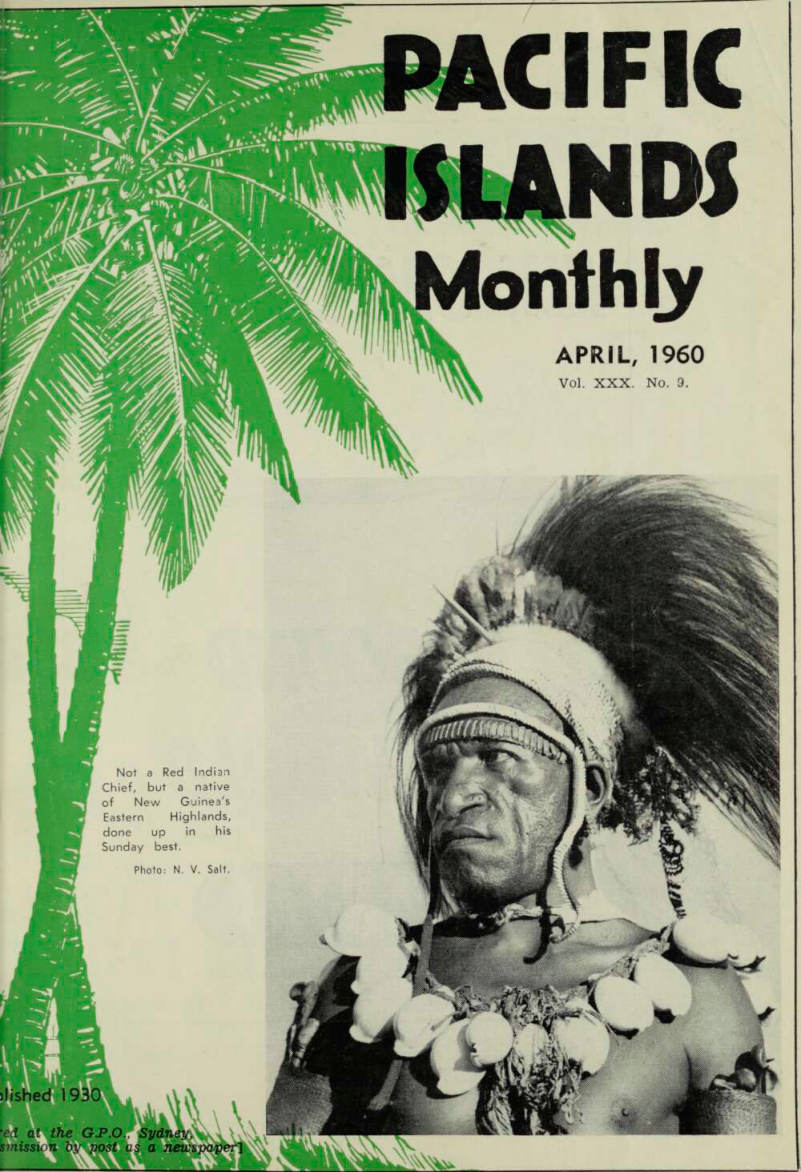 1
1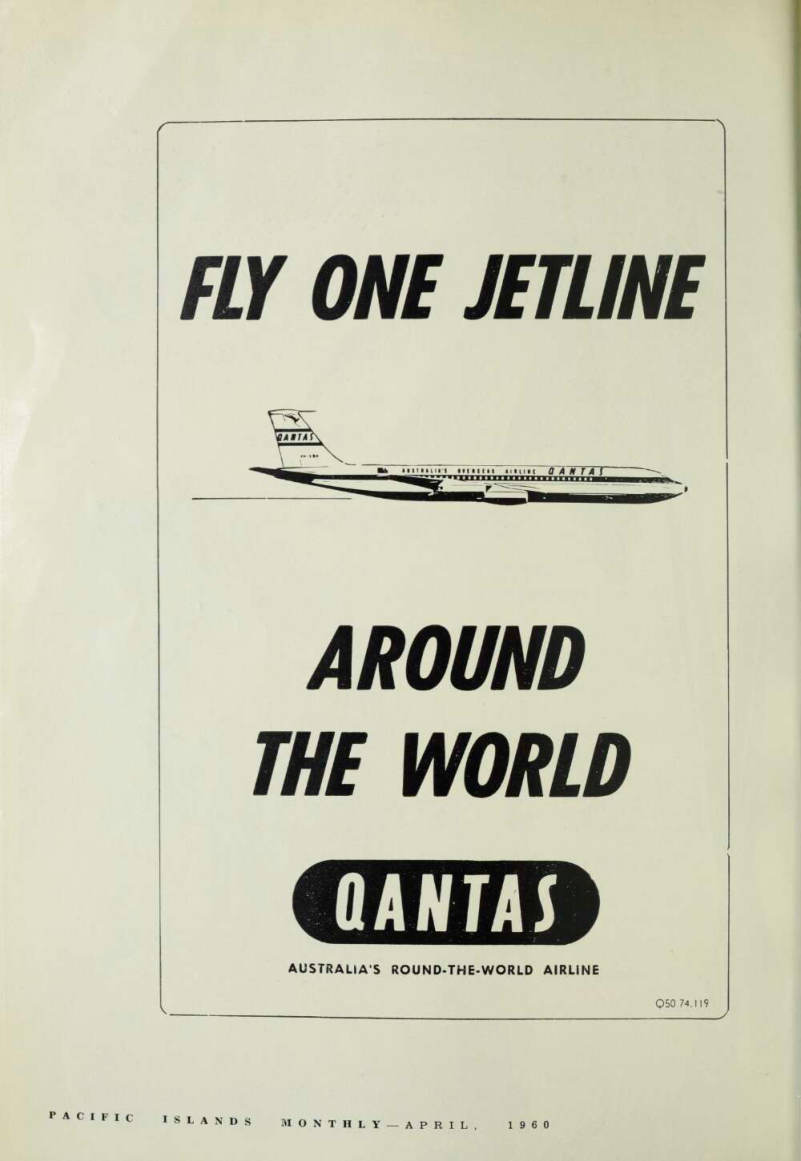 2
2 3
3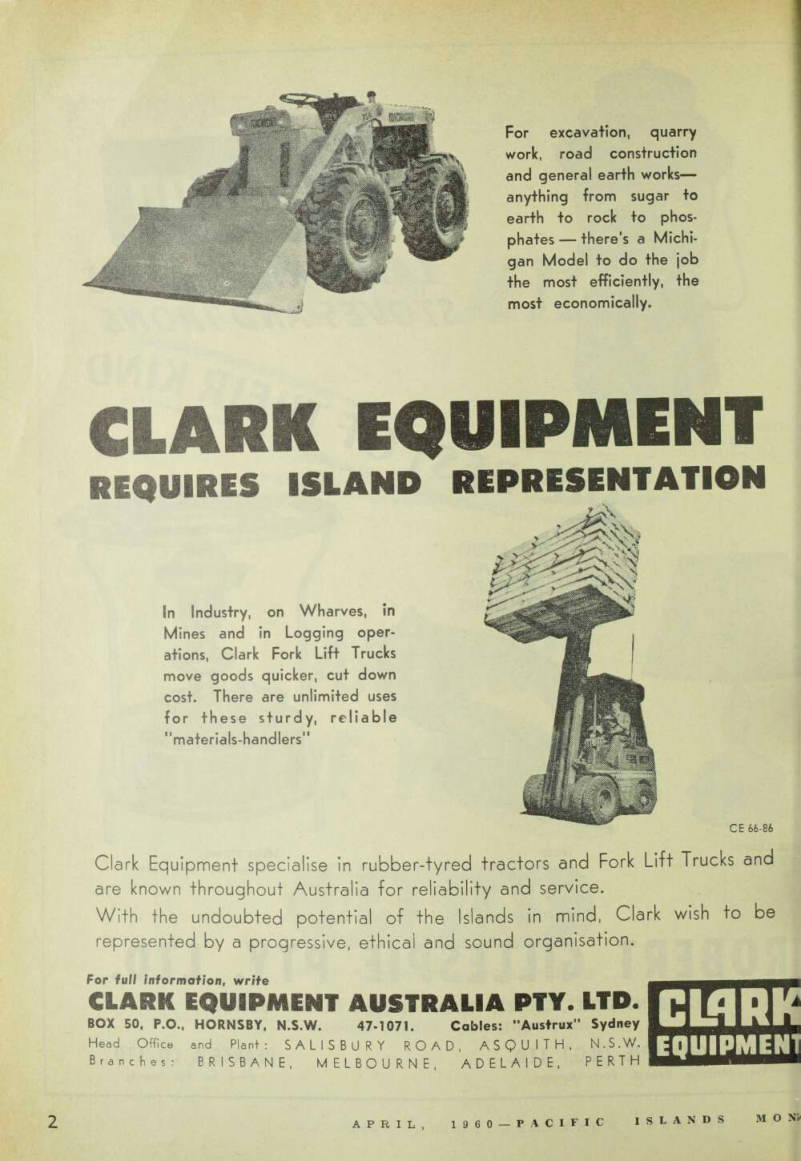 4
4 5
5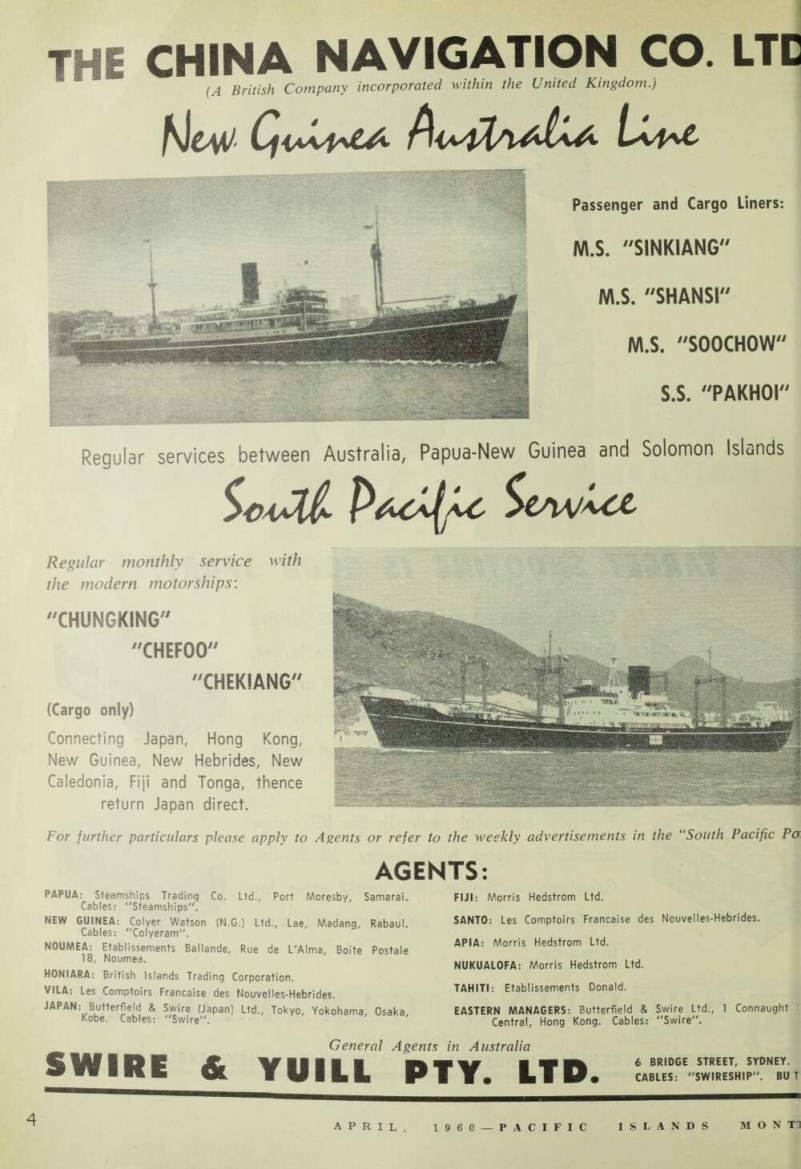 6
6 7
7 8
8 9
9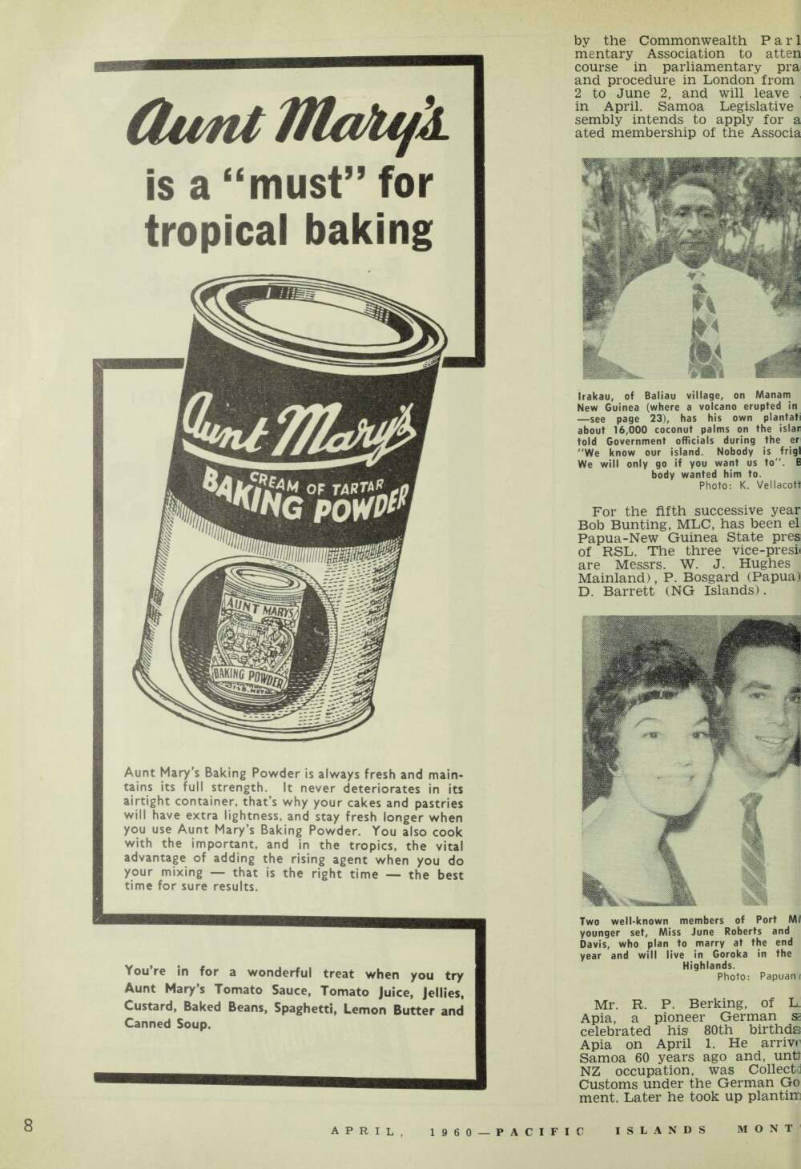 10
10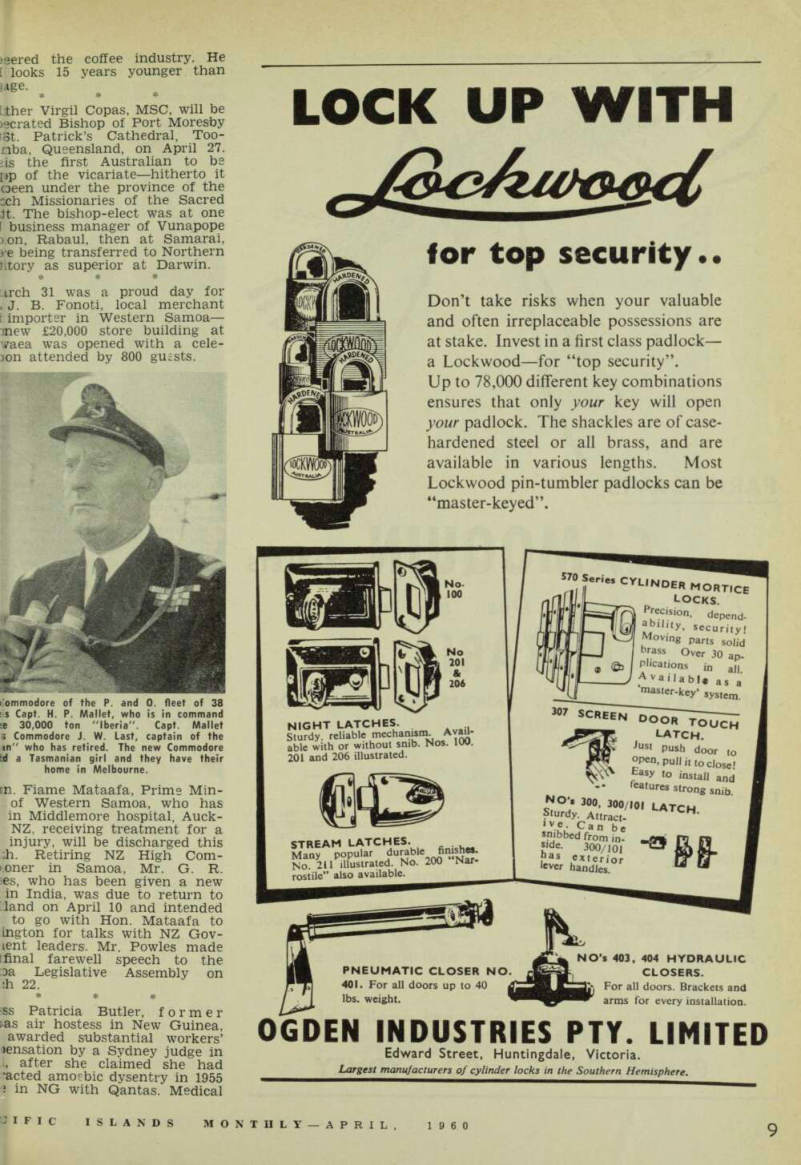 11
11 12
12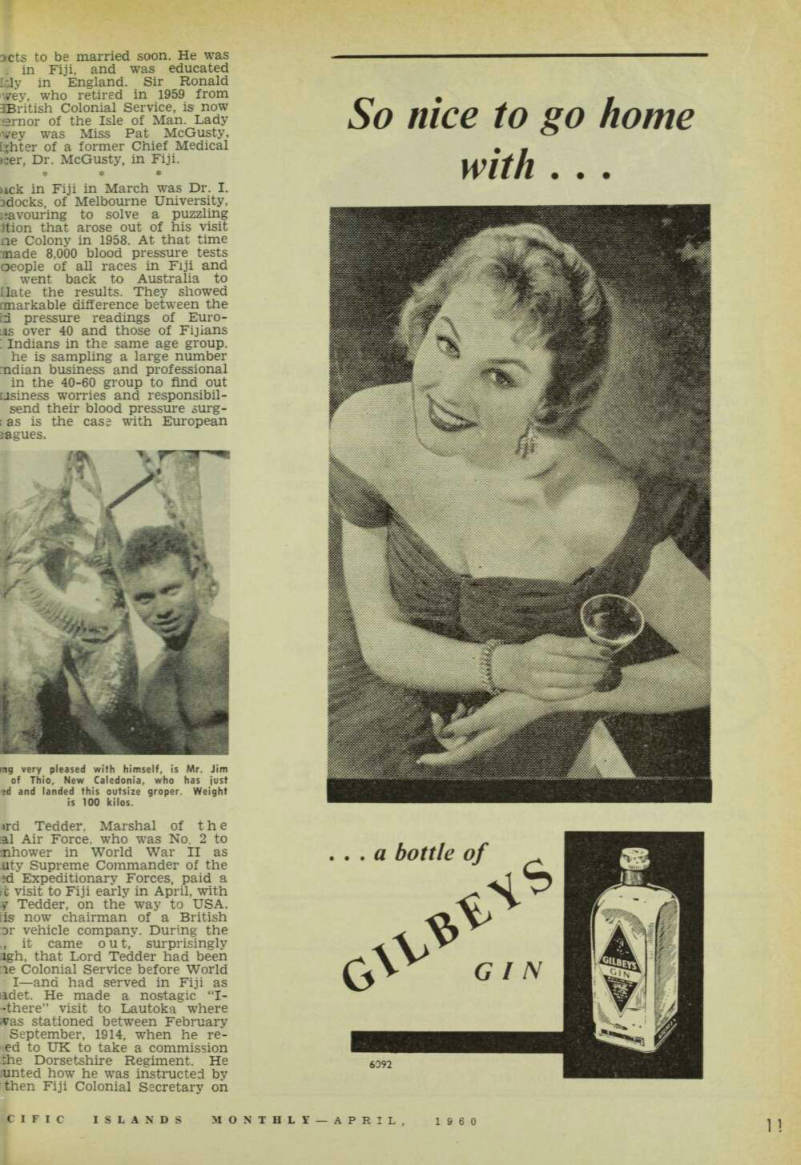 13
13 14
14 15
15 16
16 17
17 18
18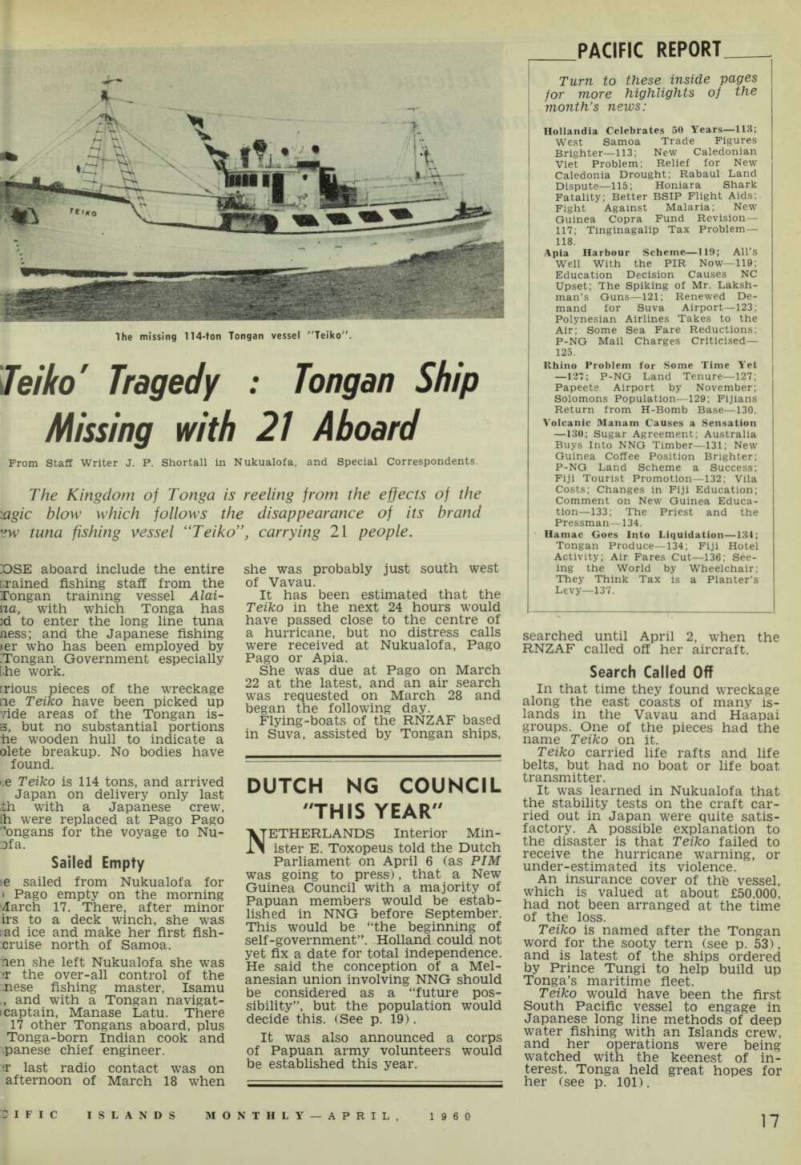 19
19 20
20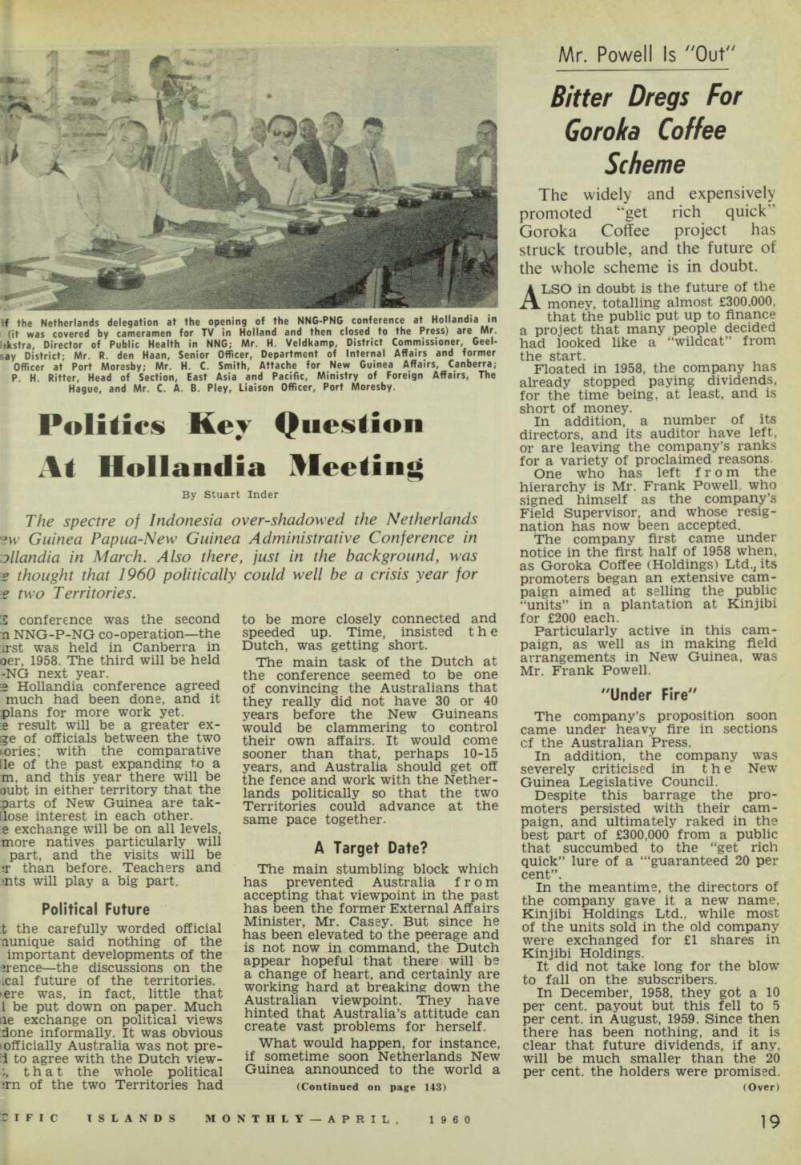 21
21 22
22 23
23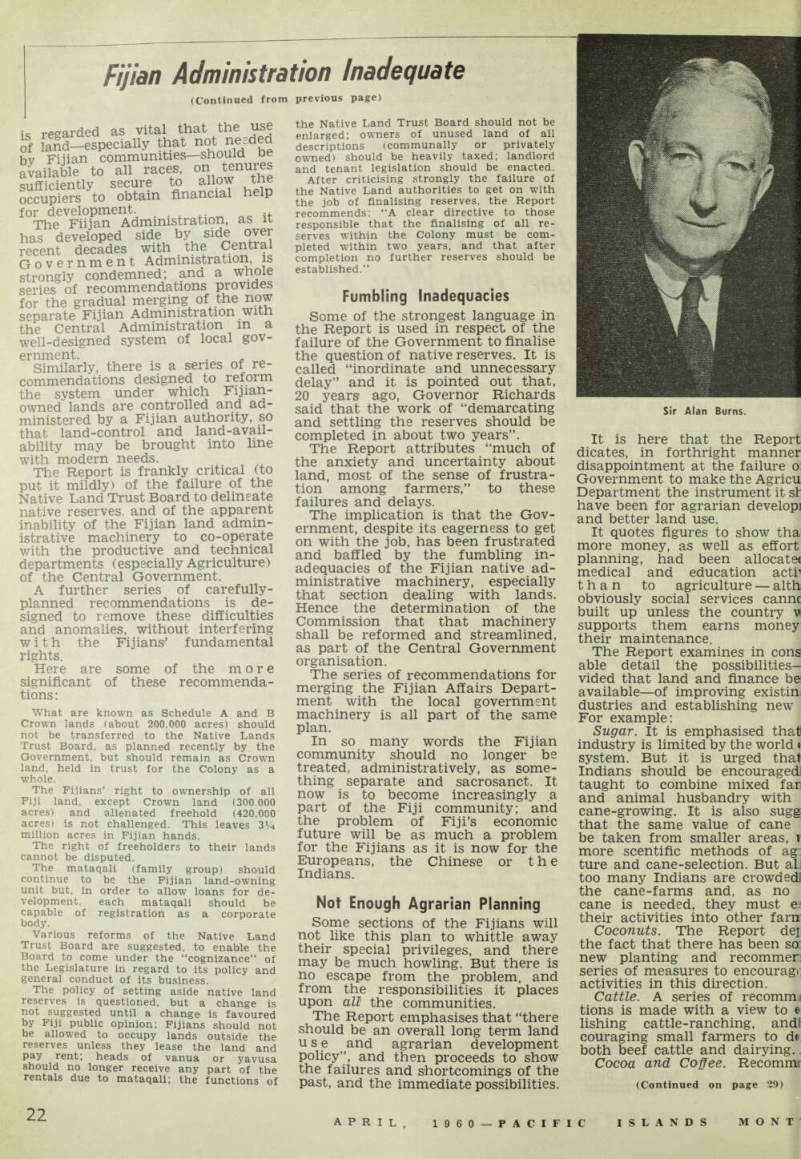 24
24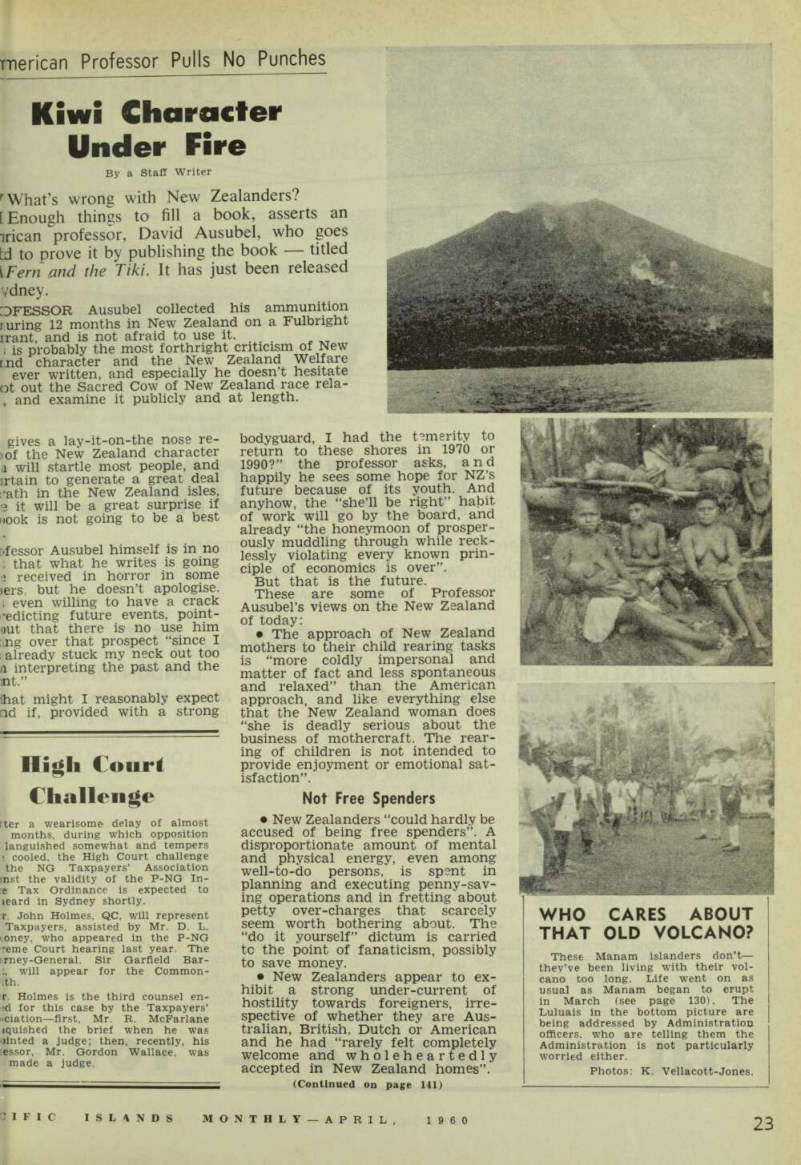 25
25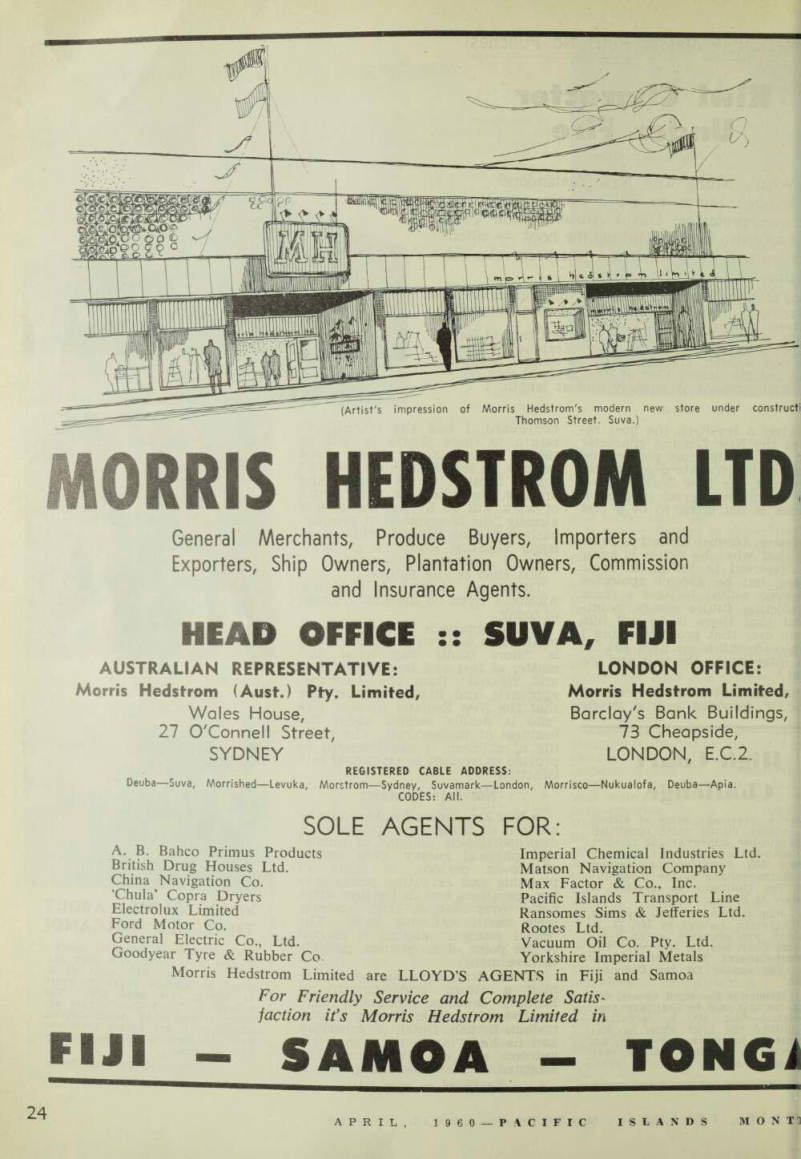 26
26 27
27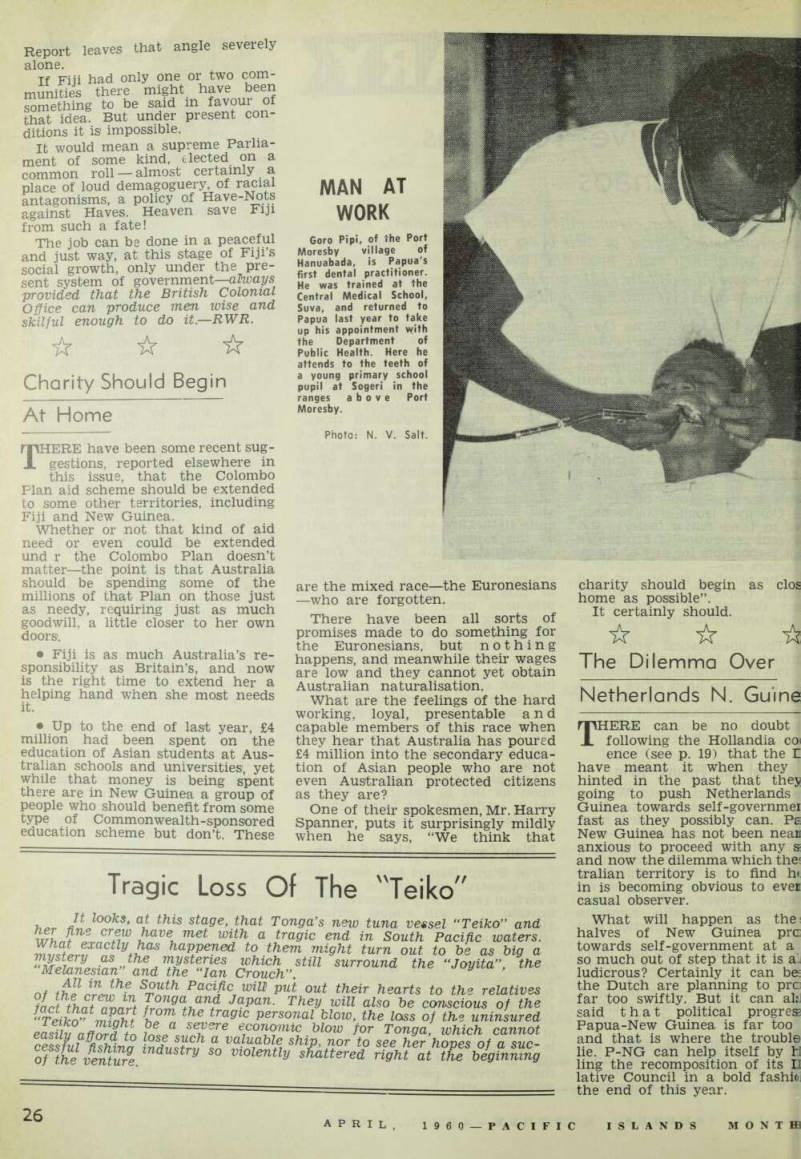 28
28 29
29 30
30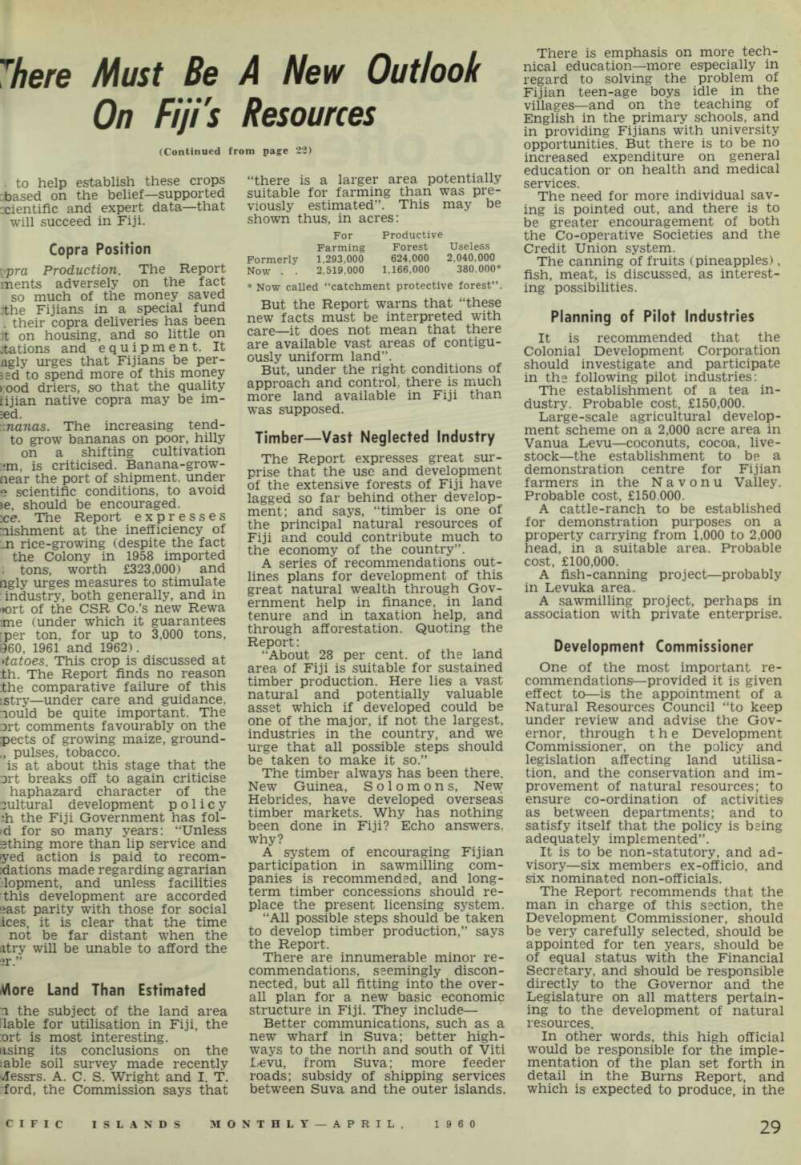 31
31 32
32 33
33 34
34 35
35 36
36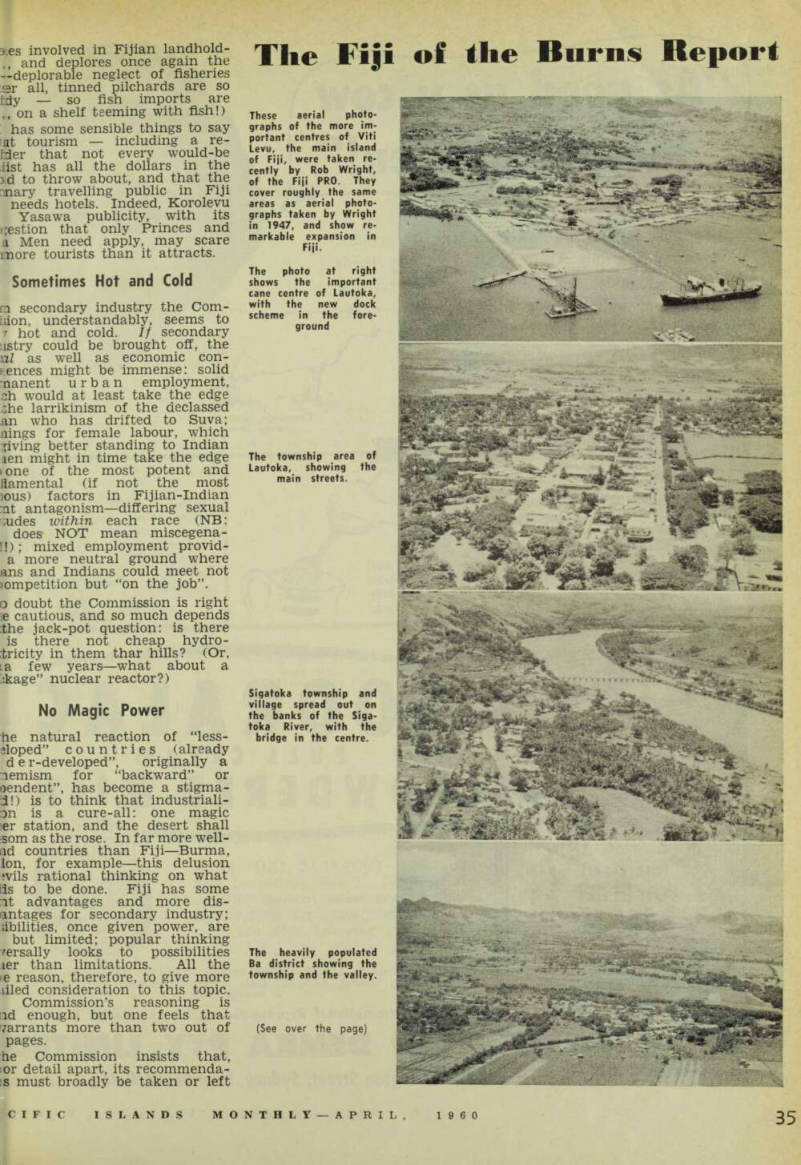 37
37 38
38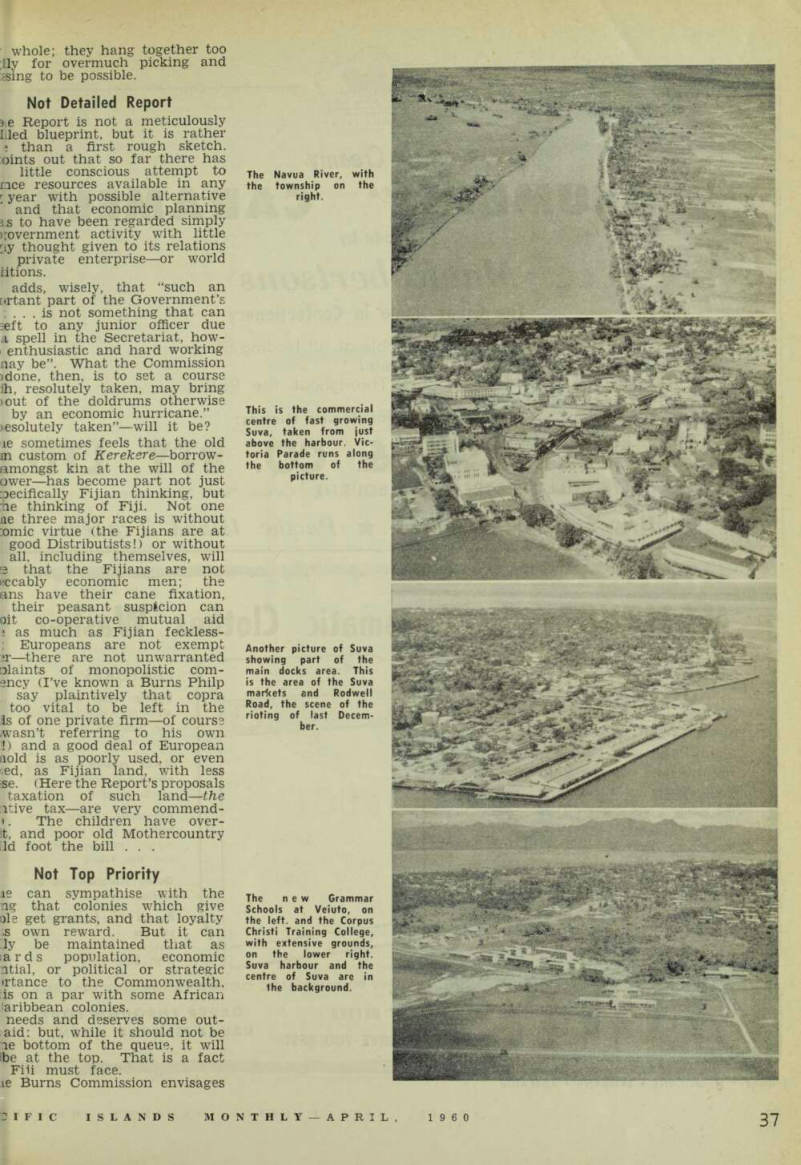 39
39 40
40 41
41 42
42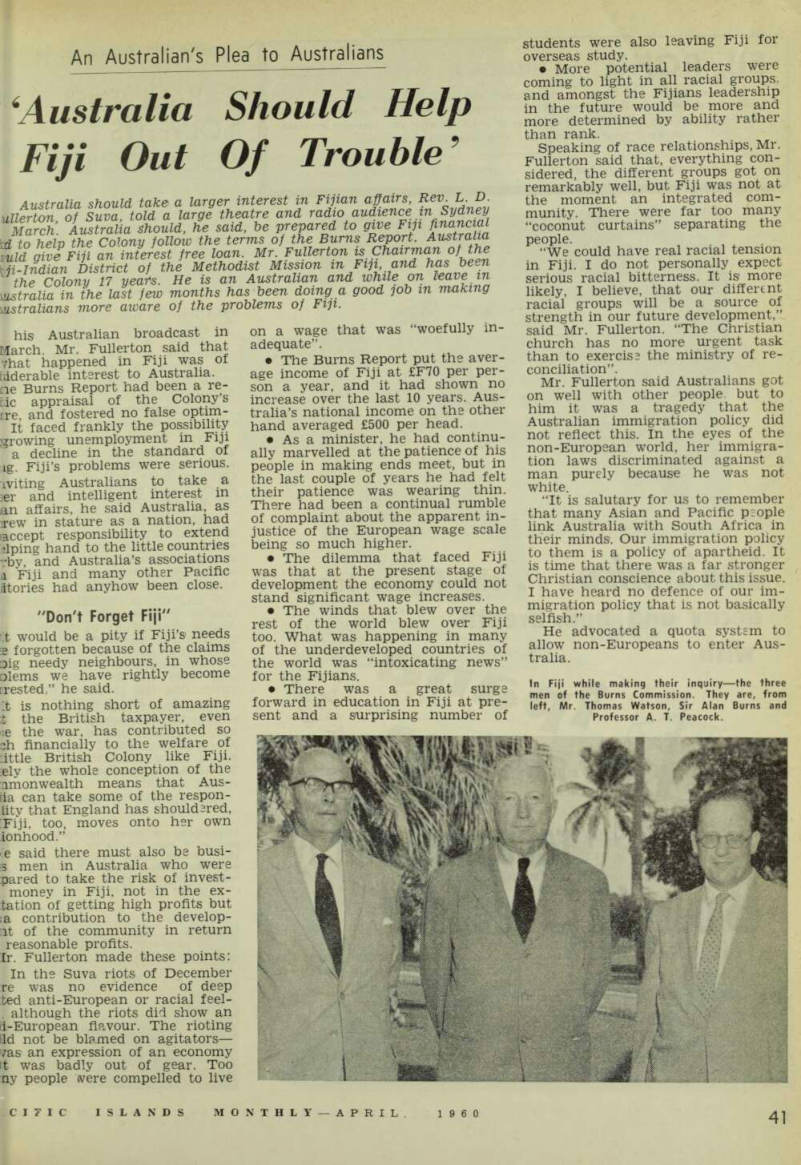 43
43 44
44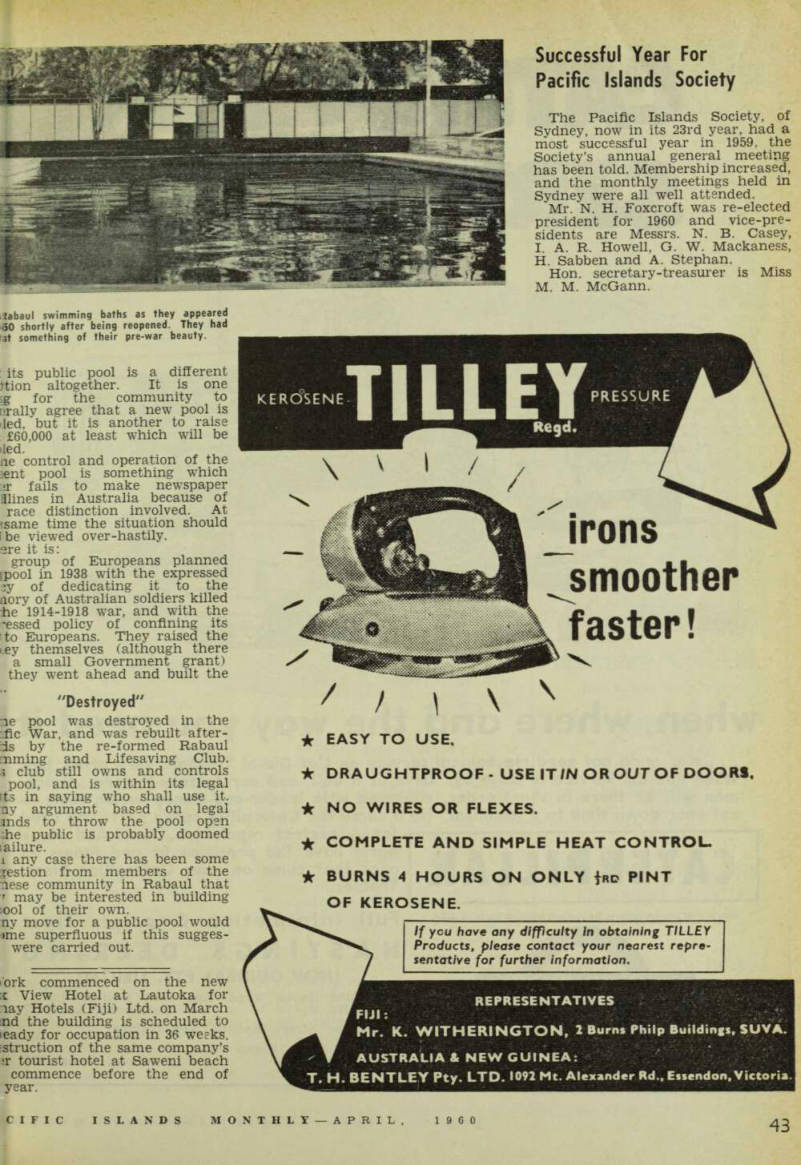 45
45 46
46 47
47 48
48 49
49 50
50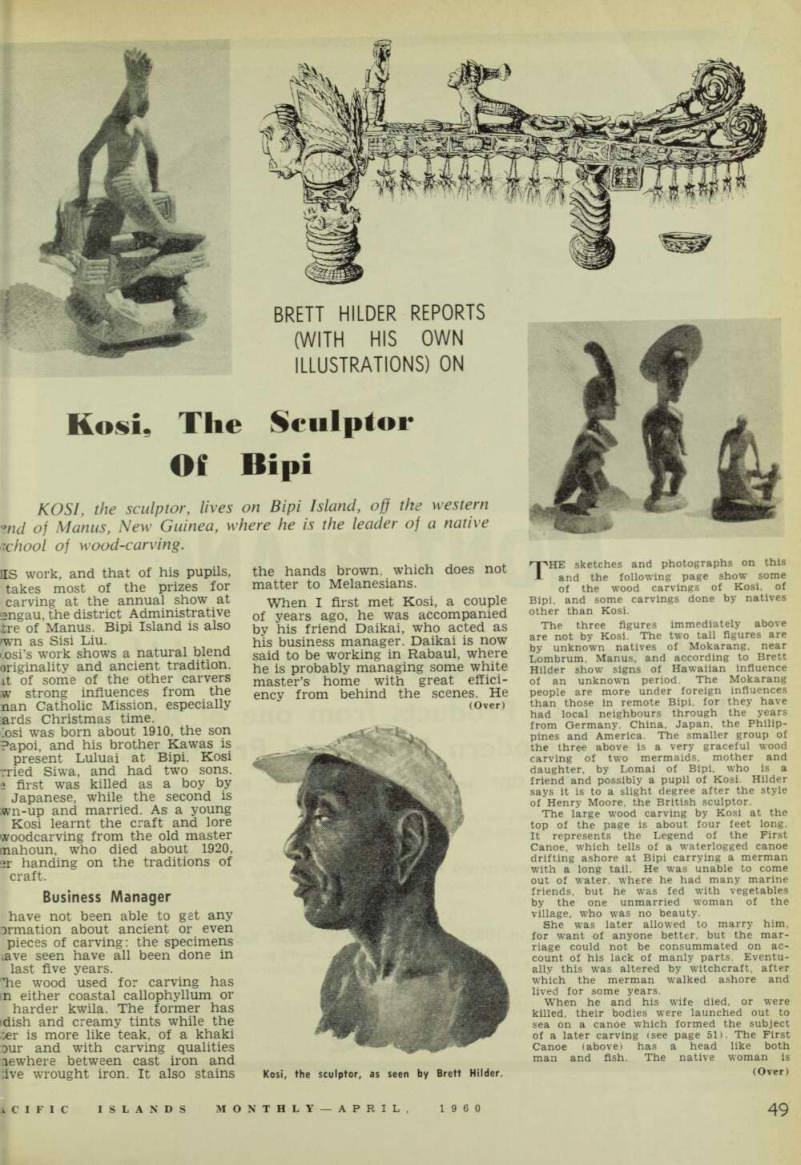 51
51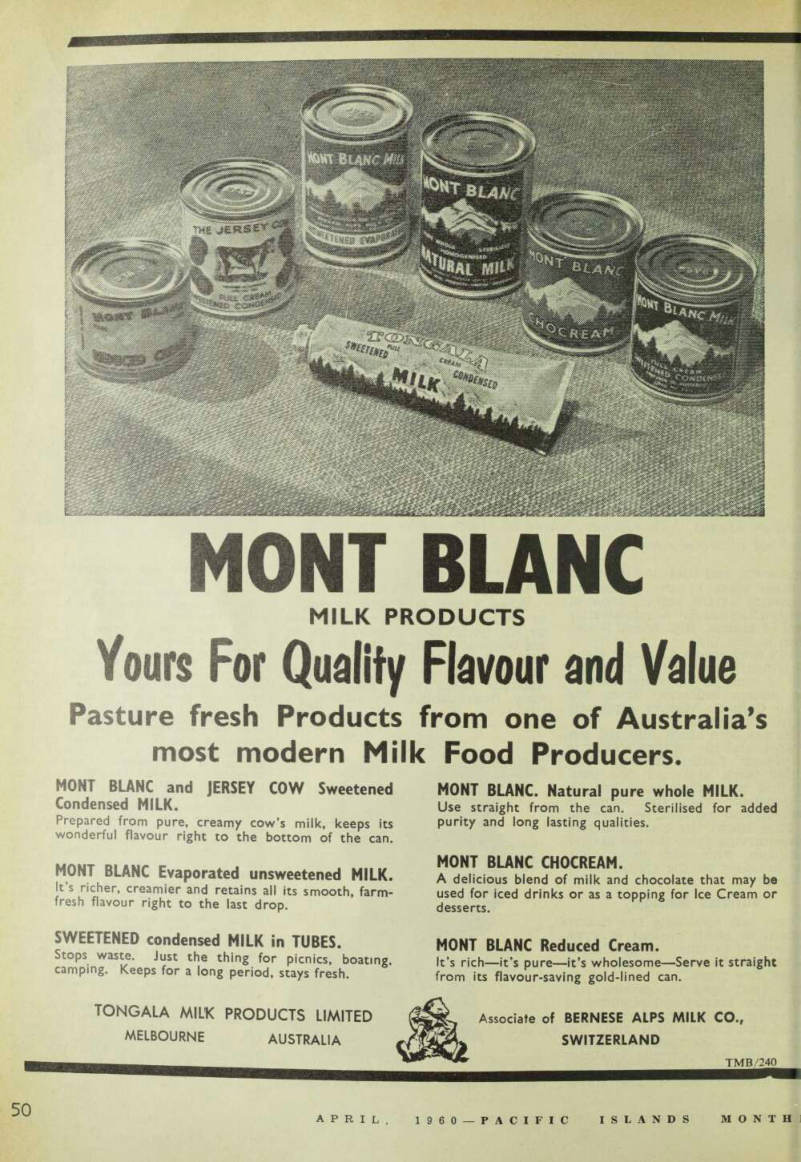 52
52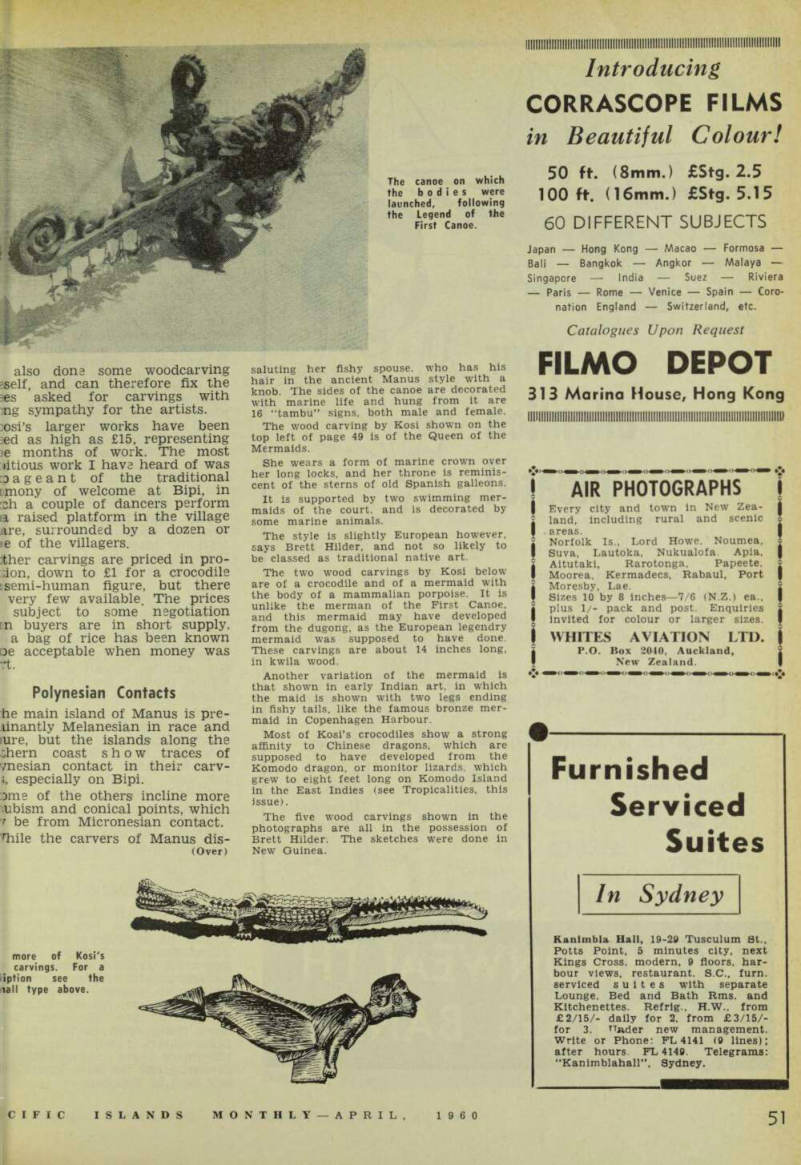 53
53 54
54 55
55 56
56 57
57 58
58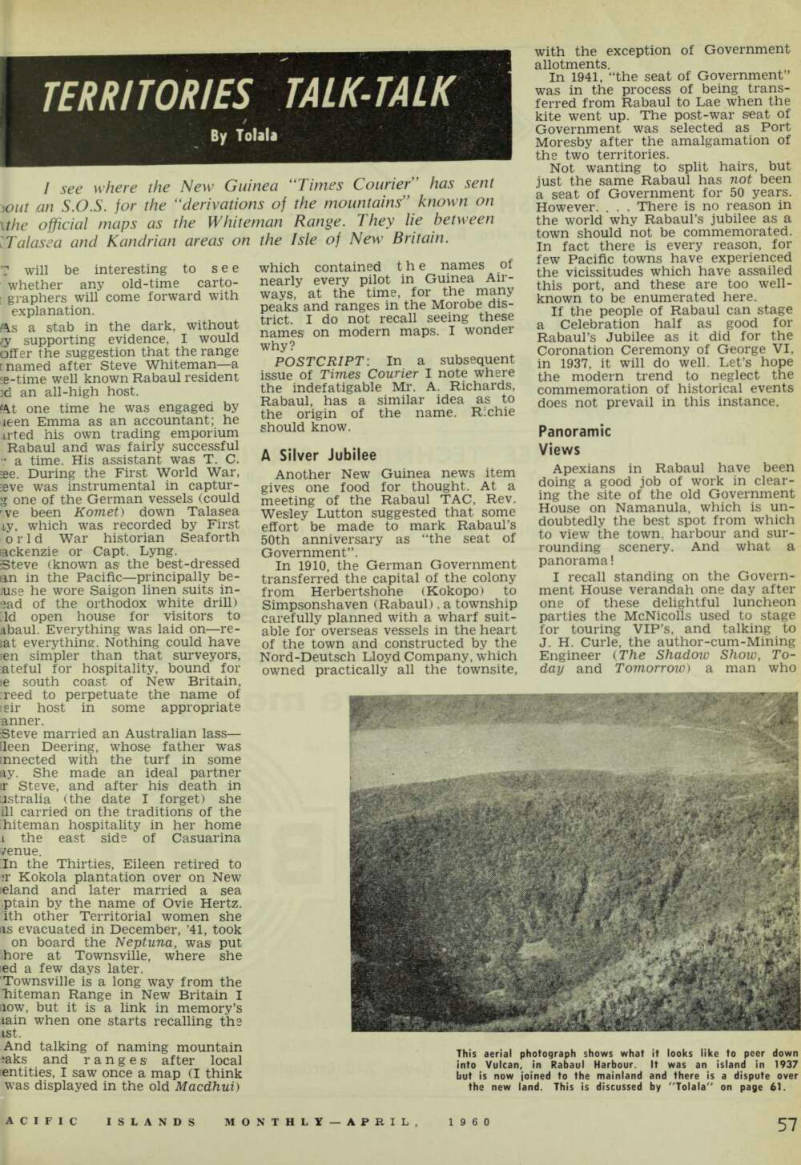 59
59 60
60 61
61 62
62 63
63 64
64 65
65 66
66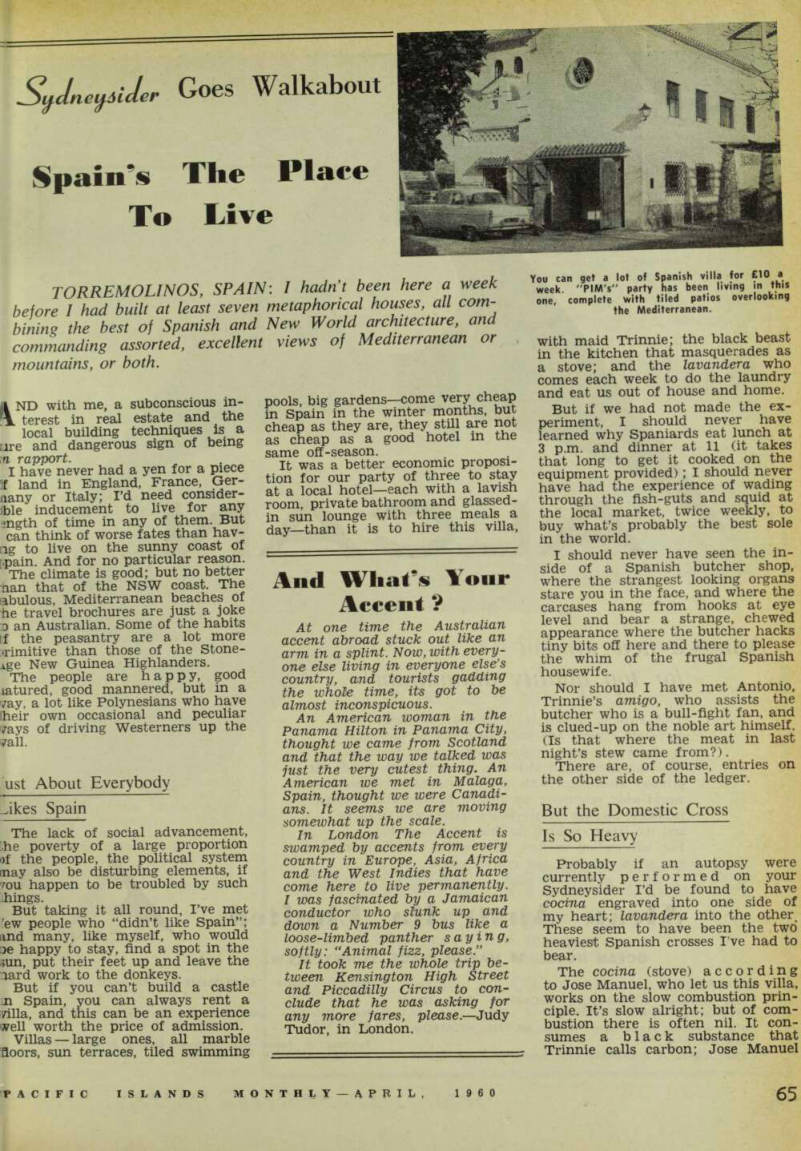 67
67 68
68 69
69 70
70 71
71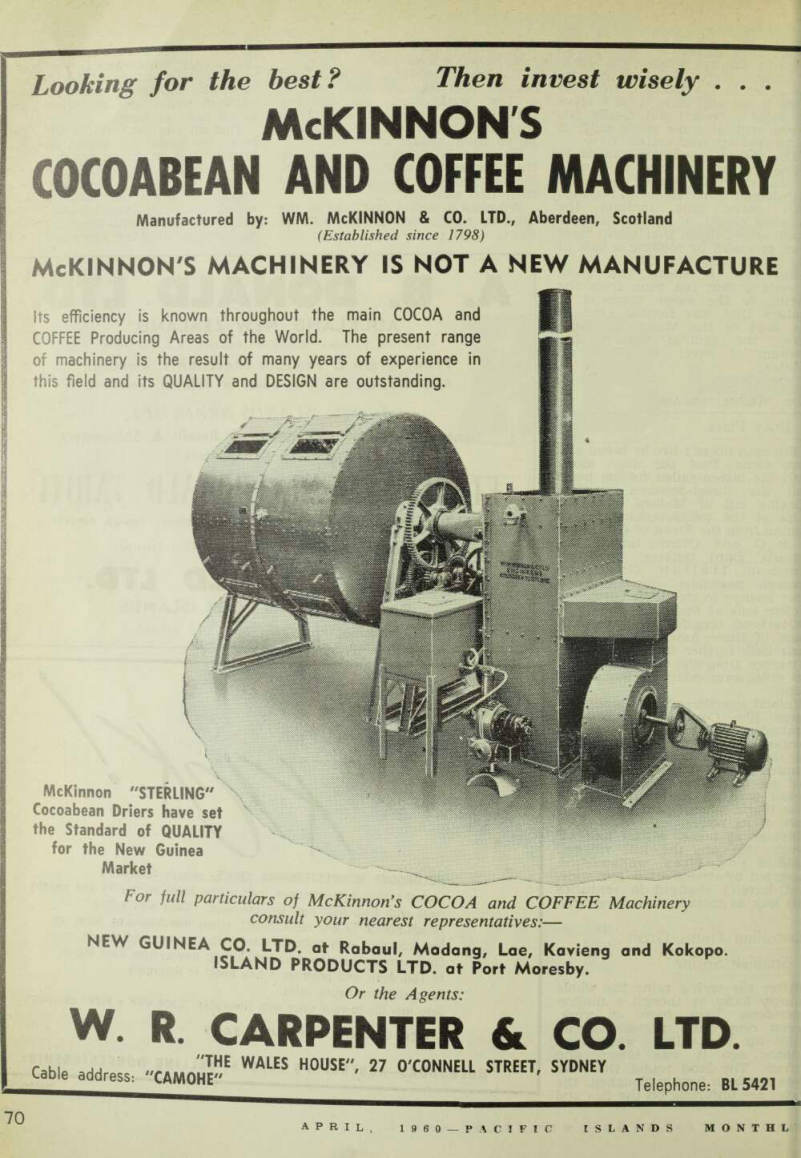 72
72 73
73 74
74 75
75 76
76 77
77 78
78 79
79 80
80 81
81 82
82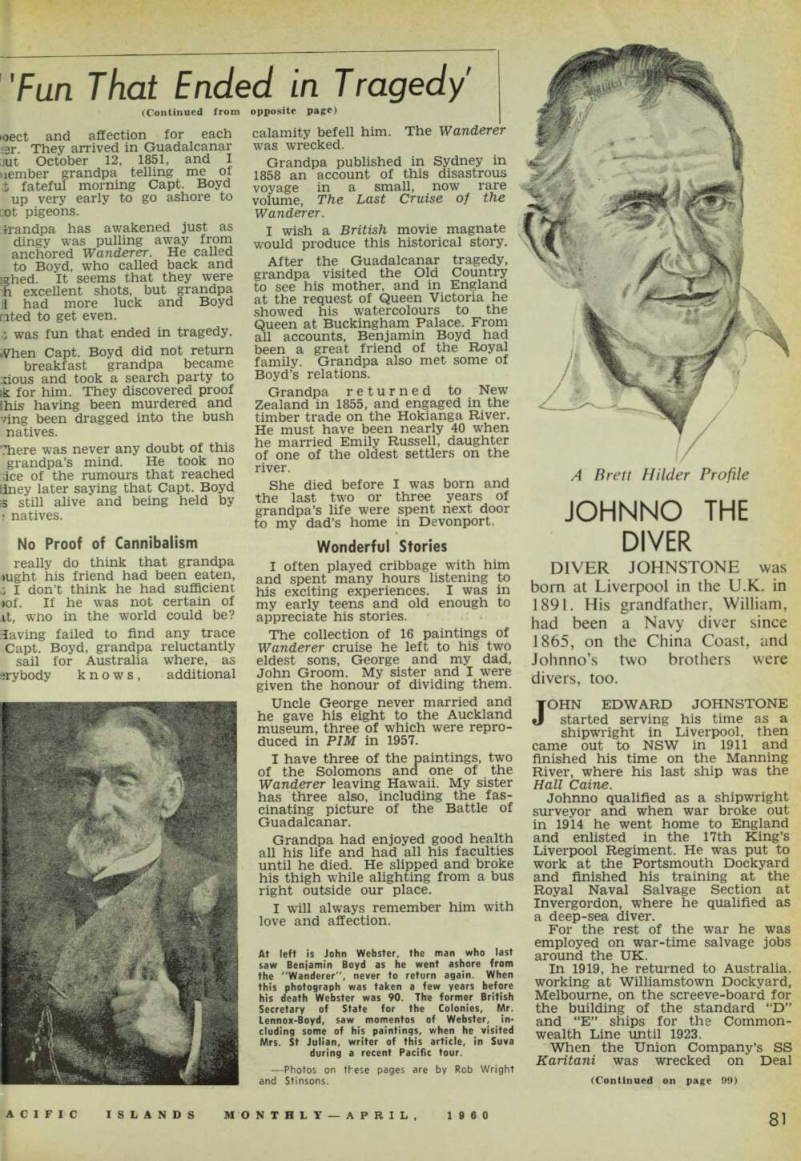 83
83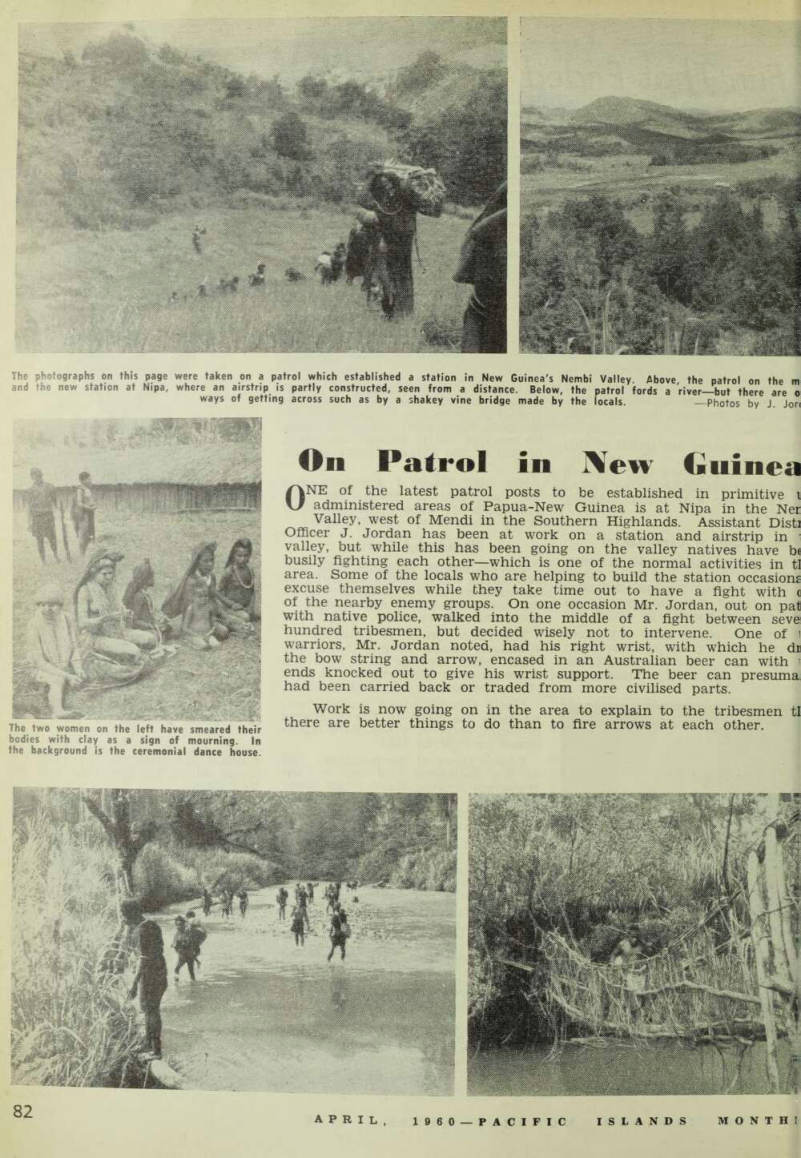 84
84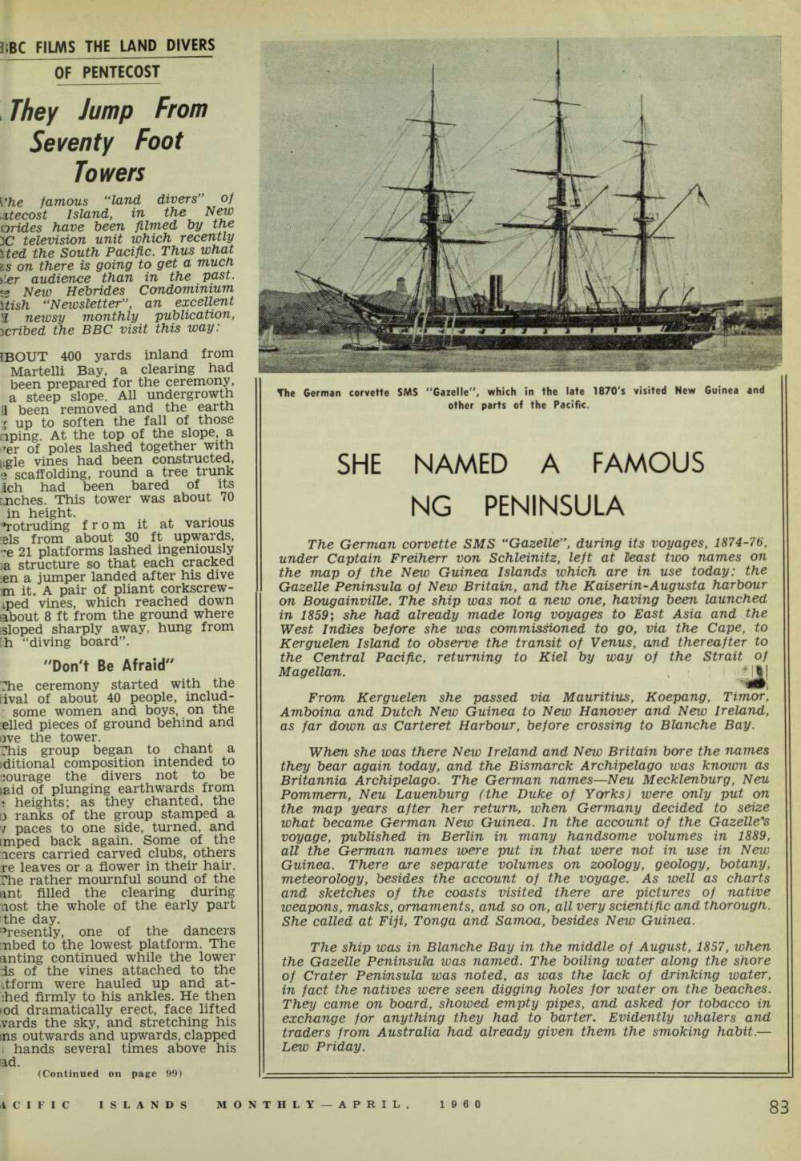 85
85 86
86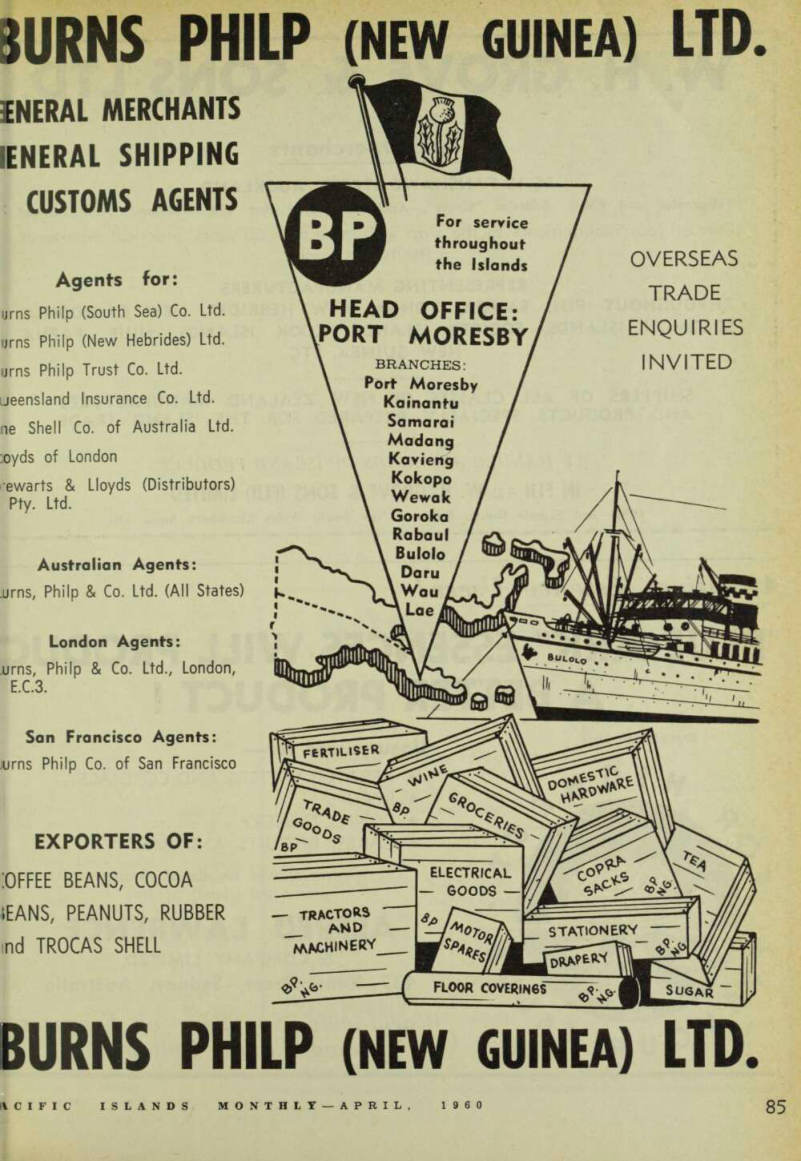 87
87 88
88 89
89 90
90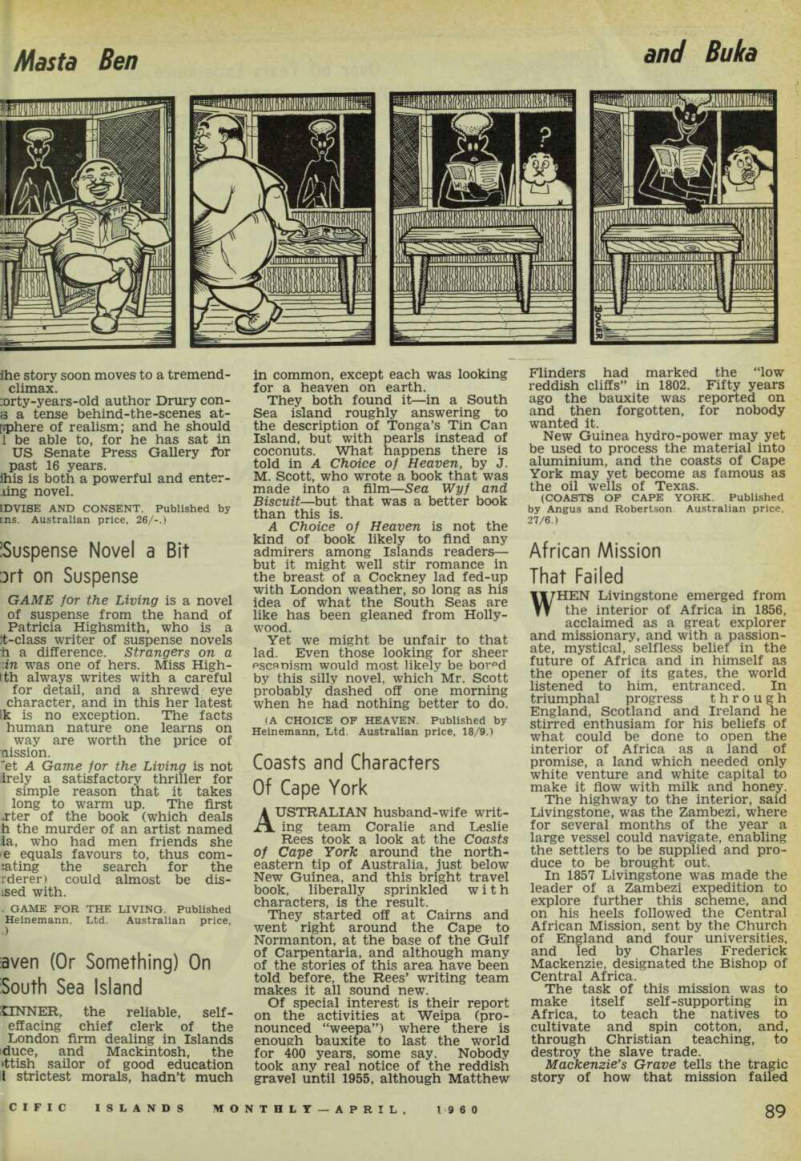 91
91 92
92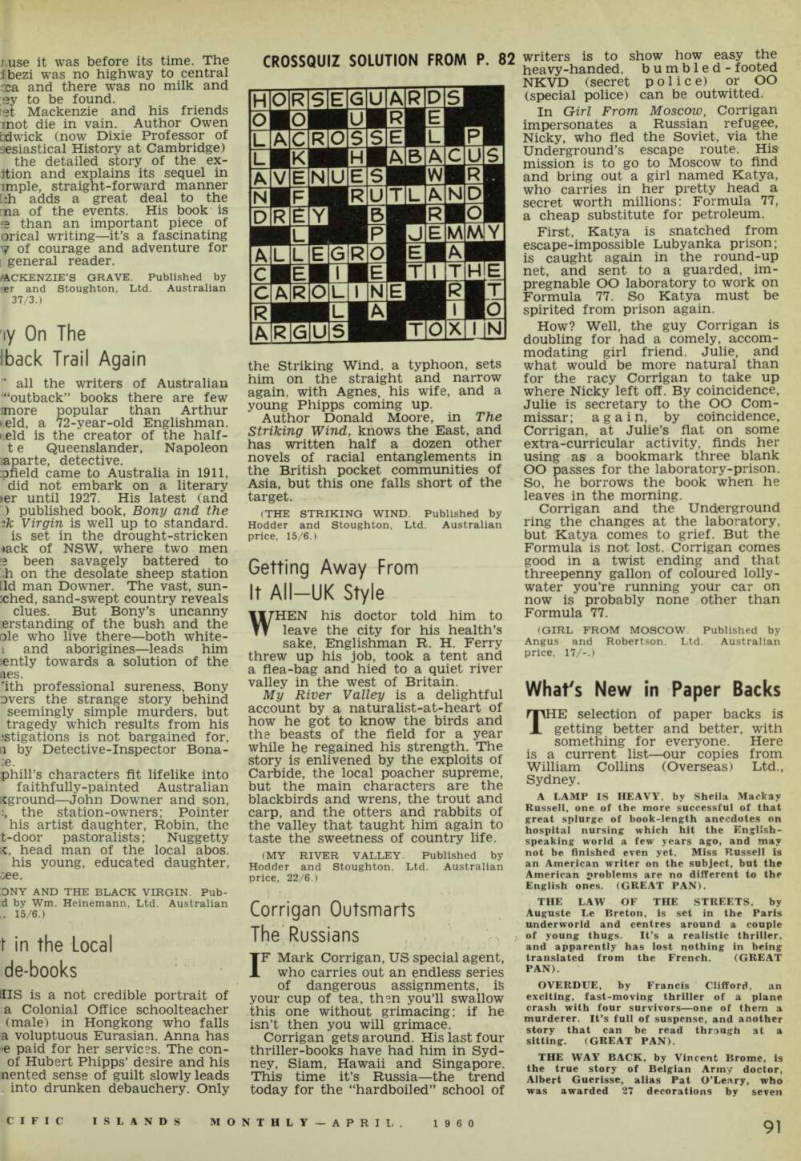 93
93 94
94 95
95 96
96 97
97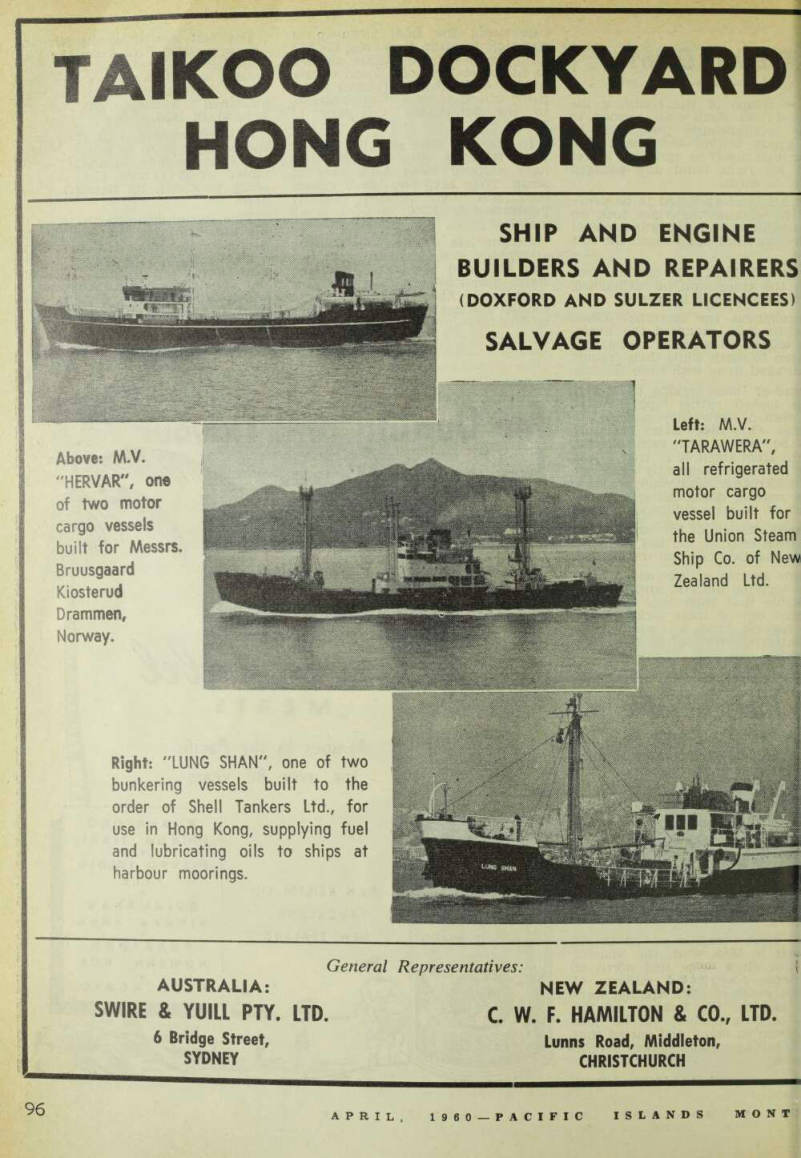 98
98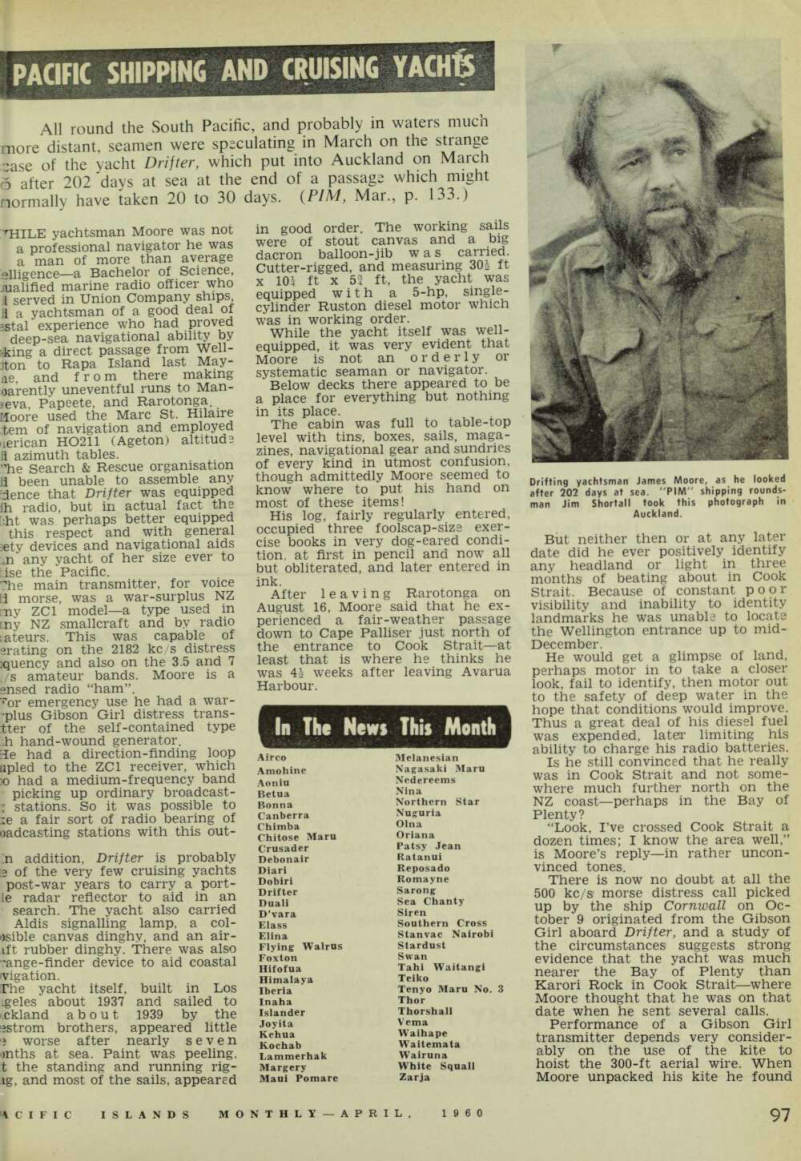 99
99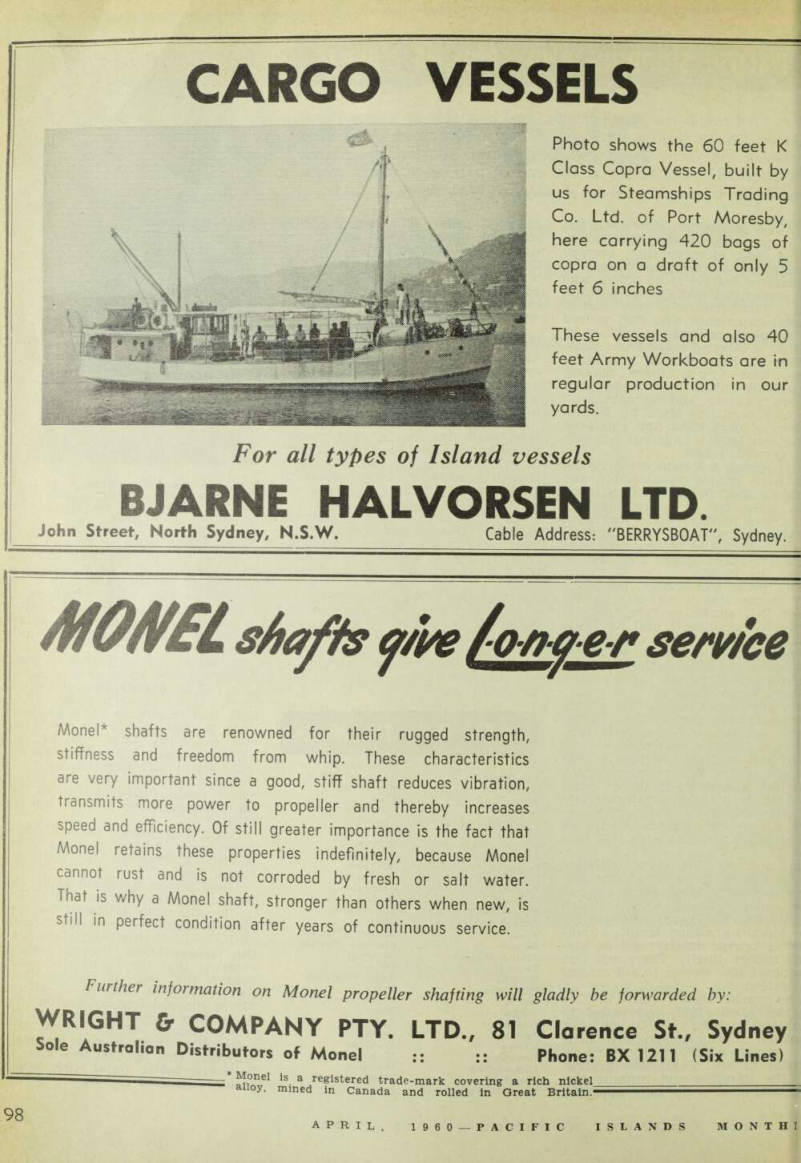 100
100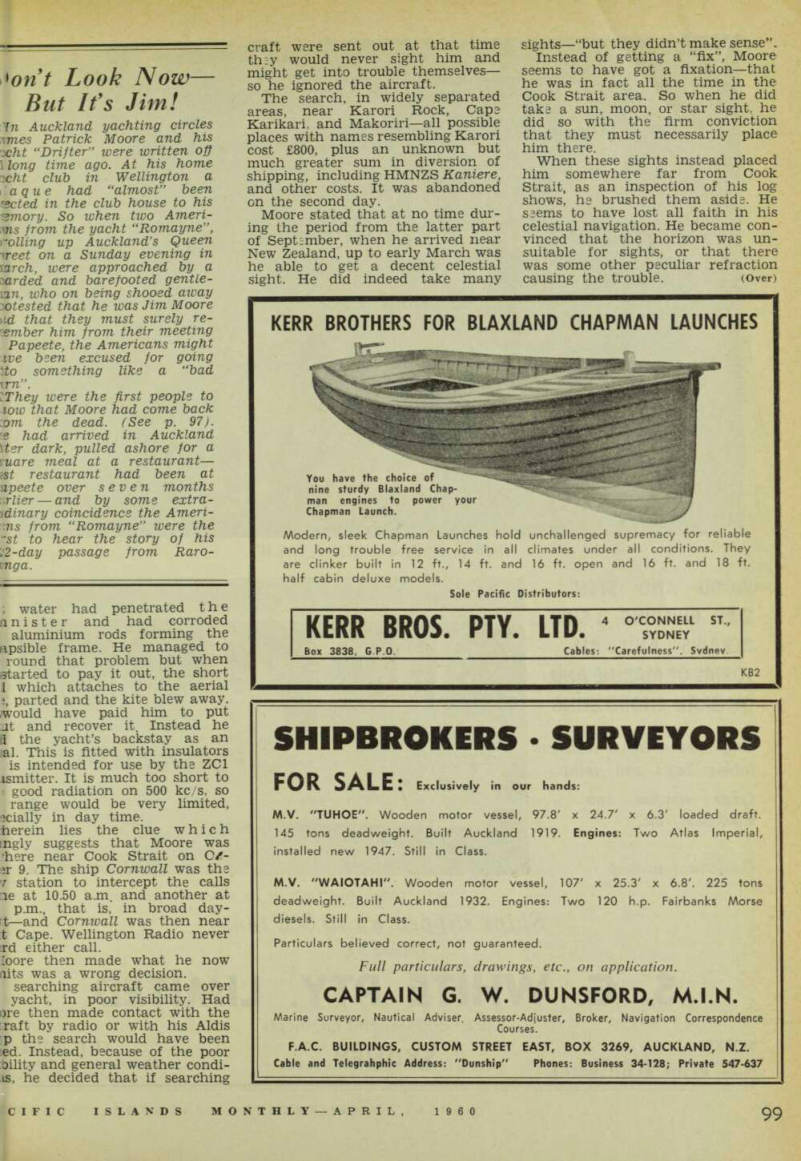 101
101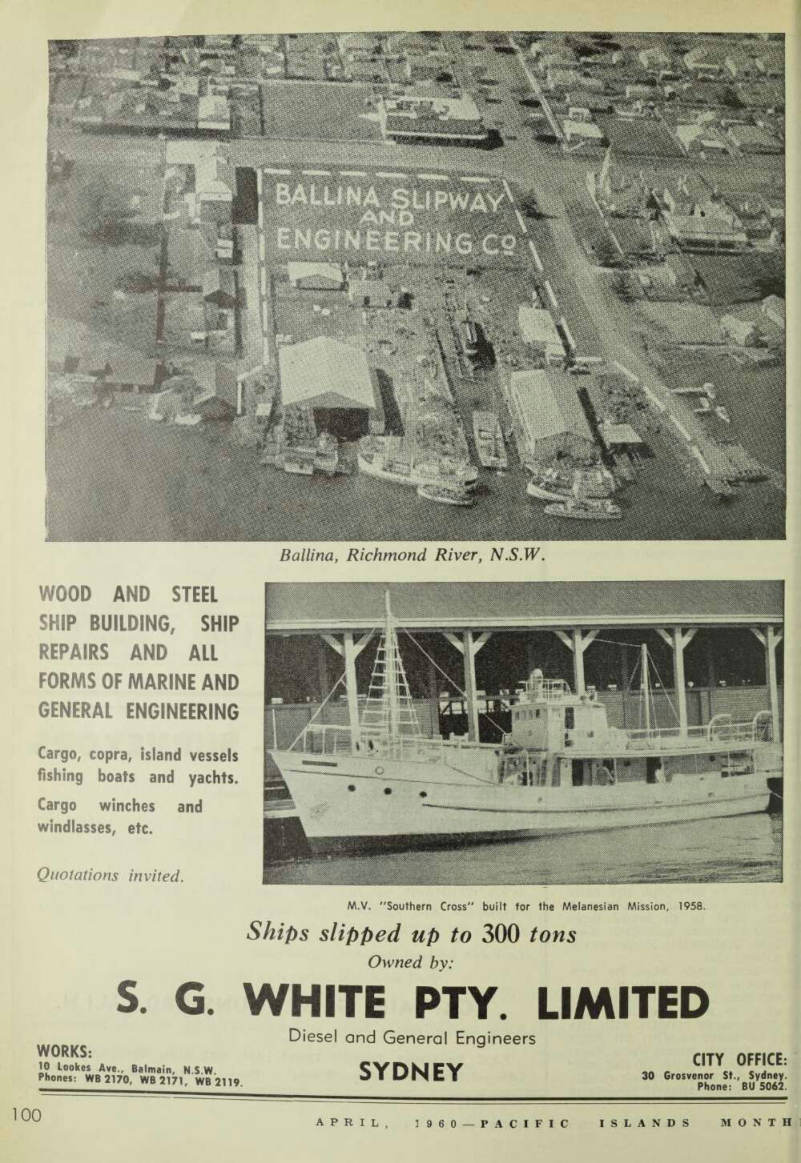 102
102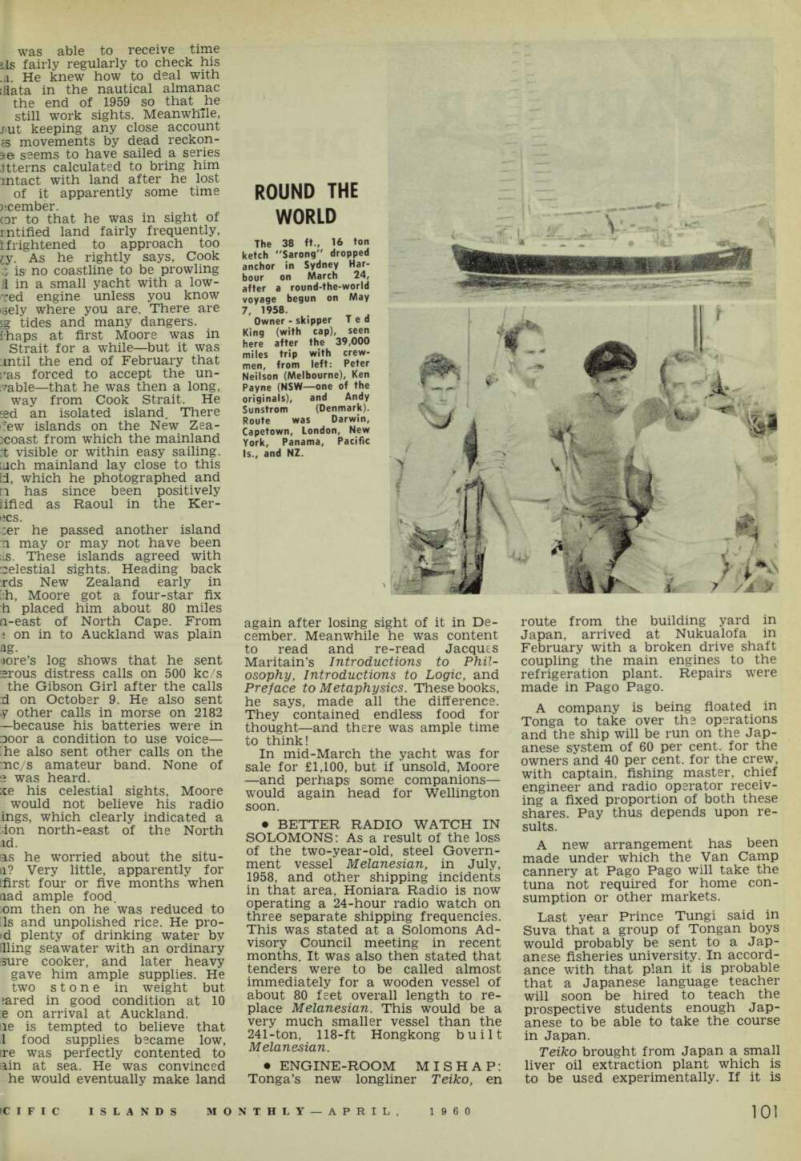 103
103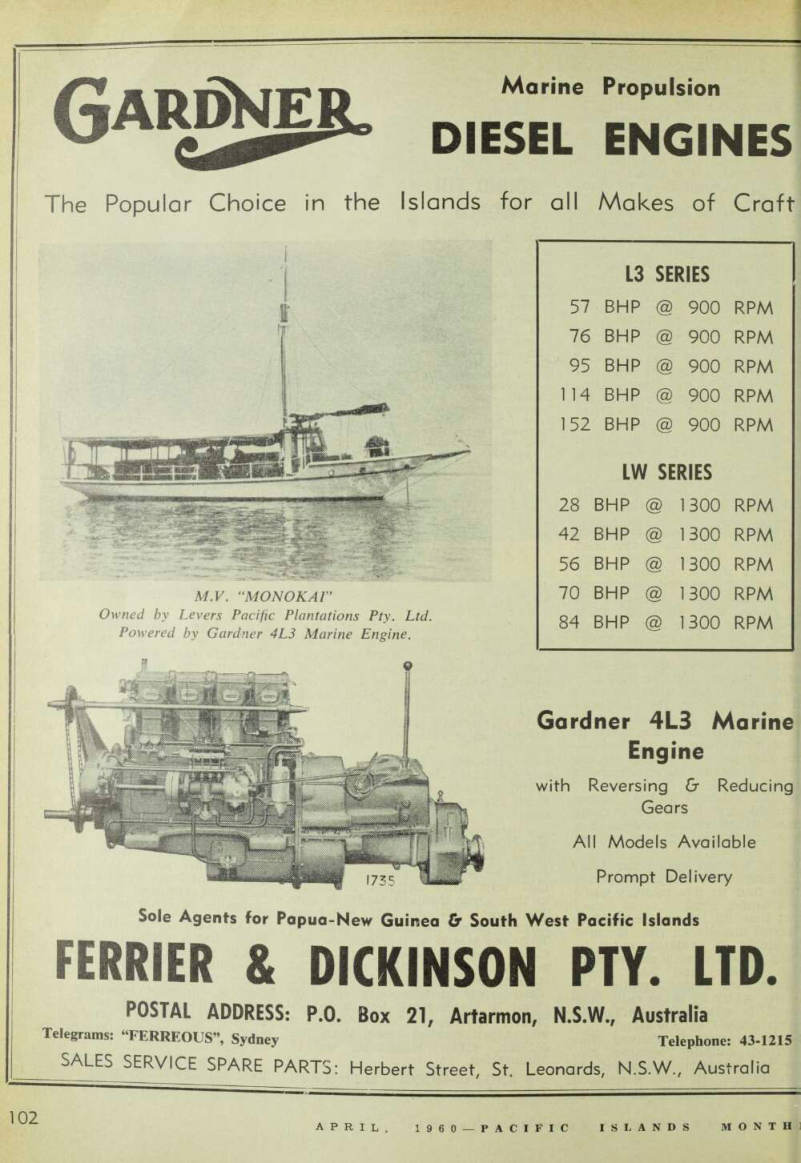 104
104 105
105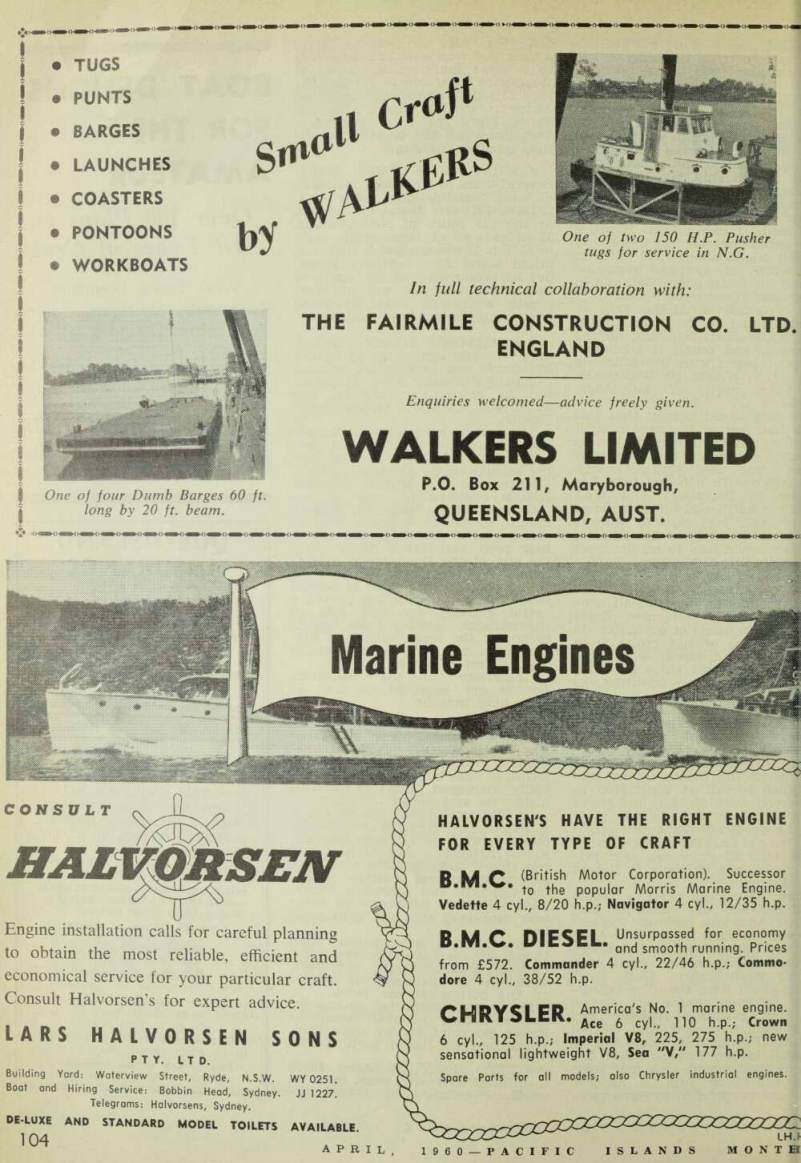 106
106 107
107 108
108 109
109 110
110 111
111 112
112 113
113 114
114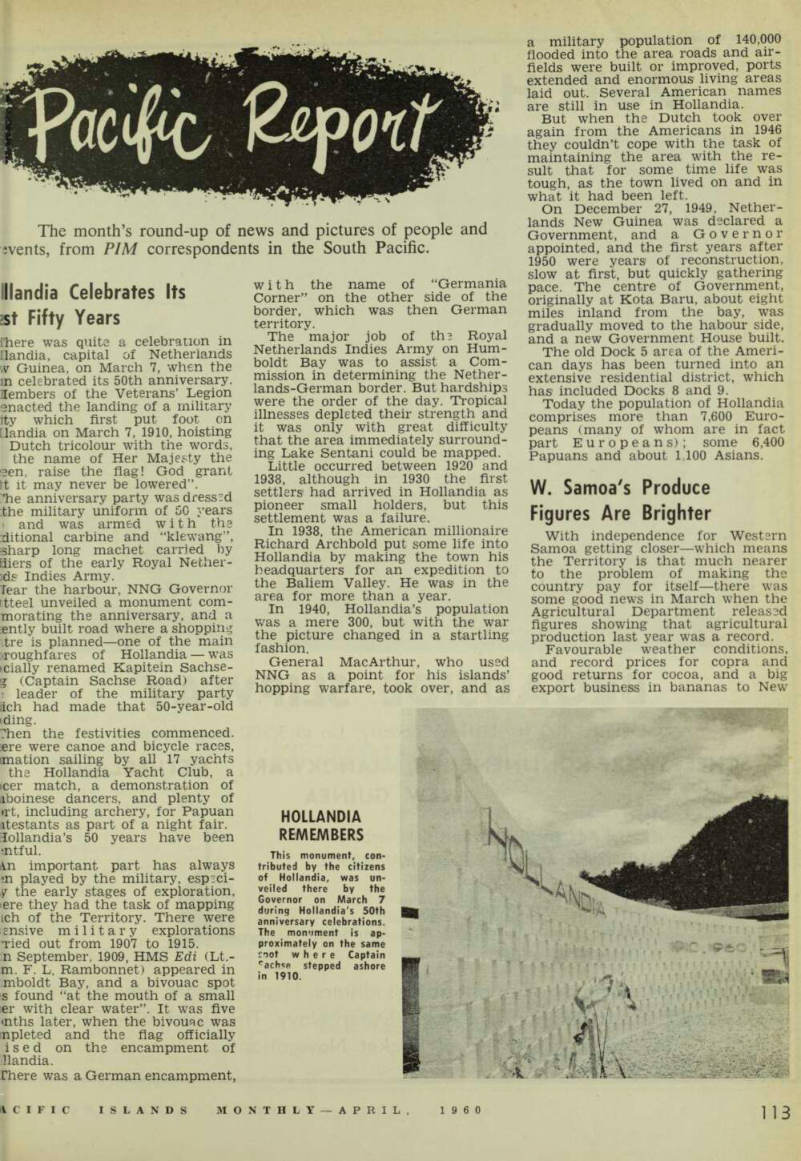 115
115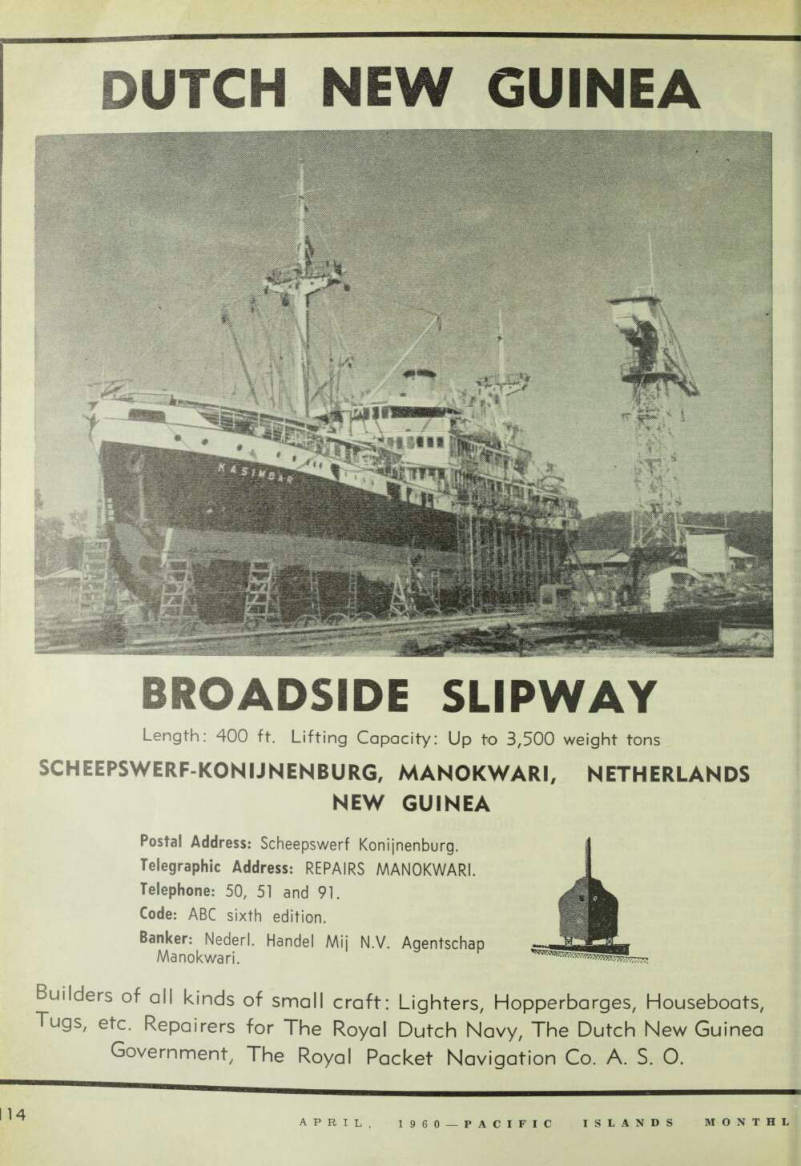 116
116 117
117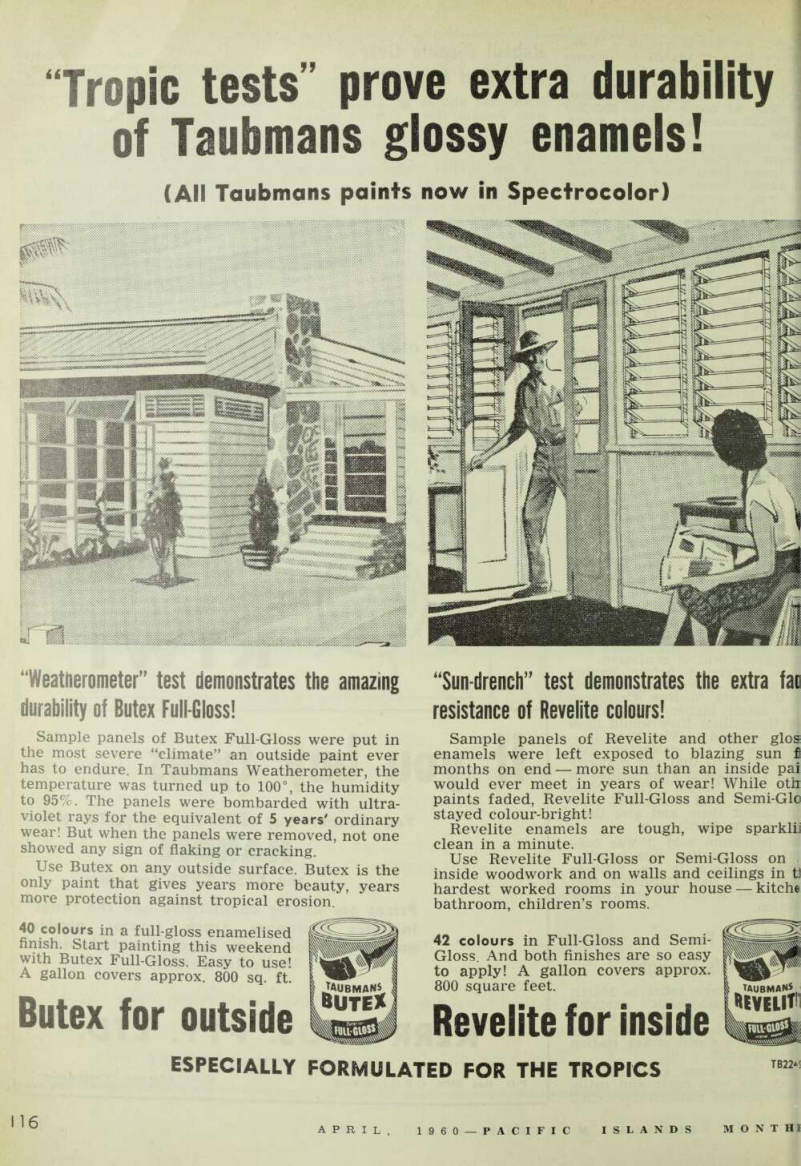 118
118 119
119 120
120 121
121 122
122 123
123 124
124 125
125 126
126 127
127 128
128 129
129 130
130 131
131 132
132 133
133 134
134 135
135 136
136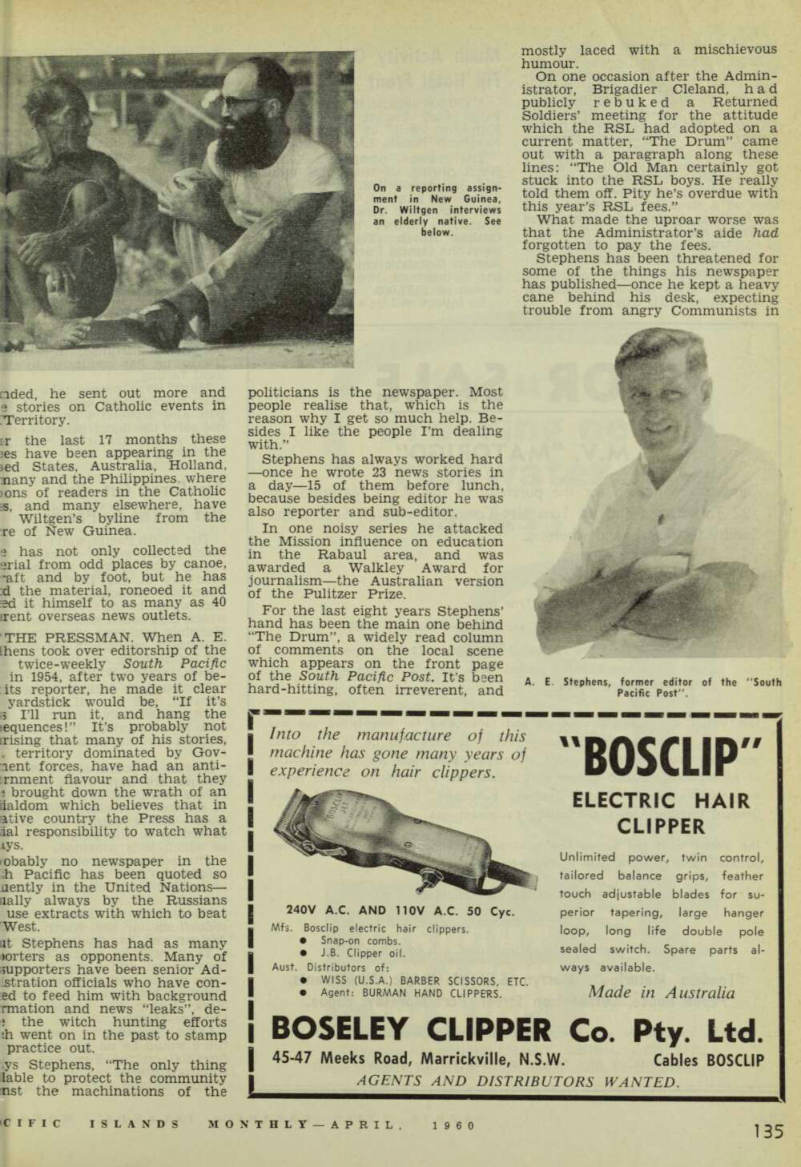 137
137 138
138 139
139 140
140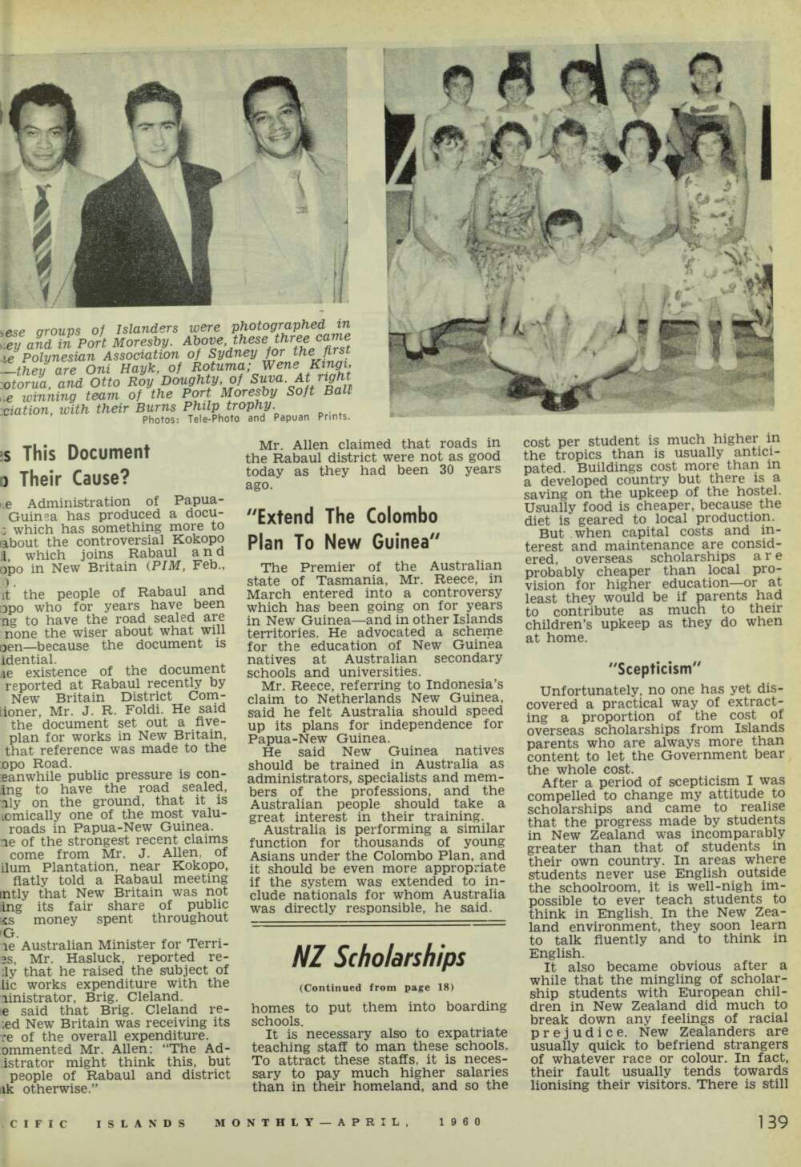 141
141 142
142 143
143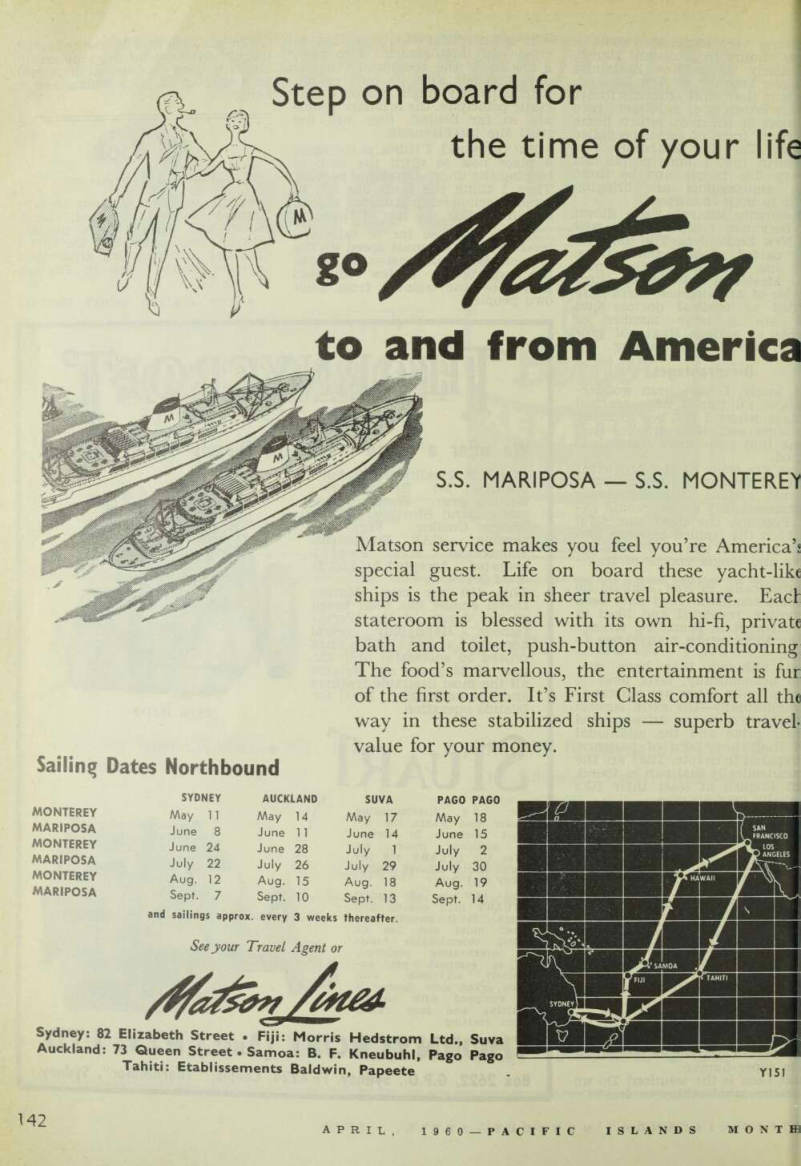 144
144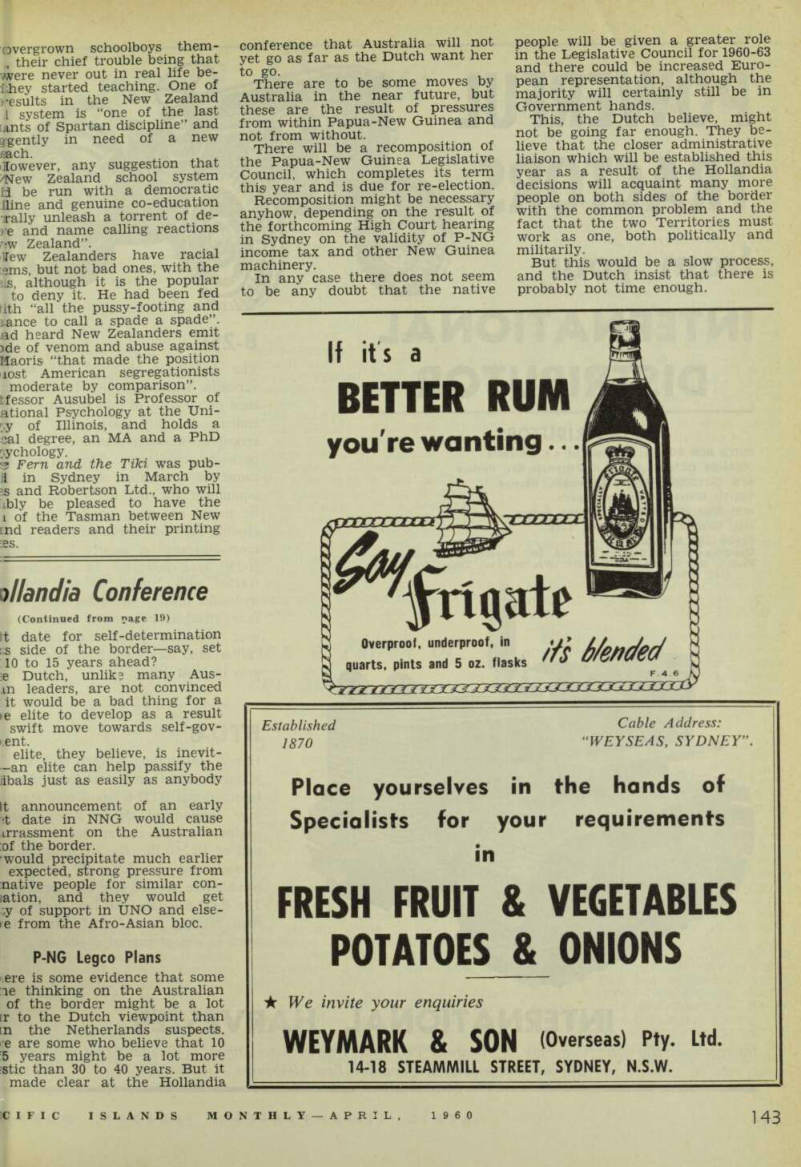 145
145 146
146 147
147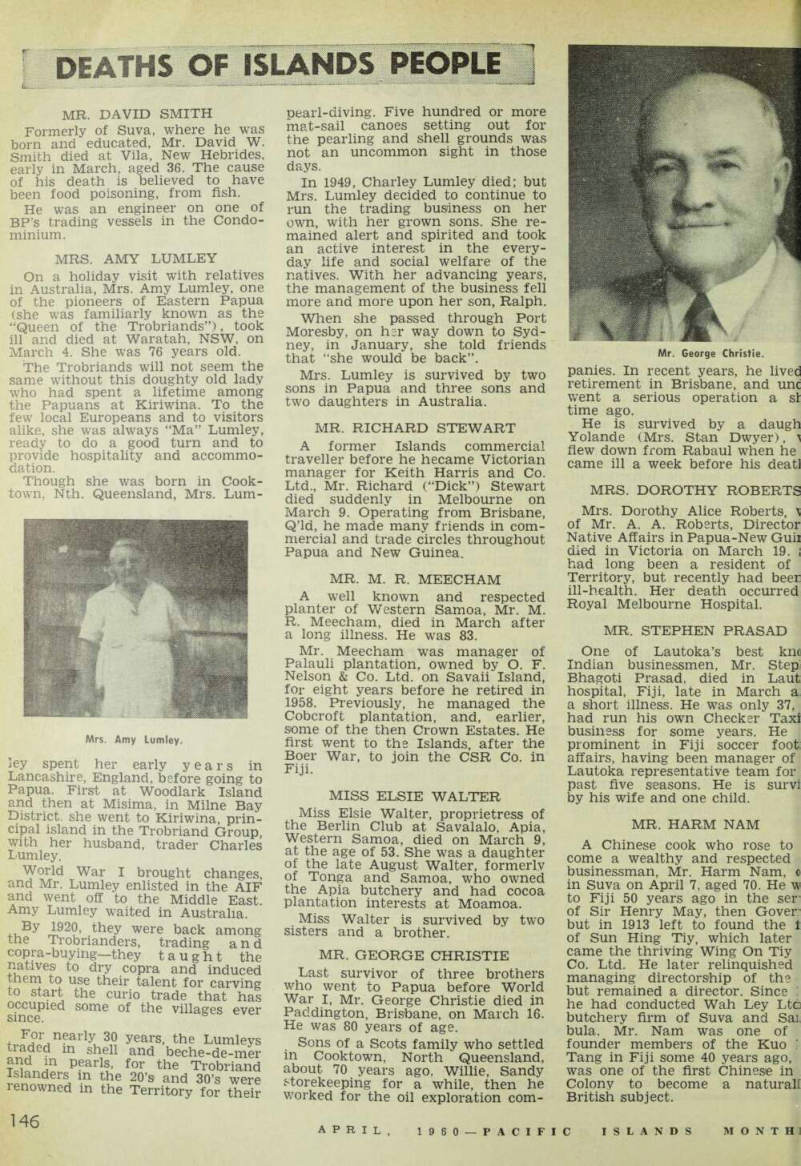 148
148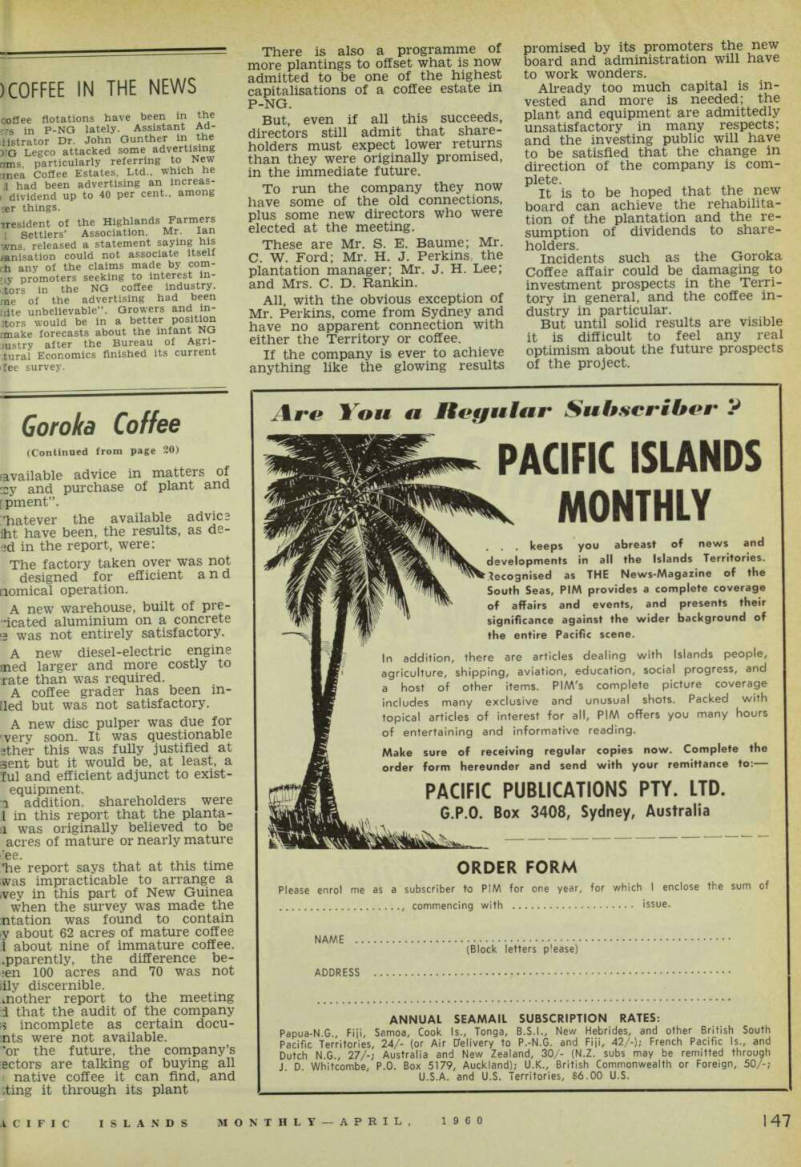 149
149 150
150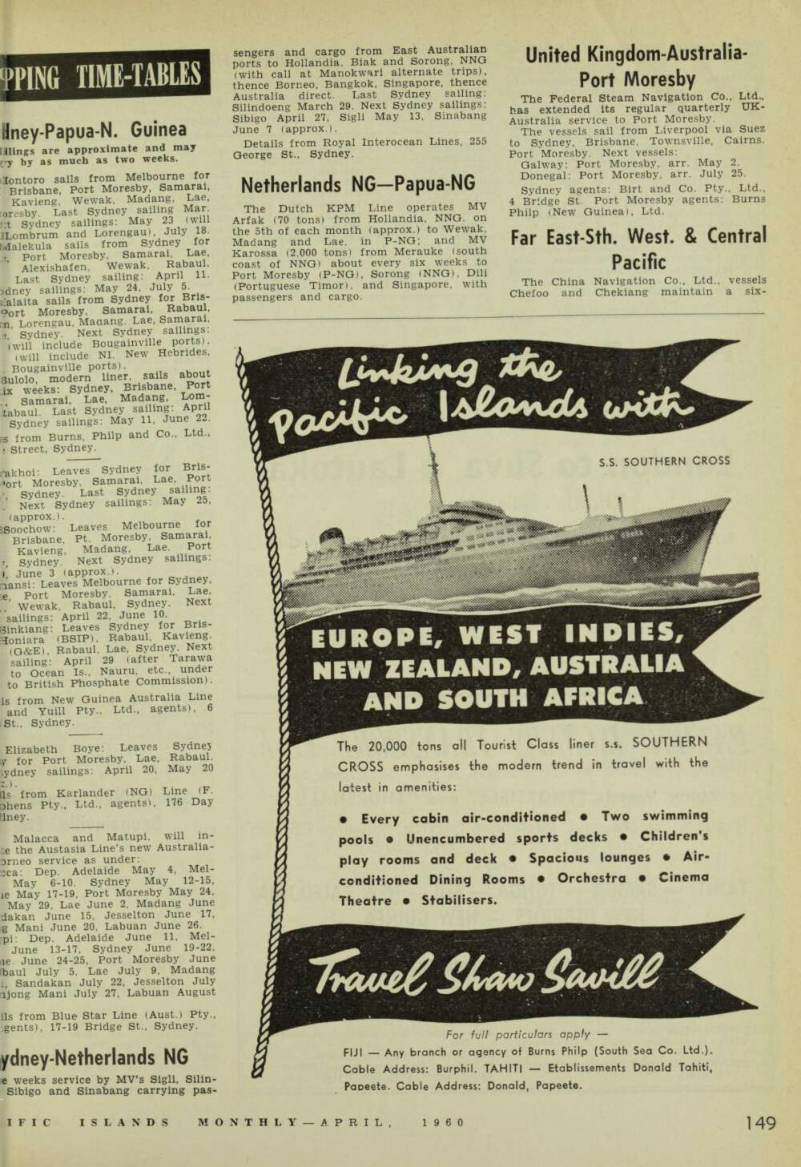 151
151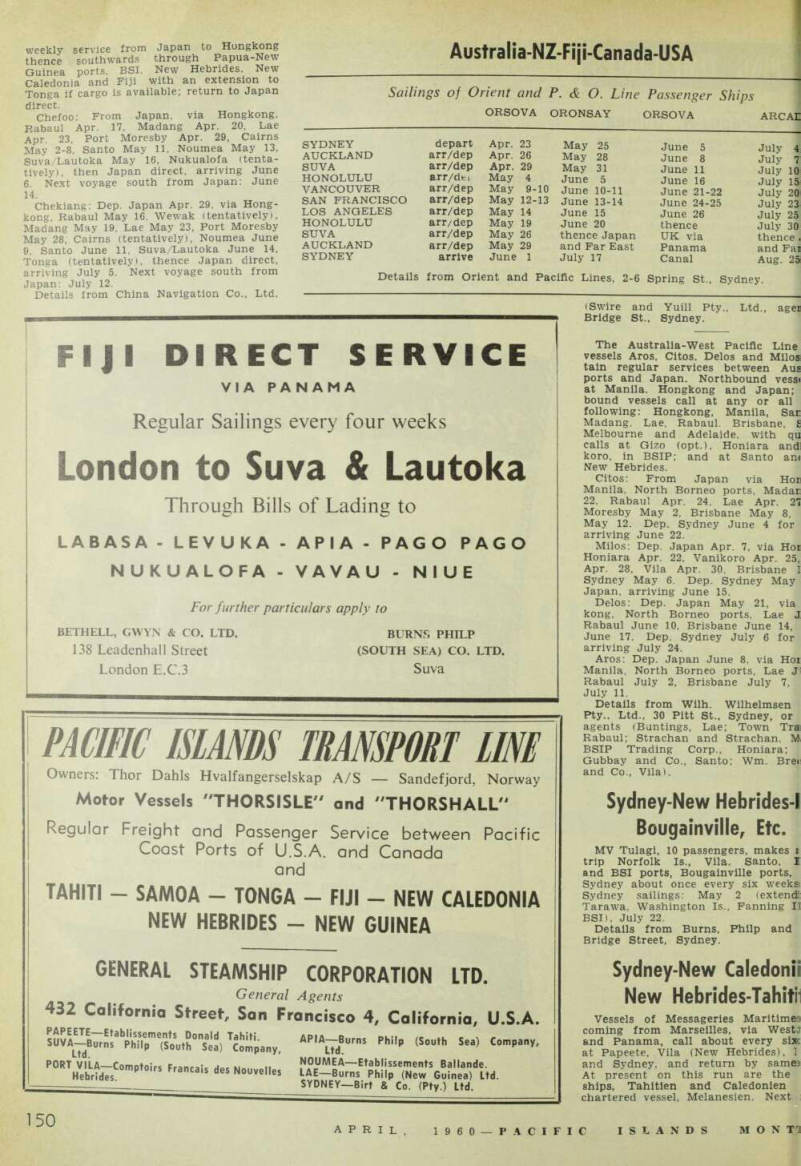 152
152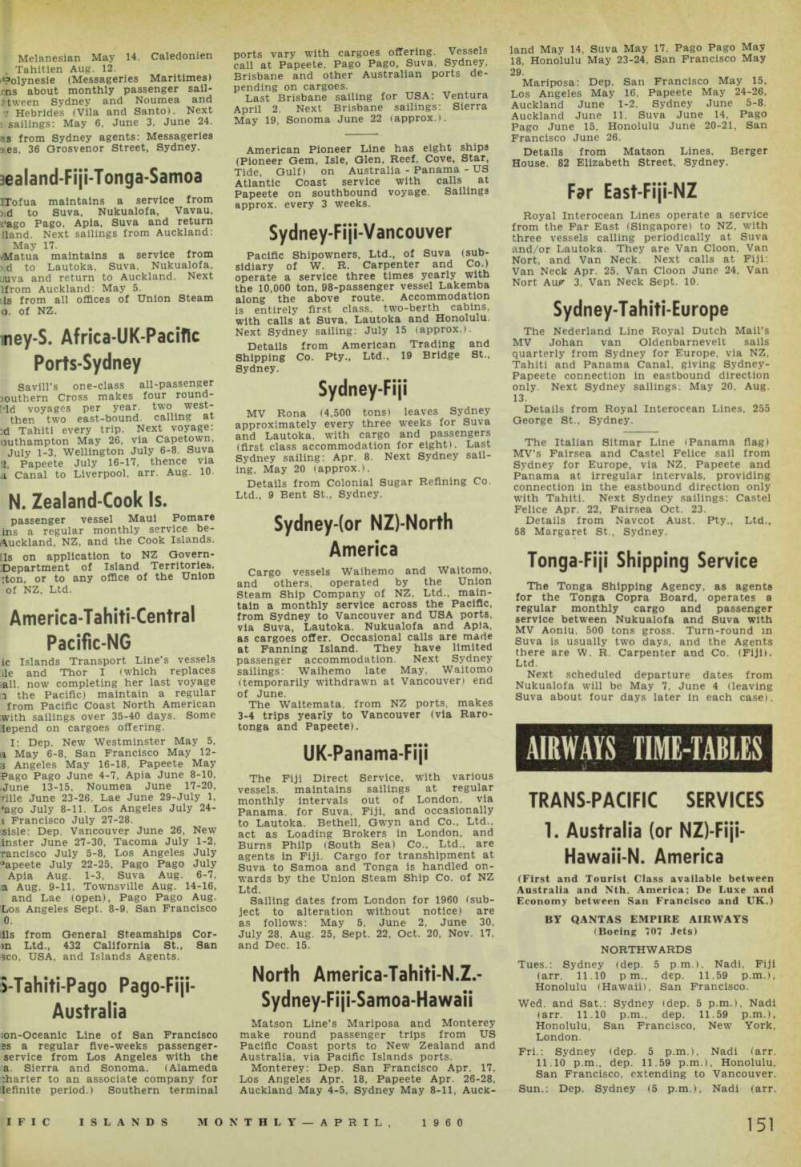 153
153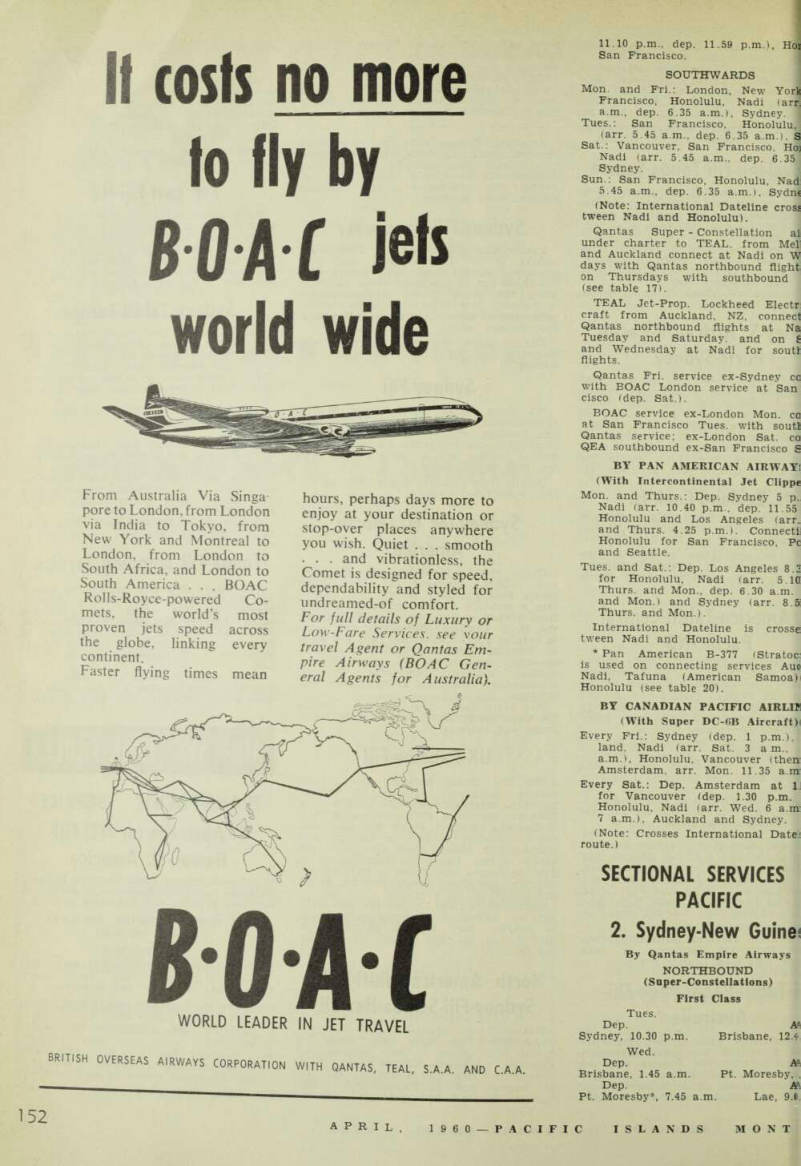 154
154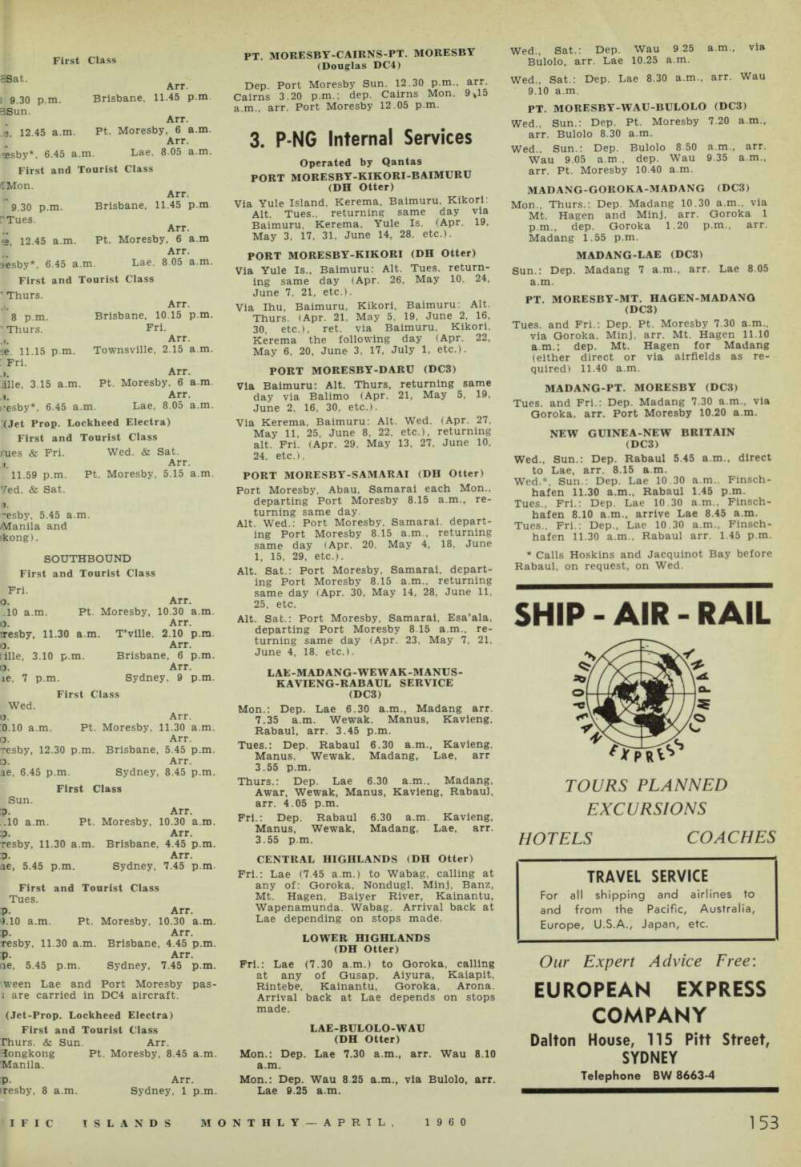 155
155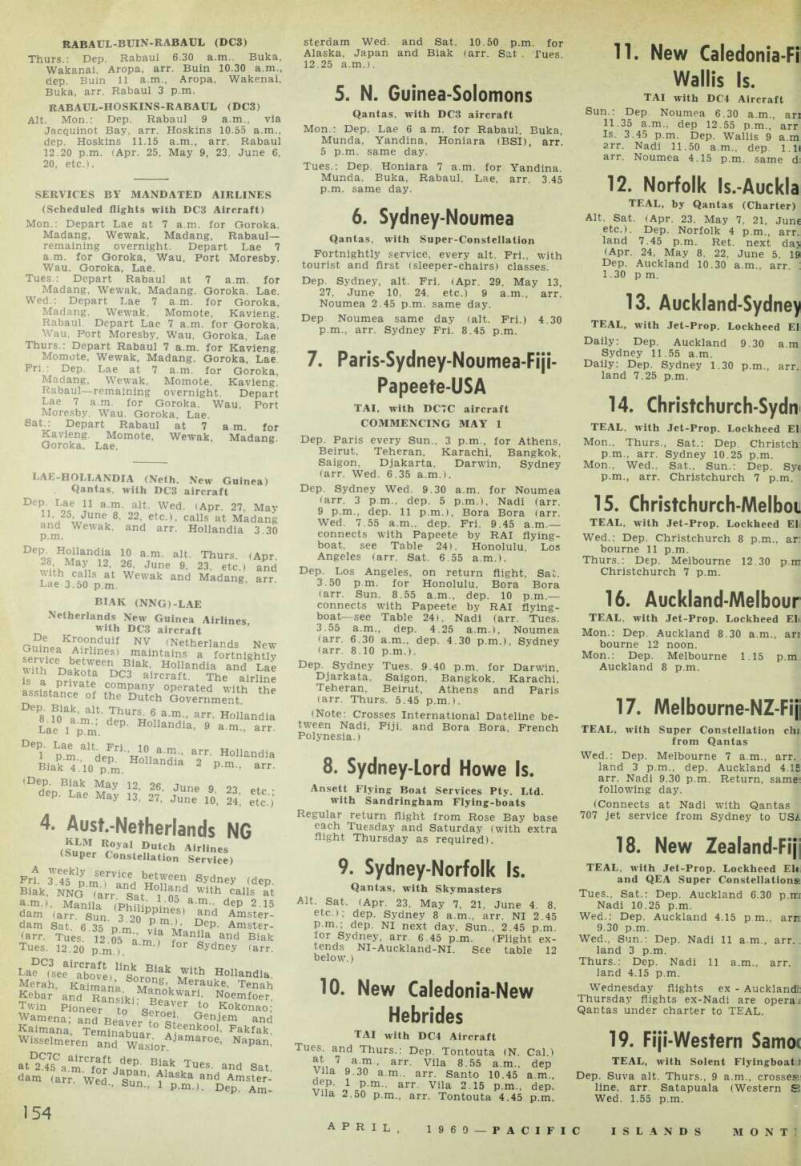 156
156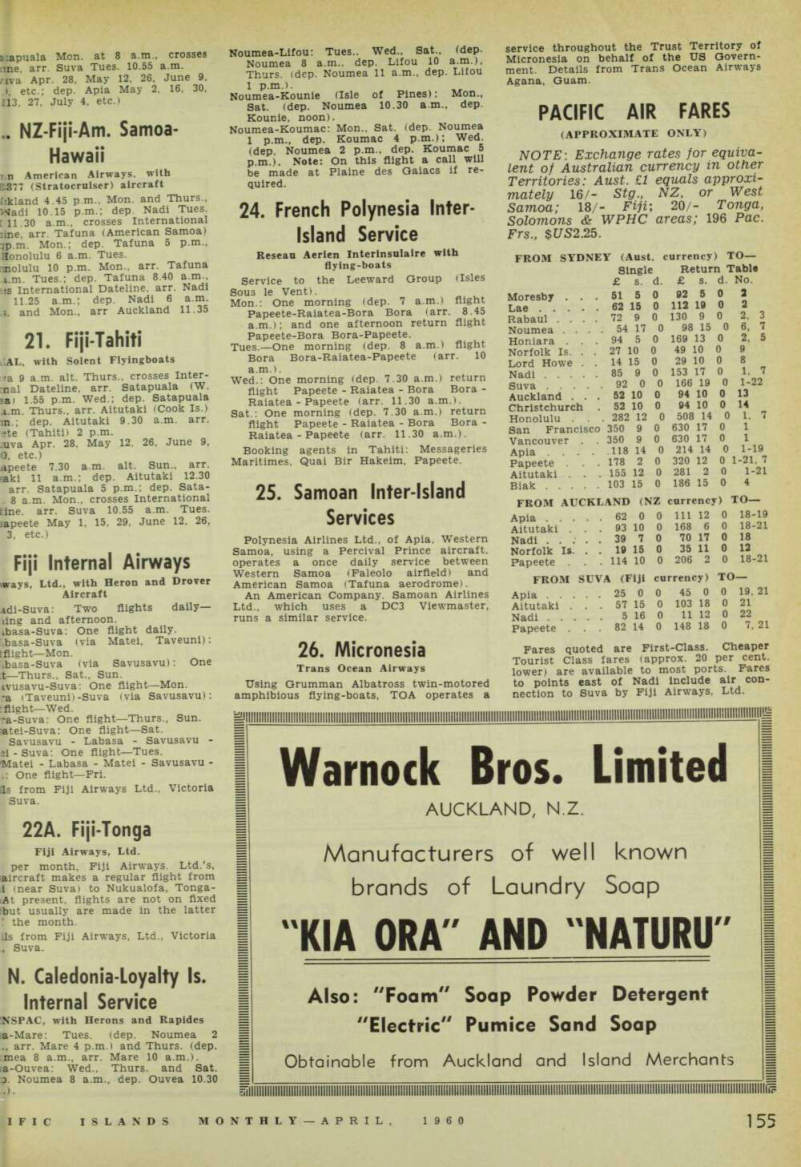 157
157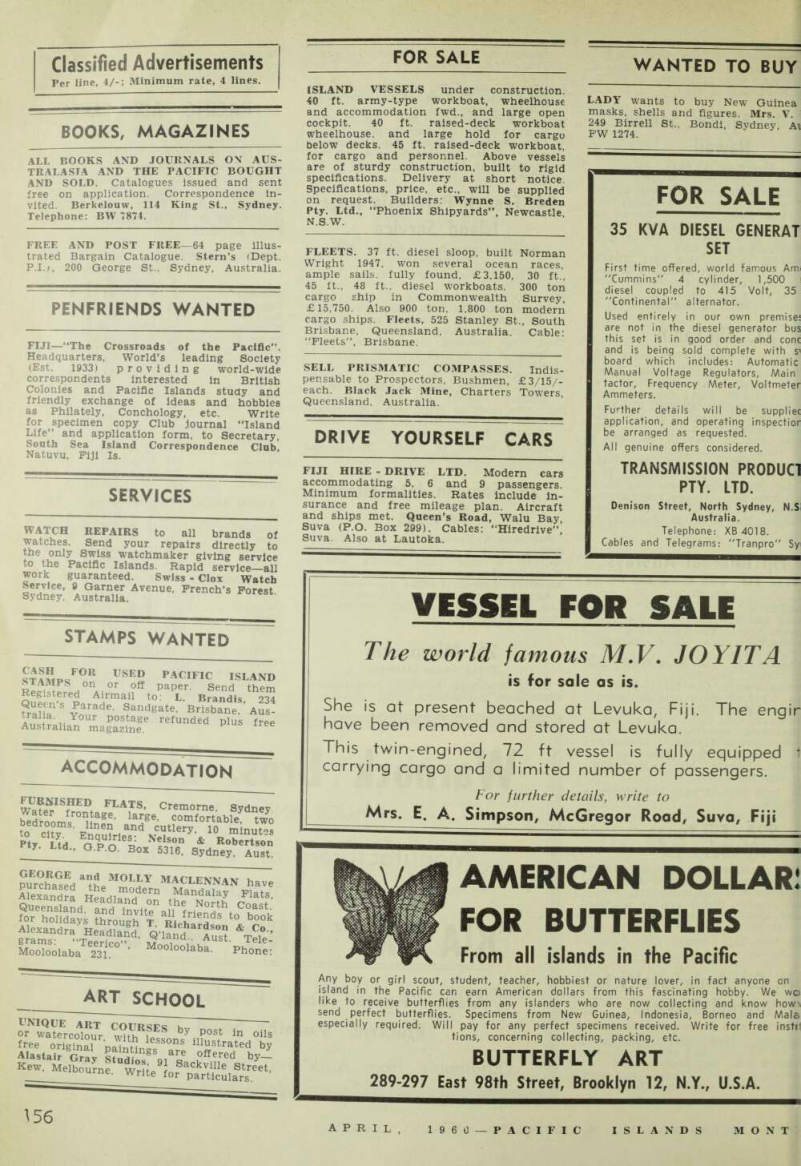 158
158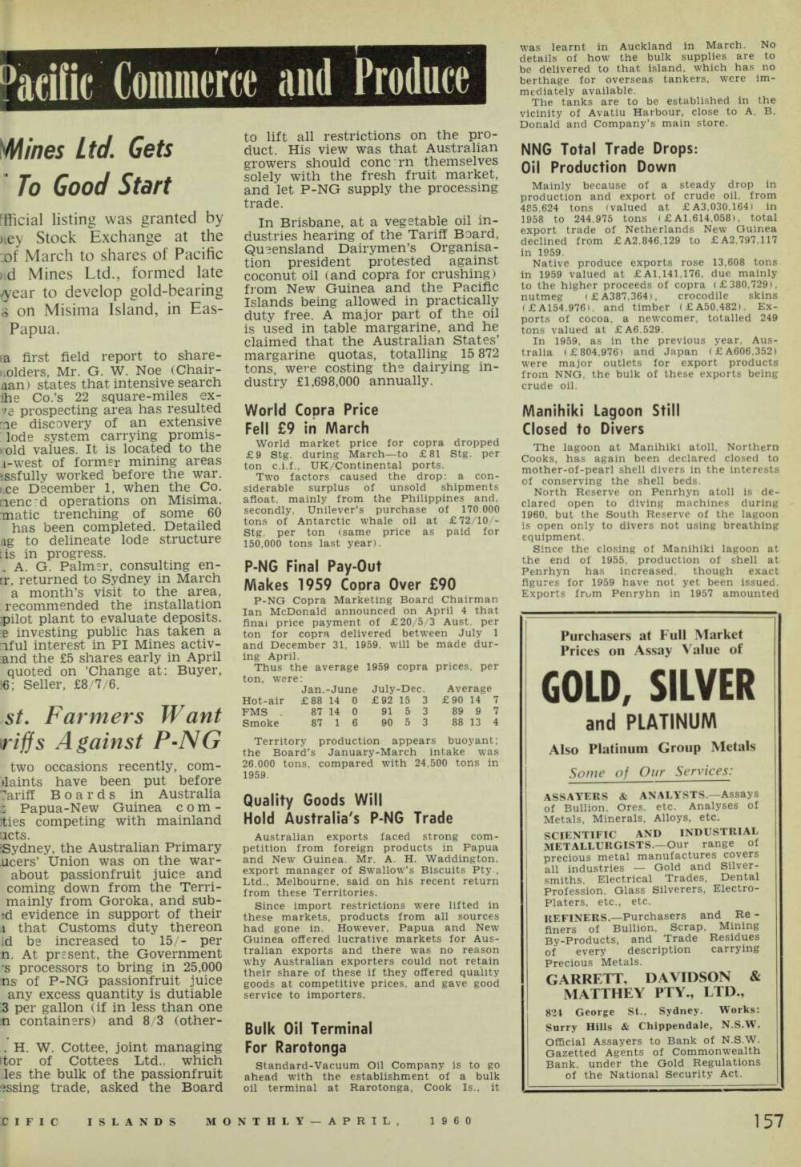 159
159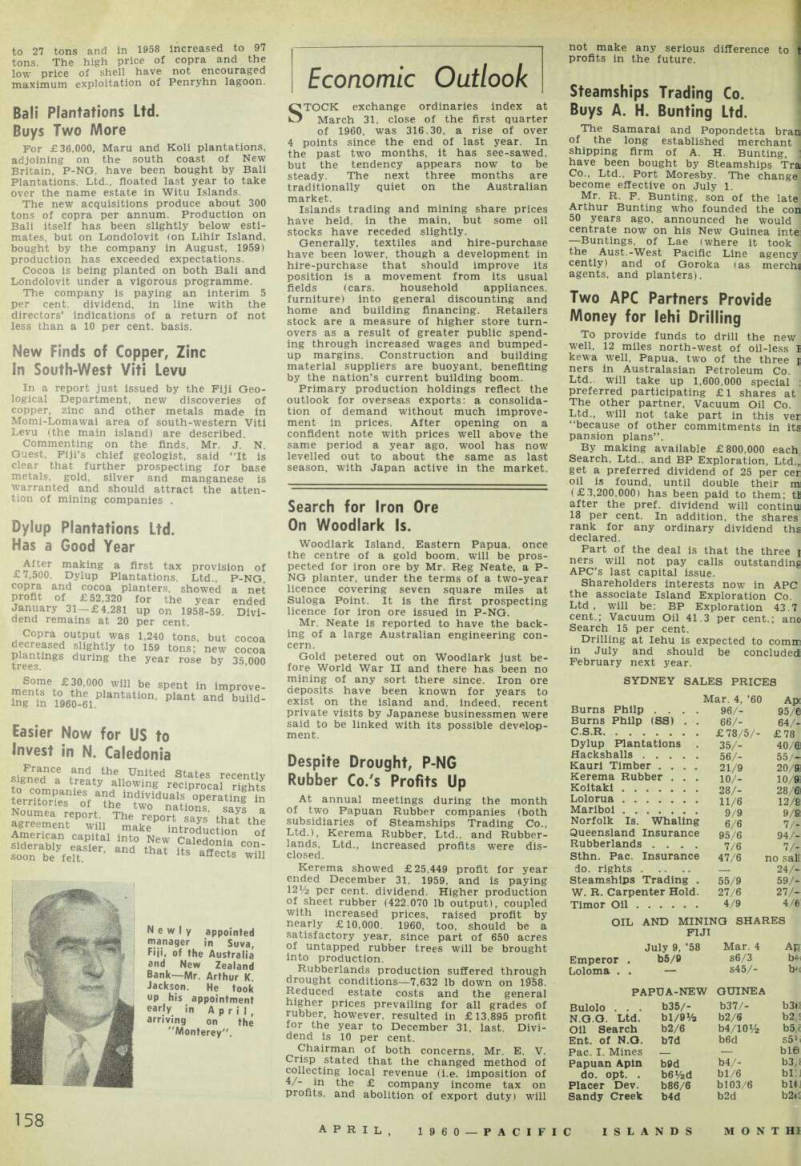 160
160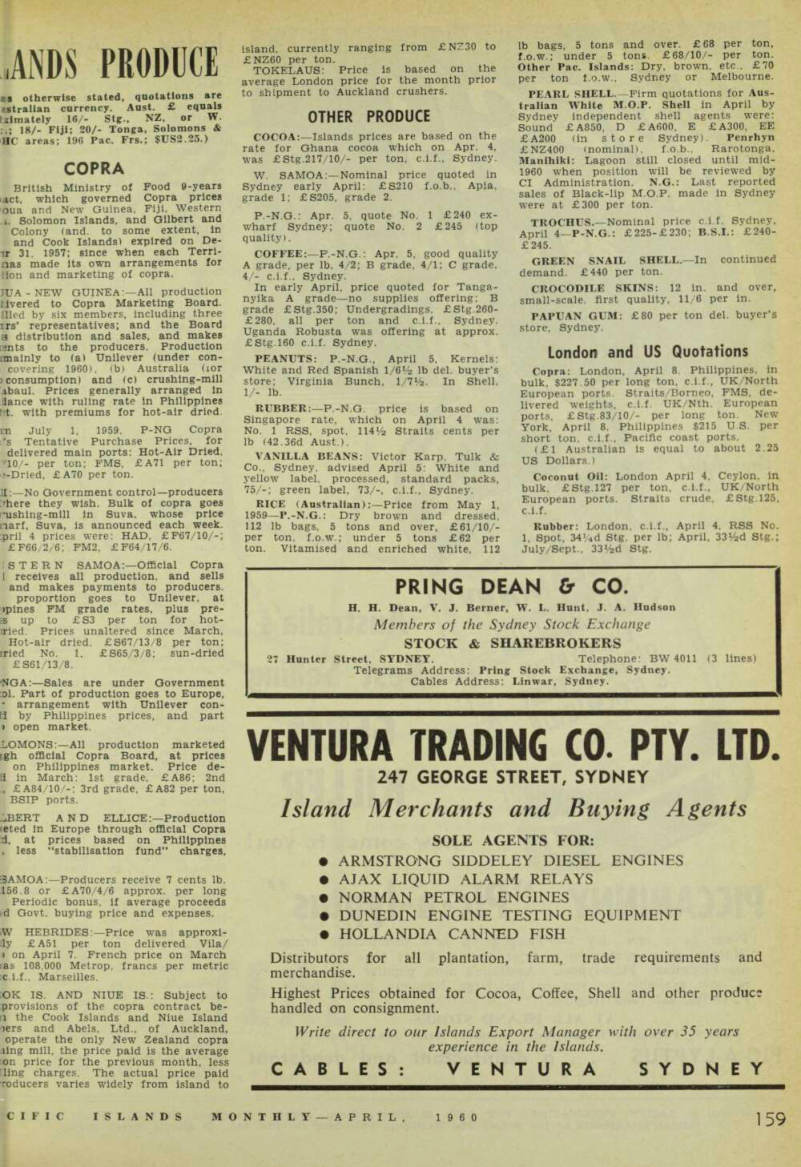 161
161 162
162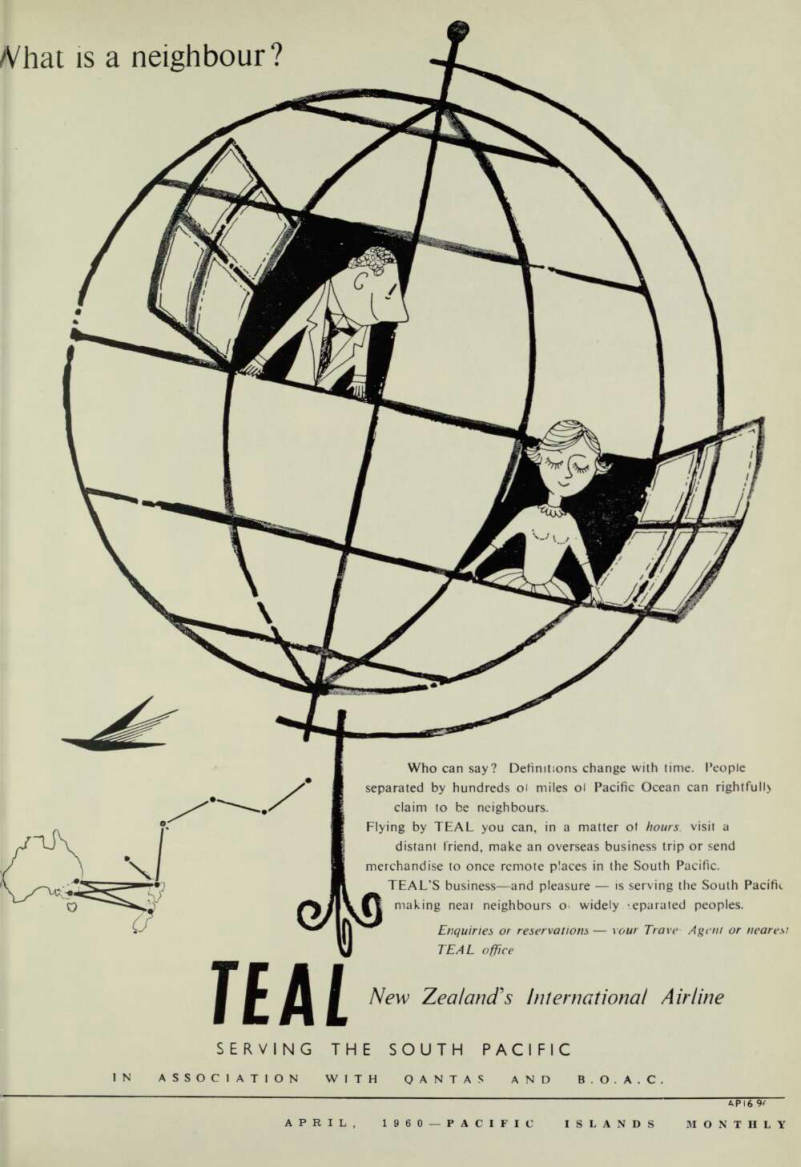 163
163 164
164