Pacific
Islands
Monyhly
March, 1960
Vol. XXX. No. 8
stcblished 1930
dstered at the Gl>.o Sydney^XXv-. transmission by post ia} a newspaper']
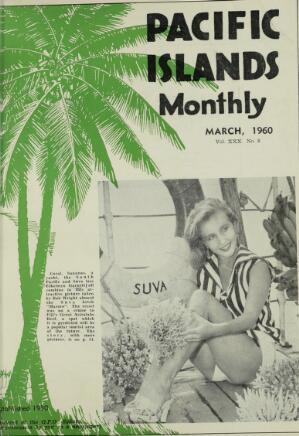
Coral, bananas, a yacht, the South Pacific and Suva lass Ethelwyn Garnett all combine in This at tractive picture taken by Rob Wright aboard the Suva ketch “Maroro”. The vessel was on a cruise to Fiji’s Great Astrolabe Reef, a spot which it is predicted will be a popular tourist area of the future. The story, with more pictures, is on p. 61.
Advertisements & other items, pp. 2-6 (5 items)
pacific l t ~
pacific l t
ISLANDS MONTHLY m , n
IHL Y MARCH, 1960
Around
FLY ONE JETLINE
AHA
•■lTilllt]
OAM TAI
lIIL I I I
ro
AROUND
THE WORLD
OAHTAS
AUSTRALIA'S ROUND-THE-WORLD AIRLINE
Q50.74.119
Model No. 532 E
SILENT TYPE
STOVES
MADE IN ENGLAND
These two Coleman Stoves are of the one burner kerosene type and are available in both silent and roarer models. Their dimensions are height 8i inches, diameter 8i inches, approximate weight 2J lb. Both models have the same outstanding features. 1. Full-Size Fount with Filler Plug of wing type. 2. Air release on side of Filler Plug 3. Heavy Brass pressure-tested Tanks. 4. Fount and Burner firmly soldered together. 5. European-type pump. 6. Grate and Grate Supports detachable to reduce shipping space. 7. Spare parts interchangeable with similar European Stoves.
Representatives for the Pacific Islands o Model No. 531 E
ROARER TYPE
22 YOUNG ST.,
SYDNEY
ROBERT GILLESPIE Pty. Ltd.
ALSO 334 QUEEN STREET, BRISBANE, QUEENSLAND.
ROBERT GILLESPIE (N.G.) LTD. PEARCE & CO. LTD., Lae, Madang, Rabaul, Port Moresby Suva for Fiji Islands Phone: BU 2221 Cables “Robergill”
C. SULLIVAN (pacific islands) LIE
Bank of N.S.W. Chambers, Victoria Parade, Suva, Fiji G.P.O. Box 427. Cables: "SULLIVAN", Suva Serving traders in Fiji, Tonga and Samoa
Representing
ENGLAND
ALLIED IRONFOUNDERS LTD.
BAERLEIN BROTHERS LTD.
THE BEANSTALK CO. LTD.
BLACK BROS, & BODEN LTD.
DEMA GLASS LTD.
KIWI POLISH CO. LTD.
SCOTLAND
JOHN HAIG & CO. LTD.
FEDERAL FISH PACKERS LTD.
Canned Fish
AUSTRALIA
ARDMONA FRUIT CO-OP. LTD. Canned Fruits BRUNTON & CO. LTD. F our , sharps COLUMBIA PICTURES LTD. 16mm Fi ms
HOME PRODUCTS INTERNATIONAL Kolynos Tooth-
paste, etc.
KINNEAR'S ROPES LTD. Manila & Sisal Roi
ALFRED LAWRENCE LTD. Essem
EDWARD LUMLEY & SONS (N.Z.) LTD. Insurar WYETH INTERNATIONAL LTD. Ethical Produ
YARDLEY OF LONDON (AUSTRALIA) LTD. Toiletr
PHILIP MORRIS (AUSTRALIA) LTD. Cigareti
is n u ors or leading Australian and Overseas Manufacturers, vpes o merchandise indented on commission—Suppliers 7 original invoices furnished Associate Houses at Sydney, Brisbane, Auckland, Hon 9 Kong, San Francis* and London.
TIMEX
lAJorid J modi
Shockproof - Dustproof - Waterproof
In the United States of America TIMEX watch sales are easily first, while in England in 1957 more TIMEX watches were sold than all other makes combined. * ■llllliliil o <>- <r tit. r Made in a wide range of styles from Boyproofs to men's self winding models, also in glamorous new models for the modern miss-beautifully styled and splendid timekeepers—all with unbreakable mainsprings.
A gents: — C. SULLIVAN (Export) PTY. LTD. 66 PITT st„ SYDNEY
ENQUIRIES FROM DISTRIBUTORS INVITED
Exporters Catering to South Pacific Areas with Branch Offices
in Fiji and New Guinea
C. SULLIVAN (EXPORT) PTY. LTD.
66 Pitt Street, Sydney (Corner of O’Connell and Pitt Streets) Telephone: 8L5071 (6 lines). Telegrams & Cables: CHASULL, Sydney.
C. SULLIVAN (Queensland) PTY. LTD 318 Adelaide Street, Brisbane Telephone: B 4958. Telegrams & Cables: CHASULL, Brisbane.
C. SULLIVAN (N.Z.) LTD.
20-22 Swanson Street, Auckland Telephone; 43-307. Telegrams & Cables: CHASULL, Auckland.
BUYERS OF ISLANDS PRODUCE
THE CHINA NAVIGATION CO. LTC
(A British Company incorporated within the United Kingdom.)
Mi I ilf'WT ■
-' . f j*...
Passenger and Cargo Liners:
AA.S. "SINKIANG"
A/I.S. "SHANSI"
M.S. "SOOCHOW"
limia
S.S, "PAKHOI"
Regular services between Australia, Papua-New Guinea and Solomon Islands Regular monthly service with the modern motor ships:
"CHUNGKING"
"CHEFOO"
"CHEKIANG"
(Cargo only)
Connecting Japan, Hong Kong,
New Guinea, New Hebrides, New
Caledonia, Fiji and Tonga, thence
return Japan direct. * r; i i mm Ha further particulars please apply to Agents or refer to the weekly advertisements in the "South Pacific Pi
AGENTS:
FIJI; Morris Hedslrom Ltd.
Co. Ltd., Port Moresby, Samarai.
NEW G Cabl!s A ; 'Xofyeram" tSOn (N ' GO ltd - Lae - Rabat,!.
NOUMEA; Etabfeements Ballande, Roe de L'Alnta, Boi.e Postale HONIARA; British Islands Trading Corporation. :' L *i Us Comp,oirs Francaise des Noovelles-Hebrides.
J4P4N Kories" Vokoha™, Osaka, SANTO: Les Comptoirs Francaise des Nouvelles-Hebrides.
APIA: Morris Hedstrom Ltd.
NUKUALOFA: Morris Hedstrom Ltd.
TAHITI: Etablissements Donald.
EASTERN MANAGERS: Butterfield & Swire Ltd., 1 Connaught Central, Hong Kong. Cables: "Swire". m « mw m General Agents in Australia
SWIBE & YMIU PTY. LTD.
6 BRIDGE STREET, SYDNEY
CABLES: "SWIRESHIP". 81
1
CIFIC ISLANDS MONTHLY MARCH, 1960
2
MARCH, 1960-PACIFIC ISLANDS MONTI
4
MARCH. 1960 PACIFIC ISLANDS MONTH
People
ca Salote Tupou had her 60th ry on March 13. A huge feast was held on the 12th.
Tidal celebrations began on a, with formal calls upon her ministers and the British and addresses of loyalty and ]n from nobles, chiefs and the The Queen attended a ball INukualofa Club in the even-
Theo Bergsma, Netherlands ;r of the South Pacific Com n and former Dutch Consul al in Sydney, recently visited r rancisco, USA, en route to ague for assignment to new latic duties. Mrs. Bergsma leir two children accompanied He will be replaced on the probably by Mr. A. Laboyrie, will be the new Consul in y.
Governor Sir Kenneth ocks visited Wellington in late lary for official talks. There a minor storm in Fiji when 1 reports of an interview the mor had given to the New Zea
[?]UP! They may or may not know that [?]lat's where they're going, but —[?]
E UP! The gentlemen concerned are from New Guinea Highlands and had never before [?]e sea or the big towns until flown into [?]ently on a grand tour. Here they are what it feels like to ride aloft on a Ft. Photos: Pat Robertson.
land Herald in Auckland oi ruary 25 were published, parti one quotation: “We have to solution to racial problems i acceptable to everyone. Stri: largely between the two racial groups, Fijians and I] The Fijian people did not a resent the Indians, but apprehensive of them”. On M the Governor cabled from W ton to the Colonial Secret; Suva that the report was inc
More than 150 persons att a traditional aiga (feast) an ception held in San Francisco on February 7 to celebrah marriage of Saipele Le’au, for of Fagatoga, Tutuila, and Rosalie S. Shimasaki, formei Faga’alu, American Samoa party was attended by a section of the local Samoan c
Mr. Norman Spence, accour of Lae, after living in New Gi for 40 years, was unwil] settling himself in Brisbane in
Miss Letty Fagaloa of Western Samoa, n[?] ing at the Sydney Crown Street Women pital, pays a visit to the Polynesian Ass of Sydney, where this photograph was —Tele
Other recent visitors to the Polynesian ciation were Mr. Don Adams, Mrs. F Menghetti (formerly Dora Buffett) and Mr.
Buffett, all from Norfolk Island. —Tele
i for a six months stay in island, for health reasons. He neen told to retire and live t,nently in Australia but his 'ory friends are freely betting this 67-year-old veteran and opence will return to P-NG by ad of the year. He first went A in 1920 with the Australian and Military Expeditionary , and stayed on.
. Alfred Poroi, Mayor of ete, who attended the Pacific Travel Association conference Christchurch, paid a visit to L ey in March. In Auckland, Mr. i said Papeete’s new jet airport Id be ready for use before the of the year, and good progress being made on a new hotel, zay between the city and the >rt, situated on reclaimed land he foreshore, which was being ;ed for Mr. Spencer Weaver, of dlulu.
[?]ng a Pacific Area Travel Association Con in Christchurch, NZ, in February were [?]ma Daly, Director of the big Islands [?]Barrau, and Mr. Jean Brock, managing [?]r of French Pacific Tours, Noumea. Also photograph, taken at Noumea before their [?]re, is Miss Marguerite Talbot, of Sydney, nown for her courtesy as secretary in [?]antas agency in Noumea. She left on vacation. —Fred Dunn.
nor Peter Coleman of American Samoa accompanied by Budget Officer Edward on, also attended the PATA conference in New Zealand in February.
Advertisements & other items, pp. 7-9 (4 items)
3 I F I C Islands Monthly March, 1960
Sparklets syphons
For a long cool drink on sj a long hot day P 1 Never any risk of running out of soda-water with a Sparklets syphon. You make the soda yourself—the easy way. Just fill the syphon with water, screw on a Sparklets bulb ... and up comes the soda, crisp and lively. And you know without doubt that it's fresh and pure.
If you keep your new Sparklets syphon in your refrigerator you’ll have a supply of Ice-cold soda always ready. There’s a fine range of colours to choose from and it makes a wonderful gift.
i] SPARKLETS LIMITED LONDON Nl7 ENGLAND
(hint VUrfufi.
is a “must” for
tropical baking
h M«W Aunt Mary’s Baking Powder is always fresh and main tains its full strength. It never deteriorates in it: alight container, that’s why your cakes and pastrie: will have extra lightness, and stay fresh longer wher you use Aunt Mary’s Baking Powder. You also cool with the important, and in the tropics, the vita advantage of adding the rising agent when you d< your mixing—that is the right time the best time for sure results.
AUNT MARY’S
STRINGLESS BEANS
These tasty, tender, fullsize beans are picked at the peak of the season to ensure full flavour. \
° L( SS BIMS
SHOBK& ««
The only pen that gives you • the filling tube that extends to drink the ink... withdraws when full • exclusive wrap-around precious metal point...for greater strength, smoother writing • humidor cap to keep point moist...for immediate writing • inner spring clip to prevent loss jfc Remember: any pen writes best with the world’s largest selling writing fluid, Sheaffer’s ttrt* Gift-boxed ensemble includes matching pencil Identified by the White Dot of Distinction.
Available from all
Leading Stores
6
MARCH, 196 0 PACIFIC ISLANDS MONTI
7
CIFIC ISLANDS MONTHLY MARCH, 1960
Mr. Nat Logan-Smith, pe
director of the US Pacific Is. T ship Territory government, ] tired after a 31-years’ caret the US Federal Government. ] the oldest employee of the T ship Territory under the I ment of the Interior, having ferred from the Navy Depa in 1951. An honours graduate University of Hawaii, Mr.
Smith is a former Naval anc Guard officer.
NZ’s Deputy Prime Ministe C. F. Skinner, accompanied wife, private secretary (Mr.
Nelson) and NZ's member British Phosphate Commissio: R. B. Tennent), paid a brie to Ocean and Nauru pho islands in March. The party the Commission’s vessel Ti at Brisbane, and is expected in Auckland aboard her on Ma Mr. Skinner was making a sonal survey of the remaining phate resources of these i upon which NZ farmers great pend for fertiliser. * * * Mr. S. Inazu, representative leading Japanese industrial c( of Mitsui and Co. Ltd., ' Western Samoa during Fel and had discussions with G( ment and commercial repr atives. He was interested in pu] ing Samoan copra—his firm buy 1,000 tons per month, could be lifted by phosphate diverted from Makatea Polynesia). Mr. Inazu was all terested in cocoabeans, for there is a growing market in J He indicated that his firm mig disposed to establishing a crushing-mill in Samoa, but th truction of a permanent would be necessary, as all oil have to be piped into tankers * * * A monument to the late tinguished ethnologist, Elsdon
Photographed in Sydney—Mesdames Viale and Simone Elder, both from No[?] a visit. —T e |e
unveiled at Tawa, near Well n, NZ, by the New Zealand e Minister on February 27. The iment, a granite pillar with a 3.0 plaque, bears the inscrip “Nearby at Grasslees Faim, m Best, Maori ethnologist, was on April 30, 1856. His ashes ere.” Elsdon Best wrote papers many facets of Polynesian :re covering a vast field of re h and study, placing him at forefront of authoritative :rs on Polynesian affairs. * * * v. Francis Mihalic, SVD, BA, of oa g Catholic Mission, New sea, has returned to his home in USA for a brief holiday ie taking up a post in Italy, irst went to NG in 1947, where :as engaged primarily in teacher iing and literacy work. His :imar and Dictionary of Neo mesian (Pidgin English), pub d in 1957, is a valuable con- Ition to New Guinea literature.
r. Eddie Lund, probably the best vn musician in the South fic. paid a short visit to Sydney i Fiji in February to complete ngements for one of the big rd firms to bring out a long ing disc of his numbers under title of “Rendezvous in Tahiti”, sellers would have scarcely re used the colourfully Islands sed pianist and drummer they v as the uncomfortable-looking l in the tight brown suit, busi ; shirt and tie, walking along ney’s hot pavements. An Ameri , he went to Tahiti 24 years ago stayed to make music. Last year, a business visit to NZ, he met i difficulties on his way back to
farewell party in the girls' mess at Burns Port Moresby, for popular Miss V. Ponson. [?]e photo, left to right, from the back are Lee Baggley, Miss Ponson, Mrs. C. Hilder, [?]. Francis, Miss S. Willan, Miss R. Jones. —Papuan Prints.
Tahiti and had to stay over i while the matter of his landir residence permit in Tahiti w; ing straightened out. * * * Having just retired as I Accountant-General in Fiji, ai years in the Government S Mr. W. P. Ragg is booked to Suva shortly for Europe to j Rome Olympic Games. He always taken a close intere sport—he is president of Amateur Athletic Associatior managed Fiji’s team of spor who competed at last Melt Olympics and at the Empire G in Wales. * * * Mr. and Mrs. Ron Croi arrived in Samoa recently froi Cook Islands. On an Aust National University scholarsh will carry out a land tenure si formerly he was with the Co Public Works Dept., from 19 1958. Mrs. Crocombe (she Marjorie Hosking before her r age last year) was one of the scholarship pupils sent from Islands to NZ, after the war she has been teaching at Cl sc ever since she returned home,
Mr. Junji Nishime, Directo Economics of the local admini tion in Ryukyu group, North Pa arrived in Australia from Okii late February to hold trade with senior officers of the Dei ment of Primary Industry ; Trade. Australia-Ryukyu trad not large at present, but is caj of expansion—the first sales of . traliam rice were made there cently. In March, the Sydney ag for the China Navigation Co. nounced its vessels will call Okinawa once a month on nc bound voyages, commencing Ma; * * * Dr. Richard W. D. Maxwell, retired late last year from the
Recent Rabaul, New Guinea, wedding—Mr.[?] Lee to Miss Rose Mah. The best man w[?] Jeffrey Chung and the bridesmaid was Lan The ceremony was at the Rabaul Me Church. Photo: L.[?]
Tector of Health in Samoa, nas settled down in Sydney, 25 years medical work in Pacific. He was born in Fiji. * * * i Chester B. Leedom, of Wash- USA, accompanied by Mrs. :m and infant son, arrived at Pago recently to assume office distant Attorney-General. He ;be acting Attorney-General the Attorney-General, Mr. •y P. Baird, proceeds on vaca n July.
J. Golson, lecturer in pre •y at Auckland University, re d to NZ early in March after months of archaeological ex ion work on Isle of Pines, New onia. He reported that his had unearthed a few decorated and had investigated some ds which appeared to be man but about which the local e now know nothing of their i. No important finds had been
D. W. R. Heatley, Resident missioner of Niue Island, took ecently, and a special RNZAF jy flight was made from Fiji lick him up. He was flown to i and spent part of February the Colonial War Memorial Dital.
I Mrs. Rex Hoopert after their marriage LMS Church, Port Moresby, in February, opert is with BP's, and the bride was [?]y Miss B. Dodds. Photo: Papuan Prints.
[?]d Mrs. L. T. Hack and family returned to Island recently following vacation. Mr. has been Radio Superintendent at this for a number of years, earlier serving rotonga. As a radio "Ham" his voice is known all over the world.
=er Secretary of State for the Lies, Mr. Lennox Boyd, agreed • Tiney in early March, at the »f his two months holiday tour s South Pacific, that he hadn’t been interested in finding out happened to his Uncle Ben, in the Solomons in 1851. He the newspaper stories that had ved him around the world were ed, presumably, because of thing he had happened to say journalist friend. “I suppose a pretty good opportunities to all the checks I wanted when a the Colonies post,” said the •ful Mr. Lennox Boyd, with in. Nevertheless, he and Lady icia visited Wanderer Bay dur iheir tour, received a warm wel from the local natives, and issed the old murder. “A very village,” was their comment.
r. F. M. Bateson, Rarotonga’s e-time astronomer of world re , has received the Jackson it Medal from the Royal Astro ical Society, London, as a re of his work on variable stars a long period. This is the first sion the medal has gone to a Zealander. Mr. A. L. Jones, of aru, NZ, who has been making rvations in association with Mr. *son, also received the award.
Pierre Roux (right), well-known Papeete and pastrycook, met a former Tahiti resi- Mr. Carl Swenson —now an employee with [?]harbour ferry company—when he visited wo sons in Auckland in January-February. [?]bruary Mr. Swenson and his daughter Svea ne New Zealand subjects. Originally [?]ish, Mr. Swenson has been a French citizen for many years.
er recent Port Moresby wedding—Miss D. [?]ens to Mr. B. Lovejoy, at the Taurama I. Photo: Papuan Prints.
Advertisements & other items, pp. 10-17 (8 items)
8
MARCH, 1960 PACIFIC ISLANDS MONTI
Lock Up With
ROE*
RUt iVr.
lor top security..
Don’t take risks when your valuable
and often irreplaceable possessions are
at stake. Invest in a first class padlock—
a Lockwood—for “top security”.
Up to 78,000 different key combinations
ensures that only your key will open your padlock. The shackles are of casehardened steel or all brass, and are
available in various lengths. Most
Lockwood pin-tumbler padlocks can be
“master-keyed”.
No. 100
NIGHT LATCHES.
Sturdy, reliable mechanism. Available with or without snib. Nos. 100. 201 and 206 illustrated.
STREAM LATCHES.
Many popular durable finishes.
No. 211 illustrated. No. 200 “Narrostile” also available. - RT ,
'll II II LOCKS.
Preas'on depe securi parts sc brass Over 30 ; Plications in £
Available as'
master-key’ systet °°OR Tout f latch.
Just push door open, pujj it todo Easy to install a features strong sn
f&Mr
'"xS7ioS
, as exterior ,cv er handles
PNEUMATIC CLOSER NO
401. For all doors up to 40 lbs. weight.
NO’s 403
404 HYDRAULK
CLOSERS.
For all doors. Brackets am arms for every installation arms tor every installatio
OGDEN INDUSTRIES PTT. LIMIT!
Si A ** YH» mn i** m »ov
ftOO^
$fS3 V& 1 aiww \.\HU
PRFP A R F D WAX
PREPARED WAX
FLOOR POLISH
FOR UNO. FLOORS. FURNITURE, LEATHER 6 MOTOR CARS " Twice the shine in half the time Piccaninny imparts a glow of youth and beauty to floor surfaces that might otherwise soon begin to show their age. There is nothing more perfect for linoleum or natural wood floors.
Piccaninny's tough wax skin protects surfaces from tropical moisture, wear and tear —saves you hours of work and gives Twice the Shine in Half the Time!
ASK FOR
PICCANINNY
BROWN STAIN FLOOR POLISH
For Jarrah, Cedar, Stained Floors & Woodwork Piccaninny Polishes are munufactured by
PICCANINNY MANUFACTURING CO.
254 Pittwater Road, Manly, N.S.W., Australia
So nice to go home
with . . . «5> a bottle of * G
GIN
f\ \im S//r/Xf
your
attention
ptease!
u . . . Announcing the departure of flight No. 335 on the Bird of Paradise route to Sydney via . . •”
Going south this year? A mainland furlough, meeting old friends or seeing your children at school, is an event to look forward to.
Make it a carefree holiday. Let the Commonwealth Savings Bank’s Travellers’ Cash System take care of all your holiday finances.
Call at any of the following branches for further information: — Port Moresby Goro\a Madang Rabaul Kavieng Wewa\ Honiara Bulolo Lae Norfol\ Island t ▲
SAVINGS BANK
58.128.83
HYTEST
Has the edge on
Ordinary Axes and
Tomahawks
Forged, tempered, and finished under relentless supervision, HYTEST Three-Quarter Axes, Tomahawks and Tools are made from the same tough steel as their “big brothers”, the famous FORESTER,
CRAFTSMAN and CHALLENGER Axes.
You can depend on every Axe and Tool that’s branded HYTEST.
They’re as tough as they come. Your Island Merchant or Storekeeper can supply you immediately. niin
HYTEST
Block Splitter with 36inch handle
HYTEST AXE & TOOL PTY. LTD.
Collins Street, Alexandria, N.S.W., Australia
■NEW Simplex
12 VOLT 240 W
air • Powered by "Simplex" cooled, petrol motor. • English "Lucas" Generator. • Simple charging of your 2, 6 or 12 volt batteries. Will charge one 12 volt battery, two 6 volt batteries or six 2 volt batteries. • Light, easy to carry tubular frame.
Hardman & Hall
161 Missenden Road, Newtown, N.S.W., Aust.
Phones: LA 3597, LA 5973.
Cables: "Simplexeng", Sydney.
BATTER
CHARGI
SET
• . . because there is a glass and a half of pure, fresh, full-cream milk in every half pound of Cadbury’s Dairy Milk Chocolate
MD2S/2FC/9
CUT
BUILDING
COSTS
• precision cut for simple, speedy erection • structural members eliminated standardised sections give added economy lightweight—easier and cheaper to transp • ECONO—Frameless Aluminium Store r • ECONO—Frameless 5-room Cottage Kingstrand Frameless Aluminium Buildings by ECONO are designed for erection on any level foundation, quickly and easily, by unskilled labour—a spanner and screwdriver are the only tools required.
Specially formed aluminium sheet walls
are load-bearing, thereby eliminating all
columns, studs and framework. C structed entirely of standard sections i parts that do not require painting me reduced material, erection and nu tenance costs. And transportation cc are considerably less—a typical 750 sq. unit packs into a single crate weigh less than 2,000 lbs. gross, measuring o: 39 cu. ft. Termite proof, corrosion re tant, ECONO Frameless Aluminii Buildings are ideal for houses, stoi hospitals, garages, etc. Write for f details and prices.
ECONO PRODUCTS CO
\ m
DIVISION OF TULLOCH LIMITED
Concord Rood, Rhodes, I 70A Wickham Street, Valley, N.S.W.—Phone: 73-1231. I Q'lAND.—Phone: 2-3873.
DOWSFTT Qpua ' New Guinea and South Pacific Islands; DOWSETT ENGINEERING (AUSTRALIA) PTY. LIMITED, 12 Crescent Street, Hunters Hill
c buted in AD STRALIA, •W ZEALAND and the
ung PACIFIC ISLANDS:
can Territories: Papua. Norfolk Island. Cocos Island. iTrost Territories: New Guinea.
Nauru.
Crown Colonies: Fiji. Gilbert and Ellice.
Protectorate: Solomon Islands, iish Protected State: Tonga, trritories; Cook Islands. Niue, •ust Territory: Western Samoa.
Territories; New Caledonia.
French Polynesia, t# - French Condominium: New Hebrides, irttories; American Samoa. Hawaii, ist Territory: Micronesia (Caroline, Marshall and Mariana), i Territory: West New Guinea.
Publisher:
R. W. ROBSON.
Editors:
’Y TUDOR STUART 1NDER
Manager:
SELWYN HUGHES.
(ONES: General Business, Editorial, Advertising, Subscriptions:
9197-8, MA 7101, MA 4369,
MAI 395.
l.P.O. BOX 3408, SYDNEY,
jtered Address for Telegrams, sgrams, and Cables: "Pacpub", Sydney.
NUAL SUBSCRIPTION RATES:
cific Is.—Papua-N.G., Samoa, Norfolk, u, B.S.I., Cook Is., ,a, G.&E. Grp., Niue, Hebrides, and other sh South Pacific Terris (includes surface postage) .. • • • • Pacific Territories (N. donia, Fr. Polynesia); Dutch N.G. (includes ace mail postage) .. .tralia and N.Z. .
K., British Commona 11 h Countries, and ign (40/- Stg.) . .. 5.A. and U.S. Pacific itories ($6.00 U.S.) .
Copies £14 0 £17 0 £1 10 0 £2 10 0 £2 12 6 2 6
BRANCH OFFICE, PAPUA-
NEW GUINEA
Publications (New Guinea) Ltd., e Building, Fourth St., LAE, New Guinea. Tel.; Lae 2577.
Mss Pat Robertson, Manager.
BRANCH OFFICE IN FIJI:
imes Building, Gordon St., Suva.
Tel.: 4043.
REPRESENTATIVE IN N.Z.:
D. Whitcombe, P.0. Box 5179, Auckland. Tel.: 22.570.
REPRESENTATIVE IN U.K.;
Ashburn, 13 Rood Lane, London, Z.3. Tel.: Mincing Lane 8633. 3URNE OFFICE: Newspaper House, Collins St., Melbourne, Victoria.
Tel.; 63.7053.
FS; All main trading firms and “ores in the Pacific Islands.
TIMES AGENCY IN AUSTRALIA
Pacific Publications Pty. Ltd., jpress House, 29 Alberta St,, y (Telephone MA 9197-8), is the ilian Agent for THF FIJI TIMES, of Suva, Fiji.
9
CIFIC ISLANDS MONTHLY MARCH, 1960
10
MARCH, 1960 PACIFIC ISLANDS MONTH
11
CIFIC ISLANDS MONTHLY MARCH, 1960
12
March, i 960 PACIFIC ISLANDS MONTH
13
kCIFIC ISLANDS MONTHLY MARCH, 1960
14
march, 1960 PACIFIC ISLANDS MONTI
Contents:
PEOPLE: Personal Para graphs of Islands’ Interest 5 First Shots Fired In The South Pacific Aviation War 17 Britain “Won’t End Colonial Rule” 17 Indonesia Issues Threats As Dutch New Guinea Talks Begin 18 Long Fiji Riot Inquiry Ends: Report Awaited 19 Nadi Opens Its Newer Air port 19 New Guinea Tolai Group Again Refuses To Pay Taxes 20 Guadalcanal Won’t Track Man Moons Now 20 Mr. G. R. Powles Appointed To Post In India 21 Acting Prime Minister For West Samoa 21 Will Samoa Join The British Commonwealth? 21 Fiji Plans To Restrict Hotel Hours 22 Future of New Zealand Terri tories Department “Under Discussion” 22 New Hebrides Take-over Rumour Denied In Noumea 23 La Perouse Relics Presented To Vila Cultural Centre .. 23
Commentary: A Look At
Pacific And World Affairs 25 The Editors’ Mailbag 26 These Are The Men Who Made The Burns Report 29 New Caledonia’s Drought Dries Up The Yate Dam 31 There Are Some Bright Spots In The Pearly Gloom 33 An Islands Correspondent Takes A Look At New Zea land Life 35
Territories Talk-Talk
With Tolala 37 Were Limpet Mines Used In Rabaul? 37 This American Went Where The Walnut Grows ... 43 Australian Sappers In The New Hebrides: Clean-up Month 45 A Correspondent Surveys The New Britain Drink Problem 53 A Visit To The Wonders Of The Great Astrolabe Reef 61 Some Untapped Islands Re sources 67 American Samoa’s Future .. 67 Sydneysiders’ WALKABOUT 69 The New Guinea Highlands Have A Foreward Look .. 75
Magazine Section:
Tropicalities, 81; Crossquiz, 82; Islands Painter With A Paris Reputation, 83; Brett Hilder’s Profile, 84; There’s A Better Way To Bait A Hook, 84; Do You Remember? 85; Anything For A Free Ride, 86; Mystic Mortlock Islanders, 87; Book Reviews 88 The Month’s News Of Ships And Yachts 101
Pacific Report: Round
up Of Pacific News And Pictures (index p. 17) .. 117
Obituaries: Mr. Eric
Riechelmann; Mr. Rasual Buksh; Bishop Walter Badeley; Mr. Frederick Green; Mrs. Sheba Austen; Mr. Angus Maddock; Mr.
Llewellyn Tracey; Pastor Tupe; Mr. Ernest Stanfield 151 Sports Review 153 Shipping and Airways Time tables 155 Commerce and Produce .. 162
Advertisements & other items, pp. 17-18 (3 items)
A Product of Pacific Publications Pty. Ltd., Technipress
House, 29 Alberta Street, Sydney (29 Alberta Street is 10 yards from the intersection of Goulburn Street and Wentworth Avenue.)
16
MARCH. 1960 PACIFIC ISLANDS MONTH
British Paints Limited
me
SATIN FINISH ENAMEI
For distinctive decoration and outstanding protection of interio and exterior walls, ceilings and all woodwork.
★ WORLD FAMOUS DURABILITY
Satin-Tone dries hard to give a long-life protection to all interior and exterior surfaces. Ideal for kitchens, bathrooms and laundries ... It is not affected by steam and cooking vapours.
★ AMAZINGLY SCRUBBABLE
Satin-Tone can be scrubbed and scrubbed without damage to its surface.
ic BEAUTIFUL LEAD-FREE COLOURS
Satin-Tone colours have been chosen by skilled colour stylists. There are lovely pastels and strong colours to choose from. ■SjfejaX Paints Ui» iied
. SITIV FINISH
enamel ./ ls ’ CEILINGS an- *°°
MAXIMUM RESISTANCE TO
Satin-Tone is manufactured to withstand Pacific Islands
MOULD AND FUNGUS
tropical climatic conditions in the
important: ANTI-MOULD SOLUTION
previou^TnninF^H^ eC^F 0n a9ainst un 9 us an d mould growth always treat new or pomted surfaces with British Paints Limited's anti-mould solution. qiuues are muted from storekeepers to act as authorised agents for British Paints Limited quality produc i e to British Paints Limited, Box 43, P. 0., Bankstown, N.S.W.
First Shots Fired In The
From “Cold” To “Hot”—Suddenly!
First Shots Fired In The Pacific Aviatio War
The aviation cold war in the South Pacific hotted up Idenly in February when France and Australia, following a id-lock of two months, agreed on new air routes.
agreement cleared the decks ir a battle for supremacy (long the airlines, with the i company, TAI, being given d start to help it win a big of the growing Pacific traffic, the experts predicted (PIM, ry p. 41), 1960 is likely to be outh Pacific’s most vital year j realm of air transport. agreements between France Australia had ceased on De r 31, after the two countries jcked on new South Pacific The Picture ler the new agreement negoti n Paris in February, TAI will ;et what it wanted—the rights dney. e is the new general position:
'Ralia:
t will have the choice of a nating service Sydney to Paris, le Middle East; or Sydney to ;illes and London, via the 0 East 1 weekly service Sydney to L ea, with rights to fly through Caledonia and the New des and on to Honiara, but no rights between New onia and the New Hebrides.
Sydney to Papeete via Fiji (the ;es will be connected in some vith TEAL operations but little nation was available at time ling to press).
Vce\
Sydney to Paris on a round rorld route, through New lonia and Papeete, and on igh Los Angeles. weekly service Sydney to lea (TAI already has the traffic 3 from Noumea into the New ides).
Fahiti to Sydney via the Cooks, >a, Fiji and Noumea. (How this ;s TEAL is not known).
Start Soon lowing the agreement, it was unced that TAI will first use ey on March 14, with a weekly ee from Noumea to Sydney, ; DC4’s. The aircraft will d - Noumea on Mondays and arrive in Noumea early Tuesday, e TAI round-the-world service Paris, via Sydney and Tahiti commence on May 5 or 7, using
DC7c’s initially, these to be re placed with DCS jets later in the year. Air France will take over at Los Angeles for the Atlantic cross ing.
Qantas will begin its Noumea ser vice on March 18, but it will be fort nightly to begin with, using Super Constellations in place of the DC4’s that did the old service. First-class accommodation using sleeper chai.s will be in addition to tourist class.
Departure from Sydney will be on a Friday morning, returning to Sydney at 8.45 p.m. the same day.
A Noumea report says Qantas will probably replace the Constellations with Electras later.
The report says satisfaction was wide-spread at the new announce ments and bookings already are heavy. Hotel-keepers and taxi drivers are especially keen.
It is presumed Qantas will want to commence a weekly service to compete with the TAI services.
The New Hebrides rights avail able to Qantas at last give a pos sibility of a direct service between the New Hebrides and the BSIP, where there are close administrative ties. It will also mean the pos sibility of a quick route through to the Western Pacific, including New
Guinea, from America via Fiji, although there are no immediate plans.
Fiji Airways Role
Until recently there was a pos sibility that Fiji Airways might have been used as the carrier on this New Hebrides-Honiara route, but with the new agreement, routing will presumably have to be thought through again. (Over)
Pacific Report
Turn to these inside pages
for more highlights of the
month’s news: P - NG Multi - racial Problem —117; New Pacific Cable—117; Earth quake Build-up in Rabaul; Tafuna Land Settlement; Rewa’s Interest in Processed Bananas —119; Trusteeship Man Looks at New Guinea—121.
West Samoa’s Population—123; Chatham Islands in More Trouble —123; New Guinea, The Cooks Go Shark Fishing—125; Big Time for American Samoa; Prince Tungi Looks Ahead: Port Moresby Wants a Hospital Board —127.
Norfolk Island’s Hotel Venture —129; Japs in Big Coal Deal with NZ— 129; A Good Year for the Cooks — 131; Yachtsman Given up for Lost, but Arrives; Cook Islands’
Schooner in Trouble; Fiji Indian Schools Criticised —133.
Vew Citrus Industry for Rarotonga —135; Lower Air Fares Possible — 136; New Guinea Loans Bill —137; New Guinea Debates “Insecurity” 139.
West Samoan Crimes Increase—141; More Power for Port Moresby; More A-Bomb Rumours —143; Trinder - Hamac Litigation; New Guinea Housing; Reply to Mr.
Chipper; Bonus for NG Copra— 145.
They Won't End Colonial Rule
The Colonial Office has denied reports that Britain intends to end Colonial rule soon. It made an official statement on the matter in February, in which it said that no pattern had yet emerged regarding the future of the smaller Colonial territories.
THE problem of what should be the future of the smaller territories was one which successive Governments had been concerning themselves with for some time, but solutions might have to be thought out Territory by Territory, the statement added.
The statement ref erred particularly to a report in the American magazine Newsweek (mentioned in PIM, January, p 31), quoting the Secretary of State for the Colonies, Mr. lain Macleod, as saying it was planned to end Colonial rule in four years. It said the report was wrong In Sydney, in March, at the end of a two months’ holiday tour in
the Pacific, the former Secretary of State for the Colonies, Mr. A.
Lennox Boyd, said he was pleased to see the Colonial Office come out with a prompt statement on the matter. It was nonsense to say there could be an end to colonies in four years, he said. Naturally, commit ments would grow less, but that sort of thing couldn’t be done sud denly.
Mr. Lennox Boyd discounted the rumour of a possible New Hebrides take over, mentioned in Noumea (see p. 23) : “What everyone should remember is that these days you can’t just start handing territories over to anybody. The people in them have to have a say!”
Advertisements & other items, p. 19 (1 item)
17
3 l F I C ISLANDS MONTHLY MARCH, 1960
Qantas no doubt will be disturbed
at not having been given the right to take traffic between New Caledonia and the New Hebrides.
Here are other recent South Pacific airline developments as the war hots up: New Hebrides Airways Limited, owned by Tanna planter Bob Hall and Sydney freelance flyer Paul Burton, is pushing for a New Hebrides internal service, using Avro 19’s at present in South Africa. But meanwhile, they have made an arrangement to charter a Rapide from Transpac and to pioneer the inter-i sla n d services on a six months’ trial period. Mr. Paul has already built many of his own air strips on private land but in Vila in February he said that “French politics are sinking us, and they don’t want us to get off the ground”.
Transocean's Future Transocean Air Lines, which suspended all its flight operations in January, save those in the US Pacific Trusteeship, has been having economic troubles, and has with drawn from presenting its case for trans-Pacific routes before the American Civil Aeronautics Board, which is investigating a whole jumble of South Pacific route applications. The firm’s lawyer told the board that the company was “actively seeking new financing”.
Transocean’s most popular service was the one it pioneered between Hawaii and American Samoa, at a cheap fare, and which met with competition from Pan American.
Cancellation of TOA’s flights was immediately followed by a fare in crease by Pan American.
South Pacific's Service
• So 1 U n t Jl Pa cific Air Lines, organised i n 195 ?. has announced it will definitely start its Honolulu-Bora Bora service on April 2, PI M’s San * rancisco correspondent Ral n h Craib reported in February. has . acquired a Super after abandoning its plan to lease a Stratocruiser from
(Continued on page 149)
insocean. The Constellation ser will cut more than 2,000 miles in the present route to Tahiti :n Honolulu via Nadi. The com ry plans fares with a saving of 3 for tourist class and $228 for ;b-class, one way between San incisco or Los Angeles, and Bora
mother significant development
;:he Comet IV jet service corn need by BOAC from Lond9n to nte video, via Madrid, Lisbon, xar, Recife, Rio de Janeiro and *nos Aires, placing the West xst of South America within 24 irs of London, in twice-weekly Ihts. It seems probable that this vice is designed eventually to nect with Australia via Easter and, Papeete and Nadi or New Jand.
Samoan Troubles
n February there was no service •rating between West Samoa and ierican Samoa. The service was rted last year from the American i by Samoan Airlines, using a 13 A West Samoan organisation, [ynesian Airlines, using a Percival nee, has been waiting authonsa n to compete.
Jut in February the American craft was damaged, and Poly sian Airlines, thinking that fchorisation had already gone 'ough, started flying passengers to set connections.
But shortly afterwards- the Amen i Samoan Government stopped lynesian Airlines flying, because said approval had not been given id now, the American airline has t permission to fly into Western moa, because it has to await “a 50 permit from New Zealand”, rhere have been suggestions of ersonalities” (Gov. Peter Coleman, American Samoa, is the brother Lawrence Coleman, Samoan Air ies’ chief) but this was officially hited at the American end.
New Guinea Events In early March no official decision ,d been made on the Government an to exclude Qantas from New ainea internal services and replace with TAA and Ansett-ANA ( PIM, •b., p. 19).
TAA and Ansett have arranged i aircraft swap so that they will >th be equipped with DC6B’s to ;e on the Sydney-Port Moresby ik —and the Government was ider fire in Parliament over this.
But a question which had not ;en raised was the point that New uinea people would be far worse f with the ageing DC6B’s (carry ig as many as 85 passengers) than ith the Electras Qantas has pro
mised to put on the run. Electras could beat the DC6B’s by two hours and will have higher standards of comfort.
There was some evidence in early March that Qantas was digging in its heels over the plan to throw it out of New Guinea. New Guinea is an excellent training ground for Qantas pilots, its services there allow the company to spread its costs better, and it also probably needs New Guinea as a base for pro jected operations down through the Solomons to Fiji.
But TAA and Ansett are also aware of the costs angle, which is a reason why they want the ser vices.
Burns Report
Mid-March
A Suva message in early March said that the Burns Commission report on Fiji, which was due to he released in London at the end of February, had been delayed at the printers but would probably be released in Suva about March 14, as this issue of “PIM” was being printed.
N. Guinea Talks Open
Indonesian Sabre Rattling A N. Guinea Talks Open
As Australian and New Guinea officials sat down Hollandia in early March to begin their review of progress the Netherlands New Guinea-Papua-New Guinea admin trative liaison, Indonesia turned on its usual display of sabi rattling power politics.
Indonesian National Security Minister and Army Chief of Staff, General Abdul Nasution, said West New Guinea would be won from Holland “militarily, politically and economically”. He said the West New Guineans should be encouraged to rebel against the Dutch, The General was addressing the Indonesian Parliament, following an address by the visiting Russian Premier, Mr. Khrushchev, during which Mr. K. restated Russia’s support for Indonesia’s claim for NNG. But the bulk of Mr. K’s address was designed to fortify anti-Colonial sentiments in Indo nesia.
Russian Aid
The Russian leader also signed an agreement giving Indonesia $250million (£lll-million) credit—the largest single item of aid ever re ceived by Indonesia. In hard cash the figure meant Indonesia now had more aid from the Soviet than from America, although the situation would be different if the cost of all American aid was toted up.
Not long afterwards, the Parlia ment was dissolved. Soekarno said he had no need for one “for the time being”.
Also before the Hollandia con ference began, the State Secretary for NNG, Mr. Theo Bot, made a t(pur through the Territories and visited Australia and America on the way home.
Mr. Bot said in Canberra he believed NNG was too small to be an independent unit. The natives would be allowed to determine their own future, but two courses had been suggested. One was a Melanesian Federation, the other a link with Holland similar to Com monwealth links with Britain.
Later, Mr. Bot said the same things in America. NNG wants American support—certainly from a military standpoint—as much as it wants support from Australia.
In San Francisco he said the
Japanese NNG Capital
A Netherlands New Guinea native, Nicolaas Jouwe has announced in Amsterdam that he and other natives have established a timber company in NNG with the aid of Japanese capital and that it was not impossible” that the NNG Gov ernment might participate in the Fapuan company.
Federation could include P-NC possibly the BSIP.
Back in Amsterdam, Mr. wouldn’t say how successful we requests to Australia and An
for more support, partic
military support.
The Hollandia conference, 1
had just begun as PIM we: press, was officially opened b Governor of NNG, Gove: Platteel. Leader of the Nether delegation was Mr. A. Boe maker, Director of Internal A and leader of the Australian gation was P-NG Assistant Ad
strator, Dr. John Gunther.
Full list of delegates is:
Papua And New Guinea
Dr. J. T. Gunther (Assistant Ad trator).
Mr. G. T. Roscoe, Director of Educal Mr. F. C. Henderson. Director of culture, Stock and Fisheries.
Mr. W. R. Dishon, Executive Officer Development, Department of Affairs.
Mr. R. R. Cole, District Commiss Sepik District.
Mr. K. S. Sheekey, Executive C International Relations, Departme the Administrator.
Advisers Mr. D. McCarthy, Assistant Seer Department of Territories, Canbei Mr. R. N. Hamilton, Head of the £ East Asian Section, Department o ternal Affairs, Canberra.
Mr. P. J. Mollison, Australian L Officer, Hollandia.
Netherlands New Guinea
Mr. A. Boendermaker, Director of In Affairs, and Vice-Chairman of Council of Heads of Departments.
Baron G. W. Van Der Peliz, Direct Finance, Acting Director of Eco: Affairs.
Mr. G. Hoekstra, Director of Public H Mr. C. H. R. Lijesen, Director of Cu Affairs.
Mr. H. Veldkamp, District Commiss Geelvink Bay District.
Mr.' R. Den Haan, Senior Officer, D( ment of Internal Affairs.
Advisers Mr. H. C. Smith, Attache, New G Affairs, Royal Netherlands Eml Canberra.
Mr. R. P. H. Ritter, Head of Section, Asia and Pacific, Ministry of Fc Affairs, The Hague.
Mr. C. A. B. Pley, Netherlands Li Officer, Port Moresby.
Assistants Mr. M. W. Kaisiepo, Information Offi( Mr. W. Inury, Inspector of Schools.
Advertisements & other items, p. 20 (1 item)
18
MARCH, 1960 PACIFIC ISLANDS MONTH
Report Awaited
1,400 Pages of Evidence
[?]ong Riot Inquiry Ends: Report Awaited
After hearing evidence from 105 witnesses and admitting exhibits Fiji’s Chief Justice, Mr. Justice Lowe, concluded March 4 the public sittings of the Commission of Inquiry o the December disturbances at Suva.
now is sifting and examining ne huge mass of evidence ,;ome 1,400 pages of typescript) during the five weeks hearing i; compiling his official report.
Commissioner was assisted r. P. T. Rice, with Mr. F. G. er as Commission secretary, isel for the police was Mr. J. N. y and the Acting Attorney ral, Mr. Justin Lewis, repre d the Government. e sidelight was the refusal of D. Lakshman, MLC, to appear witness, as summoned on Feb • 10. tshman was charged in Suva strate’s Court on February 26 having failed without reason cause, to appear before the nission. was fined £lO and given seven in which to pay. court, Lakshman told the strate (Mr. B. M. Hughes) that id not intend to pay the fine, magistrate replied that if he t pay at the end of seven days trrant would be issued for the re of his movable goods to the > of £lO.
Main Points tin points of interest that came in evidence before the Com- Lon during February (see also , February) were: Mr. John Burke, Fiji man of Vacuum Oil Co., giving ;nce of developments leading up le oil strike, said the company .ved a log of wages claims from union on October 10 and re ;d them to head office, Mel ne. r. Eric Palmer, agency manager le Shell Co., said they had first Ived notification from the union August 11. )th men said James Anthony, etary of the Workers’ Union, been informed that the matter ild await the return from leave Mr. Burke and Mr. Pearson ell Co.’s nominee in the negotia s). On this evidence the Com jioner commented, “It does not i reasonable to say, ‘You have
put your claims, but you have to wait until one of our men returns from three months’ holiday’ • Superintendent of Police A. D.
Pyster revealed that just before the police fired smoke grenades, on the first day, a letter was handed to James Anthony and he was told that there was to be no meeting, as permission was not granted.
Anthony, excited and annoyed, was handed a microphone by Superin tendent D. M. McGusty; Anthony told the crowd, “No meeting—per mission not granted”. Deputy Super intendent L. W. Allen-Mersh stated that McGusty shortly afterwards gave the order to disperse the crowd with tear smoke. Eighteen smoke grenades were thrown when the crowd did not move after he ordered them to go to their homes peacefully and quietly.
Union View
• The oil workers’ strike could have gone on for some time had he not personally taken over con
(Continued on page 149)
trol from Mr. James Anthony, union secretary, declared Ratu Meli, pre sident of the Wholesale and Retail Workers’ General Union. He negoti ated with oil companies’ represent atives and signed an agreement on December 15. He told the Com mission that had the union received an early reply to its letter to the police asking permission to hold a public meeting on December 9 (the first day of the riots) then there would have been time to stop it— “there would have been no meeting and nothing would have happened.” • Fijian chiefs' could have pre vented the December 9 troubles had
they been approached—Fijians are still bound by tradition and customs to be loyal to their chiefs, said Jioji Suguturaga, a former police officer.
He suggested that the police, the first day, should not have appeared in riot dress. _... • Gangs of hooligans, Fijians, Tongans and Rotumans, who moved around Suva bus station on De cember 9 intimidating bus and taxi drivers, appeared to be organised, said Mr. Henry Laird, Transport Control Board officer. The gather ing crowd at the depot had been in good humour but their mood de teriorated after the arrival of these men who moved around pulling drivers from their seats and shout ing, “Strike, strike”. Other evidence from police was that police later recovered from the headquarters of “snooker” (hooligan) gangs, large quantities of pillaged goods. • The pattern of destruction in the disturbances was a concentrated effort on European business, Mr.
C. A. Stinson. Mayor of Suva, told the Commission on March 1. The damage to Indian and Chinese pro perty did not resemble the extensive damage to European premises. He added: “There had been deep plan ning among the crowds assembled..
They took advantage of the strike and the disruption it caused to start the attack on Europeans in defiance of law and order generally.” • Mr. Chandra Dip, building contractor, said he had been threatened by a group of Fijians and Indians about giving evidence before the Commission. “They said that if I spoke the facts I would be a sorry man”, he stated. He told how he had heard the proprietor of Island Buses on December 9 telling taxi drivers to stop running their taxis then bus owners would stop run ning their buses. He added that after the tear gas incident, he saw Anthony get into a car driven by Mr. S. Maharaj, owner of Pacific Transport Co.; Anthony lay on the floor as the car drove out of the meeting area. • Assistant Public Relations Officer George Rawnsley stated he heard Mr. B. D. Lakshman, MLC, at a public meeting on December 11 tell the assembly that soldiers were coming from overseas. As a result, the Government issued a statement denying that the question of bring ing in overseas troops had even been contemplated. • Assistant Superintendent of Police Eric Smith gave details of the riot damage—records showed £16,610 worth of damage was caused, made up of £14,304 to European property, £1,793 to Indian property, and £513 to Chinese property. Stin sons Ltd., photographic store, suf fered heavily—£3,l46 damage. He added that 242 persons were arrested during the period of the disturb ances (128 of them curfew-breakers).
Nineteen police were injured, mostly by thrown stones.
Newer Airport
Nadi Opens Its Newer Airport
Bred from the necessities of war, developed by the expansions of peace, and transformed to meet the demands of the jet age, the new Nadi International Airport and terminal was officially opened by the Governor of Fiji, Sir Kenneth Haddocks, on February 17.
The photograph above shows the approach to the terminal, and be low, the NZ Minister of Works, Mr.
H Watt presents a model of the airport to Sir Kenneth, before some of the big crowd of distinguished visitors who attended from many parts of the Pacific. The new £310,000 terminal building is Fiji’s own contribution to the £4h-million airport modernisation project, which gives it more and better runways.
The South Pacific Air Transport Council, which includes Australia, NZ, the UK, Canada and Fiji, paid for the runways.
The modernisation project began in September, 1958. The improve ments make Nadi one of the most modem airports in the world.
Advertisements & other items, p. 21 (1 item)
19
CIFIC ISLANDS MONTHLY MARCH, 1960
Tolais Wont Pay
From a Rabaul Correspondent
A group of 250 natives in
Tinginagalip Village in the
Gazelle Peninsula area of New Britain is refusing to pay tax money, and will probably face court action.
Tinginagalip is next door to the trouble spot of Navuneram where a policy of non-co-opera tion flared into open activity in August, 1958, culminating in the deaths of two natives under rifle fire from an Administration patrol.
Although the final trouble and the unfortunate clash with the patrol occurred at Navuneram, it is generally accepted that the major share of the unrest originated in Tinginagalip. In fact one of the men killed had spent more of his time in Tinginagalip than in Navuneram, and a big number of the onlookers during the clash were Tinginagalip villagers.
The Commission of Inquiry into the Navuneram incident brought light to bear on the fact that some Tinginagalip villagers appeared dis satisfied with their membership of Vunadadir Local Government Coun cil.
Natives living in local government areas actually have two taxes to pay —a £2 poll tax to the Administra tion, and a council tax which varies from council to council, but averages about £4.
No Council Tax In practice one can be claimed as a deduction against the other, so that the native in a council area never pays more than the equivalent of his full council tax.
Some Tinginagalip natives have been willing to come forward and pay their Administration poll tax, but have been told first to put it toward their council tax. The council tax covering Tinginagalip is £4, which means each native could first pay £4 to his council and then forget the Administration poll tax.
Apparently on a matter of prin ciple, however, the Tinginagalip natives are prepared to pay the poll tax but not the council tax.
This attitude, combined with com ments on council dissatisfaction which were made at the Navuneram inquiry, tends to suggest that a senous situation is developing in relationship between Vunadidir Local Government Council and
Tinginagalip Village.
fo? e °P le intere sted in native wel fare (some inside the Administra
tion as well as many outside) are now beginning to ask two major questions.
They are wondering, in the first instance, why the hint thrown out in the Navuneram inquiry was not followed up in an attempt to get to the bottom of the relationship between Vunadidir Council and Tinginagalip Village.
In the second instance they are asking why can’t a direct question be put straight to the Tinginagalips: “Do you want to stay in the coun cil or don’t you?”
Why Stay?
It is considered that if the Ting inagalips want to break away from the council, there should be no reason why their village should not be dropped altogether from the council area.
A Rabaul man who knows the subject well and has spoken with the natives about the council puts it this way: “The Administration has spent a lot of time and thought in setting up native councils, and is still spend ing much time in helping the coun cils in their work towards native development.
“It is quite understandable that the Administration might feel some loss of face if one section of a native council area suddenly decided it was no longer interested in the system and wanted to get out.
“But there is no need for the Administration to feel that way.
Free Choice
“In the first place, the natives were given a free choice of whether or not they wanted to join a coun cil. There has been some sugges tion that the Tinginagalip answer was not unanimous or that the affair was misconstrued on both s ides, but that is beside the point immediate argument.
“The fact remains that five years have now passed, which is a good testing time, and there would be no shame in letting one small group again exercise a choice and get out if it wants to.
“The success of the council scheme in many other parts of the « a * e A. le Penin sula is sufficient proof that the scheme as a whole well » een a £° oc * one and is working In early March one of the village natives announced the village was prepared to raise money to legally appe al , on the ground that the village should be freed of its asso ciation with Vunadidir Council.
Guadalcana[?]
US Changes Its Pla[?] Guadalcana[?] Won't Tra[?] Man Moon
Prom Ralph Craib, in San Frar America has cancelle plans to build a satellite
ing station on Guadalcan
the British Solomons, but
go ahead with its other ] stations. r[E stations will keep trs Project Mercury, the ] America expects will be t] effort to put a manned satelli orbit around the earth (P7M p. 61). The $3O million (up 5 n from an earlier estimate) wide system of stations w completed in 1961. Contrac them have just been signed the Western Electric Compar Guadalcanal was eliminate lowing further engineering according to the Press offic the US National Aeronautic Space Administration, Mr.
Haney.
Mr. L. A. McCarthy, of We house, said the difficulty wa: the Guadalcanal site could not value during the first passes a the earth of the man-in These passes would be the critical of the project.
"Retain Interest"
“Guadalcanal would have valuable on the third pass bi installations in Australia and I will give us sufficient cm then,” said Mr. McCarthy, hope, however, that people i: British Solomons will still reta interest in the project.”
The Pacific sites, now Guada: is out, will still include tv Australia —at Woomera an Muchea, near Perth —on C Island, on Kauai in the Hav chain, and at Pt. Mugu in Sou California.
Land has already been acc at Canton, which is a Britis Condominium, and notable a moment only as an aircraf fuelling stop between Fiji Honolulu.
Construction of the missile si there will begin in May, and i men are expected to be on the i until March next year, and the boffins will take over. Quartern rations for the newcomers Canton will be provided throug normal channels that provide
(Continued on page 149)
vices for the Americans who operate Canton’s radio station and main tain the landing strip.
Meanwhile first official announce ment of the Mercury tracking stations from the Australian end was made by Prime Minister Menzies in Canberra in late February.
Australian Plans
He said the Australian Depart ment of Supply would build the stations and help maintain and operate them. The sites would be made available to the US, who would supply and equip them. Australian scientists would receive valuable experience working with the Ameri cans on the project.
Australia would not charge for operational costs to an agreed amount.
Space tracking facilities were first operated for America in Australia as the result of co-operation during the International Geophysical Year.
Australia also operates a camera which can photograph satellites.
Advertisements & other items, p. 22 (1 item)
20
MARCH, 1960 PACIFIC ISLANDS MONT]
Commonwealth?
Will Samoa Join The British Commonwealth?
r est Samoa should be told soon dher or not the country was to •yme part of the British Com iwealth, West Samoa’s weekly )spaper the “Samoa Bulletin'’
I in February. i an editorial, the Bulletin said time was fast approaching when se people with a choice would required to take up Samoan zenship or not, and it was prising that nothing had so far n said about the matter of join the British Commonwealth, t would be a move that would re considerable effect upon all zens and be certain to affect iple’s decisions on the adoption Samoan citizenship.
The Bulletin said the invitation join the Commonwealth upon Lependence was given Samoa last ir by the Governor General of w Zealand, Lord Cobham. It :ed, “Why has so little been done bring this move under public tice?” rhe Bulletin suggested that Gen eration of this aspect of citizen ip be given “in the very near ;ure”.
First Acting Prime Minister of West Samoa is the Hon.
Tuatagaloa Teo, Minister of Education, who took over W.
Samoa’s top job in February after Prime Minister Fiame Mataafa was flown to Auck land in a special RNZAF fly ing-boat for hospital treat ment for an old leg injury.
Mr. Mataafa was a stretcher case, and expected to be absent several weeks. West Samoa began Cabinet Government last October after Mataafa had been appointed Samoa’s first Prime Minister.
cent photograph of Mr. and Mrs. G. R. s. They will soon be leaving Samoa for India.
Acting Prime Minister Tuatagaloa Teo.
G. R. Powles Appointed
To Post In India
In the realm of best kept Secrets was the surprise announcement in Apia in February that Mr. G. R. Powles, New Zealand High Commis sioner in West Samoa since 1949, has been
appointed New Zealand’s first High Commis
sioner to India.
WITH his wife, Mr. Powles expects to leave West Samoa aboard the Tofua about April 2. He will take up his new post in India about June. New Zealand has had a High Commissioner’s office in New Delhi since 1958, but to date it has been staffed by an Acting High Commissioner—Mr. R. Chains.
In early March a successor to Mr. Powles in Wes.
Samoa had not been named, althpugh Mr. J. B Wright will be Deputy High Commissioner. The duties of the Samoan High Commissioner have become less onerous since last October when Samoa began Cabin t Government ahead of schedule, as a step towards m- Working Committee on Self Government has been making good progress on mapping out a con
stitution for the new Samoa and hopes to produce a draft shortly.
The draft will be made available to the public, to make suggestions before a final draft goes to the Con stitutional Convention later this year.
NZ Prime Minister Nash, in a tribute to Mr. Powles’ work in Western Samoa, said that during his long and distinguished term there, the Territory had moved through successive stages 1 of con stitutional development until now it was virtually self-governing. That its progress in political, economic and social matters had been so steady and untroubled was due in great measure to Mr. Powles. He was one of the principal architects of Samoa’s independence.
Many Tributes
In Apia, Prime Minister Mataafa said that Mr. Powles had become so much a part of the country that it was difficult to visualise Samoa without him. He had no doubt history would show that without Mr. Powles’ efforts West Samoa’s goal would be very much further from attainment.
In a radio address following the announcement, Mr. Powles said the course to full independence, less than two years away, was now well charted. The economy was sound.
New Zealand stood by to help. West Samoa was now running smoothly under the full control of its own government. Nevertheless, he would find it very hard to leave a country
(Continued on page 35)
which had been his home for so long, he added.
An Apia correspondent reports that among Europeans and Samoans there is genuine regret at losing Mr. Powles’ services before final self-government, and before the last and most important stages of the transition period had been completed. He said there was no doubt that Mr. Powles’ sincere and whole-hearted work in the cause
of independence had won him the confidence and love of the Samoan people.
Mr. Powles was a solicitor until 1940 when he became attached to the NZ Embassy in Washington. He was a colonel during the war, and joined External Affairs in 1945. He was appointed to W. Samoa in 1949 and reappointed in 1958 for a further term.
Advertisements & other items, p. 23 (1 item)
21
iCIFIC ISLANDS MONTHLY MARCH, 1960
"Panic" Legislation
Fiji Plans To Restrict
A plan to reduce Fiji’s liquor
hours is causing some con
troversy in the Colony.
Amendments to the Liquor Ordinance gazetted on February 5, and to come up at the next session of the Legislative Council, will provide for “breathing spaces”, during which the hotels will not be allowed to sell liquor.
The present hours are from 10 a.m. to 10 p.m., but under the new pro posals these will be divided into three periods—from 11 a.m. to 2 P.m.; from 4 p.m. to 6 p.m.. and from 8 p.m. to 10 p.m.
Interim Measure
According to an official Govern ment statement facilities for continu t°nL dr i^, mg for 12 hour s “appears to be neither necessary nor desirable”
The announcement notes the amount or drunkenness in Fiji esneriallv altSton n tn th d s r Bge ® ts ® at the alteration to the liquor laws will be an interim measure, before a to| J year 6VieW ° f all P ° ints later in However, some people in Fiji are suggesting that once the drinkfng hours are divided up as proposed it Sain be hard 40 get altered ™^„? u^ a . c ? rres P° nden t says a great manydnnkers will welcome the 6 p -.m- cl° sure as a sound excuse fnr SJev n» Wlng from a “school” wJch
way" Others-and 1 theP *? to
y '-'tiiers ana their wives and
families—will welcome it as calling a halt to a financial extravagance which they can ill afford. Fiji’s crime prevention agencies will probably welcome it most of all, he says.
"Panic" Legislation
The correspondent says that while certain shiftworkers would have grounds for complaint over the 6 pm - closing time, there would not be so many people in volved. But he says there are others who look on the new proposals as panic legislation, and almost an ad mission that the police are incom petent to deal with drunkenness.
These people say the breaks will have the effect of increasing drunken ness around the evening closing time. Drinkers will go hard at it to nil themselves up before 6 o’clock. „ P}? mid-afternoon closing time is not likely to affect local drinkers but ffect jurists, who will be put on from liquor sources during the hours when most overseas ships are in port. The Colony is en deavouring to attract tourists by SI £ concessions to people build apparently it is prepared to cut them liVpw m a drink when tho y are P ,f%to want one. Many critics point out, too, that there is a very good win n £pf that the sly grog merchants an g 0 under the new wnnuS h °urs. Restricted hotel hours Ulicit* trader. m ° r6 bUSlness for the
REJOICING. Birth of a new Prince to Queen Elizabeth on February 19 brought rejoicing and congratulations from all over the British Com monwealth—and the Territories of the South Pacific were not excepted. In Suva (above) the news was accompanied by a fanfare of trumpets and a Royal salute as the Queen's Standard was raised on the Government Buildings.
Photo: Rob Wright.
Territories' Dept
"According To Repor Discussions On [?] Future Of NZ Territories' Dept
From a NZ Correspondent
The possibility of New Zee Island Territories Department disbanded within the next few has been under discussion in ington, according to New Z< newspapers.
WITH self-g overnmem Western Samoa in sight a part of the department’s will soon cease to exist. Onl Cooks, Niue, the Tokelaus, ar Chathams, with a total popu of about 25,000 remain.
Most of the administrate these Groups can be handled 1( and the suggestion now appej be that the separate depart of these Islands administn would come under the guidar their counterparts in New Zei Thus public works, for exa would be under the overall s vision of the New Zealand De ment of Public Works. The would apply to education, h etc.
Presumably the senior office Island Territories Department i be absorbed into other depart or given posts in the Islands.
There are at present m seconded officers in the Islands are not attached to Island 1 tories Department but belon other departments, so no re tionary change would be invc A good deal of red tape migl fact be saved by removing a tories Department, which mainly as a liaison link betweei local administrations and the ous Government department) New Zealand.
Work Increased
The Cook Islands Depart! established in 1902, was the orij territorial department, but it only a branch of the Departi of Justice. When New Zealand over the mandate of Western Sa in 1919 separate External Affairs Island Territories departments formed.
To the care of this latter dep ment was added in 1925 the Toke —administered on behalf of United Kingdom (as part of GEIC) until 1949, when New I land took over these atolls enti In 1950 the Chathams were placed under Territories contr
Advertisements & other items, p. 24 (1 item)
22
march, i 960 pacific islands month
New Hebrides
[?]our Starts Something!
New Hebrides Takeover Denied
[Prom Fred Dunn, in Noumea
February 18.
outy Maurice Lenormand told sion of the Territory Assembly this week of a rumour that was g the rounds” of Paris. Accord tto the rumour, France was iating to cede her rights in the Hebrides to the other partner .e Condominium, Britain, in re for Britain’s ceding to France African territory of British bier. Britain would then cede \istralia all sovereignty over the Hebrides.
S report of the rumour raised omething of a storm. Members f the Assembly indicated they 3 protest violently against the if it were true. The Governor few Caledonia, Mr. Pechoux, ed France about the position. e Minister in Charge of Over- Territories, Mr. Jacques telle, replied asking Mr. Pechoux iform the populations of both New Hebrides and New Sonia that there was absolutely .ruth in the rumour. He said question of ceding rights in the Hebrides had never been dis >d and never would be with power.
Pechoux made a short radio ;h in Noumea, denouncing the Dur. He also seized the occasion attack Mr. Lenormand, saying rumours such as this caused ile to have doubts about the tier country at a time when ice needed all the loyalty she 1 get.
"Unfair"
> some people it will seem un to accuse Mr. Lenormand of a our that has been current in s. Nevertheless, according to a ir published in Noumea’s daily spaper and signed by New sdonia’s Senator Henry Lafleur, source of the rumour was in bralia. r. Lafleur claimed that Aus lan business interests were try to get hold of the New Hebrides had started the rumour to test public reaction. ranee, said Mr. Lafleur, bought millions worth of products a the New Hebrides each year; ain took practically nothing, and tralia took some £55,000 worth.
Australian interests coveted the French share of the trade, said Mr Lafleur, and were doing their best to get it.
Just why Australia should go to these lengths to buy goods from the New Hebrides has not been ex plained. It is easier to imagine a plot enabling Australia to sell more goods, but hardly the contrary. New Hebrides products are not unique.
Coffee, cocoa and copra can be found in plenty of other places.
The background of all this probably is that for a long time New Caledonia has been suspicious of Australia’s intentions towards the New Hebrides and also to New Caledonia itself. Hardly a year goes by without somebody “discovering” some base move by Australia towards the undermining of French influence in the New Hebrides and New Caledonia.
"Enough Troubles"
It does not seem to enter French heads that Australia has enough troubles on her hands with her present territories without acquiring any more. Also, Australia owns large tracts of land in the New Hebrides and Australian interests are well established there yet still Australia does not seem to be en gulfing the country—as everybody fears she is.
Relics Go
To Vila
Some of the relics from the wreck of La Perouse’s frigate, “Astrolabe”, wrecked on the reefs off Vanikoro, in 178 S, are now permanently on dis play in Vila. The relics, which include lead ballast, lead used for melting to be made into shot, a cannon ball and a piece of timber, were pre sented by the French Navy to the Vila Cultural Centre at a colourful ceremony in Vila on February 5.
The band of the French Marine Infantry put on a band recital for the occasion, and extra colour was added by sappers in slouch hats from the Royal Australian En gineers, who happened to be present in Vila to help clean up after the hurricane (see p. 45). The relics were among many recovered by a combined expedition, which included several Vila men. Other relics will be sent to Sydney.
Below, the relics during the presenta tion. The Australian sappers present arms for the arrival of French and British Resident Commissioners B. Fav reau and J. S. Rennie.
Photos: Reece Discombe.
Advertisements & other items, pp. 25-26 (3 items)
23
CIFIC ISLANDS MONTHLY MARCH, 1960
24
MARCH, 1960 PACIFIC ISLANDS MONTH!
Morris Hedstrom Ltd.
(Artist's impression of Morris Hedstrom's modern new store under constructio Thomson Street, Suva.)
General Merchants, Produce Buyers, Importers and
Exporters, Ship Owners, Plantation Owners, Commission
and Insurance Agents.
HEAD OFFICE :: SUVA, FIJI
AUSTRALIAN REPRESENTATIVE;
Morris Hedstrom (Aust.) Pty. Limited,
Wales House,
27 O'Connell Street,
SYDNEY
REGISTERED CABLE ADDRESS;
Deuba—Suva, Morrished—Levuka, Morstrom—Sydney, Suvamark—London
CODES: All.
LONDON OFFICE:
Morris Hedstrom Limited,
Barclay's Bank Buildings,
73 Cheapside,
LONDON, E.C.2.
Morrisco—Nukualofa, Deuba—Apia.
SOLE AGENTS FOR:
A. B. Bahco Primus Products British Drug Houses Ltd.
China Navigation Co. ‘Chula’ Copra Dryers Electrolux Limited Ford Motor Co.
General Electric Co., Ltd.
Goodyear Tyre & Rubber Co.
Morris Hedstrom Limited are Imperial Chemical Industries Ltd.
Matson Navigation Company Max Factor & Co., Inc.
Pacific Islands Transport Line Ransomes Sims & Jefferies Ltd.
Rootes Ltd.
Vacuum Oil Co. Pty. Ltd.
Yorkshire Imperial Metals ’S AGENTS in Fiji and Samoa
FIJI
For Friendly Service and Complete Satisfaction its Morris Hedstrom Limited in
SAMOA -
TONGA
Liquor Problem
Commentary
v orsening
EEE territories are in the news :cause of liquor this month— ®st Samoa, Fiji and Papua 4uinea. ior has always been a problem i South Pacific. It is now a ig problem as the territories ze and the native people be insistent on their right to themselves under the table if wish, just as the white man That, apparently, is progress.
West Samoa, where people are ermitted to drink (and where dates have to go through the nse of pretending they are mg for medicinal purpcises crime statistics for 1959, just ased show that cases of enness increased by 117 per and that there was a big in in most other criminal es—much of which the police e is due to drinking. [ most of the drunkenness, he drinking generally, is the of the manufacture of home which has reached alarming rtions. >t Samoa probably does not i to make a serious attack on quor problems until after it iispensed with the important :al and constitutional matters icted with its march to in idence. ; when the time does come, as st, Samoa should bear in mind only drastic revision of the 5 liquor situation will suffice. 5 current problem in Fiji con hotel hours. Fijians were first itted to drink beer without re ion in 1958, and the first year sd that the fears of the lity howlers, who foresaw lem, were needless. On the j the Fijians settled down r well. t now there appears to be an ase in drunkenness, and as a t. the Colony proposes to re , hotel trading hours under the iple that with hotels closed for >r periods people have less time hich to get drunk, has been suggested by some this is merely a panic measure. ’ could be right. And the re ctions might create more Lems than they solve, ere are many people in the h Pacific who still remember ley’s notorious “six o’clock swill” few years ago when all the Is closed at 6 p.m. and stayed d. The result was most people . all-out to take aboard as much ir as they thought they could
hold before closing time, with appalling results.
It can be said, of course, that Fiji has no intention of closing the hotels for the night at 6 o’clock, but the proposed two-hour break, from 6 p.m. to 8 p.m. could well have the affect of a six o’clock swill on many drinkers not prepared to come back in the evening.
If Fiji wants to experiment then there is nothing to stop it. But it shouldn’t hope for too much.
The New Guinea situation is dis cussed fully in an article by a Rabaul correspondent on p. 53 of this issue. New Guinea natives aren’t allowed to drink either —but they are drinking.
There is only one question that needs to be asked and that is how much longer is Canberra pre pared to let the situation drift?
There has been much fiddling with it over the years, and there have been many reports submitted on the subject of liquor. One can’t help coming to the conclusion that Canberra knows very well what it would like to do but is too scared to move because liquor is such a hot problem.
Why doesn’t it unburden itself publicly and let’s all hear what it thinks? ☆ ☆ ☆
Pacific Air Routings
A Political Football
THE chips are now down in the South Pacific for an airline battle of magnitude. Following the surprising results of the new French-Australian agreement, the big French airline TAI has now be come a sudden power in the Pacific, and is put in a first-class position to take traffic from the Big Two — Qantas and Pan American.
From now on there will be jockey ing for best places along new and colourful air routes through areas travellers have not so far been able to see without an effort—routes that will pass through Tahiti, the New Hebrides, New Caledonia, the Solomons, Samoa, and even the Cooks and Easter Island.
“Fly to Europe and See the Solomons on the Way!” “Fly To America and See Gorgeous Tahiti!”
Such are the slogans that the travelling public will no doubt be seeing in the future.
This is going to be a very good thing for the traveller, and also for numbers of Pacific territories. But the airlines are going to pass through a painful settling down
period until things are sorted into an economic pattern. The new Noumea services are a sample. Last month there was no direct air ser vice between Sydney and New Caledonia. u , .
This month there are three flights every fortnight, and next month there is likely to be two every week —with bigger and faster aircraft. If the traffic can bear this economic ally, it will be a surprise.
The airline that has nupre reason for complaint than any is Qantas.
It could be forgiven for believing that it has been sold out cheap by the Australian Government. Qantas probably believed Australia meant what it said when it told the French only last December that it could not give rights through Sydney, be cause it would mean handing the French a million pounds worth of airline business, with very little immediate return for Qantas. Syd ney was a trump card.
But now the card has been thrown away. Why? The answer is that civil aviation everywhere these days is not always based on intelligent airline planning, but on politics.
Aviation has developed into global political warfare.
Australia wanted rights to Rome from the Italians. The French have been complaining that its commerce with Australia is one sided. Italy and France are members of the European “Air Union” group and no doubt helped each other in forcing concessions. , , , The result is a bigger headache than Qantas deserves, and a new set of problems for TEAL. ☆ ☆ ☆
No Time For Listening
In New Guinea
fTIHERE is probably no more J. maligned native in the whole of New Guinea than the Tolai of the Rabaul area of New Britain.
He is blamed for being a “big head , a loudmouth, a political shrewdie.
Whenever some jackass talks of the “inevitability” of a native uprising, it is always in the direction of the Tolai that he knowingly nods. .
But considering what the Tolai has come through in the last 40 years in his tight little isle—Ger man government, Australian mil
itary government, civil government
under mandate, Japanese military government, ANGAU government, and civil government again under trusteeship—the surprising thing is that he is as tractable as he is, and not the crazy mixed-up kid that many people seem to think he is.
The Tolai has advanced. He is conscious of himself in the scheme of things, and cognisant of such things as the remarkable progress of the Chinese in his midst. The Tolai now owns a truck, and has a
licence to drive it. He grows and markets his cocoa intelligently; he makes his own home brew (and drinks it); he is a member of a local council, and helps run it; he is liable for taxes, and pays them.
But not always does he do all those things. Not all Tolais are caste in the same mould as the majority; not all of them join councils and pay taxes. But that does not mean that the individualists are less intelligent, or even less reasonable, than the mob.
Thus it would be foolish, and per haps dangerous, for anybody to be lieve that because a small group of Tinginagalip village natives is re fusing to pay its taxes again for about the third year in succession, as reported on p. 20, that they are merely big heads who should be smacked down hard. And nor, in the other extreme, should they be ignored as being of no account.
Nobody wants any trouble at Tinginagalip. Nobody wants the name to achieve the notoriety of another Navuneram. But if real trouble should develop there, it could well be it will be the New Guinea Administration and not the Tolais who will have caused it.
The fact is that the difficulties of Tinginagalip are not new. They have been aired before in official quarters. The Administration should know enough about the situation to realise that there is a principle at issue somewhere, and that, basically this group thinks it has had some thing put over it by the Government somewhere along the line. The Tolais could be wrong, but that’s not the point.
'pie-‘Administration has had a duty to settle the situation satis factorily, and should have before now. The reason it hasn’t is because of a basic weakness in New Guinea administration which is growing more serious as time goes on In snort, the Government is better at winning wars than winning the Pv/dLc, With ’♦hi "rs of patrol officers , the . sM, patience and guts to ♦SS?® l nt i 1 'l ge u tl , y bush kanakas faking a pot-shot at their first white man from the nearest rugged comes to Wmng in£ U vifof ly th e complicated, press? mg, vital problems of the town sophisticates, the “petrol” officer takes over —and not necessarilv through choice— and races in nnH out the villages on a trail of exhaust fumes, with no time at all to spend too a £ terS ttlat coun t: directed, too often, by senior men whose idea i 9 s among the natives room op . en I new sc hool system has them too to T hsten d m m tbp has no time tu listen to the native peonle nnv
resent know’ aSd
right ■nie T Tr e agedy Ve is Ch tha g t d thi
Advertisements & other items, p. 27 (1 item)
25
CIFIC ISLANDS MONTHLY MARCH, 1960
The Editions' Mailbag
That Palm Is A
Small-time Freak
Jim Shortall, PlM’s staff corre spondent in Suva (at present he is in Auckland), shoots across a note to us right on the heels of that photograph of the forked coconut palm, which we published on page 49 of the February issue. He draws our attention to some earlier PIM correspondence on the subject of forked coconut palms, which makes it pretty clear that they may be rare, but they are not unique.
And just to prove it, right on the heels of Jim Shortall’s note, comes one from Mr. B. Mennis, of Rabaul, who says there is at least one other coconut fork palm in the Territory —this one about 100 miles south east of Port Moresby, on the South Coast of Papua. Mr. Mennis noticed it when he was surveying that area for the Administration recently, but “did not obtain a photograph of it, thinking, in my ignorance, that it was not an uncommon occurrence.”
Anyhow, it seems that back in 1937, PIM published a number of examples of forked palms.
One photo, published in October, 1937, was of a palm branching into three, about 10 feet above ground level, and with a healthy supply of nuts at the head of each branch.
It was then growing on BP’s Fanning Island plantation and the photo was sent in by the late Ellen
Leembruggen.
But the three-trunked palm was thoroughly put to shame when J. D.
McComish sent in a photo of a seven-trunked palm, at that time growing in front of the Adminis tration offices at Avarua, Rarotonga.
The Rarotonga palm was different in that all seven trunks commenced at ground level from a single nut.
Photographer McComish was told that the nut, a freak with seven sprouts, had been sent in from one S? e P uter Co 9k Islands as a gift to the then Resident Commissioner, who had planted it.
McComish doubted that there could be such a nut and discussed the matter later with the late Dr.
Gemt p. Wilder, botanist attached to the Bishop Museum of Honolulu, who examined the growing palm very closely. Wilder told McComish he was prepared to accept the statement that these seven trunks had indeed grown from a single nut.
He personally had seen one other coconut with four sprouts and several with two or three sprouts. f rom the appearance of of pron £ ed Palm, a photo p/M- hl S h appeared in February, 1938, would estimate it to have en planted at least 15 years be
f<pre the photo was taken, and sibly a good deal longer. It the Fanning Island palm—ma ke in existence, though the j tonga sample may have beer rooted in the development scl of recent years. That part: sample could be unique am such, is a genuine botanical curi And some years ago, PIM published a photo of another of coconut freak. The trunk curved over to re-enter the gi in the form of an arch, and then decided to resume its ve growth after apparently taking at this point.
He Says The Nakanai
Were Hanged
Mr. A. C. Eldred, of Wau, Guinea, won’t agree with fc District Officer Ted Taylor th£ the Nakanai murderers had death sentences commuted to imprisonment. He says at least of them, if not more, were ha in Rabaul in 1927.
The story Mr. Eldred refers tc on page 15 of the February i and told how the late Errol p in his autobiography, had appar used the Nakanai murders as basis for a fictitious story g
some hangings in Madang—han*
which Flynn says he himself nessed.
Mr. Eldred says he was fore in the Public Works Departmei Rabaul at the time of the Nak murders and it had been his to build the scaffold for the hi ings. He says he had been instru to attend the function to see tha scaffold worked, “but did not the actual drops”. Mr. Eldred mentions that it was his job to ] the coffins made for the four E peans murdered by the Nakan PIM was not published in 19 it did not come on the scene i three years later—so we can’t up our files for a report on matter. But we have heard Nakanai story before, of course, our recollection is that it happt the way Ted Taylor says it did, that nobody was hanged.
But there are several people can think of who will know the tails, and we’ll let the experts f it out.
Tahiti History In A
Scots Church Yard
The photographs of an romance on next page come f] Mr. W. R. M. Low, of Honiara, the British Solomons. They si a grave yard and grave stone
struther, Scotland the grave ne is in memory of Princess aua Marama, of Tahiti, who ring married a Scotsman in her ne island, went to live and die that wind-swept comer of Scot d.
HLv. Low writes; “It is an odd it in which to find the resting ce of a Polynesian princess and was with some difficulty that I sited the facts of her life story m the locals.
George Darsie is said to have iresented commercial interests in hiti, and to have married Titaua a difficult period in the history the French protectorate of her tnds.
In fact, it was put to me that ; eventual French annexation of * islands compelled her and her sband to leave, and that she per ps was unable ever to return to eania on account of political dif alties. ‘There were two daughters of the irriage, one of whom still lives in Dtland, and the grave of the ler, Paloma, not long dead, is be •e that of her mother in the cold arch yard of the quiet fishing vn.
T came upon the stone when on tve a few months ago, and thought at there might be some readers your magazine who would provide
further information on this unusual marriage.”
In view of the reaction we got about that palm tree, we’re a little bit doubtful about throwing this one open in case we get killed in the rush. But here goes!
The Netherlands New
Guinea Snow Line
Where is the snow line in Nether lands New Guinea?
The question arises as a result of a letter from an old friend of PlM’s, Pastor A. Campbell, of the Seventh Day Adventist New Guinea Mission at Wabag.
He was very interested in our photos on the cover and inside the November issue, showing an ex pedition scaling the snow-clad mountains of NNG. The photos said that Mt. Juliana is 14.300 ft, and Pastor Campbell won’t have that.
“It is understood that the snow line in New Guinea is 15,000 ft and in Hawaii, 13,000 ft,” he says. “I saw snow two years ago for a distance of eight to 10 miles along the top of P-NG’s Mt. Wilhelm (15,500 ft) and showing downwards for perhaps a thousand feet. It was a very beautiful sight. But that snow was gone before the day was out. Then how is it that PIM mentions the Dutch mountain, Juliana, as being only 14,300 ft high, and having perennial snow, and having glaciers? I have always understood those ranges as being from 16,000 to 17,000 ft.
“I saw the Ruenzoris in the Eastern Belgian Congo in 1954 they are 17,000 ft with glaciers, which I saw, though they are rarely seen because of so much cloud I was told.”
We’re happy to be able to supply the pastor with an answer that saves both our faces. Juliana is not 14,300 ft, but it is above the snow line.
We are not sure where we got that 14,300 ft from, although we are under the impression we got it from one of the expedition mem bers, and one of them certainly did supply us with the photographs of the event. But we were 700 ft out —it’s 15,000 ft.
There is a new Handbook of Netherlands New Guinea just published in English (see PIM, p. 43) which has this to say about mountains and snow lines, and we quote: “The mountain ranges in Central New Guinea are high (13,000-16,000 ft). The snow line is at approximately 14,000 to 15,000 ft, and since several mountain peaks are even higher, perennial snow is found here under a tropical sun.
The five Carstensz peaks are known best: all of them have a height of 16,500 ft and are compactly and extensively snow-capped. These snow caps are comparatively small
on the other peaks: the Idenburg peak (16,000 ft), the Wilhelmma peak (16,000 ft), the Juliana peak (15,000 ft) and the J. P. Coen peak and the Prins Hendrik peak (nearly 15,000 ft), located in still un explored territory. From moraine deposits it appears that in earlier geological ages the snow line was to be found at approximately 6,600 ft”.
It Was "Tosh" By
Another Name
The “Tosh” who spoke to Bishop Wade at Kieta, Bougainville, during the Japanese landing there in July, 1942, was “Tosh” by another name, according to Mr. A. R. M. Long, formerly of Bonis Plantation, Buka Passage, and now of Northbridge, Sydney.
The incident was mentioned by that fine old Wau identity, Mrs.
Alice Bowring in PIM of last month (p. 43). In a tribute which Mrs.
Bowring made to Bishop Wade, who has recently retired as Roman Catholic Bishop in the Solomons because of illness, Mrs. Bowring re called how a Japanese known as “Tosh”, who had worked at various jobs around Bougainville before the war, had stepped off a Japanese warship at the beginning of the war and smilingly greeted the Bishop.
Those first Japanese had done no harm to the residents, and when “Tosh” left he had warned Bishop Wade that it would be wise for him to leave, too.
Mr. Long says that the Japanese known as “Tosh” was a man named Yatoshi, and that the man who spoke to Bishop Wade in 1942 was not this “Tosh” but another Jap anese named Tashiro.
Yatoshi had left the Territory for Japan about 1938 and Mr. Long understands that he died in Japan before the Japanese entered the war.
The Tashiro of the warship in cident was born in the Territory (his father was a schooner master) and just before the entry of the Japanese into the war he had been an agent in Rabaul for one of the big Japanese firms. He left Rabaul about a month before Pearl Harbour on the last Japanese ship to go to the Carolines.
Adds Mr. Long; “The next I heard of him was when he arrived at Kieta with the Japanese forces. His position with them was what would correspond to a political officer.
“At the end of the war he was arrested and sentenced to five years imprisonment as a war criminal.”
Mr. Long doesn’t say what Tashiro’s crimes were, but apparently he got into some trouble subsequent to his dropping that friendly hint to Bishop Wade.
church yard in Anstruther, Scotland, and [?]e it a close-up of the grave stone of the Tahitian Princess.
Advertisements & other items, pp. 28-30 (4 items)
26
MARCH, 1960 P ACIFIC ISLANDS MONTHI
27
ACIFIC ISLANDS MONTHLY MARCH, 1960
28
MARCH. 1960 PACIFIC ISLANDS MONTI
and Sea Worthiness. ••
PROVEN TO BE THE
Four Best Performers with Speed
Kassil
38-ft.'COMMANDER'
37 6"x I2’x 2*9" with twin Chrysler 177 HP speed 27MPM Sleeps six in comfort. This boat is offered with custom modification in arrangement where the full balance and basic hul strength scheme are not affected.
16-ft.’SERENA'
16’x 6'beam, sleeps two. This miniature cruiser is a practical type of hull for rugged all around use. Ideal ski boat with 4oHP outboard motor.
21-ft. ’SPORT-CRUISER’
21* x 8’ beam. This express cruiser is m . equipped with two berths, toilet, ice sink and galley, with Chrysler 177 Hf speed 35MPH.
15 - ft.’SKIBOAT'
1 5 x 6 6"beam.This outboard runabout has an extremely roomy cockpit for water ski equipment and cruising gear.
Powered by outboard motors from IoHP to 75HP.
INQUIRIES FOR PLEASURE CRAFTS
FROM NEW GUINEA
PLEASE CONTACT:
c. SULLIVAN (NEW GUINEA) LTD.
r. O. BOX 214. AUGUSTA MOUdc
WIRRAWAY ST.. RABAUL N G '
& Manufactured by :
SCIENTIFIC SERVICE CO., LTD
447, Alexandra House, Hong Kong, P. O. Box 923
The Men Who Made
Fiji's Long-Awaited Blueprint The Men Who Made The Burns Report
By a Staff Reporter
The lady was in difficulties. Her evening dress zipper, at 5 back, had become unfastened and her shawl was entangled th it. With every tug of the wrap, trying to unsnarl it as she wed to join a party of important guests at a hotel in Suva, > zipper slid further down much to her embarrassment.
7ELL-GROOMED, silver-haired
ientleman of this pre-dinner xoup rose from the bamboo ie when he saw her plight, iyed the offending fastener with a few deft movements, itly released the shawl, zipped gown, and again calmly sat beside Lady Burns. Sir Alan saved the situation!
Suva businessman, watching as ;ood in the Suva hotel’s foyer cool August evening, remarked genuine feeling: “I certainly he can fix Fiji’s troubles as y as that!” small incident, but the com was characteristic of the way / Fiji people were pinning their on Sir Alan Burns and his colleagues, Professor A. T. ock and Mr. T. Y. Watson, then ji as members of a Commission ;port on Fiji’s inter-racial and cmic position and future de >ment.
Mooted First in 1952 painstaking personal research the past, shrewd and intelligent rvation of the present, and ing willing ears to the ideas of tnd sundry for the future are criteria, then Fiji’s hopes should
not be dashed when the Burns Com mission Report is released in late March. ..
Although Fiji Legislative Council transmitted to Whitehall a formal resolution for a Commission of In quiry as far back as 1952, a Com mission was not appointed by the Colonial Office until August, 1958.
It comprised: Sir Alan Cuthbert Burns, KCMG (chairman) , who spent a lifetime in the British Colonial Service in Bahamas, Africa and British Hon duras and rose to be Governor of British Honduras and of the West African Gold Coast. He was UK’s Permanent Representative on United Nations Trusteeship Council from 1947-1956—as chairman of the UN Visiting Mission he went through Pacific Trustee Territories in 1950.
He broadcasts for the BBC, is chairman of the Royal Common wealth Society’s Library Committee, and he has compiled and written half-a-dozen readable books on Colonial Office territories, colonial civil servants and the colour ques tion. He is 72 years of age.
Professor Alan Turner Peacock, DSC, MA, is Professor of Com mercial and Political Economy and Mercantile Law at Edinburgh Uni versity. Son of a Scots professor, he was at St. Andrew’s University when World War II broke out and he in terrupted his studies to serve as a lieutenant in the Royal Naval Volunteer Reserve, winning the DSC.
After the war and two further years at university, he became an economics lecturer, first at St.
Andrew’s, then at London School of Economics and London University.
As a member of the Colonial Economic Research Committee, he carried out a national income sur vey at Tanganyika. He is 37.
Mr. Thomas Yirrell Watson, CMG, received his education in Scotland, Cambridge and Pretoria University (South Africa), becoming an agri cultural officer in Kenya. He was later in Uganda (East Africa), where he was Director of Agriculture and Minister of Natural Resources. Now 53, he has retired from the Colonial Service.
The terms of reference for the Commission were both wide and simple: The Terms “To examine the surveys of the Colony’s natural resources and population trends and, having re gard to the need to ensure the main tenance of a good standard of living for all sections of the community, to recommend how the development of the Colony and its resources should proceed.”
Members of the Commission held preliminary meetings in London in late 1958 and early 1959, and ex amined and digested a multitude of documents and reports. (Over)
Mr. Thomas Watson.
Sir Alan Burns
Professor A. T. Peacock.
. Watson flew out to Fiji ahead s co-commissioners and carried much personal investigation of iland areas, some of it by cross- Viti Levu on horse-back. Sir went by sea, working on Com on documents on the way, and ing at Suva on June 30 last; >ssor Peacock reached Fiji by few days later. e Commission was formally sd in the Legislative Council fibers on July 3, followed by a tional ceremonial welcome by n chiefs and commoners at va. Then the Commission kled down to the real task d.
Submissions by All Races
companied by a secretary, Mr. . C. Strick (from the Fiji Ser -he had been Ra District Officer in the Secretariat), they toured Levu and other islands, flew INZAF Sunderland over most ;he group, and held public 3ns in Suva and other centres vhich European, Indian, and n groups, associations and in uals gave evidence and opinions. * than 500 letters were received lining submissions. ey met and talked with people .1 levels and of all races. Every e the Commission went, there an eagerness on the part of the Lc to supply them with opinions suggestions. On their part, the missioners were ever ready to i, to question and to evaluate facts and figures supplied to i.
Finally, the Commission packed up and went back to UK at the end of September to co-relate the material obtained and to set about the monumental task of preparing their report,
Among the surveys undertaken to assist the Burns Commission was one completed in April, 1959, by Professor O. H. K. Spate, MA, PhD (Cantab), Professor of Geography, Australian National University Can berra.
The Spate Survey
The result, a 112 foolscap-pages report, “The Fijian People: Economic Problems and Prospects”, one of the most valuable compilations about Fiji ever made, undoubtedly saved the Commission much time and effort in assimulating material to aid them in blueprinting the future policy of Fiji.
Advertisements & other items, pp. 31-32 (3 items)
29
CIFIC ISLANDS MONTHLY MARCH, 1960
30
MARCH, 1960-PACIFIC ISLANDS MONTE
Berec
c SYDNEY « MELBOURNE • BRISBANE • ADELAIDE %
MALLEYS self-locking
GARBAGE BINS
Keep Pests Out with the
patented *'LOX-IT-ON' lid!
Strongly constructed in heavy-gauge iron; hot-dip
galvanised after manufacture for extra protection; reinforced top and bottom and strengthened rim for durability and long life. Patented ’Lox-it-on’ lid gives complete security against scavenging animals, flies, etc.
In 3 sizes: No. 3. 18" high x I4j" top diameter.
No. f high x 16?" top diameter.
No. 5, 24" high x 19" top diameter.
Nos. 3 and 4 supplied with 'LOX-IT-ON' lid.
MALLEYS BUCKETS
2i--gallon heavy-gauge galvanised iron
BUILT BETTER ORDER THROUGH YOUR
TO SERVE YOU BEST USUA ISLANDS' AGENT m
The longer lasting batteries that money! <5 really
BERIf,
BEREC
TRADE
MARK
Factory Representativ DEWIKA PTY. LIMITED shell House, 2-12 Carrington St., Sydney, N.S.W.
Drought Dries Up Yate Lake
These two photographs of the lake formed by New Caledonia’s big Yate dam [?]re taken by “PlM’s” Noumea correspondent, Fred Dunn, from the same spot, e difference Is that the left hand picture was taken last year—the right hand [?]e last month, in the midst of New Caledonia’s serious drought. The lake has [?]w disappeared and even the main tributary of the Yate River is half empty. relief does not come soon the power house may have to close down, with [?]ious results to the smelting industry. Meanwhile, the opportunity is being [?]ken to give the dam a complete inspection, and so far it has emerged Al.
Advertisements & other items, pp. 33-34 (3 items)
31
CIFIC ISLANDS MONTHLY MARCH. 1960
Books By Mail
GOOD READING AT SMALL COST
JOIN OUR £1 SHELF OF PAPER BACKS
1. THE SMALL WOMAN
2. THE LOST CITIES
3. WOMEN IN ANTIQUITY
4. THE WILD PLACE
5. ANTHOLOGY OF HORROR STORIES
Alan Burgess Leonard Cottrell Charles Seltman Kathryn Hulme van Thai 3-9 3-9 3-9 3-9 5-0 All 5 Books for only £l-0-0 Plus Postage 3 - 0 Add 6d. for Country & Interstate Cheque Exchange—An appropriate amount for overseas.
Titles may be purchased singly upon request plus 1 /- postage per book 'Phone, write, or coll for FREE book catalogues
MIDGET
BOOK
COMPANY
76-78 PITT STREET,
SYDNEY, N.S.W.,
AUSTRALIA BL 3272
MAIL THIS COUPON
Please send me FREE catalogues, or Enclosed please find cheque or postal note for books.
NAME ...
ADDRESS
Use Block Letters —Print Clearly.
Get more
M.P.G.
•for taster/ Fill up with G 5916
MOBILGAS
32
MARCH, 1960 PACIFIC ISLANDS MONT
ir Sr shr ssssa
Japanese Could Help [?]ere A r e Some Bright Spots in the Pearly Gloom
IFrom J. P. Shortall, in Auckland Contrary to what seems to be impression in many Islands as today, the marine shell iiness has not “had it at
st not quite.
3,UE the outlook is cloudy in deed for the trochus trade, and not much more cheerful in the ite mother-of-pearl shell trade. - there’s still a lot of life m the rklin m o.p. market, as shell lkerPand buyer Paul A. Rie, of w York reports in his annual nmary of the overall outlook.
Ir Rie is in closest touch not v with the American consumer :rket but with that of Europe, too. t is true, he says, that the future white m.o.p. from Australian ters is threatened to an ever iwing extent by the use of ithetic products in the manufac ■e of pearl buttons—the ultimate jtination of almost all shell—and it trochus is already very much t of favour, even with the Jap ese button-makers who were merly the largest consumers of s item But, says Mr. Rie, the black-edged 0.p., which is produced pnncip y in South Pacific areas— mainly ench Polynesia and the Cook ands— continues to be used in tisfactory volume at excellent lees.
Why has the black-lip shell re lined in such good demand, de- Lte the encroachment of nthetics?
Size Factor Mr. Rie’s explanation is that most this type of shell is cut into the rger buttons, I in. to II in. in ameter, mainly for use on high ade women’s garments.
In this size of button the synthetic perts have not been able—yet—to oduce a material of the texture, lour characteristics, and peculiar .descence of true pearl shell. In e smaller sizes for men’s shirts, lere a white material is called for, nthetics are acceptable.
Thus, due to the willingness of L e discriminating and fashion nscious women of America and jrope to pay a little more for a itter looking coat button, French Dlynesia, the Cooks, and to a much sser extent Fiji are in a happy jsition.
They alone can look to the future
qm inv of all the shell pro-
ir Sr shr ssssa
Indonesia ttle fr ° m F ‘° reS ”
Unfortunately for the Cook Islands, they are largely missing out on this opportunity, as the prm : cipal producing lagoon of Mamhiki is this year closed to diving operations for the third year in suecession. Conservation restrictions are deemed necessary by the Cook Islands Administration’s advisers. .
Some Incentive Thp that good prices do still pxist for black-lip m.o.p. shell
should however stimulate activity
at Penrhyn lagoon in the Northern Cooks—less easy to dive but undoubtedly containing much shell.
The same incentive should apply for renewed exploitation of Suwarrow, which, currently uninhabited, must represent a strong temptation to possible illegal exploitation by Japanese vessels which may drop in.
If no one in the Cooks is willing or capable of carrying out operations in the rather deep Suwarrow lagoon n it might well be P worth the Administration entering into some arrangement with Japanese or other outsld^dlver* 1 under strict supervision as to quantities and sizes fished, on a no-cure-no-pay basis of payment per ton delivered, just as Japanese fishermen are paid for the tuna which they deliver to the Pago Pago and Pallikulo canneries.
There is little doubt that Japanese firms like the Taiyo Company, which
operates the only Japanese pearling fleet in northern Australian waters as well as tuna mother-ship fleets, or the Nippon Suisan Company, would be glad to talk business along these lines.
Spend Something!
The Administration might well use a fair share of the proceeds of such operations for research and develop ment of the industry.
All through the post-war years of good shell prices and high shell yields from Manihiki not a cent was spent on such development. Now at last something is being done by the newly-formed Fishery Department and with the aid of expert advice from overseas —but funds will obviously be needed in large amounts to press forward with this work.
It is unthinkable that Suwarrow should be left lying idle if there is shell there which can be expolited— and there is every reason to believe that this is the case, from the two short periods of diving operations which have been carried out in recent years.
So long as copra prices remain high the local Cook Islands divers are not going to show much en thusiasm towards the rather difficult diving conditions at Suwarrow.
Therefore why not, like the Tonga Government —perhaps even in con junction with the Tonga Govern ment —make full use of the avail able Japanese talent in this field?
Through the use of such skilled divers the proceeds of Suwarrow might well represent, as Manihiki has represented in recent years, a very substantial contribution to the Cook Islands budget.
Advertisements & other items, pp. 35-36 (3 items)
33
ACIFIC ISLANDS MONTHLY MARCH, 1960
Philips
designed fop your country,
p your home,,.yiii
Representatives in the South Pacific areal’
British Solomon Islands Trading Corp. Honiara, Sotpj|on Burns PhHp (New Guinea) Ltd., Samarot. IliJ Burns Philp (New Hebrides) Ltd.. Vila and Lugarf^lHe, Burns Phitp (South Sea) Co Ltd., Nuku Alofa, Vlfraa Burns PhHp (South Sea) Co. Ltd., -Fago Pogo Eastern^ Burns Philp (South Sea) Co. Ltd , Apia, Comptoirs Framjais des NouveUes Hebrides, V l l a ct nd Luga * Etablissements Ballande, Noumeo, New Caledonia.
Fiji Trading Co. Ltd.. Suva, F.jt Islands.
Rarotonga Wholesalers, Rarotonga. ... *. , Robert Gillespie (New Guinea) ltd., Robaul Fort Moresb Societe Franco Oceanlemve, Papeete, Tahsti. r R}nk Set . ocl Nieimij N.V., Hotlandia, fgk-Fak, Merouke, Sorong, Man ok woo, btak, =»eroei> See also advertisement on page 141. islands. pal,
0 ■ % ■ • .. : m m K ED vV: ; S AL 7sK' s C °™ e< *. meats - SPECIALLY PACKED for the PACIFIC INLANDS ARE the popular choice, ALWAYS.
CORNED BEEF
CORNED MUTTON
MEATREAT
SHEEP TONGUES
OX TONGUES
(Cocktaii > SAUSAGES
SANDWICH PASTES
SAUSAGES AND TOMA -
STEAK & KIDNEY PUDDI
LAMB & GREEN PEAS
DRIPPING AND LARD
Also "WESTFIELD " Brand KEGGED MEATS, DRIPPING AND LARD
"PALM" Brand CORNED BEEF
-- m*-. JgMWG CO. LTD.
* f Ckland, N.Z. Cable Address: Filalora, Auckl
34
MARCH, 1960 PACIFIC ISLANDS MONTHI
After All!
A Look at New Zealand lands Life Is Not So Bad After All!
[From A. M. Gurau, in Apia ;am amazed to find how
usive are many articles and
isities of daily life in New
tnd, compared to the prices
ay in Western Samoa. iS is the strongest impression bring back to Apia after just aving completed a New :nd holiday. . . certainly is amazing to find men’s shirts, priced at 18/- to Apia stores, are from 35/- to
n approximately the same
;y in New Zealand. And this difference is reflected in other of clothing, and in hardware other necessities, j exception is foodstuffs, which heaper in New Zealand. And idition many New Zealanders their own. . ial security charges and in tax add to the high cost of • in New Zealand; luxuries like 'co and cigarettes and liquor iso more expensive, and hotel restaurant prices are also high. ,ges for the unskilled are high many workers earn extra with ime, thus earning £25 and more ek and as a result own their house, car and have modern ;hold appliances.
Skilled Are No Better the other hand the skilled isman in New Zealand does not ar to earn more than the un d, and sometimes earns even Young people leaving school do not want to serve a five ) apprenticeship when they can good wages right away, e’s a shortage of apprentices rwhere. „ , vertheless, most New Zealanders houses and household ances on instalment and thus, ; enjoying an exceptionally standard of living, they are le to save much out of their seemed to me that Samoans have settled in New Zealand generally doing very well. It a revelation to attend services le Pacific Islanders Church in [land and see the properous ng congregation of Samoans l the Church to the last corner, it there is a darker side to the ire of Samoan life in New and. Many Samoans crowd the ic bars of the Auckland hotels, apparently spend a good deal j of their wages on liquor than can afford.
Advertisements & other items, pp. 37-38 (3 items)
Mr. Powles Leaves Samoa
35
Mr. Powles Leaves Samoa (Continued from page 31)
CIFIC ISLANDS MONTHLY MARCH, 1960
Mcilrath's
For Complete Food Service —Always Send to
Sydney's Leading Grocery and Provision Store 202 Pitt St., Sydney, Australia Cable Address: ROTUNDA, Sydney All Prices F. 0.8. Sydney—no additional charge for ordinary cases or packing.
FLYBANE i gal. cans 21/- FLYBANE AEROSOL FLY SPRAY INSECT SPRAY 5 gal. drum 74/6 No m 6SS Just Press. 5/11 can
THEY TREAT YOU
FINE AT THE
GOODYEAR SIGN!"
There’s a Goodyear Dealer wherever you drive. There you’ll find the best values in tyres and the expert tyre service that enables you to get all the mileage that is built into Goodyear 3.T tyres. Your Goodyear Dealer can supply Goodyear 3'T tyres for every purpose.
The best tyre of
Imperial
Nylon <s^
II a I m If if hasn't got this symbol on the sidewall If isn't a 3*T tyre!
Winter Tread ’Custom Supercushion •Custom Suburbanite *DeLuxe Rib
good/Vear
X 166 A
3T>TYRES
36
MARCH. 1960 PACIFIC ISLANDS MONTH]
Territories Talk-Talk
By Totala
There has been some talk these last few months about the utcast children in Japan”left there by their vicemen fathers. In most cases the commentators have been listers of religion, regretting this “blot on Australia s record i the Flowery Kingdom. More recently a Sydney businessman, d an officer of the NSW Benevolent Society has added his vulder to the wheel. Good luck to him.
FORTUNATELY these mvenirs de guerre are all a art of war’s aftermath and the it publicity is the outcome, no of our changed attitude ids sociological problems and nergetic tendency for planning body’s life. . . 0 not recall any such interest shown in the “mixed races” lets of War I in France, Bel or Great Britain. But there progeny; but no planning in days. * point which occurs to me is What of the “mixed bloods” ;w Guinea, following three and f years of Japanese tat Territory? Has officialdom record of these “souvenirs” left le Japs? What has become of ? .o know for a fact that the Nip is, whilst in occupation of NG, very strict instructions not to fere with Asiatic or native Bn. Nor did I hear of many 1 of rape being committed in labaul area. It could have been rent in the outlying districts, t the Jap brass-hats are quite stic about sex matters. In Rabaul ’42 to ’44 there were some 3,000 bers of the Oldest Profession visits to them were conducted parade, with the Kempei Tai rolling the queues. Had Ameri and Aussie Service Chiefs in n and Korea been as realistic b might not have been so many ;s” on the records of the Occu m Forces as described now by ministers of religion! is a bit late I expect to worry ,t such amenities for the next After A- and H-bombs have , dropped and guided missiles let i there won’t be much human srial left in an attacked country the invading troops to rape. iionaries he News *in-up girls” and poor housing ight P-NG missionaries into the light last month as a result of
their outspoken comments on these subjects. Rabaul Methodist Chair man (Rev. W. Button) pulled no punches when he expressed his opinion to the local Advisory Coun cil on a glamour-calendar which had been circulating in the town, em phasising the usu a 11 y-accepted charms of the female form divine. [See Tropicalities, page 81].
Thirty years ago the reverend gentleman would have had no dif ficulty in making his point—the dangerous effects upon the emotions of the indigenes: but it is a bit late now in 1960. The damage has been done; there are no mysteries at tached to the European female form.
For years now “house-boys” have displayed the glossy pictures of lingerie advertisements and film magazine reproductions of strip tease artistes on the walls of their sleep-outs.
The horse has bsen stolen; so why bother about locking the stable door? That is a phase of our modern
civilisation in which the clock can not be put back.
Time was when police censorship on cinema posters was alert, and old Bob Kennedy, Rabaul’s cinema manager, spent much time conceal ing the nether limbs and generous cleavages on cinema posters with printer’s ink.
It’s the floating population in a native country who are the greatest offenders against “good taste”. After the garrison troops’ occupation of the town during War II there was little left unknown to the indigenes
Old-time native customs and rites are reported to be on the way out—rites like this one, a harvest dance on New Britain. "Tolala deplores the passing of the old customs, in a comment on page 39.
Were Limpet Mines Used In Rabaul?
I was more than interested in reading the review of “The Heroes , by Ronald McKie, in the NG “Times Courier” of 24/2/60, tiiidthe reference to the “first proposed canoe attack of the unit was on Rabaut Harbour in 1943”—the Scorpion Raid eventually ‘ was delayed for months and finally cancelled”. (For “PlM’s” review see p. 88 this issue).
Far be it for me to question the cancellation of the raid, as men tioned by author McKie, but I must put on record the fact that one bright day in 1943, when I was in the Jap boob at Rabaul, a Jap cruiser in the harbour was suddenly blown sky-high, with no attendant air raids, and created considerable consternation among the Japs, as well as a high death toll.
Sabotage must have been suspected for we Aussies in the town were put through the usual strenuous interrogation as to our movements and associations.
We were as much surprised as the Japs—but not as downhearted!
On being released in 1945, I enquired about the incident from our own folk and they assured me that limpet bombs had been attached to the cruiser. . . So where do we go from there?
There was another incident which created panic amongst Jap troops in Rabaul in September, 1942, when a huge munition dump, located in the Matupi Farm, exploded. And who did that?
Jap historians, please come in! — Tolala.
Advertisements & other items, pp. 39-44 (3 items)
37
CIFIC ISLANDS MONTHLY MARCH, 1960
38
MARCH, 1 960 PACIFIC ISLANDS MONTH!
Pound/F00t...
■ V ■ : %' Si s :® H ii
Meet
the man
who sells
Power by the
Pound/F00t...
AUSTRALIA’S LEADING ENGINE H
He doesn’t carry samples in his briefcase . . . but a wealth of facts ... facts on engines built by Chrysler, Hercules, Meadows, Parsons, Kelvin.
Armstrong Siddeley and Villiers.
These are world famous names for quality, performance and for the many uses throughout the industrial, maritime, agricultural and scientific world where dependability counts most.
The man from Perkins can recommend an engine type and make to suit your requirements, and his knowledge and experience in power application will prove invaluable in solving your technical problems.
CALL Merkins FOR POWER
A UNIT Or
AUSTRALIAN NATIONAL INDUSTRIES LTD.
PERKSNS STEEL & ENGINEERING PTY. LTD., 16 PARRAMATTA ROAD, LIDCOMBE, N.S.W. YX 2951. wcJr° amct?* 36 ' & Queensberr y s «.. North Melbourne. FY2231.
TRALIA: 265 p Great pastern Highway, Rivervale, SOUTH AUSTRALIA: 138 Port Road, Alberton, Adelaide. J 2831 and Service Centre at 63 Flinders Street, Adelaide. 8-6566.
QUEENSLAND: 112 Montague Road, South Brisbane. 44141.
BURNS PHILP (New Hebrides) LTD.
Registered Office: VILA, NEW HEBRIDES Branch office at SANTO
Exporters, Importers and General Merchants
Commission, Shipping and Customs Agents
Representatives for BURNS PHILP TRUST CO, QUEENS- LAND INSURANCE CO. LTD., and LLOYD’S OF LONDON Agents for SOCIETE DES PETROLES SHELL DES ILES FRANCHISES DU PACIFIQUE, and numerous overseas manufacturers of all classes of merchandise.
Sydney Agents: BURNS PHILP & CO.. LTD., 7 Bridge St.
San Francisco Agents: BURNS-PHILP CO. OF SAN FRANCISCO INC.. 215 Market St.
London Agents: BURNS. PHILP & CO., LTD.. 35 Crutched Friars. E.C.3.
The Test of Time . . .
Manufacturers for over 50 years of tough, reliable "S. & L" PIPES and FITTINGS specially made for GAS, WATER, STEAM and other purposes.
Distributors, also, of GALVANISED IRON —plain or corrugated—NUTS and BOLTS,
ELECTRODES AND WELDING EQUIP-
MENT—JOHN VALVES AND SAUNDERS
VALVES (SPECIALLY SUITED FOR
DIFFICULT FLUIDS.)
STEWARTS AND LLOYDS
m
(DISTRIBUTORS) PTY. LIMITED
Agents for New Guinea Territory: Burns Philp (N.G.) Ltd.
cc
Better have a Gin
A n 0 \ / V
Better still, have i
GORDON’S”
It’s Gordon’s for choice with men and women everywhere who appreciate a better gin because Gordon’s* has that full smoothness and fine, distinctive flavour that only perfect distilling can achieve.
Gordons
felN
3SS§’
*ASK FOR IT BY NAME
GORDON’S STANDS SUPREME
IMPORTED FROM LONDON. ENGLAND
8713
Aawsone®
The convex hummock disc reduces the risk of damage to k the cutters ow \T tmT v
WORLD
r A The convex hummock disc protects the driving shaft of the M engine j*
The Mower With The Hummock Disc
In addition to this unique rotary cutter, Ransomes offer a full range of hand and motor lawn mowers and gang mowers for lawns of all sizes, parks, golf courses, airfields, etc.
Write for illustrated literature.
RANSOMES SIMS & JEFFERIES LTD., IPSWICH, ENGLAND DISTRIBUTORS: Morris Hedstrom Ltd., Suva, Lautoka and Ba, Levuka, Nukualofa, Apia.
Countries where
AFRICA :
ASIA
TELE RADIO
sAandsß
RADIO TELEPHONE UNITS
are fa
ISLANDS OF
the pacific Northern Rhodesia Ethiopia Kenya Tanganyika Nigeria North Borneo India Sumatra Dutch New Guinea In addition A.W.A. Teleradi ° 5A and SB are in “ Se ,n al ' Parts of the Commonwealth and i n New Zealand.
New Caledonia New Hebrides Papua, New Guinea Santa Cruz Group Society Islands Tine Islands Western Samoa Solomon Islands New Britain Gilbert and Ellice Group F *ji Islands
ON LAND
The A.W.A Teleradio 5A removes the barrier of isolation in outback areas. In the remote islands of the Pacific, or in the many sparsely settled areas of the world, the 5A can be an invaluable help.
AT SEA
Small ships engaged in any trade can benefit by fitting the A.W.A. 5A radiotelephone. There is a widespread network of shore stations available for speech communication. Trained operators are not required.
The Teleradio 5A uses the most modern valves and design features to provide simplicity of operation and efficiency.
Distributed in New Guinea by: Pacific Productions Ltd.. Port Moresby, (P.O. Box 25. Tel. 2726) With A.W.A. service available at:
PORT MORESBY • LAE • GOROKA
Manufactured and Guaranteed by
AMALGAMATED WIRELESS (AUSTRALASIA) LIMITED
47 YORK STREET, SYDNEY
ES26-5
it pin-up girls, and what the
native lads had not learned ,i the Aussie troops they learned i the Jap Occupation troops, who cpleted their education with illus ‘jd pornographic details, iith the changing culture it is impossible that the time is •.♦caching when present-day “pm • of Caucasian beauties will be aced by Melanesian prototypes thus transfer the centre of their mtion. . . , ne housing situation was high- Ited by Rev. Percy Chatterton in attack on the accommodation ?ided for native employees in t Moresby. ,vlany farmers in Australia ised their livestock better than killed native workers were used in Papua,” said this isionary, who has spent 35 years 3 apua. “Housing now,” he added, .s on the same level as in the 3’s.” remember there was an argu it in print back in ’49 between stired Papuan public servant and missionary about “Homes for Duans.” juoth the missionary: “The man is perfectly happy in his ise of bamboo floor, coconut or o walls and thatched roof.” Re id the retired public servant; lis is equivalent to saying that ilithic man was perfectly happy his cave and the Australian abo. his bark lean-to. . . .” ?o which one can reply that what ; doesn’t know about, one doesn’t nt. But now we dwellers in iron ifed houses with timber or fibre Us, have set a target for the dusky leses to keep up with the pale :e Joneses.
Che question is: Are the indigenes become inoculated with European ture, homes and habits or allowed retain their natural culture der hygienic conditions? fife have already fiddled around :h their economic systems to such extent that they aspire to adopt rs (which each day is proving ire unsatisfactory as compared th the old barter systems of supply d demand) which require cartels, ards and other government con >ls to make them function. In zt we have changed these one tie happy, simple people to such , extent that we are forced to ep on going in order to try and ove our system is the best.
One of these days the economic leel will turn full circle and get ,ck to the simplified way of living but over the dead bodies of ilitical planners and high-pressure lesmen.
jremonial
jstoms A recent news item regarding the Drt Moresby museum gives the im •ession that old-time native
customs and rites are on the way out. The hope is expressed that “whenever a native society finds its members losing interest in cere monial affairs they will present to the museum collections of repre sentative articles”.
It is surely pathetic that a people’s ceremonial life, and such an im portant part of their culture, is crumbling before the bulldozer of our modern civilisation, which is in deed a ruthless implement as com pared with the more leisurely pick and shovel methods employed in pre-war days.
Surely every possible effort should be made for these people to retain their old traditional customs which
do not violate our own legal or moral standards.
Let there be a blending—not a clash of cultures.
And . . . incidentally, while on the subject of a museum; What hap pened to that excellent Keith McCarthy suggestion, made some time ago, of a ceremonial native building to be erected for the hous ing of arts and crafts and museum pieces.
Mention of this subject reminds me of a time in the early Thirties when Administrate Tom Griffiths organised an exhibition of native arts and crafts in Rabaul. Handi work arrived from all over the Terri tory and the display was a huge success; the natives showing as
much (if not more) interest than the Europeans. , ADO Gregory was the chief curator and the display was held in the old Times building and lasted for several days and nights. The highlight was a collection of Mount Hagen axes, seen for the first time in Rabaul.
Political
Footballs
With his many other good qual ities, Legislative Council member B. A. Fairfax-Ross, is a realist; a man who faces facts and refuses to hide his head in the sands of bureaucratic tranquility. His ad vocacy at the last Council meeting for a full definition of the position of Australian nationals in the
Territory when self-government is introduced is an example of this.
The Commonwealth should not contemplate or tolerate confiscation of property and expulsion of its nationals, he said.
For some time now planters in both Papua and New Guinea have been concerned with the accelerated march of events in the Territory; with the writing on the wall; with the general tendency for them to be kicked about like political foot balls, despite palliative pronounce ments from official sources.
In fact, Assistant Administrator John Gunther’s answer in Council that it is “unrealistic that Euro peans will be insecure if independ ence comes” and that future events “will be determined by events of the past” are not at all reassuring.
The fact that many ol< planters are pulling up stake disposing valuable property copra’s present price, only en the feeling of insecurity wh felt as to their future status The only section of the native property-owners who c show signs of apprehension a Chinese, many of whom, inc ally, are now Australian nati( Do they feel quite secure? D expect to receive preferential ment from the Independent eration of New Guinea?
"The Coast Watchers"
By no means do I want to co with the “Wanted” advertise in PIM, but a letter came to n other day from a relative Coastwatcher asking for a cc Eric Feldt’s original The Watchers, published in 194 Geoffrey Cumberlege, Oxford versity Press, Leighton House, bourne.
It was such a pathetic and ge appeal that I cannot ignore send out this SOS for a co the hope that there may b available in one of our re library. Any reasonable price v paid.
Thanks For
The Good Oil
The SOS sent out in Nov( TT regarding air-mail covers brought a number of replies an behalf of the inquirer, I say “Thank you!”
The point that concerns me probably other B 4 odd-bod; what happens when these per encyclopaedists pass on and qi about such things that havt affected government placidness up from time to time.
As mentioned before: Is il about time that some effort made to compile a history of Territories, giving many “off cuff” incidents for the inform
of posterity?
Even now arguments arise i the exact date of various impo events which have occurred Yonder, and it seems that onb pioneers come forward with answer, while all the time rei in the Department of Territ must hold these secrets.
What about it Historian Hasluck? Why not put Di McCarthy on the job again?
Noel Barry's
Passing
I cannot allow this well-] Territorian to pass on witho mention here. To me he wai ideal citizen, and he had done n the full value of which has nol been appreciated. For, in time translation of Parkinson’s Tt Years In the South Seas wil published and his full worth wi
tised, even with our changing languages came easy to Noel; his ry education fitted him for that y his knowledge of the Tolai >ect—early acquired when he jie to the Territory—stood him wood stead when he doffed his [3ial mantle and took up business ihis own account. .
Ihe Tolais have always esteemed ► one who knows the tinata. This r wledge enabled him to “think jive” which is an inestimable <3t in dealing with the people of mche Bay. . was glad to see in a recent le of the NG Tivnes-Couner a rection by Jack West regarding el’s father. I am quite sure that ther Noel nor his father would : re desired the honour of being Paul’s first Anglican minister be nied the Rev. F. R. Bishop, who 3 a most popular padre and, as ;k West says, arranged for Rev. rry to act as his locum during lough. . .. fcabaul will be the poorer for the ssing of Noel. He was the type it can ill be spared. n Past rhe Rabaul Columnist in the nes-Courier (3/2/60) is critical of ; lack of organisation given to j local ceremony this year com ►m orating the Fall of Rabaul, at dch there was only a “small :hering”. “Surely such an occasion that,” he writes, “should be one the high-lights of Rabaul’s nual events. . . A very poor show.”
Which only goes to show, as the ids of time run out, how memories le and how little concern is own by the people of the present : Rabaul’s Darkest Day and the igic sequence of events which [lowed bringing suffering to indreds of homes.
Eighteen years ago. . . Is that such long time for human memory to 3t?
There is a nuance between the e-war and post-war people dif ;ult to describe or understand; id it is emphasised on occasions ch as this.
Footnote ; At Darwin, a few days ter, over two thousand residents tended the commemoration cere ony of that town’s blood bath and, comparison, its suffering was far 3s than Rabaul’s.
) Many Workers
The Vineyard
A reader writes; “There has been me comment made upon the large imber of different missions operat g in the Territory and I notice m have some occasional caustic ►marks to make on this subject, lease tell me exactly how many lere are in New Guinea.
Thumbing through my latest ficial records, which are the official
If
hbwhe
different denominations in NO and 12 whi£ a i U was on the job I discoTC?ed thaT between them they daimed 900,960 adherents in both areas, which is really not so bad for
a primitive country with an official population of 1,804,790 indigenes.
The records show that 149,675 pupils attend mission schools and with 17,796 pupils in the Administration schools the grand total of 167471 pupils is not really such a bad effort, despite the recent pep talks on the need for greater education (along western lines) and the need for budgeting £SOM, which the new Director of Education envisages; or, at least, hopes for.
Furthermore, an amount of £180,590 was paid to the Missions for educa tion in P-NG and £95,479 for their medical work as subsidies.
Advertisements & other items, pp. 42-44 (3 items)
40
MARCH, 1960 PACIFIC ISLANDS MONTH
41
ACIFIC ISLANDS MONTHLY MARCH, 1960
42
march. 1960 PACIFIC ISLANDS MONTH
[?]e Went Where The
Was "Do It Yourself" [?]e Went Where The Walnut Grows
\th the American people clam ig for furniture made of New uea Blue Walnut, timber buyer Edmondson, of Oregon, USA, Jaced with a big problem.
MONDSON had already used up a trial shipment and the •esponse from buyers had been ood that he had ordered more. :no more was coming, and the omers were waiting, xere was nowhere else he could for supplies because New aea is the only known place •e the Blue Walnut grows, xat was the story behind londson’s arrival in Rabaul re ly, and the discovery that heavy s and bad weather have hit the Guinea timber industry more ily than many people imagine, mondson found that the delay upplies was mainly caused by fact that rain-soaked timber ;ts in New Britain presented in xountable difficulties to the local s which were trying to log the <er. ■actors were bogged and other pment rendered useless by the i of the ground, me of the local timber men also led the position somewhat on Administration’s timber lease ;y. Things were so slow in mov they said, that it was often dif t to reach finality in logging ngements.
He Went After It ie upshot of the matter was Edmondson spent hours in s, in jeeps and on foot chasing areas of Blue Walnut where he could find them and mak what arrangements he could to the timber out. me of the new supplies have ady been brought into Rabaul loading overseas, lid Edmondson: “The trip has i worthwhile. The people in ;rica want this wood for their ial furniture, and arrangements j been made with your people ) to maintain as steady a supply )ossible.” ost of the timber is used in ;er form. It is sent to America litches, steam-heated and sliced. of the interesting features it the processing is that if the perature of the wood is raised rapidly the sap sets into a ent-like compound which defies ing and makes the wood useless, ause of this it is raised to well • 200 degrees at a controlled in ise of only about a degree an r.
New Handbook on Dutch New Guinea
A “Handbook on Netherlands New Guinea” is now available in English, thus filling a vital gap in knowledge for those seeking facts on the whole island of New Guinea.
mHERE is already a handbook JL published regularly for Papua- New Guinea, by Pacific Publica tions.
The new Netherlands Handbook is not as extensive as the one on P-NG, having only 80 pages, but it covers much of the more import ant information, is beautifully illus trated and contains a first-class re lief map in colour, suitable for wall display.
The Netherlands New Guinea Handbook is published by the New Guinea Institute of Rotterdam, which was established by the Chambers of Commerce and In dustry in Amsterdam and Rotter dam to promote economic and cultural relations between the Netherlands and NNG. PI M’s copy comes from the Netherlands Infor mation Service in Sydney.
Advertisements & other items, pp. 45-46 (3 items)
43
CIFIC ISLANDS MONTHLY MARCH, 1960
Sunshine
fresher
richer
creamer
than straight-from-the-dairy milk . . . that's
Sunshine
ctecwt powdered milk
Yes, Sunshine Powdered Milk has all the freshness and creaminess of straight-from-the-dairy milk. Sunshine is whole milk, homogenised for extra digestibility and pasteurised for absolute safety.
A Nestle s quality product
pNSHUi
m/y. s^dered
In industry ... in every task
DUNLOP INDUSTRIAL HOSE
Over 700 types and sizes for conveying liquids, acids, fats, solids, gases, high and low pressure, or extreme temperatures!
Designed to give flexibility without damaging the hose. Discuss your needs with your Dunlop dealer. There’s a Dunlop hose for every job!
DUNLOP TRANSMISSION BELTING
Dunlop ‘Super Pliant’ moulds itself to pulley face to give extra drive power. Increased flexibility allows efficient use of small pulleys. Waterproof, cut edge construction resists ply separation gives longer belt life.
DUNLOP WEDGROPES
Can operate efficiently at any angle. Highly flexible to handle large, intermittent, sudden loads quickly and with ease. Low in initial maintenance and running
costs, Dunlop Wedgropes
give longer service,are l|o almost impervious to moisture. Wide range of sizes.
DAK BRAND
DANISH CANNED MEATS
COOKED BONELESS HAMS and SHOULDERS
BY APPOINTMENT TO THE ROYAL DANISH COURT
LUNCHEON MEAT
CHOPPED HAM
CHOPPED PORK
CHOPPED HAM & TONGUE
COCKTAIL SAUSAGES
VIENNA SAUSAGES
FRANKFORT SAUSAGES
READY MADE DISHES
PORK IN JUICE
SLICED HAM
DEVILED HAM
PATE DE FOIE
SLICED BACON
LUNCH TONGUES
SMOKED SLAB BACON
SMOKED HAMS
...and many other SPECIALITIES
SUPERIOR QUALITY IN ATTRACTIVE PACKINGS
APPROACH US DIRECT OR THROUGH OUR
REPRESENTATIVES in the pacific islands
DEMKA PTY. LIMITED
2-12 Carrington Street, Sydney, Australia I
Manufacturers:
DAK MEAT PACKERS LTD. Roskilde Denmark
Telegram*; DAK Roskilde - Telex; 5949 - Telephone: Roskilde 25CX
44
MARCH, 1960 PACIFIC ISLANDS MONTHL
It’s Clean-up Month In
The Aussies Look In At Vila
It’s Clean-up Month In The New Hebrides
From Stuart Inder VILA, New Hebrides Well, it was Vila when I first got out my ballpoint to write this, but that was two hours ago, and now I could just as well dateline it from Nadi, Fiji, where we are about to refuel, or from 24,000 Feet Somewhere Over the Pacific, or even [ hope before the day’s out from Richmond, New South Wales.
17HETHER one place or another, it’s all in the day’s work for this frame-shattering RAAF rcules transport aircraft I happen be riding in at this moment— and a platoon of Australian ny sappers, and a few assorted is of picks and shovels, water iks and garbage cans, tent pegs 1 haversacks —all stacked roof h, including the sappers, f you’ve never had the adventure being in a Hercules, then it looks e the inside of a pregnant duck h all the bones showing, and it mds like the inside of a railway mel with a train going through.
But whether you choose to go by ; looks or the sounds of it, you • left with a hemmed-in, locked feeling, and it’s hard to believe s thing is really doing 280 mph 24,000 ft. But they tell me that’s iat’s happening. rhe RAAF boys have efficiently nded out chunks of cotton wool • the Army’s ears, with the happy rning that “the noise that does a harm is the noise you can’t ar”. But since there couldn’t be y noise left in this part of the cific that we can t hear, the ad ;e falls on deaf ears, as it were.
18,000 Miles
rhis Hercules, with a mate, left e RAAF station at Richmond sterday to collect the 70 Army ppers who have been helping to ;k up the pieces in Vila for the 5t month, following the two hurri nes that hit the town December id January. I was on this one len it left Richmond.
The Hercules are part of the \AF’s 36 Transport Squadron, lich with this flight has now flown total of more than 18,000 miles tween Richmond and Vila in the st few weeks, carting the Army id its equipment on its clean-up b.
In that time they’ve burned up lot of kerosene, and probably
strained a few ulcers among the crew in landing on Vila’s grass air strip, where the cows have to be rounded-up before you can put down.
But more than anything—although it was not planned that way—these flights have done more for British morale in the New Hebrides Con dominium than anything since the French got beaten at Agincourt in 1415.
As somebody said to me in Vila last night, “If possession is nine points of the law, then this place is a French Colony. And what a lift it’s been to have the Aussies in.
Brought everything with ’em and just got on with the job!”
The news that Australian Army and Air Force stocks are high in
FROM ONE END TO THE OTHER. Corporal Richard Kalourie of the New Hebrides Police gets the feel of the controls on the flight deck of the RAAF's giant Hercules at Vila. An RAAF photographer took the picture. Below, at the other end of the aircraft this is what PIM's camera saw with the rear ramp open. The ramp is partly down in the other Hercules, opposite.
A crowd on the airstrip watches with interest.
),own right now is the more in ins in view of what the Aus : a newspapers have been so ,il about in the last few weeks.
'iv’ve been complaining that alia had sent too little help sa too late, and that more men El have been sent a lot more y if Australia really wanted to ie right thing.
They're Happy
11, I don’t suppose anybody in would have complained if |ody in Australia had decided ad three times as many men times as quickly, but since didn’t, I can assure anybody interested that Vila is not laining about what it did get. 11 has had French, New Zea- Fijian and Australian help and excuse me while I say alia has made the biggest i. i can’t turn a couple of 3ns of strange Army men loose town the size of little Vila ,ut everybody knowing about pecially when they arrive with ind of roar that can be pro i by the four turbo-props on of these pregnant ducks.
Jeeps Down The Ramp
•thermore, a few hundred pairs itive eyebrows naturally go up the back ends of the ducks themselves into ramps, and the bowels of the Hercules a jeep and a Land-Rover, fol l by a mobile cooker, a trailer, npressor, tents for the whole ngent and even a 200-gallon • tower. ce landed, the boys didn’t ask 3dy for anything, but put up tents and got stuck into the from 6.45 a.m. to 4.30 p.m. day, including Saturdays, and only three Sundays off out of dve they’ve been here. d they’ve behaved themselves— ct which has not gone un ed by the realistic Vila locals, remember when they were all g once and in the Army them 3. the sappers are tradesmen,
and the procedure has been for them to tackle any job which any home-owner or businessman has asked them to do—with the British Residency as the go-between.
They’ve concentrated mainly on replacing roofs—because just about everybody lost one. Whether they are French or British houses hasn’t mattered—a fact which has also been pasted in the hats of many observers in this Condominium headquarters town, where Anglo- French relations are one of the main topics of interest.
Offices Last
Office buildings belonging to the “Pandemonium” have been given last priority for repairs, with work being concentrated on private hous ing and essential services. That’s credit to the Government.
The most lasting impression of Vila I take away with me is the picture of sandbags holding down roofs right around the town. There are presumably nails in the roofs, too, but nobody is taking any chances Much of the work done so far has been temporary—there will be the
honest-to-goodness military band is a sent in Vila, but this one of French from the "La Confiance" put on a display during the handing over of La relics in Vila in February, after the [?]e. The Australian sappers also took the march, but for more photos see news pages of this issue.
Photo: Reece Discombe.
[?]e right, Vila Harbour appears calm now seen from the Hotel Rossi on the water- Giant waves came over the verandah the hurricane and "Rossi's Breakwaters" of which can be seen —helped save the The other is out of sight beneath the ah, where the seas pushed it. Above is gineer of "Rossi's Breakwaters" himself.
sound of hammers in Vila another year yet, when all the si plies come in, for they are short the moment.
But among the permanent w done by the sappers is the rep of one of the wharves, the repla ment of the water pipe line fr the mainland to the British hosp: on Iririki Island in the harbour, £ the construction of a 40-ft si and concrete bridge on the airst road —a great improvement on original timber bridge that \ washed away.
Vila has collected much of wreckage now and heaped it in hi piles on a vacant block near waterfront.
"Should Have Been Here!"
“You should have been here wl it happened!” they kept telling yesterday as Kiwi Reece Discon drove me around the town on wrong side of the road, which is legal method of driving in V “What you see now is nothing!
“See the Post Office—oldest bui ing here and the first we’d like have seen go, and the hurricj never touched a damn thing on “See BP’s over there —wind i roofed the lee side, and left weather side intact. Hurricanes funny things. See over there. T] old shack left standing but eve thing near it wiped out.”
But although its a pity about tl Post Office there are plenty of oti old buildings that the hurrica: mercifully removed from the sci and Vila is gratful for that.
Mr. J. S. Rennie, British Resident Commissi in the New Hebrides, left Vila on leave same day that the Australian Army sappers turned home. He had postponed his leave cause of the hurricane. Acting Resi[/] Commissioner for the next few months is C. H. Allan. —RAAF photo
11 local fears to the contrary, Jesn’t take any imagination mow to see what the hurricane 3 Vila. The leaves are coming on the trees and the palms, but clearly there were no leaves a month ago, m-up trunks and tangles of by the wayside show how the were blocked; and it is quite us that repairs had been made bout 80 per cent, of Vila’s tog s - , XI. 3 astonishing thing—and they shake their heads over it in -is that nobody was killed, ugh stories of narrow escapes wo-a-penny.
Happiest Owner
ibably the happiest property r in Vila at the moment is ;ieur A. Rossi, who with his and daughters runs the Hotel i, right on the waterfront. As itter of fact, the verandah goes over the harbour. It’s a new rete structure, not yet finished very near it, and after every else’s roof had gone, the Hotel i was a haven for the homeless, t M. Rossi smiles wisely when congratulate him on his good in emerging unscathed. It is, binks, more like good manage t. And most of Vila are happy time to admit he is probably .ossi’s Breakwaters” were the ;t weapon. ley are two breakwaters, built if coral and cement directly on reef in front of the hotel—built ite the good-natured advice of enthusiastic drinkers who used lang over the verandah and ih Rossi and his boys at work the job. Most people decided
Rossi was just wasting his time.
But came the hurricane and those two breakwaters undoubtedly kept the huge seas from undermining the hotel’s foundations. Even then, when it was all over it was found that the sea had swept one of the break waters bodily from its foundations and moved it several yards closer to the hotel. , „ . .
“Ha ha!” exclaimed M. Rossi to me last night, pointing over the hotel railing to the breakwaters with what looked like a gleam of victory still in his eye. “I am now going to build three more of them — there! there! and there!”
The betting is the drinkers won’t
offer any free advice this time.
It’s typical of the warm spirit that’s in Vila—despite all the petty official nonsense of the pande monium system of Government— that nobody begrudges M. Rossi his little victory. .. ..
They are happy to note the bright spots, even if they belong to some body else. „ .
Considering the large financial loss suffered by everybody in the New Hebrides— something in the order of about £A500,000 according to what Acting British Resident Commissioner C. H. Allan was say ing last night—not to mention the little personal tragedies such as the
Peter Day, OC of the contingent of an Army sappers who helped clean up The men were from 17 Construction [?]n and 7 Independent Field Squadron.
AF also had an officer stationed at Vila the month-long operations—F./Lt. W. M. sey. Both were personally popular —RAAF photo.
of private belongings and the rt-rending job of cleaning up, i people of all nationalities are ting a remarkably cheerful face things
Ithough perhaps “face” gives the
•ng impression. That sort of ig is more inbred, or at least eloped over a long period of exience with the vicissitudes and laraderie of Islands’ life. ■here was certainly nothing wrong h Vila’s hospitality at the Hotel Inst nio'ht—or was it this ming T-when they put on a nk you and farewell party for RAAF Another one had just n put on sometime earlier for Army and that was quite a show, , they tell me. don’t know who arranged last ht’s farewell, but most of Vila med to be there and the hosality kept on flowing until M. ssi took himself to bed and deled to keep the storeroom open 7 inne-pr ; i j orY , occllTri 3ut it didn t matter. * a ® sl J™ n ; that not all rmgmg I can lr , ir \ ea £ s at 0 81 J.nn S e to the turbo-props of this conmded pregnant duck. ih, now here comes Nadi’s big w airstrip looming off the starird wing. Don your Mae Wests, kmIiSISi S6at belts ’ prepare hit the beach.
(Otnote from Richmond
iN the way back from Nadi they ‘ sent word around the Hercules that the boys were going to get real Islands’ welcome when they
arrived back at Richmond after their month’s absence. We were go ing to be met by the South Pacific Association”, who would all be dressed up in Islands attire and hand out a war-whoop or two.
But at Richmond we were greeted not by the Islands but by the Customs. And as the Army filed into one end of the office, out from the other came a solitary colourful figure in what appearedl to be a grass skirt, arm bands and head dress that could have been a com bination of New Guinea Highlands Fijian, Tongan and Hawaiian, but more likely Hollywood. But before the figure even mg anybody, it turned tail and bolted.
I suppose that was the Sout Pacific Association. I dont know whether it was the entire South Pacific Association or n °t—because I have never heard of an asso ciation before—but I recognised the fleeing figure as belonging to Mr.
John Antonio, a 26-year-old Fijian clerk, who worked in the Public Works Department of the Con dominium Government in Vila for a little whi j e before going on to Noumea. He’s been in Australia since 1958.
T t vpar in Sv dnev John got a nouncing his engagement to a Syd ney nurs i ng s i s ter—it was to be a real Islands wedding, the news papers said. But the marriage didn’t eventuate.
The Army told me later that it was a Mr. Antonio who had arranged the welcome by the South Pacific Association.
[?]ever a Hercules arrived at Vila it made sure it brought in a good supply of cold milk from [?]alia. And didn't the children know what to do wilh it! It's not sure here whether they are proposing a toast or asking for more.
Advertisements & other items, pp. 47-54 (9 items)
45
ACIFIC ISLANDS MONTHLY MARCH, 1960
46
MARCH. 1960 PACIFIC ISLANDS MONTH
Aiithe
o
latest
hevis from
Order now from your Nearest Supplier
HOT PACKS
16-oz. Vegetables & Steak. 16-oz. Steak & Kidney Pudding. 16-oz. Steak & Tomato. 16-oz, Irish Stew. 16-oz. Beef Steak Pudding. 8-oz. Irish Stew. 8-oz. Steak & Kidney. 8-oz. Vegetables & Steak. 8-oz. Vegetables & Sausages.
CANNED FRUITS
COLD MEATS
12-oz. Trim (Pork & Beef). 12-oz. Camp Pie. 12-oz. Corned Beef W/C. 12-oz. Taper Corned Beef. 6-Ib. Taper Corned Beef W/C. 6-lb. Taper Corned Beef. 12-oz. Taper Corned Beef W/C. 12-oz. Al-Tayib Hal a I Corned Mutton. 12-oz. Al-Tayib Hal a I Curried Mutton. 16-oz. 16-oz. 16-oz. 16-oz. 16-oz. 16-oz. 16-oz. 16-oz. 16-oz. 16-oz. 29-oz. 29-oz. 29-oz. 29-oz. 29- 30- Peaches.
Pears.
Apricots.
Grapes.
Fruit Cocktail.
Cherries.
Loganberries.
Gooseberries.
Raspberries.
Solid Pack Apple.
Peaches.
Pears.
Apricots.
Two Fruits.
Grapes.
Crushed Apples.
'RIVERMEDE" BUTTER
SAUSAGES
56-Ib. boxes Bulk Butter. 1- pats Butter. 2- pats Butter. 12-oz. tins Butter. 16-oz. tins Butter. 16-oz. Beef Sausages. 16-oz. Oxford Sausages. 16-oz. Cambridge Sausages 16-oz. Pork Sausages. 8-oz. Vienna Sausages. 4-oz. Vienna Sausages. 8-oz. Frankfurters.
MUSHROOMS
-oz. Sliced Mushrooms.
FRUIT JUICES
TONGUES
12-oz. Sheep Tongues. 12-oz. Lamb Tongues. 12-oz. Calves' Tongues. 12-oz. Lunch Tongues. 2-lb. Ox Tongues.
CONDENSED MILK
14-oz. Sweetened Condensed Milk.
Unsweetened Evaporated Milk. 12-oz. Chocream. 8-oz. Reduced Cream. 14-oz. Natural Milk. 7-oz. Tubes Sweetened Condensed Milk. 16-oz. 30-oz. 16-oz. 30-oz, 16-oz. 30-oz. 16-oz. 30-oz.
'Berri" Tomato Juice.
'Bern" Tomato Juice.
'Berri" Orange Juice.
'Berri" Orange Juice.
''Berri" Grapefruit Juice.
'Berri" Grapefruit Juice.
'Berri" Apricot Nectar.
'Berri" Apricot Nectar.
PEEK FREANS BISCUITS
CANNED FISH
12-oz. Flair Fish Cutlets. • n 4 lb. Tins and 8 oz Packets.
Bourn Vita Cream, Caramel .Crunch, Cheddar Crackers, City Crackerette, Custoda, Custard Creams, Digestive Ovals, Ginger Shoe, Honey Snaps, Lattice Treasure, Vita Weat, Wafers' W>t° n Raspberry Cream, Dairy Milk Arrowroot, Wheat Crunch \
STOP PRESS
11 ff
AVAILABLE NOWi
IMPERIAL
CAMP PIE
IN A 12-OZ.
SQUARE CAN
Just turn the key provided and there you have that easy slicing, smooth textured delicious “IMPERIAL”
Square Camp Pie.
MARGARINE
DRIPPING
56-lb. boxes Cake Margarine 56-Ib. boxes Pastry Margarine. 16-oz. Tins Dripping. 37-lb. Tins Dripping.
AGENCIES: EASTERN TASMANIA FISHERMAN'S CO-OP. SO(
Tasmania. (Flair Canned Fish). TONGALA MILK COMPANY, Vii ("Jersey Cow" and "Mont Blanc" Condensed Milk). PORT
FRUITGROWERS CO-OP. ASSOCIATION LTD., Tasmania. ("Hue
Canned Fruit ard Jams). PEEK FREAN (AUST.) PTY. LTD. (E Manufacturers).
W. ANGLISS & CO. (AUST.) PTY. I
RIVERSTONE MEAT CO. PTY. LTD.
'lmperial" House, 255-257 George Street, Sydney, N.S.W
REDBANK MEAT WORKS PTY. LTD.
154-206 Stanley Street, South Brisbane, Queensland. j«i»”
SAMP
PI EC*
w WP %
She's wise.. • she fights tooth
decay and bad breath
with
the toothpaste
recommended by
8 out of 10 dentists
Yes, she's following sound advice indeed when she uses Ipana tooth paste, because Ipana contains WD 9 (sodium lauryl sulphate)—the antienzyme which destroys decay-causing bacteria better than any other. And Ipana's refreshing flavour leaves the mouth clean and breath sweet for hours.
Be wise and always use Ipana, the toothpaste recommended by 8 out of 10 dentists.
A product of Bristol-Myers,
BM. 12.57
SIL ROHU
143 ELIZABETH ST., SYDNEY MA 3540
wants* in" Sho!?"* 5 the ,s,ands - We invite you to consult us in your * I I T T '" 9 re, l uirem ents Rifles, Ammunition and Accessories, etc. •s mg ackle to tackle your fishing—large or small. Queries, etc., promptly answered, nderwater Spear Fishermen also very adequately catered for.
Mail Orders Our Speciality Write For Our Catalogue
r,
TAKE A CLOSER LOOK !
If you are looking for a new export market take a close look at New Guinea. Others have and have been enthusiastic with the potential. Enthusiastic, too, with the results they have achieved by placing their distribution in the hands of Colyer Watson. We at Colyer Watson specialise in selling top class merchandise specialise, too, in marketing coffee, cocoa and shell throughout the world.
Distributors of:
Humber, Hillman and Sunbeam Cars. Commer Trucks; Willys Jeeps and Trucks. V.B.W. Tools. Coventry-Victor Engines.
Bentall Coffee Machinery. British Ropes Ltd. Rental Soaps.
Charles Hope Refrigerators. Primus Appliances. Vaughan Radio- Telephones. Sherwin-Williams Paints. Robbialac Paints. Killrust Paints. Nordex Hardboard. Ushers Green Stripe Scotch Whisky.
Agents for:
The China Navigation Co. Ltd. New Guinea Australia Line.
The Hong Kong New Guinea Line. Lombard Insurance Co. Ltd.
Union Assurance Society Ltd.
ill
4 \ > rs \
COLYER WATSON ( c SSU) LTD.
RABAUL • MADANG • GOROKA • LAE
GENERAL MERCHANTS
PLANTATION PROPRIETORS
SHIP OWNERS
ASSOCIATED WITH:
Colyer Watson Pty. Ltd., Sydney, Melbourne, Brisbane, Fremantle Colyer Watson & Co. Ltd., Wellington, Auckland, Christchurch
CUMMINS
Now Represented
in New Guinea and Island Territories
The world 9 s most dependable Diesel is now represented in your area as detailed below. Ask them for full details of Cummins Marine Diesels , rated from 48 h.p. to 600 h.p.
B. LAMONT P.O. BOX 219, PORT MORESBY
F. L. BURROW SARIBA SLIPWAY. SAMARA!
L. BERKEFIELD BOX 66, RABAUL
F. KRESSLER K.B.L. ENGINEERING, MADANG
Cummins Diesel Sales & Service (Aust.) Pty Ltd. 52-54 Phillip Street , Sydney Phone BU 4721
PORTMORESBY
SAMARA/
RABAUL
fA/G
Specialising in Pacific Islands Insurances.
PIKE—MOTOR VEHICLE —MARINE
—HULLS AND CARGO-
EMPLOYER’S LIABILITY.
BONDS —in accordance with Administration Ordinance —COPRA insured from drier to buyer—and all other classes arranged at lowest current rates.
Established Agencies throughout the Territory of Papua and New Guinea.
RABAUL, T.N.G.
Managing Agents: New Guinea Co., Ltd.
Island Representative: G. D. A. Kent. Rabaul Branch.
SUVA, FIJI.
Colony of Fiji Branch Office: W. R. Carpenter & Co. (Fiji), Ltd., Bldg., Suva.
Branch Manager: R. W. Connolly.
Southern Pacific Insurance
Co., Ltd.
Head Office: The Wales House, «6 Pitt St., Sydney.
GlandsMadiYouno
Vigour Renewed
WITHOUT OPERATION
If you feel old before your time or Buffer from nerves, brain and physical weakness, you will find new happiness and health in an American medical discovery which restores youthful vim and vigour quicker than gland operation. It is a simple home treatment In tablet form, discovered by an American doctor. Absolutely harmless and easy to take, but the newest and most powerful Invlgorator known to science. It acts directly on your glands, nerves and vital organs, builds new pure blood, and works so fast that you can see and feel new body power and vigour In 24 to 48 hours. Because of Its natural action on glands and nerves, your power and memory often improve amazingly.
And this amazing new eland and vigour restorer, called VI- Stim, has been tested and proved by thousands In America, and Is now available at all chemists here. Get Vl-Stlm from your chemist to-day. Put it to the test. See the big improvement In 24 hours. Take the full bottle under the guarantee that It must make you full of vim, vigour and energy, and feel 10 to 20 years younger, or money back.
Vl-Stim
To restore Vlas and Vigour
It’s beautiful
and it’s beautifully made : What I like best about my Parker “51” though is its personality. I’ve never had a pen so individual before. Ten years from now I shall still be writing with it and every time I use it I shall remember that my Parker “51 was one of the nicest presents I was ever given.
Parker “51” Rolled Gold Cap Pen: 177/6. Pencil: 103/9.; Ballpoint: 90/-. Parker “51” Lustraloy Cap Pen: 135/-. Pencil: 61/3; Ball point: 55/-. Parker “17” Pens from 48/3 to 90/-. Parker Lady: 48/3 to 83/9. Parker Slimfold: 48/3. Other Parker Pencils and Ball points: 32/6 to 65/-.
Distributor and Repair Service Station: Brown & Bureau Ltd., James Arcade, Port Moresby.
A PRODUCT OF Cfc> THE PARKER PEN COMPANY £
47
CIFIC ISLANDS MONTHLY MARCH, 1960
48
MARCH, 1960 PACIFIC ISLANDS MONTHI
49
CIFIC ISLANDS MONTHLY MARCH, 1960
50
MARCH, 1960 PACIFIC ISLANDS MONTHL
51
ACIFIC ISLANDS MONTHLY MARCH, 1960
52
MARCH, 1960 PACIFIC ISLANDS MONTH
They Make Their
What Can Be Done About The Tolais?
They Make Their Own Firewater
In the dim light of his hut at Rabaul a native sat hunched m the floor. He stirred a mash of pineapple and pawpaw m a iurgical-type enamel tray. In front of him, a crude machine nibbled and steamed.
OPPER tubing led from a home made boiler into a four-gallon drum filled with water, coiling r times inside the water and “rging at the top of the drum, im the end of the pipe dripped a 'erful brew, mainly colourless but Iked with green. moke from the fire and steam m the leaking still fogged the urior of the hut. . ’he native was still crouching re, intent and serious, when D-inspector Roy Monaghan, of Daul Police, came into the room. 3 native made no protest, but od up and explained the obvious.
Making spirit, Master,” he told police officer, le was fined £5O in Rabaul Court. ;er he was arrested again, this ie on a charge of being in isesion of liquor. He was gaoled. * * * "Wenty miles away at the little m of Kokopo, Superintendent an Holloway successfully prose ;ed another native for making rit. rhe Kokopo moonshiner’s equip nt was even cruder. It had no ivision to fully cool the vapor ich rose from its boiler of fer nting fruit. It gurgled a few tial drops of firewater, and then amed out its heart. * * * Dn a dusty corrugated tropical id, Inspector Frank Hoeter saw native-driven taxi exceeding the 3ed limit. He tailed it to give the 3 driver a traffic ticket, found 3 car laden with beer. The taxi ,s liquor running, and the jupants found themselves in more mble than from a mere traffic ket. * * * [n the hold of a ship being irked at Rabaul wharf, a sling pped and cascaded bottles of rum all directions. When the shift ded, an alert native constable ew aside one of the native tourers and searched him. A ttle of rum was concealed on the side of his left thigh, cunningly •apped in place with rubber cut Dm a bicycle tube. * * * At the native village of Malaguna
No. 1 at Rabaul, police and native affairs officers moved in one night on a rowdy party. They found natives sitting around drinking methylated spirits. A small group charged the raiding party, waving bamboo sticks and pieces of wood.
An Assistant District Officer was cut in the face and had to receive medical attention. Five natives were arrested for drinking. * * * Running with the striker in imagination made a Rabaul man thirsty while he was watching a baseball match at Queen Elizabeth Park on the edge of the town. He sent a native to buy him a bottle of lemonade. When the bottle was opened, the lemonade proved to be laced with methylated spirits—the storekeeper had mixed up his ordinary stock with his “special” stock. * * * Not all these stories are new, but they are factual. They are selected from records of the past 18 months or so. With the exception of the last one they all appear on the files
of District Services, Police or the Courts in the Rabaul district.
They are not reported here to cause a sensation, or to cause em barrassment, or to provide am munition for pointless criticism. But they are set out, in the first place, to illustrate the following points of fact: 1. Although the law says he mustn’t, the Tolai native of eastern New Britain is drinking —or more
accurately, a big proportion of his number is drinking. 2 He is drinking what he can lay his hands on by purchase or by theft—orthodox liquor, home-made brews, methylated spirits. 3. A liquor supply system is operating (into his community, and inside his community). 4 He has absorbed some technical ability to make liquor, however re volting at present might be the pro duct of his technology.
What of the Future?
If this is the present, what of the future?
To begin with, here is another fact that should be recorded: In December last year the Aus tralian Minister for Territories, Mr.
Paul Hasluck, attended a very lively meeting at Rabaul arranged by influential members of the Tolai community.
The Tolais who spoke to him ex pressed a general concern at drink ing within their community, although their opinions about con trolling or changing the situation varied considerably.
The important point is that not one of them stood up (and there were 43 of them present) and said, “Give us the right to drink.” In other words, as far as the leaders are concerned, the effects of drink on the native community at present outweigh other considerations.
The real and immediate problem in New Britain today is not yet one of drink for the native, but one of fitting together a race which drinks with a race which (theoretically) shouldn’t.
This problem should not under any circumstances be confused with
the ultimate question of whether the native, as a specific community, is ready to drink.
The immediate problem is a dangerous issue in the community both for the native and for the European.
As far as the native is concerned, the effect is obvious, because it can create a cry of “The white man drinks. Why can’t I?” Whether or not the distinction is justified is
cde the point. It is sufficient that Kists. ne main symptom of the danger [he European community is an uxibility of opinion towards the >ect bred by time and custom, a die-hard attitude to appraise entire situation on the more •.tacular drinking incidents of native larrikin. ut in a community where drmk is illegal, the man who drinks jthe extent where he hits the dimes is not, by any stretch of agination, the normal man.
The Hoodlum
Ihe very flaw in his character ich makes him want to steal hylated spirit and pour it down throat may be the same flaw ch df ives him to act the hoodlum urw£#rds. s has also been suggested that day on which the native can ally drink will be the day when odthirsty hordes will descend on er communities, waving bush ves and slitting throats with eless abandon. tut some thoughtful people be ’e that uncontrolled native drink would produce far more trouble the form of economic misery ong native communities than able it would ever produce in any er form.
There is little evidence today of e formation of liquor-happy •des of murderers, although there plenty of evidence to prove that ) native is drinking. Furthermore, ire is evidence to show that drink 5 already caused some economic happiness. The economic aspect uld far exceed the social aspect the final evaluation, rhis point of view is strengthened statements on native drinking ich a Tolai cocoa-grower, Stanis ralimit, made in Rabaul recently the Assistant Administrator of NG, Dr. J. T. Gunther.
Stanis said: “People who have ;n drinking on the quiet for years ve suddenly woken up how mean d miserable their houses are, and w under-fed their children are, npared with the homes and ildren of people who have used eir money wisely. ‘They have made big money >m their cocoa scheme and they ve spent it on spirits and gambling itil it is all gone. They are be ming to see how stupid drink is r them at present and they are ming away from it.”
The Rev. J. Sharp, of the Bthodist Overseas Mission, has pported this view in remarks to e Kokopo Town Advisory Council lich has from time to time ex essed fears at mounting illegal inking among natives.
How does the drink get to the itive today?
There seems little doubt that an
pxtensive system of illegal supply is fn operation Even if not highly or cleverly organised, it is effective and fairly systematic.
Taxi Drivers , Native taxi drivers have been prosecuted for running liquor. One even had a town delivery service taking orders one dw and delivering the next, accompanied by a system of 8 of course rounds. A native driver, °f course, is merely a so-between Wiethe he has bought the liquor to re sen or whether he is dehvermg someone musfc hav obtained it illegally.
There is the inevitable dribble of supply by theft, but this is small in relation to organised supply. There is some pillaging at Rabaul wharf,
but strong action has cut this down considerably in recent months, To suggest whether the original illegal suppliers are members of the European, Chinese or mixed race communities is to tread on sensitive ground. Each perhaps likes to think it is the others. Evidence shows that all are pro bably involved to some degree. once supplied to the natlve in . p niinntities the liauor is in many cases distributed in small lots b na tive-operated organisations, T^e ultimate p rice which an in dividual native might pay for a bottle of rum could well be four times its retail value in Rabaul qhoTM snops.
When the Mmister for Territories, Mr. Hasluck discussed the matter in Rabaul late last year he stressed
:t he considered the supplier was villain. This view is shared
Ely generally. . . ..
It least two Administration :cers have given outspoken per =al opinions in which they favour native being allowed to drink, in which they strongly condemn existing indications of wide a, 1 e black-market activities in jior. . , "hey believe that the moral dam : caused by underhand supply iivities and the economic damage ised by inflated prices for liquor harming the native far more .n drink itself ever could. a Rabaul businessman, Mr. Charles i.cMillan, recently made the irtling claim that while churches re condemning native drinking, :me of the biggest grog-runners town were sitting in their con- The chuches should opt a more realistic and aggressive itude, Mr. MacMillan said.
What is Being Done? 3is claim brought an immediate ,ort from the Chairman of the jthodist Overseas Mission at .haul, the Rev. Wesley Button, to 3 effect that he knew of no such ople in his congregation.
What is being done to correct this uor control position?
Statutory authority as represented
the Administration has laid down finances covering liquor control, t suggestions are always coming Dm other sources, including issions, advisory councils and civic ganisations.
To deal with the Administration s ,rt first, there is complete prohibi m of native drinkers, and cer in restrictive regulations apply len a native is employed in clubs hotels selling liquor. Newer legis tion provides for keeping a check i big sales by licensed suppliers.
Administration officers have ade no secret of the fact that some them favour lifting the prohibi m at the earliest acceptable time, tie Administration itself has no imediate stated policy, although it iturally keeps the situation under view.
The Minister for Territories has mounced that should the Admin tration recommend any drastic langes in liquor control or avail jility, he would not blindly amend • countermand the recommenda ons. Administration officers on the Dot are the only people among re ranks of public servants or arliamentarians who are qualified ) make such recommendations. Mr. asluck said, and therefore their should be re jected.
One Administration officer formerly rationed in the Rabaul district has jported that he received direct re uests from some natives asking ir the lifting of prohibition. His xperience in this regard was
directly the opposite to that of the Rev. J. Sharp, already quoted.
In any case, the law is quite clear-cut at present in its provision of prohibition and penalties, and there are no indications of an im mediate change. .
This leads to the important question of what steps are being taken to implement the law, irre spective of opinion on the rights or wrongs of the law.
Most Contentious
Without a doubt this question is one of the most contentious of the lot in the Rabaul district at present.
General public opinion tends to pillory the Police and the District Services without mercy, on the grounds that the liquor laws are be ing broken under their noses and they are doing nothing about it.
A smaller section of public opinion hints at secret orders from head quarters saying, “go easy on the grog runners because some of them are not of European origin, and we don’t want unfriendliness in the nest”. . , The second opinion is a hard one to accept. The opinion concerning Police and District Services inactivity de serves some analysis.
Let it be pointed out first that Assistant District Officer Peter Maloney was once attacked and cut in the face when he closed with a drunk native, that Sub-Inspsctor E. B. Young had burning wood and coconut husks thrown over him by drunk natives, that Inspector E. J.
Herbert was pelted with lumps of wood in similar circumstances. This sort of thing has not happened often to the average person who tends
to criticise. , A 1 J
It would be fairer to suggest that the very system of British justice, with its particular emphasis on the rights of the individual, is not always the best weapon to use against a mass social problem. The legal benefit of the dpubt can arise too often when dealing with wit nesses and defendants from a semi developed culture.
The best weapon to suppress the problem would be a benevolent dictatorship where the individual would often be sacrificed for the good of the mass. But no right thinking person would want this.
The Missions
It cannot be stressed too strongly that today a great responsibility rests with Police and District Ser vices officers to pursue and prosecute to the hilt every detectable offence involving the relationships between natives and liquor. This applies par ticularly strongly in the matter of liquor suppliers.
So much for the part played by statutory authority in dealing with the problem. What is being done elsewhere? (Over)
The missions naturally are one the most active of organisations this regard. For those sects wh ban liquor anyway among tl adherents the course of action clear. It is to their credit that ami their native adherents the dr problem is generally non-existen Liquor is usually one of the toi when the combined missions m in conference with the Administ tion.
Unfortunately, a recommendat which the mission conference i out at its most recent sitting, at ■ <* 1959 » was 80 impractica tended to destroy pul taith in the ability of some missii to face up to reality.
The recommendation was tl Papua-New Guinea should be ( Glared an area of total prohibit: for every person, irrespective race or background. Hypothetica! this recommendation might be \ obvious answer, and it can’t denied that the recommendati was a sincere approach to end major problem. In addition, 1 missions which supported the si gestion must be admired because most cases they are already pract mg what they supported.
Nevertheless, the prohibition si gestion became something of a put joke. Shrewd (if distorted) brai were already planning where tfc would set up their moonshine fg tones. Others of a more techni< turn of mind were planning mai production of stills.
If prohibition came (but it won’ the joke would become an all t unfortunate reality, and the origir problem would fade to insignif! ance beside the new one.
In addition to the missions, t natives themselves frequently ma suggestions. Some, as reported mission officers, have asked f prohibition. Some, as reported 1 Administration officers, have ask* for the gradual right to drink. Son have requested the Minister f Territories to arrange heavy pel alties for assisting existing laws.
Heavier Penalties
To some extent members of tl European community have support* suggested heavier penalties, ar have extended the suggestion to ii elude drinking offences am o n Europeans (drunk driving, drur and disorderly, offences committe in drink).
Many responsible Europeans fe< that this would be one of the moi practical ways of demonstrating t the native that the European him self has no tolerance for any on who misuses liquor, irrespective c the race of the person concerned, The suggestion has much to com mend it.
Recapitulating all the points so fa made, and drawing conclusions, th problem can be set down in thi way:
Ie Situation
. Liquor is prohibited to the .fives of the Australian-admin ;*red Territories of Papua and New ■tinea, but the Tolai native in the ftrict surrounding Rabaul is un mbtedly drinking illegally on an
preciable scale.
2. His liquor is coming mainly :im regular suppliers, but some is ;,len and a small amount is sgally distilled.
E Trend
1. Some natives who drank previ •sly have now turned against it have announced publicly that ;ey no longer want it for them .ves or for their communities. 2. Despite this, there is little else suggest that the problem is be ming less acute. 3. There are some cases of natives aking representations for the jht to drink, but the expressed inion of most leaders is still lainst drink. 4. There is evidence of a feeling long some Administration officers Ithough not officially expressed) at drink should come to the itive. Such expressions have not lecified when.
Ie Problem
1. The immediate problem is to •rrect an unfortunate situation hich has arisen regarding illegal •inking in a territory where pro bition applies to one race but not • others, and which must be cor ;cted without delay. 2. The ultimate problem is to re ave the question of whether and hen the native should drink.
He Danger
1. Liquor is more likely to cause jonomic and social misery in ative communities than to cause lolence or inter-racial disturbances. 2. Illegal liquor consumption has [ready caused some economic ■ouble in native communities. 3. The growth of liquor-running )day is proving morally harmful, sonomically dangerous and socially mbarrassing. 4. The present situation will not orrect itself, and it will rapidly get rorse if it is allowed to slide.
He Control
1. The Administration has laid own extensive liquor-control ord nances, including recent legislation, nd it is constantly reviewing the ituation. There is no official indi ation from any senior officers of ny immediate consideration towards he removal of prohibition. 2. There is often public criticism if the legislation itself and of the ifforts made to apply it. The extent if the criticism which is justified s open to debate.
3. The natives themselves, the missions and civic organiations, such as advisory councils, are constantly making suggestions either for the future or for control of the present situation.
Recommendations For Today
1. There is basic provision in the law as it stands today for dealing with illegal liquor supplying and illegal drinking. Accordingly, while the present situation exists it is im perative that there be absolutely no let-up in investigation, prosecu tion and correction, no matter how unfortunate might be certain cases in relation to other circumstances. 2. Penalties for liquor offences committed in liquor must be in creased for all sections of the com munity. 3. Total prohibition for all races in Papua-New Guinea is an over idealistic solution to today’s problem, and it would not work in practice.
4. Native Affairs officers and police must be free of all official censure regarding their publicly-expressed views on the liquor situation, par ticularly as their own Minister has described their opinions as those of the greatest value.
Recommendations For
The Future
1. It must be conceded generally that a time will come when the native must be permitted to drink. 2. Preconceptions, bias, or faulty judgments based on the incidents arising from today’s liquor situation must not be allowed to affect a solu tion to the ultimate problem of when or whether the native should drink. , 3. There must be a continual and organised assimilation of all evid ence touching the relationship be tween natives and liquor to guide the framing of ultimate liquor legis lation.
"PIM" Looks At Native Drinking
There is a drink problem among the natives of Papua-New Guinea. Officially they are not permitted to drink. But they do drink, and the greatest incidence of this illegal drinking is probably among the advanced Tolai people of New Britain. Here, a "PIM" correspondent in Rabaul, GUS SMALES, makes a survey cf the problem.
Advertisements & other items, pp. 55-62 (7 items)
53
ACIFIC ISLANDS MONTHLY MARCH, 1960
54
MARCH, 1960 PACIFIC ISLANDS MONTHL
Electrolux
G 1% m n
... the refrigerator
with a difference ,..
ELECTROLUX
the universal
refrigerator
for every
household need.
MODEL L5l
® A convenient full-width frozen storage section. ® Trays with easy release handles for ice cubes, ice cream, frozen desserts. • Rustless food shelves with special provision for upright bottle storage. • Vita users to keep fruit and vegetables fresh and dewy crisp. • Polar White P ° rCe ' ain e " amel lini " 9 With oven ‘ baked enamel exterior In Cream 01 • t S tt| e e?V C h°rnr o r, T t n V n the door for butter or cheese • • • racks for eggs and for •Th L- Ch P ated cover stri P s P rotect the front ed 9 es of these racks off aGtrmGt:GlG' OI V S 'lL Um ' n t. ted with an electric light which comes on and goes IoG 6v or % y h!t h t en he ca . blnet door is opened or shut - The n 9 ht can be connectec ■ battery ... to your own homelighting plant ... or to a town supply.
Motorless, ever-silent freezing unit has no moving parts and is guaranteed
for FIVE (5) YEARS.
See your local Electrolux agent now: Port Moresby ,J! abaUl ' Madan 9' Lae - Kavieng, Kokopo. ISLAND PRODUCTS LTD., Moresby. •- Noumea. 8.5.1. P. TRADING CORP., Honiara, Gizo. BURNS PHILP (N.h.) LTD., Vila, Santo. F. J. R. SIMMONDS, Norfolk Island
W. R. CARPENTER & CO. LTD.
the WALES HOUSE, 27 O'CONNELL STREET, SYDNEY, NSW PHONE 8L5421
/ OTBEI
r FAMOUS
FOUNT AIR
PRODUCTS
£// £/v
Lasted
*YM>
won by
FOUNTAIN
SELF-RAISING
FLOUR
The high prize-winning standard set at last year's Royal Easter Show is maintained in special triple-sealed-for-thetropics 2-lb. packets and in 2-lb. and 7-lb. tins.
Try this Prize-winning Recipe for Scones: 3 cups Fountain Self-Raising Flour 1 teaspoon of salt 1 teaspoon of butter I pint of milk Sift flour three times with salt added. Rub in butter with fingertips. Mix with a knife. Knead well and bake for 15 minutes in a moderate oven.
FOUNTAIN
W. C. Douglass Limited, Foveaux St., Sydney. Australia Rich, Red Fountain Brand Timate Sauce is vacuum sealed ts retain its freshness sf flavour.
Fountain Brand Tomato Juice, served chilled, is a delicious, thirstquenching drink.
KODAK FILM
Kodak Verichrome Pan Film for clear, bright black-andwhite snapshots, even on dull days - for all roll-film cameras.
Kodachrome Colour Film for brilliant, frue-to-life colour transparencies and colour prints - for all 35 mm. and 828 cameras.
Kodachrome Colour Film for sparkling, action-packed, tun colour movies - tor Bmm. and 16mm. movie cameras.
Kodak Tri-X is super-fast, ideal tor those difficult pictures in dull light or under ordinary home lighting conditions - for all roll-film cameras.
Kodak Ektachrome Film for sharp definition, brilliant high-speed colour transparencies - for all 35mm. cameras.
Always look for the
familiar yellow box
the best film for your camera
From all Kodak Dealers
throughout the Islands.
KODAK (AUSTRALASIA) PTY. LT
STEAMSHIPS TRADING COMPANY LIB
PAPUA, PORT MORESBY and SAMARAI
Wholesale & Retail Merchants, Shipowners, Planters, Sawmillers, Slipway Proprietors, Cordial Manufacturers, Bakers and Pastrycooks, Cold Store and Ice Manufacturers, Customs and Insurance Agents.
Enginee
Shippii
MANAGING AGENTS for:
COCOALANDS LTD.
ACME BAKERY COMPANY
MARIBOI RUBBER LTD.
rubberlands ltd. kerema rubber ltd.
AGENCIES:
NEW GUINEA-AUSTRALIA LINE
CHINA NAVIGATION CO. LTD.
LOLORUA RUBBER ESTATES LTD.
HARVEY TRINDER (N.G.) LTD.
ARMSTRONG-HOTJ .AND PTY LTD
and L °S§' in g Equipment.
F OWLER ENGINEERING PTY LTD
w^T ai i S e 0 i tatlon and Material Handling Equipment Jee L p YS VeS LAND EXP ° RT CORPORATION
HILLMAN, HUMBER AND SUNBEAM CARS
DISTRIBUTORS
INTERNATIONAL HARVESTER CO. OF AUST. L
International Motor Trucks.
International Industrial Tractors and Equipm McCormick-International Farm Tractors Equipment
Australian Agents:
ROBERTSON PTY. LTD., 197 Clarence St., Sydney and Stanley St., South Brisbane
AIR PHOTOGRAPHS
Every city and town in New Zealand, including rural and scenic areas.
Norfolk Is., Lord Howe. Noumea, Suva, Lautoka, Nukualofa. Apia.
Aitutaki, Rarotonga, Papeete.
Moorea, Kermadecs, Rabaul, Port Moresby, Lae.
Sizes 10 by 8 inches—7/6 (N.Z.) ea., plus 1/- pack and post. Enquiries invited for colour or larger sizes.
WHITES AVIATION LTD.
P.O. Box 2040, Auckland, New Zealand.
Prices are cheapest
in Hong Kong
NEW ! ! BELL & HOWELL
"ELECTRIC EYE" Cameras available in 8 mm. and 16 mm. Cine AND Photo Models 1 BELL & HOWELL 8 mm. and 16 mm. Silent and Sound Projectors and latest models Slide-projectors, etc.
POLAROID "land" Cameras.
GAMI 16 mm. Subminiature Cameras. 35 mm. AKAREX & ARETTE Cameras.
CASTLE Home Movie Films.
Please write for catalogue and prices.
Sole Agents
FILMO DEPOT
313 Marina House, Hong Kong
THE
YORKSHIRE
INSURANCE
CO. LTD.
(Incorporated In England)
ALL CLASSES OF
INSURANCE
Including
Fire Accident Guarantee Motor Workers Marine
PAPUA AND NEW GUINEA BRANCH
James Arcade, Cuthbertson St., Port Moresby.
Manager; 0. S. Pudney.
CHIEF ISLAND REPRESENTATIVES
Port Moresby . . . E. A. James & Co.
Rabaul A.S.P. (N.G.) Ltd.
Lae Paul Hyman Madang Roy Macgregor Manus . . . . Edgell & Whiteley Ltd.
Honiara, 8.5.1. P. . . E. V. Lawson, Ltd. juva ... Williams & Gosling Ltd.
Noumea R. Laubreaux Norfolk Island A. E. Martin Apia E. A. Coxon & Co
All NEW TWIST!
GOLDEN
BIRD
FROM
THE VERY
FINEST
IMPORTED
TOBACCO
Keeps longer! Smokes belter in humid conditions long storage life! from" teJ° ba S CO - Golden Bird fecial Twist is made trom highest grade overseas tobacco leaf as used in expense pipe tobacco. It is not bitingly stronf hut enio^Golden 1 PiP e smoker would enjoy Oolden Bird in his pipe. <J>ua, l *tv. Golden Bird is well made by modern and Sen ShT 8 ’ tW ‘ St being of regular sha P e M(°o d n esis,< ?. nt - " Go ‘ den Bird” was tested hde G.0.1.R.0. Here is the text of the report: “The failure 2l««S Ve l° P ?° ujd gr °wth within four weeks at 90% relative humidity at 77° F. temperature indicates that the samples submitted have manifested a considerable resist SSperatureT * mOUIdS • ,, (M ° Uld aftbis Packinq. To guard against the effects of hish Sfßi^isVnXd 6 C ° mplete “ g s^faeffot vjoiuen Bird is supplied in moisture-proof sealed nolvlb shippfrs 0 ' 3 lbS ' PaCked in 30 lb outers and S% facuoJd\ BIRD fine ,mponed < W ‘S> tobacco, manu.
LEONARD NORMAN PTY LTD
15/19 AMELIA ST.. WAtTrLOO, "w
BUY AuTtVa'iJ'Z? S '' " LENORM "
BUY AUSTRALIAN - BUY GOLDEN BIRD
8/6 lb. f.o.b. Sydney Special prices for contract quantities.
SELF
PLAIN AND
RAISING
FLOUR.
CUk
ESTABLISHED 1868
Agents for Fiji, Tonga and Samoa: C. SULLIVAN (PACIFIC ISLANDS) LTD., Suva, Fiji.
Warnock Bros. Limited
AUCKLAND, N.Z.
Manufacturers of well known brands of Laundry Soap
"KIA ORA" AND "NATURU"
Also: "Foam" Soap Powder Detergent "Electric" Pumice Sand Soap Obtainable from Auckland and Island Merchants
9$ & £ O * -A <0 o Over 60 Years Experience as
SHIP OWNERS - ISLAND MERCHANTS -
IMPORTERS & EXPORTERS
Merchandise Purchased For Clients From All Parts Of The World At Best Factory & Wholesale Prices.
Cocoa Beans, Coffee, Trocas Shell and All Island Produce Sold On World Markets At Best Prices.
Original invoices supplied—Quotations on request.
SOLE AGENTS FOR:
Skandia Diesel Engines.
Archimedes Outboard Motors.
Aster Canned Fish.
El Trust Shot Guns.
Avrika Axes.
New Hudson Bicycles.
DISTRIBUTORS OF:
Trade Blankets.
Bush Knives.
Cotton Piece Goods.
Rayon Piece Goods.
Copra Sacks.
And All Trade Requirements.
Take Advantage of Our Branch Office: NELSON & ROBERTSON PTY. LIMITED, Stanley Street, South Brisbane—Cables: “Ivan”, Brisbane. or our N.G. Representatives RABAUL TRADING CO. LIMITED, Rabaul and Lae, New Guinea—Cables: “Ivan”, Rabaul; “Ivan”, Lae.
NELSON and ROBERTSON PTY. LTD
PLANTATION HOUSE, 197 CLARENCE ST., SYDNEY. BOX 5316 G.P.O.
Cables: "Ivan”, Sydney.
th
/oufike &/
How refreshing to sit at ease with a glass of sparkling cool K.B. Lager . . . truly "lager as you like if" ... truly the favourite of men and women everywhere!
Tooth's
KB
Lage
BREWED AND BOTTLED BY TOOTH & CO. LIMITED
KB.tSS.HF
55
ACIFIC ISLANDS MONTHLY MARCH, 1960
56
March, 1960 PACIFIC ISLANDS MONTHL
58
MARCH, 1960 PACIFIC ISLANDS MONTHLi
60
MARCH, 1960 PACIFIC ISLANDS MONTHL
Great Astrolabe
Among The Beauties Of The Great Astrolabe
Story and Photographs by Rob Wright
On the night of June 5, 1827, the sailing ship Astrolabe was ploughing through rough seas approximately 60 miles to the south of what is now the port of Suva. Her master was the intrepid French explorer and navigator Dumont d’Urville.
Suddenly from out of the blue-black haze ahead, appeared the white outline of breakers on a coral reef. Hastily the ship was put about. Disaster was narrowly averted.
>Y daylight, d’Urville saw the ) reef to be a massive coral barrier, up to a mile in width, d unbroken for a distance of me 20 miles. Behind this pro jtive barrier lay the island of idavu, fourth largest island in the ji group, and scheduled during a ief period—lB74/77—to become a rt of call for trans-Pacific ships.
Painstakingly d’Urville traced the ig loop of reef to the north, nam g it the Great Astrolabe Reef in mour of his ship. At the northern ), before the reef turned and r ung to the south on the leeward ie, the explorer found a channel lich separated the Great Astrolabe ;ef from an egg-shaped barrier arcely a mile distant.
No Tourists
To this channel, he gave his own ime—d’Urville channel, and the parate ring of reefs to the north ! named the North Astrolabe Reef, at because of the bare black mass rock protruding from the centre this lagoon, it became more miliarly known to local sailors as )lo —which, in the Kadavu dialect cans “rock”. In later years a
light-house was erected on this spot.
Dumont d’Urville probably never ever heard the phrase “tourist potential”, nor would he have ever been aware of the fact that one day the area which bears his name and that of his ship, would be one
of the finest « off the beaten track” spots for tourists.
Kadavu have been itinerant yachtsmen and fishermen. This is ? r ™ft a is y r eqSed^o? n th? ! Xrt O SI journey from Suva. Now, with the
h?s V6 ?uxmm-y Pt ketch^^Ma^oro?with
charter and tourist cruises, the wonders of a Pacific lagoon will be open to anyone with the time to make the trip. The Maroro is perhaps better known to Pacific sailors as the former Hifofua, the Tongan Government yacht built by Charles Bailey, of Auckland, in 1927. She has the stately lines and seaworthiness of most sailing vessels of that era. I recently made a
The "Maroro", formerly the well-known Tongan vessel "Hifofua", and now under the command of Captain Stan Brown who makes her avail able for tourist cruses, is framed in a pretty picture as she passes Bulia Island on the way to the coral gardens in the lee of the great Astrolabe Reef.
With exhilarating speed, and with grace, Fijian outriggers from Bulia village sail through the Astrolabe Lagoon at Kadavu. Meanwhile on the beach (right) some of the inhabitants of the village come down to meet the attractive visitors to the island. This is one of the many fine beaches and bays in that area.
ist-survey-cum-film-making trip
Cadavu on the Maroro. With us movie-maker Robert Steele, his leraman Bob Clough, and a bevy Suva’s prettiest and shapeliest s who were to be featured in lences both above and below er. sing both power and sail, the rt ocean hop was over in a fcter of a few hours. Plenty of k space and comfortable ac imodation added immeasurably the pleasure of the journey.
Turquoise and Shades
Ve entered the island-studded rolabe lagoon through Usborne is, near the northern end, lough there are two other passes, ards the centre and one to the th. The sea in these impounded ;ers was calm, and in colour auoise, shading off to greens and wns near the reefs. 7e soon passed Vanua Kula, an t just within the entrance, and aile farther south, drew abeam Dravuni, a long narrow island of tening white sand and coconut ms, one of the two inhabited nds in this little paradise. (ur objective was Yaukuve, an nhabited island still farther th, where we planned to hor for the evening. The water 5 crystal clear and the anchor Id be clearly seen as it grabbed a hold in the coral. The ship’s ,t and a bathing party were soon r the side and heading for the ch. . stroll around one of these nds is educational and interest- The beaches of clean white
sand hold innumerable little treasures in the shape of sea-shells and pieces of coral. Fringing the beach are the inevitable coconut palms—those stately trees of grace and beauty, and fine props for my camera.
Lush Undergrowth
Lush undergrowth is encountered as one pushes deeper into the island.
Indigenous trees and shrubs are crowned with sweet-scented flowers and brilliant foliage. Here and there an orchid peeps from gnarled trunks, trunks misshapen by hurricanes of the past. As the sun
[?] pretty passengers aboard the "Maroro" get ready for a quick trip ashore and a swim as ketch approaches the beach. Seated, from left to right, are Herbert Marlow, Liebling Hoeflich, Velma Lock, Ethelwyn Garnett, and (in front) Dale Bentley.
Captain Stan Brown gives directions to the helmsman aboard the "Maroro".
down beyond the reef, it ouetted, for fleeting minutes, the ingular mat sails of takias— an sailing canoes—skidding for ir anchorages off the villages, » tuneful island melodies sung I played by Wesele, the Maroro’s an engineer and deckhand ipatriots, blended with the iquility of the evening. No sties, bells, motor-horns, or me calls there.
we were under way at first light i n the morning, slipping past the island of Yaukavulailai, and rounding Bulia to the east. We were making for the lee of the Great Astrolabe Reef, where some of t he finest coral gardens in the archipelago exist,
Coral Gardens
I had visited this area several years ago with the Frank Hayford expedition, making underwater movies of the corals and fish. And this time we had a similar purpose.
Equipped with aqualungs and underwater cameras, and assisted by Colin White, president of the Fiji Underwater Spearfishermen’s Association, the task of recording on film the marvels of this under water world soon began.
Corals of every shape, texture, s i Z e, an( j co iour surrounded us, while t he fish which inhabited them were surely the most magnificent treasures the sea could create. In scintillating colours and exotic designs of reds, yellows, blues, and purples—these jewelled creatures swam by in kaleidoscopic parade.
Greetings
. We spent hours where we would like to have spent days, but there was other work to be done. The were photographed in the water and out; on the beaches and on board ship.
At Bulia, one of the two in habited islands, Fijian outrigger canoes put out to welcome us and put on dazzling and exhilarating exhibitions of speed and grace.
At Herald Pass on the lee side 0 f the lagoon, spearfishermen entered the water in search of big fish. On a previous trip, they had filled a boat with large succulent
inhabitants of the deep water around the passage, but on this occasion, the prey were camera shy and only a few fell to the hunters.
But time and tide caught up with us. We left Astrolabe lagoon and its island gems, skirted Solo light house, and set a course for Suva.
Astrolabe lagoon with its delightful beaches, its coral gardens and exotic fish, soon seemed remote.
[?]-foot shark browses slowly along a reef entrance as sunlight mottles its back, providing it with a ready-made camouflage pattern. This is one of [?]nderwater shots taken by Rob Wright in the Astrolabe Lagoon. Rob (seen right) was equipped with aqua-lung, flippers and, of course, under water camera.
Small black fish feed off a ledge on an under water reef. In the lower picture, some of the small exotic fish which abound among the scintillating corals of the Great Astrolabe Reef.
Fiji's maze of coral reefs are second only in size to the Great Barrier Reef of Australia.
Advertisements & other items, pp. 64-66 (4 items)
62
MARCH, 1960 PACIFIC ISLANDS MONTHL
Milk
COHO** 5 * 1
■ Ik nett-
Ike te'imMt
The Famous "ANCHOR" Family includes . , .
• ANCHOR UNSWEETENED (EVAPORATED)
CONDENSED MILK
• ANCHOR FULL CREAM MILK POWDER
• ANCHOR SKIM MILK POWDER
• ANCHOR PAT BUTTER
• ANCHOR CHEDDAR CHEESE
Also ACORN BUTTER (in tins) and SNOWFLAKE
UNSWEETENED CONDENSED MILK
SOLE DISTRIBUTORS: AMALGAMATED DAIRIES LTD.,
AUCKLAND, N. 7.
YOUR NEXT
LEAVE
Modern up to the minute homes between Dee Why and Palm Beach available to Island Residents for Holidays.
Write for information to:—
J. T. STAPLETON
PTY. LTD.,
ESTATE AGENTS,
133 PITT STREET, SYDNEY.
BL 5305, BL 1737
or any of the Branch Offices located at Dee Why, Narrabeen, Mona Vale, Avalon or Palm Beach.
The Pacific Islands Society
(Founded 1937) Visitors from the Pacific Islands to Sydney, or persons interested in Islands affairs, are invited to communicate with the Honorary Secretary of the above Society which was formed to constitute a social and cultural centre for those interested in the Pacific Islands.
Regular meetings and social gatherings, with lectures, are held at the Feminist Club Rooms, 7th Floor, 77 King St., Sydney, on the last Thursday of each month, at 8 p.m.
Address for correspondence:
THE PACIFIC ISLANDS SOCIETY,
Box 2434, G.P.0., Sydney.
Furnished
Serviced
Suites
In Sydney
— Kanimbla Hall, 19-20 Tusculum St., Potts Point, 5 minutes city, next Kings Cross, modern, 9 floors, harbour views, restaurant. S.C.. furn. serviced suites with separate Lounge, Bed and Bath Rms. and Kitchenettes. Refrig., H.W.. from £2/15/- dally for 2, from £3/15/for 3. TT R der new management.
Write or Phone: FL 4141 (9 lines); after hours. FL 4140. Telegrams: “KanlmblahaH”, Sydney.
SEAFOAM”
DOMINION”
SILVER SPRAY
Flours
MILLED FROM PRIME SELECTED QUEENSLAND WHEATS.
QUALITY ENSURED BY CAREFUL BLENDING AND TESTING IN OUR MODERN
LABORATORY.
ENTOLETED FOR PURITY.
FLOUR AND MEALS AVAILABLE THROUGH YOUR
IN ALL PACKS INCLUDING LOCAL MERCHANT OR
TINS AND DRUMS. QUEENSLAND BUYER.
THE QUEENSLAND CO-OPERATIVE MILLING ASSOC LTD., Sth. Brisbane
CABLE ADDRESS: "DOMINION", BRISBANE.
SINCE 1924
Rich Creamy
"COLUMBINE" CARAMELS
mode by
Macßo bertsons
The Great Name in Confectionery Factory Fresh. Available at all leading Stores and Confectionery Bars Throughout the Pacific Export Agents for Pacific Islands: S. E. TATHAM & CO. PTY. LTD. 178 COLLINS STREET, MELBOURNE Cables: “Set”, Melbourne 'k and Shippers ★ Pacific Island Traders
63
CIFIC ISLANDS MONTHLY MARCH, 1960
64
MARCH, 1960-PACIFIC ISLANDS MONTHL
Plans TO Ease The Suva Rush Hour
Plans for certain Suva Gov rnment offices, notably the Post office, to remain open in i hat is looked upon as Suva’s inch hour, might well represent ie first moves in easing the lad traffic rush that takes place i that city at about 1 p.m. and gain at about 2 p.m.
The Government offices are > remain open, on an experi lental basis, for three months, for the convenience of the üblic who are working at other usiness hours,” but the effect f the move could institute a znsible staggering of the lunch our in all Government offices nd business houses. Not only i ould the traffic jam be avoided ut the anomaly of the long loming—most Islands people re early risers—and the short fternoon, would be done away nth.
Some offices and businesses Iready do close at noon, but the ast majority join the 1 p.m. tampede, when Suva is virtually attened down for an hour with ardly a sight of man or dog
i its streets at 1.30 p.m.-
Jps.
Advertisements & other items, pp. 67-68 (3 items)
65
CIFIC ISLANDS MONTHLY MARCH, 1960
66
MARCH, 1960 PACIFIC ISLANDS MONTHL
ZL Perfect PL
m mmmmmm * mmm o‘.
" ■) ss* llii iiii mm ■■■ & fr • I 3
our
SNOWSTREAM STARCH REDUCED FLOUR
WHEATMEALS FOR EVERY PURPOSE
SHARPS OF HIGHEST QUALITY
STOCK AND POULTRY FOODS
aps E F
THE
P IF H WHITE ROSE FLOUR MILLING CO. PTY. LTD.
ULTIMO, SYDNEY. N.S.W., 8A4027.
CABLES: "WHITEROSE", SYDNEY
[?]erhaps Somebody
Tapped Islands Resources
[?]erhaps Somebody Knows Of A Distinctive Soup?
From a NZ Correspondent \hile Islands Governments give t of thought to diversification agriculture and to possible new \rr industries, many possible Uer industries seem to be passed long as easier money can be made in less precarious regions, overseas investors cannot be ex sd to show much interest in Islands, but that is not to say there are not many openings the small local investor and the well-guided native co ative organisation, le most unexploited field of pos ities must surely be that of Ine produce, and one of the
ected products is soup,
some overseas countries the thing that New Zealand as ms for is its toheroa soup, which i be a major industry. As it is,
it is impossible for New Zealanders to buy toheroa soup, the entire output being sold to luxury hotels and restaurants overseas, mainly in the United States.
There may be no toheroa shell fish in the Islands —and if there are, they may have a very different flavour to those found on New Zea land beaches. But there is no reason to suppose that there are not other shell fish, or other kinds of fish, with an equally distinctive flavour that, with the right promotional publicity, might establish for their parent territories an equally famous reputation.
Other Soups, Perhaps?
One of the items in this field might well be turtle soup, con
sidered a luxury by many, yet gener ally unobtainable in New Zealand and Australia, except perhaps from certain firms specialising in rare items.
Three years ago a turtle farming project, in enclosed waters, was initiated at Ponape, in the US Trust Territory of Micronesia. There they did not have soup in mind. The meat and the shells were the aim.
But is there any reason why a turtle soup industry could not be similarly established?
There is no great capital involved in a modest canning plant, and it would not be expected that an in dustry of this sort would be on a major scale, but there do appear to be very real possibilities for small investors in this direction
merican Samoa’s
Future
A constitutional law committee £ been holding a series of ssions in Pago Pago recently th the purpose of framing a mstitution for American imoa.
The two legislative heads, the i strict Governors, Chief stice and Attorney-General, d some others, have been de ting various points.
One of the administrative anges so far approved con ;rns a new appointment, vmoan leaders have urged that Samoan chief should be act g-Governor in the absence the Governor. The secretary the Government at present kes the post of acting-Gov nor.
The Samoan chiefs have now reed to the appointment of a cretary of Samoan Affairs, lected from one of the three \moan District Governors, to ind third-in-line with the wernor, and the appointment s been recommended to the '.cretary of the Interior in ashington, who will give a ling on the powers of this f icial.
Advertisements & other items, pp. 69-70 (3 items)
67
CIFIC ISLANDS MONTHLY MARCH, 1060
For Quality and Flavour
be sure it's
MEATS
Famous in the Pacific
for over 80 years
3
PUAKATORO
APINGA TIKAI
PISUPO LOLOLO
TELE
fl 6 W HEUABY LTD.
AUCKLAND
NEW ZEALAND
BULAMAKAU
VINAKA SARA
PUAATORO
NUMERA HOE
Keep your family FREE from PAIN
m>’ASPRO'
Without warning, in only seconds, pain can strike father, headache can overcome mother, the children can suffer painful toothache. Without ‘aspro’ the pain or headache will surely continue.
Be wise, have ‘aspro’ handy and take 2 tablets at the first sign of pain. From headache, pain and toothache ‘aspro’ brings swift relief, relief that not just lessens the ache, but relief that is complete, soothing and comforting.
‘ASPRO’—THE FAMILY MEDICINE
USED BY ALL THE WORLD
‘aspro’ is in the homes of happy families in over 100 countries. You’ll find ‘aspro’ in clinics and hospitals. To save your family from the misery of headache, pain, colds, ’flu, you should have ‘aspro’ handy, too.
BE WISE, BUY ‘ASPRO’ TODAY
handy!
m m s v>* m n I M IN
aLLtHt
V
M S i ft
GROVE
m&sm . v
iir
W. H. GROVE
& SONS LTD.
Established 1896.
P.O. BOX 490, AUCKLAND,
NEW ZEALAND.
ISLAND
MERCHANTS
REPRESENTING
MANUFACTURERS
THROUGHOUT THE
PACIFIC ISLANDS
In Fiji as:
W, H. GROVE & SONS
(FIJI) LTD.
Bank of New South Wales Chambers, Suva, Fiji.
Office and Sample Room
68
MARCH, 1960 PACIFIC ISLANDS MONTH
In Europe
Sydneysider Goes Walkabout You Won’t Move In Europe
TORREMOLINOS, SPAIN: Heaven help the overseas ‘ourist in Europe in the coming summer. The Olympic Games ire on in Rome, and there are plenty of signs that there, and elsewhere, this will be a season to out-do every other tourist season that has gone before.
any of you, there in the South Pacific, are planning a holiday in Europe, any time between ,y and October, you want to tch any ideas of leisurely touring, putting up when and where the icy moves you. Europe this nmer will be as comfortable as * London Underground at peak ir; as exclusive as Bondi Beach a hot, January Sunday, f you haven’t already done it, ik a hire-car now; reserve accom idation without delay. But if you lue peace and quiet, try South lerica, instead; arrange a safari South Africa. Go to Queensland; Korolevu Beach, Fiji. Better still, iy home and save your dough!
For one thing, Europe has never m more prosperous, therefore local ople, once content to stay home d let the rich foreigner do his irst, now compete with the •eigner for accommodation and irist delights. Secondly, there is e perennial American tourist who, season or out, can be found at iy given sp9t where they have itel rooms-with-bath. he Lid is Off
oreign Travel
Thirdly, and for the first time ice 1939, the lid is off foreign avel for the tourist from the UK. i very recent years he has been stricted to £lOO per annum for reign travel. In the years im ediately after the war, he was lowed nothing, or next to that, bis year he can spend what he tes.
Since December, a large proportion : the advertising space in London id provincial newspapers, and in le national magazines has been
devoted to Your Holiday This Summer. “You” are invited to come to Blackpool (or Liverpool or Devon); to cruise the Thames; hire a caravan at Bournemouth; or patronise one of half-a-dozen hotels on the Isles of Wight or Man.
In addition, the whole of Europe is to be the oyster of Mr. and Mrs. and, especially, Miss John Bull. Ten days in Switzerland are offered “from £24”; 15 days, air travel each way, in Tangier, the Italian Riviera or Yugoslavia from 42 guineas; eight days in Belgium from a modest £l3/10/; 15 days’ air holiday in Spain from 36 guineas. Etc., etc.
What’s Best Winter
or Summer?
I suspect that from is the operative word —although the whole thing is intriguing. Take the 15 days in Spain, with air travel, from 36 guineas. The cheapest air travel, UK to Southern Spain by one of the lesser known airlines is £3O return. (BEA’s regular daytime flight, Lon don-Gibraltar, is £52/17/ return).
Hotels and pensions in Spain are cheap, but not all that cheap. How do the agencies do it? That is the From-36-Guineas Question.
All this minimum price tourism need not affect you who are pre pared to pay more, you probably think. Don’t you believe it. With half the typists and junior clerks in Europe taking their From 20 Guinea’s worth all the way from Norway to Casablanca, the pressure is on from the bottom and you’ll be competing with them, alright, right from that cup of coffee to that film from the camera shop.
I last came to Europe in the
northern summer of 1955, It was one of the good years, in that there was sun and little rain. I bucked the full blast of the tourist run around for three months from southern Italy to the north of Scot land and swore I never would again.
In comparison, what are the pros and cons of coming to Europe in their winter?
Obviously, on the con side is the weather, but as a bad northern summer, which happens four out of five years, can be almost as un pleasant as a northern winter, this objection boils down mostly to the restricted hours of daylight avail able in this season, and this can be a real curse.
There are, nonetheless, avenues of escape. In France and Spain they cheat old GMT and advance their clocks one hour. This means that daylight, and the business of the day, get going even later than in the UK but you get that extra hour at the other end of the day where it does most good. Here, in southern Spain, the sun is currently emerg ing from the sea at 8.25 local time.
It begins to get dark again around 7 p.m.—or 6 p.m., GMT.
The Spanish Are \
Midnight Eaters
As the Spaniards eat dinner some time between the ungodly hours of 9.30 and 11.30, and are still scream ing around the old hacienda at 1 a.m., making noises like a Moorish bazaar in full blast, they are not, by nature, early risers, so that morn ing hour doesn’t matter much any how.
Oddly enough, although it is holi days for everyone, and the wealthy have been steadily reduced in num bers, the convention that mass holi days come in summer is still adhered to. The result is that from May to
I'S a long way from the sunny South Pacific, and still a long way to sunny Spam R. W.
Robson surveys a bleak winter, somewhere in France.
member, but mostly in July and just, the sunny coasts of France, W and Spain are crowded to ex iion point, but in the once de :ble winter “season” they are as li as the dodo. :ere in Torremolinos, eight miles [he west of Malaga, and facing sria across the Mediterranean tre it narrows and funnels in to JStraits of Gibraltar, the excellent :ter climate is largely neglected, lie northern France and Ger :iy lie snow-covered, and Lon jers creep around in their winter hotels here that are designed to iimmodate 200 guests are currently “ring for 30, with hotel tariff at low off-season rate, laptain James Cook, in one of his mals from his first voyages in Southern world, observed that he matter of latitude in relation warmth the Northern Hemis re could give the Southern 10 irees. This place bears that out. he latitude is about 37 deg. N— ut the same distance from the nator as Melbourne, Vic. The .ter climate, however, is similar that of about 27 deg. S—that is, lewhere along the NSW coast ween Sydney and the Queensland der. e Rain in Spain
Not Always
[Tie rain in Spain doesn’t always y on the plains, of course. Since have been here we have had le wet days; some cloudy; there /e been some morning mists and : other occasional trimmings of iter. But there have, also, been ny long days of brilliant sun ne when it has been pleasant to i-bathe; and delightful to wander •ough the valley orange groves, ile the pink-white puffs of almond es in full bloom, march-up the untain sides above us. [There is a mildness about the ,ce, missing from even a couple hundred more miles to the north, ercoats have been shed; the car’s iting and demisting devices, which nt continually at full blast in gland and France, have never ;n used. finally, you are an individual at s time of the year; not one of ; un-numbered tourists of later . People have a willingness, and 5 time, to serve you. tfot that there are not some im rfections even in this Eden; The anish passion for uncarpeted irble floors and glazed tiles as ilding materials is a cross to bear, leir lofty rooms with curved arch iys, and nooks and crannies, n’t made for coziness, either, id their domestic mod. cons, are e generation behind England, two hind Australia and three behind
E Usa.
Torremolinos, at the end of the Civil War and for some years after, was just another poor village on the verge of starvation. It is only in the last 10 years that the metamorphosis has taken place. The village now is swamped by the new section that spreads west towards Marbella. Two more luxury hotels have opened in the last few months; at least four more are in course of erection—plus apartments, villas and bungalows galore, for rent.
The 40-odd miles from here to beyond Marbella have caught the attention of the real estate merchant.
Former agricultural land and rocky outcrops “with views”, are being subdivided and sold to anyone—
foreigner or native doesn’t matter according to the notice hoards in Spanish, English, French and Ger man.
When the tourist money-tree flowers in this place, and so far it is just in bud, it will give the local people an alternative industry to the pitiful peasant scratching that passes for agriculture in this land of barren slope and mountain. But T7 ou can already see the pattern of advanced countries being re- The turning over of the pockets of agricultural land to speculative building and tourist hotels; the change from fishing and gardening to catering to the de mands of the tourists. (Over)
At the same time, with increas tourist traffic, will come a bigt demand for the products of the j and the land, with consequent bo< in prices for the commodities whi are now plentiful and cheap.
It will be interesting to see tl Costa del Sol five years from no but I think that those who ha already discovered it and samp] its more simple joys will have h the best of the bargain.
Mad Aussies Who Knew No Better We drove down through Fran during the January storms th covered all Europe from the She lands to the edge of the Meditc ranean with a coating of snow ai ice.
The French villages were as emp as the H-bomb devastation seer from Nevil Shute’s On the Beac the French farmers had gone in their ramshackle farmhouses a: pulled the doors to after them. T lorry drivers were prudently hoi up somewhere, waiting for the roi gangs to throw grit on the icy ros bends and hills. Only Australiai who had never seen snow on roa before, and knew no better, plough' on. We had the long, straight roa of France practically to ourselve* Within a couple of miles of t] Mediterranean shore we droi through the thickest snow storm all; drifts of snow continued wi us all the way to Barcelona, j Barcelona, all the winds in creatk blew from the snow-covered pea: and froze us to the marrow.
We beat it further south—aloi the last 650 miles that would brii us to the famous Costa del Sol whe it was possible (but not, on our pai probable) to bathe in the sea : January.
The road from the French front! to Barcelona is good; from th point on it develops its own waywai Spanish way.
Spanish roadbuilders still emplc the round and over (rather ths through) technique, and as the bu of this part of Spain is rugge marble and granite mountain, wil the butt end of ranges falling ini the sea, there is a great deal to g round and over.
The Streets Are Made
For Wheel-barrows
From Barcelona we f ollowc practically every indentation of tl coast, with occasional excursions ir land to wind over gaunt hills an down through the wheel-barrow wide streets, of some ancient villag In common with France and Eng land the by-pass road is rare.
This is an incredibly old lam Phoenicians, Greeks, Carthaginian Romans and Moors have come, gon
tingled and what remains is the ent-day Spaniard, still living in « villages founded in antiquity ) obviously little improved since. h. a lorry, two donkeys, a bicycle seven villagers toting wine or tr bottles into one of those :ts and you have a traffic-jam makes the immovable object the irresistible force look like
>ergarten stuff.
the motoring sense the [hard has not yet emerged from jera when a bloke was supposed irecede the automobile waving a Hag. Few footpaths are provided where, but where they are these ■vidualists still prefer to walk in i or street. lie whole pace of the roads (and large extent that of the whole utry) is geared down to the uitous donkey and his pro dus load of wet sea-sand, marble s, crushed rock, haystack-sized of brush, scrub, vegetables or nans. :e a Hint From
Expert!
btoring here can be anything, ihe way from frustration to fun. it just isn’t for the guy who eves that its only purpose is to from here to there in the rtest possible elapsed time, he roads themselves are often ly surfaced, they are tortuous, row, cut like ledges into the cliff ( and insufficiently marked with 1 signs. If you are a timid driver, ised to marathon contests of driv skill; scare, frustrate or tire ily— leave your car at home, ter still, fly to Gibraltar and 3 a Drive Yourself vehicle. The d between Malaga and Algeciras, en in moderation, will be your i. f, on the other hand, you are the -enturous type; like performing ts of derring-do that have been ‘quailed since our grandfathers t took up the internal combus i engine seriously—you won’t do ter anywhere; Try yourself out sunny Spain! datron Dorothy Maye, MBE, of ! P-NG Department of Health, 0 is planning to retire shortly 1 settle down in South Australia, 5 given long years of outstand ; service to the Territory. She nt to Rabaul from Canberra in 6, then on to Kavieng, where she s nursing wounded servicemen en the Japs landed there in 1942. e was a prisoner of war, first at haul and then in Japan until the i of the Pacific war. Returning the Territory in 1948, Matron lye was at Moresby and at Lae til she became ill recently and ;nt a short time in Taurama spital, Port Moresby, as a patient rself.
Advertisements & other items, pp. 71-74 (5 items)
69
A C I F I C ISLANDS M ON THLY MARCH, 1960
70
march, 1960 PACIFIC ISLANDS MONTHI
Colonial
B R
N T E So & a
k>QIjOO()OOMWM
VO-
jv e
mmm imtwm lifti lip JUp n or.
CORNED M«TtO
Hoobc r o r- a^^' A "
U
BRONTE" & "COLONIAL" BRANC
SPEC I ALLY PACKED FOR THE PACIFIC ISLANDS
CORNED BEEF CORNED MUTTON SHEEP TONG
CORNED BEEF with CEREAL. ROAST MUTTON OX TONGUE
MINCED BEEF LOAF CURRIED MUTTON
ROAST BEEF
CURRIED BEEF
Available in 12-ozl6-oz. and 2-lb. cans.
Products of THE COLONIAL WHOLESALE MEAT CO. PTY. LTD.
Canning Factory:
STATE ABATTOIRS, HOMEBUSH, SYDNEY
N.S.W., AUSTRALIA
TELEPHONE; UM 8436. CABLES; "WOOLMILL," SYDNEY
KEROSENE
TILLEY
PRESSURE
lamps
burn
brighter
longer!
★ 100% BRITISH.
★ SOLID BRASS CONTAINER.
★ HIGHLY-POLISHED PLATED FINISH.
★ BURNS 12 HOURS ON PINTS OF KEROSENE.
★ 300 BRILLIANT CANDLEPOWER.
★ FEW SPARES NEEDED.
If you have off'* difficulty In obtaining TILLEY Products , please contact your nearest representative for further information.
J
REPRESENTATIVES
Mr. K. WITHERINGTON. 2 Burns Philp Building*. SUVA
AUSTRALIA & NEW GUINEA:
j BENTLEY Pty. LTD. 1092 Mt. Alexander Rd., Etsendon. Victor!
..I' I '.,
PARKE-DAVIS
CAMOQUIN
Effective Single Dose Treatment for
MALARIA
SPECIALLY FLAVOURED TABLETS AVAILABLE FOR
CHILDREN
SUPPRESSIVE DOSE—
For Adults: 3 tablets to be taken as a single dose once weekly, or 1 tablet three times weekly.
TREATMENT DOSE —
For Adults: For Children: 3 tablets taken as a single dose. / second dose of 3 tablets may be giver in from 24-72 hours if fever has no' subsided completely.
FORMULA
half-tablet 1-2 years, one INFANT TABLET once weekly or twice weekly. two infant formula once weekly or one INFANT FORMULA TABLET twice weekly.
For Children: 1-2 years,
TABLET as
one INFANT FORMULA
a single dose. 3-5 years, two INFANT FORMUL/ TABLETS as a single dose.
IMPORTANT: CAMOQUIN should be taken immediately after or during a full meal.
Obtainable from all chemists and suppliers of
PARKE-DAVIS products
PARKE, DAVIS & CO., SYDNEY
71
ACIFIC ISLANDS MONTHLY MARCH, 1960
72
MARCH, 1960-PACIFIC ISLANDS MONTHLI
An Atomic Approach To Mosquito Control
The potentialities of atomic energy as a killer of men are constantly stressed by the daily Press, but a good deal less interest is taken in it as an aid to mankind.
Irradiation of wheat and rice, for example, has produced new varieties which are enormously more pro ductive than pre-atom-b om b varieties, or which have character istics which permit them to be grown on land quite unsuited to those former varieties.
Now experiments in pest control with the aid of atomic energy give promise of a completely new approach to the problem. Where a few years ago it cost a king’s ransom to temporarily reduce the
mosquito population of a small Pacific island, recent experiments by the US Department of Agri culture give promise that in future it might cost next to nothing.
Instead of using insecticides, the American scientists have found that by irradiating male mosquitoes with a cobalt-60 “bomb” and thereby rendering them sterile, then releas ing them to breed, the offspring re sulting will all be sterile, too. Later this year they plan to release a swarm of sterile male mosquitoes on a small island in the US Trust Territory, just north of Guam, which is plagued with mosquitoes, then to stand by and watch results.
Advertisements & other items, pp. 75-76 (3 items)
73
ACIFIC ISLANDS MONTHLY-MARCH, 1960
Savings Bank
jr i H Sand castles are an expression of a child’s desire to build, to create something solid. Their castles in the air their dreams of the future —• will have much more chance of coming true if they learn to save while they are young.
It’s always easier to realise ambitions if you have some money behind you, and the surest way of achieving this is to start saving now.
BANK OF NEW SOUTH WALES
SAVINGS BANK
LIMITED
(Incorporated in New South Wales)
STOP BAD BREATH
COLGATE
WHILE YOU
Fight Tooth Decay All Day!
i / N
Colgate Dental Cream
CLEANS YOUR BREATH
while it
CLEANS YOUR TEETH
JUST ONE BRUSHING
WITH COLGATE
STOPS BAD BREATH INSTANTLY
FIGHTS TOOTH DECAY ALL DAY
KEEPS TEETH SPARKLING WHITE
Use Colgate Dental Cream to stop bad breath and fight tooth decay. Colgate’s active, penetrating foam gets into hidden crevices between your teeth, removing decaying food particles, the cause of much bad breath and tooth decay.
Protect your teeth the Colgate way.
To stop bad breath, to fight tooth decay, to keep your teeth sparkling white, brush your teeth with Colgate.
Children love its extra minty flavour.
You will love it too.
FOR
WHITE
TEETH
AND
FRESH BREATH . . . MORE
PEOPLE BUY COLGATE
* THAN ANY OTHER DENTAL
CREAM IN THE WORLD! J
WIOI
74
MARCH, 1960 PACIFIC ISLANDS MONTHL
The Highlands Have
A Forward Look
From a Correspondent in the New Guinea Highlands.
The central Highlands of New Guinea, on green, cool plateaus at anything from 5,000 to 7,000 ft, have been in the few years since the end of the war, not so much a locale as a way of life.
BUT already the pace is changing. There are new faces and new developments everywhere.
The natives are learning what the world is all about. The settlers themselves have become organised —and although the experimenting and the pioneering is not yet over—there is a general purpose now.
Everyone seems to know better what can be done and what they should aim for.
Coffee has probably, more than anything, helped to establish this sense of purpose. Coffee plantations and new plantation homes have now been developed on what was idle land, and during 1960 in the Wahgi Valley about 600 tons of coffee will be produced—from only a small part of the total planted acreage, for much of it has yet to bear.
Administrator's Tour The Administrator of P-NG, Brigadier Cleland, with Mrs. Cleland, have just toured through the Wahgi —his first visit in two-and-a-half years. They have seen the differences and remarked on them.
Brigadier Cleland even threw some tributes to the work of the settlers, and tributes like that don’t come too often from the Administration.
“I am convinced the Wahgi settlers are doing a first-class job and deserve the fullest support of all concerned,” he said. “They, like other settlers in other parts of the Territory, are a responsible body, and seek to work amicably with the Administration. The native situation throughout the district is good, and the task ahead is economic development.”
It’s true enough, of course, and it’s good to get some support on those points. The Highlands of New Guinea will lead the Territory one day—and the time is not far off either.
The Administrator’s Highlands tour started in Goroka, where among other things he visited the Admin istration’s stud piggery.
A Showplace
This piggery is stocked with Canadian Berkshires, and has been established at the Animal Industries Centre, under the supervision of the manager, Mr. R. R. Bell, an old Territorian of more than 30 years’ residence. Purpose of the stud is to supply high-grade breeding stock to
[?] the wet season at Wabag, in the NG Highlands, and when the [?]gs go walkabout Ihey take their raincapes of palm, which serve [?]le duty as sunshades. Here, 6,000 Wabags had just gathered to P-NG Administrator Cleland talk when down came the ram. Within a minute the scene looked like this. —K. Vellacott-Jones.
[?]e pigs lead a happy life at the Administration's stud piggery now blished at Goroka, and stocked with imported Canadian Berkshires.
Left, the sheep yards at the Hallstrom Livestock Station, Nondugl—one of the things seen by Administrator Cleland during his recent High lands tour. —Frank Ballagh.
European and native farmers in the Highlands, and to enable them to cross the hardy, but low-grade, village pigs with good boars.
There are first-class buildings of selected river stones, built into cement walls, and the pens have all mod. cons—a better set-up even than the pigs probably have a right to expect. With the present stud the piggery will have an annual output of 240 pigs.
Although the piggery was de signed as a practical venture and not as a show place, it certainly is a show place and will be even better soon, thanks to the work of Mr. Bell.
A well known Territory businessman who recently visited the stud re marked that if the Government ever put the place up for sale he would make sure he got in the first bid.
Also at Goroka, and run by pri vate enterprise, is a brickyard turn ing out the Territory’s only baked clay bricks. Cement bricks are be ing used in several places in the Territory.
Goroka Bricks The Goroka clay deposits are be ing operated by New Guinea Brick & Pottery Ltd., with Mr. E. J. Gane the managing director. The works were started about two years ago experimentally, and will soon be able to turn out about 10,000 bricks a day. At present they produce 1,500 bricks a day.
Mr, Gane, who in February went to Melbourne to show CSIRO officers samples of his bricks, considers that the local clay could also be used for the manufacture of roofing tiles and agricultural drain pipes. He is investigating machinery costs for this work during his Australian visit.
The Goroka brick industry has attracted the attention of the natives, some of whom have already decided to build brick houses. There is a steady rise in cash income among the natives and it’s natural they will be wanting permanent homes. The cost of building a brick house in the Goroka area from locally made bricks is only slightly higher than it is for timber.
Missions at Work From Goroka, Brig. Cleland went on to Nondugl and looked at some cattle. He also opened the Wahgi Valley Club at Minj. He also met a vast number of Wahgi natives who came for miles by foot and by bicycle to hear him talk, and to talk to him. Along the trail, at Minj, Banz and Mt. Hagen, he interviewed members of Farmers & Settlers’ As sociations —and there was some plain speaking there.
He visited many Christian Missions in the Highlands, includ ing several in the Lai Valley towards Wabag—which must be about the most heavily populated Mission area in the South Pacific. By aircraft
[?]her view of the Goroka piggery, showing [?]ffect of the local stone construction, which make it one of the show places of the Highlands.—K Vellacott-Jones.
[?]e fuel for the fires of the brick kiln at [?]ka —producing P-NG's only clay bricks, [?]er photos show some of the brick construc in the Highlands—a Masonic Temple at [?]oroka, and one of several brick Aid Posts.
Some more angles on work at the Hallstrom Livestock Station. Top picture shows native shepherds drenching sheep—a continual job at Nondugl. Centre, native shearers on the job.
Kai, in the foreground, has shorn up to 120 a day, but he averages between 80 and 90. Lower photo shows portion of the wool clip awaiting shipment to Australia. High freight costs cut into profit. Photos: Frank Ballagh.
Dng the valley you pass over one ission station after another.
An Australia Day Sports meet g, held at Wabag on February 1, is attended by the Lai Valley immunity Government and ission people from Wabag, Laiagam id Wapenamanda. There were lout 75 Europeans playing golf, nnis, badminton and volley ball great many of them Americans.
For the opening of the Wahgi alley Club at Minj more than 150 ;ople turned up, from as far afield i Lae and Madang. Among the ae visitors were Mr. Des Ashton, 3ting Mor o be District Com issioner, and Mrs, Ashton. Mr. shton is club patron—when he was DO at Minj he made the first step wards building the golf course ad tennis courts, and from that art the present club has grown.
The clubhouse includes children’s >oms, with bunks, kitchen, bar and
verandah—it overlooks the golf course and has a magnificent view of the Wahgi Valley. The building was done for the most part by voluntary labour. Club members bought logs from local natives, and then did their own saw-milling.
A striking feature of the interior decorations for the opening ceremony was a 28-foot long mural showing a tropical beach scene, done by Miss Penny Pile—l B-year-old daughter of Mr. and Mrs. B. Pile, of the Mintal coffee plantation, near Minj. She was assisted by Mrs. V.
Nisbet.
First Since 1953 For Mrs. Cleland this was her first visit to the Wahgi Valley since 1953 when the entire European popula tion, she recalled, was 22 people.
There were only three permanent houses in Mt. Hagen.
Mrs. Cleland said, after she got back to Port Moresby, that she was enormously impressed not only with the progress but by the young wives of the valley. “They are charming people pioneering with their husbands, helping to build their own grass houses and living in them cheerfully until something better came along,” she said. “Each of them seemed to have a bevy of young children. None of them was daunted by the thought that it might yet be some years before their coffee brought in adequate income”.
No, the Wahgi Valley is not daunted. It has a forward look these days.
[?]e of the Wahgi Valley settlers (above) after [?]luncheon given for the Administrator and [?].Cleland by the Wahgi Valley Farmers and [?]tiers Association, at the home of Mr. Peter [?]beck, near Banz. Brigadier Cleland, wearing dark tie, is on the right, next to Mr. S. M. [?]ley, Acting Western District Commissioner.
This is part of the crowd of 14,000 natives who turned up for a meeting with the Administrator at Mt. Hagen. The airstrip was black with figures.
[?] the Church of the Nazarene Mission, Kudgip, [?]e Rev. Condor greets the Administrator and [?]rs. Cleland. All the buildings at the Mission are of European materials.
Photos this page: K. VeMacott-Jones.
Advertisements & other items, pp. 77-82 (7 items)
75
ACIFIC ISLANDS MONTHLY MARCH, 1960
76
March, 1960 PACIFIC ISLANDS MONTHI
Buntings
• To Islands Cordial-makers . . . Pastrycooks . . . Confectioners . . . Canners .
FOLLOW THE EXAMPLE OF
AUSTRALIA'S LEADING~FOOD PROCESSORS
WHO FOR 30 YEARS HAVE CONSISTENTLY
USED
GOLD BADGE
FINE QUALITY
\ COLD
BADC
T 1 BRAND m
Q
AND
CO. LTD.
ESSENCES
AND EDIBLE COLOURS
Samples are available for manufacturers We are Flavouring Specialists producing highly concentrated soluble essences for the f< industries and invite your enquiries, direct, or through your usual buying channels.
KEITH HARRIS & CO. LTD.
Sefton Rood, Thornleigh, N.S.W. 1015 Ann Street, Valley N. 1., Q' Cables; Kehar, Sydney. Cables: Keharbris, Brisbane.
A. H. BUNTING LID.
SAMARAI and POPONDETTA
Buntings
LAE and GOROKA
Wholesale and Retail Merchants —Shipowners —lmporters and Exporters, Planters —Shipping, Customs, and Insurance Agents Agents: BUNTINGS BISCUITS LTD. rabaul
You've earned it... s a > c a enjoy it !
FOSTER'S LAGER
Mm If you cough, wheeze, can’t breathe or sleep well due to Asthma. Catarrh or Bronchitis attacks, get MENDACO from your chemist or store today.
MENDACO works through the blood and bronchial tubes to dissolve and remove offending phlegm congestion. Then your cough is curbed, you can breathe freely, sleep like a baby, and regain natural energy. Satisfaction or money back Is guaranteed. Save this notice.
Rid Kidneys of
Poisons&Adds
If you suffer from Rheumatism Sleepless Nights, Leg Pains Backache, Lumbago, Nervousness, Headaches and Colds Dizziness, Circles Under Eyes, Swollen Ankles, Loss of Appetite or Energy, you should know that your system is being poisoned because germs are impairing the vital process of your kidneys Ordinary medicines can’t help much, because you must kill the germs which cause these troubles, and blood can’t be pure till kidneys function normally.
Stop troubles by attacking cause with Cystex—the new scientific discovery which starts benefit in 2 hours. Cystex must prove entirely satisfactory and be exactly the medicine you need or money back is guaranteed. Get Cystex 'rom your chemist or store todav
f i ery Eczema
Quickly Curbed
Don’t let ugly, disfiguring Pimples, Eczema, Acne, Ringworm, Psoriasis, Blackheads or Itching, Cracking, Peeling, Burning Skin Troubles make life miserable and spoil your fun.
Don’t be embarrassed and feel inferior because of a bad skin.
Now every chemist has a new American Hospital Discovery called Nixoderm that stops the itch in 7 minutes, kills germs and fungus and in 24 hours begins to heal the skin clear, soft and smooth. No matter how long you have suffered or what you have tried, get Nixoderm from your chemist to-day under positive guarantee to return your money if not entirely satisfied.
DOUBLE-WRAPPED
MOISTURE-PROOF
PACKETS
V % m k % 4 m c Mm 2 a m •**
WHEN NOT IN USE,
KEEP IN A CLOSED
TIN TO MAINTAIN
CRISP FRESHNESS.
Qrnott's
Biscuits
There is no Substitute for Quality
X/EXS/2
77
ACIFIC ISLANDS MONTHLY MARCH, 1960
78
MARCH, 1960 PACIFIC ISLANDS MONTHL
79
ACIFIC ISLANDS MONTHLY MARCH, 1960
80
MARCH, 1960 PACIFIC ISLANDS MONTH
Tropicalitiel
Pacific Islands Monthly
Magazine Section
How can you define in ::ency? And can something be ilecent to one group of people ich is not indecent to another?
HAT seems to be the fine point at the back of a minor storm which broke out in Rabaul re utly over the circulation of a jendar complete with 12 pictures ipin-ups in various stages of dress • undress). rhe matter was raised by the Rev. :»sley Lutton, Chairman of the ■thodist Overseas Mission in New Rain. He said that in a country [jpled mainly by natives not yet lly civilised, the greatest care was sded in the circulation of pub led material.
Ar. Lutton said he was not bring l up the matter as a parson, but a man with a family and as a m interested in the welfare and /elopment of the native races, le told a meeting of Rabaul Town visory Council that he considered ; pictures were “downright in sent, and should be collected and rnt without delay.” The advisory mcil, which is an honorary body pointed to advise the Administra n on matters of public interest, 'erred the calendar to the Admin ration for investigation, rhe council asked the Adminis ition to decide whether the lendar came under the definition an indecent publication, and if to take remedial action.
Officials with some understand * of the legal technicalities in- Lved have since agreed that the ;tures are not indecent in any Rneable sense. In any case, they re imported and would not other se have passed strict customs •utiny.
According to a Rabaul corre-
spondent, there is a general opinion that Mr. Lutton and the council missed the point of the matter by looking at it in the light of existing law. The correspondent says some people feel it would have been better to have attacked the matter direct from the native angle by stressing the need for a more cir cumspect type of publication in a
predominantly-native country.
In expressing this opinion the critics are not, of course, detracting from the basic value of Mr. Lutton’s remarks, but are merely criticising the angle of the attack.
In fact, it is a generally-expressed feeling among the people of the Territory that the utmost care is necessary in this sort of thing. On a number of occasions there have already been public attacks on some picture theatre posters which have been spread over walls in Port Moresby and Rabaul.
Dearer With The Garbage
LATEST in the line of quaint notices which appear in Islands news-sheets is one from Tarawa.
It’s a Government notice about the private use of a couple of Govern ment vehicles. The notice says, in part: “The appointed driver for each vehicle will sign the log book for Government trips, and for pri vate runs the hirer will have to sign even though the vehicles are driven by the official driver. Charges for private use are as laid down at paragraph II of Minutes of the
Heads of Departments Conference on September 2, 1958 —namely, 1/3 per mile with a minimum of 4/6 per trip in the Land-Rover, and 1/9 per mile in the garbage truck.”
Is the higher charge to discourage father from taking the family to the movies in the garbage truck, or is it just that people cart their own garbage up there? —JPS.
It's Suva in the UK r:E well-travelled beer in the photo on this page—all the way from Suva, Fiji—is being drunk on a mid-winter’s day at a village called Leatherhead, in Surrey, UK.
The drinker is Mr. Jos Holmes, well known to old New Guinea Territorians and, before that, to old timers in the BSIP.
Jos was the son of a schoolmaster on the English south coast but early developed itchy feet and be fore World War I was in Australia doing all the outback, jackerooing sort of jobs young men from Eng land took on out there in those days.
He got £1 a week and his keep, and every six months or so went to Syd ney to spend hi s accumulated wealth.
In 1913, on one of these visits, he met an old school friend who was on his way back to the UK to claim an inheritance. The friend asked Jos why he didn’t try the Solomons.
Next morning Jos called on Lever Bros, and was hired as an overseer on one of their plantations. A few years later he moved on to Port Moresby, and from there was In Rabaul for the late Ivan Nelson (Nelson and Robertson Pty. Ltd.) at the time German assets were be ing liquidated.
Jos and N & R parted company, and there followed half-a-dozen lean years in Sydney, but by the end of the 20’s Jos Holmes and his young family were back in the Territory. Jos remained with W. R.
Carpenter & Co. from that time for over 30 years—until his retirement in London about a year ago, because of ill-health. He was transferred to the London office in 1939.
When this photo was taken in January there was no sign of ill health—a fact that Jos attributes to frequent cocktails of orange juice and cod-liver oil and maybe
It's Suva in the United Kingdom—or it is be side Mr. Jos Holmes' fireplace in Surrey as he warms up with some Fiji beer. See the para graph at right.
«nmp nf the brew shown in the nicture He has married again since living in the UK and he and the second Mrs Holmes live in a pleasant cottage at Leatherhead, about 25 miles from London.
With the central heating raised to full pressure, the temperature is such that a good draught of Fiji (or other) beer can be enjoyed at any time. Many old Territorians find their way to this Leatherhead address.
Jos Holmes’ daughter by his first marriage is Mrs. Heather Seale, wife of District Commissioner Seale of the NG Eastern Highlands. A son Geoff was killed in the early RAF bomber raids on Germany during the last war.
Thou'll Find Out What THpv Eat I hey II rma uut wnar iney cai HOW much food do the natives of Papua-New Guinea produce every year? The question may soon be answered as a result of the Territory’s first survey of native subsistence agriculture, which begins this year.
The operation will form part of the world-wide agricultural census
which the Food and Agriculture Or ganisation of the United Nations sponsors every decade, In Papua-New Guinea, agricultural officers and field-workers of the De partment of Agriculture, Stock and Fisheries will measure, over a 12month period, the output of all native subsistence gardens, of fruit and nut trees and also of cash crops Estimates will likewise be made of the importance of game and other foods gathered from the bush, also fish.
The measurements will be made on samples chosen at random from the many thousands of gardens scattered throughout the Territory.
Statisticians will then analyse these figures and from them project the total food production of the Terri tory’s 1,832,000 native people.
Reliable estimates of total food production will help the Adminis tration in its future planning.
Rock to Home-Produced Pprnrdmnc netorumgs QUVA’s newest industry is the manufacture of disc recordings by local Fiji artists, The firm, South Seas Records
Company, has been jointly forn by well known travel agent Har Hunt and Mr. R. Thurley, until cently deputy chief engineer w me Fiji Broadcasting Service. ] Thurley, who has been in the ra and recording business for over years, will supply the techni know-how, and Mr. Hunt, with wide connections overseas as v as in Fiji, should be able to fine worthwhile export market as v as a thriving local market.
The venture should open gr opportunities for local singers a rnusica l groups and should be gc publicity for Fiji overseas.
The company will meet the creasing call for Indian music' r iji, too. Recordings of local Indi artists should have high sales /o c ® l( ? n y- Meanwhile, the fi 33.1/3rd long-play record to be p: duced of West Samoan music 1 now been issued in Apia. The d contains 14 numbers by Siaki Lab and his Samoan Islanders, and les and his Samoan Serenaders.
The record was produced by Sair Records, whose manager, Mr R Rankin, says, “We don’t claim tli< songs are the songs as Samoans sa them before the advent of Eui peans. They are Samoan songs sung today, but they will g listeners as much enjoyment as t Samoans get in singing ther Samoa Records already has standard recordings of Samo music.
Tobacco War
r.E native tobacco issue has j into the news in New Guii lately. Treasurer H. H. Re< m February denied there had b( any official, mercenary reason retaining the compulsory issue twist tobacco in native lab< rations.
He was commenting on sugg tions that the Government 1: decided to retain the tobacco iss because if it were deleted i Treasury would lose £90,000 a v on import duty.
Mr. Reeve admitted it was qr correct that the Administration 1 considered deleting the tobai issue at one stage, because medical advice that smoking \ conducive to cancer. But on “si sequent investigation” there was opinion that the smoking of tn tobacco was not nearly so injuri< as the smoking of other tobac —so it was decided to keep 1 trade twist.
“Withdrawal of the tobai issue,” added an official Administ: tion statement, “might possi defeat its object from the hea angle as many workers woi probably purchase ready-rm cigarettes or refined tobacco, havi more injurious effects than twis Have the cigarette firms s€ that?
Advertisements & other items, p. 83 (1 item)
81
CIFIC ISLANDS MONTHLY MARCH, 1960
Crossquiz
Across
I. —Who invented the sewing machine? 7.—What is the collective term for the sepals of a flower? 9. —What term is used to denote a mature insect? 10. —ln Greek mythology, who was the father of the Centaurs? 11. —What is the capital of Libya? 12.—What was an earlier name for Indo nesia?
(For solution see page 93)
13.—What dish is made by crushing maize and barley with water? 16. —What is a tundra? 17. —What city was destroyed in A.D. 79? 20.—Who was the Eng'ish prophetess of the 16th century?
Down
1. —What time of the year is it when the sun is equidistant from the poles? 2. Who was the first English actor to reefiM/p a I'rv<->MI-i rioc J9
3. —What is the chief winter port of Canada? 4. —What African ani mal resembles the giraffe? 5. —What is the science of life in re lation to environment? 6. —What picture, starring Henry Fonda, was a dramatic story of lynching?
B.—How would you describe anything built up fr o m successive layers? 14.—What is the term tor money advanced? ' 5 -—-Who was King of Danes and Nor wegians and ruler of England? 16—What tree ob tained its name from the fact that it resembles an outstretched hand? 18. What is the French word for morn -19. Whose biography was called "Child 0 f Wonder ?
Advertisements & other items, p. 84 (1 item)
82
march, 1960 PACIFIC ISLANDS MONTH!
Paris Reputation
Islands Painter with, a Paris Reputation
By Lew Priday.
;ince his return to Paris in 1954, young French artist Michel olais, who will be well remembered Tahiti, Port Vila and Noumea, gone from one success to another, /ear or two ago, his paintings were :hing as much as £2OO apiece, and ;ay they are in still greater nand.
VERY year since I interviewed him in Noumea in 1954, and since I put him up for a few rs in Sydney when he was en ite for home, he has held an lual one-man exhibition in Pans, one or other of the well known leries. In 1956 it was at the Galerie irforen, and this year he has a •manent show at the Galerie du ristyle.
Islands Subjects
rhis year’s exhibition, among my civilised subjects in a highly jhisticated style, includes one or d Islands subjects: Tahitienne au rre d’Anis, and Bebe Big Nambas. rhese pictures remind one that blais, who is still under 35, went the French Pacific in 1949, after ishing his military service in chin-China and Cambodia. I first ;t him in Noumea after he had jnt quite some time in Tahiti and 5 New Hebrides.
He then went back to France, iere he held an exhibition at the derie de la France d’Outre Mer; t he was back in the Pacific in >2. He found it was the New ‘brides which attracted him most, giving him the opportunity to jord a primitive, unchanged way life.
With the Big Nambas
Fo this end, and against the ad ;e of the local French Admin rator, he and author Freddy •ilhon, whose book Une Geolette rench for “A Schooner”) he has chantingly illustrated, spent some Dnths among the Big Nambas of sfiekula.
Lablais then had little means, but is possessed of the Bohemian nplicity of the man devoted to i artistic career; he revelled in the it altogether comfortable experi ,ce of sharing the daily life of me of the most primitive natives ft in the Pacific.
When we passed through Sydney,
Lablais showed me albums full 9f a quite unique collection of drawings and designs of Big Nambas dances and customs, dress, weapons and adornments, of men, women and children, and interiors and exteriors of the still uncontrolled village of Amok.
Lablais’ preference for working among the Melanesian primitives
instead of taking to the decadent Polynesian “Paradises”, has been artistically rewarding, marking him out from other artists in a Paris which is overflowing with struggling artists.
He has been in demand as a de signer and book illustrator. One of the most noted books he has illus trated in colour and in black and white is an edition de luxe of Pierre Benoit’s novel, Erromango. Benoit, a member of the Academic Francaise, is now in his seventies, has never visited the Hebrides, but is a writer with a touch of the Jules
Verne imagination about him. He is popular, too —more than a million copies have been sold of his novel, L’Atlantide. This courteous, simple, delightful old gentleman lives now at Ciboure, in the South of France.
The limited edition of Erromango is today a collector’s piece, published in series ranging from 6,500 to 10,000 metropolitan francs, plus eight additional copies, with a Lablais original colour design hors texte, at 15,000 francs each. This volume was issued under the patronage of the committee formed in Paris to cele brate the fiftieth anniversary of the New Hebridean Condominium, and publication was undertaken jointly by the Societe des Amis des Nouvelles Hebrides and Albin Michel, the well known publishers.
I happen to know that the French Government had plans for flying
Benoit and other prominent French men to Port Vila for the jubilee celebrations of a few years ago, but the arrangements were cancelled on the score of expense.
The current catalogue of the Galerie du Peristyle quotes critics on Lablais’ work, gives a useful out line of his career, and quotes his opinions and philosophy as an “artist, contemplative, and an enemy of method”.
It is my bet that Lablais sooner or later will return to the Pacific for another spell of inspiration and work.
Michel Lablais, remem bered in the French Territories of the South Pacific for his paintings, is now making a name for himself in Paris.
Advertisements & other items, p. 85 (1 item)
83
ACIFIC ISLANDS MONTHLY MARCH. 1960
He Likes The
Climate
Jack Read, Native Lands Commissioner at Rabaul, was well-known as a Coastwatcher
on Bougainville during the Paci
fic War, but that has been only
an episode in his long service
in New Guinea.
HE was born in Hobart in 1905, christened William John, and had all his schooling there. In 1928, he was selected as a cadet for the New Guinea Administration.
Shortly before leaving for the Territory he married Gwenneth Ballantyne, but she was unable to accompany him until about five years later, owing to the lack of housing in those relatively primitive days.
He arrived in Rabaul in 1929 and did his initial two years in New Britain, based on Kokopo under that renowned old-timer Ted Taylor During 1931 he did the Patrol Officers’ course at Sydney Uni versity, and on his return was sent to the Sepik River for two years, under “Sepik” Robbie. Then fol lowed seven years in the Madang district, two years in Morobe dis trict, and thence to Buka Passage as ADO in the fateful days of De cember, 1941.
After the fall of Rabaul, Buka Passage received visits from Jap anese warships, and from then on the enemy proceeded to occupy the
(Continued on page 97)
A Brett Hilder Profile
);ely refused the appointment. He e3r became a Lieutenant RANVR.
His service as a Coastwatcher in irge of Bougainville lasted for 17 tperate months, and his courage, jesight, initiative and common use is well described by Com mder Eric Feldt in The Coast :itchers . For his outstanding ser -e under difficulties, many of jich were not made by the Jap -sse, Read received the American )C, but no British decoration. He Eally left the island one night in ;y, 1943, being taken off by the Submarine Guardfish. a few months later the American ;ces landed and established a :imeter at Torokina. In 1944, the ■T took over from the US Army, ii Read became a major in •GAU and was sent to Torokina District Officer of Bougainville. - his service in ANGAU he was intioned in Despatches, ifter the war, Jack Read became strict Commissioner at Kavleng three years, leaving there for ig leave and retirement.
Tie Reads settled down near Mel irne, and Jack took a job in Navy ice in the Intelligence division. ,er a year or so the climate got frigid for him, and he decided return to the Territory in any >acity. Just at this moment the fcive Lands Commission was set and Read was appointed Com isioner for the New Britain Dis ;t. That was in 1952. ?he Reads live at Namanula, >ve Rabaul ,and intend to be per nent residents. Their only child, iith, now Mrs. Fairhurst, who has :n in the USA for two years with • husband, will shortly be settling manently in Australia. ?he Territory and its climate tainly agree with Jack, for he >ws no grey hairs, lis main hobby through the years ; been photography, and he has de a large collection of photo ,phs of natives from remote as, which I hope will one day
published.-
Brett Hilder.
There's A Better Way
To Bait A Hook
In a few places in the Islands fishing is big business, in a few oth it is a serious part of day-to-day subsistence, but everywhere it is one the oldest and most basic of sports.
By J. P. Shortall
On any fine day of this present summer, with an off-shon wind blowing, big kites are riding high in the sky as much a: half a mile beyond the breakers at intervals along many o: New Zealand’s beaches.
TWO lines extend from these kites in most cases. One is the heavy securing line attached to a winch above the high-water mark, and the other is a line secured to a float of some kind on the sea be low. Also secured to that float is the fishing line with a short drop-line and hook every six feet, its other end secured ashore. The kite does the job of hauling the fishing line out beyond the breakers into deep water.
Some of these rigs are elaborate.
Some use a raft and sail instead of a kite, and some simply use a raft with a hinged board hanging below, the back-wash from the beach hav ing the effect of drawing it seaward —and the hinged keel folding when the linesman wants to haul the out fit shoreward again.
These methods of fishing in New Zealand are simply a craze, to be forgotten in a couple of years time, but most of the fishermen con cerned probably think they’re onto something original. But variations of these methods have been used in certain places in the Islands for longer than men can remember.
Malaita Methods
The natives of Malaita, in the Solomons, and probably others, catch a variety of garfish along the outer fringes of the off-shore reefs from canoes with the aid of kites.
The kite is let out with about 40 yards of line, and from its tail it trails a line baited with threaded cocoons of a local variety of spider gathered from trees.
No hook is used, but a short distance ahead of the cocoon bait is a small stone as sinker.
As the kite darts and plunges it dunks the bait. The garfish attacks, tangles its needle teeth in the
cocoon, is played for a minute the fisherman to tire it, then ] and fish are hauled in. These g fish average 2 lb in weight.
The late Charles H. Nordl made a close study of present and ancient fishing methods French Polynesia during his ye of residence in Tahiti, where fi ing was indeed an art and a s ous business.
He has related how in fori times the sweethearts, wives, i daughters of bonito fishermen v enjoined to strict chastity dm the absence of the canoes at sea breach of this rule was believed bring bad luck and even disai to the fishermen, he says.
If a bonito was hooked in lower jaw, a rare occurrence, it ' a sure sign that someone ast was not playing the game. ' fishing would be abandoned a careful inquiry made into the ings of the womenfolk. In the 195 and perhaps still today, this wa firm belief of the older fisherr of Tahiti.
The fishing canoes there w blessed by the native priests j were given due respect thereaf Should an enemy spit on a ca as it lay on the beach and m some contemptuous remarks to that was considered to serioi prejudice the mana of the ca: and reduce its fishing worth.
The Old Fishing Hole
Out off the island’s headlands mile or two at sea perhaps, curre flowing past form eddies where t] meet. These were known as h( and from ancient times they w the property of certain district!
Only men of that district mi; fish them—and fishing was no hi hazard business. Albacore might fished from these holes only al certain fixed depth which in distant past had been decided the best. What was the use, master-fishermen reasoned, simply confusing the fish dangling baits at sundry levels.
Far better to always send ■ baited hooks—and a gift of t hooked bait, too, down to a &
At Kavieng, New Ireland, recently I had a talk with Victor Nicolai about the dream fish" of Norfolk Island. Victor, who spent many years in Norfolk where tiong other things he helped build the whaling station, told me that reports of ie nightmare-creating potency of the so called dream fish are not exaggerated. He iid they were caught on the rocks anywhere around the island, and had a strong nell of iodine, although the taste of the flesh is pleasant. If you fry the body and at it you get a moderate nightmare; but if you steam and eat the head, the night iares are terrific, says Vic. They are horror nightmares of falling, fire and of things wning at you. You can sleep, and wake, and sleep again, but you don't go on ith the same dream you start a new one entirely. And when you get up the uxt morning, the hangover is frightful!—Lew Friday.
vel where the fish would expect to be delivered and where they ould congregate in anticipation, uch levels were sometimes in ex ?ss of 100 fathoms, and the fisher ten operated in a fairly close roup over the so-called hole.
If any man was noticed to be seating by fishing at a shallower r greater depth his fishing days ould be over.
Hole-fishing was generally done i the morning, and surface fish ig farther off shore in the after oons, the season commencing as Don as the sword-grass came into loom, about mid-October and con nuing through until early June, lest times were considered to be uring the week of the new moon.
Off-shore, where the fishing is lainly for bonito and dolphin— nown in Tahiti as Auhopu and lahimahi —seabirds were the great uide to success. Noddy terns were le surest indication of bonito be )w. Noddies accompanied by oobies were an indication that the onito were feeding and in a mood d take a lure. But if there was flock of small dark terns with mixing of other types of birds tiat was a sign that bonitos were elow but were unlikely to be in a seding mood.
One, two, or three rapidly circling rhite terns meant dolphins below, ut if the dolphins were jumping lear there was no use wasting time n that school, as they would not e likely to take a hook.
Shelter for Fish
So the canoes, or launches today, rould speed after the circling birds, nd arriving “on location” the ishermen would dump overboard iry leaves, straw, or other trash rtiich would float on the surface nd provide some slight shelter for he small-fry upon which the big ish were preying.
This had the effect of holding the shoal stationary and giving the fishermen a chance to get busy round its perimeter with their pearl shell lures and barbless hooks at tached to short lines on the ends of 15 ft bamboo poles.
These pearl-shell lures are still favoured today. Depending on the light, a different shade of lure would be selected. A knowledge of the right lure for the prevailing weather conditions was an art, and a good lure was looked on as a great asset.
Tahitians' Respect
The Tahitians always treated dolphin with respect. When still fishing for them with flying-fish bait, the first one hooked would never be hauled directly from the water.
Dolphins are loyal to companions in distress and they will not leave a hooked companion so long as he is left in the water.
Thus, by leaving the first one in, the others will remain in the area and are easily hooked, too—but in no circumstances would the Tahiti ans of former times take more than nine dolphins from any one school.
Schools rarely number more than a dozen fish.
One method of dolphin fishing was with buoyed lines. A fisherman would head off-shore with half a dozen light wooden poles each six or seven feet long, with stones lashed at one end and a fishing line attached also to that end. Thrown overboard these poles would ride upright half out of water, and as soon as a dolphin took the hook—baited with crayfish or flying-fish meat— the watching fisherman could tell from the movement of the pole.
Another interesting type of fish ing may be seen at certain times of the year at French Polynesia’s phosphate island of Makatea—and
(Continued on page 99)
[?]e “dream fish". Fisheries Officer of [?]e South Pacific Commission, Mr. H. [?]n Pel, says so far he has not been [?]le to obtain a correct identification of the fish. See below.
abtless at many other islands, ere, as the overseas vessels load }ir cargoes, the fishermen with ;ir outrigger canoes are busy ;ching a type of small mackerel, rhe equipment is a tiny rod not ire than a foot long and slimmer in a pencil, with a line of the ne length and a very small hook ached. The bait is white coconut sh. rhe fish move in dense shoals and j fisherman, with the aid of a ,ss-bottomed shallow box, peers vn into the clear water watching * the schools. As soon as one proaches he chews and spits
mouthfuls of coconut into the water.
The fish feed on this furiously.
The fisherman then hastily enters the water, baits his hook with a tiny fragment of coconut meat, and plunges the rod right into the shoal of feeding fish. If lucky, he will hook fish as fast as he can haul them out and re-bait the hook —which a good fisherman can do at great speed.
These are but a few of the end less methods of the Islands.
But here is a modern Japanese method of coastal fishing which could well be tried in the Islands.
It calls for a launch with a source of electric power. About a dozen lights spaced 60 ft apart are strung
out on a buoyed line so that they are suspended about 10 ft below the surface with one end leading into a surround-net or trap.
After dark all the lights are switched on, and after about two hours, when they should each have attracted a school of fish, the lights are extinguished successively from the distance end, until finally only one light remains within the netted or trap area, where—if everything has gone according to Hoyle—all the fish are concentrated.
The method is apparently highly successful in the right location with the Japanese. But then, the Jap anese, like the old-time Polynesians, have a way with fish.
Advertisements & other items, p. 86 (1 item)
84
MARCH. 1960 PACIFIC ISLANDS MONTH]
Remember?
Do You Remember?
Main news in “PIM” of 20 years ago, apart from the war, which had not yet reached the Pacific, was the death and the funeral of Sir Hubert
Murray, Lieut.-Governor of Papua
since 1908, and a world authority on Colonial administration. He died in hospital at Samarai on February 27, 1940, and was buried in Port
Moresby. (His widow, Lady Mildred,
died this year, on January 26, aged 78).
Papua was already “awaiting with in terest” announcement from Canberra of a successor to Sir Hubert. “PTM” reported that choice lay been Sir Hubert’s nephew, Mr. Leonard Murray, and Mr H. W. Cham pion, the Government Secretary. Leonard Murray eventually got the appointment. ♦ ♦ ♦ Fiji announced that it now had two battalions and a battery ready in its de fence, and that Suva was now “a defended port, ready night and day to hold off a raider and to make the port a haven of refuge”. Meanwhile, the whole population of Rabaul, New Guinea, turned out to watch the New Guinea quota of the Aus tralian Imperial Force march through the town before embarkation for Brisbane. ♦ * ♦ But Fiji soon learned it was going to pay for its defence forces. The Govern ment announced an Increase in personal income tax of 25 per cent, (to 1/3 in the £), an increase in company tax by 50 per cent, (to 1/6 in the £), an Increase in the residential tax from £1 to 25/- per year per Individual, and also increased port and import taxes. Unofficial Legco members protested. ♦ ♦ ♦ The shortage of shipping in the Pacific meant a big pile-up of copra in the Islands, and the situation was becoming serious.
It had been worsened when the British Government took command of all merchant shipping, including three of Carpenter’s copra ships which had been picking up in Islands’ ports. * * * The Japanese were reported to be plan ning to introduce a civil airline into Aus tralia by flying south from the Carolines and through New Guinea to the Australian mainland. “PIM” editorially was bitterly against the plan, warning that the Japanese pilots would make very good use of the knowledge they gained if war broke out. ♦ ♦ ♦ William (“Sharkeye”) Park, one of the discoverers of the Morobe goldfields in New Guinea, had died in Vancouver, Canada, in February. ♦ * ♦ An Apia correspondent reported that with cases of beer, pots and boilers stacked in the Court Room, Apia High Court looked and smelled like a brewery when a dozen Europeans and Samoans were charged with having manufactured home brew. The correspondent attacked the situation whereby drinkers were forced to make their own because of Samoa’s peculiar for medicinal-purposes-only liquor laws. Things haven’t changed there in 20 years.
F recent years there has been quite an amusing crop of stories concerning people being in aeroplanes at the wrong times.
Or more precisely, as one airline officer put it; “The stories are amus ing in retrospect, but were not always funny at the time.
In the recent Sydney to Port Moresby episode, a young wool classer and a law student simply walked out to a Qantas Lockheed Electra at Kingsford Smith Aero drome in Sydney, and went aboard.
They hid in one of the toilets while the aircraft left for Hongkong (and first stop Port Moresby).
One remained hidden throughout the flight, but the other claimed he mingled with the passengers.
They walked away from the air craft when it landed at Port Moresby, but were later picked up in the town. They were charged, convicted, and deported.
On many internal New Guinea services the purser is usually held responsible for the fare of any extra passenger who slips in without pay ing.
Trials and Tribulations
This happened to w e 11-known Qantas officer Mr. Pat Henry some years ago when he was purser on a New Guinea Mainland flight. He took a count of heads after take off and found there was one extra.
A show of tickets narrowed the culprit down to a native passenger who admitted he hadn’t paid, but said he had no money anyway. Pat naturally did not feel like footing the bill, so he put a bit of verbal pressure on the fellow in case the money was hidden away.
Sure enough the native (who had been mumbling away as though he had a plum in his mouth) finally agreed to pay. Pat held out his hand and the native spat out of his mouth a one-pound note and a few shill ings.
A veil has been drawn over sub sequent events in this little story.
Much more recently—only a month or so ago, in fact—a local agent for one of the Territory airlines found himself in a bit of trouble over the loading of a native labour line into a charter aircraft.
There were so many extras in the cabin compared with the number of passengers listed on the manifest that the situation had ceased to be funny.
Strong Tactics
In the absence of any ability to sort out who was rightfully on board and who wasn’t, he adopted strong tactics and ordered an entire group clustered in the after end of the cabin to get out and stay out quickly enough, but one little bloke kicked up a dickens or a row.
Luckily for the little bloke, the
Anything For A Free Ride
Free Ride
From a New Guinea Correspondent.
Headlines greeted an amazing story recently of two Sydney youths who stowed away in an aircraft and reached Port Moresby before detection, but the stowaway problem within New Guinea itself is not new.
First Officer of the aircraft came across at that moment and identified him as the cabin boy.
One of the smartest pieces of work recently was that carried out by Burns Philp’s labour supervisor at Rabaul, Mr. Harry Hugo, in dealing with a couple of native plantation recruits who were causing a fuss.
These two had arrived at Rabaul from Wewak with a contingent of others on their way to take up a contract on a Bougainville planta tion. They deserted in Rabaul dur ing the overnight stop, and the aircraft left without them the fol lowing morning.
Subsequently the two deserters re-appeared at Harry’s compound and told him they were sick and tired of the whole business and wanted to be returned to Wewak.
Listened Gravely
Harry listened gravely to their troubles, nodded his head wisely, and said he would not only arrange the tickets for them but would drive them out to the aerodrome to join the next available aircraft.
He even looked after their luggage for them, and later saw them safely on to the aircraft. They left in high spirits—no doubt pleased with the way they had handled the White Masta like putty.
It was not until they landed that they woke up to the fact that the strip didn’t look much like Wewak.
This was not surprising, because they were in Bougainville—as Harry had planned.
But the master-stroke was re vealed a few hours later when District Service officers questioned the two natives and found a letter hidden in their luggage addressed to the Bougainville Native Labour Officer.
The letter had been written by Harry and slipped into the luggage while in his care. It explained how the two had broken contract by deserting at Rabaul, and named the plantation to which they should be sent. And that’s where they are today.
Another native stowaway story occurred a couple of years ago at
the height of a search for a prison* who had escaped from gaol i Rabaul.
Moving Mailbags
Police officers and constabl were patrolling possible hiding arei near Lakunai Airstrip at Raba early one morning as a Qantas at craft prepared to leave for Kavien A Qantas officer was checking small freight compartment aft ■ the main cabin when he saw a pi of mailbags moving.
He called over the police, the ms bags were pulled away—and the: was the escaped prisoner.
On a more serious note was tl occasion in January this year, ai at Rabaul, when airline office found three Japanese seamen the cabin and on the flight deck a DC3 which had been standing i Lakunai strip overnight.
A complete instrument, equi] ment, controls, and engine che* was carried out on the aircraft in mediately. Even then the capta made a test flight before passenge and freight were taken on.
From a Ship The Japanese proved to have con from a ship wrecked off Fee Island several days earlier. Th* had been rescued and brought Rabaul, and were living at Raba waiting for a Japanese ship to pi< them up.
An airline officer said: “The: was nothing in the incident as fi as the men were concerned. Tin apparently got up early, went f* a walk, and quite by accidei slipped past the normal poli* guard at the airstrip.
“They evidently entered the ai craft out of curiosity to have a 100 and that’s where they were whe we came on the scene.
“Unfortunately there was no tel ing what they might have fiddh with, particularly as they did n speak English.
“We had no alternative but to c a thorough check on the aeroplai before we could possibly put it im service again.”
Advertisements & other items, p. 88 (1 item)
86
MARCH. 1960 PACIFIC ISLANDS MONTHL
Islanders
"Tolala" (Gordon Thomas) Comments On
The Mystic Mortlock Islanders
Dr. Peters’ assertion that the ortlock Islanders are the “prettiest rls in this part of the Pacific” ’IM, Jan., p. 79J suggests the need r organising a beauty contest nongst Territorial Island belles.
IROM my thi r t y-odd-year-old memories I would be inclined to back the Maty Island lasses, ;uart Inder, in the same story, iks these outlying islanders of the NG with Polynesia; I have always oked upon them as blown-away icronesians. I don’t know what e expert anthropological opinion is if there be one—for I do not re ember any expert having made a udy of these outpost isles: Maty, aa, Feads, Nissan, Mortlocks and asmans. The origin of their people ive always been shrouded in a xtain mystery.
And the Mortlocks Group has imbined with its mysterious back mind, romance and tragedy.
Together with Feads, Nissan, (Over)
This photograph of the Mort locks from the air, taken by Stuart Inder a few years ago, shows clearly the vast lagoon in the centre of the atoll. The Mort locks are about 200 miles north east of Bougainville, on the eastern extremity of the New Guinea Trust Territory.
Gordon Bladen, of Rabaul, recently took these photographs of the headstones of Highley and Altmann, on Kapiartu Island, in the Mortlock group. The stones are on the ground. He also took the photograph below of what is left of Mrs. Calder's five-roomed home of cement coral and local stones. Vegetation grows through it.
Advertisements & other items, p. 89 (1 item)
87
ACIFIC ISLANDS MONTHLY MARCH. 1960
Tragedy Stalked
Carterets and Tasman the Mort- Incks was a part of the E. E.
Forsayth (“Queen Emma”) dmnain at one time and was given by Emma as a wedding present to one of her accountants," Joseph Highley who married one of Emma s country women, who accompanied her from Samoa.
Highley was an educated English man, but as time went on suffered from an ailment which necessitated certain drugs being administered at regular intervals. In 1894 there was an interruption of regular com munications with the Mortlocks and the non-arrival of the drugs for Highley caused his death.
He is buried on the island and his tomb-stone reads: “Sacred to the memory of Joseph Highley, born Halifax, Yorkshire, England, Died 19th November, 1894, aged 48.”
A direct descendant of this romance was a daughter, Frances, who at an early age was sent home to England to be educated and who returned about 1914 (just before the First War) and married Dr. Kroen ing, the Medical Officer at Kieta (Bougainville), and after the War lived at Toboroi, near Kieta.
Tragedy Stalked
After the death of Highley, his widow married Calder, and for some reason the Expropriation Board took over the property, allowing Mrs.
Calder to manage it. In the late ’Twenties, tragedy again stalked the Mortlocks and Mrs. Calder died as the result of a dynamite accident.
With the passing of Mrs. Calder, the old-time colourful associations on the island disappeared; the pro perty was advertised for tender by the Exproboard, and the successful bidder was Jock Goodson, a one time Board plantation inspector, who succeeded in establishing very friendly relations with the Islanders, despite the fact they had always been “wary of strangers” and “dif ficult” to get on with.
Jack later disposed of his interests in Mortlocks, which are now con trolled, I believe, by one of the Big Firms.
Mortlocks has always been a navi gator’s head-ache; not only for its low-lying terrain, but for years it was wrongly charted, being about 10 miles out of its correct position.
And whence the name: Mortlock?
There is another Group so named m the Carolines.
Population has been gradually stepping up in the Group over the past few years. Query: On what are the indigenes to live? Does over population mean a transfer to another group? And how will they like that? J Modern hygiene and preventive measures is a two-edged sword. But it must be carried out, adding, often, confusion to confusion.
The Month’S New Reading
The Pacific theatre of war produced some scores of men entitled to be called heroes ordinary people who when the moment came acted courageously, even beyond the call of duty.
MANY of these heroes were Islanders—men born in or who lived pre-war in the South Pacific territories. The ranks of the Coastwatchers contained many of them.
The Heroes , by Sydney journalist and author Ronald McKie, tells the extraordinary story of the heroism of the men who took part in two of the war’s most daring cloak-and dagger raids, which resulted in some of them dying at the hands of the Japanese in Singapore in 1945.
Among those who died was an Islander, Captain Robert Charles Page, DSO, son of Harold Page, Government Secretary and Deputy Administrator of New Guinea (who was captured when the Japanese occupied Rabaul and was lost with others in Montevideo Maru on the way to Japan).
The two raids, known as Operations Jaywick and Rimau, were both long range attacks, from Australia, on shipping in Japanese-held Singa pore Harbour. The raiders were members of the Z special unit of the Inter-allied Services Depart ment. (Eventually lASD became part of the Allied Intelligence Bureau, under the cover name of Services Reconnaissance Department.)
One Success, One Failure
Operation Jaywick was an un qualified success; Operation Rimau failed.
A second year medical student at Sydney University when World War II broke out, Page joined the AIF and was with the 2/4 Pioneer Battalion on his way from Northern Australia to Dutch Timor when Jap bombers attacked the convoy and forced it back to Darwin. He volunteered for service with the commandos and, as a lieutenant, eventually was posted to Z Force.
During the blackest days of the Pacific war, in September, 1943, the “Jaywick” party, comprising 10 Aus tralians, including Page, and four Britishers, under Major Ivan Lyon, ex-Gordon Highlanders, who had been in Intelligence in Singapore before its fall, set out from Ex mouth, West Australia. Their trans port was a Jap fishing boat, Krait (formerly Kofuku Maru), that had been seized in Malaya.
Lieut. H. E. Carse, skipper, and Leading Stoker “Paddy” McDowell coaxed the cranky, dilapidated 70footer northwards into the Indian Ocean and through the Ja p patrolled Java Sea and South China Sea to Rhio archipelago and the
maze of islands that guards Sing pore. The party stained their bodi brown to conceal their identi when sighted by other craft.
At the end of a 2,000-m journey, Krait dropped three tw men teams with their rubber canc and supplies and, after arrangi a rendezvous, headed south 1 concealment among the Born islands.
Crippled The Japs
The raiders paddled to Dong and Subar (five miles from Sing pore) and, using these islands bases, crept into Singapore harboi They fixed limpet mines to i freighters and an oil-filled tank and made their getaway.
Some 39,000 tons of shipping w( either sunk or badly damag< crippling the Jap supply orga isation and seriously denting J morale.
The canoeists kept their re dezvous, rejoined Krait and, c spite an intensive, swarming sear by the Japanese (at one time a c stroyer looked them over on parallel course a hundred yards port), returned safely to Exmout Page, married to a Canberra g and promoted to captain, ag£ volunteered, the following year, accompany Lyon (then lieutenai colonel) on a second raid on Sing pore—Operation Rimau (Tiger).
In September, 1944, the party (i eluding Page and five others fr< the Jaywick raid) left West Ai tralia in a British submarine can ing 15 new, secret one-man und( water craft, canoes and suppli They made Merapas Island, 70 mi south-east of Singapore the forward base and, from it, in pin fashion, captured a Malay jui Mustika. In her, they pressed on Singapore.
The War Went On It had been arranged that anoti British submarine should collect t 23-men party on November 8; t she did not keep that rendezve date.
Arriving on the 22nd, she fou evidence that some of the raid* had been there earlier but apparen had left hurriedly. Thus, nothi definitely was known of the fate Operation Rimau, except an int( cepted, brief Jap radio message ti there had been an attack on Sing pore and a British Officer, Ly< captured. (Actually, he was kill
a skirmish with a Jap patrol). >After the Pacific war ended, Aus ulian and British Army in- Estigators learned the story. With sight of Singapore, a Malay [lice patrol launch went out to Eard Mustika —they were at anchor, [•parently, and, in the melee that [lowed, the launch was fired on, ink, and two of the three police- E=n killed. The third swam away id escaped, to give the alarm.
With their secrecy gone, they up Mustika and her cargo of iderwater craft and took to the moes in an endeavour to scatter id escape through the Thousand lands archipelago to rendezvous ith the submarine on November 8.
IBut it did not turn out that way. ae Japanese hunted them down th a battalion of battle-trained Dops and flotillas of patrol boats, tme were killed in various small tions; 10, including Page, were ptured.
Held in prisons, but well treated ice the Japs did not regard them usual prisoners of war, they were urt-martialled seven months later i charges of espionage and murder he evidence was presented that ey killed the Malay police patrol lile flying the Rising Sun flag on eir junk). Judged guilty, they jre ceremonially executed.
Japanese Impressed
It transpired that the Japanese, ipressed with the raiders’ bravery, garded them as heroes compar ile in every way with their own >tables of military tradition.
Engaged in writing The Heroes, maid McKie pieced together the itline of Operation Rimau, but it ill would have been a shadowy itline except for an extraordinary incidence. Most of what was lown to the Allies about the out me of Rimau had stemmed from e researches and the pen of Dlonel Cyril Wild, of the War •imes Commission, who examined number of Japanese documents nnected with the raid, the cap re, and the court-martial. Wild is killed in a 1946 plane crash in angkong; but his reports several nes mentioned a Japanese inter eter named Furuta.
At a dead-end in his search for ithenticated material on Rimau, cKie talked with a fellow press an in Sydney who suggested he rite about Furuta to the Associ ed Press office in Tokyo, Back me a letter with the amazing iws that, among all the millions Japan, Furuta had been located.
It appears that the AP chief had lephoned the Japan Veterans’ ssociation and they had written ick that it would be practically ipossible to find Furuta without me more solid clue than that he is once an Army interpreter in ngapore. As fortune would have it, girl member of the AP staff saw
the note and recalled that her former English teacher, a man named Furuta, had been in Singap ore .
Then ensued lengthy correspondence between McKie and Hiroyuki Furuta during which it became quite evident that this Japanese, who was Director of Public Relations of the Japanese Red Cross from 1948 to 1953, had been a civilian interpreter in Singapore when the Rimau raiders were interrogated in prison. He had apparently befriended them and developed an admiration for Page.
From Furuta, McKie learned the story from the Japanese side about
Operation Rimau, the search and the capture: the details of the court martial; and the bravery of the men who resolutely refused to plead for mercy; and of the effect of their bearing on the top-ranking Japanese at Singapore. Even the Japanese C-in-C, General Itagaki, addressing his staff, acknowledged their bravery and courage.
A month after Page and his corn panions were executed, the atom bomb burst over Hiroshima; nine days later Japan surrendered, McKie graphically and movingly reconstructs the two raids and their aftermath and tells the fascinating story with clarity and precision.
iis piece of war history will be absorbing interest not only to eiders in the Islands particularly, t also to men and women every tere.
THE HEROES. Published by Angus i Robertson, Ltd. Australian price, -.)
First Class
inadian Novel
[UGH MACLENNAN, who was a Canadian Rhodes Scholar, is be ing described these days as a .nadian novelist of increasing iture, and we don’t wonder if atch That Ends The Night is a nple of his work. It’s the first of 5 we’ve read. [t tells the story of a marriage tween George and Catherine swart, begun after a false start d threatened as its height by the ;urn of a former husband and by therine’s rheumatic heart, which s always been with her. And it Is the story very well, through a •ies of flash-backs, rhe characters are influenced ry strongly by the great financial pression of the early ‘Thirties— -5 time between the two wars when Bre appeared to be no point to ything much, and those who Bntually found a point often found b wrong one. In that, the book doubt has something of the auto graphy in it one certainly jpects that the author would have d to live the five years with Dr. ?bee’s fantastic school, Waterloo, d its characters, to be able to ite about them!
Little Dr. Bigbee, who in reality d no doctorate, taught a full ledule at the school, “with such thusiasm that the masters in the ims next to his were unable to ich because his voice boomed rough the paper-thin partitions d drowned them out. He liked ys and had an uncanny under mding of them, and at least ,r e e-q uarters of the boys •rshipped him. He played cricket,
rolled the pitch himself, watered the rinks and was busy every in stant of the day. For recreation he cycled, and I can still see him peddling on his English cycle, which he rode very tall in the saddle, sing ing sea chantys out of tune. He would have been a great school master if he had possessed an education, or even if he enjoyed reading. But he was too busy, so he said, even to read the newspapers”.
Among the others who will re main in the mind after the book is put down are the gentle Reverend Martell and his loving and under standing wife. Mr. Martell likes an occasional drink of rum but he was a good man for all that. As his wife explains one day to the boy they adopted, “Since our little girl died, Mr. Martell and I have just had each other and a few friends in the Church —I mean I’ve just had that, for Mr. Martell knows just about everybody in Halifax, or at least he talks to them as if he does. I’m afraid some of the people in the Church don’t altogether approve of Mr. Martell, and I can well understand why they don’t.
But he’s a good, good man, Jerome, and you will find out just how good he is.”
Perhaps one day the meek shall inherit the earth, but author MacLennan seems to say that the time is not yet.
(Watch That Ends The Night
Published by Heinemann. Australian price, 20/-.)
Battleship That Stood
For An Era
WHEN a shell fired from the Ger man battleship Bismarck hit the magazine of the battleship HMS Hood during an engagement off the coast of Greenland in May, 1941, the Hood blew up, and sank in two minutes, with a loss of 94 officers and 1,321 ratings. There were only three survivors.
The effect of that news when it was broadcast was out of all pro
portion to the loss of one British ship, however large and important she might have been. For 20 years the Hood had represented to millions of people, the whole spirit of the Royal Navy. For so long, she had been not only the largest ship in the British Fleet, but in the world.
The greatest and most graceful ship of her time, perhaps of any time, she was the last of the Leviathans— those mighty ships, whose move ments on the high seas had deter mined policy since the last quarter of the nineteenth century. A gen eration of British seamen had been trained in her. To millions of people she had represented British sea power and imperial might. With her passed not only a ship, but a whole era, swept away on the winds of the world.
Yet the Hood was lost in the 1920’s just as much as in the Denmark Strait in 1941. Defects in her de sign, to which attention had been called many years before, were never rectified.
First of all, in the immediate post war years, there had been the re luctance to spend large sums on capital ships. Secondly, the tide of events had caught up with her, so that it was never possible to take Britain’s largest warship out of com mission long enough to carry out the major alterations she required.
For nearly a quarter of a century the Hood was the most famous ship in the world —a living legend. But one cannot make war with legends, and the fact remains that she was unable to withstand the punishment inflicted by the Bismarck’s 15-inch shells.
The Mighty Hood, by Ernie Brad ford, tells the story of the life and death of the Royal Navy’s proudest ship, but it is more than just a biography of one ship. It tells of this whole era —the era described by the young Evelyn Waugh, by Noel Coward, Michael Arlen, Scott Fitz gerald and Ernest Hemingway, the era of goodwill cruises to the Dominions, of the stupidities and unrealism of the Washington Treaty
Masta Ben
and Buka
aich limited Naval power (on [,per but not in practice as Britain :,s to find to her cost), an era when large section of the Press and Iblic saw every British Army officer a Colonel Blimp and every Ad iral as a ludicrous kind of Program”, both of them equally mt on preserving an absurd old shioned institution known as the ritish Empire. [The termination of the Anglo [panese Alliance was hardly rticed in the British Press of that lie, yet it lead ultimately to the merican-Japanese rivalry in the .icific which contributed in no jiall measure to World War 11.
Even when the Hood was first mmissioned in May, 1920, the ture of the capital ship was un rtain. Torpedoes, zeppelins and "craft now constituted a threat to a power such as had never existed Ifore. As early as 1918 there were any who maintained that the cap- J ship was doomed and that war re of the future would be deter ged by airborne missiles. It was t until the close of World War II at the death of the heavy ship ls finally announced. [n any case, Hood had been de ;ned before the lessons of Jut id, and went down the ways more an two years afterwards in igust, 1918. It was a few years -er before experts were to draw ;ention to the fact that the Hood ffered from some of the same de ;ts which had accounted for the ;s of the battle cruisers Inde xable, Queen Mary and In icible. rhis is a book worth having, rais ; points of view worth debating.
THE MIGHTY HOOD. Published by Ider and Stoughton, Ltd. Australian ce, 24/3.)
imitive Man
War
HE Mambas were an African unit, lead by European officers, who in Burma during the war md more to fight than the Jap ese. rheir officers were a weird lot; ) CO a fierce disciplinarian who night nothing of tieing one of j black members of the unit to a e and birching him; and some the others annoyed at being >ted to the unit, and even more -red of a fight than the troops unselves. rhe troops were unhappy because old tribal enmities, and because the inroads that white civilisation i made on them. More affected in most by civilisation was young briel Mataza, who had been ex led from a Catholic mission tool and who was now confused the world he found himself in. >eorge Brendon’s novel, The arm Of Mambas, puts all this
together to make a readable if a weird, and in some respects an un satisfactory, story. He certainly knows his Africans, and he has met all the officer types.
He is particularly readable on the subject of the effects of civilisation on the primitive—especially when he deals with the primitive attitude to religion. Not only readers with a knowledge of Africa but those who understand the clash of cultures everywhere, will find much of in terest.
But Mr. Brendon appears to be so determined to get all his know ledge into one novel that the end is confusion —and what isn’t confused is a little far-fetched. This is a first novel, and he may do better. (THE CHARM OF MAMBAS. Published by William Heinemann, Ltd. Australian price, 20/-.)
One For Mariners
And Landlubbers
CAPTAN Joshua Slocum’s Sailing Alone Around The World is still one of the most fascinating of sea books for either mariner or landlubber, although it is now 60 years since it was first published. It told the story of how the 9-ton yawl. Spray, of Boston, flying the US flag, made the first lone-handed voyage around the world—46 000 miles in three years and two months.
It’s now about nine years since Cap tain Slocum’s son, Captain Victor, gave the old Captain’s many ad mirers a further treat with his own book, The Life and Voyages of Cap tain Joshua Slocum, which told of the Spray’s exploits and many others, too, involving America’s best known sailor.
That book of Victor Slocum’s is now produced in a cheaper edition for the Mariners’ Library (as Sail ing Alone has been) and anyone who didn’t get the earlier edition should get this one.
It’s first-class reading for those who like adventure, for those who appreciate character, and an honest man.
For Pacific readers there is a fascinating tale of “Bully” Hayes, whom Captain Slocum met, and a story about the vicissitudes suffered by a certain Mr. Moncton in his attempts to sail from Sydney to New Guinea. The old hands will recognise the misspelled Moncton as C. A. W. Monckton, who later be came famous as a New Guinea re sid e n t magistrate. In Captain Slocum’s day he was a trader and miner.
Victor Slocum also recalls the story of the time when the Spray arrived in Cooktown, in Queensland, and a local reception committee volunteered to show him “the very spot where Captain Cook was murdered”. The Captain was some what disturbed by the 4,000-mile error, which was the distance from Hawaii, but was soon relieved when an informative youth told him in an aside, “ ‘E wasn’t killed ’ere at all, ’e was killed in Hafrica—a lion ate ’im!”
(Life And Voyages Op Capt.
JOSHUA LOCUM. Published by Rupert Hart-Davis Ltd. Australian price, 15/6.)
A Ballet Dancer
Gets Her Chance
THIS is one for the younger teen agers, before they get around to rock ’n roll. Fourteen-years old Drina Adams (whose real name is Andrina Adamo, and whose mother was a famous English dancer) gets her heart’s wish when she goes to study at Dominick Ballet School in London. Then, in her holidays, she visits her Italian grandmother and at Genoa get the unexpected oppor tunity of dancing with the Dominick Ballet Company itself.
Jean Estoril has published three earlier Drina books in the series, and this one is calculated to make even the most gawky young reader try to pirouette around the dining room or flutter a la Dying Swan.
(Drina Dances In Italy. Published
by Hodder and Stoughton, Ltd. Australian price, 15/6.)
You've Time to
Think When Fishing
DR. A. A. LUCE, author of Fishing and Thinking, is a retired pro fessor of philosophy and his book is primarily a description of angling for salmon and trout on the streams, rivers and lakes of Ireland.
The thinking part ranges from fish ing problems to the weightier matters about which all men think at times. The book is a blend of narrative, reflection and speculation, revealing Luce’s keen awareness of the world of nature, his interest in
nan beings and his knowledge of
rer-boats.
HSHING AND THINKING. Published lodder and Stoughton, Ltd. Australian 24/3.)
>afs New in Paper Backs
UEASY TERMS, by Peter Cheyney. A mother makes a will to keep her !• shapely daughters out of trouble, non-marrying clauses; but it doesn’t out that way. Then the step-father Ihot. Slim Callaghan, British-type *te eye, steps in and, as usual, shows jcopners that it wasn’t all done with
»Rs.‘ (Great Pan).
I ALL RIGHT JACK, by Alan Hackney, le who chuckled at “Private’s Progress” lie same author will guffaw at its si when Stanley Windrush, out of the 7, becomes an unskilled worker with ilent for trouble. It allows witty ;r Hackney to poke fun, sometimes >e sometimes barbed, at Big Business, ie Unionism and the Foreign Office.
Sat Pan).
[E HORSE SOLDIERS, by Harold lair. In literature, the American War Is America’s most popular war. historical novel (just made into a licolour film) is a fictional re tment of one of the colourful episodes tat conflict. It traces the skirmishes fortunes of Marlowe’s (in reality, it Grierson’s) Brigade in a daring 600 raid through Rebel Mississippi to the single railroad that was lifeline he Southern forces still holding out.
Sat Pan).
Pphires On Wednesday, By
olm Gair. Into the already over tied profession of private investigator s Mark Raeburn, tall, dark, ex-Argyll Sutherland Highlanders, ex opolitan Police. This thriller covers Irst case, to find Madame Palatine’s iire-studded collar that went missing her brother took off for the States, t, Raeburn overcomes the normal lational hazards of Pis: innumerable ss of whisky, bashings, murders, fast with screaming tyres, and spoilt sleek g ladies who like their men tough tender. (GREAT PAN).
LITING ON GOD, by Simone Weil. A ition of essays by a young French sophy teacher, who died in England 943. Something of a mystic, she «sed an insight that gave her writings exceptional originality of thought.
ITANA, black).
EL IN THE SUN, by Niven Busch, int of the best-seller, said to be lon fact. Full of colour and action.
Us the life story of half-breed Pearl az, “well-shaped but only what you’d it from French twice transplanted well seasoned up with Texas sun”, exploits and loves became a legend ie lawless days of America’s South
(Great Pan).
LDIERS THREE, by Humphrey Slater, oldier under escort, facing court la! for shooting his senior NCO when jlatoon was under fire; a raw young »ral; and a war-weary sergeant of »st. Lost behind enemy lines, in ce, they wander and flounder. The ner knew it would be easy to escape le knew too that if he did the other would never make the beaches. He », and the nightmare journey to the and back to Eastbourne on a irk motor-launch is hazardously uplished, only to find the sergeant ting to type. (GREAT PAN).
NY BUYS A WOMAN, by Arthur Id. An Australian outback homestead
housekeeper is horribly slain and her small daughter vanishes. Detective In spector Napoleon Bonaparte, of Queensland (“Bony” to his thousands of reader-fans) trails the killer through Lake Eyre country and supplies the answers. (GREAT PAN).
THREE ACT PLAY, by Agatha Christie, is another by the Queen of Crime which should please her fans. Somebody knocked off the local vicar. Hercule P*oirot gets involved in the loose ends. (FONTANA, yellow).
DESIREE, by Annemarie Sellnko, is another edition of the story of Napoleon’s great loves, which has already been trans lated into 11 languages and made into a film. More than a million copies have been sold, and no doubt this handy-sized volume will push sales into the second million. (PAN MAJOR).
The Sledge Patrol, By David
Howarth, is another of the war stories that are only now being told. This one is about an armed German natrol on the north-east coast of Greenland, given the job of setting up weather stations, and how a Danish patrol had to hunt them out. Illustrated. (FONTANA, yellow).
The Crime Conductor, By Philip
McDonald, tells of how Sigsbee, a great theatrical entrepreneur, is found dead in his bath—and just about anybody could have murdered him. Who done It comes clear in the end, despite a maze of false trails expertly laid. (FONTANA, yellow).
The Whisper In The Gloom, By
Nicholas Blake, is up to his usual action packed, top-speed, thriller best. This one is a spy thriller, with some humour to lighten the pace. (GREAT PAN).
ORDEAL BY WATER, by Peter Keeble, is another true war story, illustrated. It tells of naval salvage in the Middle East . . . a brotherhood of loneliness, where the unexpected could always happen and death could catch up with the most experienced. Author Keeble was a British naval commander who went through it all —and he is welcome to It. (GREAT
Pan).
THE NIGHT-COMERS, by Eric Ambler, is another spy thriller, told in the first person with great success. It will be read through in a sitting. (There’s a girl in it, of course). (GREAT PAN;. (Australian Prices: Great Pan, 3/9; Pan Giant, 5/-; Pan Major, 7/6; Fontana, 3/9, except where otherwise marked. Our copies are from William Collins, Overseas Ltd., Sydney.)
Advertisements & other items, pp. 90-99 (9 items)
88
MARCH, 1960 PACIFIC ISLANDS MONTHI
Burns Philp (New Guinea) Ltd.
BURNS PHILP (NEW GUINEA) LTD
GENERAL MERCHANTS
GENERAL SHIPPING
& CUSTOMS AGENTS
Agents for:
Burns Philp (South Sea) Co. Ltd.
Burns Philp (New Hebrides) Ltd.
Burns Philp Trust Co. Ltd.
Queensland Insurance Co. Ltd.
The Shell Co. of Australia Ltd.
Lloyds of London Stewarts & Lloyds (Distributors) Pty. Ltd.
Australian Agents: Burns, Philp & Co. Ltd. (All States) London Agents: Burns, Philp & Co. Ltd., London, E.C.3.
San Francisco Agents: Burns Philp Co. of San Francisco
EXPORTERS OF:
COFFEE BEANS, COCOA
BEANS, PEANUTS, RUBBER
and TROCAS SHELL
OVERSEAS
TRADE
ENQUIRIES
INVITED
For service throughout the Islands
HEAD OFFICE:
PORT MORESBY
BRANCHES:
Port Moresby Kainantu Samara!
Madang Kovieng Kokopo Wewak y Goroka / \ Rabaul / \ Bulolo /
\ Daru /
\Wou / .
Lae r — “ Buto. - 0© fertiliser es" 0 . qO^ <M> */> G o 'e BP 09
ELECTRICAL
GOODS
TRACTORS
AND
machinery
STATIONERY
Drapery
Zj_ FLOOR COVERINGS
BURNS PHILP (NEW GUINEA) LTD.
W. H. GROVE & SONS LTD.
Established 1896.
Island Merchants
16-18 FANSHAWE STREET, AUCKLAND
Telegraphic and Cable Address: “Grove”, Auckland. P.O. Box 490, Auckland, New Zealand Entrust your requirements to the firm with more than 60 years' practical experience in the Island trade.
REPRESENTING MANUFACTURERS
THROUGHOUT FIJI, SAMOA, TONGA, NEW HEBRIDES, NEW CALEDONIA, SOLOMON ISLANDS, SOCIETY ISLANDS, COOK ISLANDS, NIUE, PAPUA,
NEW GUINEA, ETC.
SHIPPERS OF ALL CLASSES OF NEW ZEALAND MANUFACTURES AND PRODUCTS SPECIALLY PREPARED FOR THE ISLAND TRADE WE HANDLE ALL KINDS OF ISLAND PRODUCE IN FIJI as: W. H. GROVE & SONS (FIJI) LIMITED Office and Sample Room: Bank of New South Wales Chambers, Suva, Fiji.
/ OQ it* l\i
FOR THE COMFORT AND CONVENIENCE 01
power
We feature here one of our most popular diesel sets for application to the average bungalow, which is available in 240 or 110 volts A.C. current. All sets are tropicproofed electrically and are simple to install Skilled labour is not required
BRAYBON
W BROS Pty. Ltd
oXIUL 27-33 WASHINGTON ST.. STONE
Please write for full particulars without obligation on your part
Telephone HA 60S
TELEGRAMS: “Braybonian
Established Cable Address:
1870 “ WEYSEAS, SYDNEY
Place yourselves in the hands of Specialists for your requirements in
FRESH FRUIT & VEGETABLES
ONIONS
★ We invite your enquiries WEYMARK & SON (Overseas) Pfy. Ltd.
14-18 STEAMMILL STREET, SYDNEY, N.S.W.
NAILS
STEEL OR COPPER
WESTERN BRAND FOR QUALITY
Precision mode by the most modern machinery. Carefully graded and packed for export.
Also panel pins, wallboard and hardboard nails, tacks, tingles, staples and corrugated fasteners.
WESTERN BARBED WIRE & NAIL Pty. Ltd. 9 Wisdom Street, Annandale, N.S.W. Australia
ill
rt .j
hi Jh MAm l Htjm m
MONT BLANC
MILK PRODUCTS
fours For Qualify Flavour and Value
Pasture fresh Products from one of Australia’s
most modern Milk Food Producers.
MONT BLANC and JERSEY COW Sweetened Condensed MILK.
Prepared from pure, creamy cow’s milk, keeps its wonderful flavour right to the bottom of the can.
MONT BLANC Evaporated unsweetened MILK.
It’s richer, creamier and retains all its smooth, farmfresh flavour right to the last drop.
SWEETENED condensed MILK in TUBES.
Stops waste. Just the thing for picnics, boating, camping. Keeps for a long period, stays fresh.
TONGALA MILK PRODUCTS LIMITED
MELBOURNE AUSTRALIA
MONT BLANC. Natural pure whole MILK.
Use straight from the can. Sterilised for added purity and long lasting qualities.
MONT BLANC CHOCREAM.
A delicious blend of milk and chocolate that may be used for iced drinks or as a topping for Ice Cream or desserts.
MONT BLANC Reduced Cream.
It’s rich—it’s pure—it’s wholesome —Serve it straight from its flavour-saving gold-lined can.
Associate of BERNESE ALPS MILK CO. f
SWITZERLAND
TMB/240
FEEL REALLY WELL
better than you have ever felt before
DRINK DELICIOUS, VITAMIN-FULL
To feel “really well” you need the right vitamin intake. You need ‘akta-vtte’. ‘akta-vtte’ contains the four important vitamins A, B u C and D which are essential to your good health and vigour. Vitamins that make you feel “really well”, better than you have ever felt before. The daily loss of the fortifying vitamins B x and C through perspiration is a major cause of this need for ‘akta-vite’.
And the taste of ‘akta-vtte’ is delicious— chocolatey, thirst-quenching and satisfying.
You’ll enjoy a glass many times a day.
TRY ‘AKTA-VITE* TODAY!
1 M'lnwl Win a t ' .
I m /* ,
OS2IO/6&
A I
% COTTON WASTE
STOCKINETTE '
% INDUSTRIAL CLEANING CLOTHS
& BEDDING MATERIALS
Quality raw materia improved techniques a the modern equipment a large factory comb to make AUSTRAL!, COTTON products 1 first choice of Austral industry. When you quire Cotton Was Stockinette, Industi Cleaning Cloths and I holstery & Bedd Materials, always spec
AUSTRALIAN COTT(
Service is prompt < efficient. ( u/wITE
AUSTRALIAN COTTON
MANUFACTURING CO. LTD.
90 O'Riordan Street, Alexandria, N.S.W.
90
MARCH, 1960 PACIFIC ISLANDS MONTH
91
ACIFIC ISLANDS MONTHLY MARCH. 1960
92
MARCH. 1960 PACIFIC ISLANDS MONTHL
93
ACIFIC ISLANDS MONTHLY MARCH, 1960
94
MARCH, 1960 PACIFIC ISLANDS MONTH
Crossquiz Solution From P. 82
Capstan
because
its VA6UUM PA6KCD
Ml
09c«QH
'■« i ; ' .
PJPVSIV*
tH vm oto^mG O \ V< tL w u VACUUM PACKED, your Capstan fine cut Tobacco is always fresh in the new Vacuum Sealed Tin.
TO OPEN, TWIST A COIN. The patented sealed lid is easily opened by merely inserting a . , / / coin and twisting. ...it 8
CAPSTAN
FLAKE FINE CUT & NAVV CUT—FRAGRANT VIRGINIA
TOBACCO
I YOOUIM
\ ewf!
I cagsr
g WDEN lM
JKflfW*
WAYS
and you!/notice fa difference
whole of Bougainville in fits and starts
starts.
The District Officer at Kieta took a party out by sea, and Jack Read was left in charge of the whole dis trict, besides being a Coastwatcher in a civilian capacity. He had a small force of police boys, and a section of 26 AIF Commandos, under a good, but locally inexperi enced, young lieutenant. When it was realised that the Coastwatchers would remain on duty despite the Japanese occupation of the area, it was decided to give them Service rank to avoid them being classed as spies. About this time ANGAU was being formed, and Read was given sergeant’s rank in it, but he very
Advertisements & other items, pp. 99-102 (5 items)
HUder Profile
97
HUder Profile (Continued from page 84)
CIFIC ISLANDS MONTHLY MARCH, 1960
98
MARCH, 1960 PACIFIC ISLANDS MONTH!
Nchor
for service in the Isla
Throughout the islands you’ll find Bank of New Zealand branches and agencies giving a complete commercial and personal banking service. The 8.N.Z., the Dominion’s Leading Bank, has been serving the Islands since 1876.
BANKof New Zealand
Full branches at: SUVA, LAUTOKA, LAB AS A, NADI. BA Agencies in Fiji at: MARKS ST. (Suva), NAUSORI, NADI
D AVIV
Represented at Apia (Bank of Western Samoa).
GILLESPIES
Gillespie’s Anchor Flour I milled from selected hlg quality Australian wheats an is entoleted for purity. li consistent high quality ha made it the best-known, moi asked-for brand of flour In tb Islands. (Entoletlon Is a special ne purifying process which n duces the risk of Insect li fection).
NCHOR
FLOUR
GILLESPIE BROS. PTY. LTD., ANCHOR FLOUR MILLS, SYDNEY Cable Address: Gillespie, Sydney. G.1.l
r 7 s /’M A HEALTHY CHILD . . .
THANKS TO GLAXO BABY FOOD
Glaxo milk-food gave me the right start to a healthy, happy childhood.
It's pure, nourishing and easily digested. There's no check to baby's steady progress with Glaxo. full cream
Sisis>
PERFECT MILK-FOOD FOR BABIES
Glaxo Laboratories (N.Z.) Ltd., Palmerston North, N.Z. an*** IJ
TAIKOO DOCKYARD
HONG KONG
V. i Above: M.V.
"HERVAR", one of two motor cargo vessels built for Messrs
Bruusgaard
Kiosterud Drammen, Norway.
SHIP AND ENGINE
BUILDERS AND REPAIRERS
(DOXFORD AND SULZER LICENCEES)
SALVAGE OPERATORS
Left: M.V.
"TARAWERA",
all refrigerated
motor cargo vessel built for the Union Steam Ship Co. of New Zealand Ltd. ■■ .
I n M Sil K ■ si Right: "LUNG SHAN", one of two bunkering vessels built to the order of Shell Tankers Ltd., for use in Hong Kong, supplying fuel and lubricating oils to ships at harbour moorings.
General Representatives:
AUSTRALIA:
SWIRE & YUIU PTY. LTD.
6 Bridge Street,
SYDNEY
NEW ZEALAND:
C. W. F. HAMILTON & CO., LTD.
Lunns Road, Middleton,
CHRISTCHURCH
How To Fish
99
% C 1 F I C ISLANDS MONTHLY MARCH, 1960
How To Fish (Continued from page 85)
100
MARCH. 1960 PACIFIC ISLANDS MONTH
Pacific Shipping And Cruising Yachts
Danger from possible mines still exists in many Islands areas as an aftermath of World War 11, though the danger to rurface navigation is not considered serious.
■IE annual summary of Notices to Mariners shows areas unsafe for anchoring, diving, dredging, wling, cable-laying, and sub rine-bottoming in the vicinity of; -NG. —Port Moresby, Milne Bay, vieng, Buka Passage, Bougain e Strait. •Sl.—Shortland Is., southern laita.
Tew Hebrides.—A round the Ithern shores of Espiritu Santo 1 nearby islands; Undine Bay at Ite.
Tew Caledonia.—Along the south ;t coast of NC and at the ex me northwest.
'iji—At 23 points round Viti Levu, 1 at points on the north and th coast of Vanua Levu. x & E.—At Funafuti, Ellice inds, and at Butaritari in the berts. 7onga. The approaches to kualofa, Tonga.
JS Trust Territory. —At Mili i Wotje atolls, Marshalls, and at ik, in the Carolines, danger areas o exist.
To mined areas are known to exist the South Pacific east of Tonga. * FORBIDDEN ZONES; Although ;re has been no testing of nuclear nbs in the British Line Islands ,ce April 28, 1958 (at an altitude around 50,000 ft. off the south st coast of Christmas) both
Malden—where the first British H bomb was fired on May 16, 1957 — and Christmas, and their territorial waters still are forbidden zones.
“Special precautions will be taken to prevent the entry of unauthorised persons” says the Admiralty Notice still in force. GEIC Government vessels and an occasional overseas copra ship require to call at Christmas, but no commercial vessels ever need call at Malden. The curious yachtsman bound from Honolulu to Papeete or vice versa, however, should be aware of these restrictions.
• Hazards And Aids: Among
other Notices of recent date, or still in force, is one issued last year con cerning a spherical object, a pos sible mine, sighted floating about 75 miles due south of Aneityum, New Hebrides.
Captain W. Wilding, of MV Bulolo, has advised the authorities that a possible aid to navigation—an old lighthouse and a wreck said in official publications to exist on Lihou Reef in the Coral Sea—in actual fact no longer exist.
The Madang Harbour Master has notified the existence of a danger ous wreck a mile west-south-west of the Coast Watchers’ Light.
The master of MV Nankin has noted that a wreck at the south-east end of Rossel Is. is wrongly charted by about U miles.
There have been alterations to navigation lights at Tutuba, New Hebrides, and at Niu Aunofo, Tonga tapu. New lights have just been established at Mait Is., off New Ire land, and at Cape L’Averdy, on Bougainville, and one light has been replaced by another 3i miles away at Tutuba Is., in the New Hebrides.
• Listen Then Listen
AGAIN. Under existing regulations when a ship is circled by an air craft which then flies off at low altitude in a certain direction, and repeats this performance, it is a sign that the ship must head in that direction and keep a sharp lookout for someone in distress.
Now, if a vessel in the Hawaii region is circled by a Coast-guard aircraft which is varying the sound of its engines, that is a signal for shipmasters to make contact im mediately on the R/T international distress frequency of 2182 kc/s to see what it’s all about.
In some parts of the South Pacific, where 2182 kc/s is still not
enforced, it would be advisable for smallship masters to set watch im mediately on the R/T frequency normally used in that area —or to listen on 2182 kc/s and reply on the normal local frequency. • MARK—AND LEARN: There is a message for Islands shipmasters in a recent NZ Notice which reads in part as follows: “Recently a small craft struck a charted reef five miles from the mainland and quickly sank. An attempt was made to send a distress message by R/T which resulted in a main coast station clearly receiving the following message repeated twice on 2182 kc/s: Mayday anyone receiving me?
Essential information such as name of vessel and position was omitted —hence there was no possibility of giving any assistance. Fortunately, it was learned later, the sea was smooth and the survivors managed to row ashore in a dinghy.” (Over)
The Howard Gees on their yacht "Marilen" of Newport, California, had a hectic time on a recent voyage back to Tahiti after a cruise.
The yacht was demasted only 100 miles from Papeete. Nobody was hurt, and only harm done was a few thousand dollars worth of rigging and masts. She is now in Papeete awaiting new masts from the US.
Photo; G. R. Lopez.
Suva Job
Captain E. K. Ander son, who has lately been acting Assistant Harbourmaster in Suva, during the absence on leave of Captain Peter Hough.
Automatic Distress
Less likely to for- Ithe correct procedure when send distress calls is a device lately sed by the Japanese Maritime sty Board. Stowed so that it will jt free as the ship sinks, or irnatively so that it may be red overboard, is a buoy enclos an automatic distress trans fer. When launched, it projects -ft rod antenna and proceeds to jismit identification signals until ibatteries eventually go flat, he idea is not new. The sono y used in submarine hunting, said to have been adapted by :RNZAF in Fiji for air-sea rescue ik, is a similar idea, and an auto ;ic transmitter stowed in the tail non of an aircraft which will rate following a crash has been :d in US. The Japanese device specially adapted for ship dis ;s use, especially for those not ipped with radio, or whose radio ■ut of operation.
P-NG TANKER; In one of the ;t interesting examples of ship ping ever to be carried out in »ua-New Guinea, the steel cargo sel Duali is at present being con ned into a tanker at Rabaul. he will carry bulk fuel and oil n Rabaul to coastal centres, do away with the laborious system nan-handling drums which is the al method today. Some small ds had deck tanks or hold tanks ailed, but Duali is being con ted to a true tanker with proper aping equipment, valves, piping L safety systems. ►esigned in Sydney, the con sion is being carried out in jaul under the direct supervision the owners, G. and M. Shipping. ; Co. will be remembered for the air job that it did last year when British Solomon Islands motor sel Coral Queen was holed on a f during her delivery voyage, gest job of its type to be carried in Rabaul for at least 10 years, mabled Coral Queen to proceed Australia for further work and vey before going into service. )uali is one of the best known I newest of cargo ships operating of Rabaul. She was originally Australian Shipping Board vessel, I was brought to Rabaul by G. i M. Shipping.
• Check That Gear: In Tlie
)k Islands, where safety regula is have always been lax —though lewhat improved in very recent ,rs—there will be a stir in April en, for the first time, marine sur ors from Wellington are to drop and look over the local fleet, ween now and then, there is ;ly to be some scurrying round tailing buoyancy tanks in work ,ts which are, in some cases, serv double purpose as life-boats, in iting up life-belts, checking over je pumps, etc.
The problem of keeping life-saving gear in a state of readiness is a very real one in the Islands. Where large numbers of deck passengers are carried or where it is difficult to keep unauthorised persons from coming aboard at ports of call, lifeboat rations are looted and life-belts constantly stolen or taken from their racks and used as pillows, damaged, or lost. Because this is so, it is felt that the authorities everywhere in the Islands should place more emphasis on the carriage of fool-proof automatic distress transmitters by these vessels. There may be no legal machinery for enforcing their adoption, but their ad-
vantages should be constantly stressed and the importation of suit able sets encouraged in every way.
'■pwir q a A/nr* dtt't T->Tc-c , rnD^Tvj r r• Tories Department is to be disbanded are correct> MV Moana Roa, now building in a British shipyard, could technically have a new owner by the time she goes into service. That owner presumably would be the Marine Department, which has operated a passenger vessel between, Bluff and Stewart Is. for many years,, and which also administers the re serve cable ship Matai and some smaller fry. A new vessel for the Stewart Is. service is at present
Udine in Auckland, largest ship be built there for many years.
Dther departments, however, are
0 interested in small and :re is a probability that the Hml y Department will operate a big w vehicular ferry on the NZ er-islands service—so at present »re is no certainty about the itrol of Moana Roa in the event Island Territories disbanding.
Mr. Fred Evans, chief engineer in mi Pomare, which Moana Roa U replace, flew to UK in February d is now standing by the vessel.
L ptain Hare is expected to follow len the ship is nearing completion the middle of the year. Mean lile in January, he too £ pre nt command north to the Cooks 1 voyage number 315, following rich, she paid off her crew and was i annual survey in February arch.
• New Fishing Trend; Auck
nd fishermen reported in February iat a Japanese stern-trawler of 300-3,000 tons was operating west ■ the North Island well beyond the iree-mile limit but on grounds hich have long been trawled by uckland fishermen. A similar jssel was seen there also last year.
The vessel was not breaking inter ational law or NZ law as it stands t present, but the significance of lese activities seems to have been verlooked by the NZ public. This ; believed to be the first evidence f Japanese trawling activities in is South Pacific. By trawling is leant net fishing for types of fish rhich remain in the same general rea throughout their life cycle as ottom feeders, and therefore can be Doked on as belonging to the con inental shelf on or above which hey are feeding.
In the past, except for some aiding of trochus reefs, the Jap mese have confined their activities o tuna long-line fishing. Tuna nigrate far and wide and are true iceanic fish, not associated with my one locality during their life
cycle. In no sense can tuna b co sidered as belonging to any par ticular continental shell.
Little if any trawling is done in the islands, if only for the reason that the waters are mostly too deep. However, there may be a few potential trawling grounds off the larger rivers of New Guinea a Sii and for that reason, any trawling activities foreigners—even beyond the tnree mile limit—should be of c°ncern to the local authorities Certainly for New Zealand there should be more interest in Australia’s stand m favour of national control of fisheries out to the 100 fathom line at least—and that may be far be yond the three-mile limit. .
Description of the vessel sighted near NZ tallys fairly ctosely with that of the fisheries training ship Umitaka Maru, which called at Wellington a year ago, in which case
the present activities may n<pt be on a commercial basis but simply a testing of potential new grounds.
No one can blame Japan for her drive and enterprise in seeking and exploiting unused fishery resources all over the world, but countries with bottom-based resources at their front doors had better look lively if they want them for themselves.
• She May Be Famous;
South Pacific Trading Company’s Rarotonga-based two-masted schooner Tiare Maori, 168-tons, may be the subject of a forthcoming new series of Cook Is. pictorial stamps She has been suggested as one of the acceptable subjects.
Tiare Maori is already famous as the paddle steamer Henrietta of the film Around the World in 80 Days.
It was after the production of that film that owner Walter S. Johnson purchased her and refitted her as a schooner, with a modern staysail rig and a foremast yard for Trade Wind work. She is one of the few surviving schooners in the South Pacific, Donald’s Vaitere, 181-tons, based at Papeete, being perhaps the finest. Tiare Maori was immobilised at Rarotonga with engine trouble for a couple of weeks in January.
She had earlier grounded in Avatm Harbour for a short period. (Over)
"Moana Roa" In Uk
This is how the New Zealand Island Territories Department's new m.v. "Moana Roa looked in January in its British shipyard. T he photograph was taken by a 'TIM" reader. The Moana Roa" is expected to be launched by about mid- March, according to a late report from At right is Chief Engineer Fred Evans of NZGS "Maui Pomare", who has now joined "Moana Roa" at the Grangemouth Dockyard.
„ •, FIRE AVERTED: A cocoa ca 2P l he J oc , aI vessel Firt got wet the hold, during heavy weather cently, on the way to Lae, NG. Dr out, it was reloaded on Thorsl for overseas; but combustion set found nearly red hot , e - h 9 ld - The c °c°a was quickly i loaded again. *
• They’Ve Had It: T
storied ex-sub-chaser T ova (which wus to have been renan Mac II had she been reco missioned as a barge) and ■ less-stoned Komaiwai, both of Su apparently made their last m. to a breaking-up berth in Janua Following the lifting off of tb superstructures by crane at 1 wnari, the wooden vessels were be dismantled by Whippy’s boi yard. Tovata was laid up by R. Carpenter & Co. last March a purchased for possible conversi to a barge at a low price last Ji by Mr, A. S. R. Macalist Carpenters Komaiwai was laid ' m mid-1959. • ADRIPT: Fijian Affairs E payment’s Suva-built 84-t wooden motor vessel Yatu Lau v adrift with a disabled engine j two days early in February in t Eastern Lau Group of Fiji s was bound from Moala Vanua-i-Colo. In response to a ci tor assistance, she was taken tow by Mr. T. Hurley’s 39-b Melanesia. By then, Yatu Lau hi blown to within 200 miles Tongatapu from where she w towed 245 miles back to Suva, wi a call at Moala to land sor passengers.
• In The Big Ones: Jol
Figgess, son of Rev. H. W. Figges chaplain of the Mission to Seame Suva, looked in to that port i January as one of the cadets : the Shaw Savill liner Don Following navigation studies at tl well known Southampton Scho of Navigation, he had just joine this ship as a budding Britis Merchant Service officer.
• In For Repairs: The 1£
years-old, 7,264-ton Ha in Liu British freighter Trewellard, wit a full cargo of sugar from Fiji fc the UK, spent two weeks in Ameri can Samoa in January awaiting sc engine part which had been flow; to Fiji for repair then flown bad to Pago Pago.
Also bound for the Pago Pag slipway in January-February wa the Cook Is. 128-ton ketch Taveum Some time ago, this D. C. Brow) vessel exchanged her Crossley moto: for a new BL3 Gardner which neces sitated a change of propeller. N< lathe capable of drilling out the bos; of the new propeller existed ii Papeete, where the engine was in stalled—hence the trip to Pago Pago She might have to go even furthei west to get the job done. Undei
jnand of Captain Archie Picker »of Fiji, the ketch made calls almerston and Pukapuka as she >ed towards Samoa.
Ifishing Tragedy: There
;a fishing tragedy off American oa recently which was a warn :that long-line tuna fishing has perils as well as its profits, nee Curry, 52, operating with irs from a small launch, was ng out a Japanese-style tuna -line when a hook pierced his nb behind a tendon. He was oped overboard by the drag of gear and, before the launch d be stopped and put about, was ed under and drowned, panese activities out of Pago 3 have stimulated some interest ;ocal men, and the former inter :id passenger vessel Samoa, com ely remodelled, under the owner , of a group of business men, to start long-line tuna fishing at the end of February. Like the gan operations, this will be ched with considerable interest.
The Name That Would
I* STICK: Soon after the Amen i ex-sub-chaser Isabel Rose ved at Pago Pago in 1955, she renamed Fagasa by the Goy or at the invitation of the iers. It seems, however, that leone forgot to paint the new tie on the hull and people e gone right on calling her bel Rose— to the confusion compilers of registers and those •rested in Islands shipping. Our irmation is that everyone had ter just quietly forget all about name Fagasa, at least until the iers paint it on their ship. The uments, we understand, still show • original double-barrelled name Isabel Rose.
. For Sale Again: The Auck
d-built 207-ton wooden vessel Lei, well remembered in Fiji a unit of the fleet of the un icessful South Seas Marine Pro mts, purchased by the Royal NZ vy in 1951 as a fleet tender, was lin put up for sale by the Navy February. She has been used for ; carriage of naval stores and initions in Auckland area since ng south from Fiji. > GONE FOREIGN: The hand ne streamlined French-built 500i steel supply-ship Oiseau des s-11, owned by the Makatea osphate company in French lynesia and used for the carriage stores and company personnel :ween Makatea and Papeete, made sail at Suva in February, en route Vila on her first voyage west of ihiti since she was delivered from ance in 1956. Her owners have tablished a new manganese min ? project on the west coast of ate, across the island from Vila, is not known whether the present yage was occasioned by the recent irricanes which damaged the new
b-e there or -er
SSr:asms
SlPgi
first visit there. • STILL SEEKING: The circumstances under which the GEIC Government 126-ton ketch Te Matapula moe incf v»v firp in December were 2M unknown To P/M laS S Feb- ?uarv Capfain G. Douglas, the marine superintendent, went to Suva in January to look over the some-
ssglfSi
lipi
t 0 sail for Nukualofa, Vavau, Pago Pago and Honolulu in March, vmv The • . I^™^ p l °s t S d SL into the woodmans axe Dit deep uiwj t planking of MV Nereus at Rabaul recently, bringing to an end another ship as well. Once a pretty 64 looter
pped for sail, Nereus was con red beyond economic repair had been out of survey for more i a year. -iginally named Himau, she was : in a Sydney yard 26 years ago.
Bernard Chan, of Rabaul, paid )00 for her soon after the war n new shipping was urgently led in Rabaul as copra once e came into production. Later, was bought by Mr. Bert Wick 1, of Rabaul, and became one of few vessels to visit the Driand Is., Papua, regularly. A ial permit was required because lealth and immigration regula s affecting the Trobriands. ickham, a colourful and at times :entious character, took his re isibilities in the Trobriands to rt and undoubtedly did much to > the islanders. On more than occasion he used Nereus to bring for sick natives, and often helped n with medical supplies at his . expense. ereus became one of the best wn ships in the area, and the ives preferred to do all their lings in shell with Wickham, s was amply demonstrated one when another smallship master red into the area, creating a ngular situation in which feel -5 ran high. The newcomer with er after a series of small in aits in which, it is reported, his lace was overturned and his gear ipered with. ereus figured in a spectacular dent some months later when :kham claimed that an un itified powerful motor fishing >el tried to ram him at night. The d crept up without lights, he said, I moved away when he waved a i from the forward deck, ater, Wickham had a run of bad his second ship, MV Nuguria, k at sea (no lives lost), and •eus was becoming more ex isive to keep in survey. Sub uently, a Rabaul man acquired
the ship, out of survey, and just recently she was broken up for scrap.
• Ready For Work; Tonga’S
new 114-ton longliner Teiko left Japan on January 28 for Pago Pago, where she was due about February 22 to exchange her Japanese crew for Tongans. An arrangement had been made whereby the Japanese were to transfer to Japanese vessels based at Pago Pago. From there Teiko was to proceed to Nukualofa, perhaps after slipping for routine bottom examination.
• For N. Hebrides: Mv
Nevehu, a 60-ft K class scow, especi ally modified for general cargo work in the New Hebrides, was officially launched at Bjarne Hal vorsen Ltd.’s boatsheds, North Syd new, on February 8. Built for W. S.
Tait & Co. Pty., Ltd., Sydney, for eventual use by Maison Barrau, of Santo, she is the 11th vessel of this type built for Pacific Islands trade by Halvorsen’s since the war.
Present at the ceremony was Mr.
C. E. Tait and his son, Mr. Bob Tait, Mr. Bjarne Halvorsen, Mr.
Paul Mercier (of A & P Mercier Societe, Noumea) and the crew Messrs. W. R. Womersley, W.
Goddard, C. McDonnell, E. Onslow and C. Southwell.
Because of the special working conditions in the New Hebrides, careful attention has been given to the anchor handling gear. The windlass is operated by an electric motor, powered by a Ruston auxiliary 110-volt, 5 kilowatt generator in the engine room, which also powers the electric cargo winch. Main power unit is a 6L3 Gardner diesel, rated 114 bhp and giving a working speed of Ih to 8 knots when laden.
The crew’s quarters are in the deck house aft, which feature a gas stove and refrigerator and berth/ settees with vinyl-covered foam rubber mattresses. A fresh water shower is also provided.
Nevehu is the native name for a tree widely spread throughout the New Hebrides and is considered symbolic of the Group. The English name for the tree is not known, though it is called “Bourao” or “Purao” by the French.
• Papeete Calls By Dutch:
The Nederland Line Royal Dutch Mail motor-vessel Oranje (20 600 tons) will make the first of a regular series of calls at Papeete, Tahiti, in Oct. this year. Quarterly calls will be scheduled for 1961 on the Sydney- Europe service. At present, the other Nederland Line vessel, Johan Van Oldenbameveldt (20,300 tons) visits Papeete every three months. Sydney agent is the Royal Interocean Lines office.
• New Cableship Base?:
When Cable & Wireless Co.’s cable layer Recorder, 3,349 tons, called at Suva in February to renew the shore ends of three transocean telegraph cables, Captain P. B.
Henderson reported that Suva might become the base for a cable ship within the next few years.
There is certain to be a lot of
wonga Government's 114-ton tuna longliner "Teiko", photographed on her way from Japan to Nukualofa in February. See below. —Photo courtesy Tonga Government.
Top photo shows Mr. C. E. Tait, with his son Mr. R. C. Tait, on board the m.v. "Nevehu" at her launching in Sydney in February. Below, she is seen on her final trials. See story at left.
ship activity out of Suva mg the laying of the trans- Ific telephone cable which has been approved by the various amonwealth governments. Up J 1 a few years ago, a reserve i»ly of cable was kept at Suva x special “swimming baths” at > entrance to Walu Bay—cable is .illy stored under water—but jgh the roofed-over concrete a still exists it is no longer in i completion of her work near ei, Recorder was to take sound south of Fiji in connection i the projected telephone cable. ;; was a continuation of work iied out last June.
FREE PORT: First free port ihe Pacific Islands area came operation at Naha, Okinawa, Ikyu group on February 20. free-port area consists of a warehouses occupying a part ;he port area of this American tary-controlled capital of nawa.
Sale Or Charter; It
eared fairly certain late Feb ry that the 225-ton steel twin w NZ coaster Inaha, now stered at Vila, would be heading th from Auckland for the New •rides probably via Brisbane, in •eh. Under command of Captain i Barnett, part owner, Inaha have cargo for Vila and will a be for sale or charter. The i cargo presents the owners i the opportunity to “display j wares” in what they consider potential shipping market, •tain Barnett was partner with other shareholder, Mr. L. iham, of Auckland, in an earlier sel. He has also served in on SS Co. Islands vessels.
Watch Those Dracones;
two past occasions reference has n made in these columns to a Dping development in the UK ch could have great interest in :ain Islands areas. This is the ible oil barge which has been »n the name of dracone. These ges now seem to have clearly ved their worth and are going ) operation in increasing num s. The experimental work was ried out jointly by Esso roleum Co. and Dracone relopments Ltd., and the actual duction has been done by P.
Cow Ltd., of Southhampton. ►nly one model is believed in duction so far —100-ft long and b in diameter, carrying 9,000 lons of oil. The material used nylon coated with synthetic her. The towline used is 100 tioms of nylon and, even in the ghest open-sea conditions, the cone is reported to tow with the atest of ease and with very low irer requirements in the matter a tug. Several have lately been t to West Africa for river use. lie towing vessel carries a small itoon on deck, fitted with a
simple type of wide-drummed winch onto which the dracone is wound when empty. Then the whole rig is hoisted aboard the tug for return to the filling station.
There must be many places in the Islands where dracones would provide a relatively cheap answer to the bulk oil problem.
Th£ dracone has presented navigation authorities with the necessity of bringing out some new regulations, as this form of barge obviously cannot carry orthodox navigation lights. By day, the towing vessel will exhibit a black ?n g th? d rpa? ie of < ° the f dracone^must L mrv a bLck fIS The tug will exhibit formal towing lights at night, and an all-round white light
will be displayed from the float at the rear of the tow.
Price of the first dracones was said to be about £2,000, but this may fall as more are produced.
• Not Quite So Deep: After
allowing for certain instrument errors, it was found that the US Navy’s bathyscaphe Trieste actually reached a depth of 35,800-ft—about 2,000-ft less that the depth recorded by the instruments during the January 23 dive into Challenger Deep of the Marianas Trench. The corrected depth agrees more closely with that determined by soundings from the Russian oceanographic vessel Witjaz during the course of her Pacific cruise in 1958. (Over)
Zarja Located: That
ee-masted 580-ton Russian ooner Zarja, world’s only non gnetic vessel, has finally been tted. She dropped into Mel irne for engine repairs to her imetal diesel on February 9 and ; there again in a few days for oart, Wellington, an unstated n Guinea port, China, Japan, i Vladivostock. Melbourne re ts indicated a team of nine mtists aboard to handle the gnetic survey research work ng carried out. (See PIM tober, 1959, p. 103). ► SPOT OF BOTHER: When the -ton fisheries training ship yama Maru sprang a serious k 170 miles north-east of Imyra atoll on February 13 she ised something of a stir. The lerican Standard Oil Co.’s small 25-ton tanker M. E. Lombardi nt to her aid. An RAF plane m Christmas Is. and the US astguard cutter Basswood from nolulu were also despatched, th aid supplied by the tanker the rn-tube leak was repaired and i training ship with her 40-man ;w was able to proceed to molulu under her own power. yama Maru belongs to the fiectural government of Toyama, fir only ship. The 108-ft steel jsel was built in 1952.
• Another Aust.-P-Ng
NK; A new shipping service be een Australia and Borneo, to irt in April, will call regularly at rt Moresby, Rabaul, Lae and idang. Austasia Line Ltd., of agapore, will use two sister ships, Vs Malacca and Matubi (each 100-tons d.w.), on the run from lelaide, Melbourne, Sydney, isbane, P-NG, Nth. Borneo and rawak, Malacca will inaugurate the twice from Adelaide on April 27,
and Matubi will follow six weeks later. Each can carry more than 4,000-tons of refrigerated and general cargo and each is fitted with modern handling gear.
Australian agent is the Blue Star Line (Aust.) Pty. Ltd. and in P-NG bookings will be handled by the New Guinea Company Ltd.
• Still Hard And Fast; The
ten-year-old 6,589-ton Sawayama Risen KK freighter Nagasaki Maru, ashore on Helen Reef, north of Dutch New Guinea, since December 5, was still very much ashore in mid-February and the outlook for her underwriters did not seem to be particularly bright, according to a Tokyo report.
The owners said on February 12 that several attempts had been made to salvage the vessel and her cargo; however, due to stormy weather, the vessel has been driven farther aground and the original salvage plan has had frequently to be revised. The decisions of the salvage company have been pro longed due to the vessel’s difficult position and the geographical isola tion of the reef.
The present idea, the owners said, was to blast the reef and excavate a channel over 2 000 yards towards an inside bay. But the owners have a feeling that the vessel may be come a total loss. A considerable quantity of cargo had been jet tisoned, and jettisoning was still in progress at that time. The vessel was on the New Zealand run.
A fairly large consignment of mail for New Zealand from Hongkong, China, and the USSR, was safely transferred to Ngato Maru No. 5, returned to Japan, and eventually reshipped from there in the Nitto Line vessel Showa Maru.
• La Con Fiance Visits Nz:
Under command of Commander Gerard d’Antin de Vaillac, the French Navy’s escort vessel La Con fiance, 1,450 tons displacement, of the Noumea station, paid a visit to New Zealand waters in February- March on a flag-showing visit. La Confiance, launched 1942 as HMS Mayolxi for the Royal Navy, became the French Navy’s Tonkinois a year later, and received her present name in 1953 prior to replacing the well remembered Dumont d’Urville on the Noumea station.
• New Pilot Vessel For
APIA: Apia is to have a new pilot vessel, which will be built to an overseas design in the Apia Marine Yard. This was announced by the W. Samoan Minister of Marine (Mr. E. F. Paul) who said that the proposed vessel would be 55 feet long, with a beam of 14 feet and a draught of 4 feet 6 inches. It would be powered by one 6-cylinder Gardner diesel engine of 114 hp.
Mr. Paul said that Cabinet had approved the acceptance of the de
photograph from Captain Brett Hilder shows [?]auxiliary ketch "Avalon" ex-"Taipan", of RAN, as she was beached on Iririki Island [?]la Harbour not long before the December [?]ame blew her into 60 feet of water ("PIM" [?]ary p. 107). Only the top of the mast protruding from the sea in January and the [?]alian Army soon attended to that by blow up the "Avalon" so as to clear the channel.
Captain Hilder: "I had more than I paid [?]er out of her in teak —which is what she made of —so I have no regrets." The les had been removed before Captain Hilder bought her.
sign submitted by a Scottish fi
Messrs, Millers Ltd., who had b
designing wooden vessels for n than 200 years. The proposal build the vessel in Apia, under
supervision of the Harbourmas
would reduce construction costs less than half the cost of a sim vessel built overseas, said Mr. P The cost of construction was e mated at £8,275.
News of Cruising Yacl
• SARONG, of Sydney, almost round world, reached Auckland from Rarotr on February 30 and was to continue oi Sydney at the end of the month, yacht arrived at Rarotonga from Par on January 29. With owner E. J. l were three crewmen, one a Dane, others Australians. • KIWI, of Auckland, in Islands p last year, arrived back in NZ waters e February. With owner Tom Bott and c panions was John Guzzwell, of TREK who joined at Sydney, having presum left his own yacht at Honolulu for present. • NERIDES, of Auckland, which cru Polynesia last year, has changed hs locally. • MARGARET, 25-ft. cutter owned Brian Small; SILVER CLOUD, a cutte about 30-ft.; WANDERER with ' Buchanan and companions; WHI SQUALL and the Norgroves; and the o seas yachts JANIS, KOCHAB ROMAYNE, are all lined up for March-April departure from Auckland Polynesia and points beyond. In addi SHEARWATER and the Auckland 1 WAKAYA in which Ted Hayes cruised to the Islands in the past, ar clear for Brisbane. The yacht-cum-trai ketch TRADE WINDS, with Athol Ru: of Auckland in command, is listed ft March departure for Tonga, Samoa, Hawaii. Brian Neill’s big motor cn REPOSADO is also straining at her li with rumours of a departure for Que land or the Bahamas mooted. This v< is still on offer. • HAMUTANA, the 88-ft. steel m cruiser in which the John Gallagher fai cleared Auckland on Christmas Day Queensland waters via Lord Howe, retui home February 8, five days out of Syd • MARCO POLO and Aksel Pede; were reported at Los Angeles e February, bound Denmark via Pana Pedersen sailed from Auckland in yacht, which was earlier sailed round world by Armit and Loe, in July, 1958, has had various crewmen since then, yacht was almost lost in French Polynei waters when it went on a reef at one st
The "Novia del Mar" mentioned on page [?]
AFFJE, of San Francisco, a 60-ft.
Doner, was scheduled to sail for Auck- IJ via Islands ports in February.
SEA WANDERER and Edward Allcard, ,ch sailed from UK for the Pacific via li several years ago, is still working as ;harter-boat for Commander V. E. B. holson and Sons at English Harbour, igua. The 36-ft. ketch is one of about it so employed. Commander Nicholson chased the former Tahiti-based ooner TE VEGA as a unit of his own t. » GLINA, 60-ft. Adelaide yacht, cleared t port for NZ and Islands ports on iruary 14. First port was expected to Russell. , TAHI WAITANGI, 58-ft. ketch manned 76-year-old retired sea captain Percy London, sailed from Sydney for NZ on truary 1. Two years ago Captain idon broke his arm while on a similar age and was forced to put back. The eh is 67 years old, but has lately been ed with automatic pilot, D/F, and other od cons". Both Captain London and ;ht (originally a cutter) belong to New iland.
> Los Angeles-Papeete Race: A
ond post-war Los Angeles-Papeete race mooted for this year, probably to co ide with the July celebrations at Tahiti, tails of likely entrants will be given ;e the race seems certain to take place, anwhile, yachtsmen interested in enter- I could obtain details from the Trans cific Yacht Club, 210 West 7th St., Los geles 14, California. The previous event, 1956 was won by JADA on corrected ic; fastest time was made by NOVIA L MAR. The race started at 2000 GMT June 6 and NOVIA DEL MAR crossed ! finishing line on July 7 at 21.01.08 IT. JADA with a handicap of 2 days 2 irs 12 minutes 8 seconds crossed the line the same day at 23.47.04 GMT. NOVIA L MAR was scratch boat.
Inly previous Los Angeles-Papeete race s in about 1923 and was won by IRINER in an elapsed time of 20 day? h hours. > CARLA MANUS, 66 ft. aux. schooner, II known in New Guinea where she was led for a year or so by Mr. J. Thurston.
Rabaul, was sold recently through ptain W. L. Kennedy, Sydney ship per, to Mr. John G. Wotherspoon, of alon Beach, Sydney. She is being pre
pared now for a trans-Pacific cruise to Cali fornia, via Islands ports, with Mrs. Wother spoon, their 10-years-old son, and a small crew. • SEA CHANTY, of Canada, now at Whangarei, NZ, has been sold by Roy Kempel to one of his sailing mates and the trio has now separated. The yacht will remain in NZ waters for an indefinite period. • GOODWINDE of England, 51%-ft. x HVz-fi. x 8-ft. cutter, with owner Dr.
Keith Laws, Lindsay Gillies, John Hunter, Michael Denny, and Henry Strasburger aboard, cleared Balboa in early January for the Galapagos, Rapa, Pitcairn, Tahiti, and presumably other places to the west ward. • FINGAL of Penzance, England, a 33ft. x 10-ft. x 5U ft. sloop, with owner Des McLeod and Dean Van Trease and Dwight Lawton aboard, also cleared Balboa early
January for New Zealand via Polynesian ports. • A CATAMARAN, 35 ft. long, with white twin hulls, each carrying a small cabin and another built between the hulls, was being prepared at Port Moresby, Papua, in late February, for a trans pacific voyage to Canada by French owner Henry Maizonnier. A former lieutenant in the wartime Marquis, he bought the craft at Darwin and sailed it to Moresby in 1957. Later, he went on to Samarai, but tangled with a cyclone and returned to Port Moresby with damaged sails. The catamaran now sports a new nylon set for the 32Vz ft. mast. With Robert Burke (27), marine and aircraft engineer, of Brisbane, and Keith Bolton, a 22-years-old English man, Maizonnier plans to sail to Thursday Is., inside the Great Barrier Reef to Bris bane (to fit radio gear for the Pacific trip), and then via Central Pacific ports and Tahiti to Vancouver.
"Marco Polo", reported at Los Angeles early February, bound for Denmark.
[?]ese photographs taken in Suva in February, [?]ow the Cable and Wireless Company's 3,300- [?] cable layer "Recorder" laying a new length cable linking Fanning Island with Suva. The [?]ble was brought ashore on plastic buoys and [?]liced at the shore end. The photo below shows [?]e view of the "Recorder" from the Suva waterfront.
In The News This Month
je rla Manus ral Queen ric all »asa igal na odwinde mutana iha Lei bel Rose la lis ivi Confiance ,rilen icuata .lacca n-co Polo .rgaret ktubi lanesia iana Roa gasaki Maru reus rides vehu via del Mar
Nuguria Oiseau des lies II Oranje Recorder Reposado Romayne Samoa Sarong Sea Chanty Sea Wanderer Shearwater Silver Cloud Tahi Waitangi Taveuni Teiko Te Vega Tiare Maori Toyama Maru Tovata Trade Winds Trieste Trewellard Umitaka Maru Vaitere Wakaya Wanderer White Squall Witjaz Yatu Lau Zarja
Advertisements & other items, pp. 103-118 (17 items)
101
ICIFIC ISLANDS MONTHLY MARCH, 1960
102
MARCH. 1960 PACIFIC ISLANDS MONTHL
c toft
• TUGS
• PUNTS
• BARGES
• LAUNCHES
• COASTERS
• PONTOONS
• WORKBOATS
gflttl
U by
c toft
<os *1 One of two 150 H.P. Pusher tugs for service in N.G.
In full technical collaboration with: One of four Dumb Barges 60 ft. long by 20 ft. beam.
THE FAIRMILE CONSTRUCTION CO. LTD.
ENGLAND
Enquiries welcomed—advice freely given.
WALKERS LIMITED
P.O. Box 211, Maryborough,
QUEENSLAND, AUST.
RADIO
COMMUNICATION
ANY TIME—ANY PLACE
UNDER ANY CONDITIONS
I*
CTR
SHIP-TO-SHIP
SHIP-TO-SHORE
INTER-ISLAND
CRAMMOND RADIO MNFG. CO. PTY. LTD.
103 WICKHAM ST., VALLEY,
QUEENSLAND
CRAMMONDS "CTR 8"
Range of more than 500 miles. Most powerful and operates under most hazardous conditions.
Twelve volt D.C. Can be supplied with 1 to 4 fixed frequencies for transmitting.
CRAMMONDS "CTR 14"
This transciever provides amazing results when used on coastal fishing boats and pleasurecraft. Most suited, too, for inter-island com- -.rpTD ia munication. It will receive and transmit up to C/iiX anc j over 300 miles. Operated on 12 volt D.C.
PAPUA & NEW GUINEA AGENTS:
PACIFIC RADIO & ELECTRICAL
P.O. Box 193, Port Moresby
CAPTAIN W. L. KENNEDY
(Established 1931)
SHIPBROKERS, BUSINESS Cr REAL ESTATE
63 Pitt Street, Sydney
’Phone: BU 3797. Cables: “CAPKEN,” Sydney.
LISTING:
MODERN DIESEL-POWERED CARGO VESSEL, about 900 tons dwt., built 1952, 2 hatches, good cargo gear, 1,000 h.p. diesel, Special Survey just completed. £lOO,OOO Aust. del. Australia.
DIESEL CARGO VESSEL, steel, 349 tons dwt., engine aft. 1 x 10, 1 x 5 ton derricks, well maintained, in Survey and working. £15,000 Aust.
CARGO VESSEL, 101 ft. x 29 ft., 2 hatches, good accommodation, twin 8 cylinder Gardner diesels, in full Survey. Owner will deliver to adjacent Pacific Islands. £12,500.
CARGO VESSEL, 56 ft. x 16 ft., engine aft, large hatch/hold, winch, derrick, etc., copper sheathed and in excellent condition. £8,500.
FAST WORK LAUNCH. 48 ft. x 14 ft., twin diesels, each 150 h.p., about 15-K, sound condition. £6,500.
WORKBOAT. 39 ft. x 12 ft., built 1955. flush deck with wheelhouse, Kelvin diesel. £3,950.
WORKBOAT, 30 ft. x 11 ft. 6 in., raised deck and wheelhouse, large cockpit, diesel. £2,300.
WORKBOAT, 20 ft. x 8 ft., recently rebuilt, new twin cylinder Lister diesel, 2/1 reduction. £B5O.
We shall be pleased to obtain independent Surveys of any craft we offer and subsequently arrange delivery either on ship’s deck or sea as desired.
SHIPBROKERS • SURVEYORS
FOR SALE: Exclusively in our hands. TWIN SCREW MOTOR VESSEL "ARANUI", Built 1945, United Shipbuilders Ltd., Auckland, re-engined 1955.
Dimensions: Length 103 ft. 3 in.; Breadth 23 ft. 6 in.; draft (loaded) 11 ft.
Type of construction: Composite, engines aft. Tonnages: Gross 243; Nett 147; Deadweight about 250 tons. Holds, hatches, winches: two. Main Propulsion: Twin BL3 Gardner diesels. Auxiliaries, winches, windlass: diesel. Speed: 8 knots.
Accommodation: Master, mate, chief engineer, second engineer, cook, aft; 6 crew for'd.
Particulars believed correct not guaranteed.
Full particulars, drawings, etc., available on application.
Price: £NZI2,OOO, delivery Auckland.
We also have on hand other vessels of various sizes for delivery Australasia, Far East, Europe, and invite enquiries from any people wishing to purchase vessels.
CAPTAIN G. W. DUNSFORD, M.I.N.
Marine Surveyor, Nautical Adviser, Assessor-Adjuster, Broker, Navigation Correspondence Courses.
F.A.C. BUILDINGS, CUSTOM STREET EAST, BOX 3269, AUCKLAND, N.Z.
Cable and Telegrahphic Address: "Dunship" Phones: Business 34-128; Private 547-637
DUTCH NEW GUINEA
fwsKv %.<as ' - ■ ‘ , ■ ? • £ I; *
ifcsfc ■
9IP II i * * \ t yw -M .' I# is* :\ I
K#** V I
% S ' T ttiiii m ■ 11 v '"i.
BROADSIDE SLIPWAY
Length: 400 ft. Lifting Capacity: Up to 3,500 weight tons
SCHEEPSWERF-KONUNENBURG, MANOKWARI, NETHERLANDS
NEW GUINEA
Postal Address: Scheepswerf Konijnenburg.
Telegraphic Address: REPAIRS MANOKWARI.
Telephone: 50, 51 and 91.
Code: ABC sixth edition.
Banker: Nederl. Handel Mij N.V. Agentschap Manokwari.
Builders of all kinds of small craft: Lighters, Hopperbarges, Houseboats, Tugs, etc. Repairers for The Royal Dutch Navy, The Dutch New Guinea Government, The Royal Packet Navigation Co. A. S. O.
ife
6/8 H
P. GREYHOUND.
for over 50 years Blaxland
Chapman Marine Engines
Renowned for over 50 years for long, unfailing service in all climates and under all conditions. Nine precision built models from 2 h H.P. to 20 H.P., each completely equipped and fitted with patented, vertically mounted “Bounce” start magneto.
Sole Pacific Distributors:
KERR BROTHERS PTY. LTD.,
4 O'Connell St., Sydney, Box 3838, G.P.O.
Cables: “Carefulness”, Sydney.
—more money and less work
for you with
The Archimedes is the superior motor for fishing and heavy transport -built on 46 years of experience.
Sole Agents
NELSON & ROBERTSON Pty. Ltd.
Cables: Plantation House, 197 Clarence St., Sydney “Ivan”, Sydney Tel.: BX 2871 (10 lines)
STuarT
MARINE DIESELS
For the discriminating owner who wants the utmost efficiency in normal or auxiliary power, we offer the STUART 100 per cent. Marine Diesel Engine rated 9/11 h.p.
This unit is of typical STUART high quality and finish. It is smooth running, quiet and has no smell, objectionable fumes or overheating problems.
It is compact, yet extremely accessible, with wide crank case doors. It is equipped with electric starting and easy raised hand starting.
As is customary throughout the world with STUART engines, these units are supplied complete with all equipment for installation. Controls are simple and maintenance is light.
GENERATING SETS
STUART Generating Sets are 100 per cent, marine units built to last and will not cause excessive vibration and noise.
Petrol sets 300 to 3,000 watts. Diesel sets 4 to 5 K.W. 1 ' ' Sfv.npS : p-J-7
■E3B5* JmMtm
\r%
STS
THORNYCROFT (Aust.) PTY. LTD.
Box 2622, G.P.0., Sydney. FF 4224. Cables: "Thornmotor", Sydney.
CARGO VESSELS
~c;: mu ■■vi • , ■ v «Jfc I &J m Photo shows the 60 feet K Class Copra Vessel, built by us for Steamships Trading Co. Ltd. of Port Moresby, here carrying 420 bags of copra on a draft of only 5 feet 6 inches These vessels and also 40 feet Army Workboats are in regular production in our yards.
For all types of Island vessels
BJARNE HALVORSEN LTD.
John Street, North Sydney, N.S.W. Cable Address: "BERRYSBOAT", Sydney.
We have been providing :
and
WE
BUYING
W. S. TAIT & CO.
PTY. LTD.
8 Spring Street, Sydney Cables: "SUCCESS' specialise in the requirements of the Pacific Islands.
The experience of 70 years blended with the vigour of youth offers YOU a world-wide buying and selling network which cannot be excelled.
SELLING
SERVICE
Since 1890
fIARI^JER-
Marine Propulsion
DIESEL ENGINES
The Popular Choice in the Islands for all Makes of Craft
for
ECONOMY DEPENDABILITY
LONG LIFE
Tried and Proved for over 20 years
ILLUSTRATED
LW SERIES
3 CYLINDER GARDNER
MARINE
42 B.H.P. AT 1,300 R.P.M.
WITH
REVERSING & REDUCING
GEARS
m
HEAVY DUTY
COMMERCIAL RATINGS
28-42-56-70-84 B.H.P.
AVAILABLE FOR PROMPT
DELIVERY
m 1717/1 1 Sales, and Spare Parts, Catalogues From
FERRIER & DICKINSON PTY. LTD.
SOLE AGENTS FOR PAPUA-NEW GUINEA & SOUTH WEST PACIFIC ISLANDS Herbert St., St. Leonards, N.S.W, Telegrams: “FERREOUS”, Sydney Telephone: JF 121£
MILLERS
SHIPWRIGHTS AND SAILMAKERS
ENGINEERS AND BOILERMAKERS
MOTOR DEALERS AND MECHANICS
HARDWARE MERCHANTS
JOINERY AND FURNITURE MANUFACTURERS
TIMBER MERCHANTS
BUILDING CONTRACTORS
PLUMBERS
No job is too big nor too small for us to tackle
A KEEN PRICE AND FIRST-CLASS WORKMANSHIP
GUARANTEED
MILLERS LIMITED, Suva & lautoka, Fiji
k 'IOC C... 0 PoMoc W T f TIV/IR A ”
Sole Distributors for: —
Vauxhall Cars Bedford Trucks Chevrolet Cars Rover Cars Land Rovers Frigidaire Refrigerators Johnson Outboard Motors Firestone Tyres Vesta Batteries Coseley Prefab. Buildings Allis Chalmers Tractors Priestman Excavators "Coles" Diesel Electric Cranes Galion Graders Taylor "Jumbo" Cranes Broomwade Compressors Ruston & Hornsby Engines Hoover Appliances Belling Electric Stoves B.A.L.M. Paints G.E.C. Radios S.K.F. Ball Bearings G.P.O. Box 296, Suva
i • :s V .
Ballina, Richmond River, N.S.W.
WOOD AND STEEL
SHIP BUILDING, SHIP
REPAIRS AND All
FORMS OF MARINE AND
GENERAL ENGINEERING
Cargo, copra, island vessels fishing boats and yachts.
Cargo winches and windlasses, etc.
Quotations invited. ( K 3 I i L , 1 Q m i M.V. "Southern Cross" built for the Melanesian Mission, 1958.
Ships slipped up to 300 tons
Owned by:
S. G. WHITE PTY. LIMITED
Diesel and General Engineers
SYDNEY
WORKS:
10 Lookes Ave., Balmain, N.S.W Phones: WB 2170, W 82171, W 82119.
CITY OFFICE:
30 Grosvenor St., Sydney.
Phone; BU 5062.
BOAT DESIGNS
FOR THE
AMATEUR
Over 100 Plans of
All Types of Craft
Work Boats, Launches, Runabouts, Ski-boats, Sailing Yachts, Dinghies, etc.
Send 2/6 plus 8 d postage for fully illustrated catalogue to: —
NAUTICAL SERVICES PTY. LTD.
Ist Floor, 3 Castlereagh St., Sydney. 'Phone BW 5177
QUEENSLAND
INSURANCE
CO. LTD.
(Incorporated 1886 in Australia)
Assets Exceed £13,000,000
Head Office;
QUEENSLAND INSURANCE
BUILDING, 80-82 PITT STREET,
SYDNEY.
Specialists in South Sea Fire,
Marine & Accident Insurance Apply to: FIJI. —Branch Office: J. P. Drury.
Manager.
Burns Philp (South Sea) Co. Ltd.
NOUMEA.—W. Johnston.
VILA. —Burns Philp (N.H.) Ltd.
SANTO.—Burns Philp (N.H.) Ltd.
NEW GUINEA.— Manager for the Territory of Papua and New Guinea, R. D. Kennedy.
PORT MORESBY—SAMARAI— LAE
—MADANG—KAVIENG— RABAUL.
Burns Philp (New Guinea) Ltd.
Resident Officer at Rabaul: K. Johnson.
Resident Officer at Lae: D. J. Granter.
HONIARA (8.5.1. P.)
Wm. Breckwoldt & Company.
PAGO PAGO.
Burns Philp (South Sea) Co. Ltd- G. H. C. Reid & Co.
OTHER SOUTH SEA ISLANDS
Burns Philp (South Sea) Co. Ltd.
Also to any of the Company’s Offices in Australia or N.Z.
MUNGO SCOTT PTY. LTD.
Established 1894
AUSTRALIAN
oc U 4 mm
SYDNEY
AUSTRALIA
FLOUR MILLERS
SUMMER HILL, NEW SOUTH WALES
Cables & Telegraphic Address: SUPERB, Sydney
the riginctl
RIGA
recipe 1
WOLFSCHMIDT
£ 96 i i a i
THE
Cuts fine lawn and jungle
with equal ease!
• Automatic Height Adjustor
• Foldaway Handle
• Safety Ring Guard
• 3.6 H.P. Victa Engine Obtainable front: SUVA MOTORS LTD., Suva, Lautoka.
ISLAND PRODUCTS LTD., Port Moresby.
NEW GUINEA CO. LTD., Rabaul, Madang, Lae, Kavieng, Kokopo.
BURNS PHILP (SOUTH SEA) CO. LTD
Registered Office: SUVA, Fiji
Code Address: “BURNSOUTH”.
GENERAL MERCHANTS AND SHIPOWNERS
BRANCHES:
Fiji:-
Somoa
Suva.
Levuka.
Lautoka.
Labasa.
Savu Savu.
Apia.
Pago Pago, Ba.
Sigatoka.
Tavua.
Rotuma Island.
Taveuni.
Norfolk Island. Niue Island.
Agents for:—
• Queensand Insurance Co. Ltd. • Burns Philp
Shell Company (P. 1.) ltd.
Tonga:-
Nukualofa.
Haapai.
Vavau.
Trust Co. ltd.
ALSO AGENTS AND REPRESENTATIVES FOR;
• N.V. Appelton Pty. Ltd. (Naco Sunsash Louvres). ® Ardath Tobacco Co. • Brush International Ltd. • A. J. Caley & Sons (Confectionery). • Dunlop Rubber Co. Ltd. ® General Motors-Holden's Ltd. • Charles Hope Ltd.-Cold Flame
Refrigerators.
• Hercules Cycle & Motor Co. Ltd. • Huntley & Palmers Ltd. (Biscuits). • Joseph Lucas (Exp.) Ltd.
Shipping , Customs and
• Massey-Ferguson (Export) Ltd.
•S. Maw Son & Sons (Surgical
Dressings).
• McAlpine Refrigeration Ltd.
• McLeay Duff & Co. (Whisky). • Mullard (Overseas) Ltd. (Radios). • O'Cedar Ltd. (Oils & Mops). • S.F. Appliances Ltd. • Slazengers (Aust.) Pty. Ltd.
• Sleepmakers Pty. Ltd.
• Standard Motor Co. • Stewarts & Lloyds (Aust.) Pty. Ltd.
Forwarding Agents
Shipping Agents for
THE NEW ZEALAND SHIPPING CO. LTD.
(Regular First Class. One Class and Tourist Class Passenger Services from NEW ZEALAND PORTS to
UNITED KINGDOM, via PANAMA.)
SHAW SAVILL & ALBION CO. LTD.
(Regular First Class. One Class and Tourist Class from NEW ZEALAND PORTS to the UNITED KINGDOM, via PANAMA; and via AUSTRALIAN
PORTS and SOUTH AFRICA.)
PORT LINE LTD.
one t>^ l^. Passen g er Service from NEW ZEALAND
PORTS to UNITED KINGDOM, via PANAMA.)
BANK LINE LIMITED
STEAMSIHP CORPORATION LTD.
(Pacific Islands Transport Line. M.V. “Thorshall” and M.V. “Thorsisle”.)
Also INTERNATIONAL AIR TRANSPORT
QANTAS EMPIRE AIRWAYS LTD.
TRANSPORTS AERIENS
BLUE STAR LINE
(Regular One Class Passenger Service to UNITED
KINGDOM.)
CUNARD LINE
(General Passenger Agents for Trans-Atlantic Services, Canada and U.S.A., to and from Europe.)
COMPAGNIE DES MESSAGERIES
MARITIMES
(Regular First Class and Tourist Class Passenger Services from FRENCH OCEANIA to MARSEILLES, via PANAMA.)
BRITISH INDIA STEAM NAVIGATION
CO. LTD.
ROYAL INTEROCEAN LINES
(Regular sailings to U.K./EUROPE, via PANAMA and SUEZ. First Class, Tourist Class and One Class Passenger Services.)
ASSOCIATION REPRESENTATIVES for
TASMAN EMPIRE AIRWAYS LTD.
INTERCONTINENTAL
103
CIFIC ISLANDS MONTHLY MARCH. 1960
104
MARCH, 1960 PACIFIC ISLANDS MONTHL
105
PACIFIC ISLANDS MONTHLY M A R C H . 1960
106
march, i 960 pacific island*- monthly
107
ACIFIC ISLANDS MONTHLY MARCH, 1960
108
march, 1960 PACIFIC ISLANDS MONTHL
109
CIFIC ISLANDS MONTHLY - MARCH, 1960
110
MARCH, 1960 PACIFIC ISLANDS MONTH
111
CIFIC ISLANDS MONTHLY MARCH, 1960
112
MARCH, 1960 PACIFIC ISLANDS MONTH
113
ICIFIC ISLANDS MONTHLY-MARCH, 1960
114
march. i 960 pacific islands monthl
115
ACIFIC ISLANDS MONTHLY MARCH. 1960
116
MARCH, 1960 PACIFIC ISLANDS MONTHI
Pacific Report
The month’s round-up of news and pictures of people and events, from PIM correspondents in the South Pacific.
The P-NG Multi-
Racial Problem
A church leader and a business leader in Papua-New Guinea have made two significant statements concerning multi-racial communities existing in the Territory, The businessman is Mr. George Clarke, a director and senior executive of Burns Philp (New Guinea) Bimited; and the church leader is the Rev. Wesley Button, chairman of the Methodist Overseas Mission in New Britain.
Mr. Clarke discussed the present, and Mr. Button looked to the future.
Mr. Clarke said that Rabaul in
particular was a town where several races of people lived together, where there had been some serious problems, and where there still were a few problems.
He continued: “But I want to make it quite clear that the problems are leaving us today.
“I believe Rabaul can be held up as an example of a centre in which there is greater racial tolerance than anywhere else in Papua-New Guinea, and greater than many other similar States in the world.
“In sport and in commerce in this town over a period of over 20 years I have seen the increasing tolerance and co-operation noticeable between the races.
“If the town maintains such a common level of interest it will re main happy and prosperous”.
Mr. Clarke’s statement was made shortly before he left Rabaul to take up a new executive position with his company in Port Moresby.
The Rev. Wesley Button’s state ment on inter-racial development was made at a meeting of the Rabaul Parents and Citizens Association, of which he is chairman.
Mr. Button told the meeting that the time was fast approaching when the Government would have to make a definite decision one way or the other on fully-integrated schools.
Education of children was not simply a matter of going to a school and learning material facts, he said.
Mr. Button continued: “True education means learning to live, and if children are going to grow up in a multi-racial world it is obvious they should be educated in a multi-racial school. (Over)
It's been decided to lay a round-the-world sub marine telephone cable linking all British Com monwealth countries. Al ready the UK, Australia, Canada and New Zealand have taken the lead in
developing preliminary
plans for the first stage of such a cable —a sub marine coaxial cable, with submerged ampli fiers incorporated in the cable itself, running from Australia to Canada via New Zealand.
Australia relies entirely on radio links for over seas telephone services.
The photo at right shows some of the cables be ing used in the Pacific cable scheme. On the left of the picture is a section of a new type plastic cable —the others on the right show types currently in use.
Photos: Rob Wright.
t helps them to learn to live if 7 are taught with children from urent cultures. The principle in ed here is deeper and more basic i a mere racial problem.”
una Airport Land
tlement
he longest court case on record American Samoa, litigation con ling 550 acres of land taken over extensions to Tafuna Inter ional Airport, recently ended in jo Pago, when Chief Justice hur A. Morrow handed down a page judgment. he land was owned by 17 families 3 felt that the valuation set by Government was inadequate, der Judge Morrow’s ruling the nations have been set at from 5 to $3BO per acre depending the nature and development of ; area concerned. The govern nt must also pay 6 per cent, in est on this valuation from the le of taking over several years ). n all, the land taken over will it the government about $140,000. to February, about half the gants had accepted the new ing and had collected their pay ints.
iwa Valley Shows Interest
Processed Bananas
the possibility that the Rewa 11 ey farmers of Fiji might switch flr interest from an unwanted 2jar mill with poor outlook to a ied-banana industry of much [ghter prospect seemed very real February, following a public jeting at Nausori. [f the market for dried bananas
is as good in America and elsewhere as has been stated by Mr. B.
Proweller, of Suva, who made in vestigations last year, such an in dustry, employing the capital already subscribed for the proposed new sugar mill, plus other capital which would undoubtedly be forthcoming with this change of plans, would seem to be a perfect answer in the
rehabilitation of at least part of the former sugar lands of the Rewa Valley.
There is no doubt that much of this area is ideally suited to banana growing, nor does there seem to be much doubt that a dried banana industry would be far more satis factory to Fiji growers than a fresh fruit export industry.
It cannot be denied that experi ence has shown that Fiji simply cannot deliver a consistently high quality banana to the overseas fresh fruit consumer. New Zealand is apparently Fiji’s only possible fresh fruit consumer. New Zealand does not need Fiji bananas; all that she needs can be obtained from other sources.
The dried-fruit trade would handle the Fiji fruit before it deteriorated.
There would be an end to the con stant war between the growers, the export inspectors, and the overseas importers and consumers. Fiji growers would know that they had an assured market for their produce right at home.
Dried bananas can be stock-piled for a considerable period. Thus, the overseas buyers need not be faced with the effects of hurricanes and floods to anything like the same ex tent as applies to fresh fruit.
Export shipments could be evened out so that a certain reserve of dried fruit would always be on hand
atisfy overseas export contracts imes of poor harvest.
J this, of course, rests on the fence of a good long-term over , market for the dried fruit, 3h Mr. Proweller has insisted 5 exist—and he seems to have documentary evidence from sntial buyers to prove it. ;r. Proweller told a PIM repre ;ative last year that he did not i to organise the formation of nnpany himself. He holds certain snt rights on the drying of anas. !e claims that only his system proved to be satisfactory in uring that weevils do not infect dried fruit. It was the appear :e of weevils some time after ing and sealing in packets which ed the Western Samoa industry, I it has also killed the industry other places.
Ir. Proweller wants to see the in itry operated by the producers, o would pay him a royalty on ry pound of dried fruit exported, would ensure that the processing s performed correctly, and he aid find the overseas markets.
Jndoubtedly there are certain ficulties associated with the fact it the whole success of the in stry might rest on Mr. Proweller’s icess, which has not been ex isively demonstrated to the com ite satisfaction of all possible in jtors.
What might be the situation, for ample, if, after a great deal of >ney had been invested in a fae ry, the produce did by some ance develop weevils?
A. small-scale pilot project would em to be essential for perhaps a ar or more. But someone would tve to find the capital for the lot project.
If the success of the processing
and marketing can in fact be as sured this industry could give a new look to agriculture in Fiji.
There is evidence already that the Fijian growers are keenly in terested, and Indian farmers and others associated with the proposed new sugar mill have also indicated that they are ready to look into it.
Trusteeship Representative
Takes a Look at NG
A member of the United Nations Trusteeship Council strongly denied in New Guinea in February that the council lacked information about New Guinea or the problems of New Guinea. .. , The speaker was the United Kingdom representative on the Council, Sir Andrew Cohen, who was making an official tour of the New Guinea Trusteeship Territory.
He said that the main purpose of the tour had been to inspect the Trusteeship Territory and then to discuss matters which Australia and Great Britain had in common as administering members of the
Trusteeship Council. He never theless stressed that actual inspec tions of the area such as he was making were invaluable.
He made the same point to native leaders when he addressed them during various stages of his tour.
At Rabaul he told members of Rabaul Native Local Government Council that he was impressed with what he knew of the council system and with the way in which he had seen it operating at Rabaul.
Sir Andrew declined to give an overall outline of his impressions of the Trusteeship Territory and its development on the grounds that he had not been in it long enough, and that the main reason of his visit was to discuss matters of mutual concern on a general plane between Australia and the United Kingdom.
Sir Andrew’s travelling tour occupied seven days, after which he spent several days in discussion with senior Administration officers at Port Moresby.
Sir Andrew was formerly Assistant Secretary of State in the British
lonial Office, and for five years was Governor of Uganda. footnote: At Rabaul he heard tive councillors discuss damage ng caused to their gardens by -s. He told them: “This sort of k is not new to me. I have heard from councillors in Africa. The ly difference is that you are rried by pigs—they are worried by phants.”
ie Old Army Huts
re Going
k building with an interesting story was removed piecemeal rough the side door of another ilding in Rabaul, New Britain, gently, and carted to a North »ast plantation where it will be me a produce store.
The building is one of the fast sappearing army-style prefab sated huts, which originally came Dm Australia to Manus Island dur g the Pacific War.
The Returned Servicemen’s Club Rabaul bought the building in 49, and for 10 years it was the lib’s premises in Central Avenue.
But the affairs of the club •ospered, and the hut finally be ,me a Cinderella building standing side the walls and under the very cf of a fine new club building. >ee PIM, January, p. 140].
Recently the committee of the ub called tenders for the build tg, with the successful bidder to irry it away as soon as possible. went to Mr. Allan Reilly, of okaiya Plantation —himself a mem- Dr of the club—and was carried it the side door of the new build ig during the last week of January.
Said a member of the committee:
“It’s been a good old building, and has seen many good times. We are sorry to see it go, but it must make way for progress.”
Chatham Islands in
More Trouble
Because of shipping difficulties, high transport costs, and un economic prices in New Zealand for Chatham Islands sheep—which have a high reputation in New Zea land—the Chatham farmers are fac ing a severe depression, according to Secretary of NZ Island Terri tories, Mr. J. M. McEwan, who re cently visited the group.
Last month PIM reported that mainland capital was not interested in any Chatham Islands projects.
The Government investigated the possibility of establishing a mutton boiling-down works, a meat cannery, or a freezing works, and found the outlook poor for each of these pro jects.
Now, according to the Minister, there is a very real possibility that the Chathams farmers will be forced to slaughter hundreds, if not thousands, of their sheep and toss their carcases into the sea. It is not considered advisable to turn the sheep loose onto tussuck country to fend for themselves, and the practice
d result in an excess of sheep 3 disposed of later. ie Minister said that because of freight rates in New Zealand 3 and the necessity of meeting problem somehow, inquiries had made with Japanese interests •ansport sheep to the mainland per head, but it had not been ible to reach an agreement with mese shipowners on this basis, ie Government is now setting up ;w sub-committee to go further the shipping problem to try to ,nise transport at rates which allow the sheep to be marketed itably in New Zealand.
n They're Fishing
■h Electricity
'hat yesterday seemed fantastic sense is today commonplace in ly fields of life. Certain it is j in the world of tomorrow, ific populations are going t 9 have jay more and more attention to ing as a food source. Thus de pments in this field are —or aid be —of particular interest to nds administrations, fter years of experimentation a man doctor has apparently jtered the technique of catching with the aid of electricity. He t discovered that if the positive . negative conductors from a rce of direct current were in ;ed in a tank containing fish, the
fish would always head towards the positive electrode.
This seemed to hold possibilities in inducing fish to congregate in a certain area while they were trapped or otherwise caught.
Next move was to wire up a net trawl so that fish approaching its mouth as it was drawn along would be attracted into the back end of the net and so caught. But there were technical difficulties. If the two electrodes —such as the wire round the mouth of the trawl net and the other wire at the rear end —were more than a short distance apart a considerable amount of elec tricity was called for. This involved heavy generators and danger to fishermen from electrocution.
Next it was found that short pulses of current would do the trick, and this reduced the electricity re quirements, but there was still the problem of inducing the fish to come near enough to the net to fall under its attractive influence.
Now it appears that the system has at last been perfected to the stage where the equipment is ready
Tiger sharks, like this one at Madang, are voracious scavengers, and one of the fiercest sharks in the sea.
NG AND THE COOKS GO SHARK FISHING The two Tiger sharks in these pictures together weight 1,469 Ib— which is a lot of shark. The one on the left-12 ft. long and 930 Ib —was caught in the Cook Islands, at Rarotonga, and the fellow strung up in grand style below—l2 ft. long and 539 Ib—was captured at Madang, New Guinea. Mr. Ron Powell caught the Cook Islands monster while out fishing for flying fish, with a nylon fishnet off the reef at Nikao. The shark wrapped itself in the net, and the fisherman tied two lines around its tail and towed it back to Avarua with the shark putting up a good fight all the way. Even though it was tied to the main wharf all night it still put up a fight in the morning when it was polled up on the slipway (left). Its stomach contents gave a clue to what Tiger sharks like to eat—or Cook Islands' Tiger sharks, anyhow. There were two rusty salmon tins, a small log of wood, a turtle back, some cellulose paper, a rusty fish hook, several small fish and a nylon fish net with a fish caught in it. The Madang shark was caught by Mr. Tom Huxley, who went shark fishing off the coast from his plantation with the aid of a dead goat on a hook.
Mr. Huxley finished the shark off with his shot-gun, and the stomach was found to contain only the remains of the goat and nothing else.
In Madang they think it might be the same shark that has made several attacks on native children along that coast, mauling one boy.
Photos: Marie Powell (Rarotonga) and S. Diczbalis (Madang).
Jbe marketed. It is only of use ere there are shoals of fish of shallow water or surface-feedvessel is fitted with iig powerful suction pump whose juth is a 3-ft diameter metal je projecting a few feet below the 11. Near the entrance to this [jiel is a bright electric light. The nt attracts the fish into the gen ii vicinity. The electric pulsator 11 the suction pump do the rest.
Wo nets are called for. No gear is :t through fouling reefs and scks. No telegraph cables are maged.
What is more, by varying the :ed of pulsations and the voltage y specified size of fish can be at icted, and the undersize fish re
tted! A .
}n the basis of extensive tests the North Sea it appears that * invention could well revolutionise a type of fishing where com ritively dense shoals of small fish 5 involved, greatly reducing the inpower and equipment costs.
g Time Coming For
nerican Samoa
Pago Pago does not often go gay, t there’s a big time coming in »ril, when, on the 27th and 28th, aerican Samoa will celebrate Flag iy.
For technical reasons the date of e celebrations has been advanced im April 17; it was on that date 1900 that the American flag was 'icially raised in this territory [lowing the signing of a Trip tite Treaty between Britain, Ger any, and the US in the previous ar. Under that Treaty Tutuila id its neighbouring islands east ird came under full American ntrol. The US had possessed k val coaling-station rights at Pago igo from 1872.
Under US Navy administration itil July 1, 1951, this territory is >w administered by the Depart ent of the Interior whose secre ry, Mr. Fred Seaton, is scheduled be present at this year’s celebra- Dns. „ .
Amongst other events will be merican Samoa’s first beauty con st.
rince Tungi Still
ooking Ahead
A coconut processing industry is •recast for Tonga’s not too distant iture.
Prince Tungi, Tonga’s Prime [inister, returning from a trip irough Asia to as far west as eylon, said in Suva at the end of anuary that Tonga would probably b entering the coconut processing eld before very long.
He had been much impressed with hat he had seen in the big coconut
producing countries of his tour, in the matter of utilisation of all the by-products of the coconut, and also in the matter of developing more productive strains of coconut palms.
Prince Tungi mentioned specifically that he was interested in production of fibre and desiccated coconut A. button existing in Honolulu, in which the hard coconut shell was used, was also a possibility. Prmce would not or deny reports that the Tonga Government might soon order another larger ship for the carriage of Tongan cargoes to and from overseas markets.
.Last year Prince Tungi that the Copra Boards Aomu had shown a substantial profit in her first year of operations,
They Want 3
Uac - ta D ftarf l
nOSpildl DOdlQ
The Administrator of Papua-New Q U i nea M r . d. M. Cleland, has re fusecj a request that Port Moresby General Hospital should be admin istered by a hospital board and a mana g er operating on similar lines . AiiefvQiian hosnitals to Australian nospitais.
The hospital is at present admin istered directly by the Department
new ship the outer islands will n to make more use of the local int island shipping to get their prod to Rarotonga on the first leg of journey to the New Zealand marl Freight rates on cargo from * Zealand to the outer islands i vice versa would thus be increaj but the money saved by sending Moana Roa only to islands wt payable cargoes are offering, mi be diverted in some way to s sidising these increased freights i at the same time it would proi work and encouragement for local small-ship owners.
The Twist Smokers
Don't Like It
Because the former growers twist tobacco, widely smoked Fiji, are receiving better indi ment from a Suva tobacco ; cigarette factory to transfer tl efforts to another grade of toba the price of twist has risen in Suva market.
A large part of the twist ! through the Suva market is gr< in the Sigatoka area of Viti L< A couple of years ago one of two recently established cigar firms launched an experimental i ject to see whether a satisfad grade of Virginia leaf could be i duced in Fiji. Seed beds were est lished and the seedlings were fan out to local growers, the cured ! eventually being purchased f] them by the factory.
The project is still in the exp mental stage but is evidently hai some success and could develop j a useful new small primary indus But the twist smokers —and tl are a great many of them—d like it a bit. They have recently to pay as high as £1 per pound, pending on supplies which is ir than double the earlier price.
Lower Air Fares
At Last? Paris Meeting
The International Air Transj Association was scheduled to n in Paris in late February to diso the vexed question of internatio air fares. The results will hav lot of interest for the Pacific.
The meeting follows a sira meeting held in Honolulu last tober during which fares in Euf between Europe and the Mio East and across the South Atlaj were agreed. But the Honolulu mj ing failed to agree on fares betw Europe, the Far East, Africa Australasia, within Australs across the Pacific and the No Atlantic. These were the routes be discussed in Paris.
The Honolulu conference foil ered largely because of a BC proposal that economy-class far' which have proved so popular'
ie North Atlantic—should be ex jnded to cover other routes nanimous agreement, which ecessary to implement lATA pro
osals was not reached. . .
Since then, however, Permission as been granted to BOAC by the
►ritish Government to p tr .oJuce
iwer fares on cabotage routes (those etween the UK and British Tern- Dries and colonies 1 ), routes that are .ot subject to lATA jurisdiction, dthough reduced cabotage fares an be applied only for travel over , whole route, and not over its com ment stages, BOAC will neverthe sss have a marked advantage over ts competitors, and the Pans Con erence may force lATA to agree to conomy fares on these routes. This /ould mean reduction not only ot nd-to-end fares but over mter nediate stages.
A year ago, a jet surcharge fare vrs agreed for certain routes, lotably the North Atlantic and s acific. This agreement was due to sxpire at the end of February and
ilready North Atlantic pperators
lave decided to scrap this excess are as from March 1. So the Pans conference will have to resolve the iiture of the jet surcharge on other ■outes and, if it is abandoned, the mestion of jet/turboprop differential nay have to be considered once igain. , , .
Another matter for debate in Paris is the number of classes on international routes. The economy fare has tended to encourage a two- Dlass structure —first class and economy— and has led to a reduc tion of tourist class popularity.
The 1960-61 traffic year begins on April 1, and as it is unlikely that
decisions made at Paris can be im plemented by that date, the exist ing fare structure may be extended for a further month or two.
Fiji Customs Makes
Every Post a Winner
The Fiji Customs Department has lately ruled that the leather or plastic protective carrying cases which go with the popular little transistor portable radios are to be classed as a separate item for duty purposes “because the radios worked and were complete radio receiving sets without a carrying case”. The cases are being charged at a dif ferent rate,
Does the case, with all its holes and apertures for knobs and dials, “work” in any other function but enclosing the particular set for which it was designed? Could it be used as a purse or handbag, for example? It certainly could not be sold as such.
The subject received an airing in Fiji’s newspaper in February, but the Commissioner of Customs had the last word, ensuring that reams of extra documentation will be re quired for the importation of the cases as a separate customs item.
The ruling might be logical if the cases were imported entirely separated from the radios, as an extra, but where the cases are
Advertisements & other items, p. 120 (2 items)
118
MARCH, 1960 PACIFIC ISLANDS MONTH!
Giffl&ipmfa Semce
Buying Agents for all Pacific Territories
and Authorised Agents for
LOTUSLAND
INNERSPRING
MATTRESS
The Lotusland "40"
Winker Innerspring Mattress has soft, flexible prebuilt borders which cannot sag or break down with use; attractive, uniform button tufting. The spring unit is manufactured entirely in the Lotusland Factory. Look for the "40" Winker label.
POPE
PRODUCTS
Pope products are made in the largest and most modern organisation of its kind in the Southern Hemisphere. They include: Washing Machines, Wringmaster Wringers, Refrigerators, Wimbledon Lawn Mowers and Electric Motors.
MASSE
DRY-FRESH
BATTERIES
They're One-Pak. Everything including drycharged battery, polythene bottles, each with its own pourer, containing acid of correct specific gravity ready to pour.
Springs into life immediately acid is added. Has Permassep Separators and Massaloy Plate grids.
V
ROBERT GILLESPIE PTY. LTD.
Phone: BU 2221
22 YOUNG STREET, SYDNEY
Cables: “Robergiir
ALSO 334 QUEEN STREET, BRISBANE, QUEENSLAND.
Associate Companies ROBERT GILLESPIE (N.G.) LID. ROBERT GILLESPIE (FIJI) LTD.
Lae, Madang, Rabaul, Port Moresby Victoria Parade, Suva
Earthquake Build-Up In Rabaul?
'Rack in November last year the Government Vulcanologist at KabauJ, Tg a Tayter warned of an expected build-up in earthquake FebrZrythis year there were signs that his prophecy was coming *New Britain and parts of the Solomon Islands reported a series of >,ors over a period of more than a fortnight, and some were registered at the Geophysical Observatory in Port Moresby. sAt Rabaul in particular the tremors were strongly felt. One reached xalli Strength 5 (approximately the centre of the overall scale) and i. Buildings shook noticeably for more than a minute, and the cement registered for more than an hour on instruments at the Rabaul damage was confined to broken crockery, a few pipes coming away '^^^TayW^^aid^ter^that Rabaul had been lucky to a certain extent, placed the epicentre of the earthquake at only 150 miles awaya™* va. If it had been only 150 miles away on land the story might have l (The epicentre is on the surface of the earth in a straight line with point of origin of the shock and the centre of the earth).
Advertisements & other items, pp. 121-122 (3 items)
119
&CIFIC ISLANDS MONTHLY MARCH, 1960
Sisalation
For only moke home
ALUMIN UM
cooler
SISALATION
I
SISALKRAFT DISTRIBUTORS PTY. LTD.
mmum the paint
Get extra coverage with ..,
&lU&L
Here’s real painting economy ! Mix a gallon of KEM-TONE with half a gallon of water cover a greater area for no extra cost. This long-lasting plastic emulsion wall paint is oil-based to resist mould . . . gives proven protection to all inside or outside surfaces. 4 o o
SUPER
GRADE
INSIDE/OUTSIDE WALL PAINT
Full colour range available at your paint store!
KEM-TONE . . . another proven BERGER PAINT
just right!.
1
made by
JOHN w*\
In the heart of Northamptonshire, more than 1400 John White craftsmen are now producing millions of pairs a year just right in style, comfort and value-for-money.
TRADE ENQUIRIES from bulk-buyers for wholesale quantities can be addressed either to John White Footwear Ltd., Higham Ferrers, Northamptonshire, England or their Agents for the Pacific Islands Messrs. E. Whiteaway & Co., 4/7 Chiswell Street, London, E.C.i., England. with This smart Oxford style storm-welt is particularly popular i
MADE IN ENGLAND
(v«»rajw4cja*i-i.
120
MARCH, 1960 PACIFIC ISLANDS MONTHL
Pacific History
New Source of Pacific History
Australian and New Zealand idents of Pacific history of \t century will soon have ready "ess to a valuable new source information.
The Mitchell Library of Syd y, the Turnbull Library of Ellington, the Australidn tional University Library of nberra and the Auckland aseum Library have jointly ranged with the Peabody useum of Salem, Mass., USA, the microfilming of 20 large !lumes of newspaper clippings the American Press of last ntury referring to the Pacific lands. \Each library will be supplied th a copy of the microfilm.
Advertisements & other items, pp. 123-124 (3 items)
121
ACIFIC ISLANDS MONTHLY MARCH, 1960
Yardley
LAVENDER
The fragrance which recaptures the happiness of a precious moment md imparts that feeling of charming freshness which is youth itself.
Rnjoy it in its many forms. Perfume 111181 <==% from 11 /3 to 32/9; Soap, 4/- and 7/6; Talc, 7/6.
I ppH
Looking for the best? Then invest wisely . . .
McKinnons
COCOABEAN AND COFFEE MACHINERY
Manufactured by: WM. McKINNON & CO. LTD., Aberdeen, Scotland (Established since 1798) McKINNON'S MACHINERY IS NOT A NEW MANUFACTURE Its efficiency is known throughout the main COCOA and COFFEE Producing Areas of the World. The present range of machinery is the result of many years of experience in this field and its QUALITY and DESIGN are outstanding.
McKinnon "STERLING Cocoabean Driers have set the Standard of QUALITY for the New Guinea Market For full particulars of McKinnon’s COCOA and COFFEE Machinery consult your nearest representatives: — NEW GUINEA LTD at Raboul, Madang, Lae, Kavieng and Kokopo.
ISLAND PRODUCTS LTD. at Port Moresby.
Or the Agents:
W. R. CARPENTER & CO. LTD.
Cable address: "CAMOH™ WALES H ° USE "' 27 ° ,<:ONNELL STREET ' SYDNEY - Telephone: BL 5421
122
March, 1960 PACIFIC ISLANDS MONTHLI
[?]g Population
For W. Samoa
The population of Western amoo, 102a95 at the end of \)5B, will be about 109,000 by the nd of this year, and is expected o reach 188,500 by 1980.
This is the population trend is seen by the New Zealand rovernment Statistician, based n the increase in recent years.
Detailed figures have been übmitted to the Western Samoa government, which Prime Min uter Fiame Mataafa says will ie of the greatest assistance in \Ovemment planning.
The Prime Minister said that the igures emphasise the problem ncing the government in de veloping agriculture, industry, :nd social services to keep pace vith the increase.
Advertisements & other items, pp. 125-130 (8 items)
123
ACIFIC ISLANDS MONTHLY MARCH, 1960
Huttenbach
<s> o o O o
and
you think of
HUTTENBACH
RUBBER
MACHINERY
Producers throughout the Tropics have learned to depend upon Huttenbach.
They know that Huttenbach Sheeters —hand or power driven, high or moderate speed—all work on the same principle: to produce the thinnest, toughest sheet rubber in minimum time.
COPRA PRODUCERS !
“Chula” Copra Dryers give purer copra and cut labour costs. Power, Natural Draught and Oil Fired.
Huttenbach can help you, too. Sheeters are constructed to suit all sizes of plantations. Creping Batteries, and Dryers for crepe or sheet rubber, also give high grade results in less time, for less money.
TYNESIDE FOUNDRY & ENGINEERING GO. LTD.
SKINNERBURN ROAD, NEWCASTLE UPON TYNE, 4, ENGLAND Agents : PAPUA; The B.N.G. Trading Co. Ltd., Port Moresby.
NEW GUINEA: Burns Philp (New Guinea) Ltd., Port Moresby, Rabaul, Lae, Madang and Kavieng.
FIJI, SAMOA, TONGA: Morris Hedstrom Ltd., Suva. Fiji.
SOLOMON ISLANDS: Mendana Enterprises Pty. Ltd., P.O. Box 73, Honiara.
Attention, Essence Users!
BLUE ARK" ESSENCES WILL PRODUC
A BETTER PRODUCT !
Established 1882
* 1 Q fi
* tP O •A u. «*/ tt r T V
Our
Unsurpassed for—
★ AERATED WATERS AND CORDIALS
★ SYRUPS
★ CONFECTIONERY
★ CAKES, BISCUITS AND PASTRY
Orders should be placed through your usual Islands' Agents
ALFRED LAWRENCE
b COMPANY LIMITED
437 Kent Street, Sydney, Australia World-wide Suppliers of Essences and Edible Colours
Keep your home valuable and beautiful with
HOUSE PAINT
5
LEAD FREE!
Specially made for tropical conditions!
Unseed oil
house
paint
«*O- -
PROTECTS AND PRESERVES!
DULUX Linseed Oil HOUSE PAINT is specially made for tropical homes. After years of research in the BALM Laboratories, this paint was formulated to combine the purest linseed oil with the latest synthetic resins and selected pigments, which will protect and preserve your home better than any other paint has ever done.
For free colour schemes: Send to the DULUX COLOUR CENTRE, Ist Floor, Dymocks Building, 426 George St., Sydney, for a FREE DULUX Colour Questionnaire.
L01655A
keep pace with modern
construction needs!
aumuiste/u
PORTABLE
The Builder’s Machine 0^ s has
cctss
dVe ace®* I ', d* d cU° n d'st dav« dit'S n\o eo' do' c Vxin a ua
Designed especially
for today's and
tomorrow's need for
speed and accuracy
on the Building Project,
the Joinery and
Furniture Factory.
Petrol and Electric Motors lnterchangeab< making it equally efficient in ; workshop or on a site far rent from power.
Sole distributors for Pacific Islands — W. S. I AIT & Co. Pty. Lt 8 Spring Street, Sydney. Cables: "Success"
PORTABILITY
Box 5315, G.P.0., Sydney single phase electric or petrol engine power enables the Sawmaster to he used on the site
Manufactured by
ANGLO-AUSTRALIAN ENGINEERING CO. PTY. LTEI
tixceller Avenue, Bankstown, Sydney Australia
Work
seems,
easier
when you chew J delicious
W\RROWMIN> Gum.
Chewing eases tension helps you % work better.
K 5
A. B. DONALD LTD.
AUCKLAND, NEW ZEALAND
Cables and T'grams.: "KINGDOM" Auckland. P.O. Box 1509.
Fruit, Grain Gr Produce Merchants. General Merchants. Shipowners Cr Island Traders
PACIFIC ISLANDS BRANCHES
General Merchants (Wholesale & Retail) & Shipowners Importers & Exporters
EIABLISSEMENTS DONALD TAHITI
QUAI DU COMMERCE, PAPEETE. Telegraphic address: "DONALD, PAPEETE"
Branches throughout the Marquesas Islands.
A. B. DONALD LTD.
RAROTONGA COOK ISLANDS
Branches throughout the Cook Islands
124
MARCH, 1960 PACIFIC ISLANDS MONTH
125
CIFIC ISLANDS MONTHLY MARCH, 1960
126
MARCH, 1960 PACIFIC ISLANDS MONTH LJ
127
ACIFIC ISLANDS MONTHLY MARCH, 1960
128
MARCH, 1960 PACIFIC ISLANDS MONTH!
be secure, well-paid and successful
Spend only a short time training ...
for the rest of your life
Success ... that magic word which to you holds all the glamour of the unknown future . . . how is it to be won? Business training can be the road along which lies Position . Prestige . . . Security ... in a word SUCCESS. To fit yourself for your career, adequate training is necessary because business today, in all its avenues, is just as much the subject for systematized study as other professions.
The Hemingway Robertson Institute, the most successful and experienced business training organisation in the southern hemisphere, has since 1897 been preparing young men and women for better positions in business.
To H.R.I. —Please send me informative literature FREE!
Uemingtvay Kahertsan institute \ Name A9e ' Qfr Consulting Accountants - - - Professional Tutors J Address 126 BANK HOUSE, BANK PLACE. MELBOURNE I 126 BARRACK HOUSE, 16 BARRACK ST„ SYDNEY ■ Offices all capital cities, Geelong, Neivcastle & L’ceston j Intereste(l in H.R.I. Successful Career Training Includes: Accountancy Secretaryship Cost Accountancy and Factory Organisation Banker's Institute Examinations Local Government Bookkeeping (all grades) Farm, Station Bookkeeping Effective Correspondence Commercial Shorthand (Pitman's) Business Fundamentals Advertising Selling and Sales Management Ticket and Showcard Writing Business Administration Merchandising Management All Business Subjects.
THE CRACKER BISCUIT
exactly right in size, shape and crispness for perfect savoury servings Made by DAVID WEBSTER & SONS PTY. LTD., Annerley Rd., Sth. Brisbane. Phone: J 1253.
Speckled Band
Health. It has no committee or .er means of administrative liaison ;h the public.
Fhe suggestion for appointment an administering committee ne late last year from Port Dresby Town Advisory Council, ich appointed a sub-committee make investigations and recom mdations.
Mr. Cleland said in reply recently at the request had been refused sause it would conflict with itutory law and would cut across 3 authority of the Administration, rhe chairman of the Council, Mr.
P. W. Kirke, described the answer a “red herring”.
Fhe council has decided not to op the matter, and has referred to the special sub-committee for rther consideration.
Members of the council said after e meeting that under present cir mstances it was probably quite ae that the proposal would con ct with statutory law and cut :ross Administration authority, lat was not the point, however.
Said one member: “When we ask r a hospital committee we natur ly infer that the machinery of [ministration will be changed lere necessary to permit the >pointment of a committee.
“Mr. Cleland gives no reason at I against a hospital committee as ch. In effect, his letter merely plains why we haven’t got a mmittee at present.”
anno In Big Coal
eal With NZ
Banno Trading Co. Ltd. associ ;ed with the well known Japanese anno firm in the mining and im irting business in Fiji, was about i sign a contract with the New ?aland Government in February, hereby Banno will take 50,000
tons of Paparoa coal of a grade not much used in New Zealand. Banno will also be granted licences to im port certain kinds of Japanese goods into New Zealand up to half the value of the coal purchased.
The coal, which will be used by Japanese steel mills, is a good cok ing grade. Last year steel mill representatives visited New Zealand, examined the deposits and the port facilities, and arranged for sample shipments. The subsequent report on the tests was highly satisfactory.
Banno have a number of time chartered vessels of several nation alities currently operating to Fiji via South East Asia ports and load ing ore for Japan. These vessels will in future apparently load coal in New Zealand as well as ore in Fiji.
Last year Banno brought an agri cultural scientist from Japan to look into the possibilities of the sugar industry and other potential crops for the Rewa Valley of Fiji.
Later one or more representatives of a Japanese bank arrived, but no public announcement has been made of any plans as yet.
The Mystery of the
Speckled Band
“Make 1960 Museum Year,” said the Chairman of Trustees of the Papua-New Guinea Museum, Mr.
Justice A. Mann, late last year; and already the new year has started off with a first-class museum mystery.
Mr. Mann’s “Museum Year sug gestion was part of his plan to en courage Territory people to donate articles of interest as museum ex hibits.
The present mystery concerns one of the exhibits, a native armband, which Mrs. A. Lumley, of the Trobriand Islands presented to the museum in January.
The bracelet is stored in an Ad ministration safe pending the com pletion and opening of the new museum building.
Mrs. Lumley Says:
That the bracelet is one of two worn by hereditary Trobriand chiefs, and was presented to her more than 20 years ago by Chief Touawala after she had helped avert a crisis in his tribe.
Elliott Elijah. A Trobri
And Islander, Says;
The hereditary armbands of chiefs are mystical and sacred and would never under any circumstances be given to any one but a succeeding chief.
Elijah, who is a Department of Education teacher living at Port Moresby, said recently that he could freely understand how Chief Touawala would give a valuable gift to any person who helped his tribe. <° ve «->
Export of New Guinea cocoa beans is on the increase. 3,380 long tons were exported in 1958, compared with 1,635 long tons in 1956. But this picture tells the story more graphically. All the bags contain New Guinea cocoa beans. The photo graph was taken at Cadbury's factory in Claremont, Tasmania, which is the largest Australian buyer of Territory beans. The man in the picture is Cadbury's chief chemist, Mr. K. E. Holmes, who spent several months in New Guinea in 1958, relieving Mr. Wilfred Smith, who is Cadbury's permanent cocoa buyer in Rabaul.
could not believe, however, lany chief would give away one jie sacred armbands.
t/as A Good Year
Ihe Cooks
Est year was a prosperous one [;he Cook Islands, according to Deputy Resident Commissioner, L. K. Pitt. J -. Pitt said that the year had been :ed by citrus exports reaching • highest level for nearly 20 s, and by a record high price generally speaking, an m sed interest in copra making, my people throughout the group during the year, built them es substantial new homes, or :e substantial improvements to :,ing homes, and many more now waiting to take advant of the Government’s Housing ii Scheme as soon as it is legally ible for them to do so. ii the health side, said Mr. Pitt, territory was spared any seri epidemics, and TB, while still :ajor problem, is being steadily .ght under control and is no ier the major killer that it was jw years ago. In the field of i welfare great progress had i made during 1959. joking ahead, Mr. Pitt said that new central fruit packing shed lich has been years in reaching pletion—will come into use at commencement of the 1960 is season. The new Islands el Moana Roa will come into ice before the end of the year, art will be made on an urgently led new general hospital at otonga. ereora College, established in re ; years, will for the first time e pupils reaching Fifth Form idard and the college will see the mencement of a full school ificate course. rovided that these islands are :ed hurricanes, there was the jpect of another prosperous year advancement in 1960, Mr. Pitt L
;y Are Going Ahead
Hi The "Tessyfon"
he Fiji Housing Authority has irded a contract for the con iction of the first 19 houses at ivuni Street, Lautoka, in the new tsing scheme, to Narain Con iction Co. Ltd. The contract ;e is £44,768, completion within months. he houses are of the duplex type, ilar to those erected at the waqa settlement near Suva, and ; them are intended for low erne residents. he Authority also proposes to ct an experimental group of nine ises made from treated local .ber, at a substantially lower cost ,n houses so far built.
It is also intended to design a group of ctesiphon houses suitable for residence. A number of demon stration concrete plaster houses of this dome-shaped type have been erected in Fijj over the past several years. There is one at the Raiwaqa housing settlement in use as an office.
Intended for the lowest income group, these buildings require no painting or maintenance, are ex tremely strong and weather-proof, and easily built at low cost. The cost is claimed to be far lower than that of any other building of com parable durability, in fact the only factor that is causing some reluct ance in their adoption is their un usual shape. It is this shape which gives them their great strength and
utter simplicity of construction.
The concrete plaster may, of course, be painted or overgrown with creeper if desired. . , The ctesiphon (pronounced tessy fon) is looked on as a potential re placement for the basic native type of house, or, in larger form, as suit able for a hall or warehouse or small church. It is particularly promising in areas where basic housing is urgently required and the finance is restricted. Such a house can apparently be erected at consider ably lower cost than a traditional Fijian bure and would outlast a bure many times and face any hurricane.
Its shape, and the fact that its fl(Dor is combined in a single unit with its concrete body makes it an ideal choice in hurricane-prone areas.
■en Up For lost;
::htsman Arrives
searded Rarotonga-born sailor, nes Moore, 43, now of Wellington, =ed his 30-ft yacht Drifter into Qkland on March 6, four months >r he had been given up as lost sea. ( PIM, shipping section, Feb iry) loore left Rarotonga in the yacht l6, saying he was going '“Gisborne or possibly Welling ” and then went missing. There ; an air search in the second [k in October after the British ighter Cornwall, between Auck d and Wellington, had inter red a garbled distress call which hided the word “drift” in some n Auckland, Moore said that four I a half weeks after leaving -otonga he had reached Cook ait, a few miles from Welling ., where he was headed. But he Id not fix his position and spent -e than two months trying to find lllington Harbour. Since then he II been lost until he sighted North oe, on the northernmost point New Zealand, at the beginning March. loore’s daily diet for two months i been one large cup of un ished weevily rice and a pint of n water. He had two handfuls of > left on arrival in Auckland.
Jntil a downpour a few weeks viously gave him plenty of rain ter, Moore distilled sea water by ling it in a pressure cooker, le added that he spent most of time simply reading and steer , expecting to sight land every 7 or so.
ok Is. Schooner
Trouble
V. B. Donald Limited’s Raro iga-based schooner Tiare Taporo, :th-bound for Penrhyn atoll with ; new Resident Agent, Mr. J. icCauley, included in the passenger ;, was in trouble 40 miles south-
west of Penrhyn on March 2 (local date). , Captain Andy Thomson, veteran American-born skipper of the Cooks, reported by radio that the 47-year old 173-ton, two-masted, wooden schooner was making water in heavy weather and that all hands had formed a bucket brigade to assist the vessel’s pumps. Cause of the leak was not stated.
A further message 12 hours later reported that the atoll was in sight and that shore boats were arriving alongside to take off the passengers, but that the schooner would not be able to enter the lagoon until day break the following morning, when she arrived safely. Fortunately, Penrhyn is one of the very few places in the Cooks where a vessel the size of Tiare Taporo can be beached on an inside beach for re pairs if necessary.
Tiare Taporo returned to the Cook Islands trade last year after an ex
tensive overhaul and following some years in French Polynesia service.
Some Fiji Indian
Schools Criticised
Many unaided Indian secondary schools in Fiji are adopting the wrong policy and their usefulness is suffering as a result, according to Mr. J. G. Rodger, Director of Educa tion in Fiji.
Opening the Suva Sangam High School in February, Mr. Rodger said that the unaided schools were in many cases employing teachers from India who had a poor knowledge of spoken English and were poor teachers of English, whereas there were many Fiji-born Indian teachers who had received their training in New Zealand or Australia who were better qualified and available for these posts.
The schools were also in many cases accepting primary pupils whose level of education was much too low. As a result there was a high percentage of failures in these secondary schools, and the percent age was increasing. Where Govern ment and aided schools were not allowed to accept pupils of less than 160 marks in their entrance exam ination, some unaided Indian schools were accepting pupils much below this rating.
Mr. Rodger said, in urging that more of these schools pool their re sources, that in some cases it was difficult to avoid the conclusion that they were more interested in fee income than in providing education.
He urged parents not to waste their money in sending insufficiently qualified primary pupils to secondary schools. (Over)
The 30 foot yacht "Drifter", which turned up on March 6 after be ing missing for four months and given up for lost. This photograph was taken at Rarotonga before Moore's de parture. —D. C. Berry.
On The Job
In Vila
Photographed by a Royal Australian Air Force photographer in Vila in February were these New Hebrides police. They are, from left to right, Constable Tatu, Constable Graham, Assistant Superintendent C. Hayes, Gendarme Auclain and Constable John.
itr. Roger said that there were r 1,100 Form 111 places a year liable in Government or aided ools, which was more than ugh for the 664 children who ned the desirable level of 200 rks or more in the 1959 examin ers, and there were almost ugh places for the 1,270 pupils 3 had gained the minimum eptable level of 160 marks.
)re Fiji Police—And
rhaps More Again
Tie Fiji Commissioner of Police seeking a substantial increase in i Colony’s police force to deal h the disturbing increase in ne and hooliganism.
Tie finance for the full plan pro led by the Commissioner has not been granted, but the Govern nt has made provision for an im diate interim increase of 50 men i for doubling the strength of s Special Constabulary from 300 600 men.
L sum of £2,500 has also been mted for the immediate extension the police VHF radio network. [Tie present strength of the force, duding the Special Constabulary, 539 officers and men. )ffences against property have bi ased in Suva from 385 in 1956 to 78 last year. Cases of disorderly laviour increased from 180 to 287.
>w Citrus Industry
r Rarotonga
Harotonga is likely to have a small w industry in operation this year i citrus juice extraction plant, following a visit to the Cooks last ir by a company representative, i big juice and essence manu ;turing firm of W. Gregg & Co. 1, Dunedin, NZ, is understood to ve decided to go ahead with the ablishment of a Rarotonga factory the near future.
It is believed that the factory will handle only citrus fruit at first, but the range of its activities may be extended later.
Fifty years ago large quantities
of lime juice were exported regularly from Rarotonga—until the suppliers began to lace it rather too liberally with water and killed the industry. That was followed by a disease which killed the lime trees or most of them.
Since then small quantities of orange juice have been shipped to New Zealand fairly regularly but only as a side line and never as a well organised industry. The in dustry now intended is expected to develop to something much bigger and might become a valuable means of using the fruit at present wasted through shipping difficulties or irregularities, especially fruit from the outer islands.
The arrival of the new Moana Roa later this year is not expected to greatly aid shipments from these outer Islands.
It has never paid the present Maui Pomare to uplift small quant ities of fruit at those places, and it is even less likely to pay the much larger ship to do so. It seems likely in fact that with the arrival of the
Islands
Wedding
Recent Islands wed ding at the Rabaul Memorial Church: Rev.
Bray (who officiated), Mr. James Seeto, Mr.
Michael Seeto and his bride, formerly Betty Leong of Sydney, and Miss Lydia Tam the bridesmaid.
Photo: Larry Chin.
Illy fitted to the sets, or en- Jl in the same carton with them, : ruling seems equivalent to ing extra duty for the un >sary nickel fittings on the set
Debate Was
jut "Security"
“feeling of insecurity” is a se that has been heard more
more frequently in Papua-New
>ea these days. What it means ,;ly depends a lot on the cir itances in which it is used, istralian Territories Minister Hasluck doesn’t like bearing ohrase at all, but he heard little (during a tour of the Territory le end of last year, and later inented on the fact that with y people the phrase has no vertheless he said (P7M, Jan ) there was some genuine doubt i what was going to happen to Territory in the future, and to 3 people who felt insecure he d say that Australia was not g to walk out of New Guinea, .ralia was there to stay, it if the Minister thought this the end of it, he would have a little insecure after reading Hansard reports of the February ting of the P-NG Legislative ncil. i unofficial member representing planters, Mr. B. Fairfax Ross, an of wide Territory experience respected as a straight-shooter i incidentally the Legco’s most ng debater) told the Council ; a feeling of insecurity existed, something should be done to y it. ncertainly, said Mr. Fairfax s, could be put in a simple stion. “What is going to happen Europeans here when the Terri
' attains self-government?”
[any Europeans whose future was . to the future of P-NG wanted answer to that question now. ‘ answer they sought was noth less than a statement of Com
iwealth policy. .
!e suggested it would be fair to to the native people: “When are competent to administer the ritory we are pledged to give you -government if you seek it, and will do so, but because in the ence of this land thousands of dead lie in your fields, because our trusteeship hundreds of our pie have grown old in your up iging, because generations of itralians have contributed lions of pounds to your advance nt, and because from worthless igle thousands of acres of your d have been turned to orderly iduction, a condition of your f-government will be that our aonals will remain on terms and h title no less favourable than ;y now hold.”
Mr. Fairfax Ross said Australia would continue to put millions more r»nnnH<s into the country than it in ultimate goodwill. It would be fair to take a little of that goodwill now to dispel a feeling of insecurity. sa f wfto d the at Mi e JgJSf
STsho'Sfbe ?a°u V » e th’e
?^^e a people°att’ain self-government
a condition would be that all pnvate interests of nationals would be maintained “as heretofore”.
The reply come from Assistant Administrator Dr. John Gunther, no mpflm debater himself mean d^ u a^ e ™ s aid - Mr Fairfax
Ross’ demand f or nn a rp 9°Yf c rnn^he statement was . Th movement towards determination was by evolution. When the time came for determination it was then that they could know what pro visions could be negotiated. us and to retain your
assets .
Said Dr. Gunther; 1 ask Mr.
Fairfax Ross, and others who think with him, to look at any country where the die has been cast and see if he can find if those condi
gs that are unpopular to the mass been acceptable to the emerg nationalistic leader grou p. ere this group is a determined only bloodshed has intervened ween the metropolitan power s rmatum and the eventual accept- Ee of terms. ]The present tragic situation in ica, and what happened in South )t Asia, are stark reminders that up to us to make our continued sence wanted. We have seen jionalistic movements that have uted the British to stay, and this be our lot. But I’m sure threats I cajolings between now and the • of determination will only put [pie on their political mettle.
What is this so-called security? iy did it start? Who started it? -here any situation in this Tern y today that is different from, , ten years ago, when this word ecurity was never heard? Has 7 nationalist party emerged to eaten the position of the ex riate? Has the cry, the equivalent “Merdika”, been heard? Is there nmon talk of exploitation?
I would say there has been the •y reverse! There has been steady ogress in all fields, and the very ;tern of that progress must surely nent good relations.”
Dr. Gunther asked whether this rd “insecurity” was not coined d used during New Guinea’s con
troversy over income tax. It was used and used until some came to believe in it, he said.
“I have no desire to reopen this unfortunate controversy but I have a desire to see this word in security’ dropped from use, since I think the true facts are that there is no reason for any feeling of in security. I have no doubt the con tinuing thought of insecurity will beget insecurity.” Al Dr. Gunther added that he thought the continuing challenge to the Minister would do nothing but harm.
He failed to see how any statement by the Minister today would really affect the political situation two or more generations away. What was wanted was less talking and more application to the job of developing the Territory.
Crime On The Increase
In Western Samoa
Statistics just released by the Government show that during 1959 there was a remarkable increase in criminal offences in Western Samoa.
The number of such offences was U p by 44 per cent, and the number of police cases by almost 50 per cant.
Offences against peace and order showed the largest increase.
Including traffic offences the total number of offences reported was 10,133, compared to only some 7,000 in 1958. Police cases dealt with by the courts were 8,577 as against 5,754 in 1958.
The following are the number of offences, with 1958 figures in
parentheses:
Breaches of the peace 591 (478), drunkenness 141 (65), stone throw ing 119 (44), failure to pay gun licences 130 (63), assault causing bodily injury 50 (39), common assault 439 (503), rape 4 (9), theft 483 (602), burglary 19 (32).
The increase in drunkenness is attributed mainly to the large in crease in home brewing all over the islands. The police have raided hundreds of places where home brewing was suspected. During the last two months of 1959 not less than 232 were raided by the police
154 of these raids resulted in rt prosecutions. Home brewing according to the police, carried n nearly every village in Western 10a and drunkenness has the 3t of increasing other classes of le. he failure to pay gun licences ue to the restrictions placed by Government on pigeon shooting, :n owners of guns resented pay licences while not being able to their guns. r andering pigs causing damage plantations proved a great jance and police shot 433 idering pigs in Upolu and Savaii. i spite of all the laudable efforts the Police Department home ving has not decreased to a great jnt. The Department is handi ped by insufficient staff.
rt Moresby Will
rease Power Supply
lanberra’s approval of £A850,000 the first stage of a scheme to st Port Moresby’s hydro-electric /er supply was announced in ly March by the Administrator Papua-New Guinea, Brigadier M. Cleland. ■his first stage—the construction a dam 80 feet high—is only part the long-range plan to fully elop the Laloki River’s hydro ;tric potential, he said. ’enders for the dam, which will e two years to build, are to be led in August. it present Port Moresby’s power ids are met by a diesel power tion in the town and one hydro tion at Rouna Falls on the oki.
Irigadier Cleland said the whole erne when completed would raise i present total power output of 30 kilowatts to almost 44,000
kilowatts.
Future plans envisaged the con struction of another three hydro power stations.
No over-all total cost of the scheme was announced.
Brig. Cleland’s news brought the usual comments from “the other side” of the Territory—along the lines of, “Port Moresby gets all the money again!”
Port Moresby’s present Rouna hydro scheme is a paying pro position, and money from it subsides most other Territory electricity undertakings, nearly all of which are packaged power units.
There have been big schemes afoot for supplying hydro power to other parts of the Territory—particularly the Lae-Madang area, from a
scheme which the experts think could be installed around the junction of the Markham and Ramu Valleys. (See PIM October, ’59, p. 47). , But nothing has happened yet, and Territory people everywhere, including Port Moresby, complain bitterly about the high cost of electricity. .
It was always obvious that a dam would have to be built on the Rouna scheme before the scheme could be properly consolidated. There is enough water to provide for the future but it could never be properly exploited without a dam.
The scheme has been making use of a pond as a temporary measure.
A-Bomb Rumour Won't
Be Exploded
The argument debated in Noumea about whether France will use one of its Pacific Islands to test an A-bomb is not yet finished.
Deputy Mr. Maurice Lenormands news-sheet Avenir Caledonien re ported the rumour in December, quoting French newspaper sources, and soon received a denial from Paris signed by Mr. Soustelle, Minister in Charge of Overseas Territories. (PIM, January, Feb ruary) . New Caledonia’s Governor, Mr. Pechoux, dropped a strong hint at the time that there were heavy penalties for newspapers who spread rumours.
In a radio broadcast in Noumea in February, in which Mr. Pechoux denied a rumour passed on by Mr.
Lenormand about the future of the New Hebrides (see page 23), Mr.
Pechoux again alluded to the fact that the A-bomb report had been unfounded.
However, immediately following this broadcast, listeners heard an international news session, one of
SYDNEY. These four Tahitians from the French Naval vessel "La Confiance" visited the poly [?]n Association when the vessel was in Sydney recently They are, from left, Achille Stergios, John Urima, Maurice Gilbert and Gordien Cadousteau.
-Tele-Photos.
IN NOUMEA. Mr. Sydney Clark, American author of travel books, has been visiting the South Pacific in the last month or two collecting facts for another of his books in the "All The Best" series. Here he is in Noumea, being shown some of the points of interest by Mr. Jean Brock.
Photo: Fred Dunn.
iiterns ol which quoted the |h Army Minister as saying France would consider the cgm of building an H-bomb, ana ' explosion of such a bomb only take place in the Pacific. «e, he said would have to find island, although no definite had been considered.
E Leftist roneo press in New konia, referring to a denial by
cJovernor about the possibilities
ii increase in the miltary force *w Caledonia, also has been say- Lhat the French Army has just lit considerable areas of land the town of Bourail, and that neks similar to those in Noumea shortly to be built there. The i has also added that a high iary commander in the Pacific be based in Noumea.
JS Petition in Harvey
der-Hamac Matter
petition by Francis Knibbs achern, the former chairman of iac Holdings Ltd. of P-NG and two sons, Leonard Francis achern, and Colyn Francis achern, for the liquidation ot /ev Trinder (NSW) Ltd. will e before the NSW Equity Court iis cross action follows the ication last month by Harvey tder (NSW) Ltd. to P-NG reme Court for liquidation of iac Holdings Ltd., which con ; hotel, trading, and plantation Idiaries and which now is un to meet creditors’ demands, le McEacherns, in their petition, aled that they own almost 49 cent, of Harvey Trmder’s A s shares. The Co.’s nominal tal is £lOO,OOO, with a paid-up ;tal of £24,684 “A” shares and )0 “B” shares. wo of the three petitioners, ncis McEachern (67) and nard McEachern (40), both m mce brokers, are defendants m ise listed for hearing on April 14 Sydney’s Central Court, involving charges of alleged fraudulent ropriation of £41,220, when they e directors of Harvey Trinder ;w) Ltd. r . he case was set down for March but has been put over to the 11 date.
estock "Better Housed"
an NG Workers
Many farmers in Australia house lr livestock better than unskilled ive workers are housed in ma,” a veteran missionary said Port Moresby in February. :e is the Reverend Percy Chat ter of the London Missionary lety, who made the statement in ience before the Native Employ nt Board, which is inquiring into aspects of native employment in Territory.
Apart from a few rare excep
tions, the standard of housing for native employees is at the same level here as it was in the nineteen twenties,” Mr. Chatterton said.
“I believe there is growing resent ment among skilled native workers as they compare their own accom modation with that of even the least skilled European workers.
Mr. Chatterton said native em ployees in some cases were being intimidated by threats of dismissal into accepting conditions of work which were frequently illegal.
“I am giving evidence because I have spent 35 years here, know two Papuan languages and have an ex ceptional opportunity of knowing what Papuans are thinking,’ he added.
Was He Trying To Make The
Minister Squirm?
When Mr. J. L. Chipper, of Rabaul, elected to replace one of the “walkout” MLCs on the P-NG Legislative Council, was sworn in on September 29 last, he in turn formally resigned. In a scathing resignation speech he censured the Administration on a dozen separate counts.
During his December visit to P-NG Territories Minister Paul Hasluck told Mr. Chipper he would examine the speech and deal with the points raised.
Mr. Hasluck’s lengthy reply was received by Mr. Chipper early in
*:ch. Among points the Minister xes; His use of the word “locusts” oide during a Canberra dis :;ion in 1958), to describe those 0 were gathering what they had sown, did not apply to Mr. ipper or to any other European -private enterprise of his kind.
The Land Development Board conducting a survey of the iritories’ land needs, but because survey and soil analysis staff irtages it is taking longer than iicipated.
Controls have been placed on oortation of methylated spirits 1 other spirituous liquors to help re the native drinking problem, e question is being further con ned by the Administration. 1 Public service morale is not low, iditions are excellent. He is istantly endeavouring to find d leaders from within the vice. , , , • Delay in producing a workable tive Labour Ordinance arose m the Government’s efforts to as wide opinion as possible from our employers. > Instilling a sense of respon ility into the indigenous popula a is not one solely for the ministration the obligation is o on every employer of native our and on everyone in contact h natives. , * An official inquiry failed to istantiate that Police Force rale was low. . , > The Tax Bill, as introduced, s workable —the 100 amendments ,de were mostly to taxpayers’ vantage, as the result of repre itations made to Legco and
rritory organisations.
> Without specific cases, it was t possible to answer charges of itile waste of public moneys”, per work has been considerably luced, especially for field staff, rhe Minister’s letter ended with barb in its tail; “Why did you ike that speech? Simply to make squirm and relieve your own lings? Or to bring about improve mts in the Territory . . ?”
übstantial" Bonus for
NG Copra Planters
Uopra trading results for the riod July 22 to December 31, >9, should be available shortly, lowing which a fairly substantial a 1 price payment for copra de ered during that half-year can anticipated, promised Mr. lan chairman of P-NG pra Marketing Board on March 1. [n his review of the copra market ring February, he indicated that ere appears to be a slight increase round in copra production in the ,cific. P-NG production is being lintained at around 7,200 to 7,300 is per month; BSl’s 1959 output se to 27,000 tons, a 15 per cent.
increase on 1958; increases have been recorded in Fiji and Fr.
Polynesia, with Tonga remaining steady. New Hebrides, usually about 33,000 tons per annum, will not reach that level this year because the December hurricane destroyed some 30 per cent, of the area under
production. .
The European copra market m February continued quiet, with practically no business being done in the regular sense, commented Mr. McDonald, although there was fair volume of re-selling to Philip pine dealers for March shipment.
None of the tenders for surplus US Government coconut oil (7,000 short tons) on February 16 was accepted. It is believed bids were exceptionally low to test just how anxious the US is to carry out its disposal programme. Next tender is in six weeks’ time.
Meanwhile, the market is wait ing for the Antarctic whale oil con tracts to be concluded, both buyers and sellers of oil being unwilling to commit themselves for anything more than is immediately necessary until whale oil prices are known.
From all accounts, it appears that 1960 will not be a year of abundant supplies for oilseeds and vegetables oils other than coconut oil. There is no doubt that if coconut oil prices went lower there would be a much greater consumption of it, provided supplies were available.
High Court Action
Expected Soon
The Australian High Court action on the validity of the Papua- New Guinea Income Tax ordinance is expected to be heard in Sydney during the sessions beginning in
March. No date had been fixed in early March.
The Income Tax Ordinance came into force in July last year, bring ing income tax to the Territory for the first time.
They Received A
National Distinction
On the now lonely beaches of Manus Island, one-time Australian defence base for the South Pacific, two smiling Japanese set off the other day with cigarettes and liquor in their hands and glints in their eyes.
They were deck-hands from a salvage team clearing war-time wreckage from Lorengau, but they felt there should be more in life than mere deck-handing.
They met up with a couple of the local native women and prepared for a cosy chat, but the expedition came to grief in Manus District Court several days later.
After a brief hearing, the Jap anese achieved the distinction of being the first of their race to go behind bars in New Guinea since the Japanese surrender in the Pacific War.
They pleaded guilty to charges of supplying liquor to natives, and each received a sentence of two months.
They were still smiling when the sentence was handed out.
“Thank you, thank you, thank you very much,” they said bowing from the waist.
Commented a bystander: “They’ve probably got the right idea there.
You can be sure the work in jail won’t be as hard as clearing salvage.”
Norfolk Island
Hotel Venture
A new hotel, to he known as foe Hotel Paradise, should be wening for customers in Norfolk island by next September, yccording to Mr. J. Hamilton, t;/io visited Auckland and Syd >.xy in February arranging for \iaterials.
The hotel will be located at Kingston, the old convict station, Kicing across the golf links to •Smily Bay and Phillip and
Wepean Islands.
Mr. Hamilton envisages a \teady expansion of the tourist \raffic, 95 per cent, of which at present comes from New Zea land, he said. In Sydney he was arranging floor-show acts for he hotel’s South Sea room.
Advertisements & other items, pp. 132-138 (8 items)
130
march. 1960 PACIFIC ISLANDS MONTI
“Tropic tests” prove extra durability
of Taubmans glossy enamels!
(All Taubmans paints now in Spectrocolor)
U I t %
“Weatherometer” test demonstrates the amazing
durability of Butex Full-Gloss!
Sample panels of Butex Full-Gloss were put in the most severe “climate” an outside paint ever has to endure. In Taubmans Weatherometer, the temperature was turned up to 100°, the humidity to 95%. The panels were bombarded with ultraviolet rays for the equivalent of 5 years' ordinary wear! But when the panels were removed, not one showed any sign of flaking or cracking.
Use Butex on any outside surface. Butex is the only paint that gives years more beauty years more protection against tropical erosion. 40 colours in a full-gloss enamelised •i, • Start painting this weekend with Butex Full-Gloss. Easy to use!
A gallon covers approx. 800 sq. ft.
Butex for outside
W taubmans
Butex
“Sun-drench” test demonstrates the extra fat
resistance of Revelite colours!
Sample panels of Revelite and other glos enamels were left exposed to blazing sun f months on end more sun than an inside pai would ever meet in years of wear! While oth paints faded, Revelite Full-Gloss and Semi-Glc stayed colour-bright!
Revelite enamels are tough, wipe sparklii clean in a minute.
Use Revelite Full-Gloss or Semi-Gloss on i inside woodwork and on walls and ceilings in tl hardest worked rooms in your house kitche bathroom, children’s rooms. 42 colours in Full-Gloss and Semi- Gloss. And both finishes are so easy to apply! A gallon covers approx. 800 square feet.
Revelite for inside
TAUBMANS*.
Revelite
ESPECIALLY FORMULATED FOR THE TROPICS
T 8224.1
INQUIRIES ARE INVITED
Concerning the Distribution and
Sale of All Types of
Merchandise in the
Pacific Islands
WE ARE AGENTS FOR—
MILLERS LTD., Fiji.
8.5.1. TRADING CORPORATION
G. & E.I.C. WHOLESALE SOCIETY, Ta rawa.
MAX HALECK, Pago Pago, American Samoa.
Original Invoices Supplied. Quotations on Request. ☆
Morris Hedstrom (Aust.) Pty. Ltd.
ISLAND MERCHANTS
Wales House, 27 O'Connell St., Sydney Box No. 2512, G.P.0., Sydney. Cable Address: “MORSTROM”, Sydney.
BANKERS: BANK OF NEW ZEALAND, SYDNEY.
"Next to myself I like B.V.D. best. & I fll ■ ill $ &’&<j omiai i4> %• & #■ & $ kmumi ili* Jif & £*-i£zd
E ... reliable ICI Sporting Cartridges. 1 Designed for top performance they're the 1 choice of champions everywhere. For trap • 1 or field shooting there's a powerful ICI shotgun cartridge in gauge, shot size and 1 load to meet the needs of every shooter. illlllllllllllllllllllllllllllifllllllllllllllllllllllllllllllllllllllllllllllllllllllllllllllllllllllllllllllllllllllllllllllllM^
best value
for money .
BLUE STAR: The dual purpose, trap or field cartridge available in shot sizes, 3, 4,5, 6,7, 8, 10, with TVs ounces of shot.
ICIL SPECIAL: Available in a full range of shot sizes with 114 ounces of shot.
These cartridges are star crimped for tight patterns and lacquered for moisture resistance.
flllllllllllllllllllllililllllllllllllllllllllllllllllllllllllllllllllllllllllllllllllllllllllllllllllllllllllll^
GRAND PRIX: Available in shot sizes 88-10 with I'/i* ounces of shot.
MAXIMUM: Heavy field load in shot sizes
SG, SSG, AAA, 88, 1,2, 3,4,
with 114 ounces of shot.
SPORTING CARTRIDGES
Manufactured in Australia for Australian conditions by IMPERIAL CHEMICAL INDUSTRIES OF AUSTRALIA & NEW ZEALAND LTD.
AM7174
Executive Confidential File and Security
Cupboard
SIZE;
41 inches high x 18 inches wide x 25
inches deep.
Bmmem
U Jid*, • : □ :
CONSISTS OF:
(a) One foolscap filing drawer fitted with 25 Suspension Folders. (b) Security Cupboards providing safe storage of books, documents, etc. (c) Steel finished in classic grey.
BAi -88 PITT STREET SYDNEY.
PRICE:
£29/17/6 Tax Free
PHONES 8L3211, 9 JUNES
'ty. ltd
3-
STATIONERS, PRINTERS & SYSTEMATI STS
131
CIFIC ISLANDS MONTHLY MARCH, 1960
132
March, 1960 PACIFIC ISLANDS MONTHL
133
ACIFIC ISLANDS MONTHLY MARCH, 1960
135
ICIFIC ISLANDS MONTHLY MARCH, 1960
136
MARCH, 1960 PACIFIC ISLANDS MONTH
paUDac
mountaineers sw
GRANT’S
Stand Fast
Scotch Whisky
\ X Agents for Fiji, Tonga, New Hebrides, Gilbert & Ellice Islands and Western Samoa: CORRIE & COMPANY, P.O. Box 45, Suva, Fiji
for the
UNDERWEIGHT CHILD
PARKE-DAVIS
paUDac
DELICIOUS ORANGE-FLAVOURED
VITAMIN SYRUP FOR CHILDREN
One teaspoonful each day supplies nine important vitamins to promote healthy growth and improve the appetite.
Get Paladacfrom Your Chemist
P-NG Natives?
Loan Cash From P-NG Natives?
rhp P-NG Legislative Council in Port Moresby in February passed a bill giving the xtration power to raise loans within the Territory.
The Treasurer, Mr. H. n. [Reeve who introduced the biu, >said the Administration hoped vtnany natives would invest in \the loans. . . u Much of the increasing cash \income of the Territory is being obtained by native Producers who are still deperwiwt on their own produce for their everyday needs” Mr. said.
“Their application of the casn they earn is still quite limited.
“It would be most desirable from the points of view both of the Administration and the native population if this money could be coaxed out of places and put to work in the Territory for the provision of development works, Mr.
Reeve said.
Advertisements & other items, pp. 139-142 (4 items)
If you buy tyres
All over the world Smart people —
START the day right
with a Kiwi Shine
From New York to Timbuctoo — From Birmingham to Hawaii — From London to Papua Smart people start the day right with a Kiwi Shine.
Kiwi puts a gleam on your shoes that lasts all day.
They're well worn, but they’ve worn well, thanks to
KIWI
8156
If you buy tyres
You cannot buy BETTER QUALITY than
HARDIE
... the BEST TYRE for miles Prices are keenly competitive and the range includes passenger, truck, tractor, grader and industrial tyres in all wanted sizes.
Write for details!
Sole distributors throughout the Pacific Islands:
KERR BROS. PTY. LTD.
4 O’CONNELL STREET, SYDNEY
P.O. Box 3838, G.P.0., Sydney. Cable Address: “Carefulness”.
fright hr
Trim
Modern n Rattle Free...
Wunderlich Aluminium Windows
WEATHERPROOF FOR ALL CLIMATES . .
Wunderlich Aluminium Windows incorporate the latest American features and are manufactured under licence from Cupples Corporation , U.S.A. These windows are low cost —actually you save—as no maintenance is required—painting is not necessary.
There is a big range available for brick, asbestos-cement and timber homes.
Ask your architect or builder about Wunderlich Aluminium Windows —you’ll be glad you did.
N
/Building
priced
fright hr
weryhom!
ALUMINIUM WINDOWS
combine the money-saving advantages of low-cost installation with complete freedom from maintenance.
A product of . .
Metal Works Division, Wunderlich Limited, Baptist Street, Red/ern.
YOU’LL LIKE THESE FEATURES
FLY SCREENS are available for all Wunderlich Windows—light and easy to handle.
REMOVABILITY—so easy to lift out —a boon for quick cleaning—simple to replace, too.
SMOOTH SLlDlNG —touching is believing — a really noiseless action.
BIG RANGE to choose from: Double Hung, Picture, Horizontal Sliding, Sliding Picture Windows. m money-saving folder on low-cost Aluminium Windows available from Dept. “AW,” Wunderlich Limited, Boy 474, G.P.0., Sydney.
that
A Will
Without
A Flaw
The The terms of a Will must never be vague or conflicting.
That is why your Solicitor is the right man to draw up the most important document that you will ever sign. Your choice of Executor requires equal care; your wishes must be carried out without indecision or delay.
When your Will names Burns Philp Trust Company Limited as your Executor, you have good reason to feel satisfied. All responsibility will rest in safe hands.
Capable Directors and experienced energetic Trust Officers will safeguard your beneficiaries at every turn.
A 20-page booklet, explaining the Company’s many services in detail, is available at all branches of Burns Philp (South Seas) Limited, Burns Philp (New Guinea) Limited, Burns Philp (New Hebrides) Limited, or from the Trust Company’s nearest office.
DIRECTORS:
James Burns P. T. W. Black Joseph Mitchell Eric Priestley Lee MANAGER; L. S. Parker
SECRETARY; E. R. Overton, F.A.S.A.
BURNS PHILP TRUST COMPANY
LIMITED
Executor • Trustee • Attorney Head Office: 7 Bridge Street, Sydney.
Telegraphic Address: “BURNSTRUST”. Box 543, G.P.O.
Also Registered Offices at Melbourne, Brisbane, Port Moresby (Papua), and Vila (New Hebridesi.
Then
tn m C m ,
Paradise
If the world is your oyster, then New Zealand is the pearl. In this Paradise of the South Pacific, there is an open season on pleasure . . . ... in thermal regions that dwarf Yellowstone . . . snow sports in alps where Hillary trained to conquer Everest . . . 500 lb. swordfish and 20 lb. rainbow trout . . . rugged beauty of glaciers, sub tropical forest, fiordland and lakes . . . unlimited deer and wild boar hunting . . . the charm of the colourful Maori folk and the quiet hospitality of their white fellow-New Zealanders.
All this in a genially temperate climate, fever-free and without noxious insects or reptiles, among a pleasant English-speaking people.
And all within an hour or txvo of the nearest airport.
For although our islands have an area only the size of Colorado, it’s a thousand miles from the Bay of Islands l ° aml tllats wh y so many visitors travel )y N.A.C. N.A.C.’s fleet links 20 principal cities, towns and tourist resorts, and connects with other airlines servicing many more centres.
I*l r
NAC
NEW ZEALAND NATIONAL
AIRWAYS CORPORATION
139
CIFIC ISLANDS MONTHLY MARCH, 1960
140
March, IS6O PACIFIC ISLANDS 3IONTHL
Couldn't Stand
The Strain
Police in February caught a 13 ft python near Lae’s Malahang Native Hospital after it had swallowed whole a half grown pig two feet in diameter.
Local authorities intended shipping the reptile to Sydney s Taronga Park Zoo but it died after 24 hours in captivity.
Advertisements & other items, pp. 143-152 (11 items)
141
ACIFIC ISLANDS MONTHLY MARCH, 1960
Three in Harmony!
It’s the perfect combination fer home entertainment ■ a radio, a record player, and a collection of your favourite records Everyone has his own favourites in music and in artists, and no radio station can cater for every taste all the time. That s
VALUE FOR MONEY
why many radio sets have a pick-up connection • so that you can play the music of your choice, when you want it.
Make use of the pick-up sockets in your radio - plug in a Philips record playerl
PHILIPS
STEREO TOO
It's so easy to get stereo reproduction in your home, with the tremendous choice ol instruments in the Philips combinations ol Philips equipment give a remarkably lifelike performance • you can find that out lor yourself by asking your Philips dealer lor a demonstration.
Philips Model AG 9124 It a 4-speed gramophone of outstanding quality, with a simply operated universal record-changer and a high quality amplifier and loudspeaker. a Inexpensive stereo from gramophone AG 9119 with radio 84X85 A.
Names of Philips’ Agents/Distributors can be found on page 33.
to tame
Lightning!
to save the wealth of
the South Pacific
It takes fifteen years for a coconut palm to become fu productive. It takes less than a second for lightning reduce it to a charred stump.
This lesson was quickly learnt by the Lever men, w pioneered the copra industry in the South Pacific. Con quently, wherever possible, they planted their palms in s containing ironstone. They worked on the theory that 1 ironstone would help to disperse and tame the tremendc electrical charges and thus save the trees.
Of course there were many other hazards plant disea insect pests, and the devastation of war.
But through the years, hazards and uncertainty, particula economic uncertainty, have been pushed steadily into t background. This is due in great measure to the role play by the Unilever organisation in developing the economy oft islands. By promoting the world-wide sale of products ma from copra, Unilever is working to make the future of tl area more secure.
Each year the bulk of all copra exported from the Pacific bought by Unilever. And each year, ships that take out t copra bring in a wide range of famous Unilever produc ranging from toilet soaps to packaged foods . . . produt synonymous with good health and better living the world ow Unilever’s simultaneous export and import, a uniq two-way traffic, assures for the Pacific area continue prosperity and future progress.
These famous Unilever products are available throug wholesale, retail and indent houses in all areas
RINSO
LUX TOILET SOAP
LUX FLAKES
LUX LIQUID
LIFEBUOY
EXPORT DIVISION,
KITCHEN & SONS PTY. LTD.
SUNLIGHT SOAP SOLVOL
PHRSIL PEPSODENT
SURF REXONA
VELVET CONTINENTAL SOUI
PEARS SOAP MELLAH DESSERTS i
Representatives for the Unilever Organisation, Lev r Brothers Pty, Ltd., J. Kitchen & Sons Pty. Ltd. an World Brands Pty. Ltd.
JK.62FPI I
B-250 Iffin
TRACTOR for every job!
McCORMICK
INTERNATIONAL
Here's a tractor you can keep busy all year round—it's economical to operate and runs on low-cost diesel fuel. The B-250 is a versatile tractor—operating equipment from the belt pulley, P.T.0., drawbar, 3 pt. linkage, as well as front-mounted hydraulically controlled equipment. You can operate both types of 3 pt. linkage equipment with this tractor —you can work it in sticky and wet conditions when other tractors can't get traction—because it's got a "diff lock". The amazing 30 h.p.
B-250 is a comfortable tractor to drive, safe on hillsides, easy to service and features
a completely independent built-in hydraulic system.
In all types of places doing all kinds of jobs the B-250 is proving itself the tractor that sets the pace. It is available to you from Australia through your distributor — you can be sure of service, spare parts and a choice from a big range of low-cost matched equipment. Get full details and prices now! IMMEDIATE DELIVERY.
DISTRIBUTORS
PAPUA AND NEW GUINEA; Steamships Trading Company Limited, Port Moresby and Samarai. Dealers: New Guinea Goldfields Ltd., Wau and Lae. Rabaul Trading Co. Ltd., Rabaul. DUTCH NEW GUINEA. H. Englebert n.v., Hollandia.
SOLOMON ISLANDS: Mr. K. H. Dal-
rymple Hay, Honiara. NEW CALEDONIA: Agence Automobile, Noumea. TAHITI: Hintze & Company, Papeete. NEW HEBRIDES: Kerr Bros. Pty. Ltd., Sydney.
FIJI: Niranjan's Service Station, Suva.
II 9
PIM 134.32
INTERHATIONAL
HARVESTER
International Harvester Company of Australia Pty. Ltd. District Sales Offices in Capital Cities of Australia. Works: Dandenong, Geelong and Port Melbourne, Victoria.
FlyTox Aerosol
Insect Killer
kills more insects
more economically
/ i With ... FlyTox Aerosol Insect Killer you simply press the button for only a tew seconds and enough deadly FlyTox mist is released to kill all the flies in the room; and because FlyTox Aerosol Insect Killer is stronger, less spray kills more insects.
FlyTox keeps on killing long after you've finished spraying. For the utmost in economy from FlyTox Aerosol Insect Killer, use it according to the instructions on the container Standard size Large size.
As good as a
in your kitchen!
Tooralac Full Cream Powdered Milk . . . genuine cow’s milk from Australia’s finest dairy herds . . . with only water removed. Whenever you need real milk, mix a little Tooralac Full Cream Powdered Milk . . . economical, handy, delicious for cooking and
drinking.
In 12-oz., 3-lb. and 28-lb. tins For milk when you want it, do this:- !• Add two heaped tablespoonfuls to 1 pint water. Always sprinkle powder on top of water - Is I
F UU CREAM
SQF POWDERED
V't &./R R ■ IA
MILK
sp «AY dried
P *OOUCE Of AUSTRAL*
Champion Australian Jersey cow.
Whisk well until dissolved This takes only a few seconds.
S.Milk is ready to pour. Buy the 12 oz. tin or the family 3-lb. size tin. 28-lb. tins also available. 2* V
TOORALAC
FULL CREAM
POWDERED MILK
tooralac
i rvov'
9MYIO
Buy also: TOORALAC SKIM MILK
POWDER . . . pure pasteurised milk with fat and water removed. Retains goodness and flavour, cuts milk bills in half, 12-oz., 3-lb. and 28-lb. tins.
Enquiries direct to BRITISH UNITED DAIRIES PTY. LTD., 33 King Street, Melbourne, Victoria, Australia. Cable Address: "HANDBURY MELBOURNE"; or through our Export Promotional Representatives for the Pacific Is.:-
• DEMKA PTY. LIMITED
2-12 Carrington Street, Sydney, New South Wales, Australia.
If it s a
BETTER RUM
you're wanting..
rrmncu.
frigate
ifs Overproof, underproof, in quarts, pints and 5 oz. flasks F. 4.6 k -rxrty
Step on board for
vax the time of your life
U//
to and from America
m
S.S. MARIPOSA S.S. MONTEREY
Matson service makes you feel you’re America’s special guest. Life on board these yacht-like ships is the peak in sheer travel pleasure. Each stateroom is blessed with its own hi-fi, private bath and toilet, push-button air-conditioning.
The food’s marvellous, the entertainment is fun of the first order. It’s First Class comfort all the way in these stabilized ships superb travel-
MONTEREY
MARIPOSA
MONTEREY
MARIPOSA
MONTEREY
MARIPOSA
See your Travel Agent or Sydney; 82 Elizabeth Street . Fiji: Morris Hedstrom Ltd., Suva Auckland: 73 Queen Street. Samoa: B. F. Kneubuhl, Pago Pago Tahiti: Etabhssements Baldwin, Papeete
IKIBI
N#, Yl5l
Onjy Pan Am flies the
INTERCOMTINENTfIL
WORLD’S LARGEST
FJmmM mms
ir
[V /VVtERICA^
mm mm
WORLD'S MOST
EXPERIENCED AIRLINE
ms J
—ar k I
TO HAWAII
U.S. WEST COAST...LONDON
Now fly the BIG Jets, Pan American’s Intercontinental Jet Clippers*, across Pacific and over the Pole to London.
The Intercontinental cruises at speeds up to 600 miles an hour. Flying time to Hawaii 9| hours, to San Francisco 14F hours. This is the fastest way to the U.S.A. On the West Coast you connect with Pan Am’s exclusive Jet service over the Pole to London. Or fly connecting carrier Jet to New York, via your choice of U.S. cities, where you can stop over at no extra charge then fly on across the Atlantic to London by Pan Am Jet.
Enjoy deluxe President Special or tourist-fare Rainbow service on Intercontinental Jet Clippers to Los Angeles, San Francisco, Portland or Seattle. for expert trip planning, call your Travel Agent or Ansett/A.N.A., General Sales Agents, Queensland.
Pan American. Sydney. 8W2252. Suva. 2641. voyagence Pentecost. General Sales Agents, Noumea. 20.8 5. *Trade mark. Ree. V.S Vnf na -n P° n American World Airways, Inc., Ltd., Incorporated in U.S.A.
142
march, 1960 PACIFIC ISLANDS MONTH
143
CIFIC ISLANDS MONTHLY MARCH, 1960
144
MARCH, i 960 PACIFIC ISLANDS MONTHL
145
lcific islands monthly MARCH, 1960
146
march, 1960 PACIFIC ISLANDS MONTHLI
147
ACIFIC ISLANDS MONTHLY MARCH, 1960
148
MARCH, 1960 PACIFIC ISLANDS MONTH
Riot Inquiry
149
Riot Inquiry (Continued from page 19)
Man Moon (Continued from page 20)
ACIFIC ISLANDS MONTHLY— MARCH, 1960
Airlines War (Continued from page 18)
150
MARCH, 1960 PACIFIC ISLANDS MONTHU
Deaths Of Islands People
][R. Eric Riechelmann
. Eric Carl Riechelmann, mem of a well-known Tongan-Ger family (he was a son of the George and Mrs. Flora nelmann), died in NZ in Feb t aged 34. He had been ill for time. . a lad, he went to Auckland jtend Dilworth School. Later, he ;d a motor firm there; farmed a time at Kumeu; then re id Motor Specialities Ltd. at lerston North. brother of Mr. Riechelmann’s
■rnal grandmother, Charlotte
».er, was first British Vice-Consul »nga. . .
Riechelmann is survived by wife and a young son.
Mr. Rasual Buksh
a motor accident on February t a spot near Ba where another I crash had occurred six weeks ier, Mr. Rasual Buksh, probably 3 best-known chef, was killed. ; head chef at the Mocambo, i airport, he was a familiar :e to patrons, guests and plane engers as he presided over the ing tables. Previously, he had i with Mr. Barry Philp at the :hcomber Hotel, Deuba.
Ishop Walter Badeley
iglican Bishop of Melanesia i 1932 to 1947, Dr. Walter H. eley, DSO, MC, died at his home Jlackburn, UK, on February 11, r a long illness. He was 65. is headquarters were on Florida nd near Tulagi, BSI, and when Japanese over-ran the Solomons 1941 he elected to remain there liding and set up a hidden hos ,l. All through the Solomons ting, he continued to minister :he spiritual and medical needs thousands of Islanders, besides ng for Allied wounded from idalcanal. After the war, he )rously went to work restoring battered diocese, eaving Melanesia in 1947, he was lointed Bishop of Whitby, then hop of Blackburn in 1954,
Mrs. Sheba Austen
■he death occurred recently in ma of Mrs. Sheba Austen, who naged a guest-house in Samarai I who was the widow of Captain Austen, ex-RN. Her husband ran Steamships Trading Co. vessel tn Samarai up the north-east sit for some years, then later k control of native coffee planta is around Sangara until he was ed by the Japs.
Mr. Frederick Green
Jr. Frederick Green, BSI old ler, who was a planter at Simbo, ir Gizo, before World War 11, d at the end of January in Syd
ney. Since his retirement, he had lived at Bellevue Hill. He is sur vived by Mrs. Nell Green, two sons (Ronald and Desmond) and two daughters (Ann and Margaret).
Mr.Angus Maddock
The death occurred late last year at Port Moresby of Mr. Angus Maddock, at the age of 82. He went to Papua from Queensland and, as an expert axeman, was in the timber industry for most of his life, though at one time he was copper mining at Bootless Inlet.
Mr. Llewellyn Tracey
Mr. Llewellyn Tracey, a former director of Steamships Trading Co.
Ltd., and three rubber companies in Papua, died in hospital in Gibraltar late in January. He had lived in Malaga, Spain, since his re tirement in 1958.
Wounded in World War I and in valided from the army, he became an accountant and in that capacity joined STC in 1924; later he was appointed a director and served continuously until 1958. He also held directorships in Mariboi Rubber Ltd., Rubberlands Ltd., and Kerema Rubber Ltd. He was 78.
Pastor Tupe
Elder Pastor Tupe, FTS, doyen of the London Missionary Society in Samoa, died recently at Sapapali’i Savai’i, aged 84. He served his church faithfully for 54 years and retired only in 1959 after having been three times LMS General As sembly chairman.
As leader of LMS delegations, he travelled widely in the Islands —to
Niue, Cooks, Tokelaus, G & E, Nauru and Fiji. He also attended the 110th anniversary in New Hebrides, in 1955, that marked the arrival of Samoan pastors there.
A relative of the Royal Malietoa clan Pastor Tupe was buried along side ’the royal tomb of King Malietoa Tavita Vaiinupo, who welcomed Rev.
John Williams bringing the gospel to Samoa in 1830.
Mr. Ernest Stanfield
One of the true pioneers of cocoa production in the Territory of New Guinea, Mr. Ernest Stanfield, died in Sydney on February 23 after a short illness.
Mr. Stanfield was one of New Guinea’s best-known planters, orig inally developing Boligila in New Ireland and later opening and de veloping Piera in New Ireland.
Mr. Stanfield is survived by his wife, a son, and two daughters, Mrs.
P. R. K. Murray, and Mrs. J. Grose.
Another son was killed in action during the last war.
Pastor Tupe.
Advertisements & other items, pp. 153-154 (3 items)
151
ICIFIC ISLANDS MONTHLY MARCH, 19 60
Books To Remember
We Search the World Successfully for Rare and Out-of-print Books HISTORY OF VAN DIEMEN S LAND FROM THE YEAR 182 < TO 1835. During the Administration of Lieut.-Governor George Arthur, by Kenry Meiville edited with and commentary by Dr. George Mackaness. Three parts. Ulus. £5/5/-, postage x/y.
THE MOA-HUNTER PERIOD OF MAORI CULTURE (Roger Duff). 1950. Illustrated. £3/3/-, postage 3/.
ART MYTH AND SYMBOLISM (Charles P. Mountford). Volume 1 of Records of the American-Australian Scientific Expedition to Arnhem Land. Two colour plates, 157 half-tones and 68 figures. £6/6/-, postage 6/-.
UNOFFICIAL HISTORY (Field-Marshal Sir Wm. Slim). A fascinating book dealing with “off-beat expeditions during the war. Maps. £l/7/3, postage 1/6.
THE CONVICT SHIPS 1788-1868 (Charles Bateson). Profusely illustrated. £2/16/6, postage 3/-.
Also new and secondhand Books on Australiana, Art, Natural History, Gardening, Orchids, Biographies and General Literature. Lists free.
We are specialists in Microscopes, Prismatic Binoculars and Day and Astronomical Telescopes, Magnifiers, Compasses, Barometers, etc. Write for Lists.
N. H. SEWARD PTY. LTD.
457 Bourke Street, Melbourne, Australia. Phone MU 6129
For a lifetime of hard wear in all types of weather insist on only Genuine WARDEN proofed Duck The protection of your property is assured because WARDEN is guaranteed waterproof, rotproof and colourfast.
Your guarantee is branded on the selvedge.
[P EG'DI
Manufactured by
BRADFORD COTTON
MILLS LIMITED
152
MARCH, 1960 PACIFIC ISLANDS MONTHL
Sport in Pictures
Ihe Rabaul baseball season has sshed (Silver Lions were premiers of Major League and Brown Eagles rniiers of Minor League) but interest baseball in the Rabaul area is seading so fast that a new ground ibeing prepared in Queen Elizabeth [■k for the new season. This action it was taken at Rabaul. itelow, Vic Zavattaro (left) shakes nds with Harry Starr whom he de )ted to become Lae’s new singles wling champ in February. It was one the most exciting games witnessed !Lae. uower picture was snapped as star player Melba Pike sits on the ound to recover her breath after be ■> knocked down in a basketball ’tch between Lae and Port Moresby, am mates sympathise. She threw out of Lae’s 32 goals.
Sprots Review
Confucius Raised
Some Eyebrows
A FEW eyebrows went up in New Guinea recently over the name chosen for a horse race by Rabaul Amateur Turf Club.
The occasion was the club’s special Chinese Day Race Meeting which was strongly supported by the Rabaul Chinese Community, and in which each race was named after some Chinese national figure.
The race in question was the main event of the day, which was named the Confucius Cup.
A few people were quick to point out that Confucius was, after all, not only a religious leader but the very founder of the Confucian re ligion.
In view of this, they said, it seemed hardly apt to use the name of Confucius as the handle for a horse race.
Said one man: “I don’t want to be funny or blasphemous in suggest ing this, but how would we feel if we went to parts of the world where Confucism still holds sway, and saw a local horse race called the Good Lord Stakes?”
More Tours Needed
Between East & West
By a Staff Writer THE recent visit of a represent ative Fijian cricket team to NSW whetted the appetites of New Guinea cricketers, who badly wanted to see their fellow Islanders.
While the Fijians were still in Australia the Port Moresby Cricket Association asked if it were possible for them to go up to play a few
games in Port Moresby. The invita tion aroused a great deal of interest among Territory cricketers, who had high hopes, but they were dis appointed.
The Fijians said that it was “im practicable” to alter the itinerary at that time, but a Territory tour would be kept in mind “if a tour of wider scope were considered in the future.”
The Territorians accepted that, but they are hoping the words were not merely a matter of form and that something will, in fact, come out of it.
Territorians, like Fijians and in fact all Islanders, are hospitable people and there should be more inter-t erritory tours between Eastern and Western Pacific.
The Polynesian areas visit each other. Fiji and Tonga occasionally get together, and a New Zealand Rugby team in May will make a tour of Western Samoa and Tonga.
What a welcome Tonga or Samoa would get in New Guinea or the BSIP! The Territorians would go mad to see them, and the visitors would not be short of a good game,
Mosese Makes
FIJIAN South Seas heavyweight champ., Mosese Verasikete, finally made New Zealand. He arrived there in February from Fiji after almost twelve months of trouble with authorities over a per mit to enter the Dominion (PIM, October, 1959).
After a shake-down in NZ, he went to Wellington by train (the first he had ever been on) for a fight with NZ heavyweight champ.
Sonny Pehi, which Mosese was favoured to win.
The result: The Fijian was knocked out in the sixth round.
Advertisements & other items, pp. 155-156 (3 items)
153
CIFIC ISLANDS MONTHLY MARCH. 1960
154
March, 1960 PACIFIC ISLANDS MONTHK
Australia-West Pacific Line
at
stay
> m f 01 m* ly Delightfully situated in mag cent grounds overlooking Su beautiful harbour, the Gr Pacific Hotel is the social cen of Fiji.
Specially designed for tropics. Excellent cuisine, tentive service by trained Inc waiters and servants. Ta Singles £2/15/- to £3/1 i Doubles £7/10/- to £B/1 Telephones in every room.
Hotel in the process o complete modernisation.
Under the new Managem of:
CATHAY HOTELS LTD., Singap
Cables: GRANPACIF SUVA
AUSTRALIA-WEST PACIFIC LINE
‘M.V. MILOS
J LEE T c ° m P risin 9 the modem Motor Vessels "Arcs", "Citos", "Delos", ionnn o cl°L »° tter j cl a s test regular passenger-cargo service from Australia to Main or oil „< ,u f ! and Shanghai via Manila and Hong Kong. Southbound vessels call at any, nev° Melbourne n W |s* 9 , K °"9, Manila, Sandakan, Rabaul, Lae, Brisbane, Syd- Santo and Vila d Adelo,de ' with six-weekly calls at Madang, Honiara, Vonikoro, managing a e Further particulars may be obtained from: s?" agencypty - ltd - 3 °- 32piu «- sydney - ph ° nebd 6301 - ISLAND AGENTS: Madang (New Gnite^f ld fj, Gibbs< Bri - ht & Co.
Transport Limited. Honiara (Solomon Bt , racha n. Lae (New Guinea)—R. W. Tebb. Rabaul (New Britain)— Town —D. j. Gubbay and Co (New HehriHoef r>+ s^~Britisll Solomon Islands Trading Corporation. Espiritu Santo (New Hebrides) FAR EASTERN AGENTS: Dodwell * On f [ „ Vila (New Hebrides)-Wm. Breckwoldt & Co. “well & Co. Ltd.. Manila. Hong Kong & Japan.
Shipping Time-Tables
(ydney-Papua-N. Guinea
: sailings are approximate and may wary by as much as two weeks.
Montoro sails from Melbourne for •iy Brisbane, Port Moresby. Samaral, ill,’ Kavieng, Wewak, Madang. Lae, (Moresby. Next Sydney sailings. Mar. say 17.
Malekula sails from Sydney for ane, Port Moresby. Samarah Lae, mg Alexishafen, Wewak, Rabaul, - y Next Sydney sailings: April 11, >24 (will include Lombrum and Loren • Malaita sails from Sydney for Brls- Port Moresby. Samaral, Rabaul. :rum, Lorengau, Maaang. Lae, Samaral, tane, Svdney. Next Sydney sa 19, Apr. 27 (will include Bougainville •r Bulolo, modern liner, sails about r six weeks; Sydney. Brisbane. Port •sby. Samaral. Lae. Madang. Lom- Rabaul. Next Sydney sailings: Apr.
ay 11 (approx.).
tails from Burns, Philp and Co., Ltd., idge Street, Sydney.
Pakhoi: Leaves Sydney for Bris- Port Moresby, Samaral, Lae, Port ;sby, Sydney. Next Sydney sailings; *B, May 24 (approx.). y Soochow; Leaves Melbourne for iey, Brisbane, Pt. Moresby, Samarai, iul Kavieng, Madang, Lae, P° rt esby. Sydney. Last Sydney sailing: 8. Next Sydney sailing; Apr. 21 trox.).
V Shansi: Leaves Melbourne for Sydney, bane, Port Moresby. Samarai, Lae, ang, Wewak, Rabaul, Sydney. Next iey sailing: Apr. 22 (approx.).
V Sinkiang: Leaves Sydney for Bris , Honiara (BSIP), Rabaul, Kavieng. iWa (G&E), Rabaul, Lae. Sydney. Next iey sailing; Apr. 22 (approx.). »tails from New Guinea Australia Line ire and Yuill Pty., Ltd., agents), 6 Ige St., Sydney.
V Elizabeth Boye: Leaves Sydney ithly for Port Moresby, Lae, Rabaul. 5 Sydney sailing: Mar. 11. Next Sydney ing: Apr. 22 (approx). etails from Karlander (NG) Line (F.
Stephens Pty., Ltd., agents), 176 Day Sydney.
Sydney-Netherlands NG
hree weeks service by MV’s Sigli, Silin ng, Sibigo and Sinabang carrying pas gers and cargo from East Australian ts to Hollandia, Biak and Sorong, NNG th call at Manokwari alternate trips), nee Borneo, Bangkok, Singapore, thence jtralia direct. Last Sydney sailing: abang Mar. 12. Next Sydney sailings; ndoeng Mar. 29, Sibigo April 24, Sigli y 13, Sinabang June 3 (approx.), details from Royal Interocean Lines, 255 irge St.. Sydney.
letherlands NG—Papua-NG
The Dutch KPM Line operates MV Jak (70 tons) from Hollandia, NNG, on i sth of each month (approx.) to Wewak,
Madang and Lae, in P-NG; and MV Karossa (2,000 tons) from Merauke (south coast of NNG) about every six weeks to Port Moresby (P-NG), Sorong (NNG), Dili (Portuguese Timor), and Singapore, with passengers and cargo.
United Kingdom-Australia-
Port Moresby
The Federal Steam Navigation Co.. Ltd., has extended its regular quarterly UK- Australia service to Port Moresby.
The vessels sail from Liverpool via Suez to Sydney, Brisbane, Townsville, Cairns.
Port Moresby. Next vessel: Galway: Port Moresby Apr. 29-30.
Sydney agents; Birt and Co. Pty., Ltd., 4 Bridge St. Port Moresby agents; Burns Philp (New Guinea), Ltd.
Far East-Sth. West. & Central
Pacific
The China Navigation Co., Ltd., vessels Chefoo and Chekiang maintain a six weekly service from Japan to Hongkong thence southwards through Papua-New Guinea ports, ESI, New Hebrides, New Caledonia and Fiji, with an extension to Tonga if cargo is available: return to Japan direct.
Chefoo: Dep. Japan Mar. 24, via Hong kong, Rabaul Apr. 10, Madang Apr. 13, Lae Apr. 16, Pt. Moresby Apr. 22, Cairns Apr. 24. Santo May 4. Noumea May 6, Suva/Lautoka May 9, thence return to Japan, arriving May 30.
Chekiang: Dep. Japan Apr. 28, via Hong kong. Kavieng (opt.), Rabaul May 15, Madang May 18. Lae May 22, Port Moresby May 25-27, Cairns May 29, Noumea June
8 Santo June 10, Suva/Lautoka June 13, thence return to Japan, arriving July 4.
Details from China Navigation Co., Ltd. (Swire and Yuill Pty., Ltd., agents), 6 Bridge St., Sydney.
The Australia-West Pacific Line motor vessels Aros, Citos, Delos and Milos main tain regular services between Australian ports and Japan. Northbound vessels call at Manila. Hongkong and Japan; south bound vessels call at any or all of the following: Hongkong, Manila, Sandakan, Madang, Lae, Rabaul. Brisbane, Sydney, Melbourne and Adelaide, with quarterly calls at Gizo (opt.). Honiara and \fani koro, in BSIP; and at Santo and Vila.
New Hebrides.
Aros: Dep. Japan Mar. 22, via Hongkong, Nth. Borneo ports, Madang Apr. 11, Lae Apr. 13, Rabaul Apr. 17, Honiara Apr. 20,
Australia-NZ-Fiji-Canada-USA
Brisbane Apr. 25, Sydney Apr. 27.
Sydney May 2 for Japan, arr. May 29 Citos: Dep. Japan Apr. 2, via Hongl Manila, Nth. Borneo ports, Madang Ap Rabaul Apr. 25, Lae Apr. 28, Ft. Mo: May 3, Brisbane May 9, Sydney Ma; Dep. Sydney June 7 for Japan, arr. 30.
Milos: Dep. Japan Apr. 10 via Hongl Manila, North Borneo ports, Honiara 25, Vanikoro Apr. 28, Santo May 1, May 3, Brisbane May 6, Sydney Ms Dep. Sydney May 28 for Japan, arr. 15.
Delos: Dep. Japan June 1, via Hongl Nth. Borneo ports, Madang June 15, Ri June 17, Honiara June 22, Lae Jum Ft. Moresby July 1, Brisbane July 8, Sy July 12. Dep. Sydney for Japan Jul (approx.).
Details from Wilh. Wilhelmsen Aj Pty., Ltd., 30 Pitt St., Sydney, or Is! agents (R. Tebb, Lae; Town Trans Rabaul: A. Strachan, Madang; BSIP 7 ing Corp.. Honiara; D. J. Gubbay and Santo: Wm. Breckwoldt and Co., Vila
Sydney-New Hebrides-BS
Bougainville, Etc.
MV Tulagi, 10 passengers, makes a r trip Norfolk Is., Vila, Santo, Ho; and BSI ports, Bougainville ports, let Sydney sailing: Mar. 18. Next Sy Sydney sailing: Mar. 14. Next Sy sailings: Apr. 28 (extending to Tan Washington Is., Fanning Is. from I July 10.
Details from Burns, Philp and O Bridge Street, Sydney.
Sydney-New Caledonia-
New Hebrides-Tahiti
Vessels of Messageries Maritimes coming from Marseilles, via West i: and Panama, call about every six v; at Papeete, Vila (New Hebrides), Not and Sydney, and return by same r At present on this run are the mi ships, Tahitien and Caledonien air chartered vessel, Melanesien. Next Sy* sailings: Tahitien Apr. 1, Melanesian 14, Caledonien June 29.
MV Polynesie (Messageries Maritii maintains about monthly passenger ings between Sydney and Noumea the New Hebrides (Vila and Santo).
Sydney sailings; Mar. 25, Apr. 14, May* Details from Sydney agents: Message Maritimes, 36 Grosvenor Street, Sydnx
Sailings of Orient and P. & O. Line Passenger Ships 1960
Orsova
Oronsay
Orsova
Arcade
Sydney
depart Apr. 23 June 5 May 25 July 4
Auckland
arr/dep Apr. 26 June 8 May 28 July 7 1
Suva
arr/dep Apr. 29 June 11 May 31 July 10
Honolulu
arr/dep May 4 June 16 June 5 July 15
Vancouver
arr/dep May 9-10 June 21-22 June 10-11 July 20-2
San Francisco
arr/dep May 12-13 June 24-25 June 13-14 July 23-2
Los Angeles
arr/dep May 14 June 26 June 15 July 25
Honolulu
arr/dep May 19 thence June 20 July 30
Suva
arr/dep May 26 UK via thence Japan thence Ja
Auckland
arr/dep May 29 Panama and Far East and Par I
Sydney
arrive June 1 Canal July 17 Aug. 25 Details from Orient and Pacific Lines, 2 -6 Spring St., Sydney.
'ealand-Fiji-Tonga-Samoa
1 Tofua maintains a service from rad to Suva, Nukualofa, Vavau. c Pago Pago, Apia, Suva and return xland. Next sailings from Auckland: Apr. 19, May 17. [ Matua maintains a service from rnd to Lautoka, Suva, Nukualofa, Suva and return to Auckland. Next es from Auckland: Apr. 7 (omitting jofa call), May 5.
Us from all offices of Union Steam i?o. of NZ.
Ilney-S. Africa-UK-Paciflc
Ports-Sydney
•? Savill’s one-class all-passenger Southern Cross makes four round :rld voyages per year, two west then two east-bound, calling at md Tahiti every trip. On present due to call at Papeete, Mar. 25-26, Mar. 31, Wellington Apr. 4-6, Sydney -11, returning via ports to UK, arriv ay 16. Next voyage: Dep. Southamp ■ay 26. via Capetown, Sydney July 1- •llington July 6-8, Suva July 12, ~e July 16-17, thence via Panama to Liverpool, arr. Aug. 10.
N. Zealand-Cook Is.
passenger vessel Maui Pomare ains a regular monthly service be- Auckland and the Cook Islands. She dthdrawn for survey early Feb. but ed second week in March, ills on application to NZ Govern- Department of Island Territories, igton, or to any office of the Union . of NZ, Ltd.
. America-Tahiti-Central
Pacific-NG
[fie Islands Transport Line’s vessels isle and Thor I (which will replace hall, now on her last voyage through ’aciflc) maintain a regular service Pacific Coast North American ports, sailing over 35-40 days. Some ports d on cargoes offering, irsisle: Dep. San Francisco Mar. 26, .ngeles Mar. 27-29, Papeete Apr. 9-12, Pago Apr. 16-19, Apia Apr. 19-21, alofa Apr. 24-25, Suva Apr. 26-28, ka Apr. 29-May 1, Noumea May 3-5, ulay 9-10, Pago Pago May 17-20, Los es June 2-4, San Francisco June 5-6. •r I: Dep. New Westminster Apr. 20, '’rancisco Apr. 25-28, Los Angeles Apr. ly 3, Papeete May 14-17. Pago Pago 21-24, Apia May 24-26, Suva May 29oumea June 1-3, Townsville June 6-9, (open), Pago Pago June 17-20, Los es July 3-5, San Francisco July 6. ails from General Steamships Cor ion Ltd., 432 California St., San :isco, USA, and Islands Agents.
IS-Tahiti-Pago Pago-Fiji-
Australia
tson-Oceanic Line of San Francisco ites a regular five-weeks passenger > service from Los Angeles with the lira. Sierra and Sonoma. (Alameda charter to an associate company for ndefinite period.) Southern terminal , vary with cargoes offering. Vessels at Papeete, Pago Pago, Suva, Sydney, lane and other Australian ports de ing on cargoes.
Last Brisbane sailing for USA: Sonoma Mar. 4. Next Brisbane sailings; Ventura Mar. 29, Sierra May 23.
American Pioneer Line has eight ships (Pioneer Gem, Isle, Glen, Reef, Cove, Star, Tide, Gulf) on Australia - Panama -US Atlantic Coast service with calls at Papeete on southbound voyage. Sailings approx, every 3 weeks.
Sydney-Fiji-Vancouver
Pacific Shipowners, Ltd., of Suva (sub sidiary of W. R. Carpenter and Co.) operate a service three times yearly with the 10,000 ton, 98-passenger vessel Lakemba along the above route. Accommodation is entirely first class, two-berth cabins, with calls at Suva, Lautoka and Honolulu.
Next Sydney sailing: July 8 (approx.).
Details from American Trading and Shipping Co. Pty., Ltd.. 19 Bridge St., Sydney.
Sydney-Fiji
MV Rona (4,500 tons) leaves Sydney approximately every three weeks for Suva and Lautoka, with cargo and passengers (first class accommodation for eight). Last Sydney sailing: Mar. 14. Next Sydney sailing, Apr. 11 (approximately).
Details from Colonial Sugar Refining Co.
Ltd., 9 Bent St., Sydney.
Sydney-(or NZ)-North
America
Cargo vessels Waihemo and Waitomo, and others, operated by the Union Steam Ship Company of NZ, Ltd., main tain a monthly service across the Pacific, from Sydney to Vancouver and USA ports, via Suva, Lautoka. Nukualofa and Apia, as cargoes offer. Occasional calls are made at Fanning Island. They have limited passenger accommodation. Next Sydney sailings: Mid-April (vessel to be advised).
Waihemo mid-June, Waitomo mid-July.
The Waitemata, from NZ ports, makes 3-4 trips yearly to Vancouver (via Raro tonga and Papeete).
UK-Panama-Fiji
The Fiji Direct Service, with various vessels, maintains sailings at regular monthly intervals out of London, via Panama, for Suva. Fiji, and occasionally to Lautoka. Bethell, Gwyn and Co., Ltd., act as Loading Brokers in London, and Burns Philp (South Sea) Co., Ltd., are agents in Fiji. Cargo for transhipment at Suva to Samoa and Tonga is handled on wards by the Union Steam Ship Co. of NZ Ltd.
Sailing dates from London for 1960 (sub ject to alteration without notice) are as follows; Apr. 7, May 5, June 2. June 30, July 28, Aug. 25, Sept. 22, Oct. 20, Nov. 17, and Dec. 15.
North America-Tahiti-N.Z.-
Sydney-Fiji-Samoa-Hawaii
Matson Line’s Mariposa and Monterey make round passenger trips from US Pacific Coast ports to New Zealand and Australia, via Pacific Islands ports.
Mariposa; Dep. San Francisco Mar. 30, Los Angeles Mar. 31, Papeete Apr. 8-10, Auckland Apr. 16, Sydney Apr. 19-23, Auck land Apr. 26-27, Suva Apr. 30, Pago Pago May 1, Honolulu May 6-7, San Francisco May 12.
Monterey; Dep. San Francisco Apr. 17, Los Angeles Apr. 18, Papeete Apr. 26-28,
Auckland May 4-5, Sydney May 8-11, Auck land May 14, Suva May 17, Pago Pago May 18, Honolulu May 23-24, San Francisco May 29.
Details from Matson Lines, Berger House, 82 Elizabeth Street, Sydney.
Far East-Fiji-NZ
Royal Interocean Lines operate a service from the Far East (Singapore) to NZ, with three vessels calling periodically at Suva and/or Lautoka. They are Van Cloon, Van Nort and Van Neck. Next calls at Fiji: Van Neck Apr. 25, Van Cloon June 24, Van Nort Aug. 3, Van Neck Sept. 10.
Sydney-Tahiti-Europe
The Italian Sitmar Line (Panama flag) MV’s Fairsea and Castel Felice sail from Sydney for Europe, via NZ. Papeete and Panama at irregular intervals, providing connection in the eastbound direction only with Tahiti. Next Sydney sailings: Castel Felice Apr. 16, Fairsea Oct. 23.
Details from Navcot Aust. Pty.. Ltd., 58 Margaret St.. Sydney.
The Nederland Line Royal Dutch Mail’s MV Johan van Oldenbarnevelt sails quarterly from Sydney for Europe, via NZ, Tahiti and Panama Canal, giving Sydney- Papeete connection in eastbound direction only. Next Sydney sailings: May 20, Aug. 13.
Details from Royal Interocean Lines, 255 George St., Sydney.
Tonga-Fiji Shipping Service
The Tonga Shipping Agency, as agents for the Tonga Copra Board, operates a regular monthly cargo and passenger
Advertisements & other items, pp. 157-159 (4 items)
155
iCIFIC ISLANDS MONTHLY MARCH, 1960
S.S. Southern Cross
mm w ■■■ JH The 20,000 tons all Tourist Class liner s.s. SOUTHERN CROSS emphasises the modern trend in travel with the latest in amenities: „ • Every cabin air-conditioned • Two swimming / pools • Unencumbered sports decks • Children s play rooms and deck • Spacious lounges • Airconditioned Dining Rooms • Orchestra • Cinema Theatre • Stabilisers.
For full particulars apply FIJI Any branch or agency of Burns Philp {South Sea Co. Ltd.).
Cable Address; Burphil. TAHITI Etablissements Donald Tahiti, Papeete. Cable Address; Donald. Papeete.
FIJI DIRECT SERVICE
VIA PANAMA
Regular Sailings every four weeks
London to Suva & Lautoka
Through Bills of Lading to
LABASA- LEVUKA - APIA - PAGO PAGO
NUKUALOFA - VAVAU - NIUE
For further particulars apply to BETHELL, GWYN & CO. LTD. BURNS PHILP 138 Leadenhall Street (SOUTH SEA) CO. LTD.
London E.C.3 Suva
PACIFIC WANDS TRANSPORT TINE
Owners: Thor Dahls Hvalfangerselskap A/S Sandefjord, Norway Motor Vessels "THORSISLE" and "THORSHALL"
Regular Freight and Passenger Service between Pacific Coast Ports of U.S.A. and Canada and
TAHITI SAMOA TONGA FIJI NEW CALEDONIA
NEW HEBRIDES - NEW GUINEA
GENERAL STEAMSHIP CORPORATION LTD.
General Agents 432 California Street, San Francisco 4, California, U.S.A. ?SC* ET Etab, l ss . ements Donald Tahiti.
SUVA Burns p h'lp (South Sea) Company, PoRT Heb L rtd7' CO,nptOirS Francais des Nouvelles AP,A -—Burns Philp (South Sea) Company,
LIQ.
NOUMEA—Etablissements Ballande. c 5^ B “ rns . Phi, P ( New Guinea) Ltd.
SYDNEY—Birt & Co. (Pty.) Ltd.
SHIP - AIR - RAIL
fmc*
TOURS PLANNED
EXCURSIONS
HOTELS COACHES
TRAVEL SERVICE
For all shipping and airlines to and from the Pacific, Australia, Europe, U.S.A., Japan, etc.
Our Expert Advice Free ;
EUROPEAN EXPRESS
COMPANY
Dalton House, 115 Pitt Street,
SYDNEY
Telephone BW 8663-4
156
MARCH. 1960 PACIFIC ISLANDS MONTH
157
CIFIC ISLANDS MONTHLY MARCH, 1960
service between Nukualofa and Suva y
MV Aoniu, 500 tons gross. Turn-rounc Suva is usually two days, and the Agi there are W. R. Carpenter and Co. (P Ltd.
During the first half of 1960, depart dates from Nukualofa will be Apr. 9, ] 7, June 4, leaving Suva about four’ j later in each case.
Airways Time-Tables
Transpacific Servici
1. Australia (or NZ)-Fiji-
Hawaii-N. America
(First and Tourist Class available betv Australia and Nth. America; De Luxe Economy between San Francisco and I
By Qantas Empire Airways
(Boeing 707 Jets)
Northwards
Tues.: Sydney (dep. 5 p.m.), Nadi (F Honolulu (Hawaii), San Francisco.
Wed. and Sat.: Sydney (dep. 5 p.m.), N Honolulu, San Francisco, New Y London.
Fri.: Sydney (dep. 5 p.m.), Nadi, Honol San Francisco, extending to Vancou Sun.: Dep. Sydney (5 p.m.), Nadi, H( lulu, San Francisco.
Southwards
Mon. and Fri.: London. New York, Francisco, Honolulu, Nadi, Sydney.
Tues.: San Francisco, Honolulu, N Sydney.
Sat.: Vancouver, San Francisco, He lulu, Nadi, Sydney.
Sun.: San Francisco, Honolulu, N Sydney. (Note: International Dateline crossed tween Nadi and Honolulu).
Qantas Super - Constellation aircr under charter to TEAL, from Melbot and Auckland connect at Nadi on Wedi days with Qantas northbound flights, on Thursdays with southbound flif (see table 17).
TEAL Jet-Prop. Lockheed Electra craft from Auckland, NZ, connect \ Qantas northbound flights at Nadi Tuesday and Saturday, and on Sun and Wednesday at Nadi for southboi flights.
Qantas Fri. service ex-Sydney conn with BOAC London service at San Pi cisco (dep. Sat.).
BOAC service ex-London Mon. conn; at San Francisco Tues. with southba Qantas service; ex-London Sat. conn* QEA southbound ex-San Francisco Sum
By Pan American Airways
(With Intercontinental Jet Clippers* Mon. and Thurs.: Dep. Sydney 5 p.m.
Nadi (arr. 10.40 p.m., dep. 11.55 p.i Honolulu and Los Angeles (arr. IV. and Thurs. 4.25 p.m.). Connections Honolulu for San Francisco, Portll and Seattle.
Tues. and Sat.: Dep. Los Angeles 8.30 j for Honolulu, Nadi (arr. 5.10 s Thurs. and Mon., dep. 6.30 a.m. Thi and Mon.) and Sydney (arr. 8.50 s Thurs. and Mon.).
International Dateline is crossed tween Nadi and Honolulu. * Pan American B-377 (Stratocruiii is used on connecting services Auckla Nadi, Tafuna (American Samoa), Honolulu (see table 20).
Canadian Pacific Airlines
) (With Soper DC-6B Aircraft) Fri : Sydney (dep. 1 p.m.). Auck- H, Nadi. Honolulu, Vancouver (then t to Amsterdam).
Sat.: Dep. Amsterdam at 11 p.m.
Vancouver (dep. 1.30 p.m. Sun.), nolulu, Nadi, Auckland and Sydney. ,;e: Crosses International Dateline en
■•Ctional Services In
Pacific
2. Sydney-New Guinea
By Qantas Empire Airways
Northbound
(Soper-Constellatlons)
First Class Tues. & Sat.
iep. Arr.
;y, 9.30 p.m. Brisbane, 11.45 p.m.
Wed. & Sun.
iep Arr.
ane, 12.45 a.m. Pt. Moresby, 6 a.m.
iep. Arr.
ioresby*. 7 a.m. Lae, 8.20 a.m.
First and Tourist Class Mon.
iep. Arr.
•y. 9.30 p.m. Brisbane, 11.45 p.m.
Tues. , ep Arr. ane, 12.45 a.m. Pt. Moresby, 6 a.m
*ep. Arr
foresby*. 7 a.m. Lae, 8.20 a.m.
First and Tourist Class Fri.t Sat.
•ep. Arr.
3y, 10.30 p.m. Brisbane, 12.45 a.m.
Sat.
>ep. Arr
ane, 1.45 a.m. Pt. Moresby, 7 a.m.
>ep. Arr.
loresby*, 8 a.m. Lae, 9.20 a.m. «rvice ceases after Mar. 25 flight.
First and Tourist Class Thurs.
)ep. Arr.
ey, 8 p.m. Brisbane, 10.15 p.m.
Thurs. Fri.
Dep. A ”. ane, 11.15 p.m. Townsville, 2.15 a.m.
Fri.
Dep. Arr
isville, 3.15 a.m. Pt. Moresby, 6 a.m.
Dep. Att.
Moresby*, 7 a.m. Lae, 8.20 a.m. (Jet Prop. Lockheed Electra) First and Tourist Class Tues.** & Fri. Wed. & Sat.
Dep. Arr.
iey, 11.59 p.m. Pt. Moresby, 5 a.m.
Wed. & Sat.
Dep.
Moresby, 5.45 a.m. >r Manila and mgkong).
As from Mar. 29.
Southbound
First and Tourist Class Fri.
Dep. Arr. 9.10 a.m. Pt. Moresby, 10.30 a.m.
Dep. Arr.
Moresby, 11.30 a.m. T’ville, 2.10 p.m.
Dep. Arr. nsville, 3.10 p.m. Brisbane, 6 p.m.
Dep. Arr. bane, 7 p.m. Sydney, 9 p.m.
First Class Wed. & Sun.
Dep. Arr.
Lae*. 9.10 a.m. Pt. Moresby, 10.30 a.m.
Dep. Arr.
Pt. Moresby, 11.30 a.m. Brisbane, 4.45 p.m.
Dep. Arr - Brisbane, 5.45 p.m. Sydney, 7.45 p.m First and Tourist Class Tues.
Dep. Arr - Lae*. 9.10 a.m. Pt. Moresby. 10.30 a.m.
Dep. Arr.
Pt. Moresby, 11.30 a.m. Brisbane, 4.45 p.m.
Dep. Arr - Brisbane, 5.45 p.m. Sydney. 7.45 p.m.
First and Tourist Class Sat.f Dep. Arr.
Lae* 10.10 a.m. Pt. Moresby, 11.30 a.m.
Dep. Arr - Pt. Moresby, 12.30 p.m. Brisbane, 5.45 p.m.
Dep. Arr.
Brisbane, 6.45 p.m. Sydney, 8.45 p.m. t Service ceases after Mar. 26 flight. * Between Lae and Port Moresby pas sengers are carried in DC4 aircraft. (Jet-Prop. Lockheed Electra) First and Tourist Class Thurs.** & Sun. Arr.
From Hongkong Pt. Moresby, 8.45 a.m. and Manila.
Dep. Arr - Pt. Moresby, 8 a.m. Sydney, 1 p.m. ** As from Mar. 31.
Pt. Moresby-Cairns-Pt. Moresby
(Douglas DC4) Until Mar. 27: Dep. Port Moresby Sun. 12.15 p.m.. arr. Cairns 3.05 p.m.. dep.
Cairns 3.50 p.m., arr. Townsville 5 p.m., dep. Townsville Mon. 9.15 a.m., arr. Cairns 10.25 a.m., dep. Cairns 11.15 a.m., arr.
Port Moresby 2.05 p.m.
After Mar. 28: Dep. Port Moresby Sun. 12.30 p.m., arr. Cairns 3.20 p.m.; dep.
Cairns Mon. 9.15 a.m., arr. Port Moresby 12.05 p.m.
3. P-NG Internal Services
Operated by Qantas
Port Moresby-Kikori-Baimuru
(DH Otter) Via Yule Island, Kerema, Baimuru, Kikorl; Alt. Tues., returning same day via Baimuru, Kerema, Yule Is. (Mar. 22, Apr. 5, 19, May 3, 17, 31, etc.).
Port Moresby-Kikori (Dh Otter)
Via Yule Is., Baimuru; Alt. Tues. return ing same day (Mar. 29, Apr. 12, 26, May 9, 23. etc.).
Via Kerema, Baimuru, Kikori, Baimuru: Alt. Thurs. (Mar. 24, Apr. 7, 21, May 5, 19, etc.), ret. via Baimuru, Kikori, Kerema the following day (Mar. 25, Apr. 8. 22, May 6, 20, etc.).
Port Moresby-Daru (Dcs)
Via Baimuru: Alt. Thurs, returning same day via Balimo (Mar. 24, Apr. 7, 21, May 5, 19, etc.).
Via Kerema, Baimuru: Alt. Wed. (Mar. 30, Apr. 13, 27, May 12, 26, etc.), returning alt. Fri. (Apr. 1, 15, 29, May 6, 27, etc.).
Port Moresby-Samarai (Dh Otter)
Port Moresby, Abau, Samarai each Mon., departing Port Moresby 8.15 a.m., re turning same day.
Alt. Wed.: Port Moresby, Samarai. depart ing Port Moresby 8.15 a.m., returning same day (Mar. 23, Apr. 6, 20, May 4, 18, etc.).
Alt. Sat.; Port Moresby, Samarai, depart ing Port Moresby 8.15 a.m., returning
same day (Apr. 2, 16, 30, May 14. 28. etc.).
Alt. Sat.: Port Moresby, Samarai, Esa’ala, departing Port Moresby 815 a.m., re turning same day (Mar. 26, Apr. 9, 23, May 7, 21, etc.).
Lae-Madang-Wewak-Manus
Kavieng-Rabaul Service
(Dcs)
Mon.: Dep. Lae 6.30 a.m., Madang arr. 7.35 a.m. Wewak. Manus, Kavieng, Rabaul, arr. 3.45 p.m.
Tues.; Dep. Rabaul 6.30 a.m., Kavieng.
Manus. Wewak, Madang, Lae, arr. 3.55 p.m.
Thurs.: Dep. Lae 6.30 a.m., Madang, Awar, Wewak, Manus, Kavieng. Rabaul, arr. 4.05 p.m.
Pri.; Dep. Rabaul 6.30 a.m. Kavieng.
Manus, Wewak, Madang, Lae, arr. 3.55 pm.
Central Highlands (Dh Otter)
Fri.; Lae (7.45 a.m.) to Wabag, calling at any of: Goroka. Nondugl, Minj, Banz, Mt. Hagen, Baiyer River, Kainantu, Wapenamunda. Wabag. Arrival back at Lae depending on stops made.
Lower Highlands
(DH Otter) Pri ; Lae (7.30 a.m.) to Goroka. calling at any of Gusap, Aiyura. Kaiapit, Rintebe. Kainantu, Goroka, Arena.
Arrival back at Lae depends on stops made.
Lae-Bulolo-Wau
(DH Otter) Mon.; Dep. Lae 7.30 am., arr. Wau 8.10 a.m.
Mon.; Dep. Wau 8 25 a.m., via Bulolo, arr.
Lae 9.25 a m.
Wed., Sat.: Dep. Wau 925 a.m., via Bulolo, arr. Lae 10.25 a.m.
Wed.. Sat.: Dep. Lae 8.30 a.m., arr. Wau 9.10 a.m.
Pt. Moresby-Waxj-Bulolo (Dcs)
Wed.. Sun.; Dep. Pt. Moresby 7.20 am.. arr. Bulolo 8.30 a.m.
Wed.. Sun.: Dep. Bulolo 850 a.m., arr.
Wau 9.05 a.m., dep. Wau 9.35 a.m., arr. Pt. Moresby 10.40 a.m.
Madang-Goroka-Madang (Dcs)
Mon., Thurs.; Dep. Madang 10.30 am., via Mt. Hagen and Minj, arr. Goroka 1 p.m., dep. Goroka 1.20 p.m., arr.
Madang 1.55 p.m.
Madang-Lae (Dcs)
Sun.: Dep. Madang 7 a.m., arr. Lae 8.05 a.m.
Pt. Moresby-Mt. Hagen-Madano
(Dcs)
Tues. and Fri.: Dep. Pt. Moresby 7.30 a.m., via Goroka, Minj. arr. Mt. Hagen 11.10 am.; dep. Mt. Hagen for Madang (either direct or via airfields as re quired) 11.40 a.m.
Madang-Pt. Moresby (Dcs)
Tues. and Fri.; Dep. Madang 7.30 a.m., via Goroka, arr. Port Moresby 10.20 a.m.
New Guinea-New Britain
(Dcs)
Wed., Sun.: Dep. Rabaul 5.45 a.m., direct to’ Lae, arr. 8.15 am.
Wed.*. Sun : Dep. Lae 10.30 a.m.. Finsch hafen 11.30 a.m., Rabaul 1.45 p.m.
Tues.. Fri.: Dep. Lae 10.30 a.m., Finsch hafen 8.10 a.m., arrive Lae 8.45 a.m.
Tues.. Fri.; Dep., Lae 10.30 a.m., Finsch hafen 11.30 a.m.. Rabaul arr. 1.45 p.m. ♦ Calls Hoskins before Rabaul, on re quest, on Wed.
Rabacl-Buin-Rabaul (Dcs)
Thurs.: Dep. Rabaul 6.30 a.m.. Buka.
Wakanai. Aropa, arr. Buin 10.30 a.m., dep. Buin 11 a.m., Aropa, Wakenai, Buka, arr. Rabaul 3 p.m.
Rabaul-Hoskins-Rabaul (Dcs)
Alt. Mon.: Dep. Rabaul 9 a.m., via Jacquinot Bay, arr. Hoskins 10.55 a.m., dep. Hoskins 11.15 a.m., arr. Rabaul 12.20 p.m. (Mar. 28, Apr. 11, 25, May 9, 23, etc.).
Services By Mandated Airlines
(Scheduled flights with DCS Aircraft) Mon.: Depart Lae at 7 a.m. for Goroka.
Madang, Wewak, Madang, Rabaul— remaining overnight. Depart Lae 7 a.m. for Goroka, Wau, Port Moresby.
Wau, Goroka, Lae.
Tues : Depart Rabaul at 7 a.m. for Madang, Wewak, Madang. Goroka, Lae.
Wed.: Depart Lae 7 a.m. for Goroka, Madang, Wewak, Momote, Kavieng.
Rabaul. Depart Lae 7 a.m. for Goroka, Wau, Port Moresby, Wau, Goroka, Lae Thurs.; Depart Rabaul 7 a.m. for Kavieng, Momote. Wewak, Madang, Goroka, Lae.
Fri.: Dep. Lae at 7 a.m. for Goroka, Madang, Wewak, Momote, Kavieng.
Rabaul—remaining overnight. Depart Lae 7 a.m. for Goroka. Wau, Port Moresby. Wau. Goroka, Lae.
Sat.; Depart Rabaul at 7 am. for Kavieng. Momote, Wewak, Madang.
Goroka, Lae.
LAE-HOLLANDIA (Neth. New Guinea) Qantas, with DCS aircraft Dep. Lae 11 a.m. alt Wed. (Mar. 30, Apr. 13, 27, May 12, 26, etc.), calls at Madang and Wewak, and arr. Hollandia 3.30 p.m.
Dep. Hollandia 10 a.m. alt. Thurs. (Mar 31, Apr. 14, 28, May 13, 27. etc.) and, with calls at Wewak and Madang, arr.
Lae 3.50 p.m.
Biak (Nng)-Lae
Netherlands New Guinea Airlines, with DCS aircraft De Kroonduif NV (Netherlands New Guinea Airlines) maintains a fortnightly service between Biak, Hollandia and Lae with Dakota DC3 aircraft. The airline is a private company operated with the assistance of the Dutch Government.
Dep Biak, alt. Thurs. 6 a.m., arr. Hollandia 8.10 a.m.; dep. Hollandia, 9 a.m, arr.
Lae 1 p.m.
Dep. Lae alt Fri., 10 a.m., arr. Hollandia Blak“;io <l p P m . Hollandla 2p m - »"• (Dep. Biak Apr. 7, 21, May 12, 26, etc.; dep Lae Apr. 8, 22, May 13, 27.)
4. Aust.-Netherlands NG
KLM Royal Dutch Airlines (Super Constellation Service) A weekly service between Sydney (den
£ Aws Dep, Isss:
““ - La? C ( 3 see ir^ ft , 11 o k Biak with Hollandia, Merah Ka mf’ S ° r ° ng ’ Merauke. Tenah
WaSenri^BerveATlJeenSo/^akSf
& re n Te S3 ab w u So r Alamar - : at D 2 C 4 7 s C a a m C fn?T dep Biak Tues - and Sat. f.™ '<*"■ WM."ST: " a p S m, and De A p mS I"sterdam Wed. and Sat in Vo P ‘ T n and Biak (arr ‘ Sat ’ m Tue°s r
5. N. Guinea-Solomons
Qantas, with DC3 aircraft Mon.: Dep. Lae 6 am. for Rabaul, Buka, Munda, Yandina, Honiara (BSI), arr. 5 p.m. same day.
Tues.: Dep. Honiara 7 a.m. for Yandina.
Munda, Buka, Rabaul, Lae, arr. 3.45 p.m. same day.
6. Paris-Saigon-Noumea
Transports Aeriens Intercontinentaux with DC7C aircraft Dep. Paris every Sat. 1 p.m. for Athens, Karachi. Bangkok, Saigon, Djarkata, Darwin (refuel only), Noumea, arr.
Mon. 11.50 a.m.; dep. Wed. 12.25 p.m. on return flight.
6A. Sydney-Noumea
Qantas, with Super-Constellation Commencing March 18, fortnightly service every alt. Fri. with tourist and first (sleeper-chairs) classes.
Dep. Sydney, alt Fri. 9 a.m., arr. Noumea 2.45 p.m.
Dep. Noumea, alt. Fri. 4.30 p.m., arr.
Sydney Fri. 8.45 p.m.
68. Noumea-Sydney
TAI, with DC4 aircraft Commencing March 14, weekly service from Noumea to Sydney and return.
Dep. Noumea, Mon. 3.30 p.m., arr. Sydney 9 p.m.
Dep. Sydney, Mon. 11 p.m.. arr. Noumea Tues. 6.30 a.m.
6C. Noumea-Auckland
TAI, with DC4 aircraft Dep. Noumea Fri. 9 a.m., arr. Auckland 3.40 p.m.
Dep. Auckland Sat. 10 a.m., arr. Noumea 3 p.m.
7. Noumea-Fiji-Papeete
TAI, with DC7C aircraft Dep. Noumea every Mon. 4.55 p.m. for Nadi (Fiji) and Bora Bora (Pr. Polynesia): transfer to flying-boat for flight to Papeete (Tahiti), arr. Mon. 11.15 a.m.
Dep. Papeete every Mon. 3.30 p.m. on re turn flight (same route), arr. Noumea Wed. 6,35 a.m. (Note: Crosses International Dateline between Nadi and Bora Bora.)
8. Sydney-Lord Howe Is.
Ansett Flying Boat Services Pty. Ltd. with Sandringham Flying-boats Regular return flight from Rose Bay base each Tuesday and Saturday (with extra flight Thursday as required).
9. Sydney-Norfolk Is.
Qantas, with Skymasters Alt. Sat. (Mar. 26, Apr. 9, 23, May 7, 21, etc.); Dep. Sydney 8 a.m., arr. NI 2.45 p.m.; dep. NI Sun. 2.45 p.m. for Sydney, arr. 6.45 p.m. (Plight extends NI- Auckland-NI. See table 12 below.)
10. New Caledonia-New
Hebrides
TAI with DC4 Aircraft Tues. and Thurs.: Dep. Tontouta (N. Cal.) at 7 a.m., arr. Vila 8.55 a.m., dep
Vila 9.30 a.m., arr. Santo 10.451 dep. 1 p.m., arr. Vila 2.15 p.m.J Vila 2.50 p.m., arr. Tontouta 4.45
11. New Caledonia-Fijl
Wallis Is.
TAI with DC4 Aircraft Sun.: Dep. Noumea 6.30 a.m., arr. 11.35 a.m., dep 12.55 p.m., arr Is. 3.45 p.m. Dep. Wallis 9 a.m. I arr. Nadi 11.50 a.m., dep. I.IOJ arr. Noumea 4.15 p.m. same day
12. Norfolk Is.-Aucklam
TEAL, by Qantas (Charter) 1 Alt. Sat. (Mar. 26. Apr. 9, 23, May I etc.). Dep. Norfolk 4 p.m., arr. I land 7.45 p.m. Ret. next day, Sun. 1 27, Apr. 10, 24, May 8, 22, etc.).l Auckland 10.30 a.m., arr. Norfolk! p.m.
13. Auckland-Sydney
TEAL, with Jet-Prop. Lockheed Elec| Daily: Dep. Auckland 9.30 a.m.,1 Sydney 11.20 a.m.
Daily: Dep. Sydney 12.30 p.m., arr. j land 6 p.m.
14. Christchurch-Sydne'
TEAL, with Jet-Prop. Lockheed Elec Mon.. Thurs., Sat.: Dep. Christchur p.m., arr. Sydney 9.50 p.m.
Mon., Wed.. Sat., Sun.: Dep. Sydn p.m., arr. Christchurch 6.30 p.m.
15. Christchurch-Melbour
TEAL, with Jet-Prop. Lockheed Elec' Wed.: Dep. Christchurch 8 p.m., arr. bourne 10.35 p.m.
Thurs.: Dep. Melbourne 12.30 pm., Christchurch 6.30 p.m.
16. Auckland-Melbourm
TEAL, with Jet-Prop. Lockheed Elecl Mon.: Dep. Auckland 8.30 a.m., arr. bourne 11.40 a.m.
Mon.: Dep. Melbourne 1 p.m,, arr. A land 7.25 p.m.
17. Melbourne-NZ-Fiji
TEAL, with Super Constellation charl from Qantas Wed.: Dep. Melbourne 7 a.m., arr. A land 3 p.m., dep. Auckland 4.15 ; arr. Nadi 9.30 p.m. Return, same r< following day. (Connects at Nadi with Qantas Bo 707 jet service from Sydney to USA.)|
18. New Zealand-Fiji
TEAL, with Jet-Prop. Lockheed Elect and QEA Super Constellations Tues., Sat.: Dep. Auckland 6.30 p.m., Nadi 10.15 p.m.
Wed.: Dep. Auckland 4.15 p.m.. arr. 9.30 p.m.
Wed., Sun.: Dep. Nadi 11 am., arr. A‘ land 2.55 p.m.
Thurs.: Dep. Nadi 11 a.m., arr. Ai land 4.15 p.m.
Wednesday flights ex - Auckland, Thursday flights ex-Nadi are operate® Qantas under charter to TEAL.
9. Fiji-Western Samoa
TEAL, with Solent Flyingboats mva alt. Thurs.. 9 a.m., crosses Date ,!> a rr. Satapuala (Western Samoa) ii. 1.55 p.m.
Satapuala Mon. at 8 a.m., crosses i;eline, arr. Suva Tues. 10.55 a.m. 1 Suva Mar. 31, Apr. 14, 28, May 12. • June 9, 23, 30, etc.; dep. Apia Apr. 4, May 2. 16, 30, June 13, 27, July 4, )
*O. NZ-Fiji-Am. Samoa-
Hawaii
Pan American Airways, with 8377 (Stratocmiser) aircraft Auckland 4.45 p.m., Mon. and Thurs., Nadi 10.15 p.m.; dep. Nadi Tues y 11 30 a.m., crosses International teline, arr Tafuna (American Samoa) 5 p.m. Mon.; dep. Tafuna 5 p.m., •. Honolulu 6 a.m. Tues.
Honolulu 10 p.m. Mon., arr. Tafuna 0 a.m. Tues.; dep. Tafuna 8.40 a.m., isses International Dateline, arr. Nadi ;d. 11.25 a.m.; dep. Nadi 6 a.m. urs. and Mon., arr Auckland 11.35 a.
21. Fiji-Tahiti
TEAL, with Solent Flyingboats Suva 9 a.m. alt. Thurs., crosses Inter tional Dateline, arr. Satapuala (W. moai 1.55 p.m. Wed.; dep. Satapuala 10 a m. Thurs., arr. Aitutaki (Cook Is.) a.m.; dep. Aitutaki 9.30 a.m. arr. peete (Tahiti) 2 p.m.
Suva Mar. 31. Apr. 14, 28, May 12, , June 9, 23, 30, etc.) Papeete 7.30 am. alt. Sun., arr. tutaki 11 a.m.; dep. Aitutaki 12.30 n., arr. Satapuala 5 p.m.; dep. Sata ala 8 a.m. Mon., crosses International kteline. arr. Suva 10.55 a.m. Tues.
Papeete Apr. 3, 17, May 1, 15, 29, ne 12. 26, July 3, etc.
2. Fiji Internal Airways
Airways, Ltd., with Heron and Drover Aircraft -Nadi-Suva; Two flights daily— orning and afternoon. -Labasa-Suva: One flight daily.
-Labasa-Suva (via Matei, Taveuni):
ne flight—Mon. -Labasa-Suva (via Savusavu): One ight—Thurs., Sat., Sun. -Savusavu-Suva: One flight—Mon. -Ura (Taveuni)-Suva (via Savusavu): tie flight—Wed. -Ura-Suva: One flight—Thurs., Sun. -Matei-Suva: One flight—Sat. , - Savusavu - Labasa - Savusavu - [atei - Suva: One flight—Tues. - Matei - Labasa - Matei - Savusavu nva: One flight—Fri. tails from Fiji Airways Ltd., Victoria de, Suva.
}. N. Caledonia-Loyalty Is.
Internal Service
IANSPAC, with Herons and Rapides tnea-Mare: Tues. (dep. Noumea 2 .m., arr. Mare 4 p.m.) and Thurs. (dep. ioumea 8 a.m., dep Mare 10 a.m.). mea-Ouvea: Wed., Thurs. and Sat. dep. Noumea 8 a.m., dep. Ouvea 10.30 .m.). mea-Lifou: Tues., Wed., Sat., (dep. loumea 8 a.m., dep. Lifou 10 a.m.), :hurs. (dep. Noumea 11 a.m., dep. Lifou p.m.). mea-Kounie (Isle of Pines): Mon.,
Sat. (dep. Noumea 10.30 am., dep.
Kounie, noon).
Noumea-Koumac: Mon.. Sat. (dep. Noumea 1 p.m., dep. Koumac 4 p.m.); Wed. (dep. Noumea 2 p.m.. dep. Koumac 5 pm.). Note: On this flight a call will be made at Plaine des Gaiacs if re quired.
24. French Polynesia Inter-
Island Service
Resean Aerien Interinsulalre with flying-boats Service to the Leeward Group (Isles Sous le Vent).
Mon ; One morning (dep. 7 a.m.) flight Fapeete-Raiatea-Bora Bora (arr. 8.45 a.m.); and one afternoon return flight Papeete-Bora Bora-Papeete.
Tues. — one morning (dep. 8 a.m.) flight Bora Bora-Raiatea-Papeete (arr. 10 a.m.).
Wed.; One morning (dep. 7.30 a.m.) return flight Papeete - Raiatea - Bora Bora - Raiatea - Papeete (arr. 11.30 a.m.).
Sat.: One morning (dep. 7.30 a.m.) return flight Papeete - Raiatea - Bora Bora - Raiatea - Papeete (arr. 11.30 a.m.).
Booking agents in Tahiti; Messageries Maritimes, Quai Bir Hakeim, Papeete.
25. Samoan Inter-Island
Services
Although both services are grounded at present, two airlines operate services be tween Western Samoa and American Samoa —Polynesian Airlines Ltd., of Apia, with a Percival Prince aircraft, and Samoan Air lines Ltd., of Pago Pago, with a DC3 View master. Normally, they connect the two Samoas with return flights twice daily, using Faleolo aerodrome in W. Samoa and Tafuna airfield in Am. Samoa.
26. Micronesia
Trans Ocean Airways Using Grumman Albatross twin-motored amphibious flying-boats, TOA operates a service throughout the Trust Territory of Micronesia on behalf of the US Govern ment. Details from Trans Ocean Airways Agana, Guam.
Pacific Air Fares
(Approximate Only)
NOTE■ Exchange rates for equiva lent of Australian currency in other countries : Aust. £1 equals approxi mately 16/- Stg., NZ, or West Samoa; 18/- Fiji', 20/- Tonga, Solomons & WPHC areas; 196 Pac .
Frs., $C7<52.25.
Fares quoted are First-Class. Cheaper Tourist Class fares (approx. 20 per cent, lower) are available to most ports. Fares to points east of Nadi include air con nection to Suva by Fiji Airways. Ltd.
FROM SYDNEY (Anst. currency) TO— Single Return Table £ s. d. £ s. d. No.
Moresby . . . 51 5 0 92 5 0 2 Lae 62 15 0 112 19 0 2 Rabaul ... 72 9 0 130 9 0 2, 3 Noumea ... 42 4 0 76 0 0 6a, 6b Honiara . . . 94 5 0 169 13 0 2. 5 Norfolk Is. . . 27 10 0 49 10 0 8 Lord Howe . . 14 15 0 29 10 0 7 Nadi 85 9 0 153 17 0 1 Suva 92 0 0 166 19 0 1, *7 Auckland . . . 52 10 0 94 10 0 13 Christchurch 52 10 0 04 10 0 14 Honolulu . . . 282 12 0 508 14 0 1 San Francisco 350 9 0 630 17 0 1 Vancouver . . 350 9 0 630 17 0 1 Apia 118 14 0 214 14 0 1. 17 Papeete . . . 178 2 0 320 12 0 1. 21 Aitutakl . . . 155 12 0 281 2 0 1. 21 Biak 103 15 0 186 15 0 4
From Auckland (Nz
currency) TO— Apia Aitutaki . . . 62 0 0 111 12 0 18. 19 93 10 0 168 6 0 18. 21 Nadi 39 7 0 70 17 0 18 Norfolk Is. . . 19 15 0 35 11 0 12 Noumea . . . 33 15 0 60 15 0 6c Papeete . . . 114 10 0 206 2 0 18, 21 FROM SUVA (Fiji currency) TO— Apia 25 0 0 45 0 0 19, 21 Aitutakl . . . 57 15 0 103 19 0 17. 21 Nadi 4 0 0 8 0 0 22 Papeete . . . 82 14 0 148 18 0 17. 21
Advertisements & other items, pp. 160-163 (6 items)
158
MARCH, 1960 PACIFIC ISLANDS MONTH
Omei4 S
Fly BOAC world-wide jet services .
m
to all Continents
From Australia via Singapore to London —from London via India to Tokyo—from New York and Montreal to London—from London to South Africa —and soon, from London to South America . . . BOAC Rolls-Roycepowered Comet 4’s, the world’s most proven, jetliners speed across the globe, linking every Continent.
Faster flying times mean hours— perhaps days—more to enjoy at your destination or stop-over places anywhere you wish. Quiet . . . smooth . . . and vibrationless, the Comet 4 is streamlined for speed, designed for dependability and styled for undreamed-of comfort.
Now, you can insist that your Travel Agent books you—First- Class or Tourist—by BOAC Comet. . . with the widest choice of alternative routes, no extra air fare! 5 services weekly from Sydney— -2 from Melbourne.
For full details of Luxury or Low- Fare services, throughout the world, see your Travel Agent or Qantas Empire Airways (BOAC General Agents for Australia).
BOAC
JET ROUTES
ALL OVER THE WORLD
IT COSTS NO MORE TO FLY
f BRITISH OVERSEAS AIRWAYS CORPORATION WITH QANTAS, TEAL. S.A.A. AND C.A.A.
A33AU
159
CIFIC ISLANDS MONTHLY MARCH, 1960
160
MARCH, 1960 PACIFIC ISLANDS MONTH
161
CIFIC ISLANDS MONTHLY MARCH, 1960
Turners Supply Company Limited
TURNERS & GROWERS LTD.
AUCTIONEERS FRUIT & PRODUCE
AUCKLAND NEW ZEALAND
MERCHANTS
WE SPECIALISE IN THE EXPORT TO THE TROPICS OF NEW ZEALAND PRODUCE , POTATOES, ONIONS,
APPLES AND FRUITS IN SEASON
All Inquiries to our Export Organisation;
Turners Supply Company Limited
Box 1370, Auckland, N.Z.
Cables: “Tusco”, Auckland.
Pacific Commerce and Produce
NZ Still Chas ing Fiji's Trade
New Zealand is still keeping up the pressure on its export trade drive with Fiji, begun two years ago.
Next month, Mr. K. W. Davies, NZ Trade Commissioner for the Pacific, will make his third trip to renew contact with Suva and Lautoka merchants and officials.
NZ has always had a fair share of the Fiji market for primary products in competition with Australia, UK, USA, and other countries, but the emphasis recently has been on obtaining secondary industry trade.
Mr. Davies said some new Auck land manufacturers had begun trad ing in Fiji, and the Department of Industries and Commerce had had many requests for market surveys on hundreds of commodities.
Recently, the Fiji Government de cided to call tenders for bulk food requirements for its institutions and savings up to 26 per cent., in one instance, have been made. NZ firms have been awarded some of these contracts.
The Dominion is in a favourable position in relation to Fiji as far as shipping is concerned, with an average fortnightly service, Fiji imported £F1,229,036 worth of goods from NZ in 1958 (1959 figures not yet available); and sold £F1,871,149 to NZ. NZ’s recent efforts have been directed to closing this gap with a greater volume of exports.
Ml Whaling Co/s Note Issue Succeeeds New issue of 200.000 5/- registered un secured convertible notes, which closed on February 29, was heavily over-subscribed by shareholders of Norfolk Is. and Byron Bay Whaling Co., Ltd. Each note will be converted into one 5/- stock unit at par on November 1, 1962.
The £50,000 raised will be used to ex pand the company’s whaling stations.
Re-Export Restrictions
Lifted in Fiji
Controls on the re-export from Fiji of goods from dollar areas, Japan and Soviet bloc countries have been removed.
This follows recent relaxation of controls on dollar imports and the fact that all other classes of goods are now generally in ample supply, import licences are still required for goods from Japan, China and Soviet countries.
Re-export restrictions were designed to protect Fiji’s supplies of scarce goods partmuiarty essential goods from the dollar used o a niJ f ° 6nSU !, e that dollar funds were U ? ¥ ° nly for g 00d s needed in the Colony Exchange control permission to export is Stm re°q r u t r 8 °d° d5 t0 non - sterlln 8 countries
Oil Exploration in Papua
To Continue Until 1961
Companies searching for petroleum in Papua-New Guinea have announced their intention of continuing the search in the Territory of a large scale until June, 1961.
Announcing this last month, Territories Minister Hasluck said that, apart from the benefits which would result from the discovery of petroleum in commercial quantities in P-NG, expenditure on oil search makes a substantial contribution to the Territory’s economy.
Companies operating in P-NG will re ceive subsidies in 1959-60 from the Com monwealth totalling £150.039, under the recent Petroleum Search Subsidy Act.
BSI Companies Will
Get Tax Benefits
Under legislation recently passed, a Register of Companies will be set up in the Solomons this year and companies at present registered in Australia or else where will be taxable instead in the Pro tectorate.
Company taxation in BSI is at the rate of 1/6 in the £l, compared with 2/6 in P-NG and 4/6 in Australia. It is antici pated that the new legislation will en courage the formation of local companies and the transfer of capital from overseas.
Mr. G. S. Spragge, a solicitor, who is to take up his appointment later in the year, will combine the duty of Registrar of Companies with that of Registrar of Lands and Titles.
New Payment Scheme for
NZ Islands Copra
From January 1, under anew agree ment between Abels, Ltd., of Auckland (the crushers), and Cook Islands shippers, the copra price, based on the London price, will be adjusted on a monthly basis instead of half yearly, as in 1959.
Previously, the price paid was the average London price over the previous calendar half-year—in effect the price paid throughout the second half of 1959 was the average London price for the first half of the year, less charges for hand ling and shipping.
Under the new scheme, the price will change on the 15th of each month and will apply until the 15th of the following month. This price will be the average London price over the preceding calendar month. Thus, for the period March 15- April 15, the price will be the average price for February. The two week’s lag in price adjustment is necessary for ad ministrative reasons.
Average London price for the first half of 1959 was £ Stg.9s, and for the second half of 1959 was £Stg.B6/2/11; so if any one is losing out on the change in method of payment, it is the crushers.
This arrangement will apply also to Niue Is., but for the Tokelaus, where copra is shipped only about four times per year, the price will be the average London price for the month preceding the shipment.
For copra shipped to Abels from Western Samoa, there is an annual agreement under another system, but most Samoan copra is exported elsewhere.
Actual price paid to producers at the various outer islands of the Cook Group varies considerably, not only with ship ping charges but with the competition offering. For example, on one Northern
Group island in February producers* receiving 3d per lb and on another is] where loading was somewhat morel cult, and a lower price might have! justified, 6d per lb was actually being!
Price set for the period March is 4 15 for the two grades, bagged, f.o.b. R tonga, was £NZBO/8/3 and £NZ79/l| decline of £NZ2/15/- on the previous rad
BSI Customs Duties
Revised—Beer, Tobacco Up
A revised tariff for the British Sol] Islands came into operation recently.!
Duties on alcoholic beverages and tol manufactures have been increased: I duties have been reduced on certain I stuffs, building materials, marine and] building materials, agricultural requij radios, refrigerators, and medical] health requisites.
Economic Outloo[?]
Inflation—and the Commonwealth i ernment’s measures to deal with it been the topic of the month.
Prime Minister Menzies in an ecoi review, in his usual polished manner, details of counter-measures being tal abolition of import licensing, govern intervention in the Federal basic-wage endeavours to balance the coming bu and further calling up of free liquid n in the hands of private trading bank The fact is, of course, that at moment there are inflationary pressur the Australian economy but no rea flation crisis—yet. The Government try to prevent “creeping” inflation becoming “galloping” inflation; if methods fail, it can be taken as ce that increased taxation will be the weapon used.
In some quarters it is suggested tha Labour Party will fight the next ele on an inflation issue. Mr. Arthur Cl was elected new leader on March 7 placing Dr. H. V. Evatt, appointed Justice of NSW; surprisingly Mr. ] Ward, Territories Minister of a decade was defeated for deputy leadershi] Sydney barrister E. G. Whitlam.
Sydney Sales Prices
Feb.4, ’60 Mai Burns Phllp ... 100/- 96 Burns Phllp (SS) . . 66/9 66
C.S.R
£81/10/- £7 Dylup Plantations 29/6 35, Hackshalls 55/3 56, Kauri Timber ... 22/- 21 Kerema Rubber . . . 10/- 10, Koltakl 30/- 28, Lolorua 13/- 11, Marlbol 10/- 9 Norfolk Is. Whaling 7/- 6 Queensland Insurance 94/3 95 Rubberlands ... 8/- 7 Sthn. Pac. Insurance 51/- 47 Steamships Trading . 56/6 55, W. R. Carpenter Hold. 28/- 27 Timor Oil 4/7 4,
Oil And Mining Shares
Fiji
July 9, '58 Feb. 4, ’60 V.
Emperor . b5/9 s6/6 Loloma . . — b40/-
Papua-New Guinea
Bulolo . . . b35/b37/b:i N.O.O. Ltd. bl/9Mi b2/6 bl Oil Search b2/6 b5/9 b‘ Ent. of N.G. b7d b5d b( Papuan Apln b9d b3/8V a b 4 do. opt. . b6Vid bl/6 bl Placer Dev. b86/6 blOl/b!
Sandy Creek p*q b2d. bf
Advertisements & other items, p. 164 (1 item)
162
MARCH, 1960 PACIFIC ISLANDS MONTH
And Produce
otherwise stated, quotations are tralian currency. Aust. £ equals imately 16/- Stg.. NZ, or • 18/- Fiji; 20/- Tonga, Solomons & ;C areas; 196 Pac. Frs.; $U52.25.)
Copra
British Ministry of Food 9-years ;;t which governed Copra prices ,ua and New Guinea, Fiji, Western Solomon Islands, and Gilbert and iColony (and. to some extent, in and Cook Islands) expired on De -31 1957; since when each Terrl as made Its own arrangements for on and marketing of copra.
JA - NEW GUINEA;—AII production vered to Copra Marketing Board, led by six members, including three •s’ representatives: and the Board distribution and sales, and makes ats to the producers. Production lainly to (a) Unilever (under con covering 1960), (b) Australia dor jonsumptlon) and (c) crushing-mill haul. Prices generally arranged in ance with ruling rate in Philippines with premiums for hot-air dried, i July 1. 1959. P-NG Copra s Tentative Purchase Prices, for delivered main ports: Hot-Air Dried, 10/- per ton; FMS, £A7I per ton; -Dried, £A7O per ton. :—No Government control —producers here they wish. Bulk of copra goes iishlng-mill in Suva, whose price arf, Suva, is announced each week, ir. 7 prices were: HAD, £F74/17/6;
£F73/12/6; Fm2, £F72/5/-.
STERN SAMOA: —Official Copra receives all production, and sells and makes payments to producers. proportion goes to Unilever, at pines FM grade rates, plus pre i up to £S3 per ton for hot ■ied Prices unaltered since March, Hot-air dried, £867/13/8 per ton; ■led No. 1. £S6S/3/8; sun-dried £B6l/13/8. (GA:—Sales are under Government 1. Part of production goes to Europe, arrangement with Unilever con by Philippines prices, and part open market. ,OMONS;—AII production marketed 5h official Copra Board, at prices on Philippines market. Price de fer March: Ist grade, £AB6; 2nd £AB4/10/-; 3rd grade, £AB2 per ton, BSIP ports.
BERT AND ELLlCE:—Production sted in Europe through official Copra 1, at prices based on Philippines less “stabilisation fund” charges. lAMOA:—Producers receive 7 cents lb. 56.8 or £ A7O/4/6 approx, per long Periodic bonus, if average proceeds i Govt, buying price and expenses.
V HEBRIDES;—Price was approxi y £ A62/10/- per ton delivered Vila/ on Feb. 25. French price on Feb. 26 23,000 Metrop. francs per metric ton, Marseilles. }K IS. AND NIUE IS.: Subject to (revisions of the copra contract be , the Cook Islands and Niue Island ers and Abels, Ltd., of Auckland, operate the only New Zealand copra ing mill, the price paid is the average m price for the previous month, less ing charges. The actual price paid oducers varies widely from island to 1, currently ranging from £NZ3O to 50 per ton.
TnKFLAUS■ Price is based on the prlor /NTurn DDAIMirc
Other Produce
COCOA:—lslands prices are based on the rate for Ghana cocoa which on Mar. 4, was £Stg.2lB/15/- per ton, c.i.f., Sydney.
W SAMOA;—Nominal price quoted in Svdney early Mar. £S2IO f.0.b., Apia, grade 1; £S2OS, grade 2.
P_N G • Mar. 4, quote No. 1 £265 exwharf Sydney; quote No. 2 £270 (top quality).
COFFEE:—P.-N.G.: Mar. 4, good quality A grade per lb, 4/2; B grade, 4/1; C grade, 4/- c.i.f., Sydney.
In early Mar. price quoted for Tanganyika A grade was £Stg.37s; B grade, £Stg.3ss; Undergradings, £Stg 270 all per SS a oSerfn 1 g f a. Sy app™ X D £S? c U l t f a Sydney.
PEANUTS: P.-N.G.. Mar. 4, Kernels: White and Red Spanish I/6V2 lb del. buyer’s store; Virginia Bunch, 1/7% (no recent sales). In Shell, 1/1 lb.
RUBBER:—P.-N.G. price is based on Singapore rate, which on Mar. 4 was: No 1 RSS, spot, 118% Straits cents per lb '(4l 41d Aust.).
Cq VA Sydney ß advised V Mar yellow label, processed, standard packs, 64/-; green label, 62/-, c.i.f., Sydney.
RICE (Australian):-Prlce from May 1. 1959—P.-N.G.: Dry brown and dressed, 112 lb bags, 5 tons and over, £6l/10/per ton, f.0.w.; under 5 tons £62 per ton. Vitamised and enriched white, 112 lb bags, 5 tons and over, £6B per ton,
f.0.w.; under 5 tons. £6B/10/- per ton.
PEARL SHELL.—Firm quotations for Aus tralian White M OP. Shell in March by Svdney independent shell agents were: Sound £ AB5O, D £A6OO. E £A3OO, EE £ A2OO (in store Sydney). Penrhyn £NZ4OO (nominal). f.0.b.. Rarotonga, anihlki . Lag oon still closed but situation w m be reviewed by Cl Administration in m id-1960. N.G.: Last sales of Black-Up M.O P. were made in Sydney recently at £3OO per ton.
TROCHUS.—NominaI price c.i.f. Sydney, Mar. 4, £250.
GREEN SNAIL SHELL. —Continuing Japanese demand has increased price to £A42O/£A425 per ton. P.-N.G. and 8.5.1.: j n short supply still, CROCODILE SKINS: 12 in. and over, small . sca i e , first quality, 11/6 per in.
PAPUAN GUM: £BO per ton del. buyer-. store, Sydney.
I Anrlnn anH IK Quotations London and U* UUOiailOflb Copra: London. Mar. 3, Philippines, in bulk, $248.50 per long ton, c.i.f., UK/North European ports. Straits/Borneo, FMS, de livered weights, c.i.f. UK/Nth. European ports, £Stg.9o per long ton. New YorK, Mar. 3, Philippines, $237.50 US per short —* 2 25 US Dollars.) Coconut Oil: London Mar. 3, Ceylon, in
NorUi ”crude(
n f £Stg.l3l, ...
Rubber: London, c.i.f.. Mar. 3. RSS No. 1, Spot 34%d Stg. per lb, Mar. 33/4d Stg., July/Sept. 32%d Stg.
Advertisements & other items, pp. 165-166 (2 items)
163
CIFIC ISLANDS MONTHLY MARCH, 1960
Ventura Trading Co. Pty. Ltd.
RALPH W. KING & YUILL
Members oj the Sydney Stock Exchange
113 PITT STREET, SYDNEY. BL 5771-2-3
Cables and Telegrams: "Ralphking" Sydney and Melbourne
406 COLLINS STREET, MELBOURNE. 67-5089, 67-5080
Branches at Grafton and Armidale
VENTURA TRADING CO. PTY. LTD.
247 GEORGE STREET, SYDNEY
Island Merchants and Buying Agents
SOLE AGENTS FOR:
• ARMSTRONG SIDDELEY DIESEL ENGINES
• AJAX LIQUID ALARM RELAYS
• NORMAN PETROL ENGINES
• DUNEDIN ENGINE TESTING EQUIPMENT
• HOLLANDIA CANNED FISH
Distributors for all plantation, farm, trade requirements and merchandise.
Highest Prices obtained for Cocoa, Coffee, Shell and other produce handled on consignment.
Write direct to our Islands Export Manager with over 35 years experience in the Islands.
CABLES: VENTURA SYDNEY
Enjoy!
if fIH- • < i
COLUMBINES
■the glucose rich caramel
that gives quick energy
SOLE PACIFIC AGENTS
S. E. TATHAM & CO. PTY. LTD. 414 Collins St., Melbourne Z6U
Index to Advertise
Akta-Vite ... 94 Amal. Dairies ... 62 Angliss, W., & Co. 46 Aspro 68 Arnott, Wm. ... 80 Aust. Cotton ... 94 Australian National Industries Ltd. . 38 A. 42 BaHina Slipway . 112 BALM Paints . . 124 Bank of N.S.W. . 73 Bank of N.Z. ... 98 Berec Ltd 30 Berger Paints . . 120 Bethel I, Gwyn . . 156 Blackwood Hodge . 50 Blaxland-Rae . . 105 B. 158 Bradford Cotton Mills Ltd. . . 152 Braybon Bros. . . 90 Bristol Myers . . 48 British Dairies . 146 British Paints . . 16 Brunton & Co. . . 59 Bunting, A. H. . 76 B. 39, 89, 116, 139 Cadbury 13 Carlton Breweries 78 Carpenter Ltd. . 54, 122, 168, cov. iv Colgate 74 Colonial Meat . . 70 Golyer Watson . . 49 C'wealth. Bank ..11 Crammond Co. . 102 C. Co. . . . 165 Cystex 79 D. Meat Packers ... 44 Donald Ltd. . . .127 Douglas, W. Co. . 55 Dunlop Rubber . . 44 Dunsford, Capt. . 103 Econo Products . 14 European Express 157 Filmo Depot ... 57 Frigate Rum . .147 Gardner Eng. . . 110 Gilbey, W. & A. . 10 Gillespie Bros. . . 98 Gillespie, R. . 1, 118 Glaxo Lab 99 Goodyear Tyre Co. 36 Gordon's Gin . . 40 G.P.H. (Suva) . . 154 Grant's Whisky . 136 Grove Ltd. . 68, 90 Halvorsen, B. . . 108 Hardman & Hall . 12 Harris, K 76 Hastings Diesels . 166 Hellaby Ltd. ... 67 Hemingway Robert son Institute . 128 Hytest Co 12 1.C.1 134 International Harvester ... 144 Kanimbla Hall . . 63 Kennedy, Capt. . 103 Kerr Bros. . . .137 King, R. W. . . . 163 Kitchen, J. and Sons 142 Kiwi Polish ... 137 Kodak P/L . . . 56 Kopsen & Co. . . 167 Lawrence, A. . . 124 Mcllrath's ... 35 Mac. Robertson . 164
Malleys Ltd. . . I Manokwari Slip- 1
way . . . .
Matson Lines . .1
Mendaco . . . j
M. H. Ltd. . 24,] Midget Book Co. ] Millers Ltd. . . .1
Mungo Scott . . .]
Nathan & Wyeth 1
Nautical Services]
Nestles . . . . ]
N. Aust. Line I Nile Products . .1
Nixoderm . . . ]
Norman, Leonard N. & R. . . . 60,
N.Z.N.A.C. . . .
Ogden Industries
P.A.A ■
Pacific Islands i Transport Line Parke Davis . 72, Parker Pen Co. .
Penfold, W. C. .
Philips ... 33 Piccaninny Wax P. I. Society . .
Qantas . . . co Qld. Insurance .
Qld. Milling Co.
Ransomes, Sims & Jeffries Ltd. .
Rohu, Sil . . . I Scientific Services Co Scott & Bowne A/sia. Ltd. . .
Seward Ltd. . . .
Shaw Savill . . .
Scheaffer, W. A.
Pen Co. . . .
Sisalcraft . . . .
Sparklets Ltd. .
Stapleton, J. . .
S. P. Brewery .
Steamships Tr. .
Stewarts Lloyd .
Sthn. Pac. Ins. .
Sullivan Ltd. . .
Taikoo Dockyard Tait, W. S. . 108, Taubman's Ltd. .
Tatham, S. E. .
T. . . . co\ Thornycroft Co. .
Tilley Lamp Co. .
Tillock & Co. .
Tongala Milk . .
Tooth & Co. . .
Turners Supply Co Tyneside Eng. . .
Vacuum Oil . .
Ventura ...
Vi-Stim . . . .
Victa Mowers . .
Walkers Ltd. . .
Warnock Bros. .
Webster, D. . . .
Western Barbed Wire & Nail P/L, Westfield Freezing Weymark P/L .
White, J White Rose Co. .
Whites Aviation Wilis Ltd. . . .
Wilhelmsen, W. .
Wrigley's Wunderlich . . Yardley Yorkshire Ins. .
Advertisements & other items, pp. 166-172 (7 items)
164
MARCH. 1960-PACIFIC ISLANDS MONTH
165
CIFIC ISLANDS MONTHLY MARCH, 1960
Timbrock
ussified Advertisements
'line, 4/-; Minimum rate, 4 lines.
accommodation
shed FLATS, Cremorne, Sydney, frontage, large, comfortable, two ns, linen and cutlery. 10 minutes Enquiries: Nelson & Robertson ;d., a.P.O. Box 5316, Sydney, Aust.
HE and MOLLY MACLENNAN have sed the modern Mandalay Flats, dra Headland on the North Coast, land, and invite all friends to book idays through T. Richardson & Co., dra" Headland, Q’land., Aust. Tele- “Teerico”, Mooloolaba. Phone; laba 231.
SERVICES
I DO YOU A PERSONAL SERVICE
idon. England? If so please write: ies, 703 Becontree Avenue, Dagen- Essex, England.
H REPAIRS to all brands of ;s. Send your repairs directly to ily Swiss watchmaker giving service Pacific Islands. Rapid service—all guaranteed. Swiss - Clox Watch s, 0 Garner Avenue, French’s Forest, jr. Australia.
BOOKS, MAGAZINES
BOOKS AND JOURNALS ON AUS-
ASIA AND THE PACIFIC BOUGHT
SOLD. Catalogues issued and sent on application. Correspondence in- Bcrkelouw, 114 King St., Sydney, lone: BW *874.
AND POST FREE—64 page illus- -1 Bargain Catalogue. Stern’s (Dept. 200 George St., Sydney, Australia.
HEALTH books, catalogue and help >ur own health problems (colds, skin >es, arthritis, overweight, etc.). Bear’s h United, 14 Brisbane St., Cairns, island, Australia.
FOR SALE
ISLAND VESSELS under construction. 40 ft. army-type workboat, wheelhouse and accommodation fwd., and large open cockpit. 40 ft. raised-deck workboat wheelhouse, and large hold for cargo below decks. 45 ft. raised-deck workboat, for cargo and personnel. Above vessels are of sturdy construction, built to rigid specifications. Delivery at short notice.
Specifications, price, etc., will be supplied on request. Builders: Wynne S. Breden Pty. Ltd., “Phoenix Shipyards”, Newcastle,
N.S.W.
FLEETS. Near new 29 ft. diesel, fishing boat, all gear,. £2,400. 42 ft. diesel trawler, built 1957, £5.250. 50 ft. trawler, built 1950, 2 diesels, £5,500. Also auxiliaries, cargo boats, etc. Fleets, 525 Stanley St., Sth. Brisbane. Q’ld., Aust.
PENFRIENDS WANTED
FIJI—“The Crossroads of the Pacific”.
Headquarters, World's leading Society (Est. 1933) providing world-wide correspondents interested in British Colonies and Pacific Islands study and friendly exchange of ideas and hobbles as Philately, Conchology, etc. Write for specimen copy Club journal “Island Life” and application form, to Secretary, South Sea Island Correspondence Club, Natuvu, Fiji Is.
ART SCHOOL
UNIQUE ART COURSES by post in oils or watercolour, with lessons illustrated by free original paintings are offered by— Alastair Gray Studios, 91 Sackville Street, Kew, Melbourne. Write for particulars.
STAMPS
NEW STAMPS. The first of the new definitive series of stamps will be issued by Norfolk Island in May in denominations of Id., 2d., and 9d. The stamps will be in two colours. Attractive first day covers complete 1/6. Address orders to: The Postmaster, Norfolk Island.
DRIVE YOURSELF CARS
FIJI HIRE - DRIVE LTD. Modern cars accommodating 5, 6 and 9 passengers.
Minimum formalities. Rates include Insurance and free mileage plan. Aircraft and ships met. Queen’s Road, Walu Bay, Suva (P.O. Box 299). Cables: “Hlredrive”, Suva. Also at Lautoka.
WANTED
LADY wants to buy New Guinea curios, masks, shells and figures. Mrs. V. Mozzell, 249 Birrell St., Bondi, Sydney, Australia.
FW 1274.
AMERICAN DOLLARS
FOR BUTTERFLIES
From all islands in the Pacific
Anv boy or girl scout, student, teacher, hobbiest or nature lover, in fact anyone on any island in the Pacific can earn American dollars from this fascinating hobby. We would like to receive butterflies from any islanders who are now collecting and know how to send perfect butterflies. Specimens from New Guinea, Indonesia, Borneo and Malaya, especially required. Will pay for any perfect specimens received. Write for free instructions, concerning collecting, packing, etc.
BUTTERFLY ART
289-297 East 98th Street, Brooklyn 12, N.Y., U.S.A.
THINKING OF HARDBOARD? USE
TIMBROCK
5 ways better—always white-ant proofed
CSR2O6B
LOGS TO LUMBER
atMIMIMUMcost!
CH V. hi m All Caterpillar track-type Tractors are available with Hyster Towing Winches, for increased puli and easier logging even across hills or swamps. The further addition of a Hyster Logging Arch allows a greater volume to be hauled faster and cleaner.
S'\ v\ <=3* rv o i to For loading logs, Caterpillar builds log and lumber lift fork interchangeable with the buckets of its Traxcavators. Th buckets are useful in road building, sawdust handling an many other jobs.
Whether powering a tractor or a sawmill, a Cat Diesel Engin is a real profit-maker. It burns non-premium fuel withoi fouling, and it responds quickly to load changes. Its componer parts are made for the most severe duty.
CATERPILLAR
The proper choice, application and maintenance of machiner help the logger to operate at minimum cost. Our equipmen specialists will gladly supply the facts for your consideratioi Cater pillar and Cat are Registered Trademarks of CaterpHtar Tractor Co~ O.S.A.
HastingsdeeMC
Full information
HASTINGS
(NEW GUINEA)
& prices from
PEERING
PTY. LIMITED
HD437 Milford Haven Road, Lae, New Guinea Box No. 61 Telephone: Lae 2487 Blanche Street, Rabaul, New Guinea Port Moresby, Papua Box No. 138 Telephone: Kone 4328
Ailsa-
MARINE DIESEL ENGINES
Craig
• Solidly constructed
• Easy starting
• Vibrationless running
• Designed to give years of
dependable service
• Attractive Under Bond Prices
io/m h.p.
20/23 H.P. 35 H.P. 47 H.P. 70 H.P.
LMTABLE FOR FISHING BOATS-PLEASURE CRAFT-WORK BOATS—AUXILIARY WORK
DEKOL
Waterproof Solution
Thoroughly waterproofs all canvas and prevents mildew and rotting—ideal for tents, boat and car covers, tarpaulins, awnings, etc. Keeps canvas soft and will not crack when folded.
Also Preservative Grade for Timber. Used extensively in the Boating Field —applied to Marine Ply and boat timbers ensures complete freedom from Dry Rot, Toredo, and Cobra. ‘RICES: —Waterproof Grade 7/2 pt., 11/10 i gal., 20/2 i gal., 37/8 gal.
Preservative Grade Green —5/6 pt., 9/6 i gal., 14/6 * gal., 26/2 gal.
Colourless —6/2 pt., 9/10 i gal., 15/6 i gal., 27/10 gal.
EKO
c knvA» ffoa
VORTEX PUMP
Made of bronze and brass throughout, the Vortex pumps 30 gal. per min. Easy hand operation, almost everlasting H ' n - discharge pipe.
Price: £l7/4/- ea.
LIFE SAVING
EQUIPMENT
New regulation PVC Covered Life Jackets Life Buoys Holmes Lights Distress Flares Plastic Marine Vests Buoyancy Cushions
"ADFAST" Ail Purpose Waterproof Adhesive
Does not go hard or brittle—Can be applied to any material and invaluable for large joints on boats. Price; 39/- gal., 21/9 i gal., 12/3 i gal., 7/- pt.
All types of marine glues—Jeffreys Marine Glue, Seamflex, Cascophan Resorcinal Glue, etc.
W. KOPSEN & CO. PTY. LTD
Phone; BX 6331 (11 lines)
376-380 Kent St., Sydney
Cables: 'KOPSEN”, Sydney
(C 'S' s. / V r 9 i
Fresh Foods
The C 80 will conserve up to 100 lb, dry weight of pre-frozen packaged foods.
Even fresh foods may be kept foi several weeks or many times longei in the CBO than in an ordinarl refrigerator.
Wlllln/llii mm
Cold Drinks
Up to 80 bottles can be stored in th four wire baskets supplied with th C 80; beer and all kinds of sof drinks are rapidly and economical!; cooled even in places where there i no electricity available.
The C 80 cooling unit carries a 5-yea guarantee; the chest and other part are guaranteed for one year.
KEROSENE-
OPERATED
The C 80 is the first cooler in the world to operate without electridv or blocks of ice. Economic in use pays for Itself in a short time
ELECTROLUX
R. CARPENTER & CO. ITD., The Wales House, 27 O'Connell St., Sydney. BL 5421 5.C.1.E., Noumea' Jin Ma^ an 9. Lae, Kavieng, Kokopo. Island Products Ltd., Port Moresby. c.i.i.K. Trading Corporation, Honiara, Gizo. Burns Philp (NH) Ltd.. Vila. Santo. F.J. R.
Simmonds, Norfolk Island.
Hechc dux A Swedish quality product
EXOCOETUS VOLITANS
COVERS THE SAME GROUND!
\\ EXOCOETUS VOLITANS, the flying fish; in the Polynesian tongue “Maroro.” A familiar sight in South Pacific waters.
Familiar also are the airliners of TEAL, covering, in a sense, “the same ground” but in a more regular and predictable fashion, bringing the blessing of modern transportation to the Pacific Islands.
Significantly the “Maroro” ' s the TEAL emblem symbolising the airline’s function of serving the South Pacific. y
New Zealand's International Airline
SERVING THE SOUTH PACIFIC
Enquiries or reservations your Travel Agent or nearest TEAL office. In association with Qantas and BO AC
APIS.96
® m / tWi
GENERAL MERCHANTS
CAPITAL £2.500.000
ESTABLISHED 1914
GENERAL MERCHANTS
and
PROVIDORES
TRADE THROUGHOUT THE PACIFIC
OVER FORTY YEARS OF PACIFIC ISLANDS DEVELOPMENT AND SERVICE
WHOLESALERS AND RETAILERS
BUYERS AND EXPORTERS OF ALL KINDS
OF ISLAND PRODUCE, COPRA, COCOA,
M.O.P. SHELL, TROCAS SHELL, ETC.
AGENTS FOR AUSTRALIAN, EUROPEAN
AND AMERICAN MANUFACTURERS.
DISTRIBUTORS OF EVERY DESCRIPTION
OF MERCHANDISE.
Through our Sydney office, branches and agents, we distribute a wide and comprehensive range of general merchandise
W. R. CARPENTER & CO. LTD
Head Office THE WALES HOUSE, 27 O'CONNELL STREET, SYDNEY, N.S.W.
Cable Address;
“CAMOHE.”
In London: Telephone: BL 5421 Postal Address: G.P.0., Box 168, Sydney.
W. R. Carpenter £r Co. (London) Ltd., 13 Rood Lane, London, E.C.3
ASSOCIATED
IN NEW GUINEA:
New Guinea Company Limited, Rabaul, Lae, Madang, Kavieng, Kokopo.
COMPANIES THROUGHOUT THE PACIFIC:
IN PAPUA: IN FIJI:
Island Products Ltd.. Morris Hedstrom Ltd., Suva., Port Moresby. W. R. Carpenter & Co. (Fiji) Ltd.,
166
MARCH, 1960-PACIFIC ISLANDS MONTI
167
CIFIC ISLANDS MONTHLY MARCH, 1960
prlnfe^in 1 Aust^aHa C TY ‘ LTD -’ 29 Alberta Street, Sydney. (Telephone: MA9197). Wholly set up ait
y tne Sydney and Melbourne Publishing Co. Pty. Ltd., 29 Alberta Street, Sydney.
Acific Islands Monthly - March. 1960
Page scans (172)
 1
1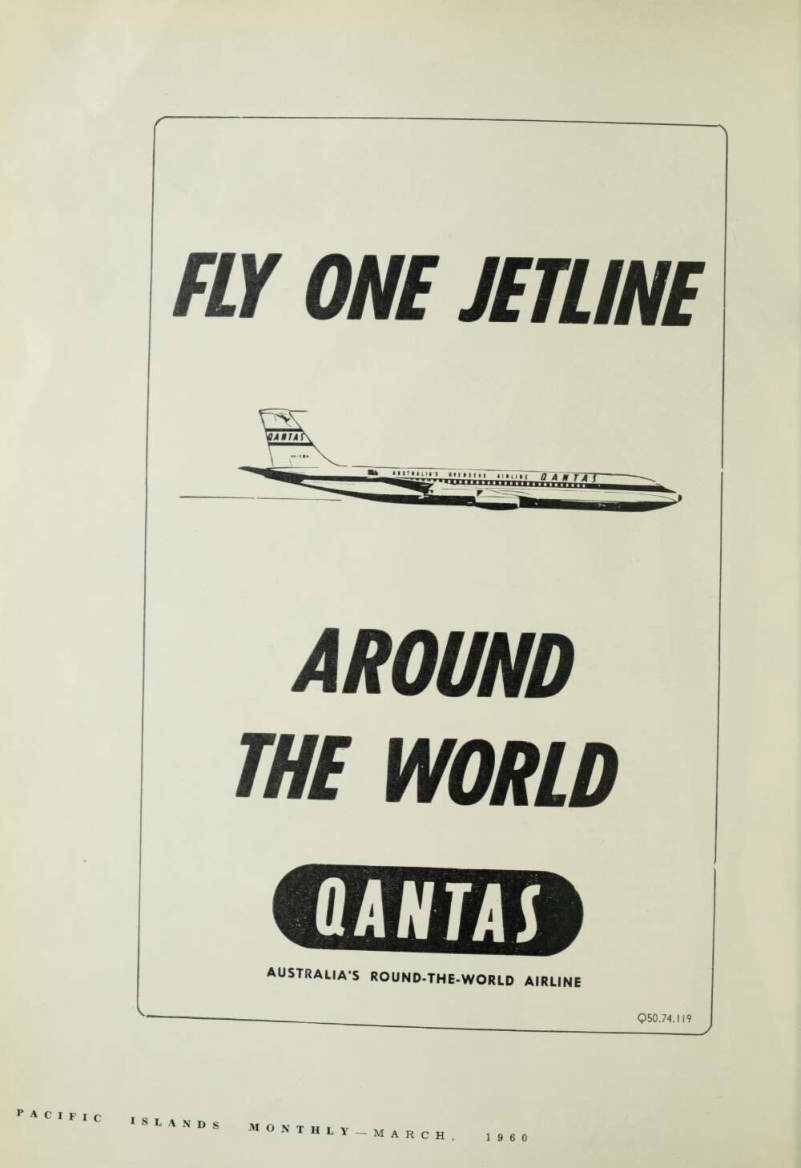 2
2 3
3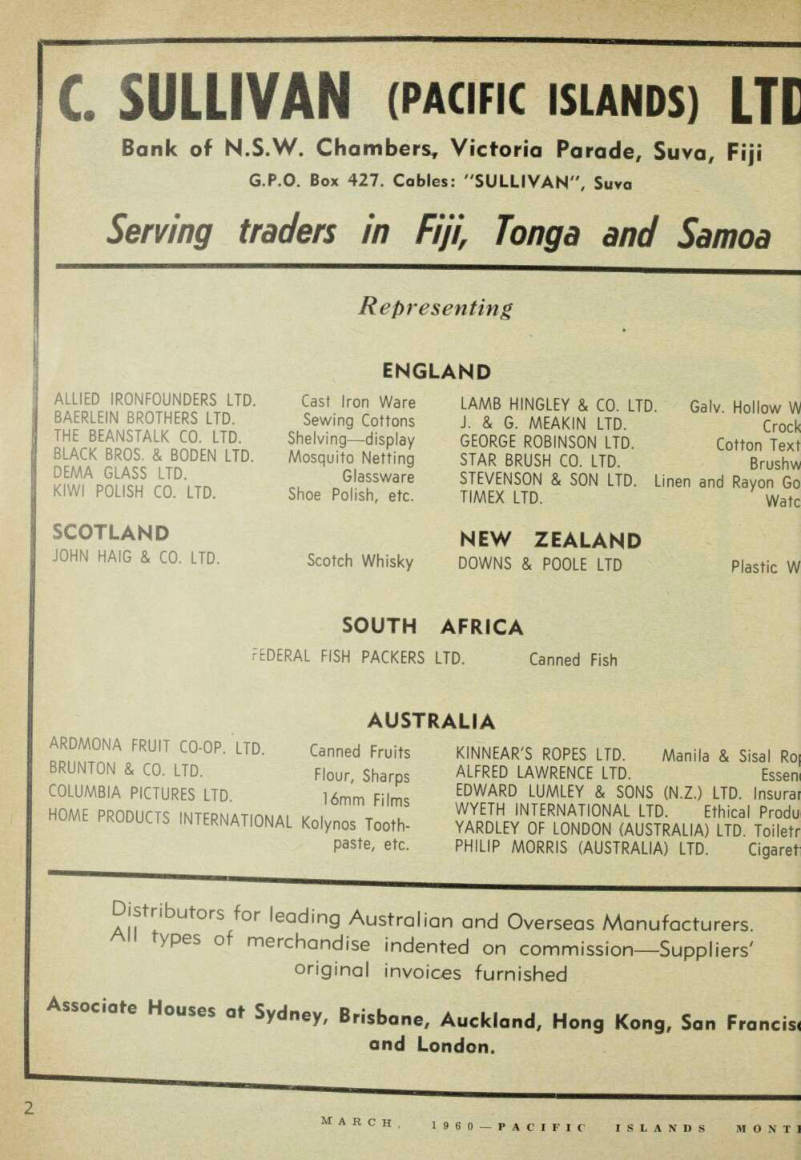 4
4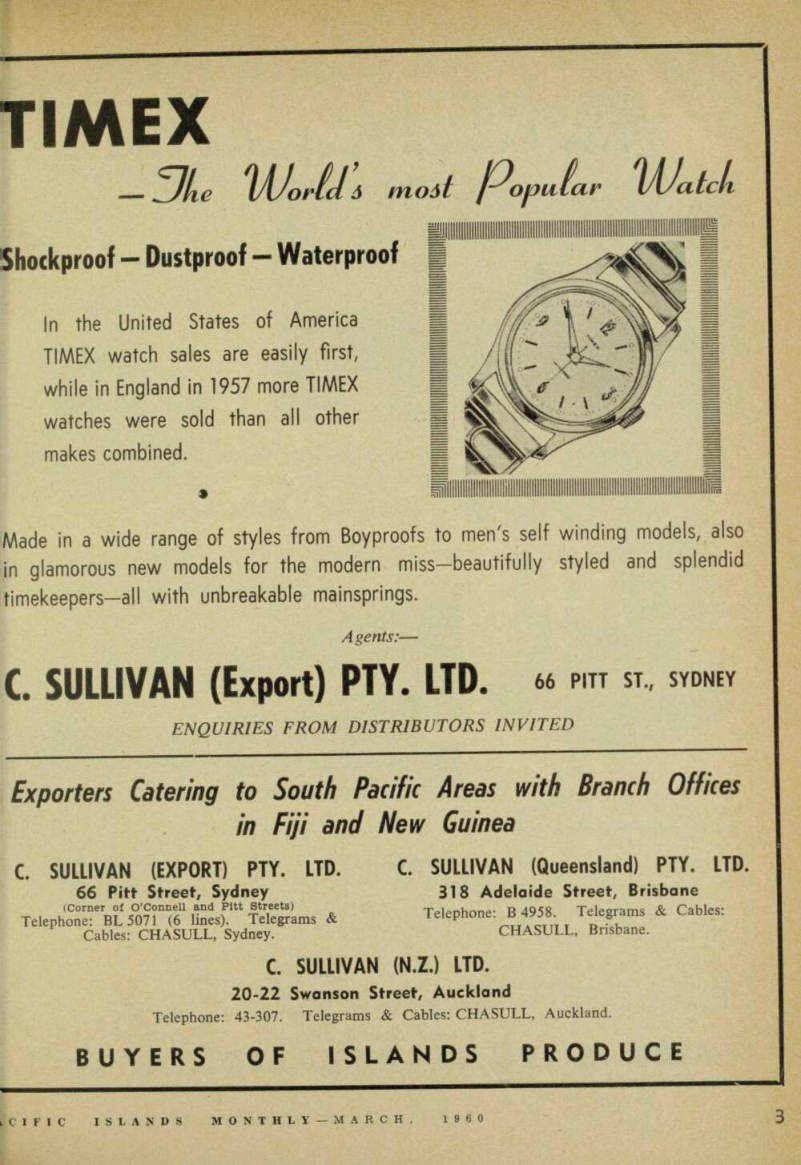 5
5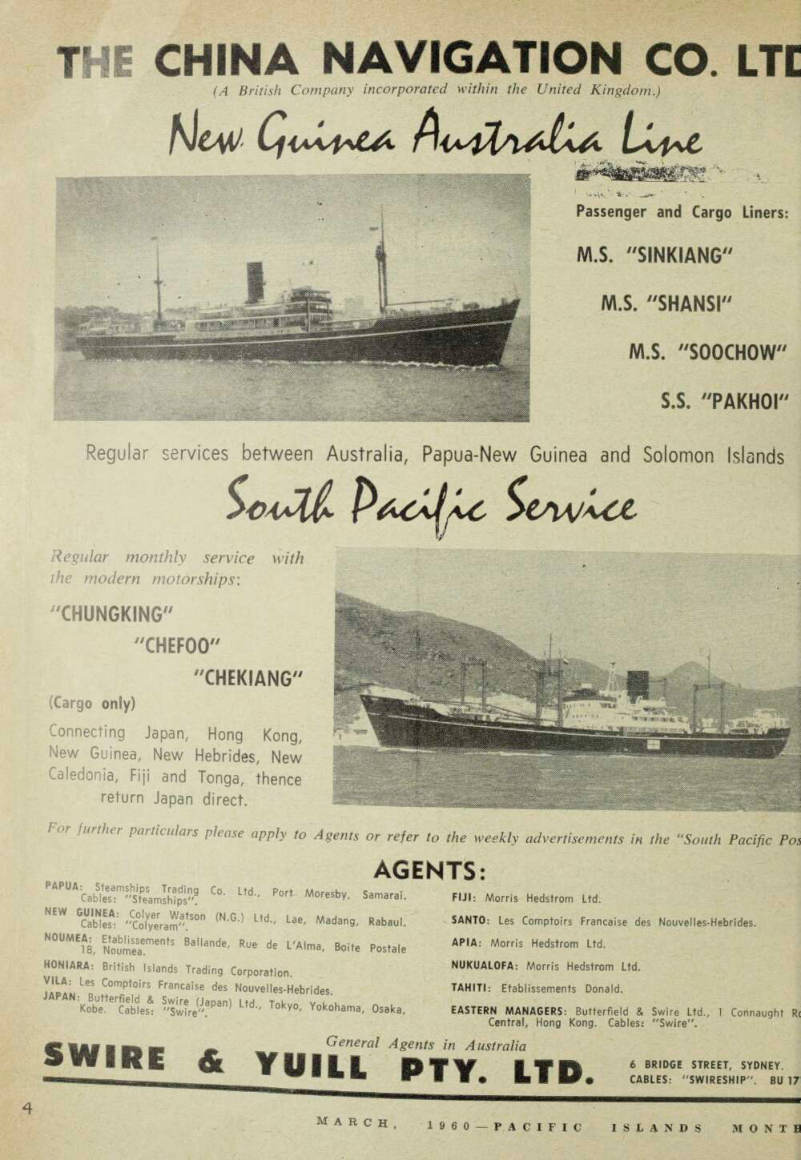 6
6 7
7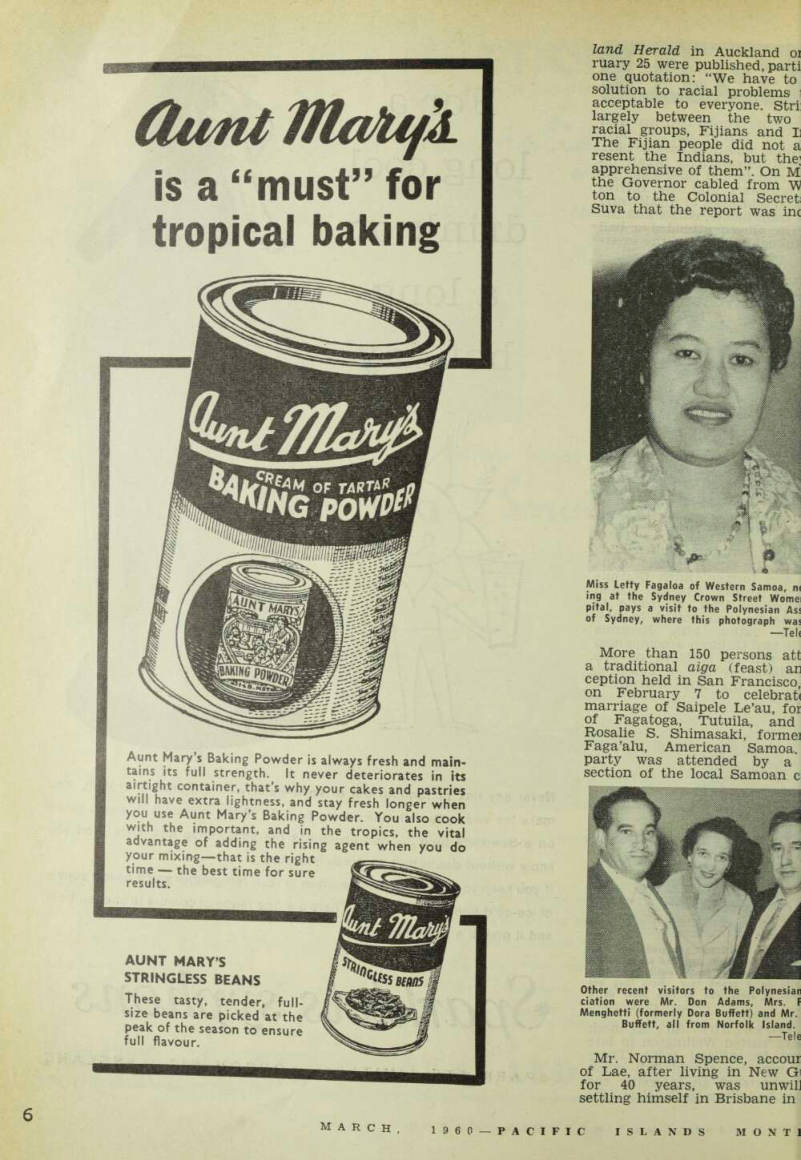 8
8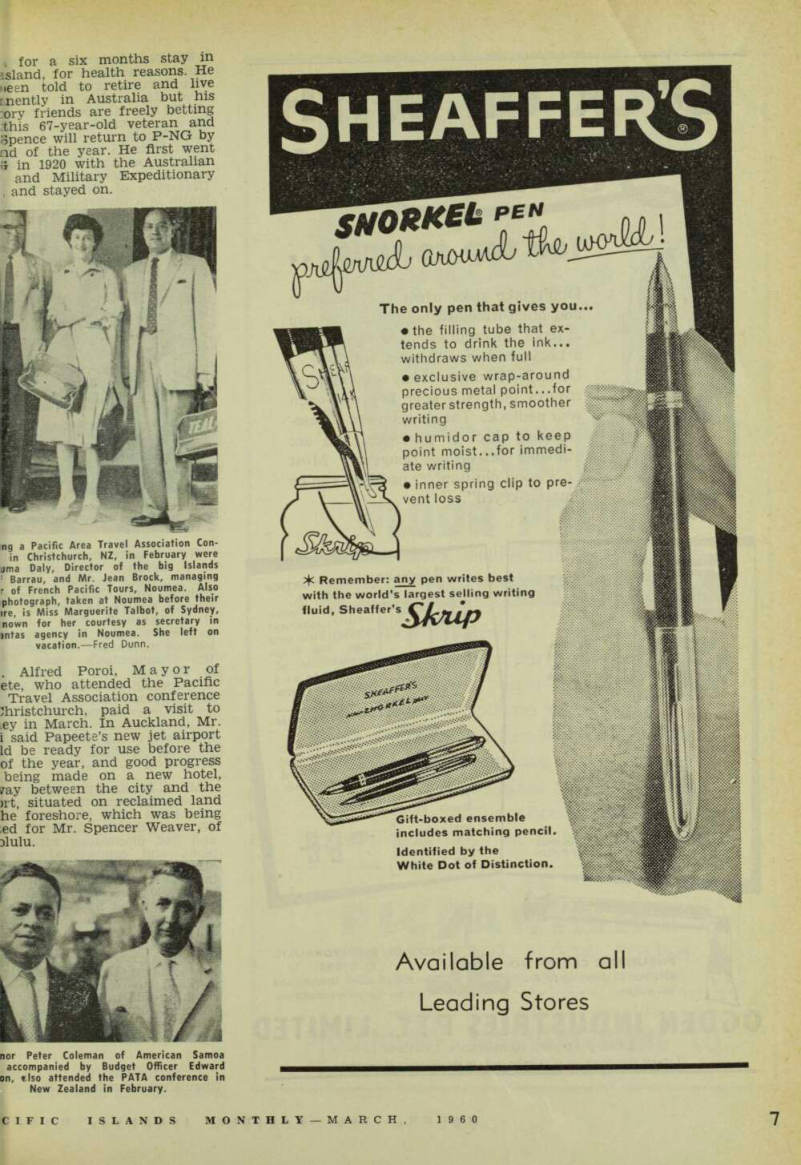 9
9 10
10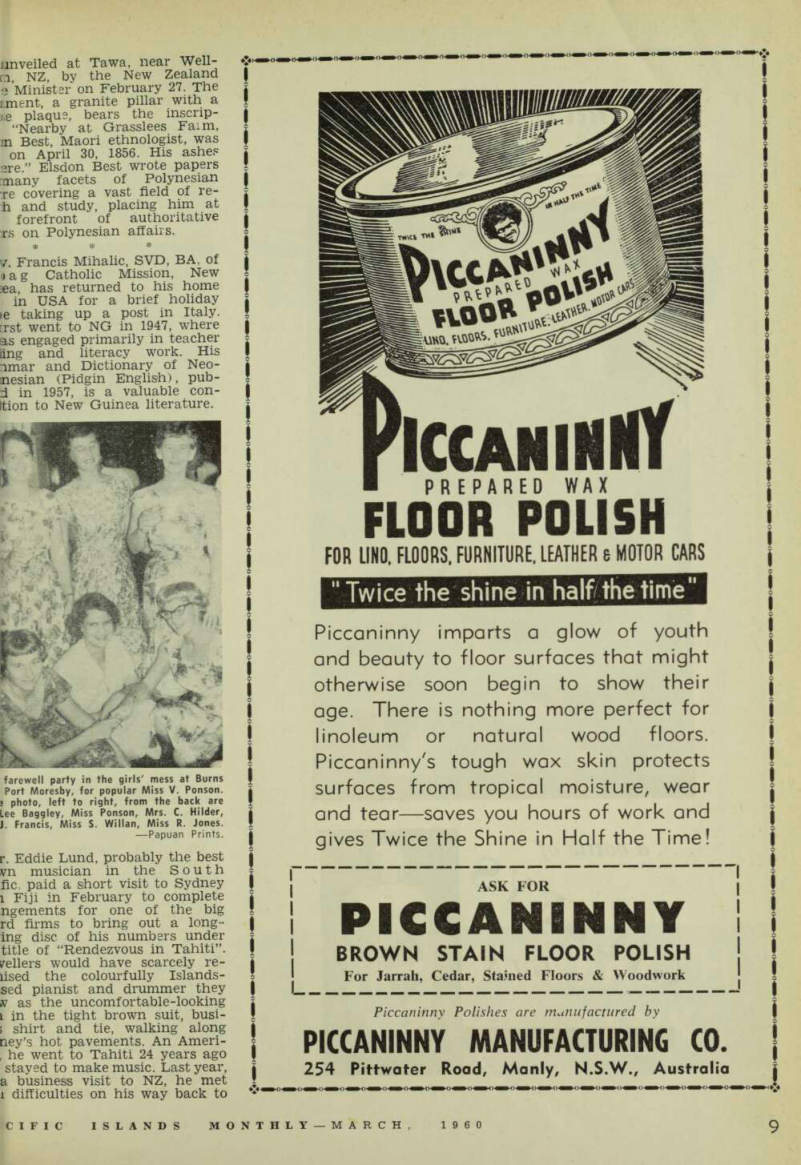 11
11 12
12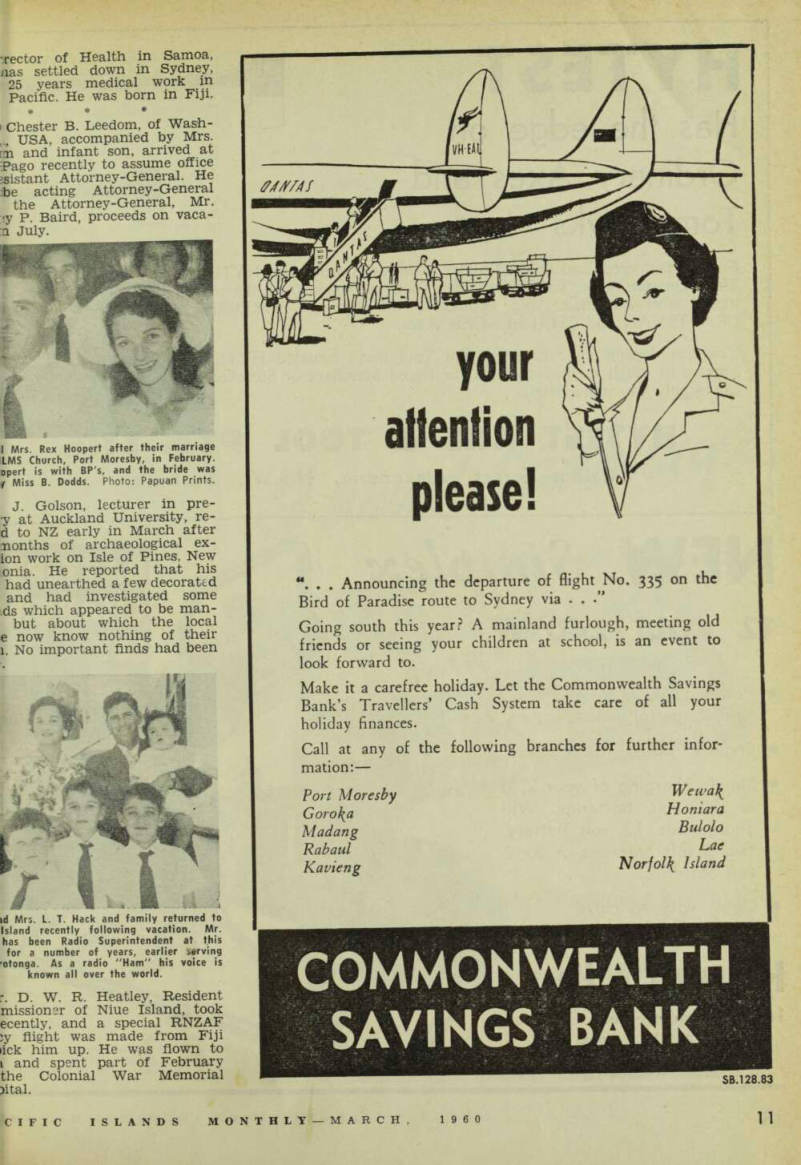 13
13 14
14 15
15 16
16 17
17 18
18 19
19 20
20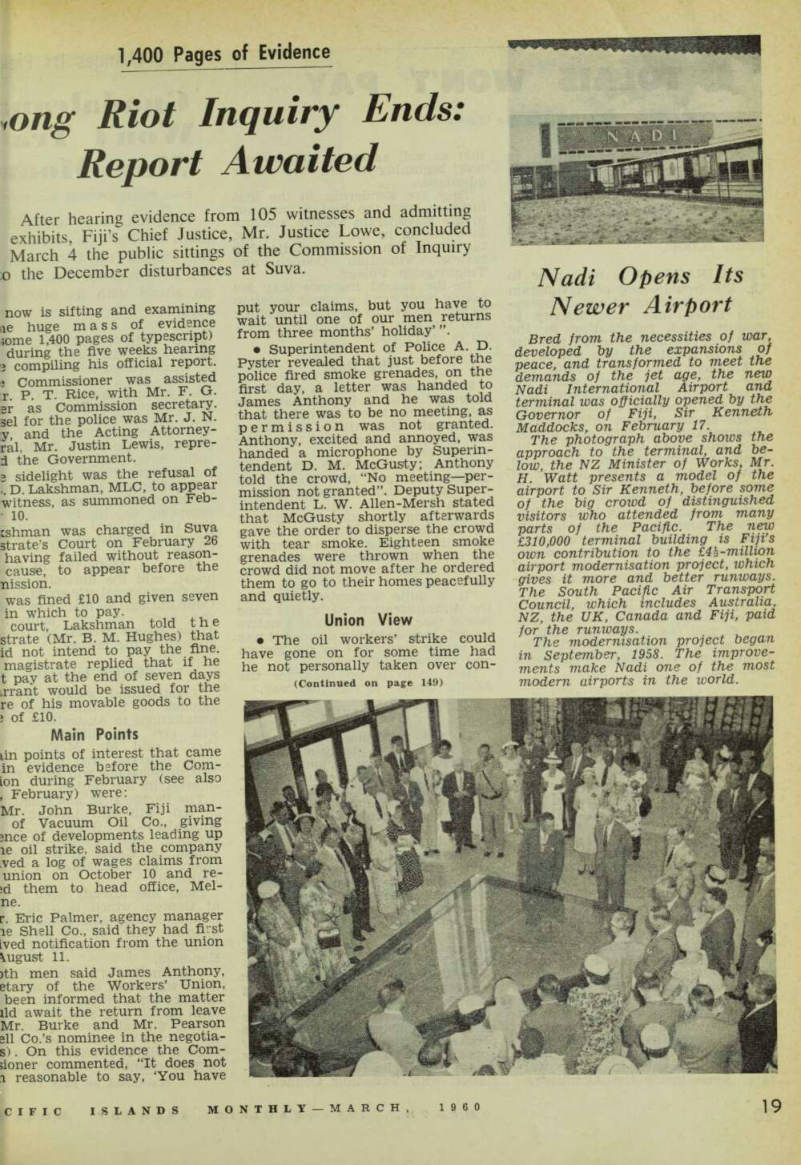 21
21 22
22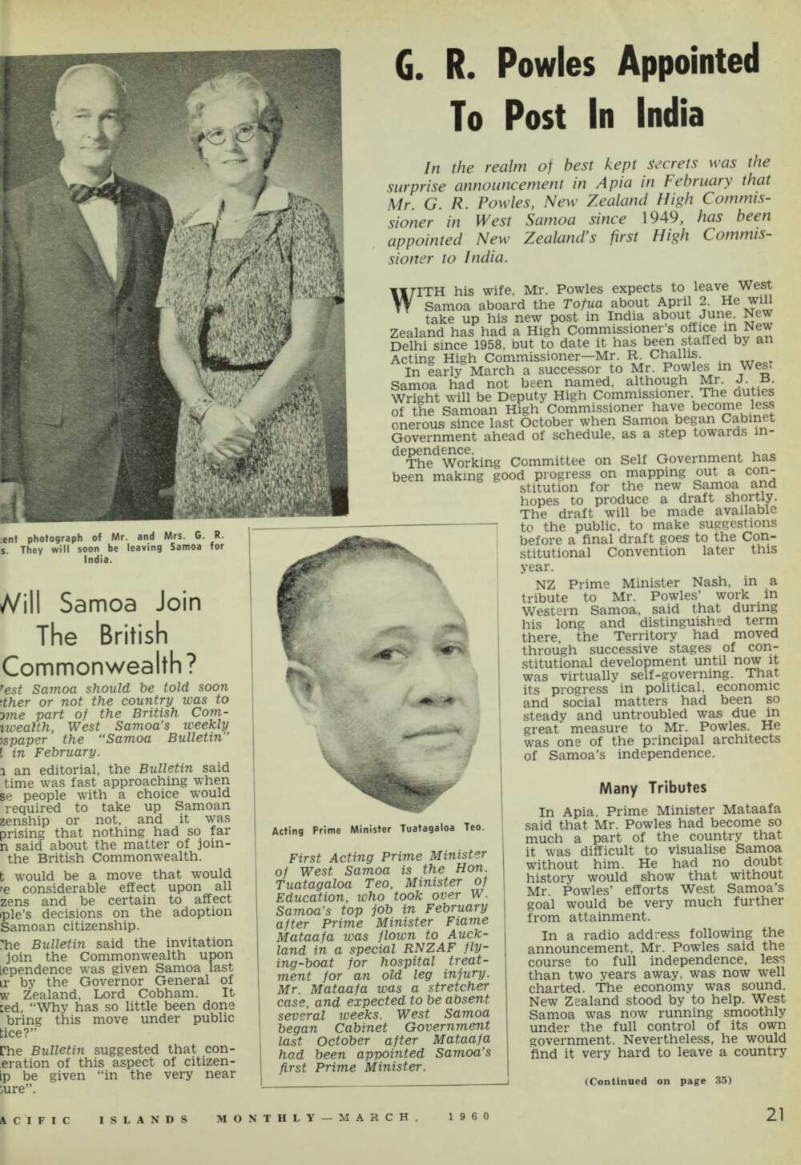 23
23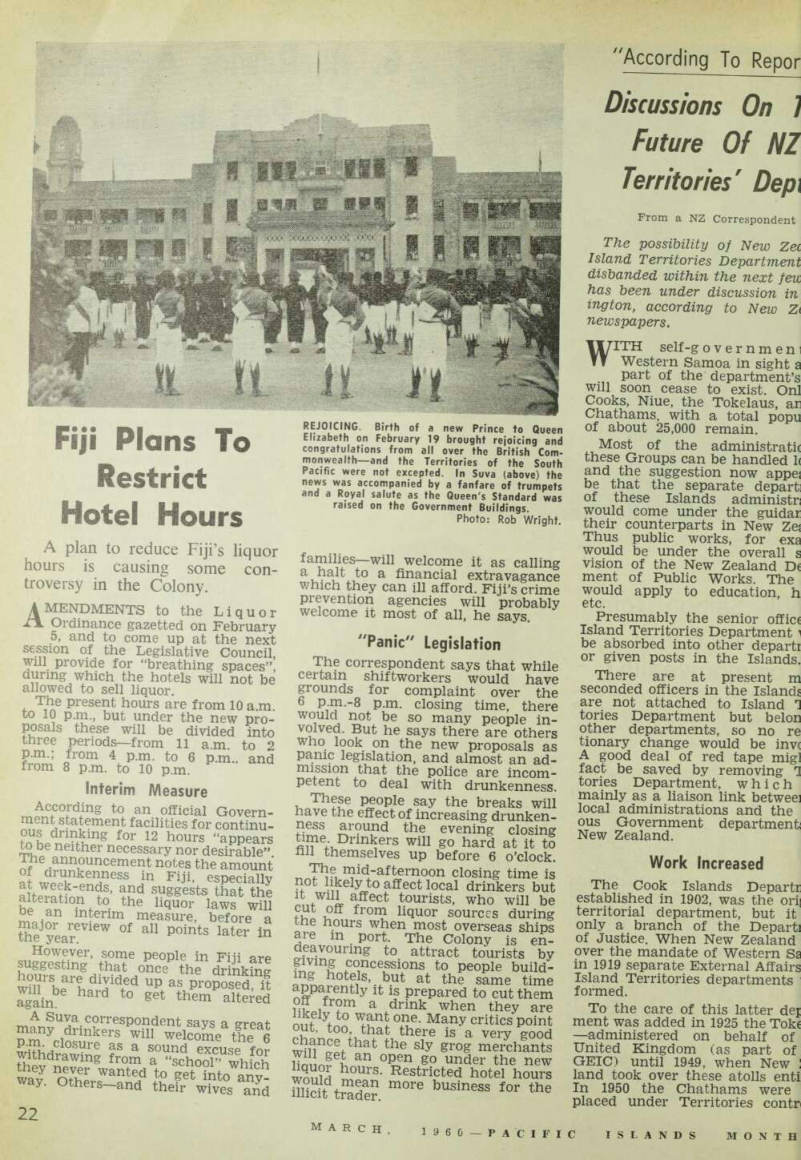 24
24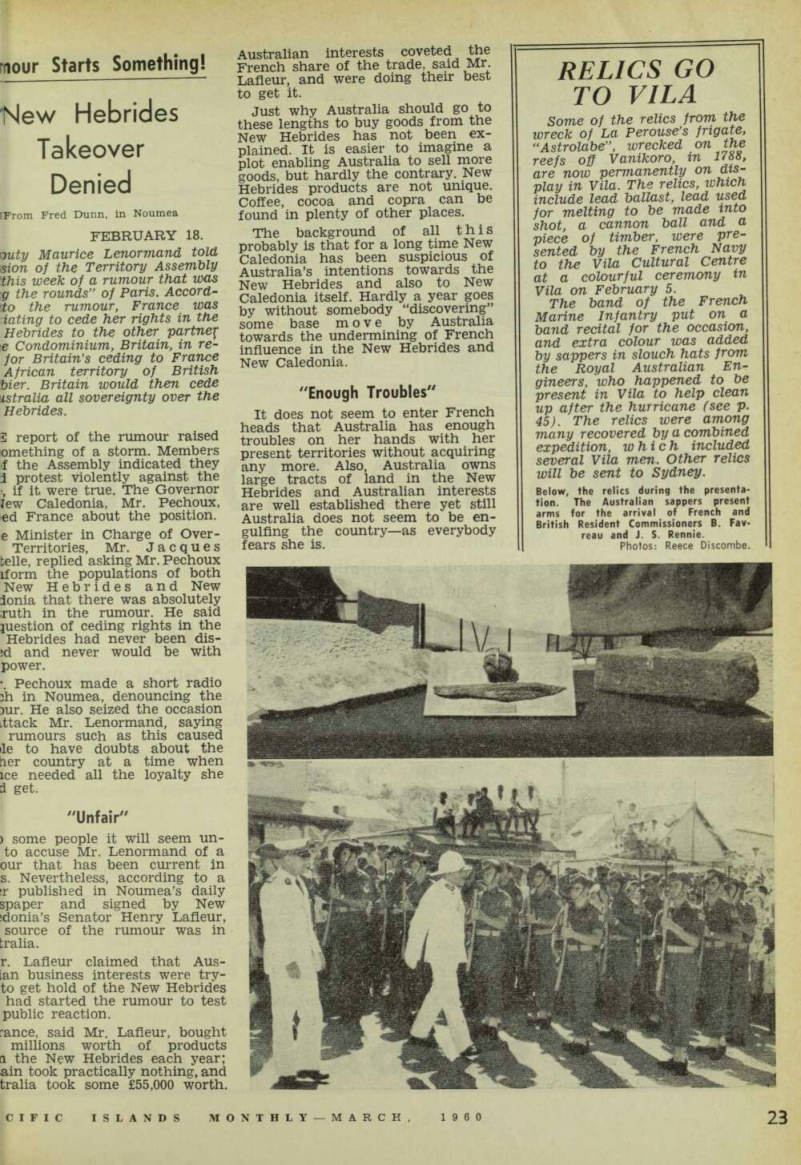 25
25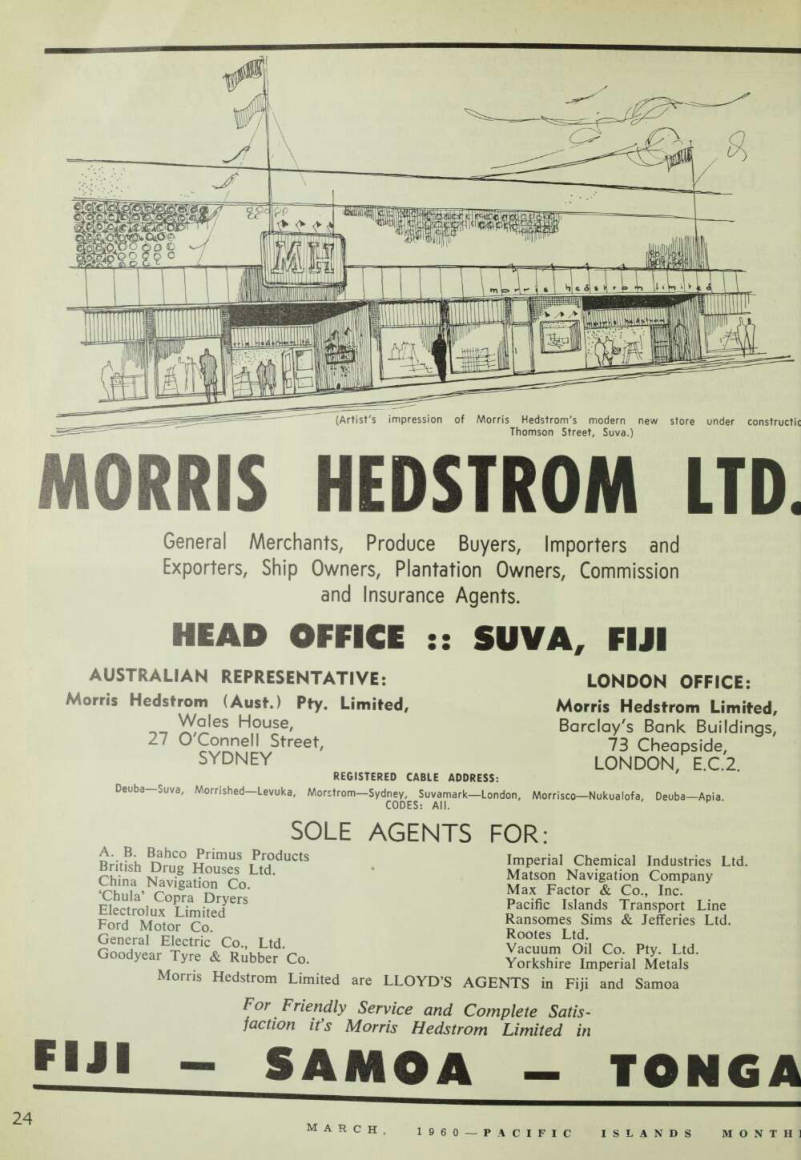 26
26 27
27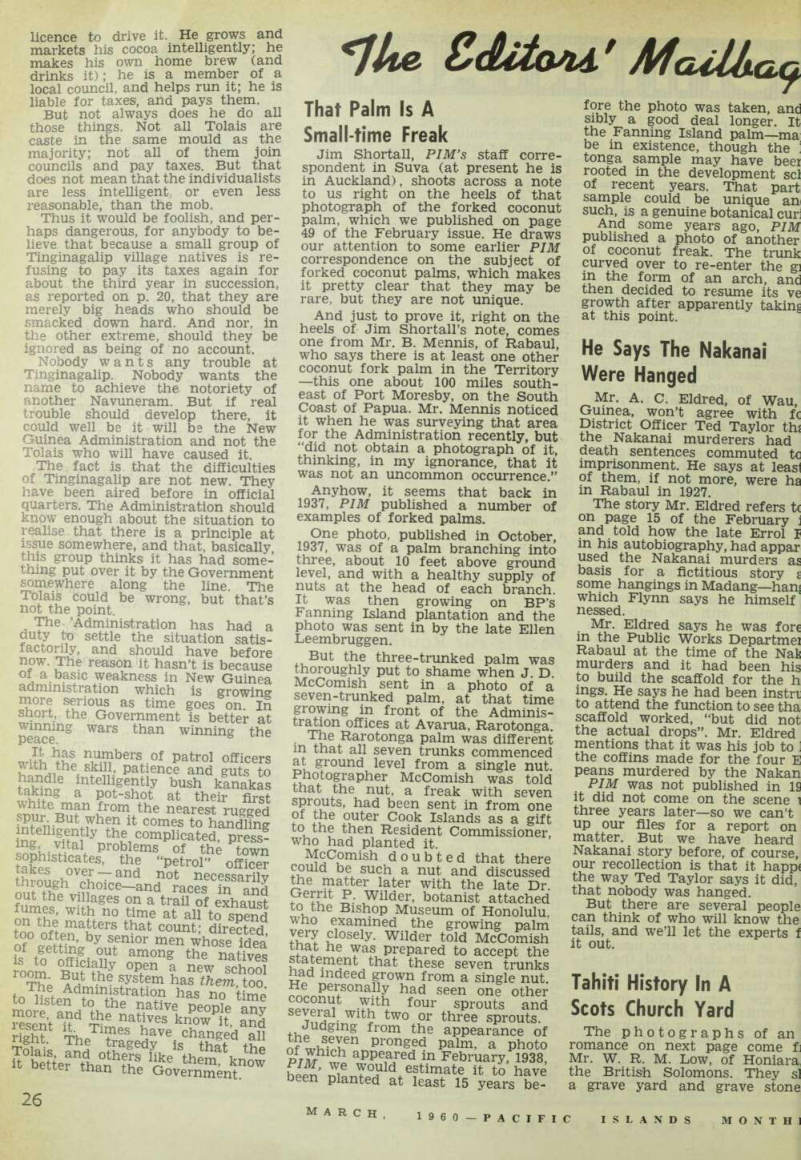 28
28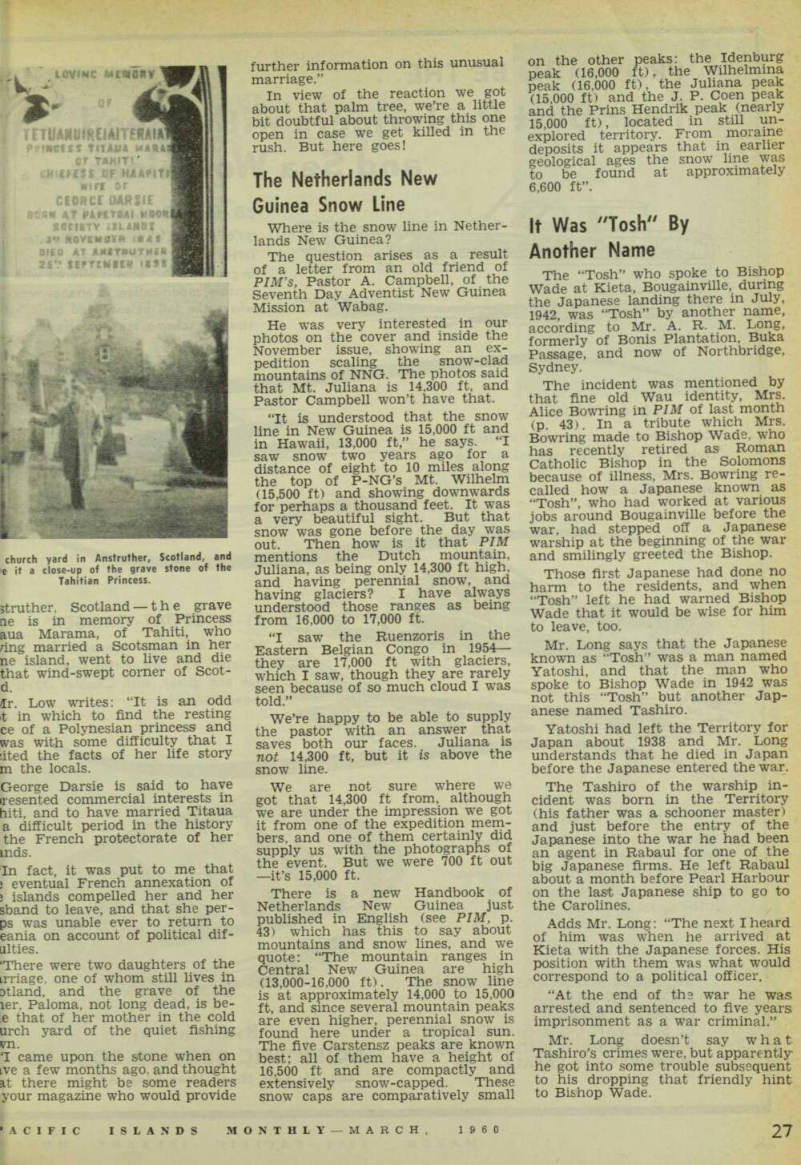 29
29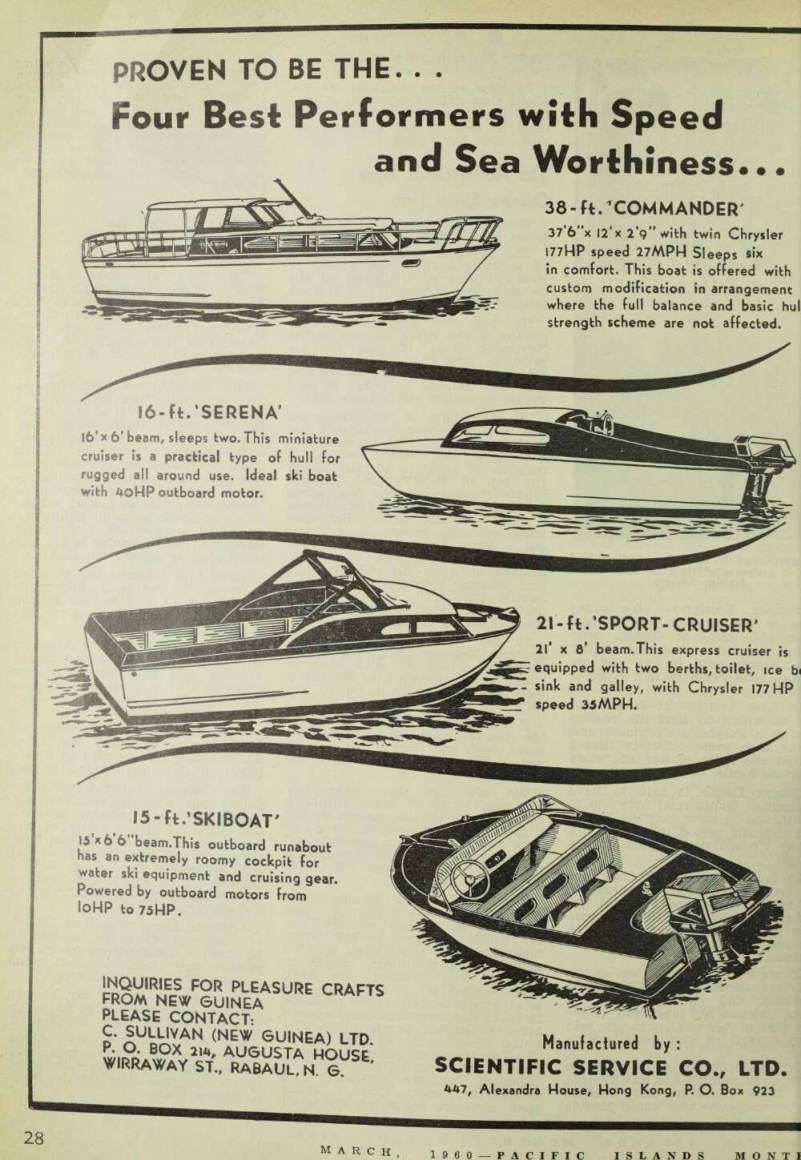 30
30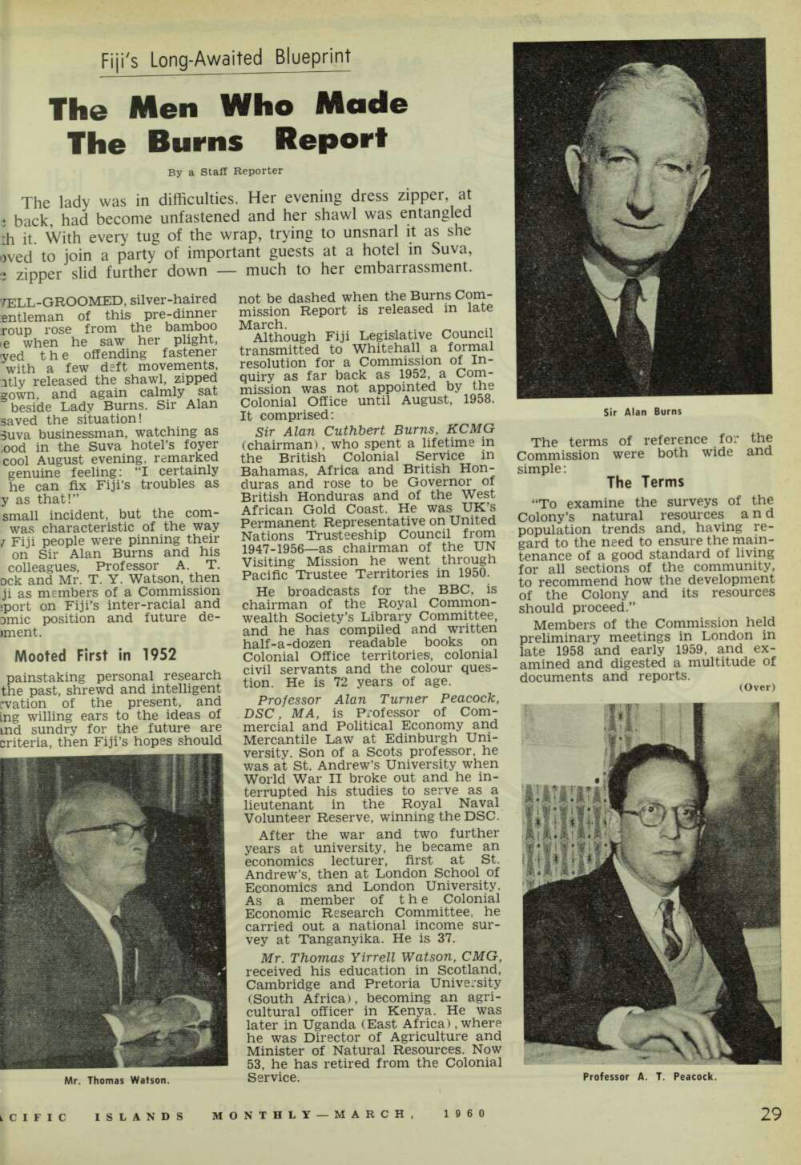 31
31 32
32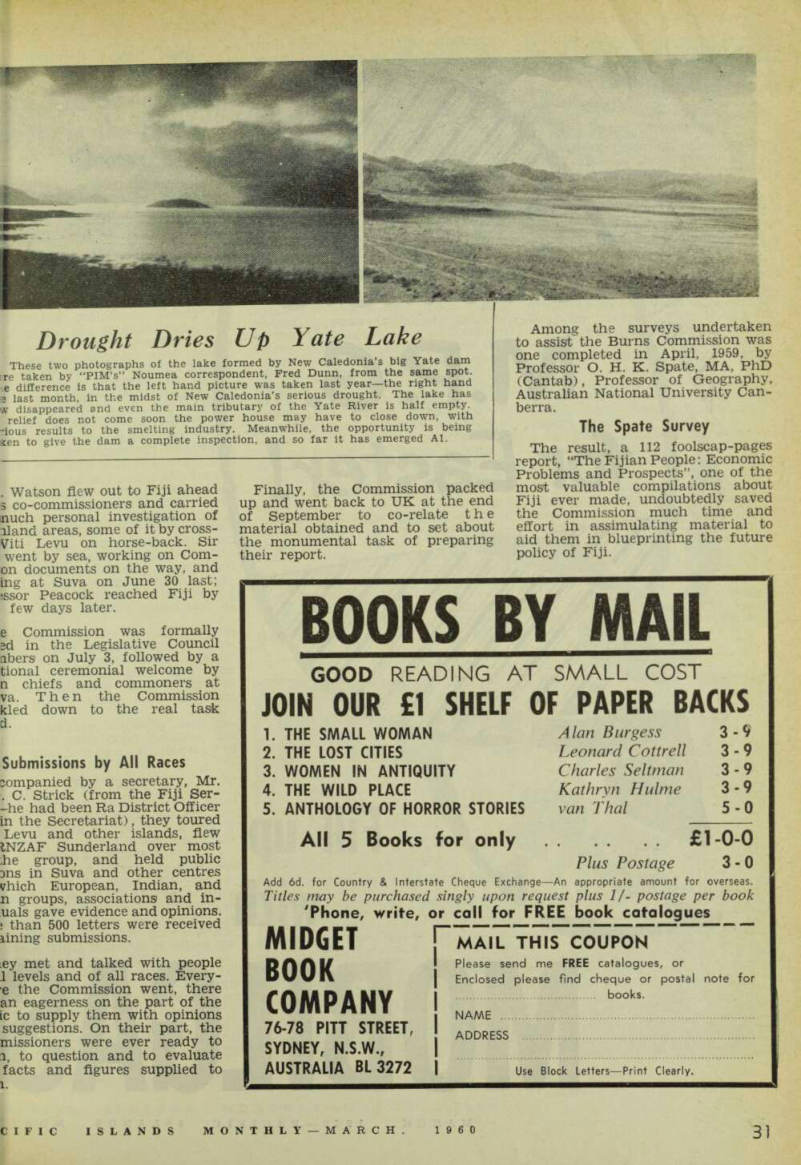 33
33 34
34 35
35 36
36 37
37 38
38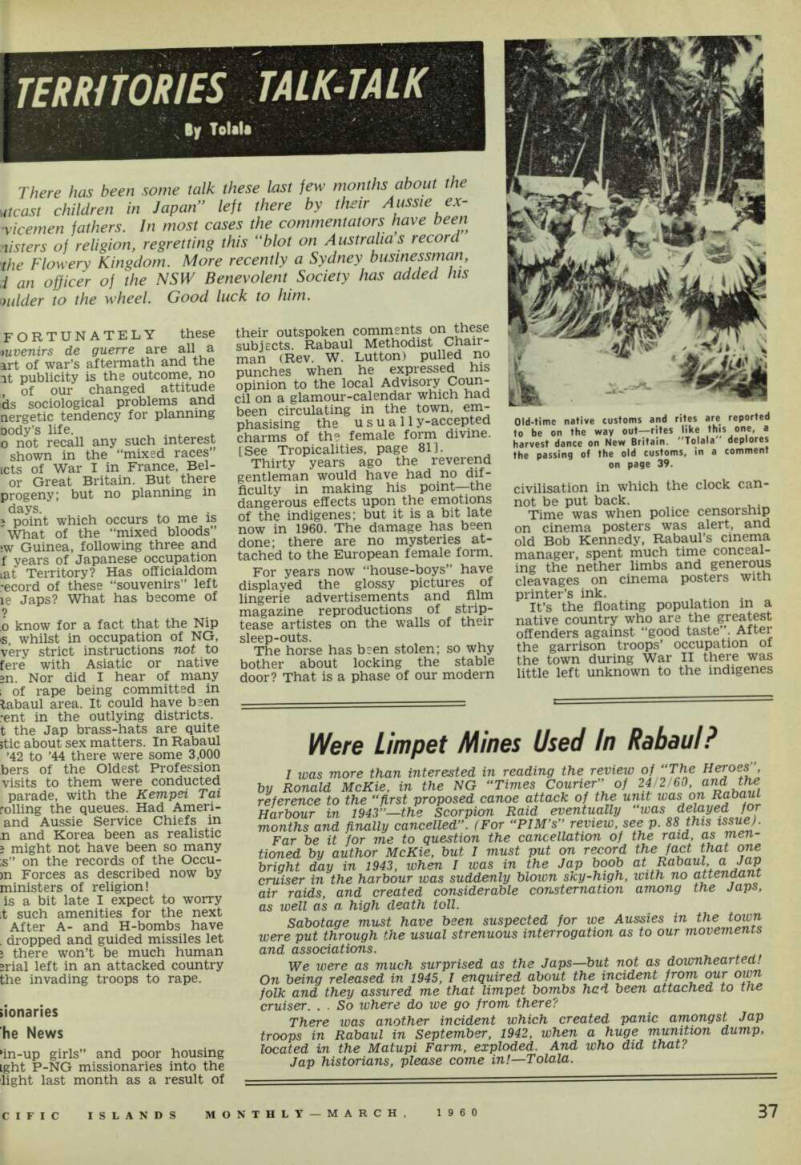 39
39 40
40 41
41 42
42 43
43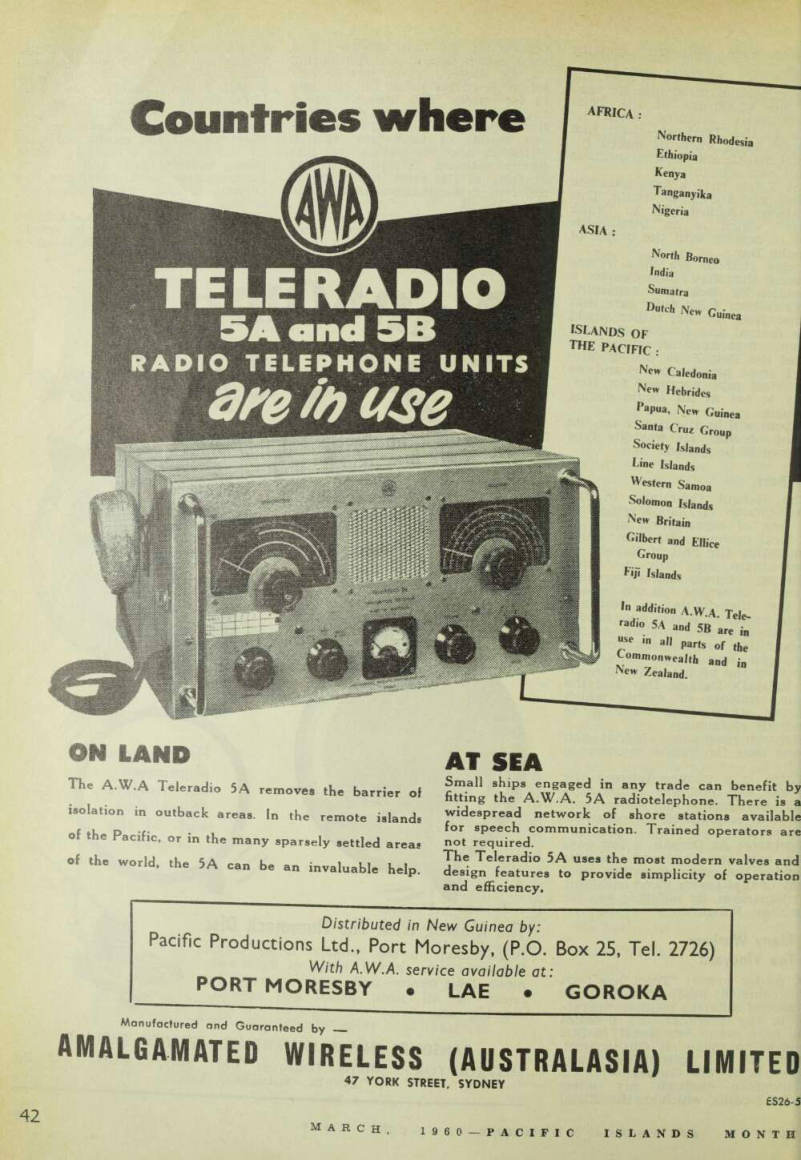 44
44 45
45 46
46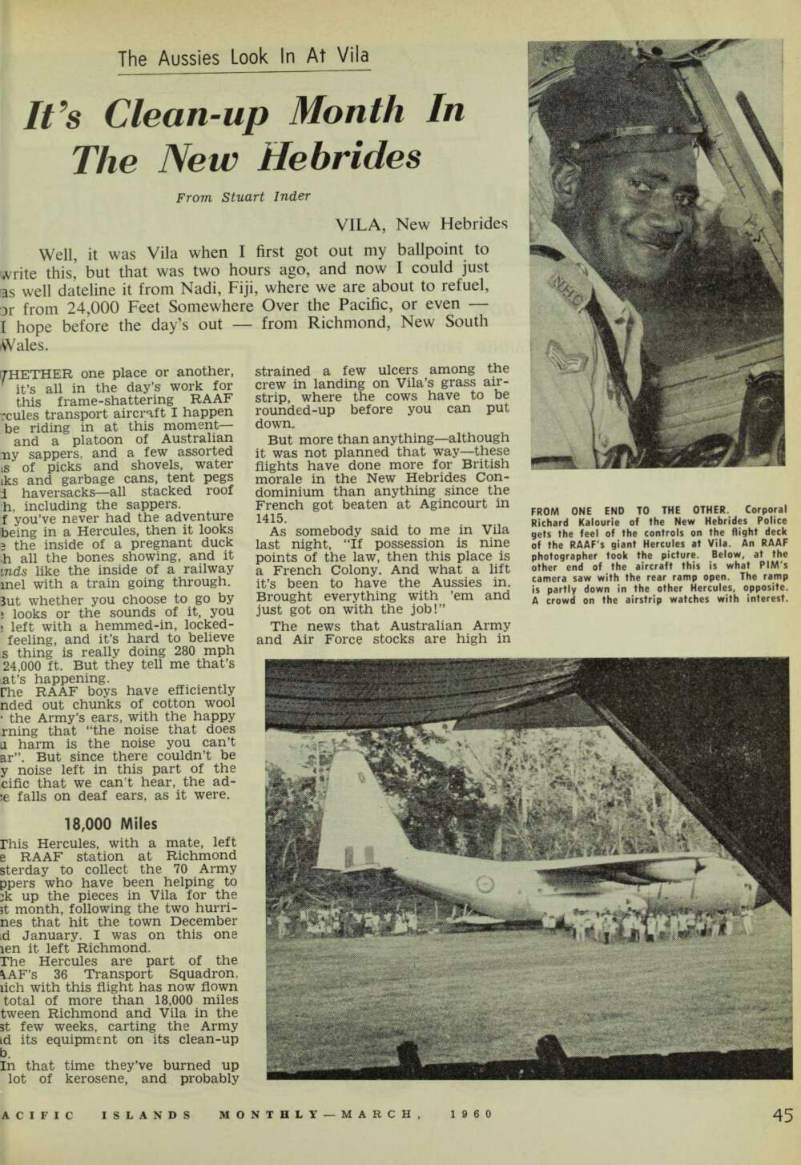 47
47 48
48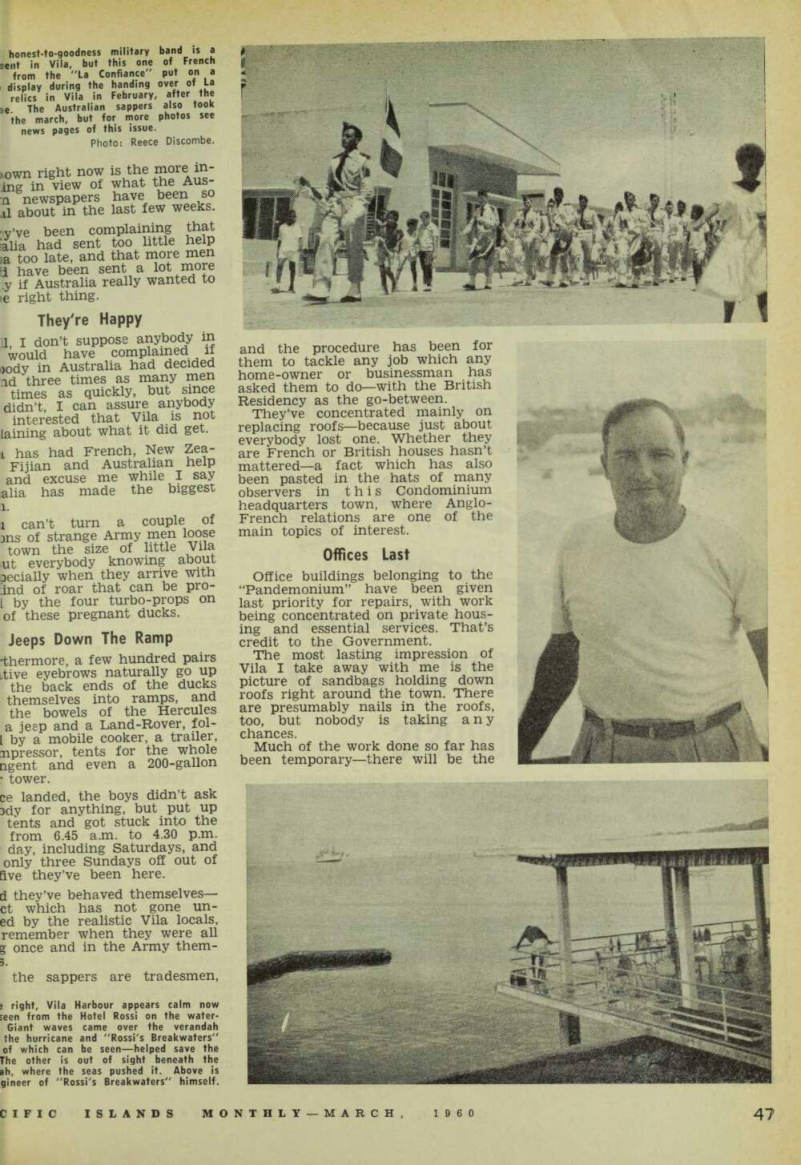 49
49 50
50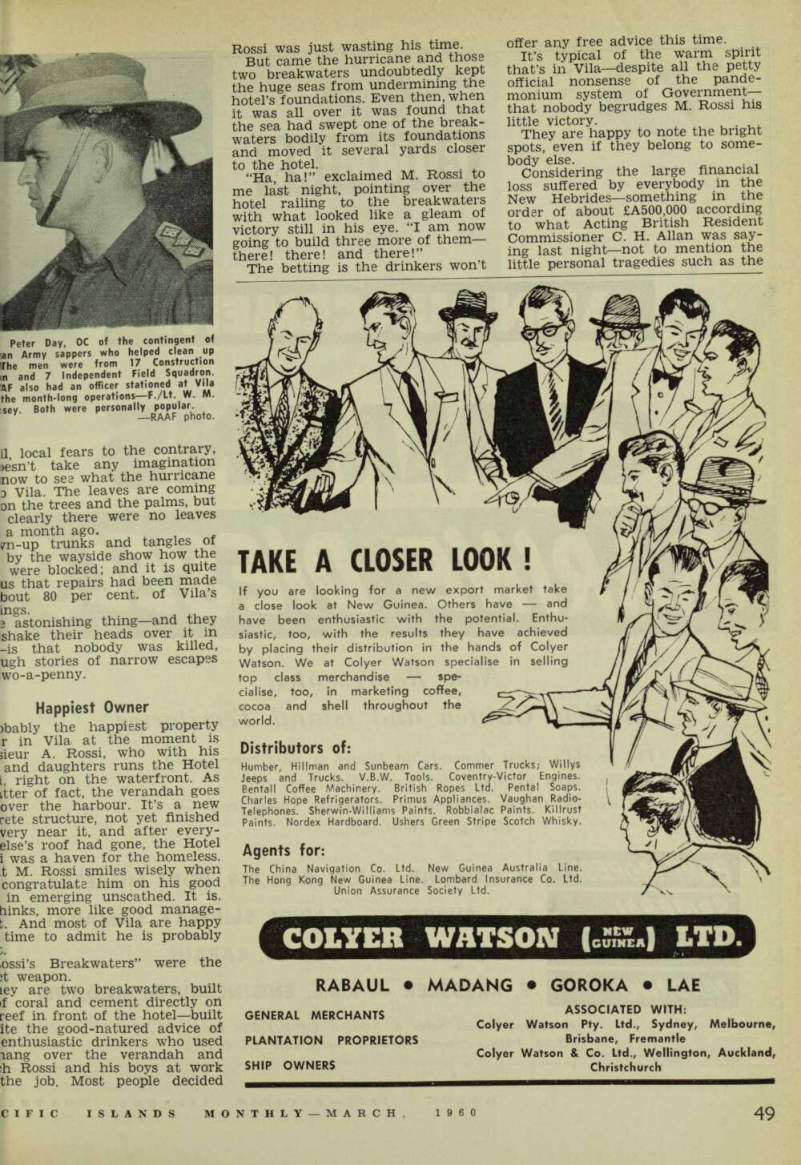 51
51 52
52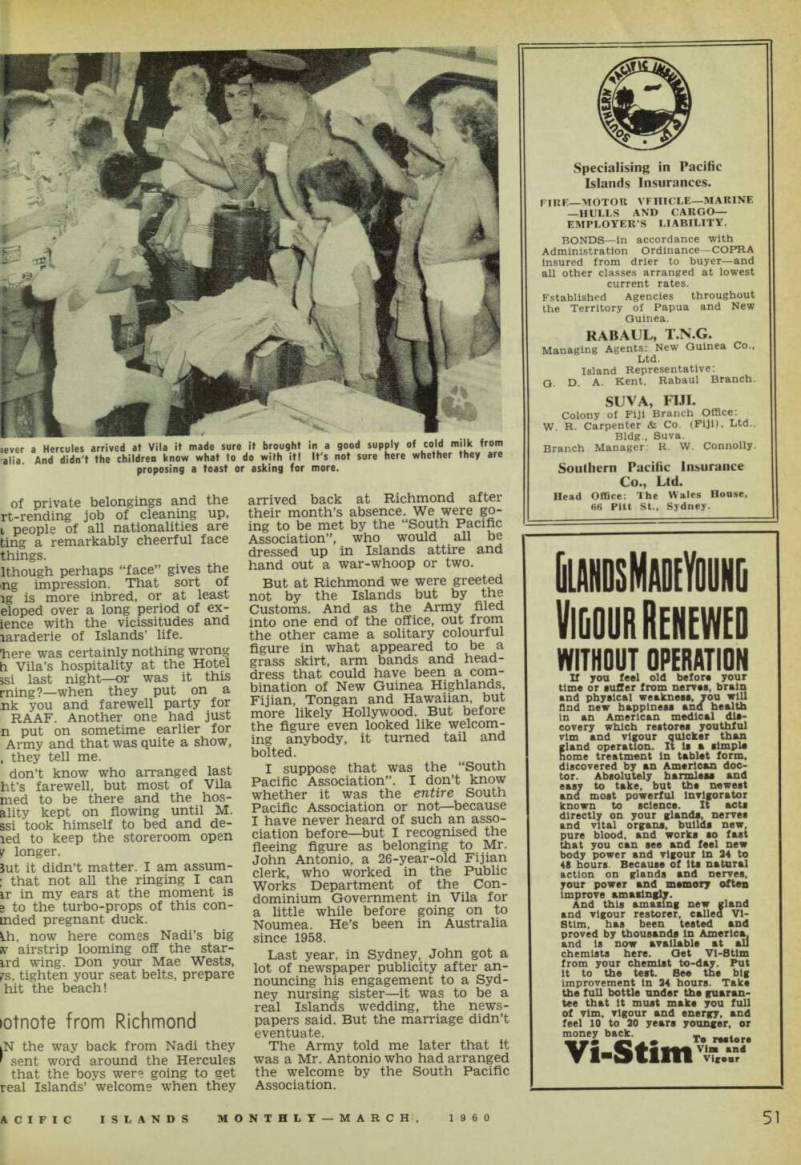 53
53 54
54 55
55 56
56 57
57 58
58 59
59 60
60 61
61 62
62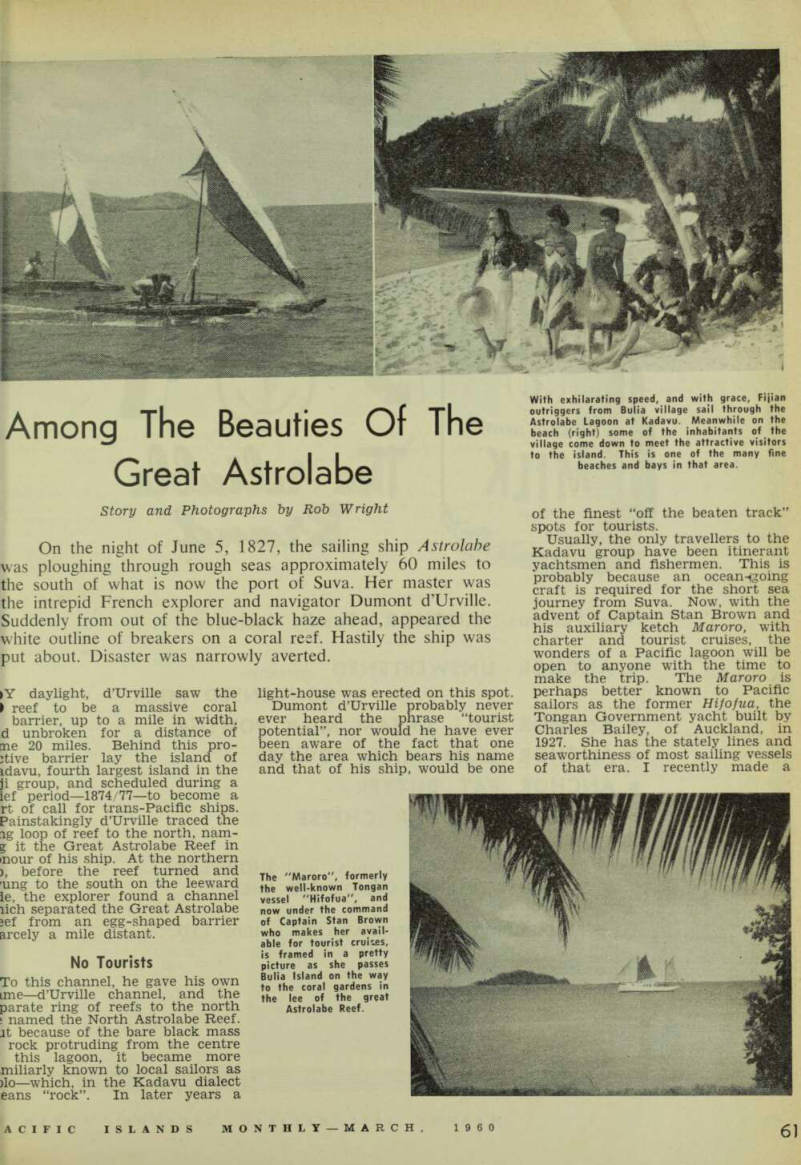 63
63 64
64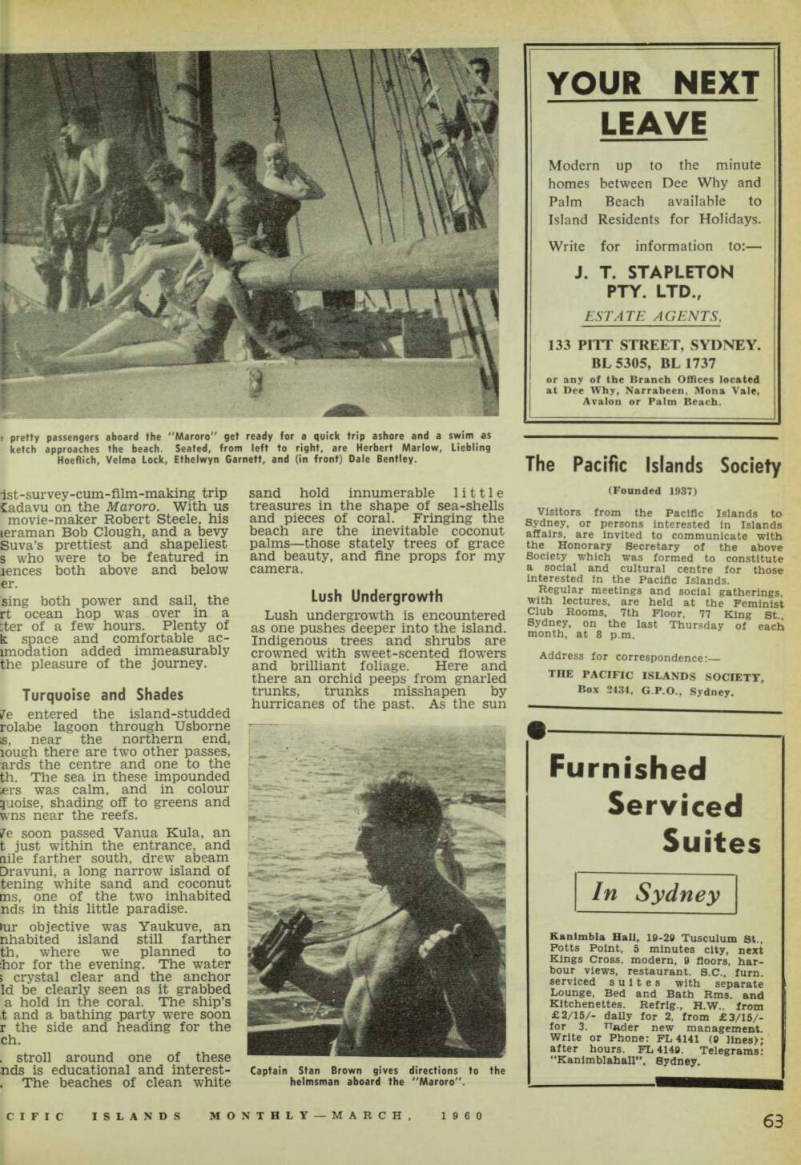 65
65 66
66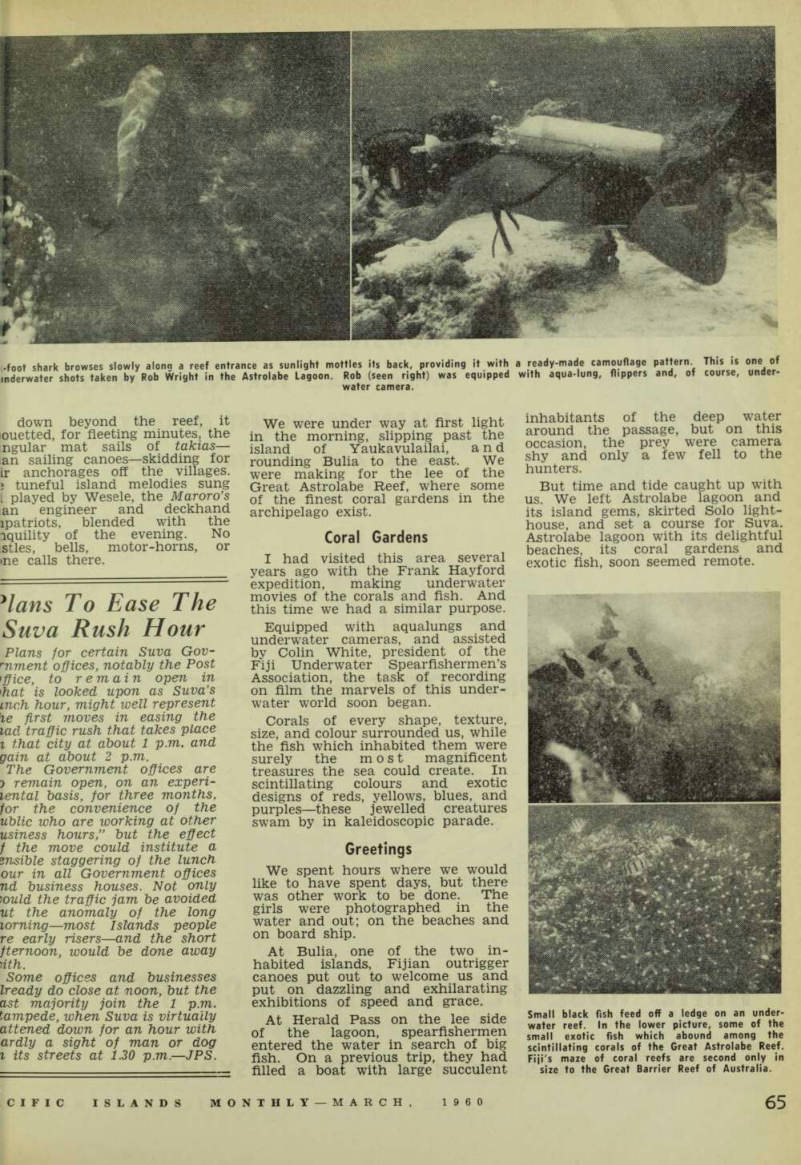 67
67 68
68 69
69 70
70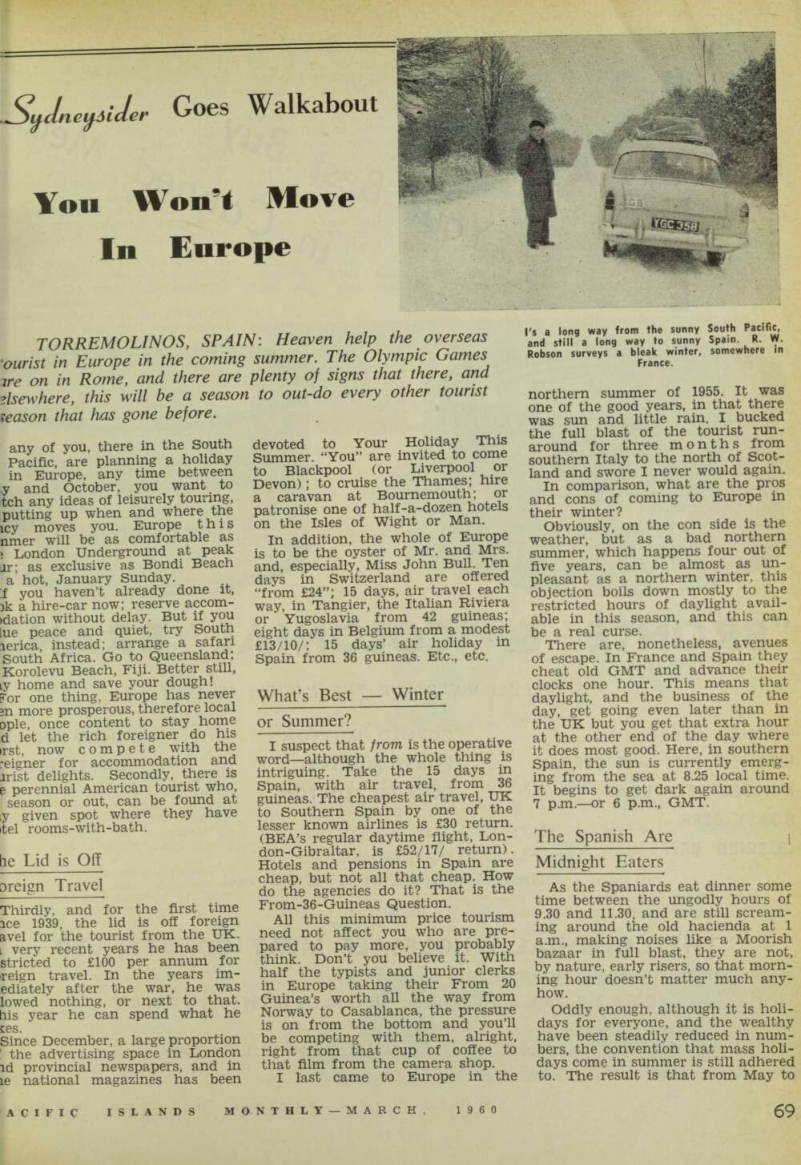 71
71 72
72 73
73 74
74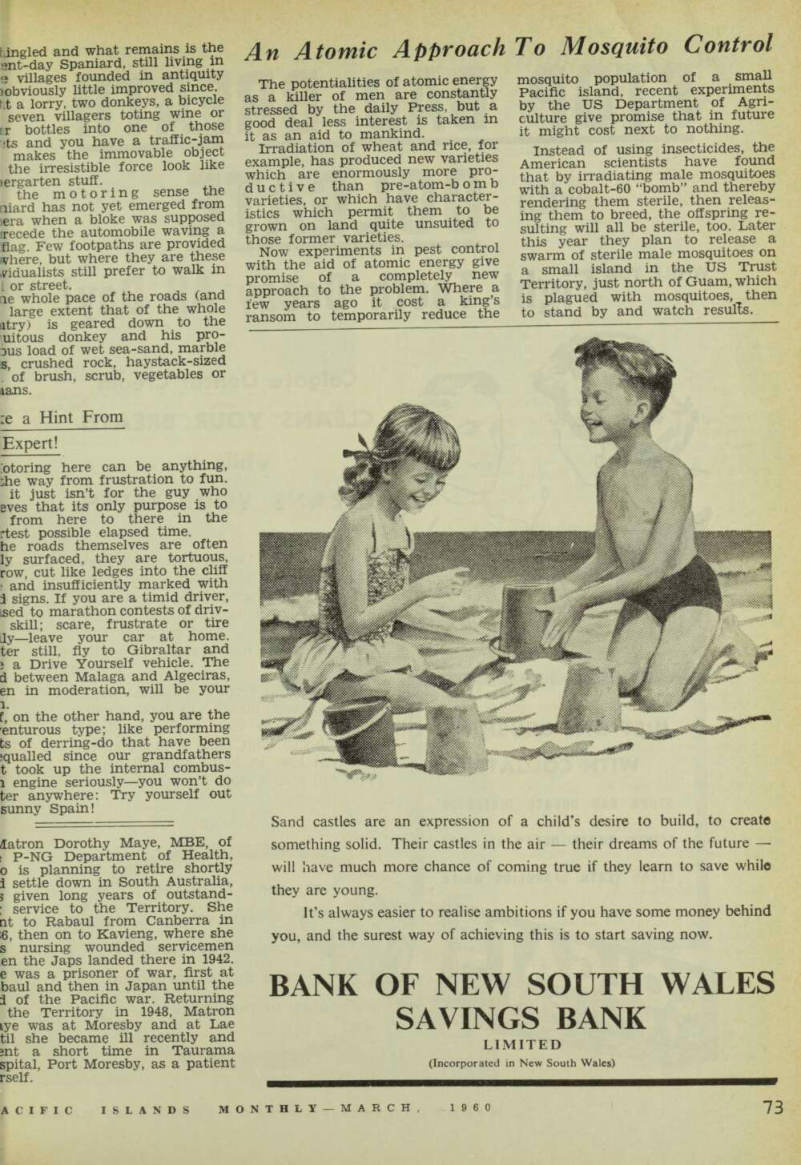 75
75 76
76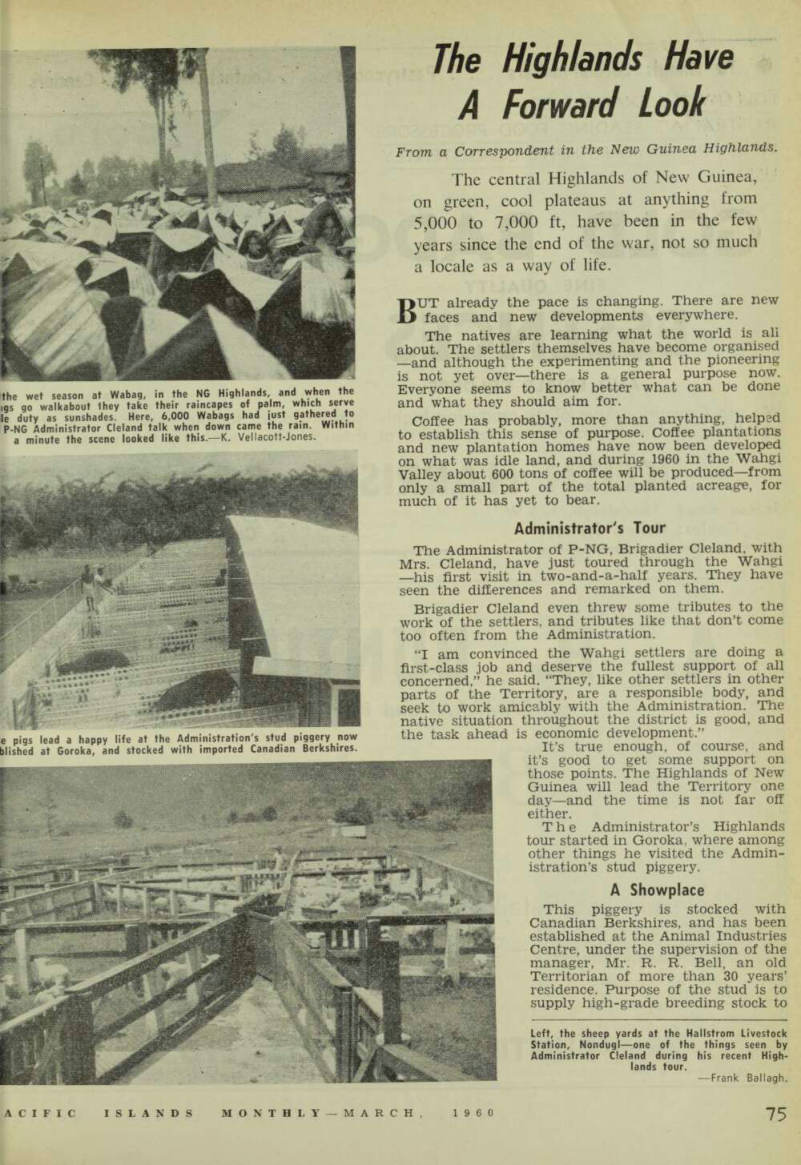 77
77 78
78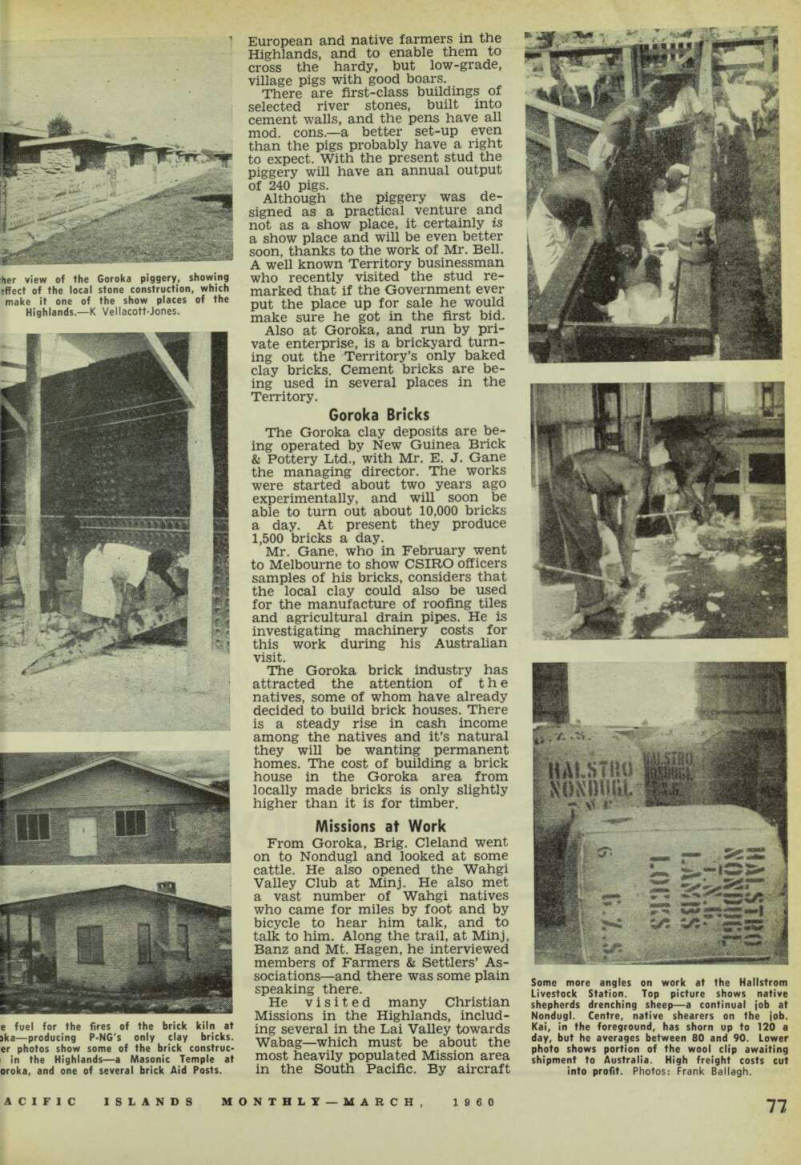 79
79 80
80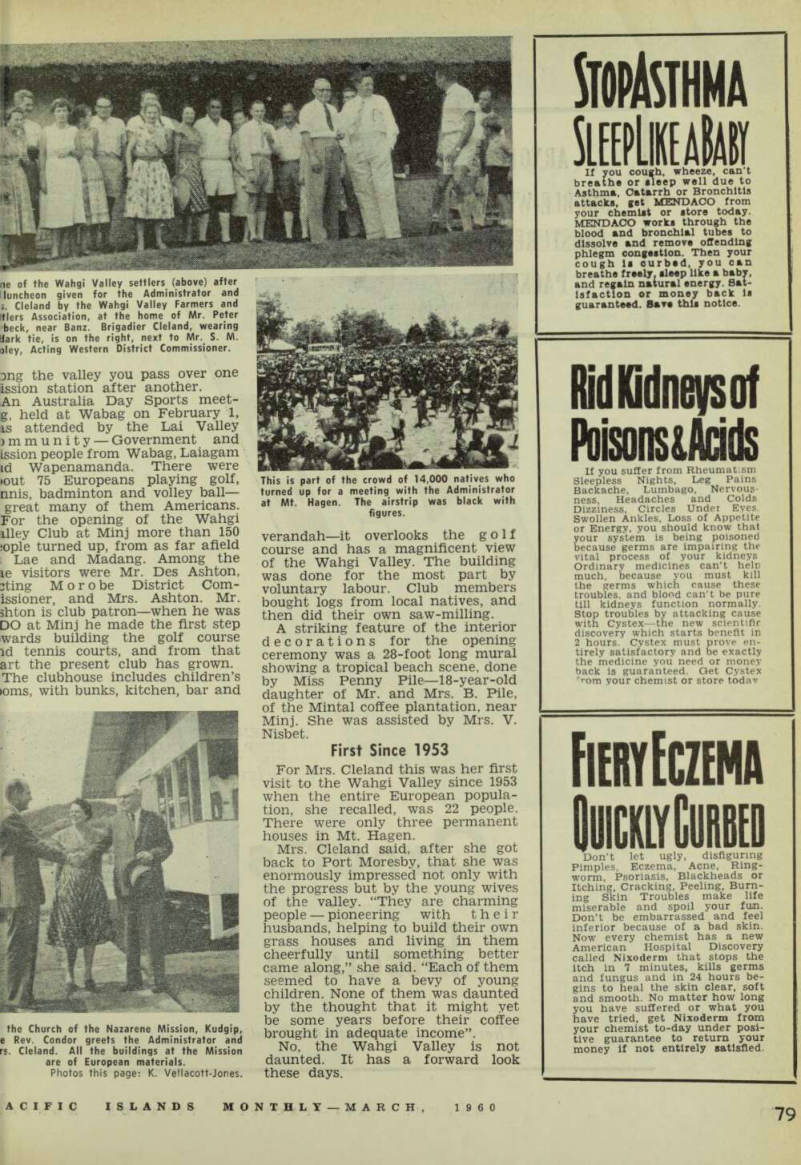 81
81 82
82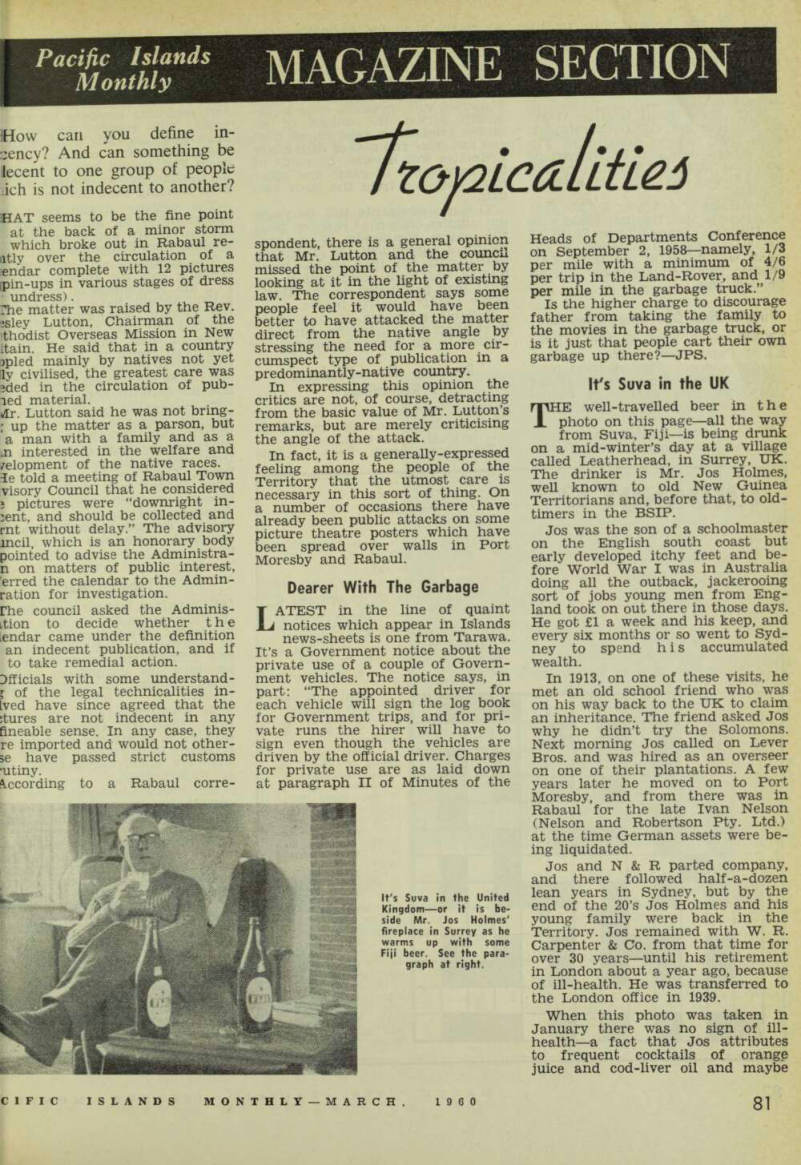 83
83 84
84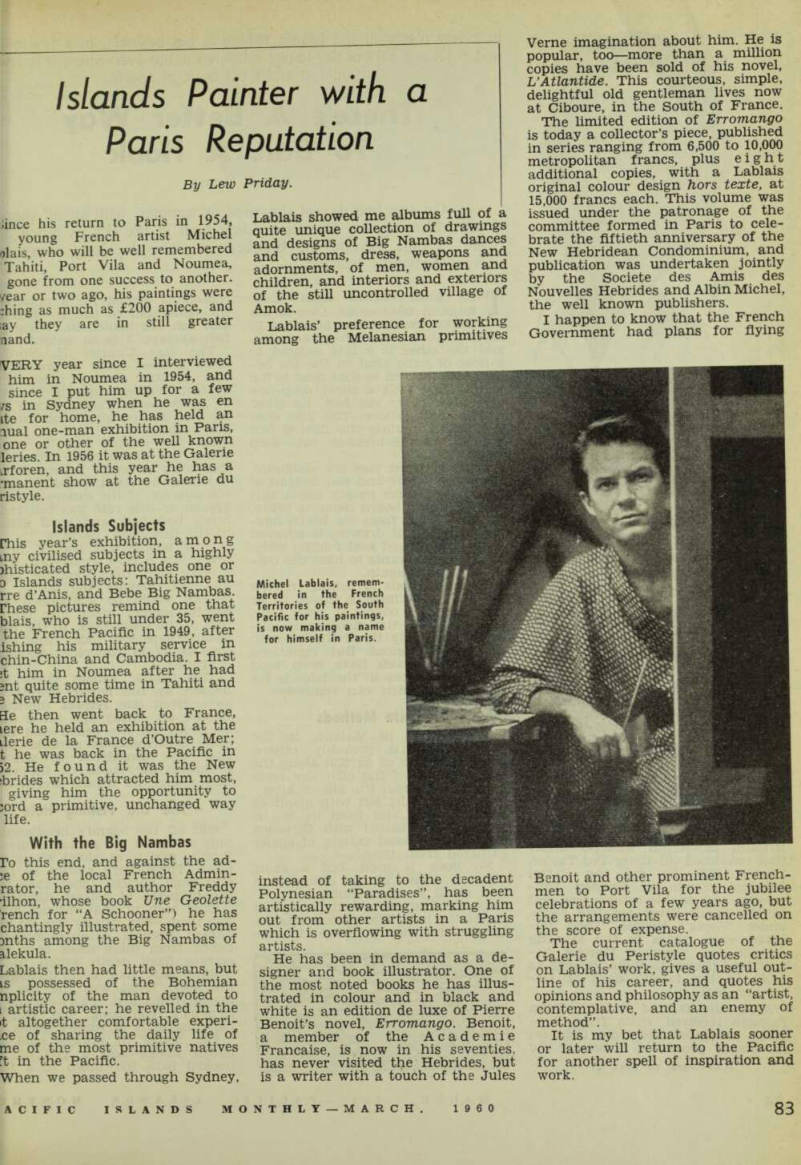 85
85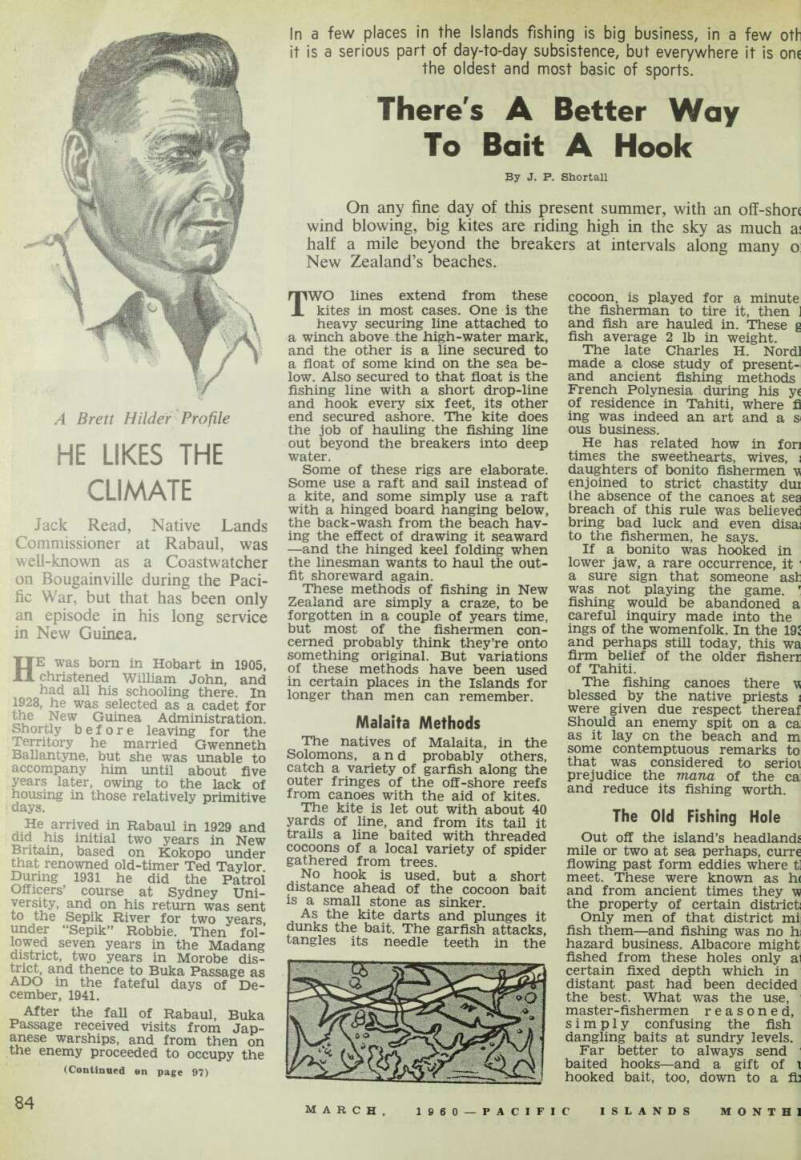 86
86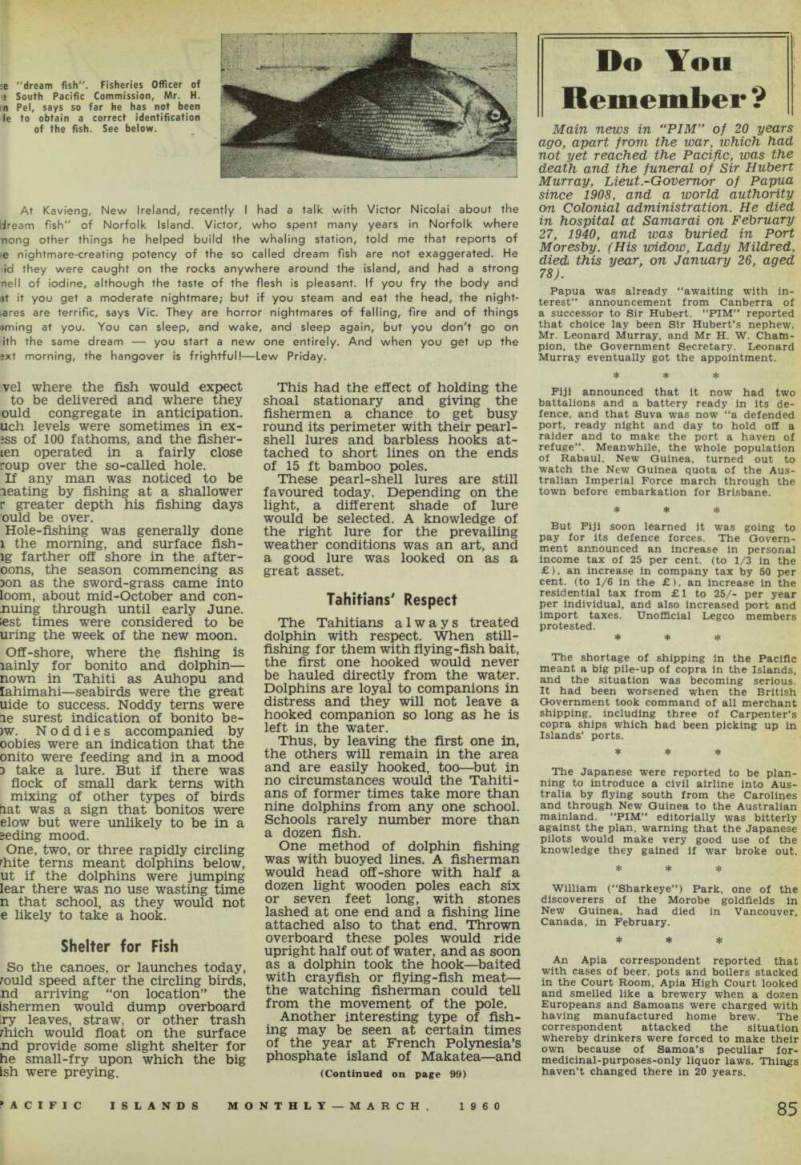 87
87 88
88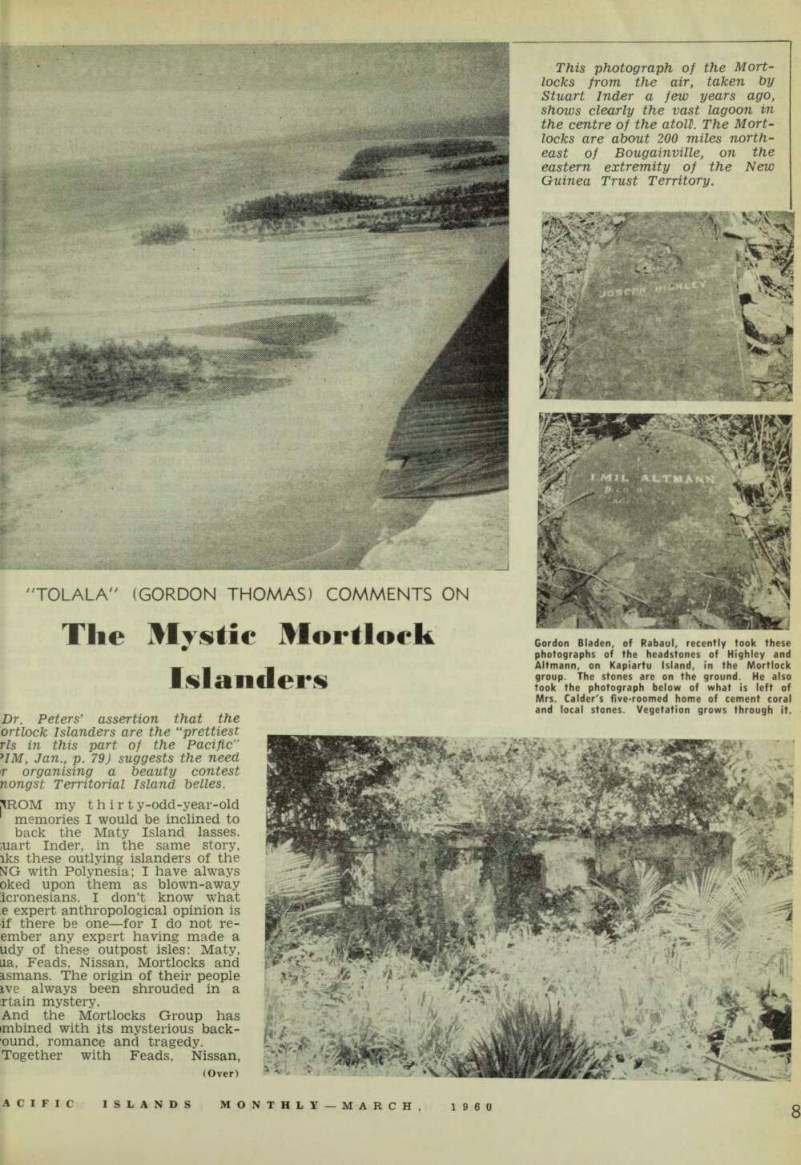 89
89 90
90 91
91 92
92 93
93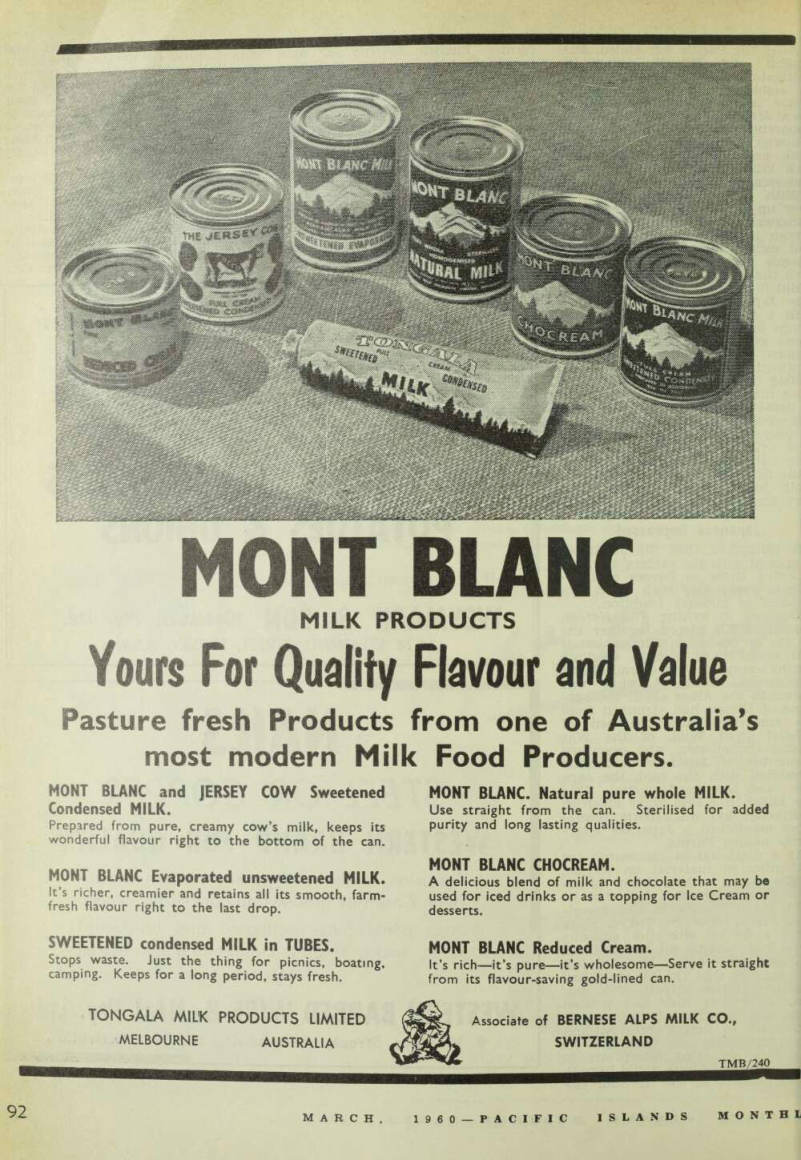 94
94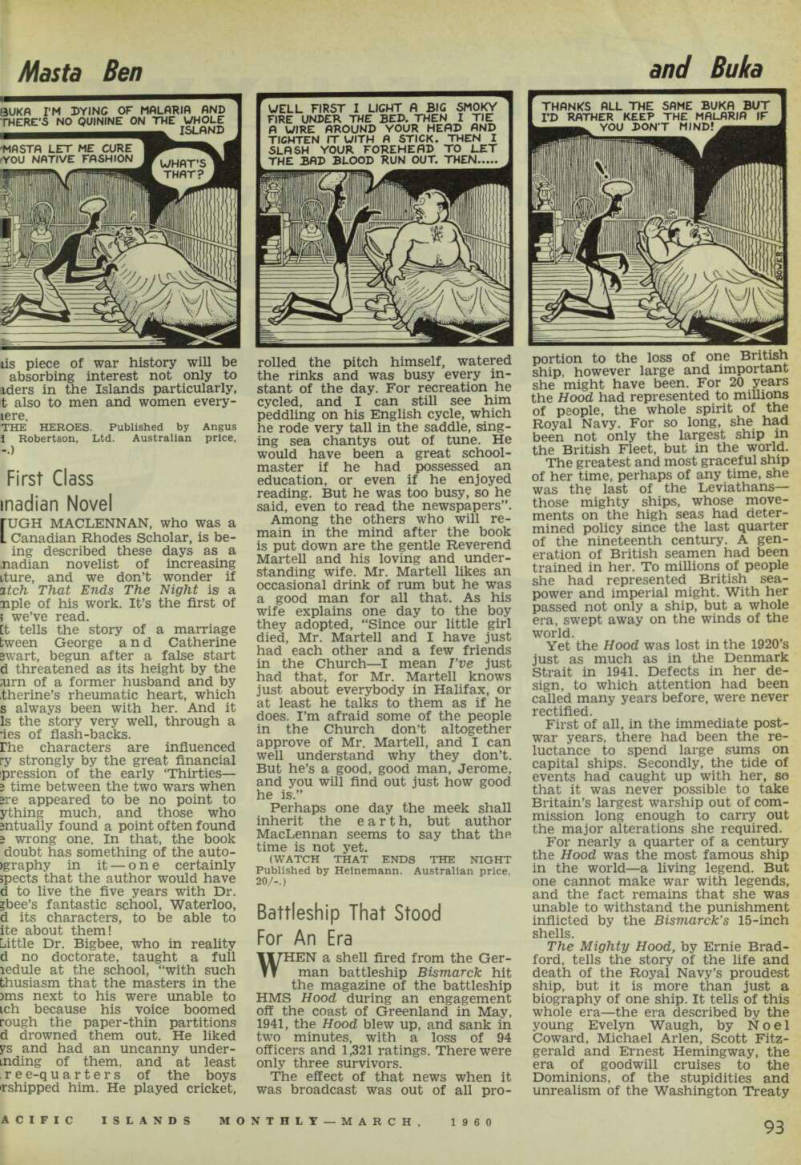 95
95 96
96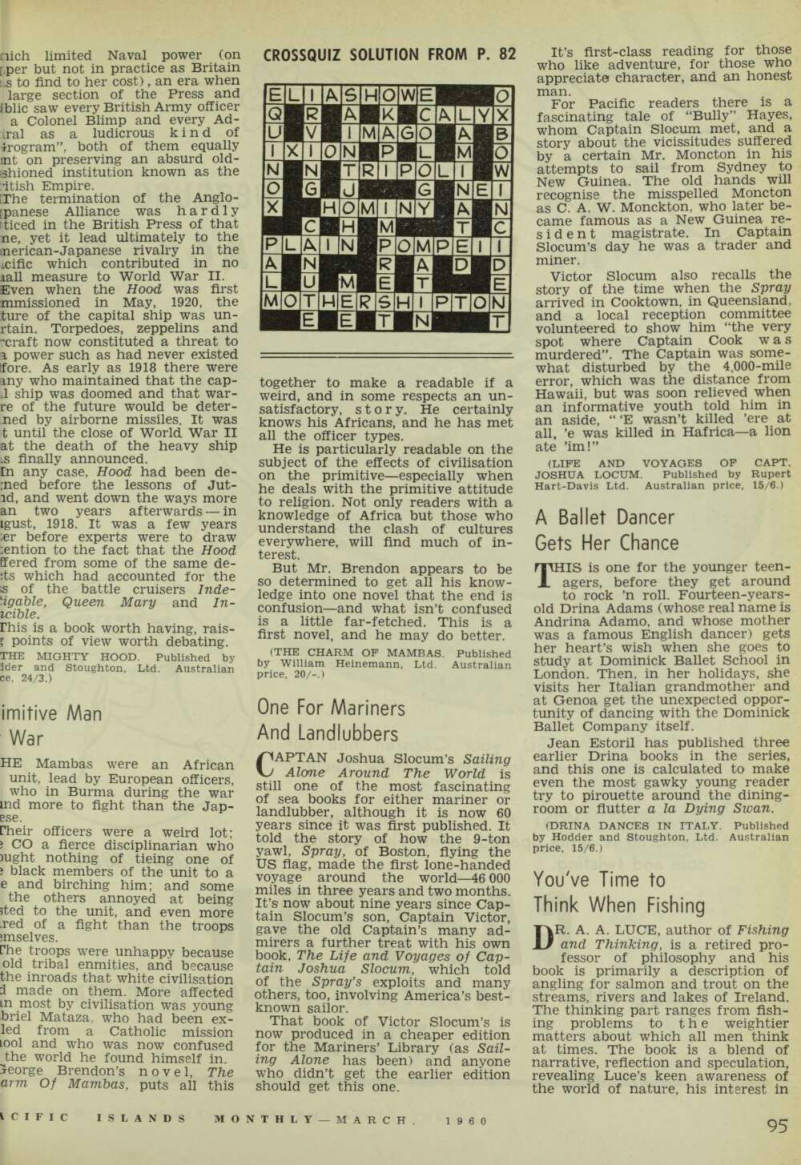 97
97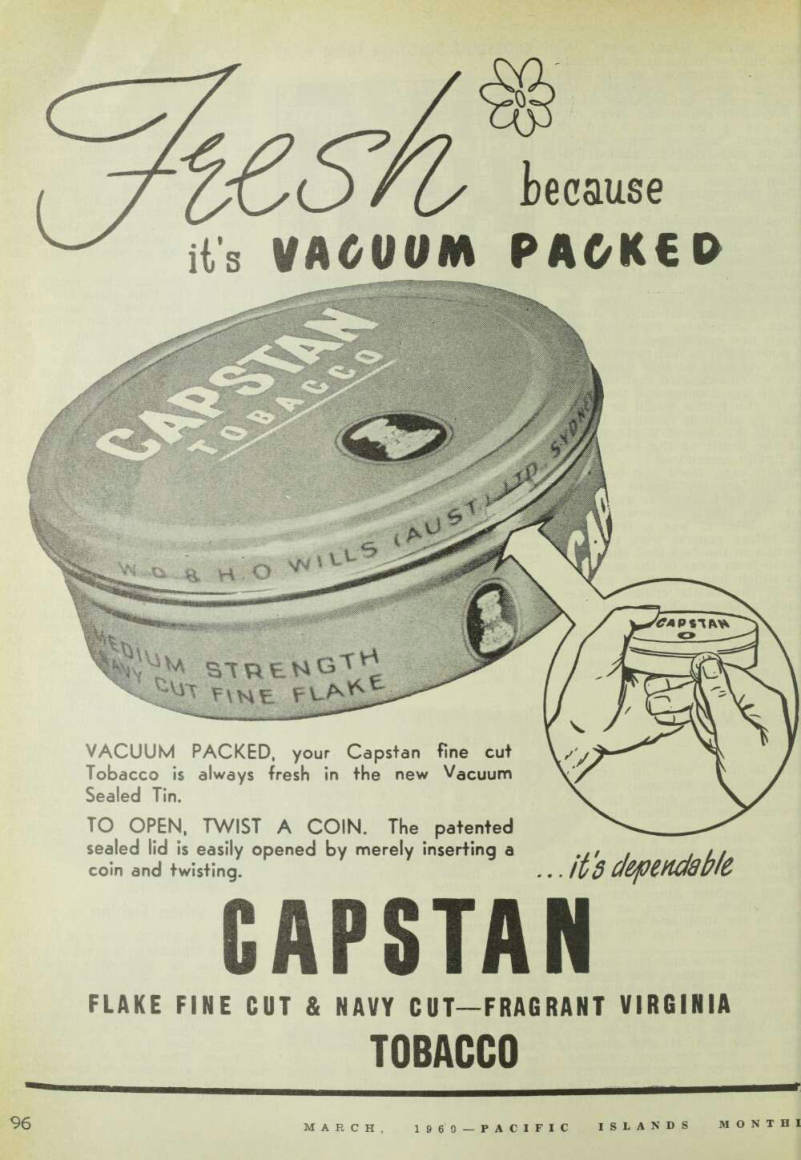 98
98 99
99 100
100 101
101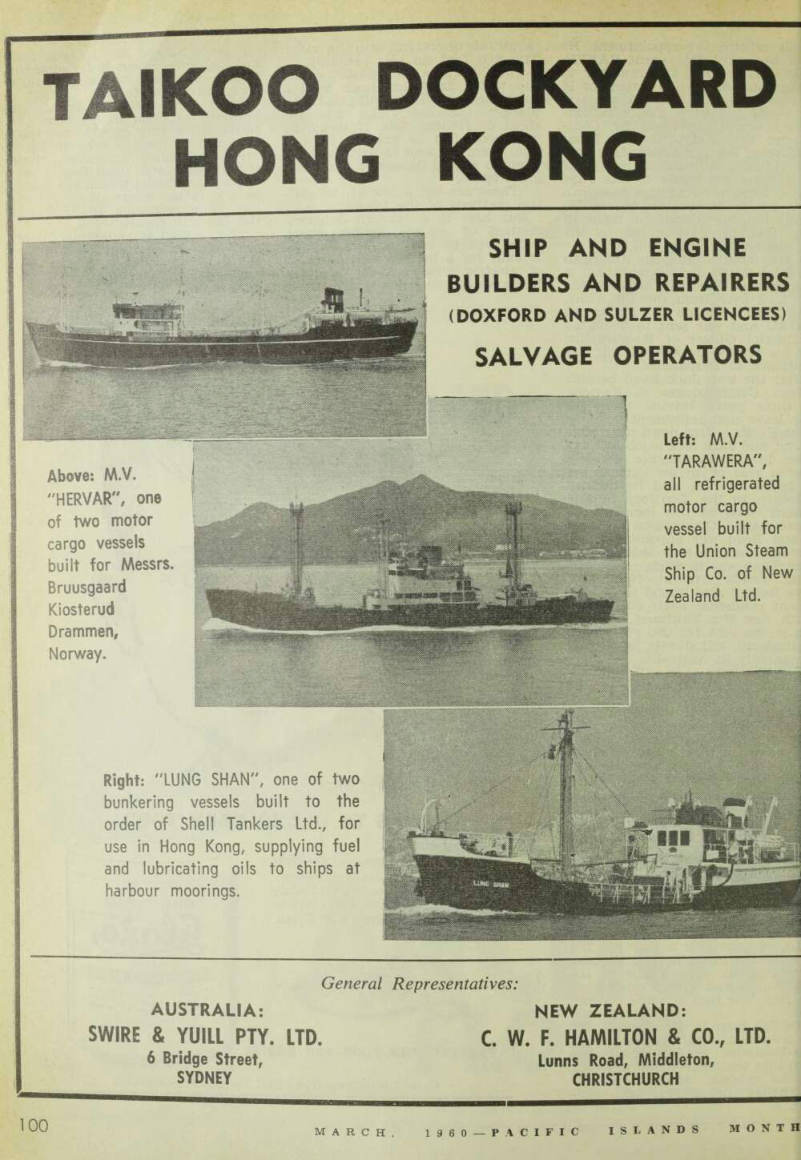 102
102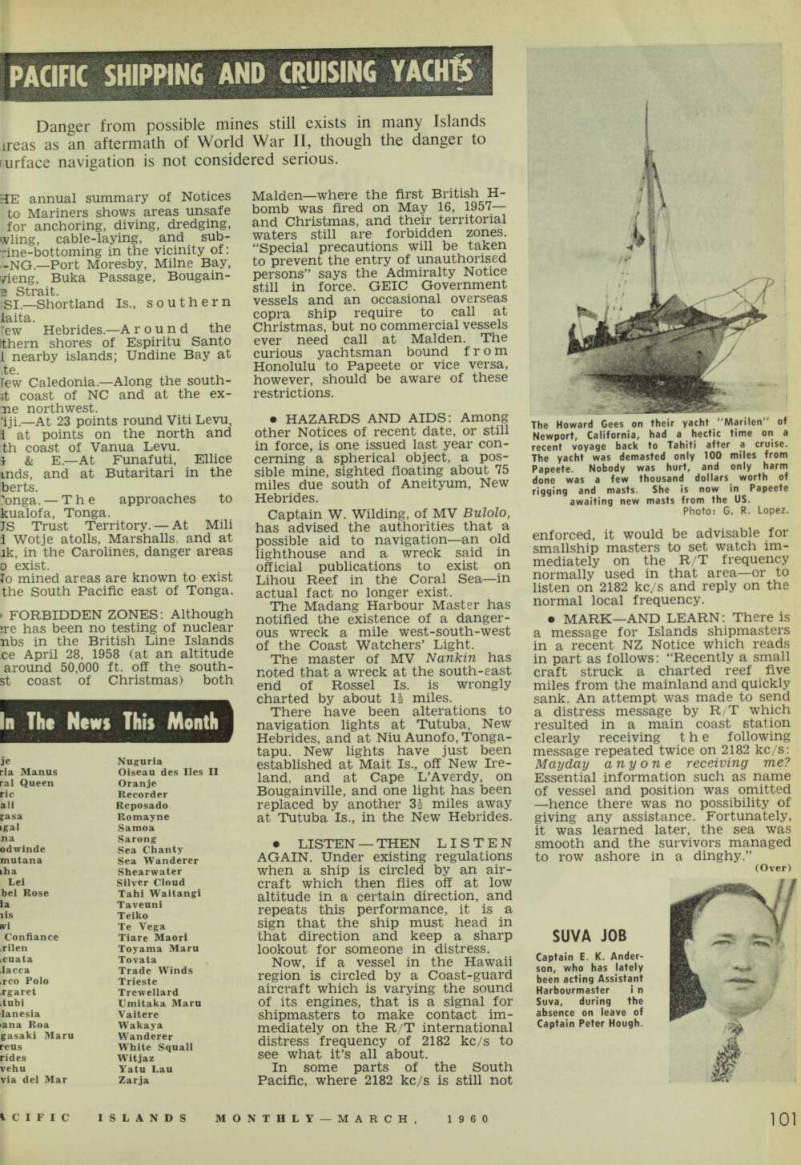 103
103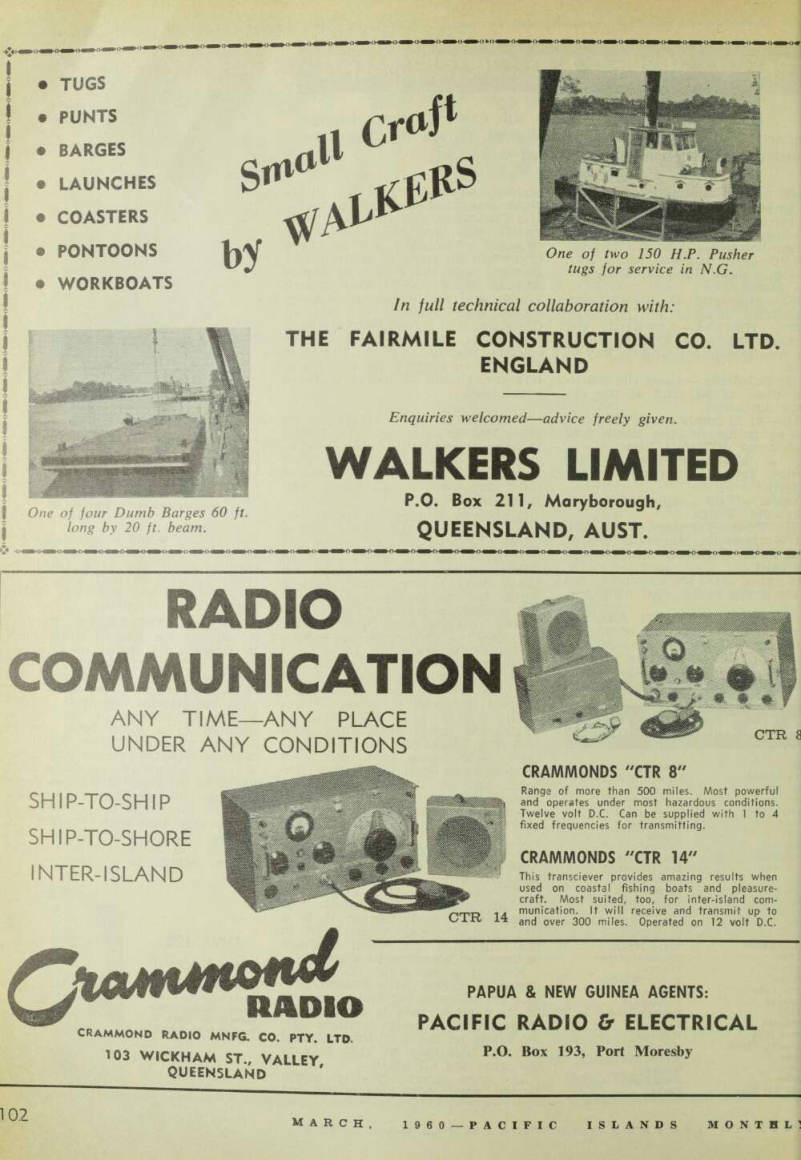 104
104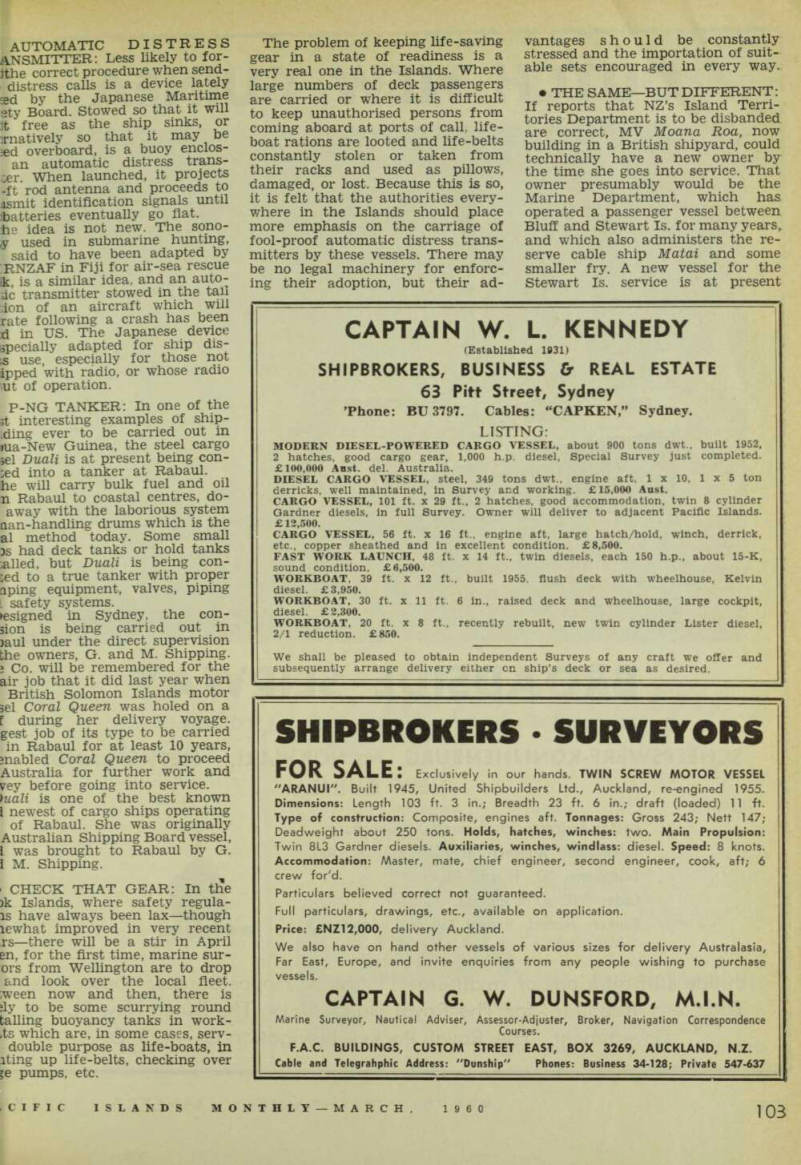 105
105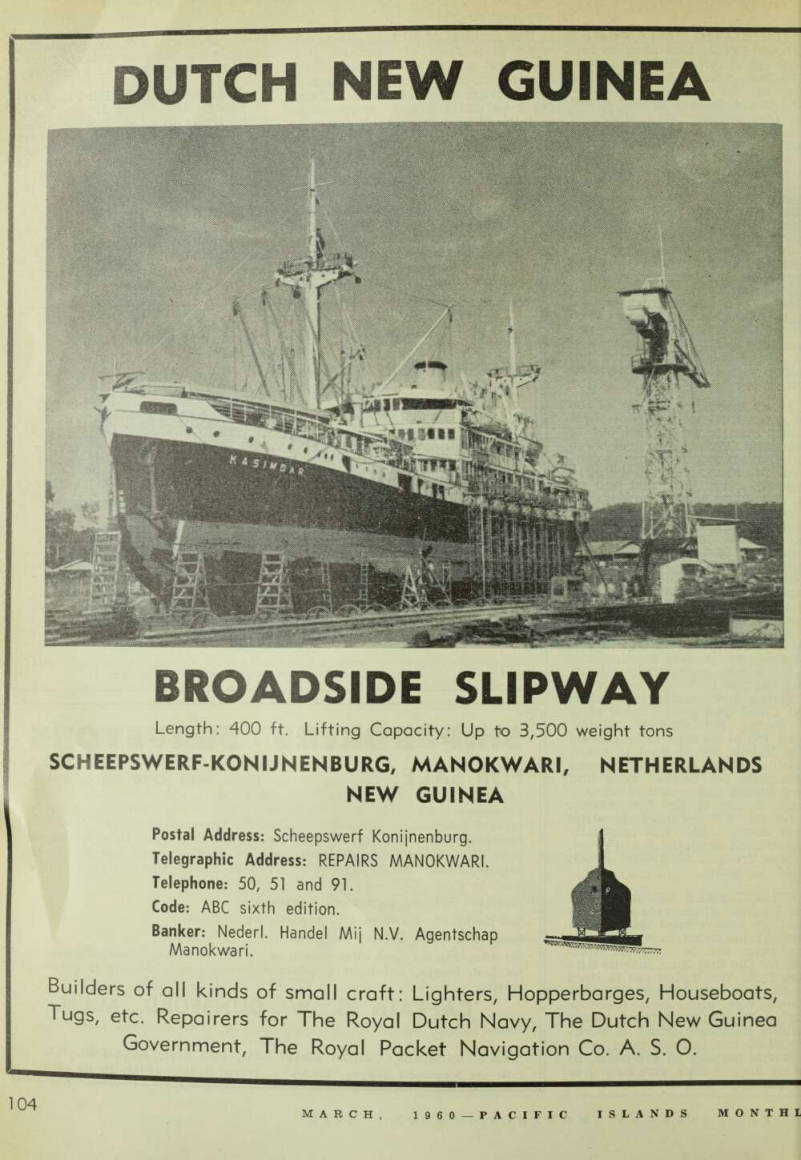 106
106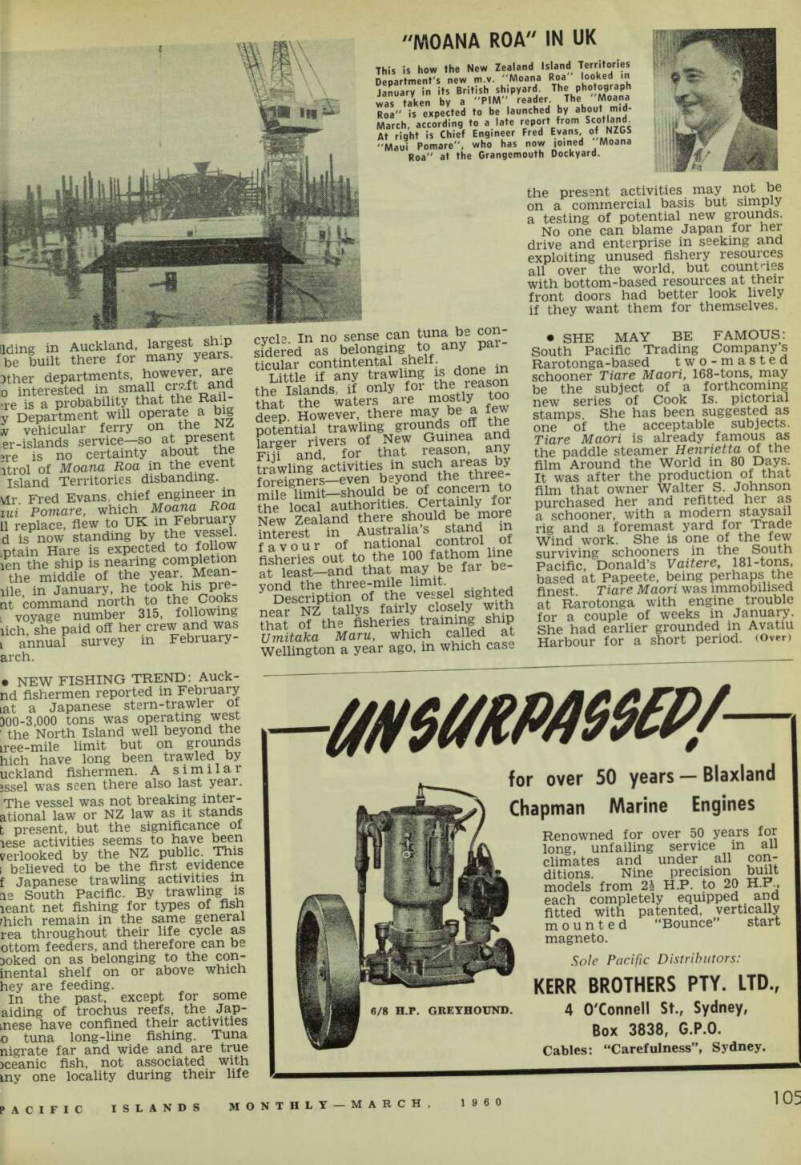 107
107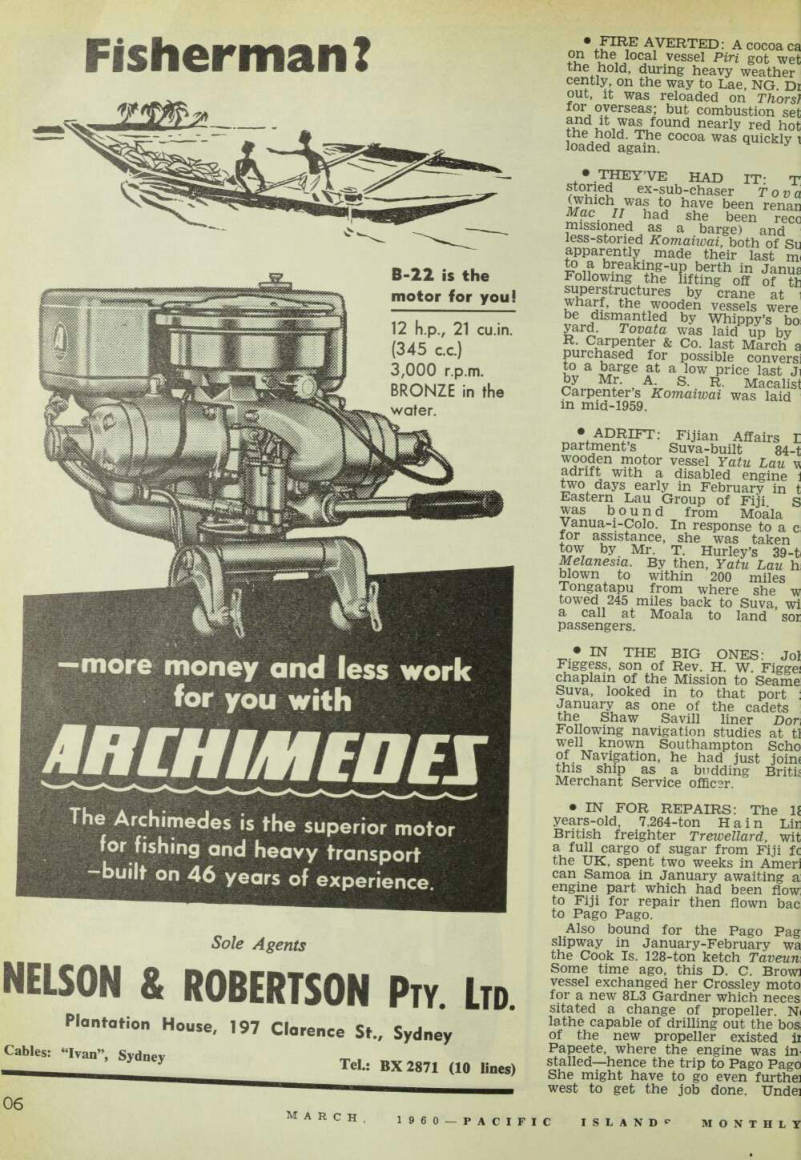 108
108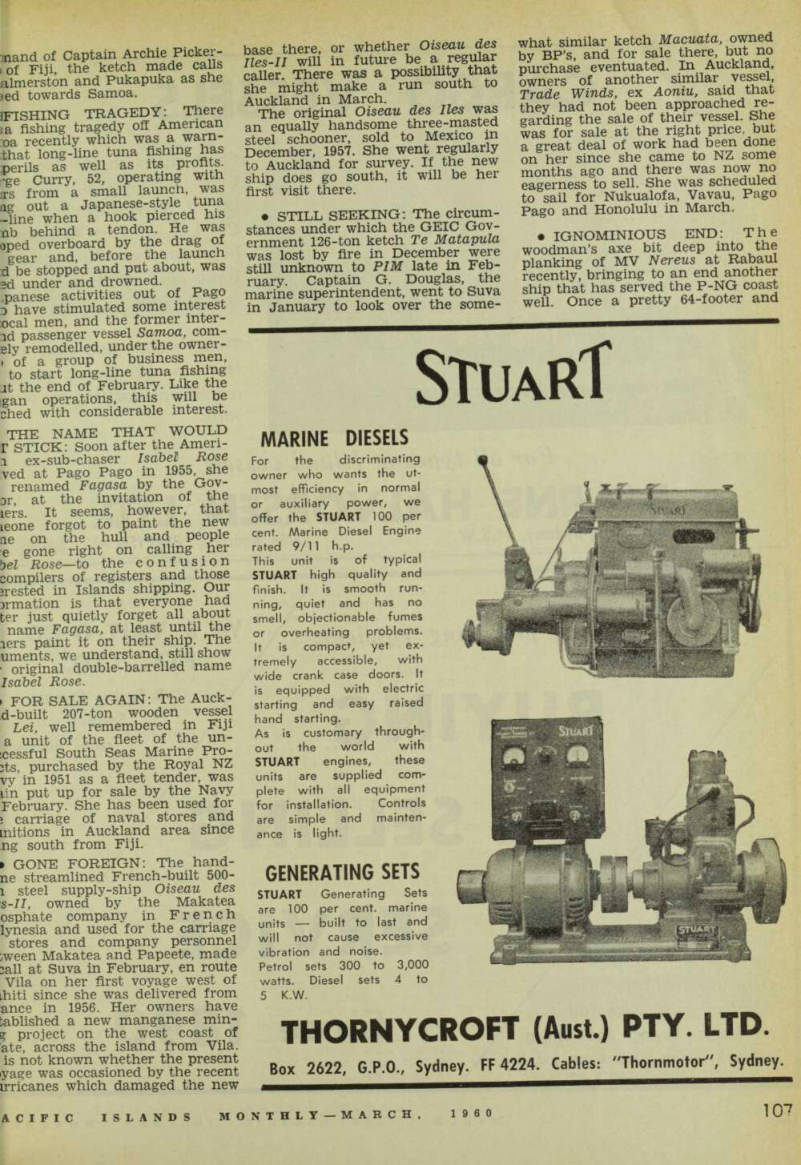 109
109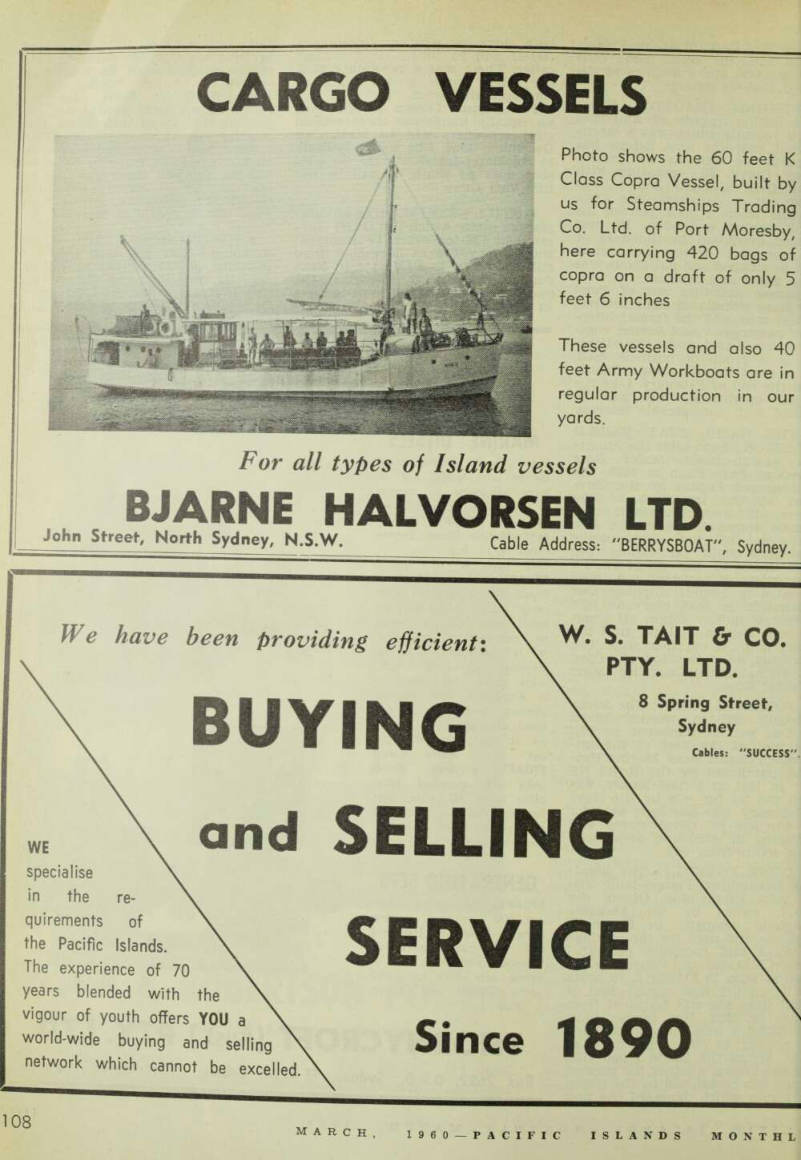 110
110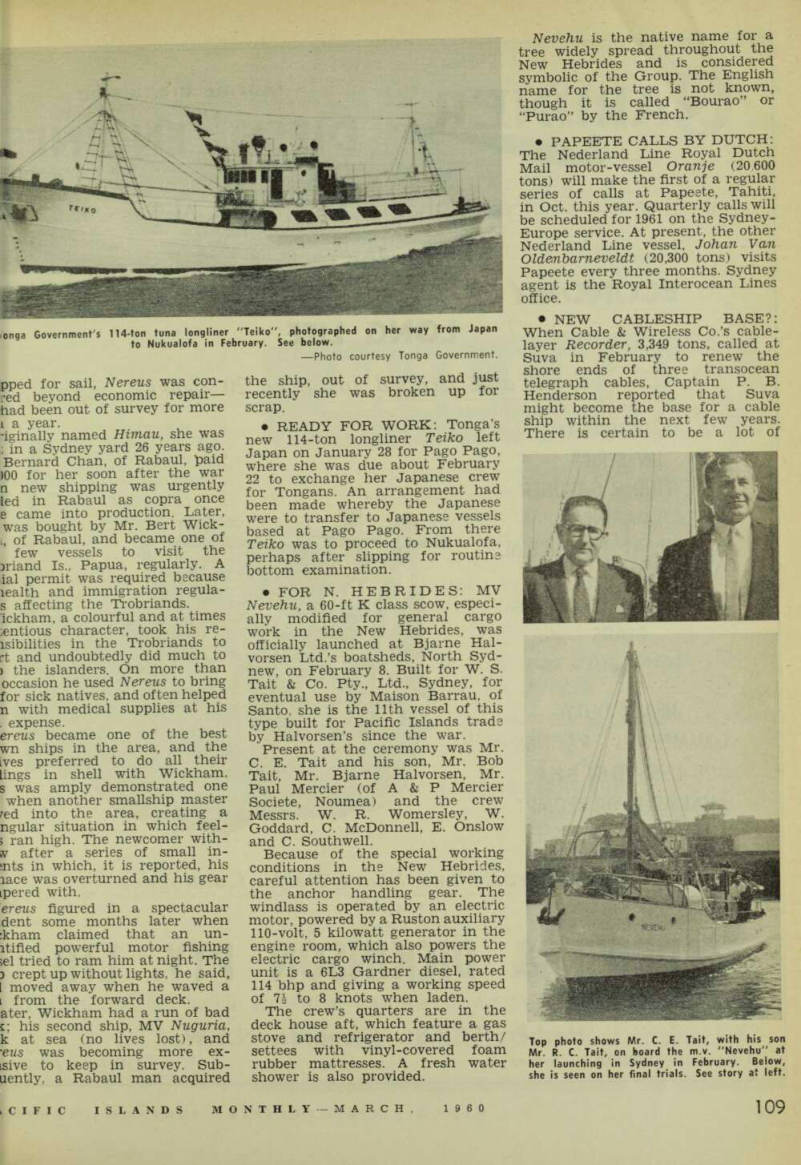 111
111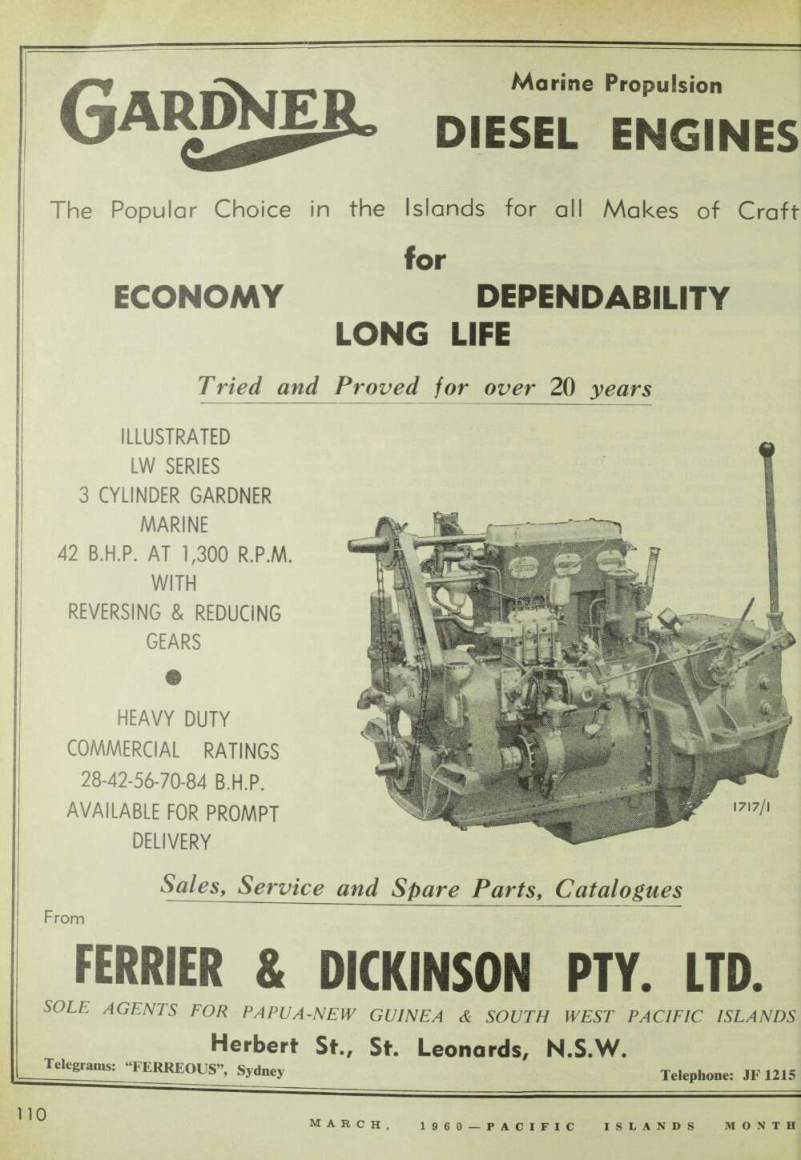 112
112 113
113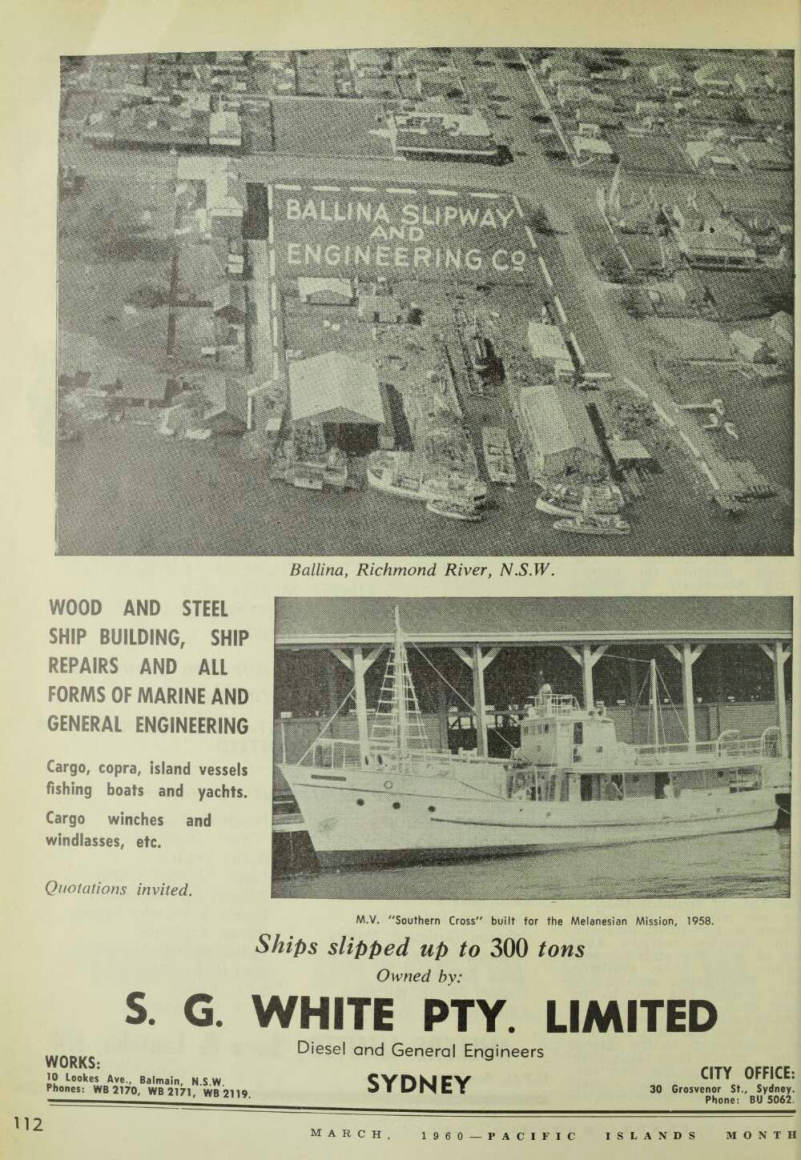 114
114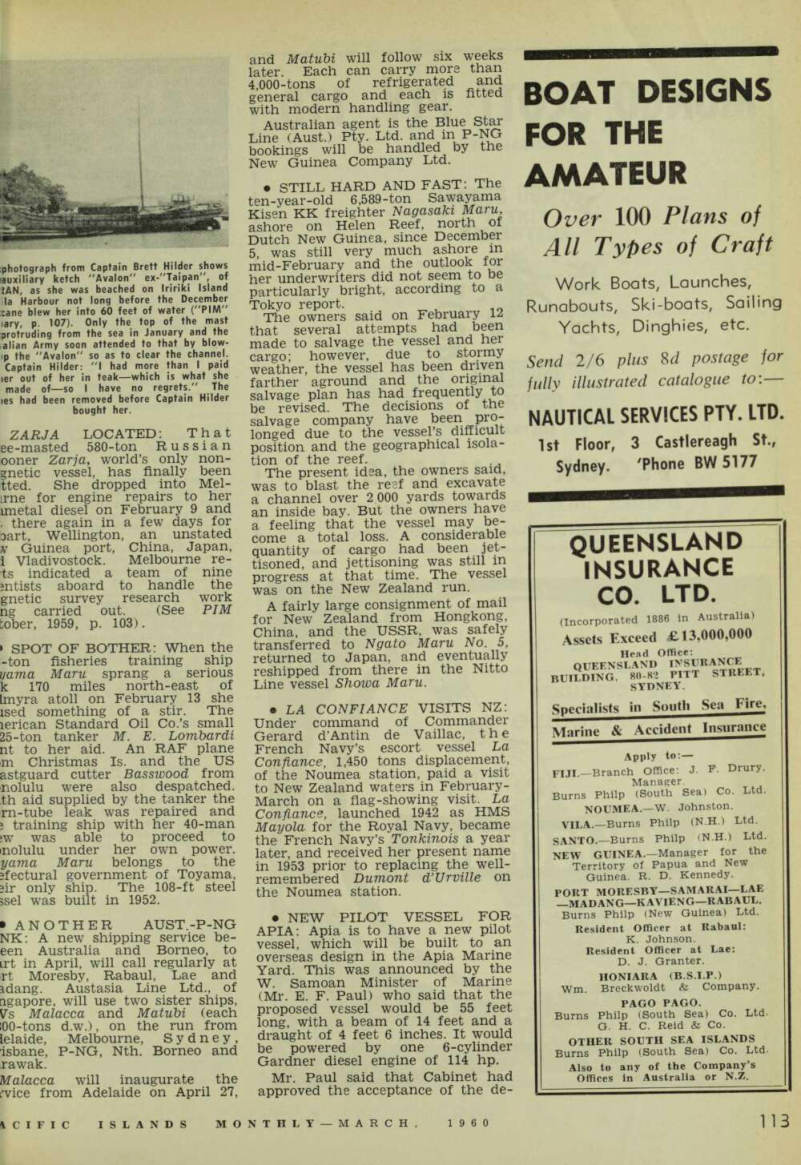 115
115 116
116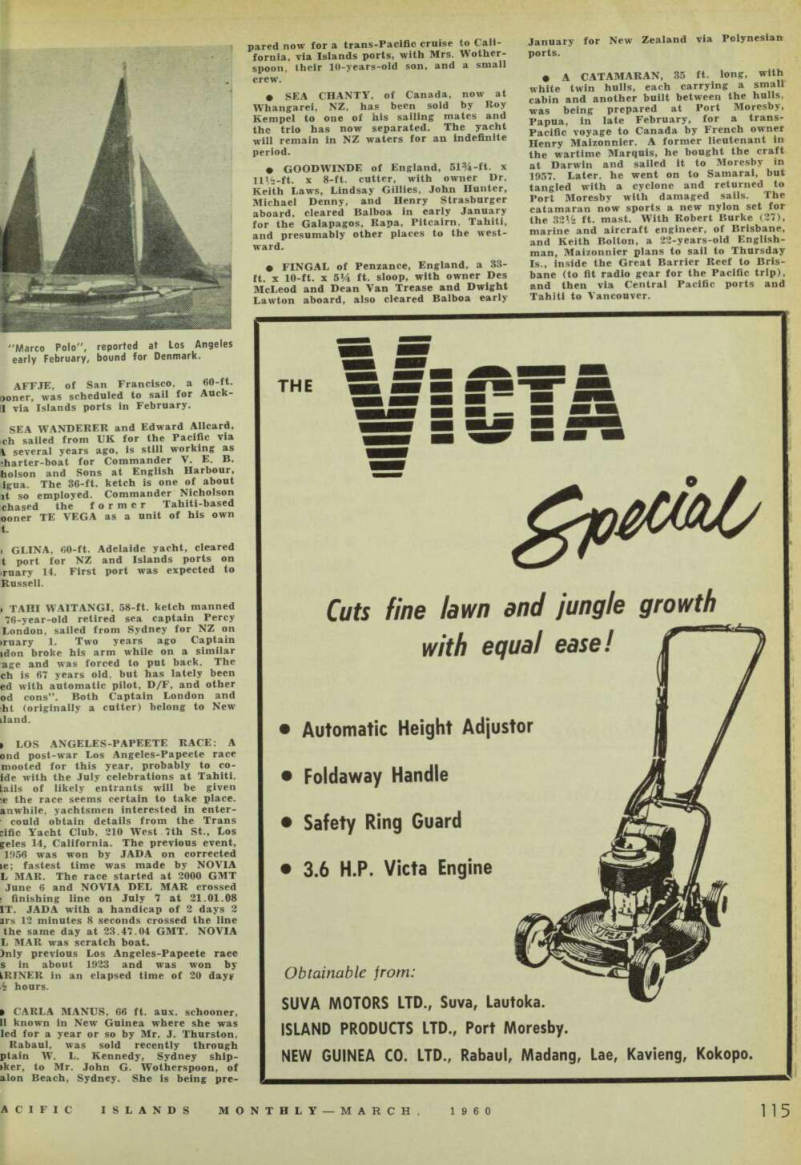 117
117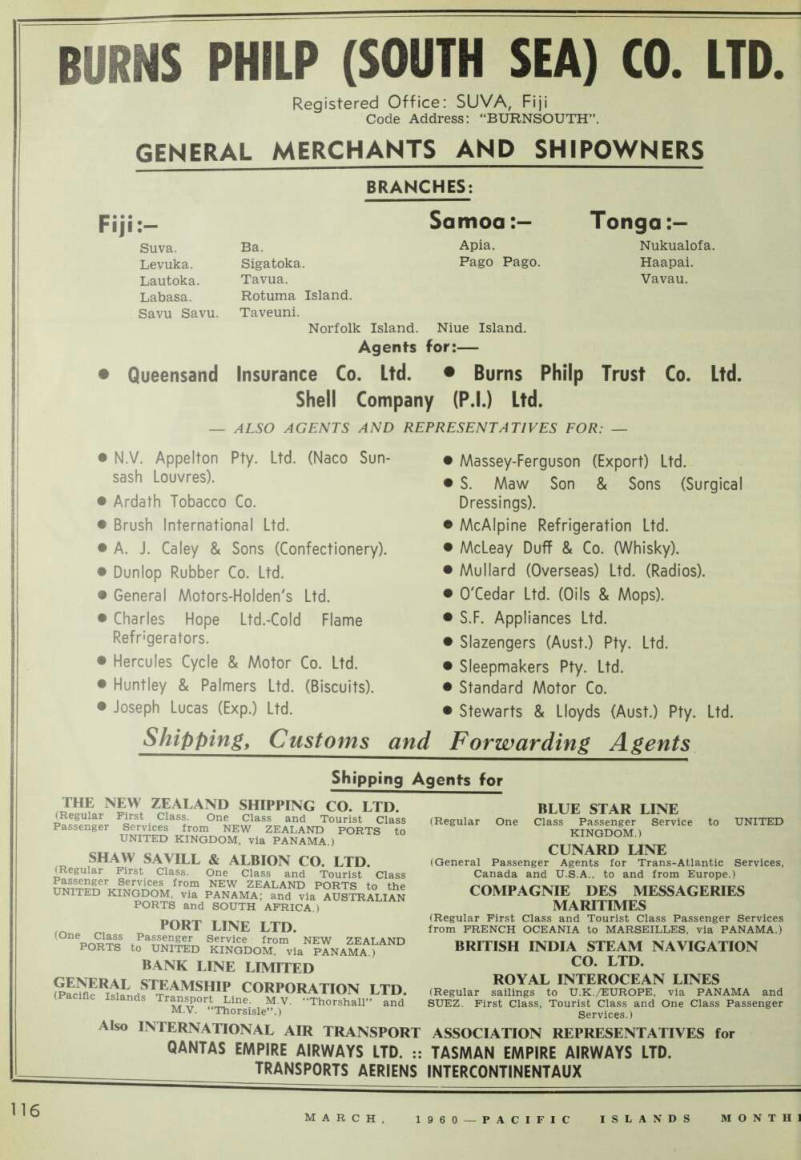 118
118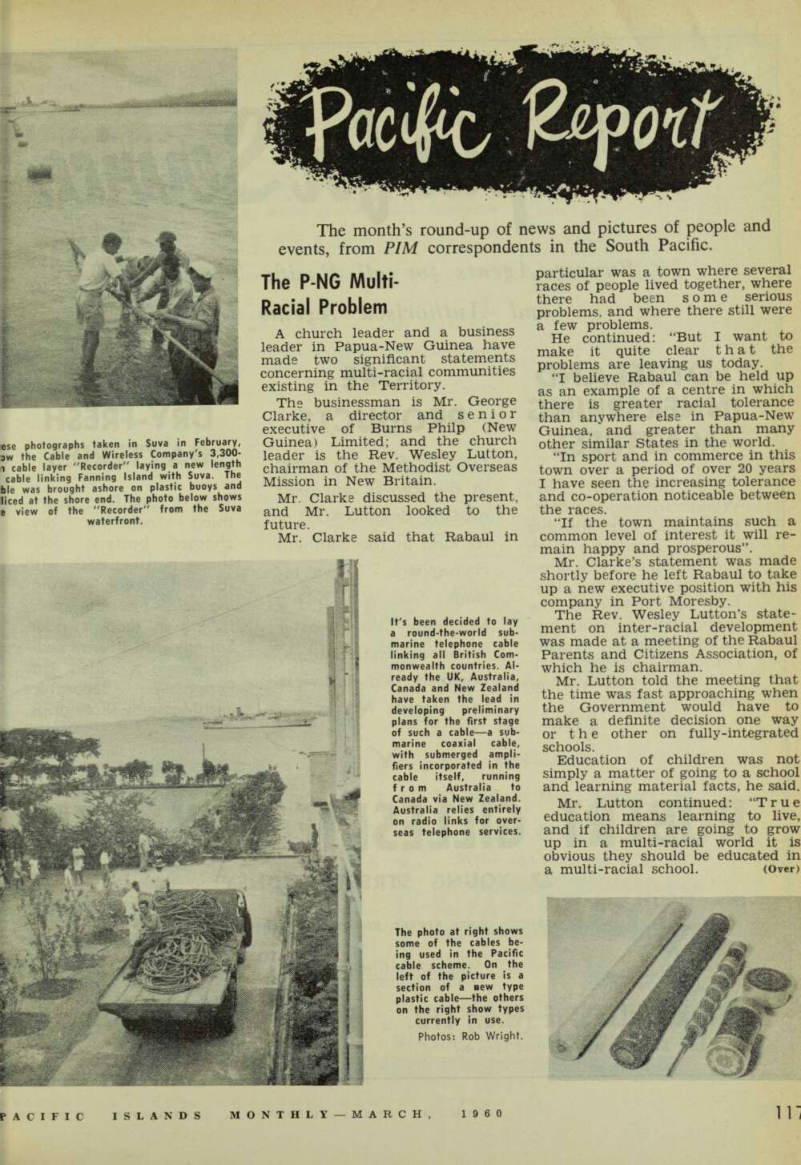 119
119 120
120 121
121 122
122 123
123 124
124 125
125 126
126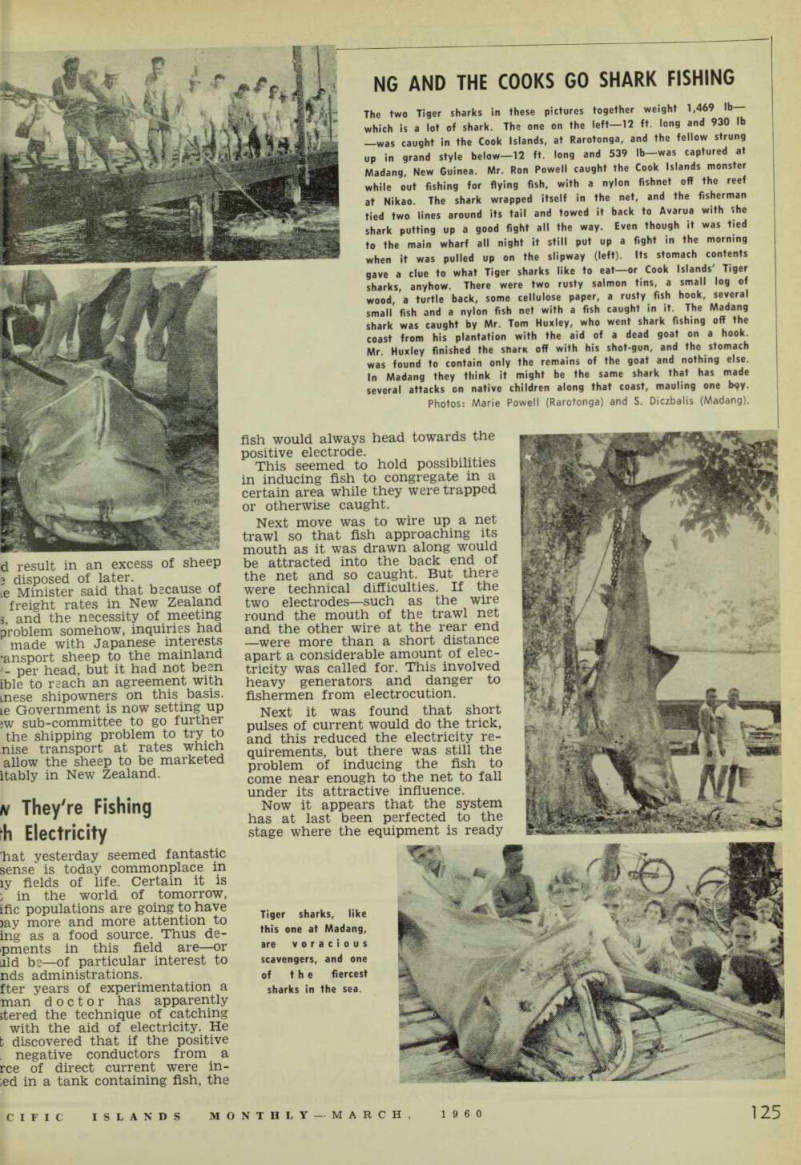 127
127 128
128 129
129 130
130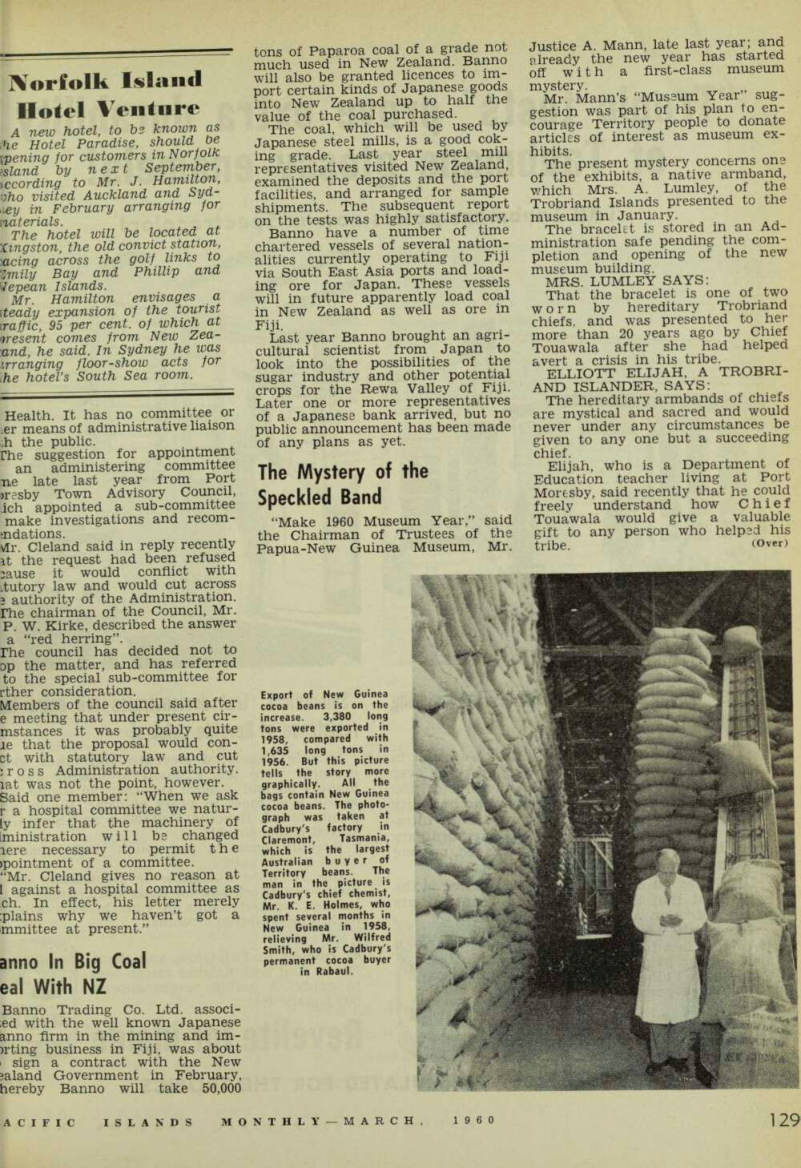 131
131 132
132 133
133 134
134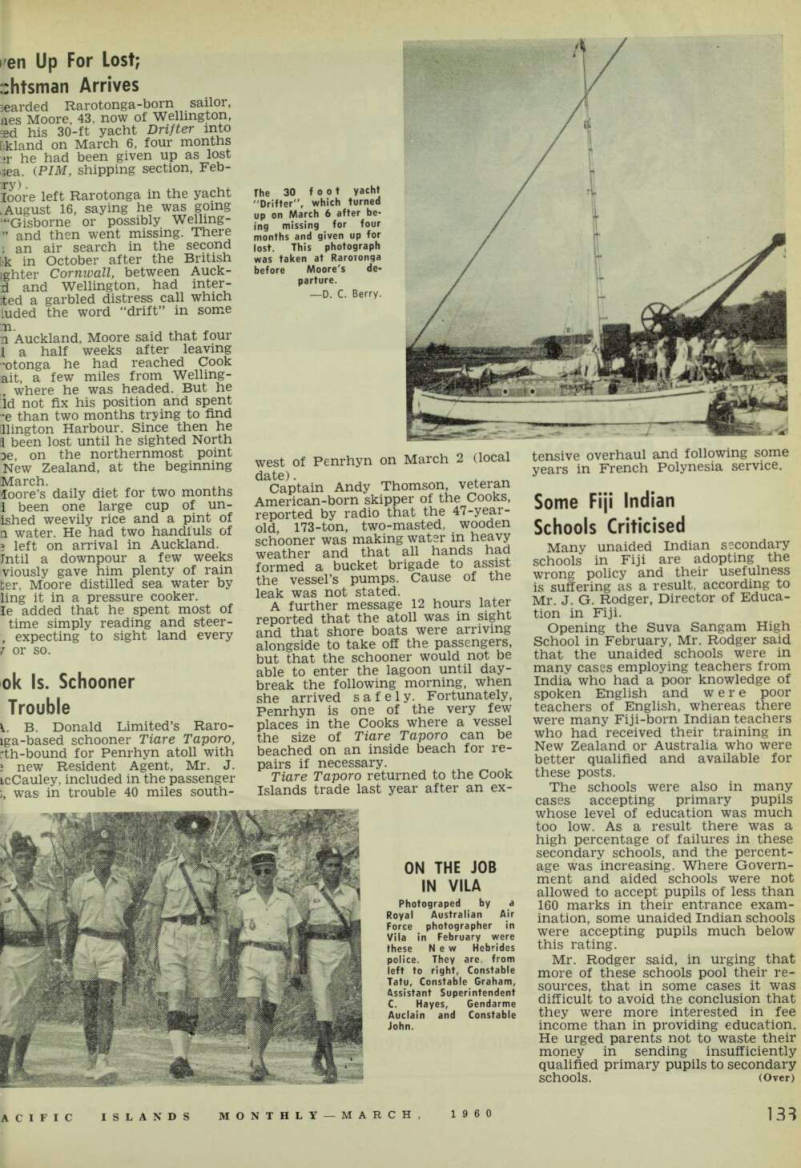 135
135 136
136 137
137 138
138 139
139 140
140 141
141 142
142 143
143 144
144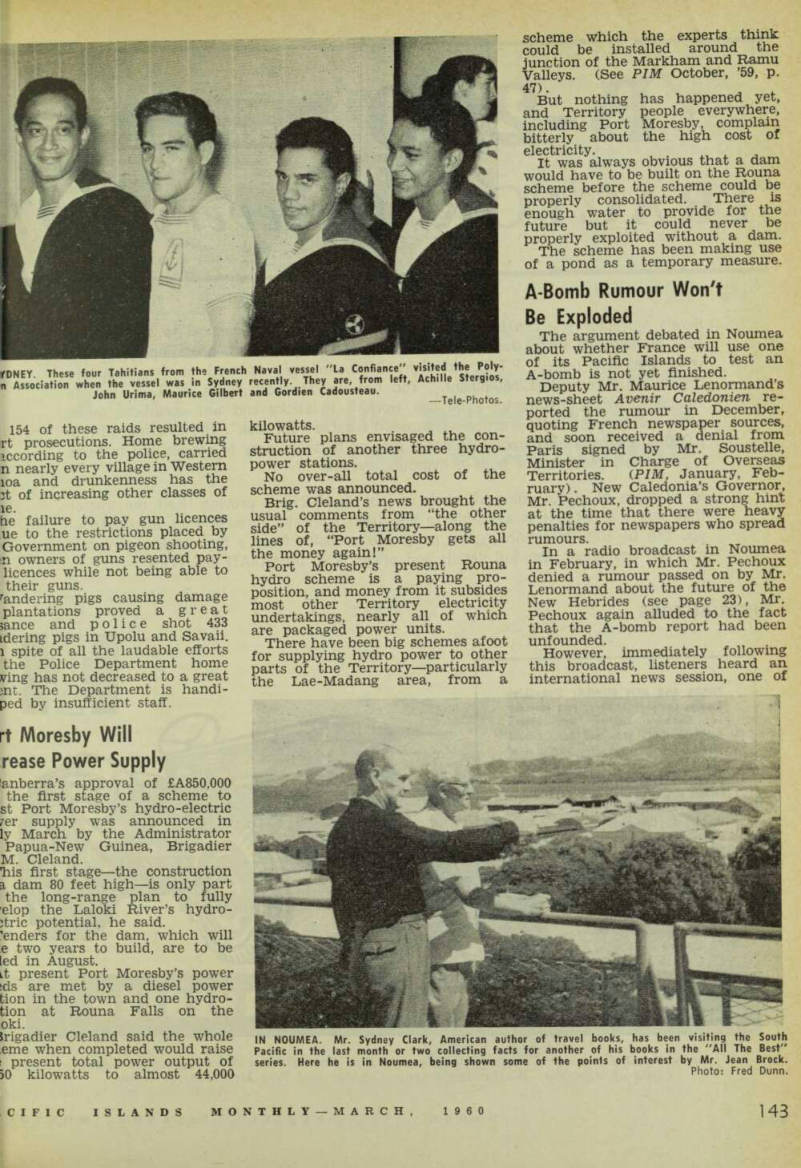 145
145 146
146 147
147 148
148 149
149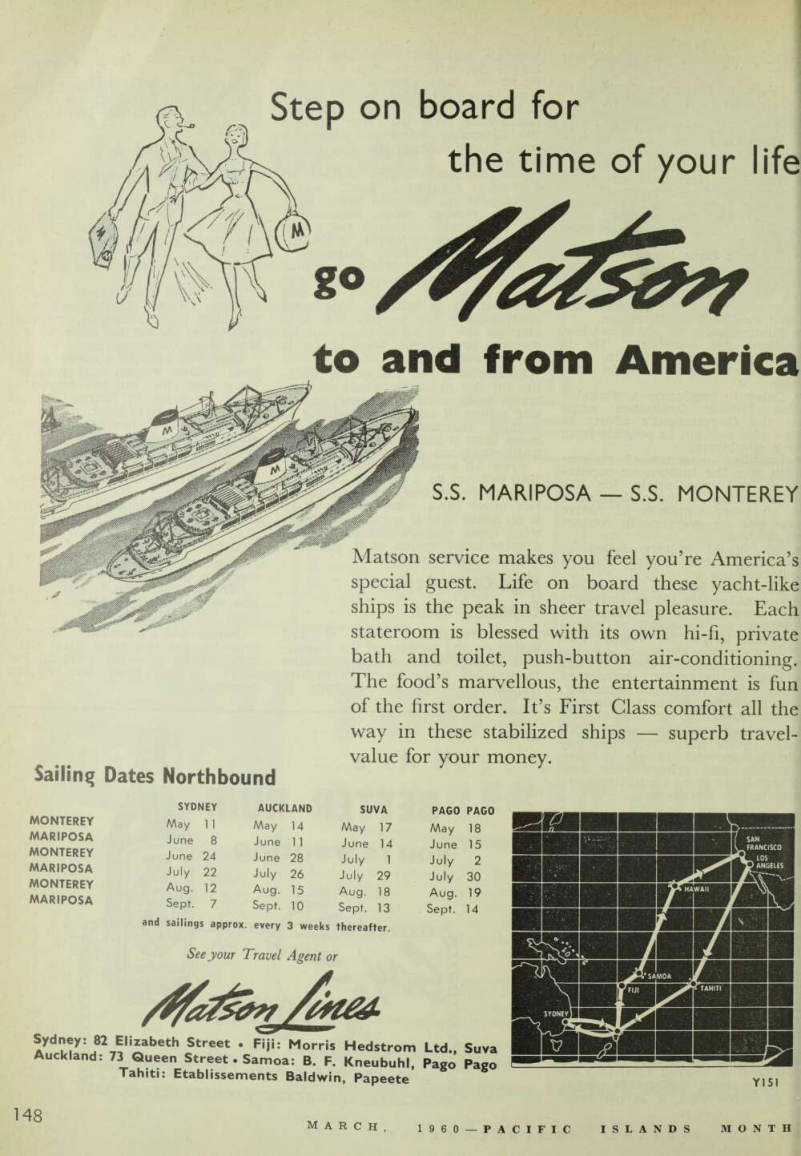 150
150 151
151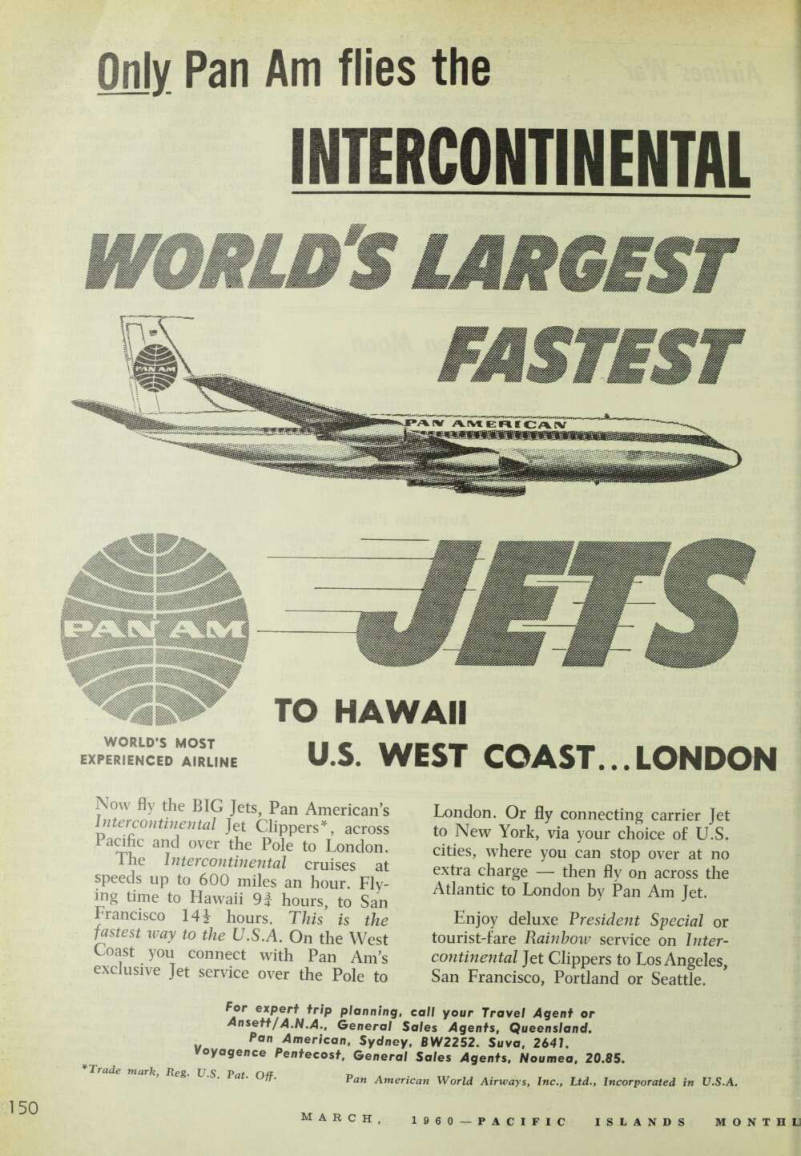 152
152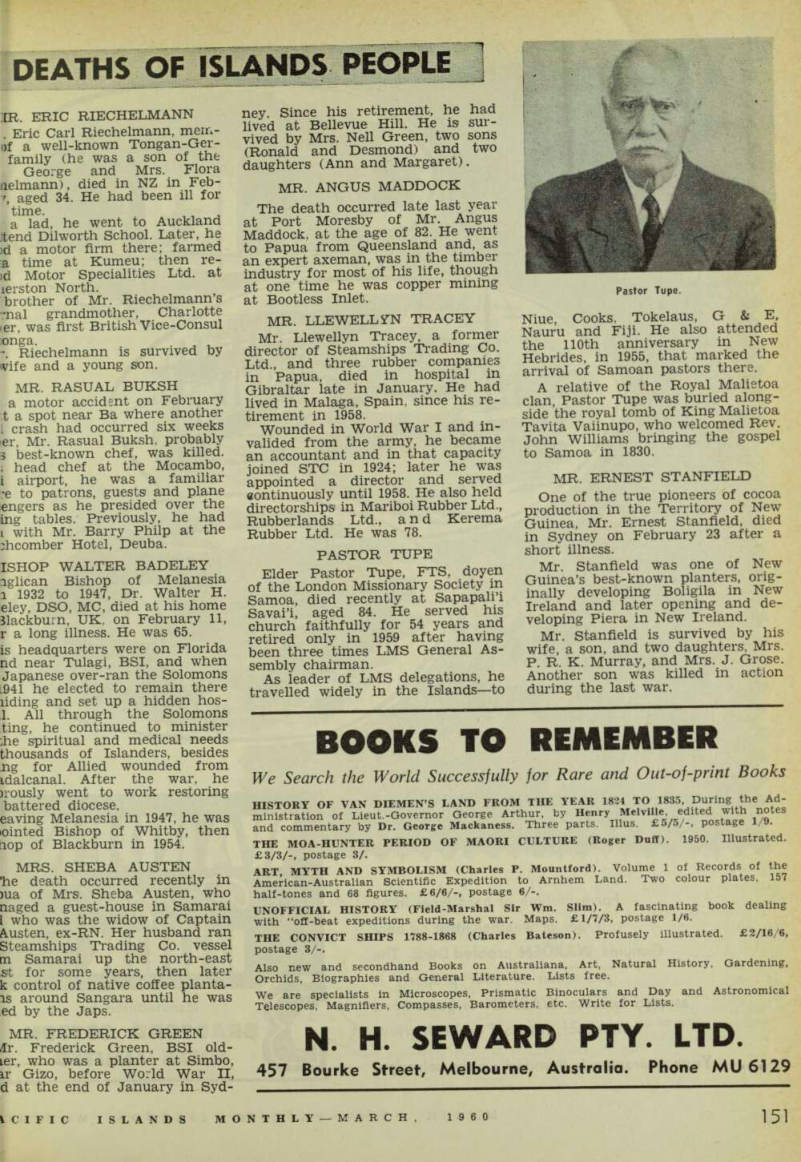 153
153 154
154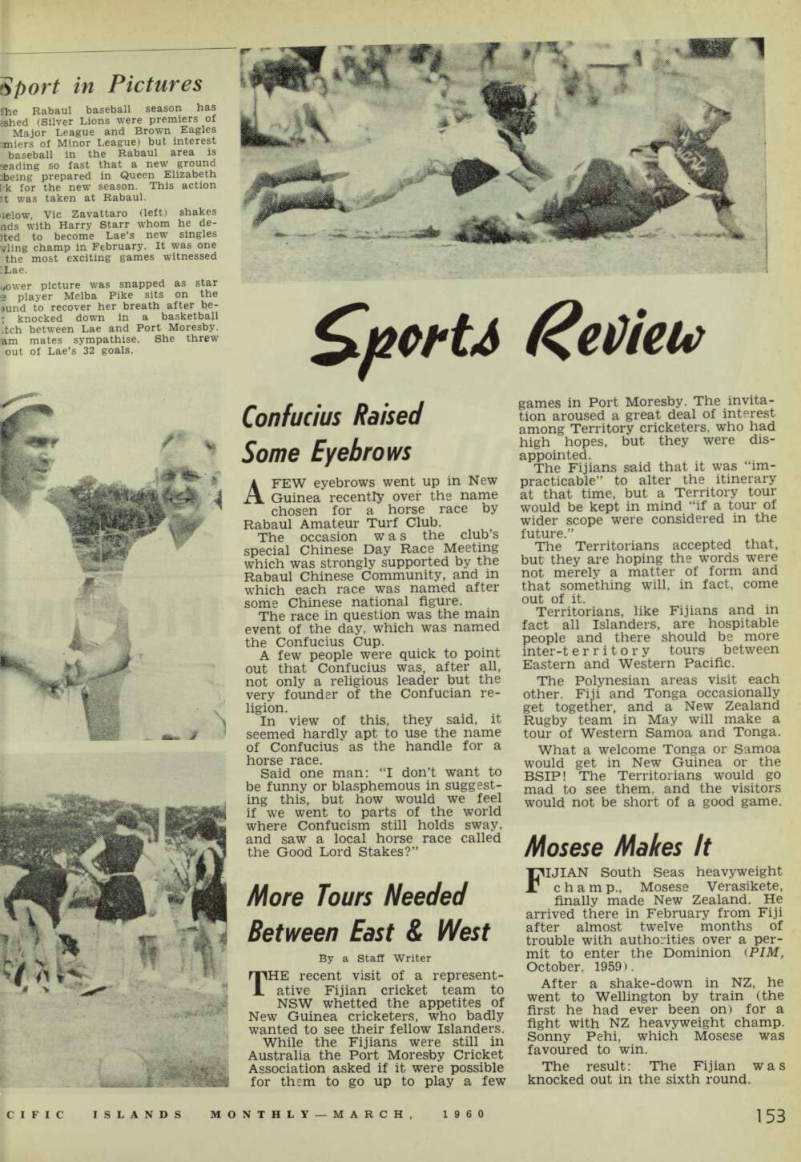 155
155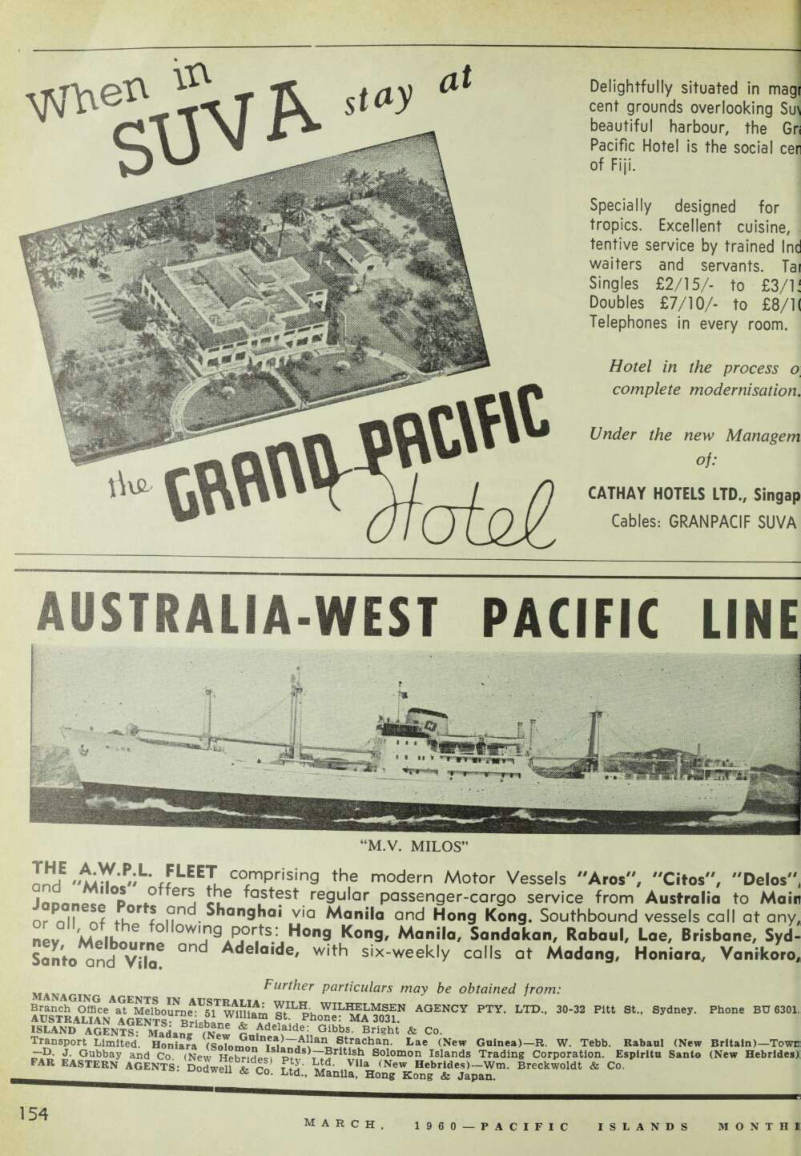 156
156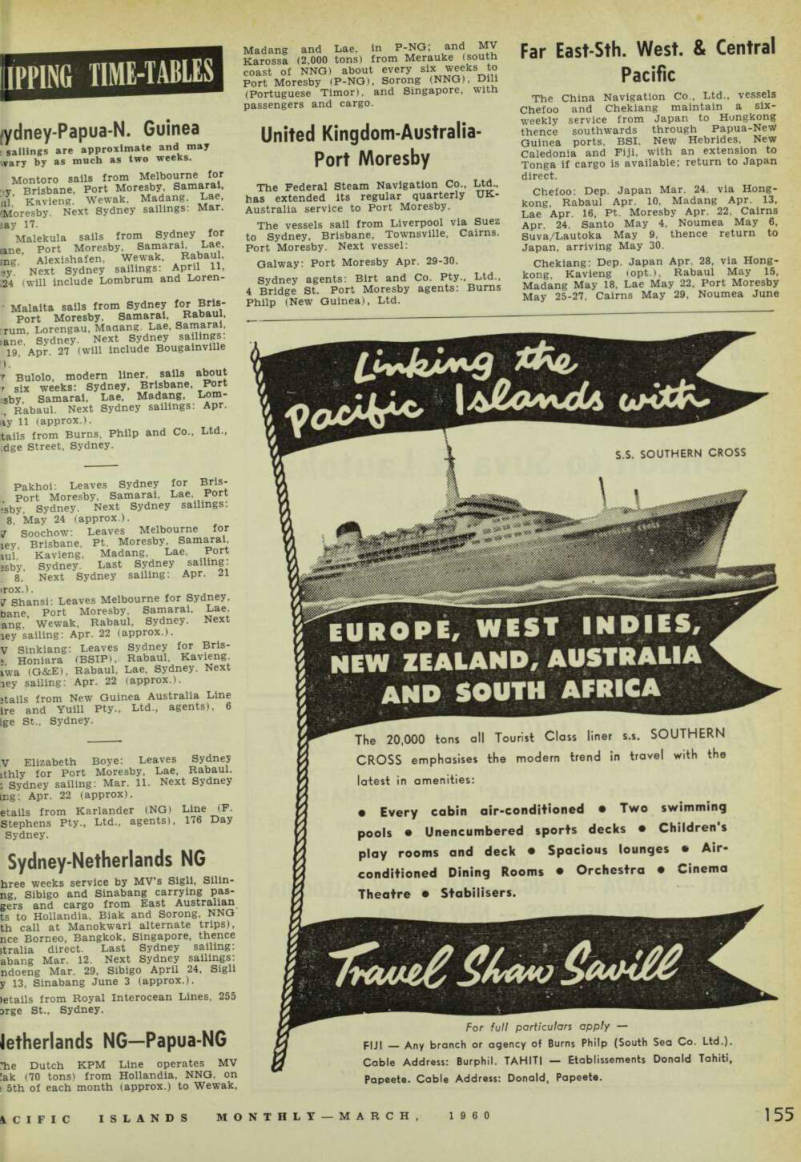 157
157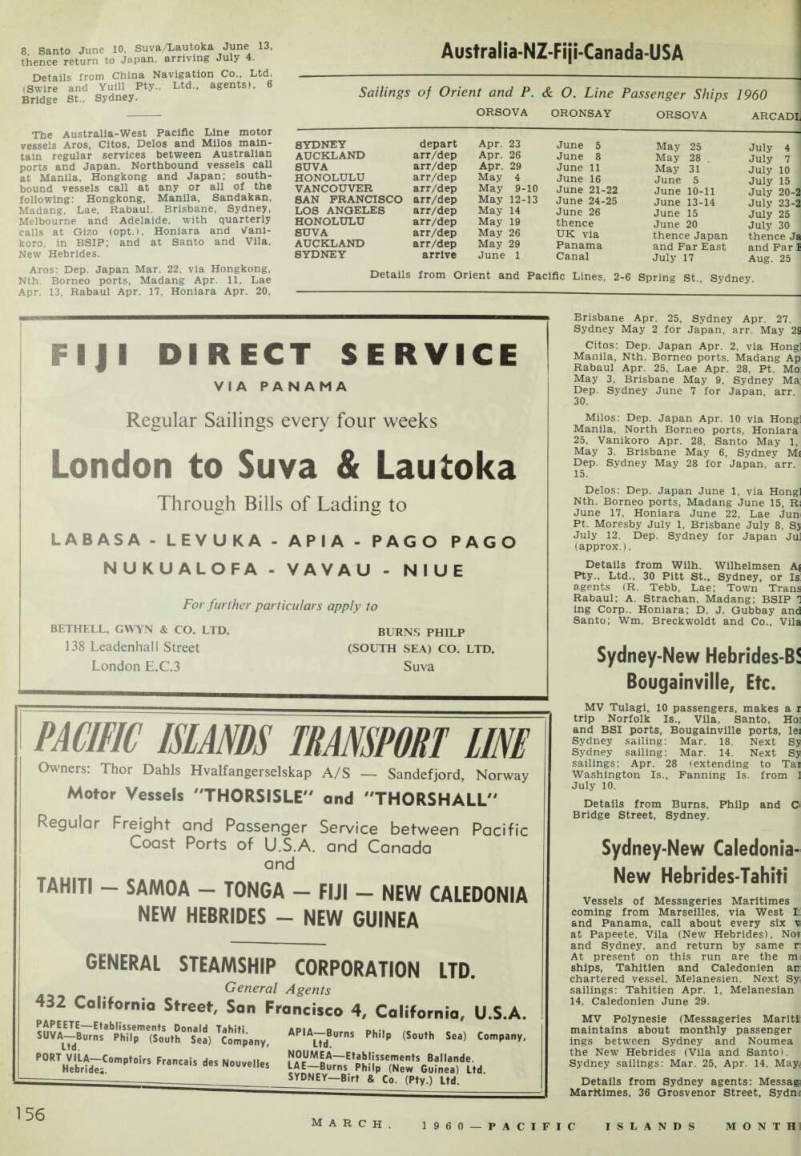 158
158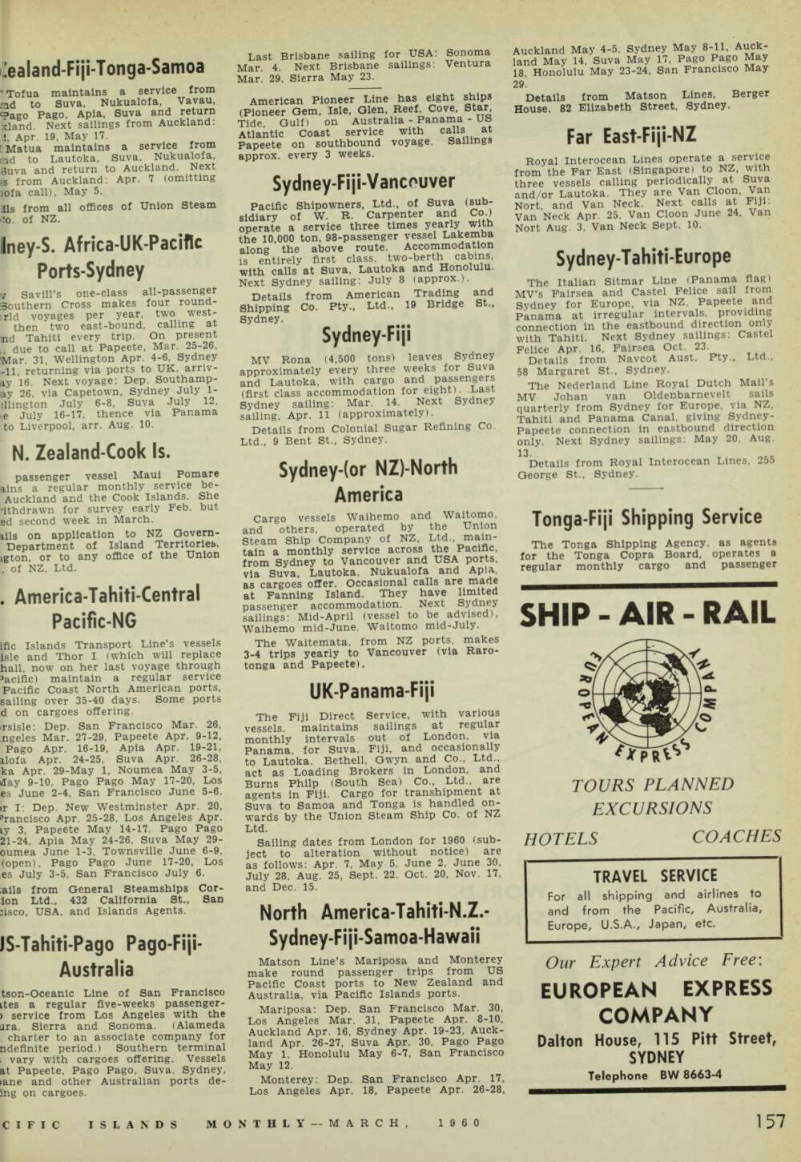 159
159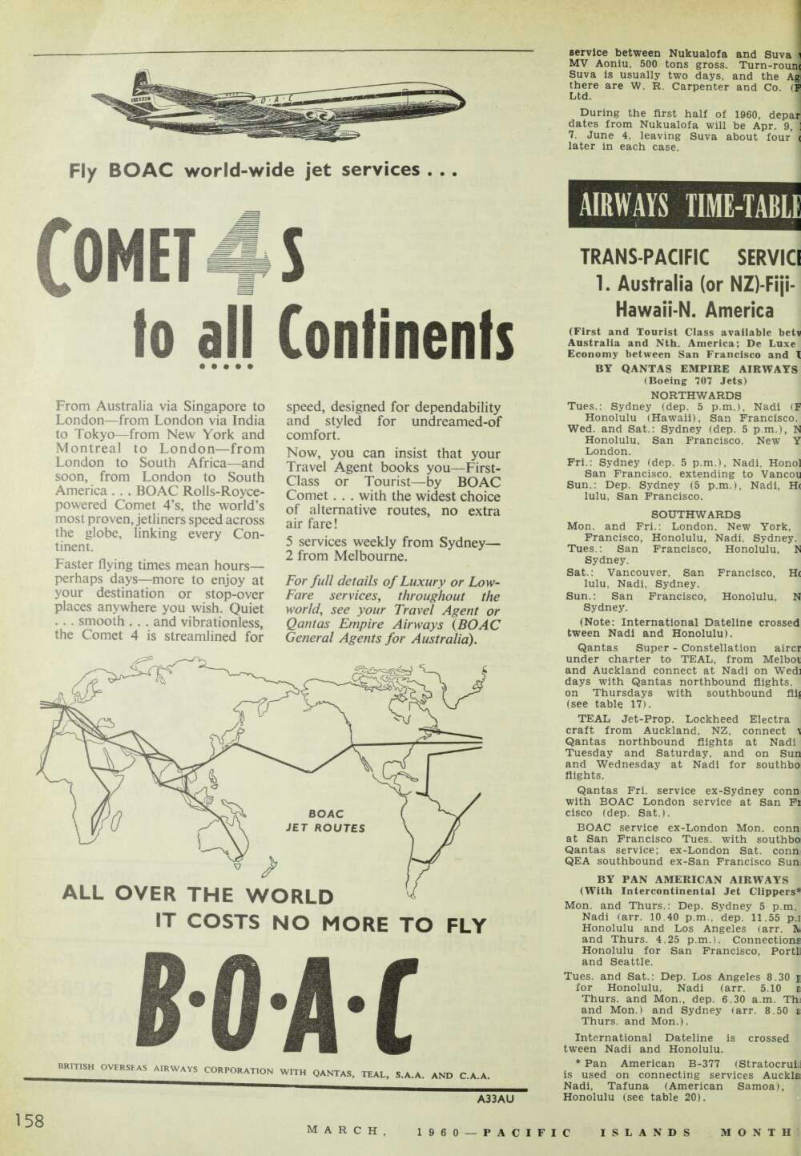 160
160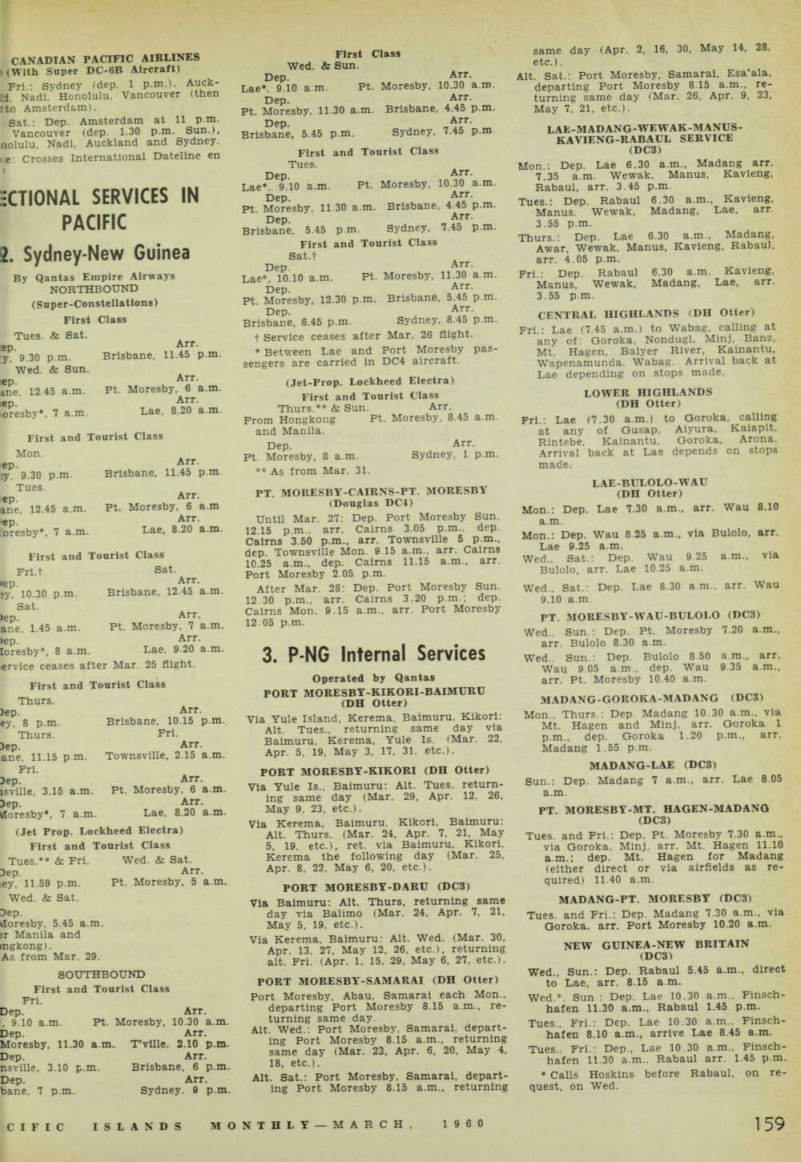 161
161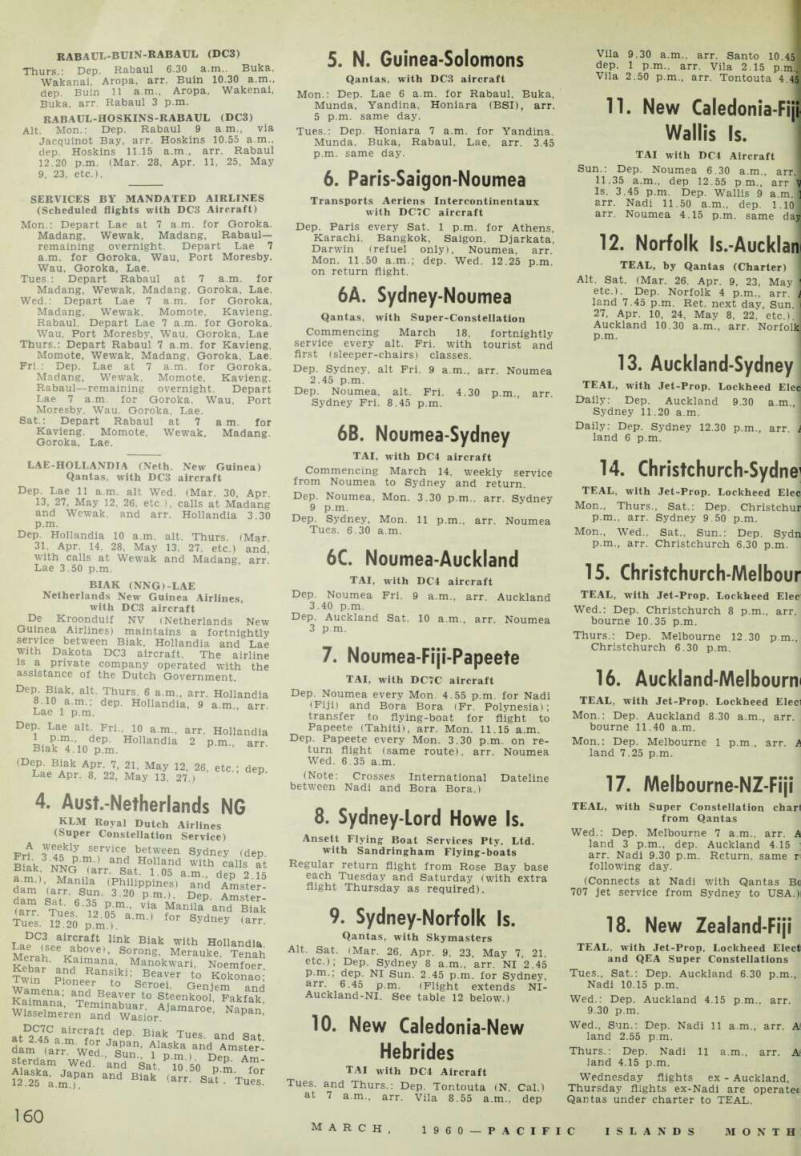 162
162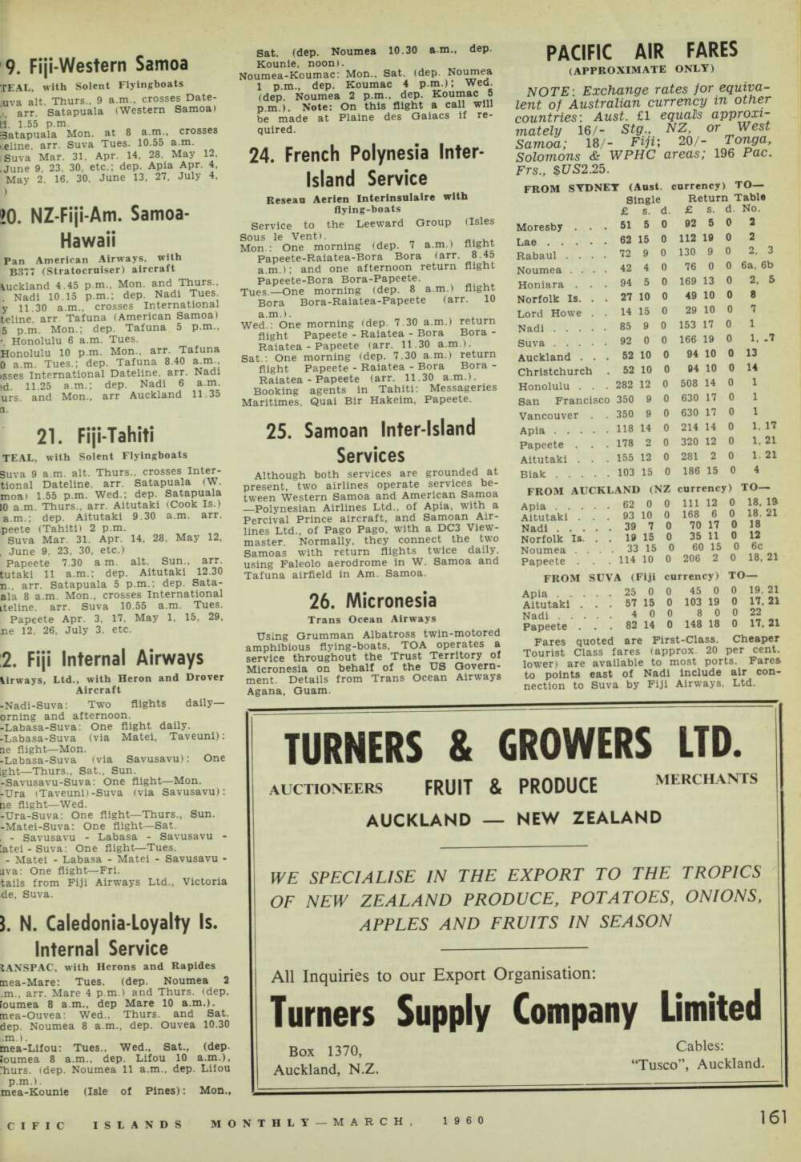 163
163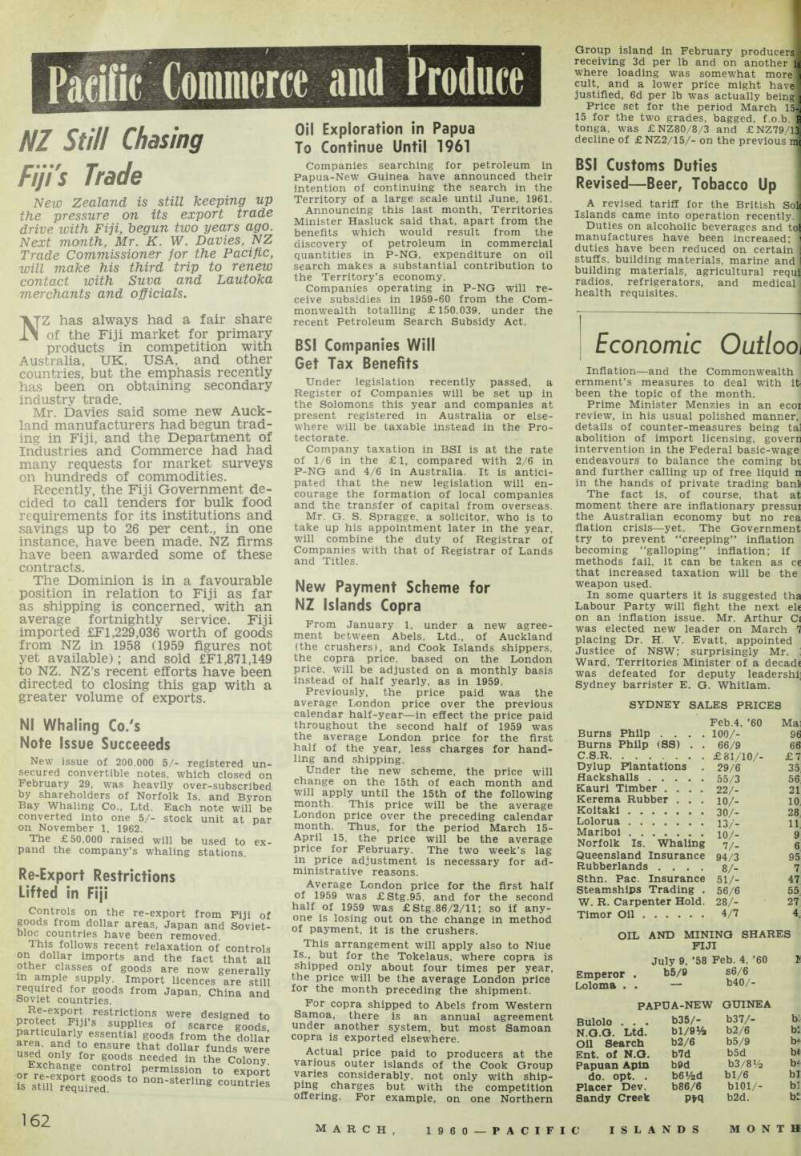 164
164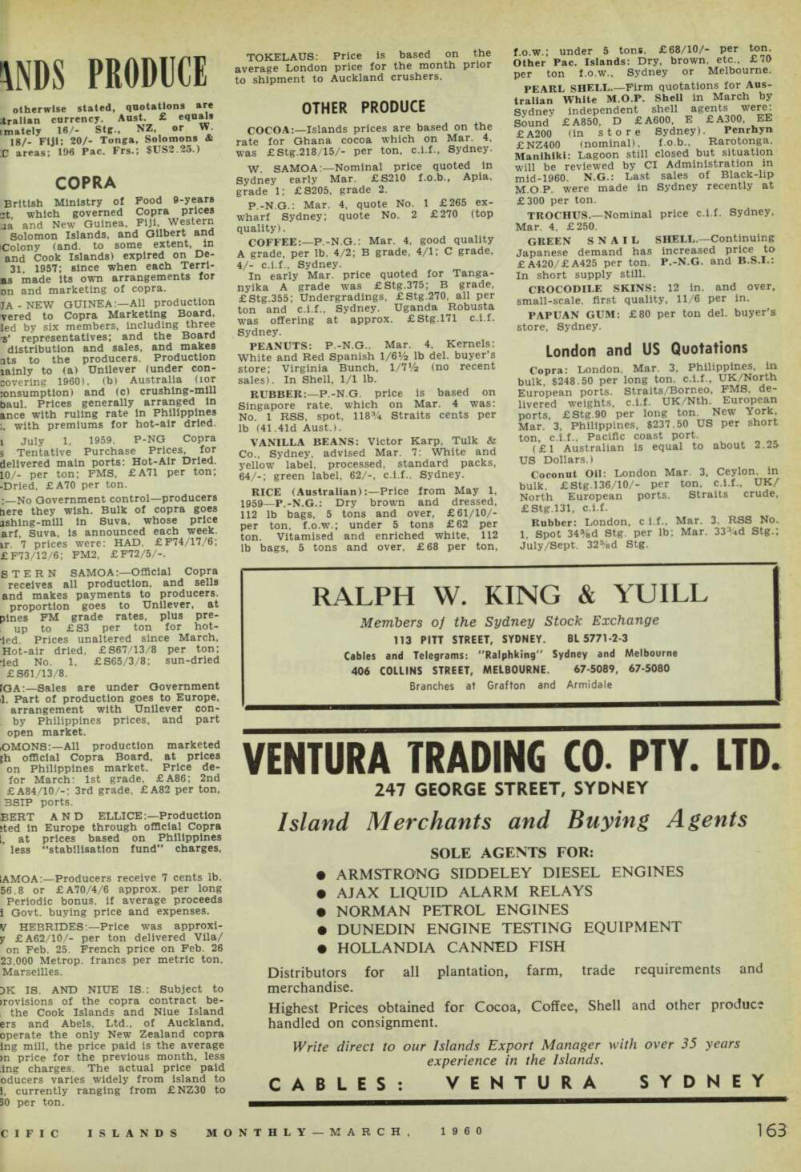 165
165 166
166 167
167 168
168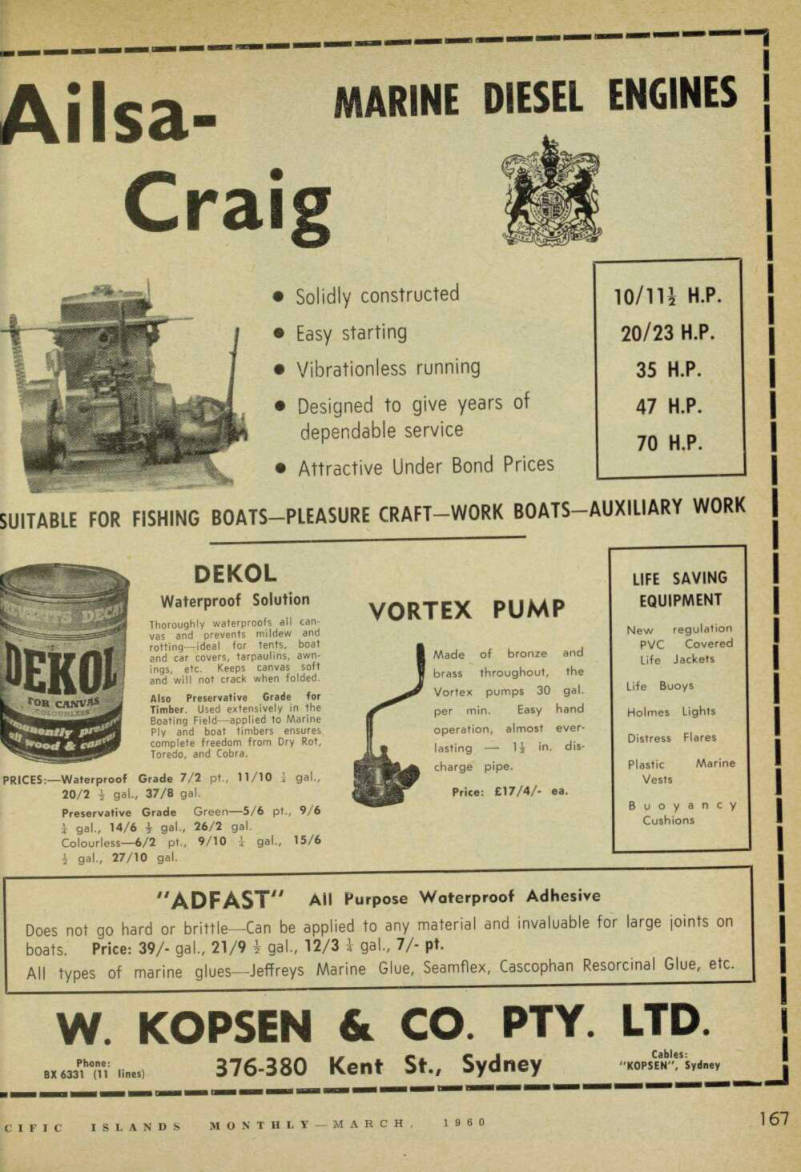 169
169 170
170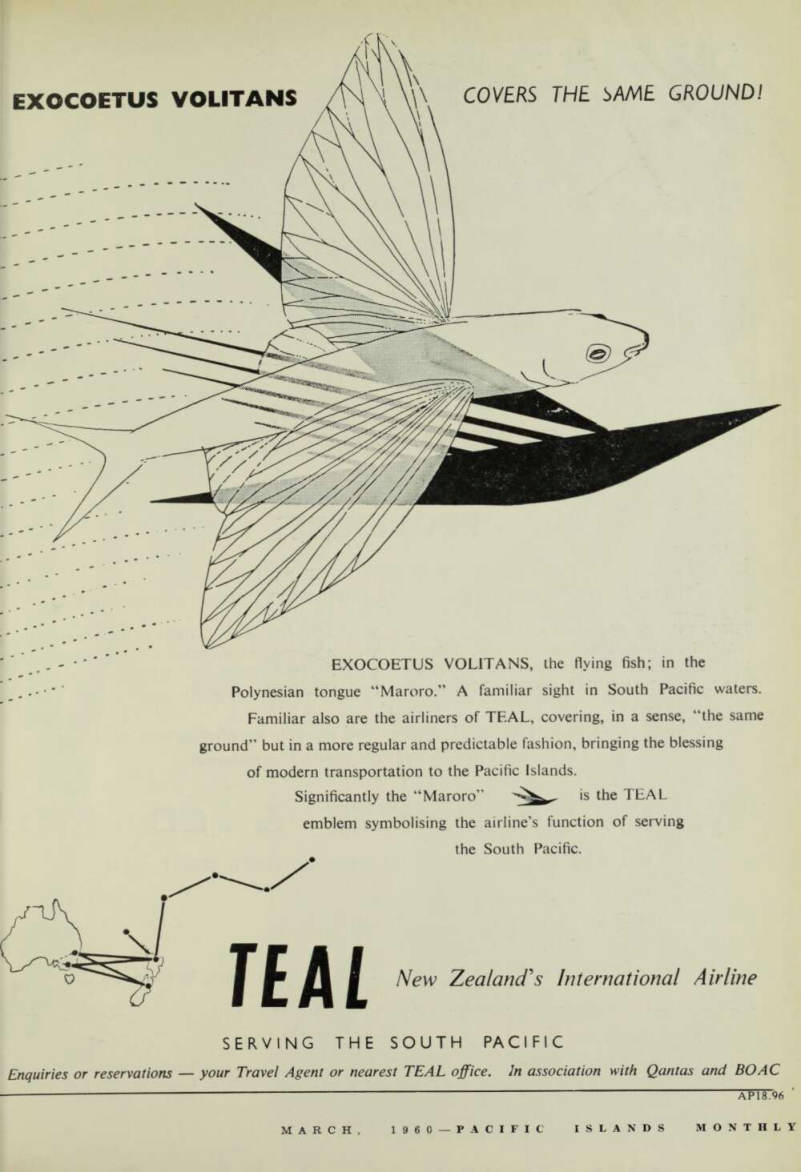 171
171 172
172