Pacific
Islands
Monthly
NOPlm 1958
Vol. XXIX. No. 4.
■Established 1930
wL. .u., o ywney , trantftiismon by post as a nPWspap&iSj
Samoan Sundays are quiet. Sunday is
Church-going time—and
sleeping time. And the faraway look in the eyes of this young West Samoan father and his child is there because they had only just awakened from a Sun day siesta when a PIM photographer visited their fale, near Apia.
But they made an at tractive family picture.
Advertisements & other items, pp. 2-6 (2 items)
Cific Islands Mo\T H I V
ONTHLY— .NOVEMBER, 1958
East
HTCST
THIS WAY'S BEST!
8 weekly around the world
Circle the globe with the sun or travel round the other way—B.O.A.C.-OANTAS is the best way to go.
Offering a choice of eight weekly flights the 8.0.A.C.-QANTAS round-the-world route via Australia enables you to fly directly between San Francisco and New York without changing airlines. Experienced travellers will appreciate what it means in terms of convenience, comfort, cuisine and service to fly all the way by intercontinental airliners operating to international standards.
See your 8.0.A.C.-OANTAS travel agent.
with HAND
THE WORLD-WIDE AIRLINE
J82.84.58A
Your Guarantee of Satisfaction Backed by Established
Depots Throughout the Islands
f mm '
LANTERNS
SOLUS STOVES
KEROMAN LAMPS
Designed to withstand heavy usage and exposure to all weathers these Kerosene lanterns have built in automatic jet cleaning needles, safety air-seals on pumps and heat and shock proof globes. They cannot spill and burn safely in any position. Two sizes.
Coleman Solus Kerosene stoves are sturdily constructed with heavy brass pressure-tested tanks. The burners are of high grade brass containing a high copper content for good heat conductivity. All parts are interchangeable with similar stoves. Available in Silent and Roarer types.
Table lamps of lasting quality finished in polished brass. Burns kerosene and gives a brilliant yet pleasant incandescent white light.
Has centre draught feature with heat resisting glass chimney. No pumping or preheating is necessary.
Height 24 in. Diameter of base 7i ins. Weight 3 lbs.
Gilkpitt fa Smm
ROBERT GILLESPIE Pty. Ltd. Cables “Robergill”
Associate Companies
ROBERT GILLESPIE (N.G.) LTD. ROBERT GILLESPIE (FIJI) LTD.
Lae, Madang, Rabaul, Port Moresby Victoria Parade, Suva
CREAK)
Now airfreighted by QANTAS to
the PACIFIC
Write to-day for particulars of this new air service. McNiven's famous Ice Cream forwarded to you in special airfreight containers including disposable cans for bulk Ice Cream.
G ROCKETS ON A STICK • BRICKS • FRESH FRUIT SLICES • COMETS ON A STICK
• BUCKETS • BOOMERS (ICE BLOCKS)
M S NIVIMS "BEAUTY CONES AND WAFERS"
The largest selling Ice Cream cones in the Southern Hemisphere
MmiVENS ,RAINBOW ORPUJM DRINKING
Quality Drinking straws in gay, attractive colours.
Thoroughly tested to withstand a lengthy immersion in hot water, fruit juices or aerated drinks.
Ask your Store for supplies or write to your agent
McNIVEN BROS. LTD.
47-51 Salisbury Road, Camperdown, Sydney, Australia Telephone LA 3781-8
II i j ■M
MADE IN AUSTRALIA
AA-120 4 x 4—114 in. and 126 in. w.b
Introducing the NEW INTERNATIONAL
One ton, 4 wheel-drive truck—
This is a NEW truck from headlights to tail-light—built for comfort, safety, economy and a long life of trouble-free work. A look at the picture will show you why International is justly proud of this stylish new truck.
Study the modern twin headlights, wide, curved windscreen, new air vent and dual self-parking electric wipers. Inside the cab is an ash tray, key controlled starter switch, oil fuel generator and heat gauges, pendant-type pedals,- 4-spoke safety steering wheel and deluxe trim.
There is a powerful NEW 6 cylinder tilt valve engine with "full-flow" oil filter and increased capacity generator, a strengthened chassis frame, new front cross member, new cab mountings. This is a really NEW International 4x4 with 1959 features and styling.
INTERNATIONAL
HARVESTER
International Harvester Company of Australia Pty. Ltd. District Sales Offices in Capital Cities of Australia.
Works: Dandenong, Geelong and Port Melbourne, Victoria.
DISTRIBUTORS
PAPUA AND NEW GUINEA:
Steamships Trading Company Limited, Port Moresby and Samarai.
Dealers: New Guinea Goldfields Ltd., Wau and Lae. Rabaul Trading Co. Ltd., Rabaul.
DUTCH NEW GUINEA; H. Englebert n.v. Hollandia.
SOLOMON ISLANDS: Mr. K. H. Dalyrymple Hay, Honiara.
NEW CALEDONIA; Agence Automobile, Noumea.
TAHITI: Hintze & Company, Papeete.
NEW HEBRIDES: Kerr Bros. Limited, Sydney.
FIJI: Niranjan's Service Station, Suva.
P1M.128.32
A/eut Qwtea Auitnxiiia JlUve
Passenger and Cargo Liners.
M.S. "SINKIANG"
M.S, "SHANSI"
M.S. "SOOCHOW'
S.S. "PAKHOI"
Regular services between Australia, Papua-New Guinea and Solomon Islands.
JAPAN, SHANGHAI, HONGKONG TO NEW GUINEA AND FIJI Regular Service with the Motorships: "CHENGTU" "CHUNKING" "CHEFOO"
Japan, Shanghai, Hongkong. Borneo, Madang, Kavieng, Rabaul, Lae, Samarai, Port Moresby, New er r Fi ih Sydney, Melbourne, Adelaide. (Returning from Australia to Japan direct). details please apply to agents or refer to the weekly advertisements the "South Pacific Post".
THE CHINA NAVIGATION CO. LTD.
(A British Company incorporated within the United Kingdom)
AGENTS:
PAPUA: Steamships Trading Co. Ltd Port u c S,eamShipS "‘ " y ' samarai ' CableS: BRISBANE: Wills, Gilchrist & Sanderson Pty Ltd 400 Queen Street NEW GUINEA: Colyer Watson (NGi Ltd . .. „ Cab,e: " Wi| 9 ilsand "- Ltd " 400 Queen Street ' Cable: "Co yeram". d- ' Lae ' Madang, Rabaul. melboiipwi: .
New Guinea Co. Ltd., Kavieng. Cable, "Camohe” &SE! ‘ iPPi " 9) P,y ' L,d ' Wi,liam S,ree >- FIJI: Morris Hedstrom Ltd., Suva Cable- "n o ..tv - Hebtidea, VMa.
NEW -Ba“nde“ N ' A: Et^'lsse m ents Balianda. Noumea. Cable, ‘ JaPan) L ’ d ' T ° ky °- Vdk ° hama ' osaka ’
EASTERN MANAGERS: Butterfield & Swire, Hongkong. Cable: "Swire”.
SWIRE & YUILL PTY. LTD
6 BRIDGE STREET, SYDNEY.
• CABLES: "SWIRESHIP”. BU 1712.
Judge A. Morrow, Chief Judge of Eastern Samoa, paid
Eastern Samoa, paid a visit to Pukapuka, Northern Cook Islands, early October, travelling aboard the USS Fort Defiance, dock landing ship which was acting as mother ship to the big American eclipse expedition there. Judge Morrow was able to speak via amateur radio stations at Pukapuka and Raro tonga, to Administration officials in Rarotonga. * * * Superintendent W. A. Dix, who has served 32 years in the Police Force of New Guinea and Papua- New Guinea, received the Long Service and Distinguished Conduct Medal from the hands of Police Commissioner Normoyle in Port Moresby at end of October. Mr.
Dix was stationed in Wau before the war when that Morobe District town was enjoying gold-boom days.
The Tonga Medical Department selected AMP Sateki Tupou to at tend the South Pacific Commission conference on tuberculosis being held this month, and also as Tonga’s representative to attend a refresher course on modern methods of TB diagnosis and treat ment to be held under the auspices of the World Health Organisation at Suva next February.
Mr. Donald S. Reid, a former Official Secretary to the Cook Islands Administration—his wife was formerly Miss Rose Estall, of Rarotonga —has been appointed Resident Commissioner of the Chatham Islands. Mr. Reid is at present a research officer at Island Terri tories Department, Wellington, His last duty in the tropical territories was as liaison officer between the New Zealand Government and the United States and United Kingdom military units stationed at Penrhyn Atoll, Northern Cooks, during the first British Pacific nuclear bomb tests in the Christmas Island area.
To advise the Tonga Government on the establishment of a central and commercial banking system, the New Zealand Government made available Mr. V. D. Stace, economist of the Reserve Bank of New Zea land, who is well known in the South Pacific for his services as an adviser to various governments on economic problems. Mr. Stace was in Tonga in October.
Mr. T. J. Dunleavy, who has been editor of the Western Samoa weekly newspaper, Samoa Bulletin, for a number of years, relinquished the post in November to become branch manager of a Wellington, NZ firm of printers’ suppliers. * * * The WHO mosquito eradication project in the Tokelau Is., de scribed last month, has completed its first stage and Dr. Marshall Laird and Dr. L. H. Colless, who were handling the project, left the islands in mid-October. Results of experiments will not be known until early 1960, when the researchers will return. Blood-smears of the popula tion of the three atolls were taken to check on the incidence of filariasis.
Duke P. Kahanamoku. one-time s wo r 1 d champion swimmer and b Olympic medalist of 1912 (he is a credited with introducing surf board h riding in NSW), and now SheriffB
Married in Port Moresby recently, Mr. D. J.
Dunston and Miss A. Baker. The ceremony took place at Taurama Chapel. —Papuan Prints.
Another Port Moresby wedding—this one at [?] St. John's Church of England. Happy couple [?] are Mr. Noel Morris and Miss Susan Winckle —Papuan Prints.
of the City and County of Honolulu, was visiting Australia and New Zealand in October. “The Duke” — it’s his real name, not a title caused a good deal of interest in Auckland streets as he made his way about the sport-fishing stores in his broad-brimmed Islands hat. He was on his way south to try his hand at fiy-fishing for trout at Taupo. He has been Sheriff of Honolulu for the past 24 years. * * * Mr. P. J. Twomey, secretary of the NZ Lepers’ Trust Board, has been achieving some notoriety in New Zealand as the country’s only recent case of malaria, which is a notifiable disease there. He was having his second bout in October following a visit of Melanesia last summer.
Crown Prince Tungi, Premier of Tonga, arrived in Auckland on Oc tober 29, and will remain in New Zealand until November 20. His brother, Prince Tu’ipelahake, to gether with his wife and family, is expected in Auckland on November 23 and will remain for some months.
Visitors to a social gathering of the Polynesian Association in Sydney in October—Ratu P. V.
Daunibau, with Adi Vuinadi. —Tele-Photos.
The president of the CWA, Mrs. C. L. Anthony, welcomes the Administrator and guests at the opening of the Port Moresby CWA hostel in October. See page 147. —Papuan Prints.
A popular appointment has be* that of Dr. Hans Thieme as Medic Superintendent .of Apia Goverr ment Hospital. Dr. Thieme is member of a well-known Wester Samoa family of German descen He spent many years in German and returned to Samoa after th last war. He has given much sei vice to the community since his re turn. * * * Captain Bryan Monkton, one c the partners in Trans Oceanic Air ways, which operated from Australi to the Islands after the war, an who later formed South Pacific Air lines, whose plans were upset whe: Britain took Christmas Island ove as a nuclear testing area, was baci in Australia in early October. H and another pilot had delivered i small twin-engined Beechcraft plan from the US for an Australian firm They flew via Honolulu, Cantoi Island, Nadi and Noumea to Aus tralia—quite an undertaking for ai aircraft of this size.
Mr. G. N. Gordon, newly appointedt neadmaster of Samoa College,; western Samoa, has arrived in Apiai to take up his new duties. He wasa formerly headmaster of a NZ Highr 0( C anc * succeeds Mr. Donaldsonr who has returned to New Zealand..; * ♦ » t r ‘ ® ris tow has succeeded Mr..
B - M <r c I al g as District Commis sioner of Ocean Island, GEIC.
Mr. and Mrs. Bristow travelled toe October lSland from Tarawa early \
Cutting the cake after their marriage at the Catholic Church, Port Moresby, are Mr. and Mrs. R. Leeds. She was Miss E. Baker. —Papuan Prints.
Miss Edith Maxfield, recently of Atauloma, Western Samoa, has taken up an appointment as Head Mistress of the LMS Girls’ School at Rongorongo, Beru, Gilbert Is.
Mr. G. T. Bolt, who has recently retired as chairman of the New Zealand Public Service Commission, arrived in Nukualofa in October to take up an appointment as Salaries Commissioner. The last investiga tion into public service salaries was carried out four years ago by Sir Richard Ramage, and the Tonga Government now considers that a further review is necessary.
Sir John Gutch, who had been attending the 18th Session of the South Pacific Commission, returned to Honiara in October aboard the new Melanesian Mission vessel Southern Cross. With him were Lady Gutch, who was returning from leave in England and who joined Sir John in Noumea; Mr. D. J. Derx, of the Colonial Office, and Mr. A. M.
Wilkie, the Western Pacific High Commission’s financial secretary.
Among the Dutch delegates to the Canberra conference on NNG and P-NG affairs in October was Dr. M. W. F. Schregardus, NNG Director of Works and Energy.
In Sydney recently on holidays from the Islands, Mrs. Telesia Bowman (who comes from Samoa), photographed with Miss Ann Wilder, of Suva, at the Polynesian Association. —Tele-Photos.
Mr. V. J. Andersen, has been appointed chairman of the BSI Copra Board. He replaces Mr. C. H.
Allan, who has been appointed Assistant Resident Commissioner in the New Hebrides.
Managing director of Buka Planta tion and Trading Co., Mr. Drummond Thomson, recently made one of his periodical visits to Rabaul, en route to Bougainville for a short stay be fore returning to his Sydney home by the Bulolo in November. * * * Mr. and Mrs. Keith Cummings, former Rabaul residents now living in Melbourne, combined business with pleasure in their October visit to Rabaul. Mr. Cummings is owner of Town Taxis Ltd.
The Australian Minister for Terri tories has announced the appoint ment of Mr. E. A. Stanford as a member of the Papua-New Guinea Copra Marketing Board; and that of Mr. F. R. Wilson as his deputy.
No explanation is given as to why a deputy has been appointed— but presumably it is because Mr.
Stanford, a well-known New Ireland planter, has some difficulty in at tending all CMB meetings. Mr.
Wilson, a Kokopo planter, is also well known.
The appointments are to replace
Modelling at a Port Moresby fashion show, popular resident Mrs. A. E. Stephens, wife of the editor of the "South Pacific Post". —Papuan Prints.
Mr. Don Barrett, who now has a special job in the Pacific Islands Regiment. Mr. Barrett was one of the representatives of New Guinea planters (the other being Mr. H. V.
Quinton).
Mi* H. Coppock, a senior Com monwealth education officer, is re lieving as acting Director of Educa tion in Nauru for nine months. * * ♦ A Fiji girl. Miss Marjorie Branster, earned her doctor of philosophy degree at Melbourne Uni versity recently—but she had gone to Canada, and left no forwarding address, before the University could tell her about it. They wrote to her parents in Fiji with the good news.
Mr. Samuel Kruger has had plenty of Pacific experience—including a wartime stint in New Guinea and Australia. These days he's engineer in charge at Pago Radio, American Samoa. —Pan American Prints.
On a visit to the Far East and Sydney recently —Mr. and Mrs. L. J. Brady, of Aionora Planta tion, Kainantu, New Guinea.
Mr. Francis Talasasa, of Honiara, recently left Honiara with his wife to spend 12 months at Cambridge University. ** * * A tree expert from Melbourne.
Mr. R. H. Patterson, was visiting P-NG in October, advising on the lay-out of hospital grounds. * * * Mr. and Mrs. W. Simmonds, of the Seventh Day Adventist Mission in Fiji, returned to Suva at the; end of October after a six months world tour —including a motor tour of the US and Canada. London shops, in Mrs. Simmonds’ view, put Paris shops “in the background”.
“Local boy makes good” was thea theme of a Cowra (NSW) news paper story in October, giving newsa that Dr, R. F. Scragg had beenn appointed Director of Public Healthd in P-NG. Dr. Scragg, who is NZS born, went to Australia as a boyy and attended primary schools inn the Carcoar-Cowra district of NSW His father was, a few years ago„c the Pastor of the Cowra Seventhri Day Adventist Church. * * * Mr. E. S. Coles, general manager* of the Norfolk Island Whalings Company, flew to NZ in October* after the company completed itsaj 1958 season at Norfolk. He an-i nounced that Norfolk people had re— <
Assistant District Officer Alec Zweck, of Lae, and his bride, the former Mary Fitzgerald,, after their marriage in the Catholic Church Lae, in October. Photo: 0. Brabant.
ceived £16,000 in wages and bonuses during the season, in which 120 whales had been caught in 74 days.
Mr. John Dowling, of Manly, Syd ney, a former resident of Fiji, where he was a director of Morris Hedstrom Ltd. —has been seriously ill. Latest reports said he was mak ing satisfactory progress. * * * Mr. Reid Cowell, formerly British Assistant Resident Commissioner in the New Hebrides, has been appointed United Kingdom Second Commissioner on the South Pacific Comission, succeeding Mr. H. H.
Vaskess, who is retiring from the post, * * * Publisher of the Pacific Islands Monthly, Mr. R. W. Robson, in November was visiting Fiji and Polynesia.
Peter Chan, 15, of Rabaul, was referred to by Brisbane newspapers as a “running machine” after he had scooped the pool at a combined schools athletics meeting, in Bris bane, winning the under 16 years 220 yds and 100 yds, the open and under 16 long jumps, leading his team to victory in the relay and clipping a second off the 440 yds record. Said Peter, “I don’t like athletics. I ilke baseball!”
At a Polynesian Association meeting in Sydney, Miss Felicia Emberson, of Suva, with another Suva personality, Mr. Bill Sorley. —Tele-Photos.
Smiling couple are Mr. K. Gardner and his bride, the former. Miss B. Hounslow, after their marriage at St. Johns Church of England, Port Moresby, recently. —Papuan Prints.
Advertisements & other items, pp. 7-17 (1 item)
ippyatiis
DAVISON PAINTS AND FINISHES
used on
UNILEVER HOUSE, Sydney
e m « r m m I % mm mm r rr
ippyatiis
For the ultra modern Unilever House, Circular Quay, Sydney, Davison Paints were approved (architects Turner & Stephenson) where only the highest quality materials were used throughout.
Davison Paints are proud of this fact. Davison manufacture a full range of paints, giving every satisfaction under severe
tropical conditions.
So see that Davison Paints and Finishes are specified for your
new building.
DAVISON PAINTS LIMITED
Box 24, P. 0., AUBURN, N.S.W.
Obtainable from:— A. H. Bunting Ltd., SAMARAI. Madang Slipways Ltd., MADANG.
Buntings, LAE, GOROKA, POPONDETTA. K. H. Dalrymple Hay, HONIARA, 8.8.1.
Norfolk Trading Coy., NORFOLK IS.
Sole Agents for Territories of Papua, New Guinea, New Britain: LES CLARK & SON PTY. LTD., 27-29 King Street, Sydney
PARKE-DAVIS
(AMOQUIN „. lm
Effective Single Dose Treatment for
MALARIA
SPECIALLY FLAVOURED TABLETS AVAILABLE FOR
CHILDREN
ZIT™ DOSE DOSE-
For Adults: 3 tablets to be taken as a single dose once k i weekJy. ° r 1 tablet times For Children:
TABLET'^no 0116 INFANT FORMULA
7wl?e E wee£!T Weeklr ° r tablets ™ fa nt formula d^TT. T - S once weekly or one infant formula tablet twice weekly T For Adults: 3 tablets taken as a single dose second dose of 3 tablets may 2e |i, in from 24-72 hours if fever has i subsided completely 3 For Children:
TARTpTI* 0ne f !NFANT PORMU
i ABLET as a single dose. two i nfa nt FORMU i ablets as a single dose. tablets as a single dose
“°”" nw: ‘“X'raa‘" —if .<««
Obtainable b- a. .1
PARKE, DAVIS b CO., LTD., SYDNE
THE LEGEND OF "DEGEI
ir In Fijian legend "Degei" was an ancestral god—a god who gave protection from the hazards of the sea.
THIS IS THE MODERN “DEGEI”
8 J A twin screw motor vessel owned by the Government
of Fiji and now up
FOR SALE BY TENDER
204.92 Tons Gross 83.41 Tons Net Length Overall 92 ft.
Length B.P. 84 ft. Beam 23 ft. Draught 10 ft.
CONSTRUCTION: Timber planking on steel frames, bronze fastenings and sheathed with Muntz Metal ENGINES: Twin, handed, direct reversing, cold starting, four cylinder, two cycle, Gardner type 4J6 diesels of 96 B.H.P. each.
ELECTRICITY: 110 Volt D.C., 6 Kw„ auxiliary generator and 4 Kw. shaft driven generator.
CARGO: Hold 27 ft. x 20 ft. x 8 ft. approximately with hatch 22 ft. 6 in. x 8 ft. 6 in. and diesel engined cargo winch and derrick for 3 ton S.W.L. Diesel driven anchor windlass.
ACCOMMODATION: Master and four deck and engineer officers, two saloon passengers and 11 crew members.
FUEL: Bunker capacity 2,000 gallons. FRESH WATER; Capacity 1,700 gallons.
DEGEI is fitted out generally to the requirements of the Fiji Marine Board and has a MARINE BOARD CERTIFICATE issued in April, 1958, following full survey. Quantity of engine spares is included.
DEGEI is at Suva. She can be inspected by arrangement with the Mechanical Engineer.
Condition of Sale "As is, where is".
Sealed tenders are invited for the above vessel and will be received up to noon on Saturday, December 13, 1958.
The successful tenderer will be required to make his own arrangements for delivery.
Tender price offered would be considered to include any customs duty normally payable.
THE HIGHEST OR ANY TENDER WILL NOT NECESSARILY BE ACCEPTED.
Tenders should be marked "Tender for Vessel DEGEI" and 'should be addressed to the Secretary, Tender Committee, The Treasury, P.O. Box 2,
Government Buildings, Suva, Fiji
C. J. ELLIOTT, SECRETARY, TENDER COMMITTEE.
c
C *.AZ
o**
lanox
only paint with
silicone “101”
Tanox Super Gloss cleans itself every time it rains ecause it contains Silicone "7 01" wh'ch gi ves it the smoothest, glossiest surtax dust and dirt can't cling. Tanox keeps the weather out, too, because Silicone To , ! ° mQZin9 Water And nox lead-free colours retain their freshness and strength for years. resnness APPr ° aCk “ di ™ o our es for the Pacific Islands.
DEMKA AGENCIES Pty. Limited
2-12 Co rnngton Street, Sydney, N.S.W.
1 rmc« CA
pov
noo*
s7^o^ t\BW> UHvj
iccaninNY
PREPARED WAX
FLOOR POLISH
FOR LINO. FLOORS. FURNITURE. LEATHER E MOTOR CARS "Twice the shine in half the time"
Piccaninny imparts a glow of youth and beauty to floor surfaces that might otherwise soon begin to show their age. There is nothing more perfect for linoleum or natural wood floors.
Piccaninny's tough wax skin protects surfaces from tropical moisture, wear and tear —saves you hours of work and gives Twice the Shine in Half the Time!
ASK FOR
PICCANINNY
BROWN STAIN FLOOR POLISH
For Jarrah, Cedar, Stained Floors & Woodwork Piccaninny Polishes are manufactured by
PICCANINNY MANUFACTURING CO.
254 Pittwofer Road, Manly, N.S.W., Australia
\JV % ?S: v I'ln
he Best Protection
—for YOUR Savings
The Commonwealth Savings Bank offers you the best protection for your savings right throughout the Islands.
No matter where you go, you will find an office of the Bank.
There are branches at the following places - Port Moresby Rabaul Bulolo Goroka Kavieng Lae Honiara Wewak - Norfolk Island New d Gu!nea /a gen?ieS Op t rate thrOLl g |lout Papuaothers at F a ;nlnt g ?T 'V Solomon Elands, and XT F ng , lsland > Norfolk Island, Lord Howe sland Nauru, and at Vila and Santo (New Hebrides) laWngs Bank aVin t g he b h nk t ne tf dS ’ USe the Commonwealth
0“55 SfeS *»»'««■»*■
COMMONWEALTH
BANK
Guaranteed by the Commonwealth Government or Australia 5879.84
21 chunky squares
‘ r A
~3 rich satisfying flavour
so smooth .. . creamy lk
fit
OA' 58 These are just a few of the many reasons why you’ll like Cadbury’s Dairy Milk Chocolate. Take a deep bite of Cadbury’s Dairy Milk Chocolate. Mmm . . . it’s so smooth ... so creamy ... so satisfying. There’s wonderful eating enjoyment in each of the 21 thick, chunky squares. Nourishing, too; there’s a glass and a half of pure, fresh, full-cream milk in every i lb. Buy a block today.
Cadbury’s Dairy Milk Chocolate
>2B/HP/f
a
Like
having
the
whole
store
desk!
your
& S 2 (S
PHILIPS
"Philiphone"
Gives DIRECT communication
between departments
PHILIPS
Don't waste valuable time waning for your inter-store call to get through that switchboard bottleneck, locate your staff the communication £r? °. r 25 departments ' Speech reproduction is clear and wrthout distortion. Volume can be adjusted to receive caffs from distances of 50 feet and in noisy locations.
FEATURES:
• Philiphone instollotion con be enlarged as required. • A confidential earphone attachment is available if required. • Lines in any installation may be made absolutely confidential. Conversations cannot be heard by other stations switching in. • Receiving and transmitting volumes ore independently adjustable for quiet or noisy conditions.
When you leave your department you can switch your line through to take calls at any other station.
There is technically no limit to distance between stations. Philiph ° ne carries the voice clearly, without distortion.
" Pre « to talk" switch is
PHILIPS
Philiphone
Philips Electrical Industries Pty. U 69 Clarence Street, Sydney °V r , * lan " *®presentat Demka Agencies Pty. ltd., Carrington Street, Sydney. 17 P. 400.58
\*JLS
I
Hotel feci)
«t UK Offers fine food, fine services and every modern facility to make your holiday a dream of tropic ease.
There is a magnificent swimming pool for your FREE use and pleasure . h\ safe, too —fully filtered for your pro tection. lb Make your reservations
NOW
Manageress:
MRS. DOROTHY M. STEWART
Tel.: Lae 2321 Cables: “MORTEL”, Lae
r
PIMMS
4*
CUP
t Ho
BASE
G\N
THE
No 4
CUB
WITH
thb
HUM
°asb V «» Available:— Hotels, Clubs & Stores
Rust-proofing saves Money!
A simple application of colourful Berger Roofmaster paint protects your roof against the viciousness of moisture laden air. In bright tropical colours, Roofmaster decorates as well as protects*
jWmsuster|
K - . BOM j|
COLOUR*
Made to be walked on!
Yes anywhere that foot traffic is the enemy of painted surfaces, Berger Pave-ol VrS* e Cl ?u aMen *? e -u Hav f 8 think about y° ur P° rch a " d ve-andah floors washahl. T K . Pa • M avbe th6y COuld do with a freshening up. Pave-ol is washable m hot or cold water, resistant to oils, benzine or kerosene. . paving paint to Ot Walk’d 0 « w
For the brightest “gleam” ever!
•• u by tropica” humidity 'and s ioSs d t"‘wa'e like , baked •nam.l. Unaffected Kem-cote is .deal for every interior surface anH f Steai ] l , , and , cooking vapours n 3 lovely range of colours. 6 Bnd * or outside furniture and toys t ! \ 111
NEW!
I *
FULL GLOSS
to-
OBTAINABLE from island stores everywhere
Distributed in AUSTRALIA, NEW ZEALAND and the following PACIFIC ISLANDS: Australian Territories: Papua. Norfolk Island. Cocos Island.
Aust. Trust Territories: New Guinea.
Nauru.
British Crown Colonies: Fiji. Gilbert and Ellice.
British Protectorate: Solomon Islands.
British Protected State: Tonga.
N.Z. Territories: Cook Islands. Niue.
N.Z. Trust Territory:. Western Samoa.
French Territories: New Caledonia.
French Oceania.
Anglo • French Condominium: New Hebrides.
U.S. Territories: Eastern Samoa. Hawaii.
U S. Trust Territory: Micronesia (Caroline, Marshall and Mariana).
Dutch Territory: West New Guinea.
Publisher:
R. W. ROBSON.
Editors;
JUDY TUDOR STUART INDER
Manager:
SELWYN HUGHES.
TELEPHONES: General Business, Editorial, Advertising, Subscriptions:
MA 9197-8, MA 7101, MA 4369,
MAI 395.
G.P.O. BOX 3408, SYDNEY.
Registered Address for Telegrams, Radiograms, and Cables: "Pacpub", Sydney.
SUBSCRIPTION RATES;
In Australia and N.Z. and Australian, N.Z., and British Pacific Islands . . £1 4 0 New Caledonia, Tahiti . . . £1 7 o Elsewhere $3.50 U.S. or . £1 10 0
BRANCH OFFICE, PAPUA-
NEW GUINEA
Pacific Publications (New Guinea) Ltd., Theatre Building, Fourth St., LAE, New Guinea. Tel.: Lae 2577.
Miss Pat Robertson, Manager.
BRANCH OFFICE IN FIJI:
Fiji Times Building, Gordon St., Suva.
Tel.: 4043.
REPRESENTATIVE IN N.Z.:
J. D. Whitcombe, P.O. Box 5179, Auckland. Tel.: 42.384.
REPRESENTATIVE IN U.K.:
J. T. Wallis, 13 Rood Lane, London, E.C.3. Tel.: Mincing Lane 8633.
MELBOURNE OFFICE: Newspaper House, 247 Collins St., Melbourne, Victoria.
Tel.; 63.7053.
AGENTS: All main trading firms and stores in the Pacific Islands.
FIJI TIMES AGENCY IN AUSTRALIA
Note: Pacific Pub'ications Pty. Ltd Technipress House, 29 Alberta St Sydney (Telephone MA 9197-8), is the Australian Agent for THE FIJI TIMES, of Suva, Fiji.
Contents:
PEOPLE: Personal Para graphs of Islands’ Interest 5 NNG Wants a “Consultative Union” with P-NG 17 Papua Enjoys Oil Fever As Puri Well Strikes Crude Oil And Water 18 Mystery of the Yacht Annette 18 Explosions Liven Up Tahiti: Many Arrested 19 HOME BASE; Sydneysider Tells What Made News In The Hub Of The Pacific 20 Bananas Are News In Fiij, Samoa and Tonga 21 Report On Pacific Shipping Slump 22 £3,000 Smile For a New Guinean 22 Fiji’s New Governor Is Sworn- In 23 Commission Of Inquiry For Fiji: Chairman Appointed 23
Commentary: The
Publisher And The Editors Look At Pacific And World Affairs 25 Pigs Root Up An Early Bronze In NNG 26 Editors’ Mailbag 27 Rev. and Mrs. Voyce Leave Bougainville 29 P-NG Association Now Has Its “Book”’ 29 Cooks Islands’ Election De tails 31
Territories Talk
TALK: With Tolala .. .. 33 The New Guinea Coe Family 33 A Writer Says: “It’s Time The Publishers Rediscovered Louis Becke” 47 New Plan Cuts Out Papuan Alumina Factory Scheme 45 A New Church Replaces A Shed Of Scrap. ... 47
Fiji Talanoa, With
Vakatawa ... 49
Official Angle On NG’s Education Problems .. .. 52 A Tremendous Task Ahead of NNG 55 Gilbertese In A New Pacific Migration: Story And Pictures 57 A Summary Of P-NG’s New Land Scheme .. .. .. .. 65 Rabaul: The Dog That’s Wagged By The Tail .. 65 October Was Eclipse Time In The Cooks 67 There Are No Teeth In P-NG Labour Laws 71 New Type Of Quarters In Honiara 71 Marriage Links Loyalty Islands Chiefs 73 Some Old NG History Need ing Attention 73 Trees Are Returning To NG Highlands .. .. .. *. 75 Getting Around By Sea Jg The Cooks V. 77 NG’s Head Tax Continu|s, Despite Condemnation %. 81 NG Legco Is So Futile, “They Might As Well Stay Home” 83
Magazine Section:
Tropicalities, 85; Crossquiz, 86; Telephone Is A Delight To The Tongans, 87; Do You Remember? 87; The Day The Ambrym Hospital Blew Up, 88; NG Escape Story, 90; Brett Hilder Profile, 91: Book Reviews 92 The Month’s News Of Pacific Shipping And Cruising Yachts 105
Pacific Report: Round
up Of The Month’s News And Pictures (Index, p. 17) 121
Obituaries: Mr. R. R.
Haviland; Mr. Norman Lee; Mr. Percy Edmunds; Miss Maud Forman; Mrs. Lilyan Harper; Captain R. R. Kane 159 Sports Review 160 Shipping And Airways Time tables .. .. 163 Commerce And Produce .. 173
Advertisements & other items, pp. 17-18 (3 items)
A Product of Pacific Publications Pty. Ltd., Technipress
House, 29 Alberta Street, Sydney. (29 Alberta Street is 10 yards from the intersection of Goulburn Street and Wentworth Avenue.)
16
OVKMBER, HSC - PACIFIC ISLANDS MONTHLIf
Iw Xjks
BRITISH ALUMINIUM
MARINE ALLOYS
■ HE m m -1 sa^ * w 'I i *s m mmm & i m :■/ . m ■m ■■; ■■s 1 ■ . 3 ; ■ :::■ 'X *BR*& & ';'* N •***"' w'rX M \ .. Jl P< «_r- .
•• ;fr^ v a^-k-SS
Iw XJKS
saHa
This fast 15-footer by Albatross Marine is built of British Aluminium sheet and extruded section, combining strength with durability. Deck fittings and trim are Super Puiity aluminium, “Brytal” treated and anodised for lasting brightness in salt water.
Powered by a 38 b.h.p. motor, this light hull reaches 32 m.p.h. and can carry 6 passengers. 0
The BRITISH ALUMINIUM Co Ltd
NORFOLK HOUSE ST JAMES'S SQUARE LONDON ENGLANI
OFFICE OF THE PACIFIC AREA REPRESENTATIVE:
BOX NO 7022 GPO SYDNEY NEW SOUTH WALES AUSTRALI agents: FIJI: W. R. Carpenter & Co. {Fiji) Ltd., Suva. n ! n'; .? U,NEA: ew Guinea Co. Ltd., Rabaul, Lae, Madang, Kavieng.
PAPUA: Island Products Ltd., Port Moresby.
AP2
The Dutch Suggest A Consultative
No Defence Talk at Canberra Conference, But—
Union’ With Papua-New Guinea
From a Special Correspondent in Canberra The over-publicised Canberra conference between Netherlands New Guinea and Papua-New Guinea administrative heads in October introduced a new phrase into officialdom’s vocabulary—“consultative union”.
BUT it achieved little else of note.
The conference was attended by senior officers of both Ad ministrations and their External Affairs representatives.
Thanks largely to work on the sidelines by bland, smiling Dr. A.
Helmi, Indonesian Ambassador to Australia, and the Indonesian Foreign Minister, Dr. Subandrio, the talks opened against a background of suspicion from overseas that the Netherlands and Australia were about to decide on some joint de fence scheme for the two territories.
And any Australian-Dutch mil itary alliance in New Guinea “would endanger peace in South Asia”, declared Dr. Subandrio, on the eve of the talks.
The participating countries denied they would discuss defence. The talks would be purely on adminis trative problems, they said.
No Defence Talk
And as it turned out, the confer ence did not discuss defence.
It discussed possible schemes for sending more Australian technical officers to NNG, of improving educa tional programmes and communi cations—and similar matters that were an extension of the adminis trative liaison that is already operat ing between the two territories.
None of it could have been head line material, even in the sensitive Indonesian Press.
But one note was struck by the Dutch which could have significant implications. They pressed for a “consultative union” between the two territories.
This union they visualised as a joint advisory body to include a representation of indigenous people from both territories.
Not Yet Ready This body could, presumably, pave the way eventually for something in the nature of a joint federation of both territories, which would ulti mately give the native people a large say in the running of their countries.
This end result is not far removed from the policies that both Govern ments have independently sketched
out for their respective territories —that is, that eventually the in digenous inhabitants will be allowed to control their own destinies.
But that time is not yet, and the Australians said so. They said it was too early for such a union to operate—the people were not ad vanced enough on the Australian side of the border, or, in fact, on either side.
But the Dutch pressed the sug gestion.
And as the conference progressed it seemed that the main D,:tch aim was to get Australia to agree to some kind of consultative union, and that the other considerations of liaison were secondary.
Privately in some quarters in Canberra it was suspected that possibly Holland was looking merely for a way out of her NG problems.
It was a fact that many people at home could not see why Holland held on to New Guinea, but all agreed that Indonesia should not have it.
A consultative union, whatever it
might mean in practice, would allow the Dutch eventually to withdraw and save face at home.
Can't Afford Not To Australia, once she had agreed to a proposal, could be depended upon to take a big share of the respon sibility of making such a union work.
She could not afford not to, being already deeply committed on her
Indonesian sabre-rattling over Netherlands New Guinea doesn't appear to perturb the Dutch.
Nevertheless lately they have been strengthening their defence forces. Latest warship to make a tour is the "Bverussel", here seen at Hollandia.
own side of the border.
Australia, though, had no inten tion of being thus forced into tak ing over West New Guinea, and a message to the conference from Australian External Affairs Minister Casey rejected the proposal.
Although nobody said so, Aus tralia without doubt does not look on her own New Guinea policy as a separate one in itself. It cannot be separated from the effects of other plans she may formulate in the South Pacific.
"Reappraisal"
is mom ent some tning in th.o way of a rcaDDraisal S Canberra aC ‘^ C “ may take Bn tish Solomons, the Sw aUd FlJi ln the Australia, soon enough will hav#> }° decid e just what she stands fo? m the South Pacific.
Decisions affecting New Guinea are going to be vital-especiado f the recent good pronfise of oil becomes a reality.
Mr. J. C. Baarspul, Internal Affairs Director of NNG, a leading member of the Dutch dele gation to the Canberra conference.
Pacific Report
Turn to these inside mges for more highlights Oj the month's news: Rewa Cane Farmers Reluctant— 121; Search For Information On Whales—123; Precautions Follow Polio Outbreak: Science Increases Population and Food—125.
Congratulations For Queen Salote— 127; Troubles Of The Copra Pro ducers —128; Fiji Credit Unions Booming—129; They Don’t Like Cocoa Control—131; NO Pines May Be Cut Out; Rabaul Wants Beautification Now—132.
Slump Forces Tahitians From New Caledonia; Nickel Prospects Brighter; NZ Has Plenty Of Islanders —133; Contract For Coastwatchers Light; Labour In spections “Farcical” —135; Pictures Of Islanders In NZ Camp; Thurs day Island Pearl Slump; Nondugl Would Do Better With Pigs—137; Food For Fiji’s Half-Million—139.
BSIP’s New Flagship—139; Irving Johnsons Build A New “Yankee” —141; Hams Will Miss Otto Hornung—143; Plane Came Back By Road—145; Head Tax Inquiry Ends; Mercier Makes A Senti mental Journey—147; Surveyors Needed in NO; New Posts For NZ Officers—150; Big Rabaul Fire —151.
Papua Enjoys Oil Fever: And There
Now You See It, Now You Don't Papua Enjoys Oil Fever: And There Is Still Hope Of The Reel Thing
November opened spectacularly for Papua. In the course of the first week, the Australasian Petroleum Company struck oil at Puri after 20 years of effort and £3O millions in expenditure; the oil share market went wild; hopes were dashed by an announcement that the well had begun producing water; they were raised again with the news that the major Oil Search partners would not, after all, pull out of the search.
BY mid-November — water or not— prospects for a real find were better than they had ever been, as the company prepared for further drilling.
No town was happier at the fateful turn of events—on the last throw of the dice as it were—than Port Moresby whose citizens have always had faith in an oil find in Papua.
Main talk was on the effects oil would have on the Territory.
Oil Search shares—the company has a 10 per cent, holding in APC —fluctuated madly during the crisis period—from a few shillings to 26/-.
In early September, after the two major partners, British Petroleum and Vacuum Oil, had announced that they would withdraw if noth ing encouraging turned up in the next few months, Oil Search shares fell to 1/4.
Highest peak ever reached by these shares was 34/6 during the oil boom in 1954, when there were no encouraging signs of the kind produced by Puri.
Recent history of APC in the Gulf prospecting area is as follows: • prilling at Barikewa and Kuru, in the same area as Puri, in 1956 a £ d revealed an estimated 500,000 million cubic feet of gas. , *. In July this year, APC began testing Puri well which had been drilled to 10,000 feet without having met any shows of oil.
Directors stated, at the time, that tests would be made at three upper porous levels” but that the tests were T s e first test revealed quantities of gas “containing hydro- . The next gave small quantities of “liquid fractions” and London 61 ° f thiS oil Was sent to BP and Vacuum de fnvfJL that ey would not subscribe nTuc. C «< pi H for oil Prospecting wnV • n \ atena l encouragement” was obtained. APC thereupon be in n pfln^ ally curtailing its activities staff t£t SOme °J the European made fy J*n en otl £ e '’ efforts were made to place elsewhere the natives apprenticed to the company; and (Continued on page 153)
World Wide Airservices planned to withdraw their helicopters and air craft. • In late September, Oil Search announced that they would try to form a new company with £5 million capital to carry on after the major partners withdrew. • At October’s end, the third phase of testing at Puri produced a flow of 70 barrels per day of con densate from around the 7,500 ft depth (Condensate is recovered from wet gas after a process of conden sation) . • On November 4 it was reported
from Port Moresby (unofficially)
that, apparently as a result of treat ing the well with acid to burn away the limestone, that the flow had in cr eased to over 1,000 barrels a day (35,000 gallons) and that it was re ported to be crude oil—and not con densate. aiS 1 ® offici al announcement from APC was as follows:
The formation of interest in the Puri veil—between 7,460 feet and 7,508 feet— has been acidised.
Further flow tests have been under taken.
The well flowed a mixture of condensate and oil at the rate of about 1,000 barrels (35,000 gallons) a day.
“The public should treat the initial flow results with caution.” (Officials have estimated that 100,000 gallons a day would be a commercial proposition in Papua). • Also on November 4, it was an nounced that a new company called Papuan Oil Search, had been formed to carry on—if the major partners did not reverse their decision to pull out. In order to do this, the new company would have had to raise a little over £3 million by January 6.
If they succeeded, and if the major partners in APC retired, which now they will not, Vacuum and BP agreed to give the new company a little less than half the shares in
Apc.
• By November 12, the heat was off; water as well as oil was com ing from the well; Oil Search shares were down to a more comfortable 8/6; the Papuan Oil Search prospectus had been withdrawn, but BP and Vacuum had announced they would carry oh —possibly with in creased opportunity for Australian investors to participate.
APC experts are “optimistic”, and more wells will be drilled around Puri to see what Puri means.
Missing
Fiji Sea Mystery American Couple Missing
Mystery surrounds the fate oi Doc and Dottie Tanner, owners of the cruising yacht Annette ; which has been discovered sunk! on Dibbles Reef, in the northern Lau area of Fiji.
THE Tanners—an American] couple, and experienced Pacific yachtsmen—left Apia for Suvas cn September 24 and expected t(D arrive in Suva around October 6 c When they became overdue, ships in the vicinity of their route were asked to keep a look out, but it waa not until the end of October that*, any real effort was made to locate, the missing yacht.
On October 28, a RNZAF Sunder land sighted a submerged yacht om Dibbles Reef, which is about 12 miles north of Vanua Balavu. About thej same time life belts bearing th©j name Annette were picked up atb Natewa Bay, Vanua Levu; and a life: jacket was found by Mrs. Elizabeth!
Hennings on Naitauba. Both Natewas Bay and Naitauba are in the direct;; line of north-west drift from where' the yacht was found.
Padlocked Cabin
A party of RNZAF skin divers wasi nown to the submerged yacht ora % ct( JP er 30 and they spent a couple! .investigating the yachtr w i-n£n lies in about 21 feet of water, t They found that everything hacbj been locked up and the spars lashecb;
(Continued on page 153)
"Annette”
before it was abandoned. No bodies were found, although the divers forced their way into the padlocked cabin. Marine growth was found on mast and spars, and bedding and other gear in the cabin was dis integrating—indicating to the divers that the vessel had been submerged for several weeks.
A search has been ordered of all the islands —particularly the un inhabited islands in the area. But the chance of finding the Tanners alive on any of them, after this time, was considered remote.
The Annette is a 32-ft cutter. The last time that PIM heard from the Tanners was in August, when a letter from Mrs. Tanner said that they intended to visit Suwarrow after leaving French Oceania —then on to Apia, Suva and Sydney.
Loss of Previous Yacht
Both are experienced small-ship sailors and have previously experi enced emergencies and survived. In 1950, they lost Bachelor’s Wife (and almost their lives) off Lord Howe Island.
Considering the large number of yachts always cruising long dist ances in the Pacific, the accident rate is not high, but Pacific cruising
is a pastime demanding constant caution.
The fact that Annette , which would normally seek a Fiji land fall at Wailangilala Light when approaching from Samoa, did not strike Duff Reef, to the north-east of Dibble Reef, indicates that the yacht was to the south of the direct track and was approaching on a more westerly course.
If the mainsail was furled and perhaps a jib set, this would indi cate a cautious approach through poor visibility or failure to have sighted the light at the expected time.
Theoretically, the light should be visible from the deck of a yacht under clear conditions at Dibbles Reef. There may have been rain squalls, or the yacht may have been well ahead of reckoning and no close watch was yet being kept.
Dibbles Reef is within 5 miles of Kimbombo Island, which is 190 ft high. (Over)
Another theory advanced, is that the Tanners anchored the yacht near the reef, locked up and went :>ff on a quiet normal expedition in the dinghy. A storm got up, and diey were lost. At some subsequent ;ime, the yacht dragged her anchor, tioled herself on the reef, and sank.
It is feasible, but we may never snow the truth.
Advertisements & other items, p. 20 (1 item)
18
BOVEMBER. 1958-PACIFIC ISLANDS MONTHLTI
Disorder, Fire Bombs,
Pouvanaa and 22 Others Arrested
Disorder, Fire Bombs, Liven Up Tahiti
A series of extraordinary political incidents in Tahiti cul minated in October in the arrest of French Deputy Pouvanaa a Oopa and some 22 of his RDPT followers, on charges of terrorism.
FRENCH Polynesia hitherto has been regarded as one of the most peaceful Territories of the South Pacific.
The October trouble seems to have grown out of the administrative friction of early 1958, plus some bitter exchanges between political parties in July-October, in connec tion with the De Gaulle referendum.
The Tahitians concerned seem to have been badly led and advised.
The events of October 10-11, in which the followers of Pouvanaa apparently tried to start fires in Papeete with bottles of petrol (“Molotov cocktails”) indicate a policy and procedure so ill-planned and stupid as to be almost in credible.
The terrorist charges seem to be linked with the strong anti-French vote registered in French Polynesia on September 27-28 in the referen dum on the ne.w De Gaullist Con stitution.
A Background of Trouble
The background of this trouble reaches back a long way.
Pouvanaa a Oopa—a big, hand some man of mixed French and Tahitian blood, aged 63—always has been the centre of a little group of
active Leftists. But they counted for little in French Polynesia until in very recent times the French Government of the Fourth Republic (now dead) gave to the French South Pacific Territories a large measure of self-government, based on the common roll, covering all races.
On the basis of the common roll, the majority of the voters in French Polynesia were semi-illiterate or illiterate and were easily brought in as followers of demagogues like Pouvanaa. A general election, at the end of 1957, returned a Terri torial Assembly of 34 —divided almost equally between the Rightist Union Tahitienne Democratique, and the Leftist Rassemblement Democratique Populations Tahiti (or RDPT).
Revolt Against RDPT Early in 1958, a Government was formed by the RDPT, Celan Gerusalemy being President of the Assembly, and Pouvanaa a Oopa be ing Premier.
The new Government brought in a tax on incomes, and made public declarations in favour of breaking away from the French Union, and forming an independent republic.
This was the measure of the
RDPT’s thinking capacity. Anyone would know that a Territory with French Polynesia’s small population and very limited economic resources could not get any advantage through being run as an independent State.
The Rightist sections of the com munity rose in revolt against the Leftist extremists.
After two days of civil disorder, at the end of April, the Governor, M. Bailly, took charge of the Admin istration and the Assembly repealed the new taxation laws.
The Governor and M. Gerusalemy went to Paris in July to report upon the position in Tahiti —which still was strained.
A Provisional Administration—in which the Rightist leaders, Messrs.
Poroi and Bambridge were promin ent and which included Pouvanaa, carried on.
By this time, General de Gaulle had taken over Governmental re responsibility in France; ani it was deemed wise to do nothing further in French Polynesia until the new Constitution was adopted and functioning.
Referendum and Bad Feeling
Then came the hard, brief cam paign in which the Territory’s voters were summoned to say either Oui or Non to the proposition that the De Gaulle Constitution should supplant the Fourth and establish the new Fifth Republic.
New Caledonian Leftist leaders ad vocated “Yes”, and New Caledonia’s vote was overwhelmingly “Yes”. But a section of Pouvanaa’s RDPT
French Deputy Pouvanaa a Oopa is directed into the police van after his arrest in Papeete.
These are some of the weapons, including "Molotov cocktails" which the police allege they recovered from Pouvanaa a Oopa's house.
organisation worked strongly for a “No” vote in French Polynesia.
There were 30,501 voters enrolled in French Polynesia—most of them in Tahiti. Of that enrolment, 25,028 voted. Of the votes, 105 were invalid, which left a valid vote of under 25.000. Results: For De Gaulle and the new Constitution .. .. 16,003 Against 8,920 Invalid 105 That means that the percentage of “Yes” was 62.2, and the per centage of “No”, 35.8.
So far as is known, the only larger “No” percentage in the French Empire was in Guinea (West Africa). Guinea, a Territory of 2.500.000, voted 64 per cent, for “No” —and was promptly thrown out of the French Union, and is now float ing alone —sans finance, sans admin istrative officials, sans everything except the ephemeral thing called independence.
Tahiti came close to the same change. If 3,500 persons had voted “No” instead of “Yes”, French Polynesia now would be “on its own”, in the care of M. Pouvanaa, Recent arrivals from Tahiti have stated that the Territory authorities there did much to discourage “No” publicity and that, in the outer islands, many of the natives did not even know that there was any alternative to the “Yes” vote.
Some are of the opinion that if Pouvanaa a Oopa’s party had been allowed to carry on propaganda for No , there could have been a majority vote against De Gaulle.
Pouvanaa Followers Use Fire-Bombs
After the referendum (taken on September 27-28) it became clear that a section of the people, led by Deputy Pouvanaa a Oopa, was show mw^vJ esentful and ugl y spirit.
Withm a week, on October 8, the Governor formally announced that PmiiSSw 10 ? 8 ■ of the administrative Council (a liaison between the Gov ernor 5 n 3 the Assembly) had been suspended. The privileges hitherto enjoyed by “Ministers”— such as the U on f n of l iC v! al " ars were withdrawn 6 clShe? Ct h«H r 9 ’ was / eported tha t ~- Sl > e , s nad occurred between and lal the arrylng out these measures Pouvanaa. PerSOnal of Rnpr eet m bu ? zed with rumours that nlght ’ October 10 Agitated men arrived at tw a e» n if n n d m the house°be- Port that P RDPT n erSsfarfes* ‘° re ‘ with “Molotov cocktails” ha/T ed ordered bv RDPr i^ s ’ i lad beer »
andse.SL'S g 0 out
people to Government 0 !?' 6 of these
De Gaullist envoy from Paris) in terviewed them. They decided that ‘all was calm”.
But the fire-bugs were out. A Uhinese shopkeeper lit up his premises at 2 a.m.. He was warned jy a small group of men: “If you lon’t want to die, you should leave it once.” He left.
At about 2 a.m., two bottles of laming petrol were thrown into the louse of Robert Herve, a leading litizen; and soon afterwards three jottles were tossed into the premises
if shopkeeper Arupa.
The police had been on the alert. 3y 2.20 a.m. the alarm sirens were sounding—and police, soldiers and •esponsible citizens hurriedly as sembled. Half-a-dozen men, armed pith “Molotov cocktails,” were cap ured. They confessed that they
were carrying out the orders of certain RDPT personnel to set fire to the town.
Arrest of the Deputy
Early in the morning of Saturday, October 11, the Governor issued orders for the arrest of Pouvanaa a Oopa, Deputy of French Polynesia and Vice-President of the Assembly Territoriale. A cordon was thrown around his house at 9 a.m., and he was called on to surrender. He sub mitted quietly.
It was found that his home, a con struction of solid cement, had been transformed into a small fortress, with loopholes cut in the walls.
Here is the official list of what the police found there: 1 large American flag. 3 automatic Winchester carbines. 1 American repeating carbine. 1 automatic pistol. 6 well-sharpened bush knives. 20 clubs of various patterns.
British and American army clothing.
A considerable quantity of big stones, suitable for throwing.
Crowbars, harpoons and underwater spearguns. 1 beer-making plant.
A collection of pornographic photo graphs.
There was a stock of “Molotov cocktails”, and a considerable body guard.
It was reported at first that 50
persons had been arrested and were awaiting trial; but apparently many were questioned and released.
On October 28, it was stated that five more persons had been charged with acts of terrorism, bringing the total to 23. Pouvanaa then was still in gaol, awaiting trial.
It also was announced that the Territorial Assembly had decided that the local Government, suspended on October 8, should be dissolved: and the Assembly set up a Com mittee to discuss the future status of French Polynesia (presumably as a unit enjoying a degree of self government within the French Union).
It was announced from Paris on October 22 that M. Pierre Sicaud, aged 47, a senior official of the French Overseas Territories Min istry, would proceed at once to Tahiti, to assume duty as Governor; and that M. Camille Bailly would then return to Paris, for a new assignment.
Home Base
By Sydneysider
Sydney is the huh of the South Pacific, and its news is your news. Here are some of the things that made Oct.-Nov. headlines.
MOST of Sydney’s two million people who have “too many baths, and water too many gardens” were hopping mad when, after the first hot day—at 96 deg., the hottest in October for 10 years—the Water Board clamped down water restrictions over a wide area. Reason for the anger was that, although garden water ing was banned through last summer, water rates in July went up 100 per cent, for most. To sweeten the blow, the Board then assured consumers there was water in the dams for a quarter century of drought years. Now it seems water in the dams is not enough. It has also to be in the reservoirs and pipes. And right now it isn’t. * * ♦ Injunctions were talked about, telegrams sent to the Prime Min ister, and North Sydney aldermen called it the Rape of Kirribilli when Commonwealth Govern ment bulldozers started to rip out a harbourside site for an office to house the Security Service.
No one can understand why the cloak and dagger boys want a home on the waterfront, anyhow —unless, as one local politician put it, they need it to approach in a boat with muffled oars, in an atmosphere of Stygian dark ness. * * * Equal pay for women, promised by the State Government “before the end of the year,” appears to be going to be boiled down to a £1 a week all round for ladies on State Awards. The whole hog would have cost too much; the modest quid is going to cost an unmodest total of £8 million per annum, as it is. * * * An enthusiastic amateur photo grapher who works on the Snowy Mountains hydro-electricity pro ject, accidently stumbled on the remains of an old plane late Oc *bef, and solved the mystery of the disappearance of the Southern Cloud, missing these :J4v/v ars - E i gbt people perished with her up there in the then in accessible mountains, and the r!Jf < ?^ Som l yearsbefore the young photographer was born—dealt the
coup de grace to this Ulm- Kingsford Smith venture into pioneer interstate air transport ation. The company—the original Australian National Airways and no relation to the present com pany—folded up soon after the Southern Cloud disaster. She had been on a flight between Sydney and Melbourne. Most popular theory was that she had flown into the sea off the Victorian coast. * * * PROGRESS; Skyscrapers are springing up as frequently as suburban bungalows. Latest is a 23 storey flat block near McMahon’s Point, on north side of the Bridge, and a 22 storey office block for the Common wealth Government to fr on t Elizabeth Street extension and face the new 150 feet high, curved-front Qantas building, opened last year. But the daddy of them all will be the 370 fert high, 25 storey, double-crescent ba c k-to-b ac k, AMP building planned for the site of an old wool store at the Quay.
DEATH: Well beloved, Anglican Primate of Australia and Arch bishop of Sydney, Dr. H. W. K.
Mowll, on October 24.
Knighthood: For Mr.
Justice W. J. V. Windeyer, mem ber of one of the oldest legal families in the country and re cently appointed to the High Court.
WILD LIFE: Right on State’s busiest highway where it passes through city’s salubrious suburb of Killara, a motorist ran over a 6-ft goanna, said goanna having a bantam-hen in its mouth.
After The Party The
PAY-OFF: Following a wedding reception in a Sydney suburb in March, mother of the bride com plained that the beer was hot, pink champagne in short supply, turkey and lobster patties totally missing. Mother now has done more than complain. She has sued the caterer for £2lO, and the court case has been of absorbing interest to newspaper readers.
CONTRIBUTION: Estate of late Sir Charles Lloyd Jones (of David Jones Ltd.) has been valued for probate at £235,000.
After tax gatherer has taken his share, most of the rest goes to his family.
Advertisements & other items, p. 22 (1 item)
20
NOVEMritd
958 PACIFIC ISLANDS MONTHLK
Touchy Subject"
Bananas Are In The News And They’re A “Very Touchy Subject"
Bananas have become a very touchy subject all over the South Pacific this year—chiefly because Western Samoa’s pro duction has in the last 12 months doubled, just at the time when New Zealand decided to cut imports.
UNTIL this year, the New Zealand appetite for bananas seemed insatiable. Then overnight all was changed.
NZ wanted to slash banana im ports from Fiji and Tonga this year, but strong protests saved the day—temporarily. But it seems that next year (particularly if W. Samoan production keeps up, and NZ can get what it requires from that source), the axe might fall.
During his recent three weeks in New Zealand, Tonga Premier, Prince Tungi, announced that if New Zea land would not buy, Tonga would export its bananas to Australia in stead.
It sounds simple. But is it? Fiji has been trying to crack this par ticular nut for 30 or 40 years, and if Prince Tungi succeeds where the Colony failed, it will be a minor miracle.
Not as Good Northern NSW banana growers can generally fully supply the Aus tralian market. They compare well enough in price, but so far as quality is concerned they fall far short of the best Islands’ varieties.
However, lobbying by banana in
terests in Australia has successfully kept Fiji bananas out, although there is provision for a reasonable quantity to be imported from Fiji.
Fiji Production Drastically Reduced
Meantime, in Fiji, banana troubles of another kind were exercising the minds of local authorities.
IT seems certain now that Fiji will be quite unable to fill its restricted quota of 200,000 cases of bananas to New Zealand this year. It is estimated that about 150,000 cases will be the total.
Dry weather is mostly to blame for the fall.
Although NZ restrictions have had no real effect on Fiji shipments this year, this fall-off has not given Fiji the talking point it might have had.
In a good year—with no droughts, floods or hurricanes—Fiji can sup ply anything up to 700,000 cases per annum, and at the time of highest NZ demand an increased produc tion of these dimensions was aimed at.
If only a third of the potential can now find a market, it will give
Both New Zealand and Australia sell far more to Tonga than they buy from her—in Australia’s case, purchases from Tonga are virtually nil, and she should be under some obligation to help balance trade. But the first obligation Australia recog nises is to home producers, who have votes.
this wholly Fijian industry a bad set-back.
This fall in production in Fiji has come at a time of greatly increased Western Samoan production—that Territory has shown that it could, if it wished, supply the entire NZ market. The Samoans, whose pro duction of bananas has varied widely ever the years, have shown that in 1958 they did wish—and this has counted against Fiji which has been unable, through circumstances right outside its control, to reach even the restricted quota NZ gave the Colony this year.
Fiji’s banana marketing machinery was recently receiving a critical ex amination and it is likely that modifications will ultimately result.
Fiji’s banana industry has been
Fijians of Cakdrove province have been operat ing a co-operative banana venture in fertile Savudrodro Valley, near Savusavu, since June, 1957—complete with their own equipment. A few months ago they cut their first bananas for export, and there was nothing wrong with the quality, as Ratu Ebenezer Lovick indicates at left. However, when these photographs were taken many bunches had been allowed to ripen on the trees. Whether this was due to a poor cutting programme or lack of ships to get them away, was the subject of a mild local difference of opinion.
developed under a private buyer system but a modern development has been the marketing by co operatives and other groups.
Members of the Banana Board feel that the time has come when more control over marketing is de sirable—but at a recent meeting of the Board members could not de cide how this was to be done. Some members contend that the only solution is to establish a central marketing organisation which would be the sole exporter of Fiji bananas.
Although more controls do not necessarily mean more efficiency, it is obvious that with competition keener and the restricted NZ market still the only one in sight, anything that will ensure better packs of Fiji export fruit is worth trying.
W. Samoa Wants to Sell
More Bananas
The members of the official West Samoan delegation to New Zealand w j?° , r eturped to Apia recently after investigation of prospects for Samoan bananas in New Zealand and problems in connection with shipping and marketing the fruit have now submitted their report to the Executive Council They expect that New Zealand will probably accept annual ship ments of up to 750,000 cases of b . ananas > but stress the point that considerable improve ment will have to be effected by the growers and all concerned in and shi PP in S the truit to keep and expand marketing opportunities in New Zealand and possibly find other markets over
tod?stry m are t^paTklng^Ml
Sg f/d gr f4 es ' P~°e f . and control, dishonest
deliv/ry-hanSfing
S nlw Zealand* dlStributioii
SsneotV/ 0^ 6 who
befn m found e J nSpeC 4 ors h *ve
s in§ p^ff°s tJs
SSwawSaS
Canada POSSlbly Australia or
High Freight Rates And
The Breeze is Beginning to Blow in the South Pacific
High Freight Rates And The Shipping Slump
After a long period of great activity, if not always high profits, ships manned by high-cost Australian and New Zealand crews are beginning to feel the cool breeze of the current re cession in the shipping world.
SOUTH Pacific territories have been largely unaware of the serious world shipping recession which has laid up about 8,000,000 gross tons of shipping or about 7 per cent, of the world’s merchant fleet.
The slump has mainly affected tankers and bulk-cargo tramps, and the resulting very low freight rates currently offering should be favour ably influencing copra prices in Europe—although they do not seem to be doing so, from the South Pacific.
So far the slump has not greatly affected shipping in regular fixed trades, but there are signs that it may now do so.
One such sign came in an ai nouncement from the Union Stea, Ship Co. in October that their wa: time-built 7,211-ton Wairuna, on tl regular Australia-trans-Pacific rui is to be laid up.
Main reason for the lay-up is th: the freight rate for the usual bad loads of timber from Canada is u longer economic for a ship of th age, on New Zealand registry. (C the day of the announcement ■ the lay-up of Wairuna, the Gree motor-ship Evangelismos arrived : Auckland with a full cargo of Cai adian timber).
At that date the Union Compau did not anticipate that any othi trans-Pacific freighters would I laid off at present.
A Pacific trade that is prosperin is the expanding refrigerated me:; trade to North America, Hawaj and Japan, from New Zealand.
The J. Lauritzen Line of Denmai announced in mid-October that thu are placing a fourth ship in tM trade —lndian Reefer. She is a vess of 2,824 tons gross with a refrijj erated cargo capacity of 188,000 cutt feet, built in 1939 and with a goo turn of speed like the others in tH trade.
In Fiji, at about the same tirm two inter-island ships were laid u for lack of cargoes. (See shippin
section, this issue).
Subsidising Australian Crews
The shipping recession has hsj no apparent effect on Pacific freigjr rates yet, and in New Guinea mid-October, the Planters’ Associa tion Executive had a few blua things to say about copra freights Australia and' Europe. There wv in what they saii j although they probably ovee simplified the problem. The witld drawal of the “subsidy” (the exisa ence of which seemed to annoy a II of people) could hardly bring freight down; to the contrary. „ T he , Co P ra freight rate fr o c Rabaul to Sydney is £7/15/- pq ton, and from P-NG ports to UK : £lO per ton. This compares un favourably with reputed £3/155 iiom Fiji to UK for raw sugar; am £3 per ton on wheat from Wa Australia to UK. The planters wes (Continued on page 155)
The Start of
His Fortunes
That s a £3,000 smile that Police Con stable Tagai, of the Royal Papua-New Guinea Constabulary, is wearing. He won that amount with a ticket in an Australian lottery in October. Constable Tagai is station clerk at Goroka police station in the NG Highlands, and has another 16 months to serve in the force. He plans to bank his money meanwhile and perhaps when his time is up, put it into “his father's copra plantation at Raluana, New Britain".
of the opinion that £7 per ton for copra from P-NG ports to UK would be a reasonable rate.
So far as the Australia-New Guinea trade is concerned, the Association
would like to see all shipping lines, Australian or foreign, competing for the trade. At present, according to one member of the Association who attended the meeting, the Australian taxpayer and the NG copra planter subsidise the “inefficiency” of Aus tralian crews” to the extent of £lOO,OOO per annum.
He was referring to a statement made in the House of Represent atives recently, when the Minister for Territories, in a reply to a question stated: “To retain Bulolo, Malekula and Malaita on the Australian shipping register with Australian crews and operating under Australian conditions In competition with vessels operating under different conditions, £lOO,OOO a year subsidy is paid and an as surance is given that the ships will get all the copra for shipment be
tween the Territory and Australia.”
At present there are four Burns Philp ships and three of the New Guinea-Australia Line on the Aus tralia-New Guinea ssrvice. Only the Burns Philp vessels up-lift copra, in addition to the above vessels, there are several, such as those owned by the Australia West Pacific Line, which trade down from the Far East to Australia via New Guinea ports
NG Coffee for Euro P e?
Visiting Australia and S-W Pacific ports currently, is Mr. Folke Hillerstrom, owner and managing director of the Australia-W es t Pacific Line. He arrived in Sydney in time to farewell the Line’s Delos, which left for the Far East and Islands ports on October 28,
carrying the Australian Trade Mission to the Far East.
On November 4, in company with Mr. J. O. Johnsen, Sydney managing director of Wilh. Wilhelmsen, he flew to New Guinea. They will spend eight days in the New Guinea High lands surveying the prospects of shipping Highlands coffee in the Line’s ships, via the Far East, to Europe.
If this trade could be developed, it would be a very good thing for NG coffee planters who are at pre sent entirely dependent upon the Australian market. At the present stage of coffee development, in the Territory, however, there may not be sufficient coffee available to make shipments to Europe worthwhile — although the potential is certainly there.
Those Wharf Priorities
Another chore that will be under taken by Mr. Hillerstrom before he returns to Sweden via Noumea, New Hebrides and New Zealand, will be a visit to the Territories Depart ment in Canberra to discuss the present “priority” system that operates in Papua-New Guinea ports, to the detriment, so he says, of his own Line’s vessels.
At present, under this priority system, if the vessels of the two regular shipping services on the Australia-New Guinea run, arrive at a Territory port while a “foreign” ship—that is, one without a priority —is loading or unloading, the vessel without the priority must pull out and let the Australian-based vessel get in to the wharf.
Mr. Hillerstrom cites the case of his company’s Citos, which in August was at Lae within a short time of completing loading when a priority vessel arrived. Citos had to give way. As the delay in Lae would be considerable, Citos then proceeded to Rabaul and Honiara, BSIP, then went all the way back to Lae to complete loading, before sailing for Brisbane.
Masta Ben . . .
. . . and Buka
Advertisements & other items, p. 24 (1 item)
22
NOVEMBER. 19 5 8 -PACIFIC ISLANDS MONTH L J
Fiji's Government
Commission of Inquiry
No Changes, But
Some Plans, For
Fiji's Government
The Commmission of Inquiry
to consider the future economic
and social needs of the popula
tion of Fiji (announced by the
Governor of Fiji on August 15)
has been appointed by the British
Colonial Office.
r:E chairman of the Commission will be the well known Sir Alan Burns, GCMG, who was a British Colonial Governor from 1934 to 1947, and Britain’s repre sentative on the Trusteeship Council of UNO from 1947 to 1956.
He came to the South Pacific, as the head of one of those Trustee ship Council Missions, in 1950, and made a favourable impression in New Guinea and Western Samoa.
Another member is Professor A.
T. Peacock, Professor of Economics at the University of Edinburgh. As a member of the Colonial Economic Research Committee, he carried out a national income study in
Tanganyika.
The name of the third member of the Commission has not been announced.
The terms of reference of the Commission are wide and simple: “To examine the surveys of the Colony’s natural resources and population trends and, having regard to the need to ensure the maintenance of a good standard of living for all sections of the community, to recommend how the develop ment of the Colony and its resources should proceed The Commission is expected to arrive in Fiji in July or August, 1959. It is unlikely that it will report to the British Colonial Office before 1960.
Meanwhile, a new Governor (Sir Kenneth Maddocks, KCMG) took charge of Fiji on October 28. He is due to retire about 1961.
Professor O. H. K. Spate, who has been Professor of Geography at the National University, Canberra, since 1951, and who has had ex perience in London and in Burma, is now in Fiji, to prepare a report
upon the social and economic conditions of the Fijian people, “and the difficulties which they will meet and must overcome in their efforts for economic advancement”.
It is presumed that this report is for the guidance of Sir Alan Burns’
Commission.
See Editorial Commentary, “And The Deadly Inertia of Whitehall”.
Fiji Swears in a
New Governor
Fiji's new Governor, Sir Kenneth Maddocks, took office in October. He was sworn-in by the Chief Justice, Mr.
Justice Lowe (above) at a colourful ceremony in Suva which was attended by leading Government and private dignitaries.
He is the 20th Governor of Fiji.
An official welcome to Sir Kenneth was extended by the Speaker of the Legislative Council, Suva solicitor Mr.
Maurice Scott, who said that at times Fiji had been urged to model itself on other Colonies, but Fiji, which was free of serious internal strife, preferred to retain its identity and be an example to other communities.
Photo: Rob Wright, Fiji PRO.
'Delos' Mission Cost
Taxpayers Nothing
When the Australia-West Pacific Line motor vessel “Delos” set out from Sydney on October 28, carrying the Australian Trade Delegation to the Far East, everyone got credits—except the shipping line, which probably con tributed more to the venture than anyone else.
Most people thought that it was a straight-out charter to the Australian Exporters’ Federation; PIM said (October issue, page 140) that it would cost the Australian taxpayers a “packet”.
But it wasn’t a charter; and it isn’t going to cost the taxpayers anything.
Some time ago, the directors of the Australia-West Pacific Line suggested to the Exporters’ Federation that a floating exhibition to the Far East might pay dividends. The idea was adopted enthusiastically.
The shipping company gave free, all the space on the vessel taken up by exhibits. It also gave free the 12 pas sages of the delegates (who are listed on page 113 this issue), and it did not carry ordinary paying passengers at all on this particular voyage.
Finally, it arranged to stay longer in each port so that contact could be made between the travelling delegates and local businessmen, and so that everyone interested could visit the ex hibits on the ship.
The Federation chose the delegates —who, of course, do not represent only their own companies, but the whole of their particular industry; and also arranged the exhibits.
Advertisements & other items, p. 26 (2 items)
24
NOVEMBER, 1958 PACIFIC ISLANDS MONTHL
Morris Hedstrom Limited
Head Office: SUVA, FIJI ;; Established 1868
General Merchants, Importers and Exporters,
Shipowners, Plantation Owners,
Commission and Insurance Agents
Registered Cable Addresses; Deuba Suva Morrished .. . . .. Levuka Morstrom Sydney Suvamark London Morrisco Nukualofa Deuba Apia Telephones; Suva .. .. 3002 (10 lines) Sydney BL 5421
SERVICE IN THE SOUTH PACIFIC ISLANDS
Through our Large Establishments in Suva and our Numerous Branches, we distribute a wide and comprehensive range of General Merchandise and provide almost every kind of service. Our departments and associated businesses include:
DRAPERY
MOTOR SALES
AND SERVICE
TOBACCO
TIMBER AND HARDWARE
BUILDING ELECTRICAL
GROCERY LIQUORS
CONFECTIONERY DRUGS
SEA AND AIR TRAVEL SERVICE
Brariche£ Fiji, Samoa and_ Tonga
■ here is a Branch or Agent of Morris Hedstrom Limited in every Town in the Three Territories.
We are Sole Agents in these Territories for British Drug Houses Ltd.
“Chula" Copra Dryers.
Electrolux Ltd.
General Electric Co. Ltd.
Goodyear Tyre and Rubber Co.
B. A. Hjorth & Co. (Primus Products).
Morris Hedstrom Limited are LLC
IN AUSTRALIA:
MORRIS HEDSTROM (AUST.) PTY. LTD.
“Wales House“, 27 O'Connell Street, SYDNEY Imperial Chemical Industries Ltd.
Matson Navigation Company.
Max Factor and Co. Inc.
Pacific Islands Transport Line.
Ransomes Sims & Jefferies Ltd.
Vacuum Oil Co. Pty., Ltd v Yorkshire Copper Works Ltd. 5 AGENTS in Fiji and Samoa.
IN GREAT BRITAIN:
MORRIS HEDSTROM LIMITED,
Barclay's Bank Buildings, 73 Cheapside, LONDON, E.C.2
Commentary
Events Which Are Now
Shaping Our Future
IT may appear that little has occurred in the ’Fifties to affect the political, and economic and social future of the South Pacific’s Territories —16 of them, if we in clude Micronesia.
Actually, much has been happen ing, in very recent times. For ex ample, the future of practically every Territory has been shaped, in some degree, by one, or some, or all of these events, of September and October: • Representatives of the Aus tralian Department of Territories, the Netherlands Government, and the Territories of Papua, New Guinea and West New Guinea were in conference in Canberra in the *week ended October 27, studying machinery proposed for close admin istrative liaison between the Terri tories. • Indonesia displayed a lively un easiness about the Dutch-Australian talks on Western New Guinea, whereupon Australian External Affairs Minister Casey suggested that Indonesia’s Foreign Minister (Dr.
Subandrio) might with advantage make an early visit to Canberra. • The so-called democratic gov ernments of Burma, Thailand and Pakistan have all been supplanted by Army chiefs. The former British Territories of Ceylon and India are close to similar dictatorships. The future of the South Pacific must be measured against these significant developments in “self-government”, which are practically inevitable in Asian countries, • The character of the future governments in New Caledonia and French Polynesia awaits the shape of the new Administration now be ing created in France under the Fifth Republic, directed by General de Gaulle. Is there to be continued administration under the Loi Cadre, which led in recent months to Rightist revolts in both Territories?
Or is the common-roll system to be withdrawn or vitally amended? • The attitude of the pending United Nations Trusteeship Mission towards Western Samoa’s demand for independence (see p. 19 of October PIM) could be significant in regard to the future of the other Pacific Trusteeship (New Guinea). • As a new Governor (from West Africa) assumed control in Fiji, it was noted that preparations are afoot for a new Constitution. A distinguished Australian Professbr of Geography already is at work in *iji, preparing a report on the social and economic future of the Fijian community (now heavily out
numbered by the Indians). Sir Alan Burns will lead a British Colonial Mission to Fiji next year, to ex amine the problem of whether Fiji’s available resources can feed Fiji’s rapidly expanding population. (See below). • Australia, on November 22, has a general election, from which will emerge either a Rightist (Liberal) or Leftist (Labour) Government.
Although Australia necessarily dom inates the South Pacific, none of Australia’s Party leaders has given any indication of a policy—or even of clear thinking—in regard to the political, social and economic future of the South Pacific Territories.
The foregoing outline shows how the South Pacific Territories bristle with problems. There is no machinery to consider them as a whole, and no effort to create it.
The call for something of the kind grows more urgent every year, as the population thrust of Southeast Asia increases, and as the Terri tories (especially Fiji, Samoa and French Polynesia) reach more in sistently for more self-government.
Ten years ago—before Indonesia became a nuisance and Communist China a menace —the six nations which, between them, hold all the South Pacific Territories, created the South Pacific Commission. It is the only thing in existence which has the organisation, and the ability to deal with the South Pacific’s problems.
But its value is strictly limited by the fact that it may only investigate social and economic conditions, and report to the six governments. It has no authority; and it is not per mitted even to hint at the need for political changes and adminis trative reforms.
In view of what has happened in the last ten years—and is in creasingly happening—the SP Com mission should either be given a wider field to work in, and teeth with which to enforce its authority, or wiped out in favour of a bigger and stronger international organ isation for the South Pacific.
A Miracle
At Puri?
WHETHER the happenings at Puri in early November (see page 18) are the last-minute, happy ending to Papua’s 20 years oil-search story, will take some weeks to determine. But even if events do no more than encourage the overseas interests in Australasian Petroleum Co. to carry on with the search —as they announced on No vember 9 that they would do, thus reversing their previous decision—
it will be a reprieve for Papua.
Although the Papua-New Guinea Administration has been “cracking hardy” over the prospective with drawal of major oil prospecting, business interests in the Territory have been under no delusions about the economic effect.
Since January, when the with drawal was first mooted, local busi nesses—particularly those in Port Moresby—began to feel the cold breeze of recession. After July, when withdrawal of British Petroleum and Vacuum was confirmed (unless there was “material encouragement” before the end of 1958), the gloom deepened.
All this was dramatically changed in early November. Reports that the dark-horse well of Puri, which finished drilling months ago without any promise, had produced a flow of oil (although not yet in “com mercial quantities” according to the experts) sent hundreds of Moresby ites queueing up outside the local share-broker’s office.
The implications of oil discovery in Papua are immense—from the national viewpoint right down to the small stockholder who bought Oil Search early and stuck to his shares.
Oil royalties would turn Papua from an economically poor country, tied to the end of New Guinea’s kite, to a rich one. Oil would give Australia the one vital 20th century mineral it has lacked.
Papua would assume new import ance to Australia, and there would have to be a new approach to de velopment and new thoughts on de fence.
It has taken the events of the first days of November to galvanise the nebulous hopes of the last 20 years into something that could actually happen.
Now, whatever is left after the initial share-buying and selling fever subsides, should be sufficient to show that it was far too early yet to give up the idea of major oil search in Papua.
Fiji: And The Deadly
Inertia of Whitehall
NEWS items on other pages show that the British Colonial Office, after lengthy and unexplained delay, now is taking steps to examine the inter-racial and the economic position in Fiji—presum ably, with a view to introducing Constitutional changes, although nothing of that kind is promised.
The British Colonial Office is so ponderously slow in its movements, so reluctant to take even the highest of its field officials into its confidence, and so unwilling to give even a hint of its probable plan, that it is quite possible that serious political trouble will develop in Fiji
before the moguls of Whitehall really get moving.
No less than seven years have passed since the Fiji Legislative Council resolved — “That this Council urges that a Commission of Inquiry from the United Kingdom be appointed forthwith to inquire into and advise as to what steps should be taken to ensure that this Colony will not suffer from over-population, to the detriment of the standard of living of all races in the Colony .”
It would appear that the Colonial Office is acting upon that request —seven years after it was made.
The Commsision itself will not begin inquiries in Fiji until late in 1959. It certainly will not report until 1960. Probably, another year or more will elapse before this ponderous, old-fashioned machinery —good enough for Victoria’s day, but utterly unsuited to the needs of the mid-20th century—will get around to constitutional reform.
Meanwhile, Fiji’s administrative machine—which functions as a dictatorship under the British Colonial Office—is increasingly in capable of taking care of the economic and social troubles created by the fact that, since the rn O C o^ 1 --, Office was appealed to in 1952, Fiji s population has increased from 312,000 to 375,000; that land ownership remains generally with Fl *} community, which is not mtegrated socially and economically with the fast-growing Indian community; and that although are fleeted and nominated all the thre e main races in the Legislative Council complete legislative authority re mains with Whitehall. wv. 1 classes in . Fiji, conscious that both economic and political tr tU b B S are just aroun d the P corner ment b ff C °S e an acute e mbarrass- Sffi* * o th y ? re not dealt wl th quickly are not prepared to wait S 1 1 le fi9 w hjtehall does leisurely in 1961- 62 what it should have done as a matter of urgency, in 1951-52!
Triu ir oo ß £ nald Garve y, returning to Fiji as Governor in 1952, was eager hpJE?* 0n the reforms which because of his long experience in necessary 1 as necessary and urgent. He never uttered—publicly or privatelv of W t°he 9 f complaint; but theligic o ”°what happraied° SeS the
baffled dlaVfetlf Te
Coloninl Office. The plans which hi tafls of 6 MHn dragged at the ‘surveys”. inquiries” and necessary 5 h,u d ,u Urvey i are buite but they should have tton h?wU y - ear . s aß °- T he situa £ «oLL°% U r r e g p e a n r t ati°„„r a ii
ColonTaTte* thi
Australia's Election,
And The Islands
THE Australian general election of November 22 could be of con siderable significance to the Territories of the South Pacific.
If the Menzies Government is re turned, a policy governing Australian . ?lationship with other South Pacific countries (including New Zealand), which now is slowly being shaped by the Prime Minister and his Minister for External Affairs (Mr.
Casey), may be developed, and be come positive in character.
If Labour is returned, and the politically discredited Dr. Evatt be comes Prime Minister and Minister for External Affairs, Australia’s future relationship with her South Pacific Territories and neighbours will be a matter of guesswork.
If the Menzies-Casey regime is continued, we may expect to see early changes in the administration of British Solomons and the New Hebrides Condominium, with per haps a more direct Australian par ticipation in the future of Fiji and the Gilbert and Ellice Islands Colony.
Already, the British economic machinery in all these British-ad ministered Territories is much more Australian than United Kingdom.
Neither Australia nor New Zea land has shown any eagerness to accept new administrative obliga tions in the South Pacific; but im portant international changes, like
the outwards thrust of the over crowded Asian nations, and growing nationalism among the hitherto sub' ject races of the British Colonies are forcing upon us a general re appraisement of the South Pacifit situation.
Messrs. Menzies and Casey appeal to recognise this.
There has been nothing at all tc show what Dr. Evatt and Mr. Eddis Ward think about it.
We cannot guess how the vote ir this election —whether Oui or Non— will affect the future of Mr. Hasluck the Australian Minister for Terri tories. He has many admirers—fo: he is a man of outstanding ability— but, as a Minister, he has fev friends. He is heavily equipped witß knowledge and theory but, througH lack of experience, he seems griev ously ill-balanced on the stilts oi dictatorship.
When the news broke in Por Moresby that six rebellious member of the Northern Territory Legisi lative Council had issued writ; against this Minister, there waj cheering in the clubs and the pubs “This,” they said, “should brinj. the gentleman face to face witl realities.” But nothing came of it..
Some believe that Mr. Hasluck ii deeply entrenched in the Primt Minister’s affection, and (if hi!
Government is returned) he may b( moved to a more senior Ministership Others think he may be moved, foe ether reasons. Only time, and thi general election, will show.
Pigs Rooted Up An Early Bronze
From an Hollandia Correspondent Further archaelogical investigations arc to be carried out in the Lake Sentani area of Netherlands New Guinea following discovery of some pre-historic bronzes there.
THE discovery was made at Kwadeware village, which is on an island in the lake—not far from Hollandia.
First finds were made in August, when village people found a bronze spear-head near a big mango tree, alter village pigs had rooted up the spot.
Following this find, an organised search was made and in September a bronze “shoe-axe” was uncovered at a depth of about 10 inches. This was followed later by the discovery 01 another shoe-axe, a bronze handle and another spear-head. here say the objects be long to the Dongson culture—which reiers to the entire bronze era of south-west Asia and Indonesia.
In 1903, other bronze articles—a an , d something which was probabiy bell—were found in the village of Assei, in the Lake Sentani area,. t&c, only other place in Netherlands NG where a bronze has
been found—an axe head mon closely resembling an ancieni Chinese culture.
The pre-historic bronze shoe-axe found ne[?] Hollandia.
Advertisements & other items, p. 28 (1 item)
26
VEMBER, 1958 PACIFIC ISLANDS MONTHL
Just Doodling—
The Editors' Maillag
Papua's "One
and Only", Wasn't
Two readers have had something to say about Papua’s “one and only” steam train at Misima (September PIM, p. 27). Both say that it was only one of two, the second being in the Bootless Inlet area, a few miles east of Port Moresby.
Mr. P. R. Osborne, now of Elizabeth Bay, Sydney, gave these details: “A short railway was constructed by New Guinea Copper Mines Ltd. about 1920-21 for conveyance of ore from the Laloki and Dubuna Mines to their smelter at Bootless Inlet.
“The system of transportation comprised an aerial ropeway, length approx. 3 h miles, capacity 200/250 tons daily, connecting the Laloki mine with the railway at Wai Wai.
The line from Bootless Inlet to Wai Wai —about miles —continued to Dubuna—a further 3 miles of lighter rails to cope with the light haulage on that section. The ropeway anti railway were in opera tion for five or six years.
“The railway from Bootless differed from that on Misima mainly in that it was built for heavier traffic and ran through dry, comparatively level country, while the country between Bwagaoia and Block 10 mine was wet and mountainous. Also, if I remember rightly, the Misima loco was mainly wood-fired and carried passengers while that at Bootless was fired by coal, and hauled copper ore or supplies only. I know both places well having lived at each for many frears.”
And There were
Hordes of Cars
Our other correspondent was Mr.
W. Brian Molloy, now a solicitor of Sydney, but formerly of Papua.
Not only does he slay us with this railway at Bootless, but takes us to task for our allegation that the number of cars in pre-war Moresby could be “counted on two hands”. , To the contrary, there were ‘hordes of cars and many interest ing stories, too, about some of them”.
That’s what he says—although we seem to remember somewhere m the mid-thirties trying to hire a car for a day in Moresby, finally acquiring an early model Chev or Overland, and then finding there were, comparatively speaking, no roads to use it on, anyway.
I Mandated people always despised old Port Moresby, he says—and hints that PIM does too . . . “PIM is the main source of historical
data for the South Seas but very little appears about old Moresby and old Papua, with the result that frequently remarks are made which probably contribute to the early end of old residents through accelerated hypertension. . . .”
He’s dead wrong, of course; we have an affection for old Papua and if Mr. Molloy is harbouring any stories about the Territory, before or between the wars, he should dust them off and let us have them.
The Boyds of
Boydtown, BSI and London
It was interesting to learn from recent correspondence that the famous Benjamin Boyd, who left his mark prominently in the New South Wales and Pacific Islands of ever 100 years ago was a great uncle of the Right Hon. Lennox Boyd, the present British Secretary of State for the Colonies.
Benjamin Boyd was a shipowner and trader, with a bold imagination and boundless energy. It was he who selected Twofold Bay (Eden) as the ideal place for a major port on the Australian coast between Sydney and Melbourne, and it was he who there built Boydtown (now a fascinating relic). How right he was in planning that new State and port! He lost his life when he went into the South Pacific Islands in his armed yacht, the Wanderer. He went ashore on Guadalcanal, in the Solomon Islands, on October 15, 1851, to shoot pigeons, and the natives seized and murdered him.
Articles about Boyd and the Wanderer appeared in PIM in May and July, 1957, and April, 1958; and we learned of the relationship when requests came from London for copies of the journal for Mr. Lennox Boyd (who, incidentally, now is the Minister in charge of the British Solomon Islands, where his kinsman was murdered).
The Massacre That
Didn't Come Off
Sydney H. Chance, of Brisbane, Q’ld., would like to hear from any reader who knows anything about an abortive native plot to murder all the Australians in Madang, NG, in 1916.
As he heard the story, some scores of native servants plotted cunningly to descend on their masters before dawn on a Sunday morning—when said masters could reasonably be expected to be suffer ing from the usual hangovers—and spear them. However, the thing fell through because one house monkey thought so well of his
master that he got cold feet and blew the gaff. The plot was supposed to have been German inspired.
Does anyone know any more about this incident?
Just Doodling—
Or Antiquities?
A New Zealand correspondent re minds us that the ancient Fiji rock carvings, which have lately caught the eye of the tourist promoters (October PIM, p. 123) were very fully discussed, with many photos, way back in PlM’s issues of June and July, 1934, and in February and July of 1935.
At that time, it w r as suggested by some that they might be of Chinese origin and at least 2,000 years old.
Others thought this idea impossible.
Since then a good deal of new evidence of very lengthy Chinese voyages has been brought to light, which suggests that, from a purely navigational point of view, these cave drawings could be of such origin.
But our correspondent seems to take a rather sour view of tourists, and human-nature generally. He points out the habit of 20th century humans who write on lavatory walls and goes on to say that it would be a frightful sell if some one went to the trouble of disciphering that ancient writing only to find it was just doodling on the walls of a well-preserved Hsiu Dynasty Chinese seamen’s con venience.
Tonga Says Thanks
For Trees, Copra Board
Here is a sincere tribute, if you like, it comes from a Roman Catholic missionary in Tonga, who, in beholding Tonga’s new flagship, “Aoniu”, remembers the work of a man who now lives in Papua. The man he remembers is Mr. W.
Cottrell-Dormer, first Director of Agriculture in Papua-New Guinea after the war, who later retired from that position and is now an agri cultural officer somewhere in Papua.
Our Tonga friend writes: The people of Tonga are rejoicing.
Their flag is on the sea. Pigs are killed, “katoangas” are going on.
It would be just, therefore, to re member, on this occasion, the man who, with Vilami Tungi, then Premier, was responsible for the Copra Board, which owns the new ship. That man was Mr. Cottrell- Dormer, Tonga’s Director of Agri culture.
He trusted the Tongan people and believed that they could dry their copra properly and have the profit.
He introduced peanuts also in Tonga, some even now are growing in the kingdom. Nice trees in Vaiola hospital, Atele and all over Tonga will remind us of him for a long time.
Advertisements & other items, p. 30 (1 item)
Taikoo Dockyard, Hong Kong
«r**i i
SHIP AND ENGINE
BUILDERS AND REPAIRERS
(DOXFORD AND SULZER LICENCEES)
SALVAGE OPERATORS
Above*. M.V.
"HERVAR", one of two motor cargo vessels built for Messrs.
Bruusgaard Kiosterud, Grammes, Norway.
Left: M.V.
"TARAWERA", all
refrigerated motor vessel built for the Union Steam Ship Co. of New Zealand Ltd. si iii • •u m m Right: "LUNG SHAN", one of the two bunkering vessels built to the order of Shell Tankers Ltd. For use in Hong Kong supplying fuel and lubricating oils to ships at harbour moorings.
AUSTRALIA:
SWIRE & YUlll RTY. LTD.
6 Bridge Street,
SYDNEY
General Representatives:
NEW ZEALAND:
C W. F. HAMILTON & CO., LTD.
Lunns Road, Middleton,
CHRISTCHURCH
Leave Bougainville
Methodist Missionaries
Retire
Rev. And Mrs. A. H. Voyce
Leave Bougainville
After 32 Years
, The Reverend and Mrs. A. H.
Voyce, Methodist missionaries in Bougainville for 32 years, have redred to New Zealand.
THEY were farewelled at Bougain ville mission station in Sep tember, many natives coming 50 miles for some ceremonies. Mr. and Mrs. Voyce were a young couple when they first arrived through the surf at Siwai beach, in southern Bougainville. : In the landing they lost many of their wedding presents.
I In those days they existed almost entirely on native foods. Their mission station’s first boat was a whaleboat bought with the pennies given by New Zealand Sunday school children. f Mr. Voyce was noted by the Bougainville natives for his walking feats. In the early days he would cover 500 miles in a trek, leaving some of his native companions be hind!
The war obliterated the Methodist mission stations on South Bougain ville. Mr. Voyce served as a chaplain with the NZ forces in the Solomons in 1943, but in 1946, with the war over, he was back on Bougainville.
For the next few years the Voyces had a huge task re-establishing contact, and helping the many who needed it as a result of the Japanese occupation.
The Voyces leave behind them a loyal group of 100 catechists, pastors and teachers, and three mission stations at Kieta, Tonu and Kihili.
Now They Have A
The P-NG Association
Book And A Bar
• For many years, since before the war, Sydney has had its “New Guinea Bar ” where men from the Territory have met and swapped information, or looked up addresses in the "New Guinea Book”. It’s an old tradition.
NOW the tradition has been extended to Melbourne.
Phairs Hotel is the spot, com plete with book. The new meeting
place there has come into being as a result of the Papua-New Guinea Association which formed in Meibourne last year and was fully constituted this year.
The idea of the association started in early 1957 when two former Territorians, Mr. Gene Mann and Mr. Tom Drury, dis cussed it over a drink, and formed a pilot association, which later set up a permanent organisation.
Membership has been growing steadily, and 60 people attended a recent buffet dinner in Melbourne.
A bigger gathering is expected for this year’s Christmas dinner party to be held on December 13.
Membership fees are a guinea a year, and 5/- for associates.
Members’ wives automatically have
the right to become associates.
Members of the New Guinea Women’s Association, which sup ports the new organisation, have become associates.
The Association has a president —but he’s called “Lululai” —Mr.
Gene Mann, whose address is c/o Macquarie Broadcasting Service, 382 Latrobe St., Melbourne.
Objects
The aims and objects of the P-NG Association are: 1. To further public interest in the Territory of P-NG. 2. To maintain good fellow ship with present and past residents of the Territory. 3. When practical, to assist any worthy cause in the Territory.
Advertisements & other items, pp. 31-32 (2 items)
fit W*
emaris
cawarra claret
VQaemans
Table Wines
ALSO
Port Sherry Muscat Claret Burgundy Hock Cablis Moselle Sauterns and Sparkling Wines Sole Distributors Pacific Islands:
TALLERMAN & CO. PTY. LTD.
60-62 York Street, Sydney, Australia Cable: "FRESHET", Sydney. Phone: BX 3411
ALWAYS SEND YOUR GROCERY ORDER TO
McILRATH'S
Sydney’s Leading Grocery Store
for
QUALITY PRICE SERVICE
"Mcllrath s 'ROSA BRAND CUSTARD POWDER
12 oz packets, 23/6 doz.
"Mcllrath's" Rosa Brand
JELLY CRYSTALS
(12 Popular Flavours) 4 oz., 10/9 doz.
"Kia-ora" Fruit Juice
CORDIALS
(Fruit Cup, Lemon, Orange Cup, Pineapple, 50/50, Green Lime) 26 oz., 37/6 doz.
"JON" APRICOT HALVES IN SYRUP
29 oz tins, 35/- doz.
Tongala" PURE REDUCED CREAM
4 oz., 11/3 doz.; 8 oz., 22/6 doz.
"Edgell"
"Imperial"
"Norco" //
BENDIGO" BARTLETT PEARS BN SYRUP
29 oz. tins, 35/- doz.
Lamb Tongues
4 oz., 23/- doz.
Lamb Tongues Pork Sausages
12 oz., 51/- doz. 16 oz., 31/6 doz.
A full range of general groceries always available at lowest rates All prices f.o.b. Sydney. No additional charge for buying commission.
McILRATH'S PTY. LTD. 202 Pitt Street, Sydney, N.S.W., Australia
Make YOUR Holiday a Happy One
OWN YOUR OWN CAR
Buy it from usi
Each of these selected cars is covered by a written 30-day GUARANTEE-each is mechanically perfect— your costs will be considerably lower than normal hiring rates-and there is no restriction on your enjoyment.
Sell it back to us!
SAVE MONEY
Buy one of our guaranteed cars.
Drive anywhere you like.
Drive your own holiday car. • Use our SPECIAL HOLIDAY PLAN- -
NORMAN G. BOOTH
PTY. ltd ■ ■■ When your holiday is over
BOOTHS
it will cost LESS for that fascinating Holidayy (Metropolitan HOLDEN DEALERS of Motm.n)
CAR DIVISION
259 PACIFIC HIGHWAY NORTH
PHONES
XB 8049 XB 9232
SYDNEY
The Manager, NORMAN G. BOOTH PTY. LTD., 259 Pacific Highway, NORTH SYDNEY.
Without obligation, please send me free particulars of your
SPECIAL HOLIDAY PLAN
NAME ..
ADDRESS.
30
NOVEMBER. 19 58 PACIFIC ISLANDS MONTH LJ
A Scot Named
Important Elections In The Cooks A Scot Named Viri Vokotini
Rarotonga businessman Mr.
William Watson, a Scot whose
.accent has been unimpaired by
long years in Polynesia, has changed his status, if not his nationality. He has become a Cook Islander, name of Viri Vokotini—which, if you say it fast enough, is close enough to Willie Watson, anyhow.
THE reason for this change is not immediately apparent from the distance of PlM’s editorial office, and no Cl correspondent has en lightened us. But it apparently has something to do with the new Cook Islands Legislative Assembly, elec tions for which were held on Oc tober 13.
Mr. Watson was European mem ber in the old Legislative Council (which has now been superseded by the Legislative Assembly). But at the recent elections he stood as a native member —and tonped the poll with 1,609 votes against his nearest opponent, who polled 725.
The European member (there is only one in the new Assembly) is
Mr. F. M. Bateson, who defeated retired Chief Judge McCarthy.
In all, 15 members, representing 11 constitutencies, were elected from 65 candidates: and the new body will meet for the first time on No vember 3 —the session being attended by the Minister for Island Terri tories (Mr. Mathison) and the Secretary of the Department (Mr.
J. M. McEwen).
The elected members are F. M.
Bateson, Toka Mataio, Tangaroa Tangaroa, Dave Niovara, Ine Rutera, Ngatupuna Matepi, Vaine Rere, Tuakeu Puna, Urikore Commings, Tama Tetava, Tihua Napara, Glassie Strickland, Joe Browne, Napa Napa—and, of course, our old friend Viri Vokotini.
New Composition
The Legislative Council, estab lished in 1947, had 11 Government appointed or “official” members and ten Island councillors from the various islands.
The Assembly has 27 members in cluding the Resident Commissioner who will continue to be president of the body; but there will now be only four other official Members, of whom two will always be the Secretary and the Treasurer of the Administration.
The other two are departmental heads appointed by the Resident Commissioner, and may vary.
Of the remaining 22 members, seven are elected by the Islands’
Councils—four members represent ing Rarotonga, and one each from Aitutaki, Mangaia, and Atiu.
The people elect the other 15 members, four representing Raro tonga, two Aitutaki, and one each
from Mangala, Mauke, Atiu, Mitiaro, Manihiki, Rakahanga, Penrhyn and Pukapuka.
The one European member is elected by European voters of the whole group.
The Councils of the various islands in the Group elected their representatives some weeks prior to the general voting, the elected mem bers being, for Rarotonga: Makea Nui Teremoana Ariki, CBE, Makea Karika Ariki, Mr. D. C. Brown, and Mr. Areora Ira—two women and two men. The Aitutaki Council elected Mr. Katu Mapu; Atiu elected Teariki Vaine, and Mangaia elected Pokino Aberahama. Five of these were members of the old Legislative Council.
First Electoral Roll
An electoral roll was prepared for the first time for this election, voting qualifications being British nationality, minimum age of 18, one year’s residence in the Cooks im mediately prior to the poll, and, in the case of native voters, Cook Islands status within the meaning of the law (which Willie Watson presumably has) and residence on a particular island for at least three months prior to the poll, if voting for the local member.
Mr. William Watson, alias Viri Vokotini (on the right), takes a look at the voting figures on polling day—and finds them satisfactory.
Advertisements & other items, pp. 33-34 (2 items)
“Zev’O
BANNISTERC^''
BRUSHES
Clean better, last longer. *7 Famous Since 1862 for
«" QUALITY
BRUSHWARE
Made by ZEVENBOOMS Exclusive Representatives for Pacific Islands
DEMKA AGENCIES
PTY. LTD.
2-12 Carrington St., Sydney
Austin
m ■ ■f‘. - .
is the
m '%-k m ■
WHAT IS THE QUESTION?
The big motoring question is how to buy the most for your money. What do you want? Family-sized comfort and convenience? Power to rocket?
Economy to pocket? Then there’s really no question about it Austin Lancer IS the answer. Check the clues and see why you should choose the fastmoving Austin Lancer. So well balanced for power-to-weight, the Lancer’s compact 50 horsepower engine is always understressed. Nimble in traffic, easy to park, the racing-type, four-speed gearbox makes the Lancer a joy to handle. Four doors, four wind-up windows, 4-ply tyres and a big boot with rear external access means familysized comfort. You can maintain high cruising speeds all day and still get amazing economy.
Distributors in New Guinea and Papua
Messrs. N. F. Maloney & Co., Port Moresby Messrs. J. K. Dowling & Co., Rabaul A Product of The Austin Motor Compai (Australia) Pty. Ltd.
UK A Member of The British Motor Corporation of Austral!
AC444.FP «
32
VEMBER, 1958 PACIFIC ISLANDS MONTH LJ
Territories Talk-Talk
By Tolala
A side-light of the Navunaram Commission, whilst in Rabaul, was when a thief, described by the local Press as having the name of Ned Kelly, got away with dough belonging to Chief Justice Mann, Bananaland Deputy Crown Solicitor Edwards and Police Superintendent Ron Clammer. It reminds me of the days of Rabaul’s first Royal Commission back in 1926 when Commissioner MacGregor was enquiring into the rights and wrongs of the Big Six gold-mining discoveries on the Morobe field.
F. S. B. BOYCE, KC (later Justice in NSW) appeared for the Big Six, and W. B. Simpson (now ACT Supreme Court Judge) for the Miners’ Association, i Boyce, staying at the Rabaul Hotel, was high in his praise of the IQ ■cf the house-boys at the pub, with the usual enthusiasm of the passing tourist, until one morning he awoke to find his room had been “done over” by some dusky retainer and all his money was missing.
He was not so appreciative of their IQ after that.
A Memorial Church
The laying of a foundation stone and the fixing of plaques on a new Methodist Church in Rabaul was performed recently by the Chair man, Rev. Wesley Button.
It is to be known as the Rabaul Memorial Church and is an attempt to de-denominationalise Protestant worship in the area. It commem orates the work of Rev, W. H. Cox — a former Chairman —as well as the missionaries who were lost in War 11.
There was a number of Methodist workers lost in Montevideo Maru, amongst them Revs. L. A. McArthur, W. D. Oakes, D. C. Alley. W. L.
Linggood, H. J. Pearson, H. J. Poole, H. B. Skelton, T. N. Simpson and J. W. Trevitt and Messrs. S. C.
Beazley and E. W. Pearce. No doubt their names will be recorded on the plaques.
Footnote: ’Tis good to see a move towards a united Church. Up unity; Down denominationalism.
Boob Days
- Recalling those grim days of Kabaul’s fall in 1942 when every conceivable indignity was heaped upon the whites because of their colour, if for nothing else (and what a colour bar it was!) brings to my mind one day when a gang of us J'Cre detailed for unloading cargo from a transport with hundreds of
little Korean women of the Amenities Section on board.
Our job was to carry down their baggage from the ship to the waiting trucks; in the eyes of the Japs a most degrading task.
But we did it with a laugh to lessen the satisfaction of the Japs gloating over our humiliation.
The job completed we lined up
for Inspection. The man besides me was that fine old Parish Priest, Father Barrow. He turned to me with a smile and remarked in his Irish brogue: “I wonder what His Holiness would say if he could see me portering for prostitutes.”
A few weeks later he died of dysentry.
The Turn of
The Wheel
There’s no getting away from the fact that the pidgin-English Rabaul News, turned out by the local De partment of Education, makes every effort to be instructive on topical matters.
Not so long ago it published lists of native motorists who had not re newed their licenses; then there have been reminders for natives to have interest entered in their Sav ings Bank books, and not so long ago a series of instructive articles, complete with diagrams, showing the Rules of the Road for the native motorist.
The Rabaul motor world has gone a long way since H. R. Wahlen’s big, hi g h-powered automobile roared along the Kokopo Road in the early ’Teens between Gunantambu and
; Rabaul each mornuing, and fright ened natives ran into the bush to escape from the “steamer belong bl War I Top Brass brought a few cars along with them and the big Cadillac, with Administrator Sam Pethebridge in the back and chauffeur Jim Bell at the wheel, was a regular sight speeding up Tunnel Hill and through the Tunnel to the North Coast.
Of brass-bound T-model Fords there were a few.
Major Newport (Diddyman) had one which lasted well into the ’Thirties. Its number plate, I re member, was No. 1.
Another well-known Ford of the ’Twenties was No. 22 with young Bert Perriman behind the wheel driving with irrepressible abandon.
It was always a popular conveyance for “a blow to Kokopo” at night as any of the old-timers will re call.
There were no taxis then; Tex Roberts started the first taxi ser vice. And then Time marched on and in the late ’Thirties the num ber plate TNG 1,000 appeared on a late-model owned by Bert Gaskin.
Yes, the wheels of the auto mobiles have turned since then.
Our Northern Defences In August last, RSL State Pre sidents journeyed to P-NG to at tend the first RSL executive meet ing there. Said President Sir George Holland; “In the interests of Aus tralia, New Guinea should be guarded to the utmost.”
In mid-October the GOC Northern Command (Major-General T. J.
Daly) said the future patrols of the PIR would spread further afield throughout P-NG and would “shortly be supplied with a 62-ft. patrol vessel form Brisbane to act as an island waterways transport.”
It would have a mounting for twin Vickers machine-guns; would be stationed at Moresby until a crew had been trained, then move to the northern coast of New Guinea, near the Dutch border. It would be stationed at Wewak, where an army base would be prepared.
Well, that’s consoling, anyway.
Australians should be able to sleep better now.
Or perhaps we are depending on guided missiles from Maralinga when the cold war becomes hot and some of our northern neighbours repudiate past statements with the same alacrity they have Shown in repudiating other responsibilities. . Are we too dumb, or just apathetic in interpreting the writing on the wall?
Beating the Drum
Keith McCarthy’s doodling which Produced that delightful cartoon of the Salvo’s man beating the £20,000 drum before the envious Father
(Oct. PIM, p. 141) at least shows that all officials have not lost their sense of humour.
More of it in the make-up of the Bumbles of Bureaucracy would be welcome by the Little People of the World.
But reverting to the good works of the Salvation Army—which no body will deny—if they make as good a job of the Koki centre as they have already shown in the many theatres of war, then there should be no complaint.
Dating from about 1908 the Salvo had a gentleman’s agreement to refrain for fifty years from estab lishing their work in Papua. And now it seems their arrival is oppor tune, despite the colossal denom inational competitiveness within the Territories.
The needs of the civilised people have now become the needs of the near-primitives. The wandering, un attached native, who has but re cently been created, must be looked after; and-who better than the Salvo to do that job?
A factor that could have tipped the official scale towards that £20,000 is the Minister’s experience as a youth.
His father was an ardent Sal vationist.
Confusion of Vowels
The Mann Commission enquiring into the Navunaram incident has brought many things to light. One matter on which, incidentally, I have seen no comment, is the varied spelling of the name of the village where all the trouble started.
At first it was spelt “Navuneram”; later in some newspapers it became Navunaram.
A pity there is not some co ordination in matters of this kind.
There must be an official spelling (which, let us hope, is the accepted local native spelling) and where variance occurs in print an official statement should be made.
If the name is a composite one including vuna (“the place of”) then there can be no argument.
A study of Tolai place-names re veals that some confusion does exist in the use of “w” and “v”.
This is due to an attempt made by the German government about 1911 when it decreed that the use of “w” in place-names should be changed to “v”. It was not rigidly enforced, hence the lack of co-ord ination.
Retrogression
Dudley Jones, MLC, brought be fore the Legco, at the last meet ing, the indifferent ’phone service in the Gazelle Peninsula area as compared with 40 years ago; point ing out that a good rural ’phone service was operating in the Kokopo district in the German days.
DJ had something there. In the
early ’Twenties Rabaul could call up almost any Kokopo plantation, extending down as far as Tamalili, from which point an incoming steamer could be sighted well down the St. George’s Channel. It was the usual custom in those days, before the general use of radio, for Rabaul subscribers to ring Tamalili regarding shipping movements.
In the other direction the ’phone service touched Toma (the oldtime German sanatorium) and ineluded Varzin and Gire Gire plantations. Vunavutung was the limit of the North Coast line.
An occasional hom-bom would temporarily disrupt the service but Ted Hawnt and his native linesmen
would soon remedy that and sub scribers dipped their lids to Ted for maintaining an efficient service with a couple of “Malays” and a gang of “boys”.
"A Little Wisdom . .
If opinions expressed in “Letters to the Editor” in the South Pacific Post are a true indication of the present mental attitude of the P-NG native, then it is evident that our western culture (Australian variety) is being rapidly absorbed by the in digene capable of recording his ideas in black and white.
At least one assumes these letters are the genuine expression of native
' opinion and not the work of their hand guided by a European brain.
Such topics as Communism, Mau Mau, equal pay, employment of apprentices and advantages of education present provocative problems to some of the corre spondents.
One can only anticipate that if, at this early stage of transition, there are so many curly questions, it appears that in future years the number of Conciliation and Arbitra tion Commissioners in the Terriory will be legion; and, with the latest ultimatum issued by the members of the auxiliary division of the Public Service, it seems that the job of PS Commissioner will be no smecure.
“A little wisdom is a dangerous thing/’ has oft been quoted. But in P-NG it can become an embarrass ment to a paternal Administration.
An Old Racket Two Sydney businessmen dis covered that money rolls received from a bank, supposedly containing sixpences, were merely conduit pip ing wrapped in paper and cut to the length of 40 sixpences.
A very similar stunt was put over in Rabaul back in the ’3o’s when a bird of passage deposited a number of “fuses”, each ostensibly £5 of shillings, with a Chinese hotel keeper, and drew against the “fuses” for his spending money.
After several days of high living he suddenly departed.
The publican took the “fuses” to the bank when it was discovered they consisted of galvanised piping, cut to lengths and weighing the same as the ordinary roll of £5 of silver.
Following this fraudulent practice holes were punched in the bank’s paper wrappings which enabled a clear view of the milled edges.
A Political Palliative Considerable disappointment has been expressed amongst European ex-servicemen over the long-awaited Rural Credit Scheme, promised by the government and for which re cently only four blocks were made available in the Warangoi Valley of NB, according to reports in The Rabaul Times (3/10/58).
Diggers, who are usually fairly long in the tooth and hep to all the usual political gerrymandering, should have realised that the much publicised grants were merely a kite flying manoeuvre as a sweetening for the coming elections.
In fact some of the government’s developmental schemes for the NT and P-NG have such fantastic con ditions attached to them that allow only Big Money—repeat Big—to acquire an interest in them.
The development of P-NG is too internationally complicated for a c’ear issue to be defined favouring
European ex-servicemen. I may be wrong, but I would not put the blame cn the shoulders of Paul Hasluck for this involved situation.
P-NG is a major hot potato these days, and we shouldn’t forget it. . ‘ .
Bits and Pieces The man more responsible than any other for gumming up Rabaul as a capital site passed away at the end of September—'Walter ‘ George Woolnough—noted Australian geologist who, with Dr. Stehn (Dutch geologist from Java) made a survey of Rabaul following the 1937 eruption. The latter favoured the retention of Rabaul as a capital site (with reservations) but Dr. W. did not agree. . . Passionfruit growers are
complaining of the assistance given to growers in P-NG. Seems the de mand in NSW is on the decline. . .
Sixty-five per cent, of parcels from Australia received COD by P-NQ natives have to be returned as the consignees thought they didn’t have to pay, or had already spent their {™£ey. Dept. of Education might Pupils and save a lot of trouble, Over y °“’J Sd i|; ors of p idgmp;apers.
A on J Oi• Jan Saave one t]me u M ° at Ra . bau j- fr °™ gh 1 ? ea JE v t . er , hls FRCS> tells of doing his Diploma course ln Tropical Medicine at the Liyer- P°°l (England) School of Tropical Medicine at the invitation of Prof, G. E. Maegraith.
NG Members of the Coe Community
Many of the descendants of Jonas M. Coe, once United States Agent in Samoa, now are residents of New Guinea. They are the grand-children of the brothers and sisters of the famous Emma Coe (Forsayth) who went to New Guinea to live with her before Germany annexed the archipelago in 1884.
In this picture are two of the grandsons of Mrs. Phoebe Parkinson (Emma’s sister), and their wives and numerous progeny—each has four sons and one daughter. They are, on the left. Mr. and Mrs. A. M. P. Uechtritz and. on the right, Mr. and Mrs. R. Diercke. it Mrs. Parkinson (whose husband, a scientist and author, wrote the famous ‘Thirty Years in the South Seas”), was a very highly-esteemed old lady, who died in New Ireland during the Japanese occupation. Mr. Uechtritz is a son of the late Dollie Parkinson, by her first husband, and Mr. Rudy Diercke is a son of the eldest Parkinson daughter, Louise.
The photograph was taken at the residence near Rabaul of Mrs. Ursula Harris, well-known “Before”, whose daughter, Mary Louise, married Mr.
Uechtritz. Mrs. Harris is in the back row, third from the right.
Advertisements & other items, pp. 36-42 (5 items)
34
NOVEMBER, 1958-PACIFIC ISLANDS MONTH If
Sunglasses
POLARIZING
8 RrJTID
' IL \
Best under the Sun!
K % Keep your eyes relaxed and youthful in the smartest most FASHION-RIGHT sunglasses you can buy . . .
WL * ■ 1 a «rl\‘Wl CP *S*3» s***
MAKE THIS TEST
This Control Filter is tied to every pair of POLAROID Sunglasses.
Rotate before lens it blacks out.
This tag supplied for your protection demonstrates the genuine POLAROID product.
Sole Distributors: POLARIZERS (Australia) PTY. LTD 16 Australia Street, Camperdown, N.S.W. Australle POLAROID and GD are the register!
Trade Marks of Polaroid Corporatio Cambridge, Mass., U.S.A.
FREE and post free!
AUSTRALIA'S LARGEST SHOE CATALOGUE
Offering a big range of styles in Men's, Women's and Children's Shoes. Good value at low prices.
Send for your copy now to —
FAY-GARDINER
BOX 4048, G.P.0., SYDNEY, AUST.
this BRAYBON
240 Volt
"MINOR
E
' H./.l 11 ■VI I .'I
■■l * - Household Light & Power • Portable Tools TV & Radio • Launches Yachts • Projector Units • 147 lbs. weight Lowest price on market Your enquiry solicited
Braybon Bros. Pty. Ltd.
• 6-18 27-23 Washington St., Sydney • Phone MA 6853 (4 lines) Telegrams: Braybonian, Sydney
MAGAZINE SUBSCRIPTIONS
Wok i/kd h i i (fe I AND GIVE YOU "ALL -THE YEAR" PLEASURE Make your Xmas Gift a Magazine Subscription.
Swain’s will send FREE, an embossed, coloured gift card with your personal greetings. t: I m w m f ns .
magazine subscription form I
Swains, 123 Pitt St., Sydney, Australia Please enter my name as a subscriber to • (indicate magazine from list). remittance attached, j
NAME j
ADDRESS 1
j I jndicate i s a Xmas Gift) j Ulust. London News Sphere Sketch Tatler
Modern Photography
Sea Breezes Fortune New Yorker .
Ladies Home Journal Popular Mechanics McCalls Magazine
Sat. Evening Post .
Time (by airmail) Time (special for new subscribers only)
Life-International
American Rifleman Popular Science Outdoor Life Hi-fi & Music Review 52 52 26 52 12 12 12 52 12 12 12 52 52 78 26 12 12 12 12 £ s. « 9 13 13 5 7 12 9 16 15 3 3 2 0 1 17 4 19 4 10 5 3 2 15 2 14 2 14 2 14 2 7 We will be pleased to attend to U renewal of your existing subscriptioi
SWAINS
Stationery Books Art war\
123 PITT ST., SYDNEY.
Send for Swain’s FREE Xmas Catalogue
MUTUAL ACCEPTANCE
CO. LTD.
£1,000,000 FIRST MORTGAGE
DEBENTURE STOCK
An absolutely safe investment total current ASSETS EXCEED £9 Attractive Interest Rates: S% n% 7% per annum per annum per annum
. . 5 TO 12 YEARS
. . . . 4 YEARS
. . . . 3 YEARS
Also 7% Cumulative Stock, 4 to 20 years. Cumulative Stock almost DOUBLES itself in 10 years and more than TREBLES itself in 17 years.
Underwritten by lAN POTTER & CO. Applications will be accepted by all branches of BANK OF NEW SOUTH WALES, All members of Stock Exchanges and by MUTUAL ACCEPTANCE CO. LTD., 316 Pitt Street, Sydney. MA9701 There is no other investment offering such a safe and guaranteed return of 8% with no risk of capital loss.
The Treasurer, THE MUTUAL ACCEPTANCE CO. LTD., 316 Pitt Street, Sydney.
Please send me a Debenture Prospectus.
NAME
ADDRESS
P.I.M,
THE WOMB'S DEADLIEST
INSECT KIUER
\V^®li^
in the TRFSSBUrrON K,
! I
for everything
except the pest it kills
KAN-KIL WILL
NOT HARM
FOOD
5& tfClj
HOSPITALS
USE KAN-KIL
No fly, mosquito or other insect pest can survive Kan-Kil! It’s so easy to kill all insect pests in your home-just spray the rooms for 3 seconds with the Colgate Aerosol Press-button Kan. The penetrating mist of pleasant Kan-Kil floats about the rooms for hours, killing every insect that flies through it. Buy Kan-Kil in 12 oz. or 6 oz. Press-button Kans.
L,QU 1 ,D u SUPER KAN-KIL is also available for use with spray gun V
Ka n
Ki/ [mm m 10 oz - Kans an d yiam P economy 20 oz. Kans. Buy Kan-' Ml to-dav. giant, an
ANTIY
pern
TES
AE
INSECT KIUIr
T I™*** the mttm i
EI44DGJ
CHRISTMAS
Such a gay, exciting present— that will give them so much pleasure! A Sparklets Syphon provides fresh, sparkling sodawater for everyone ‘shorts’ for the grown-ups, sparkling drinks for the youngsters ... for Christmas Day and for years of happy days to come!
So quick and easy Just fill the Syphon with water, screw on a Sparklets Bulb and the Syphon is ready for use it’s as easy as that, and so economical.
There are two models HOSTMASTER attractive and colourful, in a choice of Dove Grey, Old Gold, Ruby or Emerald.
De Luxe STREAMLINE in gleaming chrome, relieved by red, black or green trimming.
SEE SPARKLETS SYPHONS AT ALL GOOD STORE-
THE
SPARKLETS LIMIT
SYPHON
ENGLAND
Mo ofhenvetils g
i X, S_> <^y~
iiot meals in 8 o*. cans!
Imagine a delicious hot breakfast, prepared in less time than it takes to shave.
Economical 8 oz. cans of Imperial Hot Meals, available now in the Pacific Islands, ensure that there’s a new, different breakfast in your house every morning in the week.
Choose your favourite dishes now. Irish Stew — Vegetables and Steak—Vegetables and Sausages—Steak and Kidney—Steak and Onions.
W. Angliss
& Co. (Aust.) Pty. Ltd.
RIVERSTONE MEAT CO. PTY. LTD.,
Imperial House, 255-257 George Street, Sydney, N.S.W.
REDBANK MEAT WORKS PTY. LTD.,
154-206 Stanley Street, South Brisbane, Queensland.
36
OVEMBER, 1958 PACIFIC ISLANDS MONTH LJ
38
• OVEMBER, 1958 PACIFIC ISLANDS MONTHL'
40
EMBER. 1958 PACIFIC ISLANDS MONTH!
Re-Discovered Louis Becke
"The Best Writer For Those Who Know The Pacific"
It’S Time The Publishers
By Lew Priday
As a result of an article of mine published in the Sydney Bulletin in 1955 to celebrate the centenary of Louis Beck’s birth, I have received a request to supply a Paris literary maga zine with material for a series of stories about this leading figure in our literature of the South Seas. This is a distinction for the work of Becke.
r;E request gives me an excuse
for going further than before into the career of the man Becke, both as trader, and super cargo, and as writer.
In 1955, the most valuable new material I came across was a letter,
unpublished at that time, which
Becke wrote asking Captain Donald McLeod, the pioneer New Hebridean
trader, for a job.
The letter was kindly sent me by
Captain McLeod’s nephew, Mr.
Graham Kerr, of Noumea, himself
a veteran trader, and it was his intention later to give it to the Mitchell Library. The letter, ad dressed to McLeod, at Havannah
Harbour, Efate, read: —
c/o R. Pfoeffer, Esq., P.O. Box 14.
Manly Beach, Sydney.
October 1, 1892.
Dear Sir, I respectfully venture to write to you to inquire if you can give me employment as a trader on any of your stations in the New Hebrides. I have had about 15 years’ experience in various parts of the islands as trader —Samoa, Tonga, Ellice Group, Line and Caroline Islands and also New Britain. I arrived in Sydney from the Line Islands about a year ago. I am 35 years of age, married (with two children) am well up in all branches of the island trade, a good rough carpenter and used to sail small craft, but cannot navigate.
I am also a good bookkeeper and accoun tant and have very satisfactory references as to my ability and sobriety.
I was in Noumea about 10 months ago, on my way to Sydney, and I heard that you were soon expected there. I am sorry now that I did not remain there and await your arrival, but at the time I had the intention of going on to Sydney and then to Samoa. Since then I have been advised by my friends in Samoa not to go there, as business is so very bad, and I have had to remain in Sydney.
I did endeavour (words deleted) I was advised by Captain Henry and Captain Hawkins to write to you. I saw Captain Hawkins two days ago and he told me that if I wrote to you via Noumea a letter would be pretty safe to reach you.
I may mention that Captain Hawkins is one of the references alluded to, he has known me for many years.
I should very much like to return to the islands, either as trader or in some other capacity, and, if I could, obtain a station where my wife could accompany me. If
that would not be possible at first, per haps it could be managed later on.
I would be willing to serve you under an agreement for two or three years. If my wife and children could come with me I would be willing to work on commission, but if they could not I should be satisfied with wages. I have not enclosed you any of my testimonials for fear of their not reaching you safely, but I can refer you to some gentlemen in Sydney to whom I am well known, and from whom you can obtain information as to my character, etc.
Trusting I may have the favour of a reply at your earliest convenience . . .
I am, Sir.
Yours obediently
L. G. Becke.
This letter deserves a place in
literary history. For had McLeod’s
answer been favourable, George Louis Becke would have continued his trading life in an island group where life was, formerly, extremely hazardous: another year or two in a malarial climate would probably have polished him off for good; Becke. the writer we know, would never have come into being.
In Desperation
McLeod, after so many years in a climate which won the group the title of a white man’s grave, was a sick man when he received it; he soon retired to Noumea for medical treatment and a year or so after wards died there of an enlarged
Louis Becke . "in desperation he took to writing after asking McLeod for a job".
spleen. The letter was found among uis papers a long time after his Heath.
Becke in desperation took to writing.
He had left the islands with a sick wife and two daughters and a malaria hangover, had tried run ling a small poultry farm, had ;ried, too, cutting scrub on contract it Manly, a backbreaking and un profitable occupation which he juickly abandoned.
Next, his appeal to McLeod laving come to nothing, he got a job in a Coogee pub, and it is here :hat Archibald, Favenc and the Bulletin group of writers discovered aim one Saturday in the bar, lolding patrons spellbound with stories of islands life.
' The rest is well known: how Becke went overseas, was taken up py the publishers who found a ready public for his yarns; and later his return to the Pacific and death in Sydney in 1913.
Since the letter to McLeod was published, I have come across a bhotograph of McLeod’s old store in Port Vila. There in the right fore ground, with his seaman’s cap in tiis hand, is tough old McLeod himself (identified for me by Mr.
Graham Kerr’s brother Hugh, who lied only last year in Hornsby).
The store itself was situated near Che waterfront something like half way between Vila’s two other lead ing stores —that of Higginson’s French Company (later Ballandes) and that of the Australasian New Hebrides Company (later Burns Philp).
Edition "Marred"
Angus and Robertson celebrated (if such is the word?) the Becke pentenary in 1955 by pubishing an inferior-looking edition of By Reef and Palm, quite the most easily obtainable of all Becke’s books on the second hand market, where most of his other books are now priced between £2 and £3.
Worse still, the edition was marred, by the inclusion of Lord Pembroke’s original preface, full of inaccuracies and mis-statements as it was.
Lovers of the Pacific must feel their favourite author deserves a better memorial. But where is that to come from?
Since Australian publishers have neither the energy nor the enter prise to do the proper thing, one must live in hopes that some top rank English publisher will re discover Becke and familiarise a new reading public with the excit ing Pacific in the trading era of sail.
Someday, surely, a wide selection, “The Best of Becke”, will prove a good selling proposition, with a modern introduction covering the known facts about the author’s character, life, and “discovery”.
It is the fashion among the feeble race of Australian critics to repeat parrot fashion that, thanks to
Archibald, By Reef and Palm contains the cream of Becke’s writing —but how many of these critics are acquainted with his other stories?
Becke certainly wrote many potboilers to keep himself alive, yet here and there are to be found brilliantly evocative pictures of life on the lonely atolls and the waterfronts of the high island ports, that are quite equal to the bulk of By Reef and Palm episodes, and these deserve to be preserved.
Off hand, I would mention that inimitable study of a beachcomber, “The Cook of the‘Spreeto Santoo’w and a word portrait of an old native gossiping with a trader through a moonlight night over a bottle of grog.
The title of the story momentarily slips my memory, but there are a
dozen others that are almost as good. tu p Dp** am ,ne DesT 0T Becke, as the not always accurate Rascals in Paradise book by Grove Day and Michener points out, is the best of all writers for those who know the Pacific. This is because he is the most authentic, Unlike RLS, and Jack London (whose islands stories are so adolescent) Becke didn’t live in the islands to write about them.
Before ever he was asked to put pen to paper his retentive mind as chock-a-block full of the Pacific scene, and he is always at his best when his sole effort is to describe the life he himself actually lived, and the islanders he lived among, Had he lived in cinema times
Becke might have made a fortune; happily for literature he preceded those times, so that one can go to his work for the music of the breakers on the reef, unadulterated by the sugar-sweet wailings of the ukulele.
Islands literature has lost all reality since island life became distorted for scenario purposes.
One (Becke) remains, the many change and pass. . . .
An Historic
Photograph
This is Captain Donald McLeod's original store at Vila, with McLeod himself on the right, foreground, holding a cap. The store was halfway between Burns Phil p's and Ballandes.
Advertisements & other items, pp. 44-46 (2 items)
Own A Car On Your
HOLIDAYS . . . AND SAVE!
Broadway Motors SPECIAL ISLANDS PLAN will save you money
on your holiday transport in Australia!
1. You own the car and choose the car
YOU WANT.
2. You know the exact cost and can
budget accordingly.
3. You buy a guaranteed car on a low
deposit.
4. No mileage fees to pay.
5. Drive it ALL your holiday,
BROADWAY MOTORS
Buy it back
WHEN YOU LEAVE!
Select from over 100 guaranteed cars. See more . . . do more . . . pack more fun into your Australian holiday with a good used car from Sydney’s famous Broadway Motors. So simple! You select your car . . . pay cash or, if you wish, make a small down payment. If you buy on terms the monthly payments will be reduced to the absolute minimum to leave you the maximum spending money. When your holiday is finished Broadway Motors buy it back and finalise all outstanding money. This gives you the use of a good car for WAY UNDER ordinary hiring rates.
What’s more, each car is covered by a written 30-day guarantee for your protection.
Sydney's BIG Ford Dealer
The Sales Manager, Broadway Motors (N.S.W.) Pty. Ltd.
BROADWAY MOTORS (N.S.W.) PTY.
Australia’s Largest Used Car Organisation
THREE SYDNEY SHOWROOMS:
184-200 BROADWAY MA
361-367 NEW SOUTH HEAD ROAD, DOUBLE BAY FM 1051 306-313 OXFORD STREET. BOND. iUNCT.ON FW 79,6 Please send me free particulars of your Special Islands’ Plan without obligation.
NAME
ADDRESS
P.I.M.,
Ist Prizes
Royal Show
I
/OTHER
'famous
FOUNTAIN
PRODUCTS
1957 & 1958 3
sponges
& scones
£7 ftW'O
won by
FOUNTAIN
SELF-RAISING FLOUR
The high prize-winning standard set at last year's Royal Easter Show is maintained in special triple-sealed-for-thetropics 2-lb. packets and in 2-lb. and 7-lb. tins.
Try this Prize-winning Recipe for Scones: 3 cups Fountain Self-Raising Flour 1 teaspoon of salt 1 teaspoon of butter I pint of milk Sift flour three times with salt added. Rub in butter with fingertips. Mix with a knife. Knead well and bake for 15 minutes in a moderate oven.
FOUNTAIN
W. C. Douglass Limited, Foveaux St., Sydney, Australia Rich, Red Fountain Brand Tomato Sauce is vacuum sealed to retain its freshness of flavour.
tOUNT*/*
Vitamin-filled Fountain Brand Tomato Juice, served chilled, is a delicious, thirstquenching drink.
NEW ROLLEI CAMERAS
A new optical principle achieves unrivalled brightness of the focusing image.
Qolleillex T
with the new Zeiss lessor f/3.5 ■ A Multiple Format Camera 2V 4 x 2 7„, .1V 8 xl% and 1 5 / B x 2V 8 " with built-in 12 and 16-exposure counter mechanism • Exposure Meter optional • Favorable price.
Qolleiflex 3.5 F with coupled exposure meter • Zeiss Planar or Schneider Xenotar f/3.5 • Automatic coupling system provides correct diaphragm at all times • Built-in exposure correction for the use of filters.
p ■aw*. w
ROVE
IIOWOS
■I 1!
I m A
W. H. GROVE
& SONS LTD.
Established 1896.
P.O. BOX 490, AUCKLAND,
NEW ZEALAND.
ISLAND
MERCHANTS
representing manufacturers
THROUGHOUT THE
PACIFIC ISLANDS
In Fiji as:
W. H. GROVE & SONS
(FIJI) LTD.
Office and Sample Room Bank of New South Wales Chambers, Suva, Fiji.
44
BER ’ 195 8 - PACIFIC ISLANDS MONTHL YJ
New Plan Apparently
That Alumina Refinery
New Plan Apparently Cuts Out Papua
According to reports, the Commonwealth Aluminium Cor poration ( Comalco) has gone cold on the proposal—hitherto in favour —that the partly treated bauxite ( alumina) from the Weipa River area (in the Gulf of Carpentaria, at the base of York Peninsula ) should be carried across Torres Strait, for final refinement.
IT was proposed that the Purari River (from Central New Guinea) should be harnessed near the Gulf of Papua; that the hydro-electric power be carried across country to refining works at Hall Sound (between Yule Island and the coast of Papua); and that the alumina should be shipped directly from Weipa to Hall Sound.
This was at first considered a better scheme than that of generat ing massive electric power, for the final smelting, from the coal of the Blair Athol field, in Central Queensland.
It now is argued that the Purari River is generallv unsuitable, and that there could be a “defence risk” in placing the refinery on the Papuan coast.
Broad Sound, on the Queensland coast between Mackay and Rock hampton, and about 130 miles due east of the Blair Athol coalfield, now is under consideration as a suitable refinery port. It is suggested that Flock Pigeon Island, in Broad Sound, near St. Lawrence, would be a suitable site for an alumina refinery.
Trebles the Distance The alumina presumably would have to be brought right around York Peninsula by sea, trebling the distance between Weipa and the Papua coast. It might be possible to build railways to complete a rail link between Weipa and Cairns.
The airline distance between the Weipa area and Broad Sound is about 600 miles.
It is stated that Comalco is investigating the plan to generate power on the Blair Athol coalfield, and that drilling of the coal seams is proceeding,
"Idea Impracticable
* +. it. »fVxn, A suggestion that the Blair Athol power might be taken across country to Bowen, and the refinery established there, was declared 1^ P df«ftancp l6 than Athol to Broad Sound (130 miles) would be too costly.
The plan to establish the alumina refinery at Hall Sound, which would have been of great economic help to Papua, apparently is out of favour.
Fiji's Aid To Servicemen
To Continue
Fiji’s After-Care scheme for ex servicemen will not shut down at the end of this year, after all. A grant of £5,000 per annum (for five y ears a fter which it will be re viewed) from the Fiii Government, will p erm it the work to go on. frrnnt was marip it seemed that the Fund would have used U P all its m o ne y by the end f 1953 anc j that all benefits would have to stop The Fund has spent money on such things as maintenance of ex servicemen’s dependents, school fees, financial assistance to ex servicemen, hospital gifts, etc.
Advertisements & other items, pp. 47-48 (1 item)
Tyneside Foundry & Engineering Go. Ltd.
=v m/ ///
A YEAR OF OPPORTUNITY
FOR COPRA PRODUCERS
The Ministry of Food’s contract expired at the end of 1957.
This has opened the field to far more competition and It is the producers of the highest grade Copra who will command the market —make sure of your full share!
Invest in a “Chula” Copra Dryer now! “Chula” Copra Dryers are designed to operate in all climatic conditions and will produce a purer copra, free from mould or discolouration.
Available in models designed to process from 1300 to 15,000 coconuts in 24 hours.
Are you growing rubber? Then you should know more aboui the “Huttenbach” Rubber Machinery. You will find “Huttenbach” an invaluable asset on your plantation.
For full particulars contact our agents or write direct to
TYNESIDE FOUNDRY & ENGINEERING GO. LTD.
Skinnerburn Road, NEWCASTLE UPON TYNE, ENGLAND.
Agents: PAPUA: The B.N G. Trading Co. Ltd., Port Morseby NEW GUINEA: Burns Philp (New Guinea) Ltd. Port Morseby, Rabaul, Lae, Madang and Kavieng.
FIJI, SEMOA, TONGA: Morris Hedstrom Ltd., Suva, Fiji.
SOLOMON ISLANDS: Mendana Enterprises Pty. Ltd. P.O. Box 73, Honiara.
CoMsiresm Refrigerators
MULTI-DOOR ... FREEZER
STORAGE CABINETS
as ft Available: 25—40—55—70—85—120 Cubic Feet
ALL EQUIPMENT ENGINEERED
SPECIFICALLY FOR TROPICAL CONDITIONS
CQIDSTtREAJ
WORDS THE NATIONS HEA
We Specialise in the Following* ice Crpom r . , ■ All types of food storage Cabinets and trans P° rtati om hardening and storage of Ice Cret Coolers and Domestic Refrigerators Prefehrw® lass Display Showcases, Milk Bars, Deep Freeze, Wa available tor electric (all voltage) or engine<Wven°Teratl FreeZinB Rooms * All mechanical equipme. *" «*— w, Coed Trader rare,.. p „ mp , N.S.W. Representatives:
COLDSTREAM SYDNEY PTY. LIMITED
8 BRIDGE ROAD, GLEBE, SYDNEY
Cables and Telegrams “Colstrim,” Sydney.
COLD
IE AM
wards' rue nation* hsaui
Replaces A
A New Church Replaces A Shed Of Scrap
One of the largest churches ever attempted in Papua-New Guinea was dedicated at Wewak on Sun day, October 26, in the presence of high civil and ecclesiastical dig nataries from all parts of the Terri tory.
The church is Christ the King Cathedral, a Roman Catholic Church and seat of 46-year-old Bishop Leo C. Arkfeld, SVD, from lowa, USA, the Vicar Apostolic of Wewak. The Bishop is a Divine Word Missionary.
Leading the list of civil dignitaries at the ceremonies was the Admin istrator, Brigadier D. M. Cleland, who made the inaugural address, and Mrs. Cleland. The Sepik Dis trict Commissioner, Mr. R. Cole, and Mrs. Cole, also attended. Other guests arrived by chartered planes from Port Moresby, Lae and Madang.
Roman Catholic Bishops of Rabaul, Kavi e n g, Alexishafen, Aitape, and the Superior General of Divine Word Missionaries who staff the vicariate, the very Rev. John Schuette, SVD, from Rome, were present.
Nearly 500 Europeans and 3,000 New Guineans were on hand when the garamut began beating at 7 a.m., and at 7.20 a.m. the four im mense church bells, cast in steel in Germany, rang out for the first time from their 60-ft bell tower.
The liturgical procession, blessing of the cathedral, and a Solemn Pontifical Mass by Bishop Arkfeld followed.
The ingenuity of Divine Word Missionary Brothers who are re sponsible for the cathedral was con siderable.
Built It Themselves
With only native help they laid the terrazzo floor and did all their own construction, cement work, and cabinet work.
All lumber used in the construc tion, in the altars and in other church furnishings was locally pro duced by the missionaries. Only the plywood for the ceiling, also a New Guinea product, was not made by them.
The Most Rev. James Duhig, Archbishop of Brisbane, Ifiid the cornerstone exactly five years ago.
Since then the cathedral was built, nearly single-handed, by Brother Joseph Czubek, SVD, 50, born in Poland, now an Australian citizen.
In New Guinea since 1934, he has constructed some 40 mission build ings with native help.
Painting, plumbing, plastering and electrical work were done by other Brothers of the Order.
The church has stained glass windows imported from Holland, and two statues of SS Peter and Paul, carved in oak, flank the entrance.
A wide terrazzo main aisle and two terrazzo side aisles sweep up to the terrazzo sanctuary floor, which is five steps above the main floor of the church. The altar is on a terrazzo platform.
Kwila or ironwood, the strongest termine-resisting wood native to New Guinea, was used throughout in the construction. The reinforced concrete foundation, due to the frequency of earthquakes, rises only 7 feet above the ground level, but is 15 feet high at the base of the 60-ft bell tower.
14 Altars
To make this equatorial church as cool as possible, the walls were kept low and roofing was projected some distance beyond the walls. The church was built on a line running east and west so that the tropical sun would hit the roof throughout the day and not heat the sides of the building.
The church has a choir loft, two galleries for overflow crowds, two sacristies, a baptistry, and 14 altars besides the high altar. No organ has yet been donated.
The four immense bells, a gift of the Society for the Propagation of the Faith in Aachen, Germany, and cast in 1953, are each embossed with sacred texts in Pidgin-English the lingua franca of this land of over 1 300 languages.
One inscription reads: “Biliv + Hop + Laik” (in English, ‘‘Faith + Hope + Charity”). The largest bell measures ft in diameter.
Divine Word Missionaries return ing to New Guinea after World War II found that Wewak Mission completely destroyed as a result of the war. They built a new and temporary church from scrap material sold as Army surplus.
This church, more like a shed, has served as the cathedral for the past 10 years, and is now weakened by termites and almost ready to col lapse. It will be demolished.
Wewak's Christ the King Cathedral.
Advertisements & other items, pp. 49-50 (1 item)
Brushware
Furnished
Serviced
Suites
In Sydney
Kanimbla Hall, 19-29 Tusculum St., Potts Point, 5 minutes city, next Kings Cross, modern, 9 floors, harbour views, restaurant, S.C., furn. serviced suites with separate Lounge, Bed and Bath Rms. and Kitchenettes. Refrig., H.W., from £2/15/- daily for 2, from £3/15/for 3. Under new management.
Write or Phone; FL 4141 (9 lines); after hours. FL 4149. Telegrams: ‘•Kanimblahall”, Sydney.
99
ZEV
E u
BRUSHES
LAST LONGER>!^j
arc better filled wear evenly keep stiff and upright to the end.
For over 80 years
HIGHEST QUALITY
BRUSHWARE
Made ty ZEVENBOOMS Exclusive Representatives for Pacific Islands
DEMKA AGENCIES
PTY. LTD.
2-12 Carrington St., Sydney
JOHNSON’S WAX 1958 ADVERTISING
PROMISES BIG PROFITS FOR YOU!
★ 7 HALF-PAGE COLOUR ADS. IN WOMAN’S DAY ★ TV JOHNSON'S WAX PLAYHOUSE. WED., 8.30, TCN, HSV il!
•iOHNSO
WAX
•hTil'.
S. C. JOHNSON & SON PTY. LTD., ROSEBERY, N.S.W.
The World's Largest Makers of Wax Polishes
SJ6O
BUYERS OF ISLANDS' PRODUCE
catering to South Pacific Areas with branch offices in W and New Guinea
Fiji Talanoa
Vakatawa Talks
Of This And That
The result of the Suva municipal election is being in terpreted as an interesting example of something that must always be taken into account by any student of Fiji politics— the solidarity of the Gujerati vote.
THE local prophets turned out to be wrong in their election fore casts. For the vacant Indian seat, they predicted a close contest between Mr. Ben Jannif, owner of Caine’s photographic studios in Suva and a man with a long record of public service; and Mr. R. L.
Regan, one of the city’s younger lawyers.
But it was a political newcomer, Mr. Arjun Jiva, who topped the poll. He is a motor mechanic who described himself in a Fiji Times interview after the poll, as a “poor man”.
He said that he would try to bring the rates down, or if he could not do this, he would have wages raised. Whose wages he did not specify.
Mr. Jiva is a Gujerati.
The Gujeratis, who come from Bombay, have the reputation, among Indians and non-Indians alike, of being hard, mercenary traders. As a group they are little liked by the Fiji-born Indians. They have never become fully assimilated into the Fiji community and there is not much evidence that they are ever likely to.
Their first loyalty and their main interests lie in India.
With some notable exceptions, they are not liberal spenders and money made in Fiji goes in large quantities to India.
In the Suva elections, voters rode enthusiastically to the polling booth in taxis provided by Messrs. Jannif and Regan. Inside the booth, how ever, 302 of them voted for Mr.
Jivan, who had no car service. The unsuccessful candidates were not pleased.
The political pundits claim that the 302, or the great majority of them, were Gujeratis, rallying to the support of one of their own number.
The ballot maintains its secrets and no one will ever know if the pundits were correct. But they could be.
Mr. Bhindi’s
Lost Cause
At Lautoka, Mr. Gordon John son, manager of the Lautoka Hotel, unseated Mr. Allan Harvie and Mr.
B. D. Lakshman, former school teacher, former official of the Kisan Sangh (canefarmers’ union), former
member of Legislative Council, former president of the Inter national Airport Workers’ Union and of the Fiji Industrial Congress, re placed the former mayor, Mr. Choy Gopal, who did not seek re-election as a councillor.
Mr. P. K. Bhindi, who retired from the Suva City Council, will be a loss to the Council. He was one of its hardest workers and estab lished a record of never missing a meeting during his six years of office.
He assiduously studied reports and presented his views with honesty and courage.
But that, apparently, is not the way to gain favour with the electors whom he sought to serve.
When he refused to push per sonal cases, which he believed were wrong in principle, he became un popular with many of his former supporters who let it be known that they would have no more of him as their civic representative.
So Suva has lost a good councillor and an experienced and knowledge able administrator. It is to be hoped that Mr. Bhindi will one day return to office, for he has proved
himself an honest and able man, of high principle.
Crossed Fingers
For Saweni
Fiji fingers remain crossed about the Saweni beach hotel project, but confidence grows that this scheme at least will not fizzle out as others have done.
The Northern Club at Lautoka leased part of the beach and accepted responsibility for keeping it clean and tidy. Some of the members grumbled every now and then about the cost (which included £lO a year for the lease) and the trouble, but the wheel of fortune has brought ample reward.
The Canadian investors who want to build the hotel have offered 20,000 dollars for the lease, and have undertaken to provide free parking space nearby and to allow club
A photograph of a tree house published by "RIM" two or three years ago gave the staff of All Saints' School, Labasa, Fiji, the idea for building this one in the school grounds.
It's bigger than it looks, because it accom modates about 40 children, according to the headmaster. Rev. K. Appasamy, who reports that it cost a mere £F3 to build.
members and their families free use of the beach at all times for swim ming and aquatic sports.
The Fijian owners of the land, which is leased through the Native Land Trust Board, are looking forward to a considerably higher rental than they have had in the past.
The High
Cost of Luxury
As Fiji’s hotels move towards the luxury that American tourists are said to demand, so do prices rise.
At Suva’s new Club Hotel, to be opened shortly, the tariff will range from £4 a day (for bed and break fast) for a single room, to £l2 for a suite.
All rooms are air-conditioned. All have private bathrooms and most of them have individual balconies from which to watch the passing scene.
There was none of this splendour in the well-remembered Club Hotel of pre-war days, when Bill Hayward charged £lO a month for full board.
Then whisky was ten bob a bottle and you could have your month’s laundry done for 12/6, with deduc tions for shirts that were lost or damaged in the washing process.
Colonial Office
Can’t be Bustled
At long last, the Colonial Office in London has stirred slightly and has made the first appointments to the highly important commission to look into the question of Fiji’s population and resources.
Sir Alan Burns, a former Gov ernor of British Honduras and the Gold Coast and then a United Nations Trusteeship Council mem ber, is to be chairman. With him will be Professor Peacock, Professor of Economics at Glasgow University.
The Colonial Office is still getting round to appointing a third mem ber, and the whole Commission, which is to study Fiji’s most urgent problems, will make its way to the Colony some time next year. Just when, nobody knows.
If a note of impatient asperity sometimes creeps into Fiji comments on the Colonial Office and its little ways, there is reason.
Those Good
Old Days
There isn’t much point in sighing for these good old days. Yet this column notes that it has been taken to task by a PIM correspondent who Says that things would be much better in the copra industry in Fiji if only the clock could be put back to the time when German firms competed against each other to buy copra in Levuka.
This column comments mildly that this was half a century ago, and there have been many ups and downs in the copra industry since then, the downs reaching their lowest point when there was nobody to compete, as is the case now, against the Unilever combine.
The price of any primary product depends on the demand for it, and the price is, in general, what the buyer is willing to pay.
Fiji growers are entirely free to sell to any buyer they like. But as the crushing of copra in Fiji gives prices £3 higher than could other wise be obtained, and at the same time avoids the costs and risks which are unavoidable when copra is stored and shipped as copra, there seems to be a lot to be said for the idea that the Fiji planter is more fortunate than his counter part elsewhere in the Pacific.
He’s Retiring, but He'll be Back Suva’s harbour master, Captain E. W. (Ted) Harness, is on leave before retirement. He intends to come back to Fiji to join the band of pilots who conduct overseas cargo vessels round Fiji’s ports.
There are few men with a better knowledge of Fiji waters—or, for that matter, of the waters of the South Pacific, Ted was in the Gilberts when the Japanese descended on Tarawa.
They destroyed his vessel, the Nimanoa, and all other craft in the vicinity and then left temporarily, feeling sure that they had cut off all lines of escape.
But they had not reckoned with the resourcefulness of Harness and
his men, who patched up an old Burns Philp launch and found a diesel engine for her. A lifeboat from the Donerail was also made serviceable, and all who wanted to leave Tarawa set out for Fiji. When they reached Nonouti they were met by the Degei which, with Captain Jack Webster in command, had come from Fiji to see what -was happening.
Both Harness and Webster later helped to pilot the ships carrying the invading US Marines in t e Tarawa lagoon.
They’re Brewing
in Suva
The first beer has been produced at the new Suva brewery. It is not yet on sale, and won’t be until early December.
Stocks are being built up by suc cessive brews and draught beer will be in hotels and clubs for Christmas.
Refrigerating and dispensing equip ment has been installed in prepara tion.
There will be no bottled beer until January. This policy has been adopted by Carlton Breweries (Fiji) Ltd. to enable merchants to order bottles (or cans) for the anticipated Christmas trade well in advance.
The story of the battle of the can c in Papua-New Guinea (October PIM) interests consumers in Fiji.
Cans have so many advantages that they are becoming increasingly popular here, but it remains to be seen whether they will be able to compete with local bottled beer.
Much depends on the price of the local product—and the price has not yet been announced.
Lolohea Speaks
In Tokyo
Lolohea Waqawairi, described by Vakatawa last month as a "woman of great character who has long been a leader among her own people," made a name for herself as a result of her success in Tokyo where she recently attended the Pan Pacific and Asian Women's Con ference, representing Fiji. She was given a civic reception when she returned home. This photograph shows her speaking at a function in Japan.
Advertisements & other items, pp. 52-55 (4 items)
50
NOVEMBER, 1958 PACIFIC ISLANDS MONTH LJ
Cuclone
Have you looked into
4%
tubular steel •
; r.v!s* =S Actually if you do look into tube there’s nothing much to sei What you don’t see are all th advantages that tubular steel strut tures offer . . . lightness and eas of handling . . . strength and resi tance to stresses and shock loat ings . . . durability, adaptabili and economy. Add to these tH aesthetic qualities and youi agree it will pay you to “loc into tubular steel” for your ne: project. And who better qualifit than “Cyclone,” with their half century experience in tubular fabrications, to further your plan
iBIS
ym I mm tm Melbourne City Council, Nth. Melb, Transport Depot. Twin T span x 180' x 14' high. Floor area 27,000 square feet. m * *
FOR A BETTER BUILDING JOB
FOR LESS MONEY
contact your nearest branch of
BURNS PHILP (New Guinea) LTD
or
Cuclone
Screen for Hoyts Drive in VIC. 68' high
CYCLONE COMPANY OF AUSTRALIA LIMIT
Morley Avenue, Rosebery, N.S.W.
OUR HANDS MAKE GOOD ARMS
S I L
For your Fishing and Shooting Wants Consult Us.
Llthgow .22 Cal. Repeating Rifle . .. £2O 10 fit Pest Lithgow .22 Cal. Single Shot £l2 19 « f Extrs (Prices Subject to Change Without Notice.) ROH U , 143 ELIZABETH STREET, SYDNEY.
Stay at Manly! JENBER LODGE PRIVATE HOTEL 56 Osborne Road, Manly, Sydney, N.S.W. Phone: XU 1962 Harbour View Gracious Living Tariff From:
B. & B. £B/8/-
D.B. & B. £ll/11/- Proprietors: Mr. and Mrs.
Ken Marlay, late New Guinea.
SR
pubitoopTnkJn
200,000 Without Schools An Official Angle On New Guinea's Education Problem
• The opinion has been expressed "n this journal (see “PIM”, October, page 22) that the high proportion of illiteracy in the 1 1 million popula tion of Papua and New Guinea is reproach upon Australian admin ■ miration. Since the war, Australia as spent nearly £lOO million upon -NG administration, two-thirds of t being grants from Australia.
The following extracts from the recent address of the new Director of Education (Mr. Roscoe) to the t-NG Legislative Council have a bearing on the subject: TT is estimated that there are JL 400,000 children of school age in this country, and of them less than 65,000 are under effective in struction.
At least 200,000 native children have no school of any kind to go to —not even the poorest type of catechist’s school. . .
Asian and mixed-race children fare much better than native children: and European children fare best of all.
Wherever a few European children can be assembled, a school is estab lished, and European children whose homes are isolated are provided with tuition by correspondence. The priority given to European children is necessitated by force of circum stances.
Educational progress is not in dependent of social and economic development. To develop this country European leadership is essential; i' n< * to attract and retain European SS: *s®*® mus t he education for their children. .
The Department now has 29 non-
Of IF29 S a»e Siots JSffi
Wlth an e ”°>-
No Segregation Here
pubitoopTnkJn
S 5 accepted. 0 ’ *
In Lae, with the full consent nf P of 0 A t? ’ almost com Plete
iTrS, SlWren ame
thelr children there tattoaf of to
he Primary school, because they think it is a better school.
he Crying Need: Native Teachers
Two hundred and ninety-four thousand pounds is provided (in this year’s Budget) for native educa on. It must be emphasised that the most essential condition of the extension among native people of primary education is an adequate and increasing supply of trained native teachers.
This year, of 100 in training, probably 90 will pass their examin ations and become available for posting to schools. Divided among 15 Administrative Districts, this averages out at six per district.
When allowance is made for wast age this means that only two or three new schools can be opened in each district.
We need an output of 200 or 300 trained teachers every year.
The work is greatly hampered by the lack of a Teachers’ College. It is not satisfactory to attach a teacher-training class to the Rural school at Vunamami, and another to the Intermediate school at Popondetta, and so on, with one training master at each centre, in stead of a complete and competent staff.
It is the intention of the Admin istration to build the first stage i of a Teachers’ College near Port Moresby this financial year, but
this will only begin to meet our needs. . .
Something Missing
A school system without a Teachers’ College is like an industrial city without a powerhouse.
An increasing number of Missions is now responding to the encourage ment given by the Department to enter candidates trained by them selves for the Teachers’ Certificate Examinations.
Provided the candidates pass an entrance examination ... a main tenance allowance of £2O is paid during the year of training for each trainee. When, posted to schools certificated native teachers holding an “A” Certificate attract a grant in-aid of £4O. Sixty pounds is paid for a “B” or “C” certificate.
This year approximately 300 native teachers trained by the Missions are expected to qualify for certificates.
Of the total of £294,000 provided for native education, £200,000 is allotted to grants-in-aid to Missions.
Relations between the Department and the Missions have never been better, and there is now more co operation than ever. This has been particularly noticeable in the Educa tion Advisory Board, the Director added.
Where 14 Per Cent. Goes!
The Director said the Budget carried provision for £112,000, secondary education subsidy for European children, and £55,000 for similar subsidy for Asian and Mixed race children. These are children sent overseas for secondary educa tion and the Administration allows £145 p.a. in respect of each, plus air fares both way.
The Director evidently is of opinion that these heavy costs (14 per cent, of the whole vote for education) could have been at least partly avoided if the Administration had proceeded with its 1951 plan to build a High school at Wau. He goes on: Action is now being taken to build High schools at Port Moresby and Rabaul, and the first stage of each will be ready to open early in 1959.
The Department is naturally anxious to know whether European parents will in fact send their children to these schools, in preference to send ing them to Australia.
Territory children who go away to Australia to secondary school generally do well scholastically.
Of 588 European children in secondary schools in Australia, only 20 failed in their examinations last year. There were 161 Asians, of whom only seven or eight fell by the wayside. Sixty-three children of Mixed-race were on scholarships,
and only two or three had to repeat the work of the year.
This year 54 students from the Territory will be sitting for matric ulation in Australia, 37 Europeans, two Mixed-race and 15 Asians. Most of them are expected to be suc cessful.
The Director said nothing about the growing practice of sending selected native children to secondary schools in Austraila.
savings bank
■ A r. 1 FE , W „ MINUTES * s su ffi c i ent to open a savings account with the wales , where business is a pleasure, start saving now.
You'll be welcome at the “ Wales",
BANK Of NEW SOUTH WALES
savings bank
L 1 M 1 TE D
IK NEW SOUTH WALES).' :
LARGEST NON-GOVERNMENT SAVINGS BANK IN AUSTRALIA i
Appointed
Spc Women's Officer
Promoting the interests of Pacific islands women will be the main
concern of a women’s interests officer just appointed by the South Pacific Commission. She is Miss Marjorie Stewart, who since 1953 has been director of the tropical community development centre maintained in London by the Young Women’s Christian Association.
Miss Stewart has had many years’ experience in training leaders for rural work in the West Indies.
In the Pacific, Miss Stewart will collaborate with village and com munity authorities in establishing a programme for women’s activities that will take account of their home and community needs. She will develop women’s groups as one way of furthering their progress towards family and community betterment.
Advertisements & other items, pp. 55-56 (2 items)
STuarT
MARINE DIESEL ENGINES
We offer a range of Marine Diesels—l 2 to 145 H.P. 16 B.H.P. 2-cylinder. Robust, positive, 2-1 Reverse Reduction gear. Simple Automatic Hand Starting. Fresh Water Cooling. Very accessible. CAV Equipment.
Economical and easily operated. Accepted by Lloyds
& M.O.T.
This 100 per cent. Marine Diesel engine has been based on the design of the Worldfamous Handybilly petrol kerosene engine which has proved so successful over the past 20/25 years and retains all the most desirable features and characteristics. Ideal for Islands operation.
Type RJD2
GOOD DELIVERIES. GOOD SERVICE.
AMPLE SPARES AVAILABLE.
mmm
STuarT
MARINE ENGINES
1 i— 4—B BMP
Stuart Generating Sets for both marine and land operation are popular in the Pacific Islands. Quiet and vibrationless they range from 300-3.000 watts in all voltages.
THORNYCROFT (Aust.) PTY. LTD.
Box 2622, G.P.0., Sydney. FF 4224. Cables: "Thornmotor'', Sydney.
You can qualify for
a big future through
H.R.I
Merchants, Bankers and business organisations are always seeking ihe fully qualified man, YOU can be that man successful prosperous, with a bright future simply by studying at home in your spare time. The Hemingway Robertson Institute will gladly assist you in your ambition. Since 1897, H.R.I. has been preparing ambitious men and women for all business positions. Our tuition is sin pie, practical and modern and up-to-the-minute with the est, thus ensuring success. f nder Kt.BS.l. s’oi: .flake No Experiment To H.R.l.—Please send me informative literature FREE
SMcmistfjtvutj JHS&bertsan Mnstiiui*
Consulting Accountants - - - Professional Tutors 126 BANK HOUSE BANK PLACE - MELBOURNE Offices all Capital Cities, Newcastle and Launceston f r ai n * ,n^ ful Car eer M coU "'*c<* u "' anC V" ke / S \
Cos' Aon -
\ad' «A* ■— BuS ' ne Sa'.e^ anS v^bo\ e ' £ nr- T v a W ? raC As Co^ e I\cVe' a R a\e C° urse fcus'|' esS r ' V ' n Wie^ ana \ S ' n Sob\ eC^>
COLOUR
Designed specially for the outside
Tested and Used
Dulux Hi-Gloss House Paint is the hardest-wearing, longest-lasting paint you will ever use. It resists tropical sun and rain . . . flows on easily and smoothly . . . retains its rich colour and gloss for years and years.
54
EMBER. 1958 PACIFIC ISLANDS MONTHL J
"Tremendous Task" Ahead Of
Hollandia is Built from the Grass Roots "Tremendous Task" Ahead Of Netherlands New Guinea
G. A. V. Stanley of Port Moresby, who recently visited Netherlands New Guinea, here compares Hollandia, as it was before the war, with the Hollandia that today has become the capital of the Netherlands territory.
BEFORE the war, Hollandia and Vanimo, 17 miles on the Aus tralian side of the NG border, were of about equal importance.
One had a Controleur; the other a Patrol Officer. Hollandia had some plantations, laid down by Germans formerly resident in the Mandated Territory pre-1918; Vanimo had a small Government plantation, but otherwise nothing.
Hollandia had a visit occasionally by a KPM steamer: Vanimo had nothing, except a visit every once in a while from the Government schooner Thetis from Wewak via Aitape. Until 1924 both centres en joyed a brisk trade in birds-of paradise skins, brought in by Malay shooters. Pre-war, the surroundings of Hollandia, although wild and un developed, were, however, well known and well-mapped. Early missionaries and travellers had been attracted there by the good harbour of Hum boldt Bay, and by the towering Cyclops Range (7,700 feet high) with Lake Sentani lying along its southern foot.
The military mapping of Dutch New Guinea (1910-1921) and the geological survey of the North Coast by J. Zwierzycki and his colleagues (published by 1930), had completely defined the topography and geological outlines of the country.
The rocks of the Cyclops were known to be of very great age; zoologists suspected that the animals living there had been isolated, as it were, on an island, for a very great period of time, "Astonished"
Miss Evelyn Cheesman visited the range during the 30’s to collect insects for the British Museum; archaeologists had been astonished in 1903 when Dr. G. A. J. van der Sande announced the discovery of a bronze hand-axe and an object which might be a bell at the village of Assei, which is on a small island in Sentani Lake.
The Hollandia area was one of great scientific interest, but of no commercial or Administrative im (.portance. Certainly not any more than Vanimo is at the present day— |which is still distinguished by
nothing except, perhaps, the fact that a Company of the Pacific Islands Regiment is stationed there.
The War changed everything for Hollandia.
The German planters were in terned, and for the second time in their lives, lost their plantations.
Then came the Japanese occupation.
An attempt by the Coast Watchers to establish a party near Hollandia failed when a Dutch Officer (Staverman) was ambushed and killed, the disaster being followed by the capture (by natives) of his Australian signaller (Sgt. Sifleet, of the AIF).
"Never Looked Back"
On April 22, 1944, the American 6th Army moved from Base F (Finschhafen) to Base G (Hollandia) and to Aitape, 150 miles eastward of Hollandia, on the same day. After its liberation Hollandia has not looked back.
With the Americans came aero dromes, roads, docks and all the paraphernalia of a great base. With the transfer of sovereignity in the East Indies, and the retention of New Guinea by the Dutch, the obvious place for the capital was at Hollandia.
Held in Trust
Although in no way bound to do so, the Dutch regard their country as a trust, and each year furnish to the Trusteeship Council of the United Nations Organisation a lengthy report on what has been done, just as Australia does for the Trust Territory of New Guinea.
But the task with which the Dutch are faced in developing the country and the new capital is tremendous.
It is just as if Australia decided to build a capital de novo at Vanimo.
The harbour is there; the American roads are there; the airfields are there; innumerable Quonset huts and a great deal of war-surplus material are there. But there is no industrial, agricultural or mining background to the place.
There are virtually no plantations, no exports, and a sparse and scat tered native population, more de voted to fishing than to gardening.
Like Canberra, everything has to be planned from the grass-roots.
And a drive around the new suburb of Noordwijk reminds one immediately of some of the newer parts of Canberra or the northern suburbs of Sydney, where houses are being run up by contractors in the middle of bush surroundings, access into the interior being given by a beautifully graded bitumen road abruptly ending nowhere.
The new gardens and ornamental trees are still struggling to take hold in the rich-looking, red soil.
And the brick houses still have a raw look, which only time and the tropical climate will mellow.
Something like Boroko, near Port Moresby, but the houses look more substantial. The scenery, overlook ing mountains and the sea, is superb.
An Australian lady of my acquaint ance, who recently came to live at Hollandia, tells me that her greatest shock was to find that the most up-to-date kitchens do not have any sort of stove —neither electric, kero sene or wood-fuel.
Most Dutch families here cook on a battery of primus-type stoves, some of which do not operate under pressure, and develop about as much heat as a small room-warmer.
My friend’s mouth waters for grills and roasts, as a change from the everlasting deep-frying in oils and fats.
Leaning Over Backwards
The aboriginal inhabitants of Dutch New Guinea are still spoken of as “Papuas”, a name which, I gather, they dislike, since it is said tc connote something of a slave relationship, or “bus-kanaka” feel ing of inferiority.
To the word “Newguinean” there seems to be little or no objection.
In official publications I find the word “autochthones” used instead of “native”.
Persons of European origin seem to be bending over backwards in the matter, and it will be many a long year before the term “Papuan” is superseded as a short, easily understood term denoting member ship of a certain racial and lingu istic group of people.
Mystery Origin
The name applied by the Indo nesians to New Guinea —West Irian —still is a mystery as to its origin.
Some Dutch friends tell me that it is a word in the language of Biak, and implies the gradual appearance of the land of New Guinea above the horizon as the island is approached in a canoe from the direction of Biak. And by implica tion propagandists see something of the same thing in the thought that (in time) New Guinea will rise out of the Eastern Seas as a great and rich land.
Advertisements & other items, p. 58 (1 item)
IRc SsSleMa.
iy|S*tr£MEß COHDE^ 1
ILK
«lb. n«lt
IRc SsSleMa.
T*\»tu£
The Famous "ANCHOR" Family includes . . . • ANCHOR UNSWEETENED ,evaporated,
CONDENSED MILK
• ANCHOR FULL CREAM MILK POWDER
• ANCHOR SKIM MILK POWDER
• ANCHOR PAT BUTTER
• ANCHOR CHEDDAR CHEESE
Also ACORN BUTTER (in tins) and SNOWFLAKE
UNSWEETENED CONDENSED MILK
SOLE DISTRIBUTORS; AMALGAMATED DAIRIES LTD., AUCKLAND, N.Z
More Gubertese Move Out —To
A New Pacific Migration
Become New Solomon Islanders
By Captain Brett Hilder
The migration of Pacific Islanders is still, for many, a live and ;present problem—not an academic conundrum to tease the minds of scientists and others. Transfer of islanders, from one Pacific territory to another, is still going on, organised and conducted as it never was in the days of antiquity. The Gilbertese are some of these modern migrants, with a Colony, now 400 strong, in Gizo in the Western Solomons Most of these New Solomon Islanders got there by way of the Phoenix Islands Settlement Plan.
THE Settlement Plan was entered into enthusiastically immedi ately the Phoenix Group eight tiny islands, total area 17 square miles) was included in the Gilbert and Ellice Islands Colony, in 1937. i There were two reasons for this: Et was a temporary solution to over population in the Southern Gilberts; and it was one way of staking Britain’s claim to specks of land that had previously been unimport ant.
When trans-Pacific airservices be came a practical proposition, in the mid-thirties, a gentlemanly war de veloped between Britain and the United States over ownership of a number of these Line Islands. The US annexed Howland and Baker, just north of the Phoenix, in 1935; find put in a claim for Enderbury and Canton, which later came under joint control of US and UK.
Three Islands Used
Britain, in 1937, officially took the Phoenix under her wing. Only three of the islands were used for the Resettlement Plan Sydney, Gardner and Hull. Model villages were built for the 700 migrants, and each family was given land and coconut trees. Unfortunately, the population kept on increasing—even
on Sydney, which was never par ticularly successful as a new home.
Now it has become necessary to move the Sydney people again—this time, to a completely new environ me n t at Gizo, in the British Solomon Islands.
Like Moving the Pitcairners
The change from flat, streamless coral atolls, to a large, volcanic island, with fertile soil, mountains and running streams, might have been expected to completely dis organise the Giibertese, but they appear to have settled down well.
The first of them made the transfer about two years ago; in September the Burns Philp motor vessel Tulagi transferred the rest of the Sydney islanders to Gizo, in one operation.
The whole thing went off very happily, and was blessed by the most favourable weather.
The importance of this latest phase of the Phoenix Islands Settle ment Plan can only be compared with the transfer of the total population of Pitcairn Island to Norfolk Island in 1856. On that occasion the transport Morayshire was under charter for several
months, part of the charter-price being based on a rate of 1/- a day per person.
The Morayshire moved the 193 Pitcairners and their gear in one lift, taking two months to cover the 3,350 miles. The total bill for the job was £4,478/19/6, paid to the agents in Sydney, who were Smith, Campbell & Company.
The 1958 Tulagi Operation con-
THEY'RE HEADED FOR A NEW HOME. But first they have to load up th eir belongings. On the beach at Sydney Island everybody helps get the cargo into the boats for transporting to the waiting "Tulagi", which will take the Islanders to fertile Gizo.
TYPICAL. A fine example of Giibertese is interpreter Topeen, who acted as liaison officer for the big operation, working with Captain Milder.
iiisted of the transfer of the 215 Sydney Islanders, with about 80 ions of personal gear and 36 sea going canoes, over a distance of just !,000 miles, in the 10 days from the ► Bth to the 27th of September.
The contract price for the whole operation was reported to be under
Is,Ooo.
There was a strong probability lhat the ship would be delayed at Sydney Island by the usual bad surf on the reef at the landing >lace, which has a worse reputation or bad working conditions than the bounty Bay landing-place.
We arrived off Sydney Island at ; a.m. on the 18th, and steamed iround until daylight showed us rhat the Gods had provided in the ray of weather. These small islands ire open to the weather from all luarters, and are affected by storms 1 thousand miles away..
We had been warned that the surf ?as as bad as Washington Island, rhere special boats are used on a leavy moored hawser, so we ex acted to do all the loading by anoes through the surf.
The last ship to work the island lad been the Government vessel 'e Matapula, and she had spent *ver a week cruising around the sland looking for a safe landing dace. She lifted only 17 people in hat time, wihch was not very en ouraging for us, as we had to try 0 embark the whole remaining •opulation..
On the previous afternoon we had ticked up Mr. Paul Laxton, District Jommissioner of the Phoenix Group, -t Canton Island, where we had fficially entered the Phoenix Customs District, and where we also oiTOwed a surf boat which we loped might be more useful than ur own heavy cargo boats.
When Mr. Laxton asked me how aany weeks we expected to be at jydney Island, I replied, “Two or
hree. . . . days!”
All Persuasion, But No Force We prepared a 44-gallon drum nd anchor to drop outside the Breakers, with a boat rope long Tiough to reach the beach and ecure to a coconut tree, but we lid not expect to get the boats F ery close to the shore.
At dawn we steamed in towards he western end of the island, and vith the help of the echo-sounder nanaged to find a precarious mchorage just two cables off the >each near the landing place.
There was no wind to speak of, md a line of breakers along the ‘eef, but they turned out to be only ibout two feet high, instead of the nore usual ten or 20 feet..
The Chief Kaubure came off in lis canoe to meet us, and we already lad the Native Magistrate aboard, living picked him up at Tarawa. 3oth these men were named John,
spelled “TTON” and “TEON” respectively, and pronounced differently, the latter spelling sounding more like “Shawn”.
We also had aboard a Gilbertese interpreter named Te Topeen, who was my Liaison Officer for the whole operation. He was provided by the Government, and he was most helpful.
The District Commissioner pointed out the best landing-place, which, like everything else on the charts, was very misleading There was a passage blasted through the reef to allow boats to get near the beach even at low water, and piles of luggage, bundles of mats and some canoes were
already appearing on the beach ready for the great exodus, The DC had orders to use all persuasion but no force in the evacuation, but all the natives were not only reconciled to leaving the island on which they had seen so many lean and hungry years, but they entered into the work of em barkation with good humour and h a PPY enthusiasm, Some of my photographs of the new settlement in the Solomons were viewed with favourable com ™ents ' particularly the one of the ‘ a / ge v , l . llage , J meeting-house or Maneapa , undei construction at the time it was photographed, The profusion of trees at the new
Their Canoes Went With Them
home, felled timber and the obvious fertility of the soil were also en couraging factors.
Only the Dogs and Rats Remain
After loading all the heavier baggage we began to wonder if the stream of personal effects would ever stop piling up on the beach.
The DC had laid down that no heavy furniture, houses, trees or permanent parts of the island were to be removed, so we only had a few folding beds and rather col lapsible meat-safes to cope with.
There were a few sewing machines, and two bicycles, for Sydney Island had neither trade-stores nor the money to use in them.
The accumulation of copra con sisted of one single ton, which we left behind for collection from Can ton Island at some later date.
It is unlikely that the Govern ment intends to leave the island deserted for long, and some copra cutters will probably be sent there occasionally until some small settle ment is made there to maintain British sovereignity.
Another problem was the live stock, which I had declined to carry to the Solomons because of quaran tine regulations. But we found that all the pigs had been eaten some time before, so that when I per mitted the settlers to take their pel kittens along, it left only a few dogs and rats to forage for themselves on the deserted island.
The women and children were loaded aboard by means of net slings fitted with wooden flooring, and then, just as the daylight was ending, we started to load all the canoes into the holds.
Precarious Anchorage
We finished about 9 p.m., with the ship still hanging on to her pre carious anchorage. We left the island in the calm moonlight to the melodious strains of groups of sing ing settlers on their way to a better home.
We spent the next morning at Canton Island, where we landed the District Commissioner and his party, before setting out for a pleasant week at sea on the long track to the Solomons. ‘ During the trip the settlers were dosed every day with the anti malarial drug provided by the Gov ernment, and this turned out to be, to our surprise, nothing less than Atebrin, which, as an anti-malarial, went out of favour elsewhere, in the late war years.
During the first night a child died, aged about one year, but a few days later a birth made the numbers right again, to the total of 216 souls. [ We had to restrict the supply of
fresh water to the Government ration of one gallon per day per person much more than the Gilbertese generally have on their sandy islets.
First Running Water
When we reached the Solomons we found that we would arrive at Gizo after dark on the 26th, so we called first at Port Purvis for fresh water supplies.
The sight of the hills and mountains, covered with jungle, and rearing up into the very clouds was a most remarkable sight for people who had never seen any land but sand, and that mostly only 10 feet above sea-level.
We had had a few rain squalls, which gave the settlers a good opportunity for shower-baths, but when we had filled the tanks at Port Purvis we gave them the use of the hoses for an excited burst of washing themselves, each other, and all their clothes—probably the first time in their lives they had seen running water in such quantities.
"A Lively Picnic"
We passed through Blackett Strait at dawn on the 27th, and anchored off Titiana Point, near Gizo, at 8 a.m. in very calm con ditions.
We were met by the District Commissioner and a small fleet of boats to assist in the landing, and after the formalities were completed,
the disembarkation turned into a very lively picnic.
A new village had been built for the new settlers by the 200-odd Gilbertese who had settled there during the previous two years. The total number of the community is now over 420, and this number will have to be divided in the near future.
The foreshore at Titiana consists of a reef-sheltered stretch of sand and coconuts, to make the settlers feel at home, and the hills of rich soil rise up behind with more timber than can be used and more space for gardens than the Gilbertese could ever have imagined.
Most of the food crops are strange to them, and they are amazed at the rate of growth of food plants, after the slow and laborious cultivation of Taro in pits of compost in their own islands.
Settling Down
The new settlement consists of houses raised well above the ground, in the fashion of the Southern Gilbert Islands, from whence most of the settlers originally migrated.
About 20 per cent, of the settlers came direct from the Gilberts, the other 80 per cent, being the Sydney Islanders, who had survived 20 years in the Phoenix Group.
I have every faith in the Gilbertese experiment in the Solomons, believing that it is the only solution for the over-popula tion of the Gilberts, and the lack of population in the Solomons.
Already there have been a couple of marriages between the Gilbertese and local Melanesian people.
LOCK, STOCK—AND CANOE. As the Gilbertese line the rails of the "Tulagi", no doubt wondering about their new home, the ship's winches begin to handle the 36 canoes which accompanied their owners to Gizo. The canoes were stowed in the holds.
Advertisements & other items, pp. 60-64 (3 items)
58
NO \ EMBER, 1958 PACIFIC ISLANDS MONTHL J
■ifae/idt
IMPORTED FROM LONDON, ENGLAND
★ Because of the supe; quality, drinks never tas thin with Gordon's Gii The secret of master] distilling, maintains through the years, is tl reason why to-day, as eve Gordon’s Gin stand supreme. 659?
STEAMSHIPS TRADING COMPANY LTD
PAPUA, PORT MORESBY and SAMARAI
Merchants, Shipowners, Planters, Sawmillers, Slipway Proprietors, Engineer onu octurers, okers and Pastrycooks, Cold Store and Ice Manufacturers, Shipping Customs and Insurance Agents.
MANAGING AGENTS for:
COCOALANDS LTD.
ACME BAKERY COMPANY
MARIBOI RUBBER LTD.
RUBBERLANDS LTD.
KEREMA RUBBER LTD.
AGENCIES:
NEW GUINEA-AUSTRALIA LINE
CHINA NAVIGATION CO. LTD
LOLORUA RUBBER ESTATES LTD.
HARVEY TRINDER (N.G.) LTD.
ARMSTRONG-HOLLAND PTY LTD
Earth Moving and Logging Equipment
gasisj!''",
w £i Y »;hS“ NO ™Sr^3SKSSr
SOLE DISTRIBUTORS for:
INTERNATIONAL HARVESTER CO. OF AUST. LT
HILLMAN, HUMBER AND SUNBEAM CARS
International Motor Trucks.
International Industrial Tractors and Equipmer McCormick-International Farm Tractors ar Equipment.
NELSON & ROBERTSON PTY LTD
: LTP ' 197 Clarence St., Sydney and Stanley St., South Brisbane
PRESBYTERIAN AND METHODIST SCHOOLS' ASSOCIATION
THORNBURGH
AND
BIACKHEATH COLLEGES
CHARTERS TOWERS, NORTH QUEENSLAND
For BOYS AND GIRLS—PRIMARY-UNIVERSITY
Courses available:—ACADEMlC, COMMERCIAL, INDUSTRIAL, HOME SCIENCE.
MUSIC and ART OF SPEECH taught.
AGRICULTURAL SUBJECTS TO JUNIOR:—Farm Engineering, Tropical Agriculture.
Excellent sporting facilities, swimming pool, good climate.
First term of 1959 commences on Tuesday, February 3.
Prospectus from the Principal, G. E. Thomson, 8.C0m., or Secretary, City Mutual Bigs., 90 Queen Street, Brisbane, Queensland.
TURNERS & GROWERS LTD.
AUCTIONEERS FRUIT & PRODUCE MERCHANTS
AUCKLAND NEW ZEALAND
WE SPECIALISE IN THE EXPORT TO THE TROPICS
OF NEW ZEALAND PRODUCE, POTATOES. ONIONS.
APPLES AND FRUITS IN SEASON
All Inquiries to our Export Organisation;
Turners Supply Company Limited
Box 1370, Cables: Auckland, N.Z. “Tusco,” Auckland
B R
COLONIAL
N T E So o* i VO- C o^ <v« A 0^
CORNED
BRONTE" & "COLONIAL" BRAND
SPECIALLY PACKED FOR THE. PACIFIC ISLANDS
CORNED BEEF
CORNED BEEF with CEREAL.
MINCED BEEF LOAF
ROAST BEEF
CURRIED BEEF
CORNED MUTTON
ROAST MUTTON
CURRIED MUTTON
SHEEP TONGUI
OX TONGUE
Available in 12-ozl and 2-lb. cans.
Products of 'HE COLONIAL WHOLESALE MEAT CO. PTY. LTD.
STAT
Canning Factory:
E ABATTOIRS, HOMEBUSH,
N S W., AUSTRALIA
TELEPHONE; UM 8436. CABLES: "WOOLMILL,"
SYDNEY
SYDNEY
“SEAFOAM”
DOMINION
SILVER SPRAY
Flours
i
MILLED FROM PRIME SELECTED QUEENSLAND WHEATS.
QUALITY ENSURED BY CAREFUL BLENDING AND TESTING IN OUR MODERN
LABORATORY.
ENTOLETED FOR PURITY.
FLOUR AND MEALS
IN ALL PACKS INCLUDING
TINS AND DRUMS.
AVAILABLE THROUGH YOUR
LOCAL MERCHANT OR
QUEENSLAND BUYER.
THE QUEENSLAND CO-OPERATIVE MILLING ASSOC. LTD., Sth. Brisbane.
SINCE 1890 SUPPLIERS
AGENCIES:
Canadian Salmon.
Japanese Textiles.
Japanese Fish, Crab & Oysters.
Dutch Herrings & Sardines.
Dutch Canned Hams & Meats.
Dutch Condensed Milk.
British Mining Hand Tools.
British Garden Tools.
Etc. 68 &
YEARS
/bjL
'o a
TO THE PACIFIC ISLANDS
Associated with W. S. TAII (Hong Kong) Co. * E “'ope To Bth. Africa From Japan C®’ t** * through
W. S TAIT & CO.
PTY. LTD.
SYDNEY N.S.W
To New To the
S. TAIT & Co. Ply. ltd.
Hebrides To New Caledonia • Spring Street, Sydney, NSW, Australia
62
O V E M r p 1 p ,
958 PACIFIC ISLANDS MONTHLY
An Appeal For Others
Summary of P-NG's New Land Scheme
To Share In It
• As questions have arisen con cerning the terms under which the Australian Government and the Papua-New Guinea Administration will assist former servicemen to settle in New Guinea, “PIM” pub lishes the following summary of a discussion which took place at the recent session of the P-NG Legis lative Council: THE Bill establishing the credit plan for ex-servicemen was in troduced by the Crown Law Officer (Mr. Watkins) on Sept. 16.
The Commonwealth Government has made available £250,000, to be •loaned to former servicemen who first must be selected and approved by an investigating committee.
Mr, Watkins said certain condi tions applied. The applicant for a loan must have been a member of the Australian Forces in World War II; or must have served for six months in Korea.
I Others could get accreditation in scertain circumstances.
He must have been resident for ifive years in the Territory; he must satisfy the committee that he has sufficient knowledge of agricultural procedure in the Territory; and he must show that land is available for his use. r Loans up to £25,000 would be >made available at 31% per annum, t Certain conditions were laid down as a guarantee that the money \would be properly spent.
Better Late Than Never Mr. R. F. Bunting expressed the pleasure of ex-servicemen gener ally in that this settlement scheme had at last been accepted by Aus tralia —better late than never.
The scheme, he said, would help in the establishment of new settlers in New Guinea —and the right class of new planters undoubtedly would help the natives in making in dustrial and social progress.
It was hoped that the service men to be thus aided would not be confined too strictly to Australian servicemen of World War n—he thought the scheme should be ex tended, where possible, to service men of World War I and to suit able men who had served in any British unit.
“I do hope,” added Mr. Bunting, “that some arrangement will be made under which land will be made available for suitable service men.”
The Administrator (Brigadier Cleland) ; I think it has heen made perfectly clear that it is an obliga
tion upon the Administration to make land available to servicemen under this scheme.
Mr. lan Downs said that this statement by the Administrator, on top of what had been said by Mr.
Watkins in introducing the Bill, made it necessary for the Adminis tration now to indicate where it was going to get the land required under the scheme.
Large Areas Held Large areas of land suitable for development were now being held by individuals and institutions —and especially the Missions —which were not being developed, said Mr. Downs.
The Department of Forests, for
example, had large areas of land which were suitable for agriculture and which were not required for afforestation —he referred especially to land in the Wau area—and he thought some of those areas should be made available.
It was possible, also, that some system of preference should be in troduced to ensure that suitable persons obtained land.
“The key to the success of this whole thing,” said Mr. Downs, “is the Board of Control, and I think it is a great pity that represent atives of the ex-servicemen are not to be on the Board.”
Mr. Fairfax Ross pointed out that it was 13 years since the war ended and some of the servicemen
to whom this Bill applied—and who ought to have been established long ago as suitable planters—were now getting “pretty long in the tooth”.
Facilities should be provided quickly for the establishment of these new settlers so that they could begin to earn an income reasonably soon.
He questioned whether £25,000 would be sufficient in some cases to allow a planter to become reasonably well established —the cost of running a staff and a team of 40 labourers, and of providing new housing and equipment, would be not less than £6,000 per annum — and this meant that such a man must have private means.
He urged that help be given to ex-servicemen who wished to pur chase plantations which already had been established. One of the conditions of the scheme was that the man receiving this help should make “a reasonable living from a home maintenance area”—and what did that mean? The phrase should be clarified.
Much would depend upon the .capability of the Board of Control.
Incompetent and inexperienced per sons who were incapable of organ ising and directing native labour, should not be imit.
"The Key"
Mr. Dudley Jones said that the determination by the Board of what is a reasonable standard of living, to be applied to these ex-service men, was the key to the whole thing; and he therefore was astounded that representatives of the ex-servicemen were not to be on the Board of Control.
One of the chief problems was the availability of land. In his opinion there was a great deal of suitable land in the Territory which could be used, but was not being made available for use—he referred to 2,000 acres that he knew of in the Bainings, which seemed to be owned by one native woman. There were large areas of alienated land, both freehold and leasehold, which were not being made use of.
Father Dwyer said that as the operation of the Board of Control was the key to the scheme, some means should be found of allowing a representative of the ex-service men to serve on the Board.
Mr. Watkins, replying, said that he thought that the matter of rep resentation of ex-servicemen on the Board would be taken into con sideration by the Minister.
Adverse Trade Balance Grows
Fiji’s adverse trade balance for the year up to the end of September was over £4,soo,ooo—about £3,000,000 more than the adverse balance at the same time last year. Exports in September totalled over £1,500,000.
They exceeded imports by £22,000.
Advertisements & other items, pp. 65-66 (2 items)
Mungo Scott Pty. Ltd.
Pistols, Revolvers
Rifles & Shotguns Ammunition & Accessories (Licenses required for Handguns)
HANDGUN REPAIRS BY EXPERIENCED
LICENSED PISTOLSMITHS
Australia's Finest Service for Firearms and Equipment
P. G. MORTON FIREARMS
Box No. 28, P. 0., Port Kemblo, N.S.W., Aust.
FREE LIST. Write today for Free List and your requirements.
MUNGO SCOTT PTY. LTD.
Established 1894
AUSTRALIAN
cc U 4
SYDNEY
AUSTRALIA
FLOUR MILLERS
SUMMER HILL, NEW SOUTH WALES
Cable & Telegraphic Address: SUPERB, Sydney
Plan for
MORE POWER
with
i
-Fit a
mffi'Usn
SUPERCHAAOEP
HORIZONTALLY
MARINE
OPPOSED
VIESBL
This high-powered diesel will fit your boat if you've got 5 8 ' x 2' x 2' in stowage space. Run the deck flush—it needs no headroom —can be fully serviced from the sides, thanks to its hori-
zontally opposed design. Why
trade space for speed when
Rootes-Lister gives you both—a new high
in surging silk-smooth acceleration, and the
absolute minimum in stowage requirements?
The engine is a direct injection, water-cooled Rootes unit operating on the two-stroke cycle. It has three horizontal cylinders, each fitted with two opposed pistons. Both engine and hydraulic gear box were converted by Lister for marine use and weigh 1,585 lbs.
Run the tape over your boat this terrific diesel performer could be for you !
HAKir AD NS W ‘ and the Isla "ds:
DANGAR, GEDYE & MALLOCH im
10-14 YOUNG ST.. SYDNEY phovp LTD ‘ P.O. Box 500.
Local Agents KAVIENG: New Ireland^Enterprises LAE• r f : Madang Slipways Ltd MT HA rpW ry Motors. [ORESBY: Pacific Island Camps.
Kwock Cheong. SAMARAI: a d H RABACL: F. L.
WAU; Wau Motors. WEWAK- J l A ln £ * Co. • «• a. Corrigan.
• • • MAIL TO-DAY •••
Please send details of Rootes-Lister Supercharged 77 B.H.P.^ Horizontally Opposed Marine Diesel.
Name.
Address. • «
PIM
If for school project, mark here [ ] • ••• • «
DMV25.84
64
NOVEMbpd R ’ 1958 PACIFIC islands monthl
Dog Unwillingly Wagged by Tail
Because the bulk of Papua-New Guinea’s copra is produced in the Islands section of the Territory, organised coconut planters claim that the headquarters of the P-NG Copra Marketing Board should be in Rabaul, where the necessary communications between planters and Board can be better maintained.
The board does not see it that way. The chairman says that quick communication between Board and Departments is more important than closer relations between Board and producers.
The Planters’ Association discussed this matter at its meeting in Rabaul in August and decided to keep up the pressure.
Canberra and Port Moresby insist that the Board is not an Ad ministration instrumentality, but Administration Top Brass will have to make the decision, in the end.
Consequently headquarters are ex pected to remain in Port Moresby, Emphatically, the Islands section of the Territory—and, to a lesser degree, the Lae-Madang-Highlands section—does not like “being tied to the tail of Port Moresby”.
Advertisements & other items, pp. 67-68 (2 items)
65
pacific islands mon? ply November, 1953
White
BE SURE OF THE BEST!
■RBI
fe sm* . y f*
WHITE
ROSE
DL Perfect
WHITE ROSE FLOUR MILLING
CO. PTY. LTD.
Ultimo, Sydney, N.S.W. BA 4027 Cables; “WHITEROSE”, Sydney.
~sg*h
SINCE 1924
STAR LINES!
★ MacROBERTSON'S CONFECTIONERY
★ LEGGOS' TOMATO PRODUCTS
★ WINDOLITE PLASTIC GLASS
★ ROX GREASE GUNS
★ RICHMOND BEER
Export Agents for Pacific Islands; '*■ E. TATHAM & CO. PTY. LTD 178 COLLINS STREET, MELBOURNE Cables: “Set”, Melbourne ★ Buyers and Shippers ★ Pacific Island Traders
HIGH-FIDELITY RECORD REPRODUCTION
All you need for Hi-Fi reproduction is a good turntable and pick-up arm, a good amplifier and one. two or three good loudspeakers. Even with your old records. Hi-Fi brings out qualities previously hidden.
ROGERS
AMPLIFIER AND CONTROL UNIT
Since it was first introduced, the R.D. Junior has achieved and maintained world leadership in the medium-priced amplifier field. • Lower Frequency Response: 30-20,000 c.p.s. * Switched bass and variable treble controls. • Four record characteristics. • Independent low-pass filter. • Peak output 14 Watts.
ANY INFORMATION OR ADVICE YOU NEED. CONTACT: United Radio Distributors OR Tropical Radio >75 Pbillip Street. Sydney. M osgrove Telegrams: URD Sydney. p ort ' WE CAN SUPPLY YOU WITH ALL YOUR OTHER HI-FI NEEDS, TOO.
Goodmans Speakers and Cabinets.
Quad II Amplifier. Control Unit, AM. Tuner.
Connoisseur Pick-up and Transcription Motor.
Ferrograph Tape Recorders.
And Just About Everybody
October was Eclipse Time in the Cooks
And Just About Everybody Got Into The Act
From Gordon Russell, in Rarotonga Because, at about 9 a.m., October 12, the moon chose to intercept, for four precious minutes, between the sun and the isles of Pukapuka, Nassau, Suwarrow, and five others nearby, both September and October were disturbing months in the Cooks.
OVER that period this cluster of scattered South Sea isles was the playground, not only of Polynesians and romanticists, but of long-haired scientific types on projects, operations, expeditions.
The air was filled not with soft music and laughter, but with nuclear devices, rockets, helicopters,
TNT, and other modern playthings.
On August 25, a great mobile laboratory, the USS Fort Defiance, moved in on remote, primitive Pukapuka to disgorge a small army of specialists replete with eclipse shooting gadgets, helicopters, am phibious “ducks”, bulldozers, TNT, Coca-Cola and chewing gum.
All the best expeditions these days usurp a slice of ocean to themselves, and in early October Fort Defiance had its very own Keep-Off zone just north of Puka puka. It began to probe the atmos phere with instrument laden rockets, designed to rise some 150 miles and, among other things, furnish photo
graphic records should cloud block the view of the scientists below.
For some weeks before this, a detachment of the shore party was busy dynamiting a bigger and better boat passage across the substantial Pukapuka coral reef using that earth-moving “Take it away, Buddy” style peculiar to US service per sonnel on assignment.
From all accounts an impressive job was done. About 50 tons of TNT and other labour-saving de vices produced a deep and cun ningly orientated passage, with a dog-leg course and stilling-pool de signed to dissipate the ocean swell that likes to dump heavy laden Pukapukan outrigger canoes against solid coral.
They Left Something
No matter how much this Ameri can Eclipse Expedition may have temporarily eclipsed the social, spiritual and economic concepts of the people of Pukapuka, it has made handsome recompense in the form of this permanent passage.
On September 22, there arrived non-stop from Tokyo for a one-day visit to Rarotonga the 600-ton Oshoro-Maru, en route to lonesome, uninhabited Suwarrow, venue of the Japanese Eclipse Expedition.
Normally a fisheries research vessel of the Hokkaido University Fisheries faculty, the Oshoro-Maru, was on this occasion laden with scientists and students. For nine hours there were many Japanese,
well armed with cine and still cameras, bowing and smiling in Avarua township.
A local Advancement of Science Committee took charge of the official Japanese party. Among din ing, visiting and sight-seeing arrangements, the Japanese man aged to sandwich in an address on eclipse affairs by Dr. Aio Kato, leader of the expedition, and his deputy, Dr. Suemoto, at a well attended gathering in the local courtroom. By 5 p.m., all the visitors were aboard again, plus one local resident, Jack Best, as liaison officer for the Cook Islands Administra tion. An hour later the little ship was headed north for its date with the sun and moon at 4 minutes past 9, local time, October 12, at Anchorage Islet, Suwarrow.
First Japanese
Many years ago an ordinance was framed to debar Orientals from entry to these islands and this was the first occasion on which a group of Japanese had set foot on Rarotongan soil.
Polynesians are never rude to guests but there was an air of re straint apparent on this occasion.
Many of the Europeans were pre pared to extend the hand of friend ship. at least on a scientific level.
Locals were rather intrigued with the brand name of the standard
This is how the eclipse looked to some oc -servers in the Cooks. It was the maximur phase seen at Rarotonga.
Photo: Douglas Berry.
issue Japanese cigarette, “Peace”.
And some ardent local golfers, addressing their Saturday afternoon ball, were disconcerted to observe the nose of a cine camera project ing from the rear of a truck as it careered the length of Rarotonga’s airport. (But golfers are so easily put off their game.) Aboard Oshoro-Maru were five teams of scientists, two from the lohoku University (astronomical and geophysical), one from the fokyo Astronomical Observatory, )ne from the Science Faculty at £yoto University, and a party from ;he Japanese Hydrographic office.
Sach had a specific assignment at
piwarrow.
The Track The track of this total solar clipse embraced eight islands; three h the Tokelaus, three in the Cooks, wo in the Societies. Britain and lew Zealand were represented at Ltafu, in the Tokelaus. The Russians Fere scheduled for Mopelia in the iocieties.
An Australian team, earlier ex acted at Aitutaki in the Cooks— list outside the total eclipse track rfailed to materialise.
This 1958 eclipse was rather pecial, the only one to fall within tie IGY, into which so much effort as gone to advance knowledge of tie earth’s atmosphere and beyond.
Best grandstand seat was at little fassau, just south of Pukapuka, ut the hazardous landing condi tons on this reef-bound islet ruled t out. Next best possies were ’ukapuka and Suwarrow.
See also shipping news, including Thanks to Uncle Sam”, page 111.
A danger area was declared in a fan-shaped segment of ocean extending 150 miles out from a point north-east of Pukapuka, Northern Cooks, between September 26 and October 13, because of rocket firing experiments associated with the eclipse. The rockets were fired from the US Navy dock landing ship "Fort Defiance" (above), mother-ship for the American eclipse expedition. Five Nike-Asp rockets fired during the actual eclipse were reported to have given valuable information. The firing point was located on the northern edge of the 150-mile wide zone in which the eclipse was total. At least one of the rockets reached a height of 150 miles.
Photo: G. Russell.
How They Fared
At The Eclipse
The Amercians, who had spent a very considerable sum in organising and transporting their big IGY solar eclipse expedition to Pukapuka, Northern Cooks, were unlucky.
A thunderstorm swept the atoll during most of the vital minutes, to the bitter dis appointment of the assembled scientific observers. They saw the moon for the first eighth of the eclipse, and the last fraction.
However, the other teams— combined UK-NZ small group at Atafu, Tokelaus, and the big Japanese expedition at Suwarrow, experienced good conditions.
There was perfect weather at the latter atoll during the critical two minutes, and the wide range of information recorded by camera, radio, and magnetometer will take two years to fully process.
Somebody's Sub.
Was There, Too
An unidentified submarine was apparently interested in the eclipse in October. On the morning of the eclipse, the sub was seen by many people as it sailed along the entire southern reef edge of Pukapuka, where the Americans were stationed. A few hours later it was seen again about two miles north of Avcttiu, on the northern side of the island. (See Shipping news, p. 112).
Advertisements & other items, p. 70 (2 items)
68
EMBER, 1958 PACIFIC ISLANDS MONTHL II
Aluminium Union Limited
More than 1,000 Tons of Aluminium
at the Brussels World Fair
A Aluminium is once again proving itself to be the Metal of the Age in this era of scientific adventure. Architects and designers of many nations are using this strong, light, corrosion-resistant metal with imagination and ingenuity at the Brussels World Fair in the national pavilions and exhibition halls. Here are just a few examples:— %*%%% 7ettT/ a r e r: m tZ fr ,958 -. 320 each 59 ft. in diameter, are made from stPPI rInPH \ P mne arge s P heres > brightened aluminium. The spheres Jhirh^P k ele L ctro^^callyescalators, will house exhibits shnwino ° e conne f ted by tubes enclosing uses of atomic energy. mg the results °f research into peaceful IMfff 58
CANADIAN PAVILION
Aluminium span windows, stairway and external doors.
f BRITISH PAVILION
30 tons of NORAL aluminium used for the roof.
AMERICAN PAVILION
Aluminium extrusions used to support transparent plastic roof.
, . RUSSIAN PAVILION
W tons of aluminium sheet and extrusions used in the roof.
SPANISH PAVILION
Aluminium window frames.
TURKISH PAVILION
Aluminium roof.
PALAIS DES TRANSPORT
150 tons of aluminium used in the roof structure.
PALAIS II
About 70 tons of aluminium used for the anodised facade
PALAIS DE L’ELECTRICITE
An aluminium facade
ROAD TRANSPORT VIADUCT
2,600 ft. viaduct will incorporate a decorative aluminium balustrade.
Aluminium Union Limited
OCEAN Hftiicc (incorporated in Canada) W
• 34 MARTIN PLACE. SYDNEY. N.S.W.
I New Zealand: RICHARDSON M r*iic Soles Agents: Wellington. Auckland. Christchu'rch. ° & CO LTD - Oceania: ETABLISSEMENTS DONALD TAHITI. Papeete utt,T E W D! S, s e :. n ., S F a ,r and T ° n,a: MOI,RIS HEDStROM Lo::r: A B r ALDLTD ' R — * 9ui^iuMiTEriSrt w Mo^ n br : philp < new LONDON MONTREAL CA, r n t-r *
SYDNEY BRUSSELS
Fantasy of the
Letter to the Editor Fantasy of the Nor die Imagination
JUST a passing thought on your article headed, “An Opinion On the Subject Of Racial Values” (Sept. PIM).
The result of your “Nordic” correspondent’s study of recorded history and his observation of nations and races, would lead one to believe he may imagine himself to be one of these fantasies of his imagination.
Apparently the “Mediterranean types” improved the Nordic types of
England after the French and Italian conquests of England.
Maybe he would like to believe only the best from these “unfor tunate” areas formed the conquer ing armies occupying the best areas of England and left the rubbish of their manhood behind.
Then his wild misstatements of Nordics in the United States of America! He has the grace to add, “Perhaps these generalisations are wrong”. How blind can you be?
Why publish such rubbish—unless your correspondent is one of the publishers, then, of course, you have no choice.
I am, etc.,
Half And Half.
Port Moresby, Papua.
Advertisements & other items, pp. 71-72 (2 items)
Fresh Fruit & Vegetables
Established Cable Address:
1870 “ WEYSEAS, SYDNEY”.
Place yourselves in the hands of Specialists for your requirements in
FRESH FRUIT & VEGETABLES
POTATOES & ONIONS
★ We invite your enquiries WEYMARK & SON (overseas) pty. ltd.
14-18 STEAMMILL STREET, SYDNEY, N.S.W.
new »» mas™
T « UTSTAND,NG HEAVY duty
Motor mower
s-s ££ Playing 8 fields** 3 White “ d
“»• 'wSXffTS&Lr*-
Write for illustrated literature Distributors: Morris Hedstrom Ltd Suva, Lautoka and Ba, Levuka, Nukualofa, Apia.
RANSOMES SIMS & JEFFERIES LTD., IPSWICH, ENGLAND.
FULL CREAM
POWDERED
MILK
SPRAY DRIED
produce of austra 11 *
TOORALAC
Tooralac quality milk products are made from pure, fresh, pasteurised dairy milk. For flavour, nourishment and creamy richness use Tooralac milk products.
Also manufacturers and distributors of
FRESH and TINNED BUTTER
Manufactured by:
BRITISH UNITED
DAIRIES PTY. LTD.
33-35 King Street, Melbourne, Australia Cable Address: “Handbury”
Your enquiries would be appreciated either to us direct or through our export representatives for the Pacific Islands:
DEMKA AGENCIES Pn. Emm
2-12 Carrington Street, Sydney, Australia
A* s ED
T HE
50 TR
GILLESPIES
Gillespie’s Anchor Flour Is milled from selected highi quality Australian wheats andl is entoleted for purity. Its consistent high quality has made it the best-known, most asked-for brand of flour In the Islands. (Entoletion is a special new purifying process which reduces the risk of insect Infection).
NCHOR
FLOUR
GILLESPIE BROS. PTY. LTD., ANCHOR FLOUR MILLS, SYDNEY ' Cable Address: Gillespie. Sydney. 0.1.97?'
70
NOVEMBER, 1958 PACIFIC ISLANDS MONTHLJ
Undisciplined Native
No Teeth in P-NG Labour Laws
Crews Now A Danger
By a Staff Writer
The present Administration policy of coddling natives and leaving European private enterprise to manage as best it can, is tending to hamstring the coastal ships of Papua and New Guinea, upon which so much of the Territory’s trans portation depends.
THERE are planters’ associations which occasionally become vocal and fight the Administra tion for a fair deal. But there is no organisation of ship-owners; and the latter are getting a very raw deal, indeed.
Nowadays, nearly all native labour employed on coastal ships is casual labour. The results are ■seen in a lack of training, in inefficiency, and in a grave absence of that discipline which is essential to the safety of ships at sea. In quite recent months, these cases occurred: • When, in Papuan waters, a small ship caught fire, the native crew seized the boat and made for the shore and left the Europeans (including Captain Jim Richie) to manage as best they could. • When the Bellbird was lost off the South Coast of New Britain all but one of the natives employed aboard lost their heads and dived overboard. (The other acted heroically). • When the Gazelle got into trouble near the Witu Islands the natives seized the boat and made off, leaving the European captain to get out of it in any way he could.
Leave When They Like
In recent years, the natives have learned that if they do not accept employment on ships under a contract, and get taken on as casuals, they can leave when they like, and how they like, and the employers can do nothing about it.
Even if they are on contract and run away, there is no penalty in the Ordinance, except a Civil Court action.
When crew leave in this fashion, the ship is simply tied up. Native Affairs Department officials do nothing about it—the employers suspect that in many cases the officials’ sympathy is with the natives.
It has been like that ever since Socialist Minister Eddie Ward introduced his “policy of native freedom” after the war—which
policy has been carried on by Minister Hasluck.
In the old days, these matters were controlled by labour contracts, and the, terms of the contract were enforceable.
For reasons of both discipline and training, natives should be signed onto ships, just as European men are in European countries. But in New Guinea, now, the native does very much as he pleases.
Desperate for Crew
Shipowners and captains are so desperate for crew, generally, that they take on these workers as casuals, although they know they are asking for trouble.
A bad feature is the failure of shipping people to train native youths and men as steersmen, marine engineers, and so forth.
They cannot train the crews which can—and do—walk off at any time.
The crews often are arrogant, undisciplined and endanger the safety of ships—and this situation will worsen as long as the present Administration attitude towards shipboard labour is allowed to continue.
New Type Quarters
At Honiara
A two-storied building has recently been completed to house single employees of the Honiara power house.
The first floor comprises five rooms, the ground floor three rooms and a large messroom.
Each living room is approxi mately 120 square feet and accommodates two employees.
Three sets of toilets and shower recesses and a laundry have been incorporated in the general layout, plus a cook house with stoves and double sinks.
The first of its type, the build ing is an experiment by the BSIP Government to obtain better-class housing arrange ments for its permanent -native staff.
Advertisements & other items, pp. 73-74 (2 items)
Ifyoooyc
yoouiM
LAG£R
Golden lA6J!
JKYITM*
WAYS
and t /,e doerence
Mow
IE i
with KIUM
X M
TREAD RUBBER
Va U I ttttt" 6 NftVt*®etr'w » \H Rl« m
HIOOC
There’s a new “feel” about this exclusive 3-T tyre cord—triple improved 3-T Twin Tread tempered and triple tough—is a tyre, a brand new experience in new and better X*M TREAD motoring. The wider Twin RUBBER, proved by exhaus- Tread gives better steering, tive tests to give up to 30 per superior performance on curves cent, greater mileage. Choose and an all-round improvement the new, wider 3-T Twin Tread in road-holding. Allied with the for your car and be sure of long, mighty strength of Goodyear’s long miles of extra tread life.
*XTRA MILEAGE
modAear
@ Custom Super/cushion Tyres
MORE PEOPLE, THE WORLD OVER, RIDE ON GOODYEAR TYRES THAN ON ANY OTHER MAKE
72
NOVEMBER, 1958 PACIFIC ISLANDS MONTHLT
The Wedding Feast
Lasted a Week
From Fred Dunn, in Noumea If the Royal Courts of the Grand Chiefs of Mare and Lifou, in the Loyalty Islands, were in the habit of publishing Court circulars, one recently would have read that a marriage had taken place between the two dynasties.
r'R the young Chief of Lifou Island, Henri Boula, just home from the sea, where he was some years with the French Navy, has married Laura Naisseline, youngest daughter of the Grand Chief of Mare Island, Henri
Naisseline.
The Loyalty Islands royalties take themselves very seriously and
concede little to other kingdoms— not even to British Royalty, with which they believe they have an affinity.
Both English and Scots blood flow in the veins of the rulers of these small coral islands, 50 miles off the east coast of New Caledonia. i The wedding ceremony was held m September at Mou, on Lifou, stronghold of that island’s Grand Chief. Lifou has a population of about 7,ooo—almost all of it Protestant.
The ceremonies surrounding the inarriage lasted nearly a week—for it was one of the most important events in the Loyalties for many years. According to islands custom, all tribes brought offerings for the newly-weds and there was in
additian a respectable sum of money collected.
They Didn't Starve
The Grand Chief was obliged to feed all the visitors for the whole of the time they wanted to remain —and by the end of it they had eaten three tons of yams, 300 or 400 chickens, 100 pigs, 100 goats and some 40 oxen. Three hundred meals were served each morning and night during the week.
Dancing competitions were a feature of the ceremonies, and tribes from Lifou and Mare vied for top honours in creating spectacular effects.
There was one upset during the festivities when the Mare schooner, Dada, loaded with many tons of gifts for the young couple, struck a reef.
Fascinating History
Hundreds of natives swam to the vessel to bring the gifts ashore — which they did without loss. The Dada was later refloated, then beached for repairs.
The story of these two dynasties that are now linked, and the
introduction of white blood into them is a fascinating one which yet awaits a Nordhoff or Hall to record.
The bridegroom, Grand Chief Boula, is 23-years-old. Part of his service with the French Navy was spent aboard the French battleship, Richelieu.
He has Scots blood in his veins —by his grandmother, who was a half-caste Scotswoman educated at a Sydney college. Incidentally, it needs little imagination to see in the young chief’s wide, sensitive face, some resemblance to certain photos of Robert Louis Stevenson. (Over)
. . . Laura Naisseline, daughter of a Grand Chief.
Chief Henri Boula married
The bride calls on both sides of the family tree for her white blood.
Certain genes of the lifestream of a Mr. Wright, of London, who married into her mother’s family a long time ago, have lound refuge in Laura.
Lives in "London"
Another relative, still living, is a half-caste white woman reputed to have had an Australian father. She lives inland at a country house she calls “London” —and it is odd to hear a native set off with the announcement that he is “going to London”.
It may well be that the recent marriage was the last of its kind in the Loyalties. With the present quick rate of native progress, the chiefly system may not survive another generation.
Some Old NG History Needing Attention
At Kokopo, in New Guinea, on the terrace overlooking the quiet sea, there still remains the flight of concrete steps which once led up from the waterside to the attractive bungalow, “Gunantambu”, of Mrs. Paul Kolbe —or “Queen Emma”, as she is so much better known.
Nothing now remains of “Gunantambu” except the rows of foundation stones, which give some idea of the dimensions of the once famous place. They show the location and lay-out of “Gunantambu”.
A couple of miles away, along the road to Rabaul, on a bluff overlooking Blanche Bay, is the small private cemetery (mat-mat ) which was established by Queen Emma in the years between 1885 and 1905; and, on the head-stones in this little cemetery, may be found some of the history of German New Guinea, before it was taken over by Australia.
Another couple of miles further along towards Rabaul is another little private cemetery—that established by Mrs. Phoebe Parkinson, who was “Queen Emma’s” sister, and who occupied the next planta tion. Tts head-stones also contain valuable historical records.
Both of these little cemeteries have been forgotten and lost to sight for at least 40 years, and are overgrown with Kunai grass and scrub. It is a pity that they cannot be cared for in some way. This job perhaps could be undertaken by that little group of enthusiasts, headed by Max Lees and S. S. Smith, who formed the New Britain Historical Society a couple of years ago.
Advertisements & other items, p. 76 (1 item)
Bank Of New Zealand
THE CRACKER BISCUIT
exactly right in size, shape and crispness for perfect savoury servings Made by DAVID WEBSTER & SONS PTY. LTD., Annerley Rd., Sth. Brisbane. Phone: J 1253.
Pacific Service by New Zealand’s largest bank Whatever banking service or facility you require in the Islands whether for trade or travel—you can rely on the Bank of New Zealand.
The Bnz has well established branches and agencies throughout the Pacific Islands. It has been serving the Islands (New Zealand's northern neighbours) ever since 1876.
For complete commercial and personal
banking service.
m E
BANK OF NEW ZEALAND
Full Branches at: SUVA, LAUTOKA, LABASA. NADI. BA (Fiji). APIA (Samoa). BNZ Agencies in Fiji at: MARK ST. (Suva). NAUSORI, NADI AIRPORT. TAVUA.
Frees Are Returning To
The Ng Highlands
Written in Goroka, by R. W. Robson After World War 11, when 1 first saw this Goroka Valley—
from District Officer George
Greathead’s lonely hillside house
—it was featureless and practi
cally bare of any growth except
kunai and a very few wispy casuarinas.
LIKE so much of this Highlands area, the ancient native practice of burning off the grass to chase »ut the small animals (source of protein food) had completely de stroyed every vestige of forest, rhere were no birds, few animals, 10 fish.
Today, in the lovely little town )f Goroka itself, there are trees everywhere, flourishing beside the streams which flow through every nain street. But the most remark able thing is the way in which the forest is coming back into the sur rounding little hills and valleys, of ts own accord. [ Greathead first, and then Downs and Seale in turn, clamped down on ihe native grass-burners. Nowadays, I special police patrol goes racing Jcross country, to subdue the grass ires, at the first sign of smoke. [As a result casuarina and other indigenous plants have become well istablished, and are showing above he kunai. Even without afforesta tion aid, the bush will come back— if the fires are suppressed.
But the district officials led by district Commissioner Seale, are enthusiastic foresters. Bits and Pieces of plantations had already teen established by DC lan Downs,
and now a really worthwhile effort is being made.
Pim
Handy Man Edgar
A hard worker named Bill Edgar, a master plumber, was injured badly in Port Moresby, and could not fol low his trade. He was sent over to the DC at Goroka as a handy man.
He supervises native labour —but his heart is in tree-growing. The de lighted Mr. Seale has found his ideal forester.
In a little valley at North Goroka Seale and Edgar have established a tree nursery, with at least a million seedlings, green and flourishing.
Seeds have come in from every where. I was shown, in all stages of early growth, hoop pine, Aus tralian eucalypts, British Borneo pine, cypress pine, radiata, elliotta (from North Italy), palistria and patula (from Portugal), golden wattle (South Australia) and an in triguing host of others.
If the gremlins spare Bill Edgar, the Goroka residents of 30 years hence will travel between low
hills covered with lovely forests.
Thousands of silky oak already are planted out on the hillsides— hundreds of thousands more young trees will follow soon.
In the nursery is a huge pile of empty beer-cans, from the pubs, the clubs and the messes. Some are for potting-out; the majority, put end to end, provide just the little drains which that well-watered tree nursery requires.
A seven-man CSIRO team in October completed a three-months’ land survey in the Ramu valley of the Madang district of P-NG.
This was the fifth team to go to the Territory to study the soils, vegetation and mineral resources of specific areas. Mr. H. A.
Haantjens, a soil expert, said the purpose of the surveys was mainly to obtain an inventory of land resources in the Territory which could be used by the Administra tion to implement the country’s development. 15,000 square miles of the Territory had now been covered by the surveys.
Advertisements & other items, pp. 77-78 (2 items)
Talk about digestion;
Feel happy after meals Chew P.K. Gum.
Pleasant chewing aids digestion.
Freshens mouth sweetens breath.
Healthful'
Refreshing!
Delicious!
It's FASTER and
EASIER with a...
BRITSTAND
CONCRETE MIXER
The Britstand 7DT 1-Bag Mixer with ease of handling and mobility is the ideal unit for contractors who change location frequently.
High Pressure Water tank holds 15 gallons, always discharges the exact amount set by the gauge—means perfect proportioning for efficient mixing.
Fast Trailing Speeds cut moving time to a minimum, boosts production time to a maximum. Send coupon below for full details and illustrated literature.
No obligation.
Fast Trailing Speeds
MODEL
■ « I 0 7D Combines all the features of the model 7DT but is mounted on four steel wheels. The ideal unit for builder or contractor who doesn’t change location frequently.
SPECIFICATIONS:
Send coupon for full details and illustrated literature.
BRITISH STANDARD MACHINERY CO. LTD.
520-530 Gardeners Road, Mascot, N.S.W., Australia PJease without obligation, full details on Model 7DT Mixer [ 1.
Name .
Address SN 6781 Ml
3i B.T.L
Here’s a I-bag mixer design to give contractors and buildil extra profits on all mixing joc The Britstand 3 h B.TX. M extra features which assure lo life, quick mixing, betl concrete, and ease of operate —Get bigger profits now wv Britstand Mixers,
76
NOVEMBER, 1958 PACIFIC ISLANDS MONTH LJ
and thlre^are^goSd
Getting Around in the Cooks
With The Brown
And Other Lines
By Gordon Russell
Two monuments to the Brown Line, of the inter-Cook Islands shipping fleet, now dominate Raro tonga’s northern shoreline the weathered skeleton of the MV Rannah, that was lifted neatly on to the reef edge just east of Avarua basin in a northerly blow on No vember 16, 1954; and the auxiliary ketch “Inspire”, which sank in- Wloriausly at her moorings in Avatiu basin in April last.
I Inspire lies there still, an em barrassment to all except her operator, Dick Brown, and the odd visiting yacht that finds the rotting hull a convenient bulwark against wind and tide.
DICK BROWN’S turnover in inter island tonnage has been con siderable since he became the first local boy in the Cooks to make good as shipowner, trader and pearl shell king, back in 1945.
Earlier vessels of the Brown Line that founded or broke up on local coral strands were Tahitienne, Karoro, Mahurangi, in that order. Inspire is the first to die in bed, as it were, from natural causes.
But Dick always comes up with one more, his current vessel the Suva-built Taveuni, a blunt-nosed, powered ketch that has survived many maritime vicissitudes without covering many productive nautical miles. Her hour, or day, or week, of sailing is always a big question mark, and Dick is the first to admit that she sails “Maori time”.
There is much activity in the Cooks these days, with room, it would seem, for all four of the shipowners who compete for a share of the trade between the 13 scattered isles of this isolated group.
Never a Picnic never a ncnic Only Penrhyn, Suwarrow and Rarotonga offer any haven for even such small freighters as are in vogue, and working these craft in open water off reef-bound low-lying isles calls for constant vigilance and is rarely the dream-boat picnic so often conjured up in the minds of frustrated commuters.
and thlre^are^goSd
y parUcipants 6 seasoned operators, but they differ somewhat in their approach to the problem of keeping holds full and expenses down.
The manner in which the Brown Line gets by has been indicated, For many years the Charlotte Donald representing the old estab lished island trading firm of A. B.
Donald Ltd., has pulsated with gratifying regularity around the cooks with the redoubtable Capt.
Andy Thomson vociferously in com mand. He has now been succeeded by capt. Francis Bottoms, 1 charlotte Donald is in a class to B £g r g e if committed primarily to f eed i n g Donald’s chain of island £ Jig with supplies and hauling stores wun pp copra nomewaru. ° CCaSi ° nal charter magic w • As to profit or Joss— sne is out part of a considerable organisatmn and that answer is buried some
Cook Is. Fleet
-Past and Present
At left is the schooner Tiare Maori, with Dick Brown’s latest, Taveuni, on the right of the picture. Between them is the wreck of Rannah, blown on to the reef in 1954.
Picture below shows the Marco Polo, left, in course of a world cruise, tying up to the half-submerged ketch, In spire, in Avatiu basin, Raro- , tonga.
Photos: G. Russell.
where in a complicated balance
sheet.
Most recent entrant in this mari [time field is the graceful, powered schooner Tiare Maori, of the South Pacific Trading Company, Van- F couver registered, but with a strong American flavour.
Walter Johnson, a wealthy Ameri can, is the boss, and as he also owns a luxury yacht, the Nordlys, based on Tahiti, initial waterfront opinion ; was that this new competitor should not be taken too seriously. The novelty, we thought, would soon ' wear off.
But the speedy Tiare Maori has moved around to considerable pur pose over the last three years and ; her operators are showing a marked interest in local commercial t activities.
Latest iron in the fire is the freighting of motor spirit from Tahiti, a venture that seems to offer lucrative possibilities.
In command of Tiare Maori is a Ihustling young American, Don
Matthews. He has a Tahitian crew.
Completing the field of Cl operators are Skipper Hugh Williams and his faithful cobber, engineer Les Livingstone, the former the most colourful personality on the waterfront. Hughie is noted for his habitual grumblings; for his passion for haunting second-hand furniture emporiums, and his flair for buying and selling the right ship at the right time Hughie Gets Back It was Hughie and Les who brought Inspire to these waters from England and made good in her with fast passages here, there and everywhere over a period when local tonnage was at a premium.
Hughie then disposed of her to advantage and with equal sagacity and energy bought, operated and sold her successor. MV Melva. At the moment of writing he and Les are Rarotonga bound from Port Moresby with his latest purchase, the 83-ft Dobiri. Hughie and Les, with a local crew, are a self-con tained and mobile unit, and—half the battle—they live aboard.
Advertisements & other items, p. 80 (2 items)
78
NOVEMBER, 1958 PACIFIC ISLANDS MONTHL
WARDEN duck
o *Vi $ o, o m M * * IK when you’re protected by
Whatever the weather, wherever your mooring, covers made from Genuine Warden-proof Duck give you best weather protection.
The war-time development of Genuine Warden paid particular attention to salt water protection. That’s why you’ll find tarpaulins, hatch covers, spray hoods and boat covers made from Genuine Warden give many years longer life.
Genuine Warden-proof Duck is available from your usual canvas supplier who will advise the cover best suited to your job. Be sure —specify Genuine Warden-proof Duck . . . it*s branded
Wi\KI)l:N
on the selvedge.
Manufactured by BRADFORD COTTON HILLS LTD.
414 Collins Street, Melbourne, Victoria.
Parramatta Road, Camperdown, N.S.W. 36406
Territory’s Tidiest
Town
All the gutters of all the streets in the pretty little town of Goroka, in the New Guinea Highlands, are being finished off in this way with small boulders, brought from the nearby rivers.
Water which comes in by gravitation from the surround ing hills —flows through practic ally every street. Where culverts are needed, discarded petrol drums are used, as shown in the picture.
In these ways, avoiding the crippling cost of inwards air borne cement, the District Com missioner of this pleasant country has produced clean, tidy streets—alongside which newly planted trees now are growing luxuriantly.
Fiji Postage Up
Postage rates for aerogrammes and air letter-cards from Fiji went up in November. The air-letter rate of 3d to NZ and Australia went up to 6d —the first rise in 17 years.
Advertisements & other items, pp. 81-82 (1 item)
Sunshine
VAIKY
frV.
The next best
thing to a pipeline of rich
country milk is a tin of
Sunshine
With a tin of Sunshine in your kitchen, you always have milk “on tap.” Anything you can do with fresh milk, you can do (often more conveniently!) with Sunshine —it’s perfect for every “milk” recipe.
What’s more, Sunshine is money-saving milk. There’s no souring, no waste . . . for Sunshine stays fresh and pure right to the last spoonful.
ASTEURISED, HOMOGENISED, made by NESTLE’S
SR3 ,‘J~
sunshin*
\mm
F Ull CREA*
Of RED
W. H. GROVE & SONS LTD.
Established 1896.
Island Merchant's
16-18 FANSHAWE ST., AUCKLAND
Telegraphic and Cable Address; "Grove,” Auckland. P.O. Box 490, Auckland, New Zealand Entrust your requirements to the firm with more than 60 years' practical experience in the Island trade,
REPRESENTING MANUFACTURERS
THROUGHOUT FIJI, SAMOA, TONGA, NEW HEBRIDES, NEW CALEDONIA, SOLOMON ISLANDS, SOCIETY ISLANDS, COOK ISLANDS, NIUE, PAPUA,
NEW GUINEA, ETC.
SHIPPERS OF ALL CLASSES OF NEW ZEALAND MANUFACTURES AND PRODUCTS SPECIALLY PREPARED FOR THE ISLAND TRADE WE HANDLE ALL KINDS OF ISLAND PRODUCE IN FIJI as: W. H. GROVE & SONS (FIJI) LIMITED Office and Sample Room: Bank of New South Wales Chambers, Suva, Fiji.
BRAND
AND
CO. LTD.
• To Islands Cordial-makers . . . Pastrycooks . . . Confectioners . . . Canners
FOLLOW THE EXAMPLE OF ,
AUSTRALIA'S LEADING FOOD PROCESSORS \ COLD
WHO FOR 30 YEARS HAVE CONSISTENTLY
USED
GOLD BADGE
FINE QUALITY
ESSENCES
AND EDIBLE COLOURS
We are Flavouring Specialists producing highly concentrated soluble essences for the foo industries and invite your enquiries, direct, or through your usual buying channels.
KEITH HARRIS & CO. LTD.
Sefton Road, Thornleigh, N.S.W. 1015 Ann Street, Valley N. 1., Q'ld Cobles: Kehor, Sydney. Cobles: Keharbris, Brisbane.
Samples are available for manufacturers
NG’s Head
Condemned By Almost Everyone, Yet— NG’s Head Continues
As was to be expected in view of recent events, the non-official members of the Legislative Council of Papua and New Guinea had some rather biting things to say at the September Session when the Government introduced the Bill authorising the continuance of the £2 per head yearly tax on natives.
WHETHER in terms of money or in prestige, said Mr. lan Downs, no good arguments for continuing this tax can be produced.
Most of the fears of those who criticised the measure when it was first introduced have been com pletely justified. He proceeded to refer to the shooting incidents among the Tolai people who had refused to pay the tax.
Mr. Watkins (Law Officer) raised a point of order; and the President (Brigadier Cleland) ruled that there could be no reference in that debate to the subjects that were then under official enquiry at Rabaul.
Mr. Downs said that variations in the tax had caused a great deal of misunderstanding. In some cases, the rates of tax had been fixed against the advice of the Govern ment’s own experienced officers.
As much as 60 per cent, or 70 per cent, of the time of busy patrol officers had been wasted in trying to collect this tax in difficult areas.
They thus were prejudiced in their work among the natives—they were being regarded as tax collectors and not as Administrative officials.
In the light of the experience gained during the year, he urged that it would be most wise on the part of the Administration to adopt some different system.
"No Money"
Simogen, the native member, speaking in Pidgin and interpreted by Mr. J. K. McCarthy, declared that large communities in his Sepik country had no money and there fore were not able to pay this £2 per head tax.
These people, however, had given much time and labour to the con struction of roads in their district, for which they had not been paid ■~it was in that way that they dis charged their communal obligations.
They were not necessarily opposing the idea of a head tax —they simply had no money. In view of the services they had given in road building, he suggested, these people might be given a general exemption from the head tax.
Mr. Dudley Jones expressed strong opposition to the tax, which he said tended steadily to destroy whatever happy relations had existed in the past between the Administration field staff and the natives for whom they were supposed to care.
Mahuru Rarua-Rarua, native member, speaking in good English, declared that the tax was working unjustly in certain directions.
Natives who had land and could grow saleable products could pay a tax—but what was to be done with those people who had no land and no means of earning money?
They should not be asked to pay tax. In many cases the time-expired labourers who returned to their villages with a little money w6re assisting other natives to pay the taxes.
"No Hardship"
Mr. Fairfax Ross said he had seen no hardship in Papua—and it was only fair that natives who were enjoying certain increasing social amenities should be asked to pay something towards the cost of governing the country. He thought the Administration already was adopting a tolerant attitude towards natives who did not have the cash to pay the tax —each case was being treated on its merits.
Father Dwyer said he opposed the original tax proposal because the Administration had not engaged in sufficient research regarding the method of collection—and events since then justified that criticism.
He urged that tax collectors be instructed to make very clear to the natives the means by which exemption from tax could be obtained. It would be interesting to know how many Tolai people had lodged applications for tax exemp tion, and how they were advised.
Under the present arrangement the officials who had to gather the tax apparently had no authority for hearing or granting applications for exemption.
"No Public Relations"
Mr. J. K. McCarthy (who acted as Director of Native Affairs for several months recently) said that in 99 per cent, of cases the official authorised to collect the tax could also sit as a tribunal and grant exemptions; and the utmost liberality had been observed in granting exemptions.
Mr. John Hohnen said that in the majority of cases, the failure of tax collection lay in the failure of public relations. He reminded the Council that a year ago Simogen warned them that he did not object to the tax, but that he did feel that the
native communities had not been sufficiently prepared for the tax.
Later in the debate, after officials had explained the manner in which the head tax of £2 could be re duced to 10/-, or 5/- a year in certain circumstances, both Mr.
Downs and Mr. Bunting sharply criticised the methods that had been followed. Mr. Downs quoted figures, from one district as against another, to show lack of uniformity in the application of the tax laws.
“When this Bill was introduced,” said Mr. James. “I opposed it in its entirety as a damned silly and unnecessary thing—and the ex perience we have gained since then shows that we were right. I re
gard the native head tax as a catastrophe—bad in every way.
“I cannot see that it serves any useful purpose and it is likely to create bad relations between the Administration and the natives.”
"And no Teachers"
The Rev. D. E. Ure said that be cause of this head tax, villagers in many places now were unable to find the money needed to pay for the services of teachers in the village schools, and it was likely that the Methodist Mission in places would have to close schools already established. That threw upon the Administration the obliga
tion to provide schools in those villages.
He strongly urged that the head tax be reviewed in the light of on= year’s experience.
Mr. Dudley Jones remarked thal it was really not a personal tax bul an area tax, because it varied sc much in its application frorr district to district.
Mr. A. A. Roberts, Director oi Native Affairs, said the tax was nc new thing—the natives had beer paying individual annual tax for e very long time. The different rates in different districts were fixed bj the District Commissioners accord ing to local conditions.
In Committee on the Bill, Mr Downs moved to have the tas schedules altered or reduced.' His proposals received short shrift a the hands of the official majority and the Bill was passed; and the head tax continues.
Advertisements & other items, pp. 83-84 (1 item)
Earn
9%
PER ANNUM
INTEREST WITH SAFETY
Why Take Less?
INVEST IN A GOOD SAFE
HIRE PURCHASE COMPANY
ISSUE OF
£50,000
REGISTERED FIXED DEPOSIT NOTES
1. Your money earns interest from the day of investment. Your interest rate is a fixed rate, not a variable dividend. You have a regular income, your interest is paid quarterly. 2. Your capital repaid in full at maturity, no market fluctuations, as with shares, to lower the value of your investment. Your money always remains intact. 4 3. Your interest is paid quarterly direct into your local account or into your account in Australia, as required by you. 4. "Fixed Deposits" have first preference over all share capital. 5. Bank references can be directed to our Australian Bankers A. & N. Z. Bank Ltd., Windsor Branch, Victoria, Australia. 6. A safe and conservative investment.
Deal With A Company Established Many, Many Years
OUR INTEGRITY
IS YOUR PROTECTION
WESTERN ACCEPTANCE
HOLDINGS LIMITED
Hire Purchase Financiers “Western House” 162 Greville St., Prahran, Victoria Please send me without obligation particulars of your issue.
NAME
ADDRESS
LYSAGHT
mm*
makes new
rainwater
tanks last
/ears
longer
Ordering new galvanized rainwater tanks?
Then order a Lysaght TECT-A-TANK unit at the same time! Hangs inside the tank . . . releases crystals with the first filling which deposit a thin anticorrosive film on the inside walls. Cannot harm or affect the water m any way. Never needs replacing. Costs only a few shillings. All plumbers and hardware frode enquiries: JOHN LYSAGHT (AUSTRALIA) PTY. LTD.
Offices at Sydney, Melbourne, Brisbane, Adelaide, Fremantle.
TTS7)
Dr. O. Degener
A New Book By
ONE of the most interesting things about Dr. Otto DegenerV fifth volume on Hawaiian flon is the binding—although this is nu meant as a slight on the content!; The binding is of a new loose-leaj variety; back and front covers cai be screwed apart, presumably tc allow new sheets to be inserted frorr time to time. This sample of boo:< publishing looks an expensive jo < and, according to the author, war made possible only by thr “generosity of the National Science Foundation of Washington, DC”.
The contents of the book are wel‘ above the head of anyone but thr scientist. With this present volume and the four earlier ones, Degenee covers pretty well the whole scope of plant life in the Hawaiian Group, and this, no doubt will bd of considerable interest to botanist!; in other Pacific Islands Groups, eg well as on Home ground. It is noc of course, designed for the enterr tainment of the layman.
Dr. Degener himself is well knowv to PIM readers —for his scientific work, his writings, and through h:r association with Captain Eric cb Bisschop who was killed at the enn of his latest raft drift in Auguss
(The New Illustrated Flora Co
The Hawaiian Islands. Us Prioj
$5.)
Ship's Presentation
Ship’s company of the NZ frigate HMNZS Pukaki in October handei over a £5O cheque to the patienth welfare fund at Makogai lepcc colony, Fiji, because they were “impressed with the cheerful am. happy spirit at Makogai” durini a recent visit.
Advertisements & other items, p. 84 (1 item)
82
NOVEMBER. 1958 PACIFIC ISLANDS MONTHLJ
So Futile, They
P-NG Legislative Council
Might As Well
Stay At Home'
My outstanding impression of the September session of the Legislative Council of Papua and New Guinea I (I had not seen it at work for some ; years) is the futility of the whole thing—especially the indifference of the solid, impassive wall of official dom to the arguments and pleadings of the non-official members.
IN addition to the three natives, there are six non-official Euro peans—three nominated and three elected. In all matters affecting the Territory, the nominated men seem much closer to the elected men than to high officialdom, although the I latter is responsible for their i presence there.
Again and again, the non-officials r submitted, with moderation, cogency and reason, various points of view I which were alternatives to official [proposals; but I did not see one r indication that official plans would be re-drawn in favour of any of
I them.
The shortest and sharpest pro !■ tests against officialdom’s bulldozing tactics came from Mr, E. A. James, when important Bills were laid on members’ desks a few minutes be- I fore the machinery for their passing 'was brought into operation.
“I have appealed, again and again, for some consideration in [regard to these things,” he said.
“How can we be expected to make any intelligent comment on these proposals when we have no chance to study the measures, and their probable effect?”
"Ruthless"
But the machine rolled on, quite ruthlessly. Departmental heads moved for the adoption of the various measures; members com mented, and protested, and recom mended amendments; their contri butions to debate were either ignored or very briefly referred to by the official heads; and the Bills went through. ■ Everyone knew, of course, that the Bills had been finally put together, after the Port Moresby chiefs had had their say, by the czars of Canberra; and they could not be amended in any significant way without Canberra’s permission.
At the end of three days, (Tues day, Wednesday, Thursday) the non-official members were thoroughly sick of it—and they did not hide their feelings. The Council continued its session on Friday, Saturday and Monday; but by Friday afternoon most of the
New Guinea non-official members had left for home. And who could blame them?
Here is an extract from a speech made by Minister Paul Hasluck at the inauguration of the Legislative Council in Port Moresby on November 26, 1951: The inauguration of this Council affords an opportunity, which has hitherto been lacking, for the clear and responsible ex pression of opinion by various sections of the Territory community . . , Exchange of knowledge and ideas in this Council should produce better legisla tion.
The future development of this Council lies in the hands of the people of the Territory.
Like most of this Minister’s
speeches, the theory is beautiful; but its practical application has been killed by the dictator’s inability to see any viewpoint other than his own.
There are some very sound men in that Legco—both official and unofficial. For all the help they are in administration, however, they might as well stay at home.—
Rwr.
The south eastern part of Viti Levu, Fiji, has had its driest June- September period on record. The total rainfall was only 8.08 inches at Suva and 7.68 inches at Laucala Bay.
Advertisements & other items, pp. 85-86 (1 item)
Greenlites
A MODERN, WATERPROOF
SAFETY MATCH -
h s S' s 0 o\Go V*
NOW! NO MORt SOFT,
UNSTRIKABLE MATCHES
NO MORE MOISTURE-RUINED BOXES.
★ Greenlites give a quick, bright flame first strike under all conditions. ★ Greenlites match heads and striker are waterproof. ★ Greenlites boxes are unaffected by perspiration, sticky hands. ★ Greenlites are ideal for tropical climates.
A PRODUCT OF BRYANT AND MAY, MELBOURNE, AUSTRALIA BM 121
Because
its VACUUM PACKED
m f ■ 1 $ ■ i 5 L W m O H
GtH
siren K.e
VHE
; VACUUM PACKED, your Capstan fine cut Tobacco is always fresh in the new Vacuum Sealed Tin.
TO OPEN, TWIST A COIN. The patented sealed lid is easily opened by merely inserting a ~, , . coin and twisting. ... /fig d&foeitd3Vl6
CAPSTAN
FLAKE FINE CUT & NAVY CUT—FRAGRANT VIRGINIA
TOBACCO
Tropicalities
Pacific Islands Monthly
Magazine Section
The Lord Shall Provide
FORTY-ODD years ago King George Tubou II of Tonga ordered a smart yacht from the leading Auckland boat-builder of the day. What her total cost was I do not recall—but when Onelua eventually arrived at Nukualofa there was still a sum of £3OO out standing, and her builders were apparently not altogether happy about the financial arrangements.
L At least I gathered as much from a communication which I received prior to the arrival of the yacht, asking me to act on behalf of the builders and to arrange for collec tion of the money before she was rhanded over.
I was a little worried. After all, “putting the hard word” on a King is not an altogether enviable task, 'especially if you are a government employee, as I was at the time.
As it happened, due to the King being in the northern islands, the yacht was already lying in Nukua lofa Harbour before I had an oppor tunity to obtain an audience with him. Under these circumstances, if •the builders’ misgivings were in any [way well founded, the prospects of t my mission proving successful rather poor.
The audience was duly granted and I lodged a strong plea on behalf of the builders for a prompt settle ment of the sum still owing.
King George took it well, but as -expected, declared that he just did not have the cash available im mediately—£3oo was £3OO in those days, and a King has many calls on his exchequer. So that seemed to be that!
I was about to withdraw when I noticed a far-away thoughtful look in King George’s eye and re alised that there was still some hope of success. “Jack”’ he said, >“tell them to send for the Old Man”.
The Old Man was the Rev. Mr.
Watkin, head of the Tongan Church and, it seemed to me, a most un likely source of raising a loan on a yacht. However, I obeyed, and withdrew.
Later in the day I received a visit from Mr. Watkin and was dumb founded when he produced and paid over the outstanding sum.
Some days later I again saw the King. “You received the money, Jack?” he said.
“Yes, Your Majesty,” I said, “but tell me, how did you do it?”
A merry twinkle came into his eye. “Well,” he said, “it’s all very simple, as I see it. The law says that I am head of the Church in Tonga—so, as long as there’s cash in the Church’s safe, there’s really no problem, is there?” — J. D.
Whitcombe.
Any Papuan Like a
Silk Topper?
AFTER Wally Maidment died, in Daru, Papua, in September, old friends were assisting Mrs.
Maidment in rearranging his records and personal effects, ac cumulated there over a period of 40 years.
One of their liveliest discoveries was a perfect example of a tall, silk top-hat, stowed away behind a book-case and carefully protected
against tropical pests. Inside, it had the inscription “Manufactured for the Australian Exhibition”.
“Imagine this thing here, away out in Daru,” writes Mrs. Jan Croft.
“I am told that the late Archie Baldwin once wore it at an official function on this island. What shall we do with it?”
Has any reader any practicable suggestion? Has anyone a home for the ancient topper? PIM has not seen one of this shiny black variety in Australia for a quarter century—the grey ones sometimes get out for an airing at functions like the Melbourne Cup.
The Sogeri Veteran
ALTHOUGH well advanced in years, Mr. P. J. McDonald, of the Sogeri Valley, is still a fine figure of a man on horseback; and, on horseback, he directed some important sections of the Papuan Show at Sogeri on September 15.
Over his riding-boots he wore a pair of glittering spurs. A word of admiration brought an interesting fact—“PJ” carried those spurs through three wars—the Boer War, World War I and World War 11.
“PJ” thoroughly enjoys himself
THE KAVA BOWL. Yanqona, or kava, is the traditional drink of the fijians, and no tourist -or anybody else-can visit Fiji without being offered the bowl. But here is the biggest bowl ever —central motif in the most spectacular float of this year's Hibissus Festival pro cession in Suva. Miss Eunice Wong adds the feminine touch. The float was presented by the NZ Ministry of Works.
at a party—and there were many parties in and around the Sogeri Show. He had a long session at one table with a squared-faced visitor, and got on well with him.
Finally, he said, confidentially: “You know, it’s a funny thing—but you look just like Orme Denny”.
And as a matter of fact, it was Captain Orme Denny, over from Lae on Qantas business.
Islands' Paradise at
Paris Prices
A Correspondent In New
Caledonia, complaining about the high cost of living, says the situation is beginning to get too crazy for him.
A block of land in Noumea, he says, now sells at the same price as a similar block on the Champs Elysees. And New Caledonia im ported last year, he says, 30,000 frozen heads of poultry valued at £A21,000. But although they came from France, Denmark, Holland and Australia, they could be bought for one-third less than the local birds.
Who Invented Those
Hula Hoops?
DID the current American hula hoop craze—they call it hoola hcop—start at Pitcairn Island?
Mr. A. Wotherspoon who returned to New Zealand recently after serv ing as teacher on the island, thinks that it did.
Writing to the NZ Herald, Mr.
Wotherspoon said that when he took charge of the Pitcairn school in 1956 he found some cane hoops stowed away in a cupboard. They were issued to the children who very quickly became skilled at rotating them round their bodies by a slight hula motion of the hips.
The craze was at its height on the island when Captain Irving Johnson’s brigantine yacht Yankee arrived on the scene on its last round-the-world cruise from the United States. Movies were shot while at the island, which included shots of the hula-hoop operations.
The movies were later widely shown in the United States and Mr. Wotherspoon feels sure that this was the beginning of what has be
come a major crazq, even wit adults, in the United States, wit special light tubular plastic hoop being manufactured, and hoola-hoo recordings in rock-and-roll temp selling by the million. — JPS . (Time magazine and othe authorities give the credit for ha\ ing invented the hula-hoop to Am tralia, where it was a craze a coup] of years ago. Hooping there is no as dead as the dodo; and so is tb Yo Yo craze that fallowed it.-
Pim Ed.)
No More Drum Beats
Along the Rewa
CIVILISATION has final] reached the Islands. Fiji i November plans to introduce Bill making it an offence to “bes any drum, lali or tom-tom, or bin any horn or shell, or play upa any musical instrument, or sir ... to the reasonable annoyanc or disturbance of the public”.
Offenders can be fined £5 or give a month in gaol.
We can only guess at what Robe;!
Louis Stevenson would have said
Those Kiwis Aren't Scared
Of Anything
THE Royal New Zealand Ai Force sent a party from Suva t Noumea in October for officii talks on air-sea rescue operation The party travelled in Sunderlan flying-boat No. 13. There were : passengers and crew. It was tH captain’s 13th wedding anniversan And the date was the 13th.
Nothing else happened worth r<porting.
There are New Guineans
in the West Indies
IF you wish to annoy a N© Guinea man, ask him how man countries in the world ha T J Birds-of-Paradise. He will, < course, reply. New Guinea only, an you then can tell him he is wrom BOP’s live and flourish on a sms island off the coast of Tobags north of Trinidad, in the Wes Indies. Someone transferred thee there from New Guinea a loir time ago; and they became estah lished and flourished there. Thu are strictly protected.
Mr. Vines, a high officer of British cocoa-buying organisatioo who visits most of the tropics countries of the world passed tHd news around when he was in Rabae in September.
Crossquiz
Across
1. —Where is the Mount of Olives? 7. —What substance used commercially has been fished up for centuries from the Baltic? 8-—Which saint is usually depicted by painters bound to a tree and pierced by arrows? 9.—What is the name given to the cabinet that advises the sovereign on matters of government? 12. —Who was the first czar of Russia? 13. —Who was the wife of the Reverend James Morell in Shaw's play of the same name? 16.—Who was loved by Jupiter in the
(Solution on page 97)
form of. a swan? 17.—What are the biggest of the man like apes? 19. —Which king of Greece died in 1920 from the bite of a pet monkey? 20. —lnto what category can both mush rooms and mould be placed?
Down
!• —Whom did Napoleon divorce because she did not bear him any children? 2-; —The translation of which poem into English gave Edward Fitzgerald world-wide fame? 3. Which Mexican race was overthrown by the Spaniards under Cortez?
4. —Who was the subject of an opera by both Massanet and Puccini? 5. —What term is ap plied to the original inhabitants of any country? 6. —Who wrote, "curfew tolls the knell of parting day"? 10. —ln which British protectorate of Africa are the Ripon and Murchison Falls? 11. —Who was the author of "Scara mouche"? 14. —What does the "D" stand for in Franklin D. Rooseve ( t? 15. —What is the term for a wedding in which another person acts for the partner who cannot be present? 17. —lnto what was the Phi'osooher's Stone supposed to translate the baser metals? 18. —ln Ancient times what was the term for a slave attached to the soil and sold with it?
Advertisements & other items, p. 88 (2 items)
Tropic Topic
A 20 per cent, dividend From coffee sure sounds fine, But I wonder if their prospectus star With “Once Upon a Time”?
T[?]
86
NOVEMBER, 1958 PACIFIC ISLANDS MONTHL
To The Talking Means
The Telephone Is A Delight
By J. Edward Brown
Next to the Bible, the telephone directory, printed in English and Tongan, is probably the most thumbed book in Nukualofa, Tonga.
PR people like the Tongans, who love to talk, it is the ideal device, and there is a long waiting list of people wanting a telephone.
Nukualofa has a modern telephone system which replaces an old crank system first installed in 1922. There are some 480 subscribers.
When the new exchange was built, it was thought that it would serve the needs of Nukualofa for many years. But the new, improved automatic service, proved amazingly popular, and soon all equipment was in use. The only way to get a telephone now is to persuade a nearby subscriber to give you a party line. r An incongruous sight, entirely out of place in a tropical setting, is a telephone pole leading wires into a Tongan native house with a roof of thatched coconut palm leaves and reed sides. Inside, there will be no furniture but a bully beef case on which sits the instrument.
Band Played On - There are many stories that can be told about Nukualofa’s tele phones. • There was a complaint from a party line subscriber that one of the others on the line was playing a string band over the phone to friends, for hours at a stretch. • Some Tongans are not very happy about paying the bill for the service, and every month a sizeable list of subscribers is disconnected until the bills are paid. • The common saying of a Tongan when he asks you to go to the phone is either, “The telephone wants to talk to you”, or, “The telephone wants to see you”. • The steward at the Nukualofa Club bends deferentially over a member and says quietly, “Tele phone, sir”, And if it is a woman calling, he adds, dead pan, “A long haired voice”. • One of the night exchange operators had a taxi. You might phone another taxi number and be told promptly by the operator that the line was busy. However, he would offer to send his around.
It was a good business until he was fired, such operations being against the regulations.
An Ancient Model
In the telephone storeroom at
Nukualofa there used to be more than a hundred telephones that had been used on the old tele phone system.
They were old fashioned crank phones, amongst them one so old that you could imagine it having perhaps stood on the desk of the King in the Premier’s Office before the turn of the century—before there was a telephone exchange— so that he could call up the Palace to tell the Queen he would be late home for lunch.
Also in that telephone store was a small portable telephone exchange that had been left behind by the Americans at the end of the war.
Above the six lines it had the names of the persons connected to it. These read: “Secretary”, “Nr
8”, “Premier”, “Income Tax”, Nr 2”, “Joe”.
I often wondered who Joe was.
A Note on Fiji
“We both left with the im pression that Fiji was a very promising, rising colony , . . but that it would go ahead a great deal faster if it had not such a mediaeval form of govern ment; and if the people who paid the taxes—especially the white men—had a voice in the way they were spent.
“After all, white men who have lived all their lives there, and have got a big stake in the country must know what is best for the welfare of the place, more than a stray governor who hops around from one part of the world to another, on a few years’ appointment to each place, and has no interest at stake in the Islands except to see that he draws his salary regularly.’’
From “Sunshine and Surf”, by Douglas B. Hall and Lord Albert Osborne, and published in 1901—57 years ago.
Do You Remember?
From PIM of 20 Years ago
In the Pacific in November, 1938, the news was concerned with small, but significant, events —Burns Philp’s new Bidolo had arrived from England for the Australia-New Guinea run; a radio transmitter on Pitcairn seemed to be working well; Fiji and Samoa were importing beetles as enemies of the common house fly.
The news from New Guinea looked bad —as this editorial summing up showed: “All NG commercial interests are in a state of suspended animation, awaiting a four-months-overdue decision about the site of the new capital and the Morobe road; Germany is carrying on a fierce, insistent demand for the return of her colonies, among which NG is listed as among the richest undeveloped tropical territories in the world; landhungry Japanese are snooping around its northern borders, placing upon Australia a clear obligation to develop and defend the Terri tory; public meetings are being held all over NG by exasperated residents wanting a clear-cut announcement of policy in re lation to the future of the Territory.” * * * From Samarang. in Dutch NG, came a report that oil had been found after drill ing to only 120 ft. * * ♦ Port Moresby’s Hotel Moresby. or “Bottom Pub”, was officially opened for business in mid-November. * * * Tahiti began a pineapple canning fac tory, operated by the Societe Industrielle Agricole de Tahiti. There were hopes that
the new industry would be “a deciding factor in the future welfare of these islands”. * * * In Fiji they were reporting that Viti Levu now had a road that went right around the island, but the postal system was still ‘‘hopelessly inefficient”, ‘‘lt still takes practically a week to send a letter from Suva to Lautoka and get an answer,” said a correspondent.
West Samoa was busily being “horrified” at the recent re-election of a Labour Government in NZ—and the Cooks and Niue also regarded the re-election as a “calamity”. West Samoa was still rank ling over the fact that it had lost its Chinese labourers—repatriated following a visit by a Government mission. * * ♦ Mr. F. T. Goedicke, writing from Haapai, Tonga, said the Foa islanders, of Haapai, were undergoing a food short age. The trouble was, he claimed, that Foa, with an area of five square miles and a population of 900, had to support 15 churches, six ministers and 88 lay preachers, and “thus I am afraid our natives work too much in God’s vineyard and too little in their own yam patches .
There Were Volcanoes At The
The Day the Ambrym Hospital Blew Up There Were Volcanoes At The Bottom Of Their Garden
By Nettie Frater
It was 1913—the last year in which the world was to know real peace. Out in the remoter Pacific Islands, in those days before radio communications and air transportation had shat tered isolation, international situations of the kind that bedevil us today were quite unknown. But life was not without its excitement. For the people who ran the hospital at Ambrym, in the New Hebrides group, there was, for example, the morn ing they awoke to find that there were volcanoes at the bottom of their garden.
FOR beauty of situation, the hos pital at Ambrym had every thing to commend it.
A grassy clearing studded with tall coconut palms and spreading banyan trees surrounded it; behind, a semi-circle of forest-covered hills gave shelter; in front and, facing west, the waters of the anchorage sparkled in the sunshine.
The Presbyterian Church of New Zealand had built the hospital; and in 1913 Dr. John Bowie and his staff ran it. None was aware that the line of volcanic activity which ran from east to west through the island cut right through the hos pital grounds.
Certainly the builders knew that there were two active volcanoes in
the centre of this three-cornered island, but they were 12 miles from the hospital and surrounded by an extensive ash plain, which was again surrounded by a huge crater wall, evidently the remains of a still larger volcano.
These two volcanoes, Mounts Benbow and Marum, had been spasmodically active as long as white men had been passing through the group, and it seemed likely that they would continue in the same way.
The natives cultivated their gardens up to the edge of the ash plain and at intervals climbed the craters with bunches of coconuts as offerings to the spirit who was said to live within.
So, when six new volcanoes burs out one evening in December o that year, at the western end o the ash plain, and belched gas am steam thousands of feet into th air, the workers at the hospital di( not dream that their lives could b in danger.
Even when the column w a crowned with a towering thunder head, and the wind blew gusts o volcanic dust towards them, the; thought only that Mt. Benbow wa livelier than usual.
The worst that could happen, sail the doctor, was a flow of ash dowi the valley behind the hospital, am even that did not seem likely be cause of the height of the surround ing hills.
Nonetheless, during the night m one slept much, as one explosioi followed another. Behind the screei of hills to the east, a dazzling sigh held the watchers’ attention.
Enormous masses of molten lav: were hurled into the air like ; monster fountain of fire, while ; column of flame-lit smoke spreat out like a gigantic mushroom, over shadowing the hospital and drop ping showers of ash all over th. island.
The staff did not know it, but i new volcano had come to life, am every hour brought the eruption nearer the hospital.
Like Outsize Firecrackers
About a mile to the north-east, a lava flow reached the sea behim. the low hill where the ridge cami down to the beach. The flow havim found an outlet, the doctor though that any danger from it was ovei Some of the staff went to have look at it.
The crimson, molten stream lit ui the darkness as it earned thing before it. Huge trees were tor* up by the roots and tossed into thr air like rubber balls, while masse of rock and vegetation were carries along on its surface.
When the flow reached the sea ; plunged into the water with lout detonations, and the red-hot law formed gigantic blisters which ex< ploded like out-size crackers. Deat fish and debris of all sorts wen washed up on the shore. The whoL scene was melancholy; weird.
At daybreak, 12 hours after thi first eruption, the flow of fire, fol< lowered by a dense black cloul which was seen on the near side o the encircling hills, were though! to be the result of the bush beinn set on fire by a lava stream.
After that, events followed quick!: on each other and at the hospitae staff and patients soon were mons than interested by-standers.
A neighbouring trader whose tw* sons were patients at the hospitsd arrived to get his boys, and reporter that it was a volcano that hac burst out on the west side of thl hills.
Soon after, a group of terrifies
Ambrym's handsome hospital, as it looked before they discovered it was built on the top of a volcano.
‘Steam Shot Up Where Hospital Had Stood’
natives from one of the bush villages reported that the earth had opened up in the valley and the lava had formed a lake of fire. They told of villages blown up and others sur rounded by lava, while they them selves had had narrow escapes.
Most of them carried children but the old people and cripples had to be left behind. They made for the nearby village to warn the natives there and escape with them in their canoes.
Born on Top of a Volcano The gravity of the situation was at last realised at the hospital.
Preparations were now made to evacuate the patients.
One woman had given birth to a child a few hours before and she and her new son were the first to be put on board the hospital launch. (That boy had literally been born on top of a volcano.) Another woman had her baby born on the way to safety. While the patients black and white, were being moved to the boats, a small volcano burst out 500 yards away, [stressing the need for haste.
The hospital launch was filled with the more helpless patients and sent off to the island of Malekula, with John Robertson, one of the doctor’s assistants. The doctor and Herbert Bailey, his other assistant, ■raced round to make sure that [everyone had left the hospital and [mission houses.
Mrs. Bowie, the house girls, walk ing patients and staff, piled into the big rowing boat.
By this time, fire was spurting from the ground at the edge of the hospital clearing, and ash was fall ing heavily. As Dr. Bowie and Bailey ran back to the shore, the earth heaved and swayed beneath them. Now a fresh problem arose —the laden boat was too heavy to come right into the beach and the sea was boiling. A crate was found and throwing it down on the edge of the water, they leaped onto it and then into the boat.
Hospital Blown Up
The native crew pulled desperately but they had not gone far when there was a crescendo of violent sound overtopping all the other noises that had preceded it, and looking back, the boatload of shocked people saw the whole hospital blown into the air.
A volcano had burst out in the middle of the hospital grounds and from the spot where the hospital had stood a column of steam shot up under such prodigious pressure that in a few seconds it had risen to 20,000 feet, filling the atmosphere with dust and ash and cinders.
From this murky cloud issued bolts of lightning followed by violent cracks of thunder.
A Grandstand View
Meanwhile, from the islands of Pentecost, to the north of Ambrym and Paama to the south, the course of the erupting volcanoes was being followed in a way that was not possible on Ambrym itself.
From Paama, a cloud of smoke could be seen hanging over Ambrym during the first day.
As there had been a long, dry spell the natives thought this was a bush fire, but towards evening the air cleared and with the com-
Maurice Frater, missionary, and William Grube, trader, discussed anxiously the question of going to the rescue of the Ambrym natives, never dreaming that the hospital might be in danger.
A heavy westerly swell on the beach prevented their departure that night, but as soon as their launches could get out the two men set off.
A brown curtain of ash hung over Ambrym, and ash and cinders were still falling; the sea was covered with debris and pumice.
Volcanoes were belching forth where no volcanoes should be and every few minutes there was another shattering explosion.
When they reached the coast of Ambrym, they found it desolate, with the leaves all stripped from
ing of darkness the real reason was revealed.
Over an area of 10 miles the earth seemed to have opened up and out of this huge fissure tongues of flame were shooting.
The western end of the lava plain was obviously the centre of disturb ance—six new volcanoes burst out there, one after the other. From these six craters, pillars of flame leaped sky-high. Glowing bombs of lava were hurled, into the air to crash back into the inferno below, oi' roll like crimson balls down the mountain sides.
When the lava flows reached the sea such a column of steam shot up that it was at first thought that new volcanoes had broken out at the water’s edge. As the night passed, explosions became louder and more frequent.
the trees and the ground covered with ash.
An Island Where None Should Be
At one headland a crowd of natives who had escaped from their village before the lava reached it, were waiting to be rescued. They were miserable and terrified. But they seemed in no immediate danger so the missionary and the trader decided to leave them there till the situation at the hospital had been investigated.
They could see now that the eruption of fresh volcanoes had con tinued right along the coast in the direction of the mission station (afterwards it was discovered that there were five within two miles of it).
The climax to their horror came (Continued on page 103)
The lake that appeared where the hospital had been. The launch is anchored where the hospital stood.
when, on rounding the last point, they saw a volcano roaring out from the exact spot they had ex pected to see the hospital.
Not only that —there was an island in front of the anchorage where no island should be.
But where were the occupants of the hospital?
Mr. Filmer, a missionary on Pente cost, also watched the progress of the eruption from the time it first broke out. Fortunately, he had a good view of the approach to the hospital of each new volcano and realising the danger, he set off in the night to help.
Morning brought only a dull grey light, with the Ambrym hills dimly seen through the drifting clouds of ash. As the launch chugged along the coast, Filmer and his boys sud denly felt an explosion that made the launch lurch and plunge. They were just in time to see fragments of the hospital being hurled through the air.
Enveloped in falling cinders and
almost choked with ash, Filmer turned the launch a little further out to sea.
As the boat moved through the murk, the men heard the sound of oars and voices. In another minute they came on Dr. Bowie and his party in their rowing boat. Through burning cinders they were quickly transferred to the launch.
Desperate Shuttle Service
All this Frater and Grube learnt from Filmer himself, who had trans ferred his passengers to a schooner which shortly arrived from the island of Malekula.
Filmer then returned, met the launches from Paama and after an exchange of news, all three set to work.
For the next few days, planters, missionaries and traders ran a shuttle service evacuating natives from the beaches of Ambrym and taking them to neighbouring islands, Qnmp wpvp k-iUpH in tv>P hnch villages but man y more escaped to re t urn to their home country when the volcanoes had quietened. The region round the hospital site was so desolated that there was nothing to return to, so others remained work on omer isianas.
Even today, Mt. Benbow still erupts intermittently, showering ash on neighbouring islands. It serves as a grim reminder of the powers lying dormant in that three-cornered island of Ambrym.
They Sailed Through The
NG Escape Story With Jock of the Gainings
They Sailed Through The Battle Of The Coral Sea
It was late in 1914, and Port Moresby had a German spy scare. Papua was very conscious of the fact that German terri tory lay just on the other side of the mountains.
A MAN, as weatherstained as his battered carriers, walked out of the Owen Stanley jungle. The toughness of his appearance was accentuated by a big black beard.
He booked in at Tom McCrann’s hotel, inquired about southwards ships, and headed straight for the general store, where he obtained soap, razor, and some decent clothes The girl in the store looked him over warily. She did not like his accent. “Excuse me,” she said.
“Have you been naturalised?”
The newcomer stared a moment, and then caught on. “Whisht!” he whispered. “No, I’ve no been naturalised. But it’s a’ richt —say nothing”.
She completed the order, but looked shaken.
As the bearded man left, he turned to her. “Dinna ye say a wur-rd about me,” he warned, “or I’ll blow up all yon ships out there.”
The “ships” were the little fleet which was taking the first Aus tralian expedition to German New Guinea, in 1914, and were lying in Moresby.
Cleansed, shaven and re-clothed, the stranger sat him down to wait for the ship South.
The Fella We Want He was deep in a poker game, in McCrann’s parlour, when a heavy hand fell on his shoulder.
“Ha,” said the voice of the law, “I think you’re the fella we’ve been looking for. Got rid o’ the whiskers, eh?”
The storekeeper’s daughter had passed the word around.
It took Jock Mac Lean an hour to convince the spy-sensitive officials of Papua that he was an Australian citizen, that the apparently Teutonic accent was that of an unrepentant Scot, and that he had deliberately pulled the leg of the storekeeper’s daughter.
It was even less easy to make the suspicious officials believe that he had walked across the Owen Stanleys. It happened this way: An Australian company had de cided to dredge for gold in the Yodda; and to young Jock Mac Lean had been given the job of trans porting the heavy machinery from
Buna into the Kokoda area. He had been a general handy man in Aus tralia, from droving in Queensland to pearl-diving at Thursday Island, and he just naturally drifted into the mining industry.
The enterprise collapsed when World War I came, and Jock walked out. That was in 1914.
field in there —not enough to enrich, but definitely enough to excite.
The Mac Lean family got away South on the December, 1941, ships, as the Jap invasion loomed; but Jock, like a good many more, just could not believe that his life’s work was in jeopardy—he remained out in the Bainings until the Japs over-
It was 28 years later, almost to the day, when Jock Mac Lean, some what the worse for wear, but still carrying his whiskers, his accent and his Caledonian determination to fight hi s country’s enemies, landed in Buna, after a nightmare voyage of escape from the Japs.
Less than seven miles away, still rusting in the Buna jungle, was the dredging machinery he left there in 1914.
"Mild" Goldfield
Between the two World Wars, Jock Mac Lean had served in the AIF, and later established himself in the Bainings district, near Rabaul —he had Massawa and Rangerere Planta tions, and other interests, and was a well-known planter, producing copra, cocoa and rubber. He had also located a mild sort of gold
ran Rabaul, and the jungle track: became filled with lost soldiers ant. bewildered civilians, trying to fle-s disaster and escape southwards.
Mac Lean still remained on hii properties and ran a sort of hospitas for very sick men, until it became a matter of either surrendering td the thrusting Japs, or clearing outj A party of soldiers already hau taken Jock’s launch, in an attempq to escape by sea—but Jock had gOD their receipt for a craft worth £900( Jock assisted another party to ges another craft into use and wenn with them into St. Georges Channej They lost the craft near Cape Stc George, and took to the Ireland jungle.
Japs in Pursuit
The Japs were constantly in purr suit of the refugees. But the latteri real enemy was not the Japs, no)
A recent photo of Mr. Jock Maclean, in Rabaul.
This is a poor photograph, but worthy of reproduction nevertheless because of its historical interest. It's the only known photograph of the queer craft "Kwang Sang", 30 ft. long, in which 17 men, escaping from the Japanese in New Guinea, sailed through the Battle of the Coral Sea. The 17 figures can all be counted as the craft comes alongside at Buna, on the Papuan coast, at journey's end.
Ihe jungle, but the always treacher ous natives of the lower end of New Ireland —they looted the stores and plantations and betrayed the Euro peans to the enemy, whenever they could.
Only one of his plantation crew stayed loyal to Jock —a man named Bombangi, who went with him in the boat, and assisted him, nursed him and fed him, while they crept northwards through the hostile country in New Ireland, and reached friendlier natives.
At one stage, they came to an isolated plantation, where two elderly women—Mrs. Schultze and Mrs. Keppel—kept guard, one with a revolver and one with a shot-gun.
These well known women nursed Mac Lean through a bout of fever; but he feared he might bring the Japs down on them so he pushed on.
Mrs. Schultze, Mrs. Keppel and Mrs. Parkinson—all members of the famous “Queen Emma” family— subsequently died there in New Ire land, during the Jap occupation.
Two Killed
Further north, in safer country, more directly under missionary in fluence, Mac Lean and Bombangi met up with other refugees from New Britain and New Ireland, and gradually formulated a plan of escape. Using first one crippled launch and then another, they as sembled a party of 19 men, and got possession of Chinese Trader Apak’s 30-ft launch Kwang Sang, a queerly built, junk-like thing with an old motor that went well enough on crude oil and kerosene but could not digest plain oil.
With them were Kyle and Benham -—two well-known servicemen of that time. Kyle, radio operator, kept m touch with Moresby. Just when it seemed that at last they would
get clear away, Kyle and Benham were ordered to stay there and coast-watch. Both were killed by the Japs.
The men set off from Muliama, for the open sea southwards of Gazelle Peninsula. Jock fought hard to keep his faithful Bombangi with him, but there were already 17 men on the overcrowded launch and they made the weeping Bombangi go and live at a mission station.
Somehow they escaped the Japs and got around Cape St. George and cut into the open sea.
Led by Murray, of Kavieng, they worked constantly on the old Bolinder engine. Sometimes they motored, sometimes they sailed (Jock was the sailor, and could get a knot or two out of her, in an emergency) and more often they just drifted.
It was mid-April when they set off; it was mid-May when they got across to Buna, on the Papuan coast; and, if you study the map and the history-books, you will see that they actually sailed along the fringe of the Battle of the Coral Sea, and never knew it.
It was a healthy but scarecrow party of 17 which was succoured by
Jerry McDonald and Ivan Champion, at Buna, in those grim weeks, when the Japs were striking directly at Port Moresby and Queensland Although by now over 60, Jock had only a brief spell with his family in Australia before getting into AIF service; and he was one of the first planters to return to his destroyed and overgrown plantations, One of his first tasks was to search in the war-torn country for Bom bangi, and he found him safe and well. Bombangi has been with him ever since.
Everyone in Rabaul knows and esteems Jock of the Bainings. He now is 75, and his son has taken over the plantations: but, except for a wonky leg, Jock is very well and lively, and at the mere suggestion that he would be happier down South, uses shocking language, in a broad accent of Caledonia. This is his country, and here he stays, It is a pity that Canberra cannot be persuaded that the future of his country—and its extraordinary mix ture of slow-moving tribes—would be improved considerably if a couple of thousand Jock Mac Leans could
be established here.
Rwr.
Advertisements & other items, p. 92 (1 item)
90
NOVEMBER, 1958 PACIFIC ISLANDS MONTHL
Fellow Trevellers
When other folk travel They never unravel (Like some I may mention by name).
Their cases sit fairly, The lids all set squarely, And locks never burst to their shame.
Their laundry dries quickly, Their twins don’t get sickly, The day that they leave for Madang; They don’t forget trousers Or newly-bought blouses — They never let best ties go hang.
To leave in the last rush, A shoe or a tooth brush, Is never these lucky folks’ wont: They don’t yack unheeding, Air tickets they’re needing: Or do they, or do they, or don’t?
—Noelle Mason.
Bougainville
Stan Jones, Of Vila, Bows Out
STAN JONES, of Vila, has recently re tired as the well-loved manager for Burns Philp in the New Hebrides. He has completed 30 years with the firm, the last 20 of which have been at Vila, and he is now taking a trip to England with his wife to see their married daughter, Beryl.
Stanley Gordon Jones was born at Ber rigan. NSW. in 1898. He first went to sea in 1918 as radio operator on the “Australpeak”, of Billy Hughes’ Australian Naval Transport Service. They made a “Cook’s Tour” to the UK, just escaping a torpedo attack near Dublin. The ship was being overhauled in England when the war ended.
Stan remained a radioman at sea for the next 10 years, serving around Aus tralia and New Zealand, and in the Com monwealth Line to England. His last three years at sea were in the Gilbert Islands, in On Chong’s inter-island vessel “St. George”.
Stan then joined Burns Philp at Tarawa, in the Gilberts, as accountant and radio operator. That was in October, 1928.
Three years later he was sent as ac countant to Vila, then as manager at Wallis Island, a French possession, where BP’s had bought out the Brial interests.
It 1938 the Wallis Island business was sold back to French interests, and Stan was appointed manager at Vila, where he was to remain for the next 20 years.
There were many changes.
First, was the establishment of a BP subsidiary registered as a French com pany. Their inter-island steamer “Mirani” was transferred to the French flag, to gain the copra subsidiary of £ 3 a ton paid by the French Government during the depression. The new venture was called “BP French”, though its official name was something like “Company Com merciale des Isles du Pacifique”.
This was only part of the old struggle between British and French interests in the New Hebrides, in which BP’s led the British, and CFNH (Ballande’s) led the French in trying to dominate the trade of the Condominium.
The New Hebrides received a great burst of activity from the arrival of the American forces in the early part of the war, and BP’s established a depot at Santo in 1943, which became a full branch when Burns Philp (New Hebrides), Ltd., was forged in 1949—with Stan Jones as general manager.
In his 20 years as manager at Vila.
Stan has won the respect, admiration and affection of both associates and rivals in business. He and his wife have played a leading part in social and sporting activities, and at Vila they leave a host of friends and many happy memories.—
Brett Hilder.
The Months New Reading
With Judy Tudor
The thin trickle of books of a couple of months ago has turned into the expected flood in anticipation of Christmas— which will be, alas, as you read this, not much more than a month away.
IN the books now coming from the publishers there is something to tickle the taste of all readers; entertainment and instruction for all levels of brows and for all ages, adult, teenager and tot.
Those who traditionally Give Books for Christmas should have no difficulty—and even a selection of the attractive paper back editions now offering is not to be scorned.
They Took Their Holidays
in the Gilberts
r:ERE must be few people on earth who, when contemplating the annual holiday, have seriously considered the Gilbert Islands. Firstly, they are one of the few remaining places on earth that are off the commercial air routes, and the alternative ways of getting there are sufficiently rigorous to dampen the enthusiasm of any but the most persistent seekers after new places and new experiences.
But about four years ago, Nancy Phelan and Helen Shiels decided to take their holidays in that string of tiny atolls flung across the equator just west of the 180th meridian, and which, in their time have been called many uncompli mentary things including the Lousy Islands by the then editor of PIM who visited them, strictly in the course of duty, in 1941.
On the face of it, Mrs. Phelan and Miss Shiels should have known better. Pacific islands were not un known to either of them—both were then on the staff of the South Pacific Commission—and when one has much to do with Pacific islands they usually are regarded as strictly business, and one takes one’s pleasures elsewhere.
But their incurable romanticism about Pacific islands has resulted in one of the best travel books of the year, Atoll Holiday, from the talented pen and expertly wielded camera of Nancy Phelan.
Mrs. Phelan was Visual Aids Officer in the SPC, so perhaps it should be no surprise that she knows what to do with a camera' but this particular Visual Aids Officer’s gifts extend also to the art of writing, with humour, whimsy and real insight.
Even case-hardened characters
who have been too long in the islands will feel the charm of this book—although they are unlikely to share the passion for such things as lying on the beach till the small hours drinking in the moonlight.
European residents of the islands do lie on the beach in the darkness, from time to time, of course. But it is seldom for the purpose of imbibing moon glow.
This type of eccentricity will have to be accounted for by the Irish ancestry of the two women in question—which, as everyone knows, endows with a double-dose of sentiment and a sense of the fey
that places like the Gilberts brinj on in exaggerated form.
The old hand is advised to ski] these passages, if he cannot tolerat them, and read on, for there i much in this book that will interes him.
The Phelan-Shiels pair proceedei from Melbourne to Ocean Island oi one of the British Phosphate Com missioners’ vessels, and this hai considerable bearing on subsequen events.
On board was a child wh, developed spots which the docta diagnosed as hives, and the mothei bluntly, as chicken-pox. The mothe knew best and a couple of week later, when Phelan-Shiels had pm ceeded from Ocean Island t; Tarawa by local smallship, right i: the middle of a dance arranged fa a party of visiting Americans, Hele:i came out in spots.
Both disappeared from the ball t consider the matter . . . “and h due course we heard that our dis appearance had been given thr most sinister interpretation, am that all the American officers whi
UTIROA BABY! That’s the title of this appealing photograph from Nancy Phelan’s book on the Gilberts, reviewed on this page.
failed to return home to their hosts that night were laid to our credit”.
For the time being, however, they were more worried about the possibility of decimating the Gilbertese, Pacific Islanders, they knew, being susceptible to such childish diseases.
But in choosing chicken-pox they chose well —this disease, it appears, being endemic there, while such things as measles and influenza have the usual lethal effect.
Nonetheless, Helen must be quarantined, which was done at the hospital two hours away by launch —taken thither, across the lagoon in the heat of blazing mid-after tioon, in a state of discomfort and misery calculated to curb the illusions of any but these incurable romantics.
Nothing can dampen the enthusiasm of these two —not spots, nor sagging beds, nor bucketing about in smallships, nor primitive houses, nor latrines seven minutes walk from home, nor crazy cooks.
And although such wholesale use ff rosy spectacles might be regarded as misplaced by some, it is sufficiently well done to recapture, for most of us, that belief in the romance and the glamor of the South Seas that we once had. \ (ATOLL HOLIDAY. Published by Angus and Robertson, Ltd. Australian price, 17/6.)
Full Entertainment
Value
r>R the vast number of people who like reading books for relaxation, entertainment and perhaps escapism, three novels this month fill this middle-brow need admirably. [ All are the products of good craftsmanship; all tell a story, and all the authors are obviously more concerned with doing just that, than in using their novels as a medium for the self-expression of :heir own tortured souls.
Two of the writers are women. 3ne of the stories is of late, 18th Century England; the other two are contemporary—one set in Cyprus and the other Italy.
Here they are;
Dne
IITITH the Cyprus “Emergency” f ? now a couple of years old we may expect an increasing lumber of books about it. John Appleby’s The Bad Summer is the second that has come this way with a Cyprus background (Night on the Bare Mountain, was the other, re
viewed some months ago).
Appleby spent two years in Cyprus as news editor of the Cyprus Broadcasting Service and bis story has a ring of authenticity about it—possibly because he does bot attempt to “take sides”.
In a situation of the Cyprus variety there can be few clear-cut
blacks and whites, and Appleby sensibly paints in his background, creates his very human characters against it, and allows them to get on with their story. The reader J? 1S °^ n concl u uslons
finaVii 5m they euphemis-
f very nature of things, for the British Army, Cyprus is pretty much of an Eveless Eden, and for StoVhaTto^be'taDO^d 651 ln thiS % h link in this story, but once in Cyprus, Paula Vincent turns out to be quite a girl.
The reason that she went there, was that her brother Captain Douglas Vincent, who has a talent for getting himself into trouble, has stumbled into what threatens to be
his last predicament by allowing himself to be kidnapped in Nicosia and being held as a hostage for the reprieve of a Cypriot terrorist.
The characterisation in this novel is excellent, and in this setting of inflamed passions and sudden death, with the stage set and the dramatis personae all in position, the story moves swiftly to its climax.
' (THE BAD SUMMER. Published by Hodden and Stoughten. Australian price, 17/-.)
Two
ONE Australian product most easily exported is a successful novelist, and teenage prodigy, Catherine Gaskin who published
her first novel at 17, and achieved best-seller class with Sara Dane about four years ago, has followed that primrose path.
She is now married to a television consultant and lives in New York but her latest novel, Blake’s Reach, is set in the marsh country of Kent, at the end of the 18th century—a time of flux and uncertainty in the affairs of men, when just across the Channel in France, the Revolu tion was (as our writer puts it) [carried on in bloody haste and passion in the strange, unfamiliar names of Liberty and Equality”. [ Jane Howard has her own problems of both, symbolised for her by her struggle to have Blake’s Reach, the old manor house over looking Romney Marsh, from which her mother, Anne, had fled, dis inherited, for the softer, London beds of the nobility. ; This was the era when the pro fession of mistress, if not exactly respectable, was at least a well brganised one, but by the time that Jane, who had been left to the care of an inn keeper’s wife, Joined her mother in London, Anne was almost at the end of her short life, and certainly at the end of her resources.
With Anne’s death, Jane sur reptitiously sold everything portable within the London house, and with William, her small half-brother, Patrick, the versatile man-servant, and the carriage and matched pair of greys generously donated by Lord O’Neill, flitted from the dunning tradesmen for the prospective sanctuary of Blake’s Reach.
There she found her grandfather lately dead, and the crumbling ruins of the old house and estate, which he had systematically drunk into the ground, willed in spite to Cousin Charles who had chosen to live with relatives in France, and pow was awaiting the pleasure of the Revolutionaries in a French prison. . How Jane sets about rehabilitat ing the old Manor, and the few lands that remained to it, and
what she uses for money, are the crux of the story—reminiscent, in some respects to early Daphne du Maurier, but without that author’s sombre atmosphere of gloom.
Miss Gaskin is a writer with an obvious predeliction for strong willed women and thus makes Jane a red-haired, warm blooded female but with the almost masculine capacity of keeping the pleasures of the flesh in a compartment separate from material aspirations.
Blake’s Reach may not achieve the 1,000,000 copies reached by Sara Dane, but it will not do anything to damage the reputation of this versatile writer. (BLAKE’S REACH. Published by William Collins, Ltd. Australian price, 18/9.)
Three
HELEN MacINNES, the author of the last of the three novels, North From Rome, is also a New American. Born in Glasgow, she married an Oxford Don who in 1937 went to Colombia University, New York, to lecture. They have lived there ever since, with travel in Europe as circumstances per mitted. The Maclnnes’ novels, therefore, have a cosmopolitan flavour, usually being set in a European background, with a colour-wash of Americanism. This has been particularly so in the last two books, Pray for a Brave Heart and the current one, which have been considerably involved with a theme of international communism, preoccupation with which ap parently extends to New Americans as well as to old ones.
As the title suggests, the story is based on Rome and a wild adven ture to the mountain towns beyond the city. It covers the discovery that the young American play wright and Eleanor who works in the American Embassy, still are in love, although she suffers a tempor ary aberration with an Italian nobleman who turns out to be a bad lot. But before this can happen, a lot of water runs down the Tiber and the reader sees a lot of Italy.
Those inveterate diggers after the “real” Italy (or the “real” France or the real anything else) should be warned that most of Helen Maclnnes’ Italy is the real tourist Italy. And as few visitors are likely to see anything else, for the purpose of this novel, that suffices. (NORTH PROM ROME. Pubished by William. Collins. Australian price, 18/9.)
Tales of the South
Pacific—Clune Style
rpHE writing technique of author X Frank Clune is something calculated to make all other word-smiths froth at the mouth, or fall flat on their faces in amaze
ment—depending on the character of the individual.
What the technique is we can only guess—but the guess is that it is pretty mechanical and time tried. Such as gathering together every technical manual, mainten ance guide, time-cable, tourist pamphlet, history, fable, govern ment report and photograph remotely connected with the area of the current Clune visitation, slinging them into a sausage machine and publishing what comes out at the delivery end.
Latest offering from the Clune mechanical brain is Tale of Tahiti —which is the result, as he naively remarks in the foreword, of having visited New Zealand in 1956 (see Roaming Round New Zealand —or don’t, just as you like) and having found, accidentally that Tasman Empire Airways Ltd, have a service through Polynesia.
After this shattering discovery Clune packed his bags—or his ports, as he probably calls them —and set off along this halcyon way to report on Polynesia for the folks back home.
In spite of the title, only about one-quarter of the book concerns Tahiti. The rest of the narrative is taken up with the Clune version of everything, past, present and future, animal, vegetable, mineral, between Mechanic’s Bay, Auckland, and Western Samoa.
There are the vital statistics of the TEAL Solent in which he travelled; Clune on Polynesian migration; the story of Kingsford Smith and Ulm in the pioneering flight of the Southern Cross —recalled to the fertile Clune memory at sight of Albert Park, Suva.
The history of Fiji and its Racial Problem naturally follow, and then we are away for Western Samoa where, in Apia, he really strikes pay dirt. There is the whole Bully Hayes saga to be re-told, Clune fashion; and, of course, a disserta tion on Robert Louis Stevenson with whom Frank is on intimate terms —he calls him Lou.
The 1889 hurricane is dredged up and then off for Aitutaki and Papeete where, as well as potted history and geography of the
French possession, opportunity is
taken to give the Clune version of the Bounty mutiny and the after math on Pitcairn. .
There are only 200 pages in this book, but the customer may rest assured that there is absolutely no aspect of life in the South Pacific in the last 1,000 years from Gauguin as an artist, to what you get for morning tea in a TEAL Solent—that does not get at least a mention. . , But as with most Mechanical Brains, a couple of crossed wires can give the most extraordinary results. We were interested to read on page 24—and we’ll bet the people of Fiji will be even more interested —that, by a special dispensation, “the importation of Fijian sugar,
[bananas and pineapples into Aus tralia is allowed, though they are grown by coloured labour in com petition with Queensland produc iion by white labour”.
Who ever told you that, Frank, was just a sadist at heart. ; (TALE OF TAHITI. Published by Angus and Robertson, Ltd. Australian price, !5 -.)
Mum Plays Poker,
Drinks Beer
rHE cute sayings of tots are not everyone’s dish —and the dish of yours truly less than most.
But preconceived ideas are a good ;hing—at times —if only that they ire occasionally the prelude to airprises (pleasant).
Kids Say the Darndest Things vas received with something less han wild enthusiasm: It would, of :ourse, be terrible. That was the )relude. The pay-off was an wening’s entertainment punctuated >y sufficient sniggers to put the eeth of the rest of the family on sdge.
Mr. Art Linkletter (the fellow vho wrote it) doesn’t know it, but t takes something to make this >ook reviewer laugh out loud at omething in a book, and to this ixtent he can take a bow.
There are about 250 pages in his ipus and they are, of course, not all unny: Some of his brats are just irhat you would expect and need a ood swift kick where they sit. ilso, it’s American, and some of it tiisses us by a mile —such as American children who from about years of age, seem to be far aore interested in Marilyn Monroe ,nd their mothers’ pregnancies than imilar children in our own com aunities.
Mr. Linkletter, it appears, runs . TV session in which he interviews hildren in the 4-11 age group. ?he kids are either picked out by (is talent scouts from schools or Sunday schools, or recommended y teachers and parents. He takes hem on, four at a session.
To be chosen for Mr. Linkletter’s how is regarded as quite an honour -but must be somewhat of a nixed blessing. The child world is ompounded of half fact, half antasy and when normal family
lappenings are interpreted against
his background and spilled out rom a six year old in an intimate interview, the results are likely o be devastating for those most losely concerned. /The interviews cover most aspects f child life. What animal would 'ou like to be? (“I’d like to be -n octopus so I could grab all the >ad boys and girls in my room and Dank them with my testicles.”) Joes dad help with the house work? |My dad won’t dust. But he cleans Us own teeth.”) How would I
know your mother if I met her? (“My mother has black suede shoes and clean pants.”) What does your mother do? (“She’s a Sunday school teacher.”) What does she do for fun? (“She plays poker and drinks beer.”) Naturally some of the facts of life (American) as interpreted by five and six year olds come in for a lot of attention. So do juvenile versions of how mum met dad.
One of the best in this category came from a youngster who re marked that they had a new Daddy round the house. When asked if he knew how mother had met him, he came up with the following: “It all happened one morning when the door-bell rang while Mummy was taking her bath. My little sister went to the door and
there was a strange man standing there. He said he’d like to see my mother. So sister let him.”
(Kids Say The Darndest Things.
Published by The World’s Work. Aus tralian price, 20/-.)
Basinful of the
Inscrutable East
AUSTRALIAN book reviewers have welcomed A Handful of Pennies as a literary event of magnitude; but most have added the rider that it will likely be above the heads of the common herd.
They could be right on the first score; but they certainly are right on the second.
The author, Hal Porter, is an Australian poet “of some note”.
This is his first novel, and in it he
has employed the techniques of contemporary verse-making. The result may prove that he is a genius and please the palate of the members of the Professional Book Reviewers’ Union, but it is more than likely to irritate the paying customers —that common herd they affect to despise.
Poet Porter has a large vocabulary, and he is as spend thrift with his words as a drunken sailor is alleged to be with his money. And, frequently, with as little apparent sense—but if bamboozlement is the hall mark of merit, then he scores full marks.
The title has, of course, no apparent connection with the story which is a sordid one of Occupation life in Japan.
The central figure is Paula, an Australian schoolteacher, who some what reverses the order of things by seducing a Japanese youth; subsidiary characters are a homo sexual Army padre, a callow Army captain who has a tender affair with a local prostitute, and sundry Orientals who behave in incrutable Oriental ways—like being possessed by foxes and contemplating suicide with ecstasy. [There have been many novels WTitten about the Occupation— Hungerford’s Sowers of the Wind, and Michener’s Sayonara, being two of them. They were stories; Handful of Pennies is abstract art s—without the pretty colours. \ (HANDFUL OF PENNIES. Published by [Angus and Robertson, Ltd. Australian trice, 17/6.)
Looking into Other
People's Houses
IN their struggle to pay off the death duties, the nobility of Britain have found that there are not many who will not pay a couple of bob to see into other people’s houses. Sometimes the cost comes a little higher—when you can buy a coke or a cup of tea behind the potted begonias at the bottom of the garden.
Apparently with the same thought in mind, the Heritage Books have added another to their range— English Country Houses in Colour. The homeward-wending Colonial can now see what is offer ing in the way of sightseeing; and even the plain stay-at-home will derive pleasure from the beautiful photographs and the history of the houses.
In some of the samples, the Englishman’s home literally is a castle, and in period they range from 1300 AD to quite modern ex amples of 19th Century architec ture.
L No one should be fooled with the title, “Country Houses”; each is about the size and proportions of Hampton Court, which also is in cluded.
I Some are now maintained by the
Ministry of Works; others are still inhabited. All are historic and noted for their architecture, the the beauty of their settings or for the distinction of their interiors.
All must have been sheer hell to live in before the invention of steam heating.
Also in this series, recently pub lished, is Wales in Colour. It covers the history of the Principality and has 24 full-page pictures, in full colour, of this beautiful section of the British Isles.
(English Country Houses In
Colour And Wales In Colour. Pub
lished by Angus and Robertson, Ltd.
Australian price, 24/-.)
These Came As
Collections
r:E anti-climactic ending to the modern short story is probably a natural development or re action from the trick ending to every story of the O. Henry era.
The modern short story (apart from when it appears in the popular magazines, and particularly when it is the variety that is published in “Collections”) can be regarded as artistic self-expression rather than the desire to create pleasure for the reader.
Two collections —one by Rhys Davies called The Darling of her Heart, and the other by Sean O’Faolain—come strictly within this category. Because of their ancestry, Welsh and Irish, and because each writes about his own territory, and because there is much of the pixilated about both of them, both collections have much in common.
They are interesting studies, but most of the art will be lost on the general reader who prefers an ending with all strings tied off.
(The Darling Of Her Heart. Pub
lished by Heinemann. Australian price,
18/9. The Stories Of Sean
O’FAOLAIN. Published by Rupert Hart- Davis. Australian price, 26/-.)
Juvenile Department
r:E fabulous adventures of Lee-O and his crew on the schooner Pegasus (Peggy for short) as told in Monsters and Marlinspikes, by Hugh Popham, will do very well for the under-tens, who like stories to be two sizes larger than life.
The extraordinary adventures of
Captain Binnacle, Mr. Piston, his
engineer, Mr. Spokeshave, his
carpenter, and Ben the Bosun, who was eight feet tall, are all created for the sweeping imaginations of childhood. (Published by Rupert Hart-Davis, Ltd.
Australian price, 17/-.)
What's New in Paper Jackets
NEVER underestimate the appeal of the paper jacket edition. One Sydney wholesaler informs us that when “The Naked and the Dead” appeared in the bound edition, they sold 36 copies to retailers in eight months. When it ap peared in a paper edition recently they sold 22,000 copies of it in six months.
“White Coolies”, the experiences of an Australian Army nursing sister as a POW in Japanese hands, originally published by Angus and Robertson a few years ago, and now issued in a paper jacket edition, has already passed those fantastic figures.
Offerings this month in this cheap edition field include the following half dozen —all Fontanas, from Wm. Collins (Overseas), Ltd.: YOU CAN’T HIT A WOMAN, by Peter Cheyney. This is a “collection” too—but any resemblance to the other literary col lections mentioned elsewhere in these re views is pure co-incidence. Crime-master Cheyney roves far and wide in this lot, with 24 experiences that cover the globe just about as widely as John Foster Dulles.
I AM FIFTEEN AND I DO NOT WANT TO DIE, by Christine Arnothy. In the
final days of the German defeat by the Russians in Budapest in 1945, Christine and her parents, with a group of other people, lived a terrifying existence in a cellar. By the light of a candle she wrote this diary, which, in 1954, first appeared in a French version.
When the Russians finally entered the city, a wave of atrocities followed and many Hungarians perished. Christine and her parents made a desperate escape over the Austrian border.
RIDE THE MAN DOWN, by Luke Short.
Strictly for those who like Westerns. A saga about a guy called Will Ballard, who “gave everything to save the range and the girl he loved”. (We seem to have heard that plot before, somewhere).
More Deaths Than One. By Rex
Stout. Nero Wolfe as a buster-upper of crime needs no introduction to readers of thrillers and this time he and offsider Archie Goodwin, take on the strange doings of a lady broadcaster, a racetrack tout and a mathematical wizard who are ; all connected with a murder that baffles the entire New York police force.
DUNKERLEY’S, by Howard Spring, is the second of the novels he has written around the imaginary newspaper kingdom founded by Daniel Dunkerley. This section of the Dunkerley saga takes place after the establishment has expanded from Man chester to London. It again concerns Dan Dunkerley, job printer turned newspaper baron, but only in the minor key. Chief characters are the second generation.
Spring draws his background from his long years on the “Manchester Guardian”, although any resemblance between Dan and the founders of that august journal are, doubtless, just accidental.
THE WHITE CROW, by Philip Mac donald. This thriller was first published in 1928—which is a good indication of the failure of present day writers of crime stories to cope with the extra ordinary demand for this type of fiction.
Because it was written in 1928 does not mean that it is not a good Whodunnit, of course, although the passage of 30 years dates even crime detection.
Advertisements & other items, pp. 94-106 (11 items)
92
NOVEMBER. 1958 PACIFIC ISLANDS MONTH II
Burns Philp (£,) Ltd.
GENERAL MERCHANTS, GENERAL AGENTS
SHIPPING, CUSTOMS
Known everywhere os \ The sign of service
DISTRIBUTORS OF:
T rucks, cars, motorcycles and all automotive equipment.
Tractors, machinery fertilisers and chemicals for production and processing copra, rice, coffee, peanuts, cocoa, rubber.
Building Materials.
Tools, radios, stationary engines, motors, lighting plants.
General hardware Photographic materials, piecegoods, drapery and native trade lines.
Wines and spirits and groceries, etc., etc.
HEAD OFFICE:
PORT MORESBY,
BRANCHES:
Port' Moresby
Somoroi Modong Kavieng Kokopo Wewak Goroka V Rabaul j
\ Bulolo /
\ Daru /
\\ Wou
Lae L k
AGENTS FOR:
Burns Philp (South Sea) Co. Ltd.
Burns Philp (New Hebrides) Ltd.
Burns Philp Trust Co.
Ltd.
Queensland Insurance Co. Ltd.
The Shell Co. of Australia Ltd.
Lloyds of London.
AUSTRALIAN
AGENTS;
Burns, Philp & Co.
Ltd.
All States
LONDON AGENTS;
Burns, Philp & Co.
Ltd., London House, 35, Crutched Friars, London. E.C.3.
SAN FRANCISCO
AGENTS;
Burns-Philp Co., of San Francisco, 510 Matson Building, 215 Market Street.
San Francisco 5.
Exporters of Island Produce
COCOABEANS, COFFEEBEANS, PEANUTS,
RUBBER AND TROCAS SHELL
OVERSEAS TRADE ENQUIRIES
INVITED
BURNS PHILP (£,) LTD.
1 w
for service
GENERAL MERCHANTS PLANTATION PROPRIETORS
SHIP OWNERS
Direct Exporters of Cocoa, Coffee, Trocas and green Snail Shell to world markets
Agents tor
The China Navigation Co. Ltd.
New Guinea Australia Line Distributors of Chrysler Cars, Dodge Trucks Humber and Hillman Cars Commer Trucks Willys Jeeps, Trucks V.B.W. Tools Coventry-Victor Engines Bentall Coffee Machinery British Ropes Ltd.
Rental Soaps G.E.C. Refrigerators The Hong Kong New Guinea Line Lombard Insurance Co. Ltd.
Union Assurance Society Ltd.
Charles Hope Refrigerators Primus Appliances Erres Radios Vaughan Radio-Telephones Sherwin-Williams Paints Robbialac Paints Killrust Paints Lodge Spark Plugs Nordex Hardboard Panelyte Ushers Green Stripe Scotch Whisky
COLYER WATSON (guinea) LTD.
RABAUL, MADANG, GOROKA, LAE
Associated with
COLYER WATSON PTY. LTD., Sydney,
Melbourne, Brisbane, Fremantle COLYER WATSON & CO. LTD, Wellington, Auckland, Christchurch
Keep your family FREE from PAIN -
keep'ASPßO'
66731 Without warning, in only seconds, pain can strike father, headache can overcome mother, the children can suffer painful toothache. Without ‘aspro’ the pain or headache will surely continue.
Be wise, have ‘aspro’ handy and take 2 tablets at the first sign of pain. From headache, pain and toothache ‘aspro’ brings swift relief, relief that not just lessens the ache, but relief that is complete, soothing and comforting.
‘ASPRO’—THE FAMILY MEDICINE
USED BY ALL THE WORLD
‘aspro’ is in the homes of happy families in over 100 countries. You 11 find aspro’ in clinics and hospitals. To save your family from the misery of headache, pain, colds, ’flu, you should have ‘aspro’ handy, too. -
BE WISE, BUY ‘ASPRO’ TODAY
handy!
*s* m a I m I 8 3*
MILLERS LIMITED
G.P.O. Box 296, Suva—Cables: “LI MBA”, Suva
SHIPWRIGHTS AND SAILMAKERS
ENGINEERS AND BOILERMAKERS
MOTOR DEALERS AND MECHANICS
HARDWARE MERCHANTS
JOINERY AND FURNITURE MANUFACTURERS
TIMBER MERCHANTS
BUILDING CONTRACTORS
PLUMBERS
No job is too big nor too small for
A KEEN PRICE AND FIRST-CLASS WORKMANSHIP
GUARANTEED
Sole Distributors :
Suva and Lautoka
Fiji.
us to tackle Vauxhall Cars Bedford Trucks Chevrolet Cars Rover Cars Firestone Tyres Vesta Batteries Land Rovers Frigidaire Refrigerators Johnson Outboard Motors Allis Chalmers Tractors Priestman Excavators Galion Graders Broomwade Compressors Ruston & Hornsby Engines Hoover Appliances B.A.L.M. Paints G.E.C. Radios S.K.F. Ball Bearings
BEANSTALK...
the F-A-S- T-E-S- T erected shelvin
j&m a m
■III
A *r H
roi* Shops 9 Ifomev, Office
Stores 9 etc . chrome
finish . Sold in 70 conn trie The picture on top is merely a variation < the unit below. BEANSTALK can be dismounte and reassembled in a few minutes. No nuts i bolts or angle bars or cross braces.
Here is a 6-tier unit measured against a cigarette packet. % Erected in a twink it will make a bay 3 feet win and six feet high. Additional tiers can be addd to meet expanding trade. Backing sheets of whij plastic impervious to climatic conditions bri:i fresh bloom to tired or faded walls.
From 8 simple components it is possible to cres changeable displays in your windows —or coul ters —around pillars—against walls—make islau counters where the customers cannot help seeii your slow moving lines.
Write for illustrated lists and prices to
C. SULLIVAN (EXPORT) PTY, LTD.
66 Pitt Street, Sydney, Australia Cables; “CHASULL”, Sydney. Phone: BL 5071
C. SULLIVAN (N.G.) LTD.,
Rabaul, New Guinea
C. SULLIVAN (P. 1.) LTD.,
Suva, Fiji
94
NOVEMBER, 1958 PACIFIC ISLANDS MONTHLJ
96
NOVEMBER, 1958 PACIFIC ISLANDS MONTH!
(Crossquiz Solution from page 86)
97
ACIFIC ISLANDS MONTHLY NOVEMBER, 1958
Logo
How refreshing to sit at ease with a glass of sparkling cool K.B. Lager . . . truly "lager as you like it" . . . truly the favourite of men and women
everywhere!
Tooth's
Logo
IREWED AND BOTTLED BY TOOTH & CO. LIMITED
RO & £ £ O 'P <o o Over 60 Years Experience as
SHIP OWNERS - ISLAND MERCHANTS -
IMPORTERS & EXPORTERS
Merchandise Purchased For Clients From All Parts Of The World At Best Factory & Wholesale Prices.
Cocoa Beans, Coffee, Trocas Shell And All Island Produce Sold on World Markets At Best Prices.
Original invoices supplied—Quotations on request .
SOLE AGENTS FOR:
Skandia Diesel Engines.
Archimedes Outboard Motors.
Aster Canned Fish.
El Trust Shot Guns.
Arvika Axes.
New Hudson Bicycles.
DISTRIBUTORS OF:
• Trade Blankets. • Bush Knives. • Cotton Piece Goods. • Rayon Piece Goods • Copra Sacks. • And All Trade Requirements.
Take Advantage of Our Branch Office : NELSON & ROBERTSON PTY. LIMITED. Stanley St., South Brisbane —Cables “Ivan,” Brisbane, or oor N.G. Representatives RABAUL TRADING CO. LIMITED, Rabaul and Lae, New Guinea—Cables: “Ivan”, Rabaul; “Ivan”, Lae.
NELSON and ROBERTSON PTY. LTD.
PLANTATION HOUSE, 197 CLARENCE ST., SYDNEY. BOX 5316 G.P.O.
Cables: “Ivan”, Sydney.
For Qualify and Flavour,
be sure if’s
MEATS
Famous in the Pacific
for over 80 years
P UAKATORO
APINGA TIKAI
2ki It
PISUPO LOLOIO
TELE
R & W HEUABY LTD
AUCKLAND
NEW ZEALAND
BUIAMAKAU
VI NAKA SARA
PUAATORO
Gifhpieifan Smite
Buying Agents for all Pacific Territories
and Authorised Agents for
LOTUSLAND
INNERSPRING
MATTRESS
The Lotusland "40"
Winker Innerspring Mattress has soft, flexible prebuilt borders which cannot sag or break down with use; attractive, uniform button tufting. The spring unit is manufactured entirely in the Lotusland Factory. Look for the "40" Winker 'abel.
COLEMAN
LANTERNS
AND STOVES
Coleman Appliances, Lamps, Lanterns, Irons and Stoves have for many years been bringing better ways of living to people everywhere. They bring greater comfort and happiness with better light, easier and faster ironing and better cooking.
MASSE
DRY-FRESH
BATTERIES
They're One-Pak. Everything including dry-charged battery, polythene bottles, each with its own pourer, containing acid of correct specific gravity ready to pour.
Springs into life immediately acid is added. Has Permassep Separators and Massaloy Plate grids.
ROBERT GILLESPIE PTY. LTD.
22 YOUNG STREET, SYDNEY
Phone: 8U2221 Cables: “Robergill”
Associate Companies ROBERT GILLESPIE (N.G.) LTD. ROBERT GILLESPIE (FIJI) LTD.
Lae, Madang, Rabaul, Port Moresby Victoria Parade, Suva
Warnock Bros. Limited
AUCKLAND, N.Z.
Manufacturers of well known brands of Laundry Soap
"KIA ORA" AND NATURU"
★ Obtainable from Auckland and Island Merchants
A. H. BUNTING LTD.
SAMARAI and POPONDETTA
Buntings
LAE and GOROKA
WHOLESALE AND RETAIL MERCHANTS SHIPOWNERS IMPORTERS AND EXPORTERS, PLANTERS SHIPPING, CUSTOMS, AND INSURANCE AGENTS
SAMARAI & POPONDETTA
LAE
Vacuum Oil Co. Pty. Ltd.
South British Insurance Co.
National Mutual Life Association.
Webley & Scott Ltd.
Ekco Radio.
Davison Paints Ltd., N.S.W.
South British Ins. Co.
Ekco Radio.
Webley & Scott Ltd.
Davison Paints Ltd.
Agent-s: BUNTINGS BISCUITS
GOROKA
Vacuum Oil Co. Pty. Ltd.
Mandated Air Lines.
South British Ins. Co.
Ekco Radio.
Webley & Scott Ltd.
LTD. RABAUL
7cuUrnta*vo ftbA
y y £ ms&. -3&l' w»
©HlSfc
*4n
*HAMU
rV m fin 1 ***
Otrtaufa dncC wMtefa
• Sparkling Enamelised BUTEX resists sun and sea air. Leadfree!
Luxurious practical REVELITE • Wonder interior matt finis WALL ENAMEL lasts for years GAYDEC can be washed agaij longer. and again. —and they’re both lead-free.
Sole Distributing Agents: NEW GU!N EA : NEW GUINEA CO. LTD. Kavieng, Rabaul, Kokopo, Madang, UA: STEAMSHIPS TRADING CO. LTD. Port Moresby and Samarai.
Lae
THE
£jO0(MO
Cuts fine lawn and jungle with equal ease! • Automatic Height Adjustor • Foldaway Handle • Safety Ring Guard • 3.6 H.P. Victa Engine Obtainable from: JUVA MOTORS LTD., Suva, Lautoka.
SLAND PRODUCTS LTD., Port Moresby.
MEW GUINEA CO. LTD., Rabaul, Madang, Lae, Kavieng, Kokopo.
A 200 TON
TWIN-SCREW COASTAL FREIGHTER
■■ <1 m V: %
AGENTS:
NEW ZEALAND &
PACIFIC ISLANDS
Captn. G. W. Dunsford P.O. Box 3269 Auckland, N.Z.
Cable Add. "Dunship" . n
AGENTS:
AUSTRALIA & NEW
GUINEA
Henderson Trippe Shipping (Aust.) Pty. Ltd. 76 Elizabeth St.,
Sydney
Cable Add. // Hetriship // 5 One of the two 180 H.P. Diesel Engines Cargo Winch This vessel can be constructed and delivered to your order within 120 days. Take advantage of today’s low steel prices to expand or replace your fleet.
Generator windlass and winches all powered by same make of diesel.
Spare parts minimised. a Generator and Service Pump Togs, Barges, Dredges, Coasters, River Craft, Launches, Yachts, Hopper Barges,
Harbour Craft, Buoy Vessels.
PACIFIC ISLANDS SHIPBUILDING CO., LTD.
Kowloon, HONG KONG
P.O. Box 8321, Sham Shui P.O.
Cable Address: "Pacshipco'
100
NOVEMBER, 1958 PACIFIC ISLANDS MONTHLJ
102
NOVEMBER, 1958 PACIFIC ISLANDS MONTHL
Fragments Blown
Into the Air (Continued from page 89)
104
NOVEMBER, 1958 PACIFIC ISLANDS MONTHLT
Pacific Shipping And Cruising Yachts
The Commission of Inquiry into the loss, last July, of the BSIP Government vessel Melanesian, with 64 lives, ended on October 3. (See PIM October, p. 143). The Commissioners’ report, which was presented to the Government, may not be made public, but the Government issued a statement and may issue another later.
DURING the inquiry 34 witnesses gave evidence, 302 pieces of wreckage were examined and 20 exhibits were tendered.
According to the Government statement, the Commissioners con sidered that no evidence was forth coming to show that at the time the Melanesian was missing, July 10-18, that weather conditions were abnormal.
Not a great deal of cargo was carried on the fateful trip and there was no evidence to show that the cargo was stowed in an unsatisfactory manner. It was not considered by the Commissioners that the two 400-gallon water tanks an the after part of the forward hatch would affect the vessel’s stability.
The life-saving equipment was not considered by them to be sufficient, for the following reasons: I (a) The motor life boat, registered and classed as such, was used as a work boat; I (b) Total life-saving equipment capable of keeping persons out of the water was two boats capable of holding a total of 37 persons. The two life rafts, although capable of supporting 22 persons in the water, could not keep more than 3 people each out of the sea. The Commissioners considered it essential that sufficient equipment to keep all people out of the seas in these waters should be pro vided. \ number of witnesses were heard n regard to the ship’s seaworthi less, but no evidence was given to >how that the vessel was unsea vorthy at the time of her last myage. Although no evidence was jiven to show what caused the loss ;he following theories were dis- Jounted by the Commissioners: L(a) The ship was sunk by sub marine ; (b) The ship was sunk by mine; f (c) The ship was sunk by another ship; (d) The ship was sunk by an ex plosion.
Although the last contact was m July 10 and radio contact should lave been made daily, the Com nissioners could not understand vhy no action was taken until July L 3 to search for the ship.
The only direct quotation from the Commissioner’s Report to Gov ernment is the last paragraph, and is here reproduced in full: “If the ship sank suddenly, that would account for the fact that the life raft tanks had been subjected to pressure, that the life boat tanks had been subjected to pressure, that the cork in one of the life buoys had been compressed into a solid mass, and that only one body was picked up. It would also account for the fact that out of all the wreckage found so far, only one piece has come from below decks.
We consider that the facts could fit a sudden sinking of the ship due to her filling up with water, but we must reiterate that there is, in fact, no direct evidence to show what caused her to fill up with water.”
The Commission gave several recommendations outside its terms of reference, including suggestions that increased listening watches for ships should be kept; and that pro vision should be made for a fast vessel for rescue work.
The BSIP Government stated sub sequently that a 24-hour listening watch in the Honiara wireless station will be brought into opera tion in the near future.
• Operation “Flyingfish”:
Perhaps history was made off Raro tonga in October. As NZGS Maui Pomare lay loading at the anchor age, Captain J. Hare was engaged in a most unusual occupation— supervising a pilots’ examination.
This was not an examination in pilotage for the port of Avarua, but a theory examination for a com mercial air pilot’s license, and the sitter was Radio Officer/Purser Ken Windsor, who served with the RNZAF during the war.
Mr. Windsor is planning to quit the sea and try his luck in the seat of a top-dressing aircraft.
Each time that his ship has re turned to Auckland this year he has been building up his flying hours.
The date of the theory examination did not coincide with the ship’s stay in port—so arrangements were made for Captain Hare to take charge of proceedings during the October voyage. Further news in December, when results of the operation should be known!
• Case Of The Well-Stowed
STOWAWAYS: Mr. Dick Brown’s Rarotonga-based ships can be counted on to provide regular news of a calamitous or amusing nature.
A September special sitting of the Cook Islands High Court dealt with 16 persons charged with stowing away in the 128-ton DB ketch Taveuni. The charge was laid by Captain Archie Pickering, of Suva, master of the vessel, who gave evidence that he was quite unaware of the presence of the uninvited guests in his 83i-ft by 22-ft vessel when he departed Atiu for Aitutaki and Rarotonga. It was only when the ship was well to sea that the stowaways, who outnumbered his crew, appeared on deck and tend ered their £3/10/- fare money.
Taveuni is not at present licensed to carry any deck passengers—at least not unless the Administration wants her to carry some of its own.
She does have a license for 15 cabin passengers.
Judge Kay, in finding the group all guilty and fining them £5 each, pointed out that they had en dangered the safety of the ship and its legitimate passengers and crew.
"Kowa Maru", which was in the Solomons in September to uplift the first post-war shipment of copra from that Group to Japan. Two Japanese businessmen, representing the firm responsible for buying the 700 tons of copra, arrived in the Solomons to negotiate the deal in the Rabaul motor-vessel "Gona". "Gona" then went on to the Hebrides with a party of Japanese scientists and journalists—and was overdue for about five days. She finally turned up at Santo in early October.
“We don’t want any Joyita in these ! islands,” the judge declared,
• To All Whom These Pre
Sents Shall Come. . . Greet
ings to Jenefer Natasha Dianne, newest member of the crew of the trading ketch Arthur Rogers, born to Tom and Diana Hepworth, at Auckland, on October 6.
This young lady was not sup posed to have been born in New Zealand at all, but Act of God and stress of weather decreed it so.
In June, bound back for her New Hebrides-Solomons trading ground I after refitting in Auckland, Arthur Rogers received a beating up just north of New Zealand and was ’ forced back for repairs. These were completed and the ketch cleared again on September 6—when the performance was repeated. The tiller . was broken and the deck accom modation flooded, so the Brixham ran back to Whangaroa—and from there Diana ran back to Auckland.
The ketch was to sail again early November with the three Hep worths, :the crew of four Islanders, and an English couple arriving by air to :take a share in the trading
I operations.
• Bomb Season Closed: With
'the completion of the 1958 nuclear bomb tests in the Mahshall Islands, 'the upper air meteorological station > established by the Americans at Betio, Tarawa, has been dismantled.
The station was established during the earlier tests and was rehabil itated last January in readiness for the 1958 tests, and restaffed. In August, a US Navy landing craft arrived from Eniwetok, the station was dismantled and the equipment . and staff removed. With its closing, [Tarawa has lost its temporary air mail link with the outside world.
• Hongkong Deliveries:
Hong Kong & Whampoa Dock Co.
Ltd. expected to hand over the new GEIC Government vessel Ninikoria —sister ship of the ill-fated BSIP Government vessel Melanesian —in mid-October.
Ninikoria was launched on Sep tember 3 by Mrs. Bernacchi, mother of the Resident Commissioner of the Gilbert and Ellice Colony.
Captain MacAdie left Tarawa as a passenger in Te Matapula on Sep tember 11, by way of Ocean Island, to take delivery. His crew travelled via Suva per Ai Sokula later. From Fiji they flew to Hongkong Meanwhile Captain G. W. Duns ford. South Pacific representative for Pacific Islands Shipbuilding Co.
Ltd., reported that the Philippines tug Cabnlla, with three big steel barges for the Auckland Harbour Board and the Fiji Government’s new Degei II at the rear of the tow ■ was meeting fresh head seas north of New Guinea but progressing slowly towards the New Hebrides \ jyhere Degei II would drop the tow ime and proceed under her own . power to Suva.
The convoys touched Rabaul, for bunkers, on October 22. • DE G E I’S COST STILL SECRET: The Degei II has a crew and a master, Captain M. A. Verrall, aboard.
Williams and Gosling Ltd., Suva, have been appointed agents in Fiji by the builders and will attend to the matter of repatriating the crew to Hongkong.
Williams and Gosling will also officially hand the new ship over to the Fiji Government when she arrives.
The Government has yet to make an “official statement” on the cost.
After the fuss that attended the announcement of the cost of Singa
pore-built Ra Marama the Govern ment can’t be blamed for being a bit coy.
The Degei II will replace the de partment’s present ship Degei, which is used mainly for Govern ment cargoes, lighthouse and beacon servicing and other odd jobs. The old ship will be offered for tender overseas.
• Dobiri’S Delivery By
STAGES: When Captain Hugh Williams took his newly purchased ex-APC vessel Dobiri, 135 tons gross, out of Port Moresby on September 2, it was his intention to make a 3,000-mile non-stop run to Raro tonga base.
However, plans were altered. A call was made at Vila in mid-Sep-
smber and the vessel, with her as- Drted crew of Australians, New ealanders and one American—six 11 told arrived at Suva on tetober 3.
There she is to undergo some bructural alterations and to be etch rigged with sail to assist her lotor —if she is not sold first. Cap lin Williams indicated in Suva hat he was ready to listen to offers, Meanwhile it may be assumed tiat no one is protesting against tiis interruption to the 3,000-mile lug against fresh Trades in a ship le size of Dobiri.
• Fish For The Fishing:
•nee again Fiji was given a prac ical demonstration of the wealth lat lies in surrounding waters when le Japanese tuna fleet mother-ship ' oyo Maru, 7,400 tons, put in to uva early October to transfer 870 )ns of fish to the supply vessel 'anshu Maru for shipment to apan.
Koyo Maru and her forty 100-150- )n fishing vessels expect to reap ,500 tons of assorted fish from ’aters in the Fiji-Tonga area dur ig the current cruise. Judging by leir radio signals in the 2 mc/s and, some of the vessels were well )uth towards New Zealand in •ctober. Jap fishing vessels, “just ff the coast”, were producing the sual headlines in Australian news apers in October, too.
• Cement And Monkeys,
LSO; Suva had a surfeit of Jap nese shipping within three or four ays in early October. As well as ie two fishing boats, Kin Kai Maru, arrying cement, also arrived.
The Koyo Maru is expected to re irn to Suva towards the end of •ctober to pick up a Japanese sea ian who was admitted to the olonial War Memorial Hospital, uva, with a fractured leg.
Kin Kai Maru arrived with a irgo of cement and steel pipes *om Japan and rice from Thailand, he will be back as she is doing
four charter voyages (this is her second) from Japan, Bangkok, Suva, Apia, Nukualofa, Suva and return to Japan.
Fiji seems to have found a ready supply of cheap cement available in Japan and several ships have arrived from Japan this year with it. The Nadi Airport reconstruction
project is being carried out with cement from Japan.
Captain Marubayashi and his crew, had Fijian wharf workers in fits of laughter with their little Siamese monkeys. According to Cap tain Marubayashi, the pets are available in Bangkok for as little as £1 Fijian each.
Under Fiji’s laws, even murder would not be frowned on so severely as bringing one of these little "pets” into the Colony. They are absolutely tabu.
• Trying Again: The 70-Ton
twin screw motor vessel Joyita, liv ing down her unhappy past, re entered the Fiji inter-island service under the ownership of Mr. David Simpson, Snr., and under the com mand of Captain Laetia Sivo, on October 6. The vessel has been issued with a Fiji Marine Board sur vey certificate following extensive repairs occasioned by her stranding on Horseshoe Reef on January 8, 1957.
• Slipway For Pago Pago;
There was a time when a large number of Islands vessels used to head for Auckland, Sydney, and other southern ports for refit dur ing the hurricane season. The main
The "Joyita", a vessel with a past, now back in service again. See story this page.
"Carla Manus", 66-ft. schooner-rigged auxiliary owned by Mr. Jack Thurston of New Guinea, which arrived in Sydney on October 21 from Rabaul via Samarai and North Queensland ports. (See October PIM, page 115).
reason for their doing so was absence of large enough slipways and suitable engineering facilities locally, but all this is gradually changing—to the detriment of some southern shipyards.
In post-war years good slipways lave been estabilshed in New Guinea, at Noumea, Papeete, Suva, and other places, and now Pago Pago will soon have one in use.
We are not sure whether this has aeen financed by the Government, ay the tuna fishery interests, or by ather private enterprise. Certainly t will probably be most used by ;he Japanese tuna fishing vessels vhich are based there on short-term arrangements.
This marine railway will have a .40-ft cradle and a lifting capacity )f 450 tons, so will be capable of iealing with any vessel based in lither Eastern or Western Samoa paters. The slipway is located icross the harbour from the town md near the fish cannery.
• Another Cruise: The Uss
Company’s 11,037-ton flag-ship \lonowai, normally on the trans rasman passenger run, which made he first post-war Union Company sland Cruise last year—when she iras heavily booked out —is to repeat he performance next Winter. She j scheduled to clear Auckland on 'une 30 for calls at Nukualofa, Pago ‘ago, Apia, Suva and Great Barrier sland (near Auckland), arriving iack at Auckland on July 15.
• Thanks To Uncle Sam:
Though the American taxpayer ours out a flood of financial assist nee to countries around the world, here is often little thanks for it 11 and always someone to point ut how it’s all a matter of self nterest.
The people of Pukapuka, who now iave a fine new reef passage, thanks o the visit of the American solar clipse expedition in September - )ctober, are certain to take a kinder iew. There is no anchorage for a hip off this atoll; the reef falls heer at its outer edge, and it ex ends far out from the beach and 5 practically dry at low tide.
So cargo handling here has always •een tough, with a long carry across he shallows. The Americans ex acted to have to blast a passage o get their equipment ashore — •ut this was not necessary; their mphibious vehicles managed it.
However, the reef passage was •lasted regardless, for the benefit ‘f the population. Some 66 tons f TNT was employed and the •assage, located about 250 yards outh of the former landing point, •as a minimum depth of 4J ft and \ width of 30 ft throughout its 500 ards width. A sort of surge pond •as been blasted half-way along, 'Hd the channel changes direction this point, the idea being to dis ipate the swell coming in from he open sea. Some blasting has also
been done between shore-reef and village, inside the lagoon.
• Change Of Scenery: The
23-ton, 53-ft Lao Heni, twin-screw wooden motor vessel of the Seventh Day Adventist Mission, which has been stationed in Tonga waters for some years, was transferred to the Mission’s Fiji circuit in September and the 10-year-old vessel will be stationed in Suva In future. The Tongan crew has been replaced by Fijians.
• Ironmongery From The
SKY; What with first-stage rockets, half-burnt sputniks, and other
similar objects falling round about to add to the perils on the high seas, we’re apt to forget that meteorites and other objects have been plummetting into these same seas since time began—or at least since the earth became the earth.
Last year a Scripps Institution of Oceanography vessel, out on an IGY cruise, scraped up some of this ironmongery from outer space, and other similar earth-formed'materials from the bottom of the Pacific. The report of what they found has got the American metal merchants thinking.
A rich store of these metallic
stones or nodules was located just east of the Tuamotus, some 500 lb weight of stuff being brought up from 600 fathoms in a single haul.
Analysis showed the nodules to con tain 25 per cent, manganese, 15 per cent, iron, and quantities of other valuable metals, and it was esti mated that material valued at half a million pounds per square mile is down there for the getting.
The only catch is that 600 fathoms is outside the scope of existing dredging equipment—except the ex pensive gear installed in scientific research vessls.
• Fiji Ships Laid Up For
WANT OF CARGOES: The former W. R. Carpenter and Co. (Fiji) Ltd., now Morris Hedstrom Ltd.,
motor ship Ai Sokula and another Carpenter vessel, the Komaiwai, are both laid up in Suva because of the falling off in trade around the Group.
Ai Sokula was promptly put into “moth balls” after she returned from a trip to the Gilbert and Ellice Islands, late in September.
No indication has been given by the companies concerned when the ships are expected to resume trad ing.
• Tenders For “Pompom”:
Tenders have at last been called — in London only, apparently—for the building of the replacement for the New Zealand Island Territories De partment’s refrigerated passenger and cargo vessel Maui Pomare.
According to the London nouncement, tenders must be in December 31. The ship is to hav speed of 12-14 knots, a gross tonn of about 2,750, and a ca capacity of 60,000-70,000 cubic J and accommodation for 40 passe ers. The London consultants, J. H. Biles & Co., are apparel handling the tenders.
A good many people believe t this ship will not be built, or at It not in the near future. Finan belt-tightening in New Zealand, i the availability of an increas number of small refrigerated f] vessels in the trans-Pacific tn have considerably altered the sit tion since the ship was first moo three years ago. Now there is t that Maui Pomare number i will be okayed by the survey auth ities for another ten years, by moting her to non-passenger ve; status.
• Showing How In Nj
GUINEA: Since echo-sounders w fitted to the New Guinea Fishe: vessel Tagula, there has been m fish available in Lae and F Moresby—something like 11,000 lie a six weeks’ period.
Tagula belongs to the Fishei Division of the Department of Af culture, Stock and Fisheries, wh uses it as a research vessel—mai for the instruction of native operative fisheries which the Adra istration has endeavoured to est lish along the Papuan coast.
The echo-sounding equipment ;
permitted the tracking of shoal f mostly of the mackerel variety.
• Tahiti Contacts: Shipp
contacts with Papeete are steao
ncreasing. Immediately after the var the only passenger connections tfere provided by Messageries Mari nes from Europe and Australia, a >'ery limited Union Co. service from ■Jew Zealand and Canada, and Pacific Islands Transport Line’s fhor 7, and an occasional Matson freighter with limited passenger jccommodation from the US. Then lame the new MM passenger liners, Miaw Savill’s Southern Cross, the aew Matson liners, and Thorshall md Thorsisle replacing Thor I.
Next to appear in the big-liner aass was Rotterdam Lloyd’s 12,342- :on Sihajak, which has made one )r two calls each year recently on ier west-bound run to Wellington ind Sydney—her schedule was for 'hree calls this year. Now the Nederland Line of Holland is enter ng this service in the reverse direc -ion with sailings by the 19,781-ton Johan van Oldenbarnevelt from
Wellington for Papeete next May, August and November.
Added to this is increasing in terest by the Italian Sitmar Line which made trial runs via Suva and Papeete last year. The Line is drop ping Suva but will make East-bound calls at Papeete from Sydney and Auckland next February and De cember with its Panama-registered, 12,150-ton Castel Felice and its 11,833-ton Fair sea respectively.
A regular West-bound passenger connection from the US East Coast to Australia has also been provided for several years past by the United States Line’s Pioneer ships. All in all, Papeete is now better served by passenger liners than any other South Pacific Islands port.
In The News This Month
Altair Adios Annette Arthur Rogers Ai Sokuia Banshu Mara Cabrilla Carla Manus Diana Degei n Delos Dobiri Edeevee Fiesta Fleetwell Jinni Joyita Koyo Maru Kin Kai Maru Komaiwai Kowa Maru Lady Ellen
Melanesian Marco Polo Maui Pomare Meridian Moonfleet Miranda Mamari Mary Ann Monowai Ngaloa Ninikoria Puori Phoenix Sea Chanty Taveuni Tagula Te Matangi Typee Tahoe Te Matapula Utopia Yankee
Advertisements & other items, pp. 108-114 (6 items)
106
NOVEMBER, 1958 PACIFIC ISLANDS MONTHLJ
gnio
• TUGS
• PUNTS
• BARGES
• LAUNCHES
• COASTERS
• PONTOONS
• WORKBOATS
gnio
u cr “ f ‘
by m i One of two 150 H.P. Pusher tugs for service in N.G.
In full technical collaboration with: LL'a One of four Dumb Barges 60 ft. long by 20 ft. beam.
THE FAIRMILE CONSTRUCTION CO. LTD
ENGLAND
Enquiries welcomed—advice freely given.
WALKERS LIMITED
P.O. Box 211, Maryborough,
QUEENSLAND, AUST.
KOWLOON DOCKS, HONG KONG
Five building berths.
Licensees for Burmeister & Wain Diesel Engines.
Clarkson Thimble Tube Boilers.
Gilbert and Ellice Islands Government vessel "Ninikoria' about to be launched, September, 1958. 5 Dry Docks (largest 700 feet).
Hull, engine, boiler, electrical repairs.
Special Surveys.
Towage Services.
Salvage.
HONG KONG & WHAMPOA DOCK CO. LTD.
HONG KONG (founded 1863). Telegrams: "KOWLOONDOCKS", Hong Kong
CAPTAIN W. L. KENNEDY
(Established 1931)
SHIPBROKERS, BUSINESS & REAL ESTATE
63 Pitt- Street, Sydney
’Phone: BU 3797. Cables: “CAPKEN,” Sydney.
LISTING:
MODERN DIESEL SHELTER-DECK CARGO VESSEL, 900 tons dwt.. in Class and working, good accommodation for crew and two passengers, 2 holds/large hatches, 5 derricks including 20-ton jumbo, radar, echo sounder. £120,000 Aust., delivery Pacific.
DIESEL CARGO VESSEL, 113 ft. x 23 ft. x 8 ft. 5 in., 170 tons dwt., 2 winches/ derricks. 2 large hatches, cubic capacity 9,200 cu. ft., in Survey. £22,500 Stg.
DIESEL CARGO VESSEL, 95 ft. x 22 ft., built 1947, wood, sheathed copper, 250 h.p. diesel, about 9 knots, large hatch/hold, electric winch, in Survey. £15,000.
CARGO KETCH, 84 ft. x 16 ft., 150 h.p. diesel, about 70 tons dwt., large hatch/hold, etc., good deck accommodation aft, in Survey. £7,500. Consider offer.
TRAWLER, 40 ft. x 13 ft., G.M. diesel, well kept, echo sounder, radio. £4.750.
ATTRACTIVE DIESEL LAUNCH, 33 ft. x 10 ft. 6 in., until recently used privately, all hardwood construction, 30 h.p. diesel. £3,300.
FLUSH-DECK LAUNCH, 30 ft. x 11 ft., 4 cylinder Penter Marine diesel installed new recently. £2,100.
We shall be pleased to obtain independent Surveys of any craft we offer and subsequently arrange delivery either on ship’s deck or sea as desired.
Pacific* Islands Shipbuilding Co. Ltd.
Hong Kong
S—L.
Backed by sound experience and early prompt delivery service to any point.
New Zealand & Pacific Islands Representative:
CAPTAIN G. W. DUNSFORD
Marine Surveyor, Nautical Adviser, Assessor-Adjuster, Broker, Navigation Correspondence Courses.
F.A.C. BUILDINGS, CUSTOM STREET
EAST, BOX 3269, AUCKLAND, N.Z.
Cable and Telegraphic Address: "Dunship".
PHONES: Business 34 043; Private 547-637
SPECIALISTS IN THE DESIGN
AND CONSTRUCTION OF:
• Trawlers Steel Tugs • Barges Dredges • Coasters Pilot and Buoy Vessels Launches and Small Craft Zinc sprayed as desired
Trade Enquiries Invited
JOHN KING & CO.
Phone: Avalon Beach 3359
VILLIERS MARINE
Air-cooled ... four stroke
ENGINES
AVAILABLE FOR PROMPT
DELIVERY IN THREE SIZES
• 1 H.P. • 3 H.P. • 5 H.P.
Supplied complete with 3.1 Reduction Gear, Clutch, Propeller, Petrol Tank and Muffler.
For Reliable, Economical Power Choose Villiers 125 Palmgrove Road, Avalon Beach, N.S.W., Aust.
Phone: Avalon Beach 3359
CARGO VESSELS
\ w : jL , • - Photo shows the 60 feet K Class Copra Vessel, built by us for Steamships Trading Co. Ltd. of Port Moresby, here carrying 420 bags of copra on a draft of only 5 feet 6 inches These vessels and also 40 feet Army Workboats are in regular production in our yards.
For all types of Island vessels
BJARNE HALVORSEN LTD
John Street North Sydney, N.S.W.
Cable Address: "BERRVSBOAT", Sydney.
HP § H m m mm * ■I ■ H 1 - IP 1 :s : IP*
I FH
11 - «H n i / m m m m >**: --■ Hi i »■ * \s:m m m * ji £VC .:•- M ■ 1 9 ■ ii -.
I ■■ w: ; ■ m m ■■ IPfes Hi n •■-- ■ ii HI M Jr •= : : . ii Ballina, Richmond River, N.S.W.
WOOD AND STEEL
SHIP BUILDING, SHIP
REPAIRS AND ALL
FORMS OF MARINE AND
GENERAL ENGINEERING
Cargo, copra, island vessels
fishing boats and yachts.
Cargo winches and
windlasses, etc.
Quotations invited. > IP# i mm m? - HI ' m i' 1 & M.V. "Southern Cross" built for the Melanesian Mission, 1958.
Ships slipped up to 300 tons
Owned bv:
S. G. WHITE PTY. LIMITED
WORKS:
10 Lookes Ave., Balmain. N.S.W.
Phones: WB 2170, W 82171, W 82119.
Diesel and General Engineers
SYDNEY
CITY OFFICE:
30 Grosvenor St., Sydney.
Phone: BU 5062.
Specialists in Building all Kinds of Vessels
Up to 300 feet in Length
Since the War over 270 vessels and small ships have been built for: Singapore, Thailand, B.
N. Borneo, Brunei, Solo mon Islands, Korea, United States of America, Malaya, Indonesia, Sara wak, Vietnam, Australia, Marshall Islands.
M.V. “SILVER DRAGON"—I,4OO DWT Steel Cargo Ship Lloyds 100A1 Class for International Trade. Built May, 1957, for Korea.
STOCK VESSELS (NEARING
COMPLETION) FOR SALE
2 steel cargo vessels, 320 DWT Lloyds Class. 1 steel cargo vessel, 900 DWT B. V. Class.
CHEOY LEE SHIPYARD
RHWI HON HONG KONG representative in Australia KUWLUUIN, MUNtj KCMNU F H ste phens (Vic.) Pty. Ltd., off 544 Flinders Cable Address: “CHEOYLEE", Hongkong. Street, Melbourne C.l, Victoria, Australia.
KERR BROTHERS PTY. LTD. FOR . . . m ★ Blaxland Chapman marine engines ★ Famous Chapman launches ★ "8.R." pumping units ★ "8.R." engineering products Engineered for heavy sustained operation, minimum up-keep, Blaxland Rae’s products are ideal for Island service.
Sole Pacific Distributors:
KERR BROTHERS PTY. LTD.,
4 O'Connell Street, Sydney Box 3838, G.P.O.
Cables: "Carefulness" Sydney
INQUIRIES ARE INVITED
Concerning the Distribution and
Sale of All Types of
Merchandise in the
Pacific Islands
WE ARE AUSTRALIAN AGENTS FOR—
MILLERS LTD., Fiji.
8.5.1. TRADING CORPORATION
G. & E.I.C. WHOLESALE SOCIETY, Tarawa
MAX HALECK, Pago Pago, American Samoa.
Original Invoices Supplied. Quotations on Request. ☆
Morris Hedstrom (Aust.) Pty. Ltd.
ISLAND MERCHANTS
Woles House, 27 O'Connell St., Sydney Box No. 2012, G.P.0.. Sydney. Cable Address: "MORSTROM", Sydney.
BANKERS; BANK OP NEW ZEALAND. SYDNEY.
108
NOVEMBER. 1958 PACIFIC ISLANDS MONTHL
109
’ACIFIC ISLANDS MONTHLY— NOVEMBER, 1958
110
NOVEMBER, 1958 P ACIFIC ISLANDS MONT HU
111
* A C I F I C ISLANDS MONTHLY NOVEMBER. 1958
Ours Or Theirs?
An unidentified submarine, with t markings visible, passed close to tl south coast of Rarotonga on a nortl easterly course at about 7 a.m. Octob< 12. It was seen by a number of peop] and was undoubtedly a submarine but whose, and whence and whithi bound, was not ascertained.
Submarines were previously reports in the Solomons area, and much mot recently in Bass Strait, between tl southern coast of Australia and Tat mania. All these sightings caust; public excitement.
People who would like to know ti; nationality of a submarine, shone make a sketch map of it, in profilj showing various lumps and bump; and send it to the nearest authority for identification.
None of these submarines is necea sarily violating territorial rights. TF only way for submarine crews to bd come skilled is to practice. It has be*; suggested that this training probabd involves penetration of foreign aa* hours in peace time. Be this as may—and it seems a big risk—it moo be for advanced students, only! S far no one has noticed one of Theil; bobbing up in one of Our harbour So far all the sightings have bees outside territorial limits, and there no law against that.
Advertisements & other items, p. 114 (1 item)
112
NOVEMBER, 1958 PACIFIC ISLANDS MONTHLJ
"Delos" Is On
Australian Business
Turned into a floating trade exhibit for this voyage only, the Australia-West Pacific Line motor-vessel “Delos” sailed out of Sydney on October 28 for points north and east. Object of the voyage is to sell more ■Australian goods in the Far East and adjacent areas, and to further this aim there sailed aboard her a dozen repre sentatives of Big and Medium business and hundreds of specially arranged exhibits of Australian products from vin tage wines and canned foods to tools of trade and industrial equipment.
Leader of the party is Mr.
R. S. Colquhoun, of the Broken Hill Proprietory; Mr. W. S.
Johnson, of the Bank of New South Wales, is deputy leader.
Mr. D. Cox, secretary of the Australian Export Federation is manager of the Mission. Other trade representatives travelling on the ship are Messrs. S. F; Cochran (Joint Coal Board); J. L. Ballantyne ( K. L.
Ballantyne Ltd., exporters); F.
S. Smith {Smith, Mitchell & Co. Ltd.); Ivor G. Morris (Morris Woollen Mills Ltd.); K. J. Eastaugh {Tom Piper Food Cannery); L. J. Dooling {Commonwealth Trading Bank); R. W. Turner {Turner Manufacturing Company, tool makers); D. D. Stead {Austral Bronze Ltd.); and Ivor Mitchell ( Mt. Isa Mines Ltd.).
The voyage will take about two months and will include Manila, Japanese ports, Shanghai, Hongkong, Borneo, New Guinea and Solomon Islands ports.
News of Cruising Yachts
• TE MATANGI: A letter in from Jacques Ferguson, the First Mate of this yacht, is headed: “Papeete, Tahiti . at last!” Woman-like, or maybe cruising yachter-like, Mrs. Ferguson doesn’t date her letter, but we guess that it was written about mid-September. The Fergu sons had quite a voyage between Honolulu and Papeete, broke a backstay and had a lot of subsequent trouble because of It.
Expecting to reach the Marquesas in three weeks, the NE Trades failed them and they had to fight for every inch of East ing. Alternating calms and storms and the unexpected strength of the counter current further complicated things. They finally arrived in Papeete, 36 days out of Honolulu.
Plans were for a swift refit and larder restocking at Papeete, then a cruise around
Tench Polynesia before heading: for iimoa, Fiji, New Zealand and Australia, here was no mention of hurricane season ilans; they appear to be planning: to keep ght on going:, regardless. • SEA CHANTY: Ketch, from Van mver, owner-skipper Roy Kempel, with tree crew members was still in Papeete , late September. SEA CHANTY and TE ATANGI will likely be sailing neighbours ir some time as Kempel plans to follow le same route, at the same time, as the ergusons. • MARCO POLO reached Papeete mid jptember and expected to stay around tere for some time before taking on the ;xt leg of the voyage. Destination is enmark. • LADY ELLEN, a sailing commercial 'oposition rather than a cruising yacht, id arrived in Papeete and moved on fain to Honolulu arriving October 12. bis big Tasmanian-built yacht is being died to the States with the idea of a ■ofitable sale there. Is expected to leave onolulu late October. • NOVIA, with owner-skipper Lee regg, was last reported around the •ench Polynesia group, but ultimate istination is home port, San Diego. Just •tore leaving Tahiti waters, they lost e top of the mainmast in a night squall id yacht now carrying on somewhat lOrtened in this department. (This is as ported from Papeete although, if cor ct, the Greggs must have been getting ound very smartly. Ann and Lee Fegg left NOVIA in New Zealand when ey had to fly back to the States on isiness last year. NOVIA followed, per ttle boat, which left Auckland at end June). LATER: Reported arrived in molulu October 6; Ann Gregg arrived ’ air from US to rejoin the yacht. • ALTAIR was in drydock in Papeete following an attempt to reach molulu in August. After striking much mble, the yacht had to return to Papeete r repairs. • MERIDAN: There was another worried luiry for this yacht and Richard and >bie Stafford this month—this time from eir ex-crew member Carol Rice, of Ft. uderdale, Florida, who had heard that M had reported them “missing, feared it”. PIM hadn’t—our June paragraph id that they had, for the time being, pped out of our net. But not for long Stuart Inder rediscovered them in >vau, in July. They were last reported Fiji. • MOONFLEET, 40 ft. schooner, pur ased from American owners by Suva ivy officer, Bill Kite, about 18 months o, is up for sale again. Kite and his fe planned to sail MOONFLEET back to ' but crew was the problem. There were snty of Fijians offering—but all wanted e Kites to get them permits to stay in e Dominion. The Kites decided that s easiest way out is to sell the schooner d take the plane home. (This yacht, dch has not been mentioned before by is name, in these columns, is probably )NA, about which we had a great deal ien she was cruising, a couple of years o She disappeared from our ken when e reached Suva). • EDEEVEE, a converted 65-ton fishing ssel with motor and sails, owned by a tired Hull trawlerman, Jack Howson, iared an English port for New Zealand tober 23, presumably via Panama. With iwson are two nephews, three Aus ilians, an another English boy. • New YANKEE, successor to the well own brigantine yacht which the Irving bnson’s sold to Mr. Reed Whitney, is • likely to be seen in the Pacific—at ist not for some years. A much smaller Bal-draft staysail ketch, the new vessel
is designed for cruising the inland waterways of Europe. The hull is of Corten steel and dimensions will be 50 ft. 7 in. x 42 ft. 6 in. x 15 ft. 4 in. With centreboard up she will draw 4 ft. only; down she will draw 7 ft. 6 in. High-sterned and beamy aft. she will have five windows across the stern of a 19-ft. long owner’s cabin. There will be accommodation for two paying guests. There will be a very large midships cockpit, and she will have ballast tanks which can be pumped out in the event of grounding, which is very common in waterway navigation.
The Johnsons plan to cruise from April to October each year and to continue their lecture tours in the US for the remainder of each year. The yacht will be capable of ocean cruising, but present plans are for “8 or 10 years’’ of European waterway cruising. • ADIOS of Newport, Cal., with Tom and Janet Steele aboard, plans to remain at Tahiti until next March. They’ve found a snug anchorage around the coast from Papeete ttvvt with Rill and Jean Schallenberg at the controls, which arrived at Papeete early August, was still cruising around French Polynesia in ° ctober • FIESTA, 72 ft x 17*2 ft. x 8 ft Panama-registered schooner, which cruised Polynesia in 1955-56, was in the news in October. Since the commencement of the IGY Martin J. Vitousek and his yacht have been maintaining sea communications between the lonely Line Islands scientific observation station of Palmyra and Jarvis, with calls at Fanning and elsewhere,
operating out of Honolulu. Following the death of Otto Hornung at Jarvis on October 11, FIESTA, which was lying at Fanning at the time, went out, dismantled the radio station and equipment, and transported the only other residents of Jarvis, a native couple, back to Fanning, T yp|?E, with Bob and Marie Grant and Ken jyiiidon aboard, which cleared Auckland August 31 for Papeete, was blown to the north soon after leaving the NZ coast so j a id a course for Tonga, staying at Nukualofa for several weeks before heading east again—with the pros _ect f a tough windward slog in view. p • MIRANDA of Auckland after a year in French Polynesia, arrived at Rarotonga September 24, apparently again westbound With Australian owner John O’Donnell aboard the 34-ft. gaff ketch now are Kurt Hari of Switzerland and A. J. Giddens of the USA • DIANA. 43-ft. English yawl, owned by Norman E. Young, CB. CMG, im , continuing the world wander, cleared Darwin early October for South Africa.
DIANA entered the Pacific via Panama in
Gi^re‘dlANa’
J ut y same y owner-skipper, cru f sed back to Xahiti and return during the second half of 1957, sailing again for Australia earlier this year. nf Van • TAHOE 37-ft. schooner. o^Van^ couver, now lying at 5. diligently Auckland has been a^® rti ®*f tian 0 f for cost-sharing cr . through the cruise to Sydney and back the Islands to Canada. Sailing d * J at November 20-if crew are found.
The trading ketch "Arthur Rogers" back at the wharf at Totara North, NZ, after a second unsuccessful attempt to get back to the New Hebrides in September. Present in this photo: the crew, the dogs, the cat, and Diana Hepworth. Absent, skipper Tom. Shortly after this photo was taken, another member joined the crew (see page 107).
Photo: Bingham Green.
• FLEETWELL, 29-ft. converted life boat, which arrived at Auckland from Sydney October 1, lies near TAHOE.
Aboard are Messrs. Svedlund of Sweden and Taumees of Finland. Will remain in NZ waters through summer, then may head Islandwards. Mr. Svedlund bicycled through Europe 2,000 miles to Port Said in 1950-52. The yacht was purchased in Sydney. • NGALOA of Sydney, manned by Mr. and Mrs. M. Luhtanen of Canada, arrived in the Manakau Harbour, NZ. September 29 after a rough 31-day passage across the Tasman in which damage was twice done to the rigging-spreaders by careless albatrosses. The couple purchased the 31ft. yacht last March. • MAMARI of Auckland, 28-ft. ketch, circling back home from Polynesia reached Suva September 18. They planned to re main there at least two weeks but future movements were uncertain. With owner skipper J. F. Oliphant are G. T. Pedersen and C. L. Sherry.
O MARY ANNE, with New Zealander Russell Elliott and his wife aboard, having cleared Falmouth, England, September 25, was towed in to the Scilly Isles in battered condition October 5 after losing the rudder in heavy weather. This is a 9-ton yacht, other details unknown. • ANNETTE, the 30-ft. Honolulu cutter manned by Doc and Dottie Tanner, was reported overdue at Suva on October 24.
The yacht was at Pago Pago in mid- September having arrived from the Lee ward Isles of French Polynesia. A call was planned at Suwarrow but the weather decided otherwise. Moving on to Apia the Tanners advised the Suva Harbour Master that they should reach there about October 6. They departed Apia September 24 but had failed to arrive in Suva to October 24 so ships were advised by radio to keep a lookout along this route. (See news section this issue). • PUORI (formerly GOLDEN RULE) left Honolulu end of September for a pleasure cruise to the Marquesas. New owner-skipper is Gene Pettengill, of Cali fornia, who purchased the yacht in Hono lulu. With him on this cruise are a nephew. Wayne Pettengill and Ron Quail, ex yacht SWALLOW. • PHOENIX arrived in Honolulu after a 60-day crossing from Kwajalein on October 13. On board were Ted Reynolds. $O, acting-skipper, Mrs. Earle Reynolds and
their Japanese crewman Nichl Mikami. To greet them on arrival was Dr. Reynolds, recently convicted of sailing into a pro hibited atomic testing area and sentenced to six months gaol and 18 months pro bation. A letter from Dr. Reynolds says that he is out on bail, pending appeal.
He ends his note: “If we are permitted to do so, we intend to set sail about March or April and try again to reach Hiroshima by way of the high seas”. • UTOPIA got away from New Guinea in mid-October with four new crew mem bers—Miss Mildred Dickeman who has just completed 12 months anthropological re search in the Highlands area; David Hewston. formerly of Gibbes Sepik Air ways; John Thomas, formerly of the De partment of Civil Aviation; and Laurie Joebstal. Retired Wisconsin boat-builder Fred Peterson, her owner-skipper, expects to tie up in Singapore over Christmas, when he will be two years out on his round-the-world voyage. After leaving Madang, the schooner sailed up the Sepik River as far as Angoram and is expected to make a call also at Hollandia, in NNG.
The 500-ton "Ai Sokula", reportedly "in mothballs" in Suva because of falling off in trade.
Advertisements & other items, pp. 115-118 (4 items)
uniumiaa
The most Popular Outboard Motor
in the South Pacific
DISTINGUISHED in SHAPE and
Archimedes now introduce motors of an entirely new design —sturdy utility motors with the most modern refinements of really practical value.
PROPULSION POWER,
DURABILITY, FUEL ECONOMY
. . . have always been typical features of Archimedes motors.
These new motors have a large cylinder capacity and moderate r.p.m. Their sturdy construction enables them to stand up to the specified performance. Gear housing and propeller are made of bronze 100 per cent, resistant to seawater and very resistant to shocks and blows.
Archimedes outboard motors are available in a range of eight different models—from 2 to 10-12 H.P.—all of them designed for continuous run at full load.
Sole Agents:
NELSON & ROBERTSON PTY. LTD.
Plantation House, 197 Clarence St., Sydney
Cables; “Ivan”, Sydney Tel.; BX 2871 (10 lines)
COLOUR—a joy to operate
i
A6O-A
10.07 cu. in. (165 c.c.) 3,700 r.p.m.
Dt m
mmm
fon h . SOUTH PACIFIC
designed and built in New Zealand • tug boats • dredges & barges • fishing trawlers • coasters
Mason Bros. ltd.
Pakenham Street, Auckland, New Zealand.
P.O. Box 1633 Cables "Masbros”
SHIP BUILDERS SHIP REPAIRERS MARINE ENGINEERS
HALVORSEN
FAMOUS FOR MARINE
ENGINES for EVERY type of craft...
B.M.C. (British Motor Corporation). Successor to the popular Morris Marine engine.
Vedette 4 cyl., 8/20 h.p.; Navigator 4 cyl., 12/30 h.p.
B.M.C. DIESEL. Unsur-
passed for economy and smooth running. Prices from £542.
Commander 4 cyl., 22/46 h.p.; Commodore 4 cyl., 38/52 h.p.
CHRYSLER America’s No. 1 marine engine.
Ace 6 cyl., 95 h.p.; Crown 6 cyl., 115 h.p.: Royal VB, 155 h.p.; Imperial VB, 225, 275 h.p.
Spare parts for all models; also Chrysler industrial engines.
Good selection from stock and all models available on TERMS.
Hire a
1227 Bobbin Head, Sydney. Phone JJ
ISEN
Cruiser
LARS HALVORSEN SONS
PTY. LTD.
Waterview Street. Ryde, N.S.W, WY 0251 I Telegrams: Halvorsens, Sydney
LH.33.HPMa
CHATEAU TANUNDA
BRANDY
Refreshing
Invigorating
and
Healthful
too .. .
The ideal social drink at all times . . . with soda, minerals or "on the rocks"
Seppelts Wines are available from all retail stores throughout the Pacific Islands Wholesale supplies through B. Seppelt & Sons Ltd., Box 163, G.P.0., Sydney Slllll
HOSPITAL
EAUIi
*A' RA
PELT
r. 6oz
114
NOVEMBER, 1958 PACIFIC ISLANDS MONTHE
115
ACIFIC ISLANDS MONTHLY NOVEMBER. 1958
116
NOVEMBER, 1958 PACIFIC ISLANDS MONTHLJ
Those Japanese
Medical Cases
There was an implication in a despatch from a P-NG “PIM” corres pondent recently that an excessive number of Japanese fishermen suffer from appendicitis—and is it merely an excuse to put in to some port?
Actually by no means all cases, and perhaps not the majority, are appendix cases.
It should be remembered that there are about 600 licensed Japanese fish ing vessels in service, involving possibly about 15,000 fishermen, of which possibly 2,000 are manning vessels of the Line at the height of the season, and that tuna long-lining is not the safest of occupations.
We do not know what the incidence of appendicitis is among Japanese; we hazard a guess that it involves 10 per cent, of South Pacific Europeans; so the dozen or so Japanese cases that are landed in the Islands each year seem fairly normal.
A non-appendix case was landed at
Suva in October.
Jps.
Advertisements & other items, pp. 119-120 (2 items)
OlandsMadeYounq
MARINE SPARES
Suppliers of all marine equipment, spare parts for diesels, benzine, outboards, etc., new and secondhand.
Prompt service. Marine Spares, 57 Railway Parade, Marrickville, N.S.W.
YOUR NEXT
LEAVE
Modern up to the minute homes between Dee Why and Palm Beach available to Island Residents for Holidays.
Write for information to: —
J. T. STAPLETON
PTY. LTD.,
ESTATE AGENTS,
133 PITT STREET, SYDNEY.
BL 5305, BL 1737.
or any of the Branch Offices located at Dee Why, Narrabeen, Mona Vale, Avalon or Palm Beach.
OlandsMadeYounq
Vigour Renewed
WITHOUT OPERATION
If you feel old before your time or suffer from nerves, brain and physical weakness, you will find new happiness and health in an American medical discovery which restores youthful vim and vigour quicker than gland operation. It is a simple home treatment in tablet form, discovered by an American doctor. Absolutely harmless and easy to take, but the newest and most powerful invigorator known to science. It acts directly on your glands, nerves and vital organs, builds new, pure blood, and works so fast that you can see and feel new body power and vigour in 24 to 48 hours. Because of its natural action on glands and nerves, your power and memory often improve amazingly.
And this amazing new gland and vigour restorer, called Vi- Stim, has been tested and proved by thousands in America, and is now available at all chemists here. Get Vi-Stlm from your chemist to-day. Put it to the test. See the big improvement in 24 hours. Take the full bottle under the guarantee that it must make you full of vim, vigour and energy, and feel 10 to 20 years younger, or money back.
To restore I Vim and I Vigour
Vi-Stim
MARINE DIESEL
ENGINES
FOR DEPENDABILITY, ECONOMY
AND LONG LIFE
Tried and Proved for over 20 Years in the Islands
LW SERIES
GARDNER MARINE
42 B.H.P. at 1300 R.P.M.
WITH
REVERSING &
REDUCING GEARS.
New Rating for Heavy Duty Commercial Use:
28-42-56-70-84 B.H.P.
AVAILABLE FROM
STOCK & SHORT
DELIVERY.
~-s m 1717/1 Sales, and Spare From
FERRIER & DICKINSON PTY. LTD.
SOLE AGENTS FOR PAPUA-NEW GUINEA & SOUTH WEST PACIFIC ISLANDS Herbert St., St. Leonards, N.S.W.
Telegrams; “FERREOUS”, Sydney Telephone: JF 1215
118
NOVEMBER, 1958 PACIFIC ISLANDS MONTHL
Pacific Report
The month’s round-up of news and pictures of people and events, from PIM correspondents in the South Pacific.
No Escape to the Islands
For NZ Taxpayers
Did you, riled by ever-increasing taxation, perhaps think of settling up your debts, obtaining a final taxation clearance —without which you cannot purchase an air or sea ticket —and slipping off to earn a living in some of the less governed Pacific islands?
Did you have the idea that what you would earn there would be your business and only yours, so long as the local tax-gatherers, if any, did not lay hands on you? , If you did, and you are a New rZealander, get ready to pay up—or to stay away from home for a long, long time —for they’re waiting for you.
This was proved in an Auckland Court recently when a man was
fined £lOO on each of nine charges, and ordered to pay over £lO,OOO in back tax relating to concealed in come.
One of the charges related to earnings in the New Hebrides from scrap metal recovery, supervising the construction of an oil company in stallation—which went broke—and clearing land for a cocoa plantation.
With the bottom of the New Zea land purse at present being scraped, any person who has been away from the country for some time and who then returns is fair game for in vestigation.
The prodigal son will need to prove that he paid taxation in the country where he was situated, or be ready to pay up at New Zealand, Australian, or other relevant rates.
You may feel that your home is where you hang your hat up, but NZ taxation authorities have other criteria. As far as they are con cerned you have a permanent home somewhere in the Dominion even though you may depart from it for a period of years, and although you may have enjoyed none of its social securities during that period, you are still liable for taxation.
Australian businessmen, making short visits to New Zealand re cently, have complained that before they can get a tax clearance to re turn home previously a mere formality—t axat i o n department officials have demanded to be paid tax on the income the visitor was earning at home in Australia.
Mr. Nash and his boys are fast making New Zealand a good place to get out of; and a better place to stay away from. In comparison with the New Zealand variety, Australian tax gatherers are just softies.
The Trials of the
Mail Order Firms
Boys’ wear advertised in cata logues of Australian firms have been causing some strife among Papua- New Guinea natives.
Fully-grown natives in the Terri tory are known as house boys and
in general talk are referred to as “boys”.
Natives who read catalogues and see children’s clothes advertised as boys’ wear assume it is meant for them and write down ordering shorts and shirts.
When the goods arrive they learn too late that “boy” has another meaning.
The P-NG Superintendent of Posts and Telegraphs (Mr. W. MacPher son), said in Port Moresby in Oc tober that cash on delivery orders from the natives was causing con cern among Australian firms.
Mr. MacPherson said the natives enthusiastically wrote down order ing goods which were posted to them —collect from the local Post Office.
However, in the meantime the natives had either spent their money, moved elsewhere, or simply “gone walkabout”.
After Post Office officials had un successfully tried to locate the natives the parcels had to be re turned to the firms at their expense.
Mr. MacPherson said about one third of cash on delivery parcels were returned unclaimed.
In many instances insufficient addresses were sent to firms, and in inland areas the Post Office had little hope of finding one native out of thousands.
Rush For Housing Loans
The Fiji Housing Authority has been rushed with applications for its new cash loans scheme for low in come workers. The Authority will give loans up to £5OO, if the applic ant’s average weekly earnings do not exceed £l2.
THE NEW RABAUL. This recent photograph, by Larry Chin (C. H. Meen 's son) of the southen part of Rabaul, shows the remarkable growth of New Guinea's chief town in the last two or three years. The whole of the foreground is the new Chinese suburb, built on the northern part of what formerly was Matupi Farm at a cost of between £2 million and £2 million. After the destruction of Rabaul, in the war, the local Chinese built a village of shacks in this Matupi area. The shacks now have completely disappeared and this well-bult modern suburb has taken their place.
Christmas Is.—New
Boss, New Stamps
Australia assumed administrative control of Christmas Island (Indian Ocean) on October I—although the official transfer to Australia from the United Kingdom took place in December, 1957.
Also on October 1, the newly appointed Australian Official Representative took up his post there. The Department of Terri tories announced his name only the day before —and it wasn’t, as some people seemed to think it might be, someone from one of the higher
echelons in the P-NG public service.
It was a Mr. D. E. Nickels, who has been living at Mittagong, NSW, and of whom nothing is known except that he lived for years in Malaya and speaks Malay. Christmas has no indigenous population, but some hundreds of Malay speaking phosphate workers. Its economic value lies entirely in its phosphate deposits.
Two weeks after taking over administration control, Australia issued the island’s first postage stamps. They went on sale on October 15 and are in 10 denomina tions, from 2 cents to one Straits dollar. Each of the stamps is in a distinctive colour, but each has the same design—that of the current Australian showing Her Majesty Queen Elizabeth, but overprinted with the words Christmas Island”.
New Mission Prefecture
in Papua
One of the last administrative acts of the late Pope Pius XII was the proclamation of a new Prefecture Apostolic in New Guinea, to be known as the Prefecture Apostolic of Kikori.
The area concerned was formerly
part of the Vicariate Apostolic of Port Moresby.
In November, 1955, a small group of Capuchin Franciscan Fathers arrived in this area from Pitts burgh, USA, to set up five mission stations in newly controlled areas.
They were the first members of this Catholic Order to be represented in New Guinea —or, we believe, any where in the South Pacific Islands area.
A Prefecture is lowest of the three grades of administrative district, the others being Vicariate and Diocese. A Prefecture need not be under the direct control of a Bishop.
The effect of the order in this case is to simplify the administra tion of the area, placing it under more local control.
Rewa Cane-Farmers
are Reluctant
Very few Indian cane-farmers in the Rewa Valley, Fiji, have made an attempt to change over from cane to some other crop, although the last crush at the Colonial Sugar Refining Co. mill at Nausori will be in 1959.
This is causing some concern to Government and CSR officials —but little to the farmers themselves, who are evidently determined to hang on to the last; or hope that the company will change its mind about closing the mill. (See PIM August, p. 19).
A spokesman for the company said in Fiji in late October that the decision to close was irrevocable.
The last crush will be in 1959 and no cane planted after August, 1958, will be purchased; ratoons from cane planted this year will not be taken.
The decision to close Nausori mill was made and announced over a year ago and sine 3 then company officials and officers of tne Depart ment of Agriculture have been trying to interest local farmers in alternative crops. A few have changed over to growing rice, vege tables, maize and peanuts; and a little long-term planting of cocoa and coconuts has been done.
In July it was announced that a group of Indians would launch a £1 million company to work the Rewa —maybe as another cane growing proposition, or for dairying.
But nothing more has been heard of this company.
The cane-farmers have so long been dependent on the CSR Co. that few of them can bring themselves to face the fact that after next year they are on their own.
Seen Any
Whales Lately?
There has been a great revival of interest in whaling as a possible South Pacific alternative industry these past few years, particularly since the new Norfolk Island station was established three years ago and has successfully taken its full quota of 120 whales each season since then.
At present, both Fiji and Tonga are actively investigating possibil ities by carrying out preliminary
whale-sighting surveys.
There has also been a lot of whale-tagging proceeding under the direction of Professor W. H. Dawbin, of Sydney University, throughout
the area, as part of a scientific study of whale movements and migrations going on all over the world.
In March last year PIM carried an item (p. 20) concerning Irvine’s Whaling Company, of Rarotonga, established there in August, 1865, and thought to have been the first commercial shore-b ased whaling station —and perhaps the only one —ever to operate in the Cook Islands.
This item, based on an extract from an old newspaper, caught Professor Dawbin’s eye.
He would be most interested to receive further information about the operations of this or any other whaling company based in the Cook Islands in past years, and if any one has any evidence —old letters, photos, or news clippings concern ing any such activities he —or PIM —would like to receive details. There is some evidence that there may also have been a whaling station ashore at Penrhyn, in the Northern Cooks, for a time.
One of the first tests of whether a commercial whaling station is likely to be a success in any par ticular area is based on the sight ing of ten times the number of whales required to make the venture financially successful, as it has been proved in practice, that only about one in ten of the whales sighted will be caught.
A station may do well one year and poorly the next. But if a mini mum of 1,000 whales pass your par ticular neck of the woods each year, you can begin to show some interest.
Even if, without keeping any par ticular lookout, you spot a hundred from your coastal location there may be hope. If you think so, con tact Professor Dawbin.
A whale these days, properly
One of the neatest of the new buildings in the New Guinea port of Madang is the harbour master's office. The harbour-master (Capt. J. H. Evans) has added to its attractiveness by constructing a tropical garden in front, and placing a ship's wheel on the base of his specially-erected flagpole.
processed, yields about 8 h tons of i oil, and about a third of that weight in other products, and is worth ; around £BOO. A modern station icapable of handling, say, three whales per day during the season icosts upwards of £150,000 to establish.
late Precautions Follow
Fiji's Polio Outbreak
Although few if any precautions seem to have been taken in the islands eastward of Fiji immediately after the outbreak of polio in Fiji in August, by the end of October a lot of people were really beginning to worry.
Cases have been reported in Tonga and West Samoa and precau tions—if a little late —were being taken in other Territories.
In mid-October, New Zealand rushed supplies of Australian-made Salk vaccine to the Cook Islands and Niue and began a vaccination campaign.
In American Samoa, the govern ment health service brought in an iron lung for emergencies and began m anti-polio vaccination campaign imongst all children up to those of iiigh school age.
Owners of the liner Southern *ross refused to allow her to berth it Suva on October 28 or to embark :he six passengers who were booked )ut on her. A spokesman for the )wners said that they had a lot of roung people on board and the risk )f picking up polio could not be ;aken.
Because the new Fiji Governor md his party were on board, southern Cross anchored in the itream and the party was taken ishore in a tender. The vessel then iailed off for Tahiti, leaving six yould-be travellers lamenting.
There seems, as yet, no restrictions «n Union Steamships Co. vessels, ofua and Matua, which regularly un between NZ, Fiji, the Samoans, mnga and Niue. To restrict these essels now would be shutting the
stable after the horse has departed; the time for this would have been in August, when the outbreak first occurred in Suva.
The epidemic in Fiji seems now to be on the wane. Fresh cases are still being reported from country districts but there have been no new cases in Suva since October 3.
Up to October 25, the total number of cases was 222 for the whole Colony, of which over 100 were still in hospital. There had been a num ber of deaths, and a considerable amount of after care is going to be required.
The worst of the epidemic in Tonga also seems to be over, although in late October a total
number of over 100 cases had been reported.
Only four cases had been reported in Western Samoa up until late October: these came from widely scattered areas and the suggestion is that the Samoans have a large degree of immunity and that a big epidemic is not expected.
Science Increases
Populations AND Food
People who see menace in science’s contribution to the over-population of the world through the raising of health standards may take heart from the fact that science is also enormously increasing the world’s food resources.
One way in which it is doing the latter may prove a shot in the arm to the Hawaiian-based tuna fishing fleet.
In November-December, 1955, the US Fish and Wildlife Service’s Pacific Ocean Fishery Investigation vessel Hugh M. Smith netted a sample of sardines in a bay in the Marquesas Islands. A small fish with a big name —Harengula vittata —it is apparently peculiar to these waters.
It was considered worth while to try transplanting some of these sardines to Hawaiian waters, where the live-bait tuna fishing industry is languishing for want of live bait.
The first transfer was not very successful. Of 130 buckets of sardines taken aboard only about 20 buckets survived the rough weather passage back to the leeward
TAKING NO CHANCES. Eastern Samoa won't be caught off guard in the polio epidemic, which started in Fiji recently and has been causing some anxiety (see below). Children up to high school standard age have already been vaccinated and the entire population may eventually be done. In addition, resourceful Dr. John Kennedy, administrator of the hospital at Pago, recently had this iron lung flown in from the US at short notice, in case of emergency.
With it, on a Coast Guard aircraft, came $20,000-worth of polio vaccine. —Pan American Prints.
::oast of Oahu, where they were re leased with more curiosity than hope.
Subsequently, as PIM reported at the time, further small shipments were brought back by F & WS vessels in the course of routine jruises south, the latest consign ment being released last June.
Meanwihle, some of these sardines were netted in Hawaiian waters by .ocal fishermen seeking bait-fish, which indicated that the Marquesan immigration was at least surviving 1 not multiplying.
Now, according to an October lews release from the Fishery In vestigations office in Honolulu, there js good evidence that the sardines ire successfully spawning.
Numbers have been petted not mly round Oahu but also as far iway as Kauai and Maui. Further more, tests have shown them to
)e in many ways superior to the ocal Nehu — Anchoviella purpuera — Fhich has been the bait fish of the )ast.
They are hardier, more capable of Standing long ocean voyages in bait lanks. and, if established, should permit local tuna fishermen to travel huch further afield. There is also she probability that the sardine will provide a new food source for other deal commercially valuable fish, such as the Ulua.
Fishery Investigation scientists Jonsider that it will not be clear for several years yet as to whether the sardine is going to prove commerci dly valuable, but it does appear hat local bait resources might be ioubled or tripled as the sardine seems to prefer sandy, rocky ieaches rather than the brakish oays favoured by the Nehu, and the
former type of habitat is more plentiful in the Hawaiian Islands.
If this experiment does prove the success that is hoped, it should have equal possibilities in other South Pacific areas. Furthermore it opens up the possibility that other kinds of fish, either for bait purposes or directly edible, might well be transplanted from less inhabited areas of plenty, to areas of large population where fish are not plentiful and could offer a valuable alternative human dietary source.
Many kinds of fish, like most human beings, are inclined to remain in a limited locality throughout their life cycle. There is no
reason to suppose that, if forceably transferred, they might not take equally well to another similar habitat far removed from the first, A lot of publicity has already been given to South Pacific Com mission co-operation in transferring the tilapia fish to ponds all over the South Pacific. (Tilapia is also being experimented with as a bait fish in Hawaii).
SPC has also assisted in the transfer of commercially valuable shell fish, mother-of-pearl oysters within the Cook Group and trochus from Fiji to Aitutaki—and perhaps soon MOP from the Cooks to the Tokelaus.
Jap Snails a Great
Pest in N. Britain
The giant shellback snails, intro duced by the Japanese into New Guinea, from the Palau Islands during World War 11, still are a very destructive pest in some parts of the Territory.
Mr. lan Purvis, who has a plantation behind Kokopo, Gazelle Peninsula, carries on an endless war with the snails. In some of his areas it has been necessary to re plant with young coconut trees a dozen times; and the snails also do great damage to young cocoa trees.
The planters use poisoned snail
baits —they can cost up to 2ld each, and thousands are called for. This method is effective, but very costly.
The Planters’ Association has moved in, and is supplying thousands of snail-baits, at manufacturing cost.
Not as Many as
They Thought
A remarkable recovery from a severe internal disorder has been made by Mr. Alan Roberts, P-NG Director of Native Affairs. He spent months in Melbourne, being surgically treated because of “adhesions” that had formed after an operation which followed an accident of 50 years ago.
As if to prove he’s all right, IVI Roberts recently went on a strenuoi six weeks patrol of the shrinkii “uncontrolled area” in the corner Central New Guinea formed by tl Dutch and Papua-New Guin< borders. He formed the opinic that very few natives remain the who have not been in contact wii Europeans. He examined a larj area in which it had been assurm there was a large native populatio but discovered that much of it entirely unpopulated.
Troubles of the
Copra Producers
According to copra producei there are some strange practic and anomalies in the New Guint coastal copra trade, which is , large a part of the Territory economy.
Why are the native crews allow* to “pinch” so large a proportio
of the loose copra remaining in ship’s hold after unloading?
Badly-sewn bags, the fierce ul of hooks by the wharf workers, an, general carelessness, result in proportion of the bags breakiri open, and always there is s amount of loose copra lying abou< It should be swept up and n bagged, and go either to the Boair or back to the owner.
But, no. The native crews grsi it, bag it and, after dark, carry along to a Chinese store, where is easily sold.
It happens so often that creve now seems to regard it as thei rightful perquisite.
And why do copra inspectors often slash a copra-bag in tW
niddle, thus destroying the bag, instead of cutting it down the seam, so that it can be sewn up again, md remain in use?
Evidently, in the minds of some nspectors, the planter is a really lasty piece of work, who packs his food copra down along the seams )f the bag, and puts the rubbish right in the centre, where Enemy STo. 1 (inspector) will not be likely © look!
Fiji Credit Unions
\re Booming
Records show that after a credit mion had been operating 4i years ;he men, women and children of Jurelevu, a Fiji village, have 143 sav ngs accounts with total assets of :2,810.
This village has only 14 dwellings md its income comes solely from lie sale of fresh fish and garden iroduce.
Burelevu villagers have made 384 oans from their credit union ©tailing £7,326. “Never yet has inybody failed to pay back his oan”, said John Yalimai, 34, lecretary of the branch.
Loans have been used to buy slothing and farm implements, to )ay tuition fees for schooling, to >uy an outboard motor so that ishing grounds may be reached nore quickly, and to build four mproved housing units.
Yalimai emphasised the fact that he credit union is run by Fijians, lot by European supervisors.
In the new year the national ®hventi° n of Fijian credit unions vin be held in Burelevu and will >e conducted entirely by Fijians.
U present there are 235 credit
unions in Fiji, with a total member ship of 24,000.
The Fiji Credit Union League was the first league outside of the United States to request member ship in the Credit Union National Association (CUNA) with head quarters at Madison, Wisconsin, USA. The Fijian credit unions follow the CUNA model credit union plans. Fiji admission to CUNA was granted on August 9, 1958.
This means that a Fijian delegate may now officially represent the Fiji Credit Union League at the annual convention of CUNA in America, and that Fijians can share in the insurance plan of CUNA.
According to this plan, at a member’s death, an outstanding loan will be paid by CUNA, and the member’s beneficiaries will receive, in addition to his shares, an equivalent sum supplied by CUNA.
Organiser of credit unions in Fiji is an American Jesuit, Father Marion Ganey. In 1953 he was invited to Fiji by the then Gover nor, Sir Ronald Garvey, who had seen Credit Unions founded by Father Ganey in operation in British Honduras, while serving there as Governor.
Today 194 of the 235 credit union branches of Fiji belong to the Fiji Credit Union League.
Father Ganey, who says credit
lion branches are still multiplying, Sieves there will be eventually 100 ;r cent, membership in the Fiji redit Union League. Membership , the league is necessary to enjoy le insurance benefits of CUNA.
Fijian credit unions, in less than re years, have become one of the Itstanding examples of native ivelopment in the South Pacific.
er Cargo was
ja-Water
HMNZS Endeavour, New Zealand’s itarctic expedition ship, back from mainly oceanographic research uise to the tropical Pacific, dis larged a cargo of sea-water at ickland late in October.
The sea-water, in 44-gallon drums, presented samplings taken at irious points and depths during e cruise. Analysis is expected to ed light on the distribution of (clear bomb fall-out as well as the irizontal and vertical speed of Dvement of ocean currents in the uise area.
The samples will be subjected to e now well-known “Carbon-14” fang method.
f HO Opens Office
Tonga
An office and laboratory as head larters for the World Health Or nisation’s enviromental sanitation bject in Tonga, was officially ened by Prince Tu’ipelehake at mialofa in September.
The WHO project has as its Qect the establishment of a pure
and adequate fresh water supply for the Tongan capital, and with it a solution to the sanitation and sewage disposal problem.
A WHO engineer is due to arrive in November to take charge of the unit. AMP Peni Mapa who has already undergone special courses overseas, will work under the engineer.
Following the opening of the Nukualofa headquarters field tests carried out on the local water supply with imported equipment have shown that the present town water supply is of a satisfactory
standard of purity bacteriologically.
Mr. J. Spillius, a WHO Social Anthropologist, is handling the public relations side of the project, and a number of public meetings have been held where the objects of the project have been explained to the people.
They Don't Like
Their Cocoa Control
Although seven of the eight unofficial members of the Papua- New Guinea Legislative Council criticised the Cocoa Industry Bill, it nonetheless was pushed through the Chamber by official majority, at the September meeting.
This bill, which has been on the stocks for some time, was intro duced at the last session and adjourned (allegedly to let everyone interested discuss it) and is designed to “ensure that cocoa leaving the Territory reaches a certain mini mum standard”.
The opinion amongst unofficial members was expressed by Mr. lan Downs, elected member for New Guinea Mainland, when he stated that “the Administration has gone overboard to buyers without much thought to growers”.
Introducing the bill, the Assistant Administrator, Dr. John Gunther, said that within three or four years, the Territory would produce an amount of cocoa equal to Australia’s present requirements.
“To ensure that the New Guinea product establishes a good name and finds its rightful place on the world market, it is considered necessary to protect the interests of the industry from damage that can be done by a few careless producers,” Dr. Gunther continued.
It was not the intention of the
NATIVE MEMBERS OF P-NG COUNCIL. The three Nominated Native Members of the Legis lative Council of Papua and New Guinea. From left to right, they are: Simogen, BEM, of the Sepik District, New Guinea; John Vuia, of New Guinea; and Mahuru Rarua-Rarua, of Papua. Mr. Rarua-Rarua speaks well, and fluently, in English—he is one of the very few native men who can thus express himself effectively and constructively. He is a school teacher. Simogen's contributions to debate are thoughtful and valuable, and he speaks easily —but only in Pidgin. His interpreter at Council meetings usually is Mr. Keith McCarthy.
bill to prohibit export of any coco it meant only that cocoa reachb a certain specified standard wou bear the Government stamp—coc could be exported whether it bo the stamp or not.
The bill provides for inspects by Government inspectors, and i
official stamp only for that coc considered up to standard.
Critics of the bill complained th this move would benefit buyers the expense of growers.
Mr. B. E. Fairfax-Ross said ti fact that the Government stan was placed on Territory cocoa d not mean that it would earn oc penny more on the Australii market.
He said he did not believe growe should submit their produce Government inspection unless thl were guaranteed something in i turn.
Dr. Gunther’s reply was that ti responsibility of the bill lay wr the New Guinea Planters’ Assoc;; tion. It was the result of a cco ference held earlier in the year which administration represent! tives and members of the Plant© Association drafted a proposi ordinance.
Rabaul Beautification
Now-Not 1960
Civic minded people have alreas started discussing ways and me©; for the celebration of the Jubir< of Rabaul in 1960.
One member of the Toe Advisory Council (which has aiiti
its views on beautifying Rabaul, md promoting literary competitions dower festivals, etc.) remarked that aow would be a good time to clear )ut all those unsightly shanties dis figuring the waterfront.
Unless strong measures are taken, ;hese sub-standard shanties will ;ontinue to spring up wherever hers exists the combination of tinerant natives, discarded scrap ron and rubbish—and a long water ront.
Provision for casual accommoda ion for natives is necessary, labaul could well do with a scheme Imilar to that of Port Moresby, inhere the Salvation Army runs an Ldministration-built accommoda ion centre where natives are able o stay for short periods at a very ow cost. (The Administration is supposed o have funds available for this sort f thing—see “PIM” October , p. 141.
I his should interest Father Dwyer ).
ilump Forces Tahitians
hit of N. Cal.
So far as New Caledonia is con erned, this year will be known as tie one of the Great Exodus. The lessageries Martimes vessel, ■adedonien which left Noumea in lie second week in October, took r ith her 100 Tahitians returning ome. The previous vessel took early as many.
With the big Yate dam now earing completion, little work is yailable in New Caledonia for the most of whom are un tilled. They are going home with tie savings they have been able > make there—which is plain sense.
New Caledonia is no place to live on savings alone.
Another sign of the economic times is the fall in deposits at the local savings bank. Number of depositors is up, but deposits are down by about 2 million Pac fcs in recent months.
M: r L A Prncnortc
■ rrospeciS
Shou d fae Br j ghter New Caledonia is hoping that wit h the American recession at least halted, there may be better prospects for the nickel industry in the npvf vpnr Hard on the heels of this renewed optimism came a seven man Japanese delegation to Noumea to thrash out with New Caledonian nickel interests, the programme for 1959—h0w much, what grade, and at what price.
It is felt that next year, exports of nickel, although not approaching tb e peak of a COU P Ie of years ago, will improve on the present position.
However, so far as Japan is con cerned, it is known that there is a stockpile there of 4,000 tons of nickel smelted from New Caledonia ore which was bought during the boom period—and thus at a high Price— and naturally, this will have to be used before they can be much buoyancy in the Japanese market.
Plent V ° f lenders
In N 7 111 Unfortunately, by the time statistics are made available by governments they are invariably out of date, and a summary of the
RABAUL WEDDING. Attractive bride is Eulalie Woo, eldest daughter of Mr. and Mrs. Thomas Woo, who was married to August Narm, eldest son of Mr. and Mrs. E. Achok. Left to right are: Joseph Chow (best man), the bridegroom and bride, Father B. Franke, who officiated, and Mary Woo (bridesmaid).
Photo: Larry Chin.
number of Pacific Islanders resident in New Zealand at the September, 1956, census, only recently published, is possibly well short of the mark by now.
The total of Islanders from New Zealand territories, including those with a percentage of non-islands blood, was 6,908 at that time. Of these, 5,030 were in the Auckland Province and 3,991 of these were in Auckland city.
Other distributions were: Wellington Province, 1,292 —of which 997 were in the Wellington-Hutt city area: Hawke’s Bay, 253; Canter bury, 170; Otago-Southland, 68; Taranaki, 54; Nelson, 29; Marl borough, 7; Westland, 5.
The various Islands Groups were represented as follows: Samoa, 3,740; Cook Islands, 2,320; Niue, 848.
Of the grand total of 6,908, 1,845 have been born in New Zealand, 1,366 were under school age, and a further 1,071 were between five and 14 years of age.
Contract Let For
Coast Watchers 7 Light
The contract for the construction of the Coast Watchers’ Light, at Kalibobo Point, Mada n g, New Guinea, has been let to Boulder Pty. Ltd., NSW. The terms of the contract provide for the com pletion of the work by April 9, 1959.
Particulars of this lighthouse— which is of a special design, appro priate to the commemoration of the Coast Watchers who lost their lives in World War ll—have previously been published in this journal.
The three bronze memorial plaques which will be placed at the foot of the lighthouse are being prepared by K. G. Luke (Aus tralasia) Ltd., Melbourne. On one of these plaques, the inscription will be in Pidgin English, as a tribute to the loyalty of those natives who supported the Coast Watchers in their operations behind the enemy lines.
NG Labour Inspections
Can Be Farcical
Plantation owners philosophically put up with the periodical inspec tions of their plantation labour by Native Labour Inspectors; but that does not lessen the often farcical nature of the proceedings, reports a New Guinea corres pondent.
The procedure seldom varies.
Line up the labourers; count them; check them off against contracts; inspect the workers individually check their issues of blankets, ooxes, bowls, cups, spoons, mosquito -lets; check their houses, cook louses, water supply, latrines. All
this is what the planter expects, and generally he co-operates, to get it over.
It is when he gets his copy of the inspector’s report that the shock comes. It often reads like the dossier of some criminal under investigation.
The most trivial breaches of “regulations” are noted and com mented upon, usually ending with the grim warning: “You are hereby instructed to do this or that, and so avoid action being taken”.
“Never yet, in these reports (says one planter) have I seen comments like these: ‘A clean and healthy labour line and no complaints.’
‘No sores or bandages on the line.’ ‘No deaths since last inspection— no serious cases in hospital.’ ‘All houses, blankets and utensils clean and correct.’
“The alleged breaches of regula tions are filed away in these re ports, but never—so far as I know —any statement to show that the planter is carrying out his obliga tions satisfactorily. So, if ever the file has to produced by high officialdom, it is a one-way file.
“I once complained about this to an inspector. His reply was: ‘We are instructed by Moresby not to report in detail on what the in spection shows—only the breaches’.”
Thursday Island's
Pearling Slump
Perched on the top of Cape York Peninsula, in the midst of Torres lStrait’s tropical beauty, is the tiny, one-time flourishing isle of Thurs day Island.
One-time flourishing because its once prosperous pearling industry is causing concern with a “slack”
period.
Most pearl beds accessible to native divers have been cleaned out.
On top of this, both early and post war divers made the fatal mistake of cleaning beds right out, and leaving nothing for regeneration.
The recent introduction of Jap divers, contrary to popular opinion, did not give the waning industry its much-needed and hoped-for boost.
Most good shell is now below the divers’ workable depth of 40 fathoms.
The main contributing factor to the Jap divers’ failure was in experience with such tricky currents as exist in TI waters and the ex pense of bringing them out (£100,000) has remained unjustified.
Some extent of the present slump in the Island’s pearling trade may be gauged when it is learned that present-day hauls of shell average about 2 h tons per day, as against 35 tons per day just after the war, when the industry was at its peak.
One of the main problems con fronting authorities at present is the repatriation of the Jap divers, about 70 of whom are “stranded” temporarily in barracks built for them.
Worse Off Than In 1914
In the matter of telephone com munication, the people of the Gazelle Peninsula, New Britain, were worse off in 1958 than they were in 1914, said Mr. Dudley Jones, elected Member for New Guinea Islands in the P-NG Legislative Council.
In 1914, the Germans had an efficient telephone system whereby any of their officials could ring
through from Kokopo and speak to the Governor who, said Mr. Jones, lived at Toma, near Rabaul.
And, in 1942, when the Japanese invasion threatened, the ADO at Kokopo was able to ring through to most of the plantations in the dis trict and warn them.
If an invasion came today, no such warning could be given be cause there was no telephone system.
Nondugl Would
Do Better With Pigs
The famous Nondugl sheep breed ing station in the Highlands of New Guinea may end up as a pig husbandry farm, if the experts have their way.
Shortly after the war, Sir Edward Hallstrom, a wealthy Sydney busi nessman, set up the Nondugl station and stocked it with Romney Marsh sheep. The idea was to teach the natives to produce wool so that they might be able to weave warm clothes to keep out the Highland cold.
About 1,200 sheep were first established there and in 1950 the whole thing, with a considerable endowment, was handed over by Sir Edward to the Hallstrom Live stock and Fauna Trust, which then came under direct Administrative supervision.
However, the sheep did no better under the Trust than they had done previously. The climate is far too wet for sheep; they get foot rot and they also get some sort of intestinal parasite. Latest figures indicate that the present flock, in spite of introductions of new blood from Australia from time to time, has dwindled to about 800.
In the last few months the station has lost 160 sheep. Some have died from disease; some have been killed by wild pigs.
Some time ago, the Minister for
Each year boys w ho attend school in NZ from NZ islands territories meet in a special camp at Waikanae, arranged by the Government. This year, in September, 42 boys from Western Samoa, Niue and the Cooks enjoyed three weeks of relaxation before returning to third-term exams. Above, a Niuean quartet, comprised of Salefoto Hukui, Atuua Tatui, Terry Chapman and [?]lkinepule McMillan, enjoys the sun. Top, Tangata Tutaka, from Atiu, and George Ellis, Manihiki, prove that the camp wasn't quite ALL play, however!
Territories, sent Colonel Rose, a cattle expert from the Northern Territory, to Nondugl to look the station over. Colonel Rose sub sequently recommended that it be turned into a pig farm.
Very small flocks of sheep that have been given almost individual atttention by their owners, manage to do adequately. But it is quite obvious that natives who under stand nothing about sheep husbandry will never raise sheep in New Guinea’s wet climate.
They will no doubt do much better with pigs for which they have a tradition of affinity, reaching away back into history.
How to Get Food For
Fiji's Half-Million
Explaining, in a special broadcast in Fiji, the objects of the survey upon which he now is engaged there, Professor O. H. K. Spate, of the Australian National University, made the following interesting points: Fiji must face, fairly soon, the serious problem created by an in creasing number of people in a small land.
In a little over 12 years from how, it seemed certain that, instead of the 350,000 people in Fiji, there will be nearly 600,000.
But the islands will not have grown any larger; instead, there is
danger of losing valuable land by soil erosion and loss of soil fertility.
“Since most of the land which is not already fairly fully used is in Fijian ownership, it is essential to find ways in which the Fijians may use their land for the best advan tage of themselves and of the Colony as a whole.
“These should be ways by which they may grow more and better crops, and be able to afford more of the good things of life—not just money, but the things which money wisely saved and wisely spent can bring, such as better houses, better schools —and better schooling which is not quite the same thing.”
But this raised questions about the links between Fijian social life and Fijian economic advance. Fiji has two very different methods of ordering social and economic life, the traditional and the modern, each of which has its good and its not-so-good points. If the Fijians are to go forward in economic development, it is desirable to retain, where possible, the good points of the old system.
Can Fijians afford to keep all their old customs — kerekere, for in stance? How can we make sure that money from copra or bananas or cocoa is not just eaten up in little things—so that the people are no better off —but is used to bring in more money, or be a solid gain for better living?
How can economic work be best ordered, through communal pro grammes, or co-operatives, or by individual farmers, or by a com bination of all three?
Can we use the communal system, created for social activities, for economic purposes?
What are the parts to be played by the Fijian Chiefs and people, and by Government Departments, such as Agriculture or Forests?
How were they to square the good things of the old days with the pressing needs of new times?
These were difficult questions, and could be solved only by hard think ing and hard work, in the next 10 or 20 years.
Rabaul Church
Will be a Memorial
Chairman of the Methodist Over seas Mission in Rabaul, Rev.
Wesley Lutton, set two plaques and dedicated a foundation stone to mark the building of the new Methodist Church and office block in Rabaul in early October.
The foundation stone, which was set in the office block in memory of a former chairman, Rev. W. Cox, is from a building destroyed dur ing the Japanese occupation of Rabaul.
Mr. Lutton said the new church would be a memorial to the men and women who died in the war, many of them in the Montevideo Maru. Just as those who died came from all walks of life and every religion, so this church would belong to all those who needed it.
He expressed his complete faith in
the Tolai people and paid tribute to their qualities of leadership and ability which, guided aright, could take them far. “A Christian is colour-blind,” said Mr. Button, “We must learn to walk together and in this way will quench any idle desire for an irrational nationalism: rather we will encourage a healthy in dependence.”
Rabaul Methodist Minister, Rev.
Ivan Fardon, told the people that Methodist had been omitted from the official name of the new church in the hope that it might become a United Church in the future.
Irving Johnsons Build a
Ditch-Crawling Yacht
After spending the last 25 years sailing around the world in the brigantine Yankee, with selected parties of students and tourists, Captain and Mrs. Irving M. John son, of Springfield, Massachusetts, ended this phase of their life in 1957. The Yankee, late in 1957 made her last voyage, and was sold.
For many years, the Yankee and her friendly owners were frequent and well known visitors in most of the Islands groups of the Pacific.
In April, 1957, the Yankee visited Suva, on her way to New Hebrides, Solomons, New Guinea, East Africa, and home.
But the Johnsons have not finished with cruising. They are going to carry out a lifetime’s ambition, and sail through most of the rivers and canals of Europe.
Captain Johnson has been in Europe, surveying the scene; and the ketch Yankee now is being built, to his specifications, in a shipyard near Amsterdam.
She is much smaller than the two previous Yankees, but they calcu late she will go anywhere in Europe between the Mediterranean and the Baltic, where there is a system of rivers and canals. She should be ready in July, 1959—and in that summer the Johnsons will take off —inland.
The new Yankee is described as a cross between an ultramodern ditch-crawling yacht and a seagoing galleon of old times, complete with great cabin aft and five windows across the stern. She would not take first prize in a beauty contest, but she will not be a wallflower for lack of good looks.
Her vital statistics are: 50 ft 7 in. overall, 42 ft 6 in. on the waterline, 15 ft 4 in. beam, with a draft of 4 ft with centerboards raised and 7 ft 6 in. with boards down.
Her masthead ketch rig will inelude an unusual sail called a mule, of which great things are expected. Lines of the ship were drawn by Sparkman and Stephens,
who are the world leaders on shallow draft centerboard craft, She is to be a flush deck craft with a huge midships cockpit. This cockpit can be closed in and even heated when awning and trans parent curtains are rigged, There are numerous water tanks and a diesel engine.
The bottom and topsides are of a new type of steel called Corten, stiffer and stronger and more resis tant to corrosion, and the bottom is 50 per cent, thicker than usual.
The propeller is specially protected against damage and the rudder is extra strong. There is automatic electric steering with a remote control device. (Over)
Ketch Yankee
Notable Book From
A Mission Press
Th(T~immediate problem which faced all Christian missions in the Pacific over 100 years ago was to render their message into in telligible Melanesian or Polynesian dialects.
The work of establishing a local grammar and vocabulary for a non literate people occupied the pioneers; and the printing and distribution of religious texts based on these amateur or scholarly exercises followed immediately.
Both Catholic and Protestant missionary societies have piecemeal collections of early catechisms, prayer books, Gospels, tracts and grammars. Few of these are com plete; and fewer have been adequately catelogued.
A booklet by Father Patrick O’Reilly, Imprints of the Fiji ICatholic Mission (published by the Catholic Mission, Fiji, at 30 -) is both a history of the Catholic Press [ in Fiji and a compilation of works edited or printed there, from the time of Father Breheret’s “Book of : the Catholic Religion” to the appearance, in Fijian, of a centennial memorial of the Mission, in 1944. Most of the works were produced at Levuka or Loreto.
Among the 127 items listed are an early grammar compiled in Paris, in 1884, a Fijian-English dictionary printed at Rewa, in 1902. a Rotuma-English manual of 1906, and a Latin-English-Fijian diction ary—“ex typis polyglottis Laure tanis”—of 1933.
For the rest, tracts, circular letters, gazettes and bulletins make up the bulk, enlivened by a book of Fijian folk-lore, and crowned with the monumental Epistles and Gospels, printed at Loreto, in 1891.
Successful Appeal
For NG Family
The appeal for the widow and six small children of the late Mr.
Dudley Young-Whitford, begun in Papua-New Guinea in mid-Septem ber, is expected to exceed £2,000 by the time it closes in mid-November.
Mr. Young-Whitford was an Assistant District Officer in the P-NG service and had served in a number of parts of the Territory where he was highly regarded. He was only 34 at the time of his sudden death in Port Moresby hospital, in September.
The Hams Will Miss Him
Otto Hickman Hornung, who died on lonely Jarvis Island on October
11, will be missed by the world’s radio amateurs, among others.
Since the US Navy walked out of Palmyra, northern-most of the Line atolls after the war, Palmyra has been virtually unknown to anyone but the “Hams” —and to the Hams thanks only to this retired photo grapher from Honolulu.
Whether he was there prior to the war we do not know, but he was down there soon after, acting as caretaker for Leslie Fullard-Leo (better known perhaps by his Holly wood stage name of Leslie Vincent) who owns 49 of the 52 islets.
Some of Hornungs time was spent in maintaining and dismantling war surplus equipment, some was spent in making weather observations, some in fishing, entertaining visit ing fishermen who very occasionally flew down there by chartered plane from Honolulu, some in entertain ing occasional yachtsmen, and a good deal more in pleasing the world’s radio “Hams” who were always eager to make contact with that rare outpost and obtain a QSL-card for a place of pride on the radio shack wall.
Hornung seems to have been transferred to Jarvis, nearest land to the geographic and magnetic equators, at the commencement of the IGY, to carry out magnetic observations there.
His place was taken at Palmyra, we believe, by Jack and Leah Wheeler, of Honolulu, with their yacht Gemini, which has cruised to Tahiti in recent years. Jack Wheeler is another keen “Ham” who operates from his yacht when afloat. (See PIM Cruising Yachts, October). A , Jarvis is one of the least known islands in the Pacific as to its war and post-war history. PIM reported in March, 1936, that Great Britain
NEW CENTRE FOR PAPUA. The Salvation Army Welfare Centre at Koki, Port Moresby, was officially opened on September 27. It has already cost well over £lO,OOO. Here, it is photo graphed from the top of the hill looking towards Koki. The sloping ground on the right is being converted into lawns and gardens. See "PIM" October, page 40.
had renounced all claim to this island on February 28 of that year, and round that time a substantial settlement was established, an air strip surveyed, and a radio station set up by the US Department of Air Commerce.
Since the Pacific War it has been uninhabited, except for Hornung’s IGY residence. The island is now under the jurisdiction of the US Dept, of the Interior. (Hornung apparently suffered a heart attack. When he did not keep his radio skeds, the Royal Navy land ing ship Narvik, attached to the nuclear base at Christmas Island, sailed for Jarvis and found him dead.)
Flew Up—Came
Back by Road
If planes have feelings, then a DC3 belonging to Qantas Airways had big shame (as they say in Pidgin) when it ignominiously re turned to Lae, NG, by road, in early November.
The DC3 set out from Lae on October 18 on a routine flight to Wau but after landing it appeared to run wild, slewed off the strip, sliced through a fence and ended up on the road.
It carried seven passengers and a crew of three. Only one passenger was slightly hurt; he had not done up his seat belt, and was thrown to the floor.
The person who came out of it worst was Mrs. Hohnen, wife of Mr. John Hohnen, MLC, general manager of New Guinea Goldfields Ltd. The Hohnens were down to meet the plane and when Mr.
Hohnen saw it skidding straight for them, he picked up his wife and hurled her out of the way.
The Wau airstrip—the first ever built in the Territory—runs steeply uphill. It is understood that its surface was very slippery at the time of the mishap.
The slow journey back from Wau to Lae along the road was due to begin on November 2 and would probably last three days.
The 62-foot fuselage was to be transported on a low-loader (if it could all be got on, otherwise about 20 ft would be cut off). The low loader was to be preceded by police patrols and be followed by a mobile crane to help swing the whole thing around some of the sharp bends on the 90 miles of mountain road.
Bringing up the end of the process ing would be a truck carrying 20 native labourers to provide man power when necessary.
Mr. Hasluck Hopes
To Open It
It was announced in Rabaul, New
Guinea, late October that Mr. Paul Hasluck, Minister for Territories, will open the new native hospital at Nonga, New Britain north coast, in mid-December.
Which pre-supposes, of course, that (a) the Liberal Party is going to win the forthcoming Federal elections; and (b) that Mr. Hasluck is still going to be Minister for Territories, if it does.
The new hospital is only a few miles from Rabaul, will serve as a base hospital for the whole New Britain District and will be a medical training centre as well.
Buildings and equipment cost some thing like £250,000.
Rabaul General Hospital (non native) at Namanula is still a war time job of tarred paper. But Rabaul residents who have com plained have been told by their District Commissioner that it won’t be that way for long. Rabaul is the last of the three big P-NG centres to get its hospital. Some thing like £1 million has been spent on base hospitals in Lae and Port Moresby. (Over)
The new French Constitution is still a big talk ing point in the French Pacific territories following the successful "Yes" vote in the September referendum. Here, a father in Noumea, New Caledonia, explains it.
Photo: Fred Dunn.
Head-Tax Clash in NG
Inquiry Ended
After hearing evidence during four weeks in Navuneram Village (Gazelle Peninsula area) and Rabaul, and one week in Port Moresby, the inquiry into the shoot ing at Navuneram Village on August 4 was concluded in Moresby on October 10.
The Chief Justice of Papua and New Guinea (Mr. Justice Mann), who as a special Commissioner conducted the inquiry on behalf of the Australian Commonwealth Gov ernment, will report directly to the Minister for Territories, and the latter presumably will present the report to Parliament.
The Navuneram incidents arose out of measures taken by the Dis trict Commissioner and other high officials to compel the inhabitants of Navuneram village to pay the £2 head tax, introduced by the ad ministration last year. The natives of the Gazelle Peninsula, the Tolais, in their relations with the Admin istration, have been regarded for years as difficult to handle.
Navuneram villagers resisted all demands for the tax. Finally, an official party, led by Police Com missioner Chris Normoyle and Dis trict Commissioner J. R. Foldi, and guarded by armed police, approached the village on August 4. The official party was attacked, and the police were ordered to fire over the heads of the villagers. Two natives were killed and one wounded.
After lively exchanges between Port Moresby, Rabaul and Canberra, the Commission of Inquiry was ordered.
Mr. Normoyle, giving evidence be fore the Commission, said that there
had been “an upsurge” of sorcery among the Tolai people; that these particular villagers on August 4 seemed to have been maddened by betel-nut chewing; that the at titude of the natives towards the official party on August 4 was hostile and aggressive; that in dividual fighting broke out between the natives and the police, and officials were attacked; that he saw District Officer Foldi struggling on the ground with four natives; that he saw Inspector Holloway being pursued by natives who were throw ing stones: that stones from silng shots came over the tree-tops and fell among the party; that several police were trying to hold the Navuneram leader, Manoa, who came crashing through a hedge and was “roaring like a bull”; that he saw about 100 natives coming over a rise from Tavilu village. He con sidered the situation as dangerous and critical, and he ordered the police to fire over the heads of the villagers.
A Sentimental
Journey
It was a sentimental pilgrimage for Emile Mercier. It was 33 years since he had last seen New Caledonia —and Noumea then had no big new buildings and “about half a dozen cars”.
When he returned in September he found that easily half of Noumea’s buildings were big and new, and there were 6,000 cars to keep him dodging in the streets. (“Even in Sydney drivers are less dangerous”).
A member of an old and respected New Caledonian family, Mercier has long since made his own name iff
Australia as a top Press cartoonist and humourist, whose crazy draw ings have made tinned gravy famous throughout the land, and Etaoin & Shrdlu Ltd. an honoured business name, although neither exists out side of Mercier’s world.
Mercier spent part of his boyhood on the Isle of Pines, 30 miles off New Caledonia’s southern tip, where Mercier Snr. had a bakery—and back to the isle Emile went during his New Caledonian visit.
“I knew I was home,” he said, “when the wind brought the smell of that sea.”
And just to prove to himself he had been there, Mercier gathered a little bag of fine-as-talcum sand from the beach, and a bunch of pink orchids growing on the aerodrome.
New Ways of
Getting There
Beginning December 7, a Qantas Super Constellation under charter to TEAL will operate a new service across the Tasman and on to Fiji.
The new service will leave Mel bourne each Sunday at 7.30 a.m., fly to Auckland, and then on to Nadi, p.rriving a.t 9 p.m. to connect witn Qantas Super-Constellation service from Australia to the United States.
It will return to Melbourne along the same route the following day.
This will give travellers a new
ANOTHER ADDITION. Yet another building for expanding Port Moresby in the Country Women's Association hostel, which was officially opened by the Administrator, Brigadier Cleland, in October. The building cost about £15,000 and includes a meeting hall and accommodation for expectant mothers visiting from out-stations. It's several years since the CWA first planned and began to work towards establishing the hostel. —Papuan Prints.
Emile Mercier on the Isle of Pines ... an orchid and a bag of sand Photo: Fred Dunn.
oute from Australia to Fiji, with top-over privileges at Auckland; nd allow New Zealand passengers 0 travel right through to London 1 they wish on the same type of ircraft. It will also increase to two er week, then Melbourne-Auckland ervice.
The new arrangement gives effect o an agreement reached some aonths ago between the Australian nd New Zealand Governments.
It is emphasised by the com lanies concerned that this is a ?EAL service, run with aircraft aerely chartered from Qantas and hat it does not, in any way, in ringe the rights New Zealand has 0 a monopoly of trans-Tasman air raffic, (It was said in New Zealand some aonths ago, at the time that it was ecided to re-equip both TEAL and iantas with Lockheed Electras, hat this was the “thin end of the (edge” and paved the way for Jantas to break in on TEAL’S Tas aan monopoly.) Meanwhile, PlM’s Noumea corre pondent reports that air communi ations between Australia and New Jaledonia were in a snarl in mid )ctober following the ban by the Australian Department of Aviation n the use of Tontouta, New Jaledonia’s international airport, lid the subsequent suspension of iantas services.
The French airline, TAI, had to modify its schedules. •ne Pari s-Auckland service no Miger touches Austraila on the way ut, making a hop from Saigon to hak in Dutch New Guinea, and hence direct to Noumea.
On the return flight, the old route from NZ to Noumea, then Brisbane, etc., is followed.
The service, Paris-Papeete istill touches Darwin and Brisbane on the voyage out but flies direct Brisbane- Nadi, Fiji. A DCS makes the connection Noumea-Nadi to pick up the passengers, mail and freight destined for New Caledonia. On it’s return to Paris the plane flies its usual route, Bora Bora-Nadi- Noumea-Brisbane-Darwin and on to Paris.
The DCS which went to Nadi in mid-October was unable to load all the passengers or freight for Noumea, and had to make an extra trip next day. Some passengers from Sydney had taken four days to reach Noumea and were annoyed about it.
But work is going ahead on the Tontouta strip and it is hoped that the situation will become normal in a few weeks, Six thousand barrels of Coltex arrived by a recent ship from France, to be used on surfacing the runways.
The French. Minfstry of Civil Aviation has ordered the strip at Magenta near Noumea closed to traffic until certain important works are carried out.
This strip is used by the internal line, Transpac, which runs between Noumea and the Loyalty Islands, Public Works are working on the strip which will be closed for at least one month.
During that period, Transpac will use Tontouta aerodrome. (Over)
Surveyors are
P-NG's Great Need
The area of 35,000 acres of land in the rich Warangoi Valley, near Rabaul, New Guinea, bought three years ago by the Administration, and which Territorians confidently expected to be thrown open for agricultural leases, has again become a matter of agitation.
Last year there was great dis appointment that only five blocks were made available; this year the position has been aggravated and not assisted by the fact that only four blocks are offered for leasing.
The necessity for rural expansion becomes increasingly apparent in
Rabaul, already top-heavy with trading centers. Growing numbers of Chinese shops are trying to sur vive on the copra and cocoa produc tion which is the main source of income for the district. Increased land development is economically essential to this part of the Terri tory, and there are Europeans, Asians and natives who, given the oportunity, will take up leases.
Recently the RSL expressed its dissatisfaction with the small area of land to be made available, but another problem is that the land must be surveyed first, and there are not enough surveyors.
The District Advisory Council had something to say about it at its last meeting when it recommended that
“every endeavour” be made to secu: as much land as possible and make it available for settlemer Exploratory surveys were talked ' —and there they were back to tl same problem: Where to get tl surveyors.
Surveyors are needed not only fi land settlement (and the new Soldi' Settlement Scheme will complica matters), but also for titles f( plantations and other properties.
During the Jap regime tl majority of land titles were lost ( destroyed; at the present rate < progress 15 years may elapse befo; titles can be issued to all properl owners and Administration lessees Private people and companies fir the task of arranging their own su: veys practically impossible, but mar have offered to assist financially i helping the Administration to gi land surveyed. Surveyors are skille
and while they are able to com mand substantial salaries in Au.i tralia, P-NG is unattractive. Bv. until more surveyors are available any land settlement scheme mui lag behind—even when the pre liminary step of making land avaii able. has been accomplished.
Two New Senior Posts
For NZ Territories
Mr. A. O. Dare, Resident Conn missioner for Niue Island for tit last two years, in October Wi\ appointed Assistant Secretary of tE: New Zealand Island Territories D»( partment.
His position on Niue will be take: by Mr. D. W. R. Heatley, chief clere in the Department’s head office : Wellington.
Mr. Dare is 41. He was with the NZ Navy Department from 1935 to 1951 and held commissioned rank in the RNZ Navy in World War II —part of his service being spent on the Monowai when she was an armed merchant cruiser.
He was for a time an assistant inspector with the Public Service Commission, and went to Rarotonga in 1953 as official secretary to the Cook Islands Administration.
Mr. Dare is a former Auckland
man, and in the late 1930’s he was prominent in Auckland athletics as a distance runner. He is an active and able administrator.
Mr. Heatley, new Resident Com missioner on Niue is 53 and has had 37 years’ service with the Govern ment. He was secretary to the Resident Commissioner of the Cooks at Rarotonga from 1925 to 1931, and assistant secretary Western Samoa from 1945 to 1949.
He has been Island Territories’ chief clerk since 1949, but was tem porarily Resident Commissioner for the Chatham Islands last year. He will be accompanied to Niue by his wife.
Coconut Products
£lOO,OOO Fire
An estimated £lOO,OOO worth of damage was done when a fire broke out in Coconut Products Ltd. copra-meal store on the Rabaul waterfront on November 3.
Coconut Products is a subsidiary of W. R. Carpenter and Co., and the copra meal is a by-product of the company’s copra crushing mill in Rabaul.
About 2,000 tons of bagged meal and several hundred tons of copra went up in the blaze, the store was completely demolished and damage was done to equipment, such as metal conveyor chutes, etc.
The crushing mill, power plant and other installations were not
damaged—thanks to the efforts of hundreds of Europeans and natives who fought the blaze and kept it from spreading.
Loss of the copra in either Rabaul or Suva would be a serious blow to the copra industry in those territories.
MacARTHUR MEMORIAL. The Dutch Ambassador to Australia, Mr. A. H. Lovink, took a look at the General Douglas MacArthur Memorial during his first visit to NNG recently. The memorial was erected by the Royal Netherlands Army on "MacArthur Hill", near Hollandia, where visitors have a magnificent view of Lake Sentani. Low clouds and mists cover the nearby ranges. In this photograph, Mr. Lovink (left) is with the District Commissioner of Hollandia, Mr. F. R. J. Eibrink Jansen, ant Mrs. Jansen.
Mr. A. O. Dare, NZ's Assistant-Secretary of Island Territories.
Mr. D. W. R. Heatley, new Resident Com missioner on Niue.
Happy Days for
Pacific Planters
Pacific copra planters have had reason to be happy over the last month, as Philippines copra on the London market, with a couple of minor set-backs, continued to climb steadily. It reached a peak October c.i.f. price of £StgB2/10/- on the last day of the month—which gave an average for October of £Stg. 78/10/- —up about £Stg.3 on the previous month.
It is on this average, Philippines price that planters in such places as P-NG will ultimately be paid for their copra—most of the territories that are still operating through a Copra Board pay a tentative price, with adjustments to be made on a final price.
It is the final price that makes planters happy.
High prices carried on into No vember—the price in London on November 6 being around £Stg.Bl.
But it was quoted as nominal — which means, of course, “if there are any takers”.
Consumers, unlike the planters, are not happy with the situation at all and are limiting their purchases to the minimum and using altern ative oils where possible, although these, too, have hardened in price.
The high price for copra is directly .attributable to the loss of produc tion in Indonesia (because of the Troubles); and in the Philippines ;(because of drought, typhoons and a disease which is supposed to be killing coconut trees off at about two million per year).
Rum Result
A native who tried to pass a valueless cheque for CJ.O at a Lae store in October invented his own bank.
In place of the words “Com monwealth Bank of Australia” the native had written “Bank of OK Rum”.
He signed the cheque with a series of numbers and letters.
In Lae Court, he was charged with having two stolen cheque forms in his possession and was sentenced to one month’s im prisonment.
The second cheque, which he handed to his employer, was written out in similar fashion and had been made out for £ lOO,OOO the court was told.
Advertisements & other items, p. 122 (2 items)
120
NOVEMBER, 1958 PACIFIC ISLANDS MONTH 11
Distinguished
ry> P w
-Ss-W
[j m
jls
4 [rjs
A G 2. Hqm suit
of course
Tailored to perfection by the Tailoring D,vision of G, B. Hari and Co. Ltd., Renwick Road. Suva. Whether it’s lounge suit, tuxedo, dinner suit or sports wear, for tropical or temperate climate, G. B Hari can satisfy your requirements. If you live outside Suva you can order by mail. Write now for G B. Hari’s self-measurement chart.
It’s Beer —Minus
The new tipple being produced by the South Pacific Brewery, Port Moresby, looks like beer and tastes like beer, and has as much food value as milk (so they say).
It has everything real beer has, except alcoholic content.
So—no kick.
Because it has no kick, natives who are prohibited from buying or imbibing the real McCoy, may drink it. This Near-Beer is not designed for the native trade, however, but for Euro peans who, for some extra ordinary reason, want the Taste without the Effect.
Advertisements & other items, pp. 123-126 (3 items)
Flour,
PLAIN AND
SELF RAISING
CMc 4#/
ESTABLISHED 1868
Agents for Fiji, Tonga and Samoa: C. SULLIVAN (PACIFIC ISLANDS) LTD., Suva, Fiji.
The Test of Time . . .
Manufacturers for over 50 years of tough, reliable ”S. & L." PIPES and FITTINGS specially made for GAS, WATER, STEAM and other purposes.
Distributors, also, of GALVANISED IRON —plain or corrugated—NUTS and BOLTS,
ELECTRODES AND WELDING EQUIP-
MENT—JOHN VALVES AND SAUNDERS
VALVES (SPECIALLY SUITED FOR
DIFFICULT FLUIDS.)
STEWARTS AND LLOYDS
(DISTRIBUTORS) PTY. LIMITED
Agent* for New Guinea Territory: Burns Philp (N.G.) Ltd.
f,
Qrnott's
Q m m m % m
(folliCfif
AND GIFT TIN OF BISCUITS
Arnott’s famous high-quality, dark colour Xmas Cakes in 2 lb. and 3 lb. sizes and a Special Gift Tin of Biscuits are again available.
Buy also, and put aside, one of these for Easter or special occasions to come, whilst they are available over Xmas.
Order from your grocer now and avoid disappointment. 2 lb.
CAKE
SPECIAL GIFT
TIM OF BISCUITS
3 lb.
CAKE
X/XC/58
There is no Substitute for Quality
Mnuu
SlMlßto
If you cough, wheeze, can't breathe or sleep well due to Asthma, Catarrh or Bronchitis attacks, get MENDACO from your chemist or store today.
MENDACO works through the blood and bronchial tubes to dissolve and remove offending phlegm congestion. Then your cough Is curbed, you can breathe freely, sleep like a baby, and regain natural energy. Satisfaction or money back Is guaranteed. Save this notice.
Mdnevsof
Poisons&Adds
If you suffer from Rheumat.sm Sleepless Nights, Leg Pains Backache, Lumbago, Nervous ness, Headaches and Coldi Dizziness, Circles Under Eyes, Swollen Ankles, Loss of Appetite or Energy, you should know that your system is being poisoned because germs are impairing the vital process of your kidneys Ordinary medicines can’t help much, because you must kill the germs which cause these troubles, and blood can't be pure till kidneys function normally.
Stop troubles by attacking cause with Cystex—the new scientific discovery which starts benefit in 2 hours. Cystex must prove entirely satisfactory and be exactly the medicine you need or money back is guaranteed. Get Cystex from your chemist or store today
Fiery Eczema
ickl
Don’t let ugly, disfiguring Pimples, Eczema, Acne, Ringworm, Psoriasis, Blackheads or Itching, Cracking, Peeling, Burning Skin Troubles make life miserable and spoil your fun Don’t be embarrassed and feel inferior because of a bad skin.
Now every chemist has a new American Hospital Discovery called Ni'xoderm that stops the itch in 7 minutes, kills germs and fungus and in 24 hours begins to heal the skin clear, soft and smooth. No matter how long you have suffered or what you have tried, get Nixoderm from your chemist to-day under positive guarantee to return your money if not entirely satisfied
Energetic in the
tropics ?
OF COURSE i
What a wonderful difference daily ‘AKTA-VITE* makes to the whole family ! And it costs so little !
Delicious ‘AKTA-VJTE* contains the vitamins you need for bounding health —A, B lf C, D—with calcium and phosphorus for sturdy growth. Chocolate ' and malt flavoured, •AKTA-VITE* can be taken in hot or cold milk, on fruits, desserts and ice-cream, in sandwiches or straight from the jar. ‘AKTA-VITE* makes life in the tropics a daily joy.
Made by Nicholas Pty. Ltd., Melbourne , Australia,
AEIS/2048
r. m J
AKTA VITE
TRADE MARK
CO M so m a m m 6 cmm/m
FOR
m m Made Sole Agents; S, t Tatham & Co. Pty. ltd, DV <7B Collins Street. Melbourne, Australia.
122
NOVEMBER. 1958 PACIFIC ISLANDS MONTHL
124
NOVEMBER, 1958 PACIFIC ISLANDS MONTHL.
P-NG is Producing Individualists
Examples of individualism among natives keep showing up through the Euro pean economic system, under which New Guinea now lives. .. i? *L re , ~a sbrew d Tolai man who owns and operates a cocoa plantation in e aoaul district, and who employs his fellow-villagers and sells his own cocoa, „ f Price, He recently placed orders for fermentary equipment to the value or a^4,UOO. f he Administration does not like it much—it tries to keep cocoa production i in the co-operative movement, and to maintain control over the native fer entanes But this Tolai man has a mind of his own, and displays a typical % a s2S d * ° defiance of the government. .f n 19 .’ wben Mr. Fred Archer was at Maty Island, he received a party of ?. recru, ts tor the Expro Board, and he sought among them for a boss-boy. He a clean ‘f kinned , intelligent fellow, and selected him for the job; and he n. “ re^?X tably de P en «Jable in all respects. Today, he is much better known as ogen, MLC, whose addresses to the Council, and to his own countrymen, usually are packed with sound commonsense. He is an outstanding individualist. cj . eW H/ ) 1l? e s rS »r “ ave been giving prominence to the expressed determination of , a Wahgi valley coffee-grower, to send his son Kuri to an Australian university an.? 1 ™- i°h purpose he has saved £l,OOO, obtained from gold-getting in the Jimmi and from produce of his 15-acre plantation. Kuri, aged 12, now attends the Intermediate School at Goroka. < £ uinea ” s have a very long way to go, but they are on the way—and it s to be a Capitalist rather than a Communist way.
Advertisements & other items, pp. 127-128 (3 items)
125
ACIFIC ISLANDS MONTHLY N O V EMBER. 1958
126
NOVEMBER, 1958 PACIFIC ISLANDS MONTH
Colgate
JUST ONE BRUSHING WITH
Dental Cream
o*
while it CLEANS
YOUR TEETH
CLEANS
YOUR
BREATH
Your very first brushing with Colgate’s each morning removes up to 85% of the bacteria that cause bad breath! Yes, scientific tests prove that Colgate Dental Cream stops bad breath instantly in 7 out of 10 cases that originate in the mouth! When you brush your teeth with Colgate Dental Cream, you can actually feel how smooth and clean thev
J aAC#
Scientific tests over a 2-year period show a startling reduction in tooth decay for those who brushed their teeth with Colgate’s right after eating! In fact, X-rays showed no new cavities whatever for almost 2 out of 3 people.
GET THE FAMILY ECONOMY SIZE
AND SAVE!
, . A
STOPS
TOOTH DECAY
BEST
m-
KEEPS CHILDREN S TEETH HEALTHY
Scientific tests showed that the Colgate way of brushing teeth right after eating stopped decay for more people than ever before reported in all dentifrice history.
Your teeth are whiter—brighter—and you are assured of round-the-clock protection against decay-causing enzymes.
COLGATE DENTAL CREAM IS AUSTRALIA’S LARGEST - AMERICA'S LARGEST —THE WORLD’S LARGEST SELLING DENTAL CREAM
W23IC
Congratulations For
Queen Salote
Congratulations from all over the world poured in to Nukualofa for Queen Salote of Tonga, on October 11, the day she cele brated the 40th anniversary of her Coronation.
One of them was from Queen Elizabeth II (who visited Tonga in 1953) as follows: On the occasion of the fortieth anniversary of Your Majesty’s Coronation, I extend my warmest congratulations and best wishes for the future. May the years to come repeat the happy fulfilment of the years that are past. I pray that God’s blessings may ever attend your Majesty and your kingdom, my visit to which remains among my most treasured memories.
The Colonial Secretary, Mr.
Lennox Boyd and the Acting Governor of Fiji ipere two others who sent messages to Queen Salote on the happy occasion.
Advertisements & other items, pp. 129-130 (1 item)
frigate
If you buy tyres
You cannot buy BETTER QUALITY than
HARDIE
. . the BEST TYRE for miles.
Prices are keenly competitive and the range includes passenger, truck, tractor, grader and industrial tyres in all wanted sizes.
Write for details!
Sole distributors throughout the Pacific Islands:
KERR BROS. PTY. LTD.
4 O’CONNELL STREET, SYDNEY
P.O. Box 3838, G.P.0., Sydney. Cable Address: “Carefulness”.
If it s a
BETTER RUM
you're wanting..
frigate
Overproof, underproof, in y' quarts, pints and 5 oz. flasks '' S
w JJO03JO&ZJJ0300O3J0O00C
IOOOOOC
Hit-or-miss
Executorship
is asking for trouble
The private Executor who bungles and blunders deserves most of the bitter criticism hurled at him by the beneficiaries. His good intentions are no excuse; his first mistake was obliging a friend whose ignorance of Executorship matched his own. A refusal to serve may or may not have protected the Estate. But some sound advice could, if accepted, have avoided all the trouble.
Before making any decision about Executorship, you will do well to read “Hands That Never Leave The Wheel”. This 20-page booklet explains an Executor’s duties, and makes it very clear why these complex obligations should become the fulltime responsibility of Burns Philp Trust Company Limited. This experienced, enduring, solidly—financed institution MANAGER: L. S. Parker
SECRETARY: E. R. Overton, F.A.S.A.
BURNS PHILP TRUST COMPANY
LIMITED
Executor • Trustee • Attorney
DIRECTORS:
Joseph Mitchell P. T. W. Black Eric Priestley Lee (Papua), and Vila (New Hebrides)
Wife Enticing
Green Light for Wife Enticing
If you have the time and the' talent for such things, it wilV. soon be quite lawful in Fiji to< go in for a little wife enticing..
As things stand now, under an. ancient piece of legislation, iti is a criminal offence to “entice', away the wife of an immigrant”.. (Enticing the wives of Fijians’, apparently was quite in order;-, and so far as European wives are\ concerned, it has always been ai law more honoured in the\ breach than the observance).
The legislation dates back tO(. the Indian indentured labour days (which ended in 1916 )\ when Indian men far out-numbered the Indian women.
Amendments to abolish this a provision will be included im the Marriage Ordinance which j comes before the Fiji Legis- lative Council at the next\ session in November.
Advertisements & other items, p. 130 (1 item)
128
NOVEMBER, 1958 PACIFIC ISLANDS MONTHLJ
Good Old Days
You could scarcely blame John Vuicu, Tolai, Native Mem ber of the P-NG Legislative Council, if occasionally he, too, sighs for the “good old days” before civilisation, and demo cratic institutions for the furtherance of law and order.
A stretch of quiet jungle with a shady kapiak tree, an ade quate supply of betel-nut and tobacco, with only the age-old but interesting problems of wives and pigs to settle, must have appeared Utopian in re trospect to John when fas told during the evidence at the Navuneram inquiry ), a scream ing native exhorted his fellow non-taxpayers to “Kill John Vuia, because he helped to make the tax laws”.
Undoubtedly the decision to invite natives to observe Legco , in action has merit, if only to show how little voice John Vuia, MLC, would have in framing a law already cut and dried by an all-powerful Canberra. —G.
Advertisements & other items, pp. 131-134 (3 items)
Sinks
WUNDERLICH SINKS
x’' 1 V ’V ' %' 7 ''' *
6Mtshme f them all
The brilliant NEW range of Wunderlich Stainless Steel Sinks combines every modern improvement in sink design. Glistening high-shine finish, Inbuilt quick-drainage falls in bowls and drainers, anti-spill beading on all sides, and one-piece practical size round cornered bowls. Available with timber backing for easy fixing over new or old cupboarding or unbacked, if required. See the NEW Wunderlich Sinks at your hardware store, Phone MX 2411, or write to Wunderlich Ltd., Box 474, G.P.0..
Sydney, for Illustrated price list. % he
NEW
STAINLESS
STEEL
SINKS
IE THEM AT YOUR HARDWARE STORE
m m WsKm**. .A
MONT BLANC
MILK PRODUCTS
Vours For Quality Flavour and Value
Pasture fresh Products from one of Australia’s
most modern Milk Food Producers.
MONT BLANC and JERSEY COW Sweetened Condensed MILK.
Prepared rrom pure, creamy cow’s milk, keeps its wonderful flavour right to the bottom of the can.
MONT BLANC Evaporated unsweetened MILK.
It’s richer, creamier and retains ail its smooth, farmfresh flavour right to the last drop.
SWEETENED condensed MILK in TUBES.
Stops waste. Just the thing for picnics, boating, camping. Keeps for a long period, stays fresh.
TONGALA MILK PRODUCTS LIMITED
MELBOURNE AUSTRALIA
MONT BLANC. Natural pure whole MILK.
Use straight from the can. Sterilised for added purity and long lasting qualities.
MONT BLANC CHOCREAM.
A delicious blend of milk and chocolate that may be used for iced drinks or as a topping for Ice Cream or desserts.
MONT BLANC Reduced Cream.
It’s rich—it’s pure—it’s wholesome—Serve it straight from its flavour-saving gold-lined can.
Associate of BERNESE ALPS MILK CO.,
SWITZERLAND
TMB/240
All over the world Smart people —
START the day right
with a Kiwi Shine
From New York to Timbuctoo— From Birmingham to Hawaii— From London to Papua Smart people start the day right with a Kiwi Shine.
Kiwi puts a gleam on your shoes that lasts all day.
They’re well worn, but they’ve worn well, thanks to
KIWI
s
EVEREADY
n
BRAND
batteries
HAVE LONGER LIFE
GIVE BRIGHTER LIGHT . . .
1. 20% more power 2. Metal sealed for your protection! 3. Recover power between uses 4. Protective rolled top 5. Built for tropical conditions Anywhere , , , when it’s dark, you need an “Eveready” Flashlight powered with dependable “Eveready” “Nine Lives” Batteries. Always insist on “EVEREADY ’ Brand Batteries . . . they re backed by over 50 years of research.
EVEREADY
wi,h c °< symbol ar* the registered trade marks of Unlfon m f an y• a division Union Carbide Australia Limited.
130
NOVEMBER, 1958 PACIFIC ISLANDS MONTH 1
131
&CIFIC ISLANDS MONTHLY NOVEMBER, 1958
Pines May Be
Cut Out
A question was raised in the Legislative Council of Papua and New Guinea recently con cerning the relationship be tween the afforestation which now is proceeding, and the rate at which the hoop and klinkii pines are being cut out of the high country of the mainland.
The opinion was expressed that as plywood is now going out from Bulolo at the rate of 28 million square feet per annum, there was every likeli hood that the available pine would be cut out long before the expiry of 50 years—which is the period in which (it is calcula ted) the newly planted pinest will become available for cutting.
The total pine forests in sight in the highlands of New Guinea include a number of areas where the timber is quite suitable for use, but in positions so difficult of access that the cost of bringing it to the mills makes, the procedure uneconomic.
Advertisements & other items, pp. 135-138 (4 items)
133
ACIFIC ISLANDS MONTHLY NOVEMBER. 1958
The United
The Pacific Islands Society
(Founded 1937) Visitors from the Pacific Islands to Sydney, or persons interested In Islands affairs, are invited to communicate with the Honorary Secretary of the above Society which was formed to constitute a social and cultural centre for those interested in the Pacific Islands.
Regular meetings and social gatherings, with lectures, are held at the Feminist Club Rooms, 7th Floor. 77 King St., Sydney, on the fourth Thursday of each month, at 8 p.m.
Address for correspondence:—
THE PACIFIC ISLANDS SOCIETY,
Box 2434, G.P.0., Sydney.
AIR PHOTOGRAPHS
Every city and town in New Zealand, including rural and scenic areas.
Norfolk Is., Lord Howe, Noumea, Suva, Lautoka, Nukualofa, Apia.
Aitutaki, Rarotonga, Papeete, Moorea, Kermadecs, Rabaul. Port Moresby. Lae.
Size 10 by 8 inches—7/6 (N.Z.) ea., plus 1/- pack and post. Enquiries Invited for colour or larger sizes.
WHITES AVIATION LTD.
P.O. Box 2040, Auckland, New Zealand.
The UNITED
Insurance Co. Ltd.
(Inc. in New South Wales.)
FIRE, MARINE AND ACCIDENT
INSURANCES EXPERTLY
ARRANGED
LAE, T.P.N.G.
Branch: Eighth Street. Lae.
D. B. Killeen, Manager.
PAPUA, T.P.N.G.
Chief Agents: John Stubbs & Sons (Papua) Ltd.,
PORT MORESBY.
FIJI
Branch: McGowan Building, Thomson Street. Suva.
C. H. Cornish. Manager.
iimt
LU :: v. > ' 4*l &
fM£sSs&
*••• •• * CD X o S %A CD CD CD %A
KEROSENE
TILLEY
PRESSURE
\ * o r
irons
smoother
faster!
' / i \
★ EASY TO USE,
★ DRAUGHTPROOF- USE IT IN OR OUT OF DOORS.
★ NO WIRES OR FLEXES,
★ COMPLETE AND SIMPLE HEAT CONTROL.
★ BURNS 4 HOURS ON ONLY *rd PINT
OF KEROSENE.
If you have any difficulty in obtaining TILLEY Products, please contact your nearest representative for further information.
REPRESENTATIVES
FIJI :
Mr. K. WITHERINGTON, 2 Burns Philp Buildings, SUVA.
AUSTRALIA & NEW GUINEA:
T. H. BENTLEY Pty. LTD. 1092 Mt. Alexander Rd., Essendon, Victoria.
C HAMMOND
The Ultimate in Radio Communications
CRAMMONDS “CTR 14”
This transciever provides amazing results when used on coastal fishing boats and pleasure-craft. Most suited, too, for inter-island communication. It will receive and transmit up to and over 300 miles.
Operated on 12 volt D.C.
CRAMMOND “TROPIC EAGLE”
Range is unlimited with a “Tropic Eagle’’. Completely tropic proofed—available in 7 valves. 240 volts, 50 cycle A.C. —6 valve Vibrator —6 valve, 1.4 volt with heavy duty batteries. Continuous coverage of short wave lengths 16 to 150 metres, also BROAD-
CAST BAND 540-1,600 Kc’s.
CRAMMONDS “CTR 8”
Range of more than 500 miles. Most powerful and operates under most hazardous conditions. Twelve volt D.C. Can be supplied with 1 to 4 fixed frequencies for transmitting.
CRAMMOND “Earphone”
RADIOTELEPHONE
SHIP-TO-SHIP . . . SHIP-TO-SHORE
INTER-ISLAND COMMUNICATION
* The ideal unit for all mobile transport. Designed for V.H.F. Systems. Can be used in 6 or 12 volt vehicles (interchangeable) models 70-80 MC/S and 100-108 MC/S bands. Also 156-160 MC/S bands.
Range approximately 20 miles. Measurements 10 in. x 10 in. x 5 in. Weight 18 lbs.
When It’s equipment for communication you can’t do better than rely on CRAMMOND’S experience In this field. You can RELY and DEPEND on
CRAMMOND.
C ft A MMONh * * $ <■ m & m
FOR FULL DETAILS WRITE TO
PAPUA & NEW GUINEA AGENTS;
PACIFIC RADIO & ELECTRK
P.O. Box 193, Pori Moresby
C mm,uv s£>
CRAMMOND RADIO MNFG. CO. PTY. LTD.
103 WICKHAM ST., VALLEY,
QUEENSLAND
135
*ACIFIC ISLANDS MONTHLY NOVEMBER, 1958
136
NOVEMBER. 1958 PACIFIC ISLANDS MONTHL
Norfolk Islander?
Like to Help a Norfolk Islander?
The Norfolk Island Friendship League which has been established in Sydney for about eight years, aims this Christmas, to distribute gift par cels to the 50 or 60 pensioners on Norfolk.
The parcels will contain such things as cake, ham, tea, coffee, biscuits, canned cheese, puddings, etc., and each will cost about £3. They will be distributed by the Secretary of the League, who is visiting Norfolk Island in December.
Donations of cash, or goods suitable for inclusion in the parcels, will be welcome. If the donations are goods, they will be picked up anywhere in Sydney by members of the League.
You should contact Mr. H. Le Clerc, 116 Lagoon Street, Narrabeen, Sydney (or telephone FL 0444, extension 252).
Cash donations should be sent to the Narrabeen address.
Advertisements & other items, p. 140 (2 items)
138
NOVEMBER, 1 3 5 8 -PACIFIC ISLANDS MONTH LJ
Burns Philp (South Sea) Co. Ltd.
Registered Office: SUVA, Fiji
Code Address: “BURNSOUTH.”
GENERAL MERCHANTS AND SHIPOWNERS
BRANCHES
Fij
i:— Suva.
Levuka.
Lautoka.
Labasa.
Samoa
Ba.
Sigatoka.
Tavua.
Rotuma Island.
Norfolk Island.
Apia.
Pago Pago.
Tonga
Nukualofa.
Haapai.
Vavau.
Niue Island.
Agents for;—
• Queensland Insurance Co. Ltd. • Burns Philp Trust Co. Ltd.
Shell Company (P. 1,) Ltd.
ALSO AGENTS AND REPRESENT A TIVES FOR: • N. V. Appelton Pty. Ltd. (Naco Sun- • Jantzen (Aust.) Pty. Ltd. sash Louvres).
Ardath Tobacco Co. • Associated British Oil Engines (Exp.) Ltd. • A. J. Caley & Sons (Confectionery). • Dunlop Rubber Co. Ltd. • Ferguson Tractors (Exp.) Ltd. • General Motors-Holden's Ltd. • Charles Hope Ltd.-Cold Flame
Refrigerators.
• Hercules Cycle & Motor Co. Ltd. • Huntley & Palmers Ltd. (Biscuits). • Joseph Lucas (Exp.) Ltd. • S. Maw Son & Sons
Dressings).
• McAlpine Refrigeration Ltd.
• McLeay Duff & Co. (Whisky). • Mullard (Overseas) Ltd. (Radios). • OXedar Ltd. (Oils & Mops). • S.F. Appliances Ltd. • Slazengers (Aust.) Pty. Ltd.
• Sleepmakers Pty. Ltd.
• Standard Motor Co.
(Surgical
• Stewarts & Lloyds (Aust.) Pty. Ltd.
Shipping, Customs and Forwarding Agents
Shipping Agents for
THE NEW ZEALAND SHIPPING CO.
LTD.
(Regular First Class, One Class and Tourist Class Passenger Services from NEW ZEALAND
PORTS to UNITED KINGDOM, via PANAMA.)
CUNARD LINE
(General Passenger Agents for Trans-Atlantic Services, Canada and U.S.A., to and from Europe.)
SHAW SAVILL & ALBION CO. LTD.
(Regular First Class. One Class and Tourist Class Passenger Services from NEW ZEALAND PORTS to the UNITED KINGDOM, via PANAMA - and
via AUSTRALIAN PORTS and SOUTH AFRICA.)
PORT LINE LTD.
k Cl^«T,£ assenger Servl ces from NEW ZEA-
LAND PORTS TO UNITED KINGDOM via
PANAMA.)
COMPAGNIE DES MESSAGERIES
MARITIMES
(Regular First Class and Tourist Class Passenger Services from FRENCH OCEANIA to MAR-
SEILLES, via PANAMA.)
BANK LINE LIMITED
BRITISH INDIA STEAM NAVIGATION
CO. LTD.
Also INTERNATIONAL AIR TRANSPORT ASSOCIATION REPRESENTATIVES for QANTAS EMPIRE AIRWAYS LTD. :: TASMAN EMPIRE AIRWAYS LTD.
TRANSPORTS AERIENS INTERCONTINENTAUX
New Flagship For Bsip
Here is the "Coral Queen", the BSIP's new flagship, which was handed over to the BSIP Government by its Hongkong builders in October, and was to be towed to Honiara by the tug "Inglis" late in the month. She comes from the same yard as the Fiji Government's recent "Degei ll"—the Pacific Islands Shipbuilding Co., Ltd.
"Coral Queen" is a steel general purpose craft with twin screws, accommodation for the High Commissioner, six first-class passengers and 40 deck passengers, and a cargo capacity of 4,200 cubic feet. Length is 104 ft. and main engines are a handed pair of 144 bhp BL3 Gardners.
Advertisements & other items, pp. 141-150 (5 items)
Insurance
THE
YORKSHIRE
(Incorporated in England)
Including
Fire Accident Guarantee Motor Workers Marine
PAPUA AND NEW GUINEA BRANCH
James Arcade, Cuthbertson St., Port Moresby.
Manager, 0. S. Pudney.
CHIEF ISLAND REPRESENTATIVES
CO. LTD
ALL CLASSES OF
INSURANCE
tae . . • • Madang . .
Port Moresby Rabaul .
Lae... movyiv^w.
Fdaell & Whiteley Ltd. y . . . E. A. James & Co. . A.S.P. (Overseas) Pty. Ltd.
Paul Hyman . . Roy Macgregor , . . K. LdUUlcauA .A. E. Martin . E. A. Coxon & Co.
HYTEST FORGED STEEL
Saves You Money
in the long run!
That’s because every Hytest Axe, Tomahawk and Tool is forged from Australia’s toughest steel! Popular throughout the Islands are the Hytest Three-Quarter Axes—the Craftsman (Half Green, Half Bright Head) and the Challenger (All Blue head) —with 2| lb. heads and 28-inch red stained handles.
Craftsman and Challenger Tomahawks wear the same distinctive colours. Hytest Canoe Adzes and Cultivating Hoes are other “best sellers”.
Order now for immediate delivery from your storekeeper or Island Merchant and be sure to specify HYTEST!
HYTEST AXE & TOOL PTY. LTD.
Collins Street, Alexandria, N.S.W., Australia
ALL PURPOSE
ARSENICAL
WEED KILLER
USED FOR
CONTROLLING
UNWANTED
GROWTH AND
KILLING TREES
|? l' Sjll. s i "s a l| P “„j' 4 l- / oall drums for commercial users AM Enquiries and Technical advice welcome fro-, SB
CAMELLIA 1
CHEMICAL CO. PTY LTD
YL 9023 Aston St.. Oy\B3CC 36% W/W As2o3 60% W/V As2o3
Flylox Aerosol
Insect Killer
kills more insects
more economically
With Flylox Aerosol Insect Killer you simply press the button for only a few seconds and enough deadly FlyTox mist is released to kill all the flies in the room,and because FlyTox Aerosol Insect Killer is stronger, less spray kills more insects.
FlyTox keeps on killing long after you've finished spraying. For the utmost in economy from FlyTox Aerosol Insect Killer, use it according to the instructions on the container.
beer in
handy cans
m m m
FOSTER’S LAGER
VICTORIA BITTER
Enjoy the convenience of beer in cans. HANDY CANS are ideal for all occasions, especially out-of-doors, because they’re light to carry, compact, and unbreakable. HANDY CANS are quick to chill, too, and retain all the world famous flavour of Foster’s Lager and Victoria Bitter. You’ll like them.
Distributed throughout the Pacific Islands by:— Burns Philp fir Co. Ltd., W. R. Carpenter Cr Co. Ltd., Morris, Hedstrom Ltd., Nelson Cr Robertson Pty. Ltd., Steamships Trading Co. Ltd.
A. B. DONALD LTD.
AUCKLAND, NEW ZEALAND
Cables and T'grams.: "KINGDOM" Auckland. P.O. Box 1509.
Fruit, Grain Cr Produce Merchants. Genera!
Merchants. Shipowners & Island Traders
PACIFIC ISLANDS BRANCHES
General Merchants (Wholesale & Retail) & Shipowners Importers & Exporters
ETABLISSEMENIS DONALD TAHITI
QUAI DU COMMERCE, PAPEETE. Telegraphic address: "DONALD, PAPEETE"
Branches throughout the Marquesas Islands.
A. B. DONALD LTD.
RAROTONGA COOK ISLANDS
Branches throughout the Cook Islands.
Attention, Essence Users!
BLUE ARK" ESSENCES WILL PRODUCE
A BETTER PRODUCT !
Established 1882 * «P o «A U. w' kj r 1 ? v 0(/R >l^ Unsurpassed for—
★ AERATED WATERS AND CORDIALS
★ SYRUPS
★ CONFECTIONERY
★ CAKES, BISCUITS AND PASTRY
Orders should be placed through your usual Islands ’ Agents.
ALFRED LAWRENCE
& COMPANY LIMITED
439 Kent Street, Sydney, Australia World-wide Suppliers of Essences and Edible Colours
fyich AMD FULLY
MC9II powered
ON THE DAY IT'S SOLD
DUNLOP
Dry-charged battery
Every Dunlop battery is dry charged... its life and guarantee does not begin until your dealer adds the acid. It can’t deteriorate on the shelf. You can depend on DUNLOP for a fresh power-packed battery.
Can’t get old
before it’s sold.
cQ
DUNLOP b S
TriSl Tread!
SLOP
& >c No other tread looks like it... grips like it., . wears like it. B’ss exclusive cold rubber tread cuts a quarter off your tyre costs.
High Quality Oxfords for men and boys
DUNLOP
"WtIDOHS
Sturdy, long wearing shoes with pressure welded soles that will not scuff at the toes.
Black or Tan.
Men’s sizes 5-11.
Youths’ 2-4.
THE
PERSONAL FILE
Ideal for Private and Small
Business use
Flaked littlcikip C rty Ouco Fitted 25 foolscap 20th Century Suspension Files Price: £B/5/- plus tax if applicable.
Your name lettered on top for £1 extra.
S 3 PITT STREET, SYDNEY.
PHONES BL 3211, 9 USES
STATIONERS, PRINTERS & SYSTEM ATI STS
ELECTROLUX
Site mu a
MODEL L 73
... the refrigerator
with a difference...
ELECTROLUX
the universal
refrigerator
for every
household need.
• A convenient full-width frozen storage section. • Trays with easy release handles for ice cubes, ice cream, frozen desserts. • Rustless food shelves with special provision for upright bottle storage. • Vitalises to keep fruit and vegetables fresh and dewy crisp. • Glacier blue porcelain enamel lining with oven-baked enamel exterior in Cream or Polar White. • A special compartment in the door for butter or cheese . . . racks for eggs and for bottles. Chrome plated cover strips protect the front edges of these racks. • The cabinet interior is illuminated with an electric light which comes on and goes off automatically when the cabinet door is opened or shut. The light can be connected to a 6v. or 12v. battery ... to your own homeiighting plant ... or to a town supply.
Wlotorless, ever-silent freezing unit has no moving parts and is guaranteed
for FIVE (5) YEARS.
See your local Electrolux agent now: NEW GUINEA CO. LTD., Rabaul, Madang, Lae, Kavieng, Kokopo. ISLAND PRODUCTS LTD., rort Moresby. 5.C.1.E., Noumea. R. C. SYMES PTY. LTD., Honiara. F. J. R. SIMMONDS, Norfolk Island
W. R. CARPENTER & CO. LTD.
THE WALES HOUSE, 27 O'CONNELL STREET, SYDNEY, NSW PHONE BL 5421
CHRISTMAS
The music you want Distributed by Amalgamated I
RECORDS
. . . when you want it Wireless (A/sia) Limited
The Little Child
GIZELLE MacKENZIE 10-136
Italian Jingle Bells, Santa Natale .
LOU MONTE 10-156
God Rest Ye Merry Gentlemen, Home For The Hollidays
PERRY COMO 10-168
Christmas, Christmas, Sleep Precious Babe
GEORGE BEVERLEY SHEA 10-169
Jingle Bells, Christmas Carols ...
CHET ATKINS 10-176
Nothin' For Christmas, Santa's Moving On
HOMER & JETHRO 10-177
Mary's Boy Child, Venezuela
HARRY BELAFONTE 10-250
Holy Night, The Infant King
ST ANDREWS BOYS' CHOIR 16-042
Christmas Party, White Christmas, Rudolph the Red Nosed Reindeer .
DOMENCO SAVING & ORCH. 20-030
The Night Before Christmas
PERRY COMO 20-031
Christmas Bells, Hark the Herald, Angels Sing, Come All Ye Faithful
PAUL MICKELSON, PIANIST 20-032
Bless This House, The Rosary, The Lord's Prayer, Ave Maria
PERRY COMO 20-033
Elvis Sings Christmas Songs, Santa Bring My Baby Back To Me, Blue Christmas, Santa Claus is Back in Town, I'll be Home for Christmas .
ELVIS PRESLEY 20-126
You Meet the Nicest People at Christmas, Have Yourself a Merry Little Christmas, Christmas Party Happy Christmas Little Friend, Closing •
DINAH SHORE 20-127
Christmas With the Ames Bros —Deck the Halls, Holy Night, What Child 15 (Green Sleeves), Jingle Bell-
AMES BROS.
Barnyard Christmas
SPIKE JONES
SLICKERS
Deck the Halls .
HUGO WINTERHALTER
20-130
AND
HIS CITY
20-131
ORCH.
20-136 Mario Lanza Sings Christmas Carols
MARIO LANZA 26-008
To Wish You a Merry Christmas—Perry Como, Dinah Shore, Eartha Kitt Three Suns, etc. .
VARIOUS LI 0-210
Perry Como Sings Merry Christmas Music . .
PERRY COMO LlO-291
Christmas Hymns
GEORGE BEVELEY SHEA LlO-292
Elvis' Christmas Album
ELVIS PRESLEY L 10341
Christmas in England, Carol Service in a Country Church
CAROL SERVICE IN A COUNTRY
CHURCH LI 0-496
The Sound of Christmas with String Orchestra conducted by Marty Gold and Sid Ramen
THE THREE SUNS LlO-497
Christmas Hymns and Carols . .
ROBERT SHAW CHORALE Ll 6-067
Mario Lanza Sings Christmas Carols
MARIO LANZA Ll 6-068
Christmas Hymns and Carols—Vol. II .
ROBERT SHAW CHORALE Ll 6-141
To Wish You a Merry Christmas . . .
HARRY BELAFONTE LlO-544
Beethoven Concerto No. 5 in E Flat Op. 73 (Emperor), Vladimer Horowitz —Pianist. Fritz Reiner, conductor
RCA VICTOR SYMPHONY ORCH.
L 16083 The Rite of Spring-Le Sacre Du Printemps —(Stravinsky), Pierre Monteux, conductor
THE PARIS CONSERVATOIRE ORCH.
LI 6086 Music from Peer Gynt—Suite No. 1 Op. 46 ; No. 2 Op. 55. Lyric Suite Op. 54 Grieg. Arthur Fiedler conductor, Eileen Farrell soprano . .
BOSTON POPS ORCHESTRA L 16090
Rossini Overtures. Arturo Toscanini
N.B.C. SYMPHONY ORCH. L 16095
Great Operatic Arias
JUSSI BJOERLING, Tenor; ROBERT
MERRILL, Baritone. L 16098 A Night At Poppa John's
POPPA JOHN GORDY and in-
strumental group LlO3Bl Stormy Weather
LENA HORNE LlO3BO
Night Train
BUDDY MORROW AND HIS ORCH.
L 10382 MARIO LANZO (12 in. Long Play): A
KISS AND OTHER LOVE SONGS.—
A Kiss; Begin the Beguine; Long Ago and Far Away; The Night is Young and You're So Beautfiul; My Heart Stood Still; Sylvia; The Moon Was Yellow; Night and Day; My Romance; Siboney The Thrill is Gone; Valencia; Beautiful Love; Yesterdays; Besame Mucho, Without a Song 116013
STUDENT PRINCE AND OTHER GREAT
MUSICAL COMEDY GEMS.—Orches-
tral Introduction; Serenade; Golden Days; Drink, Drink, Drink; Summertime in Heidelberg; Beloved; Gaudeamus Igitur; Deep In My Heart Dear; I'll Walk With God; Yours is My Heart Alone; Romance; I'll See You Again; If I Loved You; I'll Be Seeing You; One Night of Love LI 6039 SERENADE. —Serenade; La Danza; Toma A Surriento; 0 Soave Fanciulla; Di Rigori Armato; Di Quella Pira; Amor Ti Vieta; 0 Paradiso; Dio Ti Giocondi; Ave Maria; Lamento Di Federico; Nessun Dorma; My Destiny L 16045
MARIO LANZA SINGS CHRISTMAS
CAROLS,—The Lord's Prayer; The First Noel; 0 Come All Ye Faithful; Away In a Manger; We Three Kings of Orient; Oh, Little Town of Bethlehem; Silent Night; Deck The Halls; Hark! The Herald Angels Sing; God Rest Ye Merry Gentlemen; Joy to the World; 0 Christmas Tree; I Saw Three Ships; It Came Upon a Midnight Clear; Guardian Angels ... L 16063
CAVALCADE OF SHOW TUNES.—Lover
Come Back To Me: I've Told Ev'ry Little Star; The Donkey Serenade; Things You Are; Rose Marie; Yours is My Heart Alone; Thine Alone; Will You Remember; Gypsy Love Song; Only A Rose; Tramp, Tramp .
L 16082 THE TOUCH OF YOUR HAND —The Touch of Your Hand; The Song Is You; Oh, Nights of Splendour; Someday I'll Find You; Your Eyes Have Told Me So; Strange Music; The Desert Song; You Are Love; Day In— Day Out; Love Is The Sweetestl Thing; I'm Falling in Love withe Someone; Look For The Silver Lining; I've Got You Under Skin; The Hills of Home . L 160941 THE GREAT CARUSO —Questa 0 Quella;, La Donna E Mobile; Parmi Veder La Lagrime; Recondita Armenia; E Lucevan Le Stelle; Una Furtivai Lagrima; Cielo E Marl; Vest! Las Giubba LI 6104 SEVEN HILLS OF ROME—Seven Hills oft Rome; There's Gonna Be a Party Tonight; Lolita; Questa 0 Quella; Arrivederci Roma; Imitation Sequences —Temptation, Jezebel, Memories Are* Made of This, When The Saints Goo Marching In; Come Dance With Me;; Never Till Now; Do You Wonder;; Earthbound; Serenade; My Destiny;; Love In a Home ... L16113*
140
November, 1958 pacific islands monthl..
144
NOVEMBER, 1958 PACIFIC ISLANDS MONTH LT
146
NOVEMBER, 1958 PACIFIC ISLANDS MONTHLJ
148
NOVEMBER, 1958 PACIFIC ISLANDS MONTHLJ
P-NG Planters
Christmas Box for P-NG Planters
The Papua-New Guinea Copra Marketing Board announced early November that in view of the continued rise in the price of copra, the Board would raise , the tentative price by £3 per ton all round. The new prices will be: Hot air dried, £AS3; FMS, £AS2; Smoke dried, £5l/7/6 per ton. (Prices paid at the Kabakaul sub-depot, will, as usual, be 17/6 less than de- I liveries to main ports).
The first tentative price was declared on January 1, 1958, and I adjusted upwards by £3 per ton in August. This is the second adjustment, and the price will apply to whole period, and mean a back payment of a consider able sum.
When the tentative price was ' raised in August, a back pay ment of around £A150,000 was made. It will, of coures, be more this time. The Board aims to make it during December.
Advertisements & other items, pp. 151-152 (2 items)
149
ACIFIC ISLANDS MONTHLY NOVEMBER. 1958
Splendour Books
FOR CHILDREN
A fine series of large, handsome books. All the old favourites are featured —see the list below. Every page features a colour picture —altogether a delightful series. A perfect gift for the young reader.
"The Adventures of Pinocchio" 18/9 "Tales From Hans Andersen" 15/6 "Tales From the Arabian Nights" 15/6 "Alice's Adventures in Wonderland" 18/9 "The Sleeping Beauty and Other Stories" 15/6 "The Wizard of Oz" 18/9 "Mother Goose Nursery Rhymes" 15/6 "More Tales From Hans Andersen" 15/6 "A Christmas Carol" 18/9 "Snow White and Other Stories" 15/6 (Postage 1/- per volume) Boohs for Children, Boohs for Adults, Books for Work, Boohs for Study, Boohs for Leisure, Magazine Subscriptions, Long Playing Gramophone Records. All are available at the booh shop which gives that little extra service that means so much
GRAHAME BOOK COMPANY PTY. LTD.
39-49 Martin Place, Sydney, Aust. BW 2261
<r ■®y e s C I’M A HEALTHY CHILD . . .
THANKS TO GLAXO BABY FOOD
Glaxo milk-food gave me the right start to a healthy, happy childhood.
It's pure, nourishing and easily digested. There's no check to baby s steady progress with Glaxo. <e full cream J C ° K **CT SECOND FOOD fO* 4 ° N GLAXO AND WHtNt v LL cVeam MILK FOOD is NCCt***
PERFECT MILK-FOOD FOR BABIES
Glaxo Laboratories (N.Z.) Ltd., Palmerston North, N.Z.
Duke in BSIP
in March
The Duke of Edinburgh has approved a provisional itinerary for his visit to the Pacific next year.
It is expected that he will begin his British Solomon Islands visit at Gizo where he will arrive on March 19.
The rest of the proposed itinerary is: March 19, Honiara; March 20, Malaita Island; March 21, Graciosa Bay (Santa Cruz ); March 22, depart for Gilbert and Ellice Islands.
The Duke will be travelling in the Royal Yacht “Britannia”.
His Islands tour is an exten sion of a visit to Singapore which he intended to visit during his 1956-57 world cruise (which took in the Melbourne • Olympics ) but which he had to < cancel because of political 1 trouble in Singapore.
Advertisements & other items, p. 152 (1 item)
150
NOVEMBER, 1958 PACIFIC ISLANDS MONTHL
Coffee Meeting
In January
The coffee conference, an nounced by the Minister for Territories in September, will commence in Gor oka, New Guinea Eastern Highlands, on January 19.
The idea is to bring together coffee growers, selling agents, merchants, officials of the P-NG Administration and Department of Territories, to try to beat out a sound basis for future market ing of coffee in Australia —at present NG’s only market.
Coffee marketing in Australia end particularly what the NG producer was up against—was dealt with fully in “PIM ” in June, page 69. The position does not seem to have changed since then.
It is hoped that a represent ative delegation of the Aus tralian coffee merchants will take this opportunity to visit the Territory to gain first-hand knowledge of how the crop is grown there. It was reported from some quarters in late October that some of the largest merchants were not keen to send representatives—on the ground of expense, which would prob ably be around £2OO per person.
Advertisements & other items, pp. 154-160 (6 items)
Kingstrand
FrameSess Aluminium Buildings
:ur. *wM« KINGSTRAND is Inexpensive KINGSTRAND eliminates costly columns, studs and framework; standardised building units allow for speedy erection and labour economy.
KINGSTRAND is Cool KINGSTRAND aluminium is a good reflector of the sun's rays, a poor radiator of heat—the combined effect placing it far ahead of any other cladding material for tropical use.
KINGSTRAND is Durable KINGSTRAND aluminium is termite-proof, highly resistant to corrosion, and does not require painting for external protection.
KINGSTRAND frameless construction is designed for hurricane resistance with a wind loading of 120 m.p.h.—has withstood winds of 100 m.p.h.
KINGSTRAND cottage with aluminium-framed awningtype window. The entire home is packed in the single case shown in the foreground.
KINGSTRAND is Easily Erected KINGSTRAND frameless buildings can be erected on any level foundation, and assembled in a few hours by unskilled labour. The only tools needed are spanner and screwdriver—walls, roofing, partitions, doors—everything is precision cut and comes packed in one compact crate ready to erect.
KINGSTRAND frameless aluminium buildings are ideal for cottages, garages, stores and other purposes. They are versatile—one unit may be erected to a variety of designs and can be dismantled and erected elsewhere with very little loss of time.
ECONO STEEL COMPANY
A Division of Tulloch Limited Concord Road, Rhodes, N.S.W. UF 1231. 140 Robinson Road, Geebung, Qld. LX 3021.
AUSTRALIAN MANUFACTURERS OF KINGSTRAND FRAMELESS BUILDINGS
n „ and Distributors for Australasia, Papua, New Guinea and South Pacific Islands: Pewsett Engineering (Australia) Pty. Limited. 12 Crescent St.. Hunter's Hill. N.S.W. wn
CAINE'S STUDIOS
FOR
Kodak Films, Developing, Printing, Enlarging, Colouring, Cameras, Projectors etc. etc.
Mail Orders Solicited
CAINE'S STUDIOS
(P.O. Box 8) Suva, Fiji
m Specialising in Pacific Island Insurances.
FIRE—MOTOR VEHICLE—MARINE
—HULLS AND CARGO-
EMPLOYER’S LIABILITY.
BONDS —in accordance with Administration Ordinances— COPßA insured from drier to buyer—and all other classes arranged at lowest current rates.
Established Agencies throughout the Territory of Papua and New Guinea.
RABAUL, T.N.G.
Managing Agents: New Guinea Co.
Ltd.
Island Representative: G. D. A. Kent, Rabaul Branch
SUVA, FIJI.
Colony of Fiji Branch Office: W. R. Carpenter & Co. (Fiji), Ltd.
Bldg., Suva.
Branch Manager: R. W. Connolly Southern Pacific Insurance
Co., Ltd.
Head Office: The Wales House, 66 Pitt St., Sydney.
A new addition . . .
\ m
... the powerful 3" ‘ICIL Magnum’.
Wilh up to 20 yards greater effective killing range, tins cartndge is ideal for ducks, foxes, kangaroos and wild dogs Star crimped, lacquered and loaded with 1/8 ozs -of shot, in sizes 2, 4 and 6, ‘ICIL Magnum’ is specifically designed for guns with 3" chambers.
Another ICI service to the shooter— the 3" ‘ICIL Magnum adds that extra power to the already comprehensive range of J AM6305
ICI
SPORTING CARTRIDGES
Manufactured in Australia for Australian conditions by IMPERIAL CHEMICAL INDUSTRIES OF AUSTRALIA AND NEW ZEALAND LIMITED
as 0 0 o ft
Go pcdm -fakimf... andQvtJi agouti
/ I m There are a thousand golden opportunities for taking wonderful pictures in black-and-white snapshots, colour slides and movies.
Keep your camera handy and take crisp, clear pictures with reliable Kodak film.
Film
For all roll-film cameras—Kodak Verichrome Pan Film for clear, bright, black-and-white snapshots, even on dull days.
For all 35 mm. and 828 size cameras —Kodachrome Colour Film for brilliant, true-to-life colour transparencies and colour prints.
For 8 mm. and 16 mm. movie cameras —Kodachrome Colour Film for sparkling, action-packed, full colour movies.
They're made by Kodak, so you know they're good.
Cine
KODACHROME
Mls KODAK (Australasia) Pty. Ltd. branches in all states.
KODAK DEALERS THROUGHOUT THE ISLANDS
NOW OPEN
T WALES
FIEXIBIf TRUST
Trustees:—Perpetual Trustee Company (Limited)
offers you: —
• A safe investment % Spread of investment • A satisfactory income Specialized management • Prospects of capital growth Easy realization of your investment • A share in Australia’s growing industries Application forms may be obtained from your local Branch of the Bank of New South Wales in Papua or New Guinea who will be happy to forward your application and remit the necessary funds on your behalf to The Wales Unit Investment Pty. Ltd., or send for FREE descriptive brochure by completing coupon.
THE WALES UNIT INVESTMENT
PTY. LTD.
A WHOLLY OWNED SUBSIDIARY OF THE BANK OF NEW SOUTH WALES The Wales Unit Investment Pty. Ltd. 66 Pitt Street, Sydney. ease send me, post free and without obligation, the First Wales Flexible Trust booklet.
NAME Mrs
Miss
PLEASE USE BLOCK LETTERS
ADDRESS
TP4/5804D
More and more
they're asking for
**h r** ** gto
4IUML
Quality PRODUCTS
VINEGAR
MUSTARD
SAUCE
PICKLES
H94/3.4
KOPSEN
NAVIGATION LAMPS
ALOIS LAMPS
STEERING WHEELS
WIRE ROPE
HOBB'S HOUR METERS
NAVIGATIONAL
INSTRUMENTS
COMPASSES
BLOCKS
CHAIN
WINCHES
SHIP'S CLOCKS
CHAIN BLOCKS
COPPER SHEATHING
NAVIGATION LAMPS
English Copper Navigation Lamps
PORT & STARBOARD
in. x 3 in., 190/- pr. in. x 3£ in., 216/6 pr. in. x 4\ in., 250/- pr. in. x 5 in., 369/9 pr.
MASTHEAD
in. x 3 in., 116/6 ea. in. x 3£ in., 151/6 ea. in. x 4\ in., 177/3 ea. in. x 5 in., 235/9 ea.
PROPELLORS
Best quality bronze, two or three blade, fully balanced, taper bored with key w a y if required. We will gladly advise on propeller sizes.
GALVANISED MOORING
BUOYS
LIFESAVING EQUIPMENT
8.0. T. Kapok Lifejackets.
Kapok Speedboat Lifejackets.
Cork Lifebuoys 20 in., 24 in., 30 in.
"Sekura" Plastic Foam Lifebuoys 24 in. and 28 in.
Holmes Lights, etc. 27 in. x 16 in.; 36 in. x 24 in.; 42 in. x 27 in. From 144/- ea.
COPPER STEMBAND
Sizes from 5/16 in. to in. also Copper Nails and Roves.
PIONEER ASH OARS
Made from the finest alpine ash.
Also available ash and Oregon sculls.
Ash oars sizes from 6 ft. Price from 48/3 pr.
Write for Catalogue and Price List
W. KOPSEN & CO. PTY. LTD
376-382 Kent Street, Sydney, Phone: BX 6331 (11 lines)
Cables—Kopsen, Sydney.
Annette Mystery
153
Annette Mystery (Continued from page 18)
Oil In Papua (Continued from page 18)
pacific islands monthly November, i 9 5 8
154
November, 1958 pacific islands monthl
The Ship Slump
155
PACIFIC ISLANDS MONTHLY NOVEMBER, 1958
The Ship Slump (Continued from page 22)
Tahiti Arrests (Continued from page 20)
156
NOVEMBER, 1958 PACIFIC ISLANDS MONTHL
158
NOVEMBER, 1958 PACIFIC ISLANDS MONTH It
Deaths Of Islands People
Mr. R. R. Haviland
The death in Sydney in October if Mr. R. R. Haviland, 26, a pro mising young Native Affairs field ifficer, shocked New Guinea, where ,ie and his family are well known.
Mr. Haviland had been in Sydney in leave since June. He was ad mitted to the Royal North Shore Hospital suffering from pneumonia md died a week later.
He was stationed in Kaiapit, VTorobe District, as a Patrol Officer, lefore going on leave; on his return x> the Territory he was to be posted to New Britain.
He was the son of Mr. and Mrs.
A R. Haviland, well known residents If Lae, where Mr. Haviland was Dis ;rict Officer. A younger brother is i Cadet Patrol Officer, at Nama tenai, New Ireland.
Mr. Norman Lee
I One of New Guinea’s best known •esidents, Mr. Norman Lee, died uddenly in Rabaul following a heart rctack, on October 22. He was only 56. r Mr. Lee was a pre-war resident tf the Territory. He went there first is a plantation manager on Iwi, Jougainville, He enlisted in the AIF it the outbreak of war and went yith the Bth Division to Malaya, iscaping from there just before the faps took Singapore. [He later served in New Guinea Is a Captain in ANGAU.
When the war ended, he went lack to plantation work, but soon Eft it to become manager of the lew Britain Club, and then of the Josmopolitan Hotel. He bought an nterest in the hotel and became nanaging director of the company finch operated it.
He took an active part in the unning of the hotel and was known o hundreds of travellers —that last !up of tea before a dawn take-off fas frequently served by Mr. Lee.
He was interested in sport, and larticularly in horse-racing. He was [ vice-president and a foundation nember of the Rabaul Amateur pirf Club and raced horses in both fSW and New Guinea. A photo [raph of him receiving a trophy at a ecent Rabaul race meeting appeared li the October PIM. \ Mr. Lee is survived by his wife md one daughter, Mrs. R. T. Ralph.
Mr. Percy H. Edmunds
Mr. Percy H. Edmunds, who for ;0 years managed the lonely Easter sland sheep and cattle ranch, died n Tahiti recently.
Born in England, Percy Edmunds fent to South America as a young nan, working on sheep stations first a Argentina and later in Chile.
In 1899, he met Enrique Marlet, fho then had a controlling interest
in the Easter Island station, in Valparaiso.
Marlet was then in the process of disposing of his interest to the Lon don and South American stock and station owning firm of Williamson, Balfour & Co., and was looking for a manager to go out to Easter on the new owners’ behalf. Edmunds took the job—and remained on Easter until 1929, except for occasional trips to Valparaiso.
Since retiring from the island, Mr.
Edmunds had lived in Tahiti.
Miss Maud Forman
The death occurred recently in Perth, Western Australia, of Miss Maud Forman, who was an Anglican mission school teacher at Taupota, on the north-east coast of Papua, in the very early nineteen-twenties.
The late Miss Forman left her mark on the Taupota district. Even today one meets her scholars who all speak excellent English, for, un like most missionaries who teach in the local native dialects, she re solutely refused to teach anything but straight grammatical English.
She was very popular and highly respected by the residents of her time from Samarai to Cape Nelson.
Mrs. Lilyan Harper
The death occurred in Sydney on September 30 of Lilyan Isabel Harper, wife of Mr. John Harper, for many years associated with Burns Philp (New Guinea) Ltd., the BNG Trading Co. Ltd., and dur ing the war, ANG Production Con trol Board.
Mrs. Harper lived in Port Moresby from 1947 to 1949, until Mr. Harper
was transferred to the Sydney office of Burns Philp. A daughter, Eliza beth Louise, is at school in Sydney.
Captain R. R. Kane, Mc
The death occurred in Sydney on November 4, of Captain R. R. Kane, MC and Bar, well known to an older generation of residents in Fiji and the Solomon Islands. He was 81.
After an adventurous youth, Cap tain Kane, who was born in Ire land, is believed to have arrived in Fiji at the end of the last century.
He joined the Colonial Service as a cadet shortly afterwards and for many years, served in the Colony, ultimately becoming a District Com missioner.
In 1915, he went back to the United Kingdom and joined the Ninth Royal Irish Rifles, and served with this regiment throughout the rest of the war.
He returned to Fiji after the war and was later posted to the Solomon Islands, where he was Resident Commissioner from 1920 to 1928.
He then returned to the UK and lived for some time in the Channel Islands, finally going to Sydney in 1950, where he lived until his death.
In Fiji he married a Miss Ethel Thurston, a niece of an eajdy Fiji Governor, and through her he was connected with many of the well known Fiji families.
There were three sons of this marriage—Richard (Paddy), Dennis and Brian. Denis and Brian re turned to the UK with their father and during the Second World War both were killed —Denis in the RAF and Brian in the Royal Horse Artillery. Mr. Paddy Kane re mained in Australia when the rest oi the family went to England; he still lives in Sydney.
Captain Kane is survived also, by his second wife.
Advertisements & other items, pp. 161-162 (1 item)
New books for gifts !
We Search the World Successfully for Rare and Out-of-Print Books NEW GUINEA AND AUSTRALIA (Australian Institute of Political Science). This book provides in facts and figures a timely reminder of the Great Work which the Australian Administration has performed. Illustrations and Insert Map of Territory of Papua and New Guinea. £l/5/-, postage 9d.
AKU-AKU (Thor Heyerdahl). A beautiful book about Easter Island, its mysterious giant statues and story of his research and adventures. Illustrations in full colour. £l/14/9, postage 1/4.
THEY’RE A WEIRD MOB (Nino Culotta). One of the funniest books about Australians.
Illustrated by Wep. 16/-, postage 9d.
ATOLL HOLIDAY (Nancy Phelan). This is a record of a journey to an enchanted world —the Gilbert Islands—full of ghosts and weird things and very real down-to-earth cheerful people. Beautifully illustrated. £l/7/6, postage 1/-.
PARKINSON’S LAW or The Pursuit of Progress (C. Northcote Parkinson). A clever and witty book. Illustrated by Osbert Lancaster with wicked understanding. 15/6, postage 9d.
Also New and Secondhand books on Australiana, Pacific, Art, Natural History, Gardening, Orchids, Biographies and General Literature. Lists free also —Special Christmas book list.
We are Specialists in Microscopes, Prismatic Binoculars and Day and Astronomical Telescopes, Magnifiers, Compasses, Barometers, etc. Write for lists.
N. H. SEWARD PTY. LTD.
457 BOURKE STREET, MELBOURNE, AUSTRALIA. MU 6129
SEND PIM AS A
XMAS GIFT
TO YOUR FRIENDS
Here is a SPECIAL CHRISTMAS
OFFER. Any regular reader of Pacific Islands Monthly may have a NEW SUBSCRIPTION sent to any friend for one year, at the following cost: To an address in Australia, N.Z., or any British Pacific Island 20/- (Usual rate, 24/-) To an address elsewhere . . 25/or US$3.OO (Usual rate, 30/-; US$3.5O) Simply send along an order headed “Christmas Gift” or use the Order Form below; set out clearly the names and addresses to whom you are making the gift; attach remittance for 20/- or 25/- in respect of each one; and we shall: A. —Commence the year’s subscription with the January, 1959, issue of PIM.
B. —Send a Well-Designed Card separately to that address, conveying to the Recipient the Season’s Greetings from you, and advising that, as a Christmas Gift, you have arranged that the Pacific Islands Monthly be sent there for one year.
Overseas friends especially appreciate a Christmas Gift of this kind.
PLEASE SEND SUCH ORDERS
PROMPTLY, SO THAT THE
CARDS MAY BE DESPATCHED
IN TIME FOR DELIVERY
BEFORE CHRISTMAS.
Pacific Publications Pty. Ltd.,
Technipress House,
29 Alberta Street,
(or P.O. Box 3408) SYDNEY.
Order Form—Christmas Gift
“Pacific Islands Monthly”, Box 3408, G.P.0., Sydney, N.S.W., Australia.
I Enclosed is , being I
I payment for a Christmas Gift j subscription to “PIM” to be i I sent to;
j Name j
I Address i Sender’s Name Sender’s Address I J
Sports Review
He's A Fighter
Looking For A
Good Fight
AT least two Fijian heavyweight boxers, who planned to cash in on fights with world famous Tongan, Kitione Lave, had their hopes dashed when the British Boxing Board of Control, outed Lave for six months. (PIM October).
One of the Fijians was Isimeli Radrodro, who revels in the title of “Heavyweight Champion of the Orient”, gained when he was serving in Malaya with the Fiji Ist Battalion.
Radrodro recently took his dis charge from the Fiji Military Forces, after 16 years’ service, and although he will say nothing about his work in future, he admits he is looking for professional fights.
He hopes to go to Tonga, New Zealand and perhaps Singapore.
Radrodro is a fine sportsman, but as a professional boxer he is probably past his best, judging by
some of his performances in tl last 12 months.
He has won international rugs honours in three tours —in NI Zealand in 1951 and 1957, and tl; year when he led the Fijian tea in Tonga.
The Kiwis Extended
The Rugby Season
From Norman Baxter, in Suva Theoretically, the rugi season in the South© Hemisphere ends about the es of September each year, and Kii: Willow takes over almost immec: ately.
In Fiji, however, there is generae a break of six weeks between ft two to give the grounds a chances recover from a hard football seasog Part of this vacuum was filll this year when a rugby team fr«~ New Zealand (the Corinthian; made a three weeks’ visit to pic half a dozen matches in Viti L©i and Levuka.
So while the death throes of ft rugby season were somewhat prc longed, no one really minded, 1
There was some fast and spectacular baseball at Rabaul, New Britain, in October when Rabaul Baseball Association staged the 1958 Lightning Knockout competition (for the Bu[?] Philp Trophy) over one week-end. The Chinese "Red Sox" team got off with the top hoNO[?] after a 4-3 win against the "Silver Lions", Catholic Mission team from Vunapope, in a g[?] which had the big crowd on its toes. This action shot was taken during the week-end.
ithe Kiwis provided an attractive band of sound, orthodox rugby and gave the local boys many a lesson.
Those Kiwis must have found it tough playing when the temperature was anything between 75 and 85 degrees—and they could not have a swim to cool off afterwards, as the Suva Sea Baths were closed because of the polio epidemic.
He's Another
Rising Tongan
A rising Tongan welterweight, Alami Kaihau, won by a technical KO in the eighth round, a scheduled ten-round contest with New Zealand welterweight champion Peter Graham on October 20 at Auckland. Kaihau was down on points in the first few rounds, but proved a heavier hitter and delivered some damaging punches later in the catchweight contest.
In the preliminaries Semi Waisale, of Fiji, won by points in a contest with Johnny lefata, of Western Samoa. The Samoan ap peared to be the heavier hitter, but Waisale was more active. ► I
4 Very Good Green
-Number One
BOWLERS in Suva must be among the keenest in the world.
Each fine day it is an even bet :here will be some players out, and bat has meant a lot of play in the last few months because of dry veather.
Twelve months ago the Suva Bowling Club ripped up its No. 1
green, which was showing more than orainary signs of wear and tear. For the keen bowlers there was only No. 2 green, 100 yards away from the clubhouse, and this green has taken a proper thrashing.
Fortunately No. 1 green reopened on September 28, and has an excellent surface which should stand up to the hardest work these bowlers can give it for the next few years.
No. 1 green has a very big advan
tage over No. 2—it is only a step to the bar.
KEENEST competitor in the mile cycle race at the Popondetta (Papua) Agricultural Show in October was Alexander Pouga, who travelled 50 miles by canoe and bicycle to enter the event —and win.
He trained by riding his bicycle around the bush tracks of his home district, Oro Bay.
Charman's All Races Amateur Boxing Club continues to do a good, clean job for the youth of Suva. For the presentation of trophies at its recent championship tournament in Suva, leading citizens of several races were on hand. Here, for the presentation to one trphy winner, are the Commissioner for India in Fiji, Mr. K. D. Bhasin, the Speaker of the Legislative Council, Mr. Maurice Scott (with trophy) and Ratu Edward Cakabau, Deputy Secretary of Fijian Affairs.
Advertisements & other items, pp. 162-164 (3 items)
160
NOVEMBER, 1958 PACIFIC ISLANDS MONTH LI
□is for Timbrock
HARDBOARD
.. . the inexpensive, versatile building board. Grainless, it won't split or splinter. Easy to saw, easy to paint. It’s flexible enough to bend around curves. TIMBROCK the only hardboard that is always white-ant proofed.
Builders and handymen use and recommend TIMBROCK for interior linings and scores of home building projects.
Manufactured by The Coloniol Sugar Refining Co. Ltd., Building Materials Division, Sydney Sole Export Agents for the Pacific Islands
DEMKA AGENCIES' PHLimited
CSR9I3
9.19 Carrinatnn Street. Sydney. N.S.W.
LOGS TO LUMBER
atMIMIMUMcost!
& %• Df All Caterpillar track-type Tractors are available with Hyster Towing Winches, for increased pull and easier logging even across hills or swamps. The further addition of a Hyster Logging Arch allows a greater volume to be hauled faster and cleaner.
A'\ S 3 o i (V
CATERPILLAR
Caterpillar and Cat are Registered Trademarks of Caterpillar Tractor Co.. U.Sj HD437 For loading logs, Caterpillar builds log and lumber lift forks, interchangeable with the buckets of its Traxcavators. The buckets are useful in road building, sawdust handling and many other jobs.
Whether powering a tractor or a sawmill, a Cat Diesel Engine is a real profit-maker. It burns non-premium fuel without fouling, and it responds quickly to toad changes. Its component parts are made for the most severe duty.
The proper choice, application and maintenance of machinery help the logger to operate at minimum cost. Our equipment specialists will gladly supply the facts for your consideration.
Full information & prices from
HASTINGS DEERING
(NEW GUINEA) PTY. LIMITED
• Milford Haven Road, Lae, New Guinea Box No. 61 Telephone: Lae 2487 • Blanche Street, Rabaul, New Guinea Port Moresby, Papua Box No. 138 Telephone: Kone 4328
162
NOVEMBER, 1958 PACIFIC ISLANDS MONTHLJ
Shipping Time-Tables
All sailings are approximate and may vary by as much as two weeks.
Sydney-Papua-N. Guinea
MV Montoro sails from Melbourne for ydney, Brisbane, Port Moresby, Samara!, tabaul, Madang, Lae, Port Moresby optional). Next Sydney sailing approx. )ec, 5.
MV Malekula sails from Sydney for Bris iane. Port Moresby. Samarai, Rabaul, 7ewak, Alexishafen, Madang. Lae, Sydney, lext Sydney sailing Nov. 26.
MV Malaita sails from Sydney for Bris lane, Lae. Madang, Lombrum, Lorengau, Cavieng, Rabaul. Samarai (other ports ccasionally, and order of ports varies), lext Sydney sailing, Nov. 12.
'MV Bulolo, modern liner, sails about very six weeks: Sydney, Brisbane, Port loresby, Samarai. Lae, Madang, Lombrum, labaul. Next Sydney sailing approx. Dec. 7 Details from Burns, Philp & Co. Ltd., \ Bridge Street, Sydney.
MV Pak Hoi: Leaves Melbourne for lydney, Port Moresby, Rabaul, Lae. Next (ydney sailing Dec. 6. (MV Soochow: Leaves Sydney for Bris ane, Port Moresby, Samarai. Next Sydney filing Dec. 2.
MV Sinkiang: Leaves Sydney for Honiara BSIP), Rabaul, Kavieng, Madang and .ae. Next Sydney sailing. Nov. 28. ‘MV Shansi: Leaves Melbourne for (ydney, Brisbane. Port Moresby, Samarai, iae, Madang, Rabaul.
Details from Swire and Yuill Pty., Ltd., f Bridge St., Sydney.
Sydney-Dutch N.G.
Three weeks service by MV’s Sigli, Silin ioeng, Sibigo and Sinabang carrying pas engers and cargo from E. Australian orts to Hollandia and Sorong, DNG (with liak and/or Manokwari if inducement), hence Borneo, Bangkok, Singapore, thence Lustralia direct. Next Sydney sailings; linabang Nov. 25. Silindoeng Dec. 15. llbigo Jan. 2, Sigli Jan. 30.
Details from Royal Interocean Lines, 255 leorge St., Sydney.
Far East-S.W. Pacific-Fiji-
Australia
Calling S.W. Pacific ports on south-bound journeys only.) Chengtu; Dep. Japan Nov. 15 (approx.), longkong Nov. 21, Sandakan Nov. 28, Santo (NH) Dec. 6, thence Suva, Lautoka, loumea, Sydney and Australian ports. [Chungking: Dep. Japan Nov. 26, Hong long Dec. 3, Sandakan Dec. 10, Madang >ec. 16, Kavieng (optional), Rabaul Dec. 8, Lae Dec. 21, Samarai Dec. 25, Port loresby Dec. 26, Suva Jan 3, Lautoka An. 6, Noumea (optional), thence Sydney hd Australian ports. sChefu; Dep. Japan Dec. 24, Hongkong )ec. 31, Sandakan Jan. 7, Madang Jan. 3, Kavieng (optional). Rabaul Jan 15, -ae Jan 18, Port Moresby Jan. 22, Suva )bout Jan. 30, Lautoka Feb. 3, Noumea jpptional), thence Sydney and Australian Brts.
I The three vessels call at all four lustralian ports, Brisbane, Sydney,
Australia - New Zealand - Canada - USA Sailings of Orient and P. & O. Line Passenger Ships 1958-59
Oronsay Orcades Himalaya Orcades
Sydney
depart Nov. 11 Jan. 24 Mar. 18 Apl. 28
Auckland
arr/dep Nov. 14 Jan. 27 Mar. 21 May 1
Suva
arr/dep Nov. 17 Jan. 30 Mar. 24 May 4
Honolulu
arr/dep Nov. 22 Feb. 4 Mar. 29 May 9
Vancouver
arr/dep Nov. 28 Feb.
IQ- •11 April 4 May 15
San Francisco
arr/dep Nov. 30-Dec. 1 Feb. 13- ■14 April 6-10 May 17-18
Los Angeles
arr/dep Dec. 2 April 11 May 19
Honolulu
arr/dep Dec. 7 Feb. 18 r.
May 24
Suva
arr/dep Dec. 14 Feb. 25 Return May 31
Auckland
arr/dep Dec. 17 Feb. 28 Different June 3
Sydney
arrive Dec. 20 Mar. 3 Route June 6
(Melbourne and Adelaide, and load there icargo for Far East including Shanghai where a call is made (if inducement) on the southbound voyage between Japan and Hongkong.
Details from New Guinea Australia Line (Swire and Yulll Pty. Ltd., agents), 6 Bridge St., Sydney.
The Australia-West Pacific Line motor vessels Aros, Cltos, Delos and Milos maln ain regular services between Australian lorts and Japan. Northbound vessels call it Manila, Hongkong and Japan; south jound vessels call at any or all of the following: Hongkong, Manila, Sanda can, Rabaul, Lae, Brisbane, Sydney, Melbourne and Adelaide, with quarterly :alls at Gizo (opt.), Honiara and Vani coro, in BSIP; and at Santo and Vila, 'Jew Hebrides.
Cltos: Northbound from Sydney, Dec. 15.
Aros: Dep. Hongkong Nov. 8, Rabaul Nov. 17, Honiara Nov. 20, Vanikoro Nov. 14, Brisbane Nov. 30, Sydney Dec. 3.
Northbound ex-Sydney, Dec. 14.
Milos: Dep. Japan Nov. 26, Kennedy Bay, )ec. 5. Lae Dec. 15, Brisbane Dec. 21. lydney Dec. 24. Northbound ex-Sydney, r an. 20.
Delos: Dep. Japan Dec. 2, Hongkong )ec. 10, Sandakan Dec. 13, Rabaul Dec. 4, Honiara Dec. 28, Lae Jan. 2, Brisbane an. 8, Sydney Jan. 12. Dep. Sydney lorthbound, Feb. 4.
Details from Wilh. Wilhelmsen Agency *ty., Ltd., 30 Pitt St., Sydney, or Islands gents (R. Tebb, Lae; Town Transport, labaul; A. Strachan. Madang. BSIP Trad ag Corp., Honiara; Messrs. D. J. Gubbay B Co., Santo; Wm. Breckwoldt & Co., r ila.)
N. Zealand-Fiji-Tonga-Samoa
MV Tofua maintains a service from mckland to Suva. Nukualofa. Vavau, flue, Pago Pago, Apia. Suva and return a Auckland. Next sailings from Auckland; fov. 29.
MV Matua maintains a service from mckland to Lautoka, Suva, Apia, Suva, yttleton, Wellington, and return to Auck md. Next sailings from Auckland: >ec. 18.
Details from all offices of Union Steam hip Co. of NZ.
Sydney-New Hebrides-BSI-
Rabaul, Etc.
MV Tulagi, 10 passengers, makes a round rip Norfolk Is., Vila, Santo, Honiara nd BSI ports, Bougainville ports, leaving lydney about once every six weeks. Next iydney sailing, Dec. 4.
Details from Burns, Phllp & Co., 7 Bridge treet. Sydney.
Sydney-N. Caledonia-Tahiti
Vessels of Messagerles Marltlmes Line, oming from Marseilles, via West Indies nd Panama, call about every six weeks t Papeete. Vila (New Hebrides), Noumea nd Sydney, and return by same route, it present on this run are the motor hips, Tahltien and Caledonien and a bartered vessel. Melanesien. Next lydney sailing; Melanesien Nov. 21, Cale onien Jan. 4, 1959. Tahitiene Feb. 17, lelanesian April 1.
MV Polynesle (Messagerles Marltlmes) lalntalns about monthly passenger sail ings between Sydney and Noumea and he New Hebrides. Next Sydney sailings: fov. 21. Dec. 12.
Details from Sydney agents: Messagerles larltimes. 36 Grosvenor Street. Sydney.
Sydney-S. Africa-UK-Pacific
Ports-Sydney
Shaw Savill’s one-class all-passenger liner Southern Cross makes four round-the world voyages per year, two west-bound, then two east-bound, calling at Suva and Papeete every trip. Current voyage: Leaves Southampton Dec. 9, via Panama, for Sydney calling at Papeete (Jan. 2-31.
Suva (Jan. 8), Sydney (Jan. 17). Dep.
Sydney bound Southhampton via South Africa Jan. 19.
Details from agents: Shaw Savill & Albion Co., Ltd., 8a Castlereagh Street, Sydney; Burns Philp (SS) Co., Ltd., Suva.
Fiji; Etablissements Donald Tahiti, Papeete, Tahiti.
N. Zealand-Cook Is.
The passenger vessel Maui Pomare
maintains a regular service between Auckland and the Cook Islands.
Details on application to NZ Govern ment Department of Island Territories, Wellington, or to any office of the Union SS Co. of NZ Ltd.
N. America-Fiji-Hebrides, etc.
Pacific Islands Transport Line’s vessels Thorsisle and Thorshall maintain a regular service from Pacific Coast North American ports, with sailings over 35-40 days. Some ports depend on cargoes offering.
Thorsisle: Dep. Seattle Nov. 6, New West minster Nov. 8. San Francisco Nov. 15, Los Angeles Nov. 18, Papeete Dec. 1, Nukualofa Dec. 8, Pago Pago Dec. 10, Apia Dec. 11, Suva Dec. 15, Lautoka Dec. 16, Noumea Dec. 20, Townsville Dec. 27, Pago Pago Jan. 6, Los Angeles Jan. 10, San Francisco Jan 22.
Thorshall: Dep. New Westminster Nov.
29, San Francisco Dec. 6, Los Angele Dec. 9, Papeete Dec. 23, Rarotonga Dec 26, Pago Pago Dec. 31, Apia Jan 2, Suv; Jan. 6, Lautoka Jan. 8, Noumea Jan. 1 (Townsville, Lae, Vila, Santo, all open) Pago Pago Jan. 19, Los Angeles Feb. 2.
Details from General Steamships Cor poration Ltd., 432 California St., Sa: Francisco, USA, and Island Agents.
US-Tahiti-Pago Pago-Fiji-
Australia
Matson-Oceanic Line of San Francise operates a regular five-weeks passenger cargo service from Los Angeles with thi Ventura, Alameda, Sierra and Sonoma Southern terminal ports vary with cargoe offering. Vessels call at Papeete. Pag Pago and Suva, depending on cargoes Next sailings approx., Sonoma, exi Brisbane, Nov. 27. Ventura arr. Sydne; Nov. 26, departing northbound, exi Australian ports, end Dec. Alameda, dui Sydney Dec. 3, dep. Australian portl northbound end Dec.
American Pioneer Line has eight ship (Pioneer Gem, Isle, Glen, Reef, Cove, Star Tide, Gulf) on Australia - Panama -Ul Atlantic Coast service with calls at Papeete on southbound voyage. Sailing approx, every 3 weeks.
Sydney-Fiji-Vancouver
Pacific Shipowners. Ltd., of Suva (sub; sidiary of W. R. Carpenter & Co.) operatJ a service three times yearly with thr 10.000 ton. 98-passenger vessel Lakembc along the above route. Accommodatioc is entirely First Class, two-berth cabinsj with calls at Suva, Lautoka and Honolulu Next sailing frorti Sydney about Jan. 15.
Details from American Trading & Shin ping Co. Pty., Ltd., 19 Bridge St., Sydnei
Sydney-(or NZ)-North
America
The four cargo vessels, Wairuna, Waikawa, and Waitomo, ownea and operated by the Union Steam Shii Co. of NZ Ltd., maintain a monthlL service across the Pacific, from Sydnea to Vancouver and USA ports, via Suva' Lautoka. Nukualofa, and Apia, as cargoei offer. Occasional calls are made at Fan ning Island. They have limited passenge; accommodation. Next Sydney sailing.
Waihemo, Nov. 21; Waitomo, Dec. 30.
The Waitemata, from NZ ports, make; 3-4 trips yearly to Vancouver (via Raro tonga and Papeete).
N. America-Hawaii-Fiji-Samoa
Tahiti-N. Zealand-Australia
Matson Line’s Mariposa and Montere make round passenger trips from PacifiJ North Coast American ports to Australia via Pacific Islands ports and New Zealamc Monterey: Dep Sydney Dec. 13, AucH: land Dec. 16-17, Suva Dec. 20, Pago Pag..
Dec. 21, Honolulu Dec. 26-27. Sae.
Francisco Jan. 1-11, Los Angeles Jan. l:X Papeete Jan. 20-22, Auckland Jan. 28-2!S Sydney Feb. 1.
Mariposa: Dep. San Francisco Dec. 1.1 Los Angeles Dec. 14, Papeete Dec. 22S 24, Auckland Dec. 30-31, Sydney Jan. 3-'-; Auckland Jan. 10, Suva Jan. 13, Pagi Pago Jan. 14. Honolulu Jan. 19-20, Saec Francisco Jan. 25.
Details from Matson Lines, Bergeg House, 82 Elizabeth Street, Sydney.
United Kingdom-Australia-
Port Moresby
The Federal Steam Navigation Co., Ltd., :aas extended its regular quarterly UK- Australla service to Port Moresby.
The vessels sail from Liverpool via Suez :o Sydney, Brisbane, Townsville, Cairns, ?ort Moresby.
Westmeath: Left Liverpool Oct. 1; due in Port Moresby Dec. 17.
Kildare: Dep. Liverpool Dec. 23, arr. :3 ort Moresby Mar. 6.
Sydney agents: Birt and Co. Pty., Ltd , i Bridge St. Port Moresby agents: Burns ?hllp (New Guinea). Ltd.
Advertisements & other items, pp. 165-168 (3 items)
Pacific
linking the
Islands with
EUROPE
WEST INDIES
NEW ZEALAND
AUSTRALIA AND
SOUTH AFRICA
The 20,000 tons all Tourist Class liner 8.8. Southern Cross emphasises the modern trend in travel with the latest in amenities: • Every cabin air-conditioned • Two swimming pools • Unencumbered sports decks • Children’s play rooms and deck • Spacious lounges • Air-conditioned Dining Room • Orchestra • Cinema Theatre • Stabilisers /
S.j. SOUTHERN CROSS
i ! ir» rr »**- : ..
For full particulars apply IJl—Any branch or agency of Borns Philo (South Sea Co. Ltd ). Cable iurphil. TAHlTl—Etabllssements Donald Tahiti, Papeete. Cable Address. •apeete.
SHAW SAVILL LINE—IBSB-1958—A CENTURY OF SERVICE
Fly to Europe
direct from
Biak
and
save
Interested? Of course . . . especially when you travel Super Constellation by KLM, the World's First Airline. Your saving by this direct route may be up to £lBO on the round trip to London, e Your local travel agent or KLM will gladly tell you all about this moneysaving route. e KLM also provide direct services from Biak to Manila and Tokyo as well as Bangkok and all ports en route to Europe.
KLM
tom DUTCH
AIRIINIS
KLM ROYAL DUTCH AIRLINFS
S« MARGARET STREET. STDNKV
A
at
stay
v m ill mP m* m \W
SSt**-* ...
'" "'^2s 7/1.
Spe „ </e» H ol * Ss/ nd sL trair >ed f *>' day, JJ A l M'
l^ou^^s
' ji *o Ti lap rr eocyr m !p g ">h° r b "y c Z P :h ‘of
LONDON-SUVA
S£^
VIA
PANAMA
For Sailings and Further Particulars Apply To: — BETHELL, GWYN & CO. LTD., BURNS PHILP (SOUTH SEA)
138 LEADENHALL ST., CO. LTD.,
LONDON, E.C.3. SUVA, FIJI
Vt, c
BURNS PHILP (New Hebrides) LTD.
Registered Office: VILA, NEW HEBRIDES Branch office at SANTO
Exporters, Importers and General Merchants
Commission, Shipping and Customs Agents
Representatives for BURNS PHILP TRUST CO. LTD., QUEENS- LAND INSURANCE CO. LTD., and LLOYD’S OF LONDON, Agents for SOCIETE DES PETROLES SHELL DES ILES FRANCAISES DU PACIFIQUE, and numerous overseas manufacturers of all classes of merchandise.
Sydney Agents: BURNS PHILP & CO., LTD., 7 Bridge St.
San Francisco Agents: BURNB-PHILP CO. OP SAN FRANCISCO INC., 215 Market St.
London Agents: BURNS. PHILP & CO.. LTD., 35 Crutched Friars. E.C.3.
PACIFIC ISLANDS TRANSPORT LINE
Owners: Thor Dahls Hvalfangerselskap A/S Sandefjord, Norway Motor Vessels "THORSISLE" and "THORSHALL"
Regular Freight and Passenger Service between Pacific Coast Ports of U.S.A. and Canada and TAHITI - SAMOA - FIJI NEW CALEDONIA -
NEW HEBRIDES - NEW GUINEA
GENERAL STEAMSHIP CORPORATION LTD.
General Agents 432 California Street, Srm Francisco 4, California, U.S.A.
PAPEETE—Etabllssements Donald Tahiti. APIA —Morris Hedstrom Ltd, SUVA—Morris Hedstrom Ltd. NOUMEA-Etabllssements Ballande.
PORT VlLA—Comptolrs Francal'/ des LAE—Burns Phllp (New Guinea) Ltd.
Nouvelles Hebrides. SYDNEY—BIrt & Co. (Pty.) Ltd.
Robust Growth for Roby
with
PARKE-DAVIS
ABDEC DROPS
SSSP
Ten to twenty drops of ABDEC daily, given as a single dose in fruit juice, milk or the feeding formula, is all that is required to ensure an adequate intake of all essential Vitamins.
PROTECT YOUR CHILDREN'S HEALTH
Give Abdec Drops Regularly for Healthy Development Throughout Childhood
For Adult Health and Vitality
PARKE-DAVIS
ABDEC KAPSEALS
Just one Abdec Kapseal daily provides ten essential vitamins for your protection. Abdec Kapseals, by correcting vitamin deficiencies, will build resistance to infection, increase vitality and improve nutrition during convalescence.
Obtainable from all chemists and h suppliers of Parke-Davis products
PARKE, DAVIS & COMPANY, LTD
(Inc. U.S.A.)
SYDNEY
165
‘ACIFIC ISLANDS MONTHLY NOVEMBER. 1958
166
NOVEMBER. 1958 PACIFIC ISLANDS MONTHL
Airways Time-Tables
Transpacific Services
1. Australia (or NZ)-Fiji-
Hawaii-N. America
(First and Tourist Class available all Services)
By Pan-American Airways
With Super 7 Clippers, using Sleeperettes and Berths*) Sun., Tue., Thurs., Fri.: Dep. Melbourne for Sydney. Nadi, Honolulu, San Francisco or Los Angeles.
Sun., Tue.: Dep. San Francisco for Hono lulu, Nadi, Sydney and Melbourne.
Wed., Fri.: Dep. Los Angeles for Melbourne (same route). * PAA Skymasters are used on a con necting service between Auckland and Nadi (see table 18); and also twice monthly between Nadi and Tafuna, American Samoa (see table 20).
By Qantas Empire Airways
(Super Constellation Service)
Northwards
Tues. and Sat.: Melbourne, Sydney, Nadi (Fiji), Honolulu, San Francisco, New York, London.
Wed., Thurs.: Sydney, Nadi, Honolulu, San Francisco.
Fri.; Sydney, Nadi, Honolulu. San Fran cisco, Vancouver.
Southwards
Tues. and Fri.; London, New York, San Francisco, Honolulu, Nadi, Sydney, Mel bourne.
Thurs., Fri.: San Francisco, Honolulu, Nadi, Sydney.
Sun.: Vancouver, San Francisco, Honolulu, Nadi, Sydney. (Note: International Dateline crossed be tween Nadi and Honolulu).
From December 7. Qantas Super- Constellation aircraft, under charter to TEAL, from Melbourne and Auckland connect at Nadi on Sundays with Qantas northbound flights, and on Monday with southbound flights (see table 17),.
TEAL Super DC6 aircraft from Auck land, NZ, connect with the Qantas north bound flights at Nadi on Tues. and Fri.;
and on Sat., Mon. and Wed. at Nadi for the southbound flights.
Qantas Wed. and Fri. services ex- Sydney connect with BOAC London services at San Francisco (dep. Thurs. and Sat.).
BOAC services ex-London Tues. and Thurs. connect at San Francisco Thurs. and Sat. with southbound Qantas ser vices.
By Canadian Pacific Airlines
(With Super DC-6B Aircraft—Britannia on Vancouver-Amsterdam Service) Every Wed.: Sydney (dep 11 p.m.), Nadi, Honolulu, Vancouver, Amsterdam.
Every Fri.: Dep. Auckland 10.45 p.m. for Nadi, Honolulu, Vancouver, Amsterdam.
Every Sat.; Dep. Amsterdam at 11.15 p.m. for Vancouver (dep. 10.30 a.m. Sun.), Honolulu, Fiji and Sydney.
Every Mon.: Dep. Amsterdam at 11.15 p.m. for Vancouver (dep. 10.30 a.m. Tues.) for Honolulu. Fiji and Auckland. (Note: Crosses Dateline en route).
Sectional Services In
Pacific
2. Sydney-New Guinea
Service by Qantas Empire Airways (Skymasters)
Northbound
Mon.
Depart: Arrive: Sydney, 6.30 p.m Brisbane, 9.10 p.m.
Brisbane, 10.10 p.m.
Tues.
Depart: Arrive: Townsville, 1.50 a.m Townsville, 2.50 a.m. Pt. Moresby, 6.35 a.m Pt. Moresby. 7.35 a.m Lae, 9 a.m Tues., Fri., Sat.
Depart: Arrive: Sydney, 8 p.m. Brisbane. 10.40 p.m Brisbane, 11.45 p.m.
Wed., Sat., Sun.
Depart: Arrive: Pt. Moresby, 6.35 a.m Pt. Moresby, 7.35 a.m. Lae. 9 a m Thurs.
Depart: Arrive; Sydney, 8 p.m. Brisbane. 10.40 p.m Brisbane, 11.59 p.m.
Fri.
Depart; Arrive: Cairns, 4.35 a.m Cairns, 6 a.m. Pt. Moresby. 8.50 a.m Pt. Moresby, 9.50 a.m. Lae, 11.15 a.m Sun. (Thrift Class Service) Depart: Arrive: Sydney. 8 p.m. Brisbane, 10.40 p.m Brisbane, 11.45 p.m.
Mon.
Depart: Arrive: Pt. Moresby, 6.35 a.m Pt. Moresby, 7.35 a.m. Lae. 9 a.m
Southbound
Mon. (Thrift Class Service) Depart; Arrive: Lae. 10.30 a.m. Pt. Moresby, 11.45 a.m Pt. Moresby. 12.30 p.m. Brisbane, 7 5 p.m Brisbane, 8.15 p.m. Sydney, 10.55 p m Tues.
Depart: Arrive: Lae. 10.30 a.m. Pt. Moresby, 11.45 a.m Pt. Moresby, 12.30 pm. Townsville, 4.15 p.n Townsville, 5 p.m. Brisbane, 8.40 p.m Brisbane, 9.50 p.m.
Wed.
Depart: Arrive: Sydney, 12.30 a.m Wed., Sun.
Depart: Arrive: Lae, 10.30 a.m. Pt. Moresby, 11.45 a.m Pt. Moresby, 12.30 p.m. Brisbane, 7.5 pm Brisbane, 8.15 p m. Sydney, 10.55 p.m Fri.
Depart: Arrive: Lae, 12.45 p.m. Pt. Moresby, 2 p.nr Pt. Moresby, 2.45 p.m. Brisbane, 9.20 p.nr Brisbane, 10.20 p.m. Sydney, 1 a.nr (Sat.) Sat.
Depart: Arrive: Lae, 10.30 a.m. Pt. Moresby, 11.45 a.nr Pt. Moresby, 12.30 p.m. Cairns. 320 p.nr Cairns. 4.05 p.m. Brisbane, 8 40 p.r Brisbane, 9.50 p.m.
Sun.
Depart: Arrive: Sydney, 12.30 a.m
3. P-NG Internal Services
Operated by Qantas LAE-HOLLANDIA (Dutch New GuineaX
(Dcs)
Alt. Wed. (Nov. 12. 26. Dec. 10, 24, etc..
Departs Lae 11.00 a.m.. calls at Madam and Wewak. and arrives at Holland)! 3.30 p.m. Every alternative Thun iNov. 13, 27, Dec. 11. 25. etc.) depart!
Hollandia at 10 a.m.. and, with call: at Wewak and Madang. arrives Lae 8 3.50 pm.
Port Moresby-Kikori-Baimuru
(DH Otter) Via Yule Island, Kerema, Baimuru. Kikonc alt. Mon., returning same day viv Baimuru, Kerema, Yule Is. (Nov. II Dec. 1, 15. 29. etc.).
Port Moresby-Kikori (Dh Otter)
Via Yule Is.. Baimuru; Alt. Mon., return ing same day (Nov. 10, 24. Dec. 22. etc.).
Via Kerema. Baimuru: Alt. Thurs., return ing same day (Nov. 20, Dec. 4, II etc.).
Port Moresby-Daru (Dcs)
Via Baimuru; Alt. Thurs, returning same day via Balimo (Nov. 20, Dec. 4. 18, etc.).
Via Kerema, Baimuru: Alt. Weds. (Nov. 26, Dec. 10, 24, etc.) returning alt.
Fri. (Nov. 28, Dec. 12, 26, etc.).
Port Moresby-Samarai (Dh Otter)
Port Moresby, Abau, Samarai each Tues. and Sat., departing Port Moresby 7.45 a.m. On alt. Sats. extends to Esa’ala.
Alt. Sat.: Esa’ala, Samarai, Abou, Pt.
Moresby, dep Esa’ala 12.30 p.m., arr.
Moresby 4.40 p.m. (Nov. 15, 29, Dec. 13. 27. etc.).
Tues. and alt Sat.: Dep. Samarai 11 a.m. arr. Pt. Moresby 2.40 p.m. (alt. Sat.
Nov. 22, Dec. 6, 20, etc.).
Lae-Madang-Wewak-Manus
Kavieng-Rabaul Service
(Dcs)
Mon.: Dep. Lae 6.30 a.m., Madang arr. 7.35 a.m. Wewak, Manus, Kavieng, Rabaul, arr. 3.45 p.m.
Tues.: Dep. Rabaul 6.30 a.m., Kavieng.
Manus, Wewak. Madang. Lae, arr. 3.55 p.m.
Thurs.: Dep. Lae 6.30 a.m., Madang.
Awar, Wewak, Manus, Kavieng, Rabaul, arr. 4.05 p.m.
Fri.: Dep. Rabaul 6.30 a.m. Kaviemv.
Manus, Wewak, Madang. Lae. arr.
V 3.55 p.m.
Central Highlands (Dcs)
Fri.: Lae (7.45 a.m.) to Baiyer River, calling at any of: Goroka. Nondugl, Minj, Mt. Hagen, Baiyer R.. Kainantu.
Arrival back at Lae dependent on stops.
Lower Highlands
(DH Otter) Fri.: Lae (7.30 a.m.) to Goroka, calling at any of Nadzab, Kaiapit, Gusap, Aiyura, Rintebe, Bena Bena, Kainantu. 1 Goroka, Arena. Arrival back at Lae depends on stops made.
Lae-Bulolo-Wau
(DH Otter) Mon.: Dep. Lae 7.30 am., via Bulolo, arr.
Wau 8.35 a.m.
Mon.: Dep. Wau 8.55 a.m.. arr. Lae (direct) 9.25 a.m.
Wed., Sat.: Dep. Lae 9 am., via Bulolo arr. Wau 10.15 a.m.
Wed., Sat.: Dep. Wau 10.45 a.m arr Lae (direct) 11.15 a.m.
Pt. Moresby-Wau-Bulolo (Dcs)
Wed., Sat.; Dep. Pt. Moresby 7.45 a.m. arr. Wau. 8.50 a.m., dep. Wau 9 20 a.m., arr Bulolo 9.35 a m.
Wed., Sat.: Dep. Bulolo 10.05 a.m., arr Pt. Moresby (direct) 11.15 a.m.
Madang-Goroka- Madang (Dcs)
?ri - : Dep. Madang 7.45 a.m . arr. Goroka 8.20 a.m., dep. Goroka 8.50 a.m, arr Madang 9.25 a.m.
Goroka-Lae (Dcs)
Jat.; Dep. Goroka 8 a.m., arr Lae 9 10 a.m.
Pt. Moresby-Mt. Hagen-Madang
(Dcs)
40n.: Dep. Pt. Moresby 7.30 a.m., via Goroka, Minj. arr. Mt. Hagen 11 10 am ; dep. Mt. Hagen for Madang (either direct or via airfields as re quired) 11.40 a.m. ’ D . ep - Pt ' Mor esby 9.30 a.m., via Goroka, Minj, arr. Mt. Hagen 1.10 P.m.; dep. Mt. Hagen for Madang (direct or via airfields as required) 1.40 p.m.
Madang-Pt. Moresby (Dcs)
Io ?:: P e P- Madang 7 a.m., via Mt. Hagen Minj and Goroka, arr. Port Moresby 11.40 a.m.
' ri : : , I Dep - Madang 8 a.m., via Mt. Hagen, Minj and Goroka. arr. Pt. Moresby 1 10 p.m.
New Guinea-New Britain
(Dcs)
Fri.; Depart Lae 1.30 p.m., Finschhafen 2.20 p.m., arrive Rabaul 4.30 p.m.
Mon., Sun.: Dep. Rabaul 6.45 a.m.. direct to Lae, arr. 9.25 a.m.
Mon.. Sun.: Dep. Lae 11 am.. Finsch hafen noon, Rabaul 2,10 p.m.
Wed.: Dep. Rabaul 6.45 a.m., Finsch hafen 9.10 a.m., arrive Lae 9.45 a.m.
Wed.; Dep. Lae 12 noon, Finschhafen 1 p.m., Rabaul arr. 3.15 p.m.
Fri.: Dep. Rabaul 6.45 a.m.. Madang, Lae arr. 11.20 a.m.
Rabaul-Buka-Rabaul (Dcs)
Alt. Thurs.; Dep. Rabaul 9 a.m., arr. Buka 10.20 a.m.; dep. Buka 1.40 p.m., arr Rabaul 3 p.m. (Nov. 13, 27, Dec. 9 23 etc.).
Rabaul-Hoskins-Rabaul (Dcs)
Alt. Thur.: Dep. Rabaul 9 a.m., via Jacquinot Bay. arr. Hoskins 10.50 a.m , dep. Hoskins 11.15 a.m., arr. Rabaul 12.20 p.m. (Nov. 20, Dec. 2, 16, etc.).
Services By Mandated Airlines
Scheduled flights with DCS Aircraft Mon.: Depart Lae at 7.30 a.m. for Goroka, Madang, Wewak, Madang, Rabaul— remaining overnight. Depart Lae 7.30 a.m. for Goroka, Wau, Port Moresby, Wau. Goroka, Lae.
Tues.: Depart Rabaul at 6.30 a.m. for Madang, Wewak, Madang, Goroka. Lae,
Wed.: Depart Lae 7 a.m. for Madang, Wewak, Momote, Kavieng, Rabaul.
Depart Lae 7.30 a m. for Goroka, Wau Port Moresby, Wau, Goroka, Lae.’
Optional call at Goroka on this flight.
Thurs.: Depart Rabaul 7 a.m. for Kavieng, Momote. Wewak, Madang, Goroka, Lae.
Fri.: Depart Lae at 7 am. for Madang, Wewak, Momote, Kavieng, Rabaul—re maining overnight. Depart Lae 7.30 a.m. for Goroka, Wau, Port Moresby, Wau, Goroka, Lae.
Sat ; Depart Rabaul at 7 am. for Kavieng. Momote, Wewak, Madang.
Goroka, Lae.
4. Aust.-Dutch N. Guinea
By KLM Royal Dutch Airlines (Super Constellation Service) A weekly service between Sydney and Amsterdam with a call at Biak (DNG) and Manila (Philippines).
DC3 aircraft link Biak with Hollandia, Sorong. Merauke, Tenah Merah, Manok wari, Niemfoer, Ransikl, Genjem, and Kokonao.
5. N. Guinea-Solomons
By Qantas with DCS Aircraft Every Monday depart Lae 6 a.m.: Rabaul, Buka, Munda, Yandina, Honiara (BSI), arriving 5 p.m.
Every Tuesday depart Honiara 7 a.m.: Yandina, Munda, Buka, Rabaul, Lae, arriving 3.45 p.m.
6. Paris-Saigon-Noumea-
Auckland
By Transports Aeriens Intercontinentaux DC6B aircraft depart Paris every Thurs. for Cairo, Karachi, Saigon, Djakarta, Darwin, Noumea, Auckland. Leaves Auckland every Mon. on return.
7. Sydney-Lord Howe Is.
By Ansett Airways Pty., Ltd., with Sandringham Flying-boats Return flight usually each Tuesday and Saturday.
8. Sydney-Norfolk Is.
(By Qantas, with Skymaster) Alt. Fri. (Nov. 21, Dec. 5. 19, etc.); Dep. Sydney midnight, arr. NI 6.45 a.m. Sat.; dep. NI 5.30 p.m. same day for Sydney, arr. 9.30 p.m. (Flight ex tends NI-Auckland-NI. See table 12 below).
9. Sydney-Noumea
By Qantas, with Skymasters (Fortnightly) Wed.: Sydney dep. 11.45 p.m., arriving Tontouta, 7 a.m. Thurs.
Thurs.: Tontouta dep. 8.30 a.m., arriving Sydney, 2 p.m. same day.
10. New Caledonia-New
Hebrides
TAI with DCS Aircraft Tue. and Sat.; Dep. Tontouta (N. Cal.) at 8 a.m., arr. Vila 10.15 a.m., dep.
Vila 10.45 a.m., arr. Santo 12 noon, dep. 1.30 p.m., arr. Tontouta 5 p.m.
11. New Caledonia-Fiji-
Wallis Is.
TAI with DCS Aircraft Service from Noumea to Nadi (Fiji) ind Wallis Is. first Saturday in each month. Next flights: Dec. 6 Dep. Wallis Dec. 8.
12. Norfolk Is.-Auckland
TEAL, by Qantas (charter) Mt. Sat. (Nov. 22, Dec. 6, 20, etc.): Return flight Norfolk (dep. 8 a.m.) Auckland (arr. 11.45 a.m., dep. 1.15 p.m.) Norfolk (arr. 4.15 p.m.). (See Table 8 above).
13. Auckand-Sydney
Tasman Empire Airways, with DC6 aircraft Mon., Tues., Thurs., Fri., Sat., Sun.: Dep.
Auckland 9.30 a.m., arr. Sydney 1.15 p.m.
Mon., Wed.: Dep. Auckland 6 p.m., arr.
Sydney 9.45 p.m.
Mon., Tue., Fri., Sun.; Dep. Sydney 3.00 p.m., arr. Auckland 9.50 p.m.
Wed., Sat.: Dep. Sydney 10 a.m., arr.
Auckland 4.50 p.m. rhurs.: Dep. Sydney 11.30 p.m., arr.
Auckland 6.20 a.m. following day.
14. Christchurch-Sydney
Tasman Empire Airways, with DC6 aircraft Tues., Thurs., Frl.: Dep. Christchurch 5 p.m., arr. Sydney 8.55 p.m.
Tues., Thurs.: Dep. Sydney 8 a.m., arr.
Christchurch 2.50 p.m.
Sat.; Dep. Sydney 3 p.m., arr. Christ church 9.50 p.m.
15. Christchurch-Melbourne
Tasman Empire Airways, with DC6 aircraft Sun.: Dep. Christchurch 11.30 a.m., arr.
Melbourne 4.25 p.m.
Frl.; Dep. Melbourne 7.30 a.m., arr.
Christchurch 3.05'p.m.
16. Auckland-Melbourne
Tasman Empire Airways, with DC6 aircraft Thurs.: Dep. Auckland 11.30 a.m., arr.
Melbourne 4.15 p.m.
Mon.: Dep. Melbourne 7.30 a.m., arr.
Auckland 3.15 p.m.
17. Melbourne-Auckland-
Nadi (Fiji)
By Tasman Empire Airways, with Super Constellation aircraft chartered from Qantas Sun.; Dep. Melbourne 7.30 a.m., arr.
Auckland 3 p.m., dep. Auckland 4 p.m., arr. Nadi 9 p.m. Return, route, following day.
Note: This service connects with Qantas Super Constellation service from Sydney to US.
18. New Zealand-Fiji
Tasman Empire Airways, with Super DC6 aircraft Tues., Fri., Sun.: Dep. Auckland 4 p.m., arr. Nadi 9 p.m.
Mon., Wed., Sat.; Dep. Nadi 10.30 a.m , arr. Auckland 3.30 p.m.
Note: Last Sunday flight ex Auckland.
Nov. 16; last Mon. flight ex Nadi Nov. 17.
Pan-American Airways, with Skymasters Sun., Tues., Thurs.: Dep. Auckland 10.50 p.m., arr. Nadi 5.50 a.m.
Sun., Tues., Thurs.: Dep. Nadi. 5.30 a.m., arr. Auckland 12.50 p.m.
19. Fiji-W. Samoa
Tasman Empire Airways, with Solent Flying-boats (Service Fortnightly) Dep. Suva alt. Thurs., 9 a.m., crosses Dateline, arrives Satapuala (Western Samoa) Wed. 1.55 p.m.
Dep. Satapuala alt. Mon. at 8 a.m., crosses Dateline, arr. Suva Tues 10.55 a.m. (Dep. Suva Nov. 13, 27, Dec. 11, etc.
Additional services will also leave Suva on Dec. 18. Feb. 2.)
20. Fiji-American Samoa
Pan American Airways with DC4 aircraft Alt. Sat.: Dep. Nadi 7 a.m., arr. Tafuna 12.30 p.m. (Fri.).
Alt. Fri.: Dep. Tafuna 2.30 p.m., arr.
Nadi 8.5 p.m. (Sat.). (Note: This service crosses International Dateline—the two-way flight is actually made on the one day.)
21. Fiji-Tahiti
Tasman Empire Airways, with Solent Flying-boats Dep. Suva 9 a.m. alternate Thurs., crosses International Dateline, arr. Satapuala (W. Samoa) 1.55 p.m. alternate Wed.; dep. Satapuala 2 a.m. alternate Thurs., arr. Aitutaki (Cook Is.) 7.30 a.m.; dep. Aitutaki 9.30 a.m. arr. Papeete (Tahiti) 2 p.m.
Services dep. Suva Nov. 13, 27, Dec. 11, 25, etc.
Dep. Papeete 7.30 a.m. alt. Sun., arr.
Aitutaki 11 a.m.; dep. Aitutaki 12.30 p.m. arr. Satapuala 5 p.m.; dep. Sata puala 8 a.m. alt. Mon., crosses Inter national Dateline, arr. Suva 10.55 a.m. alt. Tues. Services dep. Papeete Nov. 16. 30. Dec. 14, 28, etc.
22. New Caledonia-Tahiti
TAI with DC6B aircraft and flying-boat Sun.; Dep. Paris for Athens, Karachi, Saigon, Djakarta, Darwin, Brisbane, Noumea. Immediate connecting flights by DC6B for Nadi, Bora Bora. Trans fer to flying-boat for flight to Papeete.
Dep. from Papeete on return flight every Wed.
23. Fiji Internal Airways
Fiji Airways, Ltd., Drover aircraft Suva-Nadi-Suva; Two flights—Mon., Tues., Wed.. Thurs.. Frl. Three flights— Sat. One flight—Sun.
Suva-Nadl; One flight—Wed., Frl., Sun., afternoon.
Nadi-Suva: One flight—Mon., Thurs., Sat., morning. (The three Suva-Nadl and Nadi-Suva flights are additional to the above return flights.) Suva-Labasa-Suva; Two flights—Tues., Thus., Fri. One flight—Mon., Wed., Sat.. Sun.
Suva-Savu Savu-Suva; One flight—Mon., Tues., Sat., Sun.
Suva-Taveuni-Suva: One flight—Mon., Fri., Sun.
Labasa-Taveuni-Labasa: One flight—Mon., Fri., Sun.
Labasa-Savu Savu —Labasa: One flight— Tue.. Thurs., Sat., Sun.
Labasa-Taveuni-Labasa: One flight—Mon., Frl.
Suva-Tavenul-Savu Savu-Suva: One flight —Wed.
Suva-Savu Savu-Taveuni-Suva: One flight —Thurs.
24. N. Caledonia-Loyalty Is.
Internal Service
Societe Caledonienne de Transports Aeriens (TRANSPAC), with Heron and Rapide aircraft.
Noumea (Magenta), Lifou (Chepenehe), Noumea: Tues. a.m., Wed. and Thurs. p.m.
Noumea, Mare (Tadine), Noumea: Tues. p.m.
Noumea, Mare, Lifou, Noumea, or Noumea, Lifou, Mare, Noumea, alternatively: Thurs. a.m.
Noumea, Koumac, Noumea (with con ditional call at Plaine des Gaiacs): Fri. a.m.
Noumea, Lifou, Ouvea, Is.: Wed. mornings.
Noumea, He des Pins. Noumea: Saturday and Monday afternoons.
25. French Polynesia Inter-
Island Service
Regie Aerlenne Interlnsulalre (RAI) with flying-boats Twice weekly service to the Leeward Group. (Continued over page)
Wed.: Papeete, Huahine, Raiatea. Bo:o Bora, Raiatea, Papeete.
Fri.: Papeete, Huahine, Raiatea, 800 Bora, Raiatea, Papeete.
Booking agents in Papeete: Messagerih Maritimes.
26. Micronesia
Trans Ocean Airlines Using Grumman Albatross twin-motom, amphibious flying-boats, TOA operates g service throughout the Trust Territory ' Micronesia on behalf of the US Goven; ment. Details from Trans Ocean Airlinen Agana, Guam.
Advertisements & other items, pp. 169-174 (6 items)
167
ACIFIC ISLANDS MONTHLY NOVEMBER, 1958
Roroko Hotel
FIRST-CLASS HOTEL ACCOMMODATION
r* PORT MO REMIT
m * <• ' m m Well - Appointed Dining - Room, with Trained and Courteous Service.
A Glimpse of One of the Hotels Cool and Pleasant Lounges.
ROROKO HOTEL
Phone: Port Moresby / 5181 Under the Personal Management of Mr. and Mrs. Wal. Morrisey.
The New, Modern, Bungalow-Type Hotel Established in the New Port Moresby Suburb of Boroko Caters for Every Need.
SPECIAL DINNER PARTIES ARRANGED :: ORCHESTRA
EVERY WEDNESDAY AND FRIDAY EVENING
iH
1000 ROUTES
around the world
Wherever your destination, fly by BOAC ... the airline whose convenient, comprehensive route network covers the globe !
BOAC offers you the finest value in air travel the whole wide world over—to 51 countries on all 6 continents.
On all these world-wide routes, BOAC takes great pride in its reputation for passenger service. You fly by the finest, fastest airliners in service to-day . . . enjoy that particular blend of comfort, good food and personal attention which makes experienced air travellers unhesitatingly choose BOAC. Ask now for full details of BOAC’s world-wide routes and de-Luxe, First Class, Tourist and Economy Class services!
Remember, it costs no more to fly by BOAC.
Information and bookings from all leading Travel Agents Qantas Empire Airways Limited ( BOA General Agents for Australia).
ALL OVER THE WORLD
TAKES GOOD CARE OF YOU
BRITISH OVERSEAS AIRWAYS CORPORATION WITH QANTAS, TEAL. S.A.A. AND C.A.A
‘*3 View of the Ranges from the Goroka Hotel For a cool, exhilarating holiday visit the Eastern Highlands of New Guinea.
Goroka Hotel offers all those amenities that will make your stay a happy one.
The cuisine is excellent and the tariff moderate.
Qoroka Tfotcl
Under the management of Tom Abberton.
TELEPHONE: GOROKA 18. CABLES: “MORTEL”
Bookings may also be made by writing P.O. Box 91, Port Moresby A Unit of Morobe Hotels •
Soap and food products of the Unilever companies are well-known throughout the South Pacific.
Copra, from this area, forms the basic material for a number of Unilever products.
These products play an important part in improving hygiene and providing attractive, nourishing foods for the rapidly growing white and native populations of Papua, New Guinea, the Solomon Islands, New Caledonia, New Hebrides, Samoa, the Fijian Islands and Tahiti.
The complete Unilever range of food and soap products is available through Wholesale, Retail and Indent Houses in all areas.
Export Division,
J. KITCHEN & SONS PTY. LTD.,
representatives for the Unilever Organisation, Lever Brothers Pty. Ltd., J. Kitchen & Sons Pty. Ltd., and World Brands Pty. Ltd.
Classified Advertisements
Per line, 3/-; Minimum, 4 lines.
ACCOMMODATION
YOUR Australian vacation would not be complete without visiting the Queensland Gold Coast. Excellent accommodation and sound Real Estate Investments from: R.
S. (Bob) Smith. Box 122, Tweed Heads, N.S.W., Australia.
FURNISHED FLATS, Cremorne, Sydney Water frontage, large, comfortable, two bedrooms, linen and cutlery, 10 minutes to city. Enquiries: Nelson & Robertson Pty. Ltd., G.P.O. Box 5316, Sydney, Aust.
TAKAPUNA TOURIST COURT offers a
holiday service and satisfaction you cannot get anywhere else in New Zealand.
Situated at the gateway to the port of Auckland on lovely Takapuna Beach, with a never-ending parade of shipping In full view. Well-serviced flats available also cabins and lodges. Send for colourful brochure to: T.T.C., Box 16. Takapuna North, Auckland, New Zealand. Phone- -79-240.
HOLIDAY FLATS, at famous Manly Beach.
Sydney. Comfortable two bedroom units with all facilities and handy to Sydney Regent Flats, P.O. Box 92, Manly, NSW Australia.
AGENTS WANTED
TRADE WITH HONG KONG. Hong Kong
Exporting House handling all Hong Kong products wish to appoint Agents in various Islands of the Pacific. Free samples supplied. Interested parties please write direct to: P.O. Box 3446, Hong Kong.
DRIVE YOURSELF CARS
DRIVE YOURSELF CARS—At your service in Brisbane. Lloyd-De Laurler Pty.
Ltd., Rowes Cafe Lane, Edward St Brisbane, Queensland. Phone; PA 1091 Enquiries Invited.
CAHILL'S
DRIVE YOURSELF CARS
93 GEORGE ST., BRISBANE
B 0505—8 0506—8 4132
1957 HOLDEN SEDANS
Unlimited Insurance Cover Available.
Open Sat.-Sun. 8 a.m. to 12 noon.
AFTER HOURS, PHONE NOS.
FW 1596 XW 3414 XA 4323
M 2476
Write or Phone for Price List.
EDUCATIONAL
BARKER COLLEGE, HORNSBY, N.S.W.—
Church of England school on healthy site near Sydney. Boys boarded 5 to 18 years.
Particulars from J. G. Dewes, M.A., Headmaster, Barker College, Hornsby, N.S.W.
POSITIONS WANTED
CONGENIAL ISLANDS POSITION. Mar-
ried ex-serviceman, 41 years, no children, G.P.S. and Agricultural College education, 10 years farming and grazing own property, experienced native labour T.N.G., mining and construction in uncontrolled area, licensed pilot and navigator, familiar boats, references. Reply; J. Major, 71 Ormond Road, Elwood, Victoria, Australia.
TRADE ENQUIRIES
C. S. & JOHNSON YOUNG CO., P.O. Box 3038, Hong Kong. Cable address: “Cisij”.
Hong Kong Manufacturers’ Representatives. Inquiries cordially solicited. Prices on application. Samples available.
FOR SALE
ISLAND VESSELS under construction. 40 ft. army-type workboat, wheelhouse and accommodation fwd., and large open cockpit. 40 ft. raised-deck workboat wheelhouse. and large hold for cargo below decks. 45 ft. raised-deck workboat, for cargo and personnel. Above vessels are of sturdy construction, built to rigid specifications. Delivery at short notice.
Specifications, price, etc., will be supplied on request. Builders; Wynne S. Breden Pty. Ltd., “Phoenix Shipyards”, Newcastle,
N.S.W.
FLEETS.—IB ft. cabin carvel launch, £450. 30 ft. flush-deck workboat, built 19.56, 24 h.p. diesel, beech main deck, 2-way radio, etc.. £2.450. 34 ft. diesel sloop, coppered, ready for sea, £2,000 Also schooners, ketches, etc. Fleets, 525 Stanley Street, South Brisbane, Queensland, Australia.
PENFRiENDS
FIJI—“The Crossroads of the Pacific' Headquarters, World’s leading Societ (Est. 1933) providing world-wic correspondents interested in Britis Colonies and Pacific Islands study an friendly exchange of ideas and hobbh as Philately, Conchology, etc. Writ for specimen copy Club journal “Islan Life” and application form, to Secretar; South Sea Island Correspondence Clu Natuvu, Fiji Is.
SERVICES
WATCH REPAIRS to all brands » watches. Send your repairs directly t the only Swiss watchmaker giving servl* to the Pacific Islands Rapid service—a woik guaranteed. Swiss - Clox Wato Service, 9 Garner Avenue, French’s Fores Sydney, Australia.
BOOKS, MAGAZINES
ALL BOOKS AND JOURNALS ON AUS
TRALASIA AND THE PACIFIC BOUGH
AND SOLD. Catalogues issued and seit free on application. Correspondence in vited. Berkelouw, 114 King St., Sydne* Telephone: BW 7874.
Handy Sydney Addresses fa
Islands Visitors
AUSTRALIAN TERRITORIES DI
PARTMENT, Commonwealth Buildings Circular Quay West (B-0537) a massri brown stone building on the right side ■ lower George Street, Millers Point.
PAPUA-NG COPRA BOARD Represent:! tive (Mr. Winn, B-0537, extension 59-A)-( located in Commonwealth Building, abow
NEW ZEALAND GOVERNMENT office*
Colonial Mutual Building, 14 Martin Plao opposite GPO. Tourist Bureau on groun floor. Trade Commissioner’s Office an library elsewhere in building.
FIJI GOVERNMENT Representative Dalgety & Co. Ltd., 15 Bent Streo; (B-0524, extension 342, Mr. Menziea; Bent Street is an extension of Spriii Street.
SOUTH PACIFIC COMMISSION: CiF
office for publications etc.: 115 Pitt Strea (Tels. BW 3409/BW 5487). West side Pitt Street between Martin Place am Hunter Street.
FOR SALE
McCLAREN/BRUSH DIESEL
ALTERNATOR SET. PERFECT
For further particulars write:
PIONEER SPRING CO. LTD.
135 George Street, Homebush,
N.S.W.
168
NOVEMBER. 1958 PACIFIC ISLANDS MONTHL
169
‘ACIFIC ISLANDS MONTHLY NOVEMBER, 1958
170
NOVEMBER, 1958 PACIFIC ISLANDS M O N T H L "
Airways Timetables
172
(Continued from previous page)
NOVEMBER, 1958 PACIFIC ISLANDS MONTHL
Pacific Commerce and Produce
Carpenter Group's
Assets Over
£lO M illions
A FTER various reorganisations
and capital rearrangements
—made necessary mostly by
phenomenal growth during the
last 35 years including the pur chase of Morris Hedstrom Ltd.— Messrs. W. R. Carpenter & Co.
Ltd., South Pacific traders and planters, finally settled down a year ago as W. R. Carpenter
Holdings Ltd., registered in Can
berra.
Its first financial year ended on September 30 last, and its certified balance-sheet was presented at the annual general meeting 17 days .ater —an unusual feat of rapid accounting and audit.
The published accounts do not jive much detail —but they disclose i Holding Co. profit on the year of i 326,499; which provides a dividend Jf HI per cent., and a carry forward )f £32,703.
The Directors say that the profits Jarned by the organisation (or jroup of companies) were derived :rom operations in Australia, Fiji, *few Guinea and elsewhere, in trad ng, shipping, insurance, invest nents, services, and sale of manu actured goods and of produce 'rown on the companies’ own istates. The consolidated accounts how that the group values its assets it £10,079,308; that the net income )f the group was £517,907; and that he total of the unappropriated irofits of the group as on September 10 was £2,974,633. j. The Board comprises Messrs. R. B.
Carpenter (chairman and managing lirector), C. H. V. Carpenter (vice
hairman and managing director),
V. S. Bennett, B. B. Perriman and '• D. Brownhill (of Sydney), and y. G. Johnson and H. S. Snell (of 'iji) The acting-secretary is Mr.
'• A. M. Adelskold.
Papuan Oil Search
Prospectus Withdrawn
rHE 64 dollar question at the ena of the first week in November, was whether the big partners in uistralasian Petroleum Company British Petroleum and Vacuum
and Interests, associated with each) would carry on with their earlier in tention of withdrawing and leaving the field to Oil Search, which had formed a new company, Papuan Oil Search with the object of raising £5 million new capital.
The issue was not long in doubt.
By November 9 the Big interests had announced that they would carry cn—although perhaps with bigger opportunities for Australian investors.
How these opportunities were to be created was not stated.
Under present APC construction, Oil Search has only a 10 per cent, interest.
A prospectus for Papuan Oil Search was issued on November 4 (it was drawn up before there were any indications of oil at Pun) and offered the public 20 million 57shares at par. It was later with drawn.
Whatever happens now, of course, the flow of oil at Puri can be re garded as a triumph for Mr. Kater and his directorate. They refused to throw up the sponge, and wanted to keep on prospecting in Papua even when the big fellows called “Enough”.
Papua's "Steamies"
Shows Healthy Figures
With E. V. Crisp at the helm, Steamships Trad : ng Co. Ltd., of Papua, has maintained its earnings and increased its profits, in the year ended July 31 last.
The disclosed profit was £179,749, permitting a yearly dividend of 10 per cent, on 50,000 £1 Preferences, and 121 per cent, on £741,000 £1 Ordinaries, and an addition of £75,000 to General Reserve, which now is £925,000.
With the carry-over of over £200,000 in P/L account, and the re serve, the shareholders’ funds (other than subscribed capital, £791,000) are now well over one million pounds.
It is a very healthy balance-sheet.
Even if withdrawal of the oil boring industry, and other factors, should reduce Papua’s income, the Co. is well equipped to stand up to almost any kind of recession.
The board comprises Messrs. E. V.
Crisp (chairman and managing director), L. A. Willis, R. J. Paul, G. M. Cadden, D. M. Spence and H. D. Underwood.
New Guinea Goldfields
Production
I<GC Ltd., announced on October 21 that -heir September production in New
Guinea was as follows: From the Golden Ridges Mill, 847 oz of fine gold were re covered from 4,234 tons of ore treated; 912 oz of fine silver were also recovered.
Golden Ridges alluvials produced 88 oz fine gold: and a further 61 oz came from tributes. Timber produced amounted to 188,803 super feet.
Papuan Apinaipi's
Queensland Interests
The Papuan Apinaipi Petroleum Co..
Limited, has announced that the 43,000 square miles of Authority to Prospect for Petroleum No. 54P, in Western Queens land (to the north of and adjacent to the area held by Santos. Limited, and its American associate Delhi-Taylor) will, under the new inter-company integrated policy, be developed equally by The Papuan Apinaipi Petroleum Co.. Limited, Associated Australian Oilfields, No Liability, and Associated Freney Oil Fields, No Liability.
The announcement refers to the fact that, in September, the three companies decided to pool their resources and to adopt a joint policy for future exploration. (Associated Australian Oilfields and Asso ciated Freney already have a large financial interest in Papuan Apinaipi).
Subsequent to the pooling arrangement being made, Papuan Apinaipi was granted a prospecting area in Queensland and this, too, will now be developed by the con solidated companies.
Steady Decline of
BCD Production
The net profit from the one dredge now working the Bulolo area for Bulolo Gold Dredging, Ltd., is an estimated
$61,000 for the quarter ended August 31.
Profit for the same period last year was $139,700 —but it scarcely is a good com parison as those 1957 figures included profits from cleanups from No. 4 dredge which ceased operating in May, 1957.
Nonetheless, value per yard dredged has also fallen in 1958—t0 16.31 cents for the August quarter, in comparison with 22.18 cents per yard in the same period in 1957.
An Interim Dividend of 25 cents (Canadian currency) per fully paid share has been declared and will become due on November 15, 1958. It will be paid from all offices of the company on December 8, 1958. Payment from Sydney office will be made in Australian currency calculated at the rate of exchange ruling on November 15, 1958. Dividends payable to non-residents of Canada will be sub ject to Dominion of Canada Absentee Tax of 15 per cent.
Dylup Pays
Bigger Dividend
Dylup Plantations, Ltd., which operates plantations in the Madang area of New Guinea, has increased its dividend rate to 14 per cent. (Last years’ total dividend was 12 per cent.) This is probably due to the higher than expected prices that have been maintained for copra over the period.
The company has thus lifted the interim dividend from 6 per cent, to 7 per cent.
Sandy Creek's Application
Rejected by Administration
The net profit of Sandy Creek Gold Sluicing. Ltd., for the year ending March 31, 1958, was £2,489—£2,403 from gold
mining and £B6 from other profits.
The annual general meeting of th company (held on November 6) was tol of the company’s abortive attempts t take up agricultural leases in the Uppf Watut Valley, NG. near their gold wort ings. The company, in making this r< quest to the NG Administration, ws mindful of the company’s assets alread established there —houses, buildings, ah strip, water-races and road. Howeve the company has been informed that tt local natives want the land for then selves.
The chairman of the Sandy Cree board, Mr. H. G. Hyde, said that it ap peared that the Administration encourage the natives to become interested in minin and agriculture on their own account which was “commendable in theory” bxi . . . “Would hasten the end of companh like ours continuing to be interested i New Guinea”.
The Stock Market
Probably as a natural reaction to tb extraordinary buoyancy of the last fe; months, there was a sharp downwar trend in the Stock Exchange from mi« October.
This seemed to be despite a better ton on the wool market, which has been n indication at all of the state of the stoo market this year.
A couple of months ago. when the stoo market was reaching a peak, the woe market had received a severe set-bao at the opening of the current wool sellin season. Now, towards the end of tH season, the price has recovered, to s extent, but there has been no similar n covery in the stock market, which in tl interval, had slumped.
The Sydney Stock Exchange index fH all ordinary shares on November 5, Wfl 216.83—a fall of about 42 points froc the figure for the same date in Octob© Highlight of events in early Novembc was the wild trading in Oil Search —tic 5/- shares at one stage reaching 26/ v This was exciting, but in the long-vie'j not very realistic. Oil Search has, present, only a 10 per cent, interest Australasian Petroleum Company, ai. even if the new company, Papuan O Search had been proceeded with, O Search would have had no bigg§ holding. Fantastic results would be needd to make shares at 26/- show a profit.
Sydney Sales Prices
Oct. 3 Nov. 5 Burns Philp ... 57/6 58/6 Burns Philp (SS) . . 45/6 47/- £42 £42/7a' Dylup Plantations . 14/6 14/3 Hackshalls 46/6 47/- Kauri Timbers . . . 21/- 20/- Kerema Rubber . . . 11/- 10/6 Koitaki 12/- 11/3 Lolorua 8/- 6/6 Mariboi 6/5 6/- Norfolk Is. Whaling 4/2 3/1 Queensland Insurance 69/- 65/- Rubberlands ... 6/6 5/- Sthn. Pac Insurance 16/ 18/- (sa Steamships Trading . 47/3 46/9 W. R. Carpenter Hold. 15/9 15/3 Timor Oil 5/5 7/2
Oil And Mining Shares
Fiji
July 9. '58 Oct. 3, ’58 Nov. 5, T Emperor . b5/9 s6/- NQ Loloma . . b29/b30/->
Papua-New
Guinea
Bulolo . . . b35/s40/b30/—' N.G.G. Ltd. bl/9% s2/6 s2/6 Oil Search b2/6 b2/8 bl5/lt Ent. of N.G. b7d b4d sl/2 1 Papuan Apln b9d bl/11 b4/lltj do. opt. . b6V 2 d b7d b2/llIJ Placer Dev. b86/6 S92/6 b91/68 Sandy Creek b4d b3d b3d
Advertisements & other items, pp. 175-176 (3 items)
173
*ACI F I C ISLANDS MONTHLY NOVEMBER. 1958
The Fiji Times
QUEENSLAND
INSURANCE
CO. LTD.
(Incorporated 1886 In Australia) Assets Exceed £11,000,000 Head Office:
QUEENSLAND INSURANCE
BUILDING, 80-82 PITT STREET,
SYDNEY.
Specialists in South Sea Fire, Marine & Accident Insurance Apply to:— FlJl.—Branch Office: J, F. Drury, Manager.
Burns Phllp (South Sea) Co. Ltd.
VlLA.—Burns Phllp (N.H.) Ltd.
Comptoirs Francals Des Nouvelles Hebrides.
NOUMEA.—L. & W. Johnston.
NEW GUlNEA.—Manager for the Territory of Papua and New Guinea, R. D. Kennedy.
PORT MORESBY—SAMARAI—LAE
—MADANG—KAVIENG—RABAUL.
Burns Phllp (New Guinea) Ltd.
Resident Officer at Rabaul: K. Johnson.
Resident Officer at Lae: D. J. Granter.
PAGO PAGO.
Burns Phllp (South Sea) Co. Ltd.
G. H. C. Reid & Co.
OTHER SOUTH SEA ISLANDS
Burns Phllp (South Sea) Co. Ltd.
Also to any of the Company's Offices in Australia or N.Z.
The Fiji Times
Established 1869 Published Every Morning Except Sunday, The Fiji Times is the only English Language Daily Newspaper in the South Pacific Islands. It is Distributed by Fiji Airways and Road Bus Services, Every Day, all ove* Fiji.
Details of this Effective Advertising Medium May Be Obtained at The Fiji Times’
Australian Office PACIFIC
PUBLICATIONS PTY. LTD.,
Technipress House, 29 Alberta St., Sydney, and Newspaper House, Collins St., Melbourne.
Proprietors:
FIJI TIMES AND HERALD LTD.
Gordon St, Suva, Fiji
the handle with a NAME* to it The replacement tool handle with a 73-year reputation *
BACOT
S,.
VENTURA TRADING CO. PTY. LTD.
247 GEORGE STREET, SYDNEY
Island Merchants and Buying Agents
SOLE AGENTS FOR:
ARMSTRONG SIDDELEY DIESEL ENGINES
AJAX MARINE DIESEL ENGINES
NORMAN PETROL ENGINES
SALDANHA CANNED FISH
V.T.C. CORNED BEEF
all plantation, farm, trade requirements and Distributors for merchandise.
Hi g hest Prices obtained for Cocoa, Coffee, Shell and other produce handled on consignment.
Write direct to our Islands Export Manager with over 35 years experience in the Islands.
CABLES: VENTURA SYDNEY
174
NOVEMBER, 1958 PACIFIC ISLANDS MONTHL
Islands Produce
(Unless otherwise stated, quotations are In Australian currency. Aust. £ equals approximately 16/- Stg., NZ, or W.
Samoa; 18/- Fiji; 20/- Tonga, Solomons & WPHC areas; 168 Pac. Frs.; SUS 2.20-2.30.)
Copra
The British Ministry of Food 9-years Contract, which governed Copra prices in Papua and New Guinea, Fiji, Western Samoa, Solomon Islands, and Gilbert and Ellice Colony (and, to some extent, in Tonga and Cook Islands) expired on De cember 31. 1957; since when each Terri tory has made its own arrangements for collection and marketing of copra.
PAPUA-NEW GUINEA:—AII production is delivered to Copra Marketing Board, controlled by Government; and the Board directs distribution and sales, and makes payments to the producers. Production goes mainly to (a) Unilever (under con tract covering 1958). (b) Australia (for local consumption) and (c) crushing-mill in Rabaul. Prices generally arranged in accordance with ruling rate in Philippines market, with premiums for hot-air dried.
"Tentative” Price For New Guinea In November. 1958, P-NG Copra Board announced new "Tentative Prices”, for copra delivered main ports: Hot-Air Dried. £AS3 per ton; FMS, £AS2 per ton; Smoke-Dried £ASI/7/6. These prices Will apply to whole period, from January 1, 1958, and thereafter. The necessary back payments will be made in December, 1958.
FIJI:—No Government control—producers sell where they wish. Bulk of copra goes to crushing-mill in Suva, whose price on wharf. Suva, is announced each week.
On November 3, prices were, HAD,
£ F66/12/6; Fmi, £F6S/5/-; Fm2,
£ P63/17/6.
WESTERN SAMOA:—Official Copra Board receives all production, and sells same and makes payments to producers.
Large proportion goes to Unilever, at Philippines FM grade rates, plus pre miums up to £Stg.3 per ton for hot air dried. Prices as from July 18, 1958—Hot-air dried: £ Stg.sl/7/-; sun dried No. 1: £Stg.4B/17/-; No. 2: £ Stg.4s/7/-.
TONGA:—Sales are under Government control. Part of production goes to Europe, under arrangement with Unilever con trolled by Philippines prices, and part on to open market.
SOLOMONS:—AII production marketed through official Copra Board, at prices based on Philippines market. Price de clared November: Ist grade, £5B: 2nd grade, £AS6; 3rd grade. £AS2 per ton. f.0.b., BSIP ports.
GILBERT AND ELLlCE:—Production marketed In Europe through official Copra Board, at prices based on Philippines rates, less "stabilisation fund” charges etc. ’
E. SAMOA:—Producers receive 4 cents lb. (SUSB9.6 or £A4O approx, per long ton).
Periodic bonus, if average proceeds exceed Govt, buying price and expenses.
NEW HEBRIDES:—On November 4 price was 9,400 Pac. francs (£ASS) per ton, delivered Vila/Santo. (On October 6 price had risen to 98,000 Metrop. francs per metric ton, c.i.f. Marseilles).
COOK ISLANDS:—LocaI price is based on £NZSO per ton, f.0.b.. Rarotonga.
With premium of 50/- (NZ) for top grade kiln dried. Shipping, handling, shrinkage and storage charges reduce the outer Islands price to about £NZ3O per ton. basic rate. (Negotiations for price second half of 1958 continuing—but expected to be higher).
Other Produce
COCOA:—lslands prices are based on the rate for Ghana cocoa which, on Nov. 6, was £ Stg.3ll/5/- per ton. c.i.f., London.
A large W. African crop is expected this season.
W. SAMOA: —Price quoted November 6, £ 5285, f.0.b.. Apia.
P.-N.G.: Nov. 6: £A3SO-£A36O per ton ex-wharf, Sydney. Market quiet.
COFFEE; —P.-N.G.: Nov. 6: 4/- to 4/4 per lb c.i.f. Sydney, was generally quoted.
Supplies continue plentiful.
Last quotes for Kenya Arabica were in early Nov. when they were, A grade, f.a.q., £Stg.392; B grade, f.a.q., £Stg,39o; C grade, f.a.q., £ Stg.3Bs; all per ton and c.i.f. Aust. ports. The market has been erratic in anticipation of new crop. When this is available next month, European prices are expected to firm.
PEANUTS:—P.-N.G.: Nov. 3: Kernels 1/8 to 1/9 into store; Virgina bunch, in shell, large, well-cleaned up to 1/1 del. Sydney.
Large crops still coming from Queensland and Northern NSW. NG, in types other than Virginia bunch, hard to sell.
RUBBER:—P.-N.G. price is based on Singapore rate, which on Nov. 5, was: No. 1 RSS. spot, 91*4 Straits cents (31.68 d Aust. approx.) per lb.
VANILLA BEANS: Victor Karp. Tulk & Co., Sydney, reported on Nov. 6: New crop, c.i.f., Sydney, Tahiti White and Yellow label, processed standard packs 72/-, Green 70/-.
RICE (Australian): —Price from May 1, 1958—P.-N.G.: Dry brown and dressed, 112 lb bags, 5 tons and over, £6l/10/per ton, f.0.w.: under 5 tons £62 per ton. Vitamised and enriched white, 112 lb bags, 5 tons and over, £6B per ton, f.0.w.; under 5 tons. £6B/10/- per ton.
Other Pac. Islands: Dry, brown, etc., £7O per ton, f.0.w., Sydney or Melbourne.
PEARL SHELL.—November quotation by independent pearlers for: Sound. £A7SO; D. £ASSO; E, £A3OO; EE, £AISO (in store Sydney). Manihiki, £ Stg.soo f.o.b. Rarotonga, nominal.
TROCHUS: —Supplies very light, and possible opening for increase. Nominal price £ A 355 ex-wharf, Sydney.
GREEN SNAlL:—Nominal price £A3SO ex-wharf, Sydney.
London and US Quotations
Copra; London, November 4, Philippines, bulk, November, c.i.f., $235 per ton, seller.
Straits/Borneo, fair mer., del. weights, c.i.f., UK/North European ports.
November delivery £Stg.Bl (nominal) per ton. New York, November 4, Philippines, $215 per ton c.i.f., US Pacific Coast ports. {£ 1 Australian is about equal to 2.25 US Dollars.) Coconut Oil; London, Nov. 4, Ceylon in bulk, UK/Nth. European port, c.i.f., £ Stg. 125 per ton. Straits/Borneo, £ Stg.l22/10/- per ton.
Rubber: London, Nov. 5, RSS No. 1, spot, 26d Stg. per lb; Jan.-Mar., 26*/ 4 d Stg. per lb; Oct,, 1959, 25 7 / 8 d Stg. per lb.
Exchange Rates
FlJl—Through BANK OF NSW, ANZ BANK and BANK OF NZ. Australia on Fiji, basis £lOO Fiji: Buying. £Alll/2/6; Selling. £AII3. Flji-London, basis £lOO London: B. £llO/15/-; S. £ll2. NZ-Fiji, basis £lOO NZ: B. £lll/11/9; S. £llO/4/3.
SAMOA.—Through BANK OF NZ. Aus tralia on Samoa, basis £lOO Samoa: B. £ A123/12/6; S. £124/10/9. Samoa- London, basis £lOO London: B. £99/7/6; S. £lOl/10/-. Samoa-NZ, basis £lOO NZ: B. £100; S. £lOO/10/-. Samoa-Fljl, basis £lOO Samoa: B. £111; S. £llO.
NORFOLK IS.—Commonwealth Bank quotes exchange rate Australia - Norfolk Island: 5/- per £AIOO.
Papua - Ng.—Commonwealth Bank
(Pt. Moresby. Lae, Rabaul, Goroka, Bulolo, Kavieng, Maiang, Wewak). BANK OF NSW (branches: Port Moresby, Lae, Bulolo, Rabaul. Madang, Samarai, Goroka; agencies; Wau, Boroko, Kokopo), ANZ BANK (Port Moresby. Lae, Rabaul) and
National Bank Of A/Asia. (Port
Moresby) quote exchange rate Australia- Papua-NG: 10/- per £AIOO.
FR. PACIFIC COLONIES.—Pacific francs, most valuable of the three franc groups In French Union, are used in New Cale donia, New Hebrides, and Pr. Polynesia.
D’Escompte de Paris) in Sydney June 9, quotes: Selling, Noumea. 168 Pac. francs to £ Aust.; Papeete, 166.25 Pac. francs to £ Aust.; 208 Pac francs to £ Stg.; 72.82 Pac. francs to US $. Selling 1,179.25 Metrop. francs to £ Stg.
Advertisements & other items, pp. 177-178 (1 item)
Employers
Are you seeking employees from
the mainland of Australia ?
As specialists in assisting clients to make a wellinformed choice when employing technical and executive personnel, we can place advertisements, screen applicants and supply you with a short list of recommended people.
For further information write to: JOHN P. YOUNG & ASSOCIATES PTY. LTD.
Head Office: 2 Glen Street, Hawthorn, Victoria Branch Offices: Brisbane, Sydney, Adelaide, Perth.
A COMPLETE
IN EVERY
BOTTLE!
XK 52 2V, O
DON’T SAY GIN... SAY
A
THE INTERNATIONAL
FAVOURITE
Index to Advertisers
Akta-Vite ... 124 Aluminium Union 68 Amal. Dairies . . 56 Angliss, W. & Co. 40 Arnott, Wm. . .122 Aspro 94 Austin Cars ... 32 Ballina Slipway . 110 BALM Paints . . 54 Bank of NSW 52, 156 Bank of NZ ... 74 Berger Paints . '. 14 Bethell, Gwyn . 165 Blaxland-Rae . . 11l Booth, N. G. . . 30 8.0.A.C 168 Boat For Sale . . 7 Boroko Hotel . . 167 Bradford Mills . 78 Braybon Bros. . . 35 British Aluminium 16 British United Dairies ... 70 Britstand ... 76 Broadway Motors 42 Brunton & Co. . 121 Bryant & May . 83 Bunting, A. H. . 102 B. 93,128,138,165 Cadbury ... 11 Caine's Studios . 153 Camelia Chemical Co 140 Carlton Breweries 142 Carpenter Ltd. . 146 Cecil, The Hotel . 13 Cheoy, Lee . . . 11l Coldstream P/L . 46 Colgate . , 38, 126 Colonial Meat . . 60 Colyer Watson . 94 C'wealth Bank 10 Crammond Co. .136 C. Co. . . . 161 Cystex ... 123 Cyclone Co. . . . 50 Dangar, G. & M. . 64 Davison Paints . . 5 Donald Ltd. . . 143 Douglass, W. Co. 43 Dunlop Rubber . 144 Dunsford, Capt. G. 107 Econo Steel . .152 Eveready Co. . . 132 Fay-Gardner ... 35 Franke & Hiedecke 44 Frigate Rum . . 127 Gardner Eng. . . 118 Gilbey, W. & A. 176 Gillespie Bros. . . 70 Gillespie, R. . 1, 100 Glazebrooks Paints 8 Glaxo Lab. ... 150 Goodyear Tyre Co. 72 Gordon's Gin . . 58 Goroka Hotel . . 169 G.P.H. (Suva) . . 164 Grahame Book Co. 1 49 Grove Ltd. . 44, 80 Halvorsen, B. . . 108 Halvorsen, L. . 114 Hari, G. B. . . . 120 Harris, K. & Co. 80 Hastings Diesels 162 Hellaby Ltd. ... 99 Hemingway Robert son Institute . 54 Holbrooks ... 157 Hong Kong Dock Co 106 Hytest Co. . . 140 l-C.l 154 International Harvester ... 3 Jenber Lodge . . 51 Johnson, S. C. . 48 Kanimbla Hall . 47
Kennedy, Capt. . 10) Kerr Bros .. . . 12) Kitchen, J. & Sons 17( King, J & Co. . 101 Kiwi Polish . . 13
K.L.M 16-
Kodak . ... 15: Kopsen & Co. . 151 Lawrence, A. . . 14- Lysaght, J. . . . 8: Macßobertson P/L 12- Mcllrath's . . . 3( AAcNiven Bros. . . : Marine Spares . 11 : Mason Bros. ..11 Mendaco . . . . 12: Millers Ltd. . . . 9.‘ Morton P. G. . 6: M. H. Ltd. . 24. 11; Mungo Scott . 6: Mutual Acceptance Co 3; Nathan & Wyeth 1; Nestles ... 7< N. & R. . . 98, 11 N.G. Aust. Line . .
Nile Products . 13-: Nixoderm . . . 12;; Pac. Shipbuilding Co 10-( Parke Davis . 6, 16« Penfold, W. C. . 14: Philips ] P- I. Line . . . 16., Piccaninny Wax . 1 Polarizers P/L . . 3.1 Qld. Insurance . 17' Qld. Milling Co. . 6,t Ransomes Co. . . 6i R. Records . 14t Rohu, Sil . ... 5c Sdott & Bowne . 14t Seppelt, B. & Sons Ltd 11l Seward Ltd. . . 15c Shaw Savill . . 16£ Sparklets Ltd. . . 3£ S-T.C. Co 5c Stapleton, J. . . ]][ Stewarts Lloyds 122 S. P. Brewery . 72 Sthn. Pac. Ins. . 155 Sullivan Ltd. . 48, 9?
Swain & Co. P/L 30 Taikoo Dockyard . 22 Tait, W. S. . . .65 Tallerman & Co. . 22 Tatham, S. E. .66 T aubmans Ltd. .103 Thornburgh College ... 55 Thornycroft Co. . 55 Tilley Lamps . , 130 Tongala Milk . IX Tooth & Co. . . 9?
Tulloch Ltd. . . 172 Turners & Growers ... 55 Tyneside Eng. . .
United Insurance 130
U.R.D 66
Ventura . . . . 1A Vi eta Mowers . . 103 Vi-Stim . . . . 11 f Walkers Ltd. . . 103 Warnock ... 103 Webster, D. . . . A Western Accept. . 83 Weymark Pty. Ltd. 66 White Rose Flour 66 Wills Ltd 85 Wrigley's ... 72 Wunderlich Ltd. . 122 Yorkshire Ins. . 130 Young, J. P. . 17vf Zevenboom, J. 31, 4*.
Advertisements & other items, pp. 178-180 (3 items)
übllshed PTY. LTD., 29 Alberta Street, Svdnev. (Telephone: MA9197). Wholly set up and P imea
P imea in Australia by the Sydney and Melbourne Publishing Co. Pty. Ltd., 29 Alberta Street. Sydney.
New Zealand's International Airline
EXOCOETUS VOLITANS
COVERS THE SAME GROUNDI
& 3^ EXOCOETUS VOLITANS, the flying fish; in the Polynesian tongue “Maroro.” A familiar sight in South Pacific waters.
Familiar also are the airliners of TEAL, covering, in a sense, “the same ground” but in a more regular and predictable fashion, bringing the blessing of modern transportation to the Pacific Islands.
Significantly the “Maroro” . is the TEAL emblem symbolising the airline's function of serving the South Pacific. \
New Zealand's International Airline
SERVING THE SOUTH PACIFIC
Enquiries or reservations your Travel Agent or nearest TEAL office. In association with Qantas and BO AC
APIT96'"
81 I n m* Bt & •■r- Z h S * * iroo Capital £2,500,000
ESTABLISHED 1914
GENERAL MERCH
and
PROViDORES
TRADE THROUGHOUT THE PACIFIC
OVER FORTY YEARS OF PACIFIC ISLANDS DEVELOPMENT AND SERVICE WHOLESALERS AND RETAILERS , AGENTS FOR AUSTRALIAN, EUROPEAN BUYERS AND EXPORTERS OF ALL KINDS \ AND AMERICAN MANUFACTURERS.
OF ISLAND PRODUCE, COPRA, COCOA, ( DISTRIBUTORS OF EVERY DESCRIPTION M.O.P. SHELL, TROCAS SHELL, ETC. ( OF MERCHANDISE.
Through our Sydney office, branches and agents, we distribute a wide and comprehensive range of general merchandise
W. R. CARPENTER & CO. LTD.
Head Office THE WALES HOUSE, 27 O'CONNELL STREET, SYDNEY, N.S.W, Cable Address:
“CAMOHE.”
In London: Telephone: BE 5421 Postal Address: G.P.0., Box 168, Sydney.
W R. Carpenter & Co. (London) Ltd., 13 Rood Lone, London, E.C.B.
ASSOCIATED COMPANIES THROUGHOUT THE PACIFIC:
IN NEW GUINEA: IN PAPUA; IN F ij l: New Guinea Company Limited, Rabaul, Lae, Madang, Kavieng, Kokopo.
Island Products Ltd.
Morris Hedstrom Ltd., Suva.
Port Moresby. W. R. Carpenter & Co. (Fiji) Ltd., Sm
1 C Islands Monthly November. 1958
Page scans (180)
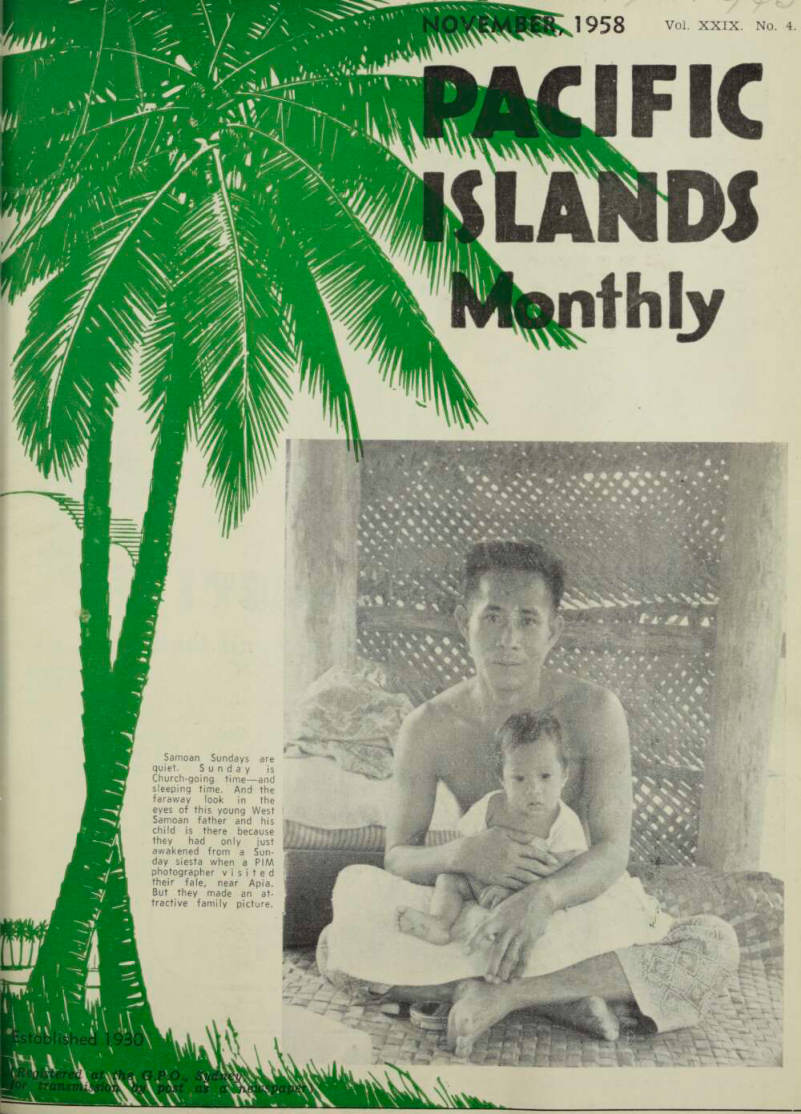 1
1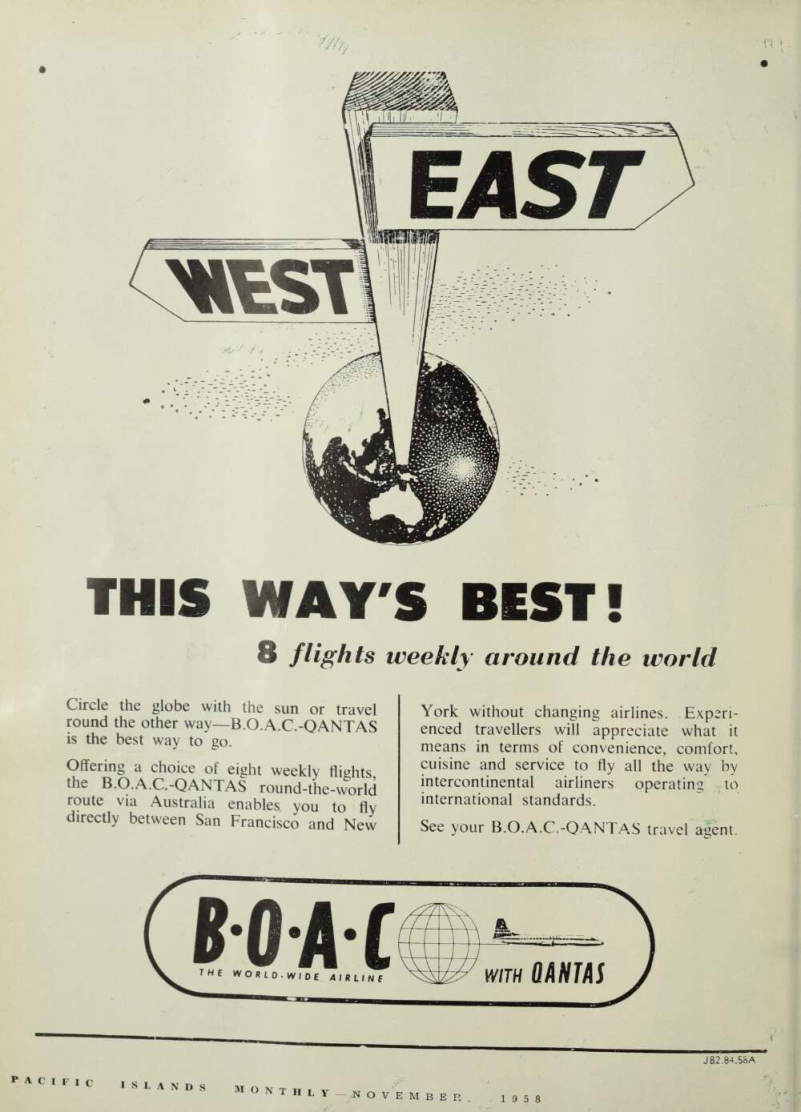 2
2 3
3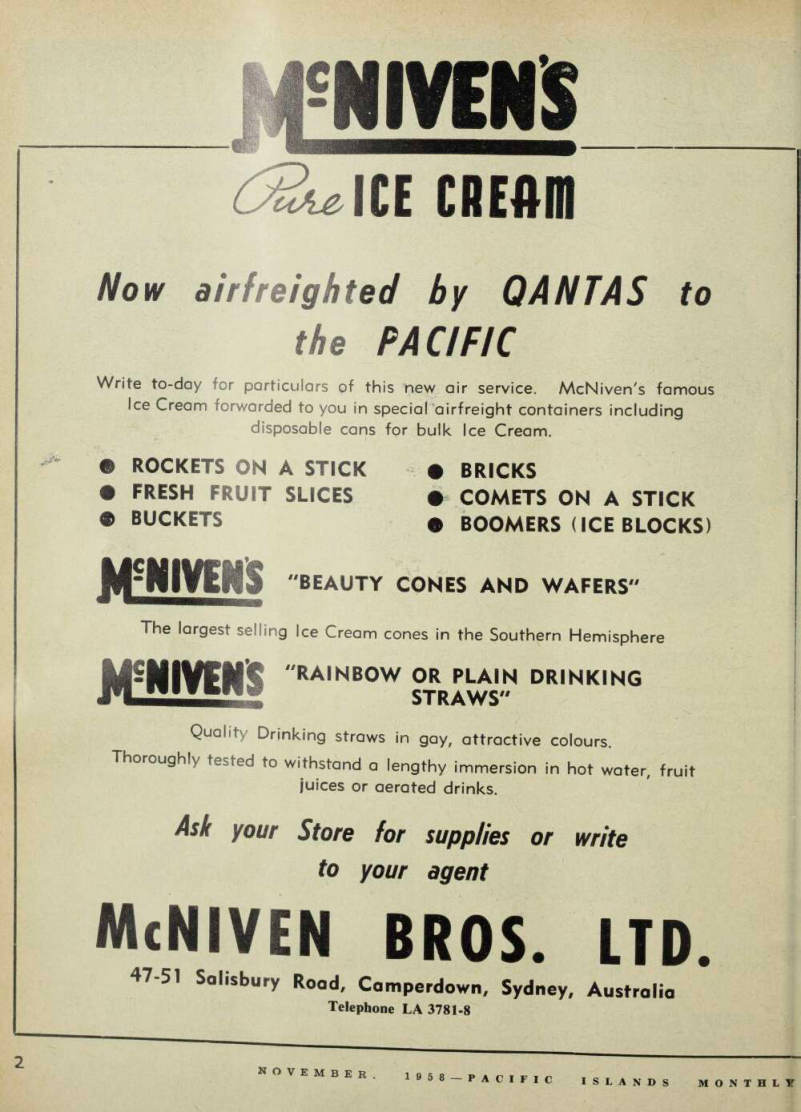 4
4 5
5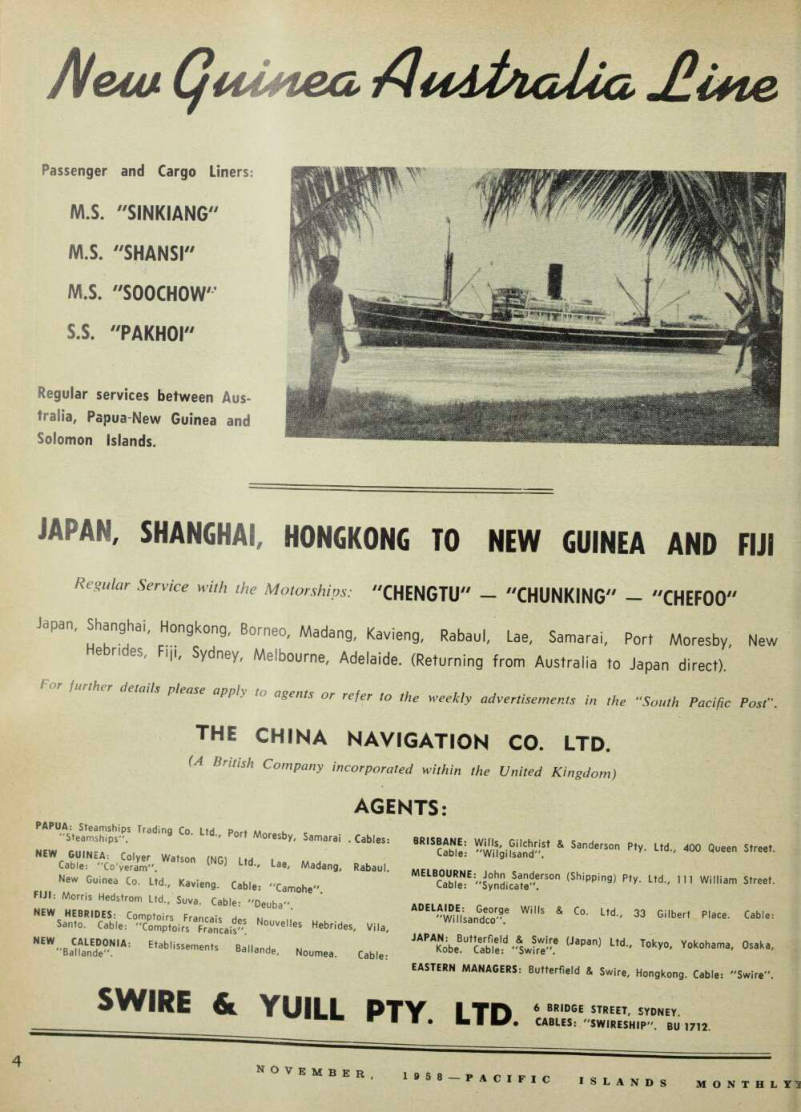 6
6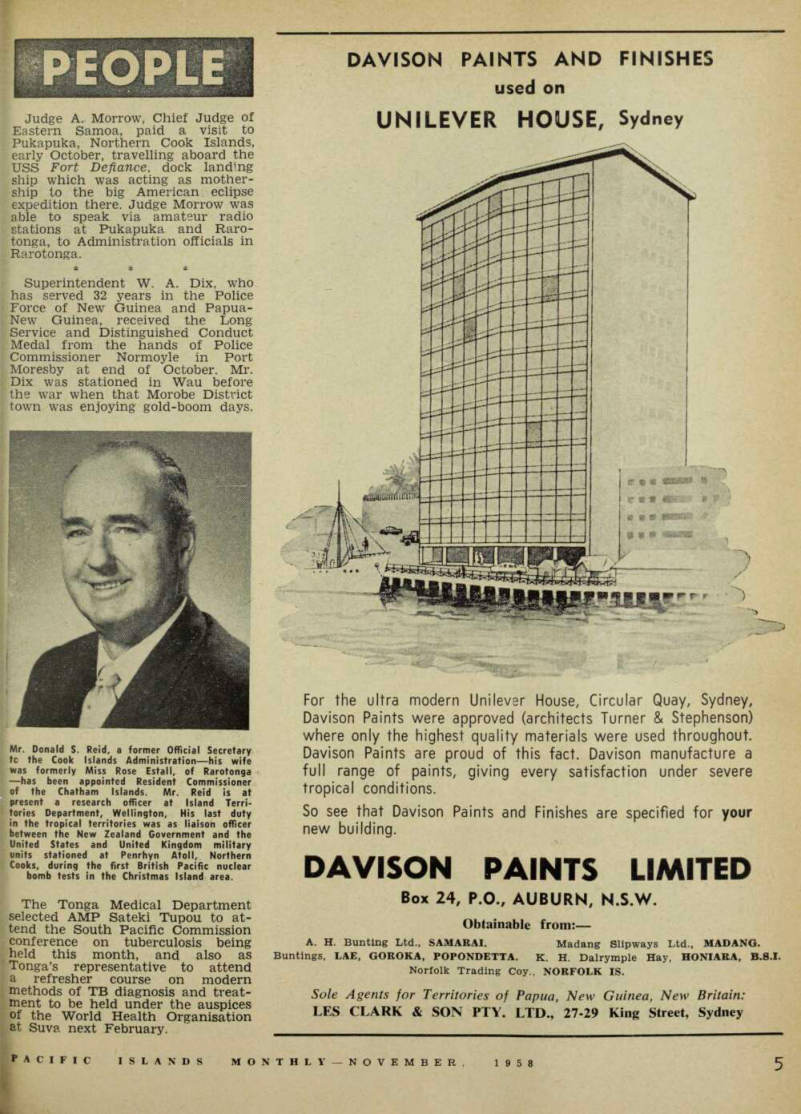 7
7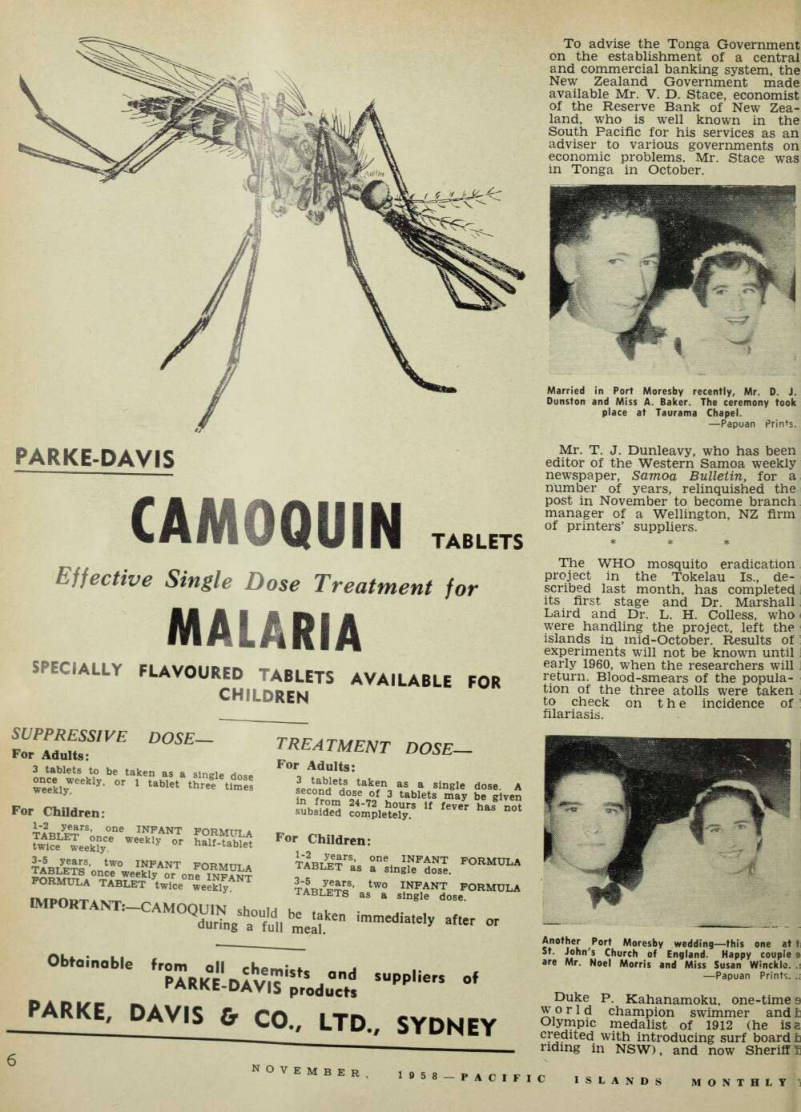 8
8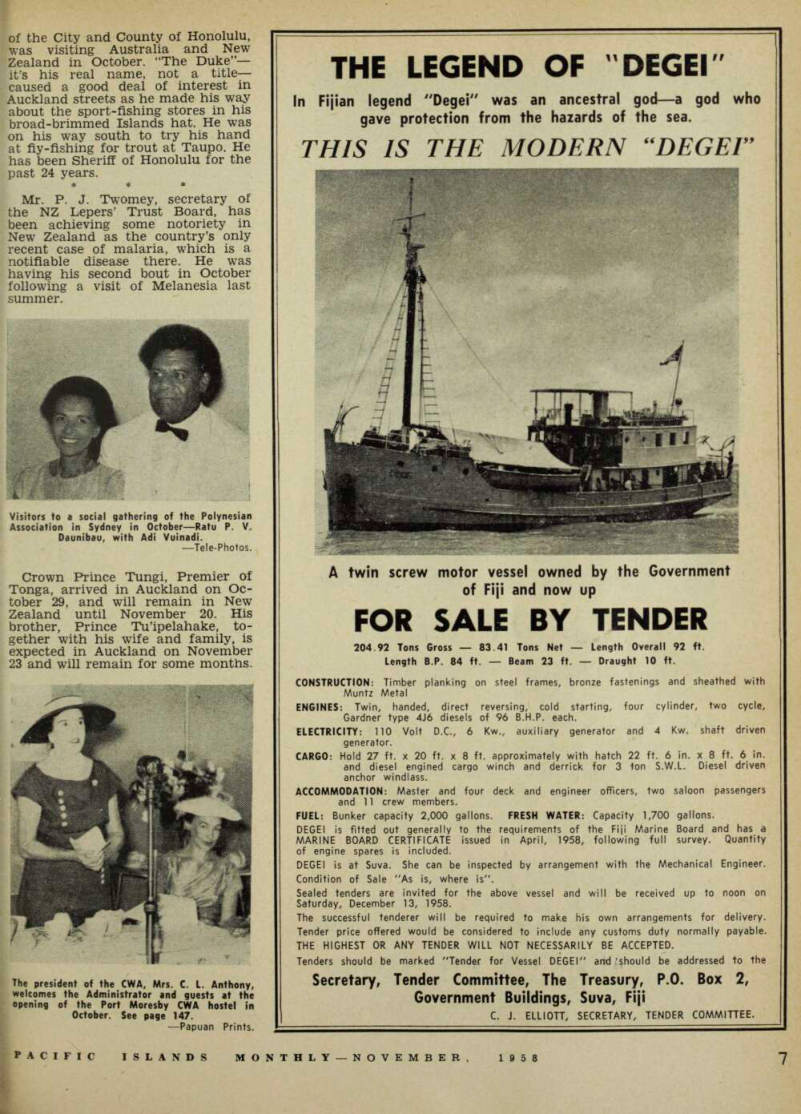 9
9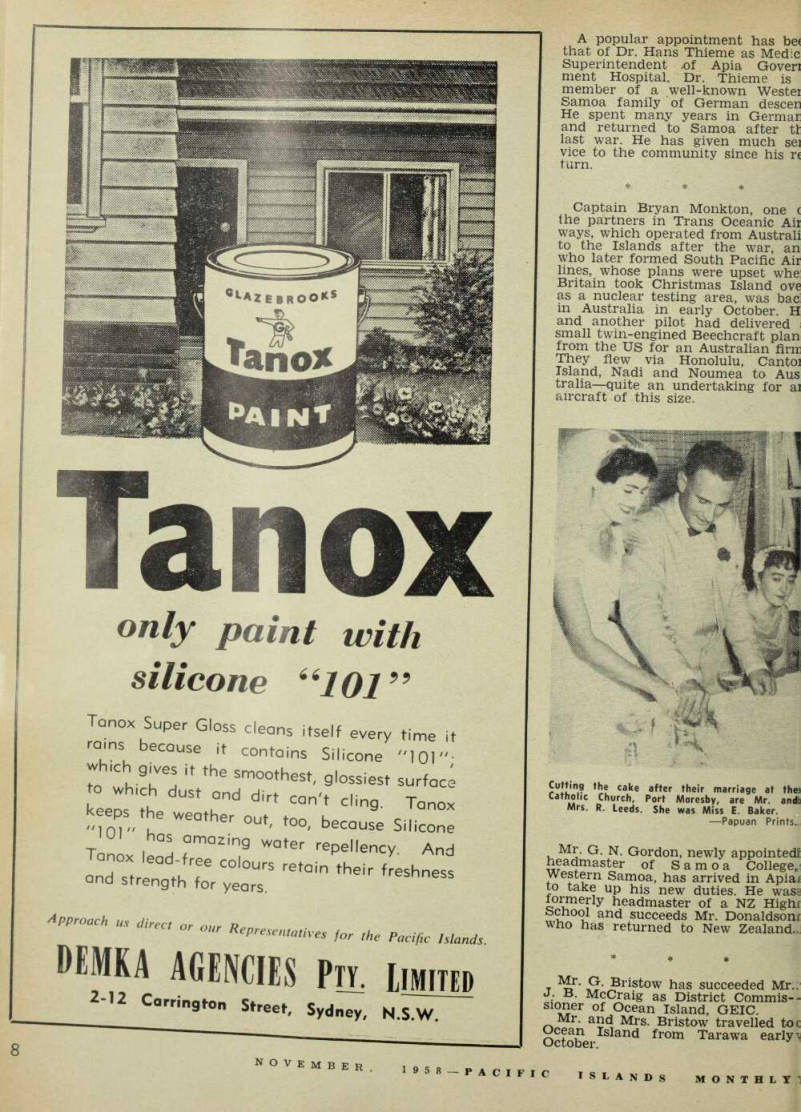 10
10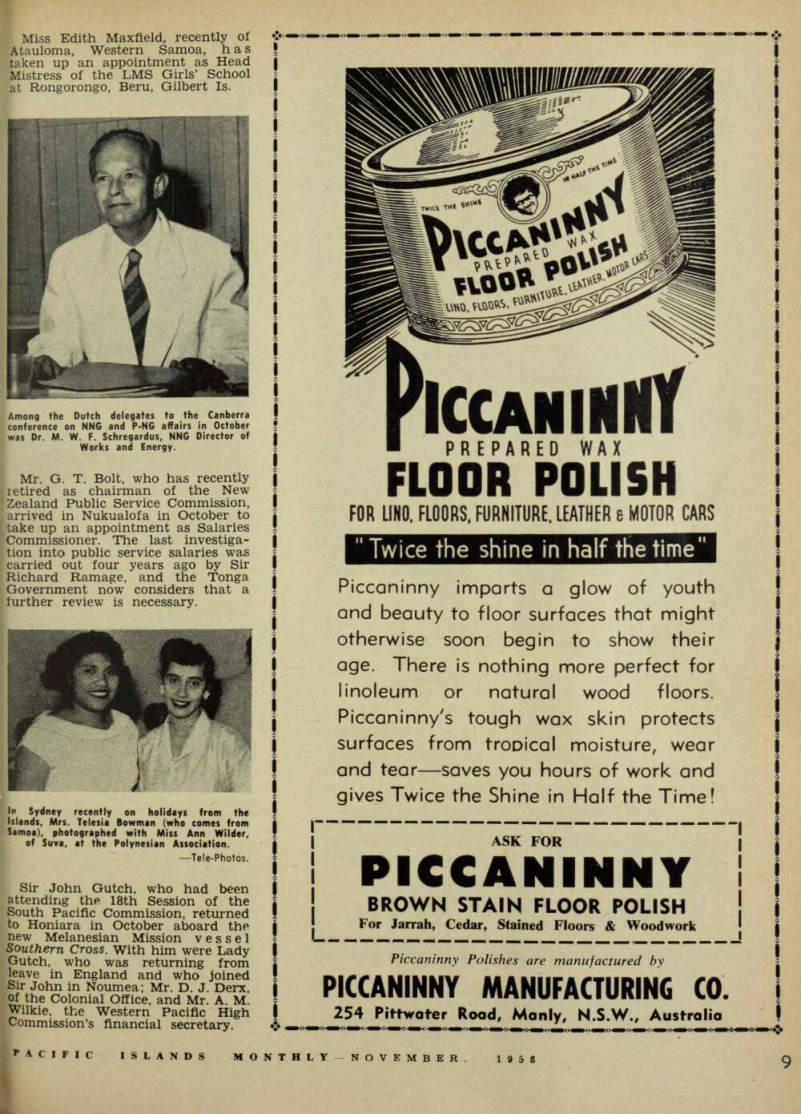 11
11 12
12 13
13 14
14 15
15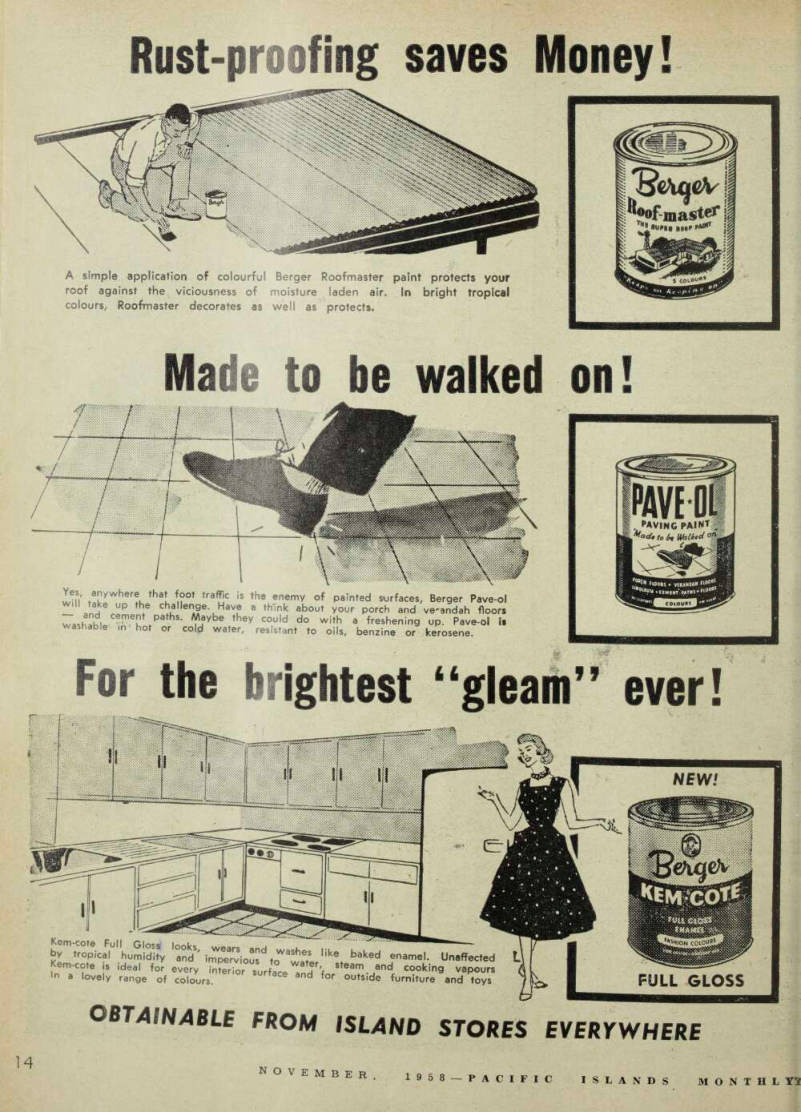 16
16 17
17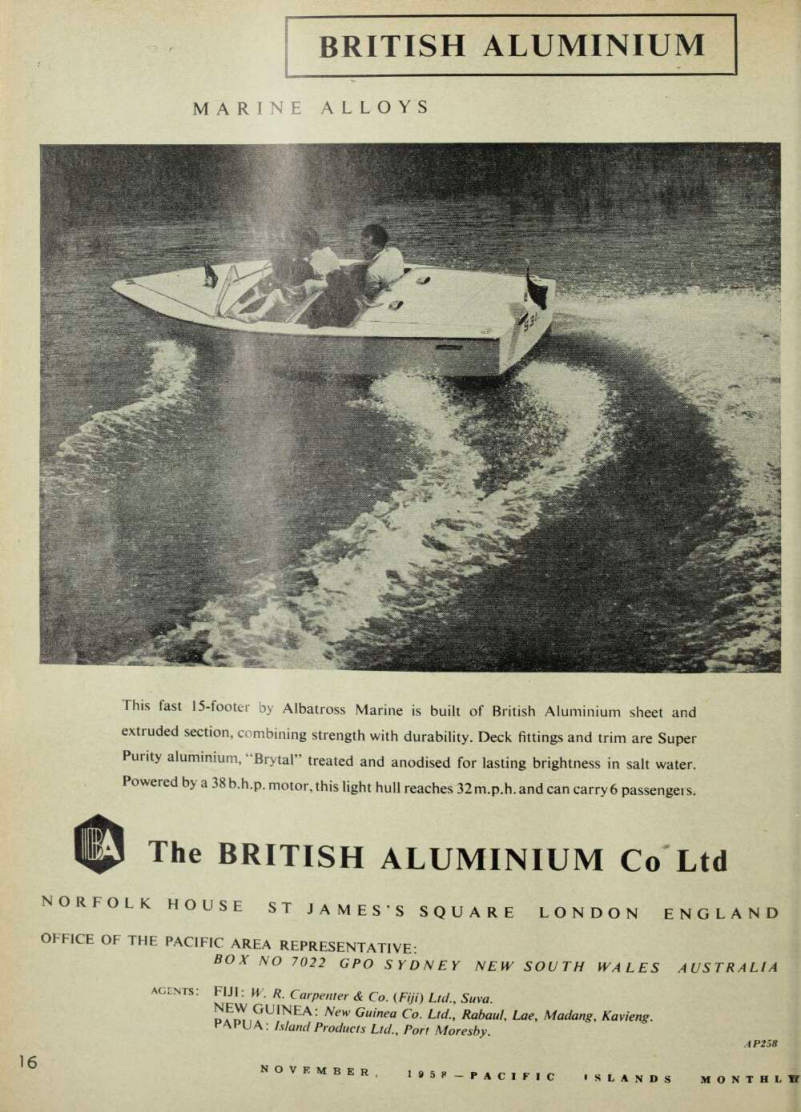 18
18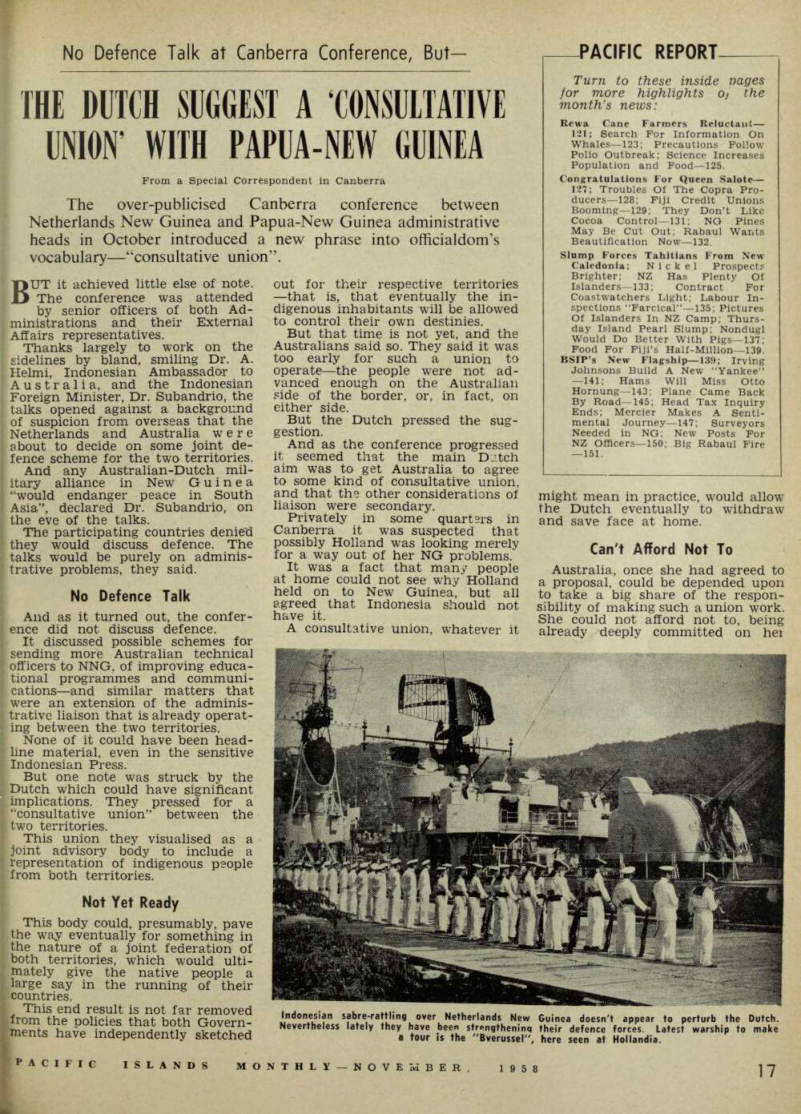 19
19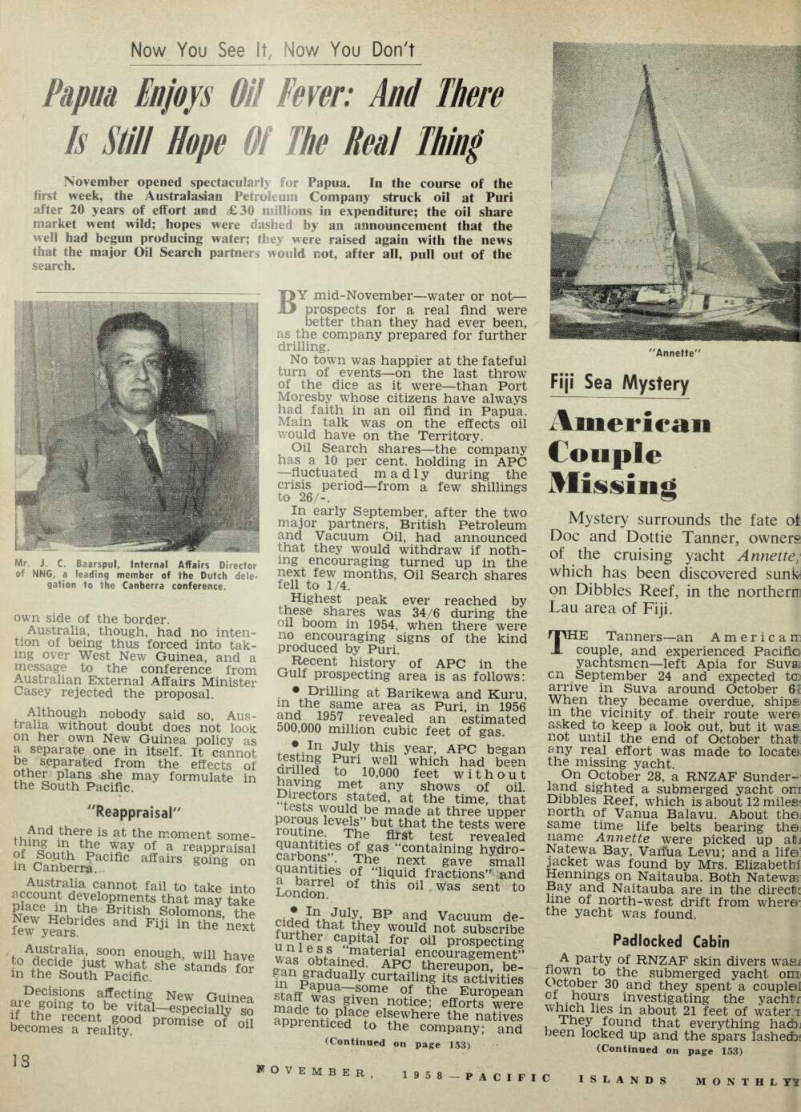 20
20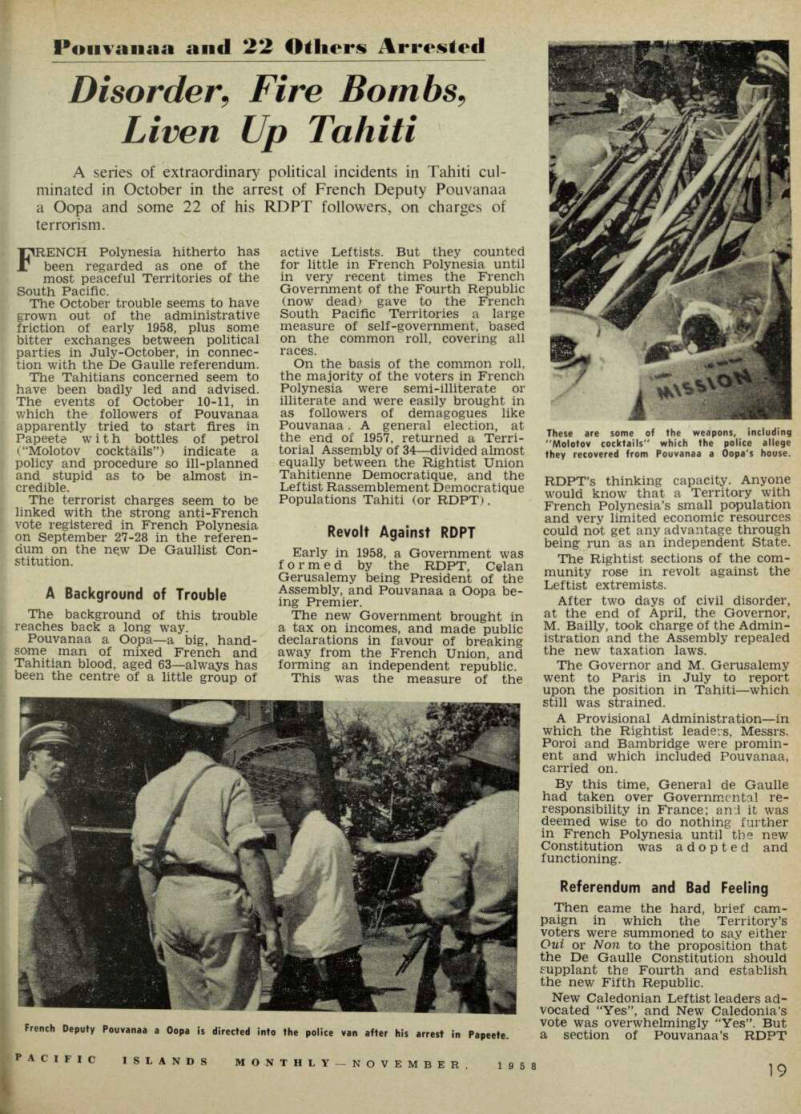 21
21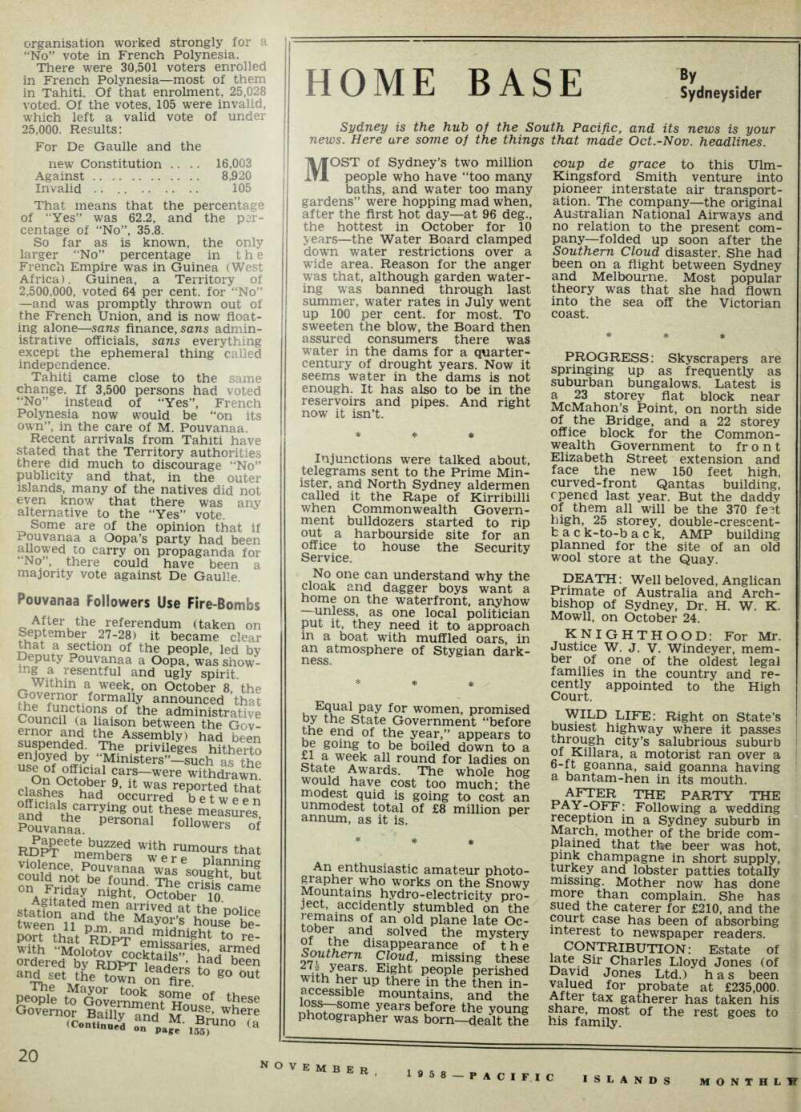 22
22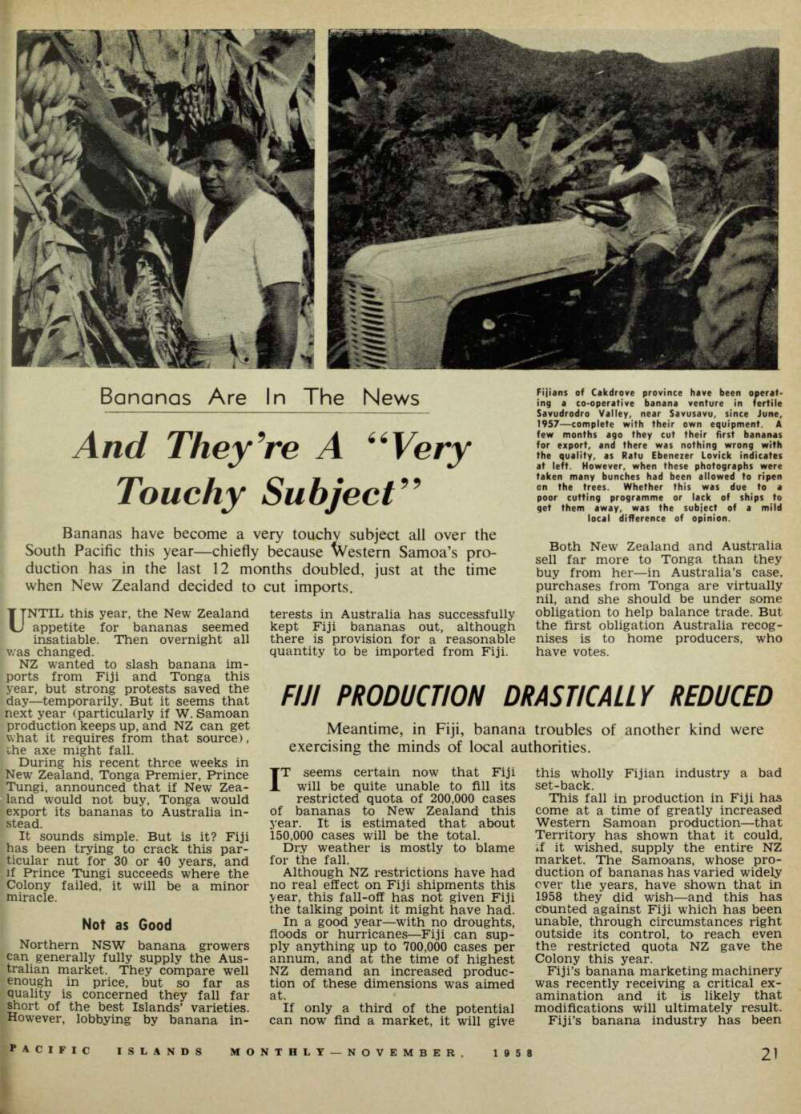 23
23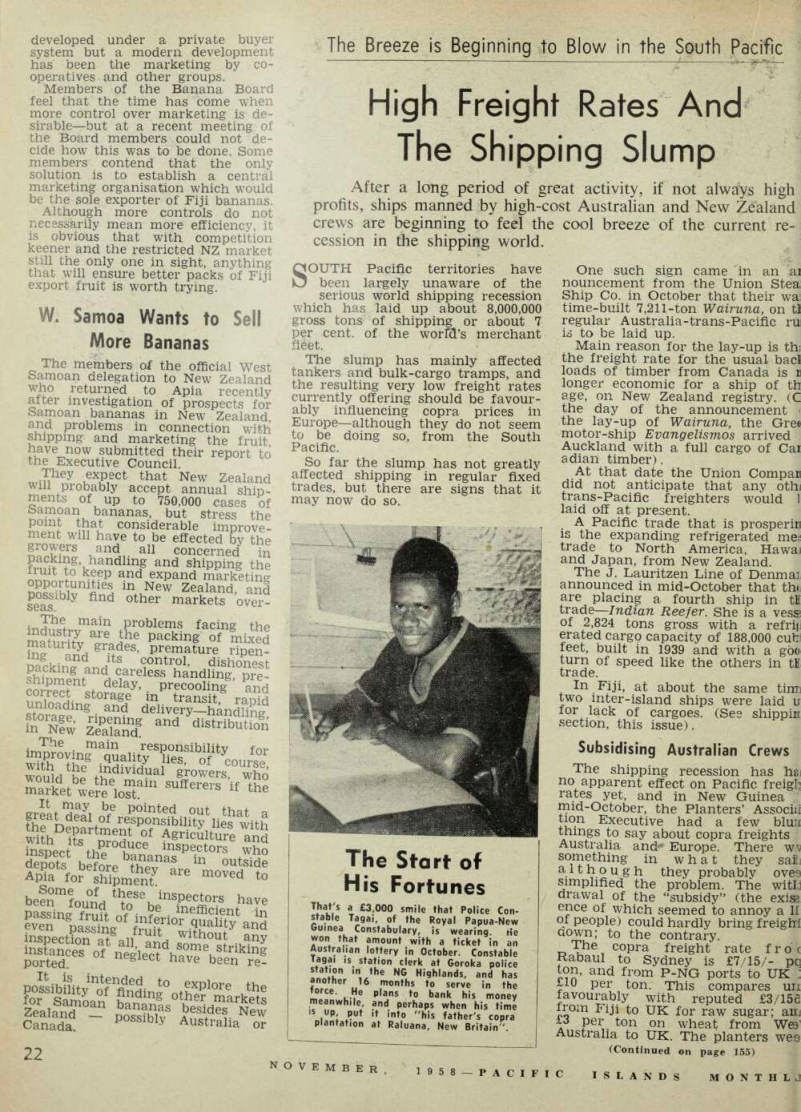 24
24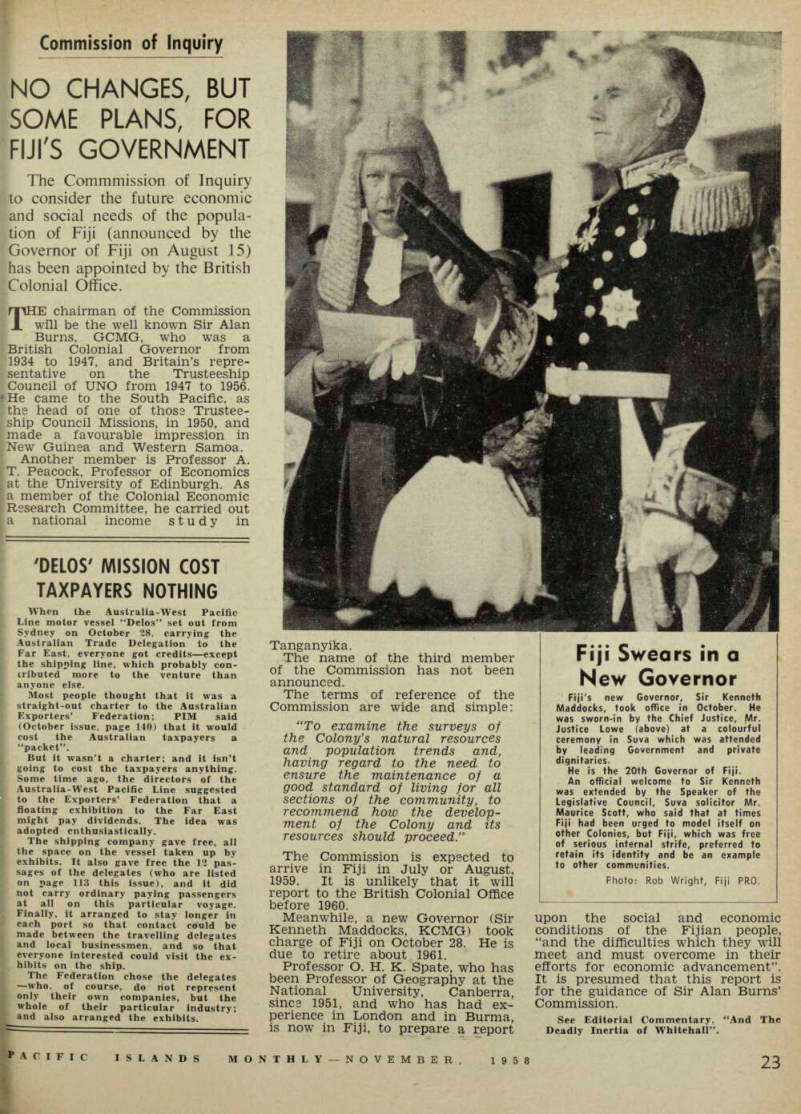 25
25 26
26 27
27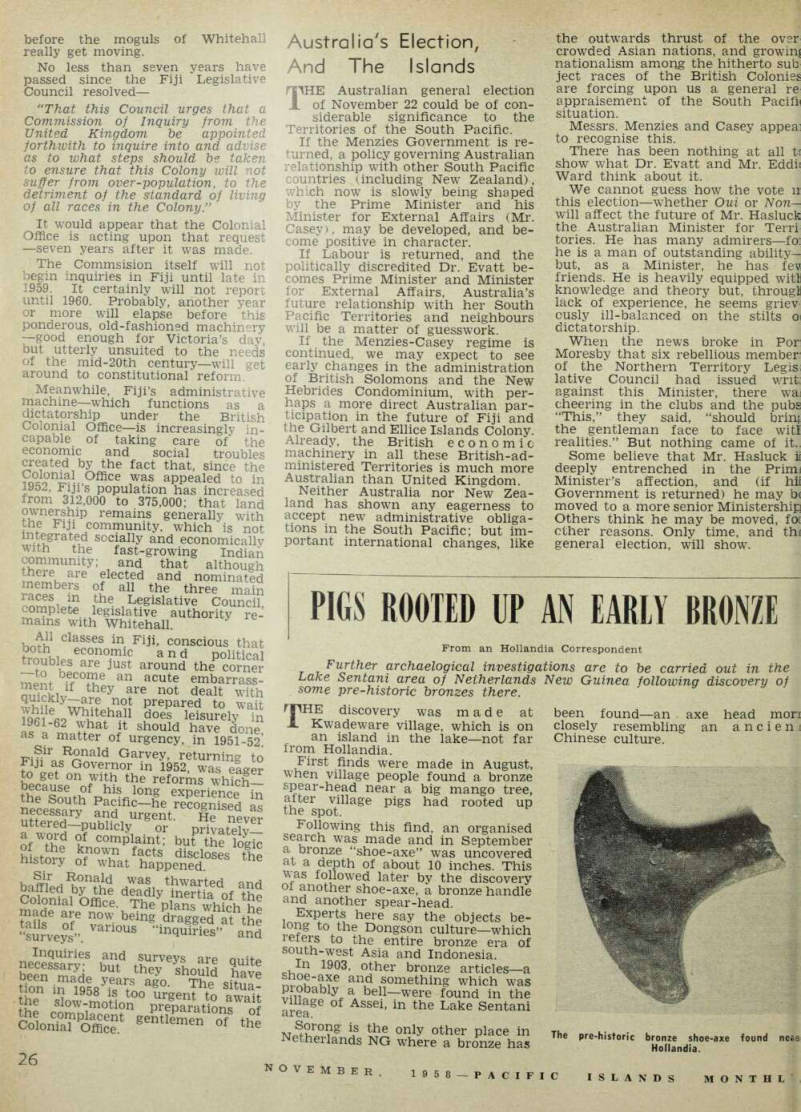 28
28 29
29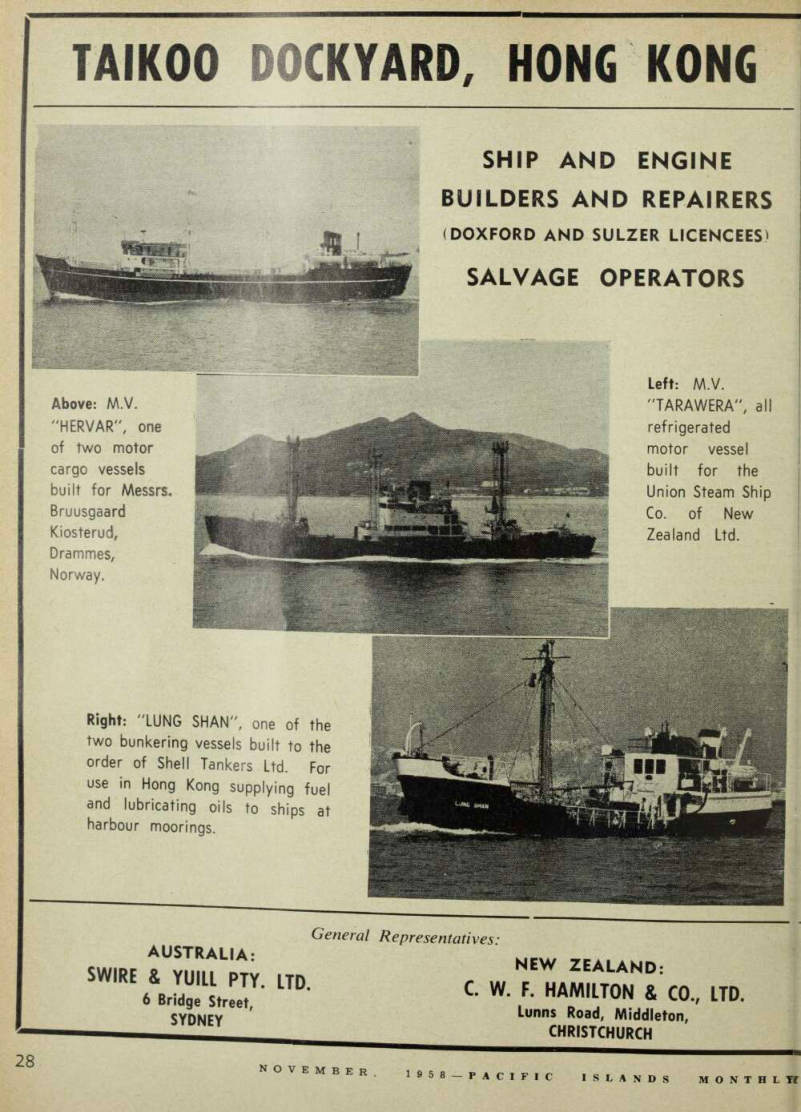 30
30 31
31 32
32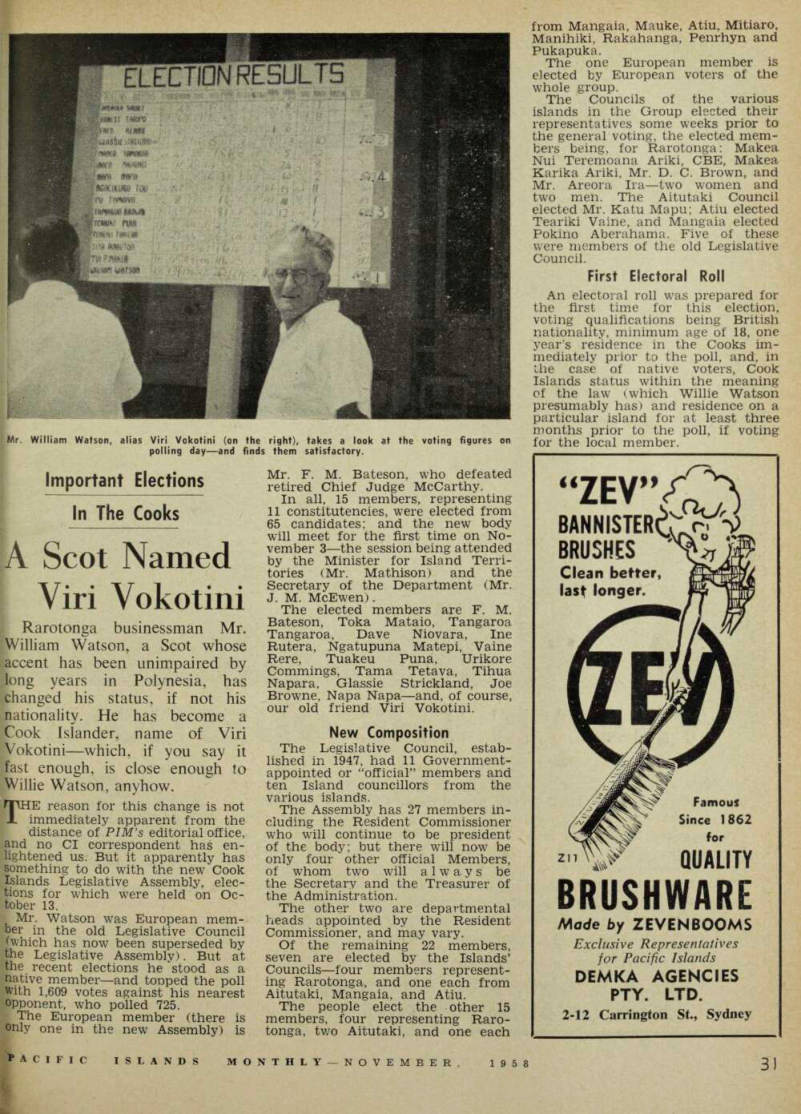 33
33 34
34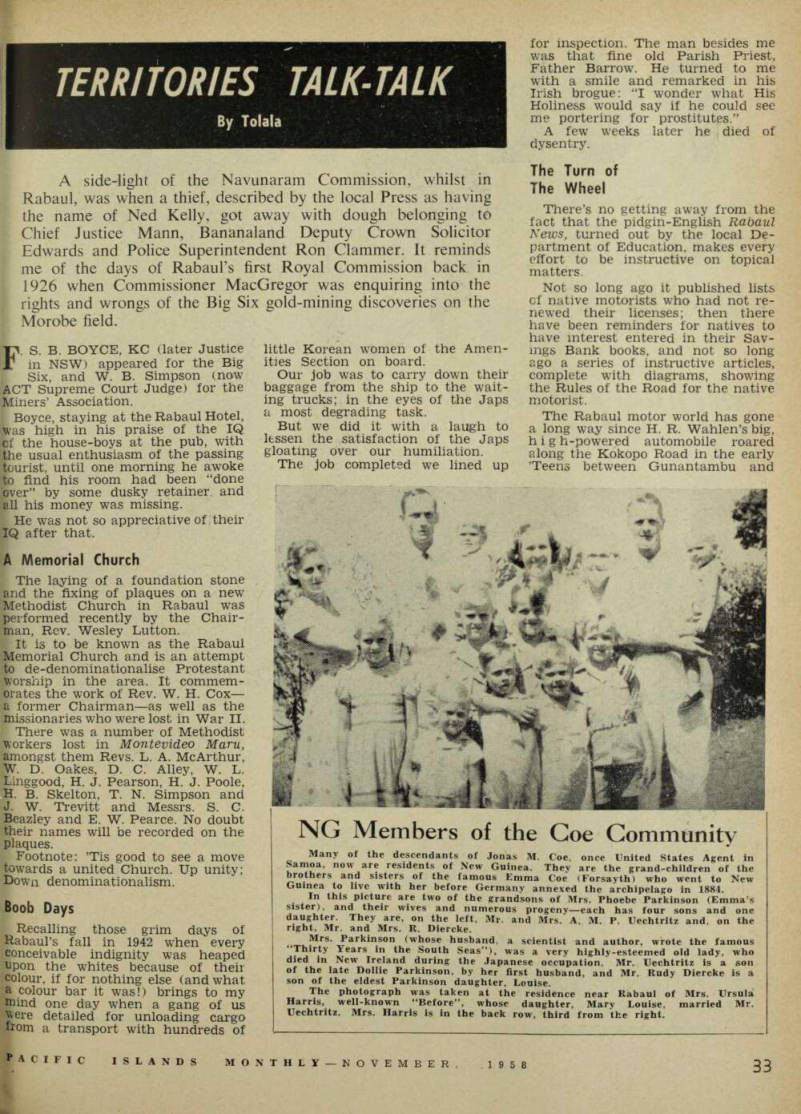 35
35 36
36 37
37 38
38 39
39 40
40 41
41 42
42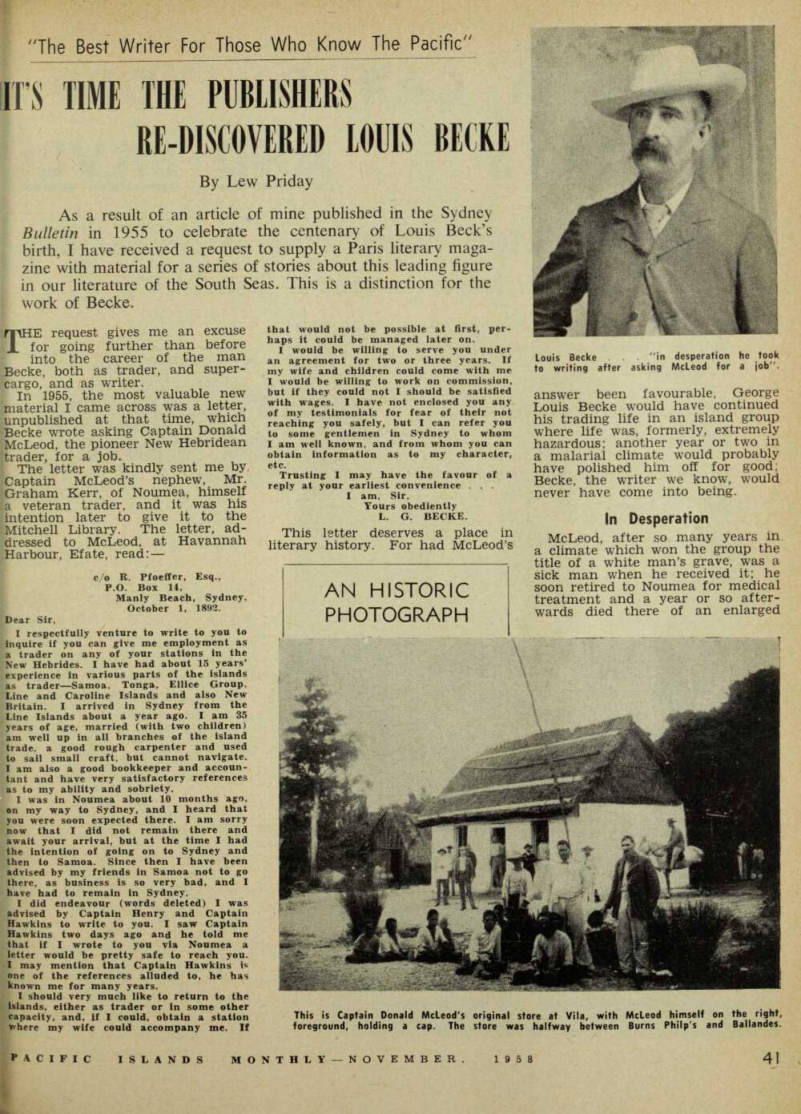 43
43 44
44 45
45 46
46 47
47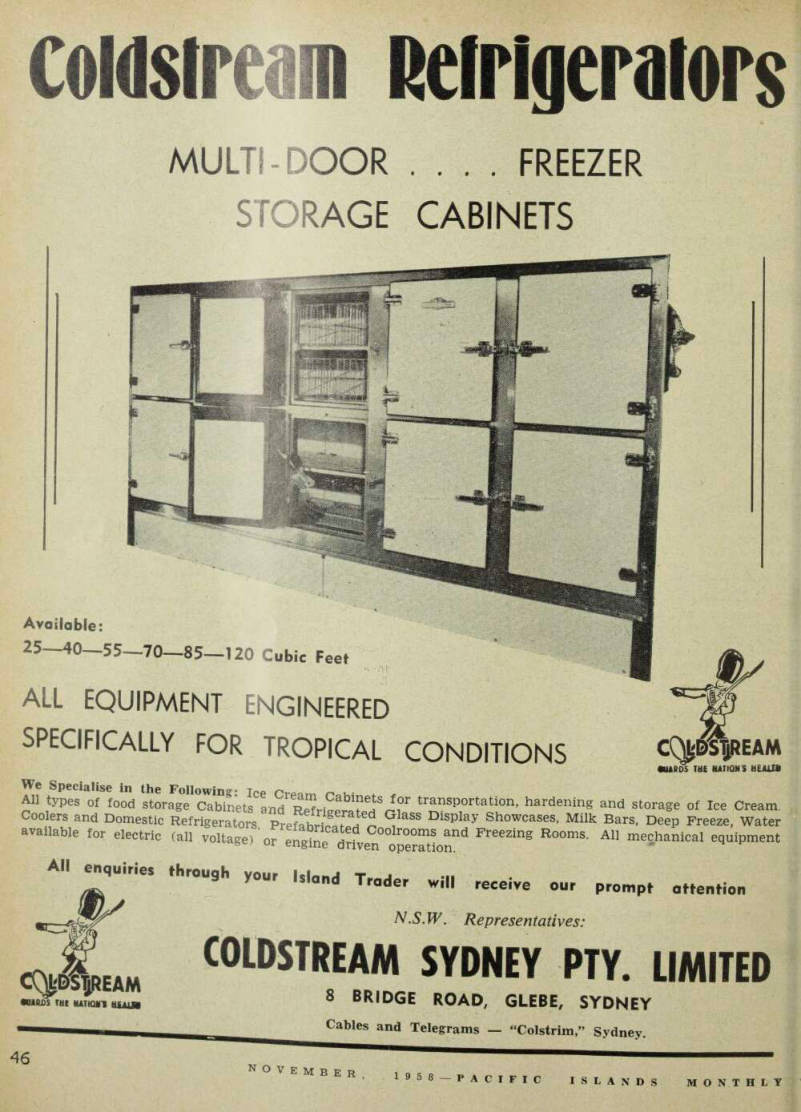 48
48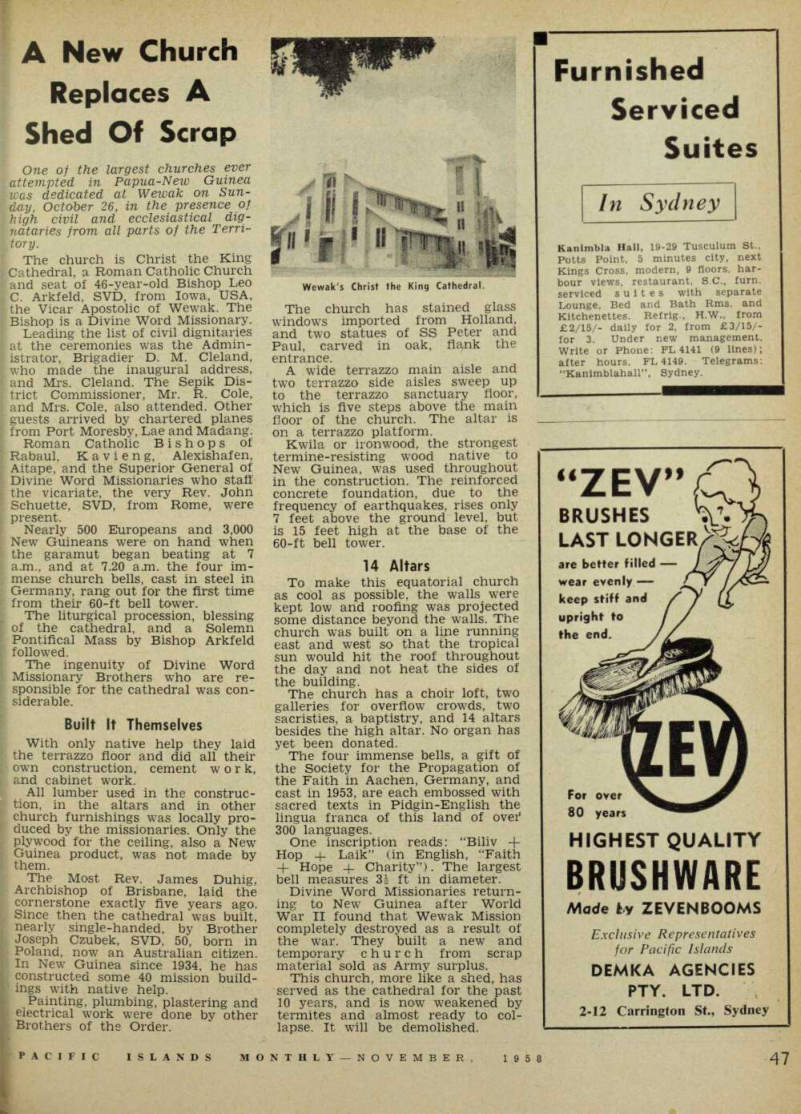 49
49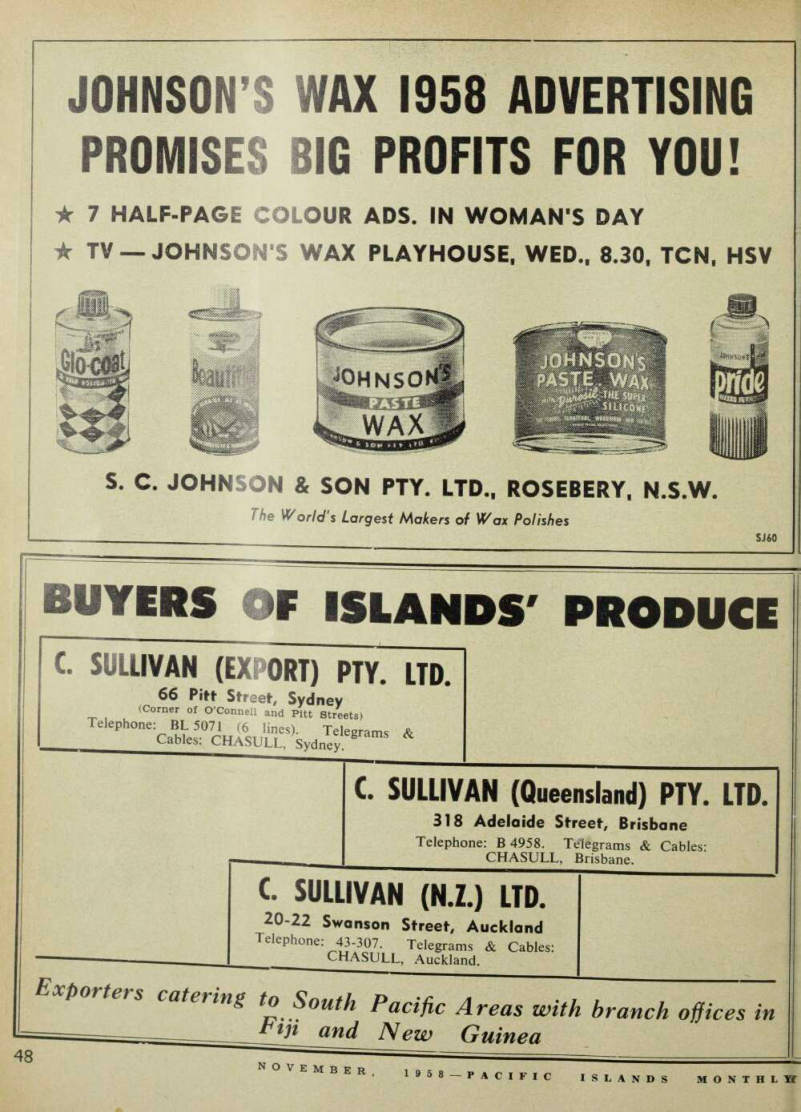 50
50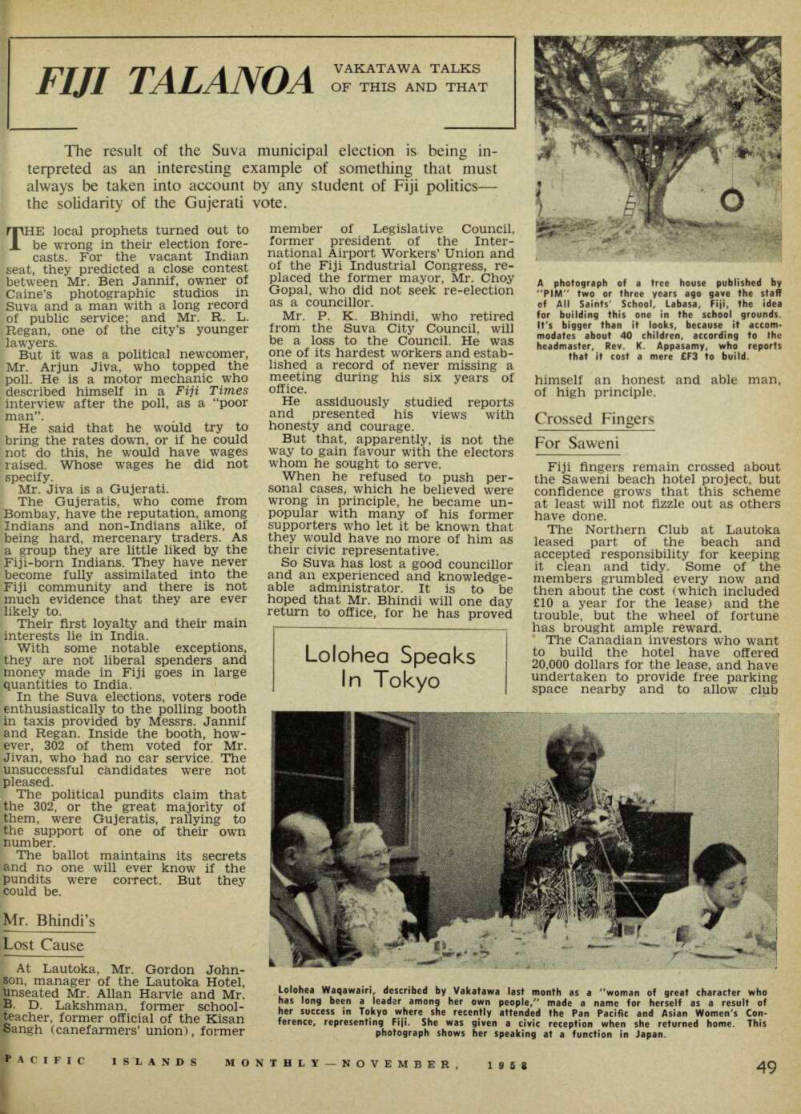 51
51 52
52 53
53 54
54 55
55 56
56 57
57 58
58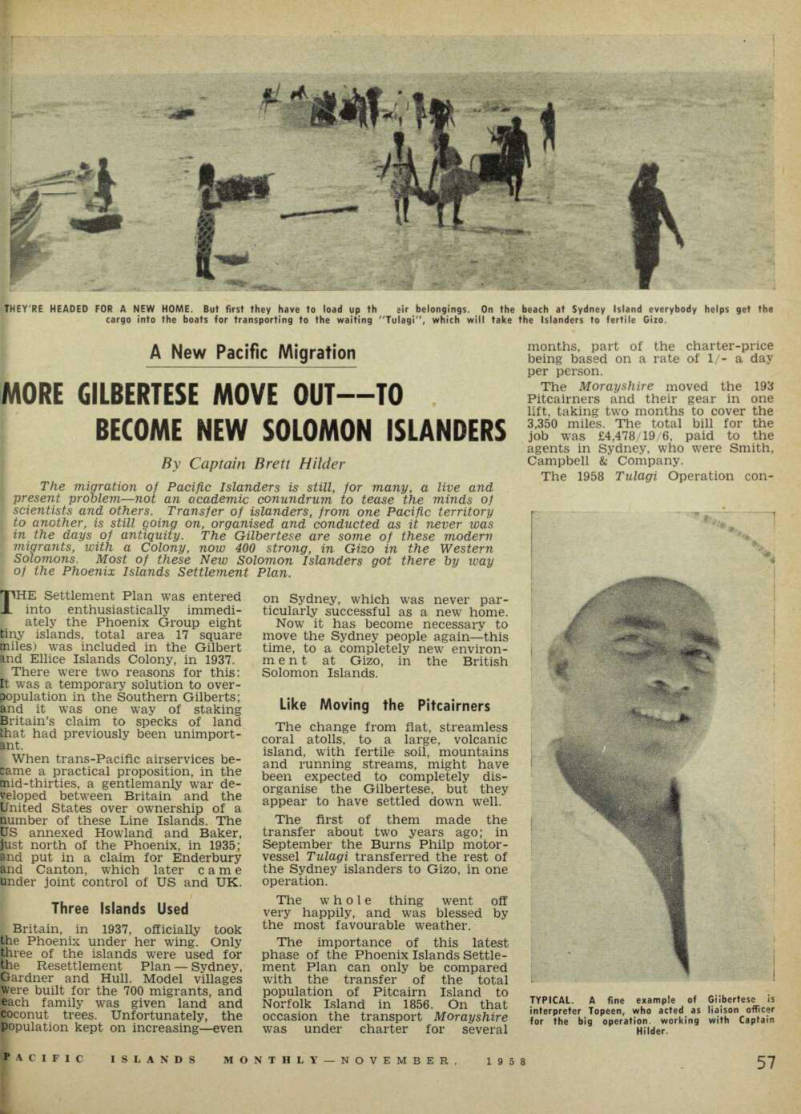 59
59 60
60 61
61 62
62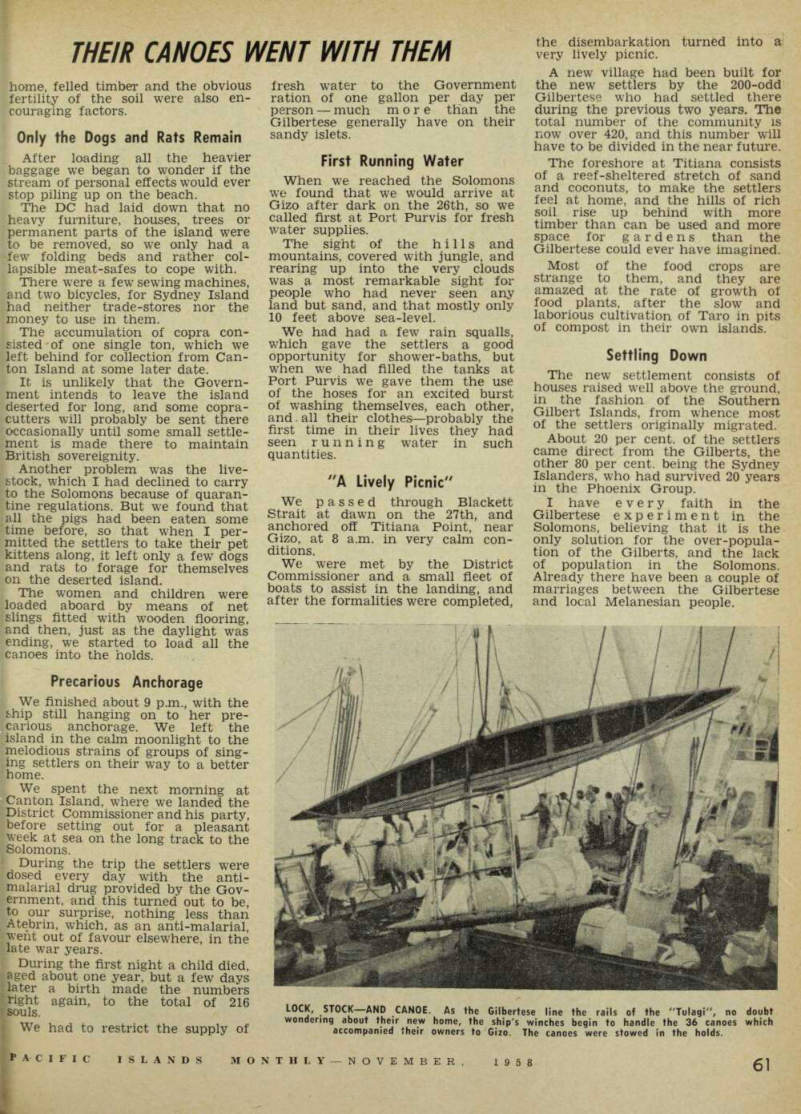 63
63 64
64 65
65 66
66 67
67 68
68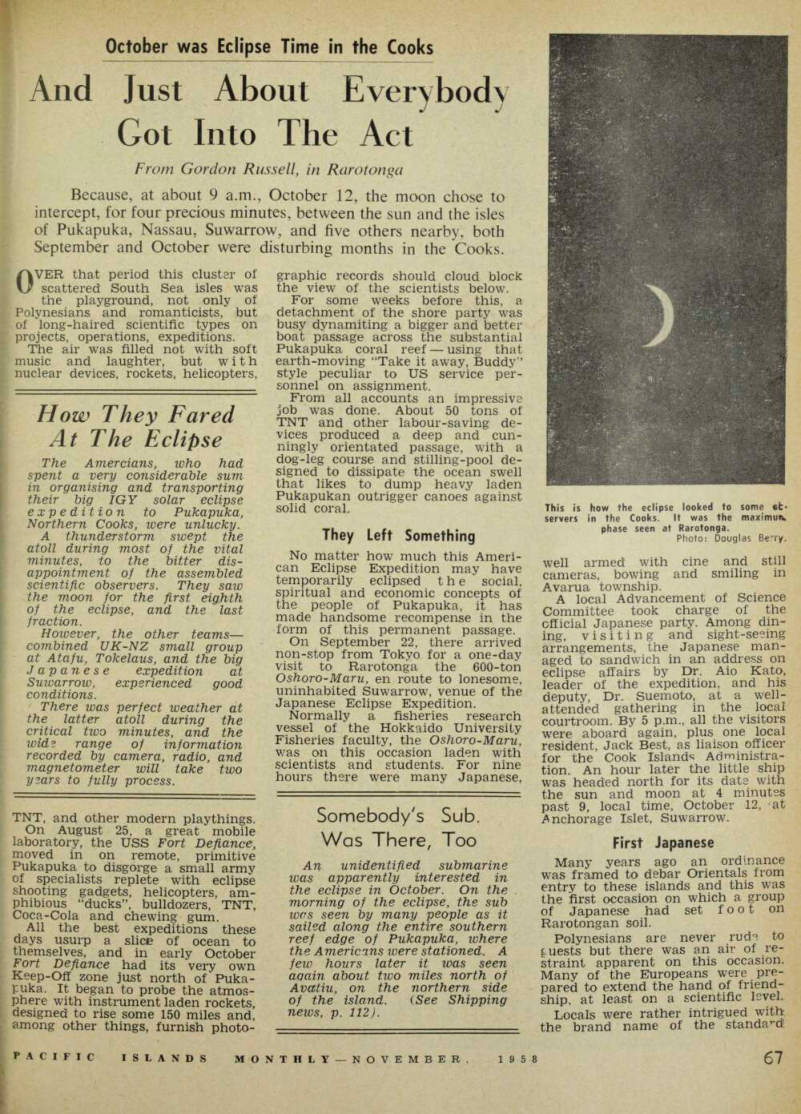 69
69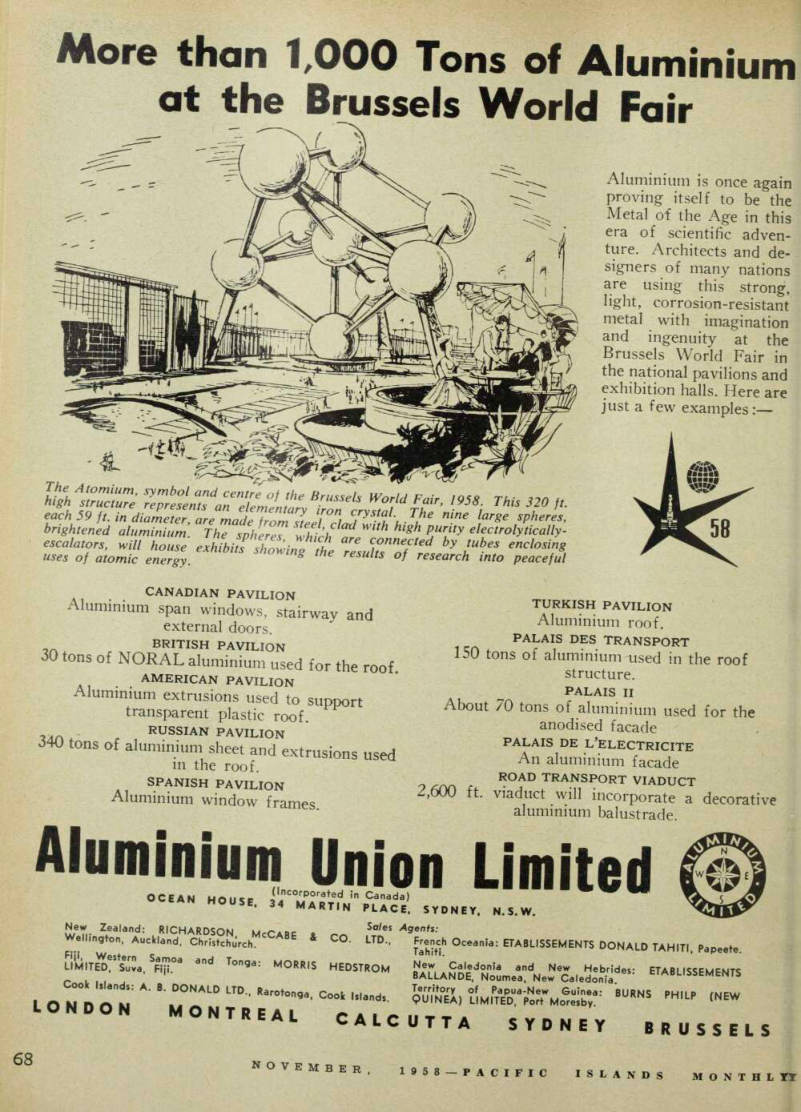 70
70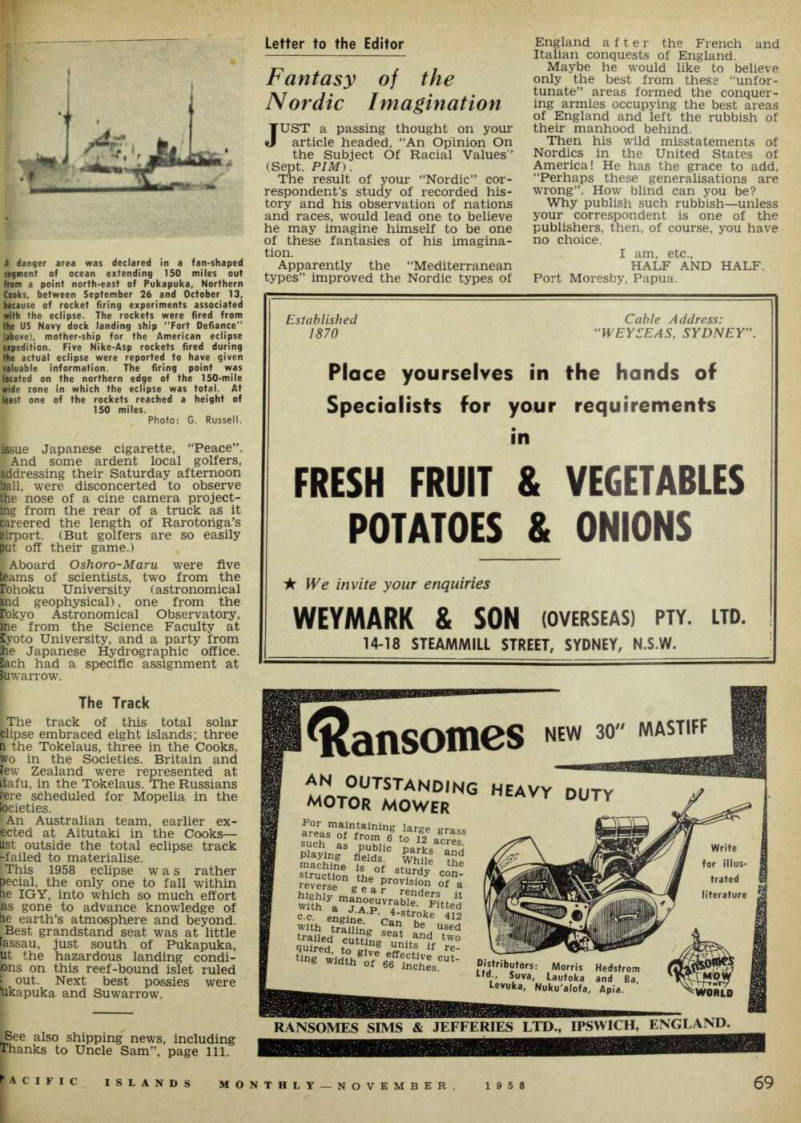 71
71 72
72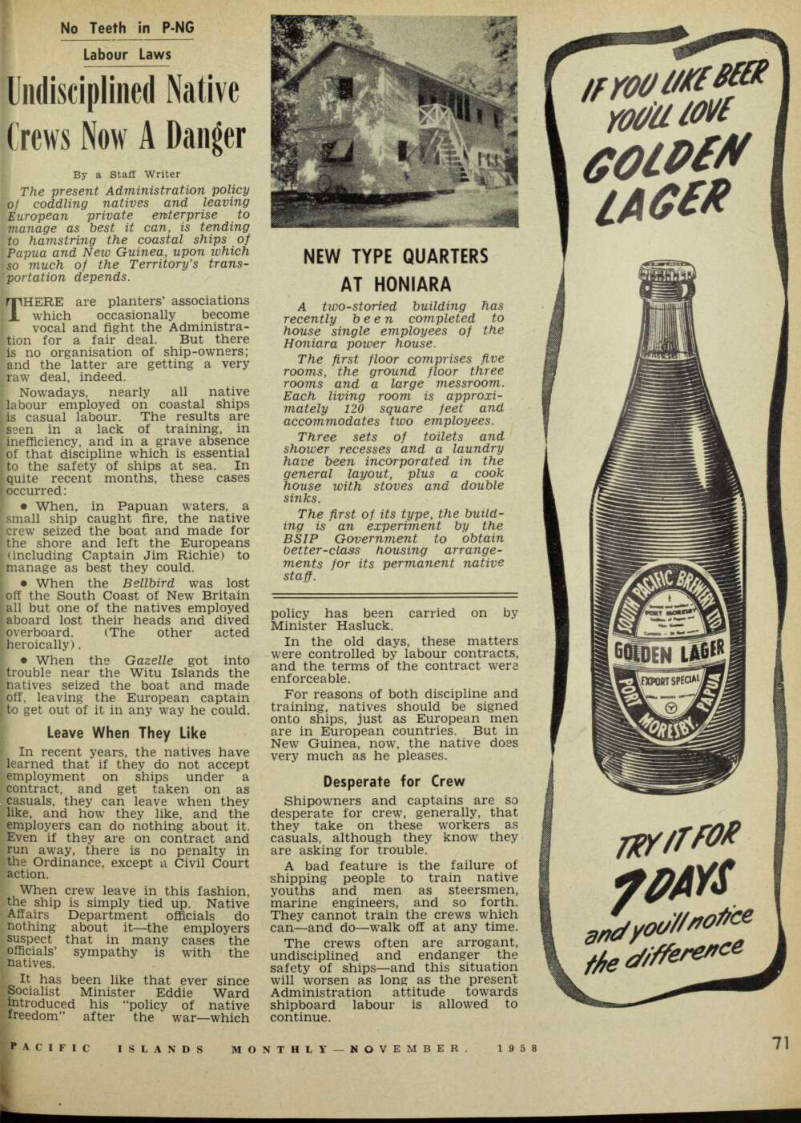 73
73 74
74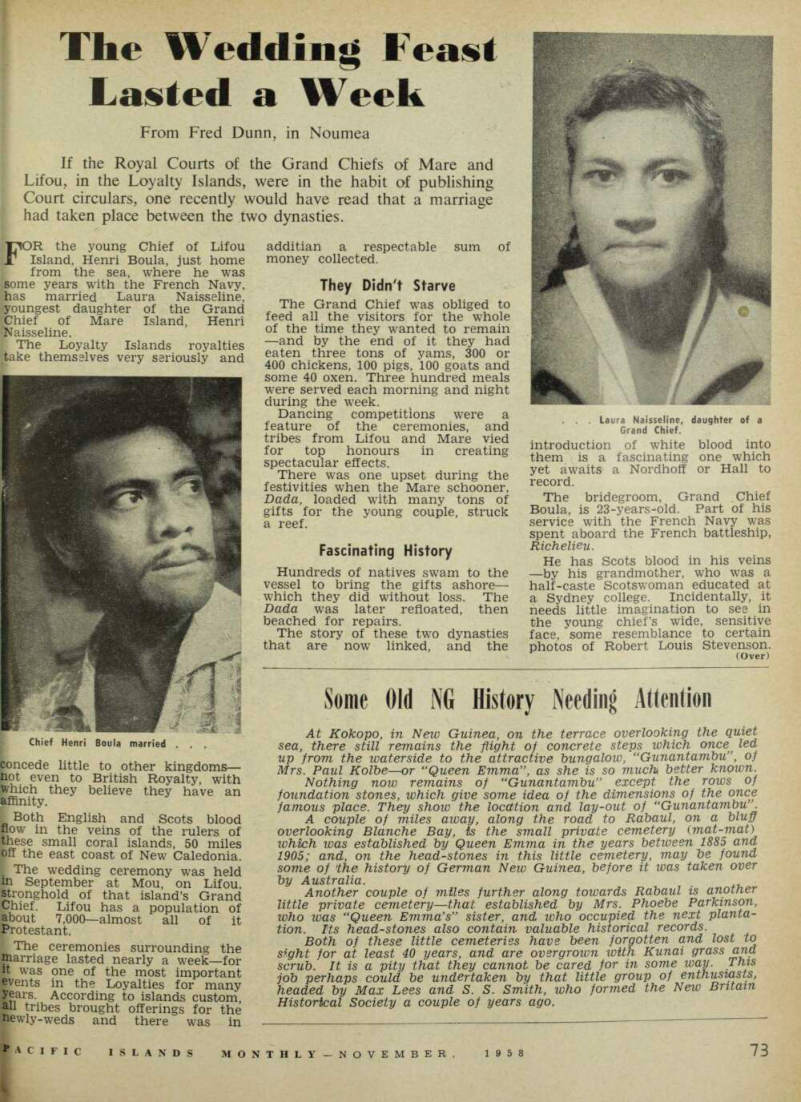 75
75 76
76 77
77 78
78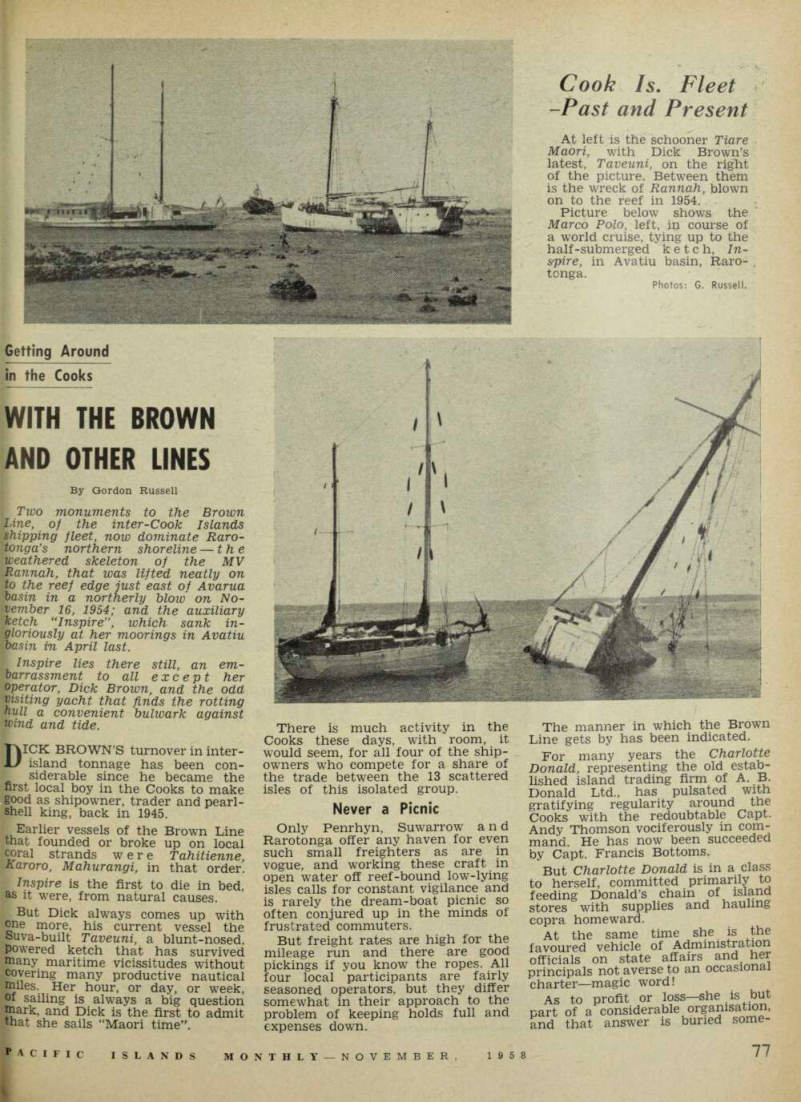 79
79 80
80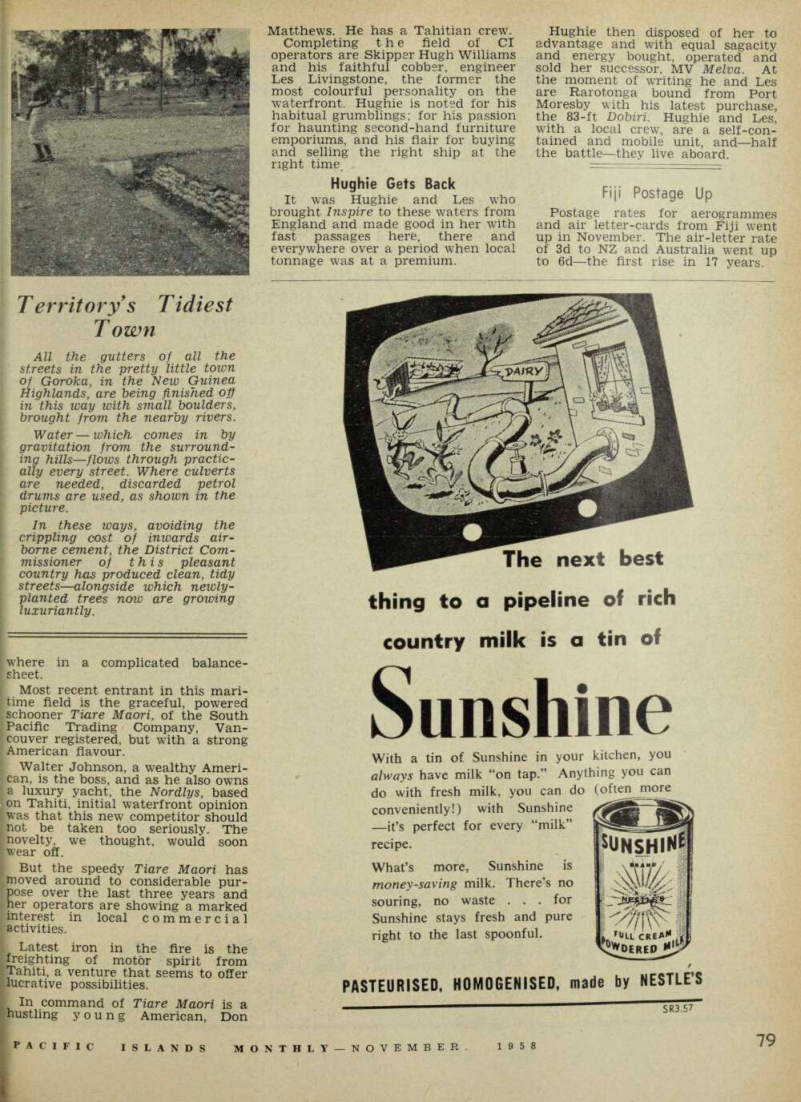 81
81 82
82 83
83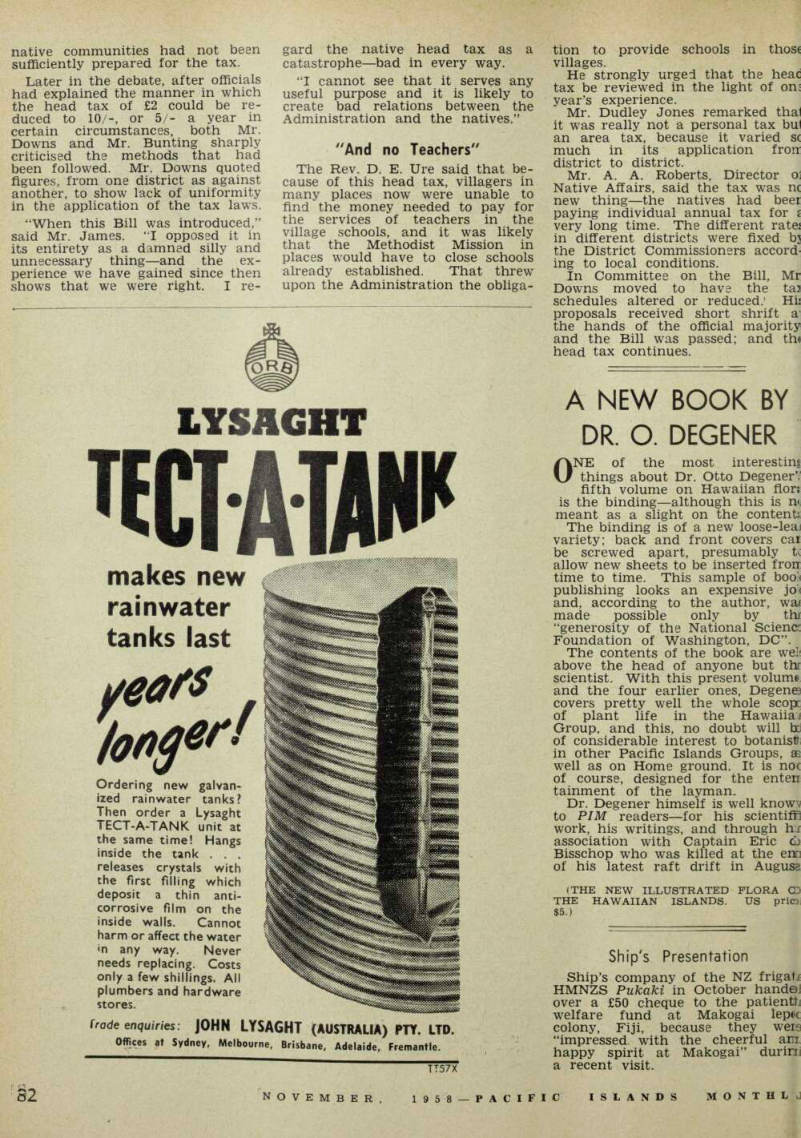 84
84 85
85 86
86 87
87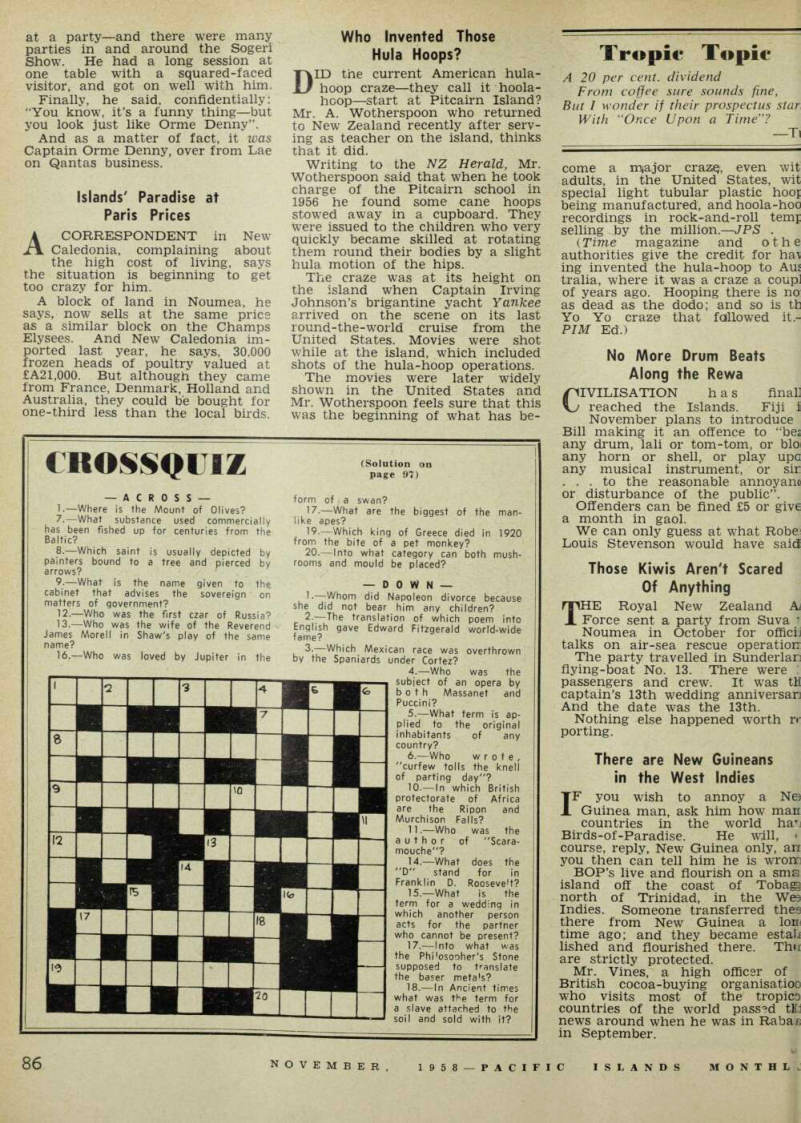 88
88 89
89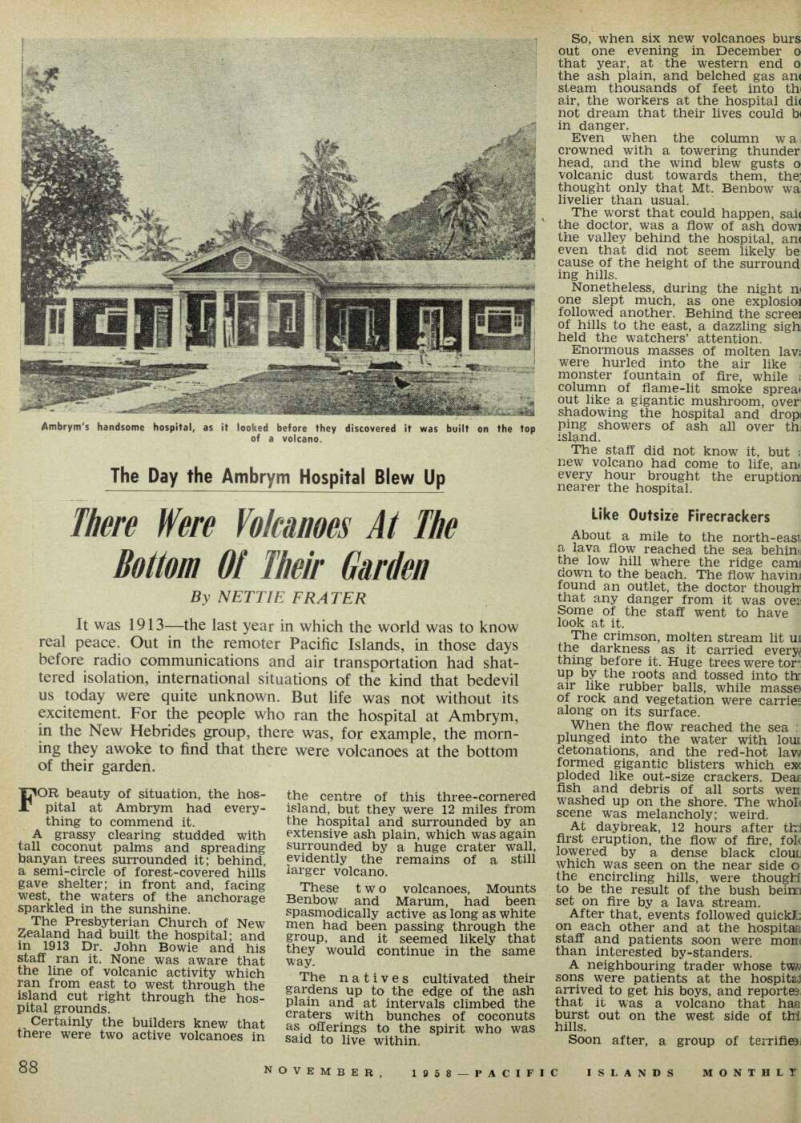 90
90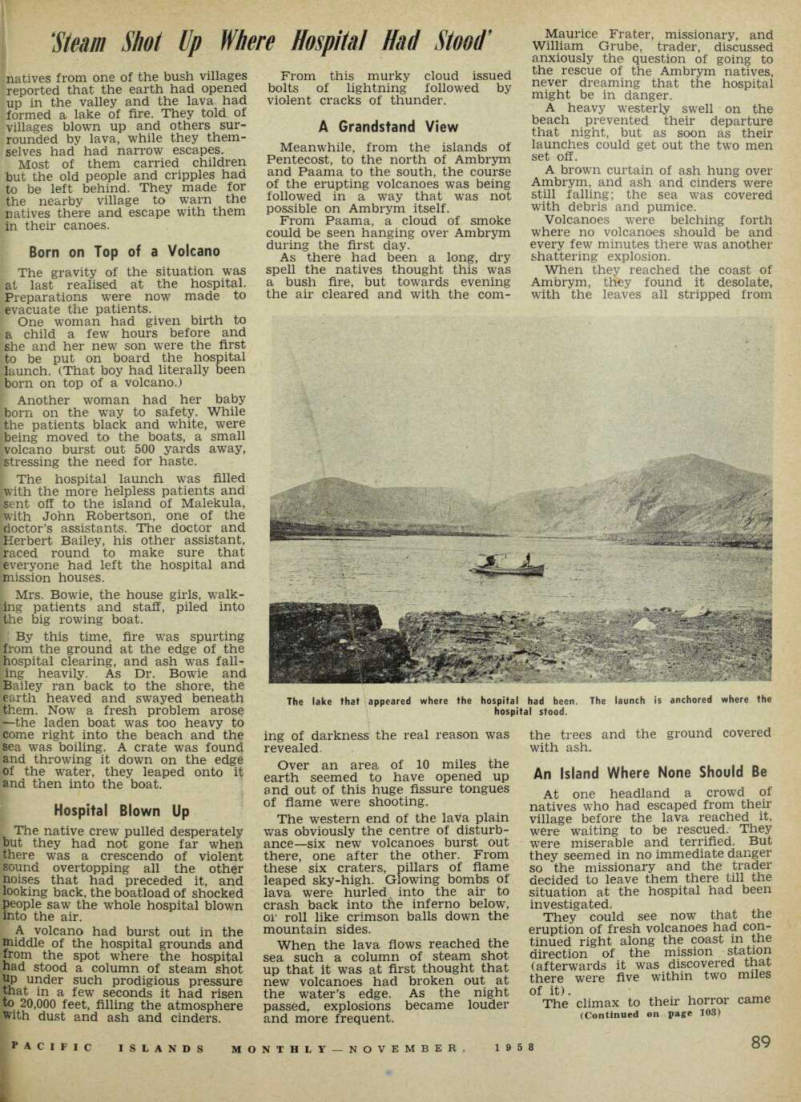 91
91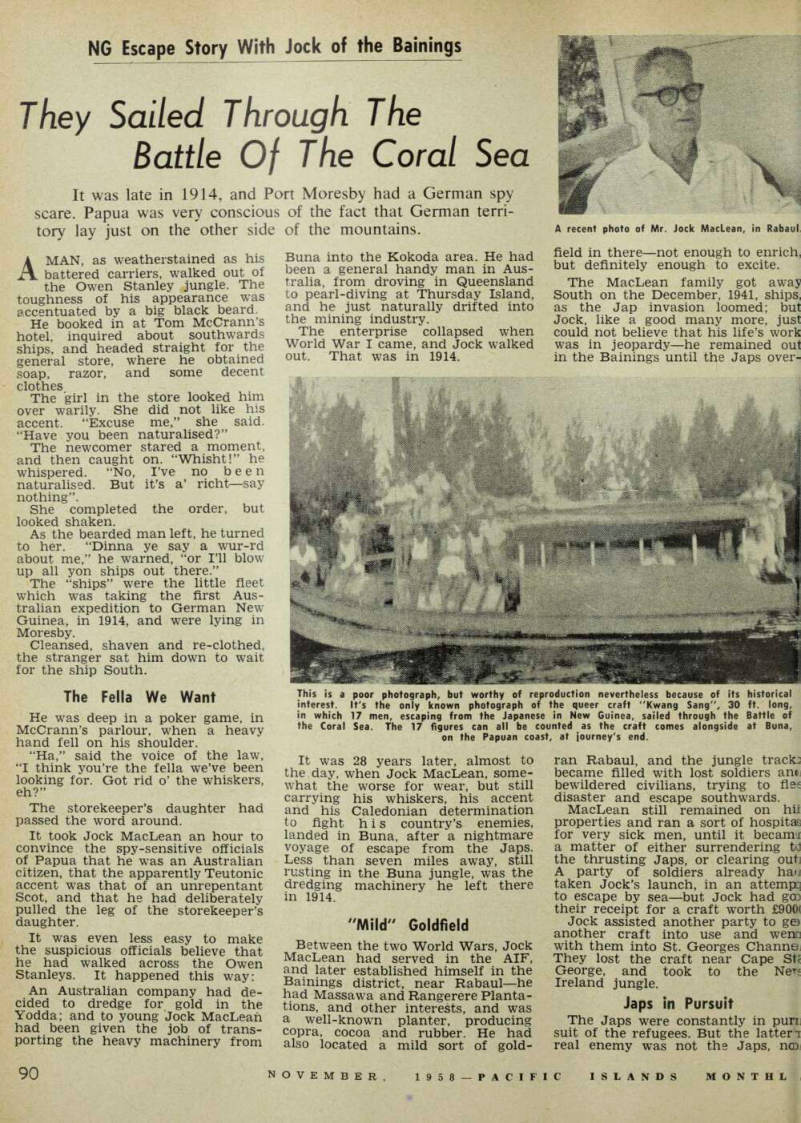 92
92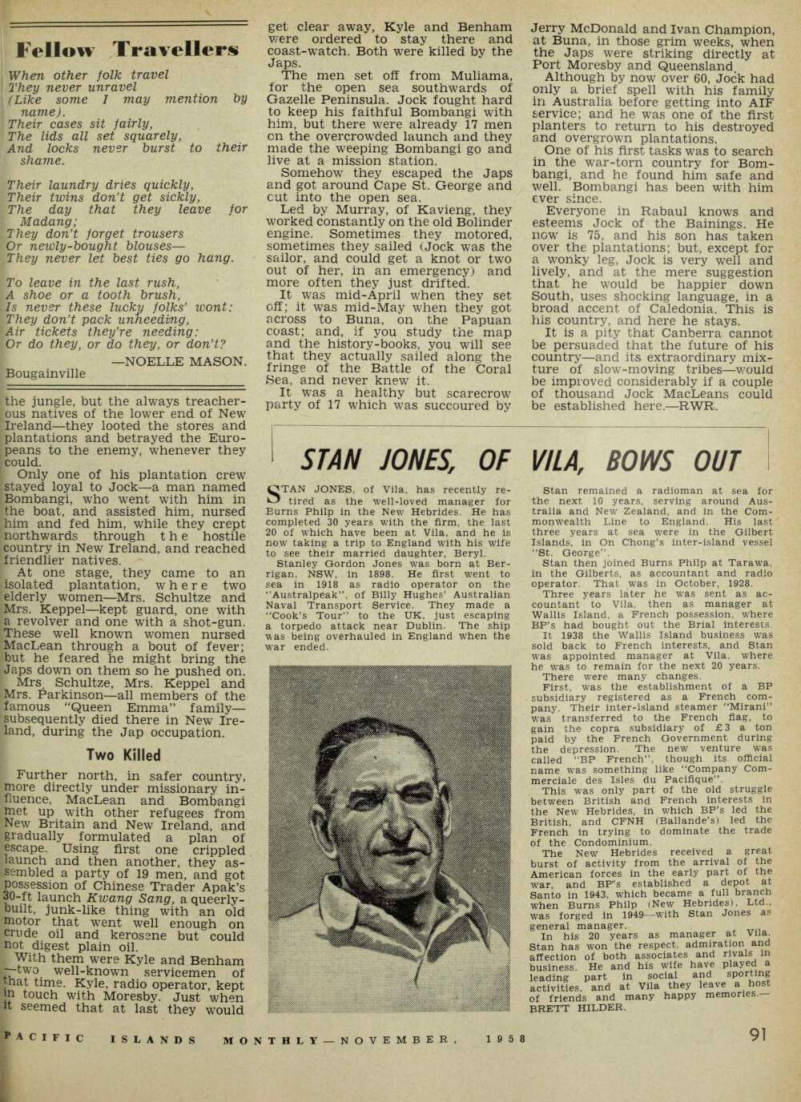 93
93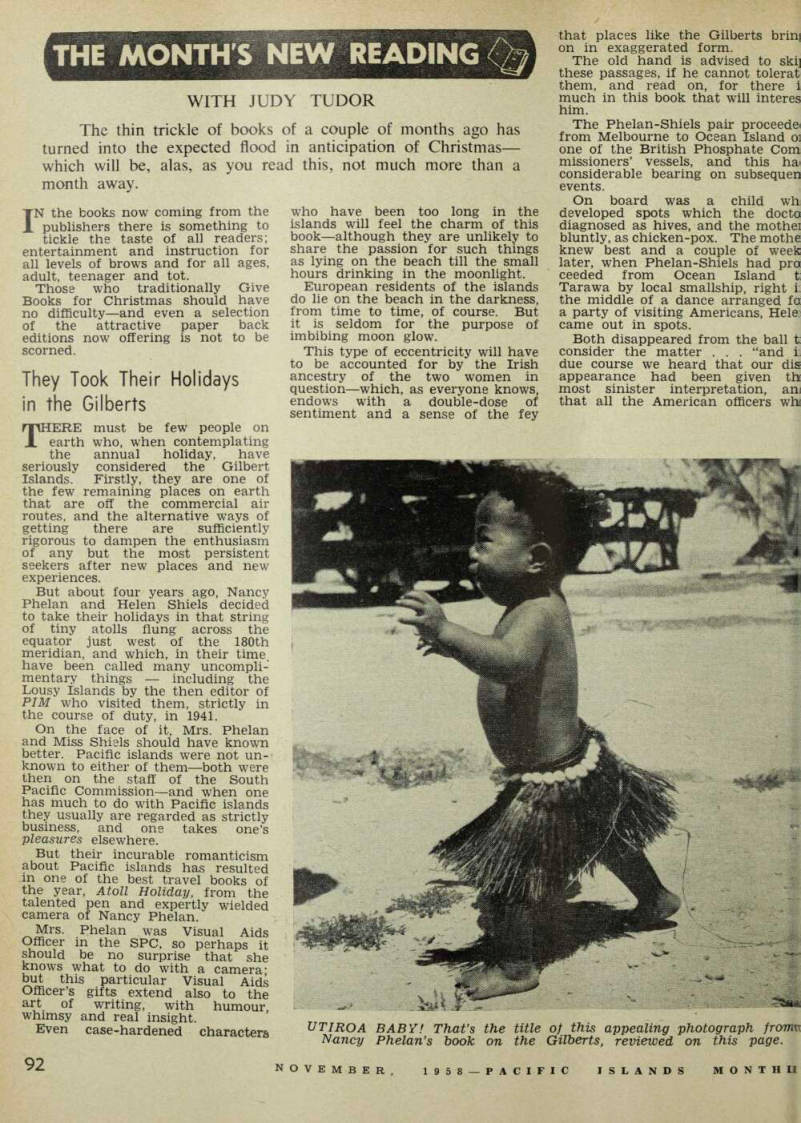 94
94 95
95 96
96 97
97 98
98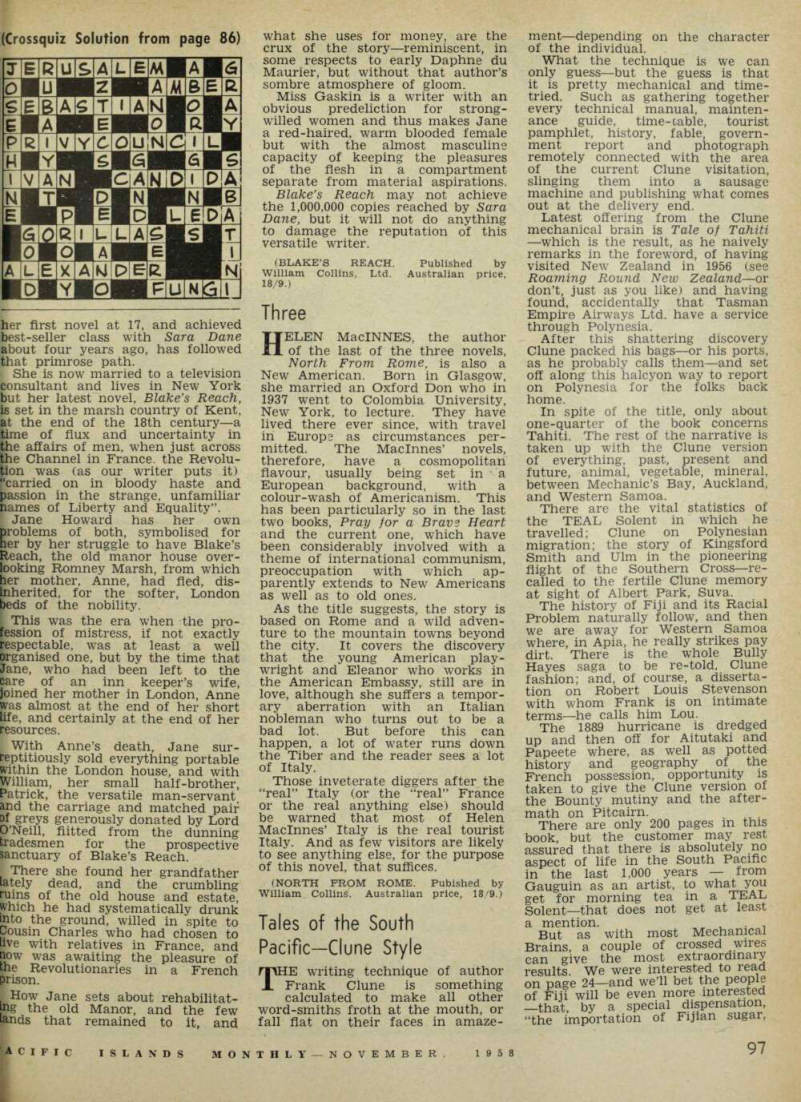 99
99 100
100 101
101 102
102 103
103 104
104 105
105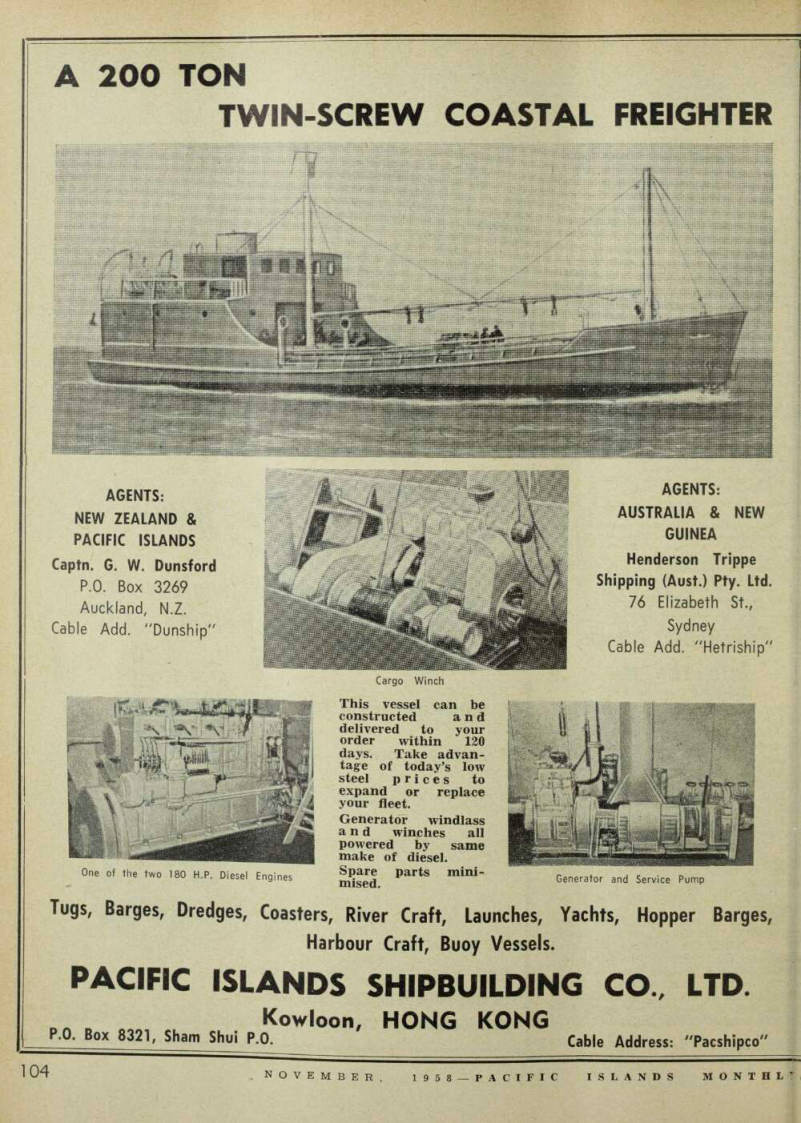 106
106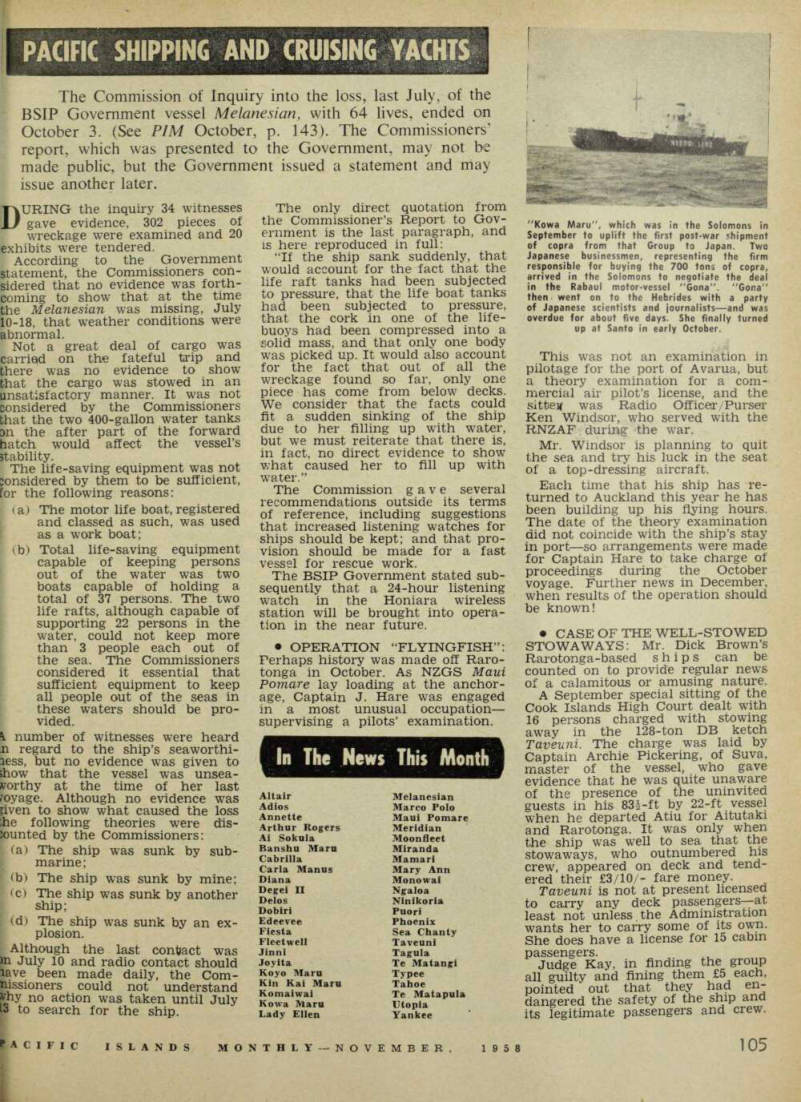 107
107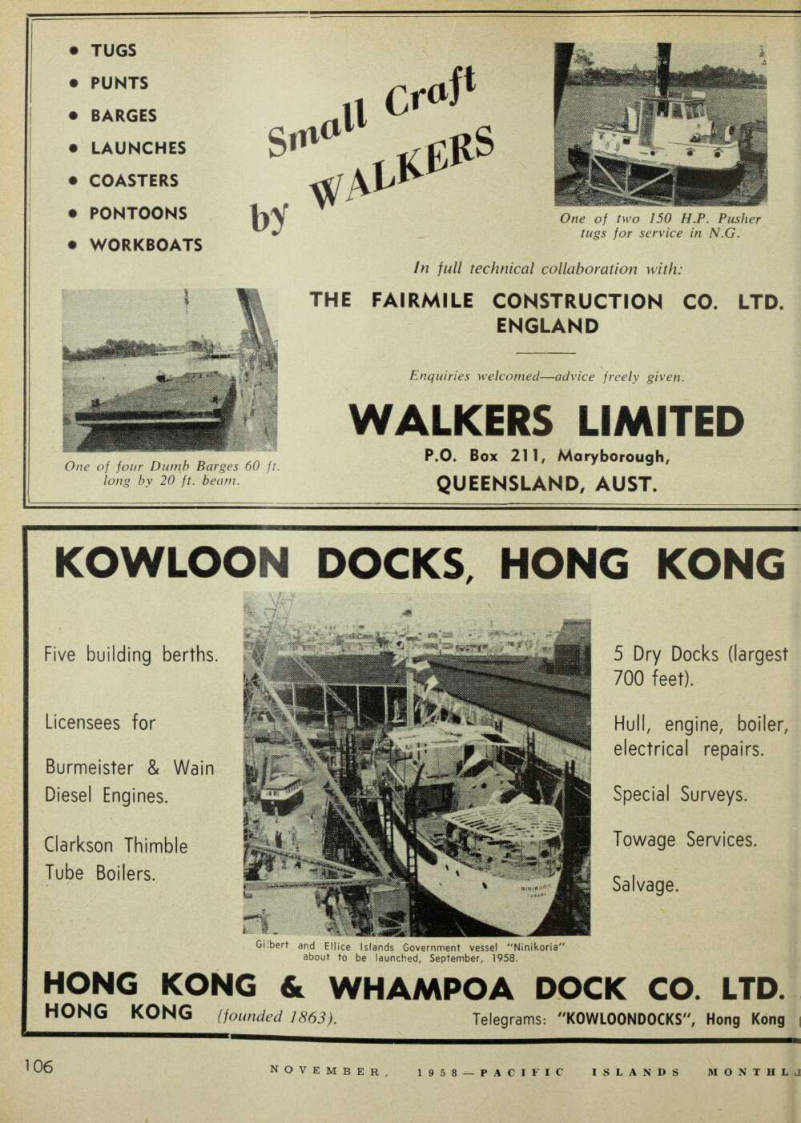 108
108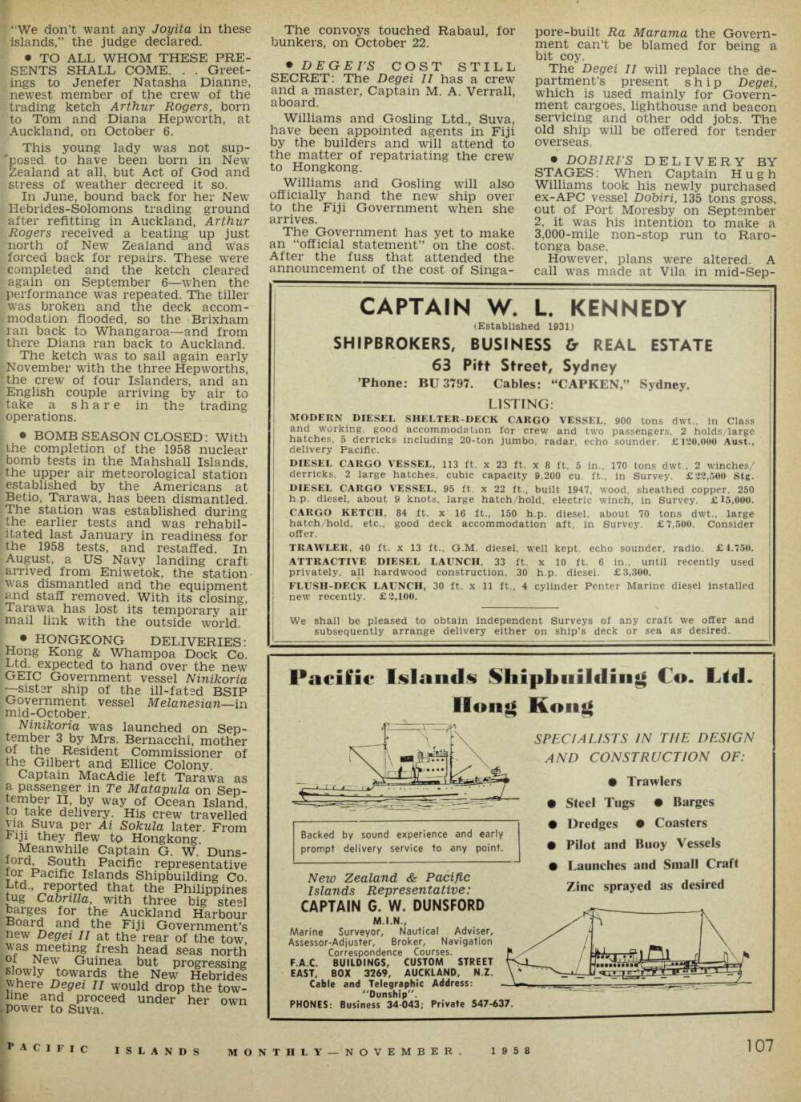 109
109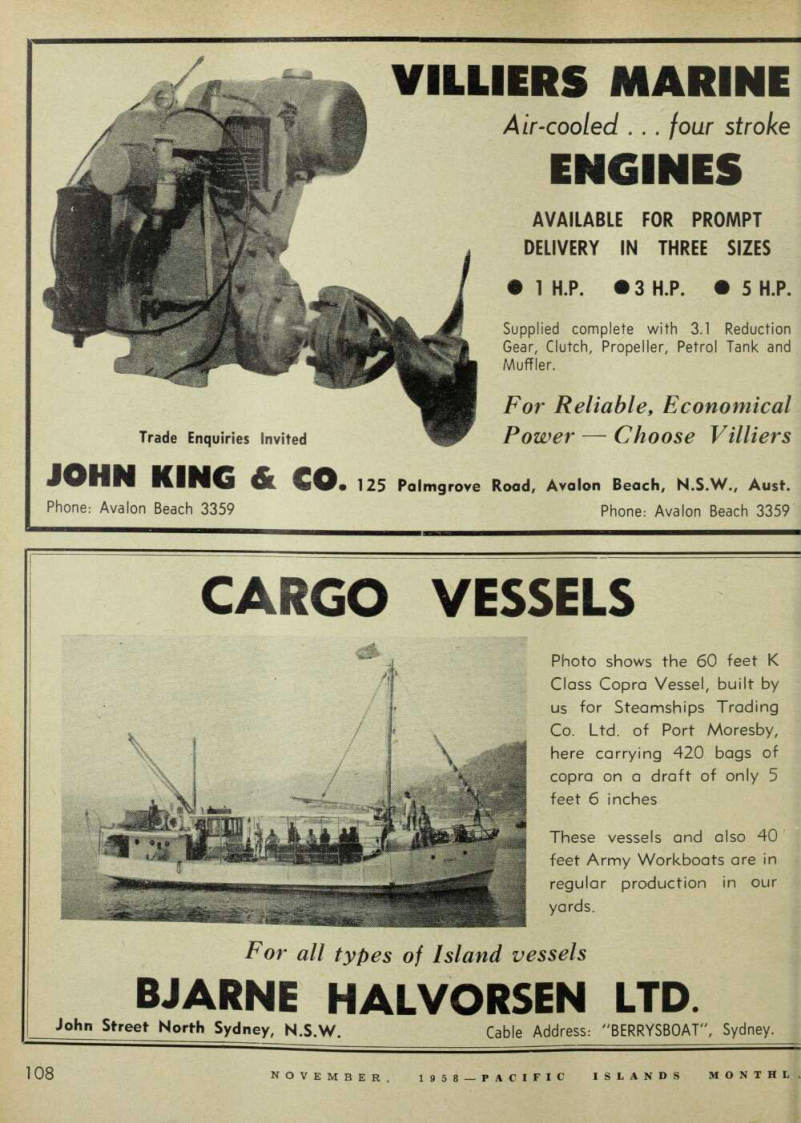 110
110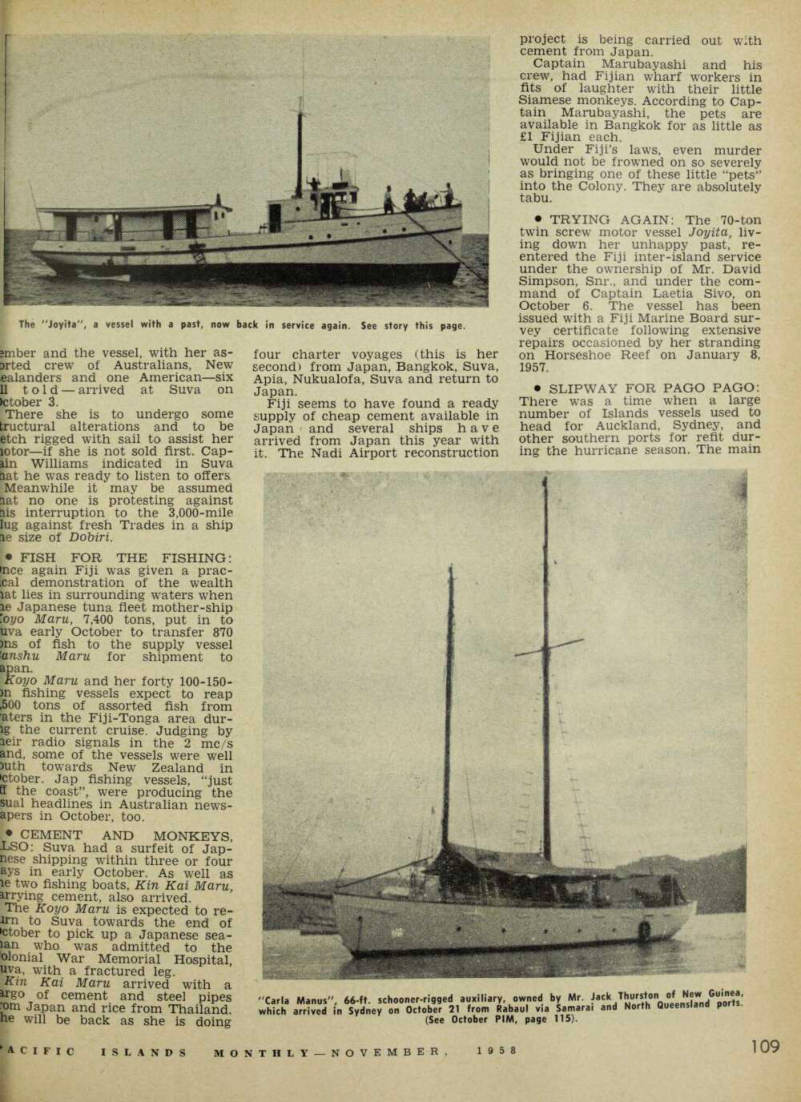 111
111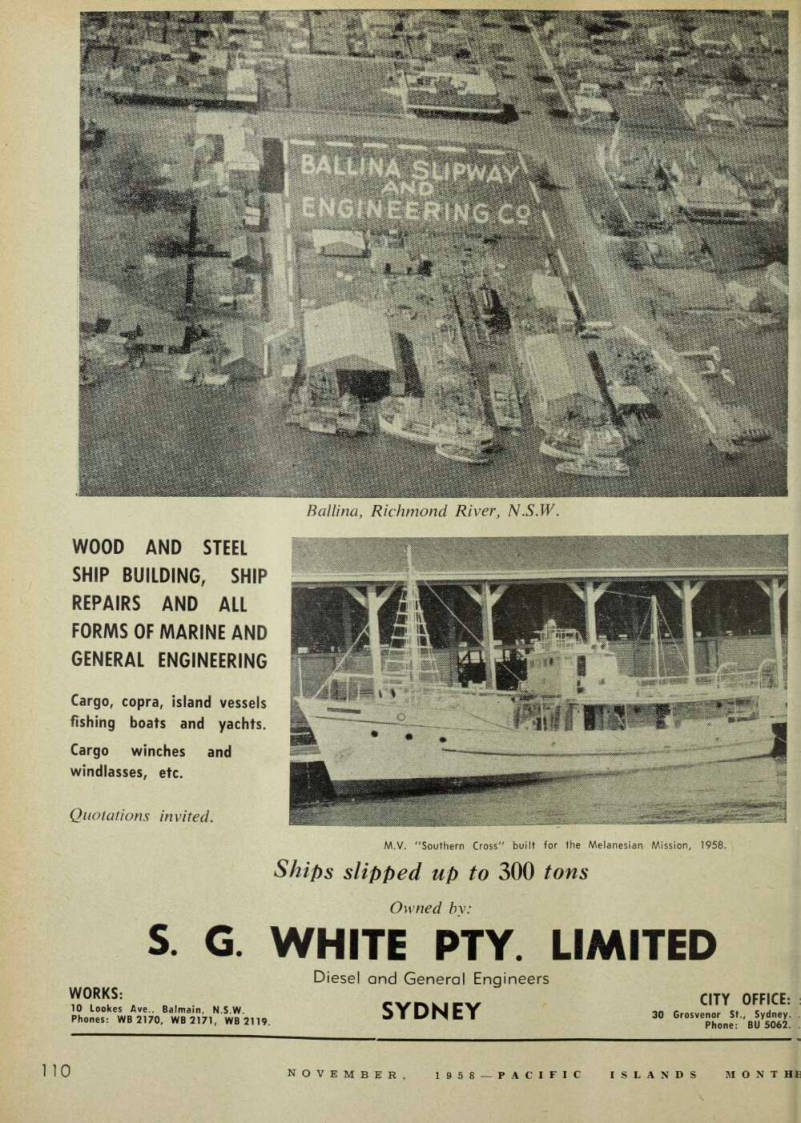 112
112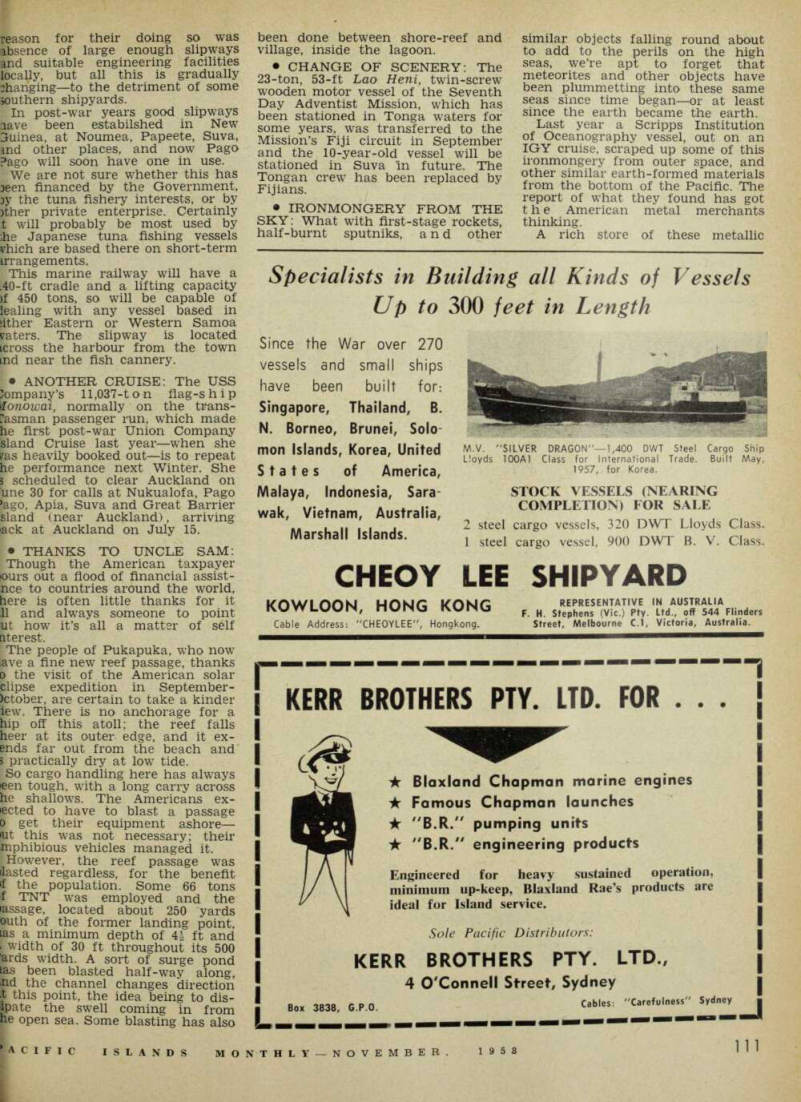 113
113 114
114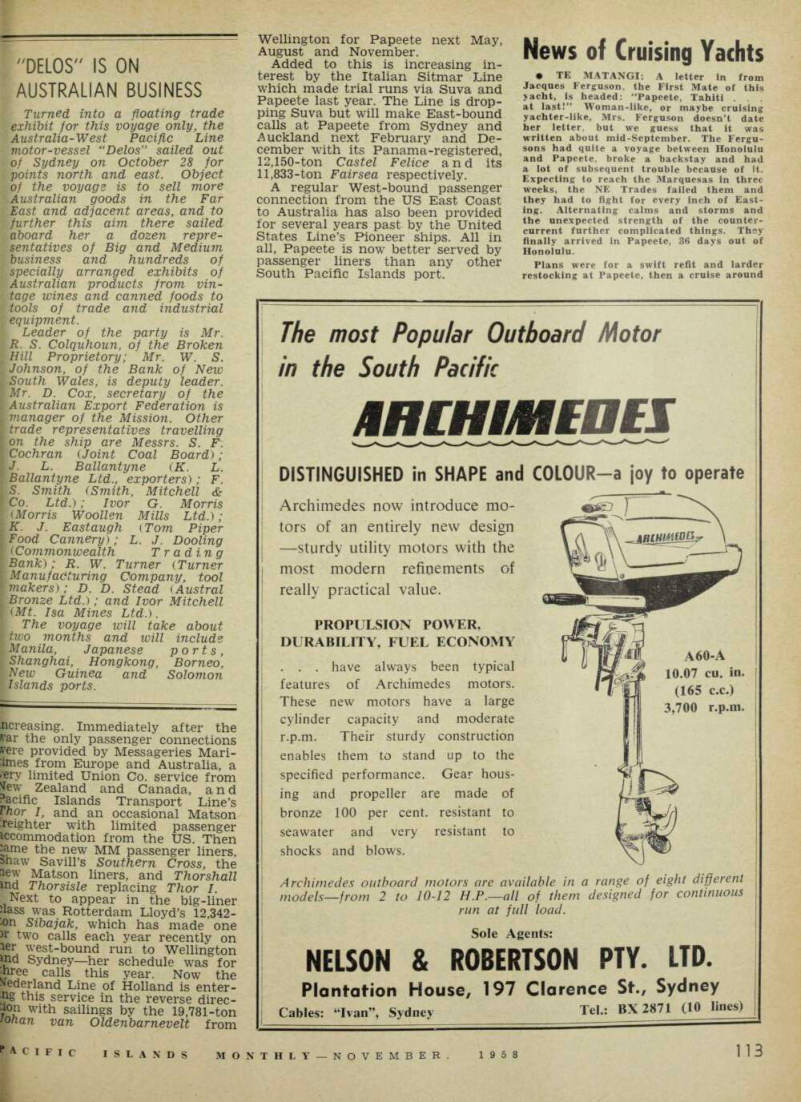 115
115 116
116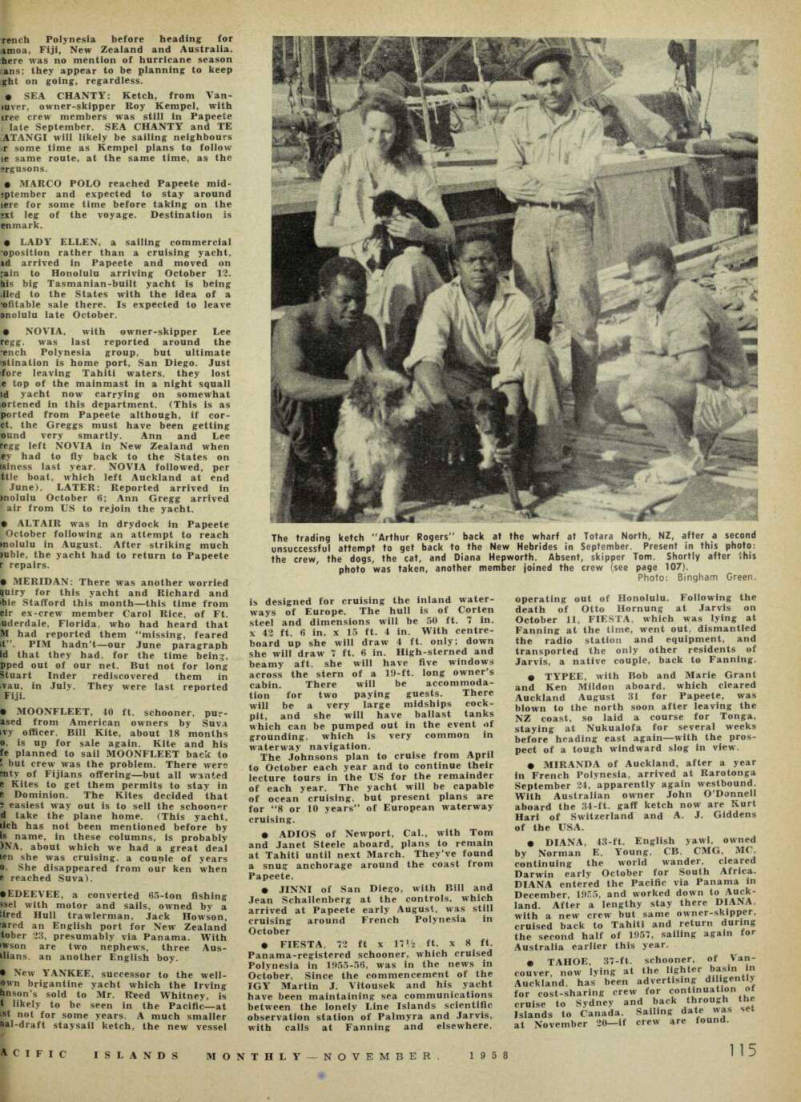 117
117 118
118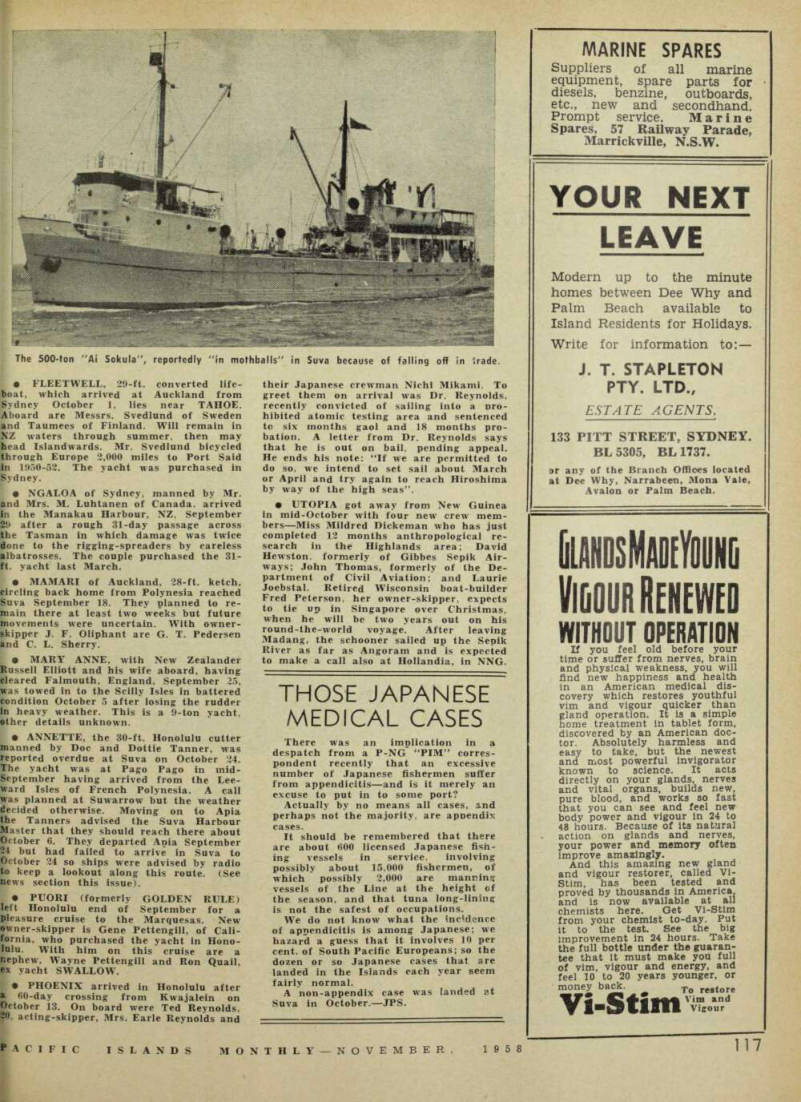 119
119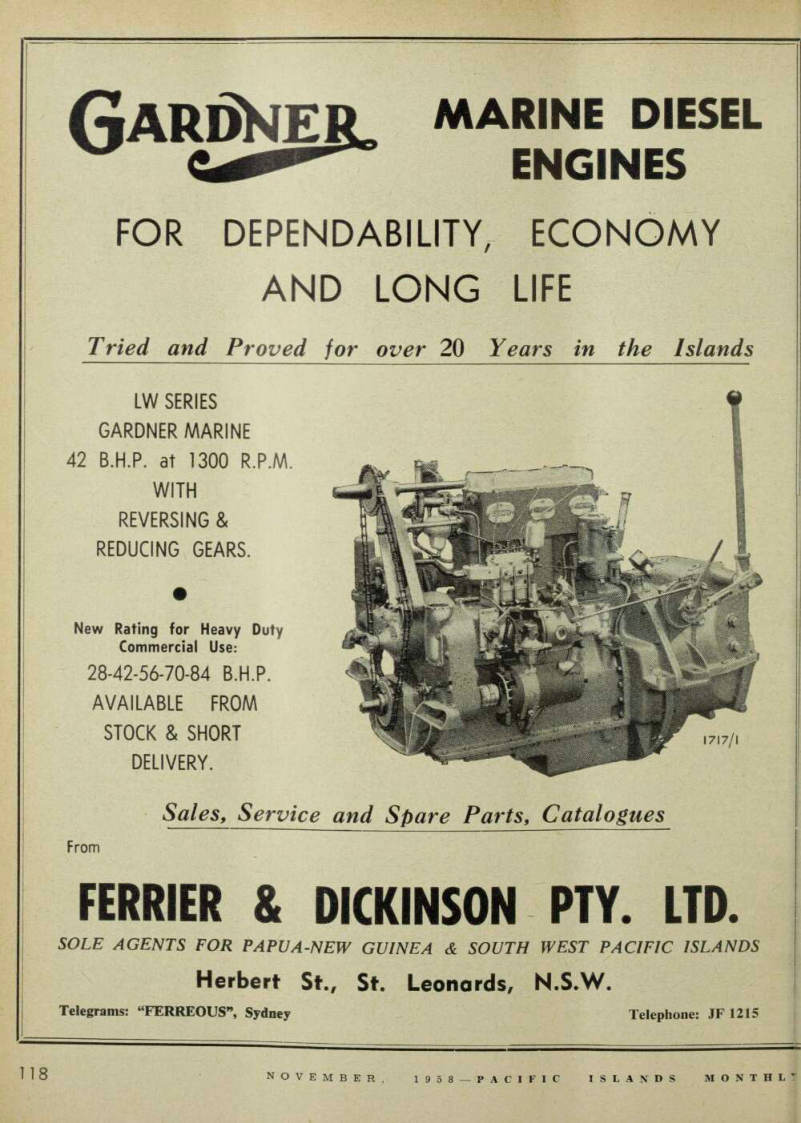 120
120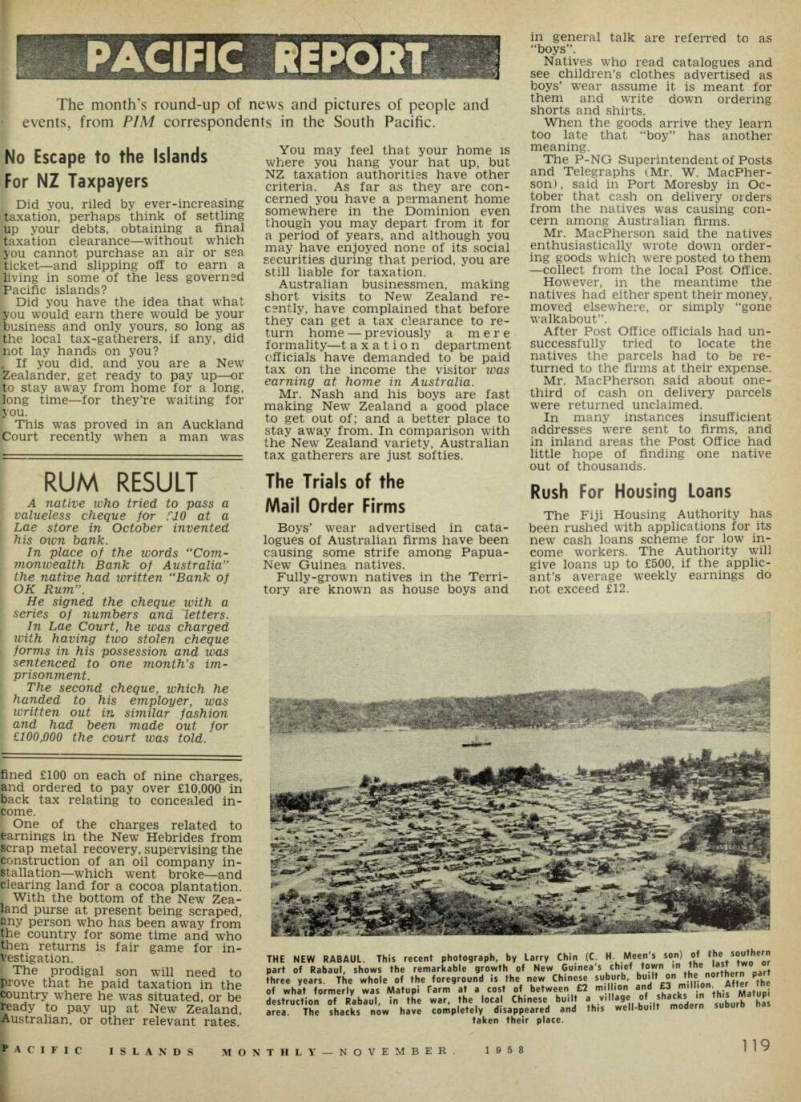 121
121 122
122 123
123 124
124 125
125 126
126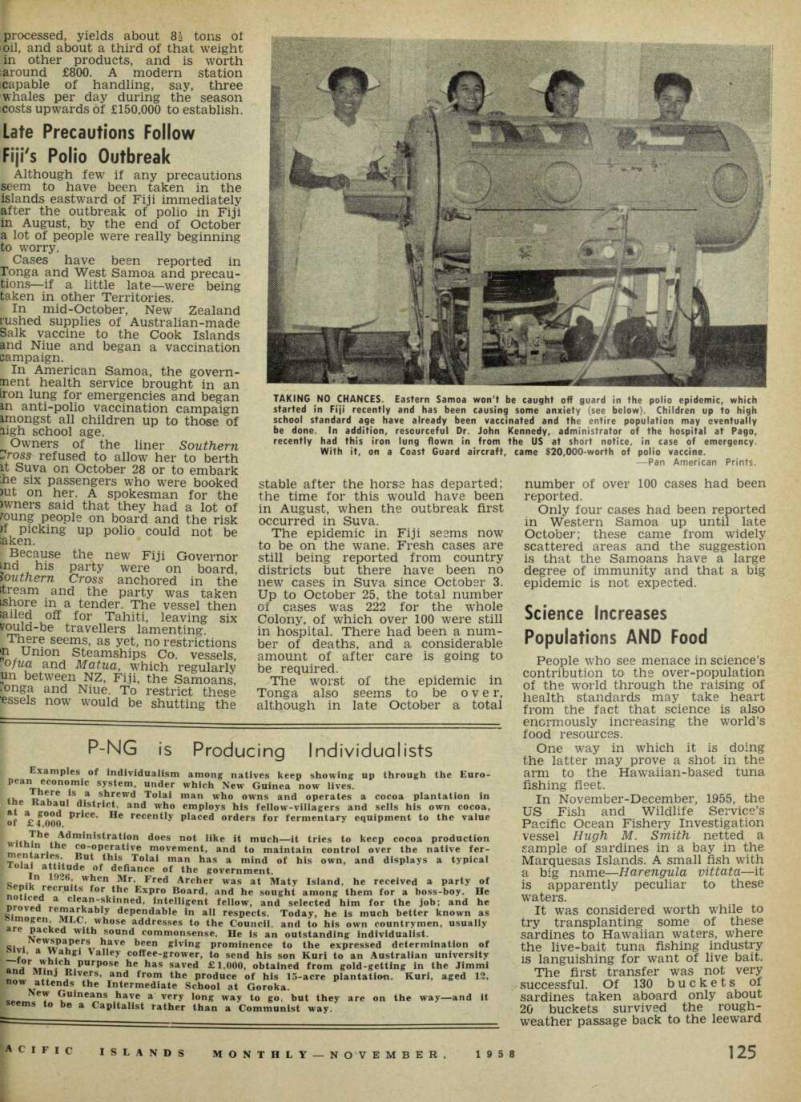 127
127 128
128 129
129 130
130 131
131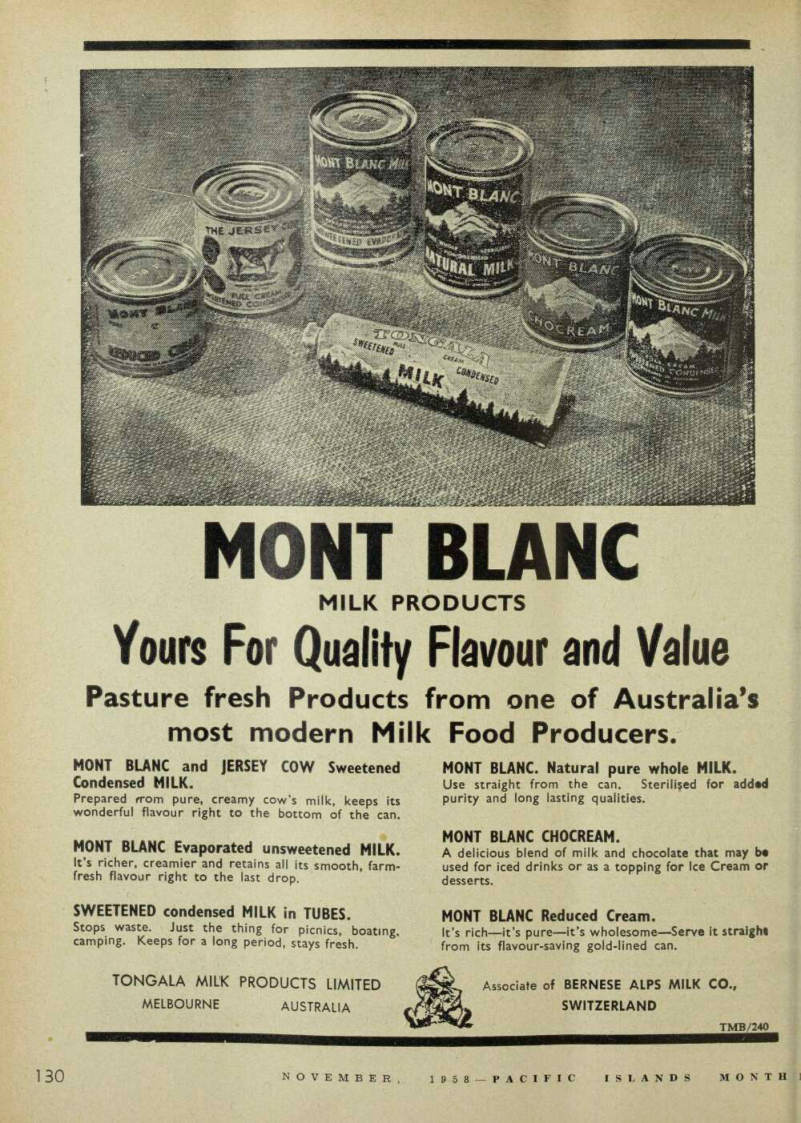 132
132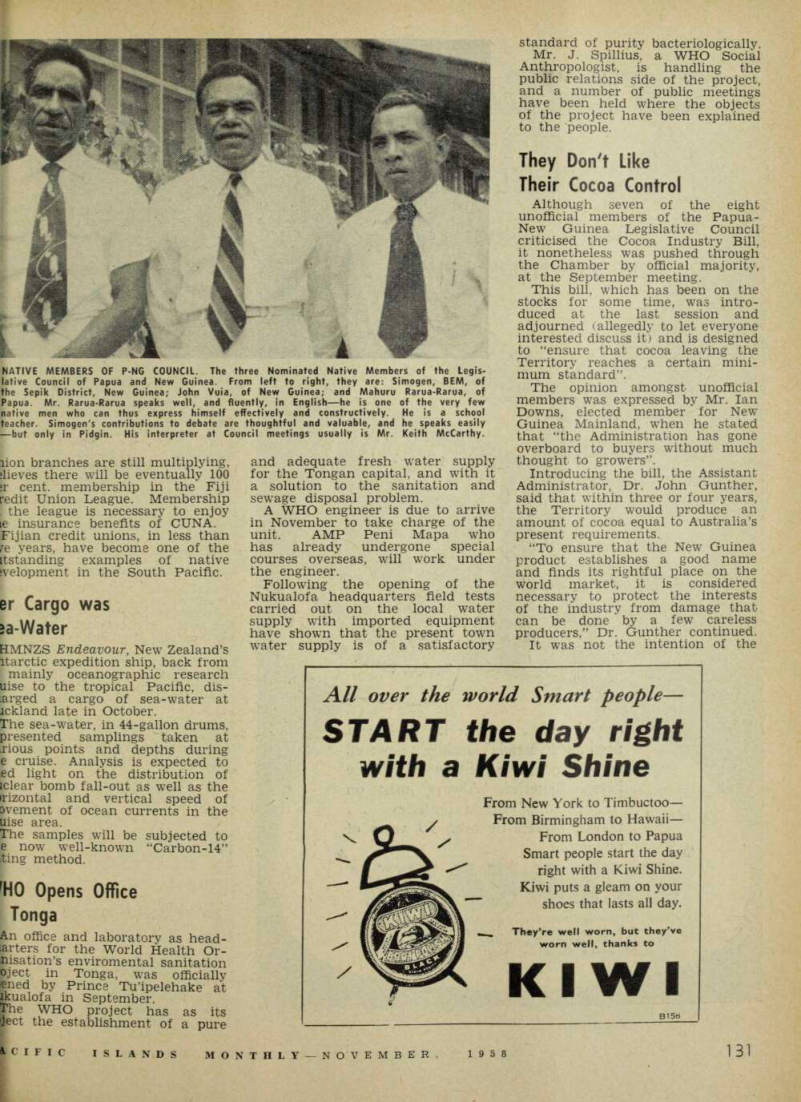 133
133 134
134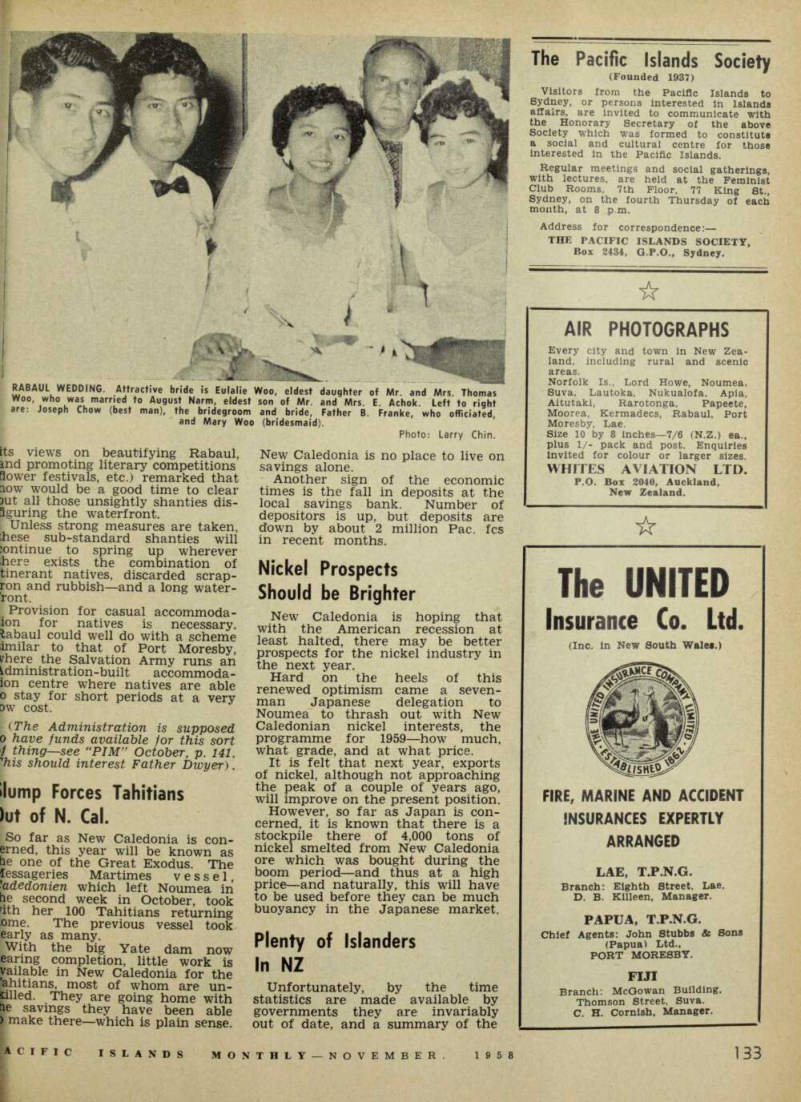 135
135 136
136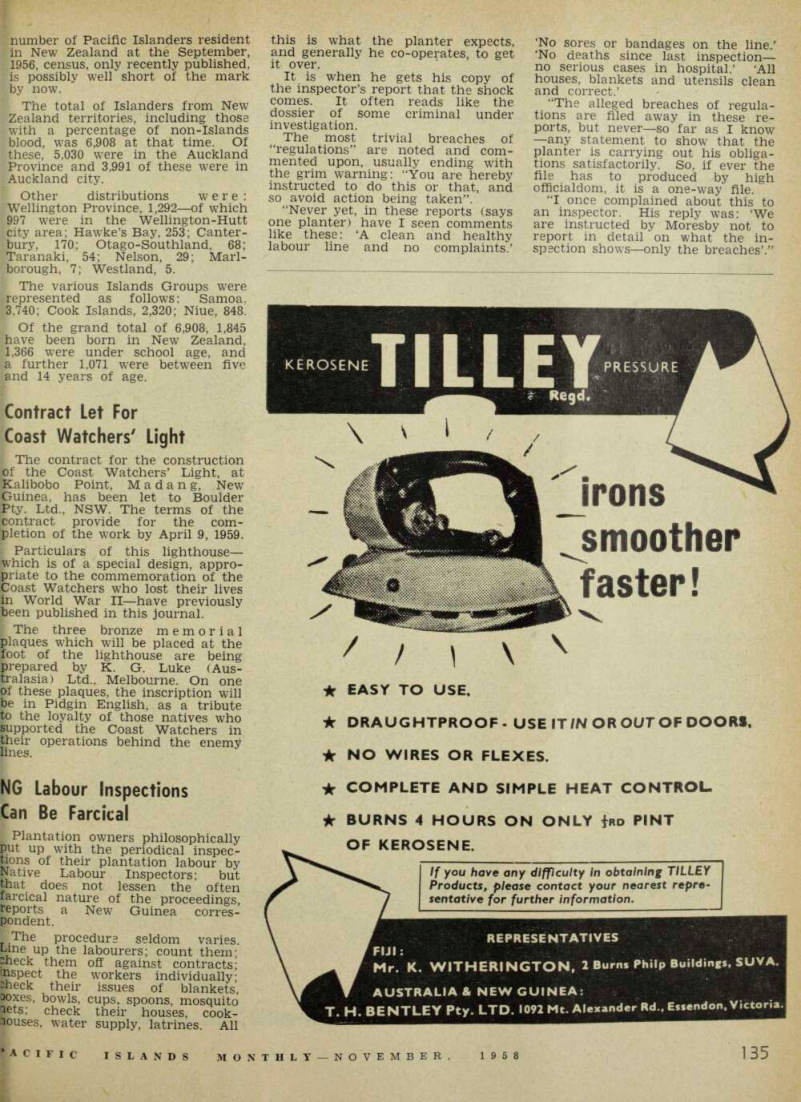 137
137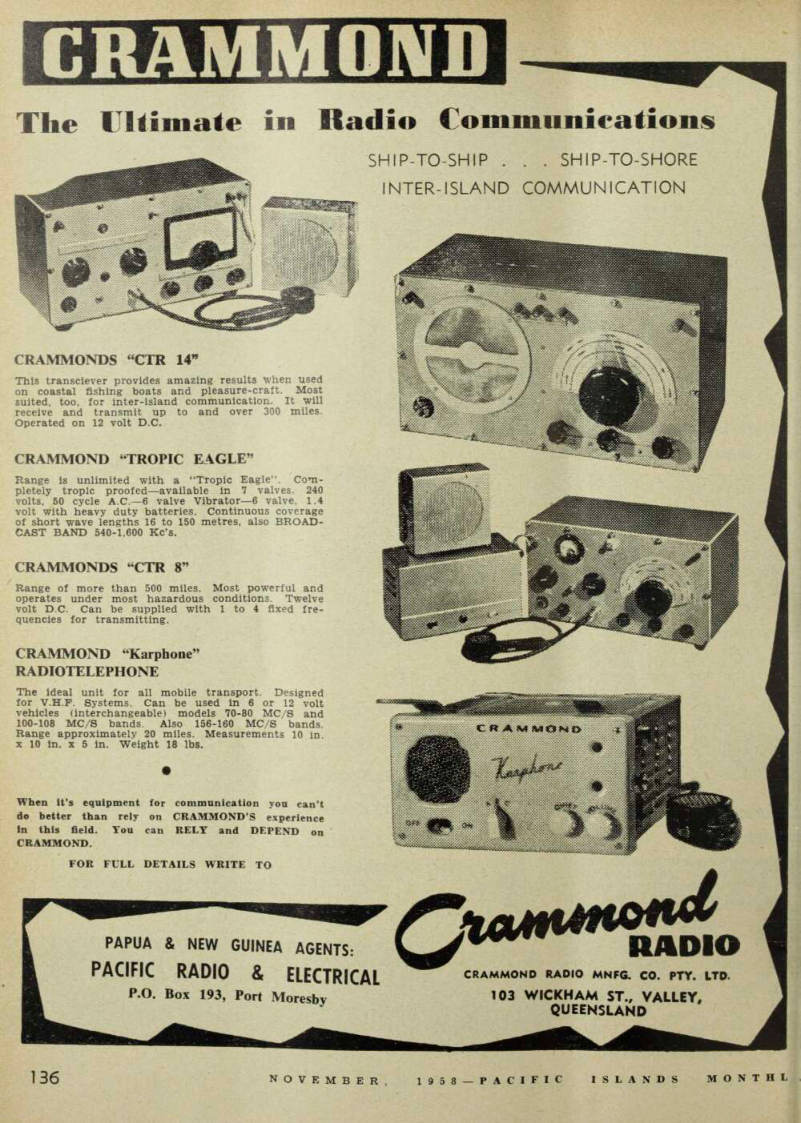 138
138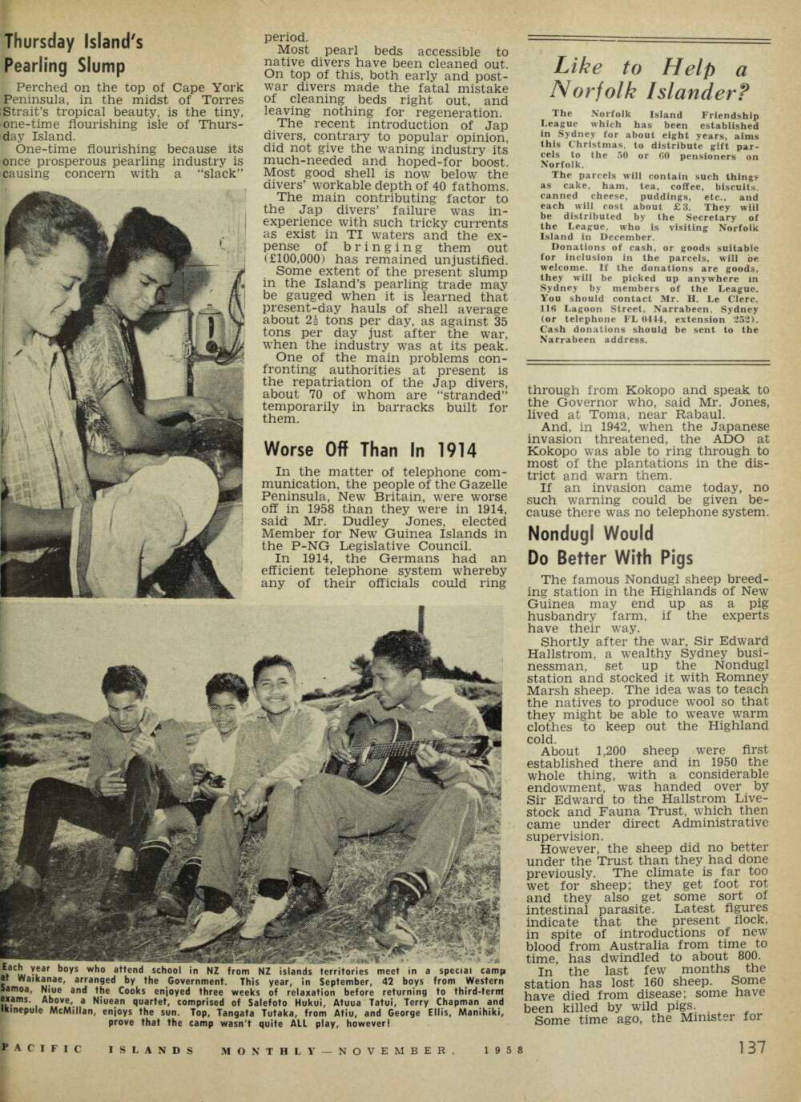 139
139 140
140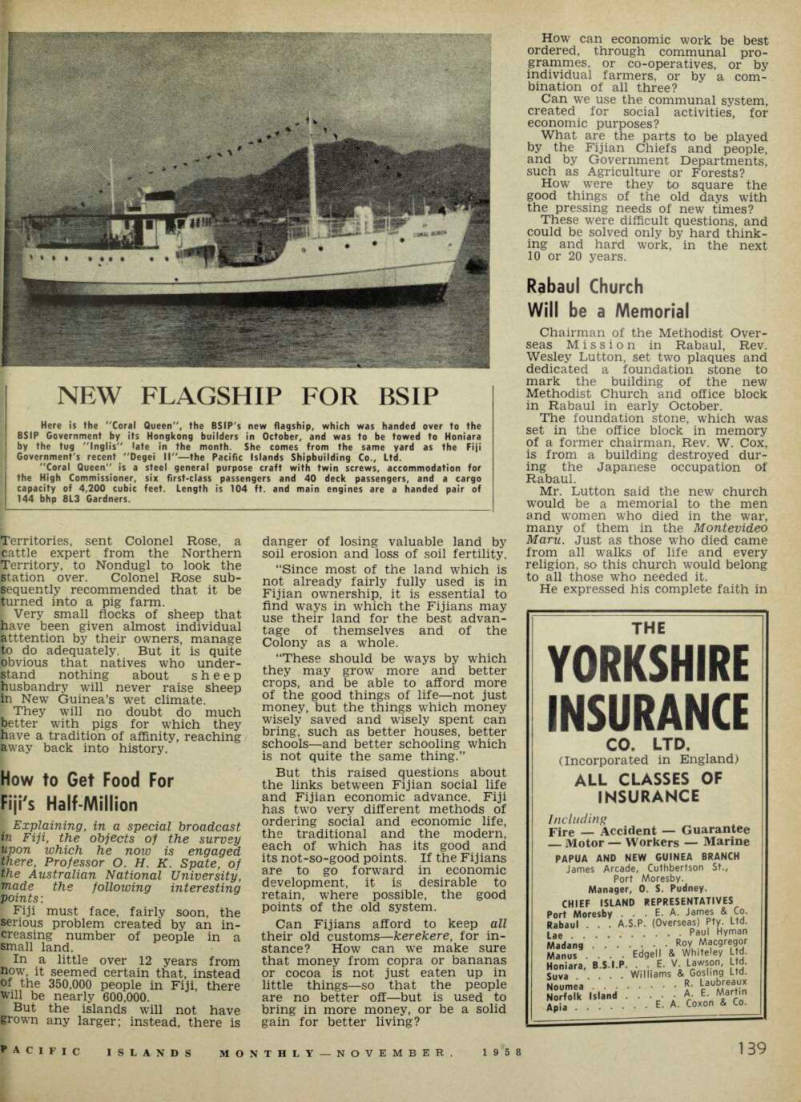 141
141 142
142 143
143 144
144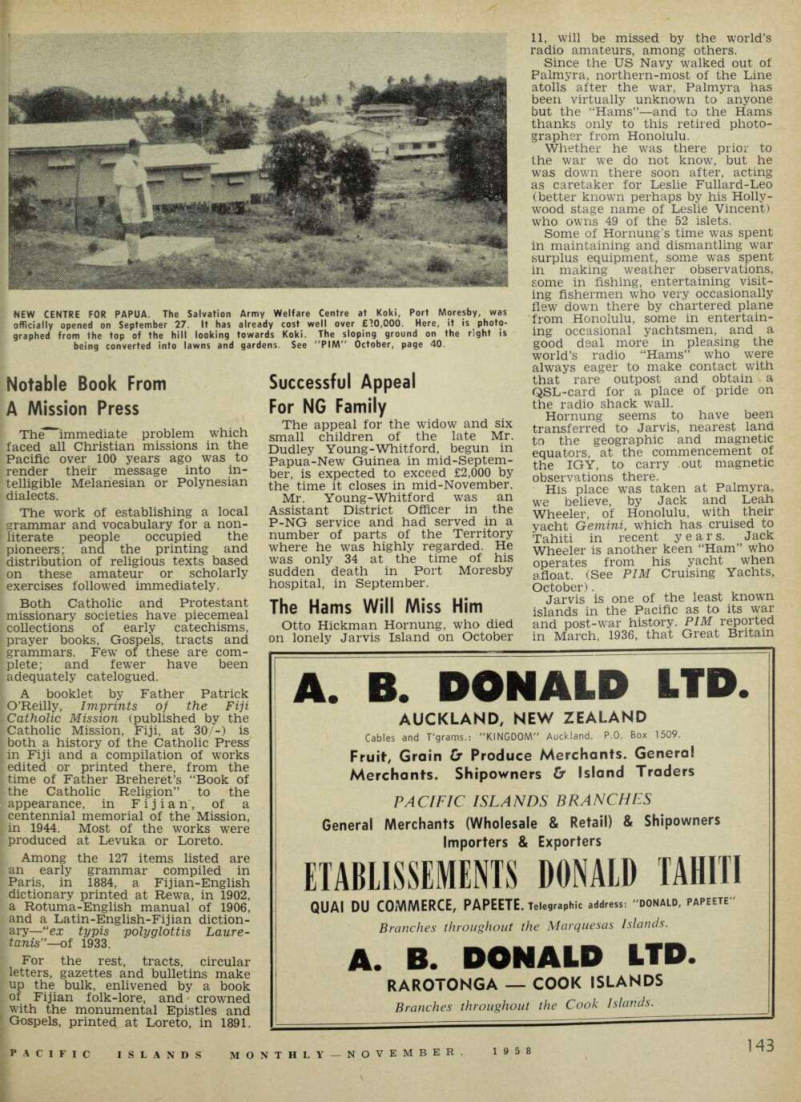 145
145 146
146 147
147 148
148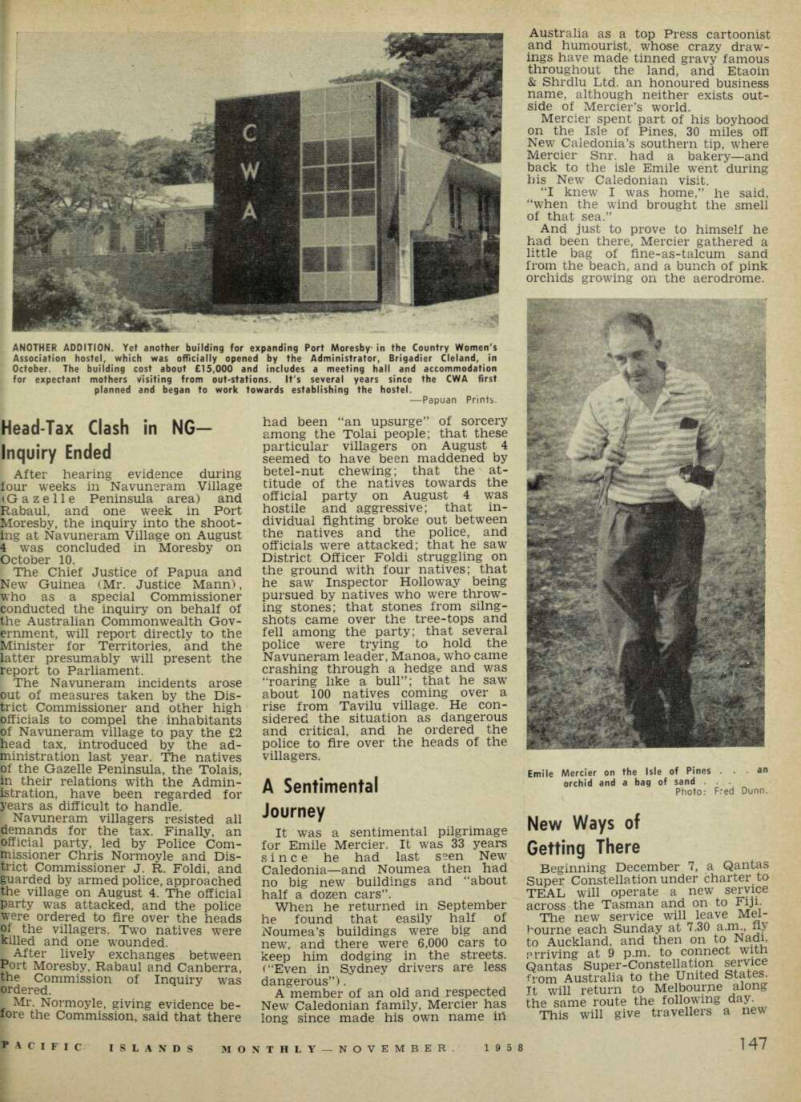 149
149 150
150 151
151 152
152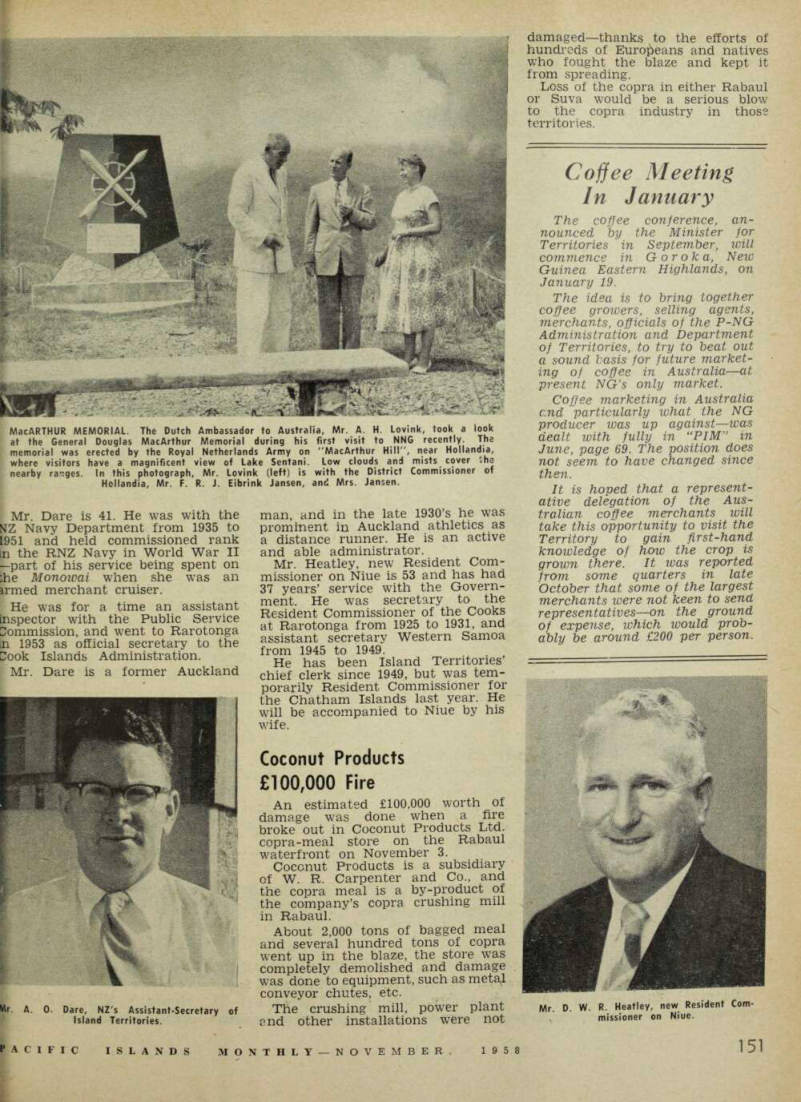 153
153 154
154 155
155 156
156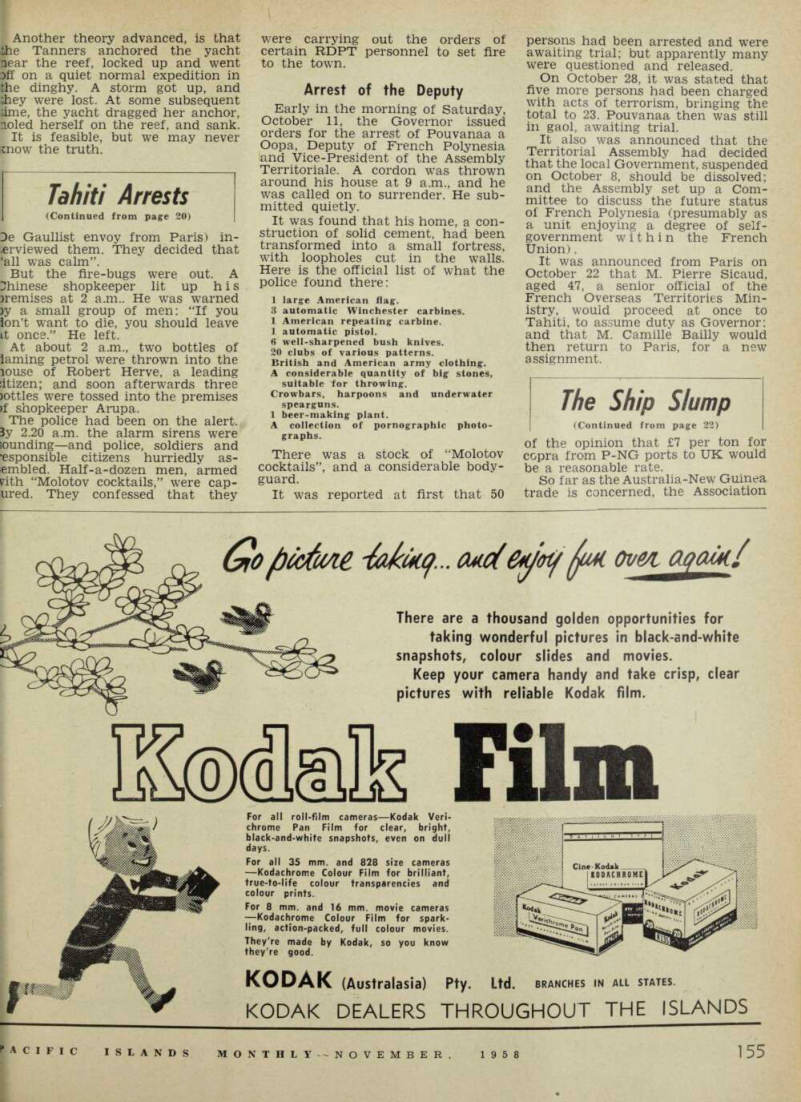 157
157 158
158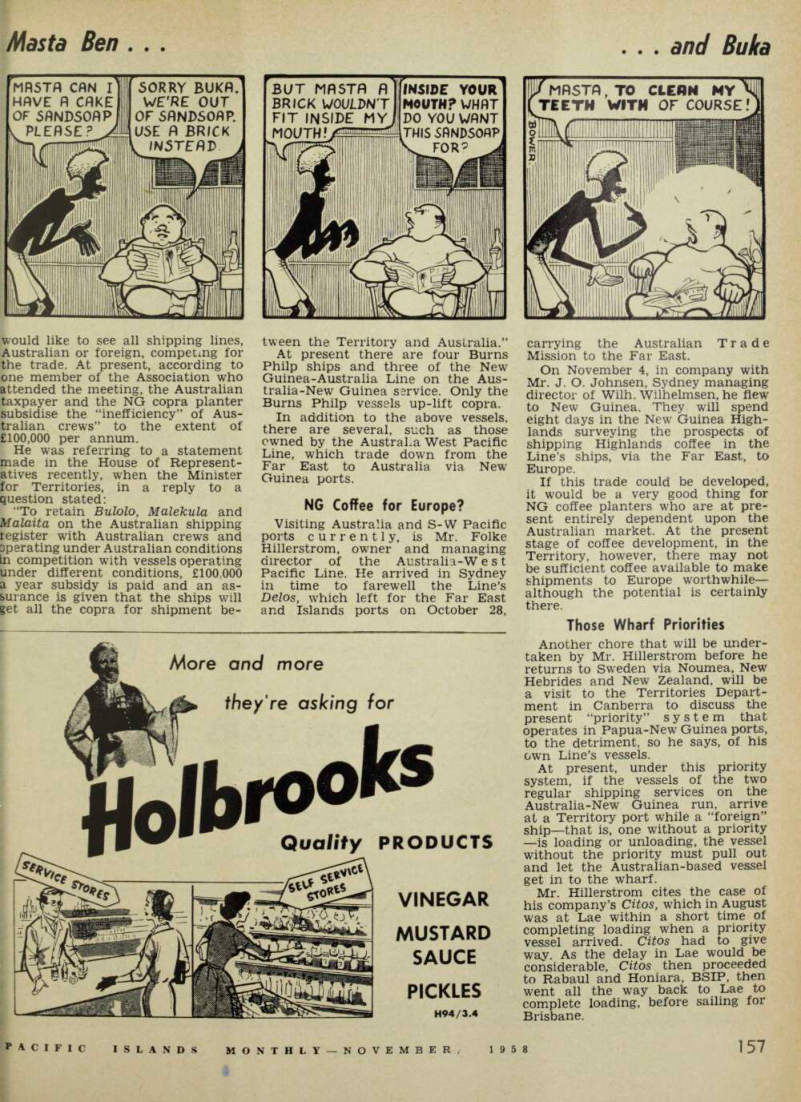 159
159 160
160 161
161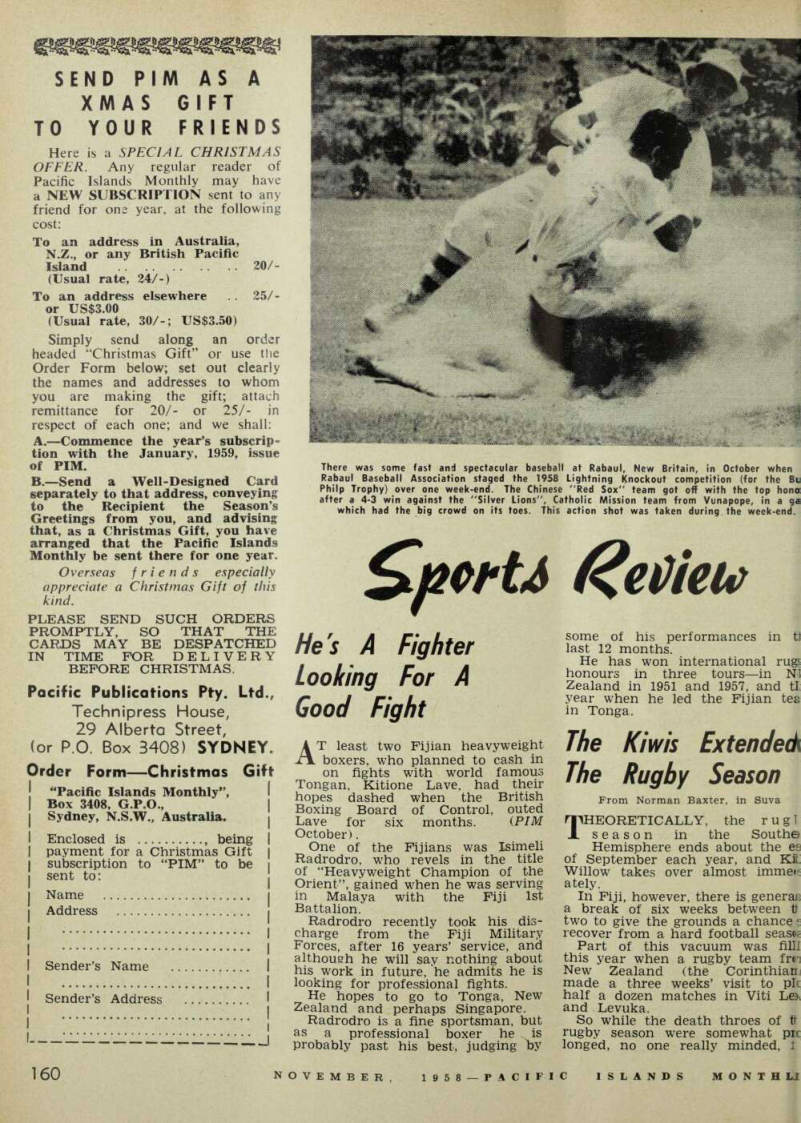 162
162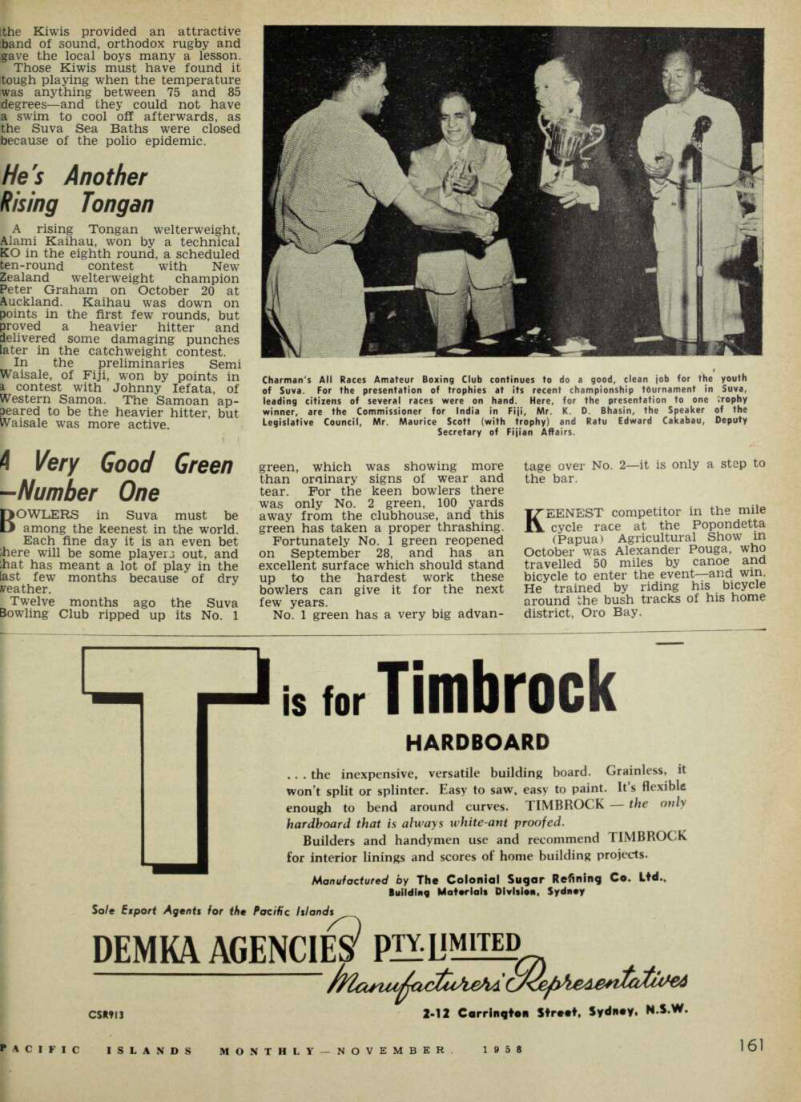 163
163 164
164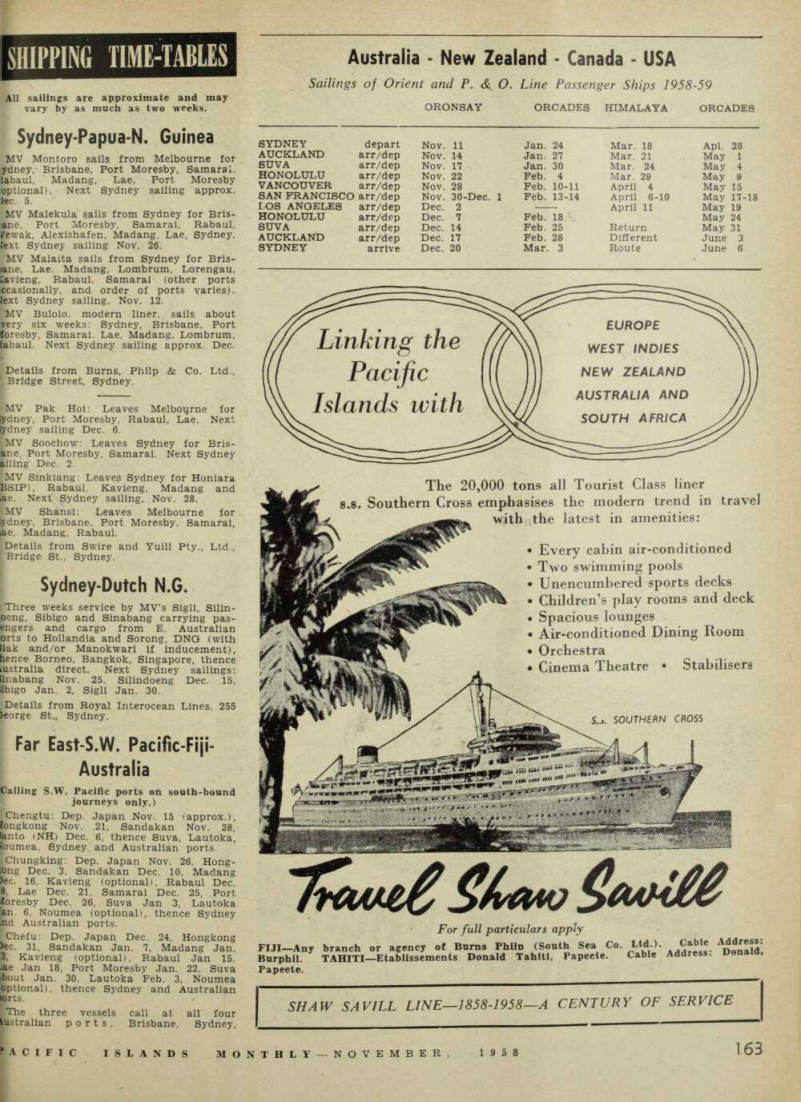 165
165 166
166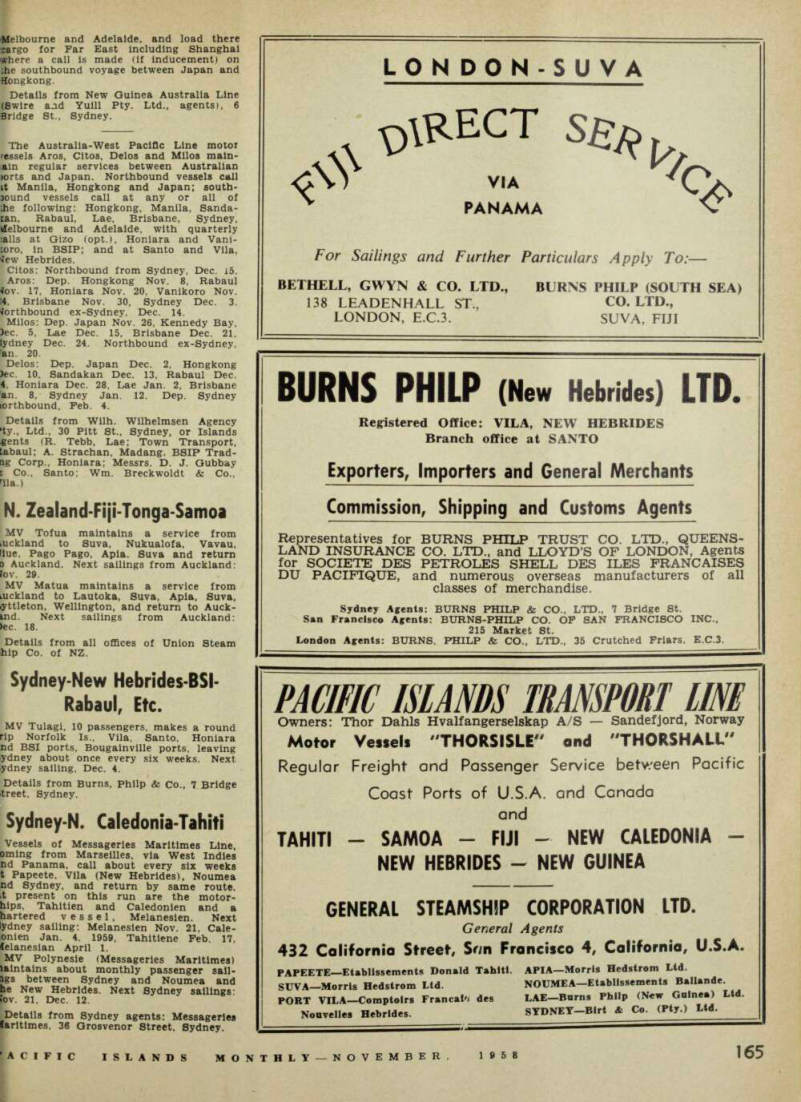 167
167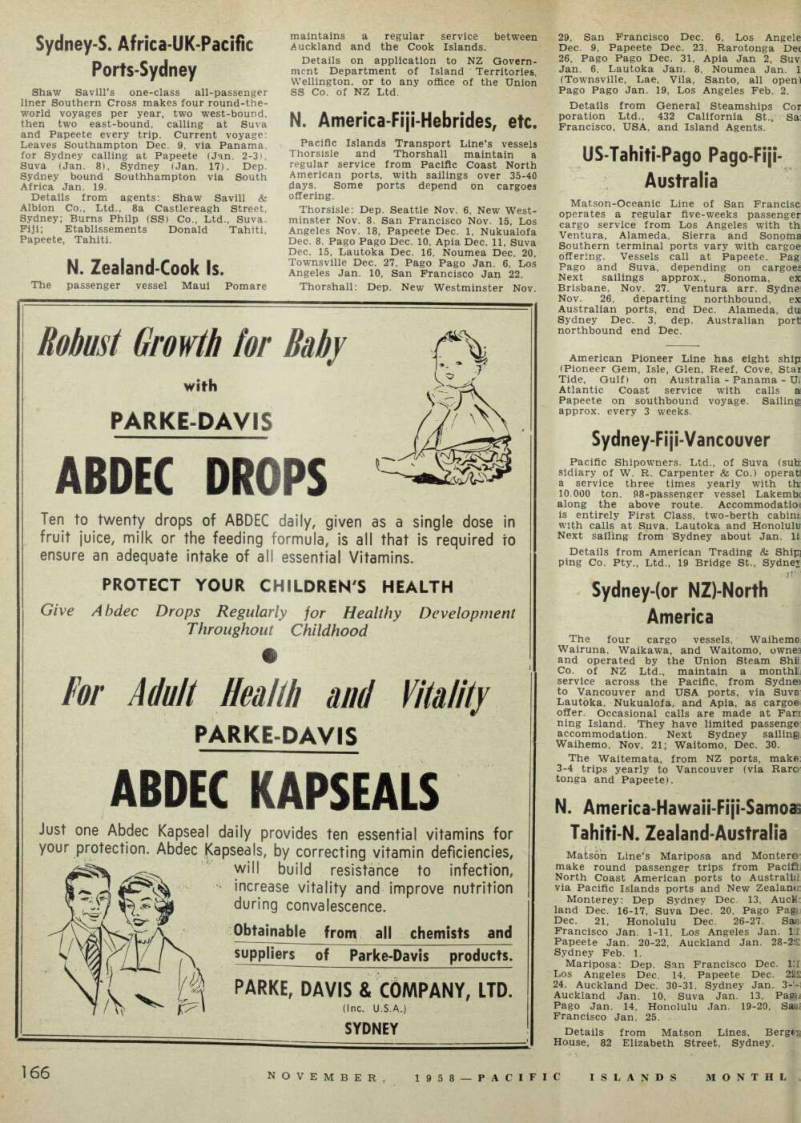 168
168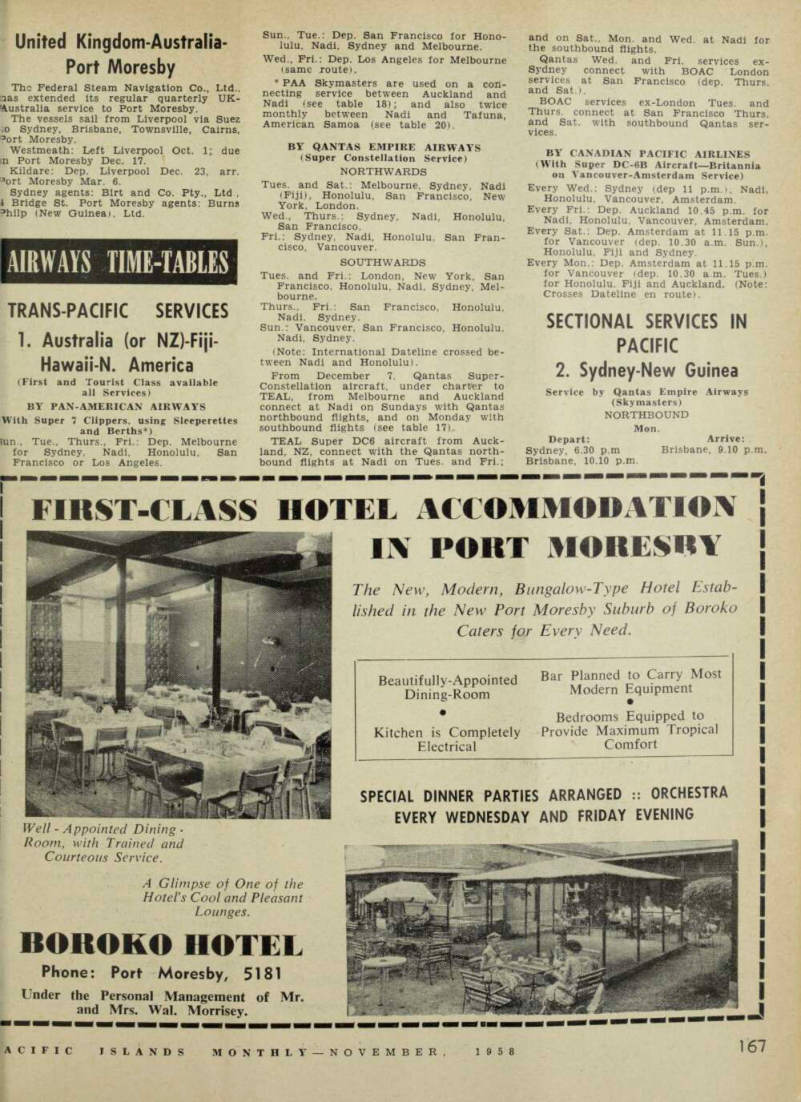 169
169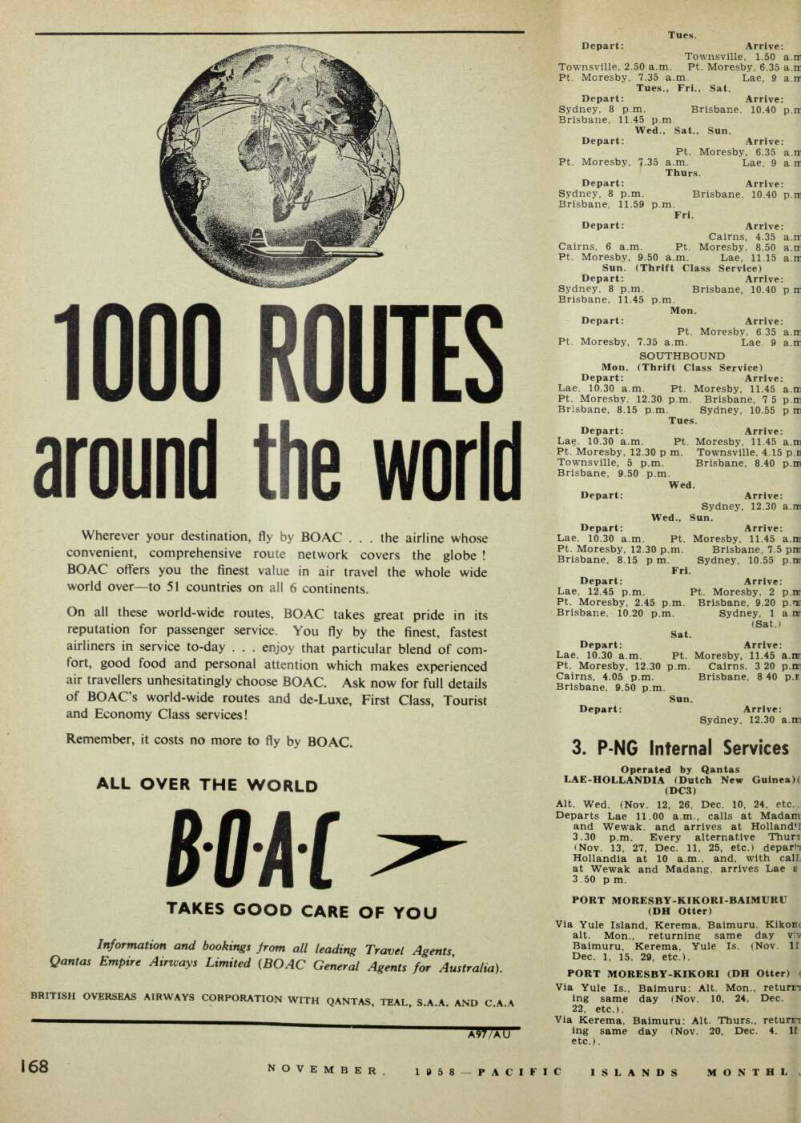 170
170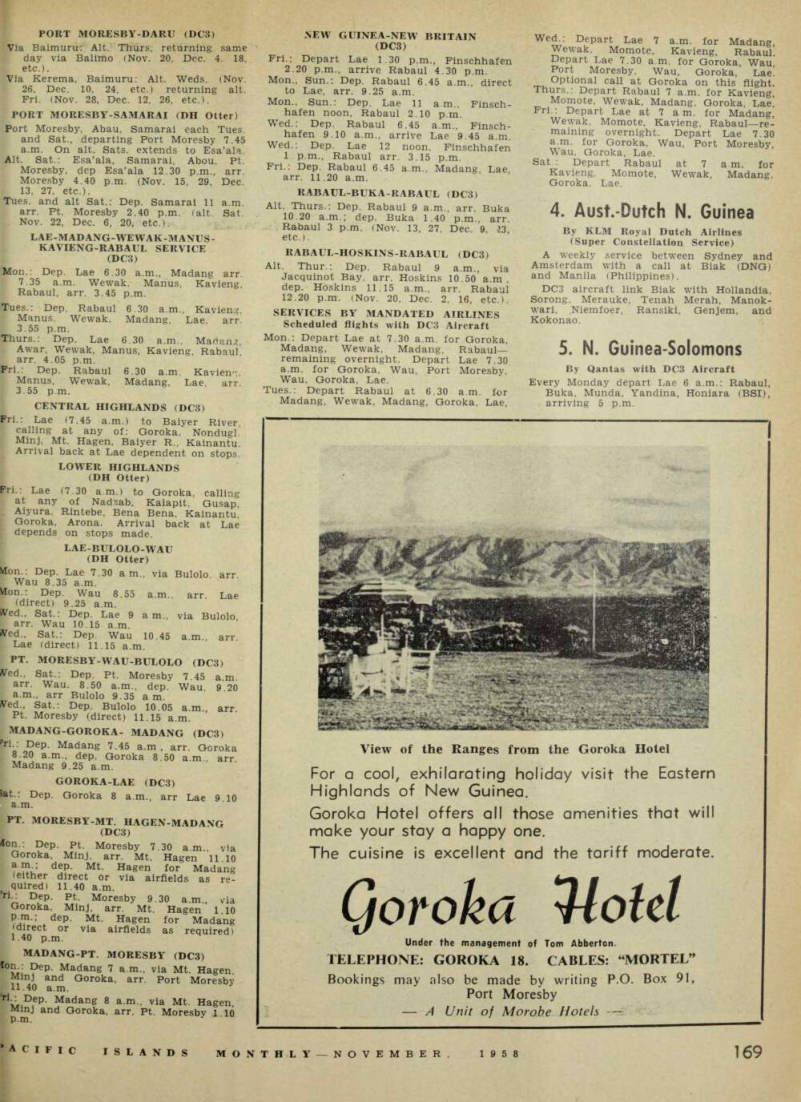 171
171 172
172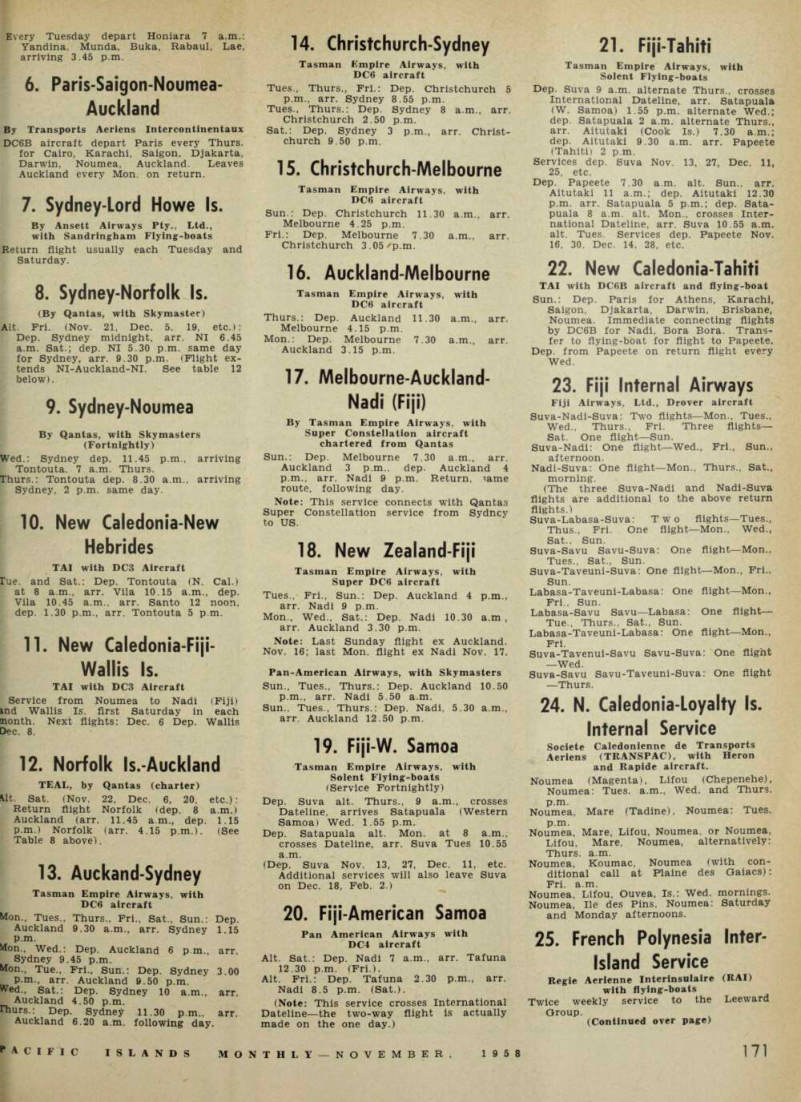 173
173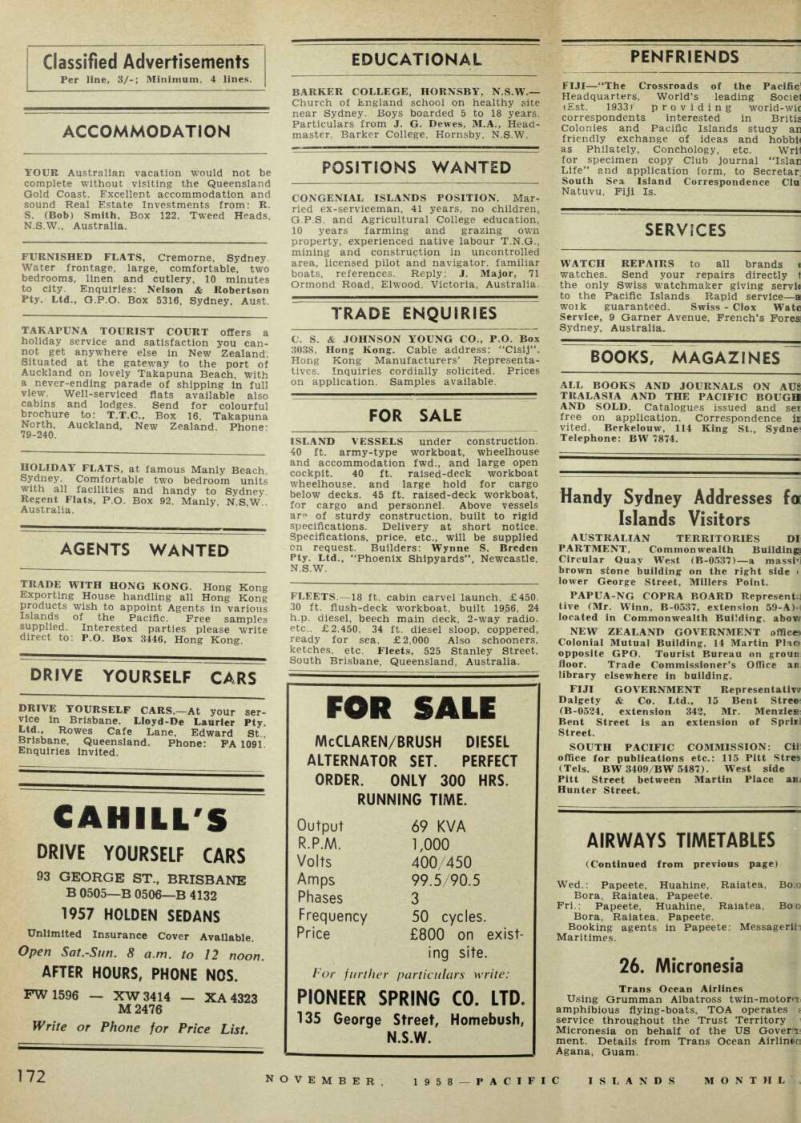 174
174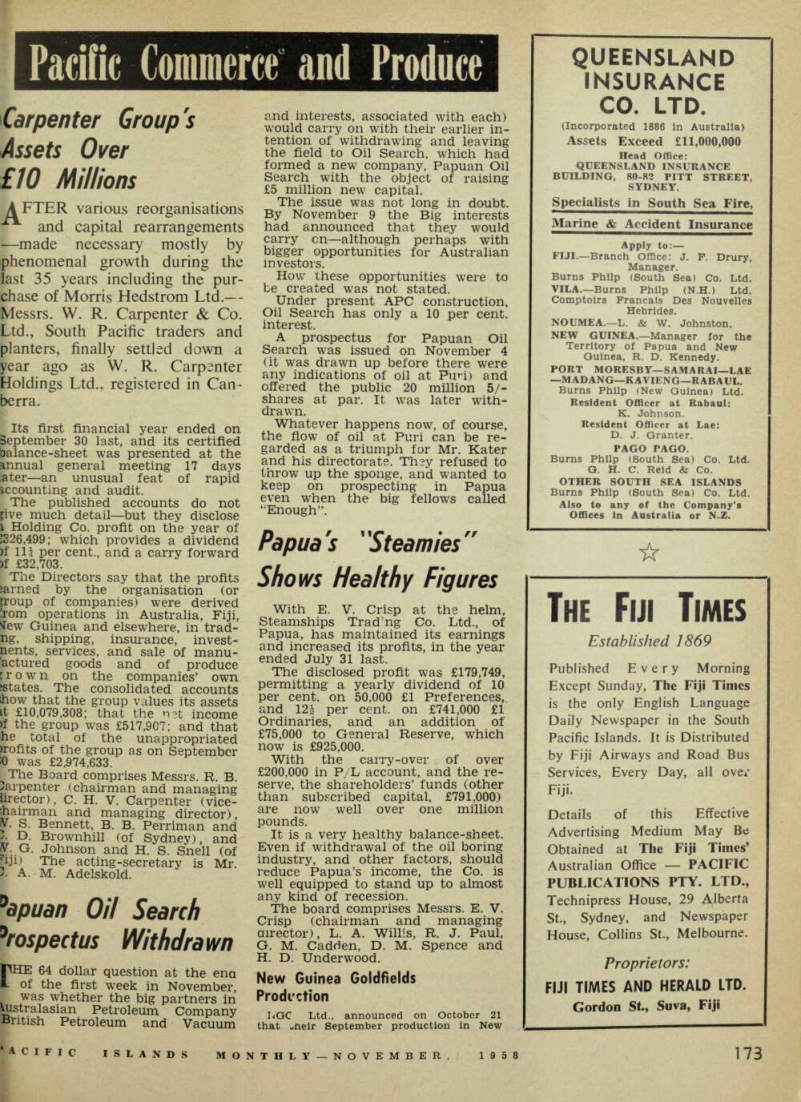 175
175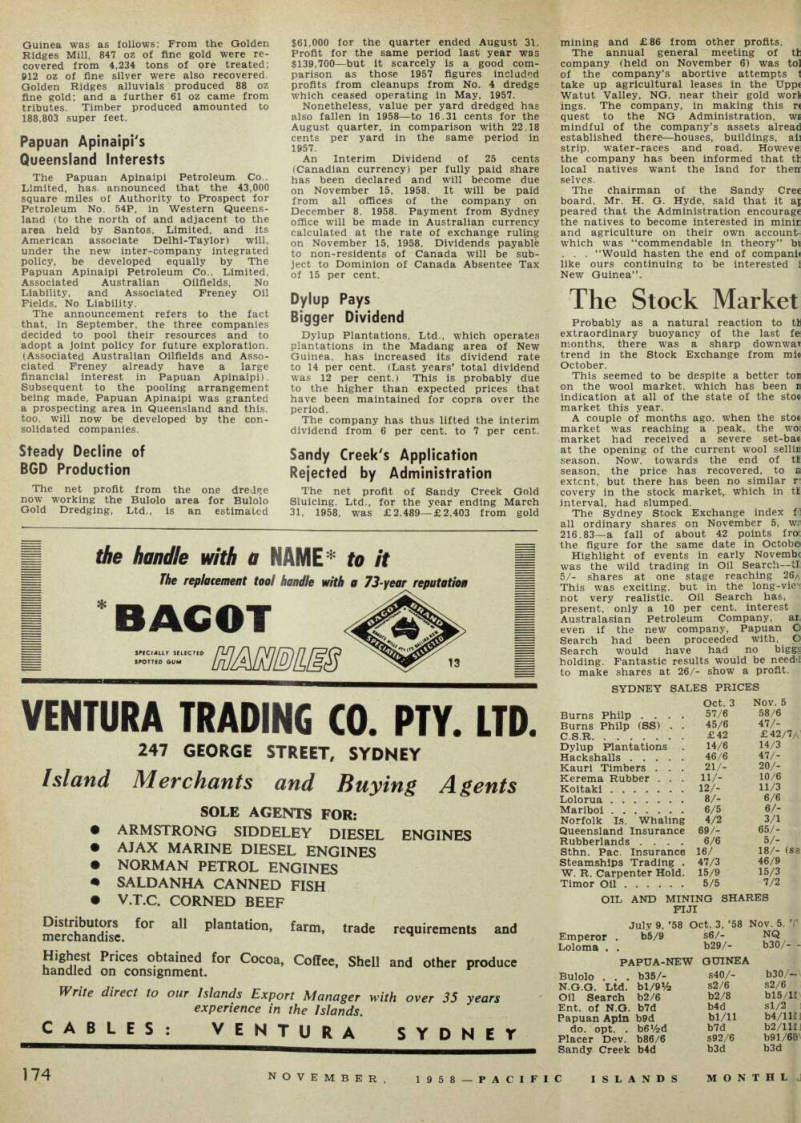 176
176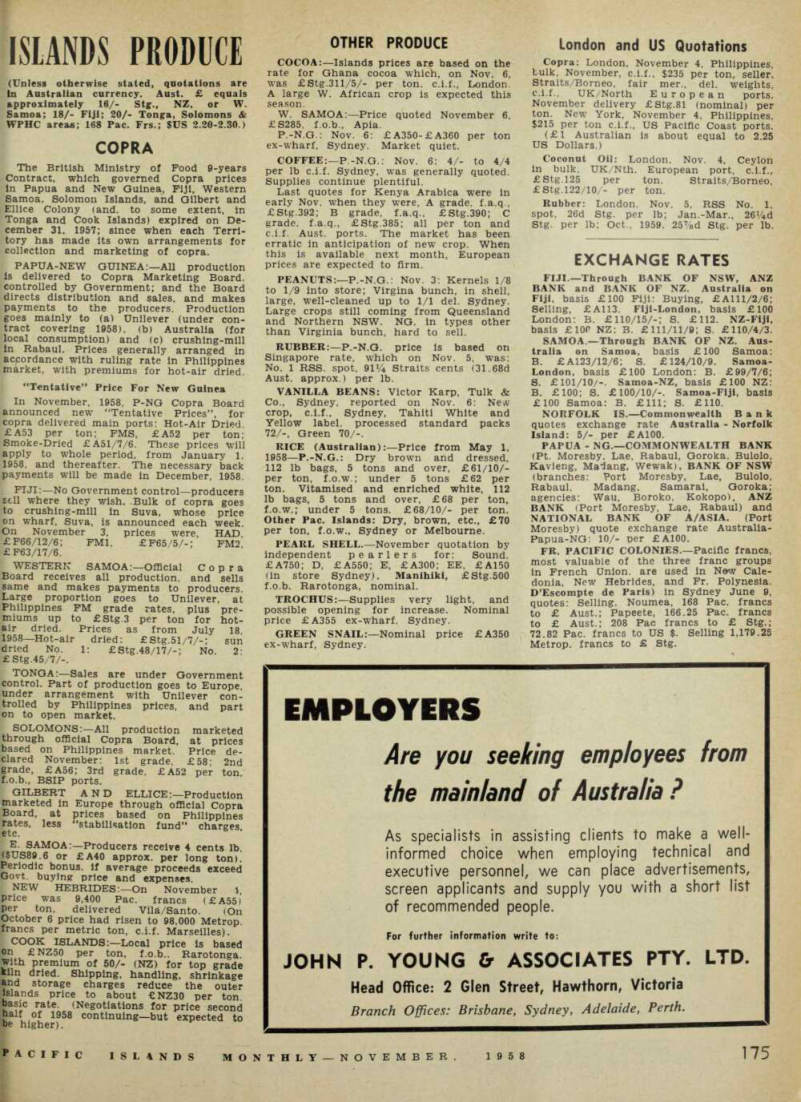 177
177 178
178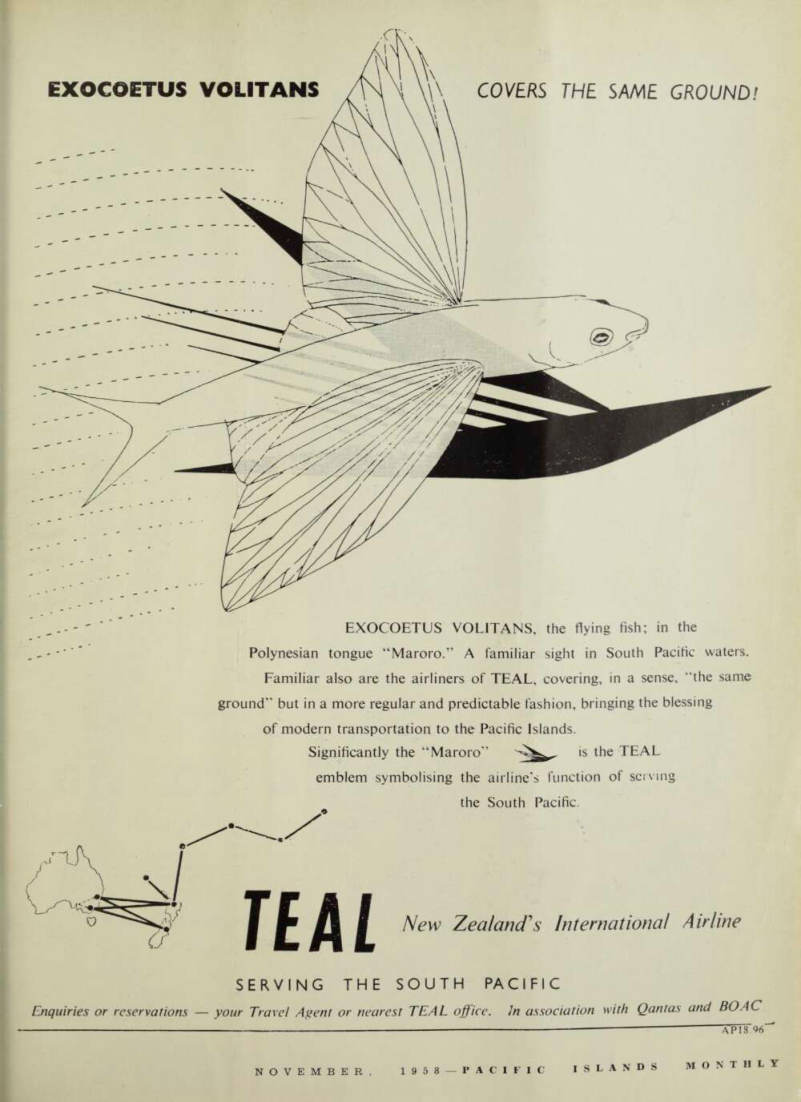 179
179 180
180