
Pacific
Islands
Monthly
1958
Vol. XXIX. No. 2
[Established 1930
[l Registered at the G.P.0., Sydney por transmission by post os a newspaper]
Go On—Don't Give
ME THAT! The ex pression on this Total infant's face, as it sits among the cabbage leaves and bean stalks, under a table in the Rabaul market, seems to suggest that it has heard an incredible piece of local gossip.
Photo was taken by a Fiji visitor to Rabaul, Mr. G. Cotter.
Advertisements & other items, pp. 2-6 (4 items)
pacific islands month. v
monthly — , . „
This Way's Best!
8 flights weekly around the world
Circle the globe with the sun or travel round the other way—B.O.A.C.-QANTAS is the best way to go.
Offering a choice of eight weekly flights, the 8.0.A.C.-QANTAS round-the-world route via Australia enables you to fly directly between San Francisco and New York without changing airlines. Experienced travellers will appreciate what it means in terms of convenience, comfort, cuisine and service to fly all the way by intercontinental airliners operating to international standards.
See your 8.0.A.C.-QANTAS travel agent. c
with QANiAS
THE WORLD- WIDE AIRLINE
Your Guarantee of Satisfaction Backed by Established Service
Depots Throughout the Islands
LANTERNS
SOLUS STOVES
KEROMAN LAMPS
Designed to withstand heavy usage and exposure to all weathers these Kerosene lanterns have built in automatic jet cleaning needles, safety air-seals on pumps and heat and shock proof globes. They cannot spill and burn safely in any position. Two sizes.
Coleman Solus Kerosene stoves are sturdily constructed with heavy brass pressure-tested tanks. The burners are of high grade brass containing a high copper content for good heat conductivity. All parts are interchangeable with similar stoves. Available in Silent and Roarer types.
Table lamps of lasting quality finished in polished brass. Bums kerosene and gives a brilliant yet pleasant incandescent white light.
Has centre draught feature with heat resisting glass chimney. No pumping or preheating is necessary.
Height 24 in. Diameter of base 7i ins. Weight 3 lbs.
Gilkpm (fit Smm
Sydney ST ROBERT GILLESPIE Pty. Ltd.
PEARCE & CO. LTD.
SUVA
FOR FIJI ISLANDS
You’ve earned it O L-.
H enjoy it !
FOSTER'S LAGER
ARNOTT’S
NEW
DOUBLE-WRAPPED
MOISTURE-PROOF
PACKETS
h % % m R f m o m m h a. s
WHEN NOT IN USE,
KEEP IN A CLOSED
TIN TO MAINTAIN
CRISP FRESHNESS.
Qrnott's
Biscuits
There is no Substitute for Quality
X/EXS/2
Nem Quin&a AuAJlim
Passenger and Cargo Liners:
M.S. "SHANSI"
WI.S. "SOOCHOW"
S.S. "PAKHOr
Regular services between Aus-
tralia and Papua-New Guinea ■ ■ ' k*" ,7. * J
JAPAN, SHANGHAI, HONGKONG, NEW GUINEA, AUSTRALIA
REGULAR SERVICE WITH THE STEAMERS: "FUNING"—"FENGNING"—"CHENGYU"
Japan, Shanghai, Hongkong, Madang, Kavieng, Rabaul, Lae, Samarai, Port Moresby, Sydney, Melbourne, Adelaide. (Returning from Australia to Japan direct). please apply to agents or refer to the weekly advertisements in the "South Pacific Post’’.
THE CHINA NAVIGATION CO. LTD.
(A British Company incorporated within the United Kingdom)
AGENTS:
PA Trad '" 9 L ' d " P ° rt Samarai .
"S. ‘ N * Madang, Na» Guinea Co. Ltd., Kavieng. Cable, "Camohe".
BRISBANE: Wills, Gilchrist & Sanderson Pty Ltd ,inn n Cable: "Wilgilsand", V ' d " 400 Queen MELBOURNE: John Sanderson (5. Pty. Ltd., 11l William Street.
Cable: "Syndicate".
ADEL ' A !rn : ?°!? e Wi " S & °‘ td " 33 Gilbert Place. Cable: Willsandco".
JAPAN, Butterfield & Swire (Japan) Ltd., Tokyo, Yokohama, Osaka, Kobe. Cable: "Swire".
EASTERN MANAGERS: Butterfield & Swire, Hongkong. Cable, "Swire".
SWIRE & YUILL PTY. LTD.
6 BRIDGE STREET, SYDNEY.
CABLES: "SWIRESHIP". BU 1712.
2
PTEMBER. 1958-PACIFIC ISLANDS MONTHL
4
9EPTEMBER ' —«.no is IANDS honthi tt
People
Mr. H. L. R. Niall, popular District Commissioner of Morobe District, New Guinea, underwent a difficult operation in Sydney at end of August. The operation is reported to be successful and his complete recovery is now expected. Mr. Niall became ill in Lae, in July, and sub sequently was flown to hospital in Sydney. He was discharged in August, but subsequently underwent an X-ray examination and was ordered back to hospital where the operation was performed.
Mr. M. D. I. Gass arrived in Honiara, BSIP, on September 1 to assume duty as Chief Secretary of the Western Pacific High Com mission. Mr. Gass comes to the Pro tectorate after serving 13 years in Ghana and the Gold Coast, where he was first appointed an Assistant District Commissioner in 1939. Re turning to Ghana in 1945, after military service, he has more re cently been Permanent Secretary in the Ministry of the Interior. * * * A New Zealander, Mr. Mark Anthony is becoming a familiar figure in the Solomon Islands. Re sponsible for the delivery from New Zealand of the three Twomey vessels, donated by the New Zealand Leper Trust to the Melanesian, Methodist and Roman Catholic Missions in the Protectorate, Mr.
At Nukualofa, Tonga, in late August, the Governor of Fiji, Sir Ronald Garvey, presented Prince Tungi, Premier of Tonga, with the in signia of a Knight Commander (Honorary) of the Civil Division of the Most Excellent Order of the British Empire. It was conferred on him by Queen Elizabeth. Occasion was the signing of a new Treaty of Friendship. —Rob Wright photo.
Anthony recently completed delivery of the second vessel, Ozama Twomey, for the Methodist Mission at Munda, Western Solomons.
The third vessel (for the Roman Catholic Mission) Mala Twomey, is expected to arrive in Honiara about the end of October. * * * Lutovia Bonifasio Pua, aged 20, a Samoan student at the Marist Brothers Juniorate at Tuakau, NZ, was commended by a Coroner at an inquest in September for his hero ism at a drowning fatality at Port Waikato on January 30.
Pua assisted two other students to safety and continued to search for 15-year-old Terence Anthony Whitehead, who, however, was drowned. The incident occurred dur ing a picnic by the students who are trainees for the religious life.
Rear-Admiral Toulouse Lautrec, Commanding French naval forces! in the Pacific, will shortly returni to France, his term of duty having' expired. He will be replaced by Rear-Admiral Evenou. The new' Admiral will arrive in Noumea by the September Tahitien.
Monseigneur Martin, Roman Catholic Bishop of New Caledonian has been nominated Chevalier oo the Legion of Honor. Monseigneirr Martin had, more than once, de e cimed this when offered him a;n a civil honor. However, this timtr it comes to him for his services ini me Resistance during the warn Monseigneur Martin was a member P 1 illustrious order of Buchen o waid for some time, having been de e
St. John's Church, Port Moresby, was choses fo r the recent marriage of Miss Joan Anderson of Brisbane, to Mr. Keith Braybon, of Sydneyy The best man and attendant, both Port Moresby residents, were old friends of the bridegroom who is also connected with Islands trad[?] through Braybon Bros. Pty., Ltd. The coup[?] will live in Sydney. —Papuan Prints[?]
ported to that celebrated reception house by the Gestapo. All New Caledonia joined in congratulating the missionary Bishop.
Another New Caledonian to be honoured recently was M. Jean Tran Ap. M. Tran Ap has been made a member of the Companions of the Liberation —which has a select membership of a few of the heroes of Free France. M. Tran Ap, was torn the eldest of a large Viet- Namese family, but he is now a naturalised French citizen and is New Caledonia’s most decorated soldier. His decorations include the Legion of Honour, Resistance Medal, Croix de Guerre and Medaille Militaire. He now lives in Paris and has been made a member of the Council of the Order of Liberation— the two Liberation awards being the result of a special decree made by General de Gaulle.
More and more P-NG Territorians are finding that a fascinating trip to the East is much more interest ing than spending their leave in southern capitals, and latest voyagers, Mr. and Mrs. M. A. Powell, of Lae, NG, W ho returned from Japan aboard MV Citos in August, had nothing but praise for the ports they visited. Mr. Powell said that, contrary to accepted ideas, he found hotels in Hongkong and Japan no nearer than first-class hotels in Australia. Shopping facilities and night life in most of these cities
Miss Lilna Tetuanui, of Tahiti, photographed at a Polynesian Association meeting in Sydney, with Association secretary Mrs. Irene Byron. —Tele-Photo.
Dancing at the Qantas Bail in Port Moresby in early August, two well-known Port Moresby people, Mrs. Jack Chatfield and Mr. R. Wright. —Papuan Prints.
were an attraction in themselves.
On top of this the traveller saw magnificent scenery, and enjoyed life on a vessel which made its leisurely way homewards via out of the way ports
Corporal James Litchfield, 21, isg attending an Australian Armyv officer’s cadet school at Portsea r , Victoria —the first representative ofl the Fiji Military Forces to do so. * * * Mr. John Stannage, formen associate of Sir Charles Kingsfordfc Smith and now manager of the Fijiti Broadcasting Commission, was? among the guests taking part in ae flight between Sydney and Christ church in September, to com memorate the 30th anniversary oft the first air crossing of the Tasmann by Smithy and Charles Ulm. Haiti Lichfield, who was navigator on the 3 first flight, and T. H. McWilliams,g i adio operator, were guests oft honour Mr, Stannage flew asj Smithy s radio man in the Southern."!
Cross on the first crossing of thßj Atlantic from London to New# York in 1930. * * * The stream of VlP’s who visitti Papua-New Guinea for the firs#? time appear to have one impressiomi m common—they are amazed at ther progress and activity throughout!
the Territory.
The latest “surprised” visitor was* the economic advisor to the Inter-i national Bank, Mr. Andrew Kamarck.
“I was amazed at what work waajs
Mr. Barry Combe, newly-appointed New Guinea manager of Concrete Industries (Aus tralia), Ltd., which will establish a factory at Six Mile, Port Moresby, in December for the manufacture of pre-cast concrete building materials and other products. Mr. Combe, formerly district manager for the company at Kembla Grange, NSW, will leave Sydney in October to supervise the erection of the new factory.
going on,” he said. “I could also see the tremendous problems con fronting the administration.” * ♦ * Mr. Jules Rey, well known Tahiti inventor, and the man who brought the first automobile and merry-go round to the Cook Islands in the 1920’5, returned to Rarotonga on a visit in August. Not much has been heard of Mr, Rey’s last invention, a machine for opening coconuts and extracting the flesh, since a battle over patent rights developed in the United States several years ago.
The machine had been demonstrated throughout the South Pacific and was going into production. * * * Mr, N. G. Jamieson, an annual visitor to the Papeete July Fete, re turned to Auckland in August aboard the Waitemata —in which he invariably travels.
Dr. R. G. Simmers, MSc., ScD (MIT), Assistant Director of the NZ Meteorological Service, was visiting Island stations in August.
Fiji-born Mr. R. G. Kermode, solicitor, and newly-elected Euro pean member for the North-Western Division seat in the Fiji Legislative Council, took his seat in the Coun cil in August. He had a marginal win over Mr. Mark White in a by election at Lautoka.
Mr. Kermode’s parents, Mr. and Mrs. George Kermode, who were making their first visit to Fiji for 13 years, saw their son installed.
Mr. Kermode, Snr., was formerly a Superintendent of Police in Fiji. * * ♦ The Orient liner Orsova, which berthed in Sydney from US, Sept. 5, was almost a BSIP special. No less
Cutting the cake after their marriage at the Roman Catholic Church, Port Moresby, in August, are Mr. and Mrs. W. Dolan. She was Miss W. Clarke. —Papuan Prints.
than five couples, one with a smal child, went on later to Honiara, anc from Honiara some went to othei parts of the Solomons. They wen Mr. and Mrs. A. J. Child, tion Government Training College Honiara; Mr. and Mrs. A. S. Pringle to King George VI School, Malaita Mr. and Mrs. J. F. Isaac, to sanu destination; Mr. and Mrs. Warrei (Mr. Warren going to the Geologica Survey Dept) ; and Mr. J. E. Randall of the WPHC, Honiara, and Mrs Randall.
New Caledonia has a new com mander of its Army forces. He i Colonel Raymond Appert, 54, a dis tinguished soldier ranking high i: the Legion d’Honneur, and a menu her of the Companions of the Lib: eration, thus a strong de Gaull man. He replaces Colonel Lansaro who recently returned to France. * * * Born in Sydney recently, Richar Phillipson Glover, first child of M:!
Ted Glover of South Pacific Pos\ and Mrs. Glover. All three returne: home to Port Moresby in early Sep tember.
Miss Lois Niall, daughter of Disi trict Commissioner and Mrs. Niah of Lae, New Guinea, seems to W carrying on where her father le:e off many years ago when he was < Patrol Officer (or an ADO), and leading patrols in Eastern Papuu
Photographed in Sydney in August, Mis Elizabeth Gibson, from Rotuma, who is doin a nursing course in Sydney, and Kitty Picke ing, of Suva. —Tele-Photo
Mr. U. Maggs, and the former Miss Charles, after their marriage at St. John Church of England, Port Moresby, in August —Papuan Printn
That is the way a newsagency story that was recenly published in Aus tralia, goes anyway. Miss Niall, a charming young woman and a graduate of Sydney University, is now engaged in native welfare work in the Administration. She was - making a round of native villages to co-ordinate the work in native women’s groups. * * * The beautiful new Anglican church in Apia, Western Samoa, wdll be consecrated on October 19 by the Bishop in Polynesia, the Right Rev.
Dr. L. S. Kempthorne, newly re turned from the Lambeth Confer ence. After that, the Chaplain in Samoa (and, incidentally, the church’s builder), the Rev. C. W.
Whonsbon-Aston, will leave Samoa, after 15 years’ service, and proceed to Fiji, as Archdeacon, to take command of the famous old church in Levuka, where he was stationed many years ago. It was Church builder Whonsbon-Aston who organ ised and directed the erection of the Anglican church in Lautoka, long before World War 11.
In Melbourne currently for a six months refresher course in child welfare, is Miss L. C. Ram-Samuj, of the Fiji Medical Department. She has visited Australia on several occasions, and completed her nurs ing training at Epworth Hospital, Melbourne, in 1940. ♦ * * Visiting Sydney in September was Mrs. Vincent Zigas, wife of Dr.
Zigas, of Kainantu, Eastern High lands, New Guinea, whose name has come to be associated with the peculiar native palsy of the Fore area called kuru or (by the press) Laughing Death. Dr. Zigas has spent the last three years studying this disease, which affects only this one New Guinea tribe, and is nearly always fatal. He is now in the United States carrying out further research and will return in November. Dr. and Mrs. Zigas have just completed a world tour, but Mrs. Zigas has returned to Sydney to be with their
Well-known Port Moresby sports couple, Mr. and Mrs. Jack Martin, had their new son, Darryl, christened at St. John's Church of England, in August. They have two other children. —Papuan Prints.
baby son while her husband com' pletes his work in Washington. Mrs Zigas is a Sydneysider. * * * Mr. Malcolm G. Smith returnee to Rabaul on the August Bulolc with his new bride, formerly Mis; Helen McCullagh. They were marriee at the Church of England, Wing ham, NSW, on July 12. * * * Miss Gael McFarlane, member o a well known family of Suva Fiji, received some encouraginj publicity from Melbourne news papers recently when she got a lead ing role in “Plaintiff in a Prett; Hat”, which opened at the Nationa Theatre on September 3. She lef Suva six months ago “determined t* get a part in a play”. At home sh was a foundation member of th Fiji Arts Club. Sister Rosemary i in Melbourne also, but she has n stage aspirations; she has a job ii an office.
Local history was made in tb British Solomon Islands Proteo: torate when Rosalyn Kevisi wa appointed to the Western Paciffi High Commission Secretariat, as trainee clerk. Miss Kevisi, of Kindri in the Western Solomons, is tb first Solomon Islands girl to ente; the Government service.
She has spent nine years s Kokengolo Methodist Mission schoco firstly as a student and later a a teacher. * * * A coming-of-age party in thf Auckland Town Hall on August S for Miss Tutai Malietoa, daughter of High Chief Malietoa of Westen Samoa, was attended by over 50( guests. * * * Mr. R. M. L. Gladney, who re*: signed from the post of Resident Agent, Aitutaki Island, last after a number of years there am in a similar position at Penrhyn, rei cently returned from vacation ii New Zealand to take up a positiODj in the clerical section of Coax Islands Medical Department.
Two Indian students from Suva, Messrs. Sa Ali Asgar and Michael Jiwan, photographed Sydney in August. —Tele-Phot
Passengers bound for the Cook Islands per September Maui Pomare from Auckland included Mr.
Roy Bain to audit the books of A. B. Donald & Co., Mrs. R. Taripo returning home to Rarotonga; Mr.
E. N. Davis, of NZ Meteorological Service to instruct observers in the use of a new radar installation at Rarotonga: Mr. Les Bailey, Clerk of the Court, returning from vacation; and Mr. David Murray of Social Development Department re turning from a Co-operatives con ference at Port Moresby.
: Once a flying Dutchman in the Dutch Naval Air Force, and now an Australian coffee planter, popular Marinus Zuydam has left Qantas, at Lae, NG, to till his own soil at Banz, NG.
Mr. Zuydam and wife Mary, have [extended invitations to friends to visit them at their plantation, [“especially when the coffee is ripe.”
Mr. Zuydam has flown more than a million air miles. * * * Mr. A. Shoebridge, Commissioner for Government Transport in NSW. left Sydney on September 10 for a round trip of P-NG on the Bulolo.
Mr Shoebridge said his trip would be “completely a holiday”. ♦ * * For the first time in its history, the national executive of the RSL in August visited New Guinea for a meeting. It was led by the Fed eral president, Sir George Holland, and included Queensland branch president Sir Raymond Huish, and president of the Australian Capital Territory branch, Mr. A. R. Cutler, a Victoria Cross winner. The un assuming manner of Mr. Cutler especially made an impression on Lae people, where the meeting was held. Sir Raymond was unlucky, however—he had his arm mauled Py a dog who was obviously no re specter of persons.
To Longoma and Jack Kanit showed real in terest in this motor mower, which they saw being assembled during a tour they made of the Victa mower factory in Sydney in August.
The two were among six New Britain Tolais who made a tour of Sydney industrial plants.
For story see Pacific Report.
Advertisements & other items, pp. 7-17 (5 items)
Brwboh
mOfIBBI
'■! f ■/ *«•»»* •••»>»» *
KVA
DIESEL SETS
•We feature here one of our larger industrial light and power plants which will >perate motor up to 5 H.P. 3 phase. Sets are available in petrol or diesel from to 100 KVA capacities. 1% The sign of Quality Products
t BRAYBON
p BROS Pty. Ltd.
ZfL 27-33 WASHINGTON ST.. SYDNEY
Telephone MA 6853 TELEGRAMS: “Braybonian”, Sydney
PARKE-DAVIS
CAMOQUIN
TABLETS
Effective Single Dose Treatment for
MALARIA
SPECIALLY FLAVOURED TABLETS AVAILABLE FOR
CHILDREN
SUPPRESSIVE DOSE—
For Adults: 3 tablets to be taken as a single dose « l tablet three times For Children:
TABLET rS ;nr e INFANT FORMULA
?wl?e week?y e W66kly ° r half - tal^
TABLFTfi'nn^ 0 INFANT FORMULA
once weekly or one INFANT FORMULA TABLET twice weekly.
TREATMENT DOSE—
For Adults: 3 tablets taken as a single dose, second dose of 3 tablets may be gi\ 24 " 72 hours if fever has i subsided completely.
For Children: T'L T y v£ rs ' one infant formu i ABLET as a single dose, ils s ' two infant formu i ablets as a single dose. „ ao a single aose, -OH TANT! CAMOQ^^^ en immedia[e]y m Obtainable from all
kwi-dl!fcfsua
PARKE, DAVIS & CO., LTD,, SYDNEY
* T*t WftCl H'? *
CCA
s* 0$
pov
noofc
?f(&
WMW»
LWQ
Piccaninny
PRFPAQFD WAY
PREPARED WAX
FLOOR POLISH
FOR LINO, FLOORS. FURNITURE, LEATHER e MOTOR CARS "Twice the shine in half the time"
Piccaninny imparts a glow of youth and beauty to floor surfaces that might otherwise soon begin to show their age. There is nothing more perfect for linoleum or natural wood floors.
Piccaninny's tough wax skin protects surfaces from tropical moisture, wear and tear —saves you hours of work and gives Twice the Shine in Half the Time!
PICCANINNY I
BROWN STAIN FLOOR POLISH
For Jarrah, Cedar, Stained Floors & Woodwork — J Piccaninny Polishes are manufactured by
PICCANINNY MANUFACTURING Co.
254 Pittwater Road, Manly, N.S.W., Australia.
* *** c
EBROOK*
-V
•anoX
Tan ox
only paint with
silicone “101”
Tanox Super Gloss cleans itself every time it rams because it contains Silicone "101"; which gives it the smoothest, glossiest surface to which dust and dirt can't cling. Tanox keeps the weather out, too, because Si I icone 101 has amazing water repellency. And Tanox lead-free colours retain their freshness and strength for years.
Approach us direct or our Representatives for the Pacific Islands.
DEMKA AGENCIES Pty, Limited
2-12 Carrington Street, Sydney, N.S.W.
For swift, sure three-way relief from
HEADACHE & ALL PAIN
VINCENTS A RC.
POWDERS & TABLETS
ASPIRIN • PHENACETIN • CAFFEINE
like
covfio& cb
ith ou AVAILABLE EVERYWHERE AT ALL CHEMISTS AND STORES
A COMPLETE
IN EVERY
BOTTLE!
XT; SB fm % CD
DON’T SAY GIN... SAY
THE INTERNATIONAL
favourite
21 chunky squares
rich satisfying flavour
so smooth . , , so creamy LK m ft These are just a few of the many reasons why you’ll like Cadbury’s Dairy Milk Chocolate. Take a deep bite of Cadbury’s Dairy Milk Chocolate. Mmm . . . it’s so smooth ... so creamy ... so satisfying. There’s wonderful eating enjoyment in each of the 21 thick, chunky squares. Nourishing, too; there’s a glass and a half of pure, fresh, full-cream milk in every i lb. Buy a block today.
Cadbury’s Dairy Milk Chocolate
MD2B/HP/8
\s^ * & Of* tr
The Best Protection
-for OUR Savings
The Commonwealth Savings Bank offers you the best protection for your savings right throughout the Islands. No matter where you go you will find an office of the Bank.
There are branches at the following places: Port Moresby Goroka Madang Rabaul Kavieng Wewak Honiara Bulolo Lae Norfolk Island In addition, 57 agencies operate throughout Papua- New Guinea, 5 agencies in the Solomon Islands, and others at Fanning Island, Lord Howe Island, Nauru and at Vila and Santo (New Hebrides).
For all your savings bank needs use the Commonwealth Savings Bank—the bank that serves you best throughout the Islands and Australia.
commonwealth
BANK
Guaranteed by the Commonwealth Government of Australia
Save money and time wasted ]Li |o^
walking,
<rQ —" Z
Get direct Un interrupti contact
K 9 A
waiting
and calling staff off the job j m t % i Si <s
Install PHILIPS low-cost Master Station
Control Intercommunication System
Wherever they are, whatever they’re doing, you talk directly to anyone without interrupting his work. You receive his answers clearly—no matter how distant his station from your master control.
There is no limit to the number nor the distance of the “remote” stations, just as there is no limit to the saving this system can make to your running costs.
PHILIPS
PHILIPS ELECTRICAL INDUSTRIES PTY.LTtf
69 Clarence Street, Sydney, or contact our Island representatives
DEMKA AGENCIES PTY. LTD.
2-12 Carrington Street, Sydney
HOW PHILIPS MASTER
STATION CONTROL
INTERCOMMUNICATION
SYSTEM WORKS;
From Master Panel you switch in any "station" you wish. The person called merely speaks in the direction of his "station." This instrument receives and transmits speech from up to 60 feet in quiet locations, up to 30 feet against a noisy background.
FEATURES:
• An inbuilt audio limiter maintains a satisfactory level of reception at all points. • The Master Station amplifier may be equipped with a higher-powered amplifier for general paging purposes. • Remote stations can be equipped with an incoming-call key which prevents Master Station listening in at will.
P 398.58
KINGSTRAND
Frasneless Aluminium Buildings
1
, Irj
ioi BOY HOUSES
and TRADE STORES
KINGSTRAND frameless buildings can be erected inexpensively on any level foundation and assembled in a few hours by unskilled labour. The only tools needed are spanner and screwdriver—walls, roofing, partitions, doors, everything is precision cut and comes packed in one compact crate ready to erect.
KINGSTRAND construction eliminates costly columns studs, framework—all the load is borne by the walls!
Aluminium is termite-proof, highly resistant to corrosion, does not require painting for external protection—and is cool.
KINGSTRAND frameless buildings are designed for hurricane resistance with a wind loading of 120 m.p.h.—have withstood winds of over 100 m.p.h.
They are versatile—one unit may be erected to a variety of designs and can be dismantled and t erected elsewhere speedily and at low cost.
ECONO STEEL COMPANY
« i i p. i A Division of Tulloch Limited Concord Road, Rhodes, N.S.W. UF1231. 140 Robinson Rd., Seebunq, Old. LX 302 ZI R^ A 0 N ,r, NU^ AC l URERS OF kinsstra nd frameless buildings Dowsett knainlritn l 7 i Australasia, P ° Guinea and Soufh Pacific Islands: Dewsett Eigmecrmq (Austral,g) Pty. Limited. 12 Crescent St.. Hunter’s Hill
Distributed in AUSTRALIA,
NEW ZEALAND and the
following PACIFIC ISLANDS:
Australian Territories: Papua.
Norfolk Is. Cocos Is.
Aust. Trust Territories: New Guinea. Nauru.
British Crown Colonies: Fiji.
Gilbert & Ellice.
British Protectorate: Solomon Is.
British Protected State: Tonga.
N.Z. Territories: Cook Is. Niue.
N.Z. Trust Territory: W. Samoa.
French Territories: New Caledonia.
French Oceania.
Anglo - French Condominium; New Hebrides.
O.S. Territories: E. Samoa. Hawaii.
U.S. Trust Territory: Micronesia (Caroline, Marshall & Mariana).
Dutch Territory: W. New Guinea Publisher:
R. W. ROBSON.
Editors:
JUDY TUDOR STUART INDER
Manager:
SELWYN HUGHES.
TELEPHONES; General Business, ■ Editorial, Advertising, Subscriptions:
MA 0197-8, MA 7101,
MA 4369, MA 1305.
Q.P.O. BOX 3408, SYDNEY.
Registered Address for Telegrams, [Radiograms, and Cables: “Pacpub,"
Sydney.
SUBSCRIPTION RATES:
In Aust. and N.Z. and Australian, N.Z., and Br. Pacific Is £1 4 0 New Caledonia, Tahiti . £l7 0 Elsewhere $3.50 U.S. or £1 10 0
BRANCH OFFICE, PAPUA-
NEW GUINEA
Pacific Publications (New Guinea) Ltd., Theatre Building, Fourth St., [LAE, New Guinea. Tel.: Lae 2577.
I Miss Pat Robertson, Manager.
BRANCH OFFICE IN FIJI:
Fiji Times Building, Gordon St., Suva. Tel.; 4043.
REPRESENTATIVE IN N.Z.:
J. D. Whltcombe, P.O. Box 5179, Auckland. Tel.: 42.384.
REPRESENTATIVE IN UK.:
J. T. Wallis, 13 Rood Lane, London, E.C.3. Tel.: Mincing Lane 8633.
MELBOURNE OFFICE: Newspaper House, 247 Collins St.. Melbourne.
Victoria.—Tel.: 63-7053.
AGENTS: All main trading firms and stores in the Pacific Islands.
FIJI TIMES AGENCY IN
AUSTRALIA
Note: Pacific Publications Pty. Ltd [Technipress House, 29 Alberta St , Sydney (Telephone MA 9197-8), is the Australian Agent for THE FIJI TIMES, of Suva. Fiji.
6
SEPTEMBER, 1 9 5 8 PACIFIC IsIANDS HONT H 1 I
10
Mbe ß. 1958-PACIFIC ISLANDS MONTHL
12
ember, 1958 PACIFIC ISLANDS MONTHL
14
SEPTEMBER, 1953 PACIFIC ISLANDS MON THH
Contentd:
PEOPLE: Personal Para graphs of Islands’ Interest 5 Tonga, Britain, Sign New Treaty of Friendship ... 17 Indian Traders Discuss Fiji’s Finances 18 Higher Prices Continue for Copra 19 France’s Fateful Yes or No Vote Soon 19 Conference Planned on P-NG Coffee 20 New Director of Education Appointed for P-NG ... 20 Floods Cause Strife in NG Morobe District 20 Whitehall’s Plan for a New Set-up in Fiji 21 HOME BASE: Sydneysider Tells What Made News in the Hub of the Pacific .. 22 Fiji Hopes for a Million Dollar Hotel 23 Significance of SPC Meeting in Rabaul 23 Fiji Has an Acting Governor 23
Commentary. The Pub
lisher and the Editors Look at Pacific and World Affairs 25 Editors’ Mailbag 27 A View on Racial Values .. 31 Territories Talk-Talk .. .. 33 Death of Eric de Bisschop in Raft Drift 37 Fiji Surveys Her Agriculture 41 Whence Goes Netherlands New Guinea? 43 FIJI TALANOA: Vakatawa Talks of This and That .. 45 Mr. W. C. Groves Retires from NG Scene 49 Latest on Pacific Air Services 53
Tonga Has a House Design For It 53 A Correspondent Discusses Future Status of French Polynesia 57 Argument Over P-NG News Broadcasts 61 Papuan Rubber Won’t Be Affected by New Malayan Trade Agreement 65 Levuka Has Hopes for Whales, Tourists 69 Frenchman’s Solid Works on New Caledonia 73 Hunger in the Papuan Islands 77 US Pacific Consul Moves to Suva 78 Timber in Fiji—lf the Fire bugs Don’t Get It 79
Magazine Section:
Tropicalities, 81; Crossquiz, 82; Fishing by the Nights of the Moon, 83; Do You Remember? 83; Pacific Pioneers Return, 84; The Meanest Archduke I Ever Saw, 86; This Fiji Firm In vites the East to Keep Its Shirt On, 87; The Month’s New Reading, 88; Mail Day at Niue 88 This Month’s News of Pacific Shipping and Cruis ing Yachts 101
Pacific Report: Round
up of the Month’s News and Pictures (Index page 17) 117
Obituaries: Mrs. E. L.
Leembruggen, Mr. Robert Walker, Mr. J. H. Netzler, Rev. Father Alphonse Schaefer 151 Sports Review 153 Shipping and Airways Time tables 155 Commerce and Produce .. .. 165
Advertisements & other items, pp. 17-18 (2 items)
A Product of Pacific Publications Pty. Ltd., Technipress
House, 29 Alberta Street, Sydney. <29 Alberta Street Is Id yards from the Intersection of Goolbnrn street and Wentworth Avenue.)
depends on the right combination
Real motoring economy
of power and weight!
/L
Austin Lancer is the answer!
4 doors . . 4 wind-up windows, easy access through the Lancer’s wide opening doors. H 11 cu. ft. luggage compartment-—notice separate compartment for the spare tyre Performance, economy, safety, longer engine life the Lancer has the power of a much larger car (50 horse-power) yet still retains the lighter weight of a medium sized vehicle you must save on wear and tear for the big car performance with small car economy you’ll find Austin Lancer is the Answer.
Distributors in New Guinea and Papua Messrs. N. F. Maloney & Co.
Port Moresby. Price £1024.
Messrs. J. K. Dowling & Co.
Rabaul. Price £1032.
A PRODUCT OF THE BRITISH MOTOR
CORPORATION OF AUSTRALIA
LAC.227-F.P.
Tonga Renews Its Treaty Of Friendship
Honours, Gifts and Old World Diplomacy
And Protection With Britain
The oldest of the Pacific monarchies, Tonga, renewed its 57-year-old Treaty of Friendship and Protection with Britain, at a colourful series of functions at Nukualofa on August 26.
THE treaty was signed in the small wooden Tongan Legislative Assembly building, within sight of the Royal Palace, by the Gov ernor of Fiji, Sir Ronald Garvey (on behalf of Queen Elizabeth), and Prince Tungi, Premier and Minister for Foreign Affairs (on behalf of Queen Salote).
It was the last important function in Sir Ronald’s career as Governor.
He retired from office a few days later (see page 129).
Tonga loses none of its independ ence under the new Treaty, but in fact receives some wider powers.
These include powers to negoti ate her own trade treaties and some other matters affecting external re lations, and increased powers given by Tongan courts over foreigners in civil cases.
British courts retain criminal jurisdiction in some serious cases.
Autonomous Under the original Treaty, ratified in February, 1901, Tonga was com pletely autonomous, but undertook not to make agreements with other nations, but to have its foreign affairs transacted through the British Agent and Consul in Tonga (who is responsible to the Governor of Fiji).
The Consul had (and retains) a Consular Court for the trial on major charges of British and other foreign subjects.
The Consul also (by a supple mentary agreement made in 1905) was entitled to review the budget and advise on it. His consent is also necessary for the appointment of foreigners to the Tongan Govern ment.
That original Treaty of Friend ship (there were other treaties of a different nature before it) was negotiated at a time when Tonga was the only Pacific State not under control of a foreign power.
Fiji had been admitted to the British Empire, Tahiti had become a French Colony, Hawaii was an nexed to the United States, Samoa had been divided between Germany and the United States.
At the turn of the century, Britain felt that unless she took Tonga under her protection, “her seizure Was only a question of months”.
Basil (later Sir Basil) Thomson, who at one stage in his remarkable career was Assistant Prime Min ister in Tonga, was sent out from
Britain to negotiate the new Treaty, which was signed in 1900 by Tonga’s George Tupou 11, and ratified the next year.
Thus the self-governing Kingdom was able to retain its independence and still enjoy the protection of a big Power.
No Publicity
The new Treaty of Friendship wa s probably signed ahead of schedule. Negotiations have been going on for some time, without publicity, but it was understood that the new Treaty would probably not be signed until sometime next year. There were no Press reporters in Tonga for the ceremony.
Sir Ronald Garvey flew to Tonga from Suva aboard an RNZAF Sunderland for the signing cere mony. He was accompanied by the Colonial Secretary of Fiji (Mr. P D Macdonald), his Chief of Protocol (Group-Captain Agar, RNZAF com
mander In Fiji), and his aide (Lieut. Wesney).
Lady Garvey and their three daughters were also aboard.
The party drove through lines of cheering schoolchildren at Nukua lofa, where they called on the Queen after receiving a 17-gun salute at the palace. (Over)
Sir Ronald conveyed to Queen Salote a message of friendship from Queen Elizabeth, and presented her with a specially bound copy of Erskine May’s Parliamentary Practice, and a mace ornamented with silver and gilt.
The mace is fashioned from a war club that once belonged to King George Tupou I, who gave it to a missionary, and it found its way to England.
Later in the morning, at the sign ing ceremony in the Legislative Assembly, Sir Ronald Garvey said that since the first Treaty was signed there had been great political changes “and the emerg ence of Tonga as a modern state, capable of managing its own affairs and occupying an honoured place among the nations.”
Great Developments
It was to reflect the great de velopments of this century that the new Treaty was being signed, and he was confident it afforded the basis for further development of friendly co-operation.
Prince Tungi replied that signific ant advances had certainly been made in Tonga over the years, and Tonga had strengthened her re lationships with other territories.
He was satisfied that the new Treaty offered a way to preserve the links with the past and strengthen the bonds of friendship.
Sir Ronald and Prince Tungi
signed the new Treaty in duplicate —Sir Ronald using a silver writing set, and Prince Tungi using Queen Salote’s personal writing set of tortoise-shell, with the Royal mono gram set in gold.
After the signing ceremony, Prince Tungi bent down as Sir Ronald placed around his neck the insignia of a Knight Commander (Honorary) of the Order of the British Empire.
Kauvai, country residence of the Queen, outside Nukualofa, was the scene of a celebration feast later in the day—a feast of the kind that Tonga excells in.
The official party sat down to roast pigs, chicken, crayfish, and island fruits of every kind, and a display of Tongan dancing.
The Sunderland took the party back to Fiji in the afternoon, Tonga has announced it will shortly publish a White Paper on the Treaty, giving an explanatory memorandum and details of how it intends to conduct the external re lations which have been newly en trusted to it under the Treaty.
And Her Majesty Queen Salote has sent this reply to Her Majesty Queen Elizabeth’s message: “I greatly appreciate and warmly re ciprocate Your Majesty’s good wishes and share your sincere de sire that by the new Treaty the long and happy relationship be tween our two States will be con tinued and, despite the distance that separates them, become even closer.”
The Scene at Nukualofa
The scene in the Legislative Assembly just before the signing of the Treaty. Sir Ronald Garvey is reading a message from Queen Elizabeth to the Tongan people. Earlier he had conveyed a message from Queen Elizabeth to Queen Salote, which said: "On the occasion of the signing of a new Treaty of Friendship I extend to your Majesty, your Majesty's Government and the people of Tonga my warmest good wishes. The association between our two States has for long been a happy one and it is my sincere desire that the new Treaty should strengthen the bonds of friendship between us."
Picture right shows Sir Ronald handing over a mace to Queen Salote, to be used in the Legislative Assembly. It was fashioned from a famous Tongan war club which found its way to Britain.
In the background, left to right, are Mr. P. D. MacDonald, Colonial Secretary, Fiji; Group-Captain Agar, CO of the RNZAF in Fiji; Lieutenant Wesney, the Governor's aide; Mr. A. R. Read, British Agent and Consul in Tonga; and on the right, Vaia, the Queen's aide. —Photos: Rob Wright, Fiji PRO.
Historic Moment
In Tonga
in the Legislative Assembly chambers at Nukualofa on August 26, Sir Ronald Garvey and Prince Tungi sign duplicate copies of the new Treaty of Friendship. -Photo R ob Wright, Fiji PRO .
Advertisements & other items, p. 19 (1 item)
, Pacific Report-
Turn to these inside pages
for more highlights of the
month’s news: Noumea Shopkeepers Affected by Nickel Slump; BSIP Impresses Visitors; Battle on the Banana Front—ll 7. Preparations for Eclipse, 121. Tolais Take a Look at Sydney, 123. Rabaul Sergeant Gets a Medal; Problems of Shell Industry —125. Pearl Culture for Hongkong—l27.
Fiji Governor Departs; New Pacific and Far East Shipping Link; Nauru Education Figures—l 29.
Samoan Public Service Unhappy at Salary Cuts; Coastwatchers Lighthouse Soon—l3l.
Geological Survey for Tonga; New Wharf for Lae?—l33. Inquiry Into “Melanesian” Sinking; Johnson Island Explosion Sequel—l3s.
A New Report From the Goilala; Costs More Now to Smoke in Cooks—l 37. Small Surplus in Tongan Budget; Legislative Assembly Soon for Cooks—l 39.
Navy Hunts Whales, 141.
Royal Visit Planned for BSIP; Big Boost for the Bigger BSIP Salaries, 143; Noumea’s Yate Dam Begins Producing; Australia’s P- NG Grants—l 44. New Appointments in the Cooks—l 46.
Constructive Critics
Fiji’S Immediate
Finance Problems
Indian Traders Ad As Constructive Critics
The recommendations of t Fiji Fiscal Review Committee
recently before the Fiji Legis;
tive Council, and in some cas
already accepted—have been t
fore a committee of Fiji busim men, of which Mr. R. Prasad
secretary.
THOSE recommendations h a been very closely examined, me especially in relation to th likely effect upon the future econoi of the Colony. The following is summary of the opinions express by the businessmen. The major of the latter are members of t Indian community.
Generally, the comments ma while critical, were reasonable, cc structive and expressed in moden terms.
Strong objection was lodg' against some of the committee ]
commendations, namely:—
That the scale of capital e penditure in Fiji should be 3 duced.
Expenditure on capital develc ment is required to ensure f employment and increase in prodi tivity. In this period, when une: ployment has beco m e serio expenditure to create more emplc ment and, at the same ti rr increased productivity is mOl desirable, the businessmen said.
That loan money, additional that already estimated, should t be raised.
Loans from abroad are most o sirable. We are experienci
(Continued on page 149)
economic recession caused by the balance-of-payment’s deficits. Loans will not only increase the Govern ment revenue immediately but also reduce the pressure on the balance of payments.
It is true that there will be in terest charges on the loan; but we cannot look at the pennies and for get the pounds.
That the percentage of recurrent expenditure on medical and education services should not be permitted to increase until a much greater direct return to revenue
I is made, or until the taxable I capacity of the Colony is greatly ■ in oven I That social and other services I should not be expanded until the I: Colony is producing more income I to enable it to pay for such ser
\ vices. .
That, as a general principle, r fees for services should recoup the 1 full cost of such services to Gov ernment.
That higher education be paid I for in full by the recipient. f That each water supply should be treated as a separate entity f and, in each case, water should k be charged for at a rate which I will ensure that the supply is
: self-supporting.
Essential services like health and -education are important basic re quirements for the progress and [Prosperity of any society. Welfare of the people, their progress and prosperity, is the accepted function of every Government.
Therefore, our Government should provide the services, and no one should be deprived of them because of lack of ability to pay directly. If these services are not provided the community will have to bear even a greater expenditure.
Education facilities should be in creased to meet the demand of in
creasing population.
I Any cut in proper education ex penditure is a false economy. We need more and more of our trained men and women to relieve our de pendability for service on over seas recruitment. Government should encourage and give priorities in its employment to local people. This would, to say the least, effect con siderable economy.
Charges on health services should be as little as possible and the pro posed expenditure for obstetrical annex at the CWM Hospital should not be postponed.
We suggest that the Government should look into the possibilities of an “insurance system”, as practised somewhat in Australia. We also suggest the Government should look into the question of setting up lotteries to raise money.
Any attempt to make water sup plies self-supporting will be oppressive to the poorer people.
The Government should continue its policy of building more roads for economic development, but should not charge the full cost even after f taking into account the immediate benefit derived from the roads and the Government’s use of them.
That the Government should effect economies.
That the Government should re duce its expenditure on personal r emoluments by 5 per cent, at the . earliest possible date or, prefer ' ably, should effect a saving of 5 [ ver cent, on total recurrent ex [ penditure (excluding public debt l and pensions and gratuities).
To us (the businessmen’s views continue), these recommendations,
when put together, mean unemploy ment. But we are not against proper economies. Therefore we suggest economies in this manner: (1) Waste in Government expendi ture should be stopped without delay. We have in mind not only general waste in admin istration, but also in capital ex penditure—an example-of which is brought out in the PWD’s estimate of works. (2) Overseas leave and passage grants: (a) Tour leaves should be granted less frequently in view of the very large (estimated) annual expendi ture of £120,000. (b) For purpose of permanent economy, tour leave and passage grants should be given to an officer after the completion of 10 and 20 years’ service, or on re tirement. (c) Passage grants to employees recruited from overseas should be given only to their home countries. (3) Rent recoverable from Civil Servants should go up, to 15 per cent, of the Civil Servant’s salary. (4) Interest on loans to Civil Servants should be increased to the current bank rate. (5) Not only Civil Servants, but also Government Institutions should pay for water at the same rate as the general public. (6) The increase in Public Service salaries by way of “post allow ances” was introduced in a critical period, and should be suspended. (7) Local recruitments—All possible action should be taken to give Government employment to local people.
Advertisements & other items, p. 20 (1 item)
18
SEPTEMBER, 1958 PACIFIC ISLANDS MONTH!]
Higher Prices
Copra Situation
Continue
The continuing high average price in the UK and Continental markets was a feature of the copra market in August. The average was £Stg.72/10/- per ton—being lowest at the end of the first week in August and highest (£Stg.73/11/l) at the end of that month. (Average jor July was £Stg.7o/2/6).
THE high prices and the buoyancy of the market is attributed to the fact that little or no copra from Indonesia is finding its way to the European market; and at the same time, shipments from the Philippines have also been extremely low.
As a result of the high price for copra, buyers have, however, been turning more to soft oils, such as peanut and soya bean. It is thought that if it had not been for Unilever’s undertaking to accept in 1958, something like 100,000 tons of Pacific copra, the drift to alternative oils would have been even greater than it has.
When supplies from Philippines and Indonesia return to normal it may be difficult for copra to win back the consumers who have turned -o these alternatives.
There is no immediate prospect of an improvement in the Philip pines supply position, and Indonesia remains an unknown quantity, therefore, it is assumed that copra prices will remain relatively high for some months—although some consumers are forecasting a surplus pi oils and fats, and consequent lower prices, next year.
P-NG Production
nv A 3 ve P B weather condition affected production of copra in a large area vLv* p TT a " New Guin ea in the current S; however, in spite of it, it is uniikeiy that production for the full trm r fall by more than 1.000 tons below that of 1957. \iZvL th . e fi^ st eight months de- Bn/vH t 0 the C °P ra Marketing PectPd F’ 100 tons - Tt is ex- L that fo *i the full year they (Total ar ° und 95,000/96,000 tons. 97,743 tons? d UCtlon in 1957 WaS B a aS L d arS"tl„ b B Ull^” d , lSSUed by p - NO
E atin' and Sleepin' Time
In the children's ward of the Colonial War Memorial Hospital, Suva, life is not all castor oil and tears. A lot of the time it is just eating and sleeping—and the young patients enjoy both, as these attractive Fiji PRO photos by Rob Wright show. The mural was painted by several members of the Fiji Arts Club.
France’S Fateful Decision Soon
From Our Own Correspondent
NOUMEA, September 1.
Not only the people of Metro politan France, hut also all the qualified electors of all the French Territories—which include the Terri tories of New Caledonia and French Polynesia—will vote in the referen dum, this month, on whether the new Constitution proposed hy Prime Minister de Gaulle will he accepted.
THE New Caledonia political party (generally Leftist) led by M.
Maurice Lenormand has decided to vote in favour of the new Con stitution. This means practically a unanimous vote for De Gaulle in
New Caledonia, as the Opposition P art y (generally Rightest) will, of course, support De Gaulle.
It is announced that the vote will be taken on September 25.
The voting procedure will be very simple. The voter will be handed two voting papers bearing the words ‘Do you approve of the Constitution proposed by the Government of the Republic?” On one voting paper is the word “Oui”—on the other, the word “Non”. The voter places in the ballot-box the one which carries the answer he favours, French officialdom believes that this method will cause the least possible confusion.
Advertisements & other items, p. 21 (1 item)
19
CI F I C ISLANDS MONTHLY SEPTEMBER, 1958
Conference On
Sequel To Cocoa Conference
Ng Coffee
It was suggested in June “PIM” that if New Guinea coffee growers and Australian coffee merchants could get together in a conference (like the cocoa conference held in Rabaul some months ago) it would be a very good thing.
It is probably coincidental, rather than because of any influence “PIM” has on the Minister for Territories, but in September, Mr. Hasluck an nounced that he was in the course of arranging such a conference. In an official handout he said: THE Government and the Admin istration are well aware of the problems of marketing the pro ducts of Papua and New Guinea and have devoted considerable attention to them.
The policy already publicly ex pressed by me on several occasions is that the Australian market should be assured to all Territory products which are complementary to Australian production.
This policy has been pursued over the past seven years in discussions with Australian importers, in gov ernmental decisions, in trade negoti ations with other countries and in inter-governmental bodies such as the Australian Agricultural Coun cil.
Past Success Among the examples of success may be quoted the obtaining of a waiver on GATT for Territory pro ducts, arrangements made for the marketing of rubber and discussions with Australian importers regard ing the marketing of cocoa.
Similar measures are already be ing undertaken in respect of coffee and, following the recent success of a cocoa conference at Rabaul, I am at present in course of arranging a coffee conference which will prob ably be held in the New Guinea Highlands, in order to bring together the coffee growers, the selling agents, the coffee merchants and the Terri tory Agricultural Department as well as officers of the Department of Territories, to discuss particular problems.
The production of coffee is grow ing at the following rate: 1955-56, imports of 170 tons; 1956-57, 274 tons; 1957-58, 370 tons. Total im ports of coffee into Australia in 1957-58 were 6,000 tons.
Until 1957-58 coffee was meeting a rising market and a world short age. Now, world stocks are accumu lating and prices are falling.
Naturally, merchants in Australia are unwilling to build up large stocks for fear that they may be caught
(Continued on page 149)
by falling prices.
This means that New Guinea coffee producers may not be able to sell their consignments as quickly as they did in the past but we are confident that the whole of New Guinea coffee can eventually be taken this year.
The proposed conference between growers, merchants, agents and the Administration will have the follow ing purposes: to lay a sound basis for future marketing to enable the producers to appreciate the particular requirements of the merchants or processors: to enable the merchants to recognise the dif ficulties encountered by the grow ers in producing the manufacturer’s exact requirements; to help the agents to understand how best to market the coffee beans to the satis faction of the merchants and the growers: and to assist the Adminis tration to determine the most appro priate directions in which its re search and extension work should be applied.
Director Appointed
New P-NG Education Director Appointed
A surprise announcement of the appointment of Mr. Geoffrey Thomas Roscoe, M.A. Dip.Ed, as Director of Education for Papua- New Guinea, in succession to Mr. W. C. Groves, was made in Canberra on September 2. Mr.
Roscoe has been Assistant Director in P-NG since 1947.
The surprise element was the appointment of a man from within the P-NG Public Service, as it had been generally assumed that Min ister Hasluck had turned down all local applications and that the new director would come from “out side”. The Minister was understood to be handling every aspect of this appointment himself, as he has strong views on native education.
Another surprise in the an nouncement is that it was made with such despatch. Mr. Groves re tired only in mid-August. Such speed is unusual in NG Adminis tration appointments.
When Dr. J. Gunther was appointed Assistant Administrator in March, 1957, and vacated the directorship of Health, Dr. R. F. R.
Scragg was appointed Acting Director. He is still Acting.
Mr. Roscoe is a graduate of Queensland University, and before going to P-NG as Assistant Director of Education in 1947, was head master at Charters Towers High School. He is 58, which, if he is retired at 60, as was Mr. Groves, gives him less than two years to direct his department.
Nevertheless, Mr. Roscoe’s appoint ment is most welcome.
He is a competent and popular administrator, and P-NG people and PIM commend it as another win in the long struggle to have experienced P-NG Administration officers given top posts in the P-NG service.
Mr. G. T. Roscoe.
Without Bridges
Floods In Ng’S
Morobe District
Bridges Without Rivers and Rivers Without Bridges
Torrential rainfall in the Lae,
New Guinea, area during August
almost made prophets of the
Morobe District Advisory Coun
cil members.
AT a meeting held early in the month they suggested that steps be taken immediately to check the course of the Busu River which was encroaching on land near the Malahang Native Hospital.
They said the river was cutting into ground near the operating theatre, and was already within 10 1 yards of the main road.
Mr. Wan Jin Wah said: “If nothing is done the whole place: could be swept away one night”.
Prophetic words, for within a week the Busu had — • Reached an unprecedented! height. • Swept away the bridge owned! by the South Pacific Timber: Company, and valued atl £15,000. • Destroyed huts used by timben workers. • Stopped production at the logging site. • And cut to within five yards of the Malahang Native Hospital.
The same rains caused the Erapj River to break its banks and change course, leaving the £20,000 bridge sitting over a trickle of water, while the river flowed merrily over the: Highlands Road, 200 yards away.
A week later, a further recording of 19 inches of rain in about three' days caused the Oomsis River to. cut a oath about nine feet wide into the road on the Lae side of thn Oomsis Bridge; a wire suspension: bridge over the Upper Watut Rive:e collapsed while a 10 ton truck waif attempting to cross it; the EraiJ River flowed stronger over the Laes Highlands Road; the Munum Waters were again in flood) and the Lae-Wau and Laes Highlands Roads were again closer to traffic.
Houses Swept Away
In Lae township, the flooding swept away native houses in thrl Butibum River area; destroyed thrl road to the gaol; caused hundredb of pounds damage to the new bridal, works, destroyed gardens, ann
(Continued on page 149)
flooded land and roads in the R 2 residential area.
Worst of all was the damage to crops in the Markham Valley, Planters said the flood waters in some parts had cascaded down the hills “from nowhere” and covered the low areas, many of which were still under water in early September.
Mr. T. W. Richards, manager of Hastings Deering (NG) Ltd., at Lae, who flew over the flood area, said that 300 acres of peanuts, probably about one-quarter of the district’s peanut crop, had been lost, representing a loss of £25,000.
Although weather bureau officials estimated rainfall on the night of August 12 at about 3 h inches, a planter reported that his 7 inch rain gauge had reached the top and overflowed.
Mr. A. E. Gazzard, general
manager of Commonwealth New Guinea Timbers Ltd., said in Bulolo that officials were examining alter native sites for the location of a new bridge over the Busu River, and the company was investigating the possibility of purchasing a Bailey type bridge.
Two Bridges Needed
And Lae businessman, Mr. T. W.
Richards, suggested that Admini stration build two bridges over the Erap River to ensure a safe, all weather means for vehicles on the Lae-Highlands Road.
He said that a large number of primary producers were relying on the road.
Advertisements & other items, p. 22 (1 item)
20
SEPTEMBER, 1958 PACIFIC ISLANDS MONTHLIi
A New Set-Up In Fiji
Six Vital Years Have Been Wasted
Whitehall's Plan For A New Set-Up In Fiji
Pmhahle new steos in the revision of Fiji s governmental n-ODaoie new Stcpb m uici i^ in , P m P nt hv machinery and policies were indicated m an announcement D\ fhe retiring Governor of Fiji (Sir Ronald Garvey) m the Legisme rearing J v lative Council there on August id.
rHE British Colonial Office, he said, is going to appoint a Com mission of Inquiry “from the Jnited Kingdom” which, probably in 1959. would “examine the surveys Df the Colony’s natural resources >nd population trends and, having regard to the need to ensure the maintenance of a good standard of living for all sections of the com munity, recommend how the de velopment of the Colony and its re sources should proceed.”
He said the Secretary for the Colonies now was seeking suitable persons to be chairman and mem bers of the Commission.
Editorial Comment
This, of course, is all to the good —it is a move which Fiji citizens and newspapers have been advocat ing for a long time.
But, consider the appalling slow ness of the procedure. It was in 1952 that Fiji Legco, on the motion of Mr. Maurice Scott, resolved: That this Council urges that a Com mission of Inquiry from the United King dom be appointed FORTHWITH to inquire into and advise as to what steps should be taken to ensure that this Colony will not suffer from over-population, to the detriment of the standard of living of all races in the Colony.
Since that resolution was adopted, six years ago, asking for immediate action, the Fiji population has grown from 312,000 to 375,000 —by no less than 16h per cent.—and it is unlikely that the Commission of Inquiry will really get into action before 1959.
Then the Commission will travel around, in the usual leisurely fashion, taking evidence and examining documents and compiling a report.
There is little hope of the report reaching the Colonial Office before 1960, and being acted upon before 1961 or 1962.
By then the Colony, with 400,000 people, will be bursting at the seams.
Seeking "Basic Information"
Realising, doubtless, that there has been an embarrassing waste of time, the Governor said that before the Commission of Inquiry could be established, it must be provided with “certain basic information on the economic potential in various fields in the Colony”—the inference apparently being that the appoint
ment of the Commission has been delayed while this data is being com piled.
The plan to appoint the Commission (he cpntmued) had caused certain other important plans—and, notably one to eiffarge and the control over native lands, through the Native Land Trust Board to be deferred.
He said that “some of these proposals had been enshrined in draft legislation, but that legislation must now await consideration by the Commission, as the substance of it will be fundamental to the task of tne Commission.
“There is every prospect,” the Governor said, “that the Commission’s recommendations will, in effect, give you a blue print for future policy.”
It is known, of course, that some “surveys” have been made, and that others are in progress—something of the kind by a Professor of Geography from Australia is either under way , or pending.
But even that does not explain the appalling delay that has occurred.
The Governor seemed to dismiss, liohtly, the embarrassing problems created by Fiji’s extraordinary in crease in population—it has nearly doubled in the last 20 years—by say ing that “Fiji’s population problem is only part of a world-wide problem”—that the population of the world generally was growing at a staggering rate.
That, of course, is true; but what His Excellency seemed deliberately to ignore is that few, if any, countries have Fiji’s peculiar set-up — namely, most of the lands vital to the country’s subsistence are held by the indigenous race, while an industrious and ambitious immigrant race, now considerably outnumber ing the indigenes, cannot get ready access to the land.
It is—to say the least—very un wise to treat this as “only part of a world-wide population problem”. (His Excellency’s own words). It cannot go into that category while the Fijians hold the land, and the more rapidly increasing Indians are clamouring for it. (Over)
The Old Bus at Rest at Last The "Southern Cross", the late Sir Charles Kingsford Smith's famous Old Bus, Which took part in many epic flights, including the first crossing of the Pac ific in 1928 at last found a permanent home in August—in Brisbane. Here she is behind her glass fronted shrine, erected by public subscription. Americans Mr. Harry Lyon and Mr.
James Warner re-crossed the Pacific for the opening ceremony. Story and pictures are on pages 84-85.
We are sure that Sir Ronald Garvey, during his six years of office, did his utmost to grapple with this problem. We fear that in this section of his speech he was seeking excuses for the dilatoriness of the British Colonial Office, which all his urgent representations had failed to remove.
Rians for Development
The Governor, in his address to the Council, dealt at some length with developmental possibilities, and made these points; • Following conferences of ad ministrative officers, the Govern ment favoured the policy of build ing more feeder roads for the open ing up of undeveloped country, while slowing down on main de velopmental roads from which no early economic return could be ex pected. • The idea of opening up new country between Matavatacou and Viti Levu Bay was favoured, even if in this case a new development road was required. • New staff had permitted additional work in geological map ping, and the encouragement of hopes that new industries could be developed, based on impressive new deposits of bauxite uranium and other valuable metals. • Although a large hydro-electric plan based on Navua had been abandoned, and the plan based on Monosavu was not encouraging, he still felt that investigations should continue, seeking some means of harnessing the abundant water from the central mountains of Viti Levu. He suggested Waiga Gorge as a possibility.
£350,000 p.a. More Taxation
Both the Governor and the Financial Secretary (Mr. Davidson) gave details of plans for raising another £350,000 per annum by new taxation—a vital need in view of tne Colony’s present position. These plans included: • Reintroduction of port and customs service tax on imports. • Increased taxes on goods and commodities not in general use in the community. Higher taxes on whisky, gin, rum and brandy. • Reduction in the public service staff—only 20 of 166 posts which had recently become vacant were being filled. & • Reduction in capital works which normally would be financed out of revenue.
In the 1957 financial year, Fiji’s accounts showed an actual deficit of £500,000, while the Colony’s reserves decreased by £871,000.
It was proposed to reduce capital expenditure in 1959 from £3i million to £2l million.
It was planned to add £1 million to reserves in the next couple of years, to bring them back to £IJ million, which was the lowest figure regarded as safe.
Home Base
By Sydneysider
Sydney is the hub of the South Pacific, and its news is your news. Here are some of the things that made September headlines.
SYDNEY has been undergoing the second of its three annual juvenile Scourges.
The other two happen in the May and the Christmas school holidays.
In this respect Sydney has never outgrown its hick-town background, and to an extent un known anywhere else on earth, at these periods of the year the kids flood into the city, the youngest of them accompanied by mother and maybe grandmother; To use the floors of the big depart ment stores as skating rinks, to ride up and down escalators, to be boxed over the ears in public, to scream like stuck pigs, to con sume gallons of ice cream, tons of meat pies, potato chips and lollies, and —up to the age of six and assisted by mum—use the gutters as urinals.
This latter habit, unknown before the war, is said to have been picked up from our Euro pean migrants. * * * The rabbit which Mrs.
Gertrude Melville, 73 year old grandmother and Labour MLC, started running when she attacked the State police in the Council, was chased avidly by three city newspapers ' but spurned by the fourth, the Daily Mirror, which is making a virtue of being pro-Government and pro-Police at present. Demands for Royal Commissions and as sorted inquiries have been re fused by the Government. The fuss is likely to lead nowhere except to a rap over the knuckles for Mrs. Melville who, no doubt, will be judged to have caused her party embarrassment. * * * Although it has not yet done anything irretrievable in the way of introducing equal pay for women, the State Cabinet has decided to go ahead with its second piece of vote-catching legislation, and introduce three weeks annual leave for all workers under NSW awards from January, 1959. The psychology of it is that there are more people who will benefit from it than there are employers who will not.
Other citizens, without benefit of crystal balls, are already taking a longer and dimmer view and foreseeing its snowballing effects, although admitting that once introduced, n o non-Labour government will ever have the
courage to unscramble the eggs.
Fewer working hours are not likely to make NSW cheaper to live in; nor get more overseas investment, which was what Premier Cahill went overseas to attract a few months ago. * * * CULTURE; Premier Cahill said on September 2 that the cost of Sydney Opera House “could safely be taken not to exceed £sm. to build”. (Original estimate £3,700,000). Public contributions to the building fund have reached about one-twentieth of that amount, but citizens need have no fears—special State lotteries to pay for it will be resumed soon. * * * PEOPLE; Sydneysider Shirley Abicair, who has won fame and fortune in the UK as a zither player and singer on TV, re turned to Sydney to visit her parents and to do TV shows over local stations.
Mr. Brian Travers, 39, who left Sydney Church of England Grammar School, North Sydney (Shore), as a senior prefect in 1937, will return next academic year as Headmaster, in succession to Mr. L. C. Robson. Shore headmaster since 1923.
MEMORIALS: A Fountains Committee was formed after Lord Mayor Jensen called a public meeting of people in terested in providing the city with more fountains. The Lord Mayor, who was abroad earlier this year and was impressed with other cities’ fountains, thinks leading citizens might like to donate some to Sydney and thus have their names perpetuated. * * ♦ BIRTH: To Mrs. Giraffe, of Taronga Park Zoo, a daughter, Parramatta, 3 cwt. Both well. vi a £ on f a now has eight giraffes all bred from one pair and will supply other zoos on request and for a consideration). * * *
Knighthood In Flower:
iv? than four knights attended the annual dinner of ?° A rt Street High School Old Boys Assn. They were Sir Percy Spender on leave from the International Court; Sir Garfield Barwick, QC, MP; Sir Bertram Stevens (ex-politician) and Major-Genera! Sir George Wootten.
North West Fiji Hopes For A Million Dollar Hotel
Million Dollar Hotel
By a Special Correspondent
A big Canadian group has begun negotiations to erect a $1,700,000 hotel at Saweni Beach—a small crescent of sand, with some palms, midway between Nadi airport and Lautoka,
Fiji.
IT is asking the Fiji Government and the Northern Club Lautoka (which leases the area) to give it a quick go-ahead so that, if every thing else is in order, it can have the five-storey, 120-room hotel built by Easter of 1960.
Financial interests connected with a big Canadian transport group are
behind the scheme. They have not yet made a final decision on the project, even if Government approval is given, but there is hope that this is one Fiji hotel scheme that will come to something.
It has plenty of points to com mend it.
Saweni Beach is in easy reach of Nadi airport, and the hotel will mainly be directed at airline passengers, who arrive around the clock and thus want a 24-hour ser vice.
The hotel will offer it, and provide each room with its own bathroom and balcony.
There will be a lounge, 24-hour service restaurant, dining room, main bar, dancing and sunbathing terrace, 60 ft by 100 ft swimming pool, tennis court and other facil ities.
The swimming pool will have its own bar, coffee shop and showers. 18 Bures There will be another bar on the roof, with accommodation for pri vate parties and dancing. There will be a 120-car park fronting the main entrance, and five shops will also be built into the hotel.
Eighteen bures will be an addi tional part of the accommodation,
for use by longer staying transient passengers. The hotel will not cater for airline passengers only, how ever.
According to a report by Inter national Consultants Ltd. of Van couver, which in July sent out a team of worldly-wise, free-spending experts to look the site over for the principals and draw up the plans, the Saweni hotel will “preserve the originality of the Fijian scene and not attempt to duplicate too closely the Hawaiian type of tourist accom modation”.
The consulting too, lists a number of improvements which it would like to have made to the area, most of them, presumably, by the hotel builders.
Air Conditioning
These include reconstruction of the access road to the beach from Queen’s Road, insect control, de positing of sand in the bay to pre vent discolouration of the waters, provision of fresh water (requiring Government co-operation), air con ditioning “for when sea breezes fail”, and removal of a broken con crete hardstand and concrete slip way, a relict of war-time, when the beach was used by amphibious air craft.
For Fiji
Acting Governor For Fiji
Pending the arrival of Fiji’s new Governor (see page 129), the following rearrangements have been made in the chief executive positions in Fiji: Mr. P. D. Macdonald, Colonial Secretary, is acting as Governor, with the title of Officer Admin istering the Government.
Mr. H. W. Davidson, Financial Secretary, is acting as Colonial Secretary. (Mr. Davidson, who has been transferred to a more senior post in North Borneo, will leave Fiji about the end of October.) Mr. H. P. Ritchie, Deputy Financial Secretary, is acting as Financial Secretary.
Significance of SP
New Guinea Is
Being Prepared
Significance of SP Conference in
Accommodation arrangements are being made in Rabaul for the 70 01 more delegates, plus officials, from 19 South Pacific Territories, who will assemble there in April for the Fourth South Pacific Con ference.
THESE arrangements will be re viewed at the September- October session of the South Pacific Commission, which begins at Noumea on September 26.
It is hoped that the Commission will have the co-operation of the Papua-New Guinea Administration in giving the delegates opportunities of seeing the two other important sections of P-NG —namely, Papua and the New Guinea Highlands.
Although Papua and New Guinea constitute the biggest single unit in the large number of Territories which are represented in the South Pacific Commission, it often has appeared that there is not enough community of interest between P-NG and the other big groups—and especially the archipelagoes oi Polynesia. The assembly of the Fourth Con ference in Rabaul may help to break down some of the barriers between Western Melanesia and Polynesia.
Advertisements & other items, pp. 25-26 (3 items)
23
PACIFIC ISLANDS MONTHLY SEPTE MB E R , 19 5 8
24
SEPTEMBER, 195 8- PACIFIC ISLANDS MONTHL
Morris Hedstrom Limited
Head Office: SUVA, FIJI :: Established 1868
General Merchants , Importers and Exporters,
Shipowners, Plantation Owners,
Commission and Insurance Agents
Registered Cable Addresses: Deuba Suva Morrished Levuka Morstrom Sydney Suvamark London Morrisco Nukualofa Deuba Apia Telephones: Suva .. .. 3002 (10 lines) Sydney 8L5421
SERVICE IN THE SOUTH PACIFIC ISLANDS
Through our Large Establishments in Suva and our Numerous Branches, we distribute a wide and comprehensive range of General Merchandise and provide almost every kind of service. Our departments and associated businesses include:
DRAPERY
MOTOR SALES
AND SERVICE
TOBACCO
TIMBER AND HARDWARE
BUILDING ELECTRICAL
GROCERY LIQUORS
CONFECTIONERY DRUGS
SEA AND AIR TRAVEL SERVICE
There is a Branch or Agent of Morris Hedstrom Limited in every Town in the Three Territories.
We are Sole Agents in these Territories for British Drug Houses Ltd.
"Chula" Copra Dryers.
Electrolux Ltd.
General Electric Co. Ltd.
Goodyear Tyre and Rubber Co.
B. A. Hjorth & Co. (Primus Products).
Imperial Chemical Industries Ltd.
Matson Navigation Company.
Max Factor and Co. Inc.
Pacific Islands Transport Line.
Ransomes Sims & Jefferies Ltd.
Vacuum Oil Co. Pty., Ltd.
Yorkshire Copper Works Ltd.
Morris Hedstrom Limited are LLOYD'S AGENTS in Fiji and Samoa.
IN AUSTRALIA:
MORRIS HEDSTROM (AUST.) PTY. LTD.
"Wales House", 27 O'Connell Street, SYDNEY
IN GREAT BRITAIN:
MORRIS HEDSTROM LIMITED,
Barclay's Bank Buildings, 73 Cheapside, LONDON, E.C.2
Bewildering Changes:
Commentary
Who Slipped on
That Banana?
A LITTLE political blackmail seemed to be indicated by the New Zealand Minister for Customs when he said (during a debate on who should supply NZ’s bananas) that he hoped that a NZ mission to Fiji would be able to make “mutual trade arrangements” (Pacific Report, this issue).
He said that at present the balance of trade was all in Fiji’s favour. And this, of course, is very true.
It is only part of the story, how ever. It is now a matter of history that in the past decade New Zealand consumers have had an insatiable appetite for bananas, and some years ago, in order to appease this in the easiest way, the supply of tropical fruit to the Dominion appears to have been entrusted, by the National Government, to one private firm, Fruit Distributers Ltd.
Fruit Distributers made a five year contract with Fiji for the supply of bananas, and this expires next March, after which it is likely that Fiji will have to weigh in with something pretty substantial in the way of reciprocal trade if the Colony is to continue to enjoy its present market for the fruit in NZ.
When, in spite of this contract, Fiji’s banana quota was cut sharply at the beginning of this year (it was later restored, for 1958, to 100 per cent, of the base year 1956) it was stated to be because of NZ’s drop in overseas reserves. Now the NZ Government seems to be pre paring to make a virtue—or anyway, political capital out of this necessity. . First, it was a wicked thing, indeed (or so the present Govern ment says) for the then Govern ment to allow a private firm (“in terested only in its own profits”) to make any contact with Fiji.
Secondly, it was even worse that the agreement should have been made with Fiji —when all the time NZ should have been fostering trade with its own UN Trusteeship Territory, Western Samoa.
Now, so far as we know, Western Samoa has not suffered one iota m the last five years from the agreement the fruit company had ui NZ would have been able to take all of what Samoa, as well as what Fiji produced.
Banana production in Samoa ihctuates widely—6s,ooo cases in uJS2; 446,000 cases in 1954; 294,000 the next year; over 300,000 in 1957.
It is only in this year, 1958, that samoan banana exports have
boomed—with an expected total of 750,000 cases.
This sudden, 100 per cent, increase has produced problems of its own. and Samoa has had to reduce its shipments. For the time being.
Next year, because of climatic conditions, or because the Samoans wish it, exports could fall drastically.
On the other hand, at NZ’s behest, a lot of people in Fiji, over the last five years, have been working hard to produce more bananas. It is difficult to get anyone to believe now, that it was all just a mistake —even though we have the present Government’s word for it that if every New Zealander examined his conscience he would admit that it had hurt him to be eating Fiji bananas when in his heart he knew that it was just a Tory trick: That the bananas could, as easily, have come from NZ’s own Trust Territory of Western Samoa.
We can only guess at the reasons why Fruit Distributers made that five-year contract with Fiji. But the guess is that while the Fiji Government can urge Fijians to go forth and plant more bananas and get a 95 per cent, response, the Western Samoan Government—and a NZ-directed W. Samoan Govern ment at that—urging the same thing can expect only that Samoans will respond by exercising their traditional right of pleasing them selves. ☆
No Unity in the
Islands World
WHEN Representative Wentworth, in the Australian Parliament, commenting on Australia’s loan of ten millions to financially embarrassed New Zealand, suggested a closer union between Australia and New Zealand—he even sug gested that NZ might become a State of the Commonwealth! —most newspapers ignored it.
It yet may be shown that this young Wentworth has vision worthy of his famous forebear.
Many European nations and communities ranging from Aus tralia down to small groups in the South Pacific Islands—were estab lished in the 19th Century. By mid-20th Century, we were sure we were here to stay.
Now, we are not so sure. If we lose the protection of Western Europe and North America—the destruction of which is the chief aim of the Communist world—we shall simply disappear under a flood of Asians. Colombo Plans and UNO idealisms may give the flood a tinge
of benevolence, but neither will shape it or halt it.
God helps those who help them selves. The countries of the South Pacific —Australia and New Zealand and the 14 European communities established in the South Pacific Islands —could help considerably in the problems of their own defence and survival, if only they would get together and face realities.
Except for the French Territories of New Caledonia and French Polynesia, the whole South Pacific region is either British or English speaking: and each Territory has its own peculiar problem, in addition to the over-all problem of defence and survival.
In Solomons, for example, it is under-development and under population. In Fiji, we have the problems connected with Indian growth, and the demand for self government. Political and develop mental problems have been created in New Guinea and Samoa by Trusteeship, and in New Hebrides by the Condominium.
In all of them, there is the problem of citizenship. These Islands people should have a more clearly defined status. Why should a Chinese, born and educated in New Guinea, be granted Australian citizenship, while an Indian, born and educated in Fiji, be denied even immigration rights in Australia?
Why should all these South Pacific countries, which have such a marked community of interest, all treat each other in trade and in exchange, as if they were complete strangers and foreigners? Together, there is so much they could do to help each other.
The need for some sort of union or federation has been apparent for years; but not one of our so-called national leaders has made the obvious move.
However, something soon must be done, to seek unity. The march of China’s millions will start something that commonsense and reason hitherto have failed to achieve. ☆
Bewildering Changes:
China as Root Cause
AUGUST’S quick changes in in ternational relationships directly affect conditions in the South Pacific countries, and could even alter the shape of our future.
They all stem from events and developments in China.
China, a compact nation of over 600 million people, increasing by lb millions per annum, and now by lar the world’s most populous country, is casting a sinister and growmg politico-economic shadow over a Southeast Asia, Indonesia and the countries of the South Pacm .
All this has been apparent io some years—since the Soviet, in it
wisdom, created Communist China.
The Western world was jarred into acceptance of unpleasant realities when, in July, Krushchev, having accepted a “summit” conference within UNO to discuss the Middle East problem, suddenly was called to Peking—and then went into re verse. China had issued instructions.
Other events followed swiftly. The UNO Assemby, without Krushchev, found an apparent solution of ME difficulties; United States supplied large quantities of arms to Indo nesia; Red Chinese forces began an intense bombardment of the islands guarding Formosa; the US Seventh P’leet, carrying at least 500 fighters, some with atomic weapons, moved into a handy position near Formosa.
There have been new discussions on West New Guinea, based on the supposition that the Dutch want to get out.
All these things are connected.
China, right now, is no military menace to the South Pacific. But, as has been pointed out here many times, a China capable of manu facturing ships, planes, armaments and nuclear weapons, could threaten our security and our future. And, under Russian direction, China is rapidly becoming industrialised.
America’s volte face over Indo nesia’s arms supply is as remarkable as Krushchev’s back somersault over the “summit” meeting. Both, actually, had the same source— China.
China’s thrust, southwards and south-eastwards, is great, and grow ing. Tibet is over-run, though still fighting. Burma and Malaya are be ing “peacefully” penetrated. All SE Asian countries now are under growing Chinese influence except Siam and Vietnam, and their doom is pealed. As the effect of handing Singapore over to that Island’s million Chinese is taking shape, British interests are moving out to Penang and North Borneo.
There are 3,000,000 Chinese in Indonesia. We pointed out here, years ago, that as the politically drunken Indonesians force the Dutch cut of the East Indies economic structure, it is the Chinese, not Indonesians, who take the places of the Dutch in trading, transport and finance. Indonesia is failing, admin istratively and economically; and, unless she is directly helped, she will collapse into the hands of the Soviet countries and the Chinese, whose connections with Red China are substantial and active.
It is estimated that in Burma, Malaya, Singapore, Indo-C hin a, North Borneo and Indonesia, com munities totalling at least 12 million Chinese are established. Politically, they seem dumb and indifferent.
Economically, they are strong and intensely active.
Rightly, or wrongly, America’s move towards helping Indonesia with arms and finance is calculated to help Australia and the South
Pacific. Militarily, 83 million Indo nesians are not much more danger ous than 83 million rabbits; but, under Chinese domination, those archipelagoes could become a chain of stepping-stones from Asia to Australia and the South Pacific Islands.
But (exclaim the bewildered Aus tralians) Indonesia could use those American arms in trying to take Western New Guinea from the Dutch. We want the Dutch —not the Indonesians—on our frontier.
The answer, of course, is that the Dutch are not eager to retain West New Guinea, which represents a heavy financial drain. Indonesians, as Indonesians, in New Guinea would be a nuisance, but not a seri ous danger; whereas Indonesians in New Guinea, directed by Red Asians, would be a real menace to our security and our way of life.
However, present policies indi cate Australian determination to support the Dutch in Western New Guinea—so long as the Dutch elect to remain there. ☆
Control Needed Over
Small 'Christian 7 Sects
lIE AMS of Jehovah’s Witnesses . (whom no one loves) from Fiji Colony centres were holding a “Bible Convention” in Suva in late August.
More and more, there are Mormons swarming in Samoa, and strangely-titled missionaries working in the Highlands of New Guinea.
The idea of carrying religious teaching to “the naked, untutored savage” seems to create strange excitements among the off-shoots of the established Churches in various countries —especially America.
Surely, this is an illustration of the need for wise, united action by the countries responsible for the advancement and welfare Pf the Islanders. This multiplicity of petty sects within the Islands is at once a reproach upon Christianity and a confusion to Islanders’ minds (and the minds of very many non islanders).
The teachings of Jesus Christ — and especially the phrase “Do unto others as ye would be done by”— is, or should be, the basis of the “civilisation” we impose upon the Islanders. Why should there be sectarianism?
The achievements of the Christian Church, in introducing religion to the Islanders, are too well known to be challenged or denied. But the greatest reproach upon the missionaries’ work in the Islands is that the workers went in there under a series of banners, separate and distinct and often mutually hostile.
There was only one Christ; His teachings are simple and direct; and the knowledge that men quarrel savagely about their interpretation and application probably has created more anti-religion bigots than any other factor.
However, the Western world philo sophically accepted these schisms; and the Christian missionaries entered the islands in three divisions —R oman Catholics, Established Church of England, and Non-con formists. Among them, they have done a magnificent job. Surely, there is need for no more, in the way of sects.
In most Territories, the job already is done. In Fiji, Samoa, New Caledonia, French Polynesia, for example, the mission organisations which provided religion, medical care and education have completed the pioneer work.
Most of the later sects that now are thrusting into the Islands, and inclined to be belligerent in their demands for admission, are harm less enough—but the standard of their thinking is seen in their argu ment—often fanatical in character —that there is only one way in which an Islander may save himself from perdition, and that is their way.
But not all are harmless. Some are socially undesirable, and some are cunningly subversive in character.
“Freedom of religion” is one of our Western fundamentals; and, like some other “freedoms”—especi ally those provided for in the Trusteeships—it is being increas ingly abused. Would it be possible for the South Pacific Commission to consider this subject, and seek a way of avoiding the social and political dangers and embarrass ments of a multiplicity of jealous little Christian sects?
Inquiry into Shooting
The Commission of Inquiry into the Navunaram patrol incident (“PIM”, August, p. 13) in New Britain in August, opened formally in Port Moresby on August 29, and was adjourned to Rabaul. Hearings will prob ably resume there on Sep tember 10.
Commissioner of the Inquiry is P-NG Chief Justice Mann, assisted by the Deputy Crown Solicitor of Queensland, Mr.
K. S. Edmonds. Rabaul barrister, Mr. F. N. Warner Shand, will appear for the native people of Navunaram; and Mr. H. John son, of the Crown Law Office will represent the Administra tion.
The Commissioner’s terms of reference are: • To inquire into events lead ing up to the presence of a patrol at Navunaram on August 4 and the circumstances at Navunaram; and ® To inquire into the deaths by shooting of two natives and the wounding of another.
The Edotars' Mailliag
Picturesque Characters of
the Early Days
“That article entitled ‘How Abbe Rougier Got His Coconut Empire’, in your August issue, is very good,” writes Mr. J. D. Whitcombe, an old Islands resident, now in Auck land.
“I personally knew Humphrey Berkeley, the Suva lawyer, and Mr.
George Grieg and his family, I also knew Sir Henry Berkeley, back in 1893, when I was a youngster in Tonga. He then was Chief Justice of Fiji, and he visited Nukualofa about the time that ambitious politician, the Reverend Shirley Baker, was deported.”
There were lively incidents and picturesque characters a-plenty in the South Pacific in those days.
Someone, some day, should write a book about the old-time missionaries who tried to become the rulers of little kingdoms—Shirley Baker was only one of them.
And More About
Humphrey Berkeley
“You said in August issue of FIM that you did not know what became of Humphrey Berkeley, the Suva lawyer who was originally associated with the late Abbe Rougier in the purchase of Fanning and Washington Islands”, writes C.
He adds: — Berkeley died in Suva, about 40 years ago. He was a well known lawyer, and in some ways an esteemed citizen. But he seemed always to be in money trouble.
For some reason, a group of Indians who had become domiciled in Fiji decided to transfer to South America—Brazil, I think. They saved hard for their fares, and they lodged the money with Berkeley, who was to arrange the bookings by a suitable ship.
Unfortunately, Berkeley died be before this transaction was com pleted, and his affairs were in a sad muddle. The Indians’ money, at that stage, had not been used for the purchase of their steamer passage—in fact, there was difficulty in tracing their money.
Berkeley had provided, in his will, that his body should be buried at sea; and that wish was carried out. But the Indians were deeply suspicious. They believed that Berkeley had cleared off with their funds, and that he was not dead —that the burial at sea was merely a blind.
I think it was all settled up in the end—but it was a lively incident.
Berkeley had two very clever sons, who did not live in Fiji. I believe that one of them achieved consider able fame as a writer.
No Weird
Mob for Samoa
John O’Grady, of the Western Samoan Health Department—better known elsewhere as Nino Culotta, of They’re a Weird Mob —had a bit of bad luck a few weeks ago, although he was still able to write a cheery letter. He says that he “went down like a dead duck with a cerebral thrombosis —was un conscious for a few days but am now ip'proving.” There is a suggestion that he may be leaving the Terri tory sooner than epected.
He says that he is still planning to visit Italy next year and that in the meantime No Kava for Johnny —his story of Western Samoa —has gone to the readers. “Guess it will disappoint them a bit,” he says, “Any resemblance to the Weird Mob is purely coincidental.”
Pointed Questions
By a Fijian
A well-educated Fijian—who, for obvious reasons, wishes to remain anonymous—has written at some length on the future relations between Fijians and Indians, the problems of changing the Fijians’ socio-political condition, and the character of the future government of Fiji. Some extracts from his letter: The sooner the Fijian leaders rid themselves of their complete trust in the Deed of Cession, the better.
The world has changed very much in 75 years. What Britain could do then, she obviously cannot do now. Britain does not wish to hurt the Fijians—but, even more, she does not want to get at cross purposes with India. Delhi is important. Our little archipelago, away in the South Pacific, is not . . .
The Indian is much more mature than the Fijian. The Indian has had to fight and struggle through many, many centuries of poverty.
Those vicissitudes have not been suffered by the Fijian, who has lived for centuries in a land of plenty. Naturally, the Fijians’ change from a communal and subsistence economy, to an in dividualist and competitive one, like that of the Indian, seems slow and difficult . . .
Who really is to blame for the fact that the Fijian has failed to make rapid and effective use of
the lands he holds? The laws under which the Fijians live compel the great majority to give absolute obedience to their chiefs. There is here a form of communal parasitism that does nothing but kill personal incentive. It is pitiful to see how the Fijian village men are kept in a state of serfdom . . .
The Department of Agriculture has really not done anything sub stantial for the Fijian landholder.
There are many areas in banana growing country suitable for cattle farming—but how many Fijian growers have been helped by the Department to undertake cattle farming, or otherwise diversify their activities? Many Agriculture officials seem to take the attitude that the Fijian is hopeless, and not worth helping . . .
Why is the Agricultural Loan Board so reluctant to help the Fijian, with loans, to an extended and better agriculture? The Fijian is subjected to months of frequent visits by Board inspectors—while people who have been in the country only a little while, on a residence permit, can get loans.
It is time the Fijian Administra tion thought of some means of creating its own financial resources or loan agency for the Fijians.
Why couldn’t the money reserved in the Development Fund Board be loaned to deserving cases, instead of being passed over to the Bank, which makes a profit out of it?
Why not “freeze” rents from Fijian land for two or three years, and use the money as a Loan Fund, the interest, etc., to be paid back to the original owners.
These are mere suggestions— they may be practical or they may not—but we do agree that there is much need for reform.
When Papua Had
a Steam Train
The item in August PIM about the Australian visit of the Chief of the McNeill Clan (Mr. Thomas McNeill) and the fact that he used to be a train driver on Misima, Papua, prompted Mr. Harry Bartlett, now of the Adelaide office of the Methodist Overseas Mission, to send us a note, and a photograph of the old train McNeill drove. Un fortunately, the photograph—taken in 1923 —is rather faded and will not reproduce.
So far as we know, this train on Misima, which ran between Bwagaoia and the Block 10 Mine, was the only steam train ever, in Papua-New Guinea —w hi c h has usually had to make do with planes, cars or shanks’ pony.
The old photo shows the train, leaded with stores from the BP ship Morinda, and crowded with natives, heading for the Bom Bom —the local name for the mine crushing plant. . .
Mr Bartlett writes: “The picture
is one of a number showing early ruining activities on Misima which, together with several of Stanley’s Geographical Reports, were given to me by the late Bob Boyd, one of the pioneer prospectors.”
Bulamakau Bilong
Solwara
A New Britain reader who says that his February PIM “fell by the wayside somewhere between the Rabaul post-office and the planta tion” has just caught up with his reading—and writes with special reference to Father Mihalic’s Pidgin English Dictionary, which was re viewed in February issue.
He goes on: “I disagree somewhat with Fr.
Mihalic where he states in ‘Fish ing Terms’ that porpoise is Bulmakau bilong Solwara’.
“All local New Guinea natives with whom I have worked, if asked, would agree that Bulamakau bilong Solwara is definitely the Dugong— not porpoise.
“I agree that the phonetic spell ing of Pidgin—in which most schooled native people have received tuition—is most suitable for Euro pean and indigenous people. Native people depend utterly upon the sound of spoken Pidgin to acquire the ‘talk’.
“Many years ago the only school ing I had was in a class comprised of my brother and me and twenty monkeys. We were taught the vowel sounds as follows: A—(as in Ah) ; E—(as in Eh); I —(as ee or as in Hee); O—(as in Or); U —(as in Who). Consonants can be whacked in as required after learn ing, although we did use the ‘N’ (not written) before a ‘D’ and before a ‘G’. ”
Maybe They'll Form
A Racpng
Tolala’s paragraphs about the old Automobile Club of New Guinea (July, PIM, p. 33) brought a re sponse from the general manager of the Royal Automobile Club of Queensland, Mr. Leonard King, and the news that in mid-September he will go to the Territory to sponsor the formation of a similar body in the P-NG Territory.
According to Tolala’s story there was still £3O in the bank account of the defunct Club, but whether or not the new Club will put in a claim for it, Mr. King does not say.
Mr. King’s job is to inaugurate an autonomous P-NG body, but with a view to its affiliation with the Australian Automobile Associa tion- Present membership of the AAA in Australia is 900,000, and seven bodies are affiliated—the NRMA and RAC A, in NSW; the
RACY, in Victoria; the RACQ, in Queensland; the RAA, of South Australia: the RAC, of Western Australia; and the RACT, of Tasmania.
All it needs now is for Papua- New Guinea to add the RACPNG.
A meeting of interested motorists will be held in Port Moresby on September 18 when Mr. King will tell them about the advantages of affiliation with the AAA—such as reciprocal privileges, services, inter national driving permits and touring documents, etc. Mr. King will later visit other centres.
There will, of course, be a big difference between the old New Guinea Automobile Club, of which Tolala wrote, and the new organisa tion. In the pre-war days, the
Gazelle Peninsula was the only part of the Territory that had motor vehicles in sufficient numbers to matter. In every other centre the total motor census could be taken with the fingers of a pair of hands. That goes for Port Moresby too, when as PIM remembers it, they did not even bother to have licence plates.
Today there are about 6,000 motor vehicles in the combined Territory.
P-NG people last year drank less imported beer but smoked more cigars and cheroots. Beer imports dropped from 476,694 gallons to 441,242 gallons in the first nine months, but the weight of cigars and cheroots rose from 857 lb to 1,326 lb.
Advertisements & other items, pp. 30-32 (1 item)
ood/year
GOODYEAR introduces
3 NEW CAR TYRES FOR VARIED
ROAD CONDITIONS
CROSS COUNTRY
For on and off road service.
Heavy tread gives extra miles, unequalled traction.
3 T CUSTOM SUBURBANITE
Mileage performer on hard* surface roads with superior traction on unimproved roads.
3 T CUSTOM SUPER-
CUSHION
For outstanding performance in normal service on paved and unpaved roads.
Motoring conditions in the Pacific Islands often place abnormal demands on tyres.
To overcome this, Goodyear has developed a new range of car tyres to meet extreme as well as normal running conditions Each tyre has been designed to give maximum performance under
specific driving conditions.
There’s a right Goodyear Tyre for your car and the places it goes. Your Goodyear Dealer will recommend the tvres you need!
ood/year
w
TYRES HAVE &f) CORD
El 59A
FORWARD YOUR CHRISTMAS
GROCERY ORDER TO
McILRATH'S
Sydney’s Leading Grocery House
for QUALITY PRICE SERVICE
Satisfaction Guaranteed Please Order Early Together with a full range of general groceries at current rates A choice selection of:
18 CHRISTMAS GIFT HAMPERS
for delivery to Relatives and Friends in the United Kingdom at prices from 23/6 to 84/- each.
Pamphlets airmailed post free on request.
All prices f.o.b. Sydney, no additional charge for buying commission.
McILRATH'S PTY. LTD
202 Pitt Street, Sydney, N.S.W., Australia
W. H. GROVE & SONS LTD.
Established 1896.
Island Merchants
16-18 FANSHAWE ST., AUCKLAND
Telegraphic and Cable Address: “Grove,” Auckland, P.O. Box 490, Auckland, New Zealand Entrust your requirements to the firm with more than 60 years 7 practical experience in the Island trade.
REPRESENTING MANUFACTURERS
THROUGHOUT FIJI, SAMOA, TONGA, NEW HEBRIDES, NEW CALEDONIA, SOLOMON ISLANDS, SOCIETY ISLANDS, COOK ISLANDS, NIUE, PAPUA,
NEW GUINEA, ETC.
SHIPPERS OF ALL CLASSES OF NEW ZEALAND MANUFACTURES AND PRODUCTS SPECIALLY PREPARED FOR THE ISLAND TRADE WE HANDLE ALL KINDS OF ISLAND PRODUCE IN FIJI as: W. H. GROVE & SONS (FIJI) LIMITED Office and Sample Room: Bank of New South Wales Chambers, Suva, Fiji.
Make YOUR Holiday a Happy One
OWN YOUR OWN CAR
Buy it from us I
Each of these selected cars is covered by a written 30-day GUARANTEE-each is mechanically perfect—your costs will be considerably lower than normal hiring rates-and there is no restriction on your enjoyment.
• Use our SPECIAL HOLIDAY PLAN-
NORMAN G. BOOTH
P T Y. LTD.
(Metropolitan HOLDEN DEALERS of Mosman)
USED CAR DIVISION
259 PACIFIC HIGHWAY, HORTH
Sell it back to us!
SAVE MONEY
Buy one of our guaranteed cars.
Drive anywhere you like.
Drive your own holiday car.
When your holiday is over
BOOTHS will buy it back!
it will cost LESS for that fascinating Holiday
PHONES
XB 8049 X 89232
SYDNEY
The Manager, NORMAN G. BOOTH PTY. LTD., 259 Pacific Highway, NORTH SYDNEY.
Without obligation, please send me free particulars of your
SPECIAL HOLIDAY PLAN
NAME
ADDRESS
Racial Values
What Sort of People For Australia?
An Opinion
On The Subject Of
Racial Values
A gentleman named Battistessa
has been writing angrily to a Syd ney newspaper because someone
suggested that Mediterranean
people were not the best immi
grants for Australia. He pointed
out that great Empires—the Gre cian, the Phoenecian, the Roman —have risen and flourished on the shores of the Mediterranean.
Which brings questions about racial values into the picture.
Historically, Mr. Battistessa is quite correct, Ethnologically or racially, his argument may be challenged.
Those empires were based, not on what we now call Mediterranean people, but mostly on Nordic types, who originally invaded from the colder parts of Europe, and made their homes along the Mediter ranean. Each great empire, as it became affected by population infiltrations from the south (today’s Mediterraneans) deteriorated and presently collapsed.
No Comparison
The people who created the Roman Empire originally were mostly Nordic. They were weakened by southern infiltrations, and the Empire fell before another wave of Nordic barbarians. There is no comparison between the ancient Romans, and the Neapolitan type which now has over-run most of Southern and Central Italy—except that they both have lived in the reelon of Rome.
With one exception, there is not in the world today one great and strong nation whose people in the beginning were not predominantly Nordic. The exception is Japan.
As is so well demonstrated in United States, people of non-Nordic race can be carried along to national strength and power if sufficiently well mixed with Nordics. Without the Nordics, although they may be socially and culturally attractive and desirable, they seem never to achieve national greatness. Once non-Nordic communities become strongly established in a Nordic country, they tend to out-breed the Nordics; and the country thus infiltrated may decline to unim portance in a highly competitive world.
Perhaps these generalisations are wrong—but they are based on much study of recorded history, and observation of nations and races.
But standards are changing.
Maybe, the qualities of courage and endurance, allied with intellectual strength, which placed the 19th century Nordics in the forefront of world affairs, do not matter so much, now. Maybe, the good looks, lively temperament and artistic gifts characteristic of the Mediter ranean and other brunette races, are socially more desirable —or at least as desirable. What are the best trials of mankind, anyway?
Some of the strongest and most attractive people I know are the products of unions between Nordic and non-Nordic people. In the many racial crosses in the Pacific Islands, there is little better—in good looks, strength of character
and mental ability—than the pro ducts of unions between Polynesians (whose racial make-up includes Caucasian, Negro and Mongol) and Chinese.
Maybe, the answer to Australia’s immigration problems lies some where among those ethnological
facts and deductions.
R.
The Lutheran Mission hopes to start work this year on a 60-bed hospital at Okapa, in the New Guinea Eastern Highlands—centre of the mystery disease of “kuru”.
The cost will be shared by the Administration. The hospital will be set up at a terminal stage for natives suffering from the disease when they are past the care of relatives.
Advertisements & other items, pp. 33-34 (1 item)
Ski-Line /
Prestige
1
KITCHEN AIDS MAKE LIGHT OF
KITCHEN LABOURS. Fine Housewares made by PRESTIGE Sole Distributors Pacific Islands:
TALLERMAN & CO. PTY. LTD.
60-62 York Street, Sydney, Australio Cable: "FRESHET", Sydney. Phone; 8X3411
■qp
CYLINDERS
1,500 C.C. POWER
SPEED GEARBOX
4 ••• • • • ••• • • •
PASSENGERS
FOR EXTRA PICKUP
FOR EASY ACCESS
COMFORTABLY SEATED
nr%v
The practical Morris ‘Major’ makes “FOUR” your lucky motoring number. More power is yours from the Majors husky 4-cylmder engine that develops a flashes - 50 , , hp - Smarter Performance is yours from the ‘Major s sturdy 4-speed gearbox greater flexibility, better acceleration, faster hill climbing and safer overtaking. Greater convenience is yours from the ‘Major’s' sensible 4-door styling—a feature so especially welcome m wet weather. And extra comfort is yours in the Majors 4-seater interior, where fine appointments create a real big-car feeling of lazed-away miles. The ‘Major’s’ amazing power-to-weight ratio—best in the class—is the key to most of these great features means, too phenomenal running economy, less engine wear and longer engine life. This is the car that brings a new sparkle to family motoring ... a sparkle you can experience right now at your Nuffield Distributor or Dealer!
Morris
Major'
w niinn
NMJ.94S.BMC.4SS
annum SoU and Serviced by Authorised Nuffield Distributors and Dealers Everywhere.
Territories Talk-Talk
By Tolala
Finance is becoming merely a matter of perspective, and exactly where that will end, only goodness knows. Federal grant for the coming year has been stepped up another £1 million, bringing the total to nearly £ 12.5 m for Papua and the Trust Territory.
EVEN so, those to benefit by Aus tralia’s generosity will not be the natives so much as the Public Servants, already established for the purpose of administering these “backward peoples”, and the pending appointment of another 200-odd in this bureaucratic barrage.
What remains for actual “native welfare”, after the Public Servants have had their cut, is anybody’s guess.
By next year Public Servants will number about 3,000 and that repre sents a fair number of chips when homes, transport and other mod. cons, are taken into consideration.
Canberra legislators look upon the P-NG grant as a necessity for ‘native welfare” and therefore, not to lose face, it cannot be trimmed
down.
Native welfare! What deeds are committed in thy name!
Rodents Ahoy!
Calling all specialists and experts!
What about the influx of rats on certain islands in the Territory?
Rumour has it these rodents are becoming a pest to coconut planters and have been increasing during the past years. . . . Reminds me of the time when Jack Thurston went a-searching through Rabaul for all the cats he could lay his hands on to transport them to the Carterets, where a rat plague existed for many a year.
Talk Place
In the South Pacific Post (21/8/58) Rev. Percy Chatterton has written to the editor suggesting that “clashes between Europeans and indigenes generally originate in a failure on the part of the Euro peans to understand the thoughts and feeling of the indigenes”, and rice versa, emphasising that pidgin or Police Motu “are inadequate to bridge the gaps in mental under standing.”
Apart from the fact that he makes some capital out of the Navunaram incident, the reverend gentleman certainly has something in his re marks, and I often wonder why the Administration, with all its plans and blue-prints, has never evolved
some system for its field officers at least to learn one or more native language in order to be able to “think native” and create a greater understanding between the two races. 3 doubt whether there is one other sovereign country in the world so language-lazy as Australia.
Knowledge of a native language is a “must” in the Colonial services of other countries. The excuse put forward in NG is the great diverg encies of dialects, plus the fact that no guarantee of an officer returning to a district once he has left.
But this latter difficulty is not insurmountable and some effort could be made for field officers, when once posted to a district, to remain there amongst natives whom they know, and who know them; for with knowledge is born trust and understanding.
It is difficult to imagine the Navunaram incident arising during the German regime. The Governor of that time—Dr. Hahl—spoke the Blanche Bay dialect fluently, with the result that he had the confid ence of the native people and could reason with them.
That is where the missionary has the edge on the official in these days; that little bit of understand ing, the possession of which the official so often resents and envies and too often refers to as “mumbo jumbo”.
This is a monetary age and I should say an officer with know ledge of a native dialect is worth £l,OOO a year more to an Adminis tration than one who flounders around in pidgin.
Old Time Methods
Mention of German officials in NG takes me back along Memory Lane. I know comparisons are odious and, actually, it is not really a matter of using the German methods as a yard-stick to measure present-day efficiency. But when one thinks of the economies practised by the Kaiser’s govern ment as compared with the lavish expenditure in these Years of Grace it is surprising the Teutons accom plished as much as they did.
European staff was kept at a minimum on outstations particularly.
There was no three months leave
after 21 months, despite the fact that malaria was rampant and modern prophylactic drugs un known.
I recall the time when the Kiap of the Kieta District (Capt.
Doellinger) went on leave after some years of service; his relief was the local Medical Officer (Dr. Kroening) who carried on in a capital manner with both jobs.
The rest of the European staff consisted of a police master and a marine engineer. The mode of gov ernment transport was in the small wooden steamer Buka (a sister ship of the Nusa, which was attached to the New Ireland district).
Doellinger, an ex-Master Mariner was the skipper; its fuel consisted mainly of firewood which natives along the coast supplied for a re muneration, and they looked upon it as privilege to supply the Kiap’s “sitima” with good com bustible fuel, requiring the Kiap to call at their village for “bunkering”.
This same system of economic transport was operating in New Ireland at that time with the famed Bulominski as Kiap. Although a stern and strict disciplinarian, the native people held him in the highest regard.
There’s no doubt but that, work ing on a shoe-string, the Germans accomplished a lot, due greatly to the personal efforts of the officials and the interest they had in their job. But then, of course, that was in the days before the 40-hour week and Mammon was not the god it has become in these more modern times.
The Wat Tyler Incident
Last month, when I wrote on tne Navunaram deadlock over taxes, it had not reached the shooting stage. When the first news of the armed clash was published in Syd ney papers it made grim reading.
One inference that could be drawn was that tax-gathering amongst these natives had only been recently introduced.
Actually taxes were first col lected amongst the Tolais back in 1907 when a 5 Mark head-tax was levied by the Government.
And in our own time it is not uninteresting to note that NG natives paid £20,000 head-tax in 1937-38, which was increased to £21,000 the following year.
Critics of the Administration action writing in the daily Press were naturally legion; each riding his own particular hobby-horse. A somewhat candid screed in The Sydney Morning Herald from the General-Secretary of the Methodist Overseas Mission—a one-time Tongan missionary—had a touch of irony (or so it appeared to me) when he decried the inappropriate ness of the Administration “getting tough”.
My thoughts went back to the “bad old days” when the founder of
the Methodist Mission in New Guinea—that sterling old realist, Dr. George Brown —led an expedi tion against the Tolais, who had killed four of his Polynesian teachers.
History records the killing of “a large number” of these people, but that life and property was safer thereafter. He later stood his trial on a British man-of-war on a charge of manslaughter, but was acquitted.
This is no apologia for the Navunaram deaths. Conditions do change after eighty years. But get ting tough may often have its com pensations in obviating the other party getting tougher.
Incidentally, the 67-year-old one time Methodist teacher, Manoa, the present chief of the offending village, at least had an appropriate name.
The word Manoa in the Blanche Bay dialect means Sore, or an ulcer, which no doubt he was in the minds of officialdom—until he made the beau geste and paid up.
I don’t think we’re quite out of the wood yet. There’s a bit of bush country down Buka way that might gill give us a pain-in-the-neck. The Bukas are more stubborn and tactiturn than the Tolais—or they used to be, anyway.
Moans From Up Yonder
Over the past few months I have received numerous moans and groans from folk, not usually addicted to such outbursts, telling of pin-pricking, arrogant attitudes of some of the minor junior mem bers of the Administration field staff and it is getting under the skin of planters of long experience. n °t be inappropriate for the top level gentlemen in Can berra to recall Winston Churchill’s
remark: “Beware the day when a Civil Servant ceases to he civil and is no longer a servant”
A Golden Jubilee
It is good to see that a movement is already afoot in the Rabaul dis trict to celebrate the town’s golden jubilee in 1960. If ever a town were deserving a fiftieth birthday it is Rabaul, for it’s been pretty sick at times during that half-century.
Three times has it been abandoned; three times has it staged a come-back after Nature's and man’s devastating work: In 1937, following the eruption; in 1942 abandoned by the Australians when the Japs came in and made it Nippon’s headquarters, and then again in 1944 abandoned by the Japs when Allied bombers had razed the town and the Japs went to earth in their hillside tunnels. And then, despite the long delay and projected removal of the town site Rabaul rose again bigger and brighter than ever.
September would be an appropri ate month for a Back-to-Rabaul celebration. It marks the Australian occupation in 1914 and also the month when the Australian troops re-occupied the town in 1945.
The 13th of that month has been a red-letter day. In 1914, the Aus tralian flag was raised in Rabaul; also in 1945 it was the day when Aussie troops first made contact with the imprisoned European civilians in the Ramale Valley. It was also the day in 1934 when Sir Walter McNicoll became Adminis trator.
There are few present European residents of TNG who were in the colony when Rabaul was born. Off hand, I can think of only one— George Yanke, whose father took up land in the Bainings in the early 1900’s.
Here’s wishing good luck to the Jubilee organisers. May they have the co-operation of all. Let’s hope that by 1960 international snarls may have died down, for much could happen in two years in this atomic age. We’ll keep our fingers crossed.
An Auto Club
In the South Pacific Post I notice a report where the Australian Auto mobile Association may open a club in P-NG. (See Editors’ Mailbag, this issue).
An excellent idea, and I am sur prised it has not been done before.
In pre-war days we had quite a live organisation in Rabaul (as I have often mentioned) and as its hon, sec. I know something of the advantages to Territorian motorists when they go south.
Affiliation with other clubs; in surance and guarantees arranged when you take your car to Australia, and so on. I have been told that Mrs. MacGowan, in Moresby, still has one of the old Automobile Club of New Guinea badges, designed by
her husband, Bill. And a very neat job, too.
There was also a small credit balance with one of the Rabaul banks. It should still be tucked away somewhere there.
Enter the Army Gazing into my crystal I see where the Senior Service at Manus may eall it a day and make room for the Army, including some “gingerbeer” units. The military brass will come in for some com fortable bungalows, if nothing else.
A Worthwhile Tour Whoever thought up the scheme for Tolai cocoa-growers to obtain an insight into the marketing and manufacture of cocoa deserves a pat on the back. It shows a realistic outlook and the six Tolais must re turn home with a greater apprecia tion of the white man’s economy.
It is to be hoped they are not side tracked by any extreme unionists desirous of inoculating them with propaganda inappropriate of being applied in Tolai-land.
There is always the danger, when semi-sophisticates come to Sydney, that their tranquil minds may be upset by enthusiastic trade union busy-bodies, who look upon hem as fertile ground in which t/ sow seeds of dissension. P-NG s not yet ripe for this sort of cuh .vation amongst the indigenes. It Las even caused some headaches amongst some of the white brothers. [See Pacific Report.] Tail Piece Too good to miss. Jim Macdougall in the Sydney Daily Telegraph quotes Tom Payne, a Brisbane Public Servant, telling a story against the Service; A public servant asked at a marriage bureau for the photos of all eligible women.
He picked a blonde. “Sorry,” said the man in charge, “you’ll have to take this elderly, stringy-looking old duck —she has seniority.”
Advertisements & other items, p. 36 (1 item)
Hytest Axe & Tool Pty. Ltd.
HYTEST FORGED STEEL
Saves You Money
in the Song run!
That’s because every Hytest Axe, Tomahawk and Tool is forged from Australia’s toughest steel! Popular throughout the Islands are the Hytest Three-Quarter Axes —the Craftsman (Half Green, Half Bright Head) and the Challenger (All Blue head) —with 2| lb. heads and 28-inch red stained handles.
Craftsman and Challenger Tomahawks wear the same distinctive colours. Hytest Canoe Adzes and Cultivating Hoes are other “best sellers”.
Order now for immediate delivery from your storekeeper or Island Merchant—and be sure to specify HYTEST!
HYTEST AXE & TOOL PTY. LTD.
Collins Street, Alexandria, N.S.W., Australia
Own a Car on Your Holidays AND SAVE !
Broadway Motors SPECIAL ISLANDS PLAN will save you money on your holiday
transport in Australia!
t. You own the car and choose the car
YOU WANT.
2. You know the exact cost and can budget
accordingly.
3. You buy a guaranteed car on a low
deposit.
4. No mileage fees to pay. 5. Drive it ALL your holiday. 6. Broadway Motors will buy it back when you leave.
Sydney's BIG Ford Dealer Select from over 100 guaranteed cars. See more ... do more . . . pack more fun into your Australian holiday with a good used car from Sydney’s famous Broadway Motors. So simple! You select your car . . . pay cash or, if you wish, make a small down payment. If you buy on terms the monthly payments will be reduced to the absolute minimum to leave you the maximum spending money. When your holiday is finished Broadway Motors buy it back and finalise all outstanding money. This gives you the use of a good car for WAY UNDER ordinary hiring rates. What’s more, each car is covered by a written 30-day guarantee for your protection
BROADWAY MOTORS (N.S.W.) PTY. LTD,
Australia's Largest Used Car Organisation
THREE SYDNEY SHOWROOMS:
184-200 BROADWAY. MA 6666.
361-367 NEW SOUTH HEAD ROAD, DOUBLE BAY. FM 1051. 204-31? OXFORD STREET. BONDI JUNCTION. FW 7996.
The Sales Manager, Broadway Motors (N.S.W.) Pty. Ltd.
Please send me free particulars of your Special Islands' Plan without obligation.
NAME-
ADDRESS-
P.l.
Still Being
Bombed
A Japanese bomb abandoned 14 years ago exploded on the Rabaul racecourse in August, throwing two natives to the ground and making a small crater.
The bomb is believed to be a 25-pounder aerial bomb, of which several have recently been found at the racecourse.
The president of Rabaul Race Club, Mr. M. Foley, who wit nessed the explosion, said: “We have found many bombs on the course over the last few months. I believe they are part of an old Japanese war-time store. The bombs are not of Australian or American type.”
Explosives experts said they be lieved corrosion of the bomb cases had saved the lives of the two natives near the ex plosion.
More Markets for NG Cocoa
NG Cocoa
Papua-New Guinea is finding wider overseas markets for its cocoa.
The Territory’s cocoa production rose for the first nine months of the last financial year to £488,564 compared with £305,265 for the same period last year, latest figures show.
While the export of cocoa beans to the major buyers, Australia and the United Kingdom, dropped appreciably, the Territory found new markets this year for its beans in Japan and the Federal Republic of Germany.
It also increased its export of beans to the United States.
Advertisements & other items, pp. 37-38 (3 items)
35
p ACIFIC ISLANDS MONTHLY SEPTEMBER, 1958
September. Mll-Facific Islands Monthly
Blackwood Hodge
CUMMINS
DIESEL has all
the power your
oraft needs!
it fV A
SS V >- *HCC
Cummins Engines
range from 60 to 600 h.p.
If you want more power, greater dependability, and lower fuel consumption under all conditions of cargo and weather . . . CONVERT TO CUMMINS DIESEL.
Take the salmon seiner shown here, which was built to hold 8 tons of fish. It has been operating continually since 1948 and is powered by a 250 h.p. model LM-600 Cummins Marine Diesel. It is 56ft. long and cruises at knots.
Write to us on your marine power problems; we will be glad to supply full infomation and performance figures on Cummins Diesels.
MELBOURNE.
Princes Highway, North Clayton, UJ 8691 Sales, spares and service from the sole Australian distributors:
BLACKWOOD HODGE
HEAD OFFICE: Ferndell St., South Granville, N.S.W. YU 7231 Sole Distributors: CUMMINS DIESEL SALES & SERVICE (AUSTRALIA) PTY. LIMITED.
BRISBANE:
Links Avenue, Eagle Farm.
M 3191
ADELAIDE;
303 North Terrace, Adelaide W 5861 ASSOCIATED COMPANIES, BRANCHES, WORKS AND AGENCIES THROUGHOUT THE WORLD
PERTH:
Norma Industrial Estate, Melvil MJ 2406
Death Of An Adventurer
Captain Eric de Bisschop in Fatal Raft Drift
To die as one lived is probably the peculiar satisfaction of the adventurer, and this boon came to Captain Eric de Bisschop, noted French explorer and adventurer, who died on August 31, as the result of injuries received at the end of a drift voyage from South America.
DE BISSCHOP’S raft, Tahiti Nui II was wrecked on a reef off Rakahanga, in the Northern Cooks. His four companions got ashore safely but he died of injuries he received.
This raft left Callao, on April 13 this year. At the time, it was described as being made of cypress logs and being “ketch rigged”.
Little has been heard of the drifters since—but reports seem to suggest that somewhere on this journey the original raft was rebuilt into something smaller, and that having failed to drift precisely where they wanted to go, those on board were virtually out of provisions. It was because of their privations that they made the attempt to shoot the reef into Rakahanga—with fatal results for the leader of the expedition.
Soldier, Sailor, Rich Man,
p M roor man De Bisschop has been in and out of PIM pages for the last 25 years, but his early life has always remained something of a mystery.
Apparently he served on sailing ships in his youth; and it is also said of him that he was a midshipman in the French Navy; captain oi a mine sweeper; an airman; police chief; an adviser to the unmese army and a commander of
French forces in the former French Colony of Indo-China.
This must all have happened be fore he went to the Pacific. For the last 25 years, in one way or another, he has been interested in marine affairs in the Tahiti-Hawaii area.
He once owned a 40-ton junk, Fou Po, in which he sailed from China in 1935 and was wrecked on Formosa in a typhoon. He then built another much smaller junk, Fou p o 2, at Amoy, and in this craft cruised extensively in the Western Pacific, calling at Port Moresby amongst other places, A photo of this junk on a slip way at Port Moresby and a story of that cruise appeared in PIM of April, 1935, p. 58. This junk was lost in the Hawaiian Islands later in that year.
Also about 1935 he completed a remarkable voyage from Honolulu to France across the Pacific, Indian Ocean and round the Cape of Good Hope, in a twin-hulled Pacific island sailing canoe. He was accompanied b Y one companion, In November, 1956, he set out with a crew of four on a bamboo raft from Papeete, with the purpose of drifting to South America and re turn to prove that contrary to the Kon Tiki theory of Polynesian colonisation from South America, Polynesians could have drifted to
South America and also have re turned.
The drift on the Humbolt current from South America to Polynesia had already been undertaken suc cessfully by the Kon Tiki and Seven Little Sisters.
In May, 1957, when within some hundreds of miles of their goal, Tahiti Nui and her crew were in volved in violent storms, and the raft began to break up. The drifters were finally rescued by a Chilean Navy ship.
The drift proved that the east wards drift could be done—but that it was a tough proposition. They had covered about 4,000 miles in some thing like 190 days, which is a speed of about one knot. And their drift had taken them very far south into unpleasant conditions.
De Bisschop announced that he would immediately construct a raft in Chile and undertake the second half of his plan.
The Cheng Ho Incident
But in between his canoe adven ture, and his experiments with raft drifts, de Bisschop became involved in a lot of publicity over the wrangle about the ownership of the Chinese junk, Cheng Ho.
Cheng Ho was built in Hongkong for Mrs. Ann Archbold in the late 30’s and given luxurious appoint ments; and before the war was used by the Archbold Scientific Expedi tions to various parts of the Pacific.
During the war she was used by
Photograph at left, taken in 1957 from a Chilean rescue ship, shows the first "Tahiti Nui" breaking up 400 miles off South America, during an attempted drift from Tahiti. De Bisschop and his four companions were taken off a few minutes later. De Bisschop was making the return drift voyage from South America on a new raft when he lost his life last month.
Captain Eric de Bisschop and his wife, in happier times.
the American Navy. She was re turned to Mrs. Archbold after the war, but Mrs. Archbold was no longer interested. She made some arrangement with Mr. Otto Degener, a botanist of Honolulu, whereby he was to use the Cheng Ho to further the cause of science.
Mr. Degener, in his turn, appears to have entered into some partner ship with de Bisschop for the use of the vessel for trading, and the Cheng Ho Trading and Exploring Co. was registered in Hawaii, with Mrs. de Bisschop (described as hav ing been the former Miss Constance Constable, beautiful, and a talented artist) as president. They intended, amongst other things, to take frozen fish from Palmyra to Tahiti.
Plastered with Writs Trouble developed between the partners early. She was tied up in Honolulu in 1949 —plastered with writs from the crew, who said they had not been paid; and by Degener, as a consequence of de Bisschop having taken the vessel to Tahiti and having registered it there under his own name (which he said was a clerical error made in Papeete).
In 1950, something seems to have been agreed to between Degener and de Bisschop, and in that year de Bisschop was trading with her in Tahitian waters, although Degener evidently had the option of taking her back again, by payment of 15,000 dollars, by July, 1952.
In 1951, Degener decided to take up his option but by this time the legal position was unbelievably com plicated. De Bisschop refused to take the vessel to Honolulu and Degener apparently did not want to go to Tahiti.
Sometime in 1952, de Bisschop surrendered the vessel to the French authorities in Papeete—and went off to do a job of surveying for the Government, which appears to have kept him occupied until he developed his interest in raft drifting.
The once luxurious Cheng Ho, stripped of most of her glory, was idle, anchored off Papeete.
PIM reported about 18 months ago that a local company had acquired her and would recondition her for trading. Nothing has been heard of her since.
De Bisschop came of a good French family but got himself into the bad graces of the Allies during the Second World War by adhering to the Vichy government. In the early stages of the war he was French consul in Hawaii.
His age at the time of his death was given as 67.
Alain Brun, of Tahiti, one of the lahiti Nui II crew members, who also sailed in Tahiti Nui, gave the following details of the final ill fated voyage, which indicate that the sequel might have been even more tragic.
About two months after leaving Callao on April 13 they sighted a passenger ship, and later a Japanese fishing vessel, but no contact was made. Storms blew the raft well north of its intended course towards Tahiti and the logs became waterlogged as the days went by, the raft gradually settling about 4 ft under water, the crew retiring to the roof of the deck-house, where they lived until even that became untenable.
The raft drifted on to the southwestward, passing in the vicinity of Caroline and Flint. It then became evident that Tahiti Nui was break- Ing up beneath them, so another
smaller raft was made from empty water-drums and timber from the big raft, and all hands trans ferred to this with their rapidly dwindling stores, Attempts were made alternatively to land at Starbuck, Penrhyn, and Manihiki, but in each case the raft was carried away from these atolls by unfavourable currents or winds, which at last permitted them to lay a course for Rakahanga, 19 miles north of Manihiki, this atoll being sighted at 5 p.m. on August 31. The raft struck the fringing reef abut 8.30 p.m. and Eric de Bisschop was injured and drowned in the surf.
Advertisements & other items, pp. 40-42 (1 item)
Coldstream Refrigerators
MULTI-DOOR ... FREEZER
STORAGE CABINETS
"" ,v m 1 v - Available: 25—40—55—70—85—120 Cubic Feet
ALL EQUIPMENT ENGINEERED
SPECIFICALLY FOR TROPICAL CONDITIONS
CQ&DST|REAM
•UIBOS me NATIONS HE ALU
We Specialise in the Following:: Ice Cream Cabinets for transportation, hardening and storage of Ice Cream All types of food storage Cabinets and Refrigerated Glass Display Showcases, Milk Bars, Deep Freeze Wate Coolers and Domestic Refrigerators. Prefabricated Coolrooms and Freezing Rooms. All mechanical eoninmen available for electric (all voltage) or engine driven operation.
All enquiries through your Island Trader will receive our prompt attention N.S.W. Representatives:
COLDSTREAM SYDNEY PTY. LIMITED
8 BRIDGE ROAD, GLEBE, SYDNEY
Cables and Telegrams “Colstrim,” Sydney.
CCWSTjREAM
WARDS THE NATIONS HEAlil
Established Cable Address:
1870 “WEYSEAS, SYDNEY”.
Place yourselves in the hands of Specialists for your requirements in
FRESH FRUIT & VEGETABLES
POTATOES & ONIONS
★ We invite your enquiries WEYMARK & SON (overseas) pty. ltd.
14-18 STEAMMILL STREET, SYDNEY, N.S.W.
AN OUTSTANDING HEAVY DUTY
motor mower uty
NEW 30" MASTIFF
Efsrsss tTs * rass
ssss rV w
Write for illustrated literature Distributors: Morris Ltd Suva, Lautoka Levuka, Nukualofa, Hedstrom and Ba, Apia.
RANSOMES SIMS & JEFFERIES LTD., IPSWICH, ENGLAND.
It's two
Irons
in one
And you os n switch -k
from steam to dry at
the touch of 6 button
Here is everything you could ever wish for in an iron ... a steam iron and a light-weight dry iron combined. Two irons in one.
With it you can steam-iron lightweight fabrics without sprinkling or steam-press suits and other heavy woollens quickly and easily without a damp cloth. And there’s no waiting for steam to build up because the Hotpoint steam iron makes steam the safe way from one drop of water at a time.
At the touch of a button it becomes a dry iron, light in weight yet fully automatic and with extra-large soleplate.
lloLpoini:
PRICE £10.10.0
STEAM and DRV IROh
(Reg’d. Trade Marl
AUSTRALIAN
ELECTRICAL® INDUSTRIES
PTY LIMITED
93 CLARENCE STREET, SYDNEY.
113 MARGARET STREET, BRISBANE.
and at Rockhampton, Townsville, Cairns.
Sales Offices in all States. (Prices F. 0.8. Capital Cities)
TO THE PACIFIC ISLANDS
Associated with W. S. TATI (Hong Kong) Co.
To * f * £ urop e To Sth. Alrica For All Your
Requirements
68 iW s a
years
/Bti
'o O o From Japan e
THROUGH
to
TAIT
CO
PTY
LTD
SYDNEY
SINCE 1890, SUPPLIERS
AGENCIES:
Canadian Salmon.
Japanese Textiles.
Japanese Fish, Crab & Oysters Dutch Herrings & Sardines.
Dutch Canned Hams & Meats.
Dutch Condensed Milk.
British Mining Hand Tools.
British Garden Tools.
Etc.
W. S. TAIT & Co. Piy. Ltd.
To the New Hebrides To New Caledonia A Spring Street, Sydney, NSW, Australia
Fiji Surveys Her
More Use of Land Wanted
Fiji Surveys Her Agriculture
A summary of Fiji’s earnings in the overseas markets, from agriculture , is provided by re ports of the recent meeting of the Legislative Council. It is in teresting, in view of Fiji’s grow ing need for increased agricul tural production.
VALUABLE data was supplied both by Departmental reports and speeches by Council members.
Because the 1947 sugar crop (1,487,000 tons) was a record, sugar exports contributed no less than £2 million more to the Colony’s ex ports in 1957 than in 1956.
In 1957, because of low rainfall, copra production fell to 38,300 tons, compared with 41,164 in 1957.
Export of bananas to NZ rose to 309,300 cases, compared with 242,154 cases in 1956, when floods re duced production.
Butterfat production (640,000 lbs) was a record; but the Fiji dairy in dustry is seriously embarrassed be cause its production is much in ex cess of Fiji consumption, and the overseas market is dead. Because of lack of markets elsewhere, Australia and New Zealand are “dumping” butter in Fiji. One Fiji dairy com pany had £15,000 worth of unsale able butter in August, and it was increasing every ten days . .
Council members strongly urged a protective duty against butter from overseas.
The Fiji Government has decided to spend £12,000 this year in en couraging the cocoa industry.
The money will be used for build ings and quarters, farm equipment and land development in establish ing a cocoa station on a 200-acres site near Savusavu. This will pro vide drying and fermenting facil ities for cocoa grown in the neigh bourhood, planting material for farmers, and facilities for cocoa ex perimentation.
"Vulnerable"
. The Government thus is support ing a plan that has been initiated by Carpenter interests in Fiji, for the establishment in Fiji of cocoa and palm-oil industries.
Pointing out that sugar, copra and bananas accounted for 98 per cent, of Fiji’s earnings from agriculture, the Agriculture Department said: ‘This lack of diversification in sources of export income is a weak ness which makes the Colony par ticularly vulnerable should world prices of one of her major exports
collapse.”
Mr. Ayodhya Prasad, Indian mem ber, detailed cases where owners
had ceased to use land after it had gone into the land reserves—the Native Land Trust Board should ex clude land from reserves wherever possible.
Semesa Sikivou, Fijian member, replied: “Time and time again we have asked for finance to develop our land. We have not got the money to get on with developing it, and if you want us to do it then facil itate the provision of loans.”
Dr. Sahu Khan, Indian member, urged the creation of a Marketing Commission, to assist farmers in finding assured outlets for produce, and thus encouraging production.
Mr. John Falvey, European mem ber, emphasising the need to at tract and stimulate new industries,
pointed out that taxation was the first think looked at by investors con templating new enterprises.
Mr. J. Madhavan, Indian mem ber, urged a punitive tax on idle land, so that owners would be forced to subdivide it and lease it to per sons wishing to cultivate it.
A mass attack on the very high incidence of intestinal worms in the Cook Islands is being prepared and will be fought with the aid of expensive drugs and public health education. Plans for the campaign are being prepared by the NZ Medical Research Council’s Dr.
D. D. McCarthy, who has just com pleted a field survey of the situa tion.
Advertisements & other items, pp. 43-44 (1 item)
STuarT
MARINE
ENGINES
DIESEL
We offer a range of Marine Diesels—12 to 125 H.P 16 B.H.P. 2-cylinder. Robust, positive, 2-1 Reverse Reduction gear. Simple Automatic Hand Starting. Fresh Water Cooling. Very accessible. CAV Equipment.
Economical and easily operated. Accepted by Lloyds
& M.O.T.
This 100 per cent. Marine Diesel engine has been based on the design of the Worldfamous Handybilly petrol kerosene engine which has proved so successful over the past 20/25 years and retains all the most desirable features and characteristics. Ideal for Islands operation.
Type RJD2
GOOD DELIVERIES. GOOD SERVICE.
AMPLE SPARES AVAILABLE.
I \
STuarT
MARINE ENGINES
I i — 4 — 8BMP
Stuart centrifugal pumps are world renowned —belt or electric drive. All voltages.
Range 120 to 2.000 G.P.H.
Electric or Motor driven piston pumps available. (At left) No. 12 portable set
600 G.P.H.
THORNYCROFT (Aust.) PTY. LTD.
Box 2622, G.P.O., Sydney. FF 4224. Cables: "Thornmotor", Sydney.
New Premises at Madang
The Madang Branch of the Bank of New South Wales is now open for business in new premises.
These premises are designed and fully equipped to provide all up-to-date general and savings banking facilities and customers will readily recognize that same friendly, efficient service which is always a feature of “Wales” banking.
The Bank of New South Wales is proud of its long association with Papua-New Guinea, which goes back to the days of the pioneers forty-seven years ago, and with the opening of these new premises expresses its confidence in the future.
YOU CAN BANK ON THE ‘WALES
BANK OF NEW SOUTH WALES
General and savings banking
( incorporated (N new south WALES WITH LIMITED LIABILirY) A 85849
Whence Goes Dutch
Newspapers Create a Confused Picture
New Guinea?
Some time in August, some
painstaking Australian journalist
started a rabbit—“if the Dutch could find a face-saving formula, they gladly would abandon West New Guinea, because its adminis tration is far more costly than it
is worth”.
WITHIN a week, the whole Aus tralian press pack was yelling in pursuit, and there were some remarkable newspaper stories:— • Netherlands proposes to walk out of W. New Guinea, and leave it to the Indonesians. • Netherlands proposes to offer the Territory to Australia, on cer tain conditions. • Netherlands proposes to offer the Territory to United Nations, with suggestion that West New Guinea should be administered by Australia as a Trust Territory, along with the former German New Guinea. • Netherlands has entered into a secret treaty with Australia, under which Australia will join with Netherlands in holding all of New Guinea against all-comers.
By September 1, the newspapers had reported that the Labour Party of Holland (which, with another kind of Socialist party, keeps the present Dutch Government in office) was in favour of a simple transfer of the Territory to Australia.
Thereupon, the Australian news papers interviewed Dr. H. V. Evatt (leader of the Australian Labour Party). Evatt, as was natural and proper, firmly approved of the Dutch Labour Party proposal—and then discussed it on the assumption that Australia, having graciously received the gift, would govern it as a United Nations Trusteeship.
Actually, the reports are like the stories about Princess Margaret and Townsend, and moon rockets and submarine monsters—mostly news paper speculation and imagination, designed to tickle the ears of the groundlings.
The only really significant event was a visit by the Australian Foreign Minister, Mr. Casey, to the Dutch Government at The Hague, wherein the common interest of both countries in West New Guinea was
discussed.
The resuUant squawk from Djakarta indicated Indonesia’s lively concern; but Mr. Casey wisely gave no details.
It is well known that the two countries are maintaining close
liaison now and exchanging useful data in their administration of East and West New Guinea; and that situation is likely to continue in definitely.
Well-informed opinion in Aus tralia is that, if the Dutch should decide to abandon New Guinea to Australia, Australia —after her ex periences with the late German Territory—probably would be reluct ant to treat West New Guinea as a UNO Trusteeship.
Australia holds Eastern New Guinea and Bismarck Archipelago as a natural barrier against Asia; and she already has learned the hard way that she can do that more effectively if New Guinea is an Aus tralian Territory, like Papua, rather than a UNO Territory, like the former German colony.
Meanwhile, the Dutch in West NG show no signs of leaving.
They have armed forces in the shape of small warships, planes and marines at Hollandia, Sorong and other handy places. They are just now organising a large semi-scientific expedition which, based on Merauke (a little westward of the Papuan border) is to go into and examine and map the hitherto unknown, rugged interior, which lies gener ally westward of the 141st degree of Longitude (the border line be tween Australian and Dutch New Guinea).
How Dutch Governor Sees it all Speaking to newspaper reporters in Port Moresby at the end of August, the new Governor of Dutch New Guinea (Dr. J. Platteel) made the following statements: • He could see “no good” coming from the supply of arms to Indonesia by USA (also see Commentary, page 25). • The non-indigenous people of West New Guinea (thousands of part-Dutch-part-Indonesians who have migrated from Indonesia to Dutch New Guinea in the last ten years) fear a war with Indonesia very much, because they have memories of cruelties committed upon them by the Indonesians, dur ing the Japanese occupation of 1942-45. “They hope never to meet Indonesians again—just as Aus tralian POW’s hope never to meet Japanese in prison-camps again,” added the Governors • A pact or military alliance with Australia, which would mean that the Dutch would not have to face Indonesia alone, would be welcomed by the Dutch Government, and would give the Dutch in West New Guinea a feeling of greater security, because it would be a deterrent to v;ar. • There was a movement in Holland to abandon Dutch N.
Guinea, but it came only from politicians of the extreme Left.
Governor Platteel was paying an eight-day courtesy visit to Papua and New Guinea.
Advertisements & other items, pp. 45-46 (1 item)
Indian
AIR PHOTOGRAPHS
Every city and town in New Zealand, including rural and scenic areas.
Norfolk Is., Lord Howe, Noumea, Suva, Lautoka, Nukualofa. Apia, Aitutaki, Rarotonga, Papeete, Moorea, Kermadecs, Rabaul, Port Moresby, Lae.
Size 10 by 8 inches—7/6 (N.Z.) ea., plus 1/- pack and post. Enquiries invited for colour or larger sizes.
WHITES AVIATION LTD.
P.O. Box 2040, Auckland, New Zealand.
Furnished
Serviced
Suites
In Sydney
Kanimbla Hall, 19-29 Tusculum St., Potts Point, 5 minutes city, next Kings Cross, modern, 9 floors, harbour views, restaurant, S.C., furn. serviced suites with separate Lounge, Bed and Bath Rms. and Kitchenettes. Refrig., H.W., from £2/15/- daily for 2, from £3/15/for 3. Under new management.
Write or Phone: FL 4141 (9 lines); after hours, FL 4149. Telegrams: “Kanimblahall”, Sydney.
Reliable House for
INDIAN
COTTON
PIECE GOODS
VIMMS CORPORATION
10 Bruce Street, Bombay, India Bank of India Ltd., Bank of Baroda Ltd.
Australian Rep.
VIVAT COMPANY
194, Pitt St., Sydney, Australia
kjkljkl;
t |H T PA
NTH
COLOUR
•Ml Designed specially for the outside
Tested and Used
for many years
in the Tropics
Dulux Hi-Gloss House Paint is the hardest-wearing, longest-lasting paint you will ever use. It resists tropical sun and rain . . . flows on easily and smoothly . . . retains its rich colour and gloss for years and years.
Fiji Talanoa
Vakatawa Talks
Of This And That
The South Pacific Island custom of closing up business in the middle of the day and going home to lunch is disappearing in Suva where a number of businesses now keep open all day.
FROM time immemorial it has been the custom for the bigger stores and nearly all offices to close for lunch between 1 p.m. and 2 p.m. The custom is perhaps the equivalent of the siesta.
Overseas visitors frequently com ment on it, especially when they are in the Colony for only a few hours in a passing ship, and find their shopping period curtailed.
Burns Philp in Suva have cut the first prop from under the custom. From the beginning of Sep tember their store is to remain open from 8 a.m to 4.30 p.m.
Other stores are following suit.
Whether Government offices will do likewise remains to be seen.
The Passing
of the Bure A scheme to provide houses for Fiji’s lower paid workers is under way.
It is another of those delayed things.
Mr. J. N. Falvey took the initiative in Legislative Council over two years ago and a Housing Authority was set up. But there the situation rested. The Authority had no money, no office and no staff.
Then this year things began to move. Mr. K. R. Bain, an Adminis trative Officer, was sent to the West Indies to see how the problem was tackled there.
He has now been appointed Executive Secretary of the Com mission, and Mr. Falvey has agreed to be Chairman. The Government has given land for the first batch of houses in Suva, an architect has been engaged as a technical adviser, and the commission is ready to go.
Houses of various types are already competing, not only for the Com mission’s attention, but also for that of the Fijian authorities and the people of Fijian villages.
The “igloo” described in last month’s PIM is now being produced in Suva. The “Dovi” type house —a wood and iron structure reduced to its simplest form—is already in many Fijian villages.
The “Uniport”, an English pre fabricated house of either steel or aluminium, is also on sale.
These, and others which may appear on the market or which may be developed by the Commission, seem likely to replace the “Nettle ton” house, which has been used in
the past four or five years for smaller Government quarters and in the Nabua Fijian settlement near Suva, This last house, which was de signed by a former government architect, is based on concrete slabs which slide in the grooves of con crete pillars.
The principle is simple enough, and is common in children’s con struction toys, but in practice it has been found that a good deal of skill is required to erect the houses and this has helped to de feat the “low cost” aim.
The romantic may mourn, but it does seem inevitable that houses of timber or steel or aluminium or concrete will gradually replace the thatched bures of many Fijian villages.
The bure is pleasing to the eye and cool to live in, but building and maintenance take up an inordinate amount of time of Fijian men, and as more land is brought under culti vation the materials for building bures are becoming harder to get and more costly to transport to village sites.
Dogs a “Grave
Social Menace”
The August PIM told of the dog nuisance in the Cook Islands and New Guinea.
Fiji residents who are kept awake by yowling packs, or farmers whose animals are destroyed or maimed by wild dogs, also have strong feel ings on the subjects.
The trouble in Fiji is that no par ti cul a r Government department acknowledges responsibility for de stroying stray dogs.
The Suva City Council does a fairly good job, but can’t cope with animals coming into the city from the outside. Another difficulty is that Council has power to destroy only unregistered dogs, and ones which cause the trouble are very often registered, but allowed by their owners to run loose.
The biggest problem of all arises from the refusal by many Indians, for religious reasons, to kill un wanted puppies.
A certain nicety of interpretation of religious practice comes into play here. The puppies may not be drowned at birth, but many of them are abandoned on the road-side or in the bush to starve, or dropped into someone else’s property in the hope that the owner of the property will either adopt the animals or at tend to their destruction.
Other dogs struggle to maturity and then, through being unfed at home, became an uncontrolled, scavenging nuisance.
In the war years and after, a one woman war was waged on neglected dogs at Ba and later Lautoka, by Mrs. Kirk. (Over)
This "sugar mill", complete with smoke issuing from the chimneys, was part of a procession of floats which entertained Suva one Saturday in August. Occasion was the 21st anniversary celebrations of the Fiji Indian Football Association.
She was one of the pioneers of the SPCA in Fiji and the society has played its part from time to time in the war against the dog menace. But funds are limited, and it is not particularly desirable for such a body to have as its principal occupation the hunting down and destruction of animals.
Early this year a high-powered committee, bristling with mayors and legislative council members and senior Government Officers, was set up to examine the problem.
They produced a report which twice uses the words “grave social menace”, to describe the dog situ ation, a description that seems to oe overdoing it a bit.
The result of their report is likely to be that the job of control will be passed on to the police.
The Committee came to the con clusion that the only practical way of dealing with roving packs of dogs which invade town areas is to lay poison baits, and they recom mend this despite the objections ex pected from those who think the use of poison inhumane.
Some Movement
on the Hotel Front Things are moving a little on the Fiji hotel front.
Information is scarce about the pians of the Rehnborg group, who Tw e i go i ng buy the Grand Pacific Hotei, Suva, and/or build on the adjommg and at the same n? 16 *! 0111 xJ 1 a *? otel build ing venture Nadi h Airpo?t maka hM OVerlooking
But representatives of the group have been visiting Tahiti again and Mr. Harvey Hunt, who is a director of the company formed to control the Fiji activities, says that present plans are to concentrate on Tahiti and to spread westward, later.
The group already owns Les Tropiques hotel in Tahiti.
Meanwhile, a Canadian group of investors have interested themselves in Saweni Beach, near Lautoka.
One of them saw the beach with Mr. C. A. (Gerry) Adams several years ago and when the question of hotel accommodation of Canadian Pacific Airlines passengers using Nadi airport came up he remembered this beach, which is only a few miles from the airport.
He wrote to Mr. Adams, and shortly afterwards sent a team of consultants to Fiji to draw up a hotel scheme and to look into such matters as the acquisition of land and the provision of services. [Details of their scheme are given elsewhere in this issue.] So many new hotels in Fiji have got to the stage of plans and pro posals—but no further —that the people of the colony are a bit cautious in their approach to any new one.
But in this case they have their fingers crossed, and hope very much that the hotel will be built—and that the Rehnborg group plans will bear fruit, too.
Hotel accommodation seems to be
BEAUTY. Runner-up to Fiji's 1957 "Miss Hibiscus", Miss Elizabeth Ann Stokes, made a charming bride on her marriage to Mr. K. W.
Leishman, at Lautoka, Fiji, on August 9. —Stinsons.
the one thing that can hold back Fiji’s tourist development unless, of course, there is a war or a de
pression.
Meanwhile a lot is being done, quietly and well, by the efficient Northern Hotels group, headed by Sir Hugh Ragg.
Accommodation at Lautoka has been extended by the building of Namoli House as a part of the Lautoka Hotel. (Namoli house is a separate block of suites, each with lounge and private shower and toilet facilities).
At the popular Korolevu Beach Hotel, Northern Hotels have built six new bures, and six more are to come.
In Suva the wrappings have been taken from the new Club Hotel, revealing its attractive archi tectural lines.
This hotel, owned by Morris Hed strom Limited, is to be operated by Northern Hotels, who have yet another hotel under construction in Waimanu Road, in Suva.
So through the ploughing back of profits by this local group, Fiji is getting somewhere with its tourist hotel problems. But a really big hotel is needed near Nadi Airport to cater for tourists and transients and to meet the sudden demand that is always likely to arise if a large airliner is held up at the air port.
Temperate Zone
Perils for Fiji
Fiji has been having its biggest ever poliomyelitis outbreak, with over 100 cases reported.
One theory is that the delightful weather of this year’s cool season is a contributary cause, because for the reason that polio is a summer disease in the temperate zones, it is a cool season disease in the tropics.
It flourishes at temperatures round about 70 degrees.
Fortunately, most of the cases in Fiji this year have been mild in form, and the Medical Department says that there must be many other cases which are even less serious— so much less that they are not even recognised as polio.
The medical men say, too, that it is because there was an epidemic four or five years ago that most of the present cases are children under five.
Older children have probably already had the disease mildly and so have built up an immunity.
But even the mild unrecognised cases have their perils. If a Salk inoculation is given to such a patient, the disease is likely to flare up into a paralytic form.
So all injections of vaccine are out at the moment, and for the same reason all tonsil operations have been suspended at the Suva Hospital while the epidemic persists.
Advertisements & other items, pp. 48-50 (2 items)
Record
The music you want .
RELEASES
. . . when you want it Jazz for People Who Hate Jazz
FAMOUS ORCHESTRAS LlOO5l
A Kiss and Other Love Songs ...
MARIO LANZA L 16013
The Student Prince (original soundtrack) and other great Musical Comedies
ELVIS PRESLEY L 10245
Concerto No. 2 in F Minor (Chopin) Pianist—Alexander Brailowsky
BRAILOWSKY L 16021
Toscanini Conducts Wagner (Toscanini and the NBC Symphony Orchestra)
TOSCANINI L 816025
Serenade (Film Sound Track)
MARIO LANZA L 16046
Toscanini Plays Your Favourites (Toscanini and the NBC Symphony Orch.)
TOSCANINI L 16047
Concerto No 1 in B Flat Minor, Op. 23 (Tchaikovsky) Chicago Symphony Orchestra—Emil Gilels, Pianist .
EMIL GILELS L 16048
Toscanini and the NBC Symphony Orch.
Beethoven Symphonies Nos. 1 and 9
TOSCANINI L 816052
The Nutcracker Suite (Tchaikovsky), The Skaters' Waltz (Waldteufel), William Tell Overture (Rossini)
TOSCANINI and NBC SYMPHONY
ORCHESTRA L 16059
Enrico Caruso with Orchestra . . . .
CARUSO Ll7OOl
So Smooth—Perry Como with Mitchell Ayres' Orchestra. Ray Charles Singers ...
PERRY COMO L 10255
The Virtooso Orchestra, Boston Symphony—Cond. Charles Munch
BOSTON SYMPHONY 116043
Guide to Jazz ...
FAMOUS ORCHESTRAS L 10261
Graduation Ball—Les Sylphides Boston Pops Orchestra. Conductor—Arthur Fiedler . . .
BOSTON POPS ORCHESTRA—ARTHUR
FIEDLER L 16050
An Evening With Belafonte ...
HARRY BELAFONTE L 10262
The Drum Suite—Manny Albam, Wilkins and their Orchestras
MANNY ALBAM, ERNIE WILKINS
L 10243 Calypso
HARRY BELAFONTE
Obtainable at your
favourite record-
store L 10244 Ernie w
Distributed by:
Amalgamated Wireless
(Australasia) Limited
All over the world Smart people —
START the day right
with a Kiwi Shine
From New York to Timbuctoo— From Birmingham to Hawaii— From London to Papua Smart people shine daily with Kiwi.
Kiwi puts a gleam on your - shoes that lasts all day.
"They’re well worn, but they’ve worn well, thanks to
KIWI"
TURNERS & GROWERS LTD.
AUCTIONEERS FRUIT & PRODUCE MERCHANTS
AUCKLAND NEW ZEALAND
WE SPECIALISE IN THE EXPORT TO THE TROPICS
OF NEW ZEALAND PRODUCE, POTATOES, ONIONS,
APPLES AND FRUITS IN SEASON
All Inquiries to our Export Organisation;
Turners Supply Company Limited
Box 1370, Cables: N.Z. “Tusco,” Auckland
Soap and food products of the Unilever companies are well-known throughout the South Pacific.
Copra, from this area, forms the basic material for a number of Unilever products.
These products play an important part in improving hygiene and providing attractive, nourishing foods for the rapidly growing white and native populations of Papua, New Guinea, the Solomon Islands, New Caledonia, New Hebrides, Samoa, the Fijian Islands and Tahiti.
The complete Unilever range of food and soap products is available through Wholesale, Retail and Indent Houses in all areas.
Export Division,
J. KITCHEN & SONS PTY. LTD.,
representatives for the Unilever Organisation, Lever Brothers Pty. Ltd., J. Kitchen & Sons Pty. Ltd., and World Brands Pty. Ltd.
47
ACIFIC ISLANDS MONTHLY SEPTEMBER, 1958
For Another To Fill
Mr. W. C. Groves Leaves New Guinea
A Man Of Many Parts Looks
Probably no Public Servant ever left the Territory of Papua-New Guinea so inundated with expressions of goodwill from every section of the community as did retiring P-NG Director of Education, Mr.
W. C. Groves. He retired on August 8 and with Mrs. Groves, who also received her own share of good wishes as a tireless worker for the community, left Port Moresby on the Bulolo.
YET strangely enough (or perhaps not so strangely) Mr. Groves regards the period he spent in the Solomons in 1939-40, as Adviser on Education to the Protectorate Government, as the most satisfying of his Pacific service In this special job, he says, he experienced the breadth of mind of the British Colonial Office, which selects the man it feels is qualified to do the work, and then leaves him alone to carry it out.
Latfpr-Dav Pnhlir Servant taner uay ruonc servant Bill Groves has been in and out of the New Guinea and other South West Pacific territories so often since 1922 that most present-day Territorians regarded him as a NG public servant from “along before”, This was not so.
He joined the P-NG Public Service only in 1946, when he became Director of Education. All his previous appearances in the Territory were as an officer of the Victorian Department of Education,
on secondment to New Guinea (and later Nauru and BSIP).
In 1922, when Australia had lately acquired the Mandate of New Guinea, he got the job of ofncer in-charge of Education (on loan from the Victorian Dept.) because, he says, he knew German. During the years 1922-25 he estabhshed the school at Malaguna but in 1926 re turned to Victoria, where he became lecturer in Social Studies for the
Education Department.
It was 1931 before he was back in th e Territory again; by this time he was a Resea rch Fellow m Anthropology, Australian National Research Council. A Rockefeller grant provided the finance for field work in New Ireland on “culture contacts”—a new term then, but something that now has become part of anthropological jargon.
He made three trips to New Guinea between 1931 and hwj>— taking in Tabar and Finschhaien as well as New Ireland—and in was Australia’s representative at the Carnegie-Yale Semmar-ton
Mr. and Mrs. Groves, with Makati, who was named after his donor, Mr. J. K. McCarthy, of Port Moresby. The Groves had to part with Makati when they left the Territory; there are no serious canine diseases, such as rabies, there, but Australian animal quarantine laws pro hibit absolutely the entry of dogs from the Islands. Mr. J. Glen, Director of Works, has taken over the Groves house, the Groves Papuan couple—and Makati.
ference on Education in Pacific Countries, in Honolulu.
In 1937-38 he was “on loan” again—this time to Nauru as Director of Education and Adviser on Native Affairs. In 1939-40 he went to the Solomons but the Vic torian government got him back briefly in 1941-42 when he was lecturer in Social Studies, Mel bourne Teachers’ College.
ROW in First, PRO in Second
Bill Groves served as an infantry man in the Ist AIF, in Egypt and the Western Front, where he was taken prisoner in 1917. Being a POW improved his German, if it did little else for him, and as a result he was on the staff of the Inter-Allied Commission for Re patriation of POW in Germany, and did not return until 1919.
In the Second War he joined up again—Staff Captain (Administra tive) and later Major in Australian Army Education Service. He was sent to Moresby where he was, amongst other things, the Army’s first PRO, mothering war corres pondents who congregated there in the Kokoda Trail days. He also edited the Moresby Army News Sheet. In 1944 he was a special investigator into the welfare of aborigines in North Australia.
In 1945 he thought he was finished with New Guinea, and had returned contentedly, at last, to an admini strative job in the long-suffering Victorian Department of Education.
Back to the Territory
Then in 1946, the Department of Territories, Canberra, offered him the post of Director of Education, P-NG. He wasn’t keen, but agreed to go and look it over.
The Victorian Education Depart ment said, “Right—but this is the last time we loan you. Six weeks, no more. If you join this P-NG Administration, you leave us, finish”.
And that is how William Charles Groves, BA, Dip. Ed., came to join the P-NG Public Service.
If every official appointment, every Board and Council to which he has been chairman or a member, were catalogued it would fill a column of type: Member of the Legislative and Executive Councils, Education Boards, Health Boards, Advisor to Australian delegation, to inter national conferences, member of the South Pacific Commission Re search Council—he’s been the lot.
And in a private capacity, as a Territorian, he has been a lot more; ~me* Scout Commissioner for Loo ’ vice-president of the RSSAILA, Port Moresby sub branch; etc., etc.
So many and various were the farewells to the Groves couple in Port Moresby in August that the social calendar seems to have been devoted to little else. They were jarewelied at Sogeri, and by the Education Advisory Board, and by
the Legislative Council at a dinner at Government House; by the RSL (which made Mr. Groves a lifemember); by the Hanuabadan villagers (several parties); Scouts (who lit a chain of bonfires all over the Territory in farewell); Masons; Church of England, Historical and Scientific Societies.
The Groves received many gifts but it was left for members of Mr.
Groves’ own department to signify the degree of affection in which their retiring Director was held.
It is not usually regarded as etiquette to mention cold cash on such occasions, but as we have never heard before of a public servant receiving, from his own staff, a wallet containing almost £5OO, we mention it here.
And what of the future? Mr. and Mrs, Groves now have left Sydney for Melbourne where they will probably spend some months, Mr. Groves has already spared a passing thought or two to short term UNESCO jobs in Ethiopia and British Cameroons, but he says, “not until after Christmas”.
One thing is certain, however: No man who has devoted 35 years to native problems is going to give up so easily, even if he has reached the official retiring age. He reckons he could spare another couple of years, at least, to the cause—and then, if he must, he might be pre pared to sit quietly at some other task—such as producing supple mentary readers for natives literate in simple English.
Advertisements & other items, pp. 52-54 (2 items)
50
SEPTEMBER i q k o p \ r r r- i r
1958 PACIFIC ISLANDS MONTHLY
Kopsen’S
MARINE EQUIPMENT
SPECIALISTS
KOPSEN WORKBOAT
Two New Designs Heavily Built Powered Workboat Designed Essentially For Carrying Cargo and Stores * m
LENGTH:
22 ft.
BEAM:
8 ft.
DRAUGHT:
2 ft.
SPEED:
10 M.P.H.
Powered with Australian "Simplex" 12 H.P. Marine Engine or Swedish "Penta" 14 H.P. Marine Engine.
Boat will Carry a Mast for Auxiliary Sail if Required Mast Size 15 ft. x in. dia.
Specially Designed for Island Use and Already Proved in Actual Service
- PIONEER -
* ALPINE ASH OARS AND HANDLES
Made in our own factory in N.S.W.
All sizes from 6 ft. to 18 ft. long Prices from 48/3 pr.
Pioneer Alpine Ash is superior to any other timber for oars Write for Catalogue and Price List
W. KOPSEN & CO. PTY. LTD
376-382 Kent Street, Sydney.
Phone: BX 6331 (II lines)
Cables—Kopsen, Sydney
Install the
FILING CABINET
(British made)
which is waterproof, vermon-proof
and with its own locks
Four Drawer Foolscap. It has: (a) Robust Construction (b) Rounded at top and corners (c) Ball-bearing suspension (d) 24 in. depth (e) Yale Safety Lock Combining Automatic Locking Mechanism which controls 4 drawers (f) Extra heavy steel plate used in the construction of safes Price £4O/14/-, tax free.
Casing extra Use Suspension Filing; £9/4/6 a set of 50 files, Tax Free W. C. PENF OLD &C? PTT LTP
88 PITT. STREET, SYDNEY.
CHATEAU TANUNDA
BRANDY
Refreshing
Invigorating
and
Healthful
too .. .
The ideal social drink at all times . with soda minerals or "on the rocks"
Seppelts Wines are available from all retail stores throughout the Pacific Islands Wholesale supplies through B. Seppelt & Sons ltd., Box 163, G.P.0., Sydney. mm
EAUTj
pelt |2y' 602
NIT
Everything Is Getting Bigger
Latest on Pacific Air Services
And Better All The Time
Next year. 1959. is going to be a big year in Pacific aviation. It will see the first pure jet aircraft running on the Sydney-North America services; and something better than Skymasters on the Sydney-Port Moresby service. But aviation is not just standing still waiting; there is plenty going on in the Pacific area, right now. This month Pan American introduces new planes to their trans-Pacific service; and next month, TAI will begin its new Paris-Papeete service.
IN October, for the first time in history, French Oceania residents are going to have the choice of two air services out of Papeete: Tasman Empire Airways Ltd., whose service was due for full funeral rites in July but was revived in mid-August; and a new service by the French airline, Transports Aeriens Intercontinentaux, which will connect this French Colony directly with Paris—also for the first time in history.
TEAL will be back on the job on September 18 with a Solent, flying again the Suva-Satapuala (W.
Samoa) Aitutaki (Cook Is.) Papeete route, and making the Fiji-Auckland link with DC6 air craft.
TAI will be using DC6B aircraft as far as Bora Bora, and the Bermuda flying-boat the company recently purchased from Sir Gordon Taylor, to ferry passengers from there to Papeete—about 60 miles. (Papeete has not yet made a start 9 n its long-discussed aerodrome, but if anything is likely to get it going, it is the decision of the big French airline to begin this new service).
This TAI service will be in addition to the service which now leaves Paris on Sundays and flies via the Middle East route to Darwin, Brisbane, Noumea and terminates in Auckland.
A Brand New Service The new French Polynesia service will follow the same route to Darwin then will fly Noumea-Nadi (Fiji)— Bora Bora.
Exact details of the times of arrival and departure at the various points have yet to be worked out.
A proving-flight was being made by the company in late August; another such flight will be made, probably in September, and the real service will begin from Paris on September 28, leaving Noumea on the Pacific leg of the journey on October 2.
With the other TAI flight already extending to Auckland, it might, of course, be a temptation to New to desert their own for the delights of foreign travel—if they can get sufficient currency to get out of God’s Own Country, in the first place.
As things are at the moment, for a passenger poised in Auckland, advantages and disadvantages are just about evenly balanced between the French and the New Zealand company.
Teal V. Tai
By the French airline, our passenger would have to break his journey in Noumea and change
planes, and again in Bora Bora, from which point he would have to make the last lap in a flying-boat.
By TEAL, he would have to fly to Nadi by landplane, then take the small Fiji Airways plane, or bus or car, for the 100 miles to Suva, where he would join the Solent.
The DC6B planes are modern, fast and pressurised. The Solents are slow, seeing their last service days, and unpressurised. But as opposed to that, the TEAL traveller would get a chance to see Aitutaki and Samoa—and there are still a lot of people who find the spaciousness of the flying-boat, and its gait, much to their liking.
New Planes for Pan-Am
At the end of this month new planes will be introduced to the trans-Pacific service by Pan American World Airways.
These new DC7C’s are con ventional piston aircraft—but they are bigger and faster than the
Boeing Stratoclippers now used by PAA, and will cut seven hours off the Sydney-San Francisco flight.
They can accommodate from 48 to 105 passengers—depending upon whether it is economy Tourist class or luxury First-class. These planes have a range of 5,000 miles—if necessary. On their new schedules they will overfly Canton Island — which will be used merely as an alternative if Fiji is closed.
But good as they are, the DCTC’s will be replaced at the end of 1959 on the Pacific route by DCS jets.
Qantas also will have jets—Boeing 707’s—on the Pacific route next year.
Work currently being done on Nadi airport has temporarily closed one runway. Qantas aircraft on southbound trans-Pacific flights will now call at Canton (they usually overfly this stop) and refuel. This will allow them to fly to within 45 minutes of Nadi, and then if the one serviceable airstrip is closed by weather, to have ample reserves to return to Canton.
New Deal for NG Papua-New Guinea folk will be getting a new air travel deal in 1959, also—at least on the Australia- Port Moresby section.
It is expected that the new Port Moresby airstrip will be ready for Super Constellations in early January—although there are still,
apparently, some problems to be ironed out about taxi-ways and hard-standing. Maybe, at first, Moresby will have to adopt the European system of driving passengers out in buses to the ain-, craft—waiting on or near the run ways—instead of having them walk out of the terminal building right onto the plane.
The Super Constellations on the Port Moresby service will carry round about 60 passengers, in what are called “standard” seating arrangements.
A Super Constellation can carry over 80 passengers on Tourist services, and as few as 40-odd on luxury all first-class services. With 60 seats for passengers, New Guinea travellers are going to come some
where between the two extremes They will probably have a bit more room for their legs than the travellers on the present Skymaster services—and that is going to be a very good (and necessary) thing But they aren’t going to get as much room as the first-class travellers on the UK and US services who have about an acre of space apiece—and pay for it.
Seating arrangements in airplanes are a matter of book-keeping. An airline operator expects to get a certain return from any one journey of any one plane. If there are seats for only 40 in that plane they are going to have to pay more per seat than if there are 60 seats and 60 paying passengers to take the strain.
The Cat Says Goodbye
One of the Territory's two “Flying Cats", as they were affectionately known, in this photo, takes its last rest on the sea before being hauled to the hanger at Lae, in August.
The two Qantas Catalinas were withdrawn from service recently and will probably be dismantled, stripped of valuable equipment, and sold for scrap—an ignominious end for such gallant birds.
Launched about the same time as their worthy compatriots—the DC3's, which are still going strong, but are not subjected to the same landing fatigue as the seaplane—the American built Cats had a wonderful war record.
They were credited with the longest flight over water flown by an plane on a regular service, when they operated non-stop Perth to Colombo. And in peace-time, when they became the Territory's faithful work horses, they still carried on their tradition and were notable for many mercy flights.
Tonga Has A Design For It
This house is nos being pulled down—it is being put up. Any where but Nukualofa, Tonga (where the photograph was taken in late July), the local citizens would probably shudder at the thought that such an architectural has-been—reminiscent of the early Ameri can mid-west or Australian outback—could actually be built anywhere in mid-1958. But Tonga doesn’t shudder. The Kingdom has been building this kind of thing for so many years now that it has become kind of used to it. The box-like proportions, the iron roof with the fancy bits along the eaves and the inverted vee in front, are standard building practice in Tonga. Houses just like this, with a sameness that includes the same degree of rust on the roof and the same quantity of peeling paint, line the roads out of town — imparting an odd character to the natural scenery of waving palms and coral. Virtually all are native occupied. The Kingdom of Tonga has many good points—but architecture is not one of them.
Advertisements & other items, pp. 56-58 (2 items)
anchor
CONDG***
ILK
I lb. ncft
liU \du
The Famous "ANCHOR" Family includes . .
• ANCHOR UNSWEETENED (EVAPORATED)
CONDENSED MILK
• ANCHOR FULL CREAM MILK POWDER
• ANCHOR SKIM MILK POWDER
• ANCHOR PAT BUTTER
• ANCHOR CHEDDAR CHEESE
Also ACORN BUTTER (in tins) and SNOWFLAKE
UNSWEETENED CONDENSED MILK
SOLI DISTRIBUTORS; AMALGAMATED DAIRIES LTD., AUCKLAND, H.
Is Your Will
in
Working Order?
•iHATv
Even if your Will was drawn up by a Solicitor, and its terms are reviewed regularly, it may lack the most important element of all—an Executor who cannof fail your family. If you have saddled an old friend with full responsibility, how confident do you feel about his ability?
He may be an extremely capable man at his own job.
But what does he know about probate, taxation and investments? Is he immune to sickness and accidents?
Advancing years, too, must blunt his energy and determination. Frankly, the odds are stacked against him from the start. There is one sure way to remove all uncertainty—replace him with Burns Philp Trust Company Limited. A 20-page booklet “Hands That Never Leave The Wheel”, explains how completely your family will be safeguarded. It is available, free, from all branches of Burns Philp (South Sea) Limited, Burns Philp (New Guinea) Limited, Burns Philp (New Hebrides) Limited, or from the Trust Company’s nearest Office.
DIRECTORS: James Burns Joseph Mitchell P. T. W. Black Eric Priestley Lee MANAGER: L. S. Parker
SECRETARY: E. R. Overton, F.A.S.A.
BURNS PHILP TRUST COMPANY
Executor • Trustee • Attorney Head Office; 7 Bridge Street, Sydney Telegraphic Address: “BURNSTRUST”. Box 543, G.P.O.
Also Registered Offices at Melbourne, Brisbane, Port Moresby (Papua), and Vila (New Hebrides)
LIMITED
mm ■p
GROVE
eeitDwcs ir ii m§ B &
ImMUI
W. H. GROVE
& SONS LTD.
Established 1896.
P.O. BOX 490, AUCKLAND,
NEW ZEALAND.
ISLAND
MERCHANTS
REPRESENTING
MANUFACTURERS
THROUGHOUT THE
PACIFIC ISLANDS
In Fiji as:
W. H. GROVE & SONS
(FIJI) LTD.
Office and Sample Room Bank of New South Wales Chambers, Suva, Fiji.
9 D
THE CRACKER BISCUIT
exoctly right in size, shape and crispness for perfect savoury servings Made by DAVID WEBSTER & SONS PTY LTD Annerley Rd., Sth. Brisbane Phone! J 1253
56
SEPTEMBER. 1 9 5 8 -PACIFIC ISLANDS MONTHL
Of French Polynesia
Is the Union with France Indissoluble?
Future Political Status Of French Polynesia
From a Special Correspondent in Tahiti Political developments in French Polynesia (PIM, May, p. 14; July, p. 18; August, p. 14) must be difficult for the non resident to follow, unless he knows the history of events during the past few years.
rHESE developments are the re sult of granting what is virtu ally adult suffrage to the people here, while allowing also a large pleasure of self-government.
The outcome, of course, was that power was placed in the hands of the Leftists, while the Rightist lections have shown active resent
ment.
This caused the flareup on April 39-30.
All has been quiet, since—first, because the Governor has taken iharge of the Administration and, second, because all the French Territories are now awaiting the outcome of General de Gaulle’s at tempt to introduce anew Constitu tion. Anew Constitution almost certainly will affect the laws under fhich France’s South Pacific Terri tories elect their local Assemblies, and the degree of self-government they will exercise.
What They Think It is important to know what the kdigenous citizens of French Poly tesia think of it all. I have dis cussed this with many of them.
The commoners—mostly the un educated and labouring classes, |eople without property obligations, Whose political sensibilities have been worked on by these Leftist Propagandists—are more often than tot followers of the RDPT (Leftist Ind Nationalist).
But the more literate people, and [he property owners who have a pake in the future, are definitely fcamst extreme Socialism and any talk of secession from France.
I interviewed a well known old Ihief named Tavae—one of those Who came into Papeete to demon «rate late in April against the Assembly decisions. l“Tt was not the new income tax that brought us in to make the Jemonstration,” he said. “It was be cause France was preparing to desert
Is —to betray us.”
II told him that nothing of the jnd was proposed by France—it Kf’ so^ e thmg proposed by the |DPT. But he interrupted me.
“M’sieu—two years ago, Messrs. eran-Gerusalemy and Pouvanaa a opa proclaimed ‘No more Popas Frenchmen) in Tahiti, and the
French flag will be replaced by the Tahitian flag.’
“At that moment, I wanted, with my friends in our district, to march into Papeete, with the French flag at our head. We would have walked 65 kilometres, so as to manifest to Governor Toby our indissoluble at tachment to France. Alas, our friends in Papeete advised me against doing it, then.
“Today, with the Loi-Cadre, de sertion is confirmed. Soon, if clause VIII of the Constitution is modified, France will have betrayed us”.
I pointed out that the RDPT had declared that the majority of Tahitians wanted to be free and in dependent. Did he not want that?
The old Tahitian answered, “No!
When Jean Baptiste Heitarauri Ceran-Gerusalemy openly declared, in the precincts of the Territorial Assembly, on April 22, 1958, when he was president of the Assembly, that the RDPT would change this Terri tory into the Tahitian Republic, I cued. I don’t conceal it from you —and occasionally I still weep.”
I found that Tavae was by no means alone in his continuing fear that the politicians yet may contrive to break Tahiti’s Union with France. 1 talked with a young, educated Tahitian, and I found the same un easiness—and he knew the sequence of events.
They Want the Union
He reminded me that, after the election and the appearance in authority of the RDPT, the Cabinet of the President of the Territorial Assembly, on April 22, issued its famous communique, at the first session of the Assembly.
There had been several little parties in existence—the Tahitian Union, the Independents, the Social Action Independents, the UDSR, the Union of Taumotu and Gambier Producers.
But when the Assembly met, in April, 1958, Counsellor Gerald Coppenrath announced that all these parties had joined in opposi tion to the RDPT, and had formed the Tahitian Democratic Union.
United
The president of this new party was M. Rudolph Bambridge, and his deputy (or Secretary) was M. Franz Vanizette. M. Coppenrath was now the president of this Parliamentary group in the Territorial Assembly.
M. Coppenrath said they were united in opposition to the RDPT and, whenever possible, they would strive to be a constructive opposition.
They made it clear that in no cir cumstances would they agree to any weakening of the Union with France —they believed that the creation of a Tahitian Republic would be a disaster. On the other hand, they would accept a normal and logical evolution of the Territory towards increased self-government.
President Jean Baptiste Heitarauri Ceran-Gerusalemy, in greeting the creation of this new party, then sty ted precisely that the RDPT, “constituting the majority in the Territorial Assembly”, had decided to adhere to its policy of forming the Territory into an independent Republic.
Within a week, the news of this declaration had spread throughout Tahiti, and a movement of re sponsible people towards the As sembly from the outer districts, in towards the Assembly building in Papeete, began spontaneously. The political change forecast by Ceran- Gerusalemy would not be tolerated.
My young Tahitian friend said that the “revolt” of April 29 and 30, and the dismissal of the new government by the Governor, were inevitable developments, if grave disorders were to be avoided.
Ministers' Ignorance of Tahiti
I began to understand, more clearly, the strong feeling expressed by old Tavae. , .
“I am an old soldier of World
War I,” said Tavae. “I was decorated with the Legion of Honour, the Military Medal and the Croix de Guerre. At that time, the liberty of the world was at stake and we fought with our fellow-Frenchmen for freedom.”
More recent events —the collapse of the Fourth Republic and the re appearance of General de Gaulle — are not clear to the older Tahitians; but the younger, educated men are better informed.
“Some of the politicians who have been Ministers for French Overseas Territories do not even know the whereabouts of French Polynesia, and ignore its history”, said one. ‘So we are put on the same level as the African Territories, Mada gascar, etc.
“We have nothing in common with those Territories. We are an integral part of France, like a French province. Here is the proof of it—it is the Declaration of King Pomare V: “We, Pomare V, King of the Society Islands and Dependencies, because we ap preciate the good government that France is giving our State today, and because we know of the good intentions of the French Republic regarding our people and country, whose welfare and prosperity she wishes to better, and wishing to give to the government of the French Republic strik ing proof of our friendship, undertake by these presents, in our personal name and in the name of our descendants and suc cessors: • To put completely, and for always, in the hands of France, the government and administration of our State as also all our rights and authority of the Society Islands and Dependencies. Our States are thus united to France, and we ask this great country to continue to govern our people, with due regard for our Tahitian customs. • We ask also that petty judgments in the districts be made with our advice, to ( avoid excessive expense to our people. • We desire that you continue to leave ■ all matters relative to lands to the native; courts. • For our part, we retain the title of: King and all honours and precedents? attached to this title. The Tahitian flag’ may, when we wish, continue to appean with that of France over our palace.
We desire also to personally retain thee freedom given us by the Tahitian of March 28, 1866.
We make this Declaration for the Royall Family, the chiefs and the people, so that! they will be heard and respected. (Signed) Pomare V, King. (Then followed the signatures of ae number of chiefs and high officials.) The Law of Acceptance, carrying*; ratification of the cession thusa made to France by Pomare V, onn June 29, 1880, was passed by thea Senate and the Chamber oft Deputies of France on December! 30, 1880; and it provided thatt Tahiti and dependant archipelagoes* were declared French Colonies;;;
French nationality was acquirecfo
with full rights by all the old sub-; jects of the King of Tahiti;;] foreigners born “in the old of the protectorate as well as those?; who have been domiciled there foiu
[ at least one year” could seek r naturalisation.
'"Citizens of France"
“We Tahitians of today regard ourselves, therefore, as citizens of France,” said my young friend, “and v,e do not forget the message that came to us in the dark days of May, 1940: ‘You French who are free, rally round me to liberate our Motherland’.
“And our Territory and our Tahitian soldiers immediately, in 1940, arrayed ourselves under the orders of General de Gaulle. Our £ag was in the mud. But, one day in the following year, at Bir Hakkim, the Pacific Battalion lifted up again the Tricoloured Flag, and the radios of the world announced this French victory. There, Tahitian blood sealed forever our Treaty with immortal France, which is also our France. We follow the Treaty.
“I would remind you that our Territory was not conquered by force—our King made the union without threat, or war, or capitula tion. France granted us French citizenship, undertook to protect and govern us in line with our customs.”
Although events in France now await the decision of the referendum on De Gaulle’s proposed Constitu tion, the people of Tahiti seem confident that, whatever the de cision, they will remain in close Union with France. After all, they have been associated with France for 116 years—38 years of Protec torate and 78 years of Union.
"Irresponsible"
This loose discussion of a sep aration from France, and of a Re public of Tahiti, would never have arisen had it not been for the irre sponsible post-war system of giving adult suffrage, in New Caledonia and French Polynesia, to classes of people who do not yet understand that, when they get a vote, they must undertake responsibilities as well as receive privileges.
The recent political troubles in the French Pacific Territories will either be removed this year by a new French Constitution, which will provide really responsible govern ment; or will be accentuated by failure to give France a new and more suitable regime.
At present, in Tahiti, as in New Caledonia, there is an uneasy political truce.
Striking photographs of Islands scenes—some taken 50 years ago— will be shown at the September 25 meeting of the Pacific Islands Society in Sydney. The illustrated address, “Winter Cruises in Summer Seas”, will be given by well-known Photographer, Mr. Keast Burke, who has had a ligelong association with Kodak Ltd.
French Territories
Political Events In
In April, the RDPT party in the Terri torial Assembly of French Polynesia (which is strongly Leftist and which secured a majority in the general election at the end of 1957) introduced income tax and spoke of separation from France and the creation of a Republic of Tahiti.
On April 29 and 30. crowds assembled outside the Assembly building in Papeete, and demonstrations brought about the cancellation of the income tax law and the suspension of the Assembly Govern ment while the "revolt” was dealt with by the Governor, through Paris. (PIM May. p. 14, and July, p. 18).
In New Caledonia on June 22, following the temporary transfer of power to General de Gaulle by the French Parlia ment, a section of the New Caledonia people revolted against the rule of (he Leftist section of the New Caledonia Assembly, also brought into power through the operation of the new electoral law.
Similarly, to avoid further civil disorder, the local Government (under M. Lenor mand) was suspended by the Governor, while he consulted Paris. (PIM. July, p. 18).
The local Governments, in both Tahiti and New Caledonia, remain virtually sus pended, pending clarification of the Constitutional situation in Metropolitan France.
Advertisements & other items, pp. 60-62 (2 items)
Feel Relaxed!
* u
Ease that tension Chew P.K. Gum.
Pleasant chewing reduces strain.
Helps you feel relaxed.
Enjoy it anytime anywhere.
Refreshing-
F. 14 Delicious! g \J»A
r*»
Specialising in:
EVERYTHING PHOTOGRAPHIC
EXCLUSIVE GIFTS
ORIENTAL HANDICRAFTS
BEST SELLING NOVELS
P.O. BOX 331
PORT MORESBY
PAPUA
Cables: "PAPRI"
Expert Camera, Watch, Clock, Nautical Instrument, Equipment
REPAIR SERVICE
All work carried out on the premises by a folly Qualified Technician.
Territory Representatives for: Voigtlander Cameras, Futura 33 mm. Cameras.
Sixtomat Exposure Meters.
Metz Flash Units.
Paillard Bolex Movie Equipment, All Kodak Supplies.
King Regula 35 mm. Cameras.
Metraphot Exposure Meters.
Pelikan Products.
Hermes Typewriters.
35 mm. COLOUR TRANSPARENCIES PAPUA-NEW GUINEA
NATIVE HANDICRAFTS & CURIOS
PHOTOGRAPHS & ILLUSTRATED BOOKS ABOUT
THE TERRITORY
SOUVENIRS OF PAPUA & NEW GUINEA
Tariff, which includes laundry—£2s a week. • Tourists may book at Qantas, Sydney, or write direct to Bob Zeelen, Hotel Wau, Wau, New Guinea.
Under New Management
lUcui
Wau, New Guinea
Bob Zeelen invites you to spend your holidays in the most beautiful valley in New Guinea.
A direct Qantas service from Port Moresby sets you down in 50 minutes; a daily ’plane service from Lae takes 30 minutes, or you can motor through magnificent scenery to enjoy weeks of
luxury living, swimming and golf.
Meals of an International flavour are served daring the whole stay, and include such favourites as: Vichysoisse Soup • Baml Goreng • Hungarian Goulash • Spatchcock • Filet Mignon served with continental salad • Chocolate Volcano • Local fruit and coffee • Danish and Dutch cheeses.
MUNGO SCOTT PTY. LTD.
Established 1894
AUSTRALIAN
QC uj
SYDNEY
AUSTRALIA
FLOUR MILLERS
SUMMER HILL, NEW SOUTH WALES
Cable & Telegraphic Address: SUPERB, Sydney
II ■ I m m m ; c. • THi m 1 w*
Sifih
MONT BLANC
MILK PRODUCTS
Yours For Quality Flavour and Value
Pasture fresh Products from one of Australia’s
most modern Milk Food Producers.
MONT BLANC and JERSEY COW Sweetened Condensed MILK.
Prepared rrom pure, creamy cow’s milk, keeps its wonderful flavour right to the bottom of the can.
MONT BLANC Evaporated unsweetened MILK.
It’s richer, creamier and retains all its smooth, farmfresh flavour right to the last drop.
SWEETENED condensed MILK in TUBES.
Stops waste. Just the thing for picnics, boating, camping. Keeps for a long period, stays fresh.
TONGALA MILK PRODUCTS LIMITED
MELBOURNE AUSTRALIA
MONT BLANC. Natural pure whole MILK.
Use straight from the can. Sterilised for adde< purity and long lasting qualities.
MONT BLANC CHOCREAM.
A delicious blend of milk and chocolate that may b< used for iced drinks or as a topping for Ice Cream o desserts.
MONT BLANC Reduced Cream.
It s rich it s pure—it’s wholesome— Serve it straight from its flavour-saving gold-lined can.
Associate of BERNESE ALPS MILK CO. f
SWITZERLAND
60
SEPTEMBER, 1958 PACIFIC ISLANDS MONTH II
They Want Their
Argument Over P-Ng
News Broadcasts
News More Often
Some of New Guinea, ap parently, is still dissatisfied with the radio news service it gets from the Australian Broadcasting
Commission.
A MEETING of the Morobe Dis trict Advisory Council in August took the ABC to task for re fusing to agree with its request for a mid-day news broadcast.
The ABC manager in Port Moresby had said that a P-NG news bulletin already was broadcast at 7 p.m., 9 pm. and 7 a.m., and to repeat exactly the same bulletin again at noon—17 hours after the original reading—would not be progressive.
The council disagreed with this reply and has now asked the ABC to reconsider its decision.
The New Guinea Courier, Lae’s new weekly newspaper, threw in its let with the council, and in an editorial referred to the ABC’s “urban thinking”, adding that it was “highly probable that a survey would disclose a sweeping prefer ence for mid-day broadcasts, even as a substitute for the late evening session.”
It also talked about the ABC’s
“responsibilities”.
Long Arguments
I Personally, I hope the ABC stays firm.
Arguments over the broadcasting of P-NG news bulletins have been going on for years now. Most critics seem to miss the real point, which is that you can’t do anything to improve the service until you in crease the number of news reporters.
Until that is done, it is merely fiddling with the matter to change broadcast times. .Only one ABC journalist compiles the P-NG bulletins. He works longer than a regular working week, and is constantly being handicapped by poor communications in a country which always has had a cwnmunications problem (although mg strides have been made in the tast few years). . Ke can produce only the one Bulletin a day, and the reason this is repeated is that some Territory radio listeners are unable to get clear reception at all times.
But you could knock me over with a radio beam if a survey disclosed A peeping preference for mid cay broadcasts.”
When, for my sins a few years K a n Job of producing the NG bulletins, there was a noon
repeat bulletin of the news. But after a few tours about the Terri tory, during which my ears got redder and redder, I found that this broadcast drove to distraction more listeners than it satisfied, because most already had heard it three times before.
But the ABC didn’t take my word for it. It invited listeners’ views on whether the noon bulletin should be retained.
"Irritating"
This invitation was broadcast for three weeks, just about every hour on the hour and it became as irritat ing as those noon broadcasts.
All this publicity drew, I think,
seven replies, one of which told the ABC what it could do with all its nows sessions.
Another, from somewhere in the Highlands, around Minj or Hagen I think, explained that they were un to receive any but the noon bulletin.
The other replies all said the noon bulletin was simply more convenient because they were doing other things at earlier news times.
This response could not be re garded as one of overwhelming enthusiasm for a continuation of th Q noon broadcasts. Yet, the ABC still could not make up' its mind to drop them.
It sent round a technician with
a box of tricks to see what the re ception really was like. He reported that there was nothing wrong with mid-day reception if the customers in diificult places would take the ordinary precaution of putting aerials on their sets.
And having digested all this, the ABC decided the best way of avoid ing accusations of doing the wrong thing was perhaps, after all, to do nothing. So the broadcasts stayed!
Eventually the broadcasts were dropped, but not in my time. There can be no point in restoring them now unless they can contain some fresh news, and for that there has to be another journalist.
There are tinpot towns in Aus tralia with two ABC reporters, yet P-NG, which can be likened to a State, and which the special dif ficulties of news gathering, three newspapers, and a full-time corre spondent to watch the interests of the AAP-Reuter newsagency, has only the one.
For one man, he does a first-class job. But these days one man can’t properly carry out the important task of giving all the news to such a vast territory.
If the ABC falls down on the job of supplying more staff, then will be the time to remind it of its re sponsibilities. But it’s not a fair accusation on the present issue.—
Stuart Inder.
Advertisements & other items, pp. 63-64 (3 items)
61
CIF 1 C ISLANDS MONTHLY SEPTEMBER, 1958
Economy
demands
that rubber
producers
use
Faster production reduces costs,
HUTTENBACH
RUBBER
MACHINERY
with the Huttenbach I.H.S.
Sheeter, (above). Moderate Speed and hand-driven sheeters also available.
Continuous and non-continuous sheeters, running on frictionless ballbearings, and incorporating the special arcuated rolls, give thinner, tougher sheet rubber. Creping Batteries of first-class design and workmanship give superior c epe rubber at less cost and are available with direct drive, backshaft drive or individual drive.
Dryers for crepe or sheet rubber give higher grade results in less time and with less expense.
TYNESIDE FOUNDRY & ENGINEERING GO. LTD.
SKINNERBURN ROAD, NEWCASTLE UPON TYNE, 4, ENGLAND Agents: Papua: The B.N.G. Trading Co. Ltd., Port Moresby.
New Guinea: Burns Philp (New Guinea) Ltd., Port Moresby, Rabaul Lae, Madang and Kavieng.
Fiji, Samoa, Tonga: Morris Hedstrom Ltd., Suva, Fiji.
Solomon Islands: Mendana Enterprises Pty. Ltd., P.O. Box 73, Honiara.
Chula Copra Dryers give higher grade products and greatly reduce labour costs
the photographic
leiflex &
FRANKE S HEIDECK
system
of many possibilities
Permits: • close-ups to 9'/j" • sports pictures with coupled range finder • glamorous soft focus portraits • elimination of reflections • panorama pictures up to 360° • choice of format and increased number of pictures per roll • single exposures 6 x 6 on plate or sheet film • exposures 24x36 mm on 35 mm film • adjustment with filters for best color pictures in any light • adjustment with filters for best contrast in black and white pictures e infrared photography • underwater photography Rolleifiex 6x6 Rolleifiex 4x4 Rolleicord Vo
E • BRAUNSCHWEIG GERMANY
frwh * HD miY
IVQII POWERED
ON THE DAY IT'S SOLD
DUNLOP
Dry-charged battery
DUNLOP b s
Trill Tread!
Every Dunlop battery is dry charged ... its life and guarantee does not begin until your dealer adds the acid. It can’t deteriorate on the shelf. You can depend on DUNLOP for a fresh power-packed battery.
Can’t get old
before it’s sold.
DUNLOP
No other tread looks like it. .. grips like it,. . wears like it. B’ss exclusive cold rubber tread cuts a quarter off your tyre costs. & & High Quality Oxfords for men and boys
DUNLOP
"WELDONS"
Sturdy, long wearing shoes with pressure welded soles that will not scuff at the toes Black or Tan.
Men’s sizes 5-11.
Youths’ 2-4. 6915
62
SEPTEMBER, 1958 PACIFIC ISLANDS MONT II L
Retires
Honour For P-Ng
Police Officer
Supt. Hicks
Retires
From a Lae Correspondent Nearly all Lae residents at tended a ceremony at Lae in August, when Police Superin tendent Ron Hicks was pre sented with the Queen’s Medal.
THE big roll-up probably also had something to do with the fact that popular Superintendent Hicks is due to retire in September, after 26 years service.
The announcement of the Medal award was made in Port Moresby about 12 months ago—together with that of the Police Commissioner and two other senior officers. But as the medal is made at the Royal Mint in England, it takes months before ic can be presented. . The Queen’s Police Medal, which is awarded for exemplary police service, is silver, with the Queen’s head on one side, and a figure of justice and laurel wreath and police baton on the other side. • Superintendent Hicks first arrived i?oTT? e r. T^ rritor y in 1929 the NSW Pohce Force, which he had joined in 1922. His stay then was short, as he resigned after about eight months and went to the Far East to “have a look around”
He went back to Rabaul in 1932 and re-joined the force, and in 1933 was transferred to Edie Creek, where he remained until 1937, when he went on leave. His next appoint ment was to Lorengau, where he remained until November, 1941.
He then went to Salamaua. He was there when the Japanese in vaded the area.
He walked from Salamaua to Wau, and joined ANGAU, rising to the rank of major and serving in Wau, Morobe, Port Moresby, Aitape and Rabaul, until 1947, when he re linquished his commission. During his service period he took a party of Japanese war criminals to Tora kina, on Bougainville, to dispose of some 5,000 tons of unused bombs.
Mrs. Hicks and Mrs. McMullen,
wife of the District Officer in Rabaul at the time, were the first two women to go back after the war. They arrived in Rabaul in June, 1946, when the Army was still in occupation, and thousands of Japanese Army and war criminals were still on the mainland of New Britain.
Superintendent Hicks rejoined the provisional Administration as a sub-inspector of Police in Rabaul.
He served terms in Port Moresby and Wau, and was transferred to Lae in 1951 as superintendent, where he has remained ever since.
Both Superintendent and Mrs Hicks will be missed from the Terri tory. But they say that in the Gos ford district of NSW the “welcome” mat will always be out for Terri-
Advertisements & other items, pp. 65-70 (5 items)
Tciafiu'
QRa
LYSAGHT
makes new
rainwater
tanks last
/ears
longer
--X Ordering new galvanized rainwater tanks?
Then order a Lysaght TECT-A-TANK unit at the same time! Hangs inside the tank . . . releases crystals with the first filling which deposit a thin anticorrosive film on the inside walls. Cannot harm or affect the water •n any way. Never needs replacing. Costs only a few shillings. All plumbers and hardware r ade enquiries: JOHN LYSAGHT (AUSTRALIA) PTY. LTD.
Offices at Sydney, Melbourne, Brisbane, Adelaide, Fremantle.
" TTS7X
BEANSTALK...
the F-A-S-T-E-S-T erected shelving
iim
m €1 O *
For Shops • Homos* Offices,
Stores 9 etc . iIW chrome
finish . Sol€l in 70 countries , The picture on top is merely a variation of the unit below. BEANSTALK can be dismounted and reassembled in a few minutes. No nuts or bolts or angle bars or cross braces.
Here is a 6-tier unit measured against a cigarette packet. % Erected in a twink it will make a bay 3 feet wide and six feet high. Additional tiers can be added to meet expanding trade. Backing sheets of white plastic impervious to climatic conditions bring fresh bloom to tired or faded walls.
From 8 simple components it is possible to create changeable displays in your windows—or counters—around pillars—against walls—make island counters where the customers cannot help seeing your slow moving lines.
Write for illustrated lists and prices to
C. SULLIVAN (EXPORT) PTY. LTD.
66 Pitt Street, Sydney, Australia Cables: “CHASULL”, Sydney. Phone: BL 5071
C. SULLIVAN (N.G.) LTD.,
Rabaul, New Guinea
C. SULLIVAN (P. 1.) LTD.
Suva, Fiji
64
SEPTEMBER. 1958 PACIFIC ISLANDS MONTHLW
Fs^K^Ntss
PAPUAN RUBBER PLANTERS CAN RELAX
New Malayan Trade Agreement "Won't Make Any Difference"
The forthcoming trade agreement between Malaya and Australia is “not going to make the slightest difference” to Papuan rubber planters. This appears to be the belief of everyone connected with the rubber business in Australia, and of the Department of Territories in Canberra.
A TRADE agreement between the two countries negotiated in August (but still to be ratified by Government) allows, amongst other things, Malayan rubber into Australia duty free.
On the face of it, this left Papuan rubber still bearing a duty of 2d per pound, but this matter was cleared up with despatch on August 27, when it was announced that, pendmg further legislation, all natural nibber would be allowed into Austraha duty free.
At the same time, the Department of Territories, Canberra, informed the Papua-New Guinea Administration that notwithstanding any agreement with Malaya, the existing Australian protection for Pa^ a “et y l TrtetTn tin t U h e e Commonwealth for Territory rubber.
The mechanics of how this is to be done are by no means cut and dried, but the general opinion seems to be that it will be achieved “in the same way” that affairs have been arranged in the last six months. - Al , .
Gentlemen s Agreement The present method of affording tliG PctDUEtn industry ■nrntpptinn iq not easy for anyone outside the industry to understand. It seems to work through gentlemen’s agreement rather than by what appears on the statute books.
The main thing is that the planter in Papua has an assured market for bfen P q°uTkV n p d oint ouffoTowtaT
the“ Malayan° SSSL^g
continue to have this privilege. . The ups and downs of the Papuan industry have been catalogued time
fS^K^nTSS
the °dayTof ?he DeISSSSSVSS
cessions 9 nut'Tn 8 ’ taken criug S g .eT V a e roTn d %o PU o t t tT’
LJUt virtually all of the moves— V ho AU . Strah > n - Go Y e Y nment Panua h bB6n deslgned to help in 1954, alter one of the rubber STwS e pe T diC sti T y P2rlods ’ matter was thrashed out Australian Tariff Board. The Board actually recommended that
Papuan rubber should be admitted duty free, but after sitting on it for a year or two, the Common wealth Government finally rejected this, and in October, 1957, announced that it would: (a) Impose a duty of 4d per lb on all rubber (an increase of 2d) other than from Papua, which would remain at 2d: but (b) Might allow some overseas rubber in at 2d per lb as a con cession but only on condition that all Papuan rubber was sold at a “satisfactory price”. (The “satisfactory” price was to be fixed at world price, plus 3d per lb when it was less than 18d Stg. per lb for No. 1 RSS; the 3d being progressively reduced by one farth ing per lb for every Id the world price rose, until at 30d, the price for Papuan would be the same.)
Protected by By-Laws
The clause (b) above appears to have been the operative clause.
Australian rubber buyers, by get ting together and agreeing to take all Papuan rubber, have been per mitted to get all their other rubber in at 2d per lb. In other words, although there was provision for “rubber, other than Papuan” to be charged 4d per lb duty, it has all been coming in at 2d.
The planters got what they wanted —an assured market; and the manu facturers got what they wanted— all their rubber at the low rate of duty. (This gentlemen’s agreement will, we were informed, come up for review at the end of 1958).
Under the new Malayan agree ment—or the legislation that will follow the interim regulation of August 27, removing all duty—the position will remain the same in that Malayan and Papuan will enter on equal terms.
There is not, however, that saving clause (a) concerning 4d duty that could presumably have been in voked had the gentlemen’s agree ment broken down at any time.
But those who should be in a position to know, seem to be con vinced that the Papuan industry can be protected, even under the new Commonwealth agreement with Malaya, and if need be, by existing Custom’s by-laws.
Rubber is Papua’s biggest in dustry. The Territory produces
i somewhat over 3,500 tons per annum i and this brings in over £1,000,000. i This production is only one-tenth B to one-eighth of Australia’s total I requirements of natural rubber.
Australia will probably lose about I £600,000 in customs revenue from fe this universal concession on rubber —and what she seems to be going r to get in return is for Malaya t 0...
I “investigate the reasons for the de f dine in Australian flour imports and if necessary take action to pro tect Australia against unfair trad- I ing practices of European and other » flour exporters, providing oppor ! tunities for Australia to supply a f; minimum of 80,000 tons of flour a I year.”
Flour for Sarongs Australia, in a period of primary ; products market difficulties, has been worried about her flour exports. Her I traditional markets for flour have \ been in her near East and the Pacific islands, but recently she has been challenged in both by heavily subsidised European producers, and i particularly by France.
Malaya already gives Australia preferences on processed milk, ' butter, some canned fruits, un dressed leather and some electrical machinery.
In addition to other concessions, ■ Australia will make a special licens [ing allocation of £55,000 for trade i promotion activities which will allow imports of Malayan handicrafts, particularly Kelantan silverware and sarongs.
Australian Synthetic Plant
Has Hitches
After Sir Thomas Playf o r d, [Premier of South Australia, flew off to the United States, hurriedly, in [July, it was believed he was negotiating for the establishment of a synthetic rubber plant in his State.
Later, in August, after Sir Thomas had returned, it was reported that “hitches had developed”.
Papuan rubber planters, no [doubt, hope that the hitches will be permanent.
Late in August, the people most interested—the Premier of Victoria [ (who wanted the plant in his State) the Premier of South Australia, as well as the head of the Vacuum Oil Company (who was supposed to be the other party to the negotiat ing)—were strenuously making “no comment”. All that was known was that all three men had visited Can berra. .“A suggested that the Common wealth may not want to encourage synthetic rubber manufacture in [View of the effect this would have jOn the economies of a neighbour ing state, Malaya, and one of its own Territories, Papua—although a considerate amount of synthetic rubber is imported.
More Makatea
Phosphate to
After a period during which very little rock phosphate was exported from Makatea Island, French Oceania, to New Zealand, a fair quantity is again going to that destination.
The British Phosphate Com mission’s Report for 1956-57, pub lished only now, indicates that they purchased 55,983 tons of phosphate rock from Makatea in that year, all of which went to New Zealand.
Very little Makatea phosphate came to New Zealand prior to World War 11, but after the Japanese invaded Nauru and Ocean Islands the entire output of Makatea was
diverted to New Zealand and Aus tralia. Most of it had previously gone to Japan.
Following the rehabilitation of Nauru and Ocean, Makatea’s supplies were again sold to Japan and elsewhere, but occasional ship ments have again been coming to New Zealand over the past couple of years.
The Commission’s report says that 338,468 tons of phosphate was also purchased from Christmas Island in the Indian Ocean for distribution in Australia, during the year under review. The combined output of Nauru and Ocean was 1,578,842 tons, nearly 200,000 tons less than in the previous year.
The quantity exported is in fluenced by prevailing weather con ditions at the loading berths.
Reckitts
Washing will get your clothes clean but they still need a rinse in Reckitt’s Blue to keep them a perfect white.
Blue
QUEENSLAND
INSURANCE
CO. LTD.
(Incorporated 1886 In Australia) Assets Exceed £11,000,000 Head Office:
QUEENSLAND INSURANCE
BUILDING, 80-82 PITT STREET,
SYDNEY.
Specialists Id South Sea Fire, Marine & Accident Insurance Apply to;— FlJl.—Branch Office: J. F. Drury, Manager.
Burns Phllp (South Sea) Co. Ltd.
VlLA.—Burns Philp (N.H.) Ltd.
Comptoirs Francais Des Nouvelles Hebrides.
NOUMEA.—L. & W. Johnston.
NEW GUlNEA.—Manager for the Territory of Papua and New Guinea. R. D. Kennedy.
PORT MORESBY—SAMARAI—LAE
—MADANG—KAVIENG—RABAUL.
Burns Phllp (New Guinea) Ltd.
Resident Officer at Rabaul: K. Johnson.
Resident Officer at Lae: D. J Granter.
PAGO PAGO.
Burns Philp (South Sea) Co. Ltd.
G. H. C. Reid & Co.
OTHER SOUTH SEA ISLANDS
Burns Philp (South Sea) Co. Ltd.
Also to any of the Company s Offices in Australia or N.Z.
idve/veh
and OR RY Y Un 0 4Tcd ★ Because of the super t quality, drinks never taste thin with Gordon's Gin The secret of masterl) distilling, maint a i n e c through the years, is the reason why to-day, as ever Gordon’s Gin stand supreme.
IMPORTED FROM LONDON, ENGLAND
6507
There is a Big Future
for YOU if Qualified!
H.R.l.Successful Career Training Covers: Accountancy Secretaryship Cost Accountancy and Factory Organisation Banker's Institute Examinations Practical Banking and Securities Local Government Examination* Bookkeeping (all grades) Farm, Station and Dairy Bookkeeping Effective Correspondence Private Secretaries (for ladies) Commercial Shorthand (Pitman's) Business Fundamental* Advertising Salesmanship Retail Practice and Selling Wholesale Softgoods Course Hardware Distributors' Course Ticket and Showcard Writing Business Administration Merchandising Management All Business Subjects Merchants, Bankers and business organisations are always seeking the fully qualified man. YOU can be that man successful-prosperous, with a bright future—simply by studying at home in your spare time. The Hemingway Robertson Institute will gladly assist you in your ambition.
Since 1897, H.R.I. has been preparing ambitious men and women for all business positions. Our tuition is simple, practical and modern and whilst being up-to-the-minute with the latest, the H.R.I. training method is certain of success.
Under tl.tl.i. You Make iVo Experiment
.! era
,To H.R.I. Plcosc send me informative literature. fRII! ame - Interested in j Address .
j bo i a
i Heminytvuy MSohvrtson Insiiiul**
Consulting Accountants t Professional Tutors I 126 BANK HOUSE - BANK PLACE - MELBOURNE Office, all Capital Cities. Newcastle and Launceston
for Qualify and Flavour
be sure it's
MEATS
*V
Famous in the Pacific
for over 80 years
P UAKATORO
APINGA TIKAI
IE
PISUPO LOLOLO
TELE
R & W HEUABY HO.
BU LAMAKA 0
VINAKA SARA
AUCKLAND
NEW ZEALAND
PUAATORO
NUMERA HOE
J-
1 >» % V
Have you looked into
tubular steel •
Actually if you do look into a tube there’s nothing much to see.
What you don’t see are all the advantages that tubular steel structures offer . . . lightness and ease of handling . . . strength and resistance to stresses and shock load-
ings . . . durability, adaptability
and economy. Add to these the aesthetic qualities and you’ll agree it will pay you to “look into tubular steel” for your next project. And who better qualified than “Cyclone,” with their half century of experience in tubular fabrications, to further your plans.
U !*■ Architect in Chiefs Dept. Workshops, Netley, Adelaide. Twin 60' span x 516' x 16' high. Floor area 62,000 square feet. msss 5$ - \ mm ■— Screen for Hoyts Drive-in Theatre, Campbellfield, Vic. 68' high x 108' long.
Melbourne City Council, Nth. Melb. Transport Depot. Twin 74' span x ISC' x 14' high. Floor area 27,000 square feet.
FOR A BETTER BUILDING JOB
FOR LESS MONEY
contact your nearest branch of
BURNS PHILP (New Guinea) LTD.
or
Cyclone
CYCLONE COMPANY OF AUSTRALIA LIMITED
Morley Avenue, Rosebery, N.S.W.
66
SEPTEMBER 1*558 •P4F I F T n T
x»oo PACIFIC ISLANDS MONTHLY
Whales, Tourists And Bananas
The Copra Trade Has Gone
Now Levuka Has Hopes Of
By a Staff Writer
Lwwfca carfsfs on its past glory and its present copra trade—it is the chief copra shipping port of Fiji. But if, or probably when fi%auffi%to°the d™t“ P> perhaps the glory that was Levuka V will fall
SO said Judy Tudor, writing in PIM, at the end of 1945. Now, almost 13 years later, the copra boom has folded for old Levuka, on the island of Ovalau, Fiji.
I went over there the other day to see how the township was tak ing it. I found Levuka just in the slightest degree bitter—for it be lieves it deserves a better fate—but I found it hopeful, too, hopeful that something will turn up even now to save it from that final fall into the dust.
Tourists, it thinks, may be the answer—or whales—or bananas.
Or perhaps all three.
Levuka was once the thriving headquarters of Fiji. The Deed of Cession, giving Fiji to Queen Vic toria, was signed there in the days when Suva was a village. There were once 600 Europeans at Levuka;
now there are perhaps less than a dozen.
Levuka outgrew itself, but it has still remained alive because it has been the natural centre for the re ception of copra from the outlying areas, including copra-rich Taveuni and southern Vanua Levu.
The copra has arrived by schooners and with it have come the planters, to spend a day or two in port, stock ing up, collecting the news, settling business, gossiping.
In the wake of the schooners have come the big ships—eight a year at Levuka’s good wharf—to load up for overseas’ markets.
It's Different Now But all that changed at the be ginning of this year.
When the MOF contract ended and copra went on to the open
market, Carpenter’s mill in Suva agreed to take Fiji’s copra direct.
And that is where it went—direct —for the planters can get £6 a ton more for it by shipping to Suva, instead of through Levuka.
Some of the small planters, with a few bags to sell, have stuck to Levuka, but the bigger ones cannot afford to.
“The figures show the tale,” a melancholy Levuka businessman told me. “Levuka handled 4,581 tons during 1957.
“So far this year, to May, the figure is 600 tons.
“That wharf out there, which takes ships to 17,000 tons, has no work to do. Those copra sheds alongside the wharf were chocka block this time last year—now there are a few bags in one corner.
“The small business people in town—the storekeepers and traders —are badly hit, because nobody comes in to spend and talk any more. Things are pretty bad.
“They should never have let it get like this. Fiji owes a debt to Levuka. The old identities are here, but they are too old now for lucrative employment.
“There are first-class schools here that have been the cradle of educa tion for the outer islands —and people should remember. The Gov ernment could give a subsidy of some sort to help keep the place alive.”
Whales and Bananas
But not many people really hold out hope of a subsidy.
Instead, they take an interest in the whale-marking experiments now 7 being undertaken for the third year by Carpenters.
There are a powerful pair of binoculas on a hill overlooking Levuka, and when whales are sighted in the surrounding waters a whaler goes out to shoot markers that will identify the whales again, so their migratory habits may be traced.
After this season, there should be information enough available to show whether it is worth while for Carpenters to establish a whaling station on Ovalau.
The whaling income would be seasonal, but it might help.
There have been hopes for money from bananas and there might still be, but with that, things are up in the air in Levuka, as in the rest of Fiji and a few other spots in the Pacific, because NZ is dickering with its banana imports.
New land has been opened up in the Lovoni Valley for banana grow ing—reached by a pretty new road put in over the last 12 months by Fijian village labour.
The road also opens up land that might be suitable for cocoa. The road needs a bridge yet, but that is on the way. (Over)
This is Levuka, the township that is worrying over its future.
Bananas and cocoa notwithstand ing, the road to the Lovoni Valley might yet be useful to raise income from tourists.
Or Maybe Tourists Ovalau has some of the prettiest scenery in Fiji along that new road, and at the end of the road is a village to delight any tourist who wants to see the “real Fiji”.
The village people told me, when I sat around the yaqona bowl with the Commissioner for the area, Mr.
Q. Weston, that they would be happy to welcome visitors.
They had plans to build a special bure at the river to service the best swimming spot.
The river, the Bureta, passes through mountain gorges and is cool and clear.
Ovalau has plenty of sports to offer, as well as boating and fishing (there are marlin); there is electric power 24 hours a day, and plans are being made now to extend the hotel. (People always are saying that more tourists would be encouraged to come if more money were spent on expanding and improving the hotel. But, as the publican says, until more tourists come, where do you get the money to expand?) There is, too, an idea afoot to build bure type cabins near the Bureta River, as a tourist lodge.
In addition, of course, there are the historic sights—the buildings, the promenade, the Cession stone, and the war memorials.
The Fiji Visitors’ Bureau has lately begun to take a closer interest in Ovalau as a pocket tourist spot, and it might well be, with some money spent on proper promotion, that Levuka could promote itself right out of the fate it is tottering towards.
Part of the picturesque coast of Ovalau.
Advertisements & other items, p. 72 (1 item)
Huntings
A. H. BUNTING LTD.
SAMARA! and POPONDETTA
LAE and GOROKA
WHOLESALE AND RETAIL MERCHANTS SHIPOWNERS IMPORTERS AND EXPORTERS, PLANTERS SHIPPING , CUSTOMS , AND INSURANCE AGENTS
SAMARA! & POPONDETTA
Vacuum Oil Co. Pty. Ltd.
South British Insurance Co.
National Mutual Life Association.
Webley & Scott Ltd.
Ekco Radio.
Davison Paints Ltd., N.S.W.
LAE
South British Ins. Co.
Ekco Radio.
Webley & Scott Ltd.
Davison Paints Ltd,
GOROKA
Vacuum Oil Co. Pty. Ltd.
Mandated Air Lines.
South British Ins. Co.
Ekco Radio.
Webley & Scott Ltd.
Agents: BUNTINGS BISCUITS LTD. rabaul
Energetic in the
tropics ?
OF COURSE *
What a wonderful difference daily ‘AKTA-VITE’ makes to the whole family ! And it costs so little !
Delicious ‘AKTA-VITE* contains the vitamins you need for bounding healtn—A 9 B x , C, D—with calcium and phosphorus for sturdy growth. Chocolate and malt flavoured, ‘AKTA-vite» can be taken in hot or cold milk, on fruits, desserts and ice-cream, in sandwiches or straight from the jar. ‘AKTA-vite» makes life in the tropics a daily joy.
T 0.,.
Made by Nicholas Pty. Ltd., Melbourne , Australia.
AEIS/2048
A
Council Discussion
SUVA, August 20.
In the Legislative Council today, members discussed Levuka’s problems now that the copra trade has gone.
Mr. J. Madhaven said Ovalau had lost £150,000 worth of trade and there were “unemployment and starvation in the town”. He sug
gested copra producers should get a subsidy.
Mr. W. G. Johnson said he had ‘every sympathy” for Levuka people who had been affected by the shift in economic emphasis, but he could not sympathise with a suggestion that public money should be spent on a subsidy to keep people affected by that shift in the town for all time.
Mr. H. B. Gibson said the problem needed a lot of deep thought.
The Colonial Secretary, Mr. P. D.
Macdonald, said he couldn’t see how Levuka’s position could be improved with a subsidy, but he was ‘‘much concerned” at the suggestion of starvation and unemployment, and he would have investigations made.
Advertisements & other items, pp. 73-74 (1 item)
A.N.Z. Bank W
YESTERDAYS WEALTH
Feather patterns, or even flying fox jaws were riches in the Islands 100 years ago.
The modern way to a healthy bank account is to bank regularly with A.N.Z. Bank.
Complete commercial and personal banking
services are provided by A.N.Z. Bank throughout the South-West Pacific.
A call or inquiry at any of the following branches will be welcome.
Port Moresby Lae ...
Rabaul Suva Lautoka - Mr. F. A. S. Robertson, Manager Mr. E. N. Stene, Manager Mr. G. M. White, Manager Mr. E. B. Povey, Manager Mr. R. J. Hogan, Manager Feather money from Santa Cruz, this form of currency was a necessary part of a bridal dowry.
Flying fox jaws used for ornamental or trading purposes by Fijian natives.
Left: Head of money flying [ox fur string wound round a wooden face, was an early form of currencu in New Caledonia.
Our free booklet, “Bank Accounts for Everyone,” is now available at all A.N.Z. Bank branches. Ask for your copy.
A-N-Z
A.N.Z. BANK w
AUSTRALIA AND NEW ZEALAND BANK LIMITED Cheque Accounts AUSTRALIA AND NEW ZEALAND SAVINGS BANK LIMITED — Savings Accounts
ANZSIS.HPSB
B K
COLONIAL
N So T E se‘ &>
vtv
(v®
M yftO|
CORNED
BRONTE" & "COLONIAL" BRANDS
SPECIALLY PACKED FOR THE PACIFIC ISLANDS
CORNED BEEF
CORNED BEEF with CEREAL
MINCED BEEF LOAF
ROAST BEEF
CURRIED BEEF
Available in 12-oz., 16-oz. and 2-ll>. cans.
Products of THE COLONIAL WHOLESALE MEAT CO. PTY. LTD.
Canning Factory:
STATE ABATTOIRS, HOMEBUSH. SYDNEY
N S W., AUSTRALIA
TELEPHONE: UM 8436. CABLES: "WOOLMILL," SYDNEY
CORNED MUTTON
ROAST MUTTON
CURRIED MUTTON
SHEEP TONGUES
OX TONGUE
The Irish Touch
Two Solid Works by a Pacific Expert
He's A Frenchman Willi The Irish Touch
As the French name Dubois is common enough in English com munities (although frequently annihilated by pronunciation to “Jeiv boys”), there is no particular reason why a Frenchman should not have the name of Patrick O’Reilly. It is just unusual. The best-known French O’Reilly in the South Pacific, is Father Patrick, of that ilk, a priest of the Jesuit Order, who these days has his headquarters in Paris and specialises in writing books about the French Pacific.
Mr. Lew Friday teds us something about both writer and books in this article.
TOWARDS the end of last century some honest and well-written books were published in English about the New Hebrides. But since the Condominium, save for the neurotic Fletcher’s Isles Of Illusion and Tom Harrisson’s Savage Civil isation, individual and outspoken literature on the group, in our own language, is hard to come by.
In contrast, French books dealing with the amazing archipelago have still a refreshing down-to-earth quality, where French colons, of course, have long predominated.
Their interests are better looked after than are those of the British settlers, some of whom would still rejoice to see the islands taken over entirely by France, for London seems so much farther away than Paris, and Australia takes little in terest in their welfare.
Now Father Patrick O’Reilly, who in spite of his name, is a French man, places everybody, of no matter what race, in his debt, with the two solid works with long French names, Hebridais Repertoire Bio-Biblio graphique des Nouvelles-Hebrides; and Bibliographic des Nouvelles- Hebrides. These are similar in style and content to the two invaluable compilations he has seen through the press about New Caledonia.
When he has completed two others, on French Oceania and Tahiti, on which he is now working in Paris (following another visit last year to the Pacific) he will have completed a task comparable in importance to the New Zealand Dictionary of National Biography and the Aus tralian Encyclopaedia.
All these six books are, or will be, under the impeccable imprint of the Societe des Oceanistes and the Musee de I’Homme, Paris, which does not waste its time on trivial literature.
Here is permanent worth, books that should be on the shelves of any self-respecting Pacific library, books to consult whenever there is query or argument on Hebridean people, incidents or history. Indispensable is the word that readily springs to mind.
These two volumes, between them, coyer the Group, its discovery, exploitation, missionisation and colonisation down to the present
day, with a completeness that is a marvel of painstaking compilation.
Jesuit Praises Past Presbyterians It is difficult to fault, although cne notices the name of the Dutch Condominium Court President dur ing World War I given as Gorgesius instead of Borghesus. The Rev. Fred J. Paton is omitted, although he spent 50 years in the group (mainly on S. Malekula), though his brother, the Rev. Frank H. L. Paton, has a column to himself although he was in the Islands for only five years before ill-health forced him to live in Melbourne.
The other Patons receive well merited attention, and most notable of them is the Rev. J. G., daddy and pioneer of them all, whose bitter opposition to the French invasion is at the back of a whole page of political history. His wife gave her name to the British hospital at Vila.
To the early Protestant missionaries Father O’Reilly, him self a Jesuit, pays magnificent tribute. “I am more than ever con vinced today,” he says, “that, with few exceptions, they were the only white element which, towards the middle of last century, saved the honour of their race in the eyes of the natives bewildered by the greed and depravity of the whites.”
But Not Present Board Save for the omission mentioned, the biographies of the missionaries are sympathetically written and so complete that one would have thought that the French priest had had the full co-operation of the Presbyterian Board of Missions in Australia.
To his keen regret, this was not the case; their failure to co-operate must have meant a lot of extra research most faithfully carried out.
Was it, Father O’Reilly asks, be cause the request came from a Frenchman, or through modesty or sheer indifference?
The coldest of replies was received from Sydney: “I doubt if it would be possible without some months of research to prepare a complete and accurate list of the names of the missionaries who have served in
the New Hebrides Presbyterian [ Mission since 1848. It would cer [ tainly not be possible to provide ; details concerning their activities, character and social action.”
From other sources Father O’Reilly acknowledges valuable help. One of his correspondents was the veteran Mr. G. Frouin, former owner of Vila’s notorious “Blood House”, and founder of the old New Hebridean French newspaper—his memory goes back to relatively early days.
Another, and an expert on native matters, who supplied valuable notes, is an outstanding ethnologist of the French Pacific, Mr. Jean Guiart, who now has a scholarly job in Paris.
Able to converse with the natives, and with influence among certain of the unregimented tribes, par ticularly on Santo, he makes dis closures that are not generally known, including circumstances sur rounding the murder, in 1923, of the English trader Clapcott, for which a native “John the Baptist” and two of his accomplices were eventually hanged.
Natives—Ambushing or
Trouser-Clad Elsewhere, in the biographies of notable natives who played their part alongside the whites, whether in ambushing and eating them, in Marching Rule effervescence, in sell ing land, as village headmen, or as trouser-clad mission pastors, one comes across vital information that will be new to many.
Woodcuts by artists, like Michel Labials, who have visited the group, and portrait woodcuts from old photographs or book illustrations, add to the biographical value. On page 217 of the Bibliographic is re produced a page menu of a 14th of July Feast in Vila in 1908, which only a first rate Paris-trained artist could have executed.
At the risk of offending some, Father O’Reilly has grasped the nettles firmly and with the im partiality of a responsible judge of men and manners. Based on these volumes, a student could write whole treatises on 19th century colonisa tion, on the fusion of races and nationalities in a seething lawless and isolated setting.
Where Dubois is English;
Stuart, French
Today’s Hebridean population, white and half-caste, is curiously integrated and friendly all round.
Father O’Reilly remarks on the sur prise it is to find, in a population typically Hebridean, that the Dubois, Martins, Roches, Buffets and Dupertuis are British subjects, while the Wrights, Petersens, Stuarts, Nichols, Leemans, and Ohlens are authentic Frenchmen.
To sum up, these two volumes, biographical and bibliographical,
cover the group, its discovery, ex ploitation, missionisation, colonisa tion and administration with a completeness that is a marvel of painstaking compilation.
Between these covers we find them all as they livqd, the explorers, whalers, sandalwooders, blackbirders, missionaries, traders, planters, naval officers and Condominium officials, as well as some natives; while the second volume contains valid par ticulars of all the books in all languages that have ever been written about the Group. Father O’Reilly, who speaks English well, and who gets on so well with Aus tralians, has gone to Australia, New Zealand and London as well as to Noumea, Vila and Paris for his in formation.
The various appendices, giving lists of the colonists since 1873, English, French and other, of their professions, of the ships, from small cutters to Burns Philp and Messageries liners which have played their part in Hebridean history, are as invaluable as the rest.
“Emergency” stamp printings are frequently made to raise funds to assist relief work with various national disasters. Over the years stamps have raised money to aid relief and rehabilation projects, as a result of floods, earthquakes, tidal waves, avalanches and fires. Latest from South Korea furnished funds to aid flood relief in the republic.
Advertisements & other items, pp. 75-78 (2 items)
73
PACIFIC ISLANDS MONTHLY-s E P T E M B E R . 1958
OlaidsMadeYoikd
The UNITED
insurance Co. Ltd.
(Inc. In New South Wales.) ua *a V£ 5K
'UiisnW
FIRE, MARINE AND ACCIDENT
INSURANCES EXPERTLY
ARRANGED
LAE, T.P.N.G.
Branch: Eighth Street. Lae.
D. B. Killeen, Manager.
PAPUA, T.P.N.G.
Chief Agents: John Stubbs & Sons (Papua) Ltd.,
PORT MORESBY.
FIJI
Branch: McGowan Building, Thomson Street, Suva.
C, H. Cornish, Manager.
OlaidsMadeYoikd
Vigour Renewed
WITHOUT OPERATION
If you feel old before your time or suffer from nerves, brain and physical weakness, you will find new happiness and health in an American medical discovery which restores youthful vim and vigour quicker than gland operation. It is a simple home treatment in tablet form, discovered by an American doctor. Absolutely harmless and easy to taice, but the newest and most powerful invigorator known to science. It acts directly on your glands, nerves and vital organs, builds new, pure blood, and works so fast that you can see and feel new body power and vigour in 24 to 48 hours. Because of its natural action on glands and nerves, your power and memory often improve amazingly.
And this amazing new gland and vigour restorer, called VI- Stim, has been tested and proved by thousands in America, and is now available at all chemists here. Get Vi-Stim from your chemist to-day. Put It to the test. See the big Improvement in 24 hours. Take the full bottle under the guarantee that it must make you full of vim, vigour and energy, and feel 10 to 20 years younger, or money back. r „
Vi-Stimvvr
HIGH-FIDELITY RECORD REPRODUCTION
All you need for Hi-Fi reproduction is a good turntable and pick-up arm, a good amplifier and one, two or three good loudspeakers. Even with your old records, Hi-Fi brings out qualities previously hidden.
ROGERS
AMPLIFIER AND CONTROL UNIT
Since it was first introduced, the R.D. Junior has achieved and maintained world leadership in the medium-priced amplifier field.
Lower Frequency Response: 30-20,000 c.p.s.
Switched bass and variable treble controls.
Four record characteristics.
Independent low-pass filter.
Peak output 14 Watts.
ANY INFORMATION OR ADVICE YOU NEED, CONTACT: United Radio Distributors OR Tropical Radio, 17 5 Phillip Street, Sydney. Musgrave Street, Telegrams: URD Sydney. Port Moresby.
WE CAN SUPPLY YOU WITH ALL YOUR OTHER HI-FI NEEDS.
Goodmans Speakers and Cabinets.
Quad II Amplifier, Control Unit, A.M. Tuner.
Connoisseur Pick-up and Transcription Motor.
Ferrograph Tape Recorders.
TOO.
Attention, Essence Users W
BLUE ARK" ESSENCES WILL PRODUCE
A BETTER PRODUCT !
Established 1882 * «/> O •A U.
I kt *7 V o 0 R ** Unsurpassed for—
★ AERATED WATERS AND CORDIALS
★ SYRUPS
★ CONFECTIONERY
★ CAKES, BISCUITS AND PASTRY
Orders should be placed through your usual Islands * Agents.
ALFRED LAWRENCE
b COMPANY LIMITED
439 Kent Street, Sydney, Australia World-wide Suppliers of Essences and Edible Colours
THE
Cuts fine lawn and jungle growth
with equal ease!
• Automatic Height Adjustor
• Foldaway Handle
• Safety Ring Guard
® 3.6 H.P. Vicfa Engine Obtainable from: SUVA MOTORS LTD., Suva, lautoka.
ISLAND PRODUCTS LTD., Port Moresby.
NEW GUINEA CO. LTD., Rabaul, Madang, Lae, Kavieng, Kokopo. r m
Distinguished
fi-W
A O'S. Hom suit
of course
Tailored to perfection by the Tailoring Division of G. B Hari and Co. Ltd., Renwick Road, Suva. Whether it’s lounge suit, tuxedo, dinner suit or sports wear, for tropical or temperate climate, G. B. Hari can satisfy your requirements. If you live outside Suva you can order by mail. Write now for G. B. Hari’s self-measurement chart. s n no
Papuan Islands
There Was Too Much Work Offering, So . . .
Hunger In The Papuan Islands
From a Special Correspondent A recent announcement by the Administration in Port Moresby, that there was widespread mal nutrition on Goodenough Island (in the Eastern Papuan archi pelagoes) directs attention to a rather serious situation there.
Ninety per cent, of the trouble is due to Administration policy; and it looks as if Port Moresby applied a new law without any thought of the social consequences.
Goodenough Islanders, together with the natives of the other two large islands of the D’Entrecasteaux Archipelago, have been going away under labour contracts, since about 1900.
As one lot returned, another lot would offer themselves for labour; and a more or less stable resident population resulted. It varied quite a lot, at times, but never reached any condition of dangerous un balance, until recently.
The older native people saw to that. However (with what I suppose would be called progress—or educa tion) a lot of the powers of the old people have been lost.
That factor, together with the shortage of native labour in the chief centres, and the good con ditions offering, gradually raised the labour absentee percentage at Good enough Island—as well as at some other places in these archipelagoes —to reach a proportion which was potentially dangerous to the future of the islanders.
The Administration checked on it for almost two years, and then Goodenoughs were prohibited from accepting employment outside. Most of the absent workers returned to Goodenough in the first six months, and none left.
There was no surplus of food anywhere in these islands at the time, because: © No market existed for any such surplus. • There was no reason to produce any more than the resident natives could use. • Normal crops were reduced bv the dry weather, which still con tinues. © No provision was made by the °£al people . for the returning roc^ Ure 5 s ' anc * f °r the increased resident population which resulted irom prohibition of employment.
It is a bit too much to expect
natives to realise themselves that a custom in operation for so many years had now finished and that new provision had to be made accordingly. Returning labourers had always brought back bags of rice and cases of meat, as well as cash to buy more-all of which helped out the food supply. All that was now finished. , , Gardens do not grow overnight.
It was only to be expected that some food shortage would result, measures were taken to combat it.
Surely an Agricultural Officer could have made a survey of the food gardens’ potential, and advised the local natives prior to the closing of the area? It was not a decision taken overnight.
Being an island, Goodenough is
cut off, to a great extent from areas; and it has no meatnatural resources of food natural
Annthpr fonw’.u' . . .
tion °shm i ih°b jy£ ich Admmistra which r ® all sed—and outside W fhP !? an y .People A ?S^. t tJ ?, n 1S ‘ hat employed I—n 1 —n have - b !? n town^rpai a S d more , ln the town areas, on wharves ete anri many were employed by the oil companies in more or less static work; and these have not offered for plantation work (the equivalent 0 f gardening) for some years They consider themselves above such common work as gardening Many actually were in the skilled or semi-skilled class, and enibved conditions better than those now offering in village life.
They now have no way of making
use of their skill or knowledge, and will forget most of it before eventually returning to work.
No one disputes the fact that the number of Goodenoughs away at work was reaching a dangerous level, and that something had to be done; but there is much more to such a drastic change than just making a new regulation.
There are always some cases of malnutrition in native life, as in ours; but seldom do deaths take place from it.
There is a hospital only a few hours away by canoe, on Ferguson Island, which is the main base native hospital for these islands, and it is well staffed.
There should not have been all this trouble. I know one mission has been issuing extra food to help the children.
Trouble could follow in the shape of “Cargo Cult”, or subversion. A population the size of that of Goodenough (which is in the thousands) prevented by both regu lations and the geographical situa tion from going elsewhere to get sustenance, and many of them used to much better conditions of housing and living, suffering from malnutrition and thrown on their own resources, unable to make use of the knowledge and skills they have come by, could become dangerous.
Advertisements & other items, pp. 79-80 (2 items)
77
PACIFIC ISLANDS MONTHLY-s E P T E M B E R . i 958
French's
M it $ a
BETTER RUM
you're wanting...
TjCL
f Overproof, underproof, in quarts, pints and 5 oz. flasks //s Mend
French's
CREAM SALAD
MUSTARD
Not just good wonderful! In fact, it’s the flavour that makes French's the largest-selling Mustard in America. You’ll like its ready-toserve convenience, too, and the recipe for a speedy Salad Dressing printed on the lid.
available at all stores
m 127
PRESSURE
KEROSENE
[amps
burn
mm
brighter
longer!
★ 100% BRITISH.
★ SOLID BRASS CONTAINER.
★ HIGHLY-POLISHED PLATED FINISH.
★ BURNS 12 HOURS ON \± PINTS OF KEROSENE.
★ 300 BRILLIANT CANDLEPOWER.
★ FEW SPARES NEEDED.
If you have an M difficulty in obtaining TILLEY Products, please contact your nearest representative for further information.
REPRESENTATIVES
FIJI: :
Mr. K. WITHERINGTON, 2 Burns Philp Buildings. SUVA.
AUSTRALIA & NEW GUINEA:
T. H. BENTLEY Pty. LTD. 1092 Mt. Alexander Rd., Essendon, Victoria
Usa Pacific Consul
Fiji Is Now
Diplomat Centre
Moves To Suva
The South Pacific Consulate of
the United States of America has
been established in the new Jogia
and Mistry Building in Cummings
Street, Suva.
IT will occupy the whole of the first floor; and, from that position, the United States Consul, Mr. R. G. Shakleton, will attend to United States affairs in the South Pacific Territories.
This is an interesting development because it means that America now accepts Suva, Fiji, as the diplomatic centre of the South Pacific Islands.
Several years ago, the United States Consulate in French Oceania —on the waterfront, in Papeete— was closed up; and French Oceania thenceforth was taken care of by the United States Consul who had made his headquarters in Noumea after World War 11.
This seemed to follow the decision of the Six Powers to place the head quarters of the South Pacific Com mission in Noumea—although in the view of many Suva should have been chosen.
Now, presumably, the whole American Consulate moves to Suva.
There may be a Consular Agent in Noumea.
British Representation
Up until very recently, Great Britain maintained a Consul in Papeete, but this establishment now has been closed.
It appeared to take care only of matters arising in French Oceania.
Other matters affecting Britain,, elsewhere in the South Pacific, are attended to by the Governor of Fiji, the High Commissioner for the Western Pacific at Honiara. (Solomons), or the British Consul: at Noumea (New Caledonia), whoi is a member of a firm of well- ■ known merchants.
Australian and New Zealand trade; activities penetrate deeply into all J South Pacific Territories: but,, except for a small Consulate at: Noumea neither country has? there matlC repressn^a^on anywheres *v, H < cn y£ ver ’ recen tly was announced!
J£ at phe area managers of Qantas,, ine big Australian airways company \ (wnich is Government-owned) willl in future act as official Trade Agentse for Australia. If TEAL is to con tinue its Polynesian services, thiss irade Agency plan could bea of NZ Od throu^h TEAL, on behalf!
If Fire Bug Don't
Timber For Somebody
With Enough Cash
If Fire Bug Don't Get It First
From a Correspondent in Lautoka, Fiji
The Fiji Forestry Department
will shortly be looking for a tim ber company to do some logging on valuable forest areas in the mountains inland from Nadi.
THE Department is now building a road through to the area from Nadi, as part of an afforestation scheme for open blocks of grass and ferns which are right alongside the natural forest areas.
But the natural forest will need to be logged if it is to continue in perpetuity. . Whatever company takes on the job will probably need substantial
capital.
Meanwhile, the Forestry Depart ment, and the Agricultural Depart ment are this season preparing to make extra efforts to keep all the forest areas in the western district safe from fires—which have been a serious problem here.
Thousands of acres were denuded last year, including part of the P'orestry Department’s experimental reserve in the catchment area at Tavakubu.
Farmers to Blame
Most of the trouble has been caused by cane farmers and villagers, and the worst months last year were October to December after the seasonal cutting had ended, and the farmers turned their attention to grazing lands.
However, recently-appointed fire wardens are now patrolling areas from Ba to Sigatoka on horseback, and early reports indicate that they may be able to do an effective job.
But they have a big area to cover, and co-operation of the farmers is going to be important when the cutting ends.
Mission Grass
The burning-off is done because it brings renewed growth to mission grass, which was introduced into +v! J 1 i ll 1920 as cat tle fodder. But the fire also dissipates the top soil to the winds, and causes erosion, fhe grass grows over wide areas of western Viti Levu now, and Forestry men regard it as a pest. a. k e . Ta vakubu catchment, Forestry aims to eradicate mission grass and replace it with trees, and ic is optimistic over some recent im successes with different species of eucalypt for this. These ? ay po . lnt the wa y t 0 the rehabilitation of eroded lands in
Fl ln l th? Bras? few miles north-east of Lautoka, an effort is being made to bring back to life the moribund dark red soil (called “laterite”) by planting eucalypts. . Erosion of this land has resulted in deposits of bauxite being found there—k ut whether in quantities sufficient to affect Fiji’s economy remains to be seen.
Nevertheless, the end result of Forestry’s work will depend a lot on the work of individual farmers and villagers—as usual f raere has to be co-operation beand be“ldu^n a in be so P ii an co e n-’ serration and care can really bear
SamOUH Exhibit for
/% Li j ' F±UC KlUflU * o f * Samoan troupe has been invited (N< in January, 1958 carnival in *■ *. i .. , *? tal . estimated cost of the Carnival Committee has to contribute £l,OOO, but the SShSSfi Government has stated its to make jp one y available rpo? fi Tt 18 l loped that WIU COme from other villLe 'T?£ Sed to bu . ild a Samoan
aSd
Samoan customs.
Advertisements & other items, pp. 81-82 (2 items)
79
PACIFIC ISLANDS MONTHLT-S E P TE M B E R , 1958
Abdec Drops
Robust Growth tor Baby
with
PARKE-DAVIS
ABDEC DROPS
Ten to twenty drops of ABDEC daily, given as a single dose in fruit juice, milk or the feeding formula, is all that is required to ensure an adequate intake of all essential Vitamins.
PROTECT YOUR CHILDREN'S HEALTH
Give Abdec Drops Regularly for Healthy Development Throughout Childhood
For Adult Health and Vitality
PARKE-DAVIS
ABDEC KAPSEALS
Just one Abdec Kapseal daily provides ten essential vitamins for your protection. Abdec Kapseals, by correcting vitamin deficiencies, will build resistance to infection, increase vitality and improve nutrition during convalescence.
Obtainable from all chemists and suppliers of Parke-Davis products.
PARKE, DAVIS & COMPANY, LTD.
(Inc. U.S.A.)
SYDNEY
V £1
ELECTROLUX
TEMPERATURE CONTROL—
Is automatic with 0 point regulator . . .
“Off” and “Defrost” positions.
FROZEN STORAGE—
Modern full-width cross-top freezer for ice cream, ice cubes, frozen desserts and storage of packaged frozen food.
GOOD SERVERY—
Door to freezer lowers on spring hinges forming a convenient servery for ice cream, desserts, drinks, etc.
CHILL TRAY—
The dear-view chill tray for quick chilling small bottles . . . accommodation for small meat cuts . . . short-storage of frozen food and temporary storage of surplus ice cubes.
DOOR SHELVES—
The shelved door includes accommodation specially designed for eggs plus a compartment for butter or cheese.
TWIN VITALIZERS
Specially designed to keep fruit fresh and green vegetables dewy crisp. ft
asj
The New Sealed Electrolux 93
QUALITY BUILT - INSIDE AND OUT
1. Durable, gleaming double baked enamel exteriors, bonderised against rust and finished in either popular Electrolux cream of Polar white. 2. Glistening porcelain interior that is resistant to rust and food acids . . . available in Polar white or Mist blue. 3. Roll-out shelf for easy access. 4. Flood-lit interior automatically controlled. 5. Satin-finished anodised aluminium ice trays with quick-release handles plus the new plastic tray for quick ejection of ice cubes. 5. The hermetically sealed refrigeration unit has ample reserve power for any climatic conditions. It is economical and being sealed in oil, it never needs oiling . . . equipped with overload protector and automatic reset.
GUARANTEED FOR FIVE YEARS.
See your local Electrolux agent now:
NEW GUINEA CO. LTD., Rabaul, Madang, Lae, Kavieng, Kokopo.
ISLAND PRODUCTS LTD., Port Moresby. 5.C.1.E., Noumea.
R. C. SYMES PTY. LTD., Honiara.
W. R. CARPENTER & CO. LTD
THE WALES HOUSE, 27 O'CONNELL STREET, SYDNEY, NSW
PHONE BL 5421
Tropicalities
Pacific Islands Monthly
Magazine Section
Environment v. Heredity— New Suva Version SOME of the decisions of Fiji Customs authorities have been under scrutiny lately. Some are amusing.
For example, what was to be the rate of duty for containers for flowers grown in Suva’s gardens?
Customs ruled that the flowers were not products of Fiji, But (said the inquirer) these flowers are grown in Fiji.
Ah (said Customs) that may be so—but the seeds were imported; therefore the thing that came out of the seeds is not really a product of the Colony.
The Fiji Times commented that a Fiji resident, whose child was born just after they returned from a year’s leave, now fears that the youngster may be classified as an alien!
Believe it—if You Like
THIS sounds about as silly as the old tale that Stalin ate babies.
But it is currently going the rounds in New Guinea.
When a Russian ship visited Terri tory ports earlier this year, those on board were given freedom of the ports and, armed with cameras, they snapped just about all the things tourists photograph.
But it was noticed in Madang that they took pictures of natives posed in front of a “For Sale” notice, nailed to a building; and posed themselves and the natives up against a heavy barbed wire fence surrounding the Works Department property,—P.R. < J r T]} e Russian oceanographic vessel Wttjaz ’ called at Rahaul last year ana Port Moresby in May this year.
We had no reports that she called at Madang).
The Gaol that Took the Cake
—and Meatsafe
T {(r P C>UBT if they still use X Trusties” from the Gaol to act as messengers for the different m th il Suva Government ■Buildings as they did in my time. u-L* rem T ber on one occasion, when up from Ba for the Quarter Sessions; bemg instructed to take back with me £1,500 in cash for
payments of Native Rents by the Ba District Commissioner.
The best deal I could make for my own personal comfort was for the money to be handed to me at Lautoka by the purser of the ship we were travelling on.
Some hours before sailing time I saw a large Fijian, broad arrows all over his off-white clothing, and a broad grin all over his face, walking down Victoria Parade busy warding off playful grabs at what was obviously a large bag of money on his head.
I said to my companion: “There Soes my fifteen hundred quid” I rather wonder if such a thing could happen today.
There were a lot of corny jokes about prisoner messengers hurrying back to Korovou, very afraid they
might be locked out, but I think it remains? for the old Ba gaol to take the cake.
It seems that one night the Quarters of the mill overseer on the bank of the river just below the Rarawai mill was robbed and a quite valuable ring was part of the loot. The Police were called m, of course, but could find no clue to the robbery.
All this was well before my time, and the old gaol was just a large an d very strongly built “bure”.
The robbery remained a complete mystery until a jealous Fijian woman, who thought she should have got the ring, spilt the beans, ft a PP ears that the Fijian Sergeant at the station had opened up the gaol during the night, let out a boat s crew, taken the Magistrate’s boat down Namosau Creek and across the river to the mill overseer’s house where they helped themselves.
When this disclosure was made the walls and thatching of the gaol were searched and plates and dishes from every meatsafe in the district were found—so the old Ba gaol must have taken more than cake —C. Wager.
Old Brigade
POPULAR Territorian E. A. (Jimmy) James, owner of the old Papuan Courier between the two wars (War II finally knocked it on the head) doesn’t do much in the newspaper field these days, except write a brief weekly column for the South Pacific Post.
So he was delighted, although quite unprepared not long ago when a very old and bald native turned up at his business premises, and identified himself with a grin as Sali.
Sali, it turned out, was a Courier compositor of more than 20 years ago—and a good one, too. Every thing was hand set then, and the paper depended on the native comps, most of whom couldn’t understand the words they were setting, although they knew the alphabet.
Sali talked about the old days and the old faces, and the old tin sned the Courier was printed from (James’ Arcade stands on part of the spot now). Then, still grinning, he wandered off again.
Depends on the Mood Different people see things differently, but having looked at Suva Harbour in all its moods for a long time, I can’t help feeling that the lady (surely it has to be a lady?) has overdone it.
I am referring to this extract
from a letter to an English newspaper from anew arrival in Fiji, which I find in my latest copy of Corona, the Colonial Service magazine: “Suva was a magnificent sight, The glittering harbour, the coral reef, the green jagged hills surrounding the city were an armchair traveller’s dream. It is impossible to imagine how any human being could remain unmoved by such beauty. . . .”
London Bridge at dusk looks pretty good, too.— STUPE.
Trouble Afloat
WE were coming out from Samarai with old Tom the other day, in a couple of launches, his and ours. We’d had a few beers but not too many. It was too early.
Tom, who likes to steal the lime light, was stepping from one launch into another when he grabbed a rope to steady himself. The rope wasn’t tied to anything. In the Olympics it would be known as a Jacknife Backward Plunge.
He’s pretty rotund, is Tom, and he made a hell of a splash. There was plenty of noise and cheering, but we finally noticed the tide was carrying him away and sent the dinghy after him.
He clung to the side of that and violently resisted every attempt to load him.
He eventually made himself under stood. He wished the ladies to go below, until he could get in and be supplied with anew pair of strides.
Apparently these backward flips have a habit of removing trousers.
He was getting a bit urgent in his request, too, as sharks are bad around here.
There were a couple of cameras clicking at the stern and bribery and corruption were rife for the rest of the trip. Tom got over it at the cost of a dozen beers. —LW.
Look Out, Here They Come!
NEW CALEDONIA’S traffic is really on the increase, Nearly 900 new cars were imported in the first quarter of this year, bring
ing the total number of vehicles in New Caledonia now to 10,000 (in cluding Service vehicles). And most of these are in Noumea, reports a correspondent, adding; “Any harassed pedestrian will confirm it.”
Most of New Caledonia’s cars come from France.
All the News Fit to Print
NORFOLK Island Notices and News is an unpretentious roneod sheet of foolscap, but Norfolk Islanders gave a warm welcome to the first copy of their new news paper in August. The News is a new. service by courtesy of the Adminis tration. The sheet will be published regularly, and besides giving out the local news, will also accept small advertisements. The new paper is being distributed with the Govern ment Gazette, although it is not part of the Gazette.
Some Help for Nature SEA breezes aren’t enough for passengers in ocean liners these days, the P and O Company and the Orient Line have decided.
They’re just announced an extensive programme to fully air condition their seven post-war passenger liners Orcades, Oronsay, Orsova, Arcadia, Iberia, Himalaya and Chusan.
First to get the full treatment will be the Orcades, and as a result her January-February sailings be tween Australia and the UK have been cancelled. The other ships will be taken off for refit at intervals after that.
And Good Enough, Too
AN American anthropologist, Miss
Ann Chowning, from Little Rock, Arkansas (where they seem to have a few race problems of their ■ own) has been studying the problems of the Fergusson Island (Papua) people lately. She reported in August c that since the arrival of the Missions ; in the area, the status of native ; women had fallen. This was be- cause the natives reasoned that as < the Bible said God created man first, , then men should always have first i preference.
A Long Job
Mapping 0 f p-ng’s 183,540 c square miles will take from r 10-15 years according to ai Government mapping expert who o visited P-NG last month. A start 3 has been made.
Islands' Artist
A Brett Hilder Profile:
MISS OLA REEVE of Honiara is a young but well-known painter of natives and island scenes. Before she moved to the Solomons with the High Commission of the Western Pacific she was a keen supporter of the fine arts in Fiji.
She is an enthusiastic student of native culture and the island way
of life.
Brett Hilder.
Islands' Artist
Advertisements & other items, p. 83 (1 item)
81
PACIFIC ISLANDS MONTHLY-s E P T E M B E R . i 958
Crossquiz
Across
I. —What was the name of the family of brothers about whom Dostoievsky wrote his classic novel? 7.—Which character in mythology had a hundred eyes? 9. —In which ocean is the Bellingshausen Sea situated? 10—What mountains separate Europe from Asia? 11. —Which resort on the Riviera was purchased from the prince of Monaco by France in 1860? 12.—What is the term for a serviceman's civilian clothes? 15.—T0 what family of animals does the caribou belong? 17.—What popular type of American picnic party was featured in the musical
Solution on page 97
"Carousel"? 19. —Who did Tunney despose as World Heavyweight Champion? 21. —Where are the smallest bones of the body to be found? 22. —Who was head of the Gestapo under Hitler? 23. —What period of fasting precedes Easter?
—Do W N
1. —What is the capital of the kingdom of Nepal? 2. —What layer of the eye is sensitive to light? 3. —Who was the inventor of wireless telegraphy? 4. —What instrument do you associate with the "Harry Lime Theme"?
5. —What term is ap plied to a space entirely devoid of matter? 6. —Where is the magnificent Taj Mahal situated? 8. —What is the name of the private chapel of the Pope in the Vatican? 13. —What common article was first intro duced into Europe by Jonan Hanway in the 18th Century? 14. —“Woe unto you, ... for ye have taken away the key of know ledge"? 16. —Who was the temptress? 17. —Who is recog nosed as the world's leading 'cellist'? 18. —What is the secred book of the Mohammedans? 20. —What is the term for a farce in which scenes from actual life are repre sented by gesture?
Advertisements & other items, p. 84 (1 item)
I ropie I opie
rwr* • •
If Soekarno grabs at Dutch N-Gee There’s fust one thing that worries me If Aussie’s called into the fuss Who’ll sell the arms to poor old us? —Tui
They Go Fishing By The
A Handy Kind of Almanac
They Go Fishing By The Nights Of The Moon
By Charles Brown, Jr.
Shortly after his arrival at Tahiti in the ship Endeavour, m 1769, to observe the transit of Venus, Captain Cook, recording his observations of the Tahitians, wrote:
"Benevolent nature hath not only ; supplied them with necessaries, but : with an abundance of superfluities.
The sea-coast supplies them with : vast variety of the most excellent fish. . . Fish seems to be one of their greatest luxuries, and they eat it either raw or cooked, and seem to relish it one way as well as the other.”
When he recorded these observa tions in his journal, Captain Cook did not know that the Tahitian fishermen, before going to fish at night, consulted a primitive almanac.
Called “Nights of the Moon”, this Polynesian calendar was, for its purposes, as accurate as the nautical almanac of the Endeavour. It in dicated the nights on which the fish would swarm and those when there would not be as much as a minnow to be caught.
The calendar was as old as the race itself.
Since Captain Cook’s day, the ancient almanac has been continu ously handed down from father to son. Among the present-day Tahitians there are, especially in the outermost islands of the Society group, many fishermen who, keep ing alive the venerable traditions and customs of fishing, fish by it.
“I am hungry for fish,” says the Tahitian. And forthwith, accom panied by two or three boon com panions, he takes his spear, hooks and line, or net, and goes out upon the lagoon, happy in the racial belief that if Hiro, the ancient Tahitian god of thieves and fisher men, wills it, the canoe will return home laden almost to the gunwhales with the fat of the lagoon.
Bounty and Poverty
But, before going to fish, the Tahitian, consulting his calendar of the- Nights of the Moon, notes the time for the various fishes to suc ceed one another, as shown by the phases of the moon.
Nights of the Moon!
Tiero is the night of the new moon, the time of “breaking forth” of the moon; and Hiro-hiti falls on the second night, when the fish abound along the sea-coasts and crabs leave their holes and sidle across the sandy bottoms of the lagoons.
The third night is called “Jester
of the Two Bodies”, the bodies be ing the dark and the bright sides of the new moon.
On this night appear swarms of fish which are not fat, just as the clams, crabs, lobsters, oysters, and other shellfish are shockingly thin at this time.
After “Jester of the Two Bodies”, there succeed the nights of the “emergence”. “Emergence” signifies the moon coming out of the dark side, and there are three of these emergencies: First Emergence, Inner Emergence, and Last Emergence: three good fishing nights.
The seventh and eighth nights are
the “unyielding” nights, when the boisterqus north wind, blowing and blustering across sea and lagoon, drives the fish to the security of the tranquil depths, beyond the reach of hook and line.
But the ninth night brings fullest joy to the hearts of the fishermen.
It is the night of Tamatea. the night of the "Fair-child”, and the bonitos are swarming at sea. Aye, far out beyond the coral barrier reefs, into the wide, open seas, will venture the fishermen on this night, to fill their canoes with the oily bonitos which must appease their hunger and the hunger of their families during the successive four days.
For all too soon will the night of the “Fair-child” be followed by the tempestuous nights of the tenth, eleventh and twelfth, when the fish will again seek the safety of the depths.
But the thirteenth night is auspicious: the moon is becoming circular.
And, by the night of Hotu, the fifteenth night, all is “fruitfulness”, and the fishermen are reasonably certain of taking home an abundant harvest of the sea and the lagoon. (Continued on page 99)
Mara’i, “Clear Sky”, is the name the Tahitian has given to the sixteenth night in his almanac. It is now the time of the full moon, and all of the fish, including the shellfish, are fat and very pleasing to the taste.
Battalions of crabs are feeding upon the warm, shallow floors of the lagoons, the lobsters are gorg ing themselves with the delicious tidbits of the barrier reefs, and in the lagoons and the seas a hundred and more species of fish are fight ing the battle of the survival of the fittest. Big fish are eating little fish, as they have been doing from the time, aeons ago, when some volcanic fury heaved the islands up above the level of the sea.
The night of “Clear Sky” is fol lowed by the three fearsome nights, when the ghosts of Tahitian fisher men and pig-hunters stalk and paddle by reef and palm.
Then the fishermen, restrained by superstitious fears as old as the race, remain under their roofs, and frequently say, “ Aue! We are hungry for fish!”.
Nor will they venture out upon the lagoon on the twenty-first, twenty-second, and twenty-third nights. Again has the north wind mounted in fury, moaning and shrieking across the mountainous, swiftly running seas, like a ghost locked out of home.
Ta’aroa-tahi means the night of the “First Severing”, and is the twenty-fourth night of the Nights of the Moon. It is a night on which many babies are born.
When the happiest event in the life of a Tahitian fisherman occurs, he, as a good father ought to do, does not go fishing that evening, but stays at home and anticipates the joyous day when he will first slip a tasty sardine into the mouth of his latest born.
On the three evenings which follow the night of the “First Sever ing”, however, he hastens off to the lagoon. He knows that the interstices of the rocks and ledges are then full of fish for him to take with his hand or spear, and that the red fish—which he eats with coconut sa u c e—are especially numerous.
Moreover, these are nights when he, drawing upon his inherent skill, is at his best; he will not leave the fishing-grounds until he has taken a sufficency of fish.
His almanac ever in mind, he is aware that on the succeeding night, the twenty-eighth, the fish will again become scarce.
Furthermore, but two nights re main on his calendar after the night of scarcity. On the first of these, the moon will be utterly “overtaken by oblivion”, and on the night of Motu, which means severed, the period of the almanac will end.
Once the characteristics of the
specific night of the moon have been noted, and the night is seen to be one after the heart of the fisher men’s god Hiro, the brown fisher man, accompanied by two or three boon companions, places himself and the fishing equipment in the primitive dug-out canoe Taking the handle of the paddle 1S TJu£ e the hand of an old friend, he pushes out into the lagoon, his heart as light as the sea-foam which falls t l ' ol ™ the paddle. The next instant, a § if possessed of life and volition the canoe glides ahead, holding its wa y towards the fishing-ground.
DO You Remember?
Australia’s famous World War I Prime Minister, William Morris Hughes, was finding, like many others since, that it is a tough job to be minister-in-charge of Australia’s territories. In September, 1938, PIM echoed Islands' residents in saying: “When Mr. Hughes was appointed 10 months ago, residents in Papua and N. Guinea, exclaimed, ‘Thank God! Now something will be done.’ Today, they are regarding the verbal cavortings and political twistings of Mr. Hughes with dismay!”
Here are some other extracts from the September issue of PIM of 20 years ago: Former Lieut.-Governor of Malta, Sir Harry Luke, reached Fiji as new Governor and High Commissioner for the Western Pacific. * * * From the recently discovered central highlands of New Guinea, a correspondent wrote that "new colonists will be bound to succeed in this rich country”. There was a future for such things as coffee and timber, he said, and he would "also like to see some experiments made with sheep—l believe with certain breeds it would be splendid country”. * * * Another correspondent was reminding PIM that Major-General Sir George Richardson, whose death had just been announced, was "the man behind the W.
Samoan banana industry”. Sir George (Administrator from 1923 to 1928) had "de voted considerable time to fostering banana planting for large scale export. His fore sight is one bright item in the Administra tion. despite the opposition which retarded his efforts”, said the correspondent.
There was "lively interest” in Papuan oil search. PIM reported, ‘‘as a result of a widespread belief that the oil search in the two territories is likely to enter upon a new and more important phase there have been sharp movements in the shares of Oriomo Oil and Oil Search. Oil Search shares were quoted at Sydney Stock Ex change on August 1 at 7/4”. (Just 20 years later the search appeared to be at an end, and the shares were * * * At La Foa, New Caledonia, a native servant killed M. Arman, a retired policeman, and his three young grand children with an axe as they were sitting at the dinner table. Madame Arman and her eldest daughter were Injured. The murderer was captured some miles away, but not before he had bitten off the finger of one of the party who captured him. * * * Trans-Pacific air routes were in the news, and PIM reported that PAA would probably abandon land-locked Pago Pago harbour as an operating base and use Canton Island instead. Also, "Suva seems likely to become an important aviation centre”.
Advertisements & other items, p. 85 (1 item)
83
ACIFIC ISLANDS MONTHLY SEPTEMBER, 1958
Pacific Pioneer Return
Harry Lyon and James Warner, the two surviving members of the crew of four who made the first air crossing of the Pacific, crossed it again in August.
THIS time, though, they flew by Qantas Sup e r Constellation, accompanied by their wives—a different kind of journey from the cne they made in the old Southern Cross, piloted by Charles (later Sir Charles) Kingsford Smith and C T. P. Ulm, in May, 1928.
Lyon, now 73, of Maine, who was navigator in the pioneer flight; and Warner, in his 60’s, of California, who was radio operator, made their second trip across the Pacific in 30 years so they could be guests-of honour at the opening, in Eagle Farm, Brisbane, of a big glass memorial hangar for the Southern Cross.
The Australian public donated: more than £30,000 for this final and fitting resting place for the “Old Bus”, which for years had been shoved away in one corner of & hangar at Sydney’s Kingsford Smith Airport.
Took it Easy Warner and Lyon made their new Pacific crossing in easy stages, be cause they aren’t as young as thej£ were. They rested here and there a_ong the route, between receptions, and dinners, and Press and TW interviews.
It was tiring, but they agreed thev were glad they had come.
At Honolulu, which was first stop-i pmg place on the pioneer journeys they looked at Wheeler Field again n 9. t a paddock now) and) Barking Sands.
They watched a Service missile! turn g fired ’ and a jet fighter do as In Suva, they walked across Albert-; Park, where the Southern Cross had) put down on the flight from Hono-< “c , won dered, out loud, how Smithy had ever made it).
They took a boat to Naselai Beachfj f °w n the coast, where the loaded Southern Cross had taken oflft again on the final flight to Brisbanes and met some of the Fijians from as
Above, Albert Park, Suva, and Naselai Beach, photographed last month, just as Lyon and Warner saw them again after 30 years. The “Southern Cross ” came in at the top right-hand corner of the park after a row of trees in the centre had been cut down. She taxied from the near end of the beach and took off for Australia around the curve. Albert Park was too small for her to take off when fully laden. —Photos Rob Wright, Fiji PRO.
HAWAII; James Warner and Harry Lyon get every man's idea of a real Islands greeting they arrive at Honolulu. on the first leg of thir return flight across the Pacific.
Photo; Carters.
■tillage which had helped them on jtbeir way. . , .
I In Sydney they were involved in rtiieir biggest Press interviews yet, land took a day or two off to relax at Surfers’ Paradise, on the east coast, before they got to Brisbane and the official opening of the Eangar by Australian Deputy Prime ; Minister Sir Arthur Fadden.
Memories
■ During the month-long pilgrim age, Lyon and Warner scratched their memories and came up with these angles on that first famous “Smithy”, without sleep for 34 hours when Suva came into sight, had his doubts about putting the aircraft down in the small park \some of whose trees had been cut down especially for the occasion). [ He passed back a message to Lyon and Warner; “This is the end of [the flight. I’m going to ditch her in the harbour.” Then came another: “I’m going to give her a go.”
After they landed they measured [the fuel—enough for 20 minutes’ flying.
Nearly Burned
At Naselai, remembered Warner, [the Southern Cross was nearly de stroyed—but he had kept the fact ‘officially secret” all these years.
Warner that night had had to watch the aircraft as it was parked ion the beach, ready for the take : off next day. But he paid a visit to the chief’s house at nearby Vadrai
[village.
Going back to the beach later he was horrified to find that a number [of Fijian policemen, w r ho were guarding the aircraft, had lit a big bonfire under one wing so as to keep themselves warm.
There were hundreds of gallons of fuel in the tanks.
Warner raced up and kicked the fire away with his feet.
“I didn’t report this to anyone,” said Warner, “for fear Captain Kingsford-Smith might dismiss me there and then and ship me back I to the States.”
"Sportsmanship"
In Suva, another memory came back when Suva’s Mayor, solicitor A. D. Leys, showed the pair the [ original of an agreement they had [ signed with Smith and Ulm in Suva, in which Lyon and Warner were invited “as an act of sports : manship” to fly the last leg of the ! Pacific flight, from Suva to Brisbane. The original is with : Leys’ firm.
Originally, Lyon and Warner were [ to come as far as Suva only, and be paid off there. Smith and Ulm s intended then to make the final [ flight alone. But in Suva the four decided to stick together, and drew I up this further agreement.
FIJI: Ratu Penione, of Naselai, presents a tabua (whalestooth) to the pioneers and their wives, part of traditional welcome ceremonies the Fijians accorded the visitors.-Fiji PRO.
AUSTRALIA: Lyon and Warner in a melancholy mood as they take a final look over the Old Bus in her new resting place in Brisbane.
Archduke I Ever Saw
A Walter Gors Story of 1895
He Was ' The Meanest Archduke I Ever Saw
t ™ a " est I ever knew was the Austrian, Franz Joseph, said Mr. Waher H. Gors, quaintly. 1 was a little astonished. “Do you mean the Archduke whose assassination at Serajevo started World War 1?” I asked.
He said: "No-Franz Joseph was the father of that bloke”; and rn! o tK lng b /i k ln his easy chair, one evening 25 years ago, he told ° f hIS de lghtful tales of tra ding in the Islands.— R. W.
IWAS the first Burns Philp manager in Port Moresby, and about 1895 we were greatly stirred by the news that the Arch duke Franz Joseph, heir to the throne of Austria-Hungary, was visiting India and the Islands and Australia in the Austrian warship Kaiserin Elizabeth, and would call at Port Moresby.
A/r?^ ernor of Pa pua, Sir William RrlH?^ egor \u requested by the British authorities to help his Imperial Highness in every P way ?m ld i5 e wf 81 informe d me that the °ia Mesfceth would arrive in Moresby with 800 tons of coal for the war snip—I was to complete the sale.
Two days before the Archduke i lO, J^ 10 Governor and principal official ß disappeared; and the only officials left in Port were Cantain Butterworth, in charge of p?lfce the CoS: unofflclal member of We learned afterwards that, had have ho? 10 ? been here ’ he would nave had to receive His Roval ?nd h hp S bart lth J^P^a 1 honours— no? the k a „ d ow o how r the eQUipment anchored Wa ßutterworS e and"! aboard and welcomed the BrincT wf‘ ;r n W a°t^s eX a P t la V n u e i d e chie° d helpers. the Governor a «d his The Archduke, in perfect Ene-li^h SS/nA s e ough? g pe S r h -’ mission to go ashore; and ashore A Deal in Curios .They wanted curios, so I shmwpH them into a lean-to at the back nf
pay'Mo
perfectly 0 " 11 which I understood’
“How much?” they asked me We were doing pretty well nut Of the coal, so I decided to keep the
price down. “Twenty pounds for the lot,” I said. „ is too much,” said the prince. ‘That is a bad way you people out here do business—you ask more than you should.”
I was annoyed—but we wanted to get rid of that lot, and I said “Oh, £ls”—and he gruffly accepted, ihen he said in German to his staff "Watch this fellow—see he doesnt withhold any of this stuff frcm delivery”.
He Understood
I turned to General Wurmbrandt who was beside me and said: Please inform His Royal Highness that I understand German”
The prince said that that was rne we now would converse in German.
He then asked if we had any Birds of Paradise. y r ol £ we had a number— and I told myself: “After that, I’ll make the blighter pay”. we were buying Red Muir’s for 5/-, and we had sold some to the Hesketh’s crew for 7 6 My distant; put the BOP’s out SSnirt 6 + c °H? ter ’ and the visitors at them. “How much are they? demanded the Archduke, -wo rounds each,” I said. 1 will take 50,” he said immediately, “Put 50 aside for snid h tL the v,°t her . s sailed in and we sold the whole stock at £2. if he had nc!: beaten me down on those "than h w and each. haVe Charged A Deal in Cattle thPpavS ofl t - Ha nuabada, and the P a ym a ster arrived in my store PouWThe slid: 6 ShGeP ’ Cattle ’ told him that we had very mPhf SUCh stock in Moresby—we m manage some hens. frp^ Ut rio e f P » lnce T he must ha ve ’is malter. ' explained the Pay ;;But there isn’t any,” I insisted. her?,” 1 he slid. S ° me Cattle about I explained that these were
The late Mr. Walter H. Gors, who described this 63-years-old incident, joined Burns Philp in Normanton in 1884, and served in Cairns and Thursday Island; and then was five years with Burns Philp in Levuka, Fiji, and 12 years in Port Moresby. He managed Robbie and Cos. Ltd. (later Robbie Kaad and Cos.
Ltd.) in Fiji, and was the first manager of Burns Philp (SS) Ltd. in Suva.
After Fiji, Mr. Gors resided in Sydney, and made much money out of real estate transactions.
He served with distinction as a Red Cross Commissioner in World War I.
breeding cows, brought by sea fror Cooktown.
He said he must have fresh mea —would I put a price on the cow; I said I would see the owners—bu they probably would want £30 eacli m °ther of God!” exclaimed J ymast f' “ In Austria w could buy a house for that.” * s * nt around and nad a worr ™ tb the ™ ners - 1 learned that the; would sell some of the poores animals for £10 each. P **o Y ?? ,d bet ? er make £12,” sai* agreed aymaSter ’ and 1 innocentl : J v. Q *? e^? r< L,^ e can close the deal,, ca ttle will have to bt< ™™™ d *P y the doc tor and the ship’:' Could y°u arrange to have them on the beach there fo< inspection at 10 o’clock tomorrow?” t vA s it h{ L Q went he remarkeo 1 was very hot > and the party bier nmg mi Sht appreciate some
Some Lager
I got hold of George Beeford an caUl 1 e 0 and y, f and h 0 or S a nised ’ the cool la|er dozen bottIes 0l( the P ar ‘y from ‘he where p a ttlc on the shore.e where the cricket ground is now caUle?” Val ° mC0r said: <<Are thos0' thL S^ttle h dTdT r f’. and ex Plainedb climate U d d not do wel1 in that*. bon?’ 0 Li a d le nni ke H b * gs of skin andb said one doctor. another d^to ™ ther leather y” ••l“d°mt wTn, f e htlemen,” I said.,1 —thev JSS?* k° sel1 these cattles
it *ST 1 *5
ned upd another• °vf r naval officer said too the We obli £ ed under i fresh met f to , £ rovide the crew with r iiesn meat, whenever we can get i
“Donnerwetter! I had not thought of that,” said the other. “But it doesn’t look to me like fresh meat.”
“Better than salt meat,” said the other. “Perhaps we could make beef tea out of them —that would prevent sickness.”
Finally they said: “How much?”
I said £l2 per head, and they ordered 20 head to be delivered aboard next day.
Deal with the Paymaster Next day, the Governor returned, and he organised a party to go up the Laloki River, shooting BOP’s.
The Paymaster came ashore to settle with me. He gave me a draft on the Austrian Consulate in Sydney for £2,000, for the coal, and he paid out gold for groceries and curios. Then, from another bag, he counted out £2OO in gold for the 20 cattle.
I “Wait a moment,” I said. “The price of those cattle was £l2 each — £240.”
“No, you said £10,” he replied.
“The other £2 is for me.”
And then he tried to get me to sign a receipt for £240.
I heard, long afterwards, that he was caught red-handed in his thievery, and was sentenced to 14 years in a fortress.
The Archduke came back from his shooting expedition, and then went to Yule Island to call on Archbishop Navarre, who was there at the time.
When the prince returned, he sent Count Clamm to ask me to go aboard after dinner that night, so he could arrange for a special collection of birds to be sent after him.
Lit a Cigar The prince came into the lounge, and I saw Count Clamm drop on one knee, as he held a light for His Royal Highness’s cigar.
The prince said he wanted a collection made, to be sent to Genoa, to go to his chamberlain at Vienna.
How much?
I said I had made inquiries—it could not be done for less than £SO.
He said, curtly, that was too much.
I explained that men had to go a considerable way into the interior, and it was a chancey business.
“Nonsense,” he said. “I have myself, in the Laloki, shot four different kinds of birds. It is easy.
You keep those four birds out of the collection, and we’ll say £45.”
I had to agree—we were in structed to be very kind to His Royal Highness—and a formal contract was thereupon entered into.
We lost on that £45 transaction, and we had to wait twelve months for payment. . Yes, he was the meanest Arch duke I ever knew.
This Fiji Firm Invites The
East To Keep Its Shirt On
When it comes to producing cheap shirts, it’s hard to beat the Japanese and Hongkong textile factories but a firm in Fiji is giving both a run for their money.
THE firm, a division of G. B.
Hari and Co., opened a modern, £50,000 shirt factory in Suva’s Walu Bay industrial area last year, despite the fact that it knew it
would have to compete with the East and the small local tailors pre pared to work long hours for a small return.
Yet the factory is already export ing to other South Pacific territories, and now has its eye on the dollar market in Hawaii.
And it is producing the goods without sacrificing good working conditions, as these photographs show.
The factory workroom is large and airy and well-lit, with colour schemes worked out with the aid of an industrial psychologist. There is a big and modern staff cafeteria.
Staff turnover, as a result, is negligible—and it is drawn from half-a-dozen racial groups.
The company was started 40 years ago by two brothers from India, who opened a tailoring shop m Renwick Road, Suva.
The firm they founded —G. B. Hari and Co.—still has its tailoring division in that shop, but in the last 10 years, under the direction of the founders’ sons, the firm has de veloped greatly.
The company bought (put J. M.
Bartlett Ltd., in the Garrick Build ing, in 1948, and expanded that shirt making business.
The Month S New Reading
With Judy Tudor
There have been fewer than usual books offering this month —and most of the few have come in the hard variety. This is probably a lull before the flood designed for the Christmas trade —most popular authors and their publishers now being sold on the idea that even if people do not read more books at Christmas, they certainly buy more.
Peoples’ reading habits are chang ing, too. There is now only one big circulating library in Sydney— Dymocks, which alone is still weathering the storm. Angus and Robertson’s big library has closed, and the NSW Bookstall Library, which was an institution for generations, folded up a few years ago.
The suburban, 2/6-down-and-3d a-book libraries are now few and far between.
TV is blamed for some of this; but the modern development of the attractive paper-back is probably more to blame. These come in dozens of varieties, and these days, with most authors, it is only a matter of a couple of years between the expensive, bound library edition costing anything up to 25/- or 30/-, and the paper-jacket edition at 3/9 to 5/6.
Some authors still hold out, with profit, against the cheap edition.
We haven’t yet seen a Nevil Shute in a paper-jacket.
Doc Vernon Was
the Real Angel
ALTHOUGH Australians in two World Wars have experienced misery on many front s Gallipoli, France in 1914-18; Greece, Crete, Tobruk in the Second War— the Kokoda Trail has the honour now to mean, in the annals of Aus tralian military history, the apotheosis of the war-time horror stretch.
In all, the Kokoda campaign lasted only from July, 1942, until the remnants of the Japs, starving and abandoned, were exterminated bv November of the same year.
Nor, at any one time, were vast numbers of troops employed—the fact that the retreat and later the offensive were made along a narrow native trail over incredible mountain peaks, precluded that. But at one time and another most of the Aus tralian units then available, had a taste of the Trail, and no one who feught there, in retreat or advance is ever likely to forget it.
The campaign back and forth across the Kokoda Trail has been covered in official War Histories but War Histories are, at best, cold documents into which personal
opinion or comment are seldom per mitted to seep, These sins of omission certainly cannot be left on the doorstep of Raymond Pauli, in Retreat From Kokoda, a full length and detailed history of the campaign, and as well, an indictment of those re sponsible for Australia’s unprepared ness and conduct of military matters m the first year of the Pacific War.
Australian official thinking, in this period, was conditioned by the knowledge of its frightful inadequacy to defend the mainland. Conse quently, where a policy of throwing
everything into preserving N Guinea would have been the b< and courageous course, there w instead, timid dithering from m unfitted for the task of big c cisions, who could think no furtt than keeping their experienc troops at home to defend the s called Brisbane Line.
But they still wanted a little ea way; in case. So untrained, unru undisciplined Militia troops, avera age about 19, were sent to defe] Papua.
Fortunately the Japs did not see to know this, and by the time th had got around to landing at Gor with a view to crossing the Owi Stanley Range to take Port Mores! in the rear, some stiffening had be» infused into thinking and Pc Moresby became to be regarded £ after all, perhaps defendable.
Advance, Retreat, Advance
Experienced AIF troops were sei to Papua in the second half of 194 But the Kokoda Trail campaign hs shocks for these men, too. The fighting had been done in tU deserts of the Middle East.
Pauli’s story is, of course, primarij of an Australian military task. Bu
it could not help but be, as well, of intense interest to all residents of Papua-New Guinea, many of whom were intimately concerned with the events of the period.
As members of Angau, and other forces, we meet many old friends in Mr Pauli's book —planter Herbert Kienzle of the Yod d a, Tom Grahamslaw, now Chief Collector of Customs for P-NG, Alan Champion, are just a few. And throughout the whole narrative, in a way that will please old Papuans, is a very sincere tribute to the late Doctor G. H. Vernon, medical man, planter and Papuan old-hand, who min
istered to the men on the Trail, soldiers and carrier lines.
The Fuzzy Wuzzy Angel business w as so done to death during the early phase of the New Guinea hghting, that the natural reaction has been to discount much of what the natives actually achieved—or perhaps, more accurately, what they were driven to achieve.
Many were coastal natives, un used to the cold wetness of the fountains. Yet they were kept con tinually on the road, supplied only with one blanket between two or food 6 em ’ anc * ina dequate The farther forward the troops advanced, the more difficult it be came for the supply line. The armv was so raw to Papuan bush condi
tions it had not then learned that the longer and slower the carry, the larger becomes the proportion of the carrier’s load that must be devoted to his own supplies, and the less for the goods he is trans porting.
The retreat from Kokoda saved the complete disintegration of the carrier line —and handed the same problem of attenuated supply lines to the Japs. When the Australians advanced again, much supplying was done by air drops.
Mr. Pauli had access to Doctor Vernon’s diaries, quotes largely from them and altogether gives an ex cellent pen picture of the old Doc, whose efforts on behalf of others had a dedicated quality, but who yet could view life with philosophical commonsense; and who, in the midst of the miseries of the Kokoda cam paign, could write of the beauties of a moonlit night.
Bullets Bound to Miss I still think that the best thing ever written about the Doctor, was done by John Wilkinson, and pub lished first in the PIM many years ago, and later in the collected stories, Where the Trade Winds Blow. John, who lives in the Milne Bay District of Papua, still writes an occasional story for PIM.
He and the Doctor were old friends and their admiration was mutual. After the first battle of Kokoda, Vernon’s diary tells how Wilkinson helped to operate on Lieutenant-Colonel Owen, who had received a mortal wound; and others; “Wilkinson held the lantern for me, and every time he raised it, a salvo of machine-gun bullets was fired at the building. This particular enemy machine-gun was a little be low the edge of the escarpment. . . so its range was bound to be high, and while the roof was riddled, those working below could feel reasonably safe. I was very glad to have Jack Wilkinson with me. He had been an old friend on Misima, and thanks to his exoerience in Greece and Crete, I felt every confidence in him.”
My own acquaintance with the Doctor began about this period, when I had first come to work on the Pacific Islands Monthly. We began a pen friendship—about split infinitives, I think, which, unlike Churchill, “up with which he would not put”.
I shall always cherish the memory of a luncheon with him, around 1944 probably, at the Australia, in Sydney. On his head he wore a very battered and very wide AIF slouch hat, and on his feet the clonkiest field boots. He had refused to be evacuated from Papua at the outbreak of hostilities and had gone to war with what he could hurriedly grab. His uniform, on this luncheon occasion, between the field boots and the hat, looked as though it had
been acquired in the same hasty fashion.
He was as deaf as a post—from an injury at Gallipoli—and the conversation must have been pretty one-sided, but I was more than satisfied with it.
Pauli describes Vernon’s return to Kokoda in November of 1942, with the now victorious Australians. He was worn out from his exertions and suffering from low fever. Then he came on a derelict Japanese bicycle. It had no tyres and only one pedal, but his boys induced him to g^t i )n - v “ So> by his ex cited, whooping Papuan orderlies, vernon made his own triumphal re turn to Kokoda.”
Except in the hearts of people who knew him, Doc Vernon has only one memorial—the Vernon Memorial
Hospital, erected by his friends Eva and Harry Standen on the Bamu River (the Mission in the Mud) in Western Papua. (RETREAT FROM KOKODA. Published by Wm. Heinemann. Australian price, 30/-.)
Transition in
Nigeria
IT is obvious, now that newly literate nations have begun to produce novelists, that we are going to have to learn to read m another dimension. As anthro pologists are fond of telling us about native people—they aren’t in ferior, they’re just different. That is true of their writing, also.
A couple of months ago we had
a West Indian of African ancestoc writing about a Mau Mau. In Thim Fall Apart, Chinua Achebe writ about his own people—Nigerians but at the end of the last centui when the remoter tribes were be ginning to feel the first impact Christianity and Western ideas law and order.
The author, 28, is himself the soj °f a missionary teacher, a gradual of the University at Ibadan, Niger; 1 and a staff member of the Nigeria
Broadcasting Commission,
The odd title, for once in a whii bears a relation to the story. FaL ing apart was w T hat things were di mg for the tribe in the state transition in which the authr leaves them.
He is at present at work on segue!, dealing with the descendant of the characters in Things Fo Apart, as they are in present-dsJ Lagos. It will be interesting to s<£ what he makes of that; and if H can retain the almost detached laoj Prejudice which is the moc notable feature of his first novel..
Wm TH Jr NGS PALL APART - Published Wm. Heinemann. Australian price, 18/J\
Colonial's Dream
of Home
IF your appreciation of Englisi verse stopped about the era • Upert ? rooke > and you say thsr you cannot understand moderj poetry you may have your appetri by S ollected Poems am
Hamilton’ by George
ncthmg about the’ autho?, except
a bat w IS Slr Geol ’ge, 70 years o
vf!» h ? 3 been writim
verse a very long time and bar iancf reputation in his native Engr poe'trv r .n m f a i kable thin S about fs th Jf 1? I s we are concerned —-withmif be ? asiJ y understooDi —without taking it to Lima Pant tortint adil^ g back wards in the disi our troublP^f^ is possible on that we were raises; smith y El6gy and ° liver Goldbl th ° f S?icS? llecti 2 n ’ the last sectionc freauen^iv r Q^ S because the y an/ -anri amusing and to the poimi The first fi l S .V Sectlon ’ a PPeal mosat Retroanppf action, Childhood an.n most b ! c ?f se representte C om? la1 !! ldeas of the Homes' lessfv al^ h 0 t° da y it is hopesc ifsh 0f date ’ Hedgerows, Enggi fish lanes, a governess-cart ... llig h * o’ w erif ° ry children - j°£ betweeim of green elms and hedge-topped wall!*; e y®bright from the grassaa And wS?l Ck J°;S OWI:r a ” d s,raeslinE stitcMo M JlS, WhfA c ? °"‘ of res ‘ crda ?
They the aLtt * *t e * hoTns ’ unghostly, strajfK daft birds, too dignified to shoioi
Approaching wheels, at the last moment run, Swerving now left, now right, wings trailed before us All helter-skelter in an outraged chorus, While mocking them along safe hedges flit Ihe chaffinch and the sideways-peering tit. [ Sir George, it is early revealed, is a lover of nature —he probably nrrites letters to The Times to record the arrival of the first harbinger of Spring; and he is a man strong on family, as his album of family
portraits shows;
Nobody knew whether from East or West, Pole or Equator, Uncle Cyril would come, Ihe eager step and the high-pitched voice in the hall, And the favourite Zula walking stick, with its handle Carved to a red baboon. And nobody knew What season of the year, what day, what hour Uncle Cyril would come; but when he came, I wind blew into the house, and nothing was the same.
Uncle Aubrey, on the other hand, stood in his favourite position ‘Back to the fire-place, with arms [ behind him Looping his long black tails . .
And
Aunt Meredith, I’d heard the family
say, Was poor as a church mouse . .
But best of all, was Great Aunt
Augusta:
\ room of chintz and glass and crackling fire, I cuckoo-clock, and bowls of yellow jas mine, Ind by the mantelpiece in oval frames Black ancestors; there, nodding like a queen, Sat with her crystal ear-rings and lace cap Great-Aunt Augusta, tiny in her chair: But as a rose spreads outward in its scent, So did her essence fill each nook, each ornament.
Part three of the collection,
Epigrams and the Like, are mostly
bright snippets:
The New Peer
Reward for service? W'ider scope?
Or dare they, even now, to hope Removal to “another place”
Would save our country and his face? ! Or in “The Lack”: It was no edible fungus that I ate.
Death knew, it seems, I lacked one doctorate.
D.D.. D.Litt., D.Phil. I hadn’t got any D.80t., nor even a pass degree in botany.
Some, however, are in more seri
ous vein, such as “Epitaphs in
Greece”, written in April, 1941:
I. A Greek Soldier
Go. Stranger, tell the English w r e lie here Servants of freedom, as our fathers were.
11. An English Soldier
Go. countryman, tell of a stranger’s pride, Who shared your heritage and served and died.
111. An Australian Soldier
Of English stock, but on Hellenic tree Grafted, I fell in famed Thermopylae.
I One could wonder, of course, if Hamilton has penned a verse or two an the Englishman and the Greek as they now find themselves on Cyprus.
I (Collected Poems And Epigrams. Pub
lished by Wm. Heinemann. Australian price, 26
5,000 Years of
Men and Ships
[IKE good things coming in small * parcels, unobtrusively with modest title, there appeared Shis month The Sea Story, an ex jellent piece of writing by Captain frank Knight.
Captain Knight’s story is not so nuch one of the sea, as of the rehicles which man made in order ;o journey upon it; and of the men Mho so journeyed, adventured and liscovered.
He began his story with the Hinoans of Crete, who about 3000 3C were probably the first men to jroduce ships capable of trading icross large expanses of sea; and Mith the story of the Argonauts, Mhich was old when Homer wrote )f these legendary heroes about 1100 BC.
The Minoans knew the long ships [-the galleys, which relied mostly )n oars for propulsion, although bey also carried a square mainsail; fnd the round-ship, the Mediter •anean cargo carrier which gener illy used sail. So did mediaeval Europe know them.
Both types of vessel remained itatic in design, not for centuries, >ut for thousands of years. 1 They were flat bottomed for ease ff pulling up on the beach, and this ack of keel failed to prevent side fays drift. The square mainsail did lot permit of anything much better han sailing' before the wind —and, lays Captain Knight, it is not until ibout 1400 AD that there is any widence of an attempt being made ;o sail with the wind abeam or ilightly ahead.
I In the 50 years after 1400 AD, acre advance was made in efficiency tf rig, than in the previous 5,000. [ It was no accident that this period law the beginning of the age of dis sovery. ; The Moors gave the first fore-and ift rig to Europe with the lateen sail—a vast area of sail rigged on I long curved yard on one side of the mast.
It was the first rig that permitted use of beam winds—but it was :umbersome in that tacking and wind change necessitated lowering the whole yard and sail. It was finally abandoned in the Medi terranean—but made use of by northern seamen as an auxiliary on the mizzen mast to assist in steer ing and keeping the vessel’s head into the wind.
In the late 13th Century AD the single mast became two or three,
for greater manoeuvrability; the fore and aft castles—fighting towers that had been superimposed on mediaeval ships in bow and stern— became permanent fixtures, moulded ing the design of the ship; the aftercastle became the high, square, often elaborately-decorated stern of the Elizabethan and post-Elizabethan era; and the size of ships increased —to 100 or 200 or even more tons, In these vessels men set out to discover the world.
Knight’s history of ships extends from those of the Minoans to the end of the era of sail—at which point, of course, we quit the time of romance for that of the technician.
And his stories of the men who sailed these ships cover the same
period. If in your youth you learned to recite Admirals All For England’s Sake (“h ono u r be yours, and fame. . .”). Or Drake He Was a Devon Man, you will find it interest ing to meet the gentlemen again, shorn of the flights of poesy, but now become personalities, And the other nautical heroes of history, Dutch, Spanish, Portuguese and French, who went out and dis covered that the world was round, then pushed out east and west, and almost to the both poles: de Gama and Diaz; Colombus, whose America was the West Indies which, he in sisted, until the end, were part of Asia; and Amerigo Vespucci, who gave his name to the continent, but who is usually forgotten; Hawkins;
lendana; Captain Cook. All stare oldly or timidly out of the pages I Knight’s story, to add their part I this saga of ocean voyaging.
Knight calls his book a Guide to autical Reading, and has supplied, ith each chapter an extraordinarily Stalled bibliography. Unfortunately, I embark on reading all the in vesting books he suggests, would fiifine one’s reading to things ex lusively nautical for the rest of a fe time. [(So far as the Guide to Nautical leading is concerned, Captain might has scored a direct hit with Dur reviewer. A quinquareme is a Bliley which rowed five banks of irs. presumably one above the ther. The only other time the term as been encountered is in Mase eld’s Cargoes —“Quinquareme of ineveh, from distant Ophir..l’ve Iways imagined that the line re ared to a Middle Eastern
[tentate!)
[(THE SEA STORY. Published by Mac lllan and Co., Ltd. Australian price, p 9.)
oldfields Drama—
!Z in 1861-62
[THE “gold rushes” of Victoria, [ California, South Africa, Queens [ land, New Guinea, have a pretty pinite place in history—not only ( stories, but as extraordinary ictors in establishing the economy r new European colonies.
But not many people know of the entral Otago (New Zealand) gold ish of 1860-61. In many respects— pecially in richness and in dif- Dulty of access—it resembled the msational Bulolo-Edie Creek find ! the 1920’5. In one month (August, 161) no less than 5,000 ounces came it to Dunedin, carried by pack )rses and lumbering waggons, over [credible tracks.
The full history is told, in truly ramatic fashion, by H. A. Glasson, [a new book, The Golden Colnveh. he gold in places was unbelievably ch; and almost the whole of the rrain was extremely difficult. It is lountain-and-desert country, torn id twisted by the glaciers and )oded rivers of a million years. The liners were either burned by a aring sun, or frozen stiff by in inse cold.
There was no air transport to live the communications problem, 5 was done eventually in New •uinea. Every pound of tucker had i be carried in by toiling men over le razor-backs. Scores of isolated liners simply starved to death, Ithough their bags contained irtunes in gold-dust.
The book is packed with drama, ftiat a picture Dunedin harbour lust have been, as every kind of filing ship came jostling in, dis liarging cargoes of men—some ex ferienced, some “mugs”—all mad to et into the interior before the best laims were gone.
Among the eager seekers was last century’s most picturesque Pacific character, Captain Bully Hayes; and Mr. Glasson has a fascinating story of what Bully accomplished in an earthen building in Arrowtown in 1862.
(The Golden Cobweb, By H. A.
Glasson. Published by Otago Daily Times Co., Ltd., Dunedin, NZ, 21/-.)
He Wished for
the Ice-Works
THE Sydney Morning Herald for sook art and settled for tradition when it awarded the first prize to the Australian novel, The Sunlit Plain, in one of its sporadic com petitions about a year ago.
Nothing could be more traditional —redolent of gum trees and rabbits —than author H. D. Williamson’s story of NSW’s north-west (around Coonamble), although what is de scribed is not in the least typical these days of the circumstances of the average Australian.
Over 60 per cent, of Australians live in cities, and of the other 40 per cent, who don’t, few live as the characters in this novel. But—and we have said this before —most Aus tralian writers make a better job of writing about the traditional, if exceptional, angle of Australian life than they do when they adopt art forms which are usually dull copies of something similar from overseas.
If this were the story of poor whites in the American South it might be regarded as some sort of classic; as it is a story of poor whites in the north-west of NSW, the fear usually is that it might give people overseas a “wrong idea of Australia”.
Eddie West was a small piece of human flotsam washed up by the flood in which his parents were drowned. He was “adopted” by Deborah Tindall, who had been de serted by her ne’er-do-well husband, and who lived in a humpy at the edge of the town, with her son and her daughter. What Eddie does soon becomes of considerable importance to the family, because unlike Leo, the real son, Eddie soon proves him self different.
He makes only a pretence of being one of the boys of the town; he is not particularly interested in cut ting out his cheque by drinking at the pub; and he so far deviates from the norm as to go to the assistance of the local police trooper when he is in danger of being beaten to death by the proprietor of a travel ling buckjumping show.
Within the scope of his environ ment, Eddie becomes a successful businessman. He first buys out the rabbit-skin merchant (illegal possum skins as a side line); and then becomes the proprietor of a lonely cross-roads hotel. As a kid the lode-star had been a-hankering to own the local ice-works.
This sort of writing is understood by Australians: Although 60 per cent.
live in the cities aforesaid, no Aus tralian is urban as (say), Londoners are urban. Scratch any of them and you will find an acquaintance with a background similar to those Williamson writes about. (THE SUNLIT PLAIN. Published by Angus and Robertson, Ltd., Australian price, 18/9.)
What's New in
Paper Jackets
These Pan and Fontana reprint novels, in cheap paper-backed editions, have re cently been released and should be avail able at your local bookstore:
God Protect Me From My
FRIENDS, by Gavin Maxwell. This is the story of the “most notorious outlaw of our time”, Salvatore Giuliano, a sort of Sicilian Scarlet Pimpernel who for seven years, until his violent death in 1950, was one of the most talked about men in Italy.
It is said that he robbed the rich to give to the poor—but this, of course, is not particularly original for a bandit. What was original was his secession movement: that Sicily should be annexed to the United States. His letter to President Truman about this project, in 1947, opens this story of Giuliano. written by an Englishman, who has done much research on the subject. (Pan Giant).
CASUALTY, by Robert Romanis. For those who like stories about hospitals, doctors, nurses and sick and injured people, this is the dish. It describes all the problems—all of them human that turn up on the doorstep of a great London hospital. (Great Pan).
THE MOON IS DOWN: John Steinbeck’s well-known story of the Nazi invasion of Norway and how a small town—the Mayor, the doctor and post master, the policeman, the 12 regular troops stationed there, and other ordinary men and women— adopt their own methods of dealing with it. (Great Pan).
Down In The Drink, By Ralph
Barker. Stories of the Caterpillar Club (those who bailed out of planes in para chutes) has been followed by these stories of the Goldfish Club, members of which are survivors who ditched their aircraft in the sea or bailed out into it. Pre sumably members of the Caterpillar Club are frequently eligible also to be Goldfish. (Great Pan).
UNDER THE INFLUENCE, by Geoffrey Kerr. After a few drinks Harry Browne could tell what other people were thin
Ing, This led to all sorts of complications, especially with women—because Harry did not always keep his big mouth shut. But the biggest complication was when, through this strange power, he learned of a murder shortly to be committed. This hilarious piece of nonsense is a thriller with a difference. (Great Pan).
I THE PHOENIX, by Lawrence Bachmann.
This story has now been made into a picture by United Artists starring Jeff Chandler. Martine Carol and Jack Palance.
Bachmann, a Hollywood scriptwriter, stayed in Berlin after the war and watched the new city grow from the ashes »f the old. His observations of conditions, immediately after the peace, are the basis if this story of six men employed in the lisposal of deadly bombs. Their pact, that the last to survive shall take the savings if all, provides the right atmosphere for Intrigue and suspense. (Fontana).
GOD’S LITTLE ACRE, by Erskine Cald well. Eight million copies of this novel lave been sold since the author first itruck pay dirt with it w r ay back in 1933. rhis particular edition is probably pro luced now because of the film soon to be •eleased by United Artists. It is the zany, larthy folk-tale type of writing that is the leculiar talent of some American writers.
[Great Pan).
' LORD JOHNNIE, by Leslie T. White is i period piece—“a lusty novel of the 18th ientury”. Lord Johnnie escapes the noose n London by a whisker to sample ad renture in the New World. It has all the ngredients—love, lust, brutality, fighting md fast pace—for this sort of escapist Iterature. (Pan Giant).
UNEASY TERMS, by Peter Cheyney. [he amazing Callaghan finds himself in volved with three beautiful sisters all at mce when their bad tempered step-father ;ets himself murdered in his own manor louse. There seems plenty of reasons for nurdering him. But Callaghan copes with he sisters and sorts it all out. (Fontana).
WAR IN THE AIR, by Gerald Bowman, rhis is what one might imagine from the itle: a survey of air power in two World Vars and what we might expect when we lave the Third. As well as a history of ,ir warfare, a special section at the end if the book lists the types of aircraft hat were used by Britain, America, lermany and Italy in the two last wars, [■here is also an extensive index to the object matter. (Great Pan).
THE NUTMEG TREE, by Margery Sham.
Phis story of the incautious Julia whose implicated entanglement with six trapeze irtists at the same time that she was rying to keep up with the high standard et by her daughter, is still funny dthough it first appeared in 1937. (Fon ana).
THE PAPER CHASE, by Julian Symons.
Jo-education is not universal in England o perhaps that is why the author decides 0 give this mystery story that setting.
Phe “co” part of the double-barrelled work teems to be more important that the ‘educational” —but Whodunit readers will lave nothing to complain about, either. 1 murder takes place in the school the irst night the hero takes up residence.
Ifter that the clues and the complications bllow thick upon one another. (Fontana).
A Murder Is Announced, By Agatha
Christie. Miss Marple knits clouds of pale due wool while she unravels the most iomplicated of the plots that Agatha has sver set her. We do not know whether Hiss Christie has pensioned off M. Hercule Poirot, or not; but Miss Marple these days leems to get the lion’s share of the work, loth are getting very long in the tooth— mt Miss Marple, at any rate, retains her letecting faculties unimpaired. (Pan). fOur copies of above books from Wm. tollins (Overseas), Ltd.)
It's Mail Day at Niue
h3S thelf is ea ?suVlly T0 a 9 m7n f t 0 h b"i rU " ed is ' and When the mail is in, the bicycles are out—met u " onth between boats. —and then all roads lead to the grass square in fronWf thT* N J Ue |- n rideS 3 bicyc,e The scene in the square is reminiscent nf a° *° f tbe post oflflce or lust plain volunteers, shout out names, and toss wHetter's tS"' 85 9 T pS k . of c,erks ' Then, slowly, the shouting and the activity cease lc ! ' 1 eager ' clutch,n 9 hands retire to a sunny wall, drop their bikes on the orass'anrf u* b u V one those with ,etters But 15 minutes after I had taken this nh !w u 3bsorb 3,1 the news reading to writing. The Niueans were pending fhat had chan 9 ed from on the same boat. H 9 replies that had to go a few hours later The bulk of Niue's mail goes to New Zealand w. and many live and work in the Dominion. S.l. Niueans are New Zealand citizens.
Advertisements & other items, pp. 90-92 (3 items)
88
SEPTEMBER, 1958-PACIFIC 15,.„
ISLANDS MONTHLY
Burns Philp (<£.) Ltd.
GENERAL MERCHANTS, GENERAL AGENTS
SHIPPING, CUSTOMS
Known everywhere os
DISTRIBUTORS OF;
Trucks, cars, motorcycles and all automotive equipment.
Tractors, machinery fertilisers and chemicals for production and processing copra, rice, coffee, peanuts, cocoa, rubber.
Building Materials.
Tools, radios, stationary engines, motors, lighting plants.
General hardware Photographic materials, piecegoods, drapery and native trade lines.
Wines and spirits and groceries, etc., etc.
The
HEAD OFFICE:
PORT MORESBY,
BRANCHES:
Port Moresby Somoroi Modong Kovieng Kokopo Wewok Goroko
\ Roboul j
\ Bulolo /
\ Doru /
\ \ Wou /
Lae /tk
sign of service
AGENTS FOR:
Burns Philp (South Sea) Co. Ltd.
Burns Philp (New Hebrides) Ltd.
Burns Philp Trust Co.
Ltd.
Queensland Insurance Co. Ltd.
The Shell Co. of Australia Ltd.
Lloyds of London.
AUSTRALIAN
AGENTS:
Burns, Philp & Co.
Ltd.
All States
LONDON AGENTS:
Burns, Philp & Co.
Ltd., London House, 35, Crutched Friars, London. E.C.3.
SAN FRANCISCO
AGENTS:
Burns-Philp Co., of San Francisco, 510 Matson Building, 215 Market Street.
San Francisco 5.
Exporters of Island Produce
COCOABEANS, COFFEEBEANS, PEANUTS,
RUBBER AND TROCAS SHELL
OVERSEAS TRADE ENQUIRIES
INVITED
BURNS PHILP (<£.) LTD.
because
it's VACUUM PA6KCD
$ vi m H O % \j
GTH
SIREN
*£ VACUUM PACKED your Capstan fine cut tobacco is always fresh In the new Vacuum bealed Tin.
TWIST A COIN. Tk. patented cot lj . •°“ ,ly o P cneti b » mer ®ly inserting e „ com and (wisimg, ... it's dependable
CAPSTAN
FLAKE FINE CUT & NAVY CUT—FRAGRANT VIRGINIA
TOBACCO
90
SEPTEMBER, 19 5 8 -PACIFIC ISlam^
1 c ISLANDS MONTH L
Remain Calm Until The
Water Touches The Feet
Colonel Yokoyama, commander of the Javanese 15th In dependent Engineer Regiment, which was to be given a major part in what the Japanese hoped would be the conquest of Papua in 1942, is credited with what must be one of the most remarkable "instructions to troops” ever issued in any war.
As his men were approaching Rabaul, in two transports, to join the invasion fleet, he issued this document: “From today we are entering an area subject to air attack.
Hereafter there will be no more exercises; any attack will be the real thing. Get out on deck be fore the enemy’s arrival. Those who are slow will be regarded as cowards. When sinking , re main calm until the water touches the feet, and when in the water, take the necessary precautions. Those who hurriedly jump into the sea will drown.
When in the water, sections or platoons should gather together and sing military songs. All must be calm, even when awaiting rescue for perhaps two days and nights” —From “Retreat From Kokoda”.
Advertisements & other items, pp. 93-100 (7 items)
91
Pa cific islands monthly September, i 9 5 8
I Iag£R
XlfYOOl/M &&
I YOOU 10M
GOLDEN
SnCPOBT SPECIAL
rxr/T
WAVS
J d/ fa difc***
MILLERS LIMITED
Suvo and Lautoka,
Fiji.
G.P.O. Bos 296, Suva—Cables: "Hi,MBA”, Suva
SHIPWRIGHTS AND SAILMAKERS
ENGINEERS AND BOILERMAKERS
MOTOR DEALERS AND MECHANICS
HARDWARE MERCHANTS
JOINERY AND FURNITURE MANUFACTURERS
TIMBER MERCHANTS
BUILDING CONTRACTORS
PLUMBERS
No job is too big nor too small for us to tackle keen price and first-class workmanship guaranteed
Sole Distributors for: —
Vauxhall Cars Bedford Trucks Chevrolet Cars Rover Cars Land Rovers Frigidaire Refrigerators Johnson Outboard Motors Firestone Tyres Vesta Batteries Allis Chalmers Tractors Priestman Excavators Gallon Graders Broomwade Compressors Ruston & Hornsby Engines Hoover Appliances B.A.LM. Paints G.E.C. Radios S.K.F. Ball Bearings
Books for your pleasure . . .
THE SMALL WOMAN, by Alan Burgess Gladys Aylward is a woman of great heart and courage, who has devoted her life and love to the people of China. From the Inn of Eight Happinesses she spread Christian teaching and remained in China during the terrible privations of the war with Japan, making a marathon journey across the mountains with 100 homeless children. This is the heroic story of the film starring Ingrid Bergman and Robert Donat. Illustrated. 24/-, postage 1/-.
ESCAPE FROM HELL, by Walter Wallace This is surely one of the most fantastic escape stories ever told.
Walter Wallace, an Australian soldier, escaped from the Japanese at Sandakan and formed his own Guerilla Signal Unit and Coast Watching Station. After many dangerous adventures and much perilous travelling, he was rescued by a U.S. submarine. A thrilling story, to be read with pride. 18/9, postage lOd.
MARY ROBERTS RINEHART CRIME BOOK
In this new collection, Mrs. Rinehart provides a veritable feast of crime writing. The book contains two full length novels— The Door, a mystery; and The Red Lamp, a murder story, together with a long, horror story, The Confession. A must fo all mystery fans. 27/3, postage 1/2.
AKU-AKU, by Thor Heyerdahl In this his latest and most beautiful book, Heyerdahl has tackled another mystery of the Pacific. This time, his subject is Easter Island, the home of the mysterious giant statues. The story of his research and adventures makes fascinating reading. The beautiful illustrations are in full colour. 34/9, postage 1/4.
SMALL WONDER, by Graham Porter This sympathetic but witty record of first parenthood is as full of gurgling charm as its ultimate heroine. Whatever your parental status, you will be touched, amused and completely charmed from the first page to the last. 13/3, postage Bd.
Our Mail Service is specially designed to cater for the needs of customers who are unable to do their own shopping. Write to us for any of these books, or any others you may need. All subjects, both general and technical are available.
GRAHAME BOOK COMPANY PTY. LTD,
39-49 Martin Place, Sydney, Australia
THE PACIFIC ISLANDS SOCIETY
(Founded 1937) Visitors from the Pacific Islands to Sydney, or persons interested in Islands affairs, are invited to communicate with the Honorary Secretary of the above Society which was formed to constitute a social and cultural centre for those interested in the Pacific Islands.
Regular meetings and social gatherings, with lectures, are held at the Feminist Club Rooms, 7th Floor, 77 King St., Sydney, on the fourth Thursday of each month, at 8 p.m.
Address for correspondence:— THE PACIFIC ISLANDS SOCIETY, Box 2434, G.P.0., Sydney.
* a
SHELL
agricultural
CHEMICALS
SHELL-
Idrin
for Plantation Protection!
COCOA PLANTATIONS! COFFEE PLANTATIONS!
COCONUT PLANTATIONS •
Dieldrin concentrate (15%) is available from your nearest Burns Philp (New Guinea) Ltd. Branch or contact Mr. D, O’Neill, Shell Chemical’s representative at Burns Philp office in Port Moresby, who will supply and give full information on the use of dieldrin.
Against Leaf-eating Pests on Coffee, Cocoa and other Trees Against Ant Pests Against Coffee Ring Borer Control Cocoa Stem Borers Cocoa Capside Control Coconut Pest Control Dieldrin .05% emulsion.
Dieldrin .5% emulsion sprayed or brushed on, is particularly effective on trunks and butts of Coffee and Cocoa Trees to control the Ant/Mealy Bug complex.
A .5% emulsion in water is effective as a trunk application.
Pantorhytes can be controlled by foliage spray of .1% (I-150).
Trunk application of .5% (preferably with Shell Whitespray (1-100) as a Sticker) should give about six weeks control.
Dieldrin .05% emulsion Spray.
U% Dieldrin “C” Dust and 2i% Aldrin “C” Dust.
Shell Dieldrin .5% emulsion Spray for Bronbspa and Sexava; i pint of .5% concentration poured into crown of palm reduces damage by Rhinoccrous Beetle.
Chemical
ll U !I RAL y ' d t' PT e Y b LT ° ( ' nC ViCt ° ria > An Associate ofVkfll GETDIELDRIN from your nearest BURNS PHILP (NEW GUINEA) LTD. BRANCH .
SC5B3|/f
BE SURE OF THE BEST!
iPx IP
%:. v r MX s
WHITE
ROSE
DL Perfect 3tour
WHITE ROSE FLOUR MILLING
CO. PTY. LTD.
Ultimo, Sydney, N.S.W. BA 4027 Cables; “WHITEROSE”, Sydney.
for service
GENERAL MERCHANTS PLANTATION PROPRIETORS
SHIP OWNERS
Direct Exporters of Cocoa, Coffee, Trocas and green Snail Shell to world markets
Agents for
The China Navigation Co. Ltd.
New Guinea Australia Line The Hong Kong New Guinea Line Lombard Insurance Co. Ltd.
Union Assurance Society Ltd.
Distributors of Chrysler Cars, Dodge Trucks Humber and Hillman Cars Commer Trucks Willys Jeeps, Trucks V.B.W. Tools Coventry-Victor Engines Bentall Coffee Machinery British Ropes Ltd.
Rental Soaps G.E.C. Refrigerators Charles Hope Refrigerators Primus Appliances Erres Radios Vaughan Radio-Telephones Sherwin-Williams Paints Robbialac Paints Killrust Paints Lodge Spark Plugs Nordex Hardboard Panelyte Ushers Green Stripe Scotch Whisky
CQIYEB WATSON ( G r.) LTD.
RABAUL, MADANG, GOROKA, LAE
COLYER WATSON PTY.
Melbourne, Brisbane, Associated with LTD., Sydney, Fremantle COLYER W ATSON & CO. LTD. Wellington, Auckland, Christchurch
JOHNSON’S WAX 1958 ADVERTISING
PROMISES BIG PROFITS FOR YOU!
★ 7 HALF-PAGE COLOUR ADS. IN WOMAN’S DAY ★ TV —JOHNSON'S WAX PLAYHOUSE, WED., 8.30. TCN. HSV %
ifOHNSO
WAX
S. C. JOHNSON & SON PTY. LTD., ROSEBERY, N.S.W The World's Largest Makers of Wax Polishes •I in
SJ6O
96
SEPTEMBER. Ac , F , c ISLANDS MONTH,.*
Solution to Crossquiz
From Page 82
97
ACIFIC ISLANDS MONTHLY SEPTEMBER, 1958
98
SEPTEMBER ig c o P a tit ¥ /-<
ACIFIC ISLANDS MONTHLY
atMIWIMUMcost!
LOGS TO LUMBER
CM vj m m Of All Caterpillar track-type Tractors are available with Hyster Towing Winches, for increased pull and easier logging even across hills or swamps. The further addition of a Hyster Logging Arch allows a greater volume to be hauled faster and cleaner. 1 f
CATERPILLAR
Caterpillar and Cat are Registered Trademarks of Caterer Tractor Co. U.« For loading logs. Caterpillar builds log and lumber lift forks, interchangeable with the buckets of its Traxcavators. The buckets are useful in road building, sawdust handling and many other jobs.
Whether powering a tractor or a sawmill, a Cat Diesel Engine is a real profit-maker. It burns non-premium fuel without fouling, and it responds quickly to load changes. Its component parts are made for the most severe duty.
The proper choice, application and maintenance of machinery help the logger to operate at minimum cost. Our equipment specialists will gladly supply the facts for your consideration.
Full information & prices from
HASTINGS DEERING
(NEW GUINEA) PTY. LIMITED
* Bo" f °No 6f Ven R ° ad ’ Lae ' I s, ew G «inea * Telephone- lap 24f17 • Blanche Street, Rabaul, New Guinea Port Moresby, Papua B ° X No 138 Telephone: Kone 4328
Can You Top
This One?
Amusing Pidgin incidents are happening every day in the Territory, but this is the funniest we’ve heard for a while. It all happened to a new European employee of Qantas, in Lae, NG.
With his meagre knowledge of Pidgin he was doing quite well, and picking up a bit more each day. But the time came when he had to book a native on a plane trip to Wewak.
The conversation went something like this: Qantas Officer: You want to go along Wewak?
Native Passenger: Yessir, mi laik go long Wewak.
QO: Have you any cases?
NP; Yessir, mi gat tupela paus.
QO: Ah-h-h two fella “paus”—oh yes, pouch. You got wife?
NP: Mi nogat Meri. Mi gat manki, tasol.
QO: Oh, a monkey, ay? Well, you will have to go along to the Agriculture Department and get him sprayed, then put him in a box before you can fnirp Tiim NP: Mi nosave bokis long manki. Em i olosem yumi, em i wokabaut na abaut.
QO: (A little testily at be ing likened to a monkey, even though it could “walk about now about”): Now, don’t you be cheeky, and hop off and get that monkey sprayed, and fix up a box for him. There s going to be no animals loose on that aircraft —making a mess and ripping up seats.
At this stage an Old Hand walked in, explained that a manki was a small boy, and straightened the thing out, and all was well. Small boy was neither sprayed nor put
in a box.-
■PR.
Advertisements & other items, p. 102 (2 items)
100
SEPTEMBER, 1958-PACIFIC T * ,
CIFIC ISLANDS MONTH LI
Crammond
The Illtimate in Radio Communications
SHIP-TO-SHIP . . . SHIP-TO-SHORE
INTER-ISLAND COMMUNICATION
I i m
CRAMMONDS “CTR 14”
This transciever provides amazing results when used on coastal fishing boats and pleasure-craft. Most suited, too, for inter-island communication. It will receive and transmit up to and over 300 miles.
Operated on 12 volt D.C.
CRAMMOND “TROPIC EAGLE”
Range is unlimited with a “Tropic Eagle”. Completely tropic proofed—available in 7 valves, 240 volts, 50 cycle A.C.—6 valve Vibrator—6 valve 1 4 volt with heavy duty batteries. Continuous coverage of short wave lengths 16 to 150 metres, also BROAD-
CAST BAND 540-1,600 Kc’s.
CRAMMONDS “CTR 8”
Range of more than 500 miles. Most powerful and operates under most hazardous conditions. Twelve volt D.C. Can be supplied with 1 to 4 fixed frequencies for transmitting.
CRAMMOND “Karphone”
RADIOTELEPHONE
The ideal unit for all mobile transport. Designed for V.H.F. Systems. Can be used in 6 or 12 volt yehicles (interchangeable) models 70-80 MC/S and 100-108 MC/S bands. Also 156-160 MC/S 7 bands Range approximately 20 miles. Measurements 10 in' x 10 in. x 5 in. Weight 18 lbs.
When it’s equipment for communication you can’t do better than rely on CRAMMOND S experience in this field. You can RELY and DEPEND on
CRAMMOND.
FOR FULL DETAILS WRITE TO
PAPUA & NEW GUINEA AGENTS-
PACIFIC RADIO & ELECTRICAL
v-:/> Vi x % m m
C « A VMf)ND i
•# jm li % PO. Box 193, Port Moresby
CRAMMOND RADIO MNFG. CO. PTY. LTD.
103 WICKHAM ST., VALLEY
QUEENSLAND '
Pacific Shipping And Cruising Yachts
Biggest shipping blows of the year have fallen on the British Solomon Islands Protectorate which has lost not only Mela nesian, in completely mysterious circumstances, {PIM, August), but also the smaller Betua, which went on a reef during the search for Melanesian.
THE 66-ft Betua was built about 1950 for the BSIP Medical Department and has been en gaged in patrol duties in Protec torate waters ever since. ■ In the early stages of the Mel anesian search in July, Betua was despatched to help and in attempt ing to enter Manawai Harbour, on Malatia, in darkness, went up on a reef at the entrance.
There was a heavy surf running at the time but the crew managed to get ashore safely.
She went high on the reef and ivas holed on the port side. Re peated attempts to get her off failed, although she was stripped of every thing including engines, and air tight drums were loaded into her.
By the beginning of August the hull fc-as breaking up fast.
Loss of these two ships has put the Protectorate Government in a difficult position. Even with the two lest ships, the smallships’ fleet was just able to cope with all the work required.
• New Dog Watch: The Dog
Watch for 1958 is now on sale (for 1 6 Australian). This annual of the Shiplovers’ Societies of Australia is, as usual, full of interesting stories of the ships of a bygone day, mostly by the men who sailed in them.
In this issue there is a well known description of the memorial service
that was held for the lost Pamir (ones a well known visitor to Spencer Gulf), at Port Victoria, South Aus tralia, on October 6, 1957.
The idea was that if Mr. E. Norris, of Adelaide, who in 1939 sailed be fore the mast in Pamir. The sur prising total of 300 persons attended the ceremony—many of them had travelled great distances to be pre sent.
The service was conducted by a Lutheran pastor and after it, those who attended reassembled at the end of the jetty and cast their floral tributes into the sea. (There are Shiplovers’ Societies in Victoria, New South Wales —including the Newcastle Shiplovers’ Society —Tasmania, South Australia and Western Australia. The Annual Dog Watch is produced by the Victorian Society on behalf of all the others. The address is Box 1169 K, GPO, Melbourne. • COST OF AONIU : Beating of chests and tearing of hair over the bargain price of Tonga’s new Aoniu in comparison with Fiji’s new Ra Marama continued into August in Suva.
As pointed out in August PIM, the $64 question was whether the £Stg.B7,ooo that Aoniu was said to have cost, included the cost of de livery from Holland.
The Ra Marama cost £5t.66,000 delivered.
The arguments waxed so hot in
Suva that the Fiji Government took an unprecedented step and issued a statement on the subject. The statement said that Aoniu belonged to the Tongan Copra Board and not the Tongan Government. The Tongan Copra Board had stated that the cost of Aoniu was: Basic cost of ship, £Stg.B7,ooo; preliminary estimates of delivery, including en gagement of and flying home of crew, £Stg.B,ooo; echo-sounding and other gear, approximately £Stg.2,ooo.
This makes £5tg.97,000. “To the total cost of Aoniu might also be added the cost of visits to ship yards and marine consultants in the United Kingdom and Europe in 1956, which covered a period of six months.”
The Fiji Times, which had said a lot about the comparative cost of Aoniu and Ra Marama, did not seem to think much of the Fiji Gov
ernment’s statement. That news paper said that Prince Tungi had assured them that the cost of de livery and extras would not cost more than £5,000. , . , ... (When discussing the subject with Australian shipping interests some months ago, PIM was told that de livery costs would “not be a penny
The Melanesian Mission's new "Southern Cross" —the eighth vessel of the line to bear the honoured name — got away from Sydney on August 27.
She carried a cargo of mission supplies plus three young bulls, two heifers and half-a-dozen pigs—the animals being stud stock designed to improve mission herds.
Captain G. E. Langley was Master; Mr. Geoffrey Kuper mate; and Mr. Brian Ayers, mission engineer in BSIP, was chief engineer. Captain Langley's daughter went along as cook. The vessel should reach Honiara by Sep tember 5.
Over 1,000 Anglicans gathered at Benalong Point, Sydney, on August 23, to see the new vessel dedicated by Co adjutor Bishop Kerle. "Southern Cross VIII" was built on the NSW north coast by Ballina Slipway and Engineer ing Co.
less than £10,000.” £AIO,OOO is approximately £Stg. 8,000).
• History Was Not Made:
The Tonga Copra Board’s trim new Aoniu finally arrived at Tonga horn a Dutch shipyard under the Netherlands and nbt the Tongan flag.
Thus what was expected ta be an event of considerable nautical in terest—the first appearance of the Tongan merchant flag in the Atlantic—did not eventuate. There were undoubtedly very good tech nical reasons involving maritime law, employment of a Dutch de livery crew, etc., governing this de cision, and as the same circumstances are likely to apply to the new Hifofua it appears that this par ticular contribution to maritime history will not be made in the forseeable future.
Or may we suppose that some day the huge tankers of the world will bear Nukualofa on their sterns, just as today they bear the ports of registry of such places as Mon rovia and Amman?
• Of Shoes And Ships: Cap
tain Fred K. Klebingat, retired Master of Pacific steam and sail and tireless collector of Pacific maritime history, writes to say that he will soon, at the instigation of an American publisher, sit down and write a book on his sea experi ences in such well known vessels of the past as the barquentine SN Castle which traded to Papeete and the Marquesas: the steamer Beulah, once familiar in the Line Islands, and others.
• Astrolabe Wreck: Re
ferring to recent articles on the be lieved discovery of the Astrolabe wreck on Vanik o r o, Captain Klebingat mentions an old and little-known book by Captain George Bayly entitled Sea Life Sixty Years Ago, published in London in 1885. It was Captain Bayly who pur chased the sword-hilt at Tikopia. • ALBATROS IN UK: Captain Klebingat, now living in San Pedro, California, also sends along'some in teresting clippings on other subjects.
One of these reports the safe arrival in the Thames of Ernest K. Gann’s elegant brigantine-yacht Albatros in early July.
This craft was advertised in PIM a year ago, but when unsold Gann, writer of the best-sellers ( The High and the Mighty, etc.) deemed to cruise to Europe. Last year the Panama-registered 97-ton craft was employed in the filming of Gann’s Twilight for the Gods in Hawaiian waters.
• Problem For Yankee’S
NEW OWNER; Another clipping re ports that the American Merchant Marine Institute lodged a protest in July against a bill then to be con sidered by the US House of Repre sentatives, whereby the 114-ton
brigantine yacht Yankee, so well known in the South Pacific, would be permitted to be documented as a US vessel, with full coastwise privileges. The objection was on the grounds that Yankee was built out side the US.
The Institute opposes the applica tion as part of its policy of pro tecting the US ship-building in dustry.
Although the clipping does not make this clear, it would seem that Yankee’s new owner, Mr. Reed Whitney, plans to use the brigantine as a commercial vessel on coastwise cruises, rather than as a yacht. The Irving Johnsons handed over Yankee
last May on completion of her latest world cruise with cost-con tributing crew. Yankee No. 2—the Johnsons had another craft be fore World War II —is very similar to Albatros. ® DEEP RIVER: With high speed atomic submarine merchant ships in the offing—submarine tank ers are already on the drawing boards—a knowledge of the deep currents of the ocean will soon be of great importance to mariners.
One of the fruits of the IGY has been an increased knowledge of such a current, first discovered four years ago by those untiring United
After completing the above work both vessels headed south to bunker at Papeete.
Horizon then resumed her IGY oceanographic survey work and Hugh M. Smith headed north to the Marquesas to carry out the seventh and last investigation into tuna fishing possibilities Which F & WS has been making in that area over the past two years.
Charles H. Gilbert, on similar work> had arrived back at Honolulu n ff pr fhrpp mrmfbc in fbp orpa rm May 2 months ln ttle area ’ on Results of the survey will doubt less be Published soon, but from the separate interim cruise reports it would see m that albacore, the best variet y of tuna - ha s been scarce, and “
“ummer ar^n S ths iS 'SSSTa^local
°of Thi^bait-flsh^as'been
successfully introduced to Hawaiian
coastal waters during the Marquesas survey - Long-lining-in the Jap “* ProVed o a HANDSOME SHIP: A ship’s profile is often governed by purely utilitarian factors, but in the case of the GEIC Wholesale Society’s new Hongkong built Moana Raoi a photo of which appeared in the builder’s advertisement (p. 33) last month—designers and builders have surely produced as handsome a vessel as any trading in the South Pacific Islands area today. (Over)
States Fish and Wildlife Service re earch vessels of the Pacific Ocean fishery Investigation unit based at lonolulu. ,In June the F & WS vessel iugh M. Smith, and the Scripps institution's vessel Horizon teamed ip to add to the knowledge of this ast-flowing submarine river which weeps across the equatorial Pacific t a depth extending from the 25athom level down to about 75 athoms.
Heading south from Honolulu the esearch ships took soundings and leep-current readings along longi lide 140 W and 4 N to 4 S. Buoys fere anchored in depths of 2,000 o 2,250 fathoms and instruments Jwered.
The findings: a 3-knot current to be eastward below the west-flowing • outh Equatorial Current. Now lamed the Equatorial Undercurrent, bis stream was found to be 100 o 200 miles wide. fOn the basis of such knowledge re may expect some day that, just ® , air today, submarine essels will be navigated at various *vels, depending on their routes.
In Vavau Harbour, Tonga, in late July, were the 48 ft. ketch "Windsong", on a year's cruise from Melbourne with owner skipper Jack Walker and four male com panions; and the 44 ft. cutter "Meridian" (in the background) with American husband and wife team, Richard and Abbie Stafford, who left Panama in 1956 on a world cruise in easy stages. Both yachts later went on to Fiji, where they are now. "Windsong" will head for the Cooks soon, and "Meridian" will go the opposite direction, towards Australia.
Before the vessel cleared Hong kong on delivery to Tarawa, Cap than Vic Ward supplied some re vised details of the ship. Earlier information —in June PlM —h a d given the tonnage as 470 gross and 260 d.w. This is now given as 504 tons gross, with a copra capacity of about 300 tons and tankage for 35 tons of fresh water and 50 tons of diesel oil, giving the vessel a cruising range of 6,000 miles at 10 knots cruising speed.
In addition to the passenger accommodation for six first-class and eight second-class passengers, there are the cabins for master, three mates, three engineers, 22 crew —and 2 officer cadets.
Unlike many ships of greater size, Moana Raoi has fresh water piped to hand basins in all cabins.
Navigational and other equip ment is as listed in June but with the addition of that very handy in strument, the Chernikeeff electric log. In addition to the two life boats there are inflatable rafts to accommodate 50 persons.
The vessel was built under Lloyds’ survey and in excess of require ments.
I Captain Ward, who has the com mand, first went to the Pacific in 1946 as mate in John Williams V, and later was master in John Williams VI. In 1953 he joined GEIC’s Tuvalu (since sold), and transferred later to Tungaru. f He served his time in the Eller man Lines of Liverpool and was twice “ditched” during the war.
With him, as chief engineer in the new vessel, is Mr. Joe Florian, of Fiji, who has been in GEIC service since 1953, and Mr. Tetia Redfern, a former sergeant in Fiji First Battalion, in GEIC ships since the war, is mate. • IGY ACTIVITY; September jvill see a deal of IGY activity round central Polynesian waters.
Hokkaido University’s Oshoro Maru, 616 tons, cleared Yokohama August 5 with a 17-man team of scientists to observe the total eclipse of the sun on October 12 (9.04 a.m.) at New Zealand’s Suwarrow atoll in the Cooks.
The 31-year-old craft (signal letters JLMJ) was due at Raro tonga for clearance on September 17 and should arrive at Suwarrow September 21, according to infor mation obtained by a PIM shipping correspondent in Japan in July.
The early arrival allows time for the setting up and testing of all the equipment prior to the big event. The party should leave Suwarrow on October 20 and reach Yokohama via Honolulu about No vember 2.
Meanwhile an American vessel will be transporting other astronomers of various nations to Mopelia, in French Oceania, and Pukapuka in the Northern Cooks. It is believed that the US Navy will handle this project.
New Zealand astronomers are understood to be reaching Atafu, in the Tokelaus, on the same project per RNZAF Sunderland flying-boat. ,/-\ yj *
• Hmnzs Endeavour: Almost
a sister-ship of that ill-fated Sea Pearl —prior to heading for the Antarctic in December, will make an Islands cruise on mainly IGY duties. She was to clear Auckland on September 5 with an oceanographer aboard and will take ocean samplings en route to the Kermadecs, Fiji, the Tokelaus, Southern and Northern Cooks. Weather observation stations will be supplied, and medical and scientific observers shuttled about the islands prior to her return to Auckland in mid- October.
• RNZAF TUI will also be out and about with other oceanographers aboard. She will carry out a more extensive IGY project of soundings, samplings, and checking of deep currents along the Tonga Trench and the Raoul-Suva-Apia-Auck iand C i rC uit. This will be New Zea land-s last mari ti me expedition of the IGY series • NAME CHANGE: Southern Cross Shipping Co.’s 469-ton tanker has taken on a name more in keep ing with her Island port of registry, The name Verao has replaced Rans dorp.
Though the ship is registered in Suva, the company is registered in Vila—and Verao is the name of a small island off the north coast of
Efate. (Verao is also known as Moso.) The little ship seems to be filling a need in the Tasman trade. In addition to running molasses from Queensland, she has recently up lifted whale oil from New Zea land’s only active whaling station at Tory Channel, Cook Strait.
• Ownership Change;
Norfolk Island Whaling Co., owners of the successful station on Norfolk Island and the 217-ton Ballina-built year-old whale chaser Norfolk Whaler, purchased the assets of the unsuccessful Hauraki Whaling Co of Auckland in July, and plan to resume operations at the Great Barrier Island station outside Auck land in the season now opening.
The well-equipped modern station includes the converted 112-ft Fair mile whale-chaser Colville, which causes a good deal of interest as she lies idle in Auckland. i * P OP ?J : Societe le Nickel’s 10-year-old, 3,660-ton ore carrier
Quebec, bound coastwise from Noumea to Thio, struck a rock at midnight on August 7 when about four miles from Thio. The same company’s Caronte was called to help free Quebec. There was
apparently no serious damage am Quebec arrived back at Noumea fc survey on August 11. • STILL THEY COME: Ever sine PIM was born, its pages have re corded with monotonous regularitJ the birth of some new expeditior in search of Cocos Island (Pacific: treasure. Best known treasure tl come out of the Costa Rican Islam so far has been the collection o books explaining the failures of thr various searchers. (One of the bes these is Sir Malcolm Campbell’] My Greatest Adventure) , Latest to try his luck is a 300 year-old Scot named lan Lilburn— equipped like the others with thr standard set of ancient charts wel: marked with blood-stained fingen prints, but plus “geiger counten and mechanical shovels”—and nine companions, “some of them my ginj friends”, according to a London news despatch. There’s no mention of how the Lilburn outfit is travelf f ln f» b ut with mechanical in the luggage, the finance involves m transport alone should be conn siderable. Whatever the luck with) the gold, the story should make ; dandy television film. * TRANSIT: Two little shipq on delivery voyages passed through Papeete in July. First was the fishri
The Santo Scene
The 1,000 tons "Santo Maru" (left), whic belongs to the South Pacific Fishing Compan (NH), Ltd., of Palikulo, Santo, New Hebrides The vessel does the round trip between Sant< San Francisco and Japan in about eight week —carrying frozen tuna and other fish on th northbound journey, and frozen bait and o on the southbound voyage.
"Milos" (below) was the first of th Australia-West Pacific Line vessels to call a Santo, New Hebrides, to pick up frozen fis for the Japanese market. The photo shows he alongside the wharf of the South Pacific Fish ing Company (NH), Ltd., at Palikulo. The cor veyor and crusher that feeds ice into the tun fishing ships is shown extreme left.
Photos: B. Milder
ing trawler Golden Grain, purchased at Brixham by Wellington fisher man Arthur Dickenson. She had left England on April 24.
The 57-ft craft with 44 hp motor arrived at Wellington early in August.
The other vessel was the new steel tug Wooree, 210 tons and 107-ft overall, with a crew of 11 under Captain A. A. Baxter, of England.
She was on delivery from an English builder to her owners, Waratah Towing Co., Sydney, and had departed Newcastle-upon-Tyne on June 12, Of hydroconic hull type, never be fore seen in New Zealand in this class of vessel, the tug caused great interest in Auc k 1 a nd, shipping people coming from all over the country to witness demonstrations of her manoeuvrability.
• Papuan Vessel For Cook
ISLANDS: Back from his ruminat
: Ing trip to the Far East (June PIM ) Captain Hugh Williams, of Rarotonga decided not to take up his option on the well-known Tas inian explosives vessel Piri.
Instead, he has purchased Dohiri, a small vessel—but certainly more suitable for his purpose as she will tie up alongside the Avarua wharf
at Rarotonga.
Dohiri has been owned and operated for some years in Papua by the Australasian Petroleum Com pany. She was built in Noumea during the early war years and owned by a member of the Mercier family. She was sold to the New Guinea Lutheran Mission after the war; then belonged to an oil com pany, and finally, to the APC.
Dohiri is 80 ft long, has a single Gardner engine and is capable of carrying 80 tons of cargo. The sale to Captain Williams was made through Captain W. L. Kennedy,
Sydney shipbrokers.
When the deal went through, Captain Williams’ old sailing mate, Engineer Livingstone, was lured from his Rarotonga furniture factory, packed his sweat-rags and took off for Sydney. Both he and Williams have been in Port Moresby since early August and expect to sail from there, direct to Rarotonga, at the end of that month.
As we understand it, advertisements in Sydney newspapers have been the means of acquiring the crew, who will sail on a sort of working holiday basis. Several men have flown up to Port Moresby to join the expedition. Captain Williams thought that he might, as well, get a few native crew members in Port Moresby. But as the P-NG Administration is not fond of letting any
of its wards out of its sight, the chances of this seem pretty slim.
The vessel is capable of making the Port Moresby-Rarotonga voyage non-stop—in a minimum of three weeks. And this evidently is Cap tain Williams’ plan though it sounds dull for the working tourists. • another ttot?
And Another For South.
Captain Kennedy has sold another t^ie ve ?. s . el ?> . a * s ?, Negera. She will join the fleet of the Queensland firm, Hayles Cruisers Pty. Ltd., which operates services between Brisbane, Cairns and Townsville and off-shore islands, Negera was built in the UK as a Harbour Defence Motor Launch and was imported from there to Australia after the war. She was
shipped on a freighter at a cost of £2,000). Subsequently she was bought by APC and sailed by that company to Papua, f She was used as a personnel vessel —all accomodation, no cargo space.
She is powered by twin Gardner xliesels.
• Apc Is Not Selling Its
SHIPS: Following reports of APC withdrawing from oil prospecting operations in Papua, there have been numerous inquiries from prospective purchasers of the Co.’s vessels. But APC has no plans for disposing of its fleet at present. Dobiri and Negera were surplus to APC require ments, and would have been dis posed of in any event. • ON THE LIMP: The USS Co. fcrans-Pacific freighter Waitemata, 7,264 tons, experiencing engine trouble soon after departure from the US Pacific Coast in July, made the run south at reduced speed for repairs in New Zealand rather than put back. At Rarotonga the vessel loaded the largest shipment of copra, 350 tons, to leave the Cook Islands for many years. • MANY HANDS: Captain Omer parr’s handsome 242-ton steel passenger schooner Te Vega, believed to be the only vessel under the Liberian flag regularly trading in the South Pacific, was out on another luxury cruise from Papeete to the Cooks in July-August. The two-masted gaff-rigged, 134 ft vessel carries a crew of 19, which seems a lot for a vessel of this size, though some are assigned to the care of
the passengers.
[ Te Vega had a full complement of 12 cabin passengers on her latest cruise and a programme of native dancing was specially arranged for their entertainment at Rarotonga.
Captain Darr is probably the first man ever to demonstrate that this kind of Island cruise can be operated successfully. A very sub stantial sum was invested in fitting
out the schooner and fares are very definitely in the luxury class.
• Another With A Pedigree:
A two-masted schooner whose fares provide more for the ordinary mortal, and which is not adverse to carry ing some cargo, is Tiare Maori, lately busy on the Papeete-Rarotonga run.
Captain Fred, K. Klebingat, of San Pedro, provides some further details of this 168-ton vessel’s history, correcting some earlier in formation.
The schooner was designed by Lee and Brinton, of California, and built by J. H. Madden, of Sausulito for that once well known car manu facturer, Clifford Durant. From him she passed successively to other prominent American owners—lrving T Bush, Lewis Stone, Scripps In stitution as a research vessel, the US Navy Electronics Laboratory, again to Scripps, then to the film company to appear as Henrietta in Around the World in 80 Days— fitted out as a side-wheeler.
This film should therefore be of
particular interest in the Cooks and French Oceania —when it gets there.
Owner Walter S. Johnson acquired the schooner after this. She once had topmasts and bowsprit. She is built mainly of Philippine mahogany, with some iron floors. Present registry is said to be Nassau, Bahamas.
• Eastern Circuit: John
Williams VI, 419-ton London Missionary Society courier, was to
Adventure Bound!
The American schooner “Utopia” made the kind of dash ing picture every amateur yachtsman dreams about as it left Suva harbour in July, headed north. Owner-skipper Fred Peterson had on board a crew of six, four of whom were recruited from Suva during the schooner’s call there en route from NZ. See August “PIM” for a photograph of the skipper and crew. —Stinsons.
clear Suva in mid-September on her annual circuit of the Cook Islands Diission stations, the cruise taking the better part of two months. Calls are scheduled at every island ex cept uninhabited Suwarrow and privately owned Manuae,
• Schedule Upset: Arthur
Rogers, English Brixham work-boat in which Tom and Diana Hepworth have been earning a living in the Mew Hebrides, arrived back in Auck land on August 18 for slipping. The ketch sprang a leak in heavy con ditions north of Auckland in June while northbound after partial re fit. She again went on the slip, and after further work is done will sail for the Solomons. • G & E’s MA UREEN FOR SALE; renders were called for the purchase of the Gilbert and Ellice Islands BO ft, 60 gross ton Maureen in ft-ugust. They close with Secretary of Government, Tarawa, on No vember 30.
The sale of this vessel is probably due to the fact that the Govern ment has just taken delivery of a new vessel from its Hongkong build ers—see elsewhere, this section alt hough in view of the BSIP’s trouble over shipping it might be thought that Maureen could be used in that other part of the Western Pacific High Commission kingdom.
Maureen was built at the end of
the war, of NZ kauri pine. She has a hold capacity of 960 cu ft, has accommodation for the master and one passenger on upper deck and two two-berth cabins below, aft.
Crew accommodation is below decks, forward. She was recently overhauled. Prospective purchasers
may inspect her—at Tarawa. And she will be handed over in the same place—although she will be de livered elsewhere if delivery costs ana crew repatriation expenses are paid.
• Hifofua’S First Job: The
second Tongan vessel to be built in Holland, the new sea-going tug Hifofua, will be launched shortly and is expected to arrive in Tonga “about Christmas.” One of the first jobs she will undertake will be to tow Hifofua I and Aoniu I to Suva, where both will be offered for sale.
The new Hifofua will be of all steel construction. She will be used for general cargo work, for towing barges and also for berthing over seas ships when necessary.
• Soochow In Tow; The New
Guinea Australia line motor vessel Soochow became disabled with an engine breakdown about 250 miles north of Sydney on August 30. She had sailed only that noon from Sydney carrying cargo and 25 passengers to Papua and New Guinea ports.
The weather was, unfortunately, calm, and the 3,000 tons ship just drifted safely in the vicinity of her breakdown until a sister ship, Fengning, arrived and took her in tow on September 1. They reached Brisbane on September 3.
Fengning was also northbound, and had arrived in Brisbane only at 5 p.m. Saturday. She left again 11 hours later for her towing chore.
The fact that Fengning was north bound decided the company to use her for the tow, rather than send another ship and tow the disabled vessel back to Sydney.
In early September it was un known how long Soochow would be held up in Brisbane; but it was
Popular American couple Richard and Abbie Stafford, of the cutter "Meridian” (see August RIM), take life very much as they find it on their Pacific cruise, which started in 1956 In Fiji now, they hope to get to Australia "in real easy stages". In late July they were in Vavau, Tonga, where Stuart Inder photographed them.
hoped that the delay would be only of two or three days.
• Raft-Drifter Killed:
News was received early September of the death of Eric de Bisschop, due to an accident in Tahiti Nui II somewhere in the Cook Group, de Bisschop was leader of the unsuc cesful attempt to drift from Tahiti to South America last year. In April this year he and his com panions left Callao in Tahiti Nui II —described as a “ketch-r igg e d raft” of Chilean cypress logs to drift to Polynesia. (See elsewhere for
further details.)
News of Cruising Yachts
• TE RAPUNGA, that veteran German yacht owned by George Dibbern, which came to grief near Greymouth, NZ, last year, is on the move again. After being dismasted and then stranded on the Tasman crossing from Tasmania. TE RAPUNGA underwent repairs at Grey mouth. In July the yacht cleared there for Wellington and, perhaps, Polynesia.
No details available as yet. • WHITE HART’S owner, Tony Reeves, having received insurance settlement on the salmon fisher-cum-yacht which was destroyed by fire north of Auckland some months ago, departed Auckland for Canada by air on August 18. Tony will probably return and settle in the Cook Islands in 1959. 4 KAKAWAI of Dunedin, NZ, looping back homeward after a cruise to Polynesia, departed Rarotonga August 5 direct for her home port. The yacht left Auckland last April 22. • NIRVANA of Sydney cleared Penrhyn, Northern Cooks, July 8 for Honolulu in continuation of her cruise to the US. • RONGOMAU is the correct spelling of Roy Lidgard’s Auckland yacht which PIM has recently been calling RONGOMAI. • MORWAK, dimensions unknown, with Fred Bretoniere and wife aboard, cleared the Seine on a world cruise in April, so may show up in Polynesia next year. • LES 4 VENTS and Marcel Bardiaux are due back at France about now, com pleting a notable west-bound world circum navigation via the Horn. • JINNI of San Diego has not sur rendered and is not in distress. Those white flags flying from the rigging are merely baby Billy Schallenberg’s diapers out drying. Dad got the idea that fitting them with brass gromets and running them up on the signal halliard would be a neater way of handling the laundry situation. This 41-ft. San Diego cutter should be at Papeete from Honolulu by now—if the H-bombs in the Johnson- Christmas area have not scared them off course too far. • TE MATANGI, 35-ft. ketch of Nevada, USA, with Jack and Jacque Ferguson aboard, should also be in Papeete ere this. They cleared Honolulu July 20, sailed out smartly with that new suit of sails long-expected from the UK. They were weeks late, because of the sail hold-up, and had expected to be in Papeete for the July 14 festivities. JINNI and ANNETTE II cleared Honolulu about the same time. • ADIOS of Newport, Cal., 32-ft. ketch, with John and Janet Steele aboard, which cleared Acapulco March 11 last, has been In Papeete for some time past. • CHELAN, which we reported in January, 1954, as preparing to head for the Islands from California with Vera Hideout lone-handing it, may yet get there “-but under another name and owner. The 20-ft. gaff ketch, now named MOONMIST and owned by Don Johnson at San Diego, Is fitting out for an early departure for Honolulu. No news of Vera.
• ROMAYNE. a steel ketch of about 37ft., originally shipped out from Germany, cleared Vancouver for Hawaii and the South Pacific late July under command of owner Chisholm. • PTERODACTYL—wearing a fearsome pterodactyl figure-head—was also scheduled to clear Vancouver for the Islands in August. The owner-skipper of the 33-ft. schooner, whose name we await, is a professional musician, formerly well known at the Forbidden City nightclub in Van couver. • RAINBIRD, Tahiti ketch of Van couver, ready to clear that port for the South Seas these past 10 years, is again reported as showing signs. Owner Bob Admans just can’t quite make up his mind. • MARCO POLO, bound for Denmark from Auckland, made Rarotonga in mid- August. • LADY ELLEN, 73-ft. luxury Tasmanian ketch with 270 hp diesel and valued by sheep-farmer owner Derek Horn at
£A30,000, cleared Whangarei, NZ, for Papeete August 16 after a week in that port. Also aboard: Mrs. Horn and New Zealanders J. Connell and R. Whimp. The ketch will be offered for sale on arrival at California. • SOLQUEST, which was wrecked off Honolulu last year has now apparently been repaired. In early August, Mr. Len Staples left Honolulu for San Francisco to try to sell the vessel (in which he and his family sailed from Australia). The family remained in Honolulu. The Staples’ request for VS citizenship has not yet been granted. • PHOENIX was still at Kwajalein in early August while her owner Dr. Earle Reynolds, who was arrested on July 1 when he sailed 65 miles inside the Eniwetok Bomb-test area, has made a quick trio from Honolulu to San Francisco and re turn for legal advice. Meantime, Dr.
Reynolds’ son Ted and a Japanese crew man, plan to sail PHOENIX back from Kwajalein to Honolulu.
In The News This Month
Aoniu Astrolabe Albatros Arthur Rogers Annette II Adios Betua Charles H. Gilbert Colville Caronte Chelan Dobiri Endeavour Golden Grain Hifofua Hugh M. Smith Horizon John Williams VI Jlnnl Kakawai Les 4 Vents Lady Ellen Melanesian Moana Raoi Morwak
Marco Polo Norfolk Whaler Nirvana Negera Oshoro Maru Piri Pterodactyl Phoenix Quebec Ra Marama Rongomau Ransdorp Romayne Rainbird Solquest Tui Te Vega Tiare Maori Te Rapunga Te Matangi Verao Waitemata White Hart Yankee
Advertisements & other items, pp. 104-112 (5 items)
102
SEPTEMBER. 1958_P ACIFIC isiav „
ISLANDS MONTHLY
Perrier & Dickinson Pty. Ltd.
E
MARINE DIESEL
ENGINES
FOR DEPENDABILITY, ECONOMY
AND LONG LIFE
Tried Proved^ far over 20 Years in the Islands
LW SERIES
GARDNER MARINE
42 B.H.P. at 1300 R.P.M
WITH
REVERSING &
REDUCING GEARS.
New Rating for Heavy Duty Commercial Use:
28-42-56-70-84 B.H.P.
AVAILABLE FROM
STOCK & SHORT
DELIVERY.
m m 7\7l\ From Sales,
PERRIER & DICKINSON PTY. LTD.
SOLE AGENTS FOR PAPUA-NEW GUINEA & SOUTH WEST PACIFIC ISLANDS Herbert St., St. Leonards, N.S.W.
Telephone: JF 1215 Telegrams: “FERREOUS", Sydney
Specialists in Building all Kinds of Vessels
Up to 300 feet in Length
Since the War over 270 vessels and small ships have been built for: Singapore, Thailand, B. N.
Borneo, Brunei, Solomon Islands, Korea, United States of America, Malaya, Indonesia, Sarawak, Vietnam, Australia, Marshall Islands.
STOCK VESSELS (NEARING
COMPLETION) FOR SALE
2 steel cargo vessels, 320 DWT Lloyds Class 1 steel cargq vessel, 900 DWT B. V. Class.
CHEOY LEE SHIPYARD
I/AWI nOKI NOMn KOKIfS representative in Australia KUWLUUN, MUINU KUNia F H Stephens (Vic.) Pty. Ltd., off 544 Flinders Cab'e Address: "CHEOYLEE", Hongkong. Street, Melbourne C.l, Victoria, Australia.
KERR BROTHERS for BIAXLAND CHAPMAN
LAUNCHES
Modern sleek Chapman Launches hold unchallenged supremacy for reliable and long trouble free service in all climates under all conditions. They are clinker built in 12 ft., 14 ft. and 16 ft. open and 16 ft. and 18 ft. half cabin deluxe models.
You have the choice of nine Blaxland Chapman engines to power your Chapman Launch.
Sole Pacific Distributors:
KERR BROTHERS PTY. LTD.
4 O'Connell St., Sydney
Box 3838, G.P.O. Cables: "Carefulness" Sydney. m m 1 * M.V. "AKTINA" —Lighthouse and Buoy Vessel for the Federation of Malaya, Penang. Delivered to Penang on 25/6/1958.
• TUGS
• PUNTS
• BARGES
• LAUNCHES
• COASTERS
• PONTOONS
• WORKBOATS
u Cr °* t
’V** 8
by w
One of four Dumb Barges 60 ft long by 20 ft. beam.
lip
One of two 150 H.P. Pusher tugs for service in N.G.
In full technical collaboration with:
THE FAIRMILE CONSTRUCTION CO. LTD
ENGLAND
Enquiries welcomed—advice freely given.
WALKERS LIMITED
P.O. Box 211, Maryborough,
QUEENSLAND, AUST.
56 & 60 FEET COPRA VESSELS
f SI ooden Steel)
?Isi
it Diesel powered K ciass Copra Vessel built by us for Steamships Trading Co. Ltd. of Port Moresby. Hold capacity is 2,000 cubic feet—2s tons of copra below decks on approx. 5 ft. 6 ins. draft. • These vessels and also 40 ft. Army Workboats are in regular production in our Yards with choice of engine. • We also build PEARLING
F ° R ALL ,SLAND VESSELS
BJARNE halvorsen ltd.
John Street. RprroV d_.. . " •
LUGGERS.
John Street, Berry's Boy, North Sydney, N.S.W. t able Address: BERRY.SBOAT, Sydney.
MARINE SPARES
Suppliers of all marine equipment, spare parts for diesels, benzine, outboards, etc., new and secondhand.
Prompt service. Marine Spares, 57 Railway Parade, Marrickville, N.S.W.
H. MORRIS
BOAT BUILDER
and designer Large experience in vessels for island work. Let us quote on your next boat.
Lytton Road, Hemmant, Brisbane Phone XY 4668
CAINES STUDIOS
FOR
Kodak Films, Developing, Printing, Enlarging, Colouring, Cameras, Projectors etc. etc.
Mail Orders Solicited
CAINE'S STUDIOS
(P.O. Box 8) Suva, Fiji
YOUR NEXT
LEAVE
Modern up to the minute homes between Dee Why and Palm Beach available to Island Residents for Holidays.
Write for information to:—
J. T. STAPLETON
PTY. LTD.,
ESTATE AGENTS ,
133 PITT STREET, SYDNEY.
BL 5305, BL 1737.
or any of the Branch Offices located at Dee Why. Narrabeen. Mona Vale, Avalon or Palm Beach.
A 200 TON
TWIN-SCREW COASTAL FREIGHTER
r% V n
AGENTS:
NEW ZEALAND &
PACIFIC ISLANDS
Captn. G. W. Dunsford P.O. Box 3269 Auckland, N.Z.
Cable Add. "Dunship" ■ m*
AGENTS:
AUSTRALIA & NEW
GUINEA
Henderson Trippe
Shipping (Aust.) Pty. Ltd.
76 Elizabeth St.,
Sydney
Cable Add. "Hetriship"
'V *V * & One of the two 180 H.P. Diesel Engines Cargo Winch This vessel can be constructed and delivered to your order within ‘ 120 days. Take advantage of today’s low steel prices to expand or replace your fleet.
Generator windlass and winches all powered by same make of diesel.
Spare parts minimised.
Generator and Service Pump Tugs, Barges, Dredges, Coasters, River Craft, Launches, Yachts, Hopper Barges,
Harbour Craft, Buoy Vessels.
PACIFIC ISLANDS SHIPBUILDING CO. LTD
P.O .32,, Sham Sh., P O^''' 00 "' HONG "
Cable Address: "Pacshipco"
SARIBA SLIPWAY-SAMARA!
vessels up to 150 tons
m l * m M.V. “Poseidon” on slipway. • Slipping and repairs to vessels up to 150 tons • New haulage winch of 500 tons recently installed ® Stocks of seasoned boat timbers on hand from own mill « Completely equipped engineering workshops • Arc and oxy welding • Bosch service equipment • Marine installations a speciality • Cylinder honing.
Agents for: Ruston & Hornsby Marine and Stationary Engines and Lighting Plants Write or radio for estimates and bookings F. L. (Bunny) Burrow, Proprietor,
SARIBA SLIPWAY, Samarai, Papua
Pacific Islands Shipbuilding Co. Lid.
Hong Kong
Backed by sound experience and early prompt delivery service to any point.
New Zealand & Pacific Islands Representative-
CAPTAIN G. W. DUNSFORD
Marine Surveyor, Nautical Adviser Assessor-Adiuster, Broker, Navigation Correspondence Courses
F.A.C. BUILDINGS, CUSTOM STREET
EAST BOX 3269, AUCKLAND NZ
Ca ‘ ) . ,e ,, and Telegraphic Address: Dunship . Phones: 45-045 and 27-637.
SPECIALISTS IN THE DESIGN
AND CONSTRUCTION OF:
• Trawlers • Steel Tugs • Barges • Dredges • Coasters • Pilot and Buoy Vessels • Launches and Small Craft Zinc sprayed as desired
The most Popular Outboard Motor
in the South Pacific
gnumtEoa
DISTINGUISHED in SHAPE and COLOUR-a joy to operate Archimedes now introduce motors of an entirely new design —sturdy utility motors with the most modern refinements of
really practical value.
PROPULSION POWER,
DURABILITY, FUEL ECONOMY
. . . have always been typical features of Archimedes motors.
These new motors have a large cylinder capacity and moderate r.p.m. Their sturdy construction enables them to stand up to the specified performance. Gear housing and propeller are made of bronze 100 per cent, resistant to seawater and very resistant to shocks and blows.
Archimedes outboard motors are available in a range of eight different models—from 2 to 10-12 H.P.—all of them designed for continuous run at full load.
Sole Agents:
NELSON & ROBERTSON PTY. LTD.
Plantation House, 197 Clarence St., Sydney
Cables: “Ivan”, Sydney Tel.; BX 2871 (10 lines) If
A6O-A
10.07 cu. in. (165 c.c.) 3,700 r.p.m.
BURNS PHILP (SOUTH SEA) CO. LTD.
Registered Office: SUVA, Fiji
Code Address: “BURNSOUTH.”
GENERAL MERCHANTS AND SHIPOWNERS
BRANCHES
p* « •
Fiji:-
Suva.
Levuka.
Lautoka.
Labasa.
Samoa
Ba. Apia.
Sigatoka. p a go Pago.
Tavua.
Rotuma Island.
Norfolk Island. Niue Island.
Tonga:-
Nukualofa.
Haapai.
Vavau.
Agents for:— • Queensland Insurance Co. Ltd. • Burns Philp Trust Co.
Shell Company (P. 1.) Ltd.
ALSO AGENTS AND REPRESENTATIVES FOR:
Ltd.
N. V. Appelton Pty. Ltd. (Naco Sunsash Louvres).
Ardath Tobacco Co.
Associated British Oil Engines (Exp.) Ltd.
A. J. Caley & Sons (Confectionery).
Dunlop Rubber Co. Ltd.
Ferguson Tractors (Exp.) Ltd.
General Motors-Holden's Ltd.
Charles Hope Ltd.-Cold Flame
Refrigerators.
Hercules Cycle & Motor Co. Ltd.
Huntley & Palmers Ltd. (Biscuits). • Jantzen (Aust.) Pty. Ltd. • Joseph Lucas (Exp.) Ltd. • S, Maw Son & Sons (Surgical Dressings).
• McAlpine Refrigeration Ltd.
• McLeay Duff & Co. (Whisky). • Mullard (Overseas) Ltd. (Radios). • O'Cedar Ltd. (Oils & Mops). • S.F. Appliances Ltd.
Slazengers (Aust.) Pty. Ltd.
Sleepmakers Pty. Ltd.
Standard Motor Co.
Stewarts & Lloyds (Aust.) Pty. Ltd.
Shipping, Customs and Forwarding Agents
THE NEW ZEALAND SHIPPING CO.
LTD.
(Regular First Class, One Class and Tourist Passen S er Services from NEW ZEALAND
PORTS to UNITED KINGDOM. Z PANAMA^
SHAW SAVILL & ALBION CO. LTD
(Regular First Class, One Class and Tourist Class Passenger Services from NEW ZEALAND PORTS
‘he UNTTED KINGDOM, via PANAMA aid
via AUSTRALIAN PORTS and SOUTH AFRICA *)
PORT LINE LTD.
r Passenger Services from NEW ZEA land PORTS TO UNITED kingdom
PANAMA.)
Shipping Agents for
CUNARD LINE
via
Also INTERNATIONAL AIR TRANSPORT
QANTAS EMPIRE AIRWAYS LTD. ::
TRANSPORTS AERIENS
(General Passenger Agents for Trans-Atlantic Services, Canada and U.S.A.. to and from Europe.)
COMPAGNIE DES MESSAGERIES
MARITIMES
(Regular First Class and Tourist Class Passenger Services from FRENCH OCEANIA to MAR-
SEILLES, via PANAMA.)
BANK LINE LIMITED
BRITISH INDIA STEAM NAVIGATION
CO. LTD.
ASSOCIATION REPRESENTATIVES for
TASMAN EMPIRE AIRWAYS LTD
INTERCONTINENTAUX
105
ACIFIC ISLANDS MONTHLY SEPTEMBER. 1958
106
SEPTEMBER, 19 5 8 -PACIFIC ISLANDS MONTHL
108
SEPTEMBER, 1958 PACIFIC
CACIIIC ISLANDS MONTHLY
Opium Charge
Strike Over
The Messageries Maritime liner “Caledonien” left Noumea for Sydney on August 3, 24 hours late because of a striking crew.
The passengers had already embarked on August 2, when they were told that the ship would not he sailing until further notice.
According to an official state ment, the strike was due to a complication following the arrest by Noumea police of three crew members on a charge of smuggling opium.
But apparently an agreement was reached with the crew, for the ship sailed at 9 a.m. on the 3rd.
Scientists
Chance for the Scientists
The medical scientists should find plenty to interest them should they decide on an in v estig at ion of appendicitis among Japanese seamen in the Pacific.
Since the Japanese fishing fleets came back after the war, hardly a month has gone by when some seamen is not put ashore somewhere—and always with appendicitis.
T Latest, in August, was in Noumea when a seaman was landed off the tuna ship “Myojiyo Maru”. The operation was successful —as usual.
Advertisements & other items, pp. 114-118 (3 items)
Tawfrmcuw ftM&On (tykuU.
- m:'
SINCE 1924
STAR LINES!
★ MacROBERTSON'S CONFECTIONERY
★ LEGGOS' TOMATO PRODUCTS
★ WINDOLITE PLASTIC GLASS
★ ROX GREASE GUNS
★ RICHMOND BEER
Export Agents for Pacific Islands: S. E. TATHAM & CO. PTY. LTD. 178 COLLINS STREET, MELBOURNE Cables: “Set”, Melbourne ★ Buyers and Shippers ★ Pacific Island Traders
Tawfrmcuw ftM&On (tykuU.
V ws i G&Y®*® *«U
*MAMH
irtt« r ' fin' net*
Ot/Xftidt tlfwC fattcfa
• Sparkling Euamelised BUTEX * t -Sts sun a„ d sea a.. Lead- gK™- • In-on «« flnls.
Sole Distributing Agents • ° ’ ... . , and again. * * —and they’re both lead-free.
NEW GUINEA: NEW GUINEA CO LTD ir. • „ V T 7 PAPUA: STEAMSHIPS ™ ™ K “veng, Robaul, Kokopo, Madang, Laea
STEAMSHIPS TRADING CO.
CAPTAIN W. L. KENNEDY
(Established 1931)
SHIPBROKERS, BUSINESS Cr REAL ESTATE
63 Pitt Street, Sydney
’Phone: BU 3797. Cables: “CAPKEN,” Sydney.
LISTING:
DIESEL CARGO VESSEL, 912 tons dwt., built 1956, 2 large hatches, 3 winches/derricks, engine aft. Delivery Pacific Consider £90,000 Stg. Terms.
DIESEL CARGO VESSEL, 113 ft. X 23 ft. x 8 ft. 5 in.. 170 tons dwt., 2 winches/derricks, 2 large hatches, cubic capacity 9,200 cu. ft., in Survey. £22,500 Stg.
DIESEL CARGO VESSEL, 95 ft. x 22 ft., built 1947, wood, sheathed copper, 250 h.p. diesel, about 9 knots, large hatch/hold. electric winch, in Survey. £15.000.
CARGO KETCH, 84 ft. x 16 ft., 150 h.p. diesel, about 70 tons dwt., large hatch/hold, etc., good deck accommodation aft, in Survey. £7,500. Consider offer.
NEW MODERN TUNA FISHING VESSEL, 48 ft. x 13 ft., 100 h.p. diesel, echo sounder, radio, live bait tanks, 2 net boats, lampara nets fully equipped ready work. £15,000. Consider offer.
TRAWLER. 40 ft. x 13 ft., G.M. diesel, well kept, echo sounder, radio, etc. £4,750.
EX-ARMY WORKBOAT, 40 ft. x 12 ft. 6 in. x 4 ft. 6 in., Gardner diesel, well maintained. £4,000.
RAISED DECK LAUNCH, 25 ft., twin-cylinder diesel, sound. £1,350.
We shall be pleased to obtain independent Surveys of any craft we offer and subsequently arrange delivery either on ship’s deck or sea as desired.
More than 1,000 Tons of Aluminium
at the Brussels World Fair
A m k Aluminium is once again proving itself to be the Metal of the Age in this era of scientific adventure. Architects and designers of many nations are using this strong, light, corrosion-resistant metal with imagination and ingenuity at the Brussels World Fair in the national pavilions and exhibition halls. Here are just a few examples : and centre of the Brussels World Fair, 1958. This 320 ft hg \ structure represents an elementary iron crystal. The nine larse svheres each 59 ft in diameter, are made from steel, clad with high purity elearolyticallybnghtened aluminium. The spheres, which are eonnected by tubes enhs L WA^LtZ. eXkihitS Sh ° WinB tke ° f rieZA^^l 58
CANADIAN PAVILION
Aluminium span windows, stairway and external doors.
BRITISH PAVILION
30 tons of NORAL aluminium used for the roof.
AMERICAN PAVILION
Aluminium extrusions used to support transparent plastic roof.
RUSSIAN PAVILION
340 tons of aluminium sheet and extrusions used in the roof.
SPANISH PAVILION
Aluminium window frames.
TURKISH PAVILION
Aluminium roof.
PALAIS DES TRANSPORT
150 tons of aluminium used in the roof structure.
PALAIS II
About 70 tons of aluminium used for the anodised facade
PALAIS DE L’ELECTRICITE
An aluminium facade
ROAD TRANSPORT VIADUCT
2,600 ft. viaduct will incorporate a decorative aluminium balustrade.
Aluminium Union Limited
ocfam (Incorporated in Canada)
OUSE. 34 MARTIN PLACE. SYDNEY. N.S.W.
New Zealand: RICHARDSON McCABE A rn Agents: Wellington. Auckland, Christchurch. LTD ' f^J t c . h Oceania: ETABLISSEMENTS DONALD TAHITI, Papeete S,TE W D! S W. S ?,r a " d T MORRIS «A.L.SSEMENIS Cook ..land,: A. B. DONALD LTD.. Ba.oTonda, Cook l Sl a„d s JSSffi, BURNS ' NE *
LONDON MONTREAL CALCUTTA SYDNEY BRUSSELS
INQUIRIES ARE INVITED
Concerning the Distribution and
Sale of All Types of
Merchandise in the
Pacific Islands
WE ARE AUSTRALIAN AGENTS FOR—
MILLERS LTD., Fiji
8.5.1. TRADING CORPORATION
G. Cr E.I.C. WHOLESALE SOCIETY, To rowa.
MAX HALECK, Pago Pago, American Samoa.
Original Invoices Supplied. Quotations on Request. ☆
Morris Hedstrom (Aust.) Pty. Ltd.
ISLAND MERCHANTS
Woles House, 27 O'Connell St., Sydney Box No. 2512, G.P.0., Sydney. Cable Address: “MORSTROM”, Sydney.
BANKERS: BANK OF NEW ZEALAND, SYDNEY.
9$ & * £ o * -A <o U» o Over 60 Years Experience as
SHIP OWNERS - ISLAND MERCHANTS -
IMPORTERS & EXPORTERS
Merchandise Purchased For Clients From All Parts Of The World At Best Factory & Wholesale Prices.
Cocoa Beans, Coffee, Trocas Shell And All Island Produce Sold on World Markets At.
Best Prices.
Original invoices supplied—Quotations on request.
SOLE AGENTS FOR;
Skandia Diesel Engines.
Archimedes Outboard Motors.
Aster Canned Fish.
El Trust Shot Guns.
Arvika Axes.
] DISTRIBUTORS OF:
• Trade Blankets. • Bush Knives. • Cotton Piece Goods. • Rayon Piece Goods • Copra Sacks. • And All Trade Requirements.
New Hudson Bicycles.
Take Advantage of Our Branch Office: NELSON & ROBERTSON PTY. LIMITED, Stanley St., South Brisbane—Cables “Ivan,” Brisbane. or opr N.G. Representatives RABAUL TRADING CO. LIMITED, Rabaul and Lae, New Guinea—Cables; “Ivan”, Rabaul; “Ivan”, Lae.
NELSON and ROBERTSON PTY. LTD.
PLANTATION HOUSE, 197 CLARENCE ST., SYDNEY. BOX 5316 G.P.O.
Cables: “Ivan”, Sydney. tC A
GILLESPIE'S
Gillespie’s Anchor Flour is milled from selected high quality Australian wheats and is entoleted for purity. Its consistent high quality has made It the best-known, most asked-for brand of flour in the Islands. (Entoletion Is a special new purifying process which reduces the risk of insect infection).
NCHOR
FLOUR
GILLESPIE BROS. PTY. LTD., ANCHOR FLOUR MILLS. SYDNEY Cable Address; Gillespie, Sydney. OI 87
114
PTEMBER, 1958 PACIFIC ISLANDS MONTH L
116
TEMBER, 1958 PACIFIC ISLANDS MONTHL'
Pacific Report
The month’s round-up of news and pictures of people and events, from PIM correspondents in the South Pacific.
They Sell Each
Other Groceries
Because of the slump in the nickel industry, Noumea’s small shopkeep ers report a drop of 30 per cent, in turnover during the last few months.
It is certain that in the coming months this percentage will be greater.
According to the latest news from Europe there is little chance that the nickel situation will improve in the near future.
Latest figures of commercial activity in New Caledonia show an astounding situation. For every ten persons in the town of Noumea, there is one shopkeeper. In the country districts there is one shop keeper for every 25 persons. Visitors to Noumea have always been amazed at the number of epiceries in the town. These epiceries sell mostly foodstuffs and the casual visitor often expresses his astonishment at the amount of food seemingly con sumed as the epiceries must sell to exist.
For the year 1958, 4,351 com mercial licences have been issued.
A feature of this year’s figures is that they show fewer Viet shop keepers.
In 1955 there were 443 Viets hold ing commercial licences (greatest ever) whilst in 1958 the number has fallen to 247—which is still too many in the general opinion of New Caledonians.
BSIP: They Dress for
Dinner or Plane Crashes
If you ever have the misfortune to be involved in a plane crash at Honiara, British Solomon Islands Protectorate, you may see these apparitions at close quarters. They are not men from Mars, but Solomon Islanders equipped with asbestos suits. Honiara Fire Brigade has a strength of 219—mostly natives (whose normal uniform is blue denim overalls) but some European officers who come fram as far afield as Malaya, Gold Coast and the Metropolitan Police Force, London.
The Brigade is equipped with modern Bedford fire-tenders and foam tenders, as shown in this
photograph.
The Honiara Fire Brigade was only one of the local institutions that surprised visitors when a PIM correspondent from New Guinea visited there in MV Citos m August and had the interesting experience of hearing the tourists
compare the Protectorate with the more elaborate set-up in the Terri tory.
Representatives of Sweden, Hong kong, New Zealand, Australia, Tas mania and New Guinea were all astonished and agreeably surprised to find such a jewel of a place where they had expected so little.
It was, they decided, a little bit of England—with English order, dis cipline—and courtesy.
Once ashore, there was something for all tastes, and hospitable residents transported visitors to
points of interest. On the beach piles of wrecked planes and trucks with the American insignia were reminders of the bloody battles of 1942-44; so was the famous Hender son Field, which was won and lost and won back again, and the huge area, still with barbed wire entangle ments and the danger sign, “Keep out, ammunition dump’’.
A bunch of natives sat beside a huge heap of brass shells, non chalently extracting the powder. A little out of town was a modern hospital for natives, equipped with theatre and ambulance, the latter the newest double-decker type.
There are two hotels in the town —one in Chinatown and the Men dana, which caters for Europeans.
The Mendana has a genuine rustic look, with thick whitewashed corner posts and thatched roof and woven walls. It has all the atmosphere which tourists look for in the tropics, but seldom find.
But nearby, a new £14,000 hotel is being erected on an area of over
5,000 square feet. It will have a 250 ft x 250 ft swimming pool, dance floor, beer garden, lounge, bars and billiard room. The kitchen will be presided over by a Chinese chef from Hongkong.
Mr. K. H. Dalrymple-Hay, who owns the Mendana and the new replacement, says he will keep the bamboo and native style decor throughout the new building, and only from the outside will it appear modern.
Citos passengers sailed away with regret from the small town of beautifully kept homes with their gaily painted roofs of red, green, blue and yellow, dotting the green backdrop of verdant hills; with its peaceful atmosphere and the gentle voices of the English officials, who made them welcome —and reminded them quietly that they still dress for dinner in outposts of Empire.
Battle on the
Banana Front
Interesting and entertaining things were said about bananas by members on both sides of the House when the supply position was dis cussed in New Zealand Parliament recently.
The debate didn’t prove much— except that New Zealanders are still very interested in bananas: and that fruit is still an excellent political weapon.
The ball started rolling when Mr.
Keating (Labour) peeled off a Dorothy Dix and asked the Minister for Customs whether he was in a position to report on the availability of bananas. This allowed Mr Keating to say subsequently that the National Government (de feated at end of last year) had delegated power, directly or in directly to a private company to enter into an agreement to buy bananas and then let it be known
“Not men from Mars, but Solomon Islanders. . . .” See story this page.
.surreptitiously that the Government supported the agreement. ; That was no way to conduct trade relations, he said. The Government should negotiate and make agreements. It should not delegate its functions to private companies which operated to serve their own interests.
I This company had entered into a five year agreement with Fiji to take up to 750,000 cases of bananas.
No regard was had for the pro duction of Samoa. 1 The obvious thing was to protect production in those areas which presented no currency difficulties.
That was precisely what the previous Government had not done.
Fiji had not been able to meet its commitments, and the bananas would come from elsewhere and in sufficient quantities to meet the heeds of New Zealand.
I Mr. Edwards (Labour) pointed out that no regard has been paid to the production of Western Samoa,
a United Nations Trust Territory controlled by New Zealand. The agreement with Fiji would expire on March 31, 1959. It was questionable whether Fiji could this year supply New Zealand’s demands at the 1956 level. In 1956 Fiji had supplied New Zealand with 225,654 cases of bananas, but up until June, 1958, only 83,361 cases had come into New Zealand. The previous Government should have concentrated on obtaining bananas from the Dominion’s dependencies.
Mr. Kinsella (National) said that there was no foundation for the allegation that the previous Govern ment was responsible for the importation of less bananas from Samoa than were received from Fiji m past years. The increase in production of Samoan bananas was of recent date and was due to the drive towards more production that had taken place. It would be unwise to rely entirely on Samoa
for the supply of all the bananas New Zealand required which amounted to anything from 1 million to U million cases per year, It was the policy of the British Government to encourage increased production of bananas with a view to building up the confidence of the Fijians in the British Administration. It was true that in 1956 only 240,000 cases of bananas came from Fiji, but there was a considerable drop in production that year because of floods. The normal production in Fiji was around 390,000 cases a year. A lack of rain was affecting the quantity of the crop this year. To destroy the market in Fiji bananas would not only destroy the industry but would also retard the efforts of the Fiji Administration to assist the Fijians.
Mr. Boord (Minister of Customs) said that statements made by Opposition members were in accurate, particularly the allegation that the import cut of 25 per cent. in Fijian bananas meant that the income of the Fijians was cut in half. When the announcement of the cut was made there were immediate protests from Fiji, After consideration the Govern ment had decided to increase the quota to 100 per cent, of 1956 importations.
The Government was committed to the agreement made by a private company, apparently with the approval of the National Govern ment. which did not terminate until March 31, 1959. It would be interesting to know whether any notice was taken of New Zealand’s position with regard to Samoa
under the United Nations’ Trustee ship when that agreement was made by the National Government.
New Zealand had a trust to look after the Samoans but apparently that instruction was ignored when the Fiji agreement was made. Samoa could supply 750,000 cases of bananas to New Zealand in 1958, and accordingly there would be no shortage of bananas.
The delegation from Fiji had been satisfied and reassured as a result of their visit as evidenced by a report that, on the information available, the Government of Fiji saw no reason, why those engaged in the banana industry should not continue to produce and to plant in the normal way.
The NZ Government had done its best to assure to Fijian growers a share of the New Zealand market in 1959. Beyond that it could not ?o, because of its responsibilities to New Zealand’s island territories.
He hoped that a mission would be sent to Fiji for the purpose of naking a mutual trade arrangement )r of increasing trade between the ;wo countries so that the balance )f trade, which was all in favour )f Fiji, might be adjusted and trade )n both sides increased.
they Won't Hang
to Often in GEIC
Under the new Homicide Or linance No. 4 of 1958, which came nto force on July 1, jurisdiction n all homicide cases in the Gilbert ind Ellice Islands Colony is with drawn from Native Courts and Jlaced under the control of the [udicial Commissioner in the High ;ommissioner’s Court.
The United Kingdom Homicide \ct becomes applicable to people of ill races and the death penalty for nurder, except in those few cases ipecified in the Act, is thus kbohshed.
Preparing for the
Big Blackout
Although the IGY’s only total icnpse of the sun was not due to ake Diace until October 12 (October ■o, Australian time), the astrono mers, geomagnetic observers and >ther scientists associated with the ranous observations which are foing to be made, were already on «he move in August.
The Japanese team left Yokohama >n August 5 (see Shipping Notes). >n August 29, Mr. I. L. Thomsen,
hrector of Carter Observatory,
Wellington, and Mr. R. r. Dibble, ii ,^ w J Zealand seismologist, left J-uckland on the first stage of their ourney to Atafu atoll, Tokelaus e y were to be joined United Kingdom trio, Dr. ind Mrs H. von Kleuber and Dr. .H. Jarrett, all of Cambridge University observatories. This party
was to be flown to Atafu by an RNZAF Sunderland flying-boat.
Their heavy equipment was going up from Apia by ship.
While the British team at Atafu roughs it in tents borrowed from the NZ Army, an American team, operating at Fukapuka, Northern Cooks, will live aboard a US naval craft in relative comfort, away from that atoll’s hordes of notorious mosquitoes, and shuttling between ship and shore each day, not in seme very capsizable native canoe but in a Naval helicopter.
There is no satisfactory ship anchorage at Fukapuka and the base ship will be alternatively drifting off and cruising up to the island for a month or so, as it will take some time to set up, adjust,
and later dismantle all the equip ment.
There is also a report that an Australian group is to make some observations from Aitutaki, although this island is apparently south of the rather narrow belt in which the eclipse can be observed in totality.
This tapering belt extends from a point well north of New Guinea to a point somewhere down towards Easter Island.
According to earlier reports another American group was to make observations from Mopelia, French Oceania, Much of the work will be duplica ted from the various observation sites, not merely for comparitive purposes but mainly to ensure that if the sky is overcast for the vital
{three minutes or so at one site it may be clear at another. \ The eclipse will take place at about 1956 GMT on October 12 1(7.56 a.m., October 13, Suva time).
The Tolais Took
A Sydney Tour
' History of some sort was made in August when six representatives of the New Britain Tolais flew from Rabaul to Sydney to see how Aus tralian industry works.
This has been done before, but this group are all cocoa growers, and several are members of local government councils in New Britain.
It was the first Sydney visit by a group of native producers with a particular economic interest.
One aspect of their visit —an in spection of chocolate factories —gave them an insight into what happens to their product after it leaves Rabaul.
Their respective councils paid their air fares, and the boys paid for their own board and lodging and had some spending money.
The Administration helped out with arrangements.
The natives—To Mari, Koniel, Jack Kanit, Pelis, To Vuna and To Longoma—arrived in Sydney by air on August 16, accompanied by Mr.
Jack Lamrock, Regional Agricultural Officer from Rabaul Their many-sided look at Sydney
began immediately after their arrival, when Mr. Lamrock and PO Ken Hanrahan, of ASOPA (where they stayed), accompanied them on a trip to Manly, one of Sydney’s famous beach resorts.
That afternoon they watched a Rugby Union football match at Woollahra, another suburb.
In the next few days they went to Taronga Park Zoo (where the elephants were regarded with awe and amazement), inspected a steel fabrications factory, took a launch trip on Sydney Harbour, had their first look at television (which they regarded as a miniature version of “haus bilong piesa”).
They were shown over a motor mower factory at Silverwater, Syd ney, inspected a plastics factory at Bankstown.
The various processes there were explained to the visitors by Mr. Phil
Mackenzie, a company officer, who speaks fluent pidgin as a result of several years stay in the Solomons and New Guinea before and during World War 11.
The Tolais were entertained at lunch at the Bankstown Golf Club.
Factories and other establishments visited during the week included two chocolate factories, a shipyard, a motor factory, a radio factory, a Sydney newspaper office and a tele vision station.
At the last-named they were tele vised on the “Sydney Tonight” pro gramme. To Longoma spoke in pidgin in response to the introduc tion by the compere.
Then they were taken to a drive in theatre, where they saw a war time submarine film and had their first taste of popcorn.
On Saturday morning they went to a Sydney department store, one of Sydneys biggest, which they compared with Rabaul’s Saturday “bung”.
There they saw a photographic exhibition, were vastly intrigued by the lifts, and bought sports coats and sweaters. (They had felt the cold of what to Sydneysiders was mild winter weather).
There was quite a crowd at Mascot Airport to see the visitors off on August 23 —ASOPA and De partment of Territories officials, patrol officers, and some fellow- Tolais living in Sydney who had visited them at Mosman.
Mr. C. D. Rowley, principal of ASOPA, said that the visit had illustrated the needs and objects of the three parties concerned —the Administration, the Sydney business firms which had co-operated, and the Tolai cocoa growers them selves.
“The Administration is, of course, anxious to give these people the educational opportunity involved, and to help them realise that they have a stake in the wider Australian community,” he said.
“The firms concerned had good business reasons for assisting, as well as, to a certain extent, express ing general goodwill on behalf of the Australian community.
“The Tolai cocoa growers had a very real interest in seeing what happens to their product at the processing end. They are interested in prices, and therefore in quality.
They seem to have come a long way just to push a motor mower. But at a Sydney golf dub, where they were entertained at lunch, the visiting Tolais happily obliged for a pub licity picture.
Great Greens from
Little Peanuts Grow
The humble peanut often has some very disparaging remarks passed about it, but like the un humble coconut, is worth its weight in gold—or, as Lae bowlers are an ticipating worth its weight in
bowling greens.
The bowlers, in possession of land but few funds, have decided to plant the 2-acres with peanuts, and from the harvest lay two new greens.
Tasmanian sporting clubs have, for many years, planted potato crops to augment club funds, but we think this might be the first time peanuts nave been called upon to do the Job.
New Guinea peanuts have been ‘etching reasonable prices in Aus
tralia recently, but heavy rains in Lae during the last few months have caused a lot of damage to crops. No doubt, during the next few months the bowlers, with one eye on the weather and the other on the peanuts, will not be playing their usual standard of bowls.
G&E Had a
Wetter 1957
Almost all of the 33 meteorological reporting stations of the Gilbert and Ellice Islands Colony, extend ing from Christmas Island in the East, to Ocean Island in the West, had more than their average quota of rainfall in 1957.
Little Makin in the extreme north —the wettest area—topped the poll with 163.91 inches, and Canton in the centre of the Colony had the least, 49.98 inches.
Ocean Island, with a normal rain fall of 40-50 inches had 111.61 inches.
All these islands are noted for the wide variations in rainfall from year to year.
Trouble All Round
For Shell Industry
Pacific planters who once re garded trochus as a profitable side line; and natives who regarded it as a chief means of livelihood, are all feeling the effect of the slump in this commodity.
The development of plastic but tons, and, particularly, of plastic buttons that look like pearl-shell, is the cause of the trouble.
Trochus, over the years, has ex perienced alternate slumps and booms —three or four years ago the industry was enjoying the biggest price boom ever—but this time the slump looks as though it could be permanent.
There have been alternatives to pearl buttons before, too; but never alternatives as attractive as the present plastic buttons.
A nominal Australian price of £3OO to £350 per ton has been ruling for some time; but merchants, when asked, usually have the same tale to tell —there is little trochus coming in, and few or no inquiries for it.
In Papua-New Guinea, many Native Co-operatives base their operations on trochus fishing and these are having a particularly lean time. In August, the Registrar of Co-operatives said that for the first nine months ending March, 1958, the value of trochus production was only £53,909; in the same period last year, the value of the industry was £269,258.
Trouble has been experienced also in New Caledonia where during August the price fell again.
Meantime Australian pearlers operating out of Darwin are also having a lean time. Many, fore seeing the collapse of the market
Rabaul's 'Grand
Old Man'
The smiling face belongs to Sgt.
Maigugu, of Finschhafen, NG, who in Rabaul in August was presented with the Police Long Service and Good Con duct Medal by the Administrator, Brig.
D. M. Cleland.
The Police Commissioner, Mr. C.
Normoyle, and the District Com missioner, Mr. J. Foldi, were also there.
Sgt. Maigugu, known and respected widely as a "grand old man", first enlisted in the NG police in 1922, and early in his career won the Police Valor Medal for his part in arresting a native at Wewak.
He served in Wewak during the war until captured by the Japanese. But after two years he organised an escape from Mushu Island, with other police.
He was then able to help the American forces in the Wewak cam paign, and was awarded the Loyal Service Medal.
are already withdrawing from the industry. Most trouble seems to be in disposing of second-grade MOP which has been stock-piling since 1956 and is still waiting to be sold.
Little Red Schoolhouse
That Wasn't
Pitcairn Island —which gets a lot of its revenue from the sale of postage stamps—has found an error in its current fourpenny. It carries a picture of the school-teacher’s house but it is labelled “Pitcairn Island School’’.
On November 5 it will be replaced by a new stamp—carrying the same ’illustration but with correct caption.
When the new stamp arrives, the old will be withdrawn. It is too soon yet to know whether this will be one of these “valuable mistakes”.
Probably not, as there are no doubt many of them in circulation.
SRC Meets to
Review and Plan
A review of progress in the three fields of social, economic and health development, and plans for the 1959 programme will be the main task at the 18th session of the South Pacific Commission which ppens in Noumea on September 26. ! Representatives will attend from |the six member nations, Australia, France, the Netherlands, New Zealand, United States and United Kingdom.
Delegates will also discuss final arrangements for the fourth South Pacific Conference, scheduled to begin at Rabaul, New Guinea, in April, 1959. Over 70 delegates from 19 Pacific territories are expected to attend this get-together of Pacific peoples. This is the first time that New Guinea has been host to such a gathering. Fiji was host to the first and third South Pacific Con ferences; Noumea to the second.
Pearl Culture
for Hong Kong
• Though Australia is belatedly showing interest in establishing a culture pearl industry in the north, no interest whatever has been shown in the possibilities in South Pacific territories or if such interest has been shown, it has certainly not reached the active ptage.
Early in August the Hongkong Legislative Council was dealing with a Bill designed to ensure the pro tection and orderly development of such an industry in local waters,
f The Attorney-General, introducing
the Bill, said that a successful pilot project had been established in Tolo Harbour in 1956 by private enterprise. The local Penguin or Wing oysters had been seeded and lair quality pearls obtained.
The Government had watched experiments “with interest” and the Fisheries Division reported that conditions in Hongkong waters seemed favourable for the establishment of a new and important culture pearl industry.
This seems to suggest that there is a definite market opening for such pearls, additional to those
Industry* was deveFoped bfthe iTtl
Kokichi Mikimoto.
Under the new Bill, the Hongkong government is, of course, going to have its “whack” of what private enterprise produces.
There is provision for a fine of up to $lOO,OOO (£A7,800) or twelve months imprisonment for anyone cultivating pearls in local waters without a license, and a strict control will be maintained over the areas where such pearls may be cultured and the sizes of oysters which may be involved,
Fall in Nickel Demand
Cj.:|| Dn^rlc*c reiSISTS The International Nickel Com pany announced a fall of nearly 68 million dollars in its revenue
for the first 6 months of the current year, compared to a corresponding period last year.
This represents a fall of nearly 35 per cent, in sales.
The persistent fall in nickel : orders and the growing stockpile I held by the cartel, has forced it to [apply a third cut in production. ‘ This went into effect during July.
It is bad news for New Caledonia whose economy is strongly tied to the nickel industry.
Many of the small mines, which were enjoying a boom a year or 18 months ago, have already closed down.
New Service Links East
With all SW Pacific
A new shipping service which will [connect the Territories of the South- West Pacific and link them with the Far East will commence in October.
The China Navigation Company (which owns the New Guinea Aus tralia Line) will run the service.
To inaugurate it, the 6,000 tons Chengtu will leave Japan on October 9 and call at Hongkong, Borneo, New Guinea ports, Noumea, in New Caledonia, Vila and Santo in the New Hebrides, Suva in Fiji and perhaps Lautoka, then Australian ports and return to the East.
It is quite a new route and would no doubt interest many travellers.
But passengers will not be carried on this service, it will be cargo only.
Sydney agents will be Swire and Yuill Pty. Ltd.; in Papua it will be Steamships Trading Co. Ltd.; in New Guinea, Colyer Watson (NG) Ltd. (except in Kavieng, where agents are the New Guinea Com pany Ltd); in Fiji, Morris Hed strom Ltd., in Noumea Etablisse ments Ballande; and in New Hebrides, Les Comptoirs Francais de Nouvelle Hebrides (CFNH).
In Nauru, One
Teacher for 15 Pupils
The Nauru Education Department now has a staff of 10 Europeans, including the Director of Education, and 21 Nauruan teachers one of whom has been trained at Sydney Teachers’ College.
This total of 30 teachers for a total school enrolment of just below 500 gives a teacher/pupil ratio of
about 1 to 15, which should make the State Education Departments of Australia and the State teachers employed in those Departments really envious.
Nauru maintains the following schools — (1) European Primary School 42 pupils (2) School for Gilbertese Children 31 pupils (3) Nauruan Secondary School (to Victorian Intermediate Cer tificate) 51 pupils (4) Nauru Primary School (in one building except for District Kindergar tens) 363 pupils The Education Department also conducts some adult classes (English, Trade Mathematics, Cook ing, etc.); maintains limited super vision of the Sacred Heart Mission school; and makes guidance sugges tions for 35 Nauruans at secondary schools and other institutions in Australia.
Features of the Department are close supervision of Nauruan teachers by trained European staff, and concentration on special techniques of language teaching.
Mr. H. G. Coppock, a Senior Education Officer on the Head quarters’ staff of the Commonwealth Office of Education at Sydney, will take over the duties of Director of
Education for Nauru, during tl absence of the substantive Directc Mr. G. Pittman, on nine montl recreation leave commencing October, 1958.
Mr. Pittman was appointed the position five or six years ai when he was a member of tl professional staff of the Commoi wealth Office of Education. j Nauru, Mr. Pittman has givi special attention to methods teaching English to Nauruans.
Mr. Coppock, a University gradi ate in Arts, was a major in tl Australian Army Education Servi, during the war,' prior to which I was teaching in a private school Queensland. After the war I joined the Commonwealth Office Education (with which the Un versities’ Commission is associate*
and was in charge of the Brisban Office before transferring to Sydnea Here he was associated with tM administration of the Educatio Scheme for Migrants, in that cor* nection having given special atter non to special methods of teachin English which have been develop©* for migrant instruction in Australia Mr. Coppock has a son who is i Forestry Officer in the Papua an New Guinea Public Service.
Another NZ-N. Cal.
Student Exchange
A selection committee, meeting : Auckland on September 14, was choose 25 post-primary studenn from a list of some 40 applicant lor another student exchange viai H ew Caledonia this summer.
The scheme is sponsored by tE: Department of Education which h;r made it clear that it does not looc on the event as a holiday for ttt New Zealand students. It is—am you can take it as official— nmshing course in conversationn French. . The children will speak nothin but French and they will T scattered throughout New Caledonn as individuals in the homes French hosts and will thus spens their six weeks in a wholly Frenor atmosphere.
The children of the French hosac will, at the same time, be in NoP
Zealand and scattered amongst the homes of the visiting New Zealanders. The New Zealand party Rill leave Auckland about December 18.
Samoa's Public Servants
Unhappy About Salary Cut
Public servants in Western Samoa pH get their salaries cut by 10 per cent, in 1959—if the intention of the Government, notified some months ago, is carried through.
The reason for the cut is the financial difficulties in which Western Samoa has found itself in the past year.
The public servants themselves vere, naturally enough, not consulted ibout it, but they appeared to be going quietly. However, in August, 1 meeting of the PS Association de bated the cut and subsequently sent a strong protest to the Government about it.
The Association considers that the Government has acted in an “un constitutional manner” and that in the interest of the public service as a whole the decision should be re considered,
Coastwatchers Memorial
Lighthouse Soon Now
Admiral William Halsley, Allied Naval Commander-in-Chief in the Pacific during the last war, once said that “Australian Coastwatchers saved Guadalcanal and Guadalcanal saved the Pacific”.
I Now these Coastwatchers are a
little nearer being commemorated through that memorial lighthouse, to be constructed at Madang, New Guinea.
Funds for it were raised years ago, plans for the 80 ft lighthouse drawn and approved. In September, there were signs that the Common wealth Government was within an ace of letting the contract—the Minister for Shipping and Trans port issued a satement about it.
Although what Admiral Halsley said about them was appreciated by the Coastwatchers, most of them would regard themselves as Aus tralians only incidentally. They were in fact, Territorians and residents of the BSIP, first; and the story of the job they did is now part of history.
It was decided some years ago that the memorial lighthouse should
be near Madang, New Guinea. It will be built in reinforced concrete, with a powerful light and will be of attractive design as befits its dual purpose of memorial and shipping beacon.
Cooks Importing Oil
From Tahiti
As a result of increased costs in New Zealand, and reduced costs in Tahiti, following the establishment of bulk oil storage facilities there, petrol in drums can at present be imported into the Cook Islands from Papeete at about £2 per 44-gallon drum less than from New Zealand.
As a result, according to a Rarotonga report, a local vessel has lately been running regular ship ments across.
Suva Port Busy
July was a booming month for the port of Fiji. Passenger liners brought in a total of more than 4,000 visitors. To the week ended August 1, 30 ships had arrived in Suva, 10 of them from overseas. Occasionally the wharf look on a congested look, as this PRO photo graph shows.
Geological Survey
of Tonga
The Fiji Government is making available its Chief Geologist, Mr.
N. H. Guest, to carry out a two months’ geological survey of some of the Tongan islands, probably in September-October.
The reconnaissance will be con fined mainly to volcanic islands, which offer best possibilities of commercially valuable mineral deposits, such as manganese. Islands likely to be surveyed are Eua, Ata, Tofua, Kao, Vavau, and Niuato putapu.
The Geological Survey Office in Fiji has recently been compiling a collection of papers resulting from surveys of Tonga by various people in the past.
Mend-it-Yourself on
Coral Route
Repairs and replacements of the radio navigational aid equipment at Aitutaki, the breakdown of which Interrupted TEAL’s Coral Route service in August-September, were being carried out by TEAL in August, under contract.
The equipment belongs to NZ Civil Aviation Administration, whose [responsibility it is to maintain such aids on the route, and for the use of which TEAL pays landing fees.
A good deal of the Aitutaki equipment was war surplus material from the American occupation.
Some of it is believed to be from the former US Navy LORAN radio navigation station at Atafu, Tokelau Islands.
TEAL had the equipment flown to its Auckland workshops by an RNZAF Hastings where it was given priority.
At the end of the first week in September it was to be flown back, together with some new equipment and seven engineers to carry out the re-installation job.
Other engineers had been working on some of the new heavy equip ment at Aitutaki in the interim.
New Wharf or Less
Rain for Lae?
Whether Lae’s frequently abom inable weather (it is a drought if they get less than 150 inches a year) is the cause of wharf conges tion in that New Guinea centre; or whether the wharf itself is at fault in that it isn’t big enough, was exercising the minds of local residents in August-September.
In August, Lae really dis tinguished itself in the amount of rain it produced (see elsewhere).
Shipping was delayed because of this; and then there was the matter of “priorities”. Lae’s wharf will accommodate
only one ship at a time, and due to this priority system, the ships that regularly trade between Aus tralia and New Guinea take the berth if they arrive at the same time as a vessel trading from the East or elsewhere. Even if the Eastern ship is at the wharf, half way through discharging, when one of the priority vessels arrives, it has to move out and make room.
Again, there are half a dozen vessels on the Australia-New Guinea service now but due to circumstances beyond anyone’s control their de partures and arrivals cannot be equally spaced and they sometimes pile up, all following roughly the same schedules close together.
An attempt to remedy this state of affairs is successful to a degree by routing them after they leave Moresby in different directions around the group—that is, with Lae
first port of call after Moresby or Samarai; or last, before returning to Australia.
In Lae, in August, shipping was in an even more than usual com plicated situation. The Australia- West Pacific motor vessel Citos, arrived in Lae on August 6 and commenced discharging; on August 9, with 400 tons of cargo still to load she had to move out to make way for the Shansi. Instead of hanging about, the vessel then left for Rabaul, and Honiara, BSlP— then returned all the way to Lae to finish loading before proceeding south to Brisbane.
During the first 17 days of August, when Lae was daily being deluged, seven overseas ships called at the port. „ , The local Collector of Customs, Mr. J. Goad, when discussing the complaints that have recently been
He Just Takes Life as it Comes Born nobody knows just when, and still going strong—that's Tui Malila, Tonga's oldest inhabitant. He is supposed to be getting on for his third century, but in any case he arrived in Tonga no later than the 1770'5, when Captain Cook dropped him off.
He's been battered around a bit in his time, what with bushfires and horses getting in his way, but life seems easy enough these days in the grounds of the Royal Palace, at Nukualofa, seen in the background. He's treated with the deference due to his chiefly rank, but that isn't to say he gets things alt his own way. When I asked Vaia, the Queen's Aide, if I could see him, Vaia obligingly got a gardener to scour the grounds.
A shout from one corner announced the old Chief had been found, and a few moments later he was plonked down —quite unceremoniously—in front of the camera and a friendly Palace Guard.—S.l.
made about wharf congestion, said that any move for an extension of the wharf would have to be sup ported by figures setting out delays.
In his opinion, it was rain and not the size of the wharf that caused biggest delays.
It is likely that he is right. At the same time, it is also undeniable that if Lae’s wharf were twice as big, it could work twice as many ships when the weather was fine.
Inquiry into "Melanesian"
Disaster
The Commission of Inquiry appointed to investigate the dis appearance of the RCS Melanesian in BSIP waters in July, with the loss of 61 lives, will comprise these members: M. J. C. Saunders —Senior magis trate of Fiji, Chairman.
Captain E. W. Harness —Harbour Master Fiji—who has had wide ex perience throughout the Pacific and was concerned with the Joyita inquiry.
A. E. Palmer—planter, Butete, Russell Islands Central Solomons— who has considerable knowledge of Protectorate waters and shipping.
Deputy Superintendent of Police, British Solomon Islands, Mr. D. S.
Walford, will act as secretary Commission will be held in Honiara and proceedings are ex pec t e d to commence on Sep tember 23.
They Really Did
It, That Time
• H seems that the effects from the American Johnson Island high
altitude nuclear tests of August 3 and 11 were in fact considerably more widespread than effects from some earlier tests in the Pacific, and of an entirely unexpected nature—except perhaps to scientists involved.
For the first time in history a man-made aurora was produced and was visible up to at least 3,000 miles away.
This ionised layer of glowing gases had the effect, just as a natural polar aurora has, of reflecting radio waves, and of interrupting the normal pattern of reflection from the ionisphere.
The height of these reflecting layers controls long range radio communications. The layers rise and fall with sunlight or darkness, and their height decides the distance over which radio signals of any particular frequency may be received.
Thus at ni g. ht > as / s w^ 11 known radl ° stations in the broadcast band are f received over much greater than in daylight-not be because it is dark, but because the i( J, nlsph ! .reflecting layers have changed their height and are con ntly f re^ ec ®* gl als n the nhsnrhina tv?em dlff6ront angle ’ or al >sorbmg them.
T ex Pjp slon of the Johnson £ S o^ nd *v?° mb *r a^- a v s ry Sreat height held the effect of cresting B,n J? ms ® d ] ayer of gases at what might be called an “unnatural” height, and over a wide enough area of the Pacific to completely alter the normal pattern of radio wave reflections—something that, up to now, has probably been considered Quite impossible to do.
The military significance is very great.
It means that in time of war—or
Leprosy is not the scourge it was, and the old idea of banishment from home and family has gone, too. At Aitutaki, in the Cooks, the Government has established a new treatment centre where positive cases can live close to their families, in ideal conditions. A school at the centre has a roll of 120 children, who live at home, most of them only suspects or con tacts. This photograph shows the school (right), headquarters building in the centre, and one of the sleeping huts (at left).
the launching of a Pearl Harbour type blitz —the enemy’s vital radio lommunications, including probably ;ertain navigational aids, could be completely disrupted over wide areas :or days.
It could also mean that secret short - range very - high - frequency iransmissions of the enemy could )e audible at very great distances.
This is what has been demon itrated publicly. There may be nany other effects.
Immediately the first bomb was ixploded, trans-Pacific radio com nunications were seriously disrupted m all frequencies. Aircraft in flight rere unable to make contact with ertain ground stations.
In the Cook Islands the Honolulu roadcast stations, normally very fell received, faded right out and emained out for days.
Communications within the Cook slands group were either completely lacked out or seriously disrupted or days after the explosion.
At the same time stations on very fgh frequencies, including tele ision sound stations in Honolulu, Jgan to come in at great strength t Rarotonga. Even trans-Tasman idio communications were dis ipted, and there were similar "ects all over the Pacific.
No auroral effects were seen from ie second explosion of August 11, Lit there were again serious radio Isturbances, still evident at arotonga over a week later.
The bomb-scientists have re peatedly assured “everyone” that high-altitude bomb tests offer slight radiation danger as it takes years for the by-products to descend as they gradually circle the earth.
On this basis it seems very likely that the Johnson Island radiation cloud may effect radio communica tions for some time as it drifts slowly round the world causing abnormal radio reflections.
Costs More to Smoke
Now in Cooks
Most of the increased duties levied in New Zealand’s austerity budget will not apply in the Cook Islands. This was made clear at a Rarotonga Island Council meeting in mid-July by the Resident Com missioner.
Tax, however, will be increased (though to a lesser extent than in New Zealand) on New Zealand tobaccos and cigarettes. The in crease will amount to about 3d on a packet of 20 cigarettes and about 4d on a 2-oz packet of tobacco.
All beer, and also other liquor imported from New Zealand, but of overseas origin, will not be effected; nor will the increased rate on petrol apply in the Cooks.
It was pointed out, however, that the price of all imports from New Zealand is likely to rise soon due to the overall increased costs of cargo handling in New Zealand, partly due to the rise in the price of petrol there.
Small Surplus in
the Tongan Budget
The Appropriation Bill passed by the Tonga Legislative Assembly in August provides for an expenditure of £744,649 in the 1958-59 financial year. Of this, £130,500 was to come from surplus reserves, and the re mainder from taxation. A small surplus is estimated.
Those Uninvited
Niue Guests
[ The 1957-58 report on Niue Island, tabled in Wellington late in August at the current parlia mentary session but not yet printed, Reports that 731 Niueans have departed for New Zealand over the past five years and that very few nave returned. [ The report says that the depar ture of native people from the Island is restricted, in that travellers must show that they are going to I job and that they have suitable accommodation to go to. They must Mso be in good health.
These measures, says the report, are designed to protect not only the emigrants but also the Niueans living in New Zealand who often find themselves the reluctant hosts to new arrivals, as an obligation under Polynesian custom.
A Legislative Assembly
Soon for Cooks
I As recommended in the Belshaw- Stace Report on the economic ievelopment of the Cooks, made in 1955, and as announced by the last New Zealand Government, the Cook Islands are to be advanced another ft-age in self-government this year.
An enlarged 26-member Legis lative Assembly will replace the Legislative Council of 23 members in 1946.
The Assembly will consist of 14 native members elected by universal suffrage—four at Rarotonga, two at Aitutaki, and one each at Atiu,
Mangaia, Mauke, Mitiaro, Manihiki, Penrhyn, Rakahanga and Pukapuka.
Voters at Manuae and Nassau will be included in neighbouring con stituencies.
Another member will be elected by European voters. In addition some Island Councils will elect members from their own council members —four in Rarotonga, and Aitutaki, Atiu, and Mangaia, one each.
The remaining members will be the Administration Secretary, the Treasurer, and two other members elected by the Resident Com missioner. These will, presumably, be departmental heads in the Administration.
Elections for the new body are scheduled for November, and the elections will be immediately followed by the first annual meeting at Rarotonga.
"Pom Pom" No. 2 Awaits
Expert Report
Just three years ago a special sub-committee of Cabinet was set up by the then NZ Government to consider plans for a replacement for Island Territories Department’s 3i-year-old, 1,215-ton Maui Pomare.
A decision had just .then been made to spend a considerable sum on the old ship to keep her in ser vice on the Cook Islands-New Zea land run for another four years, by
which time a new ship was sup posed to be ready to take over.
With one year left to go, that ship is still in the dream stage.
Late August, 1958, the Minister of Island Territories reported that replacement was “still under negoti ation”. Shipping experts in London would make their firm recom mendations to the Government very soon, the Minister said. After that, tenders would be called.
Of would they? With the present belt-tightening in New Zealand it will be no surprise at all if the whole scheme is shelved for another year or two, especially as an in creasing number of small refriger ated vessels are now plying the Pacific with meat to the US and vacant cargo space on the run south. They carry few or no passengers but are designed for the fruit trade. This year the Govern ment has been making full use of such vessels to uplift Cook Islands produce which has required ship ment between the visits of the Maui Pomare and the Union Co.’s trans-Pacific freighters (which are not fitted for fruit carriage) If the meat trade to the US is to be an expanding one, the Gov
These were some of the delegates who attended a study centre for the Junior Red Cross, held in Port Moresby in late July. The members came from all parts of the Territory. —Papuan Prints.
fernment might well consider the idea of building a ?ship of its own, with its heavy .capital cost and its operating losses fen this route, and spend the mohey ;on facilities for local Island ship ping—harbour improvements, etc., ;and on cool-store facilities at Raro tonga and perhaps elsewhere.
Local vessels might then run the fruit from the outer islands to Rarotonga for uplifting at a central point by overseas vessels.
Such a plan is opposed by outer island people on the grounds that it involves trans-shipment of all cargo at Rarotonga, with added costs and added damage.
But a freight subsidy might be cheaper than the present milk-run 'system operated by the Maui IFomare. f Such a plan would not provide ■or the passenger requirements on Ithe NZ-Cooks run, however.
Safeguarding the
Mail Order People
A Bill before the Tongan Legis lature in August sought to rectify the situation whereby Tongans cannot be sued for debts—a situa tion which also exists in some other South Pacific territories.
The Bill would provide that, where reciprocal legislation is enacted in the country of the foreigner seeking redress, it would in future be possible for a person overseas to bring an action against a Tongan. This would meet the situation where unknowing over seas firms or persons have done mail-order business with a Tongan individual or business house, and have failed to receive payment.
Now the Navy
Hunts Whales
The Navy added another varia tion to its peace-time chores in August when HMNZS Lachlan , re charting Nukualofa Harbour and its approaches, was asked by the Tonga Government to report any whales sighted.
The Government has been making a survey of whale migrations in this area with the idea of estab lishing a whaling station, and has Deen tagging such whales as its survey teams could get sufficiently Slose to.
Well, Lachlan not only spotted a lumber of whales but also asked *) be issued with a special tagging ifle which fires a small numbered cylinder into the whale. From then pn, to the end of the recharting lob the Navy’s fast launches and :heir crews were “in the fun”.
Lachlan was commanded by Corn hander F. W. Hunt, MBE.
PlM'c Annlnnipc tn nivi b Mpuiugies to
tho Rinnolle
mo Dignoiib
During the Month, Mrs. Mavis Bignell, wife of Captain Charles Bignell, of the New Guinea ship Kokoda, came into PlM’s Sydney office, and in the nicest way possible, took us to task for a serious omission from the Brett Hilder story of Captain Bignell in June
Pim, P. 78.
The inference in that story was that at the time of her death in NSW a few years ago, Kathleen Bignell, a well-known NG resident in the 1930’5, was still the wife of Captain Bignell. This was not so, they were divorced many years ago.
In 1948, at Ballina, NSW, Captain Bignell married Mrs. Mavis Marr, a
widow. Because her young sons were still at school when Captain Bignell returned to the Territory in 1951, she no £ immediately join him there - But sh <r went to Port Moresby in 1956 and since then she and Captain Bignell have acquired a seven-acre block six miles out of Moresby.
The June story, with all the emphasis on the first Mrs. Bignell, Kathleen, and no mention of Cap tain Bignell’s second marriage, naturally has caused her embarrass ment.
The mistake probably occurred because Captain Hilder knew the Bignell family when it was estab lished in the Solomons before the war, but met Captain Bignell again only recently when the Kokoda was chartered for a six months’ survey
The Portrait Sitter
The features of Mr. Rudolph Berking have been known in Western Samoa for 50 years, but not often are they portrayed in oils. But when Mr. Berking travelled back to Apia aboard the “TofUa" recently, after a trip to New Zealand, a fellow-passenger, NZ artist Heather Parkinson, got him to sit for he—with this excellent result. Mr.
Berking is an Apia planter, but he wasn't always. The old Cyclopedia of Samoa, pub lished in 1907, said of Mr. Berking, who was then Collector of Customs in what was German Samoa: "He fills the position with credit to himself and with advantage to the Government. The courteous manner in which he at all times discharges his duties has made him very popular with the general public”. Mr. Berking, now 86, is still courteous and still popular.—S.l.
of phosphate resources in the Solomons.
Mrs. Mavis Bignell has been spending several months in New South Wales, while the Captain is away on this charter voyage. One of the purposes of her visit was to attend the wedding of her eldest son.
Expenditure, Revenue is
Rising in Cooks
The 1957-58 report on the Cook Islands indicates that expenditure and revenue are rising steadily year by year.
Total expenditure in the Group in the financial year just ended was £787,909 (1956-57: £622,745). Revenue derived within the Group was £444,391 (£305,940,i.
Exports for the current and previous years were valued at £540,925 (£485,117) and imports £788,048 (£769,210). Government aid to the islands totalled £390,962 (£275,000).
Expenditure on health was £114,989 (£95,751) and on education £134,648 (£128,471).
The number of Post Office Savings Bank depositors was 7,949 (7,671) and the amount held to their credit £197,729 (£193,839). There are no private trading banks in the Cook Islands.
Doctor to the Islands
in a New Post
Rarotonga-born part-Polynesian Dr. Tom Davis is now Director of the Division of Environmental Medicine at the US Army’s Fort Knox Medical Research Laboratory.
Not much has been heard of Dr.
Davis and his New Zealand-bor wife and family since they left tf Cooks in 1952 to sail the yacl Miru from Wellington to Boston vi Peru and Panama, and the sull sequent appearance of the boc “Doctor to the Islands”.
The book caused a stir i Rarotonga and Wellington with i. sharp criticism of Administratic policy in regard to Cook Island health.
Dr. Davis was then taking a pos' graduate course at Harvard Schoi of Medicine, having completed term as Chief Medical Officer in tb Cooks.
The next report of Dr. Davis can in the sensational section of tH Australian press, followed a visit H a Boston correspondent who four him locked in an ice chambi shivering in a pair of shorts, carr; ing out a research project on tM effect of cold climates on the bod His present position appears be a continuation of this researc: Dr. Davis has written a numb< of important scientific papers o this subject.
Big Boosts for Big
Salaries in BSIP
The long awaited revision salaries for Government employes throughout the British Solomo
Islands Protectorate has at last been approved by the Secretary of State.
I The Government have not as yet issued anything concrete, and figures quoted below are taken from the Civil Servants’ Association -circular, recently issued to members.
Five salary ranges have been in troduced to replace the one general scale in operation since the Ramage Report of 1956. An officer’s salary scale now depends more on his position and qualifications. The scales are as follows: Super Scale — for Heads of Departments; Scale A
r-Frofessional and Administrative;
Scale B—Sub Professional; Scale C — Technical-Executive; Scale D — Clerical. f Comparisons of old and new scales are;—
The heads of Departments have obtained rises generally of from £645 to £825, whilst the lower in
■ome brackets have to be content pith a maximum increase of £6O.
To take an example from Scale ) —the clerical officers who have >een hardest hit-officers on a resent salary of £1,050 get only a 29 increase. According to some {SIP reaction, it’s just a joke, for hose with a sense of humour.
Points requiring clarification are he possible changes in leave mtitlements that will go with the evision and the elimination of sea ravel to and from the Protectorate. . The rise, which is back-dated to worker”, called an Irishman’s Rise, mr already rumours are strong hroughout Honiara that essential pryice charges, e.g., electricity, rent ind garbage, will be increased to ake the plum from the pie.
Magellan Will Soon
Be On Way Again
The Catalina aircraft Spirit of Magellan, which has been grounded at Rarotonga since last February, when it suffered a serious engine breakdown in the course of a flight round the world, should be back in the United States by the time this appears.
Mr. G. R. Crouch, a pilot mechanic, arrived at Rarotonga with anew engine aboard the trans pacific freighter Waitemata early in August.
The aircraft is owned by Clyde A.
Young, of Bellflower, Cal., and was
under charter to Magellan Produc tions, an American feature film company. The round-the-w or 1 and party was headed by Mr. Stuart Jewell.
Following the mishap, the camera man returned home by regular air lines from Aitutaki and the air craft was left parked on the Raro tonga airstrip awaiting the spare engine. ( PIM, April, p. 87).
The Case of the
Well Bred Pigs
Breeding carried no weight in the case of four pedigree pigs bound for Mang a i a from Auckland aboard
Old Scale Revised Scale £ £ Super Scale . 1.800-2,820 2,445-3.645 Scale A 1,050-2,160 1,151-2,565 ,Scale B . 1.050-1,920 1,151-2,325 Scale C . 1,050-1,536 1,151,1,950 Scale D . .. 714-1,074 773-1,113
Maui Pomare late in August.
The ship was on point of sailing at 1 p.m. when the crew lodged a protest with the Master, Captain J.
Hare, concerning stowage of the pigs near their quarters and near the galley.
Anyone familiar with NZGS Maui Pomare will know that when that vessel is ready for sea there is usually very little choice of stowage left for pigs or anything else.
However, that argument, or the breeding of the pigs, were set at naught by the crew. “Talks” were prolonged, but the pigs were re moved and went on by a Union Line freighter.
Big Yate Dam Begins
Producing Power
New Caledonia’s £lO million Yate dam is nearing completion after only three years—which is quite an effort.
In August the first two turbines began supplying current to Noumea and to the smelters. The dam is now filled to three-quarters of its ultimate capacity and should be entirely filled early next year, when the third and fourth turbines will begin to turn, bringing output to 70,000 kwts.
The nickel smelters are using two electric furnaces powered by the dam, and are looking forward to the time, not far off now, when the coal tribute they are paying to Australia will be greatly diminished.
Changing of the Guard
—By Air
The French Army has begun using TAI airline planes to trans port its servicemen to and from New Caledonia. It has found it costs little more than if they were sent by sea, for then they are
immobilised for two months, bi still draw pay.
In August, a DC6 from Franc brought 50 men in and took anothc 50 out. A week later a DC7 —large; aircraft ever to land in Ne 1 Caledonia —brought in 60.
Australia's Huge Grants:
£13m. for P-NG
The announcement that the g companies are withdrawing froi Papua, after spending £30 million (at the rate of £2 millions pe annum, in recent years) on a searc for oil, was an economic shock fo the Territory.
But the good citizens of Papu need not despair—not, that is, whiJ Australia remains in its presen generous mood.
A few years ago, we thought Aus. tralia’s annual subsidy to Papu and New Guinea, of around £ millions, was generous, compare with a very few thousands befor the war. Today, the annual gram have reached a fantastic sum. ■ 111 his Budget speech in Augus the Federal Treasurer said ths.
Papua and New Guinea this yes were being given £12 millions, com pared with £11 millions in tH previous year.
An examination of the Budgt; figures shows that Australia’s tottd grant to Papua and New Guinea £13 millions, for 1958-59. There a direct grant to the Administration of £12 millions; and then, throug§ various Australian Department which carry on their own activitiei there, another million is spent m
the Territory.
. Here , are the figures—probable incomplete—taken from the officid document, with 1957-58 figures gives for comparison: 1957-58 1958-1-
Territories Dept. £ 290,612 £ 293,04) Papua-N. Guinea 11,374.040 12,136,0'0 Loans, Ex-servicemen Lighthouses — 250,04) Equipment . . 4,377 3,0(0 New Building New Guinea Civilian 3,552 27,04) War Pensions 15,040 16.0(0 Education. Medical 42,407 39,5€.
Shipping Subsidy 100,000 100,0*0,
{School of Pacific Ad f ministration . . . 27,559 34,000 f Superannuation Grant 78,791 86,000 ' In addition, the Territory’s “local revenue” (proceeds of taxation) is between £4m. and £sm. per annum, all of which is spent in the Territory.
Minister Hasluck estimates an Administration expenditure in the Territory in 1958-9, of £17,090,600 which is £3sm. larger than that of 1956-57.
He estimates that the exports in the current year will be £12,253,000 and the imports about £l9 m.
A Bad Week for
the Officials
Fire completely destroyed the District Commissioner Western’s office at Lautoka in August. The wooden building, on high ground near the hospital, was burnt out within half an hour.
Four days later, fire also broke out in a small annexe to the District Dfficer”s office at Ba, 20 miles from Lautoka. Local people extinguished the fire before the DO’s office caught tout some files were destroyed or damaged, and the annexe was abutted. Fiji police began investiga tions into a possible connection be tween the two fires.
When is Trade Tobacco,
Tobacco?
Black twist tobacco—as we have oointed out in PIM on numer ous occasions recently —is more ;han a habit; it is also a medium of trade. The Papua-New Guinea Department apparently be leves that it is all trade and no imoke. Either that, or they take i poor view of the native inhabit mts of the Territory.
Our old Islands-trader friend, marles Sullivan, rang up recently md asked had we seen page 15 of :he Quarterly Bulletin of Trade Statistics. We hadn’t, but we looked, tobacco imports are listed under wo heads: “Trade Tobacco” and Tobacco manufactured for human consumption.” Charlie reckons that
this clearly indicates that the P-NG Administration believes that people who use Trade Tobacco aren’t really human.
We can’t have that. But the figures themselves are interesting. In the nine months to March, 1958, Trade Tobacco to the value of £625,025 was imported; while that designed for “human consumption” was valued only at £93,508.
If P-NG natives didn’t smoke, or trade, think what a lot of overseas exchange would be saved!
The Photogenic Highlands
of New Guinea
A well-known architect, Mr.
Laurence T. Rayner, who travelled extensively in New Guinea, showed
a series of excellent photographs to illustrate a lecture, “Mountaineering in the Central Highlands of New Guinea”, before the members of the Pacific Islands Society, in Sydney, on August 28.
Most of the Islands of the Pacific provide endless subjects for the keen photographer, but the High lands of New Guinea, in that respect, have a special charm and interest —the more so because the colours are so vivid and the swarming natives still adhere to their old ways of life.
New Appoiintments
In the Cooks
The appointment of new Resident Agents for two of the Southern
Group islands of the Cooks was announced from Rarotonga in July.
Mr. I. Robertson has been appointed to Atiu, replacing Mr, Ronald Thorby who was transferred to Aitutaki last year on the resignation of Mr. R. M. Gladney.
Mr. Robertson has been employed by A. B. Donald & Co., Rarotonga, over the past two years.
He in , all - theatres with the 2nd NZEF during the Second World War, and later established a fruit and poultry farm in New Zealand. Married with two children, he is aged 40.
Mr. Johnny H. Webb, Jnr., at present on leave in New Zealand,
has been appointed to Mangaia, succeeding Mr. W. L. Tylor who resigned some time ago.
Born in the Cooks, Mr. Webb has served in a relieving capacity on several islands in recent years, lately at Aitutaki. He will take up the appointment in November, Mr. and Mrs. Webb are an extremely popular young couple and are already well known at Mangaia. ...
Former Fill Girl
On Bbc Tv
Billed as “Carmita” on a BBC
Saturday night Black and Whit Minstrel Show programme, a gi:i who was born and brought up ii Fiji appeared on TV in England ii mid-August. She is Miss Iw Rodan, aged 23, whose mother, Mn F. Terry, lives in Auckland whei Ivy took her secondary schoolim and training as a singer.
Ivy’s singing career began on tli advice of Miss Gladys Moncries who heard her in Suva at the ag of 12.
Following training under Siste Mary Leo, of St. Mary’s Convene who has produced a number of top ranking singers, Miss Rodan wo the John Court Aria Contest s Auckland in 1954 and afterwaro went to England to sing in nigH clubs.
Miss Rodan is of a leading Fijiae family on her paternal side, and hsj Maori blocd on her maternal sidfc
New £1 Stamp for
Solomons
The long awaited £1 stamp complete the present issue ( Solomon Islands stamps now in usj will be available from November In two colours, vignette black an. border blue, the stamp features tHd Protectorate’s Coat of Arms, tHd Royal portrait and St. Edward)' Crown, the value in figures and f caption, “Coat of Arms”.
Fiji Indians Celebrate Free
Speech and Independence
The 11th anniversary of tld independence of India was celh bra ted on August 15 in Suva when citizens—most of them Indians bd with representatives of other cone munities—gathered in the Paridi
Hall, to sing paeans of praise to Mother India.
The Indian High Commissioner in Fiji, Mr. K. D. Bhasin, who was guest of honour, began the round 3f speeches. He said: “We, in India, have always stressed the value of friendship and contacts among peoples and understanding and reconciliation among diverse modes Df life. The Indian religion, philosophy and social organisation ire based on the acceptance of the principle of unity in diversity. In nany ways, India is an epitome of ;he world and if through the last fve or six thousand years we have slowly evolved in India a principle )f live-and-let-live, we are con ident that the same principle will »day enable us to live in friend ship in the larger context of the nodern world”.
The Rev. L. D. Fullerton, of the idethodist Mission, was reported to lave said that Westerners admire Pandit Nehru, Indian Prime Mini ster, as today’s greatest statesman, md for his “boldness, calmness,
visdom, understanding and great
sontributions to world peace and iolerance”.
Mr. A. D. Patel compared the Bdia under British rule and the India since its re-birth in 1947”
British India, he said, had been in instant suffering, socially, politic ly and economically. Millions of ►eople perished of disease and lunger because they were neglected ►y the administrators. Today, he aid, the story is different. India las not only re-constructed the dilapidated edifice”, which was landed over with Independence, but las developed in all spheres of life md is ever advancing forwards its [olden destiny democracy in bought, word and deed. , (We can wonder, of course, how ar. Patel can bear to keep living n Fiji, although what he said is ild-fashioned stuff; most Piji- Ddians gave up this line seven or
eight years ago. But if Mr. Patel is no student of history, he knows when he is on safe ground with the peculiar British. In some countries we could mention, he would have had his head cut off for indulging in this kind of free speech.)
No Rosy Glow
From W. Samoan Finances
The picture of the Western Samoan financial position, as dis closed at the second 1958 meeting of the Legislative Assembly (it commenced on August 28), did not show any more rosy a glow than at the first meeting earlier this year.
An estimated increase in Govern ment expenditure in the current year will be only partly covered by an
increase in estimated receipts. The difference will have to be met from Treasury Cash balances which will be left at a perilously low level.
In his financial statement, made at the beginning of the meeting, the Acting Financial Secretary, Mr.
H. A. Levestam, stated that the revised estimates of receipts showed increases from export duty on bananas and cocoa, and in import duty; but showed reductions in export duty collections from copra,, and from income tax.
The increases resulted from the greatly increased banana exports this year, and continuing high prices for cocoa.
The serious decline in copra pro duction was the cause of copra duty not coming up to expectations; and the trade recession in 1957 adversely affected the estimates of income tax to be received in 1958.
On the expenditure side, an additional £16,500 will be spent on development while another £25,350 will be needed for maintenance.
The development expenditure is earmarked for reading and water supplies.
The Acting Financial Secretary announced that the Government would introduce, later in the session, a motion to raise and use a loan of up to £30,000 from the New Zealand Government for read ing and harbour development.
They Cater for
Hungry Islanders
When Mr. F. E. T. (Tex) Rose, and his wife, Tere, visited Raro tonga in 1951, they were quick to notice the non-existence of a home cookery business catering for the Island people.
Rarotonga’s atmosphere appealed to them, and they settled at Avatiu, where they established a small home cookery, general merchants and
aerated water manufacturing busi ness.
Their business prospered, and in 1956 they started to build larger premises almost opposite the LMS church in Avarua, which were opened eighteen months later.
They cover approximately 3,000 square feet.
To the rear of a spacious shop facing the main road are storage rooms, a chilling room, a workshop, and living quarters.
Equipment includes modern ovens, a deep freeze and dough mixing machinery.
Tex Rose ihas lived for many years in America, in the Philippines, the Hawaiian Islands, and is well known throughout the Pacific.
He has been self-employed for the last 30 years, and his business enterprises have been as varied as his places of residence. He has con ducted a restaurant, been a florist, been engaged in the clothing trade, and has taught music intermittently for 30 years.
Tex next plans to manufacture Cook Islands curios for local sale.
The Man With a
Red Moustache
Suva man Peter White, who tool over as Secretary of the Fiji Visitors Bureau from Bob Hewlett, a fev months ago, was selected by thj Sydney Daily Mirror in Septembe? as the first subect in a new series called “Real People”. Here it is written by John Pearce: Peter White, secretary of thx Fiji Visitors’ Bureau, twists hii tremendous RAF-type moustache and the band plays.
He has only had the job for sil months but, in that time hat learned more “public relationsa than the New South Wales Touris Bureau.
This former RAF pilot, form© BBC announcer, runs two office and two girls on only £lO,OOO pe year. He believes in his job. lot of Australians could learn fron him.
Fiji gets more visitors (they donr like the word “tourists”) even year then New Zealand.
What has it to offer? Rottes roads, a stinking polluted cansj which runs right through thi middle of the city of Suva, ann a wet season which grows fungus oo everything including, probably White’s own magnificent res moustache.
There are no hotels of ttl standard needed to attract Ameri cans.
As each tourist ship arrives—thei * in Au g usti —the 25-piece bam ot the Fiji militarv Forces on the wharfside. Girls meee tourists with hibiscus.
White’s uptown office guide!: shoppers, helping them to the beie bargains, sheltering them froio being robbed by dock s i db marketeers.
If you have the time, White poflo you into his station sedan am drives you to the hotel outsioi which stands an armless court' missionaire. He used to dive inn the harbour for the tourists—unto
one day he dived into the jaws of a shark.
He tells you stories of women who call turtles out of the water so the native men may catch them for the pot.
Back to the ship and the band farewells you with Isa Lei, traditional song of farewell. And soon it’s back to Sydney to be welcomed by taxi drivers multiple hiring at the dockside.
You’ve travelled 2,000 miles back from Suva. It only took four days.
But it seems a very long way from a man, a moustache, and a brass band.
Advertisements & other items, pp. 120-125 (1 item)
Tooralac
If you’re in the Pacific for
BUSINESS or PLEASURE
3
BANK
sm
WITH THE
i^TJ
'M
BNZ
*fzr- % K f* srA /' fe / n r 7*
IfTs^
N e Bank of New Zealand offers a complete Transactions Trade Information and Introcommercial and personal banking service in the ductions Collections and Payments Pacific for residents, travellers and overseas Travellers’ Cheques Letters of Credit businesses. These include: Export and Import T fe Custody General Advisory Service Fariliti<»s IXSII Travel Arrangements, Bookings, etc. —Savmgs facilities Currency Exchange Financial Deposits (Fiji).
Fall hr aches at:
SUVA, LAUTOKA, LA BA
NADI, BA (Fiji), APIA (Sami
BANK OF NEW ZEALAND
Agencies in Fiji at
MARKS ST. (Suva),
NAUSORI, NADI AIRPO
TAVUA.
Established in the Pacific Islands since 1876.
TOORALAC
Tooralac quality milk products are made from pure, fresh, pasteurised dairy milk. For flavour, nourishment and creamy richness use Tooralac milk products.
Also manufacturers and distributors of
FRESH and TINNED BUTTER
Manufactured by:
BRITISH UNITED
DAIRIES PTY. LTD.
33-35 King Street, Melbourne, Australia Cable Address: “Handbury”
Your enquiries would be appreciated either to us direct or through our export representatives for the Pacific Islands:
DEMRA AGENCIES Pty. Limited
2-12 Carrington Street, Sydney, Australia
They Hear the Gospel for Six-and-eight
A couple of years ago, “PIM” published a picture of a small record player, then more or less experimental, which missionaries in New Guinea proposed to use for their evangelical work. The thing has now got beyond the experimental stage and the hand-turned gramophones are used extensively throughout the Eastern Highlands area by 'Seventh Day Adventist missionaries.
The player costs 6/8; missionaries record the gospel message, in local dialect on the disc, the natives learn to turn the handle of the machine —and that’s how missionary work is done in the Twentieth Century. Partly, anyhow.
Two-Man Blowpipes
Hunters With The
The Papua-New Guinea Act ing Director of Native Affairs, Mr. J. K. McCarthy, on a recent trip to Kandrian, New Britain, described how the natives of that district once used blow pipes to hunt birds.
They were the only known natives in the whole of Papua- New Guinea to use blowpipes.
Fifteen to 20-foot hollowed out reeds , that were joined in three places, were used. Because of their length, two people usually went hunting together, with one hunter holding the far end as a “direction finder A feathered dart of black palm was used.
Advertisements & other items, pp. 121-132 (5 items)
Flour.
PLAIN AND
SELF RAISING
CMc
ESTABLISHED 1868
Agents for Fiji, Tonga and Samoa: C. SULLIVAN (PACIFIC ISLANDS) LTD., Suva, FIJI.
s- r The Test of Time . . .
Manufacturers for over 50 years of tough, reliable "S. & L" PIPES and FITTINGS specially made for GAS, WATER, STEAM and other purposes.
Distributors, also, of GALVANISED IRON —plain or corrugated—NUTS and BOLTS,
ELECTRODES AND WELDING EQUIP-
MENT—JOHN VALVES AND SAUNDERS
VALVES (SPECIALLY SUITED FOR
DIFFICULT FLUIDS.)
STEWARTS AND LLOYDS
(DISTRIBUTORS) PTY. LIMITED
Agents for New Guinea Territory: Burns Philp (N.G.) Ltd.
mm 3 A ■3 £3 .. . ■ -I n I .. m H ■m
BRITISH ALUMINIUM
FOR MOTOR LAUNCHES
This Thames Pilot Launch was built by Universal Shipyards on their standard 32ft. aluminium alloy hull; accommodation and superstructure are arranged to meet the special requirements of this service, while the single Perkins 5.6 diesel gives a service speed of 14 knots.
Aluminium alloy launches of this type are competitive in cost and economical to run, while the British Aluminium marine alloy used will give long trouble-free service.
Builders: Universal Shipyards (Solent) Ltd., Sarisbury Green, Southampton.
Owned by: Trinity House River Pilots. 10
The BRITISH ALUMINIUM Co Ltd
NORFOLK HOUSE ST JAMES'S SQUARE LONDON ENGLAND
OFFICE OF THE PACIFIC AREA REPRESENTATIVE:
BOX NO 7022 GPO SYDNEY AUSTRALIA
agents. FIJI: W. R. Carpenter & Co. (Fiji) Ltd.. Suva. p N A E p W UA GU ;f; : "7 Gumea Rabaul Lae - APUA. Island Products Ltd., Port Moresby.
A a few minutes is sufficient to open a savings account with the “Wales”, where business is a pleasure. start saving now.
You ll be welcome at the “ Wales".
BANK OF NEW SOUTH WALES
SAVINGS BANK
LIMITED
LARGEST NON-GOVERNMENT SAVINGS BANK IN AUSTRALIA
It's FASTER and
EASIER with a...
BRITSTAND
CONCRETE MIXER
The Britstand 7DT 1-Bag Mixer with ease of handling and mobility is the ideal unit for contractors who change location frequently.
High Pressure Water tank holds 15 gallons, always discharges the exact amount set by the gauge—means perfect proportioning for efficient mixing.
Fast Trailing Speeds cut moving time to a minimum, boosts production time to a maximum. Send coupon below for full details and illustrated literature.
No obligation.
Fast Trailing Speeds
MODEL 7D
nd Combines all the features of the model 7DT Sio i ls m^ ur i ted on four steel wheels. The for , builde r or contractor who doesn t change location frequently.
SPECIFICATIONS:
C °" PO,i /or *•“ detailsillustrated literature.
BRITISH STANDARD MACHINERY CO LTD
520-530 Gardeners Road, Mascot NS W Australia Please «ad me, without obligation, full details on Model 7DT Mixer [ Name Address SN 6781
.* B.T.L.
Here’s a i-bag mixer designe to give contractors and buildei extra profits on all mixing job The Britstand 3 h B.T.L. he extra features which assure lon life, quick mixing, bettc concrete, and ease of operatic —Get bigger profits now wit Britstand Mixers.
STEAMSHIPS TRADING COMPANY LTD
PAPUA, PORT MORESBY and SAMARAI
Wholesale & Retail Merchants, Shipowners, Planters, Sawmillers, Slipway Proprietors, Enginee Cordial Manufacturers, Bakers and Pastrycooks, Cold Store and Ice Manufacturers, Shippin Customs and Insurance Agents.
MANAGING AGENTS for:
COCOALANDS LTD.
ACME BAKERY COMPANY
MARIBOI RUBBER LTD.
RUBBERLANDS LTD.
KEREMA RUBBER LTD.
AGENCIES:
NEW GUINEA-AUSTRALIA LINE
CHINA NAVIGATION CO. LTD.
LOLORUA RUBBER ESTATES LTD.
HARVEY TRINDER (N.G.) LTD.
SOLE DISTRIBUTORS for:
ARMSTRONG-HOLLAND PTY. LTD.
Earth Moving and Logging Equipment.
FOWLER ENGINEERING PTY. LTD.
Transportation and Material Handling Equipment.
WILLYS-OVERLAND EXPORT CORPORATION
Jeep Vehicles.
HILLMAN, HUMBER AND SUNBEAM CARS
INTERNATIONAL HARVESTER CO. OF AUST. LT
International Motor Trucks.
International Industrial Tractors and Equipmei McCormick-International Farm Tractors ai Equipment.
NELSON & ROBERTSON PTY. LTD.,
Australian Agents:
197 Clarence St., Sydney and Stanley St., South Brisbane
Keep your family
keep'ASPRO
Without warning, in only seconds, pain can strike father, headache can overcome mother, the children can suffer painful toothache. Without ‘aspro’ the pain or headache will surely continue. J Be wise, have ‘aspro’ handy and take 2 tablets at the first sign of pain. From headache, pain and toothache ‘aspro’ brings swift relief, relief that not just lessens the ache, but relief that is complete, soothing and comforting.
‘ASPRO’—THE FAMILY MEDICINE
USED BY ALL THE WORLD
15 m the hom es of happy families in over 100 countries. You’ll find -aspro’ in clinics and hospitals. To save your family from the misery of headache, pain, colds, ’flu, you should nave aspro handy, too.
BE WISE, BUY ‘ASPRO’ TODAY
Mm
Bronchitis
If you cough, wheeze, can’t breathe or sleep well due to Asthma, Catarrh or Bronchitis attacks, get MENDACO from your chemist or store today.
MENDACO works through the blood and bronchial tubes to dissolve and remove offending phlegm congestion. Then your cough is curbed, you can breathe freely, sleep like a baby, and regain natural energy. Satisfaction or money back Is guaranteed. Save this notice.
When Kidneys
WorkTqo Often
Are you embarrassed and bothered by too frequent elimination during the day and night? These symptoms, as well as Bladder Irritation, Backache.
Swollen Ankles, Leg Pains, Nervousness, Dizziness, Lumbago, Interrupted Sleep, Circles Under the Eyes and a generally rundown feeling, are usually due to germ-caused kidney and bladder troubles. The very first dose of Cystex, the scientifically compounded medicine, goes right to work overcoming these troubles in 3 ways. 1. Quickly kills germs causing troubles 2. Gets rid of poisonous acids. 3. Strengthens and reinvigorates the kidneys and bladder. Get Cystex from your chemist to-day under the guarantee of comnlete satisfaction or money bad-
FOOT UGH
Helped Ist Day
Do your feet Itch so badly that they nearly drive you crazy? Does the skin crack and peel? Are there blisters between your toes and on the soles of your feet? If you suffer from these foot troubles the real cause is a germ or fungus which you must kill to get rid of the trouble. Fortunately it is at last possible to end these foot troubles. Tinea and stubborn cases of Eczema. Ringworm, etc., with an American Hospital Discovery called Nixoderm. Nixoderm stops the itch in 7 minutes, kills germs and fungus and in 24 hours the skin begins to heal clear and smooth. Get Nixoderm from your chemist to-day under positive guarantee to return vour money if not satisfied
JUST ONE BRUSHING WITH
Colgate
Dental Cream
while it CLEANS
YOUR TEETH
CLEANS
YOUR BREATH
Your very first brushing with Colgate’s each morning removes up to 85% of the bacteria that cause bad breath! Yes, scientific tests prove that Colgate Dental Cream stops bad breath instantly in 7 out of 10 cases that originate in the mouth! When von br„ c £ Jr Colgate Dental "can are.
Scientific tests over a 2-year period show a startling reduction in tooth decay for those who brushed their teeth with Colgate’s right after eating! In fact, X-rays showed no new cavities whatever for almost 2 out of 3 people.
GET THE FAMILY ECONOMY SIZE
AND SAVE!
m
STOPS
TOOTH DECAY
BEST
COLGATE CENTAL CREAM 1$ AUSLAALIA'S LARGEST—AMERICA'S URGES! IHE WORLD'S LARGEST SELLING DENIAL CREAM
KEEPS CHILDRENS TEETH HEALTHY
Scientific tests showed that the Colgate way of brushing teeth right after eating stopped decay for more people than ever before reported in all dentifrice history.
Your teeth are whiter—brighter— and you are assured of round-the-clock protection against decay-causing enzymes.
A. B. DONALD LTD.
AUCKLAND, NEW ZEALAND
Cables and T'grams.; "KINGDOM" Auckland. P.O. Box 1509.
Fruit, Grain Cr Produce Merchants. General Merchants. Shipowners Cr Island Traders
PACIFIC ISLANDS BRANCHES
General Merchants (Wholesale & Retail) & Shipowners Importers & Exporters
ETABLISSEMENTS DONALD TAHITI
QUAI DU COMMERCE, PAPEETE. Telegraphic address: "DONALD, PAPEETE' Branches throughout the Marquesas Islands.
A. B. DONALD LTD.
RAROTONGA COOK ISLANDS
Branches throughout the Cook Islands.
ON EXPENSE!
USE MORE
FOSTER CLARK'S
Creamy Custard
No eggs! No effort! The world's creamiest custard richer, more delicious, goes further than any other custard powder.
The famous English Custard made in Australia
foster Claris
Custarp
Powder
Vanilla Ql 33
switch to
modern living
isTen
with a D.G.AA.
powered
240 VOLT AC. LIGHTING PLANT
No more battery worries!
I ’ s Lister - Powered ™ cooled Start-o-matic uly automatic Diesel Generating Set is now available for the first time in Australia. All standard 240 volt appliances can be operated from this amazing little lighting plant.
This is just one more plant in the DGM range, which extends from 1.5 K.W. upwards-no electrical equipment is so big that we can’t supply lighting plants to operate it.
There are the well-known Lister Start-o-matic, Nevertirc Alternator and Multi-Purpose Alternator Sets—for hand electric, or remot-controlled starting. They are all powered t>y the famous Lister engines.
DANGAR, GEDYE
A AAALLOCH LTD.
10-14 YOUNG STREET, SYDNEY
P.O. Box 509. ’Phone: BU 5095. Cables: Dangars, Sydney Local Agents: Island M B oto“ rS ’ M A ° tor ll L p E ' PadfiC L^^ANG.J K rEll£ h G0 B RO^ BAUL Mad «pways Voltage: 32; 110; 240.
Capacity (in Kilowatts): Ml; 21-41; 71. (
NAME
address
PIM
EDC39
FIJI’S GOVERNOR LEAVES
A public farewell was given on Saturday afternoon, August 30, in Suva, to the retiring Governor of Fiji (Sir Ronald Garvey, KCMG) and Lady Garvey.
All the ceremonial usual on such occasions was observed. Police and armed forces paraded, and salutes were fired.
The Governor, in full dress uniform, and Lady Garvey, and their two younger daughters, drove from Government House to the main port, receiving greetings and saying farewell to the people en route.
At the docks, Sir Ronald mounted a dais, and there shook hands and said good-bye to leading citizens of all the communities. He and his family then went aboard the Government yacht “Ra Marama”, and proceeded to Lauthala Bay. There, they boarded a flying-boat of the New Zealand Air Force, by which they were transported to Auckland, New Zealand.
Sir Ronald and Lady Garvey will remain in New Zealand for a little time, with the parents of Lady Garvey (Dr. and Mrs. McGusty), before going to England, where they plan to make their future home.
The new Governor of Fiji, Sir Kenneth Haddocks, KCMG, who has spent some leave in Europe following his appointment to Fiji, from Nigeria, is expected in Fiji in October.
“Surely some
antiseptics
are better than
others ?”
Of course, there are differences. Yet, it is not by mere chance that Dettol is used and recommended by almost every doctor in the British Commonwealth.”
DETTOL
REGa
The Safe Way to Safety
USJ
1 She's WISC • • • she lights tooth
decay and bad breath
with
the toothpaste
recommended by
8 out of 10 dentists
Yes, she's following sound advice indeed when she uses Ipana toothpaste, because Ipana contains WD 9 (sodium lauryl sulphate)—the antienzyme which destroys decay-causing bacteria better than any other. And Ipana's refreshing flavour leaves the mouth clean and breath sweet for hours.
Be wise and always use Ipana, the toothpaste recommended by 8 out of 10 dentists.
A product of Bristol-Myers . ■ - BM. 12.57
OUR HANDS MAKE GOOD ARMS
S I L
T F ° r yOUr Fishing and Shooting Wants Consult Us.
Cal: Sng e ie tl shot ßUle .: :: S 5 S iys& R n U II nces Subject to Change Without Notice.)
/ 143 ELIZABETH STREET, SYDNEY.
123
[CiriC ISLANDS MONTHLY SEPTEMBER, 1958
124
TEMBER, 1958 PACIFIC ISLANDS MONTHL.
126
SEPTEMBER, 19 5 8 -PACIFIC ISLANDS MONTHL
128
SEPTEMBER, 19 5 8 -PACIFIC ISLANDS MONTHU
Reds Will
Say No
In New Caledonia there is special activity as electoral rolls are prepared for the referendum on France’s new Constitution, promised by French Premier de Gaulle soon. A Noumea corre spondent says it has been re ported there that the Com munist Party in France will wage a vigorous No” campaign during the referendum.
Advertisements & other items, pp. 132-138 (3 items)
130
SEPTEMBER, 1958_P A C I F 1 C ISLANDS MONTHLJ
Pimms
4 k-
CUP
1 No g\n
THE
WITH
N© 4
CUB
THB
Rum basb Available:— Hotels, Clubs & Stores
FARM
m
FREIGHT TARPAULINS
i o***
AVIATION
m
MARINE
ATHLETIC FIELDS
INDUSTRY
Farm . . . Industry . . . Marine . . . whatever your covering job, you may be sure Genuine Warden Proof Duck will give you the best protection, year after year, at the lowest cost.
Genuine Warden Proof Duck is weather-conditioned against sun, rain and mildew and is guaranteed fully waterproof, rotproof and colourfast. So see your usual canvas goods supplier and he will advise the type of cover best suited to your need.
But, to be sure of long life protection specify Genuine WARDEN Proof Duck.
It's branded
WARDEN
on the selvedge!
[REG'd]
4602 Manufactured by
BRADFORD COTTON MILLS LTD.
Street. Melb., Vic. Parramatta Road, Camperdown. N.S.W V
Rust-proofing saves Money!
s* A simple application of colourful Berger Roofmaster paint protects your roof against the viciousness of moisture laden air. In bright tropical colours, Roofmaster decorates as well as protects.
I I
’Sfmaster
roof P*^
Made to be walked on!
PAVING PAINT ;
"<*<*• to 0* Walk'd mL
For the brightest “gleam” ever!
n u
NEW!
C 3 &V Unaffected
FULL GLOSS
R i ”oVrvious d to Wa w a e ter' ik8 s, e baked r amel - «nrni..._ as. s r r ,eri " ™v
OBTAINABLE FROM ISLAND STORES EVERYWHERE
HANDBOOK OF
PAPUA-NEW GUINEA
The 2nd Edition of the “Handbook of Papua and New Guinea" is now available. It contains 300 pages, many maps, complete lists of Residents, Public Servants, and Businesses in both Territories. Also details of history, geography, industries, commerce, etc.
Price; 10/- (plus 1/- postage) or $1.50 U.S., including postage.
PACIFIC PUBLICATIONS PTY. LTD.,
29 Alberta St., Sydney, N.S.W.
m The Quickest and Safest way to polish Silver
U.S. SURPLUS
BARGAIN
Schramm Portable Air Compressors, 60 C.F.M. with Generator SKW. 125 V. 60 cycle. 1 phase driven by Gasoline Engine.
Brand New in original Tropical Packing. Nett weight 2,100 lb.
Price: Sterling £2BO/-/- per unit, freight paid to main South Sea ports.
Subject to prior sale of limited stocks.
CARLOS BARTON
CORPORATION,
Sumitomo Bldg., Marunouchi,
TOKYO, JAPAN
EXPORTERS IMPORTERS
AGENTS
Cable Address: “BARTOS” TOKYO.
as m mm -•* '^w :
new rotary mower
6 FOOT CUT • HEAVY-DUTY • SAFE • FAST • OIL-BATH GEARS There is good value with this Australian-made mower. It will cut and finely chop thick, tall and tangled undergrowth—it will also cut short grass and lawns closely! Requiring only a light tractor and driven from the P.T.O. the Model A 4-1 Mower will clear land, and keep plantations, airfields, etc. in first class order easily and cheaply. The price and descriptive pamphlet is now available from your International distributor
INTERNATIONAL
HARVESTER
II
McCORMICK
INTERNATIONAL
A 4-1
ROTARY MOWER
DISTRIBUTORS:
PAPUA AND NEW GUINEA
Steamships Trading Company Limited, Port Moresby and Samarai.
Dealers: New Guinea Goldfields Ltd., Wau and Lae. Rabaul Trading Co. Ltd.
DUTCH NEW GUINEA: H. Englebert n.v., Hollandia.
SOLOMON ISLANDS: Mr. K. H. Dalyrymple Hay, Honiara.
NEW CALEDONIA: Agence Automobile, Noumea.
TAHITI: Hintze & Company, Papeete.
NEW HEBRIDES: Kerr Bros. Limited, Sydney.
FIJI: Niranjans Service Station, Suva.
International Harvester Company of Australia Pty. Ltd. apt a tries of Australia. Works— Geelong and District Sales Offices in Port Melbourne, Victoria. P1M966.
132
SEPTEMBER, 1958-PACIFIC ISLANDS MONTHL
Another Report From The Goilala
The P-NG .Administration in August was examining a report concerning allegations that a missionary had hung chains around the necks of Goilala children. The report was passed on to the Secretary for Law, Mr. W. Watkins, by Administrator Cleland.
The report, from the Goilala area, said a Catholic missionary had placed chains around children’s necks, and imprisoned them at night beneath his house, and during the day made them work on roads — as a deterrent to running away from his mission school.
The Goilala area of Papua, a tough mountainous area which produces a tough kind of native, has had more than its share of notoriety in the last few years.
The Goilala is where two patrol officers got into trouble not long ago following allegations that native prisoners had been hand cuffed to a flagpole: and where a mission teacher was accused (and subsequently acquitted) of assaulting a native by tieing his hands and leading him behind his horse for three miles.
Radios Burned
Out
Wallis Island, north-east of Fiji, reported the Johnson Island explosion of August 2 as “a blind ing one at an immense altitude”.
It changed to mushroom-shaped clouds, gradually turning into a huge rainbow with more red in it than any other colour.
Several radio sets on the island were burned out.
Advertisements & other items, pp. 139-142 (4 items)
137
ACIFIC ISLANDS MONTHLY SEPTEMBER, 1958
For Sale
"HANDS OFF PIDGIN ENGLISH"
The Nature and Function of Pidgin • The Structure of Pidgin • The Future of Pidgin • Bibliography • Samples of Pidgin.
Price: 10/- (plus 1/- postage) or $1.50 U.S.
PACIFIC PUBLICATIONS PTY., LTD.,
29 Alberta Street, Sydney, Australia.
g Specialising in Pacific Island Insurances.
FIRE—MOTOR VEHICLE—MARINE
—HULLS AND CARGO-
EMPLOYER’S LIABILITY.
BONDS—In accordance with Administration Ordinances —COPRA Insured from drier to buyer—and all other classes arranged at lowest current rates.
Established Agencies throughout the Territory of Papua and New Guinea.
RABAUL, T.N.G.
Managing Agents: New Guinea Co., Ltd.
Island Representative: O. D. A. Kent, Rabaul Branch.
SUVA, FIJI.
Colony of Fiji Branch Office; W. R. Carpenter & Co. (Fiji), Ltd., Bldg., Suva.
Branch Manager: R. W. Connolly.
Southern Pacific Insurance
Co., Ltd.
Head Office: The Wales House, 66 Pitt St., Sydney.
FOR SALE
HYCO JUNIOR WOOD-
WORKING SAWBENCH,
7 INCH BLADE
Powered by i h.p. single-phase, 240 volt, 1,425 rpm electric motor. Equipped with small emery wheel and guards to motor, emery wheel and saw blade, also special sawdust delivery shute. Attachments for angle cutting, also table top adjustable for splay cuts.
Fully mounted on steel stand, ..early new, £65.
Sydney & Melbourne
Publishing Co. Pty. Ltd.
29 Alberta Street, Sydney.
MA 9197-98
Next to myself I like B.V.D. best.' W m M
OllllWl
i&i m.
THE
YORKSHIRE
INSURANCE
CO. LTD.
(Incorporated in England)
ALL CLASSES OF
INSURANCE
Including
Fire Accident Guarantee Motor Workers Marine
PAPUA AND NEW GUINEA BRANCH
James Arcade, Cuthbertson St., Port Moresby.
Manager, 0. S. Pudney.
CHIEF ISLAND REPRESENTATIVES
Port Moresby . . . E. A. James & Co.
Rabaul . . . A.S.P. (Overseas) Pty. Ltd.
Lae Paul Hyman Madang Roy Macgregor Manus ... Edgell & Whiteley Ltd.
Honiara, 8.5.1. P. . . E. V. Lawson, Ltd.
Suva Williams & Gosling Ltd.
Noumea R. Laubreaux Norfolk Island A. E. Martin Apia E. A. Coxon & Co.
Pl u>
HANDLE Ml.
FIT THEM WITH A
The replacement too! handle with a 73-year reputation
ac or
SPECIALLY SELECTED
SPOTTED GUM
HANDLE
HALVORSEN
FAMOUS FOR MARINE
ENGINES for EVERY type of craft...
B.M.C. (British Motor Corporation). Successor to the popular Morris Marine engine.
Vedette 4 cyl., 8/20 h.p.; Navigator 4 cyl., 12/30 h.p.
B.M.C. DiESEL. Unsurpassed for economy and smooth running. Prices from £542.
Commander 4 cyl., 22/46 h.p.; Commodore 4 cyl., 38/52 h.p.
CHRYSLER America’s No. 1 marine engine.
Ace 6 cyl., 95 h.p.; Crown 6 cyl., 115 h.p.: Royal VB, 155 h.p.; Imperial VB, 225, 275 h.p.
Spare parts for all models; also Chrysler industrial engines. • Good selection from stock and all models available on TERMS.
Hire a
1227 Bobbin Heaa, Sydney. 'Phone JJ
ISEJV
Cruiser
LARS HALVORSEN SONS
PIV. LTD.
Waterview Street, Ryde, N.S.W. WY0251 Telegrams: Halvorsens, Sydney
LH.33.HPMa
so *a WG mm commas
FOR
M€ I m i7l Made y//.
Sole by Agents: Ltd.
Collins Street Melbourne Australia
138
SEPTEMBER, 19 5 8 -PACIFIC ISLANDS MONTHI
140
SEPTEMBER, ISLANDS MONTHLY
Having Toothbrush
No Excuse for not Having Toothbrush
The Cook Islands Report for 1957-58, tabled in the House of Representatives, Wellington, late n August, hut not yet printed, reports that toothbrushes are being made available at cost price to school children through out the Group.
It is part of a drive to combat a high incidence of dental decay.
The Report says that the aim of the Health Department is to make every child dentally fit twice per annum by inspection and treatment. This is at present being achieved at Rarotonga and Atiu hut additional staff is required to handle the situation elsewhere.
Advertisements & other items, p. 144 (2 items)
142
PTEMBER, 1958 PACIFIC ISLANDS MONTH
layer asyoa *t/
§ as***
How refreshing to sit at ease with a glass of sparkling cool K.B. Lager . . . truly "lager as you like it" . . . truly the favourite of men and women everywhere!
Tooth's
Logo
BREWED AND BOTTLED BY TOOTH & CO. LIMITED
Royal Visit
to BSIP
The Solomons and the Gilbert and Ellice Islands Colony will have their first Royal Visit in 1959 —when the Duke of Edin burgh, in his tour to the “re moter parts of the Common wealth”, calls in there on the Royal Yacht “Britannia The Duke’s tour was an nounced in early September, but details are not yet available.
The Pacific cruise will be an ex tension of the Duke’s visit to India and Pakistan, which was \ arranged some time ago.
Advertisements & other items, pp. 145-146 (2 items)
143
' A CI F I C ISLANDS MONTHLY SEPTEMBER, 1958
l2ox pure coffer
NO
GROUNDS
NO
SEDIMENT
NO
WASTE
l2ox pure coffer
just good/ pure coffee! m/A aa-a-a h Nescafe NA4-55
POWER & GAS INCREASES
WON’T AFFECT YOU
WITH YOUR . . .
t CE a
Kerosine-operated
BATH HEATER
q'arterVbllis ** y ° U 90 and «“* »“* bi,' Easy to instal and suitable for tank or SST~- Com » le,e «'"> "In. feet of ?L ,Z From Local Stores o- ic, nd Traders
EVERYDAY
Distributed by
PRODUCTS
PTY. LTD.
105-107 Reserve Rd„ Artarmon, Sydney Phone: JF 2014. V ’
Nz May Lose
A Market
When the Minsei Maru left Lautoka, Fiji, for Japan in August with Fiji’s first trial shipment of iron ore (see August PIM ), she also had aboard, manganese ore, scrap iron—and a trial shipment of hides.
Hides have formerly been ex ported to New Zealand, but fol lowing NZ export restrictions they are being diverted to the Japanese market.
Advertisements & other items, p. 146 (1 item)
144
SEPTEMBER. 1958-PACIFIC ISLANDS MONTHI
A Shock for Some
Noumea is to get a change in its electricity supply voltage.
At present it uses 130 volts, but this will be increased to 220.
All new electrical appliances will be made for this new voltage, and users of 130-volt appliances will therefore have to buy step down transformers. The change over should be completed within thre*> years.
Advertisements & other items, pp. 147-148 (2 items)
145
PACIFIC ISLANDS MONTHLY—S E P T E M B E R . 1958
Fountain
Ist Prizes
Royal Show
1957 & 1958
OTHER
FAMOUS
FOUNTAIN
PRODUCTS
sponges
& scones
Fountain w
iMFfED
TOMATO
■MCI
by won u
NTAI
SELF-RAISING FLOUR
The high prize-winning standard set at last year's Royal Easter Show is maintained in special triple-sealed-for-thetropics 2-lb. packets and in 2-lb. and 7-lb. tins.
Try this Prize-winning Recipe for Scones: 3 cups Fountain Self-Raising Flour 1 teaspoon of salt 1 teaspoon of butter 2 pint of milk Sift flour three times with salt added. Rub in butter with fingertips. Mix with a knife. Knead well and bake for 15 minutes in a moderate oven.
FOUNTAIN
W. C. Douglass Limited, Foveaux St., Sydney, Australia Rich, Red Foentaii Brand Tomato Sauce is vacuum sealed to retain its freshness of flavour.
Vitamin-filled Fountain Brand Tomato Juice, served chilled, is a delicious, thirstquenching drink.
A MODERN, WATERPROOF
SAFETY MATCH -
GREENLITES
h s N S o\Go for
NO MORI SOFT,
GRtfc ’"1 MATCHES
—NO MORE MOISTURE-RUINED BOXES.
★ Greenlites give a quick, bright flame first strike under all conditions. ★ Greenlites match heads and striker are waterproof. ★ Greenlites boxes are unaffected by perspiration, sticky hands. ★ Greenlites are ideal for tropical climates.
A PRODUCT OF BRYANT AND MAY, MELBOURNE, AUSTRALIA
of Wind
Just a Matter of Wind
Constable Andreas, the most seriously injured of the Admin istration patrol involved in the NG tax clash at Nauvunaram on August 4, returned to work a few weeks later —a little the worse for wear.
His face was so badly swollen that a European police officer in the station did not recognise him, and asked him who he was.
This brought a loud laugh from Constable Andreas, who ex plained the swelling this way: “When the stone hit me it made a hole in my head which let in the wind. When the doctor fixed the hole he forgot to let out the wind.
“That is why my face is still swollen.”
Advertisements & other items, pp. 148-150 (4 items)
146
EMBER, 1958-PACIFIC ISLANDS MONTH LJ
Masta Ben
And Buka
147
THLY SEPTEMBER, 1958
ACIFIC ISLANDS MON
Current Book List
We Search the World Successfully for Rare and Out-of-Print Books at US^^ al l ß n°^? lNAL r*° CK u ART by F ' D- M c Carth y- Curator of Anthropology aboriginal arth!^^ l^ 6 Descn^ es in detail types of engravings and paintings by half-tone* iflustratfons 5/- M. CaVeS throuBhout Austtalla. Over 50 line and Pa A p T u A ai°in U the o L F ,bfa o r? K ol W ‘ th SPMlal re ' erenCe /o^ ER * RoB:er Pyrefitte). One of the funniest books that has appeared xor years, postage 1/-.
A *? RER (Kath j een Winsor). A famous historical novel of Restoration England and the Court of King Charles 11. lg/9, postage 1/6.
THE LIVING BUSH—Animals and Flowers of Australia. Published by “The Australian: Women’s Weekly”. 7/6, postage 6d.
ENCYCLOPAEDIA BRITANNICA. Complete 1955 edition. As new. £lO5. Postage extra.
Also New and Secondhand books on Australiana, Pacific Art, Natural History, Gardening, Orchids, Biographies and General Literature. Lists free.
We are Specialists in Microscopes, Prismatic Binoculars and Day and Astronomical Telescopes, Magnifiers, Compasses, Barometers, etc. Write for lists.
N. H. SEWARD PTY. LTD.
457 BOURKE STREET, MELBOURNE, AUSTRALIA. MU 6129
* IEV”BRUSH LASTS LONGER
. . . is better-filled with stronger fibre ... wears evenly ... keeps stiff and upright to the end. rs.
'U, . < Q O E
HIGHEST quality brushes and brooms
Made by skilled craftsmen at ZEVENBOOMS Exclusive Representatives for Pacific Islands:
DEMKA AGENCIES PTY. LTD.,
2-12 Carrington Street, Sydney
Expelled
Viet Namese Expelled
When the “Caledonien” left Noumea for France in late August it carried with it six Viet Namese who had been expelled for illegal activities. These in cluded running illegal schools and newspapers, and being in possession of quantities of opium.
On August 24, police in Noumea made several raids on Viet premises believed to be housing illegal organisations. They took possession of quantities of docu ments and other publications.
Advertisements & other items, pp. 150-152 (4 items)
148
PTEMBER, 1958 PACIFIC ISLANDS MONTHL
Fiji Finances
149
Fiji Finances (Continued from page 18)
PACIFIC ISLANDS MONTHLY SEPTEMBER, 1958
Morobe Floods (Continued from page 20)
'Coffee Will ' (Continued from page 20)
Uolbr°°
I
HOST HOLBROOK says:
The difference between “just eating” and
REALLY ENJOYING
your food is
Uolbr°°
Ics
SWEET MUSTARD PICKLES
HBl/QP
Warnock Bros. Limited
AUCKLAND, N.Z.
Manufacturers of well known brands of Laundry Soap
"KIA ORA" AND MATURU"
★ Obtainable from Auckland and Island Merchants
M-NIVENS
£%2ultl CREAID
Now airfreighted by QANTAS to
the PACIFIC
Write to-day for particulars of this new air service. McNiven's famous Ice Cream forwarded to you in special airfreight containers including disposable cans for bulk Ice Cream. ® ROCKETS ON A STICK ® BRICKS • FRESH fr UIT SLICES ® COMETS ON A STICK
• BUCKETS • BOOMERS (ICE BLOCKS)
XFNIVENS "BEAUTY CONES AND WAFERS"
The largest selling Ice Cream cones in the Southern Hemisphere M s NIVENS "RAINBOW OR PLAIN DRINKING Quality Drinking straws in gay, attractive colours.
Thoroughly tested to withstand a lengthy immersion in hot water, fruit juices or aerated drinks.
Ask your Store for supplies or write to your agent
McNIVEN BROS. LTD.
47-51 Salisbury Road, Camperdown, Sydney, Australia Telephone LA 3781-8
150
SEPTEMBER , 19 5 8 PACIF[c isiands monthly
People
Deaths of Islands People
Mrs. E. L. Leembruggen
The death occurred suddenly in Sydney on July 30 of Mrs. Helitia (Ella Rangitihi Kahira) Leem bruggen. Although born in New Zealand she spent most of her life in Fiji (where her uncle, Sir John Thurston, was an early Governor)
and in the islands of the Western Pacific High Commission, where she was held in high esteem.
She married twice; first a member of the Bentley family in Fiji, and in 1925, Mr. E. L. Leembruggen of the WPHC Civil Service. In the
1920’s and 1930’s they lived at Ocean Island, Fanning and the New Hebrides where they became popular and well-known members of these communities.
After Mr. Leembruggen’s retirement they made their home in Sydney.
Mrs. Leembruggen is survived by her son, Mr. Harold Thurston Bentley, a member of the Colonial Service now stationed in Nyasaland; by her daughter, Margaret (Mrs.
Pearson, of Sydney); by her husband, of Strathfield, Sydney; Pa * en thorpe, of Christchurch, NZ, TVTR p?rvRT?T?T wat ttit'd
Mr. Robert Walker
A former Education Officer in the
Cook Islands, Mr. Robert Walker died at Napier, NZ, on August 16.
Mr. Walker went to the Cooks as Headmaster, Arorangi School, Rarotonga, in 1927. He was appointed Education Officer ten years later, and resigned in 1946 to take a teaching position in New Zealand. He has been retired for several years. He was aged 59.
Mr. Walker is survived by his wife who was also teaching in the Cook Islands.
Mr. J. H. Netzler
An old and respected resident of Western Samoa, Mr. John Henry Netzler, died recently at his home at Motootua, Apia, after a long ill ness at the age of 67.
Born in Apia in 1890, Mr. Metzle] trained as a blacksmith in Suva ri.ii, and returned to Samoa in 191( to establish his own business as £ blacksmith.
He leaves a wife, five children anc 21 grandchildren. The funeral was attended by a large and represent ative gathering.
Rev. Father Alphonse
Schaefer
One of the pioneer missionaries of New Guinea, Rev. Father Alphonse Schaefer, died in August, aged 54.
Father Schaefer last March hac been sent from New Guinea tc Rome, where he was delegate ol the Society of the Divine Word New Guinea Missions to the General Chapter. However, while there he had suffered a heart attack and went home to Germany for treat ment. He was in Germany when he died.
Father Schaefer first went to New; Guinea in 1930, where he was at pioneer of the Chimbu Catholic Missions. In 1934, Father Schaefer, Father Ross, Father Morscheusen and Brother Eugene made the long' trek into the Highlands from the coast, Father Schaefer settling all Mingende, Father Ross pushing onr to open up the Mt. Hagen area..
The two others were killed by, hostile native arrows.
Mr. lan Downs, MLC, a former] Eastern Highlands District Com missioner, spoke for many when hes paid this tribute to the late Fathen Schaefer after news of his death hadt reached New Guinea: “For nearly 30 years he was thes chief inspiration for good in name of Christianity in the Chimbui area. Thousands found faith through! his teaching, through his relentlesse pursuit for good and through hiss patient and human understanding* of the people.
“He was an educationalist, ar farmer and a practical man who byy his example led people by manyy roads to knowledge that wass helpful to them. His influence ex tended beyond his own particular! • to all who came in contact! with him. He was a gentleman inr the best sense of that word and a£ very brave man.
“After the war, Father Schaefer be came better known to the Europeano community through his effectives membership of the Eastern High lands Advisory Council to which hes always made a valuable contribution..! in his early passing at the age off only 54 years, the Territory has lost!; a great personality and a greatfj human figure.
“All his friends will want hisa people in Westphalia to know that!, Alphonse Schaefer was to us andb thousands of Highlands people as noble and an inspiration. A mann who in any walk of life would haves been a leader but who sublimatedb great gifts of personal leadershipq to serve God.”
Advertisements & other items, pp. 153-154 (1 item)
If you buy tyres
You cannot' buy BETTER QUALITY than
BARDIE
-the BEST TYRE for miles.
Prices are keenly competitive and the range includes passenger, truck, tractor, grader and industrial tyres in all wanted sizes.
Write for details!
Sole distributors throughout the Pacific Islands:
KERR BROS. PTY. LTD.
4 O’CONNELL STREET, SYDNEY
P.O. Box 3838, G.P.0., Sydney. Cable Address: "Carefulness”.
u.
An exciting range WkPi
.1 SIX t- :
attractive colours
for Bathroom and Kitchen Wails
Gay, colourful Wunderlich "Duradec" is made in six modern decorative flours— Pmk, Grey Green, Buff, Blue and Black— flecked with white. "Duradec" is washable, scrubbable, economical and easy to ab i? ,', n )^ aste -saving sheets, 6 x 3,6 x 4,7 x 3' and 7' x4' Free : Write to Wunderlich Limited. Dept. 62DD Decorated Wall Sheet!
of Asbestos-Cemenl
jeodily ovoiloble from oea
Sports Review
The Teams Went
Out For Life
From Norman Baxter in Suva INDIAN soccer footballers in Fiji are a temperamental lot. Albert Park, Suva, each Sunday, when the competitions are played, gener ally sees a brawl of some sort, with heated players warring among them selves—and often with the spectators.
The Suva Soccer Association has been concerned for some time, and early this season its disciplinary committee handed out a couple of salutary punishments—life disquali fication on two individuals.
But that punishment failed to have any effect. Determined to show who was master, the disciplinary committee then went a stage further.
It disqualified two teams for life, and a third team also, except the goalkeeper.
The goalkeeper either was well away from the brawl, or decided it was not worthwhile risking a punishment. The referees’ reports in the case of one game where two teams were disqualified said that both sides played ungentlemanly football, and finally finished up in a free-for-all.
The team, less goalkeeper, that was disqualified, also had played ungentlemanly football, was guilty of disorderly behaviour, and abused and threatened the referee.
So no more soccer for 32 players, unless the appeals committee finds in favour of them —if they appeal.
That’s certainly showing the flag.
Should Be A Hot
Series
FIJI rugby followers are looking forward with interest to the visit of the Corinthians’ Club, from the Auckland district in October.
The enterprising Imperials Club in Suva has organised the visit, and for Fiji it is almost a full-scale tcur. Before arriving in Suva the team has to play at Lautoka, Vatu koula and Nanukuloa (near Raki raki). Then follow three games in Suva.
The visit is more or less to return a visit paid by the Imperials to New Zealand at the end of the 1956 season.
However, the visitors are scheduled to play in Fiji towards the end of October, when the hot season is just
aiound the corner. Local men com plain about the heat at that time of the year, so people are beginning to wonder how the Kiwis will stand up to it.
Tonga Wants To
Tour New Zealand
FOLLOWING the recent satis factory visit by a Fiji team the Tonga Rugby Union is to again approach the New Zealand Rugby Union on the possibility of a tour there.
Such a tour was rejected by the New Zealand Union in 1956, on the ground that too little was known of Tongan performance.
Negotiations will be re-opened on the basis of an excellent perform ance against the Fiji team (although Fiji won the series).
Because a UK team will be tour ing New Zealand next year there would be no possibility of such a tour being arranged before 1960, though Japan and NSW are contending for tours in that year, and the All Blacks will be overseas touring South Africa.
Prince Tungi said in Suva in August that he would co-operate in providing sea transport with one or other of the new Tonga ships, if overseas tours were arranged.
Tongan Boxer Kaihau
Starts Well
■ From J. P. Shortall, in Auckland LATEST in the long succession of Tongan fighters to go to New Zealand, Alani Kaihau made a good opening at Auckland on Sep tember 9, when he defeated the well-considered Masterton pro fessional middleweight J o h n i e Peterson by a technical KO in the fifth.
Kaihau, who weighed in at 10 st 11 lb, had the upper hand from the opening of the scheduled ten-round contest. Peterson took a good deal of punishment, Kaihau very little, and the fight was stopped in the fifth when Peterson, bleed ing badly from the mouth, took a count of eight.
TONGAN cock-of-th e-roost Kitione Lave, against the ad vice of his manager, Jimmy Lumb, was scheduled to fight Man chester scrap dealer Joss Burton in a bare-fisted contest at Doncaster, England, on September 12.
Lave received a warning from the British Boxing Board of Control that he would be liable to dis ciplinary action if he fought the unapproved fight, which was for a purse of £500.
Fiji won the Rugby series against Tonga in July-August, two matches to one, with plenty of interest for the Tonga crowds, who flocked to the matches in thousands (see August RIM).
But the Fijians found the Tonga grounds hard, and had so many injuries that they had to send home for replacements. Here are the teams, Tongans standing, taking the field for one of the Tests. —Hettig, Nukualofa.
Advertisements & other items, p. 156 (1 item)
W. Angliss
hot meals In 8 o*. cans!
SJC
« a Imagine a delicious hot breakfast, prepared in less time than it takes to shave.
Economical 8 oz. cans of Imperial Hot Meals, available now in the Pacific Islands, ensure that there’s a new, different breakfast in your house every morning in the week.
Choose your favourite dishes now. Irish Stew Vegetables and Steak—Vegetables and Sausages—Steak and Kidney—Steak and Onions.
W. Angliss
Cr Co. (Aust.) Pfy. Ltd.
RIVERSTONE MEAT CO. PTY. LTD.,
Imperial House, 255-257 George Street, Sydney, N.S.W.
REDBANK MEAT WORKS PTY. LTD.,
154-206 Stanley Street, South Brisbane, Queensland.
Shipping Time-Tables
5 All sailings are approximate and may vary by as much as two weeks.
Sydney-Papua-N. Guinea
* MV Montoro sails from Melbourne for Sydney, Brisbane, Port Moresby, Samarai, Rabaul, Madang, Lae, Port Moresby. Next Sydney sailing approx. Oct. 3. - MV Malekula sails from Sydney for Bris bane. Port Moresby, Samarai, Rabaul, Wewak, Alexishafen, Madang, Lae, Sydney. ; Next Sydney sailing approx. Oct. 15.
MV Malaita sails from Sydney for Bris [ bane, Lae. Madang, Lombrum, Lorengau, ’Kavieng, Rabaul, Samarai (other ports [occasionally). Next sailing approx. Sept. 16, [special voyage calling at Norfolk Is., Vila, Santo, Honiara, Bougainville Ports, Rabaul, Manus. Madang, Lae, Samarai. Sydney. [Resumes normal route, ex-Sydney, Nov. 12. [ MV Bulolo, modern liner, sails about [every six weeks: Sydney, Brisbane, Port (Moresby, Samarai. Lae, Madang, Lombrum, Rabaul. Next Sydney sailing approx. Oct.
EL Details from Burns, Philp & Co. Ltd., 7 Bridge Street, Sydney.
MV Pak Hoi: Leaves Sydney for Brisbane, Honiara, Rabaul, Madang, Lae.
'Next Sydney sailing; approx. Oct. 14, (This vessel replaces Sinkiang while [latter vessel is on charter work.) MV Soochow: Delayed in Brisbane due to engine break-down early Sept. Sailed [Brisbane Sept. 11 for Port Moresby, Samarai, Lae, Madang, Kavieng, Rabaul, ;and Port Moresby. Next Sydney sailing about mid-October.
MV Shansi: Leaves Melbourne for Sydney, Brisbane, Port Moresby, Samarai, Rabaul, Madang. Lae, Port Moresby.
Next Sydney sailing third week Oct.
Details from Swire and Yuill Pty. Ltd.. 6 Bridge St.. Sydney.
Sydney-Dutch N.G.
Three weeks service by MV’s Sigli, Silin doeng, Sibigo and Sinabang carrying pas sengers and cargo from E. Australian ports to Hollandia and Sorong, DNG (with Biak and/or Manokwari if inducement), thence Borneo, Bangkok, Singapore, thence Australia direct. Next Sydney sailings: Silindoeng, Sept. 22; Sibigo, Oct. 9; Sigli, Oct. 26.
Details from Royal Interocean Lines. 255 George St., Sydney.
Far East-S.W. Pacific-
Australia
(Calling S.W. Pacific ports on south-bound journeys only.) [ The three 3,000 ton ships, Funing, Fengning, etc., are to be withdrawn from this service and replaced by 6.000 ton vessels, Chengtu, Chungking and Chefoo which will extend their operations to Suva, and if inducement offering, Noumea and Santo, New Hebrides. , Chengtu: Dep. Japan Oct. 17, Hongkong Oct. 25. Sandakan Nov. 1, Madang Nov. 7, Rabaul Nov. 9, Lae Nov. 12, Port Moresby Nov. 19; if sufficient inducement then to Noumea (N. Cal.) and Santo (N.
Heb.), Suva Nov. 27, then Australian ports. [ Chungking; Dep. Japan Nov. 22, Hong kong Nov. 29, Sandakan Dec. 6. Madang Dec. 12, Rabaul Dec. 14, Lae Dec. 17, Samarai Dec. 21, Moresby Dec. 24.
Australia - New Zealand - Canada - USA Sailings of Orient and P. & O. Line Passenger Ships 1958-59
Orcades
Oronsay
Orcades
Himalaya
Sydney
depart Oct. 7 Nov. 11 Jan. 24 Mar. 18
Auckland
arr/dep Oct. 10 Nov. 14 Jan. 27 Mar. 21
Suva
arr/dep Oct. 13 Nov. 17 Jan. 30 Mar. 24
Honolulu
arr/dep Oct. 18 Nov. 22 Feb. 4 Mar. 29
Vancouver
arr/dep Oct. 24 Nov. 28 Feb. 10-11 April 4
San Francisco
arr/dep Oct. 26-27 Nov. 30-Dec. 1 Feb. 13-14 April 6-10
Los Angeles
arr/dep Oct. 28 Dec. 2 April 11
Honolulu
arr/dep Nov. 2 Dec. 7 Feb. 18
Suva
arr/dep Nov. 9 Dec. 14 Feb. 25 Return
Auckland
arr/dep Nov. 12 Dec. 20 Feb. 28 Different
Sydney
arrive Nov. 15 Dec. 17 Mar. 3 Route
r Noumea and Santo if Inducement, Suva Jan. 1, then Australian ports.
The three vessels will call at any or all of four Australian ports, Brisbane, Sydney, Melbourne and Adelaide, and load there cargo for Far East including Shanghai where a call is made on the southbound voyage between Japan and Hongkong.
Details from New Guinea Australia Line (Swire and Yuill Pty. Ltd., agents), 6 Bridge St., Sydney.
The Australia-West Pacific Line motor vessels Aros, Citos, Delos and Milos main tain regular services between Australian ports and Japan. Northbound vessels call at Manila, Hongkong and Japan; south bound vessels call at any or all of the following: Hongkong, Manila, Sanda kan, Rabaul, Lae, Brisbane, Sydney, Melbourne and Adelaide, with quarterly calls at Gizo (opt.), Honiara and Vani koro, in BSIP; and at Santo, NH. Citos: Dep. Japan Oct. 11, Shanghai Oct. 14. Hongkong Oct. 18. Manila Oct. 20, Sandakan Oct. 25, Lae Nov. 5. Rabaul Nov. 7. Honiara Nov. 11, then Australian I ports I Aros: Sails from Sydney northbound on I Sept. 30.
Milos: Suffered engine breakdown be tween Shanghai and Hongkong early Sept. • I sails Hongkong via Sandakan and Kennedy Bay to Australian ports arriving Brisbane approx, end Sept.
I Delos; Dep. Japan Sept. 6, Hongkong I Sept, 11, Lae Sept. 20, Rabaul Sept. 23, , Honiara Sept. 26, Vanikoro Sept. 30, Santo I Oct. 2, Vila Oct. 3, then Australian ports. [ Dep. northbound Oct. 31. approx, from
Brisbane.
I Details from Wilh. Wilhelmsen Agency Pty., Ltd., 30 Pitt St., Sydney, or Islands I a& e nts (R. Tebb, Lae; Town Transport, [ Rabaul: A. Strachan, Madang. BSIP Trad- Img Corp., Honiara).
N. Zealand-Fiji-Tonga-Samoa
. MV Tofua maintains a service from f Auckland to Suva. Nukualofa, Vavau, Niue, Pago Pago, Apia, Suva and return tto Auckland. Next sailings from Auckland i Oct. 7, Nov. 4. [ MV Matua maintains a service from I Auckland to Lautoka, Suva, Apia, Suva, (Lyttleton, Wellington, and return to Auck land. Next sailings from Auckland: Oct 123, Nov. 20.
Details from all offices of Union Steam r Ship Co. of NZ.
Sydney-New Hebrides-BSI-
Rabaul, Etc.
I MV Tulagi, 10 passengers, left Sydney lon July 31 for Norfolk. Vila, Santo.
Honiara, Yandina, Gizo; then on Central Pacific voyage to repatriate time-expired labourers: Tarawa (Gilbert Is.), Washing [ton Is., Fanning Is., Christmas Is., then [ back to BSI, Honiara, Yandina, Pepesala, Somata, Honiara, and return to Sydney, [in October. At end of Oct. will resume normal schedule. Norfolk Is.. Vila. Santo, Honiara and BSI ports, Bougainville ports Sydney.
I Details from Burns, Philp & Co., 7 Bridge Street, Sydney.
Sydney-N. Caledonia-Tahiti
; Vessels of Messageries Maritimes Line coming from Marseilles, via West Indies and Panama, call about every six weeks at Papeete. Vila (New Hebrides), Noumea and Sydney, and return by same route.
At present on this run are the motor snips. Tahitien and Caledonien and a vessel, Melanesien. Next
Sydney sailings: Tahitien Sept. 30, Mi nesien Nov. 21. Caledonien Jan. 4. 1959 MV Polynesie (Messageries Maritin maintains about monthly passenger s ings between Sydney and Noumea the New Hebrides. Next Sydney sailh Oct. 3, 24.
Details from Sydney agents: Message Maritimes, 36 Grosvenor Street, Sydne
Sydney-S. Africa-UK-Pacifi<
Ports-Sydney
Shaw Savill’s new one-class all-passei liner Southern Cross makes four rou the-world voyages per year, two w bound, then two east-bound, calling Suva and Papeete every trip. Next voys Dep. Southampton Sept. 11, via Sc Africa to Sydney Oct. 17-19, Welling Oct. 22-24, Suva Oct. 28, Papeete I 1-2, then via Panama to Southampi arr. Nov. 26. She leaves again on I 9. via Panama, for Sydney calling Papeete (Jan. 2-3) and Suva (Jan. 8),
N. Zealand-Cook Is.
The passenger vessel Maui Pom maintains a regular service betw Auckland and the Cook Islands.
Details on application to NZ Gove ment Department of Island Territoi Wellington, or to any office of the Un SS Co. of NZ Ltd.
N. America-Fiji-Hebrides, ei
Pacific Islands Transport Line’s ves Thorsisle and Thorshall maintain regular service from Pacific Coast No American ports, with sailings over 313 days. Some ports depend on carg offering.
Thorsisle: Dep. Seattle Oct. 30, I Westminster Nov. 2, San Francisco M 7, Los Angeles Nov. 9. Papeete Nov.
Pago Pago Nov. 28, Apia Nov. 30, S 5 Dec. 2, Noumea Dec. 6. Pago Pago Dec..
Los Angeles Dec. 27 Thorshall: Dep. New Westminster H 25. San Francisco Dec. 1, Los Dec. 3, Papeete Dec. 16, Pago Pago I 23. Apia Dec. 24. Suva Dec. 28. Noun Jan. 2, Pago Pago Jan. 9, Los Angg Jan. 24.
Details from General Steamships 0 poration Ltd.. 432 California St., Francisco, USA, and Island Agents.
US-Tahiti-Pago Pago-Fiji-
Australia
Matson-Oceanic Line of San Franco operates a regular five-weeks passenjr cargo service from Los Angeles with Ventura, Alameda, Sierra and Sonoo Southern terminal ports vary with cargi offering. Vessels call at Papeete. FI Pago and Suva, depending on cargg Next sailings approx., from Sydnt Sierra, Sept. 19: Sonoma, Oct. 15. a meda, sailing from Brisbane northbouc Sept. 16.
American Pioneer Line has eight sis (Pioneer Gem, Isle, Glen, Reef, Cove, SB f;,’ Gulf) on Australia - Panama- Atlantic Coast service with calls e Papeete on southbound voyage. Sailili approx, every 3 weeks.
Sydney-Fiii-Vancouver
Pacific Shipowners. Ltd., of Suva (s) sidiary o.f W. R. Carpenter & Co.) opejsi
a service three times yearly with the 10,000 ton, 98-passenger vessel Lakemba along the above route. Accommodation is entirely First Class, two-berth cabins, with calls at Suva, Lautoka and Honolulu.
Next sailing from Sydney mid-Dec. »Details from American Trading & Ship ping Co. Pty., Ltd., 19 Bridge St., Sydney.
Sydney-(or NZ)-North
America
v) The four cargo vessels, Waihemo, Wairuna, Waikawa, and Waitomo, owned and operated by the Union Steam Ship Co. of NZ Ltd., maintain a monthly service across the Pacific, from Sydney to Vancouver and USA ports, via Suva, Lautoka. Nukualofa, and Apia, as cargoes offer. Occasional calls are made at Fan ning Island. They have limited passenger accommodation. Next Sydney sailings (approximately): Wairuna, Sept. 16; Wai kawa, end of Oct.; Waihemo, end of Nov.; Waitomo, end of Dec.
I The Waitemata, from NZ ports, makes 3-4 trips yearly to Vancouver (via Raro tonga and Papeete).
N. America-Hawaii-Fiji-Samoa-
Tahiti-N. Zealand-Australia
‘ Matson Line’s Mariposa and Monterey make round passenger trips from Pacific North Coast American ports to Australia,
via Pacific Islands ports and New Zealand.
Monterey: Southbound, dep. San Francisco Sept. 10, Los Angeles Sept. 11, Papeete Sept. 19-21, Auckland Sept. 27, Sydney Sept. 30. Northbound, dep. Sydney Oct. 3, Auckland Oct. 6-7, Suva Oct. 10, Pago Pago Oct. 11, Honolulu Oct. 16-17, San Francisco Oct. 22.
Mariposa: Southbound, dep. San Fran cisco Oct. 5, Los Angeles Oct. 6, Papeete Oct. 14-16, Auckland Oct. 22-23, Sydney Oct. 26-29, Auckland Nov. 1, Suva Nov. 4, Pago Pago Nov. 5, Honolulu Nov. 10- 11, San Francisco Nov. 16.
Monterey: Dep. San Francisco Oct. 26, Los Angeles Oct. 27, Papeete Nov. 4-6, Auckland Nov. 12-13, Sydney Nov. 16-19, Auckland Nov. 22, Suva Nov. 25, Pago Pago Nov. 26, Honolulu Dec. 1-2, San Francisco Dec. 7.
Details from Matson Lines, Berger House, 82 Elizabeth Street, Sydney.
United Kingdom-Australia-
Port Moresby
The Federal Steam Navigation Co., Ltd., has extended its regular quarterly UK- Australia service to Port Moresby.
The vessels sail from Liverpool via Suez to Sydney, Brisbane, Townsville, Cairns, Port Moresby.
Westmeath: Due to sail from Liverpool Sept. 30; due in Port Moresby Dec. 15.
Sydney agents: Birt and Co. Pty., Ltd., 4 Bridge St. Port Moresby agents; Burns Phllp (New Guinea), Ltd.
Advertisements & other items, pp. 157-161 (3 items)
Pacific
EUROPE
WEST INDIES
NEW ZEALAND
AUSTRALIA AND
SOUTH AFRICA
Linking the
Pacific
Islands with
The 20,000 tons all Tourist Class liner s.s. Southern Cross emphasises the modern trend in travel with the latest in amenities: • Every cabin air-conditioned • Two swimming pools • Unencumbered sports decks • Children’s play rooms and deck
• Spacious lounges
• Air-conditioned Dining Room • Orchestra • Cinema Theatre • Stabilisers «r:> .A
5.2. SOUTHERN CROSS
j»; /I j
• *m* — nf.ii* i# u*'
U.I I# ««
.a cafeAJWiiiy I , iHT-e •. ‘ * For full particulars apply FIJI—Any branch or agency of Burns Philo (South Sea Co. Ltd.). Cable Address: Burphil. TAHlTl—Etablissements Donald Tahiti, Papeete. Cable Address: Donald, Papeete.
SHAW SAVILL LINE—IBSB-1958—A CENTURY OF SERVICE
Fly to Europe
direct from
Biak
and
save Interested? Of course . . . especially when you travel Super Constellation by KLM, the World’s First Airline. Your saving by this direct route may be up to £lBO on the round trip to London. • Your local travel agent or KLM will gladly tell you all about this moneysaving route. • KLM also provide direct services from Biak to Manila and Tokyo as well as Bangkok and all ports en route to Europe.
KLM
BOYAI DUTCH
AIRLINES
KLM ROYAL DUTCH AIRLINES
58 MARGARET STREET, SYDNEY.
A
tfv
•\tfYvetv
stay at
■S'.yp'- ■* ** jM .m , \ j
Sip^a
P ? c 'f>c U L h “rb 0 '' l ! : ' lo oki nf , * Pin. Hote ‘ is “t c„ ° e ° ra nd s*<*% ce O(re ‘eoSyg-Exctl', ene< J t
?*< S T‘/bT, «*fe «*
rf 05 Jj/ o</ ser a <da * JA 7s * a« R^ry al . Q ***f) a S l ‘broulh ° os n,
ltd* Sb^om^ be
£ >b e °\U C Z ,p °ny ,b 0 e f Oo!
LONDON-SUVA
S£^
VIA
PANAMA
For Sailings and Further Particulars Apply To: — BETHELL, GWYN & CO. LTD., BURNS PHILP (SOUTH SEA)
138 LEADENHALL ST., CO. LTD.,
LONDON, E.C.3. SUVA, FIJI
hi c
BURNS PHILP (New Hebrides) LTD.
Registered Office: VILA, NEW HEBRIDES Branch office at SANTO
Exporters, Importers and General Merchants
Commission, Shipping and Customs Agents
Represe ntativ e s for BURNS PHILP TRUST CO. LTD., QUEENS- LAND INSURANCE CO. LTD., and LLOYD’S OF LONDON, Agents S T?A C i££sl DES petroles SHELL DES ILES FRANCAISES du PACIFIQUE, and numerous overseas manufacturers of all classes of merchandise.
Sydney Agents; BURNS PHILP & CO., LTD., 7 Bridge St.
San Francisco Agents: BURNS-PHILP CO. OF SAN FRANCISCO INC., 215 Market St.
London Agents: BURNS, PHILP & CO.. LTD., 35 Crutched Friars. E.C.3.
PACIFIC ISLANDS TRANSPORT LINE
Owners: Thor Dahls Hvalfangerselskap A/S Sandefjord, Norway Motor Vessels "THORSISLE" and "THORSHAUL"
Regular Freight and Passenger Service between Pacific Coast Ports of U.S.A. and Canada and TAHITI - SAMOA - FIJI - NEW CALEDONIA -
NEW HEBRIDES - NEW GUINEA
GENERAL STEAMSHIP CORPORATION LTD.
General Agents 432 California Street, Sfin Francisco 4, California, U.S.A.
PAPEETE—Etablissements Donald Tahiti. APIA —Morris Hedstrom Ltd.
SUVA—Morris Hedstrom Ltd. NOUMEA —Etablissements Bailande.
PORT VlLA—Comptoirs Francaf'; des LAE—Barns Philp (New Guinea) Ltd.
Nouvelles Hebrides. SYDNEY—Birt & Co. (Pty.) Ltd.
I o*l 'iff »r
world’s fastest, smoothest jet-prop airliner
n A The magnificent new 8.0.A.C.
Britannia is now serving U.K., U.S.A., East, Central and South Africa’
Middle East, Pakistan, India, Ceylon, Singapore, Malaya, Australia, Hong Kong and Tokyo.
The Britannia is the pride of 8.0. A.C.’s world-wide fleet ... to fly in one is to enjoy perfection in air travel !
Speed, comfort, courtesy ... all these words mean so much more than ever before. Every minute of your journey will be a revelation ... a new, wondermi experience.
Remember—whether you fly de Luxe, First Class or Tourist—B.O.A.C. has the reputation for the world’s finest, most dependable passenger service Discover for yourself why 8.0.A.C. leads the world in air travel ! nn,ui n^r rmati ° n A and bo °k in 8 s from all leading Travel Agents and Qantos Empire A,ways ( B.O.A.C.General Sales ■ jjv World leader in air travel ... takes good care of you BRITISH OVERSEAS A.RWAVS CORPORATION W.TH QANTAS, TEAL, S.A.A. AND C.A.A
A94/AUa
FI lIST-CLASS HOTEL ACCOMMODATION
POUT MORESBY
Un m m H Well - Appointed Dining - Room, with Trained and Courteous Service.
A Glimpse of One of the Hotel’s Cool and Pleasant Lounges.
BOROKO HOTEL
Phone: Port Moresby, 5181 Under the Personal Management of Mr. and Mrs. VVal. Morrisey.
The New, Modem, Bungalow-Type Hotel Established in the New Port Moresby Suburb of Boroko Caters for Every Need.
SPECIAL DINNER PARTIES ARRANGED :: ORCHESTRA
EVERY WEDNESDAY AND FRIDAY EVENING
156
SEPTEMBER, 1958-PACIFIC ISLANDS MONTHL
158
SEPTEMBER, 1958 PATTFir
08 PACIFIC ISLANDS MONTH!
Airways Time-Tables
Transpacific Services
1. Australia (or NZ)-Fiji-
Hawaii-N. America
(First and Toarlst Class available all Services.)
By Pan-American Airways
(With Strato Clippers, using Sleeperettes and Berths*) Sun., Tue., Thurs., Fri.: Dep. Melbourne for Sydney, Nadi, Canton Is., Honolulu, San Francisco or Los Angeles.
Sun.. Tue.: Dep. San Francisco for Hono lulu. Nadi, Sydney and Melbourne.
Wed., Fri.: Dep. Los Angeles for Melbourne (same route). • PAA Skymasters are used on a con necting service between Auckland and Nadi (see table 16); and also twice monthly between Nadi and Tafuna, American Samoa (see table 18).
By Qantas Empire Airways
(Super Constellation Service)
Northwards
Tues. and Sat.: Melbourne, Sydney, Nadi (Fiji), Honolulu, San Francisco, New York, London.
Wed., Thurs.: Sydney, Nadi, Honolulu, San Francisco.
Fri: Sydney, Nadi, Honolulu, San Fran cisco, Vancouver.
Southwards
Tues. and Fri.: London, New York, San Francisco, Honolulu, Nadi, Sydney, Mel bourne.
Thurs., Fri.: San Francisco, Honolulu, Nadi, Sydney.
Sun: Vancouver, San Francisco, Hono lulu, Nadi, Sydney. (Note: International dateline crossed between Nadi and Honolulu).
TEAL super DC6 aircraft from Auck land. NZ, connect with the Qantas north bound flights at Nadi on Tues. and Pn.; and on Sat. and Wed. at Nadi for the southbound flights.
Qantas Wed. and Fri. services ex Sydney connect with BOAC London services at San Francisco (dep. Thurs and Sat.).
BOAC services ex. London Tues. and Thurs connect at San Francisco Thurs. and Sat. with southbound Qantas ser vices.
By Canadian Pacific Airlines
(With Super DC-6B Aircraft—Britannia on Vancouver-Amsterdam Service) Every Wed.: Sydney (dep. li p.m.) Nadi Honolulu, Vancouver, Amsterdam Every Fn - Dep. Auckland 10.45 p.m. for Nadi. Honolulu. Vancouver. Amsterdam Every Sat.: Dep. Amsterdam at 11.15 p.m for Vancouver (dep. 10.30 a.m. Sun)’
Honolulu, Fiji and Sydney.
Every Mon.: Dep. Amsterdam at 11.15 p.m. for Vancouver (dep. 10.30 a.m. Tues.) for Honolulu. Fiji and Auckland. (Note: Crosses date-line en route).
Sectional Services In
Pacific
2. Sydney-New Guinea
Service by Qantas Empire Airways (Skymasters)
Northwards
Mon.
Depart: Arrive: Sydney, 6.30 p.m. Brisbane, 9.10 p m Brisbane, 10.10 p.m.
Tues.
Depart: Arrive: -r Townsville. 1.50 a.m Townsville. 2.50 a.m. Pt. Moresby, 6.35 a.m Pt. Moresbv 7.35 a.m. Lae, 9 a.m Tues., Fri., Sat.
Depart: Arrive: Sydney. 8 p.m. Brisbane. 10.40 p.m Brisbane, 11.45 p.m.
Wed., Sat., Sun. . p t. Moresby, 6.35 a.m.
Pt. Moresby, 7.35 a.m. Lae, 9 a.m.
Thurs.
Depart: Arrive- Sydney. 8 p m Brisbane. 10 40 p.m Brisbane. 11.59 p.m.
Frl. . „ Cairns. 4.35 Cairns, 6 a.m. Pt. Moresby. 8.50 Ft. Moresby, 9.50 a.m. Lae, 11.15 Sun. (Thrift Class Service) Depart: Arrive; Sydney, 8 p.m. Brisbane, 10.40 Brisbane, 11.45 p.m.
Mon.
Pt. Moresby. 6.35 Pt. Moresby, 7.35 a.m. Lae, 9
Southwards
Mon. (Thrift Class Service) Depart: Arrive: Lae. 10 30 a.m. Pt. Moresby, 11 45 Pt. Moresby, 12.30 p.m. Brisbane, 7.5 Brisbane. 8.15 p.m. Sydney, 10.55 Tues.
Depart: Arrive:: Lae. 10.30 a.m. Pt. Moresby, 11.45 i Pt. Moresby. 12.30 p.m. Townsville, 4.15 ] Townsville. 5 p m. Brisbane. 8.40 Brisbane, 9.50 p.m.
Wed.
Sydney, 12.30 i Wed., Sun.
Depart: Arrive:: Lae, 10.30 a.m. pt. Moresby, 11.45 t Pt. Moresby. 12.30 p.m. Brisbane, 7.5 !
Brisbane, 8.15 p m. Sydney. 10.55 i Frl.
Depart: Arrive:: Lae, 12.45 p.m. Pt. Moresby. 2 s Pt. Moresby, 2.45 p.m. Brisbane. 9.20 i Brisbane. 10.20 p.m. Sydney, 1 a (Sat.) Sat.
Depart: Arrive: : Lae, 10.30 a.m. Pt. Moresby. 11.45 a Pt. Moresby. 12.30 p.m. Cairns. 320 r Cairns, 4.05 p.m. Brisbane, 8.40 u Brisbane, 9.50 p.m.
Sun, Sydney, 12.30 a
3. P-NG Internal Services^
Operated by Qantas LAE-HOLLANDIA (Dutch New Golnesa
(Dcs)
Alt. Wed. (Sept. 17, Oct. 1. 15, 29, ett; Departs Lae 11.00 a.m., calls at Madft and Wewak, and arrives at Hollam 330 p.m. Every alternative Thrr (Sept. 18, Oct. 2, 16, 30, etc.) depat Hollandia at 9.30 a.m., and. with cio , ni^ ewa * c Madang, arrives Laea 3.20 p.m.
Port Moresby-Kikori (Dh Otten
Via Yule Is.. Kerema. Vaimuru: Alt ' returning same day (Sept. 26. Oct. -44, etc.).
Port Moresby-Daru (Dh Otter) (
Direct service each fourth Friday, retuu mg direct same day (Sept. 19, Oct. etc.).
Via Kerema, Kikori, once every M weeks, returning Port Moresby fn!
Daru direct (Oct. 3, 31, etc.). mor ESBY-SAMARAI (DH Ottes; Moresby. Abau, Samaral and retvJ; 1”" Tuesday and Saturday, departs Port Moresby 7.45 a.m. On Alt. S*'g returns via Esa’ala (Sept. 20. Oct. .3 10, etc.)*
lae-madang-wewak-manus
kavieng-rabaul service
(Dcs)
De P- L »e 6.30 a.m., Madang as am - Wewak, Manus, Kavleiei Rabaul. arr. 3.45 p.m.
Tues : Dep. Rabaul 6.30 a.m., Kavieisi Manus. Wewak. Madang. arr. 2.15 p.q a® o : , Lae 6.30 a.m.. Madam: fZ ar ; Wewak, Manus, Kavieng, Rabasc arr. 4.05 p.m.
Pri AT Dep Raba ul 6.30 am. Kavlere!
Manus Wewak, Madang. Lae. as j.oo p.m.
Central Highlands (Dcs)
Fridays: Lae (7.45 am.) to Baiyer River, calling at any of; Goroka, Nondugl.
Banz, MinJ, Mt. Hagen, Baiyer R., Kainantu. Arrival back at Lae de pendent on stops.
Lower Highlands
(DH Otter) Fridays; Lae (7.30 a.m.) to Goroka. call ing at any of Nabzab, Kaiapit, Gusap, Aiyura, Rintebe, Bena Bena, Kainantu, ; Goroka, Arena. Arrival back at Lae ? depends on stops made.
Lae-Bulolo-Wau
(DH Otter) Mon.; Dep. Lae 7.30 a.m., via Bulolo, arr.
Wau 8.35 a.m.
Mon.; Dep. Wau 8.55 a.m., arr Lae (direct) 9.25 a.m.
Wed., Sat.: Dep. Lae 9 a.m., via Bulolo, arr. Wau 10.15 a.m.
Wed., Sat.: Dep. Wau 10.45 a.m., arr.
Lae (direct) 11.15 a.m.
Pt. Moresby-Wau-Bulolo (Dcs)
Wed., Sat.: Dep. Pt. Moresby 7.45 a.m., arr. Wau 8.50 a.m., dep. Wau 9.20 a.m., t arr Bulolo 9.35 a.m.
Wed., Sat.: Dep. Bulolo 10 05 a.m., arr.
I Pt. Moresby (direct) 11.15 a.m.
Madang-Goroka-Lae (Dcs)
Fri.: Dep. Madang 3.30 p.m., arr. Goroka 4.05 p.m., dep. Goroka 4.35 p.m,, arr. [ Lae 5.30 p.m.
I Pt. Moresby-Mt. Hagen-Madang
(Dcs)
Mon.: Dep. Pt. Moresby 7.30 a.m.. via f Goroka, Minj and Banz, arr. Mt. Hagen I 11.50 a.m.; dep. Mt. Hagen for Madang I (either direct or via airfields as re- K quired) 12.20 p.m.
Fri.: Dep. Pt. Moresby 9.30 a.m., via I Goroka, Minj and Banz, arr. Mt. Hagen I 1.50 p.m.; dep. Mt. Hagen for Madang I (direct or via airfields as required) I 2.20 p.m.
Madang-Pt. Moresby (Dcs)
Mon.: Dep. Madang 7 a.m., via Mt. Hagen, l Banz and Goroka, arr. Port Moresby r 11.40 a.m.
Fri.: Dep. Madang 8 a.m., via Mt. Hagen, F Minj and Goroka, arr. Pt. Moresby 1.10 p.m.
Madang-Wabag (Dcs)
Wed.\ Dep. Madang 8.15 a.m. for Wabag, f via Goroka, Nondugl, Minj, Banz, Mt. f Hagen, Baiyer River, and Wapena [ munda, returning to Madang same day.
New Guinea-New Britain
(Dcs)
Fridays: Depart Lae 1.30 p.m., Finsch hafen 2.20 p.m., arrive Rabaul 4.30 p.m. laturdays: Depart Rabaul 5.45 a.m., direct [ to Lae, arr. 8.25 a.m.
Sundays; Depart Lae 11 a.m., Finschhafen ' noon, Rabaul 2.10 p.m.
Mondays: Depart Rabaul 5.45 a.m., Finsch [ hafen 8.10 a.m., arrive Lae 8.45 a.m.
Wed.: Dep. Lae 12 noon. Finschhafen, I 1 p.m., Rabaul, arr 3.15 pm.
Fri.: Dep. Rabaul 7 a.m., Madang, Lae, : arr. 11.35 a.m.
Services By Mandated Airlines
Scheduled flights with DCS Aircraft Mon.; Depart Lae at 7 30 a.m. for Goroka, Madang, Wewak. Madang, Rabaul— ; remaining overnight. Depart Lae 7.30 [ a.m. for Goroka, Wau, Port Moresby.
Wau, Goroka. Lae. rues.; Depart Rabaul at 6.30 a.m. for Madang. Wewak, Madang, Goroka, Lae.
Wed.: Depart Lae 7 a.m. for Madang.
Wewak. Momote, Kavieng. Rabaul. > Depart Lae 7.30 a.m. for Goroka, Wau,
Port Moresby, Wau, Goroka, Lae.
Optional call at Goroka on this flight.
Thurs.: Depart Rabaul 7 a.m. for Kavieng, Momote, Wewak, Madang, Goroka. Lae.
Fri.: Depart Lae at 7 a.m. for Madang.
Wewak, Momote, Kavieng, Rabaul remaining overnight. Depart Lae 7.30 a.m. for Goroka, Wau, Port Moresby, Wau, Goroka, Lae.
Sat.: Depart Rabaul at 7 am. for Kavieng, Momote, Wewak, Madang.
Goroka, Lae.
4. Aust-Dutch N. Guinea
By KIM Royal Dutch Airlines (Super Constellation Service) A weekly service between Sydney and Amsterdam with a call at Blak (DNQ) and Manila (Philippines).
DCS aircraft link Biak with Hollandla, Sorong, Merauke, Tenah Merah, Manok wari, Niemfoer, Ransiki, Genjem, and Kokonao.
5. N. Guinea-Solomons
By Qantas with DCS Aircraft Every Monday depart Lae 6 a.m.: Finsch hafen, Rabaul, Buka. Munda, Yandina, Honiara (BSI), arriving 5.30 p.m.
Every Tuesday depart Honiara 7 a.m.: Yandina, Munda, Buka, Rabaul, Lae, arriving 3.45 p.m.
6. Paris-Saigon-Noumea-
Auckland
By Transports Aerlens Intercontinentaax.
DC6B aircraft depart Paris every Sunday for Athens, Karachi, Saigon, Djakarta, Darwin, Brisbane, Noumea, Auckland.
Leaves Auckland every Thursday on return.
7. Sydney-Lord Howe Is.
By Ansett Airways Pty., Ltd., with Sandringham Flying-boats.
Return flight usually each Tuesday and Saturday.
8. Sydney-Norfolk Is.
(By Qantas, with Skymaster) Alt. Fri. (Sept. 26, Oct. 10, 24, etc.): Dep. Sydney midnight, arr. NI 6.45 a m.
Saturday; dep. NI 5.30 pm. same day for Sydney, arr. 9.30 p.m. (Flight ex tends NI-Auckland-NI. See table 12 below).
9. Sydney-Noumea
By Qantas, with Skymasters (Weekly) Wed.: Sydney dep. 11.45 p.m., arriving
Tontouta, 7 a m. Thurs.
Thurs.: Tontouta dep. 8.30 a.m., arriving ■ Sydney, 2 p.m. same day.
10. New Caledonia-New
Hebrides
TAI with DCS Aircraft.
Tues. and Fri.: Dep. Tontouta (N. Cal.) at 6 a.m., arrive Vila 8.20 a.m., dep.
Vila 8.50 a.m., arr. Santo 10.05 am., * dep 10.35 a.m., arr. Vila 11.55 a.m., % dep. 1.55 p.m., arr. Tontouta 4.55 K p.m.
11. New Caledonia-Fiji-
Wallis Is.
TAI with DCS Aircraft Service from Noumea to Nadi (Fiji) and Wallis Is. first Saturday in each month. Next flights: Sept. 6, Oct. 4. Dep.
Sept. 8, Oct. 6.
12. Norfolk Is.-Auckland
TEAL, by Qantas (charter) Alt. Sat. (Sept. 27, Oct. 11, 25, etc.); I Return flight Norfolk (dep. 8 a.m.) I Auckland (arr. 11.45 a.m.. dep. 1.15 I p.m.) Norfolk (arr. 4.15 p.m.). (See I Table 8 above).
13. Auckland-Sydney
Tasman Empire Airways, with DC6 aircraft.
BTue,, Thurs., Fri., Sat., Sun.: Dep. Auck- I land 9.30 a.m.. arr. Sydney 1.00 p.m.
Mon.: Departs Auckland 11.30 a.m., arr.
Sydney 3 p.m.
ETue., Thur., Fri. Sun.: Dep. Sydney 3.00 p.m., arr. Auckland 10 p.m. jWed., sat.: Dep. Sydney 10 a.m., arr. ? Auckland 5 p.m.
14. Christchurch-Sydney
Tasman Empire Airways, with DC6 aircraft. tues., Fri.: Dep. Christchurch 5 p.m., arr. Sydney 8.40 p.m, Tue.: Dep. Sydney 8 a.m., arr. Christ . church 3.10 p.m.
Bat.: Dep. Sydney 3.00 p.m., arr. Christ- F church 10.10 p.m.
ISA. Christchurch-Melbourne
Tasman Empire Airways, with DC6 aircraft.
Bun.: Dep. Christchurch 11.30 a.m., arr ■ Melbourne 4.00 p.m.
Pri : Dep. Melbourne 7.30 a.m. arr I Christchurch 3.00 p.m.
158. Auckland-Melbourne
Tasman Empire Airways, with DC6 Aircraft. tfhurs.: Dep. Auckland 11.30 a.m., arr.
Melbourne 4.15 p.m.
Mon.: Dep. Melbourne 7.30 a.m. arr Auckland 3.45 p.m.
16. New Zealand-Fiji
Tasman Empire Airways, with Super DC6 aircraft.
Tues.. Fri.. Sun.: Dep. Auckland 4 p.m. i arr. Nadi 9 p.m.
Mon.. Wed.. Sat.: Dep. Nadi 10.30 a.m., I arr. Auckland 3.30 p.m.
Pan-American Airways, with Skymasters Sun., Tues., Thurs.: Dep. Auckland 3.30 p.m., arr. Nadi 10.35 p.m.
Sun., Tues., Thurs.: Dep. Nadi, 12.30 a.m., arr. Auckland 7.50 a.m.
17. Fiji-W. Samoa
Tasman Empire Airways, with Solent aircraft. (Service Fortnightly) Dep. Suva Thurs. 7 a.m., crosses Date- Line, arrives Satapuala (W. Samoa) Wed. noon.
Dep. Satapuala, Wed. 1 p.m., crosses Date-Line, arrives Suva, Thurs, 4 p.m. (ex-Suva Sept. 18, Oct. 2. 16, etc.). (Additional services ex-Suva on Sept. 25, Dec. 18, Feb. 2, Mar. 12.)
18. Fiji-American Samoa
Pan American Airways with DC4 Aircraft.
Alt. Fri. dep. Nadi 7 a.m., arr. Tafuna 12.30 p.m. (Thurs.).
Alt. Thurs. dep. Tafuna 2.30 p.m., arr.
Nadi 8.5 p.m. (Friday). (Note: This service crosses International Date Line —the two-way flight is actually made on the one day.)
19. Fiji Tahiti
Tasman Empire Airways, with Solent Flying Boat Dep. Suva 9 a.m. alternate Thurs.. crosses International Date-Line, arr. Satapuala (W. Samoai 1.55 p.m. alternate Wed.; dep. Satapuala 2 a.m. alternate Thurs., arr. Aitutaki (Cook Is.) 7.30 a.m.; dep. Aitutaki 9.30 a.m. arr. Papeete (Tahiti) 2 p.m.
Services dep. Suva Sept. 18, Oct. 2, 16, Nov. 13, 27. Dec. 11, 25, etc.
Dep. Papeete 7.30 a.m. alt. Sun., arr.
Aitutaki 11 a.m.; dep. Aitutaki 12.30 p.m. arr. Satapuala 5 p.m.; dep. Sata puala 8 a.m. alt. Mon., crosses Inter national Date-Line, arr. Suva 10.55 a.m. alt. Tues. Services dep. Papeete Sept. 21, Oct. 5, 19, Nov. 16, 30, Dec. 14. 28, etc.
20. New Caledonia-Tahiti
TAI with DC6B Aircraft and Flying-boat Every Thurs.: Dep. Tontouta (N. Cal.) via Nadi (Fiji) to Bora-Bora. Transfer to flying-boat for flight Bora-Bora to Papeete.
Every Fri.: Dep. Papeete, for return by same route. (Crosses International Date-Line).
21. Fiji Internal Airways
Fiji Airways, Ltd., Drover Aircraft.
Suva-Nadi-Suva: Two flights dally except Sun., one flight.
Suva-Nadi-Suva: Wed. and Sat.
Suva-Nadi: Tues., Wed., Fri. (additional to the above return flights).
Nadi-Suva: Wed., Thurs., Sat.
Suva-Labasa-Suva: Daily except Sun.
Suva-Labasa-Suva: Sun.
Suva-Taveuni-Suva: Fri., Sun.
Suva-Taveuni-Savusavu-Suva; Wed.
Suva-Savusavu-Taveuni-Suva; Thurs.
Suva - Labasa - Savusavu - Labasa - Suva: Tues.. Thurs.
Suva-Labasa-Taveunl-Labasa-Suva: Fri.
Suva-Savusavu-Suva: Mon., Tues.
Suva - Savusavu - Labasa - Savusavu - Suva; Sat., Sun.
Suva-Taveuni-Labasa-Taveuni-Suva: Mon.
22. N. Caledonia-Loyalty Is.
Internal Service
Societe Caledonienne de Transports Aeriens (TRANSPAC), with Heron and Rapide aircraft.
Noumea (Magenta), Lifou (Chepenehe), Noumea: Tues. a.m., Wed. and Thurs. p.m.
Noumea, Mare (Tadlne), Noumea: Tues, p.m.
Noumea, Mare, Lifou, Noumea, or Noumea, Lifou, Mare, Noumea, alternatively: Thurs. a.m.
Noumea. Koumac, Noumea (with con ditional call at Plaine des Gaiacs): Fri. a.m.
Noumea. Lifou, Ouvea Is.: Wed. mornings.
Noumea. He des Pins, Noumea: Saturday and Monday afternoons.
23. French Polynesia Inter-
Island Service
Regie Aerienne Interinsuiaire (RAI) with flying-boats.
Twice weekly service to the Leeward Group.
Wednesday: Papeete, Huahine, Raiatea, Bora Bora, Raiatea, Papeete.
Friday: Papeete, Huahine. Raiatea, Bora Bora, Raiatea, Papeete.
Booking agents in Papeete: Messagerles Maritimes.
24. Micronesia
Trans Ocean Airlines.
Using Grumman Albatross twin-motored amphibious flying boats, TOA operates a service throughout the Trust Territory of Micronesia on behalf of the US Govern ment. Details from Trans Ocean Airlines.
Agana, Guam.
Advertisements & other items, pp. 162-166 (3 items)
160
SEPTEMBER, 1968 pacific ISL4nds monthlj
Qoroka Hotel
' 'i_ i * View of the Ranges from the Goroka Hotel vavri uiVct noiei H^hlands'ofNewGu^ea 0 ' ViSit the E ° Sterl the. wi The cuisine is excellent and the tariff moderate
TELEPHONE GOROKA ,8. CABLES: “MORTEL’
Booings ma y a.so , Q . Box A Unit of Morobe Hotels
■r* i r V M m £ lei Cecil, Cac The kitchen, under the control of Chris Alexiou so widely known as chef to the patrons of Caprice and Princes Restaurants in Sydney and the Royal at Hayman Island, provides a cuisine that will satisfy the most fastidious.
Evening meals are available from 6.30 p.m. onwards for visitors in addition to house guests.
The Dining Room caters for Dinner Parties and other special functions.
Make your reservations by letter, telephone or cable.
For Bookings Write or Phone
'V.old Cecil,
TELEPHONE: LAE 2321. CABLES: “MORTEL”
Sawce
Buying Agents for all Pacific Territories
and Authorised Agents for
LOTUSLAND
INNERSPRING
MATTRESS
COLEMAN
LANTERNS
AND STOVES
The Lotusland "40"
Winker Innerspring Mattress has soft, flexible prebuilt borders which cannot sag or break down with use; attractive, uniform button tufting. The spring unit is manufactured entirely in the Lotusland Factory Look for the "40" Winker label.
Coleman Appliances, Lamps, Lanterns, Irons and Stoves have for many years been bringing better ways of living to people everywhere. They bring greater comfort and happiness with better light, easier and faster ironing and better cooking.
MASSE
DRY-FRESH
BATTERIES
They're One-Pak. Everything including dry-charged battery, polythene bottles, each with its own pourer, containing acid of correct specific gravity ready to pour.
Springs into life immediately acid is added. Has Permassep Separators and Massaloy Plate grids.
ROBERT GILLESPIE PTY. LTD
99 Phone: BLJ 2221
22 YOUNG STREET, SYDNEY
Cables: “Roberg Associate Companies
ROBERT GILLESPIE (N.G.) LTD.
MADANG RABAUL . PORT MORESBY
Keen’s
Curry
e* N
OnJif bif wfuuj
ton
MAD(#r T Hf MANUfAC IDBfBS Of
COIMANS MUSTABO
Classified Advertisements
Per line, 3/-; Minimum. 4 lines.
FOR SALE
FAMED BEAUTY SPOT, Norfolk Island, comprising 25 acres freehold, beautiful new home, erected by owner builder, Lister Lighting Plant, diesel generator 25 kilowatts, house beautifully designed, with breathtaking panoramic views. Ideal for tourist trade. Address communications to: Mrs. O. M. McGuinness, Ardara, Norfolk Island.
FLEETS. —New 22 ft. Bluebird sloop, 10 h.p. Clae, £B5O or offer. 32 ft. diesel sloop, coppered, ready for sea, £2,100. 42 ft. launch, £2,750. 59 ft. passenger boat, in survey. £10,500. Fleets, 525 Stanley St., South Brisbane, Australia ISLAND VESSELS under construction. 40 ft. army-type workboat, wheelhouse and accommodation fwd., and large open cockpit. 40 ft. raised-deck workboat wheelhouse, and large hold for cargo below decks. 45 ft. raised-deck workboat, for cargo and personnel. Above vessels are of sturdy construction, built to rigid specifications. Delivery at short notice Specifications, price, etc., will be supplied on request. Builders: Wynne S. Breden Pty. Ltd., “Phoenix Shipyards”. Newcastle
N.S.W.
FOR SALE BY TENDER:
60 FOOT WOODEN MOTOR VESSEL
“MAUREEN”. Tenders are invited and will be received at Tarawa up to noon on Tuesday, November 30, 1958. for the purchase of the 60 foot wooden Motor Vessel Maureen” owned by the Gilbert and Ellice Islands Colony Government. The Tn^ el built in New Zealand about 1945 of N.Z. Kauri double diagonal planking. The following further particulars are believed to be correct but are not certified —Gross tonnage, 60 approx.; Net tonnage 29 approx.; Hold capacity, 960 cu. ft.' Deadweight, 18 tons approx.; Length. 60 ft.. Beam, 16 ft; Draft, 9 ft.; Fuel bunker capacity, 890 galls.; F.w. capacity.
LIOO galls. Engines: Gardner 6L3 Diesel ® f n i n e 1 , 102 h P- giving a service speed of 7 0 knots at 100 gallons per day.
Gardner ILW Auxiliary driving 110 V DC Generator which provides ample lighting £ service and bilge pump. Lister winri7 l a « ngme lifts Up t 0 15 cwt - a " d drives windlass messenger chain. Accommodation 2 x rV pa ® s enger on upper deck : 2x2 berth cabins below decks aft- crews quarters below decks forward. Equipment tacSe 8 *^ 11 mf° eSSa 7 ground and cargo* tackie and fittings for deep sea vovaees including Collier and Beale telerad^o £mp C le'ted WO ex k t b en a ssve hull Sjfd reiegraph in Bentley’s Code tr> Secretary to Government. Tarawa The b e S accented 811 Thp nder Will not necessarily be reaZeJ'tn lr CCesSful tenderer will uc . ie Quirea to make payment nf price in accordance with direction? given
syrs
at Suva. Honiara or Vila could be marie on payment of delivery costs nnH patriatlon expenses. y StS and re '
FOR SALE
DIESEL ENGINED AUXILIARY KETCH,
ex fishing boat, outfitted for world voyage. 30 ft. overall by 9 ft. 6 in. beam, four berth, electric light, full headroom below.
Price: £A1,500 f.0.b., and insured London, England. Freight to Sydney about £ABOO, less to Suva. Enquiries: Busk, 66 Warwick Square, London, S.W.I, England.
MODERN ALL-ELECTRIC two-bedroom home basement suitable for conversion to flat. Situated slopes Crown Hill, North Shore, Auckland, within easy access to harbour bridge approaches, beautiful views Rangitoto Channel. Would consider exchange property Queensland or Norfolk Island, electricity essential. For further particulars apply; A. B. Dale, 32 Peter Terrace, Castor Bay, Auckland, N Z.
ICE CREAM MAKING MACHINE
(American), 2Vz gallons capacity, in perfect order, complete with or without Kelvinator unit. Replies to: Kasper Refrigeration, 77 Railway Parade, Erskineville, Sydney, Australia.
PLANTATION in Bogia District, approximately 10 hours by sea from Madang. 366 hectares freehold, 32,500 palms, including 1,500 six years old, balance 38/40 years; 25,000 Cacao trees from six months to eight years. Present production, 24 tons copra, 2 tons cacao month. Modern home with electric light, all necessary outbuildings, plant and equipment. One of the show properties of New Guinea. Owner retiring. Also smaller plantation in same area. 100 hectares, half planted, half of this young palms flowering for first time.
Modern home, electric light (new Lister Diesel), new Fordson. All necessary buildings and equipment. Ample local labour both properties. Both walk in walk out.
Hutton, Auctioneer, Box 1, P. 0., Madang
TRADE ENQUIRIES
* JOHNSON YOUNG CO., P.O. Box
8038, Hong Kong. Cable address: “Cisij”.
Hong Kong Manufacturers’ Representatives. Inquiries cordially solicited. Prices on application. Samples available.
AGENTS WANTED
™ WI JH HONG KONG. Hong Kong S?HnIi ng ?° use handling all Hong Kong products wish to appoint Agents in various sunnlfprf ° t f the * Paciflc - Free samples Interestedparties please write direct to: p -0. Box 3446, Hong Kong.
SERVICES
WATCH REPAIRSto all brands of watches. Send yourrepairs directly to the on!y Swiss watchmaker giving service he Paciflc Islands. Rapid service—all S guaranteed. Swiss - Clox Watch 9 a Garner Avenue. French’s Forest.
Sydney, Australia.
IN MEMORIAM
"n Y SS?~»?."R only
September 19, mother.
ACCOMMODATION
HOLIDAY FLATS, at famous Manly Bea Sydney. Comfortable two bedroom ur w r ith all facilities and handy to Sydr Regent Flats, P.O. Box 92, Manly, N.S.' Australia.
YOUR Australian vacation would not complete without visiting the Queensls Gold Coast. Excellent accommodation t sound Real Estate Investments from: S. (Bob) Smith, Box 122, Tweed Hes N.S.W., Australia.
FURNISHED FLATS, Cremorne, Sydn Water frontage, large, comfortable, ♦ bedrooms, linen and cutlery, 10 mlnu to city. Enquiries: Nelson & Robert: Pty. Ltd,, G.P.O. Box 5316, Sydney, At)
RAFFLES PRIVATE HOTEL.—Fifty st<
from Bondi beach. Every room compll with bathroom, radio and telephot Family suites, bed and breakfast 3! per person daily. Telegrams; “Hotelrai Telephone: FY 3331 (3 lines). 126 Ran gate Avenue, Bondi, N.S.W., Australia.
TAKAPUNA TOURIST COURT offers,
holiday service and satisfaction you cs not get anywhere else in New Zealaj Situated at the gateway to the port Auckland on lovely Takapuna Beach, wu a never-ending parade of shipping in 1 view. Well-serviced flats available as cabins and lodges. Send for coloun brochure to: T.T.C., Box 16, Takapu North, Auckland, New Zealand. Pho:< 79-240.
POSITION VACANT
WANTED for British Solomon Islands,,; capable farmer, married preferred, mt have sound knowledge of all farm;: machinery and bulldozer equipment as capable operator. Thorough knowledge • all types of farming including cit:d orchard, poultry, livestock. Good oppc tunity for capable hard worker. Salsl including furnished house: £ABO r month. Fares paid. Apply in writing airmail to: Box 73, Post Office, Honiajs British Solomon Islands.
POSITION WANTED
DUTCHMAN, single, 44 years of as qualified chef and pastrycook, until : cently club and hotel manager, Indonesia, for many years, requires sm; able position. Available at short notiij Letters: H. Waslander, c/o 157 Pacta Parade, Dee Why, Sydney, Australia.
PENFRIENDS
FIJI—“The Crossroads of the Pacifih Headquarters, World’s leading Sochi: (Est. 1933) providing world-w.vs correspondents interested in Brittti coionies and Pacific Islands study ae friendly exchange of ideas and hobbd< as Philately, Conchology, etc. Wn' tor copy club journal "Islaej g e application form, to Secreta:a south Sea Island Correspondence Chl r Natuvu. Fiji is.
162
SEPTEMBER. 1958-P A C I F , C ISI A V n
ISLANDS MONTHL
Pacific Commerce and Produce
Stilt No Encouraging
Developments For APC
•; Since the announcement last month that the British and
American partners of Australian
Oil Search will not subscribe further capital for oil prospecting unless “material encouragement’’ is obtained, things have been quiet on the Papua-New Guinea Oil front.
THE Australasian Petroleum Com pany is gradually curtailing its activities in Papua—circulars have gone out to engineering firms asking them if they can absorb any of the 75 native apprentices that APC had indentured; and some European staff have already been given notice. But on the whole, nothing decisive has yet been done pd there are many, in the Terri tory and out of it, who believe that means will be found, before the deadline at end of 1958, for APC to carry on, perhaps not on the lavish scale of the last five years, aut in a way that will not ibsolutely cut Australia off from tier chances of finding oil in one )f her own territories.
"Specuation"
i During the month, APC sold off i couple of her small ships which parted off more speculation. But t was subsequently stated that ihese were surplus to requirements, myway, and that the company was sticking to the rest of its small ships fleet.
Oil Search shares which remained it around 1/6—the point to which jhey had fallen at beginning of August when their British and American partners made their announcement that no further sapital would be forthcoming unless mere were encouraging develop ments —made a spectacular rise to I/- on September 8.
With drilling finished at Barikewa md Puri, the only possibility of encouraging developments” will be :rom Kuru No. 3. which is the ast remaining APC drilling site, j-as was encountered in August— put this is no longer news, and aiied absdutely to throw investors pto the speculation that resulted y couple of years ago when gas was when drilling the first Kuru well.
Fiji Encourages
The Gold Industry
THE importance of gold pro duction in the economy of any country needs no emphasis.
Fiji, growingly short of overseas credits, and hopeful of uncovering more precious and marketable metals, has announced a new subsidy of £2 Fijian per ounce on all gold produced in the three years after June 19, 1958.
The Emperor Gold Mines group, naturally, has greeted the new grant with grateful thanks, but the Government is thinking of others besides Emperor shareholders. The plan is to assist the Emperor group to dig deeper and faster into those new strata recently described, and also to encourage other goldseekers to take another look around.
There is no geological reason why there should be payable gold only in that one small district in Tavua.
The forces which created the gold under Vatakoula surely made other rich deposits in the long line of auriferous hills on the northern side of Viti Levu.
The subsidy is directed to the encouragement of developing Emperor’s low levels; but anyone else who can produce gold between now and the middle of 1961 will enjoy a similar hand-out.
Of course, the gold producers will still be subject to (a) Fiji income tax and (b) Fiji gold royalties . . .
It is as quaint a procedure as the gold industry generally—where the world eagerly pays £l5 per ounce for all r*old produced, and then buries it permanently out of sight in bank vaults or in a hole in the ground in Fort Knox, Kentucky.
Enterprise Withdraws
The reason for the refusal of the Papua- New Guinea Administration to extend the oil search permit of Enterprise of New Guinea Gold and Petroleum Development remains a mystery.
The refusal is even harder to under stand in view of the probable withdrawal of APC. Any prospecting, one would Imagine, is better than none.
In the meantime, the company has de cided to withdraw its drilling party from the Upper Sepik River, near the Dutch border, “in the absence of any clarification of the refusal to extend the company’s permit period”.
Recently, the Commonwealth Govern ment allocated £500,000 for the assistance of oil drilling companies—but all in Aus tralia. Presumably the Commonwealth is advised by experts, but there are still a lot of people convinced that the greatest chance Australia has of finding oil of its own is in its P-NG territory. (Over)
Monier's Moresby Venture
The first products from the new factory of the Monler Pipe Co. Pty., Ltd., currently being erected in Port Moresby, should be available within a few months.
The factory will produce concrete build ing blocks and drainage pipes in the initial stages, and later develop other of the well-known Monier products.
These will be the first precast concrete building materials made in commercial quantities in Port Moresby. A small factory in Rabaul, set up some months ago, is also supplying pipes and building blocks, paving stones, etc.
The interest in building blocks and bricks is a new development for the Territory where the traditional building materials have been timber and asbestos cement.
Gold Production
of Enterprise Falls
The August returns from Enterprise of New Guinea Gold and Petroleum Develop ment’s gold mining activities in the Morobe district of NG, fell in August in comparison with July results. From 30 tons crushed during August 31 V 2 oz of retorted gold were obtained. A further 6Va oz were obtained from alluvial opera tions. (In July the yield was 57 oz from 35 tons).
The new battery, which has been pur chased to increase output, arrived at the mine and erection was proceeding during August.
It was announced in Melbourne during the month that Mr. A. B. Kaines who has been associated with Enterprise for some years, has joined the Directorate and that Mr. Frank Cooper has been ap pointed manager of the company.
NGG Production
New Guinea Goldfields, Ltd., operations for July resulted in 1,017 oz of fine gold and 984 oz of silver from 4,248 tons of ore treated at the Golden Ridges mill Golden Ridges Alluvials produced 80 oz of fine gold; another 117 oz came from tributes. of timber wa s maintained at 151,841 super feet for the month.
September it was announced that NNG has been investigating ground
covered by an option In the Edie Creek area where high values have been en countered. The extent of the high yield ing ground is not yet established.
Sandy Creek Production Falls
Advice from Sandy Creek Gold Sluicing, Ltd., regarding their New Guinea opera tions shows that 29 oz 10 dwt of gold were recovered from 1,240 cubic yards of material treated at the Morobe leases. (This was a substantial fall in yield, and poorer ground, than in July, when 38 oz 10 dwt were recovered from 820 cubic yards of material treated).
011 Companies Pool Efforts
Papuan Apinaipi Petroleum, Ltd., has joined forces with two other Australian oil companies, Associated Australian Oil fields and Associated Freney Oil Fields, for a combined exploration of the three companies’ oil prospecting areas. The licences of the three companies give the combination an interest in all the major sedimentary basins of Western Australia, Northern Territory, Queensland and Papua.
Each of the companies will transfer its rigs to the existing field administration company, Mines Administration Pty., Ltd., in exchange for shares in that company.
Should benefits accrue from any one area, the present holders of that area will participate on a higher scale than the other two partners. Presumably this means that should oil be discovered in Papuan Apinaipi’s area in Papua, Apinaipi would benefit to a greater degree than Associated Australian Oilfields, or Asso ciated Freney.
Rubber Cos. Profit is Less
Kerema Rubber, Ltd., made £5,381 less in the first half of 1958 than it did in the corresponding period last year Profit for the six months to June 30, 1958, was £9,581 and an interim dividend of 10 per cent, has been declared. In spite of the fall in profit, this is bigger than the interim dividend in 1957, when it was only 7Vz per cent. Final dividend for 1957 was 12Vb per cent.
Directors blame the fall in profits on a general fall in rubber prices and, in part, to the abolition of primage on rubber entering Australia.
The Stock Market
In spite of the gloom cast at the ope ing of the new season’s wool sales beginning of the month, the Sydney Sto Exchange index showed at the end of t first week in September that the mark was still near the all-time peak achiev in August.
On September 5, the index stood 263.83—0ne point below the August pea Reason probably was that, despite a ye of depressed prices for primary produc it was a good year for companies—as i fleeted in generally good balance shee The wool sales also showed improveme towards the end of the selling—althou; quotations were an over-all 9 to 10 p cent, less than at the close of last seasc The strong Stock Exchange note, spite of the fact that Australia is goi. to be down many millions of pounds this season’s wool cheque, may indies that the country is not so firmly tied wool as it once was, although good seasot and good prices for primary products mu have a big effect on the Australia economy.
If seasonal conditions continue good Australia, it is expected that the Coi monwealth this year will harvest its bi gest wheat crop since before the war. * overseas market for 120,000 bushels is Id lieved to be certain; as all other whe producing countries are also expected have bumper crops, there probably will no fortunes in it for wheat farmers, b wheat—and a very big sugar harvest will help to recoup the overseas fuir lost by the drop in the wool cheq? (Last year, when all the Australian Stai but Western Australia were hit by drougl; there was no export of wheat).
One of the most interesting finance developments of early September was ti entry of a third bank into the Unit Trv field. This was the E.S. and A. Bai which announced that it has taken a per cent, interest in a new Melbourne trv company—Federal Trusts, Ltd. The Baf of NSW and the ANZ Bank are alreas Jinked with unit trust companies.
Sydney Sales Prices
Aug. 8 Sept. 5
B.H.P. . . .
Burns Phllp . . 47/9 56/6 47/9 56/3 Burns Philp (SS) . 47/- 46/-
Dylup Plantations' !
£42/10/- 14/6 • £ 42//17T 13/6 Hackshalls . 45/6 46/3 Kauri Timbers . 19/4V 2 21/9 Kerema Rubber . 10/9 10/- Koltaki . . .
Lolorua . . 12/9 7/9 12/6(s) 7/9 Mariboi . . 6/3 6/6 Norfolk Is. Whaling 4/11 4/- Queensland Insurance 70/- 63/9 Rubberlands . 5/6 6/3 Sthn. Pac. Insurance 56/- NQ Steamships Trading . 44/9 47/9 W. R. Carpenter Hold. 15/- 15/- Timor Oil . 3/5 4/11
Oil And Mining Shares
Fiji
July 9. ’58 Aug. 8. '58 Sept. 5, , Emperor . b5/9 s6/- Loloma . . b29/6 b29/- -
Papua-New
Guinea
Bulolo . . . b35/b35/s40/- -' N.G.G. Ltd. hl/QYz b2/0>/ 2 b2/- ■ Oil Search b2/6 bl/7% bl/7 1 /?’
Ent. of N.Q. b7d s8d b6d Papuan Apln b9d b9d blld t do. opt. , b6V 2 d b4d bll>/«\« Placer Dev. b86/6 b91/6 b91/-\ Sandy Creek b4d b3d NQ
Advertisements & other items, pp. 167-168 (3 items)
165
PACIFIC ISLANDS MONTHLY—S E P T E M B E R , J 958
autohall
Classified Advertisements
Per line, 3/-; Minimum, 4 lines.
Continued from page 164
BOOKS, MAGAZINES
ALL BOOKS AND JOURNALS ON AUS-
TRALASIA AND THE PACIFIC BOUGHT
AND SOLD. Catalogues Issued and sent free on application. Correspondence invited. Berkelouw, 114 King St., Sydney.
Telephone: BW 7874.
DRIVE YOURSELF CARS
DRIVE YOURSELF CARS— At your service in Brisbane. Lloyd-De Laurier Pty.
Ltd., Rowes Cafe Lane, Edward St., Brisbane, Queensland. Phone: FA 1091.
Enquiries Invited.
CAHILL'S
DRIVE YOURSELF CARS
93 GEORGE ST„ BRISBANE
B 0505—8 0506—8 4132
1957 HOLDEN SEDANS
Unlimited Insurance Cover Available.
Open Sat.-Sun. 8 a.m. to 12 noon.
AFTER HOURS, PHONE NOS.
FW1596 XW 3414 XA4323
M 2476 Write or Phone for Price List.
Coming to Britain!
500 NEW SELF-DRIVE CARS
EUROPE S LOWEST - m
autohall
FREE COLOUR BROCHURE
(DEPT 51 ) 302, KING ST LONDON. W. 6
FOR SALE BY TENDER
As she now lies at Thursday Island.
Motor Vessel "Kebisu"
Built in 1938 by Messrs. Kamakaze & Co., Tasmania, in Teak and Silver Spruce and powered by a heavy-duty slow speed 4cylinder Vivian diesel engine in. x 10 80 B.H.P. cruising at 650 r.p.m.; compressed air starting, built-in air compressor on engine with E.T.B. Southern Cross driving auxiliary compressor. Fitted with Joe's pattern reverse gear.
Hull description: Length, 58 ft. 6 in.; Beam, 15 ft. 9 in.; Draught, 6 ft. 4 in.; Cargo Hatch, 1,759 cu. ft.; Gross Tonnage, 54£.
Vessel has two double berth cabins fitted with wash hand basins, etc.; 2 toilets; galley; crew accommodation forward below decks.
The "Kebisu" has been used for cargo carrying in Torres Strait and is now surplus to requirements.
Tenders, in writing and so endorsed, must reach the Secretary not later than noon on October 20, 1958. The highest or any tender not necessarily accepted.
P. P. Hanley, Secretary, Island Industries Board, P.O. Box 95, Thursday Island, Queensland, Australia.
EMPLOYERS
Are you seeking employees from
the mainland of Australia
As specialists in assisting clients to make a well- ' J. o ™.®, d o cho,ce when employing technical and serin a P. ers ° nnel - we can place advertisements, r nr"i an $ and , supply you with a short list or recommended people.
For further information write to: OHN P. YOUNG & ASSOCIATES PTY. LTD.
Head Office; 2 Glen Street, Hawthorn, Victoria Branch Offices: Brisbane. Sydney, Adelaide, Penh.
166
SEPTEMBER loss I>A T , T
9 8 PACIFIC ISLANDS MONTH LJ
Islands Produce
(Unless otherwise stated, quotations are In Australian currency. Aust. £ equals approximately 16/- Stg., NZ, or W.
Samoa; 18/- Fiji; 20/- Tonga, Solomons & WPHC areas: 168 Pac. Frs.; SUS 2.20-2.30.)
Copra
The British Ministry of Food 9-years Contract, which governed Copra prices in Papua and New Guinea, Fiji, Western Samoa, Solomon Islands, and Gilbert and Ellice Colony (and, to some extent, in Tonga and Cook Islands) expired on De cember 31, 1957; since when each Terri tory has made its own arrangements for collection and marketing of copra.
PAPUA-NEW GUINEA:—AII production Is delivered to Copra Marketing Board, controlled by Government; and the Board directs distribution and sales, and makes payments to the producers. Production goes mainly to (a) Unilever (under con tract covering 1958), (b) Australia (for local consumption) and (c) crushing-mill in Rabaul. Prices generally arranged in accordance with ruling rate In Philippines market. Unilever price: Manila PM grade rates, with premiums up to £3A per ton 'for hot-air dried.
“Tentative” Price For New Guinea [ On August 5, 1958, P-NG Copra Board announced “Tentative Prices”, for copra (delivered at main ports: Hot-Air Dried, [ £ A5O per ton; FM Standard, £A49; Smoke-Dried, £A4B/7/6. i FIJI:—No Government control —producers sell where they wish. Bulk of copra goes to crushing-mill in Suva, whose price on wharf, Suva, is announced each week. ,As at September 1 HAD, £FSB/2/6; FMI,
»£Ps6/17/6; Pm2, £Fss/10/-.
WESTERN SAMOA:—Official Copra Board receives all production, and sells same and makes payments to producers.
Large proportion goes to Unilever, at Philippines FM grade rates, plus pre miums up to £Stg.3 per ton for hot air dried. Prices as from July 18, 1958—Hot-air dried: £ Stg.sl/7/-; sun dried No. 1: £Stg.4B/17/-; No. 2: £ Stg.4s/7/-.
TONGA: —Sales are under Government control. Part of production goes to Europe, under arrangement with Unilever con trolled by Philippines prices, and part on to open market.
SOLOMONS:—AII production marketed through official Copra Board, at prices based on Philippines market. Price de clared September: Ist grade, £AS4; 2nd grade, £AS2; 3rd grade, £A4B per ton, f.0.b., BSIP ports.
GILBERT AND ELLlCE:—Production marketed in Europe through official Copra Board, at prices based on Philippines rates, less "stabilisation fund” charges, etc.
E. SAMOA:—Producers receive 4 cents lb. (SUSB9.6 or £A4O approx, per long ton).
Periodic bonus, if average proceeds exceed Govt, buying price and expenses.
NEW HEBRIDES;—EarIy Sept, price: 8,000 Pac. francs (£A46/15/8) delivered Vila/Santo. (Current French price, 87.500 Metrop. francs per 1,000 kilos, c.i.f. Mar seilles), market steady.
COOK ISLANDS:—LocaI price is based on £NZSO per ton, f.0.b., Rarotonga, with premium of 50/- (NZ) for top grade kiln dried. Shipping, handling, shrinkage and storage charges reduce the outer islands price to about £NZ3O per ton. basic rate. (Negotiations for price second .half of 1958 continuing—but expected to be higher).
Other Produce
COCOA:—lslands prices are based on the rate for Ghana cocoa which on Sept. 8, was £ 5tg.347/10/- per ton, c.i.f., London.
A large W. African crop is expected this season.
W. SAMOA:—Price quoted September 8, £8330, f.0.b., Apia.
P.-N.G.:—Sept. 8: £A36O per ton c.i.f, Sydney—a fall of from £A4O to £ASO per ton in last month, COFFEE:—P.-N.G.: Sept. 8: 3/10 to 4/3 per lb c.i.f. Sydney. Market continues weak and supplies plentiful.
Last quotes for Kenya Arabica were in August when they were, A grade, f.a.q., £Stg.sos; B grade, f.a.q., £Stg.49s; C grade, f.a.q., £Stg.4oo; all per ton and. c.i.f. Aust. ports. Since then little business has been done.
PEANUTS:—P.-N.G.: Sept. 8: Kernels 1/8 into store; Virginia bunch, in shell, large, well-cleaned up to 1/3 del. Sydney.
Large crops still coming from Queensland and Northern NSW. NG. in types other than Virginia bunch, hard to sell.
RUBBER:—P.-N.G. price is based on Singapore rate, which on Sept. 5, was; No. 1 RSS, spot, 81% Straits cents (28.38 d Aust. approx.) per lb.
VANILLA BEANS; Victor Karp, Tulk & Co., Sydney, reported on Sept. 9: New crop, c.i.f., Sydney, Tahiti White and Yellow label, processed standard packs 72/-, Green 70/-.
RICE (Australian): —Price from May 1. 1958 —P.-N.G.: Dry brown and dressed, 112 lb bags, 5 tons and over, £6l/10/per ton, f.0.w.; under 5 tons £62 per ton. Vltamised and enriched white, 112 lb bags, 5 tons and over, £6B per ton, f.0.w.; under 5 tons, £6B/10/- per ton.
Other Pac. Islands: Dry, brown, etc., £7O per ton, f.0.w., Sydney or Melbourne.
PEARL SHELL. —May 9 quotation by independent pearlers unchanged. Sound, £A7SO; D. £ASSO; E, £A375; EE, £A2OS (in store Sydney). Manihiki, £ Stg.soo f.o.b. Rarotonga.
TROCHUS:—Market still weak. Some business at £A3SO ex-wharf Sydney.
GREEN SNAIL:—A little business at £ A 350 ex-wharf Sydney.
London and US Quotations
Copra: London, Sept. 6, Philippines, bulk, Sept./Oct., c.i.f., $2OB, seller.
Straits/Borneo, fair mer., del. weights, c.i.f., UK/Nth. European ports. Sept./Oct., £Stg.7s. (£ I Australian is about equal to 2.25 US Dollars.) Coconut Oil: London, Sept. 5, Ceylon in bulk, UK/Nth. European port, c.i.f., Sept. £Stg.ll4/10/- per ton, seller. Straits, crude, c.i.f., in bulk, £Stg.lll per ton.
Rubber: London, Sept. 5, per lb, RSS No. 1, spot, 23 7 /sd Stg. buyers; Jan.-Mar., 24 3 /ad Stg. August, 1959, 23 3 / 4 d. Stg.
Exchange Rates
FlJl—Through BANK OF NSW, ANZ BANK and BANK OF NZ. Australia on Fiji, basis £lOO Fiji: Buying. £Alll/2/6; Selling. £AII3. Fiji-London, basis £lOO London; B. £llO/15/-; S. £ll2. NZ-Fljl, basis £lOO NZ: B. £lll/11/9: S. £llO/4/3.
SAMOA —Through BANK OF NZ. Aus tralia on Samoa, basis £lOO Samoa: B. £ A123/12/6; S. £124/10/9. Samoa- London, basis £lOO London; B. £99/7/6; S. £lOl/10/-. Samoa-NZ, basis £lOO NZ: B. £100; S. £lOO/10/-. Samoa-Fiji, basis £lOO Samoa: B. £111; S. £llO.
Papua - Ng.—Commonwealth Bank
(Pt. Moresby, Lae, Rabaul, Goroka, Bulolo, Kavleng, Madang. Wewak), BANK OF NSW (branches: Port Moresby, Lae, Bulolo, Rabaul, Madang, Samarai, Goroka; agencies: Wau, Boroko, Kokopo), ANZ BANK (Port Moresby, Lae, Rabaul) and
National Bank Of A/Asia. (Port
Moresby) quote exchange rate Australla- Papua-NG: 10/- per £AIOO.
NORFOLK IS. —Commonwealth Bank quotes exchange rate Australia - Norfolk Island: 5/- per £AIOO.
FR. PACIFIC COLONIES.—Pacific francs, most valuable of the three franc groups in French Union, are used in New Cale donia, New Hebrides, and Fr. Polynesia.
FRENCH BANK (Comptoir National D’Escompte de Paris) in Sydney June 9, quotes: Selling, Noumea, 168 Pac. francs to £ Aust.; Papeete, 166.25 Pac. francs to £ Aust.; 208 Pac francs to £ Stg.; 72.82 Pac. francs to US $. Selling 1,179.25 Metrop. francs to £ Stg.
Advertisements & other items, pp. 169-170 (1 item)
Ventura Trading Co. Pty. Ltd.
247 GEORGE STREET, SYDNEY
Island Merchants and Buying Agents
SOLE AGENTS FOR:
• ARMSTRONG SIDDELEY DIESEL ENGINES
• AJAX MARINE DIESEL ENGINES
• NORMAN PETROL ENGINES
• SALDANHA CANNED FISH
• V.T.C. CORNED BEEF
Distributors for all plantation, farm, trade requirements and merchandise.
Highest Prices obtained for Cocoa, Coffee, Shell and other produce handled on consignment.
Write direct to our Islands Export Manager with over 35 years experience in the Islands.
CABLES: VENTURA SYDNEY
EVEREADY
BRAND
batteries
HAVE LONGER LIFE
GIVE BRIGHTER LIGHT . . .
u 1. 20% more power 2. Metal sealed for your protection! 3. Recover power between uses 4. Protective rolled top 5. Built for tropical conditions Anywhere , , , when it’s dark, you need an Eveready Flashlight powered with dependable “Eveready” "Nine Batteries - Always insist on EVEREADY” Brand Batteries . . . they’re backed by over 50 years of k research.
EVEREADY
c °* s r b °' of Union Carbide Austr .. on alia Limited.
Index to Advertisers
A.E.I 40
Akta-Vite ... 70 Aluminium Union 114 Amal. Dairies . . 54 Angliss, W. & Co. 154 A. Bank ... 71 Arnott, Wm. ... 3 Aspro 124 Austin Cars ... 16 Autohall ... 166 Bank of NSW 42, 121 Bank of NZ . . 118 BALM Paints . . 44 Barton, Carlos . 135 Berger Paints . . 134 Bethell, Gwyn . 157 Blackwood Hodge 36 Blaxland-Rae . . 103 Boat for Sale . 166 Booth, N. G. . . 30 B. 158 Boroko Hotel . . 159 Bradford Mills . 132 Braybon Bros. . . 5 Bristol Myers . . 130 British Aluminium 120 British United Dairies ... 118 Britstand ... 122 Broadway Motors 34 Brunton & Co. . 119 Bryant & May . 146 Bunting, A. H. . 70 B.P. 55, 89, 110, 157
Cadbury . . . . 1i
Caine's Studios . 105 Carlton Breweries . 2 Carpenter Ltd. . 80 Cecil, The Hotel 161 Cheoy, Lee . . . 703 Coldstream P/L 38 Colgate ... 126 Co man s Fr. Cream 77 Colonial Meat . . 72 Colyer Watson . 96 C'wealth Bank . . 12 Crammond Co. 100 Cyclone Co. . . 68 Cystex ... 125 Dangar, G. & M. 128 Dettol • ... 129 Donald Ltd. . . 127 Douglass, W. Co. 145 Dunlop Rubber . 62 Dunsford, Capt. G. 108 Econo Steel . . 14 Eveready Co. . . 168 Everyday Prod. . 144 Foster Clark . . 127 Franke & Hiedecke 62 Frigate Rum . . 77 Gardner Eng. 102 Gilbey, W. & A.’. 10
G| espie Bros. . n 6
Gillespie, R. . 1, ]62 Glazebrooks Paints 8 Goodyear Tyre Co. 28 Gordon's Gin . . 66 Goroka Hotel . . 160 5l P : H - ( Su va) . . 156 Grahame Book Co. 93 Grove Ltd. . 30, 56
Halvorsen, B. . . 104
Halvorsen, L. 140 Hari, G. B. . . . 75 Hastings Diesels . 98 Hellaby Ltd. . . 67 Hemingway Robert son Institute . 66 Holbrooks . 140 Hytest Co. . . 34 International Harvester . .136 Johnson, S. C. . 96
Kanimbla Hall . . 4; Keen's Curry . . 16; Kennedy, Capt. . li; Kerr Bros. ... 15 Kitchen, J. & Sons 4J Kiwi Polish ... A.
K.L.M 15<
Kopsen & Co. . . 5< Lawrence, A. .. 7.
Lysaght, J. . . . 6; Macßobertson P/L 14( Mcllrath's . . ..2* McNiven Bros. . 15( Marine Spares . Iod Mendaco . ... ]2t Millers Ltd. ... 9' Morris, H. . . . iod Morris Cars . . 3' M. H. Ltd. . 24, Hi Mungo Scott . . 5® Nathan & Wyeth 13' N- & R. • . 109, 1U Nestles . . . , 14* N. Aust. Line . I Nile Products . 13$ Nixoderm . . . I2d Pac. Shipbuilding „ Co 10« Papuan Prints . . 5$ Parke Davis . 6, 7® Penfold, W. C. 5 : Philips Elec. Ind. 1C p - •• Line . . . 151 Piccaninny Wax . I Qld. Insurance . 66 Reckitt's Blue . . 66 Ransomes Co. . . 3»i R. Records . 4tl Rohu, Sil . . , . 3oi Sariba Slipways . 1071 Seppelt, B. & Sons c Ltd sii Seward Ltd. . , I4;i Shaw Saville . . 156 Shell Co 9i< Silvo 136
S. C. Co. . . .
Stapleton, J. . . iQi( Stewarts Lloyds . 11® S. P. Brewery . 13®s Sthn. Pac. Ins. . 137!
Sullivan Ltd. 44, 6^ Tait, W. S. . . . 4(4 Tallerman & Co. . 3 $ Tatham, S. E. . . 1121 Taubmans Ltd. . 1111 Tilley Lamps . . 7r Thornycroft Co. . 4U Tongala Milk . . 60c Tooth & Co. . . 142 t Tulloch Ltd. . . 139?
Turners & Growers . . . 47t Tyneside Eng. . . 61d United Insurance
U.R.D 7A\
Ventura . ... 1672 Victa Mowers . . 7t\ Vincent's APC . . 9 Vi-Stim ... 73\ Vivat Co 4CL Walkers Ltd. . . 10*C Wau, Hotel . . . 502 Warnock ... 1496 Webster, D. . . . 562 Weymark Pty. Ltd. 39£ White Rose Flour 9®9 Wills Ltd 909 Wrigley's ... 585 Wunderlich Ltd. . 1522 Yorkshire Ins. . 132£ Young, J. P. . . 1666 Zevenboom, J. . 1486
Advertisements & other items, pp. 171-172 (2 items)
New Zealand's International Airline
EXOCOETUS VOLITANS
COVERS THE SAME GROUND!
@ EXOCOETUS VOLITANS, the flying fish; in the Polynesian tongue “Maroro.” A familiar sight in South Pacific waters.
Familiar also are the airliners of TEAL, covering, in a sense, “the same ground” but in a more regular and predictable fashion, bringing the blessing of modern transportation to the Pacific Islands.
Significantly the “Maroro” - is the TEAL emblem symbolising the airline’s function of serving the South Pacific. \
New Zealand's International Airline
SERVING THE SOUTH PACIFIC
Enquiries or reservations your Travel Agent or nearest TEAL office. In association with Qantas and BO AC AP18.96"
GENERAL MERCHANTS
m i
Copitol £2,500,000
ESTABLISHED
GENERAL MERCK
and
PROVIDORES
TH Tin
NTS
,2 J]
TRADE THROUGHOUT THE PACIFIC
OVER FORTY YEARS OF PACIFIC ISLANDS DEVELOPMENT AND SERVICE
WHOLESALERS AND RETAILERS
BUYERS AND EXPORTERS OF ALL KINDS
OF ISLAND PRODUCE, COPRA, COCOA,
M.O.P. SHELL, TROCAS SHELL, ETC
AGENTS FOR AUSTRALIAN, EUROPEAN
AND AMERICAN MANUFACTURERS.
DISTRIBUTORS OF EVERY DESCRIPTION
OF MERCHANDISE.
Through our Sydney office, branches and agents, we distribute a wide and comprehensive range of general merchandise
W. R. CARPENTER & CO. LTD
Cable Address
“CAMOHE.”
In London: Head Office THE WALES HOUSE, 27 O'CONNELL STREET, SYDNEY, N.S.W.
Telephone: BL 5421 Postal Address: G.P.0., Box 168, Sydney.
Carpenter & Co. (London) Ltd., 13 Rood Lone, London, E.C.3.
ASSOCIATED COMPANIES THROUGHOUT THE PACIFIC •
IN NEW GUINEA: in pa pit a IN PAPUA: j N puj.
Island Products Ltd., New Guinea Company Limited, Rabaul Lae, Madang, Kavieng, Kokopo.
Port Moresby.
Morris Hedstrom Ltd., Suva.
W. R. Carpenter & Co. (Fiji) Ltd., Sir
,AC,F,C 181 A " D s monthly September, 19s ,
Page scans (172)
 1
1 2
2 3
3 4
4 5
5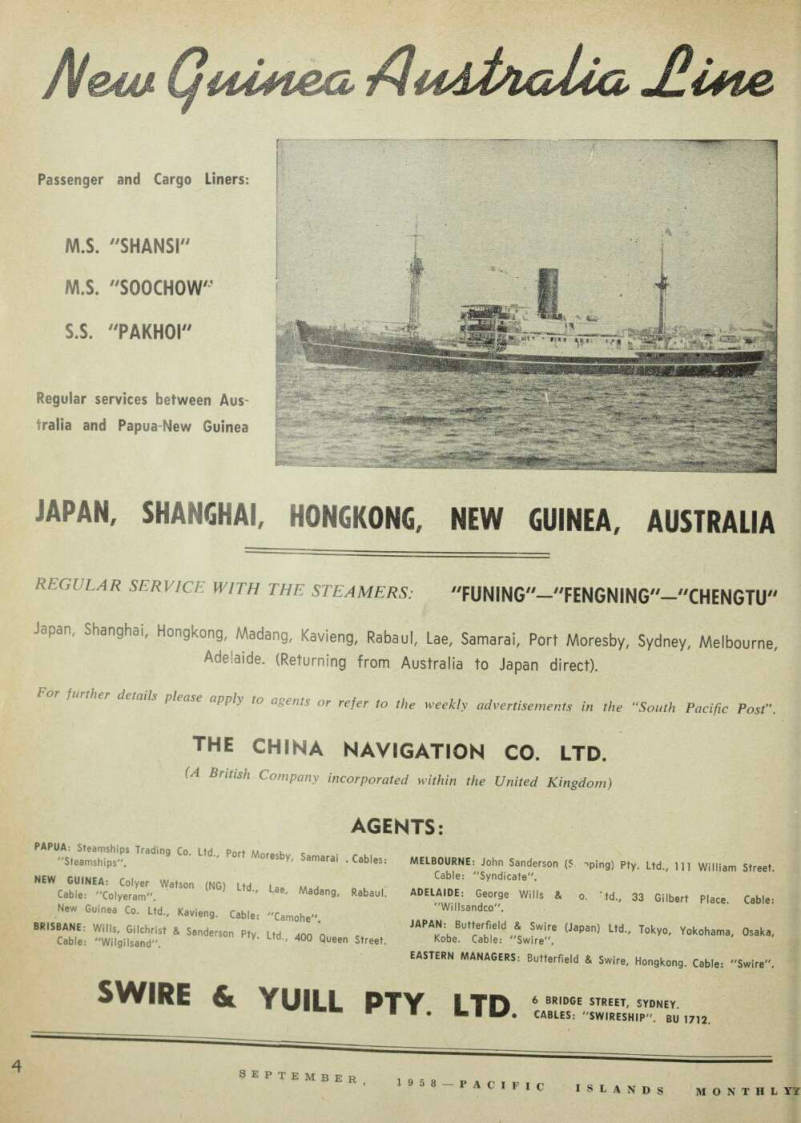 6
6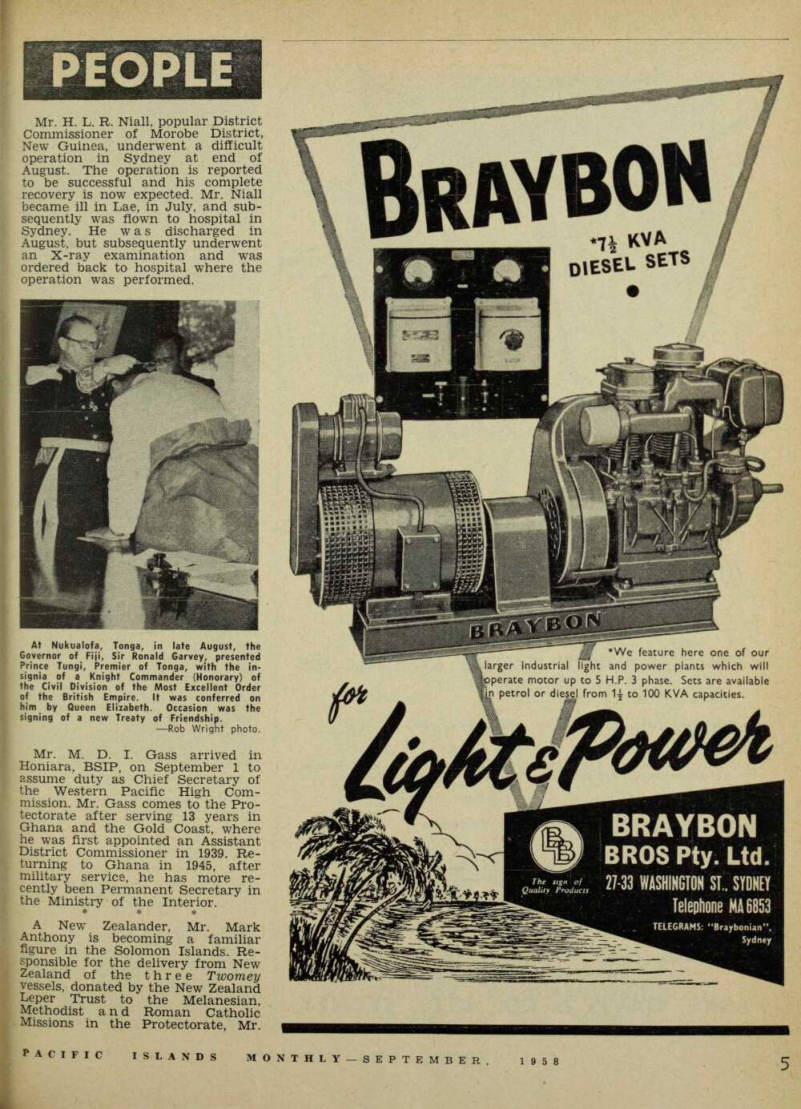 7
7 8
8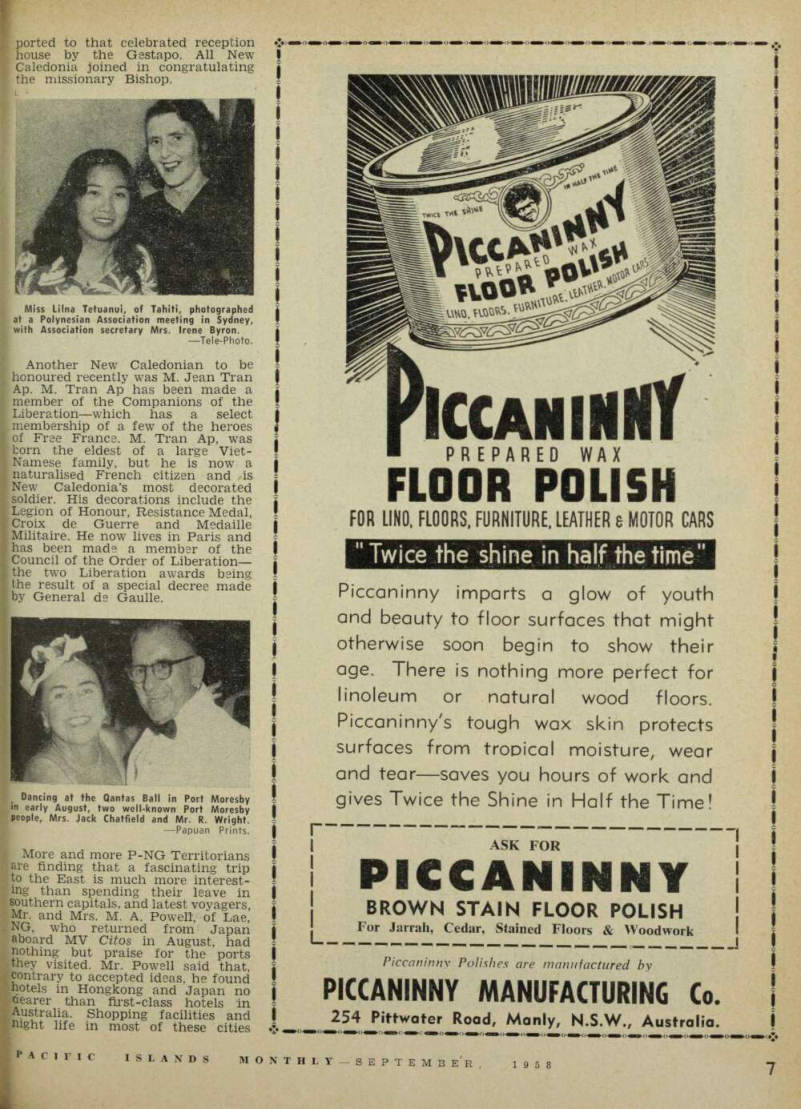 9
9 10
10 11
11 12
12 13
13 14
14 15
15 16
16 17
17 18
18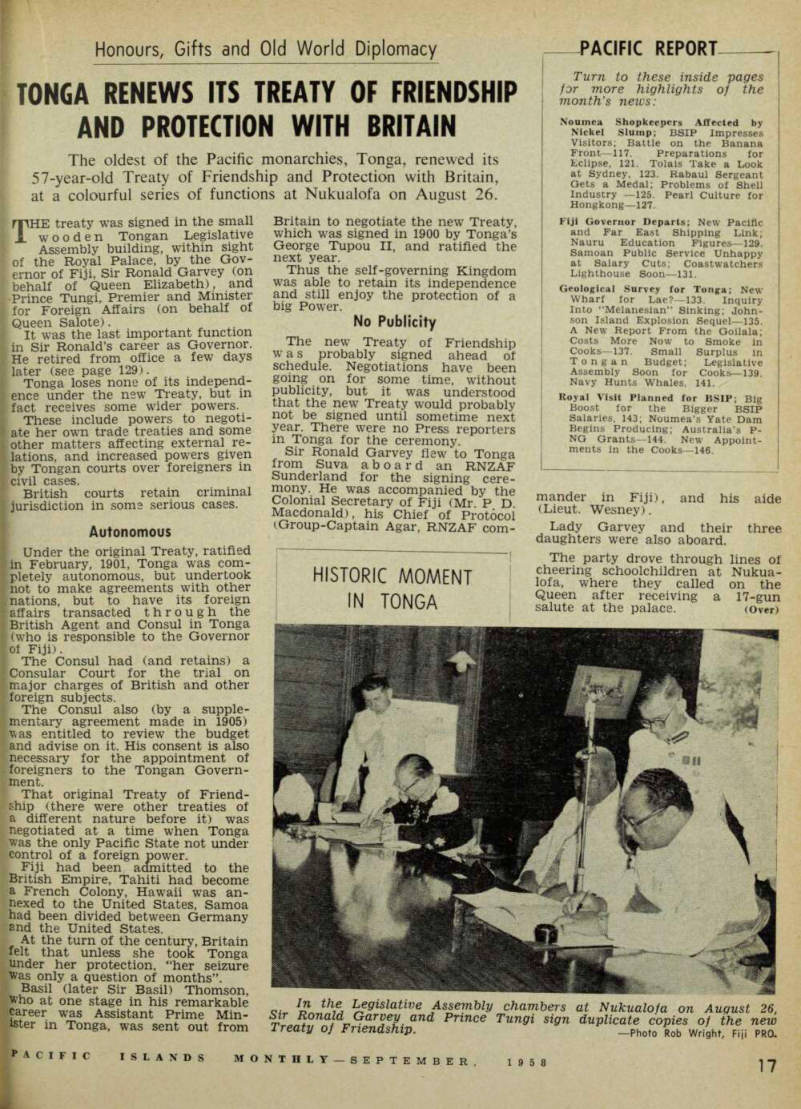 19
19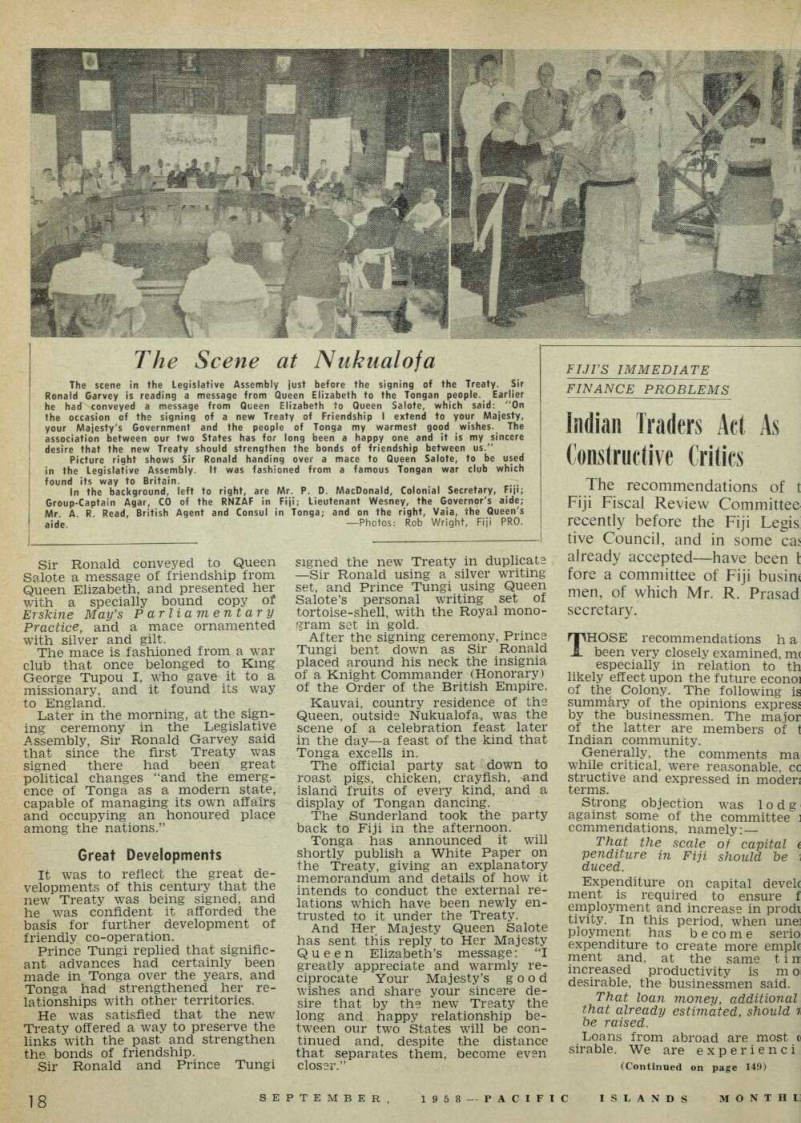 20
20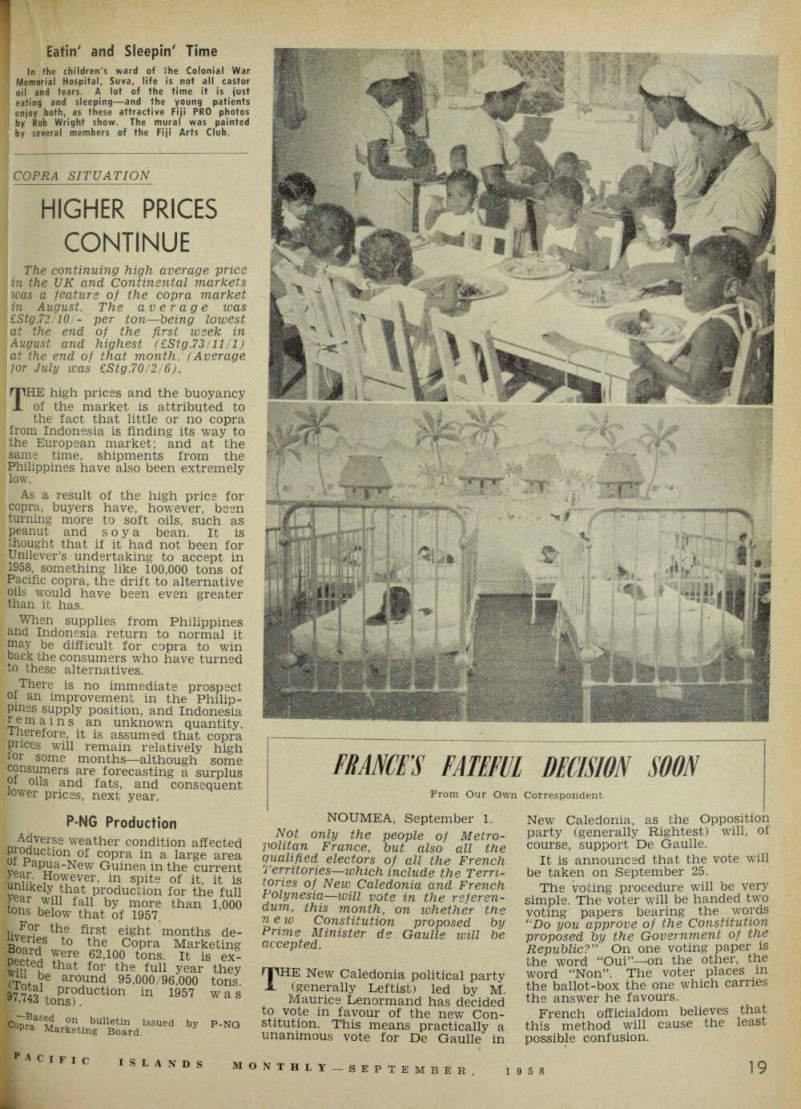 21
21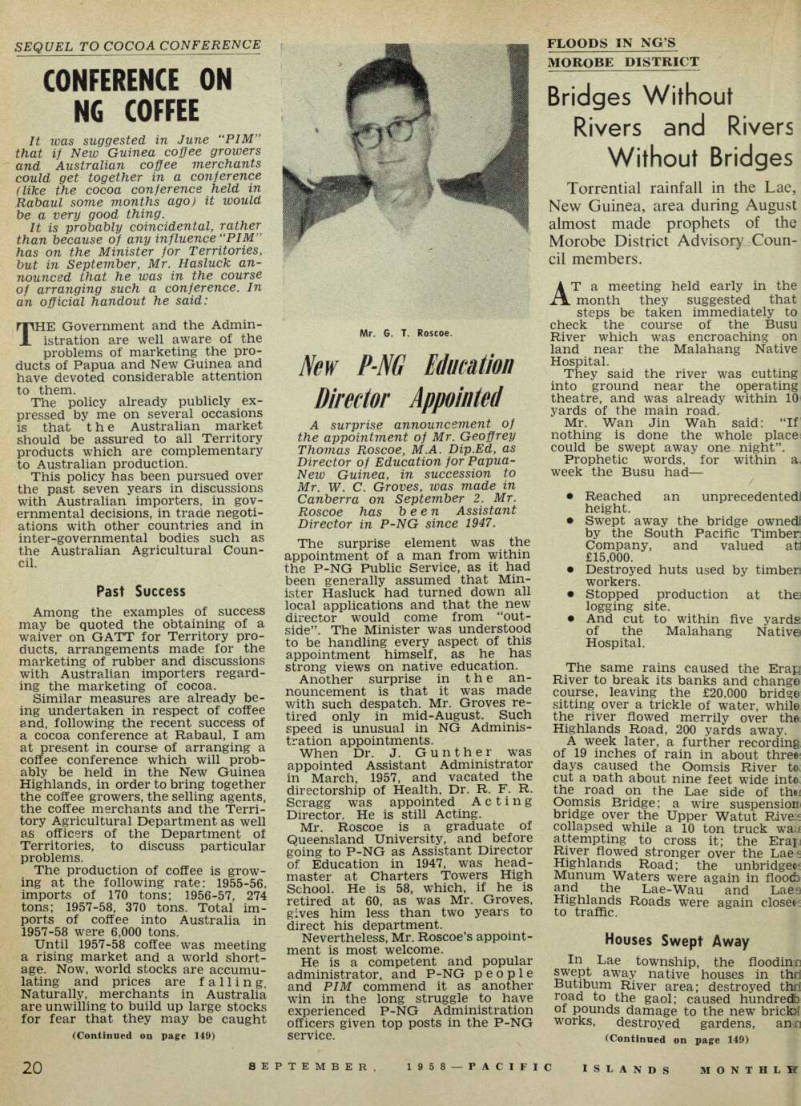 22
22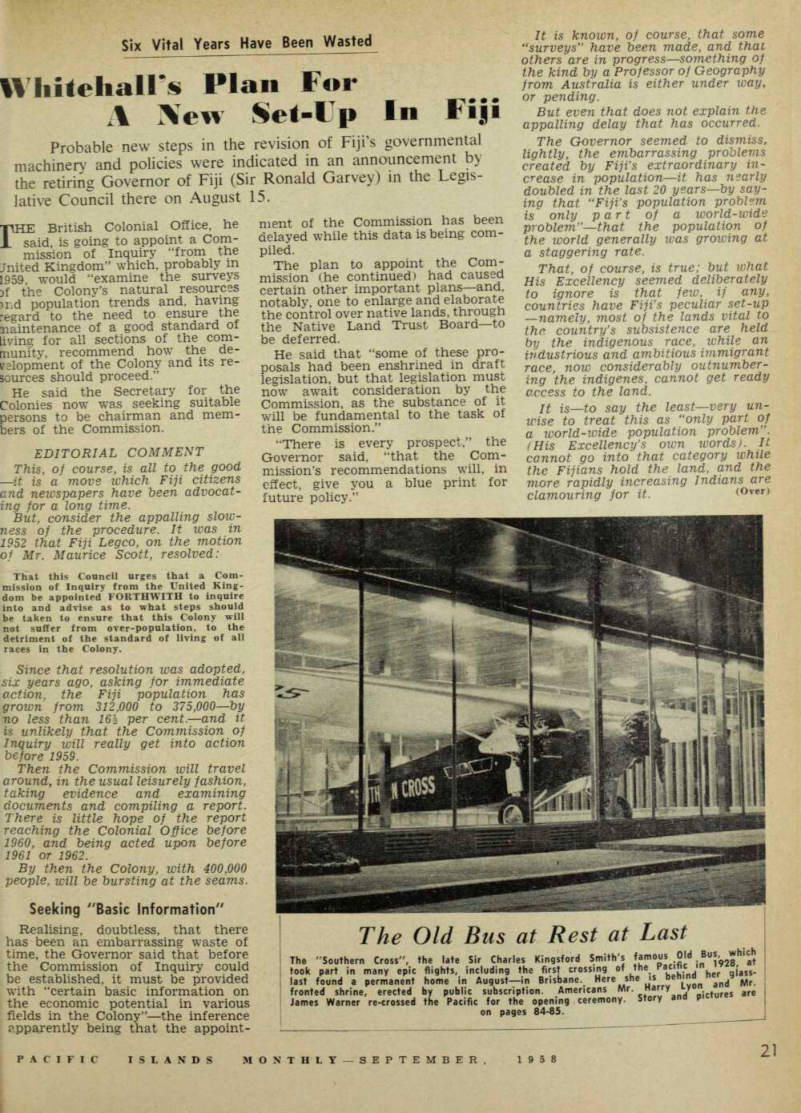 23
23 24
24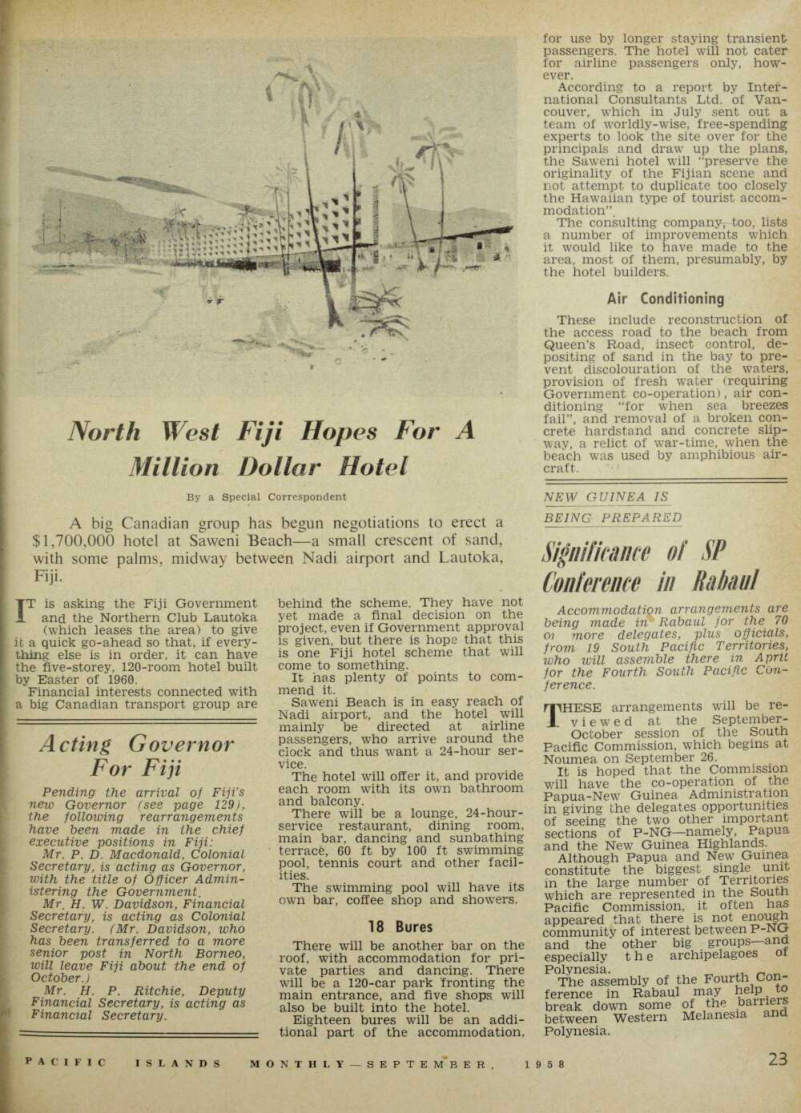 25
25 26
26 27
27 28
28 29
29 30
30 31
31 32
32 33
33 34
34 35
35 36
36 37
37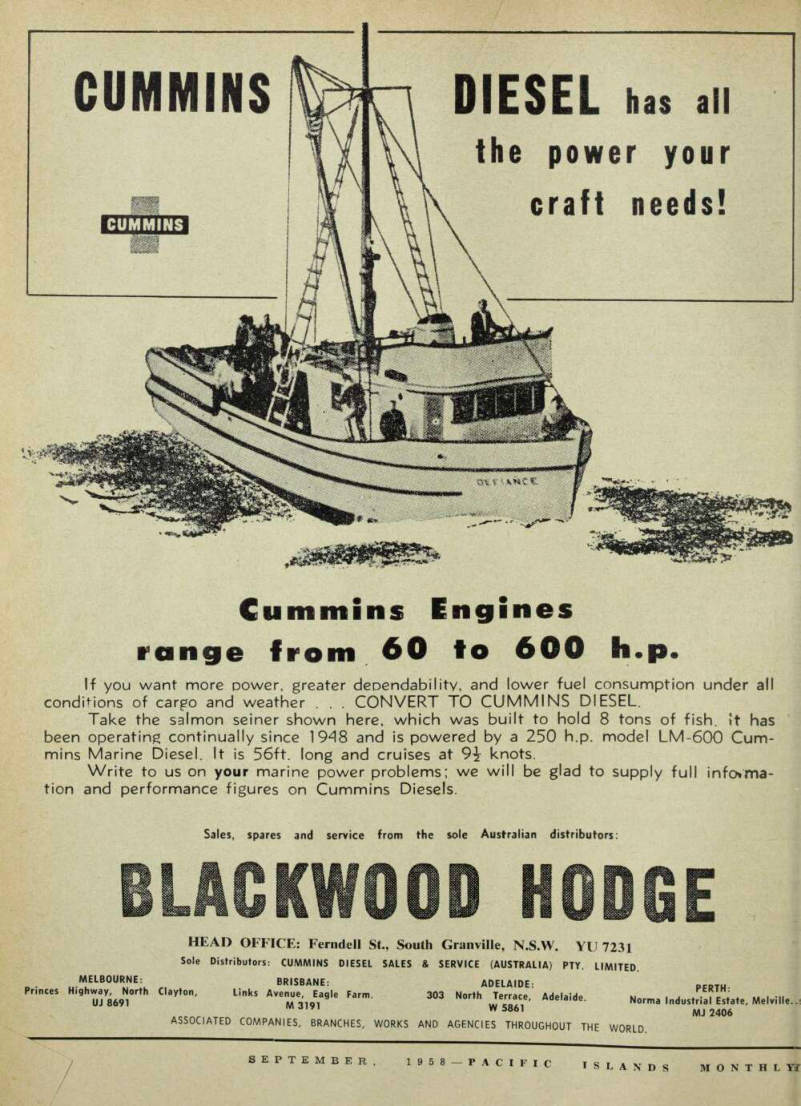 38
38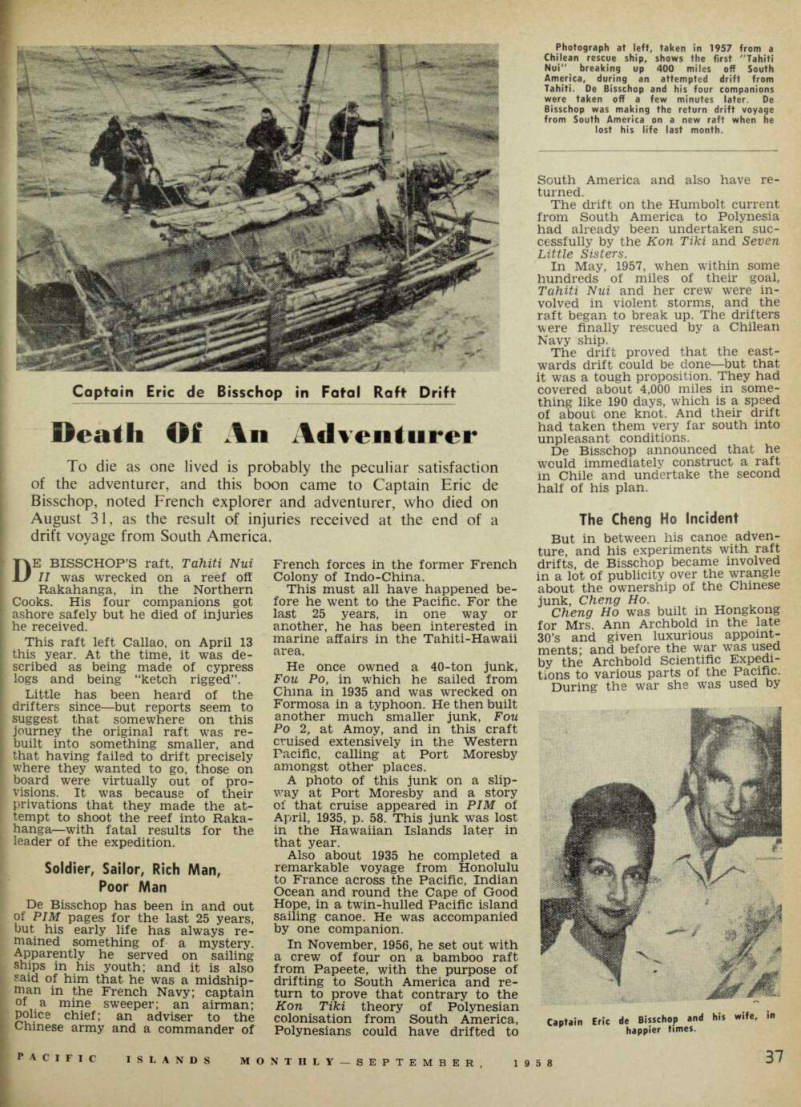 39
39 40
40 41
41 42
42 43
43 44
44 45
45 46
46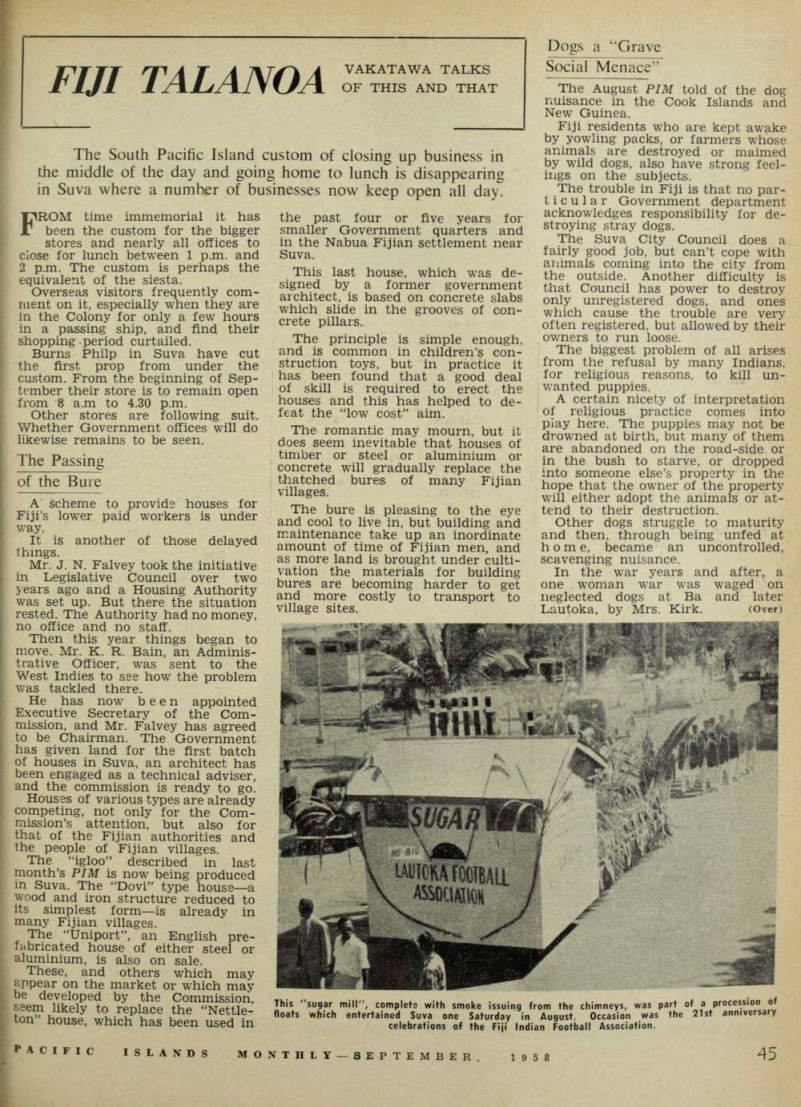 47
47 48
48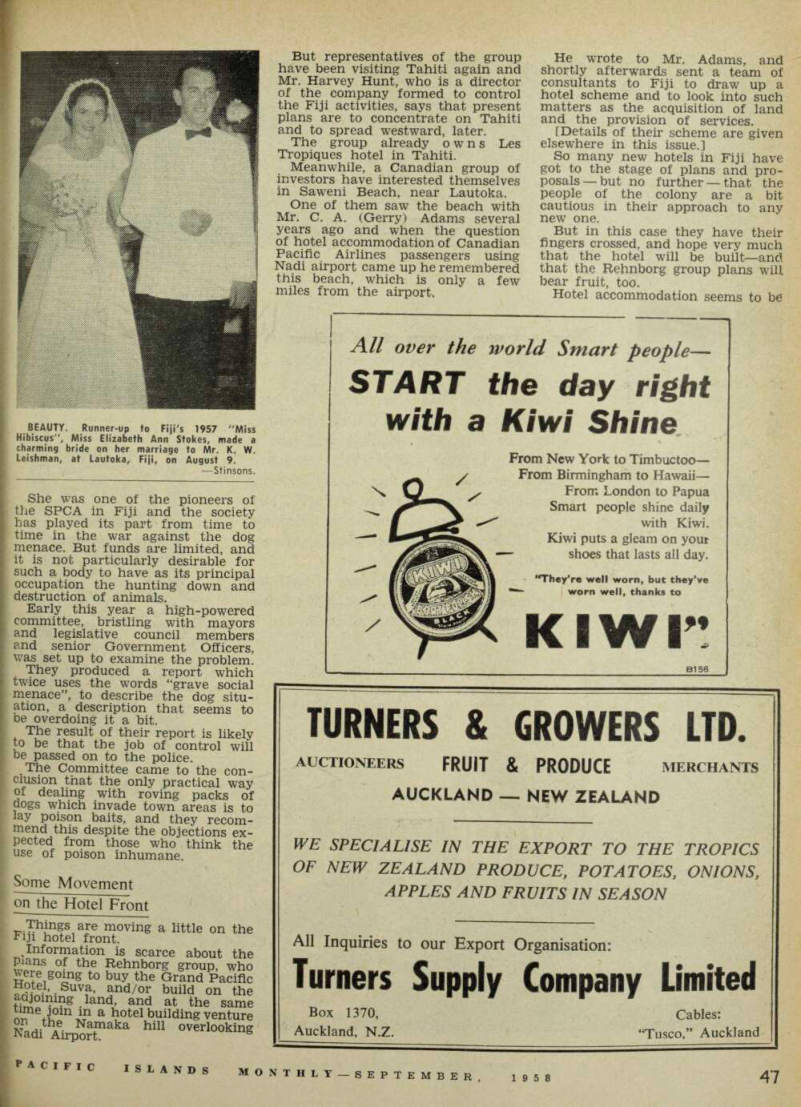 49
49 50
50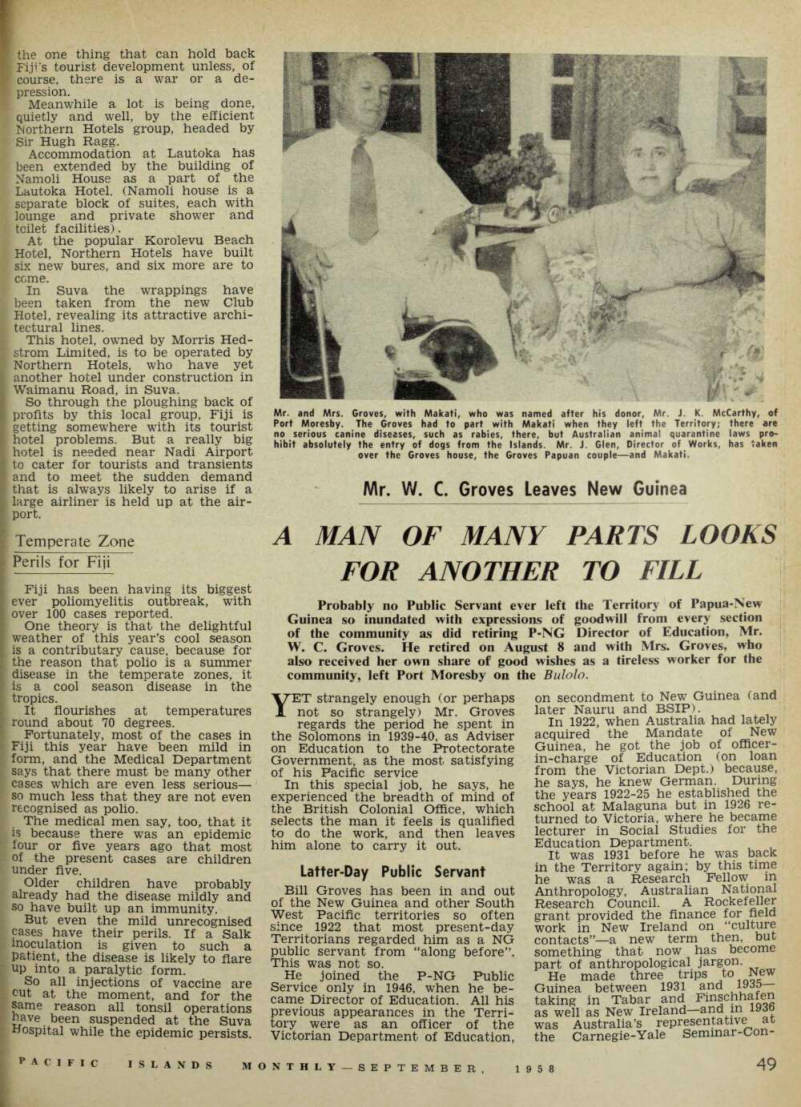 51
51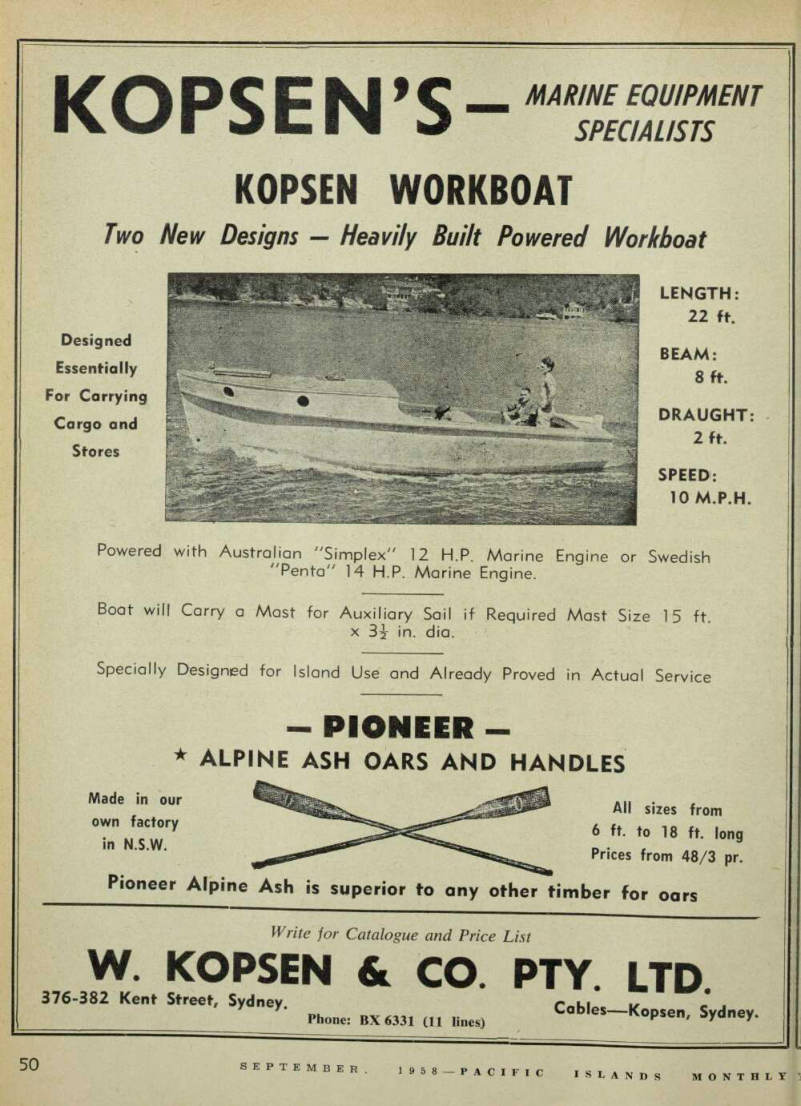 52
52 53
53 54
54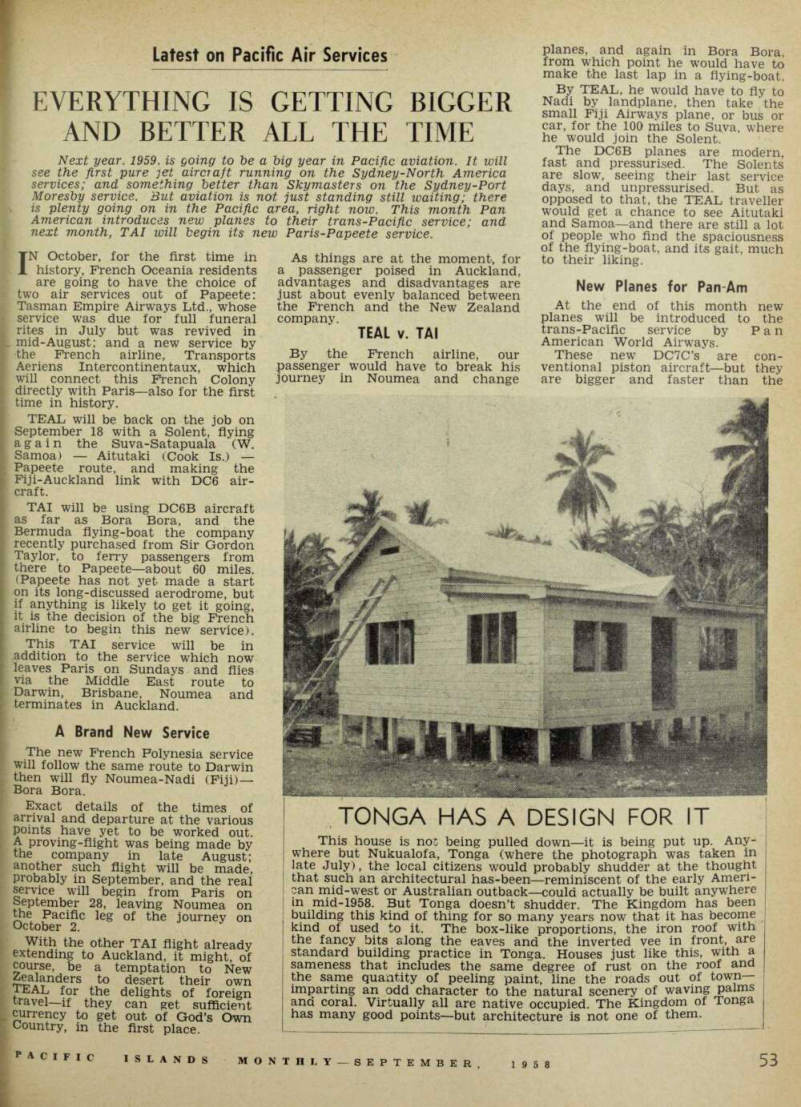 55
55 56
56 57
57 58
58 59
59 60
60 61
61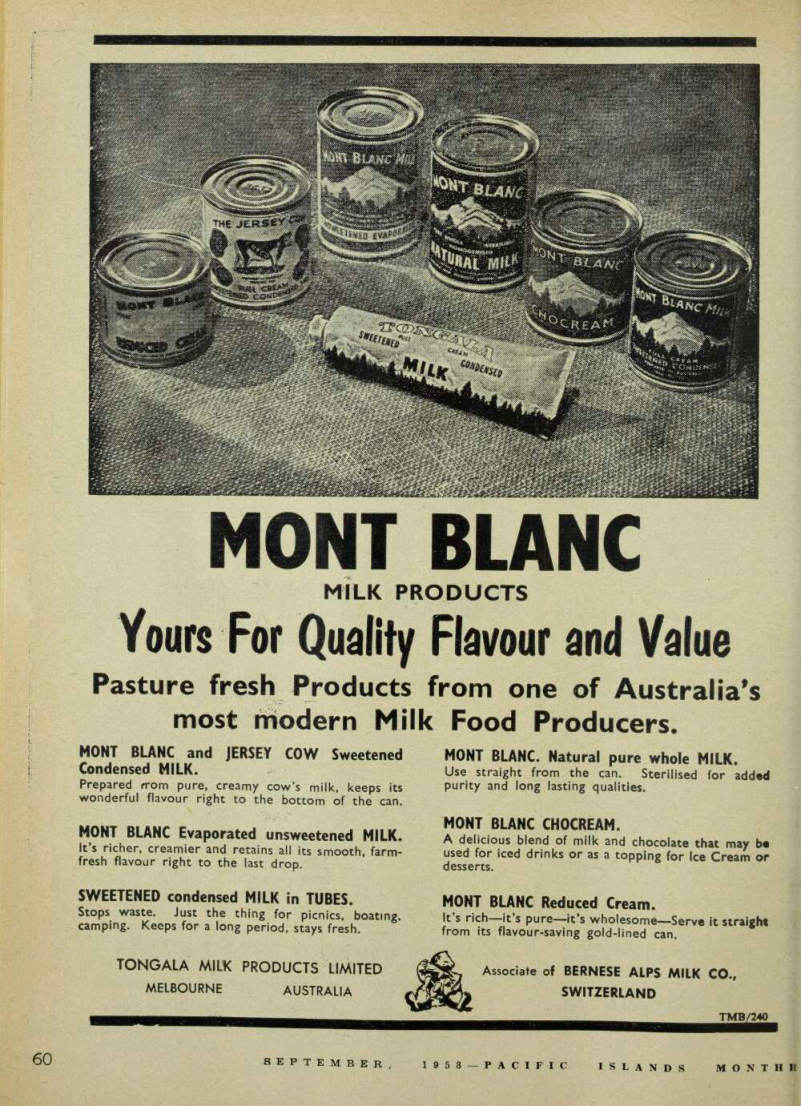 62
62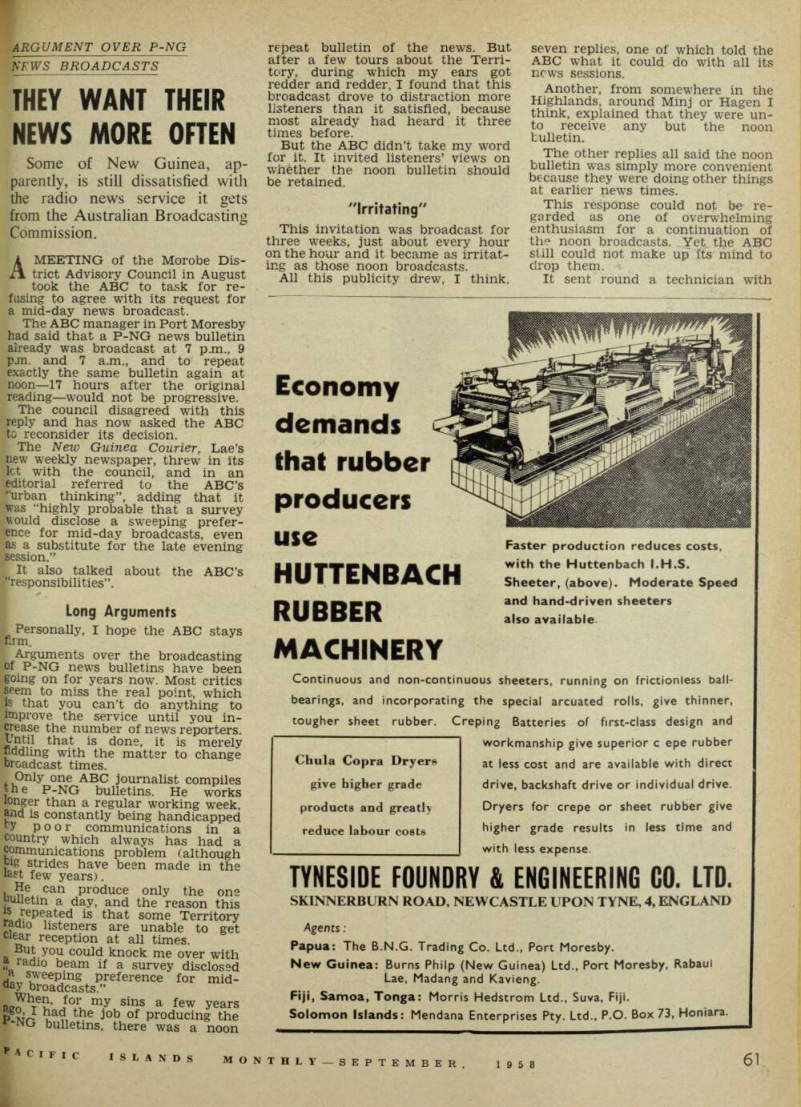 63
63 64
64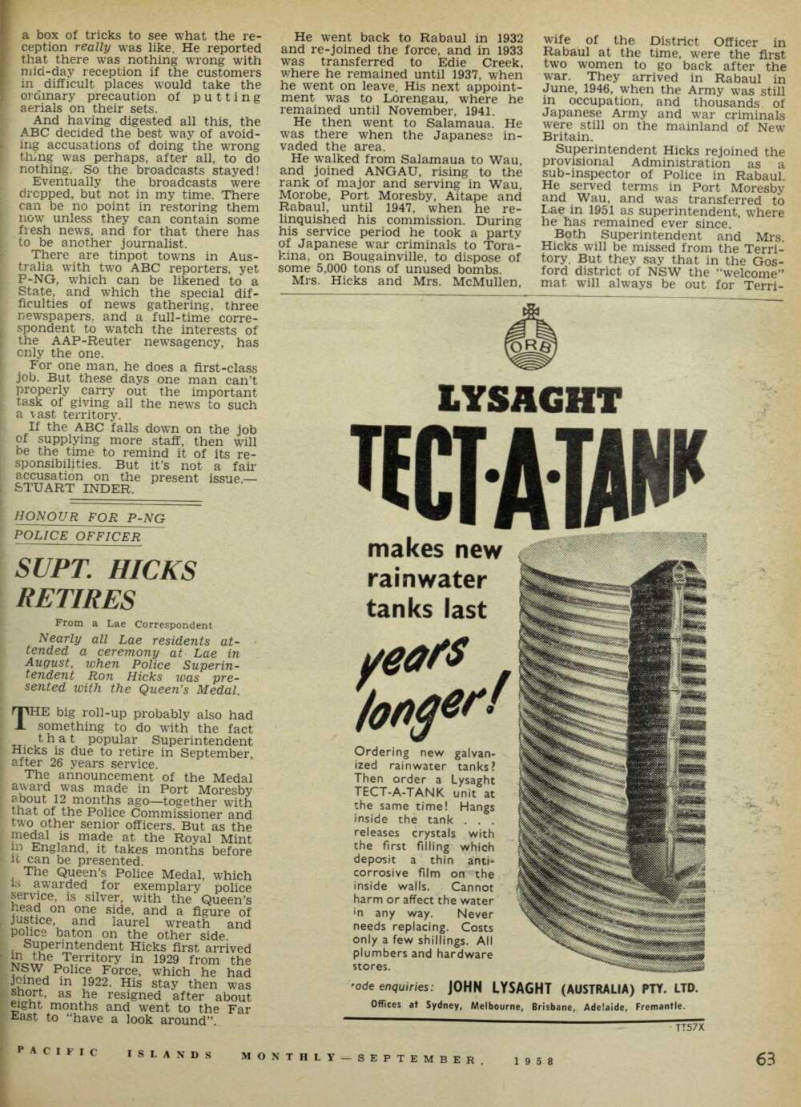 65
65 66
66 67
67 68
68 69
69 70
70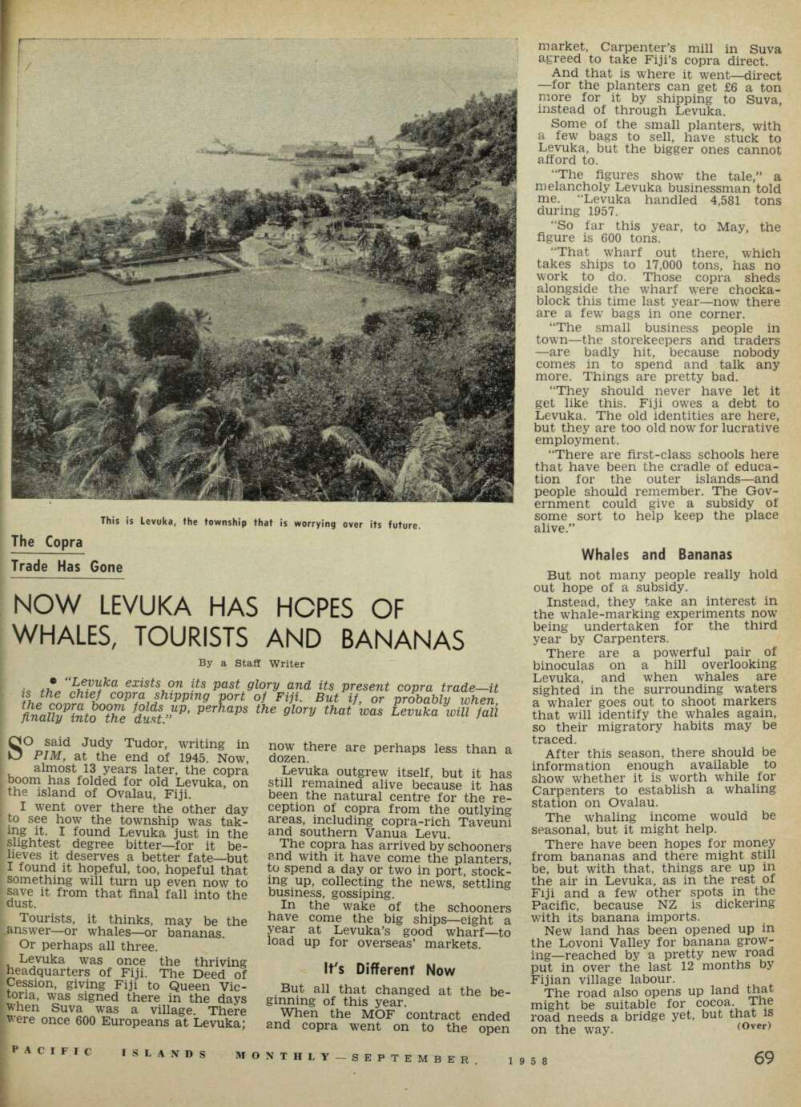 71
71 72
72 73
73 74
74 75
75 76
76 77
77 78
78 79
79 80
80 81
81 82
82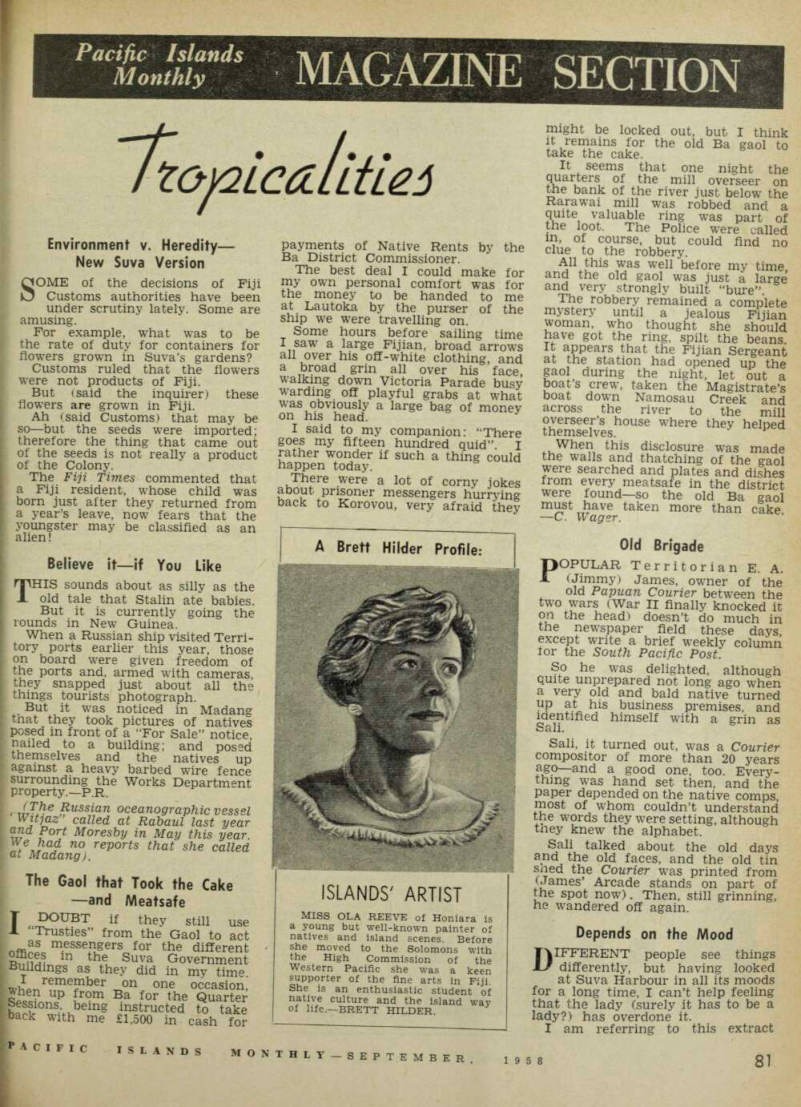 83
83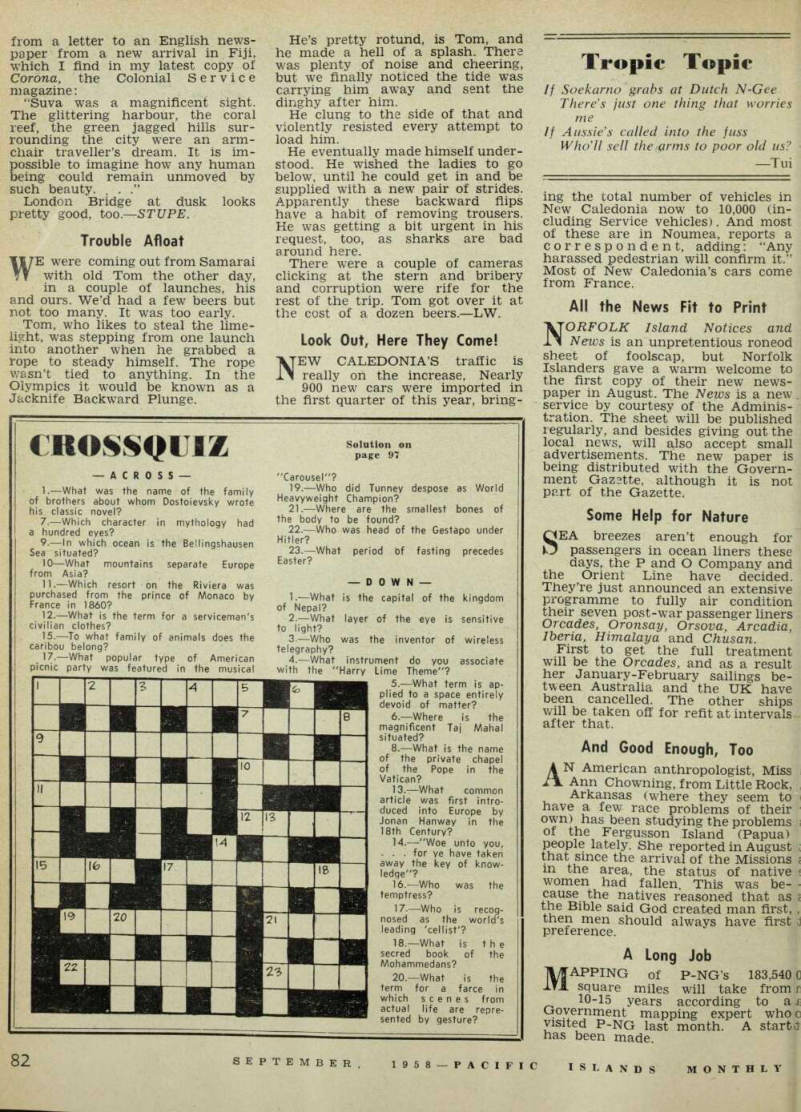 84
84 85
85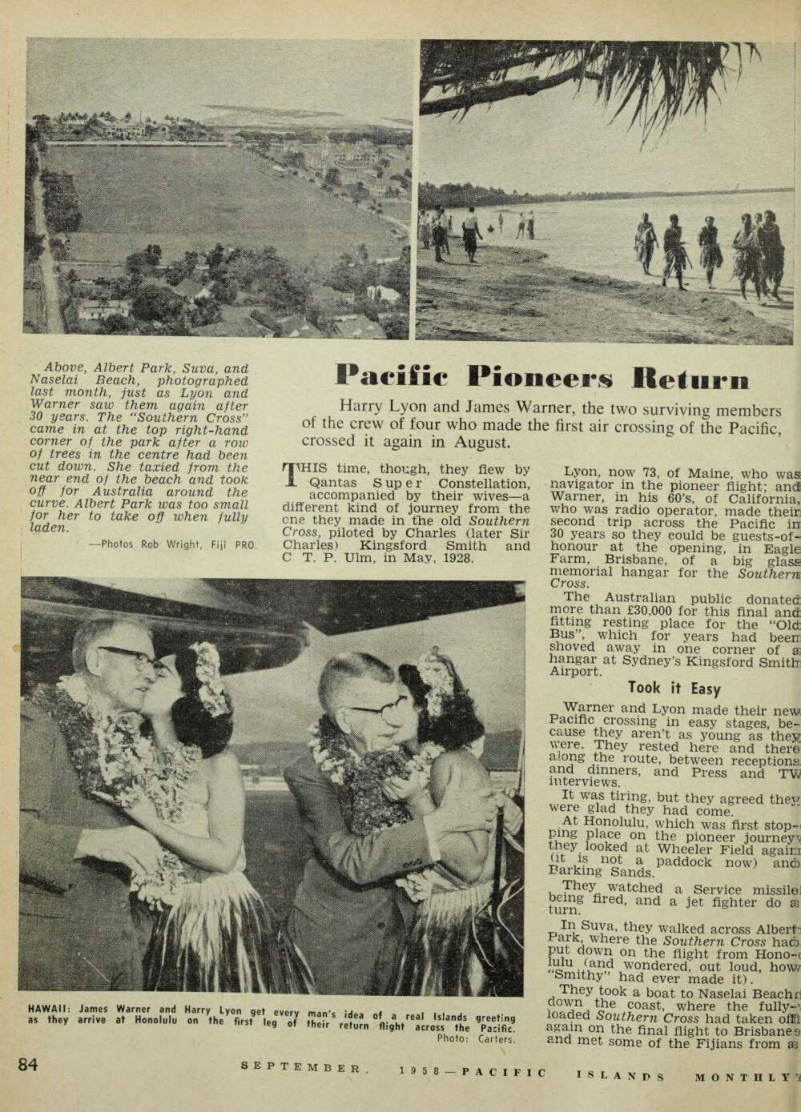 86
86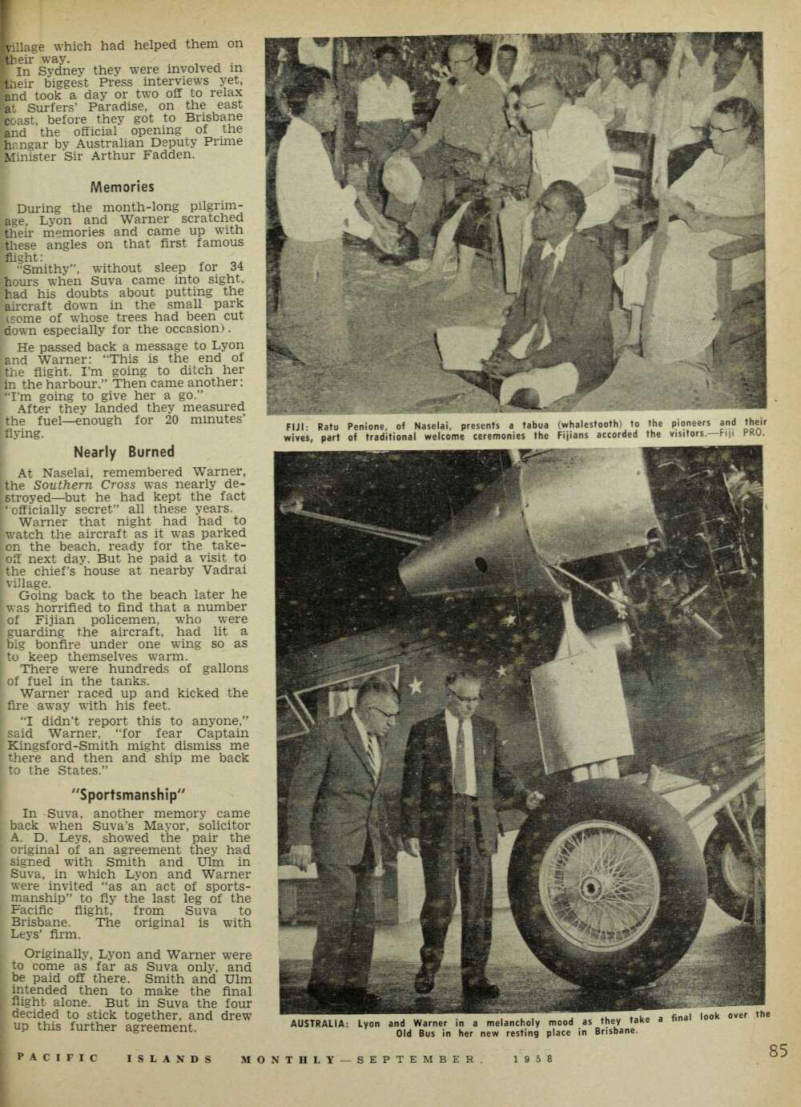 87
87 88
88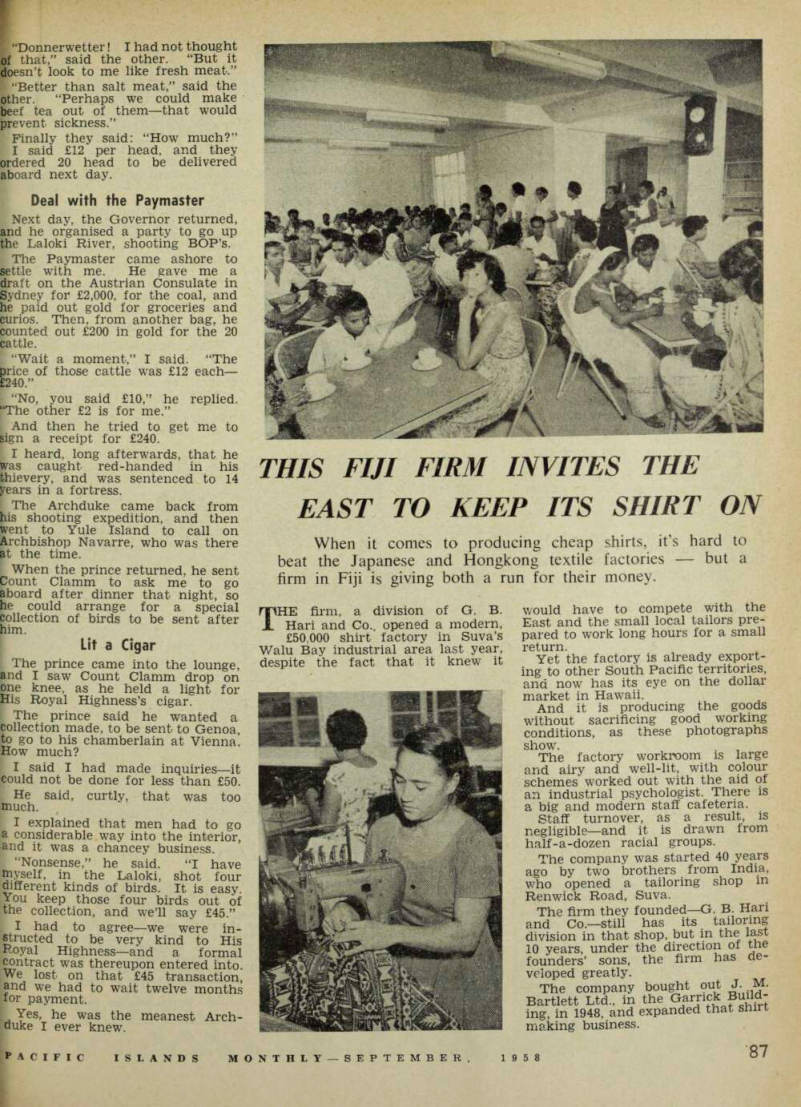 89
89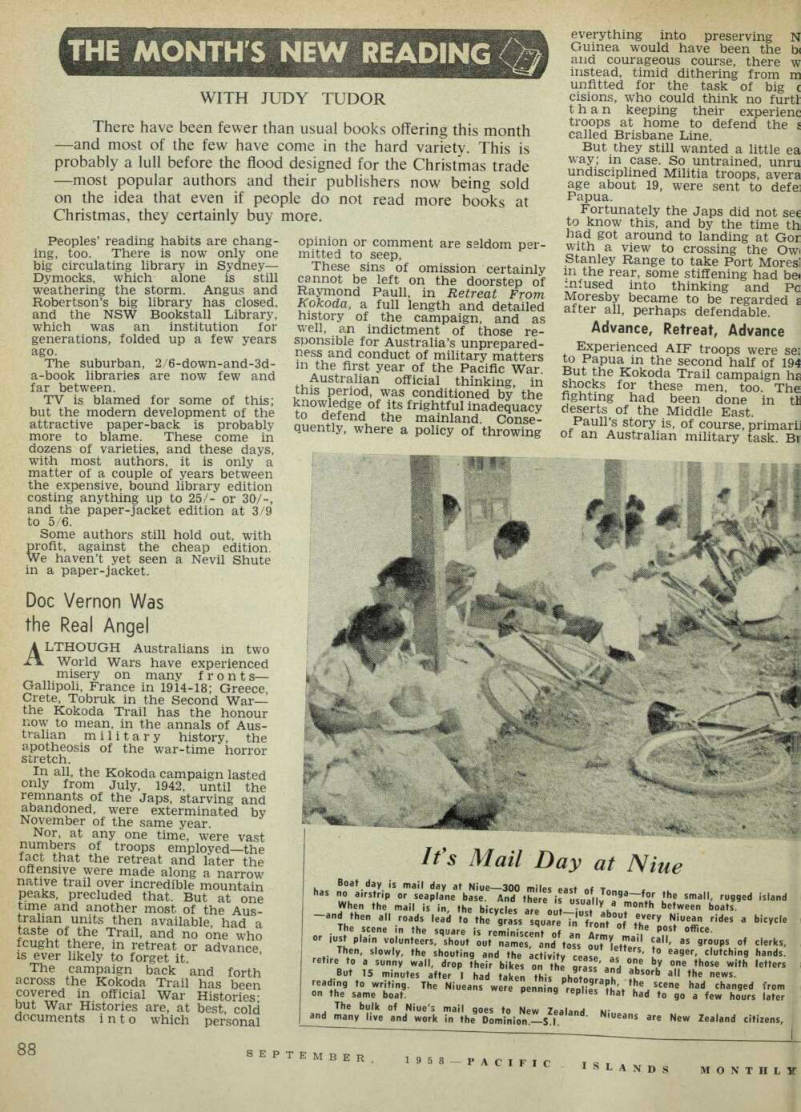 90
90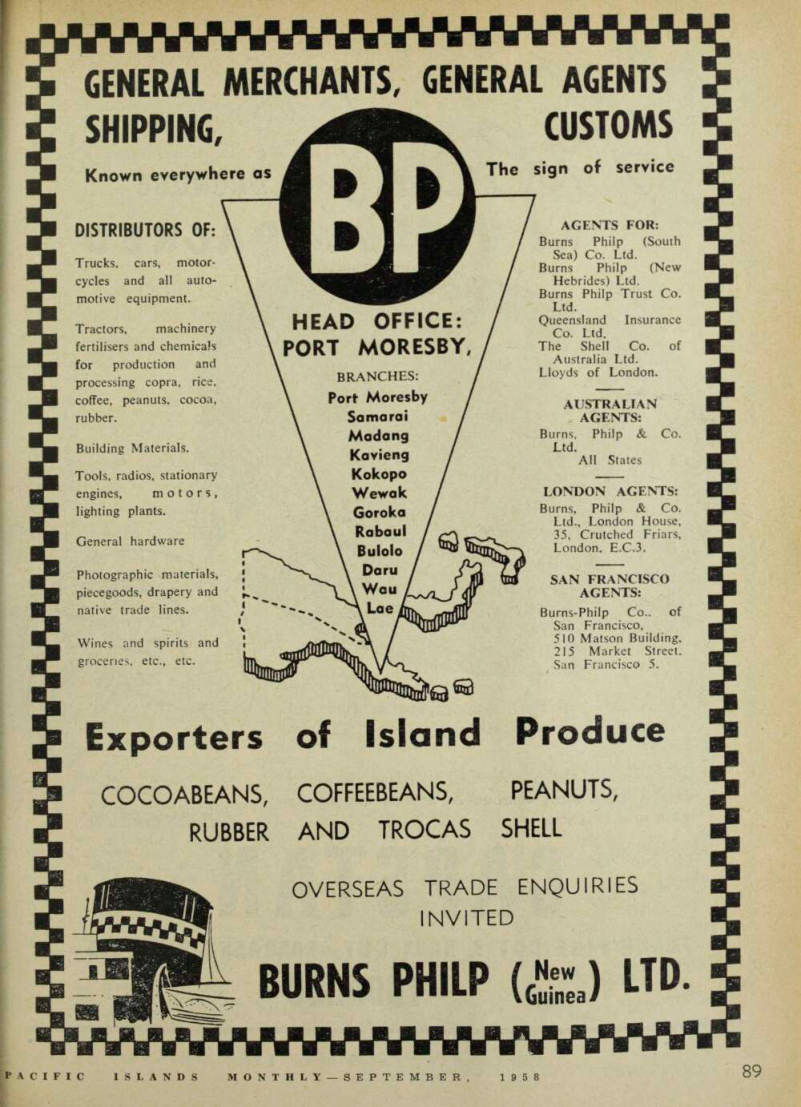 91
91 92
92 93
93 94
94 95
95 96
96 97
97 98
98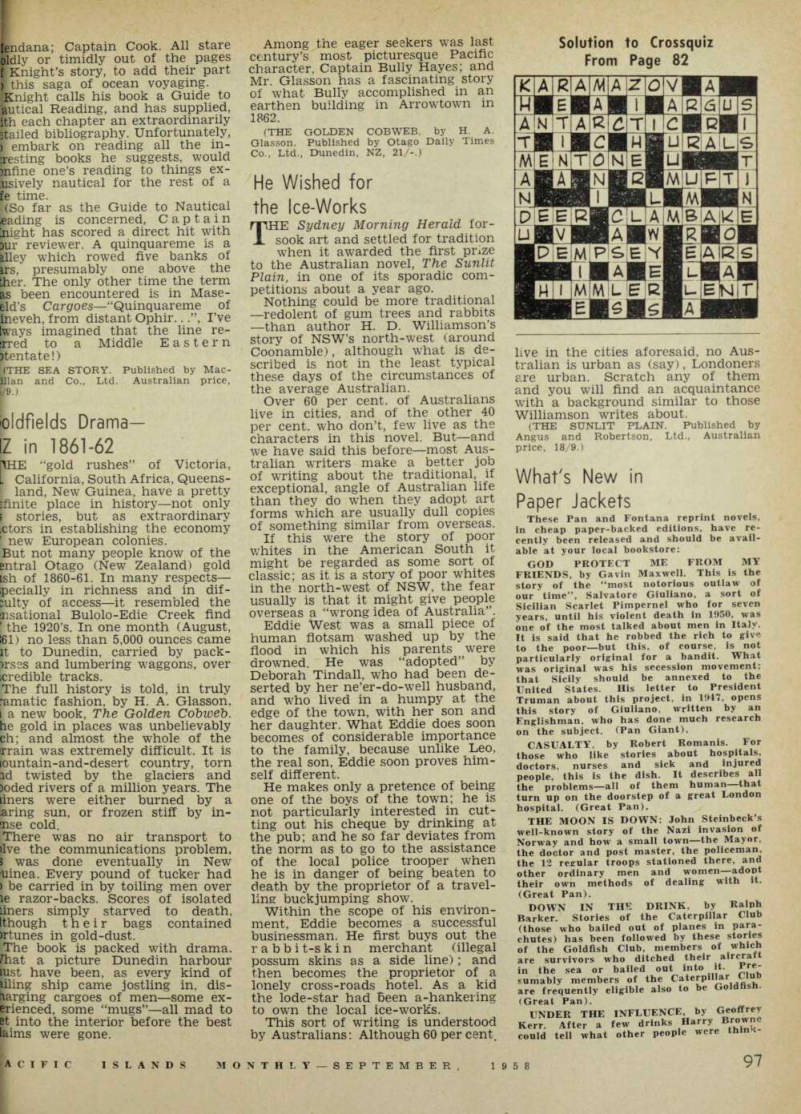 99
99 100
100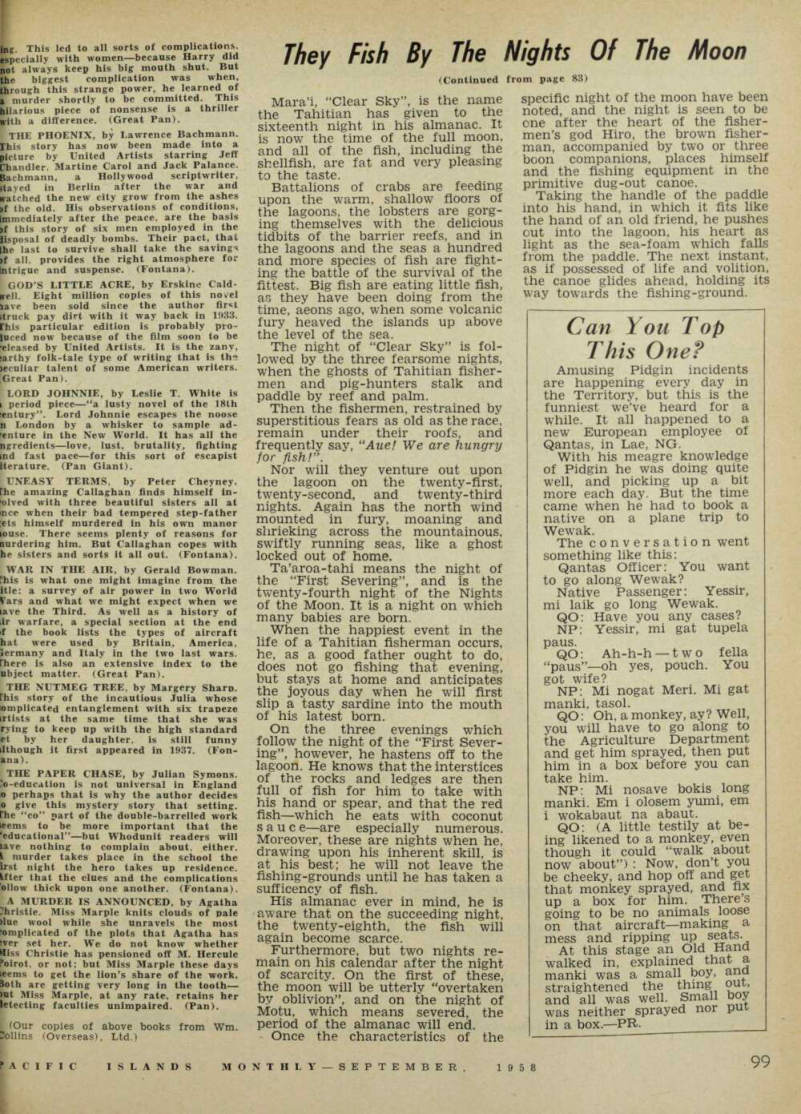 101
101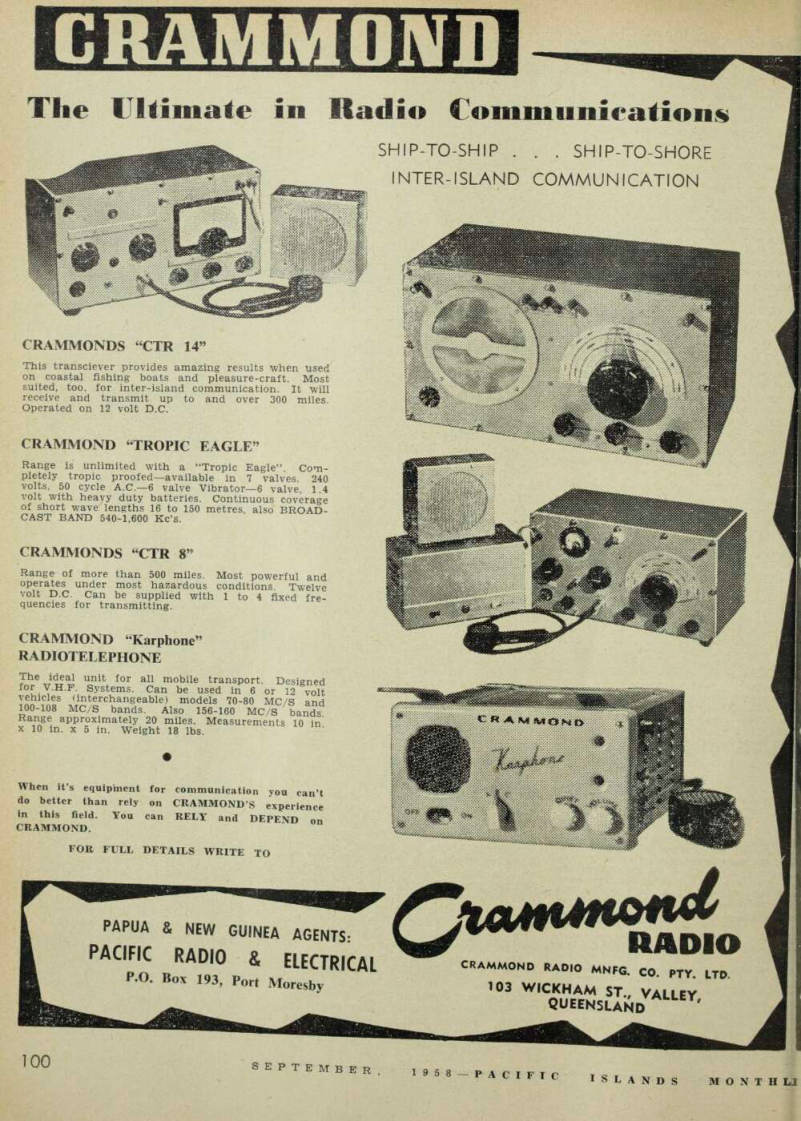 102
102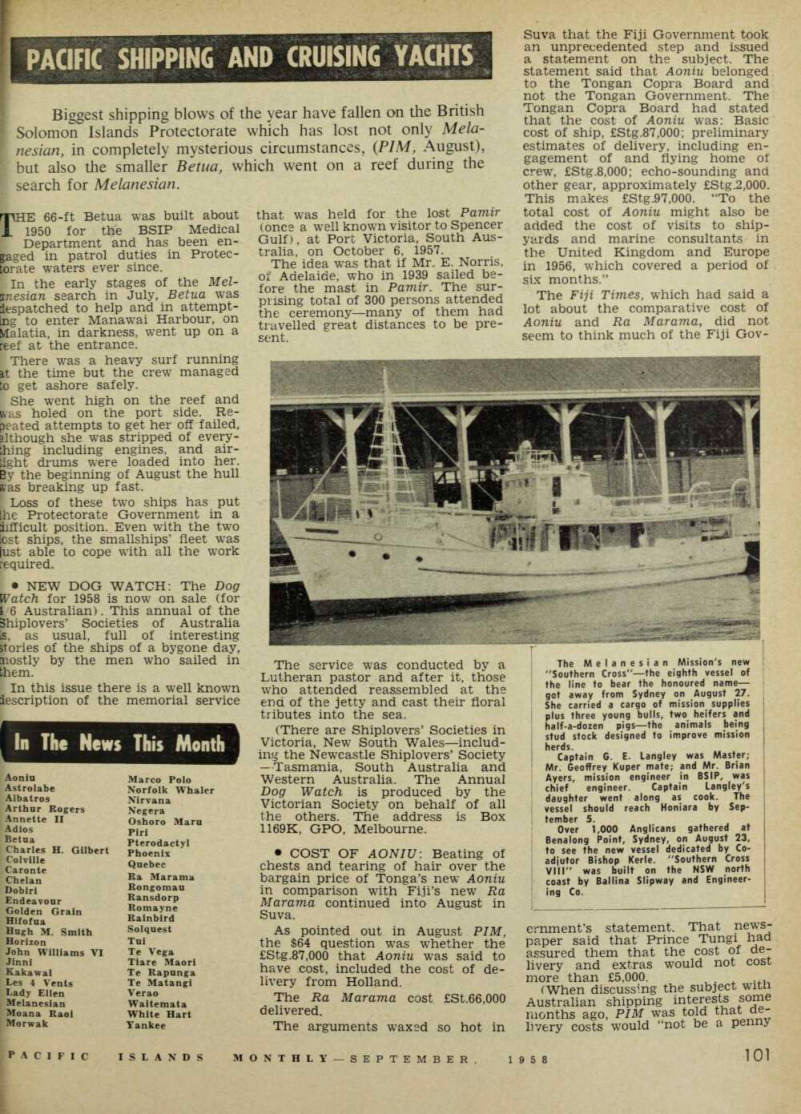 103
103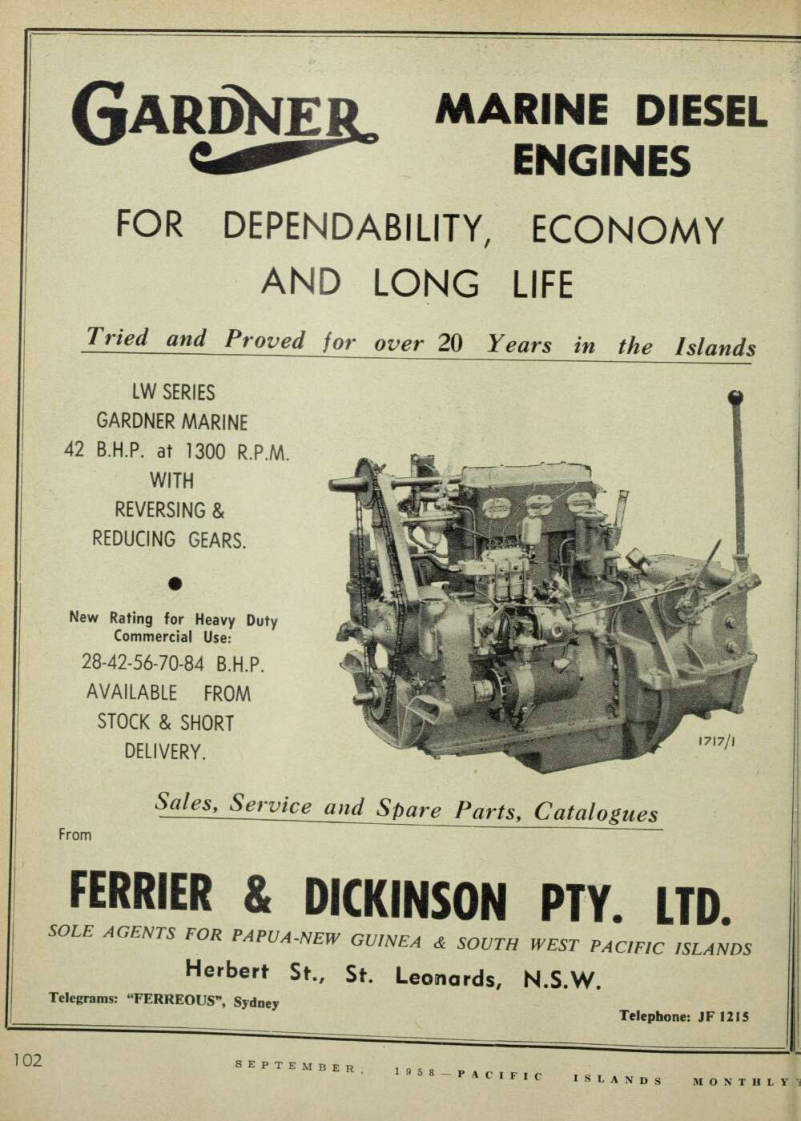 104
104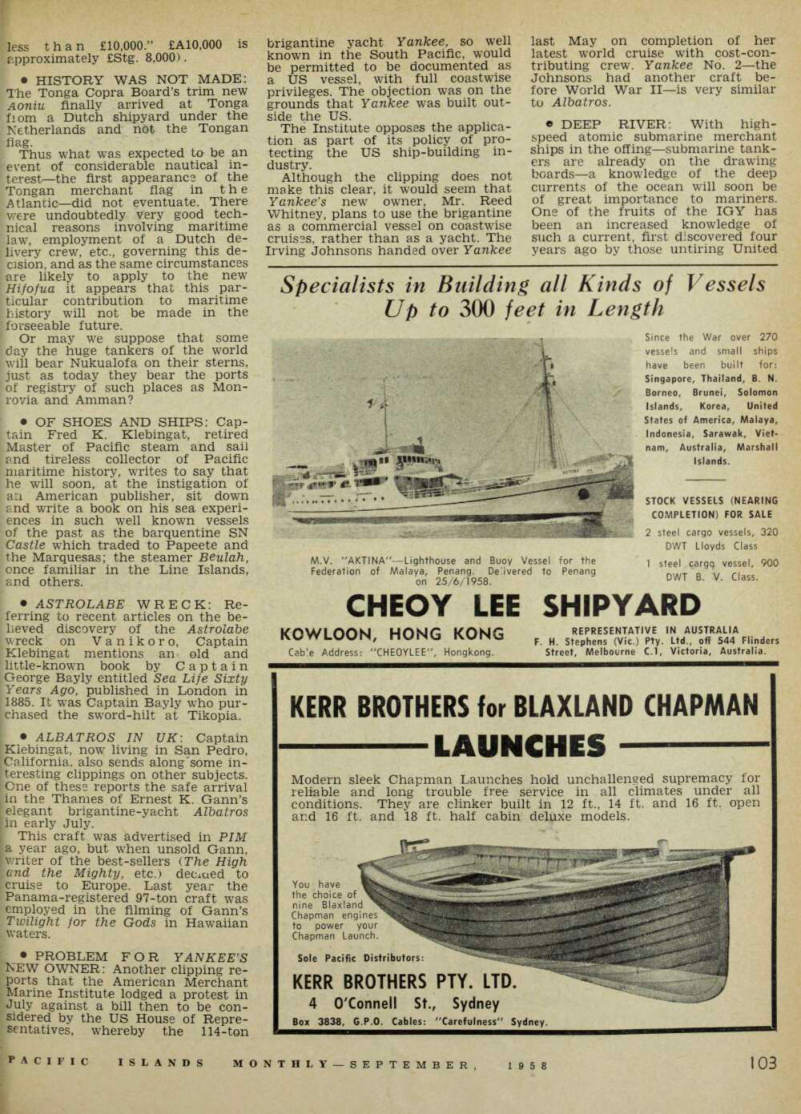 105
105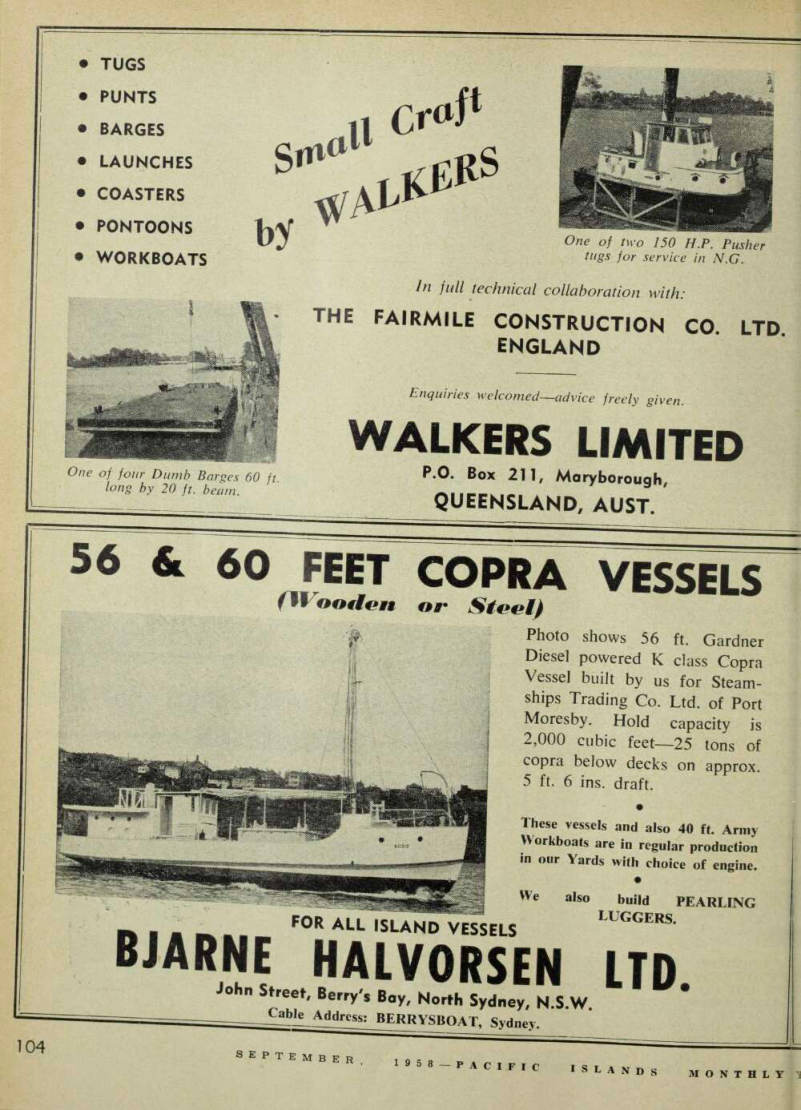 106
106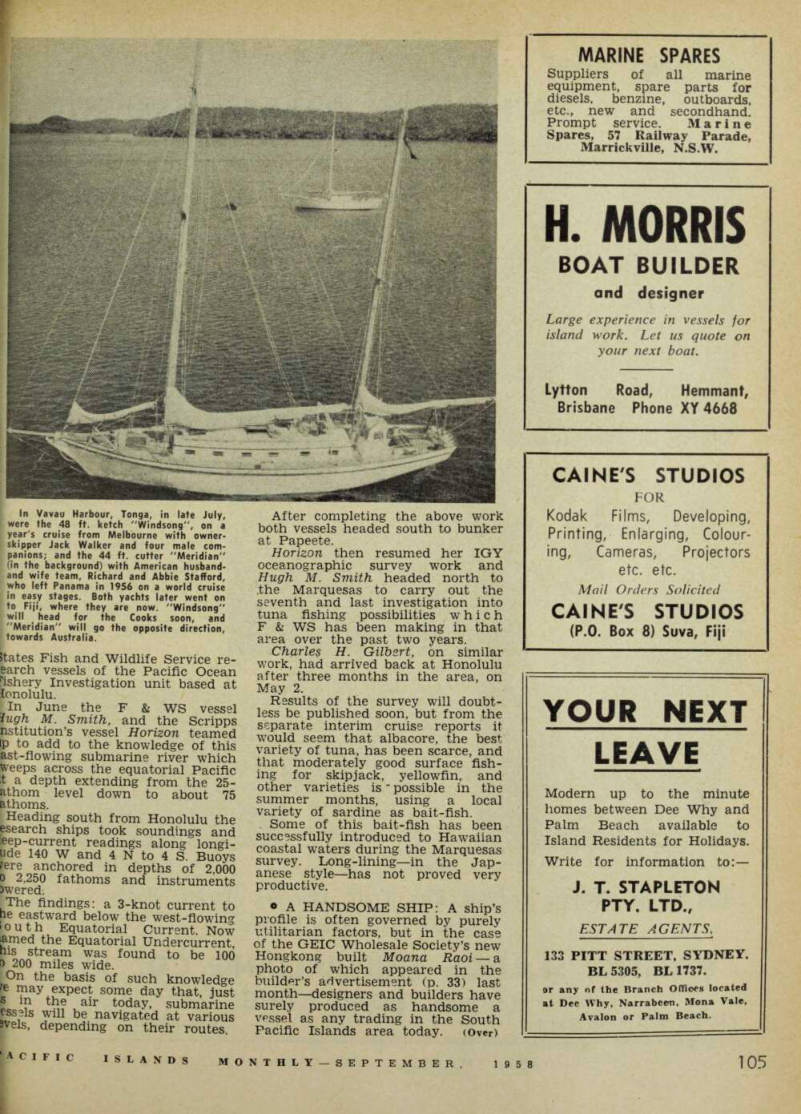 107
107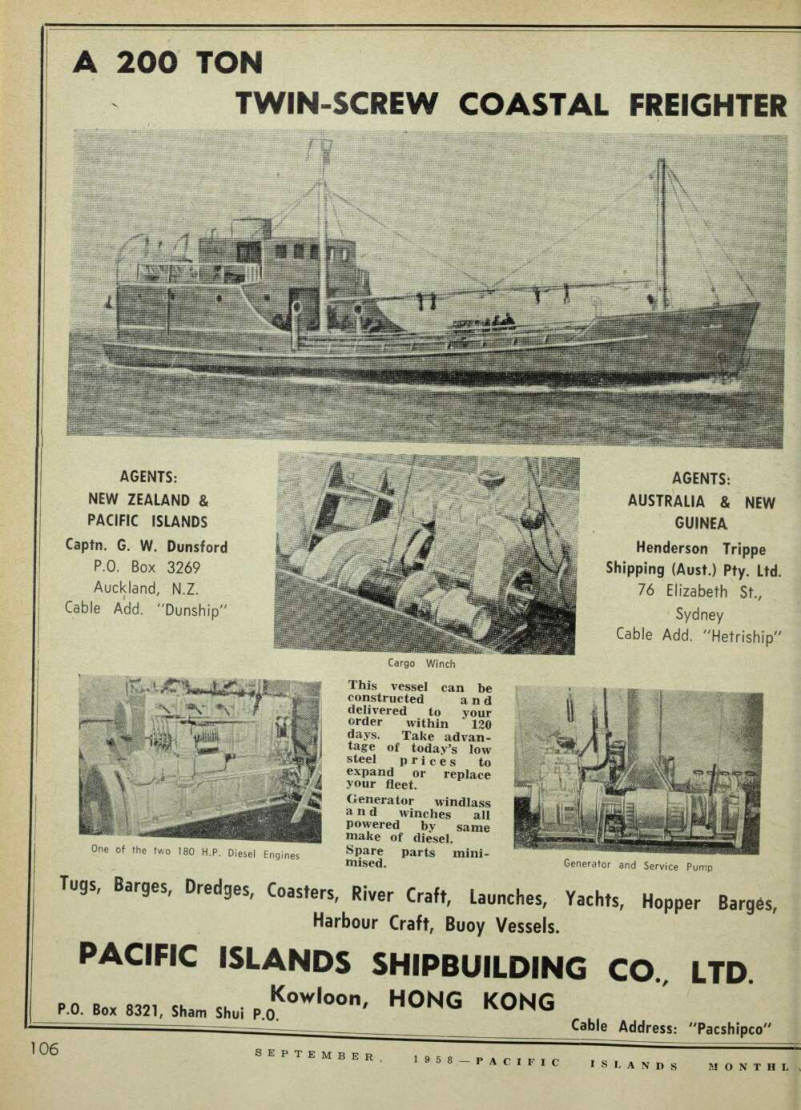 108
108 109
109 110
110 111
111 112
112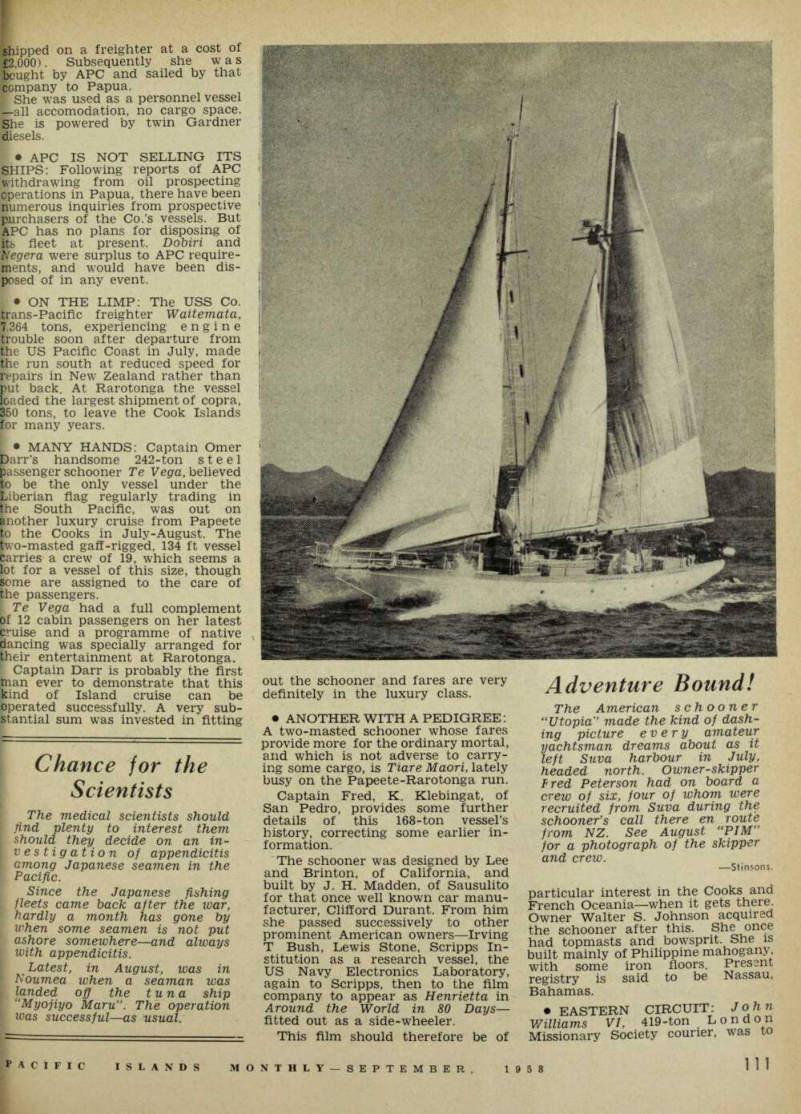 113
113 114
114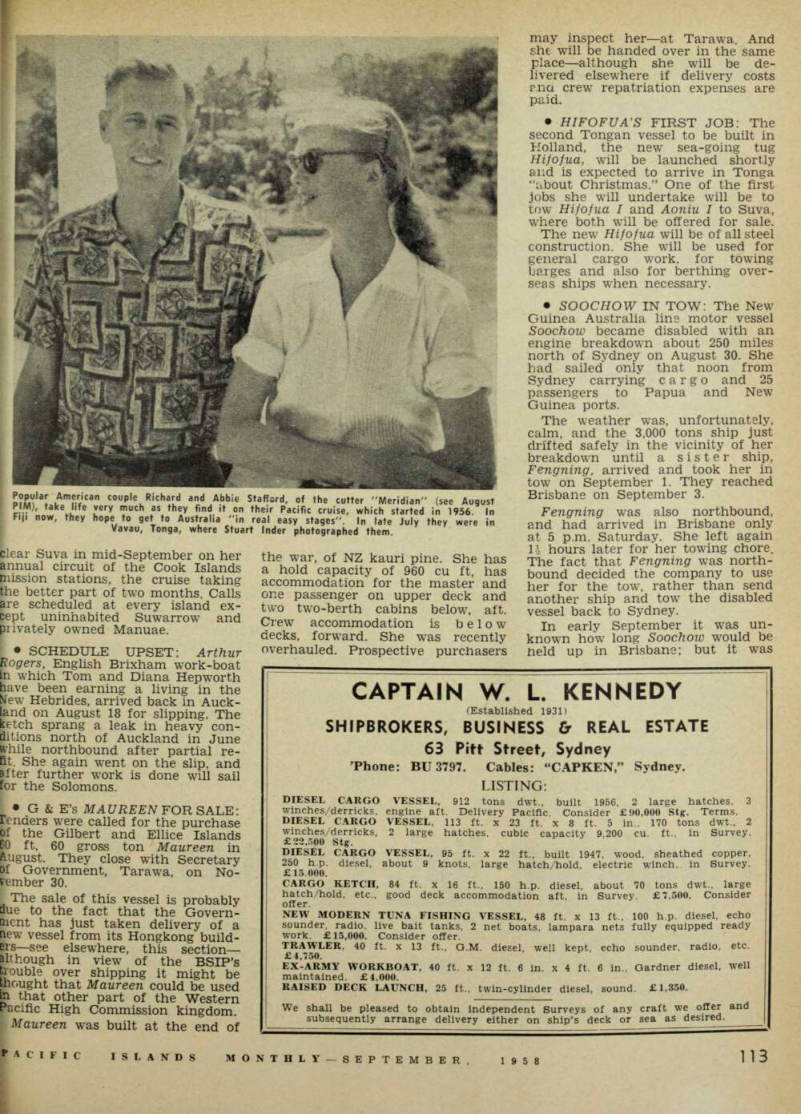 115
115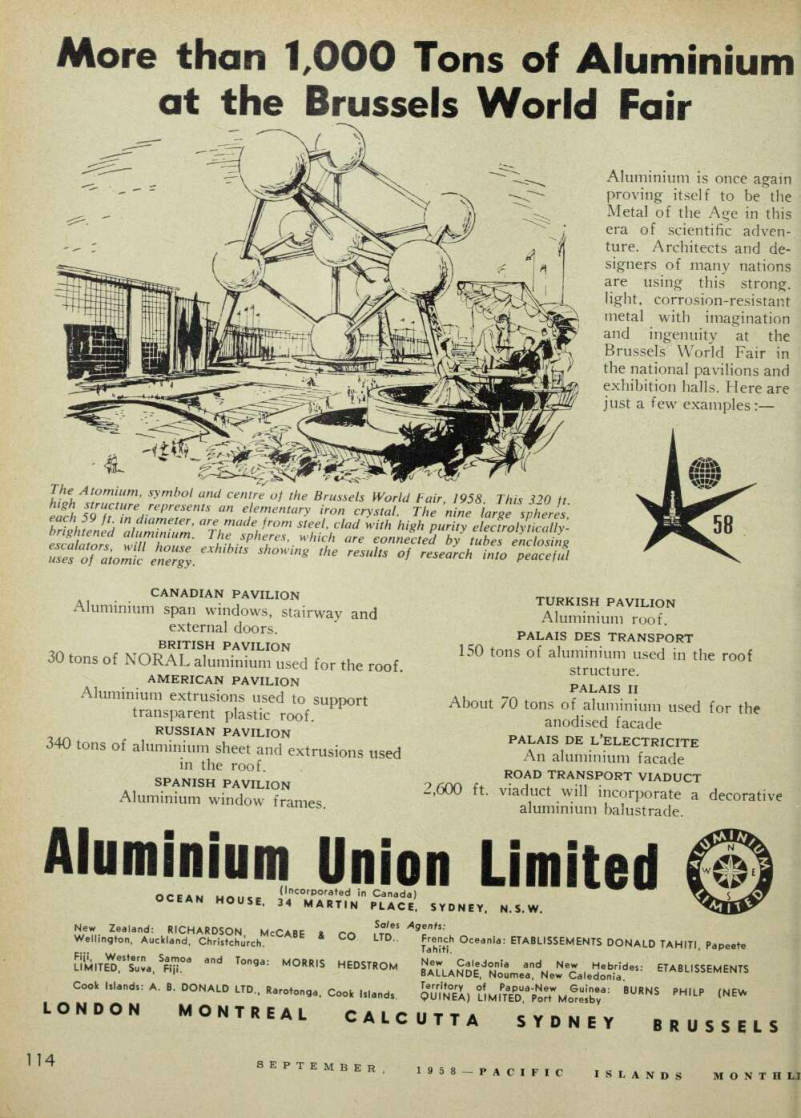 116
116 117
117 118
118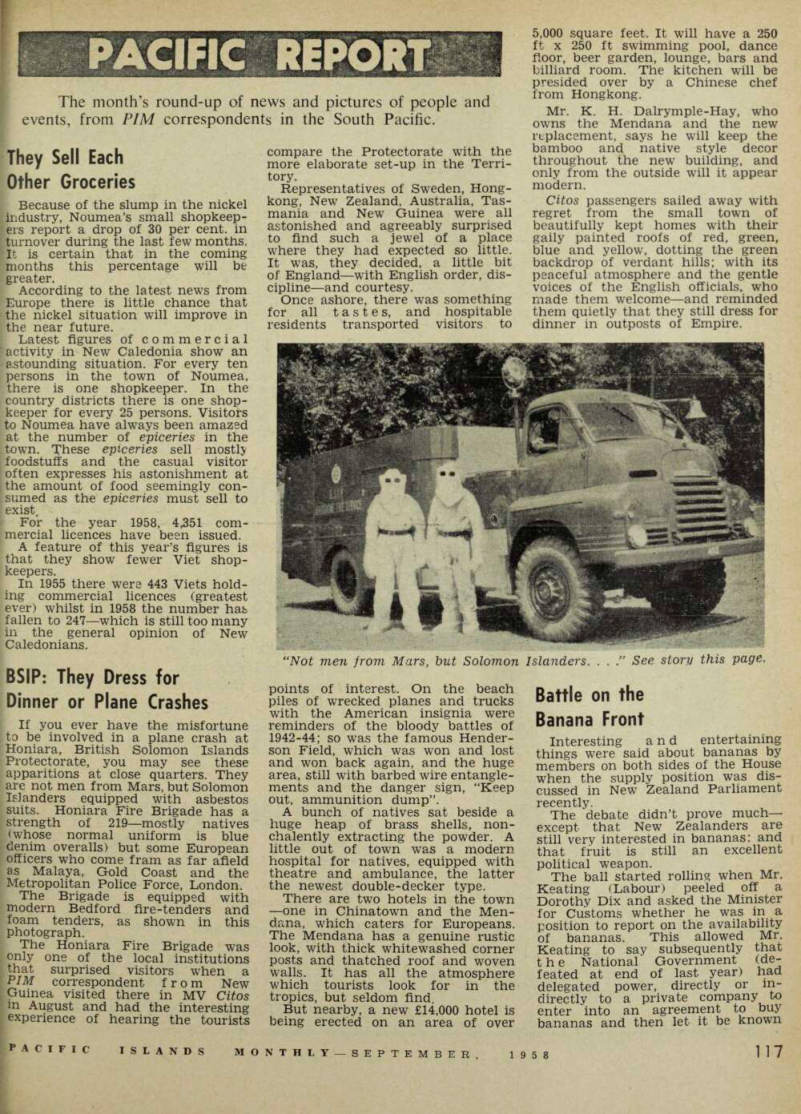 119
119 120
120 121
121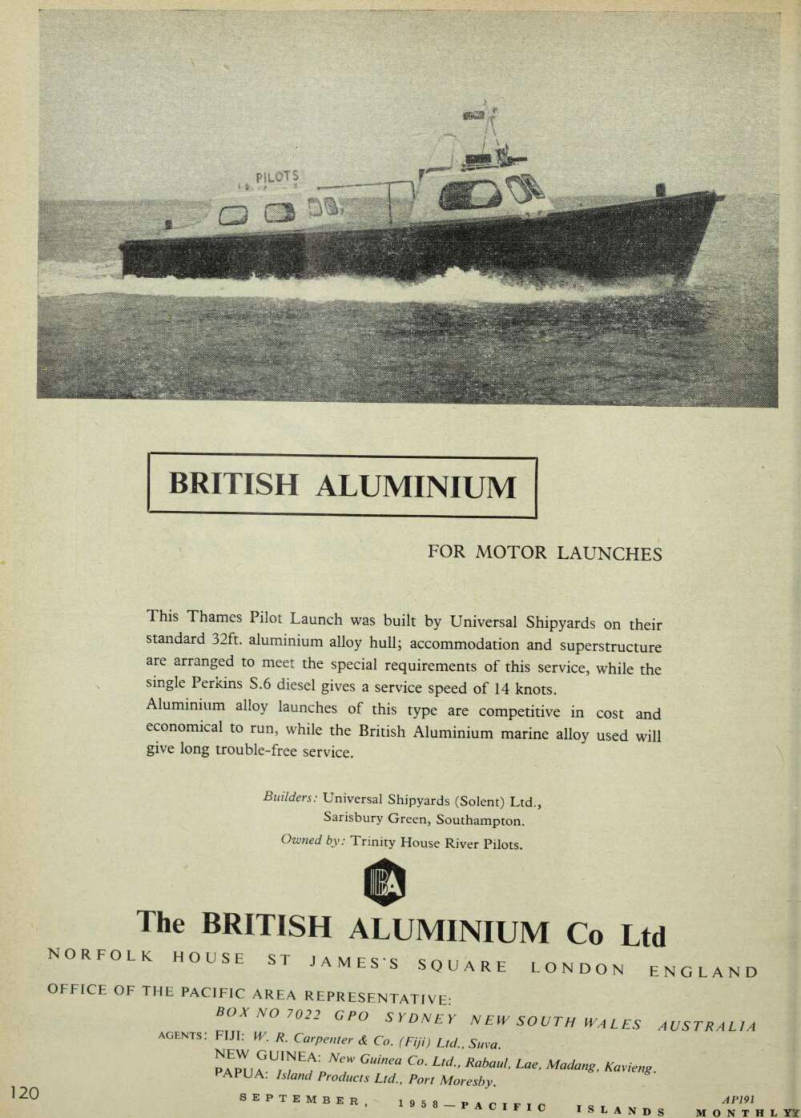 122
122 123
123 124
124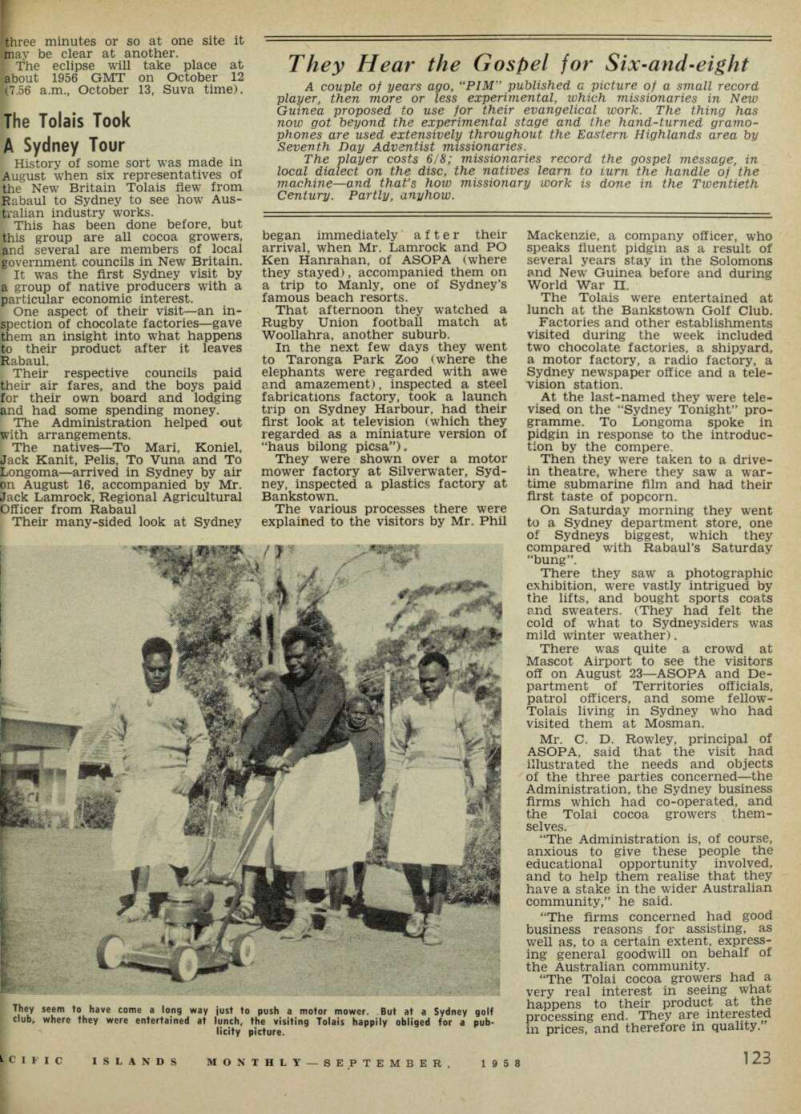 125
125 126
126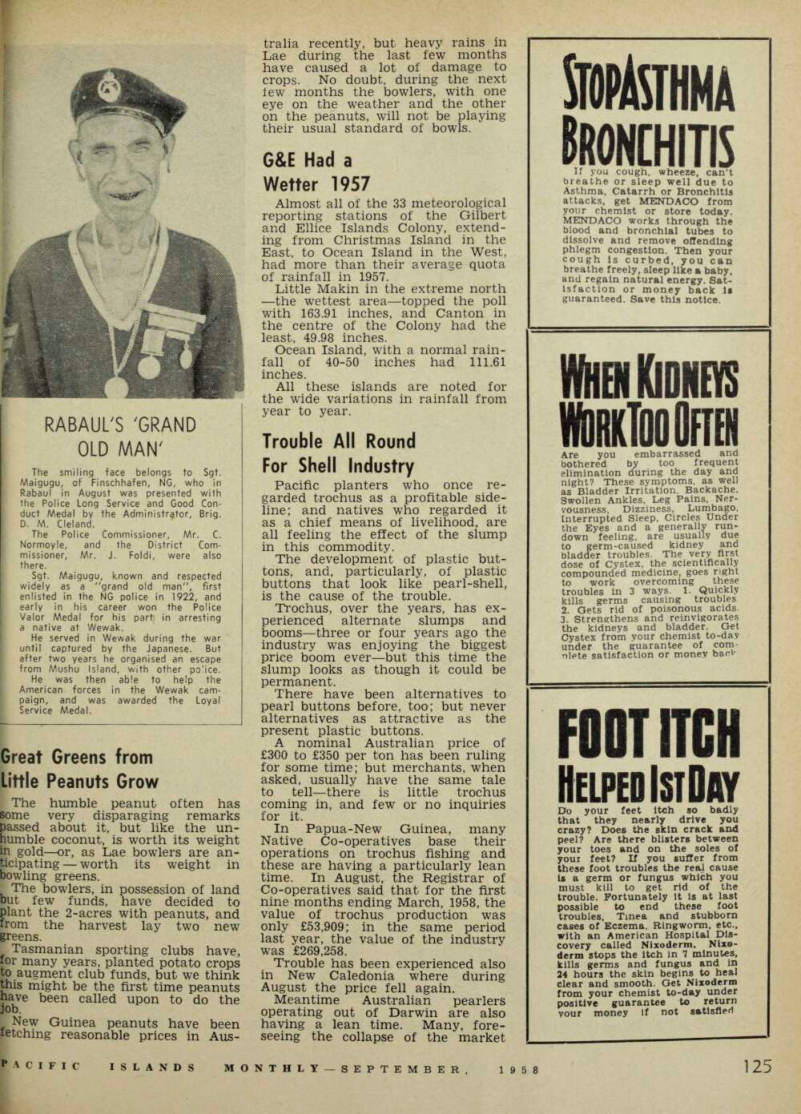 127
127 128
128 129
129 130
130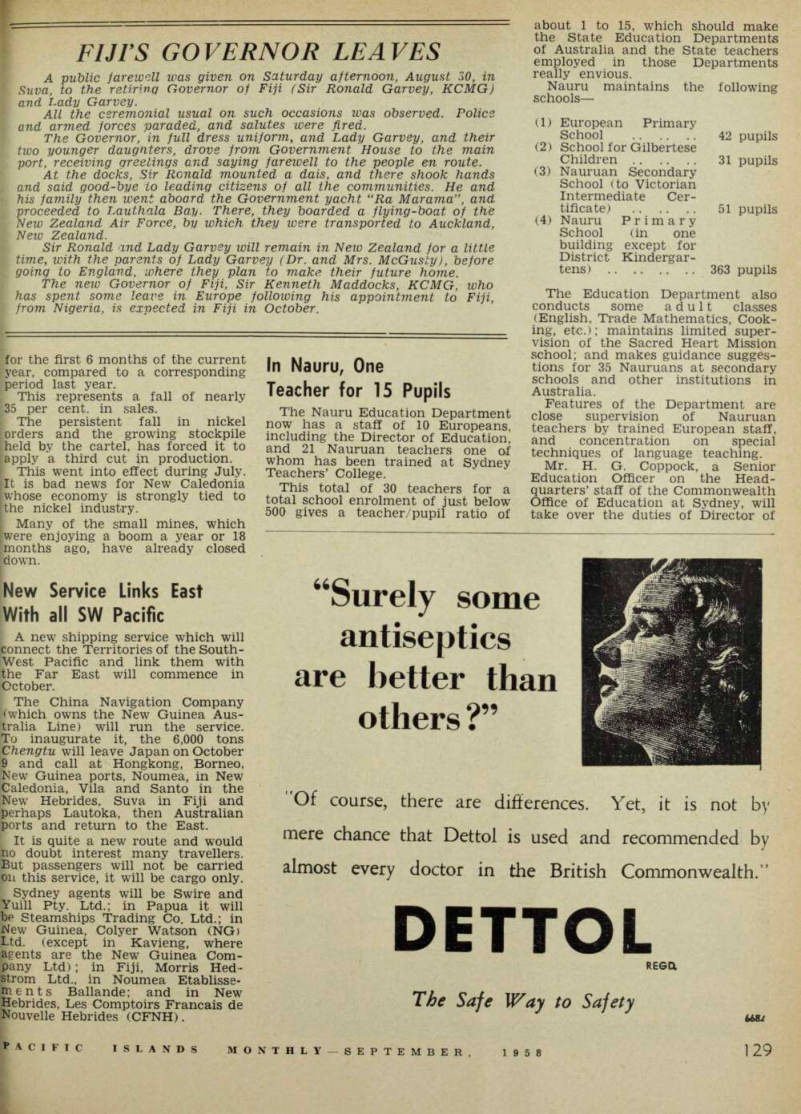 131
131 132
132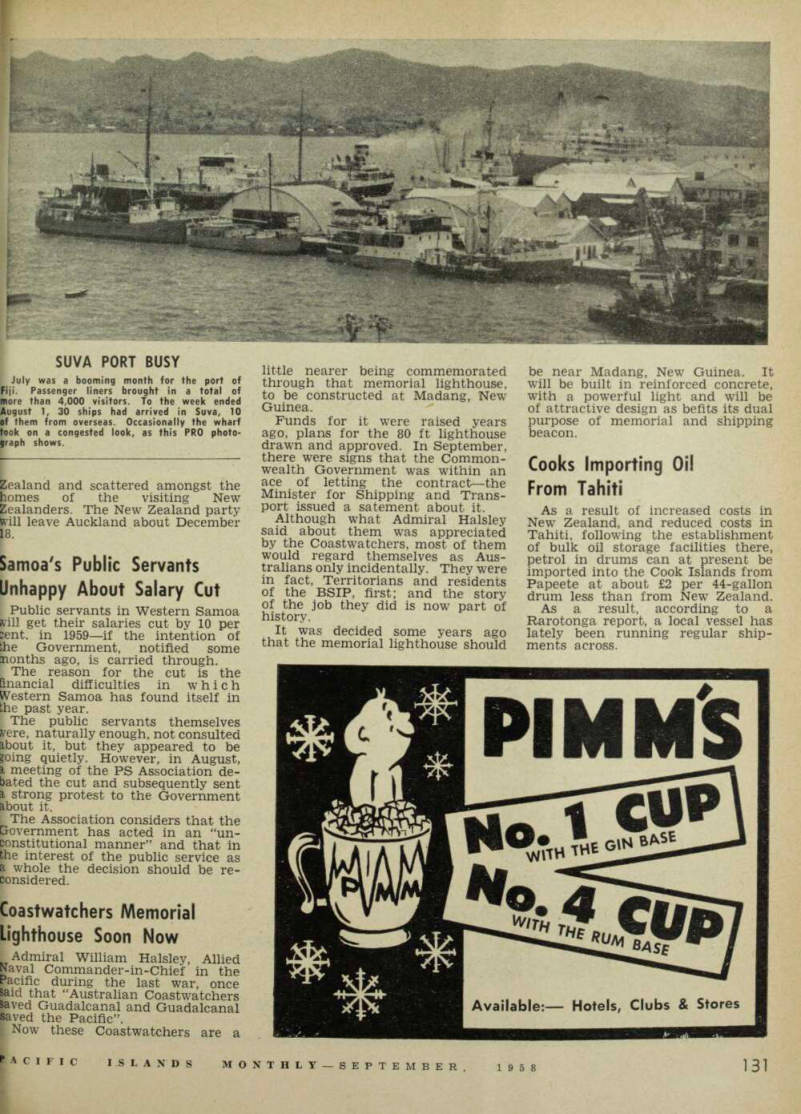 133
133 134
134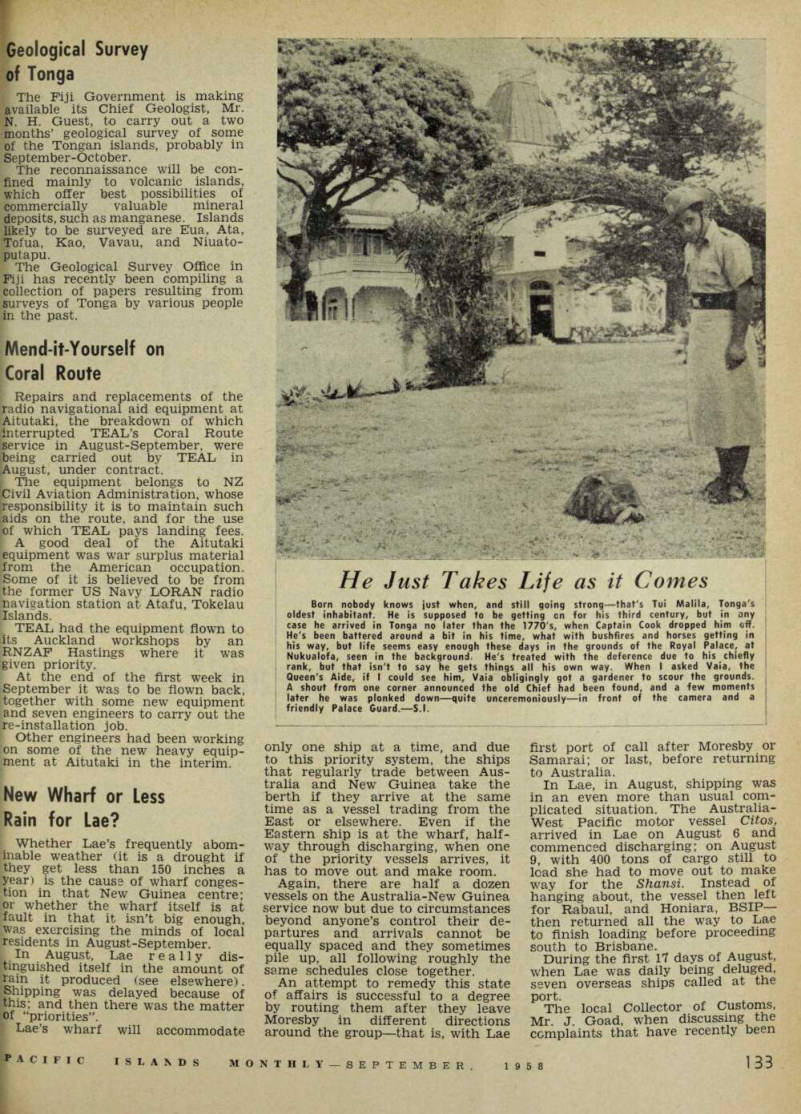 135
135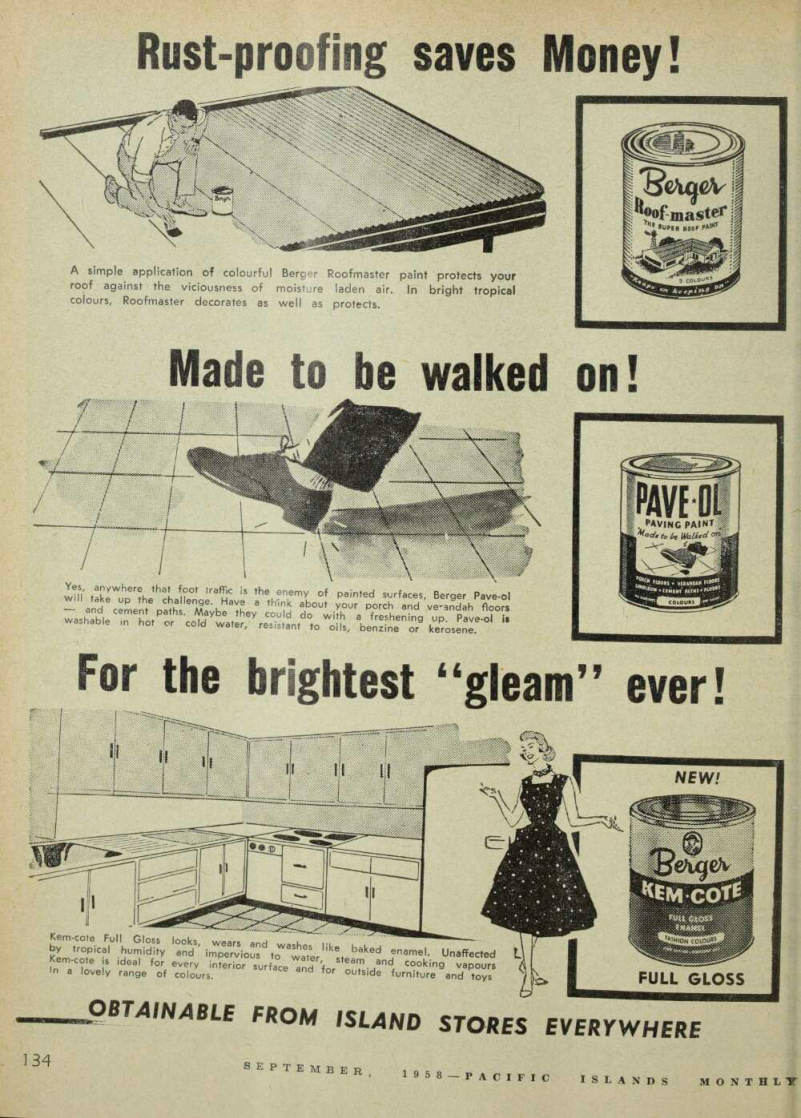 136
136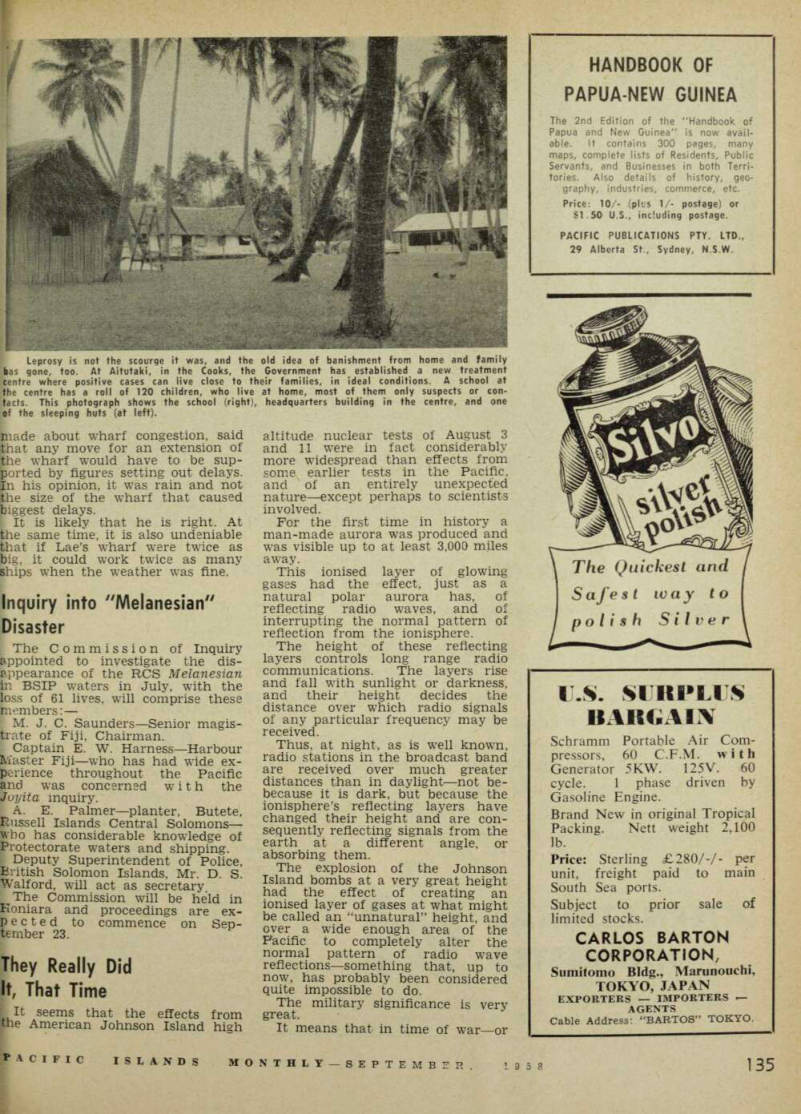 137
137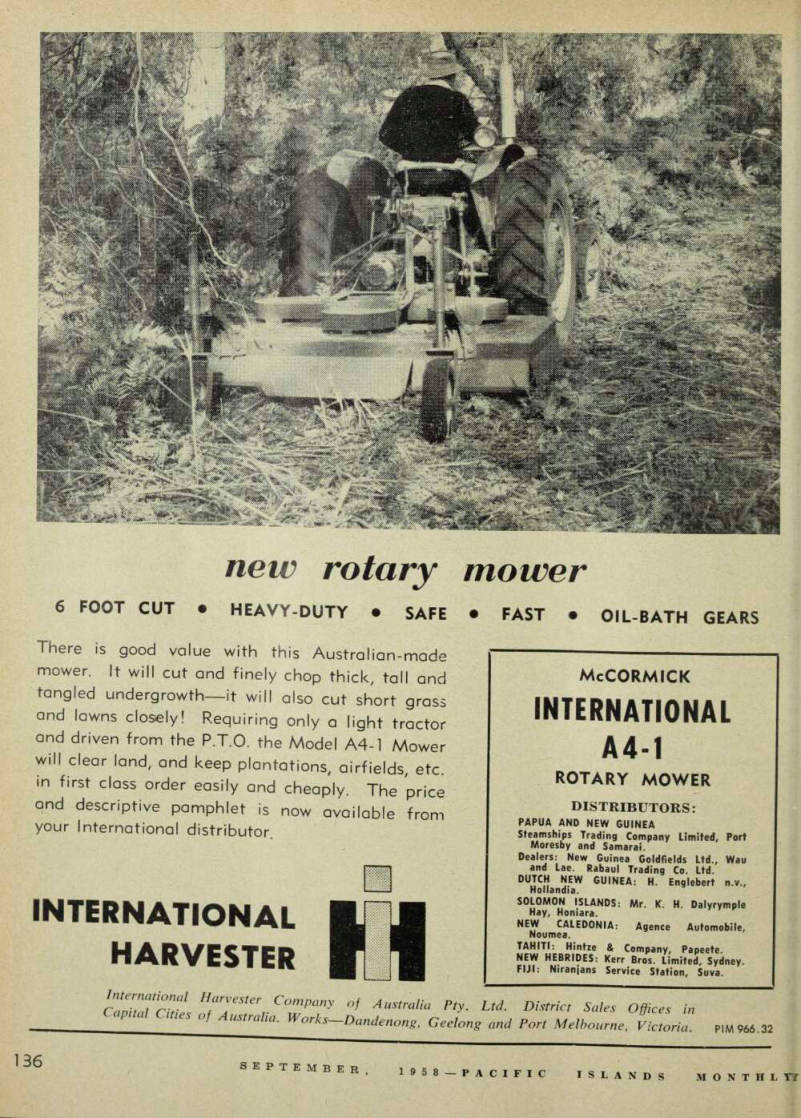 138
138 139
139 140
140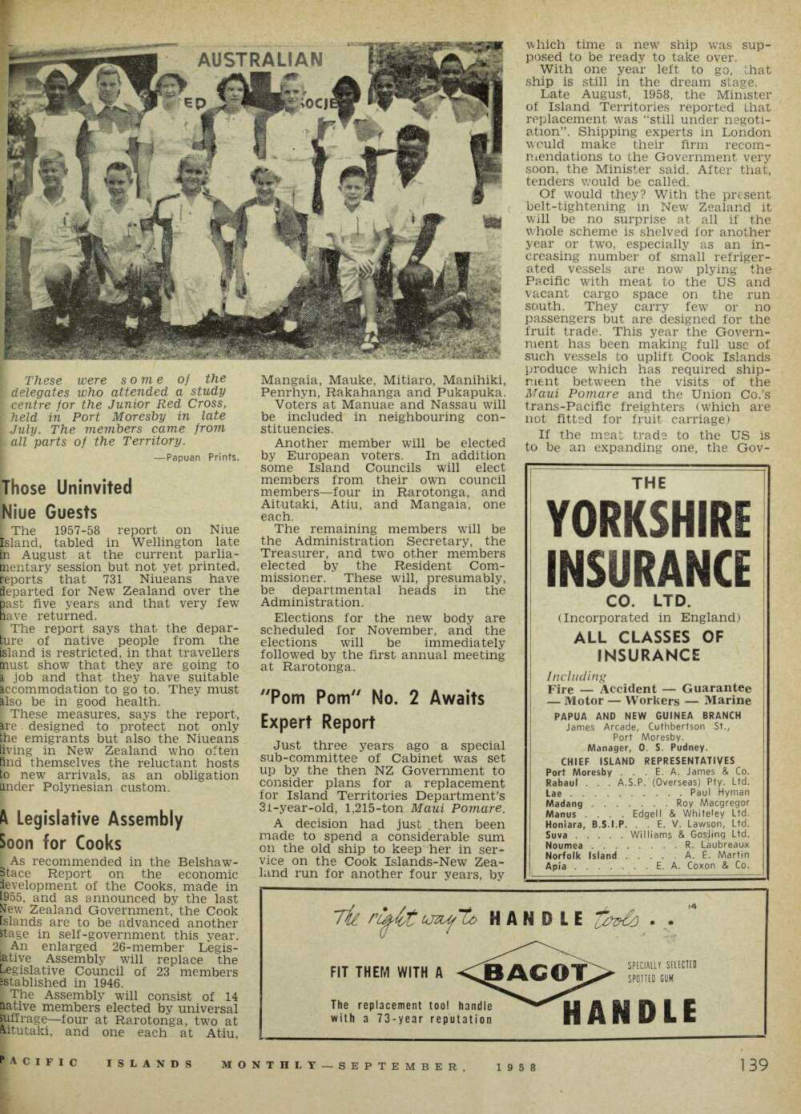 141
141 142
142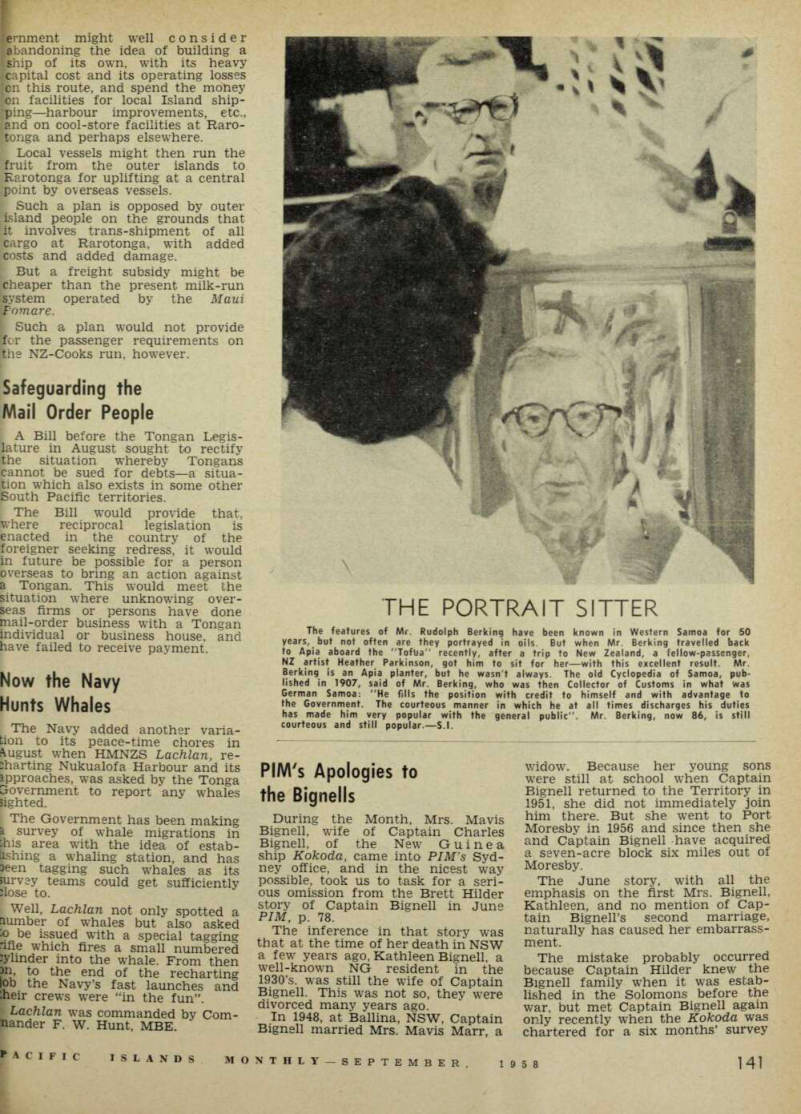 143
143 144
144 145
145 146
146 147
147 148
148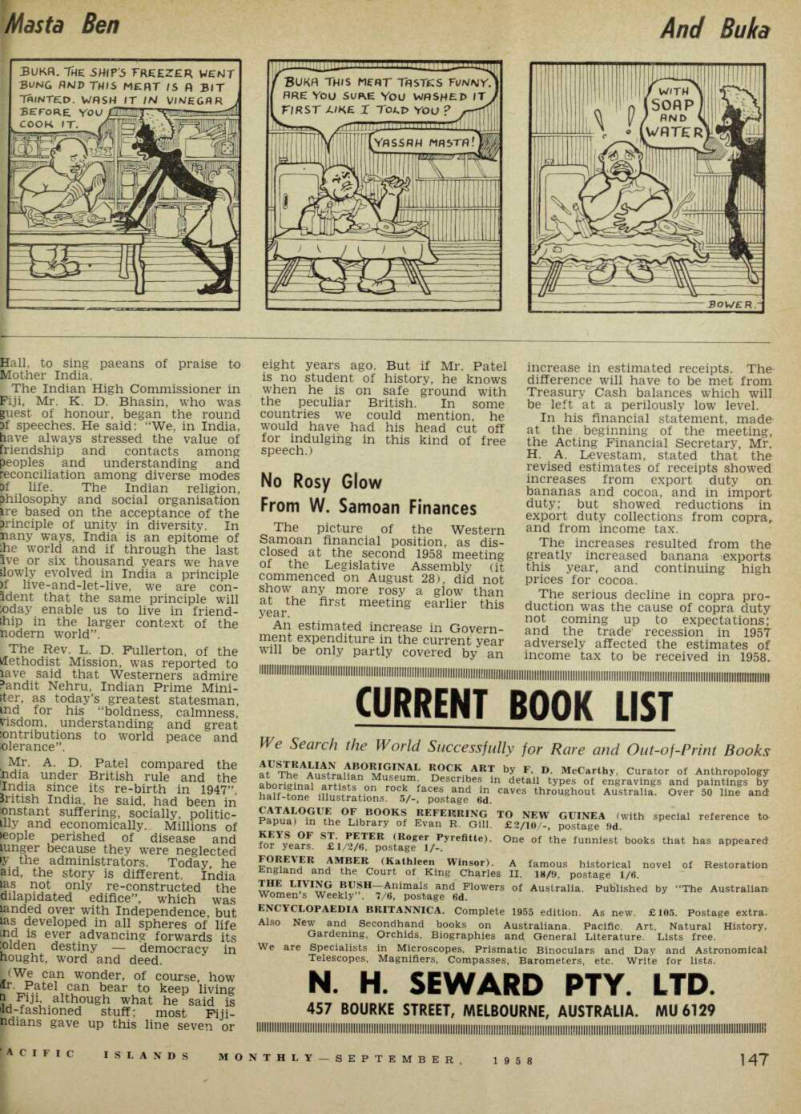 149
149 150
150 151
151 152
152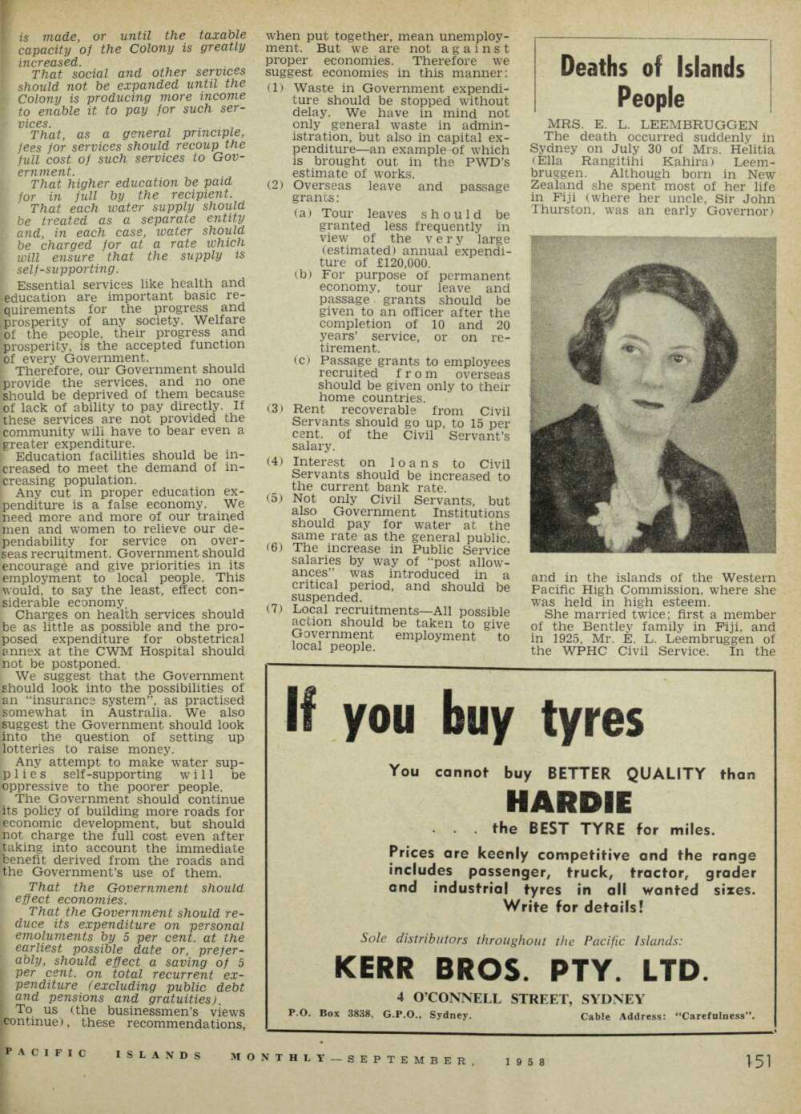 153
153 154
154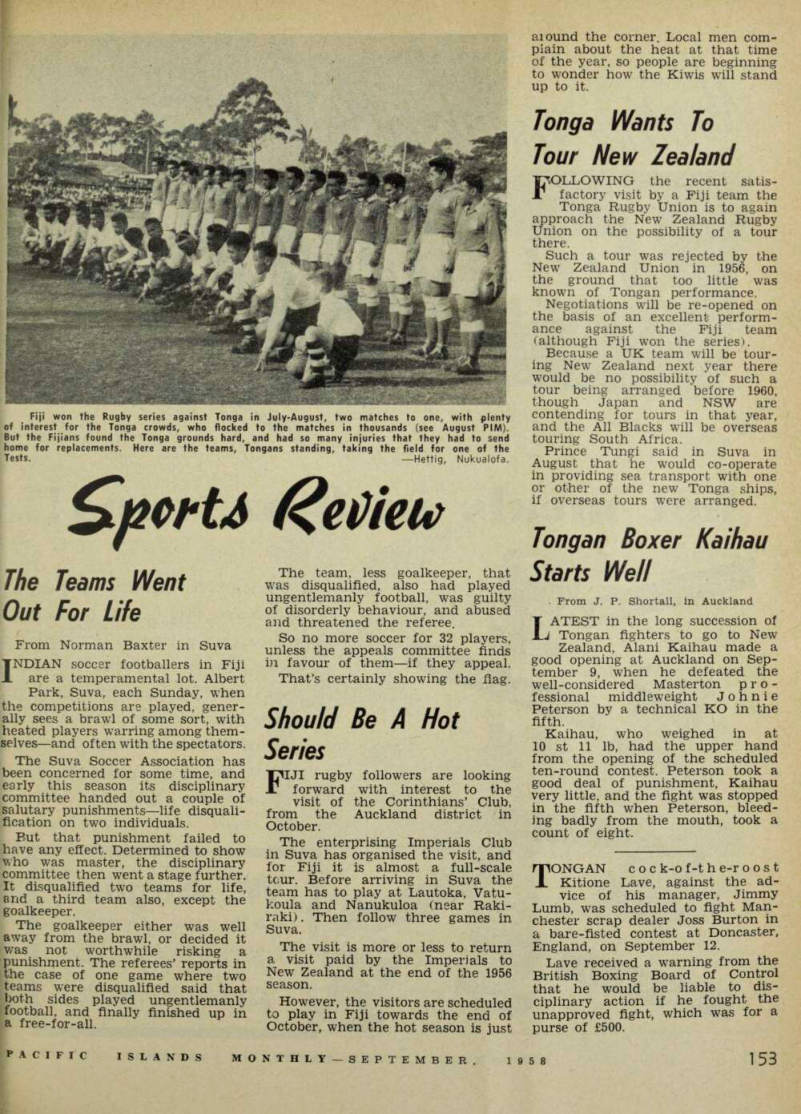 155
155 156
156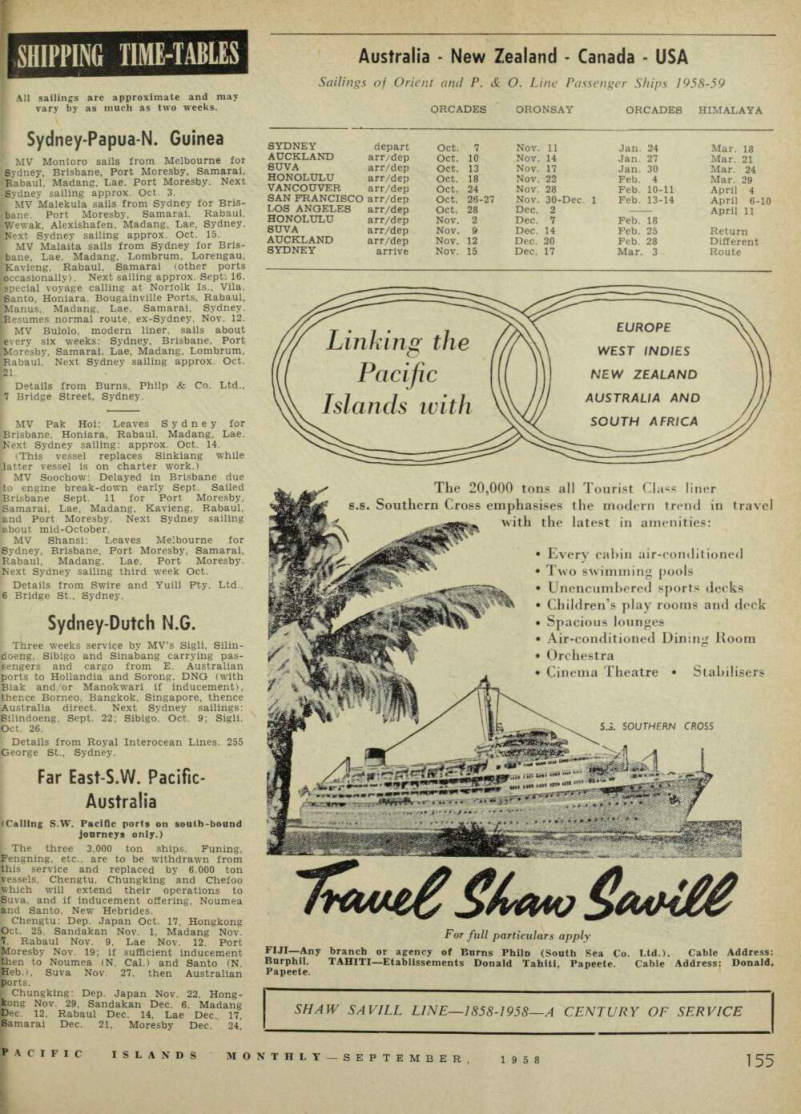 157
157 158
158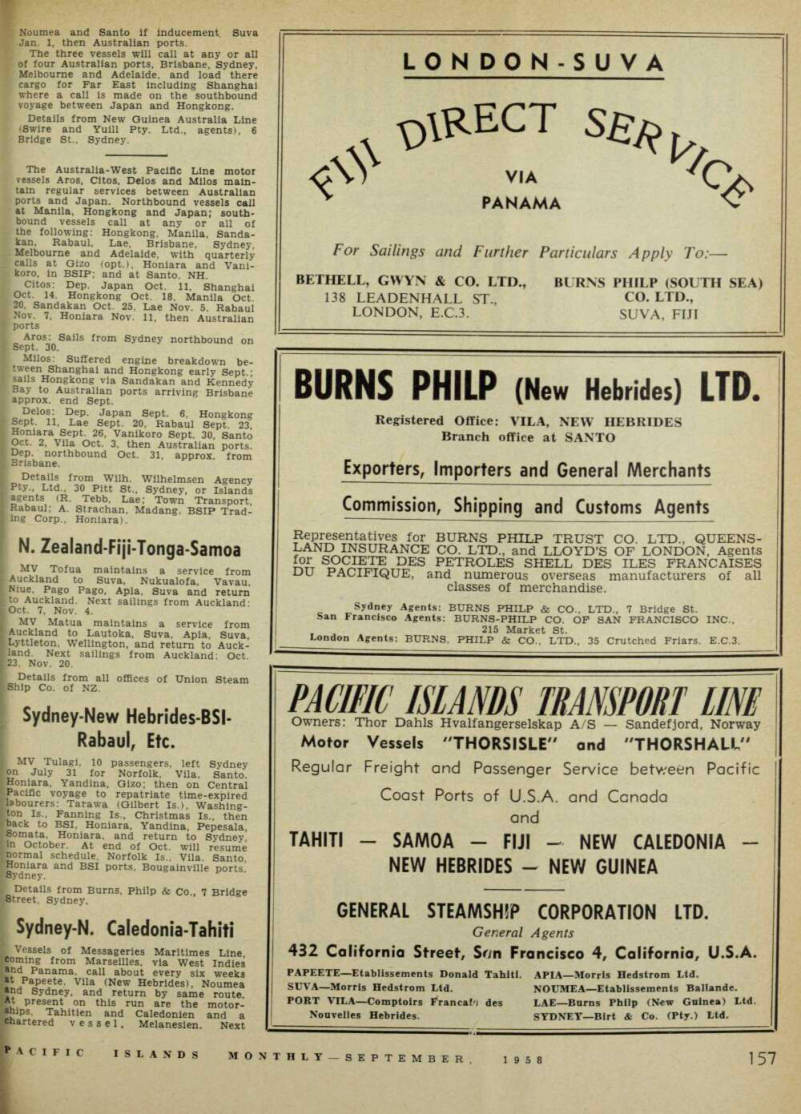 159
159 160
160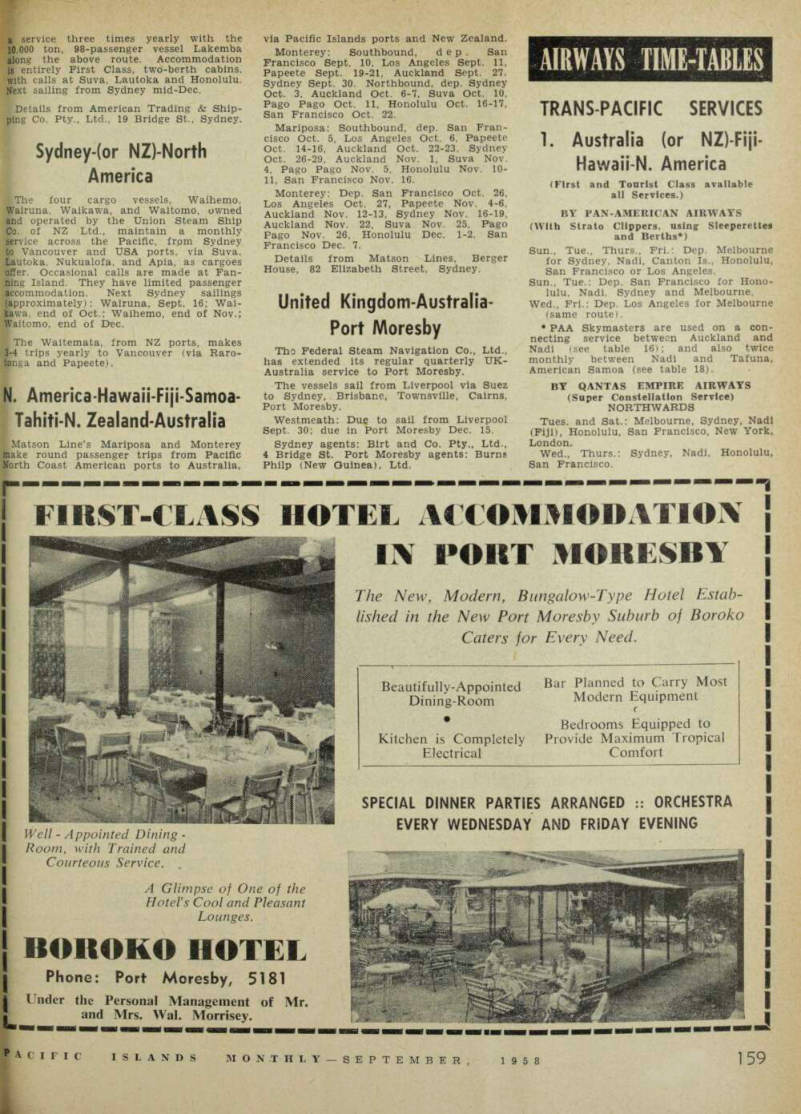 161
161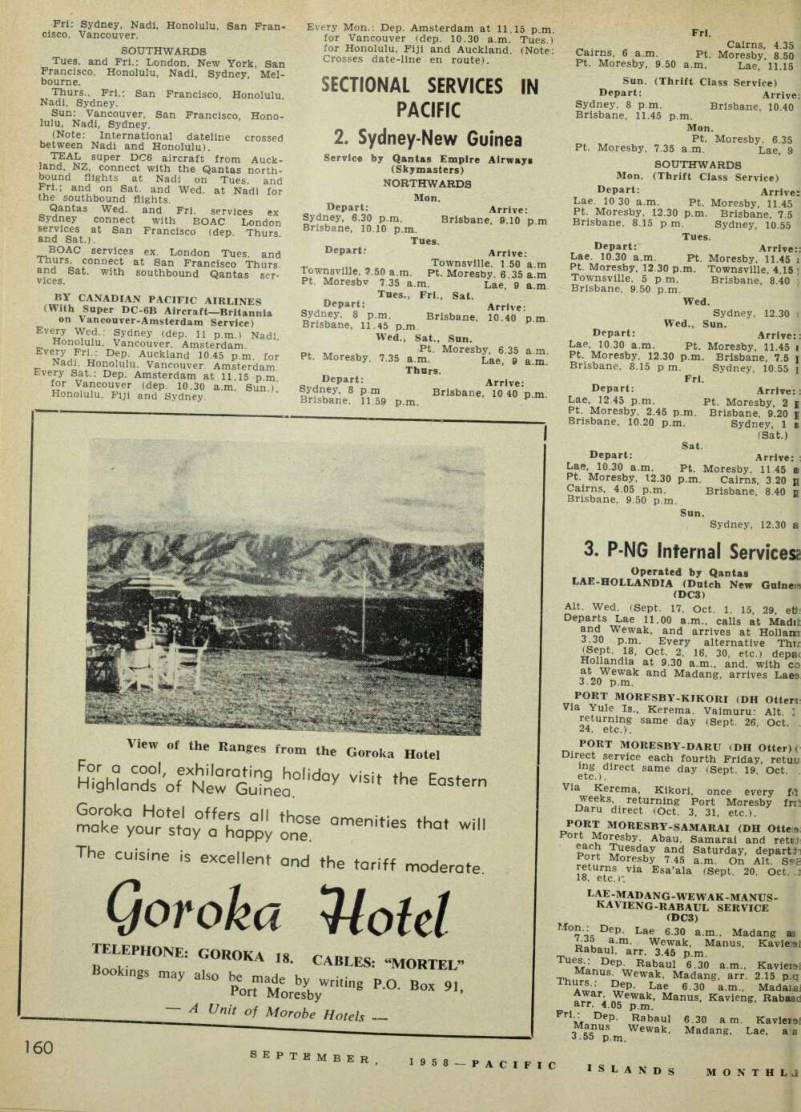 162
162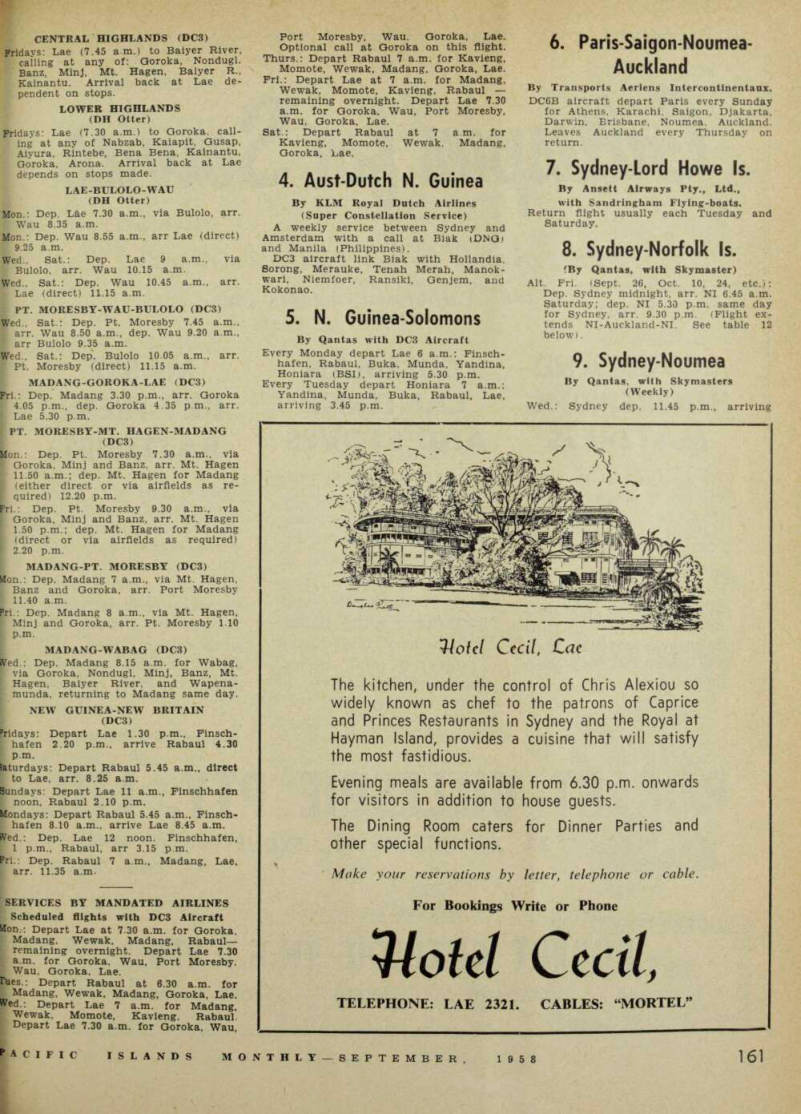 163
163 164
164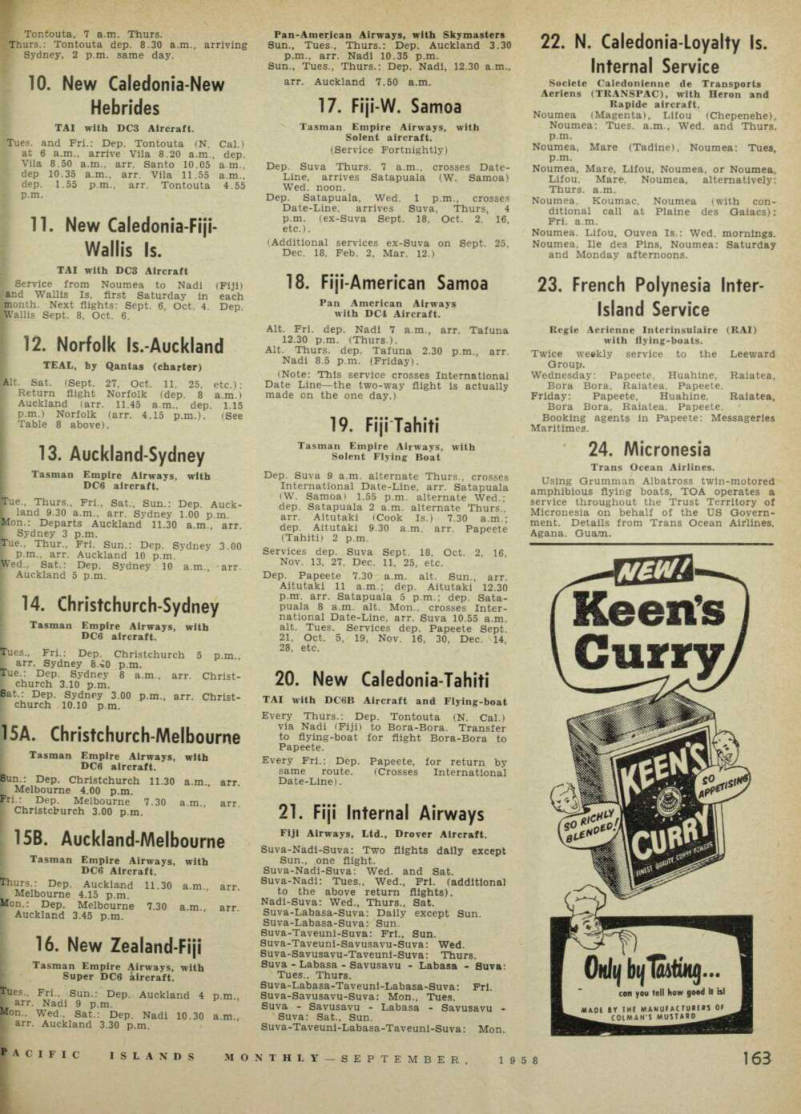 165
165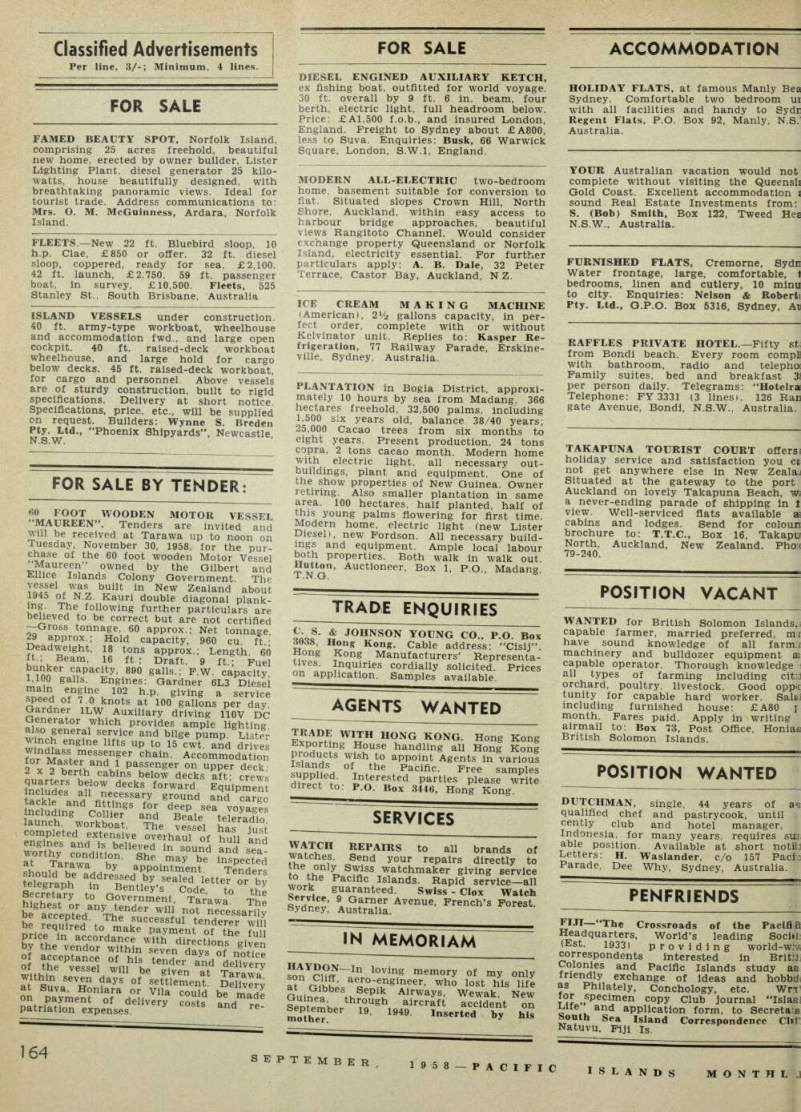 166
166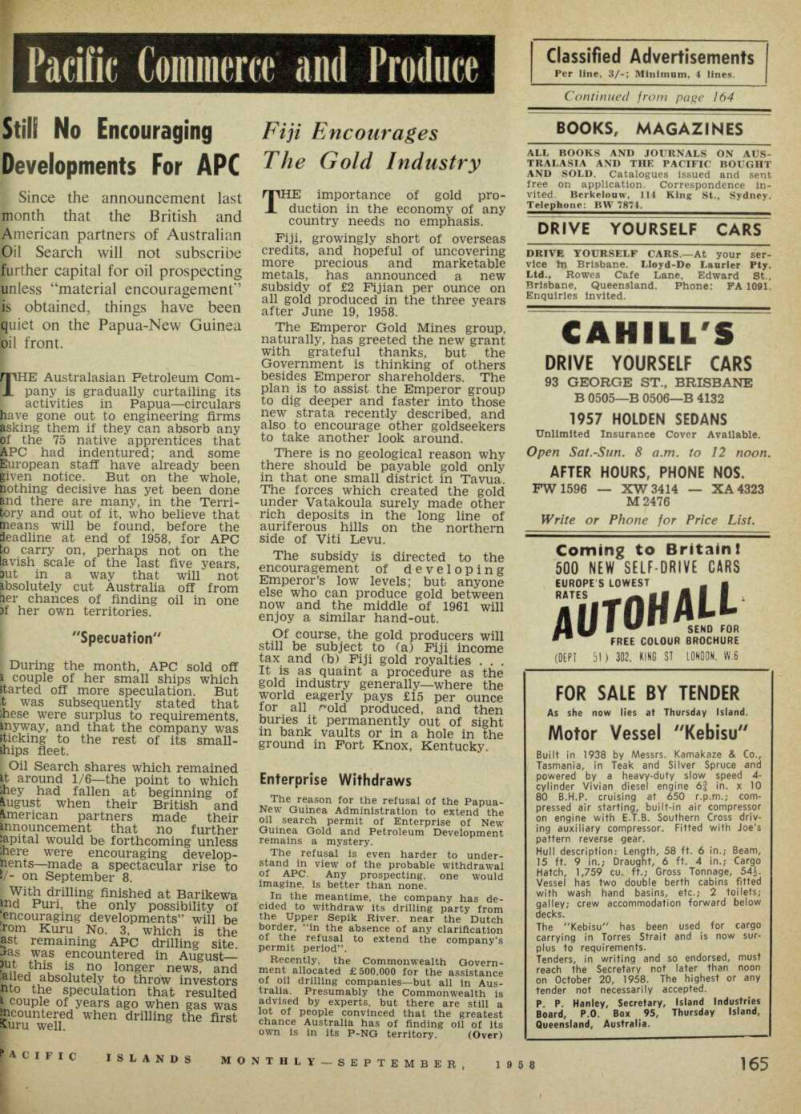 167
167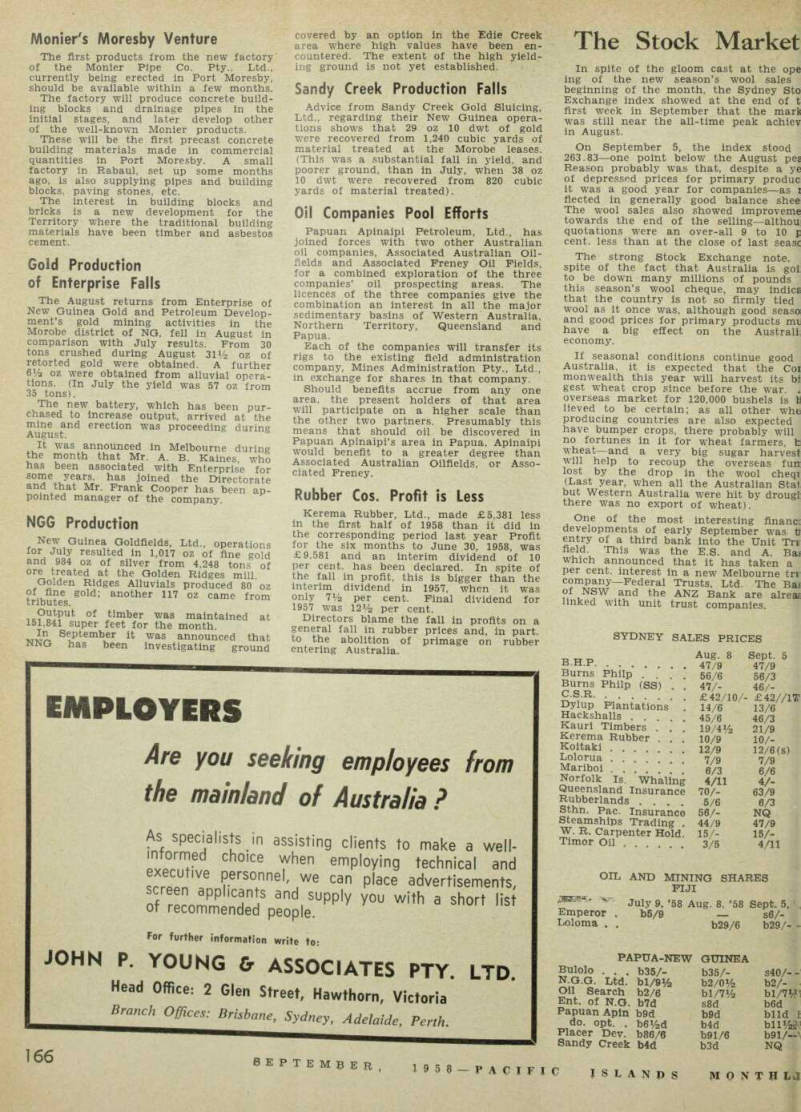 168
168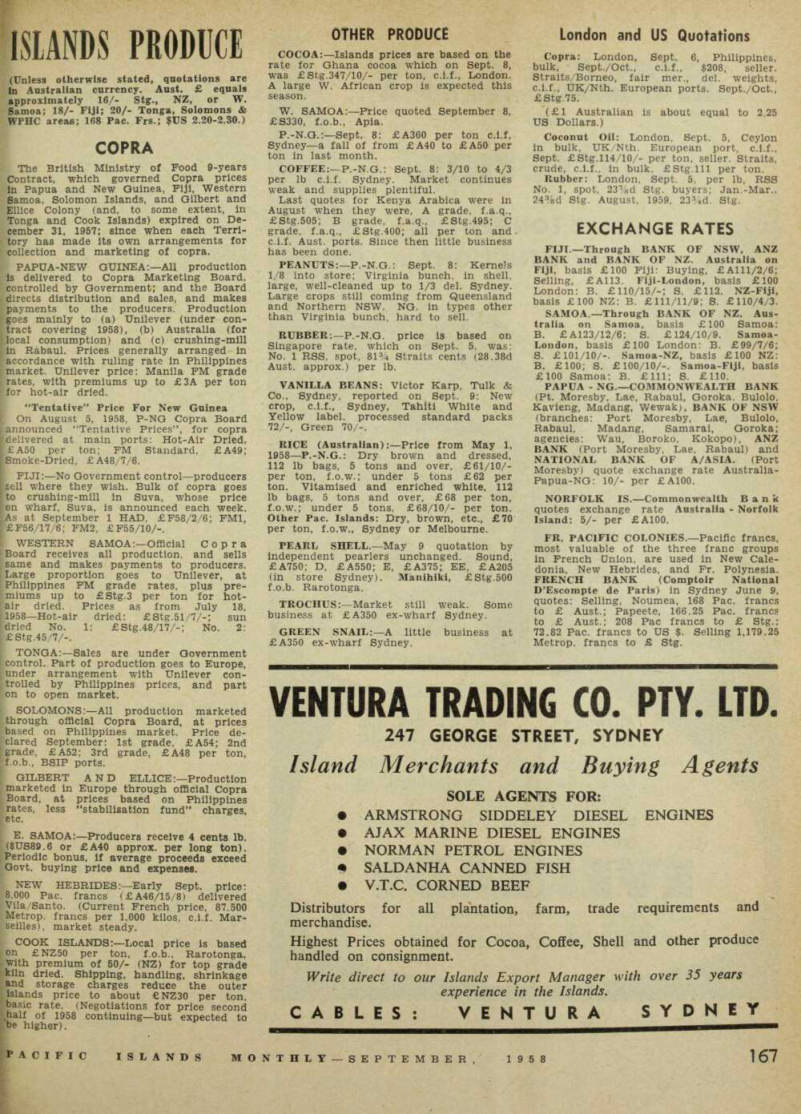 169
169 170
170 171
171 172
172