Islands
Pacific
Monthly
|(B#Ust, 1958
Vol. XXIX. No. 1
stablished 1 930
'SsiJSSBiI
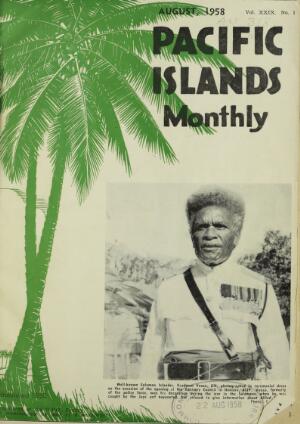
Well-known Solomon Islander, Headman Vouza, GM, photographed in ceremonial dress on the occasion of the opening or the Advisory Council in Honiara, BSIP. Vouza, formerly of the police force, won his decoration during the war in the Solomons, when he, was caught by the Japs and bayoneted, but refused to give information about Allied
Photo : C
Advertisements & other items, pp. 2-6 (4 items)
•siands monthly august, i 958
O round-the-world
r m s ¥ •i m y m
flights every week
To simplify your travel problems, two great airlines have combined to give yon an almost daily choice of round-tbe -world flights.
Four flights a week head East via Honolulu, San Francisco and New York four a week go West via Singapore, Rome and London.
Whichever direction you want to go, whatever your reason for travelling, you will appreciate the way QANTAS-B O.A.C. look after you at every stage, both in the air and on the ground, right around the globe.
Ask your travel agent to tell you more about the QANTAS- 8.0.A.C. round-the-world route. with B O A C
AUSTRALIA'S ROUND-THE-WORLD AIRLINE \
J0i.84.38A
I
STOVES
u
S€ym
MADE IN ENGLAND
These two Coleman Stoves are of the one burner kerosene type and are available in both silent and roarer models. Their dimensions are height inches, diameter 8J inches, approximate weight 2| lb. Both models have the same outstanding features.
Model No. 532 E
SILENT TYPE
1. Full-Size Fount with Filler Plug of wing type. 2. Air release on side of Filler Plug 3. Heavy Brass pressure-tested Tanks. 4. Fount and Burner firmly soldered together. 5. European-type pump. 6. Grate and Grate Supports detachable to reduce shipping space. 7. Spare parts interchangeable with similar European Stoves.
Model No. 531 E
ROARER TYPE
Representatives for the Pacific Islands:
22 YOUNG ST.
SYDNEY
ROBERT GILLESPIE Pty. Ltd.
PEARCE & CO. LTD.
SUVA
FOR FIJI ISLANDS
Suppose your life depended on committing these figures to memory
—AFTER ONLY ONE SINGLE
GLANCE. How would you fare?
A fictitious situation, of course, but most people would fail dismally.
They would probably have to repeat the figures over and over again in order to make them stick —simply because they would have no idea HOW to remember them.
A POOR MEMORY IS A
SERIOUS HANDICAP
As an intelligent person, would you not agree that a poor memory could be a serious handicap in your business, profession, or studies? A man with a poor memory usually takes the background when promotions are due. He is like an artisan who cannot use tools. Even the best educational background counts little if the knowledge learned is not remembered.
YOU HAVE TO KNOW HOW
TO REMEMBER
Mr. W. Langford-Penny, the well known authority on memory, says: “. . . having a good, sound, reliable memory is simply a matter of ‘KNOW-HOW’. ‘KNOW-HOW’ which every person of average intelligence can QUICKLY and EASILY acquire— even from an early age. ‘KNOW- HOW’ which will show you just exactly how your memory powers function, and how to use them
. . . INTELLIGENTLY .
PURPOSEFULLY . . EFFEC-
TIVELY! . .”
Langford-Penny’s “TRENT” course of memory instruction, under the title . . .
"YOUR MEMORY! HOW IT
WORKS! HOW TO USE IT!"
(The results received world-wide publicity), is an interestingly written, easily understood, and GUARANTEED course of home instruction. It will show you how simply and easily you can remember such things as names, facts, figures, your studies, lodge ritual, things to be done ... in fact anything at all you want to remember —ONCE
YOU KNOW HOW.
“TRENT” does not insult your intelligence by promising to give you an amazing memory, in a few hours, without some effort on your part. But it does promise and GUARANTEE that right from the first hour you will receive the most exciting results. It will show you how to develop a memory equal to the best ... a memory that will amaze you and your friends . . . a memory which could bring you greater benefits in your job or profession.
FREE BOOKLETS
“TO TELL YOU ABOUT
TRENT’ ”... and . . . “ARE YOU
STUDYING FOR EXAMINA-
TIONS?” are two booklets you may care to have sent to you. Each of 16 pages, they are sent to genuinely interested people—F REE OF CHARGE and place you under no obligation whatsoever.
"TRENT" MIND & MEMORY
DEVELOPMENT PTY. LTD.,
214 PITT STREET, SYDNEY.
(next Lyceum Theatre) and at
61 MARKET ST., SYDNEY.
(opp. Woolworths) MA 5686 ; BM 6392 : JB 4857
What people are saying
about "TRENT"
From a Planter (New Guinea), “. . . the course has proved to be everything that I had hoped for, my memory having improved greatly even in the short time that I have had the course. . .” * * * From an Army Officer, I have had great results.
At the school which I recently completed, I had no difficulty in remembering the essential things ... in the four final tests I came second in one, and topped the other three. ..” * * * From a Leading City Insurance Company, “. . . no less than ninety-three members of our staff have enrolled for your course. . * * * From an University Student, “. . . study is now child’s play as I now ‘get’ the facts during lectures, and only minutes a night are now required to satisfy revision, whereas previously I needed hours. .
MR. W. LANGFORD-PENNY, Principal.
“TRENT” MIND AND MEMORY DEVELOPMENT PTY. LTD..
BOX 4578, G.P.O., SYDNEY, N.S.W.
Kindly post me, without obligation, full details of your course of instruction.
Mr., Mrs., Miss, Dr., Rev. . . . will supply you with this
“KNOW-HOW”. “TRENT”, the
course so rigidly yet successfully tested by the N.S.W. Police Dept.
FULL ADDRESS .
(PRINT CLEARLY
PLEASE)
PIM
You get RQHP with this compact,
all-purpose tractor!
Here’s real power—built into a crawler tractor less than 9 feet long! This International BTD-6 has an easystarting, economical diesel engine with a drawbar pull of 10,250 lbs. Clutch, transmission, final drive and tracks have features for long life and easy operation.
There are 5 forward speeds (from 1.5 to 5.4 m.p.h.) and a ground pressure of only 5.40 lbs. per square inch.
Check up on the wide range of matched equipment, including the A-69 D-4 combination toolbar and light dozer. 50.5 Brake H.P. gives a mighty pull!
INTERNATIONAL BTD-6
DISTRIBUTORS;
PAPUA AND NEW GUINEA:
Steamships Trading Company Limited, Port Moresby and Samarai.
Dealers: New Guinea Goldfields Ltd., Wau and Lae. Rabaul Trading Co. Ltd Rabaul.
DUTCH NEW GUINEA: H. Englebert n.v.
Hollandia.
SOLOMON ISLANDS: Mr. K. H. Dalyrymple Hay, Honiara.
NEW CALEDONIA; Agence Automobile, Noumea.
TAHITI: Hintze & Company, Papeete.
NEW HEBRIDES: Kerr Bros. Limited, Sydney.
FIJI: Niranjan's Service Station, Suva.
A-69 D-4 DOZER for light I k dozing, clearing and tilling. I m'i ¥
A-69 D-4 TOOLBAR for
ripping or cultivating tools.
INTERNATIONAL HARVESTER
International Harvester Company of Australia Pty. Ltd. District Sales Offices in Capital Cities of Australia. Works: Dandenong, Geelong and Port Melbourne, Victoria. 947
NeAu Guinea Auditedia, Jdim
Passenger and Cargo Liners:
M.S. "SHANSI"
M.S. "SOOCHOW"
S.S. "PAKHOI"
Regular services between Australia and Papua-New Guinea f mn
JAPAN, SHANGHAI, HONGKONG, NEW GUINEA, AUSTRALIA
REGULAR SERVICE WITH THE STEAMERS: "FUMING"—"FENGNING"—"CHENGTU"
Japan, Shanghai, Hongkong, Madang, Kavieng, Rabaul, Lae, Samarai, Port Moresby, Sydney, Melbourne, Adelaide. (Returning from Australia to Japan direct).
For further detail's please apply to agents or refer to the weekly advertisements in the “South Pacific Post .
THE CHINA NAVIGATION CO. LTD.
(A British Company incorporated within the United Kingdom)
AGENTS:
PAPUA: Steamships Trading Co. Ltd., Port Moresby, Samarai .Cables: MELBOURNE: John Sanderson (S Pty. Ltd., 11l William Street.
"Steamships". Cable: "Syndicate".
NEW GUINEA: Colyer Watson (NG) Ltd., Lae, Madang, Rabaul. ADELAIDE: George Wills 8. o. ’ td., 33 Gilbert Place. Cable: Cable: "Colyeram", "Willsandco".
New Guinea Co. Ltd., Kavieng. Cable: "Camohe". JAPAN: Butterfield & Swire (Japan) Ltd., Tokyo, Yokohama, Osaka, BRISBANE; Wills, Gilchrist & Sanderson Pty. Ltd., 400 Queen Street. Kobe. Cable: "Swire".
Cable: "Wilgilsand", EASTERN MANAGERS: Butterfield & Swire, Hongkong. Cable: "Swire".
SWIRE & YUILL PTY. LTD.
I
PACIFIC INLANDS MONTHLY AUGUST, 1958
Ii
AUGUST. 1958 PACIFIC ISLANDS MONTHL
People
Although there has been no official announcement, Britain’s next consul and adviser to the Govern ment of Tonga will be Mr. Q.
Weston, at present Commissioner for the Eastern District of Fiji. He will take over, probably next March, from Mr. A. C. Reid, who is headed for a new position in Fiji. Mr.
Weston is a popular Commissioner, with a reputation for getting things done. He will be missed at Levuka, where he is at present stationed.
Mr. Weston has a wife and young family.
Dr. D. S. Marshall, American anthropologist, left the Cook Islands for Tahiti, Fiji and Honolulu, in July. In Honolulu he Will take up an appointment at the Bishop Museum.
Dr. Marshall, well-known in the Cook Group through his previous jjsrts, travelled with his wife and cnudren to Mangaia in November last year. During his months in Mangaia he completed a Maori dictionary and studied the life and customs of the people, paying particular attention to the Mangaia leadership UCtUr6 &nd present da y * * * m ß e distant Resident Com ttussioner New Hebrides, Mr. T R £ as h ? en a PP oin ted Second Po!: l h Commissioner on the South faomc Commission. Mr. Cowell follows Mr. H H. Vaskess who re cent!y retired from that post. r ; C 9 well has progressed through Hith r n nks ? f .the Western Pacific mgh Commission from his appoint
Visiting Suva in July was Mr. Jack C Tobin vice-president of Hawaiian Airlines, of Honolulu, seen here at a TEAL party with Suva travel man, Harvey Hunt (right). Hawaiian Airlines is considering putting through a weekly air service from Honolulu to Bora Bora.
Stinsons.
ment as a cadet in 1941. Promoted to District Officer Ellice Islands and then District Officer Gilbert Islands, an appointment as Secretary to the Government Gilbert & Ellice Islands Colony followed in 1951. He became Administrative Officer Class A in the New Hebrides, in 1953 and in 1954, Assistant Resident Com missioner of the Condominium. * * * Mr. C. H. Allan, Secretary of Protectorate Affairs in the BSIP has been appointed to replace Mr.
T. R. Cowell as Assistant Resident Commissioner in the New Hebrides.
During Mr. Allan’s 13 years in the Protectorate he has been either District Officer or District Com missioner in the Western, Malaita, and Central districts.
Mr. and Mrs. Jim Hamlyn-Harri.T and their five children plan toi return to Australia from Tonga ini November. Mr. Hamlyn-Harris hais been Crown Solicitor in Tonga. * * * The Rt. Rev. L. S. Kempthorner Anglican Bishop in Polynesia, whiclo is the largest Anglican diocese iii the world, received the degree oo Doctor of Divinity (Lambeth) oio July 29.
Bishop Kempthorne, who is as present in England where he hasi been attending the Lambeth Conrn ference, was given the degree bd the Archbishop of Canterbury, D:C Geoffrey Fisher, in recognition o his long service in the church.
He has been Bishop in Polynesia for 36 years. He is also the oldeas bishop still holding office.
Mrs. M. Lordan was married to well-known Territorian, Mr. Col Dudley, in the District Office at Lae on July 23. Acting District Com missioner for Morobe, Mr. Des Ashton officiated. Drinks with friends at the home of Mr. and Mrs. W. Stephens, old friends from Manus days, were following by a party at the Hotel Cecil. Mr. and Mrs. Dudley flew to Manu two days later, where Mr. Dudley manages plantation for Edgell and Whiteley.
Fanaafi Ma’ia’i, 26, a Samoan girl who is a Master of Arts, got the full publicity treatment in the Melbourne newspapers in July, while on her way to London University, where she will read for a doctorate in the teaching of English and indigenous languages.
Samoa’s “most highly educated woman” was described as wearing island dress—a long straight lap lap skirt, and loose over-blouse”.
Fanaafi took it all in good heart.
Mr. H. J. West, of the Papua-New Guinea Department of Native Affairs, who is now P NG Liaison Officer in Hollandia, Netherlands New Guinea. His opposite number is Mr.
Raphael den Haan, from NNG, who is now stationed in Port Moresby. KVR Photo.
Mr. and Mrs. Treva Charlton after their wedding at St. Peter's College Chapel, Adelaide, recently. The bride, formerly Miss Marie-Maud jackson, is the only child of Mr and Mrs.
Robert jackson of "Namanula" Largs Bay, South Australia, and formerly of' New Guinea.
She was born in Rabaul. Her parents have been living in retirement in Adelaide for some years but before the war Mr. jackson was in the New Guinea Administration. He seved in the Navy and later the Merchant Service during the war.
Miss Merle Carleton, of RocM hampton, Queensland, has gone ii the ABC service to Fort Moresby to compere the Women’s Sessioo for 9PA, Port Moresby, and assisi in < general announcing. * * * After a by-election campaign conducted with such a degree o gentlemanliness that old politics; campaigners were left breathless Mr. R. G. Kermode, of Lautok;: Fiji, defeated Mr. J. S. White fccf only seven votes, for a seat in tfcf Legislative Council.
It was the European seat for tlrl Northwest Division, rendered vacan by the resignation of Mr. Maurioj Scott, who accepted the Speakershix of the Council.
Mr. William SeeSto, eldest son of Mr. See Kim Foon, and Miss Phyllis Liu, third of Mr. and Mrs. Liu Man Sang, were married recently in the Roman Catholic Church, Rabaus [?] NG. Photo: Larry Child
Mr. M. N. Fagg left Sydney in the Aug "Malaita" for Washington Is., where he will lieve Mr. W. Frein as manager of a plantati for Burns Philp.
Mr. Fagg spent several years in Rougac ville. managing a plantation, and expects to on Washington Island about a year.
Matron Marjorie Thurston, in charge of the hospital and child welfare training centre at Fergusson Island, Papua, is home in West Australia, on six months leave. * * ♦ The well-known and highly esteemed District Commissioner of Morobe, New Guinea, Mr. H. L. R.
Niall, CBE, who suffered a collapse in Lae, in July, has made a good recovery. He received prompt medical care in Lae and in Port Moresby; and then was trans ferred by air to the Royal Prince Alfred Hospital, Sydney, for special treatment. He responded so well that, after a fortnight, he was allowed to go home.
Port Moresby gave him two months’ special leave, so that his recovery might be complete; and, when last heard of, early in August, he was being taken away —vociferously unwilling—to a holi day “in the sunshine” in Northern NSW or Southern Queensland, in the care of Mrs. Niall.
He insisted that he was quite fit to return to Lae; but, for once, he had to submit to higher authority.
Mr. and Mrs. A. I. Diamond sailed irom Sydney per Oronsay on July or Suva, where he will take up the post of Archivist with the Fiii Government. * * ♦ Lady Gutch, wife of the High Commissioner Western Pacific, Sir John Gutch, left Honiara in July for leave in England.
Newly engaged couple, pretty Miss Tolu Krone, daughter of Mr. and Mrs. Henry Krone, of Apia, Western Samoa, and Mr. Bill Spratt, radio engineer at the Government Radio Station, Pago Pago, American Samoa.
Pan American Prints.
Mr. J. W. Gregory is at presents in the BSIF to conduct a revieww of the Customs tariff and legisla tion. He will report to the Govern ment on any revision he thinksai might be necessary. * * * Miss F. H, Gwilliam, women’sa educational adviser with thee; Colonial Office, has been visiting§j Fiji. She saw educational institu--! tions in many parts of the Colony„y and spent a lot of time meetings members of women’s organisations. * ♦ * The Canadian High Commissioner tr in Australia, Mr. T. Mac Dermot,,! and Mrs. Mac Dermot, paid as flying visit to Papua-New Guineas; in July. Mr. Mac Dermot said hesj was anxious to “sound out” anyyj prospects of trade with Canada, .b There is only a limited amount Jr being carried out between the twoo countries at present.
Dr. Mildred Dickeman, an Ameri can anthropologist who has been studying the natives of a village about 40 miles from Goroka, NG, for the last six months, is particu larly interested in finding out whether NG natives develop resent ment towards the white man as the impact of European life in creases.
She hasn’t finished her work yet, but she said in Port Moresby in July that the Territory had a good point in its favour. That is, the Administration had made contact earlv and given the natives some thing consistent. In other indigenous countries, missionaries . and traders had arrived first, with often unsettling results.
Dr. Dickeman is working on a
Mr. Wan Wing-Sum, the Chinese calligraphist who can write 3,000 characters on the back of a postage stamp, or poems on butterfly an tennae, who has been visiting Chinese com munities in the Pacific. He was in Suva in August. (An article about him appeared in the July PIM, p. 49.)
12 months’ scholarship from the National Science Foundation, in Washington. * * ♦ Dr. T. T. Romans, Chief Medical Officer for the Cooks, has returned to Rarotonga after 12 months’ absence. Dr. Romans completed a post graduate course in the United Kingdom. During his absence the post of acting CMO was rotated between Doctors A. S. Wallace and D. D. McCarthy.
Mr. Robin Whitehead, an officer of the Bank of New Zealand, Apia, Western Samoa, was married at the Apia Chaplaincy, on Saturday, July 5, to Miss Ruth Anne Nelson a New Zealander. The Rev C W Whonsbon-Aston officiated.
Arrivals in Tonga on the June Tcfua included the Rev. and Mrs.
J - Harkness and their family.
Mr. Harkness, who was returning
Dr. J. Bierdrager, Director of Public Health in Netherlands New Guinea, who returned to Hollandia recently after attending a session of the World Health Organisation in the United States . KVA Photo.
Miss A. Rowe left in the August "Malaita" tor Santo, NH, to stay for two weeks with Mr and Mrs. S. Breusch. This was Miss Rowe's first trip to the New Hebrides. She made a visit to Fiji some time ago.
from furlough after a term ini Ha’apai as chairman of the Freo Wesleyan Church in that districts has gone to Vava’u to take the plactoj of the late Rev. K. D. Grove. * * * Tasman Empire Airways Limiteos has announced two new appoints ments. Captain J. R. McGrane.-j MVO, formerly Deputy Operation!: Manager (Flying), has beessi appointed Project Manager, and Mnl.
A C. Williams, formerly Chiesi Maintenance. Engineer, Project Enni gineer. They will control a projecss unit dealing with problems associ-i: ated with the re-equipment of TEAD with new aircraft.
Captain McGrane, who receiveos his MVO after piloting the QueenYrj aircraft during her visit to Fiji, iii one of TEAL’S millionaire mileage pilots with over three million milessl to his credit. Mr. Williams was s lieutenant in the Fleet Air Arm ini World War II and has had wideh experience with UK airlines.
A London report in late July saicbii that the Bishop of Melanesia, theri, Rt. Rev. A. T. Hill, was ill. Bishop Hill, who is 54, has beema; attending the Lambeth Conferences^
Fernand Raynaud, French tele-si; vision and screen comedian, passecbsg through Noumea in early August ems route for Tahiti. He was accom-mi panied by other artists, including ama
Mr. and Mrs. John McDonald—she was Misttih Wendy Renfrey—leave Taurama Chapel, Por[?] Moresby, after their marriage recently.
Papuan Prints[?]
Another recent Port Moresby wedding—that[?] of Miss Paula Maher to Mr. Cedric Hulse; they[?] were married at the Roman Catholic Church.
Papuan Prints
Italian actress. They will make a film in Tahiti. Director is Yves Allegret, who will be on the next plane through Noumea. The film is being made by Southern Inter national Films of Australia. * * * Mr. J. K. Stone this month becomes Chief Editorial Assistant to Mr.
Len Usher, Executive Director and publisher of the Fiji Times and Herald Ltd. Mr. Stone was on the editorial staff of Fiji Times some years ago, when it was owned by Sir Alport Barker, but since 1956 has been on the sub-editorial staff of first, the Wellington Dominion, and more recently, the Christchurch Star-Sun.
An 18-year-old New Guinea mission schoolboy, Omi-Tavua, has been awarded the Clarke gold medal by the Royal Humane Society for the most outstanding case of bravery during the year.
The citation says that Omi- Tavua, who lived in Hangan Village, helped to rescue Matthew-Sonwia, aged 15, from a shark at Kieta on April 7. 1957.
Omi was between Matthew and a canoe when a shark attacked Matthew 75 yards from the shore.
Omi and the man in the canoe went towards the youth and Omi helped Matthew into the canoe.
Omi was still in the water when the shark attacked a second time, but he frightened it away.
Dr. Julia Lagarejos, American Samoa's first local woman doctor, who recently left for America where she will do a two-years' course in Administration and Public Health before returning to the Territory. This photograph was taken at a party given in her honour by her sister, Mrs. Herbert Scanlan. —Pan American Prints.
Advertisements & other items, pp. 7-17 (6 items)
1
PACIFIC ISLANDS MoNTHLY- A U G U s T , 1958
Brayboh
V
*7 \ KVA
DIESEL SETS
m zm « >•« ■* • • »«»»•?»♦ I 'We feature here one of our larger industrial light and power plants which will pperate motor up to 5 H.P. 3 phase. Sets are available M P etrol or die ||l from to 100 KVA capacities.
/(o/ctepomk
BRAYBON
BROS Pty. Ltd.
AtJSL: 27-33 WASHINGTON SI., SYDNEY
Telephone NA6853
TELEGRAMS: “Braybonian", Sydney
Now is the time to have your insurances checked over to see that they are in keeping with your
present requirements.
Replacement costs of Buildings, Plant and Machinery are higher and perhaps, you have overlooked those new machines you have installed.
These are among the things that should be attended to and we’ll be happy to check over your insurances and prepare a quotation for you.
It is a service without obligation.
HARVEY TRINDER
MUSGRAVE STREET, PORT MORESBY
Box 104 P.O. Port Moresby. Phone 2373 Agents PORT MORESBY & SAMARAI . Steamships Trading Co. Ltd.
For Better Insurance Service Insurance Brokers
LAE
WAU
HONIARA, 8.5.1. P.
A. Scott. RABAUL .. .. A. Hopper.
P. Leydin. BULOLO .. A. McKinlay.
MADANG. C. W. D. Rock.
E. V. Lawson.
Insurances at Lloyd’s and Companies
: /I P fif- -1 Concentrated Germicide Ac ;4* mr *'£§3
Australia's
Best Selling
GERM
KILLER
now comes to you!
" Pic - a - lyptus "
Fresh as a new day Piccaninny’s new disinfectant brings Hospital-clean protection to your home. Every time you clean use Piccaninny Pic-a-lyptus. Australia’s most popular germ-killer, is now available to you in the large economy priced bottle.
Powerful, safe and fragrant.
AT ALL ISLAND STORES
Made by Piccaninny Manufacturing; Company, Manly, N.S.W., Australia.
PIC-A-LYPTUS ... a disinfectant and deodorant
<r z> oics "F
UhoX
Tanox
only paint with
silicone “101”
Tanox Super Gloss cleans itself every time it rains because it contains Silicone "101"; which gives it the smoothest, glossiest surface to which dust and dirt can't cling. Tanox keeps the weather out, too, because Silicone "101 " has amazing water repellency. And Tanox lead-free colours retain their freshness and strength for years.
Approach us direct or our Representatives for the Pacific Islands.
DEMKA AGENCIES Pty. Limited
2-12 Carrington Street, Sydney, N.S.W.
n f y- % o* & WA
The Best Protection
-for YOUR Savings
The Commonwealth Savings Bank offers you the best protection for your savings right throughout the Islands. No matter where you go you will find an office of the Bank.
There are branches at the following places: Port Moresby Goroka Madang Rabaul Kavieng Wewak Honiara Bulolo Lae Norfolk Island In addition, 57 agencies operate throughout Papua- New Guinea, 5 agencies in the Solomon Islands, and others at Fanning Island, Lord Howe Island, Nauru and at Vila and Santo (New Hebrides).
For all your savings bank needs use the Commonwealth Savings Bank—the bank that serves you best throughout the Islands and Australia.
COMMONWEALTH
3^*^bank
Guaranteed by the Commonwealth Government of Australia
Organised and Directed for the Comfort
and Pleasure of
TRA VELLERS IN FIJI
Lautoka Hotel,
LAUTOKA
30 Bedrooms and Suites Bo Hotel, BA 15 Bedrooms and Suites Nodi Hotel,
NADI
16 Bedrooms and Suites Roki Roki Hotel,
RAKI RAKI
15 Bedrooms and Suites
Sigotoko Hotel,
SIGATOKA
12 Bedrooms and Suites
Tovuo Hotel,
TAVUA
9 Bedrooms
DEUBA HOTEL
Deuba, South Coast Attractively Situated—Only One Hour’s Drive from Suva I In Course of Erection:
NEW CLUB HOTEL, SUVA
Centrally Situated—Overlooking Suva Harbour Air-Conditioned Suites
KOROLEVU HOTEL
On Southwest Coast of Viti Levu Most Famous Pleasure Resort in The South Seas 26 Separate Bures (Modernly- Equipped Suites) Under the Palm Trees Facing the Lagoon Luxurious Central Dining Rooms, Lounges, Ballroom, Etc.
All Equipped in Modern Fashion . . .All Licensed to Sell the Best Brands of Liquor . . .Any Kind of Transport Hire Cars, Special Tourist Coaches, Taxis) Can Be Arranged.
For a Leisurely Tropical Holiday, or an Islands Tour, under the Most Pleasant Conditions, Consult
NORTHERN HOTELS LIMITED
SUVA OR LAUTOKA, FIJI—OR
WHITES TRAVEL SERVICE I HUNTS TRAVEL SERVICE Sydney—Suva—Auckland Suva, Fi jj
Not one
not two...
but three
medicines in one
for
HEADACHE & ALL PAIN!
Vincent’s A.P.C. contains three wonderful medicines Aspirin, Phenacetin and Caffeine. Each one is a tried and proven ally for many years in medicine’s struggle against pain and physical discomfort. Vincent’s A.P.C. gives vou fast-acting, triple-action relief. Vincent’s Powders or Tablets work safely, surely and speedily to end your headache, and soothe all other pain. a*
Take
VINCENTS
AOC. m'/A CO
AVAILABLE EVERYWHERE AT ALL CHEMISTS AND STORES N.8D.42
I sdooos saavds sihaohs I isaq aqi asooi/} noA puo
BOOH All
esooi|3 JillltlllllJllltllllllllilllllllllllilllllllilillllllllllllllllllilllllllllllilllillilllllilllllllllllllllllllltJlllllllllllllllll!
FORWARD YOUR CHRISTMAS
GROCERY ORDER TO
McILRATH'S
Sydney s Leading Grocery House
for QUALITY PRICE SERVICE
Satisfaction Guaranteed
Please Order Early
A choice selection of high quality foodstuffs available at lowest rates including;— Asparagus Biscuits Bon Bons Cakes Cider
Confectionery
Cordials Cust'd Powder Cream Desserts Essences Dried Fruits Glace Fruits Canned Fruits Ginger Ice Cream Mix Jellies Marzipan Fruit Mince Muscatels Mushrooms Nuts Olives Peel Pickles Puddings Spices Seasoning Suet Smoked Hams Canned Hams Ales Wines Spirits Liqueurs Etc.
Together with a full range of general groceries at current rates A choice selection of:
18 CHRISTMAS GIFT HAMPERS
for delivery to Relatives and Friends in the United Kingdom at prices from 23/6 to 84/- each.
Pamphlets airmailed post free on request.
All prices f.o.b. Sydney, no additional charge for buying commission.
McILRATH'S PTY. LTD.
202 Pitt Street, Sydney, N.S.W., Australia
s« c-:.
U1:...*... 1..*...* ... .. 2 ,: w ; ; v
PARKE-DAVIS
CAMOQUIN ,«m
Effective Single Dose Treatment for
MALARIA
SPECIALLY FLAVOURED TABLETS AVAILABLE FOR
CHILDREN
SUPPRESSIVE DOSE—
For Adults: 3 tablets to be taken as a single dose once weekly, or 1 tablet three times weekly.
For Children: 1-2 years, one INFANT FORMULA TABLET once weekly or half-tablet twice weekly. 3-5 years, two INFANT FORMULA TABLETS once weekly or one INFANT FORMULA TABLET twice weekly.
TREATMENT DOSE—
For Adults: 3 tablets taken as a single dose. A second dose of 3 tablets may be given in from 24-72 hours If fever has not subsided completely.
For Children: 1-2 years, one INFANT FORMULA TABLET as a single dose. 3-5 years, two INFANT FORMULA TABLETS as a single dose.
IMPORTANT; —CAMOQUIN should be taken immediately after or during a full meal.
Obtainable from all chemists and suppliers of
PARKE-DAVIS products
PARKE, DAVIS & CO., LTD., SYDNEY
WITH THE BEST POWER-TO-WEIGHT RATIO IN ITS CLASS...
is its name . • •
jor
ECONOMY TO MATCH ITS PERFORMANCE!
Another effect of the 'Major's' outstanding power-to-weight ratio—a little petrol makes a lot of power! You'll always be sure of outstanding economy. comfort to MATCH ITS PERFORMANCE!
There s ample room for four people in the 'Major's' soft, comfort-planned interior. And for greater convenience there's 4-door styling with 4 wind-up windows.
ROAD HOLDING TO MATCH ITS PERFORMANCE!
The 'Major' stays rock-steady over the biggest bump—clings like a cat on the tightest corners. The suspension and transmission have all the extra strength our conditions demand!
LUGGAGE SPACE TO MATCH ITS PERFORMANCE!
The 'Major' beats the luggage problem with a big rear access II cu. ft. boot. The boot floor slopes inward for easy loading—makes for more orderly luggage storing, too.
PLUS OUTSTANDING SERVICE FACILITIES
Wherever you live there's a Nuffield Dealer nearby—fully equipped to giv e< your 'Major' instant service at any time.
Not that the 'Ma|or' needs much servicing—but it's nice to know it s there if you want It!
Is its aim!
Drive the Morris ‘Major’ and you’re driving a car designed not merely to perform but to outperform.
That’s the natural result of harnessing a developed 50 h.p. to an 18-cwt. car . . . balancing great power with light weight to form an amazing power-to-weight ratio!
Best in the class, it promotes power to performance with such efficiency that the ‘Major’ links exceptional speeds with outstanding economy. Acceleration at all speeds is smooth, instantaneous, progressive. A touch of your foot and you overtake sooner, safer and surer.
And the perfect balance between weight and power means less engine wear at all times . . . and consequently longer engine life. Morris ‘Major’ plus B.M.C. type “B” 1500 c.c. engine . . . it’s a mighty combination that flattens the hills, straightens the curves and shortens the miles. It’s a combination that adds up to your finest, safest family motoring . . . which you can sample now at your Nuffield Distributor or Dealer!
Morris Major
Sold and Serviced by Authorised Nuffield Distributors and Dealers Everywhere.
‘BMC;
Distributed in AUSTRALIA ,
NEW ZEALAND and the
iallowing PACIFIC ISLANDS:
Australian Territories: Papua.
Norfolk Is. Cocos Is.
Aust. Trust Territories: New Guinea. Nauru.
British Crown Colonies: FIJI.
Gilbert & Ellice.
British Protectorate: Solomon Is.
British Protected State: Tonga.
N.Z. Territories: Cook Is. Niue.
N.Z. Trust Territory: W. Samoa.
French Territories: New Caledonia.
French Oceania.
Anglo - French Condominium: New Hebrides.
U.S. Territories: E. Samoa. Hawaii.
U.S. Trust Territory: Micronesia (Caroline, Marshall & Mariana).
Dutch Territory: W. New Guinea Publisher:
R. W. ROBSON.
Editors:
JUDY TUDOR STUART INDER
Manager:
BELWYN HUGHES
TELEPHONES: General Business.
Editorial, Advertising. Subscriptions:
MA 0107-8, MA 7101,
MA 4369, MA 1395.
0.P.0. BOX 3408, SYDNEY.
Registered Address for Telegrams.
Radiograms, and Cables: “Pacpub,”
Sydney.
SUBSCRIPTION RATES:
In Aust. and N.Z. and Australian, N.Z., and Br. Pacific Is £1 4 0 New Caledonia, Tahiti . £l7 0 Elsewhere $3.50 U.S. or £1 10 0
BRANCH OFFICE, PAPUA-
NEW GUINEA
Pacific Publications (New Guinea) Ltd.. Theatre Building, Fourth 8t„ LAE, New Guinea. Tel.: Lae 2577.
Miss Pat Robertson, Manager.
BRANCH OFFICE in FIJI:
FIJI Times Building, Gordon St..
Suva. Tel.: 4043.
REPRESENTATIVE IN N.Z.:
J- D. Whltcombe, P.O. Box 5179, Auckland. Tel.: 42.384.
REPRESENTATIVE IN U.K.:
Wallis, 13 Rood Lane, London, Tel.: Mincing Lane 8633.
MELBOURNE OFFICE: Newspaper House. 247 Collins St., Melbourne Victoria.—Tel.: Cent. 2053.
AGENTS: All main trading firms and stores in the Pacific Islands.
FIJI TIMES AGENCY IN
AUSTRALIA
Publications Pty. Ltd., House, 29 Alberta St.. 4 y i (T , elephone MA 9107-8). Is me Australian Agent for THE FIJI TIMES, of Suva, FIJI,
2
AUGUST, 1958 PACIFIC ISLANDS MONTHL
4
AUGUST. 1958 PACIFIC ISLANDS MONTH L
5
P *°l F I C ISLANDS MONTHLY-AUODST, 1 958
7
PACIFIC ISLANDS MONXHLY- a U G U S T , 1958
Pacific Islands Monthly
Contents:
No. 1. Vol. XXIX
August, 1958
PEOPLE: Personal Para graphs of Islands’ Interest 1 Two Killed in NG Tax Gathering Expedition ... 13 Fiji Exports Iron Ore to Japan 13 Another Problem Looming in French Pacific Possessions 14 Fiji Offers Tropical Home in An Igloo 15 Fiji’s Governor Nears End of Term 16 NG Education Advisory Board Recommendations .. 16 Coral Route is “On” Again 17 Rise for P-NG Copra Planters 17 HOME BASE: Sydneysider Tells What Made News in The Hub of the Pacific .. 18 Indians Have Plans for Fiji’s Rewa Valley 19 P-NG Grant Up Another Million 19
Commentary: The Pub
lisher and the Editors Look at Pacific and World Affairs 21 Editors’ Mailbag 23 Territories Talk-Talk 25 Names of NG Dead in West minster Abbey 29 Middle East Crisis Increases Copra Prices 31 New Mineral Wealth for Papua 33 No More Capital for Papuan Oil 35 The First Newspaper “Today” 35 High Chiefs of W. Samoa Explain Matai System to UN 37 A Reader Gives His Views On the Navy “Riots” at Honiara 41
Mr. Arthur Calwell Says What Should be Done in
P-Ng 43
Mystery Ship on Roncador Reef Was This a La Perouse Ship? 49 Fiji Talanoa—Vakatawa Talks of This and That 53 Tribute to Boss McKegg of the Cook Islands 59 Still More About the Bena Bena Incident 61 Wide Sea-Air Search Finds Few Clues of Melanesian Disaster 65 Fiji Hopes to Lure Tourists Along the Hibiscus Path .. 69 New Research on the Old Phenomenon of Phosphor escence 73 Fiji’s Mr. Hall is a Busy Man Collecting £33,000 77
Magazine Section:
Tropicalities, 81; Crossquiz, Brett Hilder Profile, 82; And On the Sepik It’s Spring, 83; The Whole Pacific Was Involved When Abbe Rougier Got His Coco nut Empire, 84; Nino Culotta Likes it in Samoa, 86; Book Reviews 88 This Month’s News of Pacific Shipping and Cruising Yachts 101
Pacific Report; Round
up of the Month’s News and Pictures (Index p. 13) 117 OBITUARIES: Rev. Mother Alphonse, Mr. W. E. Good sir, Rev. K. D. Grove, Sir Brian Freeston, Mr. Max well Wendt, Pastor N. A.
Ferris 153 Sports Review 156 Shipping and Airways Time tables 159 Commerce and Produce .. .. 168
Advertisements & other items, pp. 17-18 (2 items)
A Product of Pacific Publications Pty. Ltd., Technipress
House, 29 Alberta Street, Sydney. (29 Alberta Street Is 10 yards from the intersection of Gonlbnrn Street and Wentworth Avenue.)
British Aluminium
/ y y 7 y y
P-G-P Treadplate —Small Pattern
?. f f 0 0 I BA Positive-Grip-Pattern (P-G-P) Treadplate is now available in this small, neat design, shown full size iV //W /, tj v< y above. It has been added to the Company’s range of r -hSu. ” Ck % 1 Treadplates and is particularly suitable for use on kick- *\r plates, bulkheads and flooring in passenger transport y \ iii V vehicles where a light small-scale pattern is required. It does j?r not hold dirt and is as easy to clean as the larger P-G-P I*** %j pattern. Full particulars, including recommended thicknesses S- * * m to cover many applications, are given in Publication L. 36, which will be sent on request with a sample.
The BRITISH ALUMINIUM Co Ltd
NORFOLK HOUSE, ST. JAMES’S SQUARE, LONDON, ENGLAND
OFFICE OF THE PACIFIC AREA REPRESENTATIVE:
BOX NO. 7023, G.P.0., SYDNEY, NEW SOUTH WALES, AUSTRALIA.
AGENTS—FiJ!; w. R. Carpenter & Co. (Fiji) Ltd., Suva. NEW GUINEA: New Guinea Co. ijCa - Rabaul, Lae, Madang, Kavieng. PAPUA: Island Products Ltd., Port Moresby.
AP 154 *
Tax-Gathering Expedition
Loss of Face for P-NG Calamity Crowns New Britain
The claim by the Papua-New Guinea Administration that the two Navuneram natives who were killed in the tax-clash, on August 3, were shot by ricochet bullets is not likely to get the Administration out of the trouble in which it currently finds itself.
Navuneram is a small village, population about 200, in the centre of the Gazelle Peninsula area of New Britain. This is the history of the village’s dispute with the Administration over non-pay ment of head-tax.
A year ago, the Administration introduced a head-tax of £2 per annum on every male, irrespective of race, over the age of 18. On latest estimates they expect to get about £llO,OOO from it in its first year of operation about £15,000 from Europeans and Asians, and the rest from natives.
The tax was condemned at the outset by the Europeans of the Territory, mainly on the ground that it was unfair to expect the natives to pay the same amount of tax as Europeans. But the tax went on and most natives, who failed to understand what it was about, paid up. The more unsophisticated the natives, the more easily the £2 was extracted from them.
They didn’t know why they had to pay, but the Government said they had to, so they did.
Tolai Tax-Dodgers
The most stubborn resistance to the tax has been in the Tolai section of New Britain (but there has been some also in Bougainville) where some villages, including Taviliu and Navuneram said they would not pay up. Some, after a long period of passive resistance, paid up about two months ago. The Administration then issued a s^ n i^ ons . for the tax against each oi 22 natives of Navuneram.
The 22 tax-dodgers ignored these, out two of their number unwarily rode their bicycles into Rabaul and when they were told that the bicycles would be seized if they did hot pay up, they paid.
The Administration then decided and execute the warrants against the remaining 20 defendants --and this a patrol did on July 30, Navuneram? W6nt deCidedly to the The patrol entered a house of a man and took possession of a bicycle.
The villagers then chased the patrol and took back the bicycle.
The Administrator of New Guinea
then told New Britain District Com missioner, Mr. J. R. Foldi, to “use whatever force was necessary to col lect the tax.”
On August 3, a patrol, equal to about the total male population of the village, and consisting of 15 Europeans (including District Com missioner Foldi, P-NG Police Com missioner, Mr. C. Normoyle) and 80 native police went to Navuneram.
The natives were told that the whole village was to “line for a census” but the natives refused to
(Continued on page 151)
do this. However, a parley evidently took place and lasted for about an hour before the villagers began to throw stones. After the stone throw ing had gone on for some time, the police were “ordered to fire over the heads” of the Navunerams.
One can imagine the consternation in the ranks of the official party when, the smoke of battle having cleared, two corpses and one native shot in the foot, were revealed.
No one imagines that the killings were deliberate. But no one—least of all those most involved will have any delusions as to the serious loss of face it has caused the Ad ministration.
Difficult People
It would be a mistake to imagine that the Navuneram villagers were Striking a blow for freedom or that they had nailed their colours to the mast over a belief that there should be no taxation without representa tion. With Tolai people it is never as simple as that.
This evidently was the time for the Navuneram people to be dif ficult; but plenty of other Tolai groups have been unco-operative and difficult before them —the Raluanas just a few years ago when they refused to set up Native Local Government Councils; and others before that.
The reasons given by these people to the patrol as to why they didn’t intend paying the tax, is ample in dication of their present mood and their temperament. They didn’t want any of the services offered by the Administration—not market ing facilities not schooling for their children nor hospital treatment for their sick.
It would be a mistake also to imagine that the Navunerams have the support of the other Tolais in their present spell of awkwardness.
At the Legislative Council in May, John Vuia, New Britain native mem ber, said they (and he meant all the Tolai tax-dodgers) had just got swelled headed because they had got away with so much and some thing ought to be done about them.
Other Tolais have said that they were fed-up with the behaviour of the Navuneram villagers—although this is not to say that the Tolai groups that are being virtuously censorious of the Navunermas this week will not be staging a piece of civil disobedience of their own next Week.
Since the shooting these things have happened; / • Three Navuneram natives were arrested, two sentenced to gaol for Six months and the other given a tax exemption. All the others
have paid up—and raised the Aus tralian flag in their village. • Brigadier Clel a n d flew to New Britain to talk personally to Navuneram villagers. ® In Australia, Territories Min ister Hasluck has called for “a full report from the Administrator”; the head of the Methodist Overseas Mission has demanded a “full en quiry”; and Dr. Evatt, Leader of the Opposition, has, of course, “in sisted on a full explanation” from Prime Minister Menzies. • Kokopo residents have declared their confidence in the Adminis tration over their handling of the affair.
Fiji Exports Iron Ore to Japan
Fiji in early August began a new export—iron ore to Japan!
pIIVE hundred tons were loaded X into the Minsei Maru, at Lautoka Harbour, as the first shipment—-and there are many more loads available if Japan decides it likes this one.
The iron ore comes from a deposit at Momi, about 25-30 miles from Lautoka. It is owned by Mr Ram Kuver, but few people have known anything about it, for most of the publicity has been reserved for the export of manganese from that end of the island.
Handling the shipment are Banno
Bros., a Japanese firm with pre-war interests in the Pacific, who have in the last year or two returned to Fiji; and W. L. D. Harvie Ltd., a Lautoka firm.
The iron ore has been assayed at 62 per cent., which is high grade, and there is said to be 200,000 tons in the deposit.
Photograph above shows Mr. D.
Smith, of W. L. D. Harvie Ltd., watching a truck load up with the iron pre for transporting to the Mmsei Maru at Lautoka wharf.
Advertisements & other items, p. 19 (2 items)
13
F *CI F I c ISLANDS MONTHLY-AUGUST, 1 968
Pacific Report
Turn to these inside pages for more highlights of the month’s news: Burns Philp Build Bigger Stores; 10 Years for Killing a Chinaman; Driving is Suicide in Santo—ll 7.
Three Months’ Notice for PS; NNG Prepares for Jet Age; Fiji’s Sundrenched Taxpayers— ll 9.
NZ Wants Fiji’s Trade—l 23. Fiji Native Policy; Cook Islands’ First Speed Cop; Night Landings at Nadi—l2s. Modern Phones to Cost W. Samoa £20.000; Shrinking Demand for Lowgrade Copra —126.
Over 100.000 Samoans Now; Sheep in NG Highlands—l 27; Papua Has a Coathanger, Like Sydney's- Passage Blasters at Work in Cooks—l 29.
Tapu Removed from Tonga’s “Aoniu”—l3s. Investment Opportunities in NG—l37. Niue on the Map; Radioactive Dumping Grounds—l3B. Achievements of Harold Gatty—l39. Lingual Experts in NG—l4l. More Tuna Fisheries?; Otter Overshoots at Tapini—l42. Psychiatrist’s View of NG Natives—l 43. BSIP “Island”
Destroyed—l4s. Western Samoa Trade “Still Healthy”—l46. But W. Samoa Copra Exports Fall- Waria Syndicate Consults Leading qc—l47.
But Prickly Problem
All Quiet in French Islands
Is Due Soon
ALL was quiet in New Caledonia at the end of July, following the political pro-Gaullist flare up on June 18-21.
After a similar political revolt in French Oceania on April 29-30 (the direct result of new legislation in troduced by the Leftist Assembly) there was quiet. No demonstration, there, followed the political change in Paris.
Firm action in each case by the Territories’ Governors —and especi ally the prompt decisions of M.
Aime Grimald, in Noumea —stopped all disorderly developments, by both Right and Left parties.
For a little while, in late June and early July, the situation in New Caledonia was ugly; but both sides ouietened down, and neither side challenged the Governor’s right— which was firmly supported by Paris —to take complete responsibility for administration, pending clarification of the constitutional position.
By mid-July, it was clear that the constitutional changes, brought about in the French Oversea Terri tories in recent years by the Fourth Republic, were under review by General de Gaulle, along with the Constitution of Metropolitan France herself.
It was those constitutional changes in New Caledonia and French Oceania which brought about the election of an Assembly under a common roll, and the establishment in power of local governments of a definitely Leftist character. This, in turn, led to the Rightest revolts in Tahiti (in April) and New Caledonia (in June).
In each case the Governor, pend ing constitutional review, has taken full administrative responsibility.
Choice for Territories
It was officially announced in Paris on July 20 that, after the referendum had been taken in France, next October, on the new Constitution to be submitted then by General de Gaulle, the various overseas Territories of France will we allowed to choose the form of future government they prefer, namely— • The Territory to become an in-
BSIP Trial Timber Shipments
Encouraging interest, has been taken in the timber sarhples sent to Japan by the Forest Department of the British Solomon Islands Protectorate. An Australian firm is also showing interest in two kinds of Solomons timber.
The trial samples will be followed by small trial shipments of logs.
tegral part of France, with a status similar to that held by Corsica or Martinique; or • The Territory to become one of a Federation of French States, each having control over its internal affairs, but leaving control of national defence, diplomacy, economic policy, justice and higher education to Metropolitan France; or • The Territory to retain its pre sent status.
No other details were given.
The method under which each Territory will make its choice was not indicated. This is a matter of considerable importance.
There is likely to be a sharp dif ference of opinion in the French Pacific Territories concerning each Territory’s future status. How is a decision to be reached?
The Leftists, who elected the pre sent Assemblies (now more or less moribund) under a common roll will naturally wish to retain the one man-one-vote system in deciding the Territory’s future status; and that decision naturally would then be in favour of the continuance of the common roll.
Against Common Roll
But the Rightists certainly will object to the further use of the common roll. After the recent series of Assembly incidents, they will de mand at least some form of differ entiation between the votes of the literate and the illiterate classes.
There is room here for very wide differences of opinion, and a pos
sibility of civil disorder, regarding the one-man-one-vote system.
It comes down to the fundamental question —likely to be of importance in due time in every South Pacific Territory— of what should be the qualifications of a voter. Is the at tainment of an adult age, by a per son of any race, sufficient? If it is not, what should be the measuring stick—education, or public service or ownership of property, or what- And are there to be degrees recog nised in these several qualifications; Tahiti Has Rightist Local Govt.
News is slow in coming out o: Tahiti. However, we now have s fairly comprehensive account o: political events there in recen months.
After the election on a common roll of a Territorial Assembly foi French Oceania, the state of parties was (early in 1958) Union Tahitienne Democratic (led by M. Alfred Poroi) .. T RDPT (one faction of 10 led by Pouvanaa a Oopa, and one faction of seven led by J. B.
Ceran-Jerusalemy) T A local Administration then wai. formed by the RDPT (Rassemble: me n t Democratique Populatiom Tahiti) with M. Ceran-Jerusalem:, (who, in private life, is a linotypi operator in the Government Print: ing Office) as President and M a Oopa as Premier.
The new Government excitec public opinion by (a) introducing i new income tax and (b) suggestinu that French Oceania might breaL away from France and form a sepc arate republic.
On April 29 anl 30 (sse PIM o; May, p. 14), the citizens of Tahitr revolted against the Government and the Governor assumed adminr istrative control, pending a r© arrangement.
The new taxation law was r© scinded and a new local Rightis Administration, headed by MM Alfred Poroi and R. Bambridge, tooc over.
All has been peaceful, since. Then was no public reaction in Frenco Oceania to the arrival in power ii Metropolitan France of General EZ Gaulle, as there was in Ne £ Caledonia.
Reporting to Paris
A the end of July, the Governo; of j. •’ench Oceania (M. Camili Baill>, and the RDPT leader, M Ceran T erusalemy, proceeded by ae to Paris (via Fiji and Noumea) t report in person on political an, economic affairs.
Pending the submission to tM people of France by referendum, i October, of the new Constitution prepared by General de Gaulle, tK < respective Governors of N©i Caledonia and French Oceania as accepting a large measure of n sponsibility for the administrate of the two Territories.
(See also article, page 150.)
THE CAKE CUTTER. The Rev. Father Andre of the Roman Catholic Mission, Santo, New Hebrides, celebrated the 50th anniversary of his ordination as a priest on July 6. He has been in the New Hebrides for 49 years—at Pentecoste and Aoba before going to Santo.
Father Andre is very popular with all Santo residents, who got together on July 6 to give him one of the biggest parties ever held in the district. The photograph shows him looking very serious as he prepares to cut the huge cake baked and decorated by local ladies.
Advertisements & other items, p. 20 (1 item)
14
AUGUST. 1958 PACIFIC ISLANDS MONTHL
Tropical Home in an Igloo
Hank J. Martinus, a 38-year-old cabinetmaker from Gron ningen, Holland, was living in Victoria, Australia, early this year when he got the idea for a cheap house.
He visualised a house built igloo fashion, so that the curves would give strength, yet require less material. So he built one on his block of land in Victoria, using galvanised iron over a timber frame.
The result wasn’t exactly a thing of beauty (see photograph over page) but it was, as he predicted, cheap; and it was strong.
Mr. Martinus had hopes that his house idea might be saleable, but nobody seemed very interested in it m Australia.
So the igloo ended up as a temporary car garage and Mr.
Martinus took off for Fiji, and a new job.
He worked in Suva at a timber yard, designing furniture.
Improvement
+«^ ef R I l e , long he had another urge to build his igloo house, so he made f* 1 , a *; rai }gement with his employers to let him build another model in a spare corner of the timber-yard.
Basicaily the same design, this one wL an i m p rovemen t on the Vic had more wind ows, r\ae n rS, CemnB S ° me
When painted out, the igloo house created quite a lot of interest— for in Fiji, unlike Australia, the design did not appear so revolu tionary. Fijian thatched bures were not so terribly different in design from the igloo.
And the igloo had the advantage
of being designed as a pre-cut assembly unit, able to be erected by unskilled labour in a matter of hours.
In July, cabinet maker Martinus left the employ of the timber-yard and has now started up in business in Suva on his own account — building igloos.
Model “A”, as he calls it, with a length of 17 ft, a width of 13 ft 8 in. and a height of 13 ft 6 in. (8 ft 10 in. ceiling) is available erected for £232—which is £1 a square foot.
Pre-cut. it is £174, or 15/- a square foot.
The igloo requires a concrete floor.
Because of the roof design, it does not require guttering or downpipes.
The gable ends are of waterproof plywood, with ventilation let into the ceiling. The outside walls are covered with sheets of 24 gauge plain galvanised iron, crimped at 15 in centres.
Mr. Martinus insists that his igloo design is a better proposition than the Dovi house, Fiji’s present example of cheap housing for (Over)
Two views of Fiji's new igloo style house.
The igloo has double doors at each end, and one window at the side but more can be added. The inside is lined. Below is a Dovi house under construc tion.
Fijians, because it is simple and quick to erect, besides being cheaper.
Meanwhile, there is more and more interest being aroused in his unusual house, and at least one big Fiji company had decided at the end of July to erect a line of igloo houses as quarters for its Fijian staff.
This is the first igloo house Mr. Martinos built in Australia.
Advertisements & other items, p. 21 (1 item)
15
PACIFIC ISLANDS MONTHLY- A U G U S T . 1958
Responsibility
The Burden of Responsibility
Emilio, native seaman on the motor vessel Myrtle, in the north west Solomons, leaned over the stern j and tried to fill a bucket, at tached to a rope, with water.
The rope broke, and the horrified sailor watched the bucket sink It was his responsibility. Forthwith, he dived over the stern.
The Myrtle went on her way. An hour later, northwards of Gizo, Emilio was missed. c o Th u My rtle , . went back and searched for him for seven hours shipping thereabouts was asked to keep a look-out.
Emilio climbed ashore on the Gizo coast, after a two hours’ swim He was quite well. The bucket was not recovered.
P NG Police Force Increase
the need for increase in Police strength, due to f of l ? rban centres, it is planned to raise the number of European officers by just over 50 per cent. This will bring the total establishment of officers to 99.
Fiji's Governor
Leaves On Aug. 30
THE Governor of Fiji, Sir Ronald Garvey, KCMG, who this year Rritffn f rom , the service of the Colonial Office, plans to depart from Fiji on August 30.
His successor, Sir Kenneth Maddocks, KCMG, is expected to steamer.' 11 SUVa ln October ' * Sii Ronald and Lady Garvev and - Au^ust - have been engaged in a series of farewell visits to different parts of the Colony.
After touring the Western Division, they sailed in the new Government yacht, Ra Marama, to Rotuma; and from there they went on to pay a farewell visit to Queen Salote, of Tonga, in Nukualofa.
Sir Ronald, who spent most of the early part of his life in the South Pacific area, came from British Honduras to assume the Fiji Governorship in 1952; and he and Lady Garvey (a daughter of a former top-ranking public servant in Fiji) have been highly popular with all of Fiji’s four chief com munities.
The farewell ceremonies, prior to their departure at the end of this month, will have more than the usual significance.
Sir Ronald and Lady Garvey plan to reside in England.
Recommendations
P-NG Education Advisory Board
Farewell And
The eleventh meeting of thS Papua-New Guinea Education Ada visory Board (July 29-August 1) wca by way of being a farewell to thus retiring Director of Education, M* W. C. Groves.
AT the end of the session, membeir adopted a resolution expressinn “their thanks to Mr. Groves foo his inspiring leadership of th i Board, as its chairman, since its inn ception, and their best wishes ti him and Mrs. Groves for a happq retirement.”
Mr. and Mrs. Groves were guesti; of Board members at a dinner as the Hotel Papua on July 30.
Only one voice seems to have beeie missing from these expressions od goodwill: That of the Minister foo Territories, Mr. Paul Hasluck.
At the tenth meeting of thri Board, at a special session when thri Director was not present, the Boarci adopted a strongly worded resolutioic for transmission to the Minister, ree questing that the services of Mil Groves be retained in a capacity that would enable his special experir ence and qualifications to continuu to be available in connection witll future educational planning, especiic ally on the native side.
It was noted at the eleventh meetft mg, just completed, that no repll had been received from the Minn ister. !t is no secret that, although Mr. Groves has reached retirinin age, the decision that he retire nov* is that of the Minister and not oo Mr. Groves.
The Board has eight members hi addition to the Director of Educac tion, who is chairman. Four of thai members represent the Christian Missions engaged in educationas, work in the Territory, the remainn mg four representing the Adminis-ai tration.
The Mission members are- The Rev. Percy Chatterton, Lon-n don Missionary Society, Pont More, by; The Rev. Fr. J. Dwyens MLG acred Heart Mission, Rabaul Ii The R v, M. Heist, New Guineas Ruthcra i Mission, at Lae; anon Archdeacon B. Roberts, Anglicans Mission, who is Headmaster of then Martyrs Memorial School for nativev h°ys m the Northern District.
The Administration members, ini addition to the Director of Educa-c tion (Mr. W. C. Groves) as chair-ij man, are:—Mr. F. N. Boisen, Dis-ai trict Education Officer for Newvs Britain; Mr. J. K. McCarthy, Actingsn Director of Native Affairs; Miss B.a McLachlan, Officer-in-Charge offo (Continued on page 151)
Education of Women and Girls; and Mr. G. T. Roscoe, Chief of the Division of Native Education.
The functions and membership of the Board are as laid down in the Education Ordinance, which gives it statutory significance, although its work is specifically of an “ad visory” nature.
Matters discussed at the eleventh meeting covered a wide range of subjects but they were influenced
by the fact that the present chair man would be retiring at an early date.
The Board made a strong recom mendation for the setting-up of a special committee —a type of Select Committee —of three persons pre ferably from outside the Territory, but representing Education in the widest possible way, to review in detail the present organisation and operation of education in the Terri tory, with special reference to native education, and with a view to assist ing with future planning.
It was considered that the retire ment of the present Director of Education, and the appointment of his successor (who will almost cer tainly be from outside the Territory) would give special value to such a review at this time—and would be and could be particularly helpful to the new Director in approaching his many-sided job.
Other matters dealt with at the eleventh meeting were the system of registration, recognition and in spection of Mission schools; the existing syllabuses and textbooks in native education —the Board recom mending that these be the subject of a detailed review and that a specially qualified education officer be set aside to carry out this job; the selection of native scholarship students for secondary education in Australia; and the development of secondary education within the
Need for Schools
A very strong recommendation was made by unanimous resolution —following up a similar one made at a previous meeting which had achieved no appreciable result—re garding the urgent need for the pro vision of school buildings, especially in connection with the training of native teachers.
A further recommendation unanim ously adopted for consideration by the Administrator was for the estab lishment of boarding schools for native students at Standard V level—the last year of the Village Higher School course. At this stage those pupils capable of profiting by post-primary and secondary school ing can fairly reliably be selected and wastage avoided.
Having selected these at Standard V level, the Board believes that only by bringing them together into boarding school establishments staffed by well-trained and speci alised teachers, can the best value from post-primary schooling be secured.
Jlal ’S Coral Route Is "On", Again
Last Minute Save JlAl ’S CORAL ROUTE IS "ON", AGAIN
TEAL’s six-years-old Coral Route was unexpectedly brought to its death bed at the end of July—but before the last heart beats had faded away, some quick surgery miraculously revived the patient.
BY early August, the service had been declared fit for at least another two years.
First news of the trouble came as a surprise.
The future of the service had been in doubt for some time prior to July, because of long drawn-out conferences between the Australian and New Zealand Governments on the future of the jointly-owned TEAL services generally.
But chairman Sir Leonard Isitt and general manager F. A. Reeves, speaking in Suva and elsewhere at the beginning of July, had given a broad indication that the Coral Route would be continued, whatever alterations would be made to other TEAL routes.
The situation undoubtedly was, as far as TEAL executives felt, any way, that the Coral Route would somehow be kept going (between Auckland and Tahiti, via Fiji, Samoa and the Cooks) until suit able landing grounds could be built, and the flying-boats replaced by conventional aircraft.
Navigational Aids Out
This, TEAL felt, would probably be within two years.
But then, at the end of July, came the unexpected announcement by New Zealand’s Civil Aviation Administration that radio and navi gational aids at Aitutaki and Raro tonga, in the Cooks, were below safety requirements and would be closed down in a week or two.
Thus TEAL found itself unable to run its aircraft any farther than Samoa.
The company announced that its last Solent would leave Papeete on the final return journey on August 12. Thus would come to an end the Coral Route.
The announcement brought dis may along the route.
The Governor of French Oceania, M. Camille Bailly, said the news had been received by the French “with great regret.”
Then, surprisingly, came an an nouncement by the NZ Minister in charge of Civil Aviation, Mr.
Mathison, saying NZ Cabinet was considering ways of maintaining the Coral Route, including the use of a land plane.
As everybody knew, use of a land plane involved many thorny problems that could not be solved overnight, so the statement caused confusion.
TEAL meanwhile announced that from September 3 it would operate a fortnightly flying-boat service be tween NZ, Suva and Samoa—thus at least continuing Samoa’s air link.
It meant that only the Cooks would be left out on a limb, because the French international airline, TAI, had already announced that it would start a weekly land plane service in September from Paris to Bora Bora (near Papeete), via Aus tralia, New Caledonia, New Zealand and Nadi.
It was then that the TEAL patient was revived.
Following some high-level activity, the Civil Aviation Administration announced that it had arranged for the radio aids in the Cooks to be brought up to standard again as “quickly as possible”.
TEAL simultaneously issued a statement saying it would keep the Coral Route going.
It announced some temporary plans (Involving a two months’ over haul for the Solent, and use of a chartered flying-boat meanwhile).
But then, on August 14, it was able to announce that the Coral Route would quite definitely start again on September 18.
It would fly Suva-Samoa-Aitutaki- Papeete, and then return to a fort nightly frequency with a two-and-a half day stopover at Papeete.
The service would be operated with Solents, as before.
To Reap Benefit of Enterprise"
In Auckland, Mr. Reeves said: Aviation decision means that New Zealand, which has in vested a good deal of money and many years’ effort pioneering and developing this route, will remain to reap the benefit of its enter prise.
“Oyer the last three years, the Coral Route financial results have improved rapidly, and we expect the returns for the year just ended will be better than ever.
“Taking into account the effect on traffic which the route gen erates on TEAL’s Auckland to Nadi service, it can already be considered a break-even operation. Without the Coral Route the financial results of pur operations between New Zea land and Fiji would be less satis factory, “While we dislike losses of any kind, a modest loss on one route is not untoward when nett profits on others exceed £200,000 sterling annually.”
Mr. Reeve added that “in due course” the Coral Route had to be come a land plane operation, but in the meantime it “should be able to operate successfully” with Solents.
After the previous few weeks of nail biting, there were many along the Coral Route ready to pray that he is right.
Mr. F. A. Reeves, in Suva in July.
P-NG Copra
Producers To Get More
There was big news for Papua- New Guinea copra producers on August 5 when the P-NG Copra Marketing Board announced that the tentative price for copra would he increased £3 per ton in all grades.
The tentative price that had been in operation since January 1, 1958, was £A47 per ton for hot air dried; £A46 for FMS, and £45/7/6 for smoke grade.
The new price will be: Hot air dried, £ASO; FMS, £A49; smoke grade, £A4B/7/6.
The new price will mean a back payment of about £A150,000.
NG Native Charged
But Later Withdrawn NG Native Charged With Double-Murder
A NATIVE who was already serving a 12 years sentence for a sex offence when a double murder was committed in Rabaul in January, 1957, was arrested and charged with the crime, end of July. A fortnight later, the charges were dropped.
He is Yambon, 27, a native of the Morobe District, who at the time was serving his sentence in Rabaul. He subsequently was re moved to a mainland prison.
On January 12, 1957, the slashed and battered bodies of Carole Wright, 17, Australian, and Daniel Ng, 23, Chinese, were found in scrub on the outskirts of Rabaul.
In the previous May, another young couple had been battered to death on Rabaul Golf Course; a part-European was charged and convicted, but later won an appeal to the Australian High court.
As a result of these two unsolved double-murders, Rabaul residents experienced a period of jitters, and a rating off a visiting warship, who wandered into a Rabaul home one night when apparently drunk, was shot dead by the householder.
Yambon appeared before the Magistrate’s Court in Rabaul on August 11.
There, police asked leave to with dr a w the two charges against Yambon.
They gave no reasons for the action.
The Balance
Banana Future In The Balance
A West Samoan delegation was in New Zealand in early August, discussing with the Government the future of Samoa’s banana exports to the Dominion.
THE result of the talks were being awaited with eager interest by growers in Fiji and Tonga—for both countries will be affected by the decision NZ makes on W Samoan bananas.
Fiji and Tonga export to NZ— their sole market—but, allied with internal problems in NZ, W. Samoa another exporter, has recently in creased its production by such an amount that it threatens to take over the whole NZ market of a million cases a year ece ? tly sent a delegation to NZ requesting a market guarantee a £ d Ton S a late July was still deciding whether to send a personal delegation on the same sub jeet, or handle the matter by letter. w i!s t ™A anwhll !, has indicated it any decisions until it has heard what W, Samoa has to say.
Home Base
By Sydneysider
Sydney is the hub of the South Pacific, and its news is your news. Here are some of the things that made August headlines.
Sydneysiders win have to “enter the higher realms of intelligence” to cope with the new plan for substituting seven numeral telephone numbers for the present two letters-four numerals combination. One suburb, Cronulla, already has the seven numerals and others are to be changed over soon. Dr. J.
Mac George, leading Sydney psychiatrist, says it’s going to mean a sharp rise in wrong num bers; letter-figure combinations are easy to remember but people of average intelligence can cope with only four figures—after that you enter the higher realms aforesaid. But the PMG says it is going on with the scheme, re gardless—to pave the way for when we can dial interstate and trunk calls. * * * Business and commerce which moved out of the city to Victoria Cross that is, the north approaches to the Harbour Bridge —to avoid traffic problems, find that they just left the frying pan to get into the fire. The northern approaches are the target for more and more parking restric tions as the Police Department makes bigger and better efforts to keep bridge traffic flowing smoothly. The approaches, from Crows Nest in, are a traffic maze that Sydneysiders have learned to live with. But it is a night mare to visitors, and horrifying stories— most of them apocryphal —are told of strangers who failed to get into the right lane, follow the right tags or bear right or Isft at appropriate places, ending up miles from where they want to go. * * * Unflattering Sydney newspaper comment attended the 1958-59 Federal Budget—w hi c h gave nothing to anyone except a few minor concessions to some pensioners—brought down by Treasurer Fadden on August 5.
Its complete lack of popular appeal virtually on the eve of a Federal election, said The Sydney Morning Herald, shows that Prime Minister Menzies and his Cabinet are certain they will be returned to office for another three years. • * * THE ARTS: Harry Phillips, aged 13, member of the Creative
Activities Centre of Erskinevills, an inner suburb, had one of his oil paintings (white horse, hills in background) purchased by the Governor’s lady, to hang in Gov ernment House. Henry says he’s definitely no square; he only mucks about with painting in his spare time, and he doesn’t think it’s sissy. * * * BUSINESS; Mr. Arthur Butler exploded a bomb when he re turned to Sydney from abroad and said he would start another interstate airline, using chart ered Britannias now and French Caravelle jets in 1960. Mr. Reg Ansett (of Ansett-ANA) whose battle with Mr. Butler and Mr B’s Butler Air Transport Ltd., a few months ago, made Australian commercial history, said he hadn’t Buckley’s —or Butler’s— chance of starting up. No one else appears to think much of his chances either, as Federal Gov ernment seems now committed to a policy of only two interstate air lines. * * * PEOPLE: Sir Charles Lloyd Jones, grandson of the founder of David Jones Ltd., Sydney’s biggest department store, died, aged 80. Prime Minister Menzies gave the oration at the funeral, which was one of Sydney’s biggest ever. * * * FASHION: Sydney’s hottest July day in 25 years (75 deg. on 27th) was followed by springlike early August and brought on a preview of summer fashions, most re markable thing about which is the quandary Sydney females are going to be in about position of their waists. Fashion designers are equally divided on whether it should be under the armpits, around the lower hips or in its right place. It is noted that the prevailing short skirts are most favoured by those whose under pinnings and knees are least suited to bearing the strain. * * * THE PRESS: Mr. Eric Baume (“This I Believe”) has joined Mr.
Ezra Norton’s Truth and Daily Mirror organisation as editorial director. This is the second time round with DM; Messrs Baume and Norton parted company some years ago with, as we understood it, mutual satisfaction all round.
Indians Plan More
CSR Pulls Out
Sugar For Rewa
WHAT happens to the Indian cane farmers in the Rewa after 1960 has not yet been decided, although there is a committee inquiring into the vexed problem.
The oldest existing sugar mill in sugar-dominated Fiji is at Nausori, in the pretty R.ewa Valley, not far along the coast from Suva.
Erected in 1880 by the Colonial Sugar Refining Co., the machinery in the ramshackle iron building will finally grind to a halt at the end of the 1960 cane crushing season, and the CSR’s interest in the Rewa cane industry will be at an end.
CSR’s decision to close its first mill was taken after long experience had shown that Nausori is too wet for successful cane growing.
All CSR’s other mills are operat ing in the “dry” areas of the Fiji group (which, oddly enough, have this year become a little too dry, due to drought, so that wet Nausori is this year producing better cane).
Farmers Leave It To Others There are thousands of acres under sugar along the Rewa, and although the CSR decision has been known for some time, the farmers themselves have done little or nothing in the way of finding alternative crops that will replace the cane—and give them an income—after 1960.
The average Indian cane farmer is a solid man of the land—a work horse—not a man of imagination.
He prefers to follow where others lead, to let others do his thinking for him.
But there are plenty of Indian thinkers, nevertheless, and some of these in the Rewa hold that the Rewa’s future might be in the dairying industry, or in specialised agricultural products—particularly black pepper and rice.
Rice is an important item of diet in Fiji, as in many Pacific terri tories, but most of it is imported.
The Rewa thinkers believe that the Rewa could be used to grow all of Fiji’s rice requirements one day.
But there is also a strong group which believes that sugar still has a future in the Rewa, despite CSR’s decision to pull out. The crop is already there, they say, and if a new, independent mill was established it could be made to work.
£1 Million Company
In July, a group of R-ewa farmers, speaking through the senior Indian member of the Fiji Legislative Council, Mr. Vishnu Deo, brought
all these ideas together in an announcement that they were planning to launch a £l-million company in the Rewa.
The new company, said Mr. Deo, would probably be called the Fiji Sugar Milling Co. Ltd., and would have its capital divided into 40,000 shares of £25 each.
The company planned to erect its own sugar mill, and already was negotiating for a suitable site, and inquiring abroad for machinery.
One West German firm had offered a mill able to crush 100 tons of cane a day, to produce 12 tons of sugar.
Technical officers would have to be got from overseas, said Mr. Deo, who added that the company would also go in for rice, black pepper, possibly bananas, dairy farming and vegetables.
The farmers’ scheme is a big one, with plenty of thorny problems to it. Many people are saying that it is too big a task to handle, and that the Rewa farmers won’t really be able to carry on from where the CSR leaves off.
But a lot more are hoping that the proposed company can make a go of it—not the least of them the Indian farmers along the Rewa.
The Working Island
Niue Island—300 miles east of Tonga is not called Savage Island for nothing. Since it is virtually all rock, the Niueans always have had to work hard to live. Certainly, these days, life is much more comfortable than it was, but the tradition of hard work remains, as can be seen on any "boat day". The anchorage is open to the elements and everything must be
brought ashore by lighter—quickly,
before the weather changes. The July "Tofua", seen here, had to handle a total of 331 tons of cargo for Niue.
A small gang of Niueans, in their lighters, moved the lot in 10 back breaking hours—or 33 tons an hour.
Million
Aust. Grant
To P Ng
Its Up Another
Million
AUSTRALIA’S annual gift to the Territory of Papua and New Guinea has gone up by over £1 million. This was revealed in the Australian Budget, delivered on August 5. The figures: Grant to P-NG, financial £ year 1957-58 11,390,000 Grant to P-NG, financial year 1958-9 12,424,000 In addition, Australia makes a lot of grants through Departments other than Territories, of which details are not available at the moment, but which run well into six figures.
Substantial provision has been made in this Budget for “loans for Territory ex-servicemen”. This is the concession wrung out of Canberra after years of trying by the Territory RSL—but which now has lost much of its value. It would have represented an import ant development, if made ten years ago. Individual servicemen may get loans up to £25,000.
P-NG was lucky to get another £1 million out of this budget. It is one of the most barren Budgets presented to Australia in recent years—no concessions worth men tioning were made to anyone.
Because of the weakness of the Labour Party, the Government seems assured of return in the general election next November, so there have been no cuts in taxes.
An attempt to stimulate invest ment in P-NG is made by allowing Australian investors to deduct, from their taxable incomes, most of the sums they have invested in oil and the development of rural lands.
Advertisements & other items, p. 26 (1 item)
Morris Hedstrom Limited
Head Office: SUVA, FIJI Established 1868
General Merchants, Importers and Exporters,
Shipowners, Plantation Owners,
Commission and Insurance Agents
Registered Cable Addresses: Deuba Suva Morrished Levuka Morstrom Sydney Suvamark London Morrisco Nukualofa Deuba Apia Telephones: Suva ... 3002 (10 lines) Sydney 8L5421
SERVICE IN THE SOUTH PACIFIC ISLANDS
Through our Large Establishments in Suva and our Numerous Branches, we distribute a wide and comprehensive range of General Merchandise and provide almost every kind of service. Our departments and associated businesses include:
DRAPERY TIMBER AND HARDWARE
MOTOR SALES BUILDING ELECTRICAL
AND SERVICE GROCERY LIQUORS
TOBACCO CONFECTIONERY DRUGS
SEA AND AIR TRAVEL SERVICE
firan dies 7 hroughout Fiji, Samoa and Tonga There is a Branch or Agent of Morris Hedstrom Limited in every Town in the Three Territories.
We are Sole Agents in these Territories for British Drug Houses Ltd.
"Chula" Copra Dryers.
Electrolux Ltd.
General Electric Co. Ltd.
Goodyear Tyre and Rubber Co.
B. A. Hjorth & Co. (Primus Products).
Imperial Chemical Industries Ltd.
Matson Navigation Company.
Max Factor and Co. Inc.
Pacific Islands Transport Line.
Ransomes Sims & Jefferies Ltd.
Vacuum Oil Co. Pty., Ltd.
Yorkshire Copper Works Ltd.
Morns Hedstrom Limited are LLOYD’S AGENTS in Fiji and Samoa.
IN AUSTRALIA: N GREAT BRITAIN:
morris hedstrom (aust.) pty. ltd. morris hedstrom limited, " Wales HoUse "' Barclay's Bank Buildings, 73 Cheapside, LONDON, E.C.2 27 O'Connell Street, SYDNEY
Commentary
A Fijian Committee
In Blinkers
HARD work, and some interesting conclusions were achieved by the Fiscal Review Committee set up by the Governor of Fiji last March. The report, circulated in July, supplies the Government with valuable data, handily arranged.
But, as a means of showing the Government a way through its increasing problems, created by over-population plus under-pro duction, the report is of little value.
The respected Committeemen—as, of course, was to be expected—are more concerned with patching up the present obsolescent system, than with the creation of something new, suitable for meeting new circum stances and a new situation.
Fiji’s debt to Britain is in calculable. Britain, in 1872, took over a primitive but delightful archipelago, filled with jealous and unco-operative tribes; and within 70 years produced a vigorous new Islands nation. The Colonial Office must get full credit for the fact that peace, order and good govern ment were maintained during those years of critical change, when the sugar industry’s Indians became the Colony's largest community.
But now everything affecting Fiji —world conditions, the political outlook of Fiji-born people, the country’s economic and political structure demands far-reaching reforms; and the proof of it is seen in the country’s inability to provide for its reasonable financial needs.
The condition of the growing Fiji communities, as shaped and con trolled by the present Admini stration, is strangling Fiji’s econo mic development.
Assuming that no constitutional change is contemplated, the Gov ernor’s instructions to the Fiscal Review Committee (any one may read them in the report), and the way m which the Committee carried them out, are quite reasonable. As a plan for carrying out patchwork it probably is as good as could be devised, by a Committee in blinkers.
Here are the main heads of the committee’s recommendations: Make economies in general administration, so as to restore reserves.
Increase export taxes and indirect taxa tion, and impose a port and customs service tax if additional revenue is needed.
No increase in income tax.
N °.J nCl ?. ase in expenditure on health and education.
En o f f° r^m ayment . f ° r a ,ar S er Proportion of public services.
Civil servants should work longer hours.
No expansion in social or welfare services.
Increase the import duty on petrol.
Some minor alterations in existing laws, with a view to making more land avail able, and encouraging more investment from overseas.
Reduce the scale of capital expenditure.
About the only forward-thinking paragraph in the whole report is No. 69, wherein it is pointed out that in 1961-65 Fiji will require £9J millions for capital works, and (in our words, not the language of the Committee) God alone knows where it is coming from.
The Committee must not be blamed for the fact that its report, while thorough, is dull, unimagina tive and uninspiring. It has carried out the terms of its reference.
If the population of Fiji had re mained static as in, say, 1946 (250,000), the present system of administering the Colony, and financing its developmental needs, might have served.
But the Colonial Office and the senior Government officials appear to have lost sight completely of the fact that since 1946 the population has increased by 100,000, that the economic structure cannot now support nearly 370,000 under present conditions, and that a great change in political thinking has taken place in all colonies since World War 11.
It is not a Fiscal Review that is wanted, but a complete revision of the Fiji Constitution, based not on the academic generalisations of Colonial Office officials, but on some solid, constructive thinking by the leading men of the established Fijian communities.
Whitehall helps those who help themselves—and we have the post war events in many of Britain’s’
Colonies to prove it. ☆
NG Tax-Resisters Shot.
What Now?
r’E shooting of New Britain village natives by a tax gathering police-party repre sents a tragic accident piled on top of Administration blundering.
The heads of some Top Brass may roll in the gutter. Already, one car hear the screeching of the
Trusteeship Council.
What bright genius was respon sible for introducing an annual head-tax of £2 on all males over 18? Was it Minister Hasluck.
Secretary Lambert, Treasurer Reeve or lonely Brigadier Cleland? Who ever it was, he must take the full blame for Navuneram. Such a
system was bound, sooner or later, to bring conflict between tax gatherer and tax-payer.
Despite all the assurances of academic and political idealists, and all the complacent phrasing of Administration reports, these P-NG natives still are a long, long way from the stage where they can be expected to understand and accept taxation. They are mostly illiterate —a fact that now is an increasing reproach upon the Australian Administration—and it is utterly impossible to draw an arbitrary line between those who are sufficiently under Administration control to be regarded as taxable, and those who are not.
When the foolish law was intro duced, last year, the Administration was asked, How will you decide what sections of natives are to pay this £2 head-tax, and what sections are not to pay? High officialdom, as far as we know, never gave a clear answer.
Apparently, the decision has been left to individual District officials.
If that is so, then the administra tion of the male head-tax law has been as indefensibly stupid as its introduction.
Apparently, some official in the New Britain District decided that the villagers of Navuneram were taxable. Other persons—including the village leaders themselves — claimed that they were not. Who was to decide? And who had the authority to say that the collection of taxation should be supported by armed police?
If the Territory had been short of funds, there might have been some excuse for this stem chase after so-called tax-defaulters. But, by grace of Australia’s annual gift of £lO millions, this is by far the richest Territory in the Pacific.
From the Treasury viewpoint, there was no need to tax these natives — the innovation easily could have waited for another couple of generations, and for the introduc tion of a higher standard of literacy.
What now? The answer lies in Canberra, or with whatever genius thought up the head-tax.
While the tax system remains, the administrative officials must collect it, defiance or no defiance.
If the system is withdrawn, the “big-heads” of the more sophis ticated native communities—and there are plenty among the Tolais —will be encouraged to defy the Administration. The “Raluana In cident” has not been forgotten. The cumulative effect of Navuneram plus Raluana could be exceedingly embarrassing.
Watch Canberra! “Minister Has luck has called for a full report”, says the newspapers. “Admini strator Cleland has departed for Rabaul”. The stage probably is being set so that Top Brass can escape censure by blaming some petty official, or sacking some native
policeman whose rifle was pointed in the wrong direction.
The shooting clearly was ac cidental. But there was no accident about the introduction of a system that led inevitably to trouble, and to this very ugly blot upon the Australian record in New Guinea.
“Australia shot down natives who refused to pay taxes”—that taunt will echo along UNO’s endless corridors for a very long time. ☆
Watch Your Step,
Fiji Employers!
rLE employers of Fiji should resist, with all the energy at their command, the insidious suggestion that the “Pay-as-you- Earn” system of income tax collec tion should be introduced in Fiji.
From the viewpoint of the wage earner (who gets rid of his tax obligation by degrees, and almost painlessly) and of the Government (which receives this very sub stantial revenue, without effort, from six to twelve months sooner than under the present method) it is a most excellent system.
Bat it throws an intolerable burden upon Australian employers —already harassed by the obligation to collect and remit the iniquitous pay-roll and sales taxes.
Pay-day already has it worries and embarrassments, especially when there is overtime to be calculated a nd paid out. When, on top of that, there has to be deducted from the individual wage-earner a sum representing his weekly due or income taxation, and a certifi- £ a Pf if a f* to be maintained on his behalf (for production at the end ?nv th f c tax :y ea D to say that his Paid, and all the tax rn™2fi° ns have to be kept together correctly and remitted every month £ a f lum P sum to the Taxation Sghtm“ e e nt ’ thmg becomes a is a , costl y nightmare— a^ e re ?ords of this kind demand much clerical service. .^ Australia and New Zealand, dntv G ?S ment i Puts this ex P e nsive 2n ty aiw employers, and makes no allowance for it. Employers ~or* else! eCt and remit the mo^e y • i/ this undesirable system is to be introduced for the comfort a J?2 eenveniencce of wage-earners a £ d Government, the employers SS? ld atand together in a solid bod y ’ and refuse to do the work of tax-collecting unless they are paid some way. A y deduction L r Q ° v m n the amount remitted to the Tax Department of 5 per cent., as P?oper othl 0 thln e g.' W ° UW be a and
What The July “Crisis”
Showed The World
SINCE PIM last appeared—four weeks ago—the nations went close enough to the edge of World War 111 to smell the sulphur: and retired. In the process, we learned some valuable lessons: • If United States and British Commonwealth will only stand four square together, no nation or com bination of nations will dare attack us—we could be completely secure.
But our dithering and uncertain diplomacy makes this unlikely. • The Kremlin does not want a full-scale war—certainly not while America’s huge Strategic Air Force rings the Red block, an A-bomb on every plane, and every plane ready to take off in a matter of minutes. • Krushchev is completely con fident that Communism can conquer the world by infiltration, without war—that idealists and visionaries, who increasingly influence all our public institutions, will do the job for him. He probably is right. • Britain, America and France are not concerned with preserving the series of petty little Arab king ships set up by Britain and France after World War I broke up the Turkish Empire. They certainly are not worth fighting about. As soon as Iraq, having murdered its royal family and established a republic, gave guarantees that it would carry out its oil-supply and other con tracts with the West, the West recognised” Iraq in its new form.
Not a pretty picture—but realistic. • The West, moving rapidly into Lebanon and Jordan, had two objectives— protection of the West’s vital Middle East oil-supply, and prevention of Communist domina tion in the Middle East—but not necessarily the preservation of king ships. The Kremlin—after putting on a show for two hectic weeks — accepted the first; and leaves the second on the knees of the Nasser and the other high gods of Arab nationalism. • Thus, the danger of World War 111 by early August, had receded further than at any time in the last ten years. • Nasser’s plottings will seek to undermine the Jordan, Saudi Arabia and Persian monarchies. The West will not care, so long as the oil con tinues to flow Westwards, and Arab nationalism does not turn Red The Kremlin is pleased with Nasser be- IS ha i es tbe West > harasses the West and weakens Western in fluence, and the kind of Arab nationalism he is spreading can be • L?^ etratecl by Communism Factors now seen more clearly A growing proportion of the on coming generations in United States Bntish Commonwealth and France p °uld rather accept increasing Communism than faceTnother 8
World War . . A new World Pow, is rising very rapidly to challem both the West and the Soviet Unit —namely, China, with over 6 million people. China’s strengi grows, as China’s industrialisati' grows. She will be completely ii dustrialised within two decades. • The July crisis disclosed t uselessness and incompetence UNO. The only thing which no could give the world steadiness ai security would be a solid, well-arm; Anglo-American Alliance. But whe are the statesmen capable of crea ing and maintaining such a thim ☆
Why Is There No
Malaria In Fiji?
UNDER the heading, “Keeping F Free From Malarial Mosquitoes; a recent writer in anothr publication said: “The exacting dut (of the Mosquito Control Divisioi in keeping the anopheles mosqui out of Fiji is an achievement tl; significance of which few people n cognise”.
Which presents a common fallao The anopheles (or, at any rate, ti: malaria bug) is not being kept oc by human agency.
There is malaria in New Guine and Solomons, and the New Hebridd Some types, found in the nortd east section of New Guinea mail land, are among the world’s wors;?
But immediately eastward, in Fi and southwards, in Queenslam there is no malaria. Why?
A quarter-century ago, and at i;r tervals since, the PIM pointed oc that there is no discernible reas»c why the anopheles mosquito, ai. his unpleasant cargo of germ should not have crossed the sho sea-distance between Hebrides ai Fiji, and Papua and Queenslarr any time during the past 150 yeas —the period in which ships have been making these coc tacts. Malaria has crossed longs distances than this (in South aii Central America, for instance) wit.'J in i ecorded history. or A TTNO ye S r ! 1 ag0 ’ an Australia! ?n b 27 bad a scientific teas in£ th W l i e , brides ar ea, investigas l n A tbe , Problems of why malan. had not crossed into Fiji- but w heard the the ill , is some special factor : p? i_ Australia and Southwea v^- C 1 ? C (above and beyond the d<b \oted work of bodies like the FU Mosquito Control Division) whioi naits the anopheles and his buu malaria would have ni Brisbane and Suva and Apia hundred years ago. If that factof can be found, we may have tkii answer to malaria.
Advertisements & other items, p. 28 (1 item)
22
AUGUST. 1958 —PAC I F T r
UFIC ISLANDS MONTHL
The editors' Maukdag
Factors in the HCL
of the BSI
“I produce copra and, unlike those gentlemen on the other side of an ? imaginary line, just northwestwards of my place—that is, over in New Guinea —I have to pay income tax,” writes “Solomon Islands Planter.”
“Over there in New Guinea they have many amenities, provided out of an annual grant of £lO millions each year by Australia, and they pay only an export tax.
“I cannot imagine why the British Colonial Office hangs on to this group. It has no economic value now —nor is it likely to have any unless a lot of money is spent in develop ment. With such expenditure, BSI (which, next to the New Guinea Territory, has the largest land area in the South Pacific) really could be worth something. But Britain is not spending anything on real de velopment.
“The British treat this as an isolated tropical colony, and the un fortunate wretches who are sent here to govern us therefore get tropical leave and all the privileges (six months’ leave every so often, first-class return fare to England for the whole family, and so on) far more than the people engaged in private enterprise.
“The cost of the BSI Administra tion last year was £193,000. No wonder they take income tax off us.”
Indonesia's Political and
Economic Instability
A gentleman who apparently is an Indonesian student at an Australian University writes chidingly to PIM.
He cannot understand why we so consistently express an unfriendly feeling towards Indonesia.
We are not unfriendly towards Indonesians—they are an Indo- Malayan people with many admir able qualities.
But we are hostile to the condi tions created in the East Indies by the gang of political adventurers which seized power after World War 11, committed such outrages upon Dutch personnel and Dutch possessions, and opened the way for the establishment there of a Com munist State. ..The maintenance of Dutch rule in west New Guinea is vital to the maintenance of Australian and oouth Pacific security.
Present indications are that Indonesia, after its recent “victories” over the rebels, will turn south wards with the modern equivalents oi horse, foot and artillery, and at
tack Western New Guinea. Which, of course, must have immediate effect on Australian New Guinea.
Indonesia’s economy has been de teriorating all this year, and now is in very bad shape. Soekarno’s “government” cannot continue in definitely along present lines—some thing must break somewhere.
Meanwhile, Indonesia’s economic disorderliness is an important factor in the copra market. Tens of thousands of tons, held off the market by paralysed transport, may either be ruined, or shipped un expectedly, dislocating all market ing and milling plans, and sending prices haywire.
While President Soekarno and his irresponsible politicians remain, Indonesia can be regarded only as a bad neighbour and a political menace.
Australia gets Some
Praise from UNO
w From a “retired Islands public servant”, now resident in New Zea land : “Can you tell me whether the pre sent brand of UNO Trusteeship Council approves or disapproves of what has been done in the Trustee Territories —by Australia in New Guinea and by NZ in Western Samoa? Does United Nations think we really have done the indigenous people a service in these places?”
Briefly, the answer is that the great majority of nations approve of our achievements in those two Territories. As is usual in such things, one hears a great deal of the howling and • criticisms of the irresponsible little nations in UNO, who never lose a chance of attack ing what they call “colonialism,” and nothing of the praise given Austro-NZ achievements.
For example, this is from a Reuter news-despatch from UNO, dated July 29: “The UN Trusteeship Council adopted a laudatory report, prepared by a special committee, on popula tion, land utilisation and land tenure in Australian-administered New Guinea.”
The report commended Australia for its attention to the problem of high population densities in certain areas which could lead to a serious shortage of land; and for the suc cess so far achieved in the develop ment of a cash economy in order to improve the standard of living of the people.
The report noted that, while ex penditure on education and public
health services had been increasing in the Trust territory, adult illiteracy remained at a high level and that only about 50 per cent, of school-age children were receiving primary education.
Fiji Service as a
Sacred Duty
Our argument that the time has come for an authoritative revision of the Fiji Constitution —set out in the article, “Concerning a New Gov ernor in Fiji,” in June “PlM”—has brought several comments, mostly favourable.
Mr. J. Madhaven, who is Indian elected Legco member for Fiji Eastern Division, and President of the Fiji Teachers’ Union, is emphatic that the British Colonial Office has failed to recognise Fiji’s real needs, under present-day conditions. He believes that it is easily possible to build a larger measure of self government on friendly contacts and goodwill between the different racial communities in Fiji.
He plans to make a formal move in the*, direction of asking the British Colonial Office to set up a Royal Commission to investigate the administrative and judicial systems in Fiji, with a view to reform.
On Mr. Madhavan’s letterhead is the slogan: “Fiji is my home —to serve its people is my sacred duty.”
A few more Madhavans would be helpful to the Colony. The solution of Fiji’s difficulties lies not with the Colonial Office, but in positive action by the leaders of the Fiji communities—European, Fijian, Chinese and Euronesian.
Will the NGVR
Story be Told?
Whether or not the full story of what the New Guinea Volunteer Rifles did in New Guinea in the early days of the Pacific war, will ever be adequately covered, we do not know. But if it is not, it will not be the fault of Mr. Roy Macgregor, of Madang, whose letters to PIM have stirred up fresh interest in the subject.
Mr. Gavin Long, General Editor of the Australian Official War History doesn’t let everything Mr.
Macgregor says go unchallenged, however, and says that it is untrue that the War History staff has not contacted anyone in the Madang section of the NGVR. He goes on; “I am afraid that he has for gotten that I interviewed him in Sydney on September 24, 1943, and that then, and later in 1943, he lent me copies of various letters and reports and his diary for the first half of 1942. My notes (made therefrom) including extracts from the diary, cover 22 pages, and have been most helpful.”
Advertisements & other items, p. 30 (2 items)
24
AUGUST. 19 5 8 -PACIFIC ISLANDS MONTHL
for lighting
It's
m m
Mazdalux "Felstead"
fluorescent fittings
Economical and adaptable to numerous types of lighting installations. Smooth modern lines look smart and make for easy cleaning. Available in 1,2, 3 and 4 lamp models.
for lighting
A.E.I. has a complete range o Mazdalux lighting equipment fa every application in domestic commercial and outdoor use.
If you need advice on lightinc write to your nearest A.E.I. saliJ office and specialist engineers wi give you the benefit of A.E.l.’s wio experience. Be sure to send fu. details of the location and othe factors including a plan if possibll Nobody knows more about lighting than
AUSTRALIAN
ELECTRICALIMI INDUSTRIES
PTY LIMITED
93 Clarance St., Sydney. 113 Margaret St., Brisbani Also at Rockhampton, Townsville, Cairns.
Sales offices in all States.
Make YOUR Holiday a Happy One
OWN YOUR OWN CAR
Buy it from us! jiTT ijwUTT" II it back to us!
Each of these selected cars is covered by a written 30-day GUARANTEE-each is mechanically perfect-your costs will be considerably lower than normal hiring rates-and there is no restriction on your enjoyment.
• Use our SPECIAL HOLIDAY PLAN-
NORMAN G. BOOTH
SAVE MONEY
Buy one of our guaranteed cars.
Drive anywhere you like.
Drive your own holiday car.
When your holiday is over
BOOTHS will buy it back!
it will cost LESS for that fascinating Holiday pt r. ltd. ( Metropolitan HOLDEN DEALERS ol
USED CAR DIVISION
259 PACIFIC HIGHWAY. NORTH
PHONES
XB 8049 XB 9232
SYDNEY
The Manoger, NORMAN G. BOOTH PTY. LTD., 259 Pacific Highway, NORTH SYDNEY.
Without obligation, please send me free particulars of your
SPECIAL HOLIDAY PLAN
NAME
ADDRESS
Territories Talk-Talk
By Tolala
Radiation OVER-SHADOWED, possibly, by the major fall-out from gather ing war-clouds in the Middle East, the reports of the contamin ated Japanese ships in Rabaul with suspect crews suffering from radia tion, went almost unnoticed by the Australian public, despite a modicum of publicity to the incident.
But the calm manner in which the US gaily tosses A and H bombs into the atmosphere in the Eniwetok area creates, to my mind, a certain amount of apprehension and we are inclined to be far too apathetic in what goes on just outside the Terri torial area; thinking, perhaps, that because the tests occur the other side of the equator that that alone gives safety to ourselves.
The distance to Rabaul from Eniwetok is approximately the same as that between Rabaul and Rock hampton. Would the residents of Rockhampton maintain that same complacency if a nuclear device were set off somewhere around Rabaul? I’ll say they would not.
The disturbing aspect of the episode is the statement of Rabaul’s medical man, who (according to Press reports) said that the tests lor determining the presence of radiation amongst the crew was made with Japanese equipment because there was none suitable in Rabaul”.
Surely, if Uncle Sam persists in his A and H experiments in the Pacific, it is up to him to see that adequate tools of trade are supplied to all adjacent inhabited areas to test the possibility of radiation?
A few million dollars here or there in such experiments do not come into the picture. Premeditated goodwill actions would tend for better understanding—and less ad verse criticism (if that counts for anything in these days).
Is it possible that no liaison exists between the explosion centres and surrounding islands? It would be re assuring to have a statement from official spokesman” (of which, **o H?. t. there is one somewhere) on this phase of nuclear explosions m the Pacific.
FOOTNOTE: What of the recent explosion at Johnston Island which started the Hawaiians roarin’ and rampin’? The distance was about me same as between Eniwetok and Rabaul. Now work that one out.
They're Odd Bods,
Be Gad!
Eric Feldt’s challenge to anthro pologists ( PIM , July, p. 53) must have hit some of these long-haired men and women below the belt.
Anyway, he certainly hit the odd bod nail on the head in many of his remarks.
Itinerant anthropologists in TNG during the early ’2o’s were not so numerous, nevertheless those few immediately became suspect to the average European-layman and most certainly were an unknown quantity to the native.
No names, no pack-drill, but they usually received the imprimatur of the Administration as a result of re auests to “facilitate their research work.”
And on more than one occasion, far-flung government officials blessed them with vehemence as in terfering busy-bodies upsetting usual routine.
They did not become a real danger until after War 11, when their status was elevated as potential
founders of Administration policy, and theoretical plans overrode the observations of practical experience by long-yeared residents.
This attitude, despite change of government, has continued. In fact, if anything, it has increased.
And now we have not only anthro pologists touring the country on “research” work, but sociologists and psychologists propounding theories that contact with the West has been such an unsettling factor in native life that the reactions of the indigenes must be card-indexed and analysed, and possibly a mental home established for their observa tion !
To where does all this gobbledegook lead? And what ultimate advantage is it to the folk being “researched”?
Is it that there are so many spare “scientists” in Australia that some sort of a job has to be found for them? Or is it a gesture by Can berra to turn the spot-light on Aus tralia’s never-flagging interest in its Trust Territory?
A Blonde Complex?
One of the latest “leading Aus tralian scientists” to be delving into the whys and wherefores of native reaction in P-NG-a Dr. A. Sinclair —who has spent the long period of three months in “research work” — drops a blonde bomb amongst old Islands people by his somewhat naive statement, according to Sydney reports (always subject to repudiation, of course) that NG
The French frigate "Francis" paid a visit to the three New Guinea Territories in july-NNG, Australian NG, and Papua The vessel was commanded by Capitaine de Fregate Legrane, and on board was the C-in -C of French Naval forces in the Pacific - R ear Admiral Toulouse Lautrec.
The French Rear-Admiral and the Commander of the Navy in Netherlands New Guinea, Rear- Admiral A.M. Valkenburg, exchanged official visits. The Governor of Netherlands New Guinea, Dr. Platteel (centre),is shown here also visiting the warship. Several receptions and cocktail parties were held in honour of the French guests.
En route to the annual French pilgrimage to Yule Island (where the local Roman Catholic mission is in the charge of a French Order) a call was made at Lae-but here the visit was a great deal less formal.
natives bleach their hair owing to the awareness of their “difference between the white and himself.”
It is difficult to believe that such a leading scientist as Dr. Sinclair would make a statement of this nature. But so far I have heard of no refutation on his part.
Bleaching the hair by Tolai natives has been an accepted practice long before any Western influence was felt by these natives.
When the first Europeans came to New Britain they commented on this mode of bleaching the hair. It was done not from a beautician’s angle, but more from a hygienic aspect, to de-louse the hair and scalp by applying cooked coral (lime).
Natives in other areas adopt cranium mud-packs of iron oxide to obtain the same effect, as well as strengthening the roots of the hair.
But as for an attempt to imitate European blondes—either male or female—l won’t have that. (See Pacific Report, this issue).
Did These Yanks
Make It?
An RAAF officer has found the skeletons of four US flyers in the wreckage of war planes, which crashed in the New Britain bush during the war and were later dis covered by natives.
Mute reminders of those days when US, Aussie and NZ flyers plastered the Gazelle Peninsula with bullets and bombs. Too many bodies of these gallant lads will never be found.
Thumbing through an old note book the other day, salved from my boob” days in Rabaul, I came across the names of two US airmen who had apparently been taken prisoners and during their incarcera tion had scribbled their names in a couple of novels, which had circu lated in that mysterious way books do circulate in prison camps.
Their names were: Frank Kurisko of 63rd Bombing Squadron, with the date 7 6 43; and Phillip L. Bek, of Lansing, Mich., USA, dated 27/6/43.
I wonder whether they ever came out. Some US reader of PIM may be interested enough to find out.
Most Favoured Section Australia, and the Department of Territories in particular, can take a well-deserved bow on the UN Trusteeship Council’s bouquets on its TNG administration, based on the 1956-57 report, plus its own observations.
Indeed a laudable performance of stewardship following the lines of the UN blue-prints. Our task would be easier with less box-seat guid ance from Lake Success.
The statement of the Russian delegate about the Papuan portion of the Territory receiving more favourable attention than the Trust Territory brought a sharp denial from Minister Hasluck, naturally.
But in actual fact that preference does exist and has already been commented upon by our own local legislators from the Trustee section, and Moresby being the sanctum sanctorum of the bureaucratic VlP’s naturally encourages it.
Coincidental with the Minister’s
denial was the announcement that the Catalina service to various im portant centres in New Britain and Bougainville was to be suspended, which left the local residents “aghast” at the loss of this service, one that could not be replaced readily owing to the lack of suit able airstrips.
Viewed from Canberra, such a disruption of modern communica tion might appear of little moment, but to the locals it amounted to the same as discontinuing bus services between Sydney’s eastern suburbs and Central Railway.
Poor old Bougainville and Buka seem destined to be classed as the poor relations in the Territorial family, despite their prolific pro duction.
Some people still have the idea that they are politically included in the British Solomons. I remember in the First War when Rabaul was captured in September, 1914, Kieta was not taken over by our troops until December of that year.
Three months was a long time (even in those days) to be existing on fish and kaukau when other dis tricts were enjoying beer and bully beef—to say nothing of being able to receive news of what was hap pening in other parts of the world.
Another Book
Wanted
No response yet to my SOS in June issue for a copy of Where the Trade Winds Blow. I’m still hoping.
Another request has come along from a woman reader in Quean beyan, NSW, who wants a copy of Eric Feldt’s Coastwatchers, now out of print and hard to obtain.
Any copy in the House? If so, please contact me, c/o PIM. (Over)
Ready for the
H nusnngs It looks to me as though the valued areas of P-NG may come in for some mention during the forthcoming Federal elections.
The DLP has announced that its policy regarding West New Guinea is for it to become a Trust Territory under UN and given to Austraha to look after. What the Netherlands Government thinks of the Democratic Labourites buying
into a domestic affair has, at this time of writing, not been divulged, Deputy Opposition Leader Arthur Calwell who, with a couple of cobbers spent a fortnight up in P-NG on a “fact-finding mission”, gives full marks to Australian administration, classing the progress as “spec tacular”; but says much dough is needed for developing the “potential resources”, and incidentally reckons it will be 50 years ere the indigenes reach that State when they can stand on their own.
Federal Government Members are justly cock-a-hoop over the favourable (or should one say “not< unfavourable”) report of the Trusteeship Council, all of whicM will be good election ammunition. .
It should be borne in mind, how-’ ever, that there have been severai rather unhappy incidents since the period ended covered by the Admin-j istration report.
Question : Has the Administration work during the period under review/ been greater than hitherto, or ha;i the strength of the adverse critic-; ism diminished?
Colour or Culture
Over the ABC news recently ! heard a statement credited to re-s tiring P-NG Education Director Bill Groves about the establishment ox secondary schools in the with special facilities and curricula! for the native people.
And he pointed out that such; educational centres did not mean, that a policy of colour segregation' was being introduced so much as a means to contend successfully with, a differentiation of cultures.
That definition of the colour culture problem in primitives countries appears to me to be s very apt one and, despite utterance;? by research workers who damn colour prejudice as being a tremend-f ous hindrance to the advancement of the primitives, the greatest detri-f ment is really contained in that well-worn phrase “the clash 010 cultures” quite apart from the coloun angle.
Bill Groves is, unfortunately, on; way out, but his clarification of this colour/culture question coulol well be preserved.
Wat Tyler
Walks Again
It is a pity that unco-operative-e ness amongst a small section of therJ native community has gone to such? extremes as to refuse the paymenn ot he a d-t ax as instanced a l £ Navuneram and Taviliu in th wi Gazelle Peninsular of New Britainci.
The Tolais are inclined to be r stubborn, temperamental crowd atjs times. I remember a long-foughtrl whe . n , the Lakunai aero-o di ome was taken over, and alsca other episodes in the past, wherrs appeasement methods by the Ad-b ministration were misinterpreted asc weakness against native strength, .r There’s a Wat Tyler in the wood-fa pile somewhere and let’s hope therl matter can be settled quickly be-s foie the sparks fly upward ignitinggr other inflammable material.
And Wat Tyler may not have as swarthy skin at all. It’s not alwaysay the man who makes the bullets whoer hres them. ( Subsequent events mrn the Navuneram head-tax troubled cire covered elsewhere).
Advertisements & other items, p. 32 (1 item)
4/beciaMu packed? fir J
f'
Uk&f
tke Wot&b beat Meat I
4/beciaMu packed? fir J
tk& Pacific?
N s > ■ « :■ "SALISBURY" conned meats SPECIALLY PACKED for the PACIFIC ISLANDS are the popular choice, ALWAYS.
S?™ Ev---
SHEEP TONGUES => AND WICH PASTES LAMB & GREEN PEAS
DRIPPING and LARD
Also "WESTFIELD" Brand CORNED BEEF, KEGGED MEATS. CORNED MUTTON, DRIPPING AND LARD
WESTFIELD FREEZING CO. LTD
A<, '' re “ , P,i ""‘ CJ - <> - N.Z. CM, PC.„, A—.
Boroko has Double-First School
A building scheduled to start at the Port Moresby suburb o) Boroko next month will be a double-first. It will be the first secondary school the Territory has ever had; and it will be the first building made of stabilised earth bricks in a land where fibro is king of building materials..
The bricks will be made by native prisoners at Bomana Gaol.
The school will cover an area of 26 acres, when completed, and will contain, as well as regular classrooms, science, domestic science, gymnasium and workshop blocks.
The school was to have been ready for the next year. We cannot see it happening; so just as well Minister Hasluck changed his mind about paying those school subsidies for children attending Australian secondary establishments.
Advertisements & other items, pp. 33-34 (2 items)
Bargain
rm
KEROSENE
REFRIGERATORS
FAMOUS MAELSTROM S.K.
Amazing Low Price
5 Years 9 G 9 iee
■ . . any breakdown we send you a complete freezer replacement. All reconditioned throughout, NEW cream baked enamel. NEW fittings. Price £24/10/- P.O.W. (we pay freight if you wish).
WRITE NOW
FOR FREE BOOKLETS
We’ll send you full details— Electrolux, other brands too.
East Coast Agency Pty. Ltd., Box 4809, G.P.0., Sydney. Regd. Office: 17 Macquarie Place, Sydney.
'll S 3
Going places?
Tin 11 Ka «* /-»1- 1- • • r i haTbe^n.mli 6 mU S h happier [ f >’ ou know that every detail vourself advance —, but there is no need to do it Rani! p % h c mC i and can be saved by letting the Bank of New South Wales Travel Department ass^you Wl.a, .he “Wales” Travel Department offers you
sSSSHw «•» -Tar-
Travel finance WalrTravelS cV C qTes XI Safe,y Bank of New South
a is**- dssasaiis
T/mse services are available through all branches of the
BANK OF
NEW SOUTH WALES
(INOOBPOBATED IN NIW SOrTH
WALES WITH LIMITBD LIABILITY
14 5447 a
28
AUGUST. 1958_P ACIFTr
1 ItIC ISLANDS MONTHLY/
Names Of Ng Civilian War
Honour Roll in Westminster Abbey
Victims Enshrined
The names of 479 New Guinea civilians who were lost in the Territory during the Pacific war—2os of them in the sinking of the Montevideo Maru —are amongst 6,000 names contained in seven volumes that now lie in a place of honour in West minster Abbey.
r[E Roll of Honour —containing war victims of 42 countries — was handed over to the Dean and the Chapter of the Abbey in London in early July. The volumes lie in the Memorial Case close to the West door and within a few paces of the Unknown Warrior’s Grave and the Chapel of St.
George. In the Chapel is the tablet commemorating the Service dead of two World Wars.
Few people now living in the Territory, remember —if they ever knew —the extent of the sacrifice required of the pre-war population of New Guinea.
Some of those 479 presumably are from Papua where several missionaries were murdered by the Japanese in the Northern District; and some, no doubt, are New Guinea Asians; but the over whelming majority of them, in cluding all the Montevideo Maru victims, were European residents of the old Mandated Territory, The male European population of the Territory in 1941 (including male children and all men in Coastwatchers or NGVR) was 2,582.
Women and children were evacuated at the end of that year; with few exceptions only the adult males were left to take the brunt of the Japanese invasion in early 1942.
Over 400 of them paid the penalty for Australia’s unpreparedness.
Could Have Been Saved As PIM had said many times, hundreds of them could have been saved in early 1942 had it not been for the dilatoriness of some guilty man or men in Canberra. The means was there to take them safely away from Rabaul. Only official sanction was missing.
These men have been dead now tor 16 years and nothing more can oe done for them, but place their names on an Honour Roll. That this has been done, and the names Placed permanently in the Nation’s most historic shrine, will give satis action to many who remember them.
Our information about the Roll of Honour has been courteously given Py Brigadier A. E. Brown, Secretary General of the Anzac Agency of
the Imperial War Grave Com mission, 660-662 Bridge Road, Richmond, Vic.
We have been informed, also, that facsimile copies of the page con taining any individual name in the Roll of Honour, together with a copy of the Introduction, all in a specially designed folder, and at a cost of 2/6Stg. each, can be obtained.
The names in the Books are listed by countries where the death occurred, so that it is likely that for the expenditure of just a few two-and-sixpences, the pages con taining all the New Guinea, and the Montevideo Maru names could be obtained. This fact might be of interest to New Guinea organisa tions who would like a copy of the New Guinea portions of the Roll of Honour as it now lies in West minster Abbey.
Advertisements & other items, pp. 35-36 (2 items)
Dietz
LANTERNS
by
N Burn Brighter, Steadier, Longer!
Over a Century of Unfailing Reliability Sole Distributors Pacific Islands:
TALLERMAN & CO. PTY. LTD.
60-62 York Street, Sydney, Australia Cable: "Freshet", Sydney. Phone: BX 3411
Go further...
with more power,
less fuel...
Install a
COVENTRY
VICTOR
FULL
marine
unit
rf,C *'CHT ES T o\ t* * TS Ci * With "OK" Epicyclic Type Forward and Reverse Gear Box with 2-1 Reduction.
POST THIS COUPON TO-DAY
To HAWLEYS PTY. LTD.
43 Bowen St. p Brisbane.
Please send me free literature giving complete details of the Coventry Victor Full Marine unit. Also information on Victor Air and Water Cooled Stationary units.
NAME . .
ADDRESS
PIM67
The Coventry Victor 5, 7 & 9 h.p. Marine Diesels are a fa better business proposition than any other type of marin engine.
Their lightweight yet robust construction means extra power t your boat . . . extra EARNING power to your pocket!
Victor Diesels are world famous for their long trouble-fre life They are totally enclosed, smooth and silent in operatic and, of course, remarkably economical with fuel PT LT 43 BOWEN ST., BRISBANE Telegraphic: “Covic”, Brisb: Soie Dist, for the Territory of New Guinea: COLYER WATS( (New Gumea) LTD., Rabaul, Madang, Kavieng, Lae.
30
AUGUST, 1958 PACIFIC ISLANDS MONTHL
Middle East Crisis Brought Buoyancy
World Copra Outlook
To Market
Based on material supplied by the P-NG Copra Marketing Board • The rise in the price of copra on the North European market to iStg.7l/6/8 at the end of July, from Zstg.67/19'6 at the beginning oj the month, was attributed to the Middle East crisis. Average price for the month was £Stg.7OJ2J6.
A CONTRIBUTING factor has been typhoon damage in the Philippines, on top of a long drought.
The general opinion seems to be that, unless the political situation deteriorates, the price of copra will settle down around the £Stg.69 level for a while. When forming this opinion, the price recently paid for new season’s whale oil was taken into consideration.
Between 80,000 and 90,000 tons of whale oil was recently purchased by Unilever for £Stg,67/10/- per ton — as against a price of £Stg.7B last year.
Margarine Requirements
The outlook for 1958 suggests that there should be adequate supplies of oils and oil-seeds for margarine manufacture in the United King dom, although there will probably be a tendency to follow America and use more “soft” oils (cotton-seed, soya bean, etc.), instead of the oils —such as coconut and palm oil — that have been traditional in the UK.
World production of margarine has changed little in recent years, as the table showing the per capita consumption, and that of butter shows:
The Government of India recently restricted imports of copra and coco nut oil in order to foster the home oil industry. This has affected Ceylon’s copra and coconut oil in dustry. About 14 per cent, of Ceylon’s production went to India.
The Situation in P-NG
Territory production during the month was normal; in certain areas rainfall has been adequate, but ex tremely dry conditions are being experienced in other areas, mainly the South Coast of Papua. . Receivals by the Copra Market ing Board (including copra to CPL oil crusher in Rabaul) for the six
months period January/June, 1958, totalled 46,510 tons.
The incidence of smoke grade copra (after inspection) is still high, intake figures being:—Hot air, 47 per cent.; FMS, 36 per cent.; smoke, 27 per cent.
During the six months period, 3.3 per cent, of copra submitted has been rejected for various reasons (although no doubt a considerable quantity was later received in a lower grade), and 11 per cent, down graded.
Tentative Price Revision Soon From time to time queries have been received by the Board regard ing the assessment of a purchase price. The present tentative main ports purchase price (hot air £47.
FMS £46, and smoke £45/7/6) was assessed on an assumption that the UK Continent c.i.f. price would average around £6l Sterling during 1958. (Tentative price increased Aug. 5. See p. 17.) However, including August ship ments, the average has been £6B/2/sterling, c.i.f., and on that basis, an approximate tentative/final FMS price could be assessed as follows:
The matter of a variation in the present tentative main ports pur chase price will be coming under consideration shortly, but any variation will depend largely on the extent to which it will be necessary to finance future operations.
1957 Butter Margarine lb lb United Kingdom .. 17.2 15.2 Australia 27.5 8 3 New Zealand 44.5 Canada 20.3 7.8 Norway 7.9 47 'g Netherlands 8.6 43.5 Sweden 17.4 35.3 Denmark 22.0 44.1 West Germany 15.9 28 0
Usa 8.5 8.6
Average Philippines FM £68 o 0 Stg.
Premiums FMS 1 5 0 ,, Less charges including Discounts. Freight, Handling, etc., F.O.B. to c.I.f 69 7 o ,, 16 17 6 £52 10 0 „ Equivalent in Australian Currency £65 12 6 Aust.
Export Duty (on assessed F.O.B. value, above) . . 5 16 0 Aust. £59 16 6 ,, Board Handling Expenses (including Stevedoring, Government Wharfage, etc.) . . £2 10 0 Shrinkage 16 6 3 16 6 ..
Approximate Final Price Payment FMS at present average London c.I.f £56 0 0 Aust.
Advertisements & other items, pp. 37-38 (3 items)
31
PACIFIC ISLANDS MONTHLY— A U G U s T . 1958
Cotton
CAINE'S STUDIOS
FOR
Kodak Films, Developing, Printing, Enlarging, Colouring, Cameras, Projectors etc. etc.
Mail Orders Solicited
CAINE'S STUDIOS
(P.O. Box 8) Suva, Fiji
Mechanical Aids-
Increased Primary Production
Keep abreast with the latest scientific Information and mechanical aids to increase production on your plantation.
“POWER FARMING AND BETTER FARM-
ING DlGEST”—Australia’s most informative magazine on these problems—offers you over 50 feature articles, as well as diagrams, in each issue of direct interest to Pacific planters and farmers.
Subscription Rates: Australia, New Zealand (and their Island Territories) and Fiji . .. 37/6 Elsewhere 437- Write for your FREE SAMPLE COPY to:
Sydney & Melbourne Publishing Co.,
Box 1813, G.P.0., Sydney, Australia.
Reliable House for
INDIAN
COTTON
PIECE GOODS
VIMMS CORPORATION
10 Bruce Street, Bombay, India Bank of India Ltd., Bank of Baroda Ltd.
Australian Rep.
VIVAT COMPANY
194, Pitt St., Sydney, Australia
W. H. GROVE & SONS LTD.
Established 1896.
Island Merchants
16-18 FANSHAWE ST., AUCKLAND
Telegraphic and Cable Address: “Grove,” Auckland. P.O. Box 490, Auckland, New Zealand Entrust your requirements to the firm with more than 60 years / practical experience in the Island trade.
REPRESENTING MANUFACTURERS
THROUGHOUT FIJI, SAMOA, TONGA, NEW HEBRIDES, NEW CALEDONIA, SOLOMON ISLANDS, SOCIETY ISLANDS, COOK ISLANDS, NIUE, PAPUA
NEW GUINEA, ETC.
*1m PE D R D S «^l^ LL CLASSES O p NEW ZEALAND MANUFACTURES AND PRODUCTS SPECIALLY PREPARED FOR THE ISLAND TRADE WE HANDLE ALL KINDS OF ISLAND PRODUCE IN FIJI as: W. H. GROVE & SONS (FIJI) LIMITED OlTicc_uiil Sample Room: Bank of New South Wales Chambers, Suva, Fiji.
f m
MULLALY & BYRNE
PTY. LTD. . . . EST. 1854 Announce their appointment by
BROOKES & GATEHOUSE LTD., HAMPSHIRE
AS SOLE AGENTS IN AUSTRALIA
AND NEW GUINEA FOR
HOMER & HERON
RADIO
DIRECTION FINDER
★ ACCURATE POSITION FINDING BY
RADIO BEACONS & BROADCAST STATIONS
★ ECONOMICAL ★
. COMPACT ★ WATERPROOF
★ PORTABLE ★ GUARANTEED FIVE YEARS
DESIGNED FOR SMALL SHIPS, LIGHT AIRCRAFT, etc.
MULLALY & BYRNE PTY. LTD.
9 QUEEN ST., MELBOURNE. Tel. MA 3631
CABICS BYRNC\ MELBOURNE VICTORIA
32
AUGUST. 19 5 8 -PACIFIC
1 c ISLANDS MONTHLY^
Dollars For Tonga Copra
Tonga’s decision to reserve some of its copra production for sale on the dollar market appears to be paying off.
So far this year it has managed to sell 4,313 tons (to the end of July) in hard currency areas, at a figure roughly £8 a ton better than it gets from Unilever (based on the Philippines price).
And Unilever prices from Tonga lately have been £45/10 - for first grade, and £39/10/- for second.
Of the 4,000-odd tons, 1,000 tons were shipped to Vancouver, 2,813 tons went to Venezuela and 500 tons to Colombia.
Tonga expects it can earmark, and sell, the whole 1958 pro duction of Tongatabu—lo,ooo tons —at hard currency rates.
There are no plans yet for 1959.
Papua May Get New
Gulf Alumina Refinery; Misima Mines
Metals Wealth
OFFICIAL statements made at the end of July indicated the likeli hood of an early start being made with the two major industries in Papua, forecast by P7M during the past year. They are— • Establishment of gold and base metal mining on Misima Island by a new Australian Company, Pacific Islands Mines Ltd. (See PIM of November, 1957, p. 33). • Establishment of a large re finery for alumina ore, at Hall Sound (behind Yule Island), operated by massive hydro-electric power from the Purari River —a plan made by British Aluminium and associated concerns. (See PIM of June, 1957, p. 20, and July, 1958, p. 23).
Mr. A. G. Palmer, mining engineer and a director of Pacific Mines Ltd., said that his Co, had acquired rights over about 22 square miles of Misima, and was seeking another 20 square miles. It was hoped that, by the end of 1958, the Co. would com mence large-scale exploratory operations in the area from which the Block Ten, New Misima and Cuthbert companies took so much gold prior to World War 11.
There were strong indications, said Mr. Palmer, that rich deposits of lead and zinc existed on Misima at lower levels than those hitherto worked, and it was believed there was good gold there, too.
Mr. Palmer planned a visit to Misima during August. His Co. was registered with a nominal capital of £500,000.
Bauxite Possibilities
As indicated in July PIM (page the plan to treat the alumina great deposits of bauxite at Weipa, in North Queensland, at a special refinery in Papua, is still under investigation.
The Australian Minister for National Development (Senator Spooner), said in Townsville late in July that the two alternative means of refining the Weipa alumina were located respectively in North Queensland and in Papua. He obviously was referring to proposals to generate hydro-electric power from the Purari River, in Papua, and from coal, on the Blair Athol coalfield in North Queensland.
Senator Spooner said that the choice would be made by Federal Cabinet. That means—if he was not misreported—that the Australian Government now is giving important co-operation to the British Aluminium interests, in developing S6ction of the aluminium industry.
Senator Spooner commented upon the fast-flowing rivers of Papua, and the short distance between the Weipa deposits and the coast of Territorv 5 faCt ° rS m favour of the emtory.
Suva’s Biggest
Need is Bedrooms
ALTHOUGH not a fraction of this is in sight, it has been stated that Suva, Fiji, needs another 200 air-conditioned bed-rooms if it is to cope with its mushrooming tourist industry.
It is calculated that Suva has about one-third of the bedrooms it will need by 1965 if the tourist business increases at the present rate. This information was con tained in a report made at the Governor of Fiji’s request by the Intercontinental Hotels Corporation of New York.
A hotel —containing all these desirable bedrooms would cost about £1,500,000. The report says that the Government should support the project by giving relief from import duties and income tax, and that action should be taken at once to form a hotel development com pany to undertake the construction of the hotel—and one for Nadi costing about £1 million.
No doubt the Fiji Government would be happy to do all it could to encourage the building of hotels.
The problem now, as always, is getting the capital to build them.
Meantime, Fiji last month saw how other people conduct their tourist industries, when a film showing Bermuda hotels, firms and the public as a whole putting its collective best foot forward, was exhibited.
The film was seen recently in Bermuda by Mr. David Ragg, who arranged with Mr. J. W. Sykes, Colonial Secretary, Bermuda, and formerly Assistant Colonial Sec retary Fiji, to send it to Suva.
Advertisements & other items, pp. 39-40 (1 item)
Cheoy Lee Shipyard
Specialists in Building all Kinds of Vessels
Up to 300 feet in Length
Since the War over 270 vessels and small ships have been built for: Singapore, Thailand, B. N. Borneo, Brunei, Solomon Islands, Korea, United States of America, Malaya, Indonesia, Sarawak, Vietnam, Australia, Marshall Islands.
STOCK VESSELS (NEARING
COMPLETION) FOR SALE
2 steel cargo vessels, 320 DWT Lloyds Class. 1 steel cargo vessel, 900 B. V. Class.
V m M.V. MOANA RAOI", Twin Screw Wholesale Vessel for Government of Gilbert and Ellice Islands Colony. Delivered July, 1958.
CHEOY LEE SHIPYARD
KOWLOON, HONG KONG
Cable Address: "CHEOYLEE", Hongkong.
REPRESENTATIVE IN AUSTRALIA
F. H. Stephens (Vic.) Pty. Ltd., off 544 Flinders Street, Melbourne C.l, Victoria, Australia.
A m «
AUSTIN LANCER
develops with up to mm Mm
If I m
' i#« hi i|
JVll i| ii
iiii m hi
■“"If WJ|
horsepower 1 mile* per gallon giveS you °' 6o in 24 4 secs *•• 74 m P- h - in 3rd gear ... up to 8 m.p.h. in top gear ... 4 doors ... 4 wind-up windows ... 4 ply tyres.
If you’re looking for a new motoring thrill..,
Austin Lancer is the answer!
Distributors in New Guinea and Papua: Messrs. N. F. MALONEY & CO. „ Port Moresby. Price £1024 _‘ u ‘ ' OWLING & CO.
Rabaul. Price £1035 THE AUSTIN MOTOR COMPANY (AUSTRALIA) PTY LTD A mcmbcd ac TU r t ALIA) PTY. LTD. A MEMBER OF THE BRITISH MOTOR CORPORATION OF AUSTRALIA
No More Capital For Papuan
The End of it All?
Oil Search
(From AAP-Reuter)
Port Moresby, August 1.
• The announcement hy the Australasian Petroleum Co. Ltd. today that no further capital would he subscribed for the continuation of the search for oil in Papua-New Guinea received a mixed reception here.
THE directors of the company met in London recently and an nounced that unless a fourth partner was forthcoming to augment the cost of a further search for oil, neither the Vacuum Oil Com pany Propriety of Australia nor the British Petroleum Company Limited would subscribe further capital.
Operations would then be suspended.
Both of these companies hold 45 per cent, of the shares in APC. A third company, Australian Oil Search Ltd., holds 10 per cent, of the shares.
Over the last 20 years, APC has spent between £20,000,000 and £30,000,000 on the search for oil in the gulf district of Papua, without success.
The present operations are: • At Barikewa, drilling has finished at 13,862 feet. • A Puri, drilling is going on be yond 9,700 feet. • At Kuru No. 3 drilling is going on beyond 5,500 feet, where gas has been encountered.
Economic Blow
Although the withdrawal of APC from the Territory is not unex pected, Territory people regard it as an economic blow.
Recently, shares in Oil Search climbed to 2/10 in anticipation that the company would make a strike.
Today, shares dropped to 1/6. (Peak price for Oil Search shares was 32 - in July, 1954, during the oil boom).
According to reliable sources, about five per cent, of the pro fessional staff of the company has been given three months’ notice.
Native labour is understood to have been given one week’s notice.
Apart from the economic implica tions of APC moving out, the with drawal also presents a native labour Problem.
Native Apprentices a Problem
APC had been training about 75 native apprentices. Circulars already have gone out to firms in Port Moresby asking them to take on several of these, but the demand for their type of work is limited.
The Assistant Administrator, Dr.
John Gunther, said today that the Administration must try to absorb any surplus number of apprentices.
Employment of native labourers was not of any great moment, he said. Virtually there was no un
employment in the Territory for the native. He would always go back to subsistence farming in his vmage. oWn l h i ' sk K le l W ri or ' kerS fi, would P rob : f. be absorbed in other parts of tne -territory.
Dr. Gunther said the economic loss in Port Moresby would have a big effect on firms.
Dr. Gunther said that while the company itself was not a great sub scriber in revenue to the Territory, the employees contributed in a form of import taxes. At present about 300 Europeans were employed by
Apc.
European Business Affected
Bankers in town were more pnilo sophical over the announcement.
One said that retrenchment of the staff had been going on for some time. A gradual withdrawal would not affect Port Moresby’s progress.
Another said the fact that APC was withdrawing was no cause for any stampede.
He agreed that houses in Port Moresby were likely to be reduced in price as the firm sold out.
What the long-term implications were of the withdrawal, neither banker could foretell.
Advertisements & other items, pp. 41-42 (2 items)
tgZSSFSS? « dateUrfe
The First Newspaper In the World Today
PERHAPS TONGA COULD EARN
THE HONOUR
Years ago the now defunct Fiji newspaper, Oceania Daily News, carried a line on its masthead reading, “The First News paper Published in the World Today”.
1T was a fascinating title which aroused much interest among tourists. And the Oceania Daily News was entitled to it, for Fjii— spread across the 180th meridian, was where the day began—for daily newspapers, anyhow.
The International Dateline follows the meridian to just northeast of the Gilbert and Ellice group,
east* ofrf/and longT *°
tgZSSFSS? « dateUrfe
Over W Qn theeastern sfde where Samoa is, today becomes yesterday Although Tonga is east of Fiji, and 20 minutes nearer the beginning of the day, there is no daily newspaper published in Tonga, thus there was no paper that could proclaim, ahead of the Oceania Daily News, that it was the world’s first newspaper for that day.
And that still is the case.
So the management of the daily Fiji Times, in Suva last month, discussed a suggestion that the old title should go up again—this time at the masthead of the 89-year-old Times.
If the idea is accepted, the title will go up sometime in the next few months, when the Times will install a new high-speed press that will give the newspaper a new look.
But meanwhile, Prince Tungi,
premier of Tonga, last month had in mind a new scheme for produc ing a newspaper in his Kingdom.
Prince Tungi said he wanted to produce a weekly newspaper—the Kingdom’s first. It would be Gov ernment owned, and probably carry ver y little advertising. And it might be distributed free t*,,* o and ty P e already bein 8 us . ed by . several new £Papers, including the The Tongan Government, he said, would still continue to produce the Daily News, a single roneoed sheet 01 typescript containing some local and overseas items of interest, which is the nearest Tonga has come to producing a newspaper.
Although the daily news sheet cannot be classed as a newspaper, it is, anyway, published too late in the day to take away the proposed new title of the Fiji Times, which is published in the early hours of the morning.
But if Tonga’s new weekly news paper wants to come out at night, and take advantage of its 20 minutes’ advance in time, then perhaps it— for that one day of the week—might become “The First Newspaper Pub lished in the World Today.”
Tested and Used
the photographic system
of many possibilities
J r m Permits: • close-ups to 9'/V' • sports pictures with coupled range finder • glamorous soft focus portraits • elimination of reflections • panorama pictures up to 360° • choice of format and increased number of pictures per roll • single exposures 6 x 6 on plate or sheet film • exposures 24x36 mm on 35 mm film • adjustment with filters for best color pictures in any light • adjustment with filters for best contrast in black and white pictures • infrared photography • underwater photography Rolleiflex 6x6 Rolleiflex 4x4 Rolleicord Va
FRANKE & HEIDECKE • BRAUNSCHWEIG GERMANY
COLOUR
Designed specially for the outside
Tested and Used
for many years
in the Tropics
Dulux Hi-Gloss House Paint is the hardest-wearing, longest-lasting paint you will ever use. It resists tropical sun and rain . . . flows on easily and smoothly . . . retains its rich colour and gloss for years and years.
Why Samoans Want Democracy
High Chief Explains "Matai" to Trusteeship Council
Why Samoans Want Democracy With A Difference
From a Staff Correspondent, recently in Samoa With self-Government for Western Samoa scheduled for 1960, there is still a difference in opinion within the Territory concerning the type of new Government: Government under the present matai family system, or Government through universal suffrage.
THERE are arguments for both — and arguments, too, for a middle course which would give Government by matai (the elected heads of family groups) to begin with, followed fairly soon by the popular vote.
But the latest shots in the dis cussion were fired in July by High Chief Tamasese, at the United Nations Trusteeship Council meet ing which discussed Western Samoa.
Tamasese is one of the three Fautua —the others being High Chiefs Malietoa and Mataafa—and the three of them attended the recent Trusteeship Council meeting to ex plain the matai system.
Tamasese presented the Council with a printed statement explain ing and supporting this system for self-governing Samoa.
The Samoa Bulletin (which is a leading advocate of the popular vote) was quick to report that Tamasese’s document could not be classed as “official”, and commented that Tamasese was just talking a lot of theory, anyway; that in practice, the matai system didn’t work like that.
“Fact shows that many matai do not rise to office by constant ser vice to the aiga, but because they have become wealthy or achieved positions of stature in Apia,” said the Bulletin. “There are part-Euro pean and Samoan matai living in Apia whose visits to the seat of the aiga are made only on extraordinary occasions.”
NZ Supports System
But, in any case, High Chief Tamasese’s statement set out very clearly the main points of the matai system, and indicated just as clearly (“official” document or not) why the New Zealand Government gives its support to the matai system, and thinks it is the one for an in dependent Samoa.
“The matai system,” said the state ment, “has developed and flourished m Samoa for over a thousand years. It is just as natural for the average Samoan to look to his matai for leadership and guidance m all the major affairs of life as it
is for the European or American to expect the press and radio or tele vision to tell him what goes on. It is something that is an essential part of life.” It continued: Such being the case it is surely not un natural that the Samoan people, when confronted with the difficult and un accustomed task of devising a system of independent government, should not wish to abandon thoughtlessly the system which has stood them in good stead through so many vicissitudes, right up to the present day.
Surely, what all peoples the world over are looking for is security—freedom from fear and from want, without undue anxiety for the future. This it can con fidently be asserted the Samoan social system does provide.
Every member of the clan has a right to be provided for out of the goods of the clan. The only condition is that he fulfil his part of the contract by rendering service to the family and to its head, the matai.
Those who contribute according to their ability receive according to their need.
In a Samoan family, no one is idle. Each group has its appointed tasks. Even young children and the old and infirm make some contribution.
Those who are employed outside the family, e.g.. in government or business, contribute a part of their earnings.
This contribution may be compared to
the tax systems of other countries, and it provides security for the wage-earner. In time of sickness or loss of employment through dismissal the Samoan worker simply retires to his family and takes bis rightful place there.
For this reason you will not find in Samoa, as in most countries, homes for the aged and infirm, or for orphans. The word "orphan” does not even exist in the Samoan language.
Nor does the Samoan Government im pose taxes for the support of the un employed since the need does not arise.
Individualism Has No Appeal
The statement said the impact of
European ways had already changed
Samoa, and other changes would come.
Nevertheless, “those who know and understand Samoa best are convinced that the great majority of her people will hold fast to the broad general principles of the Samoan way of life.”
It added: The rugged individualism of Europe and America makes no great appeal to the Samoan. Sometimes it shocks and disgusts him. The basic realities of social life in Samoa are the family and the village com munity. Beyond that there is the district made uj of a number of villages, and now becoming more prominent is the realisa tion of nationhood.
True Representatives
The statement insisted that the matais were true representatives of
the people, even though a legis
lature was composed of matais, elected by matais. It said: We have avoided the use of that so much abused word "democratic”, since it has come to mean as many different things as there are countries represented in the United Nations.
The matais who sit in the Samoan Legislature must certainly be regarded as the true representatives of the peoole.
Remember that every matai is freely elected and chosen by all the members of the clan. (Over>
The three West Samoan Fautua, High Chiefs Tamasese, Malietoa and Mata’afa, then on their way to attend the United Nations Trusteeship Council meeting in July, to explain the matai system.
Photo: Pan American Prints.
When a matai goes to the council of the district to choose one of its number to become the member for that district (in the Legislative Assembly) the family not only feel that their matai votes on their behalf, but they also feel that they also vote through him.
In other words they feel that they have expressed their will and choice through their matai. Thus all the people in a district feel that they have played their part in the election of the member and look upon him as their representative.
Can this system be regarded as neces sarily inferior to the operation of the Party System in so many countries, where the ordinary voter is offered a choice be tween two candidates who have been selected by a party machine in which he has no voice and who propose policies about which he is never consulted and of which he may entirely disapprove?
In Samoa the matais are constantly meeting and discussing public affairs with the members of the clan and with their brother matais in village and district councils and other gatherings. This gives adequate opportunity for forming an active and effective public opinion.
In a small country like Samoa the mem ber for the district is known personally by everyone in the district, a thing im possible in other countries.
No one would have the slightest hesita tion about approaching the member about some problem, or have the slightest diffi culty in meeting him.
The Samoan matai does not lord it over the members of the clan.
As head he is given honour and dignity, but he is also the servant of all. The family or clan is the superior entity to which all owe allegiance.
About this the Samoans have a quasi religious feeling. To them the family is sacred and the demands of family loyalty a most sacred obligation.
Not Frustrated
Mr. Tamasese’s statement sought to answer criticism that young,
educated Samoans were being
thwarted and frustrated by the matai system, their initiative stifled and their voice unheeded by the matais.
“In the first place,” the state ment said, “it must be pointed out that more and more of these young,
educated Samoans are becoming
matais ”
It continued: More of them would be elected to the office if more of them realised that a European style education is not the sole qualification for that office.
It is also necessary to have a thorough knowledge of all that pertains to the language, customs, and traditions of Samoa in general and of one’s own clan in particular.
Some prefer not to accept the onerous outies and responsibilities of the matai.
That is their privilege.
But they should not complain when called upon to render service, for by doing so they retain the right to call upon the matai and the family in time of need.
Some of the young people forget that " they were living overseas they would °e taxed heavily for the security they so easily enjoy at home.
Young people in every country are ant jo be impatient with their elders. Revolu tionary change often appeals to the young, inose more enlightened realise that social systems change slowly and that true pro gress is a painful and slow process of trial and error.
We assert with complete confidence that any young, educated Samoan who will take the trouble to study the language, particularly the beautiful ceremonial
language of the orator, together with the customs and traditions of his people, will find that he will draw closer to them, so that his European education will help and not hinder both him and them.
Right of Free Choice
The statement to UN concluded on this note: “We will say only that the Samoan people ask no more and no less than the natural God-given right of people everywhere, to choose freely for themselves a system of society and government that is not imposed on them by a group of foreigners, however well-intentioned, for that would be oppression and tyranny, but one which accords with
their own ancient and hallowed traditions, for in these is enshrined all that is most noble and most honourable in the spirit of their race.”
High Chief Tamasese’s statement, and others that were made to the Trusteeship Council, are hardly the last word on the matter, however.
The Council, at its session, appointed a drafting committee for a visiting UNO mission to visit Samoa next year. It will, in the manner of all UN visiting com mittees, no doubt poke around a lot and draw various conclusions—some of them undoubtedly incorrect—on the value of the matai system in Samoa.
Advertisements & other items, pp. 44-46 (3 items)
38
AUGUST, 1958 PACIFIC ISLANDS MONTH LJ
Amalgamated Wireless (Australasia) Limited
SIMPLE
EFFICIENT
/1 I ■
ON LAND
The A.W.A. Teleradio 5A breaks down the barrier of isolation in outback areas. In the remote islands of the Pacific, or in the many undeveloped areas of the world, the 5A can be an invaluable help.
AT SEA
Small ships engaged in any trade can benefit by fitting the A.W.A. 5A radiotelephone. There is a widespread network of shore stations available for speech communications. Trained operators are not required.
The Teleradio 5A uses the most modern valves and efficiency atUrOS Pr ° Vide sim P ,icit V of operation and
Further information gladly given
a
SIMPLICITY
Only six controls, no technical skill required.
COMPLETE
SERVICE
A.W.A. provides a complete equipment ready for connecting to the battery. Full details given on aerials.
BATTERY POWER
The 5A works on a 12 Volt battery. Only 3.2 Amps, drain when re- RECEPTION ceiving.
SIZE
In one attractively finished case, 9" x 16' x 20".
High - performance receiver tunes over a useful portion of the short-wave band, to provide general entertainment.
Manufactured and Guaranteed by
AMALGAMATED WIRELESS (AUSTRALASIA) LIMITED
47 YORK STREET, SYDNEY
ES 27-57 T
KEROSENE
PRESSURE
r o
irons
smoother
faster!
' / i v
EASY TO USE.
DRAUGHTPROOF- USE IT IN OR OUT OF DOORS,
NO WIRES OR FLEXES.
COMPLETE AND SIMPLE HEAT CONTROL.
BURNS 4 HOURS ON ONLY *rd PINT
OF KEROSENE.
If you have any difficulty in obtaining TILLEY Products, please contact your nearest representative for further information. i
REPRESENTATIVES
Mr. K. WITHERINGTON, 2 Burns Philp Buildings, SUVA.
AUSTRALIA & NEW GUINEA:
T. H. BENTLEY Pty. LTD. 1092 Mt. Alexander Rd., Essendon, Victoria.
for service
GENERAL MERCHANTS PLANTATION PROPRIETORS
SHIP OWNERS
Direct Exporters of Cocoa, Coffee, Trocas and green Snail Shell to world markets
Agents for
The China Navigation Co. Ltd.
New Guinea Australia Line Distributors of Chrysler Cars, Dodge Trucks Humber and Hillman Cars Commer Trucks Willys Jeeps, Trucks V.B.W. Tools Coventry-Victor Engines Bentall Coffee Machinery British Ropes Ltd.
Pental Soaps G.E.C. Refrigerators The Hong Kong New Guinea Line Lombard Insurance Co. Ltd.
Union Assurance Society Ltd.
Charles Hope Refrigerators Primus Appliances Erres Radios Vaughan Radio-Telephones Sherwin-Williams Paints Robbialac Paints Killrust Paints Lodge Spark Plugs Nordex Hardboard Panelyte Ushers Green Stripe Scotch Whisky
COLYCR WATSON LTD.
RABAUL, MADANG, GOROKA, LAE
Associated with COLYER WATSON PTY. LTD., Sydney, COLYER WATSON & CO. LTD, Wellington, Melbourne, Brisbane, Fremantle Auckland, Christchurch
No other tread
looks like it...
grips like it...
wears like
it...
DUNLOP
TrSfS Tread!
Only B 5 has it Tractive Tread, the active tread that puts more rubber flat on the road, beating slide and wheel spin, ending fear of skids See DUNLOP B 5 tyres at your service station or tyre dealer today! &
DUNLOP
100% FRESH power-packed
DUNLOP
Dry-charged
BATTERY
The life and guarantee do not begin until your dealer adds the acid.
Can’t get old before it’s sold.
Sturdy, long wearing shoes with pressure welded soles that will not scuff at the toes.
Black or Tan.
Men’s sizes 5-11 Youths’ 2-4 High Quality Oxfords for men and boys
DUNLOP
" WELDONS"
/ 6915/A
40
AUGUST, 1958 PACIFIC ISLANDS MONTHLJ
All Suffer For The Sins Of The Few
Honiara Navy "Riots"
• A resident of the Solomons springs to the defence of the Royal Navy (whose “Cook,” has been doing a survey job in the Solomons), following some newspaper publicity about rioting in Honiara. A story of the riot appeared in one Sydney paper; it may have appeared in other Australian publications, as well.
THE person responsible for the re port of the “rioting” of Royal Navy sailors in Honiara, that appeared in an Australian Sunday newspaper and was mentioned in July PIM, (p, 133) has seen fit to say what residents of Honiara are alleged to think, so I feel justified in objecting.
Because of the bad behaviour of only a couple of unruly types, the impression has been spread abroad that the whole ship’s company from HMS Cook rioted.
If the report were true it seems strange that on HMS Cook’s last visit (3-7 July), more ratings should have come ashore than on all previous visits put together.
I had a number of ratings to meals at various times. They were as fine a bunch of young men as I have met in any service.
I was impressed by the company of Cook, which is a happy ship, and has done an extremely useful job in the Solomons during the past three months. Of course, there is the occasional larrikin among them, but surely that is to be expected.
It is interesting to know the story of the “rioting” as told me by some oi my friends who saw it. The hcencee of the Mendana Hotel cer tainly had a difficult time of it on the “first night”. But there are two sides to every picture: the Sunday newspaper article did not say that the European who suffered a fractured skull was subsequently fined for assaulting the friend of the sailor who hit him. But at no time on any visit were any sailors wielding broken bottles at that hotel.
One man, one Bottle The true story of the ONE man who held ONE broken bottle ONCE, comes from the Kwong Chong Hotel; he had a bad record for mak ing trouble when under the influence, and when the ship’s piquet went in to get him he retired to the kitchen and, with a broken bottle, threatened the piquet commander.
The newspaper article did not re peat that the Naval authorities had him promptly flown out to a de tention camp.
As regards the local police “run ning away”, it should be fairly said that the two policemen who were first on the scene arrived without their batons, expecting no more than the usual drunk to be asked to leave the hotel.
Instead, they found a drunken saiior brandishing a chair with wmch he straightway assaulted one oi the constables. In the circum
stances they awaited reinforcements, which soon arrived.
In fairness it should also be said that the police considered the sailors as visitors and were generously disposed towards them. In the Kwong Chong Hotel one sailor, under the weather, did grab hold of a small Solomon Islander policeman
and call him a “black so-and-so”, whereupon the constable without hesitation hauled off with a beautiful right hook that stopped the fight.
There’s the other side to the story for you.
As for the native population being demoralised by the sight of scrap ping, I should like to say that Solomon Islanders are realists enough to know that we Europeans have good and bad like themselves.
They are extremely quick and good judges of character, and unlikely to be bamboozled by the veneers of civilisation.
I am, etc.,
J. C. Grover.
Honiara, BSIP, July 14, 1958.
Advertisements & other items, pp. 47-48 (2 items)
Sariba Slipway-Samara!
vessels up to 150 tons
M S m M.V. “Poseidon” on slipway. • Slipping and repairs to vessels up to 150 tons • New haulage winch of 500 tons recently installed • Stocks of seasoned boat timbers on hand from own mill • Completely equipped engineering workshops • Arc and oxy welding • Bosch service equipment • Marine installations a speciality • Cylinder honing.
Agents for: Ruston & Hornsby Marine and Stationary Engines and Lighting Plants Write or radio for estimates and bookings F. L. (Bunny) Burrow, Proprietor,
SARIBA SLIPWAY, Samarai, Papua
You've earned it ft enjoy it !
FOSTERS LAGER
42
AUGUST, 1958-PACIFIC ISLANDS MONTHL
P.A in N.Guinea
Effects of £10 M P.A in N.Guinea
What Mr. Calwell Wrote
Home About
Based on material from a Port Moresby Correspondent Because it tends to give shape and direction to the future administration of Papua and New Guinea by Australia, a state ment made by Mr. Arthur Calwell in Port Moresby on July 29 may have some significance.
MR. CALWELL is Deputy-Leader of the Australian Parliamentary Labour Party. He spoke on be half of himself and of Messrs. A. S.
Luchetti and G. M. Bryant, MB’s.
He said they went all over the Terri tory, “as a fact-finding mission, on behalf of the Labour Party”. Pre sumably, therefore, their findings — which were quite definite —represent policy.
The following are the chief points of Mr. Calwell’s statement. Our comments are added, in Italic type.
Struck with Progress
There has been great post-war progress in these Territories and the rate of that progress has accelerated over the last few years.
Mr. Luchetti, who has been here before, and I, have been struck with the great progress being made in native education, health and hygiene, and in the construction of roads and public works.
Great as this progress is, the rate of development must be accelerated if Australia is to do its duty by the Territory, and particularly by the indigenous people; and that means the Australian taxpayer will have to support progressively greater grants in each Commonwealth budget, to supplement locally raised revenues. • Australian taxpayers already make a free gift of at least £lO millions per annum to this Terri tory, as one means of defence against Asia —it could not be justified otherwise. Similarly, Australia gives several millions per annum to Asia, under the Colombo Plan.
If it were not vital to Australia’s defences to hold New Guinea, there is no justification—political or social or economic—for the dissipa tion of so much money, which could be used so advantageously in Aus tralia.
It is nonsense to talk about “Aus tralia’s duty” to the P-NG indigen ous people, and of stepping-up the Tate of expenditure.
Australia may have some obliga tions within her own Territory of Papua; but her obligations to her own people are much greater than her responsibilities in New Guinea, so long as New Guinea is merely a UNO Trusteeship. So long as she is there, however, she must care for and protect the New Guineans.
More and Better Airstrins more ana better Airstrips The needs of the Territory seem to us to be more and better air strips, to take modern aircraft, more funds for education, and the establishment as soon as possible not only of secondary schools, but also of a University college in Port Moresby or Rabaul.
It is gratifying to find that in creasing numbers of native people are seeking higher education as doctors, nurses and teachers; and this demand for higher education must be met by establishing a medical school in the Territory, in stead of sending bright young natives to Suva.
It seems to us that it is time for the Australian School of Pacific Administration to be moved from Sydney to somewhere in the Terri tory. • Laudable sentiments, but gener ally impracticable—especially on the subject of higher education.
Before thinking about secondary schools for natives (other than teachers, etc.) P-NG must establish an effective system of village or primary education, so that the next generations can become literate in English, or at least in some common language.
At present a large proportion of native children receive no primary education —mostly because of the multiplicity of native languages and the incredible slowness of the Administration in training natives to take charge of village schools.
Provision of secondary schools (except for training of teachers, medical helpers, police, etc.) should follow and not precede a real primary education system.
A University College would be a useless and unnecessary expense, like the present system of sending scores of native students to secondary schools in Australia, where they gain little and are thrown com pletely out of gear with native life.
No reason is given for abandoning the Medical School in Suva, or shifting the School of Pacific Ad ministration away from Sydney— two systems which work well, after being evolved from years of trial end error.
Europeans Attitude to Natives We have noticed a change in at titude on the part of European settlers, and the business people, towards native problems; and there is a spirt of co-operation existing now which must have beneficial re sults for everybody. • Perfectly true the co-opera tion of non-official Europeans probably is the Territory’s most potent factor in the improvement of the natives’ living standards since World War 11.
Why does Mr. Calwell not carry the logic of his observations a step farther, and point out that more European settlers and traders in P-NG would hasten and simplify the task of bringing these primitive Stone-Age folk to a condition where they could more effectively meet Europeans and Asians, and accept an increasing amount of self-gov ernment?
Does Mr. Calwell not know it is the deliberate policy of Minister Hasluck to keep European settlers and traders (not companies) out of
P-Ng?
Natives' Latent Talent The extraordinary strides made by the native co-operative movement indicate the latent talent and acumen of the native people which, under wise tutelage, will enable the peoples of Papua-New Guinea to ultimately evolve from their tribal conditions and become one people.
When that time arrives, they will determine their own future. • Facts correct; but seen by Mr.
Calwell through rose-coloured spectacles.
Some of these Melanesian types— like the Tolais —may soon be trained to run a trading organisation; but the great majority must undergo two or three generations of experi ence in such matters before they can be left alone to handle money end direct community affairs.
Date for Self-Government • It’s completely unrealistic for certain countries in the United Nations to demand a date for estab lishment of self-government in New Guinea. . It will be time enough to face this issue fifty years hence.
The inhabitants of Papua-New Guinea can then decide whether to become part of the Commonwealth of Australia, or become a new dominion of the British Common wealth, like Ghana, or to become a new independent nation in the south-west Pacific.
• This is exactly the argument of the P-NG old-timers. It comes with a sense of shock from a spokesman of the Australian Labour Party which, in such matters, generally has its head in the clouds.
One can only hope that Mr.
Calwell will not be caned by Dr.
Evatt, or by Eddie Ward, of precious NG memories.
Incorporating P-NG with Australia From our observations, the native people do not want the present re lationship between them and the Australians disturbed, except per haps that there is some support for the incorporation of Papua and New
Guinea in the Commonwealth of Australia. • Quite remarkable. Mr. Calwell and his associates must have been lucky in their contacts.
This writer has been visiting the various centres of Papua and New Guinea for 25 years, and still has not met one native who is capable of discussing New Guinea’s present or future relationship with Australia —or has any constructive ideas at all on the future of the country.
In any event, the boundaries of Papua and New Guinea are com pletely arbitrary, having been drawn 70 or 80 years ago by jealous Euro peans. Within those boundaries are a score of peoples of very different
types and languages; and there is not—and never has been —any sense of national unity among them.
Many generations—and a common language—will be needed to create such a sense.
Even Mr. Calwell must have noticed that the advanced native people in Port Moresby have little in common with the primitive villagers of the remoter parts of the Highlands.
Protecting Markets
Mr. Calwell then goes on to point out that the production of copra, coffee, cocoa, rubber, timber and possibly tea and cotton in the Terri tory should be protected by making the Australian market available to the producers.
If income tax is to be introduced, he says, other taxation now im posed must be remitted, so that the level of taxation is not raised — otherwise Australian residents would be forced out, and the Territories would be harmed. • This, of course, is sound com monsense. It is a pity Mr. Calwell did not go further and point out that, if the great Territory is to be really developed, reassurances and protection should be given to potential investors.
A pity, also, that Mr. Calwell did not make some comment upon the system of placing a head-tax of £2 per annum on natives — which, when it was enforced, by a large Admin istration patrol, on a small Gazelle Peninsula village in early August, led to shooting and the death of two villagers. (See elsewhere this issue).
Mr. Calwell advocated bigger and better airfields, and the use of De fence personnel in the building of more arterial roads. He thought that the Pacific Islands Regiment should be increased from 600 men to three battalions.
Funds Needed
Mr. Calwell concluded by talk ing very vaguely about the need for funds to finance development.
P-NG needs financial help; but (he emphasised) overseas loans bring certain economic dangers in their trail. ® The answer here is very simple.
Is the development and protection of P-NG an Australian responsi bility? If it is, then forget the idealistic nonsense talked at UNO, and in a certain Department of Canberra, about the possible future land rights of natives, and encourage individual Australian planters and traders and industrialists to go and settle in New Guinea. Provide them with the land—with all necessary safeguards of native rights—and the Problems of development, and finance, and the teaching of know now to native landholders, will automatically solve themselves. * * * Mr. Calwell thinks the progress
made in P-NG has been “great”.
Measured against the annual grant o* . milli ons by Australia to P-NG, the progress has been un impressive, and of little material benefit to Australia.
If half that £lO millions per annum had been spent in the past decade in P-NG by Australian planters and industrialists (that would have been £5O millions) in developing the re sources of the country, Mr. Calwell really would have had something to write home to Dr. Evatt about.
The Subject is Not Just Theory
The degree of Doctor of Medicine was recently conferred on O. J. M. Kranendonk, of the Netherlands New Guinea Medical Service for a thesis on the mass-treatment of yaws in the territory.
Dr. Kranendonk’s thesis was not based only on theory. as you can see from this photograph, taken during the recent anti-yaws campaign in NNG which was made in co-operation with the World Health Organisation. Dr. Kranendonk is currently in Amsterdam doing a specialist course in epidemiology. —a KVR Photo.
Advertisements & other items, pp. 50-52 (3 items)
44
AUGUST. 1958-PACIFIC ISLANDS MONTH LI
Nchor
Save on large floor areas...
BUY ECONOMY PRICED TINS
OF
JOHNSON'S
world-famous waxes
JOHNSON'S BEAUTIFLOR dry-cleans as it waxes. Removes dirt and grime, polishes to a hard, lasting brilliance.
JOHNSON'S LIQUID AND PASTE WAX
produces a high dust and water-repellent lustre. All-round polish for floors, furniture and leather work.
JOHNSON'S GLO-COAT. The self-polishing wax that shines as it dries, without rubbing.
JOHNSON'S DUROSIL. A new kind of paste wax with the magic of silicones added to make polishing far easier and more economical. Durosil repels water and stains . . . resists dirt and scuff marks.
Beautiflor, Liquid Wax and Glo-Coat available in 1 gal. cans 5 gal. drums. Durosil, Paste Wax available in 8-lb. tins, 40-lb. drums.
S. C. JOHNSON & SON PTY. LTD., ROSEBERY, N.S W.
The World's Largest Mahers of Wax Polishes
GILLESPIE'S
Gillespie’s Anchor Flour is milled from selected high quality Australian wheats and i is entoleted for purity. Its i consistent high quality has « made it the best-known, most i asked-for brand of flour in the a Islands. (Entoletion Is a special new > purifying process which re- duces the risk of insect in- fection).
NCHOR
FLOUR
GILLESPIE BROS. PTY. LTD., ANCHOR FLOUR MILLS, SYDNEY Cable Address: Gillespie. Sydney. G.1.97r
f Hi
Enjoy
a little lift
5A Chew delicious nmmiwh Gum.
The lively flavour cools i and refreshes vou. #5 you w
Established 1870 Cable Address:
“WEYSEAS, SYDNEY".
Place yourselves in the hands of Specialists for your requirements in
FRESH FRUIT & VEGETABLES
POTATOES_& ONIONS
★ We invite your enquiries WEYMARK & SON (overseas) pty. ltd.
14-18 STEAMMILL STREET, SYDNEY, N.S.W.
Soap and food products of the Unilever companies are well-known throughout the South Pacific.
Copra, from this area, forms the basic material for a number of Unilever products.
These products play an important part in improving hygiene and providing attractive, nourishing foods for the rapidly growing white and native populations of Papua, New Guinea, the Solomon Islands, New Caledonia, New Hebrides, Samoa, the Fijian Islands and Tahiti.
The complete Unilever range of food and soap products is available through Wholesale, Retail and Indent Houses in all areas.
Export Division,
J. KITCHEN & SONS PTY. LTD.,
representatives for the Unilever Organisation, Lever Brothers Pty. Ltd., J. Kitchen & Sons Pty. Ltd., and World Brands Pty. Ltd.
46
AUGUST, 1958 PACIFIC ISLANDS MONTHL
Those Fuzzy-Wuzzy
Remember Them?
Angels Again
RIOTOUS behaviour by members of the Pacific Islands Regiment in New Guinea, some months ago, has given them unfavourable limelight, contrasting adversely with impressions gained during their recent visit to the mainland, and their displays as soldier-bandsmen.
The public should be reminded, perhaps, of their meritorious war achievements, particularly on their native soil and remember that among these dark-skinned brethren there exists the basis of good citizenship.
In New Britain, Wewak, and Bougainville areas, members of the PIB, which was formed in 1940, so conducted themselves in war that some were awarded the George Medal and the DCM, while a score proudly wore Military Medals when the war ended. One, Sgt.-Major Metpi, DCM, now a prominent figure in Manus, had over 100 Jap victims to his credit.
Disbandment of all native units took place in 1946; but four years later Pacific Islands Regiment was formed as a unit of the Australian Regular Army, with HQ at Taurama, near Port Moresby.
Shortly afterwards outstations sprang up at Vanimo (NW New Guinea) and Los Negros (Manus).
Present strength is about 700 natives and 50 Australian officers and NCO’s. Even in peace they contribute materially to the com munity welfare, as they have supplied approximately half the needs of Port Moresby’s native blood bank.
Their peacetime military activities include a Guard of Honour at Bomana War Cemetery on Anzac Day; and they figured conspicuously m an Army Tattoo in Brisbane, besides giving other outdoor public performances.
Despit « criticism and suggestion p,IR is unnecessary, top officials in New Guinea, as well as Army “higher-ups”, maintain that a force such as this is a vital asset to Australia, being a first line of defence against an uncomfortablv
close trouble-spot.-
—Inkslinger.
Advertisements & other items, pp. 53-54 (2 items)
Restores Youth
m Specialising in Pacific Island Insurances.
FIRE—MOTOR VEHICLE—MARINE
—HULLS AND CARGO-
EMPLOYER’S LIABILITY.
BONDS —in accordance with Administration Ordinances —COPRA insured from drier to buyer—and all other classes arranged at lowest current rates.
Established Agencies throughout the Territory of Papua and New Guinea.
RABAUL, T.N.G.
Managing Agents: New Guinea Co., Ltd.
Island Representative: G. D. A. Kent, Rabaul Branch.
SUVA, FIJI.
Colony of FIJI Branch Office: W. R. Carpenter & Co. (Fiji), Ltd., Bldg., Suva.
Branch Manager; R. W. Connolly.
Southern Pacific Insurance
Co., Ltd.
Head Office; The Wales House, 66 Pitt St., Sydney.
SiAND Discovery
Restores Youth
in24Hours
Sufferers from loss of vigour, nervousness, weak body, impure blood, failing memory, and who are old and worn-out before their time will be delighted to learn of a new gland discovery by an American doctor.
This new discovery makes it possible to quickly and easily restore vigour to your glands and body, to build rich, pure blood, to strengthen your mind and memory and feel like a new man In only 8 days. In fact, this discovery, which is a home medicine in pleasant, easyto-take tablet form, does away with gland operations and begins to build new vigour and energy in 24 hours, yet it is absolutely harmless In action.
The success of this amazing discovery, called VI-STIM, has been so great that it is now being distributed by all chemists here under a guarantee of complete satisfaction or money back.
In other words, VT-STIM must make you feel full of vigour and energy and from 10 to 20 years younger, or return the emntv yuu.
Restores Manhood and Vitality
ouu /uur money oaca.
VI-STIM costs little, and the
Vi-Stim
guarantee protects ’you.
tH LONDON
**OLAND
w* c '*u»«»
ORD
V I ■ RY ‘NO Arco
IMPORTED FROM LONDON, ENGLAND
■A Because ot the superb quality, drinks never taste thin with Gordon‘s Gin.
The secret of masterly distilling, maintained through the years, is the reason why to-day, as ever, Gordon’s Gin stands supreme. 658 T . Confectioners . . . Canners .
X • To Islands Cordial-makers . . . Pastrycooks .
FOLLOW THE EXAMPLE OF
AUSTRALIA'S LEADING FOOD PROCESSORS
WHO FOR 30 YEARS HAVE CONSISTENTLY
USED
GOLD BADGE
FINE QUALITY
ESSENCES
AND EDIBLE COLOURS
We are Flavouring Specialists producing highly concentrated soluble essences for the foo: industries and invite your enquiries, direct, or through your usual buying channels.
KEITH HARRIS & CO. LTD.
BADGE
BRAND
■ Samples are available for manufacturers Sefton Road, Thornleigh, N.S.W Cables: Kehar, Sydney 1015 Ann Street, Valley N. 1., Q'ld: Cables: Keharbris, Brisbane.
48
AUGUST, 1958 PACIFIC ISLANDS MONTHLJ
May Be Key To The Fate Of A
Mystery Wreck On Roncador
La Perouse Ship
From P. L. James, of Rabaul • South of Ontong Java, one of the small Polynesian outliers of the main British Solomon Islands chain, is Roncador Reef, 18 miles in circum ference, with two openings into its lagoon. Roncador itself is about 500 miles in a general north-west direction from Vanikoro, where M. Anthoniez made his discoveries in March this year.
IN August to October, 1953, I made a voyage from Rabaul via
Nuguria Islands, Taku Islands,
Nukumanu Islands and Ontong Java to Roncador, and on the east side, I found plentiful evidence of a a wreck of an early sailing vessel, which I then believed might be that of the Findsbury.
Findsbury (or Frindsbury ), was
a whaler reported to have been wrecked North of Ontong Java on a reef now named after this ship.
According to Vol. I of the Pacific Islands Pilot, this wreck occurred in 1882, but this is incorrect. The vessel actually was lost in 1832.
Although I very completely
measured, photographed and de
scribed all wreckage found, the
Admiralty, in London, considered
that the evidence was inconclusive as applied to the Findsbury. The finding was also reported to the US Hydrographic Office in case the vessel might have been American, but they had no record of any such wreck.
The Wreckage
The wreckage found includes the
following, only briefly described
here;
Anchors: (a) Two on top of reef (one with rounded crown as in the photograph in PIM and of same size, one with angled crown of earlier type. (b) Two smaller anchors or similar wreckage mixed up among anchor cable. (c) One large anchor similar to (a) above to seaward in IV2 to 2 fathoms. This is resting on the reef just as when lowered, possibly to try to hold the vessel from driving further on. This anchor still has its stock fitted and I dived and stood on it when measuring it. (d) The major part of an anchor ring on top of the reef.
Anchor Cable: A pile of stud link cable which is on top of the reef with the anchors nearby. It appears to be resting just where the chain locker and hull rotted away. The position of this cable and nearby anchors which do not appear to have been lowered suggest the vessel struck suddenly at night (or in very thick weather?). The anchor to seaward would seem to have been car ried aft on the vessel and perhaps lowered in haste as a stream anchor to hold her off when she struck. Where the latter anchor lies is hard level reef floor—no holding—and just seaward the reef drops sheer. The stream anchor would have had a rope cable, there is no sign of any chain leading to it.
Cannon: There are, from memory, four of these—two or three on top of the reef and one or two near the stream anchor. They are 4 ft. to 5 ft. in length and though cemented to the reef by coral, are clearly and distinctly recognis able and photograph well.
“Trying” or Boiling Down Pots for Blubber: There are a number of these widely scattered over the reef and cemented to it but in a good state of preservation. It is not known whether these could be from the “Boussole” but they might also be from the wreck of an early timber whaler now entirely rotted away or smothered with coral growth. Perhaps the early pattern angled crown anchor belongs to the same previous wreck.
Other Wreckage: All the above wreckage could not be moved with facilities then available and remain as found. A bronze goose-neck for fitting a fore and aft boom was brought back and I have it here in Rabaul. Also a piece of copper sheathing, a sand-cast nail for same and a part of a bronze plate with three rivet holes—possibly for securing the shrouds to the hull. These were found on top of the reef.
Lead Ballast: This was not noticed but is almost certainly there, covered in coral, under water off the reef near the stream anchor. Its finding, and if similarly marked as that found by M. Antonloz at Vanikoro, would clearly associate the two wrecks.
Coral Growth
The coral growth encrusting the wreckage is not nearly as heavy as that described in the Vanikoro find ings and much of the wreckage de scribed above could be easily re moved with a suitable vessel and necessary rafts and gear.
While anchors, cannon, cable, etc.,
retain their shape very clearly, they
are to some extent fragile and would need preservation if removed and exposed to the air.
It is interesting to note the posi tions of the two wrecks:
Vanikoro—Lat., 11° 40'; Long.,
167°00' E approx.
Roncador Lat., 6° 13'; Long.,
159°22' E approx.
I have calculated the course and distances to be NW I N, and 560
miles approximately.
This is about two days sailing, more or less, running free before the South East Trades—depending on wind force and weather prevailing at the time. The main Solomon Islands, group lies well to the SW of this course and would not be
sighted.
Position of Frindsbury Reef
According to replies I have had from the Admiralty, Frindsbury Reef is Latitude 5° South; Long. 159° 19', East. But they say that the posi tion has not been verified since the date of the loss of the vessel. (She was built in 1817 and named Frinds bury, after the place where she was built, in Kent. In subsequent re-registerings, the name appears to have been changed to Frinsbury).
The reef, named after the vessel, is still marked on the chart north of Ontong Java, but all local natives whom I asked were emphatic that no such reef existed to their know ledge, although they regularly travel by canoe in that area.
Pieces of the Puzzle
Before any connection with the Boussole could be established, a number of questions would have to be answered—such as the com parative composition of the alloys used in metal parts found in both sites. • And —in view of the gooseneck which I retrieved from the reef and which could have been used to secure
There was a revival of interest in the fate of the two ships of La Perouse (“Astro labe” and “Boussole”) after the French Resident Commissioner in the New Hebrides, Monsieur P. Anthonioz, led an expedition to Vanikoro earlier this year. (“PIM”, April and May).
It is not definitely established yet that the relics that M.
Anthonioz discovered were from “Astrolabe”, although it seems likely that they were ; but, in any event, the whereabouts of the second La Perouse ship, “Boussole”, still remains un certain.
Now, Mr. P. L. James, of Rabaul, NG, has given us some details of the remains of a wreck, or wrecks, which he found on Roncador Reef, in 1953. Could this, or part of it, be the “Boussole?”, he asks.
This article is based on material supplied by Mr. James.
a spanker boom to the aftermast— was either of La Perouse’s ships fore-and-aft rigged? ® Again, did either ship carry cast iron muzzle-loading cannon, and if so of what length and bore? • Was stud link anchor chain cable used in either ship or was such cable in use in the latter half of the 18th century? The Admiralty advises that anchors of the pattern described remained in use for a very long time, but makes no com ment on the cable. • If other iron wreckage which appears to be mixed up with the cables is part of iron frames or stempost, etc., was either ship of
composite iron frame and timber beam, stringer and plank construc tion?
Recent reading on the subject of early South Seas whaling has now convinced me beyond doubt that the “trying pots” I found are not large enough for a typical whaler.
The description in the chapter, “Try Works”, in “Moby Dick”, which is regarded as authoritative, makes this earlier error of mine seem obvious.
The pots I found are hardly big enough for a man to crawl into and go to sleep, or scarcely to get inside to clean comfortably, as was described.
it is, of course, possible that some whalers carried four smaller instead of two larger pots. Also there may be two wrecks mixed up at the one place.
Riddle of Roncador Roncador Reef is never visited by natives and seldom by other ships, except to shelter overnight or in heavy weather, at odd times of the year.
If the wreck—or wrecks—are not Findsbury and not Boussole, they still are a mystery; one of those riddles of the sea, designed to plague the curiosity of manners, as well as anyone with a sense of history.
On the 13th they saw a small island by the South-East, and anchoring off it, at noon they got a few coconuts and some bad water.
Soon after it came on to blow, and they were obliged to remain all night and the following day, which time they were employed in repairing the boats.
They had scarcely finished this work when the natives came and endeavoured to make prisoners of them, wounding one man.
Sailed for New Guinea Then they sailed for New Guinea where they arrived on the 16th, and landed on a small island in search of water, but without success.
At this island three men left the boats. On the following day they got in with the main land, and bought water from the natives.
At this place William Dunn, who was sent on shore with a bucket, was detained by the natives. The boats then made the best of their way to Carter’s Harbour (Carteret’s?) landed at several places and had several engagements with the natives.
On March 12 they arrived at Carter’s Harbour and remained there until the 15th, when they left on passage to Ternate.
Four days later. Mr. Davis, the Chief Mate, left to return to Carter’s Harbour, his boat’s mast being sprung. Captain Duncan pro ceeded to Ternate and being off the South coast of Mysore the natives came out and made him and his crew prisoners.
During the six months of their captivity they were conveyed from one place to another, sold and resold; at last they had the good fortune to be redeemed by Captain Russell, of the schooner Success, of and belonging to Ternate at which place they arrived on December 17, 1832.
Advertisements & other items, p. 56 (2 items)
50
AUGUST. 1958 PACIFIC ISLANDS MONTH It
Coldstream Refrigerators
MULT!-DOOR ... FREEZER
STORAGE CABINETS
Available: 25—40—55—70—85—120 Cubic Feet
ALL EQUIPMENT ENGINEERED
SPECIFICALLY FOR TROPICAL CONDITIONS
cQ^os|rean
•USDS THE NATIONS
We Specialise in the Following: Ice Cream Cabinets for transportation, hardening and storage of Ice Cream All types of food storage Cabinets and Refrigerated Glass Display Showcases, Milk Bars, Deep Freeze, Wat© Coolers and Domestic Refrigerators. Prefabricated Coolrooms and Freezing Rooms. All mechanical equipment available for electric (all voltage) or engine driven operation.
All enquiries through your Island Trader will receive our prompt attention
CfttDSTjREAM
•UIHDS THE NATIONS MEAUB
N.S.W. Representatives:
COLDSTREAM SYDNEY PTY. LIMITED!
8 BRIDGE ROAD, GLEBE, SYDNEY
Cables and Telegrams “Colstrim,” Sydney.
The Wreck Off Ontong Java
As a tailpiece to Mr. James’ story, we print the following, which first appeared in the Singapore “Chronicle” and was reprinted in the Nautical Magazine in 1834 —a copy of which may be seen in the Public Library, Sydney. It describes the wreck of the “Finsbury” (“Frindsbury” or “Frinsbury” ).
On February 9, 1832, the Finsbury, a whale ship, being in the South Seas, at 2 a.m. struck on a reef of rocks: the second thump started the mainmast and step and the vessel soon filled and fell on her starboard side.
Captain J. Duncan immediately ordered the starboard quarter boat to be lowered and put into her the ship’s papers, log-book, journal, sextant, chronometer, some specie, a few clothes, a cheese, a bag of bread, two compasses, and six men, but the sea broke the boat from the ship’s side, and the night being dark, she was not seen again.
The Captain ordered the First Mate’s boat to be lowered, with a sextant, some bread, water, a few muskets, pistols, cutlasses, and a •little powder. The men in her, however, called out for assistance soon after leaving the vessel; their fate remained uncertain until next morning; at daylight the boat was seen to be stove in, and her crew standing on the reef.
The Captain then sent the Second Mate’s boat with seven hands which succeeded in getting ahead of the ship, although suffering some
damage.
With the object of sending assis tance to the First Mate’s boat and crew, who were on the reef, the Captain got out the spare boat.
But she was swept away from the ship’s side, with three men in her, and broke to pieces.
The three men saved themselves by getting on the reef. The Third Mate’s boat was then lowered and sent with some difficulty with some bread, a few pieces of beef, and a uttle water, to the Second Mate’s boat, which was lying ahead of the ship.
Boats Struggle for Survival
Tj l6 Second Mate shortly after hiade sail to the Southward; the third Mate’s boat returned to the vessel and came under the jib onom end. Two muskets, two axes, a boat-anchor, a bag of nails, some
powder, two live pigs, were lowered into her. and there being nothing further to be done, as the sea was completely breaking over the ship, the Captain and two others, who alone of the crew remained aboard, got down by the flying-jib boom into the boat and pulled in search of the other boats. (There followed two days and nights of struggling with the boats and big seas. The Second Mate, Mr.
Ward, and his shipmates refused to co-operate with the other two boats, and finally the Captain and Mate, in their boats parted company with Ward’s boat, “steering southward.” ) At daylight they observed the sunken boat with three men in it, and the Second Mate’s boat a mile to leeward. They succeeded in righting the Chief Mate’s boat but without the assistance of the Second Mate.
Advertisements & other items, pp. 57-58 (2 items)
August Book List
We Search the World Successfully for Rare and Out-of-Print Books ABORIGINAL ROCK ART by F. D. McCarthy, Curator of Anthropology at The Australian Museum. Describes in detail types of engravings and paintings by aboriginal artists on rock faces and in caves throughout Australia. Over 50 line and half-tone illustrations. 5/-, postage 6d.
CATALOGUE OF BOOKS REFERRING TO NEW GUINEA (with special reference to Papua) in the Library of Evan R. Gill. £2/10/-, postage 9d.
KEYS OF ST. PETER (Roger Pyrefltte). One of the funniest books that has appeared for years. £l/2/6, postage 1/-.
FOREVER AMBER (Kathleen Winsor). A famous historical novel of Restoration England and the Court of King Charles 11. 18/9, postage 1/6.
THE LIVING BUSH—Animals and Flowers of Australia. Published by “The Australian Women’s Weekly”. 7/6, postage 6d.
ENCYCLOPAEDIA BRITANNICA. Complete 1955 edition. As new. £lO5. Postage extra.
Also New and Secondhand books on Australiana, Pacific, Art, Natural History, Gardening, Orchids, Biographies and General Literature. Lists free.
We are Specialists in Microscopes, Prismatic Binoculars and Day and Astronomical Telescopes, Magnifiers, Compasses, Barometers, etc. Write for lists.
N. H. SEWARD PTY. LTD.
457 BOURKE STREET, MELBOURNE, AUSTRALIA. MU 6129
SOUTHERN CROSS AIR COOLED
DIESELS
THAT WILL WORK
CONTINUOUSLY TO HELP
INCREASE YOUR PROFITS
If there is one single feature of a Southern Cross Engine that gives the most satisfaction—it will be the unattended reliability for long periods of continuous running. A proved profit-making partner, it is an ever-ready source of power for pumping, generating, irrigation, shearing, etc. Compact and portable, easy to maintain, economical to run, these Southern Cross Engines are backed by an interested 'before and after' Sales Service.
FOUROHit * HEAVY DUTY
isHAMD iTAiilSll fully
ENCLOSED • AUTOMATIC
3 H.P. » 4 H.P.- Here is a trouble-free source of full-rated 4 horsepower at 1,500 r.p.m. Easily hand-started on the coldest mornings. Only £lB5.
NEW 8 H.P. —Compact design saves space, makes installation easy—while its mechanical strength is beyond normal requirements. A very rugged 2 cylinder engine, tested to develop more than its rated 8 horsepower.
Low price is a feature. £250.
SOUTHERN CROSS
PRICES ARE F. 0.8.
Brisbane, Queensland or Sydney, N.S.W.
AVAILABLE
ON TERMS
r Toowoomba Foundry Sales Pty. Ltd.
Cnr. Campbell & Ruthven Streets, Toowoomba, Qld.
Southern Cross Engine & Windmill Co. Pty. Ltd.
Grand Avenue, Granville, N.S.W.
SEND TO YOUR NEAREST SOUTHERN
CROSS OFFICE
Please send full details of your 4 or 8 h.p. Air Cooled Diesel Engine. (Strike out that which is inapplicable).
NAME
ADDRESS
IF FOR SCHOOL PROJECT—MARK X
PIM/3-8'
52
AUGUST, 1958 PACIFIC ISLANDS MONTH LJ
Fiji Talanoa
Vakatawa Talks
Of This And That
Fiji is still worried about its banana industry. No matter how you look at it, the New Zealand market —the only one at present —is uncertain. So attention has turned again to the possibility of processing the fruit, for wider sale.
JUST after the war, Mr. Bernard Proweller set up a factory in Suva for drying bananas. They were put up in attractive plastic film wrappers and sold either as straight out “dried bananas” or “banana figs”.
Whatever the name, they were an excellent product. They kept indefinitely and could be eaten as they were, or used for cooking.
Mr. Proweller formed a company called Suvana Products to handle the bananas, and got large orders from the United States, with the promise of more in Europe.
He also found that sales could be made in New Zealand, where Samoan “banana figs” were also stocked in grocers’ shops.
Then there were disputes about the price to be paid for locally processed bananas, and in addition, Suvana Products ran up against the regular buyers of the fresh fruit.
These buyers then wanted all they could get for sale in New Zealand, and they had a buying monopoly.
So the dried banana venture ended for want of fruit for the factory.
Now that New Zealand has little interest in fresh bananas from Fiji the possibility of reviving the dried fruit industry should be looked into.
A factory at Nausori, where cane land will be available when the mill closes in 1960, or at Levuka, where there is now a road into the fertile Lovoni valley, could be supplied with good fruit from close at hand, and would provide much needed jobs.
In Cans from
Africa
Mr. Arthur Groom, veteran Suva advocate of local enterprise, is very interested in the idea of processing bananas.
He recently got his son to send him some canned bananas, imported into New Zealand from South Africa (before Mr. Nash’s import restrictions) and published a para graph in the Fiji Times inviting all interested to join him at the Garrick Hotel one morning, to sample them His argument—which seems to have something—is that if South African packers find that it pays to can such things as bananas and guavas and pawpaw, why can’t the same thing be done in Fiji.
Quick Work
at By-election
The result of the Fiji Legislative Council by-election (the Seat be came when Mr. Maurice
Scott became Speaker) which put Mr. R. G. Kermode into the Council was announced on the night of the election.
This wouldn’t mean much in Australia or New Zealand, but it is the first time it has happened in Fiji.
The Colony’s electoral law re quires all ballot boxes to be collected at a central point and all opened at the same time by the returning officer. There is no such thing as a preliminary count, or a provisional result.
The delay in announcing the results of elections is not as great as it used to be, when there was no internal air service and the reading system was not as extensive as it is now.
But even at the last general election, in 1956, it was nearly a
It Was in a Good Cause
That peculiar sign on the side of the milk can, and the peculiar substance that is being poured from it, are both explainable. Those are butts from lottery tickets sold in support of the recent Colonial War Memorial Hospital Week, Suva. Hospital superintendent, Dr.
C. Gurd, is emptying out the butts for the drawing. Prizes included a block of land in Suva and a week’s holiday at Korolevu. (Stinsons)
week before all results were declared.
To cater for voters on remote islands, a Government vessel goes on a polling trip during the week before the main election day.
One Man,
One Vote Mayney Gray, once well-known as a Customs Officer in Fiji and now living in Sydney, still talks about a trip he once made as an itinerant electoral officer.
His ship arrived at an island in Northern Lau, and Mayney carted the heavy ballot box ashore in a tossing dinghy. He then had to shoulder it a considerable distance before he was able to put it aboard a truck which took it, and him, to the homestead of the owner of the island—the sole, registered voter.
A round of drinks was particularly welcome, and then the host set about the task of voting.
He studied the two names on the ballot paper and crossed out the first one with the comment, “He’s no good”.
Then .he looked at the second name and said, “I don’t like him, either”. So that name was crossed out, too.
The invalid ballot paper was then put into the heavy box, which the hapless, temporary official put back on his shoulder, took to the truck, then from the truck to the dinghy, and finally to the ship, from which, so far as the result of the election was concerned, he need never have taken it
Happy, Happy
Fiji Planters
The Fiji Copra Board has been formally dissolved.
It was set up, like others in the Pacific, to buy all the copra pro duced in the territory and to ship it to the British Ministry of Food under the nine years’ guaranteed price scheme.
After the contract with the Ministry ended last December there was a good deal of talk among Savusavu and Taveuni planters about continuing control through a board which would be financed from public funds and controlled by the planters.
The talk came to nothing, mainly because ideas of organisation were vague, and a ready-made local market was available, anyhow.
There is no doubt that, at least under present conditions, Fiji pro ducers are lucky in being able to sell to Carpenters’ mill in Suva.
They have no storage, financing or overseas marketing problems.
They are paid as soon as their copra reaches Suva.
They have no losses to face through shrinkage or deterioration during long voyages or long periods awaiting shipment.
A firm price is offered by the mill week by week. It moves with the world market and, so far, it has been appreciably higher than the amounts paid for equivalent grades to growers in other Pacific territories.
The gap will be closed to some extent when in other Copra pro ducing territories adjustments are
Study in Fijian Faces
The great Council of Chiefs, Fiji, which met for the first time in the board room of the Native Land Trust building in Suva some weeks ago In front row, left to right: Ratu Tiala Vuiyasawa, Na Kalevu of Sigatoka, Ratu E. T. Cakobau, Ratu Tevita Uluilakemba.
Photo: Rob Wright, of Fiji PRO.
made and bonuses paid from temporarily witheld receipts later in the year, but the economies of local milling must still give Fiji a price advantage. Carpenters estimate that it will be about £3 a ton.
There is, of course, the further point that while bonuses are accumulating with Copra Boards elsewhere, Fiji planters are getting the use of the extra money with out delay.
This process works only when prices remain steady or have a rising trend, but this year, at least, Fiji producers have been lucky.
More Grist for the Carpenter Mill Carpenters are interested in two other possible sources of oil in Fiji.
They are experimenting with oil palms near Nausori, and from all reports prospects of establishing the crop in Fiji are bright.
Then for the third successive season, they are studying the ways of humpback whales in Fiji waters, trying to trace the route they follow on the journey from the tropics to the Antarctic and back again.
Levuka is the centre of the whaling watch, and Koro planter Ron Ricketts is in charge of operations.
Behind his Levuka home, up one of Levuka’s most formidable flights of steps—which is saying something —a look-out has been built.
Here, throughout the daylight hours, a constant watch is kept across the waters towards Wakaya and Makogai, and a careful note is made of the progress of every whale that comes in sight.
One of the aids to watching is a pair of giant Japanese field glasses, mounted on a swivel stand. The glasses, which were used for artillery spotting by the Japs on Bougain ville. were captured by the Fijians during the war, and brought back to Fiji by Ratu George Cakobau.
A radio telephone system connects the Levuka watchers with another set on Wakaya, commanding yet more of the Koro Sea.
Shuttling between the two is a small but fast vessel, the Adi oovatdbua, which, under the name ot Anchovette, was one of Harold Gatty’s fishing research ships in the days of South Sea Marine Products.
Captain Bill Sinclair is in com mand. When a whale, or a group of whales, is sighted it is his job to get as close as possible and fire a numbered marker into each one.
The markers, which are fired from a modified twelve-bore, shot gun, are metal tubes about nine inches long The marking process is not as easy as it sounds.
Whales have a disconcerting habit of changing direction under water, so that after a long dive they
frequently appear where the Adi Sovatatma isn’t.
When the ship does get close, the marksman on the heaving bow has only a few seconds to fire into the curving back of the whale as it surfaces in its forward motion.
Any Whale
Will Do Tui Johnson, Carpenters’ manag ing director in Fiji, is very interested in the whale marking and every now and then takes a trip to Levuka to give a helping hand.
His best story is of a near-miss, that wasn’t one. He fired at a whale but his aim was high. How
ever, that didn’t matter, because as the marker was passing over the back of the target animal another rose from behind, just in time to collect the marker and add one more success to Tui’s record.
Whenever a hit is scored, the time and place and the number of the marker are recorded and sent in due course to the British Museum, which has been chosen as an international clearing house for whaling research data.
When the marked whale is caught, the numbered cylinder is sent to the Museum and one more migra tion fact is added to the growing pile of information about the migratory habits of whales.
Advertisements & other items, pp. 60-64 (4 items)
54
AUGUST, lli,-p ACIP , r
C ISLANDS MONTHLY
He’S In Paradise
i r- /n r/ V.. 9 yj) / c
a Paradise bula shin
■*" f«..ry of G , ™p. rters dSMU u*nder° the £S se % * «* Associate c. mp a„ V i 0. B. °H,ti LI ‘lSlctti S
Coming to Britain!
500 NEW SELF-DRIVE CARS
EUROPE S LOWEsI - m
autohall
" FREE COLOUR BROCHURE
(DEPT 51 ) 302. KING ST LONDON. W. 6
Furnished
Serviced
Suites
In Sydney
Kanlmbla Hall, 19-29 Tusculum St..
Potts Point, 5 minutes city, next Kings Cross, modern, 9 floors, harbour views, restaurant, S.C., furn. serviced suites with separate Lounge, Bed and Bath Rms. and Kitchenettes. Refrlg., H.W., from £2/15/- dally for 2, from £3/15/for 3. Under new management.
Write or Phone: FL 4141 (9 lines); after hours, FL 4149. Telegrams: “Kanimblahall”, Sydney.
The UNITED
Insurance Co. Ltd.
(Inc. In New South Wales.) SS&-
FIRE, MARINE AND ACCIDENT
INSURANCES EXPERTLY
ARRANGED
LAE, T.P.N.G.
Branch: Eighth Street, Lae.
D. B. Killeen, Manager.
PAPUA, T.P.N.G.
Chief Agents: John Stubbs & Sons (Papua) Ltd.,
PORT MORESBY.
FIJI
Branch; McGowan Building, Thomson Street, Suva.
C. H. Cornish, Manager.
i?
fayeras you Me *t/
How refreshing to sit at ease with a glass of sparkling cool K.B. Lager . . . truly "lager as you like It" . . . truly the favourite of men and women everywhere!
Tooth's
Logon
BREWED AND BOTTLED BY TOOTH & CO. LIMITED
K8.155.HP
THE CRACKER BISCUIT
exactly right size , shope £ for perfect savoury servings M A„ d ned e , y l> R a d V ' D S ,r B 6 SrE K R * SONS LTD., Kfl., Sth. Brisbane. Phone: J 1253.
o o o o give sparkle to all the family drinks! <5 With a Sparklets Syphon you’re ready for anything—long drinks or short drinks—it gives you as much fresh, sparkling soda-water as you want.
SO HANDY you can refill your Sparklets Syphon at any time—with cold water and a fresh Sparklets Bulb.
SO HANDSOME —there are two models: the new hostmaster, a design very much of to-day in a choice of four rich colours; Dove Grey, Old Gold, Ruby and Emerald —and the De Luxe streamline in gleaming chrome, with red, black or green trim. k
THE
BPA R K L
atklete
* SEE SPARKLETS SYPHONS
AT ALL GOOD STORES
LIMITED
syphon a memorable gift
LONDON N. 17
GLAND
lnlodcL 9am
ELECTROLUX
TEMPERATURE CONTROL—
Is automatic with 9 point regulator . . , “Off” and “Defrost” positions.
FROZEN STORAGE—
Modern full-width cross-top freezer for ice cream, ice cubes, frozen desserts and storage of packaged frozen food.
GOOD SERVERY—
Door to freezer lowers on spring hinges forming a convenient servery for ice cream, desserts, drinks, etc.
CHILL TRAY—
The dear-view chill tray for quick chilling small bottles . . . accommodation for small meat cuts . short-storage of frozen food and temporary storage of surplus ice cubes.
DOOR SHELVES—
The shelved door includes accommodation specially designed for eggs plus a compartment for butter or cheese.
TWIN VITALIZERS—
Specially designed to keep fruit fresh and green vegetables dewy crisp. o s The New Sealed Electrolux 93
QUALITY BUILT - INSIDE AND OUT
2.
Durable, gleaming double baked enamel fn^Vh 8 ’ bond ® rised against rust and finished white P ° PUlar Electrolux cream of Poll? ?o li S i nL P S ain i nteri ° r that is resistant whfte or Mist blue 0 3 ' ' ' aVallable ta Polar 3. Roll-out shelf for easy access. 4. Flood-lit interior automatically controlled.
See your locol Electrolux OOP nf now .
NEW GUINEA CO. LTD.,
ISLAND PRODUCTS LTD
5.C.1.E., Noumea.
R. C. SYMES PTY. LTD.,
5. Satin-finished anodised aluminium ice trays with quick-release handles plus the new plastic tray for quick ejection of ice cubes. 6.
The hermetically sealed refrigeration unit has ample reserve power for any climatic conditions. It is economical and being sealed in oil, it never needs oiling . . . equipped with overload protector and automatic reset
GUARANTEED FOR FIVE YEARS.
Rabaul, Madang, Lae, Kavieng, Kokopo. Port Moresby.
Honiara. w. the WALES HOUSE, 27 O'CONNELL STREET, SYDNEY,
R. CARPENTER & CO. LTD
NSW
PHONE BL 5421
56
AUGUST. 195 8 -P AclFTr
C ISLANDS MONTHL
58
ATTOOST, 1958-PACIFIC ISLANDS MONTHL
Boss MeKegg
Noted Trader and Planter Passes On
A Tribute to Boss MeKegg
By R. W. Robson
Bob McKEGG, who suddenly died in Rarotonga on July 7, aged 71, was the first Pacific Islands resident I ever met; and one of the best.
I had never previously seen a Zealand, an unsophisticated youth.
I had neved previously seen a coconut tree, or a non-Maori Polynesian, or the friendly evening cavortings beside the lagoon.
McKegg, of my own generation and texture, introduced me to Islands life.
He explained why it was unwise to drink the fermented orange-juice (“bush beer”) which the lads kept hidden in the lovely green valley behind Avarua; and why the giggling young ladies of the village put red hibiscus blossoms behind their left ears.
My friendship with Bob, like my first impressions of the Islands’ life to which he opened the door, lasted for 45 years.
He was 23 when he went to Rarotonga first for Messrs. W. H.
Grove and Sons Ltd.; and when I saw him, a little later, he was running the store in Rarotonga for the Cook Islands Trading Co. Ltd.
He was not only a popular young man—he was a very competent trader, and he soon won the con fidence and respect of both Euro pean and native communities in the Cook Islands.
Within a few years, Robert McKegg had acquired full possession of the Cook Islands Trading Co.; and thenceforward he conducted it as a private concern, for the bene fit of his family. He made a happy marriage, and he is survived by his wife, Mrs. Irene McKegg, and their two sons, Henley and Neil.
Like so many successful traders, Mr. McKegg (in his later years, he was universally known as “Boss”
McKegg) gave his knowledge and his service freely to his Island community, and assisted much in building up its industries. He took a ,^ en interest in the planting and cultivation of oranges, and assisted m introducing methods to improve the produce for the New Zealand market. He died on his well known Plantation, Taipara, the establish ment and improvement of which had been his lifetime hobby.
The South Pacific Islands owe a great deal to successful, generous men of the type of Bob McKegg.
A group from Fiji, at a recent Polynesian Association party in Sydney: John Raddock, Mrs.
Lily Antilla (formerly Smith), Mrs. Venice Raddock and her sisted Orbell (from Levuka). —A Tele-Photo.
Advertisements & other items, pp. 65-66 (2 items)
Flour,
PLAIN AND
SELF RAISING
CiaJc firt, 4#/
ESTABLISHED 1868
Agents for Fiji, Tonga and Samoa: C. SULLIVAN (PACIFIC ISLANDS) LTD., Suva, Fiji.
The Test of Time . . .
Manufacturers for over 50 years of tough, reliable "S. & L" PIPES and FITTINGS specially made for GAS, WATER, STEAM and other purposes.
Distributors, also, of GALVANISED IRON —plain or corrugated—NUTS and BOLTS,
ELECTRODES AND WELDING EQUIP-
MENT—JOHN VALVES AND SAUNDERS
VALVES (SPECIALLY SUITED FOR
DIFFICULT FLUIDS.)
STEWARTS AND LLOYDS
(DISTRIBUTORS) PTY. LIMITED
Agents for New Guinea Territory: Burns Philp (N.G.) Ltd.
Fiji Agents: Burns Philp (S.S.) Co. Ltd., Suva
Save
lmpf° ve
with
now A rD
|WP L
Time"
Outp u *
I I <*• i?? ■ 1... ...
A m mi % s HOWARD KELPIE .. . ? *•* ride-on garden tractor with drawbar pull of scarifying types, 9 in. and 15 *1 *Z\ > 'C tST'l’ 8° Z in e mouldtoard” '' adius,able an!|le -' Mt do!w 2 ft. blade. Plough,, (illustrated) with
HOWARD TERRIER
9 4 -2 h.p. 14 in. cut rotary hoe. m
HOWARD
JUNIOR
HOWARD JUNIOR MARK II
, 6 hi.p. 20 in. cut rotary he forward speeds and reverse Ontinnai ** *• , c ? ns t a .?, t hei 9 ht handle bars, spray outfit; trailer cart, pasture renovltfng a " d furrower -' 2 - noz '
HOWARD FARMETTE SYSTEM .
HOWARD TERRIER
HOWARD FOXIE .
HOWARD DH226 TRACTOR AND ROTARY
heavy weed growth ' ° f Th kunai '. ,a,an 9/ and on the P&T Estates, Java aJd nn Ife® Un ts ara used Sumatra, Malaya, etc. Width of rut lUfI U f* er P ,antati ons in hydraulic lift, powered with a 35 h n li and 4 ft. 6 in., sleeve engine. 10 forward speed? an!‘ 2 5K2e. 0 - h - V ' Wet
HOWAR
H - whereby one 4 - stroke h ments obtainable separately includino .*/ engine powers different impl 20 in. swing saw; 20 Notary t ; ' i t n ract r or r and too!bar ; rotary tiller; mob cultivator. y mower; 16 «n. cylinder mower; single wheel rote 6* in h 'or o'"?! 6 "f 6 ? 1 R™ er driven rotar V cultival 6 m. or 9 in. cut for inter row cultivation.
Zel f Z U ‘ era,Ure ° n ,he H ™« r d imp!*ments to your nearest distributor, or direct to
Howard Distributors;
at . Distributors: SriUTew ?ra,:„d MO a l „°d" e^ 0 '-„ P O , B< « 49 - *«■*.
Avenue, Rabaul Noumea- Anp g nr inV 'i Dowling & Co., Man un»ea, Agence Automobile, Avenue Marechal-Foc Noumea, New Caledonia.
A T T r rr\ ml'fr, Wholly in Austra,ia
AUI O CULTIVATORS PTY. LTD
WINDSOR RD., NORTHMEAD, N.S.W.
60
AUGUST. 1958 PACIFin
FIC ISLANDS MONTHLY
Weary Survivors
Bena Bena Incident
Six Parties Of
to Kainantu, not Roy MacGregor. We were joined there on June 10 by Dave Laws and (the fourth) party which had landed at Sio, and crossed the Finisterres before coming to the Ramu country.
They were guided in by Greg Neilson.
We first saw Sgt. MacGregor on June 27 at Bena Bena ( over five months after we set out from Rabaul), when he arrived from Madang with Bill Luff and others (the fifth party).
We then received advice from Jerry Pentland that he was authorised to fly out only Americans and that we were to walk to Wau.
700 Miles on Foot
Our party of “weary survivors” will always be grateful to Roy MacGregor for his guidance on the second-last, and quite unnecessary stage of our very long journey— totalling over 700 miles on foot (most of it without proper food), and 500 miles by sea in canoes and small craft. We arrived at Wau in mid-July, six months after leaving Rabaul.
The sixth party consisted of 2/22 Battalion personnel, Sgts. Beenie, Vine and Flucker, who were origin ally members of my party of escapees from New Britain (see page 83, Hell and High Fever, by David Selby).
They were detached to assist Lincoln Bell in his AIB activities on
• In gathering together the com ments that have been made follow ing a review of the Australian war history, “The Japanese Thrust”, in January, “PIM” seems to be in pro cess of compiling a war history of its own. At all events, a history of the Bena Bena Incident.
This month, B. G. Dawson (Lieut.- Col. R of O), now Australian Gov ernment Trade Commissioner for Auckland, NZ, writes in reply to what Mr. Roy MacGregor, of Madang, NG, said in July (p. 37). Although they disagree on some points, what each has to say is interesting, in deed, because it throws light on what a lot of people are now pre pared to forget—what war meant to New Guinea.
Few people paid a higher sacrifice for official blundering and un preparedness than did the pre-war residents of New Guinea or the lone 2/22 Battalion, AIF, which was sent to Rabaul for garrison duty. Of the eight people mentioned by Mr.
Dawson, in his letter, five of them were subsequently tortured or killed (or both) by the Japs.
Recently a scroll containing the names of over 400 New Guinea civilians who died during the Pacific war was enshrined in Westminster Abbey. (See elsewhere).
Mr. Dawson writes as follows: I SHOULD like to observe that Mr.
Roy MacGregor himself is under a misapprehension. The volume of the War History, The Japanese Thrust, deals with “Ordeal on New Britain”, and mentions the ultimate fate of survivors from Rabaul only.
The story of the NGVR in New Guinea is the subject of another chapter in a later volume.
He has recorded three parties of soldiers. There were in fact, SIX.
Our party originally consisted of ten members of the 2/22 Battalion, AIF, when it was formed at Wide Bay, New Britain, after the massacre of Tol. One man died of malaria, one “went bush”, and three were later left with Lincoln Bell at Vitu.
Five of us reached Bena Bena.
The facts given below are ex tracted from our diary of the trip.
Our party, the third, arrived in New Guinea, at Bogadjim, South of Madang on May 16, 1942, by which time we had been almost four months “living on the country” in New Britain.
We did NOT meet Roy MacGregor at Bogadjim, as he claims, but met instead the Rev. Harry Dott, of the American Lutheran Mission, and Lieut, (later Captain), Reg Boyan, of Angau.
It was Reg Boyan who took us
New Britain, and did not arrive in New Guinea until much later. They crossed New Guinea on foot from Bogadjim, via the Ramu and Kain antu, then down the Vailala River
to Kerema, arriving in Port Moresby
267 days after leaving Rabaul.
According to War History
The story of my party of soldiers
from 2/22 Battalion, AIF, appears on
page 673 of The Japanese Thrust, and for the benefit of those who do not have access to the book, it reads as follows: Another group of nine led by Lieutenant Dawson, having learnt from Lieutenant Figgis of McCarthy’s scheme on the north coast, followed the route taken by Colonel Carr, but arrived too late to be evacuated in the “Lakatoi”.
They were led by friendly natives to Mavelo Plantation, and thence by canoe reached Valoka Mission at Cape Hoskins.
At the end of March, Dawson at Garua, following the route of earlier escapers, met Lincoln Bell, who had remained in New Britain after McCarthy’s departure, and through him sent a message to Port Moresby, giving the names of his men.
On May 14, after periods spent at Iboki and in the Vitu Group, the party was picked un at Bali Harbour by Lieutenant Harris in the schooner “Umboi”.
On the 16th, they reached Bogadjim and met Lieutenant Boyan of Angau. He led them to Kainantu in the Upper Ramu.
They were joined by several other Aus tralians and learnt that they must go to Bena Bena for evacuation.
At Bena Bena the weary Australians were told that only Americans (survivors
The Marines Are Ashore
These marines are Dutch, however, training on the Netherlands New Guinea coast. It was announced last month from The Hague, that forces in NNG would he reinforced and that measures would he taken to bring the equipment of units stationed there into line with new technical developments. —kvr Photo.
of a Mitchell bomber which had made a forced landing in the area), were to be flown out; they must walk by way of Wau to the south coast, where they would be picked up by small ships.
They reached Wau on foot on July 15 and were ordered to walk thence over the Ekuti Range to Bulldog and down the Lakekamu River to the south coast of New Guinea.
Dawson protested and eventually all except Dawson himself were evacuated from Wau by air. Dawson’s odyssey had not ended.
He remained with the 2/sth Independent Company until the end of September, when, suffering from dysentery, he walked over the Ekuti Range along a track which climbed to about 8,500 feet through moss forests until at length he reached the mouth of the Lakekamu; there he was picked up by a small vessel and taken to Port Moresby. (In 1945, he was back on New Britain as a battalion com mander).
EDITOR’S NOTE: Evidently a higher estimate was held of the value of these relatively fit American aircrew than of the weary survivors from New Britain.
Four aircraft—two Boston A-24’s, a DH -86, and a Spartan Moth—were lost attempting to rescue the Americans from Bena Bena.
Weary Survivors Walk
It was this “Editor’s Note” which led to the panel in PIM January issue, and prompted me to write that our information from Jerry Pentland led us to believe that Mr.
G. W, L. Townsend had issued the order to evacuate American air crew, but to make the “weary sur vivors” of New Britain walk.
At Wau, we were ordered to walk to Port Moresby—a total of 250 air miles from Bena Bena, probably nearly 400 miles by surface track.
At that point, on behalf of the soldiers of my party, I “jacked up” and, with the support of the medical officer of the NGVR, managed to get the troops evacuated by air from Wau.
The Medical Officer’s opinion was that the men were quite unfit to walk further and that exposure to reinfection with malaria, along the Lakekamu River, would probably mean blackwater fever and cerebral malaria.
He was not prepared to accept re sponsibility for allowing them to continue the walk, as ordered.
Eight who Helped
Lest Roy MacGregor should con sider us lacking in appreciation of his great help to us over the second last stage of our journey, I should like to record the list of those who, before we met him, helped my party m our escape from New Britain: The , Rev. Fr. Franke, of Talasea who gave us (on March 24) our first groper meal for two months, and our first quinine supply. At iriat point, our health was ex tremely had. We were all suffering from malaria, which, through lack of quinine, had gone un treated (and of which one of us had already died); and starvation, i was suffering also from what later proved to he amoebic
dysentery. Fr. Franke was confined in the ship’s brig of a Japanese destroyer, for three days, being “persuaded” to disclose our whereabouts. He did not tell.
Lieut. Lincoln Bell, RANVR (later killed at Saidor), with whom we stayed for some weeks, in the Vitu group.
Bert Olander, manager of Numundo plantation, Talasea district, (killed by the Japanese), who gave us a pinnace and radio transmitter.
Capt. “Blue” Harris (executed by the Japanese at Hollandia), who took us in the “Umboi” from Vitu to Bogadjim, South of Madang.
Capt. Reg Boy an, who, with great cneerfulness, led us to Kainantu.
I he Rev. Rod Fowler, Seventh Day
Adventist Mission, Kainantu, who nursed us back to partial health, Bill Brechin, of Aiyura Government Agricultural Station, who gave his life organising the air evacuation (of the Americans), from Bena Bena, and finally, Roy MacGregor, NGVR, who guided us over the second-last stage of our journey, i.e., from Bena Bena to Wau. * * * But I would still like to know who was responsible for issuing the order requiring sick men, who had already endured so much, to walk from Bena Bena to Port Moresby! If it was not Mr. Townsend, well then, who was it?
Advertisements & other items, pp. 68-70 (2 items)
tropics ?
D
Kf SWEETENED 5
3 s - Full CREAM
condensed
MILK
R °t>UCE OF AUSTBA*- ,A
TOORALAC
Tooralac quality milk products are made from pure, fresh, pasteurised dairy milk. For flavour, nourishment and creamy richness use Tooralac milk products.
Also manufacturers and distributors of
FRESH and TINNED BUTTER
Manufactured by:
BRITISH UNITED
DAIRIES PTY. LTD.
33-35 King Street, Melbourne, Australia Cable Address; “Handbury”
Your enquiries would be appreciated either to us direct or through our export representatives for the Pacific Islands:
DEMKA AGENCIES Pn. Limited
2-12 Carrington Street, Sydney, Australia
Energetic in the
tropics ?
OF COURSE •
What a wonderful difference daily ‘AKTA-VITE* makes to the whole family ! And it costs so little !
Delicious ‘AKTA-VSTE* contains the vitamins you need for bounding health—A, B 1? C, D—with calcium and phosphorus for sturdy growth. Chocolate and malt flavoured, <AKTA-ViTE» can be taken in hot or cold milk, on fruits, desserts and ice-cream, in sandwiches or straight from the jar. ‘AKTA-vite* makes life in the tropics a daily joy.
Made by Nicholas Pty. Ltd., Melbourne , Australia.
AEIS/2048
Qssca
f..
Your Will
is the Most Vital
Document you will
ever sign
When you sign your Will you are determining the future and security of your family. You will be wise, therefore, to ask yourself these questions: How long is it since the Will was drawn?
Was it soundly drawn under legal advice?
Will the executor you have appointed have the time, energy and judgment required to ensure that your estate is fairly and properly administered?
Wouldn’t it be wise to review the Will and appoint as executor Burns Philp Trust Company with its experienced and trained staff?
This appointment would guarantee that your Estate would be protected as a Special Act of the New South Wales Parliament provides adequate security for the proper administration of States entrusted to the Company.
Burns Philp Trust Company Limited invites you to read
“HANDS THAT NEVER LEAVE THE WHEEL”.
This free, 20-page booklet is available from all branches of Burns Philp (South Sea) Limited, Burns Philp (New Guinea) Limited, Burns Philp (New Hebrides) Limited, or from the Trust Company’s nearest office.
DIRECTORS: James Burns Joseph Mitchell P. T. W. Black Eric Priestley Lee MANAGER: L. S. Parker
SECRETARY: E. R. Overton, F.A.S.A.
BURNS PHILP TRUST COMPANY
LIMITED
Executor • Trustee • Attorney Head Office: 7 Bridge Street, Sydney Telegraphic Address: “BURNSTRUST”. Box 543, G.P.O.
Also Registered Offices at Melbourne, Brisbane, Port Moresby (Papua), and Vila (New Hebrides) 6P34.58 \HA7% The
CHATEAU TANUNDA
BRANDY
Refreshing
Invigorating
and
Healthful
too .. .
The ideal social drink at all times . with soda, minerals or "on the rocks"
Seppelts Wines are available from all retail stores throughout the Pacific Islands Wholesale supplies through B. Seppelt & Sons Ltd., Box 163, G.P.0., Sydney. 111111 hospital * I s i
eauTj
m RA
ELT
m' 6 oi
64
AD °UST, 1958 pacific
Ic ISLANDS MONTHLY
To “Melanesian” Disaster
Another Marine Mystery
Wide Air-Sea Search Found Eew Clues
For details of the ship and facts surrounding her disappear ance sde Shipping Section , page 101, this issue.
It is unlikely that the reason for the disaster to the Solo mon Islands Govt.’s 240 gross tons Melanesian will ever be satisfactorily established. In its way, this is as great a mystery of the sea as the disappearance of Joyita in 1955—but because the world was busy with a Middle East crisis, the fate of Melanesian has not been the subject of such wild newspaper
speculation.
FOR a week after the vessel was missed—on July 12—the biggest sea and air search undertaken for a small ship in the South Pacific was under way. All that was found was some minor wreckage and the body of one Melanesian, about 30 miles west of where the vessel last reported by radio, on July 10, at 9 a.m.
She then gave her position as 25 miles west of Sikaiana atoll where she was going on a regular trading voyage.
The “unofficial” BSIP government opinion is that the vessel struck an oid mine, and this, or a violent explosion within the ship itself, seems to be the only explanation for such complete and sudden dis integration as that which occurred.
Another theory is that she was overwhelmed by a sudden sub marine eruption. These theories are discussed in the Pacific Shipping section.
The disaster is a grievous blow to the BSIP Government and the people. Not only in the loss of the virtually new, sturdy little vessel, but in the loss of trained personnel, such as Captain Davies and Dr. Rowland, who were amongst the victims.
What happened to Melanesian might have been a million-to-one chance. But for the time being, until the memory of the disaster is dimmed, travellers in other small ships in the area are going to be far from happy.
A BSIP correspondent who took part in the air search, has sent us this account of it:
Combing the Sea
This morning (July 15) at 0615, a Qantas DC3 took off from Henderson Field into a cloudy sky and limited visibility, flew north over Tulagi and across North Malaita.
In the early light a ship was sighted in Malu’u Bay on the north of Malaita, so the plane turned tightly, and flew over it: she was
identified as the Mission ship Daddeley.
Heading south over the extensive, miles-wide reef-flats, the aircraft then followed the coast to the village of Sulufou, the point where the Melanesian was due last Satur day, July 12.
The village, on an island built artificially, stone by stone, was the one recently gutted by fire in which 600 people lost nearly all they owned. The Red Cross and the Government came to the rescue with supplies, clothing and utensils.
On the way there the MV Nancy was passed, heading bravely into a heavy sea.
Thence course was altered to the ESE, leaving Malaita astern and following the missing ship’s pro jected course.
For a long time we flew across the roughening sea with the SE trade wind breaking the waves and adding to the difficulties of search —towards the distant atoll of Sikaiana, also known as Stewart Islands.
Flying low, the nlane circled closely the entire atoll with its several vegetated, sand-cay islands. situated in the centre of wide reef flats, which extended around the perimeter of the blue lagoon, which is a couple of miles across.
It was surprising that not one inhabitant was seen; nobody came down to the beaches to wave: and
Sketch map of area where "Melanesian" disappeared.
these are friendly people.
Perhaps they had merpories of unhappier war days when un friendly planes flew low; or perhaps they were all working in their gardens. There was no sign what ever of the Melanesian.
Never Reached Sikaiana She had probably been here on Thursday we thought, as she re ported herself 25 miles west, heading this way (but we were subsequently found to be wrong, as Melanesian had never been there at all). An attempt was made to raise her by radio at 0900 hours Friday 11th, so as to warn the Sikaiana people of the approach of the seismic sea wave from Alaska sometime that morning. We received no reply then, but considered that the radio might have suffered a temporary breakdown.
Flying back along her proposed route to Sulufou, a very wide area was covered by making square zig-zags with search lines two visibility distances apart.
A igreat triangle, Sikaiana-Malaita, was thus covered systematically.
Once we doubled smartly back as it was thought a small dinghy had been seen: but it transpired just to be another “seahorse” —a pro longed broken wave driven by the strong trade wind.
Another time we stood on our wing tip to identify a ship which was sighted, headed towards Sikaiana.
It was the MV Margery, with four lookouts posted at the quarters, and District Commissioner St. G.
Anderson, waving as we swooped low alongside, close enough to see the faces of the crew. (Mr. Ander son’s wife and child were lost on
Melanesian).
She was making good way in the rough beam sea with the object of ascertaining whether Melanesian had been at Sikaiana. . Clouds hung low, reducing the visibility as we travelled further west, and ultimately we reached again the north end of Malaita m the rain.
This time we turned south east again, flying low, and following closely the coastal cliffs and fringing reefs looking for signs of men, dinghies or wreckage—but nothing was seen at all.
Occasionally we banked steeply to run out and circle outlying islands as we passed them. Nothing was missed.
Betua on Reef This coast is fortunate with its great harbours, inside any one of which we hoped that MV Mela ncsian might be anchoring.
We flew close past Sinarangu Harbour, the scene of the murder ?n ini, Llll , and their P oli ce patrol S. lf 1927 - We had been flying for an r> hOUr 0r S0 ’ When two small Government ships were observed ahead of us—one standing
off in deep water, and the other unhappily ashore on the wide brown exposed coral-flat of the fringing reef, with the waves running up the radially-eroded channels on the sea-edge.
We identified her as the MV Betua lying on her side almost com pletely dry, as it was low tide, and surrounded by islanders and canoes.
This was a second shock to the system, having two ships of our small fleet out of action. We circled low twice and photographed the situation before continuing south on our shoreline search for the Melanesian beneath the limestone cliffs above which the dense green jungle extended to the mountain tops, with here and there a neat village of leaf houses on the ridges, or along the shores.
Rivers and bays indented the coast line. Soon we reached Maramasike Passage with its many flat vegetated islets—where Mala is divided from Mala Ita—or, as we usually say, “Big Malaita” from “Small Malaita”.
A well laid-out Mission station, and orderly rows of village houses on clearings back from the sandy beaches were passed. We rounded the tip of South Malaita. To the westward along the other coast which was now in view, was Maka, the Police Post near the entrance to the Maramasike Passage.
It was Maka that reported on Saturday afternoon that it had heard a powerful explosion to the eastward, which had not been ex plained.
Was this explosion due to a tectonic earthquake? Was it an old mine washing ashore? Was it an exploding bomb? Had some one been using gelignite illegally?
Certainly nobody could connect it with the Melanesian, which should have been scores of miles to the north-westward, headed for Sulufou And so across the Sealark Channel we headed for Guadal canal’s great ten-mile plains; with its extensive grass patches at the
foot of the dark mountains behind —up to 8,000 feet high and masked by the clouds.
Home, Without a Clue
First Rua Sura Island —then R«re Point.—the Berande Plantation — over the great wide, dirty green and muddy rivers meandering their way to the sea—until at last, flying low over the old grass-grown war time fields of Carney and Koli, we landed again at Henderson Airfield.
Fresh observers took off at 1315 from Henderson Field, skirted South Malaita to Ulawa Island to the eastward, and proceeded to search the large triangular area system atically—towards Sikaiana.
MV Margery still battling the heavy seas, was seen again, very nearly there. As she asked for a line of the islands, the aircraft circled again around Sikaiana Atoll, and this time was greeted by hundreds of people waving on the beaches.
The Margery reached there before nightfall.
Three ships which had been standing by left with all the avail able engineers and mechanics from the Marine Department Base at Tulagi—bound for the area of the search. The entire Protectorate fleet is now engaged.
Advertisements & other items, pp. 71-72 (2 items)
The Victims:
Captain J. Davies, master of the vessel; Mr. A. J. Strait, the supercargo; The crew of 16 Solomon Islanders; Dr. and Mrs. T. I. Rowland, formerly of Suva. (Dr. Rowland was in Fiji as a Government medical officer from September, 1956, until September, 1957, when he was transferred to BSIP to become Medical Officer, Malaita. His wife was a nursing sister).
Mrs. W. Anderson, wife of the District Commissioner, Malaita, and child; Mrs. A. J. van Deloos, wife of the Agricultural Officer, Malaita; Twenty-two native passengers —and possibly more.
“SEAFOAM
DOMINION
SILVER SPRAY
MILLED FROM PRIME SELECTED QUEENSLAND WHEATS.
QUALITY ENSURED BY CAREFUL BLENDING AND TESTING IN OUR MODERN
LABORATORY.
ENTOLETED FOR PURITY.
FLOUR AND MEALS AVAILABLE THROUGH YOUR
IN ALL PACKS INCLUDING LOCAL MERCHANT OR
TINS AND DRUMS. QUEENSLAND BUYER.
THE QUEENSLAND CO-OPERATIVE MILLING ASSOC. LTD., Sth. Brisbane. \
Flours
✓fN Wt)
SINCE 1924
STAR LINES!
★ MacROBERTSON'S CONFECTIONERY
★ LEGGOS' TOMATO PRODUCTS
★ WINDOLITE PLASTIC GLASS
★ ROX GREASE GUNS
★ RICHMOND BEER
Export Agents for Pacific Islands: S. E. TATHAM & CO. PTY. LTD. 178 COLLINS STREET, MELBOURNE Cables: “Set”, Melbourne ★ Buyers and Shippers ★ Pacific Island Traders
66
AUGUST, 19 5 8 -PACIFIC ISLANDS MON T H L
Store Manager Gaoled
For Theft
Western Samoa was a little shocked in July, when Otto Mac- Farland, a branch manager for Messrs. Morris Hedstrom Ltd., in Fagamalo, in Savaii, was sentenced to 2 h years’ gaol for stealing, from his employers, £1,046 in cash, £623 in goods, and £73 in petrol. He conducted his own defence, and claimed it was not theft, but “failure to account”; but Chief Judge Marsack would not accept that plea. MacFarland was born in Samoa, and is only 27.
Advertisements & other items, pp. 73-74 (2 items)
The Pacific Islands Society
OUR HANDS MAKE GOOD ARMS
S I L
For your Fishing and Shooting Wants Consult Us.
Lithgow .22 Cal. Repeating Rifle . .. £2O ID 6 I Pest Lithgow .22 Cal. Single Shot £l2 19 6 f Extra (Prices Subject to Change Without Notice.) ROH U , 143 ELIZABETH STREET, SYDNEY,
THE PACIFIC ISLANDS SOCIETY
(Founded 1937) Visitors from the Pacific Islands to Sydney, or persons Interested in Islands affairs, are invited to communicate with the Honorary Secretary of the above Society which was formed to constitute a social and cultural centre for those interested in the Pacific Islands.
Regular meetings and social gatherings, with lectures, are held at the Feminist Club Rooms, 7th Floor, 77 King St., Sydney, on the fourth Thursday of each month, at 8 p.m.
Address for correspondence:— THE PACIFIC ISLANDS SOCIETY, Box 2434, G.P.0., Sydney.
P 25 a
Q always remembered .. .
For best results in all pens use Parker Quink —the only ink containing pen-protecting Solv-X
Parker
‘sl’
For that special occasion consider the elegant Parker ‘sl’. In its attractive presentation box —perhaps with a matching Ballpoint or Pencil—the Parker ‘sl’ is a beautiful gift and a great compliment.
Parker‘sl’
GIVEN AND USED BY FAMOUS PEOPLE
To match the ‘sl’ Pen—the Parker ‘sl’ Ballpoint.
The k sl’ Ballpoint, a perfect companion to the famous ‘sl’ Pen, writes five times longer than all ordinary ballpoints. Its sliding cap extends and retracts the writing point.
Parker “51” Rolled Gold cap pen : 177/6d. Pencil ; 103/9d. Ballpoint ; 90/-.
Parker “51” Lustraloy cap pen: 135/-. Pencil: 61/3d. Ballpoint - 55/.
Other Parker Pens, including the “17” De-Luxe. “17” Standard. Slimfold and Lady. 48/3d. to 88/6d. Other Parker Pencils and Ballpoints. 38/9d. to 45/-.
Distributors and Repair Service Station BROWN & BUREAU LIMITED, JAMES ARCADE, PORT MORESBY, NEW GUINEA.
68
AUGUST. 1 9 5 8 -PACIPTr
IIFIC ISLANDS MONTHL
Tourists Aiong Th Hibiscus Path
They Hope to Lure
From stuart inder, in Fiji xt- , Fiji s newest stretch of road the Hibiscus Highway has not one hibiscus growing on any part of it yet. But the . • , c 1 4. ? n government is hopeful that it will.
mHIS despite the predictions of JL old-timers who consider that any hibiscus which is not smothered by creepers will be eaten by cattle, or vice-versa.
But having spent a pleasant day on the highway a few days before it was officially opened on July 18, with a ribbon cutting ceremony and all, I cannot see that it matters much if any hibiscus ever grow on it.
It is an attractive road as it is, without fighting to make it live up to a name picked at random.
It was put through to open up copra areas which previously were accessible only by boat (or a rough track in dry weather).
But with the right kind of pro motion, there is no reason why the Hibiscus Highway shouldn’t be made another tourist attraction for Vanua Levu —the island that already has some of the prettiest scenery in Fiji.
The new highway, built of de composed coral limestone that shows white even in the moonlight, runs to Buca Bay, in Vanua Levu’s north-east, and connects with an existing road to Savusavu, in the south.
Visit Savu Savu—Just for
the Ride
It is part of a good 44 mile stretch which runs from Savusavu to Loa, on Buca Bay. And when a bridge is completed at Buca by early next year, the road will run for 64 miles—and be worth a visit to Savusavu, just for the ride.
The road skirts along coral shores, as the travel books would have it, and occasionally dives inland through thick forest, and acres of bamboo. At some places there are extensive panoramic views of nearby Taveuni, and even Rabi Island in the distance.
The coral road surface, which required nothing but rolling, was found in two big natural deposits on nearby Vunilagi Estate. One deposit is now almost finished but the other hasn’t been started yet.
The Public Works Department in Fiji has taken four years on this highway, but the time spent has been worth it. It has made no compromises with expediency—com promises which in the normal course of events, would have to be resolved again later.
There are long stretches of straight, and good banked curves.
One cutting is 47 ft deep.
At another spot, the road builders diverted a creek and then lifted it into a new course six feet higher. They also drained an
extensive swamp and put in four good bridges.
Bulldozer in the Burial Ground At one place, the road goes directly through an ancient Fijian burial ground—a matter which was of some concern to the Fijian road workers, who didn’t feel like bring ing any taboos down on their heads.
PWD road boss, Mr. Mervyn Dellar, fixed that by agreeing to drive the first bulldozer through himself —and then everybody was happy. (The Fijians are reported to be worried about that second coral deposit, too, in case that turns out to be something special, but it will probably be resolved the same way.) One Armco tube culvert on the
Top: Part of the new highway. photographed from the top of a 47-ft. cutting. LOWER: The biggest culvert in Fiji.
highway is 15 ft in diameter —the largest in Fiji. And the bridge near Loa will be one of the longest, with six 40 ft steel spans.
Tourists Welcome
Vanua Levu people who have seen the road—and there are many who haven’t —are pretty proud of it.
who would object to sharing their joys with visitors, particularly tourists anxious to see the “real Fiji’.
But until somebody gets on with that promotion work, the only people likely to appreciate tourist starved Vanua Levu’s new Hibiscus Highway are a handful of local planters and Fijians—and perhaps a few stray cattle hopefully sniffing
They are not the kind of people around for a hibiscus.
“Hey, You — Scram!”
When the pride of the Royal Australian Navy, the Aircraft- Carrier “Melbourne”, visited Suva in mid-July, the Navy declared open-ship and invited all interested aboard to inspect. But the Navy wasn’t prepared for the Suva brand of enthusiasm. Every Kid in the place, and some who were no longer kids, attacked the Carrier like a boar ding-party. The officer shown here is trying to repel a small invader who is in too much of a hurry to use the gangway, while a worried rating apparently thinks about the peace and guiet of Wooloomooloo. Finally the police were called to dampen the enthusiasm with the fire hose.
Photo: Santa Singh, of Stinsons.
Advertisements & other items, pp. 76-78 (3 items)
70
AUGUST. 1958 P A C I F I P
FIC ISLANDS MONTHL
Bronte" & "Colonial" Brand
B R
COLONIAL
N So T E i ?> e '
SoS .
vO- C o^ (v e m
MUTT
CORNED
u
BRONTE" & "COLONIAL" BRAND
SPECIALLY PACKED FDR THE PACIFIC ISLANDS
CORNED BEEF
CORNED BEEF with CEREAL-
MINCED BEEF LOAF
ROAST BEEF
CURRIED BEEF
CORNED MUTTON
ROAST MUTTON
CURRIED MUTTON
SHEEP TONGU
OX TONGUE
Available in 12-oz,. 16-oz. and 2-lb. cans.
Products of THE COLONIAL WHOLESALE MEAT CO. PTY. LTD.
Canning Factory:
STATE ABATTOIRS, HOMEBUSH, SYDNEY
N S W., AUSTRALIA
TELEPHONE: UM 8436. CABLES: "WOOLMILL," SYDNEY
AIR PHOTOGRAPHS
Every city and town In New Zealand, including rural and scenic areas.
Norfolk Is.. Lord Howe, Noumea, Suva, Lautoka, Nukualofa. Apia, Aitutakl, Rarotonga, Papeete, Moorea, Kermadecs, Rabaul, Port Moresby, Lae.
Size 10 by 8 inches—7/6 (N.Z.) ea., plus 1/- pack and post. Enquiries invited for colour or larger sizes.
WHITES AVIATION LTD.
P.O. Box 2040, Auckland, New Zealand.
YOUR NEXT
LEAVE
Modern up to the minute homes between Dee Why and Palm Beach available to Island Residents for Holidays.
Write for information to:—
J. T. STAPLETON
PTY. LTD.,
ESTATE AGENTS .
133 PITT STREET, SYDNEY.
BL 5305, BL 1737.
or any of the Branch Offices located at Dee Why, Narrabeeta, Mona Vale, Avalon or Palm Beach.
THE
YORKSHIRE
INSURANCE
CO. LTD.
(Incorporated in England)
ALL CLASSES OF
INSURANCE
Including
Fire Accident Guarantee Motor Workers Marine Island Representatives; PORT MORESBY . . E. A. James RABAUL . Pearce & Co. (N.G.) Ltd.
LAE . New Guinea Industries Ltd.
MADANG R. Macgregor MANUS . . Edgell & Whiteley Ltd.
HONIARA, 8.5.1 P. . E. V. Lawson SUVA . . Williams & Gosling Ltd.
NOUMEA R. Laubreaux
NORFOLK ISLAND . A. E. Martin
APIA E. A. Coxon & Co.
Tcw/nn&M (hlfHllA-
-1
Twirr^^J\
L_ r
Taufm*o*^
wum
q &Y®t s
*4 U tkAMH to icf int«r fin' m<s*
ouMicft ancC faUefa.
• Sparkling Enamelised BUTEX resists sun and sea air. Leadfree!
Sole Distributing Agents: NEW GUINEA: NEW GUINEA CO. LTD. Kavieng, Rabaul, Kokopo, Madang, PAPUA; STEAMSHIPS TRADING CO. LTD. Port Moresby and Samarai.
Luxurious practical REVELITE • Wonder interior matt fin WALL ENAMEL lasts for years GAYDEC can be washed ag longer. and again, —and they’re both lead-free.
Ro & £ £ o <o o Over 60 Years Experience as
SHIP OWNERS - ISLAND MERCHANTS -
IMPORTERS & EXPORTERS
Merchandise Purchased For Clients From AH Parts Of The World At Best Factory & Wholesale Prices.
Cocoa Beans, Coffee, Trocas Shell And All Island Produce Sold on World Markets At Best Prices.
Original invoices supplied—Quotations on request.
SOLE AGENTS FOR:
Skandia Diesel Engines.
Archimedes Outboard Motors.
Aster Canned Fish.
El Trust Shot Guns.
Arvika Axes.
New Hudson Bicycles.
DISTRIBUTORS OF:
Trade Blankets.
Bush Knives.
Cotton Piece Goods.
Rayon Piece Goods Copra Sacks.
And All Trade Requirements.
Take Advantage of Our Branch Office: NELSON & ROBERTSON PTY. LIMITED, Stanley St. South Brisbane—Cables “Ivan,” Brisbane, ’ or our N.G. Representatives RABAUL TRADING CO. LIMITED, Rabaul and Lae New Guinea—Cables: “Ivan”, Rabaul; “Ivan”, Lae.
NELSON and ROBERTSON PTY. LTD.
PLANTATION HOUSE, 197 CLARENCE ST., SYDNEY. BOX 5316 G.P.O Cables: "Ivan”, Sydney.
72
AUGUST, 1958 PACIFIC ISLANDS MONTH II
Phosphorescence
New Research On Old Phenomenon
The Mysteries Of Marine
By Captain Brett Milder
• What is 'phosphorescence? A seafarer may expect to see a brilliant display only once in a life-time, it is said —but bigger and better manifestations have been reported in the last 10 years. Has it. therefore, some connection with man’s modern inventions? In this interesting article, the author attempts to answer some of these questions.
BRILLIANT displays of phos phorescence have been recently r snorted in PIM, one in April (p. 127) another in May (p. 23).
The subject has been of keen in terest to me since September 5, 1954, when I witnessed an in credible display. The night was dark and overcast, with very light rain. We were steering southwards towards the maze of reefs off the eastern erld of Papua, in Malaita, of which I was “Master, under God” as the old legal documents have it.
At 1 a.m. I went on the bridge, where the Second Mate was keep ing the Middle Watch, and soon afterwards we saw the loom of dis tant lights beyond the horizon on the starboard bow.
It looked like a distant city, or a fleet of ships, but we knew it could be neither.
Associate of Coral Reefs
The luminous source was ap parently stationary, for our speed brought the lights closer, until they were abeam. We could then see that the area was a mass of brilliant phosphorescence, much brighter than I had ever seen be fore.
It was a mile or two long, and seemed to be in the same position as some submerged reefs, known to be in that direction. This fitted in with my previous experience, that luminescent organisms were asso ciated with coral reefs. The light suggested great Neon tubes were just below the surface.
As we had to concentrate on the navigation, we had almost forgotten about the phosphorescence when we saw another loom of light spread ing around the horizon on the port bow.
We were approaching the point where we would have to alter course sharply to pass between some reefs, and we were using our newly-fitted Radar set to check the oeanngs and distances. The loom was spreading like a bushfire, com ing over the horizon as bright as and extending right across the bow of the vessel.
There were large reefs in that direction, and it began to look as f™ugh we would reach the luminous area before it was time
to alter course. This meant that if the phosphorescence coincided with the position of the reefs ahead,
we might crash into them, so wve checked and double-checked our position by compass bearings of the islands as, well as by the Radar.
By this time the brilliance of the display had become quite alarming, and added to the tension as we neared our turning point.
Radar Echo
At this critical moment we were clearly going to plough into the illuminations a couple of minutes before we altered course, and as I looked at the Radar screen I noticed an almost unbelievable echo on it.
There on the screen was an exact picture of the phosphorescence, identical in position, size and shape with the illuminated area, which
had a diameter of about two miles!
As the position of the ship on the screen entered the mass of echo, so did the ship cut into the nearest banks of light in the sea.
The illuminations seemed to be at a depth of two or three fathoms, and the breaking bow-wave showed like black lace against the un earthly light from the depths.
The light was in long nebulous clouds, without any movement or fluctuations, and looked like sand banks in an estuary. It was now time to alter course, and being busy with navigation we soon left the un-nerving phenomenon astern, until it was nothing but a vivid memory.
Later that morning I made a water-colour sketch of the display, to go with my official report, and since then a lot of my time has been spent in research and investi gations on the subject.
Increased Brilliance
Recent reports of phosphorescence stress the unusual brilliance of the phenomena, compared with reports in previous years. Most of the available reports are published by the London Meteorological Office, and come from merchant ships chosen as Voluntary Observing Weather ships.
But there must be many cases of unusual phosphorescence which are not reported, largely owing to the difficulty of describing the dis plays accurately in a report.
Some of these are so unusual, so weird and overwhelming, that the observer is unable to give a literal description of what he has seen.
The increase in the brilliance reported in the last 10 years I attribute to the widespread use of Radar at sea.
There also appears, to me, to be a relationship between the phos phorescent displays and the mag netic family of sun-spots, the aurorae, magnetic storms and ionosphere troubles with short wave radio.
The usual marine displays con sist of small soots of light, caused by plankton of various species less than an inch long.
Larger sources of light, called blobs” may be nearly a foot long, and these are mostly jelly-fish or squid. Larger luminous fish, as well as sting-rays, sharks and eels, generally live in the depths of the ocean where it is always night.
What Advantage in
Illumination?
At the other end of the scale we nave luminescent micro-organisms too small to see, except when a mass pi them appears as a cloud of nght in the sea. Some of these animals are as small as bacteria, oi’ , a virus, which makes them difficult to study individually.
While most species make their nght in a special organ, fed with
fuel and oxygen by glands, some of the larger fish are illuminated only by colonies of parasitic bacteria which live around their eyes or mouth.
This may prevent the fish from switching their lights off and on like an aircraft, unless, as is some times the case, they have a special shutter or eyelid to cover up the light.
We don’t know whether lumines cent organisms gain any advantage from their illuminations, though it would be thought that it would be safer to remain invisible in the predatory depths of the sea, like ships blacked-out in wartime.
Another mystery is why only odd species are luminescent in each class of animal life, including fire flies, glow-worms and some types of fungus on dead trees.
In phosphorescence at sea, the usual pin-points of light are stimu lated in most cases by mechanical disturbance, such as the bow-wave of a ship, the propeller race, breaking waves on a reef, the dipping of oars, fishing-lines being pulled, and swimming animals, whether fish, sharks, dolphins or humans.
Another common stimulation is light, either from a ship’s deck lights, searchlight, or simple electric torch. The organisms are also stimulated by light from their neighbours, and this accounts for large patches of luminescence glow ing or flashing in unison, as happens sometimes with fire-flies on a tree.
Stimulated by Radar
Light is an electro-magnetic pro pagation, like radio-waves but of a limited band of frequencies or wave-lengths. It has been sug gested that Radar transmissions have stimulated luminescence in the sea, and I have had only one opportunity of checking this.
The occasion was on March 4, 1955, in the Solomons. The ship was surrounded by large flashing patches of nebulous light, about 30 feet in diameter.
They were flashing at a very regular speed of 94 to the minute, which would have been quite im possible to time but for the fact thfU- the ship’s engines and pro peller were turning at 94 revs, per minute.
After coming to the obvious con clusion that the patches were keep ing time with the beat of the engines, I switched off the Radar set, and the patches faded right out.
On switching on the set again they all *e-appeared, flashing as before, and we were able to repeat the experiment a couple of times before the ship ran out of the luminous area.
It seems always to be the more minute forms of plankton which produce the most interesting pat terns of luminescence in the sea, which is sometimes covered by a
silky sheen of light as far as the eye can see; and at other times by moving bands of light travelling at speeds up to 100 knots.
As there is no question of the microbes or plankton travelling at these speeds through the water, the motion must be caused by moving lines of stimulation, such as fluctuations in the magnetic field, sometimes caused by magnetic storms, and at other times by the variation in the earth’s magnetic field due to the presence of a ship’s magnetic field.
This is quite a new theory of my own, and not yet accepted by the scientists.
The Quartermaster Left the Wheel
Year by year we get more puzzling reports of phosphorescence, in which vast patterns change every few minutes but still show effort less grace and precision of pattern and movement. That their bril liance can be disturbing, even alarming or frightening, is not only due to the feeling that, when sighted ahead of the ship, they sug gest breaking reefs. The following two extracts from published reports are very illuminating: “The whole effect was one of great weirdness and eerieness, so much so that the look-out man came on to the bridge quite scared, believing that he was suffering from hallucinations.”
“The Chinese quartermaster be
came panic-stricken, left the wheel and did not return until he had been called three times.”
Two more extracts from reports in 1953 are worthy of note: “ . . . a band of exceptional brilliance, which illuminated the ship like a greenish-blue search light.”
“None of the observers had ever experienced anything to compare with the phenomenon, although various forms of phosphorescence had been seen in the Gulf (of Aden) on many occasions.”
Most seafarers have only seen one really brilliant display in all their years at sea. Having seen two myself, I can’t expect to see any more, unless they are becoming more frequent. This is quite pos sible, according to my theory, with the frequent use of Radar at night.
There is also a maximum of sun spot activity at present, one of the seasons why this period was chosen as the International Geophysical Year.
Now Scientific Study
Phosphorescence in the sea is always called “marine bio luminescence” by the scientists, and about 240 different species of the luminescent organisms have been identified.
They are of every shape and size, the smallest ones having the longest names. We therefore have shrimp like crustaceans called euphausiids, copepods and ostracods; a squid
called Heteortheuthis; and a lot of dinoflagellates.
Other common types are cteno phores, tunicates and coelenterates.
A lot of these organisms have been collected and studied in laboratories by biologists to see what makes them tick. There is a great gap between these scientists and the radio-physicists who study sun-spots, magnetic anomalies and Radar emissions.
One of the main objections to my theory of magnetic stimulation of bio-luminescence is that it would admit a previously unknown property of living matter.
Just recently the subject has aroused the interest of a well known nuclear physicist in Sydney, Dr. Paul George, who has done im portant work on cancer by means of radio-activity. He is preparing to experiment with plankton and magnetic forces to find some possible support for my theory, in the hope that it will tell us more about living organisms in general, and human beings in particular.
One of the most complete works on phosphorescence is in Russian — Tarasov, NI “Svechenie Moria”.
This was evidently published in 1856 —and is said to be “the first complete monographic survey of every aspect of marine phosphor escence since 1834, with about 500 references —half from Russia and half from Western literature sources, extending from 1819 to 1954.”
Advertisements & other items, pp. 79-82 (3 items)
73
Pa CIFIC ISLANDS MONTHLY— A U G U S T , 1958
Millers Limited
G.P.O. Box 296, Suva—Cables: “LUMBA”, Suva
SHIPWRIGHTS AND SAILMAKERS
ENGINEERS AND BOILERMAKERS
MOTOR DEALERS AND MECHANICS
HARDWARE MERCHANTS
JOINERY AND FURNITURE MANUFACTURERS
TIMBER MERCHANTS
BUILDING CONTRACTORS
PLUMBERS
No job is too big nor too small for
A KEEN PRICE AND FIRST-CLASS WORKMANSHIP
GUARANTEED
Sole Distributors for: —
Suva and Lautaka
Fiji.
us to tackle Vauxhall Cars Bedford Trucks Chevrolet Cars Rover Cars Allis Chalmers Tractors Priestman Excavators Galion Graders Broomwade Compressors Ruston & Hornsby Engines Hoover Appliances BALM. Paints G.E.C. Radios S.K.F. Ball Bearings Land Rovers Frigidaire Refrigerators Johnson Outboard Motors Firestone Tyres Vesta Batteries
Attention, Essence Users
BLUE ARK” ESSENCES WILL PRODUCE
A BETTER PRODUCT !
Established 1882 <P O •A *4 k! r •7 v °U R Unsurpassed for—
★ AERATED WATERS AND CORDIALS
★ SYRUPS
★ CONFECTIONERY
★ CAKES, BISCUITS AND PASTRY
Orders should be placed through your usual Islands' Agents.
ALFRED LAWRENCE
& COMPANY LIMITED
439 Kent Street, Sydney, Australia World-wide Suppliers of Essences and Edible Colours
TO THE PACIFIC ISLANDS
Associated with W. S. TAII (Hong Kong) Co. £ur ope To sth- Alrica
For All Your
Requirements
68 s &
years
©: b q From Japan * T& *>o.
THROUGH
to
TAIT
CO
PTY
LTD
SYDNEY
SINCE 1890, SUPPLIERS
AGENCIES:
Canadian Salmon.
Japanese Textiles.
Japanese Fish, Crab & Oysters Dutch Herrings & Sardines.
Dutch Canned Hams & Meats.
Dutch Condensed Milk.
British Mining Hand Tools.
British Garden Tools.
Etc.
W* S, TAIT & Co. Ply. ltd. b*. ' .v: ■ % m to the New Hebrides To New Caledonia • Spring Street.
Sydney, NSW,
Australia
If YOO
mum
l_fiG£R
L fXPORTSPECIAIJ
w/rro*
WAYS
S nc/yoo//»otix f/,e difference
A. H. BUNTING LTD.
SAMARAI and POPONDETTA
Buntings
LAE and GOROKA
WHOLESALE AND RETAIL MERCHANTS SHIPOWNERS IMPORTERS AND EXPORTERS, PLANTERS SHIPPING, CUSTOMS, AND INSURANCE AGENTS
SAMARAI & POPONDETTA
Vacuum Oil Co. Pty. Ltd.
South British Insurance Co.
National Mutual Life Association.
Webley & Scott Ltd.
Ekco Radio.
Davison Paints Ltd., N.S.W
LAE
South British Ins. Co.
Ekco Radio.
Webley & Scott Ltd.
Davison Paints Ltd.
GOROKA
Vacuum Oil Co. Pty. Ltd.
Mandated Air Lines.
South British Ins. Co.
Ekco Radio.
Webley & Scott Ltd.
Agents: BUNTINGS BISCUITS LTD. rabaul
74
AUGUST, 1958-PACIFIC ISLANDS MONT H L '
Is A Busy Man
£33,000 is the Goal
Fiji's Mr. Hall
From a Suva Correspondent mHEY pay no radio licensing fees X in Papua-New Guinea —mainly because of the efforts, over 20 years ago, of Mr. E. A. James, who challenged the Government’s right to impose them —and won. (In those day’s, P-NG had no radio broadcasting station —and Mr.
James considered that a licence to listen to a non-existent station was an imposition).
In Fiji, the law says radio fees must be paid—and few people pay them. But the efforts of Mr. J.
W. Hall are being directed towards fixing that.
Radio Licensing Inspector Hall, an elderly, grey-moustached veteran of India’s North-West Frontier, still has the gleam of battle in his eye, but he keeps it these days for Fiji’s non-radio-licensed public.
Fiji has more than 18,000 licensed radios, but it is calculated another 12,000 people manage to get their radio entertainment free. That’s a loose estimate, too, for nobody knows for sure just how many there are—although Mr. Hall says he is on the way to finding out.
£3,000 for the Kitty
In 1957, the first full year that Mr. Hall got on to the job, the number of licences taken out jumped by about 8,000 —and re turned the Government £25,000 —only £B,OOO short of the subsidy the Government pays the Fiji Broad casting Commission to help it operate.
Over £3,000 of that sum can probably be attributed to the hard working Mr. Hall—£6oo in fines from actions launched by him, and £2,500 in “compounding fees’’—which are paid, with various degrees of willingness, by the people who are caught by Mr. Hall and don’t wish to bother with court proceedings. (And, of course, untold numbers of others who had never seen Mr.
Hall were stampered into getting a licence, too).
Mr. Hall's Ambition
Says Mr. Hall, “My aim is to get as near as possible to that £33,000 subsidy every year”.
Fiji is expected to pay its radio ees on January 1 each year, for the full calender year. Fees are 25 - for the first radio, and 15/for every other set.
In 1957, mainly through the
efforts of the conscientious Mr.
Hall, the Government made effective a law requiring radio dealers to sell radios only to people with licences.
If the buyer has none, he fills out an appication before he can have the radio. The law had been in existence before, but nobody had done much about making it effective.
People have complained about this, on the ground that- it is bureaucracy on the loose. But Mr.
Hall points out that since people have to pay their licences, they should be pleased to have things made easy for them.
The real value of this system is,
of course, that Mr. Hall and the Post Office don’t have to worry about new sets. They merely need concentrate on bringing up to scratch the old hands who probably never have had a licence.
Getting His Man There was, for instance, the time near Nadi when Mr. Hall, driving by, heard a radio out in the fields: investigated and found it coming from an Indian shack in the sugar cane.
The lady of the house said there was a licence, but her husband had it, and he wasn’t home.
Where was he?
“He keeps a grocer shop between
Lautoka and Nadi, but I don’t know just where.”
Never daunted, Mr. Hall started on the 24-mile drive between the two centres, stopping and asking all the way. After two hours he found the right man.
“I haven’t a licence,” said the Indian. “My radio is out of order.”
“But your radio is working!” said Mr. Hall. “I heard it less than two hours ago.”
“Just fancy that!” said the set owner, game to the last. “My wife must have had it repaired, today!”
On another occasion an Indian denied owning a set, although Mr.
Hall suspected otherwise. (“I’ve got spies everywhere”, he says).
That afternoon he followed the man home from his office, identified his house, and returned again that night—to find the gentleman sitting in an easy chair listening to the radio.
Next day, Mr. Hall returned with a policeman.
Names Count With that kind of reputation for always getting his man, it was probably no surprise to Mr. Hall when, on the night he had to leave off after checking only half of a street, it was found that next day the other half of the street was queuing up at the Post Office, paying licence fees!
“That’s where publicity helps,” explains Mr. Hall. “When people hear of others being fined for not paying their fees, they quickly hop in and pay their own. And that’s what we want.”
For that reason, Mr. Hall is a little unhappy at a recent court ruling which has thrown into doubt Mr. Hall’s authority to prosecute.
The matter will probably be settled soon, and meanwhile Mr.
Hall is “compounding” his customers to save appearing in court.
“But it’s not the same,” says Mr.
Hall. “Names are what count in this business.”
Advertisements & other items, pp. 83-84 (1 item)
Tyneside Foundry & Engineering Go. Ltd.
lit
A YEAR OF OPPORTUNITY
FOR COPRA PRODUCERS
The Ministry of Food’s contract expired at the end of 1957.
This has opened the field to far more competition and it is the producers of the highest grade Copra who will command the market —make sure of your full share!
Invest in a “Chula” Copra Dryer now! “Chula” Copra Dryers are designed to operate in all climatic conditions and will produce a purer copra, free from mould or discolouration.
Available in models designed to process from 1300 to 15,000 coconuts in 24 hours.
Are you growing rubber? Then you should know more about the “Huttenbach” Rubber Machinery. You will find “Huttenbach” an invaluable asset on your plantation.
For full particulars contact our agents or write direct to
TYNESIDE FOUNDRY & ENGINEERING GO. LTD.
Skinnerburn Road, NEWCASTLE UPON TYNE, ENGLAND.
Agents: PAPUA: The B.N G. Trading Co. Ltd. Port Morseby NEW GUINEA: Burns Philp (New Guinea) Ltd. Port Morseby, Rabaul, Lae, Madang and Kavieng.
FIJI, SEMOA, TONGA; Morris Hedstrom Ltd., Suva. Fiji.
SOLOMON ISLANDS: Mendana Enterprises Pty. Ltd. P.O. Box 73, Honiara.
because
it's VACUUM PACKED
§ . o CA STf\>\ u J VACUUM PACKED, your Capstan fine cut Tobacco is always fresh in the new Vacuum Sealed Tin.
TO OPEN, TWIST A COIN. The patented sealed lid is easily opened by merely inserting a , coin and twisting. ... its d&joendable
CAPSTAN
FLAKE FINE CUT & NAVY CUT—FRAGRANT VIRGINIA
TOBACCO
a Tobacco Factory
Now Moresby Has a Tobacco Factory
The twist-tobacco boom is really on. Following the establishment of a factory for making trade tobacco m Madang, New Guinea, last year; and the announcement last month that a similar factory has been set up in Brisbane, another factory has been opened in Fort Moresby, by interests headed by a Newcastle, NSW, businessman, Mr. L. Erickson.
Mr. Erickson has had many years experience in the tobacco industry.
The Port Moresby factory will be mechanised. Machines to twist the tobacco have been made in Australia and natives are being trained to use them. Mr. Erickson moved to Moresby because costs were too high m Newcastle.
In Bsip Queues Await Marriages
And Baptisms
From A. J. Sheat.
A reluctance on the part of BSI authority to ordain Melanesians as ministers of religion, so that they may perform baptisms and marriages among their own people, is making Solomon Islands travel “tough” for ordained European missionaries in some areas.
A Methodist clergyman who spent long years in Polynesia, and who recently was in the Solomons, was surprised to find that “marriages and baptisms are awaiting the
missionary wherever he goes in the Solomons, so that the large number of ceremonies crowd out the occasion, and give the clergyman little chance to emphasise the meaning and significance of the ceremonies”.
Native ministers and pastors, in most Territories, readily obtain authority to baptise, marry and bury those of their own people who require such services; and it seems an appropriate arrangement.
Advertisements & other items, pp. 85-86 (1 item)
White
BE SURE OF THE BEST!
r
ROSE
3,c Perfect 3(oar
WHITE ROSE FLOUR MILLING
CO. PTY. LTD.
Ultimo, Sydney, N.S.W. BA 4027 Cables; “WHITEROSE”, Sydney.
CRAMMOND
The IJltimate in Radio Communications
m & m m
CRAMMONDS “CTR 14”
This transciever provides amazing results when used on coastal fishing boats and pleasure-craft. Most suited, too, for inter-island communication. It will receive and transmit up to and over 300 miles.
Operated on 12 volt D.C.
CRAMMOND “TROPIC EAGLE”
Range is unlimited with a “Tropic Eagle”. Completely tropic proofed—available in 7 valves, 240 volts, 50 cycle A.C.—6 valve Vibrator—6 valve, 1.4 volt with heavy duty batteries. Continuous coverage of short wave lengths 16 to 150 metres, also BROAD-
CAST BAND 540-1,600 Kc’s.
CRAMMONDS “CTR 8”
Range of more than 500 miles. Most powerful and operates under most hazardous conditions. Twelve volt D.C. Can be supplied with 1 to 4 fixed frequencies for transmitting.
CRAMMOND “Earphone”
RADIOTELEPHONE
The ideal unit for all mobile transport. Designed for V.H.F. Systems. Can be used in 6 or 12 volt vehicles (interchangeable) models 70-80 MC/S and 100-108 MC/S bands. Also 156-160 MC/S bands.
Range approximately 20 miles. Measurements 10 in x 10 in. x 5 in. Weight 18 lbs.
SHIP-TO-SHIP . . . SHIP-TO-SHORE
INTER-ISLAND COMMUNICATION
C % m
CRAMMONO
When it’s equipment for communication you can’t do better than rely on CRAMMOND’S experience in this field. You can RELY and DEPEND on
CRAMMOND.
FOR FULL DETAILS WRITE TO
PAPUA & NEW GUINEA AGENTS:
PACIFIC RADIO & ELECTRICAL
P°- Box 193, Port Moresby
CRAMMOND RADIO MNFG. CO. PTY. |.TO,
>O3 WICKHAM ST., VALLEY,
QUEENSLAND
tropicalities
Pacific Islands Monthly
Magazine Section
Fiji is Using New Guinea
Clouds
ALTHOUGH it is not customary for clients to lie on their backs on the floor when they visit travel booking-offices to buy airline tickets, that is what some of them may be inclined to do in Tasman Empire Airways’ new office in Suva.
TEAL has put the mural—a large map of the Pacific with assorted damsels representing various regions —on the ceiling, for the lack of solid walls to put it in a more normal position.
Most of the wall-area is glass, and the only solid piece is taken up with a huge enlargement of a photograph of clouds. Clouds are appropriate enough for an airline office, but the odd and the interest ing about these particular clouds are that they belong between Port Moresby and Lae, New Guinea, and not in Fiji at all.
That’s not to say, of course, that Fiji cannot produce a cloud or two of its own, when put to it; but those brewed amongst the 15,000 ft peaks in the Territory can be classed among Nature’s spectacles, and are designed to appeal to photographers. New Guinea does not mind loaning Fiji a cloud or two, anyway.
The photographer responsible for the clouds in TEAL’s Suva office is Mr. Leo White, a Kiwi, editor publisher of White’s Aviation, and the best-known aerial photographer in the South Pacific. He made a photographing visit to Papua-New Guinea some years ago.
Mashed Potatoes—No Gravy
ALL my New Guinea language difficulties these days are con fined to battles with hotel dining-room boys who are used to guests ordering by number from the nienu, without any deviations or flights of fancy.
Most of the tussles concern my desire to have mashed potatoes instead of the boiled-in-oil variety; and NO gravy. Either dining-room bcjys are dumber than most, or my 1 Pidgin—and even straight English —are worse than I thought.
My extraordinary requirements in
lood have had more extraordinary results—a plate swimming with gravy and nothing else; or a plate oi roast potatoes, and nothing else; and sometimes a pile of meat, and
nothing else. Never exactly what was required—except once.
I was PTiinfT through the usual 1 was going tnrougn me usual rigmarole in the Hotel Cecil in Lae one night—all about me no liking gravy; and the potatoes should not be cooked one-time grease but in water and later “fought”, and all the rest of it—but instead of the native waiter’s mouth falling open in dumbfounded amazement, as was standard at such sessions, this particular one said: “Yes, Sinabada.
You want mashed potatoes and W “ h yOUr r ° aSt beBf ’ bUt had e st r fye?to°m?b a th P e? P^ a d n e, Who But even on the New Guinea side, Pidgin is going out in some quarters. A few months ago, old Territorian H. T. (Blue) Allan, who now lives in northern NSW, went back to NG, to, amongst other things, open the Rabaul Natives’
Ex-Servicemen’s club house. In July, back home again, he received a letter from Samison Gila, the Hon. Sec. of the Rabaul branch of the Native Ex-Servicemen’s Assn.
It began:
Dear Master Blue, The President and Committee have asked me to write and thank you for your kind donation of a Banner to our Branch.
We are all very happy to receive such a good Banner and to let you know that it was used for the first time at the recent Naturalisation Ceremony held at the RSL Club.
We know that you will be pleased to hear that our Club House is being used by many of our Members since you have opened it and also that we have had many visitors from Australia to have a look at it.
The form of address —Dear Master Blue—would probably annoy some of our more zealous reformers who would regard it as a hangover from slavery. But I dare say Samison Gila feels like I do —that it is a mark of respect to a guy who was highly regarded by both Europeans and natives in the days of peace; and was a fine soldier in two World Wars. —JT.
What Makes a Lady?
THE fund of stories in the repertoire of Captain A. S.
Fitch—“Gappy” Fitch to all old time Papuans—is as long as the history of his successful trading company, Steamships Trading Co., of Port Moresby. But some of the best of them concern the early days when “Gappy”, a young and am bitious, post-War I master-mariner, took the old steamship Queenscliff to Papua, hoping to make his way in the world. (Over)
This very elegant fruit dish is 18 inches high and was carved by M. Remy Weiss, of Koumac, New Caledonia, from one large piece of local gaiaac wood, which is hard and heavy hut polishes very well. The piece consists of a fruit howl, 24 inches wide, being held on the heads of half-a dozen sitting natives. It was presented to the Skipper of the NSW ketch "Malohi” in Noumea recently, by the Noumea Syndicat d‘lniative, after the vessel had won the Sydney-Noumea Ocean Yacht Race. (See Cruising Yacht Section), Photo: F. E. Dunn.
Papua was still tough in the early ’20’s; and so were finances. For a while, it was touch-and-go with “Gappy” and his Queenscliff.
However, Fitch and his mate took life in Papuan waters as they found it, observed, said little, and learned a lot.
On one trading trip east of Moresby, they anchored off a trad ing station one day, hopefully, and in due course a boat containing two seedy-looking Europeans, with a native “wife” apiece, rowed out to do business.
“Gappy” and partner got out the enamel pannikins and the bottle of rum, put them on the table and told their prospective customers to go ahead.
Then, after a while, perhaps sensing that someone was looking askance at the bare-from-the-waist up wives, one of the traders observed: “These here are good women.”
“Yes?” said “Gappy”.
“Not like ordnary village women,” supplemented Trader No. 2.
“No?” said “Gappy”.
“No,” said Trader No. 1, “they’re refined”. Then, in a conspiratorial voice, over the back of a raised
hand: “They wear drawers!’
Rwr
Crossquiz
Across
I. —What is the popular name for Lon don's Central Criminal Court? 7. —Which muse is represented with a lyre in her left hand? 8. —Of which US State is Montgomery the capital? 10.—What is the study of the earth's physical features? 11. —What is the earth's largest satellite? 12. —What form of address is a palin drome? 15. —What valuable material is obtained from the African elephant?
Solution on page 97. 16. —What is the capital of Cyprus? 18. —What animal lives in a set? 20. —What two-edged sword was used by the ancient Highlanders? 22. —What is the winding river of South Wales? 23. —Who wrote the music for " T he Mikado"?
Down
1. —Who celebrates the Battle of The Boyne? 2. —What is Koh-i-noor? 3. —What is the term for a word formed from the letters of another word?
4. —The leaves and 'seeds of what trees a r e poisonous to animals? 5. —Which town in England is famous for its air show? 6. —What was the Scots name for New Year's Eve? 9. —What was used by the ancient Greeks and Romans to store wine? 13. —What is the term for a candidate for priesthood in the fourth stage of initia tion? 14. —Which trans parent mineral splits into thin flakes? 17. —What statues are found in Greek churches? 18. —Who invented the telephone? 19. —What is the term for a bay horse with grey or white spots? 21.—Which New Zealander has made a famous name as a cartoonist?
Policeman. Restaurateur
A Brett Milder Profile:
And Knighted
For Good Citizenship
FRANCOIS ROSSI, veteran citizen of the New Hebrides, comes from a Corsican family which settled in the NH in 1882.
Francois was born in 1903, at Rannon on Ambrym, the second son of Mathieu Rossi and Maria Tristan!, who died the following year at the early age of 20 years.
Francois went to school at Nice in France; then in Corsica for two years; and, finally at St. Joseph's College in Sydney.
His father, meanwhile, had settled on a plantation called "Les Lagunes" near Vila, and Francois worked there from 1919 to 1937.
Rossi, Sr., died in 1929, and in 1937 Francois joined Big Business —Ballande's (CFNH in Vila) —transferring four years later to the finance section of the local French Administration. In 1943 in the period of virtual American occu pation, he was appointed Commandant of Police, stationed at Vila. In 1950 he was transferred to Santo in the same capacity. In 1951 he was made assistant French Delegue at Santo, but soon afterwards retired, to manage the Civil Club of Santo, on the fore shore of the Segond Canal.
Francois had married Paule Ohlen, of the well-known Danish pioneer family of New Caledonia and New Hebrides. The lovely Paule is also an excellent cook, so after two years at the Club, the Rossis opened a new establish ment at Santo, called "Corsica", which is still the only real hotel in Santo.
Francois' brother, Antoine, runs the hotel at Vila, which he is rebuilding into a very modern establishment. He has a large family and like Francois, is a solid citizen of the Condominium.
Francois and Paule have two children, a son Marco who is married, lives in Noumea, an[?] is an engineer with Messageries Maritime; and a daughter Diane, whose husband, Pierr[?] Beurier, is an engineer for the French Airline;
Tai.
In 1956 Francois was created Chevalier d[?] L'Etoile Noire du Benin for his public services
Mascot—Night Departure
Sydney is wearing black velvei tonight — A black velvet dinner-gown fo;< dancing and delight, With rubies at her hemline; emeralds in her hair.
With twenty thousand bracelets— now which shall she wear?
The rest of her jewel-box is strewr everywhere.
Sydney is dining in velvet tonight — A black velvet dinner-gown witr gold thread alight; To emulate her emeralds, let no onr aspire — Her white throat, the harbour, wiU diamonds afire; Its waters, her mirror, her jeweT to admire. * * * The air hostess smiles, and lower? my chair.
He airi~ h ° the jungle ’ and the l un &\
Noelle Mason.
Inus Plantation, Bougainville.
Sepik,
The Pit-Pit is in Flower
And On The
It's Spring
A Cocktail of Fancy and Fact, Compounded hy PETER
England.
WELL, the pit-pit is flowering once again and my boat is ready and the boys have already gone down the hill with tucker box and blankets and mosquito net and shot-gun and typewriter and a few books and half a case of whisky. . . .
Pit-pit is the tall coarse cane grass that grows along the banks of the Sepik River and all its tributaries. Lines them on both banks from end to end; ten thousand, twenty thousand miles — how would I know?
It grows like sugar-cane, ten or a dozen strong stalks in each clump, branching into hands of long broad sabre-like leaves.
And then, and then, when it flowers! From each clump one tall standard shoots up far above the coarse leaves to flaunt a feathery plume of purest silver. How can I describe it?
Finest-fine; maiden-pure; silky soft; proud in its height, sensitive; delicate; splendid—magic! That’s it, magic! , ..
Whether, as some say, each stalk is inhabited by the spirit of a tumbuna ancestor; or, as others have it, the great God Talio has touched it with masalai fingers as he says good-bye for another six months, I do not know.
Dedicated Virgins
Now the motor is turning over and we pull out into the stream; as we gather speed a cool breeze adds to the pleasures of being on a boat and leaving behind, for a few days, all the duties and cares and senseless repetitions of civilised society.
I settle comfortably in a well worn canvas chair, put my feet up on an oil drum, and draw out at random a book from the case at my side:
Letters
writ by a Turkifh Spy Who Liv’d Five and Forty YEARS Undiscover’d at
Paris
My leather-bound edition was printed in 1753, probably the same one of which Johnson gave his opinion that it was “not genuine”.
He could have had no doubts of its ingenuity. When Boswell pro posed a visit to the South Seas,
Johnson squashed him with “What can we learn from savages?” But it’s a pity he never saw the pit-pit.
Now we are turning into the Keram and after a stretch of kunai and a couple of straggling patches of timber, the pit-pit avenue spreads ahead again, a guard of honour emblazed by the bannerets of ten thousand valiant knights; or an endless, double procession of blonde, dedicated virgins.
Presently we enter another patch of timber and one of the boys shouts: “Master! Pigeon, pigeon!”
The engine slows down and we turn in towards the bank and after much pointing and hoarse whispering I finally spot the two goura pigeons walking majestically and scornfully along the water’s edge.
I catch them just as they’re taking off—bang! bang!—we pull into the bank, Wasau leaps ashore and disappears into the bush and in a few minutes re-appears with a blue fanlike crest stuck behind his ear and a prime goura tucked under his arm: Wanfela i ranawe finis!
And so, on up past Simundo, Kambot, where Father Wand in a white cassock waves from the bank, to Bobten, for the night.
The river, which in the wet season floods right over the banks —you can tie your canoe up to the doorstep—is just starting to recede and the dry season’s work is commencing.
A dozen new canoes are being carved out of great solid logs, houses are being repaired or rebuilt, rafts of posts and lirnbon palm lie along the banks, Women are preparing sago in rough troughs at the water s edge, children playing everywhere.
N Guinea Snrinatime New bumea aprmgnme The sun dips down in the west, taking with it the storm clouds which have been rumbling all afternoon and, like a conjuring trick, a full moon appears in the opposite edge of the sky—a Chinese lantern poked up on the end of a giant stick, The night is alive with the shrill chatter of women, the cries of children, the deep voices of the men, and somebody beating out a rhythm on a kundoo drum, It is the Spring of New Guinea; after the long wet Monsoon, the pit-pit has flowered and life has begun again.
Presently the noises die down, and the night creatures take over, the mopoke owl and the other night birds and the frog chorus and — pleasantly from the safety of my large net—the steady hum of mosquitoes, I put down my book, finish my night-cap, throw away my cigarette, and put out the hurricane lamp, As I stretch luxuriously on the canvas cot I think this is the life!
Do Yor Remember?
“Britain in all her colonising cannot equal what Australia has done in her first colonising effort,” said a West Australian MP, A. E.
Green, when he returned to Australia after a visit to New Guinea, in August, 1938. Said PIM: Anyone but a jaunting politician would know that Australia, officially, could take little credit for colonisation in New Guinea—progress since the German days was all from the private-enterprise development of Morobe goldfields.
Here are some other extracts from the PIM, August issue, of 20 years ago; Birth of the air age: Royal Dutch Air lines and associated companies, announced that London was “only eight days away from Sydney” via Brisbane, Dutch East Indies, India, Egypt, and the Continent.
The through fare was £l6O (plus ex change) which “includes all hotel accom modation, meals and tips en route, and proves itself, in actual figures, an in expensive mode of travel, clipping weeks off the journey to England”. (In the inter vening years, the air-fare, Sydney-London, along the same route has risen by a little under three times; and the elapsed time of the journey cut to a little over one third. Which is fair enough). * * * An ingot of gold, valued at £2,000, had been stolen from a safe in the Wan, NG, office of New Guinea Goldfields, Ltd. As this represented anything up to 500 oz of gold, at the prevailing price for Morobe gold, it was believed that no one could get the ingot out of the Territory—all in one piece, anyway. All travellers leaving were being examined by the police. * * % Writing from the Dutch East Indies, that peripatetic US pre-war journalist,
Marc T. Green, had a lot to say. One thing was that he thought Willard Price’s “stuff is absolute rot’’; another that we “need not concern ourselves with Japan”, which would be so weakened by her China adventure that she would not be “any menace to anyone for a long time to come, of ever again”. In the light of subsequent history, it seems that it might have been Marc T. who was writing absolute rot. (Oddly, after Pearl Harbour PIM never heard from him again.) * * * Pan American’s giant flying - boat, “Hawaii Clipper”, disappeared on a routine flight between Manila and Guam.
Six passengers and nine crew disappeared with her. This was another set-back to the projected trans-Paciflc service to NZ.
The first had been the destruction, by ex plosion, of “Samoa Clipper”, in the South Pacific, in the previous January. * * * Hot arguments against the creation of a new New Guinea capital at Salamaua— as decided under the Hughes-McNicoll plan—were in full spate. Cost of establish ing the capital there was estimated at £900,000 —including £250,000 for reclaim ing the swamp. “Do you see them spend ing that kind on money on New Guinea,” demanded one irate Territorlan.
How Abbe Rougier Got
The Whole Pacific Was Involved
How Abbe Rougier Got His Coconut Empire
Written from Notes given to R. W. Robson about 25 years ago by the late Mr. Walter H. Gors, well known as a South Seas merchant . • In 1857, an American whaler dumped a Scot named Grieg on an equatorial atoll, and thus got rid of one who had fought his shipmates, defied the officers and annoyed the skipper beyond endurance. • In 1864, a lively, squalling infant was christened Petrico Emmanuel Rougier, in Auvergne, France, and dedicated to the Church. • About 1880, a young Frenchman of good family, named Cecil, was found guilty of offences concerned with ownership of property, and sentenced to long imprisonment in the penal colony of New Caledonia.
Those events seem widely disconnected; but Fate wove them together in a way that supplied us with one of the remarkable romances of the South Pacific Islands.
THE Ayrshire Scot, William Grieg, was big and bellicose and sick of the discomforts of a whaling ship. The promise of various recreations, while the ship was re-provisioning in Hawaii, did not quieten his spirit. So he was put ashore on a handy atoll, right under the equator, with some food, some simple tools and a few fowls.
Grieg was alone there for some time, and sustained life well enough.
It was a lovely atoll, nine miles long and, almost circular, it en closed a magnificent lagoon. The islets were covered with coconuts and pandanus.
He did not know it at the time, but it was the fertile island of Fanning, named in 1798, by Captain Edmund Fanning, in the ship Betsy.
Grieg found signs that it once had native inhabitants, and that ships called there sometimes. We know now that English Harbour, Fanning Island, was a favourite resort for sailors seeking refreshment and carousal.
Evidently, sailors thereabouts were at a discount. A few weeks after Grieg arrived, another ship lay off Fanning long enough to launch a boat—then sailed away. Within the beat was one man, and some meagre supplies. He joined Grieg. His name was King.
Grieg and King later had oppor tunities to get away from Fanning by casual ships, but decided to settle there. They sailed their boat across to the well-populated Ellice group and returned with a party of Pplynesians—including bright young wives for both Grieg and King.
Sons and Coconuts !n the ensuing 30 years, they thoroughly colonised Fanning Grieg had several sons; King, only one.
They planted a lot of coconuts and produced a variety of food stuffs, and sold coconut oil, fish,
pearl-shell and food to the ships which came occasionally into English Harbour. They got certain trading firms interested in the guano deposits. Then, both passed on.
Grieg’s eldest son, George, took charge. He was energetic and capable, devoted himself to copra production and its sale in San Francisco, bought a small ship for the ’Frisco-Fanning traffic, brought prosperity to the little Fanning community.
Young King was a moody, melancholy fellow. Nominally, he owned half the island. Actually, everything was handled by George, who became known as “King Grieg” —a play upon the facts that it was a King-Grieg partnership, but George was the boss.
King finally left on a trading ship.
He got a job in a Honolulu timber yard, found a wife and happiness; and flatly refused a return to
Fanning.
Enter a Lawyer
George carried on. He planted up Washington Island, only 75 miles away, with coconuts, and took possession.
Then costs got out of control.
George wrote to King that, as King had enjoyed past profits, he now could share in the losses. King’s reply was ferocious, and unprint able.
There now entered this page of history a Mr. Humphrey Berkeley, a lawyer, of Suva, famous for his cleverness, good fellowship and social charm. He was born in 1860 in the West Indies, educated in England, admitted a barrister of the Inner Temple in 1883; and began the practice of the law in Fiji in 1892.
He became famous through his npht againse the British Colonial Office on behalf of the Fiji chiefs who objected to punitive land tax ation; and he went to London and
won their case—although he wa embarrassed by the fact that hi elder brother, Sir Henry Berkeley was at that time (soon after th turn of the century) Chief Justic in Fiij.
Berkeley was a shrewd practitionei and made much money out of pri vate trading. But because he als: was a free spender, and loved life’ good things, he was often short c money.
Somehow, Berkeley heard of th split between the acknowledge; owners of valuable Fanning Island He communicated with King, L Honolulu, and urged him to holl on to his half-share of Fanning an/ Washington.
King replied sourly that h wished no further association witJ either Fanning Island, or the family.
Berkeley offered King £5,000 fo his share of Fanning (and Wash mgton)—£soo down and the balano spread over several years Kim accepted.
Berkeley put it all into legal shap: through the British Commission fo the Western Pacific (Britain has annexed Fanning in 1888); am thenceforward Berkeley and th Gnegs carried on the Fanning am Washington plantation in partner snip.
Enter the Old Firm
But inevitably, the time cam ® he , n Berkeley’s h.c.l. had him reatt m trouble, and he borrowed £5 0(( on his half-share in Fanning. Pro 5 1S re “P a y m ents failed, an the lenders put the pressure 0n..: Walter Gors was Burns Phir manager in Suva. To him went tl: distressed Berkeley.
Father Rougier, as an old man.
Burns Philp loaned Berkeley £5,000, on condition that BP became managing-agents for Fanning and Washington, bought the produce, and supplied all stores.
The Griegs agreed, and the new arrangement was established.
But there was more trouble.
Berkeley’s need for money was in satiable. He fought with BP over the disposal of the receipts from copra.
A little barque, the Volador, was loading copra at Fanning. Berkeley sent instructions to the captain to take no more orders from BP. The puzzled skipper brought his ship to Levuka. There she was promptly seized for debt.
BP paid off the debts, and got possession of the ship.
Then BP took action against Berkeley in the High Commission Court, for repayment of the £5,000 loaned. They got a verdict for the full amount, plus £2,000, assessed by the court as damages and costs.
Berkeley now was in a critical situation. Help came unexpectedly, like manna from heaven.
Two Frenchmen Join the Cast
Pere Emmanuel Rougier, born in Francs in 1868, was now about 40 years old. We have told in PIM before of how this lively personality became a Marist missionary priest; established his station at Naililili, on the Rewa River, in Fiji, about 1892; and took great joy in snatch ing converts from the nearby station of the serious-minded Methodists.
He was an energetic missionary, and a notable builder of churches, but he was a great trouble to his Bishop, who did not quite subscribe to the Rougier brand of humour and enterprise.
Late in 1904, a whaleboat drifted into the Fiji Islands, between Vanua Levu and Viti Levu, and the Fijians who received it found in it a more dead-than-alive Frenchman.
He was an aristocrat, named Cecil, who had been sent out from France about 20 years before, to be punished in New Caledonia for some minor crime.
Somehow, he go?* way from the penal settlement —hie had been freed from prison, but was forbidden to leave the Colony—and crossed hundreds of miles of sea to Fiji.
He was taken to Levuka, given medical treatment and care, and handed over to his fellow-country man, Father Rougier.
The two got on well together. The Frenchman helped the missionary in many ways. A Fijian girl became friendly with the ex-convict. Father Rougier, again defying his Bishop, married them.
Father Rougier had inquiries made in France on behalf of M.
Cecil. It was discovered in 1906 that he had fallen heir to a small fortune.
The Frenchman could not have cared less. Broken in health and spirit by 20 years in New Caledonia, he wanted only to live there in Fiji,
in peace and quiet, with his native wife. He asked the missionary to take charge of the money, and use it how he liked —but to see that he and his Fijian wife were provided for.
All this involved considerable legal work. It was carried out by aforesaid Humphrey Berkeley. All that Rougier did was orderly and legal.
These considerable funds had been finally settled in the hands of Father Rougier just about the time that BP got the verdict against Berkeley.
Father Rougier loaned Berkeley £7,000; Berkeley paid over the £7,000 to BP, and snapped his fingers under the nose of the very in dignant Mr. Gors; and the Fanning - Washington plantations were again carried on under the erratic financial management of Mr. Berkeley.
Bargain Sale Price
Within a year, brawls developed between Berkeley and Father Rougier, who wanted his loan pro perly protected, and between Berkeley and the Griegs, who were most unhappy about Berkeley’s financial management.
The Griegs wanted funds for the further development of their now valuable estate. They could get nothing out of Berkeley—not even enough for sustenance. Who was their partner, anyway—Berkeley or Rougier?
It was evident that Berkeley was trying to get full control of the two islands.
Finally, in 1909, there came the show-down. George and William Grieg went to Levuka and to Suva and interviewed Berkeley. They achieved nothing.
Then they appealed to the High Commissioner for the Western
Pacific, Sir Everard im Thurn; and the latter finally ordered that the complicated dispute about owner sh i p—worked up by the clever lawyer, Berkeley—should be resolved by the sale of the two islands, at auction.
Berkeley was pleased. With Father Rougier’s help, he could carry out his plan, he thought.
That sale caused a stir. Most people knew the value—actual and potential—of those two atolls. Mr, Gors put it at over £lOO,OOO, and in those pre-war days, that was big money.
Mr. Gors urged Burns Philp to bid; but the copra market just then had a hole in its bottom, and Fanning seemed unattractive.
Gors and a small group of friends started the bidding at £5,000 and carried it along under competi tion to £lO,OOO.
Berkeley and Father Rouger were there, interested spectators.
At £lO,OOO, the Gors group dropped out. A rival group bid £10,250 —and it seemed the last bid. Then Father
(Continued on page 99)
At right: Mr. H. Berkeley.
Below; The home of one of the Grieg family, on Fanning island, photo graphed about 50 years ago.
Rougier raised his hand. “Eleven thousand pounds,” he called.
That was the end of it—Fanning and Washington Islands were knocked down to Rougier. It was presumed that the lawyer and the missionary would enter into a formal partnership—Bishop Vidal permit ting.
“As we left the rooms, the missionary and Berkeley were just ahead of me,” said Gors, about 1934, when recalling the scene to me.
“Berkeley, in the way so character istic of him, put his arm around Rougier’s shoulders.
“ ‘Now, dear old Father, let’s go down to my office and fix up this agreement’, he said.
“ ‘What agreement?’ asked the missionary.
“ ‘Why, you know, dear old Father, that it was understood, if you got the property, you would transfer a half-share to me.’
“ ‘Oh, no, that is not so. I bought it for myself. I shall keep it,’ said Father Rougier.
“That is all I heard,” said Mr.
Gors. “They stood there in the street, arguing. Berkeley seemed very upset and excited. But that was how Father Rougier became owner of Fanning and Washington Islands.”
Missionary into Planter The rest is history. Bishop Vidal had expressed very strong dis approval of Father Rougier’s con duct in various incidents; and the strong-minded Rougier knew he must give up his missionary work, or give up the Cecil fortune.
He left his mission-station on the Rewa, and went to France, taking Madame Cecil with him. It is be lieved that, at the headquarters of his Order, he challenged the decision of the Bishop to remove him from his missionary work.
However, he never returned to the mission. But he did remain in Holy Orders, to the end of his life.
When he returned from Europe, Father Rougier formed and registered a company called Fan ning Island Limited; and he carried on the plantations on Fanning and Washington, in conjuction with the Griegs.
Berkeley owed Rougier £7,000, and Berkeley, after the auction sale in Suva, in 1909, became entitled to £5,500 (being half the sum paid by Rougier at auction for the two islands). I never found out whether Berkeley paid Rougier the balance of £1,500 —but probablv not. The Grieg family got the other £5,500.
According to the old records, the Lever interests had planted up Christmas Island with coconuts, but were dissatisfied with the pro perty; and in 1913 they sold Christmas to Rougier.
Thus, he had possession of Fan
ning, Washington (75 miles north of Fanning) and Christmas (170 miles south of Fanning)—all three atolls lying just north of the equator.
Within a year (on October 27, 1914) Rougier transferred Christmas to Central Pacific Coconut Planta tions Ltd., registered in London, which he had formed.
A copra boom followed World War I; and Rougier, owner of the three atolls, made a great deal of money.
He settled in Tahiti, and cruised aiound at first in his schooner Luka, and then he bought the well known three-master Marechal Foch.
An article in an American news paper in 1931 described how the handsome Abbe, with the big red beard, turning grey, travelled in luxury in his big ship among his tropical islands. They called him “the King of Christmas Island”.
Abbe Rougier was held in esteem in Tahiti, and regarded as a pious and charitable man. He died there on December 16, 1932. He left most of his wealth to his nephew.
Monsieur Rougier also lived in Tahiti—but he was almost ruined in the great Kong Ah swindle, in the ’Thirties.
Rougier was a large depositor in the Bank of Chin Foo, Kong Ah was a big trading concern, and many leading people in Tahiti were in it.
It got into difficulties, and Kong Ah shareholders induced the Chin Foo Bank to make big loans to Kong Ah.
When a crash seemed inevitable, a number of Chin Foo Bank depositors were tipped off, and quietly with drew their funds. Rougier was among the unlucky ones, and most of the late Abbe’s wealth went down the drain in the Chin Foo-Kong Ah crash.
In 1935, Burns Philp interests bought Fanning and Washington Islands, and transferred them to Fanning Island Plantations Ltd.
Because of its small rainfall, Christmas was not such a valuable copra-producer as Fanning and Washington. It became a US air base during the Pacific War, and when the US withdrew, the planta tion was acquired by the Gilbert & Ellice Is. Colony. Christmas now is in the limelight as a site of H bomb experiments.
The French ex-convict, Cecil, appears to have died in Fiji be tween 1908 and 1913, and —it is said —he left his estate to Rougier. The Fijian girl, Madame Cecil, after a memorable visit to France, returned to and cared for her invalid husband.
Rougier saw that she was provided for. A few years ago, she still was alive, in the Rewa district of Fiji.
I never knew what became of Humphrey Berkeley—he seems to have disappeared about World War I from Suva, where once he was so much a social ornament.
Advertisements & other items, p. 90 (1 item)
84
AUGUST, 1958 P A r I p r r
8 PACIFIC ISLANDS MONTHL
He Likes It There!
Samoa for Nino
TWO years ago, when I left Sydney, it was raining, and had been raining for weeks.
Mould and mildew and musty smells were an integral part of suburban life.
Today, as I write, it is raining, and has been raining for weeks, and mould and mildew and musty smells are an integral part of life at Moto’otua, under cloud-crowned Mount Vaea, on top of which Robert Louis Stevenson “lies where he longed to be”, with a block of concrete to keep him down.
Beads of moisture gleam in the fly wire, paper and typewriter are damp, perspiration runs down my shirtless chest and dampens the waist of my lavalava, and small red ants investigate my toes.
But I wouldn’t be anywhere else.
Even at the end of the wet season, in March the month of storms, Samoa is beautiful.
James A. Michener says of part of it, the road from Faleolo airport to Apia, that no more beautiful drive can be found anywhere in the South Pacific. This statement could be applied to any road on Upolu, the most beautiful of the w«tern ea s!i l £i islands that are Western Samoa Roads and villages around the coast, mountains and waterfalls
inland, and white water foaming on the reefs around them all. - . c n . D .
Trade Winds, Four Poster Beds a lovely, generous, lazy land, where food grows on trees, nothing matters, nothing is ever urgent, and the Trade Winds come in April, A land where the old Polynesian way of life has scarcely changed in centuries. Outside commercial Apia, a few refrigerators, a few radios, an occasional ancient four-poster bed remind us of other lands and other ways.
Lavalavas made of imported cloth are we lcome additions to the ancient as is imported pisupo —any of m 9 a i' in tins. An addition the ancient games is kilikiti, but tn< r gentlemen of the MCC would n °t recognise it.
British and Americans and Germans have come and gone, New Zealanders are going after 1960, and language and the customs nave survived them all. English taught in all schools, and many Bamoans speak it, but none to each other, . .. xl ...
Da( o Mum, the Kids — Plus „ The United Nations Trusteeship Council expects New Zealand to deliver an independent democratic Samoa by November, 1960. It is a
thankless task, and I think a hope less one. The basic principles of democracy are universal suffrage and the right of private property.
Samoans flatly refuse to accept either principle. The basic unit of their society is the family.
Not “mum an’ dad an’ the kids” as we know such a unit, but blood relations, adopteds, and volunteers serving an autocratic family head, who is elected. Being elected, he can also be deposed, but this is rare, as his potential leadership is well known before his election.
What the AAatai Say, Goes These family heads are known as matai. They administer the com munal land and its products on behalf of the family. Their duty is to serve the family; the duty of the family is 1 to obey them. Under the old system, the matai elected the village chiefs, the village chiefs elected the faipule —h ea d s of traditional political districts —and the faipule governed the country.
The first major step towards democratic government, as we know it, was taken last November, when a Legislative Assembly was elected, consisting of 41 Samoans, five Euro peans and two appointed official members (the Attorney-General and the Financial Secretary).
“Universal suffrage” elected the five Europeans, but the matai alone elected the Samoan representatives.
Foreign goods are earned by the export of cocoa, copra and bananas.
There is a strong objection to tourism, and to foreign capital.
Basically, the matai rule the country, but since they are elected, the system could be called “voluntary feudalism”.
The literary surprise of the year was to find that “Nino Culotta”, author of the Aus tralian best-seller, “They're a Weird Mob”, was really an Australian with the un-Italian name of John O’Grady, who was doing a term as pharma cist at the Apia Hospital, Western Samoa. He is now writing a boqjx about Samoans, and if this article on his re actions to the Territory is a fair sample, the result is again going to be orright mate.
It is published here by courtesy of the Australian quarterly “Quadrant”, in whose Winter issue it recently appeared.
Samoans are Christians. There' are no exceptions. Every Samoan belongs to one of the established Churches. The London Missionary Society has the largest memberships closely followed by the Catholics’ with Methodists, Mormons ano Seventh Day Adventists bringing urrj the rear. There is a small band ac Anglicans, mainly Europeans.
Samoan woman weaving a pandanus mat.—Photo: G. B. Bowman.
Everything stops on Sunday.
Sunday is a day for dressing in white, going to Church, gossiping, visiting and sleeping.
They are a fun-loving people, and although Sunday is a day of no work, it is not a day of no laughter.
Laughter is the sound most often heard in the land. It is heard loudest when somebody falls flat on his face in the mud.
Young men are broad-shouldered and powerfully muscled, but the corpulence and slow-moving dignity of middle age command great respect.
From middle-aged men is ex pected dignity, courtesy, knowledge of ceremonial customs and forms of social politeness, firmness of authority and decision.
The elderly provide wisdom and advice, and receive high honour.
The young work, and are expected to “walk lightly and speak softly”.
Rudeness, brusqueness and lack of consideration for others are prac tically unknown. Samoan social civilisation is highly evolved, and makes at least one Sydneysider humbly conscious of his past deficiencies in tendering full and due courtesy to his fellows.
Of course, with no trains to catch, or timetables to keep, there is never need for haste, and haste is the breeder of most of our dis courtesies.
How to Manage Children
Population? A census in Sep tember, 1956, showed just under 100,000, of whom 45 per cent, were under 15 years of age. As well as being a land of laughter, it’s a land of children. The birthrate is around the four per cent. mark.
And the behaviour of the children is something we can really envy.
Children must not annoy adults, and each is guarded by one a little older. Should the younger annoy, the older gets beaten. The result of this is that the younger, to quieten him, is given everything he wants. But before he can acquire delusions of grandeur, he in turn has a young one to keep quiet. . There is no stigma attached to illegitimacy—all children are wel come. They swell the family ranks, and increase the importance of the Tnatai. They live wherever they wish, within the family—not necessarily with their mothers.
The mothers are probably God’s most graceful creations. They wear what is called pea —an ankle length skirt and a hip length, short sleeved upper garment. None wears shoes.
To see a Samoan woman walking is to see mobile poetry.
To see one sitting cross-legged, arranging flowers, her hair in a bun on the back of her neck, her face composed, her graceful hands flowing slowly with no wasted movement, is to see a living Gauguin
canvas. Even the younger ones have the natural grace inseparable from slow movement.
Shirt-an-hour Houseqirl
3 My housegirl, with a red hibiscus flower above her ear, is ironing, She sits down to do this. She is completing a shirt per hour, and singing softly to herself. She is decorative and flirtatious. It is rumoured that she has many “husbands”.
She rules my household very firmly, with much tongue-clicking over cigarette ash on the floor; or mountain-climbing boots left uncleaned; or the frightful expense of our egg-eating habits.
Samoans do not eat eggs. There is only one mouthful in an egg, whereas if left under the hen it will become a chicken, and in a few month a chicken is many monthfuls.
The chicken birthrate is probably higher than the human. Hens become broody after laying anything from six to a dozen eggs. They range freely, and foragi for their own food, returning to their birthplace to sleep. Since they also fly like starlings, the catching and killing is generally done at night Cooked in banana leaves over hot stones, they are certainly delicious, but I still like eggs for breakfast, beautiful bare-footed beflowered provocative tonguef- ema i is goil i g st °P me from eating them as I please.
The islands are self-supporting, and there is no public debt. The small European community likes potatoes and frozen mutton, but the Samoan is content to eat local food, supplemented by occasional pisupo.
Beef is slaughtered twice weekly,
There are about 12,000 head of cattle grazing amongst the coconut trees, Hospitality is both a pleasure and an obligation, and a journey around outlying villages is a gastronomical ordeal. a food mat for one Aussie visitor will contain taro, ta’amu and ufi (root vegetables), a whole roast chicken, a large fish baked in a wrapping of coconut leaves, small fish, crabs, breadfruit, a couple of palusami (coconut cream and young taro shoots mixed with seawater and cooked in a breadfruit leaf), and a wild pigeon.
There will be young coconuts for drinking, and a young girl sitting opposite to fan away flies. There are plenty of young girls, and not many flies. A guest’s uneaten food is presented to him, to sustain his poor, famished body over the next few miles,
Its a Terrible Life
T .. Q ?£o^rr.?,^ Val T f H™ largest island of the group. I have ° n * y . recovered from the hospitality of a week spent over F SIX • I^lon^h s a &°- 15 a tougher island, more recently volcanic, with large lava fields and fewer people-27.000.
They are extremely fond of eating, an d entertaining visitors. And they like to provide girls to massage the legs of the weary walker. It’s a terrible life.
I miss the pleasures of the 8.10 a nd the 5.15, and hanging on by my eyebrows in the middle of the jostling, swaying, irritable mob, and fighting for a beer, and wondering if there’s enough food in the house for the guest I’m bringing home, But you can’t have everything. can you?
Advertisements & other items, p. 93 (1 item)
To One Gone
When you return — Oh, tell me of the many ways you went.
About Samoan moonlight ; and of how the palm trees bent Out to the sea from gay Moorea’s shore, as if they sought Its fierce caress. Show me the lovely, useless things you bought At island ports, with strange, melodic names; and tell me, too, If, round about, our island seas are still deep sapphire blue . . .
Tell me of beaches, golden in the sun. And how the hills Etch black against the sky, and how the frangipani spills Its cream and golden loveliness, and perfume, on the air; And of the stark, white beauty of coral, bleached and bare . . . * ♦ * Eager I’ll be to hear of all I love, and used to know, But just at first, for just a little while, let these things go, And turn to me and kiss my mouth, and say, r, I’ve missed you so!'’
—MARJORIE COURT McLAUGHLIN.
The Month's New Reading
The July-August offerings were on the serious side. So much so that your reviewer took an evening off and re-read favourite portions of They’re a Weird Mob, in order to find
something to laugh about.
They Took it
With Ice
FOR obvious reasons, few ad ventures take place in the Tem perate zones. Adventurers must either be stewed in the tropics; or in constant, imminent danger of freezing to death at the Poles.
Arm-chair adventurers who like to hear the ice crackle, are going to be keen about a bargain omnibus volume containing Mirage in the Arctic, and Two Against the Ice.
Both were written by Ejnar Mikkelsen, a Dane who specialised in Arctic exploration before the First World War.
Since then, of course, mod. cons., creeping up on polar exploration— planes, snow-tractors, weasels and whatnot—have removed much of the risk and with it most of the excitement. In Mikkelsen’s day, the risks were real enough and the adventure exciting in proportion.
In the early years of this century there was a theory that a large island existed between the north coast of Alaska and the Arctic Circle. It even has a name—Keenan Land—although no one had actually landed on it.
Just why young Mikkelsen should have conceived the idea that he was the man appointed by fate to establish the existence of this place, is not clear, but being unable to raise the necessary money for the expedition in Denmark, he went to London where he got the blessing of the Royal Geographical Society.
Raising money was not easy there, either, but through influence he was sent to visit Mary, Duchess of Bedford, who was by way of be ing an explorer in her own right.
She was also what an Australian might call a “good sport”. There was a huge house-party in progress when Mikkelsen arrived and for obvious reasons he felt like a fish out of water. He was dressed wrongly, and the flocks of superior servants terrified him. He knew that he should have to give them some thing when the visit ended, and his funds were very low.
But the Duchess had this in hand also. She called him aside and told him what each of the servants should be given—a frightening sum and far more than he had with him “Here you are, young man,” she said, and put the right money in his hand.
On his second vist to Woburn
Abbey, she sent him a top-hat beforehand—apologising for the narrow-mindedness of the English but explaining that such headgear was necessary if he were to appear well before the servants.
He had audience with Queen Alexandra, herself Danish, and she promissd to become patroness of his expedition. Then he incautiously levealed to the Press that at the end of his journey he proposed to progressively kill off his dogs to feed the other dogs.
The Queen’s patronage was abruptly withdrawn. She was also patroness of the RSPCA and knew
very well how Englishmen felt about dogs. It was the Queen who had suggested the Duchess of Bed ford as a substitute patroness.
In spite of Mikkelssn’s efforts, all the money required was not avail able in England and he decided to go to America.
On the evening previous to his departure he dined with the Royal Geographical Society. In front of each guest was a brass bowl and a tiny glass, which the waiter filled with a mouthful of champagne.
“Mikkelsen,” called the President.
The guests rose, drained their tiny glasses and then broke them on the brass bowls. It was a custom dating from 1785, reserved for a toast to a man setting out on an expedition which had the blessing of the Royal Geographical Society. The Society also gave him a cheque for £2OO.
Mikkelsen was reminded of the occasion later, in New York, when he received a much bigger cheque from the American Geographical Society. That one arrived with a
formal letter —and a receipt form was attached!
Writes Mikkelsen: “The language was the same, more or less; the people the same, more or less; but the difference in the way things were done, seemingly so small as it was, cried to high heaven of a new people, great and rich, yet lacking something of that which sheds sun shine and warmth over the greater poverty of life in the old world”.
Mikkelsen and his first lieutenant ind friend, Ernest de Koven Leffing well, finally bought a Canadian schooner, which they called Duchess Bedford, and got away North in 1906. The Alaska gold rush was at ts peak, and not a little of their Subsequent adventures concerned niners and the gold fever that was ibroad in those days.
Everything went wrong with the ‘xpedition. The vessel leaked and inally got stuck in the ice; the dogs fot rabies; and Mikkelsen was orced to do a 2,500-mile sledge ourney back through Alaska.
This is adventure reading at its >est: a story of individual enterprise ind endurance plus fascinating flimpses of life in a tantalising part )i the world, at a time when men cok what they wanted of the wealth and condemned the rest to lerdition.
The second story, Two Against he Ice, describes Mikkelsen’s search, yith another companion, for three nembers of the Danish expedition vhich perished on the east coast if Greenland in 1908. (MIRAGE IN THE ARCTIC and TWO AGAINST 'HE ICE, published by Rupert Hart Davies.
Australian price, 7/6.)
Wore Mixed-up
\mericans
[T has become accepted as a self evident truth that the majority of Americans are “mixed-up”— About the darnedest things.
This particular lot, in When the Sough Breaks (by Otis Carney, a lew-comer to book-length fiction) s complexed about security.
When the novel appeared in its Vmerican edition last year, it be came a best seller, and as Americans ike to psycho-analyse themselves, it s presumably close to a good pic ure of life in Country Club, middle
;lass society.
It certainly sounds like hell, as Vlr. Carney describes life in Crystal lock, an exclusive estate suburb milt in a horse-shoe around the Country Club and golf course.
A few years after marriage, in Crystal Rock, the interests of lusband and wife start to diverge, kpart from producing the necessary lumber of children, she becomes swamped in community work, the iadies golf team, bridge parties and keeping the family’s social end up.
He concentrates on wearing the right kind of collegiate clothes, playing golf with the right guys, and patterning himself on the already successful in Big Business.
TTnr in AmmM tn qnrrppd in business is everything. It you cannot sell as many mechanical ice-boxes, or chromium-plated limousines as everyone else, life is fruitless. You are a no-hoper, a parasite, you’re not pulling your weight in the community Essentiauy this is the story of Bud ond Debbie and the American brand security that threatens to undo them. But there is Alec, who provides the alternative to success, the brilliant dilettante who becomes the classical example Of the no-hoper;
and the eccentric, Bud’s father, Lee Floyd, with the character two sizes bigger than normal, who had man aged to succeed in business in spite of being a top grade non-conforming individualist. It was living in Lee’s shadow that gave Bud his complex, Otis Carney, evidently no re spector of the American social pattern or its great god, Security, uses his novel excellently as a vehicle for pointed satire and cynical wit. And 15 est reac * Wlt^
§ ““th to iTi
in \ he established social order, it j S likely merely to lead to consider able disrespect for the great Ameri can way of life, (when the bough breaks. Published by Hodder and Stoughton. Australian price, 20/6.)
Antics and Ethics
AFTER a bakers dozen of novels, and twice that number of years in the writing business, A. J.
Cronin still remains more in sorrow than in anger with life.
In The Northern Light, he comes to grips with one of the phenomena of our time —the rapaciousness of the sensational Press. The situation he presents—the small provincial family newspaper in danger of be ing swallowed whole by the pur veyors of sex, gore and sensation — is common enough.
What does not ring particularly true is Cronin’s evident determina tion that virtue will triumph. In this kind of all-in wrestling match it very seldom does.
But the reader need not run away with the notion that this tome has a happy ending. There is not so much as a giggle in the whole length of it, but if you like to be depressed occasionally by life in our times, [this is as good a way as any to do it.
Henry Page inherited The Northern Light from his father, who was a tough gentleman, but a good man for all that. Henry was of softer fibre —with ideals, a sense of family tradition, a belief in people.
In any circumstances he would have had a bad time running a news paper. But when it became known fhat Henry’s provincial town in the north of England was to become a site of a nuclear reactor, the owner of a string of metropolitan journals with a circulation of millions, set his minions to run Henry’s news paper into the earth and take over in its place. [ What follows is somewhat harrow ing. But that is the way Cronin sees it —as through a glass, darkly.
I (THE NORTHERN LIGHT. Published in Aus tralia by Angus and Robertson, Ltd. Australian •price, 18/9.)
For Boys, Only
LITTLE girls must be supposed, by book writers, to stay at home and watch TV. It is a fact that ;most of the juvenile books that come our way are designed for little (or middling-sized) boys. So is Leathers Again —an adventure story for boys, written by Edward M.
Chrystie and set in Southern Rhodesia.
The hero, with the remarkable name of Leathers Auckland, is a secret agent for the Foreign Office.
He and his chief, Colonel Randall, are in Rhodesia to investigate the illegal sale of guns to the natives.
The arch-enemy is a master-mind with the not very unusual South African name of Van der Horst.
Edward M. Chrystie once served in the Intelligence Corps, and is now a journalist in South Africa.
He should, therefore, have all the gen. ; (LEATHERS AGAIN. Published by Hodder and (Stoughton. Australian price, 10/9.)
Who Would Be
A Voortrekker
FEW people make such a fetish of being cross-grained, un gracious and sour as the Afrikaans section of South Africans.
Even Australians —and most Aus tralians can make a pretty fair show of being bad-mannered, them selves, when put to it—don’t have to do much more than ride in a Durban tram to discover that.
Maybe within themselves, the Afrikaaners are happy with their ancestor worship of the Voortrekkers, but it is no hilarious type of happi ness and it doesn’t show.
The casual visitor is bewildered by South Africa at first, until he sorts out the fact that, while he will be welcomed by the “English”
part of the populace, he will likely be regarded with deep suspicion by fully 60 per cent, of the people with whom he comes in contact—people who speak English with what he at first might think is a German accent.
The intending visitor to South Africa might do well, then, to read Stuart Cloete’s The Mask, which continues the story of the van der Berg family that he began in earlier novels, Turning Wheels and Watch for the Dawn. It may not make you love the Afrikaaners you meet any more: but it will help you to under stand that they were an odd lot, even away back.
The Mask is a grim story, brutal in its starkness at times, based on history and its author’s deep know ledge of his subject.
The man who wore the mask was Schalk Fourie, who had his face
bitten off by a hyena while asleep beside his camp fire. When he had struggled back to the homestead (somewhere close to the Great Fish River) his wife Jacoba dealt with the situation in her own way.
She decided he would be better dead (and, in this event, she would have the sole control of the farms).
She ties him down, gets a feather mattress, places it over his head and orders their son’s fat wife to sit on it.
The fat wife apparently does not sit as well as she might. When they leave him for dead, Schalk’s bush man servant rescues him and eventually he recovers. He covers his hideous lack of face with a leather mask, and with his youngest daughter, who has remained faithful to him, and his youngest son, who does not see eye to eye with Mama, either, they leave for the frontier. ■ The frontier was then 1,000 miles to the north, and most of the action ,of the story takes place in the [area between the Limpopo River and the Zoutpansberg Mountains.
Tourists may see something of this [country if they enter Kruger Park by its Northern Gate.
I All this was over 100 years ago— and about 15 years before gold was pound on the Rand, which history has shown was a further bone of [contention between the Boers and the English.
I It is not suggested that the Afrikaaners of today smother their unwanted spouses in feather beds, even if they sometime look as they would like to do so with their visitors. And perhaps ■there is sufficient in their history to give them excuse for dourness, suspicion, and all the complexes in Mr. Freud’s book.
I (THE MASK. Published by Wm. Collins, Ltd.
Australian price, 18/9.)
Teaching Islanders
How and Why
THE belief that the Pacific Islander knows all there is to know about his environment and can bend it to his will, is a fallacy that has been exploded many times. That he can learn more from Nature is the belief of the Islands Education section of the New Zealand Depart ment of Education, which has re centry produced a handsome hand book called Nature Study.
Primarily, this book is designed to assist Islands teachers—many of them islanders who are not always conversant with English idiom them selves. The text, therefore, has been [kept to very simple English but the subject matter ranges wide over every plant, animal, fish or insect, natural or introduced, that is likely to be encountered by an Islands
; child.
. New Zealand is naturally interested jn the education field, in Cook Samoa, Niue and Fiji, and the local names in these languages
are usually given at the beginning of each item, but there seems little reason why this excellent book should not have a wider audience and benefit Papua-New Guinea and those Solomons schools where Eng lish is the medium of instruction.
Nature study is a pre-requisite for the study of agriculture, and on agriculture must the great majority of Islands people continue to de pend for their livelihood.
Methods of creating interest in the subject and other aids to teach ing methods, plus reading lists for further study and research are an important part of this book, which is illustrated with hundreds of line drawings, diagrams and photographs.
Although designed for Islanders, it contains much that is interesting to European islands dwellers. But it is apparently not to be released for general distribution. (NATURE STUDY. Our copy direct from the Islands Education Officer, of the NZ Department of Education.)
Texan's Family
Goes to Sea
THERE is little in taking three infants under four years on a 9,000-mile voyage across the bouncing Pacific, in a 36-ft yacht, according to Texan John Caldwell — although some men who have reck lessly taken mum and the kids for a caravan holiday during the two weeks “annual”, might think that he exaggerates.
Not everyone has a caravanning temperament; and fewer still, what it takes to live on a small boat.
Those who crave family nautical ex periments would do well, therefore, to be warned before they read Caldwell’s Family At Sea —in case it gets them in.
As a literary achievement, Family At Sea is like the curate’s egg— good in spots.
Probably its patchiness is due to a too conscious desire to produce good writing, when, as an account of family life on a small vessel, it would stand on it own merits. In this department it is quite adequate —although, as we have already hinted, probably a trap for suburban dads who wonder: “Why can’t we do that?”
To these we say, “THINK!” One reason for so-doing is that they are not married to Mary Caldwell, who can sit for hours with a sick bucket between her knees but still manage the tiller.
That the Caldwells collectively have the necessary small-boat temperament is proved by the fact that they are currently on the eve of setting off from Sydney on another world-girdling yacht ad venture. (Something about them and their new ship appeared in the July PIM, p. 41).
This is John Caldwell’s second book. The first ( Desperate Voyage) covered his lone-hand effort in
Pagan from Panama to the Lau Islands of Fiji, where Pagan was wrecked in 1946. After that episode he returned to America with his Australian wife, Mary. In mid-1952, they left in Tropic Seas for Aus tralia via French Oceania, Samoa, Fiji and New Caledonia. They got to Sydney late in 1953, having paused awhile in Papeete while Mary produced Roger, and after having survived storms and domestic rear-tragedies innumerable, and the freak seismic wave at Suva on September 14, 1953. Family At Sea is a story of that voyage. (FAMILY AT SEA. English edition published by Robert Hale, Ltd. Australian price, 22/6.) Reviewed Briefly . . .
The Ten Thousand Things,
by Maria Dermout, a somewhat extraordinary novel, translated from the Dutch. The author began this, her first novel, at the age of 68, and it has been hailed as some sort of literary triumph. Unfortunately, like most literary masterpieces, it is above the heads of the average reader. It is a story of the former Dutch East Indies —now Indonesia. (Published by Seeker and Warburg. Aus tralian price, 22/6.)
Girl With A Monkey: A
promising first novel by an Aus tralian girl, Thea Astley, which has nothing to do with monkeys. A young school-teacher, out of bore dom in a small Queensland town, begins an affair with a road labourer.
The story deals with the short period when, having decided to break the
attachment, she is preparing to leave the town. (Published by Angus and Robertson, Ltd.
Australian price, 13/6.) THE BRAVADOS, by Frank O’Rouke. A Western by any other name is still a Western even though it has been filmed in Cinemascope with Gregory Peck and Joan Collins.
This one is set in New Mexico. It has horse thieves, sheriffs, murderers and people who are in gaol just be cause they’ve been framed. It also has a little sex interest. But not much. Regulation Western fare — although it is billed as a Western with a difference. (Published by Heinemann. Australian price, [l7/-.)
What's New in
Paper Jackets
THE FALL OF THE SPARROW, by Nigel Balchin. This can be described best as typical Balchin. whose novels refuse to conform to most of the stereotyped cate gories, although psychological novel is about the most convenient label. This is the story of Jason, the son of a so-called ‘‘distinguished soldier”, who finally ended in gaol for selling the furniture in the flat loaned him by a friend. But was Jason corrupt? Balchin seems by no means sure himself. (Fontana).
STRANGE INHERITANCE: A translation of a story by French novelist Georges Simeonon. Gilles Mauvoisin returns home to France at 19, sole heir to the fortune left by Uncle Octave, and finds himself in a nest of family intrigue; the mystery of what secrets lie in Uncle Octave’s safe, which no one can open; and the greater mystery of the power Uncle had ap parently had over friends and relatives. (Great Pan).
The Perennial Philosophy. By
Aldous Huxley. A reprint of the work, first published in 1946, by the eminent British novelist and philosopher. Mr. Huxley quotes widely from all the philosophers— Brahmin, Christian, Buddist, Mohammedan —and then comments on the extracts, elucidating and developing them. (Fon tana).
Tomorrow Is Theirs. By Anne
Duffield. There is not much similarity between this author and the previous one—except that they both use English.
Miss Duffield’s novel is set in the Southern States of America, which is a change in geography if not a change in style. It is all about love. (Great Pan).
Straight And Crooked Think
ING, by Robert H. Thouless. This book by a famous Cambridge psychologist ran into 10 editions when first published in 1930. Since then it has been revised and brought up to date, in the light of de velopments in the atomic age. Its purpose is to aid you to think and reason more clearly, especially when discussing contro versial subjects with friends, or in the course of business. (Great Pan).
THE SILVER COBWEB, by Ben Benson.
A young policeman captures the murderer of an innocent young girl and buys him self a lot of trouble. “A sizzling inside story of the American State Police”. (Fon tana).
Miss Silver Comes To Stay, By
Patricia Wentworth. A more subtle con tribution to crime fiction, in the English tradition. W’hat American cops achieve
by rushing around in high-powered cars and making a great big noise, gentle, old, English ladies pull off by sitting home attending to their tatting. One of the best of the Miss Silver series. (Great Pan).
Sex, Love And Marriage A
Christian Survey, by Ronald H. Bainton.
The burden of the reverend gentleman’s song seems to be that sex is very well, if you are married first. This piece of advice most people learn at their mother’s knee, but it doesn’t solve anything for anyone when they get out in the world and encounter the facts of life. Dr. Bainton, who is a famous Church historian, cata logues the attitude of society and the church to marriage, divorce and related matters, through the ages. In spite of its title, it is no marriage-guidance manual. (Fontana).
Our copies from Wm. Collins (Over seas). Ltd. Australian prices: Pan, 3/-; Great Pan, 3/6; Pan Giant, 5/-; Fontana. 3/-: 3/6; and 5/-.
The Spirit in the Shrine
p ati «c z Jr.i n ,’ur„: ?" *?< «»™.i >. . he Savusavu bubble out of the ground, in lull view rf hotel !- 0 X p ' has 'et'eral. Those at of steam that can be mistaken for smoke. b”t °a, Ubas a InV up bip *'°V d > side of the island, you have to go out lookino for th<f • the ? ner ' cane-growing be forgiven for missing them. 9 f0r the s Pcngs—and you could easily which was built over themes* after by f Tn't^ 8 " 0 th ‘ S concrete terrace By looking down the chimney—in a gingerlv fashion ., lndian fa rmer who lives nearby. ? eam T y°u see the spring bubbling into a small ° U ? ant to avoid a b!ast of there the boiling stream passes beneath your fiet into ThJ « U u er9r0Un . d cave ' and from For some years the farmer would comeout tl d * ? een , m the background, getting old now, and his wife (shown here) w?M th«2 !i * occasional visitors, but he's s.and sh b, and smila as tbe visitor been built as a persona? shS'^'^omT^odd^sror 1^^ 1 ' 6 b T f,t of tour 'sts—it has offer up regular and private devotions there ° ther ' and the old ,ndia n couple
Advertisements & other items, pp. 94-100 (5 items)
88
AUGUST, 1958 PAflFvrt
Ic ISLANDS MONTHLY
Burns Philp Itl) Ltd.
GENERAL MERCHANTS, GENERAL AGENTS
SHIPPING, CUSTOMS
Known everywhere as The sign of service
DISTRIBUTORS OF:
Trucks, cars, motorcycles and all automotive equipment.
Tractors, machinery fertilisers and chemicals for production and processing copra, rice, coffee, peanuts, cocoa, rubber.
Building Materials.
Tools, radios, stationary engines, motors, lighting plants.
General hardware Photographic materials, piecegoods, drapery and native trade lines.
Wines and spirits and groceries, etc., etc.
HEAD OFFICE:
PORT MORESBY,
BRANCHES:
Fort Moresby Somoroi Modong Kovieng Kokopo Wewok Goroko Roboul Bulolo Doru Wou Lae
AGENTS FOR:
Burns Philp (South Sea) Co. Ltd.
Burns Philp (New Hebrides) Ltd.
Burns Philp Trust Co.
Ltd.
Queensland Insurance Co. Ltd.
The Shell Co. of Australia Ltd.
Lloyds of London.
AUSTRALIAN
AGENTS;
Burns, Philp & Co.
Ltd.
All States
LONDON AGENTS;
Burns, Philp & Co.
Ltd., London House, 35, Crutched Friars, London. E.C.3.
SAN FRANCISCO
AGENTS:
Burns-Philp Co., of San Francisco, 510 Matson Building, 215 Market Street.
San Francisco 5.
Exporters of Island Produce
COCOABEANS, COFFEEBEANS, PEANUTS,
RUBBER AND TROCAS SHELL
OVERSEAS TRADE ENQUIRIES
INVITED
BURNS PHILP itl) LTD.
JUST ONE BRUSHING WITH
Colgate
Dental Cream
c* s*
while it CLEANS
YOUR TEETH
CLEANS
YOUR
BREATH
m Your very first brushing with Colgate’s each morning removes up to 85% of the bacteria that cause bad breath! Yes, scientific tests prove that Colgate Dental Cream stops bad breath instantly in 7 out of 10 cases that originate in the mouth! When you brush your teeth with Colgate Dental Cream, you can aCtUa y i eel J! 0W smoot h and clean they are.
STOPS
TOOTH DECAY
BEST
Scientific tests over a 2-year period show a startling reduction in tooth decay for those who brushed their teeth with Colgate’s right after eating! In fact, X-rays showed no new cavities whatever for almost 2 out of 3 people.
GET THE FAMILY ECONOMY SIZE
AND SAVE!
■: Maai ■mmmmm
: : A -v * zm. i M
KEEPS CHILDREN'S TEETH HEALTHY
Scientific tests showed that the Colgate way of brushing teeth right after eating stopped decay for more people than ever before reported in all dentifrice history. our teeth are whiter—brighter— and you are assured of round-the-clock protection against decay-causing enzymes.
COLGATE DENIAL CREAM IS AUSTRALIA'S LARGEST - AMERICA'S LARGEST-THE WORLD'S URGES! SELLING DENTAL CREAI
W23IC
INQUIRIES ARE INVITED
Concerning the Distribution and
Sale of All Types of
Merchandise in the
Pacific Islands
WE ARE AUSTRALIAN AGENTS FOR—
MILLERS LTD., Fiji
8.5.1. TRADING CORPORATION
G. & E.I.C. WHOLESALE SOCIETY, To rawa.
MAX HALECK, Pago Pago, American Samoa.
Original Invoices Supplied. Quotations on Request. ☆
Morris Hedstrom (Aim.) Pty. Ltd.
ISLAND MERCHANTS
Wales House, 27 O'Connell St., Sydney Box No. 2512, G.P.0., Sydney. Cable Address: “MORSTROM”, Sydney.
BANKERS: BANK OF NEW ZEALAND, SYDNEY.
BUYERS OF ISLAHDS' PRODUCE
Exporters catering to South Pacific Areas with branch offices in Fiji and New Guinea
There is
for YOU
H.R.l.Successful Career Training Covers: Accountancy Secretaryship Cost Accountancy and Factory Organisation Banker's Institute Examinations Practical Banking and Securities Local Government Examination* Bookkeeping (all grades) Farm, Station and Dairy Bookkeeping Effective Correspondence Private Secretaries (for ladie*) Commercial Shorthand (Pitman 1 *) Business Fundamental* Advertising Salesmanship Retail Practice and Selling Wholesale Softgood* Course Hardware Distributors' Course Ticket and Showcard Writing Business Administration Merchandising Management All Business Subjects
a Big Future
- if Qualified!
Merchants, Bankers and business organisations are always seeking the fully qualified man. YOU can be that mansuccessful—prosperous, with a bright future—simply by studying at home in your spare time. The Hemingway Robertson Institute will gladly assist you in your ambition.
Since 1897, H.R.I. has been preparing ambitious men and women for all business positions. Our tuition is simple, pracfcal and modern and whilst being up-to-the-minute with the latest, the H.R.I. training method is certain of success.
VnderH.lt.l. 1„„ Ma jv„ Experiment We literature, FREE!
Name lnterested in.
Address. •~Age.
Hemingway ttnherts Institute
Consulting Accountants Professional Tutors w 126 BANK HOUSE - BANK PLACE - MELBOURNE I Offices all Capital Cities, Newcastle and Launceston *
For Quality and Flavour
be sure it’s
¥ 2u I
MEATS
Famous in the Pacific
for over 80 years
PUAKATORO
APINGA TIKAI
RtW HELLABV LTD
AUCKLAND
NEW ZEALAND
PISUPO LOLOLO
TELE
BU LAMAKA U
VI NAKA SARA
K •ms, O Sj^ . -sSfe A It’s all a matter of BALANCE in blending that makes
sco((is!v Cream
Whisky
tstand ing Distributors: AUSTRALIAN MERCANTILE. LAND & FINANCE CO./ITD.. 35A York Street, Sydney. Cables: Merchyork Phone: BX 609
GROVE
suiiowos
W. H. GROVE
& SONS LTD.
Established 1896.
P.O. BOX 490, AUCKLAND,
NEW ZEALAND.
ISLAND
MERCHANTS
REPRESENTING
MANUFACTURERS
THROUGHOUT THE
PACIFIC ISLANDS
In Fiji as:
W. H. GROVE & SONS
(FIJI) LTD.
Office and Sample Room Bank of New South Wales Chambers, Suva, Fiji.
90
AUGUST 19511_ P 4 rt . o PACIFIC islands monthl.
92
AUGUST, 1950 p a t PACIFIC islands monthl
94
AUGUST, 1958 PACIFIC I
I S I. A V n O Tlf A \T T II I
Polynesia in 1792
In 1792, a boatswain named William House was on the store ship “Nautilus”, which sailed from Nootka Sound (Vancouver} to Port Jackson (Sydney), via Marquesas and Society Islands.
His was among the first Euro pean ships to make contact with the Polynesians of those parts, and his comments on their bear ing and behaviour are interest ing.
The comments were written on a few sheets of ancient paper and, somehow, the document came into possession of the Mitchell Library, Sydney.
That well known booklover and historian, Mr. John Earnshaw, has taken the frag ment, built it up with a series of valuable annotations, and published it as a neat little volume, “A Letter from the South Seas, 1792”, by a Voyager on the Daedalus. An edition limited to 250 copies has been printed for private circulation, and a few copies are available for purchase for 21/-, from Mr.
W. Stone, 64 Young Street, Cremorne, Sydney.
Advertisements & other items, pp. 102-106 (7 items)
96
AUGUST, 1958 PACIFIf’
L F I C ISLANDS IHONTHL
Burns Philp (South Sea) Co. Ltd.
Registered Office: SUVA, Fiji
Code Address: “BURNSOUTH.”
GENERAL MERCHANTS AND SHIPOWNERS
BRANCHES;
F« • • iji Suva.
Levuka.
Lautoka.
Labasa.
Samoa
Apia.
Pago Pago.
Ba.
Sigatoka.
Tavua.
Rotuma Island.
Norfolk Island. Niue Island.
Tonga
Nukualofa.
Haapai.
Vavau.
Agents for:— • Queensland Insurance Co. Ltd. • Burns Philp Trust Co. Ltd.
Shell Company (P. 1.) Ltd.
ALSO AGENTS AND REPRESENTATIVES FOR:
• N. V. Appelton Pty. Ltd. (Naco Sun sash Louvres). • Ardath Tobacco Co. • Associated British Oil Engines (Exp.) Ltd. • A. J. Caley & Sons (Confectionery). • Dunlop Rubber Co. Ltd. • Ferguson Tractors (Exp.) Ltd. • General Motors-Holden's Ltd. • Charles Hope Ltd.-Cold Flame
Refrigerators.
• Hercules Cycle & Motor Co. Ltd. • Huntley & Palmers Ltd. (Biscuits). • Jantzen (Aust.) Pty. Ltd. • Joseph Lucas (Exp.) Ltd. • S. Maw Son & Sons (Surgical
Dressings).
• McAlpine Refrigeration Ltd.
• McLeay Duff & Co. (Whisky). • Mullard (Overseas) Ltd. (Radios). • O'Cedar Ltd. (Oils & Mops). • S.F. Appliances Ltd. • Slazengers (Aust.) Pty. Ltd.
• Sleepmakers Pty. Ltd.
• Standard Motor Co. • Stewarts & Lloyds (Aust.) Pty. Ltd.
Shipping, Customs and Forwarding Agents
Shipping Agents for
THE NEW ZEALAND SHIPPING CO.
LTD.
(Regular First Class, One Class and Tourist Class Passenger Services from NEW ZEALAND
PORTS to UNITED KINGDOM, via PANAMA.)
CUNARD LINE
£ asse^ er Agents for Trans-Atlantic Services, Canada and U.S.A., to and from Europe.)
SHAW SAVILL & ALBION CO. LTD.
(Regular First Class, One Class and Tourist Class Passenger Services from NEW ZEALAND PORTS tO , t^TToHJ? ITED KfNGDOM. via PANAMA: and
via AUSTRALIAN PORTS and SOUTH AFRICA.)
PORT LINE LTD.
r^m C n«nm assenger Services from NEW ZEA-
LAND PORTS TO UNITED KINGDOM
PANAMA.)
COMPAGNIE DES MESSAGERIES
maritimes Serviced Tourlst Class Passenger Services from FRENCH OCEANIA to MAR-
SEILLES, via PANAMA.)
BANK LINE LIMITED
via
Also INTERNATIONAL AIR TRANSPORT
QANTAS EMPIRE AIRWAYS LTD. ::
TRANSPORTS AERIENS
BRITISH INDIA STEAM NAVIGATION
CO. LTD.
ASSOCIATION REPRESENTATIVES for
TASMAN EMPIRE AIRWAYS LTD.
intercontinentaux
Solution to Crossquiz from page 82
page 82
browhie.
Picture the good time* ahead with
Kodak's world famous ramera
C£3
gi**Y° UCh
If
browhie.
fIftSH il CftWtRR
•Aj korr^'^r
Here s the Camera that Mum, Dad and Junior can all use . . . easily . , . successfully! The Brownie Flash II Camera has a high quality Kodet lens to give you a sparkling, detailed picture every time you press the button. Portraits are easy, too . . . as close up as 5 feet.
Kodak
(AUSTRALASIA) PTY. LTD.
DEALERS THROUGHOUT THE ISLANDS
Rugged dependability
WILL GO ANYWHERE!
1 iiii • H n a U . M 1 ii u
INTERNATIONAL [77#
This International goes places with all four wheels geared to it's responsive 141 h.p. engine. Fitted with a sturdy 8-foot pick-up body (or wooden tray), the big one-ton capacity ASW-120 has ample load space and cab seating width for three large adults. The ASW-120 has a 4-speed transmission operating through a high/low ratio transfer case —this gives 8 forward and 2 reverse speeds. A front-mounted winch is available if required.
YOUR NEAREST DISTRIBUTOR HAS FULL INFORMATION
ONE
TONNER
INTERNATIONAL
HARVESTER
e PAPUA AND NEW GUINEA: Steamships Trading Company Limited, Port Moresby and Samarai. Dealers: New Guinea Goldfields Ltd., Wau and Lae. Rabaul Trading Co. Ltd., Rabaul. DUTCH NEW GUINEA: H. Englebert n.v., Holiandia.
SOLOMON ISLANDS: Mr. K. H. Dalrymple Hay, Honiara. NEW CALEDONIA: Agence Automobile, Noumea. TAHITI: Hintze & Company, Papeete. NEW HEBRIDES: Kerr Bros. Pty. Ltd., Sydney. FIJI: Niranjan's Service Station, Suva.
International Harvester Company of Australia Pty. Ltd. District Sales Dfßr • Geelong and
Hthna
MlffiiM
If you cough, wheeze, can’t breathe or sleep well due to Asthma, Catarrh or Bronchitis attacks, get MENDACO from your chemist or store today.
MENDACO works through the blood and bronchial tubes to dissolve and remove offending phlegm congestion. Then your cough Is curbed, you can breathe freely, sleep like a baby, and regain natural energy. Satisfaction or money back Is guaranteed. Save this notice.
Rid Kidneys of
Poisons&Adds
If you suffer from Rheumatism.
Sleepless Nights, Leg Pains, Backache, Lumbago, Nervousness, Headaches and Colds.
Dizziness. Circles Under Eyes, Swollen Ankles. Loss of Appetite or Energy, you should know that your system is being poisoned because germs are impairing the vital process of your kidneys.
Ordinary medicines can’t help much, because you must kill the germs which cause these troubles, and blood can’t be pure till kidneys function normally.
Stop troubles by attacking cause with Cystex—the new scientific discovery which starts benefit in 2 hours. Cystex must prove entirely satisfactory and be exactly the medicine you need or money back is guaranteed. Qet Cystex from your chemist or store today.
Fiery Eczema
Quickly Curbed
Don’t let ugly, disfiguring Pimples, Eczema, Acne, Ringworm, Psoriasis, Blackheads or Itching, Cracking, Peeling, Burning Skin Troubles make life miserable and spoil your fun.
Don’t be embarrassed and feel Pnferior because of a bad skin.
Now every chemist has a new American Hospital Discovery called Nixoderm that stops the itch in 7 minutes, kills germs and fungus and in 24 hours begins to heal the skin clear, soft and smooth. No matter how long you have suffered or what you have tried, get Nixoderm from your chemist to-day under positive guarantee to return your money if not entirely satisfied.
Plan lor
MORE POWER
with
m m
££SS CNG/NC SPACE/
OPPOSED
MOTESLISIER
SWERCHAReEP
HORIZONTALLY
MARINE
This high-powered diesel will fit your boat if you've got 5' 8" x2' 6j" x2' in stowage space. Run the deck flush—it needs no headroom —can be fully serviced from the sides, thanks to its hori-
zontally opposed design. Why
trade space for speed when Rootes-Lister gives you both—a new high In surging silk-smooth acceleration, and the absolute minimum in stowage requirements? ft The engine is a direct injection, water-cooled Roote; unit operating on the two-stroke cycle. It has thret horizontal cylinders, each fitted with two oppose< pistons. Both engine and hydraulic gear box were con verted by Lister for marine use and weigh 1,585 lbs Run the tape over your boat —this terrific diesel performer could be for you!
MAIL TO-DAY •••<
Distributors for N.S.W. and the Islands:
DANGAR, GEDYE & MALLOCH LTD
10-14 YOUNG ST., SYDNEY. PHONE: BU 5095.
P.O. Box 509. Cables: Dangars, Sydney.
Local Agents Ireland Enterprises. LAE: Century Motors PORT MORESBY* V HAGEN: N - J- Camps!
POKT MORESBY; Pacific Island Motors. RABAUL- p r Kwock Cheong. SAMARAI: A. H. Bunting & Co Ltd WAU: Wau Motors. WEWAK: J. A Corrigan • • Please send details of Rootes-Lister Supercharged 77 B.H.P.
Horizontally Opposed Marine Diesel.
Name..
Address If for school projecf, mark here [ 1 DMV25.84
98
AUGUST, 1953 PACIFIC I
C FIC ISLANDS MONTHLY
How Abbe Rougier Got His Coconut Empire
99
PACIFIC ISLANDS MONTHLY AUGUST, 1958
How Abbe Rougier Got His Coconut Empire (Continued from page 85)
100
AUGUST, 1958 PACIFTr
1 F 1 C ISLANDS MONTHL
Pacific Shipping And Cruising Yachts
•Another Marine
MYSTERY: The shipping sensation of the month was, of course, the inexplicable disappearance of the flag-ship of the Solomon Islands Government's interisland fleet, the 241 gross tons, steel, not-yet-two years-old Melanesian.
Certain aspects of the disaster are dealt with elsewhere in this issue, and a result of any formal marine inquiry has not been received, but the known facts are these: Melanesian was on a routine copra-buying trip to the atoll of Sikaiana, which lies about 110 miles due east of Malaita. At 9 a.m., on Thursday, July 10, she reported her position as 25 west of the atoll, and heading in that direction. She was not heard from again.
Sikaiana has no radio transmitter, and when Melanesian did not report further, it was thought at first that her radio had broken down. No alarm was felt until the 12th, when on the evening of that day, she did not report at her next port, on Malaita.
On the following day, local ships were sent to search the area; and because of Sikaiana’s lack of radio, a vessel had to be despatched there to find out whether she had ever reached the atoll or not.
It was subsequently found that she had never arrived there — although her last reported position was only 25 miles off. Sikaiana, a group of four islets that make up a true coral atoll, has no good anchorage and no passage into the lagoon. It is a fact that ships trying to locate the atoll have, at times, returned to base without making a landfall.
When the vessel was not located by early attempts from the sea, the weekly Qantas DC3 was diverted to search for the vessel on the 15th; and the following day another DC3
, , „ . arrived from N £ w Guinea, and together they combed the with out result. Thirteen local vesesls, at one time or another, joined in the search. ..
Search efforts were fruitless until early on July 20 the Ambon, local vessel owned by R. C. Symes Pty.
Ltd., picked up a raft from Melanesian. This was the first real wreckage, as only odd bits had been found before. It was located off Manowai Harbour, on the weather coast of Malaita.
The chartered plane, which that day had commenced to search north of Malaita and east to Sikaiana, was diverted to the area and in the early afternoon sighted the remains of afternoon sighted the remans of a Torrens were immediately diverted
the same navigational limitations — it is safe enough, unless you happen to drop your anchor on a mine now submerged; or pick one up in a trawling net.
There is no way of telling whether the ]\i e i anes i an did, i n fact, drop anc h or The weather when she was rst p oS t ec j missing was unfavour able, and, as has already been pointed out, the low islets of sikaiana are difficult to find, Another theory is that she was involved in sudden submarine volcanic activity and was over whelmed. But, although sudden eruptions from the sea bed are not unknown in that area, it is believed that there would have been some indication if this had happened— patches of floating ash, or pumice, Whatever happened to the sturdy little vessel was sudden and corn plete, without time to send distress messages. It is likely, now, to remain forever one of the unsolved mysteries of the sea.
to the scene and the remains were taken on Cape Torrens. • THEORIES; Various theories as to what could have happened to this well-found ship have been advanced, the most favoured being that she had struck an old Second World War mine—even though, according to the marine experts, the chances of her doing this were “fairly remote”.
According to Admiralty notes to mariners, there is an area, east of Malaita, which because of wartime mine laying, is “safe for surface navigation but not for anchoring”, There are also areas around Papua- New Guinea that, so far as old mines are concerned, come under
At the time she was lost, there were 45 people known to be on board.
The Master, Captain J. Davies; a European supercargo, four adult European passengers and one child; 16 Melanesian crew members and 22 Melanesian passengers. There may have been more Melanesian passengers as these people travel casually from port to port without headquarters being informed of the number.
Melanesian was built in Hong kong by the Whampoa Dock Co.
Ltd., in 1956 and joined the Govern ment fleet in the Solomons at the end of that year.
She was the best equipped small vessel trading in those areas with cabin accommodation for 12 people,
BSIP vessel, "Melanesian", whose loss with all hands in July, is discussed here and elsewhere, this issue.
modern navigational aids and safety 'equipment. A survey had been carried out only this April and she was classed A 1 at Lloyds. She might have been regarded as the Islands vessel least likely to come to a bad end.
• Shaw Savill Flag On
HENDERSON ISLAND; Officers on the Corinthic were amazed to see their house flag flying on un inhabited Henderson Island as the ship neared Pitcairn Is., recently.
However, the Pitcairn Islanders said they had hoisted the flag dur ing their last timber-gathering trek, as an appreciative gesture as it was Shaw Savill’s centenary year.
Conjectures that skeletons found on Henderson Island might be from the Joyita were described as “stupid” by experienced Fiji residents, who pointed out that Henderson is 3,000 miles from where the Joyita was
found, against winds and currents.
Pathological examination of hair from a skull indicated that the remains were more likely European than Polynesian. The skeletons, found in a cave, were of two men, a woman and a child.
• Air Display Thrills
SAMOANS: While in Samoan waters recently the Australian Carrier Melbourne was invited to call at Apia, but had to refuse because of
y nr,
*J}™edJSf Spl d tn
Pv! a ni °S t 0
thrill thousands of Samoans.
• New Sea Routes To Asia:
Two minesweepers and two frigates of the RAN are engaged in a hydrographic survey to find at least four
new safe lanes in the treacherous Sahul Bank, between Darwin and Timor. The additional lanes, neces sary because of the greatly in creased traffic between Australia and the Far East, will provide shorter routes to Djakarta, Singa on^’M^nul^ 15, H ° ngk ° ng ' Ja P an ’ ana Mamia *
A Save By Cape Nelson
co-operation between Rarotongan authorities, local shipping concerns and the owners and, particularly, the master of the British freighter Cape Nelson, saved Rarotongan growers a loss of hundreds of pounds on their tomato crop recently.
The fruit, to have been shipped to New Zealand in the African Reefer, would have rotted unpicked when
Prince Tungi, of Tonga (right), on his new “dream ship” "Aoniu", at Pago Pago, American Samoa, in early July, where he went to pick up the ship then on her delivery voyage from Holland. (We have been asked not to call the vessel A'oniu as "that is something different”.) The 600 gross tons vessel, later in July, and with Prince Tungi on board, visited Fiji, where she was greatly admired by those who are still annoyed with the Fiji Government for having their new ”Ra Marama” built in Singa pore. ”Ra Marama” is about quarter the size of “Aoniu”, has accommodation for about four cabin passengers, and cost £F66,000. The Tongan ship—with luxury accommodation for the Tongan Royal family and some other cabin passengers, echo sounders, radar, ship-to-shore radio-telephone and many other gadgets—cost £87,000 Stg.
The 564 question is whether that sum in cluded the delivery charges. Pacific shipbuilders would all like to know what it cost Prince Tungi to have "Aoniu" delivered, although some of the cost of so doing would be offset if she carried a capacity load of cargo from Europe.
Shown with the Prince in this photograph is Governor Coleman of American Samoa. —Pan American Prints Photo.
..this vessel was unable to call, but strenuous efforts were made to locate alternative transport, and as soon as there was a possibility of the Cape Nelson being able to call, Rarotongans were told to get pick ing. Local vessels were dispatched to pick up the shipments from various islands.
On arriving in Auckland on July 12, the bearded master of the Cape Nelson said that the vessel had re ceived a radio call when four or five days from Rarotonga while on
passage from Hamburg to Auckland with 9,350 tons of potash.
Captain A. C. Jones, a bit of a farmer himself, had been anxious to collect the tomatoes, and he eventually obtained permission from the owners to divert his ship.
On the run to Auckland, four storms and attendant heavy seas were encountered, and all hands and the cook were on deck chasing tomatoes.
Many cases were moved from the hatch covers up to the bridge deck.
• Maui Pomare In The Red;
The New Zealand Department of Island Territories announced in its annual report that the Government
vessel Maui Pomare had a working loss of £79,750 for the financial year ended March 31.
It cost £120,726 to give the 32year-old ship a major overhaul and (the same old story) tenders are “soon” to be called for a new 40passenger vessel.
Plans and specifications have been drawn up—for the rest, we’ll believe it when we see it.
• Summer Cruise Can
CELLED; The Matson liner Lurline’s South Seas and Orient cruise, planned next summer, has been can celled, and this will mean a loss of several thousands of dollars to NZ and ports of call in the Islands.
"Coongoola", N. W. Thomas' 73-ft. auxiliary, lying at Wellington before crossing to Sydney in July.
Canadian schooner "Tahoe" at Auckland.
Photos: J. N. Duder.
"Fauabu Twomey", soon after she arrived in Honiara, from NZ (see page 107).
I Factors entering into the can cellation were the increased travel potential for Hawaii in 1959, and the pact that bookings received so far [for the intended cruise had not [been up to expectations.
• Passenger Signs On As
; OFFICER: The death occurred at sea of the first mate of the Monterey, Mr. Otis Yarrington, of San Mateo, Cal., during a recent Pacific passage of this Matson ship, and a passenger on the liner was asked to stand .watches in his stead.
He was Mr. L. Veronimo, of San Francisco, who was travelling on holiday to Tahiti. Mr. Veronimo, who holds a mate’s ticket, was e signed on for the round voyage. : • NZ STRIKE TIES UP ISLANDS’
SHIPS: The Union Steamship Co.’s Matua sailed from Auckland for the Islands on July 4, leaving be hind 200 tons of cargo, mostly food stuffs.
Matua was only one of more than 20 coasters and freighters affected to a greater or lesser degree by the recent wharf strike resulting from the loading dispute between CSR’s Chelsea Sugar Refinery and the Watersiders’ Union.
Ironically, the only work on the wharves on the 4th was the un loading of sugar lighters by CSR It was reported that 67,000 cases of bananas were spoiling in Tofua as she lay waiting to be unloaded, but wharflabourers said that the I fruit was in satisfactory condition iwhen it was eventually taken off.
Tofua was two days late leaving Auckland.
® Long, Long Trail Ends:
There must have been cries of “Well, I never”, and “What, so soon”, when the first of the New Zealand Leper Trust Board’s auxiliaries, Fauabu Twomey, arrived at Honiara, BSIP, after over a year of delays and frustrations. (See PIM, June, July).
Under the command of Mark Anthony, an Auckland yachtsman, the ketch-rigged launch took 10 days 8 hours to cover just under 2,000 miles. Crew for the trip consisted of McKenzie Smith, Bob Hammond (engineer) and Christopher Brown.
The cause of the electrolysis that was mainly responsible for the de
lay in delivering was first thought to be the result of an escape of acids in the harbour, but this was kept on the secret list for fear of disturbing local boat-owners.
However, the New Zealand DSIR came to the conclusion that an electric welder with faulty earthing that was used in the vessel and also nearby was the cause of the corrosion.
Replacements of the affected parts were made, and some months later, when the ship was slipped for painting, no further corrosion was apparent.
• Second Ketch Launched:
The 55-foot ketch Ozami Twomey, second of the NZ Leper Trust’s gift
Co-owners Fred Sheppard (left) and Reg Blake on "Tahoe". Fred has left the yacht in Auckland to return to Canada.
Photo: J. N. Duder.
launches for the Solomons, was launched at the Auckland yard of her builders, C. Bailey and Son, on July 24.
Sister L. Jones, for many years a missionary in the Solomons, named the 40-tons vessel by cracking a coconut across her bows, and the dedication ceremony was conducted by the Rev. Dr. D. O. Williams, president of the Auckland Methodist conference.
The ketch was to sail on July 30, although this would appear to leave all too short a time to prepare the vessel for the 2,000-mile stretch to the Solomons.
• Arthur Rogers Turns
BACK: While on her way back to home waters around the Hebrides- Solomons, the ketch Arthur Rogers encountered very heavy weather 160 miles NNW of NZ’s North Cape, and returned to Whangaroa, North Auckland, after the development of a small but persistant leak.
This storm was reported as hav ing "tossed the liner Wanganella like a cork”, and officers of HMNZS Royalist, on her way home to Auckland from the Far East, described it as "the worst in years”.
• Radio-Active Japs: Rabaul,
NG, has had all sorts of Japanese
in its time; in July it got another variety for a visit. What made these different was that they were allegedly radio-active.
Two Japanese ships, Takuyo Maru and Satsuma Maru, which had been engaged in oceanographic work, put into Rabaul on July 19. Their masters alleged that while they had been going about their business in the North Pacific, they had come in contact with radio-active cloud blown from the American atomic testing area round Eniwetok.
At one stage, geiger counters (which are part of the normal equipment of the ships) showed a count of 70 —when the permissable maximum is 60.
The Japs immediately went into decontamination drill—and headed for Rabaul. Why Rabaul was not stated, although it is well known that that place has a fatal fascina tion for Japanese.
At Rabaul, the local medical officer placed the ships out of bounds, and blood-tested the crews.
And the best geiger-counter score that could be got was 29.
It gave Rabaul something to talk about; Australian newspapers some thing to write about; and also caused a flutter in American dovecots.
After the Japs had been in Rabaul about a week, an American team arrived by air from the Carolines.
Leader of the team, Colonel R. M.
Lechausse refused to comment on the visit before he left, except to say that there was no danger, from the ships and no radio-active sick ness amongst the sailors.
The two ships have now left Rabaul.
The Japanese training ship Ginga Maru, which called into Auckland,
BELOW: "Kochab" and "Malohi" tied up in Noumea at the finish of the Sydney-Noumea Yacht Race. AT LEFT: Neville McEnnelly, Captain of "Malohi", which won the race; and Dr. J. Franklen Evans, of "Kochab". See page 113.
NZ, about the same time as the other ships reached Rabaul, also was supposed to have been contam inated by the same nuclear tests.
This vessel carries 100 Merchant Navy cadets and later went on to Sydney.
• New Wholesale Society
VESSEL: The GEIC Wholesale Society’s new vessel Moana Raoi was to have arrived in the colony early in August.
Her crew left Tarawa early in June for Hongkong via Fiji, where they were to take delivery of the ship— yet another example of the keen competition from that part of the world to be faced in the ship building business. (See June PIM, p. 99).
• Don’T Wave From The
MAST: Parades, flag ceremonies, sports meetings were the order of Queen’s Birthday Week-end in the Solomons —but it was not all merry making for the Chinese owner of
the 45-ft a.v. Rendova, which went on a reef near Barakoma with a crowd of merrymakers returning home from the celebrations.
The vessel was travelling close inshore in rough seas when the passengers decided to climb the masts and the bridge to wave to their friends. A big sea hit the vessel and she capsized on the reef.
Crew and passengers swam ashore safely and the Rendova was later hauled off by Melanesian —the last rescue chore performed by that ill fated vessel. • NEARLY THERE: Trials of Southern Cross VIII, built for the Melanesian Mission by Ballina Slip way and Engineering Company, will have her trials at Ballina in early
August. She will go to Sydney shortly afterwards, and be dedicated at Bennalong Point, on August 23. by Bishop Kerle, Coadjutor Bishop of Sydney. (It was intended, before his recent illness, that Archbishop Mowll would perform the ceremony).
Captain G. E. Langley will be the delivery skipper: Mr. Geoffrey Kuper, who arrived in Sydney from the BSIP in July, will sail as Mate, and take over as Master once the vessel reaches the Solomons. An Islands crew will be flown to Sydney shortly to man her on the voyage from Sydney. • PERSONAL: Mr. Bjarne Halvorsen, of the well-known Berry’s Bay, Sydney, shipbuilding firm, left for two weeks business trip to
TOP: Auckland ketch "Marco Polo", now under new ownership, which left NZ recently for Denmark via Polynesia.— Photo: J. N. Duder.
LOWER: Doc and Dottie Tanners' "Annette ", recently in Papeete (see page 113).
Papua-New Guinea, on August 4. He will visit Port Moresby, Samarai and Lae, and maybe Rabaul.
I Captain T. H. Neill, of Hamilton, [New Zealand, has been appointed Waster of the Tongan Copra Board’s new Aonui. He began his sea career as a cadet on the barque Pamir, and was later second officer on the Wanganella. He sailed an auxiliary stays ’1 schooner, the Caroline, to Tonga in 1950, and his latest com mand was the John Manners freighter Tees Breeze.
O Rendezvous; The Lst
Wewak, well-known deliverer of cattle to Papua and New Guinea ports, was doing the job a different way in July. She was engaged to pick up two mobs of breeder heifers in the Endeavour River, North Queensland, and take them to Cape Flattery, 35 miles north of Cook town, where they were to be trans ferred to Natone.
Natone would then take them the rest of the way to Port Moresby for delivery to the Fairfax Cattle
Company.
This job was scheduled for last March, but bad weather in Queens land prevented it.
The 200 tons, wooden Natone was formerly Wyatt Earp, used for a few seasons by Australia’s Antarctic ex peditions.
News of Cruising Yachts
• Sydney-Noumea Yacht Race: The
two yachts to finish in the race (see June and July PIM for earlier details) crossed the finishing line—the lighthouse on the reef about six miles from Noumea—late on July 7. First across was MALOHI, the NSW sloop. The UK yawl KOCHAB made Jts landfall too far south and had to beat oack to the lighthouse. Skipper of MALOHI, Neville McEnnally, said that it was a “wonderful trip”. Two cyclones (with the crew lashed to their posts to he prevented from being washed overboard hy 30-ft, waves) and a dead calm in the
middle of one that becalmed them for half a day. During their stay in Noumea, the crews of both yachts were given much hospitality. MALOHI got back to Sydney on July 29. • ANNETTE—whose owners Doc and Dottie Tanner—write us a long letter from Papeete, should now be around the French Oceania group before heading for Suwarrow (where they plan to spend at least a week “living off the land”), the Samoas, Suva and Sydney. In Sydney they’ll both take a job, to recoup the family finances. New Zealand will see them in 1959 or 1960. This is the second time round for these enthusiasts—they lost BACHELOR’S WIFE on Lord Howe Island in 1950. They send greetings from Ted Grant—he and Mrs. Grant now have a baby daughter—and news of SEA CHANTY (from Vancouver); TAHITI (of Hawaii); CHIMERE (France); and WHITE SEAL (Durban, S.A.) all of which were in Papeete at the same time. • MARCO POLO, first NZ yacht to sail round the world left Auckland again on July 13, this time headed for Denmark
via Rarotonga, Hawaii and Panama. Pre sent owner, Axel Petersen, who has been eight years on a working holiday in NZ, and latterly on the Auckland bridge, was accompanied by an Aucklander Mr. Q. F.
McClean of the Union Co., who cancelled a liner passage to Britain to sail on the 32 ft. red-sailed, blue-hulled ketch. • NELLIE BRUSH, 37 ft. Los Angeles ketch owned by Ernest Nelson, left San Diego during June for Costa Rica, the Galapagos, and the South Pacific. With Nelson sailed, 6 ft. 4 in. Don Stewart and 6 ft. 5 in. Don Friedman. • BRILLIANT, 42-footer from Tasmania, berthed at Tauranga, NZ. late in June on her way to Auckland and then the Islands.
Aboard are skipper M. Forster and a crew of three. • LEHI IV, 28 ft. by 18 ft. raft was towed about 150 miles out to sea from San Pedro, Cal., on July 13, in a renewed attempt to drift on ocean currents to the Hawaiian Islands. If the adventure is successful, skipper Devere Baker hopes to have the raft shipped to the Persian Gulf, from where he plans to float across the Indian and Pacific Oceans, in an attemot to prove his theory that early inhabitants of the western hemisphere drifted on currents across the Pacific from Asia. • TAHOE, of Vancouver, arrived in Auckland on July 9 after a vigorous pas sage from Rarotonga via the Kermadecs.
The 37 ft. schooner, with skipper Reg Blake, Fred Sheppard and four Raro tongans aboard, ran into head winds when three weeks out, and 5 in. of play de veloped in the rudder. The yacht was then headed for Raoul Is., where a pleasant week was spent repairing the rudder and enjoying the hospitality of the nine New Zealanders stationed on the island. After leaving Raoul with a capacity load of wild oranges, TAHOE ran into a 40-knot gale with heavy seas. Two jibs and the main sail were blown out and the dinghy and some bow scrollwork washed away (see photograph).
Sheppard is to leave the schooner in Auckland to return to Vancouver, and Reg Blake is looking for five young fellows with sufficient money to pay off Fred’s part-ownership and refit the yacht.
Further plans indicate a sojourn in Auckland, and then to Sydney at the end of the year. Reg then hopes to take 6-12 months to cruise back (via the Islands) to the West Coast, where the ship will be sold, crew members receiving proportional shares of the proceeds. • AGNES —where is she? The 138-year-
The American schooner “Utopia" (see PIM July) left Suva for the New Hebrides, on July 16, to continue her world cruise. Four men were recruited in Suva for crew. Shown here (left to right) Edward Whippy, Joe Pachernegg, Fred Peterson (Captain), Douglas Book, W. B. Mc- Millan, lan Davidson, photographed before the schooner sailed. —Photo: Stinsons.
The Panamanian vessel “Amonea" alongside the new wharf at Point Cruz, Honiara, BSIP (see page 117, July). The wharf was unfinished at this stage.
Jld West Country ketch with skipper Uistair Barr and his mixed crew of about was reported as being in Papeete in rAnm? ry (P ™ April) * but Reg Blake of . E f ays that as far as h e kn <>ws no ressel of the name was in Tahiti from December to March, and there has been io news of her from anywhere since then. • COONGOOLA, 73 ft. x 17 ft. x 7 ft etch-rigged auxiliary of Wellington] lea red that port for Sydney on July 12.
'kipper N. w. Thomas may be re aembered by Islanders as owner and mate f the schooner HUIA when she was lost n Koma Kame Reef. He also cruised to and the Islands some years back * ILEX, former Auckland A-class keeler.
"d may revisit Polynesia next year. ■OONGOOLA, built in Brisbane, has one r orld-voyage to her credit already, under er original owner, a Mr. Griffiths. • ALSO IN THE MAILBAG this month as a note from Phillip L. Schroder, now a^ k J n , Ca,lforni a after a voyage to Tahiti L b?«L k - He was a member of the crew f STAGHOUND (PIM, January, 1958) but * e . a *®t of other projected Pacific Pulses, this one fell apart once it reached apeete. After three attempts to get back ome on other yachts, whose plans fell ‘rough, he finally made it with owner tipper Bob Insinger, in RAMONA. They n Papeete on May 20 and arrived San ‘ego on June 29—with the aid of the
motor for a considerable part of the way.
It was ironic, comments Schroder, that after waiting six months in Papeete, three days after he left, the ketch TAHITI, on which he had done a lot of Pacific sailing, turned up there. • OUTWARD BOUND: The Caldwell family, in their new ketch OUTWARD BOUND, moved round to Broken Bay from Sydney in late July. Here they will paint the vessel and make ready for their forth roun(i-the-world voyage (see July PIM, p. 41). Also leaving Sydney end of July were Mr. and Mrs. Derek Horne, plus pedigreed Siamese cat, Hina, bound USA * la * s:ands the 73-ft. ketch LADY
Ml Llaln.
• RONGAMAU, Roy Lidgards 50-ft.
auxiliary ketch, returned to Auckland at the end of June after two months holiday cruise in Fijian waters. • PHOENIX, together with owner Earl Reynolds and family, was picked up by officials from a Coast Guard cutter when 65 miles inside the Eniwetok nuclear test area at the beginning of July. The 50-ft. ketch was escorted to Kwajalein, from where Reynolds was to have been flown to Honolulu. (Reynolds, who is anti-atomic test, in June set a course from Honolulu to Japan that would take him through the test zone). • DANA RESCUER, 19 ft. Danish fibre glass life-boat on a world voyage under lone-hander Capt. Walter Vestborg (Dec., April., PIM) was reported in trouble oft the Mexican west coast late in June.
Captain Vestborg was rescued by the Danish vessel "Johannes Maersic” but whether complete with life-boat or not, is not known. • MERIDIAN, the 44 ft. cutter (PIM has mistakenly referred to it recently as a ketch), with American couple Richard and Abbie Stafford aboard, the where abouts of which and whom somebody was seeking in June PIM, was sighted by a roving PIM man at Vavau, Tonga, at the end of July.
She had been there a week after a run from Apia, and the Staffords were waiting for a favourable wind to take their craft to Suva, where they arrived in early August. The MERIDIAN is going into dry dock there for two months while the Staffords make a tour of Fiji.
The hard-working, but happy-go-lucky couple left Panama in 1956 and expect eventually to take in NZ and the Great Barrier Reef. "But we aren’t in any great hurry," said Richard. • AT VAVAU IN LATE JULY, at the same time as the MERIDIAN, giving the attractive harbour a crowded look, was the 48 ft. ketch WINDSONG, which left Melbourne about May with a crew of Aus tralians bent of a 12-months Pacific cruise.
Owner-skipper is Jack Walker, with Geoff Soames, Tom Jones, Max Stolkes (all from Victoria) and Basil Chipmonk, from Tas mania.
They had seen Lord Howe and Nuku alofa, and were off to Suva and a yacht ing tour of the Fijis at the same time as the Staffords. Then they will head for the Cooks.
TOP: The radio-active Japs, "Takuyo Maru" and "Satsuma Maru", at Rabaul wharf, in July (see story). photo: C. H. Meen.
AT LEFT: Mr. David Sharp's crocodile-hunting small ship which went up on the reef at Pt.
Cruz, Honiara, BSIP, during the June cyclonic storm.
In The News This Month
Arthur Rogers Annette Amonea Agnes Aoniu Ambon Bachelor’s Wife Brilliant Chimere Coongoola Corinthic Cape Nelson Cape Torrens Dana Rescuer Fauabn Twomey Kochab Lehi IV Lnrline Moana Raoi Malohi Marco Polo Melanesian
Melbourne (HMAS) Maui Pomare Monterey Matua Natone Nellie Brush Ozami Twomey Outward Bound Phoenix Rendova Ramona Rongamau Satsuma Maru Southern Cross VIII Sea Chanty Staghound Takuyo Maru Tahiti Tahoe Tafua Utopia Wewak White Seal
Advertisements & other items, pp. 108-122 (12 items)
102
AUGUST, 1958 PAfI P f n ._ ,
PACIFIC ISLANDS MONTHLY
Kopsen’S
MARINE EQUIPMENT
SPECIALISTS
Aldis Lamps, Compasses, Navigation Lamps, Barometers, Copper Nails, Copper Sheathing, Lifebuoys, Brass and Monel Screws, Portlights, Steering Wheels, Winches, Wood Blocks, Rubber and Novasteen Bearings, Petrol Fittings, Petrol Tanks, Copper Rod, Chain, Anchors, Wire and Hemp Ropes.
MARINE
SEARCHLIGHT
All brass, chrome plated, good concentrated beam for picking up moorings, etc.
Cabin operated.
Price : 6-volt, £6/15/- ea. 12volt, £7/0/3 ea.
SHIPS WHEEL
BAROMETER
Attractive English Barometer, 4 in.
Dial, Metal Spokes.
Price: 86/6 ea.
All various other attractive models. & & v Hu
KOPSEN WORKBOAT
Heavy-duty 22 ft. Copra or cargo boat for island work.
Solidly constructed, will carry up to 15 passengers or two tons with a boat speed of
10 M.P.H.
Powered with a 10 12 h.p.
SIMPLEX Marine Engine or 14 h.p. PENTA Marine Engine.
This boat is most popular in all tropical areas.
Write for Full Details
PENTA MARINE DIESEL ENGINES
h.p., h.p. sr 135 h.p., 165 The finest h.p. quality in the world.
New modern design, giving incomparable performance in all classes of work and pleasure boats.
Compact, powerful, flexible, economical, automatic fresh water cooling. For reliability, simplicity and ease of maintenance your choice must be
PENTA.
SHIPS BELL
Polished bronze with a true strik ing tone. 4 in., 59/- ea. 6 in., 67/3 ea. 8 in., 136/6 ea. 10 in., 329/6 ea.
Q i i %
SHAFT LOG
Also available petrol models up to 120 h.p.
Flexible g in. and 2 in., £4/10/- ea.
Adjustable in. and 1 in., £lO/13/ea.
Also Stern Bearings and Stuffing Boxes.
Write for Catalogue and Price List
W. KOPSEN & CO. PTY. LTD
3 0") 1/ i Cm. . ■ * 1 ■ '
376-382 Kent Street, Sydney.
Phone: BX 6331 (11 lines)
Cables—Kopsen, Sydney
The most Popular Outboard Motor
in the South Pacific
MHEHI/UiOEJ
DISTINGUISHED in SHAPE and COLOUR-a joy to operate Archimedes now introduce motors of an entirely new design —sturdy utility motors with the most modern refinements of
really practical value.
f
PROPULSION POWER,
DURABILITY, FUEL ECONOMY
. . . have always been typical features of Archimedes motors.
These new motors have a large cylinder capacity and moderate r.p.m. Their sturdy construction enables them to stand up to the specified performance. Gear housing and propeller are made of bronze 100 per cent, resistant to seawater and very resistant to shocks and blows. mtSD gunman
M A6O-A
10.07 cu. in. ] (165 c.c.) ] 3,700 r.p.m.
Archimedes outboard motors are available in a range of eight different models—from 2 to 10-12 H.P.—all of them designed for continuous run at full load.
Sole Agents;
NELSON & ROBERTSON PTY. LTD.
Plantation House, 197 Clarence St., Sydney
Cables: “Ivan”, Sydney Tel.: BX 2871 (10 lines)
if I*""
Ship
FOR SALE
We have for sale a beautiful 7 ft. x 19 ft. Vessel similar t “Salve Regina”. It is at preser without machinery so it can b completed to any Owner’s re quirements. All copper fastene and copper sheathed.
Please state your engine and other requirements and ask for a quotation from:
BJARNE HALVORSEN LTD
John Street, Berrys Bay, North Sydney, N.S.W.
Cable Address: BERRYSBOAT, Sydney
for the SOUTH PACIFIC
designed and built in New Zealand • tug boats • dredges & barges • fishing trawlers • coasters
SHIP BUILDERS SHIP
Mason
Pakenham Street, P.O. Box 1633
Bros. ltd.
Auckland, New Zealand.
Cables "Masbros”
REPAIRERS MARINE ENGINEERS
CAPTAIN W. L. KENNEDY
(Established 1931)
SHIPBROKERS, BUSINESS & REAL ESTATE
63 Pitt Street, Sydney
’Phone: BU 3797. Cables: “CAPKEN,” Sydney.
LISTING:
DIESEL CARGO VESSEL, 912 tons dwt.. built 1956, 2 large hatches, 3 winches/derricks, engine aft. Delivery Pacific. Consider £90,000 Stg Terms DIESEL CARGO VESSEL. 113 ft. x 23 ft. X 8 ft. 5 in., 170 tons dwt., 2 winches/derricks, 2 large hatches, cubic capacity 9,200 cu. ft., in survey. £22,500 Stg.
DIESEL CARGO VESSEL, 95 ft. x 22 ft., built 1947, wood, sheathed copper, 250 hn. diesel, about 9 knots, large hatch/hold, electric winch, in Survey. £ Id, ooo, CARGO KETCH, 84 ft. x 16 ft. 150 h.p. diesel, about 70 tons dwt., large hatch/hold, etc., good deck accommodation aft., in Survey. £7,n00. Consider cffer.
WORKBOAT, 72 ft. x 15 ft. x 6 ft., wood, copper sheathed, built 1944, twin BL3 Gardner diesels, 14 knots, in Survey, reasonably priced. £B,OOO.
TRAWLER TYPE, 52 ft. x 15 ft., SLW Gardner diesel, 10/12 Fetters diesel auxiliary, in Survey and work. £6,800.
EX-ARMY WORKBOAT, 40 ft. x 12 ft. 6 in., Gardner diesel, well maintained £4,000.
RAISED DECK LAUNCH. 25 ft., twin-cylinder diesel, sound. £1,350.
We shall be pleased to obtain independent Surveys of any craft we offer and subsequently arrange delivery either on ship’s deck or sea as desired.
Warnock Bros. Limited
AUCKLAND, N.Z.
Manufacturers of well known brands of Laundry Soap
"KIA ORA" AND NATURU"
★ Obtainable from Auckland and Island Merchants
MONEL shafts ym lo ng e r service Monel* shafts are renowned for their rugged strength, stiffness and freedom from whip. These characteristics are very important since a good, stiff shaft reduces vibration, transmits more power to propeller and thereby increases speed and efficiency. Of still greater importance is the fact that Monel retains these properties indefinitely, because Monel cannot rust and is not corroded by fresh or salt water.
That is why a Monel shaft, stronger than others when new, is still in perfect condition after years of continuous service.
Further information on Monel propeller shafting will gladly be forwarded by: WRIGHT Cr COMPANY PTY. LTD., 81 Clarence St., Sydney Sole Australian Distributors of Monel :: Phone: BX 1211 (Six Lines) * Monel is a registered trade-mark covering a rich nickel alloy, mined in Canada and rolled in Great Britain.-
« TUGS
• PUNTS
• BARGES
• LAUNCHES
• COASTERS
• PONTOONS
• WORKBOATS
u
S V ERS
by One of four Dumb Barges 60 ft. long by 20 ft. beam. % - : One of two 150 H.P. Pusher tugs for service in N.G.
THE
In full technical collaboration with:
FAIRMILE CONSTRUCTION CO.
ENGLAND
LTD
Enquiries welcomed—advice freely givqn^
WALKERS LIMITED
P.O. Box 211, Maryborough,
QUEENSLAND, AUST.
Pacific Islands Shi
l!«»n>* Backed by sound experience and early prompt delivery service to any point.
New Zealand & Pacific Islands Representative:
CAPTAIN G. W. DUNSFORD
Marine Surveyor, Nautical Adviser, Assessor-Adjuster, Broker, Navigation Correspondence Courses. *
F.A.C. BUILDINGS, CUSTOM STREET
EAST, BOX 3269, AUCKLAND, N.Z.
//i» a "* e anc * Telegraphic Address: Dunship". Phones: 45-045 and 27-637.
phfliilcling < o. I.id.
Kong
SPECIALISTS IN THE DESIGN
AND CONSTRUCTION OF:
® Trawlers • Steel Tugs • Barges • Dredges • Coasters • Pilot and Buoy Vessels • Launches and Small Craft Zinc sprayed as desired
KERR BROTHERS PTY. LTD. FOR . . . ★ Blaxland Chapman marine engines ★ Famous Chapman launches ★ "8.R." pumping units ★ "8.R." engineering products Engineered for heavy sustained operation, minimum up-keep, Blaxland Rae’s products are ideal for Island service.
Sole Pacific Distributors:
KERR BROTHERS PTY. LTD.,
4 O'Connell Street, Sydney Box 3833, G.P.O. Cables; "Carefulness" Sydney
I , o Q $ O O * >2 * when you’re protected by
WARDEN duck
Whatever the weather, wherever your mooring, covers made from Genuine Warden-proof Duck give you best weather protection.
The war-time development of Genuine Warden paid particular attention to salt water protection. That’s why you’ll find tarpaulins, hatch covers, spray hoods and boat covers made from Genuine Warden give many years longer life.
Genuine Warden-proof Duck is available from your usual canvas supplier who will advise the cover best suited to your job. Be sure —specify Genuine Warden-proof Duck . . . . it’s branded
WARDIiN
on the selvedge.
Manufactured by
BRADFORD COTTON MILLS LTD.
414 PnMin. n-.i ... ■ mm 9 414 Collins Street. Melbourne, Victoria.
Parramatta Road. Camperdown. N.S.W.
MARINE SPARES
Suppliers of all marine equipment, spare parts for diesels, benzine, outboards, etc., new and secondhand.
Prompt service. Marine Spares, 57 Railway Parade, Marrickville, N.S.W.
H. MORRIS
BOAT BUILDER
and designer Large experience in vessels for island work. Let us quote on your next boat.
Lytton Road, Hemmant, Brisbane Phone XY 4668
"HANDBOOK OF PAPUA-NEW
GUINEA"
The complete reference book of the two Territories. (Price 11/-) Available at booksellers or the publishers:
PACIFIC PUBLICATIONS PTY., LTD.,
Technipress House, 29 Alberta Street, Sydney (Box 3408, G.P.0.)
QUEENSLAND
INSURANCE
CO. LTD.
(Incorporated 1886 in Australia) Assets Exceed £11,000,000 Head Office;
QUEENSLAND INSURANCE
BUILDING, 80-82 PITT STREET,
SYDNEY.
Specialists in South Sea Fire, Marine & Accident Insurance Apply to;— FIJI. —Branch Office: J. F. Drury, Manager.
Burns Philp (South Sea) Co. Ltd.
VlLA.—Burns Philp (N.H.) Ltd.
Comptoirs Francais Des Nouvelles Hebrides.
NOUMEA.—L. & W. Johnston.
NEW GUlNEA.—Manager for the Territory of Papua and New Guinea, R. D. Kennedy.
PORT MORESBY—SAMARAI—LAE
—MADANG—KAVIENG—RABAUL.
Burns Philp (New Guinea) Ltd.
Resident Officer at Rabaul: K. Johnson.
PAGO PAGO.
Burns Philp (South Sea) Co. Ltd- G. H. C. Reid & Co.
OTHER SOUTH SEA ISLANDS
Burns Philp (South Sea) Co. Ltd.
Also to any of the Company’s Offices in Australia or N.Z.
MARINE DIESEL
ENGINES
ANOTHER FINE VESSEL M.V. "MAGI
BUILT FOR THE INSTITUTE
OF ECONOMIC SERVICES,
PAPUA
By
CAPRICORN CHARTERS
Maryborough, Q'ld. lifts Powered with
GARDNER MARINE
LW Series
6 CYLINDER ENGINE
72 BHP ot 1200 RPM
New Rating for Heavy Duty Commercial Use: 28-42-56-70-84 B.H.P.
Available from Stock and Short Delivery.
SALES SERVICE SPARE PARTS
From
FERRIER & DICKINSON PTY. LTD.
SOLE AGENTS FOR PAPVA-NEW GUINEA & SOUTH WEST PACIFIC ISLAND.
Herbert St., St. Leonards, N.S.W.
Telegrams: “FERREOUS”, Sydney Telephone; JF 121
Robust Growth for Baby
with
PARKE-DAVIS
ABDEC DROPS
v Ten to twenty drops of ABDEC daily, given as a single dose in fruit juice, milk or the feeding formula, is all that is required to ensure an adequate intake of all essential Vitamins.
PROTECT YOUR CHILDREN'S HEALTH
Give Abdec Drops Regularly for Healthy Development Throughout Childhood
For Adult Health and Vitality
PARKE-DAVIS
ABDEC KAPSEALS
Just one Abdec Kapseal daily provides ten essential vitamins for your protection. Abdec Kapseals, by correcting vitamin deficiencies, will build resistance to infection, increase vitality and improve nutrition during convalescence.
Obtainable from all chemists and suppliers of Parke-Davis products.
PARKE, DAVIS & COMPANY, LTD.
(Inc. U.S.A.)
SYDNEY
STEAMSHIPS TRADING COMPANY LTD.
PAPUA, PORT MORESBY and SAMARAI
Wholesale & Retail Merchants, Shipowners, Planters, Sawmillers, Slipway Proprietors, Engineer: Cordial Manufacturers, Bakers and Pastrycooks, Cold Store and Ice Manufacturers, Shipping
Customs and Insurance Agents.
MANAGING AGENTS for:
COCOALANDS LTD.
ACME BAKERY COMPANY
MARIBOI RUBBER LTD.
RUBBERLANDS LTD.
KEREMA RUBBER LTD.
AGENCIES:
NEW GUINEA-AUSTRALIA LINE
CHINA NAVIGATION CO. LTD.
LOLORUA RUBBER ESTATES LTD.
HARVEY TRINDER (N.G.) LTD.
SOLE DISTRIBUTORS for:
ARMSTRONG-HOLLAND PTY. LTD.
Earth Moving and Logging Equipment.
FOWLER ENGINEERING PTY. LTD.
Transportation and Material Handling Equipment.
WILLYS-OVERLAND EXPORT CORPORATION
Jeep Vehicles.
HILLMAN, HUMBER AND SUNBEAM CARS
INTERNATIONAL HARVESTER CO. OF AUST. LTI
International Motor Trucks.
International Industrial Tractors and Equipmen McCormick-International Farm Tractors ar Equipment.
Australian Agents:
NELSON & ROBERTSON PTY. LTD., 197 Clarence St., Sydney and Stanley St., South Brisbane
HIGH-FIDELITY RECORD REPRODUCTION
m All you need for Hi-Fi reproduction is a good turntable and pick-up arm, a good amplifier and one, two or three good loudspeakers. Even with your old records, Hi-Fi brings out qualities previously hidden.
ROGERS
AMPLIFIER AND CONTROL UNIT
Since it was first introduced, the R.D. Junior has achieved and maintained world leadership in the medium-priced amplifier field.
Lower Frequency Response: 30-20,000 c.p.s.
Switched bass and variable treble controls. * Four record characteristics. * Independent low-pass filter. * Peak output 14 Watts.
ANY INFORMATION OR ADVICE YOU NEED. CONTACT: United Radio Distributors OR Tropical Radio, MS Phillip Street, Sydney. Musgrave Street, Telegrams: URD Sydney. p ort Moresby.
WE CAN SUPPLY YOU WITH ALL YOUR OTHER HI-FI NEEDS. TOO.
Goodmans Speakers and Cabinets.
Quad II Amplifier. Control Unit. AM. Tuner.
Gonnotsseur Pick-up and Transcription Motor.
Ferrograph Tape Recorders.
Cable: 'Tangerine”, Sydney.
Also at Melbourne. Brisbane Adelaide, Perth.
W. J. BUSH Cr CO. (AUST.) PTY. LTD. 129 Parramatta Rd. Five Dock, Sydney, Australia.
For m Lemonade Creaming Soda Kola Raspberry
I i'orfj Earned Quaiitu
ESSENCES
COLOURS • ESSENTIAL OILS • PERFUME COMPOUNDS
FREE TECHNICAL SERVICE
Don’t Hesitate to Write Immediately on all your Technical Problems.
Orange Grenadine Sarsaparilla Ginger Ale- Islands Representatives: DEMKA AGENCIES PTY. LTD., 2-12 Carrington Street, Sydney.
COTTON WASTE
% STOCKINETTE
CLEANING CLOTHS
& BEDDING MATERIALS
►any
LIMITEP
Quality raw materiac improved techniques aic the modern equipment a large factory combii to make AUSTRALIA COTTON products tt first choice of Australia industry. When you t quire Cotton Wast< Stockinette, Industn Cleaning Cloths and UJ holstery & Beddiii Materials, always specii:
AUSTRALIAN COTTOC
Service is prompt aie efficient.
AUSTRALIAN COTTON
MANUFACTURING CO. LTD.
90 O'Riordan Street, Alexandria, N.S.W.
‘ETABLISSEMENTS DONALD TAHITI
HEAD OFFICE QUAI DU COMMERCE PAPEETE
Telegraphic Address: “DONALD, PAPEETE”.
General Merchants (Wholesale & Retail) & Shipowners
Importers & Exporters
Branches Throughout the Marquesas Islands ASSOCIATE HOUSES: A. B. Donald, Ltd., Auckland. N.Z.; A. B. Donald, Ltd.
Rarotonga, Cook Is.; Dominion Fruit Co., Suva, Fiji.
Lloyd’s Agents.
Booking and Handling Agents for Tasman Empire Airways, Ltd.
Agents and Distributors for:
FRANCE: Hennessy Cognacs; Marie Brizard & Roger Liqueurs; Charles Hiedsieck Champagne: Gruber Beer.
NEW ZEALAND: Vacuum Oil Co. (N.Z.), Ltd., Petroleum Products.
SW’EDEN: Hjorth & Co.. Primus Stoves; Elektrolux Refrigerators & Motors.
GERMANY: Breckwoldt & Co., Hamburg; Breck’s Beer, Bremen.
U.S.A.: General Steamship Corp.; Radio Corp. of America; Brown & Williamson, Ltd.; Cigarettes: Lucky Strike, Wings; Champion Spark Plug Co.; Steelcote Paints & Lacquers; Remington Rand Inc.
ENGLAND: Reckitt & Colman (Overseas). Ltd.; Hercules Bicycles; The Bank Line, Ltd.; The Shaw Savill & Albion Company, Ltd.
PHILIP m np CO ’ LTD ' San Francis co Agents: BURNS- A^«t° F - S^r N FRAN CISCO, INC. London Agents: BURNS. PHILP & CO., LTD. Agents in France; HARTH & CIE., PARIS; A. BICKART, MARSEILLES
NILE
Nil*
NILE
NILE
NILE
EETS and
ILLOW
CASES
NILE
104
AUGUST, 1958 PACIFIC ISLANDS MONTfILJ
106
august, 19 5 8 pacific islands mon t h l
108
Gus T ’ 19 5 8 PACIFIC ISLANDS MONTH l[
109
|ACI F I C ISLANDS MONTHLY AUGUST, 1958
110
AUGUST, 1958 PACIFIC ISLANDS MONTHL
111
ACIFIC ISLANDS monthly AUGUST. 1958
112
GUST ’ 1958 PACIFIC ISLANDS MONTH LI
114
AUGUST, igco „. „ . iy;)8 PACIFir . c ¥
inlands monthl
115
ACIFIC ISLANDS monthly AUGUST. 1958
116
AUQD ST. 1958 PACIF,p .
1 ISLANDS MONTHL
Pacific Report
The month s round-up or news and pictures of people and events, from PIM correspondents in the South Pacific.
Bee-Pees Build
Bigger and Brighter Stores
The big Islands firm of Burns Philp is still expanding through its subsidiary companies, as shown by photos this page, from widely separated areas of the Pacific.
At the top is the new £75,000 store recently opened in Lae, New Guinea, for Burns Philp (NG) Co.
Ltd. And, lower, a new store of Burns Philp (SS) Co., at Savusavu, Vanua Levu, Fiji, at the stage it had reached in July.
The Lae Store was quietly opened for business on Monday, July 21, and the building was soon crowded with sightseers and customers. At the end of a busy day, management and staff celebrated with a quiet party in the mezzanine floor offices.
Of the Savusavu store, a Fiji correspondent writes: Not often these days do the Big Firms find entirely new areas to move into.
But this is the first Burns Philp store at Savusavu. W. R. Carpenter and its associate, Morris Hedstrom Ltd., both have prosperous stores in the pretty copra centre, which, with its excellent deep harbour and ever-growing road system, is beginning to get Fiji’s votes as the area most likely to succeed.
The new BP’s store is on land below the Hot Springs Hotel, over looking the bay, and should be operating by the end of the year.
Driving is Suicide
in Santo
Santo, New Hebrides, in July was going through the same sort of dry spell as it suffered last year. Resi dents have to cart water in 44gallon drums for household purposes —while still hoping that the Con dominium Government will intro duce that famous Water Reticula tion project that has been talked about since before the last war.
A resident of Santo reports that driving on the mainland is “suicide”, because of the dust on the roads and asks why cannot the tar that has been lying around in drums for years at the now disused airstrip at Pallicolo be used for tarring the roads
10 Years for
Killing a Chinaman
Matafala Taulaulelei, 30 years old Samoan labourer and a Korean war veteran, could give no ex planation for his actions when he recently appeared before Chief Judge Marsack at the High Court,
Apia, Western Samoa, on a charge of manslaughter. He had assaulted a Chinese seaman from the MV Eastbank last April. {PIM, May, p. 113) and the man had subsequently died.
The Chief Judge said that there was not one redeeming feature iT m . e se^ e . nced Matafala to 10 years. The Chinese seaman, carpenter on Eastbank, was walking in an Apia street with two companions, when the Samoan went up to him and for no apparent
reason knocked him to the ground.
The Chinese hit his head on the pavement and was taken to Apia Hospital. He was still unconscious when later transferred to the Eastbank and died at sea some days later.
It Will be Flour
With a French Touch
Australian flour millers will lose their market in New Caledonia.
The Noumean Chamber of Com merce was informed recently by the Minister for Overseas France that in future all flour for New Cale donia must come from France.
About 250 tons of it arrived in July—but New Caledonians are questioning the practicability of the move in view of the huge quantities that will have to be shipped on the long route via the Panama Canal.
New Caledonians eat a very large amount of bread and shipping space from France in the last two years have been anything but abundant.
New Islands premises completed and in course of erection for Burns Philp companies. The completed building (top) is at Lae, New Guinea. The one in course of erection (lower) at Savusavu, Fiji. See story this page. (Lae photo by 0. Brabant).
Three Months' Notice
For Public Servants
The reserved judgment given re cently in Western Samoa against ex-Government radiographer R. S.
Thomas, seems to mean that people going to work in that Territory for the Government, do so at their own risk.
Mr. Thomas claimed £3,045 Stg. damages. The advertisment induced him to go to Western Samoa said a “term of three years”, but he was, in fact, dismissed after 18 months, the reason given being that the Government was in financial
; difficulties.
In judgment, the Chief Judge said that the W. Samoan Public Service Commission had no power to stipulate a term in a contract of employment, and that under the regulations that governed the Public Service, the services of any Public Servant, permanent, temporary or probationary, could be terminated at will, or upon three months notice, depending on the status in the PS of the person concerned.
It was the Judge’s opinion that the plaintiff would have a good case against a private employer, but with the Government, special prerogatives of the Crown and public interest were involved. Judge Marsack reached his conclusions “with regret”.
What all this appears to mean is that a contract of employment with the Western Samoa Government is not worth the paper it is written on. Whatever might have been the exigencies of the termination of Mr. Thomas’ employment, the end result is not likely to make it easier for the Government to recruit personnel overseas.
Refresher Courses
At Suva CAAS
. The World Health Organisation is to sponsor two one-month
refresher courses in TB for medical officers from 11 Pacific territories.
The two courses, each for 10 trainees, are to be held at the Central Medical School, Tamavua, Fiji, during next January and February.
There will be three officers attending from each of Fiji, Papua and New Guinea, two from each of Cook Is., American Samoa and Western Samoa, and one from each of BSIF, GEIC, Noumea, New Hebrides, Niue and Tonga.
NNG Prepares for
Jet Age
One of the airstrips at Biak, Netherlands New Guinea (staging point on KLM’s services from Australia to the Far East and Europe) is being put in order to take jet airliners—which will be making their debut in the South Pacific next year.
This was announced some time ago, but was repeated in July, after a local stir was caused in Australian New Guinea when it was suggested that the airstrip was being readied for Sabre-jet fighter aircraft. The fighter jets will be able to use the airstrip, of course, but that is not why it is being reconstructed.
Fiji's Sundrenched
Taxpayers
Fiji copra producers, if not others in the £5,000-a-year bracket, were probably tickled to death with the opening sentence in the PRO news letter of July 23. It said: “How would you like to live in a sun drenched tropical island—and have an income of more than £5,000 a year?”
We can remember Fiji when it was far from sun-drenched: when huge lumps of water fell continuously from the sky; and hurricanes whipped down from around Rotuma and blew the coconuts flat. But
AT A RECENT POLYNESIAN SOCIAL PARTY IN SYDNEY: Mrs. Dyer, centre,, the former Lily Smith of Singatoka, with her two sisters-in-law, the Misses Dyer of Sydney. —Tele-Photos.
perhaps the Inland Revenue Department, which brought all this on, was not including copra pro ducers in its report when it said that 33 individuals in the Colony received £220,000 between them.
This amounts to £6,600 each—but between them they paid £68,000 in income tax, which is over £2,000 each.
Other interesting items in the report were that, in all, Fiji tax payers contributed £1,473,000 to the Inland Revenue Dept.; and that 979 tax defaulters owed the Dept, a total of £40,000.
But maybe the most interesting observation of all was the threat
that “if the difficulties of collecting tax continue and increase, it is pro posed to seek the introduction of spme simpler form of tax collec tion”.
The simplest way of doing that, of course, is to cut the whole thing right out.
Tahitians Advised
to Quit N. Caledonia
Nineteen Tahitian families left Noumea, by Messageries Maritimes liner for Papeete at mid-July, following the New Caledonian labour inspector’s warning that u!, would be little work available shortly for Tahitians and Wallis : Islanders.
There are about 2,000 of these people in New Caledonia, some with families, and many of them are already without work. These are living with their more fortunate compatriots, but in New Caledonia, where the cost of living is very high, even traditional Polynesian hospitality could not cope with that situation indefinitely.
The position for the Wallis Islanders is particularly serious.
Their home islands are dependant only on copra for a cash income— and, of course, that is bringing in decreasing returns these days. The native diet is fish, taro, yams and manioc. After living in Noumea for a while, few Wallisians seem to wish to return to it.
Cook Islands
On Film
Three members of the NZ National Film Unit arrived recently at Rarotonga on the Maui Pomare.
They are Messrs. Bouie, Oakley, and Pomfrey-Brown, and their mission is to produce a 35-mm. colour film for world distribution.
This, it is hoped will show progress in the Cooks.
The party were to travel through the Southern group on board the Maui Pomare, and then spend a full month in Rarotonga. »*, The cameramen will likely be in the Northern groups later in the year. (ov er)
NZ is Out After
Fiji's Trade
Having been sent to explore trade possibilities in Fiji—and carrying many boxes of samples, eagerly supplied by NZ manufacturers— Mr. K. W, Davies (a district officer of the NZ Department of Industries and Commerce) returned to Auck land late in July “convinced that
any manufacturer that caters for the Fiji market will sell goods there”.
“I received the greatest courtesy and consideration in Fiji,” he said, “and I am convinced that this gracious, friendly Colony would indeed welcome greater attention from New Zealand.”
Actually, it would be a good thing if NZ gave Australian traders a little sharper competition. The present situation is cockeyed.
Australia buys little from Fiji; but sells Fiji each year goods worth many millions of pounds. New Zealand buys Fiji bananas running into a very large sum per annum, and sells little to the Colony.
It is vital to Fiji’s economic set
up that Fiji expand the overseas market for her products. A bit of pressure on Australia might accom plish something. Why should Sydney and Melbourne be com pelled to eat the miserable things distributed as “NSW coastal bananas” (retail price 3d each) when Sydney and Melbourne would be very happy to receive the ex cellent bananas grown in Fiji?
Past, Present, Future of
Fiji's Native Policy
With the Fiji administrative .machinery approaching a funda mental change, there should be special interest in a paper which will be presented in Adelaide this month, at the meeting of the Aus tralian and NZ Association for the Advancement of Science.
The paper is “Sir Arthur Gordon’s Native Policy in Fiji”, and the writer is Dr. O. W. Parnaby, of Auckland University, who has devoted con siderable research to the subject.
This policy represented the intro duction of indirect rule of an indigenous people through native councils: and when Gordon became Fiji’s first Governor in 1875, he initiated this plan and put it into operation. Twenty years later, it was adopted and established by Lugard in West Africa, and in other African possessions; but, according to Dr. Parnaby, the full credit should go to Gordon.
It is to be hoped that Dr.
Parnaby will examine the effect of this native policy now against the background of developments never foreseen in 1875—namely, the
establishment of the sugar industry in Fiji, the introduction of a numerically larger Asian population, and the arrival of Fiji at the point where a considerable measure of self-government becomes vital to its economic and social welfare.
Night Landings to
Continue at Nadi, Fiji
The tempo of operations at Nadi Airport, Fiji—where £3,000,000 (NZ currency) is to be spent in two years, to bring the airport to a standard where it can accommodate new jet planes—has speeded up.
There were about 50 New Zealanders, plus large numbers of Fijian and Indian workers, at work there in August. Much of the
heavy equipment for the airport reconstruction, and the materials needed, were arriving in Nadi Bay by ships, and a new jetty, and quarters for native labourers, have been completed.
Most of the survey work has been done, and earth-works on a big scale were in progress in mid- August.
It was feared, at first, that night landing of planes would have to cease at Nadi for a while, owing to the extensive nature of the recon struction; but it was reported at the end of July that the problem had been overcome by placing lights about one mile out to sea, to guide aircraft safely onto No. 2 runway.
Work on the main runway should be completed by February, 1959.
Valuable S. Pacific
Records in N. Zealand
Much South Pacific history is contained in the famous Turnbull Library, of Wellington, NZ, the library of the Polynesian Society of NZ, and the library of Auckland University.
Some members of the Polynesian Society apparently are anxious about the future of their library.
Others would like to see all the books and records brought together in one institution, like the Turnbull Library. The Department of Internal Affairs now is prepared to take over the Society’s library, and house it in the Turnbull Library— an idea which seems to have much merit —but a section of members is unfavourable.
The Society’s library is now valuable and unique. It has been accumulating since 1892. A good deal of the material, of course, is duplicated in the Turnbull Library.
Modern 'Phones to
Cost £20,000
Coming into line with most of the South Pacific towns (which, in the past five years, have discarded
This big vile of scrap was loaded into the Panamanian vessel “Amonea” at Honiara, BSIP, recently—but the whole lot did not weigh very much.
It was aluminium scrap, mostly wings and body sections from planes that were written-off in the fighting in the Solomons in 1942-44.
their inefficient and maddeni manual telephone systems), Weste Samoa is about to instal automa telephones in Apia.
But it is having some difficu in providing for payment—a mati of £20.000 (NZ).
The former Legislative Asseml made the decision and gave t order. The new Assembly a favours the modern system; but t new Assembly has very little mon for capital works of any kind, at first considered cancellation the order; but finally decided to on with it, and try and raise special loan of £20,000.
Shrinking Demand for
Low-Grade Copra
The world demand for coconut « is as large as ever, and it grov; as world population grows. B< that does not apply to all grad! of coconut oil.
The Fiji Department of Agn culture has issued a warning, in booklet for coconut planters TH only certain market, it says,’ is fr good quality oils. There is growin uncertainty about the poor grades . oil and copra.
The £A10,000,000 Yate sam in New Caledoni[?] has been undergoing its first tests. The water level late in July was at rhe 20 matres mar[?] (ultimate height 75 metres-about 230 feet and the test was regarded as satisfactory. Th[?] first casualty has beenthe beautiful Yate rive[?] falls, shown here. They are five miles bac[?] from the sam, but have already disappeared as the river backs up. Work in the dam [?] actually some months behind schedule due t[?] the flooding of the dam site a few monthe ago Because of this delay, filling the dam ha[?] commenced in what is normally New Caledonia's dry season. Delay to the dam will in turn cause delay in getting the new smelters in Noumea into full production.
Photo: F. E. Dunn
“Synthetic detergents are rapidly superseding many of the soaps that formerly were prepared from vege table oils,” says the writer. “The markets for low-grade vegetable oils customarily used for soap-making are shrinking.”
The copra producer, for his own sake as well as for the protection of the industry, must strive con stantly for higher quality.
No Bikinis for Suva's
"Miss Hibiscus"
This year, Fiji’s Hibiscus Festival (begun as a small one-day event three years ago) will last from September 27 to October 4, and is now a major tourist attraction.
Events will include a searchlight tattoo, procession of decorated floats, swimming carnival, sailing regatta and an agricultural show.
Highlight of the week is the choosing of “Miss Hibiscus”. This competition is open to girls of all races. Unlike similar events else where, the girls do not parade in bathing costumes. They wear summer frocks or evening dress.
Head of Clan Once
Lived on Misima
Chieftain Thomas McNeill, of •Isle of Barra, in the Outer Hebrides, head of the Clan McNeill, is back f in Australia, rallying an estimated 400 Australian McNeills, to join the
known 500 in Scotland. He is 79, and a hearty type who wears the kilt and the bonnet.
In Brisbane, there was a happy meeting between Chieftain McNeill and Mr. George Munt, of Misima.
Mr. Munt knew “Tom Neill” well when, away back between the Wars, he was the engine-driver of the little train which ran, on Misima Island (Eastern Papua), between the wharf and the goldmines.
CUo 0n \ n Maui jnecp in mcw
fiiiinAa Hinhhnfk
uumea mgrildnus
Despite handicaps imposed by the steep tropical sun, plus others peculiar to New Guinea, the directors of the Nondugl Trust,
established by Sir Edward Hallstrom in the New Guinea Highlands, still have faith in their sheep-breeding project, Of the 100 breeding-ewes donated this year by Sir Edward, 96 (from Kimo Station, Gundagai, NSW) arrived at Nondugl in good con dition, in May, after a ship-journey to Madang, a plane-journey to Minj, and a 16 miles walk from Minj to Nondugl.
Most of the new-comers dropped lambs in good condition, and these have been added to the lambs from the flock already there.
Cattle increasingly are doing well in the Highlands, and in Papua and New Guinea generally; but most observers still regard sheep-farming there as in an experimental stage.
lae's Pet Show
Dogs in Lae, NG, have been hav ing a “tough trot” lately.
They have been chased by native police, rounded up if found on the streets after hours, put into gaol and, if not claimed within a certain period, just exterminated.
But they came into their own on July 12, when the Lae Hockey Asso ciation held a Gala Children’s Carnival in the European School playground, and invited all the dogs and pets along.
There were prizes for the largest pet, smallest pet, nicest dog,
cutest pup, best kept cat, prettiest kitten, and the most original pet.
And out they came, the greatest collection of washed, polished and deloused dogs Lae has ever seen assembled. There even was among them a couple which had done a “stretch” but lost their hang dog look and wagged their tails with the best of them.
The “Mlost Original Pet” section brought to light some rarities, amongst which was Jennifer Ashton’s prize
winning Tiger Cat; tortoises, Cus Cus, and a very hungry-looking puk puk brought along by lan Hendrick. lan assured us that the small croc, was well fed on fish heads; but the look in the small creature’s eye did not augur well for small fingers placed too close to it.
Passage Blasters at
Work Again
Work of blasting a passage through the reef into the lagoon at Atafu, in the Tokelaus, will begin at the end of August. It may be
finished by December. Atafu will be the second of three Tokelau atolls to be; so treated.
The blasting of the first, at Nukunono, was finished a few months ago, although work is still going on to build cut-off walls each side of the new passage, to control the speed of the water through the channel.
Work on the third atoll passage, at Pakaofa, will start next year.
The job due to begin this month at Atafu will result in a passage 45 ft wide and 500 ft long. Like the others, it will enable the local surfboats to go out to meet the
schooners at low tide —instead of only at high tide as at present.
NZ Works Ministry man in charge of the three operations, Mr. Alan Prichard, estimates that schooners will be able to save three to three and a half days of loading time in working the three atolls when work is completed—and make a saving of £l5O a day. However, savings will not begin until the cost of the passage blasting pays for itself — which should be in about three years.
Prichard was in Apia in July, re covering from a leg infection picked up in the Tokelaus, but expected to be back in the group by mid-August.
This is lan Hendrick and his ferocious pet. During the visit to Lae of the French Frigate "Francis Gamier", the puk-puk was shown to some of the French sailors. They were so intrigued with the little fellow that lan presented it to them.
How Fiji was Freed
From Fly Nuisance
Fiji is relatively free from flies, although 30 years ago they were a nuisance and a menace to health.
How they were cleared is told in an article in the South Pacific Commission’s Quarterly Bulletin by the man responsible, Mr. Hubert W. H. Simmonds, formerly a Government entomologist in Fiji.
He writes: “Early accounts bear witness to the appalling abundance of houseflies in certain of the Pacific Islands. They were accom panied by a general incidence of typhoid and severe epidemic out breaks of various types of dysentery.
There was also much eye disease among the Fijians, often leading to blindness. Many wound infections must have been due to these pests”.
In 1911 the housefly was a prevalent and dangerous pest and Fiji was anything but a healthy place in which to reside. Towards the end of 1927 flies were in such numbers in Suva that he decided to explore the possibility of introducing parasites or predators which might exercise some measure of control over them.
After a series of experiments Mr.
Simmonds found just the insect re quired—a beetle which could con sume from ten to twenty full-grown fly maggots in 24 hours.
Strong colonies of these beetles were introduced into Fiji. Six months later they were well estab lished. The beetle is now widely spread throughout the Colony, and there has been a very marked re duction in the fly pest.
The Director of Medical Services, Dr. P. W. Dill-Russell, in a fore word to the article, describes it as worthy of world-wide attention. He says the pioneer work of Mr.
Simmonds deserves the widest recognition and comments: “The menace of the housefly to health cannot be over-emphasised. Public health workers have spent much time and effort in attempting to devise means whereby this pest can be eliminated”.
Aircraft—They Come
in All Kinds at Lae
Lae airstrip, New Guinea, sees them all—from old faithful (DC3) to pre-war Junkers; a range of single-engined Curtis-Robins, Stin son - L-s’s, Tiger Moths, Proctors, Austers, Norseman, to the latest Otters; Cessnas, Lockheed-Hudsons, See Bee, Super Convair, and the Skymaster. And on July 10, the latest visitor flew in and was made welcome.
This aircraft, a twin-engined Dove, was on a 12,000-mile delivery flight from England to Australia, for the Australian Flying Doctor Service.
The aircraft had flown from London via France, Syria, and through India, Siam and Singapore.
De Havilland’s Australian sales manager, Mr. Rollo Kingsford- Smith, piloted the plane, and was accompanied by Mrs. De Havilland and a QEA Super-Constellation captain, Capt. “Buddy” Myers and
Mrs. Meyers. Captain Meyers took a busman’s holiday on the trip when he acted as the plane’s radio operator.
After leaving Lae, the plane flew direct to Cairns. (Over)
Mrs. Cleland, wife of the Administrator of Papua-New Guinea, Brigadier D. M. Cleland, among the tea-cups at the Red Cross Kiosk, in Taurama Road, Port Moresby. Mrs. Cleland opened the Kiosk, which is an adjunct to the new hospital. —Papuan Prints Photo.
Nadi's Control Tower
Sound-proof, Air conditioned
Work started in August on the new control tower for Nadi airport, —part of the new reconstruction programme that will bring the Fiji airport to modern jet standards.
The new £34,000 tower has been designed in the Government Architect’s office, NZ Ministry of Works. Architect in charge is Mr.
W. F. Ponder, who is well known in the islands for his work on many NZ Government projects undertaken in the Pacific over the last 10 years.
The tower is air-conditioned and has a double glass shell designed to keep temperatures constant, and also to keep out noise of jet engines.
The outside glass skin is of a special heat-resistant glass, and the inside one is armoured.
A stream of air passes continu ously between the two glass shells to prevent condensation. Special research was undertaken to design the glass cab so that it produced the least number of reflections —a problem which exists in some cabs with sloping glass windows similar to the one at Nadi.
The cab is of structural steel on a reinforced concrete base, and there are living quarters for the operators. The estimate does not include cost of technical equipment, including radio aids. The new tower is being built adjacent to the Nadi Club.
Pharmacists of Fiji Unite
The chemists of Fiji, seeking a voice in affairs which concern them, got together at the Lautoka ond of Viti Levu, in December, 1957, under the leadership of William Charles Branchett, Ph.C, MPS, and formed a professional body. They called it the Fiji Pharmaceutical Associa tion.
At the end of April, a general meeting of all pharmacists in Fiji was held in Suva and at this meet ing the name of the new society was brought into line with overseas practice and changed to Pharma ceutical Society of Fiji.
At this meeting, also, the whole council stood down and new elections were held. Office bearers for the next year are: President, W. C. Branchett; vice-president, Mr.
B. Southwick; secretary-treasurer, Mrs. Stone; committee, Mr. G.
Mouat, Miss Mary Maslet and Mr.
Hari Prasad.
The Director of Medical Services m Fiji was elected to Honorary
Membership.
One of the chief aims of the new Association is to suppress mal practice and to encourage a high standard of professional ethics.
The report is that members are supporting the organisation with much enthusiasm.
fhanrip fnr
v-iidiiyc iui DJir
Trade Cnrnoratinn
„ V ' olr H or « lTlon Mr. R. J. Lotze resigned from the position of Manager of the British Solomon Islands Trading Corporation in June.
Present indications are that a new manager will not be appointed
for some little time and meanwhile the affairs of the Corporation are being handled by a Management Board, consisting of three Govern ment officials and a Honiara house wife.
Mr. Lotze took over the manage ment in 1951, when the three tumble-down war-time relics, used as offices and store, were known as the Government Trade Scheme.
In 1956 saw the separation and setting up of the BSIP Ports Authority, and in 1957 the acquisi tion of Mr. K. H. Dalrymple-Hay’s Mendana Avenue store.
Following this purchase the sea front premises were soon vacated and Mr. Hay’s store utilised as the main store and the then recently completed Blair Buildings used for offices.
French Ships and
Planes Visit Around
A French Lancaster aircraft landed in Honiara, BSIP on July 22 in the course of survey work.
The plane, one of three used by the French in air-sea rescue work in the Pacific, was studying local conditions between Noumea, Solomons and New Hebrides.
The 2,000-ton French naval vessel Francis Gamier also arrived at Point
How Nadi airport’s new control tower will look. See story at left
Cruz on August 1. Formerly the Italian Eritrea, Francis Gamier, with Rear-Admiral Toulouse Lautrec, Commander of French Naval Forces in the Pacific, on board, was mak ing an informal 36-hour visit to Honiara.
Football and tennis matches were arranged between the ship’s crew and local teams and a display of ■native dancing was given in the
West Solomons Producers
Get Together
An Association, known as the Primary Producers’ and Trade Asso ciation, with headquarters in Gizo, has been formed in the Western Solomons.
Its function is to express the needs and opinion of the Western Dis tricts of the BSIP Government. It is hoped that the Association will be a forerunner to a Chamber of Commerce.
Members are Messrs. J. H. Page, V. E. Forbes, N. Scott-Elliott, R.
Yates, G. Forrester, R. G. Hodge, A. E. Palmer, A. T. Hughes and K T. Wong. Mr. C. F. Meaker is
Honorary Secretary.
Angle Parking and
Progress for Wewak
Progress brings its own problems, and when small towns have parking problems it’s a sure sign they are expanding.
Wewak, New Guinea, is the latest of the fast growing centres in the rerritory to try out angle parking to offset traffic congestion.
I At a meeting of the Town Advisory Council in July, it was
moved by Mr. Hirst, seconded by Mr. Seto, that: “The Council recommends that angle parking be tried in the shopping area for a period of one month, and the old compound site be prepared to cater for any over flow that may occur in busy shop ping periods.”
Now They Have a
Garden Society
Enthusiastic garden lovers turned up in force at the inaugural meet ing of the New Guinea Horticultural Society, which was held at the Public School, Lae, on July 15.
Specially invited to assist in forming the Society was Mrs. D.
M. Cleland, wife of the Admini strator, who offered valuable advice and suggestions. Nominations were called and office bearers appointed. (Mr. K. White is president).
Visitors from Wau were particu larly interested, and it was suggested that a sub-branch be formed there and at other centres.
Mrs. Cleland informed the meeting that it was the aim, at a later date, and after various sub-branches had been formed, to form the societies into the Association of P-NG.
Mrs. Cleland told the meeting of the activities of the Port Moresby Society and pointed out the benefits to be derived from such Societies.
All were agreed that anything that Port Moresby could do, Lae could do better.
Tapu is Now
Removed from Aoniu
True to Tongan tradition (for good luck) Queen Salote was the first woman to board" the Kingdom’s smart new 500-ton copra ship, Aoniu, and the tapu is thus now removed ( PIM, March, p. 107).
It happened at Nukualofa at 10.30 a.m. on July 21, when the Aoniu arrived from the Dutch builders with a Dutch crew, via Panama and Pago Pago. If any woman had been aboard her until then, the Kingdom of Tonga had never heard about it.
Prince Tungi was on the bridge during the final run from Pago, where he arranged to have the ship repainted white and grey after her long voyage. He made a speech on the wharf at Nukualofa to a great throng which included the Queen and women of high rank.
The Prime Minister presented the
Here are five of the six speakers who addressed the Sri Vivekananda Old Students' Association of Fiji, in the Suva Town Hall on June 21. They are, seated from left to right, J. Denniels, A. D. Patel, Commissioner K. D. Bhasin, Swami Rudrananda, and R. B. Ramroop (Mr. C. S.
Brocket not shown). Swami Vivekananda was an Indian religious leader of the latter half of the 19th century, and June 21 is the anniversary of his birth. The speakers each dealt with some aspect of Vivekananda's life and work amongst the poor of India. He is credited, not only with spiritual leadership, but with moulding the minds of those who founded the modern national movement in India. — S. M. Mudaliar.
Queen with a key to the Royal su aboard the Aoniu, with the prom that it would “always be at her d posal whenever she wished travel”.
As the Dutch flag was lowered the strains of the Dutch Natioi Anthem, the Royal Standard v hoisted and Queen Salote stepp aboard.
Inaugural celebrations—includi a harbour cruise, a feast, danci (there was a new stick dance pi sented), and a cocktail party—to up Nukualofa’s next 12 hours.
The Aoniu went to Suva a f
days later to drop the Dutch cr©‘ off for their return to Holland The new skipper, New Zealand] Thomas Neill, has a three-year cot tract, seven officers, ten men, au room for eight saloon passenger and 400 tons of copra.
Queen Salote’s suite, below tld bridge, is additional to the salcw accommodation. She has her o \r lounge and a well-furnished stati room with a double bunk.
Attached are separate toil* arrangements, including a mar U backed wash stand. Walls of tJd lounge and stateroom are covern in a leather-type plastic materia contrasting with the natural woo»c of the furniture.
Chairs are upholstered in plastif There is a thick pile carpet. A dunn waiter connects the lounge with tit j galley below.
And Another Glamour Shipj
For Tonga in August
new Hifofua, £T125,00 worth of ocean-going tug, was drfc to be launched in Holland in lae the same shipyard thid • Ton S a ’ s newly-a cqu i r e 9 luxurious copra ship Aoniu. The o'o
wooden Hifofua will be offered for sale.
The new steel one will be used as a general runabout (there are even some hopes in Tonga that she may be called upon to salvage a ship in distress occasionally— somebody else’s ship, of course).
She may, too, be used in conjunc tion with four new steel barges ordered from Britain at the cost of about £5,000 each (two of which were in service in July, and the others were expected any day).
Tonga has some plans to develop Eua Island, near Nukualofa, for timber and bananas, and the barges would be involved in that, according to the latest plans, anyhow. They would also be used to speed up the discharge of cargo at Nukualofa, un loading on to the wharf and into barges at the same time.
Mixture As Before
In Norfolk Is.
The four sitting members of the Norfolk Island Advisory Council— Messrs. W. T. McCoy, L. D.
Holloway, W. M. Randall and N.
C. Christian—romped home at the elections on July 23. Local residents evidently believe that experience is better than new blood at this stage of NI affairs, when the Island has been promised more self determination.
The four other candidates who offered themselves for election for the four wards were: H. L.
Christian, G. G. F. Quintal, W. W.
Sanders, and F. J. Needham.
RSL Will Discuss
Loan Scheme
More than 200 ex-servicemen living in Papua-New Guinea hope v-o benefit from the settlers’ loans scheme to be introduced in the Territory, the State Secretary of the Returned Servicemen’s League m the Territory, Mr. J. V. Knight, said at end of July.
The Commonwealth Government recently announced a scheme whereby ex-servicemen if selected could borrow amounts up to £25,000 to settle land. [During a visit in August of the national executive of the RSL this scheme will be discussed at a rural conference.
A party of nine officials of the «jbL are due to arrive in Port Moresby from Australia by air on
August 24.
Investment Opportunities
in New Guinea
Sydney Sun, of July 3, published J? article by a leading stockbroker, who had made an extensive tour „ Pa Pua and New Guinea and was Profoundly impressed” by what he oaw.
He found much evidence of sound economic development, and was struck by the wealth-producing industries which were opening up.
He quoted the values of copra and cocoa production; the evidence of prosperity; the new loan scheme for servicemen-planters; and said: “This ... to show the potential wealth of the Territory, especially when it is considered that the out put of cocoa alone will be about 7,000 tons by 1960.
“With cocoa and copra prices maintaining a reasonable level, the years ahead could mean consider able prosperity . . . Investors should now seriously consider directing some of their funds in this direction.”
COMMENT; Investors, before they go much further, should also “seriously consider” these facts, which the stockbroker’s survey ignored: • Fifty per cent. of the “prosperity” which the casual visitor notes in New Guinea is provided by Australia’s free gift to the Territory each year of about £9 millions, o The present Australian Govern ment’s consistent policy is one of discouragement of the individual European settler, on the ground that there is little suitable land available, surplus to the future estimated needs of the natives. • Because of the official attitude towards European planting enter
prise, there has been comparatively little new planting of coconuts since the war—probably not enough to maintain present copra production. • The recent decision to make special loans available to ex servicemen comes ten years too late —most of the first-class men who were clamouring for land and financial help after the war have been discouraged by official in difference, and gone elsewhere. • Because of lack of land, any worthwhile agricultural development by individual enterprise will be carried out by natives (mostly in co-operation)—and there is little field for investment there.
Samoa's Flag
of Freedom
When West Samoans heard that
NZ Prime Minister Nash had offered $lOO,OOO of Colombo Plan aid to Thailand, they were incensed.
That is, according to Mr. Kinsella, MP, a member of the Opposition.
But it is old stuff politically.
When Mr. Kinsella’s party was in office in NZ (until six months ago), people in NZ’s Pacific dependencies were always resentful when that Government contributed to the Colombo Plan Aid. Whatever New Zealand is able to do for Asia is only a drop in the bucket, but so far no Australasian Government, whatever its political colour, has been game enough to refuse 'to play.
About the same time as Samoans were allegedly feeling resentful about the Thailand hand-out, they had been given a NZ grant of £Bl,OOO. But Mr. Kinsella did not
mention that.
Mr. Kinsella was a member of t NZ Parliamentary delegation whi recently visited Western Samoa f the opening of the Legislati Assembly. He had other things say about the Territory, particular about its rising nationalism. 1 said that one speaker had allud to “the flag of freedom (Samoa : flying alongside that of -Ne Zealand”, and hoped that it wou not be long before the New Zealai flag disappeared altogether.
Such remarks, make in Samo; and translated into English, have; big chance of being misinterprets But if it was what the speak said, it is hard to see why Samoa, should be resentful and “fe ignored”, as Mr. Kinsella put if NZ does buy Thailand a SIOO,C irrigation scheme.
The Farther They
Fall the Safer
The vast ocean deeps of the won has intrigued oceanographers fl years—-but the interest seemed have little but academic value uni the atomic age. They now w come in handy as dumping groun for radioactive waste from atom reactors—including the one at Luc Heights near Sydney.
A great deal of the oceanograpx undertaken during the IGY h concerned these huge trenchr miles deep, in the sea floor. Au trahan, New Zealand and Russii expeditions have undertaken r search in the South Pacific; aj the Americans and Japanese—ai the Russians—in the North Pacif The best known deep in ti South Pacific is the Tongan Trenr which runs beside the Tong* Group and extends towards NT Zealand At places it has a deo of about seven miles—and accordii to the Russian researchers, it mi be even more.
Us i- the place to dump uu wanted radioactive waste which ca remam dangerous for 50,m f,™ ed ,i n I ? eavy lead containers as den?h! d it from .u shlps lnto toe, ’fk 18 thou ght that it w contaminate edible fish or earned on ocean currents. th ? re hasn’t been muj problem involved in dumping rad f be^L W S t 6 in the S°u P th § Pacili But U thP t i l6r ui was none to dum has hPPn P c° blen l will arise and t 5“ b< !!£ suggested that before e countries bordering tt tifp^pcf Bo ? together and agree how b6St places for dumping it, as from Co thi y a? ?£AF plane flew o aid h Queensland cosc thp two * e ad containers g hnL at Q °T- waste from the U n? m */r ex P losions that took place - Saii^ 0n l ebe i 1 P Island s (West Am wu a hout two years ago. has been nurturing tIJ waste in the interim w oc stated, but a number of peo][o
'were not best pleased that it should now be thrown into the sea off
Queensland.
Achievements and Research
of Late Harold Gatty
I Little-known episodes in the life of the late Harold Gatty (head of Fiji Airways, since sold to Qantas) were described by Captain Brett Hilder in Sydney on July 24, in a memorial address, before the Aus tralian Institute of Navigation. The Institute thus paid tribute to a very famous navigator.
Mr. Gatty died in Fiji on August 30, 1957, at the age of 54, after a notable career as a navigator, air man and director of airways. In tracing his history, Captain Hilder brought out some aspects of his Character and achievements not generally known.
Mr. Gatty’s mother and married sister (Mrs. Martin), who are
residents of Sydney, were at the lecture.
Mr. Gatty was an outstanding ex ample of the small-town boy who made good. He went to school at Campbelltown, in Tasmania; and there won a bursary which took him eventually to the Australian Naval College. He left there just before the completion of his 4-years term, apparently because his heart condi tion was not good. Undismayed, he personally got himself taken into the Patrick Steamship Line (then a rather small show) as a cadet officer, and so got his second mate’s ticket.
He served briefly on Union Co. trans-Pacific ships, and it was the influence of his first wife which in duced him to seek a toe-hold in United States navigation and aviation.
There are remarkable stories of how he invented a new driftrecorder for air navigation, and of how his brilliant work as a navigator saved the lives of his associate and himself when they tried —and failed—to make the first trans-North Pacific air crossing from Japan to USA.
It was supposed to be an all- American attempt; but USA officialdom faded out hurriedly when it was discovered that Gatty was an Australian and his partner a Canadian.
Gatty remained an Australian, to the end, although his three sons (by his first marriage) are—and always have been—United States citizens.
But Gatty did not like Australians
much. After Wiley Post and he made the first circumnavigation of the Northern Hemisphere, and he was world-famous, he teamed up with Douglas (famous plane manufac turer); and tried very hard to in duce the Australian Government to allow Douglas to establish a plane making factory in Australia. The Lyons Government turned him down —& bad decision for Australia, as well as for Gatty—and Gatty never forgot or forgave.
In World War 11, Gatty went to General MacArthur’s headquarters as Group-Captain, to be liaison officer for Australian air trans portation. But—strong-willed and contemptuous of red-tape and frip pery—he fought frequently with
much of the top brass in RAAF and RAF; and the job ended half-way through the war. Gatty did not for get that experience either.
His surveys of Pacific equatorial islands, his share in the challenges made by USA to British ownership of certain atolls, his introduction of Pan American Airways to New Zea land, his abortive tuna-fishing enterprise in Fiji waters, his organ isation of Fiji Airways, his collec tion of data to show how natural signs (wind drift, migrations of birds, study of rocks and sand and trees) may aid the science of navi gation—all these things were dis cussed in detail by Captain Hilder.
Captain Hilder’s research well earned the cordial vote of thanks he received.
Lingual Experts' Blind
Work in N. Guinea
I Operating from a base camp in Aiyura, in the Eastern Highlands of New Guinea, some 30 men and women of an institution called “the Melbourne Summer School of Linguists” are residing briefly, in pairs, in the Highlands native villages, in an attempt to record the various dialects in phonetics, and then to reduce the phonetics to a simple alphabet.
Mr. R. G. Brown, representing the Institute, told a Reuter reporter in Moresby that they planned thus to translate the New Testament for the use of the natives —and each translation represented years of work.— Reuter.
COMMENT: This news announce ment emphasises the fact that the P-NG Administration still has no defined policy on the adoption of a common language, or languages, m Papua and New Guinea, through which essential instruction may be given the U million natives in its care.
The number of separate languages in Papua and New Guinea repre sents sheer Babel —it is variously estimated that there are from 300 to 700 of them. The big task of educating these natives, and train ing them for a place in a Westernised world, cannot even be planned until some decision has been reached concerning the number of languages to be estab lished in written form, and what languages. And what place is Pidgin to have in this plan?
Progress towards self-government and an independent national exis tence was made in Fiji, Samoa and other large Territories after one of the several languages or dialects had been reduced to writing,, and the natives thus were given educa tion and training. This work, almost invariably, was done in the Islands by the early missionaries.
Because of primitive conditions and multiplicity of languages, it is a far more difficult task in Papua and New Guinea.
Well-meaning people like this School of Linguists should not be allowed to undertake their kind of activity in New Guinea until their
work can be co-ordinated with an Administration plan. So far, there is no plan.
United Arab Republic
Is In it Now
Two United Nations Trusteeship missions will visit the Pacific next year—one of the missions making a special visit to Western Samoa, and the other visiting the rest of the Trust Territories, including New Guinea and Nauru.
Members of the mission to visit Samoa will be chosen by France, Britain. India and the United Arab Republic.
What the United Arab Republic knows about the problems of administration in South Pacific Islands should be considerable, we imagine.
The mission to visit New Guinea and other Trust Territories have members chosen by Burma, Italy, Belgium and China—which makes an even more interesting combina tion.
Worthy Successors
of Famed NGVR
Life in the tropics has so many compensations in the social round and sporting activities that few people admit to being bored. One sometimes is hard-pressed to spare even one evening for personal chores and an early night.
The conduct of a group of young men in New Guinea who willingly give up their time to becoming good soldiers, and to encouraging others to join their ranks, is therefore the more praiseworthy.
Following in the footsteps of the NGVR, who won such fame in World War 11, these young men of the PNGVR, are equipping themselves for future leadership by giving their time and study to the arts of war.
Recently, on a bivouac into the Atzera Ranges, near Lae, NG — made for the purpose of learning about the country and how to use carrier-lines and locate native foods
Four members of the Ncbbs family of Norfolk Island (left to right): Geraldine. Kathleen, Albert and Iris, with another Norfolk Islander, Mrs.
Mavis Davis —formerly Miss Blucher. They met at a Polynesian Society party in Sydney.—A Tele-Photo.
—the patrol uncovered a number survey pegs believed to have be laid by Australian troops during t war.
During the trip they also foul that the maps which they we using needed revision. On o: calculation, taken from the mai they ended up at a sheer precipi< over which they had to transpc themselves and their equipment, the situation had arisen in actu warfare they would have had litl hope of survival.
Officer-in-charge of the PNGV in Lae, NG, is Lieutenant B Harvey-Hall, whose family lived the Territory pre-war.
To advertise their being, and a drive for new recruits, the PNG\
held a barbecue on June 21, au invited Lae citizens to their hea* quarters. A bullock was donate ind the trimmings were provided members and their wives * have been the kaL A , rmy men pronounce t was n ever like thii ,_ half a dozen recruits lined u Which proves the old adage thd it pays to advertise”.—Pß.
Otter Overshoots
At Tapini
fvw lB of four Otter airers' ri;®!’ 6 recently introduced 4. P *lP ua " New Guinea servfi\ overshot the Tapini airstrip fi?sP a J n early August and wvd slightly damaged. ? s ° L ne of the most difficuc “"tow in the Territory—one ei:s ni?i? nea f fo °t of a mountae, nd other has a 180 sneer drop into a gorge. To male it more difficult, the whole strd
runs steeply uphill.
It has been jokingly said by pilots that when coming in to land, you aim about three feet below the lip of the gorge, depending on an up draft to lift you onto the beginning of the strip.
Three people were on the air craft —which was on Administration charter work —Pilot Ken Montagu, ABC Regional journalist Geoffrey Luck, and Assistant District Officer Ken Chester.
New Guinea Women
Carry on Good Work
The two women’s organisations in Australia which do much good work for ex-New Guinea women, the New Guinea Women’s Club of Sydney, and the New Guinea Women’s Association in Melbourne, both recently held their annual meetings and both reported a year of satisfactory work. i The Sydney Club re-elected its office bearers in a body—Mrs. N. H.
Foxcroft, its president, for the 12th consecutive year. The other office
bearers are: Vice-president, Mrs. J.
Edwards: hon. sec., Mrs. June Johnson: treasurer, Mrs. I. Carr; Committee, Mesdames J. Whiteman, N. Laws, Les Clark, C. Bennie and J Green.
In Melbourne, Mrs. L. Pratt as president, and Mrs. J. Hayne, hon. sec. succeeded Mrs. Lorna McGuigan and Miss V. Youlden.
Both the Melbourne and Sydney groups have been working for the memorial to the men who lost their lives in New Guinea during the war, and during this year, the book-case, "9 house the Book of Remembrance (m which the names of these men are inscribed) was constructed and went forward to Rabaul where it is now installed in the New Britain women’s Club.
The case is a very fine piece of Workmanship executed in Melbourne of,bronze and plate glass and with a Suitably inscribed plaque. It had been intended to have the case 3nade in Rabaul, of local wood, but this proved impossible.
T i / * r
Ineyre not Lrazy
i -i.
—Just Kesenttui
Bleaching the hair with peroxide or lime is an indication of the Papua-New Guinea native’s awareness that he is different from white men.
This extraordinary statement is by a leading Melbourne phychiatrist, Dr. A. Sinclair, who was hired last year by Territory Minister Hasluck to inquire into P-NG native mentalhealth.
NG natives have always bleached their hair—with lime, before peroxide was introduced—and the basic reason is that it killed off the lice.
To assist him in his job, Dr.
Sinclair had some impressive talent— Professor D. W. McElwain, Pro fessor of Psychology at Queensland University, and Colonel E. F.
Campbell, Director of Psychology at Army headquarters, The result of their long and ponderous deliberations seems to be that the P-NG Administration is going to provide better native mental hospitals in Port Moresby, and not before time.
Here are some of the conclusions of the report: • Even the most enlightened Europeans had a basic prejudice against natives, despite their at tempts to disguise it. • There was a great deal of re-
by the native towards the white man—caused largely by the ..obvious disparity in the possession of material goods and the inability of the natives properly to envisage the future. • A few Europeans who have themselves that the native people feel a glad need for the presence of Europeans are fool si n g themselves. (“Overcome by evangelical zeal”, was the way the |doctor put it). • Natives—especially those living outside much contact with Euro peans—had a high suicide rate. • There was little real crime as lEuropeans understand it; cases of rape or attempted rape may have been caused by European women who were unaware that their be haviour or dress was provocative.
I Some of which is interesting but little of which is not already so well Iknown that it requires a eminent phychiatrist and a brace of pro cessors to state the case. The crux of the whole survey is that the facilities for treatment of mental patients in Port Moresby are “highly {unsuitable”. Most people who know ’it are agreed about that, anyway.
He Hatched
Cassowary Eggs!
i; Papuan old-timer Sydney Chance gets this one through to Mr. Ripley, per medium of Sydney Bulletin : - A Sussex (England) lady bar tender made local history by hatch ing out a hen’s egg which she Icarried, wrapped in cotton wool, her bosom for 21 days.
I That’s nothing. I had a friend in New Guinea who hatched out several |casowary eggs. He was that fine old gentleman, Walter Goodfellow who, with Shaw-Mayer, used to come to us every few years bird-collecting for the London Zoo.
I Once he found a nice, warm clutch of large green eggs and phinking that they might be those of the purple-necked double-wattled variety of cassowary (which they were desperately in need of) he called for extra blankets and snuggled up in bed and fed by his
native servants, he stayed put for four days until the chicks emerged, It was in the wilds of Dutch New Guinea, and, believe it or not, he got a pair of the resultant young cassowaries back to London.
Fire Destroys
BSIP "Island"
Sulufou, one of the native-built artificial islands off the coast of Malaita, Solomon Islands, comprising about 60 native houses and a Melanesian Mission Church, was completely destroyed by fire on July e.
The people managed to jump into the sea and only ten were seriously burnt. One small child has since died, in hospital.
With a strong wind blowing there was no time to rescue any possessions and the islanders lost everything, including food, knives, axes and canoes.
Rebuilding of the village is being carried out by 170 natives and much assistance has been given by Gov ernment and Melanesian Mission.
N. Cal. Tourists Unlucky
With Drinks, Westerlies
The Oronsay arrived in Noumea with some 1,200 tourists aboard on July 3, but weather conditions were not of the best, a squally Westerly lowering the temperature and rais ing a nasty sea in the usual mill pond harbour.
As ships of this size must stand right out —some two miles —some discomfort was experienced by passengers coming ashore.
A ball with native dancing was held on the Thursday night, with the tourists drinking fruit juice!
The closing of the bars edict had not then been waived even for the tourists.
The ship left next day at 2 p.m.
On the same day the Monowai, with some 350 tourists aboard arrived and berthed at the wharf. This is the first time that New Caledonia has received the visit of a New Zealand tourist ship. These people had better luck, as the bars opened up that very afternoon.
The Monowai left next day at noon. Luckily, the squally Westerly had dropped, otherwise the Monowai
IT’S WET ON THE OLD SEA WALL: A recent long spell of westerly winds in Fiji brought a heavy ground swell, known locally as a Loka.
The effect in Suva is shown by this photograph of the swells breaking over the sea-wall at Nasese.
Photo: Rob Wright of Fiji PRO.
might have suffered the fate of the Duntroon a few weeks previously.
She was in Noumea on a cruise, but the Westerly held her fast against the wharf for two extra days and it was only with the falling of the wind that the ship was able to slip off.
Noumea badly needs a powerful tug to help ships when a Westerly is blowing.
No More Rolling
for Himalaya
The P & O liner Himalaya, which is currently making its second voyage across the Pacific, has been fitted with stabilisers which cost £150,000 Stg.
Himalaya was the only new P & O vessel which did not have stabilis ers fitted when she was under con struction—and a lot of people who travelled on her were far from happy.
However, the 18 degree roll which a sea-way used to produce in her, has now been reduced to about two degrees.
W. Samoan Trade
is Still Healthy
The Apia Chamber of Commerce has just published its annual report on trade and business conditions in the Territory for the year 1957 W (r lc k contains some interesting observations and statistics of gen eral interest.
This was not considered a good year from the business viewpoint was sli ghtly better than 1956 and showed an improvement in trade on that year. The busi ness community was affected by un certainty, due to the confused posi tion of the Government’s finances, the steady decline in the Govern rrumt’s general reserves and a deficit budget due mainly to the non-r eceip t of an anticipated Western Samoa Trust Estates Cor poration grant of £8125,000.
In spite of the deficiencies in Administration, however, the economic position of the Territory can be considered quite sound, as it has no national debt, and although general reserves have been depleted to a dangerously low level, the ex port trade is buoyant and the country is able to maintain a good and healthy living standard for its
fast-growing population.
V 0^ hle weather conditions in 1957 did much to stimulate the growth of the three main agri copra^ 1 exports ’ cocoa - bananas and The deterioration in Govrnment finances was mainly due to over expenditure on unproductive social g?v '"thp ° Ut sufflc lent IhoSgh given to the economic develonment enlareed^nhhv 7 and - to a greatly enlarged public service. This Ip4 dema°nd nt gr W i th e demand for services, an ever-in creasing population to servl m“e
capital assets to maintain, and in sufficient funds to cope with thes problems. Wholesale dismissals o local and seconded officials were tH result of this wrong policy.
AAoresby Ladies
Farewell IVlrs. Groves
Over 50 Port Moresby women re cently gathered at the home < Mrs. R. Willock, to say farewell t Mrs. W. C. Groves, who will short;) be leaving Papua-New Guinee (Mr. W. C. Groves, Director ♦ Education, retires this month).
Mrs. Groves was the organise? and founder of the,Country Womens Assn, in Port Moresby; was founds) tion president (for two years), am was again president for 1957-55 having resigned at the annua general meeting in June, 1958, whea Mrs. Mona Anthony (well-know* pre-war Rabaulite whose husbam is Assistant Secretary for Lands s Moresby) was elected.
During Mrs. Groves’ associcatim with CWA in the Territory, sM; represented the Territory at as annual conference of CWA of Ausi traha at Melbourne; she saw thl; launching of the special fund foi the erection of a CWA hostes building for visiting women frorc out-stations which, at a cost o over £12,000, is now under erectioDj Port Moresby, buc which will not be completed ii tune for Mrs. Groves to participate m the official opening later thrl year. &
No other organisation of women in the Territory has brought together so solidly such a repre sentative and large number of 'European women in a determined and successful attempt to do some thing of a practical nature for themselves by their own individual and group efforts.
Much of the responsibility for all of these things has rested upon Mrs.
Groves and her active leadership or membership of the Port Moresby Branch Committee. ■ She is an old Territorian, having gone first to the Territory in 1921.
She married in Rabaul in 1925. when she was a teacher at the Administration school at Malaguna.
At that time Mr. Groves was in charge of the school.
W. Samoan Copra
Exports Fall
The recent Apia Chamber of Commerce report points out the serious drop in Western Samoan copra production which in the current year 1958, probably will amount to about half of normal (14,325 tons in 1957).
The lower prices ruling, adverse weather conditions and the effect of unpopular grading regulations, coupled with better opportunities for banana exports are the underlying reasons for this deterioration of Samoa”s main industry.
Some production bonus from the Copra Stabilisation fund is suggested in the report, in order to stimulate copra cutting.
Though the export quantities and values for cocoa in 1957 show no increases, better world market prices in 1957 and 1958 will probably result m record figures being reached in 1958, as favourable weather con ditions and elimination of pests and weeds, should result in a large increase in production and exports.
The most pleasant and satis factory feature in 1957 and particu larly in 1958 was the large increase in banana exports to New Zealand, stimulated by the availability of sufficient shipping to lift the fruit, t The only limitation to Samoan
banana exports is, of course, the capacity of New Zealand consumers to absorb largely increased offerings of Samoan bananas, while also continuing to import bananas from Fiji and Tonga.
For the second half of 1958 New Zealand has already been compelled to reduce the quotas for Samoa from the record monthly shipments in May and June, 1958.
Exports of rubber and coffee and other commodities have so far played no important part in Samoan trade.
The Chamber of Commerce’s report strongly recommends support by the Government of the tourist industry, which in the future should and could favourably affect the economy of the Territory.
Waria Syndicate
Consults Barwick
The well-known Australian con stitutional lawyer, Sir Garfield Barwick, QC, MP, has agreed to supply the Waria Syndicate with
an opinion on its claim upon the Australian Commonwealth Govern ment for compensation in respect of mining and other rights in New Guinea.
The Syndicate (of which Mr. H.
R. Wahlen, of Hamburg, Germany, is still the active head) claims that the grant which was given to it in 1914 by the German Imperial Government over a large area, southwards of the Morobe district of New Guinea, was not wiped out by the developments which followed World War I.
The Syndicate’s rights now apparently are owned by a group of Germans, Swedes and Americans, and they appear confident that their claims can be sustained. Last year they sought the services of eminent Australian counsel, so that they might be guided regarding future procedure.
If it should prove that in the opinion of eminent counsel the Syndicate really has a legal claim, the case could become one of some international importance, involving a very large sum of money.
Tomato Control Board
For Rarotonga
At a special meeting of the Rarotonga Island Council on July 16, the Rarotonga Tomato Export Control Board Ordinance was passed.
The Tomato Control Board will guarantee the freight of tomato shipments when required, and will determine the amount to be shipped on any particular vessel. The board will also set the maximum quantity of tomatoes allowed to be exported.
Head of the Board, Mr. M. Baker, Director of Agriculture, will be as sisted by eight other members.
The districts of Avarua, Takitumu and Arorangi will provide two members each, and two more will represent the Chamber of Com merce.
A three-man Executive Committee composed of the Director of Agri culture, a representative of the tomato growers, and a member of the Chamber of Commerce, may act in matters of urgency, particu larly in regard to shipping arrange ments.
The Board may raise funds by levies not exceeding 3d per box on exported tomatoes. Funds thus raised may be used for payments of salaries, commissions, travelling and other allowances of the Board members or their agents.
The fund will also be used for meeting freight guarantees, ad ditional freight charges caused through bad weather, etc., and payment of persons employed to estimate the size of tomato crops and space allocations.
The new Ordinance will be in force for a trial period of a year.
Copra Producers
in the Milk Business
A new cheap synthetic form of milk—which does no damage to human arteries as butterfat is sup posed to do—is causing British dairy farmers a lot of anguish.
It is ordinary milk, from which the butter fat has been extracted and to which has been added cheap vegetable oils such as ground-nut oil and coconut oil.
Heart specialists are prescribing it, hospitals are using it and so are restaurants, expresso and milk bars.
It tastes like creamy cows milk with a slight “custard flavour”.
In spite of all the fiddling about —such as extracting this and adding that —the finished product sells in England for 3d per pint, against real milk at Bd.
All this might worry the dairy farmers—but it should be good news for Pacific copra producers.
Noumea Enjoyed
Six O'clock Closing
New Caledonia, in July, was en joying an experience never befort known—6 o’clock closing of all bars Following the arrival of the com mission, delegated by the Frencl Overseas Ministry to find some wa; out of New Caledonia’s politica deadlock, a general relaxation o security measures was made.
The law forbidding carrying o firearms and any sort of weapon was withdrawn, the road blocks oi the principal roads into Noumea n longer exist, and of course the bar were opened.
However, they must close at p.m.; instead of as usual, aboui 11 p.m., and it was made cleaj that any sort of trouble occurrim in any bar will automatically resul in the reclosing of all of them.
Round and About in
A 1922 Rolls
Carol and Ted Hollingsworth American educators stationed ii Pago Pago, Eastern Samoa, haw just completed a 2,700 miles tou through New Zealand in a 19Z Rolls Royce.
The Hollingsworth, who arrives in Samoa from the United State in January, combined some sight
seeing with professional visits to various New Zealand educational institutions, and discussed the problems of Pacific Islands educa tion with Dr, C. E. Beeby and his staff at the Department of Educa lion in Wellington.
I Their entire tour was made in a [vintage 1922 Rolls Royce Silver phost Alpine Tourer, formerly owned by the Lord Mayor of London. The 36-year-old-car per formed “faultlessly”, over some very rough country. It had a canvas hood and side curtains which, the Hollingsworths’ said, provided them with generous quantities of the fbracing” winter air. i The return voyage to Samoa allowed them to visit schools in Nukualofa and Vava’u and at Niue Island. Mr. Hollingsworth is Super intendent of Primary and Inter mediate Schools, and Mrs. Hollings worth is Supervisor of the Teacher training College and Demonstration School in E. Samoa.
Co-op. Experts
Met in Moresby
[ Following a technical meeting on co-operatives sponsored by the South Pacific Commission, which ended on August 2, in Port Moresby, several recommendations will go forward in a report to the Commission.
Dr. R. Seddon, Executive Officer for Social Development, said that the main recommendations would include views on: • The place and practical value of co-operatives in Territorial de velopment. • Relations between the Govern ment and co-operative societies. • Education and training of co operative staffs. . • Capital formation and the way m which the Administration can be assisted in the field of co-operatives.
Dr. Seddon said that the dis cussions which had been attended by representatives of Islands throughout the South Pacific, had brought to light other subjects for further discussion.
These included capital acquisition and formation throughout the
South Pacific, and the necessity for closer consideration of credit and marketing.
Dr. Seddon said two other Terri tories—Guam and the New Hebrides —had also shown a keen interest in the formation of co-operatives.
Specially Arranged
for the IGY
A brilliant display of the Aurora Australis, or Southern Lights, was observed in Apia, Western Samoa, for a period of six minutes at 11.50 p.m. on August 1.
The sighting of the Lights so far north is most unusual—but just what the scientists were hoping for dur ing the International Geophysical Year.
The Aurora, during its Samoan “season” culminated in a display of purple and pink rays, a crimson arc, and bands of red light in the sky.
(This is exceedingly interesting.
At approximately the same time, Fiji observers saw what they claimed was the new-type atomic missile fired into space by the Americans near Johnson Island —the explosion that caused such a fuss in Hawaii. The phenonenom—or the missile—was seen in isolated spots in Fiji, including Savusavu, and at Kabara (Lau Group). The descrip tions from Samoa and from Fiji, of what observers saw, are almost identical).
Noumea Has
Opium Smugglers
Three members of the crew of the motor vessel Caledonian were arrested in Noumea in August when they were attempting to deliver a package of opium, valued at £AI3O, to a Vietnamese. They had smuggled the drug ashore under their clothes.
They said that they had bought it from a Turkish sailor in Marsailles.
Lung-Cancer Among
NG's Universal Smokers
The first six months of an ex tensive survey of the incidence of cancer amongst Papua-New Guinea natives has been completed— although it is expected that it will take two years before a true pic ture can be formed. Of the 116 cases reported in the last six months, 25 per cent, were skin, mouth and throat cancers and incidence of lung cancer appeared to be low.
The figures on lung cancer should
The Lord Mayor's “Rolls” —and touring party in NZ.
be interesting. Tobacco smoking universal and begins with tiny tc But the native smoke is brus, tobacco leaf, held over a fl crumbled and rolled up in anotl leaf —or, when it is obtainable, ir piece of newspaper.
Compromise
Offered in N. Cal.
The French Commission Conciliation, sent to New Caledoi from France after the June troub has now moved on to Tahiti. 1 two commissioners were a forn Governor General, M. Angamnu and an inspector of the Ministry Overseas France, M. Carle.
The Commissioners worked out compromise, which was accepted the Lenormand party and some the opposition, but was rejected the Vigilance Committee whi ordered its members in the I sembly Territoriale to resign. Tin had been no official resignations to August 7.
The Commissioners’ comprom requirements included the folio ing: Minority party members to represented in Assembly coi missions; Two portfolios to be offered the minority group—those of Mir and Finances; Revision of the Assembll financial programme.
Native Children's
Art Exhibition in Moresby
Native school children gave thj fourth colourful display of art Port Moresby in early August, The children, whose ages are fro seven and upwards have given fl range to their artistic inclinatic and produced imaginative paintin that compare favourably with Air tralian school art—but with Papua-New Guinea flavour.
The exhibition was arranged the Education Department. The 8 work consists of poster coloul pastels, pictures of torn papc mosaic scratchograms and sair paper lithograms.
One practical child has made ti earth in her painting from crushn coral stuck to paper with bro'n house-paint. She has leaves f palm tree fronds and used cocom fibre to represent coconut pai trunk. * Other children have been ee couraged to paint with nati; materials and used coconut fab:c instead of paper. For the last foe years native schools have competf *° r a shield presented by the formr Bigh Commissioner for India Australia, General K. M. KariapH< ■However, this was always won older pupils.
What was needed was a tropic ior which younger children coiu compete.
Advertisements & other items, pp. 124-126 (3 items)
118
AUGUST. IISI-Pif
r AcIFIc ? o . v w I »LANDS monthly
Gilhpieiif/n Semce
Buying Agents for all Pacific Territories
and Authorised Agents for
LOTUSLAND
INNERSPRING
MATTRESS
The Lotusland "40"
Winker Innerspring Mattress has soft, flexible prebuilt borders which cannot sag or break down with use; attractive, uniform button tufting. The spring unit is manufactured entirely in the Lotusland Factory. Look for the "40" Winker label.
COLEMAN
LANTERNS
AND STOVES
Coleman Appliances, Lamps, Lanterns, Irons and Stoves have for many years been bringing better ways of living to people everywhere. They bring greater comfort and happiness with better light, easier and faster ironing and better cooking.
MASSE
DRY-FRESH
BATTERIES
They're One-Pak. Every thing incl u d i n dry-charged battery, poly thene bottles, each witl its own pourer, containin< acid of correct specifi. gravity ready to pour Springs into life immedi ately acid is added. Ha; Permassep Separators an( Massaloy Plate grids.
ROBERT GILLESPIE PTV. LID
22 YOUNG STREET, SYDNEY
Phone: BU 2221 Cables: “Robergl Associate Companies
ROBERT GILLESPIE (N.G.) LTD
“* Jr MORESBY
Tariff, which includes laundry—£2s a week.
Tourists may book at Qantas, Sydney, or write direct to Bob Zeelen, Hotel Wau, Wau, New Guinea.
Under New Management
Mod
ecu
Wau, New Guinea
Bob Zeelen invites you to spend your holidays in the most beautiful valley in New Guinea.
A direct Qantas service from Port Moresby sets you down in 50 minutes; a daily ’plane service from Lae takes 30 minutes, or you can motor through magnificent scenery to enjoy weeks of
luxury living, swimming and golf.
Meals of an international flavour are served during: the whole stay, and include such favourites as: Vichysoisse Soup • Bami Goreng • Hun*garian Goulash • Spatchcock • Filet Mignon served with continental salad • Chocolate Volcano • Local fruit and coffee • Danish and Dutch cheeses.
SMASH**. COW
*m AS PRO
/JHhe
first sniff/ S
orfee/ing of
heoi/tf he&d
do 2. 3.
Take 2 or 3 ‘aspro’ tablets immediately.
Repeat the dose every three hours.
Before going to sleep take your 2 or 3 ‘aspro’ tablets with a hot, stimulating drink.
'aspro’ acts quickly. It breaks up the cold and ‘flu symptoms, clears that heavy head, relieves you of all trace of trouble and discomfort. The important thing is to have ‘aspro’ handy and get in early. Then keep on taking ‘aspro’ as long as the symptoms remain. This way you’ll save yourself days of misery. % m
FOR SORE THROAT
Mix two ASPRO’ tablets in half a glass of water, gargle then swallow. The tiny ‘aspro’ particles adhere to the lining of the throat and soothe away the soreness. me 9 cs W *WG mm
COIUMBh
Mi
FOR
m Made s7L m Sole by telliam Collins Street Melbourne. Australia.
120
r m ,,,
C ISLANDS MONTHLY*
Pig Country
Lost in Wild Pig Country
It is not only Islands ships that get lost; Islands men do, too—and right close to home.
In late July, 60 police and an aircraft searched for two days for James Ettles, sawmiller, of Boroko, who was lost in bush 17 miles from Moresby. Ettles finally found himself and hitch hiked his way home. He said he went into the bush looking for natives who worked in his mill; he blacked out, and when he came to it was dark.
He stayed where he was that night, but spent the next day looking for the Brown River road. He found it on the morn
ing following.
A lot of things have changed in Papua-New Guinea. But one of the things that apparently has not is the belief that Euro peans should not go into the bush without at least one native.
There were fears for Ettles’ safety because that is pig country. If he had been injured and unable to help himself, the wild pigs could have had the last say in the matter.
Advertisements & other items, pp. 127-128 (2 items)
frigate
If it s a
BETTER RUM
you're wanting..
unonur.
frigate
JC Overproof, underproof, in quarts, pints and 5 oz. flasks
its 6/enc/ed
/?777/rr "33mnt / rrmrTrrrrr]
A. B. DONALD LTD.
AUCKLAND NEW ZEALAND
Cables & T’grams.: "KINGDOM", AUCKLAND. P.O. BOX 1509, AUCKLAND, C.l.
FRUIT, GRAIN AND PRODUCE MERCHANTS. GENERAL
MERCHANTS, SHIPOWNERS AND ISLAND TRADERS
Branches at RAROTONGA and throughout COOK ISLANDS
ASSOCIATE HOUSES:
A. B. DONALD (HAMILTON) LTD., HAMILTON, N.Z.
DOMINION FRUIT COY., VIRIA, FIJI
ETABLISSEMENTS DONALD-TAHITI, PAPEETE, TAHITI
REO MOTORS LTD., AUCKLAND, N.Z.
PRODUCE MARKETS LTD., AUCKLAND, N.Z.
Ammo Andy
"Grand Prix"
"Maximum” <
“WHATEVER
YOU SHOOT
It) 5 K ? / C;
AM4S9S
"Duxbac”
...THE CHOICE IS EASY!”
"Icil Special Whether it's pests or game, for consistency and accuracy always choose ICI SPORTING AMMUNITION.
Take Ammo Andy's tip and stock up now, before fsT Tm sh °t 9 trip “ ICI sport| ng AMMUNITION Spec, a l » available in shot sizes and loads to meet the Trapshooting" needs of every shooter.
IMPERIAL CHEMICAL INDUSTRIES nc * ■ i.* n . . OF AUSTRALIA & NEW ZEALAND LIMITED
122
aoodst, 1958 pacific
FIC ISLANDS MONTHI
Dogs for Big Op.
Rarotonga' s Lady Dogs for Big Op.
The Rarotonga Islands Coun cil concerned itself with an unusual subject at its June meeting—the desirability (or not) of spaying female dogs.
Almost a year ago, the Council passed legislation to rid the island of stray dogs. For years Rarotonga had been plagued with starving and diseased animals which were a danger to public health and a menace to road users.
Most of the other Cook Islands already had laws in force which either prohibited dogs altogether, or allowed only males to live.
The Rarotonga ordinance de creed that all female pups were to be destroyed immediately after birth, and all adult female dogs by August, 1958.
Since then owners of healthy female dogs have requested that their pets be allowed to live, providing that they have the animals spayed.
The dog-lovers have won the day. An amendment to the ord inance was passed which allows owners of healthy, spayed female dogs to keep their pets.
It is not yet clear, however, whether the Health Department will accept the additional work of doctoring bitches; or whether the owners will have to club to gether to import a veterinary surgeon from New Zealand.
—Whp.
Advertisements & other items, pp. 129-130 (2 items)
Pimms
m n sßr*.
M 3/ofcf Ccci/, Cac The kitchen, under the control of Chris Alexiou so widely known as chef to the patrons of Caprice and Princes Restaurants in Sydney and the Royal at Hayman Island, provides a cuisine that will satisfy the most fastidious.
Evening meals are available from 6.30 p.m. onwards for visitors in addition to house guests.
The Dining Room caters for Dinner Parties and other special functions.
Make your reservations by letter, telephone or cable.
For Bookings Write or Phone
mold Cecil,
TELEPHONE: LAE 2321. CABLES: “MORTEL”
PIMMS
CUP
1 Ho
BASE
g\n
THE
WITH
No 4
CUB
i.
With &asb Available:— Hotels, Clubs & Stores
CATERPILLAR
q —S3 J \ when, where and the way you need H . . . No, you'll not need when you do. service fs "cTose 1 by °*Gfve' ° & °" C |? f Diesel Tractors very often, but man will be there in short order carinaed* 1 ' i* 1 ?' 1 our factory-trained service. — Ut your down time to a minimum.' He'lUa?™ the l ? b ? ur -?" d - "oney-saving tools tc he . C ° ter P'llar spare parts you need - “ ' Xit have f repair -'° b ' to °- these ones prec,s,on « and fitness ol °" y °“ r Cater P»lar Diesel
CATERPILLAR
- we, T.kim ca. U . 5A ‘ HD425 Full information & priees fron
Hastings deer i n <
(NEW GUINEA) PTY. LIMITED *
‘ Box No. 6i aVOn R ° ad ' Lae ’ Guinea •... si™.., N ..“r.r‘ ”* Port Moresby, Papua Box No. 138
124
AUGUST. 1 9 5 8 PUI
C ISLANDS MONTHLY
Cooks First Speed-Cop Pays Way
In early June, the Police Department of the Cook Islands im ported a 250 c.c. Velocette motor cycle for traffic control, and Constable Teokatai Miipu Katu became the Group’s first speed cop.
Within a month Katu made two arrests for dangerous driving. and one for speeding. His demands for the production of driving licenses has resulted in increased revenue for the Police Department.
In 1952, there were 161 licensed motor vehicles in Rarotonga, now this figure has grown to 411.
Most of Rarotonga’s 16,500 acres are composed of ridges of bush covered, volcanic hills, which leave little space for roads. The main mad, which links the villages, follows the 21 miles of coastline, and there are secondary roads used by motor traffic, but the majority of the traffic is concentrated on about 14 miles of coast road between Titikaveka, Arorangi, and the central settlement of Avarua. — WHP.
Advertisements & other items, p. 132 (2 items)
126
AUGDS T. 1958 PA CIFI p T
ISLANDS MONTHLY
eveready
n
BRAND
batteries
HAVE LONGER LIFE
GIVE BRIGHTER LIGHT . . .
n 1. 20% more power 2. Metal sealed for your protection! 3. Recover power between uses ■ • 4. Protective rolled top 5. Built for tropical conditions Sr Anywhere . , , when it’s dark, you need an Eveready’' Flashlight powered w.th dependable “Eveready” ‘'Nine A J'T inSiSt ° n .u - , Brand Batteries »«ch W “ b ’ ™ >'"' ■><
eveready
C °‘ Symbol the Everead cl n ° de marks of O'
100,000 Samoans
There Are Over 100,000 Samoans
The annual report of the New Zealand Government on the Trustee Territory of Western Samoa shows the estimated population on December 31, 1957, as 100,455.
This, probably, is the most remark able recovery of an indigenous popu lation in the South Pacific Islands, most of which suffered grievously under impact with Europeans.
In 1839, Samoa’s population was esti mated at 46,600. The first census taken by the Germans, in 1906, showed 33,478. Many thousands had been killed by a measles epidemic in the ’9o’s.
The black ’flu in 1918 killed 7,000 Samoans. When New Zealand took over in 1921, there were only 33,000.
By 1930, the population was 40,000.
Natural increase in the last 27 years has been steady and rapid.
The 100.000 includes some 650 pure Europeans. and about 7,000 part- Europeans, most of whom have status of Europeans.
Apart from the Maoris of NZ, the Western Samoans are the largest Poly nesian community. There are also some 15,000 Samoans in American Samoa.
This is the largest one-race community in Polynesia or Micronesia—all other Territories have large communities of other races. The Chinese community was removed from Samoa over 20 years ago.
Advertisements & other items, pp. 133-134 (2 items)
waip l
jwg.
mm
ORB
LYSAGHT
waip l
adds
to the life
of new
rainwater
tanks
rade inquiries to: JOHN LYSAGHT (AUSTRALIA) PTY. LTD.
Offices in all Capital Cities Get years of extra life from your new rainwater tanks.
Hang a Lysaght TECT-A-TANK unit inside before the first filling. Releases crystals which deposit a corrosion inhibiting film on the inside walls.
Guaranteed not to affect the water in any way. Never needs replacing. Costs only a few shillings. From all plumbers and hardware stores.
KINGSTRAND
Frameless Aluminium Buildings
j
for BOY HOUSES
and TRADE STORES
KINGSTRAND homeless buildings con be erected |"7ITh y ° n r y 'T' foundation °nd assembled ' „. f , W hours b V unskilled labour. The only tools needed are spanner and screwdriver— walls roofina partitions, doors, everything is precision cut K?NGSTRA C Mn d one COmpact crate ready to erect KINGSTRAND construction eliminates costly columns' studs, framework-all the load is borne by the walls' Aluminium is termite-proof, highly resistant to
tssjz “ r* -«
t. t : r KINGSTRAND homeless buildings are designed f, bumcane resistance with a wind loading 9 of 15 m.p.h.—have withstood winds of over 100 mn They are versatile—one unit may be erected to variety of designs-and can be dismantled an erected elsewhere speedily and at low cost. -I vsewnere speedily and at low cos
ECONO STEEL COMPANY
Concord Road RU„J ki r ■ Australian^an ufacturers' of ' kingstt! R ° b ' nS ° n Rd - Geebun g. Qld. LX 3( Age'U and DMribufon , K'NGSTRAND FRAMELESS BUILDINGS OowsetT Engineering Hm
128
August, i»sB_p acif ,„
c ISLANDS MONTHL
Coathange r - Like Sydney's
Homibrooks Construction Co. has almost completed the bridge over the Brown River, 20 miles from Port Moresby, and reports are that it looks “just like Sydney’s Harbour Bridge”.
Homesick Sydneysiders living in the Territory are unlikely to be comforted, however —even though it is of the steel, single-arch construction type.
The bridge will allow the important copra producing district of Kanosia to be linked with road to Port Moresby.
Homibrooks are now experienced P-NG bridgebuilders. They built the 1,760 ft. bridge across the Markham River, about 10 miles out of Lae, and in spite of all the dire forecasts, the bridge is still there and so is the unpredictable Markham which makes a specialty of changing its course.
Advertisements & other items, pp. 135-142 (4 items)
I Name !
Now Available
Handbook of Papua
& New Guinea
2nd Edition The Handbook of Papua and New Guinea, 2nd Edition was published last month and is now on sale throughout the Pacific Islands and Australia. Price is 10/- (posted: 1/extra within British Empire; Foreign, 1/9) or $1.50 U.S. (includ-
ing postage).
Comprising 288 pages, with a special map of the two Territories, it contains all details of the administrative and commercial organisation in both Papua and New Guinea, plus a complete list of all European residents.
There is a description of each of the 15 Districts, with some local maps; a list of all Departmental officers, showing correct names, titles and positions: lists of all trading firms in each District; details of all communications —such as airfields, radiophone networks, timetables; lists of fees and taxes: the Customs tariff.
The structure of the Administration Is described, with an outline of the activities and responsibilities of each Department.
A section is devoted to the Statistics of the combined Territory.
There are particulars of commerce and industry, and of the Missions.
This is a Handbook which any 'person dealing in any way with Papua and New Guinea must have on his desk.
Copies may be obtained at most bookstores in Australia; at all stores in Papua and New Guinea; and from the publishers
Pacific Publications Pty. Ltd.,
Technipress House, 29 Alberta Street, (PO Box 3408), Sydney. or from the Papua-New Guinea agents; Pacific Publications (NG), Ltd., Theatre Block, Fourth St., Lae, NG.
In Melbourne: Pacific Publications Pty., Ltd., Newspaper House, 247 Collins St. !
ORDER FORM
Please send copy (copies) 1 I of the Handbook of Papua and New Guinea, 2nd Edn., to the address , 1 below. Remittance (cheque, M/O 1 I P/N) is attached for to i I cover cost of the Handbook and I
1 postage.
I NAME !
ADDRESS
t
MUNGO SCOTT PTY. LTD
Established 1894
AUSTRALIAN
DC UJ mm
SYDNEY
AUSTRALIA
FLOUR MILLERS
SUMMER HILL, NEW SOUTH WALES
Cable & Telegraphic Address: SUPERB, Sydney
fhjs
mm. % *io< meals in 8 o*. cans I U Imagine a delicious hot breakfast, prepare( in less time than it takes to shave Economical 8 oz. cans of Imperial Hot Meals available now in the Pacific Islands ensure that there’s a new, different breakfast ir your house every morning in the week Choose your favourite dishes now. Irish Stew- Vegetables and Steak-Vegetables anc Sausages—Steak and Kidney—Steak and Onions
W. Angl iss
Cr Co. (Aust.) Pty. Ltd.
RIVERSTONE MEAT CO. PTY LTD
Imperial House, 255-257 George Street, Sydney, N.S.W. meat works pty. ltd. 54-206 Stanley Street, South Brisbane, Queensland.
65 Want To Be
Barmaids
Would you like to he a barmaid in New Guinea? If you would not, there are plenty who would. Sixty-five, to he exact.
When the proprietor of the hotel at Wau recently advertised for two barmaids in a Brisbane newspaper, he received an avalanche of applications, plus photographs.
Only two of the 65 applicants were professional barmaids; the others were nurses, shop assistants and clerks.
Applications have now closed and two have been chosen.
Whether experience or good looks won the day, we do not know.
A 200 TON
TWIN-SCREW COASTAL FREIGHTER
1 I
AGENTS:
NEW ZEALAND &
PACIFIC ISLANDS
Captn. G. W. Dunsford , P.O. Box 3269 Auckland, N.Z.
Cable Add. "Dunship
AGENTS;
AUSTRALIA & NEW
GUINEA
Henderson Trippe
Shipping (Aust.) Pty, Ltd, 76 Elizabeth St.,
Sydney
Cable Add. "Hetriship" % One of the two 180 H.P. Diesel Engines Cargo Winch This vessel can be constructed and delivered to your order within ‘ 120 days. Take advantage of today’s low steel prices to expand or replace your fleet.
Generator windlass and winches all powered by same make of diesel.
Spare parts minimised.
Generator and Service Pump Tugs, Barges, Dredges, Coasters, River Craft, Launches, Yachts, Hopper Barge-
Harbour Craft, Buoy Vessels.
PACIFIC ISLANDS SHIPBUILDING CO LTD
HONG KONG
Cable Address: "Pacshipco
TURNERS & GROWERS LTD.
AUCTIONEERS FRUIT & PRODUCE MERCHANTS
AUCKLAND NEW ZEALAND
WE SPECIALISE IN THE EXPORT TO THE TROPICS
OF NEW ZEALAND PRODUCE, POTATOES, ONIONS,
APPLES AND FRUITS IN SEASON
All Inquiries to our Export Organisation:
Turners Supply Company Limited
Box 1370, Cables: Auckland, N.Z. “Tusco,” Auckland
A COMPLETE
IN EVERY
A 0
BOTTLE!
0 o □ L a yjf 0 r o ,jy u DON’T SAY GIN . , , SAY the international
FAVOURITE
39C9
130
AUGUST, 1958-PACIFTr
C ISLANDS MONTHLJ
132
AUGUST. 1958 PACIFIC
1 C ISLANDS MONTHLY’
134
AUGUST. 1958 PACIFIC I
IC ISLANDS MONTHLY
Niue May Go
On The Map
Niue Island, east of Tonga, is shortly to receive a little much needed publicity. A three-mam team from the New Zealand National Film Unit (at present in the Cooks) will arrive there to put the island’s activities on\ film, for general distribution.
Niue, administered by New Zea land, is probably best knowm in the Pacific for the quality of its basketware, and its hats„ which are finely and pains takingly woven.
Large quantities of Niue basketware sell in New Zealand .! and many Niue people migrate to New Zealand, yet com paratively few New Zealander a know much about the little rockyi island.
The film may fill the gaps.
Advertisements & other items, pp. 142-144 (4 items)
136
AUGUST ' pacific islands monthl
137
Pacific islands monthl y august, iqss
Milk
I V A PORA IE D
..whenever milk is required!
It’s really marvellous what you can do with Ideal and it’s marvellous what a wonderful difference Ideal makes to all your meals. Use it, straight from the tin, on cereals, on fruit, or with Nescafe . . . use it for cakes, pies and for making ice cream. Be sure to specify Ideal Full Cream Evaporated Milk because Ideal is creamy-rich—so creamy it whips just like cream. And . . . it’s backed by the famous Nestle’s name.
■for ice cream
and 3 11 dcsserfsf
R N
JETS
Milk
crea ' N IT weight II or ...
IN AUSTHA
-for fruit Ik
30 cr eamy if whips
Idee cream!
AVAILABLE IN 6-oz
AND LARGE
=CONOMY 12-oz. TINS
Wall r
if it’s Nestle’s
it’s good .. .very good!
10.136A.12
Ist Prizes
Royal Show
1957 & 1958
/OTHER
FOUNTAIN
PRODUCTS
sponges
1
& scones
UHCI
D
won by
FOUNTAIN
SELF-RAISING FLOUR
The high prize-winning standard set at last year's Rovnl
% trapse
Try this Prizewinning Recipe for Scones: 3 cups Fountain Self-Raising Flour I teaspoon of salt 1 teaspoon of butter f pint of milk
FOUNTAIN
W. C. Douglass Limited. Foveaux St., Sydney, Australia Rich, Red Fountain Brand Tomato Sauce is vacuum sealed to retain its freshness of flavour.
Vitamin-filled Foi tain Brand Toms Juice, served chilli is a delicious, thin quenching drink.
138
AUGUST ’ 195 «-pacific islands MONTH LI
Work Starts Soon
On Tonga Radio
Tonga is going ahead with its plans for a radio broadcasting station. £15,000 has been appropriated for a studio, and construction should start soon, the Premier, Prince Tungi, said in Nukualofa in July.
The studio will be in Nukualofa, and the transmitter will be able to cover the group adequately.
School broadcasts will prob ably be an important part of Tongan programmes, but pro gramme ideas, and transmitting hours, have not yet been fully discussed.
More information on these matters will be gathered be fore Tonga makes any decision on them.
The Kingdom hopes to begin broadcasting next year.
Advertisements & other items, pp. 145-146 (2 items)
STuarT
m t. r
MARINE DIESEL ENGINES
We offer a range of Marine Diesels—l 2 to 125 H.P. 16 B.H.P. 2-cylinder. Robust, positive, 2-1 Reverse Reduction gear. Simple Automatic Hand Starting. Fresh Water Cooling. Very accessible. CAV Equipment.
Economical and easily operated. Accepted by Lloyds
& M.O.T.
This 100 per cent. Marine Diesel engine has been based on the design of the Worldfamous Handybilly petrol kerosene engine which has proved so successful over the past 20/25 years and retains all the most desirable features and characteristics. Ideal for Islands operation. Type RJD2
GOOD DELIVERIES. GOOD SERVICE.
AMPLE SPARES AVAILABLE.
STuarT
MARINE ENGINES
n—4—B BMP
Stuart centrifugal pumps are world renowned —belt or electric drive. All voltages.
Range 120 to 2,000 G.P.H.
Electric or Motor driven piston pumps available. (At left) No. 12 portable set
600 G.P.H.
THORNYCROFT (Aust.) PTY. LTD.
Box 2622, G.P.0., Sydney. FF 4224. Cables: "Thornmotor", Sydney.
ARNOTT’S
NEW
DOUBLE-WRAPPED
MOISTURE-PROOF
PACKETS
% % 0 m « K B m 2 a £
WHEN NOT IN USE,
KEEP IN A CLOSED
tin to maintain
CRISP FRESHNESS.
Qrnott’s
Biscuits
There it no Substitute for Quality
140
AOGDST, 19 58 PAriFin .
c ISLANDS MONTHL
Taking Care of Father Christmas
Way hack in February of this year, people connected with the local Suh-hranch of the RSL, in Lae, New Guinea, started thinking of their children’s Christmas party, and the wherewithal to provide the fun. So the Club started a weekly Housie game.
Organised by Club Manager Bill Double, the game started off with a Jackpot which Quickly snowballed to £ll5. This was taken out and the next Jackpot started off at £5O.
Excitement was at fever heat when it reached £2OO, and you had to be at the hall early to find a parking spot for your car and a chair to sit upon. However, it went off on July 16—shared by a partnership of three—and the following week the Jackpot started off afresh at £lOO, and with two weekly additions of £l5, is already up to £l3O.
And the Children’s party? It is well taken care of, and the surplus is going towards a building fund for extensions to the Club—Pß.
More Tuna Fisheries?
There are reports that Japanese in terests are looking at both the Mar quesas and New Caledonia with a view to developing new tuna Ashing estab lishments. (An establishment tha employs a Japanese fishing fleet is ai ready established in the New Hebrides —PIM July, p. 69). There appears t* be some opposition to the move front France, so far as the New Caledonis project is concerned, but the report: are that yellow-fin and big-eye tuns have been promising around the Mar quesas.
These two varieties are already an embarrassment to the Santo, NH, fisll freezer as they are unwanted for the US market—which is the lucrative enc of the enterprise, and for which onl; Albacore variety of tuna are accepts able. The less desirable kinds an frozen and sent to Japan, where the* naturally do not bring a high prices The problem is, of course, to get the necessary transport from the NH t*J Japan—and the problem would be mi less from New Caledonia or the Man quesas. A fish cannery at any of thesif points would be a different proposition —and plans have already been madd for this at Santo.
Advertisements & other items, p. 148 (2 items)
142
AUGUST, 1958 PACIFtn
F 1 C ISLANDS MONTHL
Qoroka -Hold
1 . m ml m View of the Ranges from the Goroka Hotel For a cool, exhilarating holiday visit the Eastern Highlands of New Guinea.
Goroka Hotel offers all those amenities that will make your stay a happy one.
The cuisine is excellent and the tariff moderate.
Qoroka -Hold
TELEPHONE: GOROKA 18. CABLES: “MORTEL”
Bookings may also be made by writing P.O. Box 91 Port Moresby A Unit of Morobe Hotels
motor T mower ,NG HEavy duty
NEW 30" MASTIFF
areas m Jf n f t r a om n 6 g t? „ grass
Paying' fields C whn* ***
roachine is of *f Wh J le tile bailed cuttinel and tw ° Qulred. to eive Ji nlts if re- “” g wldth ot «“toc£ s cut - Write for illustrated literature t>islrit„, ors . M „ ri Hedstrom and Ba, Apia.
'Copters Leave , Too
One of the results of the APC move-out in Papua is that the Territory will soon be without the familiar helicopters owned by World Wide Air Services and operated under charter for APC.
World Wide —an American company which fully lives up to its name—announced that the three big Sikorskys that have been used to carry heavy equip ment and personnel across the roadless swamps of the Papuan Gulf will be withdrawn in October.
The company has no further plans for them at the moment.
Advertisements & other items, pp. 149-150 (2 items)
Kiwi
All over the world Smart people —
START the day right
with a Kiwi Shine
From New York to Timbuctoo— From Birmingham to Hawaii— From London to Papua Smart people shine daily with Kiwi.
Kiwi puts a gleam on your shoes that lasts all day.
"They’re well worn, but they’ve worn well, thanks to
KIWI
*9
P.O. BOX 331
PORT MORESBY
PAPUA
Cables; "PAPRI".
Specialising in:
EVERYTHING PHOTOGRAPHIC
EXCLUSIVE GIFTS
ORIENTAL HANDICRAFTS
BEST SELLING NOVELS
Expert Camera, Watch, Clock, Nautical Instrument, Equipment
REPAIR SERVICE
All work carried out on the premises by a folly Qualified Technician.
Territory Representatives for: Voigtlander Cameras. All Kodak Supplies.
Futura 33 mm. Cameras. King Regula 35 mm. Cameras.
Sixtomat Exposure Meters. Metraphot Exposure Meters.
Metz Flash Units. Pelikan Products.
Paillard Bolex Movie Equipment. Hermes Typewriters. 35 mm. COLOUR TRANSPARENCIES OF PAPUA-NEW GUINEA
NATIVE HANDICRAFTS & CURIOS
PHOTOGRAPHS & ILLUSTRATED BOOKS ABOUT
THE TERRITORY
SOUVENIRS OF PAPUA & NEW GUINEA
NEW
BP =sP==
Berger
Paint
m BBu
on Keeping
-i “i
LEAD-FREE
OIL PAINT
FOR THE
MAXIMUM
DURABILITY
Made from the highest quality materials, B.P, is the paint to protect and beautify outside surfaces. It is ideal for interior decoration, too!
Flows on so easily.
Ready for use. ★ Lasting popular new colours. ★ Tropic tested in Bergsr world laboratories. \' *
NEW SUPER-GRADE
A plastic mixes with one penny sealer or surfaces, every wall. emulsion paint that water. Costs less than Per square foot. No undercoat on most Lovely colours for
YOU'LL GET U GALLONS FOR
the PRICE of one
an w
then wash the bucket US ®' out in wafpr w f d bru snes ev -
144
august, pacific islands monthl
You Must Be In It, Or Else
When Burns Philp moved into their new store in the top town of Lae, NG, in July (see photo elsewhere), it didn't take long for business people still down in the old sea-level town area to realise that the customers had moved, too.
The Bank of NSW, whose new premises “on top” will not be completed for about another three months, found things so quiet that they decided to take temporary premises in Central Avenue—just across from where their new building will be—rather than wait out the three months in the nearly deserted “old town”.
The bank also opened an agency at the Native Market on August 2 so now the natives have a choice of banks to look after their money. The Commonwealth Bank has had an agency at the Market for some time now. was completely destroyed during the war; and, after that, despised town planners decreed that the new town should be built on the Terrace, one hundred feet above the coastal flat. Residents kicked against it—but one by one (h " ha ” succumbed.)
15 Children Helped
By Ex-NG Women
Just after the war, the members of the New Guinea Women’s Association, of Melbourne, worked very hard to raise a considerable sum of money for a memorial to the men of the Terri tory who had lost their lives during the war.
The memorial took the form of a scholarship, and in the first instance, the children who benefited were to be the children of the men who had died as a direct result of the war.
Since then, 15 children, in all, have been granted scholarships, but at the end of this year, the final scholarshin holder in class 1, as above, will have completed her term.
From now on, the scholarships will be offered to those in class 2: “Children of British or Australian parents resi dent in the Territory of Papua-New Guinea; first preference to be given to children of discharged servicemen or service-women.”
It is expected that two scholarships; will be offered in 1959.
The original amount placed in Trust,, in 1946, to finance these scholarships; was £3,720. Since then, some of the; capital has been used to allow so< many children to benefit, but this has; almost been replaced by an amount ofi £7BO received from the Queensland!
New Guinea Scholarship Fund whichi wound up its affairs and made the; gift at the end of 1957. The amount; in the Melbourne Trust is now £3,670..
Advertisements & other items, p. 152 (2 items)
146
AUGUST, 1958 P A C f P t n
IFIC ISLANDS MONTHL
Colmans
VETERINARY
INSTRUMENTS
For Sheep and Cattle can
be Supplied Immediately
EARMARKERS. I
SPEYING INSTRUMENTS.
BULLRINGS. FIRE BRANDS. 1
EMASCULATORS.
W. JNO. BAKER I
!>TY. LTD.
3 Hunter St., Sydney, N.S.W. <| iiiiiiiiiiiiiiiiiiiiiiiiiii!iiiiiiiiiiiiiiiiiiiiiiiiiiiiiiiiiiiiiiiiiiiiiiiiiiiiiiimiiii^
HANDBOOK OF
PAPUA-NEW GUINEA
The 2nd Edition of the "Handbook of Papua and New Guinea" is now available. It contains 300 pages, many maps, complete lists of Residents, Public Servants, and Businesses in both Territories. Also details of history, geography, industries, commerce, etc.
Price: 10/- (plus 1/- postage) or $1.50 U S.
From Islands Stores or from the Publishers
PACIFIC PUBLICATIONS PTY. LTD ,
29 Alberta St., Sydney, N.S.W.
I i
COLMANS
of course!
Sydney Campaign To
Sell Ng Coffee
A Sydney coffee merchant late in July began a test campaign through selected city retailers to gauge the reaction of house wives to sample packets of New Guinea coffee.
A spokesman for the merchants, Hoy’s Tea and Coffee Products, declined to reveal the results to date, or the aims, of the cam paign.
Advertisements & other items, pp. 153-158 (5 items)
Highest Quality Brushes And Brooms
A ZEV BRUSH LASTS LONGER
. . .is better-filled with stronger fibre wears evenly ... keeps stiff and upright to the end. e © E Rfl ■ For over 80 years
Made by skilled craftsmen at ZEVEN BOOMS Exclusive Representatives for Pacific Islands:
DEMKA AGENCIES PTY. LTD.,
2-12 Carrington Street, Sydney
Own a Car on Your Holidays AND SAVE !
Broadway Motors SPECIAL ISLANDS PLAN will save you money on your holiday
transport in Australia!
Select from over 100 guaranteed car* o 0 d more fun into your Australian holiday with a Lnrf mo^ e • • • Pack famous Broadway Motors. So simple? YoJ? select vm.r C&r fr ° m Sydney ’ s or. if you wish, make a small down navment c * r • ■ • Pay cash monthly payments will be reduced tn F you buy on terms the the maximum spending money When ab t ol ,^j e minimur n to leave you Motors buy it back and flSahse an out^an?° llday ls flnished Br °* d way the use of a good carforWAY UNDER ThiS gives yOU more, each car is covered by awritten*™?* ° rdinary hlri ng rates. What’s y a wrltt en 30-day guarantee for your protection. 1. You own the car and choose the cs
YOU WANT.
2. You know the exact cost and can budge
accordingly.
3. You buy a guaranteed car on a Ur<
deposit.
4. No mileage fees to pay. 5. Drive it ALL your holiday. 6. Broadway Motors will buy it back wh© you leave.
Sydney's BIG Ford Dealer
BROADWAY MOTORS (N.S.W.) PTY. LTD,
Australia's Largest Used Car Organisation
three SYDNEY SHOWROOMS:
184-200 BROADWAY. MA 6666.
361-M7 NEW SOUTH HEAD ROAD, DOUBLE BAY FM 1051 ” 4 ”’ BONDI .UNCT..H FW 7,“ The Sales Manager, Broadway Motors (N.S.W.) Pty. Ltd.
Pleose send me free particulars of your Special Islands' Plan without obligation.
NAME
ADDRESS
1 PI M
Treat your
VALUABLE DENTURES
as they deserve
OXYGEN-CLEAN AND
STERILIZE THEM WITH
Steradent
RfCD.
SPECIALLY MADE TO CLEAN
ALL TYPES OF DENTURES
Obtainable ■from all Chemists 6770
DAVISON PAINTS AND FINISHES
used on
UNILEVER HOUSE, Sydney
9 « « ■ *'.} •: a 9 m '' V - For the ultra modern Unilever House, Circular Quay, Sydney Davison Paints were approved (architects Turner & Stephenson) where only the highest qualify materials were used throughout. avison amts are proud of this fact. Davison manufacture a full range of paints, giving every satisfaction under severe tropical conditions. new Se bui t |ding DaViS ° n a " d FinisheS are s P ecified for V our
DAVISON PAINTS LIMITED
Box 24, P. 0., AUBURN, N.S.W.
Obtainable from: A. H. Bunting Ltd., SAMARAI Buntings, lAE, GOROKA, POPONDETTA K S “ PWayS Ltd ' MADANG.
Norfolk Tr.s *■ Oalrymple Hay, HONIARA, B.
XNoriolk Trading Coy., NORFOLK IS. les ltd' 0 ' 2 7 Z T e % Ne "’
L,D ’ 27 - 2 9 King Street, Sydney
\1 ' I **•
mf-J
CROPMASTER"
CROP
DRYERS
The most advanced type of crop dryer in the world, used extensively in South America Belgian Congo and other tropical countries.
Full information
from
The low priced "Cropmaster" Crop Dryers, for large or small plantations, are especially designed for drying coffee, cocoa, ground nut and grain crops, also lucerne, etc. Available in oil-fired, automatic electric or motor driven manual models. Operation is simple and economical. Send for full information.
TSON
BROS. LTD.
Specialists in Heat 127-133 Margaret St., Brisbane, Australia.
HOST HOLBROOK says;
The difference between “just eating” and
REALLY ENJOYING
your food is
Holbro
ofIS
WORCESTERSHIRE SAUCE
/QP
•X .
S: ; -
BBS
: r". :.-■ -■/I » x . -:v * ' A \ £H
MONT BLANC
MILK PRODUCTS
Yours For Quality Flavour and Value
Pasture fresh Products from one of Australia’s
most modern Milk Food Producers.
MONT BUNC and JERSEY COW Sweetened Condensed MILK. l e n P d?rf!,l^| m PUr8 -’ u reamy cow ’ s milk - keeps its wonderful flavour right to the bottom of the can.
MONT BLANC Evaporated unsweetened MILK. cream J er an d retains all its smooth, farmfresh flavour right to the last drop.
SWEETENED condensed MILK in TUBES Y thin S for Panics, boating camping. Keeps for a long period, stays fresh. g
TONGALA MILK PRODUCTS LIMITED
MELBOURNE AUSTRALIA
MONT BLANC. Natural pure whole MILK.
Use straight from the can. Sterilised for addi purity and long lasting qualities. d
MONT BLANC CHOCREAM.
te6terTj'Tr\° f mHk and choco,ate may h desserts. d k$ ° P ** a toppln S for ,ce Cream <= MONT BLANC Reduced Cream.
L S „™ h r,i t,S P ure —i lt’s wholesome—Serve it straigf from Its flavour-saving gold-lined can. 8 Associate of BERNESE AIRS MILK CO.,
SWITZERLAND
TMB/
148
AUGUST. 1958 PACIFIC
F 1 C ISLANDS MONTHL
150
1958 PACIFIC ISLANDS MONTHL
151
Education Review Needed (Continued from page 16)
pacific islands monthly august, 1958
NG Killings "Not Deliberate” (Continued from page 13)
152
AUGUST. 1958 —PACI F T r>
Ic ISLANDS MONTHLY
New Appointment
Mr. Noel C. Kelly, of Auckland, NZ, has taken over the duties of Attorney General of the Govern ment of Western Samoa. He succeeds Mr. E. R. Winkel who, after completing a six months’ term, has left the Territory,
Deaths Of Islands People
Rev. Mother Mary Alphonse
The Rev. Mother Mary Alphonse, oldest member of the Missionary Sisters of the Society of St. Mary in Samoa, died on June 17, at the age of nearly 90. She arrived in Samoa in 1892 and had been Regional Superior of the Marist Sisters in Samoa, residing at the Savalalo Convent, and at Moamoa.
Mr. W. E. (“Bluey”)
Goodsir
The death occurred in Suva, Fiji, on July 14, of Mr. W. E. Goodsir! a former Deputy-Mayor of Suva and one of the best-known businessmen in the Colony. He had been in poor health for some time.
He went to Fiii from Now Zealand in 1924 and throughout his life there was associated with the timber industry. The fact that the prejudice against Fiji timber has been overcome in the last 20 years is attributed in the Colony Goodsir g ° f “ BIUGy ”
In 1949 he formed the Nadarivatu managing°Sre^tor L^nd a w d hen eC ?r P m7unteTns ed be 0 h U ind itS Tav r^ 5 hp trans^rred^oneratfnns d f n T v!nHt,inf
Th^Kanl?n
operations a V T wLV I over a ys sf ago loso 6 „^, came a Suva Councillor in 1952 and was elected Deputy-Mayor in the same year—a community Ihhnnch 6 unti l last . year ' sm^ ss interests inand hIS health was in "
Ac o a 7 0l i? g 1 , he was a fir B4 grade footballer; he took this
enthusiasm to Fiji with him and played tt ll • act * ve *** r * ng Rugby Union amongst the Fijians. managed the Fiji team which to u red Australia in 1954. . * s survived by his widow and £heir daughter, Jennifer (Mrs. Ivan Crooks, of Suva). nRnVF
The Rev. K. D. Grove
The Rev. Ken Grove, BA, BD, of Vava’u, Tonga, died suddenly in Victoria, in April. Mr. Grove left Ton g. a in September last year after working with the Wesleyan Church ir Tpnga I 1 years - •At the time hls death he was about to take a . appointment at Donald, m ,Y lct(^ la - , . . , Mr - Groves ministry in Tonga andto some wears? he was chairman also of the Havana! District Hewas a tLughtful and devoted missionary human to the and problems o P f P the people He had aTood mind and aTeat S&dly miSSed in
th? U work *Sf supervising “the^fine
new ’ two-storled bfock ot Siu’ilikutapu College took its toll of his stren S th - The Tongan people rec °g ni se that without his constant care and enthusiasm the project would not have been completed. It stands as a memorial to him in Vava’u When news of his death reached Vava’u a memorial service was held in the Church, and respect was also P aid to him ’ according to Tongan chiefly custom in the grounds of the Mission House. The
whole proceedings were presided over by the Governor of Vava’u, Laufilitonga. These customs are seldom observed in respect to Europeans.
Mrs. Grove and their two boys now living in Melbourne, Victoria, have received many messages of sympathy from Tonga including one from HM Queen Salote Tupou.
Sir Brian Freeston
The death occurred at his home in Kent, on July 17, of Sir Brian Freeston, former Governor of Fiji, High Commissioner for the Western Pacific, and for three years, Secretary General of the South Pacific Commission.
Sir Brian joined the Colonial Service in 1919 after war service, and in the course of his career served in East Africa, the West Indies and at Colonial Office head quarters in London.
He was Governor of the Leeward Islands between 1944 and 1948, when he was appointed to Fiji. He was the last Governor to be also High Commissioner for the Western Pacific. When Sir Ronald Garvey followed him in Fiji, the Western Pacific Commissionership became a separate appointment, with Sir Robert Stanley the first HCWP.
Sir Brian was due for retirement in 1952, but before his pre-retire ment leave had expired he moved to Noumea to become Secretary General of the South Pacific Com imission, an appointment he held until 1954 when he retired to England.
He is survived by Lady Freeston and a grown-up family,
Mr. Maxwell Wendt
An interesting link with the early history of the Central Pacific was broken on July 22, when the death occurred in Suva, Fiji, of Mr.
Maxwell Wendt, aged 73.
Mr. Wendt’s father was one of the European traders who settled among the Islands in the middle pf last century. He made his home in the Wallis group (now French), and Maxwell was born there. Max well was sent to Fiji for education, and was a pupil at St. Felix College, in Suva. He returned to Wallis, and presently took over his father’s business: but soon after World War I he left Wallis, with his family, to live in Fiji; and he spent the next 30 years in the service of the Fiji Public Works Department.
He is survived by his wife and five sons and one daughter, and all except William (who lives in Noumea) are residents of Suva— Peter, Vincent, Louis, Gabriel and Rosemary (Mrs. G. Peart).
Pastor N. A. Ferris
One of the best known SDA Missionaries in the South Pacific, Pastor Norman Astrey Ferris, 56 died in Townsville as the result of injuries received in a car accident on July 7.
After over 20 years service in the Pacific, Pastor and Mrs. Ferris settled at Mona Mona aboriginal mission, north of Cairns, about two years ago. In early July they drove to Ayr to visit- their son and daughter who are married and living there.
On the return trip, near Towns ville, their car came into collision with another. Pastor Ferris died soon after being admitted to the local hospital: Mrs. Ferris sustained a broken leg and internal injuries.
Pastor Ferris was born in Vic toria in 1902 but spent most of his youth on Norfolk Island where his people were missionaries. He
graduated from the SDA Missionary College at Morriset, NSW. and went out into the Pacific as a missionary.
Most of his 20 years in the Pacific were spent in the Solomons, but two years were on Pitcairn Island.
He received the MBE three years ago for his services to the Pacific area, particularly for his work during the war when his local knowledge of Solomons waters was of great assistance to the Allies.
He is survived by Mrs. Ferris and their three children —Norma (Mrs.
Barry Crabtree, wife of the Super intendent of the SDA East Fiji Mission): Marilyn (Mrs. Davey, of Ayr, Queensland) and son Erwin, also of Ayr.
Advertisements & other items, pp. 159-161 (2 items)
If you buy tyres
You cannot- buy BETTER QUALITY than
HARDIE
. . . the BEST TYRE for miles.
Prices are keenly competitive and the range includes passenger, truck, tractor, grader and industrial tyres in all wanted sizes.
Write for details!
Sole distributors throughout the Pacific Islands:
KERR BROS. PTY. LTD.
4 O’CONNELL STREET, SYDNEY
P.O. Box 3838, G.P.0., Sydney. Cable Address: “Carefulness”.
SA A A star
Ok (foub cafat
wtt up tu/ru
Mobilgas
for performance with proved economy at the sign of the FLVI & red HORSE
w;-. 10)*.
An exciting range
.. SIX
attractive colours
for Bathroom and Kitchen Walls
Gay, colourful Wunderlich "Duradec" is made in six modern decorative colours— Pink, Grey, Green, Buff, Blue and Black— flecked with white. "Duradec" is washable, scrubbable, economical and easy to fix available in waste-saving sheets, 6' x 3', 6' x 4', 7' x 3' and 7' x 4'.
Free: Write to Wunderlich Limited, Dept, "D," Box 474, G.P.0., Sydney, for coloured folder and sample. cr ) 62DD) Decorated Wall Sheets of Asbestos-Cement Readily available from local distributors
154
AUGUST. 1958 PACIFIC
ISLANDS MONTHL’
Sports Review
The Fijians Turned
Pretty Heads
THE Fijian, wearing a blazer, walked a little uncertainly into Burns Philp’s Nukualofa store.
At the counter, he peered down through the glass, apparently look ing for something.
But the pretty Tongan shop assist ant had seen him, and snatching up her docket book she hurried towards him.
“May I . . . ” began the Fijian, obviously still a little unsure of him-
Soii.
“Excuse me,” said the shop girl, breathiessiy, thrusting the docket book and pencil across the counter.
But can I have your autograph’” ancl fledT° Uld ' be customer signed— "P? 0 Fijian Rugby Union team town—for a three weeks’ long them Tests eVen matches - of The team, the first since 1947 when Tonga visited Fiji got a warm welcome. On Test days eveS wa e tchth?m^ch arly S ° Staffs ’ could t°urs of e d ach°?the football grounds 1924 > w hen the teams, playing m Tonga, had a draw for the P series .Fourteen Tests have been nlaved since then-three of the ser?es in Fiji and two in Tonga. Of all 17 Tests played between 1924 and the
start of the latest tour, Fiji has won 10 and Tonga 6, with the one draw.
Only one of the 1958 touring team has played againust Tonga in previ ous Tests—Ratu Edward Cakobau, who was captain of the 1934 team that visited Tonga, But Ratu Edward is a bit too old for such rough stuff on Tonga’s hard grounds now, and he and Mr. John Twentyman, of Suva, went along as managers of the team.
They Laugh at
Aussie Boxers
From Fred Dunn, in Noumea NEW CALEDONIAN boxing fans are disgusted with Australiar representatives of the noble art: Tuesday night, July 15, a crowc of some thousands assembled ir Noumea to watch the star mate!"
Harry Castle versus Francois Anewy.
Castle was billed as the coming middle-weight champion of Aus tralia, and the man who hac extended the present holder, Clive Stewart, to seven rounds.
Anewy is champion of Frencli West Africa, and challenger o; Michel Douf, present middle-weiglr champion of France. Castle’s manager had boasted that his man would go the twelve rounds, ano that the public would have it!, money’s worth.
Unfortunately, Castle did not even last three rounds.
During the first round, he hao constantly to seek the security o;< the ropes, and by the end of th«. second round he was in a bad state having been floored twice. During the third round the referee stoppeo the fight, to prevent, as the local paper put it, “a useless massacre”
On his performance agains?
Castle, the local experts predict thai Anewy will have a series of wall homes during his tour of Australhi and New Zealand.
Anewy is a New Caledonian bov who went to West Africa some ninu years ago.
After the ignomious defeat of yea another Australian “champion’' Australian boxers are the laughina stock of New Caledonia.
Perambulating Deputy Leader of the Australian Opposition, Mr. Arthur Calwell, in Rabaul, NG, in July , too k a first-hand look at local baseball. Here he is with members of the Brown Eagles and Silver Lions. See story opposite page.
The Fill rugby football team which toured Tonga. Back row (from left): Anare Secake, Ser[?] Tuisese, llaitia Ravouvou, Jone Tabaiwalu, Eremasi Lovodua, llaitia Nasadu, Tomasi Narogoitog[?] Josefa Saukuru Middle row: Patimio Golekivei, orisi Dawai, Suliasi Vatubua (vice-captain), Rat[?] Edward Cakobau (manager), Mr. John Twentyman (manager), Isimeli Radrodro (caotain), Josef[?] Levula, Sanaila Sautu, Maika Naikvu. In front: Sakiusa Tuva, Eparama Ravi, Inkoe Tabualev[?] Kaiava Bose, Aseri Kunawave, Ilaitia Burenivalu, Marika Ravula. -Fiji PRO[?]
The Owners Finally
Made It
THERE was a red letter day at Vuvu, New Britain, in July.
An Australian team finally beat a team of native schoolboys from the Catholic Mission at the Aus tralians’ own game—Australian Rules football.
Brother Hayes introduced the game to the Vuvu Mission lads three years ago, and they have since proved pretty adaptable. The snappy Vuvu players have run their heavier opponents off their feet.
The Australian code now appears to be catching the imagination of the general New Guinea native population.
The Australians came from Rabaul for the score-settling match, which was refereed by old Footscray (Mel bourne) player Jack Carroll.
They're Learning
From Experts
From Norman Baxter, in Suva FIJIANS are said to be great imitators in any walk of life.
Now while that is open to dispute in general terms, it does Ripply to rugby football, and this Rapacity to copy the other fellow is a matter for concern to Suva Jrugby administrators.
For years the Fijians played a refreshing open type of game, basing it on fundamentals taught by Paddy Sheehan, a near All Black who came to Fiji to build the Grand Pacific Hotel in the days before the Kaiser war.
In those days there was no European competition, so the Fijians had no one to ape. They developed their game along their own lines, P.nd what a crowd-pleasing spectacle it was.
But the passage of time has brought about a certain orthodoxy, learned from European teams, and brought, too, the use of methods which are, to say the least, un sporting.
Too often nowadays the Fijian footballers are inclined to throw punches, and the administrators blame this directly on the Euro peans.
When they have finished their own games they go to watch the European games, many of which have generated into near brawls.
If they see a European getting away with a punch or a kick they are bound to try it themselves next time they play.
There have been several disgrace ful incidents in European football this season.
One of the nastiest recently was when two players from the same club threw punches at each other after a match. One of these had represented Fiji at the 1956 Olympic Games as a boxer.
So while the Europeans get away with this sort of thing the Fijians can hardly be blamed. The Suva Rugby Union, and the referees, are concerned, but even stern action they have taken has had little effect.
A Political Cheer
For The Eagles
IT’S good to see it,” said the Deputy Leader of the Australian Opposition (and a former Min ister for Immigration), Mr. Arthur Calwell, at Rabaul in July.
He was referring to the “Brown Eagles”—who, in their first baseball match, were being trounced in front of his eyes by the “Silver Lions”.
But Mr. Calwell wasn’t talking about the state of the game. He was talking about the fact that the “Brown Eagles” were in exist
ence—for the team was all-native — the first all-native team in any sport which had entered into com petition in Rabaul against Euro pean and Chinese players.
The team was composed of Tolais from Matupi village, training under the direction of Harry Hugo, an old resident and baseball enthusiast.
Mr. Calwell went on to the field and met the players.
The following week the “Brown Eagles” avenged their debut to the baseball competition by beating last year’s premiers—“Norths,” 15-8.
AMERICA’S former world heavy weight champ, Jack Dempsey, wants to buy the contracts of Tongan fighters Johnny Halafihi, Kitione Lave and Fred Kaho, according to a London report in July.
The offer is reported to have been made to the trio’s English manager, Jimmy Lumb, who admitted that Dempsey had been interested in Lave “for a long time”.
Advertisements & other items, p. 162 (1 item)
156
AUGUST. 1958 PACIFin
Ic ISLANDS MONTHL v
Practical - But
Not Beautiful
Americans Harry Lyon and Jim War ner, the two surviving crew members of “Smithy’s” famous first flight across the Pacific (see July PIMi, found their old landing ground, Albert Park, look ing a bit worse for wear when they paid a visit to Suva on August 2.
A huge temporary enclosure had been put around the greater part of the park, taking away a lot of the natural beauty.
It was bad luck that the ugly struc ture had to be erected just at that time. But it was one of those things it is difficult to know what to do about.
The fence sprouts on the park every year for the Fiji inter-district soccer tournament, which this year was held in conjunction with the 21st birthday of the Fiji Indian Football Association —a notable event in Fiji sports history.
Advertisements & other items, pp. 163-164 (2 items)
Masta Ben ...
... and Buka
of pleasure
An airline
—and the islands
Hi m New Zealand is the holiday Paradise of the South Pacific. For here is a genially temperate and unspoilt land fashioned by a lavish hand for the leisurely pursuit of every sporting and scenic pleasure.
And here, too, is the domain of New Zealand National Airways Corporation whose fleet links 20 key cities, towns and tourist resorts, and connects with other airlines servicing many more centres.
MAC
NEW ZEALAND NATIONAL
airways corporation
Shipping Time-Tables
• All sailings are approximate and may vary by as much as two weeks.
Sydney-Papua-N. Guinea
MV Montoro sails from Melbourne for Sydney, Brisbane, Port Moresby. Samarai, Eabaul, Madang, Lae, Port Moresby. Next Sydney sailing approx. Aug. 12 .and then approx. Oct. 3.
MV Malekula sails from Sydney for Bris bane, Port Moresby, Samarai. Rabaul, Wewak, Alexishafen. Madang, Lae, Sydney.
Next Sydney sailing approx. Aug. 27. i MV Malaita sails from Sydney for Bris bane, Lae. Madang, Lombrum, Lorengau, Kavieng, Rabaul. Samarai (other ports occasionally). Last sailing August 8.
Next sailing approx. 3rd week Sept., special voyage calling at Norfolk Is., Vila.
Santo, Honiara, Bougainville Ports, Rabaul, Manus, Madang, Lae, Samarai. Sydney.
MV Bulolo. modern liner, sails about every six weeks: Sydney, Brisbane, Port Moresby, Samarai. Lae, Madang, Lombrum, Rabaul. Next Sydney sailing approx. Sept. 10.
Details from Burns, Philp & Co. Ltd., 7 Bridge Street, Sydney.
MV Pak Hoi: Leaves Sydney for Brisbane, Honiara, Rabaul, Madang, Lae.
Next Sydney sailing: approx. Sept. 6.
I (This vessel replaces Sinkiang while latter vessel is on charter work.) MV Soochow: Next Sydney sailing approximately Aug. 20 for Brisbane, Port Moresby, Samarai. Lae. Madang, Kavieng, Rabaul, and Port Moresby.
MV Shansi: Leaves Melbourne for Sydney, Brisbane, Port Moresby, Samarai, Rabaul, Madang. Lae. Port Moresby.
Next Sydney sailing approx. Sept. 5.
Details from Swire and Yuill Pty. Ltd., 6 Bridge St., Sydney.
Sydney-Dutch N.G.
; Three weeks service by MV’s Sigli, Silin doeng, Sibigo and Sinabang carrying pas sengers and cargo from E. Australian ports to Hollandia and Sorong. DNG (with Biak and/or Manokwari if inducement), thence Borneo, Bangkok, Singapore, thence Australia direct. Next Sydney sailings; Sinabang, Sept. 4: Silindoeng, Sept. 22; Sibigo, Oct. 12; Sigli, Oct. 27. Details from Royal Interocean Lines, 255 George St., Sydney.
Far East-S.W. Pacific-
Australia
(Calling S.W. Pacific ports on south-bound Journeys only.) Tuning: Hongkong dep. Aug. 8, Madang Aug. 28, Rabaul Aug. 31, Samarai (optional), Lae Sept. 4. Port Moresby Sept. 10, Sydney arr. Sept. 20, thence Adelaide and Melbourne.
Pengning: Hongkong dep. Sept. 29, Madang Oct. 15, Rabaul Oct. 18, Lae Oct. 22, Port Moresby Oct. 26. Sydney arr.
Nov. 5. thence Adelaide and Melbourne.
Chengtu (replacing Fengtien): Hongkong dep. Oct. 20, Madang Nov. 2, Kavieng Nov. 4, Rabaul Nov. 6, Lae Nov. 11, Pt. Moresby Nov. 14, Sydney arr. Nov. 24, thence Adelaide and Melbourne.
The three vessels will call at any or all of four Australian ports, Brisbane, Sydney, Melbourne and Adelaide, and load there cargo for Par East including Shanghai a call is made on the southbound voyage between Japan and Hongkong. [ Details from New Guinea Australia Line
Australia - New Zealand - Canada - USA Sailings of Orient and P. & O. Line Passenger Ships 1958-59
Orcades
Oronsay
Orcades
Himalaya
Sydney
depart Oct. 7 Nov. 11 Jan. 24 Mar. 18
Auckland
arr/dep Oct. 10 Nov. 14 Jan. 27 Mar. 21
Suva
arr/dep Oct. 13 Nov. 17 Jan. 30 Mar. 24
Honolulu
arr/dep Oct. 18 Nov. 22 Feb. 4 Mar. 29
Vancouver
arr/dep Oct. 24 Nov. 28 Feb. 10-11 April 4
San Francisco
arr/dep Oct. 26-27 Nov. 30-Dec. 1 Feb. 13-14 April 6-10
Los Angeles
arr/dep Oct. 28 Dec. 2 ■ April 11
Honolulu
arr/dep Nov. 2 Dec. 7 Feb. 18
Suva
arr/dep Nov. 9 Dec. 14 Feb. 25 Return
Auckland
arr/dep Nov. 12 Dec. 20 Feb. 28 Different
Sydney
arrive Nov. 15 Dec. 17 Mar. 3 Route
(Swire and Yuill Pty. Ltd., agents), 6 Bridge St., Sydney.
The Australia-West Pacific Line motor vessels Aros, Citos, Delos and Milos main tain regular services between Australian ports and Japan. Northbound vessels call at Manila, Hongkong and Japan; south bound vessels call at any or all of the following: Hongkong, Manila, Sanda kan, Rabaul, Lae, Brisbane, Sydney, Melbourne and Adelaide, with quarterly calls at Gizo (opt.), Honiara and Vani koro, in BSIP; and at Santo, NH.
Arcs: Dep. Hong Kong Aug. 12, Manila Aug. 14, Sandakan Aug. 20, Lae Aug. 30, Rabaul Sept. 2, Honiara Sept. 5, Brisbane Sept, 9, Sydney Sept. 12. Sails Sydney northbound Sept. 30 (after calls Adelaide, Melbourne).
Milos; Dep. Hong Kong Aug. 29, Manila Aug. 31, Sandakan Sept. 5, Brisbane Sept. 16, Sydney Sept. 19. Sails Sydney north bound, Oct. 11, after calls Adelaide, Mel bourne.
I Delos: Dept. Hong Kong Sept. 12, Lae Sept. 21, Rabaul Sept. 24, Honiara Sept. 27. Vanikoro Oct. 1, Santo Oct. 3, Brisbane Oct. 7, Sydney Oct. 10. Sails Sydney northbound after calls Adelaide, Mel bourne, Oct. 28. t Citos: Sails Hong Kong Oct. 14, Manila Oct. 16, Sandakan Oct. 21, Lae Oct. 31.
Rabaul Nov. 3, Honiara Nov. 6, Brisbane Nov. 10, Sydney Nov. 13. Sails Sydney 'northbound, after calls Adelaide, Mel bourne, Dec. 3.
I Details from Wilh. Wilhelmsen Agency Pty., Ltd., 30 Pitt St., Sydney, or Islands agents (R. Tebb, Lae; Town Transport, Rabaul: A. Strachan, Madang, BSIP Trad ing Corp., Honiara).
N. Zealand-Fiji-Tonga-Samoa
MV Tofua maintains a service from Auckland to Suva, Nukualofa. Vavau, Niue, Pago Pago. Apia, Suva and return to Auckland. Next sailings from Auckland: Bept. 9; Oct. 7.
MV Matua maintains a service from Auckland to Lautoka, Suva, Apia, Suva, Lyttleton, Wellington, and return to Auck land. Next sailings from Auckland; Sept. 26, Oct. 24.
Details from all offices of Union Steam Ship Co. of NZ.
Sydney-New Hebrides-BSI-
Rabaul, Etc.
MV Tulagi, 10 passengers, left Sydney on July 31 for Norfolk. Vila, Santo.
Honiara, Yandina, Gizo; then on Central Pacific voyage to repatriate time-expired labourers; Tarawa (Gilbert Is.), Washing ton Is., Fanning Is., Christmas Is., then back to BSI, Honiara, Yandina, Pepesala, Somata, Honiara, and return to Sydney, in October. At end of Oct. will resume normal schedule, Norfolk Is., Vila, Santo, Honiara and BSI ports, Bougainville ports,
Sydney.
Details from Burns, Philp & Co., 7 Bridge Street, Sydney.
Sydney-N. Caledonia Tahiti
Vessels of Messageries Maritimes Line, coming from Marseilles, via West Indies ft nd Panama, call about every six weeks at Papeete, Vila (New Hebrides), Noumea and Sydney, and return by same route.
At present on this run are the motor ships, Tahitien and Caledonien and a chartered vessel, Melanesien, Next Sydney sailings: Caledonien, Aug. 16, Tahitien Sept. 30, Melanesien Nov. 21.
MV Polynesie (Messageries Maritimes) jnaintains about monthly passenger sail ings between Sydney and Noumea and ‘he New Hebrides. Next Sydney sailings; Sept 12, Oct. 3, 24. (Over)
Details from Sydney agents; Messageri Maritlmes, 36 Grosvenor Street, Sydney.
Sydney-S. Africa-UK-Pacific
Ports-Sydney
Shaw Savill’s new one-class all-passeng liner Southern Cross makes four roun the-world voyages per year, two wes bound, then two east-bound, calling Suva and Papeete every trip. Next voyag Dep. Southampton Sept. 11, via Sou Africa to Sydney Oct. 17-19, Wellingt Oct. 22-24, Suva Oct. 28, Papeete Nt 1-2, then via Panama to Southamptc arr. Nov. 26. She leaves again on D 9, via Panama, for Sydney calling Papeete (Jan. 2-3) and Suva (Jan. 8).
N. Zealand-Cook Is.
The passenger vessel Maui Poma maintains a regular service betwe Auckland and the Cook Islands.
Details on application to NZ Govei ment Department of Island Territoril Wellington, or to any office of the Uni SS Co. of NZ Ltd.
N. America-Fiji-Hebrides, ef
Pacific Islands Transport Line’s vess Thorslsle and Thorshall maintain regular service from Pacific Coast No:i American ports, with sailings over 35i days. Some ports depend on cargi’ offering.
Thorsisle: Dep. New Westminster A/ 9, San Francisco Aug. 16. Papeete Aug.
Pago Pago Sept. 4, Apia Sept. 6. Nul alofa Sept 9, Suva Sept. 11, Noumr Sept. 16. Townsville Sept. 23. Pago Pi' Oct. 3. San Francisco, Oct. 20.
Thorshall: Dep. New Westminster Se 8, San Francisco Sept. 15, Papeete Se 30, Pago Pago Oct. 6. Apia Oct. 8 Sii Oct. 12, Noumea Oct. 17. Lae Oct.
Pago Pago Nov. 1, Los Angeles Nov. 16 Details from General Steamships C poration Ltd.. 432 California St., S Francisco. USA, and Island Agents.
USTahiti-Pago Pago-Fiji-
Australia
Matson-Oceanic Line of San Franck operates a regular five-weeks passena cargo service from Los Angeles with Ventura, Alameda, Sierra and Sonoic Southern terminal ports vary with cars offering. Vessels call at Papeete. pq Pago and Suva, depending on cargij Next sailings approx., from Sydri; Alameda Aug. 20, Sierra mid-Sept.
American Pioneer Line has eight sHe (Pioneer Gem, Isle, Glen, Reef, Cove, S 8 Tide, Gu!f) on Australia - Panama- Atlantic Coast service with calls Papeete on southbound voyage. Sailrl approx, every 3 weeks.
Sydney-Fiji-Vancouver
Pacific Shipowners. Ltd., of Suva (a) sidiary of W. R. Carpenter & Co.) opeis ftftft V1 * Ce three times yearly with 10. ton, 98-passenger vessel Lakers along the above route. Accommodas is enture’y First Class, two-berth catrfj With cal s at Suva, Lautoka and Honolic Next sailing from Sydney mid-Dec.
Details from American Trading & SIS pmg Co. Pty., Ltd., 19 Bridge St., Syd:b
Sydney-(or NZ)-North
America
w T .^ e t° ur cargo vessels, Waiher wairuna, Waikawa, and Waitomo, own
and operated by the Union Steam Ship Co. of NZ Ltd., maintain a monthly service across the Pacific, from Sydney to Vancouver and USA ports, via Suva, Lautoka, Nukualofa, and Apia, as cargoes offer. Occasional calls are made at Fan ning Island. They have limited passenger accommodation. Next Sydney sailings (approximately): Wairuna, Sept. 10; Wai tomo, sometime in October. f The Waitemata, from NZ ports, makes 3-4 trips yearly to Vancouver (via Raro tonga and Papeete).
N. America-Hawaii-Fiji-Samoa-
Tahiti-N. Zealand-Australia
Matson Line’s Mariposa and Monterey make round passenger trips from Pacific North Coast American ports to Australia, via Pacific Islands ports and New Zealand. [Mariposa: Southbound, dep. San Francisco Aug. 7, Los Angeles Aug. 18, Papeete Aug. 26-28, Auckland Sept. 3-4, Sydney Sept. 7. Northbound, dep. Sydney Sept. 10, Auckland Sept. 13, Suva Sept. 16, Pago Pago Sept. 17, Honolulu Sept. 22-23, San Francisco Sept. 28.
Southbound, dep. San Francisco Sept. 10, Los Angeles Sept. 11, Papeete Sept. 19-21, Auckland Sept. 27, Sydney Sept. 30. Northbound, dep. Sydney Oct. 3. Auckland Oct. 6-7, Suva Oct. 10, Pago Pago Oct. 11, Honolulu Oct. 16-17, San Francisco Oct. 22.
I Mariposa: Southbound, dep. San Fran gisco Oct. 5, Los Angeles Oct. 6, Papeete Oct. 14-16, Auckland Oct. 22-23, Sydney Oct. 26-29, Auckland Nov. 1. Suva Nov.
I, Pago Pago Nov. 5, Honolulu Nov. 10- 11, San Francisco Nov. 16. ■ Details from Matson Lines, Berger Bouse, 82 Elizabeth Street, Sydney.
United Kingdom-Australia-
Port Moresby
K The Federal Steam Navigation Co., Ltd., has extended its regular quarterly UK |histralia service to Port Moresby.
I The vessels sail from Liverpool via Suez to Sydney, Brisbane, Townsville, Cairns, Port Moresby.
I Donegal: Sailed from Liverpool at end of June, due in Port Moresby Sept. 2 (approx).
Westmeath: Due to sail from Liverpool Sept 30; due in Port Moresby Dec. 15.
Sydney agents: Birt and Co. Pty., Ltd., 4 Bridge St. Port Moresby agents; Burns Phllp (New Guinea). Ltd.
Advertisements & other items, pp. 165-168 (3 items)
with
EUROPE
WEST INDIES
NEW ZEALAND
AUSTRALIA AND
SOUTH AFRICA
Link
the
in
Pacih
Islands
with
The 20,000 tons all Tourist Class liner 8.8. Southern Cross emphasises the modern trend in travel with the latest in amenities: • Every cabin air-conditioned • Two swimming pools • Unencumbered sports decks • Children’s play rooms and deck
• Spacious lounges
Air-conditioned Dining Room Stabilisers V • Orchestra • Cinema Theatre A /I
S.S. SOUTHERN CROSS
At# ** For full particulars apply FIJI—Any branch or agency of Burns Philo (South Sea Co. Ltd.). Cable Address; Burphil. TAHlTl—Etablissements Donald Tahiti, Papeete. Cable Address: Donald Papeete.
SHAW SAVILL LINE—IBSB-1958—A CENTURY OF SERVICE
Fly to Europe
direct from
Biak
and
save Interested? Of course . . . especially when you travel Super Constellation by KLM, the World's First Airline. Your saving by this direct route may be up to £lBO on the round trip to London. • Your local travel agent or KLM will gladly tell you all about this moneysaving route. • KLM also provide direct services from Biak to Manila and Tokyo as well as Bangkok and all ports en route to Europe.
KLM
ROTAt DUTCH
AIRLINES
KLM ROYAL DUTCH AIRLINES
58 MARGARET STREET, SYDNEY.
at
stay
*■- (*• \W Spe, ! r °P
CjdlJy
s °Ci a j p r 3U» a
ft? SS/ 'ki!^ 4C
ii 'cs.
fitoSpne,,
ce otre , brn, r ,!, al, °as
?i'Z 8 \& s&
Curr 'acy) aiis Per i*T° Sb% °«ee' J* eff ec . to V° r LSt s » >l^ Q Pacif » e J —rv,. ZDnj,- y -A,
,civ ’^ ap^l
LON DON-SUVA
tfRECT SB*
.\) VIA Y (
PANAMA
For Sailings and Further Particulars Apply To: —
BETHELL, GWYN & CO. LTD.,
138 LEADENHALL ST.,
LONDON, E.C.3.
BURNS PHILP (SOUTH SEA)
CO. LTD.,
SUVA, FIJI
BURNS PHILP (New Hebrides) LTD.
Registered Office: VILA, NEW HEBRIDES Branch office at SANTO
Exporters, Importers and General Merchants
Commission, Shipping and Customs Agents
Representatives for BURNS PHILP TRUST CO. LTD., QUEENS- LAND INSURANCE CO. LTD., and LLOYD’S OF LONDON, Agents for s <P ciete des PETROLES SHELL DES ILES FRANCAISES DU PACIFIQUE, and numerous overseas manufacturers of all classes of merchandise.
Sydney Agents: BURNS PHILP & CO.. LTD., 7 Bridge St.
San Francisco Agents: BURNS-PHILP CO. OP SAN FRANCISCO INC., 215 Market St.
London Agents: BURNS, PHILP & CO., LTD., 35 Crutched Friars, E.C.3.
PACIFIC MAMS TRANSPORT UNE
Owners: Thor Dahls Hvalfangerselskap A/S Sandefjord, Norway Motor Vessels "THORSISLE" and "THORSHALL"
Regular Freight and Passenger Service between Pacific Coast Ports of U.S.A. and Canada and TAHITI - SAMOA - FIJI NEW CALEDONIA -
NEW HEBRIDES - NEW GUINEA
GENERAL STEAMSHIP CORPORATION LTD.
General Agents 432 California Street, Sr;n Francisco 4, California, U.S.A.
PAPEETE—Etablissements Donald Tahiti. APlA—Morris Hedstrom Ltd.
SUVA—Morris Hedstrom Ltd. NOUMEA—Etablissements Ballande.
PORT VlLA—Comptoirs Francafo des LAE—Barns Philp (New Guinea) Ltd.
Nouvelles Hebrides. SYDNEY—Birt & Co. (Pty.) Ltd.
FLY WORLD WIDE
BO A <
world’s fastest, smoothest jet-prop airliner
Z m The magnificent new 8.0.A.C.
Britannia is now serving U.K., U.S.A.i East, Central and South Africa’
Middle East, Pakistan, India, Ceylon, Singapore, Malaya, Australia, Hong Kong and Tokyo.
The Britannia is the pride of 8.0. A.C.’s world-wide fleet ... to fly in one is to enjoy perfection in air travel !
Speed, comfort, courtesy ... all these words mean so much more than eve before. Every minute of your journe; will be a revelation ... a new, wonder ful experience.
Remember—whether you fly de Luxe First Class or Tourist—B.O.A.C. ha the reputation for the world’s finest most dependable passenger service Discover for yourself why 8.0.A.C leads the world in air travel ! nn„ti n /°J mation A and boo %ngs from all leading Travel Agents and Q as Empire Airways ( 8.0.A.C . General Sales Agents for Australia).
World leader travel air
BOM
takes good can of you m MR. r.s., OVERSEAS A.RWAVs . ■ ...AT.ON W.TH qantAS, TEAL. S.A.A. AND C.A
A94/AUa
160
*UO UST , 19 5 8 pacific isiands MON T H L
162
AUGUST, 1 9 5 8 PACIFtr
CIFIC ISLANDS MONTH
Airways Time-Tables
Transpacific Services
1. Australia (or NZ)-Fiji-
Hawaii-N. America
(First and Tourist Class available all Services.)
By Pan-American Airways
(With Strato Clippers, using Sleeperettes and Berths*) Bun., Tues., Thur.: Sydney, Nadi, Canton f: Is., Honolulu, San Francisco or Los . Angeles.
Mon.. Thurs., Sat.: San Francisco or Los Angeles to Sydney (same route). * PAA Skymasters are used on a con necting service between Auckland and " adl (see table 16); and also twice
monthly between Nadi and Tafuna, American Samoa (see table 18).
By Qantas Empire Airways
(Super Constellation Service)
Northwards
Tues. and Sat.: Melbourne, Sydney, Nadi (Fiji), Honolulu, San Francisco, New York, London.
Wed., Thurs.: Sydney, Nadi, Honolulu, San Francisco.
Fri: Sydney, Nadi, Honolulu, San Fran cisco, Vancouver.
Southwards
Tues. and Fri.: London, New York, San Francisco, Honolulu, Nadi, Sydney, Mel bourne.
Thurs., Fri.: San Francisco, Honolulu, Nadi, Sydney.
Sun: Vancouver, San Francisco, Hono lulu, Nadi, Sydney. (Note: International dateline crossed between Nadi and Honolulu).
TEAL super DC6 aircraft from Auck
land, NZ, connect with the Qantas north bound flights at Nadi on Tues. and Fri.; and on Sat. and Wed. at Nadi for the southbound flights.
Qantas Wed. and Fri. services ex.
Sydney connect with BOAC London services at San Francisco (dep. Thurs. and Sat.).
BOAC services ex. London Tues. and Thurs. connect at San Francisco Thurs. and Sat. with southbound Qantas ser vices.
By Canadian Pacific Airlines
(With Super DC-6B Aircraft—Britannia on Vancouver-Amsterdam Service) Every Wed.: Sydney (dep. 11 p.m.) Nadi, Honolulu, Vancouver, Amsterdam.
Every Fri.; Dep. Auckland 10.45 p.m. for Nadi, Honolulu. Vancouver. Amsterdam.
Every Sat.: Dep. Amsterdam at 11.15 p.m. for Vancouver (dep. 10.30 a.m. Sun.), Honolulu, Fiji and Sydney.
Every Mon.: Dep. Amsterdam at 11.15 p.m.
for Vancouver (dep. 10.30 a.m. Tues.), Honolulu, Fiji and Auckland. (Note: Crosses date-line en route),
Sectional Services In
Pacific
2. Sydney-New Guinea
Service by Qantas Empire Airways (Skymasters)
Northwards
Mon.
Depart: Arrive: Sydney, 6.30 p.m. Brisbane, 9.10 p.m Brisbane, 10.10 p.m.
Tues.
Depart: Arrive: Townsville, 1.50 a.m.
Townsville. 2.50 a.m. Pt. Moresby, 6.35 a.m.
Pt. Moresby 7.35 a.m. Lae, 9 a.m Tues., Fri., Sat.
Depart: Arrive: Sydney. 8 p.m. Brisbane. 10.40 p.m.
Brisbane, 11.45 p.m.
Wed., Sat., Sun.
Pt. Moresby, 6.35 a.m.
Pt. Moresby, 7.35 a.m. Lae, 9 a.m.
Thurs.
Depart: Arrive; Sydney, 8 p.m. Brisbane, 10.40 p.m.
Brisbane, 11.59 p.m.
Fri.
Cairns, 4.35 a.m.
Cairns, 6 a.m. Pt. Moresby, 8.50 a.m.
Pt. Moresby, 9.50 a.m. Lae, 11.15 a.m.
Sun. (Thrift Class Service) Depart: Arrive: Sydney, 8 p.m. Brisbane, 10.40 p.m.
Brisbane, 11.45 p.m.
Mon.
Pt. Moresby. 6.35 a.m.
Pt. Moresby, 7.35 a.m. Lae, 9 a.m.
Southwards
Mon, (Thrift Class Service) Depart: Arrive: Lae, 10.30 a.m. Pt. Moresby, 11.45 a.m.
Pt. Moresby, 12.30 p.m. Brisbane, 7.5 p.m.
Brisbane. 8.15 p.m. Sydney, 10.55 p.m.
Tues.
Depart: Arrive: Lae, 10.30 a.m. Pt. Moresby, 11.45 a.m.
Pt. Moresby. 12.30 p.m. Townsville, 4.15 p.m.
Townsville, 5 p.m. Brisbane, 8.40 p.m.
Brisbane, 9.50 p.m.
Wed.
Sydney, 12.30 a.m.
Wed., Sun.
Depart: Arrive; Lae, 10.30 a.m. Pt. Moresby, 11.45 a.m.
Pt. Moresby. 12.30 p.m. Brisbane, 7.5 p.m.
Brisbane, 8.15 p.m. Sydney, 10.55 p.m.
Fri.
Depart: Arrive: Lae, 12.45 p.m. Pt. Moresby, 2 p.m.
Pt. Moresby. 2.45 p.m. Brisbane, 9.20 p.m.
Brisbane, 10.20 p.m. Sydney, lam. (Sat.) Sat.
Depart: Arrive: Lae, 10.30 a.m. Pt. Moresby, 11.45 a.m Pt. Moresby, 12.30 p.m. Cairns, 3.20 p.m.
Cairns, 4.05 p.m. Brisbane, 8.40 p.m.
Brisbane, 9.50 p.m.
Sun.
Sydney, 12.30 a.m.
3. P-NG Internal Services
Operated by Qantas LAE-HOLLANDIA (Dutch New Guinea)
(Dcs)
Alt. Wed. (Aug. 6, 20. Sept. 3, 17, etc.).
Departs Lae 11.00 a.m., calls at Madang and Wewak, and arrives at Hollandla 3.30 p.m. Every alternative Thurs. (Aug. 7, 21, Sept. 4, 18, etc.) departs Hollandia at 9.30 a.m., and. with calls at Wewak and Madang, arrives Lae at 3.20 p.m.
Port Moresby-Kikori (Dh Otter)
Via Yule Is., Kerema, Vaimuru: Alt. Fri,
returning same day (Aug. 1, 15, 29, Sept. 12, etc.).
Port Moresby-Daru <Dh Otter)
Direct service each fourth Friday, return ing direct same day (Aug. 22, Sept. 19, Oct. 10, etc.).
Via Kerema, Kikori, once every four weeks, returning Port Moresby from Daru direct (Aug. 8, Sept. 5. Oct. 3, etc.).
Port Moresby-Samarai (Dh Otter)
Port Moresby, Abau, Samarai and return each Tuesday and Saturday, departing Port Moresby 7.45 a.m. On Alt. Sats. returns via Esa’ala (Aug. 9, 23, Sept. 9, etc.).
Lae-Madang-We W Ak-Manus
Kavieng-Raball Service
(Dcs)
Mon.: Dep. Lae 6.30 a.m., Madang arr. 7.35 a.m. Wewak, Manus, Kavieng, Rabaul, arr. 3.45 p.m.
Tues.: Dep. Rabaul 6.30 a.m.. Kavieng, Manus, Wewak, Madang, arr. 2.15 p.m.
Thurs.: Dep. Lae 6.30 a.m.. Madang.
Awar. Wewak, Manus, Kavieng, Rabaul, arr. 4.05 p.m.
Fri.; Dep. Rabaul 6.30 a.m. Kavleng.
Manus. Wewak, Madang, Lae, arr 3.55 p.m.
Central Highlands (Dcs)
Fridays: Lae (7.45 a m.) to Baiyer River, calling at any of: Goroka, Nondugl, Banz, Minj, Mt. Hagen, Baiyer R., Kainantu. Arrival back at Lae de pendent on stops.
Lower Highlands
(DH Otter) Fridays: Lae (7.30 a.m.) to Goroka, call ing at any of Nabzab, Kaiapit, Gusap, Aiyura, Rintebe, Bena Bena, Kainantu, Goroka, Arona. Arrival back at Lae depends on stops made.
Lae-Bulolo-Wau
(DH Otter) Mon.: Dep. Lae 7.30 a.m., via Bulolo, arr.
Wau 8.35 a.m.
Mon.: Dep. Wau 8.55 a.m., arr Lae (direct) 9.25 a.m.
Wed.. Sat.; Dep. Lae 9 a.m., via Bulolo. arr. Wau 10.15 a.m.
Wed., Sat.: Dep. Wau 10.45 a.m., arr.
Lae (direct) 11.15 a.m.
Pt. Moresby-Wau-Bulolo (Dcs)
Wed., Sat.: Dep. Pt. Moresby 7.45 a.m., arr. Wau 8.50 a.m., dep. Wau 9.20 a.m., arr Bulolo 9.35 a.m.
Wed., Sat.; Dep. Bulolo 10.05 a.m., arr.
Pt. Moresby (direct) 11.15 a.m.
Madang-Goroka (Dcs)
Fri.: Dep. Madang 3.30 p.m., arr. Goroka 4.05 p.m., returning same day; dep.
Goroka 4.35 p.m., arr. Madang 5.10 p.m.
Pt. Moresby-Mt. Hagen-Madang
(Dcs)
Mon.: Dep. Pt. Moresby 7.30 a.m.. via Goroka, Minj and Banz, arr. Mt. Hagen 11.50 a.m.; dep. Mt. Hagen for Madang (either direct or via airfields as re quired) 12.20 p.m.
Fri.: Dep. Pt. Moresby 9.30 a.m.. via Goroka, Minj and Banz, arr. Mt. Hagen 1.50 p.m.; dep. Mt. Hagen for Madang (direct or via airfields as required) 2.20 p.m.
Madang-Pt. Moresby (Dcs)
Mon.: Dep. Madang 7.30 a.m., via Banz and Goroka, arr. Pt. Moresby 11.40 a.m.
Fri.: Dep. Madang 8 a.m., via Mt. Hagen, Minj and Goroka, arr. Pt. Moresby 1.10 p.m.
Madang-Wabag (Dcs)
Wed.: Dep. Madang 8.15 a.m. for Wabag, via Goroka, Nondugl, Minj, Banz, Mt.
Hagen, Baiyer River, and Wapena munda, returning to Madang same day.
New Guinea-New' Britain
(Dcs)
Fridays; Depart Lae 1.30 p.m., Finsch
hafen 2.20 p.m., arrive Rabaul 4.30 p.m.
Saturdays; Depart Rabaul 5.45 a.m., direct to Lae, arr. 8.25 a.m.
Sundays: Depart Lae 11 a.m., Finschhafen noon, Rabaul 2.10 p.m.
Mondays: Depart Rabaul 5.45 a.m., Finsch hafen 8.10 a.m., arrive Lae 8.45 a.m.
Wed.: Dep. Lae 12 noon, Finschhafen, 1 p.m., Rabaul, arr 3.15 p.m.
Fri.: Dep. Rabaul 7 a.m., Madang, Lae, arr. 11.35 a.m-
Services By Mandated Airlines
Scheduled flights with DCS Aircraft Mon.; Depart Lae at 7 30 a.m. for Goroka, Madang, Wewak, Madang, Rabaul— remaining overnight. Depart Lae 7.30 a.m. for Goroka, Wau, Port Moresby.
Wau, Goroka, Lae.
Tues.; Depart Rabaul at 6.30 a.m. for Madang, Wewak, Madang, Goroka, Lae.
Wed.: Depart Lae 7 a.m. for Madang, Wewak, Momote, Kavleng, Rabaul.
Depart Lae 7.30 a.m. for Goroka, Wau, Port Moresby, Wau. Goroka. Lae.
Optional call at Goroka on this flight.
Thurs.: Depart Rabaul 7 a.m. for Kavleng, Momote, Wewak, Madang, Goroka, Lae.
Fri.; Depart Lae at 7 a.m. for Madang, Wewak, Momote, Kavleng. Rabaul remaining overnight. Depart Lae 7.30 a.m. for Goroka, Wau, Port Moresby, Wau, Goroka, Lae.
Sat.: Depart Rabaul at 7 a.m. for Kavleng, Momote, Wewak, Madang, Goroka, Lae.
4. Aust-Dutch N. Guinea
By KLM Royal Dutch Airlines (Super Constellation Service) A weekly service between Sydney and Amsterdam with a call at Blak (DNG) and Manila (Philippines).
DCS aircraft link Biak with Hollandla, Sorong, Merauke, Tenah Merah, Manok wari, Niemfoer, Ransiki, Genjem, and Kokonao.
5. N. Guinea-Solomons
By Qantas with DCS Aircraft Every Monday depart Lae 6 a.m.: Finsch hafen, Rabaul. Buka. Munda, Yandina, Honiara (BSD, arriving 5.30 p.m.
Every Tuesday depart Honiara 7 a.m.: Yandina, Munda, Buka, Rabaul, Lae, arriving 3.45 p.m.
6. Paris-Saigon-Noumea-
Auckland
By Transports Aeriens Intercontinentaux, DC6B aircraft depart Paris every Sunday for Athens, Karachi. Saigon, Djakarta, Darwin, Brisbane, Noumea. Auckland.
Leaves Auckland every Thursday on return.
7. Sydney-Lord Howe Is.
By Ansett Airways Pty., Ltd., with Sandringham Flying-boats.
Return flight usually each Tuesday and Saturday.
8. Sydney-Norfolk Is.
(By Qantas, with Sbymaster) Alt. Fri. (Aug. 1, 15, 29, Sept. 12, 26, etc.): Dep. Sydney midnight, arr. NI 6.45 a.m.
Saturday; dep. NI 5.30 p.m. same day for Sydney, arr. 9.30 p.m. (Flight ex tends NI-Auckland-NI. See table 12 below).
9. Sydney-Noumea
By Qantas, with Skymasters (Weekly) PWed.; Sydney dep. 11.45 p.m., arriving Tontouta, 7 a.m. Thurs. [Thurs.: Tontouta dep. 8.30 a.m., arriving ' Sydney, 2 p.m. same day.
10. New Caledonia-New
Hebrides
TAI with DCS Aircraft. [Tues. and Fri.: Dep. Tontouta iN. Cal,) at 6 a.m., arrive Vila 8.20 a.m., dep.
I Vila 8.50 a.m., arr. Santo 10.05 am., I dep 10.35 a.m., arr. Vila 11.55 a.m., [ dep. 1.55 p.m., arr. Tontouta 4.55 [ p.m.
11. New Caledonia-Fiji-
Wallis Is.
TAI with DCS Aircraft I Service from Noumea to Nadi (Fiji) [and Wallis Is. first Saturday in each .month. Next flights: Sept. 6, Oct. 4. Dep. [Wallis Sept. 8, Oct. 6.
12. Norfolk Is.-Auckland
TEAL, by Qantas (charter) [Alt. Sat. (Aug. 2, 16, 30. Sept. 13, 27, etc.); [ Return flight Norfolk (dep. 8 a.m.) ' Auckland (arr. 11.45 a.m., dep. 1.15 p.m.) Norfolk (arr. 4.15 p.m.). (See f Table 8 above).
13. Auckland-Sydney
I Tasman Empire Airways, with DC6 aircraft. pie., Thurs., Fri., Sat., Sun.: Dep. Auck- I land 9.30 a.m., arr. Sydney 1.00 p.m. ;Mon.: Departs Auckland 11.30 a.m., arr.
Sydney 3 p.m.
Tue., Thur., Fri. Sun.: Dep. Sydney 3.00 i p.m., arr. Auckland 10 p.m. iWed.. Sat.: Dep. Sydney 10 a.m., arr.
I Auckland 5 p.m.
14. Christchurch-Sydney
Tasman Empire Airways, with DC6 aircraft.
ITues., Fri.: Dep. Christchurch 5 p.m., \ arr. Sydney 8.40 p.m. [Tue.; Dep. Sydney 8 a.m., arr. Christ ie church 3.10 p.m. ‘Sat.; Dep. Sydney 3.00 p.m., arr. Christ -- church 10.10 p.m.
15A. Christchurch-Melbourne
Tasman Empire Airways, with DC6 aircraft.
Sun.: Dep. Christchurch 11.30 a.m., arr. t Melbourne 4.00 p.m.
Pri : Dep. Melbourne 7.30 a.m., arr. * Christchurch 3.00 p.m.
158. Auckland-Melbourne
Tasman Empire Airways, with DC6 Aircraft.
Thurs.: Dep. Auckland 11.30 a.m., arr.
Melbourne 4.15 p.m.
Mon.; Dep. Melbourne 7.30 a.m., arr.
Auckland 3.45 p.m.
16. New Zealand-Fiji
Tasman Empire Airways, with Super DC6 aircraft. |Tues., Fri.; Dep. Auckland 4 p.m., arr.
Nadi 9 p.m.
Wed., Sat.: Dep. Nadi 10.30 am., arr Auckland 3.30 p.m.
Pan-American Airways, with Skymasters Sun., Tues., Thurs.: Dep. Auckland 3.30 p.m., arr. Nadi 10.35 p.m.
Sun., Tues., Thurs.: Dep. Nadi, 12.30 a.m., arr. Auckland 7.50 a.m.
17. Fiji-W. Samoa
Tasman Empire Airways, with Solent aircraft. (Service Fortnightly) Dep. Suva Thurs., crosses Date-line, arrives Satapuala (W. Samoai Wed. 11.05 a.m.
Dep. Satapuala. Wed. 1.30 p.m., crosses Date-line, arrives Suva, Thurs. 4.35 p.m. (ex-Suva Sept. 4. 18, etc.).
18. Fiji-American Samoa
Pan American Airways with DC4 Aircraft.
Alt. Fri. dep. Nadi 7 a.m., arr. Tafuna 12.30 p.m. (Thurs.).
Alt. Thurs. dep. Tafuna 2.30 p.m., arr.
Nadi 8.5 p.m. (Friday). (Note: This service crosses International Date Line—the two-way flight is actually made on the one day.)
19. Fiji Internal Airways
Fiji Airways, Ltd., Drover Aircraft.
Suva-Nadi-Suva: Two flights daily except Sun., one flight.
Suva-Nadi-Suva: Wed. and Sat.
Suva-Nadi: Tues., Wed., Fri. (additional to the above return flights).
Nadl-Suva; Wed., Thurs., Sat.
Suva-Labasa-Suva: Daily except Sun.
Suva-Labasa-Suva: Sun.
Suva-Taveuni-Suva; Fri., Sun.
Suva-Taveuni-Savusavu-Suva: Wed.
Suva-Savusavu-Taveuni-Suva: Thurs.
Suva - Labasa - Savusavu - Labasa - Suva; Tues., Thurs.
Suva-Labasa-Taveunl-Labasa-Suva: Fri.
Suva-Savusavu-Suva: Mon., Tues.
Suva - Savusavu - Labasa - Savusavu - Suva: Sat., Sun.
Suva-Taveuni-Labasa-Taveuni-Suva: Mon.
20. N. Caledonia-Loyalty Is.
Internal Service
Societe Caledonienne de Transports Aeriens (TRANSPAC), with Heron and Rapide aircraft.
Noumea (Magenta), Lifou (Chepenehe).
Noumea; Tues. a.m., Wed. and Thurs. p.m.
Noumea, Mare (Tadine), Noumea; Tues, p.m.
Noumea, Mare, Lifou, Noumea, or Noumea, Lifou, Mare, Noumea, alternatively: Thurs. a.m.
Noumea, Koumac, Noumea (with con ditional call at Plaine des Gaiacs): Fri. a.m.
Noumea, Lifou, Ouvea Is.; Wed. mornings.
Noumea, He des Pins, Noumea; Saturday and Monday afternoons.
21. French Polynesia Inter-
Island Service
Regie Aerienne Interinsulaire (RAI) with flying-boats.
Twice weekly service to the Leeward Group.
Wednesday; Papeete, Huahine, Raiatea, Bora Bora, Raiatea, Papeete.
Friday: Papeete, Huahine. Raiatea, Bora Bora, Raiatea, Papeete.
Booking agents in Papeete: Messagerles Maritimes.
22. Micronesia
Trans Ocean Airlines.
Using Grumman Albatross twin-motored amphibious flying boats, TOA operates a service throughout the Trust Territory of Micronesia on behalf of the US Govern ment. Details from Trans Ocean Airlines.
Agana, Guam.
Advertisements & other items, pp. 169-172 (3 items)
Orient Line Via Suez
Melbourne Iremantl Aden Egypt Gibraltar
FAST and FABULOUS
The Orient Line route to England via Suez glitters with jewels of travel interest . . . Colombo, typically Eastern and teeming with life and colour, provides the finest introduction to world travel. The famous overland Suez- CAIRO-Port Said trip is again available and the excursions from Naples, around its celebrated Bay to storied Pompeii
and lovely Sorrento, are highlights.
There are Orient Line fares to suit all purses First Class or Cabin Class and Tourist ‘B’ as well as Tourist- One Class . . . with greatly reduced ‘Economic’, ‘Off- Season’ and ‘Boomerang Excursion’ tickets, and ‘Executive’ tickets to combine Sea Comfort with Air Speed.
ORIENT LINE via SUEZ
Orient Steam Navigation Company Limited, incorporated in England
s m : t X Serving Manila, Hong Kong, main Japanese ports and Shanghai —returning via New Guinei and Island Ports. Regular sailings by Milos, Delos, Aros and Citos with general and refrigerated space available. Also special mechanical ventilation for fruit, vegetables, etc: in ’tween decks. Luxurious passenger accommodation in single or two-berth cabins. r r<
Speedy Service
to the Far East and Island Po D I
AUSTRALIA-WEST PACIFIC LINI
General agents General agents,
WILH. WILHELMSEN AGENCY PTY LTD
66 Pitt Street, Sydney, BU 6301 crt wn- 5l William Street, Melbourne, MA 30
NO OTHER AIRLINE OFFERS YOU SO MUCH!
I For example:
WORLD-WIDE LEADERSHIP
Wherever in the world you’re going, go Pan American - the airiine that gives you the priceless advantage of round-theworld experience on every flight.
First across the Pacific, first across the Atlantic, first throughout Latin America and first round the world-Pan Americans adhere ymg GXperience is by any other airline Choose the Leader on your next flight overseas. For fares and reservations, call your travel agent or Pan American.
Pan American For Id 'Airways, Inc.. Ltd.. Incorporated in U. S. A.
Finest Service Round the World
part AMERICAN
WORLD’S MOST EXPERIENCED AIRLINE
164
AUGUST, 1958 PACIFIC Ist 4 xr
1 c ISLANDS MONTH
166
a "0 UST , 19 5 8 pacific islands MONTHI
Pacific Air Fares
(Approximate Only)
NOTE: To obtain the equivalent of Australian currency in other currencies (Sterling, Fiji, New Zea land, French Pacific francs) see page 171.
Fares quoted are First-Class. Cheaper Tourist Class fares (approx. 20 per cent, lower) are available to most ports. Fares to points east of Nadi include air con nection to Suva by Fiji Airways.
From Sydney (Aust.
currency) TO— Single Return Table £ s. d. £ s. d . No.
Moresby . . . 51 5 0 92 5 0 2 Lae ... . 62 15 0 112 19 0 2 Rabaul . 72 9 0 130 9 0 2. 3 Noumea . . . 51 4 0 92 4 0 9 Honiara . . 94 5 0 169 13 0 2. 5 Norfolk Is. . . 27 10 0 49 10 0 8 Lord Howe . . 12 15 0 25 10 0 7 Nadi ... . 76 0 0 136 16 0 1 Suva ... . 81 3 0 147 2 0 1. 18 Auckland . . . 52 10 0 94 10 0 13 Christchurch . 52 10 0 94 10 0 14
From Sydney (Aust.
currency ) TO— Honolulu . . . 252 5 0 454 1 0 1 S. Francisco . 312 10 0 562 10 0 1 Vancouver . 312 10 0 562 10 0 1 Apia ... . 109 5 0 197 14 0 1. 17 Papeete . . . 183 15 0 331 16 0 16. 17 Aitutaki . . . 150 0 0 271 0 0 1. 17 Biak ... . 90 0 0 162 0 0 4
From Auckland
> (NZ currency) TO— Apia ... . 55 10 0 99 18 0 16. 17 Aitutaki . . . 85 14 0 154 6 0 16, 17 Nadi ... . 39 7 0 70 17 0 16 Norfolk Is . 19 15 0 35 11 0 12 Papeete . . . 107 10 0 195 10 0 16. 17
From Suva (Fiji
currency) TO— Apia ... . 25 0 0 45 0 0 17 Aitutaki . . . 57 15 0 103 19 0 17 Papeete . . . 82 14 0 148 18 0 17
Advertisements & other items, p. 173 (1 item)
Limited Supplies!
POWER FARMING
TECHNICAL ANNUAL
1957 Over 400 pages of tractor, implement, stationary engines, etc., illustrations and technical data.
12/6 POST FREE
Send 12/6 to-day to —
"POWER FARMING"
Box 1813, G.P.0., Sydney
Pacific Commerce and Produce
Oil Search Leaves One Asset, Anyway
By the Finance Editor
AN early end is likely to the
major search for oil in Papua
after more than £3O million ex penditure over the past 20 years.
The two major overseas partners— Vacuum Oil and the British Petroleum group—have indicated that they will provide no more money for the venture after the present series of wells is completed.
This leaves the Australian partner —Oil Search Ltd—the impossible task of carrying on alone unless new overseas capital can be found to finance the quest.
A search for such a partner has been going on unsuccessfully for some months and it can be taken for granted that nothing like the latest report from the company would have been issued if directors had seen any prospect of finding one.
In this report, the actual drilling companies, Australasian Petroleum Co. Pty. Ltd., and Island Explora tion Co. Pty. Ltd., announced that field activities would be brought to a conclusion at the end of the nre sent programme if no new partner was found, or unless “material en couragement” came from the current “Unfortunately,” said the report b?e 0 „o Ü btained C ° Uragement has
Directors reported that, of the four wells in the programme, only one well, Kuru No. 3, was still drill ing. Komewu No. 2, completed in March at 9,977 ft., had penetrated good reservoir sands but all tests had been negative.
Bariweka well, in which sub stantial gas finds had been made, had stopped drilling at 13,862 ft. with final tests still to be made.
Puri stopped drilling at 10,000 ft and had met no shows of oil.
Directors said tests would be made on three upper porous levels, but this was routine.
That leaves only Kuru No. 3, which is below 5,500 ft after meet ing early difficulties. Substantial gas flows from earlier Kuru wells were subsequently found to be underlain by salt water.
This factor cannot give much hope for an oil find in what appears to be the company’s one remaining hope. Furthermore, the prospects of finding any commercial use for the huge quantities of gas available do not appear bright.
Directors say in their report that it has not been found practicable under present conditions to formu late plans for commercial exploita tion of the gas found at Kuru and Bankewa. These reserves, however, constitute a potential asset which might be valuable later on, they add.
Obviously, here much will depend on the subsequent industrial de velopment of the Territory.
Calamitous though it may be to SG u • collapse of the search in vhich Territorians and Australians have invested so much money, faith and interest, it is at least encourag wasted know ttl at all bas n °t been nf E S^ of ? uch a lar S e potential cheap Power will un mcrease the attractive hftnr? P^ pu ,. a a ? a P ossi ble area for future industrial progress. gained' much ’ at least has been
Enterprise Oil Permit
Refused
A noth Eß adverse development l* th u e New Guinea oil quest l} a ? been the refusal of the sea^ 1 h 1 np ati w n * to extend the oil Guinea P r ° f snterpr5 nterpri se of New velopmen?NL. and Petroleum f u ? a °i an a d°?n WaS given for the re " reDresentntSif ? on ? pan y is making clarified ta onp S t 0 hav !- th e position the comn^ e u Suggestion 18 that ne company has not been suffici
f* ently active to warrant its retentic of the permit.
Meanwhile the company had a] nounced that a new hole on t] Sepik River area had been drills to 104 ft.
Directors had also announced, h only shortly before the refusal the extension was announced, th the company planned to drill sever shallow holes within the sedimentai basin found in 1955, and partly su: veyed in 1956 and 1957.
Object of the drilling was to ha 1 been to get more precise inforrm tion on the sub-structure of the an suitable for oil exploration, and i find, if possible, a suitable locatic for a deep test well.
To do this a drilling party le Madang on June 2. Even if activil by the company has not been a that the authorities might have d( sired, it is better to have son activity than none at all.
For the sake of all, and in tt interests of the pressing need fc an oil find, it is to be hoped ths the company will get its permit bac
promptly.
New Gold Mining
Plant for Enterprise
Meanwhile, gold production of Enterpri: by the company in July was 57 oz retorte bullion from treatment of 35 tons, whii 11 oz came from alluvial sources.
Directors say that satisfactory valui are being obtained from exploration ar development work at Edie Creek nes Wau. Crushmgs during April and Ms with a small battery yielded 149 oz n torted gold from 57 tons of developmer It has been decided to increase outpui “f n " ew P l an l is , bein £ bought for thi purpose, and should be operating soon.
Fijian Loan Succeeds
The loan of £1 million, Fijian current issued by the Government of Fiji an underwritten by the Australian stocl broking firm of lan Potter and Co., close fully subscribed. The £lOO securities we® r S a S t U es d of t 5 £ np 9 6aCl i a f nd carried interee rates of 5 per cent, for seven years (. - per cent - for 17 years, it was tlf second loan for the Fiji Governmerr t?aTian f firL. Underwritten b * the Aui
Rubber Production, Profits
made° r £94 Si bbBr + Estates ’ L td„ Papui Anrlf .S 24 ’ 41 i, ne profit for the y gar 1 April 30—a fall of £5,430, or 18 per cera bv £S S f a „ fte /. < i U , t . tlnß ■J'PrbclatloS char” tkm £ of 2 nW V- 36 ’ and raisin £ amortisE; £2 89l f plantatlon Property by £l5B i cuUram d 9ft a f Previously announced, w t\ £l5 000 Per cent - and requirn *,ia,ooo. Production of dry rubb.c th-elv e tn b n B’B6J 8 ’ 86 J lb t 0 481 265 due ere tween L " ab normally low rainfall b.c rween December and March Pnct « production and for delivery to ports t while ar p e ricS Aust . ralia average 19.8 d II averlgeS M 38d re ib Sed ° V6r aU gradd cefsion prlces A wer e caused by the rn du s trv JL tl ? e American automobile ini thh? the d o tors state ‘ In add ltlon t £entpmher Col^ l ?-°^ wealth Government la:£ of P lo mb nS abol i shed the Primage charm foreign P r? v,K CSnt - on the im P° rt of as other g h/n^ r enterin £ Australia. On tM: n hand the government has guarantee?
Pto New Guinea growers a minimum of 19 lb, which, in effect, makes for stabilisa tion of the industry.
I Meanwhile Papuan rubber plantations .have announced the following production for June: Kerema, 33.644 lb (May, 135,000 lb); Mariboi, 82,448 (77.118) lb; Rubberlands. 39,100 (36,400) lb; Lolorua, V 39.049 (42.029) lb. For July, Koitaki pro duced 103,100 (June, 102,100) lb.
Whaling Quota Filled
I The Byron Bay subsidiary of Norfolk [island and Byron Bay Whaling Co., Ltd., has completed its quota catch for the 0958 season. An average was obtained ■of 10 tons of oil from each whale. This [yield is three tons per whale more than last year’s average. Operations at Norfolk Island were last reported as due to begin on August 3.
SP Insurance Div.
I Southern Pacific Insurance Co., Ltd., de clared a final half-yearly dividend of 5 -per cent, making a steady 10 per cent for the year. This is payable on August 15.
Sandy Creek Produces Less
I Sandy Creek Gold Sluicing, Ltd., in July, foroduced 38 oz 10 dwt gold from 820 cubic yards of material. This compared with (the June recovery of 61 oz 5 dwt from
I The Stock Market
I Dominant features of trading on Aus tralian Stock Exchanges in the past month have been the explosive Middle East situa tion, which culminated in troop landings in Lebanon and Jordan, and the im minence and presentation of the Federal Budget. After a short-lived fall as a result of the Middle East crisis, the market re turned its rise and, despite the presenta tion of an unpopular Budget, it was only ■lightly below the year’s highest point on ■August 8. iOn August 7 the market actually achieved a peak for the year of 258.40. (Closing point on August 8 was 258.19. A month earlier the index had stood at I With the presentation of the Federal Budget, which gave no relief in company, •personal or sales tax, general belief around the market is that the buoyant tone of [trading will now be short-lived. A steep Kali of £lB6 million in rural incomes, in fcuding a 30 per cent, fall in the wool (cheque, a big fall in exports, and sliding ■overseas reserves are considered certain to have a delayed impact on share prices
[before long.
I A prominent feature of the market ■towards the close of the period w T as the [drop in shares in Oil Search, Ltd., to Ithe lowest point for 20 years. After the (announcement that the long quest for oil in the Territory was drawing to its close Ithe already weak shares dropped from 2/1 to 1/4. Before the fall in |price more than 10,000 shares changed .hands in an unusual burst of trading. |The shares have now made some recovery Ibut are still at lowest levels for years.
I Other oil shares, including Timor Oil from which little has been heard lately, Ijoined in the general rise but most later sank back. Ampol Exploration shares leapt po around 10/- on news of an oil showing in the Kimberleys area of Western Aus tralia. A later test showed the indication to have been negative and drilling is pro
ceeding.
Sydney Sales Prices
July 9 Aug. 8 ■Burns Philp ... 55/9 56/6 (Burns Philp (SS) . . 47/- 47/-
C.S.R. . .
£43/17/6 £42/10/- Dylup Plantations 14/9 14/6 Hackshalls 42/- 45/6 Kauri Timbers . . . 20/3 19/4% Kerema Rubber . . . 10/- 10/9 Koitaki . . 11/3 12/9 Lolorua . . 7/- 7/9 Mariboi . . 5/6 6/3 Norfolk Is.
Whaling 4/6 4/11 Queensland Insurance 69/9 70/- Rubberlands 5/6 5/6 Sthn. Pac.
Insurance 56/- 56/- Steamships Trading . 44/9 44/9 W. R. Carpenter Hold. 14/9 15/- Timor Oil . 3/- 3/5
Oil
And Mining Shares
Fiji
Aug., ’39 July 9, ’58 AUg. 8. '58 Emperor . b9/ll b5/9 — Loloma . .
S25/6 b29/6
Papua-New Guinea
Bulolo . . . , b!24/b35/b35/- N.G.G. Ltd. bl/10 bl/9*/a b2/0V 2 Oil Search b3/ll b2/6 bl/7»/ 2 Ent. of N.G —. b7d s8d Papuan Apm b4/ll b9d b9d do. opt. . — b6V 2 d b4d Placer Dev. b68/6 b86/6 b91/6 Sandy Creek bl/5 b4d b3d
Advertisements & other items, p. 174 (2 items)
168
AUO °ST. 1958 PACIFIC
C ISLANDS MONTHL
V.S. Surplus
bargain
Schramm Portable Air Compressors, 60 C.F.M. with Generator SKW. 125 V. 60 cycle. 1 phase driven by Gasoline Engine.
Brand New in original Tropical Packing. Nett weight 2,100 Price: Sterling £2BO/-/unit freight paid to South Sea ports. per main Subject to prior limited stocks. sale of
CARLOS BARTON
CORPORATION
Sumitomo Bldg., Manm'ouchi
TOKYO, JAPAN
EXPORTERS IMPORTERS
AGENTS
Cable Address: “BARTOS” TOKYO.
Islands Produce
(Unless otherwise stated, quotations are In Australian currency. Aust. £ equals approximately 16/- Stg., NZ, or W.
Samoa; 18/- Fiji; 20/- Tonga, Solomons & WPHC areas: 168 Pac. Frs.; SUS 2.20-2.30.)
Copra
The British Ministry of Food 9-years Contract, which governed Copra prices in Papua and New Guinea, Fiji, Western Samoa, Solomon Islands, and Gilbert and Ellice Colony (and, to some extent, in Tonga and Cook Islands) expired on De cember 31, 1957; since when each Terri tory has made its own arrangements for collection and marketing of copra.
PAPUA-NEW GUINEA:—AII production is delivered to Copra Marketing Board, controlled by Government; and the Board directs distribution and sales, and makes
payments to the producers. Production goes mainly to (a) Unilever (under con tract covering 1958), (b) Australia (for local consumption) and (c) crushing-mill in Rabaul. Prices generally arranged in accordance with ruling rate in Philippines market. Unilever price: Manila FM grade rates, with premiums up to £3A per ton for hot-air dried.
“Tentative” Price For New Guinea On August 5, 1958, P-NG Copra Board announced “Tentative Prices”, for copra delivered at main ports: Hot-Air Dried, £ A5O per ton; FM Standard. £A49; Smoke-Dried, £A4B/7/6.
FIJI:—No Government control—producers sell where they wish. Bulk of copra goes to crushing-mill in Suva, whose price on wharf, Suva, is announced each week.
As at August 4, HAD, £FS6/15 FMI
£ F55/7/6; Fm2, £Fs4.
WESTERN SAMOA:—Official Copra Board receives all production, and sells same and makes payments to producers.
Large proportion goes to Unilever, at Philippines FM grade rates, plus pre miums up to £ Stg.3 per ton for hot air dried. Prices as from July 18, 1958—Hot-air dried; £Stg.sl/7 -: sun dried No. 1; £Stg.4B/17 -: No. 2: £ Stg.4s/7/-.
TONGA: —Sales are under Government control. Part of production goes to Europe, under arrangement with Unilever con trolled by Philippines prices, and part on to open market.
SOLOMONS:—AII production marketed through official Copra Board, at prices based on Philippines market. Price de clared August; Ist grade, £AS3; 2nd grade, £ASI; 3rd grade, £A47, per ton, f.0.b., BSIP ports.
GILBERT AND ELLlCE:—Production marketed in Europe through official Copra Board, at prices based on Philippines rates, less “stabilisation fund” charges, etc.
E. SAMOA:—Producers receive 4 cents lb. (SUSB9.6 or £A4O approx, per long ton).
Periodic bonus, if average proceeds exceed Govt, buying price and expenses.
NEW HEBRIDES: —Aug. price: 7.800 Pac. francs (£A4S/12/3) delivered Vila/Santo. (Current French price, 84,750 Metrop. francs per 1,000 kilos, c.i.f. Marsailles), market steady.
COOK ISLANDS:—LocaI price Is based on £ NZSO per ton, f.0.b., Rarotonga, with premium of 50/- (NZ) for top grade
kiln dried. Shipping, handling, shrinkage and storage charges reduce the outer islands price to about £NZ3O per ton, basic rate.
Other Produce
COCOA:—lslands prices are based on the rate for Ghana cocoa which on August 8, was £ 5tg.362/10/- per ton, c.i.f., London.
A large W. African crop is expected this season.
P.-N.G.:—August a: £A4OO-£A4IO per ton c.i.f., Sydney.
W. SAMOA: —Price quoted August 8, £S3SO, f.0.b.. Apia.
COFFEE:—P.-N.G.: August 8: 4/3 to 4/6, per lb; small quantities to 4/9. Market very weak. Plentiful supplies of NG and overseas coffee available.
August 8: Kenya Arabica, A grade, f.a.q.. £Stg.sos; B grade, f.a.q., £Stg.49s; C grade, f.a.q., £Stg.46o; all per ton and c.i.f. Aust. ports.
PEANUTS:—P.-N.G.: August 8: Kernels 1/8 into store; Virginia bunch, in shell, large, well-cleaned up to 1/3 del. Sydney.
Large crops coming in from Queensland and Northern NSW. NG. in types other than Virginia bunch, hard to sell.
RUBBER:—P.-N.G. price is based on Singapore rate, which on August 6, was: No. 1 RSS, spot, 81 3 a Straits cents (28.25 d Aust. approx.) per lb.
VANILLA BEANS: Victor Karp. Tulk & Co.. Sydney, reported on August 8: New crop, c.i.f., Sydney. Tahiti White and Yellow label, processed standard packs 67/-, Green 65/-.
RICE (Australian): —Price from May 1, 1958 —P.-N.G.: Dry brown and dressed, 112 lb bags, 5 tons and over, £6l/10/per ton, f.0.w.; under 5 tons £62 per ton. Vitamised and enriched white, 112 lb bags, 5 tons and over, £6B per ton, f.0.w.; under 5 tons. £6B/10/- per ton.
Other Pac. Islands: Dry, brown, etc., £7O per ton, f.0.w., Sydney or Melbourne.
PEARL SHELL.—May 9 quotation by independent pearlers unchanged. Sound, £A7SO; D, £ASSO; E, £A375; EE. £A2OS (in store Sydney). Manihiki, £5OO f.o.b.
Rarotonga.
TROCHUS: —Market still weak. Some business at £A3SO ex-wharf Sydney.
GREEN SNAIL:—A little business at £ A 350 ex-wharf Sydney.
London and US Quotations
Copra: London, August 7, Philippines, bulk, Aug./Sept.. c.i.f., $l9B, seller.
Straits/Borneo, fair mer., del. weights, c.i.f., UK/Nth. European ports. Aug./Sept, £Stg.72, nominal. New York, Aug. 7: Philippines, c.i.f. US Pacific coast port, $lBB nominal. £1 Australian Is about equal to 2.25 US Dollars.) Coconut Oil: London. August 7. Ceylon in bulk. UK/Nth. European port, c.i.f..
August £ Stg.ll3 per ton. seller. Straits, crude, c.i.f., in bulk, £ Stg.lo6/10/-, seller.
Rubber; London, August 6, per lb, RSS No. 1, spot, 23y 2 d Stg. buyers; September, 24y 8 d Stg. August, 1959, 23%d Stg.
Exchange Rates
FlJl.—Through BANK OF NSW, ANZ BANK and BANK OF NZ. Australia on Fiji, basis £lOO Fiji: Buying, £Alll/2/6: Selling, £AII3. Fijl-London, basis £lOO London: B. £llO/15/-; S. £ll2. NZ-Fiji, basis £lOO NZ: B. £lll/11/9; S. £llO/4/3.
SAMOA.—Through BANK OF NZ. Aus tralia on Samoa, basis £lOO Samoa: B. £ A123/12/6; S. £124/10/9. Samoa- London, basis £lOO London: B. £99/7/6; S. £lOl/10/-. Samoa-NZ, basis £lOO NZ- B. £100; S. £lOO/10/-. Samoa-Fijl, basis £lOO Samoa: B. £111: S. £llO.
Papua - Ng.—Commonwealth Bank
(Pt. Moresby, Lae, Rabaul, Goroka, Bulolo,
Kavieng. Madang. Wewak). BANK OF NSW (branches: Port Moresby, Lae, Bulolo, Rabaul, Madang, Samarai, Goroka; agencies; Wau, Boroko, Kokopo), ANZ BANK (Port Moresby, Lae, Rabaul) and
National Bank Of A/Asia. (Port
Moresby) quote exchange rate Australia- Papua-NG: 10/- per £AIOO.
NORFOLK IS.—Commonwealth Bank quotes exchange rate Australia - Norfolk Island: 5/- per £AIOO.
FR. PACIFIC COLONIES.—Pacific francs, most valuable of the three franc groups in French Onion, are used in New Cale donia, New Hebrides, and Fr. Polynesia.
FRENCH BANK (Comptoir National D’Escompte de Paris) in Sydney June 9, quotes: Selling, Noumea, 168 Pac. francs to £ Aust.; Papeete, 166.25 Pac. francs to £ Aust.; 208 Pac francs to £ Stg.; 72.82 Pac. francs to US $. Selling 1,179.25 Metrop. francs to £ Stg.
Samoan Banana Exports
Reduced Slightly
W. Samoa’s banana boom is still con tinuing (see elsewherei but not now at the same rate as at the beginning of the year, according to the latest figures from Apia.
Export shipments to New Zealand amounted to more than 100,000 cases in May. But the figure for July was ex pected to be reduced to 60,000 cases, and in August the figure will probably be about 65.000.
One reason for the export reduction is apparently very cold weather in New Zealand, which makes the handling of large quantities of bananas difficult.
Another could be that New Zealand is “going easy” until it decides how it can adjust its quota figures among W. Samoa.
Fiji and Tongan growers.
Fiji is a good customer of New Zealand in many ways, and the Dominion cannot afford to completely ignore the repre sentations of Fiji for a greater share in the banana market.
Meanwhile, Fiji. Samoa and Tonga are all reported to be looking around for other markets for bananas, and have their eyes on Australia.
There, however, they might come up against vested interests, who would like to keep the supplies to themselves— despite the fact that the Australian public would welcome good quality bananas from the Pacific—especially if they could get them at a cheaper price.
Queensland Boosts Peanut
Production
Greatly increased production of peanuts from Queensland is expected this year— some months ago the increase estimated was from 19 million lb of unshelled nuts last year, to 30 million lb. Only about 5,000 more acres were planted to peanuts, but the yield this year is much higher per acre.
Northern NSW has also gone in for growing peanuts and large supplies from both these sources are currently flooding the Australian market making it difficult to sell any but the best Virginia Bunch types from New Guinea.
Russia Announces New
Synthetic Rubber
The Soviet newsagency, Tass, an nounced some weeks ago that a new and very cheap form of synthetic rubber had been produced from oil gases at the Leningrad Synthetic Rubber Research In stitute.
The new rubber was reported to be heat resistant and tyres made from it would stand temperatures of up to 300 deg. Cent.
The Institute had also produced syn thetic rubbers which were immune to a number of solvents.
Advertisements & other items, pp. 175-178 (2 items)
Ventura Trading Co. Pty. Ltd.
247 GEORGE STREET, SYDNEY
Island Merchants and Buying Agents
SOLE AGENTS FOR;
• ARMSTRONG SIDDELEY DIESEL ENGINES
• AJAX MARINE DIESEL ENGINES
• NORMAN PETROL ENGINES
• SALDANHA CANNED FISH
• V.T.C. CORNED BEEF
Distributors for all plantation, farm, trade requirements and merchandise.
Highest Prices obtained for Cocoa, Coffee, Shell and other produce handled on consignment.
Write direct to our Islands Export Manager with over 35 years experience in the Islands.
CABLES: VENTURA SYDNEY
Classified Advertisements
Per line, 3/-; Minimum, 4 lines.
POSITIONS WANTED
DANE, all-round commercial training, 25 years administrative and organising experience in responsible posts in Indonesia in purchasing, handling and exports of copra and other products (12 years with Indon. Government’s Copra Board), seeks interesting, suitable position in Pacific Islands. Age 47, married, no children.
Available end 1958. A.l, references. Write for full particulars: Knud Kiaer, P.O Box Djakarta, Indonesia.
MARRIED COUPLE, 2 boys 4 and 11, f Germans, English speaking, seek position jn plantation preferably Bougainville, New Britain or New Ireland. Write: H. M.
SchuUze, 36 Boomerang Rd., Bonnyrigg, N.S.W., Australia.
YOUNG, SINGLE MAN requires position with trader, planter, etc., in Papua-New Guinea or other Islands, with good future prospects. Some experience and some capital. Reply: Advertiser, c/o G.P.0., Box 4045, Melbourne, Australia.
PLANTATION ASSISTANT, single ex-
serviceman, 33, desires position plantation Educated Great Public School to Leaving Eight years experience all branches farming including bull-dozer handling. Excellent references. Go anywhere, pay own fares, etc. Replies to: “J B ”, 140 Beaconsfield Parade, Albert Park, Victoria, Aust.
PENFRIENDS
FlJl—‘‘The Crossroads of the Pacific”
Headquarters. World’s leading Soclet (Est. 1933) providing world-wid correspondents interested in Britlsl Colonies and Pacific Islands study am £- len pilLf e^ Chan e ideas and hobble as Philately, Conchology, etc. Writi for specimen copy Club journal “Islam South a PPhcation form, to Secretary
NMuVfVis Club
DRIVE YOURSELF CARS
DRIVE YOURSELF CARS.-At your s.
vice Brisbane. Ll«,d-D. Lurl" P Ltd., Rowes Cafe Lane, Edward E Brisbane, Queensland. Phone- pa 10 Enquiries invited. 10
CAHILL'S
drive yourself cars
93 GEORGE ST., BRISBANE
B 0505—8 0506—8 4132
1957 HOLDEN SEDANS
Unlimited Insurance Cover Availah Open Sat. -Sun. 8 a.m. to 12 m
after hours, phone nos
FW 1596 XW 3414 XA 4'
M 2476
Write or Phone for Price Lis,
ACCOMMODATION
TAKAPUNA TOURIST COURT offers a
holiday service and satisfaction you cannot get anywhere else in New Zealand.
Situated at the gateway to the port of Auckland on lovely Takapuna Beach, with a never-ending parade of shipping in full view. Well-serviced flats available also cabins and lodges. Send for colourful brochure to: T.T.C., Box 16, Takapuna North, Auckland, New Zealand. Phone: 79-240.
RAFFLES PRIVATE HOTEL—Fifty steps from Bondi beach. Every room complete with bathroom, radio and telephone.
Family suites, bed and breakfast 30/per person daily. Telegrams: “Hotelraf”.
Telephone; PY 3331 (3 lines). 126 Ramsgate Avenue, Bondi, N.S.W., Australia.
FURNISHED FLATS, Cremorne, Sydney.
Water frontage, large, comfortable, two bedrooms, linen and cutlery, 10 minutes to city. Enquiries: Nelson & Robertson Pty. Ltd., a.P.o. Box 5316, Sydney, Aust.
YOUR Australian vacation would not be complete without visiting the Queensland Gold Coast. Excellent accommodation and sound Real Estate Investments from: R.
S. (Bob) Smith, Box 122, Tweed Heads.
N.S.W., Australia.
HOLIDAY FLATS, at famous Manly Beach, Sydney. Comfortable two bedroom unit with all facilities and handy to Sydney.
Regent Flats, P.O. Box 92, Manly, NSW Australia.
TO LET
FURNISHED modern house, for 14 Week from December 24 to March 14. T.V telephone, wall to wall carpet, washin machine. Three adults only. For furthe particulars: Mrs. Preller, 84 Wilcox Streel Preston, Victoria, Australia.
FOR SALE
FLEETS—34 ft. big game fishing laun< s.b. cockpit celastic covered, Chrys Royal motor, £2.850. 39 ft. bridge de carvel launch, suit towing, cargo or pf £3,000 - Fleets, 525 Stanley Stre bouth Brisbane, Queensland, Australia VESSELS under construct!©] rt - army-type workboat, wheelhoui cocknir Com^oda^ ion fwd ’ and large ope 40 ft. raised-deck workbos hPMt lh 2 US , 6, and lar^e hold for carg for Tnrff CkS ’ ft ‘ ra lsed-deck workboa are ft., !^ nd P ersonne l- Above vesse s^ urdy construction, built to rig] Specification D . elivery at short notlc specifications, price, etc., will be sunnlie P?V Md eS "Ph ßUll t derS: Wynne VKe N'S W. td * Phoenix Shipyards”, Newcasth
WANTED TO BUY
ISLAND STAMPS, used, in regular quar tities. Highest prices paid. Please writi in first instance, to: Griffin, Box 177 G.P.0., Brisbane, Australia.
SERVICES
WATCH REPAIRS to all brands c watches. Send your repairs directly t the only Swiss watchmaker giving servic to the Pacific Islands. Rapid service—a work guaranteed. Swiss - Clox Watc Service, 9 Garner Avenue, French’s Fores Sydney, Australia.
BOOKS, MAGAZINES
ALL BOOKS AND JOURNALS ON AUS
TRALASIA AND THE PACIFIC BOUGH
AND SOLD. Catalogues issued and sen free on application. Correspondence in vited. Berkelonw, 38 King St., Sydne; Telephone: BX 1243,
AGENTS WANTED
TRADE WITH HONG KONG. Hong Kon
Exporting House handling all Hong Kon products wish to appoint Agents in varion Islands of the Pacific. Free sampll supplied. Interested parties please wrii direct to; P.O. Box 3446, Hong Kong.
The Fiji Times
Established 1869 Published Every Morning Except Sunday, The Fiji Times is the only English Language Daily Newspaper in the South Pacific Islands. It is Distributed by Fiji Airways and Road Bus Services, Every Day, all over Fiji.
Details of this Effective Advertising Medium May Be Obtained at The Fiji Times’
Australian Office PACIFIC
PUBLICATIONS PTY. LTD.,
Technipress House, 29 Alberta St., Sydney, and Newspaper House, Collins St., Melbourne.
Proprietors:
FIJI TIMES AND HERALD LTD.
Gordon St., Suva, Fiji
"HANDS OFF PIDGIN
ENGLISH!''
By Professor R. A. HALL, Jr.
An interesting little book on Pidgin English, entitled Hands Off
Pidgin English! by Professor Robert
A. Hall. Jr., published by Pacific
Publications Pty. Ltd., Sydney, Is
still available. Price is 10 - (posted; 6d. extra within British Empire;
Foreign, 1/-) or $1.50 U.S. (in-
cluding postage).
It contains 142 pages, with a map of Papua-New Guinea and the Solomons, a bibliography and sample texts of Melanesian Pidgin. Size of the book is Crown Octavo (5 in. wide by 7y 2 in. deep), with cloth cover and suitable dustjacket.
Libraries, scholars and most persons residing in or connected with the Pacific have shown a lively interest in Pidgin English—but until recently there has been a marked lack of expert information on the subject. Hands Off Pidgin English! fills this need.
Whether Pidgin English is “a mongrel Jargon” or “the Whiteman’s greatest gift to Melanesia”—as it has been variously described—is a controversial question that has been argued for 30 years. In his book, Professor Hall urges that Pidgin must be retained in NG as a language in its own right, if Australia is to make any appreciable progress in the fields of native education, mass communication, and health, training.
As one reviewer said: “The thousand* of people who are connected in some way with administration and education in Melanesia will find that this book challenges their attention and interest — they may not agree with the author, but they cannot ignore him.”
Copies may be obtained at most
bookstores in Australia; through
the stores in Papua and New Guinea; or direct from the
publishers:
Pacific Publications Pty. Ltd.,
Technipress House, 29 Alberta
Street, (GPO Box 3408), Sydney.
In P-NG: Pacific Publications (NG) Ltd..
Theatre Bldg., Fourth St., Lae.
In Melbourne: Pacific Publications Pty., Ltd., Newspaper House, 247 Collins St. ,
ORDER FORM I
Please send copy (copies) 1 of Hands Off Pidgin English! to the address below. Remittance (cheque, M/O, P/N) is attached for to cover cost, plus postage.
NAME 1
ADDRESS
21 thunky squares
'r* a!
ri(h satisfying flavour
so smooth . . . so creamy LK M OA* These are just a few of the many reasons why you’ll like Cadbury’s Dairy Milk Chocolate. Take a deep bite of Cadbury’s Dairy Milk Chocolate. Mmm . . . it’s so smooth ■ ■ . so creamy ... so satisfying. There’s wonderful eating enjoyment in each of the 21 thick, chunky squares. Nourishing, too; there’s a glass and a half of pure, fresh, full-cream milk in every i lb. Buy a block today.
Cadbury’s Dairy Milk Chocolate
MD2B/HP/8
170
UST ’ 19 5 5 PACIFIC ISLANDS MONTHL
Index to Advertisers
A.E.I 148
Akta-Vite ... 62
A.M.L. & F. ... 94
Angliss, W. & Co. 132 Arnott, Wm. . .140 Aspro 120 Aust. Cotton . . 114 Austin Cars ... 34 Autohall ... 55 A. 38 Baker, W. Jno. . 146 Bank of NSW .. 28 BALM Paints . . 36 Barton, Carlos . 168 Berger Paints . . 144 Bethel), Gwyn . 161 Blaxland-Rae . . 107 Booth, N. G. . . 24 B. 162 Bradford Mills . 108 Braybon Bros. . . 1 British Aluminium 12 British United Dairies ... 62 Broadway Motors 148 Brunton & Co. . 59 Bunting, A. H. . 76 Bush, W. J. & Co. 114 B.P. 63, 89, 96, 161 Cadbury . . . .172 Caine's Studios . 31 Carlton Breweries 42 Carpenter Ltd. . . 58 Cecil, The Hotel 123 Cheoy, Lee ... 33 Coldstream P/L . 50 Colgate 90 Colman's Mustard 146 Colonial Meat . . 70 Colyer Watson . . 40 C'wealth Bank . . 5 Crammond Co. . 80 Cystex 99 Dangar, G. & M. 100 Davison Paints . 150 Donald Ltd. . . 121 Douglass, W. Co. 138 Dunlop Rubber . 40 Dunsford, Capt. G. 107 East Coast Agency 27 Econo Steel . .128 Et. Donald ... 115 Eveready Co. . .126 Franke & Hiedecke 36 Frigate Rum . .121 Gardner Eng. . .110 Giftey, W. & A. 136 Gillespie Bros. . . 44 Gillespie, R. . i, 118 Glazebrooks Paints 4 Gordon's Gin . .48 Goroka Hotel . . 142 G.P.H. fSuva) . . 160 Grove Ltd. . 32, 94 Halvorsen, B. . 104 Hari, G. B. . . . 54 Harris, K. ... 43 Harvey Trinder . . 2 Hastings Diesels 124 Hawley's Ltd. . . 30 Hellafay Ltd. . . 93 Hemingway Robert son Institute . 92 Holbrooks ... 151 Howard Cultivators 60 j C -' 122 Industrial Enter prises ... 52 International Harvester . Hi, 98 Johnson, S. C. . 44 Kanimbla Hall . . 55
Kennedy, Capt. . 'lO5
Kerr Bros. 153 Kitchen, J. & Sons 46 Kiwi Polish . . 143
K-L-M 160
Kodak 9/ Kopsen & Co. . 10} Lawrence, A. . . 7^ Lysaght, J. . . . 12} Macßobertson P/L 12( Mason Bros. . .10- Mcllrath's . . . f Marine Spares . ICK Mendaco . ... 9 C .
Millers Ltd. . . . 7< Morris, H. . . . IOS Morris Cars . . . 1( M. H. Ltd. . 20, 91 Mullarby & Byrne 3} Mungo Scott . . 131 Nathan & Wyeth 12£ N. & R. . . 72, 10' Nestles ... 13} N.G. Aust. Line . i\ Nile Products . 1U Northern Hotels . < Nixoderm . ... 99
N.Z.N.A.C. . . . 15F
Orient Line . . 161
P.A.A
Pac. Shipbuilding Co 13J Papuan Prints . 14; Parke Davis . 9, 111 Parker Pen Co. . 6£ P- I. Line ... 161 Piccaninny Wax . 2 Qld. Insurance . 109 Queensland Milling 6d Ransomes Co. . .142 Rohu, Sil . . . . 67 Sariba Slipways . 41 Seppelt, B. & Sons Ltd 6-1 Seward Ltd. . . 51 Shaw Seville . . 159 Sparklets Ltd. . . 57
S.T.C. Co. ... 112
Stapleton, J. . .71 Steradent ... 149 Stewarts Lloyds . 5?
S. P. Brewery . 7t Sthn. Pac. Ins. . 47 Sullivan Ltd. 92, 130 Tait, W. S. . . . 7a Tallerman & Co. . 29 Tatham, S. E. . . 66 Taubmans Ltd. . 72 Tilley Lamps . . 39 Thornycroft Co. . 139 Tongala Milk . 152 Tooth & Co. . . 56 Trent School . . . ii Tulloch Ltd. . . . £!
Turners & Growers ... 135 Tyneside Eng. . . 7a United Insurance 5£
U.R.D H 2
Vacuum Oil . . 15A Ventura . . . . 169.
Victa Mowers . . 76 Vincent's APC . . a Vi-Stim . ... 477 Vivat Co 3TI Walkers Ltd. . . 106( Watson Bros. . . 1 Sir Wau, Hotel . . .119 Warnock ... 10S!
Webster, D. . . 56i Westfield Meats . 26: Weymark Pty. Ltd. 4SJ White Rose Flour 79?’
Wilhelmsen, W. . 164 n Wills Ltd. ... 78' Wright & Co. . 106 V Wrigley's ... 4SJ Wunderlich Ltd. . 15£ii Yorkshire Ins. . . 711' Zevenboom, J. . 14771
Advertisements & other items, pp. 178-180 (3 items)
Published by PACIFIC PUBLICATIONS PTY LTD on
'H AUStraha by the Sydney a nd PubiL e hh lg S c d o ne pty.' a,™?°, lly set U P and
What is a neighbour?
I N A
Who can say? Definitions change with time. People separated by hundreds of miles of Pacific Ocean can rightfully claim to be neighbours.
Flying by TEAL you can, in a matter of hours, visit a distant friend, make an overseas business trip or send merchandise to once remote places in the South Pacific.
TEAL’S business—and pleasure is serving the South Pacific, making near neighbours of widely separated peoples.
Enquiries or reservations your Travel Agent or nearest TEAL office
New Zealand's International Airline
SERVING THE SOUTH PACIFIC
SSOCIATION WITH QANTAS AND 8.0.A.C.
API69A
I %
GENERAL MERCHANTS
Capital . . . . £2,500,00
ESTABLISHED 1914
GENERAL MERCHAN
and
PROVIDORES
TRADE THROUGHOUT THE PACIFIC
OVER FORTY YEARS OF PACIFIC ISLANDS DEVELOPMENT AND SERVICE
WHOLESALERS AND RETAILERS
BUYERS AND EXPORTERS OF ALL KINDS
OF ISLAND PRODUCE, COPRA, COCOA,
M.O.P. SHELL, TROCAS SHELL, ETC.
AGENTS FOR AUSTRALIAN, EUROPEAN
AND AMERICAN MANUFACTURERS.
DISTRIBUTORS OF EVERY DESCRIPTION
OF MERCHANDISE.
Through our Sydney office, branches and agents, we distribute a wide and comprehensive range of general merchandise
W. R. CARPENTER & CO. LTD.
Head Office THE WALES HOUSE, 27 O'CONNELL STREET, SYDNEY, N.S.W.
Cable Address; “CAMOHE.” telephone: Postal Address: . 8L5421 G.P.0., Box 168, Sydney.
In London: w R. Carpenter & Co. (London) Ltd., 13 Rood Lane, London, E.C.3.
ASSOCIATED COMPANIES THROUGHOUT THE PACIFIC •
IN NEW GUINEA; IXJ
New Guinea Company Limited Rabanl t , Al lA. IN FIJI; Lae, Madang, Kavieng, Kokopo. ’ p d * Pr i ) /r ducts Ltd ’ Morris Hedstrom Ltd., Suva.
I ort Moresby. W. R. Carpenter & Co. (Fiji) Ltd.,
Ru,F 'C Islands Monx „ L V _ _
rU,F 'C ISLANDS MONX „ L v
Page scans (180)
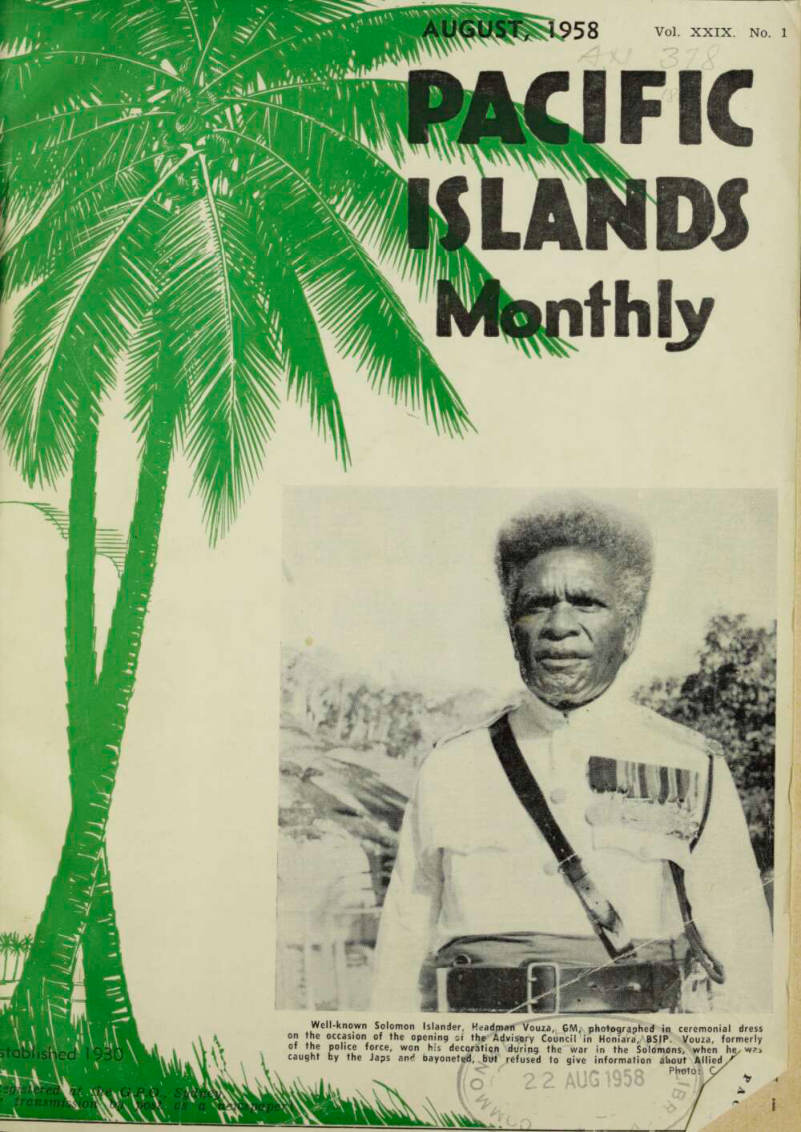 1
1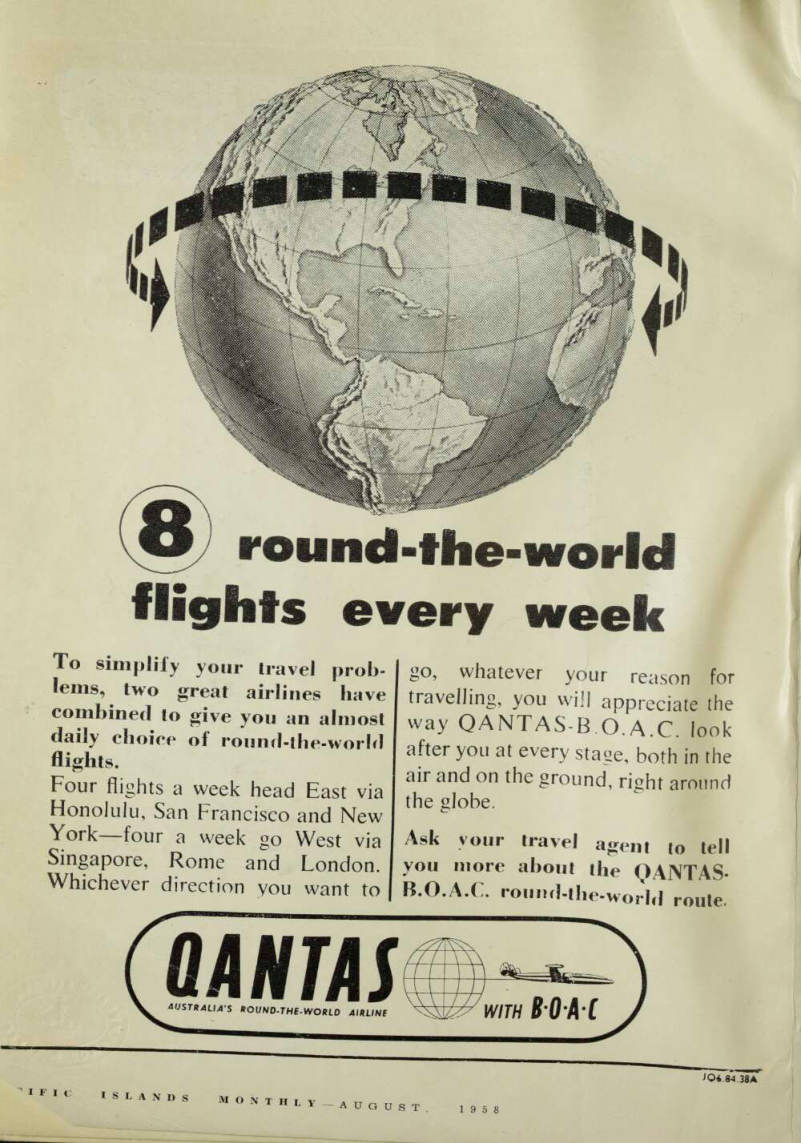 2
2 3
3 4
4 5
5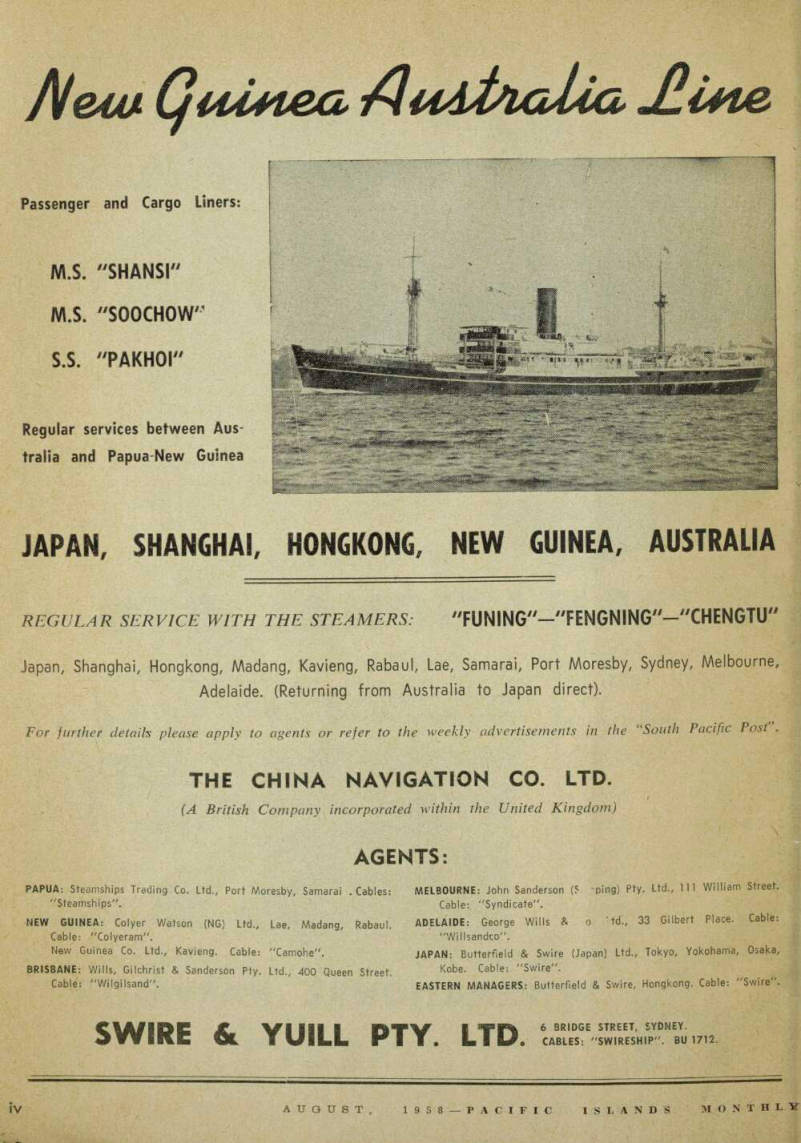 6
6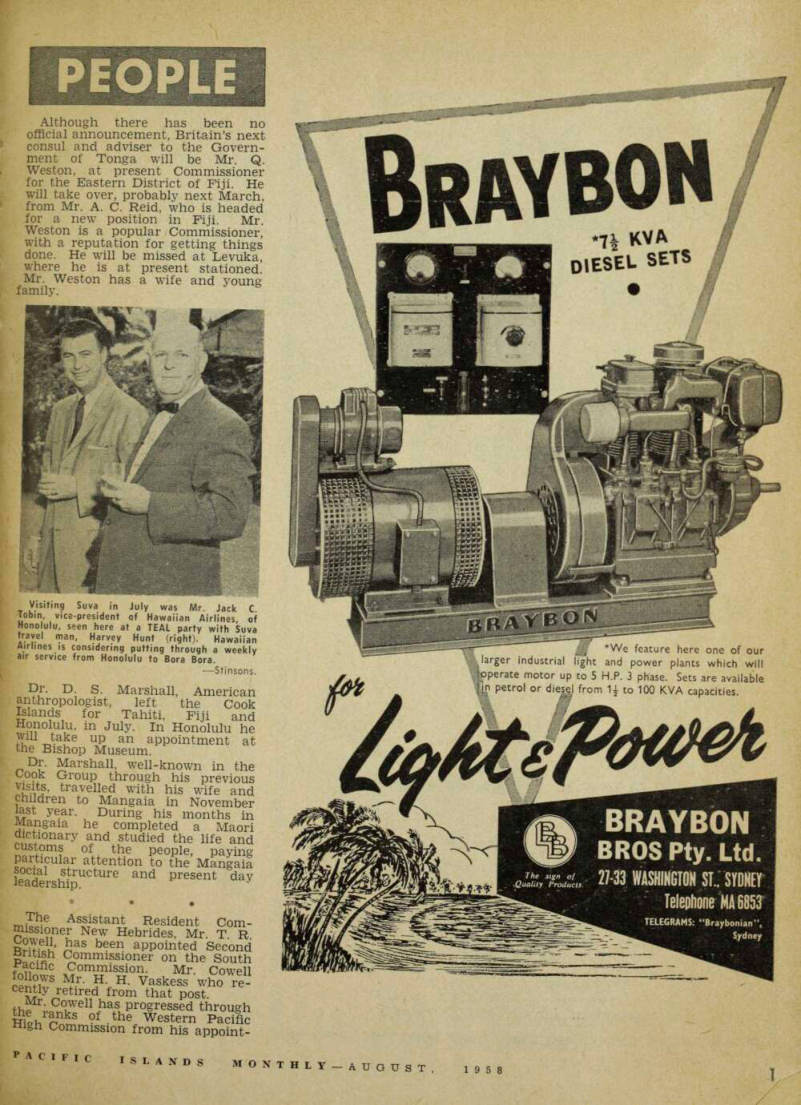 7
7 8
8 9
9 10
10 11
11 12
12 13
13 14
14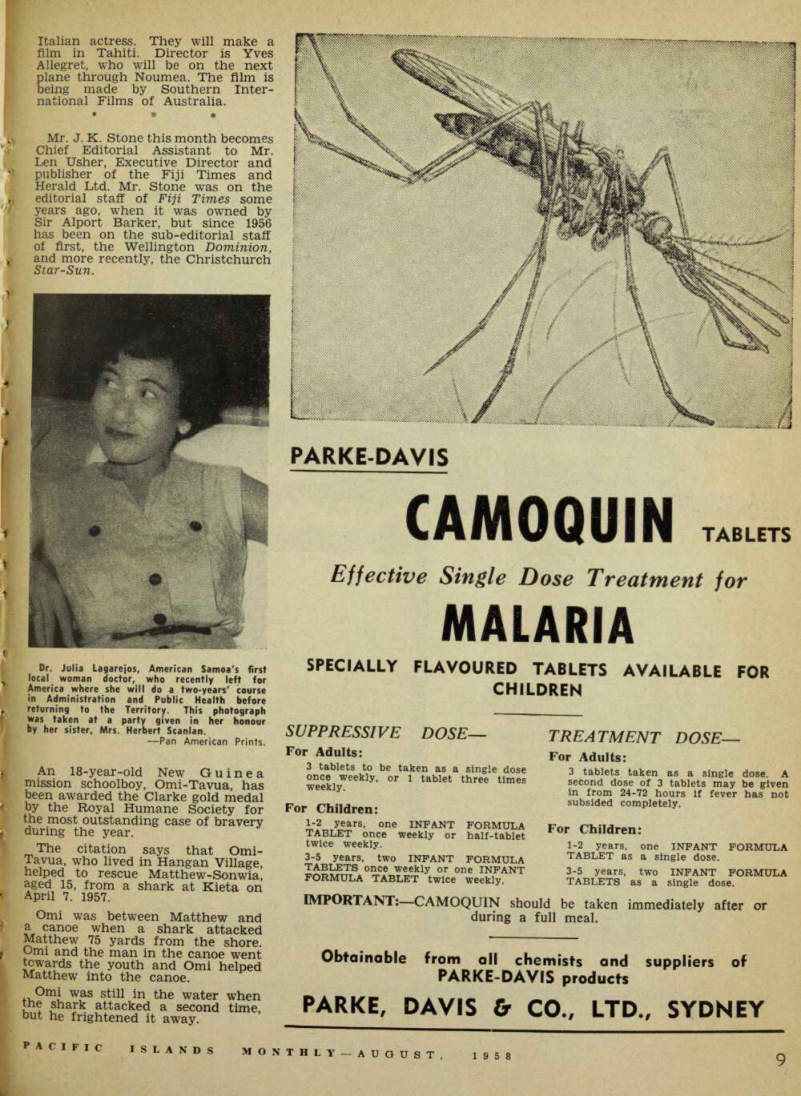 15
15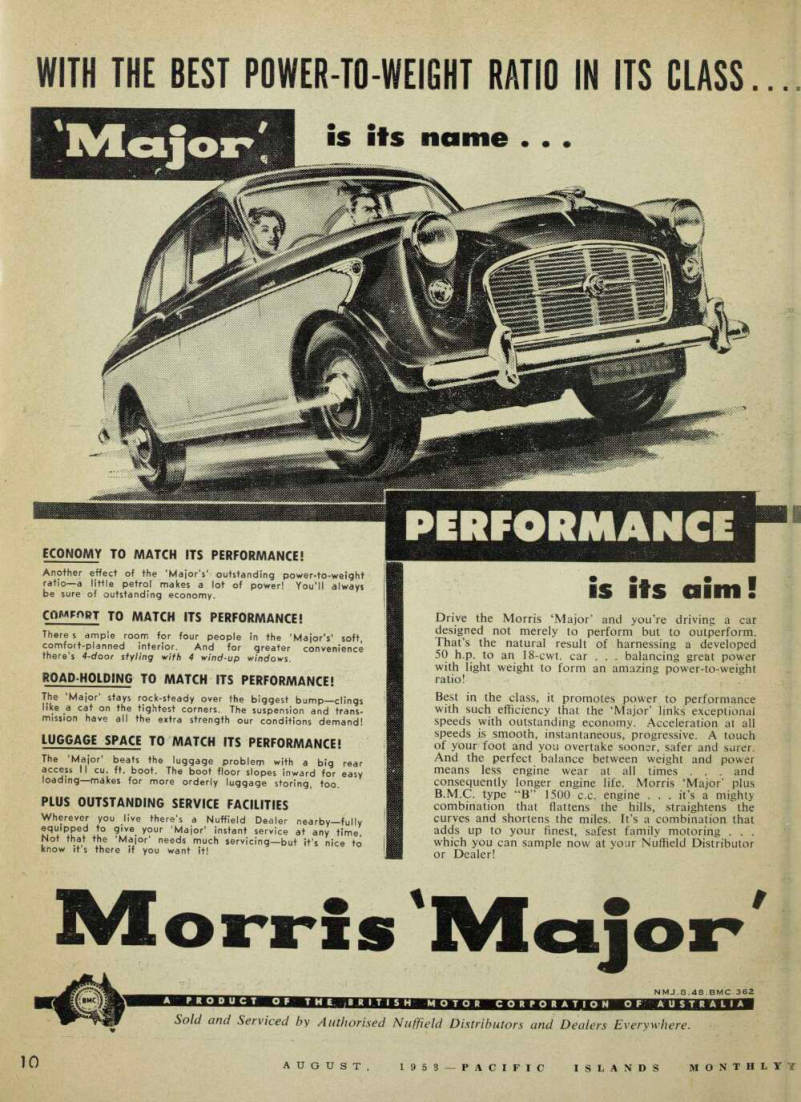 16
16 17
17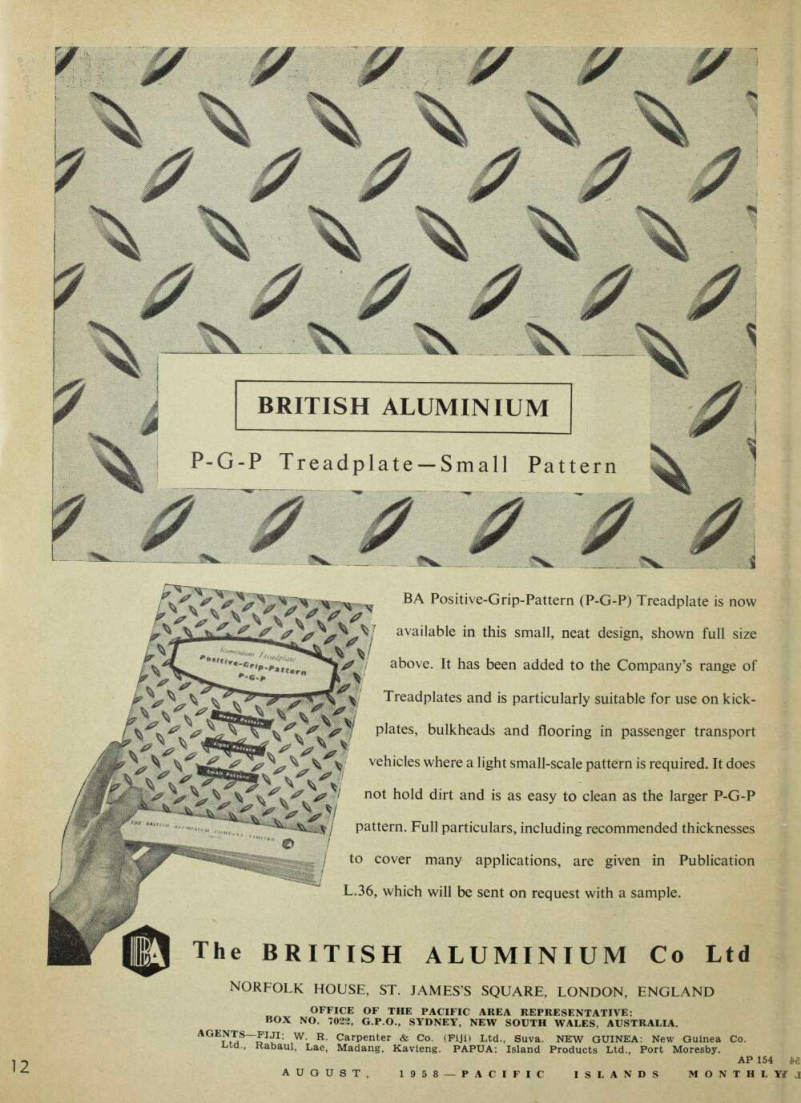 18
18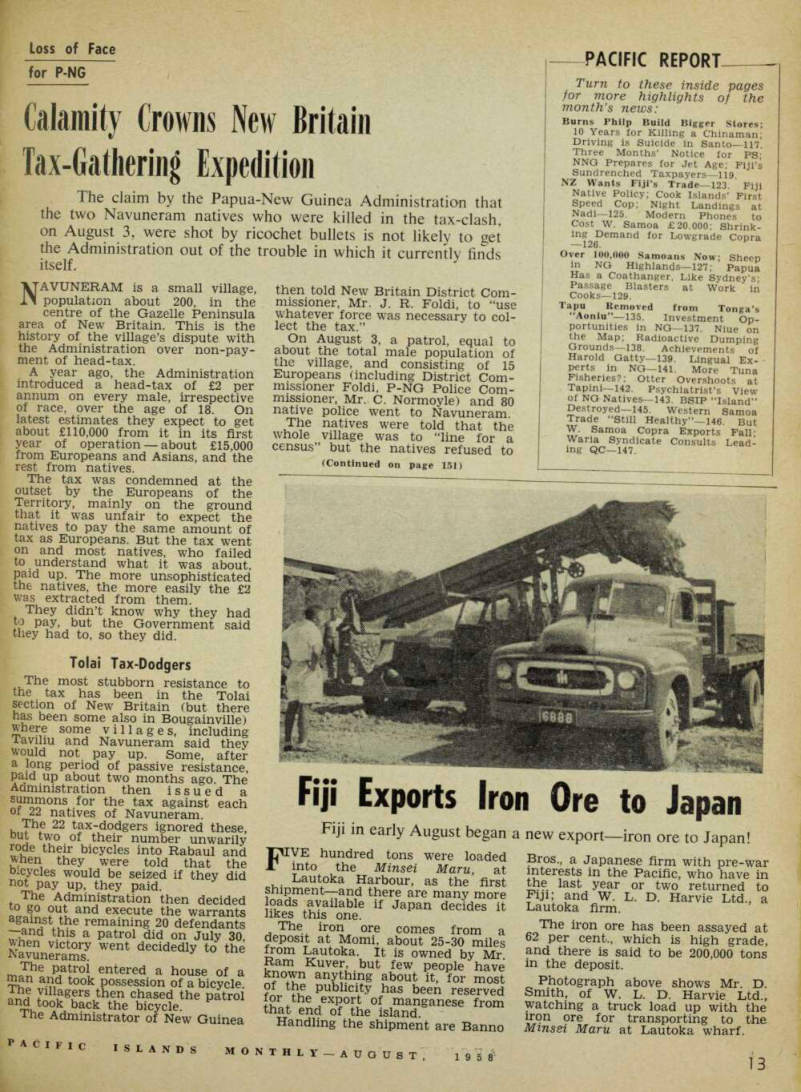 19
19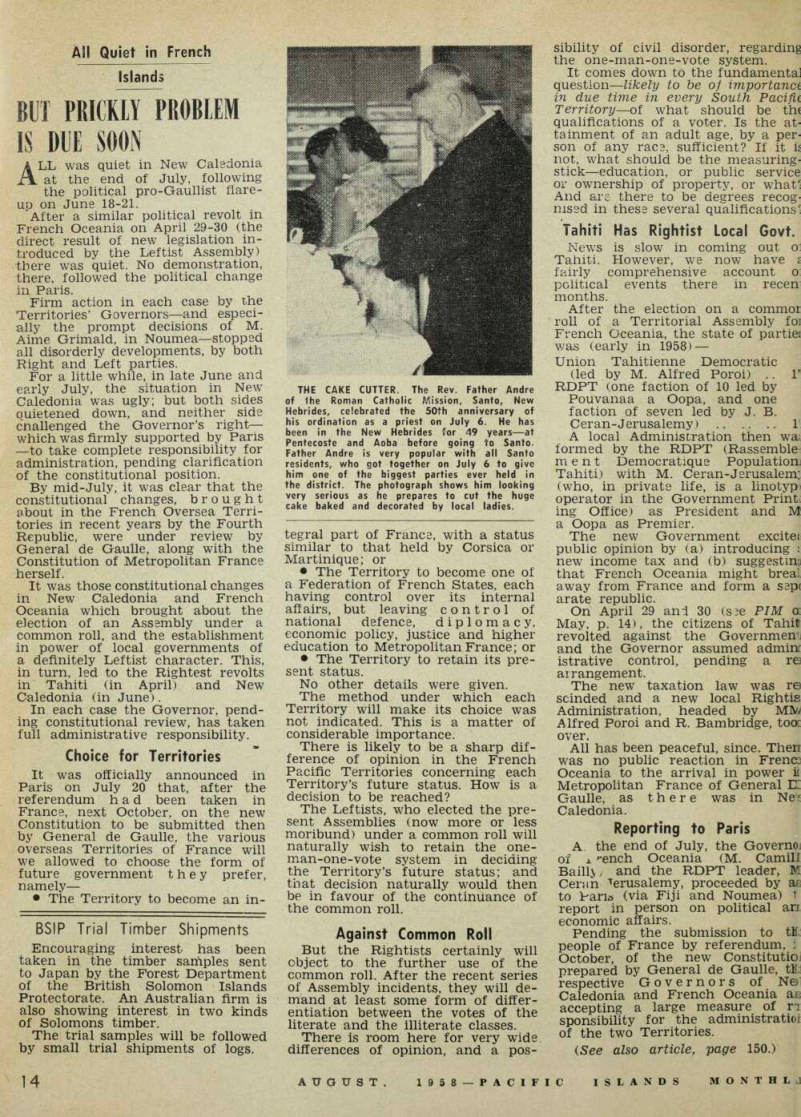 20
20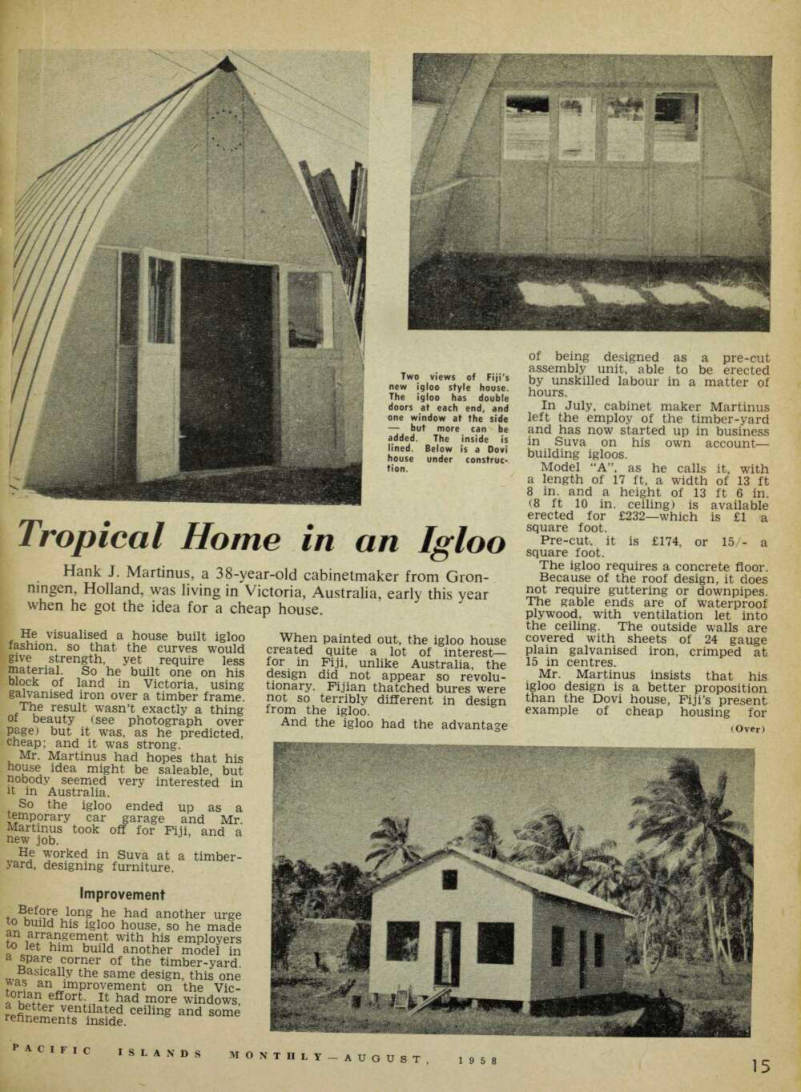 21
21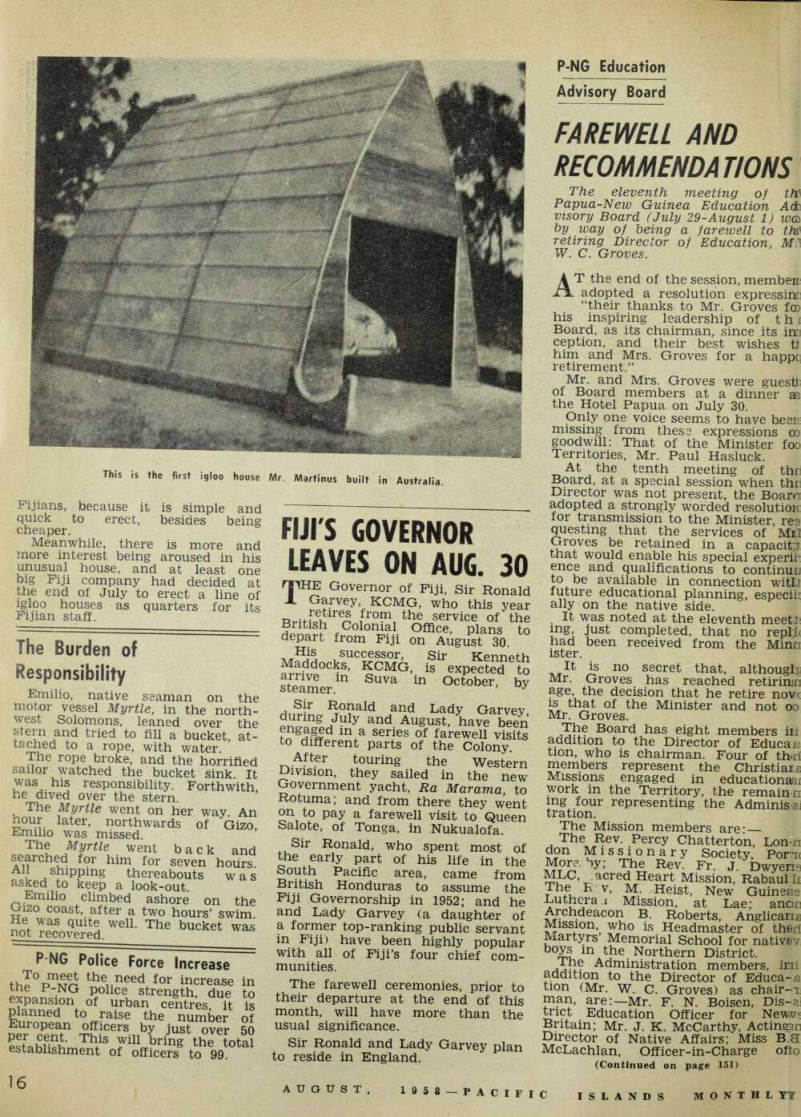 22
22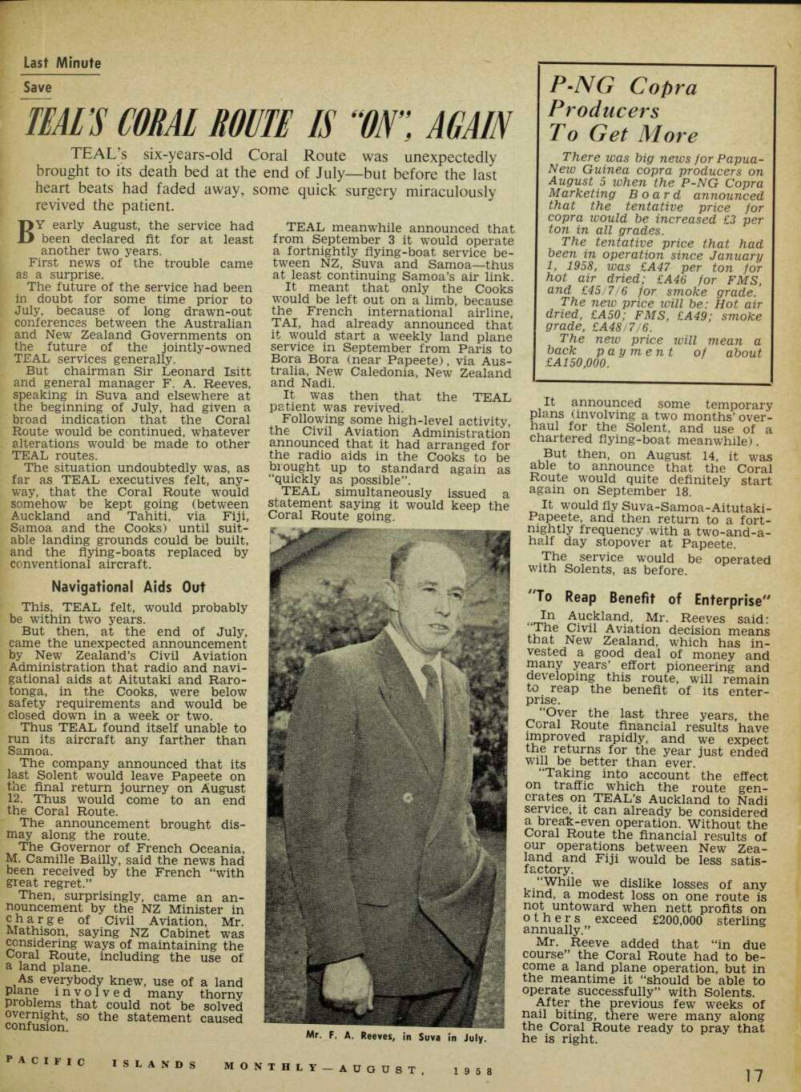 23
23 24
24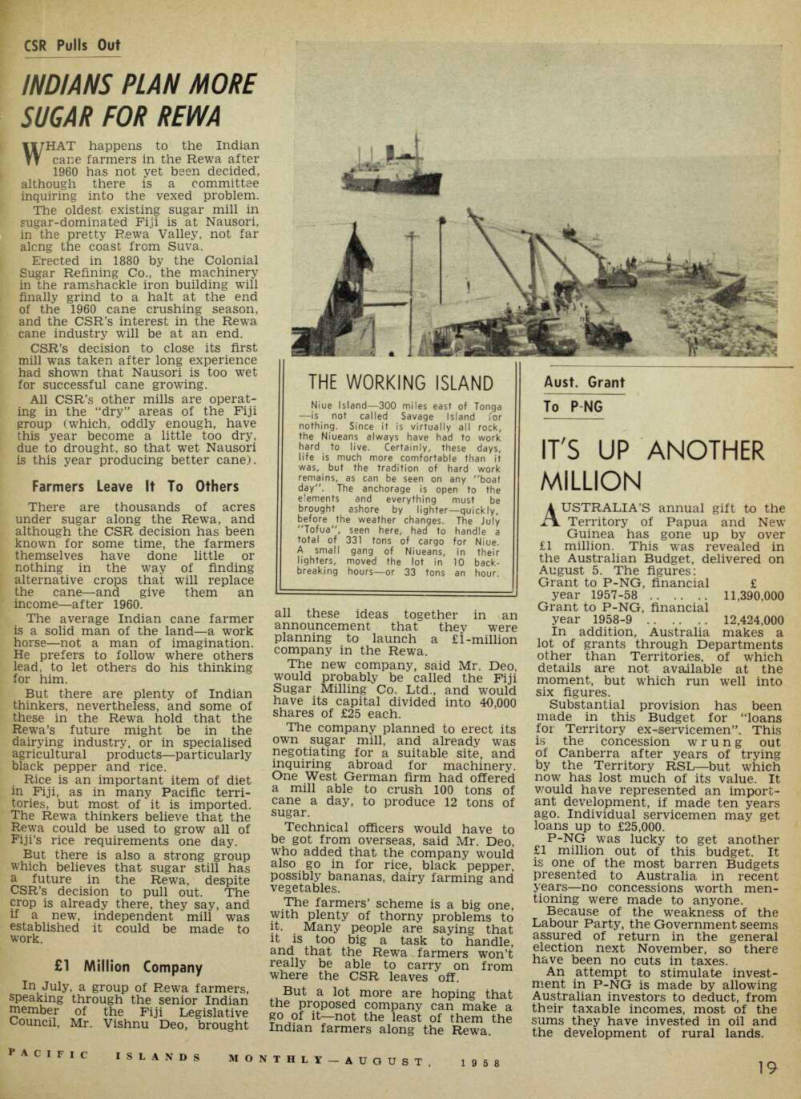 25
25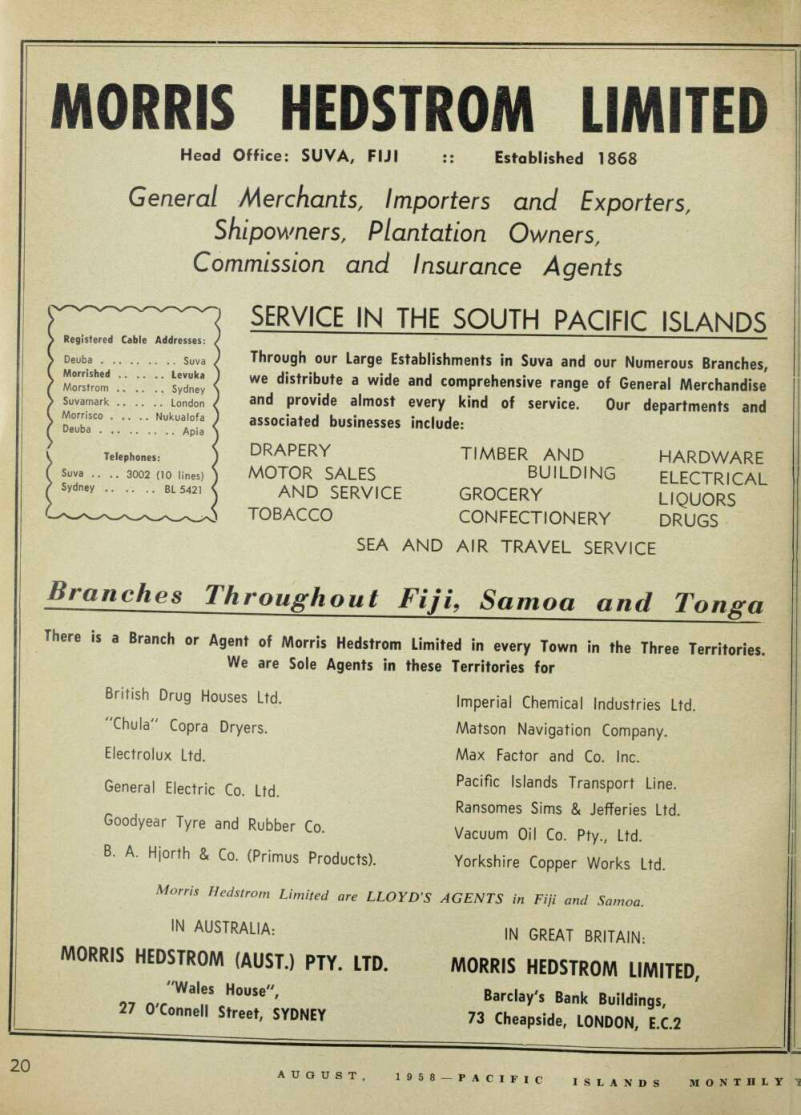 26
26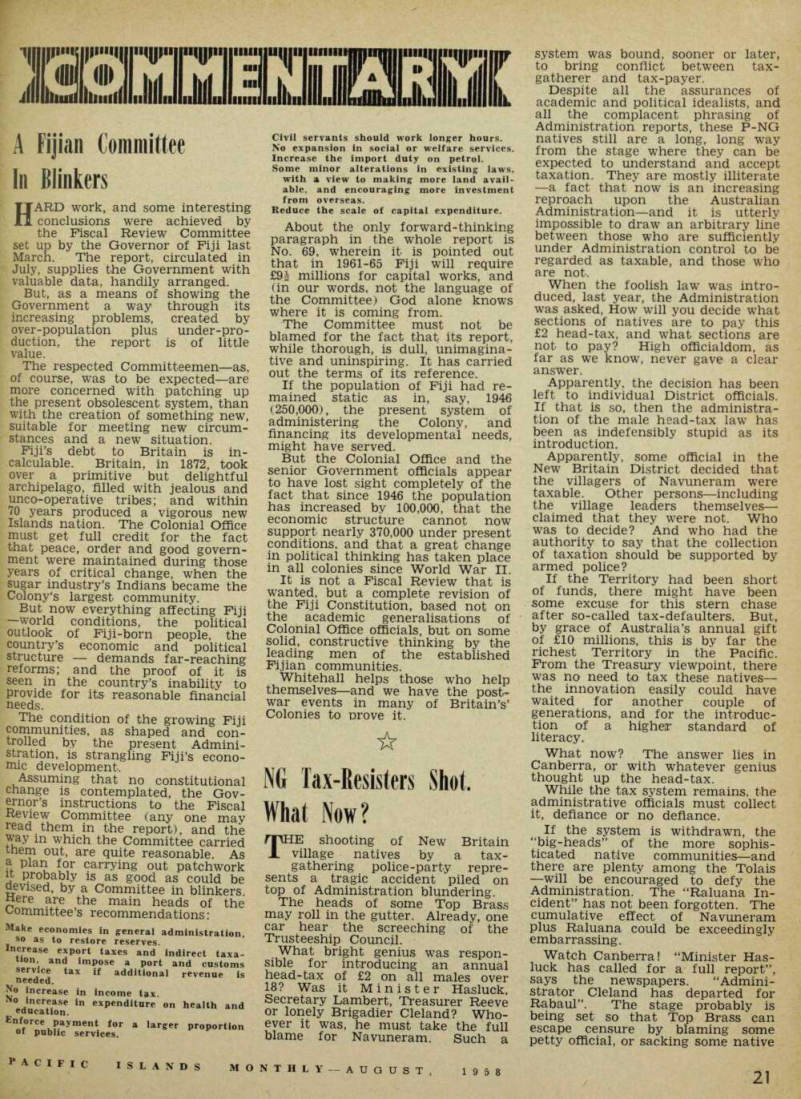 27
27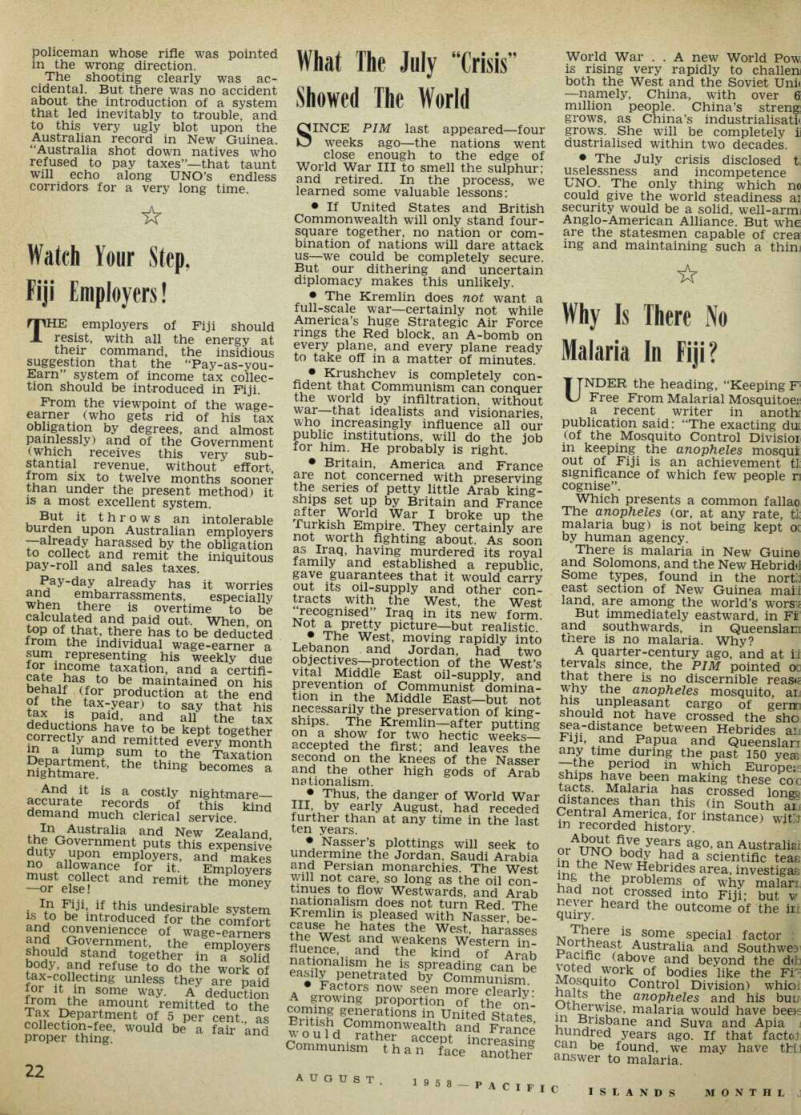 28
28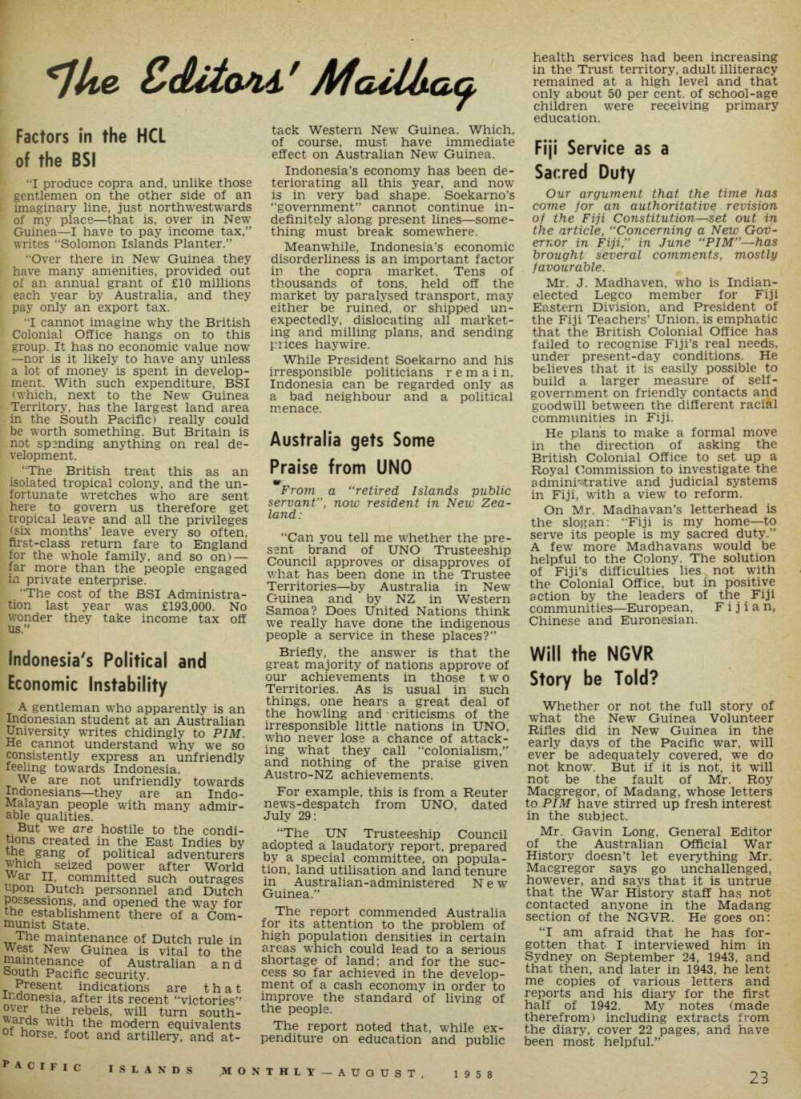 29
29 30
30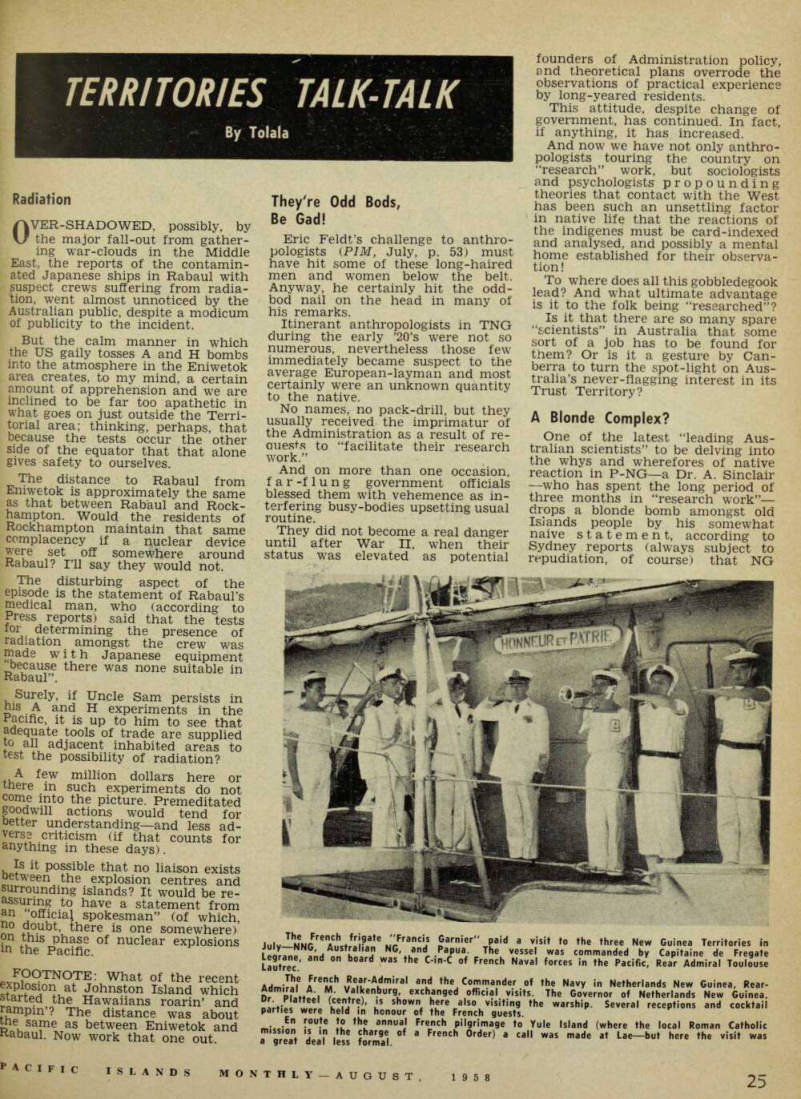 31
31 32
32 33
33 34
34 35
35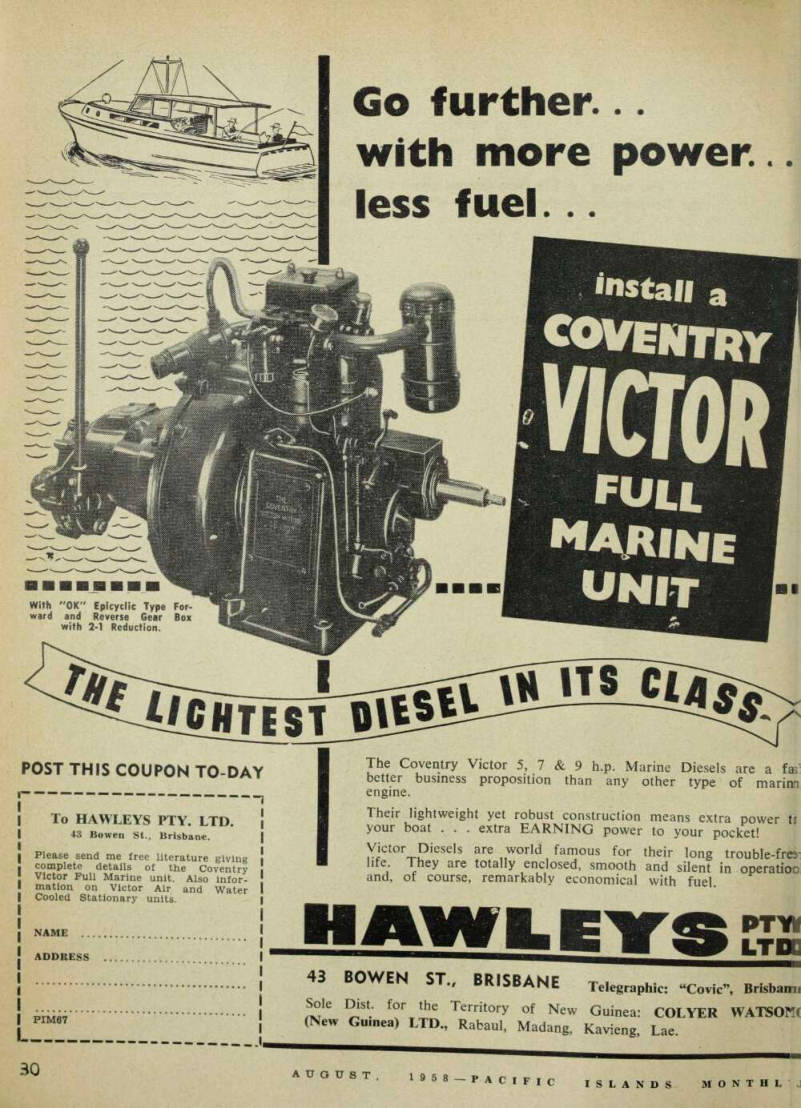 36
36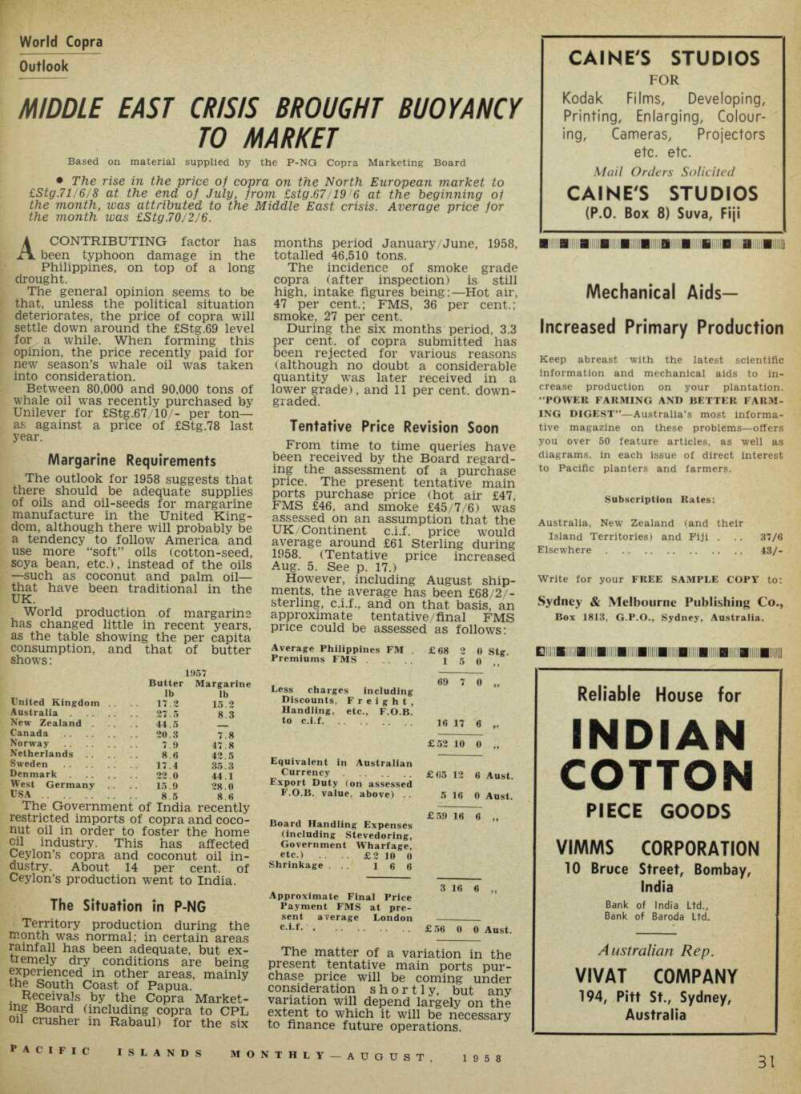 37
37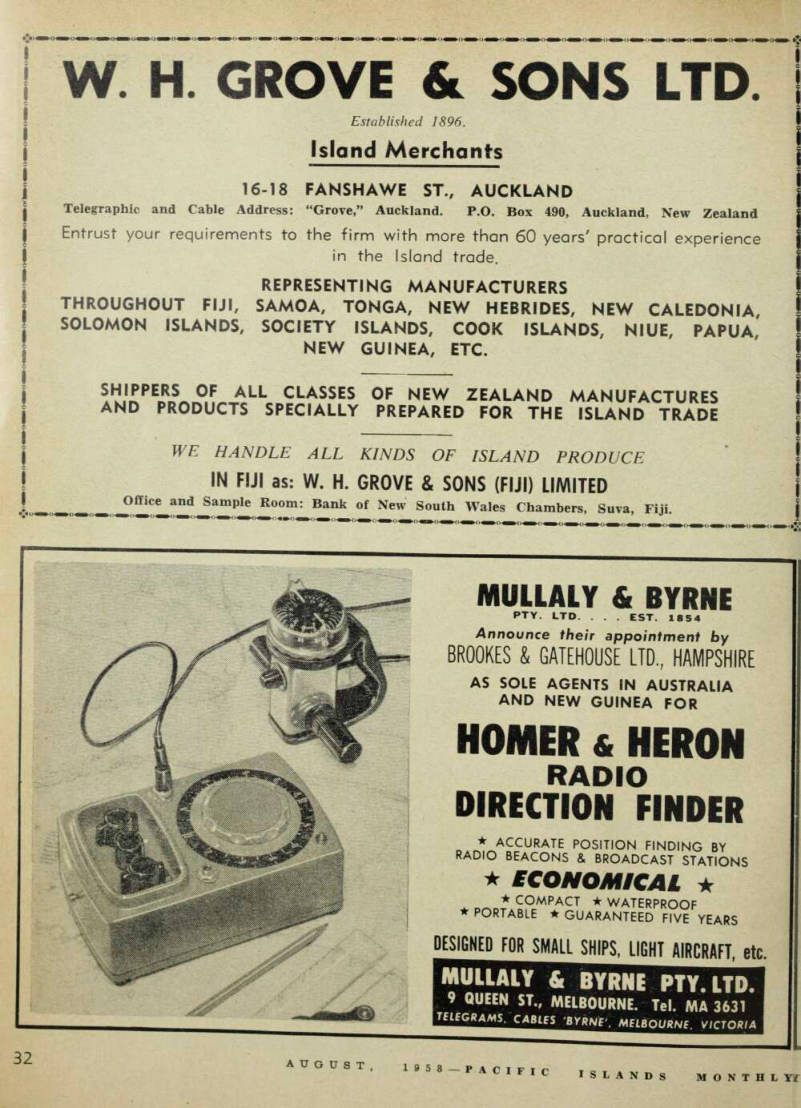 38
38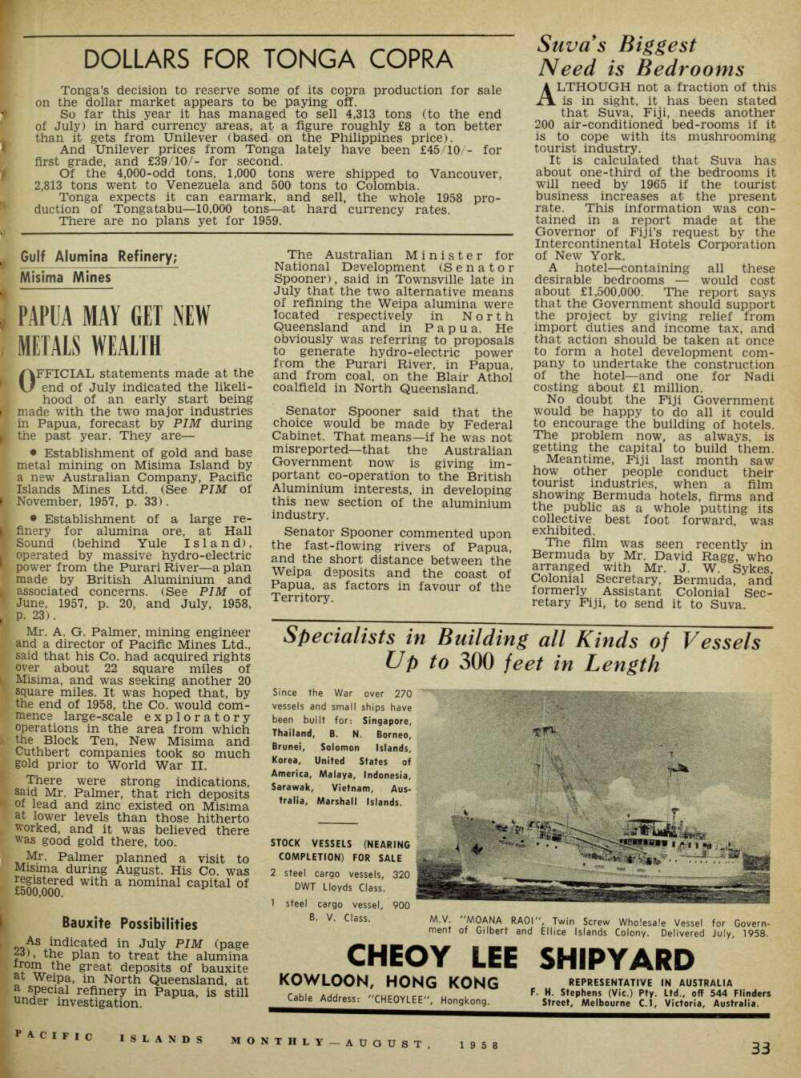 39
39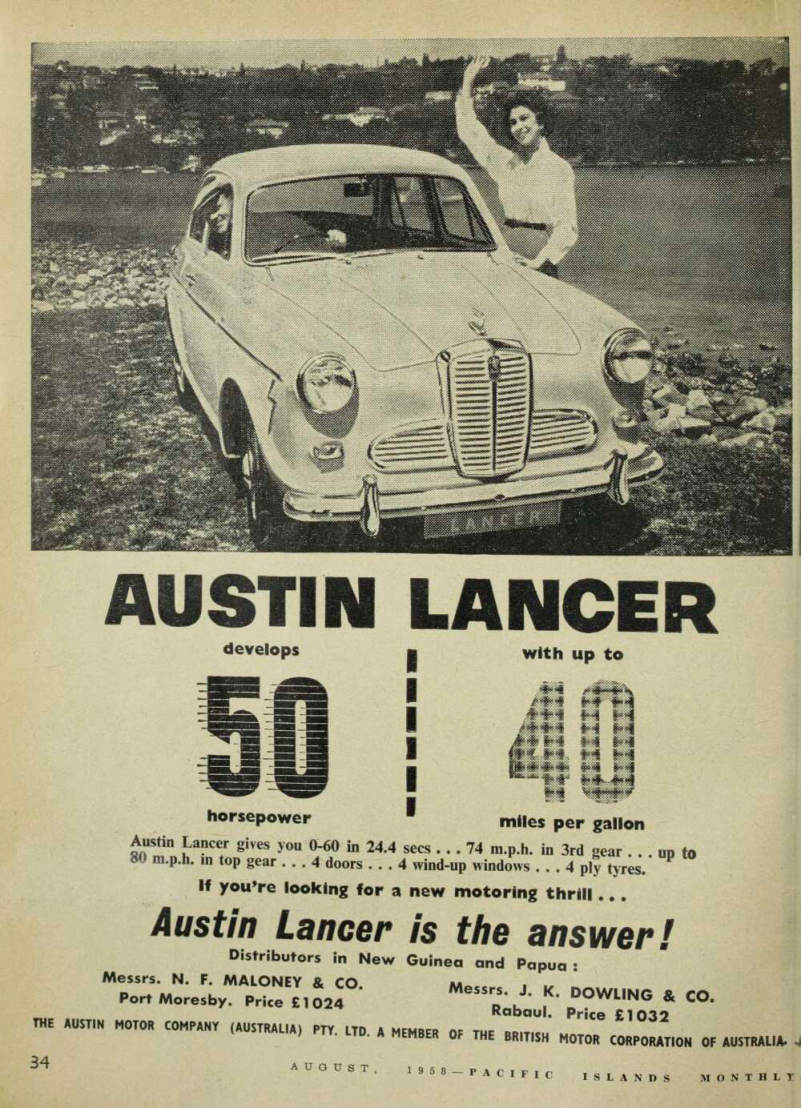 40
40 41
41 42
42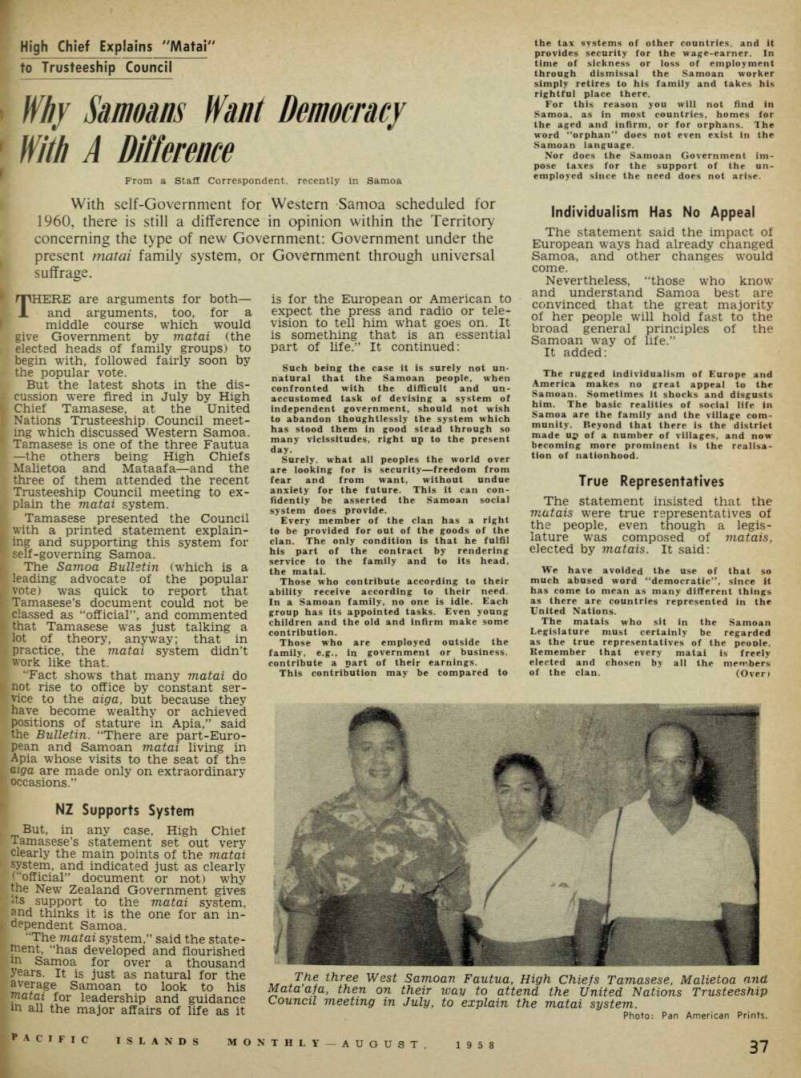 43
43 44
44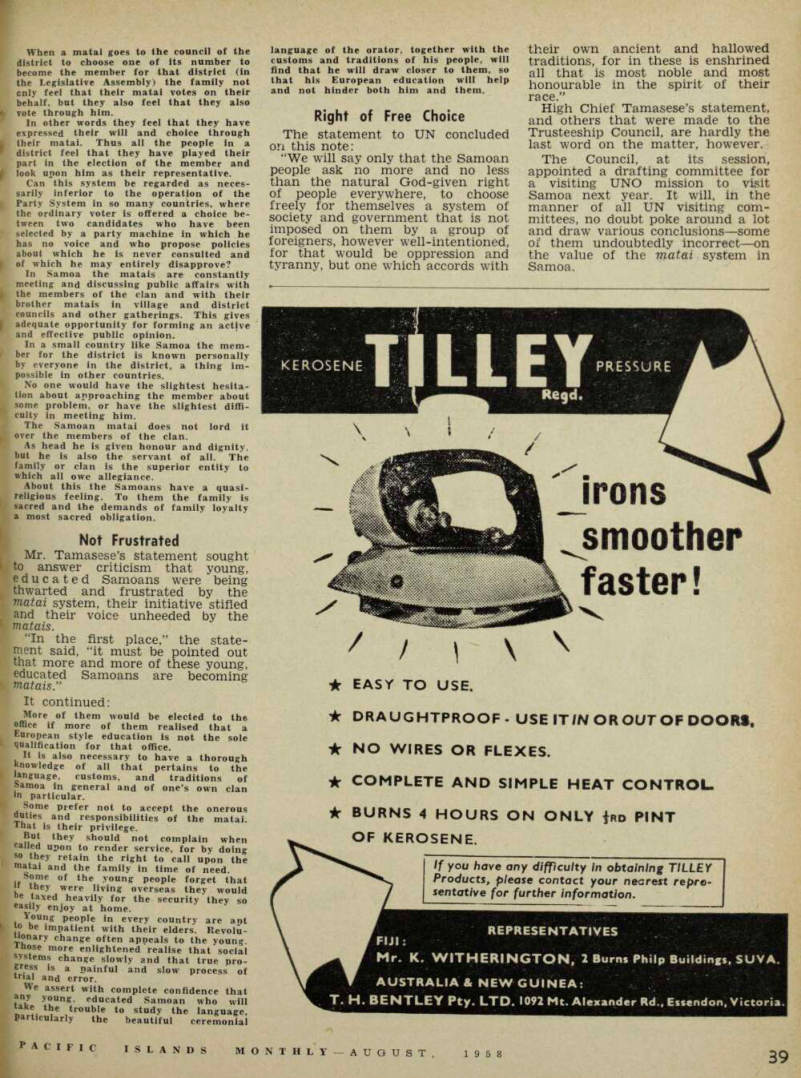 45
45 46
46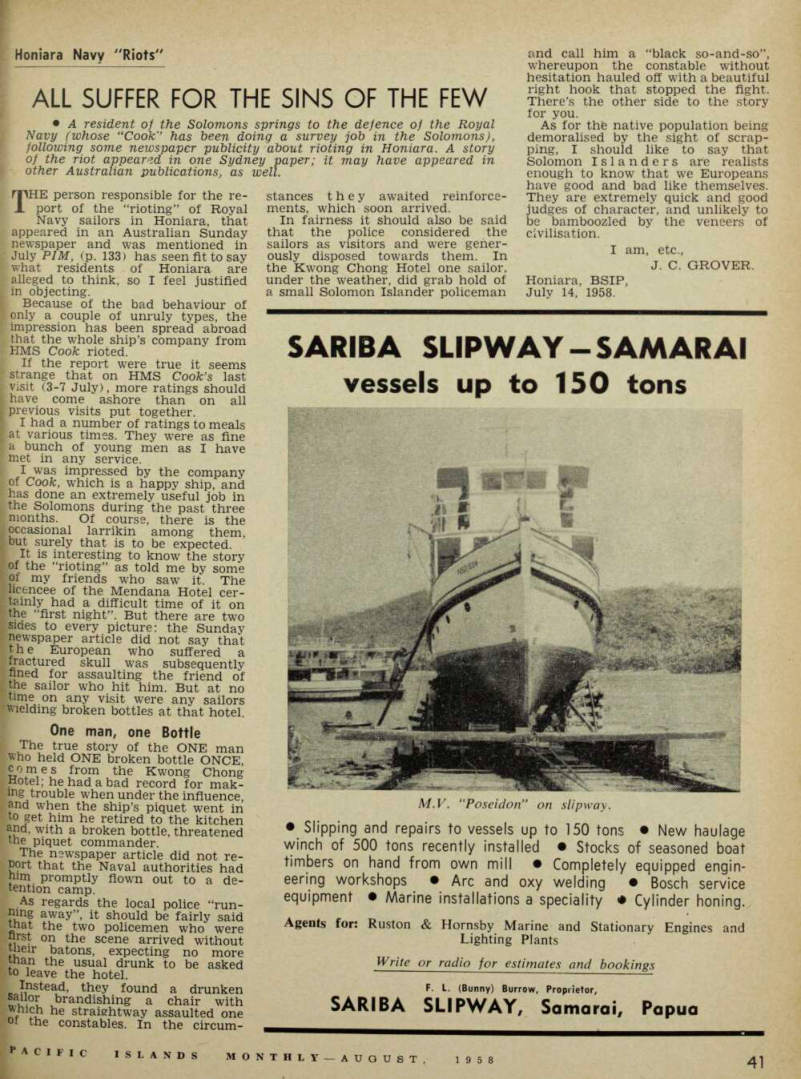 47
47 48
48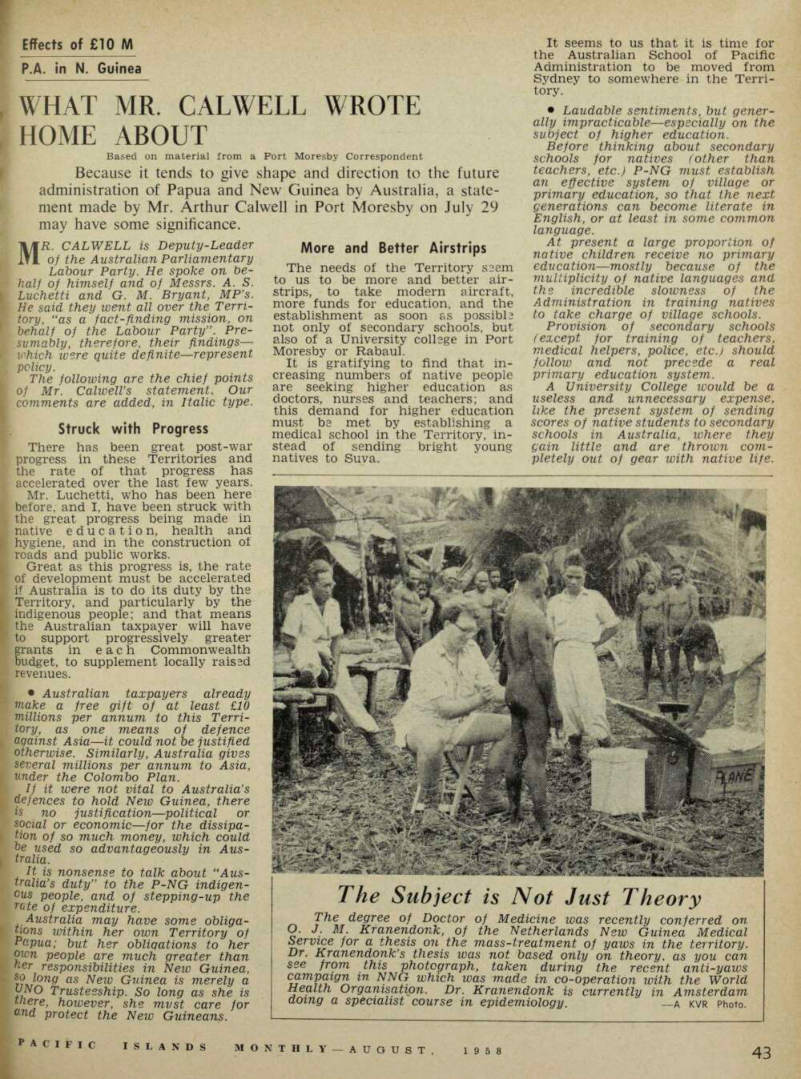 49
49 50
50 51
51 52
52 53
53 54
54 55
55 56
56 57
57 58
58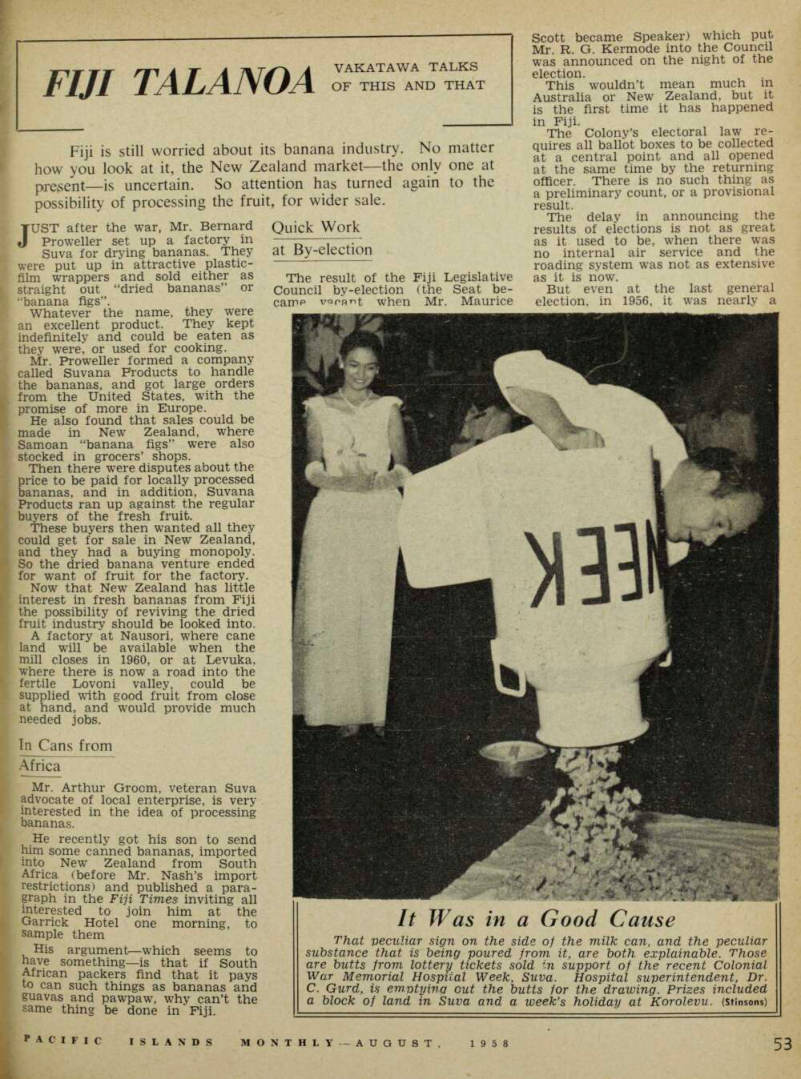 59
59 60
60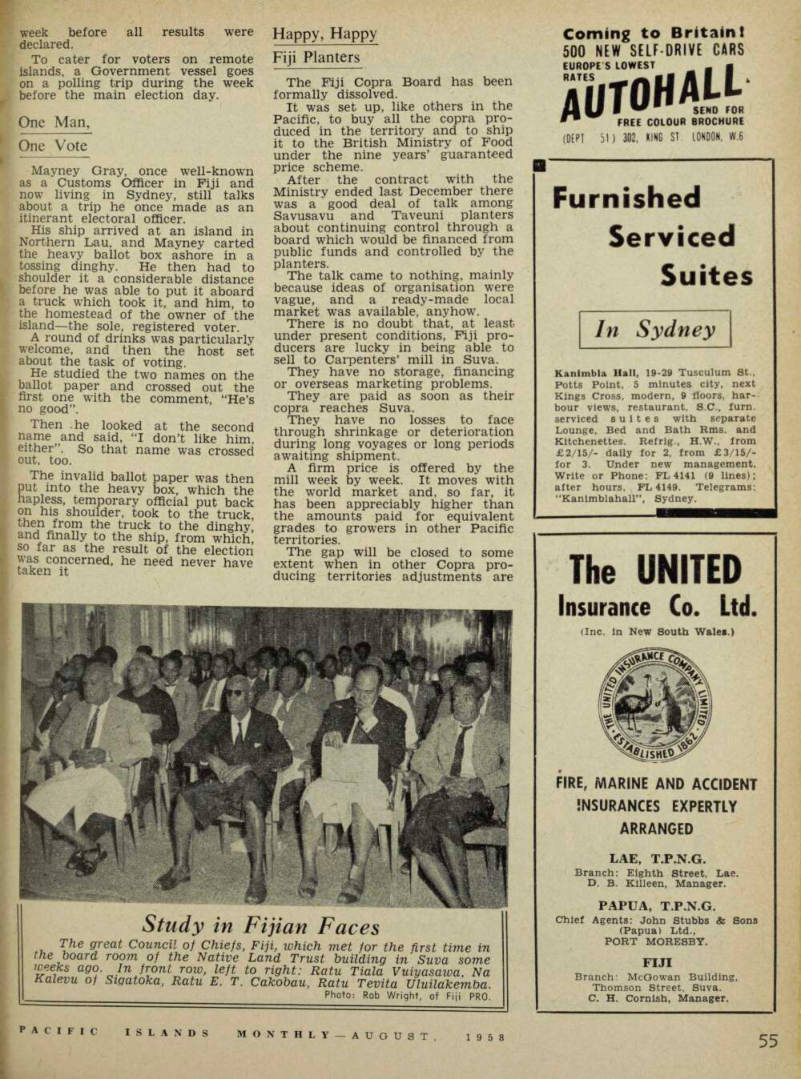 61
61 62
62 63
63 64
64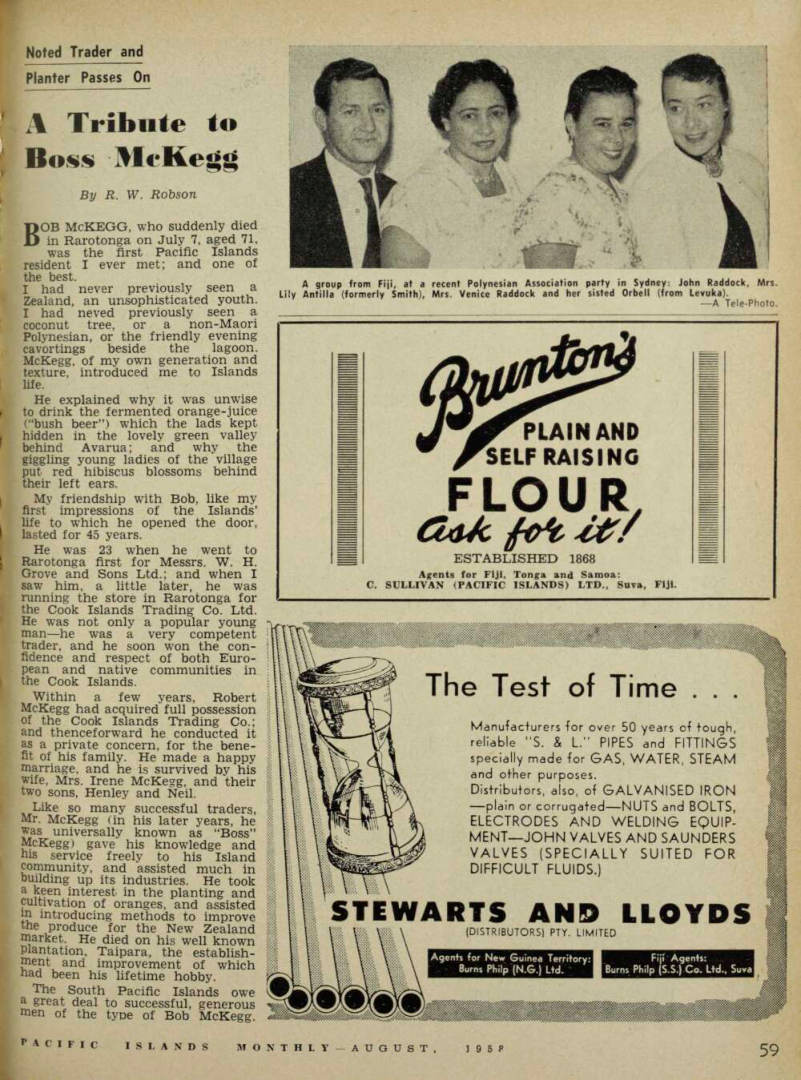 65
65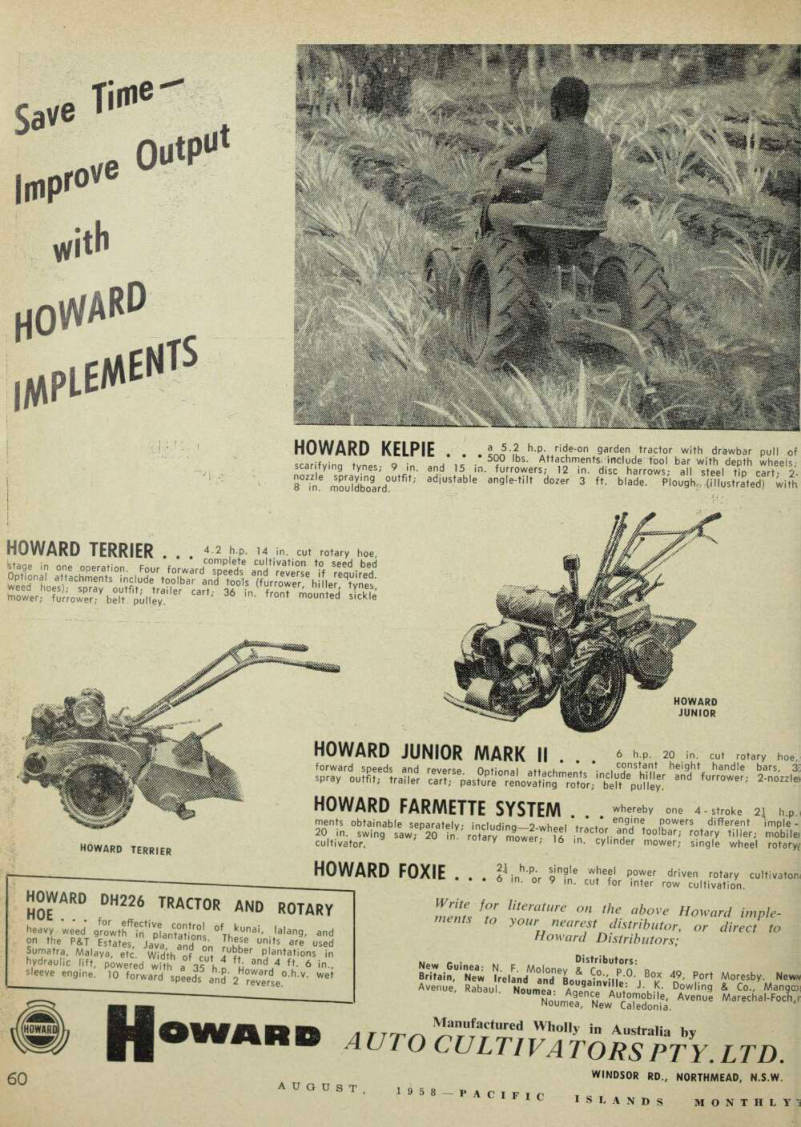 66
66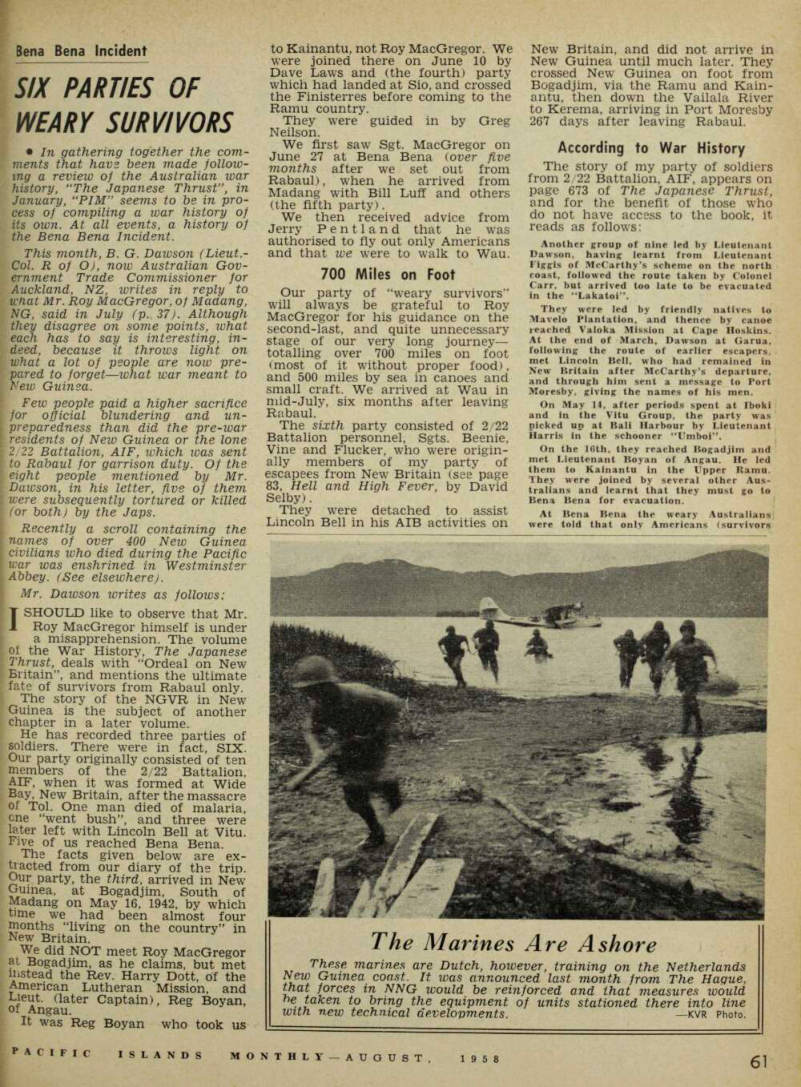 67
67 68
68 69
69 70
70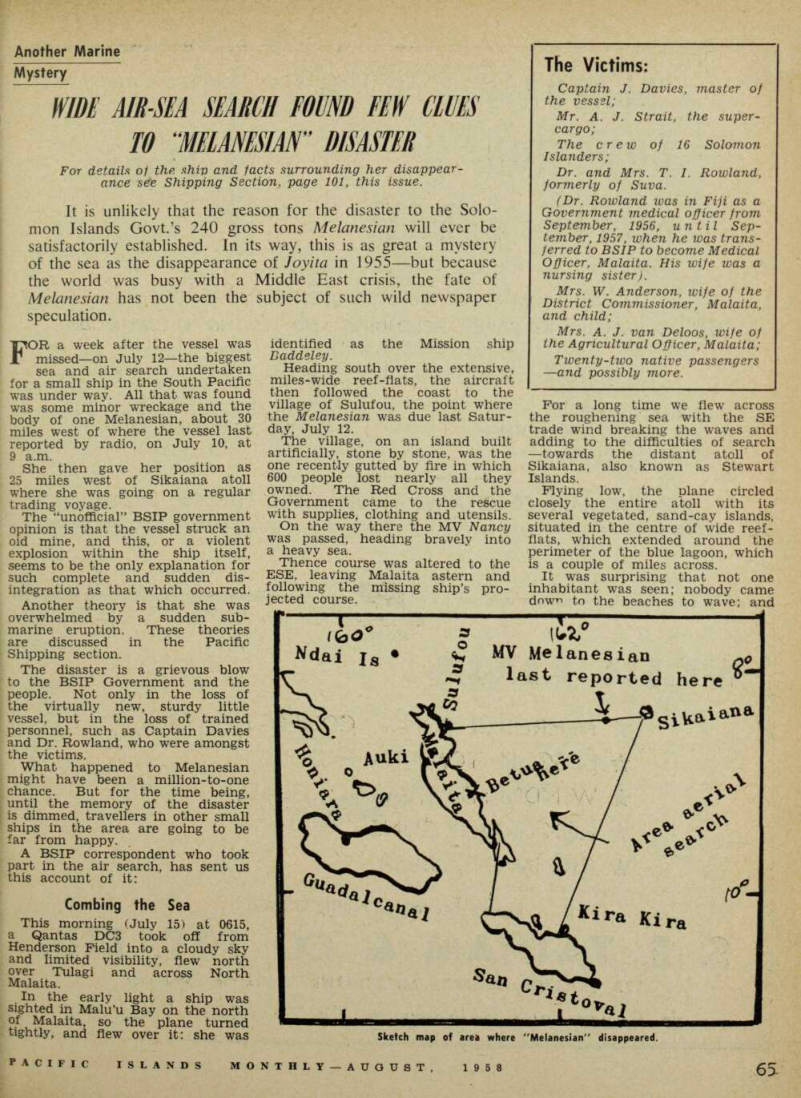 71
71 72
72 73
73 74
74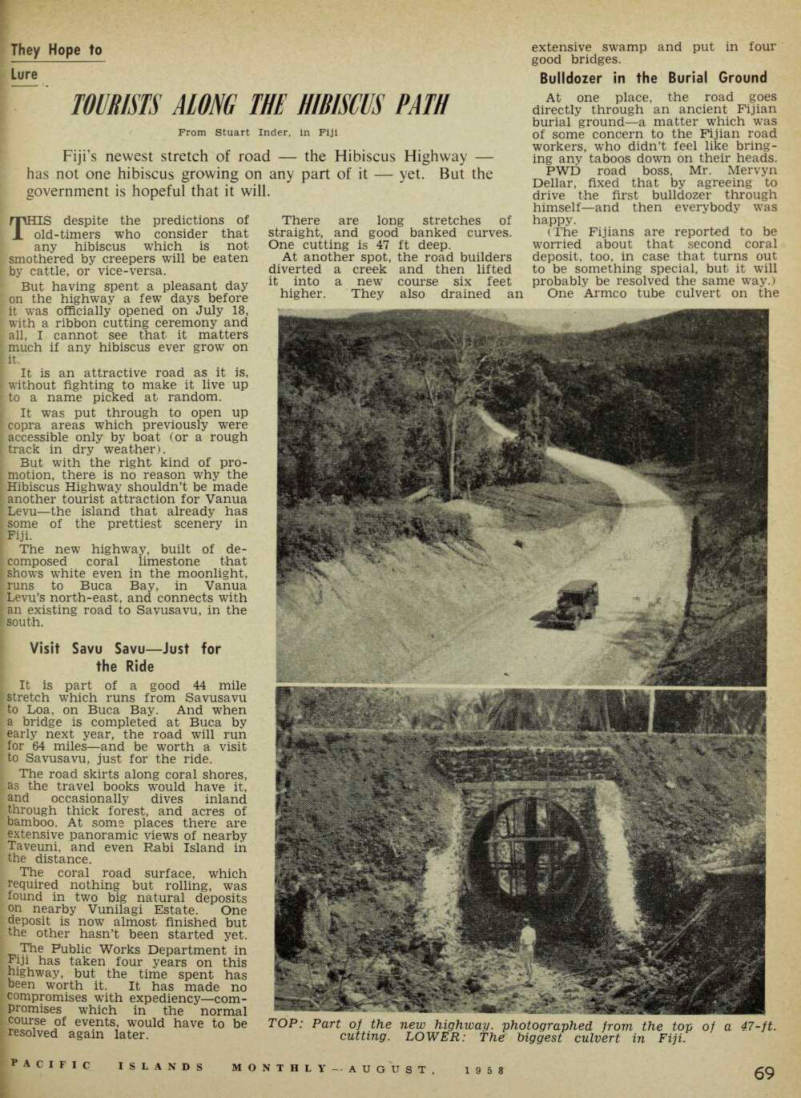 75
75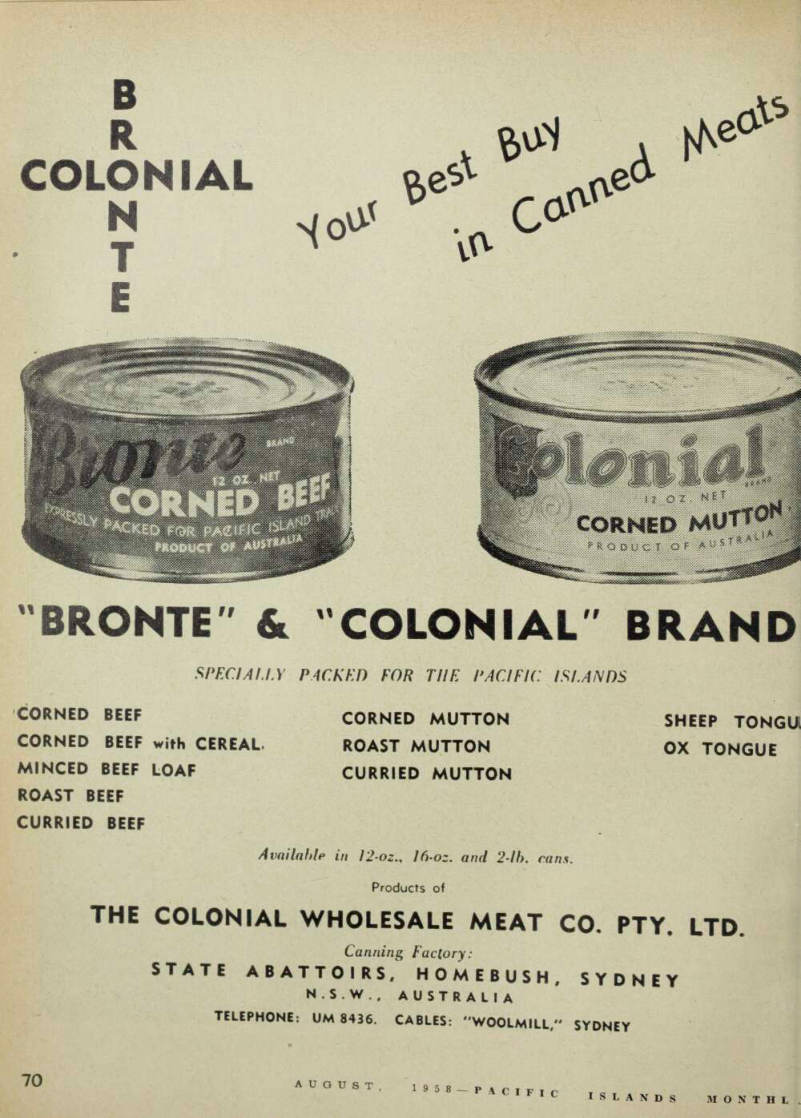 76
76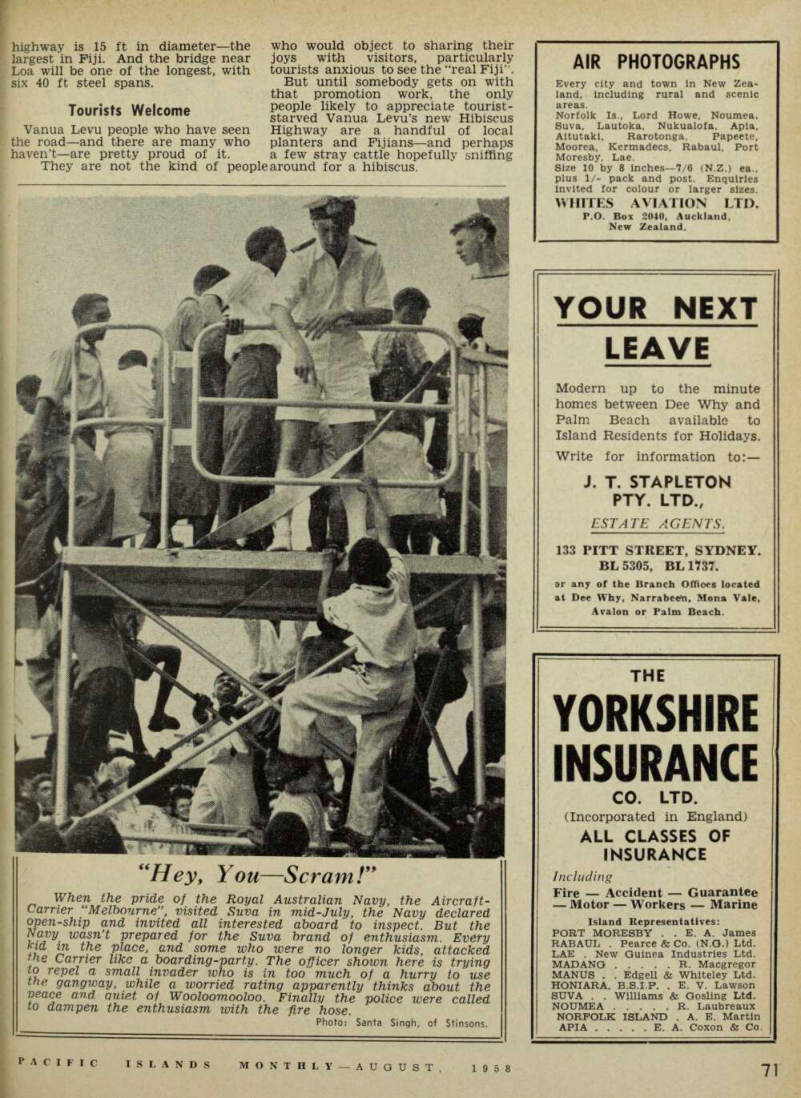 77
77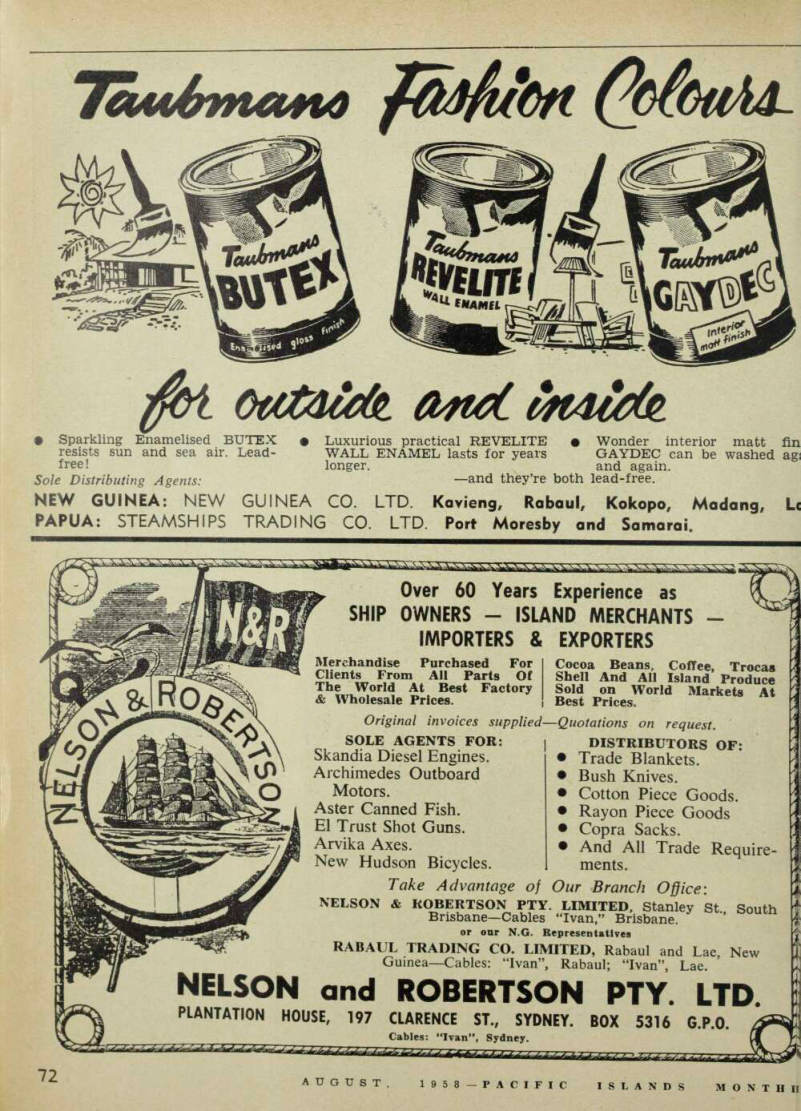 78
78 79
79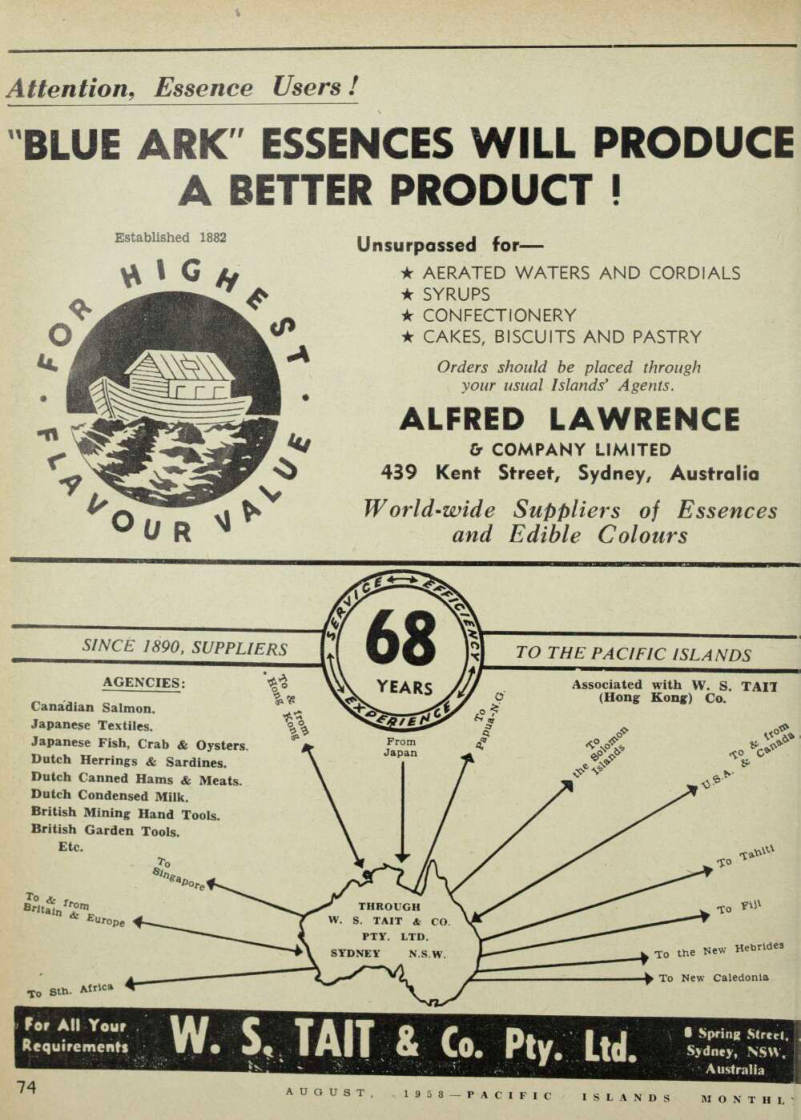 80
80 81
81 82
82 83
83 84
84 85
85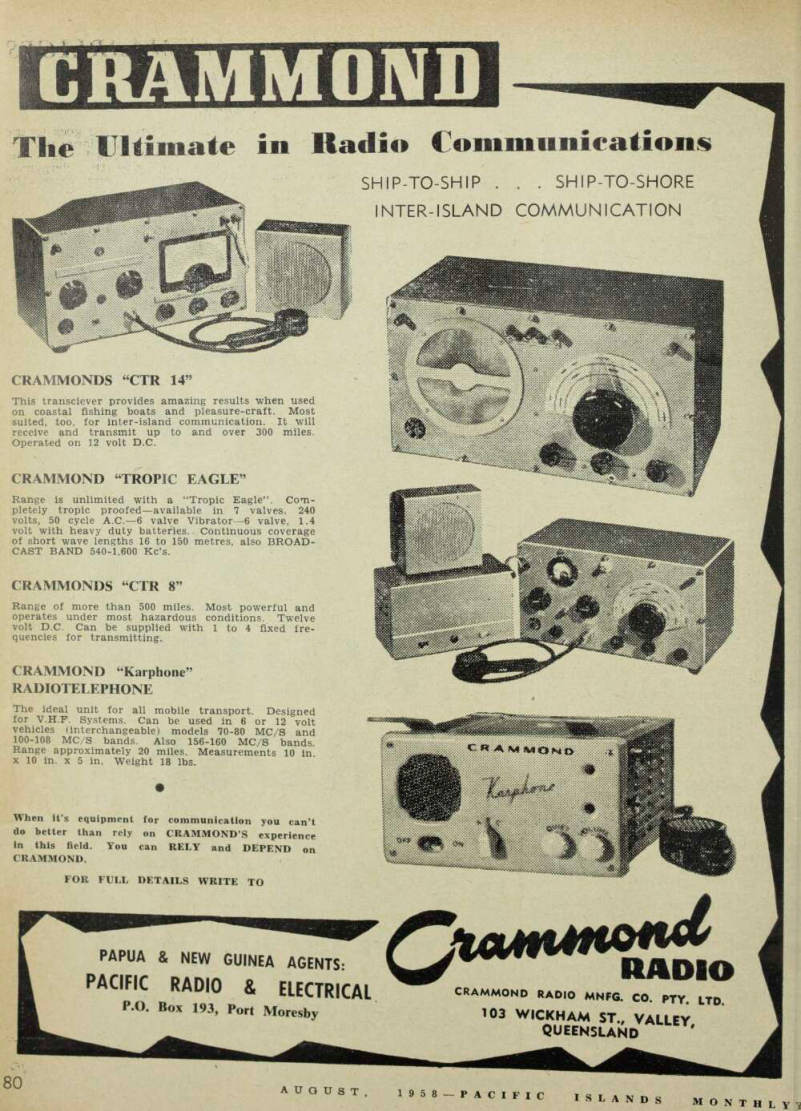 86
86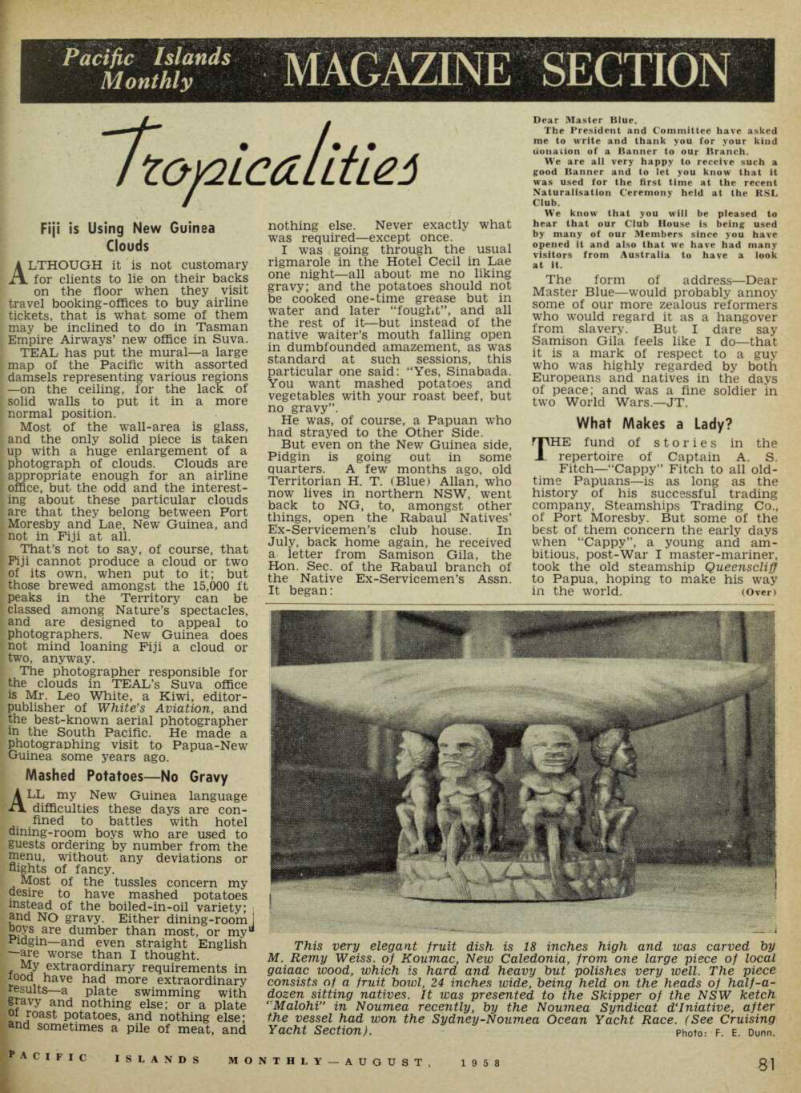 87
87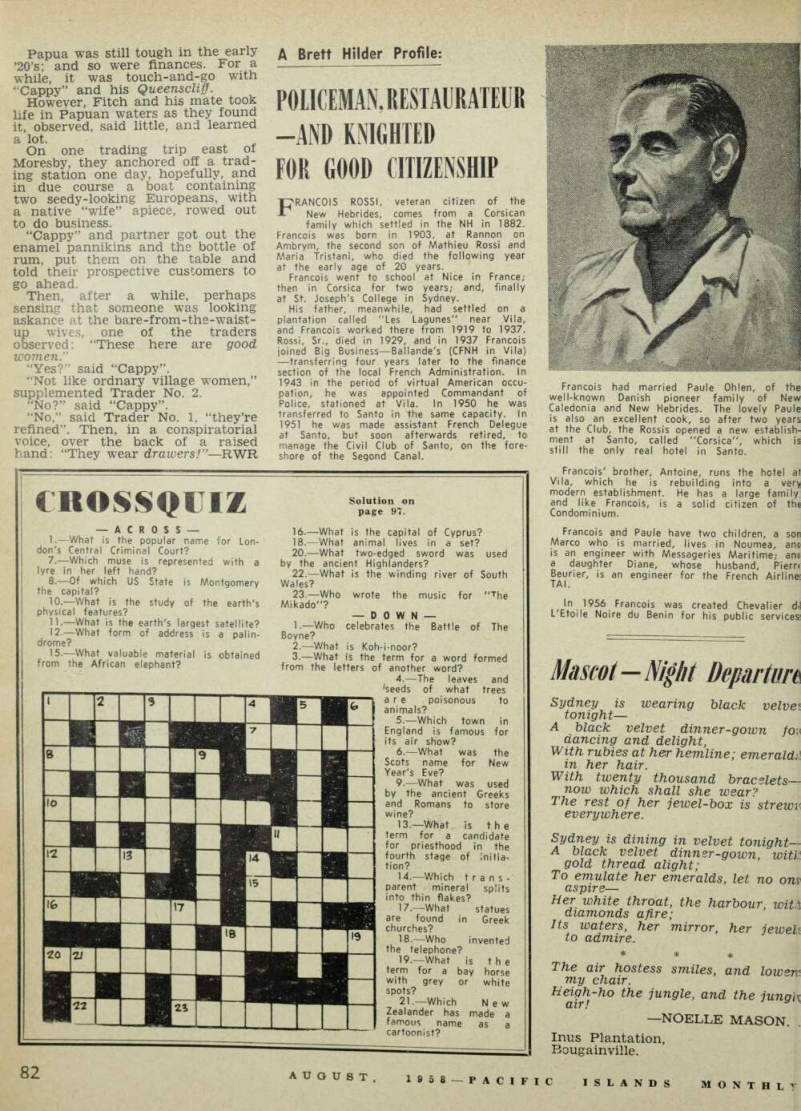 88
88 89
89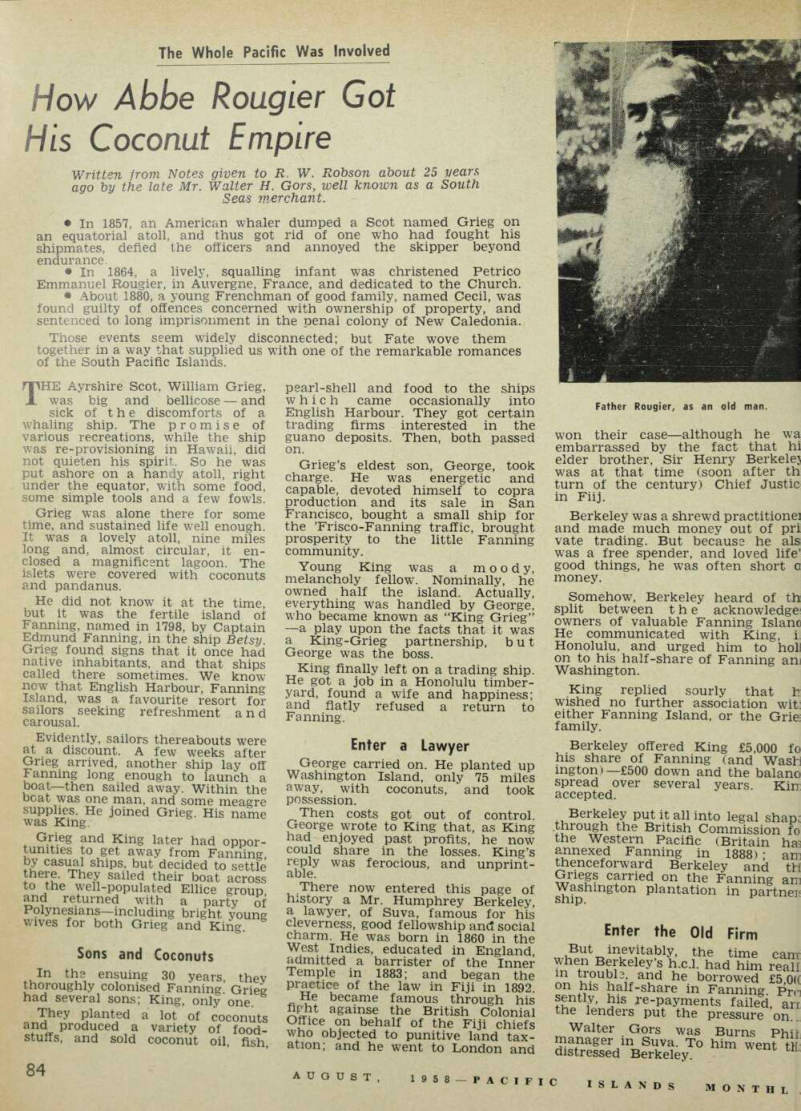 90
90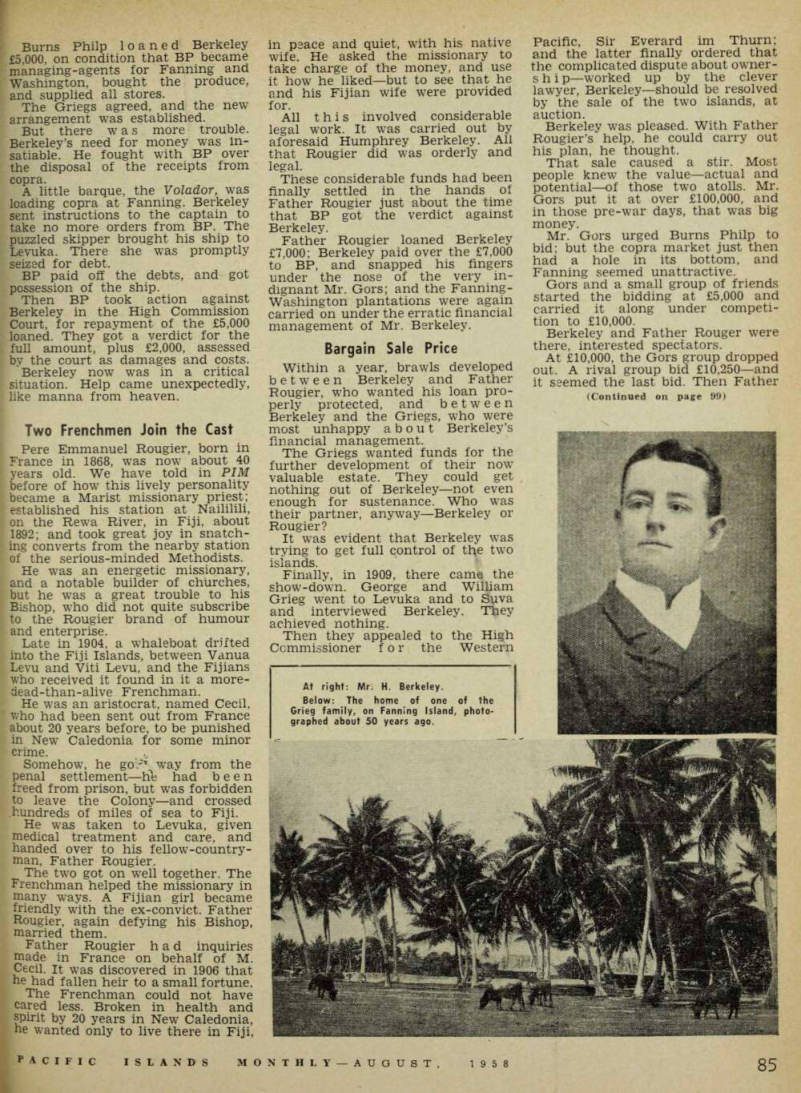 91
91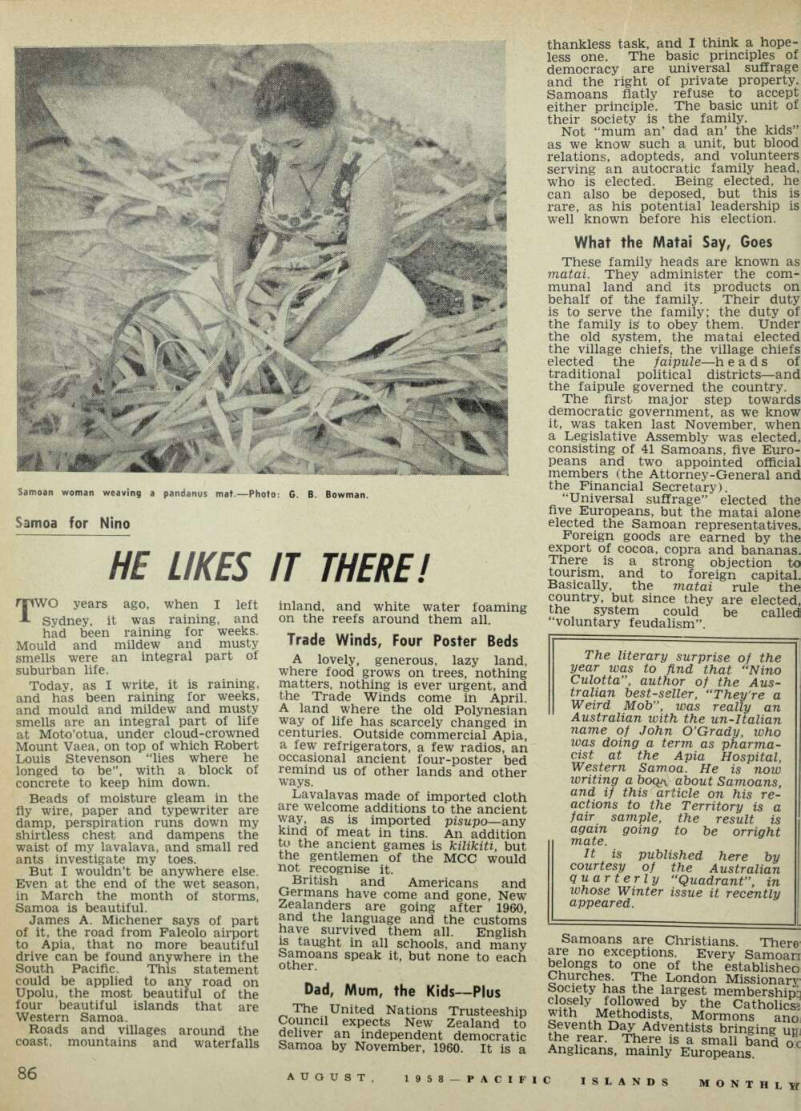 92
92 93
93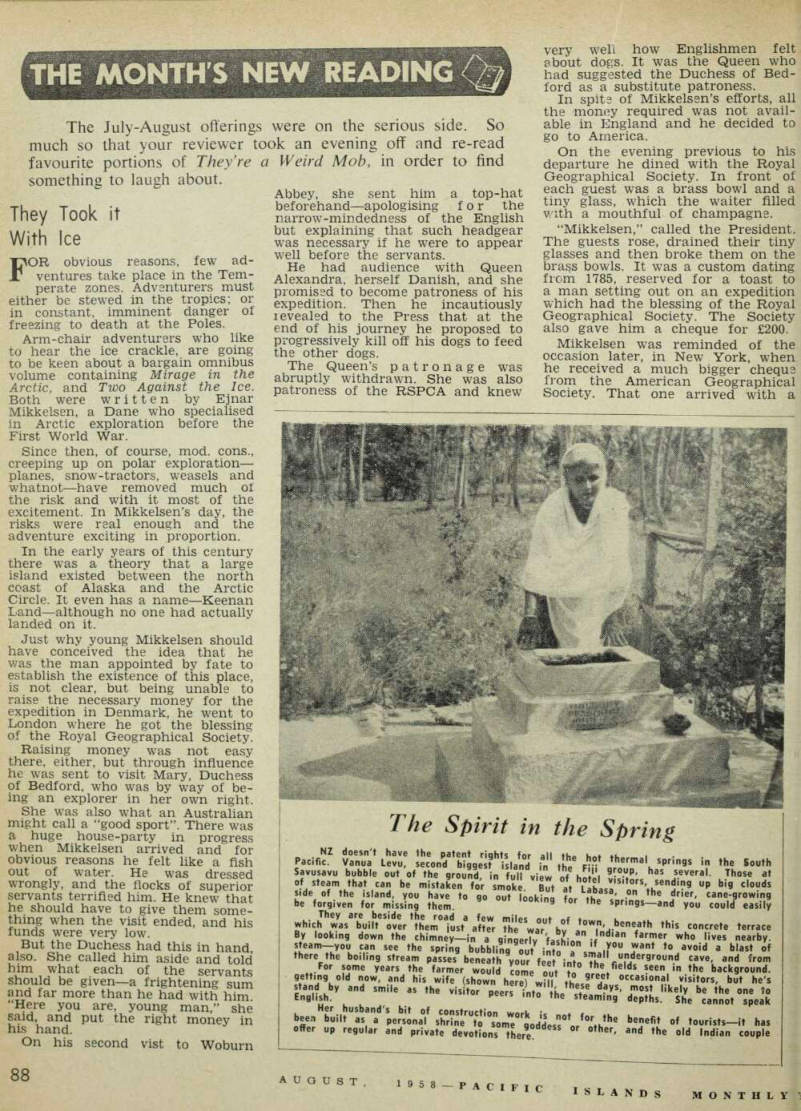 94
94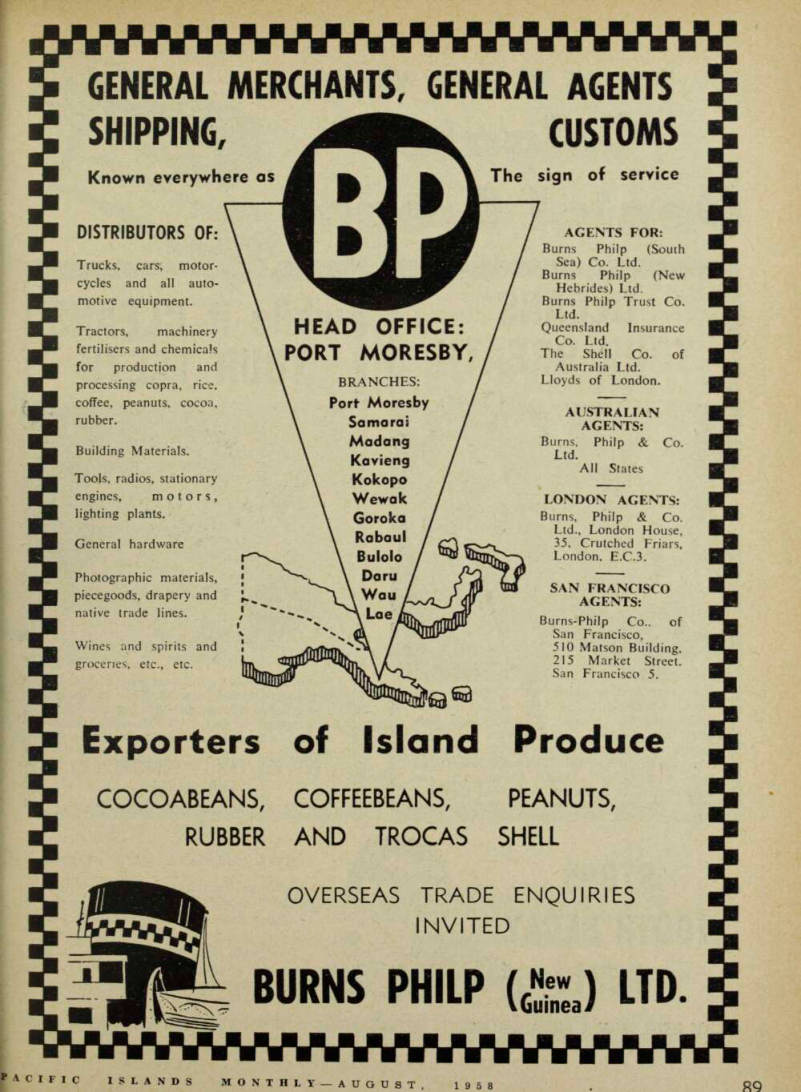 95
95 96
96 97
97 98
98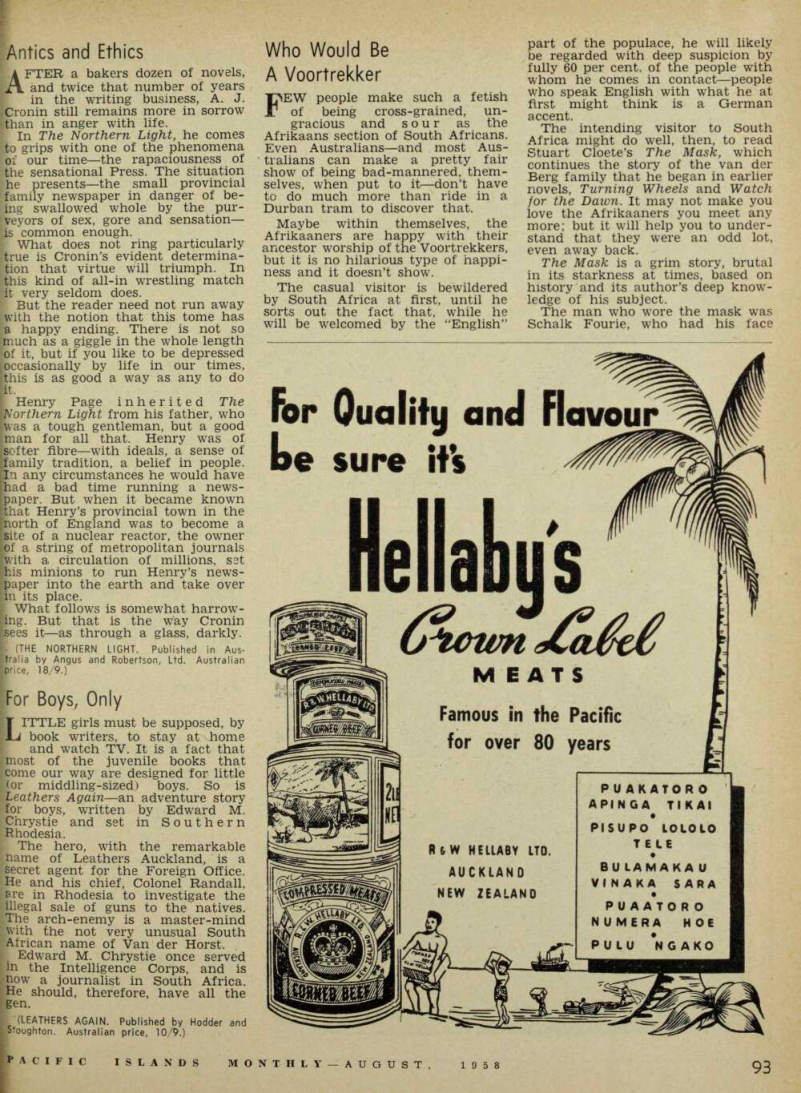 99
99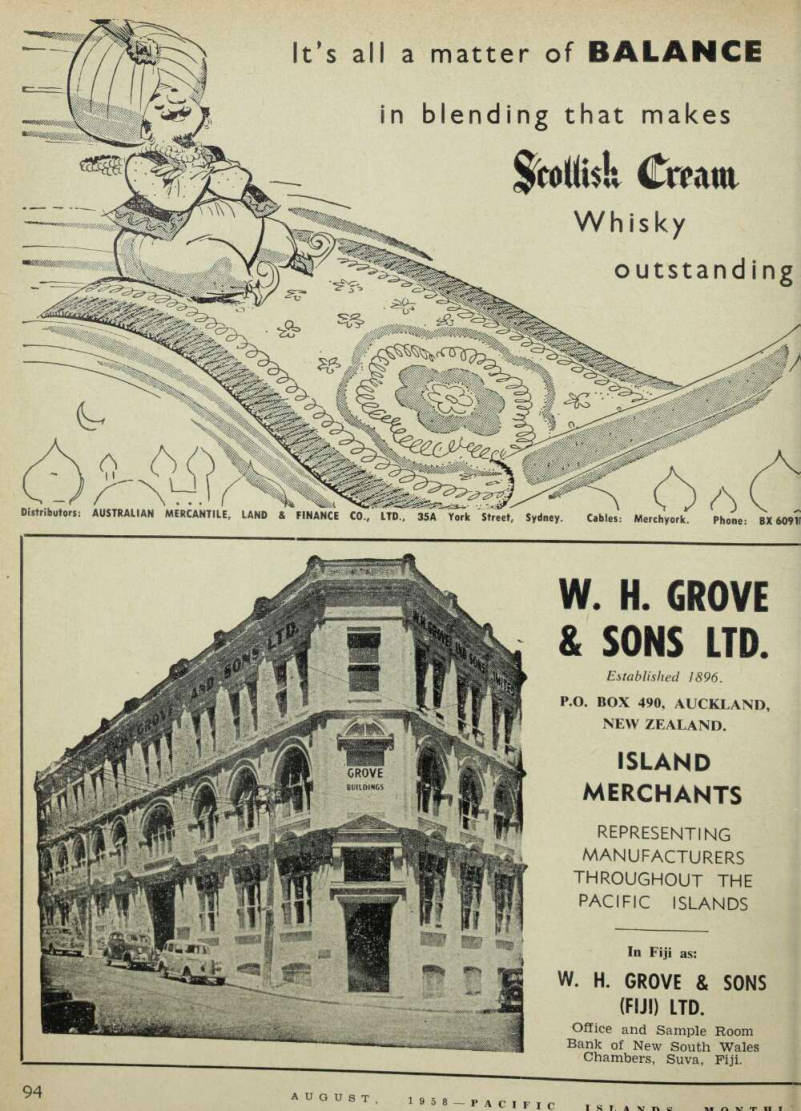 100
100 101
101 102
102 103
103 104
104 105
105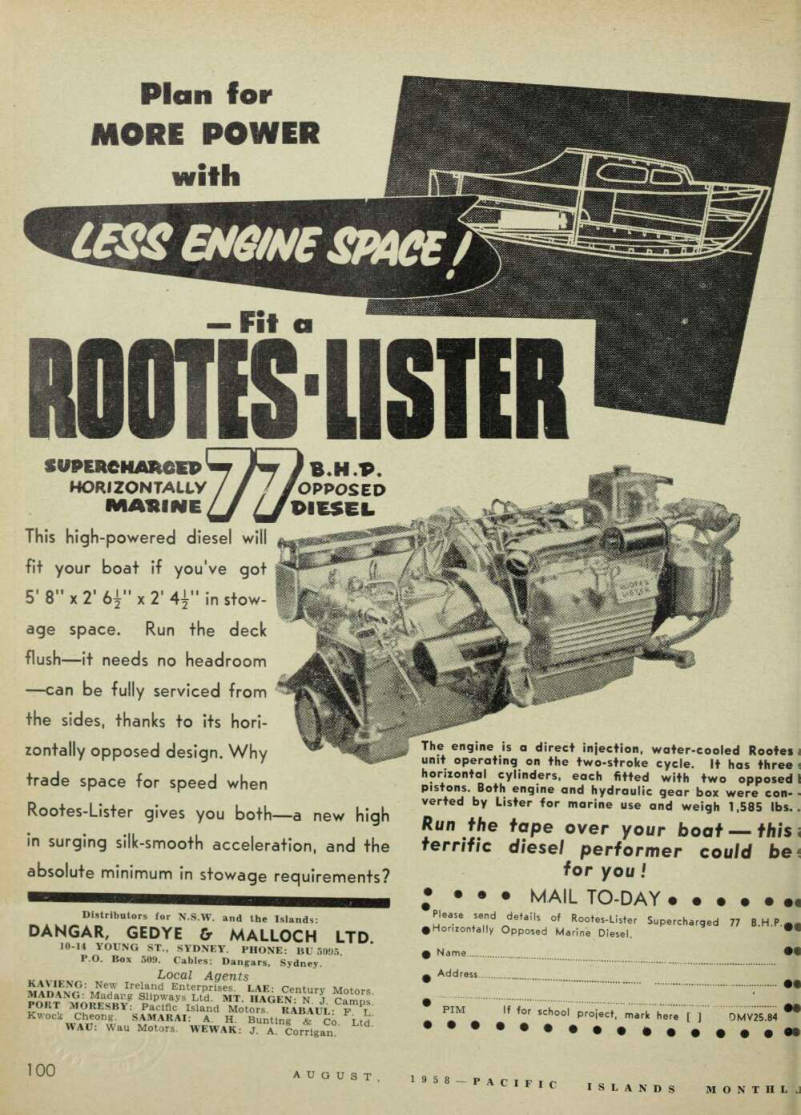 106
106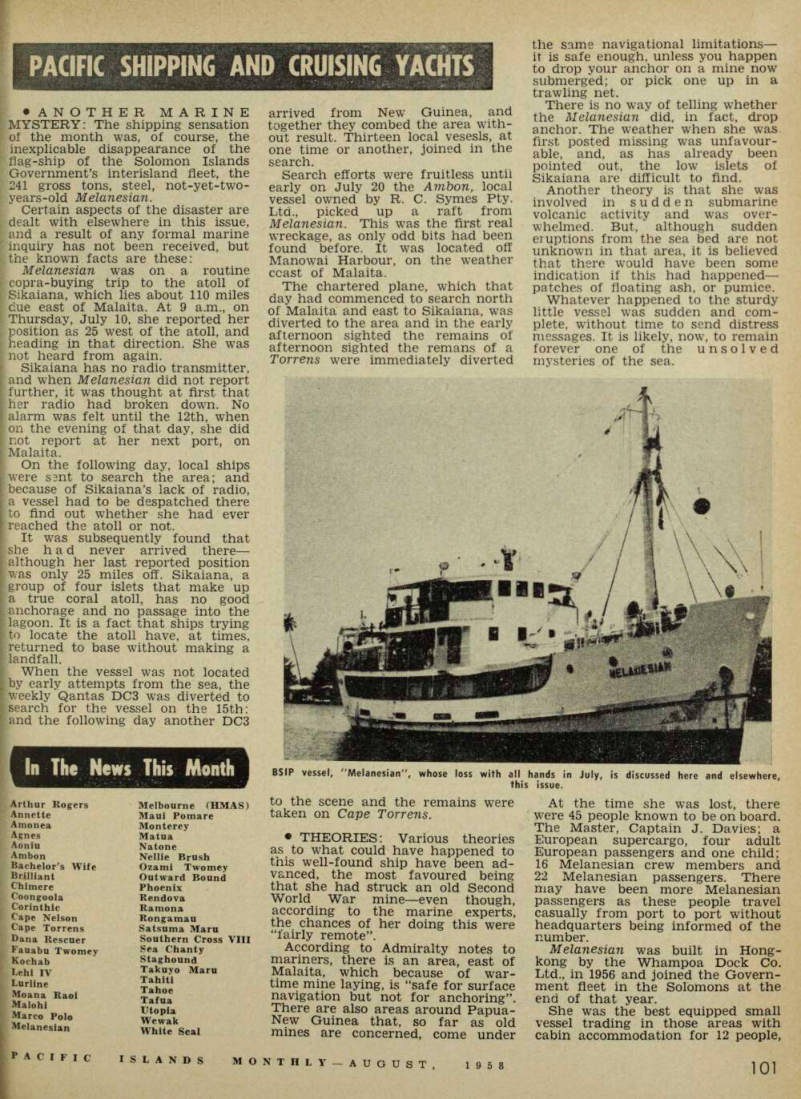 107
107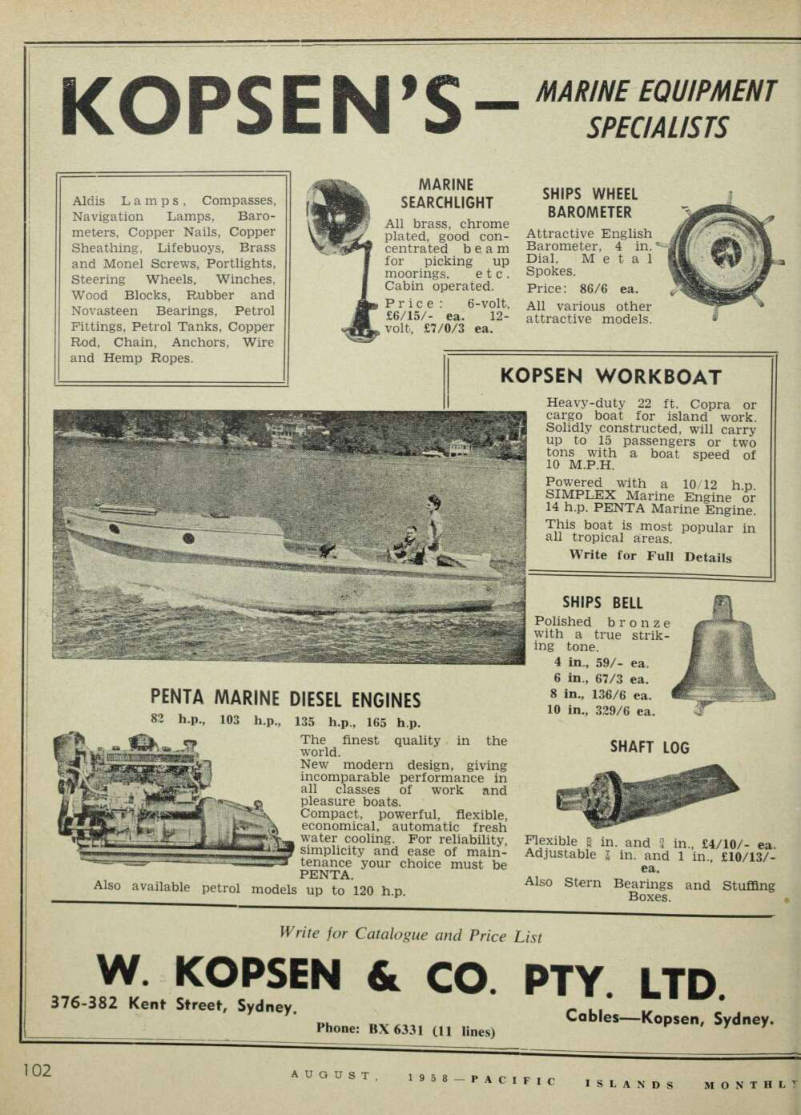 108
108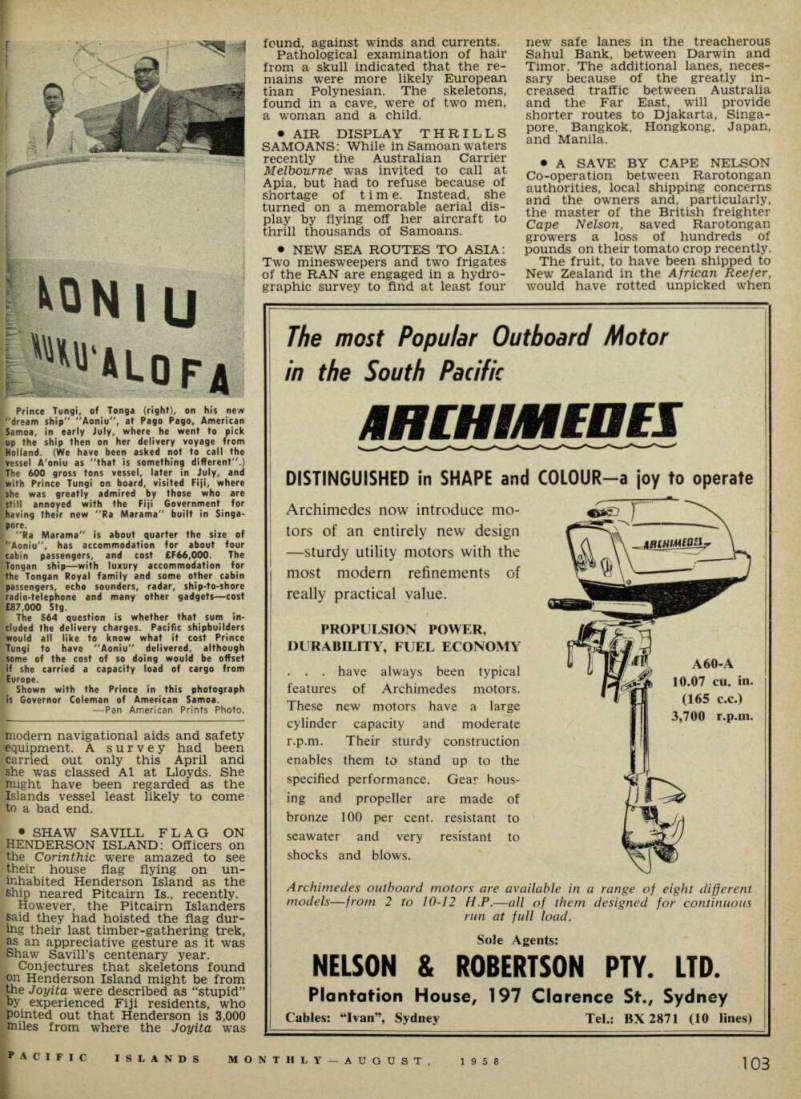 109
109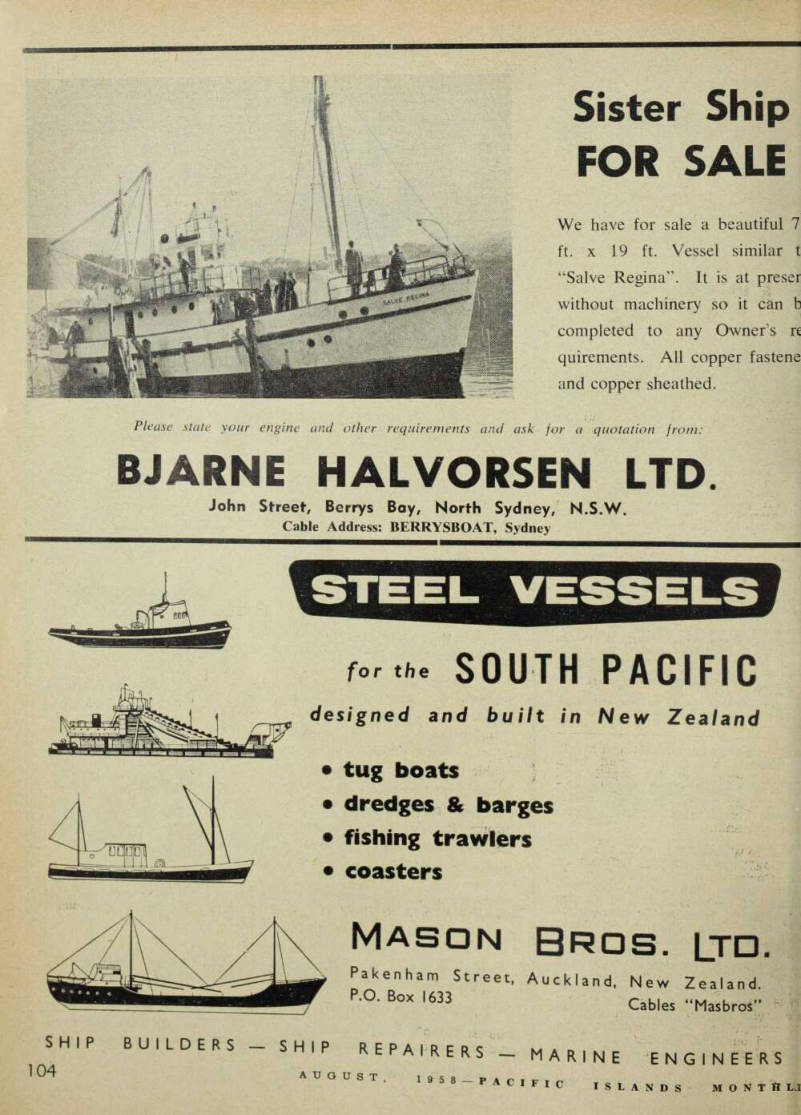 110
110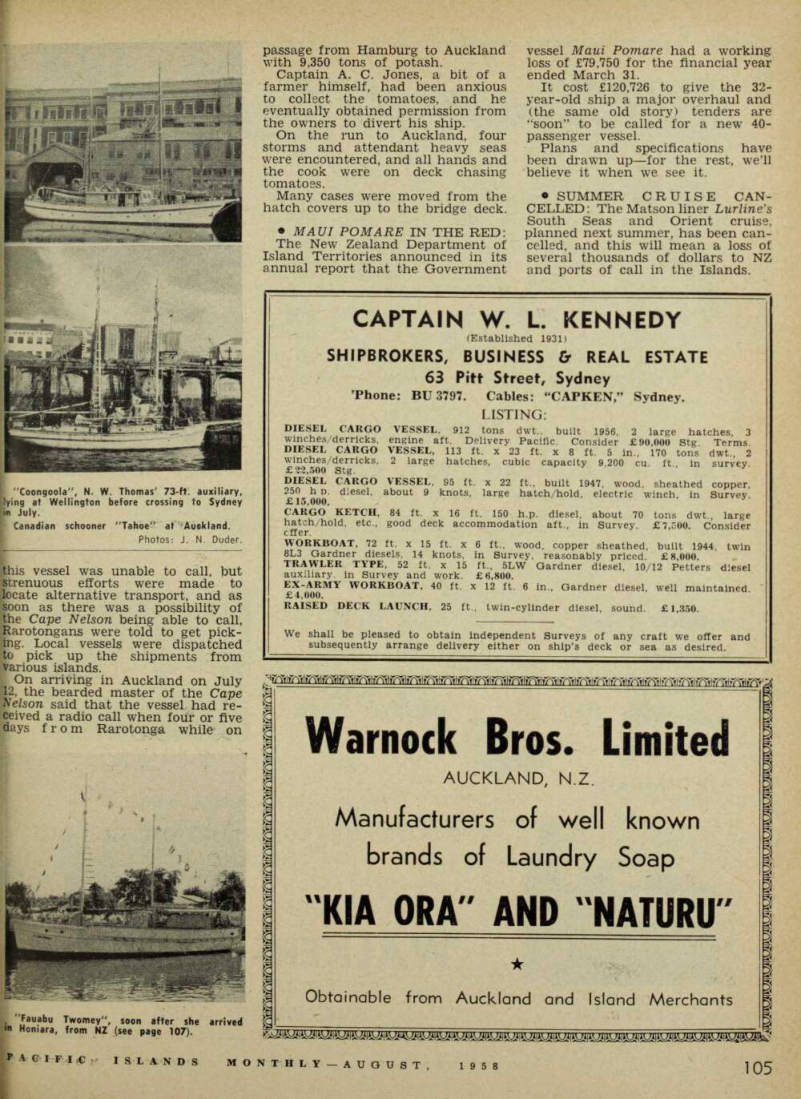 111
111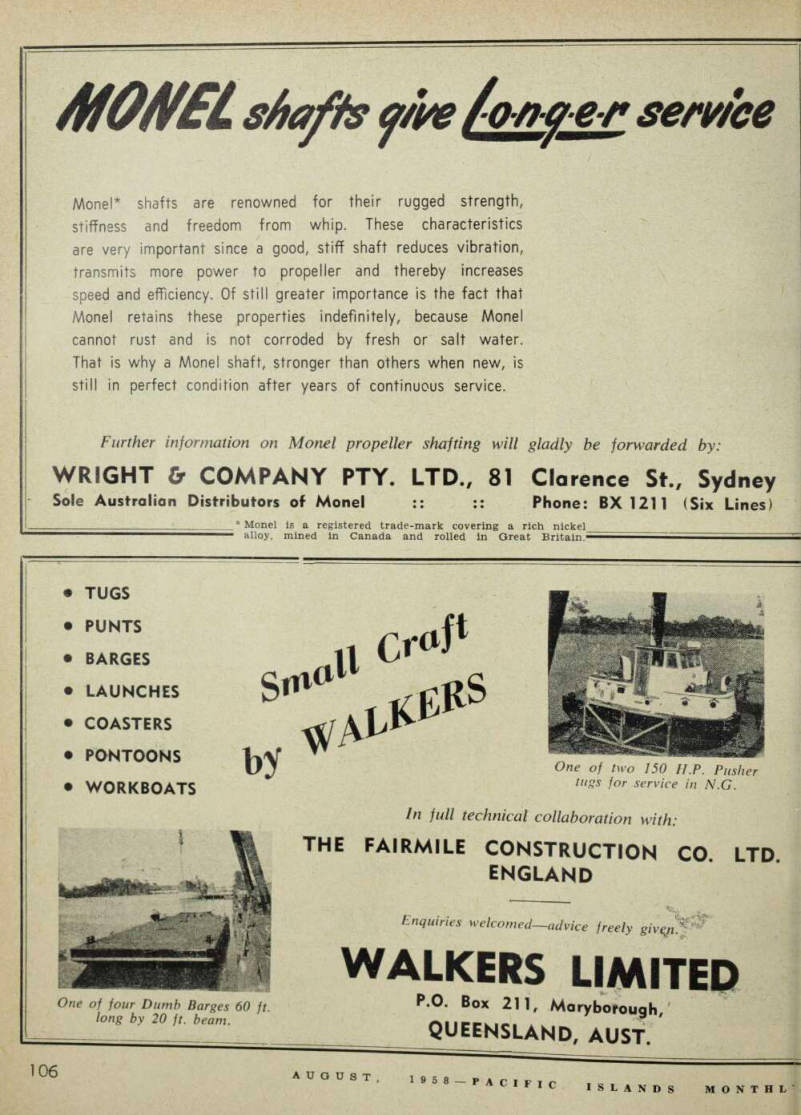 112
112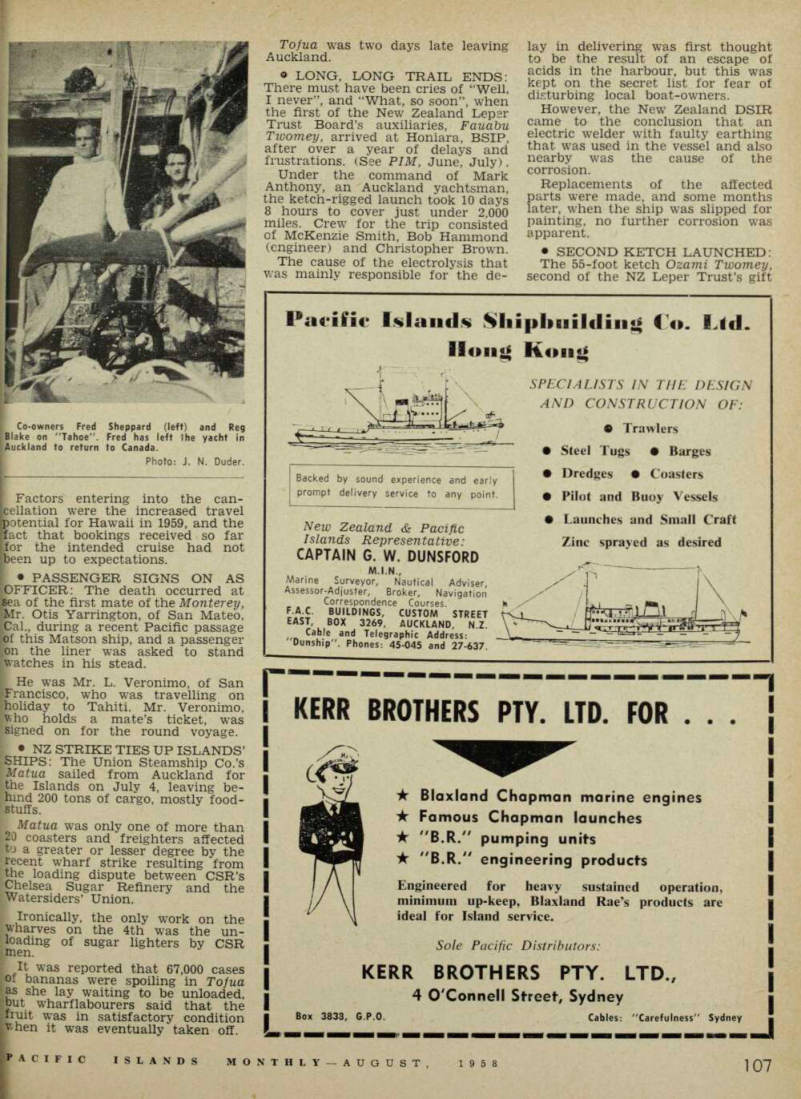 113
113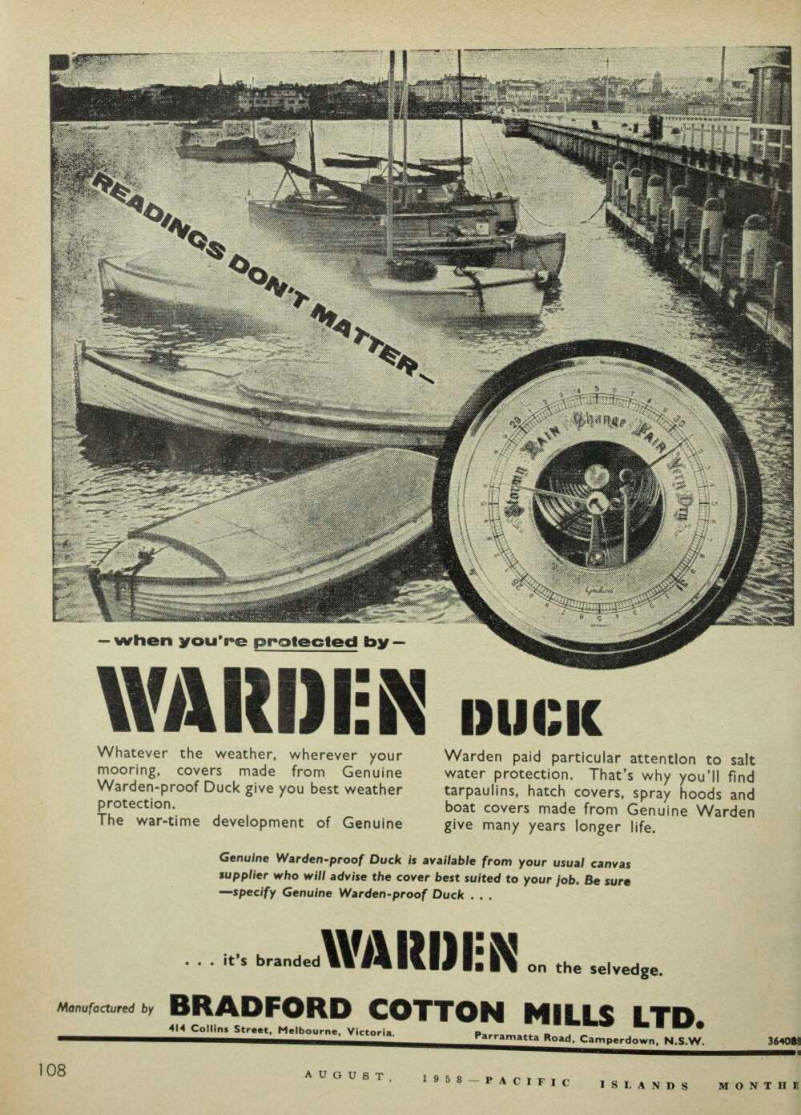 114
114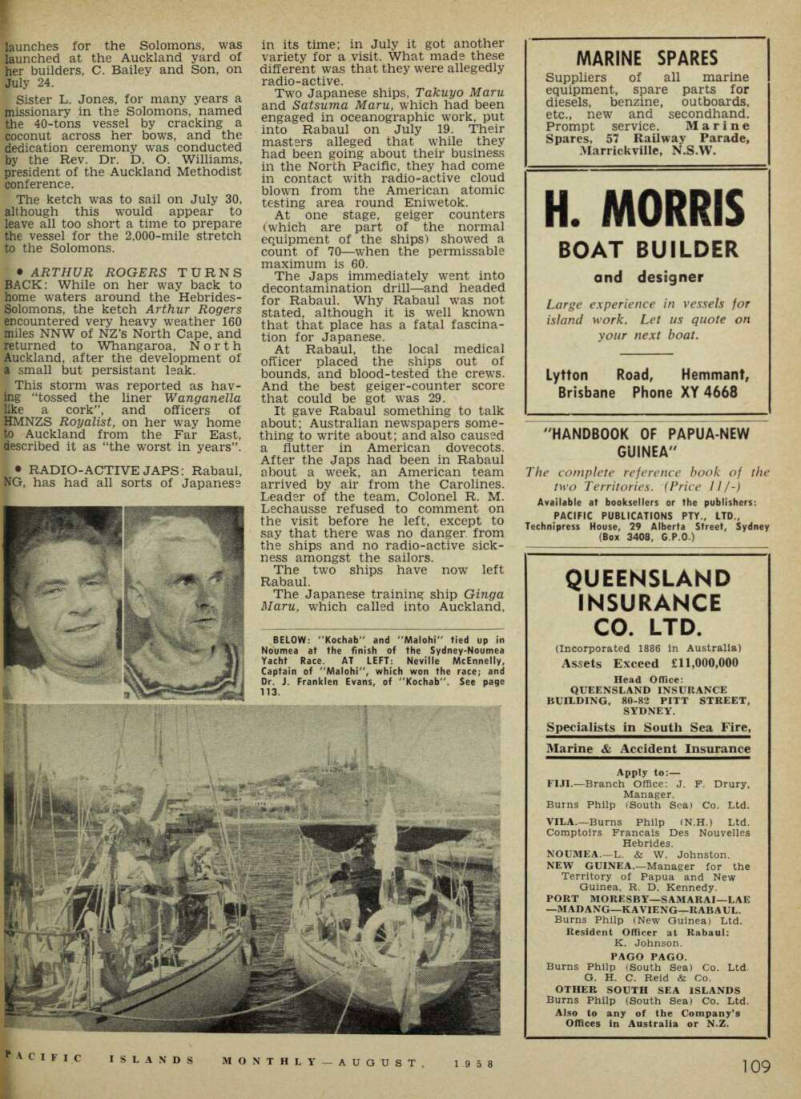 115
115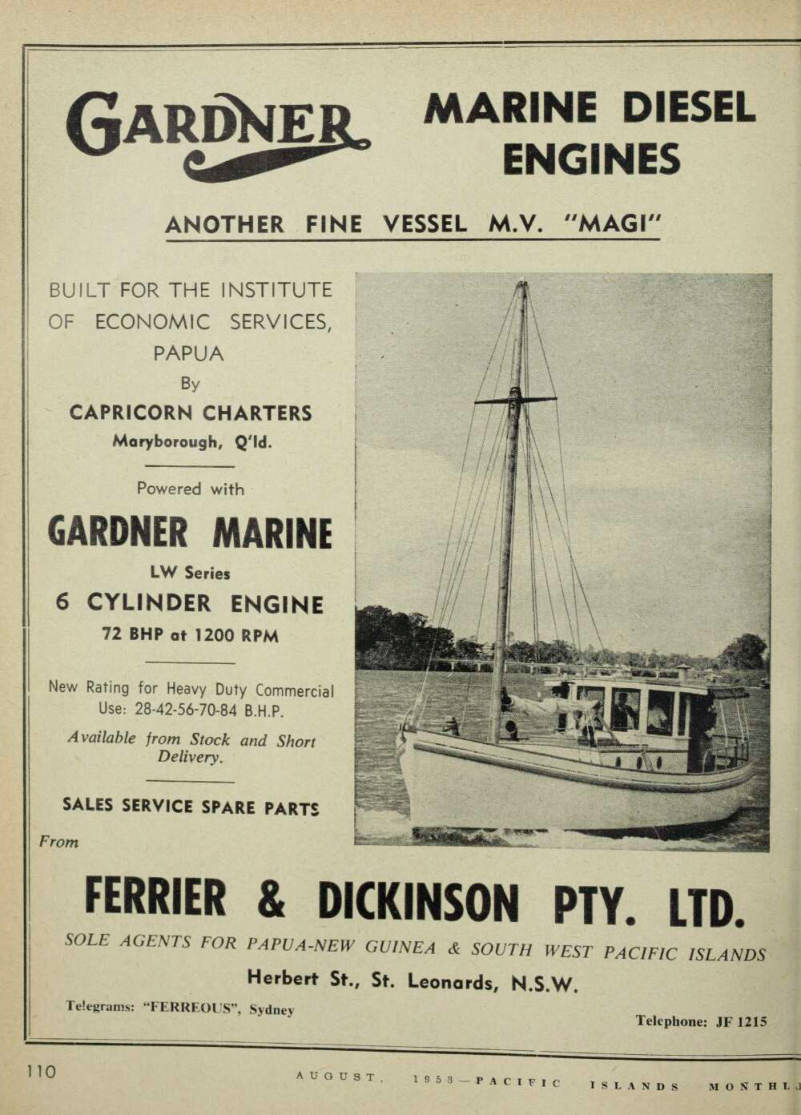 116
116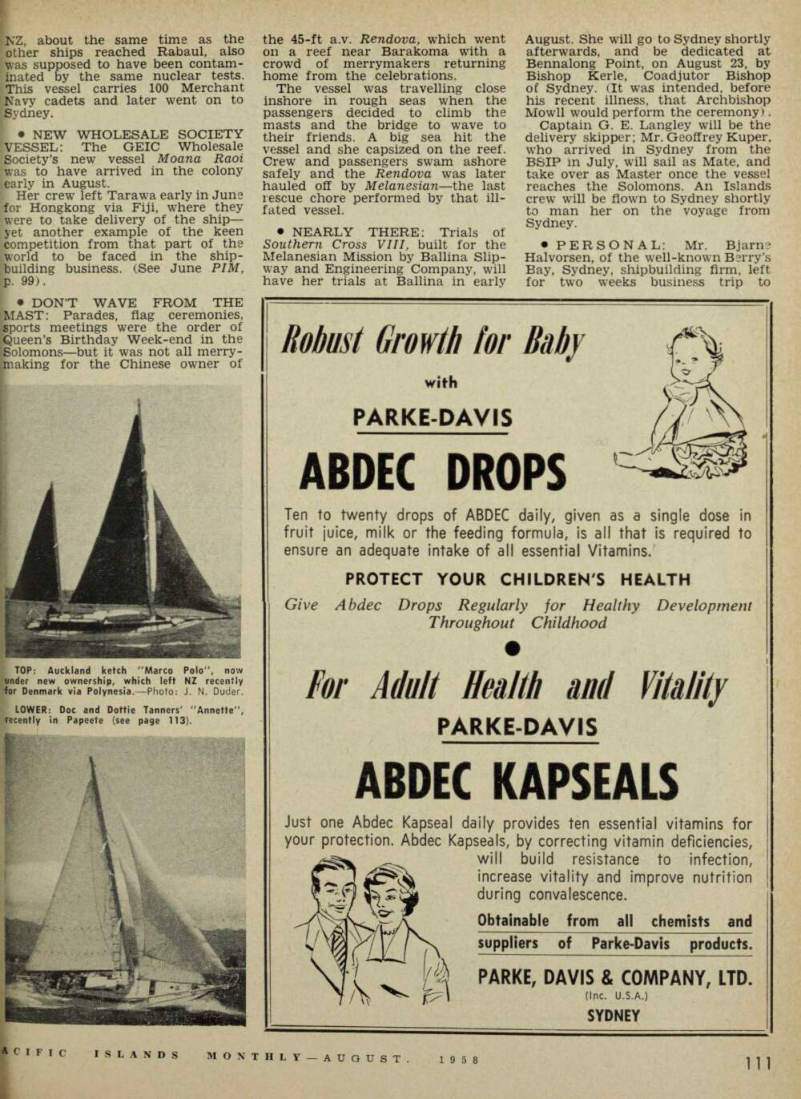 117
117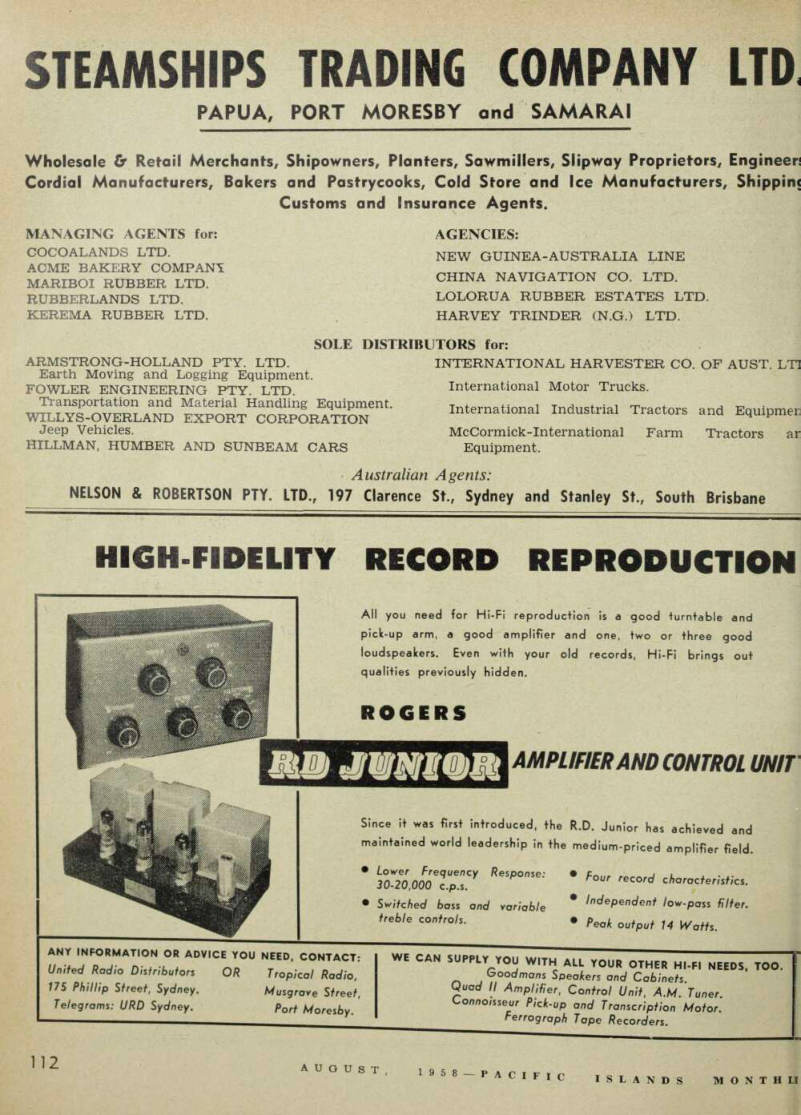 118
118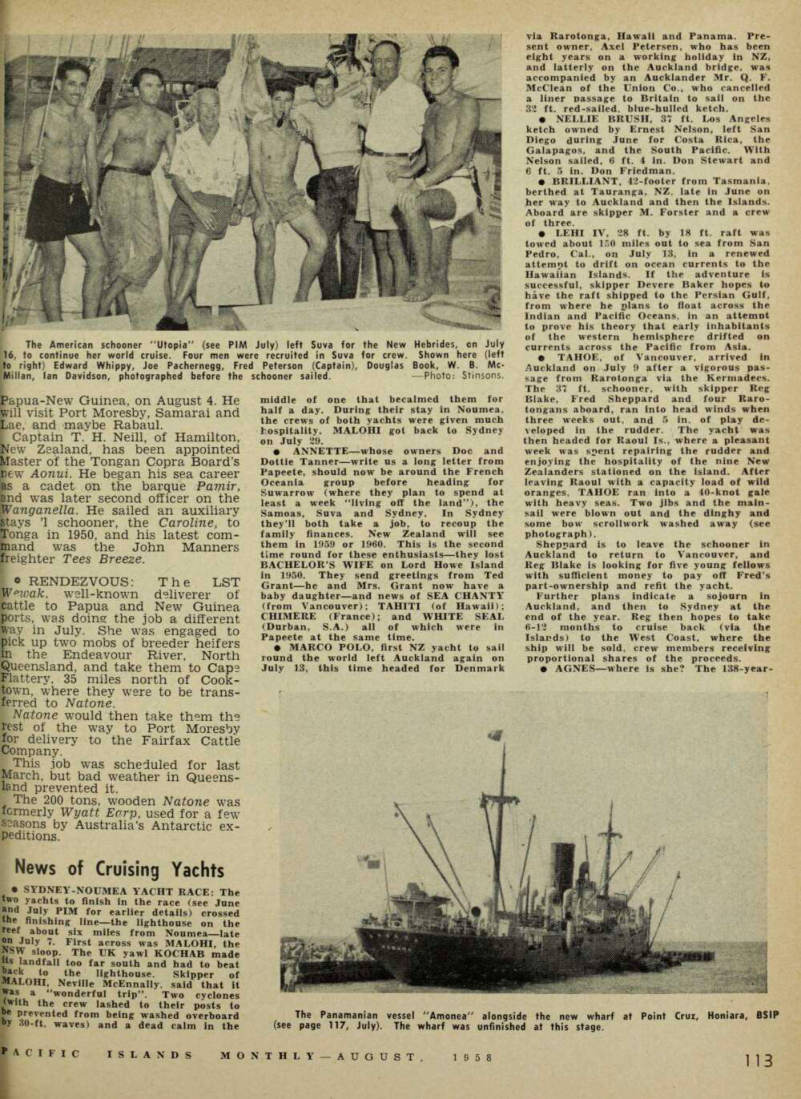 119
119 120
120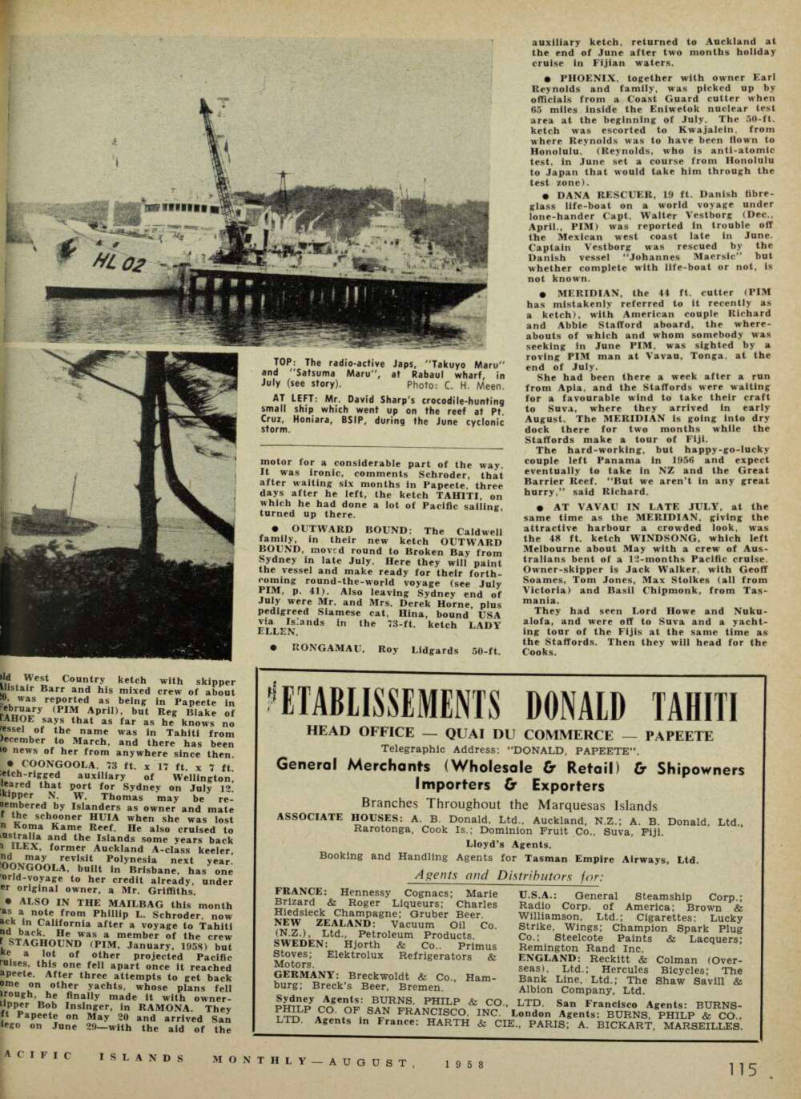 121
121 122
122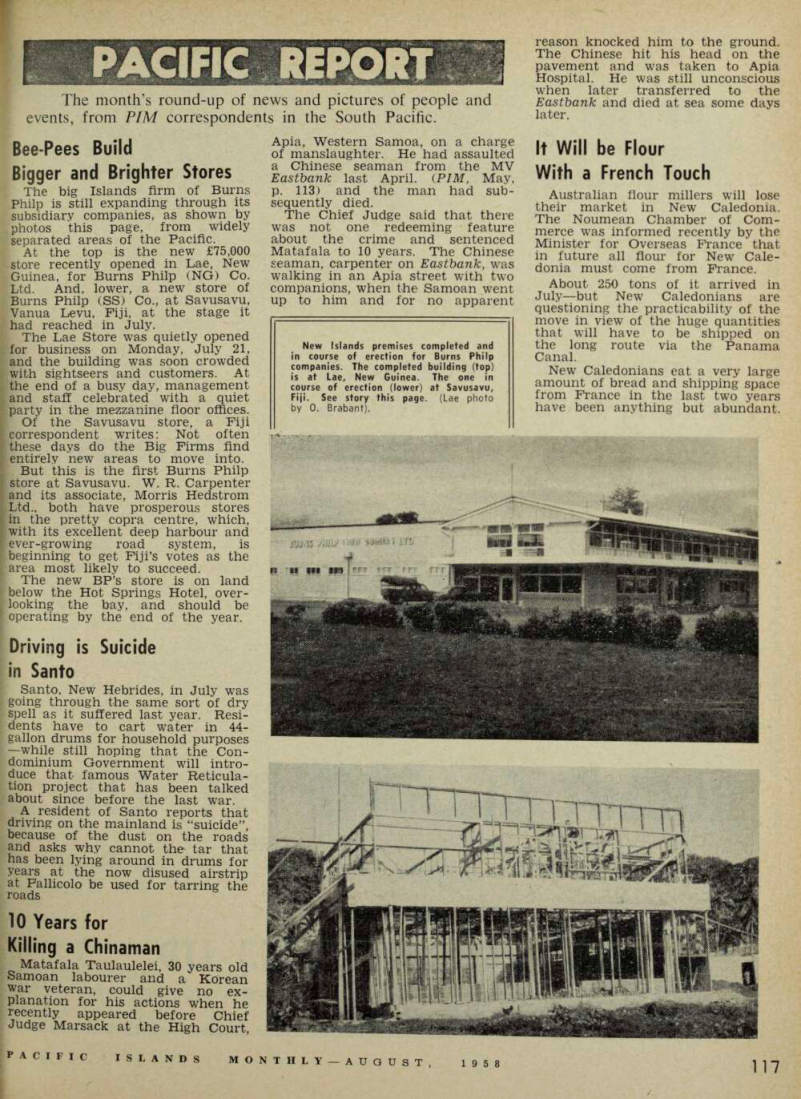 123
123 124
124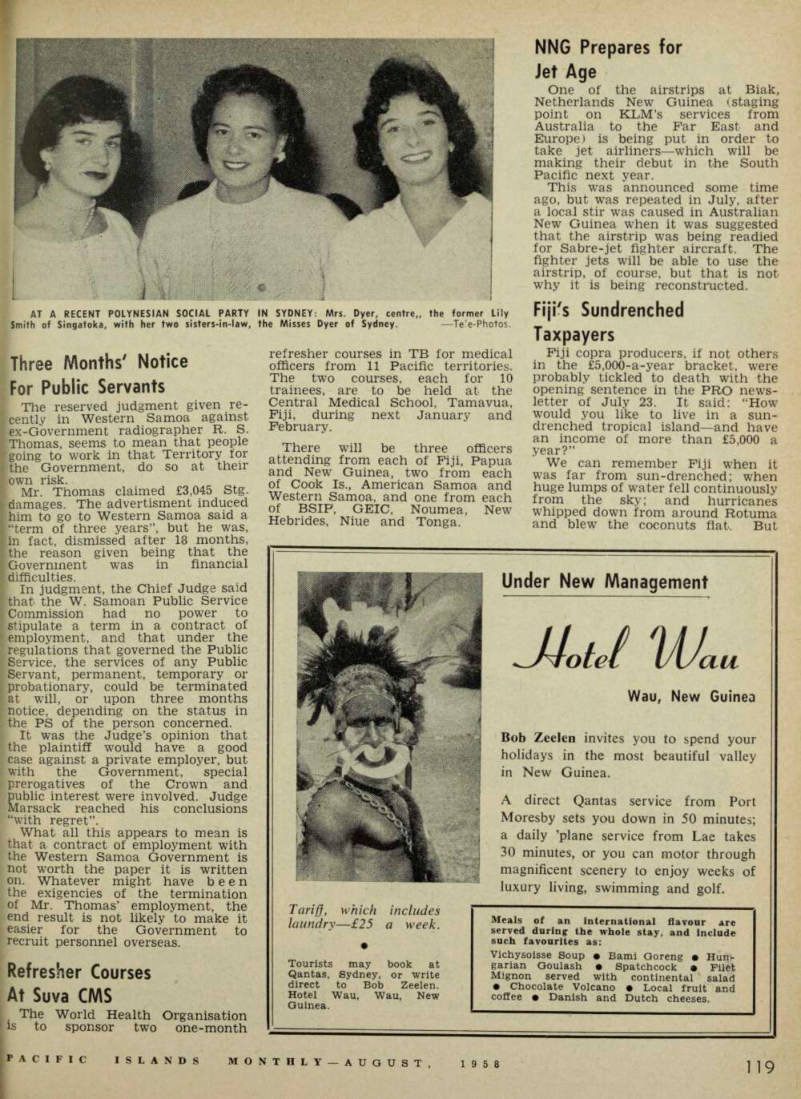 125
125 126
126 127
127 128
128 129
129 130
130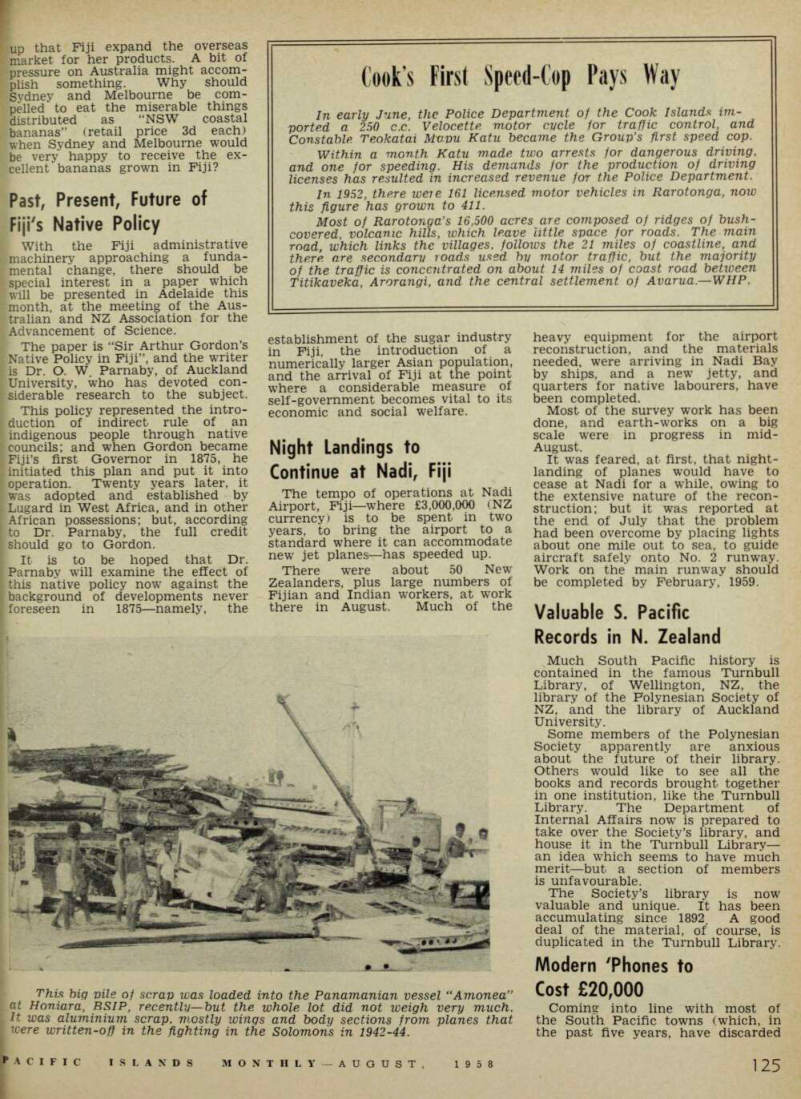 131
131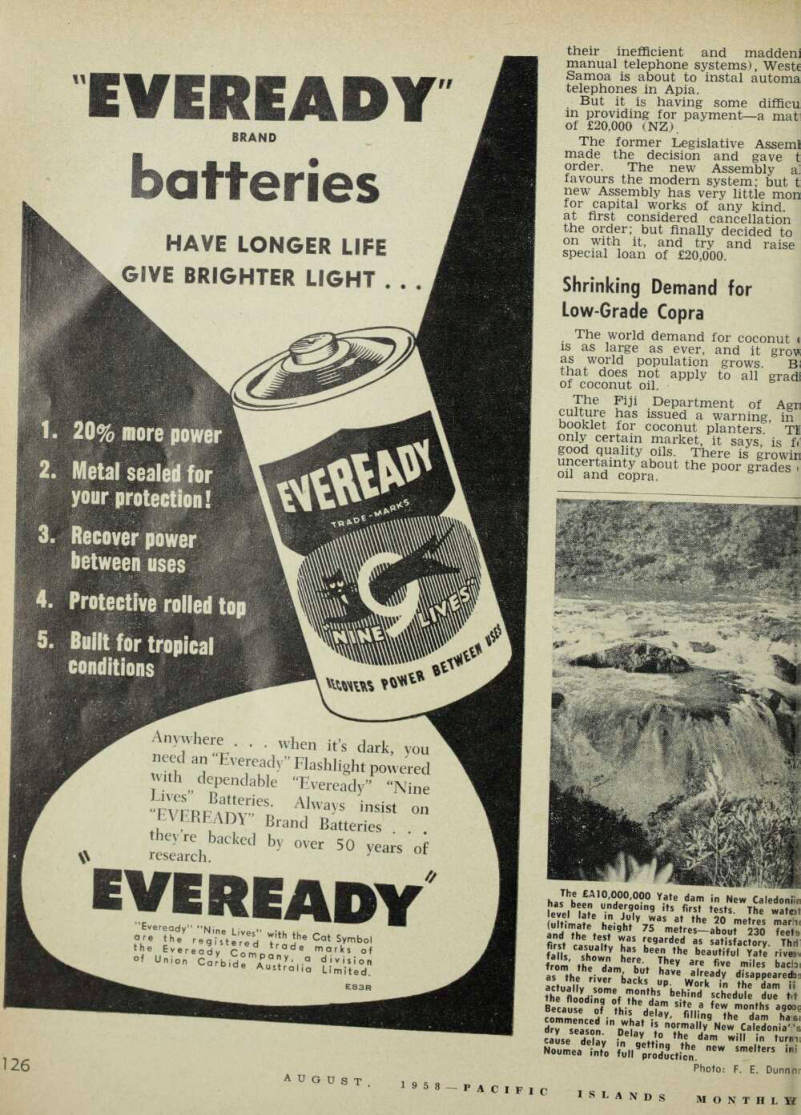 132
132 133
133 134
134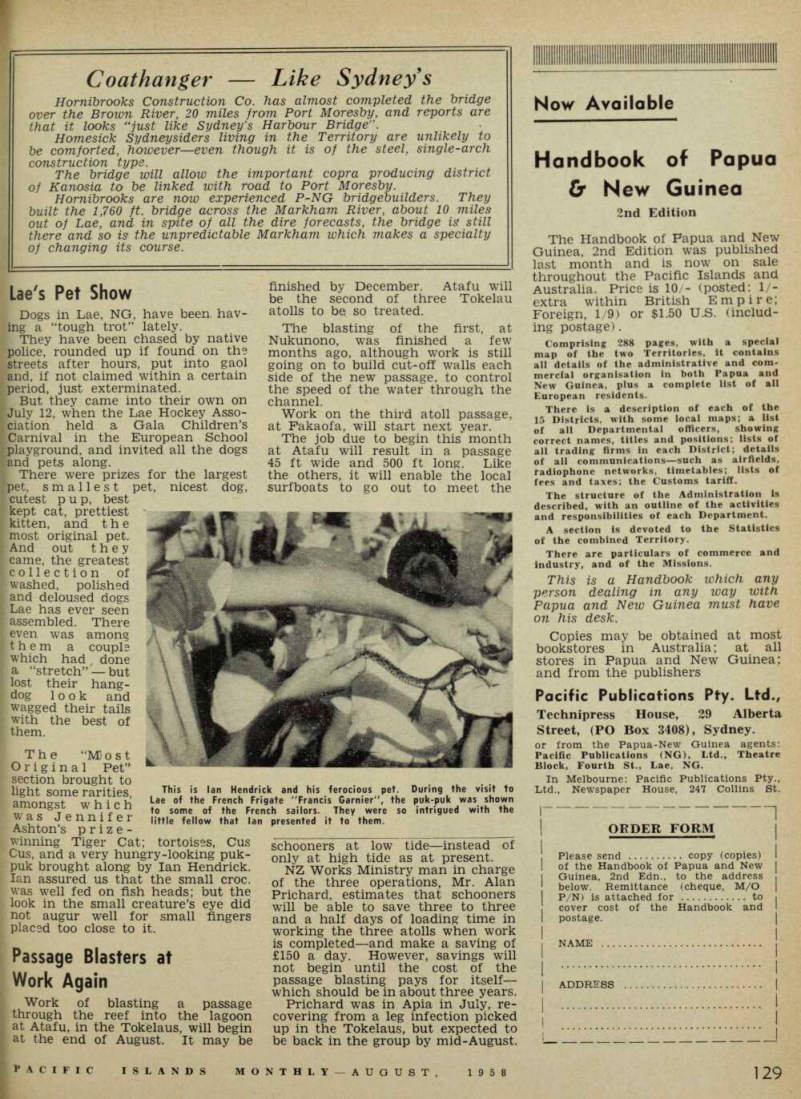 135
135 136
136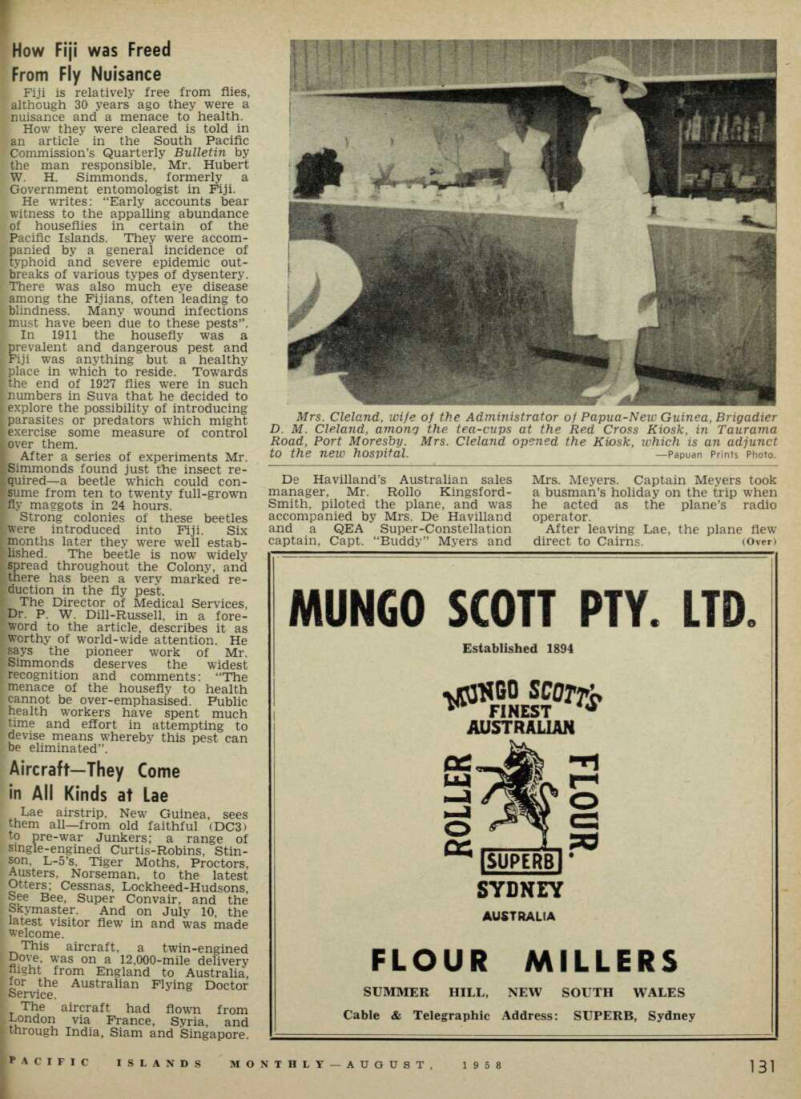 137
137 138
138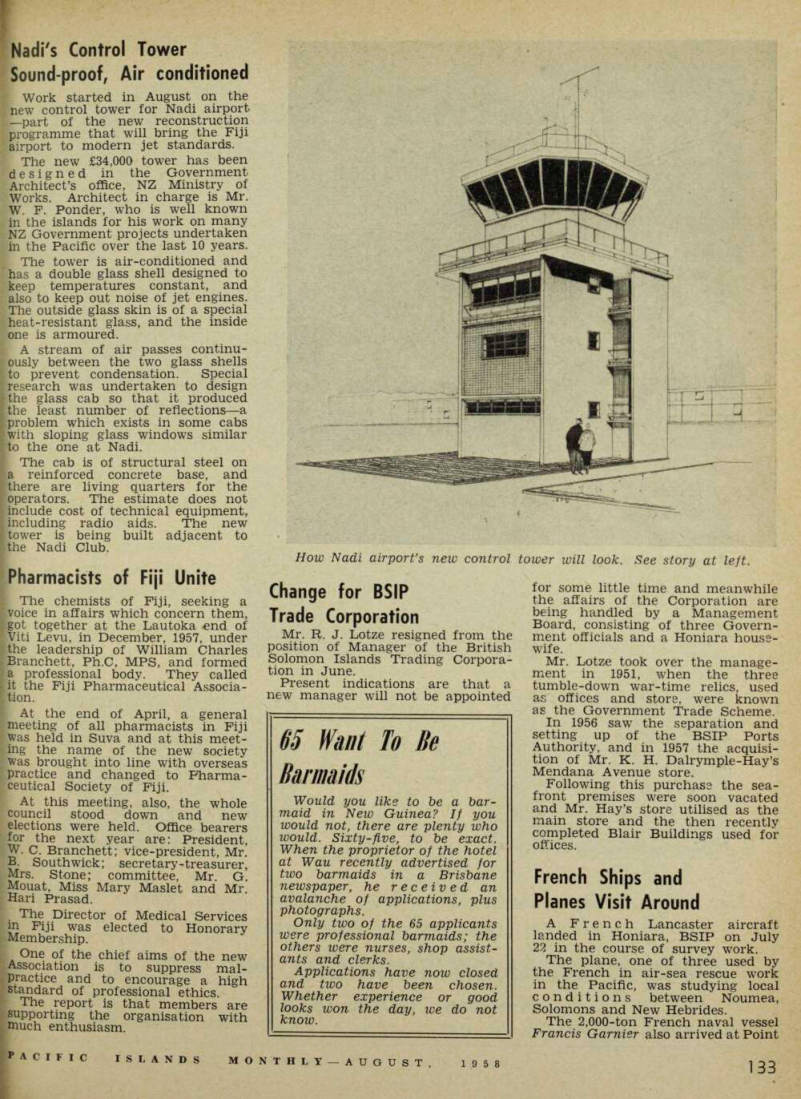 139
139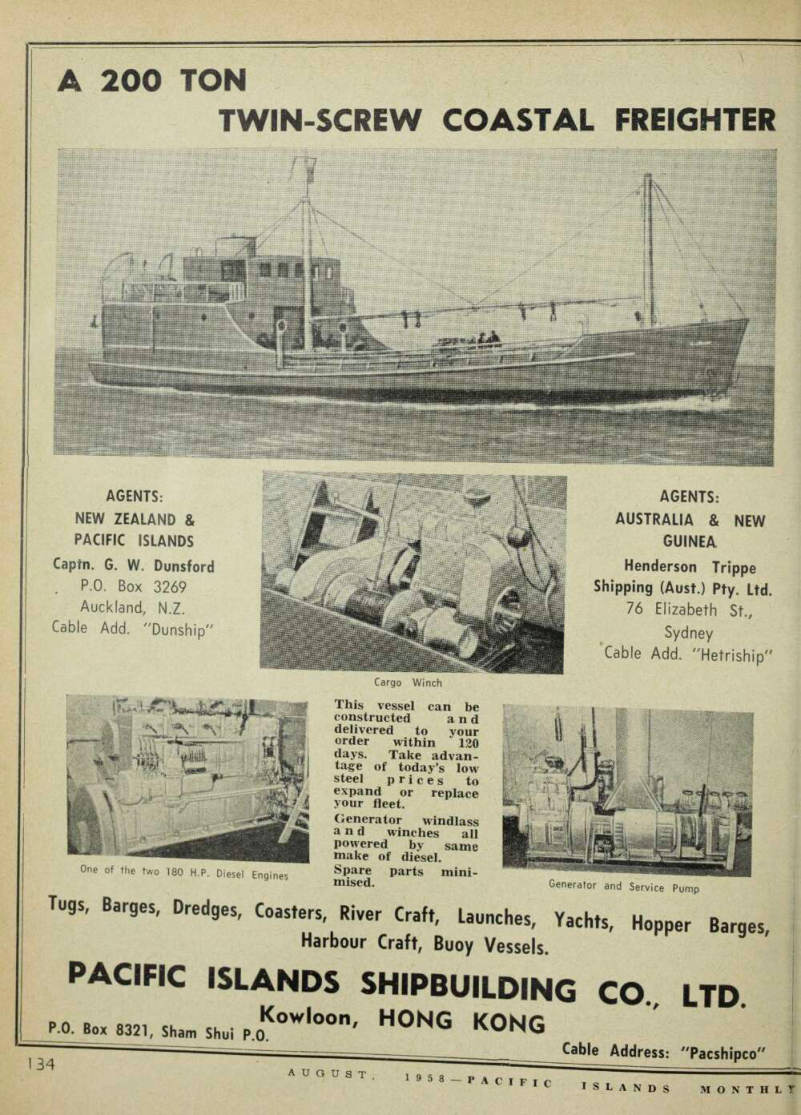 140
140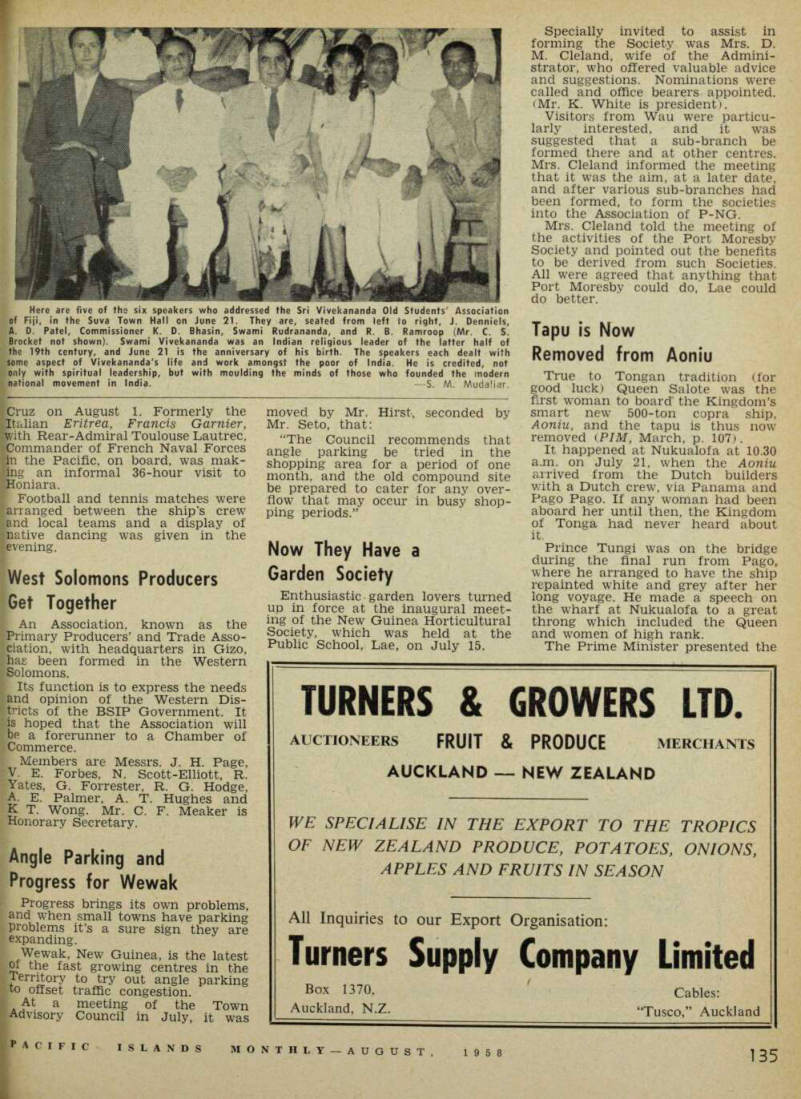 141
141 142
142 143
143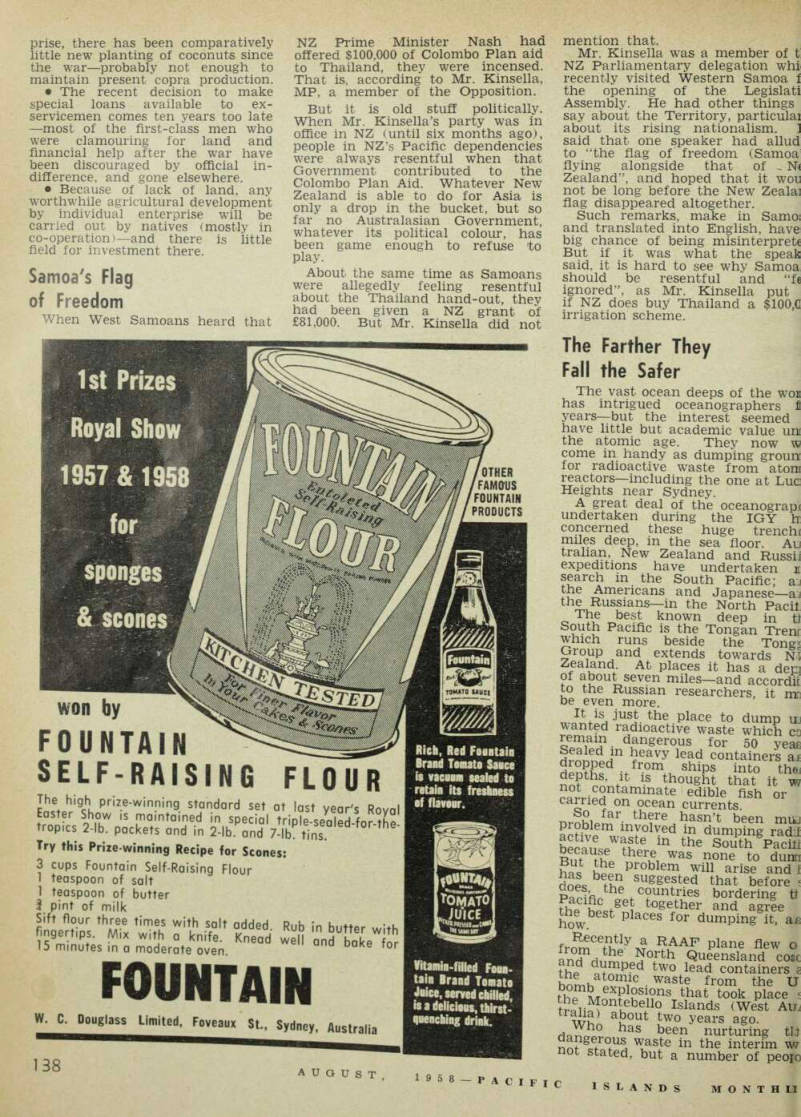 144
144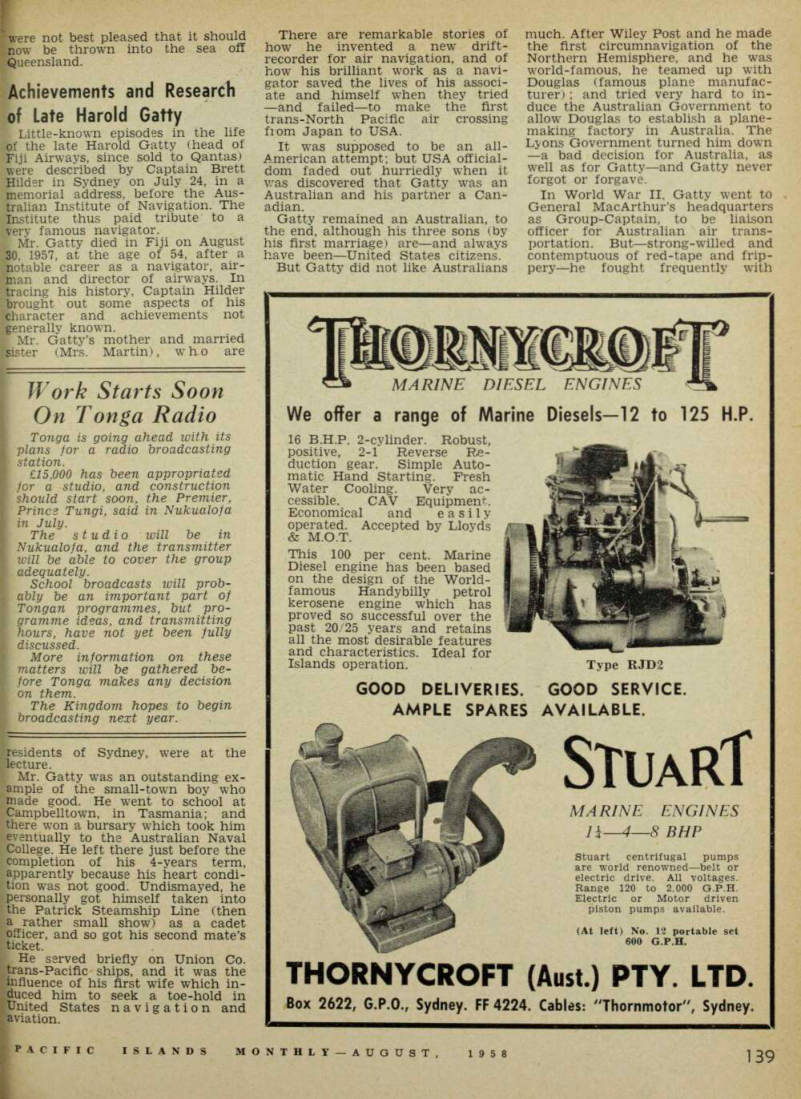 145
145 146
146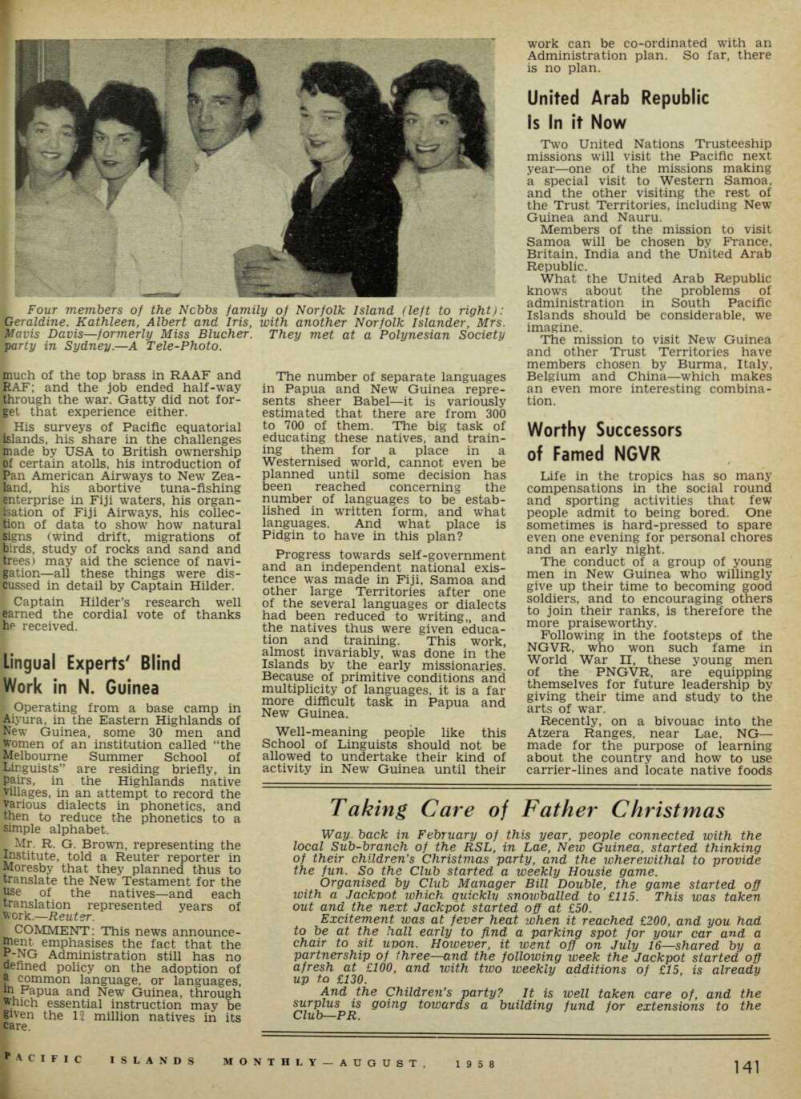 147
147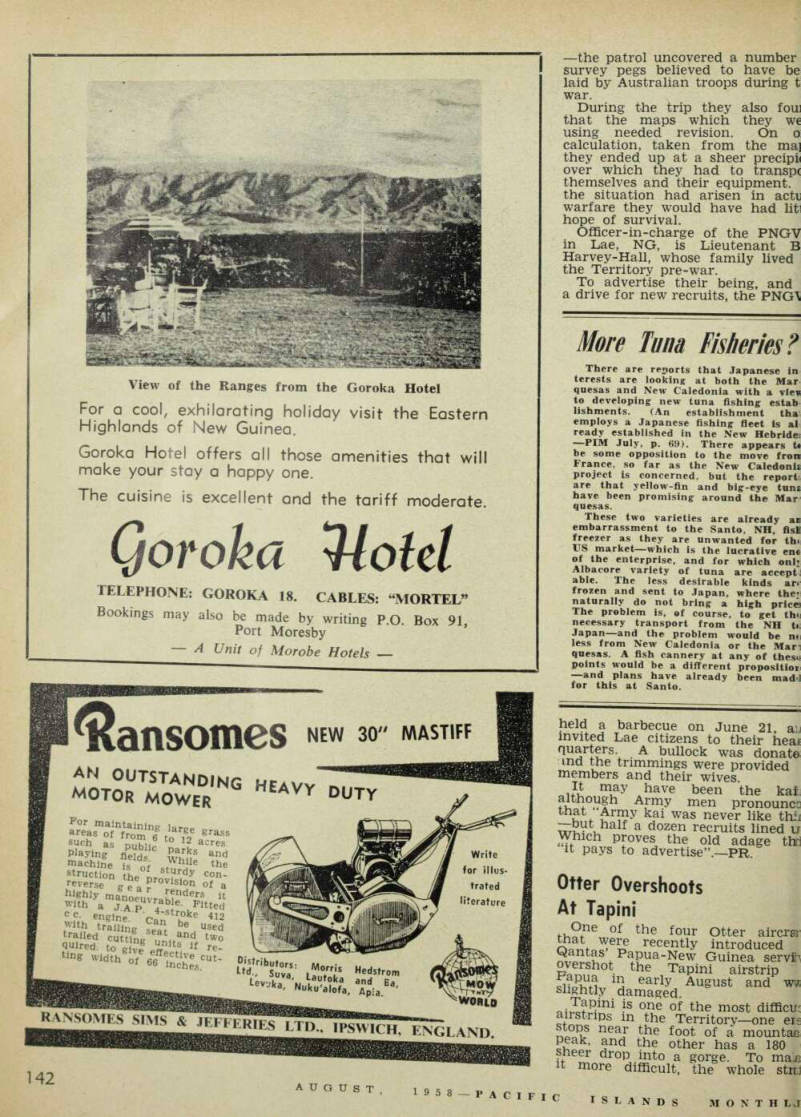 148
148 149
149 150
150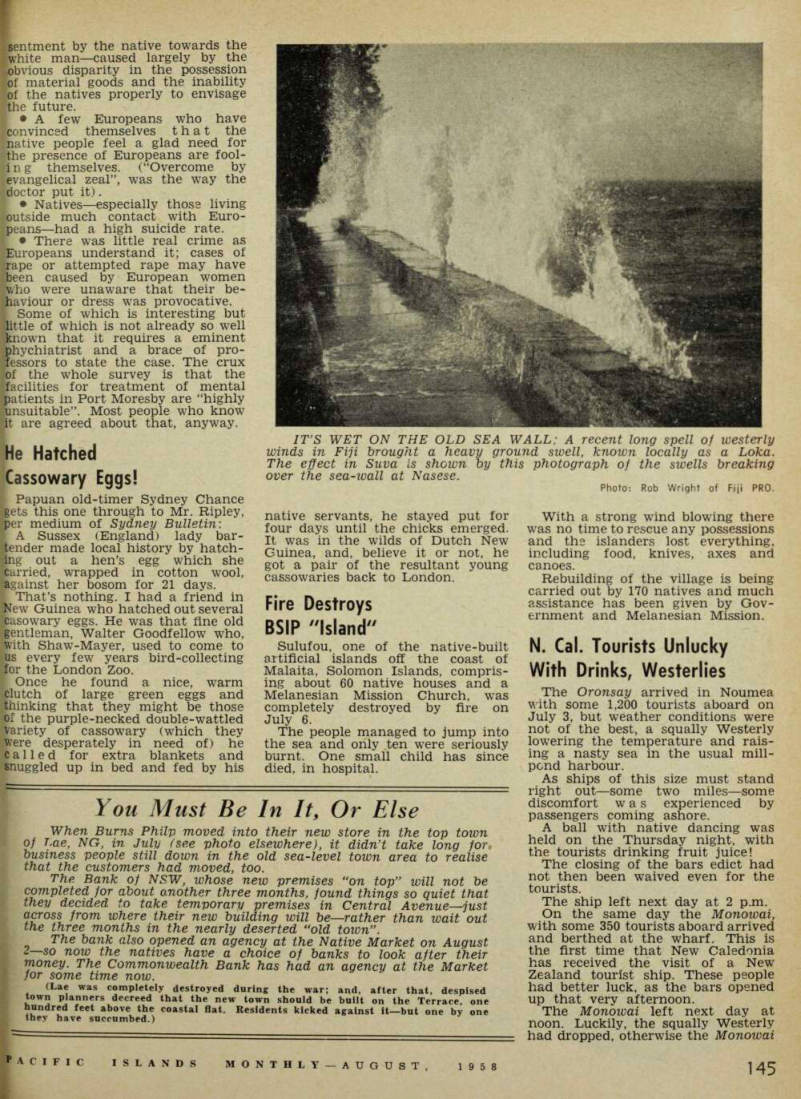 151
151 152
152 153
153 154
154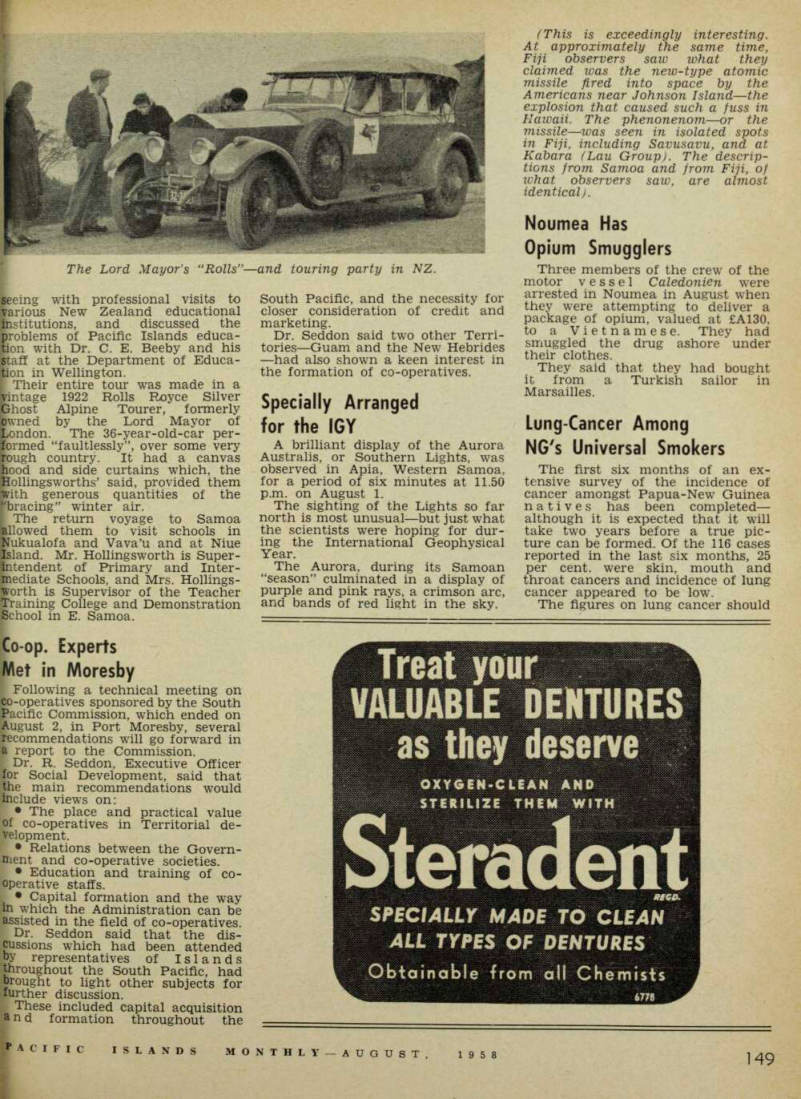 155
155 156
156 157
157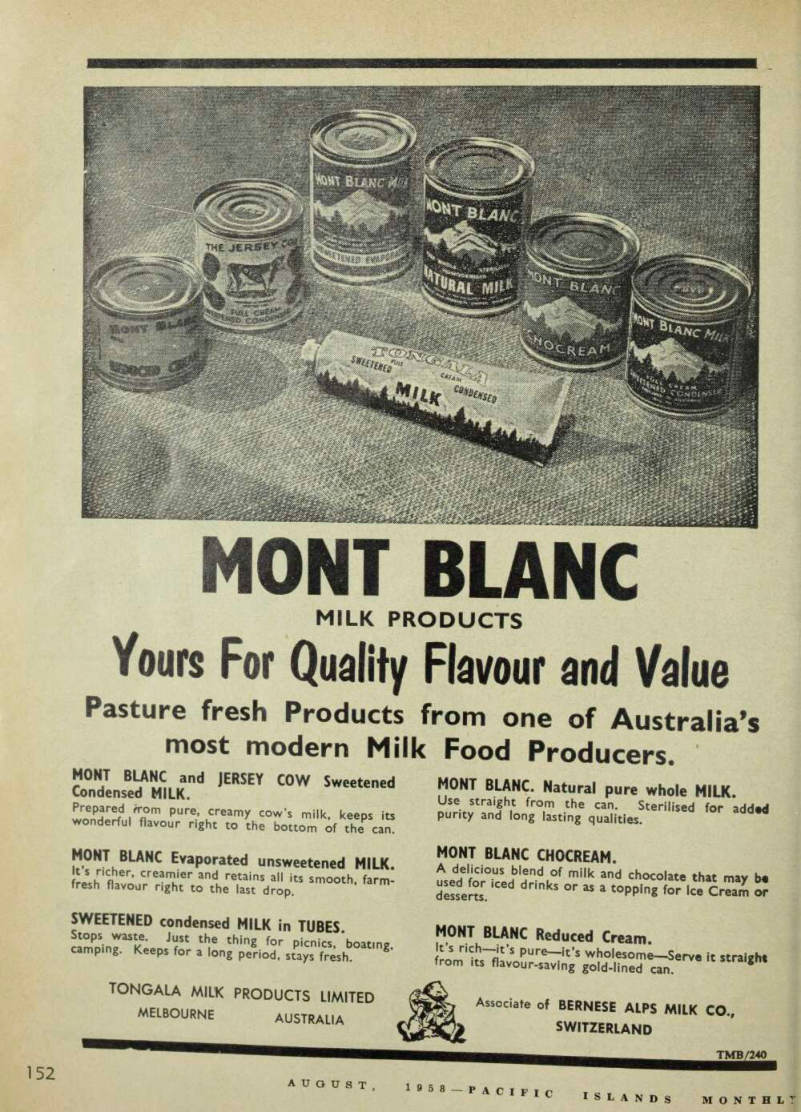 158
158 159
159 160
160 161
161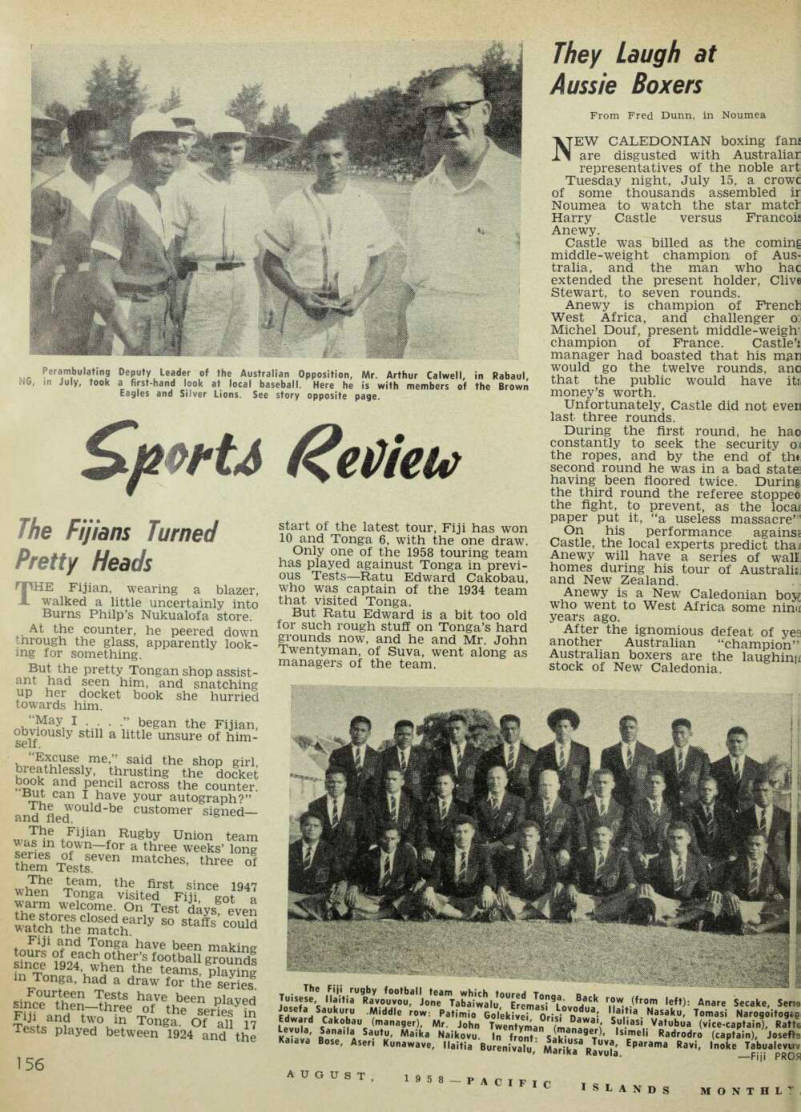 162
162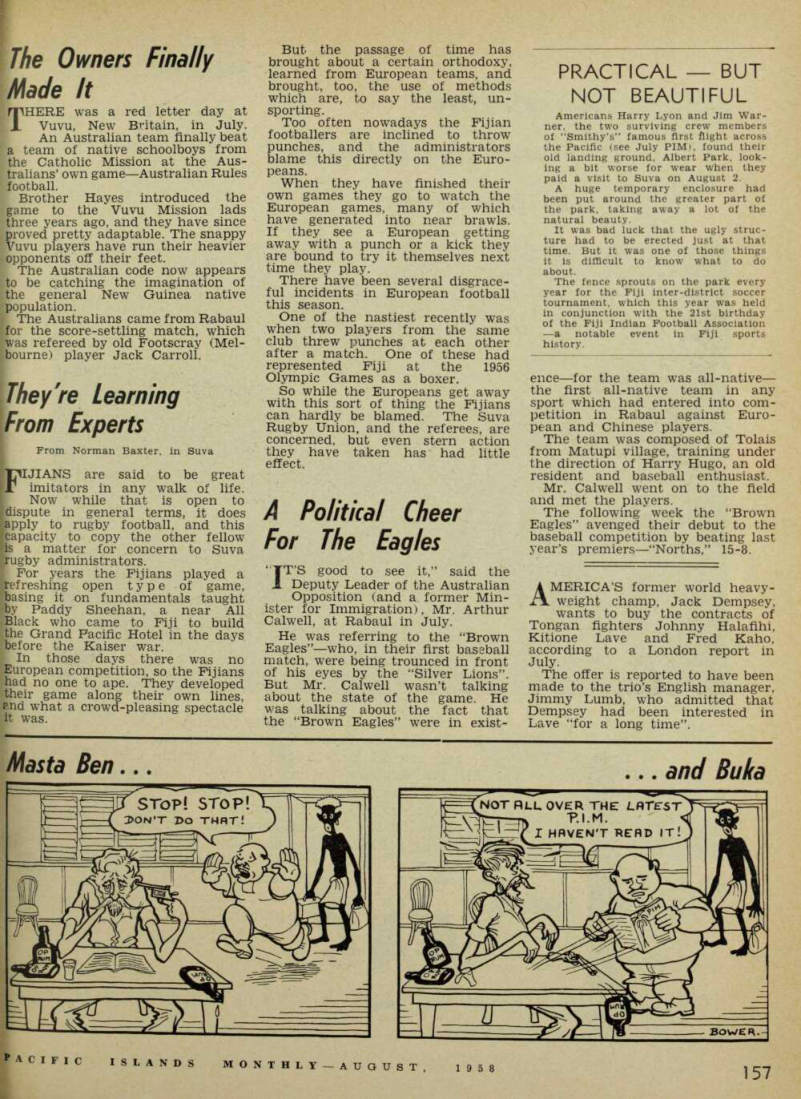 163
163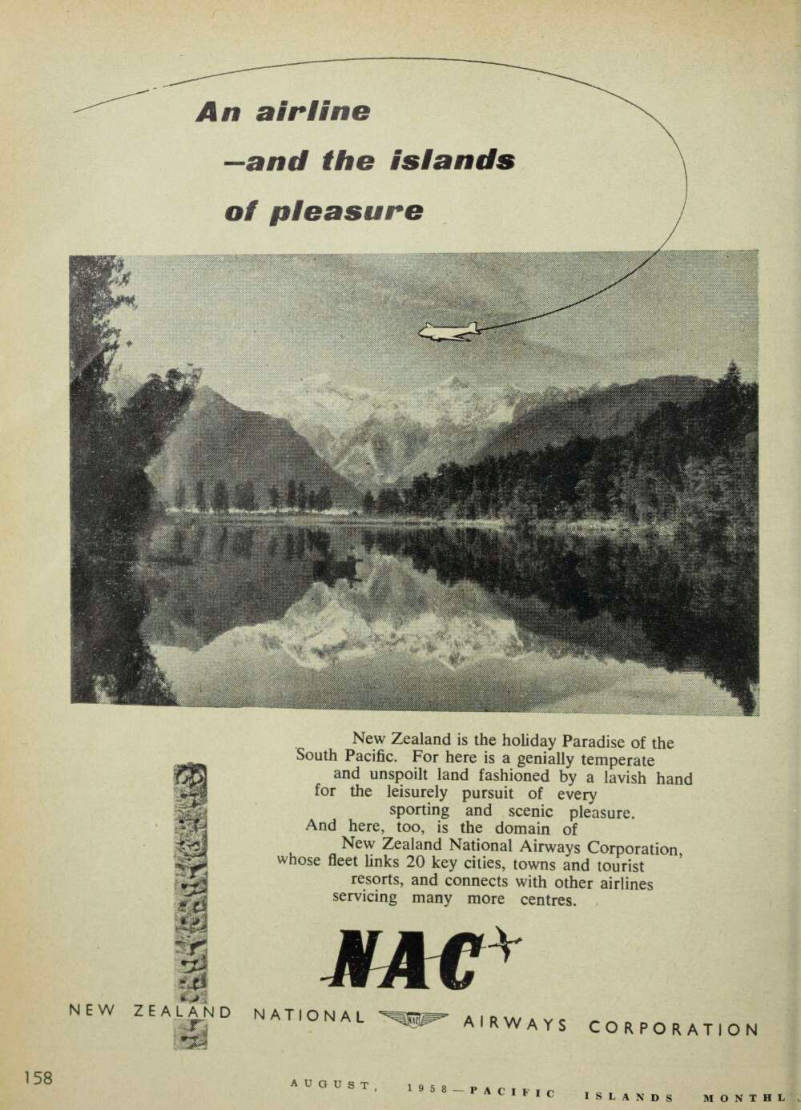 164
164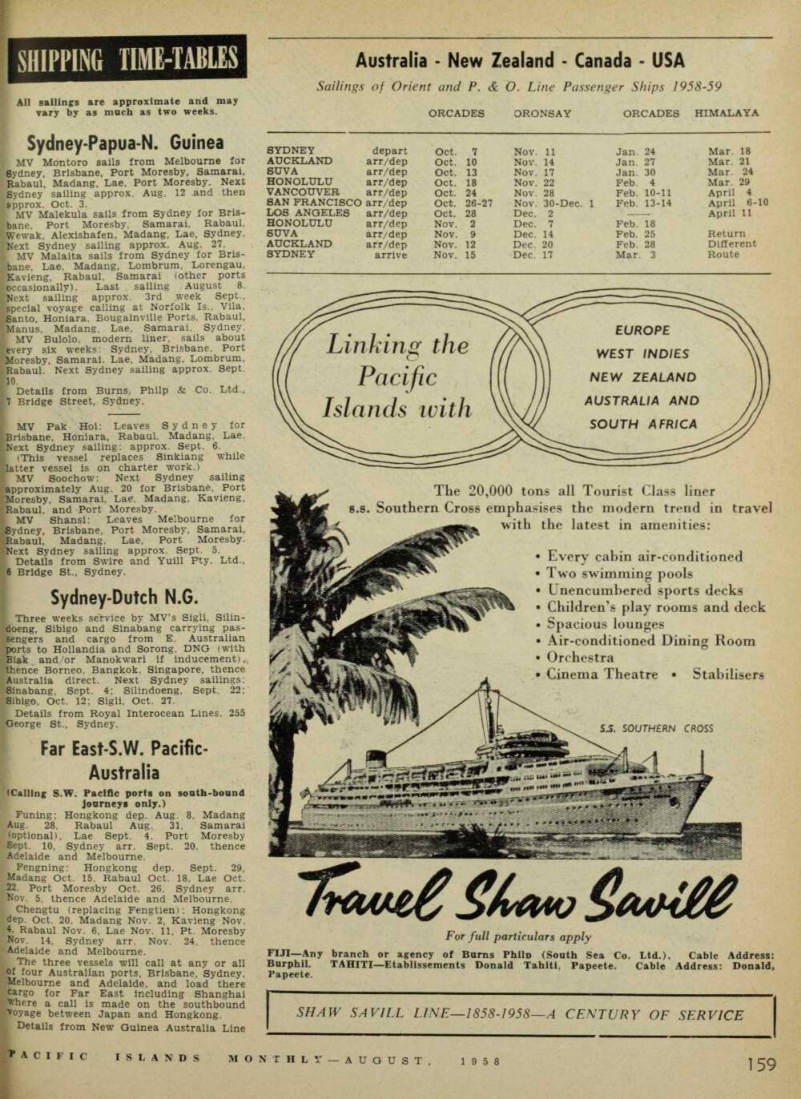 165
165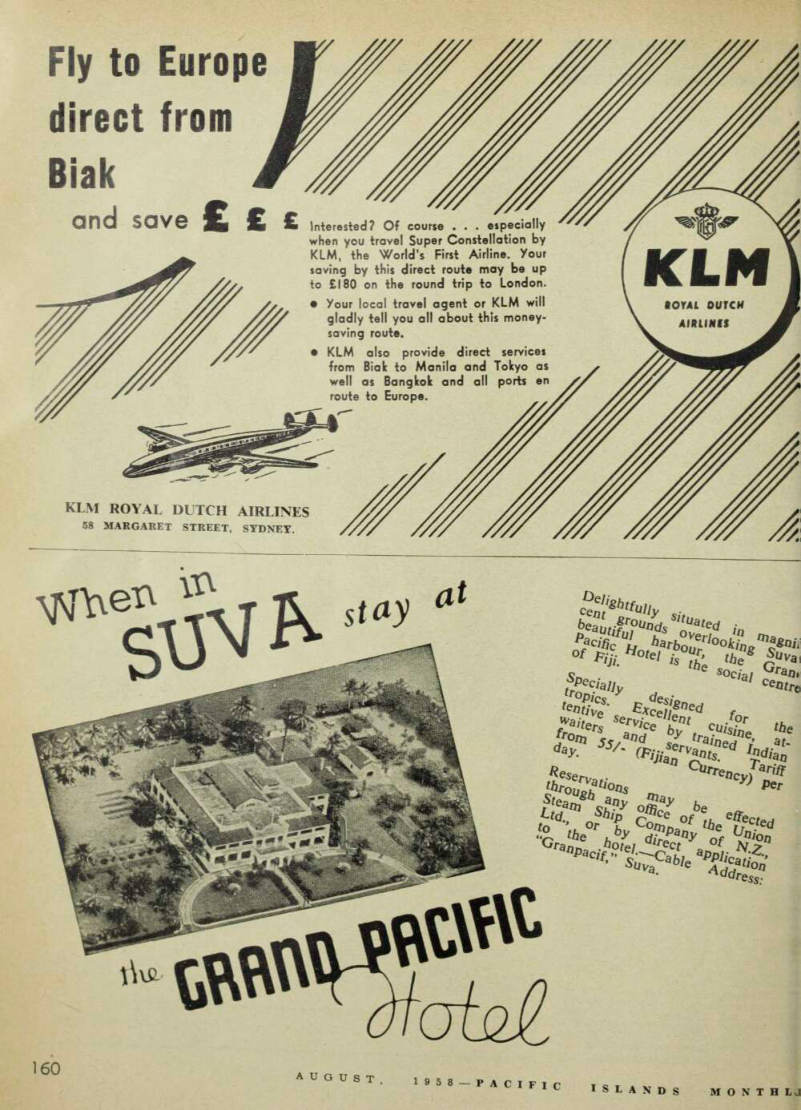 166
166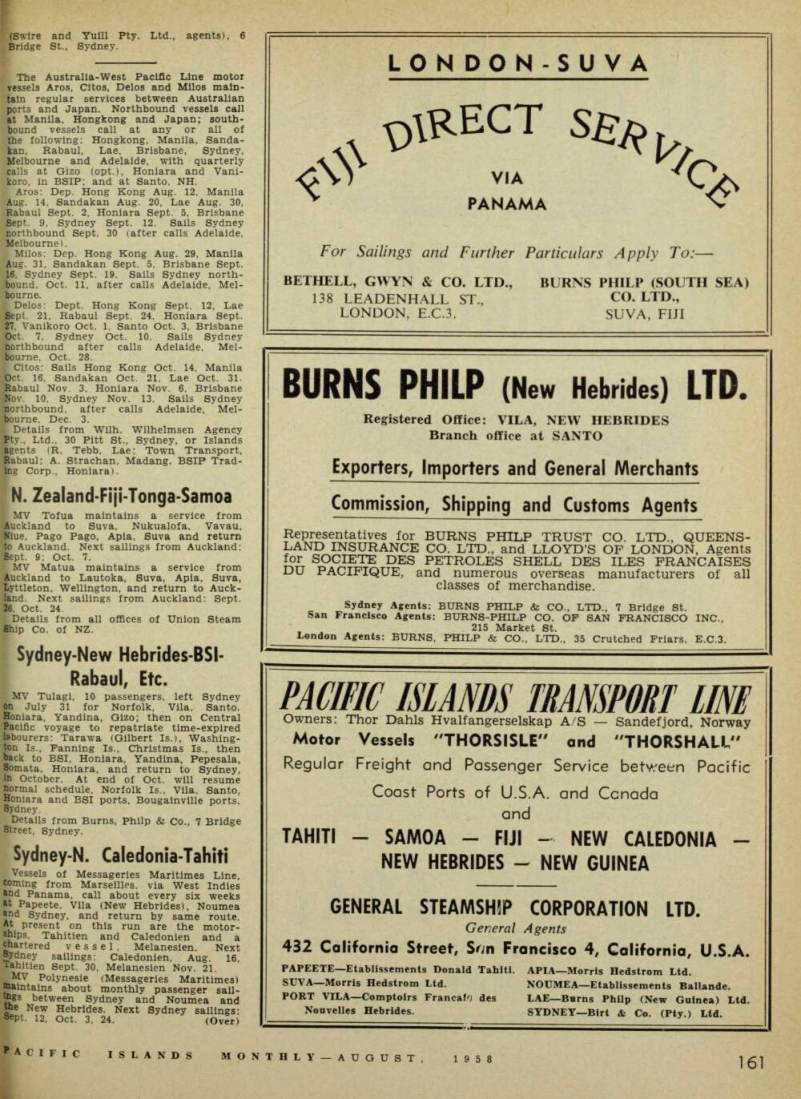 167
167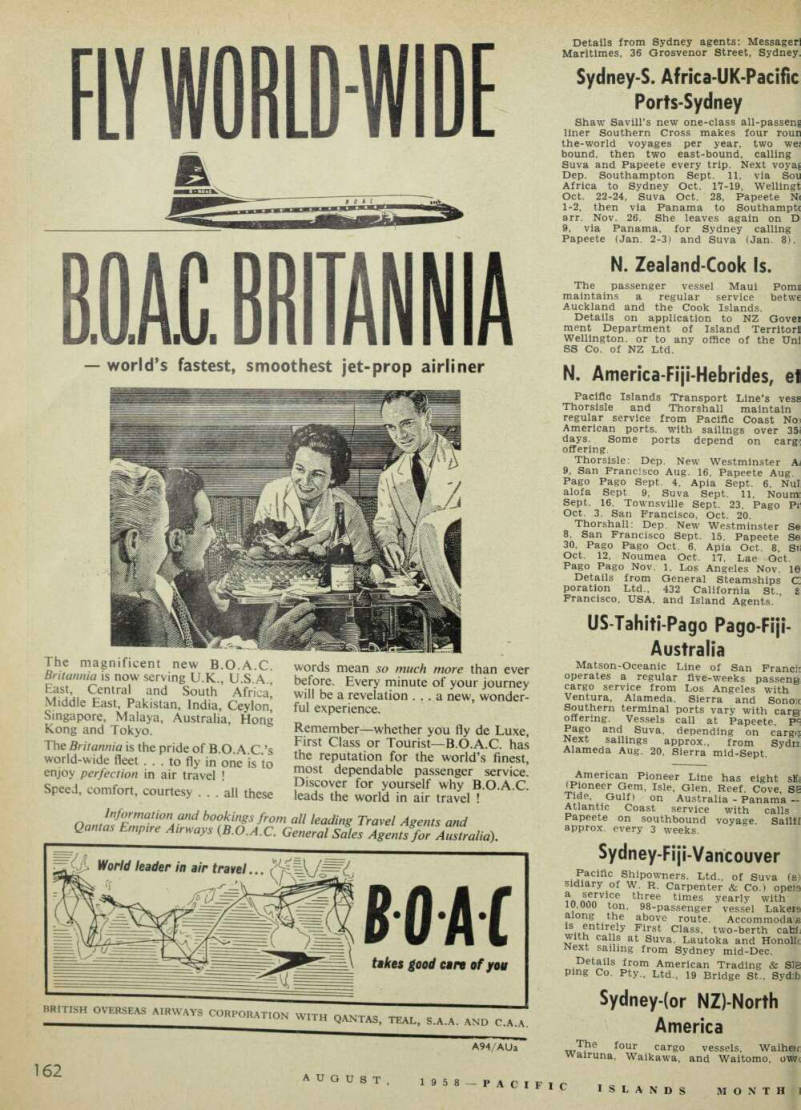 168
168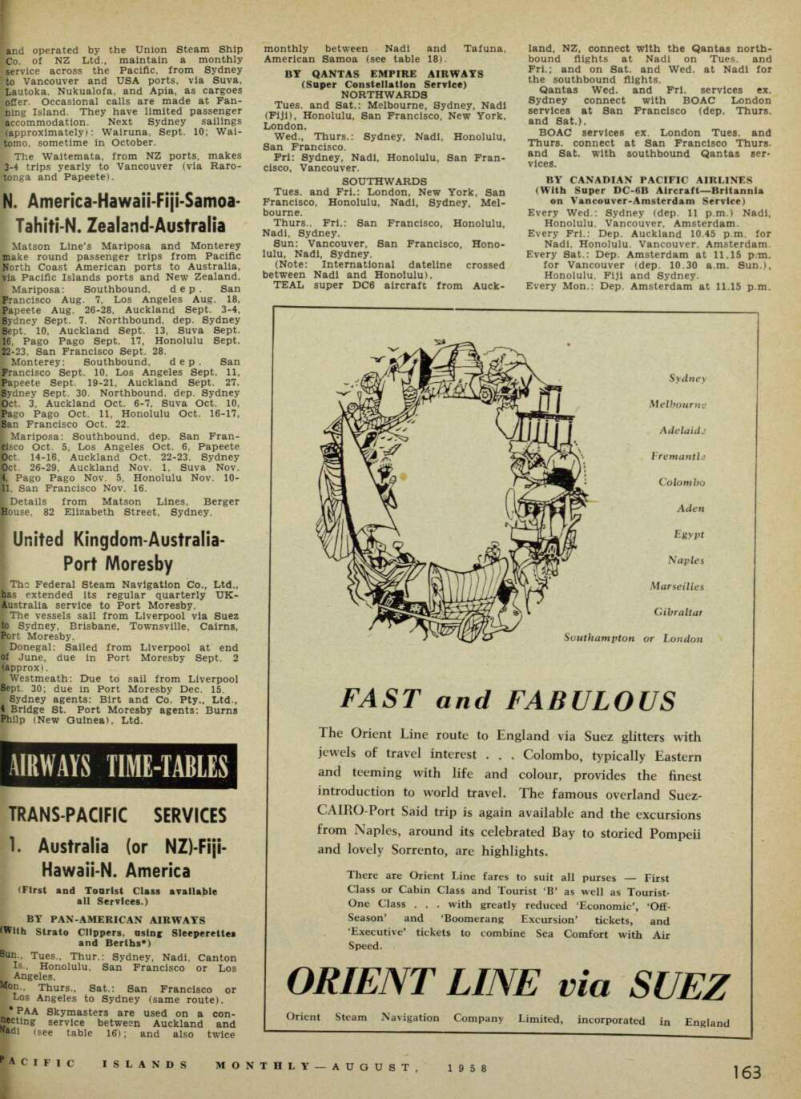 169
169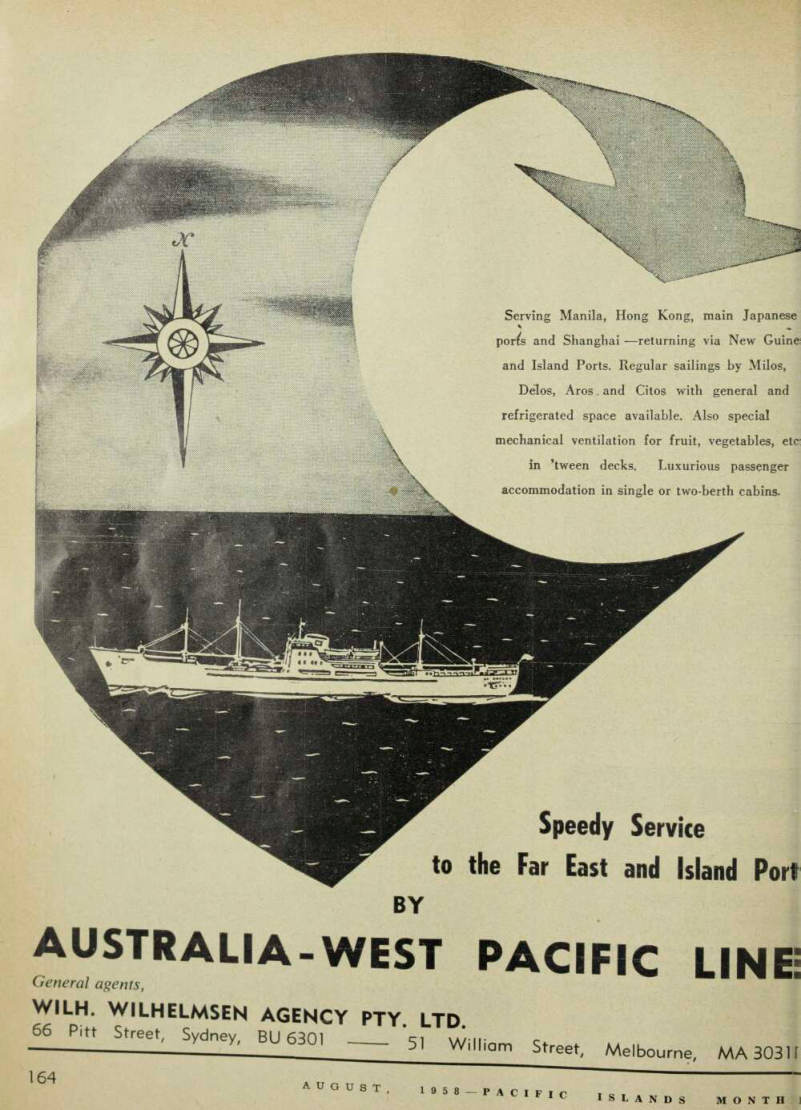 170
170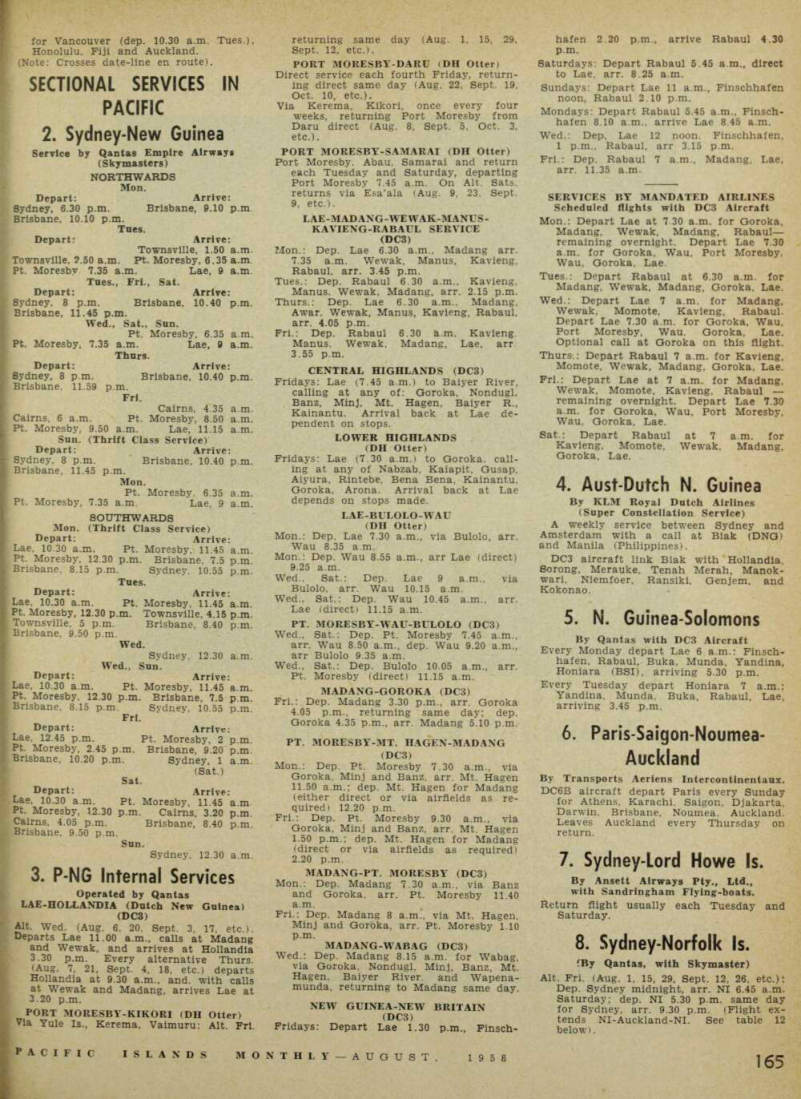 171
171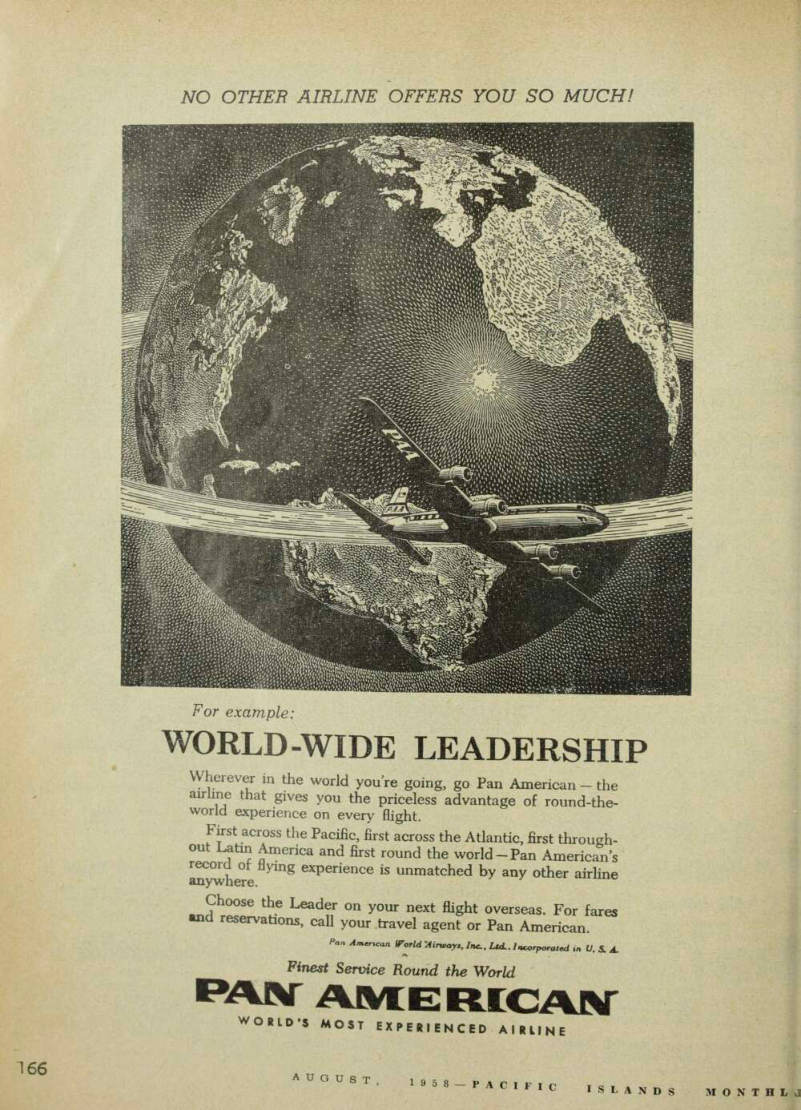 172
172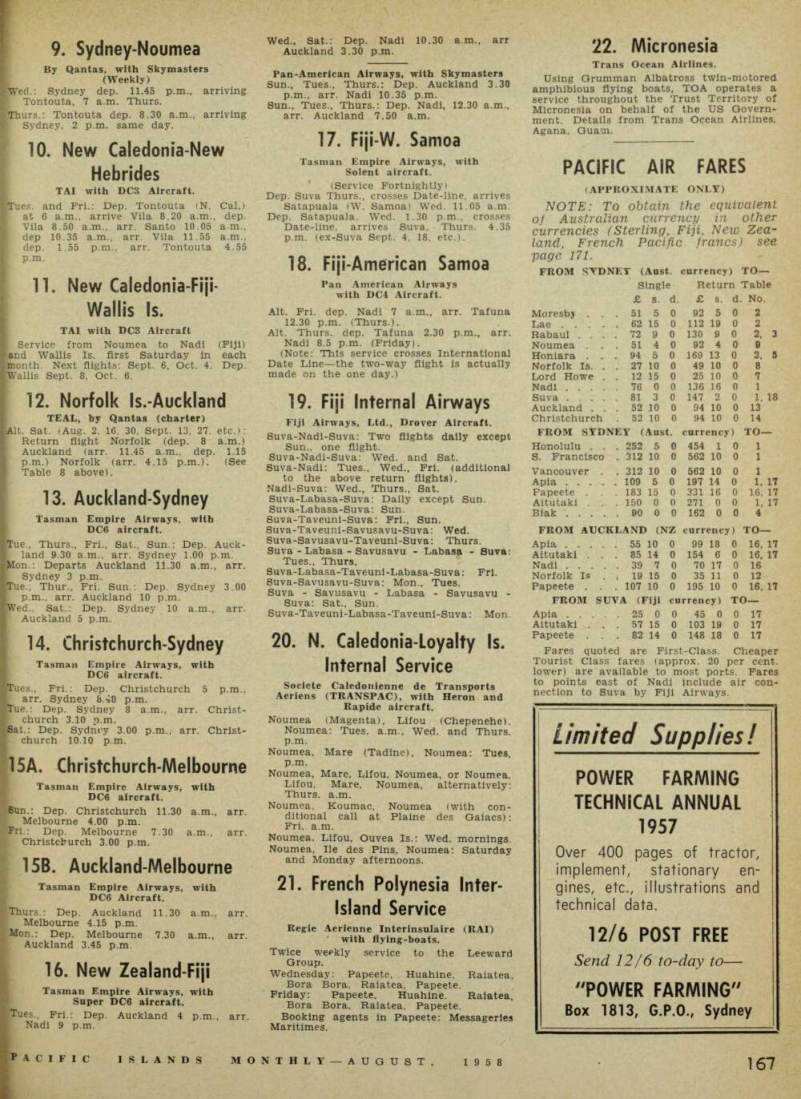 173
173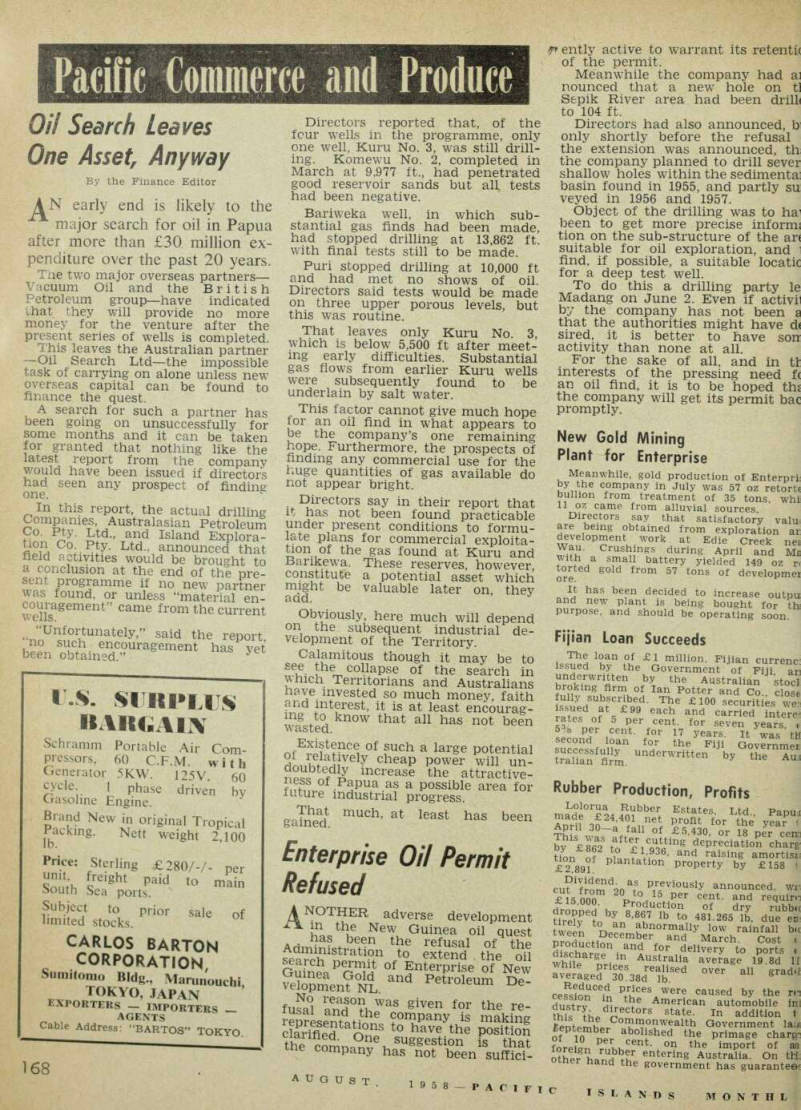 174
174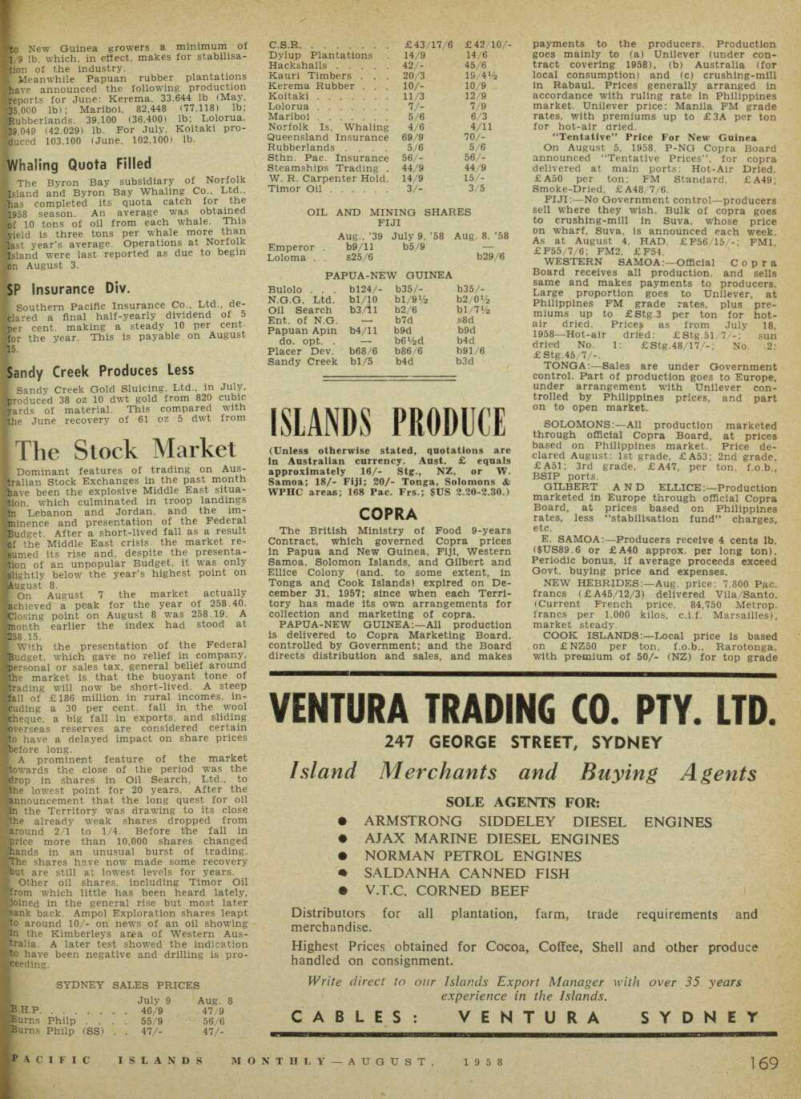 175
175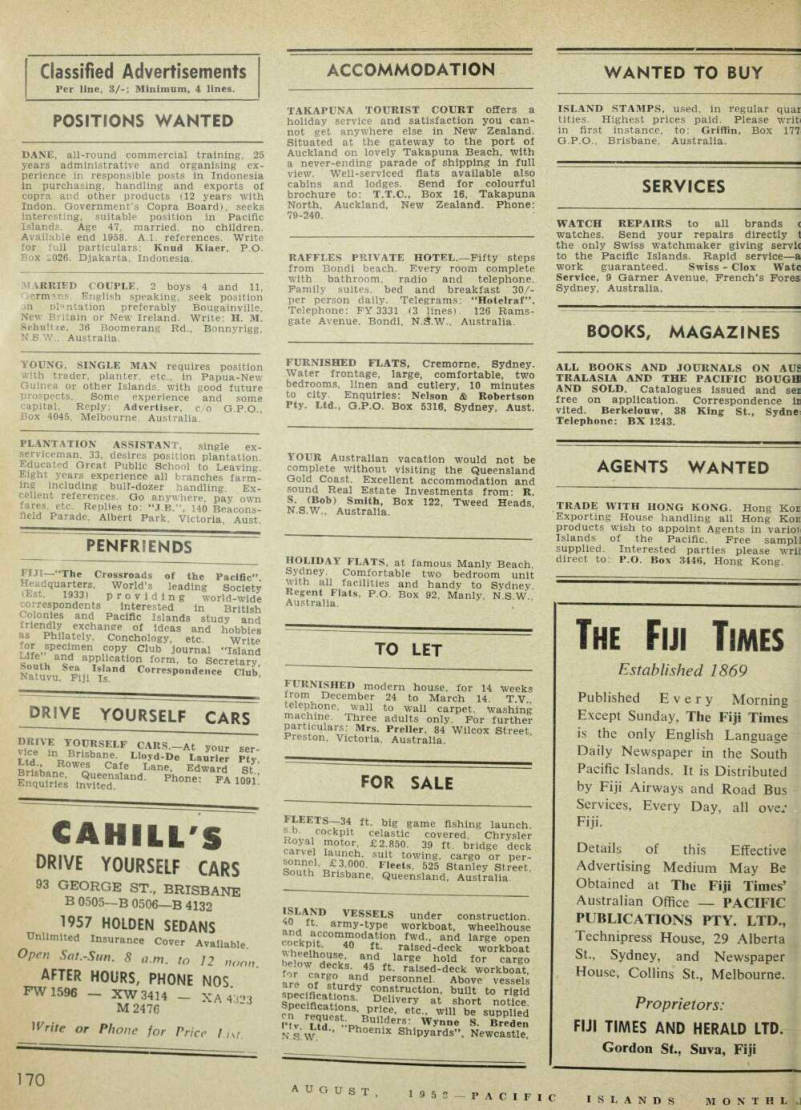 176
176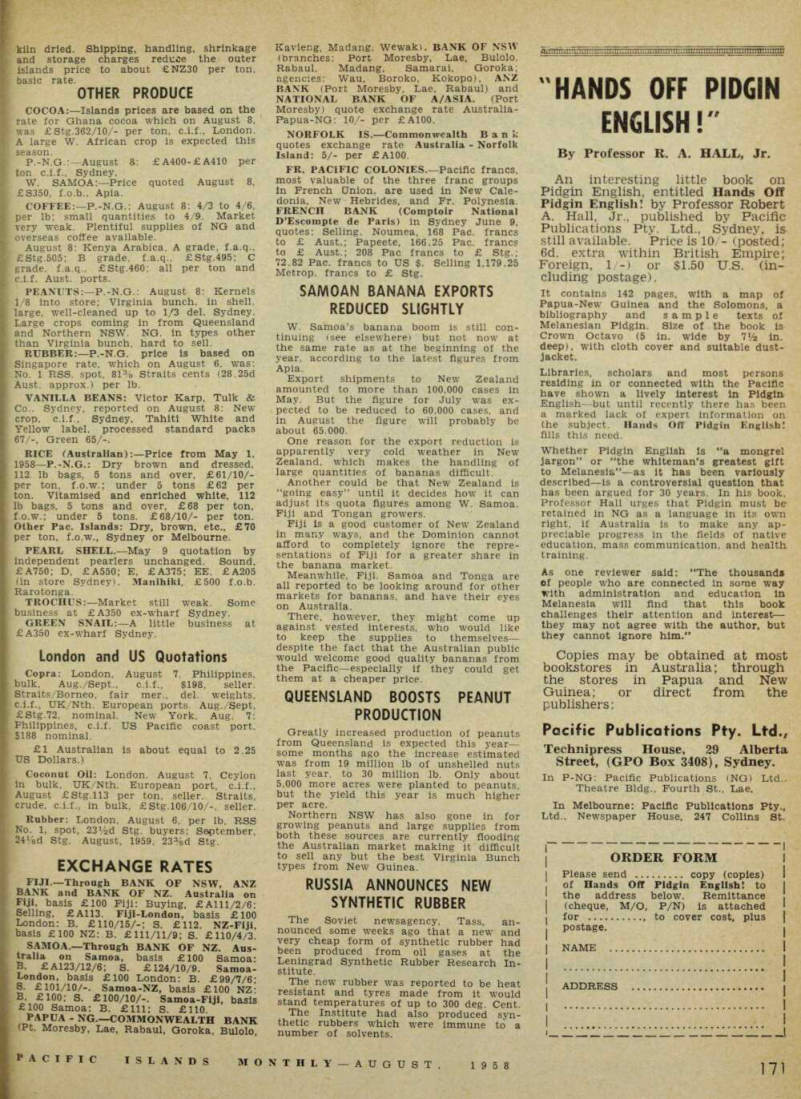 177
177 178
178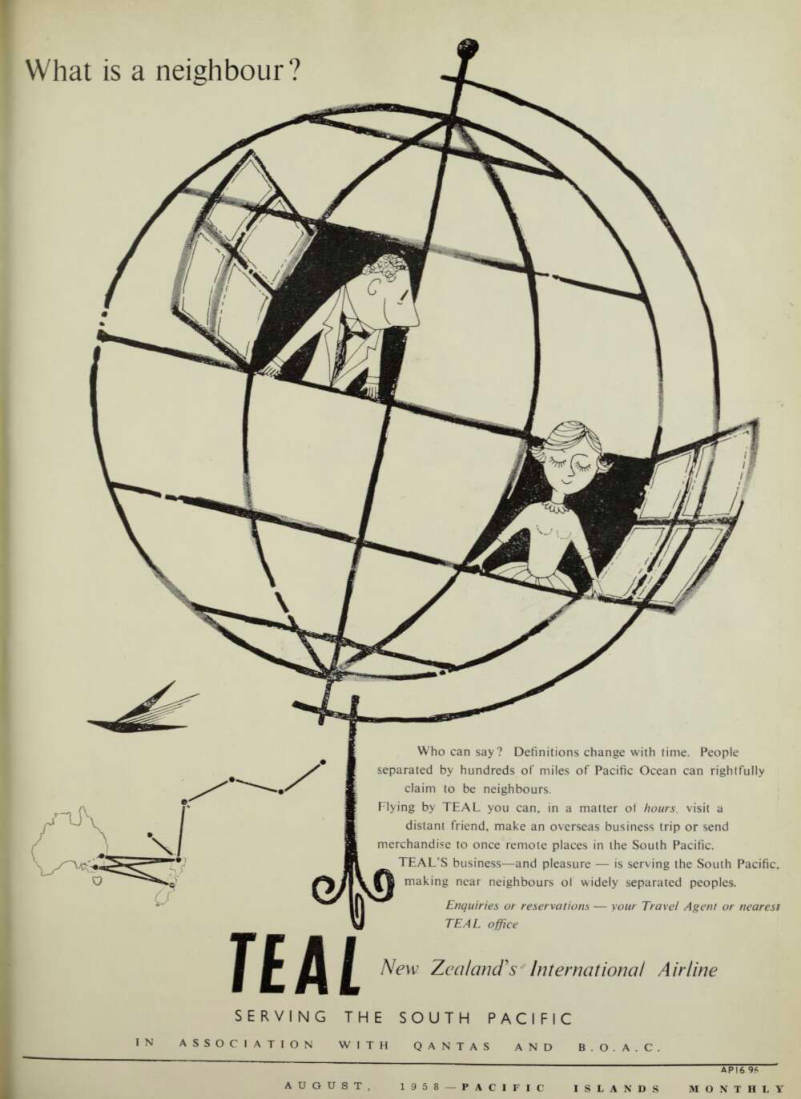 179
179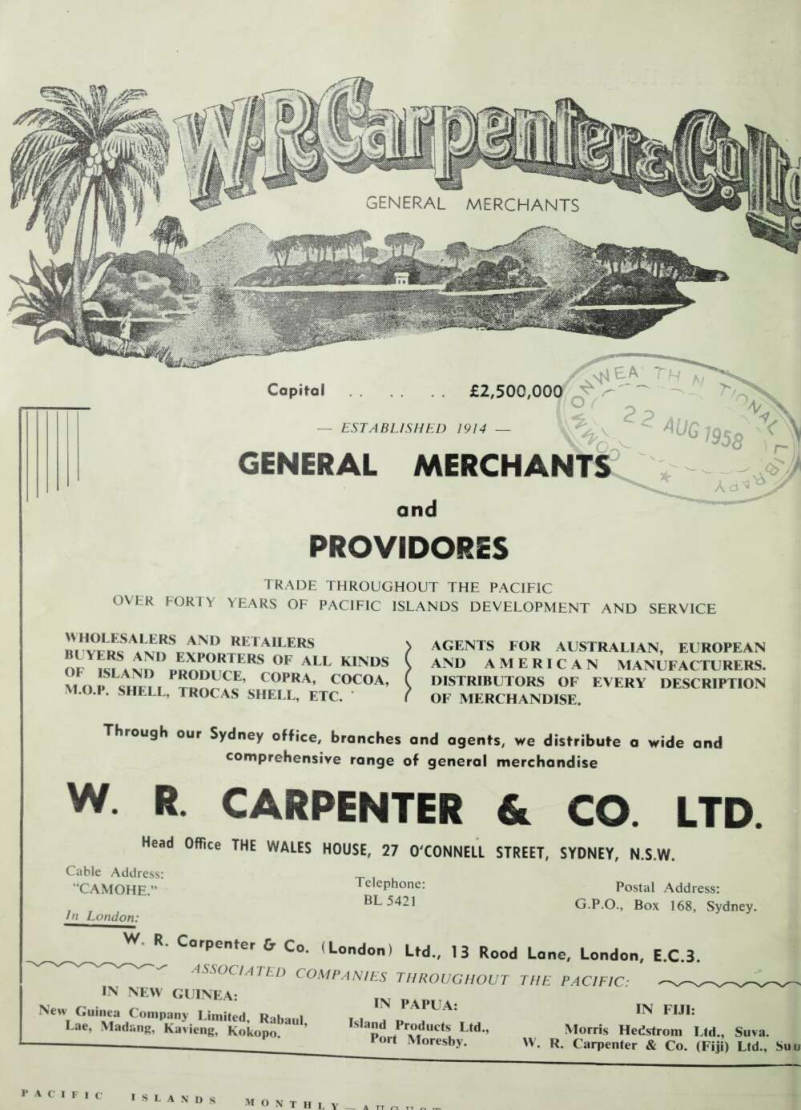 180
180