Islands
Pacific
Monthly
April, 1954
Vol. XXIV. No. 9.
sbllshed 1930.
for transmission by post as a newspaper ]
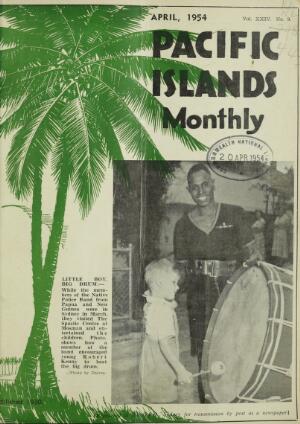
Little Boy.
Big Drum:—
While the mem bers of the Native Police Band from Papua and New Guinea were in Sydney in March, they visited The Spastic Centre at Mosman and en tertained the children. Photo, shows how a member of the band encouraged young Robert Kenny to beat the big drum.
Photo by Dalrea.
Advertisements & other items, pp. 2-4 (3 items)
Islands Air Services
"By QANTAS is the ONLY way to enjoy Tropical Travel" % m *s
FLY r QANTAS )
Travel in the Tropics is timeserving and a pleasure when you fly by QANTAS —Australia’s Overseas Airline with 33 years of flying experience.
Over 50-points in the S.W. Pacific Area are linked with Australia by fast, regular QANTAS services shown below.
NORFOLK ISLAND
SERVICE
Sydney • Norfolk Island •
Sydney.
SUVA SERVICE
Sydney • Brisbane • Noumea • Suva • Noumea •
Sydney.
NEW HEBRIDES
SERVICE
Sydney • Brisbane • Noumea • Vila • Espiritu Santo • Vila • Noumea • Sydney.
TROBRIAND SERVICE
Por+ Moresby • Samara! • Esa'ala • Rabaul • Samarai • Port Moresby.
BOUGAINVILLE
SERVICE
Rabaul • Buka • Kieta e Buin • Kieta • Buka • Rabaul.
PAPUA WEST SERVICE
Port Moresby • Yule Island • Kerema • Wana • Kikori • Lake Kutubu • Daru • Kikori • Wana • Kerema • Yule Island • -Port Moresby.
SOLOMONS SERVICE
Lae • Flnschhafen * Rabaul • Buka • Vella Lavella • Yandina • Honiara ° Yandina • Vella Lavella • Buka • Rabaul • Flnschhafen • Lae.
BISMARCK WEST
SERVICE
Lae • Madang • Wewak • Manus Island • Kavieng • Rabaul • Madang • Lae.
BISMARCK EAST
SERVICE
Lae • Finschhafen • Rabaul • Kavieng • Manus Island • Kavieng * Rabaul • Lae.
"GOLDFIELD'S 11
SERVICE
Lae • Bulolo • Wau • Lae.
N.G. HIGHLANDS
SERVICE
Lae • Nadzab • Kaiapit • Arona • Kainantu • Bena Bena • Goroka • Nondugl • Banz • Minj • Mt. Hagen • Ogelbeng • Baiyer River • Wabamunda • Wabag and return.
NEW BRITAIN SERVICE
Rabaul • Jacquinot Bay • Moewe Harbour • Talasea • Rabaul (alternatively fortnightly) • Rabaul • Talasea • Moewe Harbour • Jacquinot Bay • Rabaul.
HOLLANDIA SERVICE
Lae • Madang • Wewak • Hollandia and return.
EE Qantas Empire Airways Lid. (Inc. in Q'land) In assoc, with 8.0.A.C. and TEAL
Austral i a's Overseas
mM 7 o * - Available for petrol or kerosene in capacities of 200, 300 and 500 C.P.
Coleman Lanterns burn steadily and safely regardless of the weather. Their globes are proof against the shocks of cold rain and they floodlight a 100 foot area with light so bright a newspaper can be read 50 feet away.
Coleman Lanterns are safe, because it is impossible to fill them while burning and they cannot spill if overturned.
Representatives for the Pacific Islands:
54a PITT STREET
SYDNEY
ROBERT GILLESPIE PUL 1 ?
PEARCE & CO. LTD.
SUVA
FOR FIJI ISLANDS
J. FARREN PRICE
109 Elizabeth St., Sydney
THE WATCH SPECIALIST
NIVADA
WHITE STAR
CAMY
VYMO
ELECTION
WATCHES
SUPER MARINE
LONGINES
GRUEN
RELIDE
FELCA
OLYMP
WATCHES
Announces the appointment of
KERRY Pn. L
ID.
as Pacific Islands Distributors for his
range of famous watches
Address Your Inquiries to:
MACKAY KERRY PTY. LTD.
Islands Merchants & Traders
215 CLARENCE ST. f SYDNEY.
Cables: “MARNIKAY” Sydney Papua-New Guinea Branch: LAE, N.G. (Manager: Ralph
1
ACIFIC ISLANDS MONTHLY APRIL 1954
2
APRIL, 1954 PACIFIC ISLANDS MONTHLT
Shipping Time-Tables
There now are comparatively few ship- Ing lines running on regular time-tables i the Pacific Islands. The following fime ables are only approximately correct hey are subject to much alteration at nort notice:—
Sydney-Papua-N. Guinea
MV Bulolo. modern liner, sails about very six weeks: Sydney-Brisbane-Moresby amarai - Lae - Madang - Manus - Rabaul amaral-Moresby-Brlshnne-Sydney.
Next sailing early May.
MV Malekula sails from Sydney for amarai, Rabaul, Manus, Wewak, Madang, ae, Samarai and return to Sydney.
Fext sailing early May.
Details from Burns Pnilp & Co. Lid., 7 Irldge Street. Sydney.
MV’s Soochow and Shansi, 3,000 tons essels, leave every six weeks approxi lately (making a three-weekly service); Sydney - Brisbane - Pt. Moresby - Madang iabaul-Pt. Moresby-Sydney. Next sailing hansi, April 17. Next sailing Spochow, ite April. Sinkiang leaves from Mel ourne approximately every 7 weeks, and lils via Sydney and Queensland ports to '.-N.G. Next sailing Melbourne, about lay 24.
Details from New Guinea Australia Line G. S. Yuill & Co., Ltd., agents), 6 Bridge t.. Sydney.
i. Zealand-Fiji-Samoa-Tonga
Motor vessels Tofua and Matua, from few Zealand, serve Suva (Fiji), Nukua >fa and Vavau (Tonga), Niue Is., Pago ago (American Samoa), Apia amoa). Tofua leaves Auckland for any r all of above ports at approx, five weeks
intervals. Matua calls at Wellington and Lyttelton (NZ), Lautoka (Fiji) and sup plements Tofua’s schedule in Islands, calling at ports as directed by owners.
Tofua’s next voyages are scheduled to leave Auckland April 12 and May 10.
Matua will leave Auckland on her next voyage May 1.
N. Zeaiand-Cook is.
The NZ Government’s old motor vessel
Maui Pomare is scheduled to leave Auck land every month for Rarotonga and other Islands in the Lower Cooks, subject to requirements of trade. This vessel carries 30 passengers. After annual survey, left Auckland in early April for Cook Group.
Full details on application to NZ Government Department of Island Terri tories in Wellington, or to any office of .the Union SS Co. of NZ, Ltd., which Company acts as Agent for this vessel at some ports.
Sydney-New Hebrides-BSI-
Rabaul, Etc.
MV Malaita makes a round trip at about 8-weeks intervals from Sydney to Lord Howe-Norfolk Is.-New Hebrlde* Ports - BSI ports - Bougainville - Kabaui - Samaral-Sydney.
Last sailing from Sydney April 6.
Details from Burns Phup <b Co., 7 Bridge Street, Sydney.
Sydney-N. Caledonia-Tahiti
Vessels of Messageries Marltlmes Line, coming from Marseilles, via West Indies and Panama, call about every six weeks at Papeete. Vila (New Hebrides), Noumea and Sydney, and return by same route. Details from Messageries Marl times. Luxurious new liners Caledonlen and Tahitien recently added to this service.
Small motor-ships Polyneslen (Messa geries Maritimes) and Neo Hebridais (H.
C. Sleigh, Ltd.) maintain fairly regular service between Noumea and Sydney.
N. America-Fiji-Hebrides, etc.
Norwegian motor vessel Thorslsle, carry ing cargo and passengers maintains a regu lar service between North American ports and French Oceania, Samoa Fiji, ivew Caledonia and New Hebrides Sailing from San Francisco April 2, Papeete, April 14. Apia, April 19, Suva, April 23, Noumea, April 28 (dates approx, only).
Details from General Steamships Cor poration Ltd., 432 California St., San Francisco, U.S.A.
Advertisements & other items, pp. 5-6 (2 items)
3
ACIFIC ISLANDS MONTHLY —'APRIL, 1954
New Guinea Australia Lind
PACIFIC ISLANDS TRANSPORT LINE
Owners: Thor Dahls Hvalfangerselskap A/S Sandefjord, Norway
- M.V. "THORSISLE" -
Regular Freight and Passenger Service between Pacific Coast Ports of U.S.A. and Canada and
TAHITI SAMOA FIJI NEW CALEDONIA
NEW HEBRIDES
GENERAL STEAMSHIP CORPORATION, LTD.
General Agents 432 California Street, San Francisco 4, Calif., U.S.A.
PAPEETE —Etablissements Donald Tahiti APlA—Morris Hedstrom Ltd.
SUVA —Morris Hedstrom Ltd. NOUMEA—Etablissements Ballande PORT VlLA—Comptoirs Francais des Nouvelles Hebrides
New Guinea Australia Lind
Regular Three Weekly Service to PORT MORESBY> SAMARAI, LAE. MADANG,
KAVIENG, AND RABAUL, VIA BRISBANE
unAAnTTAITr)) a \TCIT»
SOOCHOW
SHANSI
And from MELBOURNE, approximately every seven weeks, to PAPUA-NEW
GUINEA, via SYDNEY AND QUEENSLAND PORTS
99
“SINKIANG
Agents for PAPUA:
STEAMSHIPS TRADING CO. LTD.
Agents for NEW GUINEA:
COLYER WATSON (NEW GUINEA) LTD.
General Agents: G. S. YUILL & CO. PTY. LTD.
6 BRIDGE ST., SYDNEY
Telephones: BW 2731 8U6313 (Freight only) Cable Address: “YUILL’
REGULAR SAILINGS BETWEEN NEW ZEALAND
AND ISLAND PORTS
M.V. "VASU"
FAST TRANS-TASMAN SERVICES—Refrigerated and general cargo
M.V. "VITI" S.S. "MADONNA"
Tonnage available for charter AGENTS FOR: Flotta Lauro Line (Passengers and cargo to U.K. and Continent.) Edinburgh Assurance Company Ltd.
ISLAND AGENTS: SUVA: Morris Hedstrom Ltd.
APIA: A. MacDonald & Co. Ltd.
NUKUALOFA/VAVAU: Burns Philp (South Sea) Co. Ltd.
NIUE: Robert Rex.
Also represented throughout Australasia.
TASMAN STEAMSHIP STEVEDORING AND AGENCY
COMPANY, LIMITED
P.O. Box 2242, Telegraphic address: Auckland. “TASVITI”
William E. Reed
(Est. 1913)
145 a GEORGE ST„ CIRCULAR QUAY, SYDNEY.
Extends to Island commercial interests a cordial invitation to avail themselves of the reliable prompt and courteous services of an old
established organisation.
BUYING DEPARTMENT
Our highly specialised buying service ensures promptness and satisfaction to our clients. All orders executed on best wholesale basis and under the personal supervision of the Proprietor. Quotations and expert advice on technical problems readily available.
ISLAND PRODUCE
Sold on the open market to the highest bidder. We obtain the highest possible prices.
MARINE
We are well equipped to deal with all enquiries regarding the purchase of any type or class of vessel for service in the Island trade.
We act as consultants to purchasers and can offer sound expert advice, both technically and commercially to bona fide purchasers. Send us details of your requirements in ships, boats, engines, or gear, and you are assured of prompt and efficient attention. Quotations obtained for either sea delivery or cradled and loaded for shipping.
NEW VESSELS
We suggest that the question of new vessels might often be advantageously considered and we are in a position to be of practical assistance to bona fide enquirers and to obtain complete specifications and prices from the best small ship builders on the East coast of Australia. Insurances with Lloyd’s effected.
HYDRO-ELECTRIC EQUIPMENT
The Drees Hydro-Electric Units manufactured in Germany are the answer to the demands for electricity in remote areas. If you have a reasonable fall of water, hydro-electric equipment is undoubtedly the most economical investment. Solely in the hands of this firm for South Pacific Areas.
WRITE OR CALL IN WHEN SOUTH—
Cables: “Wilreed, Sydney”. Phones: BU 3505 (3 lines).
Airways Time-Tables
Trans-Pacific Services
1. Australia (or NZ)-Fiji-
Hawaii-N. America
By Pan-American Airways
With Strata Clippers, using Sleeperettes and Berths* Tues. and Fri.—Sydney - Nadi (FIJI) - Canton Is.-Honolulu-S. Pranclsco-Seattle- Portland.
Tues. and Sat. —Return via same route, t Tues. and Prl.—Auckland - Nadi (FIJI). t Thurs. and Mon.—Nadi (Fiji)-Auckland, t Connecting with Strata Clipper at Nadi.
By British Commonwealth Pacific
Airlines (Bcpa)
(DC-6 All-Sleeper Service)* Wed. and Sat.—Sydney-Nadl (FIJI)-Canton Is.-Honolulu-S. Pranclsco-Vancouver.
Mon. and first Thur. —Dep. southwards, same route. On second or alternate Thursday, flight commences at 8 Francisco.
Tues. —Dept, Auckland-Nadl-Canton-Hono lulu-S. Francisco-Vancouver.
Prl.—Dep. Vancouver and S. Francisco alternatively; thence same route to Auckland.
By Canadian Pacific Airlines
(Cpaia
(With Super DC-6B Aircraft)* Every Tuesday—Sydney - Auckland - Nadi (Fiji) - Honolulu - Vancouver.
Every Friday return by same route. * Tourist Class Services are available on these planes at 20 per cent, less normal fares.
Sectional Services In
Pacific
2. Sydney-New Guinea
Service by Qantas Empire Airways
Northwards
Tuesdays and Saturdays (Skymasters) Depart: Arrive; lydney. 7.30 pm Brisbane, 10.15 pm Irlsbane, 11.40 pm Moresby, 6.30 am (Wed.. Sun.) foresby, 7.30 am Lae, 8.45 am Connecting services north of Lae by hover to Bulolo and Wau.
Sundays and alt. Wednesdays (Sandringhams) Depart: Arrive: ydney, 7.30 pm Brisbane, 10.50 pm risbane, 12.20 am Calms, 6.35 am Mon. and Alt. Thur.) aims, 8.05 am Moresby, 11.55 am (Night slop) [oresby,* 8.30 am Samarai, 10.30 am (Tue.) amarai, 11.00 am Esa’ala, 11.40 am (Alt. weeks) sa’ala, 11.55 am Rabaul, 2.55 pm The alt. Wednesday Sandringham from ydney terminates at Port Moresby, a mnectlon north to Lae on the following ay at 9.00 am being by D.C.3. • The Sunday Sandringham from Sydney rrives Moresby Monday and after a night ,op then goes on to Rabaul via Samarai. ;c., on Tuesday.
Southwards
Sundays and Wednesdays (Skymaster) Depart: Arrive; ae, 10.25 am Moresby, 11.40 am nresby, 12.40 pm Brisbane, 7.15 pm risbane, 8.45 pm Sydney, 11.30 pm Connecting service from Wau by Drover, rrives Lae 9.35 am Saturday.
Thursdays (Sandringham) Depart; Arrive: abaul, 5.30 am Samarai, 8.45 am amarai, 9.15 am Moresby, 11.15 am oresby, 12.15 pm Cairns, 3.40 pm (Night stop> aims, 8.30 am Brisbane, 2.15 pm (Fri.) risbane, 3.46 pm Sydney, 7.05 pm Alt, Saturdays (Sandringham) Depart: Arrive; presby, 6 am Cairns, 9.25 am 10.55 am Brisbane, 4.40 pm risbane, 6.10 pm Sydney, 9.30 pm A connection from Lae. with a DC3. pick up Saturday Sandringham, arrives Moresby on Friday at 8.20 am.
3. N. Guinea internal
Services
Operated hy Qantas lE—HOLLANDIA (Dutch New Guinea)
(Dcs)
•ery 4th Monday (Apr. 19, May 17, etc.), jparts Lae 8 am. calls at Madang and Wewak, and arrives at Hollandia 1.05 pm. Every 4th Tuesday (Mar. 23, Apr. 20, May 18, etc.), departs Hollandia at 9 am, and, with calls at Wewak and Madang, arrives Lae at 3.5 pm.
Lae-Manus (Dcs)
Every Wednesday. ip. Lae, 10.45 am: Pinschhafen, Rabaul, Kavieng, arr. Manus 5.45 pm.
“itfrns Saturdays (dep. 8 am), via Kavieng and Rabaul; optional call at Pinschhafen: arr. Lae. 2.45 pm.
MORESBY-DARU (Sandringham) a Yule Is., Kerema, Wana (optional), Klkorl, L. Kutubu. —Every alternate Friday, returning same day (Apr. 16, 30, May 14, 28, etc.).
Rabaul-Mofwe Harbour
(Sandringham) Alt. Wed.—Rabaul-Jacquinot Bay-Moewe Harbour-Talasea-Rabaul April 7, 21, May 5, 19, etc.
N.B.—The direction of operation changes with each service, l.e , each alternate service operates Rabaul-Talasea-Moewe Harbour-Jacquinot Bay-Rabaul.
New Britain-Bougainville
(Sandringham) Alt. Wed.—Rabaul - Buka - Kieta - Buin —Apr. 14, 28, May 12, 26, etc.
Alt. Wed. (same day) Buin-Kieta-Buka- Rabaul.
Lae-Madang-Wewak-Manus
Kavieng-Rabaul General
Service
(Dcs)
Mon., ThUr. Dep. Lae 6.30 am, Madang arr. 7.35 am Wewak, Manus Is..
Kavieng, Rabaul arr. 3.35 pm.
Tue. only Dep. Rabaul 8.00 am, direct Madang arr. 11.00 am, Lae arr. 12.35 pm.
Central Highlands
(Dcs)
Fridays.—Lae (8.30 am) to Wabag, calling n any of: Nadzab, Kiaipit. Arona, Kainantu, Bena Bena, Goroka, Nondugl, Banz, Minj, Mt. Hagen, Baiyer R., Wabag. Return to Lae arriving 6 pm.
Lae-Bulolo-Wau (Drover)
Dep. Lae.—Tues. 3 pm.—Mon. & Sat. 7.30 am.
Dep. Wau.—Tues. 4.30 pm—Mon. 9.00 am —Wed. 12.35 pm. Direct to Lae in 35 minutes.
Lae-Finschhafen (Drover)
Every 4th Tuesday, leaving Lae 1 pm, returning same day (Apr. 20, May 18, etc.).
Madang-Goroka (Dcs)
Fridays.—Depart Madang 8.25 am, arrive Goroka 9.00 am, returning same day; depart Goroka 9.30 am, arrive Madang 10.5 am.
Services By Mandated Airlines
With headquarters at Lae. this company runs regular services for passengers freight and mails to all New Guinea settlements.
4. Aust.-Dutch N. Guinea
By KLM Royal Dutch Airlines.
A weekly service with Constellations Between Sydney and Amsterdam with a :all at Biak, DNG, and Manila. Philippines.
DC3 aircraft link Biak with Hollandia, 3orong, Merauke and Tannah Merah.
5. N. Guinea-Solomons
By Qantas with DCS 3 Plights Every Pour Weeks, tfon. (April 12. 26, May 3, 10, 24, 31, etc.), Lae (dep. 6 am) Finschhafen Rabaul Buka Vellalavella Yandina Honiara, BSI (arriving 4,30 pm). rue. (April 13, 27, May 4, 11, 25'. etc.), Honiara (dep. 7 am) Yandina Vellalavella Buka Rabaul Finschhafen Lae (arriving 3.30 pm).
6. Indo-China-Brisbane-
N. Caledonia
By Air France. Monthlv.
Constellation aircraft dep. Saigon. May 2 and every 28 days thereafter for Darwin-Brisbane-Noumea. and return. lUstralian agents: Messageries Maritlmes.
7. Sydney-Lord Howe Is.
By Ansett Flying-boat Service, with Sandringhams and Hythes.
Eight services per month, return same day.
8. Sydney-Norfolk Is.
By Qantas, with Skymasters.
Alternate Thursdays (April 22, May 6, 20, etc.), returning same day.
9. Sydney-New Hebrides
By Qantas. with Sandringham (Weekly Flying Boat Service) Depart; Arrive: Sydney, Mon. 7.30 pm Brisbane, 10.50 pm Brisbane, 12.20 am (Tue.) Noumea, 7.00 am Noumea, 8.30 am Vila, 11.05 am Vila, 12.35 pm Santo, 1.50 pm (Night stop) Santo, 6.00 am (Wed.) Vila, 7.15 am Vila, 8.15 am Noumea, 10.55 am Noumea, 1.00 pm Sydney, 8.40 pm
10. Sydney-Noumea-Suva
By Qantas with Sandringham Flying Boats —Weekly.
Depart: Arrive: Sydney, Thur. 7.30 pm Brisbane. 10.50 pm Brisbane, 12.20 am (Prl. Noumea, 7.00 am Noumea, 8.30 am Suva, 3.00 pm Suva. Sat. 6.30 am Noumea, 11.00 am Noumea. 1.00 pm Sydney, 8.40 pm
11. Auckiand-Norfolk Is.
By NZ National Airways, with DOS’s Sundays—From Auckland double service returning same day.
12. Sydney-Auckland
Tasman E. Airways, with Solents Tue., Sun.—Dept. Sydney 12 midnight, arr. 8.45 am following day.
Thur., Sat. —Dept. Sydney 8.30 am, arr. 5.15 pm.
Dep. Auckland 8.30 am, arr. 1.45 pm Mon., Tue., Thur., Fri.
13. Sydney-Wellington
Tasman E. Airways, with Solents Dep. Sydney 10.30 pm Mon., Tue., Thur., Fri. Arr. 7.45 am following day.
Dep. Wellington 10.30 am Tue., Wed., Fri., Sat., arriving 4 pm.
14. Melbourne-Christchurch
Tasman E. Airways, with DC4 Skymaster Thurs.—Dep. Melb., 10.25 pm; arr. Ch’ch. 8.15 am next day.
Prl.—Dep. Ch’ch., 11 am; arr. Melb., ft.3P pm.
15. New Zealand-Fiji
See Also Table 18.
Tasman Empire Airways, Ltd., with Solents.
Dep. Auckland —April 20, 24, 27, May 4, 8, 11. 18, 22, etc.
Return to Auckland on April 21, 26, May 3,5, 10, 18, 20, 24, etc.
Depart Arrive Auckland, 9.30 am Suva, 4.30 pm Suva. 9.00 am Auckland, 4.15 pm
16. Fiji-Western Samoa
See Also Table 18.
Tasman Empire Airways. Ltd., with Solents.
Dep. Auckland April 24, 27, May 11, 22, 25, etc.
Depart Arrive Auck.. 9.30 am Sat. Suva, 4.45 pm Sat.
Suva, 6.00 am Sun. Apia. 11.05 am Sat.
Apia, 1.30 pm Sat. Suva 4.35 pm Sun.
Suva. 9.00 am Mon. Auck., 4.15 pm Mon.
17. New Zealand-Chatham Is.
Service does not run in Winter months.
18. New Zealand-Tahiti
Tasman Empire Airways, Ltd., with Solents TEAL Service, Auckland-Suva-Apla- Aitutaki-Papeete, is operated with Solent Flying-Boats once every two weeks. Dep.
Auckland, Tuesday, 9.30 am. Arr. Suva 4.30 pm. Dep. Suva (Wednesday) 9.00 am, cross International Date Line: Arr.
Apia 1.55 pm Tuesday. Dep. Apia 2.00 am Wednesday. Arr. Altutaki 7.30 am.
Dep. Aitutaki 8.30 am. Arr. Papeete 1 pm. Return by same route every alt.
Friday, leaving Papeete 7.30 am.
The next flights leave Auckland April 27, May 11, 25.
A special weekly service will operate from June 22 to July 20.
19. Fiji-Tonga
Tasman E, Airways with Solents.
Dep. Suva April 6, May 18.
Depart Arrive Auckland, 9.30 am Suva, 4.45 pm (Tuesday) (Tuesday) Suva, 7.00 am Nukualofa, 10.20 am (Wednesday) (Wednesday) Nukualofa, 2.00 pm Suva, 4.10 pm (Wednesday) (Wednesday) Suva, 9.00 am Auckland, 4.15 pm (Thursday) (Thursday)
20. Micronesia
Civilian services, based on Guam, using 2-engined amphibious Catalinas, run re gularly to Koror (Palau), Yap (West Carolines), Truk (Central Carolines), Ponape (E. Carolines), Majuro (Marshalls) and Saipan (Marianas). Details from Trans-Ocean Airlines, Guam, via Honolulu.
21. Fiji Internal Airways
By Fiji Airways, with twin-engine de Havlland Rapides Suva to Nadi & Lautoka* and return: Mornings—Daily except Thursday. After noons—Daily except Monday.
Suva-Labasa: Daily.
Labasa-Suva: Daily.
Nadi & Lautoka to Labasa: Friday (direct).
Labasa to Nadi & Lautoka: Wednesday (direct).
Suva-Savusavu; Mon., Thur., Sat.
Suva-Taveunl: Tues., via Labasa; Thur., via Savusavu; Mon., Wed. (direct).
Nadi-Taveuni: Mon.; via Nausori, Tue., via Nausari and Labasa, Thur., via Nausori and Savusavu. • No call on Sundays.
Advertisements & other items, pp. 7-10 (2 items)
5
ACIFIC ISLANDS MONTHLY APRIL. 1954
To All Six Cohtinchts
A44/PIM
FLY WITH
THE LEADER
IN WORLD
AIR TRAVEL
Fly 8.0.A.C. to : Australia, Indonesia, Malaya, Burma, Thailand, Hong Kong, Japan, Ceylon, India, Pakistan, Middle East, Africa, Europe, Great Bt itain, U.S.A., Canada, Centra! and South America, Bermuda.
BOM
TO All SIX COHTINCHTS
—w?
Across the world, fast frequent 8.0.A.C.
Speedbird services by fully-pressurized 4-engined airliners link every continent.
Flying 8.0.A.C. you travel in superb comfort. Prompt courteous attention is paid to your every need. You enjoy a standard of service resulting from 8.0.A.C.’s 35 years of flying experience.
And you fly British all the way !
See your Travel Agent for complete trip-planning help—no charge!
8.0.A.C. LEADS WITH THE COMET
BRITISH OVERSEAS AIRWAYS CORPORATION
WITH QANTAS, TEAL AND S.A.A.
There's so much to do
NEW ZEALAND
Imagine a holiday in this land of breathtaking beauty!
At any time of the year there’s so much to do watching geysers play in wondrous thermal regions . . . fishing in placid lake or swift-running stream or spectacular big-game waters . . . climbing in the towering Southern Alps . . . deer shooting in virgin forest . . . slaloming on perfect ski runs . . . swimming and boating in fascinating fiordlands!
flying gives you so
much more time
Air travel will save you days in which to play, let you see so much more of this scenic wonderland.
And it’s so much more comfortable.
IVAC
> Linking all principal New Zealand cities and extending to Norfolk Island. Offices and Agents throughout New Zealand, Australia and the South-West Pacific.
QUEENSLAND
INSURANCE
CO. LTD.
(Incorporated 1886 in Australia).
Assets Exceed £7,000,000 Head Office:
QUEENSLAND INSURANCE
BUILDING, 80-82 PITT STREET,
SYDNEY.
Specialists in South Sea Fire, Marine & Accident Insurances Apply to:— FlJl.—Branch Office: J. F. Drury, Manager.
Burns Philp (South Sea) Co. Ltd.
VlLA.—Burns Philp (N.H.) Ltd.
Comptoirs Francais Des NoUvelles Hebrides.
NOUMEA.—L. &. W. Johnston.
NEW GUlNEA.—Manager of the Territory of Papua and New Guinea, W. A. Anderson.
Resident officer at Lae, B. Bembrick.
PORT MORESBY—SAMARAI—LAE
—MADANG—KAVIENG—RABAUL.
Burns Philp (New Guinea) Ltd.
PAGO PAGO
Burns Philp (South Sea) Co. Ltd.
G. H. C. Reid & Co.
OTHER SOUTH SEA ISLANDS
Burns Philp (South Sea) Co. Ltd.
Also to any of the Company’s Offices in Australia or N.Z.
MACSAV KERRY PTY. LTD.
215 CLARENCE STREET, SYDNEY, N.S.W.
Papua-New Guinea Branch: LAE, N.G. (Manager : Ralph Albrecht)
ISLAND MERCHANTS, TRADERS
and SHIPPING AGENTS
For
9 BUILDING REQUISITES • CEMENT
• ROOFING IRON • FOODSTUFFS
• COPRA SACKS, ETC.
Also ... Guaranteed Highest Prices for all Island Produce • COCOA • COFFEE • PEANUTS • TROCUS SHELL
• GREEN SNAIL
Perfectly balanced
BAKER’S FLOOR
specially milled for Pacific Islands requirements in our own FLOUR MILLS. Combined capacity of over 3 million bushels of
BUNGE (AUSTRALIA)
PTY.,
LTD.
45 Market Street,
SYDNEY.
Cable Address: “Bungeco, Sydney.”
THE GARRICK HOTEL
SUVA, FIJI
r-f ' il This well-known Hotel is centrally situated in Suva’s main business quarter :: Modern accommodation provides comfort in all climatic conditions :: Only the best of Beers, Spirits and Wines is served.
Telephone* 80 VINCE COSTELLO, Proprietor.
Approximate Airways Fares
The following figures are not guaranteed accurate, but they are approximately correct. Details should be obtained from the Air Company named in the Table.
Unless otherwise indicated figures are in Australian currency. (Tourist class accommodation available on trans-Paciflc services at 20 per cent. less).
From
Brisbane
TO: Noumea 36 5 0 67 5 0 6
Prom
Auckland
Cnz
Currency) TO: Single Table Norf. Is.
Retnrn No. 18 0 0 32 8 0 11
Fiji . . . 39 7 0 70 17 0 1, 16, 18 Samoa . . 47 2 0 84 16 0 16 Altutaki , 67 11 0 121 12 0 18 Papeete . 82 10 0 148 10 0 18
From Sydney To—
single Moresby . £46 11 0 tteiurn £83 16 0 Table no. 2, 2a.
Lae .. 55 7 0 99 13 0 2. 3 Rabaul .. 64 19 0 116 19 0 2. 3 Honiara,
Esi ..
80 7 0 144 13 0 5 Vila. V Hebrides 51 9 0 92 13 0 9 Noumea, NC . . 43 3 0 77 14 0 10. 9, 6 Norfolk Tf 27 10 0 49 10 0 8 L. Howe . 12 15 0 25 10 0 7 Nadi
(Pud .
73 5 0 131 17 0 1 Suva (Fiji) . 70 12 0 127 2 o 10 Auckland 47 5 0 86 1 u 12 Wellington . .. 47 5 0 85 1 o 13 Christch. (from Melb.) . 52 18 0 95 5 0 Honolulu . 243 6 0 431 19 0 1 S. Fran'co 301 7 0 542 9 o 1 Vancouver 301 7 0 542 9 o 1 Papeete (via Suva direct) . 136 8 0 245 11 6 18
Advertisements & other items, pp. 11-12 (1 item)
Wour Hair
ppuce. up on
s(wo
SPRUSO LIQUID, SPRUSO LIQUIDSHEEN, and SPRUSO
CRYSTALLISED SHEEN.
SPRUSO is the best selling Hairdressing in Australia TRADERS', write for samples.
SPRUSO COMPANY, Redfern, New South Wales, Australia.
McILRATH’S
202 PITT STREET, SYDNEY
Feature Crosse & Blackwell's
Delicacies for Your Next
Grocery Order
C. & B. FRENCH CAPERS, oz.,
2/9 1 bot C. & B. SPANISH OLIVES, I pint, 3/10 bot .. .. ..
C. & B. STUFFED OLIVES, i pint’ 5/- bot
C. & B. CHOW CHOW PICKLES,
h pint, 3/li bot
C. & B. PICCALILLI PICKLES, i
pint, 3/li bot C. & E. PICKLED WALNUTS, h pint 3/1U bot C. & B. COCKTAIL ONIONS, 6i oz., 4/3 bot C. & B. SALAD CREAM, 61 oz’, 2/11 bot C. & B. MAYONNAISE, 63 oz’, 2/11 bot 33 - doz. 33/- doz. 57/- doz. 36 - doz. 36 - doz. 46 6 doz. 49 6 doz. 34 - doz. 34/- doz.
C. & B. ANCHOVY SAUCE, i pint, 3/2i bot
C. & B SALMON & ANCHOVY
PASTE, 11 oz., 1/4 jar C. & B. SALMON & SHRIMP PASTE, li oz., 1/4 jar C. & B RED CURRANT JELLY, 8 oz., 2/3 tin ..
C. & B. BLACK LESTER MUSH-
ROOMS, 10i oz., 7/- tin C. & B. MUSHROOM CATSUP, i pint 2/2i bot C. & B. COD ROES, 8 oz., 2/7 tin . .
Keiler’s DUNDEE MARMALADE, 16
oz., 2/9 jar
Keiler’s LITTLE CHIP MARMALADE,
16 oz., 3/- jar
Keiler’s LEMON CHIP MARMALADE,
16 oz., 3/- jar 37/6 doz. 15/6 doz. 15/6 doz. 26/6 doz. 81/- doz. 26/- doz. 29/6 doz. 32/- doz. 35/- doz, 35/- doz.
A full range of general groceries available at lowest rates, together with full supplies of Penfold’s, Lindeman’s and Hardy’s wines; also leading brands of Scotch Whisky, Rum, Gin, Brandy and Liqueurs available at competitive in bond prices.
All prices f.o.b Sydney, and subject to Stocks & Market fluctuations—no additional charge for ordinary cases and packing.
When placing your orders, remember our SERVICE DEPARTMENT will purchase at lowest rates any other goods such as kitchenware, hardware, clothing, medical supplies, etc., that you may require and charge you nothing extra for the service.
M/>Tf DATII’C nTV fTH 202 Pitt SK> s y dney - Australio mtlLrKA in J rill Li lUm Cable Address: “Rotunda”, Sydney.
The heart of a good
LIGHTING PLANT
IS a ev* IS
ENGINE
“NEVERTIRE” ALTERNATOR SET
Capacity 3-25 KVA single or three phase.
LANS
START-O-MATIC
Fully automatic 240 volt A.C. plant. © A full range of plants, both D.C. and A.C., is available. Ask for details of a plant to meet your needs. □
“NEVERTIRE”
DIESEL LIGHTING SETS
Capacities 30-50-110 volt, 1,000 to
“NEVERTIRE” JUNIOR
Capacity 800 watts at 32 volts. 3,000 watts.
DANGAR, GEDYE & MALLOCH LTD.
P.O. Box 509.
10-14 YOUNG STREET, CIRCULAR QUAY, SYDNEY
Phone: 8U5095. Telegrams: “DANGARS,” Sydney
EDI4M.
Index To Advertisers
A. & N.Z. Bank 47 A. & R. Ltd. . 26 A. & F. . 126 Achun Co. . 39, 119 Akta-Vite ... 69 Aluminium Ltd. 148 Ardath Co. Ltd. 62 Armstrong & Springhall . . 30 Arnott, Wm. . . 92 Aspaxadrene . 131 Aspro ... 120 Baker, W., Jno. 11l Bank NSW . . 125 Bank of NZ 96, 151 Barnes Milling . 40 Bennett & Wood 27 Bethell, Gwyn 141 Bieri, O. . . . 119 Blaxland-Rae . 108 Blundell Spence 56 B. ... 5 Bray & Holli day ... 32 Braybon Bros. . 45 Breckwoldt, W. 127 Breden, W. S. 100 Brunton & Co. 70 Bunge Pty. 8, 133 Bunting, A. H. 108 B.P. 81, 99, 110, 134 Burroughs Ltd. 60 Maine’s Studios 117 Cairns Ship Co. 103 Carpenter 140, c. iv Charmosan . . 89 Clae Engines Q 2 Classified ... 150 Clemen’s Pty. . 33 Colgate 114, 135, 147 Colonial Meat . 52 Colyer Watson 142 Cooke Bros. . . 91 Crammond Co. . 90 Cystex ... 49 Dangar, G.& M. 10 Darling, J. Ltd. 58 Donald Ltd. . . 145 Douglass, W. C. 51 Doull & Co. . 135 Dunlop Rubber 53 Irikson, L., Pty. 131 Crskine Stamps 93 It. Donald . . 120 everyday Pro ducts ... 24 '’arrer, Wm. . 127 I’ord Sherington 101 Eraser, D. 23, 42, 109 n rigate Rum . 41 Jardner Eng. . 99 Jarrett, D. M. 152 larrick Hotel . 8 Jenerating Plant for Sale . . 139 Hlbey, W. & A. 61 rillespie Bros. . 88 xillespie, R. 1, 70, 86, 128. 138, 146 lillette, Ltd. . 82 Jiltrap Motors 59 xoodall & Co. 34 Jordon’s Gin . 112 Jordon Vale . 128 Jrahame Books 34 x.P.H. (Suva) . 12 Jrove Ltd. 29, 124 tandi Works . 105 larvey Trinder 98 [alvorsen, B. . 95 [alvorsen Sons 107 [ardman Hall . 57 [art’s Agencies 57 [awleys Ltd. . 102 [ay, John . . 113 [einz & Co. . . 65 [. & R. . . .23 Ltd. . 129 [ercules Co. . 87 [olbrooks Ltd. 137
Holman Bros. . 115 Hygeia Co. ... 38 Is. Industries 121 Is. Transport . 96 Jackson, B. W. 86 Johnson’s Wax 71 Karp, Tulk Co. 46 Kasper Refrig. 35 Kennedy, Capt. 104 Kerr Bros. . . 58 Kerry, M. Pty. . 7 Kiwi Polish . . 66 Kolynos Inc. . . 36 Kopsen & Co. . 94 Lillis & Co. . . 136 Macintyre, T. . 50 Mcllrath’s Ltd. 9 Mendaco . . . 123 Merrillees, J. C. 141 Millers Ltd. . . 54 Morgan Vernex 62 Motor Tractors 44 M. H. Ltd. . 22, 55 Mungo Scott . . 31 Needham & Co. 66 N. & R. . 100, 149 NG Aust. Line . 3 Nile Products . 64 Nirex 72 Nixoderm . . . 139 Nordman, O. . . 83
Nznac ... 6
P. I. Line ... 3 Papuan Prints . 65 Penfold, W. C. 150 Penny, J. R. . 112 Price, J. Barren 2 Qantas . . cov. ii Qld. Insurance . 7 Qld. Milling . . 49 Quirk’s Co. . . 144 Ransomes Co. . 116 Reckitt’s Blue . 88 Reed, W. E. . . 4 Refrig. Inst. Co. 132 Riverstone Co. 68 Robinson, G. H. 50 Rohu, Sil . . . 53 Rolleiflex ... 54 Seppelt & Sons 48 Seward Ltd. . . 45 Shell Co. . . . 143 Smith, Rees . . 46
S.M.P. Co. . . 41
Spartan Paints 67 Spruso Co. ... 9 S. Ltd. . . 103 Stewarts-Lloyds 124 Sthn. Pac. Ins. 69 Sullivan Ltd. 28, 116 Suva Motors . 117 Tait, W. S. . . 42 Tasman Ship. Co. 4 Taylor & Co. . 61 T. . cov. iii Thornycroft Co. 11l Tilley Lamps . 63 Tillock & Co. . 11 Tongan Photos 137 Tooheys Ltd. . 106 Tooth & Co. . 37 Turners Supply 132 Tusculum ... 92 Tyneside Eng. . 43 Typewriter Eff. 83 United Radio . 91 Vacuum Oil Co. 130 Valiant Rum . 123 Ventura . 104, 152 Vi-Stim ... 115 Vincent’s APC . 25 Warnock Bros. 38 Waters, E. . 84-85 Westfield Meats 118 Wills, Ltd. . . 122 Wise Bros. . . 145 Wright & Co. . 95 Wrigley’s ... 89 Wunderlich Co. 151 Yorkshire Ins. . 39
Advertisements & other items, p. 13 (2 items)
11
ACIFIC ISLANDS MONTHLY APRIL, 1954
(lu nl TttaU/j.
Features that make
better home baking
in the tropics certain
I % m
MARYS
AIRTIGHT CONTAINER
&AKINC
CONSTANT FULL STRENGTH
To give your cakes and pastries extra freshness and lightness you must be confident that the ingredients you use are fresh.
That’s why you can be sure of first-rate results with Aunt Mary’s Cream of Tartar Baking Powder. It never deteriorates and is always dependable. You also cook with the added advantage of adding the rising agent when you do your mixing—that is the right time—the best time for sure results.
(lu nl TttaU/j.
Cream of Tartar
BAKING POWDER
ALWAYS ASK FOR AUNT MARY'S
In This Issue:
Editorials: The Horrors On Our North-Western Horizon :: A Growing Reproach Upon British and French Adminis trations 13,14 New Copra Price Gives Us Another Million PA 14 British Preference May Re main In W. Samoa 15 RSL Congress In Lae 15 Colossal Waste Alleged At Manus 16 Queen Delays Departure To Meet P-NG Delegates At Cairns 17 UK Leaves Pacific Air Services To Australia & NZ 18 Do You Remember? Extracts From PIM of 20 Years Ago .. 18 Editors’ Mailbag 19 High Prices For All Cocoa Beans Expected To Continue 21 Raluana Affair To Be Dealt With Soon 21 Sea Link Between Australia and Dutch NG 21 P-NG Legco Meets May 10 .. 21 Territories Talk-Talk 23 Nauruans Seeking New Island 26 Greek Divers May Save NT Pearling 27 Unorthodox —But This Bishop’s Wife Helps Build a Cathedral 29 Extension of Broadcasting When FBC Takes Over 33
Fiji Still Pursues Rhino Beetles —But New Guinea Waits On Zanzibar Wasps 34 Kenaf Fibre Industry Now Ready For Development In Papua 37 British Expert Praises CSR Farms In Fiji 42 Queensland Macadamia Nuts Are Big Business In Hawaii 45 Western Samoa Is Now Fish- Minded 50 Unexploited Wealth In the Cold Auckland Is 51 New Hebrides Matters Under Discussion 53 American Professors’ Opinion of Tonga 55 Businessmen Criticise Fiji Postal Delays 56 NG Natives’ Significant Con tribution To Territories Rice Production 58 Cloud Again Defeats Fiji’s Aerial Mappers 61 Van Camp Must Teach Samoans Jap Fishing Methods 62 New Official Secretary For Cook Islands 66 Nature Notes 67 Joe Levula In Demand .. .. 70 Another Pearl Button Factory For Fiji 71
Magazine Section:
Tropicalities, 73; Makatea — Freak Island, 75; This Month’s New Reading, 77; He Paints In Tahiti, 79.
Pacific Islands Stamps Show Many Canoes and Ships .. 8T Suva’s Milk Waterers Carry On 89 For Pacific Radio Amateurs .. 91 News of the Smallships .. .. 95- Is It Possible to Modify Fijians Way Of Life? 109 Plea For More Trees & Flowers In Suva 114 Birth Pangs of Islands Pearling Industry 11T Current News Items From Our Correspondents in P-NG .. 12L Fluctuating Prices For NG Peanuts 129* OBITUARY; Mr. D. Quail; William John Roberts; Mr.
D. A. Rutherford; Mr. J. J.
Davis; Tagaloa; The Rev. Fr.
Brady, Mrs. Elsie Holland; Mr.
D. Freyer; Mrs. Forrest-Sale; Archdeacon S. R. Gill .. .. 132-1331 Open Season For Missionaries
In P-Ng 134
The Troubles of the G & E Administration 138 Jap Tuna Still Keeps Pago Cannery At Top Production 142 Genesis of “Murray” Policy .. 145 i Samoa’s Continuing Prosperity 15U Commercial and Markets .. .. 152
Advertisements & other items, p. 14 (1 item)
Si£*Sgii.-g*-
VO
SVT^
stay
& : B ! :*r m," r !
P e^£htf u n
Si£*Sgii.-g*-
°f H °tel is the Suv ‘ ' ■«« S?“
facially
£° pics - p? es 'Ba ed tefltiyQ h'Xr-"
Wei j far r °rn 4 0/ an d ser trai °ed r n . ;C:
s^eb s b r/ °l7 <*
at tan Per e ffe, cted
to ti Or I>4 ‘t tiZ
Ors c >f.” stable PI ' Ca "o„ 4<? * ess . ouv a .
Pacific Islands Monthly
The Newspaper-Magazine of the South Seas
Distributed in AUSTRALIA. NEW ZEALAND and the following PACIFIC ISLANDS:
Australian Territories: Papua. Norfolk Is.
Cocos Is. lust. Trustee Territories: New Guinea.
Nauru.
British Protectorates: Solomon Is. Tonga.
British Crown Colonies: Fiji. Gilbert & Ellice.
N.Z. Territories: Cook Is. Niue.
N.Z, Trust Territory. W. Samoa.
French Territories: N. Caledonia. French Oceania.
Anglo-French Condominium: New Hebrides.
U.S. Territories: E. Samoa. Hawaii.
U.S. Trust Territory: Micronesia (Caroline, Marshall and Mariana).
Dutch Territory: W. New Guinea.
K Product of Pocific Publications Pty. Ltd., Technipress House, 29 Alberta Street, Sydney. (29 Alberta Street is 10 yards from the intersection of Goulburn Street and Wentworth Avenue.)
Contributions;
irticles, Stories, and Photographs dealing rith Pacific Islands subjects are invited and will be paid for on publication.
Subscription Rates:
a Australia and New Zealand and Australian, NZ, and British Pacific Islands . .. £l4 0 ew Caledonia, Tahiti .. .. £ 1 7 0 Isewhere .. .. SVa US Dollars £1 10 0
TELEPHONES: General Business, Editorial, Advertising, Subscriptions: MA 9197, MA 9198.
G.P.O. Box 3408, Sydney.
Registered Address for Telegrams, Radio grams, and Cables: “Pacpub,” Sydney.
Editor and Publisher: R. W. ROBSON.
Assistant Editor: JUDY TUDOR.
Business Manager: SELWYN HUGHES.
Representative In Polynesia:
J. P. Shortall, Room 3, Ist Floor, 22 Swanson St., Auckland, N.Z. (P.O. Box 5179 Wellesley St., Auckland.) Tel.: 43.307.
Representative In London, U.K.:
J. T. Wallis, 13 Rood Lane, London, E.C.3., England.
MELBOURNE OFFICE: Newspaper House, 247 Collins St.—Tel.: Cent. 2053.
AGENTS: All main trading firms and stores in the Pacific Islands.
Vol. XXIV. No. 9.
April 1954
PRICE: 2/- Per Copy.
The Horrors On Our
North-Western Horizon
7WENTS in Indo-China, Indo- Ji nesia, Southern Asia generally, and in Nuclear Fission, this lonth, are of vital interest to wellers in all Pacific Islands, in iuding Australia, New Zealand and [a wail.
As this is written, the Chinese ommunists are making an all-out ttack on French Indo-China. If ido-China collapses, it will be the irn of Siam, Malaya and Burma )-morrow; and of Indonesia the a,y after. This is bringing the hor >r very close to our Pacific Islands.
Indonesia is “rotten ripe” for ommunist penetration. The gang ’ semi-educated chatterers who ere pushed into office as a “re iblican government” by Jap in vests after the Anglo-American Dliticians deserted and betrayed ie Dutch in 1946-47 are still in fice; but (according to a state ent made by Communist Party Jcretary Aidit on March 16) they )w are kept there only by Com unist votes.
The 70 millions in Indonesia are vided between moderate Moslems, :treme Moslems, Communists, tiinese, Socialists, and what-have >u, and the differences between iem grow ever wider. Never a sek passes without some sort of bellious uprising. The “govern ent” tries to divert attention from ternal chaos by loudly insisting i the surrender by Holland of estern New Guinea—on March 17,
for example, it initiated the “Irian Bureau,” pledged to agitate con stantly for possession of Irian (Dutch New Guinea).
Indonesia could be left to its own ferments, however, did it not pro vide Asia’s Reds with such a handy corridor to the South Seas.
MEANWHILE, the very terrifying explosion of the hydrogen bomb in the Marshall Islands on March 1 has started an inter national scream by all the little people for “an end to this lunacy.”
None of them appear to realise that, if the Anglo-Americans do not maintain their lead over the Red bloc in the development of nuclear fission bombs and guided missiles, they might as well surrender them selves to Muscovite-Asiatic Com munism, and all that that implies.
It was America’s lead in the de velopment of the atom bomb which kept the Russians out of Western Europe in 1945-50; and—although the Reds possess enormous superi ority in field armaments and are more than ready to march—it is our continued superiority in this branch of scientific horror, and America’s manifest determination to use the new weapons if attacked, that have persuaded the Reds to remain be hind their Iron Curtain, for the moment.
Let there be any weakening on our part, and the Russians will overwhelm Europe, just as certainly
as the countless masses of Asians will spill over on to the rich and defenceless lands of the Pacific.
The scientists probably are right: there IS a very grave danger that the continued development of nuclear fission explosions will wreck civilisation and perhaps destroy most of the life on this globe. But, in the view of most Americans, and many millions who are not Ameri cans, it is better to accept this risk of extermination, rather than the certainty that, without these dread ful weapons, we shall be over whelmed by Red Muscovites and Asiatic hordes.
Thirteen professors and “readers” of Sydney University, the other day, subscribed to a letter, pub lished in Sydney Morning Herald, expressing their terror of the bomb, and pleading that something be done to abolish it. How typical of the pin-headed academician and idealist! Can they not realise that Churchill and Eisenhower hate and fear this thing as much as anyone can; and that they would gladly join with other nations in outlaw ing all such weapons?
But the choice before the Anglo- American leaders is plain: Either the bomo, or Muscovite Commun ism—possible extermination, or a certainty of shameful slavery. What real man would hesitate in the choice?
Our leaders can only continue along the path they have chosen, and hope that there may soon be some socio-political development which will compel the Communist bloc to submit, with the Western Powers, to an international force
(Foot of Col. 1, Next Page.)
(Continued from Page 13)
which will control not only nuclear fission weapons, but armaments generally.
We shall not get that while the present Muscovite set-up remains.
Therefore we must remain con stantly on guard. It is a grim and ugly outlook —nothing more grim or more ugly preceded either World War I or World War 11.
A Growing Reproach Upon British
British and French Administrators
SINCE the German colonial empire was destroyed in 1914-18, the South Pacific has become an Anglo-French lake. Within it is an assembly of 12 or 14 separate Territories, with a common pur pose and —with some exceptions in two archipelagoes —a common language. There has been a con siderable amount of what may be called “unification” in the past 25 years; and, if the Pacific Islands peoples and their European care takers are to survive against the growing threat of Asian infiltration, there will be a good deal more in the early future.
In these circumstances, it seems an unfortunate thing that there is no competent machinery for col lecting and putting on record the history of the Pacific Islands. It is 24 years since the Pacific Islands Monthly was established; and, in that period, we have seen a large quantity of priceless and irrecover able historical material simply dis appear into the grave with old Islands residents.
The little that is known about the Pacific Islands prior to the arrival of the Europeans nearly 200 years ago is already on record.
Since the Spanish, Portuguese and Dutch got in among the North Pacific Islands in the seventeenth century, and the English, French and Germans began to colonise the South Pacific Islands a hundred years later, there have been far reaching racial, social and political changes: and the students of the future surely will want to know all about them. The broad outlines have been chronicled; but there are huge gaps in the written details.
MUCH of what has happened in the South Pacific Islands is still within the memory of liv ing men and women. There are veterans living to-day in or around the Pacific who gladly would place their recollections of events and persons and trends on record, if only they were assured that the records would be safely stored and indexed, for the guidance of the generations to come.
In the words of the Scots song, we do not know where the Islands are going, or who will go with them; but, whatever the future, the people who will have the respon
sibility of leadership, and of writ ing history, will be helped by authentic data relating to what has happened in the past.
There are Historical Societies in most countries, and some famous repositories, like the Mitchell Library in Sydney, in the chief centres. But there is no Historical Society to collect the history of the Pacific Islands, and no place for storing the records. Why? Is it be cause, until recently, there was no organisation which accepted respon sibility over all the archipelagoes and Territories?
But now we have the South Pacific Commission. Its general purpose is to survey the social, economic and health conditions of all the Islands, and introduce some measure of co-ordination into Islands policy and administration.
With one further step, it could take care of the collection and storage of historical data.
WHATEVER the measures adopted, something should be done. On countless occasions in the past 25 years, we have been asked by ageing people if we can suggest some way in which they may effectively dispose of their written recollec tions of important events or trends in Pacific Islands affairs. Wherever possible, we have embodied some thing of their memories in the Pacific Islands Monthly; but, so far as a great mass of data is con cerned, we simply had to say, with profound regret, that we could not help. At this moment, we could name a dozen veterans —mostly educated men and trained observers —whose personal knowledge and ex perience of the Islands should be written down and stored before the years take their toll, and it is too late.
In Australia, New Zealand, Fiji and —we notice now with pleasure— in Papua-New Guinea, there are Historical Societies, or something akin thereto, each concerned with data relating to a particular Terri tory. What is needed is an organ isation to link up with all these bodies, and to join with them in bringing the data they collect, or at least an index of it, into a central place.
There is no part of the world richer in colourful history than the Pacific Islands. The ideal plan would be one to cover both the North and South Pacific. For this purpose, perhaps the Philippines should be included with Borneo and Indonesia as part of Asia; but un questionably, for historical records, Micronesia and Hawaii should some how be tied in with the South Pacific.
Why not a Pacific Islands His torical Society, with branches in each of the principal Territories,
and in Australia and New Zealand?
The branches need consist of no more than a small committee pre pared to give a few hours a year to a worthy object, with a secretary who would provide the active link between interested persons, with contributions of historical data, and the central repository. Noumea is not exactly a central place for the South Pacific; but it has become the Headquarters of the South Pacific Commission, and therefore the latter body might be able to provide in Noumea, for Pacific Islands historical data, a repository and a simple system of index. It would cost very little, and it would make provision for something urgently needed.
The lack of such machinery is a growing reproach upon the British and French officials who now are responsible for administration in the South Pacific Islands.
New Copra Price
Gives Us
Another Million P.A.
ALL British South Pacific countries are now settled down to the new rates for copra (based on the British Ministry of Food 9-years’ contract) of £7O Stg. per ton at Territories’ ports—a rise of li per cent. (£5 per ton) over 1953.
The details of how this price ultimately reaches the planter are shown on the last page of this issue.
The London open market price has fallen to about £BO Stg., cif.
This is equal to about £67 Stg. per ton, fob —which means that, under the new MOF price, our planters at £7O Stg. per ton fob are getting a slight advantage over the open market. However, during most of 1953, under the MOF contract, the advantage lay with the Ministry of Food.
For the South Pacific as a whole, the new MOF price means an addi tional £1,000,000 per annum.
The Papua-New Guinea produc tion now is close to 100,000 tons per annum, so the new price means that P-NG planters will get more than £500,000 additional this year.
Copra production is now worth over £6,000,000 p.a. to P-NG.
The Fiji copra interests fought right up to mid-March for a rise equal to 10 per cent; but finally were beaten by the sharp fall ini the London open market in Feb ruary, and reluctantly accepted the: 11 per cent, offered by MOF. Next; to sugar, copra is Fiji’s biggest in dustry, and brings the Colony more: than £2,500,000 annually.
Fiji takes £lO per ton from Fiji: native producers for a Fijian De velopment Fund. It amounted to< £320,000 at the end of 1953, and! will be spent for the benefit of] Fijian native communities only.
British Preference May
Remain In West Samoa New Report by Another Committee
Auckland, Mch 20.
AS a result of a report by a Departmental Committee set up under the authority of the High Commissioner for Western Samoa, it is unlikely that there will be any change in the Tariff (which provides for preference to British goods) until after the new Assembly is constituted.
The Departmental Committee’s report was made public in Apia in mid-March. It did not support the conclusions reached by the Samoan Assembly’s Select Committee set up in 1949, that the British Prefer ential Tariff should be abolished and a new Tariff drawn up. The Departmental Committee, instead, has recommended retention of the British preference, but suggests some rearrangement of the Tariff.
In view of the cogent reasons submitted in favour of Preference by the Departmental Committee, it is expected that the new Legisla tive Assembly will accept the Com mittee’s recommendations.
IN view of the very contradictory reports about the proposals of Western Samoa in relation to this Tariff, the Directors of W. H.
Drove and Sons Ltd., of Auckland, (who are associated with a number 3f NZ merchants in resisting the plan to abolish Preference) have bad the verbatim report of the statements of Mr. L. K. Munro (New Zealand’s representative at
the Trusteeship Council) closely
examined.
On July 8, 1953, Mr. Munro said that the Legislative Assembly of W. Samoa had approved the con clusion of a Select Committee that ;he preferential tariff be abolished; md that the NZ Government “has lecided that the way is now clear :or abolition.”
Mr. Munro continued: " The Government of Western Samoa has accordingly been informed that the New Zealand Govern ment will have no objection to the abolition of existing pre ferential tariff and the substitu tion of a general tariff. It re mains for the Government of Western Samoa to take appropri ate legislative action.”
He added that while the NZ Government still maintained that it was not obliged by the UN Charter or the Trusteeship Agree nent to wipe out the Tariff, it felt ihat it should defer to the wishes 3f the Samoan people in this mat
ter “as expressed through their
Legislative Assembly/’
The reasons for the complete mis derstandme are now clear. The NZ representative at UNO appar ently was satisfied that the NZ Government had accepted what it believed to be the wish of the Legis late Assembly to abolish the Tariff. He did not appreciate the fact that the final decision rested not with the Legislative Assembly, but with the Government of West ern Samoa (which is headed by the High Commissioner, Mr. G. R.
Powles), and which is advised, but not directed, by the Legislative As sembly.
The Western Samoa Government did not, as so many people assumed, accept the statements of the NZ Government, and others. It de cided to make its own investigation.
It set up a Departmental Commit tee, whose report is in direct con flict with, and apparently over rides the report of, the Select Com mittee.
If the Departmental Committee’s report is accepted by the new Legis lative Assembly—and that is now expected—that will be the end of the anti-British move to abolish the arrangement which, for so many years, has given preference to the products of British countries.
Nz Minister Explains
rpHE Associated Chambers of Jl Commerce of New Zealand, and their counterpart in Britain, are strongly opposing any move to abolish British preference.
The Associated Chambers say that, whatever the feeling of the UN Trusteeship Council may be, the final decision is with the NZ Government.
Mr. Webb, NZ Minister of Islands Territories, has pointed out that although Mr. Munro stated that final decision on the matter rested with the Western Samoa Govern ment, this is not the case, except in theory. Mr. Webb says: “Any tariff measure with finan cial implications introduced into the Samoan Legislative Assembly must be introduced by the High Commissioner, who might do so at the direction of the NZ Govern ment. The Assembly could not, therefore, make changes which do not meet with approval in New Zealand. In practice, a measure introducing a new tariff and sche dules imposing new rates of duty, will be prepared by the Department of Island Territories in consulta tion with Customs Department and in association with the High Com missioner of Samoa and the Secre tary-Treasurer of the Samoan Government.”
As all tariff measures must in evitably have “financial implica tions” of some sort, and as any move “must be introduced by the High Commissioner” (and by no
one else) it is clear that the Samoa Government could not abolish the preferential tariff without the agreement of the NZ Government.
Amongst various “retaliatory” measures which might be taken by NZ if preference is abolished is the suggestion freely under discussion in NZ that Samoa’s banana ex ports should also meet with the same tariff restriction in NZ as apply to bananas from any other foreign country. With the Fiji banana crop expanding rapidly and Fiji already investigating the ex port of surplus to Australia or else where, it is considered that NZ could get along very well without Samoa’s bananas.
It is certain that NZ and British interests will bring strong pressure against any change in the present tariff situation. The suggestion from Samoa that a tariff change would have little or no effect on trade with British countries is merely laughed at in NZ. If there is to be little change, there would be no point in abolishing the tariff.
RSL Congress in Lae
The Annual Congress of the Papua-New Guinea branch of the RSSAILA was held at Lae on March 27 and 28.
Delegates present were W Wat kins (Port Moresby), John Stokie (Rabaul), T. Thompson (Lae), B Scholes (Bulolo), Norman Wilde (Wau), D. Passlow (Madang), H.
Eechoff (Wewak), W. Hendricks (Sohano).
The meeting, which lasted two full days, was opened by the Acting Administrator, Judge Phillips.
Some of une matters which were discussed were: Difference in price between “Smoke” and “Hot Air” Copra; soldier land settle ment in New Britain; land policy in the Territory for new and virgin land. Soldier land settlement generally; Warangoi Valley land (New Britain); proposed town planning for Kokopo. House loans ad vance policy; native liquor ordinance (which the RSL opposes); extension of the Repatriation Benefits to New Guinea; representation of RSL on local Town and District Councils.
Election Of Officers
Mr. Whittaker was elected State President for the year, with the following vice-presidents: Islands Branch, E. Smythe; Papua, W.
Watkins; New Guinea Mainland, Lea Ashton.
Visiting delegates were enter tained at dinner in the Hotel Cecil.
U Mrs. Elma Good, of Kessa Planta tion, Buka, NG, was a visitor at Canberra during the Queen’s visit there and had an excellent view of all the proceedings when the Terri tory people met Her Majesty. This was arranged by the Minister for Territories, Mr. Paul Hasluck.
Alleged
Colossal Waste
That Manus Base Again
The Queen and The Territorians . . .
AFTER working for 18 months at the Australian naval and air base on Manus Island. New Guinea area, a carpenter, Winston
Ashley Henderson, has submitted
to a Queensland newspaper sworn statements in which he makes the
following allegations:
Fourteen huge Quonsett huts (erected by the Americans and worth thousands of pounds each) were allowed to rot away; Thousands of tons of scrap iron jeeps, barges, trucks, refrigerators, left by the Americans with motors intact— w r ere loaded for Japan; Cypress pine weatherboarding for the entire Manus project was scrapped be cause it arrived from Australia, split and warped; Tons and tons of first-grade fibre roof ing were left uncovered in tropical rain and sun for seven months (it cracked!); The entire 100 x 30 feet hospital build ing arrived pre-cut from Australia.
Nothing fitted, 50 per cent, was scrapped: Woodworking machines and valuable equipment were burned to ashes because a building was not fire-proofed; Men, without supplies of materials, took off and yut on weatherboards when officers passed, so as to at least appear to be working; Inexperienced officers (some former pilots) were in charge of building pro jects. Labourers were receiving tradesmen pay; Construction dragged endlessly for months, because of officer interference and “plan changing.” One concrete floor was pulled up three times, and the hospital building altered seven times; Building plans from Australia were vague and inaccurate, and “contrary to good building practices, sometimes ridiculously so”; The entire building project was planned in two straight lines, making it extremely vulnerable to straffing and bombing attacks; Special officers’ fare such as kegs of beer, poultry, salad foods, etc., was flown to the island in Service aircraft; Officers and their wives took numerous RAAF crash-boat cruises; No public inquiry or court-martial inquiry was held into the death of an airman who allegedly took a truck to forage for “party” beer.
The way in which the newspapers concerned have presented the charges has some of the earmarks of political propaganda: but the charges themselves are so circum stantial that the Canberra authori ties cannot afford to ignore them.
H Mr. John Keenan left P-NG per manently on March 6 and will go into business on his own account in Sydney. He was a member of District Services, and has spent 18 years in the Territory—during the war as a Coastwatcher. This popular ADO and his wife Phyllis will be missed in the Territory.
THIS remarkable photograph of Her Majesty Queen Elizabeth II was taken by an amateur (with C. H. Meen’s camera) in Cairns on March 13.
The Queen and the Duke of Edin burgh, on their way to board the Gothic, noticed the little group of Papua-New Guinea Territories men and stopped to talk with them —a happy incident that was not in the programme.
In this photograph the Queen is seen chatting with the Chinese rep resentatives; and the latter are, from the extreme left, Messrs. Ah Wong, of Kavieng; Tang Kam Hong, of Lae; C. H. Meen, of Rabaul (to whom the Queen is talk ing) ; and You, of Bougain ville. Mr. Brown, a District official
from New Guinea, who happened: to be in Cairns on leave, is seen i rr the line beyond Mr. Wong You.
On the right, beside Her Majesty.' are Mr. R. Brennan and Mr. A. A..
Roberts (head of the Department of District Services), who were in: charge of the party.
The Duke of Edinburgh, on the other side of Her Majesty, was also talking to the Territorians, but his figure is obscured.
UMr. Donald Sharp arrived in Aus~ tralia en route to the British) Solomons in March. He has just; completed two years in Assam pro-i vince, India, as a farm manager. In the BSIP, as a UK Colonial Office agricultural advisory officer, he will “assist native agriculture.”
Queen Delays Her Departure to Meet P-NG Delegates
Meet P-NG Delegates at Cairns
rHE Papua-New Guinea delega tion of 19 natives, four Asians and six people of mixed race, who in nid-March visited Cairns, Queens and, to see the Queen and the Duke of Edinburgh, did so as a spectator group.” But they probably lad more of the Royal couple’s ime than did that other official delegation which /ent to Canberra a month earlier.
They had a good position from /hich to see the Queen and the Juke during Cairns’ civic reception, ,nd later when the Royal party ras saying farewell, they were rawn up as a group on the wharf.
There the Queen noticed them nd the Royal couple delayed their eparture half an hour and met ach one of the delegates.
Mr. A. A. Roberts, Director of Dis rict Services and Native Affairs in -NG, escorted Her Majesty down tie line of delegates, introducing ach. The Duke followed with Mr. :. Brennan, of the P-NG Public ervice Commissioner’s Department.
The Duke particularly noticed lose men who were wearing Service ledals and showed great interest i how they won them. He asked [r. C. H. Meen how he won his :ing’s Medal and was told that it as against the Japs during the acific War. He also wished to now how the other Chinese dele tes earned their livings and was )ld they were all merchants.
He spoke at some length to one ■ the younger delegates, Raymon, ho is secretary of the New Ire md Native Societies’ Association, id was obviously interested in hat Raymon had to tell him about )-ops.
Most of the Asian delegates stayed behind in Australia but the rest of the delegates flew back to Port Moresby on March 14. Mr.
Roberts spoke warmly of the hos pitality the party had received from everyone in Cairns. He said that Her Majesty’s gracious act in de laying her departure to meet the members of the delegation had turned what could have been a very formal occasion into a warm per sonal experience which would be remembered by the men for the rest of their lives.
Some of the delegates in Port Moresby after their return from Cairns.
—Papuan Prints Photo.
Territory Gifts
Queen’s Thanks for Territory Gifts
THE Queen has conveyed her thanks to the Administrators of Northern Territory, Norfolk Island, Papua-New Guinea and Nauru for the gifts presented to her at Canberra on February 10.
The gifts were an album of photographs encased in a casket of polished wood; and a small table with map of P-NG inlaid in wood on top. There was some doubt as to whether Her Maesjty could ac cept the table as the album was the “official” gift, and it remained behind on the dais after the Terri tories function was over. However, rules were waived in this case, and the table was accepted also.
New Branch Banks for Fiji
THE Bank of New Zealand (which has been in Fiji for 78 years) has converted its Agencies at Nadi and Ba into Branches with
full banking facilities. Mr. A. D.
Murray (from Auckland) is man ager at Nadi and Mr. D. V.
Cullinane (from Ngaruawahia, NZ) at Ba. This is the first bank to establish a full branch at Nadi— it now has 8 branches and agencies in Fiji.
Profit Was Not Taxable
War Assets Pty. Ltd., formed after the war in Melbourne by Jonn Wren interests, took over war disposals material from Vacuum Oil Co. at Milne Bay, Papua, through a Papuan Co. called Milne Bay Merchants Pty. Ltd. The enterprise was operated by the latter Co, From this, War Assets Pty. Co.' eventu ally made a profit of £78,767; and Australian Taxation Dept, wanted to tax this. War Assets objected, claiming the profit was made in Papua, and was clear of tax. The case eventually got to the Aus tralian High Court, and the latter ruled that the profit was free of tax —a very important judgment for some Australian concerns with in-r terests in Papua and New Guinea.
Bulolo Gold Dredging on Poorer Ground
Poorer Ground
IN the three months ended Febru ary 28, the BGD dredges in New Guinea got 18,973 ounces of fine gold, worth 664,055 US dol lars, from 4i million yards dredged, compared with 33,033 ounces, worth 1,156,000 dollars, from similar yard age, in the same three months of the previous year. In other words, in the 1954 period, compared with the 1953, the value per yard de clined from 26:6 cents per yard to 15 cents.
Advertisements & other items, p. 19 (1 item)
17
ACIFIC ISLANDS MONTHLY APRIL, 1954
Uk Leaves Pacific
Air Services
To Australia & Nz
Reorganisation to Save Public Money
PLANS for rationalising air ser vices in which Australia, New Zealand and the United King dom were jointly interested came into operation on April 1. They in volved the control by Qantas Em pire Airways of the trans-Pacific service between Australia and America previously operated by BCPA; a working partnership be tween Qantas and BOAC on the Australia-England route; and a change in aircraft and ownership for TEAL.
Qantas will operate services to America and Canada, and will con nect with BOAC at San Francisco when that line extends its North Atlantic service.
Qantas has assumed responsibility for the continued employment of the BCPA staff. No change in name is expected before June, Main purpose of the re-organisa tion is to save public money, par ticularly to cut the losses of BCPA, which has lost money in most years since it was formed, the deficit reaching £283,035 in the last annual accounts. Qantas has bought the shares of the British and New Zea land Governments in the line.
Tasman Empire Airways Ltd. is also involved in the reorganisation, the Australian and NZ Govern ments having bought Britain’s share.
Qantas intends to use some of the eight Super-Constellation planes it has on order for the Pacific service. Under present plans it will sell the four DC6’s, now used by BCPA, to TEAL, the Australian and New Zealand Governments be tween them finding the purchase price.
It is expected that the first Super-Constellation will be on the Pacific service about mid-May.
TEAL, doubtless, will have to dis pose of most of its Solents —at con siderable loss.
UP to early April no statements were forthcoming in either Aus tralia or New Zealand as to the practical details of the new re organisations in QEA, TEAL and BCPA. The answer to many of the questions arising out of the changes may be known at political level but the executive offices of the com panies themselves seem not to know yet just how it will all work out.
Australia and New Zealand each now own 50 per cent, of the com pany operating across the Tasman; but the TEAL services operated from New Zealand to Fiji and
onwards through Western Samoa and Cook Islands to Tahiti, and from Fiji to Tonga appear to be the concern of New Zealand only.
Australia and NZ representatives were conferring on trans-Tasman matters at end of March but it was not expected that the TEAL Islands services would be seriously discussed.
It has been stated by amateur commercial aviation “experts” that the present TEAL Coral Route ser vice is paying its way on the through flight to Papeete but that part of the service to Samoa and the Cook Islands is not.
As the Solents must land in both the latter groups, why this should be considered the unprofitable section remains one of those mysteries of air transport economics that the layman finds hard to understand. However, it is gener
ally agreed that for reasons of policy, NZ will have to continue to supply airservices to the islands, including Tonga and the Chathams, and if not by TEAL then by some other means.
The substitution of land-planes for seaplanes would not necessarily improve the Sydney-Auckland ser vice. Land planes may fly faster; but they have to land at Whenuapai, over 20 miles from the city, whereas seaplanes go into Mechanics’ Bay, in the heart of the city.
The fate of the Sydney-Welling ton service also seems to be in some doubt. The nearest aerodrome to Wellington, capable of taking DC6 planes, is 90 miles away. To bring up to standard an aerodrome closer to Wellington would cost some hundreds of thousands of pounds.
TEAL, therefore, must for the time
jeing either retain two of its Trans rasman Solents for this service or :ut it out and have passengers ;hange planes at either Christ jhurch or Auckland for Wellington.
Residents of the suburb of Rose Bay, Sydney, have been promised ’or years that the flying-boat base ;here will be closed “shortly.” In )rder to do this, a number of Aus ;ralian services will have to go out )f operation or find a base else vhere. And Qantas flying-boat .ser vices to the New Hebrides, Suva* via Noumea, and Sydney-Rabaul would lave to cease. With the exception >f the New Hebrides, these services ould be operated by landplanes im nediately.
Whatever is finally decided, it is irobable that the reorganisation of hese Government airlines will not uit every island; but most every me will agree that rationalisation, n order to save public money, was iverdue.
The Islands have based their post war lives and economy on frequent nd efficient air services; it will be lard if some of them now lose hem. But Islands residents have lot contributed to the huge cost if running unprofitable lines—the ost of that has come out of the lockets of Australian, New Zealand nd UK taxpayers.
TEAL is still accepting bookings n the Coral Route, six months in dvance, and it is freely said in NZ but without official confirmation) hat nothing will be done about ’EAL’s Islands services until after be next NZ election in November.
Do You Remember ?
From PIM of 20 Years ago.
A MONTH of alarms and ex cursions in the copra business was April, 1934. Some people obviously thought that it was a “dying industry” .and although, in London, they were not quite pre pared to bury the body, they were not unduly optimistic either. Further trouble seemed to be coming up, too: In order to protect the cotton seed and lard industries in the United States, Congress was con sidering a tax of £2O per ton on copra. If this measure went through, it would mean that the Philippines would have to try to find an altern ative market in Europe for their copra. There was no confirmation of this threat—but copra planters everywhere scared easily in those days, and they feared the worst.
Here are some other extracts from PIM of April, 1934; On February 13, Sir Hubert Murray, of Papua, cabled London asking for a frank appraisal of the copra market; could copra production be called a dying industry?
The reply he received was that: “A price recovery is expected when general commodity prices improve; market at the moment fully supplied and owing to de preciation of dollar, Philippines copra, usually sent to US, finding a better price in Marseilles. Will be some time before copra price will exceed £lO per ton but position improving gradually.”
This was regarded as encouragement, in those days, and on the strength of it, Sir Hubert announced that Papua would take £B,OOO from its accumulated insurance funds and assist Papua’s copra producers to this extent during 1934. * * * And still on the subject of copra: Most people would say that the 1954 price for copra is the “highest ever.” But in a list of oil values for the previous 30 years, published in the April, 1934, issue of PIM, it was recorded that copra in 1917 was bringing 78/7V2 per cwt—that is, over £7B per ton. No one will deny that £7B in 1917 was worth a lot more than £7O Stg. fob, which South Pacific copra is worth to the British MOF to-day.
“Sydney Marshall, an Australian pilot attached to Guinea Airways in Lae, landed at Mascot, Sydney, on April 15, completing a flight from Lae, New Guinea, in three and a half days. It is the first time that this flight has been accomplished. Mr. Marshall flew a Westland Widgeon monoplane.” (Elapsed time Lae-Sydney is now 13 hours by Skymaster including lengthy refuelling stops at Moresby and Brisbane.) * * * It was interesting to note, we said, that the trade of the fortunate Colony of Fiji was back to pre-depression figures. In the year up to December 31, 1933, the colony exported sugar to the value of £ 1,180,782, copra valued at £195,788 and bananas at £69,343. Exports exceeded imports by £656,363. * * * Mr. C. S. Thompson, a planter and trader of Awin in the New Guinea Western Islands, reported that he had been visited by a Japanese sampan. The: crew raided the nearby reef for trochus, while its captain came ashore, abused Mr. Thompson and upon noticing a pile of trochus shell near the house, ordered! his men to bag it up and place it on board, which they did. * * * Mr. O. F. Nelson, who had beeni sentenced to 10 years exile from Westerni Samoa for his Mau activities, and eightl months imprisonment, appealed againsti his sentences. He was, however, sent toi New Zealand in custody and there was? treated as a common criminal until a i Supreme Court order released him om bail at the end of March. Many people? in New Zealand lost patience with the?
NZ Government over their handling oft this situation. Editorially, we said that! their actions with regard to Mr. Nelsons were consistent with their deplorable record of administration of Westernn Samoa. * * * In that month Robusta coffee was beings landed at Sydney for the equivalent oil 10V2d per pound. Cocoa beans were bring ing from £35 to £33 per ton. Copra was between £5 and £8 per ton cif London;s rubber between 5d and 5.71 d per pound,! cif London. On the other side of the ledger, Rangoon rice was £lO/10/- per ton.
[?]ich Fiji Mine Worked Out
rHE Dolphin gold mine, which commenced operations in Fiji in the ’thirties, closed down in 'ebruary. It was one of the three irge mines at Tavua, and for a ime was the richest of them all. ’he Dolphin ore was milled by Lo )ma and Emperor plants and 60 len were employed.
The Editors' Mailbag
IB in Fiji: More Data
Wanted
THE progress of Fiji’s ten-years’
War Memorial campaign against tuberculosis, launched with an initial fund of over £BO,OOO in 1949, remains a mystery to the gen eral public (says a Fiji man) and comments range from the ex asperated to the outrageous.
He declares that some who sup ported the 1949 appeal have said that they will do nothing about the current issue of anti-TB health stamps until they are officially in formed of where the campaign stands to-day, and whether the TB situation among the indigenous Fijians is better or worse than it was in 1949.
Dairymen’s Howls
There ,is evident a world-wide move to boost the consumption of margarine—it can be seen in pro paganda in Britain as well as in lively advertising in Australia. It is, of course, a revolt against the high and increasing price of butter.
“Queensland dairymen already have started howling at the pol iticians,” says a Cairns correspon dent. “They are demanding that Australia put a tariff on against the copra and coconut oil from which margarine is made, and which they call the products of ‘cheap black labour.’
“The howl, of course, will be re echoed in Parliament, and we can guess what will happen. As some one has said, ‘A politician thinks of the next election; a statesman, of the next generation’.
“It is time that these spoon fed Australian producers investi gated their own dairying methods, and found out why their produc tion costs are so high that butter is now beyond the reach of the poorer classes—and especially the pensioners. There is far more in it than the stupid thinking that argues
that butter should be protected against margarine by making mar garine as dear as butter.”
He Sought Tin and Found
Luv in Tonga
A very indignant reader sends us a copy of English newspaper blurb about a few film. It is called East of Sumatra, and the publicity con cerning it says it is “a torrid love story” and that the principals “plundered the last savage corner of the South Pacific.”
The hero (who is a tin prospector) and the island king fight each other with a blazing torch in one hand and a knife in the other, until the exhausted monarch (of course) ex pires horribly on the point of the hero’s knife. Some of the hero’s companions, less lucky, die in agony “while half-naked savages pump poisoned darts into them from blow-pipes.”
The pictures contain highly stir ring scenes of the kind of love that bites holes in powdered necks and is reduced to various other passion ate extravagances.
And the island where, according to the film, these things occur?
Tonga. TONGA!!
We suggest that six leading citizens of Nukualofa form them themselves into an indignation party, and go to USA, and force a couple of these Hollywood per versionists to chew a few yards of their own foul films, just to demon strate to the picture world that the South Pacific is very, very weary of being the unresisting plaything of producers who know no geography and care less for facts.
Papua and Woolpacks
Papuan Old-Timer Sydney H.
Chance is upset at the suggestion that the much-encouraged Kenaf industry is not going to get a fair deal from Canberra: “Can anything ever go ahead in
Samoans’ Long Boat
Voyage
Last October, PIM published “The Story [?] Three Boys and a Row-Boat,” a report [?] an unusual voyage from Swains Is. [?]losenga) to Funafuti (Ellice Is.), a [?]istance of 700 miles. Here are two of [?]e voyagers in the village at Funafuti, [?]d the row-boat in which they travelled [?]-Poni (near the bow) and Aukuso.
Photo by Thornton.
these Territories? Years ago, they tried to establish Sisal Hemp in Papua. It was shown that Sisal can be produced ttyere quite well—but Sisal-growing folded up.
“Now look at what they are doing to the Kenaf. We will have to get going an enormous acreage of Kenaf to produce the tonnage of fibre to make the woolpacks the graziers need. I recently met wool men in Western Queensland who were com plaining of the quality of some of the jute packs. How they would wel come Kenaf. From figures I have looked up I gather that there are about 102,559,000 sheep in Aus tralia, and the clip requires about 2,563,975 packs to put it in. Each pack, costing 14 -, means that £1,794,782 goes down the drain be fore the wool leaves the stations.
Surely the Kenaf growers with the knowledge that there is a market for over 2>. million packs, could do better.”
A Dream of Old Woolpacks
■“Talking of Kenaf, and the high prices of jute bags, etc., I am re minded of a brain-wave which a group of us had, a few years ago,” writes an old Islander.
“Woolpacks were at record prices.
Australia, every year, uses millions of these packages, wherein to send her wool overseas. We asked, what becomes of the old woolpacks? Pre sumably, the wOol-purchasers throw them away. We decided that three dsOd packs could be converted into two re-modelled packs, suitable for use' again back on the farm. It vy'puld be far cheaper to buy them from the wool-spinners, and ship them back tb . Australia and NZ, gather thdn -buy jute and make hew packs.
“We followed the idea to Eng land. We really' thought we had something. But we found that old wool-packs- hqtve a very definite use.
They are all bought up in Europe by manufacturers, and used as pack ing for all kinds of machinery in tended for shipment abroad —not a discarded woolpack escapes that demand. By the time the machinery people are finished with them, they are not fit for re-use as woolpacks.
So I went back to the old job!”
Tragedy
On March 8, Mr. B. Sukhlal, of Namoli, Lautoka, Fiji, wrote for us a description of how the teachers and students of Gurukul School, Lautoka, and the parents of the pupils, on March 1, said farewell to Pandit Ami Chandra, the dis tinguished Fiji-Indian scholar and economist, who was about to leave for India and England, on a special mission. IP was a very happy gathering Pandit Chandra re called that it was at this school that he took up his first teaching appoint ment when he arrived in 1927. The children presented him with £5
which they had collected, and wished him bon voyage.
We received Mr. Sukhlal”s letter on the same day that the inter national mail-plane crashed at Singapore, killing 35 travellers— among them Pandit Ami Chandra.
Fiji-Indian Query
It appears that the Commissioner for the Government of India in Fiji, Dr. N. V. Rajkumar, is the author of a book, Indians Outside India, which was banned from Fiji under a Prohibited Publications Order in March, 1953. A disre spectful resident in Fiji wants to know whether the written word is to be banned while all is clear for any possible spoken word; and. if so, what next?
We do not know the answer. So far as we are aware, Dr. Rajkumar has conducted himself, as Indian Commissioner, with perfect pro priety.
This Pidgin
“Amid all this argument about the value of Pidgin, I still maintain that Pidgin is no good to the Adminis
tration, that the natives can be taught to understand English (if English is spoken to them slowly) and that NOW is the time to begin to get rid of Pidgin,” writes SHC, of Brisbane.
“Once, when I was on patrol on the NE coast of Papua, I approached a local in a hurry and demanded: ‘Whaleboat ’e stap?’
“The Mekeo gardener to whom I spoke replied, slowly and with dignity: ‘Sir, there is no news of your whaleboat.’
“Exit, SHC, chastened.”
“Deratisation”
“Terminological absurdity,” says a Suva correspondent, “is the best description to date of an advertise ment for a health inspector in Fiji, published overseas. (His duties will include ‘deratisation’ and ‘disin fectation’ of aircraft and ships”) 4 (See Tropicalities, March.) That may be so; but the term “deratisation” is far from being new. For years, one of the first documents that has been called for from the master of any vessel entering any major port in the world has been a “Certificate of Deratisation.”
If Mr. F. W. R. Godden, associated with Placer Development for 26 years, has retired from that Board, and from the Managing Directorship of Bulolo Gold Dredging Ltd. Mr.
J. W. Austin, another Placer-BGD director, succeeds Mr. Godden as
Managing Director, and Mr. Lara Bergstrand joins the board of BGD.
Walu Bay Road, near Suva, has been renamed Edinburgh Drive. The: coastal road between Suva and Lau thala Bay was renamed Queen Elizabeth Drive last year.
Advertisements & other items, p. 21 (1 item)
19
ACIFIC ISLANDS MONTHLY APRIL. 1954
US Memorial to Heroes of Tarawa
This photograph shows the Tarawa memorial, as it has come to be known, as it appears to-day dwarfed by young coconuts—old photo graphs showed it in a bare setting, after Betio atoll had been denuded of trees during the American reoccupation.
The inscription reads: “In memory of 22 British subjects murdered by the Japanese at Betio on 15th October 1942.
Standing unarmed to their posts, they matched brutality with gallantry and met death with fortitude.”
Those murdered were a missionary, a wireless officer, a hospital dispenser, a retired sea captain, and 17 New Zealand coastwatchers who had been stationed on various Gilbertese atolls.
Photo by Jack Thornton.
Cocoa Beans
High Prices for All Cocoa Beans Expected to Continue Ceylon in Australian Market Now
PRICE of New Guinea cocoa beans in Sydney in March rose to between £5OO and £5lO per on, a little below the price obtained or Samoan beans and about £7O )elow the price for Accra.
Some importers were saying :autiously, early April, that partial ailure of the West African cocoa ;rop would influence the market or the rest of this year and that ligh prices would probably rule for hat period.
There were also encouraging re torts of improving quality in the JG beans although, however, the iresent price cannot be taken as a rue indication of quality. It was btained because of the continued mrld shortage and the eagerness of lustralian chocolate manufacturers o stock up with all the beans they ould get in preparation for their usy winter season.
Considerable quantities of Ceylon cans have recently been reaching tie Australian market to help meet tiis strong demand.
Two NG planters were in Sydney uring March and were taken to ne of the large chocolate factories ) see some of their own beans be ig blended with others from Samoa, fest Africa and Ceylon.
The manufacturer’s report on iiality was; Samoan, excellent but irong; African, good all round; eylon, good all round but slightly irthy; NG, improved and good, but rong and slightly earthy.
The planters were told that lanufacturers were satisfied with ie NG beans for use in a blend ith Accra. It would be some time, ; the present rate of improvement, ffore the NG beans could be used one.
The bulk of W. Samoa’s new crop as expected to start coimng in i April. Very wet weather in arch was causing some anxiety nongst cocoa planters.
Png Council On May 10
IHE next meeting of the Legisla tive Council of Papua and New Guinea will begin in Port oresby on Monday, May 10.
Matters of considerable impor nce will be dealt with on this oc~
sion, including finance.
This will be the last meeting of e Council before the elected mem rs retire, to face the biennia) setions.
Jap Fishers
Attractive New Ship Meets Jap Fishers
The new, white-painted Auxiliary ketch “Te Matapula” makes an attractive picture as she sails out of Funafuti Lagoon, Ellice Islands, last September, bound for the Gilberts. (Photograph by Mr. R. G. Roberts, Funafuti.) In Southern Gilberts waters, “Te Matapula” nearly ran into a circle of Japanese fishing lines that could have fouled her propeller. When the Japanese
ship sighted (he approaching “Te Matapula” she steamed to the horizon, where she hove-to. “Te Matapula” slowly circled the Japanese floats. Made of plastic, with Japanese markings, each float was about the size of a soccer baft.
Captain Peckham took one to Tarawa for identification. The photo shows First Mate Malcolm Sword, of Levuka, and an Ellice member of the crew, holding a float and its flag-rod. (Photo by Jack Thorn ton.) “Te Matapula” has rendered good service since her maiden voyage, and is regarded as an excellent advertisement for Suva boatbuilders. When she under went her first engine overhaul in Suva last month she had, in six months’ service in G&EIC waters, already voyaged much more than half the average distance steamed annually by the other Colony Wholesale vessels, “Tovalu” and “Tongaru”.
RaSuana “Affair” To Be
Dealt With Soon
FOLLOWING the “As you were!” orders given in Port Moresby in February, in relation to the Raluana (Rabaul district) trouble, it is expected that there will be de velopments soon after the Adminis trator (Brigadier Cleland) returns to the Territories at the end of April.
Petitions were received in Port Moresby from the Raluana native communities after the Adminis trator had gone on leave; and, in order that the Acting Administra tor (Chief Judge Phillips) should not be obliged to deal with a very delicate and complex matter, ex tending back into another adminis tration, it was decided to suspend the operation of certain proclama tions.
It is likely that the whole affair of the Raluana natives and the vil lage councils will be brought firmly to an issue in May.
Sea Link Between
Australia And Dutch Ng
ROYAL Interocean Lines an nounced on March 23, that a direct shipping service from Melbourne and Sydney to Bangkok, via Dutch New Guinea, would be gin in April.
There will be calls at Hollandia, Sorong and Sandakan. There will be two ships maintaining a six weekly schedule and carrying a limited number of passengers.
II Monsieur Charnet, who has for some years been Government Rep resentative at Raiatea, French Oceania, returned to France re cently on completion of his term.
To replace him, Monsieur Bigeon, with his wife and child, has arrived from France.
Advertisements & other items, pp. 23-24 (2 items)
21
C I F I C ISLANDS MONTHLY APRIL. 1954
Morris Hedstrom Limited
General Merchants, Importers and Exporters,
Shipowners, Plantation Owners,
Commission and Insurance Agents
HEAD OFFICE
SUVA, FIJI
Established 1868 Registered Cable Addresses: Deuba Suva Morrlshed . . Levuka Morstrom . . Sydney Suvamark . . London Morrisco . . Nukualofa Deuba Apia Telephones : Suva . . 32 (8 lines) Sydney . 8X2677 and BX 2678
SERVICE IN THE SOUTH PACIFIC
TERRITORIES
'J'HROUGH our Large Establishments in Suva and our Numerous Branches, we distribute a wide and comprehensive range of General Merchandise and provide almost every kind of service. Our departments and associated businesses include:
DRAPERY
MOTOR SALES
AND SERVICE
TOBACCO
TIMBER AND
BUILDING
GROCERY
CONFECTIONERY
HARDWARE
ELECTRICAL
LIQUORS
DRUGS
Branches Throughout Fiji, Samoa and Tonga
There is a Branch or Agent of Morris Hedstrom Limited in every Town in the Three Territories. We are Sole Agents in these Territories for Imperial Chemical Industries Ltd.
International Harvester Export Co.
Matson Navigation Company.
Max Factor and Co. Inc.
Pacific Islands Transport Line.
Ransomes, Sims Gr Jefferies Ltd.
Vacuum Oil Co. Pty. Ltd.
Yorkshire Copper Works Ltd.
Morris Hedstrom Limited are LLOYD'S AGENTS in Fiji and Samoa.
British Drug Houses Ltd.
"Chula" Copra Dryers.
Electrolux Ltd.
Ford Motor Co.
General Electric Co. Ltd.
Goodyear Tyre Gr Rubber Co.
B. A. Hjorth Gr Co. (Primus Products).
IN AUSTRALIA:
Morris Hedstrom Limited,
(Incorporated in Fiji.) Asbestos House, 65 York Street, SYDNEY
IN GREAT BRITAIN:
Morris Hedstrom Limited,
Barclay's Bank Buildings, 73 Cheapside, LONDON, E.C.2
Territories Talk-Talk
By Tolala
WITH all this talk about Fidgin- English it is not surprising that some of the old-timers, who accepted Pidgin for what it was ind never bothered about analysing its ultimate cultural effect, are showing interest. From one old resi dent of TNG comes the request for i copy of the Pidgin version of the harden of Eden, which many •eaders will remember. (This was published in PIM 20 years igo, and if space permits, we will re mblish it in May, Magazine Section.— Editor.) * * * Kenaf expert, J. Dempsey, made icme critical remarks about PNG’s Agricultural Dept, last month in :onnection with the Kenaf industry ind the Dept.’s alleged neglect in :arrying out recommendations he lad made on a previous visit. There vas the usual exchange of criticism )etween Dempsey and the Dept., vith the Minister backing up the Dept, (naturally).
This game of “goodies” and “bad lies” seems to be a popular pastime, md leaves the public up in the air.
Minister Hasluck did not seem to ippreciate Dempsey airing his views lublicly instead of behind the “iron urtain” of officialdom, whence it ould have possibly been mollified. ?hus arises again the question of he justice to the public of the iractice of censoring statements re arding alleged official delinquen ies.
One gets a bit tired of continu ity observing attempted demon trations of the adage: “The Ad linistration Can Do No Wrong!” ohn Citizen’s reaction now has
become that, whenever hush-hush tactics are adopted he thinks some thing must be wrong somewhere. * * * The second par. in the S.P. Post “Drum” of the 17th of March issue gives one to think. That is, the differentiation between the geo graphic and the political status of an area. It deals with Bougain ville, so often described as being a part of the BSI. Geographically, of course, it is included in the Solomon Island group and, during War 11., I believe it was usually referred to as such rather than as portion of TNG, where it belongs politically.
The old German Salomon Inseln, back in the nineties, consisted of Ysabel, Choiseul, Bougainville and Buka; and it was not until 1900 that international boundary line between British and German possessions was changed, and ex cluded Ysabel and Choiseul as the result of a treaty between Germany and Britain. Britain exchanged Heligoland (I think) to enlarge her holdings in the Solomons. (Also, Britain withdrew from Western Samoa, and Germany gave up her interest in Vavau, Tonga.—Ed.) It’s about time cartographers, hydrographers or whoever is re sponsible, got to work and did away with such possible confusion be tween political and geographical designations. * * * Drastic measures seem to have been taken by the P-NG Dept, of Health when it ordered the removal from a plantation in the Rabaul area of “Highland labour,” alleging the planter had taken insufficient
steps to suppress malaria amongst the labourers. I hate to think of the costs the planter has had to
bear, for Highland labour is an ex pensive item for the Lowland planter. Is does not appear that
such regimentation is conducive to the encouragement of the Terri tory’s agricultural development which Minister Hasluck has so often supported, although the PHD will get a pat on the back from UNO. Once again NG planters pay the UN price. * ❖ * In its much-lauded drive to eliminate malaria I wonder if the Dept, of Health still “kerosenes” the tames in closely-settled areas and also makes available, without charge, the larvae-eating gamhusia affinis? Are native villages penal ised if any mosquito - breeding grounds are found? * * * The recent complaints made at a meeting of the Rabaul Advisory Council concerning sub-standard buildings erected on main streets in Rabaul bring to mind the excep tionally fine standard of buildings erected when Rabaul’s first offices and residences went up in the Ger man time. They were in contrast, sad to relate, with those erected in later years, especially by the Ad ministration which, it is safe to say, showed no imagination what soever for architectural beauty and often lacked practical comfort for tropic conditions. You can count on the fingers of one hand the out standing buildings erected in Ra baul during our times—and none by the Administration.
For the most part, residences erected by the Administration were just houses—not homes; merely quarters to house officials who eventually made their homes in Australia, retiring to grow roses in some Sydney or Melbourne suburb.
That has been New Guinea’s han dicap down the years—the trans ciency of its white population. TNG has been a mere stepping-tone to superannuation and/or retirement; never a land of homes—only dwel lings. Few people become deep rooted in N.G.’s soil. Like coconuts, their roots are just under the soil. ❖ * Thus a correspondent: “You are consistently ticking off other people for errors in Pidgin, and their dis regard of old-time ethics, but what; about correctly spelling your own ‘Territories Tok-Tok,’ Mr. Tolala”' . . . Thanks; but the reason why I; do not adopt the phonetic spelling , is because I am writing for an j English-reading public and not for • Pidgin readers, and I can see no < useful purpose in using phonetic; spelling for people capable of read- ■ ing English. Why write “Astadei j mi lukim iu”? when it is far easier* to write (and to read) “yesterday me look ’im you”?
The unlovely phoenetic spelling •< only adds to the confusion of Pid- gin when read by the uninitiated..
Presumably, when the time comes * for teaching English to the native,, he will not be taught in the e
P-NG Junior
Red Cross
Four P-NG children who, as repre sentatives of Terri tory Junior Red Cross, recently spent two weeks in Bris bane undergoing a training course.
While there they were presented to Lady Lavarack (wife of the State Gover nor) at Government House; and saw the Qaeen who was also visiting Brisbane.
Photo shows (left to right): Cecilia Tabua, of Daru; Florence Seeto, of Rabaul; Mary John son, of Moresby; and Rodney McNeil, also of Moresby.
Photo by Papuan Prints.
phonetic spelling, and this means he must start from scratch again.
So far as I remember the phon etic spelling was only officially in troduced in the middle thirties, following the conference on native education held in Rabaul, when Pidgin received the imprimatur of tne Administration. * * * I can see a few eyebrows lifted by B 4 residents when perusing the list of the P-NG delegates to meet Her Majesty at Cairns. At least one or two delegates were anything but persona grata with the Powers That Be shortly before the last war and, in fact, caused quite a few headaches with their advanced ideas and defiance of current rule.
But their recognition as potential native leaders may pay a dividend.
We’ll hope so, at any rate. * * ♦ Sorry to hear that Harold Koch’s plantation on the South Coast of Slew Britain (PIM, March, p. 120) s infested with Promecotheca, a lest which has done a lot of damage ;o coconuts down that end of the sland, both on the Talasea and jasmata sides. Lindenhaven had i bad spell back in 1938 and the Dept, of Agriculture made a brave ittempt in that year to introduce a. parasite Pleurotropis parvulus, md good results were recorded.
Neglect during and after War 11. vas a heyday for coconut pests md diseases, as every planter mows.
H. W. Simmonds, from Fiji, was Drought over to have a look at jinga Linga estate down in Talasea n 1922-23, which was badly in ested. Some plantations had fair luccess in the war against Prome sotheca by encouraging the kura :um ant to attack the pest, bush ope being used to connect up the )alms, and fish used as bait, to ittract him into the palms. * * * A link with early drilling for oil n TNG snapped last month when V. D. Glanville died at Lae. He >ut down the first deep bore for iil at Matapau, in the Aitape dis rict, for the Mandated Develop ment Co. in 1924, using the old ashioned hit and miss type of )lant. After several unsuccessful ttempts there the drillers shifted ip the Sepik. A food cove was V. D. I should know. I was his •ff-sider for months —working the »ump, sharpening the bit and put ing down casing. * * No more “unfortunate incidents” •y UN delegates to P-NG is a iromise made by the Australian As ociation for UN, addressed to the Moresby committee of the local UN Lssociation branch, which com lained of rudeness and a lack of act on the part of the delegates’ eader. An effort, apparently, to npularise this organisation—and ecidedly an uphill job. (Over)
An interesting and a somewhat alarming change in plantation economics comes to light in a news Item in the S.P. Post (17/3/54) from Bougainville recording the arrival of 200 recruits from NG mainland for local plantations, costing about £5O a head, and tak ing the place of labour which in pre-war days was supplied locally.
Even with copra at its present high level, £5O a head makes a big item on the expense sheet.
In 1939, in that area, of the 2,897 indentured labour 2,783 were local natives, and 69 of the overseas workers came from the Sepik.
Now that some natives are grasp ing the fundamentals of economics <as, for instance, Raymon, who told the Duke at Cairns, he controlled co-operative societies turning over £200,000 a year) they might realise it would pay them to work locally and with the same vim as workers from other districts. No doubt the wage could be jacked up if em ployers could save the high costs of transport and equipment. But then, perhaps, the native economic sys tem envisages the elimination of native workers on plantations. * * * A crowd of NG natives, during the Queen’s visit in Sydney, sighted NG old identity, Jerry McDonald (to you, J. H. McDonald, DSO, MC, of 20th bn. in the First War and one-time DO in TNG) who has now retired. The lads gave him a
great welcome—and no wonder, for Jerry was one of the best DO’s up there, both for natives and Euro peans. I think his success in his job was that he had had experience as a plantation man in the Expro Board before he transferred to the Administration and worked up. He knew how to take it, as well as how to deal it out.
Advertisements & other items, pp. 25-28 (3 items)
23
ACIFIC ISLANDS MONTHLY APRIL, 1954
Douglas Fraser & Co.
JLJERCHANTS,
TA tants, Set Accounicretaries, Bankers and Business Managers ... all hold responsible positions with commensurate salaries.
You, too, can enhance your prospects in tfre ever-expanding commercial field, which yields abundant returns to those with adequate qualifications. Since 1897, the Hemingway Robertson Institute has been preparing ambitious men and women for all business positions, from junior to senior executive.
Our tuition is practical authoritative up-to-date time-saving . . . and certain in its successful results. if fill in and post coupon belotv further information and literature will be sent free.
H.R.I. Career
Training Covers:
Accountancy and Commerce- Accountancy, Secretaryship Cost Accountancy Bankers’ Institute Exams.
Insurance Examinations Local Government Exams.
Bookkeeping (all grades) Effective Correspondence Psychology Industrial Psychology Economics, Money & Exchange All Business Subjects Distribution- Selling and Sales Management Marketing and Advertising Retail Practice and Selling Wholesale Softgoods Selling Ticket and Showcard Writing Hardware Distributors’ Course Business Adminstration— Business Administration Merchandising Management Foremanshipand Industrial Man’g’t g*” Under H.R.I.
You Make No Experiment a Name- —Age Address.
Interested in
Hemingway ISobprbson
Institute
ood Owned by Hemmgwov S doner*** IMI Accountants . . . Professional Tutors
a 126 BANK HOUSE.
BANK PLACE. MELBOURNE
Offices in all Capital Cities , Newcastle and Launceston.
Douglas Fraser & Co.
(Successors to Angus J. Fraser.)
4 BRIDGE STREET, SYDNEY, AUSTRALIA
Cables “MANTIGA,” Sydney.
EXPORTERS & AGENTS
• Taylors Paint Products • Penguin Marine Engines • Angel Fashions —Nylon Blouses • Travel Bags, Handbags, Shoes • Erg Batteries • Hytest Axes and Tools • Kit Craft Boat Kits • Day Old Chicks • Goodyear Tyres • Easichange Price Tickets • Retread Tyres • Mac’s Pure Laundry Soap Enquiries Invited for Distribution.
m V , You can have
ECONOMICAL HOT WATER
ANYWHERE with a
KEROSINE OPERATED BATH HEATER
Simple to operate and easily connected to town main or tank supply. Nickel plated copper construction ensures lifetime durability.
OBTAINABLE FROM YOUR ISLAND TRADER.
Distributed by— EVERYDAY PRODUCTS PTY. LTD., 337 KENT STREET,
SYDNEY. BX 1600.
Take a Vincent’s
and Feel Better!
Headache & Pain
Quickly
Start taking Vincentes a.p.c and feel better and brighter in a few minutes! Vincent's famous prescription has stood the test of over 30 years’ experience as a safe and effective treatment for Headache, Rheumatism, Neuritis, Neuralgia, Lumbago, Sciatica and all nerve and muscular pain!
Vincent's is 3 medicines in one!
VINCENTS
FOR
5 A
% t# 4 The ONLY Official Commemorative Volume of the
Entire Australian Tour . . .
ROYAL VISIT
TO AUSTRALIA
This outstanding record of the Royal Visit to Australia covering every aspect of the Tour is the only official commemorative volume. Ever since Her Majesty and The Duke of Edinburgh arrived in Australia this beautiful volume has been designed and prepared. Members of the Commonwealth News and Information Services have written the descriptive text, and the best photographs of all those taken are being selected.
ROYAL VISIT will contain 104 pages printed on art paper, including eight pages of natural colour and 183 black-andwhite photographs, in a beautifully decorated binding and full colour jacket.
To be published in May. Order your copies now !
Price, 21/6 (post 1/ I)
ANGUS & ROBERTSON LTD.
89-95 CASTLEREAGH ST. SYDNEY.
66-68 ELIZABETH ST. MELBOURNE, C.l.
25
* ACIFIC ISLANDS MONTHLY APRIL, 1954
Nauruans Seeking New
Island
End of The Phosphate Era
ACCORDING to Head-chief Ray mond Gadabu, who was one of his island’s delegates to meet the Queen and the Duke of Edin burgh in Canberra, Nauru is in the market for a new homeland.
It is expected that when Nauru’s phosphate workings are finished— in about 30 years—the people’s sole source of income will have finished with it, and there will not be enough cultivable land left in Nauru to bother about.
The Nauruans want to emulate the Ocean Islanders, most of whom now live on Rabi, one of the Fijian islands, which they purchased after the Pacific War. They feel that they should not wait until the phos phate is nearly finished, but ac
quire a fertile island soon and be gin to learn how to live on it. By doing this, they will be able to take advantage of the fact that they are still in receipt of their income from royalties from Nauru phosphate.
Although Rabi is fertile, and Ocean Island was barren, the Ocean Islanders have had to make con siderable adjustments to fit them selves to the conditions of their new life, and this has not been ac complished without considerable homesickness for their former home—particularly among the older people. They have had to learn to provide for themselves on Rabi and to grow their own food, rather than to buy it in the store. In this they have been assisted by Fijians, who have been employed to show them how.
The Nauruans will probably have to look about smartly, as the supply of fertile, uninhabited islands is getting small, and it is unlikely that Fiji has another one like Rabi to sell. Whatever land Fiji has, she needs for her growing popula tion of Fijians and Indians.
It has been suggested that Nauru might get what she wants in an island off Papua or New Guinea. if Mr. Paul Mason, of Bougainville, returned in March from a visit to Australia as one of the Territory Delegation presented to the Queen at Canberra on February 15.
NT Pearling Industry
Greek Divers May Save NT Pearling Industry
THE Australian Government is assisting the migration of Greek sponge divers from the Dodecanese Islands to Darwin, where it is hoped they will assist the languishing pearshell industry.
The first group of 10 divers was expected in Darwin in early April.
It is expected that more will fol low.
Australian luggers have been manned by Torres Strait islanders and Koepang divers since Japanese divers were banned after the war.
These have been able to win only enough shell to keep the industry alive.
People who have seen the Greek divers at work say that they are good—second only to the Japs.
When diving for sponges, they go to 45 fathoms which is deeper than pearl divers would be asked to go in Northern Territory waters.
Master-pearlers are now optimistic that the use of Greek divers will save the Northern Territory in dustry; they say that if the Greeks are as good as they are reported, the industry will be able to take all who are available and that the Australian luggers might then be able to compete with the Japanese in the production of pearlshell.
Meanwhile, around Thursday Island, master-pearlers are still short of lugger crews for this season, many of the Torres Island ers, who usually engage in the in dustry, already having signed-on on trochus fishing vessels at end of January.
If the labour position does not improve before the opening of the season, end of April, many luggers will be laid up this year.
The diving school proposed last year to train Torres Strait islanders, has not yet been established, due to lack of funds.
Dutch NG Stamp
POSTAL authorities in Nether lands New Guinea have issued new five, ten and 15 cent stamps in a Bird of Paradise series.
The stamps were designed by a Dutch artist.
H Mr. E. J. who has filled a leading position in the Fiji Secretariat for some years, passed through Sydney in March, on his way to England, on long leave. It is announced that he will not return to Fiji and the Gilbert and Ellice Colony, where he has had nearly 17 years’ service, and that he has been selected for an important post in the British-protected State of Brunei, in North Borneo. Mr. and Mrs. Bevington are held in high regard in the Central Pacific Islands.
Use of Title “Priest”—
Protest from London
The heading on page 63 of Janu ary PIM, “First BSI Priest,” has brought a strong protest from the Rev. George Warren, General Sec retary in London of the Melanesian Mission (Anglican).
The PIM heading was meant to convey that the BSI native was the first ordained Roman Catholic priest; but, as Mr. Warren points out, the ordained men of the An glican Church have the same claim to the title of “priest.”
Mr. Warren says: “In Melanesia there have died 40 Melanesian priests; some 50 or so are still alive;
most of these are Solomon Islanders —so the person referred to in your article is nearer being the hundred and-first rather than the first BSI priest.”
According to Anglican church men, there are two kinds of Catho lics—Roman Catholics and English Catholics—and confusion is caused when Roman Catholics are re ferred to as “Catholics,” and Eng lish Catholics as “Anglicans.” ]\ Miss Jill Bignold, who graduated recently from the Royal Prince Alfred Hospital, Sydney, sailed from Sydney in the March Bulolo to spend a few months with her father, Mr. Justice Bignold, of Port Moresby.
Advertisements & other items, pp. 29-30 (2 items)
Jhe most
CYC If
BENNETT & WOOD PTY. LTD.
Announce their official appointment as Sole Distributors of 6.S.A. Motorcycles for the following territories: «
NEW GUINEA NEW IRELAND
PAPUA BOUGAINVILLE
NEW BRITAIN NEW HEBRIDES
All enquiries write either direct or through recognised Island Agents
BENNETT & WOOD PTY. LTD.
Head Office—Pitt & Bathurst Sts., Sydney Cables : “Bentwood,”
Sydney.
Postal Address : Box 4255, G.P.O., Sydney.
North Sea
”5 *
I«H!I!HiUHn
PACKED BY
N.V.VISCHHANDEL % GEBR. SCHAAP
HUIZEN -HOLLAND
CHOICE QUALITY
NORTH SEA
HERRINGS, PILCHARDS and MACKEREL
PACKED IN EXPORT CARTONS OR WOODEN CASES TALL TINS 6 oz., 15 oz. and 16 oz.
ALSO
OVAL TINS 8 oz., 14 oz. and 15 oz.
NATURAL OR IN TOMATO SAUCE
F. 0.8. or C.I.F. Quotations from Sole Agents
C. SULLIVAN (Export) PTY. LTD.
379 KENT ST., SYDNEY
Telegrams : “CHASULL, Sydney”
OR from G. SULLIVAN (PACIFIC ISLANDS) LTD., Victoria Parade, Suva, Fiji
Unorthodox—But This Bishop’s
Wife Helps Build a Cathedral
From a Special Correspondent
WHEN the Bishop in Polynesia (the Rt. Rev. L. S. Kemp thorne) and Mrs. Kempthorne leave Suva for five months in the United States at the end of May, (the Bishoo to attend a conference and Mrs. Kempthorne to visit her family), Mrs. Kempthorne will have the satisfaction of knowing that about one-fifth or one-sixth of the new Anglican Cathedral in Suva Is there by her efforts.
Contributions to. the Cathedral building fund, from her own per sonal efforts, recently reached the £2,000 mark. A lot of money in any woman’s language.
In a recent interview in Suva, Mrs. Kempthorne told us how it was done: About three years ago she decided to earn £5O or £lOO as a personal contribution to the Cathedral build ing fund, and knowing that the second-hand clothes-stalls at local bazaars were always rushed, she thought that that was one way of
going about it. As she explains, the poorer Fijians and Indians cannot afford to buy in the shops at pre sent prices, and very few of the older ones can do even the simplest Sewing. (Continued next page)
Mrs. Kempthorne on the job—one of her "bazaar days”.
To start the idea rolling, Mrs.
Kempthorne wrote first to Inends in Honolulu asking for old clothes suitable for re-sale, and got such a hearty response over a period of six months that she fetched out her address book and wrote every friend or relative or acquaintance in the United States, asking for donations of practically everything in the clothing line.
The Bishop in San Francisco offered to accept all parcels, and freight and crating was donated by the Women’s Auxiliary of the Cathedral Church there. This effort brought in half a ton of clothing.
“By this time,” says Mrs. Kemp thorne, “I had really got warmed up to the possibilities, so when I went to New Zealand just after the hurricane of January, 1952, I was able to collect nearly a ton of things with the understanding that pro ceeds were to go to the Cathedral fund. Since then I have been re ceiving regular shipments of sacks of old clothing from different sources in New Zealand and it has proved highly profitable despite freight, customs charges and pillage.
The Fijians who go down into the ships’ holds to unload here got to know about the contents of these sacks, and until we found out what was happening, helped themselves liberally.”
When the big new market was opened in Suva down near the wa t e r-front, Mrs. Kempthorne started selling there —just going along anytime she considered she had enough clothes for a “bazaar” and paying the usual hiring fee of one shilling a day for use of a piece of counter space.
About a year ago, however, the Town Council decided that only local products could be sold at this market; and that was the end of that.
Then Mr. A. Q. McGowan came to the rescue, and .each Friday and Saturday put up an enclosure next his store for Mrs. Kempthorne’s use. “A better place would be hard to find,” she says, “and I am cer tainly endebted to Mr. McGowan for his sustained interest and help given to my effort —I doubt whether I could have carried on otherwise.”
TO the query as to what were her most popular lines, the answer was, “Anything.” She has sold half a dozen fur coats (which must be the Fiji equivalent to selling re frigerators to Eskimos) and loads of heavy underwear.
Fijians buy the most, then Indians; with Chinese men doing the buying for their families. Fijians, says Mrs. Kempthorne, actually suffer from the cold in the cool months, and towards the end of the hot season she cannot get enough cardigans to sell to those preparing for the cold ahead. Style does not matter very much in any of the clothing, although with the better class of Fijian girl it does.
“They certainly have discriminating taste,” commented Mrs. Kemp thorne, “and figures to show off the dresses. Straight backs and no corsets or high-heeled shoes to throw them off balance, I suppose.”
Generally there are never enough children’s clothes to satisfy the de mand; and hundreds of men’s jacket coats and thousands of shirts could be sold —if they were available. All the women, of any race, want a “shortie” coat for the cooler months and will pay up to £2 for a good one. Generally the garments are sold from 3/6 to about 15/6 each —beyond that price these people are apt to regard clothes as being in the luxury range.
THE thing that amazes Mrs.
Kempthorne most about the whole business, is the way the Fijian women will never try on a dress in public. “They seem to think that that is undignified and you simply cannot make them slip it on, even over their clothes. They span the waistline of a dress with their outstretched hands, and if it is two spans and a bit, that is all they ask.
They never come back and ask to exchange something because of wrong size, so I imagine that they sell things or give them away if they don’t fit.”
Love of the Fijian female is a orassiere; and a first-hand, shop oought one is beyond their means.
Ihey will take them boned and strapless or take them plain, but they like them all. (It has been ■umoured that a factory will shortly oe starting in American Samoa to nanufacture these nether gar nents for the Islands trade. If so,
it should do extremely well). Select ing a bra for size is also done by guesswork, says Mrs. Kempthorne.
They would rather die than try one on.
About £l5O of the amount she has
raised for the Cathedral fund has been from the sale of Islands mats and baskets to tourists. These articles were collected for her by friends in Niue, Samoa and Tonga; and the manager of the Grand Pacific Hotel, in Suva, allowed her to have a table there where the goods could be displayed and sold.
It is not every Bishop’s wife who has raised a large sum of money by virtually setting herself up as an old-clothes merchant. But then, Mrs. Kempthorne does not strike one as being the typical Bishop’s wife. She does not say so, but she probably is not wildly enthusiastic
A charming: and informal snapshot of Her Majesty Queen Elizabeth leaving Suva Cathedral with Bishop Kempthorne after her visit on December 18.
about church teas, or sewing circles; yet in her own way, this charming American has got results. As she says herself, she works better when there is no one to impede her speed.
After Lord Nuffield and Dr. Beattie (who donated about £4,000 worth of pipe-organ to the new Cathedral) Mrs. Kempthorne is the third highest contributsr to the building fund. Nice work, America!
Advertisements & other items, pp. 31-34 (1 item)
& Sons Ltd.
A
GROVE
Boa»f«cs mm wm%.
W. H. GROVE
& SONS LTD.
Established 1896
P.O. BOX 490, AUCKLAND,
NEW ZEALAND.
ISLAND
MERCHANTS
REPRESENTING
ENGLISH
MANUFACTURERS
THROUGHOUT THE
PACIFIC ISLANDS
In Fiji as:
W. H. GROVE & SONS
(FIJI) LTD.
Office and Sample Room: Bank of New South Wales Chambers. Suva, Fiji.
Lighter touch..
Greater speed
Quieter action...
The Imperial 65 is a new typewriter — featuring ribbon feed driven by the movement of the carriage, improved ribbon lift mechanism and typebars, and completely re-designed keylever action. These, plus the 92 character keyboard with its extra signs and fractions, make the Imperial 65 the typewriter for modern business needs.
Made by Imperial Typewriters Ltd., Leicester, England, and sold and serviced by Armstrong & Springhall Ltd.
England’s
Great NEW Typewriter
LIMITED
ADDING MACHINES • ACCOUNTING MACHINES
ADDRESSOGRAPH MACHINES • CALCULATING
MACHINES & SUPPLIES • FILING SYSTEMS • POSTAL
FRANKING MACHINES • STEEL OFFICE FURNITURE
TIME RECORDERS • TYPEWRITERS & SUPPLIES
Victoria Parade SUVA and twelve Branches in New Zealand
Still Available
“WHERE THE TRADE
WINDS BLOW’’
A COLLECTION of fascinating tales and sketches of the South Pacific Islands by
R. W. ROBSON & JUDY TUDOR.
Well Bound and Profusely Illustrated.
Price: 7/6 (Posted 8/3 or $1 U.S.) From most Island stores or direct from—
Pacific Publications Pty. Ltd.
29 Alberta St., Sydney, N.S.W. (Box 3408, G.P.0., Sydney.)
MUNGO SCOTT PTY. LTD.
Established 1894
AUSTRALIAN
cc uj
anaaaa
SYDNEY
AUSTRALIA
FLOUR MILLERS
SUMMER HILL, NEW SOUTH WALES
Cable & Telegraphic Address: SUPERB, Sydney
Cost of packing and transport to wharf depends on the number and size of counters required. A quotation for packing will be submitted promptly upoa request.
Another view of the “Brahol”
Export Counter case, showing width of counter space.
BRIEF SPECIFICATIONS:
To help you get an accurate picture of the “Brahol” Special Export Glass Counter Case, here are the main specifications: Overall size is 4 ft., 6 ft., or 8 ft. long x 1 ft. 9 in. deep x 3 ft. 3 in. high.
Made from first-class well-seasoned Queensland Maple or Silver Ash, hand French polished to natural colour.
Glass parts are V 4 inch British plate glass.
The inside is lacquered ivory colour, and the recessed base is lacquered burgundy.
There is a pair of solid core sliding doors, and one glass shelf, 14 Inches wide, on adjustable nickel-plated brackets.
Storage space below is 11 inches high.
The plate glass front is 22 inches high.
This Modern Display
Counter will Help
to Sell More Goods
in Your Store!
(and it's specially built for Export) As smart as those in leading Australian City stores, and built by a firm that has been making fine store and office fittings for over a third of a century.
Moreover, it is specially built for export, so that it can be readily securely packed, and assembled by anyone, from simple directions, in an hour, with no tools other than a screwdriver. Retailers all over the world have learned the selling value of modern display equipment, and this “silent salesman” will soon pay for itself in increased sales.
BRAY & HOLLIDAY
PTY. LTD.
Makers of Fine Store and Office Fittings for over forty years.
Brahol House, 66-74 McLachlan Ave.,
Rushcutter Bay, Sydney.
Telephone: FA4121 Cable and Telegraphic Address: Brahol
Americans Need No Visa
For Fiji
CITIZENS of the United States no longer require visas to enter Fiji, if they intend to stay in the Colony less than four months.
A traveller entering the Colony without a visa must hold a United States passport which is valid for at least six months after the date of his arrival, and he must be in possession of adequate funds, as well as a return ticket or a ticket covering the onward journey to his next destination. A United States citizen intending to stay in Fiji for more than four months must still apply to the Principal Immigration Officer, Suva, for a visa.
The abolition of the visa require ments for American tourists has been asked for on a number of occasions by travel agents and rep resentatives of airlines and ship ping companies interested in bring ing dollar tourists to Fiji.
Poets and The Islands
LONG before Tennyson imagin atively pictured the South Sea Islands in “Locksley Hall” (“Poet’s Imagery,” in February PIM), Byron had a go at it in a poem concerning the Bounty mutiny.
There is no copy of the noble lord’s work available at the moment; but the poem contains (I think) the famous line about “happy isles without a law,” and also something about bread growing as a fruit.
The poem was written primarily in praise of Bligh, who was the idol of England when he returned after the open-boat voyage from Tonga to Timor. In those days Fiji was known as Bligh’s Islands, and it was not until long afterwards that Bligh’s stock slumped and a senti mentalised version of Fletcher Christian emerged, as something of a champion of human rights against a tyrannical mons'er, (As a Bounty student for 21 years, the writer maintains that the truth lies about
half-way between).
“Isles without a law,” whether happy or otherwise, was nonsense even in Byron’s day, but both he and Tennyson produced a truer version than R. M. Ballantyne, whose boys’ classic, “The Coral Island,” was full of excruciating absurdities. Like the two poets, Ballantyne never visited the South
Pacific, and when some of his Islands disasters came home to roost, he vowed that never again would he write of places he did not know.—S.
Casting When
Extension Of Broad
Fbc Take Over In July
THE Fiji Broadcasting Commission
hopes to be established in its new home well before the end of June and to take over the Colony’s broadcasting from the Fiji Broadcasting Co. on July 1.
Hours of broadcasting will then
be considerably extended, with pro grammes throughout most of Sun day. Inquiries into the best way ot supply school and religious broadcasts are being made.
Staff to cope with extended hours is now being recruited overseas.
The Commission hopes to take over the organisation of all programme material in 1955, but until then will depend on the Public Relations Office to provide the Fijian and Hindustani spoken programme material.
Mr. L. J. Greenberg, secretary of the New Zealand Broadcasting Ser vice, was visiting Fiji in April in an advisory capacity on matters of ad ministration.
Advertisements & other items, p. 35 (1 item)
juices
Enjoy these delicious
natural-flavour
pure fruit
juices
extracted from the
finest crops of
South Australian orchards
and vineyards
Clemen's Fruit Juices capture the appealing flavour of the fruit—and the wholesome goodness, too. They're 100% pure, free from preservative. The varieties are:
IN 16-OUNCE CANS
Apple Juice Grape Fruit Juice Apricot Nectar Orange Juice Tomato Juice
IN 13-OUNCE AND 26-OUNCE BOTTLES
Grape Juice
Clemen's
from your local store —or Clemen's Products Pty. Ltd., Wellington Street, Newtown, N.S.W., and Adelaide, S.A.
Have you tried CHICKEMITE
—the new sandwich spread, soup stock and "flavouriser"?
Chickemite spreads on bread, toast or savouries. You make chicken soup simply by adding hot water. It gives a lift to casseroles, grills and stews. Chickemite brings you the flavour and goodness of plump chicken plus garden herbs.
In 2-oz., 4-oz. or 8-oz. jars.
Fiji Still Pursues
Rhino Beetles But New Guinea Waits on the Zanzibar Wasps
1N contrast with some Pacific terri tories, where the prevalence of rhinoceros beetles is regarded as an Act of God, about which little can be done, Fiji is still showing a lively concern in the matter.
The presence in Fiji of this coco nut-destroying pest was discovered about a year ago, in Suva. Since then, the hunt has been kept up and discoveries recorded beetle by beetle, grub by grub, pupa by pupa and egg by egg.
It is quite obvious that the pest had established itself at least a couple of years before it was dis covered, and recently a live beetle was found on the Tailevu coast, 35 miles from Suva and close to Lodoni, which is the sailing point for the daily launch service to Levuka.
This has caused some consterna tion because, although the main island of Fiji—Viti Levu—grows plenty of coconuts, there are no commercial coconut plantations— most copra production coming from Taveuni, Vanua Levu and the Lau Islands.
So far the beetle has been (apparently) confined to the area of Viti Levu around Suva, and the authorities are naturally anxious that it should not be allowed to get to the copra-producing islands.
Special precautions are now be ing taken at Lodoni and along the Tailevu coast to see that small-ships and boats plying between the in
fected areas and the islands are in
spected.
Because of the close tally kept on the pest, those in charge of the anti-beetle campaign were able to report in mid-March that the total to date was; 283 beetles, 1680 grubs, 92 pupae and nearly 300 eggs. Of the beetles discovered, 131 have been feeding in palms, 41 have been
found in compost, 39 in dead logs, 23 in sawdust, 18 near lights or in lighted houses, 18 on the ground, 11 in dead palms or sago palms, and 2 aboard ships.
This information should be of in terest to planters in the Gazelle Peninsula area of New Britain, where there are certainly plenty of dead logs and palms, sawdust piles and compost—and, as virtually nothing has been done to get after the pest, presumably thousands of rhino beetles.
P-NG still appears to be staking its faith on black wasps from Zan zibar which, it is hoped, will breed In sufficient numbers to take over the job of ridding the Territory of beetles.
Advertisements & other items, p. 36 (1 item)
“Premo” Cub
Have YOU read these Evergreen
Bestsellers ?
THE CRUEL SEA, by Nicholas Monsarrat .
THE YOUNG LIONS, by Irwin Shaw .. ..
THE ROBE, by Lloyd C. Douglas EAST OF EDEN, by John Steinbeck KNOCK ON ANY DOOR, by Willard Motley THE CAINE MUTINY, by Herman Wouk ..
THE OLD MAN & THE SEA, by Ernest Hemingway
THE FOUNTAINHEAD, by Ayn Rand ...
LUST FOR LIFE, by Irving Stone .. ..
BEWARE OF PITY, by Stefan Zweig ..
These books are a MUST on every bookshelf
GRAHAME BOOK COMPANY
39-49 Martin Place, Sydney, N.S.W.
“PREMO” CUB
BENCH TYPE
MOTORISED CROSS CUTTING AND TRENCHING MACHINE
THE ANSWER TO THE BUILDER’S
CONSTRUCTION PROBLEMS.
Being both portable and powerful, this machine has a stroke of 24 in. and depth cut of 3 in. Motorised head mounted on heavy ram runs on large dimensioned ball bearing rollers.
The head will swing to any angle in a horizontal plane and cant to any angle in a vertical plane. Expanding trenching heads to cut i in. to 2i in. x i in. deep, can be supplied at extra cost.
Machine fitted with 2 h.p. high speed motor.
Weight 2i cwt. May also be supplied with petrol engine. your requirements in woodworking and machine tools, engineers supplies, steam packings, jointing, etc., etc.
GOODALL & CO. PTY. LTD. 301-305 Kent Street, Sydney.
Queensland Branch: 43 Bowen Street, Brisbane.
I i_ Consult
Five Hours’ Swim
Another Kennedy Escapade
Major d. g. Kennedy, dso, (well known throughout the South Pacific and famous for his wartime exploits in the Solo mons) survived another dangerous situation in February when his cutter, of approximately 1 h tons, struck a coral head on the port bow
as she was clearing the northerly passage out of the lagoon at Dravuni, near Solo Light, during a voyage from Kadavu to Suva. The launch was abandoned about two miles from shore. Major Kennedy now has a plantation on a small island in Fiji.
nvprhnnrH S cutter s crew dived
5 feet of* wjSpJ. SSt?/ about
° f ’ tr^ and Wlth0 l ut sue- PTPnnprtv vess , el * Mr J fhp A m ’ snd5 nd A h <; aved J? th i e reef v. Aite L a at sal Y age » the cu tter slipped off the coral and sank.
Mr. Kennedy and his crew of two Ellice Islanders, and an 11-yearsold Ellice girl, Erne, then decided millTto the sou?™ KUI& ’ ab ° Ut 2
container'^coco t '“*-<?*? Water
container, coconuts, first-aid equiprnent, a tin of benzine, and matches “u W . at f r "P roof wrapping, were lashed to loose planks. Erne was ntted with the only available Mae west and an inflated inner tube.
After s ft hours in strong currents and choppy waves they reached the tip of Vanua Kula at dawn. Mr, Kennedy said they were lucky; for every stroke the swimmers made, fche y advanced less than a foot. The distance swum was about 5 miles, “I shall always retain admiration tor the behaviour of Erne, who kicked out like a Briton all through the night,” he said. - Fir f were kept burnln S days, before being rescued by Mr.
George Houng Lee’s auxiliary cutter Tui Navitilevu, the crew of which had spotted the distress signals when entering the lagoon on a voy
age from Suva.
-Jack Thornton.
Major Kennedy and the Ellice Islands child, photographed in Suva soon after they were rescued.
Advertisements & other items, pp. 37-38 (1 item)
Kasper Refrigerators Pty. Ltd.
ICE-CREAM MAKING UNITS
FOR THE ISLANDS
KASPER Ice Cream Making Machines, specially designed for tropical conditions, feature new stainless steel welded surfaces and chrome-plated fittings. They’ll last a lifetime. For appearance, for convenience and dependability, for low operating costs, and for profit-making power, Kasper Units stand supreme in the Islands today. © © “ Kasper " units for the Islands are made in 8- Hole Models (illustrated) or 4-Hole Models.
ISLANDS STOREKEEPERS AND TRADERS! Increase your sales and turnover DURING THE WARMER MONTHS by installing one of these modern Ice Cream Making and Dispensing Cabinets— specially insulated for the tropics and self-contained with refrigerator unit and electric motors (to suit your local power supply).
Contact us direct for full particulars
KASPER REFRIGERATORS PTY. LTD.
77 Railway Parade, Erskineville, N.S.W., Australia
Telephone; LA 1326
DESTROY
92% OF DENTAL DECAY GERMS!
CLEAN
YOUR TEETH TO NEW WHITENESS!
SWEETEN
YOUR BREATH INSTANTLY!
KOLYNOS DENTAL CREAM
92% of DENTAL DECAY GERMS DESTROYED!
Tests by famous North American and European Universities prove that one brushing with Kolynos Dental Cream destroys up to 92% of dental decay bacteria in the mouth.
SWEETENS BREATH INSTANTLY! Kolynos
sweetens breath at a stroke. Keeps your whole mouth clean and fresh for hours. Kolynos cleans and polishes with every stroke of your toothbrush.
Your teeth sparkle with new whiteness. .
Plus! Anti-Enzyme Action!
GREATER PROTECTION FROM DENTAL DECAY ACIDS
LOOK
tub FO%
yeCLOM
* A $ Jr $ fm It sounds almost too good to be true —but years of research have proved it! Now those enzymes which turn starches and sugars into dental decay acids can be stopped!
Now! Kolynos Dental Cream contains a special antienzyme ingredient which protects your teeth from these acids.
This wonderful new kind of protection is effective from the first moment you start brushing your teeth after a meal.
Those acids don’t have a chance to get started on their destructive work!
KOLYNOS
DENTAL CREAM
Ask for
Papua-New Guinea
Valuable Fibre Crops In
Kenaf Industry Ready for Development
PRIVATE interssts which have been responsible for introduc ing and experimenting with Kenaf in Papua-New Guinea, are confident that the stage has now been reached when the growing of this crop for industrial fibre can be launched on a large scale in the Territory.
The experimental introduction and cultivation work has been patiently and successfully carried out; the fibre has passed every test required of it, with strength and quality to spare; and large-scale planting could now proceed, sure in the knowledge that the fibre could make Australia at least partly inde pendent of jute and could be one of PNG’s major industries.
In Sydney, at the end of March, Mr. R. A. Colyer, who is primarily responsible for introducing Kenaf to P-NG, said: “I feel that I have done all that an individual can do. It is now up to the Government, and to in dustry generally, to carry on with the good work.
“We have shown that Kenaf will grow in Papua-New Guinea better
than anywhere else in the world where it has yet been planted. I am confident that production there could supply Australia’s entire needs for burlap, and that an ex port market could eventually be de veloped.
“I have no doubt whatever that, with large-scale efficient operation, we could produce a fibre superior to jute and on a competitive price basis. But I emphasise that the operations must be efficient.
“Kenaf is a most attractive fibre, and that already produced is highly satisfactory for wool packs and the heavier types of burlap. With an additional washing system, which is now being tested, it will be pos sible to separate the fibre finely enough for the lighter types of hessians, and for upholstery and curtain materials. Unlike jute, Kenaf will take a dye readily, which gives it great additional value.
“A lot of the onus must now be thrown on the Australian Govern ment to ensure that this new in dustry is properly developed. The undertaking is of national import ance.”
IT was Mr. Colyer who, a very few years ago, purchased in America, in a semi-official capacity, the last 90 lbs of Kenaf seed that was then available in the world, and sent it to Port Moresby where, in collaboration with the Department of Agriculture, it was planted ex perimentally with most encouraging results.
That 90 pounds of seed, with additional supplies obtained by the Administration, has provided the stock for that work.
Mr. Colyer makes full acknow ledgment of the willing assistance given to the infant Kenaf industry by the Commonwealth Government, both in Canberra and through the P-NG Department of Agriculture, The Minister for Territories (Mr, Hasluck) has given his active sup port and is enthusiastic about the enterprise.
However, Mr. Colyer and his
associates are now of the opinion that in order to firmly establish the industry, and so make Australia in dependent of the vagaries of the jute market and to provide security for Australia’s wool and wheat in dustries if or when jute supplies are cut off, the Australian Government will have to go a step further and subsidise or protect the industry by some constitutional means.
MR. COLYER is the biggest share holder in Erima Estates (Hold ings) Ltd., a group formed to support the preparatory work on Kenaf. The experimental work has been done mainly at Eriama, a few miles from Port Moresby, in conjunction with the Department of Agriculture and with the advice of an American expert, Mr. J.
Dempsey, and under the direction of Mr. Colin Sefton.
Mr. Colyer said the purpose of the preparatory work had been to prove the suitability of P-NG for Kenaf, the yield of the fibre from the plant, and particularly the value of the decorticated fibre in relation to the spinning industry and the manufacture of wool packs and burlap materials.
It has been shown that the soil and climate of P-NG are favourable to Kenaf. Experiments have been confined mainly to the Salvadore variety, a high yielder but one that is susceptible to photoperiodism, or daylight. Its cropping period was found to be about 3J mon.hs at
Eriama, but its growth there was influenced by the short rainfall period.
Kenaf flourishes in medium to good soils, with intermittent rain and sunsnine. Experiments are about to proceed with another lour varieties, having a lower yield of fibre than Salvadore but character istics which possibly will make it
suitable for planting both early and late in the season, thus extending the duration of cropping.
Eriama is not the best area for Kenaf. It was chosen for the ex periments mainly because of its commercially strategic position.
Nevertheless, the dry fibre yield has been most encouraging. It has ex ceeded by far the jute yield per
acre in India and Pakistan. And the area has been most suitable for the propagation of seed.
Mr. Colyer said that no growing tests had been made at Oro Bay, where 15,000 acres were leased last year to Eriama Estates and where the Administration has contracted to spend over £lOO,OOO on building roads, wharves and other facilities.
It is believed that Oro Bay (on the NE coast of Papua) will be par ticularly favourable for Kenaf, and it is there that it is proposed to establish large-scale operations.
Pilot plots have been sown at Bubia and Madang experimental stations, on the NG side, but it is expected that the Equatorial variety of Kenaf will do better in those areas. This variety is to be tested at Eriama.
Improved Decorticating
Methods
RECENTLY, at Eriama, a large Mohegan Corona decorticating machine has been installed and given satisfactory test runs. The machine is automatically fed with 20 tons of green Kenaf stems an hour, from which it delivers one short ton of dry fibre. That is the equivalent of the average yield per acre.
Further experiments in planting methods are to be undertaken but, at the moment, thick sowing is favoured for thin, regular stems. For mechanical harvesting, Mr. Dempsey is recommending sowing in drills not more than five inches apart, with four or five seeds to the foot.
The acreage yields have been proved at Eriama by hand-operated decorticators. These have now been replaced by the Mohegan Corona for treating the main crops, but they will still be valuable for future yield tests.
It is believed that there are ex
cellent prospects in Kenaf for small landholders. Mr. Colyer pre dicts that in a few years, machinery
Mr. J. Dempsey (left) and Mr. R. A. Colyer with the first bale of Eriama Kenaf for experimental spinning and weaving in the United States.
will be available for small holdings.
This machinery, he thinks, will also make possible the growing of Kenaf as a village industry.
One machine which has been undergoing tests in America for the last two years, is a combined harvester-decorticator designed for operation in the field. It is likely that the fibre obtained by this machine will have to be chemically separated because, with no washing facilities in the field, the gums will harden quickly. The chemical pro cess is not expensive, and the fibre could be treated on the plantation.
Mr. Colyer sees the day when numerous small landholders will grow their Kenaf, strip and wash their own fibre, and send it to local mills for spinning and weaving. He thinks that the establishment of such njills in P-NG will be essential for the utmost development and success of the industry.
The mills will need considerable electric power. Completion of the hydro-electric scheme at Rouna Falls could provide opportunity for the establishment of the first mill.
SAMPLE wool packs and burlap material woven in Australia from Eriama Kenaf fibres have convinced the experts that this fibre can do everything that jute materials can do. In addition, if the industry is fostered, it can be a valuable aid to the wheat and wool industries of Australia in re lieving them from dependence on jute which, until 18 months ago, had risen to a fantastic price and had taken the price of bags, sacks and all burlap products with it.
In the early stages, spinning and weaving of P-NG Kenaf had to be done in New Zealand mills. Aus tralian wsavers are now co-operat ing.
A Place For Manila Hemp
THE new automatic Mohegan de corticating machine which has been installed at Eriama will also strip manila hemp. Manila hemp has been the “baby” of the Department of Agriculture; and it is the Dept, which has supplied the stalks of the plant for experimental decorticating. Perfect strands of hemp have resulted.
P-NG is fortunate in having what ig probably the only disease-free manila hemp (or Abaca) in the world. This plant is, of course, of the banana family and, like it, is subject to the disease called bunchy top.
The first plantings of manila hemp were made in NG before the war and were from imported suck ers. These, unfortunately, later showed dormant signs of the disease and, rather than risk the importa tion of bunchy-top to the disease free Territory, the whole of the plantings' were destroyed.
However, unlike the commercial banana, which has been bred as a food, the fruit of the Abaca still
carries seeds. Seeds saved from the NG plantings that were cut out were planted after the war and, be cause the disease is not transmitted through the seeds, a disease-free product has resulted. At the same time, plants do not breed true through planting of seeds, and it will probably take some years of selection and breeding before a de sirable type is fixed.
It is by no means impossible that some day P-NG will find itself with the only disease-free manila hemp stands of any consequence in the world. Some authorities are of the opinion that bunchy-top could easily restrict production of manila hemp in other countries, in the future.
In the meantime, it is encourag ing to know that the fibre from Abaca can be extracted by the same means as the fibre from Kenaf. It is hoped that in the P-NG off-sea son for Kenaf, manila hemp can be processed and so keep the factory in continuous operation.
The Mohegan will also treat sisal, which also can be grown satisfac torily around Port Moresby.
In February, 89 ounces 15 dwts. of gold were recovered from approximately 8,000 cubic yards of material treated by Sandy Creek Gold Sluicing Ltd., New Guinea.
Advertisements & other items, pp. 39-42 (1 item)
you/ik& %/
PACIFIC ISLANDS
AIR PHOTOGRAPHS
Norfolk Is., Lord Howe, Noumea, Suva, Lautoka, Nukualofa, Apia, Aitutaki, Rarotonga, Papeete, Moorea, Kermadecs. Also Rabaul, Port Moresby, Lae.
Size 10 by 8 inches—7/6 (N.Z.) ea., plus 1/- pack & post. Enquiries invited for colour or larger sizes.
WHITES AVIATION LTD.
P.O. Box 2040, Auckland, New Zealand.
(O
lae/eras
you/ik& %/
'■ l' i‘ \Jk >//
” r,«.7 "'ST
Ulith a girt* °’ r . men and 0 firm favourite with men *»* -
TOOTH’S
LAGER
bre* e ° AN 0 bottueo b
Y TOO
TH & CO.
UIMITEO
Warnock Bros. Limited
AUCKLAND, N.Z.
Manufacturers of well known brands of Laundry Soap
“KIA ORA” AND “NATURU”
Obtainable from Auckland and Island Merchants
THE HYGEIA DISSOLVENATOR
Established 1927 Board of Health’s Approval under N.S.W. Local Government Act 1919 has been Gazetted.
A SELF - CONTAINED SANITARY SYSTEM CHEMICALLY TRANSFORMS THE SEWAGE MATTER INTO A STERILE SOLUTION WHICH IS AUTOMATCALLY DISCHARGED INTO A SUMP UNDERGROUND FROM WHICH IT SOAKS AWAY
INTO THE SOIL.
Overcomes the principal disadvantage of living beyond reach of seweragesystem Runscontinu_ ously without emptying or other unpleasant jobs—provides the same comfort and safety as a septic t tank.
NO WATER SUPPLY REQUIRED
• No Evil Smells • No Germs • No Flies • No Emptying
YOU CAN INSTAL IT!
The simple instruction card supplied makes it possible for any handyman to instal a Hygeia. Write now for free illustrated pamphlet.
HYGEIA SANITARY COMPANY
PTY. LTD.
26 BRIDGE STREET, SYDNEY, N.S.W.
Phone: BU 2521.
Cables: “BERBL”, Sydney. • Automatic i i
THE
YORKSHIRE
INSURANCE
CO. LTD.
(Incorporated in England)
ALL CLASSES OF
INSURANCE
Including Fire—Accident—Guarantee —Motor—Workers—Marine Island Representatives: PORT MORESBY . . E. A. James RABAUL G. B. Black LAE . New Guinea Industries Ltd.
MADANG . . . . R. Macgregor MANUS . . Edgell & Whiteley Ltd.
HONIARA, 8.5.1. P. , E. V. Lawson SUVA Williams & Gosling Ltd.
NOUMEA . Y. Mortensen
NORFOLK ISLAND . A. E. Martin
4 I
Cmpk
i m m
IT'S TIME TOV HAD A
Sole Agents for Papua & New Guinea
GABRIEL ACHUN & CO. LTD.
Mologuna Road, Rabaul P.O. Box 96 Telegrams;“GAßßlEL ACHUN,” RABAUL.
From Barnes Milling Limited
comes the perfect
FLOUB
ALTf/
O qO^ G vt.B* s «■■■ Lt? \H G tA\Lvso
COMMONWEALTH
flour:
Milled from selected, hard Queensland Wheat. Commonwealth Flour is carefully blended, to give High Protein Content (12% min.), Strength, Yield and Consistency.
BARNES MILLING LIMITED
344 Stanley Street, South Brisbane, Queensland Manufacturers also of Bakers Wheatmeal Flour and “ Marvel ” Gluten-rich Flour.
“Defeated”
When the New Zealand All-Black Rugby team, homeward bound from a tour of Great Britain and elsewhere, arrived by air at Canton Island, the 15 New Zealand employees there lined up to greet them; and, as the plane door opened, their leader presented the visitors with the following “challenge”—in typewritten form: “Canton All Whites, undefeated Pan American Coral Atoll cham pions, challenge you to a mighty battle of the pigskin on our Kaikaka Park during your stay at Canton.
Your unwillingness to accept this challenge states defeat, and you automatically will he accorded the usual treatment extended to the vanquished. The treatment— 'bottled ’ —will he served in the Pan American Club lounge. Welcome to Canton Island. We are glad to have you”
The All Blacks accepted their “de feat” with notable resignation, and some alacrity.
U Mr. and Mrs. Tom Low now have settled down in Suva—Mr. Low has joined the Head Office staff of Burns Philp (SS) Ltd. During the past few years he has been man ager of the Rotuma and Pago Pago branches —and the last three months relieving manager at Norfolk Island.
Advertisements & other items, p. 43 (1 item)
vpjnoA(?J-
I l *
Mna 3 I
BRAND
All Types of Canned Meats
Packed To Order
Address Al' Inquiries to: —
SYDNEY MEAT PRESERVING CO. (LTD.)
(ESTABLISHED 1870)
Parramatta Road, Auburn, N.S.W.—P.O. Box 40, Auburn ’Phone: YX 1211. Cable Address: “Meatwalk,” Sydney.
British Expert Praises CSR
Farms in Fiji
SPEAKING of agriculture in Fiji recently, Sir Geoffrey Clay, Agricultural Adviser to the Secretary of State for the Colonies, said that he was most favourably impressed with the system of over all management of small-scale farms operating in the sugar in dustry. He noted that such farms, under the overall management of the Colonial Sugar Refining Co., were noticeably superior to un organised, subsistence peasant farming.
Sir Geoffrey said that he was also impressed with the Colony’s still untouched reserves of land and labour which, properly used, could increase greatly, both in volume and variety, the wealth of agri cultural production of the Colony.
He felt that eventually, individual members of the indigenous people of the Colony would develop as large-scale operators in the fields of agriculture and commerce.
Sir Geoffrey was speaking at the opening of the Koronivia Farm In stitute, which aims to train Fijians as Department of Agriculture field staff.
It is expected that the Institute will also provide refresher courses during vacation periods, and short courses for others interested in Fiji agriculture.
Fiji Girl Guides Profit From Cook Book Proceeds
Cook Book Proceeds
ANEW edition of South Sea Island Recipes, which was first arranged and issued by the Girl Guides’ Assn, of Fiji, in 1934, has been published and is available for
sale at 4 - (Fijian) per copy.
The new edition has been made possible by the generosity of Lady Ragg, who paid for its printing.
The book contains 116 pages of recipes suitable for Islands cooks,, and may be obtained through Lady Ragg or the Girl Guides’ Assn, in Suva.
Advertisements & other items, p. 44 (1 item)
W. S. Tait & Co. Pty. Ltd.
SAVE!
ON LAUN DRY SOAP
BUY-
PURE MACS SOAP
1 i lb., 2 lb., 3 lb. Wrapped Bars Write for special prices to: —
DOUGLAS FRASER & CO.
4 Bridge Street, Sydney.
ESTABLISHED IN 1890.
The Ancient House with the Youthful Vigor!
W. S. Tait & Co. Pty. Ltd.
8 SPRING STREET, SYDNEY, N.S.W.
General Importers and Exporters
INDENT AGENTS—BUYING AND SELLING AGENTS— with over 60 years experience of the requirements of the South Sea Islands and in the disposal of their produce at best prices.
Cotton and Rayon Textiles —we specialise in Island designs.
Associate Company: W. S. TAIT (HONGKONG) CO.
All enquiries through Sydney Office.
We Live to Serve and Serve to Live !
Ami Chandra’S Death
Is A
Grave Loss To Fiji
From Our Own Correspondent SUVA, March 20.
MORE publicity and public de monstration were occasioned by the death of Mr. Ami Chandra, in the BOAC Constalla tion crash at Singapore on March 13, then had been the case with the death of any public figure in Fiji for many years.
Although he was a nominated Indian member of the Legislative Council from 1947 to 1950, his public iwork was occupied mainly by edu cation and industrial relationships.
His record as a student and as a teacher fully justified the courtesy title of “Bandit.”
Ability to understand and to acknowledge other people’s points of view won for Mr. Ami Chandra
the regard of non-Indians to a re markable extent; and this gave him the respect and trust of people of many races in trade union affairs.
The growing prestige of the Indus trial Workers’ Congress in Fiji, as a sometimes outspoken but always conscientiously moderate body, is largely due to his fairness and tact when confronted by potentially dif ficult situations.
It is more than unfortunate that at a time when so many things are in the melting pot in Fiji, such a valuable leader should have been removed from the ranks of the Indians.
In addition to largely-attended
condolence meetings, the Industrial Workers’ Congress arranged a stop page of work for five minutes, on March 26, by all workers in Fiji, the period to be occupied in silent prayer. Many employers supported the demonstration.
The late Pandit Ami Chandra Vidyalan kar, who lost his life in the BOAC air crash at Singapore early in March while enroute to Britain from Suva (See PIM, March). Photo by Prasad’s Studios.
About Rainfall
FOR many years it has been officially stated that Cherra punji, in Upper Assam, with an average rainfall of about 500 in., is the wettest place in the world.
Now there is another claimant for the record.
To quote from a US scientific journal: “The world’s rainest spot
has now been definitely discovered.
It is Mt. Waialeale, on Kauai Island, in the Hawaii group. Torrential rains, with thunder and lightning to boot, soak the countryside all year round, spraying a total of 720 to 960 inches of precipitation per year on the flanks of the 5,000 ft high mountain.”
These figures should interest folk from Tully, NQ, where it once rained over 300 inches; and New Guineaites who think Lindenhafen is a very
wet place.-
Shc.
H Mr, D. F. McCaig, Superinten dent of Prisons, Fiji, left Suva for the United Kingdom with Mrs, McCaig on furlough in March.
Advertisements & other items, pp. 45-46 (1 item)
Talking of Copra
CHULA Dryers did
me three good turns
“I found the answer to my production problems when I installed CHULA Copra Dryers on my plantation. Ever since, I’ve had constant production in all weathers, higher grade copra and my costs have been reduced.”
CHULA Copra dryers can do just as much for you whatever the size of your plantation. Let us tell you about our range of Copra Dryers and other coconut processing machinery.
And if you grow Rubber...
... we will be pleased to explain how the latest Huttenbach Rubber Machinery can help you to improve quality and increase output. r Y NESIDE FOUNDRY & ENGINEERING CO. LTD.
Patentees and Sole Manufacturers. Established 1898.
Elswkk • Newcastle upon Tyne • England Cables: "Foundry, Newcastle-on-Tyne." Codes: ABC sth and 6th Editions.
Agents : Papua: The B N.G. Trading Co. Ltd. Port Moresby.
New Guinea: Burns Philp (New Guinea) Ltd.
Rabaul, Lae, Madang and Kavieng.
Fiji, Samoa, Tonga: Morris Hedstrom, Ltd. Suva. Fiji.
Solomon Islands: K.H. Dalrymple Hay Pty. Ltd. Honiara.
DRIVERLESS
TRANSPORTER
Reduces Placement
Costs
Now being used by many Australian Contractors and Government and semi-Government authorities, the Mono- Rail Transporter is one of the most outstanding construction aids of post-war years. The machine, which was developed in England, is now being made in Australia.
The Mono-Rail system running on a single rail comprises driverless wagons and, where required, trailers. The wagon is powered with a 3 h.p. peTrol engine, and has a capacity of II cubic feet. The rails are made up of straight and curved sections to suit site conditions, and are mounted on adjustable stands. They may be set up well above the site on scaffolding or trestleways. The system lends itself to a great number of different applications.
Australia and the PaciTic Islands are areas where handling of materials constitutes a major proportion of construction costs. The Mono- Rail reduces these costs.
May we advise you on site transport? Our experience is based on the latest overseas developments.
MOTOR TRACTORS
PTY. LIMITED
369-385 Wattle Street, Broadway, Sydney.
Phone MA9273 (6 lines).
Telegrams: “Sellmotors,” Sydney. ... 2k /\ * & m
Queensland Macadamia Nuts are Big
IT COULD HAPPEN IN THE SOUTH PACIFIC, TOO:-
Queensland Macadamia Nuts are Big Business in Hawaii
a report that Macadamia Nuts, which are native to Queensland, were i- being grown extensively in some of the Hawaiian Islands for the American market, we sought to learn why they were not grown for the market in Australia. It has been a tussle of some months to find out anything at all about these nuts, for these, along with many other natural foods of Australia, are almost without honour in their own country.
It is obvious from the information which follows, and which we have been able to piece together from various sources, that Macadamia trees would be suitable for planting in many areas of the Pacific islands, both on the coast and in the uplands.
In Hawaii, some interests are cultivating them on a large scale; and although residents of the South Pacific islands may not feel inclined to do that, they could —probably with considerable profit—consider them as a side-line.
THE Australian nut, or more cor rectly, Macadavnia terni folia, is another neglected native and has obvious commercial pos sibilities that have never been fully explored.
Edible and highly nutritious, the nut is said to have the best flavour of any in the world; it is also the richest in oil, yielding more than 70 per cent, of oil which is equal in quality to the best olive oil.
Yet this rich, native prize is prac tically unknown in the greater part of Australia although it flourishes in the coastal areas of northern NSW and Queensland and is well known there for the symmetry of its self-sown trees and the richness of the fruit which regularly litters the ground. There have been only
half-hearted attempts to grow the nut commercially.
Sometimes, Australians buy a bag of mixed nuts, mostly at Christmas time, with a few macadamias thrown in. These they relish, with out having any idea what they are or where they come from.
In recent years there has been a partial awakening to the commer cial possibilities of macadamia in the Australian sub-tropical belt, and planting has been steadily ex tended; but commercial growing is still so limited that reliable culti vation data is lamentably small.
It is an unpleasant commentary on Australian disinterest that much more progress has been made in
Hawaii where, according to reports, the macadamia nut industry has grown rapidly and is now worth four or five million dollars an nually.
No less than 1,000 acres have been planted there, and the first 70 acres will bear this year. The nuts are expected to meet with a ready mar ket in America.
The successful cultivation in Hawaii indicates that the nut could be grown, at least as an alternative crop, in some South Pacific areas.
There is every possibility that the demand for the nuts in America and Australia, and perhaps else where, will have increased by the time new plantings begin to bear — from four to seven years after
planting. Before the war there were one or two experimental at tempts to grow the trees near Rabaul, in New Britain, but with out success. It is thought that the varieties planted were unsuitable for the area, but the tree’s charac teristics vary so greatly that suitable types should be available for in tested growers in the Territory.
A healthy, grafted Macadamia nut tree growing on Maui, Hawaiian Islands.
Australian Cultivation
A LEAFLET, “The Australian Nut —An Industry Awaiting De velopment,” was written by the Special Fruit Officer of the NSW Department of Agriculture (Mr. H.
W. Eastwood, HD A) in 1948. It sets out what was known, at the time, of the cultivation of maca damia in Australia and is still available from the Department.
Mr. Eastwood pointed out that the nut was not on the market to any great extent, but that there was said to be an unlimited de mand for it. Nevertheless, he warned that any exaggeration of the yields or profits might result in the disappointment of growers later on. Most of the information available had been obtained by ob servation of single trees growing under natural conditions or from a small number of trees that had “been semi-cultivated.
Points from Mr. Eastwood’s leaf let are:— • Macadamia provides a good opportunity for establishing per manent orchards, an advantage over the short-lived fruits. • It thrives best in the semi tropics, and being a rain-forest tree requires considerable moisture and good rains in spring and early sum mer. Other desirable conditions are shelter from prevailing winds, and a deep, friable loam. • Pending successful vegetative propagation, seed selection is the best means of securing desirable characteristics. Nuts, foliage and growing habits vary greatly.
Vigorous and thrifty growth, regu lar and heavy bearing, well-filled and uniformly shaped nuts, free dom from disease and earliness of -commercial bearing are the things to aim at. • Propagation from seed is not difficult and good germination is Obtained. Great care is needed in transplanting. The tree responds to cultivation and attention. • Inter-planting with bananas is successful. Cultivation given bana nas suits the nuts, which thus be come established during the profitable life of the bananas and develop into a permanent grove. • The flowers are produced in racemes up to 12 inches long in spring and the main harvesting months for the nuts in the Aus tralian sub-tropics are March and April. The variety integrifolia carries blossoms and nuts prac tically all the year. It has two more or less distinct crops with in termediate ones depending on the season. • If well-grown, the trees come into bearing in from four to seven years, the early crops being light.
Nuts are first produced in quantity at about eight years. Crops from .50 to 70 pounds have been recorded from aged trees. In 1932, 26 trees, 45 years old, 28 to 30 feet apart, yielded 1,625 lbs of nuts. • The nut has an extremely hard
n? 6 nii- tv,o yie i d n a P P er < cs nt ; 2 R nor hel l lX ¥** al ?out ahniß 14 ° f n £i 1; a f nd t h ! hull about 14 per cent, of substances suitable for tanning.
Success In Hawaii
AMERICAN Big Business is backing the production of the nuts in Hawaii, indicating that the demand in the States is expected to increase. America’s 150 million or so people can always be depended upon to provide a market of some kind for any new fad. But there is nothing faddish about macadamia.
It is a nut with a delightful flavour, and one that comes in a bigger size than other nuts. The Gl’s who were lucky enough to sample them in Australia during
the war liked them very much; and there is no reason why they should not become one of the most popular varieties of edible nut .
It is typical of American purpose fulness that already a great deal I ?_ ore see ms to be known about ternifolia in Hawaii ? ** natlve .north-eastern The Hawaiian groves are certaird y the biggest in the world, The big sugar firm of Castle & Cooke purchased 1,000 acres of land on Hawaii Island in 1948 and 650 acres have since been planted with 46,000 trees. The first 70 acres will come into bearing this year and should yield about 12,000 lbs of nuts, with peak production of about 5 million pounds by 1970. The firm
will spend an estimated 11 million dollars on the plantation.
Following four years of experi mentation on the processing of the edible nuts, the firm will set up an experimental plant on the plan tation. Nuts will be harvested from the ground by a suction harvester operating like a vacuum cleaner.
LATEST development is that the Hawaiian Pineapple Co. will fol low the lead by planting 108 acres this year. Old-established plantation firms are also said to be taking up large areas for the nuts.
According to the Hawaiian Agri cultural Department, growers con sidering extensive plantings should have their soil tested thoroughly to a depth of three feet. A red soil high in manganese content is un suitable. Reasonably fertile loam with a moderately high organic matter content and good under drainage is best. Analysis should give a pH range of 4.5 to 6.5 for climates similar to that of Hawaii (such as in the Cook Islands and Tonga).
As with citrus, hollows, sheltered slopes and valleys are the best sites for the nut orchards. The tree has a fairly wide toleration to elevation variations. It thrives at 2,500 feet.
Rainfall of 50 to 150 inches is in order, but it is best when distributed throughout the year.
Other reports are that the Jap anese had a promising macadamia industry developing in the Caro
line “wet” islands before the war, and that a few of the trees are growing near Keri Keri, in the far north of New Zealand.
A New Zealand Department of Agriculture ■ officer said he knew nothing of the likely market for macadamia in NZ, but he believed that there should be one. The nut was excellent for dessert and con fectionery, and good to eat fresh or roasted.
Advertisements & other items, pp. 47-50 (2 items)
Special
BOOKS TO INTEREST YOU
Fijian Way of Life (G. K. Roth).—A first hand account of the Fijians at home that will serve as a valuable source book of information for many inquirers Profusely illustrated. £l/1/-, post, lid.
Social Anthropology in Polynesia (P. M. Keesing).—A survey covering not only the Polynesian region of the Central and Eastern Pacific, but also Fiji and certain adjacent Micronesian areas, the Gilberts and Nauru. Map end-papers. £l/7/6, post, lid.
Primitive Heritage.—Writings in Anthropology collected and edited by Margaret Mead and Nicolas Galas. This work comprises: Funeral Ceremonies in Australia, Complimentary Robbery among the Maori; Ceremonies by Natives Converted to Christianity; Precautions during Pregnancy in New Guinea; Marriage in Borneo; Aztec Human Sacrifice; Self-Mutilation; the Hebridean as an Artist, etc., etc. Available Soon — Orders Booked. £l/9/9, post, 1/6.
Free lists of Australiana and Pacific items, new and secondhand. Thousands of books in stock. Also Microscopes from £2 to £l5O. Surveying instruments, Binoculars, Magnifiers, etc. Lists on application. Write for our lists of Penguin titles: Biography, Crime, Fiction, Plays, Travel, World Affairs, etc.: also famous King Penguin series.
N. H. SEWARD PTY. LTD., 457 Bourke St., Melbourne, Aust. MU 6129.
SOUTHERN CROSS 20 K.W, NEW DIESEL SET m I I 1
Special
Offer
One only New 20 kw 415/240 volt 3 ph. 50 cycle Diesel Electric Set, 1000 rpm, for immediate delivery ex Bond Store, complete with tools, electric starting, and radiator.
This plant carries full warranty and is attractively priced. For price and full details, apply
BRAYBON BROS. PTY. LTD., Electrical Engineers
27-33 Washington St., Sydney. MA 6853
VICTOR KARP, TIM & CO.
350 George Street,
SYDNEY, N.S.W., AUSTRALIA.
EXPORTERS AND
MANUFACTURERS' AGENTS
Specialising in: Foodstuffs of all descriptions, Wheaten Products, Semolina, etc..
Potatoes, Onions, Dried Peas, Jam, Canned Fruits, Canned Vegetables, Dairy Products, Wines, Cordials and Liqueurs.
ENQUIRIES INVITED
Cables: “ VICTORKARP ” SYDNEY.
“Pariftr BUv
CYCLES
AND ALL ACCESSORIES
A complete range of bicycles, precision built, and incorporating only the finest of British parts and accessories. Available in over 12 attractive finishes including the popular translucent colours contrasting with lining and scrolling.
By arrangement trade cycles can be manufactured to individual specifications and incorporating your own trade name.
Write to your Agent or direct for our illustrated cycle brochure and price list.
Designed, manufactured and Guaranteed for life by
SMITH, SONS & REES LTD.
30-32 Wentworth Avenue, Sydney, N.S.W., Australia.
Cable Address: “Speedomet,” Sydney.
400 CHEQUES SIGNED
EVERY MINUTE
During working hours, all over Australia and New Zealand, customers of A.N.Z. Bank are signing cheques at the rate of over 400 a minute. This great traffic in cheques is another indication of the growth and popularity of A.N.Z. Bank—with over 750 branches and agencies to serve you throughout Australia and New Zealand and in Fiji, Papua and London.
ANZ
w
AUSTRALIA
AND NEW ZEALAND
BANK LIMITED
in which are merged Bank of Australasia The Union Bank of Australia Ltd. (Established 1835) (Established 1837) Agents throughout the world . ■ " ANZ. 103. 12 ■■ ■■ ■■
SWEET
SOLERO
J>oi fcvohy Ocoxmmi
SEPPELTS WINES
from all retail stores throughout the Pacific Islands.
Wholesale supplies through B. Seppelt 8C Sons Ltd.
Box 163, G.P.0., Sydney A PRODUCT OF THE HOUSE OF SEPPELT
EST. 1851
I\t H o.v
48
APRIL, 19 5 4 -PACIFIC ISLANDS MONTHLT
Galip Nuts
And Something About Galip Nuts
And now the galip nut—a nut that is native to New Guinea and which has never become known overseas because no one has ever taken the trouble to promote its sale. One reason why this has not been done, perhaps, is because the nuts are always eaten roasted and never raw.
But this is customary with peanuts also.
These trees grow wild all over New Guinea and the preparation and export of nuts could become a native industry. “Tolala” has sent us these brief notes on the trees and the nuts: IT is a big tree, growing as large as a gum and is known
botanically as Canarium poly
phullum. It grows to 30 to 50 ft. in
height and has a smooth, greyish
bark. It is a soft wood. It grows nearly everywhere in TNG and is distributed (so I have heard) by pigeons who swallow the nut, allow the outer husk to dissolve in their
crops and then disgorge the nut itself.
The nut has a fibrous, dark blue, outer skin, which when dry shrivels up; and the nut itself is particularly hard and difficult to break. The meat, inside, is something like the almond in appearance and lies in compact small sections within the shell. It has an oily content and when roasted, with salt and a small
quantity of cayenne pepper added, has a most delicious flavour. When roasted it can be placed in a her metically-sealed jar and will keep almost indefinitely. (Some my wife prepared were eaten with delight in New York months later.) If the whole nut is washed in salt water, the outer skin removed, and then washed in fresh water and allowed to dry, the nut will keep indefinitely, providing no in sects or borers attack it.
It is classed as a native food-tree.
Size of nut is a little smaller than the Brazillian nut.
TO PREPARE: Crack the nut, place meat in a baking dish and place in slow oven to roast. When browned, sprinkle with salt and cayenne pepper to taste. Allow to cool before putting in air-tight jar.
If desired as a sweet, put sugar in frying-pan, add nuts and stir while cooking over fire.
OPINION: Would sell like hot cakes as a civilised delicacy, es pecially in USA.
Mi*. A. R. Trist, Deputy Director of Forestry, Q’ld, said in Brisbane recently that correct development of forestry in New Guinea could assist considerably in relieving Aus tralia’s timber shortages. Forestry, he emphasised, had reached the stage where it could no longer sup ply the needs of the timber and plywood mills.
Tf Mr. B. C. Ereckson, who recently completed a period of duty as met eorologist at Tarawa, has been ap pointed Chief Observer, Nadi, Fiji, and will take up that position fol lowing leave in New Zealand. Mr.
I. Ogilvie, recently Chief Observer, Nadi, has been transferred to Wel lington. Mr. D. Dollimore, lately of
Wellington Meteorological Office, has been appointed meteorologist in charge at Tarawa.
II Mr. Bevan Meredith (28), of Warwick, Queensland, has been ap pointed to the teaching staff at the Martyrs’ School, Poppondetta, an Anglican Mission School for Papuan boys.
Advertisements & other items, pp. 51-52 (1 item)
Stop Kidney
PoisoningTodw
If you suffer from Rheumatism, Sleepless Nights, Leg Pains, Backache, Lumbago, Nervousness, Headaches and Colds, Dizziness, Circles under Eyes, Swollen Ankles, Loss of Appetite or Energy, you should know that your system is being poisoned because germs are impairing the vital process of your kidneys.
Ordinary medicines can’t help much, because you must kill the germs which cause these troubles, and blood can’t be pure till kidneys function normally.
Stop troubles by attacking cause with Cystex—the new scientific discovery which starts benefit in 2 hours. Cystex must prove entirely satisfactory and be exactly the medicine you need or money back is guaranteed. Get Cystex from your chemist or store today
SEAFOAM i
DOMINION
SILVER SPRAY
TOPIC (Gluten Rich) '
Flours
MILLED FROM PRIME SELECTED QUEENSLAND WHEATS.
QUALITY ENSURED BY CAREFUL BLENDING AND TESTING IN OUR MODERN
LABORATORY.
ENTOLETED FOR PURITY AND KEEPING QUALITY.
FLOUR, MEALS AND SHARPS IN ALL PACKS, INC. TINS AND DRUMS.
THE QUEENSLAND CO-OPERATIVE MILLING ASSOC. LTD Sth Brisbane.
o 9* o
EMAR
%4sQS
YOUR GUARANTEE
OF
A GOOD PAINT
The "HORSE SHOE" sign is your guarantee of a good paint. Take "HORSE SHOE " Roofing Paint, for instance. Proved in use under the most testing weather conditions for many years, it will make metal roofing last longer and look better by giving efficient and economic protection against corrosion.
"HORSE SHOE" Roofing Paint is manufactured in attractive shades of Red and Green and is distributed in Fiji by ; W. R. CARPENTER & CO., (FIJI) LTD.
G. H. ROBINSON EXPORTS & IMPORTS PTY. LTD.
Pacific Island Traders and
Sole Distributors of Bradford Commercial Vehicles, Jowett Javelin Cars and Uniporn Diesel Engines—(Franchises available in certain Pacific Groups.) Sellers on Commission of all kinds of Island produce—Cocoa Beans, Green Snail, Copra, Fungus, M.O.P. Shell, Trochus Shell, etc.
Agents in London and Manchester for the Disposal and Supply of Produce and Special Requirements.
EVERY ATTENTION GIVEN TO ORDERS IRRESPECTIVE OF SIZE Make use of our 30 years’ personal experience and direct your inquiries to: G. H. ROBINSON EXPORTS & IMPORTS PTY. LTD.
51 MACQUARIE STREET, SYDNEY. Telephone: 8U6581-2-3.
Cables; “SUNRISE,” SYDNEY. Pastal Address: Box 3317. G.P.0.. Sydney.
Unexploited Wealth
In the Cold Auckland Is.
WITH steak at luxury prices it is intriguing to hear that cattle of all ages, as well as millions of rabbits, are running wild on Enderby and Rose Islands, in the Auckland Islands group, which lie about 300 miles south of New Zealand.
When the New Zealand coaster Holmlea was chartered in March to pick up a sick meteorologist from Australia’s Macquarie Island, further south, two officials of the NZ De partment of Scientific and Indus trial Research took the oppor tunity to drop off at the Aucklands for a few days, while the ship went on south.
They say that herds of wild cattle which were roaming Enderby are the descendants of cattle landed there for the use of shipwrecked mariners back in sailing-ship days.
The cattle are extremely timid; but, in contrast, swarms of silvery black rabbits are as tame as domestic cats. They have excellent coats of fur. Specimens were brought back for study in relation to disease.
The Aucklands, like all these southern islands, are a storm-swept group, with little bright sunshine and few attractions —except for the possible money in beef and in rabbit skins, completely unexploited—and the gold of the General Grant, wrecked there in 1886.
Enderby Island, 27 miles by 15, has some good harbours, and the principal one, Port Ross, has been described as one of the best ports of refuge in the world.
Rare Fish Of The Pacific
Letter to the Editor IN February PIM, page 73, you illustrate a strange fish caught at Vila, New Hebrides, and you invite contributions from readers who have met with the same fish in other parts of the Pacific.
The fish is the OBLONG SUN FISH (Ranzania laevis ), according to A. W. B. Powell (Handbook of Zoology, published by the Auck land Museum). In 1953 a speci men was caught in Suva Harbour; and, being previously unknown to local fishermen, it was (and still is) preserved at the Agricultural De partment’s offices in Suva.
In August, 1953, another was caught in Suva Harbour, opposite the gaol, and was brought to the Museum, where measured draw ings and photographs of the fish were made. Its length was 21 inches, width at the broadest part 101 inches, tail 1J inches wide, width at the broadest part 101 inches, tail 1J inches wide, vertical fins 7 inches long. A vertical section
through the body suggests that of an aeroplane wing, 4 inches across at a point 1J in. from the fish’s oacK;, and narrowing to a thin ridge of bone at the bottom.
A week later a third specimen was caught, at the same place, similar in size and markings to that recorded at the Museum.
Powell (op. cit.) states that this fish is nowhere common in the Pacific; on the rare occasions when it is taken at Honolulu the natives regard it as the fish-god ancestor of the mackerels and bonitos, and on no account will they molest it.
It has been seen in New Zealand waters on two occasions; one was washed up at Wainanae, in 1941,
another was caught at the Bay of Islands in 1936. This fish is be lieved to be a deep-sea species, hav ing a body specially adapted for deep vertical diving.
I am, etc.,
R. A. Derrick,
Curator, Fiji Museum.
After a comparatively dry spell in W. Samoa during the greater part of the “rainy season,’’ ex ceptionally heavy rains set in in the middle of March, and continued for several days. It was hoped this would not affect the ripening (and very valuable) cocoa crop, due for picking in April.
Advertisements & other items, pp. 53-54 (1 item)
(Oumtaim
For
LIGHTER,
FLUFFIER
OTHER
FAMOUS
FOUNTAIN
PRODUCTS
0*
fell
wmmm
fife
nuA i 2>h <**Of
c O/iCs
breakfast yp FOUNTAIN food products are famous throughout the South Pacific for their consistent quality and suitability of packing for tropical conditions.
You are assured satisfaction when you specify FOUNTAIN brand.
Trade inquiries are welcome and all orders are promptly des patched.
(OUMTAIM
FRUIT
iTREY
W. G. DOUGLASS LTD.
BOX 512 G.P.0.,
SYDNEY, AUSTRALIA
i o
UNTAIN
FOUNTAIN
T
* r i in' 1 !!! >ii 3 N —M+flllll 3*
NETT
so 12
OZS
vLi
goes into the
“Bronte"tin!
Sheep's Tongues, Braised Steak and Onions, Boiled and Roast Beef, Beef Steak Pudding, Mutton and Peas, Steak and Onions, Chili Con Came, Curried Mutton, Curried Beef, Irish Stew available in 12 oz. and 16 oz. cans. Also Corned Beef in 12 oz., 16 oz., and 6 lb. packs.
Products of THE COLONIAL WHOLESALE MEAT CO. PTY., LTD.
Canning Factory: State Abattoirs, Homebush, Sydney, N.S.W., Australia.
Phone: UM 8436. Cables: Woolmill, Sydney, Australia.
Moresby Weddings
New Hebrides
Matters
Under Discussion
MR. ANGAMARRE, Governor of New Caledonia and French High Commissioner in the Western Pacific, left Honiara (BSD by plane on March 9, after attend ing a conference with high British officials. He was accompanied by M. Sanner (Inspector, Overseas France) and by Mr. Flaxman and Mr. Anthonioz (British and French Resident Commissioners in the New Hebrides) who are returning to Vila.
The official report from Honiara said; “This visit provided a valu able opportunity for the discussion by the High Commissioners and the Resident Commissioners of many matters affecting the Joint Admin istration of the New Hebrides.”
Moresby Weddings
ABOVE: Mr. and Mrs. Frederick Prentice (bride formerly Miss Dorothy Briggs), after their wedding at the Seventh Day Adventist Church, Ela Beach, Port Moresby, on March 13. Mr.
Prentice is with the Dept, of Civil Aviation.
AT RIGHT: Mr. and Mrs. Keith Tracey (bride was formerly Miss Dorothy May) at a late afternoon reception given for them by Mr. and Mrs. R. Chadwick, at their home in Moresby. Mr. and Mrs. Tracey were married on March 6. They both are on the staff of the Forestry
Department. Photos by Papuan Prints.
Advertisements & other items, p. 55 (1 item)
Dunlop
OUR HANDS MAKE GOOD ARMS.
For your Fishing and Shooting Wants Consult Us.
Llthgow .22 Cal. Repeating Rifle .. .. £l5 19 6 (Post Lithgow .22 Cal. Single Shot £8 19 6 Extra. (Prices Subject to Change Without Notice.) L ROH U, 143 ELIZABETH STREET, SYDNEY.
T h
ball
Making So :y* hat is
Sgolf hl
THESE 3
THESE MAJOR
IMPROVEMENTS TO THI
WORLD’S BEST BALL
NEWLY DEVELOPED PAINT that keeps your '6s’ glossy-white longer than any other ball.
NEW COYER, factory and 'course’ tested to five you longer service yet retain that exclusive resilience that makes '6s’ the world’s longest distance ball.
NEW TREAD, responds like a shot to every stroke, giving you greater speed off the clubhead, even greater distance end tccuracy right to the flag. m J
DUNLOP:
65
DUNLOP
nt Give y<* u
rself « champion’s
chance with DUNLOP RUBBER AUSTRALIA LIMITED (Inc. In Vic) ■oo-i:
Items Of Papuan History
Letter to the Editor REFERRING to the article under the caption, “Chances For His torians,” on page 145 of the February PIM, please tell Mr.
Chance that “Murray Road, Daru,” is named for Sir Hubert Murray, but by whom, and when, I am not aware.
Port Bevan was named after Theodore Bevan who, during 1887, led an expedition that was organ ised by Burns Philp & Co., of Thurs day Island. He examined the Aird River delta country, discovered Port Bevan, and named it after himself.
Tell “Tolala” that the grave on the peninsula at Tufi is probably that of Captain Moore, who took up duty there on August 3, 1907, and died there on September 6, 1907. Captains Moore and Lee, ex- Army officers, were the first Patrol Officers appointed to the Papuan Public Service. They accompanied the Administrator on a visit to the NE coastal stations, during which Moore was left at Tufi and Lee at loma, on August 6, 1907.
A few days after Moore’s death, the news reached Buna by the scow Bulldog, from Samarai. Delrichs and I were then stationed at Buna.
I was sent to Tufi to take charge until relieved. While there I had a
cairn of stones, surmounted by a wooden cross, erected over the grave.
Moore was the first European to die and be buried at Tufi. If any other European was buried there afterwards, I am not aware of it.
Incidentally, Captain Lee met his death in tragic circumstances at Melbourne in 1908.
I am, etc.,
A. P. Lyons.
Surfers Paradise, Q.
H Governor and Madame Petitbon, returning to Tahiti from France, were entertained at a Samoan Luau (feast) by the Hon. Eugene F.
Paul and Mrs. Paul, during their brief stopover at Western Samoa, as they travelled from Fiji to Papeete per TEAL.
U Miss Jane Tararo Ariki, who re cently represented Mauke, Atiu and Mitiaro in the official delegation which attended the Queen’s visit to New Zealand, visited her uncle, Pastor Koringo, at Tahiti, in March.
Advertisements & other items, p. 56 (1 item)
Millers Ltd.
SUVA and LAUTOKA, FIJI.
Every Branch of Engineering and Building
Construction
Sawmillers and Timber Merchants; Shipwrights and Saiimakers; Joinery and Furniture Manufacturers; Upholsterers; Plumbers; Electricians; Hardware Merchants; Motor Dealers.
Agencies : Chevrolet, Bedford, Vauxhall, Nash Motors, Land Rovers and Rover Cars.
Firestone Tyres. Prigidaire Refrigerators. G.E.C. Radio Sets. Priestman Excavators. British Australian Lead Manufacturers Pty. Ltd. Atlas Assurance Co. Ltd.
ill
There is no need to send to Australia or New Zealand for Repairs or Replacements. We can give yon a sound Quotation and guarantee First-Class Workmanship.
1954 your travel experiences
a. «ollei
Make prize winning pictures for the
INTEO*
lONAL
JUBILEE
COMPETITION
Contest entry information at your dealer’s or directly from
FRANKE & HEIDECKE • BRAUNSCHWEIG
GERMANY
American Professor’S
Opinion Of Tonga
Letter to the Editor, from Truman G. Yuncker, Professor of Botany at De Pauvo University, Greencastle, Indiana, USA.
MY wife and I have recently re turned to America after a visit of several months’ dura tion in Tonga, where we were carry ing on a botanical survey of the group. This work, ..involving the collection of plant specimens, re quired the spending of various periods on several of the islands, extending from Tongatabu and Eua, in the south, to Vava’u and Vina fo’ou in the north. Our work brought us in contact with a wide variety of the Tongan people, ranging from the Royal family and the nobility, to plantation workers.
In a recent Pacific Island Monthly, I read a very critical letter by Mr.
Pawson (who was in Tonga at the same time we were) giving his ad verse reactions to the people and the conditions, as he found them in Tonga.
Our impressions were so different that I was strongly inclined at the time to write a letter of rebuttal to show that not all visitors held the same views as Mr. Pawson. In the issue just at hand, Mrs. Mathe son, of Vava’u, states, in a very excellent fashion, much of what I had in mind. We agree entirely with her in her interpretation of the people and conditions in Tonga.
We found the scenery of the dif ferent islands very interesting, varying from the low coral type, such as Tongatabu, Lifuka and others, to the higher and more rugged islands, as Eua, Vava’u, Kao, etc. Each island has its own type of beauty, if one is receptive to it.
The harbour at Vava’u, with its many scattered, small, seagirt islands, is indeed one of great beauty. The view from ’Utulei, situated at the entrance of the inner harbour, where Dr. and Mrs.
Matheson have their home, is one of the finest to be found, and the panorama viewed from the summit of Talau is superb.
The Europeans in Tonga are comparable with any group of similar size one would find any where. We received uniform courtesy and friendly helpfulness from every one with whom we had any deal ings.
Naturally, the food, living condi tions, morals, and outlook on life of the Tongan people differ greatly from our accustomed American ways. But why not? We do not feel that, because they are dif ferent, they are necessarily bad. We found an occasional Tongan of questionable character, but that percentage here in America, I am sure, would be as high or probably higher. One suspects that some of
the bad characteristics might have been adopted by an imitative people from European examples.
At the same time, we came to know many Tongans whom we con sider to be exceptionally fine per sons and whom we are glad to have as friends. Our stay with the “Friendly Islanders’’ was a most pleasant one, and we would wel come an opportunity to return.
II Ulimila Bula, a woman teacher at Adi Cakobau School, Fiji, has been awarded a scholarship which will allow her to study for a Bachelor of Arts degree at Canter bury University College, Christ church, NZ. She is the first Fiji woman to go overseas for University education.
Noted Ethnologist Dead
The rev. father wilhelm SCHMIDT, SVD, one of the world’s outstanding ethnologists, died at Fribourg, Germany, in Feb ruary, aged 85. Father Schmidt was stationed in New Guinea for some years, and much of his scientific work was based on studies made there.
H Mademoiselle F. Girard, anthro pological assistant of Professor Valois at the Paris Musee de I’Homme, is bound for New Guinea, where she will take part in field work being undertaken under the direction of Professor Elkin, of the University of Sydney.
Advertisements & other items, pp. 57-58 (1 item)
Inquiries Arf Invited
Concerning the Distribution and
Sale of All Types of
Merchandise in the
Pacific Islands
WE ARE AUSTRALIAN AGENTS FOR—
MILLERS LTD., Fiji.
8.5.1. P. GOVERNMENT TRADE SCHEME, Honiara.
G. & E.I.C. WHOLESALE SOCIETY, Tarawa.
MAX HALECK, Pago Pago, American Samoa.
Original Invoices Supplied. Quotations on Request. ★
MORRIS HEDSTROM UNITED
(Incorporated in Fiji)
ISLAND MERCHANTS
Asbestos House, 65 York St., Sydney.
Box No. 2513, G.P.0., Sydney. Cable Address: “MORSTROM,” Sydney.
BANKERS: BANK OP NEW ZEALAND. SYDNEY.
fast
easy
painting
with BLUNDELL'S
PAMMEL
This enamelised paint is not only tough and long-lasting —it is by far the easiest to apply, especially in the tropics. Pammel brushes on smoothly, dries to a tile-like gloss.
On exterior surfaces, it’s highly weather-resistant; inside, it’s washable, stands up to heat and moisture.
Q O
kHuN D ELL'S
Mmm
SYNTHETIC Hfi
Ns,d e and oursipe I
NBLUNDE
3 *S£ly «a *.SRtcK hardAKP I P*Tf
SPENCE
M^scor S W'
STD
Washable matt finish
for interiors
WBLUNDELti
pammat
Th e PcßfEcr n*ir ff#Pr S. 1 6 *** Obtain Pammel and Pammatt from your local storekeeper, or write for details and colour cards to the Agent for Pacific Islands:
KERR BROS. Pty. Ltd.
255 a George Street, Sydney, N.S.W.
PAMMAT
If you want a matt finish that won’t be ruined by ordinary marks and spots PAMMATT is the paint to buy. You really can wash PAMMATT without marring its smart “velvet” surface. Glorious range of colours, styled for modern interiors.
You can depend on Blundell’s Paints — they’re made by a British company that has a 143years’ reputation to uphold.
BLUNDELL
Postal Delays
Businessmen Criticise Fiji Postal Delays
NEW Zealand exporters, particu larly of primary produce, and their clients in Fiji, are loud in their criticism of mail services to and from Fiji. Whether the situation will be improved or other wise by the recent rearrangement of air services in the South Pacific has yet to be seen.
Before Fiji importers can take delivery of their produce arriving from Auckland by USS Co’s Tofua or Matua, the shipping documents must be on hand from Auckland.
More often than not, the sailings of these vessels do not permit of documents arriving in Fiji by avail able air-mail services before the shipment actually arrives.
The documents cannot be com pleted in Auckland until just prior to the departure of the vessels and after the sea-mail for Suva has closed at Auckland post office. Un der these circumstances, the only method of getting the documents to Suva on time is by handing them to the respective pursers, for post ing on arrival at Suva. Even when this is done, there are frequent cases where the vessel arrives at Suva in the evening and the docu ments have not reached the post office’s private boxes until noon the following day.
New Zealand exporters and Fiji importers want to know why the Suva post office cannot immedi ately handle and sort overseas mails on arrival. At most smaller Island capitals when an overseas mail arrives—even if late in the after noon—sorting commences immedi ately and goes on until completion or at least until a very late hour, not only box holders but also mail counter customers receiving their
mail immediately.
The Fiji post office department however, steadfastly refuses to make funds available for overtime sorting of mails.
Bad Accident In Wau, Ng
WAU, March 20.
On February 26, a serious jeep accident occurred on the Edie Creek Road. A jeep driven by Mrs. Mavis Kuter went over the side and fell about 100 feet, down a steep cliff. Mrs. Kuter and Mr.
A. E. Jentzsch, and a native passenger, were all thrown out and were seriously injured. Mrs. Kuter was flown to Lae Hospital, suffering a fractured spine; and has since been flown South to Brisbane General Hospital. Mr. Jentzsch was ad mitted to Wau Hospital and is making satisfactory progress. * * * Following heavy rains in February and early March, Wau Golf Course has been water-logged, and 4th and sth fairways were closed for several weeks. It was impossible to keep the grass cut, and a
lot of consistent hard work is needed to get it back to its previous condition. * * * A landslide occurred in the night of March 12 on the road between Wau and Bulolo, about 9Vz miles from Wau, and blocked all traffic for a week. * * * Mr. Reg. Paul (BP manager) and family have returned from leave and Mr. Col Wilkinson has returned to Lae.
Earthquakes
Fiji’S Now Regular
THE scene of Fiji’s now regular earthquakes shifted from Viti Levu to neighbouring Vanua Levu in mid-March. A moderately heavy shake, which lasted about 30 seconds, commencing softly and building up, was felt at about 8.25 pm on the 14th. Shocks occurred from that time on to 10 p.m, at Buca Bay, according to Mr. A. P.
Ward. Other recent shakes have been felt on Viti Levu.
Though many people are of the opinion that earthquakes were almost unknown in Fiji prior to the big shake of 1953, there is plenty of evidence to the contrary—though some of it may not bare much scientific scrutiny. For example, this is from Findlay’s South Pacific Ocean Directory, of 1884: “Earthquakes are not unfrequent; according to the white residents
they generally occur in the month of February. Several shocks are often felt in a single night.”
Dr. A. J. Hibell, graduate of the University of London and the Middlesex Hospital Medical School, was expected in Fiji during March to take up an appointment with the South Pacific Health Service. if Mr. A. E. L. Riette, Islands ex porter, of 16 Bridge Street, Syd ney, was visiting Tahiti in March
as the guest of the commercial house of A. T. Poroi et Fils, Papeete.
U Dr. L. G. Poole has returned to Fiji to take charge of the admin istration of the Anti-TB Campaign in the Colony. He has recently taken a period of study in the United Kingdom and Scandinavia, following furlough.
H Mr. Herbert Ernest Bates, English writer and a former Squadron- Leader in the RAF, was visiting Tahiti in March.
Advertisements & other items, p. 59 (1 item)
Simplex
HART’S PACIFIC AGENCIES
Island Merchants, Importers, Exporters P.O. Box 1416. 27 Queen Street, Auckland, C. 1., New Zealand.
Shippers of all First Class New Zealand Products for Island Traders and Merchants.
Trade enquiries invited. Original Invoices Supplied.
Current prices for Island Produce.
Cables “HARTSEAS, AUCKLAND.”
SIMPLEX
LIGHTING SETS
J.A.P. ENGINES
2/S Model, li H.P., 4stroke, air-cooled. £39/17/6. 4/3 Model, 3 H.P., 4stroke, air-cooled, £75.
J.A.P. Spares stocked.
SIMPLEX
CENTRIFUGAL GOVERNORS
For the accurate speed control of internal combustion engines.
Flyweight type, precision built.
Can be mounted either vertical or horizontal position. Can be supplied with Vee belt pulleys and belts to your specification.
Price . . . £B/10/-, plus Sales Tax. 32 Volt, 1500 watt 32 Volt, 1000 watt
300 WATT, (2
£255 £165 J.A.P. 14 H.P. air-cooled, 4-stroke petrol engine. Vee belt coupled to D.C. Generator. Battery start. Complete self-contai n e d set.
Easily portable. A sturdy reliable unit.
Weight 76 lb.
PRICE £75
Also available; 32-volt, same price.
WICO MAGNETOS
For original or replacement equipment on engines. Clockwise rotation, all coupling.
Prices: 4 Cyl., £ll/13/8.
Twin, £lO/6/8. Single Cyl. £lO/15/6. 6h in. Flywheel type, £6/17/6.
Vertical, £22/5/-.
VOLT
All spares available. All prices plus Sales Tax in Australia.
UAnnnAAM p UAI I ,6 ' missenden road, NEWTOWN,
HARDMAN & HALL SYDNEY, AUSTRALIA.
New Guinea Natives’ Significant Contribution to
Territory 's Rice Production Madang-Sepik Villages Double Output This Year
RICE imports Into the Territory of New Guinea (excluding Papua) amount to about 7,300 tons per annum; local native pro duction from the rice growing villages of Madang and Sepik dis tricts is expected to be 815 tons this year.
This shows, of course, that NG has still a long way to go before it is self-supporting in rice; but it does not alter the fact that, in the last few years they have made giant strides—in 1951, for example, these same natives produced less than 10 tons of milled rice. In 1953. they produced 450 tons.
Rice is also grown in Papua; par ticularly in the Mekeo region which has -been the pet native rice-grow ing (project of the Department of Agriculture. But the production figures given here (from a recent statement by the Minister for Territories) refer only to the village rice industry in this northern part of the NG mainland where rice growing has been encouraged as part of rural extension work amongst these natives who have taken to this form of agriculture enthusiastically.
A target of over 4,000 tons annu ally, from these villages, has been
ing to the official view, should be judged primarily as a means of ad vancing native welfare: Large-scale mechanised rice-production on the lines indicated by rice experts who have visited the Territory, should, the Minister says, he considered as a se P ara te question altogether, Some Europeans are already
growing rice up the Markham Valley and others are growing it lor food crops on plantations. If more suitable land were made available, no doubt other settlers would be eager to enter the in dustry.
The total annual requirements of PNG are about 11,000 tons —virtually all of it used for rations for native labour. If the contribution of the native villages of the Madang and Sepik Districts can, in a few years, supply over 4,000 tons of this, it is by no means impossible that before another decade has passed, PNG will be an exporter of rice rather than an importer.
With the price still around £9O per ton, it is an industry worth fostering. Although here again, apart from native enterprise, we come back to those three obstacles to all PNG progress—availability of land, labour and finance.
If Mr. A. Golding, a New Zealand Government Inspector of Schools, is visiting Government schools throughout Viti Levu, and will later continue on to Samoa and the Cook Islands.
Advertisements & other items, p. 60 (1 item)
Kerr Bros. S
p.o. Box 3838, g.p.0., Sydney. 255 a George Street, Sydney.
ISLAND MERCHANTS AND BUYING AGENTS SINCE 1895 Cocoa Beans, Copra, Coffee and all Island Produce sold on commission.
All merchandise purchased at best wholesale prices.
AGENTS FOR:
Blaxland Rae Marine Engines, and Chapman Engines and Launches.
Blundell Spence Paints, Varnishes, Enamels, etc.
Clyde Batteries for Cars, Trucks, Motor Cycles, and Home Lighting. 8.0.R.A.L. Road and Industrial Bitumens and Emulsions.
Ronaldson-Tlppett Petrol and Diesel Engines, and Lighting Plants.
Sleepmakers Ltd., Mattresses and Bedding.
Stenor Industries Pty. Ltd., Garage Equipment.
N. E. Edmonds, "S”-Botor Ventilators.
Cleveland Engineering and Welding Co. Ltd., Tubular Steel Tank Stands and High Fly Hoists.
Anders and Co., Barford "Atom” Garden Tractor and Tillage Equipment.
Etc., Etc., Etc.
DISTRIBUTORS FOR:
International Harvester Co. (Chicago and Australia).
Lincoln Electric Co., Arc Welding Equipment. Etc., Etc., Ete.
ECLIPSE
Good Baking begins with Good Flour The quality and strength of Darling’s “Eclipse” Flour have made it known throughout the world, and is first choice for good baking. Also available are Darling’s Sharps and Darling Wheatmeal.
Combined Flour Output: 888,000 lbs. per 24 hours.
Combined Silo Capacity: 1,000,000 bushels .
JOHN DARLING AND SON
Pty. Ud.
Millers of Fine Flour 31 Macquarie Place, Sydney 44 Kina Street, Melbourne vci
To Study Pidgin at Firsthand
Firsthand
Dr. Robert Hall, Jr., Professor of Linguistics at Cornell University, New York, has the distinction of having written a comprehensive book on the grammar of Melanesian Pidgin-English without ever having seen a native who spoke the language.
He arrived in Port Moresby on March 17 to study the background of the speakers of Pidgin, and more about the language in general. His theory is that it is a worthwhile language and when he has completed his research, he will write a book about it.
Photo by Papuan Prints.
Recent Cook Is. travellers (left to right): Mr. John Herman, manager for A. B.
Donald & Co. at Aitutaki, and Mr. John Harrington, manager for TEAL at Aitutaki, paid business visits to Auckland and Sydney. Mr. Henley McKegg, Island Councillor and manager for Cook Islands Trading Co., on vacation in Auckland. Mr. R. Mounsey, of W. H. Grove & Sons, Ltd., Auckland, combined business with pleasure in March, taking the Maui Pomare round-trip.
Advertisements & other items, pp. 61-62 (2 items)
TRAILERS for Every Purpose
Here’s the Lowest-priced TWO-TON TRACTOR TRAILER Ever Offered—All mounted on Double Row Ball Races and nm i a / Double Oil Seals on 20 x 6in Solid Rubber. Deck 14/ /|||/- Bft x 6ft 6in. A 4 * I / I V/ Or AXLE and WHEELS as used on Above— Wheels 20in. diameter, 6in. wide £l9/10/- Dual Solids, £22/10/- No. 1: Our Popular TWO-WHEEL ASSEMBLY on 1500 x PDA 16 10-ply aircraft tyres. Take up to 5 tons iOU No. 5: TRAILER ASSEMBLY on all-steel wheels, 2ft 6in diameter, 6in wide, Heavy-duty ball races and oil seals. Carry 2 to COC 5 tons No. 7: FOUR-WHEEL LOW LOADER on Solid Rubber ... PDA Complete with Body, £2O extra. AOU FOUR-WHEELER ENGLISH BOFORS TRAILER CHASSIS. Ol AA 900 x 13 pneumatic tyres; with brakes. All Steel *1""
SPECIAL OFFER—7SO x 24 Heavy Duty TRAILER ASSEMBLY with Truck Tyres, Ground Grip or Road Tread, and Body Brackets. 04 C All new, cost £139 Our Price Or, Tyre, Wheel and Tube, £ll.
Only available to the public as a result of a huge purchase of U.S.A.
Army Equipment and sold at a fraction of original cost.
SPECIAL QUOTE TO THE TRADE
GILTRAP MOTOR INDUSTRIES
DEVON STREET EAST, NEW PLYMOUTH, NEW ZEALAND.
PHONE: New Plymouth 3527.
TWO answers -for the (arice of one
in £.s.d. too!
The result of each individual calculation is shown here. One key depression will add it to or subtract it from the amount in the top answer dials.
B UMMUj
The final answer (grand total or net result) appears automatically here when all calculations are complete. No "recap- -ping” needed! 1
BuwtotqM
Calculator
“Memory Dial” Model. Adds, subtracts, divides, multiplies, electrically. 14-dial capacity, totals up to £9,999,999,999-19-lli Also available in manual or electric, one- and twototal models.
Calculator saves
up to 40% of an operator's time On figure-work, the fewer the intervening steps, the quicker the result. Equipped with two sets of dials, the Burroughs Calculator accumulates the results of individual calculations and gives a grand total or net result automatically! Careful checks have shown a saving of between 15% and 40% of calculating costs, particularly on payroll and invoicing. Burroughs will gladly demonstrate these savings on your own work. Simply mail the coupon below. a I would like a demonstration of what a Burroughs Calculator would do for my business.
My name Business Address ft New Garrick Building, Victoria Parade, Suva. Cent. 431-3
PIM4-1
60
APRIL, 1054 PACIFIC ISLANDS MONTHL
Cloud Again Defeats
Fiji’S Aerial Mappers
TWO different companies, under charter to the Fiji Government in two different years, have, due to persistent cloud cover over certain parts of the Islands, failed to complete the aerial survey of Viti Levu and other areas of Fiji.
Of the 3,772 square miles over which Adastra Airways of Brisbane hoped to complete a survey last year, only 1,506 square miles were possible.
It is expected that further ten ders will be called again this year, as failure to complete the work is holding up geological and soil sur vey of Viti Levu which can, in theory, be enormously aided and speeded up by the use of aerial photographs rather than by the slow and difficult ground survey of the mountainous areas.
An English firm, in 1951, also failed to complete a survey of the area. The survey planes fly at a great height, and in order to get their photographs, it must not only be fine weather, but absolutely cloudless below. This, in Fiji, is very difficult to achieve, even in the driest dry season.
U Mr. F. W. Bond, of Fiji Builders Ltd., Suva, is on vacation in the United Kingdom.
New Bank for Lautoka
The imposing new branch of the ANZ Bank that was opened recently in Lautoka, Fiji. The opening ceremony was performed by the Mayor of Lautoka, Mr. C. A.
Adams, who said he was not sure of the approved technique for opening a bank, but tendered three pennies as a deposit to help things along.
Mr. N. H. Scott is the manager of the new branch, and he,
with the Suva manager of the ANZ Bank, Mr. J. Lahore, welcomed about 300 Euro-
peans, Fijians and Indians who attended the opening ceremony.
Advertisements & other items, p. 63 (2 items)
61
PACIFIC I STANDS MONTHLY APRIL, 1954
(|Iikii>
Allen Taylor & Co. Ltd.
COMMERCIAL ROAD, ROZELLE, SYDNEY.
Sawmillers and Wholesale Suppliers of Hardwoods for Constructional Purposes GIRDERS . . . PILES . . . POLES . . . SLEEPERS, Etc.
Exporting to the Pacific Islands Since 1893.
a/onf e>e//
(jiv
eell
(|IIKII>
W. & A. GILBEY LIMITED
Cnr. Pyrmont Street and Pynnont Bridge Road, PjrmoDt, N.S.W. CN/1450 1 3
Samoans
Van Camp Must Teach
Jap Fishing Methods
ACCORDING to an Australian Commonwealth Government publication, Fisheries News letter, Van Camp Sea Food Co. of California has secured a five-years lease of the Pago Pago cannery from the owners, Eastern Samoa Government. Terms of payment are said to be $5,000 per month, or s2i per short ton of fish processed, frozen, canned, or stored for ship ment, whichever is the greater.
Other terms appear to be that the Van Camp people will see to it that Samoans are trained in the Japanese fishing techniques and operation of the cannery during this period.
Before Van Camp took a lease of the cannery, the US Bureau of Customs gave a ruling that foreign fishing vessels would be permitted to land fresh or frozen fish, taken on the high seas, at the cannery, the fish becoming the property of American Samoa and being duty free as far as export into the United States is concerned. This means that, should British-owned fishing vessels also arrange to deliver fish to Van Camps at Pago Pago, that fish would be given the same privi leges, which, in effect, means a market in the United States; the cannery arranges shipment.
f Sir Alport Barker, recently re tired from the position as Chairman of the Board of the Fiji Visitors' Bureau after 24 years’ service, eleven years as chairman. He will con tinue as a member of the Board, of which Mr. W. G. Johnson is now chairman.
Americans visiting Fiji for periods of less than four months will no longer require visas, so long as their passports are valid for at least six months from date of ar rival, they possess a return or through travel ticket, and have “ad equate funds.”
Advertisements & other items, p. 64 (1 item)
Commission Import Export
CORK TIPPED CIGARETTES
Manufactured by ARDATH TOBACCO CO.. LTD. (LONDON, LEEDS & DUBLIN)
MORGAN YERNEX CIE
PAPEETE, E.F.O.
Commission Import Export
REPRESENTANT ET AGENTS EXCLUSIFS POUR LES E.F.O. de NIREX PTY. LTD., Australie— WAßßEN COY., U S A —HAAS BROS, U.S.A.— THE ENFIELD CYCLES CO., England— JOHN McINTOSH Cr SONS, England— CARLSBERG BRYGGERIERNE, Denmark— PEß LUSTUCRU, France— lTßACO, Suisse Beurre "Waratah“ Petrole “Ampol”
Savon “Waratah”
Margarine “Meadow-Lea”
Confiserie Mclntosh, chocolat "Caley”
Refrigerateurs "Quicfrez”
Motocydettes “Royal Enfield”
Bombes Insecticides “Eston”
Conserve “Trupak”
Biere Carlsberg Pates aux oeufs frais Old Bell's Scotch Whisky MONTRES: “Itra” “Sicura,” “Samba.”
Islands Travellers
(At left) In Auekland from the Islands recently were (top to bottom):— Svea Swenson, who was too small to be noticed when she arrived in Auckland with her father, Carl Swenson, several years ago, was on hand when Miss Monique Faugerat (right), and also from Papeete, arrived recently.
On vacation from Suva, Mr. and Mrs.
B. A. Frost and child, and Mrs. Frost senior. Mr. Frost is employed by Union Steam Ship Co., Suva.
Mr. and Mrs. K. P. McFall and children were visiting relatives at Kaikohe, NZ.
Mr. and Mrs. E. A. Raddock and daughters were on six months vacation in New Zealand from Suva, where Mr.
Raddock is on Government House staff.
John and Philip Harris, of Vavau, who are now at school in Auckland.
Disclosures
Top Secret Gazette Disclosures
A Government Gazette is a merci less thing—and nowhere more merciless than in its disclosure of “given” names. The other day, announcing some new regulations, the Papua and New Guinea Gazette started off thus: “I, Paul Mjeernaa Caedwalla Hasluck, Minister of State,” etc.
Gaelic, one presumes. No one guessed that the Minister had a second or third name. The things that are done to little children while they are helpless before the baptismal font! — R.
Mr. Siddiq Moidin Koya, who has been attached to the staff of a legal firm in Tasmania, since com pleting his degree of Bachelor of
Law there some time ago, returned to Fiji recently. Mr. Koya was said to be the first non-European barrister in Tasmania.
Suva’s Wharf Problems
The photograph shows part of Suva’s main wharf and No. 3 shed. People have now been warned that they use this part of the wharf at their own r i s k—which certainly looks to be con siderable. During Spring tides, sea now covers road shown at left, and trucks loading are sometimes axle-deep in salt water. The wharf was in bad repair before the extensive hurricane damage of 1953, and earthquake damage of 1953.
New wharves costing millions are planned in the Walu Bay area. Meantime, this February, the present wharves handled 138,399 tons of overseas shipping.
Photo by Stinsons, Suva.
Advertisements & other items, pp. 65-67 (2 items)
H Tu4 X
LAMPS
*l6O.
AND
IV Hi
DOMESTIC IRONS
Why tie yourself down with wires or flexes ? If you buy a TILLEY Domestic Iron, you are independent of \ *gs ar •* if you feel inclined can do your ironing OUT of DOORS ! It’s a beautiful iron, finished in cream enamel and chromium plate with black heat-resisting handle.
Finger-tip heat control to enable • you to iron your daintiest garment or heaviest cloth. Burns 4 hours ; on i-pint of Kerosene. Left- or right- handed thumb rest !
MODEL D.N. 250.
ALL TILLEY PRODUCTS
BURN Ordinary Kerosene!
•If you have any difficulty In obtaining TILLEY Lamps, please contact our Representatives (addresses below) for illustrated Leaflet and name of your nearest Stockist. ; For brilliant, economical lighting In the home, the discriminating buyer has only one choice —TILLEY Table Lamps ! The Table Lamp illustrated is beautifully finished In cream and polished brass and fcives a brilliant, reliable 300 candle-power light for 12 hours on only I £ pints of Kerosene.
A lamp to do justice to the loveliest home.
REPRESENTATIVES:
AUSTRALIA & NEW GUINEA:
T. H. BENTLEY Pty. LTD.
123-125 William St., MELBOURNE, C.l
FIJI:
Mr. K. WITHERINGTON
2 Burn* Philp Buildings. SUVA
NILE
ATHLETIC AND T SHIRTS
Available in all sizes (men and boys), in white, navy and a large ranga or bright, attractive colours.
NILE SLEEKS & TRUNKS
Masculine comfort calls for the "freedom fit" of Nile sleeks and trunks.
Fashioned from the finest Egyptian yarns, Nile underwear withstands constant laundering . . . gives lasting satisfaction
LADIES’ BRIEFS AND SINGLETS
Nile offers a particularly fine range of ladies’ and children’s cotton and rayon cotton briefs, pantees and singlets.
BUY
PRODUCTS
FROM YOUR
SYDNEY AGENT
Pioneer Distributors P»y. Ltd., 134 Broadway, Sydnoy.
NILE HANDKERCHIEFS
Nile products include a beautifully varied range of ladies’ and men’s handkerchiefs, including printed bandana in assorted designs and colours. qv 7
Erin^jrfrt*
PURE II MEN FINISH
SHEETS'
NILE SHEETS, PILLOW CASES AND TOWELS
An attractive range of Erin-Art sheets and pillow cases in all sizes; tea towels and brightly coloured bungalow cloths are offered by Nile. Furthermore, there are cotton prints suitable for lap laps or cotton frocks, as well as all sizes and colours in Nile jacquard towels, Nile beach towels and bath towels. NL2A-5?
Red Magic
v
The can't-be-copied flavour of Heinz Tomato Sauce makes a magical difference to stews, gravies and countless other dishes. It's made from Heinz famous "Aristocrat" tomatoes.
Buy today!
HEINZt.
E 7 sss \
bmafo Sauce
H. J. HEINZ CO. PTY. LTD.
479 Bourke Street, Sydney.
HEIM*
mi
TOMATO
SAUCE
For Cooks
New Official Secretary
MR. A. O. DARE has been ap pointed Official Secretary to the Cook Islands Administra tion in succession to Mr. Wakefield, who recently returned to New Zea land.
Mr. Dare has recently been on the Inspector’s staff of the Public Service Commission in Auckland.
He has been a member of various local bodies in suburban Auckland.
He is a qualified accountant, spent 16 years in the civilian sec tion of the Royal NZ Navy, and during the war had active service in the Navy as a radio and radar technician.
Copra Price to NZ Crushers
ABELS LTD., who handle all copra coming into New Zea land from Western Samoa, Niue and the Cook Islands, reported in mid-March that they had been advised by Island Territories De partment that an increase of per cent, on the 1953 price had been accepted for those Territories. The price is thus fixed at £7O Sterling— New Zealand price £7O/5/6. (Editorial Note: Although our correspondent does not specifically say so, presumably the £7O/5/6 NZ is the price that NZ crushers are paying for Islands copra. This is
equal to about £B7/16 - Australian currency, which makes the NZ crushers better off than those in Australia who pay about £97A for copra delivered Sydney. A few years ago, until P-NG planters pro tested, Australian crushers bought NG copra at MOF price. This the planters held to be unfair, as there
was no long-term agreement bet ween P-NG and the Australian crushers.) H Dr. A. H. Conner, of the Uni versity of Hawaii, has recently been studying marine growths in Fiji, Tonga and Samoa.
Advertisements & other items, p. 68 (1 item)
Needham & Co. Pty. Ltd.
The shine that
leather
ALIVE
keeps
Water-resistant Kiwi gives your shoes more than just temporary protection.
Kiwi goes deep down into the leather. It softens.
It nourishes. Kiwi imparts a lasting glow that’s the true sign of real shoe “health”. All colors.
N L
KIWI SHOE POLISH
The Polish others try to be “Just as good os”
Brown • Black • Ox Blood • Mahogany • Dark Tan • Light Tan • Tan • Blue • Red • Neutral
NEEDHAM & CO. PTY. LTD.
307-309 QUEEN STREET, BRISBANE, AUSTRALIA.
G.P.O. Box 908. Cable Address: “BRUCECO,” Brisbane.
IMPORTERS - EXPORTERS
MANUFACTURERS' REPRESENTATIVES
Distributors for Leading Australian and Overseas Manufacturers.
Sole Agents : Papua-New Guinea and Solomon Islands for — v'- Docke & Co., Bremen (Cardock Bush Knives, Ashby Bicycles.
Hatchets, Axes, etc., including AH Trade Webster’s Biscuits.
Lines). “Can’t Tear ’Em” Sanforized Drill Shorts, “Geo” Spanish Shot Guns. and Trousers.
Dominion Flour and Wheatmeal. Faultless Shirts. Pyjamas.
Sunnyside Canned Fruit. Northgate Axe and Hammer Handles.
Palm Brilliantine. Inner Spring Mattresses, Pillows, etc.
Specialising in Piecegoods and Mosquito Nets for Native Issue.
TRADE ENQUIRIES INVITED—ALL TYPES OF MERCHANDISE SUPPLIED.
OVERSEAS INDENTS ARRANGED
Nature Notes
(Conducted by Raimanu)
Plucking Live Birds.
IN reading about the birds of one part of the Pacific —Fiji—I came across this interesting bit by Casey Wood, in an article pub lished in 1926. “Until about 15 years ago, Samoans were in the habit of making excursions to Fiji to shoot Kakas and other birds of bright plumage that they might weave the feathers into their mats. They were also not averse to buying live birds that they might pluck regular crops of feathers from their unfor tunate bodies. This cruel practice was continued until the arrival in Fiji, as Governor, of that humane naturalist, Sir Everard im Thurn, who put an end to the scandal. The export of birds to Samoa is now strictly forbidden by law. I am re liably informed that early in 1924, despite the Ordinance, a Samoan was fined £25 for plucking a live parrot for mat feathers.”
The Kaka, by the way, is the big long-tailed parrot of Fiji, varying slightly in coloration from island to island.
Now, as a naturalist, my sympa thies were all with the parrots, and I agreed that the cruel practice of plucking the live birds was rightly stamped out. More recently I came across this, in reminiscences of life in South Africa some years ago: “Geese were plucked every six weeks in summer; as the feathers would otherwise fall out, this did not hurt them. . . . Ostriches were plucked every six months. . . . The wing and tail feathers were clipped, and six weeks later, when the quills were quite dry, these were pulled out painlessly. Some of the body feathers were plucked.” (From The Countryman, Summer, 1952.) Well, what are the rights of the matter? Are some birds capable of being plucked alive without pain or harnij and others not? Or are some consciences more sensitive than others? Or what is the truth of the matter? Perhaps some reader can give us some more light on this subject.
Not that I suggest that the old practice be revived and an open season for parrot plucking be forth with declared, in Fiji, or anywhere else. But it would be of interest to know how geese and ostriches can be plucked alive, while parrots can not.
FRIGATE BIRDS.— An after thought. After writing what was printed in January PIM, and be fore reading the review of The Bombard Story, also January PIM, I came across in Kon-Tiki the note that frigate birds were seen up to 1,000 miles from the South American coast. So it seems we have to hand it to the fellows who go out in their frail vessels to cross wide oceans to get the facts, and
with them we pass it back to Mr.
Gatty. Perhaps he would like to include an afterthought in future editions of the Raft Book? li Mr. and Mrs. Bernacchi returned to Tarawa, Gilberts, early March per RNZAF Sunderland, following vacation in New Zealand and a short period as guests of Sir Ronald and Lady Garvey, in Suva.
Mr. Bernacchi is Resident Com missioner of the Gilbert and Ellice Islands Colony.
H Mr. John T. Wheelock, Ameri can Vice-Consul at Noumea, visited Fiji during March to attend to Consular business there.
New Labour Union at Ba
A Wage Earners’ Union Was
formed at Ba, Fiji, early March. This is understood to be the 10th industrial workers’ union to be established in the Colony. The Ba Union was formed mainly by employees of Indian busi ness houses.
Thei Samarai (Papua) platoon of PNGVR has now increased to 24 members who are very keen. The rifle range at Kwiaro is nearly completed and early March firing practice commenced with Owen and Bren guns. The platoon plans to hold a four-day Easter camp.
Advertisements & other items, pp. 69-70 (1 item)
Spartan
in hi 11 •Jr* 5^
Stands
That
Paint
Ml To Dp hard V In A
Conditions
LIV»* V
cum Aft
This
Every gallon assures purity and durability.
Specially prepared for exterior painting in the Islands.
Start on Spartan, and you’re sure of a great finish.
Spartan
PAINTS
SPARTAN PAINTS PTY. LIMITED,
Cnr. Kavanagh & Ireland Streets,
SOUTH MELBOURNE, VICTORIA, AUSTRALIA
7 m m' m &
Take your choice • . .
from this list of quality canned foods . . . tasty hot meals and cold meats ready for any occasion. Stock up with
Imperial, the Friendly Foods.
HOT PACKS
16-oz. Braised Beef Steak Stew. 16-oz. Steak and Kidney Pudding. 16-oz. Sausages and Vegetables. 16-oz. Steak and Tomato. 16-oz. Irish Stew. 16-oz. Beef Steak Pudding. ★
COLD MEATS
12-oz. Trim (Pork and Beef). 12-oz. Meatreat. 12-oz. Hampe. 12-oz. Camp Pie. 12-oz. Corned Beef W/C. 12-oz. Taper Corned Beef. 6-lb. Taper Corned Beef W/C. 6-lb. Taper Corned Beef. ★
CONDENSED MILK
14-oz. Sweetened Condensed Milk. 12-oz. Unsweetened Evaporated Milk. ★
CANNED FISH
8-oz. Flair Fish Cutlets. 12-oz. Flair Fish Cutlets. ★ 16-oz. Tins Dripping. ★
SWEET PUDDINGS
12-oz. Chocolate Pudding.
TOMATO PRODUCTS
8-oz. Tomato Soup. 16-oz. Tomato Soup. 10-oz. Tomato Sauce. 13-oz, Tomato Sauce. 28-oz. Peeled Tomatoes. ★
SAUSAGES
16-oz. Beef Sausages. 16-oz. Oxford Sausages. 16-oz. Cambridge Sausages. 16-oz. Pork Sausages. 10-oz. Vienna Sausages. ★
TONGUES
12-oz. Sheep Tongues. 12-oz. Lamb Tongues. 12-oz. Calves' Tongues. 12-oz. Lunch Tongues. 2-lb. Ox Tongues. ★
MARGARINE
56-lb. boxes Cake Margarine. 56-lb. boxes Pastry Margarine. ★
"RIVERMEDE" BUTTER
56-lb. boxes Bulk Butter. 16-oz, pats Butter. 5-lb. pats Butter. 12-oz. tins Butter. 16-oz. tins Butter.
CANNED FRUITS
16-oz. Grapes. 30-oz. Peaches. 30-oz. Pears. 30-oz. Apricots. 16-oz. Raspberries. 30-oz. Raspberries. 16-oz. Loganberries. 30-oz. Loganberries. 16-oz. Gooseberries. 30-oz. Gooseberries. 16-oz. Cherries. 16-oz. Fruit Cocktail. ★
CANNED JAMS
12-oz. & 24-oz. Gooseberry. 12-oz. & 24-oz. Blackcurrant. 12-oz. & 24-oz. Loganberry. 12-oz. & 24-oz. Plum. 12-oz. & 24-oz. Raspberry. 12-oz. & 24-oz. Apple Jelly. 12-oz. & 24-oz. Quince. 24-oz. Quince Jelly. 12-oz. & 24-oz. Marmalade. 12-oz. & 24-oz. Sweet Orange. 12-oz. & 24-oz. Strawberry. 24-oz. Redcurrant Jelly.
AGENCIES
Fish Canneries of Tasmania Pfy. Ltd., Tasmania. ■■Flair" Canned Fish.
Gartside Products Pty. Ltd., Victoria.
"Gartside" Canned Vegetables.
Tongala Milk Company, Victoria.
"Jersey Cow" and "Mont Blanc"
Condensed Milk.
Mildura Co-op. Fruit Co. Ltd., N.S.W.
"Miidura" Canned Orange and Grapefruit Juices.
Port Huon Fruitgrowers' Co-op, Association Ltd., Tasmania.
"Huoncry" Canned Fruits and Jams.
Maize Products Ltd., N.S.W.
"Kream" Cornflour.
"Acme" Starch.
"Cameo" Custard Powder.
Peek Frean (Aust.) Pty. Ltd., Biscuit Manufacturers.
RIVERSTONE MEAT CO. PTY. LTD.
5-7 O'CONNELL STREET. SYDNEY
Suva’s New Jubilee Church
Dr. John F. Kessel, of Los Angeles, returned to Papeete in March after a visit to the United States. Dr. Kessel has for the past
five years, under the auspices of the University of California, been carrying out a study of Filariasis in French Oceania. Under his charge
is a staff of four European and four Tahitian field workers. He ex pects to complete his work in Tahiti this year.
The fine new Jubilee Church, which is being built by the Methodists of Fiji, is now well under way, as this recent photograph shows.
Photo by Stinsons, Suva.
Advertisements & other items, p. 71 (1 item)
Aktavite
Z\v± m Specialising in Pacific Island Insurances.
FIRE—MOTOR VEHICLE—MARINE
—HULLS AND CARGO-
EMPLOYER’S LIABILITY.
BONDS—In accordance with Administration Ordinances—COPßA Insured from drier to buyer—and all other classes arranged at lowest current rates.
Established Agencies throughout the Territory of Papua and New Ouinea.
RABAUL, T.N.G.
Managing Agents: New Guinea Co., Ltd.
Island Representative: O. D. A. Kent, Rabaul Branch.
SUVA, FIJI
Colony of Fiji Branch Office: W. R. Carpenter & Co. (FIJI), Ltd..
Bldg., Suva.
Branch Manager; R. W. Connolly.
Southern Pacific Insurance co., LTD.
Head Office: 60 Hunter St., Sydney.
ik& palatable- vitamin supplement fov° all "the fop les?> tKan 4' per daq peP6Ct\ Each average dose (two teaspoonfuls) contains : Vitamin A Vitamin B x Vitamin C Vitamin D 2000 International Units 300 International Units 300 International Units 1000 International Units Combined with calcium and phosphorus in tasty chocolate-malt flavoured granules.
AKTA-YITE can be-taken
Sl®! sm*
AKTAVITE
TRADE MARK
NUTRITIVE FOOD TONIC
0 Mixed with hot chilled milk to make a delicious drink. £ Sprinkled on (not cooked with) cereals, desserts, fruit dishes, junkets, etc. % Sprinkled on icecream. £ Asa sandwich filling £ Direct from the jar.
Ethical Division NICHOLAS PROPRIETARY LIMITED
BRISBANE ADELAIDE PERTH
MELBOURNE
SYDNEY
AE7O
Choice Between Empire Games
They All Want Joe!
Choice Between Empire Games or Australian Rugby
A CERTAIN rivalry seems to be developing between sporting bodies for the services of Josefa Levula, of Fiji, who is a first-class runner and also a first-class Rugby footballer.
Australian Rugby Union officials, who are organising the visit to that country of a Fiji Rugby Union team in May-July this year, make no secret of the fact that they want “Joe”—as he is known to thousands of Australian Rugby fans —to be with the touring team. When the Fijian team was in Australia a couple of seasons ago, people paid their money just to see the gang ling Joe scoop up the ball in his huge fists and dash down the side lines. They screamed with delight every time he came within looking distance of the ball, and the howl “Jo-o-e” could be heard, like some strange incantation, rising at given times, from football grounds all around Sydney. The Australian Rugby Union naturally wants this popular idol back again in mid -1954.
On the other hand, the Fiji Athletic Association wants Levula for the Empire Games in Canada in August, and they fear that if he goes to Australia he will not be
available or not be fit for the nor thern trip.
Australian Rugby Union officials are cagily pointing out that the Fijians will receive 20 per cent, of the takings at Australian matches — and that Levula will make a dif ference to receipts. The Canadian trip, on the other hand, is just for love and honour. No profits at all.
In order to locate and identify plants on an experimental farm at Palau, US Trust Territory of Micro nesia, which was largely destroyed
during the war, a Japanese scien tist, Yasuhei Ashizwa, has been brought from Japan to Koror Island by the Administration. Ash izwa was in chrage of the farm known as the Tropical Industries Institute—from 1936 to 1944. ][ Mrs - F - Schober, of Tonga, and her daughter Margaret flew to Sydney in February to attend the wedding of her son, Bernard, at St Philips, Church Hill, on February 27, to Miss Betty Pearce, only daughter of Mrs. V. Pearce, of Bondi.
Advertisements & other items, p. 72 (1 item)
CUk fck.it/
PLAIN AND
SELF RAISING
FLOUR.
CUk fck.it/
ESTABLISHED 1868
Agents for Fiji, Tongs and Samos: C. SULLIVAN (PACIFIC ISLANDS) LTD., Sots, Fiji
FOR DOUBLE
STRENGTH AND
LONGER LIFE
You'll hardly know your car when you fit a Masse Battery with the famous SUPERCOL Separators. It will fairly leap into action at the first touch of the starter, and lights . . . boy, you'll see things!
Insist on MASSE SUPERCOL
BATTERIES.
9 P; -A] tv? sc m 9 Agents for New Guinea and Papua
ROBERT GILLESPIE
/ New \ Guinea
) LTD.
LAE AND
RABAUL
No. 5
Another Pearl Button
Factory For Fiji
Mr. B. D. Lakshman, Well
known Indian merchant, of Lautoka, Fiji, will shortly open a pearl-button factory there.
It will be recalled that Mr. A. G.
McCown imported machinery from Europe last year and has been turning out buttons from his Levuka factory for some months past.
Reporting this, a Suva newspaper has stated that while the normal price of trochus shell, from which the buttons are being made, is £5O to £6O per ton, “exporting firms have forced the price up to £l6O per ton” recently.
The position, of course, is that the world price of trochus shell has gone up—and naturally world de mand is going to control the price that the Fiji button factories will have to pay for their shell. There is no deliberate effort on the part of exporters to adversely prejudice the price for the local factories, as the report seems to suggest.
On the other hand, there may be a deliberate effort by overseas in terests to offer high prices for Fiji trochus in an effort to put the local button manufacturers out of busi ness, but presumably that even tuality must have been taken into consideration by the Fiji industries before they began business.
How the local industries can be fairly protected from such tactics is difficult to see, as Fiji trochus producers can scarcely be expected to have their prices held down merely to protect a local industry, however worthy that industry is.
It has never been clear how Fiji hoped to compete with Hong Kong, Japan and elsewhere in the world button market.
Tourist Agents Become
Tourists
FIJI during the past year or so has been invaded by travel agents from Australia, New Zealand, Canada and the United States. In fact, there have been almost as many travel agents as tourists visiting the Colony.
The idea that parties of travel agents be brought to look over Fiji’s tourist possibilities, looked at from a long-term point of view, no doubt is sound. But whether heavy tourist promotion is sensible, con sidering Fiji’s present accommoda tion situation must surely be ques tionable, especially as there is no sign of the accommodation situa tion in Suva being satisfied in the foreseeable future.
Or are the tourists to be kept en tirely to the country districts?
In March a party of 14 travel agents from New Zealand formed the latest contingent to look the Colony over.
Advertisements & other items, pp. 73-74 (2 items)
Johnsons
DAMPNESS AND HUMIDITY CAN
RUIN YOUR FLOORS!
/et * By Appointment Suppliers of Wax Polishes to His Lpte Majesty King George VI. . . . and there are no other wax polishes in the world that can beautify and protect lino and floors as thoroughly as Johnson’s.
REMEMBER! Johnson’s Wax contains a greater percentage of genuine Brazilian Carnauba Wax, yet the cost per oz. is cheaper than most other wax
polishes sold.
JOHNSONS
T»*OE M*RK«f 6
... WAX .
me*
°*TE* ts , POUND
JOHNSO*^
BeauflP o !
JOmmqoN *
GLOCOAT
WAX
cans i SiltWa*S2 ALL PRODUCTS OF S. C. JOHNSON & SON PTY. LTD.
Established 1886 /ORLD'S LARGEST AND ONLY WORLD-WIDE MAKERS OF WAX POLISH!
THERE MUST BE A REASON /
Island Distributors ex Sydney Burns, Philp & Co. Ltd. Morris, Hedstrom (Aust.) Pty. Ltd.
W. R. Carpenter & Co. Ltd.
Colyer Watson (N.G.) Ltd.
Fiji Trading Co. Pty. Ltd.
Robert Gillespie Pty. Ltd.
International Trading Co.
Kerr Bros. Pty. Ltd.
J. C. Merrillees Pty. Ltd.
Nirex Pty. Ltd.
Nelson & Robertson Pty. Ltd.
Maurice Pelletier Pty. Ltd, P. E. Scrivener & Co. Ltd.
C. Sullivan (Export) Pty. Ltd.
W. S. Tait & Co. Pty. Ltd.
Tallerman & Co.
cs
SHIP
THE
GOODS
t
peHAlfl*
—Photo: Studio Mackenzie, Tahiti.
Unloading “AMPOL KEROSINE” from the S.S. Waitemata at Papeete, Tahiti, February, 1954.
Sole Exporters of all "Ampol" Products:
NIREX PTY. LTD.
545 GEORGE STREET, SYDNEY
Cables: “Nirex, Sydney.”
Exclusive Distributors for E.F.0.: MORGAN-VERNEX CIE, PAPEETE, TAHITI, E.F.O.
Distributors Throughout Western Samoa: GOLD STAR TRANSPORT CO. LTD., APIA.
72
APRIL, 1954 PACIFIC ISLANDS MONTHL
Tropicalities
Magazine Section
Dispatch From Suwarrow
A THREE-MONTHS’ diet of coco nuts, fish, birds’ eggs and an occasional rooster and a paw paw was interrupted for Tom Neale, sole resident of Suwarrow atoll, on February 28 when the English 80ton yacht Sorengama dropped in for a few hours. Only imported stores remaining at that time was some tea donated by the yacht Be yond which called a year ago.
Sorengama departed for Samoa and the Solomons with the Suwarrow mail aboard.
The mail reported that on Feb ruary 13, with little wind locally, heavy seas from the north swept the island, destroying the old jetty which Tom had been re building, and leaving in their wake scores of dead frigate birds and many others exhausted along the outer beaches—presumably the victims of heavy weather elsewhere.
Other news: “Cats are well —still have three —drowned the young fe male; sent young male to the sur gery and named him Sparrow— short for Suwarrow. Don’t think I’ll stay beyond the end of this year.”
Pap-You-A And Mal-Ek
You-La!
SOME time ago a protest against frequent ABC pronunciation of Papua as Pap-you-a was queried. It was pointed out that many people do use the latter pro nunciation. Now the ABC’s Bris bane short-wave Island Service station announcers are frequently heard referring to BP’s Malekula as Mal-efc-you-la! In the Islands weather summary many island pro nunciations, which surely follow some rule, are hopelessly mis-pro nounced. Or are they? “Ooodoo” for Udu (pronounced Undu in Fiji) is understandable —but “Neeoo” for Niue can satisfy no one.
It was understood that Fiji, several years ago, decided to adopt rational spellings of Fiji place names, dropping the “q” and in serting the “n” where required.
Recent maps and Government pub lications there have adopted the phonetic spelling—but Fiji’s Public Relations Office still clings doggedly to the old spellings; so does the leading Suva daily newspaper.
Surely the correct pronunciations, however the spellings, are the native pronunciations, and surely the ABC should make it its busi ness to find out at least the accepted
local pronunciations, especially when using the words in programmes directed to the Islands. —JPS.
Japs Nostalgia For Rabaul
A PPARENTLY Rabaul has some sort of fateful allure for the Japanese—which may explain why their fishing vessels are call ing in there with sick seamen.
This extract from The Ceylon Ob server of last December 31, needs no comment: • Hollywood has not been send ing us, recently, any fiilms depict ing the glorious lives and deaths of G.l.’s —no epic since Errol Flynn re-conquered Burma for the Allies.
But the craze for war films has just started in Japan. For years, on top of Tokio’s Hit Parade has been a number called “Farewell, Rabaul” and slated for release next month is a film of the same name.
It tells the story of a tough ace pilot of the Imperial Japanese Navy, who bids to defend the Naval Base of Rabaul from attacking US planes, and lays down his life for his Emperor and country.
The film relates the tragic ro mance between the pilot and Kim, a beautiful girl of a Kanaka tribe who too, helps her Emperor, coun
try—and the box office —by com mitting suicide.
Kim is played by one of Japan’s most beautiful actresses, Akemi Hegishi — Pin-Up Girl No. 1.
Samoa To Become Gilberts—
For Movie Purposes
IT now appears fairly certain that Western Samoa will be the locale for the shooting of a British Lion film based on Sir Arthur Grimble’s A Pattern of Islands —a book on life in the Gilberts, Film company representatives, after looking over Fiji, travelled on to Samoa in February and were to go on from there to investigate Aitutaki. However, after viewing Samoa the film men cancelled their Aitutaki trip and let it be known that they were in favour of Samoa.
Final decision will be made in Lon don.
One of these days the film-men will make an island film on the island about which the story was written. That will rock the box office.
How Wrong Can You Be?
COMMENTING in March PIM on the fact that recent numbers of the Papua-New Guinea Gazette were taken up by pages upon pages of regulations for sewer ing the towns of the Territory, and for canning and quick-freezing crayfish-tails and tuna, it was said that these regulations were forward looking as no sewering or canning were contemplated.
It seems that was wrong; it is expected that parts of Port Moresby will be sewered “within a year.”
We are now waiting for our first can of tuna, (Over)
Kenneth Houston Dalrymple
HAY first arrived in the British Solomons in 1929, after serving in the First War, and joined Levers’ plantations. He be came manager of Banika plantation, where he remained until 1939. War broke out while he was on leave in Sydney, and Ken tried to enlist, but wasn’t wanted and returned to the Solomons, this time to work the rubber trees which had been planted on various plantations belonging to Burns Philp.
Two years later the Japanese began their drive southwards. The islands were partially evacuated of their white settlers, and only the hardiest citizens and Coast watchers stayed behind. From then on. for 12 months, Guadalcanal made history, and Ken Hay was in the middle of it.
The 12 months were divided into three parts—the first three months of increas ing air attacks; then three months of Jap landings and consolidation: and, finally, six months of the American counter invasion and wearisome mopping-up.
For Ken, the year was divided rather differently. The first five months were spent at Berande plantation on the coast of Guadalcanal, and at Goldridge.
Theodore’s gold lease in the mountains.
This house proved too visible from the airfield the Japs were building, and they made things too hot for Ken to remain.
He retreated over the mountains, after having witnessed the edge of the Battle of the Coral Sea, and he spent 40 days in the wilderness. By the time he got settled on the far coast the US forces had landed and great naval and land battles had taken place within sight of his old post, while the fighting ranged up and down the coast. Ken walked back to Goldridge, and was made an official Coastwatcher, with a commission in the
Ranvr.
After the war Ken returned to the Solomons as a plantation inspector for Levers, and became their general manager in the Solomons before leaving them again to branch out on his own in 1948.
He started the Hotel at Honiara, to which is attached the butchery, and also a bulk store for general trading. He has leases of Tetere and Tetipari, owns Lofung plantation, and is vice-chairman of the Tenaru Timber Company. His aerated water factory is about to open, and a picture theatre is under construction.
ls2^“^ Ad.isorj Board, and
Brett Hilder.
The Egg Was Added
ANOTHFR rnnic hnv ctnn/ thic j\uiMhK cook boy story this time from Sister Mary Veron ica of Guadalcanal, via the Marist Missions magazine: See if you can make that cake,” said one of the Brothers once, put ting a recipe book into the boy’s hand The boy was glad that his English was good to tackle Th P A p d aff °i?f c e fw Sai n * ecl P®; The egg was there all right. It was found in the middle of a rather cake, hard baked with its XX dents know where the towns
Carollnls wlth popufatfon
Extremely fertile, with a rainfall of a mere 300 inches, Ponape was the centre of considerable Japanese agricultural enterprise. Most of this was wiped out during the war.
Colonia 400 milps tn thP
wSSTta’ cSgtal^Y^p'an/ldl
ministrative centre of the 85-islands Yap District; population 5 000 Both names still in usp datp back to pre-World w£ I German times and no one seems to have a satisfactory explanation as to how one came to be spelt with a K and the other with a C
Tonga’s Royal Visit Postal-Card
Tonga, in line with most of the other countries which Queen Elizabeth and the Duke of Edin burgh have visited on their present Royal Tour, expected to have a special stamp to mark the occasion. It was to be an overprint 8d stamp of the present issue—but so great was the advance demand for the stamp, from collectors all over the world, that there just were not sufficient of these stamps to meet the demand. The whole plan was therefore cancelled. A pity,
because, as a corres pondent has pointed out, sale of the stamps to philatelists would probably have paid for the Royal visit.
Tonga was not without its postal souvenir, however. Mr. August Hettig, well-known photographer, of Nukualofa,
had these post-cards printed and when complete with the striking red 3(?) stamp of the Kingdom they were very popular with visitors to Tonga, and with those who were fortunate enough to receive them.
Pim Crossquiz No. 50
Solution on Page 84.
Across
I. —What is the name given to the type of ancient man whose skull was found in a valley in Germany in 1857? 8. —Which figure in mythology was the inventor of the wooden horse? 9. —Which famous American entertainer was recognised as one of the cleverest escapists and illusionists the world has ever known? 10. —What name is given to that period of history which came after the Stone and Bronze Ages? 11. —Of what independent kingdom is Khatmandu the capital? 12.—What is the name of the Pope’s Chapel at the Vatican? 14.—From what opera by Puccini does the aria “Stars are brightly, shining” come?
16. —What is krypton? 17. —What style of paint ing deals with subjects of homely life? 19. —After whom were England’s “bobbies” called? 21. —What is the name of the palace of the Moorish kings at Seville later occupied by Spanish royalty? 22. —What is the name of England’s most famous horse race? 23. —What is the answer to the problem— lV2 x 4 sths divided by 3?
Down
1. —After what shellfish did Jules Verne name the submarine in “20,000 Leagues Under the Sea?” 2. —Who was the first aviatrix to fly solo from England to Australia? 3. —Under which prime minister did England ac quire half the shares in the Suez Canal?
4. What is the term given to parts of a film run through for viewing while still in production? 5. What name was given to the French Protestants, thousands of whom were put to death at the massacre of St Bartholomew? 6. —Who discovered a cure for hydro phobia? 7. Who was the spirit in Shakespeare’s play “The Tempest”? 13.—Who was the first king of all England? 15.—How would you describe brass and pewter? 17. —Who wrote the words — “Can Honour’s voice provoke the silent dust Or Flattery soothe the dull cold ear of death”? 18. —What quantity of paper consists of 480 sheets? 20.—What international language has been developed from Esperanto?
Freak Island
A Visit To Makatea
By W. A. H.
The first sight of Makatea would dispel the preconceived ideas which many people have about South Sea islands Makatea is 4 by 6 miles in extent, lies about 90 miles north of Tahiti, and would probably be uninhabited and unheard of if it were not rich in the valued phosphate, raw material of commercial fertilisers.
It is entirely lacking in natural beauty, but is nevertheless distincfive in its oddness and plainness.
It is a wall of limestone rising straight out of the sea.
Like the barren and bleak mountains in northern Chile with their nitrate mines, Makatea gives fertility to others but has none itself.
It supports no noteworthy plantl lf e.
For about 45 years an Anglo- French company has exploited the phosphate deposits of Makatea. At first no Polynesian would work on the inhospitable island where the temperature is higher than in other islands, and in the early days the labour problem was solved by employing Japanese. Labour to-
day is recruited mostly from the Cook Islands, some from the outer islands of French Oceania. Their pay is low by Tahitian standards, but high for Cook Islanders, There is no anchorage at Maka tea, the depth of water just on shore being 200 fathoms. Ships are moored to buoys, held in place by huge chains which are renewed every two years—a rather ticklish job as one false move can cause the whole chain to slip to the bot tom to be irretrievably lost. Fven with the ship securely moored it is
LEFT: View from the clifftop—showing French schooner, British freighter, and cantilever. RIGHT: Cook Islanders’ compound—rain water pipes overhead.
LEFT: The plantation Is cut back to provide millionaire’s salad, and room for the diggings. RIGHT: Water being rationed to the women.
far from safe in case of a sudden strong wind from the sea. When this happens, ships cast off and stand out to sea immediately.
The phosphate-bearing dirt is conveyed from the storage bins at the face of the cliff over a steel cantilever which in size and shape resembles the span of a long bridge suspended over the sea. Baskets holding about a ton and a half each are placed upright in barges. Hoses hang down from the end of the cantilever and fill the baskets which are slung up to the overseas ship in pairs and tipped in the hold. Es timated loss due to spillage, we heard unofficially, is about 200 tons per ship.
Before World War 11. the entire output was shipped to Japan, and Japanese ships are again loading at Makatea. During the war, Makatea was the only Pacific phosphate island remaining in Allied hands.
Ocean Island and Nauru were oc cupied by the Japs.
WE went ashore from the phos phate company’s supply ship, a 396-ton three-masted auxil iary schooner, in which we had ar rived. She was named Oiseau de lies —Bird of the Islands—and had a blue and white bird for a figure head. Newly returned from New Zealand after the bi-annual survey she glistened with fresh white paint from her stem to the ensign staff flying the French tricolour. She is the finest craft of her kind in the Pacific inter-island trade, but now r shorn of her topmasts and half of her bowsprit she has lost some of her racy beauty.
A harbour for small craft had been made under the cantilever where cargo for the island can be landed safely. Walking along the beach between the various machine shops one got an idea of the size of the establishment. A funicular railway takes one to the top of the cliff where the company’s adminis trative offices are located in front of a miniature railway station com plete with a sign that informs one that the name of the station is La Falaise The Meadow. Another paradox!
Here one saw a few shade-giving trees, the seeds of which must have been imported and planted by the company, although no one here now is old enough to verify the fact. A book written in 1912 des cribed the island as treeless. Some effort at gardening has been made around the staff houses, but aparc from some drab tropical plants and, of course, the übiquitous coconuts, the limestone soil has defied all horticultural endeavour.
We passed happy, laughing child ren who seemed to fare well in spite of the fact that all their milk, fruit and vegetables were imported
for them. The company has pro vided an ice plant, a bakery, and a store where a good assortment of French wines and spirits as well as continental delicacies are stocked and all sold at cost price. There were also some Chinese stores, which even here, managed to com pete against the non-profit-making company store and do a thriving trade with natives.
On the way to the diggings (les travavx, as the French say), we passed a compound of Cook Is landers who in good English eagerly enlightened us about their life on the island.
They thought their pay too low for the prevailing prices they had to pay, but many sported gold or gold-filled wrist watches, neverthe less. Water was being rationed to women who brought their buckets to a whitewashed cement tank where a very old man presided over the water tap. Every precious drop of rainwater caught in the roof guttering of the houses, is led through an elaborate system of overhead pipes to locked tanks.
Jupiter Pluvius is not generous in Makatea.
In a steam locomotive drawing a train of empty hoppers we rode perhaps a mile to what had once been a coconut plantation. Many acres of ground had already been denuded of phosphate-bearing soil.
Crevices as much as 10 feet deep between grey, glaring limestone pinnacles, traversed the ground.
The dirt is removed by pick and shovel, and wheelbarrowed to the railway hoppers that dump their contents in the storage bins above the beach. In this primitive fashion some 20,000 tons per month are mined by sweating South Sea Islanders who receive a bonus on tonnage, and work rotating shifts.
The only Britishers employed on Makatea are the two Harbour Masters, neither of whom speak French.
We thought our visit to les travaux would not have been com plete without a chat with the fore man who was located in a 5-feet square office perched atop an ob servation tower from where he could survey the entire field of op eration like a god on Olympus.
We climbed the ladder, and were welcomed by the foreman who spoke good English, having been a seaman in California in his youth.
He was a Corsican by birth. His tiny office contained, besides a telephone, a half-caste clerk, and a little dog who negotiated the 30-odd rungs of the ladder unaided. We were presented with the tropical delicacy known as Millionaire’s salad, the edible heart of the coconut palm. It is normally a luxury because cutting it out kills the tree,
but here where coconuts were less valuable than phosphate, the palms had to be chopped down anyway, so that there was an abundance of salad for millionaires.
We returned on the ore train, and caught a launch back to the Oiseau des lies which looked comfortably clean and spotless in comparison with the British freighter moored nearby and enveloped in a per petual cloud of phosphate dust.
It was pleasant to escape the heat of the island for the cool sea breeze.
William Tell Or
Blue Beard?
By J. D. Whitcombe
IN Tongatabu in the early part 9f 1892, a young Tongan had just married his third wife and there was some concern as to how ms other two young wives had met their death.
The husband had sworn that in each case it had been an accident, so me people still doubted hirm Well, he married this third girl and all seemed to be going well, until one beautiful morning the girl’s parents decided to pay the newly weds a visit.
They left Nukualofa early in their plantation dray for the village of Bea, some five miles inland. When they arrived at the daughter’s home there was no sign of life, so they walked towards the back of the house There the girl’s father noticed a heap of freshly-cut coco nut leaves, and on lifting them found the body of his daughter Leaving immediately, he rode in to Nukualofa to inform the police and a body of mounted police at once set out to hunt the murderer.
Searching all day and again the following day, they had no success; but then in the evening, in the bright moonlight, as the search continued, one • of the police, look ing up as he followed a bush track, saw to his horror the body of the wanted man hanging from the bough of a tree. With a blood-curd ling yell he wheeled his horse and galloped back—with the remainder of the police party close behind him. They did not stop before reaching Nukualofa—and the haven of the police station. Dick Tur pin’s ride to York was not in it.
But on the following day the mur derer’s body was brought in.
An examination of the bodies of the three wives, and other evidence, showed that the husband, ap parentiy trying to emulate William Tell, had made each woman stand with a coconut on her head while he used it as a target for bow and arrow. Each woman had been shot in the forehead in the process. No doubt, as the husband had said, each had died by accident.
This Month’S New Reading
Book Reviews:
Warm People Aren’t So Hot
ANTHONY Thorne has given us better novels than his latest.
The Warm People. (So Long at the Fair, for example, which re told —and solved —the old mystery of the Paris International Fair of the late 19th century when the brother of the heroine disappeared completely, and so did his hotel room and any knowledge of his existence. This novel was made into a movie).
The Warm People has all the in gredients for a good story—but it does not seem to get going, unless, perhaps, until the final chapters.
The whole thing is full of dis tractions, as though Mr. Thorne wrote it while he had his mind on something else.
The narrator is an innocent young Englishman from one of the many obscure cultural divisions of UNO. His mission is in Haiti and the Dominican Republic and his assignment is to find out why there is friction between the two coloured republics which go to make up this second largest of the West Indian islands.
It is a UN theory that the fric tion is caused by the fact that al though all are from the same racial stock, the people of Haiti speak French and that the people of the eastern half of the island, the Dominican Republic, speak Spanish. It should be made clear, perhaps—because Mr. Thorne does not do so—that Haiti was once a French Colony and the Dominican Republic part of the Spanish Em pire. Over the years, the popula tion of both became largely that of descendants of the slaves brought in from Africa to work the planta tions, and French rule ended in Haiti as a consequence of the French Revolution. France, at a later stage, tried to win back her colony but failed; it became a coloured republic, which was in a state of perpetual revolution, the political coups of one party or an other, turning up with the persis tence of a recurring decimal. About 1916, the United States took a hand and put the republic under a sort of protection. The history of the Dominican side of the island is somewhat similar, but they seem to have done without US protection.
Mr. Thorne’s young innocent Englishman soon finds that the difference of opinion between east and west sides of the island is not a matter of language, but rather a matter of guns and hand-grenades supplied to both sides by an oblig ing Latin American gentleman who lives on a luxury yacht with a luscious girl-friend and his school girl daughter who has been edu cated at a school in England.
The story has one or two good characters—Joe Kessler, for ex ample—and is not wtihout its amusing aspects. In order to get his information as to what goes on, on the border, the young UN official suppliees Joe with an amount of money. With it Joe immediately sets up a chain of brothels which certainly gather in the informa tion, as well as embarrassing profits.
We do not know how long the author spent in Haiti but our guess is that it was not very long and that he would be happier writing against the more accustomed Eng lish or Continental background, rather than in trying to get the warmth (for which read “lush-
Conducted hy the Assistant Editor.
ness”) of these warm people down on paper and dragging in such tourist-bait as voodooism and what-not. The story bristles with possibilities, but most of them fizzle out in anti-climax. (Published by William Heinemann, Ltd.
Australian price, 15/6. t
Another Murder with Emotion
SEAFORTH Mackenzie’s newest novel, The Refuge, is for graduates from the simple thriller. It is called a “psychologi cal crime-story” and that, probably, is as good a description as any.
Briefly, it is the story of a crime reporter on a leading newspaper who murders the woman whom he has secretly married. The woman is a political refugee and at the time he murders her, Fitzherbert, the crime-reporter, still loves her.
His motive for the crime is fear that she will “destroy” Jiis 19-years old son (by a former marriage) whom she has seduced.
That is the essence of the plot.
The story begins with the discovery of the body and the remainder of the 340-odd pages are taken up with a dissection of the 10 years’ emotions that preceded that event.
The psychological crime story has considerable vogue at the present time, but it is not every one’s meat—chiefly because the reader is usually asked to swallow certain unusual premises without which the story would make no sense at all. Having once swal lowed, however, the emotions and motives that follow are believable enough. , , .
This sort of book depends, essen tially, on good writing to put it over; and whether Mackenzie falls short or achieves the ideal is a matter for the individual reader to decide. In the 340 pages of micro
scopic attention to the narrator’s actions and reactions, at times the author comes perilously close to being plain boring.
Two of the several hard-to-swal low premises are (1), why the police took the “suicide” at its face value when the case bristled with suf ficient odd angles to merit an in quiry on a scale that would have disillusioned 19-years old son for ever; and (2) why the narrator (somehow one hesitates to call him “hero”) had to be an ace crime reporter. He is so obviously that type of newspaperman who con siders himself a writer (with all the finer feelings of such) rather than that dull technician —the lowly reporter.
Perhaps Mackenzie considered that the technical requirements of the plot made a crime reporter necessary; or he may have deliber ately set out to show that even if a man has an artistic beard, an aesthetic approach to most things, and is a whole bundle of emotional and sex inhibitions, he can, at the same time, be en rapport with burly police officers and make his living by writing about the seamy side of life in a big city.
Maybe someday Mr. Mackenzie will give us a story about a pugilis tic-looking bloke with a cauliflower ear, a busted nose and the manner of a disillusioned police-sergeant who is an ace literary critic.
But whether you find this dis section of emotion to your liking or not, you will find interesting its presentation of the contemporary scene as it affects the European refugee who brings to his or her refuge so many of the “isms” and the problems and the quirks of mind that are foreign—and often abhorrent —to the plain Anglo- Saxon. (Published by Jonathan Cape and, in Australia, Angus and Robertson. Aus tralian price, 16/-.)
Coolies for the Japs in
Sumatra
IN these days when we are urged to turn the other cheek to our former enemies, it is a salutory experience to check back again on their behaviour as enemies.
A couple of hours with Betty Jef frey’s White Coolies will refresh your mind on the Jap as he was between 1942 and 1945—cruel, sadistic, something less than human.
Betty Jeffrey was one of the Aus tralian Army nursing Sisters who were caught in Malaya in the Jap anese invasion of early 1942. To wards the end of that campaign, the Sisters were evacuated in two groups—the first group finally reached Australia but the second group, of which Miss Jeffrey was one member, was on the Vyner Brooke which was sunk near Banka Island off Sumatra. Sixty-five sisters had left Singapore on Feb
ruary 12, 1942. on this ship; 53 swam or floated ashore; 21 of these were lined up and shot by the Jap anese and the remainder were put in Jap prison camps.
White Coolies tells the story of the Sisters and the other 500 or so people in a women’s camp in Sumatra —of the cruelty, hunger, privation, sickness and death that were contingent upon being a prisoner of the Japanese. Despair there was as well, but surprising little of it in proportion to the circumstances. Courage and humour are the keynotes of the book, although these began to wear thin after 3 1 years, when their bodies were reduced to bones, their clothing to rags, their food to the vilest swill and the arrogance of the Japs was undiminished.
Lasting impressions of the book are the amount that the human body can stand: and the futility of imagining that the Japs can ever be expected to behave in what we regard as a civilised manner. In spite of seven or eight years of American influence, there has been nothing to show that, given the same set of conditions as 1942-45, the Japs would not again act as fiendishly towards their victims as they did then. And with the Japs can be included most of the other swarming millions of Asia.
Australia has been urged lately to “be adult’ in relation to the Jap anese—to recognise their right to a place in the scheme of things. If being adult includes investing the Japanese with sudden virtue or be lieving that their fundamental cruelty and disregard for human suffering is a thing of the past, then the Pacific war was fought in vain and the slow torture of the people who existed for all those years in Japanese prison camps has taught ns nothing.
As victors we must have made a pretty poor showing since 1945, in Jap eyes: Turning the other cheek is not a virtue in their lan guage whether or not it is adult thinking in ours. The wooing of Japan, as a bulwark against Red Asia or for any other reason, is hard swallowing for anyone who knows at first-hand the behaviour of the Japs in the recent war. (Published by Angus and Robertson, Ltd. Australian price 17/6.)
High-Browed Desert Song
THIS book, Nine Days to Mukalla, is written by Frederic Pro kosch, of whom, I freely admit, I have never before heard. But according to the blurb on the jacket, he is a young American educated at Yale and King’s Col lege, Cambridge, was a Press attache in Stockholm, is a Chaucerian scholar and poet and has written several other novels.
Of one of these earlier novels, Thomas Mann has said that it “ex cited, charmed and haunted me.”
That should have warned me. I cnce, dutifully, tried to read Thomas Mann, and boredom was the only result. Mr. Prokosch’s effort goes beyond that: it is like something that beats on the brain during a long bout of malaria—a nightmarish writhing of mists and vapours with no beginning and no end.
I freely admit that the book could be all that the jacket says that it is, and that it is yours truly who is at fault: it is the sort of “work” (and at least 50 per cent, of today’s literature seems to be in the same category) that produces in me a feeling of acute despondency, and the awareness that my brow is now so low down as to be confused with a pair of Australian bowyangs. Perhaps I should go on record as saying that my idea of a gcod novel is Gone With the Wind, or, a bit more up-to-date, The Cruel Sea. Surrealistic writing of the socalled clever variety, if indefinitely prolonged, would probably drive me into a padded cell. I have an oldfashioned prejudice about novels that they should be easily understood and have some relation to life.
This, of course, proves that I have no artistic soul.
But to return to Nine Days to Mukalla. It concerns four Euro peans who survive a plane crash on a small island off Arabia. De tails of their past life are of the there is an elderly female of the British Empire-build ing caste. A young English female who apparently has lived in India, A middle-aged American archaeolo gist: and a beautiful young man on his way to a diplomatic post in Greece.
In native boats and by other de vious ways they begin their journey back to civilisation—at Mukalla.
They acquire a couple of young Arab retainers who also become leading characters in the book, Most of the narrative is carried on in short jerky sentences of con versation but—again according to the jacket-flap to which I turned for most of my enlightenment—one by one the travellers’ senses are opened to new experiences, freer and more intense than they have ever known.
Possibly. But early in the piece,
(Continued on Page 85)
(Continued from Page 78)
the elderly woman drops dead; and further on, the archaeologist, after acting like a wild-eyed steer throughout, is murdered. That is having intense experience, if you like.
I presume the other two reached Mukalla. I left them in the desert having this sort of conversation: “Tell me, David —do you think you will ever fall in love?”
“I try to love everyone a little.
That’s more sensible, don't you think?”
“Is it? Do you really think so?”
Then a little later: “Do you think you’d ever want to sleep with me?”
David does not appear madly en thusiastic at the prospect and re plies, “What would you like me to say?”
She says: “I don’t care.” And the arrival of some camels or some Arabs finishes that little episode. (Published by Martin Seeker & War burg. Australian price, 13/3.)
Perry Mason Wins
Through Again
1 WOULDN’T say that Erie Stanley Gardner is my dish, either, (although his North American sales total more than 8 million copies a year) but after some of the literature that has come this way this month, his Case of the Lazy Lover makes a nice change—even if only because it moves quickly and the characters have no time for any introspection, whatsoever. It is one of Perry Mason’s Cases — some of the others being Fan- Dancer's Horse, Vagabond Virgin, Lonely Heiress, etc. The title Lazy Lover does not seem to have too much relation to the story, which contains the regulation number of corpses, tough cops, third degree methods, slick conversation. Of course, the cops—and the District Attorney and the whole police set up—are suspicious of Perry Mason, and Perry Mason, by his natural ability, pep and drive, just naturally keeps one hop ahead of the lot of them. He never seems to eat and he never seems to sleep. Next book coming up should be Case of the Duodenal Ulcer.
Lazy Lover concerns a disappear ing lady who writes big cheques, her daughter, her husband, who is soon shuffled off this mortal coil, the “lover” (who has amnesia) and a lot of shenanigin about mining shares. Not surprisingly, all works out for the best in the end.
Eight million Americans cannot be wrong, and as thriller fare it is OK. If you like Perry Mason you will like his Lazy Lover. If you do
not, you won’t buy the book in any case. (Published by William Heinemann, Ltd.
Australian price, 13 3. 1 Also Received . . .
NUMBER 4 issue, 1953, of South erly has also come to hand this month. This literary magazine is published by the English Asso ciation, Sydney Branch, one of whose aims is to encourage and facilitate the study of Australian literature.
Considerable space in this issue is devoted to the Australian Katharine Susannah Prichard and her novels. There are numerous other articles and features.
These magazines can be purchased at leading Australian booksellers, price 5 - per copy; postage 3d. extra.
Department of Works, Port Vloresby, is the constructing authority for a new European hos pital to be erected at Lae, New Guinea. Tenders closed March 1, 1954, for supply, delivery and erec tion of an oil-fired boiler plant and for air conditioning and refrigera tion equipment.
A booklet has just been published by the Oxford University Press and the Literary Bureau of the South Pacific Commission listing 160 Fijian idiomatic expressions and their English literal translations.
The compilation is the work of a Fijian, Anare Raiwalui, and will aid the student of Fijian.
O’Sullivans Successor
By Bill Gill
WE are told of “Two Shillelagh O’Sullivan,” who could take a grip of himself by his coat collar and hold himself out at arm’s length. This feat, however, has never been fully authenticated.
On the other hand there is no questioning the remarkable feat of Dan O’Connor at Bulolo, NG, in 1941.
One morning, Dan and another blacksmith, George Scott, were dealing with a steel girder on a 3 cwt. anvil.
“Hit it. Dan!” cried George. “Hit it a bit harder, man.”
“Is it harder, then?” said Danny; and, with his 14 lb. hammer, he smote that girder an Imperial wallop.
It shattered the anvil!
This aroused widespread interest and the locals, European and native, came from miles around to see for themselves.
The verdict of the natives was “Master e strong fella too much.”
The European community was less laconic, and the Morobe News called upon its bard, Jack Suther land (an assayer in his spare time) to smite the lyre, which he did to this effect * We may talk of Vulcan and of Thor Whose deeds shall live forever more, But on the scroll we now must claim A place for Dan, of anvil fame.
Midst flying sparks and red hot steel His mighty labours make us feel That here is one whose daily deeds Can equal those of Hercules, (sic.)
His hammer of prodigious weight He smashes down on yielding plate; The groaning anvil rent in twain And on the scroll is Danny’s name.
Truly rugged verse, well suited to the theme.
If Danny were any better, he says, he couldn’t stand it.
He lives now in Sydney and he sends his “hurroos” to all his old NG friends.
He Paints in Tahiti
Story of a Nonagenarian Watercolourist Told By Walter Smith.
William Alister Mac
DONALD, noted British water-colourist and book illus trator, who lived and practised his art in the South Seas during the ’twenties and ’thirties, has recently returned to Tahiti. Twice he left these parts (1934 and 1939) intend ing to remain in the Old World.
But, as the local saying is, “they always come back.”
Now 93, Mr. Macdonald is a re markable example of a man who has retained his mental and physi cal faculties far beyond the average span of life. He travels widely, always alone. Two years ago he circled the world The portrait, page 80, made in January of this year by Frederick Simpson, the well-known photo grapher of Papeete, Tahiti, repro duces the physical appearance of Mr. Macdonald to-day. He reads ordinary print without glasses. He formerly wore glasses, but some years ago he discarded them, and now says that when one has reached a certain age they are not of much assistance to the eyesight.
He attributes his longevity to that wise maxim: moderation in all things.
He still practises his art. He has always painted in water-colours. It is his opinion that this medium lends itself with greater propriety to the painting of the blue seas, the strands, and the palms of the South Pacific than the more drama tic and “loud” medium of oil cffiours. Tahiti he thinks is a para dise for water-colour painters. Re cently he has been living on the island of Moorea, adjacent to Tahiti, and is steadily producing canvases. He observes with amused surprise that he has a local repu tation, and has no difficulty in sell ing his pictures.
After serving in the British Army Supply Department in World War I. Mr. Macdonald sailed for New Zealand in 1921, but the vessel called at Tahiti, and he became en tranced with that spot. Thereafter, luring the greater part of the sue
ceeding 18 years he lived and painted in Tahiti and the Tuomotu or Low Islands.
The year 1921 saw also the arrival in Tahiti of James N. Hall and Charles Nordhoff. the writers, and with them his friendly inter course was con tinuous during his entire stay in the South Seas. He and Hall planned a book, in collab oration, on Tahiti, but this was never undertaken, chiefly because Hall was engaged during this period in his joint work with Nord o f f.
which produced such well-known works as Mutiny on the Bounty, Hurricane, The Dark River, etc. Mr. Macdonald did, however, illustrate one of Hall’s books, Tale of a Shipwreck.
In the twenty years 1890-1910, Mr. Macdonald made a series of water colour drawings of London bridges, churches, inns of court, street scenes, river scenes, histori cal graves, and the like. Through the generosity of Viscount Wake field of Hythe these were presented to the City of London, and are now preserved to the public in the Guildhall Art Gallery.
In 1917, reproductions of many of these paintings and drawings were published in a handsome book entitled London Recalled, with topographical descriptions by E.
Beresford Chancellor. This writer was a well-known authority on all things pertaining to London, ancient and modern. He died while the book was being printed. It is from his introduction to London Recalled that most of the facts of Mr. Macdonald’s life are here ex tracted.
Macdonald was born in the Free Church Manse of Brora, a parish of Clyne, Sutheorlandshire, where his father was the incumbent. He was four years old when both his parents died, and he was placed un der a guardian living at Thurso, the most northerly town in Scotland.
In the village of Melvich, under the care of his maternal grand mother, he spent the following six years, in sight of the Orkneys glimmering across the wild Atlantic seas. After attending Rattray’s School in Aberdeen, where he had his first lesson in water-colour drawing, he was placed by his guardian in a bank, and later ob tained a post in the London and Westminster Bank. Meanwhile, he began attending the evening classes of the St. Martin’s School of Art.
At the age of 24 he left the bank, and after a sketching tour with two other artists on the Norfolk Broads he established himself at Green wich. During this period he sailed on a fishing boat to the North Sea, the fruit of which was a set of sketches with an account of line cod-fishing, which he sold to The
(Photos by Frederick Simpson .
A painting of Tahiti’s most famous peak, The Diademe, and Fautaua River. This and the painting on next page are the property of Mrs. James Norman Hall.
Tiu.o+rn+o* t nn/inn a; Pm* for 11
flrft succeTstui ven
ture in art.
He experienced the proverbial
“hard times” of the artist, but cpn tinued his studies at the Westmin ster School of Art. A water-colour of the Thames from Blackfnars Bridge was accepted and hung by the Royal Academy, and received the commendation of George Moore, then art critic of The Times.
He lived at this time mainly by painting river scenes and by doing small and highly finished drawings which he sold through the medium of the Kensington Fine Art Society.
After a trip to Portugal, which left an indelible impression on his mind, he returned to England, married, and lived in Danes Inn, the Strand (Danes Inn is no longer in existence), and at No. 8 Fig Court, Temple. It was in the 15 years of his life in this picturesque spot that he executed most of the water-colour drawings that are now
the property of the City of Lon don. There followed years of teaching; this did not, however, abate his steady and industrious de votion to the practice of his art.
Then came the war of 1914-1918, Mr. Macdonald’s service, followed by his trip to the South Seas. Now, for the third time, this artist, who was busily painting 25 years be fore the death of Queen Victoria, is once again in Tahiti. Not to stay, however —he plans to end his days in his homeland.
William Alister Macdonald.
House on the beach at Arue—painted about 1932.
Advertisements & other items, p. 81 (1 item)
79
ACIFIC ISLANDS MONTHLY APRIL, 1954
South Pacific Health Service.)
Making Use Of Herbs
And Condiments
(Extracts from talk broadcast from ZJV by the Nutrition Section of the
South Pacific Health Service.)
O PICES were first brought by the Phoenician traders to Europe, where they were greatly prized for their flavour and aroma. Later the Crusaders brought many different kinds of spice back to England, and every large household began to consider spice an essential ingredient of the richer foods.
Herbs were widely used in those times and the herb garden was an important part of every plot or estate. In the larger houses the position of the still room maid was of great consequence.
This highly skilled, highly superstitious woman was expected to make, trom the herb garden, medicines, healing ointment, salves, syrups and conserves, aromatic vinegar and home-made wines. She pre served the candied fruit and berries, made violet tarts, vine leaf fritters and rose leaf jam. She was also the family beauty specialist and supplied the ladies of the household with perfumes, sweetened water for washing, creams and lotions.
Spices and herbs had other practical uses in the preservation and flavouring of foods. Before refrigeration and can ning, all foods were preserved by drying,
salting and spicing. These processes were not always efficient and to make food edible, putrid flavours often had to be masked with peppers, cinnamon, allspice and herbs.
To-day, herbs and spices are mainly used as condiments. In the words of the Oxford Dictionary, a condiment is any-
Recipe Comer On page 84
thing of pronounced flavour used as a relish to stimulate the appetite When used in moderation, herbs and spices fulfill this important function in the m « dern d * et ; . .
Unfortunately, the art of seasoning is neglected by many cooks to-day. There is a tendency to associate spices and herbs with the expensive recipes of the last century This is a mistake or t small quantities of these ingredients re ,ulred flavour the average family mea make little difference to e of the dish, and if used correctly they help to convert the cheaper types of food into attractive dishes with an “expensive flavour.
The following spices are all readily o tainable and the herbs can be grown in any good garden soil. (A number of the spices are. in fact, grown experiment ally in some Islands agricultural expen mental stations.)
ALLSPICE, which is also called pimento and Jamaica pepper, is the dried, unripe fruit of a West Indian evergreen. It was given the name “Allspice” because its perfume and flavour resembled a mixture of cinnamon, clove and nutmeg.
Allspice is used in sweet dishes, cakes and pickles and is delicious with braised meat.
CHILLIES. All varieties of chillies be long to the capsicum family. The large green or red frui ts which are not hot are sometimes kno wn as sweet capsicums, varietjes of this family are commonly called chillies. The hottest are the “ b i rd ’ s e ye” chillies—they so ca lled because the birds like peck ing the shrubs. Capsicums and chillies haye many uges in flavouring curries, gt fish pickles and chutney. Hot red hilH are dried and groU nd to a powder Cayenne pepper . This may be used in nlace of fresh chillies to flavour savo ury dishes. An entirely to <ulterfnl species of capsicum Is ground to nroduce t he mild red pepper, paprika, " makes an attractive finish to dishes and is often used for stu ffing olives. Fresh chillies are one of the richest known sources of vitamin A
• ket
Capsicums are easily grown. A packet usually o 0 P s . Th should be planted seed ■ d eep and, when they are big enough
handle, planted out like tomato plants in rows 24 inches apart, and the plants should be 15 inches apart. Plant in » warm, moist, sunny position and they will need plenty of water and a well manured soil.
A BOUQUET GARNI is a little bunch of herbs used to flavour stocks, soups and stews and the herbs are usually tied together in a muslin bag so that they can be easily removed after cooking. Any selection of herbs can be used, a sprig of thyme, a bay leaf, two or three sprigs of parsley or broken parsley stalks and celery leaves.
CINNAMON is ground from the dry bark of a tree indigenous to Ceylon. Its characteristic flavour is due to the presence of cinnamaldehyde, an essential oil which is extracted from the cinnamon and used for medicinal purposes.
Cinnamon is used to flavour cakes and biscuits, chutneys and pickles. A delicious spread can be made by mixing butter (or margarine), sugar and a pinch of cinnamon together and spreading on hot toast.
CLOVES are the dried, unopened flower buds of the clove tree. A pinch of ground cloves is excellent in meat dishes, stews and meat rolls and in many sweet dishes, puddings, cakes and biscuits. Whole cloves are used in pickles and chutneys.
One or two give a good flavour to baked or stewed anples. mangoes, pineapples, baked hams and stuffings.
MACE is the husk of nutmeg which has been finely ground. Use a little in a ‘‘bouquet garni” or include in sauces served with fish. It is also delicious in cheese dishes, souos, pickles, spinach, local “greens and stuffings and it can be used sprinkled over puddings instead of nutmegs.
NUTMEGS are the seed of the nutmeg tree (myristica fragrans) and can be grated and sprinkled over puddings, added to pudding and cake mixtures and also to stews and fish kedgeree.
SAGE, which is also called salvia means health, and from time immemorial, sage has been praised for its health giving properties. It is used in stuffing for duck, pork and goose, and it is also used in sausages, added to meat rolls and minces and soups, especially lentil or haricot bean.
Every kitchen should have a good selection of herbs and spices. To pre vent loss of flavour they must be kept in screw-topped jars or closed tins. Their value may be proved by adding a little to old familiar dishes. One word of warning, always under, rather than over, season as too much of any of these condiments can ruin a food. One way of extending meat, fish or fowl and at the same time improving the flavour is to cook with a stuffing. This may also be baked separately and served as a separate seasoning.
Bread Stuffing
3 cups soft breadcrumbs.
Dash pepper. i/ 2 medium sized onion chopped.
Pinch salt. *4 teaspoon thyme.
3 tablespoons melted butter, or mar garine or dripping.
Cook onion and seasonings in fat for about 10 minutes, add bread and cook until lightly browned, stir constantly to brown evenly and mix well. This will be enough for one bird or a medium sized fish.
Raisin Nut Stuffing
2 cups breadcrumbs.
Vi cup chopped raisins.
Salt, pepper. 3 tablespoons melted butter or mar garine. tfc cup chopped walnuts or peanuts.
Vt teaspoon dried sage.
Mix all the ingredients together. This stuffing goes particularly well with fowl or ham. If pressed into a tin and baked in a moderate oven it may be served as seasoning with beef, veal or game. These quantities give %Vi cups of stuffing.
During the early hours of March 10, a fire started which completely destroyed the Administration joinery workshops on the foreshore at Samarai, Papua. The estimated cost of the damage is £3,000. Mem bers of the PNGVR Platoon, which happened to be on the spot, formed a bucket brigade and lead by Cor poral Davis, did valuable work to prevent the fire from spreading to adjacent buildings until the arrival of the mobile fire pump.
Advertisements & other items, pp. 82-84 (3 items)
80
APRIL, 1954-P A C I F I C ISLANDS MONTHLY
81
ACIFIC ISLANDS MONTHLY APRIL, 1954
Burns Philp (New Guinea) United
HEAD OFFICE: PORT MORESBY, PAPUA.
Code Address; Burphil.
Bentley’s Complete Phrase Code.
Branches
NEW GUINEA: PAPUA:
Rabaul (Kavieng, Kokopo) Port Moresby Lae (Wau, Bulolo) Samara!
Madang Associated Pacific Island Companies Burns Philp (South Sea) Co. Ltd. Burns Fhilp (New Hebrides) Ltd.
Australian Agents: Burns, Philp & Co. Ltd.
ALL STATES
London Agents; Burns, Philp & Co. Ltd., London House, 35 Crutched Friars, E.C.3.
San Francisco Agents: Burns Philp Coy. of San Francisco Inc., 510 Matson Bldg.
LLOYD'S AGENTS
Agents tor: THE SHELL COMPANY OF AUSTRALIA LIMITED Representatives for: QUEENSLAND INSURANCE CO. LTD. BURNS PHILP TRUST CO. LTD.
BUYERS AND EXPORTERS OF ALL TERRITORY PRODUCE, TROCAS,
GREEN SNAIL SHELL
Distributors of: Motor Vehicles, Tractors and Machinery for: Copra, Desiccated Coconut, Rubber, Coffee, Rice, Cocoa, Peanut
Production, Sawmilling and General Farming
Successful men
use Gillette
* r* a ) r & £ 35 In social life or business, success depends on a good appearance. For that you must have first and foremost a smooth clean shave. Successful men know that it always pays to buy the best. So they choose Blue Gillette Blades, the sharpest in the world and, because they last so long, the most economical.
Blue Gillette Blades
One-Minute Quiz
1. You have all heard the old song which goes: Up and down the City Road, In and out the Eagle.
That’s the way the money goes, Pop goes the weasel.
L)o you know what a “weasel” was? 2. What is the difference between Palaeography and Palaeontology?
(Answers on Page 89)
1-—This old song, written about the end of the 18th century, is about the tailors of London. There are two schools of thought about the “weasel” referred to: One school (the larger) believes it was the small ironing-board each tailor held on his knees to press the seams that he sewed. (His iron was heated on a charcoal brazier at his side). The other school, that it was a long, thin pressing
iron, one of the more easily spared of his irons. At all events, w r hen short of a few pence, the weasel, be it board or iron, was “popped” at the nearest pawn shop. —Palaeography is the science that deals with ancient handwriting in the period covered from when writing first appears in history down to when printing was first invented, about 1450 AD.
Palaeontology is the science or study of fossil organic remains, whether of animal or plant life. fl Mr. Jock Lee, who bought Madehas Island in Buka Passage 12 months ago, has settled in well and now has the whole place cleaned up.
He plans to plant cocoa amongst his coconut palms.
Lave Moves on to Australia
KITIONE LAVE, Tongan boxer, who proved a great drawcard and a great fighter in Auck land, NZ, last year, has gone to Australia where he hopes to find greater opportunities of meeting important fighters and to earning larger purses.
Lave and his manager, Mr. N.
Carlson, left Auckland by air for Sydney early March.
Advertisements & other items, pp. 85-86 (2 items)
83
ACIFIC ISLANDS MONTHLY APRIL, 1954
Typewriters
TAHITI
To Shipmasters and Visitors
When calling at Tahiti, and seeking SHIPS' SUPPLIES and
FRESH PROVISIONS, see—
OSCAR G. NORDMAN
Supply Agent for Messageries Maritimes, Union S.S. Co. of N.Z. Ltd., Matson-Oceanic Line, United States Line, General S.S. Corp., Etc.
We supply General Service Act as Shipping Agents Address all inquiries to the Tourist Bureau
OSCAR G. NORDMAN, Ship Chandler
PAPEETE, TAHITI.
Wire before your arrival to “OCEANIC, PAPEETE”—Our registered cable address.
TYPEWRITERS
EVERY MAKE Repaired, Sold, Bought, Exchanged
WE OFFER UNPARALLELED SERVICE TO THE ISLANDS WE REPAIR Every known make of typewriter sundry repairs, overhauling, re-condltlonlng or complete re-flts. OUR CHEMICAL CLEANING DEPT, is especially equipped for efficient treatment of typewriters from tropical areas.
OUR REPAIR FACTORY is the best equipped in the Southern Hemisphere—Our “Know How” backed by 30 years of practical experience and kept up to the minute by Overseas visits to the plants of the world’s typewriter manufacturers places us In a position to offer the FINEST attention your typewriter can receive. NO JOB TOO SMALL, NONE TOO LARGE OR TOO DIFFICULT. Our charges are very reasonable our work is guaranteed. Service and replacements to all typewriters.
WF SETT ALL THE LEADING MAKES of the finest rerr conditioned typewriters both portable and desk models. All carry two years guarantee at prices from £2O. We are sole agents for the world famous “Consul” portable office typewriter. This machine has all the features of a full office machine, is built for heavy duty typing and will do all the work that any larger machine will do. Price £39/15/- FOB Sydney.
Supplied in a carrying case and most suitable for tropical conditions.
WE BUY AN EXCHANGE *“ dl t J o p n ewrlters ln any
TYPEWRITER EFFICIENCY SERVICE
7th Floor, 310 George St., SYDNEY, (Opp. Wynyord) ’Phones: 8L3164 BW 7060. Established so years. Cable Address: “Typeserv,” Sydney.
Si
CONSUL
If it’s about a typewriter—consign your typewriter and enquiries to us.
AVIS
L’etiquette ci-contre est la propriete et la veritable marque de fabrique de la
UNITED DISTILLERS
PROPRIETARY LIMITED
de Byrne Street, South Melbourne, Victoria, Australie, Societe de distillation, et utilisee par elle pour le et les commercants et le public sont mis en garde par le presente centre toute contrefacon ou tout usage impropre de ladite etiquette.
Des poursuites legales seront entamees centre toute personne vendant ou offrant pour la vente des produits non-manufactures par la United Distillers Proprietary Limited et portant une contrefacon de ladite marque de fabrique ou toute imitation.
4
Til
b
THE
r NiTEp DISTILLERS PTT/T/FD.
MfelßOtTaXE. ■'AUSTRALIA.
EDWD. WATERS & SONS
Avoues aux Brevets et Marques de fabrique, 422-428 Collins Street, Melbourne, Victoria.
Australia.
NOTICE
IS HEREBY GIVEN that the Labgl shown In the margin is the sole and exclusive property and proper TRADE
MARK of THE UNITED
DISTILLERS PROPRIETARY
LIMITED, of Byrne Street, South Melbourne, Victoria, Australia, Distillers, used by them in respect of and the Trade and Public are hereby cautioned against any infringement or improper use of the same.
Legal proceedings will be instituted against any person or persons selling or offering for sale goods, not the manufacture of the aforesaid The United Distillers Proprietary Limited, bearing any representation of the said Trade Mark or any colourable imitation thereof.
Ji I I i m m I fv
•THE'UNITED DISTILLERS PTY. LTD,
"MttMQP&K E' A S STSSA O A
EDWD. WATERS & SONS
Patent and Trade Mark Attorneys, 422-428 Collins Street, Melbourne, Victoria, Australia.
Recipe Corner
READERS are invited to send in recipes using Pacific Islands in gredients or ingredients readily ob tainable in the Islands. Ten shillings will be paid for each one used.
Banana Jam
2 lb of bananas, peeled and cut small* lb white sugar.
Pinch salt. 2 lemons (grated rind and juice).
Put all on together. Boil rapidly and; stir constantly. It will be a dark red colour when cooked.
Pawpaw Jam
♦> lb Paw-Paw. 4 oz green ginger.
IVz pints water. 442 lb sugar.
Juice of 3 lemons.
Pinch salt.
Cut un Paw-Paw. not too small, cover with sugar and let it stand for 12 hours.
Then put on the stove with the water, lemon juice and the green ginger, peeled and cut in very thin slices. Cook very slowly for about 3 hours.
Pineapple Jam
Cup up a quantity of pineapple, cover with water and cook till transparent.
Weigh fruit, add 34 lb sugar to 1 lb of fruit. Cook till it jellies.
“Masola"
A grant of £16,000 has been made to the Lutheran Mission in New Guinea by the National Lutheran Council in the US. The money will be used to establish new stations in the NG Highlands.
Advertisements & other items, pp. 86-88 (2 items)
Answers to Crossquiz
From Page 74
i 7 Special
a/y . Cf> . /
vcmjpeckd
EXTRA FINE
OLD WHISKY
AU-Zttlfauvaiaft'.qfioie' fftftnmvnate&Ai cm/
£cr A&tn>
TME DISTILLERS CORPORATION PTY. LTD.
THE CORIO DISTILLERS. COHIO
MANAGING AGENTS.
M tLBOURNE, AUSTRALIA /
■MBHMMmuHwnwMaaaaaapaMiimni
NET CONTENTS
AVIS
L'etiquette ci-contre est la propriete et la veritable marque de fabrique de la
DISTILLERS CORPORATION
PROPRIETARY LIMITED, de
Byrne Street, South Melbourne, Victoria, Australie, Societe de distillation, et utilisee par elle pour le
WHISKY
et les commercants et le public sont mis en garde par le presente centre toute conterfacon ou tout usage impropre de ladite etiquette.
Des poursuites legales seront entamees centre toute personne vendant ou offrant pour la vente des produits nonmanufactures par la Distillers Corporation Proprietary Limited et portant une oontrefacon de ladite marque de fabrique ou toute imitation.
EDWD. WATERS
& SONS
Avoues aux Brevets et
Marques de fabrique,
422-428 Collins St.,
Melbourne, Victoria,
Australia.
one
i 7 Special
EXTRA FINE
OLD WHISKY
&j*nmvnw<£xAt *z*t/
TMt DISTILLERS CORPORATION PTY. LTD.
THE CORIO OISTILtEEty. COHIO
mana«ihc asejkts. m
NET CONTENTS
NOTICE
IS HEREBY GIVEN that the Label shown in the margin is the soje and exclusive property and proper TRADE
MARK of THE DISTILLERS
CORPORATION PRO-
PRIETARY LIMITED, of
Byrne Street, South Melbourne, Victoria, Australia, Distillers, used by them in respect of
WHISKY
and the Trade and Public are hereby cautioned against any infringement or improper use of the same.
Legal proceedings will be instituted against any persoh or persons selling or offering for sale goods, not the manufacture of the aforesaid The Distillers Corporation Proprietary Limited, bearing any representation of the said Trade Mark or any colourable imitation thereof.
EDWD. WATERS
& SONS
Patent and Trade Mark Attorneys, 422-428 Collins St., Melbourne, V ictoria, Australia.
0. WENTWORTH JACKSON
A.S.T.C., F. 1.0., (Syd.)
Optometrist and Optician
Now has a Fully Equipped Consulting Room and Workshop in the
LIBRARY INSTITUTE, DOUGLAS ST., PORT MORESBY,
PAPUA
Have your present prescription recorded in case of loss or damage to your glasses ★ ’Phone: Mor. 446. Postal Address; Box 151, P. 0., Pt. Moresby Telegraphic Address: “WENTJACK, PT. MORESBY.”
w
Mem
CIJt N£ A i
m ClrZ^
WHOLESALE MERCHANTS
\9S
GENERALAGENTS
o o 9> -I* 9 C O o^ 0 !* ? 9> C° co^ w o* 0^ te*! 9> f* p> 9 o •tVv vV) ►
FORWARDING. SHIPPING fi CUSTOMS AGENTS
Of Pacific Islands Issues
The Canoe and Ship Stamps Of Pacific Islands Issues
Written for
Pim By K.N.
STAMP collectors who specialise in ships and shipping have had their appetites whetted by the presentation of an array of in testing nautical designs from the Pacific islands.
The lakatoi of Papua was, for ex ample, first illustrated on the stamps in use throughout that Ter ritory in 1901, and this peculiar native sailing-cum-trading vessel was again depicted on the 4d, 6d and 1/3 stamps included in the pictorial series of 1932, The Id and 2d designs in the 1934 series from Papua commemorating the 50th anniversary of British pro tection, pictured natives and white officials on board Commodore Ers kine’s ship, HMS Nelson, at Port Moresby, in 1884.
The five 1938 stamps marking the jubilee of Papua as a British pos session, typified the 9,424 tons TSS Katoomba, well-known to pre-war Island tourists, moored at Port Moresby wharf.
The 1939 Papuan stamps carried designs of a native man and woman poling canoes along a river, with mountains in the background; and one section of the tripartite design in the 1935 airmail stamps under the New Guinea title showed an old-fashioned gold bullion ship.
Chief motif was a scene at the Bu lolo goldfields.
The 1/- denomination included in the 1952 (the first issue) for the combined Territory of Papua and New Guinea took as subject a typi cal picture of the “lakatoi,” with its huge crab-like sail, based on the original 1901 Papuan format.
It was fitting that four of the stamps in the pictorial series circu lated by Pitcairn Island in 1940 re lated to the Bounty episode. The 2d and 6d values portrayed indivi dual portraits of HM Armed Brig Bounty —the 2d featuring Lieut.
Bligh, while the Id and 2/6 designs Fletcher Christian, one of the mu tineers, on the bridge of the Bounty.
It is of interest to note that last year (1953) the 5/- stamp of a new issue from Tonga also com memorated the mutiny of the Bounty —with a rowing-boat and the vessel off Tofua, in 1789.
An island schooner appeared on the 2/- stamp placed on sale in Tonga during 1897, with the island of Haapi in the background. In 1951, the issue coinciding with the 50th anniversary of British- Tongan Friendship, featured HMNZS Bellona.
The 8d stamp in last year’s new series from Tonga showed MV Matua alongside the wharf at Nu kualofa; and the 2d carried repre sentations of a native outrigger canoe and the auxiliary vessel Aoniu and the DV Hifofua.
Stamps of the New Hebrides have for some years pictured copra canoes on the beach, with the vol canic island of Lopevi behind, while last year’s 5 cents stamp was devoted to two outrigger canoes, with large and ungainly sails.
An old-time sailing ship appeared on the 1905 stamps put on issue by New Caledonia, and in 1928 a series carried the design of a typi cal frigate, either the Boussole or the Astrolabe, and the medallion portraits of the French navigators, De Bougainville and Laperouse.
Other stamps of French Oceania
illustrated a native in the prow of an open fishing canoe, and in 1942 a Free French issue reproduced a Polynesian travelling canoe, with high prow and house amidships.
THE stamps of the Cook Islands and Niue share pictures of Captain Cook’s brig, Resolu tion. The 462 tons brig appeared on the 1920 stamps of Cook Islands, showing Cook making his 1774 landing on Niue. Another repres entation of the event figured in 1932.
Native canoes can be seen on other Cook Islands issues, and the 2id showed a trading vessel, with the 2d illustrating the famous double Maori canoe, said to have carried the first natives to New
Zealand from Tahiti or the Cook Islands about 1350 A.D.
The 10,852-tons RMS Monowai figured on the 6d issue produced in the Cook Islands in 1932, and the Evangelical ve c sel, The Messen ger of Peace, used by the Rev. John Williams, appeared on the 2d value, and MV Matua on the 3 - denomin ation printed by the Islands during 1949.
The Id stamp of the pictorial set from Niue introduced in 1950, re lated to the original landing there, in 1774, of Captain Cook. It showed the Resolution off Opaahi Point.
On the 6d denomination appeared the Maui Pomani, well-known to the island trade, in Alofi Bay.
The 2d value of the same series showed an outrigger canoe in the Alofi landing area.
Six of the 1939 stamps from the Gilbert and Ellice Islands carry a nautical motif. A two-man Ellice Island canoe crossing a reef was shown on the lid value, and the 2d featured a second canoe drawn up on the beach, its owner about to launch it.
An Ellice Island canoe, propelled by four natives, was the subject of the 5d issue, while a Gilbert Island sailing outrigger canoe was shown on the 2/6 denomination.
Another steamer anchored at the Cantilever, Ocean Island, and the ketch Nimanoa (destroyed during the last war) appeared on the 1 and 2/- denominations.
In Western Samoa a paopao
canoe, with a Samoan paddling it, was depicted on a 2d issue, and the 6d value of the 1935 series had a picture of the typical bonito fish ing canoe.
The peculiar pirogue appeared on the early stamps of Fiji, and three canoes were shown on the 1938 de signs. The Id depicted a cata maran, and other* denominations had single-manned sailing canoes also. The lid originally showed a canoe sailing along merrily in the wind, with no steersman; the steers man was added in subsequent print ings.
A large native war canoe was used as the basis of the 1907 stamps of the British Solomon Islands; and designs of the BSIP 1939 pictorial issue had nautical themes. Roviana canoes figured on the 2|d and 3d, and the lid showed a tomoko canoe passing Auki Island. An other high-prowed ceremonial canoe was featured on the 5/stamp of the series.
Only ship represented on the stamps from Nauru was the phos phate steamer, Nauri Chief, which was first depicted in 1915, and has continued to be shown ever since.
IT Mr. D. T. Lloyd, Senior Surveyor and Lands Officer, Sierra Leone, has been appointed Deputy Direc tor of Lands, Fiji. Aged 36, Mr.
Lloyd is a graduate of Bristol Uni versity and has been in Sierra Leone since 1941.
Advertisements & other items, pp. 89-90 (2 items)
87
ACIFIC ISLANDS MONTHLY APRIL, 1954
Hercules
THE FINEST BICYCLE
BUILT TO-DAY
i fegg/j
SOLD BY
ALL LEADING DEALERS
IE HERCULES CYCLE
MOTOR CO. LTD..
* M INGHAM, ENGLAND
;/.SP/5A
To keep clothes really white always use a little Reckitt’s Blue in the last rinse.
por ove* vM *J?
"* Mtr t«*™
noon bkanv in wc
*** *** V
GILLESPIES
Gillespie’s Anchor Flour is milled from selected high quality Australian wheals and is enfolded for purity. Its consistent Jiigh quality has made it the best-known, most asked-for brand of .flour in the Islands, (Entoletion is a special new purifying process which reduces the risk of insect infestation).
NCHOR
FLOUR
GILLESPIE BROS. PTY. LTD, ANCHOR FLOUR MILLS. SYDNEY G. 1.97
Suva’S Milk-Waterers
Carry On
ONE of Suva’s minor mysteries is why milk vendors, repeatedly convicted of selling impure milk, and repeatedly caught red handed, are still permitted to carry on their businesses.
Counsel for one such offender some time ago, made the interest ing plea that as the proportion of water was much less in the offence under consideration than in a pre vious offence, accused should be treated moderately!
Another Way Of Getting
More Milk
Fiji Department of Agriculture, meantime, is spending £l,OOO on fertilisers to be applied to 20 acres of each of three dairy farms near Suva, to demonstrate to the far mers that the milk production of cows can be greatly increased.
The Department believes that the 21 registered dairies supplying milk to Suva could increase their present output from 200,000 gallons to 350,000 gallons per annum.
This could save the dairymen the necessity of adding water to their supplies before retailing them to the public.
Advertisements & other items, pp. 91-92 (2 items)
89
PACIFIC ISLANDS MONTHLY APRIL. 1954
Answers to One-Minute Quiz from Page 83
fr *sh
natural.. m
e'N For a complexion that doesn’t look made-up ... for the perfect powder foundation and skin protector use greaseless Charmosan Vanishing Cream.
Misty, light Charmosan Vanishing Cream keeps your skin satiny smooth and protects it against winter winds, hot summer sun and dryness ... It keeps your skin soft, sunple and exquisitely clear always.
charmosan
m v 1
PARTIES ARE EXTRA FUN
. . . when there's plenty of delicious Wrigley's Juicy Fruit Chewing Gum tor the children. Juicy Fruit has a lusciously sweet party flavour. So good for everybody's teeth and gums. Enjoy it every day.
imp
US °**M
TRANSCEIVERS
•>y
CRAMMONDS
SERVICE Cr DEPENDABILITY
The FAMOUS
CTR 8
Range 500 miles This receiver is for operation from a 12 volt battery. It is completely Tropic Proofed and guaranteed 12 months. It can be supplied with 1 to 4 fixed frequencies for Transmitting.
Communication is essential no matter how tar or how near von are. The Crammond Trans.elvers are ideal for use for inter-island communication . . ship to shore stations . . . bush-fire control. They’re specially constructed to suit your every need throughout the Pacific.
The FAMOUS
r m 0 m 0 m « 9
CTR 10
PORTABLE
Range 100 miles This is the ideal Portable model which operates from a 12 volt battery. It’s simple to operate and is complete with aerial equipment. Constructed to withstand most adverse conditions.
WRITE YOUR ENQUIRY NOW FOR SPECIAL DETAILS
GUARANTEED 12 MONTHS
CRAM MON Px
MANUFACTURING CO. PTY. LTD.
No. 8-10 Queen Street, Brisbane.
For Pacific Radio Amateurs
Conducted By Ex Zk-1-Ac/Vr-2-Ak.
(Address notes to P.O. Box 5179, Wellesley Street, Auckland, N.Z.) ISLANDS HAMS: Let your Pacific
neighbours know you’re active by
checking in on your favourite band with a CQ at 0100/0700H900z. Use of a known time will help you—and them.
To Brian T'arlton-ZMSAP we are indebted this month for an up to date summary of the V.. Samoa situation. ZM6AA-Pat Senior, finally departed for ZL3 mid-March; ZM6AB-Des Fahey, QIC Apia Radio, not active at present: ZM6AC-Arnold Stan bury, returned to ZL—delete this call; ZM6AK-R, Guthrie, Faleolo, probably active soon; ZM6AP-Brian Tarlton, Box 33, Apia, active all bands with 25 W T .: ZM6AQ-I. M. Tarlton, same address, same activity—ex ZL2ACC; ZM6AR-Ron Berry, one-time ZK-l-BA, active 11 mc/s; ZM6AL-E. H. Betham, Vaimea, Apia, probably active soon. That’s the muster at present. Though Brian does not say so. we believe that ZM6AQ is his XYL.
“Break In” gives some inside news from Valparaiso. Jorge Bernain-CESDG, travelling aboard the supply-ship Pinto, went out to Easter Island to install equipment for CE-0-AC, which is being operated by Dr. Darfo Verdugo. who re mains at that outpost for a year. You’ll find him on 11,100 kc/s with 40 W., mainly phone. Jorge was also to install for the Chilian Air Force another station which, outside working hours, will operate as CE-0-AD, CW and phone. The trans mitter is a BC6IO and the operators are normally engaged in sending met. reports to Chile. Jorge operated as CE-0-AA during his couple of weeks at the Island.
All QSL’s for Easter go to Box 761, Santiago, Chile.
Through the grape vine, we hear news of ZL3JA’s rumoured Tokelau-ZM7 ex pedition. Sold the idea originally by KV4AA 3JA did not realise then just how difficult it is to get to that DX Shangrila.
Transport is only one of the minor difficulties—one must have a legitimate reason for going there, though doubtless a brief round-trip call with a few hours ashore at each of the three atolls would be possible. Only resident Europeans in the Tokelaus are two missionaries. “Un likely in the near future” is 3JA’s present feeling on the subject.
At Fanning, Ray Baty, after operating for a while as VR3A, has now been allotted VR3D and is keeping the 11 mc/s huntsmen queued up. VR3C has been heard with a good phone sig on that band also recently, and the two may soon be joined by another as VK3GT, G. E. Lewis of Melbourne, is reported on the way to join the Cable Co. staff, and will pre sumably do some hamming. Ray, in any case, is serving a two-year sentence there. He has been heard on 7 mc/s CW —as has VR-l-B after a lengthy silence.
Stan Silber-VR-I-B appears to be the only active Gilberts station at present.
Down on Pitcairn VR6AC and or VR6AY have apparently been stirred to life by Doug-ZK-l-AB—whose commercial
station works with them. The situation is not quite clear at the moment, but it appears that VR6AY—though not with Andrew Young or Floyd McCoy at the controls—has been heard on 80-metres, CW and phone, frequency 3970 kc/s.
Further news expected—meanwhile keep an eye on that channel. Incidentally VR3D is expected on 80 metres ere long, in addition to other bands already worked.
Doug-ZK-l-AB, though not on for long hours apparently works to good purpose —B3 countries, including 35 Pacific pre fixes, was his bag to mid-February.
Some New Guinea transfers alter our summary of last November. XK9AU shifts from Wewak to Lae. VK9BI. de parted some time ago, is now VK3AGW.
Others departed: VK9BJ/LW/RT.
Another VK9—to be heard briefly from Norfolk Island—will be ZL-l-AJU, on vacation there and licensed to operate as VK9AJU for a few weeks. VK9RH is active at times from that island—heard on 7 mc/s CW and 11 mc/s phone.
Licensed for a long time past, but only recently, active is VR3CS, now heard very frequently, using a TR-11 rig on 11 mc/s phone. Also active on that band recently is ZK-l-81.
Aitutaki may be heard again. Bill Jones, former ZK-l-BD, is back there again, so doubtless the bug will attack in due course.
Noted active from Micronesia: KX6NB a new one at Majuro. Marshalls, using 14 mc/s CW; KC6AA at Yap on 7.1 CW.
Canton is represented by active stations KB6AY/KB6BA. 7 mc/s CW—round 1000
Gmt.
Lord Howe has a new one—VK3AQU,.
OIC of DCA—formerly VKSHJ.
In January we mentioned mobile mari time SMBBZU—some say SMBAZU.
BERS-195, Australia’s most active listener, reports another on 14 mc/s CW on the trans-Pacific run—SMBLS. Eric, in mentioning this and other items, asks Island hams to give ZL3MY a call when hearing him on. At 73 years of age 2MY still derives plenty of pleasure from his hobby.
“Amateur Radio” reports that the Noumea boys staged a special welcome to VK3NJ there on a visit earlier this year.
No less than 11 FKB’s were present. From the same source we note that men seek ing QSL’s from FKBAB on V.fallis, should send theirs to FKBAB who is handling the QSL situation for Adrien.
Appearing in April is the long defunct Australian Radio Amateur Call Book, listing all VK stations. From Australian booksellers (not from PIM) at 4/6 per copy.
Pacific Ham photos published here in February appear to have been popular.
Similar head-and-shoulders snaps will be welcomed from Island Hams everywhere.
An idea of what Japan’s oceanic tuna-fishing activities mean as a dollar earner is indicated in figures of tuna exports from that country to the United States covering the first ten months of 1953: Tuna
frozen, 75 million pounds weight; in
brine, 24 million pounds weight; in
oil, million pounds weight.
The new road leading to the Bomana War Cemetery (near Port Moresby) from the Hubert Murray Highway, is to be known as the “Pilgrims’ Way.” A signpost to this effect will soon be erected at the turn-off from the Hubert Murray Highway. The new road gets its name from the fact that 22 visitors
from Northern Queensland made a special pilgrimage to the cemetery last November. On that occasion, each pilgrim planted a tree along the road. The Port Moresby RSL hopes that this tree planting will be carried on by other pilgrims and distinguished visitors to the cemetery. *
Advertisements & other items, pp. 93-94 (1 item)
Urd Radio Equipment!
ATTENTION
All Musical and
Radio Dealers . . .
COOKE BROS.
(Q’LAND PTT. LTD.)
(Completely owned and controlled by Queensland Interests) Est. 25 Years.
SUPPLIERS TO THE
TRADE ONLY
Capitol Records—Peter Pan Radios —Hohner Accordions —Borsinl Plano Accordions—Social Piano Accordions—Cookslea Portable Gramophones—Cookslea Mandolin Banjos —Violins—AßC Sapphire Needles— Songster Gramo and Pick Up— Nylon Radiogram Needles. Hawaiian and Hill Billy Guitars. A complete range of instrument strings and all accessories.
COOKE BROS. (Q’LD.)
PTY., LTD.
454 George St., Brisbane.
✓ % S'*
URD RADIO EQUIPMENT!
★ Communication Networks! ★ Short Wave Listeners!
Radio Amateurs! \ • Jusi a few of ihe lines siocked by URD Dry Batteries Accumulators Condensers Valves Electric Pans Domestic Appliances Transformers Record Changers Radio Receivers Loudspeakers Tape Recorders - Transmitting Equipment.
We are familiar with tropical requirements Lei us advise you!
UNITED RADIO DISTRIBUTORS PTY. LTD.
Showrooms: 175 Phillip St., Sydney Telegrams & Cables: URD,Sydney, Mail to Box 3456, G.P.0., Sydney
Stay at TUSCULUM in Sydney
Ideally situated in its own delightful gardens, Tusculum is only five minutes from the business and social centres of the City. It is renowned among ISLAND VISITORS for its comfort, restful atmosphere, and personal service.
Double and single serviced flats and flatettes latest American cooking facilities in each.
TUSCULUM PRIVATE HOTEL, 3 Manning Street, Pott’s Point.
Write or cable for reservations.
Managing Agents: T. Elliott and Co., 8 Bayswater Rd.. Kings Cross.
Qmotts -jkmcm Biscuits
There is no Substitute for Quality.
We wish to announce that Arnott's famous Cabin Biscuits are again available for the Island Trade.
These biscuits are of the same quality as the Cabin Biscuits supplied to the Royal Australian Navy.
Packed in hermetically sealed tins in cartons containing approximately 30 lbs. nett weight of biscuits.
WILLIAM ARNOTT PTY. LIMITED,
HOMEBUSH. N S W.
The Queen
No Clam-Shells For
Mr. William Schutz, Man
ager of Tangi Tangi, the Gil bertese native co-operative society, which he founded in 1938, sailed from Suva for Tarawa aboard Te MatapuLa late in March, after a holiday in Fiji.
When Mr. Schutz arrived in Fiji shortly before the Royal Visit, he brought with him the four biggest clam-shells his employees had been able to locate in the Gilberts. Shar ing the opinion of some G & EIC residents (including natives) who were disappointed that no official arrangements had been made to present a gift from the G & EIC to Her Majesty and the Duke of Edinburgh, Mr. Schutz, on his own initiative, arranged for the clam shells to be collected. He person ally supervised their shipment to Suva, and notified the authorities in Fiji of the proposed gift from the people of the G & EIC.
In due course he received official advice that the clam-shells could not be offered as a gift from the G & EIC to Her Majesty, as the proposed presentation had not been arranged through G & EIC Govern ment channels. The clam-shells now grace the homes of some of Mr. Schutz’s friends in Fiji. —Jack Thornton.
Survey Of Bananas For
Nz Market
MR. ROSS WALKER, manager of Fruit Distributors Ltd. (which purchase the entire Fiji banana crop for distribution in New Zea land) made a tour of possible banana-growing areas on Gau, Koro and Nairai islands, east of Viti Levu, early March.
Mr. Walker said, however, he was not optimistic as to possibilities there —freightage from these islands to Suva might make the project unpayable. Though freight would be lower by shipping to Levuka it seemed doubtful whether the islands could provide a quantity sufficient to warrant a ship making a special call at Levuka.
Other areas that might be con sidered, and which had in former years produced large crops were Savusavu Bay (on Vanua Levu) and the Sigatoka district of Viti Levu.
The matter was under considera tion.
Mr. Walker noted that the system of grading in Western Samoa is better than that of Fiji. In Samoa, there is only one packing station, and fruit once rejected, cannot be re-sorted and repacked. There, If inferior fruit is found in a case arriving from a plantation, the lot is condemned, sold locally at 1/- per case, and the owner fined one shilling per condemned case. In Fiji, with many local pack ing points, the same close control cannot be kept on packed fruit.
Credit Unions Show
Progress In Fiji
AFTER some initial—and natural —caution on the part of labour groups in Fiji, the Credit Union idea is now making progress in the vicinity of Suva.
The Rev. Father Ganey, SJ, who was invited to the Colony by Bishop Foley for six months, at the sug gestion of the Governor, to estab lish Credit Unions there, has been explaining the organisation and procedure to various groups, mainly in the Suva area. A number of Credit Unions have now been formed—one of some 300 members by Public Works Department em ployees. An all-Fijian Credit Union
has been established at the village of Kalokolevu, in the Lami area.
It is expected that as soon as the benefits of the organisations already established are realised, other villages and labour groups will take action.
The Credit Union movement has had notable success under Father Ganey’s direction in British Hon duras, where it was observed by Sir Ronald Garvey (Governor of Fiji) when he was Governor there.
Fiji Visitors’ Bureau estimates that tourists travelling in the Orient Line cruise ship Oronsay, spent £15,750 during their 24 hours in that port on February 15-16. Every type of business appeared to benefit.
Advertisements & other items, pp. 95-96 (1 item)
Stamps
AND ALL PHILATELIC REQUIREMENTS
STAMPS
British Empire and Foreign—Mint and Used—Current and Obsolete. Large variety always in stock, and new issues constantly arriving. All prices are competitive.
NEW ISSUE SERVICE
Mint and used new issues of British Empire countries, including latest printing varieties of perforation and shade, also mint of certain Foreign countries, can be supplied against prepaid standing orders at concession rates. Send for full particulars and application form.
WANT-LIST SERVICE
Send list of your requirements, and we shall do our best to supply them. Naturally we cannot have every stamp in stock, but if you will give us a firm order we shall try to procure any others for you at the best possible prices.
ALBUMS, CATALOGUES, ACCESSORIES
A representative selection is always in stock.
Catalogues consist of latest editions of Gibbons, Scott, Yvert & Tellier, Commonwealth Stamp Co., Australian Commonwealth Specialists’, Pirn’s New Zealand Specialists’.
Handbooks include Cummins’ “Australian Commonwealth Postage Stamps”, Phillips & Rang’s “How to Arrange and Write-up a Stamp Collection”.
Subscriptions accepted for Stamp Periodicals —Australian Stamp Monthly, Gibbons’ Stamp Monthly and others.
Accessories include the following—Albums, Album Leaves, Gibbons’ Colour Guide, Hinges, Perforation Gauges, Titles of Countries (gummed), Transparent Envelopes (various sizes).
Transparent Interleaving Sheets, Tweezers, Watermark Trays.
Price list willingly sent on request.
BUYING
We are always in the market to buy stamps, particularly used Pacific Islands, whether on or off paper. Offers are invited.
ERSKINE STAMP SERVICE
P.O. Box 9, Beecroft, N.S.W., Australia.
KOPSEN MARINE EQUIPMENT
PENTA MARINE ENGINES
PENTA OUTBOARD
MOTORS
PENTA OUTBOARD MOTORS
made for use in tropical waters.
Propeller and all underwater gear are made of bronze. Made in 2 h.p. heavy duty, 4 h.p. and 12 h.p. Penta are the finest outboards made in the world.
SWEDISH QUALITY PENTA
ENGINE illustrated is the 4 cylinder engine with electric starter and generator, instrument panel and reverse gear.
Export price, £3OO.
Imh
KOPSEN MOTOR LAUNCHES. 14 ft., 18 ft. and 22 ft. Half cabin or open. Sea-worthy, ideal for fishing or cruising. Delivery 6 weeks. Also ply wood or planked dinghies. Ask for leaflet.
PENTA MARINE DIESELS for fish-
ing and trade vessels. Illustrated is the 86 h.p. model VDC6, supplied complete with 2/1 reduction gear, fresh water cooling, electric starting, Export price, £1,409.
FOLDAWAY ONE UNIT
TABLE AND SEATS. No
legs, seat four 20 stone men. Ideal for home or camping. Price, £l3/8/7.
SIMPLEX MARINE
ENGINES. Australia’ finest engines for small craft. 3 h.p., 5 h.p., 12 h.p. and 20 h.p., 4 cycle heavy duty with reverse gear. Most suitable for tropical conditions.
KAYEN STORM
LANTERNS
The most efficient Kerosene Lanterns made. Now fitted with Vaporisers equipped with stainless steel guides and needles ensuring long burning life without carbon. Provide a full 300 candlepower in wind or rain. Supplied with reflector.
AUTOFRIDGE ICE
BOX
Family size 17in. x 12in. x 15in. Holds 3 bottles, block of ice and plenty of food.
Light. Portable. Efficient.
Attractive finish. £7/18/6.
Shipchandlery,Fishing Tackle, Engine Equipment, Hardware and Sporting Goods.
Catalogue available.
W. KOPSEN & CO. PTY. LTD. - 380 Kent Street, Sydney Tel.: BX 6331 (11 lines). Cables: “Kopsen, Sydney.”
News Of The Small-Ships
It Happened In April;—In
this month, just 61 years ago, the Rarotonga-built 60-ton schooner Goldfinch sailed from Mangaia for Rarotonga and was never seen again.
Commanded by Capt. George H.
Short, and with W. C. Miller as Mate, the vessel had sailed from Avarua, Rarotonga, on April 20, reaching Mangaia, 120 miles to the south-east, safely and sailing again on the 28th. Aboard were six pas sengers including two Europeans— Robert P. Washbourne and Stephen Cecil, apparently residents of Man gaia. There was an unnamed Euro pean cook and three Rarotongan AB’s in the crew.
Rarotonga Court records show that months later the personal ef fects of Europeans were disposed of by auction.
ADRIFT:—CiviI Aviation Depart ments’ 70-ton trawler CA -70, adrift with engine trouble between Samarai and Woodlark Island, E.
Papua, early March, caused a com motion in Search & Rescue.
An Administration vessel was at first reported unable to locate CA-70 in bad weather. Later, radio ad vice was received from the derelict that assistance was required for three injured men, and a Catalina aircraft flew out to take them off.
The “incident” was still incom plete at time of closing these notes.
Jap Ship Wrecked And
ABANDONED:—Though few de tails were available, a Japanese 160ton fishing vessel was reported ashore on Rossel Island, E. Papua, March 15, the crew having appar ently been taken off by another Japanese vessel and the wreck abandoned. This is the third case reported in New Guinea waters in the past year. Latest wreck took place during a spell of bad weather in the area. Late January a smaller craft was reported ashore and abandoned in the Northern Solomons area.
MAUI POM ARE \—After a speedy overhaul NZ Island Terri tories Department’s Maui Pomare sailed for Rarotonga, well down to her marks, March 16. Second Offi cer R, H. Woods, reaching retiring age, came ashore against his will and was replaced by Mr. R. A.
Fraser of Scotland, who recently arrived in New Zealand as Mate of the Wellington Harbour Board’s new pilot launch Tiakina, on delivery from an English shipyard.
DUTCH VISITOR: —van Kins hergen, a Dutch frigate, bound for Hobart to participate in anniversary
celebrations, made a call at Port Moresby early March.
Joining Noumea Fleet? —
Mr. Lew Graham of Nukalau re ported in Auckland early March that a 70-ton wooden, standard-type British trawler, built in Scotland and lately owned in Malta, would probably be going to Noumea soon
"to join the local Smallships fleet.
Named Maid of Pinto, the vessel was said to be under consideration by Reuter's Agency of Noumea, who last year lost their coaster Jeanne d’Avc in local waters.
Nukualofa Smallships
WATCHES: —Though some changes may take place this win ter, Nukualofa Radio currently maintains watch for local Small ships at 0020/0520 0820/2020 GMT for 15 minute periods. Ships call on 4190. VSB replies on 4240 kc/s. Alternatively, ships and coast station use 2095 kc;s if required, and VSB will also use 5769 kc s on request.
Seeks Pearling Beds:
Seeking new pearling beds and areas suitable for the establishment of culture pearls, a CSIRO-chartered pearling lugger has recently been operating out of Thursday Island with Mr. Thompson of the CSIRO in charge of research.
MARIA DEL MAR: —Captain Savoie’s Maria del Mar, Noumea bound from Sydney late February took a hammering off the NSW coast when she encountered a south-moving tropical depression. r The old ship took some heavy seas aboard. Some cargo was lost prior rto arrival at Lord Howe Island.
Fairmile At Work: — Airco,
remembered on the Queensland coast as Corsair, a tourist cruiser,
is repprted doing good work under charter to Bougainville Co., owners of Polurrian, on the Rabaul-Bou gainville run—with general cargo out and copra back.
Fiji Inter-Island Subsidy:
—ln view of the improved state of communications within the Fiji Group, through extension of air services, roads and additional com
petitive shipping tonnage, the Fiji Government has decided to review, within the next 12 months, its pre sent policy of subsidising the op erations of one privately owned vessel in the inter-island service.
Meanwhile, tenders are being called for the present year for a vessel to maintain a required sche dule of calls. BP’s 434-ton Yana
wai, largest vessel in Fiji waters, has had the contract for some years, maintaining 16 round-trips.
It is possible that in future the Government will let tenders only for services to Rotuma
AKL’S AND FS’S:—When people who should know—Naval authori ties and men who had served in American wartime supply-ships— were unable to identify an AKL type, we decided that it was high time to write to Pacific Micronesian Line, Inc. of Guam, who, together with Island Trading Co., operates some of these vessels in the Micro
nesia inter-island trade. Micro nesian Line’s President A. M. Pil grim, with the usual American co operation and thoroughness, promptly provided the answer in great detail.
From his figures it is evident that Camano, which called at Rabaul, Sydney, Suva and elsewhere in the South Pacific late 1951 and early the following year, was an AKL— civilian name FS, for “freight, steel.” Built as naval supply ves sels for use in the Pacfic during World War 11, they are steel ves sels 177 ft 0.a., 30 ft. in beam, 14.3 ft. moulded depth, twin screw, powered with a pair of GM 6-278- A motors and with a service speed of 10 knots. They have a cargo capacity of 17,200 cubic feet. And,
Owner and crew of Ho Ho 11—Mr. and Mrs. Birger Bryhn, James Marsters of Rarotonga, Denis Gordon of W. Aus tralia, and Edwin Eargle of Alaska.
Ho Ho II on arrival at Auckland.
Kona, 39-foot Honolulu yacht, bound for NZ.
Mandalay, J. Rockfeller’s 40-foot ketch from Greenwich, Conn., at present in French Oceania waters.
there are some for sale in Micro nesia !
W. Samoa Shipping:—What
is the W. Samoa Smallships set-up?
The Trust Territory’s Report for 1952 is the latest detailed informa tion available. There are no ves sels of over or even approaching 100 gross tons. The 24 small motor vessels operating in 1952—5 of which were petrol-powered—range in size downward from the flagship of the fleet which carries 45 tons of cargo and 100 deck passengers.
Longest service route is 60 miles, from Apia to Falealupo, W. Savai’i.
Most of the local fleet has been built round the shores of Apia har bour, where a number of small slip ways can handle local maintenance work on hulls. Small-craft and lighter berthage is at present be ing improved and extended. No details of annual cargo-tonnage handled by the Smallships is available. No fishing vessels operate from W. Samoa ports.
Japs Seek Harbour:—
Japanese tuna fishing interests, through their Government, have appealed to the Administration of the Trust Territory of Micronesia to make one harbour available there where Japanese fishing ves sels can trans-ship their tuna cargoes to freezer mother-ships in sheltered waters. Permission to land is not required.
The request coincided with the' departure from Japan in December of a tuna fleet which was to operate for about two months in the area of Timor. The 15-vessel fleet in cluded a 3,650-ton refrigerated mother-ship.
Tuna Negotiations In Aus
TRALIA: —Australian or American tuna boats may soon be seen in the Islands if current negotiations between Australian and American interests bear fruit. American capital is reported as interested in developing Australian tuna fishing.
Such fishing operations would probably take place far from the Australian coast, except at certain times of the year.
Naruta For Japan:—The
former Japanese 10,000-ton tanker Naruta, which has graced Rabaul Harbour ever since the war, may be towed to Japan. Her engine-room bombed out, and stripped of much equipment and non-ferrous fittings, the 26-year-old vessel brought a bid of £25,000 at auction last May, but that offer was refused. It was then estimated that she was worth £75,000 in scrap. Recently, an other prospective buyer has looked the vessel over, with a view to at tempting to tow her to the Jap anese scrap market. She is afloat.
Pearl In Delivered: T H E
fishing trawler Pearlin, which the Tongan Government purchased in Auckland, arrived at Nukualofa in March having sheltered for a couple of days at Raoul, Kermedecs, en route.
A’Oniu On Survey:—Tongan
Copra Board’s 120-ton wooden ketch, A’oniu, arrived at Auckland for annual refit, March 3; Captain James G. McCormich expected the job to be completed by the end of the month.
Captain McCormick said that he understood the Copra Board was contemplating the purchase of a modern vessel of 400-600 tons—per haps similar to some of the attrac tive Dutch-built coasters that have recently arrived in New Zealand waters. He understood they would steer clear of old second-hand vessels.
NUKULAU : South Pacific Shipping Co.’s Nukulau went from Suva to Auckland early March where she is undergoing survey and improvements to officer’s accommo dation. Captain McKenzie Arnot returned to Suva to take com mand of M.H’s Altair and Captain James Ure who travelled from Auckland to Suva to join the ship as chief officer, has been promoted master. Captain Ure was a former master in BPC phosphate vessels.
Nukulau will be some time refitting, during which period a decision will be made as to which of several pos sible trades she will be put to. She now has a crew of part-Fijians and other Islanders signed on in Suva.
Port of registry remains Famagusta, Cyprus. The 400-tonner is cur rently available for charter.
Mahvrangi Lost:—The Loss
of the Fairmile launch Mahurangi was reported briefly as late news last month.
She departed from Rarotonga on February 25 with 145 drums of aviation gasoline aboard, bound for Aitutaki. At 4 pm on the same day the 300-tonner Rannah, also loaded with gasoline, sailed for Aitutaki and overtook Mahurangi at 8 am the following day. At 4 pm that afternoon, when Rannah was ap proaching the discharge point at Aitutaki, she maintained a routine
radio schedule with Mahurangi, then 12 miles south of the island.
Captain John Blakelock reported that a serious leak had developed and asked for assistance. Rannah immediately returned and accom panied her to Aitutaki.
Immediate discharge of Mahu rangi then commenced at about 5.30 pm and continued until about 10 pm, the sea then being too rough to continue, about 60 drums hav ing been then discharged.
Mahurangi had lost both anchors at Rarotonga on her previous voy
age and was incapable of attempt ing to anchor. There was considerable spilt gasoline in and on the decks of the vessel, as a result of some drums breaking adrift and it was considered most unwise to bring her into the vicinity of Rannah, which by then had anchored.
The leak continued to increase and Mahurangi was abandoned at 11.30 pm, her engines out of action, about 2 miles west of the landing.
She sank in deep water about miles south of Maina islet at 6.40 am., Rannah then standing by and picking up 48 drums of gasoline which floated clear. The wreck did not come ashore on Aitutaki but sank immediately.
The leak was thought to have come from the bolt holes of a shaft bracket or from a ieak otherwise associated with the vibration caused by a mis-aligned shaft. Work on a shaft ' bracket which had come adrift on the previous voyage had been attempted under water at Rarotonga, there being no slipping or beaching facilities anywhere within the Lower Cook Group.
The vessel, which was owned by Mr. H. R. Jenkins, now of Sydney, and chartered by Mr. D. C. Brown of Rarotonga, owner of Rannah, had not been surveyed or drydocked for a considerable period.
Maina Islet Llght:—Though
not associated in any way with the loss of Mahurangi, the further wreck in the vicinity of Aitutaki
seems to have had the effect of speeding up completion of the Maina Islet light, equipment for which has been lying at Aititaki for about a year. Work was being pushed ahead early March on the 6-feet-cube concrete base for the 40-foot tower. The light will be an electric one, operated from storage batteries which will require re
charging about every six months.
Characteristics of the light have not yet been announced. It will be a most valuable aid to navigators ap proaching Aitutaki main passage from the south or west.
EUA IKI LlGHT:—Since this light collapsed a couple of years ago overseas copra vessels ap-
proaching Nukualofa from the east ward, and not equipped with radar, have lost a valuable aid.
Complaints have been lodged against the decision not to re establish the light for the present.
No regular traders at present ap proach Nukualofa from eastward and it is understood that the Tonga marine authorities consider that their limited funds can be better spent at present. One facility re cently completed is a new beacon on Hakaau Mamau reef in the western approaches to the Tongan capital port.
Recruiting Craft:—Owned
and skippered by Mr. Jack Thurston of Rabaul, the 45-foot Colin Archer type ketch, Kathleen, arrived at that port from Australia in March.
Mr. Thurston will use the ex-yacht to recruit and transport labour to his plantations.
Rarotonga Radio
WATCHES: —Rarotonga Radio has advised that 2182 kc/s watches as shown in the International List are not maintained by the station.
Local vessels, when at sea, are con tacted at 0030 1930 GMT—and at 0730 GMT if required also, ships using 2182 or other frequency, and ZKR replying on 2012—0 r on 6899 kc-s, Rarotonga uses 2012 for com munication between Lower Group Islands at frequent intervals throughout the day, and vessels with this frequency can contact Rarotonga initially during these in ter-island schedules. But where possible, yachts and other radio equipped smallcraft heading for the Cooks, are advised to request Raro tonga to listen for them at the times mentioned above, naming their own ship frequency, before leaving their last port. For ex ample, if leaving Papeete for Raro tonga, the Papeete radio station will always pass the information on —as will any other Islands stations.
Rarotonga makes no routine weather broadcasts, but receives from Nadi, Fiji, a Cook Islands fore cast each day at about 2200 GMT, and ships requesting information after that time will be given the latest news. There is no broadcast ing station in the Cooks. (Over)
Left to right: Mahurangi, converted Fairmile, which foundered off Aitutaki. Chief Officer R. J. Rae returned to New Zealand from the Cook Is. after some months in Rannah which has operated throughout the hurricane season. Charlotte Donald completed annual refit in Papeete and returned to service in the Cooks late March.
Delivery Costs:—£I7-Odd In
wages to tie up a 400-tonner sounds unbelievable—but that’s what it cost the Nukalau at Dar win recently, enroute from Cyprus to Suva. Port regulations called for the employment of six men for a minimum four-hour period—to do a job that one of the crew could well have done in five minutes, if permitted. At Port Moresby a single boy did the same job for about four shillings—even diving off the wharf to capture a short thrown heaving line rather than wait for a second throw!
JAP TUNA PLANS:—Japanese fishing companies together plan to huild 1,280 wooden tuna-fishing vessels totalling 107,400 tons, and a further 230 steel craft totalling 61,500 tons during the period 1954- 58. Total cost will be the equiva lent of £A6 i millions.
By the end of 1958 the Japanese tuna fleet will then comprise some 2,225 vessels totalling 231,320 tons —which shows Japanese faith in the tuna industry as a dollar earner.
CASE IN POINT:—Last month it was pointed out that a great many Japanese fishing vessels include a number in their name, and that identification without inclusion of that number is often impossible.
A case in point is the Japanese vessel ashore and abandoned on Rossel Island reef, E. Papua. The vessel was described in press despatches as Sumiyoshi Maru.
Lloyds, and other international publications, show a whole series under this name—each followed by a number. No number, no identi fication.
Samoa Coastal Survey—
HMNZS Lachlan will again carry out survey work on the W. Samoa coast this winter. She will leave Auckland, May 17, and return July 5, Apia Harbour and its western approaches were surveyed last year.
The vessel this year will be com manded by Commander G. S.
Ritchie, DSC, RN.
To Service Outposts:—
Holm Shipping Co., of Wellington, NZ, reported in March that they have on order overseas, a new vessel which, in addition to her coasting duties, will serve the meteorological outposts of Camp bell Island and Raoul Island —and provide their occasional link with Norfolk Island. Delivery is not ex pected before late 1955. It is be lieved the vessel will be similar to the company’s new Dutch-built Holmwood of 800 tons gross which they took delivery of last year.
What The Atom Age Means:
—Most arresting shipping news of March must have been the atomic pollution of Japanese tuna vessels located up to 1,200 miles from the source of the Bikini-Eniwetok hydrogen-bomb explosion radio active coral dust being carried that
distance, and possibly further, by the ocean currents.
Extraordinary, however, was the fact that when the Fukuryo Maru, the most seriously affected vessel, arrived at Misaki still covered with radio-active dust and with her crew all suffering radiation burns, no immediate steps were taken to check her tuna cargo. Not until after it was sold through retailers
and probably eaten, was it dis covered to be highly radio-active.
The effects may not yet be evident, but the incident caused a great stir in the Japanese fish canning in dustry, which has now decided to check all future tuna and stamp on each tin for export, “Guaranteed free of radio-activity”—or some thing similar.
Some of the vessels affected be longed to the Taiyo Fishery Co. of Tokyo—the organisation which operated so successfully in the Solomons area last year.
Another W. Samoa Coaster
LOST:— Calmar, another small vessel belonging to Messrs. O. F.
Nelson & Co., was lost in the Faga malo Passage, north coast of Savai’i, early March. The company lost their Gaualofa on the south coast of Savai’i some time ago.
Calmar struck a rock in the passage and sank in deep water. No lives were lost. Vessel and copra cargo were insured.
Papeete Smallships
WATCHES:—Tahiti’s Chief of the Service of Posts and Telecommuni cations has supplied the following information of interest to radio telephone equipped vessels heading for Papeete. Mahina Radio main tains watch on 8287 kc s for short periods daily at the follow ing times: 0030 0230 0610,1615/1800 2100 GMT. Mahina normally re plies on the same frequency but can also use 2620 kc s and 4386.2
kc s if requested. Mahina will, of course, by prior arrangement, listen on . any other nominated frequency at the times mentioned.
No 2182 kc s international distress watch has yet . been established. All local vessels use 8287 kc s.
Weather broadcasts for the French Oceania area are made from three stations Mahina Radio, Tahiti
Meteorological Centre, and Papeete short-wave broadcast station —as follows: 0025 GMT from Met on 7500 kc s; 0510 GMT from Papeete S W on 7125 kc/s; 0610 GMT from Mahina on 8287 kc/s; 1825 GMT from Met on 7500 kc/s; 2215 GMT from Papeete S W on 7125 kc/s. All these voice broadcasts are, naturally, in French.
Near-Mishap To Tahitien ;
—Messageries Maritimes modern and attractive liner Tahitien was saved from a possible disaster by smart action on her bridge on March 14 when clearing Papeete Pass. When nearing the inner entrance to the Pass as she sailed for Sydney at 4 p.m. the starboard notor suddenly failed. Some quick thinking and the dropping of an anchor just halted the vessel in time. Motor repairs were effected md the ship cleared the Pass next norning.
NOTICES:—Recent Notices to Vlariners report a reef eastward of Alim Island, in the so-called Western Islands, west of Manus, and alterations to the positioning af buoys in Seeadler Harbour, Manus.
Showing The Flag;
3MNZS Hawea, in February-March, Daid visits to Suva, Labasa, Funa futi, Nanumanga, Kwajalein—where she was instructed to fuel and pro ceed with other American vessels to carry out a three-day unsuc cessful search for a missing British jet bomber thence to Tarawa, vhere the ship’s company was entertained lavishly for three lays. Next stop was Nui, in the Ellice, and again to Suva before •eturning to Auckland on March 23.
Nadi Fishermen Cause
STlR; —Three part-time fishermen )f the Nadi Airport Staff, Fiji, ’orced off their course by rough seas md squally weather which sprang ip while they were at sea in their .aunch, caused an air search to be jet in motion early March.
The fishermen, Messrs. R. L.
Wild, K. StClair and S. Belenski, nade a safe landing at the delta Df the Nadi River, though their aunch was swamped, but a Panair 3C4 which was asked to go up and issist in the search for the launch suffered damage when she overshot ;he runway on again landing, the lose-wheel collapsing and the nose )f the aircraft and two propellers
suffering damage.
The fishermen spent an uncom fortable day isolated on the river lelta before a boat could reach ;hem, due to flooding of the river.
Master Of Tungaru: —On
completion of furlough, Captain S. 3rown arrived at Suva in March ;o resume command of the G & SIC CWS freighter Tungaru, which i relieving master had brought :rom Tarawa to Suva for annual efit. During his holiday, Capt.
Brown skippered a yacht in the rrans-Tasman race, in which his vessel was placed second. It is re- Dorted that the yacht was the smallest in the race, and that it tveraged about 3 1 knots for the fasman crossing. —Jack Thornton.
News of Cruising Yachts
• ANNA ELIZABETH, 37 ft. steel latch double-ender owned by E. W.
Lamberty, and LES 4 VENTS, 38 ft 6 in. cutter from France via the Horn, both called at Rarotonga in mid-March. The Dutch yacht, with four aboard, was heading for Auckland via Kermadecs after a lengthy stay in French Oceania waters.
Marcel Bardiaux, sailing alone, had been in Papeete since May. He arrived at Rarotonga via Leeward Group, and also intended to clear there for Auckland. • ONRUST will probably now remain in Tasmanian waters for some time.
Dirk Tober reports that he may take a job there at the tin mines, after some coastal cruising. • LADYBIRD seems likely to be first Auckland boat to head Islandwards this season. Cyril Hill, custodian of the big Okahu Bay yacht terminal, and his wife, plan to clear for Papeete early May.
With them will probably be P. Edmonds who last year cruised in TAURANGI.
Like most of last year’s Auckland boats,.
LADYBIRD will head west from Papeete as far as the New Hebrides, thence home, Other likely starters this season: LADY STIRLING, IMATRA, and possibly MARCO POLO—a home-brew 38-footer of sturdy appearance which was recently launched. Owner-builder Tony Armit i& said to be planning a world cruise, with companion Noel Millen, also of Auck land. • ARTHUR ROGERS, after some months in New Zealand waters, will probably head out for the Islands early June. Tom and Diana Hepworth have vacancies on a cost-sharing basis for several people who would like to join the Brixham for a five-months’ circuit
from Auckland to Tonga, possibly Samoa, thence Fiji. New Hebrides, New Caledonia, and back to Auckland. Until sailing day the boat will lie at Auckland Harbour Board slipway wharf. • SEVEN SEAS—yet another of that name—a steel double-ender similar to ONRUST, cutter rigged, cleared Scheven- Ingen, Holland, for New Zealand via Panama and the Islands in mid-March.
Owner Andree Tenoever Bouwmeester. aged 24, plans to settle in New Zealand »r Australia. • HO HO 11, flying the Norwegian ensign, arrived unexpectedly at Auckland February 28, having called at Norfolk island enroute from Noumea. This big, solid, 55-ft. Colin Archer ketch came iown through the Islands from Panama to Sydney three years ago, remaining at Sydney for a lengthy period, leaving when import duty was about to be levied, and lias lately been some months in Noumea.
Captain Birger Bryhn and his Swedish ivife hope to remain permanently in New Zealand —if the yacht can be sold.
As crew for the passage south from Voumea, HO HO II took aboard three men who had been crewing the Fairmile aunch PHILANTE II now owned there >y Monsieur Martinet, a local chemist.
Fames Marsters had joined PHILANTE II it Rarotonga. Edwin L. Eargle of Inchorage, Alaska, a USAF pensioner, and Denis Gordon of W. Australia, had joined ‘HILANTE II at Noumea later. Another 2ook Islander, also named James Marsters —a cousin of the other—still remains with he Fairmile at Noumea. Two crew members from Tahiti had earlier left PHILANTE II in Suva. HO HO II made i fine-weather passage south. All her ;rew now have jobs ashore.
The English translation of Captain Iryhn’s book on his pre-war trip round he world in HO HO I has recently been mblished and should prove most interest ng to Islands residents. It is well llnstrated. • YANKEE, Irving M. Johnson’s 96 ft trigantine from Gloucester, Mass., arrived it Papeete February 12, with 23 persons iboard, having left her home port November 1 last and called .at the Salapagos and Pitcairn since clearing ’anama. A month’s stay was planned ,n French Oceania, A photo of the ;raceful steel vessel, former German pilot •oat, which we have received, says that his is her sixth round-the-world cruise —but we believe that the Johnson’s —and lot this YANKEE have made the five irevious cruises. YANKEE No. 2 was icquired after World War 11. She sets •ut November 1 every third year—arriving lome again May 1 eighteen months later, rhe hand-picked volunteer crew of young nen, aged 18-25 years each pay £4-£5 ter day to go along.
Though the vessel has twin 55-HP liesels, she rarely uses them and is ndeed a splendid sight under full spread »f canvas.
Next port is understood to be Pago *ago, in mid-April. Other Island ports ;cheduled are not yet known. • SORENGAMA, said to be an Bft-ton tetch-rigged steam yacht, square-rigged m the main, dropped in to Suwarrow itoll, Cook Is. briefly on January 28, iccording to advice received from Mr.
Tom Neale, only resident of the island.
Reported as owned by Captain Scott- Eliot, and with a crew of five, this English craft after clearing Panama called at the Marquesas thence direct to Suwarrow, She later was to call at Samoa, and was last signalled at Honiara, February 38. No details of this sizeable craft are shown in Lloyds Register of Yachts and few details have so far come to hand. She appears to be making a quick run with few calls. • MARINER, 34 ft Seattle. Wash., ketch, owned and manned by George Karl and Jim Robinson, arrived at Papeete, February 15, from Pitcairn Island, having called their enroute from the Galapagos. Destination is now re ported as “indefinite”, but a three months’ loiter is planned for French
Oceania. Earlier, New Zealand had been .given as final port. • PLEIADES, which we reported as departing New Zealand some months ago in commencement of a world cruise, re turned to New Plymouth, NZ, in February after cruising for a time on the E. Aus tralian coast. A second departure may take place later. • A new chart of the Galapagos has recently been issued and should be of particular interest to cruising yachts—No. 1375 (British). • NORDLYS, said to be a Colin Archer type ex-Norwegian pilot cutter, and variously described as “a little over 20 feet” and. by another informant, 36 feet in length, arrived at Cairns early March, «nroute to New Zealand from Norway.
Owned by Einar Jakobsen, a 30-year-old Norwegian electrician, the yacht took the unorthodox east-bound route, coming through the French canals to the Mediterranean, thence the Red Sea to -Colombo and Tanjong Priok. At Colombo the owner was joined by a 26-year-old American, Joe Bormel, who has been hitch-hiking his way around the world since December, 1952. Bormel planned to leave the yacht in Australia, and Jakob sen intends settling in New Zealand. He will soon head for Auckland. It had heen thought earlier that NORDLYS might make a call at Port Moresby, en route to Cairns. • NORDLYS again a confusion of names—American 72 ft. schooner, arrived Sit Papeete March 17, from San Diego via Acapulco, Taiobae, and Takaroa. Owned by Walter S. Johnson, Jr., the handsome
craft had seven other persons aboard with the owner.
NORDLTS (Northern Lights) was built in New York in 1937, has a beam of 17 ft. and a draft of 10.5 ft. Plans are to remain in French Oceania waters until August, then sail for Hilo. Hawaii.
Owner Johnson, it will be remembered, sailed in MISTRESS to Papeete last year in the Honolulu-Tahiti Race.
« TAHITI, a little 30 ft. ketch with owner R. H. Barney and sailing com panion L. A. Smith aboard, dropped in to her name-place March 19, having left Los Angeles January 20 with calls at Taiohae and Takaroa enroute. TAHITI, built in Los Angeles in 1946, is a shallow draft type, 4.5 ft. on a 10 ft. beam, Destination is given as “not decided”— 4 months in Fr. Oceania is planned.
Advertisements & other items, pp. 97-110 (5 items)
95
ACIFIC ISLANDS MONTHLY APRIL, 1954
Only Mo/te/ Shafting
BJARNE
HALVORSEN
LIMITED
Specialists in Island vessels.
All kinds of boat-building and repairing.
New and used boats and engines for sale.
Quotations and estimates free Australian Distributors for Gray Marine Engines and Spare Parts
JOHN STREET. BERRY'S BAY,
NORTH SYDNEY, N.S.W.
Only Mo/te/ Shafting
Gives You All These Advantages
CORROSION-RESISTANT..NON-RUSTING
and 72 to 105% STRONGER . . 42% STIFFER . . OVER 85% TOUGHER . . . 57% HARDER . . . than shafting of other materials.
In your boat, you want a propeller shaft on which you can always depend—no other shafting offers such an outstanding combination of properties as Monel.* So ... if you're building a new boat or replacing a shaft, make sure your new shaft is just as safe and dependable as possible by specifying MONEL.
Further information about Monel propeller shafting will gladly be forwarded by: WRIGHT & COMPANY PTY. LTD., 81 Clarence St., Sydney Sole Australian Distributors of Monel " " Phone: BX 1211 1 Six Lines' •Monel is a registered trade-mark covering a rich nickel : alloy, mined in Canada and rolled in Great Britain.'
SERVING ALL PARTS OF FIJI.
Carrying Passengers and Cargo
S.S. "A* SOKULA"
Motor Vessels; "KOMAIWAI," "TOVATA" (t/s) All equipped with Radio telephone. Operating to time-tables published in the Press and announced from ZJV Broadcasting Station.
ISLAND TRANSPORT LIMITED.
Managing Agents: W. R. CARPENTER & CO. (Fiji) LTD.
SUVA, FIJI.
Telephone: 114—4 lines. P.O. Box 299.
•>. 5 S %- • > V: I
THE BANK OF NEW ZEALAND
PROVIDES WORLD-WIDE FACILITIES
Helpful, friendly and confidential service in all matters concerning local and overseas transactions
BANK OF NEW ZEALAND
Established 1861—The Dominion’s Largest Banking Business.
Bank of New Zealand Branches in the Pacific Islands are located at Suva, Lautoka, Labasa, Nadi and Ba, Fiji, and Apia, Samoa. Also Agencies at Nausori, Laucala Bay Airport, and at Marks Street, Suva.
CULL
"FISHERMAN SIX"
6 HP MARINE ENGINE
“Fisherman 6”, with Reverse Gear.
The “Fisherman Six” is undoubtedly the most popular marine engine of 5/6 HP with professional fishermen and pleasure-boat men alike.
The fact that it is used by 90 per cent, of Australian fishermen is
testimonial enough.
Famous for solid construction, amazing fuel economy, low idling speed, ease of maintenance, the “Fisherman Six” engine is available in four models—direct drive, one-way clutch, reverse gear, or with reverse and reduction gear. Other CLAE models to suit boats to 35 ft.
Write or cable for catalogue.
C.L.A.E. ENGINE PTY. LTD.
31-35 Hoskins Avenue, Bonkstown, NSW Telephone: UY 3445 Islands Distributors: Papua-New Guinea. —Steamships Trading Co. Ltd., Port Moresby.
Fiji.— Burns Philp (South Sea) Co. Ltd., Suva, Levuka, Lautoka.
“Precision Built Since 1918.”
thriving business has chosen a different route to success. Our route can be described in one word —Service.
Service to our clients in preparing for them policies to suit their needs, and then obtaining for them the widest cover at the best rates.
For each individual insurance problem we can provide an equally individual answer.
HARVEY TRINDER
(N.G.) LIMITED
Insurance Brokers
PORT ROAD, PORT MORESBY
Box 104 P.O. Port Moresby.
Agents in all main towns.
Insurances effected at Lloyd's of London.
BURNS PHILP (New Hebrides) LTD.
Registered Office: VILA, NEW HEBRIDES.
Branch Office at SANTO.
Exporters, Importers and General Merchants,
Commission, Shipping and Customs Agents.
Representatives for BURNS PHILP TRUST CO. LTD., QUEENS- LAND INSURANCE CO. LTD., and LLOYD’S OP LONDON. Agents for SOCIETE DES PETROLES SHELL DES ILES FRANCAISES DU PACIFIQUE, and numerous overseas manufacturers of all classes of merchandise.
Sydney Agents: BURNS, PHILP & CO., LTD., 7 Bridge St.
San Francisco Agents: BURNS-PHILP CO. OP SAN FRANCISCO INC., 215 Market St.
London Agents: BURNS. PHILP & CO., LTD., 35 Crutched Friars, E.C.3.
(Gardner,
FERRIER & DICKINSON
LIMITED
SALES
SERVICE
AND
SPARE PARTS
170 PARRAMATTA ROAD,
CAMPERDOWN,
SYDNEY,
CABLES: PHONES:
“Ferreous, Sydney.” LA 3701-2.
MARINE AND STATIONARY
ENGINES
24 to 150 BMP LW Cr L 3 Series M.. mm Many Sizes in Stock Others Early Delivery
WYNNE S. BREDEN f”
PHOENIX SHIPYARDS - NEWCASTLE, N.S.W.
Ocean-Going Aux Ketch. * 25 ton gross. 60 HP. Diesel.
Speed 8i Knots. * - 770 cu. ft. in Hold. 350 cu. ft. in Aft. Cabin This and other types of vessels always under construction.
SHIPWRIGHTS, BOAT BUILDERS, MARINE ENGINEERS.
Builders of Island Vessels up to 150 tons gross. 40 ft. Workboats of 180 Bag Capacity and Other Commercial Craft. Complete and Beady for Sea. (“A Good Boat is a Lasting Asset and not a Liability”)
NOW AVAILABLE FOR EARLY DELIVERY
SKANDiA
Full Diesel Marine and Stationary Engines
Range from 5 HP.—45O HP.
World renowned for dependable service and economical running. Instant starting and running on lowest grade fuel oil.
Most competitive prices
ARCHIMEDES
The Aristocrot of Outboard Motors The World’s most popular and reliable outboards. No other outboard motor approaches Archimedes for quality of materials and craftsmanship.
Power Range 2 HP., SHP., 10-12 HP.
Our prompt attention to your requirements assured.
NELSON & ROBERTSON PTY. LTD
12 SPRING STREET, SYDNEY, AUSTRALIA
Application for Sub-Agencies invited. Cable Address: “IVAN”, SYDNEY.
1 ftIUD SSS'"’ *
I I I i i I i i i i t
S COST
SAVE WEIGHT!
And save on the long service you get from a smart, hardwearing, economy-priced FORDITE Suit Case or Attache in glossy, grained, weatherproof fibre.
OBTAINABLE AT LEADING STORES
MADE BY
FORD SHERINGTON LIMITED, SYDNEY
(Wholesale only)
Coventry VICTOR
The Low Weight DIESEL Only 858 lbs. ideal for Marine Propulsion and Auxiliary Use.
MADE BY COVENTRY-VICTOR
The lowest-weight Diesel with the best power-weight ratio for craft up to 26 ft.
as main propulsion engine.
Victor Cold Starting, totally enclosed Diesel fitted with “0.K.” epicyclic type FORWARD AND REVERSE GEAR BOX with 2 to 1 reduction at rear of box and including: 5/7 h.p. 7/9 h.p 9/11 h.p
WEIGHT—
onIy 358 lbs.
Variable speed governor with control on engine.
Victor gear type water pump fitted and piped up to water circulating system.
WEIGHT—
onIy 378 lbs.
Water cooled muffler.
Provision exists for fitting self-starter and generator.
Order now for immediate delivery, or write for full details.
WEIGHT—
onIy 408 lbs 17V FITTED on either side
Of GEARBOX A 9 R.E Q.'D
FUEL FILTER.
decompressor.
IZV STARTER 6. DYNAMO
OMW FITTED IF ORDERED
€ A
VARIABLE « 0
governor
OIL FILLER. S-
DIPSTICK^
m 7\ I 6S'
WATER PUMP
\A- HOLES FOR 5/g' mA . hEX.HO. bolts 12 ,/ 8 crs 22 BVfl 15/Q 10^4
44*/. APPROX. OVERALL LENGTH
COLD STARTING
‘njector C
DIRECTION OF ROTATION
VIEWED IN DIRECTION OF ARROW 'a'
NORMAL ROTATION AHEAD 18
CLOCKWISE
DIESEL MARINE ENGINE WITH " 0.K.” (2:1 REDUCTION/REVERSE) GEARBOX IN UNIT CONSTRUCTION NEWMAN TRACTOR USERS! Standardise on Coventry Victor for all your other power requirements!
HAWLEYS
PTY
52 BOWEN ST.. BRISBANE
LTD • Telegraphic: “COVIC” Brisbane.
Diesel Engines (Marine and Stationary), Lighting Plants, Pumps, Industrial Woodworking
and Metal Working Machinery!
SOLE DISTRIBUTORS FOR THE TERRITORY OF NEW GUINEA— COLYER-WATSON (New Guinea) Ltd. Rabaul, Madang, Kavieng, Lae.
CAIRNS
SHIPBUILDING CO,
(Capt. A. Hansen) Specialising in Islands Work Boats and Cargo Vessels.
Register of Good Secondhand Boats.
Deliveries Arranged.
Recently completed: 65ft. Pearler. 72ft. Refrigerated Fishing Vessel.
Address: P. O. Box 577, Cairns, Nth. Queensland.
STEAMSHIPS TRADING COMPANY LTD.
PORT MORESBY AND SAMARAI PAPUA
Wholesale Cr Retail Merchants, Shipowners, Planters, Sawmillers, Engineers, Slip Proprietors,
Shipping, Customs and Insurance Agents.
MANAGING AGENTS for:
SAWMILLERS & TRADERS LTD.
COCOALANDS LTD.
ACME BAKERY COMPANY.
MARIBOI RUBBER LTD.
RUBBERLANDS LTD.
KEREMA RUBBER PLANTATIONS LTD.
CORAL SEA INSURANCE CO. LTD.
DISTRIBUTORS
ARMSTRONG-HOLLAND PTY., LTD.
Earth Moving and Logging Equipment.
WILL YS-OVERLAND EXPORT CORPORATION.
Jeep cars, etc.
HILLMAN MOTOR CARS.
AGENCIES:
NEW GUINEA AUSTRALIA LINE OF THE CHINA
NAVIGATION CO. LTD.
ROYAL INTEROCEAN LINE.
KOKE BAGU PTY., LTD.
LOLORUA RUBBER ESTATES LTD.
HARVEY TRINDER (N.S.W.) PTY., LTD. (In-
surances effected at Lloyd’s.)
IN PAPUA for:
INTERNATIONAL HARVESTER CO. OF AUST. LTD.
International Trucks, McCormick-Deering Farming Machinery, Defender Refrigerators.
SYDNEY AGENTS: NELSON & ROBERTSON PTY. LTD., 12 SPRING STREET.
CAPTAIN W. L. KENNEDY
(Established 1931).
SHIPBROKERS, BUSINESS & REAL ESTATE
63 Pitt Street, Sydney.
’Phone: BW 6461. Cables: “CAPKEN,” Sydney.
LISTING:
MODERN TWIN SCREW DIESEL CARGO VESSEL.—About 500 tons dwt., 4-5 ton winches, speed 12 knots. Delivery Near East. £24,000.
DIESEL CARGO VESSEL. STEEL.—Built 1946, 133 ft. x 23 ft. X 9 ft. 5 in., deadweight 340 tons, H.D. diesel aft, 200 H.P., in class. £26,500 Sterling. 75 FT. DIESEL CARGO VESSEL.—BuiIt 1945, sheathed, 160 H.P. Blackstone, in survey and working. £9,000.
TWO NEW HULLS UNDER CONSTRUCTION.—One is 68 ft. x 20 ft. x 6 ft., the other 50 ft. x 16 ft. x 4 it. 6 in.; builders will complete to buyer’s requirements. 45 FT. EX-ARMY TYPE TUG.—Built 1946, 60 H.P. Lister diesel, 2/1 reduction, sheathed, suit workboat. £4,200. 34 FT. WORKBOAT.—Gardner marine diesel. £3,700. 33 FT. Xl2 FT. x 4 FT. WORKBOAT.—3O H.P. Lister, well maintained. £2,100. 26 FT. WORKBOAT.—ToiIet, galley, 2 berths, 40 H.P. Buda marine diesel. £1,150.
WE ARE ALSO AGENTS FOR MOST MAKES OF MARINE DIESELS.
Inquiries Invited.
Through our Business and Real Estate Branch, we can offer a wide variety of Sydney properties. All Island inquiries promptly and satisfactorily attended to.
' M, Jr I™
AIR COOLED DIESEL ENGINES
Precision Built By
ARMSTRONG SIDDELEY
COVENTRY, ENGLAND
6/8 H.P. 14/20 H.P. 22 H.P.
• Compact Design. • Easy Installation. • Low Fuel Consumption.
Pressure Lubrication.
Cold Starting.
Low Weight.
Ideal for Pumping, Lighting, Spraying, Rice Mills , A iirrlinrip.fi PRICES: G/8 H.P., £204; 14/20 H.P.. £339; 22 H.P., £356, Australian, c.i.f. Pacific Islands Port.
Also available D.C. & A.C. Generating Plants from 32 to 415 Volts; Manual, Electric or Automatic Starting.
PROMPT DELIVERY.
Pacific Agents :
VENTURA TRADING Co. Ply. ltd.
26 BRIDGE STREET, SYDNEY, N.S.W.
Cables; “VENTURA” Sydney.
Twice as Bright
as electric light/
The Stormproof
I
AVAILABLE IN EITHER KEROSENE OR PETROL
BURNING MODELS
No matter where you are . . . reading peacefully at home, enjoying a camping or fishing trip or working late around the farm . . . your Handi Kero-Pet Lantern will give you brilliant 300 Candle Power lighting!
This beautifully finished portable lantern is absolutely Stormproof. It is pressure operated and equipped with an incandescent mantle protected by heat resisting Pyrex.
One filling of Kerosene or Petrol will give you approximately 12 hours of brilliant lighting.
Ask to see the Handi Lantern at your local store.
HANOI pumpless petrol IRON
£asy to operate, absolutely safe. No pumping required. Australia’s favourite non-electric iron for over 20 years.
Spare parts for Handi products are always available. If your store cannot supply, write direct to manufacturers:
HANOI WORKS PTY. LTD.
Compo Road, Rocklea, Brisbane, Queensland
Hmsiid
SA3HOO!
nlOdxa m * I ft* r V. *> *
ITT
n * rs r~ \A“ «* .v i w iifc* z
The Pacific Islands Society
(Founded 1937).
Visitors from the Pacific Islands -io Sydney, or persons interested in IslandS affairs, are invited to communicate with the Honorary Secretary of the above Society which was formed to constitute a social and cultural centre for those interested in the Pacific Islands.
Regular meetings and social gatherings, with lectures, are held at the Feminist Club Rooms, 7th Floor, 77 King St„ Sydney, on the fourth Thursday of each month, at 8 p.m.
Address for correspondence:—
THE PACIFIC ISLANDS SOCIETY,
Box 2434, G.P.0., Sydney. (The President may be contacted by telephone at XJ 3205.)
MARINE ENGINES
far ercrt§ type af craft!
CHRYSLER
'VEDETTE'
MORRIS "NAVIGATOR'
L "Vedette"—4 Cylinder 8/20 h.p.— petrol or kerosene.
"Navigator" 4 cylinder 12/30 h.p. petrol or kerosene. ★ Also 6 cylinder "Commodore" 25/50 h.p.
"ENFIELD"
Single
cylinder air-
cooled marine diesel engine.
Spare parts are available also tor
AMERICAN
STERLING and
SUPERIOR
DIESELS.
• Large range of boat fittings.
LARS HALVORSEN SONS PTY. LTD.
BUILDING YARD: Waterview St., Ryde, N.S.W. Phone: WY 3248 BOAT SHED; Bobbin Head, JJ 2489 (Telegrams: "Halvorsens Sydney") LH62.5
builders
HALVORSEN BOATS
BLAXLAND - CHAPMAN
MARINE ENGINES
WONDER LAUNCHES • PUMPING UNITS
• ENGINEERING PRODUCTS
Engineered for heavy sustained operation with minimum upkeep, “8.R.” products are ideal for Island service.
For Marine Engines, open or Vz cabin launches, pumping units, engineering products, contact the Sole Pacific Distributors.
KERR BROS. PTY. LTD.
255 a GEORGE ST., SYDNEY.
Box 3838, G.P.O. Cables: “Carefulness”, Sydney.
A. H. BUNTING LTD.
SAMARAI PAPUA
Branches at: ORO BAY AND POPONDETTA.
SOLE AGENTS IN PAPUA/NEW GUINEA FOR
SAMARAI AGENTS FOR:—
Polarizers (U.K.), Ltd.—Polaroid Sun Glasses.* C.S.A. Industries, Eng.—Dual Freeze Refrigerators.
Webley & Scott, Ltd.—Shot Guns, Air Pistols, etc.
E. K. Cole, Ltd., London.—“Ekco” Radio Receivers.
“Getula.”—Nylon Monofilament Fish Lines.
Davison Paints, Ltd.. N.S.W.—Paint for Tropical Conditions. • Trade mark patented In U.S.A.. Great Britain, and other countries.
REGULAR SUPPLIES OF EASTERN GOODS
WHOLESALE & RETAIL MERCHANTS IMPORTERS PLANTERS
Vacuum Oil Co. Pty., Ltd.
South British Insurance Co.
National Mutual Life Association
97
ACIFIC ISLANDS MONTHLY APRIL, 1954
101
ACIFIC ISLANDS MONTHLY APRIL.
105
ACIFIC ISLANDS MONTHLY APRIL. 1954
Is It Possible To Modify The Fijian’S
Way Of Life?
BY DR. D. W. HOODLESS, of SUVA
A RECENTLY published book, The Fijian Way of Life, and articles in the February PIM, have focussed attention on the Fijians’ communal system of living.
This system, with local variations, is found also in Tonga, Samoa and other Islands groups.
Fijians, living in their own vil lages, and far away from any in dustrial centre, lead a peaceful and sedate life. The chief occupation of all of them—men, women and children —is to ensure that food is available and suitably prepared.
Children of school age will go to school, and all will attend religious services as often as possible; but, for the most part, the daily life of a village Fijian is a monotonous one —food; grow it, or get it; pre pare it; eat it.
There are, of course, occasions when gales or heavy storms, etc., may cause damage to houses, gar dens and paths, so that repairs be come necessary or extra time is devoted to growing crops; but the pattern does not vary much over the years.
The chief break in village life routine is a council meeting. Little or no preparation is necessary for a village council meeting, for no travelling or feast is required. But a District Council meeting calls for travel for most members, and additional food preparation in the tillage where it is held. A much greater break from routine is in volved in the annual Provincial Council, for which there is elab crate preparation of extra food stuffs, and much rehearsal of old and new mekes.
The communal system, as prac tised by Fijians, enables them to lead a peaceful and simple life, with ;he minimum expenditure of effort, aut without any possibility of ac cumulating wealth.
PERHAPS the most serious criticism of the communal sys tem is that it prevents all thrift and accumulation of wealth, n the form of either property (houses, plantations, herds of cattle, etc.) or money. The Fijian custom known variously as vasu, or tauvu, or kerekere (under which a Fijian can demand any property from another), cannot be refused )r denied: the Fijian has yet to be corn who can hold out against a request for one of his most treasured possessions, if that re luest is sanctioned by Fijian cus tom.
Thus, there is a definite clash between the thriftless communal system of the Fijian, and the in iividualistic and thrifty (and per haps selfish) way of life of the
European, Indian or Chinese in this Colony.
In the more remote islands, like Kandavu, or Lau, the Fijians have almost no cqntact with other races, so that their own communal way of life concerns only themselves.
But on Viti Levu and Vanua Levu— and especially near the industrial centres where Europeans, Indians and other races are congregated— the contrast between the Fiji communal system and the indi
vidualism of the other races shows up very clearly.
Let us take, for example, a Fijian and an Indian, each working for the same pay for the same em ployer. The Indian may save and save, and after a few years (if he remained at the same work) you will find him to be a married man, in a small bungalow, with several children. But the savings of the Fijian, on the same wage, and conditions, ,would probably be nil— although probably he has sent various amounts at odd intervals back to his village, and is looking forward to the time when he can return to his own village life.
Of course, there are exceptions to every picture of life, and there may be a few isolated cases where
a Fijian has been thrifty, and settled down in a strange place without any intention of returning to his village; but I have not found such a case.
BUT time marches on—the 20th century is half gone—and the Indians in Fiji now out-nurn ber the Fijians, and the Fijian con tinues thriftless and the Indian is thrifty. So what?
Undoubtedly, there are good features in the Fijian communal system. There is no such thing as a Fijian pauper; and no Fijian need ever starve, for he will always be given a meal, even in a strange village, if he behaves properly. And it may reasonably be argued that the communal system is as good as any other system, provided, of course, that all the other neighbour ing races are practising a similar system. Therein lies the rub: for if the neighbouring races are strongly individualistic and thrifty, they constantly will forge ahead.
Let us take another example. An Indian boy from here goes to New Zealand or Australia, and qualifies as a doctor or lawyer, on funds pro vided by his own father after years of savings. This young Indian re turns to Fiji and sets up in practice.
His chances of success are as good as those of any European doctor or lawyer, and depend on his own in tegrity and work. A Fijian boy of comparable ability is sent to NZ or
Australia—funds being provided by his Province or by the Fiji Govern ment—and he also qualifies as a doctor or lawyer, and returns to Fiji to practise. As a private prac titioner in medicine or law it would be impossible for him to earn a liv ing, if his work is among his own race entirely. In fact, if his pro fessional education abroad has been paid for by Provincial Funds, every Fijian of that Province would ex pect—and consider it fair and reasonable —to be given free medi cal treatment or legal advice for all time.
IS it possible to modify the present communal system of the Fijians, so as to encourage thrift and in dividualism? Are these the only alternatives: • Let the present system continue as it is, with only small modifica tions occurring from time to time, as they have done during the last 70 years. • Abolish the communal system of the Fijians, if the majority of the Fijians so desire. • Modify the present communal system of the Fijians so that a limited number of them, in defined areas, can become individualistic and thrifty.
Advertisements & other items, pp. 111-112 (1 item)
Batteries
The Unit of Energy liii
For QUICKER STARTS
LONGER
DEPENDABILITY
Ask your garageman to fit ERG, or write to Export Distributors: —
DOUGLAS FRASER & CO.
4 Bridge Street, Sydney OR W. S. TAIT & CO. PTY. LTD. 8 Spring Street, Sydney
BORNS PHILP (SOOTH SEA) CO. LTD.
Registered Office: SUVA, Fiji.
Code Address; “BURNSOUTH”
GENERAL MERCHANTS AND SHIPOWNERS
BRANCHES:
Fiji:
Samoa
Suva.
Levuka.
Lautoka.
Labasa.
Apia, Pago Pago.
Tonga
Nukualofa.
Haapai.
Vavau.
Ba.
Sigatoka, Tavua.
Rotuma Island.
Norfolk Island. Niue Island.
Agents for:— Queensland Insurance Go. Ltd. o Burns Philp Trust Go • Shell Company (P.L) Ltd.
ALSO AGENTS AND REPRESENTATIVES FOR:
Ltd Ardath Tobacco Co.
Associated British Oil Engines (Exp.) Ltd.
Dunlop Rubber Co. Ltd.
Ferguson Tractors (Exp.) Ltd.
Hercules Cycle Cr Motor Co. Ltd.
A. J. Caley Gr Sons (Confectionery) .
Charles Hope Ltd.-Cold Flame Refrigerators.
Huntley & Palmers Ltd. (Biscuits) .
International Harvester Co.
Jantzen (Aust.) Pty. Ltd.
Joseph Lucas (Exp.) Ltd.
McAlpine Refrigeration Ltd.
McLeay Duff & Co. (Whisky).
S. Maw Son & Sons (Surgical Dressings) .
Mullard (Overseas) Ltd. (Radios).
O'Cedar Ltd. (Oils & Mops).
Reckitt Gr Colman Ltd.
S.F. Appliances Ltd.
Slazengers (Aust.) Pty. Ltd.
Standard Motor Co.
Stewarts & Lloyds (Aust.) Pty.
Ltd.
Shipping, Customs and
Shipping Agents for
THE NEW ZEALAND SHIPPING CO.
LTD.
(Regular First Class, One Class and Tourist Class Passenger Services from NEW ZEALAND
PORTS to UNITED KINGDOM, via PANAMA).
SHAW SAVILL & ALBION CO. LTD.
(Regular First Class, One Class and Tourist Class Passenger Services from NEW ZEALAND PORTS to the UNITED KINGDOM, via PANAMA; and
via AUSTRALIAN PORTS and SOUTH AFRICA).
PORT LINE LTD.
(One Class Passenger Services from NEW ZEA-
LAND PORTS TO UNITED KINGDOM, via
PANAMA).
COMPAGNIE DES MESSAGERIES
MARITIMES
(Regular First Class and Tourist Class Passenger Services from FRENCH OCEANIA to MAR-
SEILLES, via PANAMA).
BANK LINE LIMITED
BRITISH INDIA STEAM NAVIGATION
CO. LTD.
Uso INTERNATIONAL AIR TRANSPORT ASSOCIATION REPRESENTATIVES for
QANTAS EMPIRE AIRWAYS LTD.
TASMAN EMPIRE AIRWAYS LTD.
BRITISH COMMONWEALTH PACIFIC AIRLINES
Agents Throughout the World.
Editorial Note.
DR. Hoodless has put his finger squarely on the central point of the Fiji racial problem. The In dians steadily are outnumbering the Fijians; and it is human nature that the Indians, as the largest community in Fiji, will demand a larger and larger share in Govern ment.
The Europeans have introduced to Fiji the Western organisation of society and administration. The Indians have accepted the Western system. The Fijians have not.
What is going to happen if and when the responsibility for ad ministration passes from the hands
of the Europeans to those of the other communities?
The obvious thing, as many have pointed out, is to train Fijians for self-government, on Western lines.
How can that be done? The Fijian system is rooted in age-old habit and tradition, and cannot be changed easily, if at all.
The Fijian system works well.
Under it, the Fijian is happy and secure. Why try to change it? Only because the Fijians, while they might contemplate partnership with the Indians in the future of Fiji, certainly will not accept Indian direction and control.
This is one of the many prob lems which the British brought to Fiji, when they introduced Indian labour to work the plantations so many years ago.
Advertisements & other items, p. 113 (2 items)
111
ACIFIC ISLANDS MONTHLY APRIL, 1954
THORNYCROFT (Aust.) Pty. Ltd. box 2622, g.p.0..
VETERINARY
INSTRUMENTS
For Sheep and Cattle can be Supplied Immediately
EARMARKERS.
SPEYING INSTRUMENTS.
BULLRINGS. FIREBRANDS.
EMASCULATORS.
W. JNO. BAKER
PTY. LTD.
3 Hunter St., Sydney, N.S.W.
WORLD
WIDE
Two well proven Island tested units.
RTR4 Marine Diesel 30 H.P. This modern general purpose and lifeboat engine has proved to be extremely satisfactory and efficient in the Pacific Islands.
Excellent service and spares facilities available.
Enquiries
STUART
Complete Diesel Generating Sets 500-1500 watts, 24-110 volts.
Enquiries THORNYCROFT (Aust.) Pty. Ltd. box 2622, g.p.0..
Telephone : FF4224. “Tlinrnmntnr ” Svdnpv. Sydney
Newspaper for French
Oceania
OF interest in French Oceania, where the only source of news has been the radio and the official Government gazette, is the appearance of a new periodical en titled La Concierge, the first issue of which, in duplicated form of 8 pages, was published on March 2.
Editor and publisher is Mr. Marc Grand, son of that veteran, Henri Grand, mentioned in February TTopicalities. How frequently the paper will appear, says editor Grand, will depend on public response; but,
judged on the most interesting first issue, the response should be fav ourable, both in French Oceania and elsewhere in French Pacific Territories, and wherever ex-Tahiti residents live.
Whether La Concierge will for long be permitted to criticise as well as praise, time will tell. French high officialdom does not like news paper criticism. It is evident that the journal plans to point the finger
at some local abuses, where and when that is called for. But it would be difficult to see any ex ception taken to the way in which the finger has been pointed in one or two articles in the first issue.
No political bias is observable.
Editor Grand has travelled widely.
We believe he was born in French Oceania, and lived for a good many years in Australia. His efforts with La Concierge deserve success.
Advertisements & other items, p. 114 (1 item)
Gordon's
A SYDNEY CHEMIST
wiH supply all your PERSONAL REQUIREMENTS
PATENT MEDICINES, MEDICINES ON PRESCRIPTION,
SURGICAL GOODS, PHOTOGRAPHIC GOODS, COSMETICS,
FOUNTAIN PENS, BIRO PENS, PENCILS, SUN-GLASSES,
OPTICAL REPAIRS. ANYTHING which you could possibly expect to be stocked by a Pharmacy.
Goods sent Airfreight or Ship.
Write to:—J. Rex Penny, M.P.S., Ph.C., Box 40, P.O. Crow’s Nest,
SYDNEY, N.S.W.
G° G$ m h®. •cb*?
By Appointment Oln Distillers to the late King George VI Tanqueray, Gordon & Co. Ltd.
Gordon's
Statute Siwte*H&
Replacing
Polynesia’S Very
Valuable Journal
rHE Journal of the Polynesian Society, published quarterly in Wellington, New Zealand, con ;ains in its last issue the usual in vesting and valuable collection of naterial.
There is an examination of the Polynesian myths and songs of the jeople of Uvea, in the Melanesian ;roup named Loyalty Islands —showng how Polynesians from Wallis island settled in Uvea a long time igo. Dr. Marshall Laird, who has >een for some time in and about he New Hebrides, seeking clues to ;xplain why malaria stops dead at 80° longitude, instead of extending ;ashwards into Fiji and Polynesia, lescribes how he discovered in the 'Jew Hebrides an ancient head :arved from stone. Artifacts found n the Chatham Islands are ex tmined by experts. Other experts liscuss the Polynesian family ystem as seen in Ka-’u, Hawaii.
This Journal is now in its 62nd r ear of useful life.
Prince Tugi Takes Kava in
American Samoa
AT RIGHT: Crown Prince Tugi of Tonga was welcomed to Eastern Samoa on his arrival at Pago Pago February 25, at an ava ceremony (called kava else where in Polynesia) as guest of Governor Barrett Lowe, and the High Chiefs. In this photo Prince Tugi is receiving ava.
On right is Chief Misa, and in white is Mr. John Cool, Samoan Affairs Officer.
Photo by Emec, Pago Pago.
Cook Islanders
Replacing
Europeans
Mr. K. Kapi, a Rarotongan teacher who for several months was Acting Resident Agent at Manihiki , Cook Islands, pending the appointment of a permanent RA, who too is a Polynesian a Rarotongan doctor. The Cook Island Administra tion is trying to use local Cook Islanders wherever possible in posts which once were regarded as European. Kapi is a Mangaian, but has spent most of his life in Rarotonga.
Advertisements & other items, pp. 115-116 (2 items)
113
ACIFIC ISLANDS MONTHLY APRIL. 1954
tlO'iO'-
All this for only
0 0 vT a S. ft A sT % % X 5 a 3 <r 4fe c at a </5 a *O. ** va * «*> 8 o. 4/ *C <*• & r <* r %« Sfc *£ss
c 4fr
tve e p
Hand
Wrift en
~!!**ANrBE
witn stainless steel band 19/6 extra Lowesi-pncea 17-jewellea Escapement Lever Action Shockproof Luminous Watch in Australia, as supplied to the U.S. ARMY to-day, no other watch combines such precision and value. An amazing watch at an amazing orice Supplied with the ORANO Gold Seal of Quality
ORDERS
Reg. Post Free.
IB W
nn 11014 c u
Mail Order Specialists 4.C.A. BUILDING (Ground Floor). 66 King Street, SYDNEY.
Please forward by registered mail an "ORANO” tor which I enclose
NAME
ADDRESS
Wholesale Agencies available for “ORANO” watches to Island Traders and Distributors through Australian Watch Works Co., 66 King St., Sydney.
NEXT T/M£ I'LL
BRING MY
KNITTING/
mm
YOUR. FOOTWORKS \
ALL R/GHT PEGGY
BUT YOU KEEP TO)
\ LEARN THE 0
f HEAPWORKFROM)
\ YOUR PENT/ST-/
I THE FACTS ABOUT)
MS BAP BREATH/ .
1 EVERY MAH SEEMS TO
AVO/P ME L/KE
' A G/RL YY/TH
two left feet m/ T P£C&y sees heb qent'st
T TO STOR BAP BREATH /
RECO.MM£HP COLGATE PEHTAL
JCREAM. BRPSH/HG TEETH RIGHT
AFTER EAT/NG WTHCOLGATES
MAKES mK MOUTH FEEL
& fA CLEANER LOHGEi
iM 3 G/YESYOUA
VV'J OLE AH FRESH
.MOUTH ALL PAY t
m 3 Tests Published in Authoritative Dental Literature Show That Brushing Teeth Right After Eating with
COLGATE DENTAL
CREAM STOPS TOOTH
DECAY BEST
Most thoroughly proved and accepted home method of oral hygiene known today.
Yes, and 2 years’ research showed the Colgate way stopped more decay, for more people than ever before reported in dentifrice history! No other dentifrice offers such proof the most conclusive proof ever reported for a dentifrice of any type.
AMERICA’S LARGEST, AUSTRALIA’S LARGEST,
THE WORLD’S LARGEST SELLING DENTAL CREAM
USE COLGATE DENTAL CREAM
TO CLEAN YOUR BREATH
WHILE YOU CLEAN YOUR TEETH j
AND HELP STOP TOOTH
DECAY BEST
Buy the Big
Family
Economy Size
and SAVE 1/5
Suva’S Missing
Beauty
Flea For More Trees and Flowers
SUVA, March 8.
SUVA, by right, should be the mos picturesque of the larger centre in the tropical Pacific. Its harbou: setting has more natural beaut: than that of Honolulu; and, if it immediate surroundings are no comparable in picturesqueness witl those of the smaller capitals, liki Papeete and Apia, that is the faul of the spoilers rather than o: Nature.
For years the trouble has beer that Suva, a city of few architectura pretensions, seems to have had n< awareness whatever of the loveli ness of its situation. To-day, i sprawls in a rapidly-spreading mazi over the low hills fronting the har bour, while a considerable part o: the commercial centre is a ho muddle of narrow streets with —to( often—a suggestion of slums abou them.
Perhaps the main cause of Suva’s more or less haphazard develop ment into a conglomeration o small, utilitarian and architectur ally uninspired buildings, with hopeless inadequacy of open spaces is the fact that when it becam< the capital of Fiji, 70-odd years ago nobody envisaged a city in which £ considerable proportion of th ( population would be low-wage work ers living in tenements ranging from the shabby to the downrighi slummy.
But in the period of rapid growtf —that is, the last quarter-centurj —nobody seems to have been movec to secure more open spaces, or tc attempt to curb the tide of over crowded ugliness.
ANEW weekly, the Guardian has the laudable objective o: trying to stir up interest ir local affairs and to promote a spiril of civic pride. However good the intention, it is difficult to see hov this can be done.
The population of Suva contains a large section of people who dc not regard Fiji as a permanent home, and many of the remaindei are concerned solely with making all the money they can lay theii hands on, while they can. The rest —people who might take a con scientious interest in the welfart and the appearance of Suva—an often disgusted with the man oeuvres of conflicting interests whether sectional or individual, and flatly refuse to be associated with developments which produce racia] tugs-of-war in civic affairs.
This minority group still raises its voice at times, but mostly with out effect. It was from this source that protests came (too late) over
the removal of the once-famous “Post Office tree” (which provided one ol Suva’s picture-postcard views) and the coconut palms in the central Triangle. Members of the same group keep up a spasmodic agitation against the substitution of two concrete-walled garden plots, in the middle of the Triangle’s main traffic thoroughfare, for the
Fijian traffic constable who used to be stationed there.
The 1952 tourist conference, in cidentally, called for the return of the policeman on the grounds that Fijian traffic-duty men are the most tourist-photographed figures in Suva. Others, however, not noticeably impressed by their argu ment, claim that the policemen
sorted out the traffic with more efficiency than the present system.
But the minority does not count.
The Triangle policeman has gone, like the Post Office tree; and the removal of the Triangle palms a year ago has robbed the centre of Suva of the tropical flavour that gave it individuality.
TO the credit of the City Council, a good deal of tree-planting has been done along Victoria Parade.
But it has been pointed out that this planting is a minor effort com pared with what could be done. In this respect, Suva might take Hono lulu as an object lesson —and Hono lulu has an obsession for planting and preserving coconut palms, for obvious reasons.
Barring a somewhat muddy stretch at Laucala Bay—at low water you have to journey out a considerable distance to get really wet—there is nothing in the way of a bathing-beach within many miles of Suva. That is Nature’s fault.
But it is not Nature’s fault that the road around Suva Point to Laucala Bay is, for most of the way, uninteresting to the point of bleak ness. Years ago this writer, calling at Suva for the first time, drove along the Suva Point road seeking something like the palm-shadowed, flowery roads of Samoa, Tahiti and Rarotonga, and has never fully re covered from the shock.
There is still a good deal of un used freehold land along this road; but it is a pound to a peanut that when it is cut up and “developed” it will be covered by the cottages of people who have a sort of antipathy to trees. Then it will be for the local authority to plant the road sides, taking as inspiration a Hono lulu newspaper report which noted,
not long ago, that a stretch of main traffic highway was to be planted with 218 coconut palms, 164 bougain villea, 4 mahogany trees and 725 flowering shrubs.
It is one of Suva’s tragedies that so many opportunities have been lost and that there seems to, be so little prospect of the remaining opportunities being made use of.
Pacific islands Travellers
Recent travellers to and from the Pacific Islands included: Miss S. Waddell, after two years’ service as Health Sister, Nausori, Fiji, who returned to New Zealand.
Mr. P. M. Murray, of Scotland, and a retired tea planter from Ceylon, realised a life ambition to visit the tomb of his distant relative, Robert Louis Stephenson. He made the round trip to Apia in February Tofua, returning thence to Scotland per Rangitata. Mr. W. H. Bennett, of the Accurate Scale Co., Auckland, after adjusting and repairing weigh-bridges in Suva, went back to New Zealand for a while before departing on a similar assignment in Rabaul, NG.
Advertisements & other items, pp. 117-118 (1 item)
Holman Bros.
Oiano Discovery
Restores Youth
ih24Hours
Sufferers from loss of vigour, nervousness, weak body, impure blood, failing memory, and who are old and worn-out before their time will be delighted to learn of a new gland discovery by an American doctor.
This new discovery makes it possible to quickly and easily restore vigour to your glands and body, to build rich, pure blood, to strengthen your mind and memory and feel like a new man in only 8 days. In fact, this discovery, which is a home medicine in pleasant, easyto-take tablet form, does away with gland operations and begins to build new vigour and energy in 24 hours, yet it is absolutely harmless in action.
The success of this amazing discovery, called VI-STIM, has been so great that it is now being distributed by all chemists here under a guarantee of complete satisfaction or money back.
In other words, VI-STIM must make you feel full of vigour and energy and from 10 to 20 years younger, or return the empty package and get your money back.
VI-STIM costs little, and the Restores Manhood and Vitality
HOLMAN BROS.
(AUST.) PTY. LTD.
ANNOUNCE THAT
NEW GUINEA GOLDFIELDS LIMITED,
OF WAU, T.N.G.
have been appointed representatives for all
HOLMAN
Machinery, including Rock Drilling Equipment, Pneumatic Tools, Air Compressors, and Allied Equipment, for
NEW GUINEA, PAPUA, NEW BRITAIN
and Adjoining Areas HOLMAN BROS. (AUST.) PTY. LTD., 360 Collins Street, Melbourne.
ansomes
LIGHT STEEL PLOUGHS
Famous
ALL OVER THE WORLD
Ransomes ploughs are built to give a lifetime of good service. The “Cub,” illustrated, is a popular plough for cotton and sugar cane cultivation, and has exceptional clearance under the beam. 8 in. or 10 in. cut.
Write for illustrated literature of this and other types.
Agents: Morris Hedstrom Ltd., Suva, Lautoka and Ba.
RANSOMES SIMS & JEFFERIES LTD., IPSWICH, ENGLAND.
C. Sullivan (Export) Pty. Ltd.
HEAD OFFICE
379 KENT STREET, SYDNEY, N.S.W.
Telegrams and Cables: “CHASULL,” Sydney. Telephone: BX 6381 (6 lines).
And at Melbourne, Victoria —Brisbane. Queensland.
Associated Companies : C. SULLIVAN (PACIFIC ISLANDS) LTD., Suva, Fiji.
C. SULLIVAN INC., 230 California Street, San Francisco, U.S.A.
Over 30 Years' Pacific Island Experience
Expert Buying Service
Original Invoices Furnished
Overseas Indents Arranged
BEST PRICES FOR COPRA, COCOA, SHELLS AND GENERAL ISLAND PRODUCE
Birth Pangs of the Islands Pearling Industry
By Jps
THE history of the birth of the Torres Strait pearling industry in January PIM, prompts me to tell the amazing story of violence and bloodshed associated with the beginnings of the industry in the Pacific Islands.
Captain Rhodes in his fascinating but long out-of-mint Pageant of the Pacific, in relating the history of shipping disasters in these waters, tells, in passing, of the first recorded voyages associated with the pearl-shell industry of the Tua motu.
He records that, in 1803, the Sydney firm of Buyers & Turn bull dispatched their vessel Mar garet, with Captain Turnbull in command, on a pearling expedi tion but, wrecked on Apatiki, one of the Palliser Group in the north west Tuamotu, she never returned, though Captain Turnbull is credited with the discovery of a number of islands thereabouts.
Nine years later on September 19, 1812, there sailed from Port Jack son the brig Daphne of 127 tons, commanded by Captain Michael Fodger. Calling first at a New Zea land port she headed for Palmers ton Island, where during the pre vious year Captain Fodger, as master of the brig Trial, had landed four Britishers and two Portuguese—presumably to try and obtain some shell.
When Daphne approached Pal merston atoll, one of the Britishers swam off to the ship to report that the Portuguese had killed his three companions and that he had him self been in hiding for months.
He was taken aboard and the ship immediately departed for Raiatea without further investigation. What ultimately befell the Portuguese we do not know.
At Raiatea two more European seamen, presumably deserters from mother vessel, were taken aboard, a call was made at Bora Bora, and it Moorea the survivor of the Pal merston massacre left the ship. At Papeete, six native divers were taken aboard, and a further five and a Lascar at Anaa, Tuamotu.
Shell and pearls were then obtained at the Pearl Islands —some of the Fuamotu atolls in the vicinity of Vlakemo, probably, though the aame of Pearl has long since been changed.
The ship then returned to Papeete —and trouble The native divers cromptly deserted and three of the European crew disappeared ashore ;o lodge complaints on the food — urged on their way by a fusillade :rom Captain Fodger, who further iisplayed his kindly nature by re commending to a local chief that ;he three be caught, stripped, tied up and battered to death with
stones. Whether or not this fate actually befell them *we do not know.
Captain Fodger, by means un known, then managed to induce another crew aboard, and sailed for Tubuai to pick up a further five men landed from the Trial in the previous year.
Proceeding on to Rimatara, an other of the Austral islands, three canoe-loads of natives, numbering in all 16, came aboard to barter.
A difference of opinion on ruling prices developed between Rima tarans and ship’s company. The master headed for the open sea,
and ordered the crew to drive the natives overboard. Some reached the water alive, others dead, but in any case, none survived the long swim to shore; their canoes having been cast adrift miles nearer the land.
Still trading, in the good old fashion, Captain Fodger next
trough! his vessel up to “Leevoovoi” vhich may perhaps refer to Raiva 'ae, and when three local chiefs ame aboard to pay their respects, me was promptly seized and held o ransom in exchange for 1 h tons if sandalwood which the popula ion managed to rustle up and bring aboard next day.
The kidnapped chief, rather sur >risingly, was then released.
Captain Fodger then headed for he Tuamotu again, calling at Anaa /here four more natives joined the rew, and proceeding on to “Arnon” t “Arava” (probably Fakarava).
There Captain Fodger seems to lave overplayed his hand, the rew mutinying and Fodger coming © a violent end on August 28, 1813. rwo other Europeans were also :illed, the mate and four other Europeans reaching shore wounded, .nd three other members of the rew later joining them there.
The native mutineers, taking harge of Daphne, then compelled he remaining six Europeans and he Lascar seaman to work the ves lel to Papeete where the brig rrived on August 31.
Lying in harbour there was the brig Endeavour, commanded by a Captain Walker, who hearing of something amiss regarding Daphne took control of the vessel after a gun battle, the mutineers slipping ashore at Papeete by night and abandoning the vessel to the Europeans and the Lascar. What the sins of the Lascar were does not matter, but for some reason, and apparently by popular demand, he was strung by the yardarm of one of the vessels and used for fur ther target practice.
Somehow Daphne later reached Sydney, where a full marine in quiry was instituted, and it was due only to certain legal difficulties that Captain Walker escaped standing trial for taking the law into his own hands. Whether any shell was brought back is not dis closed.
The first recorded cargo of shell brought back from the Tuamotu to Sydney was in the schooner Queen Charlotte commanded ,by Cap tain William Shelley. She also was at the Pearl Islands in September, 1813, her crew also mutinying there,
killing two mates; one seaman suf fering the same fate. She sailed back to Papeete where King Pomare restored order aboard, and Captain Shelley again beat back to the Pearl Islands, eventually arriving home in Sydney on February 14, 1814, with 50 tons of MOP shell in the hold.
All this was 55 years before the events related in January PIM in regard to the establishment of the Torres Strait fishery. (It would be interesting to know when exactly MOP, as distinct from pearls themselves, became valuable.
Presumably when men began to wear pearl buttons on their shirts, or someone discovered how to make pearl-buttons. And what did they use before pearl-buttons? Bone?
Leather? Or string?) U Judge A. McCarthy, well known in Samoa, the Cook Islands and New Zealand, who has been doing temporary duty in the Apia High Court whilst Judge C. C. Marsack was on leave, has now returned to Rarotonga with his wife. The popular judge was given a flatter ing send-off by his numerous friends in Samoa. Judge McCarthy, who retired from service in the Cook Islands last year, will settle on Atiu Island.
H Mr. Robert Gillespie, managing director of Robert Gillespie Pty.
Ltd., and Robert Gillespie (New Guinea) Ltd., left Sydney on March 13 for a three-months’ business trip to Hong Kong and Japan. Mrs. Gil lespie accompanied him.
They travelled on the Eastern
Star, of the Indo-China Stearr Navigation Co. line for which Gil lespie’s NG company is the agent Bogia, on the north coast of Nev Guinea, above Madang, now has £ post office with full postal anc telegrapnic services.
Advertisements & other items, pp. 119-120 (1 item)
Suva Motors Limited.
We specialise In
COPYING AND ENLARGING FROM OLD
PHOTOGRAPHS AND COLOURING IN
NATURAL COLOURS.
Mail orders solicited.
CAINE’S STUDIOS, SUVA
P.O. Box 8, Sava, Fiji. (Estb. 1904). ’Phone: 68.
SUVA MOTORS LIMITED.
VICTORIA PARADE, SUVA
MORRIS the motor that has given satisfaction and service
MORRIS
CARS, VANS, PICK-UPS, STATION
WAGGONS.
MORRIS
TRUCKS and DIESELS.
MORRIS MARINE ENGINES.
NUFFIELD "UNIVERSAL" HEAVY FARM TRACTORS.
Good range of spares stocked. First rate service.
Organisation behind every sale.
Telephone: 236. P.O. Box 299, SUVA, FIJI.
WESTERN SAMOA: A. Macdonald & Co,, Apia.
TONGA: O. G. Sanft, Vavau.
Riechelmann Bros., Nukualofa.
E, M. Jones. Nukualofa. (Nuffield “Universal” Tractor)
Ifmh C/UMWP&e ofQua&tU,
the famous
name
‘SALISBURY’
Bttf
CORNED
"SALISBURY" canned meats, SPECIALLY PACKED for the PACIFIC ISLANDS ARE the popular choice, ALWAYS.
CORNED BEEF SAUSAGES & TOMATO SHEEP TONGUES CORNED MUTTON STEAK & KIDNEY PUDDING OX TONGUES MEATREAT LAMB & GREEN PEAS SANDWICH PASTE MIDGET (Cocktail) SAUSAGES Also "WESTFIELD" Brand
CORNED BEEF CORNED MUTTON
CORNED BEEF WITH CEREAL CORNED MUTTON WITH CEREAL
KEGGED MEATS DRIPPING AND LARD
WESTFIELD FREEZING CO. LTD.
Postal Address: Private Bag, C.P.0., Auckland, N.Z. Cable Address: FUalora, Auckland.
Airways Travellers . . .
Recent TEAL Coral Route travellers included (left to right): Los Angeles dental urgeon Dr. F. E. Titensor, after 40 years absence, came back for a look at Apia, Western Samoa—he slipped out just six hours ahead of the New Zealand troops, in a German vessel that fled for the safety of Pago Pago in 1914. Mr. and Mrs. Ale Malu nd Mrs. Ah Ching, of Apia, who were seen off at the airport in Auckland by Mr.
Cofaeono, after holidaying in New Zealand. Mile. Marie Louise HaUier, after seven ears service in Tahiti as a social worker, returned to France recently.
Advertisements & other items, pp. 121-122 (1 item)
Aerated Waters
SUPPLIERS OF
EVERY KIND OF
Australian
English
Continental
American
|V| ACHINERY
|y| AGHINE TOOLS
ARINE ENGINES
ETC.
AGENTS FOR
• ‘HAMBURG’ Coffee Pulper. • ‘HANSA-M’ Hullers, Polishers, Separators, Graders. • ‘COLOFEX’ Rice Hullers. • ‘KOWA’ Peanut Husking Machinery.
• ‘EMATO’ and ‘WOOD-
HOUSE & MITCHELL’
Machine Tools, Lathes, etc. • ‘CHASE’ Electric Motors. • ‘JYOTI’ Hurricane Lanterns. o ‘PREMIER’ Paints. • ‘METRIC’ Swiss Watches, o TLTIS’ Axes • ‘DARLTON’ Pressure Spray Guns. • ‘PERLON’ Fishing Lines.
© MANURHIN PP’
(Walther) Pistols.
0. BIERI & CO.
PTY. LTD.
3 YORK ST., SYDNEY,
AUSTRALIA.
G.P.O. Box 5197.
Merchants, Importers, Manufacturers Representatives, & Buying Agents.
HYGIENIC HIGH-CLASS HEALTHFUL
AERATED WATERS
Manufactured by the
RABAUL CORDIAL FACTORY
Malaguna Road, RABAUL, NEW BRITAIN
OUTSTATION ORDERS WILL RECEIVE SPECIAL ATTENTION.
Proprietors: GABRIEL ACHUN & CO. LTD. Telegrams: “GABRIEL ACHUN, RABAUL.
t
ETABLISSEMENTS DONALD TAHITI
HEAD OFFICE—QUAI DU COMMERCE—PAPEETE.
Telegraphic Address: “DONALD, PAPEETE.”
General Merchants (Wholesale & Retail) Cr Shipowners
Importers & Exporters
Branches Throughout the Marquesas Islands ASSOCIATE HOUSES: A. B. Donald, Ltd., Auckland, N.Z.; A. B. Donald, Ltd., Rarotonga, Cook Is.; Dominion Fruit Co., Suva, Fiji.
Lloyd’s Agents. Booking and Handling Agents for Tasman Empire Airways, Ltd.
Agents and Distributors for:
FRANCE: Hennessy Cognacs; Marie Brlzard <fe Roger Liqueurs; Charles Heldsieck Champagnes; Gruber Beer. .
NEW ZEALAND: Vacuum Oil Co. (N.Z.), Ltd., Petroleum Products.
SWEDEN: HJorth Co.. Primus Stoves; Elektrolux Refrigerators & Motors.
GERMANY: Breckwoldt & Co., Hamburg; Beck’s Beer, Bremen.
U.S.A.: General Steamship Corp.; Radio Corp. of America; Brown A Williamson, Ltd.; Cigarettes: Lucky Strike, Wings; Champion Spark Plug Co.; Steelcote Paints & Lacquers; Remington Rand Inc.
ENGLAND: Reckitt & Colman (Overseas), Ltd.; Hercules Bicycles; The Bank Line, Ltd.
Sydney Agents: BURNS, PHILP & CO., LTD. San Francisco Agents: BURNS- PHILP CO. OP SAN FRANCISCO, INC. London Agents: BURNS, PHILP & CO., LTD, Agents in France: HARTH & CIE, PARIS; A. BICKART, MARSEILLES.
TROPIC TROUBLES
Quick! if yield to
&SP*°
acts in*
§OOJO£
Ss
IMOH
H C 0
ASPPO
does not harm
HEARTor
STOMACH
Most tropic troubles have an element of Irritability about them.
For that reason 'ASPRO' is the desirable form of relief. 'ASPRO,' in addition to its swift effectiveness, acts in a SOOTH- ING manner, so that you immediately feel calmed and serene. There are no unpleasant after-effects. Take 'ASPRO' with you wherever you go and be ready. You can tear off several tablets from the sanitape strip and carry them hygienically in pocket or handbag.
AsprO
HEAT ENERVATION
The Purity of ASPRO' The purity of ‘ASPRO’ conforms to the standards laid down by the British Pharmacopoeia—a guiding authority of the Medical Profession.
EUMATISM
and FLU
l]idnAa* (FunUtcl
In Papua-New Guinea
Current News Items From Our Correspondents In Papua-New Guinea
Another Hotel For
Moresby?
In the Port Moresby Licensing Court, on March 25, Walter Ambrose Morrissey made application for a provisional licence for a new hotel at Boroko, Port Moresby.
The proposed new hotel would be named the Boroko Hotel and would be just off the Rouna Road at the 4-mile. The hearing was adjourned for 28 days.
Bringing P-Ng Under
Uniform Liquor Laws
The special Commission into liquor licensing hours in the Terri tory concluded its sittings at Port Moresby on March 24.
Mr. W. E. Sansom, the Commis sioner, has been conducting an ex haustive inquiry throughout the Territory of Papua and New Guinea concerning the present Liquor Ord inance. He has been interviewing
the licencees of the hotels, and officials from the Clubs. Consider able difference has previously existed between the liquor laws valid in Papua and in New Guinea.
It is understood that the present inquiry is being made with the in tention of bringing the whole of Papua-New Guinea under the one set of rules, regulations and laws.
Building Up—Not, Out
Port Moresby people are looking for another European school site.
The matter was raised briefly at the March meeting of the Town Advisory Council, which set up a sub-committee to investigate a suit able site.
One member, Mr. C. L. Anthony, who is Assistant Secretary for Lands, said that it would be a good I de a if the sub-committee thought about the possibilities of building upwards; that, in fact, Port Moresby people generally might think about building upwards— meaning multi-storied buildings and that town land was running short.
Dog-Fights
Some matters, once started, have a habit of developing!
In Port Moresby, in March, the police one week-end decided to
enforce the regulation which for bids dogs on the European section of the bathing beach. They did this after there had been many complaints about this at the Ad visory Council, one member produc ing regulations and demanding that the police do something about them.
When enforcing the regulations, the police advertised that un registered dogs which were not claimed after three days, would be destroyed and that registered dogs would be returned if claimed—but that the claimants would have to pay a fee to the pound, and would also be liable to a fine for having the dog on the beach.
In the first week, the police shot four unregistered and, apparently, unwanted dogs. But one of the dogs
Miss Anita Brookman (dressed as “Annie”) caused merriment at the Aero Club Cabaret in the Red Cross Hall, Port Moresby, on February 27, when she gave her own extracts from “Annie Get Your Gun.” Papuan Prints Photo.
was owned by a prominent Port Moresby woman, who had lost it, and who found out what had hap pened to it only when she reported to the police that it was missing.
There were, as the novels say, words.
Native-Grown Rice In
Demand
At the March meeting of the Madang District Advisory Council there were questions asked as to what was happening to the rice pro duced by natives in the district. (See article, page 58, this issue).
Some members said that the Agricultural station had told them they could buy some at the native pillages where it was produced. How ever, as the villages they were told by the natives, that the rice be longed to the Department of Agri culture. Again rice had been seen being carried into the local stores.
Mr. W. Cahill said that as em ployers of native labour, planters had helped the natives to obtain their rice mills and had given them bags, md that consequently planters should have the right to buy rice.
The Council carried a resolution that the Agricultural Department ?ive planters the opportunity to buy pillage rice, when available.
More Airservices Needed
For More Newspapers
Port Moresby Advisory Council suggested in March that Qantas
increase its services to the Terri tory.
Council carried a resolution that the Government Secretary be asked to inquire into the possibility.
The matter came up when a letter was read from a Port Moresby newsagent asking for the Council’s help in obtaining an in crease in newspaper quotas from Australia.
The newsagent said that Qantas had cut, by 50 per cent., the number of newspapers which it would carry at a reduced freight. There were far more orders for Australian newspapers in P-NG than could be supplied.
“Many A Slip ...
Two unusual accidents happened in Rabaul recently. Mr. Jimmy Joyes, well-k n o w n planter of Bougainville, sustained a fractured ankle when jumping from the Polurrian gangway to the wharf.
Mrs. Nell Richards, a well-known resident of Rabaul, slipped when leaving her bed one morning and broke her hip. She was unable to rise and was undiscovered for about an hour. She has left for Australia for treatment.
Overseas Visitors
In connection with the disposal of the Jap tanker Naruta which has graced Rabaul harbour in one way or another for about 10 years, Cap tain A. M. McCulloch (RN Retired)
visited Rabaul in March. He is a marine surveyor for Mollers Ltd., of Hongkong.
Another recent visitor to the Ter ritory is Mrs. J. D. Schroder, who arrived from Germany to see her two sons—Don, of the Department of Civil Aviation, Wewak; and
Russ, who is with the New Guinea Company in Rabaul. Mr. Schroder, Snr., is an Australian migration official, at present stationed at a migrant camp near Bremen. Mrs.
Schroder prefers the climate of Bremen to that of NG during the wet season.
Views On “Going-Finish”
Mr. Ernie Hitchcock paid a re cent visit to Rabaul. He looked remarkably fit and, much younger than any man of his age has any right to look. He is at present grow ing cocoa and coconuts out on Djaul.
Most old-timers, says Hitchcock, leave the Territory for good, and within a few months or a year, they return because they just can’t settle down anywhere else.
Maybe next year, he says, he will go away for a long holiday of a year or two, then if he finds it pos sible to embrace the idea of living elsewhere, he can return to New Guinea and make arrangements to “go finis”—and mean it.
New Church For Rabaul
The firm of Rudder, Littlemore and Rudder, Architects of Port Moresby, and Sydney, are appar ently intending to leave their mark on New Guinea generally. Mr.
Peter Rudder, their New Guinea representative, has been in Rabaul a couple of times over the past three months, and amongst other
projects, it is understood that he has been instructed by the Church Council, to call tenders for the re construction of St. George’s Church of England, in Malaguna Road.
The most important work this firm has done in Rabaul, to date, was directing the construction of the new and palatial store for Colyer Watson (NG) Ltd.
Face-Lift For Bank
Considerable alteration is being carried out in Rabaul on the pre sent Commonwealth Bank Building.
Work includes an addition to the front, which will contain offices for the Manager and Accountant, and a general re-arrangement of the interior of the old structure, which will give greater counter
space for the ever-growing number of customers.
The man in the street has been heard to say: “But why go to all that expense when they are going to build a new bank, anyway!”
However, it is very pleasing to see another “new” face in the main street. Building in Rabaul was at a standstill for too long while the fate of the town was in the bal ance. To move, or not to move, that was the question. Now the question has been answered, the building programme is getting under way.
Town Land Available
It is understood that 120 blocks of land in Rabaul will become available for tender by the end of March. Some of them are situated on the landward side of Malaguna Road, down towards the wharf area; and others on what used to ae Carpenter’s Matapi farm. So many people are interested in building, now that Rabaul has been declared a permanent town site, that there will probably be several hundred applications lodged by genuine land seekers.
New Guinea Memorial
Scholarship Fund
(Q’Land Div.)
Information Has been received :rom the secretary to the Trustees )f the Queensland Division of the Memorial Scholarship Fund hat following the result of the ex iminations, held at the end of 1953, ;here will be no award granted in •espect of that year.
Eileen Gordon, award winner for .951, has forfeited the third year >f her Scholarship. She has passed he Junior examination and has oined the staff of the City Branch ff the Commonwealth Trading Sank. It is gratifying to hear that, n the few weeks Eileen has been employed there, the Bank officials lave selected her for special train ing.
Kavieng Hotel Changes
Hands
Mr. George Clark, popular licencee f the Kavieng Hotel, New Ireland, las disposed of his lease to Mr. oseph Gappy, a former employee f the Department of Civil Aviation, labaul.
The Clark family has been run dng the Kavieng Hotel for the past ouple of years, and feels that a mg holiday is necessary. As it is Iways difficult to find suitable taff in this part of the world, it (as decided to dispose of the lease ather than to attempt to find a nanager. However, the Clarks do ot intend to desert the Territory; 7 hen their holiday is over, they will eturn.
Pilot Now Mushroom
Expert
Back in the Thirties, Mr. Douglas Ilphinstone arrived in New Guinea
as a pilot for Guinea Airways. Since those days he has flown over all parts of Papua-New Guinea, and after the war, returned to the staff of Mandated Airlines, at Lae. How ever, a couple of years ago he de cided to retire to the Highlands and take up a farm. To-day he can be found at Garoka, growing such things as potatoes.
Word has drifted around that he is also experimenting with mush rooms—“as big as saucers,” accord ing to popular rumour. This corre spondent has written requesting a
shipment, but only reply to date has been to the effect that the supply does not exceed local demand. We can only wait and hope.
In the meantime, we listen, envi ously to the conversation of people returning from Garoka who tell the tale of how he supplies mushrooms to Mrs. Ellen Pitt at the Garoka Chalet. Knowing what a cook that same Mrs. Pitt is, we no longer wonder at the glazed look of satis fied remembrance which lights the eye of the visitor. (Over)
Papuan Scouts Financed
Their Own Queen-Seeing
One of the least publicised Queen seeing Papuan delegations was that of the 26 members of the Papuan Scout Group, who, under the leader ship of Assistant District Scout Commissioner Ben Heape and Mrs.
Heape (who is a Cub Master), left Port Moresby on February 7 and sailed again for home, from Bris bane, during the last week in March.
During their visit they have been in Canberra (where they formed a guard-of-honour for the Queen at Government House), Sydney and Brisbane (where they again per formed guard-of-honour duties).
The boys financed their own trip by selling £1,200 worth of bottles, native baskets and mats and hold ing jumble sales and concerts.
They were very popular wherever they went and, particularly in the last weeks of their tour in Queens land, have had “a whale of a time” themselves, surfing and being shown around South Queensland’s beach resorts.
Another Plantation Brawl
In late March there was a clash at Kessa Plantation, in North Buka, between natives from Lae, and some local natives employed on the plantation. There is generally strong feeling between all New Guinea natives and Buka natives when employed on the same planta tion.
In this instance, there was some damage done to several of the participants and one badly cut head. The District Officer at Buka Passage took prompt action. The injured native, together with seven others, were taken to Sohano so that further investigations could be made.
Plantation brawls are becoming increasingly frequent.
Showing Natives How To
Make Better Copra
Mr. Eric Wilson, the Agricultural Officer at Sohano, has been on a patrol through Small Buka with the object of getting natives to clean up their groves, cut their copra regularly and to make a better grade of copra than is at present being produced by them. Mr. Wil son will visit all villages and in struct the natives as to their re sponsibilities under the Copra Ord inance and point out the need for greater care in production.
At the present time many of the native copra driers are primitive in the extreme, and, despite excellent nuts to work on, the dried copra leaves much to be desired as to quality.
Buka natives frequently put a tabu on cutting copra for a certain period, and, meantime, the nuts germinate and put forth shoots and the copra content of the nuts is thus both lessened in quantity and deteriorated in quality.
What The Police Don’T Like
About Pm Drivers
Following a tightening-up of traf fic regulations around Port Moresby, where density of traffic is increas ing constantly, Moresby police of ficers indicated that the things they liked least about Moresby drivers were: • They failed to give correct hand signals—or any signals at all; • They stopped in the middle of the stream of traffic to pick up or offload passengers; • They drove with faulty lights and handbrakes; and too many had noisy exhausts—this was particu larly so wun lorries and motor cycles.
Hawkesbury To Show Flag
Her Majesty’s Frigade Haiokesbury will make a flag-snowing cruise around Papua from March 27 to April 15 calls will be made at Morobe, Kiriwina, Woodlark, Mis ma, Rossel, Calvados Chain, Milne Bay, Samarai and Port Moresby, rhe frigate will arrive in Sydney m April 22. She carries a comple nent of nine officers and 65 crew nembers.
Plan To Give Ps Houses
Following discontent among 3 -NG Public Servants over the lousing position in Port Moresby ind elsewhere, the Public Service Commissioner, Mr. T. A. Huxley, las outlined plans put forward to Canberra to overcome this.
The plans, even if accepted, will lot produce houses for Public Ser vants very quickly, but if they pro luce them at all, it will be a step orward.
The plans are that building firms )e asked to contract for large scale lousing projects to be built within l specified time. It is known that ome Australian contractors would ie interested in the project.
It was suggested by the PS As ociation in March that recruitment or the P-NG Service should cease ntil married officers, who are al eady in the Service, have their lousing requirements filled. Mr.
Sve le appr a Jac^ h ?o the probtofnd no solution at all.
Long-Service Medals For
Two More Natives
In Rabaul recently the District missioner, Mr. J k McCarthy presented Long Service Medals to Sambotan Batele and Kabolon Kui who, between them have Administration service of 66 years Kakilon is a native of Amele near Madang began his working life as personal servant 1 trict Officer, joined the Customs Dept m 1927, was a coxswain when the Japs invaded Rabaul in 1942, lived with the Tolai people throughout the occupation and is now chief
po " erh ° use attendant at Kokopo. bambotan was born in New Ire- J an d, joined the German Adminis tration in 1915 as a Quartermaster on . the Sumatra and continued to Administration vessels when l he , Australia ns took over. In 1934 he -i transfer i;ed to land duty as a During the Jap occupa he. , too >, escaped capture by living witn the Tolai people; he joined the Administration after H l6 w^ r and stlll 18 m the Customs De P a^ ent with what must be a record 39 years service rattoatq no o
Rations Or Money ?
The problem of natives receiving money from employers in lieu of
rations has been occupying the at tention of Administration officers throughout the Territory. (Regula tions insisting on rations and not money have been in operation over a year.) Health Director —Dr. John Gun ther—had something to say about it in March —he believes that em ployers who give money instead of rations are breaking the law and showing no personal interest in the welfare of the natives.
During 1953, of an average casual labour force of 34,000 workers in the Territory, only 268 were granted permits. There were 305 group per mits, covering just under 1,000 casual workers.
Permits are granted only when the District Officer is satisfied that the native can be relied upon to spend the money on food, and to buy a balanced ration; or where a native lives in his village, and can satisfy the District Officer that he has an adequate supply of native foodstuffs: or where employers have a group of casual workers who live in their own villages, and can ob tain sufficient supplies of native foods. (This is a “group permit.”) Apparently natives have been spending their money on soft drinks, bread and biscuits. The practice of paying in lieu of rations is most widespread among em ployers of house-boys, etc., who
consider it is not worth the trouble of buying the boys’ ration.
It has been alleged that the stan dard of the ration mass-produced by some firms in the Territory is pretty low, and that some stores charge 24/6 for stuff which can be picked off the grocery shelves for 15/-.
Dutchmen See How It Is
Done.
A team of Dutch medical officers arrived in the Territory in late February for a medical conference at Minj, in the Highlands. They left in March after touring various parts of the Territory.
The leader, Dr. H. J, Biljmer,
formerly the Director of Medical Services in Dutch New Guinea and now special adviser to the Governor of Dutch New Guinea, Dr. Van Baal, was interested in how the Aus tralian administration safeguarded the health of native labourers re cruited from the Highlands. Dutch New Guinea is thinking of recruit ing from its Highlands to help over come a labour shortage.
Australia-Ng Freight
Reductions
The Australia-P-NG freight re ductions, announced by the two big Territory shipping lines, which took effect from March 1, were welcomed in the Territory, especially by planters.
However, in one case at least, the reductions were not all that they seemed.
The greatest reduction is on cement, which is now £3 a ton less to ship. But little or no Australian cement has been coming into the Territory for some time, because contractors just cannot buy it!
Cement has been coming from Japan direct, at a lower price, and there is plenty of it.
Looking Over P-Ng Roads,
Rivers And Bridges.
Mr. H. G. Strom, Divisional En gineer with the Victorian State Rivers and Water Supply Commis sion, arrived in the Territory on March 3, for a survey of some of the Territory’s trouble spots.
He is a noted expert on river control and was particularly in terested in the Edie Creek wash away which caused trouble for Wau at Christmas, the Mumeng Creek, and the Markham River bridge approaches.
With Mr. Strom was Mr. R. H.
Cochrane, the chief road and aero drome engineer with the Common wealth Department of Works. Mr.
Cochrane looked at general road problems, of which there are plenty in P-NG.
Hunting Down The
Telefomin Murderers
Eighty-eight arrests have now been made in connection with the murder of two patrol-officers (Har ris and Szarka) and two native constables near Telefomin, last November. Ten of the natives will face capital charges and the others are believed to be the instigators of the crime. The arrests have been the result of four months of in
tensive patrolling.
At Mendi, in the Southern High lands, in March, a patrol in charge af Patrol Officer F. V. G. Esdale vas attacked about three miles lorth of the station. In driving off :he attackers, two of the natives vere shot, one fatally. By the end )f the month normal relations had aeen re-established in the area.
Advertisements & other items, pp. 123-130 (3 items)
“Delana” Margarine
Improved New
Is an Island Product for Everyone
MANUFACTURED BY
ISLAND INDUSTRIES LIMITED
\ Delano has a delightful / J> dairy product flavour. < > The price has been re- \ / duced and now Delana is ) really economical. \ > * . ? New improved Delana is < / sold in i lb. pats and in \ ) 1 lb. waxed punnets like \ ( a butter dish, which keeps S f it in beautiful condition ) ( in hot weather. ) •
EXPORT ENQUIRIES WELCOMED
By
ISLAND INDUSTRIES UNITED
P.O. BOX 299 SUVA, FUI
because
it's VACUUM PACKED
*#• ' ' V ■ t i A U i> s w O & H H wi
SIAVI
*lVi
G tH
EH ST nui r VACUUM PACKED, your Capstan fine cut Tobacco is always fresh in the new Vacuum Sealed Tin.
TO OPEN. TWIST A COIN. The patented sealed lid is easily opened by merely inserting a .., . coin and twisting. .. .it 5 Ci&pCftCISW!C
CAPSTAN
FLAKE FINE CUT S NAVY CUT—FRAGRANT VIRGINIA
TOBACCO
taws
Sims
Don’t let coughing, sneezing, wheezing attacks of Asthma and Bronchitis poison your system, sap your energy, ruin your health and weaken your heart.
Mendaco, a famous new American scientific medicine, starts immediately to circulate through the blood, quickly curbing the attacks. The very first dav the thick phlegm is dissolved, thus giving free, easy breathing and letting you sleep the night through in peace and comfort. Get Mendaco from your chemist or store to-day under positive guarantee to return your money if not entirely satisfied
"At A good rum should be Fully Matured in the Wood, Pleasantly Aromatic and, of course.
Smooth on the Palate
Valiant
PURE
MM Is a very good rum indeed, as one sip will tell you
(HD
Stewarts and Lloyds (Australia) Pty. Ltd
Manufacturers of "S&L" PIPES and FITTINGS for GAS, WATER, STEAM and other purposes.
AND Distributors of:
GALVANISED IRON; BOLTS and NUTS; ELECTRODES
and WELDING EQUIPMENT.
Stewarts and Lloyds (Australia) Pty. Ltd.
Fiji Agents:
BURNS PHILP (S.S.) Co. Ltd., SUVA
Agents for New Guinea Territory:
BURNS PHILP (N.G.) Ltd.
W. H. GROVE & SONS LTD.
Established 1896.
Island Merchants
16-18 FANSHAWE ST., AUCKLAND.
Telegraphic and Cable Address: “Grove,” Auckland. P.O. Box 490, Auckland, New Zealand. intrust your requirements to the firm with more than 55 years practical experience in the Island trade.
REPRESENTING ENGLISH MANUFACTURERS
PHROUGHOUT FIJI, SAMOA, TONGA, NEW HEBRIDES, NEW CALEDONIA, SOLOMON ISLANDS, SOCIETY ISLANDS, COOK ISLANDS, NIUE, ETC.
SHIPPERS OF ALL CLASSES OF NEW ZEALAND MANUFACTURES AND PRODUCTS SPECIALLY PREPARED FOR THE ISLAND TRADE WE HANDLE ALL KINDS OF ISLAND PRODUCE.
IN FIJI as : W. H. GROVE & SONS (FIJI) LIMITED.
Office and Sample Room: Bank of New South Wales Chambers, Suva, Fiji.
Throughout
the
South-West Pacific
Os * l The development of the South-West Pacific Area has been fostered by the Bank of New South Wales since 1817. Today, comprehensive banking, travel and trade introduction services are provided in Australia, New Zealand, Fiji, Papua and New Guinea by over 800 branches and agencies of the Bank. Residents of, and visitors to the Islands are invited to avail themselves of the “Wales” complete banking service at the following points:— FIJI Branches—Suva, Lautoka, Ba.
Agencies—Laucala Bay Airport, Nadi Airport, Nadi Township, Raki Kaki, Tavua, Vatukoula.
PAPUA Branch—Port Moresby.
NEW GUINEA Branches—Bulolo, Lae, Madang, Rabaul.
Agencies—Kokopo, Wau.
Bank of Neu South JT ales Suva Branch
Consult and use
BANK OF
NEW SOUTH WALES
Head Office—Sydney, Australia.
FIRST AND LARGEST COMMERCIAL BANK IN THE SOUTH-WEST PACIFIC. (Incorporated in New South Wales with limited liability.)
131 years
Is a long time-
The knowledge and experi-
ence gained, during the years since 1823, in the distillation and blending of the finest Scotch Whiskies Is presented to the discriminating consumer of today in the form
of SCOTTISH CREAM
SCOTCH WHISKY.
(The man who knows whisky is aware of the fact that Scotch Whisky is different and superior to all other whiskies, because it is a blend of the product of many Scotch Distilleries, the secrets of distillation being, in most cases, handed down from father to son for generations. The blending of these whiskies is entrusted only to men of many years' experience.)
Scottish
SCOTCH WHISKY
Sole Distributors in Australia and South Pacific Islands:
AUSTRALIAN. MERCANTILE, LAND &
FINANCE COY. LTD
35A York Street, Sydney
FINEST
(Since 1823) 5C8.82
WILLIAM FARRER PTY. LTD.
(formerly Jacketts Pty. Ltd.)
Flour Millers
1 BERESFORD RD., STRATHFIELD, N.S.W.
Cable Address: “Butterfly”
m finest inj
aUSTRAUa^
-tre e
SHARPS
FIG TREE” BRAND
‘IBEX” BRAND.
Fiji Representatives: OCEANIA AGENCIES CO. P.O. Box 284, Suva.
WM. BRECKWOLDT & CO.
P.O. Box 22, I Millett Bldg.,
RABAUL I SUVA.
Cable address: BREWO.
Representing throughout Pacific Islands:
Breckwoldt Cr Co., Hamburg, Germany.
Brewo-Export, 5.r.1., Milano, Italy.
Konishi Cr Co. Ltd., Osaka, Japan.
India Cr East Asia Export Co. S.A., Antwerp,
Belgium.
SOLE AGENTS THROUGHOUT PACIFIC ISLANDS FOR:
BECKS “Key” Brand Beer.
PETROMAX Pressure Lamps.
TAIFUN Bicycles.
“TWO LIONS” Brand Knives.
FEUERHAND Hurricane Lanterns.
OLYMPIA Typewriters.
HMG Diesel Marine Engines.
BREWO Brand Perlon Fishing Lines.
BREWO Brand Briar Tobacco Pipes.
Enquiries Invited.
Enquiries Invited.
I B'
CORDON VALE
DAY-OLD CHICKS
From Blood Tested Stock:
RHODE ISLAND REDS—AUSTRALORPS—WHITE LEGHORNS.
BOXES OF 50: Pullets, £7/15/-; Mixed (Pullets & Cockerels), £4/5/-; Cockerels, £3/5/-. Air freight extra.
Special hatchings of Chickens for the Islands are arranged to time with plane departures to ensure the shortest time from Incubator to Customer. All consignments accompanied by Government Health Certificate.
For further particulars and special prices for larger orders, write or cable:
GORDON VALE STUD FARM & HATCHERY
Epping Road, North Ryde, Sydney, N.S.W., Australia.
Phone: Ryde 30. BANKERS.—RuraI Bank of N.S.W., Martin Place, Sydney.
t * All dosiei af me* l«f Island clients thr«w§Heuf The sa»tf*«wts* P««lHc> H H a 'iu ** *» fskmd prodacf* soM on A«?,fraUsn and overseas markets an a commission feasss.
ROBERT GILLESPIE PTY.LTD.
54a PITT ST. SYDNEY
CABLE ADDRESS "ROBE RGI LL* SYDNEY PHONE 8U2221
125
ACIFIC ISLANDS MONTHLY APRIL, 1954
127
ACIFIC ISLANDS MONTH I. Y APRIL, 1954
Fluctuating Prices for NG Peanuts
NG Peanuts
AFTER bringing only 1/- ner pound or little more on the Australian market In late Jan uary, some consignments of New Guinea peanuts in shell rose to 1/6 per pound in March and large kernels were bringing as much as 2/- per pound, ex wharf, Sydney.
But these prices were by no means thlms y elve®°luc\y m t?°get r 1/7fflSg kernels andl// in shell Pricesfor “owe? SheU dr ° PPed t 0 S/ ‘ and ciiiuwcx.
The top prices were unexpected.
They were in the nature of a rare windfall in the last few weeks be
fore the bulk of the new Queens land crop reached the market. At least one Sydney confectionery factory had received some new season Kingaroys late in March.
Large quantities of peanuts were on the market early April—See Islands Produce, last page, this issue.
II The first party of wives and chil dren of men of the Ist Battalion, Fiji Infantry Regiment, left Fiji for Malaya at end of March, to occupy the married quarters re cently built there for the Battalion.
Adi Laisa, wife of Major Ratu Penaia Ganilau, was one of the party and she was accompanied by her daughter, Adi Mei Kainona, the tiny girl who presented a bouquet to the Queen when she stepped ashore at Suva on December 17 last year.
Advertisements & other items, pp. 131-132 (2 items)
129
ACIFIC ISLANDS MONTHLY APRIL. 1954
For Qualify and Flavour
lie sure its
MEATS
Famous in the Pacific
for over 50 years
PUAKATORO
APINGA TIKAI
PISUPO LOLOLO
TELE
fl & W HELLABY LTD
AUCKLAND
NEW ZEALAND
BULAMAKAU
VINAKA SARA
PUAATORO
NUMERA HOE
A m
coMfow
m iWv vkHhxvw» y
\V\vK\Kv ' ''
\N, \ \V'\\X| -.^
.''vS; Relax and enjoy plentiful, economical, all-year round comfort with laurel—the highest quality kerosene in Australia. For all keroseneoperated appliances—refrigerators, stoves, room heaters, lamps and hot water services—Laurel is the ideal kerosene. It burns with a clean, odourless, gas-like flame—consistently and economically —so it's a real money saver. Laurel is the ideal cleanser too . . . try it on a dirty bath. When buying be sure to ask for Laurel by name. You'll find it readily available from your local store in 4-gln. tins or drums.
OH
VACUUM OIL COMPANY PTY. LTD.
(INC. IN AUST.)
VACUUM
jwurr moouck L 214 u«f ® st
LAU R E L
For Lighting • Heating • Cooking • Cleaning • Freezing
ROsr» e
Old Tongan Families United
At St. Paul’s Anglican Church, Nukualofa, Tonga, on February 30, Miss Kate Cowley was married to Mr. Carl Joseph Reichelmann. The bride is the only daughter of Mr. and Mrs. F. A. S. Cowley, and grand-daughter of Mr. Alfred Cowley who is now 94.
The bridegroom is the eldest son of Mr. and Mrs. David Reichelmann. Both families are old-established in Tonga.
This photograph (by Hettig) shows, left to right: Mr. A. N. Primrose (groomsman); Mr. Adolph Johansson (best man); bridegroom and bride; Miss S. R. Heenan (brides maid); and Miss B. Jones (bridesmaid).
Minogue-Flaherty Wedding
J. MINOGUE, assistant mining engineer with Bulolo Gold Dredging, Ltd., was married at Lae, New Guinea, on February 20, to Miss Margaret Flaherty, formerly of Adelaide.
Mr. Minogue is the only son of Mr. and Mrs. a. n. Minogue, late of Port Moresby.
The bride was attended at her wedding by Sister Coleen Maloney of Lae Hospital: and the groomsman was Mr. Adrian a - -
Carson-Berne Wedding
Miss Jennifer Berne, of Cooma, NSW, was married at St. James Church, Sydney, on March 33, to Mr. Graeme Carson of the Fead Islands, off New Britain. The bride wore a wedding gown of white Chantilly lace over nylon net.
Mr. Carson is the son of the late Mr. L. W. Carson and of Mrs. E. Carson.
Mr. Carson Sr, was one of the “Monte video Maru” victims and Graeme, at the time of the evacuation, was a small boy.
He was still little more than that when, right after the war, he decided to go back to the Fead Islands and take charge of the family plantation.
r The Administrator of Papua and
New Guinea, Brigadier D. M. Cle
land, and Mrs. Cleland, will return to Port Moresby on April 27, after two months’ leave in Australia,
fl Miss Elizabeth Hennings, of Naitauba Island, Fiji, was in W.
Samoa in March in connection with the proposed film based on the Grimble book, A Pattern of Islands, which it now seems certain will be produced there. She will be in charge of the costumes —a position which she held in connection with the film made in Fiji some time ago —His Majesty O’Keefe.
Advertisements & other items, p. 133 (1 item)
Aspaxadrene
FOR SALE
ELECTRIC
ALTERNATOR
415 and 240 Volts
Almost New
Perkins Industrial 25 K.V.A. with 4 Cylinder Diesel motor, with starter. Hand Regulator. Fuel tank and Fittings. Switchboard with 3 ampmeters. One frequency meter. 2 volt Neutral main Switch Fuse. This plant has worked only 4 days. Suitable for Industry, Plantations or Station. and guaranteed as new.
Gift at £1375 Particulars from;
L. Erikson Pty. Ltd.,
38 Wyong Road, Lambton,
N.S.W., Australia.
Attention All Islands Residents!!
Use ASPAXADRENE for quickest relief from the bronchial spasms of ASTHMAS and the congestion and discomfort of BRONCHITIS, NASAL CATARRH, MIGRAINE, HAY FEVER, ANTRUM AND SINUS HEADACHE, COMMON COLDS, FLU, LOSS OF VOICE, SORE THROAT, POLYPI, WHOOPING COUGH, etc. (all of these are akin —insofar as thev are associated with the inflamed capillaries of the mucous membrane).
Atomised Inhalant
ASPAXADRENE
• Relieves in five seconds (not five years) because it “Touches the Spot” unchanged. • Same spray—same liquid, undiluted —babies and adults. • Cause, duration, family history, etc., immaterial. Relief is immediate, • TAKES THE STRAIN off the heart—by “easing the breathing.”
Contains 0.5 active Adrenalin, 0.5 Chlorbutol—guaranteed to be free from Atropine, Ephedrine, Cocaine, Morphine, Pituitary, Scopalamine, Papaverine, or any other opium drug; does not interfere with any other treatment, so can be used in conjunction with doctor’s injections, tablets, medicines, vaccines (oral or otherwise). At night, a few puffs: and everybody sleeps all mgnt the patient, the whole family, and the doctor.
Seconds Acting Time Tested Safe Proven
COMPLETE OUTFIT, 28/6; LIQUID REFILL, 12/6; SPARE GLASS PART, RUBBER BULB, 4/9; 2-PRONG NASAL NOZZLE. 2/6; BAKELITE MASK, 6/-,
POCKET ATOMISER, 14/6.
Obtainable at Chemists (T. W. Johnston & Co., Pt. Moresby, Papua, Swann & Co., Suva, and others) or Island Stores.
A, H. CRUNDALL, Box 58, Prahran. Victoria, Aust.
Deaths Of Islands People
Mr. D. Quail
After two days’ illness, Mr. Doug las Quail, 58, died in Samarai, Papua, in early March.
He is survived by his wife, who was in Australia at the time.
Mr. Quail was employed by a con tracting firm in Samarai.
Mr. William John Roberts
The tragic death occurred in Madang, New Guinea, in early March, of William John Roberts, 21, only son of the P-NG Director of District Services, Mr. A. A.
Roberts, who was then almost on the eve of departure for Cairns, where he led a delegation of Terri tory natives who met the Queen.
John Roberts was a popular young man and was a stock overseer with the Madang Agricultural station.
Mr. D. A. Rutherford
Formerly Director of Education in W. Samoa in the mid-1930’5, Mr.
D. A. Rutherford died in New Ply mouth, NZ, early February.
Looked on as a native educational expert at the time of his retire ment in 1936, Mr. Rutherford had represented New Zealand at an Educational Conference in Hawaii at about that time.
Mr. J. J. Davis
Mr. James J. Davis, well-known Suva resident, died in Auckland re cently while undergoing an opera tion. Mr. Davis had been employed by the Union Steam Ship Co. in
charge of their wharf department at Suva for the past 20 years. He went to Fiji with his parents as a young boy, from Sydney, working first for Brown and Joske after leaving school, later entering the business of banana buying on his own account. He married Miss Nita Storck of Suva in 1905, his wife surviving him. They would have
celebrated their Golden Wedding Jubilee next February.
The funeral took place in Auck land.
Tagaloa Of Saluafata
A well-known and highly re spected Samoan Judge, Chief Tagaloa of Saluafata, died at the end of February, aged 73. Judge Tagaloa had a long record of ser vice in the Government, having served 17 years as Judge of the High Court, member of the Fono of Faipule, and member of the Land and Titles Court. Tributes were paid to his memory at a special sitting of the Court. The funeral, at Saluafata, was attended by the High Commissioner and many rep resentatives of the Government.
Rev. Father Brady
The Rev. Father Patrick Brian Brady died in Brisbane recently, after a lingering illness, at the early age of 37. He was engaged in missionary work in the Solomon Islands from 1947 to 1950.
Mrs Elsie Holland
The death occurred in Sydney on March 27, of Mrs. Elsie Holland, widow of the late Major F. G. L.
Holland, GM.
Mrs. Holland went with her hus band to the Gilbert and Ellice Islands Colony in 1920, when he became Education officer there with headquarters at Tarawa. They lived there until the Pacific war, during the early months of which Major Holland stayed behind to organise radio reports to the Allies on Jap anese movements. For his services he was awarded the George Medal.
Apart from his bravery, he was a distinguished Administration official.
Major Holland retired from the Colonial Service a few years ago; and, after leave in the United King dom, returned to Sydney to live.
He died last year.
Mrs. Holland, who was an Eng lishwoman, is survived by her son, Mr. Francis Carlton Holland, who lives in the United Kingdom; and her daughter Barbara, who is now Mrs. K. W. Black, wife of Dr. Black, who has been a medical-officer in Fiji and is now under transfer to Hongkong.
Mrs. Forrest-Sale
Mrs. Forrest-Sale, a very old re sident of Levuka, Fiji, died there re cently in her 80th year.
She was the widow of Dr. Forrest- Sale, for many years Vicar of Levuka.
Mr. D. Freyer
The accidental death occurred, in March, of Mr. Donald Freyer, a Forestry officer, stationed at Kereabout 30 miles from Rabaul,
Stg.
He was killed instantly when a leavy truck driven by a native got
out of control and struck him. He was sitting at the wheel of a tractor and was unable to jump clear.
Mr. Freyer, who was aged about 44, had been with the P-NG Admin istration since 1947.
Gill
The death occurred in England on March 26, of Archdeacon Stephen Romney Gill who, when he retired in 1952, had served 45 years in the Anglican Mission, Papua. He was loved and respected by all classes.
He was in N-E Papua at the time of the Jap invasion and was finally forced to leave; but returned to Papua immediately after the war.
He is survived by his wife.
H Tonga’s new Judge of the Supreme Court, Mr. Justice Hunter, with Mrs. Hunter, left Sydney by air for their new home on March 20. They hoped to connect with MV Tofua in Fiji. Mr. Justice Hunter is Aus tralian born but was educated in London, Berlin, Honolulu as well as Sydney. He has been at the NSW Bar for over 30 years, specialising in local government law and equity. 1! Mr. Max Babbage returned in March to Karoola Plantation, Bougainville District, after spend ing a few months in Australia.
Karoola has now started producing cocoa in addition to copra.
U Dr. A. G. Larsen, a Canadian, re cently arrived in the Cook Islands to take up an appointment with the South Pacific Health Service.
Advertisements & other items, pp. 134-136 (2 items)
CoWslream Refrigerators
TURNERS & GROWERS LTD.
AUCTIONEERS FRUIT & PRODUCE MERCHANTS
AUCKLAND NEW ZEALAND
WE SPECIALISE IN THE EXPORT TO THE TROPICS
OF NEW ZEALAND PRODUCE, POTATOES, ONIONS,
APPLES AND FRUITS IN SEASON
All Inquiries to our Export Organisation:
Turners Supply Company Limited
Box 1370, Cables: Auckland, N.Z. “Tusco,” Auckland
CoWslream Refrigerators
\ \ ( N.S.W. Representatives : (}) Refrigerator Installation and Service Co. Pty. Ltd. ))<
»( 8 Bridge Road, Glebe, Sydney.
> / C Cables and Telegrams “Colstrim,” Sydney. ) ) <
ALL EQUIPMENT ENGINEERED SPECIFICALLY FOR
TROPICAL CONDITIONS.
We specialise in the following: Ice Cream Cabinets for transportation, hardening and storing of Ice Cream. All types of food storage Cabinets and Refrigerated Glass Display Showcases, Milk Bars, Deep Freeze, Water Coolers and Domestic Refrigerators. Prefabricated Coolrooms and Freezing Rooms. All mechanical equipment available for electric (all voltage) or engine driven operation. Carbonators: Crown Filling, Syruping and Sealing Machines. Commercial-type Water Coolers for precooling of water for aerated drinks.
All enquiries through your Island Trader will receive our prompt attention.
BUNGE 'AUSTRALIA)
MELBOURNE (HEAD OFFICE), SYDNEY. ADELAIDE, PERTH BRISBANE
TOWNSVILLE, ROCKHAMPTON.
IMPORTERS and EXPORTERS
OF FOODSTUFFS, TEXTILES, COPRA SACKS,
HARDWARE, CHEMICALS, ETC.
MILLERS and EXPORTERS
Heritage Brand
of these famous brands
y'Z \
WILLOW TREE BRAND
FLOUR, SHARPS AND WHOLEMEAL
Mills at Warwick (Qld.), Albury and Murrumburrah (N.S.W.), and Ballarat (Vic.), with a combined capacity of over 3 million bushels of wheat per year.
Address Islands enquiries to:
BUNGE
PTY.
LTD.
Cables: "Bungeco”, Sydney.
(AUSTRALIA
45 Market St.,
Sydney.
ACCAriATC UAIICCC IkJ. London, Liverpool, Manchester, Brussels, AjjvUA I C nUUjLj lIN . Antwerp, Amsterdam, Rotterdam, Enschede, Paris, Hamburg, Bremen, Frankfurt, Rome, Genoa, Milan, Stockholm, Zurich, Copenhagen, Vienna, Buenos Aires, Montevideo, Porto Allegre, Rio de Janeiro, Sao Paulo, Santiago, Lima, New York, Washington, San Francisco, Los Angeles, Montreal, Mexico City, Brazzaville, Douala, Leopoldville, Elizabethvllle, Casablanca, Addis Ababa, Telavlv, Aden, Calcutta, Bombay, Singapore, Hong Kong, Djakarta, Medan, Tokyo, Osaka, Manila, Wellington, Auckland, Christchurch.
AKA DEDDCCEKITtn IKJ* Madrid, Barcelona, Lisbon, Capetown, ALSO KEKKtStINItU IN • Johannesburg, Durban, Port Elizabeth, Teheran, Saigon, Karachi, Chittagong, Bangkok, Oslo, Stavanger, Bogota, Alexandria, Cairo, Rangoon, Colombo, Nairobi, Port Louis, Behreim Bagdad, Basrah, Beyrouth, Nicosa, Kingston, Port of Spain, Helsinki, Gotenborg, Istanbul, Athens, Valetta, Medellin, etc.
Your Assets
Must Protect
Your Family
m HANDS
■ t hat never leave
THE WHEEL
L If you have assets of any kind—money, property, stocks, shares, an interest in a business—it is imperative to safeguard them for your heirs. Your Solicitor is the man best fitted to draw up your Will. But the responsibility of carrying out your wishes is too heavy for old friends. No one would question their integrity—but everyone familiar with executorship realises that honesty is not enough.
Thanks to its specialised knowledge and wide experience, Burns Philp Trust Company Limited should be your executor.
This appointment ensures that your assets can never be squandered through one man’s ignorance, bad judgment or indecision. The security that your beneficiaries will gain is fully explained in “Hands that Never Leave The Wheel”.
Complimentary copies of this 20-page booklet are obtainable from any branch of Burns Philp (South Sea) Company, Bums Philp (New Guinea) Limited, Bums Philp (New Hebrides) Limited, or from this Company’s Head Office.
DIRECTORS:
James Burns. Joseph Mitchell.
P. T. W. Black. Eric Priestley Lee.
MANAGER: L. S. Parker.
SECRETARY: E. R. Overton, F.A.S.A.
Burns Philp Trust
COMPANY LIMITED
Executor • Trustee • Attorney
Heod Office: 7 Bridge Street, Sydney.
Telegraphic Address: “Burnstrust” Box 543, G.P.O.
Also Registered Offices at Melbourne, Brisbane, Port Moresby (Papua), and Vila (New Hebrides).
133
ACIFIC ISLANDS MONTHLY APRIL, 1954
Open Season For
Missionaries In Ng!
IN Port Moresby towards the end of March were Messrs. Grass and Muller to make arrange ments for starting yet another mission in Papua-New Guinea.
These men represent the Swiss Evangelic Brotherhood —this will be the first branch outside Switzer land.
The Territory is now a kind of happy-hunting-ground for an ex traordinary assortment of foreign missions, as well as, of course, the better-known ones.
Europeans are frankly confused by the number and variety. No one asks the natives what they think — they are only the brands to be plucked from the burning and fair game. If this farcical situation is allowed to go on, their only defence against these incursions of foreign missionaries will be to turn back the clock 100 years, and eat them!
Seriously, it is time that the Ad ministration gave thought to some real control over Missions, and more co-ordination of their activi ties in educational and medical work. Tact and sympathy are necessary—first, because the old established missions have done a truly remarkable job in the fields of education and medicine; and, second, because the Trusteeship, being international, is supposed to be open to any religious body, Christian or otherwise, which feels the call to go out and rescue the heathen.
But this growing and confusing multiciplicity of sects is liable to defeat the chief purpose of our Christian Missions.
NG Patrols Successfully
Undertaken
THREE important patrols have recently been completed in New Guinea.
The first, by Patrol Officer C. J.
Normoyle, lasted five weeks and was from Mumeng, on the Wan- Labu road, to Kainantu in the Eastern Highlands. This south eastern corner of the Highlands is little known and he contacted many new villages.
The second was north-west of Wabag, in the Highlands, and traversed the Upper Tarua and Wale River valleys. Some of the natives were being visited a second time; others had never before seen white men.
The third patrol, by Patrol Of ficer J. Worchester and Cadet Patrol Officer G. Jansen-Muir, was into the Asai Valley, 100 miles south-west of Madang and adjacent to the new patrol-post at Aiome.
The valley, with a population of about 3,000, is one of the larger pockets of population in the Schrader Ranges. This was the second patrol into this area.
Tongan Notes
Prom Our Own Correspondent npO help accommodate their growing Vava’u membership, the Seventh Day Adventists have recently opened a new church in the village of ’Utui, Vavau. Pastor Cormac, of Nuku’alofa, officiated at the opening ceremonies which were marked by special church services and a feast.
A successful experiment in prefabri cated building has just been concluded by the Public Works Department in Vava’u. Under the supervision of Director Fred Jennings, a school for the village of ’Utulei was built in the Public Works shop in Neiafu. The building was then dismantled and the component parts were loaded onto a lorry and taken to ’Utulei. A site had already been cleared by bulldozer and it took only three days to erect the school which is a handsome iron-roofed wooden building.
A round of farewell feasts and parties have been held for Miss Catalina Galloway who has been visiting her parents, Mr. and Mrs. John Galloway, of Neiafu. She leaves soon for Auckland where she will work for the Seventh Day Adventist Church.
Mr. Pym Straatsman, Director of the Agriculture Department, and two of his assistants have just returned from a trip to Tahiti where they have been studying vanilla growing and processing.
Although the plant grows well in Tonga, it has not been cultivated commercially.
It is hoped that it will become a profit able export crop.
Crown Prince Tugi has returned to Tonga after a two weeks’ business trip to Pago Pago where he investigated the American market for Tongan mats, baskets, and other pandanus products. r After a trip to UK, the Continent and USA, Mr. and Mrs. Reg. Egin ton returned to Port Moresby on Shansi on March 13.
Friend of Islands Visitors
Retires in Auckland
MR. A. L. Lewis, well known in Western Samoa and the Cook Islands, on March 31 retired as Auckland Officer, Island Territories Department—a post which he has held since the office was established in August, 1945.
He began his association with the Islands in 1923 when he joined the Agricultural Department of West ern Samoa, at Apia, transferring in 1926 to a position with Samoan Affairs Department at Savaii for a short period. He then returned to New Zealand, but returned to Apia as Secretary to O. F. Nelson & Co., In 1935. Then in 1937 he went to the Cook Islands as an officer of the Marketing Division until trans fer to his recent Auckland position.
As Auckland Officer for the De partment, Mr. Lewis has come into contact with most people travelling to and from New Zealand’s Island Territories. He is usually on the wharf when an Island ship arrives or departs and has been popular and most helpful to all seeking assistance or information.
He will be succeeded by Mr. E. W.
Lascelles, who joined the Auckland staff in March, 1953, after 13 years with Samoan Reparation Estates. fl Mr. E. W. Morgan has been selected for appointment to the post of Magistrate in Fiji. Mr.
Morgan, who is 43, has served in the Merchant Navy, 1926-33, the Royal Naval Reserve and the Royal Navy. After his release from the Navy in 1945 he studied law and was called to the Bar in 1950. For four years he has been specialising in Admiralty and Commercial work.
Advertisements & other items, pp. 137-138 (2 items)
135
ACIFIC ISLANDS MONTHLY APRIL. 1954
ootbetf
\\s
Peel
KEEP FRESHER! First, Bath*. Th*n ihak* Caihm*r* Bouquet Talcum all over th body. How fresh it leave* you. And cooll Divinely cool.
FEEL SMOOTHER! Pamper the sensltlve soots with extra Cashmere Bouquet Talcum. Its silken sheet of protection Insurei you against chafing.
STAY DAINTIER! It'S an Inexpensive luxury to use Cashmere Bouquet Talcum lavishly and often. Giver »our person th* fragrance men love.
Vl* I** i*'
Cashmere
Bouquet
Talcum
with the fragrance men love
"cashmere bouquet cosmetics incljdi
FACE POWDER, POWDER BASE, LIPSTICK.
ROUGE, CAKE MAKE-UP A BEAUTY CRtAIII
CCII/lOSn -
NEW ZEALAND PRODUCE AT ITS FINEST:
POTATOES ONIONS APPLES FRESH FRUITS
VEGETABLES
in season, and especially prepared and packed for tropical conditions,
PRESERVED MEATS—GROCERY AND MERCHANDISE
LINES
Original Invoices Supplied Where Desired
A. M. DOULL & CO.
National Chambers, 22 Swanson St., Auckland, N.Z.
Agents for Fiji, Tonga, Samoa: CORRIE & CO., Suva, Fiji.
Correspondents sought in New Guinea, New Caledonia, New Hebrides & Solomons.
Bankers: Bank of N.S.W., Auckland, ables: “ROWALLAN,” Auckland. POST OFFICE BOX 1778, Auckland, N.Z.
Tke fimt hmilu food
fe “t & % yS> >JN & b Lh * The most delicious fruit cake ever baked.
Rich with the choicest ingredients, "Big Sister" Fruit Cake, packed to stay fresh longer. Sealed in moisture-proof cellophane to preserve its full fruity flavour.
In 3 lb. and 6 lb. cartons The very heart of the Wheat Grain in its most delicious, easily digested form. Nourishing, vitamin-rich Wheatola the ideal food for infants, invalids and growing children.
Packed to stay sweet and fresh the choicest raisins, sultanas, currants, citrus peels and red cherries. Big Sister Fruit Mix for cakes, puddings, pies, tarts and desserts. In 12 oz. packets.
Y>
PR/ZE • REC/PE PRODUCTS
MADE BY LILLIS & CO. LIMITED
SYDNEY. AUSTRALIA
*IA 3 i/J m m ¥ k IS tv ;«■ v'
An Interesting Chinese Wedding in Fiji
A wedding of more than usual interest to the Chinese community in Fiji, was solemnised by Rev. H. W. Figgess in the Anglican Cathedral, Suva, on February 6, when Miss Norma Honson, third laughter of Mrs. C. G. H. Honson, of Suva, was married to Mr. George Lum, eldest son of Mr, and Mrs. Lum Kan, of Lautoka.
The bride was given away by her brother, Mr. Gordon Honson. She wore a gown of white nylon net embroidered with silver.
Two bridesmaids attended the bride: Miss Pauline Lum, a sister of the bride groom, and Miss Eva Honson, a sister of the bride. A small niece of the bride, lune Honson, was flower girl. The groom was attended by two of his brothers, Messrs. Henry and Charlie Lum, who had Come round from Lautoka with the rest of the Lum family and numerous friends of the bride and bridegroom for the occasion.
After the traditional Chinese tea ceremony had been performed for the families and relations of the newly married pair, a reception was held in the borne and grounds of the bride’s mother.
Chinese food was served and the sloping lawns in front of the house were turned into a theatre where most of the older quests and the children enjoyed an amus ing Chinese film, while the more active members danced indoors.
Toasts were proposed by Mr. Cheng, a life-long friend of the bride, Mr. Noel MacFarlane, the Mayor of Suva, Mr. Paul Wong, who is the first Chinese student to go from Suva to study medicine, and several other friends and relatives of the two families.
A few days later a tea ceremony was (?)eld in Lautoka where the young couple ntend to make their home. Many Chinese friends gathered to wish them ong and prosperous years. (?) Mrs. J. Tudor, Asst. Editor of PIM, will visit P-NG in May.
If Sister C. G. Fairhall, LMS mis sionary from Papua, has gone to USA on furlough. She founded the TB hospital on Gemo Island, three miles from Port Moresby.
American Versus
Indian Zebus
For New Guinea
SIX Zebu cattle—three bulls and three cows brought from Texas, USA, are on their way to Papua, for experiment. Twelve Zebus—six bulls and six cows— brought from Pakistan a year ago, and kept in strict quarantine ever since, are already in Papua, and due for release.
A series of official tests to be car ried out soon to (a) ascertain the value of these animals in re lation to future stockbreeding in Papua-New Guinea and (b) whether, if Zebus are a desirable in troduction, the USA strain can be used instead of the Pakistan strain.
The American Zebus can be taken directly into the country; the In dian Zebus are difficult to bring in and must be subjected to lengthy quarantine.
Advertisements & other items, p. 139 (2 items)
137
ACIFIC ISLANDS MONTHLY APRIL, 1954
. . but you
ART POSTCARDS OF TONGA
Per Dozen (Including a Tin-Can Mail Cover), Postage Paid: 6/- (or one US Dollar).
TONGAN PHOTOS BUREAU,
Nukualofa, Tonga
. . but you must also try the
VAT 2
SWEET FRUIT
SAUCE
AND A “HOST”
OF GOOD THINGS
The Troubles Of The G&E Administration
Isolation, Insufficient Staff and Money, Too Much Bureaucracy
From Material Suvvlied by Jack Thornton.
IRREVERENT persons in the Gilbert and Ellice Islands Colony— a bit of near-Micronesia rarely visited by non-official Europeans— call the archipelagoes “the Gilbert and Sullivan Islands.”
More people should see the “Colony.” It provides an interesting example of the good things, and the bad things, which occur when a benevolent bureaucracy, liberally
spiced with planners, is given its head in an isolated and helpless community, The Gilberts were named after one of their discoverers, Captain Gilbert, of the Charlotte, in 1788; and not after W. S. Gilbert, as some to-day are inclined to believe. A pity. If ghosts can be satirical, WSG would have found here some
delightful exercises for his shadowy pen.
Hereunder are listed some of the quaint things which make a visit to the G & E Colony memorable. But let it be said at once that these com ments are not aimed at Resident Commissioner M. L. Bernacchi, or High Commissioner Sir Robert Stanley. The latter have been sent, in very recent times, to govern the war-torn and economically-de pressed Territories of the British Western Pacific; but they are with out adequate funds and equipment; and, in spite of everything they can do, their trained staff changes so often that it is like a kaleido scope. None envies them their task.
But the conditions which entitle these places to be called “the Gil bert and Sullivan Group” and the Solomons “the Cinderella Territory,” and the New Hebrides “the Pande monium Government,” are a reflec tion upon the British Colonial Of fice, which imagines that these large archipelagoes can be treated, in a rapidly-changing world, as a forc ing-ground for unfledged bureau crats, and a testing-ground for near-Socialist Planners. Without the co-operation of private enter prise, the Administrators’ task is hopeless.
BEFORE 1942, private enterprise was encouraged to go into these groups and develop trade and industry, and provide necessary transportation. The Pacific War of 1942-45 wiped out the British Ad ministrations and all European traders and producers. When the gentlemen of Japan retired, there were Socialists in high places in London; and the Colonial Office sent forth the word, “No more private enterprise here henceforth the Gilbert and Ellice Islands are re served for the natives. What the natives cannot do for themselves, we shall do for them.”
And it was so. And those who would like to see the results of So cialism, pure and undefiled, opera ting without interference by capital istic organisation, should visit the Colony.
Retail distribution is in the hands of native co-operative societies, aided by the Government. Whole sale distribution is taken care of by the Colony Wholesale Society (CWS), which nominally controls all trade and the gathering and shipment of copra, but which is simply Government Control in an other form.
CWS appeared soon after the war as The Government Trade Scheme, and was initially operated by Gov ernment officials. As one high official delicately put it, “they failed to place it on a sound business footing.”
Some of the irreverent still tell about the official who ordered 30,000 tea-strainers, presumably to be pur chased by 20,000 coconut-drinking Gilbertese!
Presently, the Government Trade
Scheme was re-designated Colony Wholesale Society, as from January I, 1949, and a trained merchant from a private firm in Fiji was put in charge. In its first year, with a turnover of £185,000 (all amounts ?iven in Australian currency) its arofit was £36,000. In 1953, its turn )ver must have been £250,000, with arofit accordingly. It cannot miss, vith the Government behind it, all ;he native co-operative societies lelpless before it, and no competi ;ion of any kind.
But—sophisticated people from mtside say that the whole set-up jrobably is illegal, because it is not •egistered as a company, does not jperate under charter, and is not fficially a Government organisation, ;hough clearly under Government jontrol.
The CWS, of course, under present :onditions, is a godsend to the im joverished Administration. And, in airness and logic, there really is no ■eason why the profits of the Colony’s trade should not help to )ay the costs of the Colony’s ad ninistration.
It is the effect of the Government aonopoly that is so lamentable. One ices so many evils that arise when he cleansing breeze of competition s replaced by the stifling atmos )here of monopoly and bureau cracy, rHERE is, for example, the matter of shipping. The CWS operates three small vessels; of the re
mamder of the Colony’s fleet some of the little ships are wholly or semi-privately owned. Outsiders are horrified when they hear the private owners on the subject of the lack of safety devices and measures on CWS boats. They have demanded an official inquiry, but no one takes any notice.
Tarawa atoll is the Headquarters atoll. Government has nine launches for communication between the islets of the atoll. They are des cribed as dirty and badly main tained.
There has been Administration wrangling about Headquarters ever since the end of the war, when the Government abandoned Ocean Is land and settled upon Tarawa atoll.
A succession of officials have alter nated between the islets of Bairiki, Betio, Bonriki, and Bikenbo; the high officials still are undecided about HQ; movements back wards and forwards across the lagoon, say the critics, have represented a waste of at least £lO,OOO and now there are some 20 European officials at Bairiki, and 15 semi-Government personnel at Betio —and still no decision.
In the old days the trading con cerns, being careful of their ships, beaconed the innumerable lagoon passages of these low-lying atolls — an essential thing. A Colonial De velopment grant of £18,500 was made for a Marine Beaconing Scheme.
After it had erected 50 permanent marks to show the channel from the sea to Bonriki, “the proposed site for Colony HQ”, and after employing a master mariner for about a year to plan, cost and organise the beacon ing of channels throughout the Colony, the Government, “due to expense,” abandoned the Scheme..
Buoys and equipment, said to be all
ordered and paid for, lie rotting on the beach at Betio.
OTHER quaint things happen. The Customs fly a flag that a Gov ernment Ordinance has declared obsolete. Residents pay 5/- for a radio licence, but the only broad casting service is a twice-weekly
news summary, morssd in Gilbertese.
One gets a motor driver’s licence for 5/; but there are no tests, and no Government roads, anyway.
The hospital is on Abaokoro islet, 12 miles away from Betio and Bair iki —the launch takes 11 hours in fair weather to cross. Except at high tides, patients have to wade’or be floated half a mile to shore. It is embarrassing when women, at the point of child-birth, are on the launch, and it is delayed by bad weather or breakdowns.
The radio station is at Betio and the post-office at Bairiki—awkward in bad weather.
And—most remarkable of all in this South Pacific, where philatel ists are just the natural prey of the various Islands Governments—the post-office is not allowed to supply scamps to overseas dealers, even if the order is accompanied by dollar bills!
Canned meats and soups are duti able. Canned fruit and vegetables are not. The folk there say, humour ously, that this is “a hang-over from Cripps’s . day.” A refrigerator with moving parts is classed as machin ery, and pays a duty of 10 per cent.
A kerosene-operated “frig” is called non-mechanical, and taxed 12 per cent. One could continue these Gil bertian stories ad lib.
At the end of 1953, Treasury accounts were only a year behind.
An official said; ‘‘Big improvement on last year—they then were 18 months behind.” That is sufficient comment on staff shortage, and the restless comings and goings of per sonnel.
THE Colony is strictly reserved for the natives by a benevolent Government. But it appears to a casual observer that the native copra producers get a pretty raw deal from that same Government.
The Government, through the CWS, gathers in all the copra pro duced in the group, and sells it to Britain under the Ministry of Food
TOP: The Post Office at Tarawa. The ost Office is situated at Bairiki. and the adio station at Betio islet —about three niles apart. Nearly all cable messages oncern Government and official business.
CENTRE: Mr. and Mrs. Jeff Irvine and oung son outside their home at Betio let. Mr. Irvine is merchandise manager f the Colony Wholesale Society, and he nd his wife’s four years at Tarawa is (?)ger than most Europeans stay there. tanding is a neighbour, Captain Stan rown, well-known English skipper of the .W.S. freighter “Tongaru”.
LOWER; Mikaere Tekaai Tekaai, a (?)ilbertese, of Tarawa, with his wife and Wo children. He was educated at King (?)eorge V School and he was recently ppointed C.W.S. store manager at unafuti, Ellice Islands.
Photos by Jack Thornton.
mtract. The price paid in 1953 to le Governments of Fiji and New uinea by the MOF was £65 per n Sterling fob for first grade, with reduction of a couple of pounds ir lesser grades—that is, about £BO jr ton Australian. But the native pra-growers have not been getting uch more than £26 or £27 Aus alian per ton in 1953. It is re nted that the Gilbertese are “be ming very dissatisfied.” Little mder! Incidentally, how much of ose large profits made by the CWS made out of native copra bought ; £27 per ton?
Gilbertese labourers, loading copra ito a Bank Line ship at Tarawa a w months ago struck for more ra ms, in addition to overtime pay. i as not to delay the ship, the Gov nment conceded the demand — it reduced the price paid for pra to native producers by 10/- :r ton! Since then, it is “as you ire” —the labourers are receiving e same as before, and the 10/- per n has been restored to copra oducers. But the ungrateful ilbertese are still complaining.
In a private letter, Mr. Thornton ys: “I have tried to be fair, and kept the background many un vourable impressions gained in casual wander through the archi lagoes. But, for all that, the pic re is not a pretty one. The Ad inistration officials are doing a mfortless, thankless job out on ese sun-grilled atolls, and one can aise their devotion to duty. But ere is little else to praise. This ice where, officially, all is for the tive and nothing for the capit stic minion—this Paradise for the anners —has angles to it which ve to be seen to be believed.”
Advertisements & other items, pp. 140-144 (3 items)
Multi Fort
I
THE 100 % WATERPROOF*
WATCH THAT WINDS ITSELF
Sunshine ... water... sunshine ... shocks and jars due to sport and games ... all this does not disturb in the least your Mido Multifort Superautomatic.
An it’s a fashionable watch too, sturdy but beautiful in its lines, perfectly styled.
Mido has been offering for twenty years the largest assortment in 100% waterproof selfwinding watches.
'a*
MULTI FORT
FIRST NAME IN SELFWINDING.WATCHES
O 100% WATERPROOF
0 SHOCK-PROTECTED
O ANTIMAGNETIC
©SELFWINDING
Distributed by: —
ROBERT
GILLESPIE PTY. LTD, SYDNEY.
Through:—SUVA: T. C. Widdowson & Mayne . . . SAMOA; S. V. Mackenzie & Co.
Ltd. . . . COOK IS.: United Island Traders . . . TONGA: P. Bhagwan . . . PAPUA AND NEW GUINEA: Robert Gillespie New Guinea, Ltd.
PIMPLES
HELPEDISIDAY
Don’t let ugly, disfiguring Pimples, Eczema, Acne, Ringworm, Psoriasis, Blackheads or Itching, Cracking, Peeling, Burning Skin Troubles make life miserable and spoil your fun.
Don’t be embarrassed and feel inferior because of a bad skin.
Now every chemist has a new American Hospital Discovery called Nixoderm that stops the itch in 7 minutes, kills germs and fungus and in 24 hours begins to heal the skin clear, soft and smooth. No matter how long you have suffered or what you have tried, get Nixoderm from your chemist to-day under positive guarantee to return your money if not entirely satisfied
Liquidator’s Sale
DIESEL GENERATING PLANT
(Near New Condition) 30 K.V.A.—25.5 K.W.—6 cylinder Thornycroft Diesel Engine—Direct Injection—Developing approx. 44 H.P. at 1,500 R.P.M.—G.E.C.
Alternator complete with Radio—4ls/240 Volts—A.C. 3 phase— Complete with Switchboard, etc.
The complete Plant is at present stored at South Grafton, N.S.W.
Price: £1,475/-/-, in store, South Grafton, N.S.W. • For further particulars please apply to: — Alfred J. R. Parsons, F.C.A. (Aust.) Liquidator, Snowball Bros. Pty.
Ltd. (In Liquidation), 38 Carrington St., Sydney, N.S.W., Australia.
a 5»
TheGSS
ELECTROLUX
BUILT FOR
EFFICIENCY
Just What You’ve
Wanted , . .
Built-in wall-to-wall
Ice-making Cr Frozen
Storage Compart-
ment clear across
the top.
CAPACITY: 7.1 cu. ft.
SHELF AREA: 13 sq. ft.
Redesigned Interior gives easier access.
Removable rust - proof grid-type shelves.
One-piece porcelain interior lining glistening white and food-acid resistant.
Easy-release ice trays.
Exterior in gleaming oven - baked cream enamel.
Lower running cost with a new freezing unit designed for even greater efficiency.
Kerosene or electrically operated, it can be easily converted from one medium to another.
Precision-built freezing unit with no moving parts, trouble - free and guaranteed for five (5) years.
EARLY DELIVERY.
Ask your local Electrolux
agent for further particu-
lars now.
PAPUA:
ISLAND PRODUCTS
LTD., Port Moresby.
T.NG.:
NEW GUINEA CO. LTD.
I l i v a -■ ss Model LT 70:
ELECTROLUX
ALWAYS SILENT
—Or write to the Distributors:
W. R. CARPENTER & CO. LTD.
16 O'CONNELL STREET, SYDNEY.
M-NIVENS
ICE CREAM BEAUTY
CONES AND WAFERS
, . . RAINBOW DRINKING
STRAWS
Order your requirements through your Australian Agent.
J. C. MERRILLEES PTY. LTD.,
104 Hunter Street, Sydney, N.S.W., Australia.
LONDON ■ SUVA
OVRECT Sftf
\v ... '•
PANAMA
c <* For Sailings and Further Particulars Apply To:
BETHELL, GWYN & CO. LTD.,
138 LEADENHALL ST.,
LONDON, E.C.3.
BURNS PHILP (SOUTH SEA)
CO. LTD.,
SUVA, FIJI
m j
AGENTS
FOR:
probably
the only line
we don’t keep
in stock
we doubt if anyone else has onel
either. Seriously, though, if
there's anything you need, we'll get it for you—wherever you are. Let us worry for
you—that's why we're here.
C.W. stands for service.
Leave it to us.
New Guinea Australia Line of the China Navigation Co. Ltd.
Lombard Insurance Company Ltd.
Union Assurance Society Ltd.
Aust. T. & G. Mutual Life Society Ltd.
New Britain Shipping & Docking Co. Ltd.
COLYER WATSON (guuiea) LTD.
• RABAUL • MADANG • KAYIENG • LAE Associated with: COLYER WATSON PTY. LTD., COLYER WATSON & CO. LTD., Sydney, Melbourne, Brisbane. Wellington, Auckland, Christchurch.
CARS PLYMOUTH
HUMBER and HILLMAN
m mullard radios
RICHMOND BEERS
139
ACIFIC ISLANDS MONTHLY APRIL, 1954
141
ACIFIC ISLANDS MONTHLY APRIL, 1954
[?]Go Cannery
[?]P Tuna Still Keeps
[?]T Top Production
Ir. Tex Ellington, Fleet
Manager for Van Camp Cor poration at Pago Pago, before parting from E. Samoa, in March, a business visit to Honolulu, gave ne further details of tuna fish r, operations. 3e said that the cannery had m working at maximum capacity ten tons per day since initial )blems had been overcome, ough the fish taken at present 5 smaller than those at first ight, there is a high percentage the valuable albacore, which srages less than 25 lbs in weight t is the most sought-after variety tuna. dr. Ellington said that the best aing has proved to be at night, ien the surface water is cooler d the fish come up to feed. He ticipates that as the cooler season proaches, greater quantities of la will be taken in the day time.
It is assumed that if the com pany’s operations continue to thrive in Samoa, use will also be made of the by-products—tuna liver oil, tuna meal, and possibly also liquid fertiliser, as is the case with Ameri can canneries.
Trusteeship Councillors Have
Another Brain-Wave
A SUGGESTION by Syria, that United Nations Trusteeship Council missions visiting Trustee ship Territories should seek out and encourage public discussion of annual reports by the inhabitants of Trust Territories was vigorously
resisted by the Australian Minister at United Nations, Mr. W. D.
Forsyth, when it was submitted in New York on March 24.
Mr. Forsyth (who was the first Secretary-General of the South Pacific Commission) said that the substitution of the Trusteeship Council for the administering authority would damage the whole system. It was contrary to the UN Charter, and it would be bad for the Territory’s inhabitants.
It is another example of how a section of this pernicious Trustee ship Council always is seeking to get some sort of authority over the primitive folk of what the League of Nations called the C-Class Man dates.
Advertisements & other items, pp. 145-146 (3 items)
143
CIFIC ISLANDS MONTHLY APRIL, 1954
Stir!
The TwoThnkful Test
TODAY
AN EXCLUSIVE SHELL DEVELOPMENT
I.C.A
HELL
WITH
Igpkion Control Additive
GREATEST PETROL DEVELOPMENT IN 32 YEARS
THE
HOW THE TWO-TANKFUL TEST WORKS
FIRST FILL-UP
If the petrol in your tank is less than one quarter of the tank’s capacity, fill up today with Shell with I.C.A. But there will be ordinary petrol mixed with your Shell with I.C.A. so . . .
s£f the difference
f[El the d
SECOND FILL-UP
Make certain that your next tankful is Shell with I.C.A. After these two tankfuls you will FEEL the difference in engine performance and you will continue to buy Shell with I.C.A for more power and more mileage per gallon.
MSS42J FROM ALL SHELL DEALERS
The Shell Co. of Aust. Ltd (Inc, in Gt^Britainj_
Electricity generated FREE from the wind!
by QUIRK’S “WINDLITE”
You need have no worry about installing a costly motor to generate electricity for your home. Quirk’s Windlite harnesses the wind —the oldest and cheapest form of power—to bring the benefits of electricity to the most isolated homes. It takes only the lightest breeze to operate the Windlite Generator, which provides efficient, economical electricity for home lighting and for operating all electrical home appliances. The secret lies in its perfectly balanced three-blade propeller, which automatically feathers when the wind velocity increases, thus reducing strain on tower, and maintaining continuous charging rate.
Draw all the electricity you need direct from the generator while the plant is charging, and from the batteries when the wind is low.
QUIRK’S WINDLITE costs nothing to run—needs no attention whatever, apart from a yearly change of oil. . .
Aerofoil section Propeller Blades for maximum power. . .
Grease-packed ball bearings on all rotating parts ensure long life and freedom from maintenance worries. You can depend on Quirk’s —Australia’s Home Lighting Specialists for over 50 years—to supply all your power and light requirements. Their staff of specially trained engineers is at your service to assist and advise you in all matters connected with home lighting and power plants.
Two models available: 1,000w a 11 capacity for 32 and 50 volt lighting systems. 1,500 watt capacity for 32, 50, and 110 volt lighting systems.
Model M Traditional Cabinet.
Model G Conventional Modern Cabinet.
Operate a QUIRK’S 3-Speed Microgroove ’gram from your “Windlite” power plant . . .
Any of these beautiful modern, triple-wave radiograms can be operated from 32, 50, 110, volt home lighting plants. Make your selection of the model you require, then write to Quirk’s for full details. From the three radiograms illustrated, you can choose a model to match the furnishing, style and colour scheme of your home. Simply provide a sample of wood to be matched, and Quirk’s will supply the cabinet of your choice in that colour.
Also available: Portable, mantel and table radios. Radio chassis and speakers to fit any home cabinet can be supplied.
Model S Standard Lift-up Lid Cabinet.
QUIRK’S VICTORY LIGHT COMPANY
The Low Voltage Specialists
229 CASTLEREAGH STREET, SYDNEY. 'PHONE: M 3114. 4713
144
APRIL, 1954 PACIFIC ISLANDS MONTHLI
Policy'
Genesis Of ‘Murray
J. T. Bensted Writes With Vigour and Sting
|NE of the most valuable con ' tributions to the history of the MacGregor-Murray period in pua which we have seen recently s been written for South Pacific le journal of the Australian hool of Pacific Administration) Mr. J. T. Bensted, who was rector of Public Works in Papua, d closely associated for many irs with the late Sir Hubert irray. \Jr. Bensted has made a long alysis of Lewis Lett’s Sir Hubert irray of Papua; and he roundly idemns the book, both as to facts d implications.
Ne are not concerned with an /ious disagreement between two npetent writers; but we are in ested in the way in which Mr. nsted traces the development Hubert Murray as an Admin rator, and of what now is called e Murray Policy” for dealing with w Guinea’s natives. Mr. Bensted r s that Murray did not create the urray Policy,” and claims that he lerited its fundamentals from Sir lliam MacGregor, and shaped i developed it with the help of earn of loyal and capable officers. . Bensted is quoted: Shorn of all elaboration, the irray Policy’ is a long-range nane plan of indirect rule, applied h commonsense.
The foundation is the anthro ogical view, or dogma, that there no fundamental difference in nkind —that the potential of full igress along the road to civilisa n is equal in all peoples, and it it is only the opportunity that lacking to the ‘backward races.’
On this theory the Papuan ild, whether other interests de- J it or not, be brought to the ne standard as any other man; 1 the writer, after a half century’s ociation, can see progress toward s end.
The ‘policy’ steered a middle irse between the two extremes on the one hand, commercial >rt-range interests, and, on the ier hand, the ‘closed country’ or lationist policy of the religious >sions and some anthropologists.
The first course meant exploit m of the country and natives for vate gain—it was exemplified in ; old German Administration of iv Guinea—while the other way ant a close preserve for the ;sions, and anthropological re rch and experimentation.
Both spelt ultimate ruin to the jve peoples; for the one meant ■ degradation of the native and ultimate extinction, while the ier meant ‘stopping the clock’ ich, of course, cannot be done
without destroying the race, ones a vigorous culture has infiltrated a weaker one.
“The ‘Murray Policy’ (and it is referred to in the present tense as it still lives under another name) means the ultimate salvation of the Papuan; and it is pleasing to note that although it has become the fashion in Territorial circles to forget or decry the old regime (there is not even now, ten years after his death, a memorial to Sir Hubert) the policy is alive and is being implemented under the guise of ‘expert’ direction claiming orig inality for itself. There is no major activity in Papua and New Guinea to-day that was not visualised under Sir Hubert’s administration.”
In challenging the value of Mr.
Lett’s biography, Mr. Bensted pro duces a good deal of interesting material, now almost forgotten.
HOW many people of the present day, for example, have ever heard of the Robinson-Barton tragedy in Papua? Yet Mr. Bensted was there, and writes of the in cidents in a clear and dramatic way.
A man who had friends and ad mirers, Judge Robinson, was the victim. Mr. Bensted says that a former Administrator, Sir George Le Hunts, “filled the Service with unskilled men, mainly from ‘good families’ in the Old Country, who were mostly failures.” There was an interregnum, and Judge Robin son was appointed Acting Adminis
trator. Most people, including th judge himself, thought that Judg Robinson should be appointed.
But Le Hunte, now Governor i: South Australia, through Prim Minister Deakin, “engineered” th appointment of Captain Barton and Robinson knew nothing of i until Barton actually arrived i: Port Moresby to take over. Barter says Mr. Bensted, treated Robinso: in an arrogant and offensive waj and informed Robinson that, as result of a bitter campaign con ducted against him by missionarie (in which Rev. C. W. Abel, of Kwatc was prominent) he was to submi himself to an official inquiry.
Robinson thereupon carried ou his duty as a Judge, and formal! swore in the new Administrator, o] June 16, 1904; and a few hours late he went out into Government Hous grounds and committed suicide, wit] a pistol, at the foot of the officia flagpole.
Barton lasted only three years Maladministration brought a Roya Commission of inquiry; he was con demned and thrown out of office and it was then (in 1907) that th young judge, Hubert Murray, cam into office, to remain there until h died “with his boots on” in 1940.
Mr. Bensted writes with vigoui and considerable sting.
Advertisements & other items, pp. 147-148 (2 items)
145
CIFIC ISLANDS MONTHLY APRIL, 1954
A. B. Donald
WISE BROS. PTY. LTD
10 MARTIN PLACE, SYDNEY.
“PURITY”
Flour
“TURTLE”
Sharps Agents:
PEARCE & CO., SUVA, FIJI.
A. B. DONALD
LTD.
AUCKLAND, NEW ZEALAND
ISLAND TRADERS AND GENERAL
MERCHANTS
P O. Box 1509. Cables and Telegrams: “Kingdom,” Auckland
WIMBLEDON
MOWER
Cuts clean . .
Cuts fast . . .
Cuts all
Grasses
The old shove-ond-drag-back mowing action ruins the grass and wears you out. Save energy with the new Pope Wimbledon—the mower that runs easily . . . cuts clean without bruising . . . cuts fast with smooth evenness. . . cuts all kinds of grass perfectly. Once over and the lawn's cut fins.
Baked enamel finish with chromium plating gives all weather protection. Rubber tyres . . . lightweight tubular handle cannot work loose . . . cutting edges are carbon steel . . . self-adjusting ball bearings. Available 5 or 7 blades, full width 14" cut.
Representatives for the Pacific Islands:
ROBERT GILLESPIE PTY. LTD.
54g PITT STREET, SYDNEY.
Named After Royalty
The Samarai Sub-Branch of th< RSS&AILA held its Annual Genera meeting last month. The offici bearers elected for the year 195' are: president, R. J. Paul, vice^ pres., V. C. Gabriel; secretary, F G. Hoeter; treasurer, P. Hirst; anc committee, Messrs. Stoneham Hunt, and L. Simpson.
As these twins—son and daughter of Mr. and Mrs. Siokatame Benjamin Liku fisi, of Nukualofa, Tonga—were born or June 2, 1953, during the Coronation, they were named Philip and Elizabeth. Dur ing the Royal Visit to Tonga the proud parents presented an enlargement of this photograph to the Queen and the Duke and they later received a charming lettei of thanks, with the words “Her Majesty much appreciated the thought which led you to do so.” (Photo by Hettig.)
[?]Amoa’S Prosperity
[?]rade Balance of £626,000
From Our Own Correspondent APIA, March, 20.
Before it dissolved for the next lections (due April 13) the Western amoan Legislative Assembly re vived its annual financial state lent: Ordinary revenue in 1953 was 129,120, while payments were 1,054,320, of which £211,390 was illed capital development. Recur ng charges at £600,000 showed an icrease over 19S|2 of £55,000. £58,000 as added to the salaries bill, main r to meet the higher cost of living.
Deposits in the Post Office Sav igs Bank increased by £37,600 to 143,760.
The favourable trade balance counted to £626,000, a record, gainst 1952. imports decreased by 175.000 to £1,312,700. Exports in cased by £175,000 to £7,938,500.
Cocoa exports (a record) were 743 tons, valued at £930,890. anana exports (a record) were >2,580 cases, worth £262,350.
Copra exports, at 11,185, were le lowest since 1944 —though a lipment of 2,900 tons on the last ly of 1952 created an export cord for that year, to the detri ent of 1953.
The Government’s estimated re lipts for 1954 are £966,000, and lyments £1,j135,700 (£277,000 "or ipital Development and £862,700 current charges).
The following amounts will also ) spent from grants by the NZ overnment, from profits of the NZ Estates: Rhinoceros jetle eradication campaign £5,000; imoa College £9,200; Health de irtment £24,200; housing projects 5,060; a total of £63,400. Some 6.000 is granted for scholarships New Zealand.
Western Samoa Is Now
Fish-Minded
APIA, March 20. extraordinary success of . Eastern Samoa’s fishing venture has caused residents of Western moa to seriously consider the pos- Dility of establishing a fishing in istry here.
It is pointed out that the experi ce of our Eastern neighbours has oved that there are rich and pro able fishing grounds all around e coasts of our islands; and a ?11-organised and equipped fish l industry fhould prove profitable, ans to form a Company and raise e necessary capital are being dis ssed.
Advertisements & other items, pp. 149-150 (2 items)
147
SiCIFIC ISLANDS MONTHLY APRIL 1954
Doctors Prove Palmolive
can bring YOU...
in 14 days!
mKt
YOU too CAN LOOK
FOR these improvements in 14 DAYS ¥ ¥ ¥ ¥ m pa lmoiu vie • 'Of
SIM
Regular and Economy Bath Sizes
Not just a promise
but a proved plan!
THIS IS ALL YOU DO!
Wash your face with Palmolive soap. Then for 60 seconds massage your clean face with Palmolive’s soft lovely lather. Rinse!
Do this twice a day for 14 days. This cleansing massage will bring your skin Palmolive’s beautifying and lasting effect.
PALMOLIVE...
fig BY FAR THE BIGGEST SELLING
" ' TOILET SOAP IN AOSTRALIA
T 22
out rodents
with
aluminium rat guards
N< OW is the time to protect your coconut trees by installing 2S Aluminium Rat Guards.
These Aluminium Strips can be placed around trees at convenient heights from the ground to prevent attacks on coconuts by rats.
Tnese guards are easy to install, do not involve much cost or labour, are a deterrent to the rat population and can save valuable coconut crops from destruction.
Further details about Aluminium Rat Guards can be obtained from
our Agents;
mwmm ram ini
(Incorporated in Canada) Principal British Commonwealth Distributor of Aluminium o Ocean House, 34 Martin Place, Sydney. N.S.W.
An ALUMINIUM LIMITED Company
SALES AGENTS: Cook Islands: A. B. DONALD LTD., Raratonga, Cook Islands.
New Zealand: RICHARDSON, McCABE & CO. LTD., Wellington. French Oceania: ETABLISSEMENTS DONALD TAHITI. Papeete.
Auckland, Christchurch, Tahiti.
Fiii, Western Samoa and Tonga; MORRIS HEDSTROM LIMITED. New Caledonia and New Hebrides: AGENCE ALMA. Noumea.
Suva Fiji. New Caledonia.
Territory of Papua—New Guinea—BUßNS PHILP (NEW GUINEA) LIMITED. Port Moresby.
Karachi"
LONDON
MONTREAL
CALCUTTA
SYDNEY
Language Difficulties
[?]Ew Guinea’S Struggles With Its
Native Teachers’ Training Course :: and More “Native Scholarships”
IHERE are indications that the . basic problem of an improve ment in native welfare in Papua id New Guinea —namely, the pro sion of a medium by which the iministration can communicate adily with the natives—is receiv g increasing attention.
PIM has pointed out many times at it is absurd for high official m to talk about its various plans r advancing native welfare when Scialdom’s principal means —and some respects its only means— communicating with the people through Pidgin. Some use is ide of Motuan, in Papua, and of mmon dialects —like that of anche Bay—in New Guinea; but, * the most part, there is between e Administration and the natives e great blank wall represented by Lintless local languages.
Until very recent times, this rrier has not been properly re sed, or the nature of the problem predated. Otherwise, years ago, 3 Administration would have col >orated with the Mission organ tions to establish some system of ecting and training young natives village school teachers. It is no ; providing village schools unless ire is a supply of teachers. At jsent, the Territories have not ;n got trained personnel to train Lives to become school teachers. rOWEVER, the first steps now L are being taken. An official announcement, on March 26, d that “a special short-term icher training course is to be iducted by the Education Depart nt in 1955 to provide an addi aal 100 native teachers for lage Higher Schools.” If trainees offering, special classes in this irse will be held next year at dang, Dregerhafen, Raba u 1, vieng, Kerema, Wewak, Popen ta, Lorengau and Buin. ?he Department—very wisely—is king the co-operation of the ssions in seeking and enrolling table young natives for their inee course. t is pointed out that a number student-teachers now are under ng a 3-years’ course at Sogeri, ravat and Dregerhafen; but the nber is not stated, t is not a big scheme, and it will t produce results before 1957; at least it is a beginning in a k that is sadly overdue. ’his plan is to provide teachers Village Higher Schools. Nothing iaid about providing teachers for Village Primary Schools; and— tn the angle that the Adminis bion cannot start too soon to in
culcate a knowledge of English— the primary schools are of vital im portance.
A FEW months ago, P-NG Educa tion Department selected 19 native “scholarship holders” and sent them to Australian secondary schools for a term of years, at the public expense. It now announces that next year it will select another
20, for similar “scholarships.”
The practical value of this new system should be studied by experts before it is allowed to go any further.
The need for making all degrees of education available to natives can be admitted at once; but the wisdom of scattering those young natives (all of them under 16) among Australian secondary schools, with the idea of returning them to life in P-NG after three or four years’ intensive training during their most formative years, can be very seriously questioned.
Men who know something about education, and who really know the Territories, condemn the new system in vigorous terms. Why, they ask, should not this education and training be applied in a suitable
istitution within the Territories, here the correct relationship could e maintained between natives and uropeans? Why, indeed?
The new system carries the ear larks of certain missionary influ ice—an idealism that is completely onest, but so unrealistic that it iust be always guarded against in lis wicked world.
The P-NG Legislative Council lould insist on the Administration Bing advised, in this matter, by ime competent person outside the resent ranks of P-NG officialdom. yjEANWHILE, Pidgin is in the rj. limelight. Dr. Robert J. Hall, an American Linguistics Pro ssor, is in New Guinea gathering aterial for a book on Pidgin, bich he praises, and heartily com ends. At the same time Mr. Bruce oberts, of South Pacific Com ission, is there discussing with Rcials a plan for providing literate itives with reading matter in nple English—and not in Pidgin, bich he as heartily condemns.
No one has explained whether ■ofessor Hall is to put Pidgin into iglish form, or into the bastard Lonetic spelling which both official im and missionaries have adopted perhaps because they do not wish e Pidgin-speaking natives to be me familiar with English spelling, uther has anyone explained how r. Roberts is going to find enough itives proficient in English, he re about 1964, to make his plan o provide printed literature) )rth while.
As a Queensland commentator id: “These blokes in New Guinea e not only trying to put the cart fore the horse—they are trying put the horse in backwards!”
Advertisements & other items, pp. 151-152 (2 items)
149
i C IFI C ISLANDS MONTHLY APRIL, 1954
Nelson And Robertson Pty. Ltd.
Established 1895.
P.O. Box 982, G.P.0., Sydney.
Address: 12 SPRING STREET, SYDNEY
ISLANDS MERCHANTS, IMPORTERS
AND EXPORTERS
Merchandise purchased for Clients from any part of the World at best factory and wholesale prices.
Cocoa Beans, Coffee Beans, Trocas Shell and all Island produce sold on commission.
Representing throughout the Pacific Islands
GENERAL MERCHANDISE
E. WHITEAWAY & CO.,
England.
KUNST & ALBERS, Germany.
AGIMER & COMPANY, Italy.
INCOVER COMPANY, Italy.
CALVERT & COMPANY,
Sweden.
KANEMATSU & CO., Japan.
SKANDIA DIESEL ENGINES.
ARCHIMEDES OUTBOARD
ENGINES.
FAMOUS EL TRUST SHOT
GUNS.
NANDR QUALITY PRODUCTS.
ASTER CANNED FISH.
r or your New South Wales and Victorian Requirements: Communicate with our HEAD OFFICE. Cables: “Ivan”, Sydney.
For your Queensland Requirements: Communicate with our Brisbane Office: NELSON & ROBERTSON PTY. LTD., Stanley Street, SOUTH BRISBANE. Cables: “Ivan”, Brisbane.
Vew Guinea Buying & Trading Branch: RABAUL HOTEL LIMITED, Park Street, RABAUL. Cables: “Ivan”, Rabaul.
Classified Advertisements
Per line, 1/9; Minimum, 6 lines.
DRIVE YOURSELF CARS
IN SYDNEY.—Drive yourself—all Holdens; cheapest rates, N.R.M.A. road service.
Make the most of your leave. Sydney (late Wentworth) Drive Yourself, 77 Wentworth Ave., or 196 Elizabeth St., City.
MA 9204 (after hours, FM 3113).
DRIVE YOURSELF CARS.—At your service in Brisbane. Lloyd-De Laurier Pty.
Ltd., Rowes Cafe Lane, Edward St., Brisbane, Queensland. Phone: B 3375.
Enquiries invited.
BOOKS
ANY NEW BOOK (English), which is in print now, posted to you in a few days.
I also find rare and out-of-print books to order. Large Pacific clientele. Write: Philip R. Boulton, Bookseller, Westbury, Wilts, England.
PERSONAL
DON’T BE LONELY.—Men and women all over Australia are finding happiness through my Friendship & Matrimonial Correspondence Club. Someone wants to be YOUR friend. Select and confidential.
Write TO-DAY. No obligation. Locker P, Dorothy Pope Friendship Club (regd.), Box 182, Haymarket P. 0., Sydney, N.S.W.
POSITIONS WANTED
TWO SENIOR STENOGRAPHERS require
positions any Pacific Island. Will pay own fares, if necessary. Write: Miss E, Smith, 34 Stirling Highway, Nedlands, Western Australia.
INTELLIGENT young man, 25, high schoo! education, ex-Dutch Army in Indonesia wants position on Islands plantation. Nc previous experience. Reply; FPA, c/- P.O Box 5179 W, Auckland, New Zealand.
PUBLIC NOTICE
B. WENTWORTH JACKSON, A.S.T.C.
F. 1.0. (Syd.), Optometrist and Optician Port Moresby, Papua, will make a busines visit to New Guinea in May-June and wil be available as under: Date Appointments Consultation RABAUL June 7-17 Cosmopolitan Hote] SOHANO June 21-23 C/- District Comm’x PORT MORESBY Returning on June 24
FOR SALE
FREEHOLD PLANTATION.—2,6OO acres
400 bearing nuts; pre-war output 160 ton; yearly; necessary buildings erected Situated near Bougainville, New Guinea Further particulars from: "Jaycee”, C/ P.1.M.. Box 3408, G.P.0., Sydney.
ACCOMMODATION
NORFOLK ISLAND, “Burnt Pine” Re£ Estate Agency. Cable Address: “Adage Norfolk Island”. Properties for sale i peaceful surroundings and beautifu climate of Norfolk Island. All enquirie promptly attended to.
DR, AND MRS. H, L. ZIELE, New Zea landers, wish to announce they hav opened their home, centrally situated in peaceful surroundings at Double Bay, for Pacific Islands and Interstate guests, fo bed and breakfast. Laundry facilities adjacent to excellent restaurants a Double Bay; 10 minutes from City Under the personal supervision of Mn Ziele, 37 Manning Rd., Double Bai Sydney. Phone: PM 2761.
IF you are planning to settle in Ne Zealand, and intend to buy property consult Stacey & Wass, Ltd., Real Estat Agents, F.R.E.1.N.Z., 138 Queen Stree Auckland, New Zealand, who can offc you a wide selection.
ETTALONG. —Visit beautiful Ettalong fo your next holidays; 2 hrs. from Sydne Cottages For Sale or To Let; modera rates. R. Lundie, L.E.A., Ettalong Beac N.S.W. ’Phone: Woy Woy 259.
STOP, when in Sydney, at the Frenc Pension beautifully situated in Doub Bay, within walking distance of th Cross: 10 minutes to the city.
ENJOY the large pleasant rooms, tl convenience of having both breakfast an dinner, the cosmopolitan atmosphere an an opportunity to speak French as we as English.
WRITE or phone for reservations t Mrs. M. Laigle, 6 South Ave., Doub Bay, Sydney. Telephone: PB 3549,
THE MILNER CABINET
WHICH OPENS WITHOUT A KEY
The MILNER Cabinet is of British manufacture, very strongly built.
Fitted with the famous MILNER Combination Lock.
Top drawer is a toughened Steel Safe.
The 3 lower drawers are for normal filing purposes.
Finished in Dark Green or Battleship Grey Enamel.
Price: £l2O
*W.C PENEOIDifeP I *!™ t
Phone 8L3211
PRINTERS. STATIONERS, SYSTEMATISTS
88 PITT ST.. SYDNEY.
Pacific Is. Society Meets
IHE Pacific Islands Society con tinues to hold its meetings and social evenings in Sydney each mth.
A.t the March meeting, Mr. F. J. lisbury, a member, showed the merous coloured “stills” he took ring a trip through the New Jbrides and Solomons. He also •eened the American documentary nchanted Isles,” dealing mainly th Tahiti and the Marquesas, hch was loaned by the South cific Commission.
Major C. A. Swinbourne, was re nted president of the Society at e annual meeting, in February, iw vice-presidents are Mrs. H. E, mde and Mr. N. H. Foxcroft. her officers were re-elected.
Mr. E. E. Bush has resigned from e position of Principal of the .tabua Indian Secondary School, ii, and has returned to New Zea id. He has been -teplaced by Mr. lananand Mishra, BA, recently ucation Officer, Northern Fiji.
Advertisements & other items, p. 153 (2 items)
151
ACIFIC ISLANDS MONTHLY APRIL, 1954
fyffturu/eSt/ccA,
Replace that
OLD, LEAKY ROOF
with a roof of russet-red Wunderlich Metal Tile.
No costly alterations to structural roof timbers involved.
Write to WUNDERLICH LIMITED, Box 474,
5.P.0., Sydney, for illustrated leaflet and prices.
fyffturu/eSt/ccA,
Metal tile roofing
L 1 STAMPED AND STOVE ENAMELLED ZINCANNEAI
Bank of New Zealand
(Incorporated in New Zealand with Limited Liability.)
The Bank’s Agencies at
NADI and BA
have now been converted to
full BRANCHES
for the transaction of all Banking Business The Bank of New Zealand has been associated with the Development of the Colony of Fiji for 78 years.
BRANCHES are at —Suva, Lautoka, Labasa, Nadi and Ba.
Also at Apia, Samoa.
Agencies of Suva Branch —Marks Street, Laucala Bay Airport and Nausori.
R. D. MOORE, General Manager.
Islands Produce
(Unless otherwise stated, quotations are In Australian currency)
Copra
The official price paid by the British Ministry of Food for copra produced in British Territories in South Pacific (Papua, New Guinea, Solomons, Gilbert and Ellice, Fiji, Tonga, Samoa, Cook Islands) for the year as from January 1, 1954, is approximately £7O Sterling per ton, f.0.b., chief Territories ports. Each Governmental authority, handling and sihpping the copra, makes deductions from the £7O Stg., such charges being different in each Territory. The following
are the prices now being paid, per ton, to growers in different Territories;—
Papua And New Guinea
W. SAMOA : —No details—producers ex pect about £SBNZ in 1954.
SOLOMON IS. AND G. AND E. COLONY: —No details—producers should receive about £ 66/8/OA delivered at main ports.
Currency Note: Compared with Sterling, Aust. £ is worth 15/-; Fiji £ is 17/6; NZ £ is 20/-.
COCOA.—lslands prices are usually based on rate for Accra cocoa (W.
Africa), quotation (from Colyer Watson Ltd., Sydney) for which on April 1 was £Stg.467/10/- (£ASB4 approx.) c.i.f., ton, Cont. ports.
N.G.— £5OO-£5lO approx, per ton, in store, Sydney.
Samoa.—Sydney agents in April quoted Samoa cocoa at £425 (£Stg.s3l/5/approx.), f.o.b. per ton, first grade.
COFFEE.—P.-N.G. Overseas market in creases have brought Territories coffee to 6/6-7/- per lb. All supplies assured of quick sale.
New Caledonia.—Crop mainly ex ported to France. Recent quotation was 398 Metrop. francs per kilo (£ASI3 approx, per long ton).
PEANUTS.—P.-N.G.: Heavy consign ments had oversupplied market in early April. Price for f.a.q. in shell, 1/- to 1/3, 1/6 for specials; kernels, 1/6 - 1/9; 2/for a few specials.
RUBBER.—Market strengthened slightly over last month. Papua-New Guinea.— Price based on Singapore figure which fluctuates from day to day. Quotation on April 1 was 29y 2 d Aust. lb. Singapore rate March 12 No. 1 grade RSS (sellers) spot 57 3 4C. lb. c.i.f. (approx. 26V4d Aust. lb.).
VANILLA KtANs.—Sydney nominal quotations (by Victor Karp, Tulk & Co.): Tahiti.—Stocks still unavailable. New season expected to commence about July.
Nominal price, 80/- c.i.f., Sydney.
RICE.—New season’s (1954-1955) price
is expected early May. Prices ruling s present are: P.-N.G.—Dry brown £9O pe ton, dressed £96 per ton. Other Pacifi Islands, except NZ dependencies, £96.
PEARL SHELL.—Prices fixed betwee Torres Strait producers and Otto Gerda Co. (USA) for 1954: AA/A/B grade: 85c lb. (£ABSO approx, per long ton); C 80c lb. (£A800); D, 55c lb. (£ASSO); I 40c lb. (£ A 400); EE, 30c lb. (£A3OO)all c.i.f., New York. No change froi last season. Manihiki. —£NZ292 (£A36E c.i.f., Auckland. Rarotonga. — £NZ23 (£ A287/10/-) f.0.b., Auckland.
Trochus Shell.—N.G.: £2Bo Per To
ex-wharf less rejects. Market quiei Fiji, £F2OO per ton f.0.b., Suva GREEN SNAIL SHELL.—Market stead in Sydney at present. N.G., £2lO pe ton less rejects. N.H., £205 per to free ex-wharf. 8.5.1., No. 1 grade £175 £l9O, Spotted £BO ex-wharf.
London Prices
LONDON, March 5.
Copra, c.i.f., Continental Ports, ton:- New Hebrides .. .. 97,500 Metrop. franc (£ A125/16/- approx.
Tahiti .. 98,500 M. frs. (£AI27 approx.
FM Straits .. .. £Stg.Bo (£lOO approx.
Philippines, bulk, March $2l (£ A9l/10/- approx.
Coconut Oil, c.i.f., Continental Ports ton:— FM Straits. 3V 2 % . .. £Stg.l36 (£AI7O Ceylon, Jan £Stg.l3s (£AI6B/15/- Cocoa, per 50 kilos, c.i.f., Nth. Con tinental Ports: — Accra, March £Stg.22/10/ (£ A 565 approx, per long ton.
Islands Mining Share!
At Main Crushers, Ex- Ports ship Sydney Hot Air £ A75 0 0 £ A97 0 0
Fms . .
£ A74 5 0 £ A97 0 0 Smokedried £ A71 10 0 £A96 0 0
Fiji
Pltn £P70 15 6 (60 pts. & over)
Fms . . ..
£F70 10 0 (45-57Va pts.)
Fiji
Aug.. 1939, Mar. 1 April 1 Emperor . b9/ll bl7/6 b20/3 Loloma . .
S25/6 b23/6 b26/-
Papua-New
Guinea
Bulolo G.D. bl24/s75/s75/- Mandated All b3/8 blOd b6d N.G.G. Ltd. bl/10 b2/2 Vz bl/llV 2 Oil Search .
S3/11 b25/3 b21/7Va Oriomo Oil . b5/bll/blO/11 Papuan Apin b4/ll b8/3 b7/3 Placer Dev. b68/6 b260/b270/- Sandy Creek .. bl/5 b3d b6d
Exchange Rates
FlJl.—Through BANK OF NSW, ANi BANK and BANK OF NZ. Australia on Fiji basis £lOO Fiji: Buying. £Alll/2/6; Selling £ All 3. Flji-London, basis £lOO London B. £llO/12/6; S. £ll2. NZ-Flji, basis £10( NZ: B. £lll/11/9; S. £llO/4/3.
Samoa.— Through Bank Of Nz
Australia on Samoa, basis £lOO Samoa B. £ A123/12/6; 8. £AI24/10/9. Samoa- London, basis £lOO London: B £lOO/7/6; S. £lOl/10/-. Samoa-NZ basis £lOO NZ: B. £100; S. £lOO/10/-- Samoa-Fijl, basis £lOO Samoa: B. £111; S. £llO.
Papua-Ng.—Commonwealth Bank
(Port Moresby, Lae, Rabaul, Kavieng, Madang), BANK OF NSW (branches: Pt Moresby, Lae, Bulolo, Rabaul, Madang, Samarai; agency: Wau) and ANZ BANK (Port Moresby) quote exchange rate Australia-Papua-NG: 10/- per £lOO.
Bsi.—Commonwealth Bank (Branch
at Honiara) quotes exchange rate Aus tralla-BSI: 10/- per £lOO.
FR. PACIFIC COLONIES.—Pacific francs, most valuable of the three franc group? in French Union, are used In New Cale donia, New Hebrides, and Fr. Oceania.
FRENCH BANK (Comptoir National D’Escompte de Paris) in Sydney quotes (nominally): 145.78 Pac. fr. to £Aust.; 176.72 Pac. fr, to £Stg.; 64.70 Pac. fr. to US $.
Advertisements & other items, pp. 154-156 (3 items)
Published by PACIFIC PUBLICATIONS PTY. LTD., 29 Alberta Street, Sydney (Telephone: MA 9197.) Wholly set up and printed
printed in Australia by the Sydney and Melbourne Publishing Co. Pty. Ltd., 29 Alberta Street, Sydney.
Consign Your Shell
Purchasers at Full Market Prices on Assay Value of
GOLD, SILVER
and PLATINUM
Also Platinum Group Metals
Some of Our Services:
ASSAYERS & ANALYSTS.—Assays
of Bullion, Ores, etc. Analyses of Metals, Minerals, Alloys, etc.
SCIENTIFIC AND INDUSTRIAL
METALLURGISTS.—Our range of precious metal manufactures covers all industries—Gold and Silversmiths, Electrical Trades, Dental Profession. Glass Silverers, Electro- Platers, etc., etc.
REFlNERS.—Purchasers and Refiners of Bullion, Scrap, Mining By-Products, and Trade Residues of every description carrying Precious Metals.
GARRETT, DAVIDSON &
MATTHEY PTY., LTD.,
824 George St., Sydney. Works: Surry Hills & Chippendale, N.S.W.
Official Assayers to Bank of N.S.W.
Gazetted Agents of Commonwealth Bank, under the Gold Regulations of the National Security Act.
Consign Your Shell
To
VENTURA TRADING CO. PTY. LTD.
26 BRIDGE STREET, SYDNEY
We can offer highest prices for all types of Shell and Island Produce, and invite your inquiry.
Cables: “VENTURA,” Sydney.
one deaf aid
QO
send it by TEAL Air Cargo
Whether you want to speed a deaf aid to a wealthy aunt in Samoa or a bulk consignment of tropical fruit to the New Zealand market, TEAL will provide the transport.
TEAL air cargo services operate for your benefit along the Coral Route — Australia, New Zealand, Fiji, Samoa, Cook Islands, Tahiti.
Wise people use it for personal presents because they can be sure their gifts will arrive in good order and in good time.
Wide-awake commercial enterprises freight by TEAL air cargo and bring their customers the latest goods quickly —ensure minimum delay in restocking popular lines, in meeting special orders.
Special commodity rates for bulk commodities, such as meat, butter,
fruit, shipped regularly.
For personal satisfaction and better business, use TEAL air cargo. For quicker delivery of inward goods specify TEAL air cargo. *
SYDNEY
one deaf aid
or one ton
of fruit
AP43 i Enquiries and reservations from TEAL offices and Cargo Agents at all TEAL route points. ( See beloto).
TASMAN EMPIRE AIRWAYS LIMITED
in association with QANTAS and 8.0.A.C.
SUVA (FIJI)
MELBOURNE
WELLINGTON • CHRISTCHURCH
APIA (SAMOA)
TONGA AITUTAKI (COOK ISLANDS)
PAPEETE (TAHITI)
O
" awl Hi
i f'
GENERAL MERCHANTS
Wm
Capitol £1,000,000
ESTABLISHED 1914
GENERAL MERCHANTS
and
PROVIDORES
TRADE THROUGHOUT THE PACIFIC
OVER THIRTY-FIVE YEARS OF PACIFIC ISLANDS DEVELOPMENT AND SERVICE BUYERS AND EXPORTERS OF ALL KINDS < AGENTS FOR AUSTRALIAN, EUROPEAN
) AND AMERICAN MANUFACTURERS,
OF ISLAND PRODUCE, COPRA, COCOA, \ D i§ Tß ibuxorS OF EVERY DESCRIPTION M.O.P. SHELL, TROCAS SHELL, ETC. N OF MERCHANDISE* Through our Sydney office, branches and agents, we distribute a wide and comprehensive range of general merchandise.
W. R. CARPENTER & CO. LTD.
Head Office: 16 O'CONNELL STREET, SYDNEY, N.S.W.
Cable Address: Telephone: Postal Address: “CAMOHE.” BW 4421. G.P.0., BOX 168, Sydney.
In London : W. R. Carpenter & Co. (London) Ltd., 13 Rood Lane, London, E.C.3.
ASSOCIATED COMPANIES THROUGHOUT THE PACIFIC:
IN NEW GUINEA: IN PAPUA: IN FIJI: New Guinea Company Limited, Island Products Ltd., W. R. Carpenter Co. (Fiji) Rabaul, Lae, Madang, Kavieng. Port Moresby. Ltd., Suva.
Page scans (156)
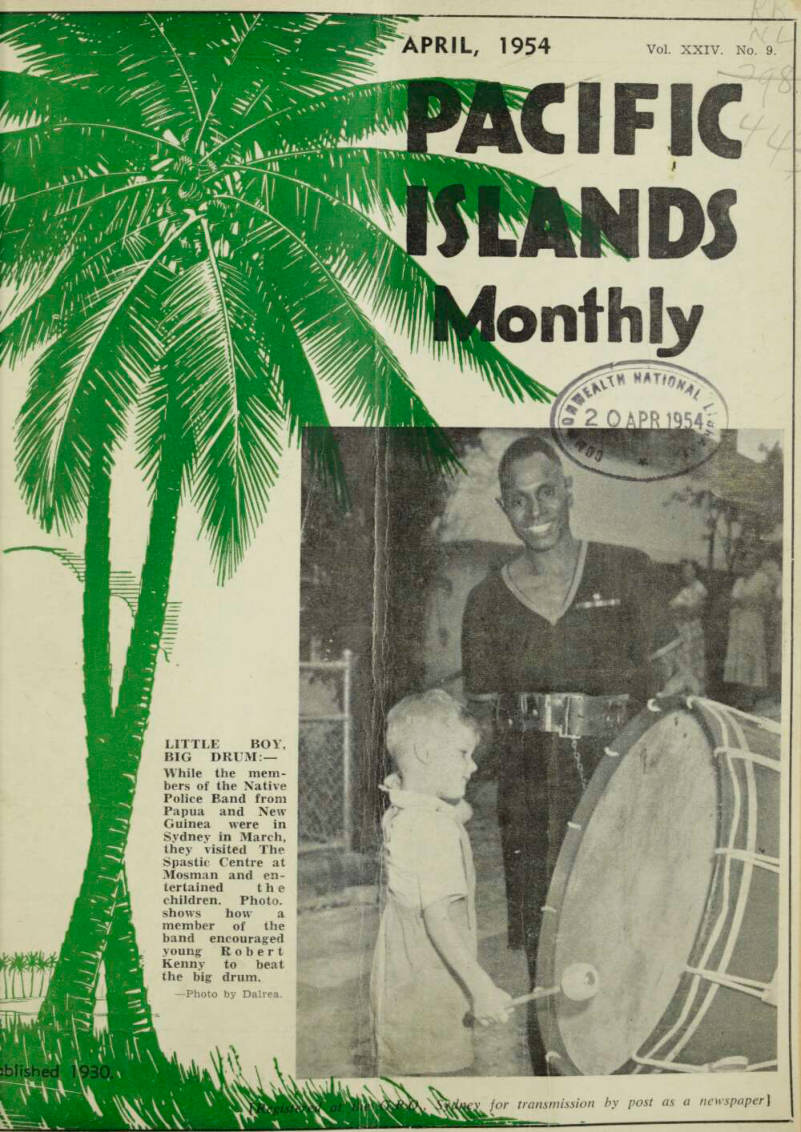 1
1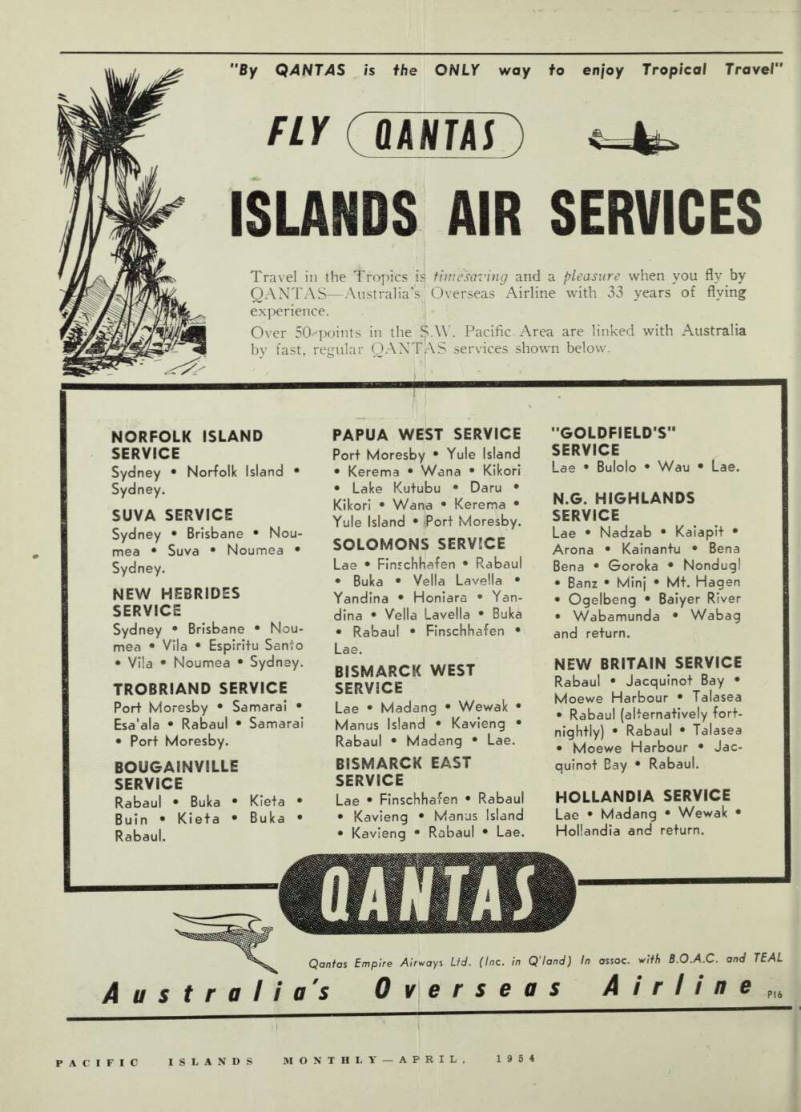 2
2 3
3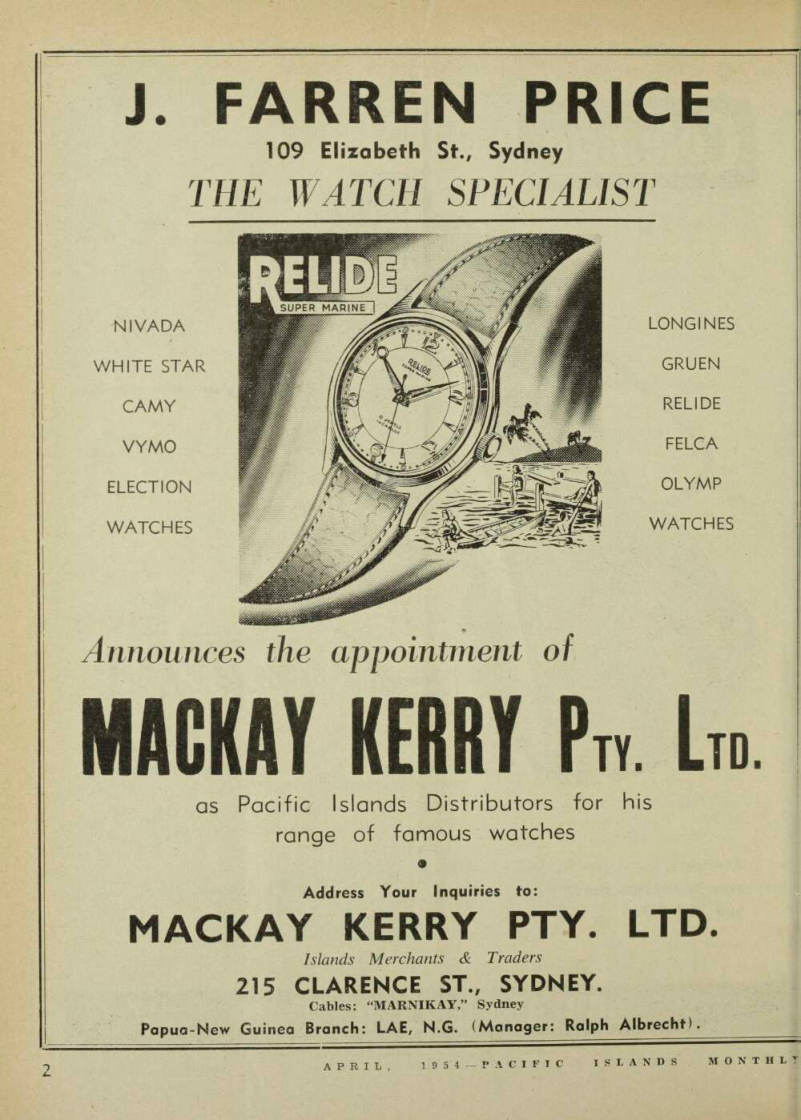 4
4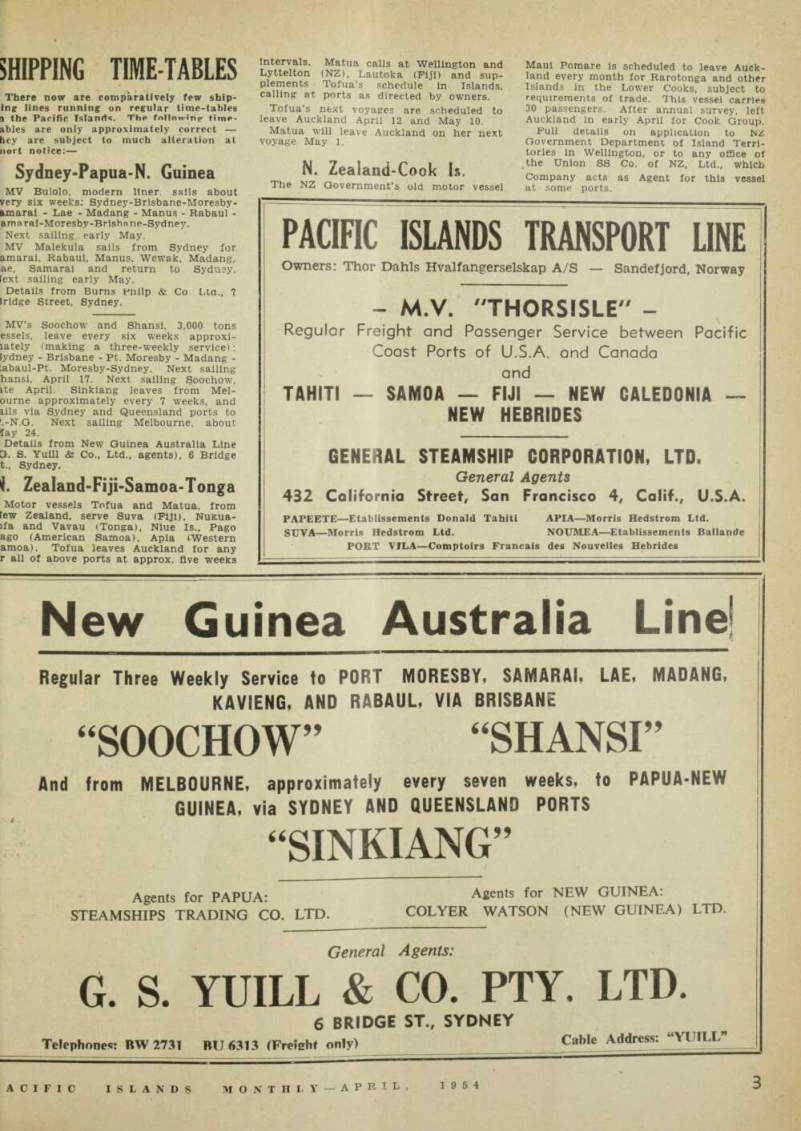 5
5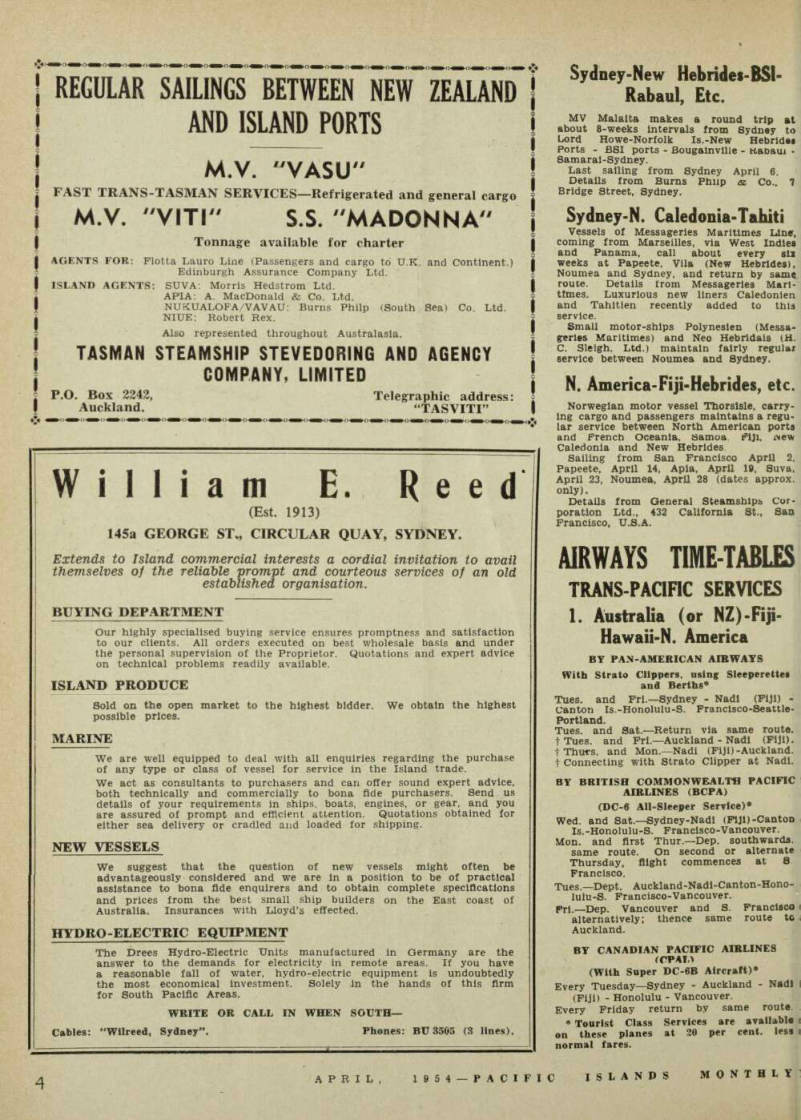 6
6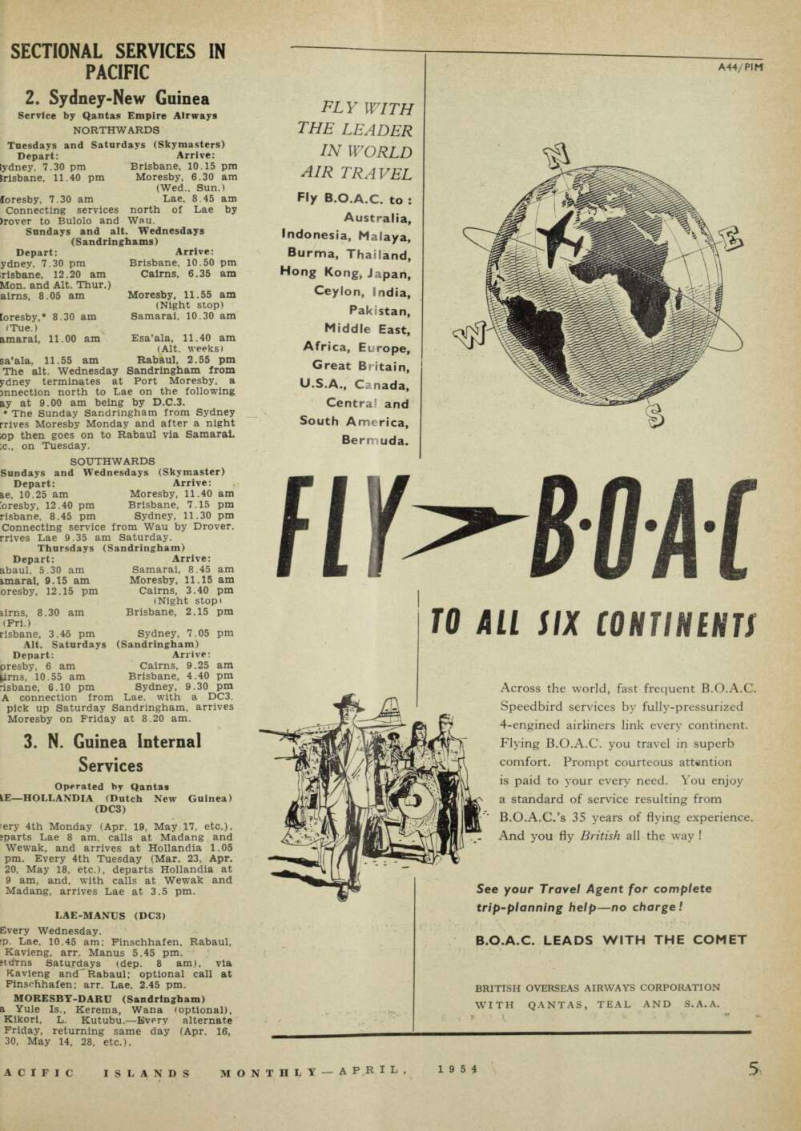 7
7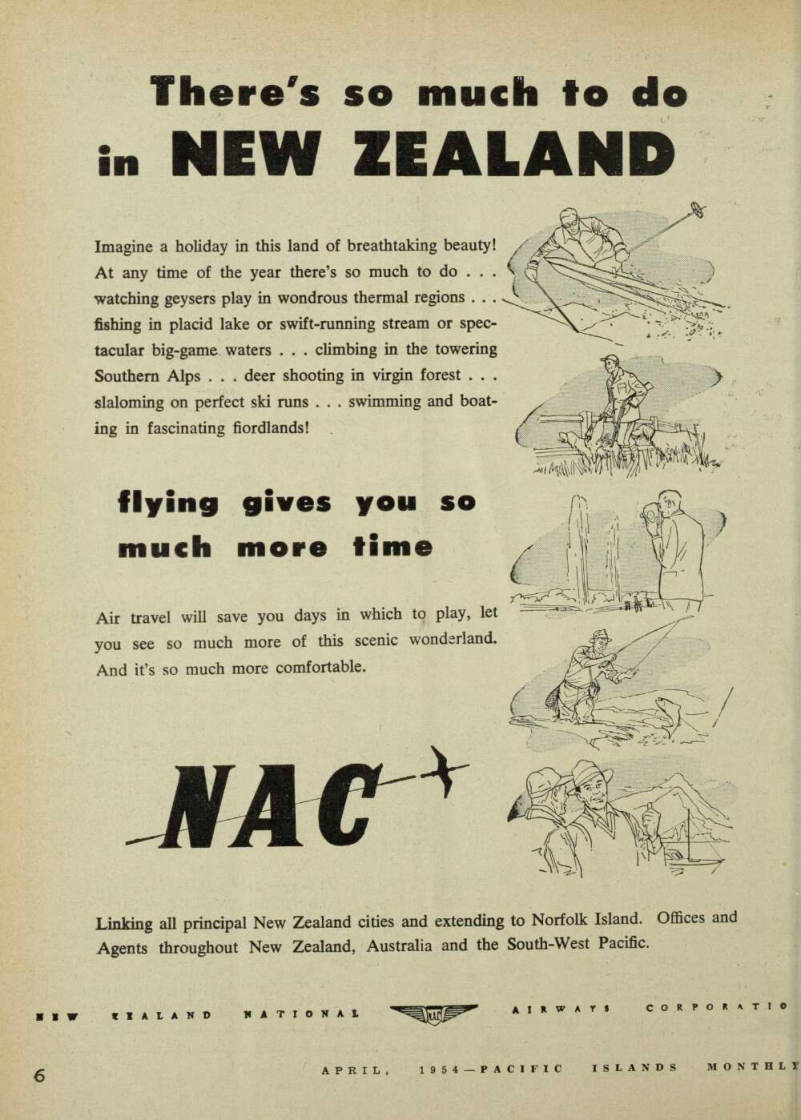 8
8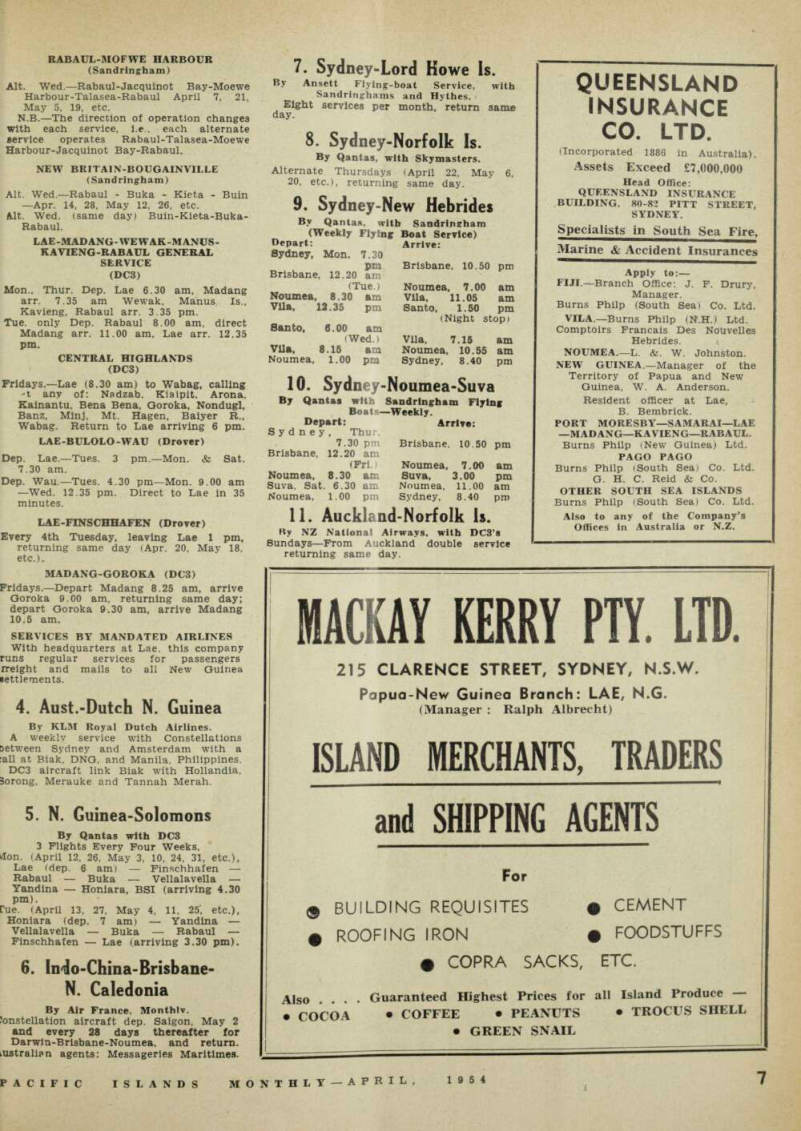 9
9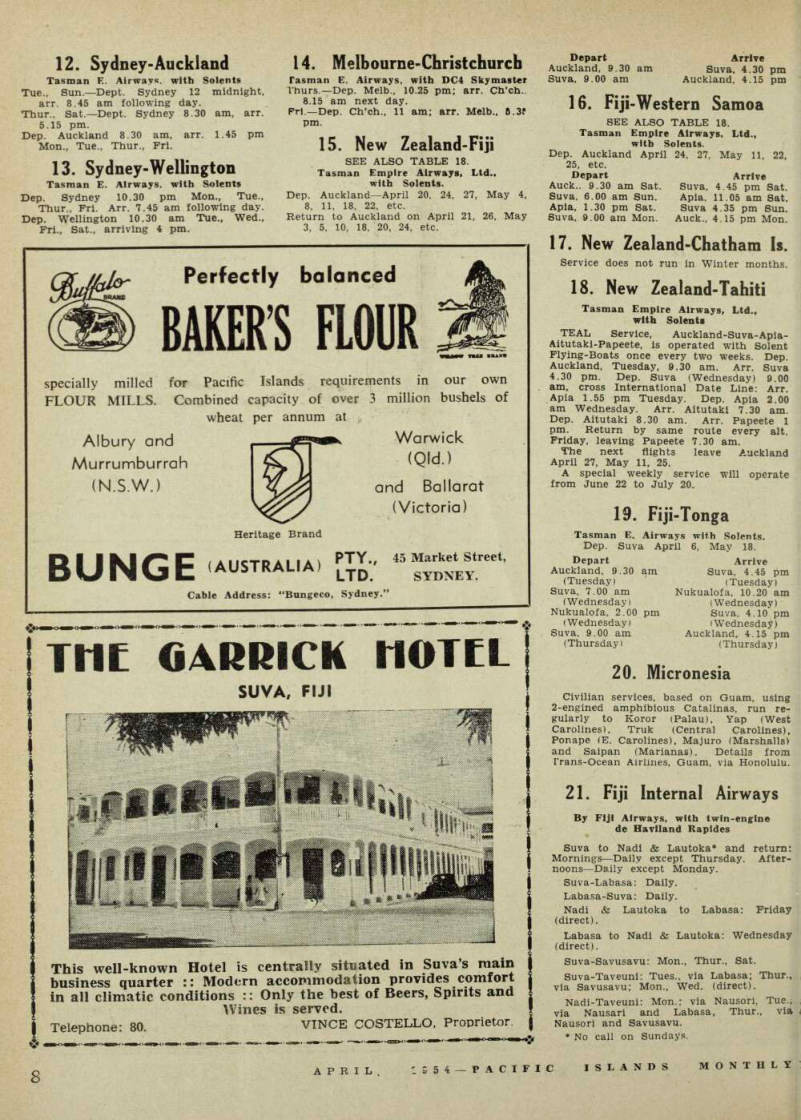 10
10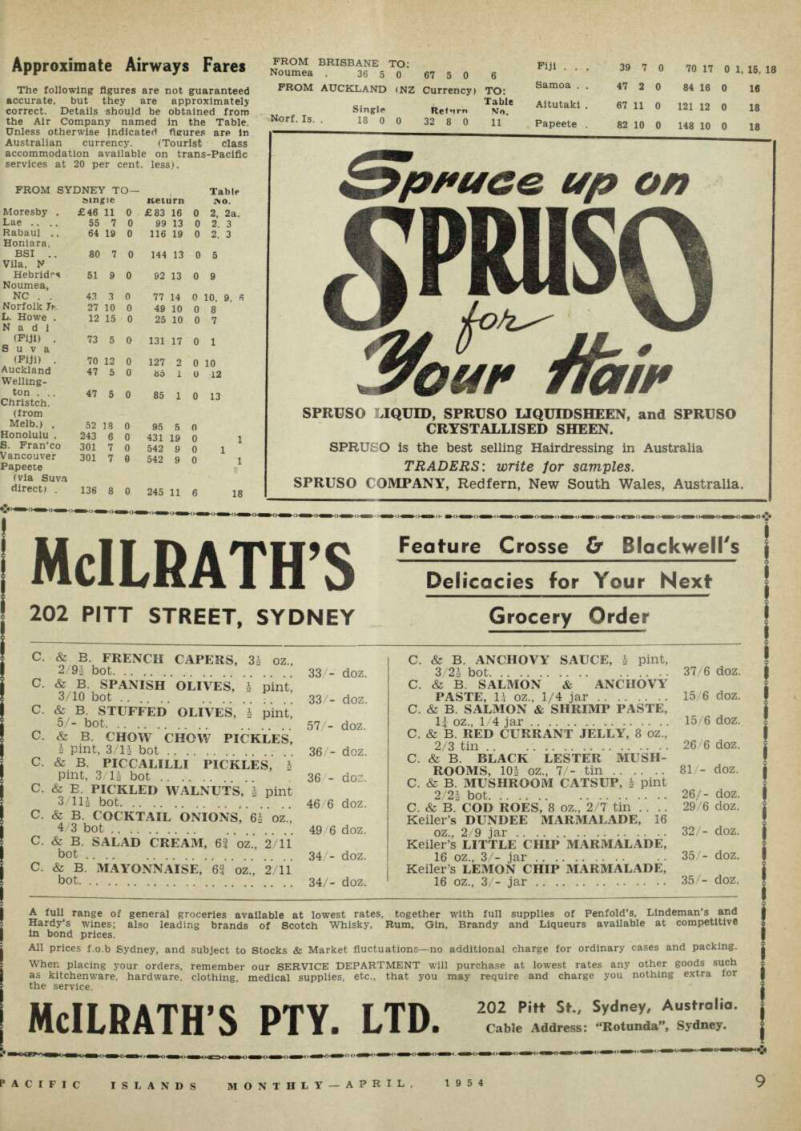 11
11 12
12 13
13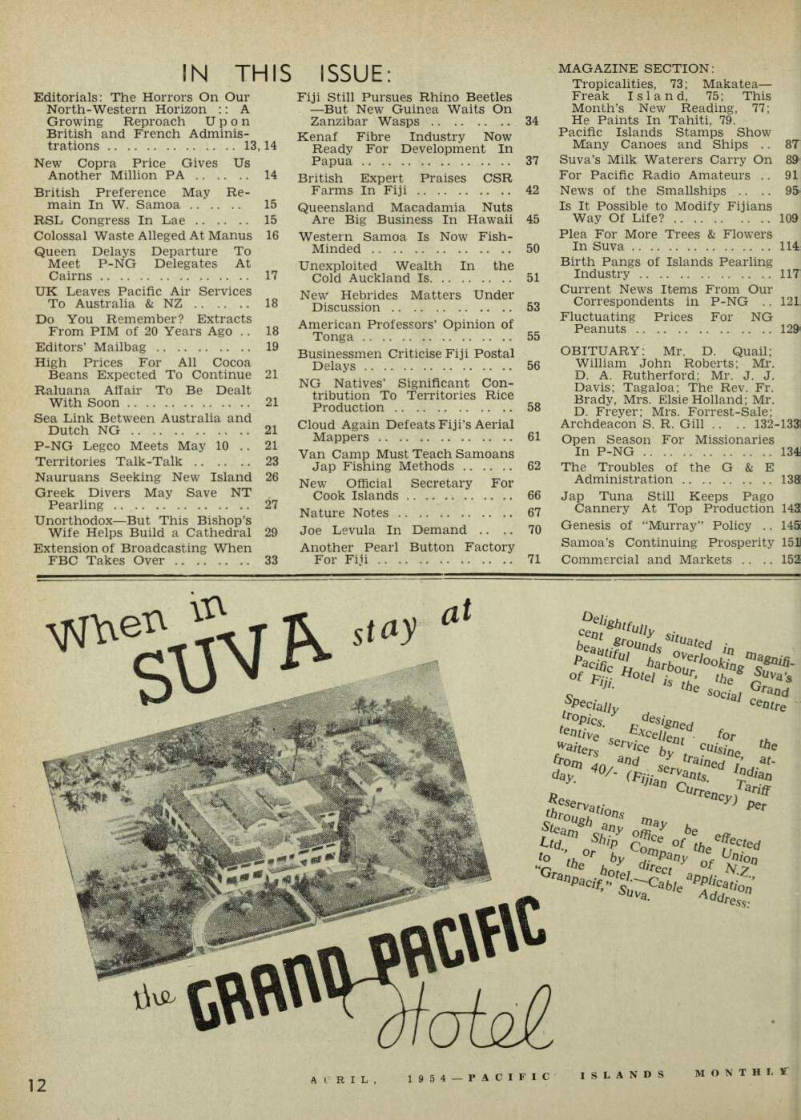 14
14 15
15 16
16 17
17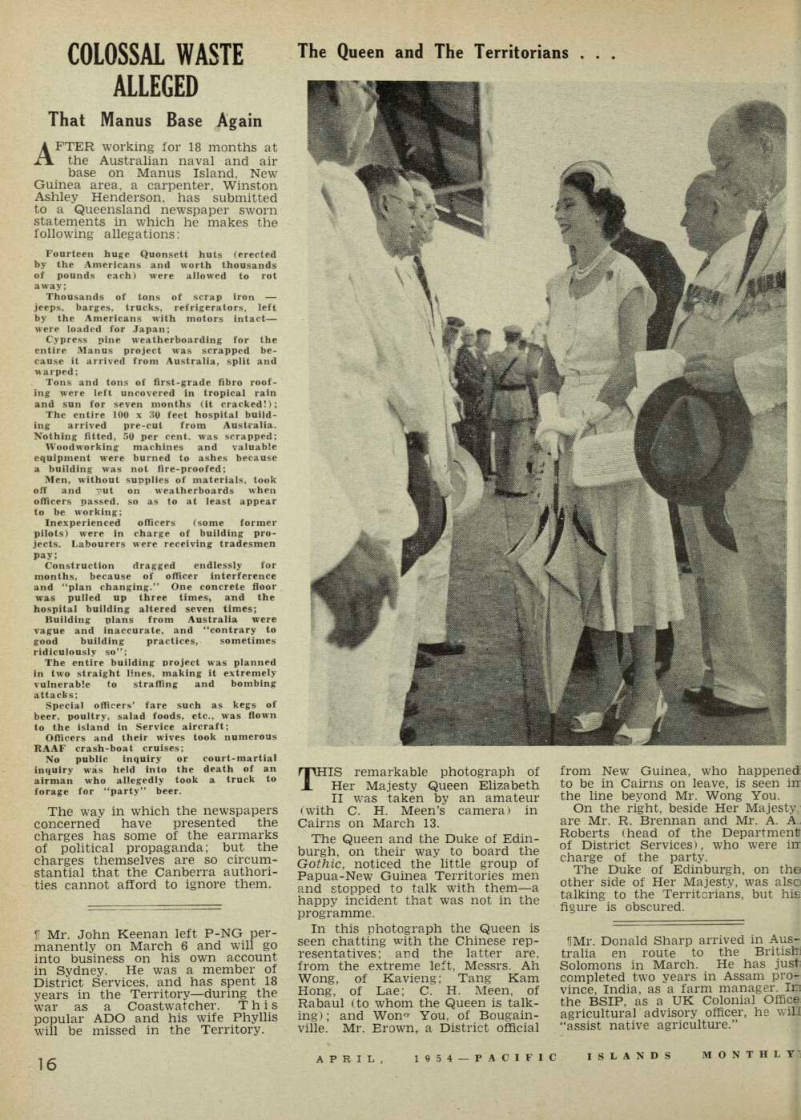 18
18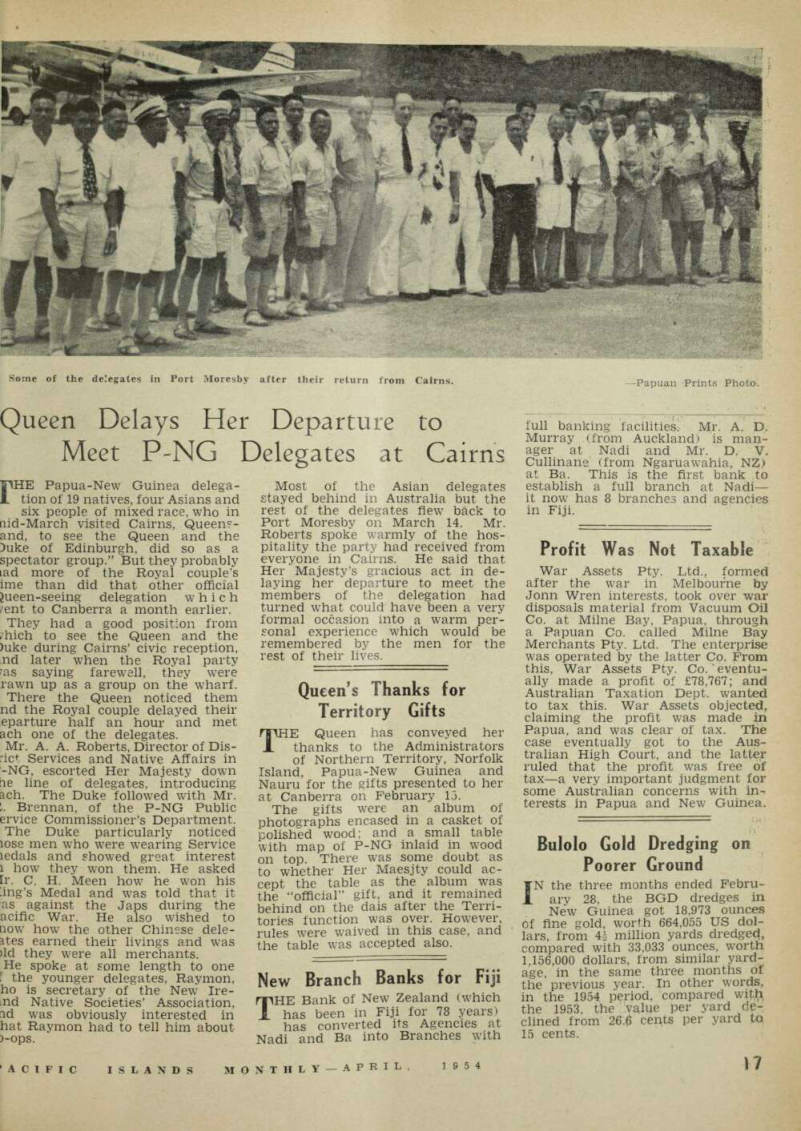 19
19 20
20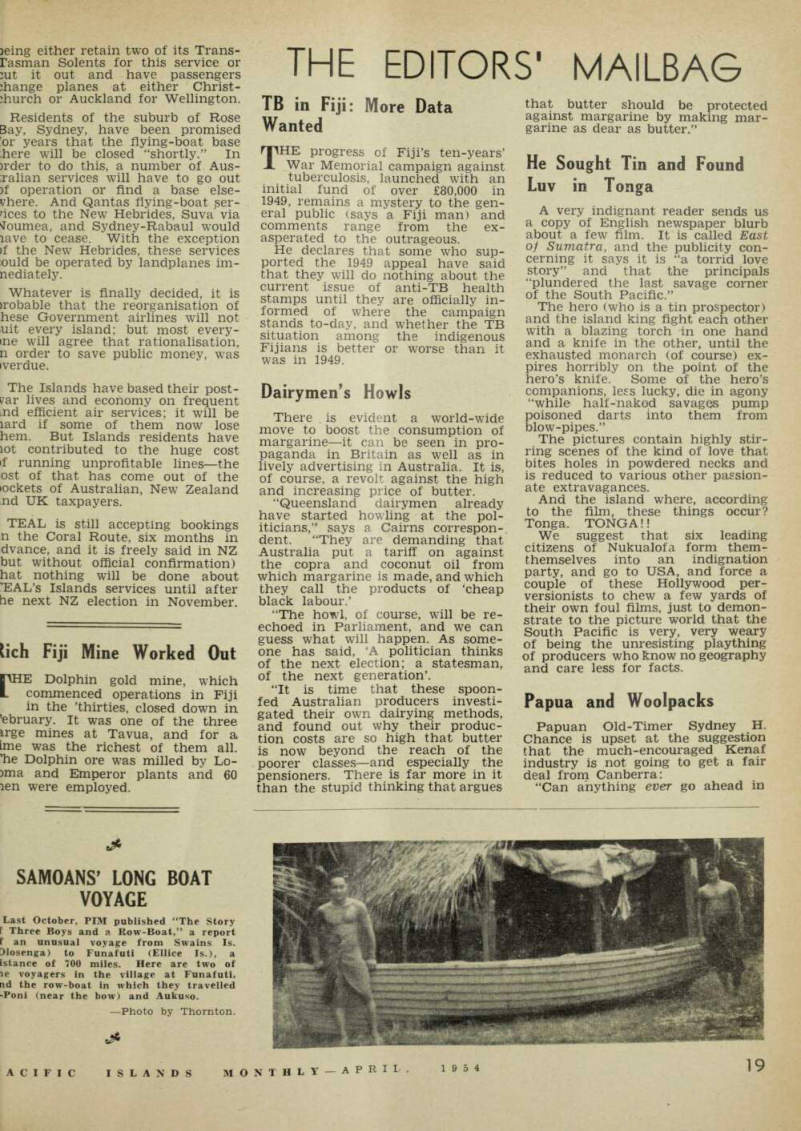 21
21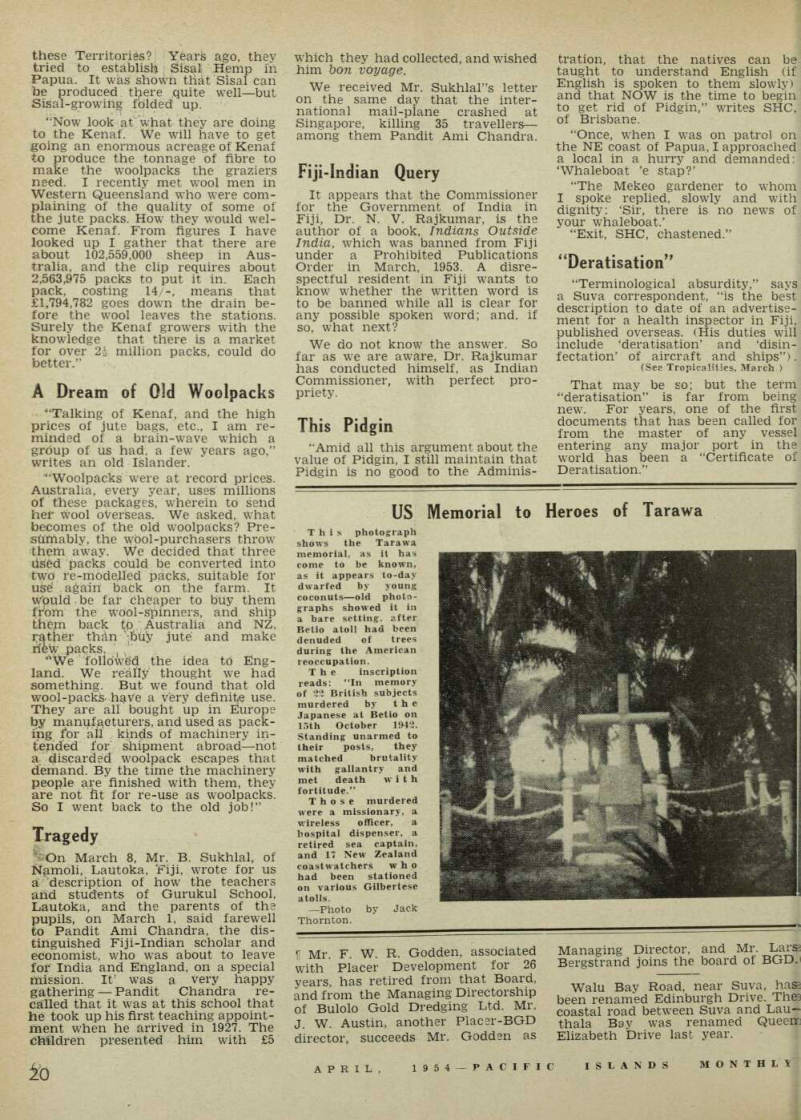 22
22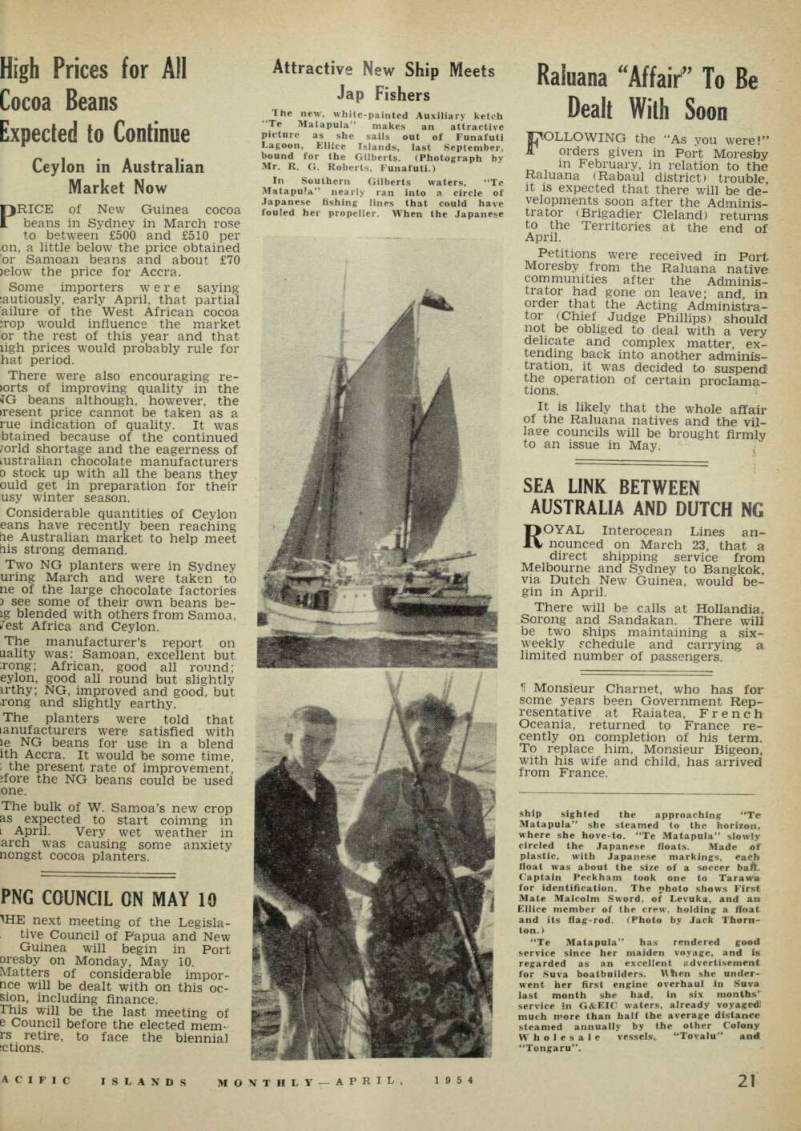 23
23 24
24 25
25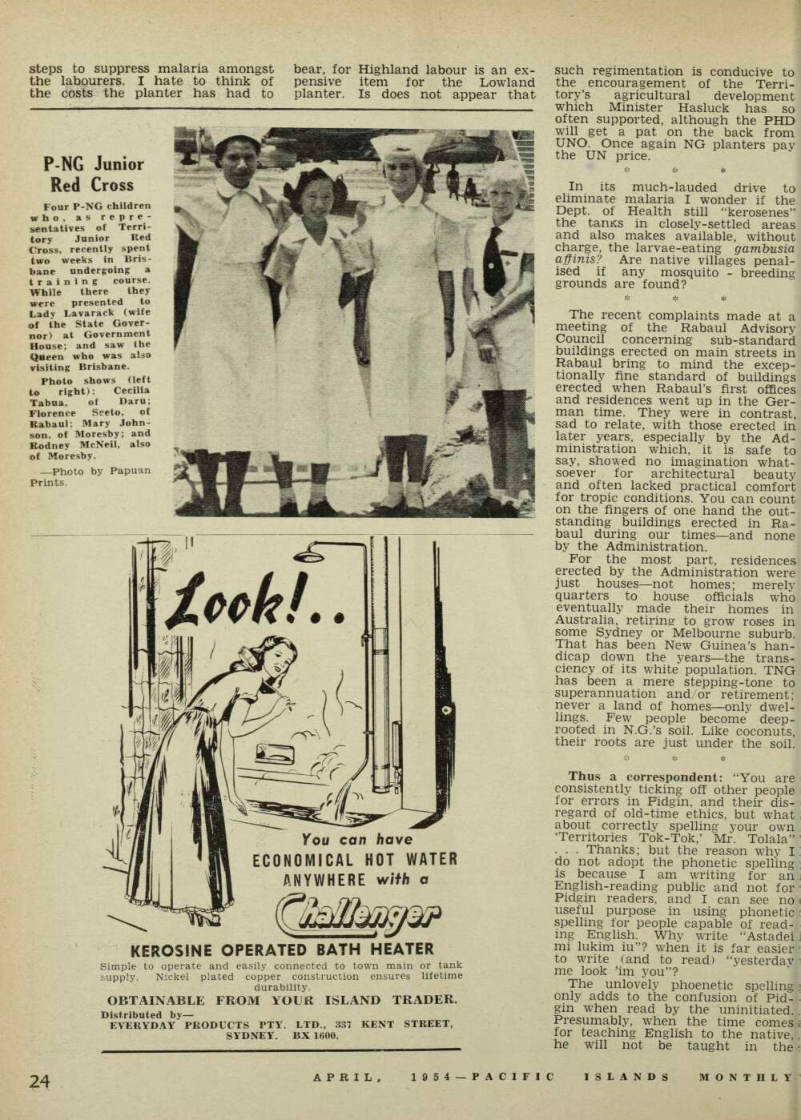 26
26 27
27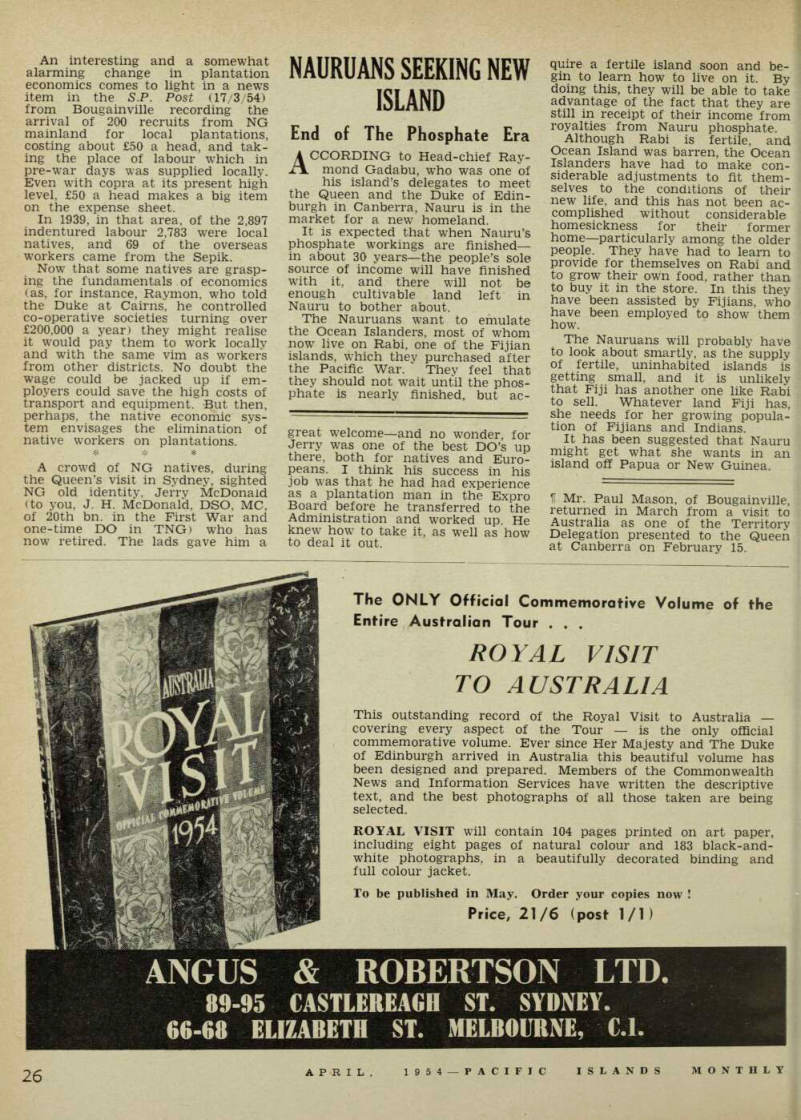 28
28 29
29 30
30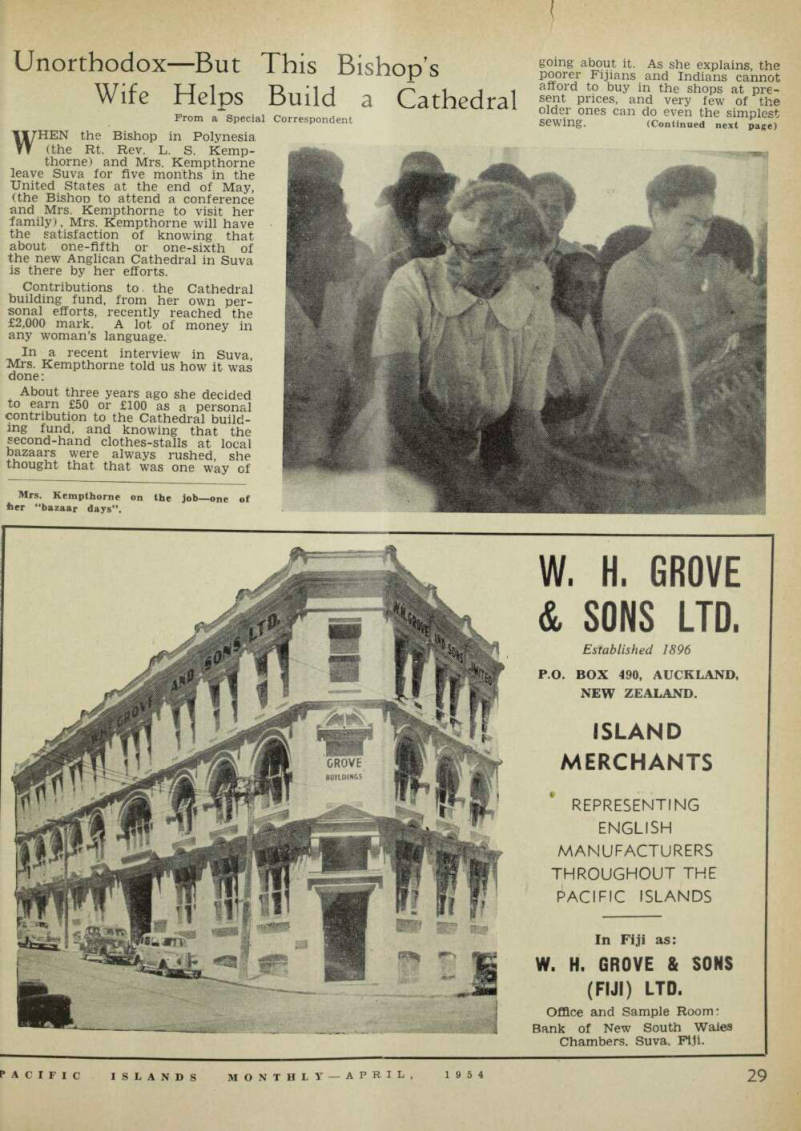 31
31 32
32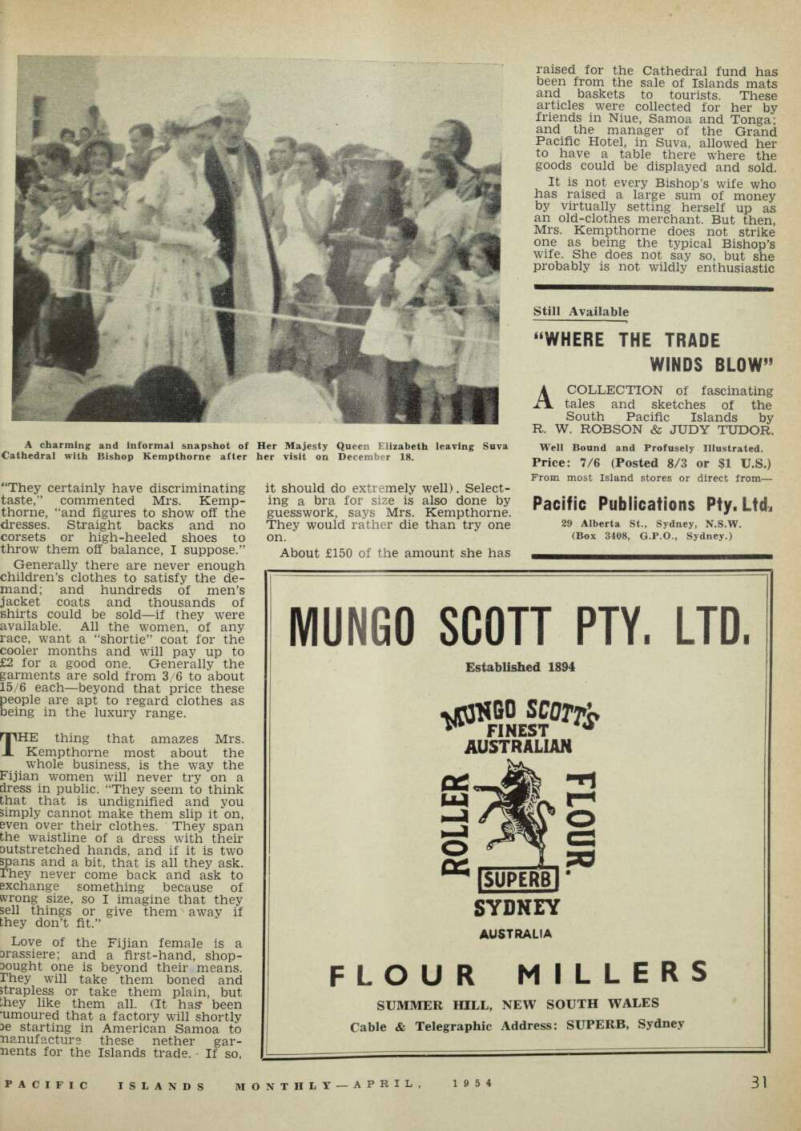 33
33 34
34 35
35 36
36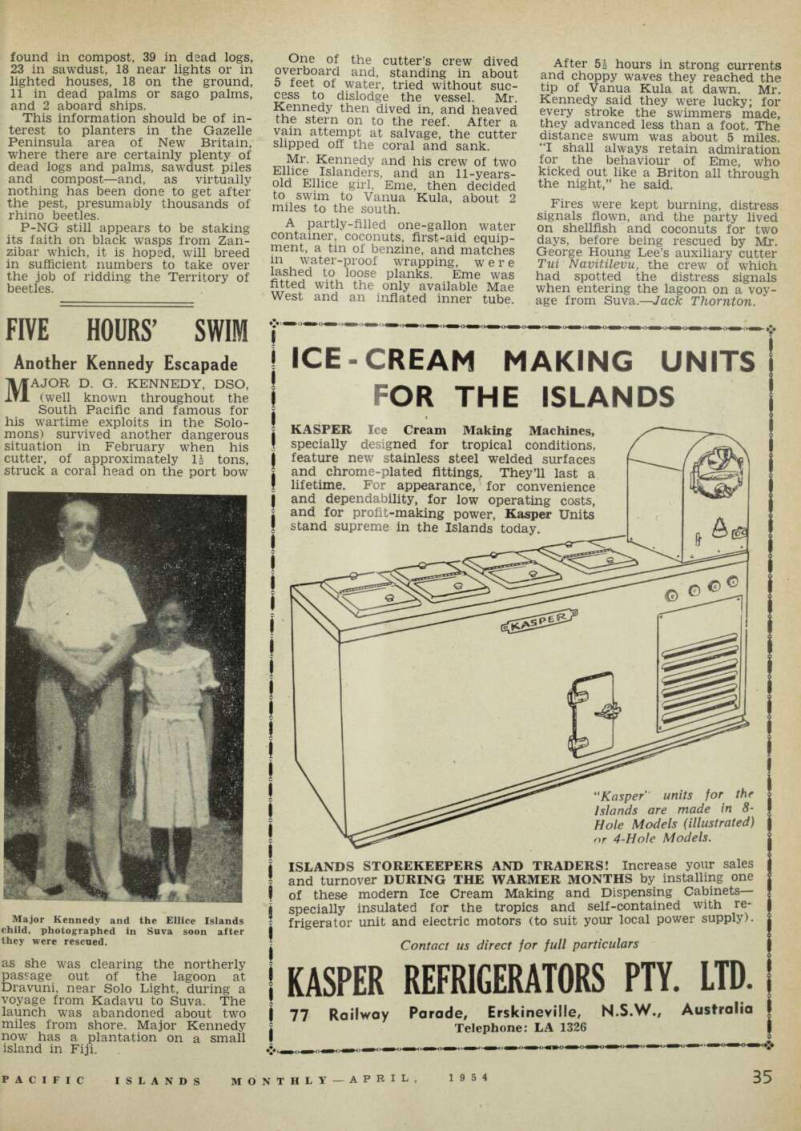 37
37 38
38 39
39 40
40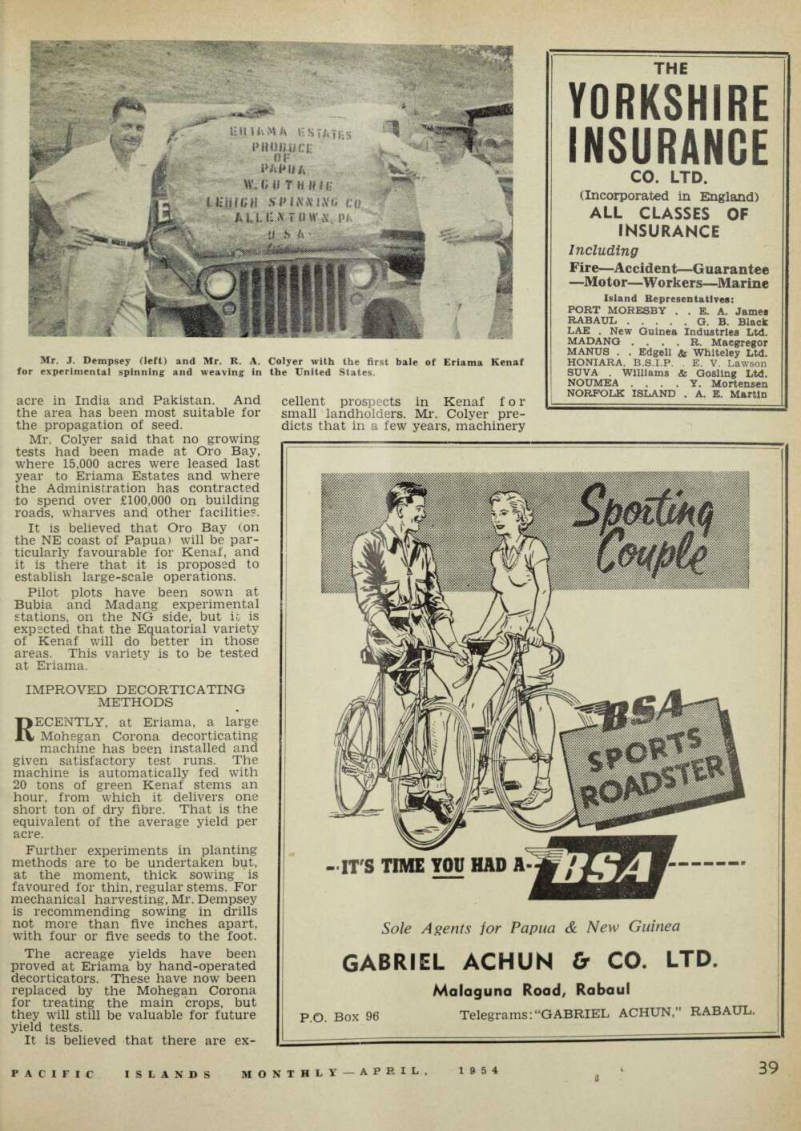 41
41 42
42 43
43 44
44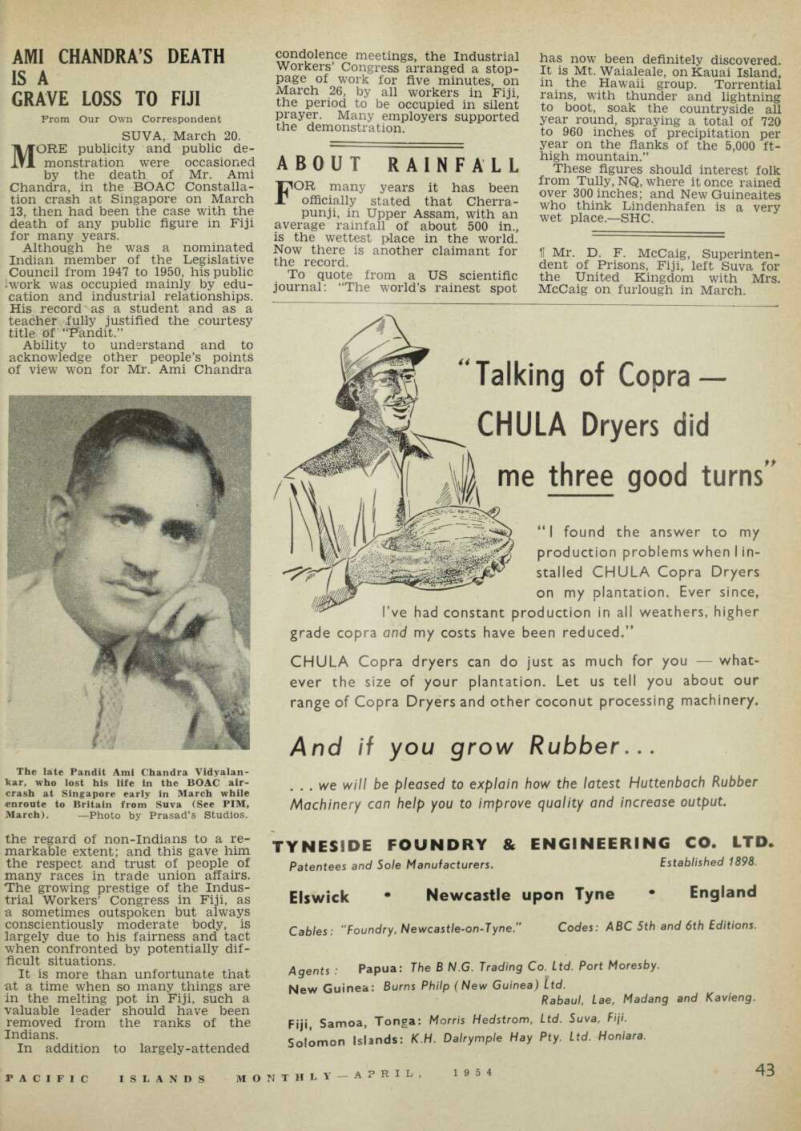 45
45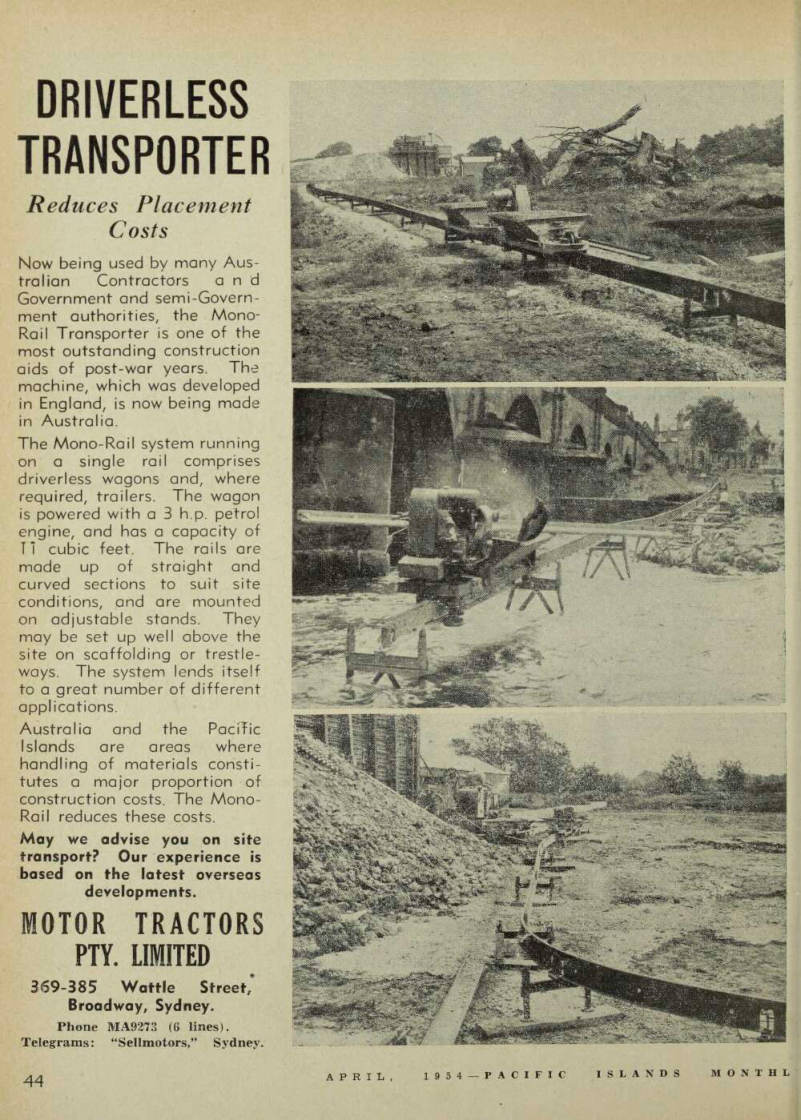 46
46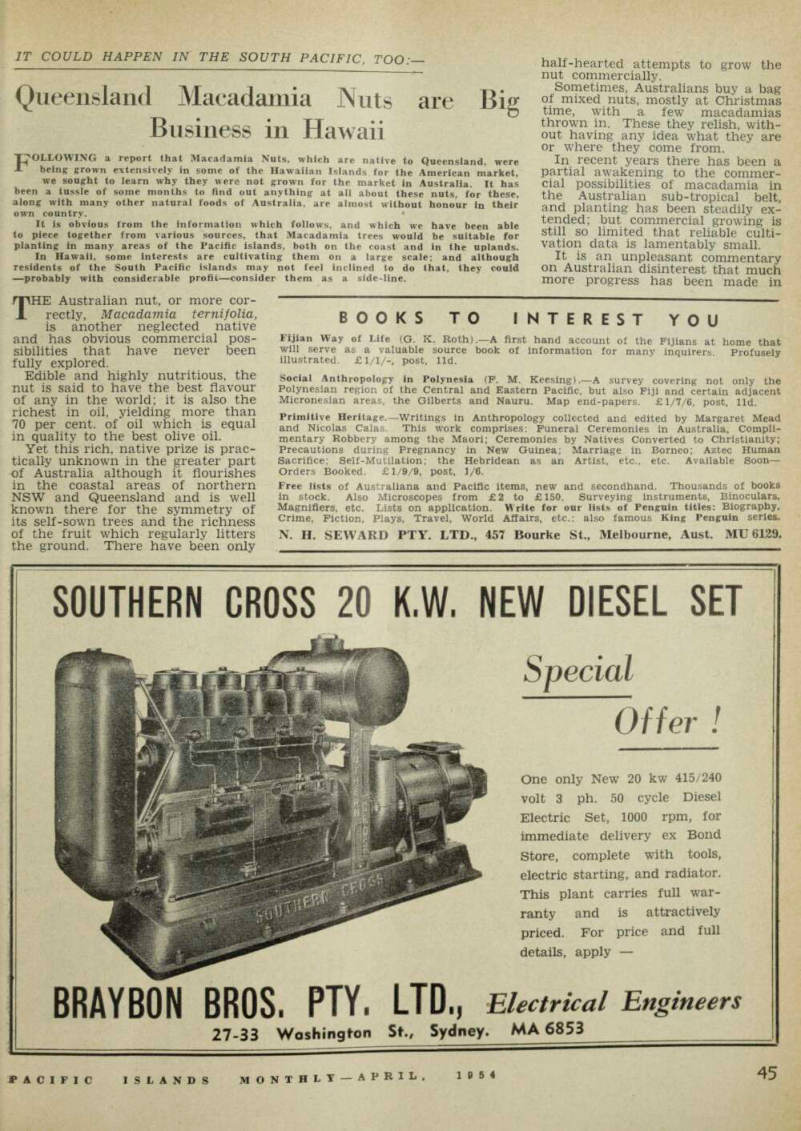 47
47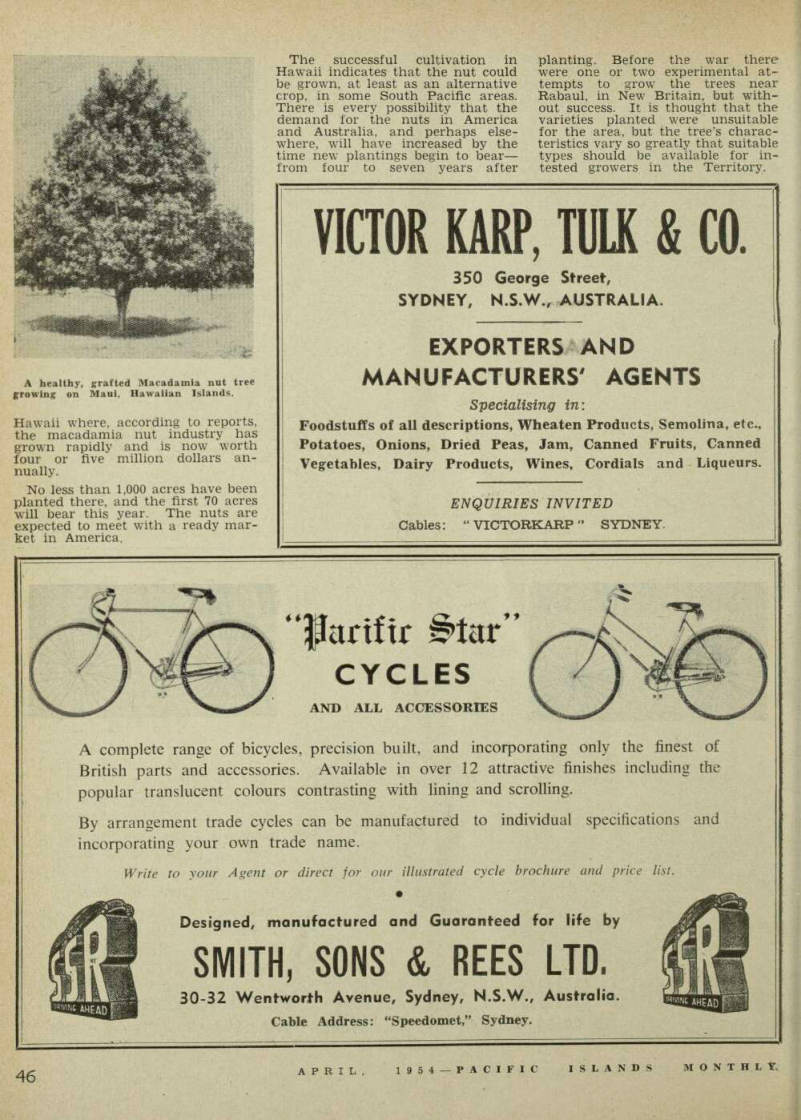 48
48 49
49 50
50 51
51 52
52 53
53 54
54 55
55 56
56 57
57 58
58 59
59 60
60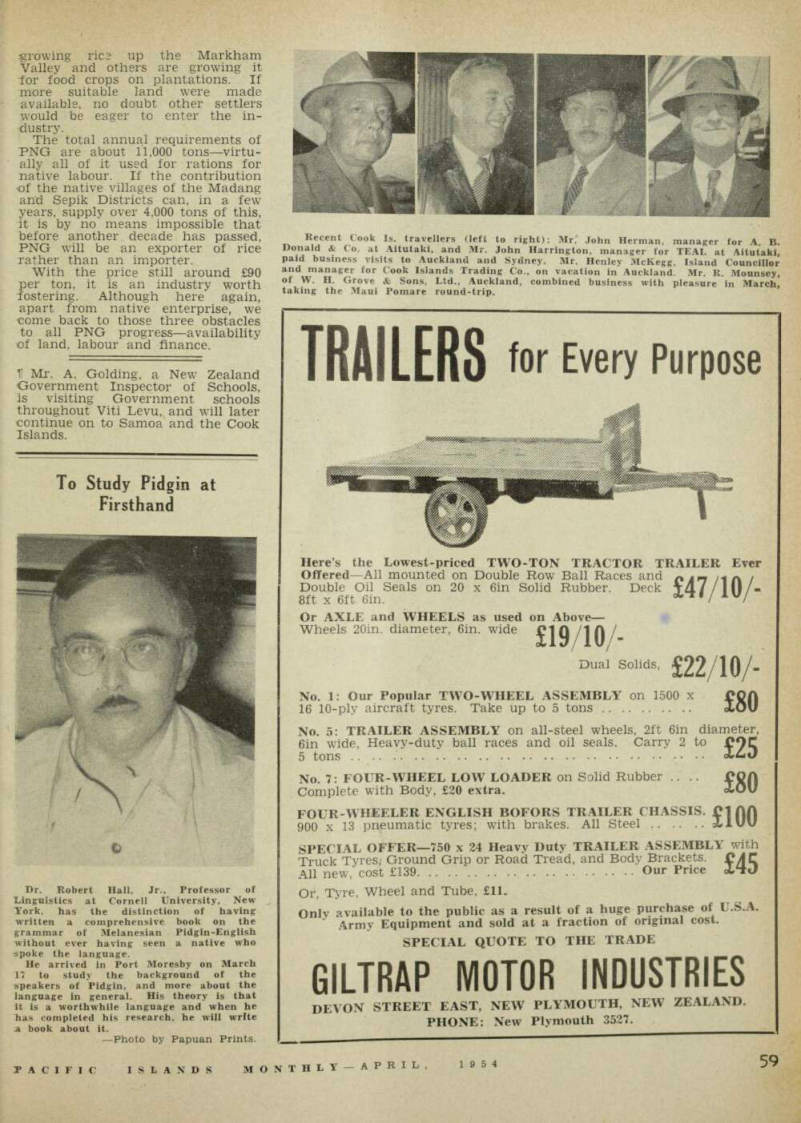 61
61 62
62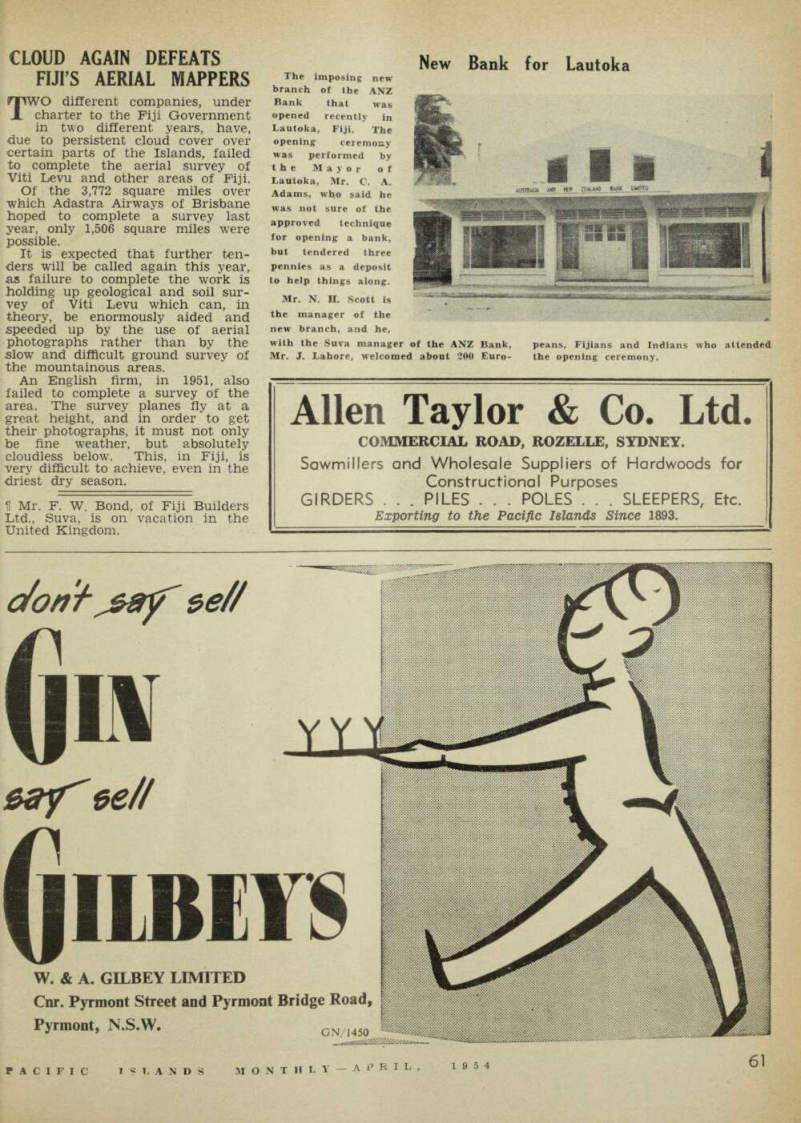 63
63 64
64 65
65 66
66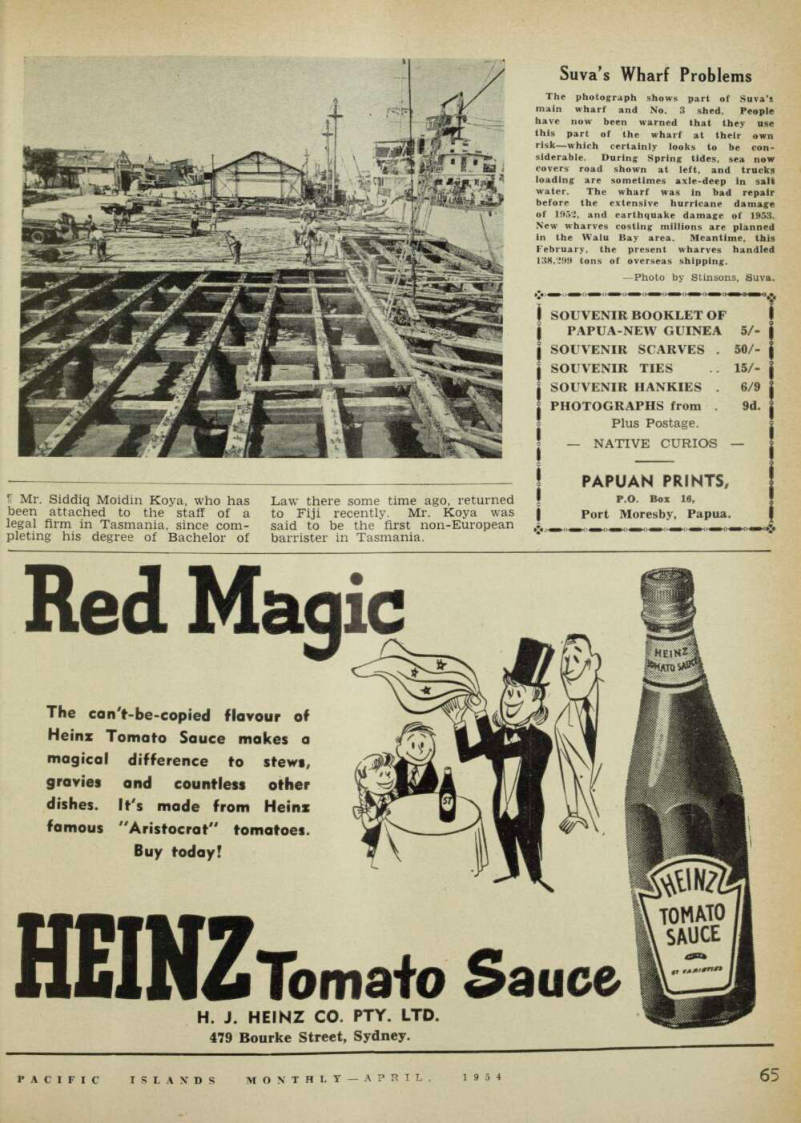 67
67 68
68 69
69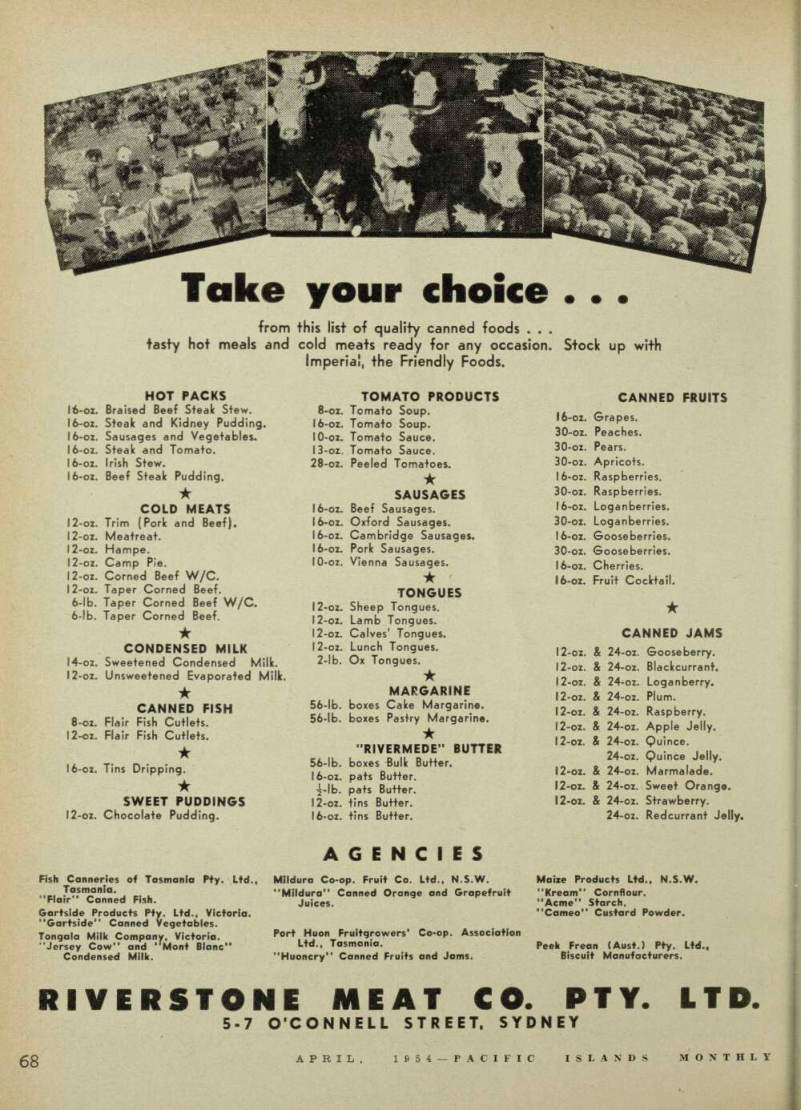 70
70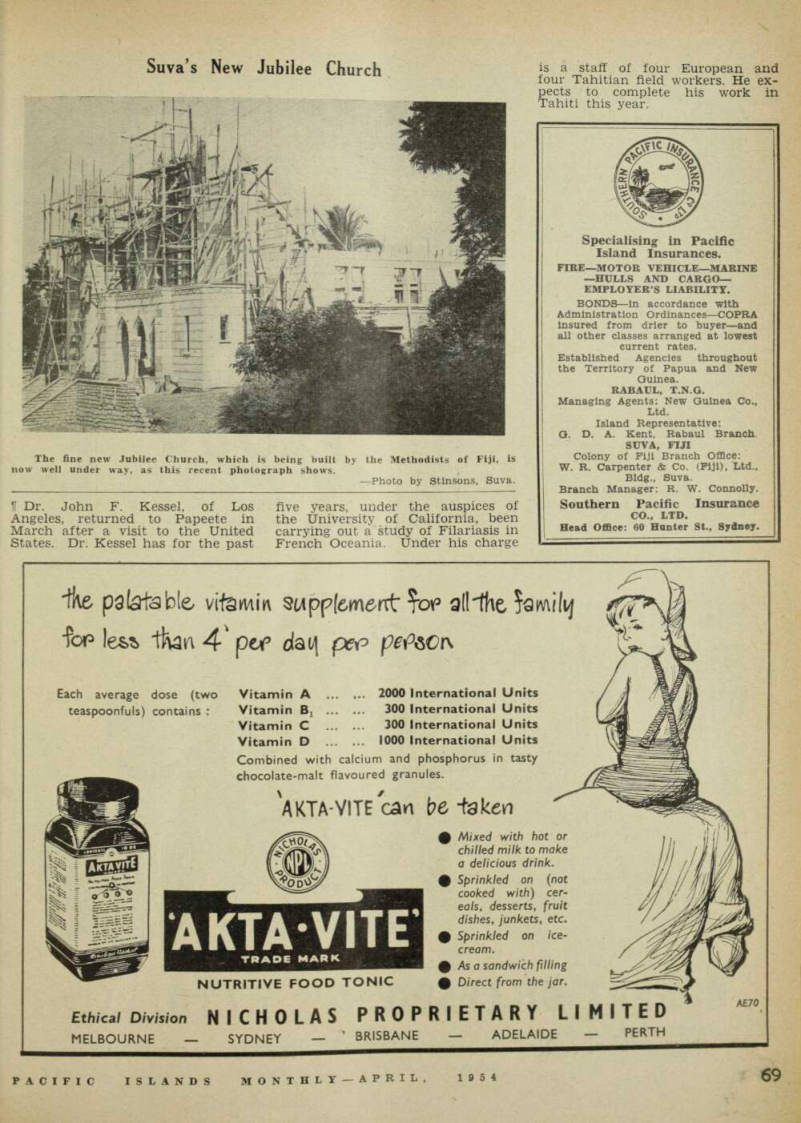 71
71 72
72 73
73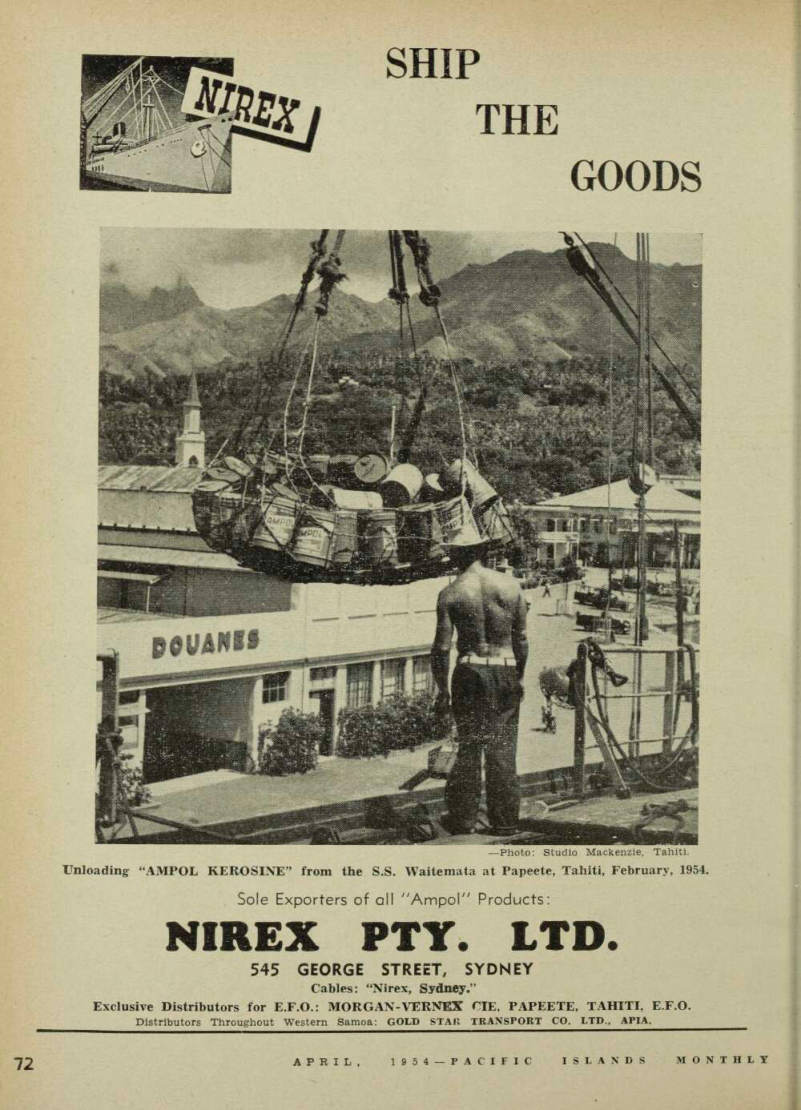 74
74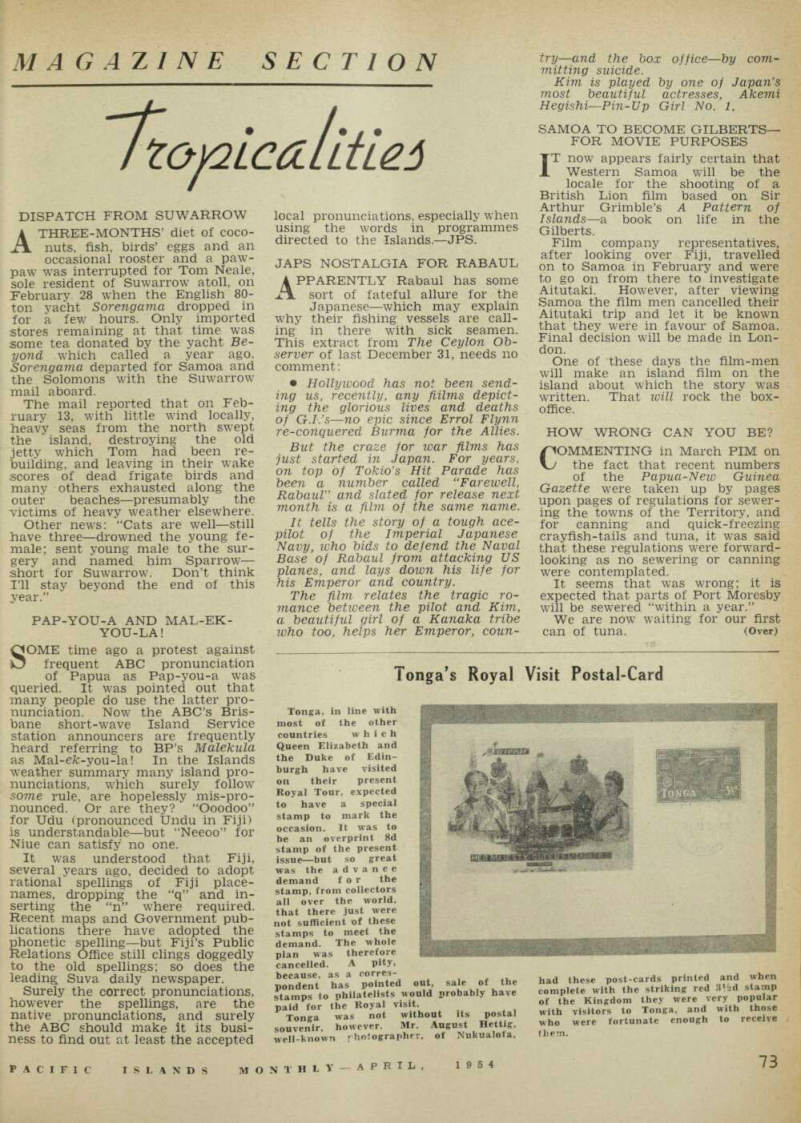 75
75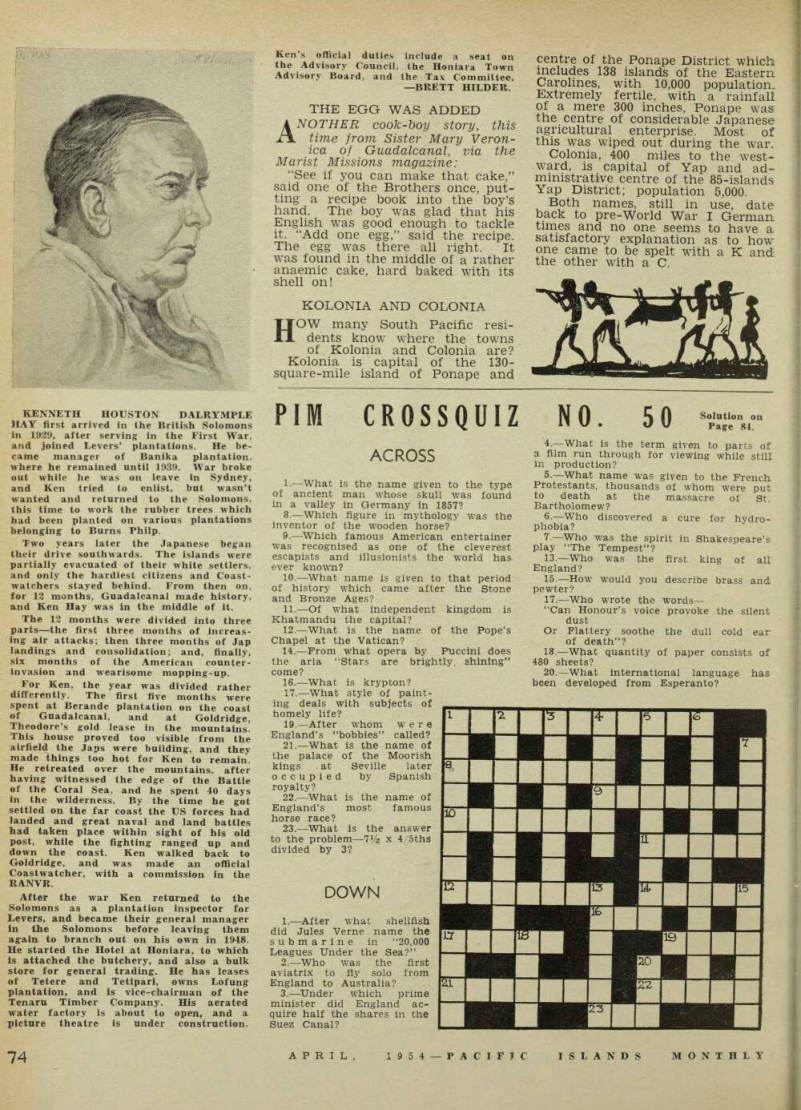 76
76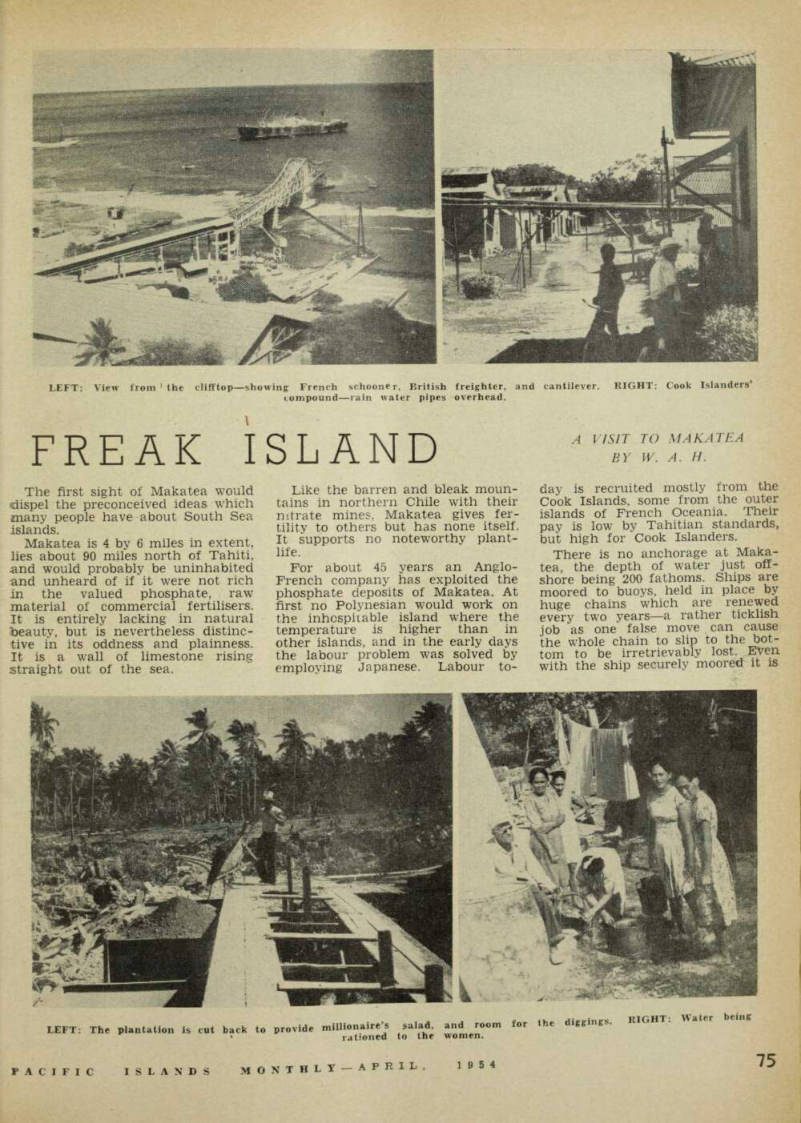 77
77 78
78 79
79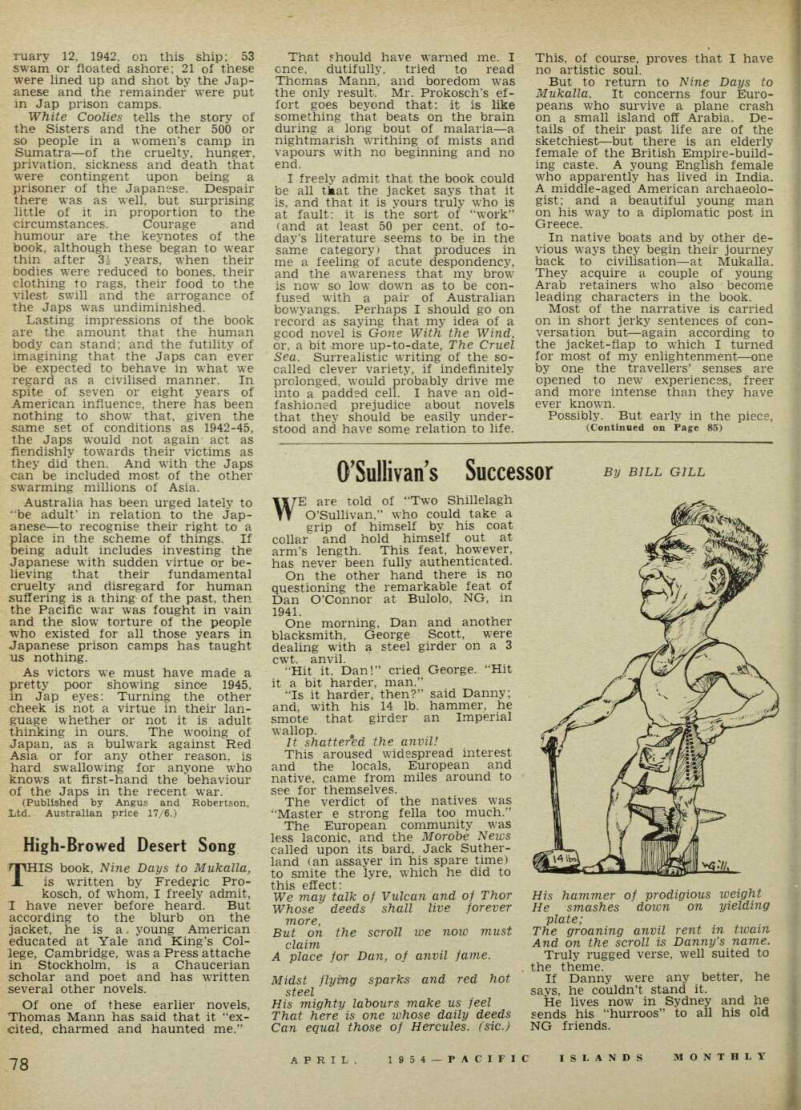 80
80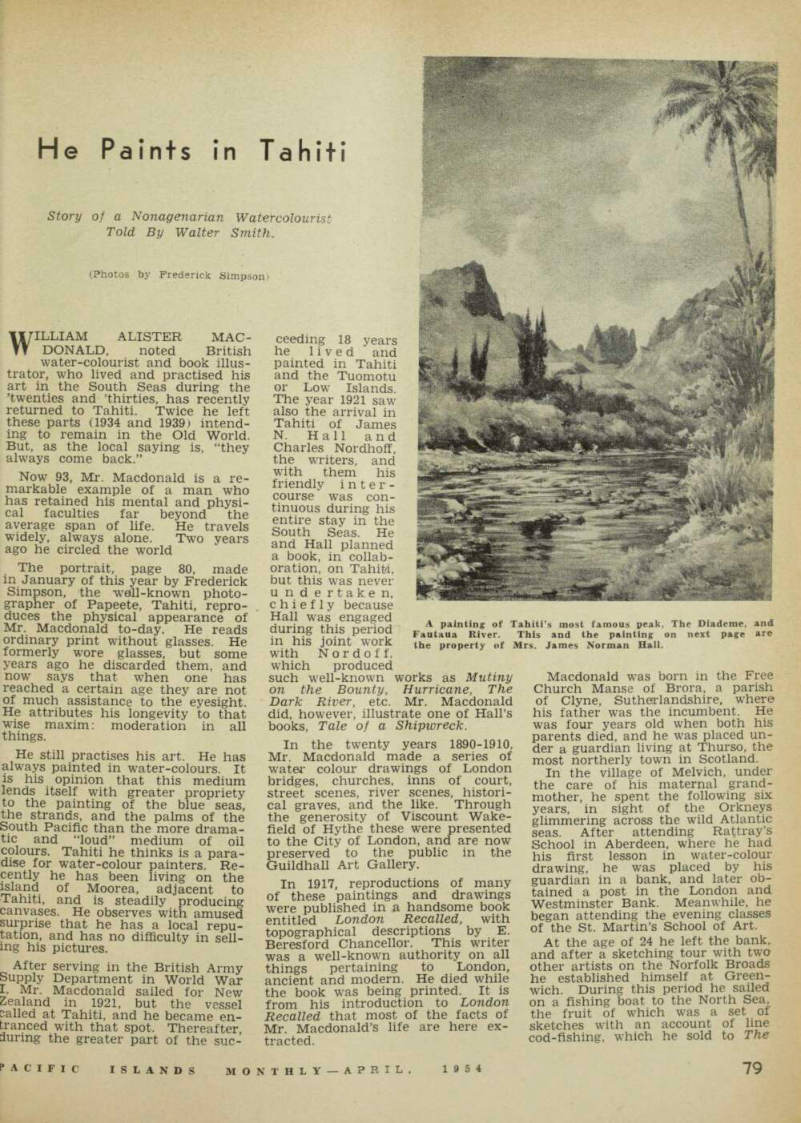 81
81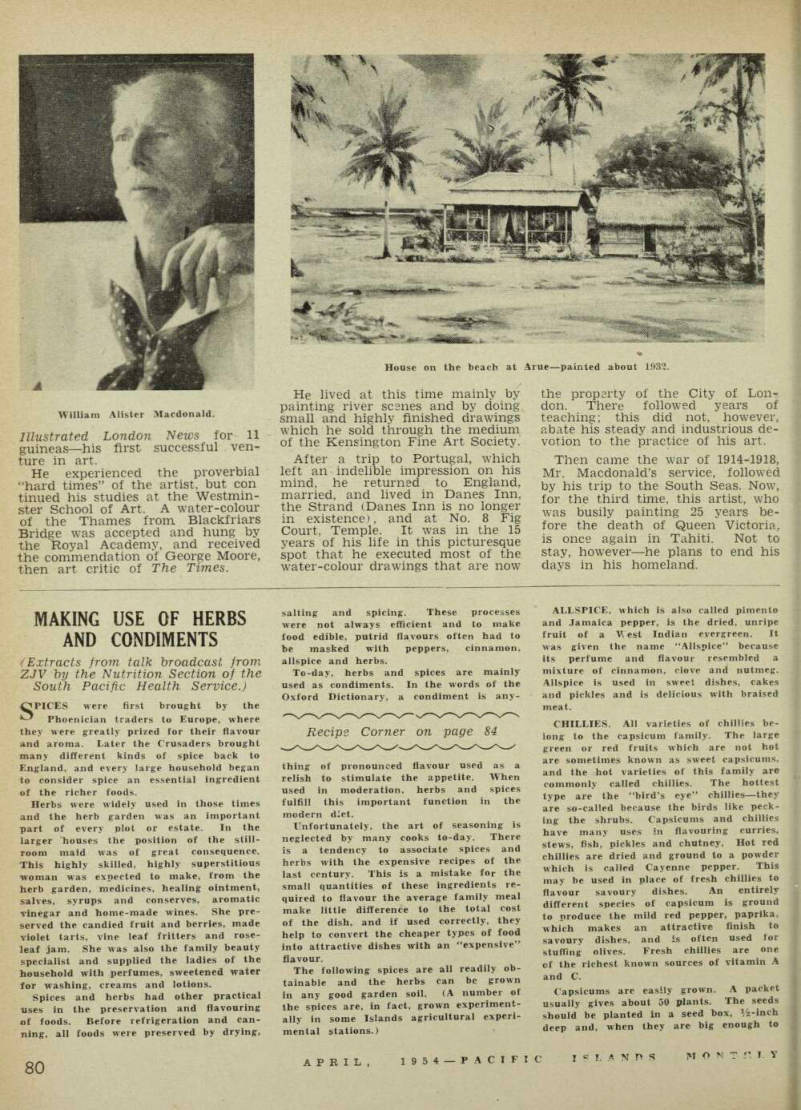 82
82 83
83 84
84 85
85 86
86 87
87 88
88 89
89 90
90 91
91 92
92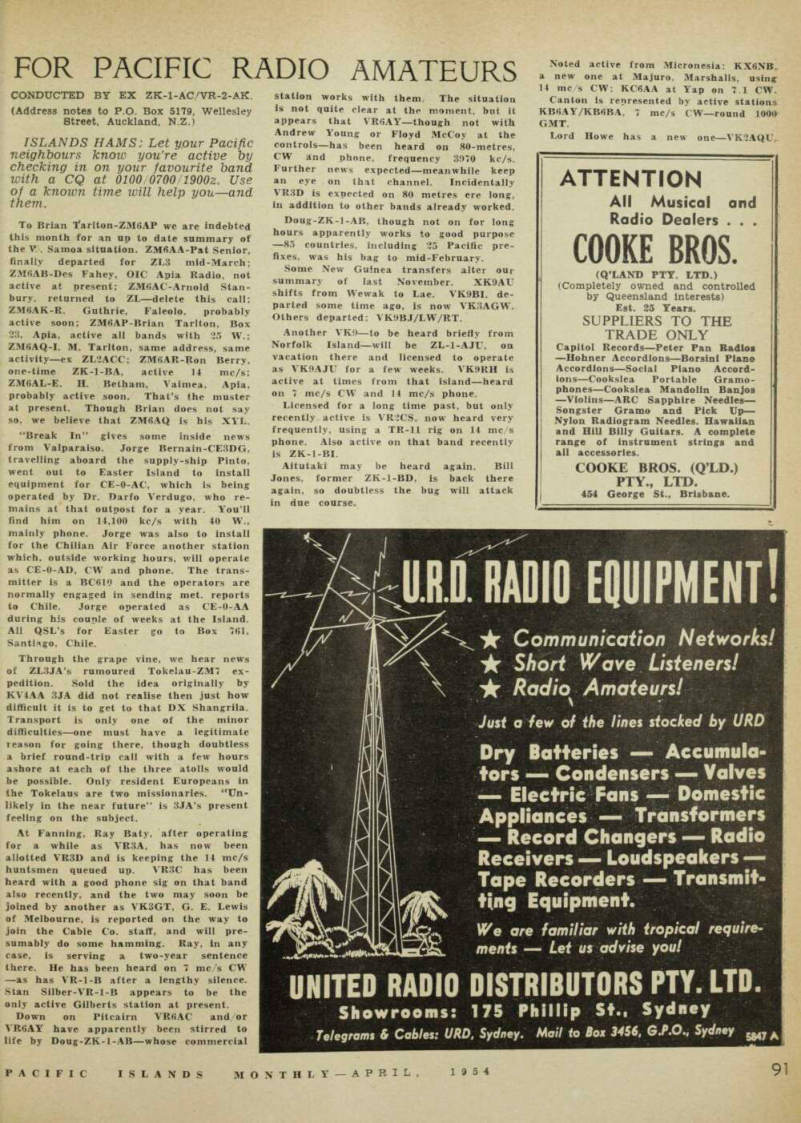 93
93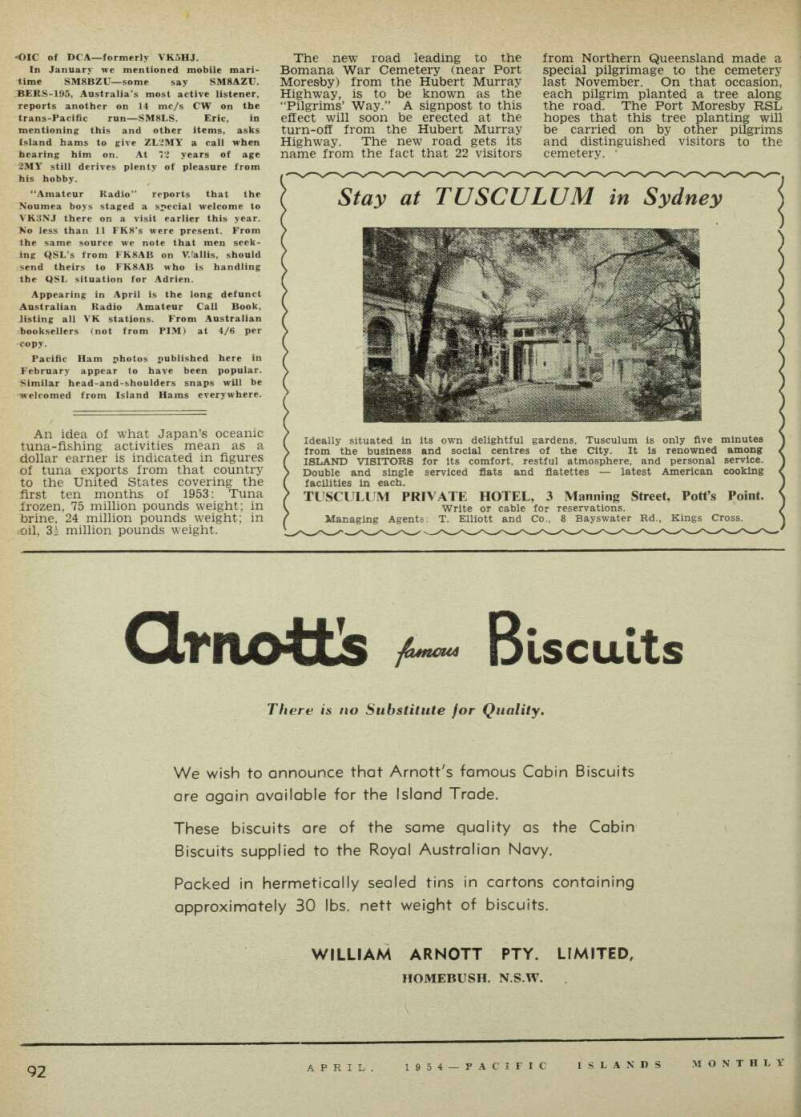 94
94 95
95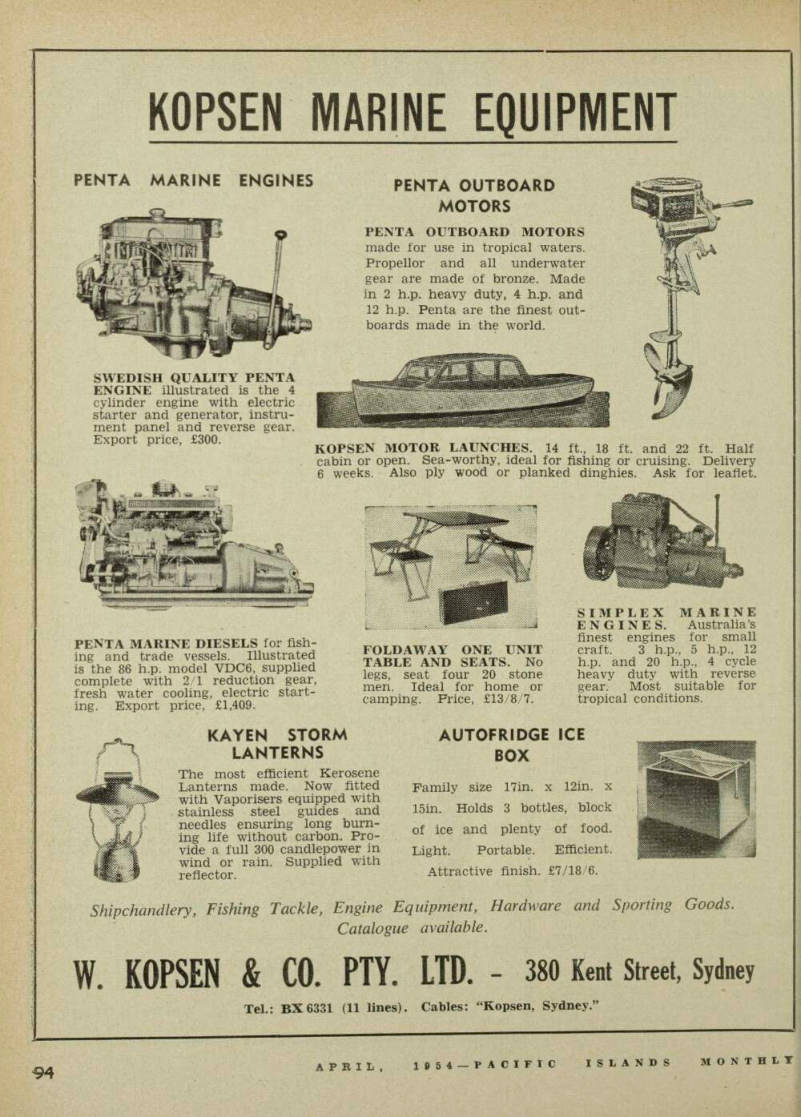 96
96 97
97 98
98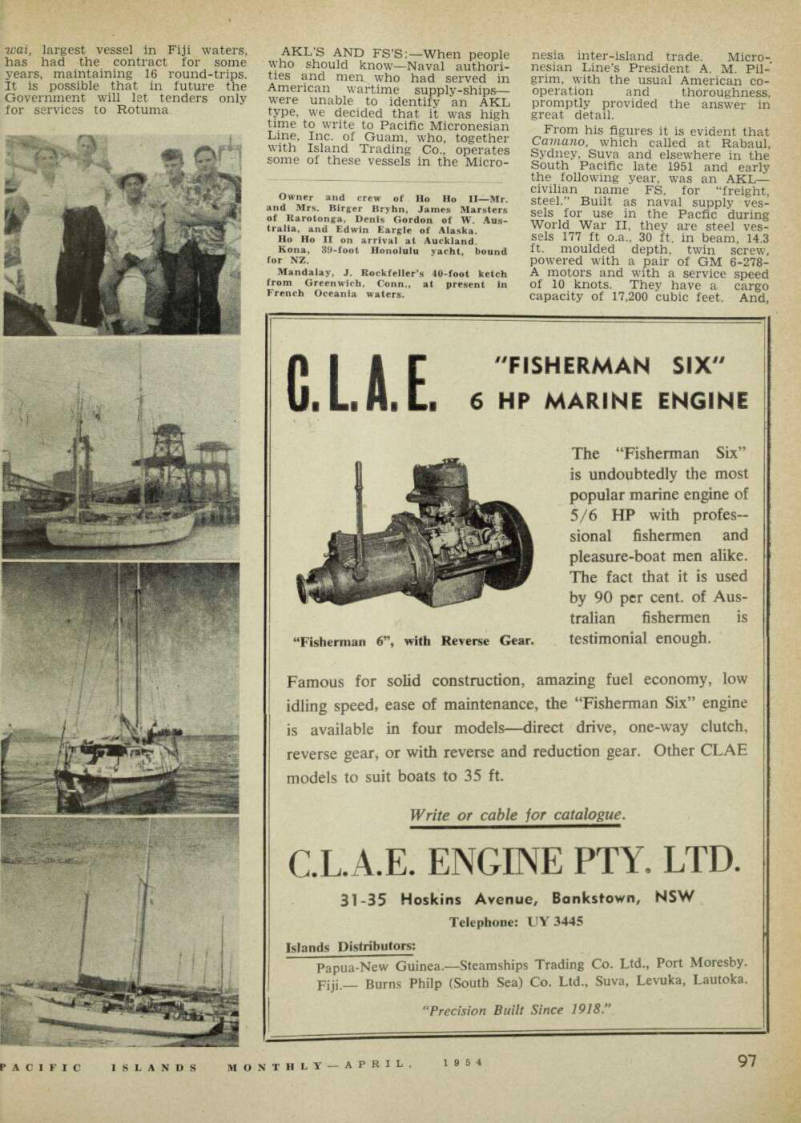 99
99 100
100 101
101 102
102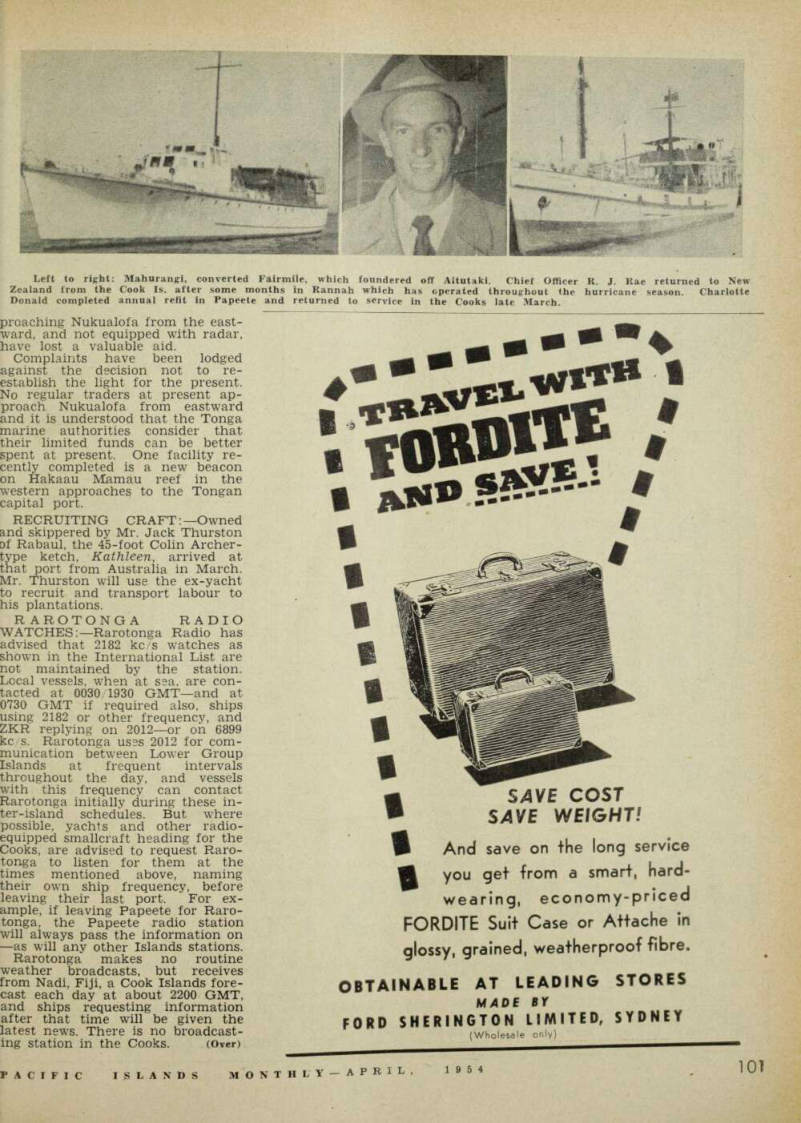 103
103 104
104 105
105 106
106 107
107 108
108 109
109 110
110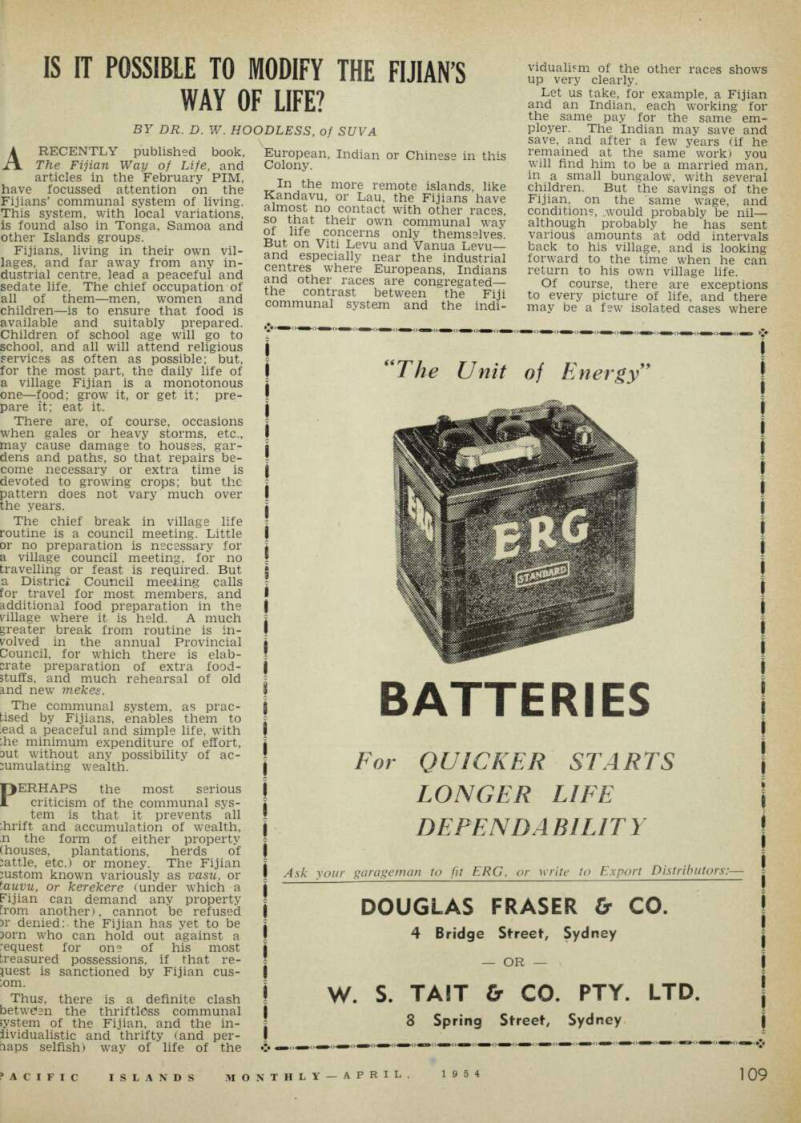 111
111 112
112 113
113 114
114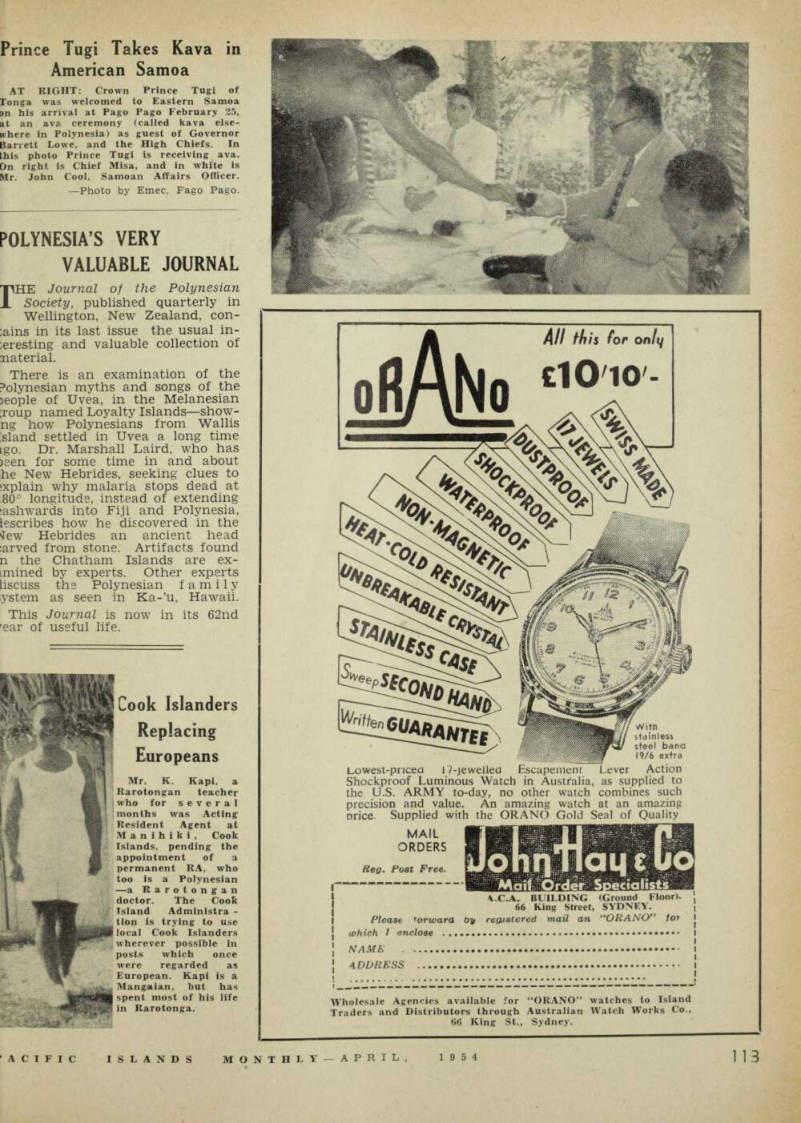 115
115 116
116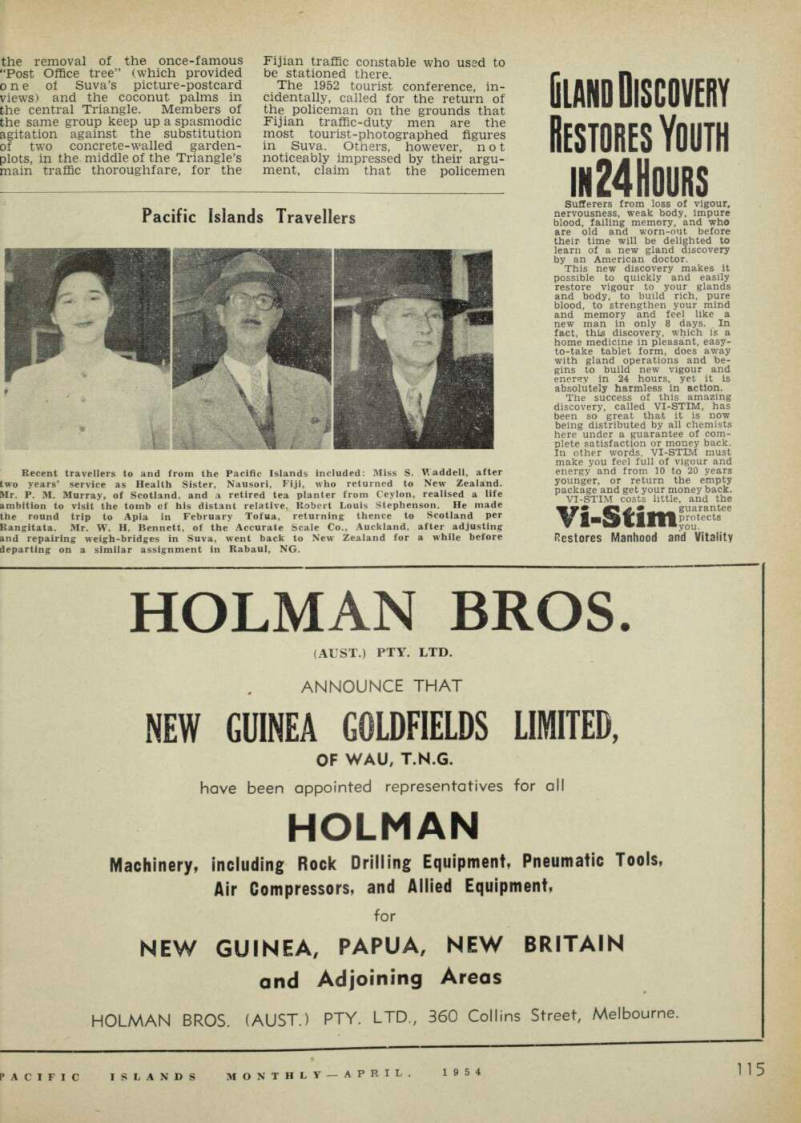 117
117 118
118 119
119 120
120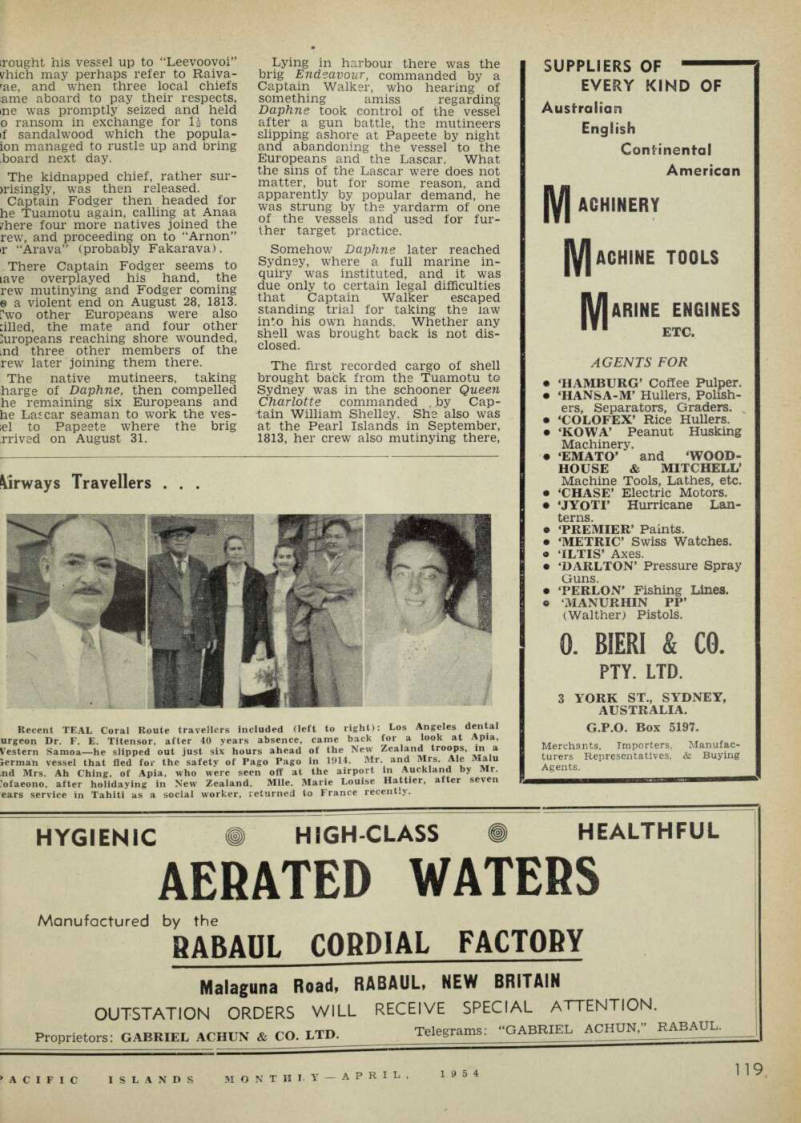 121
121 122
122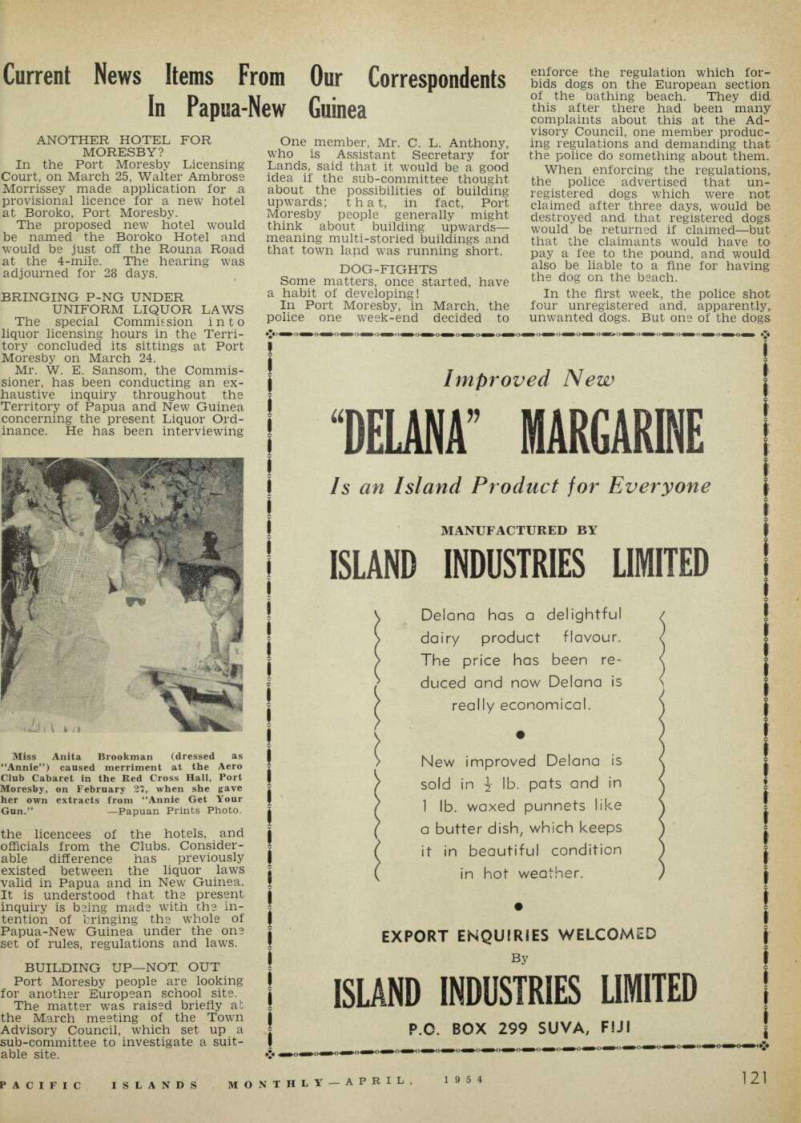 123
123 124
124 125
125 126
126 127
127 128
128 129
129 130
130 131
131 132
132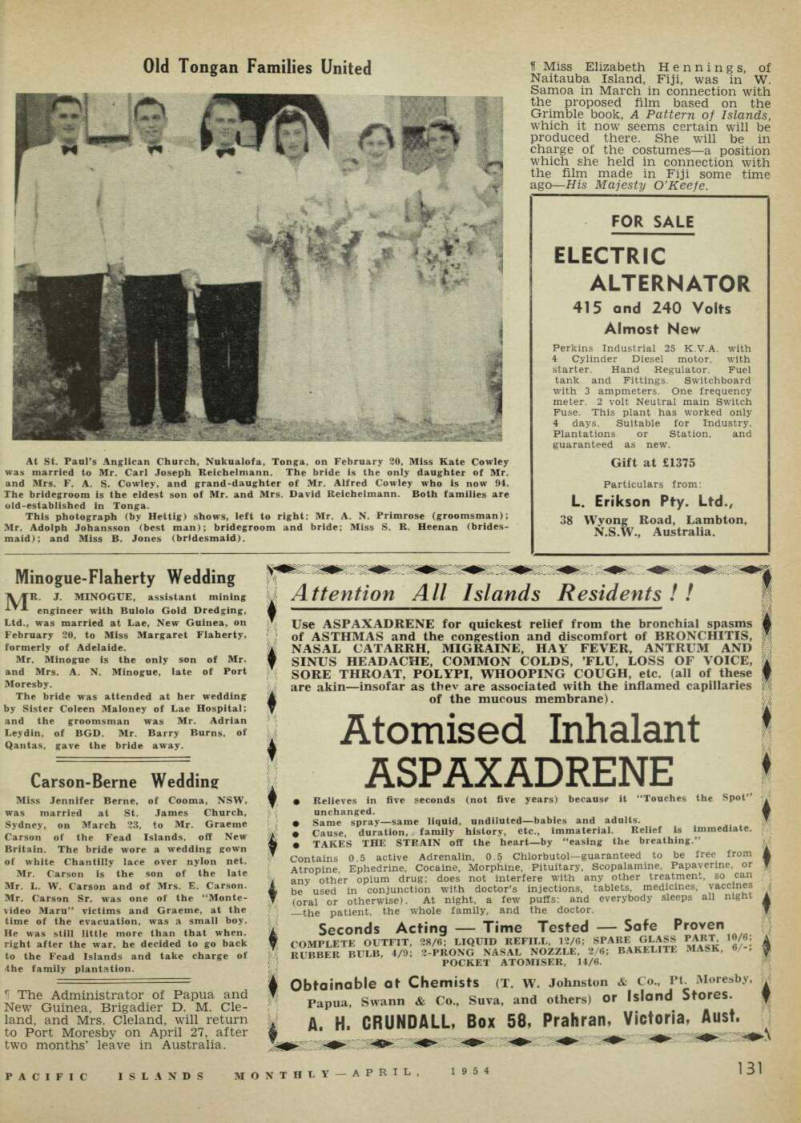 133
133 134
134 135
135 136
136 137
137 138
138 139
139 140
140 141
141 142
142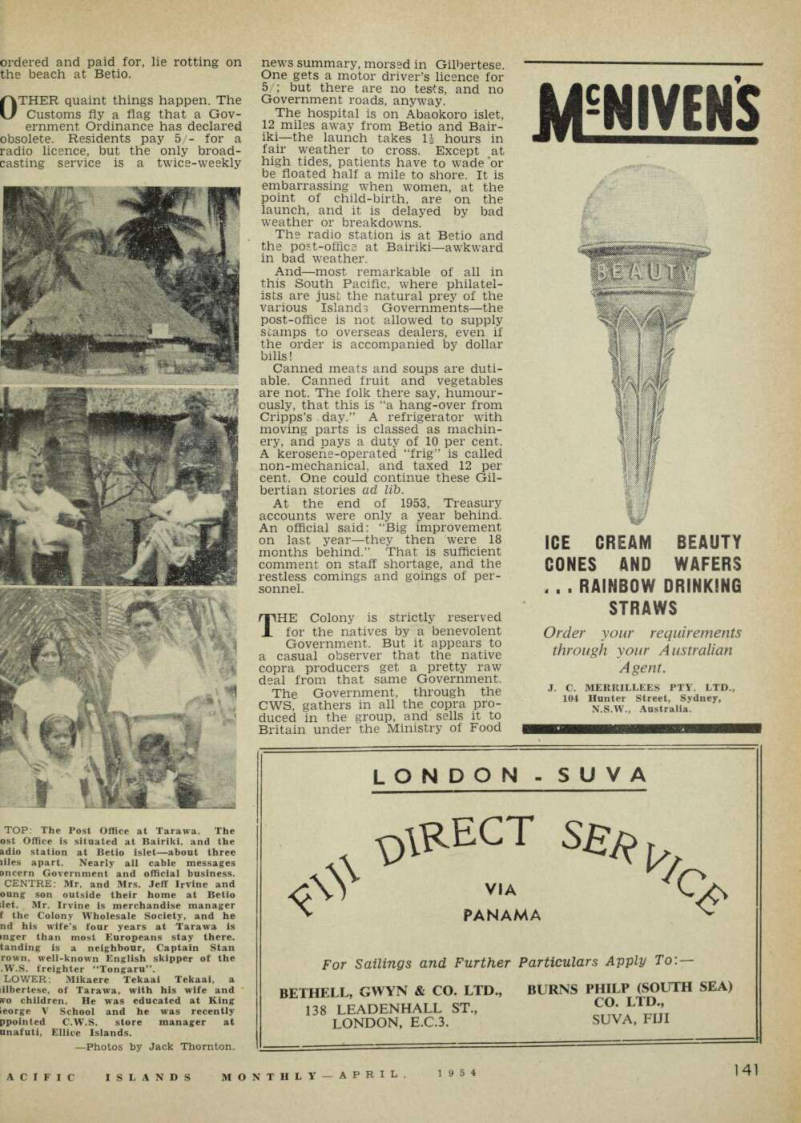 143
143 144
144 145
145 146
146 147
147 148
148 149
149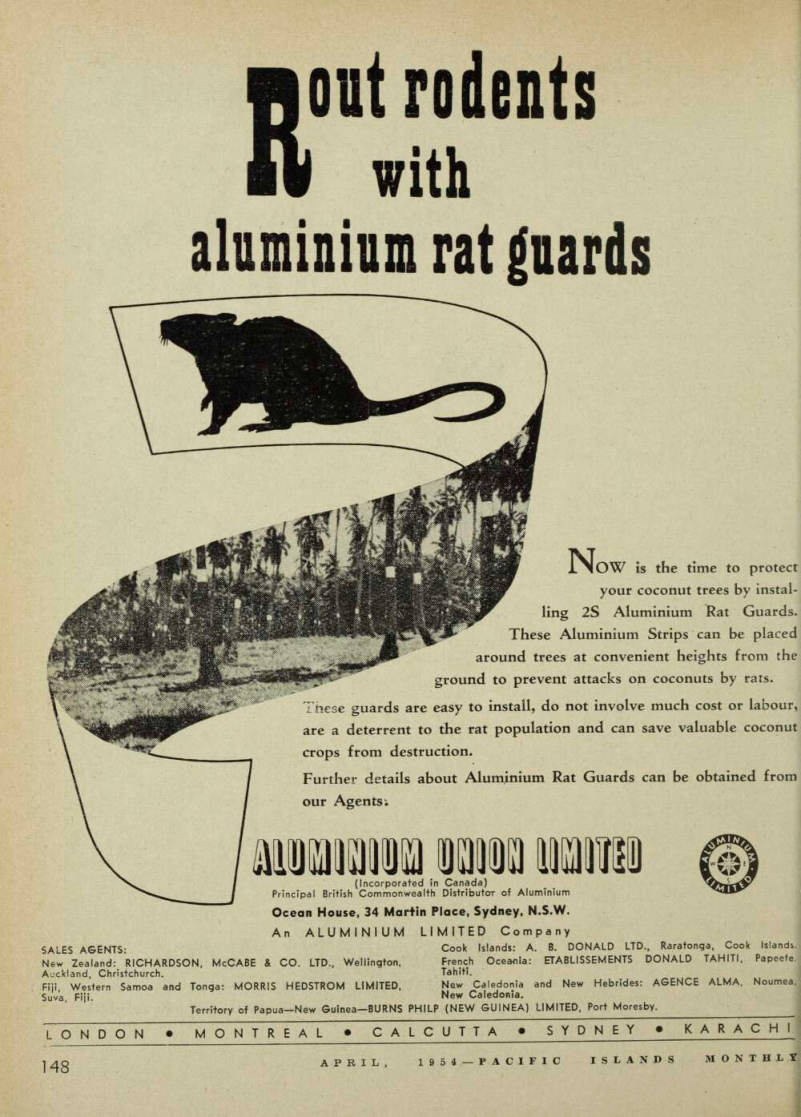 150
150 151
151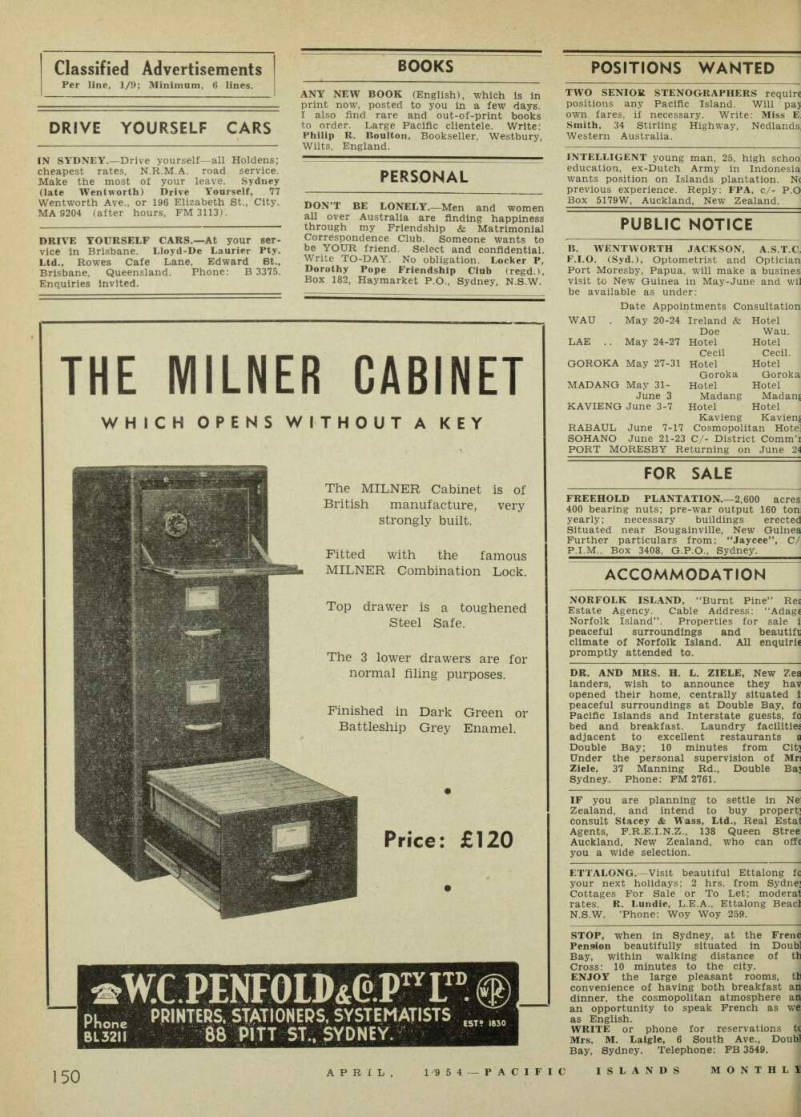 152
152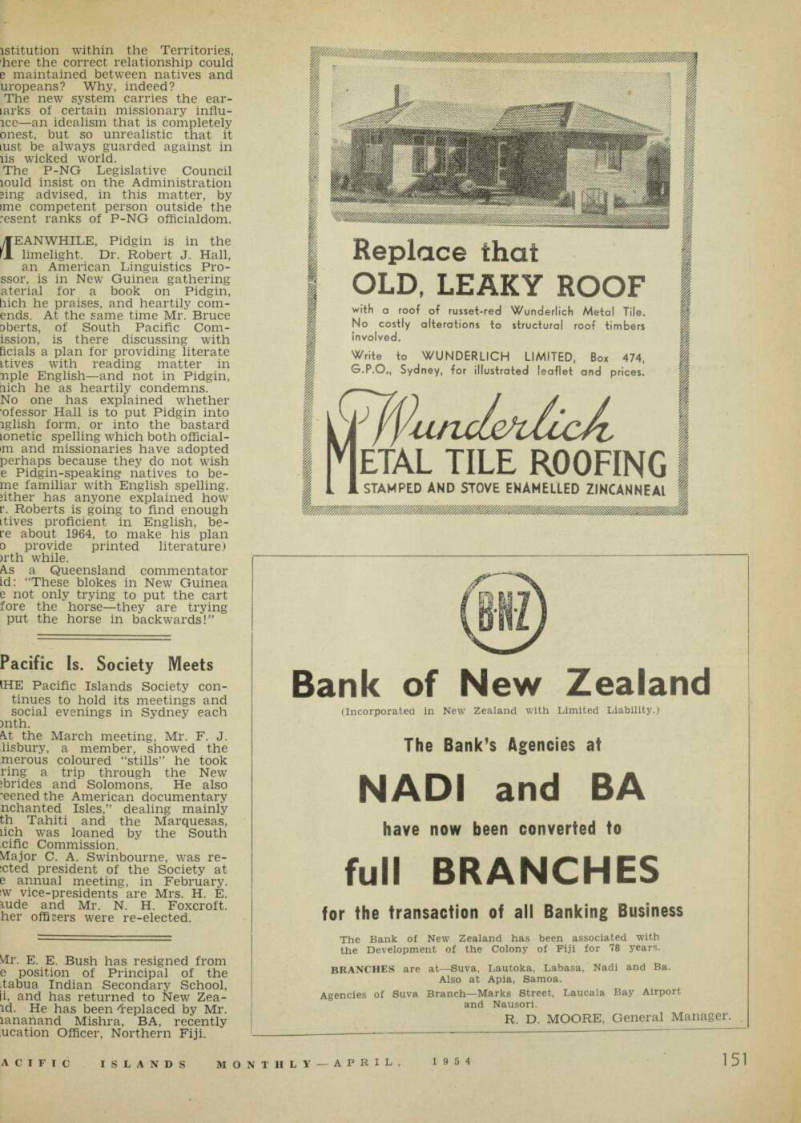 153
153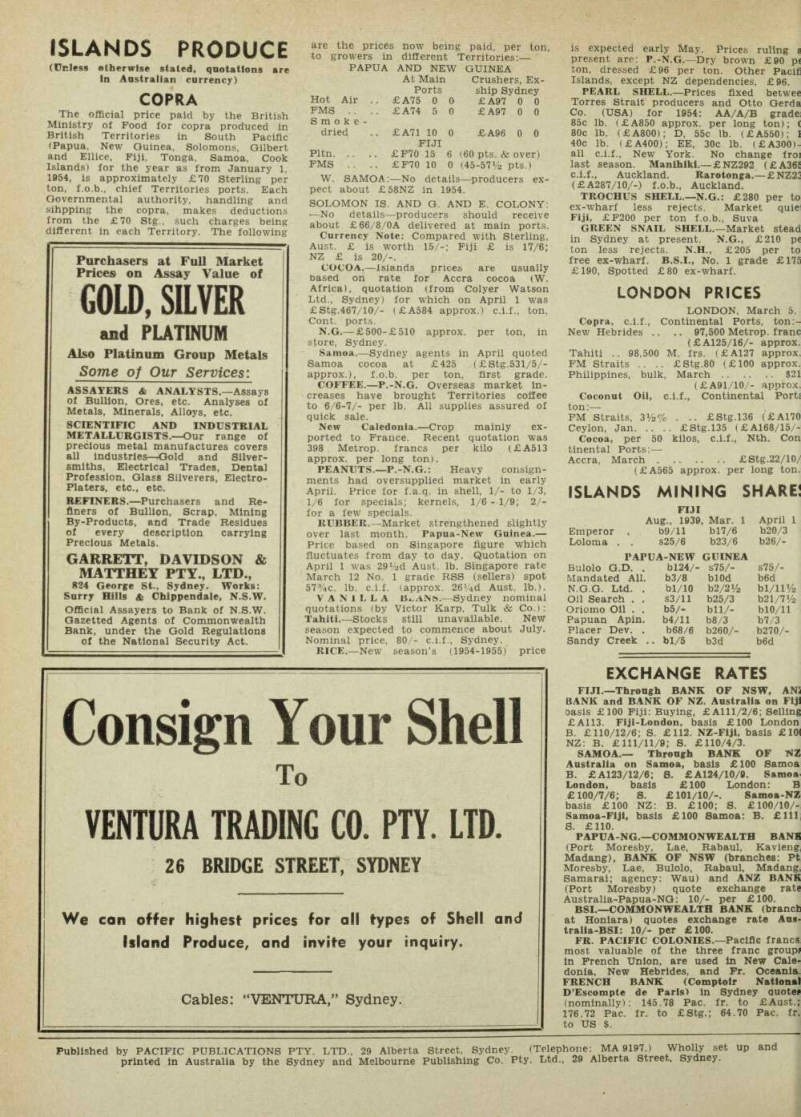 154
154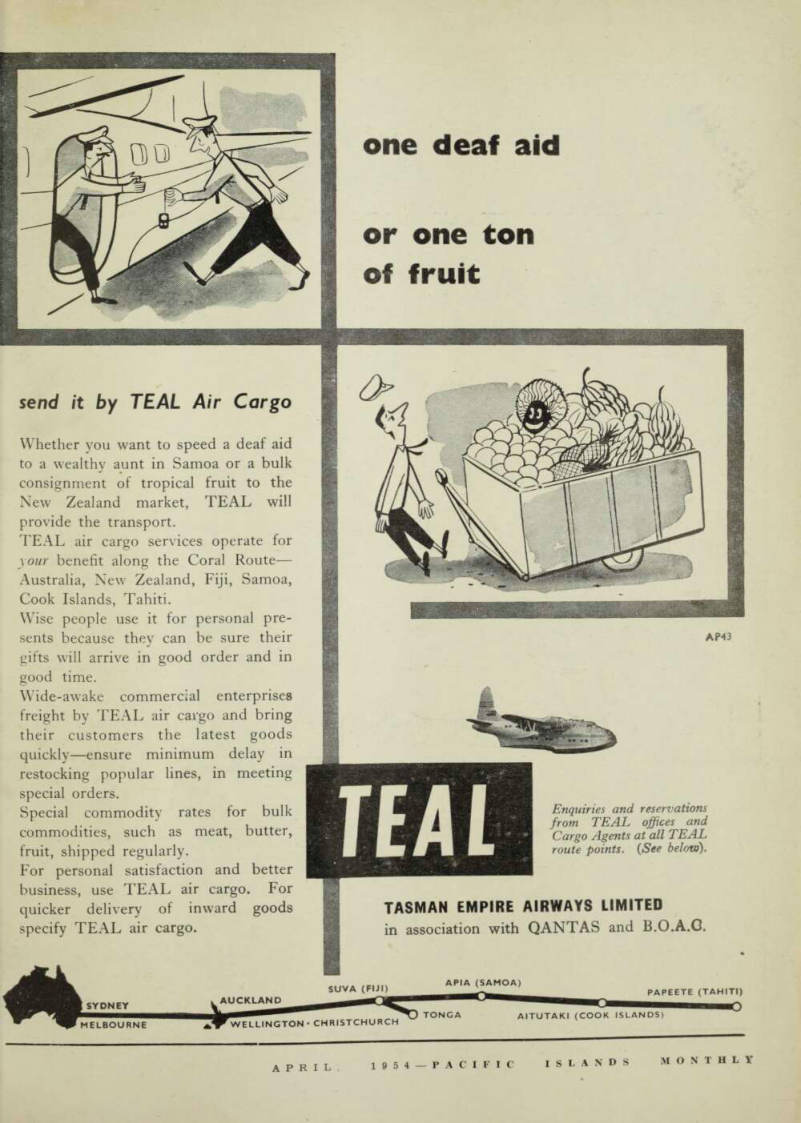 155
155 156
156