Pacific
Islands
Monthly
May, 1954
Vol. XXIV. No. 10.
rablished 1930.
f or transmission by post as a newspaper l
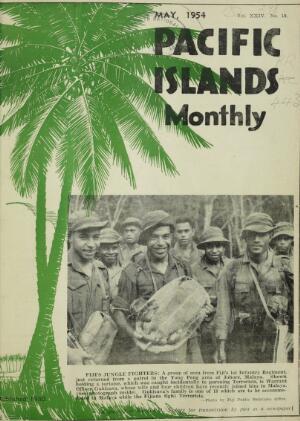
FIJI’S JUNGLE FIGHTERS: A group of men from Fiji’s Ist Infantry Regiment, just returned from a patrol in the Yong Peng area of Johore, Malaya. Shown, holding a tortoise, which was caught incidentally to pursuing Terrorists, is Warrant Officer Gukisuva, whose wife and four children have recently joined him in Malaya. (See photograph inside). Gukisuva’s family is one of 18 which are to be accommo dated in Malaya while the Fijians fight Terrorists. —Photo by Fiji Public Relations Office.
Advertisements & other items, pp. 2-4 (3 items)
Qantas
"By QANTAS is the ONLY way to enjoy Tropical Travel" n
FLY QANTAS
ISLANDS AIR SERVICES
Travel in the Tropics is timesaving and a pleasure when you fly by QANTAS —Australia’s Overseas Airline with 33 years of flying experience.
Over 50 points in the S.W. Pacific Area are linked with Australia by fast, regular QANTAS services shown below.
NORFOLK ISLAND
SERVICE
Sydney • Norfolk Island •
Sydney.
SUVA SERVICE
Sydney • Brisbane • Noumea • Suva • Noumea •
Sydney.
NEW HEBRIDES
SERVICE
Sydney • Brisbane • Noumea • Vila • Espiri+u Santo • Vila • Noumea • Sydney.
TROBRIAND SERVICE
Port Moresby • Samarai • Esa'ala • Rabaul • Samarai • Port Moresby.
BOUGAINVILLE
SERVICE
Rabaul • Buka • Kieta • Buin • Kieta • Buka • Rabaul.
PAPUA WEST SERVICE
Port Moresby • Yule Island • Kerema • Wana • Kikori • Lake Kutubu • Daru • Kikori * Wana • Kerema • Yule Island • Port Moresby.
SOLOMONS SERVICE
Lae • Flnschhafen • Rabaul • Buka • Vella Lavella • Yandina • Honiara • Yandina • Vella Lavella * Buka • Rabaul • Flnschhafen • Lae.
BISMARCK WEST
SERVICE
Lae • Madang • Wewak • Manus Island • Kavieng • Rabaul • Madang • Lae.
BISMARCK EAST
SERVICE
Lae • Flnschhafen • Rabaul • Kavieng • Manus Island • Kavieng • Rabaul • Lae.
QANTAS
"GOLDFIELD'S"
SERVICE
Lae • Bulolo • Wau • Lae.
N.G. HIGHLANDS
SERVICE
Lae • Nadzab • Kaiapit • Aro.ia • Kainantu • Bena Bena • Soroka • Nondugl • Banz • Minj • Mt. Hagen • Ogelbeng • Baiyer River • Wabamunda • Wabag and return.
NEW BRITAIN SERVICE
Rabaul • Jacquinot Bay • Moewe Harbour • Talasea • Rabaul (alternatively fortnightly) • Rabaul • Talasea • Moewe Harbour • Jacquinot Bay • Rabaul.
HOLLANDIA SERVICE
Lae • Madang • Wewak • Hollandia and return.
Qantas Empire Airways Ltd. (Inc. in Q land) In assoc, with 8.0.A.C. and TEAL
Austral id's Overseas
LL
STOVES
m
MADE IN ENGLAND
These two Coleman Stoves are of the one burner kerosene type and are available in both silent and roarer models. Their dimensions are height 8J inches, diameter 8J inches, approximate weight 2J lb. Both models have the same outstanding features.
Model No. 532 E
SILENT TYPE
1. Full-Size Fount with Filler Plug of wing type. 2. Air release on side of Filler Plug. 3. Heavy Brass pressure-tested Tanks. 4. Fount and Burner firmly soldered together. 5. European-type pump. 6. Grate and Grate Supports detachable to reduce shipping space. 7. Spare parts interchangeable with similar European Stoves. Representatives for the Pacific Islands: o Model No. 531 E
ROARER TYPE
54a PITT STREET
SYDNEY
ROBERT GILLESPIE P T JLTP
PEARCE & CO. LTD.
SUVA
FOR FIJI ISLANDS
W. KOPSEN & CO. PTY. LTD.
WHOLESALE DISTRIBUTORS OF
SHIPCHANDLERY
MARINE ENGINES OUTBOARD MOTORS FISHING GEAR
Shipchandlery. —Galv. chain, Anchors, Navigation Lamps, Compasses, Winches, Searchlights, Oakum, Marine Glue, Copper Nails, Galv. Nails, Copper Rod, Copper Sheathing, Anti-fouling, Hull Paint, Portlights, Steering Wheels, Aid is Lamps, Pumps, Oars, Blocks, Wire Rope.
SIMPLEX MARINE ENGINES
Simplex Heavy Duty Marine Engines are ideal for use in tropical waters. Rugged and dependable under all conditions. Built for 20 years 7 active life. Made in four models; 3 H.P., 5 H.P., 10/12 H.P., 15/20 H.P. All 4-cycle models are fitted with beautiful built-in reverse gear. Features are bronze marine carburettor, waterproof impulse starter magneto, heavy duty crankshaft and every modern feature.
RENTA OUTBOARD MOTORS
Penta Outboard Motors. —The finest outboards made in the world for heavy boats. All bronze underwater gear, large propellers and reduction gears make them most suitable for Island work. Four models: 2 H.P., 4 H.P., 8 H.P., 12 H.P. Penta motors are precision built and are guaranteed.
Penta Inboard Motors. —Also available for immediate delivery: Penta Inboard Motors 15 H.P. to 80 H.P.
KAYEN KEROSENE LAMPS
Kayen Lamps provide a full 300 candle power and are for use inside or outside. Now fitted with stainless steel jet and needle, preventing carbon and giving a clear white light at all times. Illustrated is the popular storm lantern fitted with a 12 in. reflector. Also available as a handsome table lamp or floodlight. Fitted with double tie mantles and brass body and tank.
Comprehensive Catalogue Available on Request W. KOPSEN & CO. PTY. LTD. - 380 Kent Street, Sydney Tel.: 8X6331 (11 lines). Cables: “Kopsen, Sydney.”
1
ACIFIC ISLANDS MONTHLY MAY. 1854
2
MAY, 1954 PACIFIC ISLANDS MONTHL
Shipping Time-Tables
.There now are comparatively few ship- Itig lines running on regular time-tables i the Pacific Islands. The following time ables are only approximately correct bey are subject to much alteration at hort notice:—
Australia - New Zealand - Canada - USA Sailings of Orient Line Passenger Ships, 1954-55.
Sydney-Papua-N. Guinea
MV Bulolo, modern liner, sails about /ery six weeks: Sydney-Brisbane-Moresby imarai - Lae - Madang - Manus - Rabaul -
amaral-Moresby-Brlsbane-Sydney.
Next sailing June 21.
MV Malekula sails from Sydney for imaral, Rabaul, Manus, Wewak, Madang, ae, Samarai and return to Sydney, ext sailing end of June.
Details from Burns Phllp & Co. Ltd., 7 ridge Street, Sydney.
MV’s Soochow and Shansi, 3,000 tons essels, leave every six weeks approxi
mately (making a three-weekly service): Sydney - Brisbane - Pt. Moresby - Madang - Rabaul-Pt. Moresby-Sydney. Next sailing Shansi, May 29. Last sailing Soochow, May 4. Sinkiang leaves from Mel bourne approximately every 7 weeks, and sails via Sydney and Queensland ports to P.-N.G. Next sailing Melbourne, about May 24.
Details from New Guinea Australia Line (O. S. Yuill & Co., Ltd., agents), 6 Bridge St.. Sydney.
N. Zealand-Fiji-Samoa-Tonga
Motor vessels Tofua and Matua. from New Zealand, serve Suva (Fiji), Nukua lofa and Vavau (Tonga), Niue is., Pago Pago (American Samoa), Apia f Western Samoa). Tofua leaves Auckland tor any or all of above ports at approx, nve weeks Intervals. Matua calls at Wellington and Lyttelton (NZ), Lautoka (Fiji) and sup plements Tofua’s schedule in Islands, calling at ports as directed by owners.
Tofua’s next voyages are scheduled to leave Auckland June 8 and July 6.
Matua will leave Auckland on her next voyage May 29.
N. Zealand-Cook Is.
The NZ Government’s old motor vessel Maui Pomare is scheduled to leave Auck land every month for Rarotonga and other Islands in the Lower Cooks, subject to requirements of trade. This vessel carries 30 passengers. After annual survey, left Auckland in early April for Cook Group.
Full details on application to NZ Government Department of Island Terri tories in Wellington, or to any office of the Union SS Co. of NZ. Ltd., which Company acts as Agent for this vessel at some ports.
Sydney-New Hebrides-BSI-
Rabaul, Etc.
MV Malalta makes a round trip ai about 8-weeks intervals from Sydney to Lord Howe-Norfolk Is.-New Hebrldee Ports - BSI ports - Bougainville - Kabauj - Samarai-Sydney.
Next sailing from Sydney May 24.
Details from Burns Philp & Co., 7 Bridge Street, Sydney.
Sydney-N. Caledonia-Tahiti
Vessels of Messageries Maritlmes Line coming from Marseilles, via West Indies and Panama, call about every six weeks at Papeete, Vila (New Hebrides), Noumea and Sydney, and return by same route. Details from Messageries Marl times. Luxurious new liners Caledonien and Tahitien recently added to this service.
Small motor-ships Polyneslen (Messa geries Maritimes) and Neo Hebrldais (H.
C. Sleigh, Ltd.) maintain fairly regular service between Noumea and Sydney.
Oronsay
Orion
Oronsay
Orcades
Orsova
Orion
1954 1954 1954/5 1954/5 1955 1955
Ydney
depart 21 May 17 Sep. 19 Nov. 17 Dec. 28 Jan. 25 Mar.
-Uckland
arr/dep 24 May 21 Sep. 22 Nov. 20 Dec. 31 Jan. 29 Mar.
Uva
arr/dep 27 May 25 Sep. 25 Nov. 23 Dec. 3 Feb. 2 Apl.
[Onolulu
arr/dep 1 June 1 Oct. 30 Nov. 28 Dec. 8 Feb. 8 Apl.
Ancouver
arrive 7 June 7 Oct. 6 Dec. 3 Jan. 14 Feb. 14 Apl. depart 8 June 8 Oct. 7 Dec. 4 Jan. 15 Feb. 15 Apl.
An Francisco Arr
10 June 11 Oct. 9 Dec. 6 Jan. 17 Feb. 18 Apl. depart 11 June 12 Oct. 10 Dec. 7 Jan. 18 Feb. 19 Apl.
[Onolulu
arr/dep 15 June 17 Oct. 14 Dec. 11 Jan. 22 Feb. 24 Apl.
Uva
arr/dep 22 June 25 Oct. 21 Dec. 18 Jan. 1 Mar. 2 May
Uckland
arr/dep 25 June 28 Oct. 24 Dec. 21 Jan. 4 Mar. 5 May
Ydney
arrive 28 June 1 Nov. 27 Dec. 24 Jan. 7 Mar. 9 May
N. America-Fiji-Hebrides, etc.
Norwegian motor vessel Thorsisle, carry ing cargo and passengers maintains a regu lar service between North American ports ana French Oceania, Samoa. Fiji, New Caledonia and New Hebrides.
Sailing from San Francisco May 27, Papeete, June 15, Apia, June 20, Suva, June 24, Noumea, June 28 (dates approx, only).
Details from General Steamships Cor poration Ltd., 432 California St., San Francisco, U.S.A.
Advertisements & other items, pp. 5-6 (2 items)
3
ACIFIC ISLANDS MONTHLY MAY, 1954
New Guinea Australia Line
Regular Three Weekly Service to PORT MORESBY, SAMARA). LAE, MADANG,
KAVIENG. AND RABAUL, VIA BRISBANE
“SOOCHOW” “SHANSI”
And from MELBOURNE, approximately every seven weeks, to PAPUA-NEW
GUINEA, via SYDNEY AND QUEENSLAND PORTS
“SINKIANG”
Agents for PAPUA; Agents for NEW GUINEA; STEAMSHIPS TRADING CO. LTD. COLYER WATSON (NEW GUINEA) LTD.
General Agents: G. S. YUILL & CO. PTY. LTD.
6 BRIDGE ST., SYDNEY
Telephones: BW 2731 BU 6313 (Freight only) Cable Address: “ YUILL ”
REGULAR SAILINGS BETWEEN NEW ZEALAND
AND ISLAND PORTS
M.V. "VASU"
FAST TRANS-TASMAN SERVlCES—Refrigerated and general cargo
M.V. "VITI" S.S. "MADONNA"
Tonnage available for charter AGENTS FOR: Flotta Lauro Line (Passengers and cargo to U.K. and Continent.) Edinburgh Assurance Company Ltd.
ISLAND AGENTS: SUVA; Morris Hedstrom Ltd.
APIA: A. MacDonald & Co. Ltd.
NUKUALOFA/VAVAU; Burns Philp (South Sea) Co. Ltd.
NIUE: Robert Rex.
Also represented throughout Australasia.
TASMAN STEAMSHIP STEVEDORING AND AGENCY
COMPANY, LIMITED
P.O. Box 2242, Telegraphic address: Auckland. “TASVITI”
William E. Reed
(Est. 1913)
145 a GEORGE ST., CIRCULAR QUAY, SYDNEY.
Extends to Island commercial interests a cordial invitation to avail themselves of the reliable prompt and courteous services of an old
established organisation.
BUYING DEPARTMENT
Our highly specialised buying service ensures promptness and satisfaction to our clients. All orders executed on best wholesale basis and under the personal supervision of the Proprietor. Quotations and expert advice on technical problems readily available.
ISLAND PRODUCE
Sold on the open market to the highest bidder. We obtain the highest possible prices.
MARINE
We are well equipped to deal with all enquiries regarding the purchase of any type or class of vessel for service in the Island trade.
We act as consultants to purchasers and can offer sound expert advice, both technically and commercially to bona fide purchasers. Send us details of your requirements in ships, boats, engines, or gear, and you are assured of prompt and efficient attention. Quotations obtained for either sea delivery or cradled and loaded for shipping.
NEW VESSELS
We suggest that the question of new vessels might often be advantageously considered and we are in a position to be of practical assistance to bona fide enquirers and to obtain complete specifications and prices from the best small ship builders on the East coast of Australia. Insurances with Lloyd’s effected.
HYDRO-ELECTRIC EQUIPMENT
The Drees Hydro-Electric Units manufactured in Germany are the answer to the demands for electricity in remote areas. If you have a reasonable fall of water, hydro-electric equipment is undoubtedly the most economical investment. Solely in the hands of this firm for South Pacific Areas.
WRITE OR CALL IN WHEN SOUTH—
Cables: “Wilreed, Sydney”. Phones: BU 3505 (3 lines).)
Airways Time-Tables
Due to recent reorganisa tions in some South Pacific airlines, many . changes in schedules are pending. Pro spective travellers should check with airlines.
Trans-Pacific Services
1. Australia (or NZ)-Fiji-
Hawaii-N. America
By Pan-American Airways
With Strato Clippers, using Sleeperettes and Berths* Tues. and Fri.—Sydney - Nadi (FIJI) - Canton Is.-Honolulu-S. Franclsco-Seattle- Portland.
Tues. and Sat. —Return via same route, t Tues. and Fri. —Auckland - Nadi (Fiji), t Thurs. and Mon.—Nadi (Fiji)-Auckland, t Connecting with Strato Clipper at Nadi.
By British Commonwealth Pacific
Airlines (Bcpa)
(DC-6 All-Sleeper Service)* Wed ana Sat.—Sydney-Nadl (Fiji)-Canton Is.-Honolulu-S. Franclsco-Vancouver.
Mon. and first Thur.—Dep. southwards, same route. On second or alternate Thursday, flight commences at S Francisco.
Tues. —Dept. Auckland-Nadi-Canton-Hono lulu-S. Francisco-Vancouver.
Fri. —Dep. Vancouver and S. Francisco alternatively: thence same route to Auckland.
Note: The above Service will be run by Qantas with Super Constellations from May 15.
By Canadian Pacific Airlines
(Cpal)
(With Super DC-6B Aircraft)* Every Tuesday—Sydney - Auckland - Nadi (Fiji) - Honolulu - Vancouver.
Every Friday return from Vancouver by same route. * Tourist Class Services are available on these planes at 20 per cent, less normal fares.
Sectional Services In
Pacific
2. Sydney-New Guinea
Service by Qantas Empire Airways
Northwards
Tuesdays and Saturdays (Skymasters) Depart: Arrive: Sydney, 7.30 pm Brisbane, 10.15 pm Brisbane, 11.40 pm Moresby, 6.30 am (Wed., Sun.) Moresby, 7.30 am Lae, 8.45 am Connecting services north of Lae by Drover to Bulolo and Wau.
Sundays and alt. Wednesdays (Sandringhams) Depart: Arrive: Sydney, 7.30 pm Brisbane, 10.50 pm Brisbane, 12.20 am Cairns, 6.35 am (Mon. and Alt. Thur.) •Cairns, 8.05 am Moresby, 11.55 am (Night stop) Moresby,* 8.30 am Samaral. 10.30 am (Tue.) Samaral, 11.00 am Esa’ala, 11.40 am iAlt. weeks* Esa’ala, 11.55 am Rabaul, 2.55 pm The alt. Wednesday Sandringham from Sydney terminates at Port Moresby, a connection north to Lae on the following day at 9.00 am being by D.C.3. • The Sunday Sandringham from Sydney arrives Moresby Monday and after a night -atop then goes on to Rabaul via Samaral. etc., on Tuesday.
Southwards
Sundays and Wednesdays (Skymaster) Depart: Arrive: Lae, 10.25 am Moresby, 11.40 am Moresby, 12.40 pm Brisbane, 7.15 pm Brisbane, 8.45 pm Sydney, 11.30 pm Connecting service from Wau by Drover.
Arrives Lae 9.35 am Saturday.
Thursdays (Sandringham) Depart: Arrive: Rabaul. 5 30 am Samarai, 8.45 am Samaral, 9.15 am Moresby, 11.15 am Moresby, 12.15 pm Calms, 3.40 pm (Night stop) Cairns, 8.30 am Brisbane, 2.15 pm iPri. i Brisbane, 3.45 pm Sydney, 7.05 pm Alt. Saturdays (Sandringham) Depart: Arrive: Moresby, 6 am ' Cairns, 9.25 am Cairns, 10.55 am Brisbane, 4.40 pm Brisbane, 6.10 pm Sydney, 9.30 pm A connection from Lae, with a DC3, to pick up Saturday Sandringham, arrives In Moresby on Friday at 8.20 am.
3. N. Guinea Internal
Services
Operated by Qantai LAE—HOLLANDIA (Dutch New Guinea) (DC3) Every 4th Monday (May 17, June 21, etc.).
Departs Lae 8 am. calls at Madsng and Wewak, and arrives at Hollandia 1.05 pm. Every 4th Tuesday 'May 18, June 22, etc.), departs Hollandia at 9 am, and, with calls at Wewak and Madang, arrives Lae at 3.5 pm.
Lae-Manus (Dcs)
Every Wednesday.
Dep. Lae. 10.45 am: Pinschhafen, Rabaul, Kavieng, arr. Manus 5.45 pm.
Returns Saturdays (dep. 8 am), via Kavieng antT Rabaul; optional call at Pinschhafen; arr. Lae, 2.45 pm.
MORESBY-DABU (Sandringham) Fla Yule Is., Kerema, Wana (optional), Kikorl. L. Kutubu. —Every alternate Friday, returning same day (May 28, June 11, 25, etc.).
Rabaul-Mofwe Harbour
(Sandringham) dt. Wed.—Rabaul-Jacqulnot Bay-Moewe Harbour-Talasea-Rabaul May 26, June 9. 23, etc.
N.B. —The direction of operation changes rtth each service, i.e., each alternate ervlce operates Rabaul-Talasea-Moewe larbour-Jacquinot Bay-Rabaul.
New Britain-Bougainyille
(Sandringham) dt. Wed.—Rabaul - Buka - Kieta - Buin —May 19, June 2, 16, etc. dt. Wed. (same day) Buln-Kieta-Buka- Rabaul.
Lae-Madang-Wewak-Mancs
Kayieno-Rabavl General
Service
(Dcs)
Mon., Thur. Dep. Lae 6.30 am, Madang arr. 7.35 am Wewak, Manus Is..
Kavieng, Rabaul arr. 3.35 pm.
Tue. only Dep. Rabaul 8.00 am, direct Madang arr. 11.00 am, Lae arr. 12.35 pm.
Central Highlands
(Dcs)
Fridays.—Lae (8.30 am) to Wabag, calling n\ Npo/hd Kinipit Aron*.
Kalnantu. Bena Bena, Qoroka, Nondugl, Banz, Minj, Mt. Hagen, Baiyer R..
Wabag. Return to Lae arriving 6 pm.
Lae-Bulolo-Wau (Drover)
Dep. Lae.—Tues. 3 pm.—Mon. & Sat. 7.30 am.
Dep. Wau. —Tues. 4.30 pm—Mon. 9.00 am —Wed. 12.35 pm. Direct to Lae in 35 minutes.
Lae-Finschhafen (Drover)
Every 4th Tuesday, leaving Lae 1 pm, returning same day (May 18, June 15, etc.).
Madang-Goroka (Dcs)
Fridays.—Depart Madang 8.25 am, arrive Goroka 9.00 am. returning same day; depart Goroka 9.30 am, arrive Madang 10.5 am.
Services By Mandated Airlines
With headquarters at Lae. this company runs regular services for passengers freight and mails to all New Guinea lettlements.
4. Aust.-Dutch N. Guinea
By KLM Royal Dutch Airlines.
A weekly service with Constellations letween Sydney and Amsterdam with a all at Biak, DNG, and Manila, Philippines.
DC3 aircraft link Biak with Hollandla, Sorong, Merauke and Tannah Merah.
5. N. Guinea-Solomons
By Qantas with DCS 3 Flights Every Pour Weeks.
Mon. (May 24, 31, June 7, 21, 28, etc.), Lae (dep 6 am) Finschhafen Rabaul Buka Vellalavella Yandina Honiara, BSI (arriving 4.30 pm).
Fue. (May 25. June 1. 8, 22, 29, etc), Honiara (dep. 7 am) Yandina Vellalavella Buka Rabaul Finschhafen Lae (arriving 3.30 pm).
6. Indo-China-Brisbane-
N. Caledonia
By Air France. Monthly.
Constellation aircraft dep. Saigon, May 30 and every 28 days thereafter for Darwin-Brlsbane-Noumea, and return.
Lustralian agents: Messageries Maritlmes.
7. Sydney-Lord Howe Is.
iy Ansett Flying-boat Service, with Sandringhams and Hythes.
Eight services per month, return same lay.
8. Sydney-Norfolk Is.
By Qantas, with Skymasters.
Alternate Thursdays (May 20, June 3, 17, etc.), returning same day.
9. Sydney-New Hebrides
By Qantas. with Sandringham (Weekly Flying Boat Service) Irnart; Arrive: Jydney, Mon. 7.30 pm Brisbane. 10.50 pm
Brisbane, 12.20 am „ (Tue.) Noumea, 7.00 am Noumea. 8.30 am Vila, 11,05 am Vila, 12.35 pm Santo, 1.50 pm (Night stop) Santo, 6.00 am iWed Vila. 7.15 am Vila, 8.15 am Noumea, 10.55 am Noumea, 1.00 pm Sydney, 8.40 pm
10. Sydney-Noumea-Snva
By Qantas with Sandringham Flying
Boats—Weekly.
Depart: Arrive: Sydney, Thur. 7.30 pm Brisbane. 10.50 pm Brisbane, 12.20 am (Prl.) Noumea, 7.00 am Noumea. 8.30 am Suva. 3.00 pm Suva, Sat. 6.30 am Noumea, 11.00 am Noumea. 1.00 pm Sydney, 8.40 pro
11. Auckland-Norfolk Is.
By NZ National Airways, with DCS’a Sundays—Prom Auckland double service returning same day,
12. Sydney-Auckland
Tasman E. Airways, with Solents and DC6 Aircraft.
By Solent—Dep. Sydney 8.30 am Thurs day, arr. Auckland 5.15 pm.
By Solent—Dep. Sydney midnight Sunday, arr. Auckland 8.45 am Monday.
By D.C.6—Dep. Sydney Tue. and Fri., 9 am, arr, Auckland 4.15 pm.
By Solent—Dep. Auckland, 8.30 am Wed., Fri., arr. Sydney 1.45 pm.
By D.C.6—Dep. Auckland midday, Monday and Thur., arr. Sydney, 3.45 pm.
13. Sydney-Wellington
Tasman E. Airways, with Solents Dep. Sydney 10.30 pm Mon.. Thur. Arr. 7.45 am following day.
Dep. Sydney midnight Tue., arr. Auckland 9.45 am Wed.
Dep. Wellington 10.30 am Tue., Fri., arriving 4 pm.
Dep. Wellington midday Wed., arr. Sydney 5.30 pm.
14. Melboume-Christchnrch
Tasman E. Airways, with DC4 Skymaatar Thurs.— Dep. Melb., 10.25 pm; arr. Ch’ch., 8.15 am next day.
Fri.—Dep. Ch'ch., 11 am; arr. Melb., 8.3# pm
15. New Zealand-Fiji
See Also Table 18.
Tasman Empire Airways, Ltd., with Solents.
Dep. Auckland—May 18, 22, 25. June 1, 5,8, 15. 19, 22. 29.
Return to Auckland on May 20, 24, 31, June 3,7, 14, 16, 21 29.
Depart Arrive Auckland, 9.30 am Suva, 4.30 pm Suva, 9.00 am Auckland, 4.15 pm
16. Fiji-Western Samoa
See Also Table 18.
Tasman Empire Airways, Ltd., with Solents.
Dep. Auckland May 22, 25, June 8, 19, 29.
Depart Arrive Auck.. 9.30 am Sat. Suva, 4.45 pm Sat.
Suva, 6.00 am Sun. Apia, 11.05 am Sat, Apia, 1.30 pm Sat. Suva 4.35 pm Sun.
Suva, 9.00 am Mon. Auck., 4.15 pm Mon.
17. New Zealand-Chatham Is.
Service does not run in Winter months.
18. New Zealand-Tahiti
Tasman Empire Airways, Ltd., with Solents TEAL Service, Auckland-Suva-Apla- Aitutaki-Papeete, is operated with Solent Flying-Boats once every two weeks. Dep.
Auckland, Tuesday, 9.30 am. Arr. Suva 4.30 pm. Dep. Suva (Wednesday) 9.00 am, cross International Date Line: Arr.
Apia 1.55 pm Tuesday. Dep. Apia 2.00 am Wednesday. Arr. Aitutakl 7.30 am.
Dep. Aitutaki 8.30 am. Arr. Papeete 1 pm. Return by same route every alt.
Friday, leaving Papeete 7.30 am.
The next flights leave Auckland May 25, June 8, 29.
A special weekly service will operate from June 22 to July 20.
19. Fiji-Tonga
Tasman E, Airways with Solents.
Dep. Suva May 18, June 1.
Depart Arrive Auckland, 9.30 am Suva, 4.45 pm (Tuesday) (Tuesday) Suva, 7.00 am Nukualofa, 10.20 am (Wednesday) (Wednesday) Nukualofa, 2.00 pm Suva, 4.10 pm (Wednesday) (Wednesday) Suva, 9.00 am Auckland, 4.15 pm (Thursday) (Thursday)
20. Micronesia
Civilian services, based on Guam, using 2-engined amphibious Catallnas, run re gularly to Koror (Palau), Yap (West Carolines), Truk (Central Carolines), Ponape (E. Carolines). Majuro (Marshalls) and Saipan (Marianas). Details from Trans-Ocean Airlines, Guam, via Honolulu.
21. Fiji Interna] Airways
By Fiji Airways, with twin-engine de Havlland Rapides Suva to Nadi & Lautoka and return: Daily.
Suva-Labasa; Daily, except Sundays.
Labasa-Suva; Daily, except Sundays.
Nadi & Lautoka to Labasa; Wednesday (direct).
Suva-Savusavu: Mon., Tue., Thur., Sat.
Suva-Taveuni: Tues. and Sat., via Labasa; Fri. (direct).
Advertisements & other items, pp. 7-10 (2 items)
5
' ACIFIC ISLANDS MONTHLY MAY, 1854
Direct S£^
TAHITI
To Shipmasters and Visitors
When calling at Tahiti, and seeking SHIPS' SUPPLIES and
FRESH PROVISIONS, see—
OSCAR
G.
NORDMtN
Supply Agent for Messageries Maritimes, Union S.S. Co. of N Z Ltd Matson-Oceanic Line, United States Line, General S.S. Corp., Etc.
We supply General Service Act as Shipping Agents Address all inquiries to the Tourist Bureau OSCAR G. NORDMAN, Ship Chandler
PAPEETE, TAHITI.
Wire before your arrival to “OCEANIC, PAPEETE”—Our registered cable address.
LONDON . SUVA
DIRECT S£^
<£\V via K/ CV
v PANAMA V
For Sailings and Further Particulars Apply To: — BETHELL, GWYN & CO. LTD., BURNS PHILP (SOUTH SEA)
138 LEADENHALL ST., CO. LTD.,
LONDON, E.C.3. SUVA, FIJI
PACIFIC ISLANDS TRANSPORT LINE
Owners: Thor Dahls Hvalfangerselskap A/S Sandefjord, Norway
- M.V. "THORSISLE" -
Regular Freight and Passenger Service between Pacific Coast Ports of U.S.A. and Canada and
TAHITI SAMOA FIJI NEW CALEDONIA
NEW HEBRIDES
GENERAL STEAMSHIP CORPORATION, LTD.
General Agents 432 Californio Street, San Francisco 4 Calif., U.S.A.
PAPEETE- Etabllssements Donald Tahiti APIA —Morrl. Hedstrom Ltd.
SUVA— Morris Hedstrom Lid. NOUMEA—Etabllssements Ballande POET VILA —Comptoirs Francals dea Nonrelleo Hebrides
There's so much to do
NEW ZEALAND
Imagine a holiday in this land of breathtaking beauty!
At any time of the year there’s so much to do . . . watching geysers play in wondrous thermal regions . . . fishing in placid lake or swift-running stream or spectacular big-game waters . . . climbing in the towering Southern Alps . . . deer shooting in virgin forest . . . slaloming on perfect ski runs . . . swimming and boating in fascinating fiordlands!
flying gives you so
much more time
Air travel will save you days in which to play, let you see so much more of this scenic wonderland.
And it’s so much more comfortable.
NAC
\ £ KT7 Linking all principal New Zealand cities and extending to Norfolk Island. Offices and Agents throughout New Zealand, Australia and the South-West Pacific. a i w
t K A LA N D
NATIONAL
A I R
Art
CORPORATE
QUEENSLAND
INSURANCE
CO. LTD.
(Incorporated 1886 In Australia)* Assets Exceed £7,000,000 Head Office:
QUEENSLAND INSURANCE
BUILDING, 80-82 PITT STREET,
SYDNEY.
Specialists in South Sea Fire, Marine & Accident Insurances Apply to:— FlJl.—Branch Office: J. F. Drury, Manager.
Burns Philp (South Sea) Co. Ltd, VlLA.—Burns Philp (N.H.) Ltd.
Comptoirs Francais Des Ncuvelles Hebrides.
NOUMEA.—L. &. W. Johnston.
NEW GUlNEA.—Manager of the Territory of Papua and New Guinea, W. A. Anderson, Resident officer at Lae, B. Bembrick.
PORT MORESBY—SAMARAI—LAE
—MADANG—KAVIENG—RABAUL.
Burns Philp (New Guinea) Ltd.
PAGO PAGO
Burns Philp (South Seaj Co. Ltd.
G. H. C. Reid & Co.
OTHER SOUTH SEA ISLANDS
Burns Philp (South Sea) Co. Ltd.
Also to any of the Company’s Offices in Australia or N.Z,
THE GARRICK HOTEL
SUVA, FIJI
m
oil
t il «) 1111% J n I m * This well-known Hotel is centrally situated in Suva’s main business quarter :: Modern accommodation provides comfort in all climatic conditions :: Only the best of Beers, Spirits and Wines is served.
Telephone: 80. VINCE COSTELLO, Proprietor.
Friendship
and
Executorship
Don’t Mix
HANDS
THAT NEVER LEAVE
wheel / —— he realises it or not, every private Executor faces an extraordinarily difficult task. His willingness to attempt his duties can be frustrated by retirement, ill-health, business setbacks, an accident, or sheer overwork. Nor can he overcome an Executor’s main problems—taxation, probate, investments and property management —without neglecting his own affairs or putting the Estate to heavy expense.
If you have entrusted your affairs to one man—or agreed to act as an Executor—prompt action is essential. Make certain that these unsought responsibilities are transferred to Burns Philp Trust Company Limited. This simple step ensures that your family— or that of your friend—cannot be let down.
A 20-page booklet, “Hands That Never Leave The Wheel”, explains the importance of this safeguard. Ask for a complimentary copy at any branch of Burns Philp (South Sea) Company, Burns Philp (New Guinea) Limited, Burns Philp (New Hebrides) Limited, or write to this Company’s head office.
DIRECTORS:
James Burns. Joseph Mitchell.
P. T. W. Black. Eric Priestley Lee.
MANAGER: L. S. Parker.
SECRETARY: E. R. Overton, F.A.S.A.
Burns Philp Trust
COMPANY LIMITED
Executor • Trustee • Attorney
Head Office: 7 Bridge Street, Sydney.
Telegraphic Address: “Burnstrust” Box 543, G.P.O.
Also Registered Offices at Melbourne, Brisbane, Port Moresby (Papua), and Vila (New Hebrides).
Fijian Land Use
New Policy For
Suva May 4.
“T>ESERVE lands, as promised to rV you In 1938, by Sir Arthur Richards, will never be can celled except with the premission of the native owners concerned.”
This declaration by the Governor of Fiji (Sir Ronald Garvey) to the Council of Chiefs today (May 4) is likely to go down in history beside the famous statement of his predecessor (Sir Brain Freeston( that “there can be no going back on history”, and that “Fijian lands be long to the Fijians and will not be taken from them”.
When Sir Ronald made this reaffirmation of the British pledge, bang went a fine crop of uneasy rumours that some sort of official hanky-panky over Fijian land re serves was contemplated.
In what was the finest address ?iven to the Council of Chiefs by my Governor in the war and post war eras, Sir Ronald laid before the Chiefs a four-point programme for the development of Fijian lands. He suggested that— • The cultivation of economic jrops should be organised as a communal service and on family ands; the crops that can be pro luced will clearly depend on the aature of the land and the availa bility of a market; on these points ;he Fijian people will be advised by government officers. (The Governor said the Fijian have had very little ielp from the Government, sofar, n the matter of economic land ievelopment). • Building and repairing of louses should be done outside the ievelopment programme. Where ver possible, and as soon as jossible. permanent-type houses hould be built and standard plans vill be made available. Local naterials can still be used where mported materials are too costly. • To pay for the new houses a evy should be imposed, (as has been lone with Fijian-produced copra ince 1951) on the proceeds of sales >f certain stated economic crops.
You have already accepted the >rinciple of such a levy with a good race, and are beginning to realise he benefits which flow from it”, >ir Ronald told the Chiefs. “I see 10 alternative to this method of ompulsory saving if you are to lenefit in your way of living from he earnings you can derive by leveloping your lands”. • There must be informed uidance to encourage the people in his development. The Governor aid: “I propose to appoint Develop lent Officers to see' that pro rammes of work are drawn up in onsultation with those concerned nd that the programmes are in act carried out”.
of Rabaul
New Plans for New Town of Rabaul
From Our Own Correspondent RABAUL, April 20.
The following is a summary of dis cussions at a special meeting of the Rabaul Town Advisory Council, held at the request of the District Commissioner, to advise him about the development of the new town.
WHARVES; The new wharf is held up because of the non-availability of steel piles. There was prolonged discussion of present wharf shortage, ships standing out in the stream, and for future guid ance, anticipated wharf requirements, and the availability of further sites.
RECREATION RESERVE: Discussion showed the eventual necessity of re moving buildings now used by the Ad ministration (for housing staff) and the Chinese school to site of the present native hospital.
ASIATIC HOSPITAL: As the present site is urgently required for other pur poses, the Asiatic Hospital may be moved to Namanula as a wing to the present European Hospital, within' two years.
NATIVE HOSPITAL: Discussion on the possibility of moving to Nonga, near the Medical School.
COMPOUND AREA; Recommendation made to acquire land so the Native Com pound area can be located on Administra tion land south of Sulphur Creek Road, and Police Barracks also moved thereto.
PUBLIC BATHS; Capacity of the present pool is quite inadequate. Pre war, baths were at Ravuvu. Several sites suggested. Also, the inclusion of Pool in
Queen Elizabeth Park to be considered.
Production Control Board Was
discussed with a view to curtailing the amount of land used. Vast storage sheds are at present scattered over a wide area.
Administration Centre: Pre
liminary plans have been sketched for three main buildings which would house Post Office, Overseas Telecommunications, and Radio-Telephone.
Returned Soldiers’ Club Has Not
enough land at present, and would prefer to move to foreshore, preferably near New Britain Club, if land Is available.
AIR STRIP; As apparently the present intention is eventually to make a per manent aerodrome at Vunakanau (on the site of the old war-time strip) discussion took place on all-weather visibility at Vunakunau. Would it be advisable to retain Lakunai strip as an emergency?
BOTANICAL GARDENS: As funds may not permit rehabilitation of pre-war Botanical Gardens, consideration should be given to using it for building sites.
TOWN WATER SUPPLY; Three main plans were discussed: (1) Converting salt water into fresh; (2) Converting hot water from Matipiu area, including treatment for removal of chemicals; (3) Dig wells out side town near Burma Road; (4) Possibility of bringing water from either Warangoi or Keravat Rivers. A World Health Organisation engineer at present in Rabaul stated it would be possible to treat the hot water from Matipiu area; but the cost would be prohibitive. He favoured the wells near the Burma Road.
LIGHT AND POWER; Pending com pletion of the new power house, it would appear there is no way of overcoming present power shortage, by temporary measures, for at least a year.
Advertisements & other items, pp. 11-12 (2 items)
9
THLY MAY, 1954
ACIFIC ISLANDS MON
Mackay Kerry Pty. Ltd.
215 CLARENCE STREET, SYDNEY, N.S.W.
Papua-New Guinea Branch: LAE, N.G. (Manager : Ralph Albrecht)
ISLAND MERCHANTS, TRADERS
and SHIPPING AGENTS
For
• BUILDING REQUISITES « CEMENT
• ROOFING IRON • FOODSTUFFS
• COPRA SACKS, ETC.
Also ... Guaranteed Highest Prices for all Island Produce • COCOA • COFFEE • PEANUTS • TROCUS SHELL
• GREEN SNAIL
m me!
The Wmi behind the
Just as irrigation is the life-blood of many important Australian industries, so is neverfailing Lister power the very heart of irrigation itself. You can depend on Lister and save on their remarkable fuel economy, no matter what job they are doing.
THE LION-HEARTED
'isTea
THE ENGINE THAT LASTS'
Diesel models: 3i, 6, 12, 18-21, 27-30 and 36-40 h.p. ratings.
"Freedom" range; 8-9, 16-18, 24-27, 32-36 and 48-54 h.p. ratings.
Distributors
DANGAR, GEDYE & MALLOCH LTD.
Malloch House, 10-14 Young Street (nr. Circular Quay), Sydney.
P.O. Box 509. Radiograms: “Dangars” Sydney
Index To Advertisers
A. &. N.Z. Bank 93 A. &. R. Ltd. . 26 A. & F. . 82 Achun Co. 111, 137 Akta-Vite ... 83 Aluminium Ltd. 84 Amalg. Dairies 64 Armstrong & Springhall 112 Amott, Wm. . . 92 Aspaxadrene . 129 Aspro 54 Assoc. Tr. Jnls. 144 Bank of NSW . 105 Bank of NZ . . 46 Barnes Milling 136 Bethell, Gwyn . 5 Bieri, 0., Ltd. . 45 Blaxland-Rae . 146 Blundell Spence 71 Borthwicks Pty. 50 Braybon Bros. 107 Brasso ... 92 Breckwoldt, W. 127 Breden, W. S. 143 Bristol-Myers 51 Brunton & Co. 139 Bunge Pty. . . 149 Bunting, A. H. 66 B. . . 8, 52, 70, 81, 134 Cadbury-Fry . 36 Caine’s Studios 103 Cairns Ship Co. 143 Carpenter 94, c. iv Carpenter (Fiji) 61 Charmosan . . 121 Clae Engines . 125 C. of E. Schools 131 Classified ... 150 Colgate 119, 128, 135 Colman & Co. 129 Colonial Meat . 48 Colyer Watson 32 Cooke Bros. . . 141 Crammond Co. 140 Cystex ... 69 Dangar, G. &M. 10 Darling, J. Ltd. 65 Dettol ... 113 Donald Ltd. . 100 Douglass, W. C. 39 Doull & Co. . 96 Dunlop Rubber 29 Erikson, L., Pty. 37 Erskine Stamps 24 Et. Donald . . 58 Farrer, Wm. . 127 Ferrier & Dickin son 45 Ford Sherington 43 Fraser, D. & Co. 26 Frigate Rum . 49 Garrett, D. M. 152 Garrick Hotel . 7 Gibson, Battle 151 Gilbey, W. & A. 62 Gillespie Bros. . 99 Gillespie, R. 1, 47, 69, 85, 123, 138 Gillette, Ltd. . 90 Goodall & Co. 53 Gordon’s Gin . 91 Gordon Vale . 42 Grahame Books 50 G. (Suva) . 12 Grove Ltd. 24, 104 Handi Works 67, 87 Harvey Trinder 145 Halvorsen, B. . 151 Halvorsen Sons 147 Hardman & Hall 96 Hart’s Agencies 83 Hastings Diesels 68 Hawleys Ltd. . 98 Hay, John . . 117 Heinz & Co. . . 58 H. & R 23 Hellaby Ltd. . 101 Holbrooks Ltd. 11l
Holman Bros. . 57 Hygeia Co. . . 66 Hytest Co. . . 95 Is. Industries . 97 Is. Transport . 146 Jackson, B, W. 46 Johnson’s Wax 116 Karp, Tulk Co. 62 Kasper Refrig. . 31 Kennedy, Capt. 144 Kerr Bros. . . 133 Kerry, M. Pty. . 9 Kiwi Polish . . 30 Kodak Ltd. . . 30 Kopsen & Co. . 2 Lillis & Co. . . 110 Manning & Os borne ... 27 Marfleet & Weight Ltd. . 142 Mcllrath’s Ltd. 33 Mendaco ... 99 Millers Ltd. . . 34 Morgan Vernex 120 Motor Tractors 72 M. H. Ltd. . 22, 35 Mungo Scott . 119 Needham & Co. 49 N. & R. . 55, 130 NO Aust. Line . 3 Nile Products . 106 Nirex . .120 Nixoderm ... 53 Nordman, O. . . 5
Nznac ... 6
Oliver-Britstand 28 P. I. Line ... 5 Pabco Co. . . 148 Papuan Prints . 85 Parker Pens . 108 Penfold, W. C. 134 Pres. Schools . 139 Price, J. Farren 132 Qantas . cov. ii Qld. Insurance 7 Qld. Milling . . 42 Quirk’s Co. . . 102 Ransomes Co. . 86 Reed, W. E. 4, 142 Refrig. Inst. Co. 38 Riverstone Co. 114 Rohu, Sil . . . 41 Seppelt & Sons 124 Seward Ltd. . . 29 Shell Co. . . . 103 Smith, Rees 100
S.M.P. Co. . . 63
Spartan Paints 109 Spruso Co. . . . 23, S. Ltd. . . 41 Stewarts-Lloyds 38 Sthn. Pac. Ins. 63 Sullivan Ltd. 44, 86 Talt, W. S. . .37 Tasman Ship Co. 4 Taylor & Co. . 95 T. . cov. iii Thornycroft Co. 34 Tilley Lamps . 59 Tillock & Co. . 122 Tongan Photos 113 Tooheys Ltd. . . 56 Tooth & Co. . . 70 Turners Supply 108 Tusculum . . 126 Tyneside Eng. 115 Typewriter Eff. 89 United Radio . 141 U. Dist’b’trs. 11 Vacuum Oil Co. 60 Ventura . 126, 152 Vi-Stim ... 130 Vincents APC . 25 Warnock Bros. 54 Westfield Meats 40 Wills, Ltd. . . 88 Wood, R. H. Ltd. 143 Wrigley’s ... 131 Wunderlich Co. 118 Yorkshire Ins. . 91
Advertisements & other items, p. 13 (1 item)
Stop
your kerosene refrigerator from smoking
and losing efficiency
Fit a JOYBURNER
onti-smoke adaptor
TESTED BY LEADING OIL COMPANY
• NO
SMOKE
• NO
CARBON
• NO
CLEANING
• FREEZES
FASTER
• SAVES
KEROSENE
EASY TO FIT
i
POST FREE
SYDNEY
State make of refrigerator when ordering
U.S.L. DISTRIBUTORS PTY. LTD.
<EMBLA BLDG., 58 MARGARET ST., SYDNEY, N.S.W.
Frade Inquiries are invited from • Island Exporters • Island Trade Stores, etc.
In This Issue:
Editorial: “Colonialism” The Evils of Remote Control 13 R. S. Leydin for Nauru Admin istratorship 14 Fijians in Sydney Again! .. 15 Editors’ Mailbag 16 Air Services for Suva With drawn —Move Unpopular with Residents 17 Land Problems in New Guinea 18 Oil Development in Dutch N.
Guinea 19 Do You Remember? —Extracts from PIM of 20 years Ago ..
Horrors of the “Pom-Pom” .. 20 Honolulu-Tahiti Airservice Step Nearer 21 Territories’ Talk-Talk 21 Freezer Plant for Tuna in Eastern Samoa 25 Report of Special Committee of Inquiry into Fiji Taxation .. 26 Lucky Escapes from Fiji Plane Crash 27 Canberra Fiddles While Papuan Rubber Industry Languishes 29 Matson Still Planning for Trans pacific Liners 31 Honolulu-Tahiti Air Service .. 34 Tests of Copra Cutting Machine Being Made in Fiji 35 Orient Line Will Fill Pacific Gap 37 Pacific Air Tourist —Cheaper Fares and No Champagne .. 38
No Import Duty on Copra ... 41 Native Defiance of NG High Officials 42 Controversy Over Trout for NG Mountain Streams 45 Expert Urges Extended Use of Pidgin English 47 Qantas Supports BCPA on Trans-Pacific Service .. 51 Profits of Burns Philp (SS) Ltd. 54 Malaria —An “Entirely Prevent able Disease” 55 Oryctes Rhinoceros —Number One Enemy of Copra Industry 61 Norfolk Island’s Uncertainty of Airfreight to NZ 67 Queen Salote Claimed to Be of German Descent 70
Magazine Section;
Tropicalities, 73; The Creation —in Pidgin, 75; Charley and Smoky, 77; First Climbers, on Tahiti’s Peaks, 79.
Less Bureaucracy and More De velopment—Fighting Speech to Rabaul Chamber of Commerce 85 Beware of This “Progress!” .. 90 Papuans Want Contr o 11 e d “Bride-Price” 97 Trade Boom in Fiji 101 Rehabilitating Pacific’s Ageing Coconut Groves 103 Critics of South Pacific Com mission 109
Fiji Writers Seek Solution to Indian Problem 112: AMP’s Fined for Drinking .. 115- Why No War Service Land in New Guinea 117 Tahiti’s Governor “Ignored” .. 122 Current News Items from Our Correspondents in P-NG .. 122 Enterprise of NG Still Hopes For Oil Search Permit .. .. 128- OBITUARY: Sir Murchison Fletcher; Mr. O. P. Blanden; M. Maurice Leenhardt; Mr.
Loui Ting; Madame Badot; Mrs. Polly Jones; Mr. Albert Morris; Mr. Vincent Ashley; Mr. T. H. Terry; Mr. W. G.
Chapman: Mr. R. P. Frank, 134; Mr. A. P. Kaunkhon; Mr.
Edward Grant; Mr. John Edwards; Mrs. A. E. Pearce; Mr. O. Bieri, 133-134 Jerked Across the Reef—Re markable Salvage Feat in New Britain 135- Legality of Marriage of 1895 French Court Not Easy to Convince 139 For Pacific Radio Amateurs .. 141 News of the Smallships 142- Big Purchase by STC in Moresby 14T South Pacifific Commission Will Meet Only Once Per Year 147 Tonga and Shirley Baker 60 Years Ago 148 Commercial, Markets, etc 152
Advertisements & other items, p. 14 (1 item)
xKrX^th’^S
vcv
at
stay
* *• .a «* •* ■
e %/jf/
Of P]J C Hot el is °% the 8 c . rfte SO C / a , G^ tr pec **Uy CeQ fr« ; r °P/c 5 r . des ignpri te ntiv e c £*ceU ent d for faiters P** by . Cu isi oe tbe b°rn 40/ ao(i Ser trai °ed r’ .. af ' <%• ° A (Pijia7 *. ntS - T? a ° Rl ., Cu 'Te flcy) rar 'ff ;CS“»>
xKrX^th’^S
r eS5;
Pacific Islands Monthly
The Newspaper-Magazine of the South Seas Distributed in AUSTRALIA, NEW ZEALAND and the following PACIFIC ISLANDS:
Australian Territories: Papua. Norfolk Is.
Cocos Is.
Aust. Trustee Territories: New Guinea.
Nauru.
British Protectorates: Solomon Is. Tonga.
British Crown Colonies: FIJI. Gilbert & Ellice.
N.Z. Territories: Cook Is, Niue.
N.Z. Trust Territory. W. Samoa.
French Territories: N. Caledonia. French Oceania.
Anglo-French Condominium; New Hebrides.
U.S. Territories: E. Samoa. Hawaii.
U.S. Trust Territory; Micronesia (Caroline, Marshall and Mariana).
Dutch Territory: W. New Guinea.
A Product of Pacific Publications Pty. Ltd., Technipress House, 29 Alberta Street, Sydney. (29 Alberta Street is 10 yards from the intersection of Goulbnrn Street and Wentworth Avenue.)
Contributions:
Articles, Stories, and Photographs dealing with Pacific Islands subjects are invited and will be paid for on publication.
Subscription Rates:
In Australia and New Zealand and Australian, NZ, and British Pacific Islands . .. £ 1 4 0 New Caledonia. Tahiti .. .. £l7 0 Elsewhere .. .. 3 I A US Dollars £1 10 0
TELEPHONES: General Business, Editorial, Advertising, Subscriptions: MA 9197, MA 9198.
G.P.O. Box 3408, Sydney.
Registered Address for Telegrams, Radio grams, and Cables: “Pacpub,” Sydney.
Editor and Publisher: R. W. ROBSON.
Assistant Editor: JUDY TUDOR.
Business Manager: SELWYN HUGHES.
Representative In Polynesia:
J. P. Shortall, Room 3, Ist Floor, 22 Swanson St., Auckland, N.Z. (P.O. Box 5179 Wellesley St., Auckland.) Tel.: 43.307.
Representative In London, U.K.:
J. T. Wallis, 13 Rood Lane, London, E.C.3., England.
MELBOURNE OFFICE: Newspaper Hbuse, 247 Collins St.—Tel.: Cent. 2053.
AGENTS: All main trading firms and stores in the Pacific Islands.
Vol. XXIV. No. 10.
May, 1954
PRICE: 2/- Per Copy.
of Islands Countries
‘Colonialism’: The Evils of Remote Control of Islands Countries
EVERY now and again one hears references, by the postwar brand of idealistic com mentators, to “Colonialism”. By ■“Colonialism” is meant the selfish exploitation by Western nations of the countries they hold in Asia, Africa or the Pacific Islands, with out regard for the wishes or welfare of the native inhabitants.
Under this heading a great deal of nonsense has been talked about the colonisation of great areas of the earth’s surface which, before the advent of the European pioneers, were nothing more than a hunting ground for “uncivilised” jungle-dwellers (Africa, North America, Australia, New Zealand, for example) or which were held in slavery under despotic rulers (like Indonesia, the Philippines, and large sections of Asia). Had it not been for that kind of colonisation there would be today no United States, or Canada, or Australia, or New Zealand or South Africa; and there would have been no ready made structure of Western civili sation upon which countries like [ndia, Indonesia, Pakistan, Indo china, Ceylon may—if they are able —climb to modern nationhood.
The good achieved in the past two centuries by the so-called ‘colonialism,” so glibly condemned )y our Reds and their fellow ravellers, far outweighs the proven wils of the system.
However, whether good or bad,
the era of European colonisation is passing—is almost past. It may await the verdict of history.
BUT there remains as a legacy of that era an evil that really may be called “colonialism” — although not in the sense meant by the Reds and the Planners. It is an evil that is manifest particularly in the Pacific Islands. It may be described as suspended or paralysed administration, and one may see the evidence of it, especially, in Pacific archipelagoes governed by Britain and France and, in a lesser degree, in those Islands for which Australia and New Zealand are
responsible.
In nearly all these Pacific Terri tories—and, large and small, there are fourteen of them—the most baffling and maddening things met with by the man or corporation who wants to get on with the wofk of developing the land’s natural resources is the inability of the Government authority to give a firm decision. The man may want land, labour, some sort of public service, or a permit to do this or that—and, almost invariably, he has to wait months or years before a very remote and uninterested Mini ster somewhere gives a final reply, Australia’s Papua-New Guinea is an outstanding example of that.
The effect is seen in the almost total absence, in Papua-New Guinea, of any big developmental
projects by private enterprise alone.
The establishment of the copra crushing mill in Rabaul by Car penter interests and the launching of passionfruit pulping by Mr.
Greathead at Goroka are exceptions —the Bulolo plywood industry, being half Government-owned, does not count in this argument.
The Bulolo plywood industry, being partly the child of Canberra, was quickly established. But many other important projects, including timber development, Kenaf growing, cattle raising on a big scale, the extension of copra and rubber plantations, and other things based on the resources of this rich Terri tory, are all held up because of the inability of the Canberra bureau crats and politicians to give a definite answer or a clear direction.
There is the real evil of “colonialism” the apparent im possibility of getting a prompt and clear answer from the responsible Government—which Government is almost always remote and politics ridden.
FIJI has suffered in the same way. Today, under a Governor who displays both vision and driving force, Fiji is enjoying an unusual upsurge of developmental activity. But that probably will not last beyond the term of this particular Governor. (Since Mur chison Fletcher, the average term of a Fiji Governor is 3 years.) Then the fate of Fiji again will be subject to London’s laissez faire.
Remember the resolution of the Fiji Legislative Council, passed in 1952, asking the British Colonial
Office to order, as a matter of urgency, an enquiry into the popu lation problem of Fiji. It is still in the pigeon-hole of a yawning bureaucrat somewhere in the Whitehall area.
In the smaller Territories, like Solomon Islands, Gilbert & Ellice Colony, Cook Islands, the story is the same. The Solomon Islands appear to have almost everything that the Trust Territory of New Guinea has got—namely, a wide variety of unused land and a capacity to grow almost every kind of tropical product—there are even notable indications of gold deposits.
Yet this very large archipelago—as has been pointed out here frequently —is without any kind of real development, and any perceptible means of development. This is the direct result of remote control by a Power which, for reasons not dis cernible, jealously holds the terri tory against any other Power which might possibly make better use of it.
Somewhat similar comment may be directed to the New Hebrides.
There has been a certain amount of development of the group’s rich agricultural resources by the French —but nothing in comparison with what might be done. The British record of development and settle ment within the Condominium is pitiful and tragic.
Nothing much perhaps could be planned in the way of further development in the atolls of the Gilbert & Ellice Colony; but a great deal more could be done, for the benefit of humanity, in the New Hebrides and Solomons archi pelagoes.
New Caledonia is another great Island which is capable of greater development in relation to both its agricultural and its mineral re sources. But the record is the same—an apparent reluctance to encourage private enterprise, an absurd preoccupation with social problems, and an indication of a jealous determination to hold the rich lands against all comers.
“Colonialism” itself is not an evil in the way our postwar planners suggest; but the legacy of “Colonialism,” described above, is not only a deplorable thing in itself, but also is a menace to the well settled countries of Australia, New Zealand, Fiji, Tahiti, Samoa, etc.
The emptiness of many of the Islands Territories, and the failure of those who hold them to develop their natural worth, are clearly an irritation to the overcrowded nations of Asia, and an invitation to them to come in. fl Mr, G W. Johns, who for five years has been manager of the Grand Pacific Hotel, Suva, has re signed to take up a position in New Zealand. Mr. and Mrs. Johns were held in high regard in Fiji.
R. S. Leydin For Nauru
Job
Man Who Helped Mrs, Poetrv
PACIFIC Islands administration is to have a direct link with the world-shaking Petrov affair.
The Secretary of the Northern Territory Administration, Mr.
Reginald Sylvester Leydin, OBE, has been appointed Administrator of Nauru, as from July 1 next.
He is 49, and his lengthy experi ence in Territorial administration has been all gained in Northern Territory. He went there in 1926 as a junior clerk, and for many years his official job was Town Clerk of Darwin. From 1942 to 1946 he served with the RAAF in Aus tralia, Pacific Islands and Singa pore, and reached the rank of Squadron Leader. He became Ad ministration Secretary when Mr.
Lambert became Secretary of the Territories Department. Thereafter, Mr. Leydin acted on occasions as Administrator. Hi s outstanding qualities earned him the OBE in 1953. His selection for the Nauru post was made some time ago, but it had to be confirmed by United Kingdom and New Zealand, which are jointly responsible with Aus tralia for Nauru.
IT was during this period of wait ing that Mr. Leydin came into prominence in connection with the Petrov affair, which has visibly shaken the world’s international relationships.
RUSSIA sent two couriers to Australia to take Mrs. Petrov back to Moscow, and away from her husband, who had sought political asylum in Australia. Photo graphs of these thug-like couriers literally dragging Mrs. Petrov across the airfield at Mascot, Syd-
ney, to a waiting plane, greatly shocked the Western world; and the Australian Prime Minister issued instructions that, if possible, Mrs. Petrov be given an opportunity, before leaving Darwin airport, of saying whether she sought political asylum in Australia.
In Darwin, Mr. Leydin, as Acting Administrator, took charge of an extremely delicate situation and, while the plane was waiting, handled it in such a way that Mrs.
Petrov was given a chance to de clare her wishes. Whereupon, to the joy of the free world, and the manifest discomfiture of the Musco vite Reds, she elected to remain in Australia with her husband. In the course of the Darwin incident the Darwin police, under Mr.
Leydin’s directions, relieved the courier-thugs of their loaded re volvers.
Mrs. Petrov later joined her hus band, at some unknown address in Australia, where she now is assist ing him in giving to Australia dis closures of the Communist world’s spy organisation that are likely tn become more and more sensational.
As one consequence of this, Russia has broken off diplomatic relations with Australia.
Mr. Leydin, in consequence has received a great deal of favourable publicity. The Australian Prime Minister, however, says this had nothing to do with his selection for Nauru—the latter had been made several weeks earlier.
Some two years ago, when the Labour Government appointee (Mr.
T. Richards) retired from Nauru, Mr. J. K. Lawrence, of the Com monwealth Audit Office —who hap pened to be in Nauru at the time — was appointed temporarily; and then his appointment was extended to June 30, 1954. The Minister has paid tribute to Mr. Lawrence’s work; but neither the Minister nor any one else has explained why an Audit officer was selected for this work, in this way.
Trained Official Gets Job
At Last
Territories Administration officials generally were glad to note that Canberra at last had broken the vicious system of selecting “out siders,” instead of trained Admin istration men, for these minor Ad ministratorships. Except for the selection of Captain C. R. Pinney (for the Norfolk Island post, some 20 years ago) Canberra almost always has handed the jobs (high in status and emoluments, and easy in responsibility) to some retired military officer or political favourite, and ignored the obvious claims of the senior Administration officials.
Former residents of Fiji now resident in Sydney are to entertain the managers of the Fiji football team at a business-men’s luncheon this month.
Mr. Leydin.
Fijians in Sydney, Again!
But “Where Is Their Hair?”
Wails Crowd
THE giant Fiji Rugby Union players had a film-star’s wel come when they arrived in Syd ney to commence their Australian tour on May 5. About 500 people were at Mascot to see them, and another large crowd gathered out side their hotel in Park Street.
There were gasps of; “They are bigger than ever!” when the men left the plane to cross the tarmac to go through Customs. But there was keen disappointment that all the men now have short hair. The “big hair” of several members of the 1952 team that toured the Eastern States, was regarded with awe and admiration by Australian fans.
However, popular Joe Levula was with the side, and received a con tinuous stream of greetings and
applause from the crowd.
Fifteen of the pre sent players were with the 1952 tour.
This time they will stay longer and play in four States —l7 matches in all —in NSW, Queensland, Victoria and South Australia.
Team manager is Mr. W. E. Goodsir and Government rep resentative and coach is Ratu George Cakobau. All were sorry to hear that Sydney had had a very dry Autumn and that the local playing fields were very hard.
They explained that Fiji had had some very wet weather of late and that the players had got used to playing in muddy conditions.
The Fijians’ first match is against South Sydney a t North Sydney Oval on May 8. Their team probably will he: Backs: Tanjela, Ranavue, Joe Levula, George Cavalevu Tudrau Buimaiwai, Orisi Dawai, Petero Quaqua, Suli a s o Vatabua.
Lalaibure, Semesa Serevatu, Ana- Tuitavua (Capt.), joeii Susu, In their first two days in Sydney they were tendered a civic reception by the Mayor of North Sydney, ,° xrcrnt7- W eleorne by the Australian
T?ocato™ 5y
the Lord Mayor of S ydney. P Mr. W. H. Gwyn, of the London shipping firm of Bethell Gwyn and Co., is visiting Suva. Bethell Gwyn & Co. have been associated with shipping to Fiji for 74 years. The first of their vessels to visit the Colony was the wooden barque Robert Mine, of 327 tons net. She sailed from London on October 1, 1881, and arrived at Levuka on March 22, 1882. Bethell Gwyn and Co. are now responsible for the London-Suva Direct Line Service by which most of the Colony’s goods from the United Kingdom are carried.
Some of the Fijians soon after they had landed at Mascot, Sydney. —Block by courtesy of “Sydney Morning Herald.”
7 Small Ships
Black Weekend
For
Rabaul Mav 3
T H f IS S* \^ r 1 P " t ** * i • , Matoko is held up with engine trouble near Kavieng.
The Kokoda and the Nusa have been in a collision off Cape St George , . . ine Kaiun lS sunK at Manatai.
The Maiuma is reported to be aground off San Remo, T nmthPr* hp P n
b Tjj? in %,abaifi
£r«SS»iir 6 waterlme> m Rabaul
Ndiuoui '
The Channel S.ar aground at Drina and reported here to be breaking up.
The Editors' Mailbag
Sun-Fish Stories
Since the PIM in February pub lished a photograph of the strange fish—afterwards identified as a Sunfish caught in the New Hebrides, we have received letters from interested readers in several Islands, reporting that specimens of this queer creature had been taken by them at different times.
Mrs. V. Carter, who was with her husband (a senior construction fore man) in the Gilbert Islands in 1949-52 writes from New Zealand to say that they saw this type of fish at Bonriki, Tarawa. “They are most peculiar—they have no tail, but a kind of rudder which appears to move like a ship’s rudder. They have no scales but a hard thin skin, rather like celluloid, which turns to jelly when cooked.”
Mrs. Carter says that a large shoal of Sunfish became stranded on the lagoon beach at Bonriki and the natives cooked them. They tasted not like fish, but like chicken — the flavour and texture of the fish resembled boiled fowl. The natives were delighted at this unexpected addition to their larder.
The Acting Director of Agriculture in Fiji kindly sent a photograph of a Sunfish washed up on the beach near Suva, and says that there is a well-preserved specimen in the Veterinary laboratory.
Angles on the Franc
Interesting note from a highly placed person who knows the con ditions in the Western Pacific: “From my observations I do not think that the residents of New Caledonia would be at all happy about any plan which meant that the British would leave the New Hebrides. Any resident of New Caledonia who can manage it has a Bank account in the New Hebrides —and there he readily can change his Pacific francs into Aus tralian £’s.”
Anyone who knows about the sensitivity of French Top Brass on the subject of exchange will con cede that our correspondent probably is right.
An interesting thing in the South Pacific to-day is a study of the various ways in which French traders get around the onerous and harassing conditions which French officialdom imposes upon exchange.
The canker of advanced Socialism has bitten deep into the vitals of France, with a consequent depress ing effect upon French currency; the world is increasingly suspicious of the franc; and even the most scrupulous of French traders, if they are going to survive, are obliged to take steps to avoid France’s oppressive currency regula tions.
First Ellice Dentist
Writing from New Zealand, Mrs.
Victoria Carter challenges a state ment in the March PIM that an Ellice Islander had become the first native professional dentist in that Colony.
“While I was at Tarawa,” she says, “an Ellice Islander named Meiauke practised dentistry on both natives and Europeans—in fact, he did an excellent job on my own teeth. I do not know his status, whether ADC or AMP, but I do think he should have the credit of being the first native dentist in those parts.”
Wealth for Samoa
A South Pacific writer challenges the statement of our Samoa corre spondent, published in March, that cocoa was sold there at £450 per ton.
He says that in the period under notice the highest sale made was at £420 per ton for first-grade, less broker’s commission.
“Actually,” he writes, “very little cocoa has been sold at £4OO and over because of advance sales made at lower figures, and also because the top prices were quoted in the world marked during the period when there was no crop in Samoa.”
We should strive for accuracy, of course. But what does it matter: cocoa at anything over £3OO Stg. per ton is wealth for the Samoans.
Sour Note from an
Anglophile
Why do Americans have to be so different, wails a reader—and puts a lot of it down to sheer cussedness.
He says: “There is probably no reason why they shouldn’t wear their Army chevrons upside-down, if they must; and there may be sense in the fact that there are 100 cents to a dollar; or in driving a car on the right hand side of the road.
“But why in the name of heaven must they write the days and the months of a date exactly opposite to us? 3.10.54 to us means the third day of the tenth month of the year 1954. To a Yank it means the 10th day of the third month of 1954.
There seems no commonsense basis for this practice. It must therefore be done simply to be different.”
Well, you Americans, why is this done? It is confusing to the British.
The Language ef Officialdom
To run a full-scale war against officialese would be a full-time job; it is best to wait patiently in the
hope that the users thereof will finally become strangled in their own terminology.
But an irate reader from Port Moresby hasn’t got time to wait and writes: “Several inches of each Government Gazette are taken up with what is called ‘Non-Disallow ance of Ordinances’ wherein it is explained that the Governor-Gen eral has not disallowed the under mentioned ordinances. I suppose that ‘Non-disallowance’ means ‘allowance’ —but why in heaven’s name can’t they say so?”
We couldn’t agree more.
It is interesting to note also, that in the same Gazettes there usually appears a list of ordinances under a heading, “Assent to Ordinances.”
The Governor-General is concerned in both, but what exactly is the practical effect of the difference be tween the two means of approval we have not yet worked out.
Long-view on Copra
Even though the present position of the copra producer is rosy in deed, few would care to speculate too deeply on the future. The British MOF Agreement ends in a few years and then it may be a different tale. The wise planter is he who heeds the impact that synthetic “detergents” are having' on the soap market and prepares himself to produce the kind of copra that will be in demand for high grade toilet soaps and for food.
Meanwhile a Bougainville planter writing recently admits that Bougainville copra has recently been bad and goes on to say: Both Hot Air and Smoke grades of copra have had to be re-conditioned on arrival at Rabaul thus causing a deal of incon venience to shippers and expense to plan ters involved. A number of local planta tions have expensive imported driers which should, in an ordinary way, solve the problem of producing good copra, but without the co-operation of the drier at tendant, the best drier cannot produce good quality copra.
The lack of responsibility on the part of the carefree and careless native atten dant is hard to overcome. He knows that there is no penal clause in his agreement, and can burn the whole show down and, under the Ordinance be only fined a few shillings. Three years ago the planters tfied to get better copra and policed the driers by day and night, but the result was about a dozen driers burned out in a short time as a hint to the owners to re lax and take things easy!
If agricultural officers had fewer UNO forms to fill in, and more time for field work and instructing copra drier atten dants in their duty, much better results would be obtained—also better copra.
Local natives have made so much money from copra over the past few years that it is becoming a frightful bore to have to make the continuous effort. They are leaving their fallen nuts overlong and then, making a great effort, they cut the germinated nuts and fresh nuts together
and hurriedly dry this mixture on very poor leaky driers. They cheerfully hawk the result to the nearest plantation or trader for sale. If refused in one spot they proceed to another and are surprised and offended if their copra is rejected.
The fact that it is poor quality and un fit is explained away by the fact that time had been a factor owing to the village having to work for the Government, or build a church for the Father, or that it was Xmas, or there was a Sing-Sing which all had to attend.
It could be that he is right. But it is unlikely that natives are re sponsible for all the bad copra shipped from NG. There still are some European producers who are more interested in cashing in on present high prices tjian building up a reputation for first-class copra.
And what about those copra-in spectors who were going to be appointed to preserve NG’s overseas reputation?
Final Revision Of
Samoan
Tariff Is Postponed
APIA, April 8.
BECAUSE there was to be a gen eral election for European and Samoan members of the Legis lative Assembly on April 13, the Assembly did not deal finally with matters affecting the British Pre ferential Tariff at its last session in March.
A report by a Government De partmental Committee on the Tariff did not recommend the abolition of Preference for British goods—it said that abolition would not be in the interests of the Ter ritory. Instead, it recommended a revision of the existing Tariff, so as to divide goods into three categories.
Members of the Assembly pointed out that the Assembly already had adopted the recommendation of its own Select Committee that the Tariff be abolished; that the Trusteeship Council had supported this step; and that the NZ Govern ment had agreed to abolition.
However, the Assembly resolved that no immediate decision be made.
Assistant Medical Practitioner Paul Godinet recently needed medical aid and blood for a Samoan woman on whom he had performed a Caesarian operation and success fully delivered her child, at lonely Ta’u, Manu’a Group of American Samoa. He radioed for assistance and a small fishing boat from the North Star, Pago cannery vessel, with Laboratory Technician E. B.
Farrar and Hospital Administrator C. E. Lincoln took over and helped administer sufficient blood to save the woman’s Fife and aid her in her subsequent recovery.
Air Services For
Suva
Withdrawal of Flying-Boats Not Popular
From a Special Correspondent
Suva, May 4.
Tasman empire airways, on May 15, will carry a special party of VlP’s and pressmen from Nadi to Auckland, to mark the inaugural flight of its new service —under which the old direct flying boat service between Mechanics Bay, Auckland, and Lauthala Bay, Suva, will be discontinued, and a land plane service (from the Auckland airfield, 20 miles outside that city, to Nadi, 100 miles from Suva) will be substituted.
It is understood here that, fairly soon, Qantas will discontinue the Sydney-Noumea-S uv a flyingboat service and substitute therefor a land-plane service between Sydney and Nadi.
The Suva business people do not take kindly to the rearrangement.
Actual experience has shown that, when passengers, mails and urgent freight have to go around by Nadi, there is an average delay of at least 24 hours—and it is more than that, on occasions.
High officialdom responsible for this rearrangement argues that the gap between Nadi and Suva is effec tively taken care of by the Fiji Air ways service between Nadi and Nausori. In theory, this should be so—but, although the Fiji Airways planes appear to run regularly, it does not seem to work out in practice.
It is hoped that closer co-opera tion between the air companies, the Government and the business com munity will provide a better service via Nadi. If it does not, there cer tainly will arise an outcry for a direct connection between Suva and New Zealand and Australia, either through Nausori (the airfield 12 miles from Suva) or by restoration of the flying-boats.
Sydney-Noumea-Suva
Service
Considerable confusion has occurred in many of the rearrange ments of services in the South Pacific following the Rationalisation of Government air companies pub lished in another part of this issue, which show Solent service operating well into June. These timetables were received from TEAL early May There has been no suggestion that the Auckland-Tahiti, Auckland : W.
Samoa, and Suva-Nukualofa services are to be abandoned, and while these function, the Solents must continue to provide Suva with a
flying-boat service. .
What TEAL is doing, that is new, is to provide a land-plane feeder service Auckland-Nadi, to link with
Qantas’ new Sydney-Vancouver service. . ...
Qantas, in Sydney, reports that the flying-boat service Sydney- Noumea-Suva probably will be cut out in June. Noumea will still have a Qantas flying-boat service by the weekly Sydney-Noumea-New Hebrides Sandringham. (See further details page 51)
American Tribute
TO
Eric Feldt
WHEN the American Memorial in Newstead Park, Brisbane, was unveiled some time ago, the PIM commented upon the re markable fact that Commander Eric Feldt, formerly in charge of the Islands Coast-watchers (and now retired and living in Brisbane) was omitted from the official party. It was not deliberate, of course—only a typical example of bureaucratic stupidity—but it was nonetheless a glaring omission.
Now the amende honourable has been made. Eric Feldt was an honoured guest at the functions which marked the arrival of Admiral Halsey in Brisbane, to assist in the commemoration of the Coral Sea Battle, at the end of April.
“The Coast-watchers did a won derful job in giving us quick and valuable information about the movements of the Jap’s sea and air fleets” said the famous American Admiral, in a public address. “I could get down on my knees every night and thank God for Com mander Eric Feldt and those men in the mountains and jungles of New Guinea and the Solomons.”
More Breeding Cattle
Sent To N. Guinea
SIXTY head of cattle, purchased from New South Wales breeders, left Sydney on March 17 for Madang (New Guinea) on the vessel Eastern Saga.
The consignment was purchased and shipped on account of the Madang Plantations Syndicate, and comprised 10 Hereford heifers pur chased from F. M. Macdiarmid & Sons, “Burra,” Queanbeyan, NSW; 24 Aberdeen Angus Black Poll heifers from G. N. Mclntosh, “Clare mont,” Laggin, NSW; 1 Aberdeen Angus Black Poll bull from The Bald Blair Pastoral Co. Ltd., “Bald Blair,” Guyra, NSW; and 23 Aus tralian Illawarra Shorthorn heifers and 2 bulls from Lindsay Maynes, “Berkeley,” Unanderra, NSW.
The Commonwealth Wool and Produce Co. Ltd., of Sydney, a lead ing stud and store stock organisa tion, bought and shipped the cpn signment. This Company is taking a lively interest in the developing cattle industry of Papua and New Guinea.
Land In New Guinea
Administrator Discusses Some Problems
Arf atfa/tfistt nf tbp Aik- RE STATEMENT of the Aus tiahan Governments land policy in Papua-New Guinea was made by the Administrator (Brigadier D. M. Cleland) in an address in Brisbane, just before he returned to Port Moresby at the end ptrf P of the Th Coir o^ W MI« iS **"
“In Kenya the natives were de -nvivpH nf fbpir land hv wbitp mpn but in New Guinea they will never be land-hungry,” said the Admin istrator.
“The administration protects their interests on all sides.
“The natives own all the land
basically. And if they don’t want to sell to anyone, that’s the end of the matter.”
Other main points he made were that the missions and the Adminis tration were co-operating exten sively, that natives gaining access to liquor was “a real problem,” and that there was no sign of Com munist influence amongst the natives.
He said that no private applicant for land could go direct to a New Guinea native.
If the natives agreed to sell, then the land was bought by the Admin istration through a District Com missioner for an agreed price, and was then leased to the would-be white settler.
There was a further proviso that all sales of land had to be approved by the Administrator. It was en
sured that land was bought by out siders only when it was surplus to the natives’ present or foreseeable needs.
A case in point was the Markham Valley, which contained good pas toral and agricultural country.
Though many white men were after the land, the Administration was working to a plan whereby the valley would first be surveyed and the quantity of land required by the natives assessed.
Administration And
Missions
Brigadier Cleland said there was great co-operation between the mis sions and the Administration.
“We welcome the work of the mis sions, particularly in education and health matters. Since 1946 the Ad ministration has made grants total ling £1,149,000 to the missions for work in these spheres,” he said.
Sixty per cent, of these grants had gone to missions in the Man dated Territory, and the remainder to those in Papua.
He said that to gain more co operation, conferences between mis sion heads and the administration would now be held annually instead of every two years. On the new Education Advisory Board there were three mission representatives.
Natives And Liquor
The Administrator said many natives were gaining access to hard liquor in Port Moresby and Rabaul, and were drinking.
“Let’s be frank about this. It is a real problem, and we are work ing on it,” he said.
Late last year an ordinance had been brought in providing basically for prohibition to natives, but there was a clause that permits could be issued in certain cases.
It had not yet been worked out how the permits would be issued, he said.
In reply to a question from a member of the audience, Brigadier Cleland said there was no sign of Communist influences anywhere amongst the natives in Papua or the Mandated Territory.
Any trouble reported amongst the natives near Rabaul was the result of a few mistakes by the adminis tration in the past, which the tribes —a proud race—would not forget.
The 3,000 Chinese in Rabaul were all intensely loyal to Britain, and came mainly from Hong Kong, he added. fl Mr. Alan M. MacQuarrie, former Captain of the Yard for Navy in American Samoa, has returned and was recently sworn in as Secretary of America Samoa, relieving former Secretary Leland P. Draney. On the same date were sworn in: Mr.
Lyman Fort, Director of Education, and Myron Howell as Director of Agriculture and Chief F. Tufele took over duties as Assistant Director for Agriculture.
Fiji Governor’S Visit To Tonga
On an official visit to Tonga, the Governor of Fiji (Sir Ronald Garvey) and Lady Garvey arrived in Nukualofa by RNZAF Flying-boat on April 13. He was attended by Super intendent D. T.
Saint, as ADC, and accompanied by Mr.
K. R. Bain (Govern ment Secretary in Tonga).
The top photograph shows the Governor, on arrival, taking the salute as the Police Band played the Tonga National Anthem. Also in the group are Lady Garvey (in white), Mrs. J. E. Windrum (wife of the British Consul) and Mr.
Saint.
In the lower photo graph, His Excellency is seen arriving at a feast of welcome given to her dis tinguished guests, on April 17, by Queen Salote. Those shown in the photograph, from left, are the Tongan Premier, Prince Tugi; the Governor; and Queen Salote.
During their week in Tonga, Sir Ronald and Lady Garvey visited many points of interest, and various institutions; they were lavishly entertained; and they departed by the “Tofua” on April 20, visiting Niue, Eastern Samoa and Western Samoa before return ing to Suva. (Photos by Hettig.)
60 Miles Of Pipes
Oil Development in Dutch N. Guinea
THE Governor of Netherlands New Guinea (Dr. Jan van Baal) has put into operation a 60-miles pipeline for the trans portation of oil from Mogoi and Wasian to Moetoeri, on the coast of Netherlands New Guinea.
Within 11 years, 500 Papuan workers and 160 Dutch technicians have successfully laid this pipeline through inhospitable and desolate areas in the southern part of Vogelkop.
Over 500,000 tons of earth had to be moved, whilst the last 6-miles section of the pipeline had to be laid through a coastal malaria-in fested swamp. Moreover, the swamp made it necessary to raise the pipeline 1 ft. 8 in. above the land, for which 9,500 concrete poles had to be erected.
The pipeline, which has a diameter of 8 inches, ends at Moetoeri, in two tanks, each with a capacity of 20,000 tons. Tankers of up to 30,000 tons can now load oil from this Territory’s new oil fields, alongside a jetty, at the rate of 2,000 tons per hour.
Chiefs
Power Of Samoan
Too Rapid a Change Opposed
From Our Own Correspondent
Apia, Apl. 10.
rriHE Government has invited and X expected an Assembly debate on the Development Plan for Western Samoa which was announced a year ago by the Prime Minister of New Zealand, when the Report of Working Com mittee was submitted.
But the Assembly, and parti cularly the Samoan members, picked exclusively on the most con troversial feature of the Plan, — namely, the proposed revision of the Matai (or Chief) system, and the recommended introduction of universal franchise for the Taueleas (or untitled men and women).
Again, strong protests were voiced by all Samoan members against any alteration of the Matai system, which they argued would be hasty and revolutionary. It was admitted that the younger generation, in the more distant future, might spontaneously ask for a change in the Matai system; but it was contended that it was too soon yet to introduce such a sweeping change in Samoan life and tradition.
New Broadcasting
Station for Fiji Very Modern Installation
A BROADCASTING station com plete with all the latest devices has been built in Gladstone Road, Suva, by Amalgamated Wireless A/sia) Ltd. for the Fiji Broadcasting Commission, and will be brought into operation at an early date.
The installation has been carried out under the direction of Mr. F.
C. Exon, who has been AWA’s rep resentative in Fiji for 20 years.
Although the work involved special constructional features unique in Fiji, an impressive job has been done by Mr. F. H. Beckett* (architect) and Messrs. Bidesi & Sons (builders).
Broadcasting House contains a series of rooms and appliances puzzling to the layman. Some of
the rooms are definitely unorthodox in shape and in some of them are strange gadgets never before seen in Suva. All this represents the most modern technique in broad casting. The more important studios are shaped in that way to prevent reverberations; all studios are deeply soundproofed; and a wide range of valves and dampers and radiators, designed to control temperature and humidity, are automatically adjusted by thermo stats and hygrostats.
The new establishment will be formally taken over and directed by the Fiji Broadcasting Commission, controlled by the Government, on which the major races of Fiji are represented. Within a few months the Colony of Fiji (and, in cidentally, the archipelagoes close to Fiji) will be receiving a radio broadcast service which —at least technically—will be equal to any thing in the world.
Mr. R. L. Munro, one of Suva’s leading solicitors, is Chairman of the Commission.
Do You Remember?
From PIM of 20 Years ago.
AVERY dull month was May, 1934 —copra was still at a fan tastically low price and threat
ening to sink further: arrogant
Japanese sampans roamed the S-W Pacific taking trochus and shell from the reefs and even from plantations. However, there was one calamity that was conspicu ously absent in these Depression years —that was war, or threat of war. All that was to come later —and not too much later, at that.
Other extracts from our issue of May, 1934 follow: In contrast with the position to-day. we had no international air services listed —but we had many shipping services.
Out of eight ships, whose passengers we listed, only one is with us to-day on ap proximately the same run—the Malaita, now on the Norfolk Is-New Hebrides- Solomons-New Guinea service. The other seven —Montoro, Morinda, Aorangi, Mon terey, Tanda, Nankin, Macdhui have either gone to the wreckers, been sold abroad, or sunk during World War 11. * * * W. R. Carpenter and Co. announced that they had bought two vessels for a direct service between New Guinea and Europe. They were MV George Washing ton, and MV Milverton of 5,600 tons and 6,700 tons respectively. The Company said that the ships would be renamed “Rabaul” and “Salamoa.” * * * It was announced that in the following month, aviator Ulm, the famous partner of Kingsford-Smith, would run the first air-mail between Sydney and New Guinea. * * * The low price of copra was still the Pacific’s No. 1 worry. It had been hoped that 1034 would see an improvement in the copra outlook, but by May it appeared
that legislation before the US Senate would give the coup de grace to the in dustry. The US was proposing to levy a 3 cents per pound excise on coconut oil to protect home vegetable oil industries.
It was feared that this would force Philip pines copra out of the US market onto the European market, with an even greater depression in prices. * * * The Australian government was inviting tenders for a seaplane service, with head quarters at Rabaul. The service was to “be available for residents in the remote parts of the Territory” and an annual payment of £1,600 to the operator was guaranteed. (This appears to be another of those Government schemes that did not
jell.)
* * * “The assets of West Coast Pines Ltd., whose plantations are at Nadi, Fiji, were auctioned recently and sold to Mr. Brose who recently has been investigating the Fiji pineapple industry for a New Zea
land syndicate.”
* * * Tough times: “Owing to the low price of copra . . . there have been many cases of distress among planters (in New Guinea). Pride has prevented several planters making their true position known and as a result sickness has laid them low, and the diagnosis of their condition has been malnutrition.” * * * In Fashion Hints for Islands Women it was said: “. . . . row upon row of gathers adorn our sleeves, and our skirts are frilled from knee to hemline . . . every thing carries a frill or a ruffle of some description. Frills do the most amazing things for one’s face, and tired lines dis appear under their softening influence.”
Most of us, 20 years later, are needing more frills to do things for our faces!
‘Pom-Pom’
Horrors Of The
J. P. Shortall Describes Trip to Rarotonga
Rarotonga, Apl. 24.
THERE are two roads to the Cook Islands from the outside world.
One by air to Aitutaki and thence by whatever offers in local shipping to Rarotonga. The other is “poor man’s” route, by sea from Auckland—the route that most people have to take.
The latter, by way of New Zealand’s monster-c hil d, Maui Pomare, is an education in State control, if nothing else. For cer tainly no private enterprise would be permitted to carry 30 passengers under the conditions prevailing aboard the “Pom Pom” (as she is generally known)—certainly no one would travel in her if there were any competition.
Not that the slightest blame rests with the men aboard. The wonder is that stewards can be found to sail in her under the conditions prevailing. Briefly, here are some of them.
In line with so many Government enterprises, a constant air of mystery surrounds the “Pom Pom’s” operations. Where any regular passenger shipping line can let the public know a couple of days in advance of her time of arrival, within at most two hours, that is rarely the case with “Pom Pom”.
Time and again relations of passengers inquire of the Agents, rise at unheard-of hours to get to the wharf in time next morning, and then find on their arrival that the reported ETA was hours out.
The vessel is in, tied up and all ashore—or she’s not now expected until sundown.
Island Territories Office has one information, the Agents another, the Harbour Board often a third — and the Harbour Board signal-man in the lookout has the correct one — but not until he sights her. De partures are just as vague. A time may be set; then word comes from Wellington to “get her away”—so cargo is locked out and away she goes.
And what departures and arrivals!
One wonders whether the Auckland dry cleaners really appreciate what they owe to the brute and her vicious oil-burning galley, which has belched its smuts over many a light summer frock, expensive hat, or a newly-bought light tropical suit worn by traveller or friend.
Or the heart specialists, who’ve reaped their guineas as a result of the nerve-shattering yoops of the “Pom Pom’s” siren as she clears the wharf on her inglorious errand.
Everything abo a rd the Maui Pomare is “not our fault”—a
truth freely admitted—from her eight 5’ 7” bunks in what was once her smoke-room, to her unbelievable toilet facilities.
Hard by the pantry door, in the busiest part of the ship, is the men’s lavatory—one only—and shower room. There is no bath for passengers.
The shower room is truly some thing out of this world. Shut the door, except at dead of night, and you’ll have it all but smashed in by some justifiably irate steward.
Either you harden your heart and brave the battering—or, if you prefer to be popular, you leave the door open and get on with the job while stewards duck around you—washing dishes, filling water-bottles and on sundry other chores, that can be done nowhere else.
This sole male passengers’ shower room contains a hand basin but no mirror “because people would shave in there if there was a mirror”! Where the eight inmates of the smoke-room, up above, are sup posed to shave is no one’s business —for there is a mirror there but no hand basin. The well-equipped traveller in the “Pom Pom” comes aboard with his own hand-basin— and a bucket.
Apart from stewards, there are other lesser distractions in the men’s shower room. An intervals, in a beam sea, there is a snort from somewhere down in one corner, and a jet of salt water belches in, while another lesser jet shoots from the hand-basin plug hole.
Then anyone foolish enough to get in that lavatory-bathroom cul-de-sac near meal-time finds himself cornered by a temporary table and a flock of stewards passing dishes of food down the precipitous companion-way. The galley, of course, if away aft, across half a cable-length of sea-swept deck, where an errant sea may delete one course from the menu now and again!
LIVABLE when the weather is fair, the “Pom Pom” is utter misery for women, in head seas.
Not that the old vessel is not seaworthy or a good sea boat. She is. But her construction is such that
the “promenade” deck is one with the foc’sle head. When laden, she naturally scoops up plenty of head seas—and there is nothing in the form of a breaker to deflect them overboard. Hundreds of gallons of Pacific Ocean sweep aft and roll athwart-ships, making it possible for passengers to venture on deck only bare-footed!
Men can leave their cabins be low to congregate in the smoke room, where other men are sleeping—or vomiting freely into large, wooden waste-paper baskets!
To escape the stifling atmosphere below, the women-folk, in this sort of weather, huddle on the edge of No. 2 hatch—like passengers on the cross-harbour ei g h t-forty-five wearing raincoats and wondering bleakly why they let their husbands talk them into this affair.
Unfortunately for six footers —or even five-foot-eighters—the de signer of the smoke-room (if there was a designer) never considered the possibility of its use as an eight-berth cabin. Eleven feet two inches may be all very well for smoking—but when a couple of six footers lie kicking their lower ends together all night in the space available the dimensions assume a new importance. Still, quite truly, “nothing can be done” and “it’s not our fault”!
There’s no better or more popular chief steward in the South Pacific than Wally Kane, but even he can scarcely be expected to inquire into passenger lengths, and have the booking agents arrange for a maximum combined length of under eleven feet two inches when assigning berths in the Smoke Room!
Even at that, the smoke-room is the most liveable place in the “POM POM” for with the port-holes screwed down, and not a sug gestion of forced ventilation below decks, a warm-weather trip in the ship’s proper passenger accommo dation is pure hell.
AND can nothing really be done?
It can in the smoke-room, at least. At the moment <pnly one window opens.. At very little
(Continued on Page 138)
The Maui Pomare, sets sail from Auckland.
expense the other could be made to do so. There could be correctly placed reading-lights—and there could be sliding curtains on rails a foot or so clear of the bunks, to screen seasick passengers and to screen the individual bunks. Women then might even make use of the main central portion, if only in bad weather when the deck is un inhabitable. And would a few more curtains on the windows to screen the upper-bunk men from the blazing sunshine cost so much?
And some have been heard to say that “a quid’s worth of public funds invested in a new and even slightly musical dinner gong would be money well spent, if only for prestige value”—though prestige rates dead low in the "Pom Pom”
New Zealand’s late distinguished Polynesian son, the late Sir Maui, was ill-served when his name was hitched to this illegitimate. Island residents forced to travel in her, can only cry. “How long, oh Lord?”
STILL, succour may be in sight.
Next January, an important decision will have to be made.
The ship will be required to under go a major refit, which on some estimates may cost £70,000 or more, and should give the vessel another ten years of legal life. There will be no visible improvements, of course.
The money will merely keep her going “as is”, as far as the pas senger situation is concerned. So little can be done to improve the passenger situation, which is so completely inadequate for the trade.
Can it be really sound economics to spend that sum, plus the normal £30,000 to £50,000 loss that must also be met, on so complete a mis fit as this vessel?
Surely it would be better to spend even more, if necessary, in subsidising a suitable privately owned ship for the trade.
There can be no doubt that|, given such a vessel, a minimum of 100 round-trip passengers could be booked from New Zealand trip after trip, all. the year round, on this popular run—even if the vessel ran only to Rarotonga. Numbers of people, if able to obtain a firm booking well in advance for such a holiday cruise, would rush to avail themselves of it.
Even under the present policy of totally discouraging round-trippers from New Zealand to the Islands there are more on the waiting lists than can be handled for years. How that trade could be boosted by ad vertising needs no emphasis.
Meanwhile Maui P omar e is an intense “pain in the neck” to almost everyone associated with her passenger operations—and will soon be inadequate as a cargo carrier from the Cook Islands, as fruit ex ports show a steady increase.
Honolulu—
Tahiti
Possibilities of New South Pacific Service
THE Honolulu-Tahiti air service seems a little nearer.
In an interview in Sydney, in May, Mr. Brian Monkton, a director of South Pacific Airlines, denied that there has been any change in the company’s plans to run a Solent flying-boat service from Honolulu to Tahiti, with a stop at Christmas Island for refuelling. He said that a recent report that American authorities had refused to register the Solents, and that British authorities had refused to allow the Christmas Island land ings, was untrue. Certain diffi culites had arisen during the negotiations with both authorities, but these had been overcome. The Solents were now on the Ameri can register, and a considerable number of dollars was about to be spent on facilities for refuelling and an overnight stop, at Christmas Island.
While Mr. Monkton was speaking, on May 5, the first Solent was about to take off from Rose Bay on the delivery flight to Honolulu.
He said that during the ensuing month it would make proving flights over the Honolulu-Tahiti course.
Mr. Monkton emphasised that it would be at least another two or :hree months before the passenger service began. Much preliminary work, especially that at Christmas [sland, had still to be done.
The present plan is to operate the Solents on a two-days’ flight on the southbound service because of lack )f night flying and landing facil ties at Tahiti. Planes will land at Christmas Island, seven hours after eaving Honolulu, for refuelling and in overnight stop. They will fly »n to Tahiti the following day.
The return northbound flight will >e made in one day, night landing acilities being available at Hono ulu.
Honolulu Story
It had been reported from lonolulu that the Dollar Line in erests, formerly known to be upporting the proposed service, had withdrawn their interest. The latest lonolulu report contradicts this, but tated —obviously quite wrongly— bat the US insisted that DC4’s be sed Honolulu to Bora Bora, with olents flying the very short hop rom there to Papeete. This would ave been a very cumbersome way f getting over the fact that Papeete as no facilities for land planes.
It is considered possible that, hen South Pacific Airlines gets oing, it will become interested in le present TEAL Coral Route—if
TEAL eventually decides to abandon that service under the general re arrangement which is now taking place. South Pacific Airlines would have an important draw-card should they be able to offer a service from Fiji via Samoa and Tahiti to Honolulu, and on to the United States, instead of via the present uninteresting Canton Island route.
Territories Talk-Talk
By Tolala
APARAGRAPHIST in the Syd ney Bulletin recently referring to the old tale about the one eysd planter sticking his glass eye on a stump to watch the labour gang, ascribed the incident to “Birdie ’ Heron, who owned Tova kundum (not far from Rabaul) be fore he was lost in the Montevideo Maru disaster.
I heard the tale first from a Ger man planter about 1912, ten years before “Birdie” went to the Islands as an overseer for the Exproboard.
He lost his optic in War I. He was a good scout and the one man who could, without affectation, wear a monocle and, incidentally, was the only owner of a Rolls Royce in
Tng.
I have an idea that Jack London used the glass-eye s ory in one of his books on the Solomons written during his Snark cruise about 1910. * * * During the past year, there has been much publicity in the papers of the modern world over the “Call girl” industry, and hands have been raised in horror. Now from Moresby comes a letter from a man to his sister in Brisbane, and printed in a Brisbane paper, all about the “Call girl” system operating in P-NG and relating how native chiefs hire out “girls, dark skinned and near-white and 14 years old to lugger and inter-island trading vessels.”
Apparently, Moresby’s writer is a new-chum to the Islands, otherwise he would know that some native chiefs have hired and/or sold native women for prostitution from the beginning of time. Although let it be said, this does not apply to all areas.
Says the Brisbane Anglican Board Secretary (Mr. Hawkes), “We have no personal knowledge of the traffic. . . . It could be happening along the Southern coast of Papua, be tween Daru Island and Moresby.” . . . I seem to hear old Papuans murmur: “You’re telling me!”
In the T-NG area, New Ireland, I think, has probably supplied more “wash marys” than any other dis trict, and I have always been under the impression that in NI and the adjacent isles, chastity amongst females —as a general rule —was not considered an essential virtue. (It is interesting to note that
some residents of New Ireland at tribute the fact that there have been few local cases of native Peeping-Toms or native assaults on European women—there have been many such post-war incidents in other parts of P-NG—to the fact that New Ireland native women set no great store on chastity.— Editor .) The most virtuous I know of were the Buka maidens. Sexual promiscuity meant death by spear ing when I first went to that country, so little wonder females were chaste. * * * A recent visitor to Canberra has told me that he had met up with Walter H. Lucas in the Capital City, and that he is still his old dynamic self, notwithstanding his 15 years over and above the “allotted span.”
Walter H. has been out of the Islands limelight for the last 30 years, but before that he was an outstanding personality in the South Pacific, being, in charge of HP’s plantations. It was he who launched the CPL estates in Bougainville in 1913. I met him then, when he was buying the land for Soraken, Baniu, Teopasino and Arigua. He was travelling in the Sideia with skipper Buckley in charge and J. W. Camp bell as his off-sider (the latter be came district inspector for CPL plantations).
During War I, Walter H. left BP’s to be appointed Technical Adviser to the Federal Government on Pacific Islands matters.
There were no lon g-haired scientific research councils, or in ternational organisations in those days to set up theoretical targets for administrations, but by apply ing practical experience and com monsense, W.H. had a solution to all problems.
Judge (later Sir Hubert) Murray, Lucas and Atlee Hunt constituted a Board of Inquiry at the War’s’ end as to the desirability of amal gamation of Papua and the newly acquired German New Guinea.
In a majority report, Lucas and Hunt recommended against the Union. Later W.H. was appointed Chairman of the Expropriation Board, liquidating all the German commercial interests in New Guinea —and that was no small task. . , .
I often think that had there been one over-riding technical adviser to the government after War 11. (instead of the incredible num ber of theorists) NG would have been a better place to-day. ♦ ♦ ♦ Land policy in NG, as I mentioned before, has become a ball to be tossed about in the political-play
grounds of the forthcoming elections and the cavalier manner adopted by the Germans in “acquirmg land from natives for white settlement has been cited on more than one occasion.
An old pioneer from Rabaul writes describing the time when Queen Emma applied for 300 hectares on the North Coast, near Rabaul, but the local luluai, Tokamanur, objected to Governor Hahl with the result that Queen Emma was allowed only a small trading station at Matakabang. “Any native could have done the same,” writes the pioneer and I have no doubt that that was the position.
Alleged “white exploitation” in a h ml?S of y naUve ‘apathy. 11 SlmPly ™ +S oS^S la on April 2 when ° f . ie^° l rded Ra y Sheridan at Rabaul last year. ? ul !u a good performance, sounded more hke kudu beatings, lacking the deep notes from the large wooden drums. The malequene songs were typical of the monotonous na.tive singing and I listened in vai n for the more melodious notes of the Solomon Island dance, which became a part of the Kunua dance songs over 50 years ago.
Native singing at its best, is heard in mission choirs, and I always re- IS nf a 1 cl ? oir ’- under “ftiiHQh PhS g i ng tl J e S h 2 2 S ’ i T^ he part “ ringing was perfect melody.
Down on holidays from Rabaul district, visiting Sydney and Melbourne last month, was Mrs. Rhoda Coote, and daughter Diana, for a well-earned holiday for both.
Rhoda Coote is one of that band of brave women who, having lost their husbands through the Jap in vasion, returned to post-war New Guinea and carried on with a suc cessful job of rehabilitation; ad justing themselves to a new way of life and overcoming the stupend ous difficulties with which private enterprise has been faced in these post-war years.
There is no doubt that theirs has been an outstanding performance when it is realised that old, hard bitten and experienced planters have quailed beneath the conditions under which they have been forced in their endeavours to bring back the Territory to something like its old economic self. * * « Women have always played a great part in the development of P-NG, starting with Queen Emma and the Queen of Sudest Is. (Mrs.
Mahony); and then came to my mind a score or so of determined women who have fought uphill battles when sickness or death have claimed their husbands. Some are “sitting pretty” now; others are still battling on doing a man-size job. Their struggles and experi ences would fill a big book, and one that should be written one day, crammed with stark facts, without any sentimental embellishments. ♦ * * After War I the late Charles Bryant, ROI, was appointed Official War Artist in NG and spent some time there making sketches and gathering data for several canvasses of historical interest; the landing at Kabakaul and so on, which are now, I believe, in the Canberra War Museum. I haven’t heard of a similar record being made of War II events. Or has there?
Charles was Australia’s outstand ing marine painter at the time, and a likeable fellow. * * * I liked that fine tribute paid by Admiral “Bull” Halsey to the Coast watchers when he arrived in Bris bane last month, and met up with Eric Feldt. Said the Admiral; “T could go down on my knees every night and thank God for Com mander Feldt. The Coastwatchers did a wonderful job. I will never forget them.”
I can’t recall any of our own top ranking brass paying such a tribute, but I suppose it’s the old story about the prophet, honour and his own country. * * * The article arguing for co-ordin ated action in collating South Pacific historical data (PIM, April, p 14) was indeed timely, and all older residents of the SP realise the need for quick action as every year, pioneer identities are passing across the Great Divide, taking much of historical value with them and many records of old times are destroyed by relatives who are not history-conscious.
Here’s an opportunity for some kindly philanthropist to start the ball rolling. An organisation free and unencumbered by government red tape would be preferable and give it a more human touch, free of bureaucratic bumbledom.
Sydney Chance’s reference to the battle to establish kenaf in P-NG (PIM, April, p 19) voices the thoughts of many Islanders, but I’m afraid the new industry is in for a big battle —a fight against old established industries and the matter of reciprocal trade teed up by Australian politicians and neighbouring countries, with an eye to friendly relations. I expect Minister Hasluck realises this more than anyone else, but international relations are of more import than Territorial development to Canberra Cabinets, * * * Discussing the matter of present day pests (agricultural) with an old P-NG planter the other day he blamed the high cost of labour and the restrictions placed on “monkey” labour as being a big contributing factor to the prevalence of rhino beetles and the depreda tions of the Froggatti brontispa.
“We used to run beetle-gangs— as you know —on all the planta tions,” he said, “but the new NL Ordinance makes it impossible, and as for these new-fangled scientific methods—well, you only read about them in government-inspired press hand-outs,”
What a holiday it must be for the dynastid family and the red palm weavil! * * * Coconut pests are no respecter
of government procrastination. They work a twenty-four-hours per day shift, and they don’t get leave every twenty-one months either! Public Servants, both in Canberra and P-NG, should note.
Advertisements & other items, pp. 23-26 (2 items)
21
ACIFIC ISLANDS MONTHLY MAY, 1954
Morris Hedstrom Limited
General Merchants, Importers and Exporters,
Shipowners, Plantation Owners,
Commission and Insurance Agents
HEAD OFFICE
SUVA, FIJI
Established 1868 Registered Cable Addresses: Deuba Suva Morrlshed . . Levuka Morstrom . . Sydney Suvamark . . London Morrisco . . Nukualofa Deuba Apia Telephones : Suva . . 32 (8 lines) Sydney . 8X2677 and BX 2678
SERVICE IN THE SOUTH PACIFIC
TERRITORIES
'JpHROUGH our Large Establishments in Suva and our Numerous Branches, we distribute a wide and comprehensive range of General Merchandise and provide almost every kind of service. Our departments and associated businesses include:
DRAPERY
MOTOR SALES
AND SERVICE
TOBACCO
TIMBER AND
BUILDING
GROCERY
CONFECTIONERY
HARDWARE
ELECTRICAL
LIQUORS
DRUGS
Branches Throughout Fiji, Samoa and Tonga
There is a Branch or Agent of Morris Hedstrom Limited in every Town in the Three Territories. We are Sole Agents in these Territories for British Drug Houses Ltd.
"Chula" Copra Dryers.
Electrolux Ltd.
Ford Motor Co.
General Electric Co. Ltd.
Goodyear Tyre Gr Rubber Co.
B. A. Hjorth £r Co. (Primus Products).
Imperial Chemical Industries Ltd.
International Harvester Export Co, Matson Navigation Company.
Max Factor and Co. Inc.
Pacific Islands Transport Line.
Ransomes, Sims £r Jefferies Ltd.
Vacuum Oil Co. Pty. Ltd.
Yorkshire Copper Works Ltd.
Morris Hedstrom Limited are LLOYD'S AGENTS in Fiji and Samoa.
IN AUSTRALIA:
Morris Hedstrom Limited,
(Incorporated In Fiji.) Asbestos House, 65 York Street, SYDNEY
IN GREAT BRITAIN:
Morris Hedstrom Limited/
Barclay's Bank Buildings, 73 Cheapside, LONDON, E.C.2
P MERCHANTS, Accoun-
(.ants, Secretaries, Bankers and Business Managers ... all hold responsible positions with ■ commensurate salaries.
You, too, can enhance your H prospects in tfre ever-expanding commercial field, which yields abundant returns to those with adequate qualifications. Since 1897, the Hemingway |p Robertson Institute has
p| been preparing ambitious
8 men and women for all business positions, from junior to senior executive.
Our tuition is practical authoritative up-to-date time-saving . . . and certain in its successful results.
Fill in and post coupon below further information and literature will be sent free.
H.R.I. Career
Training Covers:
Accountancy and Commerce- Accountancy, Secretaryship Cost Accountancy Bankers’ Institute Exams.
Insurance Examinations Local Government Exams.
Bookkeeping (all grades) Effective Correspondence Psychology Industrial Psychology Economics, Money & Exchange All Business Subjects Distribution- Selling and Sales Management Marketing and Advertising Retail Practice and Celling Wholesale Softgoods Selling Ticket and Showcard Writing Hardware Distributors’ Course Business Admlnstration— Business Administration Merchandising Management Foremanshipand Industrial Man'g’t Under H.R.I.
You Make No Experiment Name Age Address Interested in.
Hemingway iloliertson
Institute
OTHi bv Mrr.'OO Vdv S I1(J| Accountants . . . Professional Tutors
S 126 BANK HOUSE,
rpn BANK PLACE, MELBOURNE
jfyefe Offices in all Capital Cities, f Newcastle and Launceston.
Stpnuce. up on
r^u..
up Ticiip
SPRUSO LIQUID, SPRUSO LIQUIDSHEEN, and SPRUSO
CRYSTALLISED SHEEN.
SPRUSO is the best selling Hairdressing in Australia TRADERS : write for samples.
SPRUSO COMPANY, Redfern, New South Wales, Australia
STAMPS
And All
Philatelic Requirements
STAMPS.—British Empire and Foreign—Mint and Used—Current and Obsolete. Large stocks. Competitive prices.
NEW ISSUE SERVICE—Mint new
issues of all British Empire countries, inclu d i n g printing varieties of perforation and shade, also some foreign countries, supplied against prepaid standing orders at concession rates. Send for particulars and application form.
ALBUMS, CATALOGUES,
ACCESSORIES.—Wide selection always in stock. Price list sent on request.
BUYING.—We are always in the market to buy stamps, particularly used Pacific Islands on or off paper. Offers invited.
ERSKINE STAMP
SERVICE
P.O. Box 9, Beecroft, N.S.W.
,r rm a m
CROVE
11 ■ mMn m ,
W. H. GROVE
& SONS LTD.
Established 1896
P.O. BOX 490, AUCKLAND,
NEW ZEALAND.
ISLAND
MERCHANTS
REPRESENTING
ENGLISH
MANUFACTURERS
THROUGHOUT THE
PACIFIC ISLANDS
In Fiji as:
W. H. GROVE & SONS
(FIJI) LTD.
Office and Sample Room: Bank of New South Wales Chambers. Suva. Fiji.
Freezer Plant For Tuna
In East Samoa
Important Economic Factor
ADDITIONAL refrigeration plant to take care of the fish now being caught in surrounding waters is being constructed in Pago Pago by the Van Camp Sea Food Company Inc., of Terminal Island, California. It is being built in units in the hope that eventually it will be called upon to hold up to 1,200 tons of fish.
Mr. G. P. Ellington, Managing Director, of the Latin American Section of the Company, paid a visit at the end of April. His arrival set afoot reports that his Company was likely to extend its operations to the Western Pacific —but Mr.
Ellington refused to comment.
Mr. Ellington, however, said that the establishment of a branch of his Company’s operations in Pago Pago had added a lively new factor to the economic set-up there. The 7 little ships which were catching fish —primarily tuna—for the Com pany’s depot in Pago Pago em ployed altogether 280 Japanese, who were paid in United States dollars; and already the circulation of those dollars, apart from the operations of the plant itself, had had a good effect on the trading conditions in American Samoa (more or less moribund since the United States Naval establishment was removed from Pago Pago).
Mr. Ellington said that it would take probably a couple of years to properly test out the value of the new industry established by the Van Camp Company in American Samoa. But, assuming that all went well, he thought that the Pago Pago plant in due course would em ploy at least 100 Samoans; while the fresh fish brought in—that is, fish which were not suitable for canning and had to be sold there — would add a valuable protein to the foodstuffs available to the Samoan population.
A Sydney business man, Mr.
A. M. Clubb, well known in some of the Pacific Islands, became on April 4 the 250,000 th passenger carried by Tasman Empire Air ways, and so gained unexpected prizes and privileges. He originally booked to Auckland on April 1, and then deferred his departure from Sydney for three days, when he learned that the weather in Auck land was unpleasant.
Advertisements & other items, p. 27 (1 item)
Vincents
Take Vincent's with Confidence for
Headache, Flu, Colds
Take Vincent's a.p.c this winter and enjoy your winter sports and social activities to the full! Vincent’s a.p.c acts in three wonderful ways! Relieves the pain! Reduces the temperature! Stimulates the nervous system! Enclosed in every packet of genuine Vincent’s a.p.c you will find the treatment for Influenza as first recommended by the medical superintendent of one of Australia’s largest hospitals! Take a Vincent’s and feel better!
ORSGINAL HOSPITAL PRESCRDPTSON!
Vincent’s is the only a.p.c prepared to the original hospital prescription! Place your confidence in the better balanced prescription of genuine Vincent’s a.p.c.
N K m m 11 v. & m $ MA*
ONE
DOSE
Brings relief!
VINCENTS
Fiji's Taxation
Interesting Report by Special Committee
SUVA, April 28.
THE report and recommendations have been published of the Fiscal Review Committee which was set up by the Governor to study the whole field of Govern ment financial policy in relation to the Colony’s economic position.
Members of the Committee were Messrs. H. W. Davidson (Financial Secretary), J. M. Falvey, Said Hasan, H. E. Snell and Ratu K. K. T.
Mara.
The report is lengthy and is here only briefly summarised.
The Committee takes the view that at this stage in Fiji’s develop ment the Administration should de pend less on direct taxation, such as income tax, and more on indirect taxation.
The Committee urges that more of the cost of education and health services should be borne by those who directly benefit by them.
The Committee says that as Fiji must look primarily to Australia and New Zealand for the capital and skill required for development, personal and company income tax ation rates in Fiji should be kept definitely lower than those in Aus
tralia and New Zealand, so as to attract capital and skilled men; and that company taxation should be arranged in other ways so as to further attract investment.
The Committee recommends several changes in the system of levying income tax, and the intro
duction of the pay-as-you-earn method. It also urges a land tax devised in such a way that land owners will be induced to put their land to profitable use.
There is no indication of how or when these recommendations will be given effect to.
Advertisements & other items, p. 28 (1 item)
Douglas Fraser & Co.
(Successors to Angus J. Fraser.)
4 BRIDGE STREET, SYDNEY, AUSTRALIA
Cables “MANTIGA,” Sydney.
EXPORTERS & AGENTS
• Taylors Paint Products • Erg Car & Radio Batteries “The Unit of Energy” • Goodyear Tyres—Retreads • Penguin Marine Engines • Angel Fashions —Nylon Blouses • Auto Parts & Accessories ® Ladies’ and Children’s Frocks • Easichange Price Tickets • Day-old Chicks—Air Freight • Mac’s Pure Laundry Soap • Wallboards & Contemporary Furniture Enquiries Invited for Distribution.
V. w m %
JUST PUBUSHED !
THE OUTSIDER, by Richard Wright.—A new novel by the author of Native Son. It traces the life of a young Negro through his desperate, almost helpless encounters with some of the darkest forces in American society. It’s a compelling and dramatic story, beautifully written. 17/6 (post 7d).
WHITE COOLIES, by Betty Jeffrey.—The first full account of the experiences of an Australian Army Nurse in Japanese capitivity.
Illustrated by fellow-prisoner, Kickhefer. 17/6 (post 7d).
THE REFUGE, by Seaforth Mackenzie.—A new psychological crime novel of unusual power and depth of emotion. The principal characters are, Lloyd Fitzherbert, leading crime reporter in Sydney, and Irma Martin, a young European refugee. In their story there’s suspense, excitement, romance—masterfully mixed by a talented writer. 16/- (post 9d).
THE RENAISSANCE, by Will Durant.—The fifth book in Dr. Durant’s monumental “Story of Civilisation”. The great philosopher-historian gives us a unified history of civilisation from 1304 to 1576. “A splendid panorama of our hereditary culture in words and images a layman can understand.” (The Times). 75/- (post 2/1).
For these, and all the books you want, write in now to .. .
ANGUS & ROBERTSON LTD.
89-95 CASTLEREAGH ST. SYDNEY.
66-68 ELIZABETH ST. MELBOURNE, €,l.
Government Transport
High Cost Of
From Our Own Correspondent APIA, April 10.
DURING the March session of the Legislative Assembly the Estimates for 1954 were accepted with some slight amendments.
European members, and some of the Samoans, opposed a number of expenditure items, particularly the proposed purchase of a self-pro pelled metal lighter, for the trans port of bananas from Savaii, at a cost of £21,000, and a number of new motor vehicles for various Gov ernment Departments.
Members said that the period of usefulness of motor vehicles owned by the Government was very short owing, apparently, to lack of care; but that the same vehicles, when sold to the public, gave good service for long periods.
The Director of Works admitted that the Government transport ser vice was unsatisfactory; and, sup ported by the Government Treasurer, he asked for a Select Committee of the coming new Assembly to in vestigate the position.
Lucky Escapes From
Fiji Plane Crash
FIJI Airways lost one of its De Havilland Rapide aircraft at Labasa, on April 24 but the pilot, Captain F. Ladd, and the seven passengers escaped.
One of the engines failed soon after take-off and Capt. Ladd made a forced landing in a rice-field.
This would have been successful if it had not been for a 3-ft ditch across the field. When the aircraft struck this, it turned over, skidded some distance on its back and then caught fire.
Through the presence of mind of Captain Ladd and a passenger, Sgt.
Puran Jorawa, of the Fiji Police, the passengers were helped to take off their safety belts and escape from the wrecked aircraft.
Baggage and mails were destroyed in the fire. The passengers and the pilot suffered shock and minor bruises and cuts but none was seri ously hurt.
This is Fiji Airways first serious accident in the 2h years it has been operating.
Following the crash, there will be minor curtailments in some of the airline’s services.
U Mr. Harvey Turner and Mr. Ross Walker, of Fruit Distributors Ltd., the NZ organisation that buys Fiji bananas, visited Vanua Levu in April to discuss prospects of grow ing bananas for export in the Savu savu area.
in Australia
Lave’s Encouraging Debut in Australia
AT his first fight in Sydney (in April), Kitione Lave, Tonga’s star boxer, got more publicity for his propensity for grinning than for boxing although the critics were not without bouquets for that, either.
He stopped his opponent, Alan Williams, in the Bth round and according to one commentator “could have done it much earlier if he had not been so casual.” Neither abuse nor cheers from the crowd could remove his fixed grin.
It is said of him that he does not understand sufficient English and that tips on correct style therefore
go right over his head. He re quires “adjustment of timing, foot work, range defence and manner of delivering lead and counter. But he is equipped with a spanking hook, cross and double play to the body.”
Some commentators compare him with Rocky Marciano who, it is said, was once just as raw.
II Before she left Sydney to return home to Port Moresby in April, Mrs. D. M. Cleland, wife of the Ad ministrator of Papua and New Guinea, was guest of honour at the Garden Club of Australia. She gave an interesting talk, illustrated with slides, of her gardening experiences in Australia.
Advertisements & other items, pp. 29-30 (1 item)
Manning & Osborne
Planters
We Present . . .
THE PERFIX 11 GALLON PRESSURE
SPRAY
Safety valve to pre- |! vent overpumping.
Latest U.S.A. ring seal filler cap. Finger tight is air tight.
Tank heavy gauge brass.
Adjustable webbing carrier. a ■ Sprays fine mist vapour or direct stream.
Instantaneous trigger control.
£l5/5/- F. 0.8. Sydney
rhen filled and pressurised, the initial pumping will empty the mtainer, thus overcoming pumping fatigue. o other spray unit has these unique features, this model is strongly instructed from non-corrosive materials throughout, and is
OBTAINABLE FROM
MANNING & OSBORNE
3a CASTLEREAGH STREET. SYDNEY
Cable Address: “MANSTOCKS”, Sydney
RW 6030. BW 9076. BW 7405.
OLIVER
AUTHORIZED
BUILD BIGGER
PROFITS WITH
O
LIVE
★ You need to look no further than Oliver for the best value for your money in Farm Tractors and Machinery.
With Oliver, quality is in-built, to give you years of dependable, honest performance—at prices that stand up favourably with ANY comparable model.
That’s why it’s just good value to buy OLIVER—“The Finest in Farm Machinery”.
IDEAL FOR CANE:
OLIVER OC3
WITH
IMPLEMENTS
m \ B This versatile 22 drawbar h.p. Oliver Crawler pulls 3,940 pounds—more than its own weight.
Light on its feet (much less ground pressure than a man’s foot) the Oliver OC3 has sure traction on hillsides or in swampy soil. There are special hydraulically controlled Oliver implements for On-Barring, Off-Barring and other cane cultivation.
OLIVER WHEEL TRACTORS:
LONG LIFE WITH
ECONOMY.
The Oliver Range covers tractors from the 22 h.p.
Model “66” to the new 65 h.p. Model “99” —most powerful wheel tractor you can buy. Oliver models are available with petrol, kerosene or diesel engines. Shown at left is an Oliver “77” with an Oliver “Cornmaster” picker-husker.
OLIVER CRAWLER TRACTORS AND EQUIPMENT
WHEEL TRACTORS. FARM MACHINERY
Distributors:
NEW GUINEA: New Guinea Company Ltd., Rabaul, Lae, Madang, Kavieng; Port Moresby: Island Products Ltd.
BSI: W. R. Carpenter & Co. (Solomon Islands) Pty., Ltd., TulagL NEW CALEDONIA: de Rouvray & Co. (agents for W. R. Carpenter & Co., Ltd.).
FRENCH OCEANIA: Magasin Roy, Papeete, Tahiti.
M Wi
Members See
Pacific Islands Society
Ng Highlands And Islands
AT the usual monthly meeting of Pacific Islands Society, in Syd ney, on April 26, members and their friends were entertained by two unusual series of coloured photographic slides presented by Dr. P. R. McMahon and Dr. W.
Smythe.
Dr. McMahon is a Professor of Wool Technology and took his photographs while he was investi gating the infant wool industry in New Guinea. Dr. Smythe was Medical Officer in Samarai, Papua, and his duties took him to many of the islands off that part of the Papuan coast. These islands in the Trobriand, D’entrecastreaux and Louisiade groups are little known to most of the oldest residents of the Territory, yet they are some of the most beautiful islands in the Pacific.
Cigarettes
Secret Source of American Cigarettes
SYDNEY Customs men are still puzzled as to how 11,000 Ameri can cigarettes got on board MV Malaita during her March voyage to New Hebrides, Solomons and New Guinea.
They found the cigarettes con cealed under canvas lockers and coils of rope when the vessel reached Sydney at the end of March. But they naturally did not find who put them there.
Customs officials remarked (somewhat sadly) that the BSIP and Rabaul did not yield much con traband these days. It is thought that the cigarettes may have come from Hong Kong or that somewhere along the route they were trans shipped from an American vessel.
Safety
In Samoa, Too!
Campaign for More Road Safety
APIA, April 10.
RADICAL changes in the traffic laws of Western Samoa have been introduced by the Gov ernment as from April 1, 1954. Be fore new licences are issued to passenger vehicles like motor buses and taxis, far-reaching require ments in respect of equipment, brakes, size, safety, cleanliness, and fitness of engines must be met; and some of the old-vintage vehicles which have in the past disgraced Samoan roads will probably be con demned. The number of motor buses and taxi-cars is steadily increasing —and so are the traffic risks —and the Police Department is to be complimented on the new campaign for road safety.
Rubber Industry Languishes
Canberra Fiddles While Papuan Rubber Industry Languishes
A WEEK-END announcement from Canberra in mid-April, that the Federal Government intended to “develop extensively the rubber industry of Papua and'New r Guinea” served two purposes: It filled up a blank space on the ABC National news—w r hich is al ways in short supply at week-ends; and it, no doubt, impressed main land Australians who know nothing about the languishing Papuan rub ber industry and care less.
Otherwise it was useless. More, it was an insult to the intelligence of present-day rubber planters, who have been battling for some years to get practical help from' the present Australian government, now, when it is needed.
According to the statement, the four ways in which the Govern ment is to assist rubber production are: • Replanting of low rubber-pro ducing areas with high-yielding trees. • Opening of new areas for rub ber growing.
• Intensified research. • Improved methods of prepar ing rubber for market.
The four points are the result of recommendations made by Mr. C.
E. T. Mann, director of the Rubber Research Institute of Malaya.
There is nothing wrong with any one of them—as long-term plans.
The announcement, with its worn out implication that PNG can pro vide all the rubber Australia re quires, was strictly political boost for home consumption and evident ly not intended for the ears of planters who, not unnaturally, are interested in the problems of the moment and not those of 10 years hence.
Briefly the requirements of the Papuan rubber industry to-day are: (1) That the price received for rubber should return the pro ducers a fair margin of profit.
(2) That there should he a stable and continuous market for the\r rubber in Australia.
With regard to (1); Like the rest of the ' rubber-producing world, Papua is suffering from the present recession in rubber prices and only a few old-established planters and companies are making profits. How ever, relief for Papuan planters could be gained in two ways—by the remission of the 2d per pound duty now levied on Papuan rubber on its entry into Australia (the 2d being returned to planters by way of a bounty or bonus), and by the manufacturers in Australia paying first-grade rubber price for first grade Papuan rubber instead, as at present, the Papuan producers be ing forced to accept third-grade rubber prices for all grades of rub ber. (The waiving of the 2d. per pound duty has been extending the brains of several Australian Government departments for a matter of years.
It was .at first assumed that this 2d. could not be waived without the permission of GATT. Permission from GATT was obtained last October, but the 2d. per pound duty remained in force. It was then be lieved that application would have to be made to the Australian Tariff Board, but it was subsequently stated that it could be removed by legislative action. At the end of April, 1954, the duty has not been
removed —possibly because the Treasury is quibbling over the miser able £50,000 revenue loss that it would entail).
AND with regard to (2): Papua produces 3,000 tons of rubber a year, about one-tenth of
Australia’s requirements. For five months in late 1952 and early 1953, Australian manufacturers refused to take any Papuan rubber at all and, apart from buying 400 tons for its own stockpile, the Australian government could not, or would not,
do anything to ensure that the Aus tralian manufacturers used suffi cient of what the government evi dently regards as a strategic ma terial, to keep the Papuan industry solvent. There is no guarantee that this situation will not arise again.
It is apparent that the Govern ment will do everything for the Papuan rubber industry— short of the two simple things that would help it to its feet, immediately. If planters know that there is a profitable and sure market for their produce, expansion of the industry will follow naturally, to the limits imposed by availability of land and labour. Little or no Government assistance will then be necessary.
It is obviously useless planting up new areas with high-yielding or any other trees if there is no guarantee of reasonable profits and a steady demand when they come into bearing eight or 10 years later.
As things stand at the moment, the Papuan rubber industry could have faded completely away in that time.
This Australian government, so far as Papua-New Guinea is con cerned, has fallen into a belief that the proof that a thing can be grown, or that theoretically it can be done, is an end in itself. The acid test of the worth of the rubber (or any other) industry is whether it can provide a livelihood, and expand and make profits for those who put their money and their labour and their time into it. Anything less is sheer fiddling about—erecting a fancy superstructure, while the foundations crack and threaten to disintegrate.
Advertisements & other items, pp. 31-32 (1 item)
Dunlop
BOOKS TO INTEREST YOU
Fijian Way of Life (G K. Roth).—A first hand account of the Fijians at home that will serve as a valuable source book of information for many inquirers. Profusely illustrated. £l/1/-, post, lid.
Social Anthropology in Polynesia (P. M. Keesing).—A survey covering not only the Polynesian region of the Central and Eastern Pacific, but also Fiji and certain adjacent Micronesian areas, the Gilberts and Nauru. Map end-papers. £l/7/6, post. lid.
Primitive Heritage.—Writings in Anthropology collected and edited by Margaret Mead and Nicolas Galas. This work comprises: Funeral Ceremonies in Australia, Complimentary Robbery among the Maori; Ceremonies by Natives Converted to Christianity; Precautions during Pregnancy in New Guinea; Marriage in Borneo; Aztec Human Sacrifice: Self-Mutilation; the Hebridean as an Artist, etc., etc. Available Soon — Orders Booked. £l/9/9, post, 1/6.
Free lists of Australiana and Pacific items, new and secondhand. Thousands of books in stock. Also Microscopes from £2 to £l5O. Surveying instruments. Binoculars, Magnifiers, etc. Lists on application. Write for our lists of Penguin titles: Biography, Crime, Fiction, Plays, Travel, World Affairs, etc.: also famous King Penguin series.
N. H. SEWARD PTY. LTD., 457 Bourke St., Melbourne, Aust. MU 6129.
Th nakin^oll\] h s to r l S ,
Check these 3
THESE MAJOR
IMPROVEMENTS TO THE
WORLD’S BEST BALL
NEWLY DEVELOPED PAINT that keeps your ‘6s’ glossy-white longer than any other ball.
OUNLOP
uV
•VVI
■ 65 NEW COVER, factory and 'course’ tested to five you longer service yet retain that exclusive resilience that makes '6s’ the world’s longest distance ball.
NEW TREAD, responds like a shot to every stroke, giving you greater speed off the clubhead, even greater distance and accuracy right to the flag.
DUNLOP
Give y° u rsell • cham eh once %ptth DUNLOP RUBBER AUSTRALIA LIMITID (Inc. In Vic)
V v
The shine that
keeps leather
ALIVE
Kiwi gives far more than a brilliant shine.
Kiwi goes deep down into the pores. It softens and nourishes the leather . . . brings it back to life. Kiwi gives your shoes a glow of health that makes them look better, helps make them last longer. All colors.
KIWI SHOE POLISH
The Polish others try to be “Just as good as"
Brown • Black • Ox Blood • Mahogany • Dark Tan • Light Tan • Tan • Blue • Red • Neutral m
V4BB
m
It GETS the picture..
KODAK FILM
. . .made in Australia especially to suit Australian and Pacific Island conditions. Always ask for o*l
FROM ALL KODAK DEALERS
THROUGHOUT THE ISLANDS
Trans-Pacific Sea
Liners
Matson is Still Planning
EVER since Matson Oceanic Steamship Line discontinued its trans-Pacific passenger ser vice late in 1946, various officials, branch officials, and masters of Mat son freighters, have released re ports of the future intentions of the Company in relation to Pacific passenger services.
Latest of these got publicity in New Zealand late in March. A press message from San Francisco re ported that the Company, at its annual meeting of shareholders, an nounced that authority had been given for the “development of de signs for two types of liners for possible use in the California-New Zealand-Australia service,”
The company has also commis sioned the Stanford Research In stitute to investigate the possibilities of a future tourist trade in the Pacific areas.
Mr. Randolph Servier, President of Matson, was reported as saying that “the company’s re-entry into the Australian and New' Zealand
passenger service continued to be the first priority project.”
The activities of the British with such ships as the Oronsay “offer a challenge to the Oceanic company to resume operations at the earliest date and with the finest equipment possible, said Mr. Servier. “We be lieve that our projected programme of new ship construction is de signed to meet this challenge.
Another VIP Post
Offered in P-NG
THE Administration of Papua-New Guinea is looking for a Director of Posts and Telegraphs (as well as, of course, an Assistant Admin
istrator, applications for the post having been called months ago but ? or which no successful candidate has been announced yet).
The Director of Posts and Tele graphs will be paid about £2,000 a year, and take charge of all postal affairs and telecommunications in the Territory. . At present, Posts and Telegraphs is a branch of the Treasury De partment, but when the new man takes over they will form a sep arate department, The successful man, according to the advertisements, will need wide postal and telecommunications ex perinece. With the general problms of communications in mountainous New Guinea. Territory people will concede that experts are needed.
Advertisements & other items, pp. 33-34 (1 item)
Kasper Refrigerators Pty. Ltd.
ICE-CREAM MAKING UNITS
FOR THE ISLANDS
KASPER Ice Cream Making Machines, specially designed for tropical conditions, feature new stainless steel welded surfaces and chrome-plated fittings. They’ll last a lifetime. For appearance, for convenience and dependability, for low operating costs, and for profit-making power, Kasper Units stand supreme in the Islands today. © C © “ Kasper” units for the Islands are made in 8- Hole Models (illustrated) or 4-Hole Models.
ISLANDS STOREKEEPERS AND TRADERS! Increase your sales and turnover DURING THE WARMER MONTHS by installing one of these modem Ice Cream Making and Dispensing Cabinets— specially insulated for the tropics and self-contained with refrigerator unit and electric motors (to suit your local power supply).
Contact us direct for full particulars
KASPER REFRIGERATORS PTY. LTD.
77 Railway Parade, Erskineville, N.S.W., Australia Telephone: LA 1326
for service/*' 9}
bringing
modern
service
MP
to the
Islands...
fOR Q 7
AGENTS
New Guinea Australia Line of the China Navigation Co. Ltd.
Lombard Insurance Company Ltd.
Union Assurance Society Ltd.
Aust. T. & G. Mutual Life Society Ltd.
New Britain Shipping & Docking Co. Ltd.
We, at Colyer Watson, offer a service that knows no boundaries . . . you name it . . . we' supply—from a tin of paint to a twelveton truck. Let us handle all your travel matters, air freight, shipping, the selling of your produce, your insurance.
Colyer Watson stands for service . . . whether you're in Wabag or the Solomons.
COLYER WATSON (guinea) LTD.
• RABAUL • MADANG • KAVIENG • LAE Associated with: COLYER WATSON PTY. LTD., COLYER WATSON & CO. LTD., Sydney. Melbourne. Brisbane. Wellington, Auckland, Christchurch.
More Health Stamps to Aid Fiji's Anti-TB Campaign
During a visit of HMAS Hawkes bury to Samarai, in early April, a local cricket eleven played the visitors. The local team was: F.
Hoeter (Capt.), B. Garrett (Vice- Capt.), V. Gabriel, A. Daw, Merari Dickson, Leo Baptist, A. Barker, K.
Lee, D. Grove, R. Allen, C. Davis and J. Kane. The Samarai Branch of the Country Women’s Association supplied afternoon tea.
The first of the 1954 Health Stamps (proceeds go to Fiji’s Anti-TB Fund) were placed on sale in the Colony on April 1.
The stamps are in 2d and 3d denomina tions and will be available for three months.
On the day the stamps were placed on sale, chairman of the Fund, Sir Hugh Ragg, made an address from a stand adjoining the Suva Post Office, as shown in above photograph.
The persons shown in the group, from left to right, are:
Mr. Len Usher (Public Relations Officer); Dr. Hoodless; Sir Alport Barker; Dr. Cruickshank (Director of Medical Services); Mr. R. A. Derrick (Director of Fiji Museum); the Governor (Sir Ronald Garvey); Sir Hugh Ragg (at the micro phone); Mr. Vishnu Deo (partly ob scured): Lady Garvey (obscured by post); Dr. Poole (with the two Garvey children) and, on the extreme right, the Mayor of Suva (Mr. McFarlane). —Photo by Fiji Public Relations Office.
Advertisements & other items, p. 35 (1 item)
Mcilrath’S
202 PITT STREET, SYDNEY
C. & B FRENCH CAPERS, 3 h oz., 2/9 h bot 33 - doz.
C. & B SPANISH OLIVES, I pint, 3/10 bot 33 - doz.
C. & B STUFFED OLIVES, I pint, 5/- bot 57 - doz.
C. & B CHOW CHOW PICKLES,
h pint, 3/U bot 36 - doz.
C. & B PICCALILLI PICKLES, h
pint, 3 11 bot 36 - doz.
C. & B. PICKLED WALNUTS, I pint 3/11 h bot 46 6 doz.
C. & B COCKTAIL ONIONS, oz.,
4 3 bot 49 6 doz.
C. & B. SALAD CREAM, 63 oz., 2 11 bot 34 - doz.
C. & B. MAYONNAISE, 61 oz., 2/11 bot 34/- doz.
Feature Crosse & Blackwell's
Delicacies for Your Next
Grocery Order
C. & B. ANCHOVY SAUCE, I pint, 3 21 bot 37/6 doz.
C. & B. SALMON & ANCHOVY
PASTE, U oz., 1/4 jar 15/6 doz.
C. & B. SALMON & SHRIMP PASTE, 1\ oz., 1/4 jar 15/6 doz, C. & B RED CURRANT JELLY, 8 oz., 2/3 tin 26/6 doz.
C. & B. BLACK LESTER MUSH-
ROOMS, oz., 7 - tin 81 - doz.
C. & B. MUSHROOM CATSUP, h pint 2/21 bot 26/- doz.
C. &B. COD ROES, 8 oz., 2/7 tin . . . . 29/6 doz.
Keiler’s DUNDEE MARMALADE, 16
oz., 2 9 jar 32/- doz.
Keiler’s LITTLE CHIP MARMALADE,
16 oz., 3/- jar .. 35/- doz.
Keiler’s LEMON CHIP MARMALADE,
16 oz., 3/- jar 35 - doz.
A full range of general groceries available at lowest rates, together with full supplies of Penfold’s, Llndeman’s and Hardy’s wines; also leading brands of Scotch Whisky. Rum. Gin, Brandy and Liqueurs available at competitive in bond prices.
All prices f.o.b Sydney, and subject to Stocks & Market fluctuations —no additional charge for ordinary cases and packing.
When placing your orders, remember our SERVICE DEPARTMENT will purchase at lowest rates any other goods such as kitchenware, hardware, clothing, medical supplies, etc., that you may require and charge you nothing extra for the service. u if natu’C nTV f TTI\ 202 Pltt St,/ sy dne y' Austra,,a * |fl CILK A 1 11 Ell* 1-/ ILr m Cable Address: “Rotunda”, Sydney.
Captain Taylor’s Pacific
Air Cruises
Captain P. G. Taylor, The
famous pioneer of many air routes, is going on with his plans to run a series of luxury sea plane cruises from Sydney to the Pacific Islands. He hopes to get the first of these trips under way ■during this Australasian winter.
Captain Taylor left for the United Kingdom some weeks ago and there will pick up a Bermuda sea plane. He is expected back in Syd ney shortly and will then announce details of his first cruise.
Gilbert Islands
Scientific Work on Gilbert Islands
ETHNOBOTANY of the Gilbert Islands, by Dr. Katharine Luomala, anthropologist with the University of Hawaii and As sociate in Anthropology with Bernice P. Bishop Museum, has recently been published by the Museum.
Dr. Luomala made a study of the culture of the island of Tabiteuea, in the Gilbert group, from August to December, 1948. As a by-product of this study, she collected more than 640 Gilbertese names for plants and their varieties and parts. She now presents a record of some 47 species of plants found
growing in the Gilbert Islands, to gether with an annotated check list of all of the Gilbertese names, with all the data she could learn about them.
In addition, she gives a concise, up-to-date geographical, political and historical account of the Gil bert Islands, and summarises the knowledge previously recorded or observed regarding Gilbertese plants, both published and unpub lished names compiled by Bauro Ratieta, H. E. Maude, and the Gil bertese on Canton Island; the pub lished accounts of the United States
Exploring Expedition, C. M. Wood ford, G. H. Eastman, H. N. Dixon, Hiram Bingham, Jr., and several others. Reference is given to 67 publications she examined.
The price of this bulletin is $2.50, post paid.
H Mr. and Mrs. J. Gibney and chil dren left Port Moresby on the April Bulolo. He has been with the Crown Law Office for several years and is now leaving Moresby per manently. The family will reside in Brisbane.
Advertisements & other items, p. 36 (1 item)
Millers Ltd. I
SUVA and LAUTOKA, FIJI.
Every Branch of Engineering and Building
Construction
Sawmillers and Timber Merchants; Shipwrights and Sailmakers; Joinery and Furniture Manufacturers; Upholsterers; Plumbers; Electricians; Hardware Merchants; Motor Dealers.
Agencies : Chevrolet, Bedford, Vauxhall, Nash Motors, Land Rovers and Rover Cars.
Firestone Tyres. Frigidaire Refrigerators. G.E.C. Radio Sets. Priestman Excavators. British Australian Lead Manufacturers Pty. Ltd. Atlas Assurance Co. Ltd.
IllllllllilllllllllllllllllllllUllllllllllilllUllllllll
I There is no need to send to Australia or New Zealand for Repairs or Replacements. We can give yon a sound Quotation and guarantee First-Class Workmanship.
WORLD
WIDE
€ ■i
Two well proven Island tested units.
RTR4 Marine Diesel 30 H.P. This modern general purpose and lifeboat engine has proved to be extremely satisfactory and efficient in the Pacific Islands.
Excellent service and spares facilities available.
Enquiries
THORNYCROFT (Aust.) Pty. Ltd.
Telephone : FF4224. Cables “Thornmotor,” Sydney.
STUART
Complete Diesel Generating Sets 500-1500 watts, 24-110 volts.
Box 2622, G.P.0.,
Sydney
Copra Cutter
Tests of Machine Being Made in Fiji
AFTER some preliminary con
fusion —the result apparently of a misunderstanding between in ventor, manufacturer and distributor —the Rey copra-cutting machine is now being introduced to use in Fiji, through the agency of Burns Philp (South Seas) Ltd.
The machine is the invention of Mr. P. Rey, of Tahiti. It is now ' being manufactured by a firm in Burbank, California. There has been a good deal of interest shown in it by coconut planters in areas where labour has become scarce and dear. The following summary, dated April 22, has been made avail able to us by Mr. M. H. Helsen, of Burns Philp (South Seas) Ltd., Suva: Mr. Rey, the inventor of the machine, has been with us for the past three weeks, and has given various practical demonstrations of his invention.
As with all new inventions, there is a certain resistance from people who, used to old methods, are re luctant to try anything new; and the first demonstration I arranged with the Director of Agriculture was reported by the Fiji Times and com mented upon in lukewarm terms, and inferred that the machine did not appear to have any advantages over Indian or Fijian copra-cutters.
This, possibly, is true, as long as this labour is available; and this is the main point which would be of interest in territories which are not as fortunate as Fiji on the labour question.
Following a further demonstra tion yesterday, which was attended by Mr. “Tui” Johnson and Mr. R.
Ricketts, and a few old hands, Mr.
Ricketts (a planter himself) was sufficiently impressed to purchase one of the machines for his planta tion on Koro Island.
My own opinion of the Rey equipment—and speaking as one who has seen copra cutting in vari ous territories —is that it can indeed perform the actual cutting of coco nuts at the rate of at least between 5,000 to 6,000 nuts per normal work ing day; the operator needing, of course, an assistant to feed him with the coconuts, whilst another one or two assistants are required to operate the extractors. In summary I would briefly set out my observations: • Although portable, I consider the best results would be obtained by collecting the nuts and bringing them to a point near the “smoke house” or drier, where the nuts can be cut, kernel extracted, and the husk used as fuel for the drier, as is customary on certain plantations. • The loss of potash fertiliser in using the above method could be
?v!i eC vf.?K^ 0 P lan^ers who are in SSiA leavmg the hua,ks f£Pc U ™i,i!i 8 tr ? l ? 1 s as manure, but HjnL c - d possibly be offset by the louowmg; (a) Saving in labour cost in cutting and transporting firewood. (b) The avoidance of idle labour on rainy days rp. , . * .. .. A 6 spll , ts nuts neatly and with no loss of the Kernel, as in the case with an axe. • The extractor cuts the kernel in regular pieces. . „ 7 . f . . , • The water of the nut is saved and can be used for feeding pigs, • As both the cutting machine
and extractors are operated by a !-hp engine there is less fatigue on the operators, and I therefore consider there would be a more consistent output than by present method of cutting with an axe and extracting with a copra knife. For the same reason, women labourers co P ld bo used. 1 venture to say that a native, given sufficient time to become pro ficient with both machines, would cut out as much if not more copra than under present methods; and, not having the same physical strain, would as aforesaid be more con sistent in his output, The Rev eoninment have f ar mo re appeal in Territories where the labour problem is acute, than is the case in Fiji.
Advertisements & other items, pp. 37-38 (1 item)
Inquiries Are Inviib
Concerning the Distribution and
Sale of All Types of
Merchandise in the
Pacific Islands
WE ARE AUSTRALIAN AGENTS FOR—
MILLERS LTD., Fiji.
8.5.1. P. GOVERNMENT TRADE SCHEME, Honiara.
G. & E.I.C. WHOLESALE SOCIETY, Tarawa.
MAX HALECK, Pago Pago, American Samoa.
Original Invoices Supplied. Quotations on Request. ★
MORRIS HEDSTROM LIMITED
(Incorporated in Fiji)
ISLAND MERCHANTS
Asbestos House, 65 York St., Sydney.
Box No. 2512, G.P.0., Sydney. Cable Address: “MORSTROM,” Sydney.
BANKERS: BANK OP NEW ZEALAND. SYDNEY.
CADBURY’S
BOURNVILLE COCOA
STAYS FRESH
especially packed for tropical conditions
Cadbury’s Bournville Cocoa is packed in hermetically sealed half-pound tins, incorporating a convenient lever lid. Replaced straight after using, the air-tight lid keeps Cadbury’s Bournville Cocoa fresh to the
last spoonful.
Cadbury’s Bournville Cocoa is the most economical food drink you buy, with 120 cups of delicious cocoa from every pound. It’s more than just a beverage ; Cadbury’s Bournville Cocoa is a sustaining food drink, choc-full of nourishment. Cocoa is delicious hot or as an iced drink , and is equally flavoursome made with f resh or powdered milk.
COOKING
Cadbury’s Bournville Cocoa forms the basis for all successful chocolate cookery. You can be sure all your recipes have a real chocolaty flavour and an appetising colour and aroma that is hard to resist.
Wholesale supplies may he obtained from
CADBURY-FRY-PASCALL PTY. LTD.
212-218 YORK STREET NORTH SYDNEY
An order placed with your usual buying agent will receive our prompt attention
REPLACEABLE
LID
4 is,:.'
NET
a LB
829/FP/3
Pacific Gap”
Orient Line Will “Fill the Pacific Gap”
Sailings Announced for Year Ahead
FURTHER trans-Pacific sailings have been announced by the Orient Line, to make a total of six by March, 1955.
The company’s liners will leave Sydney on May 21, September 17, November 19, December 17, January 28 and March 25. They will call at Auckland, Suva, Honolulu, Van couver and San Francisco. Several of the company’s ships will be em ployed on the service.
There is no likelihood that a more regular service will be intro duced, the company’s policy being to divert liners to the Pacific when ever they can be spared from the London-Australia run.
All ships carry First, Intermediate First and Tourist B passengers. An Orient executive said there should be ample berths available for travel between Sydney and Suva.
The liner to leave Sydney on January 28, 1955, will be the new Orsova of 29,000 tons, which was recently in Sydney on her maiden voyage.
At an official luncheon on board
the liner, a director of the Orient Line, Sir Colin Anderson, said it was extraordinary that the Ameri cans had no ship of the Orsova class on the Pacific service. He described the Pacific as the “empty Pacific” because of the lack of regular liners between Australia and North America. The Orient Line intended to fill the gap, he said.
The company made its first Pacific run with the 28,000 tons Oronsay from Sydney on January 1 this year, and it carried a record of 1,200 passengers. The Pacific had been without a regular passenger liner since the old USS Aorangi was withdrawn last year and sent to the ship-breakers. Soon after their successful experimental voyage, the Orient Company an nounced further voyages.
Even with no competition and a very healthy subsidy from the Gov ernments of Australia, Canada and New Zealand, the Aorangi lost a great deal of money for her owners after she resumed the trans-Pacific service in 1948. This was caused partly by increased crew quarters at the expense of passenger-carry ing space, and partly by the crew being on Australian articles. The crews of Orient vessels work under UK articles. (Details of the Orient Line trans pacific services will be found in our Shipping: Time-tables.)
The response by the various native Co-operative Societies of the Milne Bay (Papua) District to the Queen Elizabeth the Second Coronation Fund for Mothers and Children has been described as “gratifying.” The sum contributed was £llO.
Advertisements & other items, p. 39 (2 items)
37
ACIFIC ISLANDS MONTHLY MAY, 1954
Experience Counts
FOR SALE
ELECTRIC
ALTERNATOR
415 ond 240 Volts
Almost New
Perkins Industrial 25 K.V.A. with 4 Cylinder Diesel motor, with starter. Hand Regulator. Fuel tank and Fittings. Switchboard with 3 ampmeters. One frequency meter. 2 volt Neutral main Switch Fuse. This plant has worked only 4 days. Suitable for Industry, Plantations or Station, and guaranteed as new.
Gift at £1375 Particulars from:
L. Erikson Pty. Ltd.,
38 Wyong Road, Lambton,
N.S.W., Australia.
Experience Counts
in the Purchose or Disposal of Your Goods and Produce!
W. S. Tait £r Co. Pty. Ltd., with over 60 years' experience dealing with the requirements of the South Sea Islands, buy and sell your goods at the best prices!
Established in 1890, W. S. Tait £r Co. Pty. Ltd. have built their name on honest trading as General Importers, Exporters, Indent, Buying and Selling Agents.
Our Textile Department specialises in Cottons and Rayons of attractive Island designs.
Write Sydney Office for all enquiries.
8 SPRING ST., SYDNEY, N.S.W.
Associate Co.: W. S. TAIT (Hongkong) Co.
No Champagne
Cheaper Fares and No Champagne Tourist Air Services in Operation in Pacific
TOURIST class passengers on trans-Pacific airservices are not served with champagne; nor do they receive any free drinks or cigarettes. They get no sleepers: have slightly less seat space than first-class passengers, and a little less attention from the hostesses..
They may derive consolation, how ever, from the knowledge that their fares are costing them 20 per cent, less, and that despite the curtailed privileges, they will get there just the same.
The three companies operating trans-Pacific services—BCPA, Can adian Pacific and Pan American — all installed a number of tourist class seats on April 1. In some of them movable bulkheads are used to separate the tourist section from the first-class, so that either section can be extended or contracted at intermediate stops to meet any changing demands.
The three companies report satis factory business with the tourist seats in the few weeks that they have been available, but they do not know whether they should be plan ning for a greater or lesser number
of these in the future: At this time of the year, seats of any kind in overseas planes are at a premium, therefore current demands are not necessarily an indication of the normal state of affairs.
Tourist passengers need not fear that they will be compressed into too small a space for their cheaper fare. The minimum space that
each passenger- must be allowed is specified in international aircraft regulations. First-class passengers get a little more space than speci fied and pay for the privilege.
The three Pacific operators all offer the same conditions of travel to their tourist passengers: Baggage allowance is 44 pounds, compared with 66 pounds first-class, and
Cutaway drawing of a Pan American Pacific Strato Clipper modified to provide two types of service — President de luxe and Rainbow tourist — simultaneously.
Rainbow passengers occupy the forward and President passengers the after portion of the aircraft and the two sections are separated by a sturdy partition (4).
complimentary meals which are less cl^bor^tc (The baggage allowance of 44 lbs appears to be the fly in the oint ment of tourist travel. It is very small for a world tour, and as excess baggage, Sydney-San Francisco, is £2/15/- per kilo (2.2 lbs) and sub stantially more for a through-flight on to Europe, the advantage of the tourist fare reduction could soon be eaten out if the traveller did not watch every extra ounce of baggage).
BCPA has been carrying nine tourist-class passengers and 30 first class passengers on its DC6’s. When Qantas begins operating the BCPA services in its own name on May 15, using new Super Constellations, it is expected that 15 tourist and 39 first-class passengers will be carried.
Canadian Pacific is carrying 22 tourist and 32 first-class passengers on its Super DC6B’s. Choice of onward routes allowed the tourist passengers are restricted in America, but not in Canada.
The forward portions of Pan America’s Strato Clippers are partitioned off for the tourist (or Rainbow Service) passengers.
Normally, accommodation is pro vided for 35 of these passengers and 24 first-class (or President Service) passengers, but the partition or bulkhead can be quickly adjusted to enlarge either section.
Only the first-class passengers have the use of the lounge on the lower deck, and they have separate dressing-room facilities.
Tourist-class facilities are, of course, available on all the Services to and from Fiji.
Advertisements & other items, p. 40 (1 item)
Coldstream Refrigerators
(HD Stewarts and Lloyds (Australia) Pty. Ltd.
Manufacturers of "S&L" PIPES and FITTINGS for GAS, WATER, STEAM and other purposes.
AND Distributors of:
GALVANISED IRON; BOLTS and NUTS; ELECTRODES
and WELDING EQUIPMENT.
Stewarts and Lloyds (Australia) pt y . Ltd.
Fiji Agents:
BURNS PHILP (S.S.) Co. Ltd., SUVA
Agents for New Guinea Territory:
BURNS PHILP (N.G.) Ltd.
Coldstream Refrigerators
N.S.W. Representatives : Refrigerator Installation and Service Co, Pty* Ltd. 8 Bridge Rood, Glebe, Sydney.
Cables and Telegrams “Colstrim,” Sydney.
ALL EQUIPMENT ENGINEERED SPECIFICALLY FOR
TROPICAL CONDITIONS.
We specialise in the following: Ice Cream Cabinets for transportation, hardening and storing of Ice Cream. All types of food storage Cabinets and Refrigerated Glass Display Showcases, Milk Bars, Deep Freeze, Water Coolers and Domestic Refrigerators. Prefabricated Coolrooms and Freezing Rooms. All mechanical equipment available for electric (all voltage) or engine driven operation. Carbonators: Crown Filling, Syruping and Sealing Machines. Commercial-type Water Coolers for precooling of water for aerated drinks. i
CCWSTjREAM
GUARDS THE NATION S HEAIIH
COL'KHpEAM
GUARDS THE NATIONS HEALTH
All enquiries through your Island Trader will receive our prompt attention.
N. Guinea
Indonesians In Dutch
The Returned Servicemen’s League of South-eastern Queens land, at its annual conference, held in Brisbane, expressed concern at “the infiltration of Indonesian nationals into New Guinea” and urged the Federal Government to approach the Netherlands Govern ment to seek a “defence union” for their New Guinea territory. The conference believed that the in festation was part of a plan which would endanger Australian security, should Indonesia pursue its present policy. There is no suggestion that Indonesians are getting into Aus tralian New Guinea —only into some parts of Western New Guinea.
U Mr. Ned Dwyer, who spent a number of years in New, Guinea, returned to Australia recently after 2i years’ residence in London. He has now rejoined BGD, at Bulolo,
Advertisements & other items, pp. 41-42 (1 item)
Spaghetti
m j£Sm I PM ( V) r uo« i atoK *t*> c«t» atwfws (g; ftjuuew twiw DR£*««wi : iwoii6.
0) SAiN80» TOURIST SECT OY
||««W PARTtT:OW
(5) fR-5 OP'lT .
;§) BESJHO
0 BOSSES'S 9T1.TON
?§! pmsofM oHsasiNS «yo«s- r
® S*i.L6T ' ■
STAIRWAY TO UWKBE ’
FOUNTAIN food products are famous ‘throughout the South Pacific for their consistent quality and suitability of packing for tropical conditions.
You are assured satisfaction when you specify FOUNTAIN brand.
Trade inquiries are welcome and ail orders are promptly despatched. n m & m m 1
BRAND
W. C. DOUGLASS LIMITED
Box 512 G.P.O., Sydney, Australia
SPAGHETTI
FRUIT
'A •« H §
k
name
m •-»»« i
CORNED
~if(W c/uamtUee ofGm&jy,
SALISBURY" canned meats, SPECIALLY PACKED for the PACIFIC ISLANDS are the popular choice, ALWAYS.
SAUSAGES & TOMATO SHEEP TONGUES
STEAK & KIDNEY PUDDING OX TONGUES
LAMB & GREEN PEAS SANDWICH PASTES
MIDGET (Cocktail) SAUSAGES Also "WESTFIELD" Brand
CORNED BEEF
CORNED MUTTON
MEATREAT
CORNED BEEF
CORNED BEEF WITH CEREAL
KEGGED MEATS
CORNED MUTTON
CORNED MUTTON WITH CEREAL
DRIPPING AND LARD
WESTFIELD FREEZING CO. LTD
Postal Address: Private Bag, C.P.0., Auckland, N.Z.
Cable Address: Filalora, Auckland.
Last Year’s Statement by
No Import Duty On
Copra
Last Year’s Statement by Australian Minister
IN 1953, replying to demands by dairying interests that Aus tralian dairying interests should be protected against the competition of margarine, by imposing a duty on PN-G copra, the Australian Minister for Territories (Mr. Has luck) said: Australia is a separate customs area from Papua and New Guinea, and Australian import duty is pay able on some Territory products (e.g., rubber, timber and coconut oil). Administrative and geographi cal connections between Australia and the Territory of Papua and New Guinea, combined with a low Territory tariff, ensure a ready market in Papua and New Guinea for many Australian-produced and manufactured products, including butter. Exports to Papua and New Guinea of Australian produce dur ing 1951-52 included — Butter, 459,502 lbs.
Cheese, 133,911 lbs.
An Australian import duty on copra would, on present prices, have to be extremely high, about £l3O per ton (against the present import price of copra of £9l per ton) if it were to eliminate the present retail price difference between butter and
table margarine. Since the manu facture of table margarine absorbs less than one-fifth of Australia’s imports of copra, the result would be that raw materials for products using (proportionately) much more copra than table margarine would be very substantially increased, without any benefit to the dairying industry. In addition, a possible future export trade in copra pro ducts would be prevented. Simil arly, a ban on imports of copra would have an effect much wider than its effect on table margarine manufacture.
There is in any case no guarantee that discriminatory tariff action against copra would have the effect desired by dairymen, as margarine can be manufactured from a wide range of oils, some of which can be produced in Australia.
Licensing legislation in force in all States provides that the produc tion of table margarine shall not exceed a certain limit.
Food products of the Territory of Papua and New Guinea are tropical
products which are not produced in Australia. Generally, the aim has been to develop crops, including copra, which are complementary to Australian production. But it is nevertheless true that the Ter ritory’s enterprises are, in the main, conducted by Australians, employ ing native people for whose ad vancement and protection Aus tralia has a definite and well recognised responsibility. fl Mr. F. W. R. Godden, who has been associated with the Placer De velopment Group for 26 years, re tired from Placer board on March 31, and also as managing-director of Bulolo Gold Dredging. He will reside in Perth, in future, where he will remain a director of Clutha Development, a subsidiary of Placer.
Mr. J. W. Austin will succeed Mr.
Godden as managing-director of BGD and Mr. Lars Bergstrand, who is operations manager at Bulolo, will join the boards of BCD and Clutha Development.
Advertisements & other items, p. 43 (1 item)
Steamships Trading Company Ltd.
“OUR HANDS MAKE GOOD ARMS.”
For your Fishing and Shooting Wants Consult Us.
Llthgow .22 Cal. Repeating Rifle .. .. £l5 19 6 l Post Llthgow .22 Cal. Single Shot £8 19 6 (Extra. (Prices Subject to Change Without Notice.)
L ROHU, 143 ELIZABETH STREET, SYDNEY.
STEAMSHIPS TRADING COMPANY LTD.
PORT MORESBY AND SAMARAI PAPUA
Wholesale tr Retail Merchants, Shipowners,
Shipping, Customs
MANAGING AGENTS for:
SAWMILLERS & TRADERS LTD.
COCOALANDS LTD.
ACME BAKERY COMPANY.
MARIBOI RUBBER LTD.
RUBBERLANDS LTD.
KEREMA RUBBER PLANTATIONS LTD.
CORAL SEA INSURANCE CO. LTD.
DISTRIBUTORS
ARMSTRONG-HOLLAND PTY., LTD.
Earth Moving and Logging Equipment.
WELLYS-OVERLAND EXPORT CORPORATION.
Jeep cars, etc.
HILLMAN MOTOR CARS.
Planters, Sawmillers, Engineers, Slip Proprietor!,
and Insurance Agents.
AGENCIES:
NEW GUINEA AUSTRALIA LINE OF THE CHINA
NAVIGATION CO. LTD.
ROYAL INTEROCEAN LINE.
KOKE BAGU PTY., LTD.
LOLORUA RUBBER ESTATES LTD.
HARVEY TRINDER (N.S.W.) PTY., LTD. (In-
surances effected at Lloyd’s.)
IN PAPUA for:
INTERNATIONAL HARVESTER CO. OF AUST. LTD.
International Trucks, McCormick-Deering Farming Machinery, Defender Refrigerators.
SYDNEY AGENTS: NELSON & ROBERTSON PTY. LTD., 12 SPRING STREET.
Native Defiance of
NG High Officials Struggle Over Village Council Policy
From a Special Correspondent RABAUL, April 20.
IT is expected here that the Top Brass of our Administration will make a strong effort in the coming month to settle this vexed question of whether or not the Raluana and other groups shall be forced to conform with the rest of the Tolai communities, and accept the establishment of village coun cils.
So far, as is well known, certain of these Tolai (Gazelle Peninsula) villages have resisted the wish of the Administration that they shall set up Village Councils to take care of local government, and especially health and education activities. In the case of Raluana villages, there was more than passive resistance— the way in which the District Com missioner (Mr. McCarthy) and his officials were assaulted when they visited the area to discuss the Council scheme is a matter of his tory.
As a result of the great publicity given to the Raluana affair, there is a tendency to overlook the fact
ffmi t m ß whi a f .h a hL not , the rf °? ly Tola j i refused to accept the wish of the Administration that amnll 6 nteSw 8 r? set u ?" For ex “ Carthv . Mc l f ’ in 1953, went out to Naweran and told the rather S” °!?/K llage , C . oun cil, or else they would be put in as
part of the Reimber Council.
The District Commissioner told this to the chief of Naweran (a comparatively wealthy man named Mano, who lives in a European-type house). Mano was sitting in front of the DC, and the villagers sat in fJ rou P behind him. Whel he heard thls ultimatum from the DC, Mano gave a signal and the whole crowd
rose up and began to converge upon the official group. Mr. McCarthy simply sat and stared at them; and, after a couple of minutes, Mano gave another signal and the natives sat down again.
On the same day, at Taviliu vil lage, there was a somewhat similar incident.
These villages made it clear to the District Commissioner that they were not in favour of forming vil lage councils.
It was some two or three months after uiat that the highest officials of the Administration formally told these recalcitrant villages that if they did not themselves form Vil lage Councils, the Councils would be set up by official proclamation.
Then came the Raluana incident.
That was followed more recently by a series of proclamations—and cancellations.
IT has now become a sort of con test of wills between the Ad ministration and the non-coun cil villages. One naturally asks, why force these councils on these vil lages when the villagers do not want them? The reason is that a certain number of the Tolai vil lages have accepted councils; and those councils in turn have become responsible for some of the costs of local government, including educa tion and health services, while the non-council villages also get edu cation and health, but at tfre cost of the Administration.
Naturally, the Tolai villagers who are paying their own costs get very restive when they see what the non council villages are getting away with; and the Administration now, to save its face, must clean up the situation either force councils upon the non-council villages; or permit the council villages to abandon their village-council sys tem.
As part of their campaign of re sistance to the council scheme, the Raluana people have sought Euro pean advice, and have been actively assisted and guided by legal men in Rabaul. Also, since their success in resisting the Administration, during the latter part of last year, the Raluanas have become a little cheeky and arrogant and inclined to be a law unto themselves. There is no doubt that, assisted by the advice of noh-official European, legal practitioners, they will place every possible legal difficulty in the way of the Administration’s pro posed adjustment of the situation.
IT is commonly reported that one of the chief embarrassments of the Administration is the un willingness of certain senior Dis trict Commissioners to advance the Village Council scheme —which was one of the pet productions of the Ward-Murray regime.
Although the Administration ap parently changed when Mr, Ward and Colonel Murray moved out, and
Mr. Hasluck and Brigadier D. M.
Cleland came in, actually there has been very little alteration in dis cernible native policy—the Village Council and the Native Co-opera tive Society plans have gone on just as if there had been no change in personnel, and the Hasluck-Cleland combination seems to be just as sensitive to the criticism of the ir responsible Trusteeship Council as ever J. K. Murray was.
Naturally, some of the older and more experienced Administrative officials, who have a well-balanced and realist view concerning native administration, do not take kindly to the present attempts to force these primitive New Guinea natives into a rapid acceptance of even
local self-government. They insist —and most of the older hands think they are right—that Canberra, with one uncomfortable eye all the time on the Trusteeship Council, is try ing to do in one decade or genera tion the things that experience has shown cannot safely be accom plished without a much longer period of preparation.
One or two of the DC’s may have succeeded in holding back a too rapid application of the Village Council idea. One in particular in sists that the natives are not ready to give up their present system, which appears to be a shadowy sort of local council, where the elders do much talking but accept no re sponsibility.
Advertisements & other items, pp. 44-46 (1 item)
Seafoam
CORDON VALE
DAY-OLD CHICKS
From Blood Tested Stock:
RHODE ISLAND RED S—AtJSTRALORPS—WHITE LEGHORNS.
BOXES OF 50: Pallets, £7/15/-; Mixed (Pallets & Cockerels), £4/5/-; Cockerels, £3/5/-. Air freight extra. hatchings of Chickens for the Islands are arranged to time with plane departures to ensure the shortest time from Incubator to Customer All consignments accompanied by Government Health Certificate.
For further particulars and special prices for larger orders, write or cable-
GORDON VALE STUD FARM & HATCHERY
Epping Road, North Ryde, Sydney, N.S.W., Australia.
Phone: Hyde 30. BANKERS.—RuraI Bank of N.S.W., Martin Place, Sydney.
SEAFOAM
DOMINION
SILVER SPRAY
TOPIC (Gluten Rich)
Flours
MILLED FROM PRIME SELECTED QUEENSLAND WHEATS.
QUALITY ENSURED BY CAREFUL BLENDING AND TESTING IN OUR MODERN
LABORATORY.
ENTOLETED FOR PURITY AND KEEPING QUALITY.
FLOUR, MEALS AND SHARPS IN ALL PACKS, INC. TINS AND DRUMS. •J" H. . • ' ' _>■ ■I * ; THE QUEENSLAND CO-OPERATIVE MILLING ASSOC. LTD., Sth. Brisbane.
m "Let 1 t 1 I i i I i c t
SAVE COST
SAVE WEIGHT!
And save on the long service you get from a smart, hardwearing, economy-priced FORDITE Suit Case or Attache in glossy, grained, weatherproof fibre.
OBTAINABLE AT LEADING STORES
MADE BY
FORD SHERINGTON LIMITED, SYDNEY
(Wholesale only)
*4
CANNED FISH
PACKED BY
N.V.VISCHHANDEL % GEBR. SCHAAP
HUIZEN -HOLLAND
CHOICE QUALITY
NORTH SEA
HERRINGS, PILCHARDS and MACKEREL
PACKED IN EXPORT CARTONS OR WOODEN CASES TALL TINS 6 oz., 15 oz. and 16 oz.
ALSO
OVAL TINS 8 oz., 14 oz, and 15 oz,
NATURAL OR IN TOMATO SAUCE
F. 0.8. or C.I.F. Quotations from Sole Agents
C SULLIVAN (Export) PTY. LTD.
379 KENT ST., SYDNEY
Telegrams : “CHASULL, Sydney’’
OR from C, SULLIVAN (PACIFIC ISLANDS) LTD., Victoria Parade, Suva, Fiji
Mountain Streams
Trout For New Guinea
THE attempt by Sir Edward Hallstrom to introduce trout to the mountain streams of Central New Guinea, and a recent sugges tion by Mr. C. Sefton that some attempt should be made to acclimatise trout in the streams at Sogeri (Central Papua) has stirred up some controversy in the Port Moresby newspaper, South Pacific Post. ■ One writer, Mr. K. R. Slater, in sists that such movements of fauna should not be attempted unless ex perts have made a close study of any possible effect on the balance of nature —and he cites some un wise transfers of plants and beasts to show what happens when such movements are too hurriedly made, Mr. A. Himson, who has been trout-fishing in Australia, deals with the matter in a more practical way.
He has been informed by the ex perts that trout will not breed in any water above 64 degrees Fahr.
He says that the water temperature at Bulolo is in the middle 60 degrees and that any temperature over 80 degrees is lethal for trout.
He says that the constant introduc tion of fingerlings to the New Guinea mountain streams may create a more or less constant population of trout; but he appears convinced that the permanent stocking of these tropical streams with trout, by natural propagation, is ultimately impossible.
Off to Malaya!
The first of the 18 Fijian families who will join men of the Ist Battalion, Fiji Infantry Regiment, who are serving in Malaya, left Fiji by air on March 31. Here Vilimaino Soko (centre), wife of Warrant Officer Gukisuva (whose photo appears on this month’s cover, and who has served in Malaya since the first batch of Fijians went there), gives details of the family she is taking with her. From left to right they are: Bale Helena, 9, Filimaina Jititia, 1½, Jale Manueli, 5, and Onisimo Soko, 7 years. —Fiji Public Relations Office Photo.
Advertisements & other items, p. 47 (1 item)
Gardner
HEALTH VITAMINS
TABLETS
CAPSULES
Keep Fit and Energetic Always. Write for FREE Booklet.
0, BIERI 4 CO. Ply. Ltd.,
Gardner
FERRIER & DICKINSON
LIMITED
SALES
SERVICE
AND
SPARE PARTS
170 PARRAMATTA ROAD,
CAMPERDOWN,
SYDNEY,
CABLES: PHONES:
“Ferreous, Sydney.” LA 3701-2.
MARINE AND STATIONARY
ENGINES
24 to 150 BMP LW & L 3 Series 0 Many Sizes in Stock Others Early Delivery
Years Old
H. R. Wahlen Is Now 81
“T SAW Heinrich Rudolph Wahlen, X formerly of German New Guinea, in Hamburg recently,” said Mr. George Baker, in an in terview in Sydney.
“Wahlen is now 81 years old— but he still takes the liveliest in terest in world affairs—and especi ally in conditions in N. Guinea.
“I think Wahlen was one of the unluckiest of men. He went out from Germany to New Guinea over 50 years ago for the Hernsheim firm and, after his job there was finished, he set up for himself as a planter in the North-West Islands, and had extraordinary suc cess. Eventually he merged his in terests with those of the New Guinea Company and the Forsaythes and, when he retired in 1914, he was worth about £250,000. He landed in Germany on the very day that World War I broke out— and in an hour was penniless.”
Mr. Baker said that Mr. Wahlen’s means now are very limited. He is still interested in the Waria Syndicate, which has made a claim for compensation in respect of a large area of gold-bearing country in the Morobe section of New Guinea; and, from time to time, he has acquired funds with which
to keep that claim alive. (The claim was dismissed last year by an Australian adjudicator).
Mr. Wahlen served with the Germans in World War II and probably was the oldest man in that Army.
He filled an important post in Paris during the German occupation.
If The Governor of Fiji and Lady Garvey made a tour of the Cakau drove Province, Vanua Levu, in March, visiting estates, schools and Missions. The tour was made by air from Nausori, Viti Levu, and partly by the Government launch Viti 11 on the Vanua Levu coast.
Advertisements & other items, p. 48 (1 item)
B. Wentworth Jackson
A.S.T.C., F. 1.0., (Syd.)
Optometrist and Optician
DOUGLAS ST., PT. MORESBY, PAPUA
Now is Visiting New Guinea Centres, as under: Date WAU May LAE May
GOROKA
MADANG
KAVIENG
RABAUL
SOHANO
. May .. May .. June . June 7-17 . June 21-23 20-24 24-27 27-31 31-June 3-7 PORT MORESBY Returning on Appointments Ireland & Doe Hotel Cecil Hotel Goroka Hotel Madang Hotel Kavieng Cosmopolitan Hotel C/- District Commissioner June 24.
Consultations Hotel Wau Hotel Cecil Hotel Goroka Hotel Madang Hotel Kavieng ’Phone: Mor. 446. Postal Address: Box 151, P. 0., Pt. Moresby Telegraphic Address; “WENTJACK, PT. MORESBY.”
sa mo* Plj MB
To simplify
EXPORT and
IMPORT TRADE
with the Islands—
use
B.N.Z. facilities!
With the Bank of New Zealand handling your transactions your interests are fully protected and dozens of different contacts which would otherwise need individual attention can be profitably channelled through the B.N.Z.
Any B.N.Z. Manager can explain the services to you fully, without obligation. You are invited to enquire at any B.N.Z. Branch.
Branches at SUVA, LAUTOKA, LABASA, NADI and BA, (FIJI), and at
APIA, (SAMOA).
Agencies at NAUSORI. LAUCALA BAY AIRPORT and MARKS
STREET. Suva
Established
throughout
the Islands
Expert Urges Extended Use
Of Pidgin English
Written for “Pacific Islands Monthly” by Robert A. Hail, Jr., Professor of Linguistics at Cornell University, Ithaca, NY, USA.
IT is time to take a new look at Pidgin English. The debate be tween its opponents and its supporters has reached a dead centre—partly for lack of new argu ments, and partly because, frankly, many of the old arguments did not have a sound foundation.
We need a fresh viewpoint, and more information on the facts of the case, such as only modern linguistics—the scientific analysis of language—can givs. us.
Twelve years of work (including two books*) on the linguistic analysis of Melanesian and other brands of Pidgin have convinced me of the following points:
Language In Its Own Right
PIDGIN is indeed a true language in its own right, different in structure and vocabulary from English, and fully deserving our re spect and consideration.
Opposition to Pidgin on linguistic grounds come from three main sources: purism, bowdlerism, and a narrow conception of “grammar.”
True, many Pidgin words have a different meaning from their Eng lish sources: nogud means “with undesirable results; bad”; nating means “with something missing from the normal context”; gras is “anything growing blade-like out of a surface”; and so on. This is normal as languages change and develop; English assist means “help”, whereas French assister is “be present”: but neither English nor French is “corrupt” as com pared with the other. Likewise for some words which in English are taboo, but in Pidgin are quite innocent and have extended their meaning greatly, such as ars ■“bottom (of anything); reason, cause origin”, or bagarimapim, “ruin, spoil, wreck.”
“But Pidgin has no grammar,” I hear. Oh yes, it has! If we analyse Pidgin scientifically, we find it has a meaningful, coherent grammar of its own. I know; I’ve done it.
Pidgin has no tenses, cases or genders; but it has an objective verb conjugation (suffix -im, e.g., in lukim (see) or kaikaiim (bite), as opposed to lukluk (look) or kaikai (feed on); a pronoun plural suffix —fela (as in mifela “we, us”); an adjective suffix — fela (as in big fela, “large”) and a “predicate-marker”
i —that occurs after every third person subject, as in evn i-gudfela “he is good” or haus i-bigfela “the house is large.”
Pidgin has a clearly defined syntax, with many types of con structions carried over from Mel anesian languages, like haus kuk “room (for) cooking—kitchen,” or yu trifela (the three of you).
Why don’t we usually recognise these facts? Because we insist on thinking Pidgin is a “corrupted” form of English; because we often mask its true structure by spelling it English fashion; and because we won’t take off the blinders of our outworn doctrines about grammar and “correctness.”
Pidgin is a going concern in New Guinea at present; to “abolish” or “eradicate” it is an impossibility.
It has been said, and rightly, that “if its use were suddenly forbidden, there would be a complete disloca tion of administration, trade, in dustry, and missionary teaching ”
(Continued on Page 49)
• “Melanesian Pidgin English—Grammar, Texts, Vocabulary” (Baltimore, Linguistic Society of America, 1943; pp. 159); “Melanesian Pidgin Phrase-Book and Vocabulary” (Baltimore, L.S.A., second edition, 1944; pp. 56).
The Language Of
Melanesia
PIDGIN originated as a “caste language,” but it is no longer primarily such, and is becom ing less and less so.
One hears of old-type colonialists insisting on their “boys” speaking only Pidgin, and even knocking them down for daring to use Eng lish; but that attitude is disappear ing.
By now, Pidgin is the properly, not of the Europeans, but of the Melanesians themselves, and it is used for communication among the natives of different “talks” even more than it is between Europeans and natives.
The use of Pidgin is eminently beneficial to Melanesia, since it provides a lingua franca for natives of many different linguistic back grounds.
Everyone knows that there are scores, if not hundreds, of different languages from Guadalcanal to the Sepik; without Pidgin, the Mel anesians would have no language in common. No one native language (e.g. Yabim or Kate) has an equiv alent spread, and knowledge of Eng lish is relatively limited.
The structure of Pidgin is both simpler than that of English and closer to that of Melanesian languages, as it has many carry overs from those latter, in both grammar and meaning of words.
Hence, for a Melanesian, it requires
less time and effort to learn Pidgin well than it would to acquire an effective control of English.
Medium For Instruction
PIDGIN is well suited for pur poses of instruction. Proof of the pudding is in the eating: it has already been used successfully in schools, and for technical manuals in subjects like medicine, carpentry and store management.
Pidgin is usually written in a reasonably sound phonetically based alphabet: for this reason, it is much easier to attain literacy in Pidgin than in English. For many, perhaps most, Melanesians, the choice is not between literacy in Pidgin or literacy in English; it is between literacy in Pidgin, or none at all.
Pidgin is not merely utilitarian, however, but perfectly suited for expressing any ideas one wishes.
Passages from Shakespeare and Sophocles can be expressed in Pidgin without losing poetic effect, and Melanesians are beginning to write their own literature in Pidgin.
All that is needed for a Pidgin Literature to arise is for someone to come along with something to say in Pidgin.
Not In Conflict
THERE need be no opposition be tween Pidgin and English in the Territory. Each can serve Melanesia’s interests well in its own
sphere: Pidgin, as a means for communication between Melanesi ans, first attainment of literacy, and elementary and intermediate instruction; English, to serve as a broader “window on the world.”
Communication between Euro peans and Melanesians? In either Pidgin or English, as desired, but on condition that whichever language is used be learned well.
Some think that Pidgin is a hindrance to the learning of Eng lish. This need be so only if the English is poorly taught. With proper materials and techniques of teaching, the similarities of Pidgin to English can be used as a “step ping-stone,” and the pitfalls caused by the differences can be warned against.
Basic English instead of Pidgin, as a bridge? No! For use in Mel anesia, Basic English is inferior to Pidgin, both in the choice of its 850 words and in its grammatical structure and spelling (which are those of English). Pidgin is the outgrowth of real life; Basic Eng lish, the construction of philosophers sitting in their study.
I can therefore recommend the following policy: Condemnation of Pidgin and attacks on its use should stop. The UN Trusteeship Council should reverse its stand on Pidgin, rescinding its ill-advised and un founded anti-Pidgin pronuncia mento of July, 1953. Pidgin should be used in disseminating informa
tion through school, radio, and newspaper. The writing, not only of practical manuals, but of creative literature, should be encouraged.
The teaching of English should be extended, but only with the use of linguistically sound materials and techniques, recognising the existence of Pidgin and utilising its similarities to ■ English.
Finally, we need a new name, to
avoid the misunderstandings at tached to both parts of the name Pidgin English. Various names have been suggested; the most neutral, and simplest, seems to me to be Neo-Melanesian (in Pidgin, Tox Melanijin.) Under this name, let us allow this once-despised but now fully recognised language to make its contribution to the progress of Melanesia.
Advertisements & other items, pp. 49-52 (1 item)
Trad
s IB
EXPORTE
ISLZ.
I
TRAD
Vj All classes of merchandise purchased for Islands clients, throughout the South-west Pacific.
Islands produce sold on Australian and overseas markets on a commission basis.
ROBERT GILLESPIE PTY.LTD.
54* PITT ST. SYDNEY
CABLE ADDRESS *RO.BE RGILli* SYDNEY PHONE 8U222r
* rJ^ r i mi!!!
N t'i |M‘ V
NETT
12
OZS
goes intothe
Bronte tin!
Sheep's Tongues, Braised Steak and Onions, Boiled and Roast Beef, Beef Steak Pudding, Mutton and Peas, Steak and Onions, Chili Con Came, Curried Mutton, Curried Beef, Irish Stew available in 12 oz. and 16 oz. cans. Also Corned Beef in 12 oz., 16 oz., and 6 lb. packs.
Products of THE COLONIAL WHOLESALE MEAT CO. PTY., LTD.
Canning Factory: State Abattoirs, Homebush, Sydney, N.S.W., Australia.
Phone: UM 8436. Cables: Woolmill, Sydney, Australia.
For those who prefer
4 Beifat Rum
m -m
frigate
RUM
307-309 QUEEN STREET, BRISBANE, AUSTRALIA.
G.P.O. Box 908. Cable Address: “BRUCECO,” Brisbane.
IMPORTERS - EXPORTERS
MANUFACTURERS' REPRESENTATIVES
Distributors for Leading Australian and Overseas Manufacturers.
Sole Agents'. Papua-New Guinea and Solomon Islands for — Sanforized Drill Shorts, Ashby Bicycles.
Webster’s Biscuits.
“Can’t Tear ’Em’’ and Trousers.
Faultless Shirts. Pyjamas.
Northgate Axe and Hammer Handles.
Inner Spring Mattresses, Pillows, etc.
Specialising in Piecegoods and Mosquito Nets for Native Issue.
Docke & Co., Bremen (Cardock Bush Knives, Hatchets, Axes, etc., including All Trade Lines).
“Geo’’ Spanish Shot Guns.
Dominion Flour and Wheatmeal.
Sunnyside Canned Fruit.
Palm Brilliantine.
TRADE ENQUIRIES INVITED—ALL TYPES OF MERCHANDISE
OVERSEAS INDENTS ARRANGED
SUPPLIED.
BOOKS YOU WILL ENJOY
BLESS THIS HOUSE, by Norah Lofts.
In this strangely haunted house—built under one Elizabeth, restored under another —you are the absorbed participant in nearly four centuries of conflict and drama, love and hatred. 15/6 (Reg. Post, 1/10).
WINDS OF ADVENTURE, by Hans de Meiss-Teuffen.
The author’s tale of his life of high adventure and espionage, sailing small boats, and hunting in the jungle. 30/- (Reg. Post, 1/8).
AND FOR THE CHILDREN
THE WILD WEST PICTURE BOOK.
The exciting true story of the American West, told in full colour strips and pictures. 8/6 (Reg. Post, 1/8).
GLOGLO, Written and Illustrated by Garretto.
The story of a little circus seal. 13/3 (Reg. Post, 1/8).
GRAHAME BOOK COMPANY
39-49 Martin Place, Sydney, N.S.W.
let yom Home, JieMec
Protect its attractive exterior against nature's destructive forces with Borthwicks "AB" paint, specially fortified for ™ tropical weather resistance.
You'll find lasting satisfaction in its color permanency and mellow, even weathering.
BORTHWICKS
HIGH
GRADE
4 f A :
ram
REINFORCED HOUSE PAINT CONDITIONED FOR THE TROPICS Morris Hedstrom (A u $ t.) Pt y. Ltd. Agents for
BORTHWICKS PTY. CO., SYDNEY
Suvvliers to Defence Svecifications.
Qantas Supplants BCPA
on Trans-Pacific Service S-W Pacific Retains Flying- Boats
FIRST major development in Pacific airline re-organisation, announced last month, will occur on May 15 when Qantas Em pire Airways will take over the trans-Pacific service formerly run by BCPA.
From that date Qantas will operate the service in its own name, using the first two new super Con stellations the company has pur chased in US.
It expects to have another two of the new planes by July, and another four early next year.
Provision has been made to carry 15 tourist class and 39 first-class passengers for the start of the new service which will run the old BCPA route, Sydney-Suva-Canton-Hono lulu-San Francisco-Vancouver.
BCPA’s through service from Auckland to Vancouver, every Tues day, will be discontinued when Qantas takes over on May 15. It will be replaced by a twice-weekly feeder service which will connect at Nadi with the Super Constella tion services from Sydney.
TEAL will run this feeder service, the planes leaving Auckland on the same day that the Super Constel lations will leave Sydney—that is, Saturdays and Wednesdays.
As in the past, one of the four services from Sydney each fortnight will terminate at San Francisco, the other three going on to Van couver.
BCPA will now go out of exist ence, but its various booking and administrative offices will be re tained for the time being, as the Pacific Division of Qantas. Later, Qantas will integrate all its offices.
Qantas has also assumed respon sibility for the continued employ ment of the BCPA staff.
Teal’S Use Of Dc6’S
Under the rationalisation scheme, the DC6’s which have been used on the service by BCPA are to go to TEAL. The transfer will begin on May 15, but TEAL are not ex pected to use all DC6’s across the Tasman for some weeks. Solents will run some of the Auckland- Sydney services and all Wellington- Sydney services.
Flying-Boats Still On S-W
Pacific Services
Officers of the companies in volved have no knowledge of any other immediate developments. De spite rumours to the contrary, Qantas is still operating the flying boat services from Sydney to Noumea, Suva and New Hebrides, but it is expected that the Sydney- Suva service will be discontinued about June.
f The Rev, C. J. Keightley, the first New Zealand Methodist missionary to take part in mission work in New Guinea Highlands, was farewelled by leaders of his church in Auckland in March. He will take a course at the George Brown Missionary College in Sydney before going on to NG with his wife and infant daughter.
Mr. and Mrs. Schindler have re turned to Aiyura. New Guinea, by flying-boat after spending eight months in Australia, U Mr. Ross Henry has taken up duty in the George St. branch of the Commonwealth Bank, Brisbane, after having served two years with that Bank at Rabaul.
Advertisements & other items, pp. 53-54 (1 item)
r/
y. / y’
Ai (Jean your teeth with IPANA directly after eating . . . that’s the surest way to prevent tooth decay and gum troubles! Cool, refreshing IPANA has extra cleansing power . . . keeps your teeth sparkling while...your whole mouth fresh and wholesome. Use IPANA always I
A PRODUCT OF
BRISTOL-MYERS
BM2-5J
BURNS PHILP (SOUTH SEA) CO. LID.
Registered Office: SUVA, Fiji.
Code Address: “BURNSOUTH”
GENERAL MERCHANTS AND SHIPOWNERS
BRANCHES:
• Queensland Insurance Co. Ltd. • Burns Phllp Trust Co. Ltd.
• Shell Company (P. 1,) Ltd.
ALSO AGENTS AND REPRESENTATIVES FOR:
• Ardoth Tobacco Co. • Associated British Oil Engines (Exp.) Ltd. • Dunlop Rubber Co. Ltd. • Ferguson Tractors (Exp.) Ltd. • Hercules Cycle & Motor Co. Ltd. • A. J. Caley Gr Sons (Confectionery) . • Charles Hope Ltd.-Cold Flame Refrigerators. • Huntley £r Palmers Ltd. (Biscuits) . • International Harvester Co. • Jantzen (Aust.) Pty. Ltd. • Joseph Lucas (Exp.) Ltd. 9 McAlpine Refrigeration Ltd. • McLeay Duff & Co. (Whisky). • S. Maw Son 6° Sons (Surgical Dressings) . • Mullard (Overseas) Ltd. (Radios). • O'Cedar Ltd. (Oils & Mops) • Reckitt & Colman Ltd. • S.F. Appliances Ltd. • Slazengers (Aust.) Pty. Ltd. • Standard Motor Co. • Stewarts Gr Lloyds (Aust.) Pty.
Ltd.
Shipping, Customs and
Shipping Agents for
THE NEW ZEALAND SHIPPING CO,
LTD.
(Regular First Class, One Class and Tourist Class Passenger Services from NEW ZEALAND
PORTS to UNITED KINGDOM, via PANAMA).
SHAW SAVILL & ALBION CO. LTD,
(Regular First Class, One Class and Tourist Class Passenger Services from NEW ZEALAND PORTS to the UNITED KINGDOM, -via PANAMA; and
via AUSTRALIAN PORTS and SOUTH AFRICA).
PORT LINE LTD.
(One Class Passenger Services from NEW ZEA-
LAND PORTS TO UNITED KINGDOM, via
PANAMA).
COMPAGNIE DES MESSAGERIES
MARITIMES
(Regular First Class and Tourist Class Passenger Services from FRENCH OCEANIA to MAR-
SEILLES, via PANAMA).
BANK LINE LIMITED
BRITISH INDIA STEAM NAVIGATION
CO. LTD.
Also INTERNATIONAL AIR TRANSPORT ASSOCIATION REPRESENTATIVES for
QANTAS EMPIRE AIRWAYS LTD.
TASMAN EMPIRE AIRWAYS LTD.
BRITISH COMMONWEALTH PACIFIC AIRLINES
Agents Throughout the World.
Samoan Women Work for Handicraft Display
Apia, with a serious fly problem originating at its town rubbish dump at times, should be interested to hear that Suva seems to have solved a similar problem with a “fly predator” named Pachylister Chinensis, the larvae and adults of which devour the larvae and adults of the common housefly. The predator develops into a beetle which breeds in waste matter, cattle
droppings, etc. The Government Entomologist in Suva has supplies available for those who require them.
The Bank of New South Wales has converted its Nadi agency, Fiji, to a full branch and has opened an agency on a weekly basis at Sigatoka. The Bank of New Zea land’s Ba Agency has been raised to the status of a full branch.
On March 17-18, women from all parts of Western Samoa were in Apia to pre sent a display of handicrafts in the LMS Hall The display was organised by the Women’s Central Committee, and, with the co-operation of all branches, proved a great success, some very fine work being displayed and later sold to provide funds for the committee’s health work.
The judges were Mesdames Noue Tupua Tamasese, Salauiasiua Malietoa, and Vaoita Alesaua and, with the high standard of work, they had a difficult task in selecting winners. Manono District won the most prizes and, in consequence, received Mrs. Powles’ special prize—a beautifully framed photograph of Her Majesty Queen Elizabeth II and the Duke of Edinburgh.
Articles entered were mainly large floor mats, sleeping mats, travelling and school baskets, tapas, parses and necklaces.
The photograph shows the Women’s Committee group, and includes members of the Central Committee.
Advertisements & other items, p. 55 (1 item)
Skin Itch
Stopsln/Minutes
Don’t let ugly, disfiguring Pimples, Eczema, Acne, Ringworm, Psoriasis, Blackheads or Itching, .Cracking, Peeling, Burning Skin Troubles make life miserable and spoil your fun.
Don’t be embarrassed and feel inferior because of a bad skin.
Now every chemist has a new American Hospital Discovery called Nixoderm that stops the itch in 7 minutes, kills germs and fungus and in 24 hours begins to heal the skin clear, soft and smooth. No matter how long you have suffered or what you have tried, get Nixoderm from your chemist to-day under positive guarantee to return your money if not entirely satisfied.
sj” “PREMO” Timken Taper Bearing Back Geared
Sliding Surfacing and Screwcutting Centre Lathe.)
16 SPEED
V BEI.T SPJHDLe
DRLUE
V graduated
TAIL STOCK
l' NOHOW
SPECIE
PUT WIPtPS
QUICK LOCK
TO
TAIL STOCK
(J heavy bused ybed]
Details and specifications forwarded on request.
Consult us for your requirements in woodworking ond moehine tools, engineers' supplies, steom
packings, jointings, etc., etc.
GOODALL Cr CO. PTY. LTD., 301-305 Kent Street, Sydney.
land 43 Bowen St., Brisbane.
(South Seas) Ltd.
Profits Of Burns Philp
TN the year ended January 31 last, Burns Philp (SS) Co., Limited (registered in Fiji), made a profit of £100,923 which, with balances brought forward, gave the P & L A/c £149,081. After paying the usual dividend of 10 per cent., and trans ferring £25,000 to the Reserve Fund (making the latter’s total £400,000) the directors will carry forward £49,081.
The year’s operations showed some shrinkage, but this apparently was due to drought conditions in Fiji, Tonga and Samoa, causing a substantial decline in copra production, with a consequent cur tailment of spending power and merchan dising.
The subscribed capital of this company is £750,000; and this, with the General Reserve Fund of £400,000 and sundry other Reserves totalling £568,855, plus the balance in the P & L A/c, give a working capital of nearly £2,000,000.
On the assets side this company has £251,394 In real property and shipping; £944,424 in general investments; £314,960 in a subsidiary company; over £lOO,OOO in merchandise; and it carries about £ 150,000 in cash.
Actually, as only about half the capital actually is “working”, the annual profit and dividend are remarkably high.
The directors are Sir Henry Scott (chairman) and Messrs. James Burns,.
Joseph Mitchell and P. T. W. Black, of Sydney, and R. C. Kerkham, M. H.
Belsen, and G. S. Simpson, of Suva.
European Holiday
Alfred Poroi On
M. and Madame Alfred Poroi passed through Sydney in April, en route to England and France, where they will spend a brief holiday. M. Poroi, at home in Tahiti, is an exceedingly busy
man—local manager of the Union SS Co. Ltd., Mayor of Papeete and leader of the Moderate Party in the House of Assembly. He is fluent in three languages—French, English and Tahitian. Both M. and Madame Poroi are French citizens of British descent. They will return to Tahiti via USA in July.
Advertisements & other items, p. 56 (1 item)
Aspro
Warnock Bros. Limited
AUCKLAND, N.Z.
Manufacturers of well known brands of Laundry Soap
“KIA ORA” AND “NATURU”
★ Obtainable from Auckland and Island Merchants
SOOTHE awa
tropic troubles
\ V ■ /] \ There is no need to suffer many tropic health troubles and discomforts when ' ’ASPRO' tablets are here, ready to help you. ’ASPRO' is a most valuable medicine in the tropics because it has so many uses—for feverishness, the pangs of rheumatism, heat and humidity headaches," lassitude, nerve pains and nerviness, sleeplessness, colds and 'flu, 'ASPRO' is equally effective. Take two 'ASPRO' tablets with your favourite drink to overcome heat enervation.
Another feature which makes ’ASPRO' the desirable method of treating tropic troubles is its SOOTHING action. Irritability accompanies so many discomforts that 'ASPRO,' in addition to giving swift relief, has a soothing, calming effect. There are NO unpleasant after-effects to disturb you.
TWO IMPORTANT POINTS -
The purity of ASPRO' conforms to the standards laid down by the British Pharmacopoeia—a guiding authority of the Medical Profession.
ASPRO' tablets can be taken as often as necessary without FEAR of harm to heart or stomach.
AsprO
; a 8 N v
ASPRO
\Tjich(Aa4 (Rxrduct I
REC . TRADE MARK
ASPRO' IS SWIFT, CERTAIN and SAFE for—Headache, rheumatism, all nerve pains, irritability, neuritis, lumbago, earache, sciatica, toothache, sleeplessness, feverishness, sore throat, perioth'c pains, colds and 'flu, "mornings after.” Even a child can safely take 'ASPRO'—directions on every packet.
N.G.7.
Malaria—“An Entirely Preventable Disease”
r T'HE following article is reprinted from the South Pacific Commission’s “Quarterly Bulletin.” It was written by Dr. Robert H. Black, a malarlologist of the School of Public Health and Tropical Medicine, Sydney, who has undertaken several malaria surveys in the South Pacific for the SPC.
At least two of Dr. Black’s premises— namely, that malaria is entirely prevent able and that quinine has no suppressive qualities whatever (although combined with other drugs it has eradication properties)—will be challenged by many old-timers who believe that long ex perience has taught them all there is to know about malaria.
Up until military necessity made it imperative, in 1943-45, to find some re liable suppressive for troops engaged in malarious theatres of war, one went to the South-West Pacific Islands and ex pected to, sooner or later, contract malaria and thereafter have recurring bouts of it.
And there certainly was always a great deal of hocus-pocus about its treatment, cures being almost as numerous as per sonalities.
To-day, although some of the older European residents still persist in their theories, it is admitted, by most In habitants of the malaria-islands, that the disease, with the help of scientific drugs, has lost most of its terror.
In the belief that it is wholly pre ventable, natives from the malaria-free parts of the NG Highlands have been, in recent years, permitted to go to the malaria-infested coastal areas to work.
It is incumbent upon their employers, however, to see that they receive regular suppressive treatment; and on their return to the Highlands they are detained in quarantine for eradication treatment.
It is interesting to note that recently some Highlands labourers have been re moved from their employers’ control and repatriated because they had become victims of malaria.
AS the result of modern research there are now available
synthetic drugs which are
effective in the complete suppression
of the malaria which is found in the South Pacific area.
However, attacks still are not in
frequent amongst Europeans resident
in highly-infected countries.
The countries in which the disease occurs in the South Pacific are shown on the map. A few islands included in the area are
aaturally free from endemic malaria,
such as Nauru, Bellona, and some
of the Torres Strait islands. Others, such as Samarai, have been freed of it (See map on page 57).
The amount of malaria in New Guinea, Solomon Islands and New Hebrides varies from locality to locality, and may be absent in some; but in general the incidence of malaria in these areas ranks
high when compared with other
parts of the world.
The malignant tertian infections
are deadly when untreated; and the benign tertian infections are well-known for their tendency to be followed by persistent relapses following ordinary treatment.
The old belief still exists that liv ing in these areas necessarily entails suffering from attacks of malaria, and even blackwater fever. Indeed, malarial attacks are so prevalent in Europeans that each one is his own physician when it comes to treatment. That this position is un satisfactory is evident when at tacks occur among New Guinea residents visiting Australia. It appears that the medical briefing
of new residents is absent or in adequate, or is done by misinformed old residents, whose experience has been gained from numerous attacks of malaria and probably one or two attacks of blackwater fever.
The legend that quinine will pre vent attacks of the malaria seen in the South Pacific is a persistent one, fostered by those residents who went to the tropics when quinine was the only drug available for its treatment. These people have been so exposed to malaria and have had so many attacks that they have acquired some immunity to the ' disease, as do the natives of the country. But this partial immunity has been acquired at the expense of many weeks of sickness.
The Expeditionary Force which
went to Rabaul in 1914 soon learnt that the usual dose of quinine taken as a prophylactic was in effective, and many of this force had to take quinine in doses which,
in effect, consti tuted continuous treatment of an attack of malaria.
In the 1939-45 war, the large amount of malaria in the forces at Milne Bay demon strated again the ineffectiveness of quinine as a malarial sup
pressive. And yet there are still people, who should be informed, who persist in taking quinine daily ward the disease.
Wartime research work at Cairns,
Qld., clearly defined which drugs were effective in preventing attacks of malaria. This work was done by a skilled team making accurate scientific observations. Their results
This map shows distribution of malaria in the South Pacific area. The area included on the mainland of Aus tralia has either only a small amount of malaria or is potentially malarious.
There are several small islands in cluded in the outline on which malaria is not endemic, such as Nauru, Ocean, Bellona and many of those in the Torres Strait. —Block by courtesy
S.P.C.
cannot be challenged by retailed heresay information on the failure of anti-malarial drugs which has been printed in the lay press.
At Cairns it was shown that quinine was ineffective in prevent ing malaria, but that Atebrin would prevent malaria attacks and cure malignant tertian infections. Chloro quine was also investigated and, to wards the end of the war, very sat isfactory results were obtained with Paludrine.
The strain of malignant tertian malaria from the Aitape-Wewak area, which was resistant to Atebrin, was found to be readily controlled by the use of Paludrine.
These results showed that troops who suffered from malaria were not regularly taking their suppressive drugs. The parasites, from the evidence available at present, have not changed, so it may equally well be said that Europeans still suffer ing from attacks, are not regularly taking suppressive drugs.
THERE are several drugs avail able for the efficient suppression of malaria. They are effective when they are taken and taken regularly.
In the Australian Army it be came the responsibility of an officer to see that all his men took their suppressive drug daily. In a family, an adult should be responsible.
Drugs which can be used are:
Paludrine: One tablet (lOOmgms.) every day. Children over 12 years as adults, dose scaled down for younger children according to age and weight, but no child, however young, need be given less than 25 mgms. at any one time (there
are 25 mgm. tablets available); Chloroquine: Two tablets (500 mgm.), on the same day every week (children, 1-4 years i tablet, 4-8 years 1 tablet, over 8 years—adult dose); Daraprim: One tablet (25 mgm.) on the same day every week.
It is a common thing to find that children do not like the taste of Chloroquine, but can be made to take Paludrine. (Chloroquine is practically synonymous with Niva quine and Aralen). Daraprim is a rrecent addition to the ranks of anti malarial drugs, and experience in its use is as yet somewhat limited. A sufficient amount of drug for the effective suppression of malaria for one year costs less than £AI (z.e., Jess than one penny per day), which is very cheap insurance against this disease.
It is stressed that these drugs must be taken regularly, for it is upon their continued administration at regular intervals that their anti malarial effects depend.
WITH one of these strict regi mens of suppression, no attacks of malaria will occur, despite residence in localities of high malarial incidence.
If the drug is continued for a month or more after leaving the malarious country, all infections -with malignant tertian malaria will be cured, but the individual will become liable to attacks of benign tertian malaria when he stops tak ing his suppressive drug.
If the absence from the malari ous country is to be brief, then the suppressive drug should be continued.
If it is to be prolonged, courses of treatment with drugs such as Plas moquine or Primaquine combined -with quinine, Paludrine or Chloro <juine are available which will, in the vast majority of cases, eradi cate the residual benign tetrian in jection from the body. Such courses of eradication should be taken by people who have finished their period of residence in the tropics, and by those leaving the area for prolonged periods.
Casual visitors to malarious areas -would be well advised to take a suppressive drug during their stay in infected islands and for a month thereafter, taking an eradication -course if they suffer from benign tertian malaria after their return home
Treatment Of Indigenes
REFERENCE, so far, has been to the suppression of malaria in non-immune Europeans. All that has been said concerning them may equally be applied to natives of the South Pacific who come from non-infected countries and who are equally susceptible to malaria. This was learnt early in the history of the missions in New Guinea, when Polynesian teachers were installed along the south coast of Papua and many died.
In more recent times, labourers have been and are being brought from non-malarious Wallis Island to the New Hebrides, where they re ceive the same malaria suppressive drug as Europeans. Similarly, in Papua-New Guinea, native labourers from the non-infected parts of the Highlands must be given malaria
suppressives when they are brought to work on the highly-malarious coast of that country. All these cases are comparable to the non immune European who is going to a malarious country to do a job of work and then returns home to a non-infected country, and whose anti-malarial regimen has been dis cussed.
The position is different in the case of the native labourer coming to work in a malarious area from a village which is malarious. De pending on the amount of malaria in his village, this native has in his lifetime built up a varying amount of immunity to the malaria which occurs in his village. At the new location where he is employed, he encounters new strains of the para
site, and may suffer from attacks despite his immunity.
Attacks of malaria in labourers represent a wastage of labour. This wastage is readily eliminated by ad ministering suppressive drugs. In this way a labour force with its attendant wastage from malaria can be effectively increased at a very small cost per annum for sup pressive drugs.
IT must be realised, however, that the immunity the native has acquired depends for its con tinuance upon repeated contact with the malaria parasite. When this contact ceases, as in the case when suppressive drugs are given, then the immunity lessens.
(Continued on Page 95)
By the time the native is re turned to his malarious village he will have become liable to attacks of malaria again, as he was when a child. Back in his village he will not be taking suppressive drugs— even if he could afford them, we have seen how difficult it is even for unsupervised Europeans regularly to take their suppressive drugs.
Thus, the expediency of slightly increasing the labour force of a country actually results in reducing the immunity to malaria of the young adult males of the population.
It would be a very cynical attitude which would countenance this approach to the malarial problem.
If, however, there were no malaria in the village to which the labourer returned, the whole aspect of the Sroblem would be changed, and it ; in this approach that many countries have made progress.
The problem of village control of malaria is a complex one, and must be studied individually from country to country. Methods suitable in one place may result in waste of money in another.
Meanwhile, the European should set an example by taking great care with his malarial suppressive regimens and thus averting at tacks. Malaria is an entirely pre ventable disease.
Advertisements & other items, pp. 57-62 (2 items)
55
ACIFIC ISLANDS MONTHLY MAY, 1954
Nelson And Robertson Pty. Ltd.
Established 1895.
P.O. Box 982, G.P.0., Sydney.
Address: 12 SPRING STREET, SYDNEY
ISLANDS MERCHANTS, IMPORTERS
AND EXPORTERS
Merchandise purchased for Clients from any part of World at best factory and wholesale prices.
Cocoa Beans, Coffee Beans, Trocas Shell and all Island produce sold on commission.
Representing throughout the Pacific Islands
GENERAL MERCHANDISE
E. WHITEAWAY & CO.,
England.
KUNST & ALBERS, Germany.
AGIMER & COMPANY, Italy.
INCOVER COMPANY, Italy.
CALVERT & COMPANY,
Sweden.
KANEMATSU & CO., Japan.
SKANDIA DIESEL ENGINES.
ARCHIMEDES OUTBOARD
ENGINES.
FAMOUS EL TRUST SHOT
GUNS.
NANDR QUALITY PRODUCTS.
ASTER CANNED FISH.
For your New South Wales and Victorian Requirements: Communicate with our HEAD OFFICE. Cables: “Ivan”, Sydney.
For vour Queensland Requirements: Communicate with our Brisbane Office: NELSON & ROBERTSON PTY. LTD., Stanley Street, SOUTH BRISBANE. Cables: “Ivan”, Brisbane.
New Guinea Buying & Trading Branch; &ABAUL HOTEL LIMITED, Street, RABATFL. Cables: “Ivan”, Rabaul.
sr' m p --.rvc i \ r*\H*
TOO
The pleasant refreshing
HOLMAN BROS.
(AUST.) PTV. LTD.
ANNOUNCE THAT
NEW GUINEA GOLDFIELDS LIMITED,
OF WAU, T.N.G.
have been appointed representatives for all
HOLMAN
Machinery, including Rock Drilling Equipment, Pneumatic Tools, Air Compressors, and Allied Equipment, for
NEW GUINEA, PAPUA, NEW BRITAIN
and Adjoining Areas HOLMAN BROS. (AUST.) PTY. LTD., 360 Collins Street, Melbourne.
ETABLISSEMENTS DONALD TAHITI
HEAD OFFICE—QUAI DU COMMERCE—PAPEETE.
Telegraphic Address: “DONALD, PAPEETE.’’
General Merchants (Wholesale & Retail) & Shipowners
Importers & Exporters
Branches Throughout the Marquesas Islands ASSOCIATE HOUSES: A. B. Donald, Ltd., Auckland, N.Z.; A. B. Donald, Ltd.
Rarotonga, Cook Is.; Dominion Fruit Co., Suva, Fiji.
Lloyd’s Agents. Booking and Handling Agents for Tasman Empire Airways, Ltd.
Agents and Distributors tor:
FRANCE: Hennessy Cognacs; Marie Brlzard & Roger Liqueurs; Charles Heldsleck Champagnes; Gruber Beer.
NEW ZEALAND: Vacuum Oil Co. (N.Z.), Ltd., Petroleum Products.
SWEDEN: H.lorth Co.. Primus Stoves; Elektrolux Refrigerators & Motors.
GERMANY; Breckwoldt & Co., Hamburg; Beck’s Beer, Bremen.
U.S.A.: General Steamship Corp.; Radio Corp. of America; Brown & Williamson, Ltd.; Cigarettes: Lucky Strike, Wings; Champion Spark Plug Co.; Steelcote Paints & Lacquers; Remington Rand Inc.
ENGLAND: Reckitt & Colman (Overseas), Ltd.; Hercules Bicycles; The Bank Line, Ltd.
Sydney Agents: BURNS, PHILP & CO., LTD. San Francisco Agents: BURNS- PHILP CO. OF SAN FRANCISCO, INC. London Agents: BURNS, PHILP & CO., LTD. Agents In France: HARTH & CIE, PARIS; A. BICKART, MARSEILLES.
Red Magic
The con't-be-copfed flavour of Heinz Tomato Sauce mokes a magical difference to stews, gravies and countless other dishes. It's made from Heinz famous "Aristocrat" tomatoes.
Buy today!
HEINZt
V \
omafo Sauce
H. J. HEINZ CO. PTY. LTD.
479 Bocrke Street, Sydney.
HE! mm
TOMATO
SAUCE
ir>ut/#w»
Vlllly
LAMPS
AND
IRONS
• ICO.
Illustrated is the TILLEY Storm Lantern Model X 246. Finished in highly polished Speculum plate, it is a lamp of superb quality and appearance. Built to last a lifetime it will give 12 hours brilliant 300 candle-power light on only l£ pints of Kerosene. It is absolutely stormproof and reliable. Below is illustrated the new TILLEY Domestic Iron Model DN2SO. Here is the Iron we’ve all been waiting for! No wires—no flexes! Can be used in or out of doors. It is an independent unit and will give 4 hours perfect ironing for only I/3rd pint of Kerosene, Finger tip heat control enables you to iron your daintiest garment or heaviest cloth.
Left or right-handed thumb rest. Beautifully finished.
Perfect balance
STORM LANTERN
MODEL X 246
DOMESTIC IRON
MODEL DN2SO
• quality
• 100% BRITISH
MADE
• reliability
• BUILT TO LAST
• MADE ONLY BY
The Tilley Lamp Co. of Hendon if Y ° u % any difficulty in obtaining TILLEY Lamps 0 please contact our Representatives (addresses below) for illustrated leaflet and name of your nearest Stockist.
REPRESENTATIVES: . . .
Australia and New Guinea: T. H. Bentley, Ltd., 123 William Street, Melbourne, C.l.
Fiji: Mr. K. Witherington, 2 Burns Philp Buildings, Suva.
p
plume
Change to
PLUME
and get greater power extra mileage
Enemy of Copra Industry
Oryctes Rhinoceros —Number One Enemy of Copra Industry
Blocks on Pages 63 and 65 by Courtesy of South Pacific Commission.
FEW copra planting communities in the South Pacific are now unaware of the ravages of that coconut destroying pest Oryctes rhinoceros —commonly called rhino ceros beetle.
Areas of active infection are now so well distributed throughout the Pacific, that virtually no copra-pro ducing area can consider itself safe from an invasion by the pest.
A recent publication by the Bishop Museum in Honolulu, written by J.
Tinsley Gressitt, an entomologist of that institution, is therefore of great interest to all planters. Mr.
Gressitt pays particular attention to the Palau Islands, where he did his field work, but the history of infection of other territories is also covered and the destructive methods of the beetle are the same in any of the islands, at all events.
The history of Oryctes in the Palau Islands is interesting, as this infestation was in the nature of what Gressitt calls a “biological ex plosion.” The beetle is believed to have been introduced to one of the small central islands of the Group, Koror, by the Japanese during 1942 —probably from Java or Malaya. In five or six years it had spread both north and south to other islands in the Group and it is estimated that in 10 years it had killed 50 per cent, of the coconuts in the entire Group of 109 principal islands.
On Koror, Peleliu and a couple of the other islands it killed all the mature coconuts and of 1,000 new palms planted on Peleliu in 1951, one-third were killed by Oryctes in six months.
The reasons why damage by the beetle was of explosive force is be lieved to be because this group is made up of true oceanic islands which lacked all the natural enemies Orcytes found in its natural Asiatic homeland: and at the same time, the large number of war-killed palms provided ideal breeding places for the pest.
In such circumstances, when there is no competition or limitation of food, giant individuals develop which are about 10 per cent, larger than usual. It is believed now, however, than diminishing larvae food supply and clean-up cam paigns in the area will reduce the high percentage of damage and that the remaining coconuts in the Group are not necessarily doomed.
The life span of a rhino beetle is believed to be about four months, and in favourable circumstances, three generations may develop in one year. A female lays an average 90 eggs in her lifetime and as the sex ratio appears to be about one female to one male, in the course of one year the progeny per original female is something like 186,000
This explains how the coconuts were extermmated in Koror.
The coconut is the favourite and principal food of Oryctes. Mature trees are preferred but when these are lacking the beetle will attack trees less than a year old. And, when there are no more coconuts, it will live in other palms, par ticularly in pandanus. Palms and plants in which beetles have been found include betel-nut, sago, nipa, royal, oil palm, ivory-nut, sugar cane, pineapples and bananas.
Favourite breeding ground is the
standing dead trunks of coconuts killed by adult beetles or by other means. Other breeding grounds are fallen coconut logs, coconut stumps, coconut logs used in the construc tion of houses, bridges, etc., other palms, in almost any other kind of dead wood, under old logs, or com post. One particularly favoured spot is in sawdust piles or pits, as this provides ready-made food for the larvae.
In The South Pacific
IN a section devoted to the beetle in other countries, Gressitt states: In the Pacific, Oryctes rhinoceros has been introduced into Samoa (1909); Wallis Island, 200 miles northwest of Samoa (1931); New
Britain (1942?); Doom Island, be tween Salawati and New Guinea (1936?); Palau (1942); Vavau, Tongan Islands (1951); and near Suva, Fiji (1952).
In 1924 it was introduced into Niuatoputapu (Niuatobutabu o r Keppel) Island, between Samoa and Honga, but by diligent trapping with coconut logs examined twice a week, and by eliminating breeding situations which included long abandoned latrines, the beetle was exterminated from the six-mile square island after more than seven years of effort by Inspector Muller of Tonga.
The beetle is assumed to have reached Niuatoputapu, Wallis, Fiji and Vavau from Western Samoa, and New Britain and Sorong from Amboina, Ceram, or some other island of Indonesia, In New Britain it became a very serious pest after the war, on the Gazelle Peninsula, It now occurs on both sides of the peninsula for as much as 30 miles from Rabaul, and it is reported to be attacking coco nut, oil, betel, and sago palms, and banana plants and roots of cacao seedlings. The beetle was not identified as Orcytes until about 1950, as it was first thought the damage was caused by the great in crease in populations of native rhinoceros beetles [Scapanes aus tralis (Boisduval) ] or S. grosse punctatus Sternberg from mainland New Guinea as a result of abundant
breeding media irl the form of palms killed during the war.
The elephant beetle, Xylotrupes lorquini Schauf. i“gid&on (Linn.)”], had also been suspected by some, in New Britain, as elsewhere, though it is a much less serious pest as to damage and does not bore into the crowns of the palms,
Another rhinoceros beetle, Orycto dsrus coronatus Bates, also in New Britain, was found to be present in situations with Oryctes, and its adults fed upon Oryctes grubs and pupae in captivity (Dun.). Species of this genus are known to attack coconut palms, however.
It has been suggested that Oryctes may have reached New Britain be-
fore the war, possibly about 1937.
S. Dillon Ripley noticed in 1937 what appeared to be Oryctes damage at Rabaul and on Doom Island (Sorong), a trading centre just west of New Guinea, though not on neighbouring islands or the New Guinea mainland.
In New Ireland the beetle was re ported in early 1952 to have been recently establishd on the midwest coast and also on the upper east coast in small numbers (Dun.); and it is now spreading, The beetle presumably reached Vavau Island, Tonga, sometime in
1951, as quite a population was noticed, though in a limited area, when the beetle’s presence was dis covered in mid-February, 1952. As soon as it was noticed, great efforts
Adults, dorsal view; a, male; b, female.
were made by the Tonga Depart ment of Agriculture to eradicate the beetle completely. Groups of men
tried to destroy all breeding places and kill the beetles in all stages.
The same inspector Muller who ex
terminated the beetle from Niua toputapu was put in charge of pperations, but by August, 1952, the infestation covered an area of eight or 10 square km.
Oryctes was discovered in Fiji in March, 1953. It was found at Veisari, 10 km. west of Suva on Viti Levu, and had already infested an area from the Veisari River to both sides of the Tamavua River and more than 2 km. inland, so may have been introduced at least a year earlier.
On the mainland of southern Asia and on the continental Asiatic islands—Ceylon, the Philippines,
Adults, lateral view; a, male; b, female.
Hainan, Formosa, Sumatra, Java, Borneo, Celebes, and other islands of Indonesia —the situation in re gard to Oryctes is quite different from that on such oceanic islands of the Pacific as Palau, Samoa, and Tonga. New Britain, again, pre sents an intermediate situation, since it is a continental island, but non-Asiatic and outside the natural distribution of the beetle.
Thus it is assumed that in Asia various natural enemies, together with factors such as competition for food, tend to keep population of Oryctes at a lower level than in islands to which the beetle has been introduced. In New Britain many of the natural enemies are probably absent, but at least there are more which might potentially help to control the beetle than are naturally present in the oceanic islands.
The fact that mortality of coco nut trees has been 50 per cent, in Palau in 10 years and less than 15 per cent, in Western Samoa in over 40 years emphasises the ex treme importance of abundant larval food supply—which the Palaus had in plenty in the years following 1942 and which, in Samoa, is better under control. Climatic and geological conditions in the two territories have also had some effect on the relative rate of damage.
Control Of Oryctes
In setting out general control measures, Gressitt makes these points:
• Because of its feeding habits (in the crowns of the palms) and because coconuts are a commercial and food crop, destruction of the pest is difficult, if not impossible by chemical means. 9 Elimination or constant in spection of all possible breeding situations is essential. Special care and control must be exercised over
new forest clearings, sawdust, com post, manure and wood piles. Coco nut-log traps can be used but must be rigidly supervised. 9 Natural enemies should be en couraged; these include Scolia wasps, ground beetles, click beetles, histerid beetles, centipedes, owls, woodpeckers, chickens, ducks, other birds, pigs and rodents. When
natural enemies are absent, safe predators such as Scolia and certain caradid and histerid beetles should be introduced. o Rigid quarantine is necessary to prevent the spread of the beetle.
Elimination of palms and breeding places near docks and anchorages would be helpful. Ships from in fested ports should tie up at wharves in non-infested ports only in daylight.. (The adult flies almost invariably only at night). © Large clean stands of vigorous coconuts are less affected by the beetle than mixed stands or scat tered palms around villages where compost and manure accumulate. (“The Coconut Rhinoceros Beetle”. Our copy from the Bernice P. Bishop Museum, Honolulu, Hawaii.)
Advertisements & other items, pp. 63-68 (1 item)
Fiji Copra Producers.
GUARANTEED:—
Accurate weights.
Immediate Account Sales Same day return of empty bags, if shipping opportunity available.
Every care in opening bags—special knives and supervision.
Help Yourselves and The Copra Industry by Consigning Your Copra to W. R. CARPENTER & CO. (Fiji) LTD.
SUVA, FIJI
Buying Agents in Suva for the FIJI COPRA BOARD. no Rnv ~0. Telephone 114 (4 lines)
VICTOR KARP. TULK & CO.
350 George Street,
SYDNEY, N.S.W., AUSTRALIA.
EXPORTERS AND
MANUFACTURERS' AGENTS
Specialising in: Foodstuffs of all descriptions, Wheaten Products, Semolina, etc., Potatoes, Onions, Dried Peas, Jam, Canned Fruits, Canned Vegetables, Dairy Products, Wines, Cordials and Liqueurs.
ENQUIRIES INVITED
Cables: “ VICTORKARP" SYDNEY
c/onf se//
&&f ee/l
W. & A. GILBEY LIMITED
Gnr. Pyrmont Street and Pyrmont Bridge Road, Pyrmont, N.S.W.
CN/1450
Z\JK
m Specialising in Pacific Island Insurances.
FIEE—MOTOR VEHICLE—MARINE
—HULLS AND CARGO-
EMPLOYER’S LIABILITY.
BONDS—In accordance with Administration Ordinances —COPRA Insured from drier to buyer—and all other classes arranged at lowest current rates.
Established Agencies throughout the Territory of Papua and New Guinea.
RABAUL, T.N.G.
Managing Agents: New Guinea Co., Ltd.
Island Representative: G. D. A. Kent, Rabaul Branch
SUVA, FIJI
Colony of Fiji Branch Office: W. R. Caspenter & Co. (Fiji), Ltd..
Bldg., Suva.
Branch Manager: R. W. Connolly.
Southern Pacific Insurance
CO., LTD.
Head Office: 60 Hunter St., Sydney.
BRAND
All Types of Canned Meats
Packed To Order
Address Ad Inquiries to: —
SYDNEY MEAT PRESERVING CO. (LTD.)
(ESTABLISHED 1870)
Parramatta Road, Auburn, N.S.W. —P.O. Box 40, Auburn '’Phone: YX 1211.
Cable Address: “Meatwalk,” Sydney.
ILK
lib nett
iKt ie& cMx.
The Famous "ANCHOR MILK" Family includes . . .
• ANCHOR UNSWEETENED (EVAPORATED)
CONDENSED MILK
• ANCHOR FULL CREAM MILK POWDER
• ANCHOR SKIM MILK POWDER
• ANCHOR PAT BUTTER
• ANCHOR CHEDDAR CHEESE
Also ACORN BUTTER (in tins) and SNOWFLAKE
UNSWEETENED CONDENSED MILK
• SOLE DISTRIBUTORS; AMALGAMATED DAIRIES LTD., AUCKLAND, N.Z.
The Pacific Islands Society
(Founded 1937).
Visitors from the Pacific Islands to Sydney, or persons interested in Islands affairs, are invited to communicate with the Honorary Secretary of the above Society which was formed to constitute a social and cultural centre for those interested in the Pacific Islands.
Regular meetings and social gatherings, with lectures, are held at the Feminist Club Rooms, 7th Floor, 77 King St., Sydney, on the fourth Thursday of each month, at 8 p.m.
Address for correspondence:—
THE PACIFIC ISLANDS SOCIETY,
Box 2434, G.P.0., Sydney. (The President may be contacted by telephone at XJ 3205.)
Da rli ng’s
ECLIPSE
» irmnr
FLOUR
fgH^ U,r strength ami Quality '■ r /S*V -'' *<&• ' v "K*
Good Baking begins with Good Flour
The quality and strength of Darling’s “Eclipse” Flour have made it known throughout the world, and is first choice for good baking. Also available are Darling’s Sharps and Darling Wheatmeal.
Combined Flour Output: 888,000 lbs. per 24 hours.
Combined Silo Capacity: 1,000,000 bushels .
JOHN DARLING AND SON
Pty. Ltd.
Millers of Fine Flour
31 Macquarie Place, Sydney 44 Kina Street, Melbourne vci
A Self Contained Sanitary System
Approved by the N.S.AV. Board of Health.
THE HYGEIA DISSOLVENATOR
Established 1927.
No Water Supply Required
The Sewage matter is chemically transformed into a sterile solution which is absorbed by the surrounding soil.
NO FLIES—NO GERMS—NO
SMELLS—NO EMPTYING-
AUTOMATIC.
Any handy man can install.
Correspondence Invited.
HYGEIA SANITARY CO. PTY. LTD.
26-30 BRIDGE STREET, SYDNEY, N.S.W.
Phone: BU 2521 Cables: “Berbl,” Sydney
A. H. BUNTING LTD.
SAMARAI PAPUA
Branches at: OHO BAY AND POPONDETTA.
SOLE AGENTS IN PAPUA/NEW GUINEA FOR:
Polarizers (U.K.), Ltd.—Polaroid Sun Glasses.* C.S.A. Industries, Eng.—Dual Freeze Refrigerators.
Webley & Scott, Ltd.—Shot Guns, Air Pistols, etc.
E. K. Cole, Ltd., London.—“Ekco” Radio Receivers “Getula.”—Nylon Monofilament Fish Lines.
Davison Paints. Ltd.. N.S.W.—Paint for Tropical Conditions. * Trade mark patented in U.S.A., Great Britain, and other countries.
REGULAR SUPPLIES OF EASTERN GOODS
WHOLESALE & RETAIL MERCHANTS IMPORTERS PLANTERS
SAMARAI AGENTS FOR:—
Vacuum Oil Co. Pty., Ltd.
South British Insurance Co.
National Mutual Life Association
Uncertainty of Air Freight
To Plant Or Not
To Plant
On Norfolk Is.
Uncertainty of Air Freight
To Nz
ANOTHER planting season is al most upon us in Norfolk Island, and so far, the position, as re gards air-freight for produce con signed to the New Zealand market, is still most unsatisfactory.
Unless some guarantee is forth coming from the NZ National Air ways Corporation that they are pre pared to accept consignments up to a specified total weight weekly, or at least fortnightly, growers here will not risk a repetition of the experiences suffered last year.
On several occasions then, grow ers found that no freight-space was available just at the critical mo ment when their perishable produce was at maturity. Consequently it was eitner dumped or ploughed in.
Earlier in 1953, growers had been led to believe that the planes would be prepared to carry up to 3000 lbs of produce each week, and in view of this, a number of growers planted especially for the New Zea land market.
It is hoped that before it is too late for this season’s planting, the Administration here will endeavour to get some definite understanding from the NAC as to whether or not it is prepared to freight Norfolk Island pro d u c e. —Special Corre spondent.
Ashes of Ami Chandra
Returned to Fiji
THE body of Pandit Ami Chandra, who was killed in the Singa pore BOAC aircraft crash in March, was cremated at Biddri Cemetery, Singapore, on March 15.
The ceremony was carried out by
the Arya Samaj Association of Singapore, in the presence of Major Ratu Penaia Ganilau and some of the small number of Indian troops of the Ist Battalion, Fiji Infantry Regiment, who are serving in Malaya.
His ashes were returned to Fiji by air.
U Mr. Stuart Reay, OBE, retiring Commissioner of Labour, was fare welled from Fiji early in April, and his successor, Mr. Pearson wel comed at a Fijian ceremony organ ised by the Fiji Seamen’s Union.
The Union’s vice-president, Kitione Rabuto, thanked Mr. Reay for his sympathetic encouragement and
wise advice during the early days of the Union when he had had a most stabilising influence in the Labour field in Fiji. Mr. Reay was presented with mats, masi and a silver-mounted tabua. Early in April he left for the United King dom on pre-retirement leave.
Corporal Badil Aua, of the Pacific Islands Regiment, escaped from the Enqggera Camp detention barracks (Brisbane) in March, while serving a sentence for absence without leave. He returned to the camp after 24 hours. An army PRO said Corporal Aua had spent the night in the nearby bush, and had left camp be cause he felt like a “walk-about.”
Advertisements & other items, pp. 69-70 (1 item)
Iron
&fsr 70 OfiiM/2
Simple to maintain
and a pleasure to use!
PUMPLESS
PETROL
IRON
Another HANOI
product the
famous
HANOI
Kero-Pet
LANTERN
Australia's Favourite
non-electric Iron!
This is the iron you have always wanted ... an iron that is simplicity itself to operate and maintain ... an iron that is absolutely safe ... a pleasure to use !
You operate the Handi Iron without pumping and it is impossible to overfill the fuel tank.
One filling of petrol does from I $ to 2 hours of effortless ironing.
Maintenance too is so simple that any housewife can do it herself, and very few parts ever need replacing.
Attractively finished in gleaming nickel plate, the Handi Pumpless Iron will give you a lifetime of trouble-free service. Ask to see it are your local store:
PARTS ALWAYS AVAILABLE
If your store cannot supply, write direct to Manufacturers:
HANOI WORKS PTY. LTD.
Compo Road, Rocklea, Brisbane, Queensland
For the big jobs...
BPS
i >gl '~*§ IP^- >$ m mm m
isi
% Caterpillar D-6 excavating with angle dozer.
CATERPILLAR Di€S€l
Registered Trade Mark TRACK-TYPE TRACTORS • EARTH MOVING EQUIPMENT • INDUSTRIAL ENGINES The leadership of "Caterpillar" track-type Tractors is continually evidenced by the constant demand for these machines by tractor users the world over. This leadership is maintained by "Caterpillar's" constant search for perfection in design, materials and manufacture.
The success of this programme assures you of unexcelled tractor values.
IMPORTANT! CATERPILLAR owners, please forward to Hastings Diesels I New Guinea! Limited, Lae, the following information: — Your CATERPILLAR Model Serial No Immediate and future parts needed Details of work being performed Other equipment in use
YOUR NAME
YOUR ADDRESS
HASTINGS DIESELS (NEW GUINEA) LIMITED
MILFORD HAVEN ROAD, LAE. Service and Parts.
GENUINE
CATERPILLAR PARTS
Available from stock. A comprehensive range of all parts is carried at the Hastings Diesels Sales and Service Branch at Milford Haven Road, Lae.
HMIOMiS
CDS3
Burgess-Best Wedding in NZ
A wedding of Samoa interest took place when Lucy Valasi Burgess, of Savaii, and resident in Auckland for several years, was married to Mr. Peter F. W. Best, of Auckland, at the L.D.S. Recreation Church, Auckland, on March 27. The bride was given away by her cousin, Mr. K. P. E. Fuimaono Ta’ala.
The photo shows, left to right, Mr. Muimaono Ta’ala, the bridegroom and bride, Mrs. Fuiamaono Ta’ala and Miss Fuimaono Ta’ala, who was bridesmaid.
and Trochus
Australian Exports of MOP and Trochus
THE Australian Department of Commerce recently published ex port figures of mother-of-pearl and trochus shell for 1952.
MOP exports amounted to
2,045,120 lbs, of which 1,108,800 lbs came from Queensland fisheries, 676,480 from Western Australia, and 259,840 from Northern Territory.
Trochus totalled 2,238,320 lb, Queensland supplying 2,228,800 lbs and Western Australia the remain ing 9,520 lbs; none was exported from Northern Territory.
Following a recent decision, the French Oceania Government is about to commence work on the re storation of the famous marae in the district of Paea. It will be re built and restored to the condition shown in early drawings and sketches. Other marae in Tahiti and adjacent islands will also be restored.
Advertisements & other items, p. 71 (1 item)
Stop Kidney
Poisoning Today
If you suffer from Rheumatism, Sleepless Night*, Leg Pains, Backache, Lumbago, Nervousness, Headaches and Colds, Dizziness, Circles under Eyes, Swollen Ankles, Los* of Appetite or Energy, you should know that vour system is being poisoned because germs are impairing the vital process of your kidneys.
Ordinary medicine* can’t help much, because you must kill the germs which cause these troubles, and blood can’t be pure till kidneys function normally.
Stop troubles by attacking cause with Cystex—the new scientific discovery which starts benefit in 2 hours. Cystex must prove entirely satisfactory and be exactly the medicine you need or money back is guaranteed. Get Cystex from your chemist or store today.
» & JL. *
WHOLESALE MERCHANTS
iGENERAIfAGENTS^
\9 S
ova":
o o 9 m 'H&z C o v) to* 4 *o* c» 9 CO 0 rO^
im*S
9-° o' 1 tt** t \** 9 o W> ■tVV
Penalty Of Fame
Salote Claimed to be of German Descent
By F. T. Goedicke-van Asten, of Auckland.
THE publicity earned last year by Queen Salote of Tonga, when she was an honoured visitor at the Coronation of Queen Elizabeth II of England, has had some curious results.
Among these must be noted a claim made by Das Grune Blat, published in Detmond, Germany, wherein it is stated, in detail, that Queen Salote is of direct German descent.
A reporter of Grune Blat (which, naturally enough, is German for "‘green leaf”) described a long in terview he had with a Mr. Muhr, of Hamburg. Mr. Muhr said he was a third cousin of Queen Salote, and produced old photographs and letters to prove it. He insists that Queen Salote is a great-great-grand daughter of the former Heinrich Meyer, of Boxtehude (a place near Hamburg; and that Heinrich Meyer became King George Tubou of Tonga. It happened this way, according to Mr. Muhr.
Heinrich Meyer, when 18, left Hamburg in a sailing ship for the South Seas. They were wrecked in the Friendly Islands, and all hands were lost except Meyer and
a young sailor. Both tried to reach land—Meyer succeeded, but the other youngster was drowned.
The exhausted Meyer fainted on the beach; and, when he recovered consciousness, “he was surrounded by a group of natives, staring at his almost naked body and admiring his white skin—they had never seen a European before.”
This young Heinrich Meyer became—like hundreds of others in similar circumstances—the pampered pet of the village. He was adopted by a large Tongan Chief,
and the chief’s daughter became his wife. When the chief died, Meyer succeeded to his place as head man.
The improvements he made in domestic and village life made him famous; he became a notable leader in war; and presently he pro claimed himself King of Tonga as “George Tubou I”, That was the story, served up with trimmings for the entertainment 0 f people in Europe who had been attracted by Queen Salote’s famous smile ' (Continued on Next Page)
NATURALLY, I read this extra ordinary story with interest.
When first I visited Haapai, in 1885, King George Tubou I was a resident of Lifuka, which was the headquarters of the Haapai govern ment. He was then about 90 years old, and he certainly was not a European. The king was born in Haapai, and he preferred life there to life in Tongatabu. I met him on several occasions* and drank many cups of kava with him.
According to my diary, King George told me he was born in 1795, and when the Port-au-Prince was seized by the Tongans at Haapai, in 1810, George I was present, and 15 years old. (Captain F. Rhodes, in his Pageant of the Pacific, says that the Port-au-Prince —which was a whaler-privateer commanded by Captain Duck, armed with 30 guns, and carrying a crew of 51—was seized by the natives of Lifuka on November 23, 1806. They massacred 37; and one of the 14 survivors, who were held prisoner until 1810, was William Mariner, who wrote the story of their adventures in his famous book, Tonga Islands. — Editor.) I left Haapai in 1888, and returned in 1893. This was just after the death of King George Tubou I, and he had been succeeded by his great-grandson Taufaakau as George Tubou II (Queen Salote’s father).
Anyone who wishes to know the true story of King George I, the “Grand Old Man of the South Seas,” from the time that he was 15 until 1893, when he died at the age of 98, should read Mariner’s Tonga, Sir Basil Thompson’s The Diversions of a Prime Minister, and The History and Geography of Tonga, written by the Rev. Mr.
Woods.
Advertisements & other items, p. 72 (1 item)
BURNS PHILP (New Hebrides) LTD.
Registered Office: VILA, NEW HEBRIDES.
Branch Office at SANTO.
Exporters, Importers and General Merchants,
Commission, Shipping and Customs Agents.
Representatives for BURNS PHILP TRUST CO. LTD., QUEENS- LAND INSURANCE CO. LTD., and LLOYD’S OF LONDON. Agents for SOCIETE DES PETROLES SHELL DES ILES FRANCAISES DU PACIFIQUE, and numerous overseas manufacturers of all classes of merchandise.
Sydney Agents: BURNS, PHILP & CO., LTD., 7 Bridge St.
San Francisco Agents: EURNS-PHILP CO. OF SAN FRANCISCO INC., 215 Market St.
London Agents: BURNS. PHILP & CO., LTD., 35 Crutched Friars, E.C.3.
-o There s no with t4W s>
/‘ ner -7 ijfeT
'“ “ te .a,/, me- andtao i *u:wet that ical thirst than
TOOTH’S
UGER
K 8.70
BREWED
and bottled BY
TOO
TH & CO.
LI
MITED
Fijian Stowaways’ Short
Stay in Auckland
SHORTLY after the arrival of the Tofua in Auckland on April 5, two young Fijian stowaways made a bolt for freedom.
In court next day, the men, Mike Roberts, aged 20, and Sam Tutine, aged 18, said that they were cargo workers on the Suva wharf, decided to go to New Zealand and stowed away in Tofua’s No. 5 hold—with a few bottles of water but no food.
The day before they arrived in Auckland, hunger got the better of one man, who was spotted in his search for food. Somehow on arrival in port, pending transfer to custody ashore, the men managed to slip off and were well on their way to freedom —though in no great
hurry—when apprehended.
Roberts claimed to be welter weight boxing champion of Fiji, with 25 wins from 29 bouts to his credit. Tutine said he was a junior representative Rugby football player.
They were returned to Suva after a very restricted inspection of Auckland.
Advertisements & other items, pp. 73-74 (1 item)
painting
fast
easy
with BLUNDELL'S
PAMMEL
This enamelised paint is not only tough and long-lasting —it is by far the easiest to apply, especially in the tropics. Pammel brushes on smoothly, dries to a tile-like gloss.
On exterior surfaces, it’s highly weather-resistant; inside, it’s washable, stands up to heat and moisture.
'//, /./ W j Q C 7 □
pLu
K^uNDELL.S
Mmms
DELL
NS,D UND OUTSIPfc*
biundel 3 Si Vt I' arcdc blue
SPENCE
M^scor
Washable matt finish
iIBIUN DE
PAMM
I Th e perfect m*tt
BUJNOEi
709 PRIM
’.‘■••’•Tfgia* grtfriur*** >***■
CONTENSStO^
>taln Pammel and Pammatt om your local storekeeper, or ■ite for details and colour cards to the gent for Pacific Islands:
ERR BROS. Pty. Ltd.
255 a George Street, Sydney, N.S.W.
for interiors
PAM MAT
If you want a matt finish that won’t be ruined by ordinary marks and spots PAMMATT is the paint to buy. You really can wash PAMMATT without marring its smart “velvet” surface. Glorious range of colours, styled for modern interiors.
You can depend on Blundell’s Paints — they’re made by a British company that has a 143years ’ reputation to uphold.
BLUNDELL
DRIVERLESS
TRANSPORTER
Reduces Placement
Costs
Now being used by many Australian Contractors and Government and semi-Government authorities, the Mono- Rail Transporter is one of the most outstanding construction aids of post-war years. The machine, which was developed in England, is now being made in Australia.
The Mono-Rail system running on a single rail comprises driverless wagons and, where required, trailers. The wagon is powered with a 3 h.p. petrol engine, and has a capacity of II cubic feet. The rails are made up of straight and curved sections to suit site conditions, and are mounted on adjustable stands. They may be set up well above the site on scaffolding or trestleways. The system lends itself to a great number of different applications.
Australia and the Pacific Islands are areas where handling of materials constitutes a major proportion of construction costs. The Mono- Rail reduces these costs.
May we advise you on site transport? Our experience is based on the latest overseas developments.
MOTOR TRACTORS
PTY. LIMITED
369-385 Wattle Street, Broadway, Sydney.
Phone MA9273 (6 lines).
Telegrams: “Sellmotors,” Sydney.
Tropicalities
Magazine Section
Ring Out Wild Gas
Cylinders !
IT appears, from a recent official announcement, that bells may not be tolled without good and sufficient reason in the distant Gilbert atolls. Bells, in fact, appear to be in extraordinarily short supply.
Here are the words of the Pro clamation: Bells — Bairiki: As from Monday, Bth February, bells will be rung only as follows: By police in PWD Lines, 7.50 a.m., 11.55 a.m., 12:55 a.m., 4.55 a.m.; Saturday, 7.50 a.m. and 11.55 a.m. only. This will be a time check, the constable ringing the bell having obtained the correct time from the Wireless Operator at Bairiki Post Office. The bell will be an empty gas cylinder, (b) By Churches (on empty gas cylinder near respective churches) ;— Catholics-. 8 a.m., 2 p.m., 7 p.m. Sun day only; LMS: 8 a.m., 9.30 a.m., 2 p.m., 7 p.m. and last Wednesday of every month for Ladies’ Service, 2 p.m. Churches will also ring bells on Christmas Day, New Year’s Day and Easter Monday or on any other day on giving prior notification.
What lies behind the announce ment we may never know; but its import should shock the ancient guild of bell-makers —or ringers, or the shade of Tennyson or whoever it was who wrote the poem about “Ringing out wild bells to the wild
sky.”
Jps.
Uplift!
PAGO PAGO reported late March that a representative of Ex quisite Form Brassiere Corpora tion of the United States would shortly be arriving in Eastern Samoa to investigate the possibility of setting up a factory there.
Presumably production would be aimed at the Pacific Islands trade.
In an article in April PIM, it was reported how crazy Fijian women were for those under-garments, but that they could not afford the prices asked for the imported article.
No Hongi, By Request
FROM Sydney Morning Herald’s “Column 8”: Rangi, the Maori guide who re cently was in Australia on a good will tour, visited the pylon of the Harbour Bridge during her stay in Sydney. And there, quite by accident, she met a group of New
Zealand soldiers, one of whom was fust as hr own-skinned as Rangi her self.
Greatly excited, she bestowed upon him the traditional Maori Hongi by rubbing noses. The soldier, whose name was Jack McCarthy, blushed and explained that he was from Western Samoa and that Samoans do not rub noses.
The Virtues Of Plantation
Rubbish
A CAUSE for some wonderment to thinking folk is that while white rice and white flour are banned for issue to native labourers in Papua-New Guinea—and very rightly so—the village native seems able to buy any quantity of both, and to gorge himself upon same without hindrance!
From Moresby the Native People’s session, the evils of white rice and white flour are spoken of.
On one occasion I explained all this to a nearby “Trade Man,” who had been buying each commodity in half-ton lots for some time for his trading and his bake-house. After politely listening to my careful ex planation, his broad nose began to turn up (I swear it did!) and he told me loftily that brown flour and brown rice might be alright for working boys on plantations but “me feller no like.” Brown bread and brown rice was considered in the villages to be “rubbish belong plantation boy, that’s all.”
I mentioned this to a District Services official who smiled and said natives could, of course, please
themselves what they ate.-
Fpa.
Classification Difficult
A COPY of Grimble’s best-seller, A Pattern of Islands, soon to be filmed in Samoa, reached the austerity of the South Pacific Com mission’s library a few months ago.
A librarian wrinkled puzzled brows over it, and then carried it to a high official: How should it be classified? Geography, history, gen eral description, or what? Much of the material has been criticised be cause of overmuch colour and ex aggeration, and officialdom evidently held some such view. Officialdom’s verdict: “Classify it as Fiction,” and it was so.
Jaf’S Single-Handed War
In Ng?
SOME New Guinea natives are likely to be surprised if a plan which originated in Kobe, Japan, is carried out.
It was reported from there re cently that 100,000 leaflets, to be scattered over NG jungle country, were on their way to the Territory from Japan, via a Catholic mis sionary in Melbourne.
It seems that a certain Kobe family, which lost a son in NG dur ing the war, refuse to believe that he was killed, and think that he is holed up somewhere with the na tives, not knowing that the fighting is over.
The leaflets will ask him to sur render and return home.
Several parties of Japs held out in NG for a year or more after the war, but the chance of anyone emerging now is slight, although not impossible.
Pamphlet-dropping is not new to the New Guinea natives. Both sides tried it between 1942-45.(Over)
DRUMMOND THOMSON went to New Guinea in 1920, after serving in both the AIF and the BEF during the 1914-18 War.
He became manager of Numa Numa, plan tation on Bougainville, where a British firm had started planting in 1912, during the German times. Mr. Thomson re mained at Numa until he was taken into the Navy in the Second War, and he served as Naval Liaison Officer between the Coastwatchers and the US Forces in the Solomons.
He was awarded the US Legion of Merit for his services.
After the war he went back to Numa as general manager, and in 1949 became managing director of his firm—the Buka Plantations and Trading Co., Ltd.—which owns Bonis plantation in Buka Passage as well as the 4,000-acre coconut plan tation at Numa Numa.—BRETT HILDER.
He Saw It In A Dream
r;E dice are loaded against criminals when there are men like this in the Force, and when things like this can happen: On March 20, at Port Moresby, an employee of Kriewaldt’s found that a watch was missing shortly after a man had been seen near the watch counter. The matter was reported to the police, but only a vague description of the man was given although it had been noted that he wore a beard.
A CIB detective stationed in Moresby thereupon went home one night and dreamed of a man at Rouna who had a beard, who had stolen the watch and who later had shaved off the beard. He men tioned the dream to another de tective the next day, and on the strength of it the second police man went to Rouna, found the man who had lately shaved off a beard, questioned him and got him to ad mit that he had stolen the watch.
Result; A month’s gaol for one John Patrick McCarthy, of Horni brooks Constructions, Rouna.
Incidentally, the case spotlights the metropolitan character Moresby has assumed. At one time, no man in his right mind would have at tempted to steal anything while wearing such a highly conspicuous ornament as a beard. Bearded or otherwise, all residents were known to all other residents, up to a dist ance of 500 square miles.
Pamplemousse From The
Jungles Of Tahiti
DILIGENTLY cared for and daily watered by the master of Wairuna, a case arrived in Apia early March and was safely delivered to the consignee, Mr.
Eugen Paul, who reported that his ten pamplemousse had arrived in first class condition, looking healthy.
They were immediately rushed to a mountain retreat where, it is re ported, the public has not yet been permitted to view them. They had come from Tahiti.
For days after their arrival, Mr.
Paul’s phone jangled and people steadily inquired: “Have they got hair, or feathers? Are they new ani mals being introduced? Can they fly yet? But all received the same reply: “Wait and see”
However, we feel that ere this ap pears the cat will be out of the bag, and the secret of the pample mousse revealed.
It was Oscar Nordman, the con signor, up to his games again. He could have had them entered on
the manifest in English—but that would have spoilt the fun—for, after all, they turned out to be just a variety of large, sweet citrus trees,
grown only in Tahiti.-
Jps.
Pigs + Tilapia == Vicious
Circle
THE Sigatoka Agricultural Station, Fiji, has just imported fifty fingerlings of an African fish whose only name seems to be Tilapia mossambica and whose pur pose is to provide a source of animal protein to the Colony’s pigs.
Tilapia appears to be a most ac commodating fish. Described as “hardy and prolific,” it appears necessary only to toss a few into a pond—salt or fresh water makes no difference. His tastes are simple. But there’s one thing that he does ap preciate—a pig-pen right alongside his pond. First the pigs flavour the water, a vigorous growth of algae is thereby promoted, the fish eat the algae—and the pigs eat the fish, and some of the algae. Re sult: a cheap source of animal pro tein for pigs.
This is Diane Cilento, described as "a New Guinea-born actress,” who has been earning notable success in London. Miss Cilento is a daughter of Sir Ray Cilento, who was Chief Medical Officer in New Guinea after World War I.
Pim Crossquiz No. 51
Solution on Page 83.
Across
I.—Who is the ruler of Tonga? 7. —What is the term for the delivering up by one government to another of fugitives from Justice? 9. —What did William Farrer help to combat in wheat? 10. —What is the fictitious land of historical romance in South East Europe created by Anthony Hope? 13. —What saint’s day is celebrated in the Roman Church on April 21? 14. —Who slew the minotaur? 16. —Who played the male lead in the film "Gone With The Wind”? 17. —Prom which imaginary line is the latitude of places north and south reckoned?
19. —What type of animal did the Pied Piper lure out of Hamelin? 20. —What port do both Italy and Yugoslavia claim sovereingty over? 22. —Who was the eldest of the “Little Women”? 24. —From which grand opera by Massenet does the aria “The Dream” come? 25. —ln geometry what line touches a curve but does not cut it when pro duced?
Down
1. —What is the imaginary residence of people in financial and other diffi culties? 2. —Which Muse presided over music? 3. —What name is applied to a member of the fourth and lowest of the Hindu castes? 4. —Of what country is Riga the capital?
5. —Who is the God of Thunder in Scandinavian mythology? 6. —ln what Shakespearian play was Prospero the main character? 8. —In what German town did the trial of Nazi war criminals take place? 11. —Which English river joins the Ouse to form the estuary of the Humber? 12. —What is the term for a word formed by rearranging the letters of another word? 15.—Who is the present conductor of the BBC Symphony Orchestra? 18. —What was the term given to the legislative incorporation of England, Ireland and Scotland in 1801? 21.—What is every star in the sky? 23. —Betty MacDonald wrote the famous book, “The . . . and I”.
The Creation:
People who say that Pidgin Eng
lish should be banned—and there are many of them —insist that it is impossible to express abstract ideas in that medium. Without taking
either side, for or against Pidgin,
we reprint herewith some verses that appeared first in PIM in
April, 1934, which describe, in
Pidgin, how God, having created
“plenty, plenty something more”
was inspired to create Man, then Woman, but later had to “rouse” them from the Garden. The whole i.
Long time before, das all God he stop.
Now place belong ’im he long way on top; He work him sun, now star, now moon; Long time he stop, now sun he lapun.
God he work him water, work him ground, Now work mountain, now look-look round.
He tink-tink strong, now scratch him head, Now tink along make him what name yet?
Ah, plant him seed, now put him lime; Behind diwai come up quick time; Along dis diwai leaf him shoot.
Now behind he make him plenty fruit. ’Egot pineapple, taro, yam.
Potato, cabbish too. Goddam! ’E got some kulau, got papaw, Now plenty, plenty someting more.
Long water pukpuk stop, now fish.
Long sun pukpuk he come nambish; Long time dis pukpuk he like play, Fish he got fright now run away.
Now behind, God he savvy make Him plenty binatang, now snake. ’E no got leg, walk about ’long grass Dis feller snake no good too mas.
Time grass he grow, God tink-tink “Now More better me work him some bulla macow: Belong kaikai kaukau me work him pig Me like work someting allasame: (First time he liklik, behind he big).”
Behind God tink-tink: “Now what name?
Along Me, God; now call ’im Man. ’E go along garden; I tink Me can.”
God loose him place, now he fly down.
He crooked him screw, go down along groun’; He catch him pepea, catch him clay.
Snake look him God, now run away.
God work him pepea. put him sand, Now work him bone, now work him hand; He work him leg, now finger too, Now work him skin, now work him screw.
God ope him mous’, he blow, he blow; Now groun’ he guria dumbelo; Now bres come up inside along man; He ope him eye, he lift him han’.
He speak “What name?” Now get up along groun’, Stand up along leg, now look-look roun’.
He look him God, now scratch him head, No savvy plenty someting yet.
Now God he speak; “Good morning, Man!
Me work him you along clay, now sand.
Long allaman you Number One: Long allatime you sit down along sun.
Me call you Adam, name belong you; You no old feller, dasall you new.
Now Me, Me God, Me sleep on top.
Long dis feller half yon dasall stop.
The Story Of Adam And Eve
Told In Pidgin.
Eden episode seems abstract enough
for any expert.
We do not know who wrote the verses; but they are certainly clever
—a point which, perhaps, will not
be fully appreciated by other than
speakers of Pidgin.
There are indications that the verses, as presented, are a some iohat expurgated version of the
original. And, for the sake of
metre, they sometimes lapse from
pure Pidgin.
“Bis feller place me make him nice; Now name belong him Paradise.
Got plenty fruit belong kaikai Inside along Garden along diwai.
Now allatime you can sit down, Now plenty yam come up along groun’; You no got work, dasall you play.
Now all enuf along you, eh?”
Now Adam talk: “Dis half all right: Sit down along day now sleep along night.
Good feller place, time sun he hot.
Now I tink someting yet no got.”
Now God he talk; “Adam, what name?
You talk ’long God, now no got shame?
Me make him plenty along before: You like me make him what name more?”
“God, me like someting, no got name.
Me like you work him allasame: Friend belong me, now he no man; One feller Mary. Now you can?
One feller Mary me like try ’im; Me sellim pig along you ’long buy 'im.
You give him Mary; s’pose you no can, ’Owzat me Papa along allaman?”
Long Adam God he speak: “All right.
No good you no got friend along night.
Now you lie downsleep liklik time.
Now dis feller Mary Me like try ’im.”
Now Adam sleep, eye b’long ’im fas’.
Now God he go down along screw along grass.
He put him hand along Man along half, Now tink-tink someting, now he laugh.
“Tink plenty trouble come close to; Adam, me sorry belong you.
Long picanninny long diwai Tink plenty trouble come bimeby.”
Adam no hear him dis feller talk.
He sleep. Behind he get up now walk.
Now God quick time he fly on top, Now Adam he look him one Mary he stop.
Adam he speak, “Good abinou.
Me like you call him name belong yon.”
Now dis feller Mary he shy too mas, He no like sneak, mous’ belong ’im fas’.
Head belong dis Mary like look-look down Now allatime he look him groun’.
Now Adam talk-talk: “Now what name?
You no got lava-lava, no got shame?”
“God work him you along to-day. ’lm now das all ’e fly away.
You stop along me along Paradise Along plant him corn, now cook him rice.”
Now Mary speak: “All right, Adam.
Now me too savvy cook him yam; Cook him along saucepan, put him sol ; Behind me Mama, too, belong all.
“Name belong Me Eva; he all right?
You look him tees’ b’long me, he white.
Go catch him susu along bullamacow; Me hungry; me like kaikai now.”
Adam he speak: “Now you go quick.”
Now fight him Mary along sittick.
Now he cry out; “Adam, enup: Me savvy belong hurry up.”
n.
Along time dis Mary go look him ’macow, Along Garden he find ’im some feller kulau. ’lm too ’e got susu enuf along man.
Dis Mary no look him one big Tambaran.
Time Mary he look-look ’long kulau on top.
Inside bell’ belong snake dis Tambaran stop.
Now Snake him he talk-talk: “Ah, Eva, what name You like catch him some feller fruit allasame?”
Now Eva got fright; he like run away quick.
Now Snake he like grease him, now close to he speak: “What name you like run away, no good you fright; Me like show him you some feller fruit he all right.
Look him one feller Apple; he number one true.”
Now Eva speak: "No, God he talk he tambu.”
“Ah, God he like gammon; he good feller kai; You try ’lm now give him ’long Adam bimeby.”
Eva speak: “Spose me kaikai I tink God he make ’lm some big feller trouble ’long me feller, Snake.”
"Ah, mask! dis talk-talk; me savvy he no can; Dis God he no’nuf along strong Tambaran.”
Eva kaikai fruit finish, he good feller too mas; Now Snake he go finish along hide along grass.
Eva bring him some apple, he maski kulau; He tink: “More better Adam try ’im dis feller now.”
Eva come up along Adam, now hide along han’
Dis apple he catch ’im along big Tambaran.
Adam speak: “What name someting stop along hand belong you?”
Eva speak: "Name belong him Apple, he number one true.
Me kaikai one feller, now me savvy too mas; Me catch him ’long Satan, Snake he stop along grass.
Before God he tambu; he gammon, more better You kaikai, now behind you savvy al’geder.” (Continued Next Page)
Now Adam he kaikai, behind he savvy too: ’lm he one time ’long Eva tink dis Snake he talk true.
Now on top God he look-look along place dambelo.
Look him Adam now Eva, he sit down now sew Him up two feller lava-lava (he savvy ’long shame).
Quick time God he fly down, now he talk allasame.
“Hey, now what name you humbug? now whosat he make ’lm all dis feller trouble? Tink you talk along Snake?”
Now Adam he talk-talk: “No, God! Me no can.
Me no savvy talk-talk along some Tambaran.
Now Eva, I tink, talk him Snake along grass.
Now give him me apple—me liklik too mas.”
Now Eva he speak: “Where stop shame belong you?
God, now dis feller Adam he no savvy talk true.
Him one big feller apple he kaikai before; Now he talk along me go back now catch him some more.”
God him he big feller cross, bell’ belong him he hot.
Talk: “Tink you can gammon along me?
No got!
Catch him two feller tin meat, one feller bag rice.
You no can stop long time more along Paradise.
Go catch him some akkis, now shovel, now pick; Go bring him, now line him, me like look him quick.
Now Eva you catch him me key belong house; Now catch him all someting belong you —now reuse!”
Glossary Of Pidgin Terms
lapun diwai tree kulau coconut pukpuk alligator nambish down to the beach binatang insect bullamacow . . . . bull or cow (meat) liklik little crooked him screw . . bent the knee pepea dust or fragments guria tremor or earthquake picanninny belong diwai . . . fruit of the tree stop to be, is lavalava loincloth susu milk Tambaran devil or sorcerer grease to bribe or persuade
This Month's New Reading
Book Reviews:
(Conducted by the Assistant Editor)
Prelude to Red China
THE writings of Lin Yutang—the Chinese scholar who has taken it upon himself, in recent years, to interpret China for the Americans and the Americans for China —do not please everyone. But if the general reader survives the curiously stilted character of the first chapter of his new novel, The Vermilion Gate, he will find the rest of the story of absorbing in- For lack of knowledge of the style of Chinese novelists on their native heath, one could, perhaps, say that, in the beginning, the book is writ ten in the American idiom on the Chinese pattern—and the effect is certainly gauche. But later, when Lin Yutang relaxes and gets into his stride, so does the reader.
The story is set in China of the early 30’s—following the “Mukden Incident” when Japan was con solidating her conquests in the Manchurian provinces and when Chinese soldiers were being driven south of the Great Wall.
The early action of the story takes place in the ancient but mod ernised city of Si-an, in China’s N-W, where Jo-an, a college girl of wealthy and influential family, meets Li Fei, a newspaper corre spondent.
They fall in love but before they can marry Li Fei leaves hurriedly —with an infuriated War Lord at his heels —to cover the war against the Moslems who make up the greater percentage of the popula tion in Sinkiang (Chinese Turkes tan), that most western area of China which is flanked by Tibet and the USSR.
Like a lot of other people, Li Fei finds that it is easier to get into Turkestan than get out, and he spends as much time trying to pre serve nis life as writing newspaper copy. Meantime Jo-an has her own troubles when she discovers that she is to have a child.
The story is written against a background of what to the Euro pean is always fascinating: the Chinese facility for blending realism with ingrained family tradition.
And the 30’s were probably one of the most interesting periods of modern China—if for no other reason than tnat it was then that the foundations of the present “Red” phase were laid.
Some “educated” Chinese were then embracing Western ideas — from permanent waves to cement highways; but there was still room for the poetic scholar and the con vinced loyalist, even though it were in a remote lamasery. And, of
course, the despotic war-lord whose whim was law in the small area of his influence.
One naturally wonders whether this ingrained “Chinese-ness” of this great nation can have been very much altered under the Red regime. And for this thought alone, the book is worth its price.
A novel by a Chinese, about Chinese, but certainly written for Westerners. (Published by William Heinemann, Ltd.
Australian price, 18/9.)
Thriller with Trimmings
According to the jacket.
Carter Dickson is one of the “Big Five Detective Story writers.” It does not say who the other four are.
I bow to the blurb-writers; and presume that Carter Dickson is an acquired taste. If you like your thrillers doodled up with a lot of extraneous flim-flam, then Dickson is your man.
This newest story ( The Cavalier’s Cup ) concerns Chief-Inspector Masters, his rival detector, Sir Henry Merrivale, and the latter’s Watson, an incredible Italian- American (or vice versa) who is ostensibly a maestro of the music.
There are also representatives of the aristocracy in young Lord Brace and his American wife and their nine-years-old son; Lady Brace’s father, a rabid Isolationist; sundry butlers, crook and otherwise; and a female Labour politician of some pulchritude. And there is a lot of schemozzle about the Cavalier’s cup.
Unlike most writers of thrillers, there is a fair amount of bedroom innuendo in Mr. Dicksons work.
You may think that this improves it. (Published by Heinemann. Australian price, 13/3.)
It's Love Again
SOMEWHAT in the Georgette Heyer tradition is this latest novel of Magdalen King-Hall ( The Venetian Bride) , set in 18th century Ireland with interludes in Paris and Venice.
It is a romantic story of a man’s love for two women and his even greater love for his land. The story has considerably more earthiness than the Heyer stories of the same period.
Those were the days when ladies of high birth and fashion were expected to take lovers, as gentle men took mistresses; but when marrying outside one’s social caste was a permanent blot.
Young Ned Gascoigne inherited
(Foot of Col. 1, Next Page)
(Continued from Page 76) a title, estates and many debts from his dissolute father and acquired his Venetian bride and her dowry in unusual fashion.
He took her back to live on the grim western coast of Ireland and there the final chapter is worked out when a hurricane, the like of which had never been experienced before or since, drove the sand dunes before it and obliterated the house and estates of his beloved Fantry.
The hurricane incident is based on a catastrophe which actually happened in 1694, on the west coast of Scotland.
A happy-ending story for those who like their reading to be dis tinctly under middle-weight. (Published by Peter Davies, Ltd. Aus tralian price, 15/6.)
Charley and Smoky
By Bill Gill.
THERE was an unusual flush on old Charley’s face when I met him by appointment.
“Just had a bit of a barney with that goat, Smoky,” he informed me.
“Smoky?” said I. “I didn’t know he was South.”
“Came down a couple of boats ago,” said Charley.
“It seems he hap pened on a shoal of Nautilus shells stranded on the Orokolo beach.
He harvested and crated the lot and brought ’em down with the idea of making a fortune, selling them to museums, novelty shops and such like. He hawked them all over
Sydney, carrying samples in a chaff bag, and finished up selling the lot for five bob to a poultry farmer for shell grit.”
“And you had a barney?” I re minded him.
“Yes,” he continued. “I was cruising down George Street this morning when I saw a crowd gathering, so I elbowed my way in to see what’s doing. There’s a fellow lying in the gutter—it was Smoky, of course.”
“Of course,” I agreed.
“I picked him up and rubbed the dirt off him with his new panama hat. It appears someone had told him about these new-fangled ticket vending machines on the Railways, so he’d ducked in and dropped a zack in a machine, meaning to get a ticket to Central. But instead of a ticket out popped a packet of Aspros.
“Well, you know what Smoky is.
He reckoned he’d been had, and decided to get his money back, so he hauled off and landed a couple of hearty kicks in the guts of the machine. As there was still no sign of his zac, he got the Indian Death lock on it, and had almost suc ceeded in tearing it up by the roots when a joker grabbed him by the slack of the pants and the scruff of the neck, and belted him out into the gutter, where I found him.”
“And you had a barney?” I sug gested.
“I’m coming to that,” said Charley. “Well, Smoky showed me the machine that swindled him so shamelessly and I saw at once his mistake. ‘Why, you old fool,’ I told him, ‘that’s not the railway. That’s the foyer of the Theatrette, next door! ’
“Smoky didn’t have much to say to that. Fact is, he seemed peevish.
“Now don’t take it too much to heart,” I consoled him. “You can’t help being a perpendicular idiot all your days—why, plenty of keen, in telligent men make mistakes like that. As a matter of fact, I got caught at that very place only last week, though I wasn’t such an ass as to mistake it for the Railway entrance.
“So I went on to tell him,” said Charley, “about how I happened to notice a sign outside the Theatrette saying that there was a picture of the Kukukukus showing. Now, I’ve never troubled to go to the moves— a waste of time, I’ve always thought—but this was different. So in I went.
“I looked around and saw a Sheila behind a window, chewing like mad, so I guessed that was a dining room. There was nobody else in sight, barring a row of these slot machines, so I slipped a bob into one of them and got a slab of chocolate.
“I gave this to the lass inside.
She took it, and thanked me, but when I tried to squeeze past her into the show she yelled blue murder. After a lot of argument I had to go back to the little window.
“The Sheila was still chewing like mad, but there was no food in sight. The ticket she gave me cost the best part of a couple of bob.
“ ‘Follow me,’ says the lass who was eating my chocolate! and I followed her through the dark, right to the front of the house. She pointed her torchlight at an empty seat, then off up the aisle again, and me after her.
“There was a bit of a shemozzle at the door with some folks com ing in and others leaving, and I lost sight of the lass, and next
Hawked them in Sydney.
Decided to get his money back.
minute I was out in the street again.
“Well, all the time I was cheer ing up Smoky with this story he’s standing foaming at the mouth. Then, suddenly, he spotted his hat and the things he called me you’d never believe! Me that was only trying to cheer him up!”
“And that was the barney?” I in quired.
“It was,” said Charley. “After I’d rubbed him down with his new panama I gave my shoes a bit of a wipe with it, for luck.”
Strange Accidents in Tonga’s Seas
By J. D. Whitcombe
ONE morning in 1909 Howard Watkin (then Collector of Cus toms) and I were on the Nu kualofa waterfront enjoying an early morning breeze, when David, the office boy came up and said “There’s a big steamer off Ata Ata.’’ (Ata Ata is the island which lies near the eastern passage).
Howard gave orders to fire the gun and have the steamer signal flown from the flag-staff. This was done. About half an hour after wards we noticed that the steamer was in the same position as when first sighted.
A pilot launch with Harbour- Master Jack Clements was des patched and soon returned with the news that the steamer was the Knight of St. George, and that she was hard and fast on the reef. She was from America, with a full load of general cargo, including motor cars; and she became a total loss.
A contract for salvaging the car go was given to Messrs. A. Cowley and L. A. Schober, of Nukualofa.
Work was at once put in hand, and all went well until one day as the salvage launch with Mr. Schober and his native crew was returning to Nukualofa from the wreck, they noticed a signal from one of Cook’s whaling boats which had just har pooned a large whale close outside the Ata Ata Passage, not far from the wreck.
Schober agreed to assist in tow
ing the whale-boat and whale in towards the whaling station. All was made fast, and the tow began —when, lo and behold, the sup posed dead whale came to life and, before anything could be done to clear the launch or boat, it sounded, taking whaleboat, launch, and all the salvaged goods with it to the bottom.
Schober and his boys, and the boys from the whale-boat, managed to scramble into a dinghy which was luckily tied to the launch and was released in time. The loss was valued at more than £l,OOO.
ANOTHER sea tragedy took place near here in 1893, which is worth relating. Paula, the captain of a whale-boat, and his crew, were out after whales for Cook Brothers, when they har pooned a large shark, some 15 feet in length.
Paula and his crew were never seen again, but some weeks later, the boat was washed up on the Hihifo coast; and, attached to a long line, was the shark, with the harpoon still in its body.
YET another tragic sea story was the loss of the rchooner Hala Taufa.. with all hands, when escorting King George Tubou 11. to the islands of Haapai and Vavau.
There were three schooners and a few cutters in the fleet. The King
was sailing his new schooner, the Maka Maile, which he had lately purchased from Captain Jarvis.
She had been known as the White Squall.
It was a beautiful moonlit tropi cal night, with a fair wind from the south. Music and native singing floated across the sea. The Maka Maile sailed past the other ships and took the lead.
During the night a heavy squall struck the fleet and it is thought that the Hala Taufa, her main sheet made fast, had capsized and sank. The only wreckage found, by some strange chance, was the box of a young lad named Paula, a passenger.
This boy had been working for the then British Vice-Consul, Mr.
H. B. Leefe, but had run away, and, at the same time, Miss Leefe, daughter of the Vice-Consul, missed some jewellery. It was found in the box; and, as the boy was known to have sailed in the Hala Taufa, this was the only clue to the fate of the schooner.
The Facts Of Life
ONE day an anthropologist will come As he has done before, And live within the Oopsi tribe Upon the Oopsi shore; And study tattoo marks and things And how the Oopsis cook, And what the little Oopsis wear To get that Oopsi look.
And he will leave the city sounds And toot of car and truck To brave the life of savage tribes Outside the city ruck.
One day an anthoropologist will come And much to our surprise The private life of Oopsi folk He will not analyse.
The Love Life of the Savage His book will not be called With cooking ways and hunting days His mind will be enthralled.
And he will write it carefully And somehow, truth to tell, The work will be a useful one, But—it won’t sell half as well.
Noelle Mason,
Bougainville.
One-Minute Quiz
1. —What is the official Mint weight of a bar of gold? 2. —Wnat is a firkin? And while we are on the same subject, what is a kilderkin? (Most Islands people should be able to answer).
(Answers on Page 80)
1. —4OO ounces Troy. 2. —A firkin is a 1 4 barrel, holding' 0 gallons. Kilderkin is a half-barrel and holds 18 gallons. (A barrel holds 36 gallons and a hogshead is equal to Hi barrels; holds 54 gallons.)
Tahiti's Peak
First Climbers On
Mr. Jay Gives Events in Correct Sequence
THE claim by Messrs. Marcel Varuamana, Alphonse Hollande and Raymond Tiaore, that they were the first to climb Mount Oro hena (the highest mountain in Tahiti, 7,339 feet)—which claim was published on page 33 of November PlM—is very strongly challenged by Mr. M. Jay, of Taharaa, Tahiti.
In the first place, says Mr. Jay, the natives of Tahiti were on top of Orohena long before the Euro peans arrived: and he sends, as proof, photographs of an ancient wall, and a skull, found on the mountain-top.
Further, he says, the track used by the three gentlemen named was actually cut, some time before, by Mr. Jay and his party, in June, 1952 and September, 1953. On the latter occasion, they were forced to shelter for a week by bad weather, and ran out of food: so they went down for supplies. While they were away, the three other men came up, used the newly-cut track, covered the last 300 yards with the aid of a rope, an~ called themselves the conquerors of Orohena.
“They were in such a hurry to get back to Papeete, and claim their distinction,” says Mr. Jay, “that they failed to notice the quite con spicuous evidence of a previous oc cupation!”
In order that history may not be wrongly compiled, Mr. Jay gives us some details of previous climbs.
Evidence suggests that Tahitians many times climbed to the top of Orohena. They built a Marae there and exposed human skulls there on—Mr. Jay’s party found two of them.
THE route used by the natives (called Fiimato, or rock-climb ers) was on the east side of the mountain, and was very difficult, and is now entirely forsaken. Mr.
Jay goes on;
(Continued on Page 82)
The grim summit of Mt. Orohena, look ing eastward. The new and easy track on the north ridge, cut by Mr. Jay, is shown on the left; and the almost in accessible southern track, by which Mr.
Kraepelein and Mr. James Norman Hall tried to climb the peak, can be seen on the right. Mr. Jay found the old marae, and the human skulls, between the two peaks of the summit.
Mr. Jay, on the summit of Mt. Orohena, looking at the wall of the marae, and a human skull, which he refers to in the accompanying article. Point Venus (on the coast eastwards of Papeete) is seen in the background of this 7,360 feet mountain.
(Continued from page 79)
With the view of finding an easier route to the summit of Tahiti, we for several years explored the dif ferent ridges of the mountain; and finally, in June, 1952, we started to cut an entirely new track, on top of the north ridge. This was a much longer but fairly easy route, along which we built shelters and water tanks, setting steel cables at difficult points.
At the beginning of September, 1953, we were up in the mountain and working to finish the track.
Only a few hundred yards of narrow ridge was still to be roped, when we ran out of cable; and, at the same time, we met a violent storm, which blew fiercely for a whole week.
When the weather cleared, ex hausted and without any food left, we came down for a short rest. That was when a camera-man who knew little about Tahitian mountains, conceived the comic idea of taking our “first climb” from us, and went up along our new track . . .
IN the article in November PIM, mention is made of former climbers. Here certain correc tions can be made. The perform ances of Bjarne Kraepelien (1918) and James Norman Hall, the writer (1920-1924), stay to this day un surpassed.
These mountaineers tried to reach the top of Orohena by the south ridge, which is a succession of sheer cliffs of bare rock, some of them 250 ft. high, and quite a different proposition to the long north ridge, on which we cut our track, which is fairly easy and safe.
Out of mountaineering friend ship, I made it a point to find the highest camp reached by previous expeditions on the south ridge, where I kne“w they had left a record.
For this quest, we roped our way down from the top of Orohena, along the south cliff. At 5,950 ft. we made a camp; and next day, at the foot of a difficult rock at 5.700 ft., we were lucky enough to find a bottle, still well corked, contain ing the records written in Nor wegian by Kraepelien, in Tahitian by Teriieroo, and three records in English written by James Norman Hall. Of these three men only Bjarne Kraepelien is still living, far away in his own country.
I insist on the point that the team (of which you published a photograph in November) never set foot on Kraepelien’s and Hall’s track, and they certainly did not do better than did these former climbers. As far as a “first climb” is concerned, there is no ground whatever, in my opinion, for such a claim, since Orohena was in days gone by a religious site, the im portance of which will appear more closely established when other documents already collected have been published.
Grow, Good To Eat
Sweet Corn—Easy To
(Extracts from talk broadcast from
ZJV by the Nutrition Section of the
South Pacific Health Service, Fiji).
CORN or maize originated in the Americas and from there its culti vation has spread until it is one of the most widely used grains in the world.
There are many products made from the dried corn kernels—such as cornflour, corn meal and cornflakes.
The climate and soil of most Pacific islands are well suited to the cultivation of corn. It is an excellent food for animals and for humans and could be more widely used to advantage. In Fiji there are mills in Suva, Nadi and Ba which will grind corn meal for a small charge. In the Highlands of New Guinea, where it is extensively grown, it is ground in mills, also.
To grow corn successfully a good rich soil is needed. The white varieties give the best results in the tropics. Choose clean seed and plant 1 inch deep in rows 3 feet to 4 feet apart. Sowings can be made any time of the year. It is a good idea to plant 2-3 seeds together and then thin out to leave one plant. Hoe the earth up round the plant as it grows. If you are short of garden space, corn may be grown between rows of beans or cabbage.
From the nutritional point of view, corn is inferior to wheat but contains more body-building material than rice.
Where it is the staple cereal, as in the Southern States of America, some central American countries and Italy, there is danger of the disease pellagra, because corn is a poor source of the vitamin, nicotinic acid.
Pellagra used to be much feared and people thought it was caused by a germ.
Scientists working in the Southern States of America found that it was very common among the poorer people whose diet con sisted of salt pork, corn and molasses, but when these people were persuaded to take green vegetables, milk, eggs, and fish or meat, which are good sources of nicotinic acid, pellagra disappeared simply because these foods supplied the missing vitamin.
The American Indians and the Mexicans have invented the most ingenious ways of using corn. Even in the dryest areas, each little farm house has its bright green patch of corn growing by the irrigation ditch. The people grow T many varieties and some of the cobs are bright red, dark blue and orange. These are very ornamental and are sold in shops for decorations as well as for food.
In Mexico the cornmeal tortilla takes the place of bread. It is rather like an Indian roti (or pancake) in appearance.
The corn is soaked overnight in a hot lime solution, and in the morning it is ground to a meal. This is mixed with enough water to form a thick dough which is rolled out to paper thinness and baked on a hot girdle.
The Mexicans use the tortilla like a roti. Tacos are tortilla filled with a mixture of minced meat, then turned over and fried in hot fat. Afterwards they are opened and a mixture of grated cheese, chopped onion, shredded lettuce and chili sauce added.
Cornmeal Porridge is very similar to other porridges and has more flavour. It is commonly used in the Americas and South Africa. The cornmeal is added to the water in the proportion of 1 cup of
meal to 3lb cups of water and lb tea spoon salt. Moisten the meal with cold water and add to the remainder of the water which is boiling. Boil for approxi mately one hour stirring to prevent burning. Then serve with syrup or sugar and milk.
The immature corn is used widely as a vegetable. The common type maize flourishes almost anywhere in the islands and if gathered at the right stage, the cobs have a good flavour. These are ready for use as soon as the tassel has withered and the kernels should be plump and extrude a milky juice when broken.
Fresh corn used as a vegetable is best when it is young, and should be eaten as soon after harvesting as possible. On standing, the kernels rapidly lose their sweetness because the sugar is converted to starch.
To cook corn on the cob, allow one or two pieces per person. Just before cook ing remove the husks, the undeveloped tips and silky threads. Plunge cobs into boiling salted water and cook 20-30 minutes. Spread with butter and salt and pepper and eat immediately.
To make this vegetable more easy to eat, strip the corn from the cob with a sharp knife before cooking and boil in just enough salted water to cover. One cob yields between 1/4 and 1/3 cup of whole kernels. Corn can be made softer and more digestible by pressure cooking the whole cob or the kernels. The latter may also be stewed in milk. For this you will need:— 1 cup young corn kernels. 1 dessertspoon butter or margarine. lb cup milk. lb cup water.
Pepper and salt.
A blade of mace.
Heat the butter, etc., in frying pan.
Fry the corn in it until all is absorbed.
Add water, milk and mace and simmer gently % hour. Season to taste and serve.
Canned corn is also available in two forms, whole kernel and creamed corn.
The latter is rather mushy and more suitable for putting into savoury dishes than serving as a vegetable. Either of these varieties may be substituted for the cooked corn in Cream Soup, Fritters or Corn Pudding.
Corn Pudding
2 cups milk. 2 cups whole kernel corn. 2 tablespoons melted butter or mar garine. 1 tablespoon sugar. 1 teaspoon salt, teaspoon pepper. 3 eggs well beaten or reconstituted dried egg.
Add milk, corn, butter, etc., sugar and seasonings to eggs. Turn into a greased casserole and bake in a moderate oven (350 deg. Fahr.) 45 minutes or until pudding is firm. To vary this pudding use:— *4 cup chopped green pepper; or lb cup cheese; or lb cup minced ham; or lb cup chopped mushrooms.
Corn is a tasty addition to any vegetable soup. With a little onion for additional flavour, fresh or canned corn may be made into a good cream soup.
Corn-flakes are well known to us as a breakfast food but they have various other uses which perhaps you may not have considered. The crumbled flakes can be used in place of dried bread crumbs for patties or croquettes. They may also be combined with a juicy fruit to make a simple sweet.
Apple Charlotte
2 cups cornflakes. 2 cups sliced cooking apples. lb cup brown sugar. 1 teaspoon cinnamon. 2 tablespoons butter or margarine.
Place a layer of cornflakes in a well buttered baking dish. Cover with a layer of thinly sliced apples, sprinkle with a mixture of brown sugar and cinnamon and dot with butter. Repeat until all material used. Bake in moderate oven 30-40 minutes. Serves six people. Two cups of diced pineapple can be substituted in this recipe.
Popcorn is a simple confection for party or everyday use and it can be simply prepared from the dried corn. Heat a heavy iron pan and add a little butter then drop in a handful of dried cleaned corn and continue stirring and heating until the popping has completed.
Recipe Corner
READERS are invited to send in recipes using Pacific Islands In gredients or ingredients readily ob tainable in the Islands. Ten shillings will be paid for each one used.
Coconut Biscuits
Many recipes using coconut require that the grated nut be first dried before being used. This recipe makes use of the freshly grated nut. 4 oz butter. 2 teacups sugar. 3 cups fresh grated coconut (not dried or desiccated). 3 cups flour. 3 teaspoons baking powder. 2 tablespoons golden syrup.
Cream butter and sugar, then add syrup and beat well Stir in coconut, and gradually add the flour and baking powder. If coconut seems very moist, fa little more flour may be needed. Place in spoonfuls on greased slide and bake in a moderate oven.
Mrs. W. R. H., Fiji.
Coconut Soup
Make a light white sauce, flavour with 1/2 teaspoon of curry-powder and one tablespoon of tomato sauce Cook until thick. Just before serving add the coco nut cream (or lolo) from two coconuts.
Serve very hot.
Marsala.
Advertisements & other items, pp. 82-85 (3 items)
80
Answers to One-Minute Quiz from Page 78
MAY, 1954 PACIFIC ISLANDS MONTHLY
Burns Philp (New Guinea) Luted
General Merchants , Shipping , Customs and General Agents
HEAD OFFICE: PORT MORESBY, PAPUA.
Code Address: Burphil.
Bentley’s Complete Phrase Code.
Branches
NEW GUINEA: PAPUA:
Rabaul (Kavieng, Kokopo) Port Moresby Lae (Wau, Bulolo) Samara!
Madang Associated Pacific Island Companies Burns Philp (South Sea) Co. Ltd. Burns Fhilp (New Hebrides) Ltd.
Australian Agents: Burns, Philp & Co. Ltd.
ALL STATES
London Agents: Burns, Philp & Co. Ltd., London House, 35 Crutched Friars, E.C.3.
San Francisco Agents: Burns Philp Coy. of San Francisco Inc., 510 Matson Bldg.
LLOYD'S AGENTS
Agents for: THE SHELL COMPANY OF AUSTRALIA LIMITED
Representatives for:
QUEENSLAND INSURANCE CO. LTD. BURNS PHILP TRUST CO. LTD.
BUYERS AND EXPORTERS OF ALL TERRITORY PRODUCE, TROCAS,
GREEN SNAIL SHELL
Distributors of: Motor Vehicles, Tractors and Machinery tor: Copra, Desiccated Coconut, Rubber, Coffee, Rice, Cocoa, Peanut
Production, Sawmilling and General Farming
131 years
is a long time
The knowledge and experi-
since 1823, in the distillation and blending of the finest Scotch Whiskies is presented to the discriminating consumer of today in the form
of SCOTTISH CREAM
SCOTCH WHISKY.
the fact that Scotch Whisky is different and superior to all other whiskies, because it is a blend of the product of many Scotch Distilleries, the secrets of distillation being, in most cases, handed down from father to son for generations. The blending of these whiskies is entrusted only to men of many years' experience.)
Scottish
SCOTCH WHISKY
Sole Distributors in Australia and South Pacific Islands:
AUSTRALIAN, MERCANTILE. LAND &
FINANCE COY. LTD
35A York Street, Sydney ence gained, during fhe years (The man who knows whisky is aware of
FINEST
(Since 1823)
Solution to Crossquiz
from page 74
In Fiji
New Education Facilities In Fiji
THERE have been several ex tensions to educational facilities in Fiji. Bishop Foley blessed and opened a new dormitory for F’ijian Catholic boys at Varoka Mission, Ba, which is under the control of the Columbian Fathers.
At Sigatoka, the Director of Educa tion (Mr. W. W. Lewis-Jones)
opened a new building at the Siga toka District School. A new con crete building, to be the Drasa Indian School, was opened by Mr.
W. Reid (Education Officer, West ern), at about the same time.
II Miss Vicki Cridland left Brisbane by the Changte last month for Port Moresby, where she will marry Mr.
Keith Beach. Their future home will be Goroka. The couple’s parents live in Maryborough (Q.).
II Major-General Kingsley Norris, who is Australian Director General of Medical Services, made a short official visit to Papua-New Guinea in April.
II M. Jean Ceran-Jerusalemy, Con seiller Union Francaise represent ative of French Oceania to the As sembly in Paris, returned to Papeete from France late March. His appointment had been validated in Paris, following dispute over his election in Papeete last year.
Advertisements & other items, pp. 85-86 (1 item)
Hart’S Pacific Agencies
island Merchants, Importers, Exporters P.O. Box 1416. 27 Queen Street, Auckland, C. 1., New Zealand, Shippers of all First Class New Zealand Products for Island Traders and Merchants .
Trade enquiries invited. Original Invoices Supplied.
Current prices for Island Produce.
Cables “HARTSEAS, AUCKLAND.”
"fKe palatable vifamin supplement sop allihe family fop lest, iW 4' pep daq pep pef&Ct\ Each average dose (two teaspoonfuls) contains : I*o* m $0 DV> r v^.' Vitamin A 2000 International Units Vitamin B x 300 International Units Vitamin C 300 International Units Vitamin D 1000 International Units Combined with calcium and phosphorus in tasty chocolate-malt flavoured granules.
AKTA-VITE can be taken
0 Mixed with hot or chilled milk to make a delicious drink. 0 Sprinkled on (not cooked with ) cereals, desserts, fruit dishes, junkets, etc. £ Sprinkled on icecream. 0 As a sandwich filling £ Direct from the jar.
NUTRITIVE FOOD TONIC
Ethical Division NICHOLAS PROPRIETARY
MELBOURNE SYDNEY BRISBANE ADELAIDE
LI i
PERTH
The
aluminium house
UNAFFECTED
b y
HEAT
►Jt/ &
FUNGUS
.>r. r.>.
DAMP
TERMITES
ZB ms m & *% m
iO r> iSB* c
=■** ■'■% “■ - ./n r> s fl r^c%; The ail-aluminium Kingstrand house can help to meet the requirements of housing difficulties in many parts of the world.
The lightness of the housing-unit enables easier handling with a considerable saving in transportation and erection costs.
The outstanding characteristics of aluminium include high resistance to corrosive atmospheres, imperviousness to termites and vermin and the ability to reflect a high percentage of all radiant heat so that rooms can be kept at more moderate temperatures in tropical areas.
MBi
(Incorporated in Canada) Principal British Commonwealth Distributor of Aluminium Ocean House, 34 Martin Place, Sydney, N.S.W ompany <v»
An ALUMINIUM LIMITED C
SALES AGENTS:
New Zealand— RICHARDSON, McCABE & CO. LTD., Wellington.
Auckland, Christchurch.
Fiji, Western Samoa and Tonga— MORRIS HEDSTROM LIMITED Suva Fiji.
Territory of Papua-New Guinea— BURNS PHILP (NEW GUINEA) LIMITED.
Port Moresby.
Cook Islands—A. B. DONALD LTD.. RARATONGA. Cook Islands.
French Oceania— ETABLISSEMENTS DONALD TAHITI, Papeete, Tahiti New Caledonia and New Hebrides— AGENCE ALMA, Noumea, New Caledonia.
LONDON
MONTREAL
CALCUTTA
SYDNEY
KARACHI
Development!
Less Bureaucracy And More
Fighting Speech Before Rabaul Chamber of Commerce
Fierce criticism of the Australian Government policy in Papua and New Guinea, and a demand that the non-official classes of the 'Territories should insist on the Australian taxpayers getting some value for the millions which the Australian Government is distributing so lavishly in the Territories, was made at a recent meeting of the Rabaul Chamber of Commerce by Mr. J. L. Chipper, one of the town’s leading business men.
Mr. Chipper had just returned after a visit to other Territories centres, and the main Australian cities, and Canberra—and he said emphatically that he did not like what he found.
‘IIIHAT has concerned me since f? my return,” said Mr. Chipper, “is the condition of these Territories—the anaemic attitude of the Administration from the Mini ster down —a condition reflected in the apathy that I find everywhere— even among ourselves. This lack of progress—this pathetic lack of progress and development—the vague promises dispensed by those in authority!
“Where are the thirty million pounds that have been spent since 1946? A lot of houses in Port Moresby, a very much smaller num ber elsewhere, lots of staff, some permanent improvements (but amaz ingly few). But ample evidence of a colossal reacurring expenditure.
I must plagiarise Churchill: Never before has so little been done, for
so long, at such a fantastic cost, by so many!
“What is at the root of this lack of progress? Is it policy, or fear of criticism?
“I know that we have a Minister who reflects in every way Australia’s fear of criticism. This in turn is reflected by our Administrator and by his staff, with lew exceptions.
Why this fear of outside criticism by a country that has asked its citizens to fight for this Territory, in two world wars? Have we gone democracy-crazy? It is due to sentimentalism?
“England passed through the phase, and allowed European leader ship, which was the only thing that held the Western world together, to change. What did the change
bring? The only logical result — chaos.
“Having watched these events, Australia is following along the same lines —pandering to UNO and the votes of countries which, only a few years ago, were staging re volutions.
“We watched America push the British out of India and Burma with undue haste. We watched them try hard to get the French out of Indo china, and keep them out. We watch as they realise their mistakes, and now are engaged in the costly process of trying to rebuild and re coup the losses the Western powers have suffered.
“How they, or we, can expect to see an honest and strong govern
merit in Indonesia is beyond my comprehension. It is against all logic. All we have done, with our support of the Indonesians, is to hamstring Holland, to their and our loss. The tragedy of the Dutch is our tragedy also.
“'SI/’HAT have we learned from ▼ 7 these tragic blunders. Our leaders lived through this sorry phase of history, and yet take no heed of it.
“Our Minister has stated: ‘That Australia’s major consideration in Papua-New Guinea is the advance ment of the natives and the win ning of their loyalty and friend ship.’ Mark well those words: The major consideration.
“For Advancement of the natives I read social development. What is this prating of loyalty and friend ship? Are loyalty and friendship something we can buy? Can we purchase it with free medicine, free education, free passages to see the Queen —free this and that —with a court system that makes perjury an offence for white men but heeds not perjury by the natives?
“Are the Raluana people more amenable to reason after years of cherishing? Have the Hanuabada natives benefited or become better citizens because of all that has been handed out to them? Will the aver age native, walking along the road, stop to throw a stone or broken bottle off the road? Will they
hesitate to put a stone or bottle on the road?
“It is all very well for Master O’Donnell, in his mouthings to Aus tralian Trade Union leaders, to rant and roar and suggest that most of the residents here are Simon Degrees. . The searchlight might well be turned on that gentleman’s own record. . .
“The policy of giving something for nothing is a tremendous drag on the Territories, and is accom plishing nothing. Are we getting a better day’s work for a better day’s pay? Have the manifold new native labour ordinances benefited either side?
“Our towns are untidy and often a disgrace to the community. I
sought the reason, and realised that so long as it takes five and six native employees to do what one should do, we cannot hope for change. The cost alone is pro hibitive.
“Walk along our streets and watch the Administration labour lines on the roads, and the private lines at various jobs. I say that 50 per cent, of the labour employed in this Territory to-day is in effective. If this is ‘advancement’ of the native peoples, we are de veloping a race that will be a drag on any community.
“ A FTER the Minister’s statement, we must realise that the social development of the indigenous population has been placed ahead of economic development.
“What are we faced with? Aus tralians fought for these Territories.
Some of us here to-night served in two world wars, most of us in one. Did we fight, and were we asked to fight for these Territories so that might become a native state, a preserve for anthropolog ists and a reserve for the various churches? Anthropologists and churches have their place in every civilisation but that place is not in the vanguard.
“Are these Territories to become native states? Is this the Min ister’s pipe dream? Such a state would be ripe for the plucking by the first invader. Unless we develop and substantiate our own claim to these Territories, representations made to UNO by any of the countries to the north of us, seek ing room, would be fair and reason able.
“Statisticians tell us that 50,000 surplus people are being born into the world every day. What are doing in Papua and New Guinea to fill our share of the food bowls?
What is the Administration doing to encourage us to produce? Seventy or eighty thousand tons of copra a year (the greater percentage of which was planted by the German settlers before our time) and a rising, meagre tonnage of cocoa— what does that represent?
“What have we done here in New Britain during the last eight years?
We are doing nothing but hold a vast undeveloped country, like the dog in the manger that couldn’t eat the hay, but kept the hungry horse away. Mark my words —the hungry horses that are champing to get at this New Guinea manger are powerful factors in the world to-day?”
WHAT was the magnet which drew early pioneers and settlers across the world, to face certain hardship, and often death? It was not free education, free medicines, free passages here and there. It was free or cheap land—the chance to work for themselves, independ
ence. Did social development of the indigenous population precede Th? °™iv It did not.
The o n iy true, lasting and honest social development of indigenous populations must follow the economic development of their country. , The Australian taxpayer could not carry the burden of these Territories for ever. They must develop and produce, stand on their own feet and the impulse to develop and produce must come from the top The man in th« street rould no*?' do it 6 Ndther could tee business community of Rabaul. They needed a new policy which would encourage the investment of capital,
TO Australians seeking advice, during my recent visit, as to the possibility of investing in the Territory, I had but one answer.
Unless the present policy in regard to land is changed, there is nothing worth investing in. To the query, ‘But you say there is plenty of land’ I could only answer: T know there is; but make application for it, and you will be fobbed off with vague and empty promises for year after year. You may be able to buy a property, but you will break your heart in dealing with the Ad ministration, if you want un developed land.’
“Let our slogan be: Let us have the land and we will do the rest.
“Is the present policy to continue?
I see no reason, after the Min ister’s utterances, why it should change. If he continues to dictate such a policy, we must have a new Minister, a new Administration. We must fight this apathy and break this chain that is making this country moribund. Let us try to awaken the electors to what is hap pening. . . .
“I¥/’E must fight, and we, the TT Chamber of Commerce, should be in the van of the fight. If we do not, the day will come when our Administration bureaucrats will have gained in strength and num bers, and public opinion will not be allowed to function at all.
“We have Advisory Councils, rep resenting a cross section of the population, but uncoordinated — sincere men working for the com munity. Where do they go? What do they achieve?
“This Chamber cannot give ad vice. But by virtue of the fact that we represent the business interests of Rabaul we can voice our opinions, and criticise, and take the van in hammering our opinions and critic isms home to the people whose pockets and future are affected — the long-suffering taxpayers.
“Let us attack this Minister’s policy, this pernicious, bureaucratic control that is being exercised over this land of such vast potential.
Let us strive for a house-cleaning, root out the corrupt, torment the
apathetic. Let us not echo Aus tralia’s greatest war casualty— public opinion, the public opinion that is now too supine to rise up against the rackets and corruption that exist in Australia to-day.
“It will be a stiff and expensive fight, and we shall be exceedingly unpopular with the bureaucrats that surround us. It may affect our own businesses, and we may be victim ised —but we must take the long range view. Unless this country prospers, we cannot prosper. Un less this country is developed we shall lose it. Unless we are pre pared to fight for the saner and more logical administration of this country and safeguard its economic development, we do not deserve to hold it.”
Advertisements & other items, pp. 87-90 (1 item)
Robert
SOUVENIR BOOKLET OF
PAPUA-NEW GUINEA
SOUVENIR SCARVES .
SOUVENIR TIES
SOUVENIR HANKIES .
PHOTOGRAPHS from .
Plus Postage.
— NATIVE CURIOS
PAPUAN PRINTS,
P.O. Box 16, Port Moresby, Papua. 5/- 50/- 15/- 6/9 9d.
‘Masse
Uattery
Buy a Masse battery and enjoy carefree motoring. There’s no better battery made than Masse.
Sturdy, husky plates, supercol separators, hard rubber containers, all made in the Masse factory ensure you the utmost in battery life.
You can recommend Masse with complete confidence.
ROBERT
SERVICE STATION
I "Masse Batteries are Tigers for Work AGENTS FOR NEW GUINEA AND PAPUA :
GILLESPIE LTD.
LAE AND
RABAUL
ansomes
MINOR’ MOTOR MOWE
This is a low-priced motor mower with single-lever control, designed for the owner user. It cuts and rolls to perfection, and a cupful of petrol is sufficient for 1,000 square yards.
Sizes 12 in., 14 in. and 18 in.
Illustrated literature of this and numerous other models, as well hand and gang mowers will be sent ca n t i o„ aPP “'
x WORID
RANSOM ES SIMS
IPSWICH
JEFFERIES LTD.
ENGLAND
Agents—
MORRIS HEDSTROM L"
SUVA. LAUTO.KA. BA. LEVUKA.
NUKUALOFA. APIA.
C. Sullivan (Export) Pty. Ltd.
HEAD OFFICE
379 KENT STREET, SYDNEY, N.S.W.
Telegrams and Cables: “CHASULL,” Sydney. Telephone: BX 6381 (6 lines).
And at Melbourne, Victoria—Brisbane, Queensland.
Associated Companies : C. SULLIVAN (PACIFIC ISLANDS) LTD., Suva, Fiji.
C. SULLIVAN INC., 230 California Street, San Francisco, U.S.A.
Over 30 Years' Pacific Island Experience
Expert Buying Service
Original Invoices Furnished Overseas Indents Arranged BEST PRICES FOR COPRA, COCOA, SHELLS AMD GENERAL ISLAND PRODUCE
HOME COOKING
while you're
CAMPING
r US £ ©N r i n
KEROSENE
OPERATED
STOVETTE and PYEN
Take all the comforts of home-cooking with you on your next camping, boating or caravan trip ! With the new Handi Stovette and Oven you’ll bake cakes, roast joints, cook anything as easily and as efficiently as you would at home. Note the special features incorporated in the Handi Stovette and Oven: e SAFE, twin Kerosene burners • Noisy, Siient or Regulating burners, as required • Large HEAT RESISTING POLISHED STEEL oven • Oven complete with browning tray, wire tray, 12" x 10' baking dish, built-in dial thermometer • Stovette can be easily dissembled and packed into oven (as shown above) The oven then becomes a carrying case • Spare parts always available.
Obtainable from all Leading Retailers —or direct from
HANDI WORKS PTY. LTD.
Compo Road, Rocklea, Brisbane, Queensland
because
it's VACUUM PACKED
5 y A w m O 1~4 H CA
GtH
EH SI H V u.
FEA*^
f\he VACUUM PACKED, your Capstan fine cut Tobacco is always fresh in the new Vacuum Sealed Tin.
TO OPEN, TWIST A COIN. The patented sealed lid is easily opened by merely inserting a coin and twisting.
CAPSTAN
FLAKE FINE COT * NAVY CUT—FRAGRANT VIRGINIA
TOBACCO
Tongan Boxers—And
Now Fijians
KITIONE LAVE put Tonga on the map for a lot of people in New Zealand last year when he demonstrated his boxing abilities in % series of victorious or drawn fights. He departed for Australia some time ago and easily won his first fight there in early April. Now, two other Tongans, still to prove themselves, have arrived in Auck land. They are John Halafihi and George Naufahu, light-weight and heavy-weight respectively.
Early April, Henry Bray—known
in Fiji as Camaibau —also arrived to try his luck in New Zealand against “almost any heavy-weight.”
Bray has done some fighting in Australia, Vancouver and Singa pore, and he was defeated in Suva last year by Rodrodo, home on leave from Army service in Malaya. Bray may be matched against Naufahu soon.
An unfortunate boxing fatality occurred at Apia during February.
Vaipou Ainu’u, a police constable, aged 35 years, married, with four children, was killed while sparring with Fosi Schmidt, W. Samoa heavy weight champion. Fosi was in train ing to meet the Fiji champion, Atunaisa Camaibau, at Savai’i, on February 23, but withdrew from the arranged bout following the accident, his place being taken by Motu, former heavy-weight champion.
Advertisements & other items, pp. 91-92 (1 item)
Typewriters
PACIFIC ISLANDS
AIR PHOTOGRAPHS
Norfolk Is., Lord Howe, Noumea, Suva, Lautoka, Nukualofa, Apia, Aitutaki, Rarotonga, Papeete, Moorea, Kermadecs. Also Rabaul, Port Moresby, Lae.
Size 10 by 8 inches —7/6 (N.Z.) ea.. plus 1/- pack & post. Enquiries invited for colour or larger sizes.
WHITES AVIATION LTD.
P.O. Box 3040, Auckland, New Zealand.
TYPEWRITERS
EVERY MAKE Repaired, Sold, Bought, Exchanged
WE OFFER UNPARALLELED SERVICE TO THE ISLANDS W'
CONSUL
If it’s about a typewriter—consign your typewriter and enquiries to us.
U/K 7? VP A 1 /? Every known make of typewriter sundry WCj reDa i rs overhauling, re-conditioning or complet» re-fitsl OUR CHEMICAL CLEANING DEPT, is especially equipped for efficient treatment of typewriters from tropical areas.
OUR REPAIR FACTORY is the best equipped in the Southern Hemisphere—Our “Know How” backed by 30 years of practical experience and kept up to the minute by Overseas visits to the plants of the world’s typewriter manufacturers places us in a position to offer the FINEST attention your typewriter can receive. NO JOB TOO SMALL, NONE TOO LARGE OR TOO DIFFICULT. Our charges are very reasonable our work is guaranteed. Service and replacements to all typewriters.
U/T7 CT7T J all THE LEADING MAKES of the finest reyy tL btL.L.E. conditioned typewriters both portable desk models. All carry two years guarantee at prices from £2O. We are sole agents for the world famous “Consul portable office typewriter This machine has all the features of a full office machine. is built for heavy duty typing an % do gX y that any larger machine will do. Price £ 39/15/- FOB Sydney.
Supplied in a carrying case and most suitable for tropica conditions.
WE BUY AND EXCHANGE ‘ n w your typewriter unu eitquuicts w uo.
TYPEWRITER EFFICIENCY SERVICE
7th Floor, 310 George St., SYDNEY, (Opp. Wynyord) Phones: 8L3164 BW 7060.
Established 30 years.
Cable Address: “Typeserv,” Sydney
Successful men
use Gillette
7 i UP f v /II They know that a good appearance is all important. So they’re always careful to be perfectly shaved. They understand value too. So the blade they choose is Blue Gillette, sharpest in the world, and, because it lasts so long, the most economical.
G *
Blue Gillette Blades
‘Progress’!
Beware of This
History of a Little Town in Fiji
SAVUSAVU has a Progress Asso ciation; and the measure of its worth should be reflected in the progress the district is making. Let us have a look at this progress.
Twenty-five years ago I attended a small party at the home of the District Commissioner; and, among my shell-jacketed fellow-guests were the District Medical Officer, the Inspector of Police, the Post master-cum-Wireless Operator, and the Sub-Accountant. The medical man had qualified in Edinburgh, with experience at Guy’s and specialised in tropical medicine. He was quite a surgeon, too; and his morning-after powders were wiz ardry.
The Inspector of Police looked after what little crime there was in an efficient and unobtrusive manner. In those days an Inspec tor was quite a personage. To-day with Pur hosts of Superintendents, Acting-Superintendents and As sistant Superintendents, the rank of Inspector is rather a lowly one.
Still, our Inspector in those days was a man of tact, with a sense of proportion and a degree of balance.
Our communications were in charge of the Wireless man, certi fied as being competent by the Aus tralian authorities, and very com petent in his line The years rolled on, and “pro gress” set in. Let’s have a look at the town now.
THERE is no District Com missioner or District Officer — which may only prove that they were redundant years ago.
The District Commissioner Northern comes along periodically and holds Court, dealing with debtors, drunks and drivers, and then hies himself back to Labasa.
The health of the district is now in the hands of a couple of As sistant Medical Practitioners, smart chaps trained at the famed Central Medical School at Suva and possessing quite a supply of aspirin and anti-diarrhoea tablets. They are Fijians, of course, and willing to give anything a go. Who wants to get sick, anyway? And, if you do, there is of course quite a decent air service to Suva, where one can go into the Colonial War Memorial Hospital—if strong enough to get through the throng of free patients waiting there.
Our hospital, where once trod "a neatly-unformed nursing sister, now does very well, thank you, with a staff of native nurses. There is, in addition, a Health Sister whose
work takes her into all parts of the area. The hospital does not carry the neat and clean appearance of yesteryear; but you can be assured that only the best of nursing is practised therein.
Where does that take us in this parade of progress? Oh, yes, the law enforcement officers!
There is now no European Police Officer—there is not enough work, and the quarters in Suva are much more comfortable. There are a number of native constables commanded by a sergeant. The present incumbent of this office becomes at times very conscious of the importance of his station. Pie knows all there is to know about measuring roads after accidents, and Keeping an eye on the pub. „ . , r .
Tramed in Suva, these men are very efficient and could easily catch a burglar if you told them who he was. Sometimes one might think they were trained in Hong Kong, so profound is their knowledge of cumshaw.
Quite recently, these knowledgeable lads bundled a young man into a taxi and took him to the lock-up.
The fact that the young man had been lying unconscious on the roadway for over half an hour, following a motor accident, did not really matter, as he recovered alright.
That proved that he had had no internal injuries at the time, so that the quarter of an hour which it would have taken to get a doctor
would have been so much wasted time. In any case, as one of the constables explained rather testily to a bystander who suggested a doctor before moving the victim “He was driving the car; he is the cause of the accident.”
/Communications? A Tele
? native operator. . The majestic aerial system gone, of course. The transmit aerial was laid low during a storm some time ago, and was tem poranly made fast to a nearby tree, d ,9 es g° od service, T i l6S f natlv ? operators are very good, too, and errors, though fre- Quent, *9, a lack of the finer P°mts of the English language are seldom serious. I did get a tele gram recently asking for the ex planation of an engine part, instead 0 f specification, but one can’t really expect these lads to spell big word " i lke that. A short time ago, when i was flying to savusavu from Labasa, I sent my wife a telegram so that my boat CO uld meet me. I sent: “Savusavu one to-day.” She received: “Savusavu one day.”
The gem of the lot, though (al though Savusavu is not involved but which I cannot resist bringing in) was a cable which arrived in Suva reading; “Voyage Wallis im possible.” Entrusted to our stout telegraph service, and in the course of two handlings from Suva to Nau sori to Nailili, the message arrived: “Boy Wallace in hospital.” See
what I mean, in relation to pro gress !
The Court-house is now presided oyer by an Indian clerk. Very effi ciently, too, although last year there was a hitch due to inefficiency in Suva, whereby the Savusavu Court house was unable to supply a sum mons form for just over three months.
I understand they are knocking
the wharf down now, preparatory to extending it. That should not put it out of action for more than a year or two, and is vitally necessary.
Apart from this Government con trol, and whilst on the subject of praise for a modern and efficiently run station, do not let us forget the town itself. The butchery has folded up, and an amateur butcher kills once a week. The pub will sup ply you with good whisky at about 37 6 a bottle, and a lunch of de licious tinned pilchards for five bob.
I don’t live in Savusavu (did you hear me thank the Deity?) but I have business there, and I like the town. That is why I am concerned about this perilous progress; it cculd so easily wreck the place, or something.—“Y.”
Advertisements & other items, p. 93 (1 item)
Gordon’s
THE
YORKSHIRE
INSURANCE
CO. LTD.
(Incorporated in England)
ALL CLASSES OF
INSURANCE
Including Fire—Accident—Guarantee —Motor—Workers—Marine Island Representatives: PORT MORESBY . . E. A. James RABAUL G. B. Black LAE . New Guinea Industries Ltd.
MADANG . . . . R. Macgregor MANUS . . Edgell 61 Whlteley Ltd.
HONIARA, 8.5.1. P. . E. V. Lawson SUVA . Williams & Gosling Ltd.
NOUMEA . . . . Y. Mortensen
NORFOLK ISLAND . A. E. Martin
r&Ze By Appointment Gin Distillers to the late King George VI Tanqueray, Gordon & Co. Ltd 0? 0$ m
Gordon’s
Stands Sup’i&wJL
Big Fish Caught Off Fiji
THAT there are big fish in Fiji waters has never been doubted, though Fiji has done little to develop the sport as a tourist at traction. In March, two well-known American fishermen, Mr. Joseph D.
Peeler and Mr. Louis Nohl, sampled the sport to some purpose in Cap tain T. S. Withers’ launch, Turaga Levu. On the first day of fishing a comparatively rare silver Marlin, weighing 562 lbs, was landed, plus
a number of yellow-fin tuna.
It is believed that certain varieties of big game fish migrating north ward from New Zealand waters at the end of the southern summer pass through the Fiji Group in the autumn months.
Mr. J. Dunn, MA (Edin.), recently of the Treasury Staff, Rarotonga, Cl, has accepted an appointment to the staff of the Rarotonga Post Primary School. Mr. Dunn is a trained teacher with experience in Scotland and New Zealand,
Advertisements & other items, p. 94 (1 item)
Qmotfe fiuncuA Biscuits
See how it shin es X
BRASSO
The quality Metal Polish
Qmotfe fiuncuA Biscuits
There is no Substitute for Quality .
We wish to announce that Arnott's famous Cabin Biscuits are again available for the Island Trade.
These biscuits are of the same quality as the Cabin Biscuits supplied to the Royal Australian Navy.
Packed in hermetically sealed tins in cartons containing approximately 30 lbs. nett weight of biscuits.
WILLIAM ARNOTT PTY. LIMITED,
HOMEBUSH, N.S.W.
Islands Dances and Songs
Polynesia Kept Alive
In Sydney
THE Polynesian Association of Sydney commenced its 1954 activities with a small Kava ceremony, held at a member’s home, to welcome and farewell Ratu Doctor T. Dovi, of Fiji, who was en route to his home islands after some years as a medical officer in the British Solomons.
At the next function, in the city, principal guests were Hon. G.
Haavea, Minister for Works, of Tonga, and his wife Leafa. An other guest was Mrs. K. Gatehouse (Tiamarama Tauei Napa) of the Ariki Tinomana Clan of Arorangi, Rarotonga. Mrs. Gatehouse, who is a foundation Club member, was visiting Sydney after an absence of 15. years. Mrs. F. Shober, of Nukualofa, Tonga, was also a guest of honour. Garlands were pre sented to all.
Also present were Mr. Nils Larsen, formerly of Tonga, who brought the Tongan boxer, Kitione Lave; from Tahiti was Monsieur Henri Helme, who is mate of trading ship Maria Del Mar; former re sidents of Samoa present were Mrs.
Anna Smith and Mr. and Mrs. C.
Jones (Mrs. Jones was formerly Betty Carruthers, of Apia).
Between larger functions, Islands visitors have been present at more intimate gatherings at members’ homes. They included Monsieur Jean LeCaill, of Papeete, who had hospital treatment at Lewisham and is now back home; Barry Carrol, Maori member returning for a short visit; Mr. J. Hepere, of Hawkes Bay; Messrs. Vic. Godinet and David Hunter, former residents of Apia; Mr. Chas. Adams, of But aritari, Gilbert Islands; Mr. Andy Thompson, Jnr., of Rarotonga; Monsieur and Madame A. Holland and Captain Courtois, of Noumea.
The Younger Set continues its work in giving recitals for various charitable causes. A successful feature of these presentations are Polynesian Legends done in the form of a theatre-in-the-round. The audience surrounds the players, who present the dances and songs relative to the legends, which are read by speakers in the manner of a radio play.
A popular legend is the story of “Tuna, the eel, who loved the Samoan girl Sina.” This is a legend of the origin of the coconut. An other popular one is “The Calabash of the Winds,” a Hawaiian story during which members present authentic Hawaiian chants and dances —notably the Bamboo Hula, Hula Puili, rattle dance, Hula Uli CTli, and Hula Ipu Wai —ancient styles of Hula done to chants and the beat of the calabash drum. This drum or calabash, by the way, is
not from Hawaii at all, but was sent to the Club specially by Mrs.
Dolly Fry, of Papeete, who visited Sydney a year or so back.
Copra Money Buys
Amenities For Fijians
At July 31, 1953, the Fiji De velopment Fund —w h i c h is created the retention of £lO per tbn from copra sold on behalf of Fiji native producers—had been two years in existence, and had accumulated £268,946.
The Fund is managed by a Board, of which Sir Lala Sukuna is chair man. Its purpose is the provision of greater social amenities, and
education and helath facilities, for the Fijian native communities. It accumulates at the rate of about £130,000 per annum, and it is care fully invested. £9,000 of expenditure from the Fund during the past year showed that the money had been used mostly for the purchase of plantation equipment, building materials, launches, breeding stock,, workshop fittings, and so forth. il Mr. Jack Gough, who has been a resident of Samarai, Papua, for the past 12 years, and has been Merchandise manager for Steam ships Trading Co., left there for Rabaul, NG, in early April. He has joined the staff of Colyer Watson. (NG) Ltd.
Advertisements & other items, pp. 95-96 (1 item)
1,500,000 Transactions
HANDLED EVERY WEEK
Over one and a half million entries to customers' accounts are posted in the ledgers and balanced by A.N.Z. Bank staff every week. To an Increasing extent, the work' is performed on accounting and ledger-keeping machines which promote both accuracy and speed.
This great volume of business is another indication of the growth and popularity of A.N.Z. Bank with over 750 branches and agencies located to serve you all over Australia and New Zealand, in Fiji and Papua, and In London.
AUSTRALIA
AND NEW ZEALAND
BANK LIMITED
in which are merged Bank of Australasia Union Bank of Australia Lt«L (Established 1835) (Established 1837) Agents throughout the world. -n» n
ELECTROLUX
BUILT FOR
EFFICIENCY
Just What You've
Wanted . . .
Built-in wall-to-wall
Ice-making £r Frozen
Storage Compart-
ment clear across
the top.
CAPACITY: 7.1 cu. ft.
SHELF AREA: 13 sq. ft. • Redesigned inferior gives easier access. . • Removable rust - proof grid-type shelves. • One-piece porcelain Interior lining glistening white and food-acid resistant. • Easy-release Ice trays. • Exterior In gleaming oven - baked cream enamel. • Lower running cost with a new freezing unit designed for even greater efficiency. • Kerosene or electrically operated, it can be easily converted from one medium to another. • Preclslon-built freezing unit with no moving parts, trouble - free and guaranteed for five (5) years.
EARLY DELIVERY.
Ask your local Electrolux
agent for further particu-
lars now.
PAPUA:
ISLAND PRODUCTS
LTD., Port Moresby.
T.NG.:
NEW GUINEA CO. LTD.
A m Model LT 701
ELECTROLUX IS ALWAYS SILENT
—Or write to the Distributors:
W. R. CARPENTER & CO. LTD.
16 O'CONNELL STREET, SYDNEY.
Donations Will
Buy
Mobile Clinics
Letter to the Editor IT has been suggested to my Com mittee that probably there are in Australia and other parts outside of the Territory, many re sidents, former residents and friends of the Territory, who would wish to subscribe to the Queen Elizabeth Coronation Trust Fund for Mothers and Children of Papua and New Guinea; and we shall be gratfeul if you can give this letter publicity.
The fund in this Territory, as in Australia, is to give everyone an opportunity of contributing to a memorial to mark the Coronation of Her Majesty Queen Elizabeth 11, and already all sections of the Ter ritory’s population have responded.
After careful consideration, the Administration, with the approval
of the Commonwealth, decided that the fund so raised should be ex pended on the purchase of mobile clinics for the assistance of mothers and children, so organised as to reach as many of the population as is possible.
Should any of your readers de sire to subscribe to this fund, re mittances should be forwarded to the Hon. Treasurer of Coronation Trust Fund, c/o Commonwealth Bank, Port Moresby. An official acknowledgment will be sent for each donation received.
I am, etc.,
E. A. James,
Chairman of Central Committee.
If Mr. Eric Flemingham and his wife (formerly Carmen Meyer, of Brisbane) have returned to Queens land from New Guinea, where they have been living since their marriage two years ago.
Advertisements & other items, p. 97 (2 items)
95
PACIFIC ISLANDS MONTHLY MAY, 1954
Malaria—An “Entirely Preventable Disease” (Continued from Page 59)
“FERN” Brand
Allen Taylor & Co. Ltd.
COMMERCIAL ROAD, ROZELLE, SYDNEY.
Sawmillers and Wholesale Suppliers of Hardwoods for Constructional Purposes GIRDERS ... PILES .. . POLES . . . SLEEPERS, Etc.
Exporting to the Pacific Islands Since 1893.
All Set for Prompt
“FERN” Brand
RED and BRIGHT
TOMAHAWKS and AXES
Forged from Finest Quality Steel Now available from all Island Merchants and traders, “FERN” Tomahawks and Three-Quarter Axes are supplied with or without Handles.
Write for a complete list of all Hytest Axes and Tools.
HYTEST AXE & TOOL PTY. LTD
Collins Street, Alexandria, N.S.W., Australia.
periods* 1
More Questions
About
Fiji 'S Tb Campaign
SUVA, April 23.
RECENT publication of some what belated information about Fiji’s War Memorial anti tuberculosis campaign has not curbed press criticism. Main ques- Why has the campaign appar ently become a sideline activity of the Medical Department instead of an in orgLisa d t?o i n U wo*kYng W T dco operation with the department?
Why, after nearly five years, has the War Memorial Trust Fund not appointed a working committee
periods* 1
the board? «btlin*ng %mpment ee havf e L a n S pos" sible alternative sources of supply been investigated?
In four years approximately one quarter of the original fund of £BO,OOO was spent. Much of the re
been “to
that a further public appeal in 1954 been moote as necessary. be?ndu a ected e so e ieFv to toe one fixed hM some War Memorial money been spent on needs which
might reasonably be met out of departmental funds?
What has been done since 1949 to maintain the spirit of public enthusiasm among people of all races for the proposed all-out war on tuberculosis? (One of the points of the 1949 appeal was that a curbing of the disease, particularly among the Fijian people, would be
a fitting gesture of gratitude for the Fijian war effort in all its branches).
What has happened to the 1949 promise of an anti-TB educational campaign in the schools, and gen eral propaganda?
Pending answers to these ques tions, any new public appeal this year may get a chilly welcome,
Advertisements & other items, p. 98 (1 item)
Simplex
NEW ZEALAND PRODUCE AT ITS FINEST:
POTATOES ONIONS APPLES FRESH FRUITS
VEGETABLES
in season, and especially prepared and packed for tropical conditions.
PRESERVED MEATS—GROCERY AND MERCHANDISE
LINES
Original Invoices Supplied Where Desired
A. M. DOULL & CO.
National Chambers, 22 Swanson St., Auckland, N.Z.
Agents for Fiji, Tonga, Samoa: CORRIE & CO., Suva, Fiji.
Correspondents sought in New Guinea, New Caledonia, New Hebrides & Solomons.
Bankers: Bank of N.S.W., Auckland.
Cables: “ROWALLAN,” Auckland. POST OFFICE BOX 1778, Auckland, N.Z.
SIMPLEX
LIGHTING SETS
J.A.P. ENGINES
2/S Model, II HP., 4stroke, air-cooled. £39/17/6. 4/3 Model, 3 HP., 4stroke, air-cooled, £75.
J.A.P. Spares stocked.
SIMPLEX
CENTRIFUGAL GOVERNORS
For the accurate speed control of internal combustion engines.
Flyweight type, precision built.
Can be mounted either vertical or horizontal position. Can be supplied with Vee belt pulleys and belts to your specification.
Price . . . £B/10/-, plus Sales Tax. 32 Volt, 1500 watt 32 Volt, 1000 watt
300 WATT, 12
£255 £165 J.A.P. II HP. air-cooled, 4-stroke petrol engine. Vee belt coupled to D.C. Generator. Battery start. Complete self-contained set.
Easily portable, A sturdy reliable unit.
Weight 76 lb.
PRICE £75
Also available: 32-volt, same price.
WICO MAGNETOS
For original or replacement equipment on engines. Clockwise rotation, all coupling.
Prices: 4 Cyl., £ll/13/8.
Twin, £lO/6/8. Single Cyl. £lO/15/6. 61 in. Flywheel type, £6/17/6.
Vertical, £22/5/-.
VOLT
All spares available. All prices plus Sales Tax Australia.
161 MISSENDEN ROAD, NEWTOWN,
SYDNEY, AUSTRALIA.
Sill zjjurcz uvuuuum.
HARDMAN & HALL
Bride-Price
Papuans Want Controlled Bride-Price 100 Village Leaders Confer In Moresby
From Our Own Correspondent MORESBY, April 15.
CENTRAL District natives of Papua had an unusual get together at Port Moresby in April to discuss native affairs.
The conference was at Hanu abada—which is the Edwardian model village near Port Moresby and is not entirely “model” —and it was attended by 108 village elders, headmen and others from 32 vil lages in Central District. Some came from Rigo and the Mekeo dis trict by the usual methods—Shanks’ pony or lakatoi.
The most interesting aspect of the conference was that it was or ganised without pressure from the Administration. One of the organ isers was Willi Gavera, active chair man of the Hanuabada Village Council, who was interested parti cularly in discovering the chances of amalgamating Councils in the Central District as one central council.
Gavera (he was among the Ter ritory delegates who were in Can berra in February during the Queen’s visit) told the natives at the conference, which lasted several days, that the meeting was unique, and reminded them that in the days of their forefathers such a meeting was impossible: if the tribes came together at all then, it ended in fighting and bloodshed.
He said Europeans had come to the Territory about 1877, but since time had now marched on, native peoples should, in 1954, begin help ing themselves a bit more, instead of letting the Administration do it.
When the discussions got under way, the delegates voted against an amalgamation of Councils, and said the people were not ready for it; a possibility later.
Bride-Price also came up for dis cussion, and the conference passed a resolution asking that the Ad ministration limit the formal amount paid to the woman’s rela tives when her marriage had been arranged, and that the Court for Native Matters be given juris diction in disputes. It was suggested that bride-price be limited at Koiari to £lOO, at Hanuabada to £3OO and other places to £2OO. (These are large sums in a native community—and a great deal more than most young European men would like to hand over to their prospective in-laws).
The conference resolved that the Administration be approached about establishing a Town Advis ory Council in Port Moresby for
native people, so they can have a say.
As if to underline what they meant, they passed another resolu tion asking that a footpath be built along the Murray Highway from Koki to Boroka, in Fort Moresby, as it was a danger to native pedes trians—a suggestion endorsed by many motorists who have found pedestrians a problem on this wind ing stretch.
The conference wanted price con trol introduced on all native food sold in Port Moresby town area, particularly at Koki and Hanua bada. They suggested also that food be sold by weight.
The delegates agreed to go back to their villages and encourage the village people to contribute to the
Territory’s share of the Queen Elizabeth Trust Fund. And they decided that they would hold an other conference next year.
Facilities have recently been pro vided by the Fiji Public Works De partment at their Walu Bay Yard, Suva, for the testing and certifying of aggregates, cements and concrete cubes and blocks for architects and contractors. The new facilities will be of considerable convenience to the building trade.
A building to shelter passengers whilst awaiting arrival of the air craft will be erected at Taveuni airstrip, Fiji, shortly.
Advertisements & other items, pp. 99-100 (1 item)
“Delana” Margarine
Improved New
Is an Island Product for Everyone
MANUFACTURED BY
ISLAND INDUSTRIES LIMITED
I Delano has a delightful t dairy product flavour. \ The price has been re- \ duced and now Delana is > really economical. ) • New improved Delana is \ > sold in i lb. pats and in \ ) 1 lb. waxed punnets like a butter dish, which keeps ) ( it in beautiful condition ) ( in hot weather. / •
EXPORT ENQUIRIES WELCOMED
ISLAND INDUSTRIES LIMITED
P.O. BOX 299 SUVA, FIJI
LOW OPERATING WEIGHT!
ZEPHYR
Coventry VICTOR
Air-Cooled Diesel
ADI—3 to 5 h.p. AD2—4 to 7 h.p. • Totally enclosed Overhead Valve Gear, Rockers and Push © Pressure Lubrication to all bearings by Gear Rods Easily Accessible. Type Oil Pump. • Wide Range of Speeds (800 to 2,000 r.pjn.) A complete Marine Auxiliary
Coventry VICTOR
GENERATING & BATTERY
CHARGING SETS
1 K.W* to 4i K.W, Capacities Hawleys can supply a complete range of A.C. and D.C.
Generating Sets of from 1 to 4i kilowatts Capacity, for D.C. or A.C. Supply. Powered by Air or Water Cooled Coventry- Victor Engines.
HAWLEYS pty. Ltd.
52 BOWEN STREET, BRISBANE
* Bearings of Large Diameter and of Ample Size,
Coventry VICTOR
complete
MARINE AUXILIARY
We make up any complete Marine Auxiliary set to suit any engine room layout or particular requirements. Low overall heights under 26 in., easily installed in any engine room.
Sets embody engine, generator and/or general service and air compressors, all mounted on a common bedplate.
Write to Hawleys for full details! m * Sole Distributors for the Territory of NEW
GUINEA
COLYER WATSON
Diesel Engines (Marine and Stationary), Lighting Plants, Pumps, Industrial Woodworking and Metal Working Machinery.
(NEW GUINEA) LTD.
Rabaul, Madang, Kavleng, Lae.
Tonga’s New Catholic Bishop
U Dr. Pierre Auguste Cassiau has been appointed a Knight of the Legion of Honour. Dr. Cassiau is chief of the Health Department of French Oceania.
H Mr. D. V. Cullinane, recently accountant at the Bank of New Zealand, Ngaruawahia, NZ, has been appointed manager of the Bank’s new branch at Ba, Fiji.
When the Rt. Rev. J. Rodgers, Roman Catholic Bishop of Tonga, returned to Nukualofa on March 24, after bis consecration in New Zealand, he was met by Euro pean and Tongan priests. The photograph (by Hettig) shows in the front row (left to right): Father Shahl, the Bishop (with suitcase). Father Boussit, Father Butler and Father Calet.
Advertisements & other items, p. 101 (1 item)
Nchor
ASTHMA
ChMk
Don’t let coughing, sneezing, wheezing attacks of Asthma and Bronchitis poison your system, sap your energy, ruin your health and weaken your heart.
Mendaco, a famous new American scientific medicine, starts immediately to circulate through the blood, quickly curbing the attacks. The very first day the thick phlegm is dissolved, thus giving free, easy breathing and letting you sleep the night through in peace and comfort. Get Mendaco from your chemist or store to-day under positive guarantee to return your money if not entirely satisfied.
pok ove*& nA *t
m MOST TMSTtO
riOOK BKAND ™ e
pacific is***-
GILLESPIES
Gillespie's Anchor Flour is milled from selected high quality Australian wheats and is enfolded for purity. Its consistent high quality has made it the best-kno'yn, most asked-for brand of flour in the Islands. (Entoletion is a special new purify • ing process which reduces the risk of insect infestation).
NCHOR
FLOUR
GILLESPIE BROS. PT Y. LTD., ANCHOR FLOUR MILLS. SYDNEY G. 1.97
Cook Is. Sour Over Visit
Of Nz Tax Man
PASSENGERS arriving in Auck land from the Cook Islands on the April Maui Pomare, reported that the arrival in Rarotonga of a Taxation Inspector from New Zea land (as reported in March PIM) had caused a considerable stir.
It was reported that the Raro tonga Island Council had refused to accept taxation and had radioed to the NZ Prime Minister to that effect. Failing a satisfactory and prompt reply from Wellington, it was reported that the Island Coun cil would immediately put the case to the United Nations Organisation.
Cook Islanders do not pay NZ Social Security tax of 1 6 in the £1 on salary or wages, but they are liable for income tax, even though they have no representation in Parliament in Wellington.
This may be justified when applied to employees of firms whose head quarters are in New Zealand and whose staff remain in the Cook Islands for only a few years, but permanent residents of the Cooks claim immunity based on the old rule of no taxation without repre sentation.
U Mr. Buster Bourke, of the World Travel Bureau, Sydney, NSW, paid a visit to Tahiti in March.
(I Mrs. Frank Russell, nee Nane Akapi, of Rarotonga, now living at Coco Beach, Florida, where her husband is attached to the Guided Missile Section of the USAF, reported that a third son has been born to Dr. Tom and Mrs. Davis, of Raro tonga, who are at present in Boston,
Usa.
H Mr. W. J. C&rstairs has been transferred from Ocean Island to police duties at Honiara, BSI.
U Mr. Malcolm Brodie, managing director of Pacific Biscuit Co., and Union Soaps Pty. Ltd., of Suva, Fiji, was visiting New Zealand and Aus tralia in April on business.
Advertisements & other items, p. 102 (1 item)
A. B. Donald
LTD.
AUCKLAND, NEW ZEALAND
ISLAND TRADERS AND GENERAL
MERCHANTS
P.O. Box 1509. Cables and Telegrams: “Kingdom,” Auckland.
ENGINES & GENERAL SPARE PARTS.
★ Authorised Service Agents for Engine Overhauls & Reconditions. ★ Genuine Spare Parts Service covering all models. ★ Technical Data & Spare parts booklets available free upon request.
VILLIERS engines form the power unit on more industrial, agricultural and auxiliary equipment in the low H.P. petrol field than any other make.
Contact your Agent or
THE VILLIERS DIVISION (Ground Floor).
SMITH, SONS Cr REES LTD.
30-32 Wentworth Avenue, Sydney, N.S.W., Australia.
Cable Address: “Speedotnf*t. ,, °Tdney.
Trade Boom In
Fiji
Favourable Visible Balance of £2,600,000
SUVA, April 21.
FIJI’S unfavourable trade balance in 1951 and 1952 was reversed in 1953, when the value of ex ports set an all-time record of £13,180,698, exceeding 1952 by £2,182,648.
The value of imports fell by £1,459,993; and the net result was a favourable balance of visible trade of £2,632,071.
Sugar exports reached a new re cord of 177,870 tons, valued at £7,706,130.
The total value of copra, coconut oil and coconut meal exported dropped from £2,665,542 in 1952 to £2,534,852, despite the increased price paid by the British Ministry of Food. The increase in local processing was indicated by an in crease in exports of coconut oil and a drop in exports of copra.
Banana exports to New Zealand, recovering from the calamitous 1952 hurricane, rose from £60,502 in 1952 to £332,897 in 1953.
Gold exports fell from £1,170,247 to £993,698.
There are no signs of undue jubilation; but, instead, a some
what uneasy awareness of the ex tent to which Fiji is dependent on overseas markets and, for that matter, on overseas sources of essential food supplies. Fiji’s economic eggs are in too few baskets—a future slump in sugar and copra prices could create an unhappy situation.
Owners of large coconut estates in the eastern islands (mostly Euro peans) are—or ought to be—on top of the world financially; but many of 'theon complain of a chronic shortage of plantation workers.
Some plantation-owners hope to still obtain cheap labour; but if there is a general shortage despite such incentives as good conditions and wages, it is presumably due to the natural Fijian preference for producing Fijian copra, plus the steady exhortation to the Fijians
to produce from their own lands.
The indigenous Fijians produce about two-thirds of Fiji’s copra.
Copra production is Fiji’s second industry. The ten-years’ contract with the British Ministry of Food has given it unprecedented stability.
Parallel with the trade record, 1953, saw new peaks in the number of ships and aircraft calling at Fiji.
U Doctor Lajos Roth returned to Wewak, NG, from Samarai, in early April. The doctor had been at Samarai for two months, but prior to his going on leave, he was stationed at Wewak and on his de parture from that Station, the native people, headed by Simogun, petitioned the Administrator for his return. Dr. Roth has been followed, in Samarai, by Dr. Sobol.
Another Big Fish from NH
Following publication of a photograph of a New Hebrides sail-fish in PIM in February, Mr. J. Jocteur, of Tanna, NH, sent us this photograph of a large fish which he and companions caught on a trolling line off the north coast of Tanna a few months ago. Mr. Jocteur gives the weight of the fish as 210 pounds, but he did not know whether it was a sail fish. The ichthyologist at the Sydney Museum says that it is a Black Marlin— in comparison with a sail-fish, which it otherwise resembles, it has a relatively small dorsal fin.
Advertisements & other items, pp. 103-104 (1 item)
For Qualify and Flavour
be sure if§
MEATS
Famous in the Pacific
for over SO years
P U AKATOP O
APINGA TIKAI
2U IE
PISUPO LOLOLO
TELE
R & W HELLABY LTD
AUCKLAND
NEW ZEALAND
&ULAMAKAU
V! N AKA S ARA
PUAATORO
Cooking Without Tear
QUIRK’S
Benzine or Kerosene Operated
QUIRKS
*** ' Cook hot meals, anywhere—anytime with Quirk's Kitchen Kook.
BENZINE OR KEROSENE OPERATED, AND BURN-
ING ONLY 2% FUEL AND 98% FREE AIR, THE
KITCHEN KOOK IS MORE ECONOMICAL THAN
GAS OR ELECTRIC STOVES.
• Four full sized saucepans fit on two large burners. • Sufficient room in spacious oven for a full family dinner. • Oven temperature easily read from the temperature gauge on drop-down door. • Needs no special extra fittings . . . complete as one unit.
QUIRK’S PUMPLESS PETROL IRON
Proved in over 50 years of constant use, the Quirk’s Pumpless Petrol Iron is safe, clean, economical, and far easier to use than an old-fashioned flat iron. Just fill with pure petrol, light, and away you go . . . doing two hours’ ironing without interruption. Spare parts always available.
STOVES
© E
QUIRKS
FKONOMEE KPOK&
Reaches Cooking Heat in 5 Minutes
GRILL, ROAST, BAKE, FRY, BOIL IN JUST A.
MATTER OF MINUTES. USE AT MAXIMUM
PRESSURE FOR 6 HOURS ON ONLY U PINTS OF
KEROSENE OR PETROL.
• Steel constructed throughout, with high baked cream or green finish. • Even temperature, heat sealing door, and heat indicator ensure perfect baking. • Big enough to cook for four adults. • Three adjustable self cleaning burners. • Armour plate glass window in oven door. • Odourless Silent Smokeless. • Overall measurements; 15iin. wide; 12in. deep; 16lin. high. • Spare parts always available. • Aluminium grilling plate FREE with each unit.
Available from
QUIRK’S VICTORY LIGHT COMPANY
229 CASTLEREAGH STREET, SYDNEY M 3114
Factory at 19 Rosebery Avenue, Rosebery. FF1467.
Rehabilitating the Pacifies Ageing
Coconut Groves
A PAPER on the rehabilitation of coconut cultivation in the Pacific Islands was prepared by Mr. W. V. D. Pieris, Copra Tech nical Officer to the South Pacific Commission, and presented at the Pacific Science Congress, held at Manila, in November, 1953.
The paper was published in the January “Bulletin” of the SPC, and has been condensed in the follow ing article: Human life in the Pacific (said Mr. Pieris) would become intoler able if there were no coconut palms, and on the atolls it would become Impossible. Nothing has been found to take its place, and nothing is likely to be found.
Before the value of coconut oil was appreciated, and before it was discovered that the copra travelled better than the oil, the Islands sup ported much larger populations than now, and the needs of the people were mostly satisfied by the innumerable products of the coco nut palm.
Now, copra is money, the only source of money in most islands, and more and more of it is required.
But where is it to come from? There is only one hope—the rehabilitation of coconut cultivation.
A 16-months’ survey of the coco nut industry in the Pacific region showed the general picture in the Territories visited to be the same— —groves and plantations past their prime and, due to neglect, going out of production, or not producing as they ought. It was not unusual to encounter palms well over 70 years old producing 10 to 15 nuts a year; and 30 or 40-years-old palms pro ducing 20 or 30 nuts. (A 30 or 40years-old palm should produce 60 nuts a year with moderate atten tion) ,
Regenerating Plantations
Rehabilitation must be considered in two parts—regeneration of plan tations, and restoration of native groves to full economic production.
Plantations are divisible into those over 60 years of age, and those under.
Regeneration of plantations over 60 years consists of partial restora tion of soil fertility by the growth of leguminous cover-plants, followed by replanting with selected material and aftercare of transplanted seedlings, principally by the use of artificial fertilisers.
Regeneration of plantations under 60 years consists of (i) cultivation of the soil and weed control; (ii) application of mineral fertilisers; (iii) animal husbandry as a symbiotic arrangement of the greatest economic importance.
The restoration of native groves to full economic production is a more complicated task. Well over
90 per cent, of the land under coco nuts is in the ownership of the islanders.
The first problem is not one of replanting—it is the reduction of overcrowding and the creation of a semblance of correct spacing by thinning out the palms already pre sent.
The prerequisite to thinning out is a survey of each area to be treated, followed by a census of palms. It will then be possible to calculate the present concentration of palms of all ages per acre and
the maximum number of palms the area could carry at a planting dist ance of not less than 28 feet.
The next step is to remove all palms over 60 years. Concurrently, all palms over 50 years should be marked for removal at the end of ten years. The third step is to take
out all abnormal, unhealthy and barren palms.
The fourth is to take out all seed lings and young palms under five
years, heed being paid to planting distance.
The fifth is to set about the final correc tion of planting dist ance. This has to be a compromise, because straight rows cannot be achieved. But by careful removal of excess palms to an average planting distance of 28 feet, an
uneven straightening
out of rows can be accomplished.
While steps 1 to 5 are being worked through, empty places in the groves should be filled.
Only selected seedlings raised from selected seed-nuts obtained from
selected high-yielding
palms must be used.
When native groves have been transformed, they will require culti vation and weed-control as on plantations. As
soil becomes depleted of phosphorus, nitrogen and potash, due to the continued export of copra, these ingredients will have to be replaced.
Need For Coconut
Research
Besides a relative lack of statistics on extent and production of coco-
A young grove on Uvea Island, Loyalty Group, which is badly in need of rehabilitation. It is over crowded and weed-infested.
nut palms, there are few statistics on age-distribution of palms in the islands. But what is most deficient is information on soils and fertiliser requirements. Atoll soils need in tensive study. For instance, it is surmised that chlorosis of palms on atolls is due to an iron defici ency induced by excess calcium.
Field experiments have still to be carried out to confirm this.
Soil surveys are under way in certain territories. This work has to be extended to the whole region and hand in hand should go fer tiliser trials. In the absence of such research, it is impossible to recommend correct fertiliser mixtures.
The whole programme of rehabil itation will be slowed down or spoilt if growers are not supplied with continuous technical advice —based on research. One or two territories can meet this need to a large ex tent, but are not in a position to add more personnel to their agri cultural services or to set up local research stations. These territories will look to the South Pacific Com mission for assistance and “clear ing-house” information.
Technical advice on all aspects of coconut cultivation is the most urgent requirement in the Pacific.
A prosperous coconut industry can pay for all transport, social, medical ind educational services required by the islanders.
Economic Felling
In further articles, Mr. Pieris dealt with the felling and disposal Df old palms.
He pointed out that replanting of properly spaced plantations is usually done by planting seedlings in the squares or triangles formed oy the old palms. The seedlings develop under the canopy of the old stand, and under good management ;hey bear not later than the seventh pear.
At this stage, the old palms have ;o be removed, a difficult and costly mdertaking, because in felling care nust be taken not to damage the poung palms.
The part of the old palm that does the greatest damage on falling s the crown. To lessen danger, the isual method is for climbers to go ip and cut off the fronds half-way down the stalks, leaving the un opened central fronds intact. The oalm is then accurately felled two or three feet above ground level, rhe cost of such work is high, even
vhere labour is plentiful.
A cheaper, quicker, and more officient method is to poison the oalms before felling. This is usually lone with an arsenical weed-killer.
Dne ounce of the substance is ooured into a hole 12 inches deep, drilled at the base of the palm.
The advantages of poisoning are; [i) the palm dies and the fronds dry up and fall, leaving a clean item w 7 hich can be felled with pre
cision; (11) with the death of the palm, it ceases to compete with the young replants for moisture, soil nutrients and sunlight.
But it should be remembered that the poison acts locally where it is injected, and is not translocated along the trunk to the crown. This means that the trunk can still serve as a breeding ground for rhinoceros beetle unless it is rendered inaccessible or destroyed by fire.
Disposal Of Dead Palms
In Ceylon, where the rhinoceros beetle is prevalent, one measure
of control consists of keeping plantations clean and free of de caying trunks, which serve as breed ing places.
When palms are felled the trunks are cut into 6-foot sections and split lengthwise. The boles are dug up and also split in the same way.
The split»sections of the trunks and boles are stacked with the cut surfaces upwards, and left to dry.
In sunny, windy weather drying should be complete in less than a fortnight.
The crowns, from which the branches have been removed pre
paratory to felling, are split in halves or quarters through the bud tissue and also left to dry.
The split crowns and dried branches are then placed inside and against the enclosures made by the stacked split trunks and boles, and fired. If drying is complete, the whole mass will burn to ashes; otherwise, further fir ing will be required. In any case, once the material is charred, the female rhinoceros beetles will not lay eggs in it.
Anzac Day was cele br ated in Samarai, Papua, by a dawn ser vice at 5.30 am; a march-past and service later in the morning; and a luncheon for all former Servicemen. All functions were well at tended. The Rev. A. G.
Daw conducted the re ligious services.
If District Commissioner K. C.
Atkinson and family returned to Papua from leave in April and will
go to Abau, where he will 'take up duties as DC for that District.
Formerly he was at Kikori.
A well-kept plantation on Bougainville Island, an ex ample of post - war re habilitation of an overgrown plantation. Fallen branches are heaped centrally along the avenues of properly spaced palms.
Advertisements & other items, pp. 105-109 (1 item)
Shuj
We specialise in
COPYING AND ENLARGING FROM OLD
PHOTOGRAPHS AND COLOURING IN
NATURAL COLOURS.
Mail orders solicited.
CAINE’S STUDIOS, SUVA
P.O. Box 8, Suva, Fiji. (Estb. 1904). ’Phone: 68,
SHUj
Keel the difference 1X A F makes to V»» -m Shell with l A we r, smoother mileage, more l?° ed spark running P Two Tankfuls plug difference f llP is coloured deep orange-
W. H. GROVE & SONS LTD.
Established 1896.
Island Merchant's
16-18 FANSHAWE ST, AUCKLAND.
Telegraphic and Cable Address: “Grove,” Auckland. P.O. Box 490, Auckland, New Zealand.
Entrust your requirements to the firm with more than 55 years practical experience in the Island trade.
REPRESENTING ENGLISH MANUFACTURERS
THROUGHOUT FIJI, SAMOA, TONGA, NEW HEBRIDES, NEW CALEDONIA, SOLOMON ISLANDS, SOCIETY ISLANDS, COOK ISLANDS, NIUE, ETC.
SHIPPERS OF ALL CLASSES OF NEW ZEALAND MANUFACTURES AND PRODUCTS SPECIALLY PREPARED FOR THE ISLAND TRADE WE HANDLE ALL KINDS OF ISLAND PRODUCE.
IN FIJI as : W. H. GROVE & SONS (FIJI) LIMITED.
Office and Sample Room; Bank of New South Wales Chambers, Suva, Fiji.
To promote
TRADE
The Bonk of New South Woles offers these services:— • Introductions to importers and exporters in oversea countries. • Credit information about residents of those countries, with whom you may wish to trade. • Facilities for making payments abroad and for receiving payment* from overseas. • Arrangements for business visits overseas.
Consult any branch of the
BANK OF
NEW SOUTH WALES
FIRST AND LARGEST COMMERCIAL BANK IN THE SOUTH-WEST PACIFIC.
HEAD OFFICE; SYDNEY, AUSTRALIA.
Islands Branches and Agencies: FlJl— Branches; Suva. Lautoka, Ba. Agencies; Laucala Bay Airport, Nadi Airport. Nadi Township, Raki Raki, Tavua, Vatukoula.
PAPUA -Branches: Port Moresby. Samara!. NEW GUINEA.-Branches: Bulolo.
Lae, Madang, Rabaul. Agencies: Kokopo, Wau. (Incorporated in New South Wales with limited liability.)
NILE
ANB
ATHLETIC
SHIRTS
Available in all sizes (men and boys), in white, navy and a large rang* or bright, attractive colours.
NILE SLEEKS & TRUNKS
Masculine comfort calls for the ’'freedom fit” of Nile sleeks and trunks.
Fashioned from the finest Egyptian yarns, Nile underwear withstands constant laundering . . . gives lasting satisfaction.
LADIES’ BRIEFS AND SINGLETS
Nile offers a particularly fine range of ladies’ and children’s cotton and rayon cotton briefs, pantees and singlets.
BUY
mi#
NILE HANDKERCHIEFS
Nile products include a beautifully varied range of ladies’ and men’s Handkerchiefs, including printed bandana in assorted designs and colours.
PRODUCTS
FROM YOUR
zxTj
PURE LINEN FINISH
SHEETS
Jailor A Towel*
SYDNEY AGENT
Pioneer Distributors Ply. Ltd., 134 Broodway, Sydnsy.
NILE SHEETS, PILLOW CASES AND TOWELS
An attractive range of Erin-Art sheets and pillow cases in all sizes; tea towels and brightly coloured bungalow cloths are offered by Nile. Furthermore, there are cotton prints suitable for lap laps or cotton frocks, as well as all sizes and colours in Nile jacquard towels, Nile beach towels and bath towels. N L2A-52
DOST Be Without Normal 240 Volt A.C. Power!
1,500 WATT DIESEL DRIVEN GENERATING
SET, COMPLETE READY TO RUN
£260 F.O.W. SYDNEY.
For all Household Appliances, Drills & Grinders, Lighting, Film Projectors and for Driving Electric Motors up to 1/3 horsepower —Starting on full load. Compact & Portable.
A Braybon Quality Product
WE HAVE A GENERATING SET TO SUIT
YOUR REQUIREMENTS
Send Your Enquiries & Electrical Problems To: Electrical & Mechanical Engineers, Manufacturers & Contractors.
Distributors of all types of Electrical Machinery.
BRAYBON BROS., PTY., LTD.
27-33 WASHINGTON ST. ( SYDNEY
Successful Nurse
U The Roman Catholic Bishop of the Northern Solomons, the Rt. Rev.
Thomas Wade, left New Guinea for the United States of America on April 12. It will be his first visit there in 20 years. He plans to .spend a year’s leave abroad and intends to visit Rome also.
II Bauro Ratieta, who was recently appointed Assistant District Officer, Ellice Islands District, G & EIC, is the first Gilbertese to hold this appointment. About two years ago he spent several months in Great Britain where he worked with a government organisation devoted to the study of Oriental languages, which apparently includes Micro
nesian tongues. He lectured about Gilbertese customs and language to students in London and the pro vinces.
If During the visit of HMAS Anzac to Samarai, Papua, at end of April, the District Officer and Mrs. Healey gave a cocktail party to welcome the Captain and his officers.
Miss Tupou Panuve, the 1953 winner of a cop for all-round practical nursing which is contested amongst young nurses in Tonga. Miss Panuve is at the Vaiola Hospital, Nukualofa. —Photo by Hettig.
Advertisements & other items, p. 110 (1 item)
Parker “51”
TURNERS & GROWERS LTD.
AUCTIONEERS FRUIT & PRODUCE MERCHANTS
AUCKLAND NEW ZEALAND
WE SPECIALISE IN THE EXPORT TO THE TROPICS
OF NEW ZEALAND PRODUCE, POTATOES, ONIONS,
APPLES AND FRUITS IN SEASON
All Inquiries to our Export Organisation:
Turners Supply Company Limited
Box 1370, Cables: Auckland, N.Z. “Tusco,” Auckland
CHOSEN GIFT OF
FAMOUS PEOPLE EVERYWHERE
new
Parker “51”
;er
mod? KJanZed/zerz/
The most beautiful and practical of gifts, far advanced in design and technical achievement! Give the new Parker “51” Pen. At all good dealers.
Distributors to the Trade:
BROWN AND DUREAU LIMITED
oo Quint For best results in this and all other pens, use Parker Quink with SOLV-X. 251 Charlotte Street, Brisbane, 8.15, Queensland. (Also Repair Service Station) And at Port Moresby and Rabaul. P34/R
Critics Of South
Pacific Comm
Handicap of Noumea Situation
From Our Own Correspondent SUVA, April 23.
Criticising the south Pacific Commission at a meeting of the Fiji Society, Mr. Harold Gatty expressed the opinion that much of fie Commission’s work could be lone better by individual terri tories.
He said that the Commission’s leadquarters at Noumea were ‘isolated” and, citing the project :or the introduction and distribu tion of economic plants in opera tion at Naduruloulou, suggested that ;uch important work should be lone by the Government of Fiji in iependently of “grants-in-aid from in outside organisation.”
In the past there have been dickers of criticism of the South Pacific Commission in Fiji—judg ng by some of the ill-informed comments it might be thought that fie whole concern was financed by fie local taxpayers—but Mr. Gatty’s jroadside was the first to be made lublicly for a considerable time.
At all events, the Commission is lot without its defenders. i/|R. R. A. DERRICK, curator of ITI the Fiji Museum, referred to the international basis of the Commission, and to the varying evels of development and resources vhich exist in the South Pacific erritories. The Commission, he >aid, served a useful purpose by :ollecting and circulating informa ion and financing research projects vhere needed.
With reference to Mr. Gatty’s )lea for expanded plant introduc ion work, Mr. Derrick said that a Kew Gardens in the Pacific” was mpracticable. Regional research, uch as research on the rhinoceros )eetle, was the kind of problem yhich was most suitable for action >y the Commission.
“The Commission does not con rol the plant introduction project n Fiji,” said the Fiji Society’s pre ident (Mr. B. E. V. Parham). “It las, however, made substantial ;rants-in-aid so that more rapid irogress can be made and the re ults shared more fully by other erritories.”
Mr. Parham said that since the aain function of the Commission /as to stimulate active interest in conomic, health and social develop aent, more or less uniformly hroughout the South Pacific, and ince there was evidence that its afluence had brought about useful dvancss, it might be argued that he progress made in the six years f the Commission’s existence was onsistent with that of any similar aternational organisation.
WITH the Fiji Society’s discussion in mind, it may be recalled that at one time there was a good chance that the Commission’s headquarters would be established at Suva, which has obvious geographical and communications advantages over Noumea. But in the early stages there was strong opposition outside official circles at Suva, based presumably on an unfounded fear that the Commission might start interfering in administrative matters in Fiji.
This more or less unfortunate attitude has since been countered by the fact that the Commission has all but fallen over backwards in its determination not to interfere in anybody’s affairs or to step
on anybody’s toes. (It is possible that the Commission would have more spectacular achievements in its record if it had not been so very punctilious on this point).
Except at the time of the first South Pacific Conference at Suva in 1950, the Commission’s public relations and news services have not been very effective, and this weakness probably accounts for some of the wrong ideas that still persist regarding its work, A few opponents and sceptics, of course, may be found among those who seem to dislike the idea of improved economic and social standards for the indigenous Islanders. Even in Fiji there are people who still think that a per
petual cheap-labour economy is not only feasible but something to be desired.
Advertisements & other items, pp. 111-112 (1 item)
Spartan
nr-
Stands
That Paint Ml To Up
HARDEX
In
Conditions
UVI*"
ClllKft
This Ever> T gallon assures purity and durability.
Specially prepared for exterior painting in the Islands.
Start on Spartan, and you’re sure of a great finish.
Spartan
PAINTS
SPARTAN PAINTS PTY, LIMITED,
Cnr. Kavanagh & Ireland Streets,
SOUTH MELBOURNE, VICTORIA, AUSTRALIA
TVe fimt fmlij food
fc & & e> sP S!i *s
Sli
The most delicious •fruit cake ever baked.
Rich with the choicest ingredients, "Big Sister" Fruit Cake, packed to stay fresh longer. Sealed in moisture-proof cellophane to preserve its full fruity flavour.
In 3 lb. and 6 lb. cartons The very heart of the Wheat Grain in its most delicious, easily digested form. Nourishing, vitamin-rich Wheatola the ideal food for infants, invalids and growing children.
Packed to stay sweet and fresh the choicest raisins, sultanas, currants, citrus peels and red cherries. Big Sister Fruit Mix for cakes, puddings, pies, tarts and desserts. In 12 oz. packets. $ i p k M iAV'-
PP/ZE I REC/PR PRODUCTS
MADE BY LILLIS & CO. LIMITED
SYDNEY, AUSTRALIA
SP Commission?
Editorial Note
What is Wrong With the SP Commission?
WEAKNESS is now apparent in the implementation of the Evatt plan which, soon after ;he war, took shape in the South Pacific Commission.
An instrumentality for the ex ;hange of experience, and for plan ling future activities, while provid ng for the co-ordination of Admin strative action in the round dozen >r more separate administrations n the South Pacific, had been leeded in the South Pacific for nany years. Full credit must go o the post-war Socialist Govern nents of Australia and New Zea and that they recognised the need, ,nd sought to provide for it in the reation of the Commission.
But, like so many Socialist Plans, t was not near enough to the cold arth, and took too little account f the vagaries of politics and of luman nature.
The Commission has two funda mental weaknesses. The first is the ication of its headquarters. Noumea s far too isolated from the re mainder of the South Pacific, both m geography and in language. It B becoming increasingly difficult or Commission personnel to main ain close and frequent communica- Lon between Noumea and the rest f the South Pacific. Except for lew Caledonia and French Oceania, he whole of the South Pacific ?erritories are governed in the 3nglish language; and the isolation f the Commission in a French peaking community created Tactical difficulties almost from the irst.
We said at the time, and events lave proved us right, that Suva hould have been chosen. Sydney might have been more suitable.
The other, and even more im lortant disability, is the weakness f the liaison between this expert, act-finding, conscientiously-report mg organisation in Noumea, and the
Slx independent Governments which constitute the Commission.
The machine, as envisaged by Dr.
Evatt and Prime Minister Fraser, is functioning; but there seems to be no soul in it. It may be that each of the six Governments, before it shapes new legislation, new laws and regulations for its Islands dependencies, does consult its representatives on the Commission, and ascertains what should be done in the light of experience, and in order that its plans may be co-ordinated with those of the other member nations. But there is no evidence, so far, that the six nations are doing this, as a matter of duty and
routine. On the other hand, there are various indications that each of the six member nations could not care less about the views and actions of the other five.
The Commission, functioning steadily since 1948, is accumulating a vast amount of valuable data about the conditions of Islands life, and the simplest and most effective way of improving them. In other words, the administrative staff and the Research Councillors are doing an excellent job. But the machinery for putting the Commission’s dis coveries and recommendations into effect is either non-existent or out of gear.
Advertisements & other items, pp. 113-114 (2 items)
111
• ACIFIC ISLANDS MONTHLY MAY, 1954
Aerated Waters
VINEGAR
I'"
The pure malt you know ,
VTHECJW
© i6$ 0
fdi
WHITE
VINEGAR
v brewbw>m AND DiSniUOALf 0 " 0 *’
; ;V>;53^ '00MWz&'
AND ANY OF A “HOST” OF GOOD THINGS H10/4.2
HYGIENIC 9 HIGH-CLASS • HEALTHFUL
AERATED WATERS
Manufactured by the
RABAUL CORDIAL FACTORY
Malaguna Road, RABAUL, HEW BRITAIN
OUTSTATION ORDERS WILL RECEIVE SPECIAL ATTENTION.
Proprietors: GABRIEL ACHUN & CO. LTD. Telegrams: “GABRIEL ACHUN,” RABAUL.
For Accurate
Adding—
Anywhere
the
dependable
hand operated
umi / / / >* • ip /
o/fyalhmcd
ADDING MACHINE
Lack of electricity doesn’t prevent you from having one of the most invaluable of office helps—an adding machine. Here is the National 8-Bank Hand-operated Model—a machine you can literally count on anywhere. It will add and subtract either in Pounds. Shillings and Pence or in Decimal Currencies. No difficulties to anyone learning its operation. Let us tell you more of how this thoroughly dependable machine can be used to your advantage.
iJ/rmahll
LIMITED (/
VICTORIA PARADE, SUVA
and twelve branches in New Zealand.
Fiji Writers Still Seek
Solution To Indian Problem
WRITERS in the Fiji Times lately have been contesting the arguments put forward by “Y”, in the February issue of PIM, in relation to Fiji-lndian problem.
“Y” took the view that a solution is very difficult because it is neither practicable nor possible to deport the Indian population of Fiji (as advocated by Mr. Amie Ragg), and because the native Fijians’ com munal system of living makes it almost impossible to train the Fijians to take, in the government of Fiji, the share that now is claimed, on population grounds, by the Indians.
The writers claim that “Y” is wrong in his assumptions, and that in any event he does not help matters because he offers no altern ative solution. One vigorous corre spondent thus outlines history and expresses his support for Mr. Amie Ragg’s plan of gradual deportation of the Indians (who now, with over 150,000, outnumber the Fijians by at least 20,000): FIJI, before Cession, was wholly Fijian, and these islands be longed to them. The Fijians of their own free will ceded Fiji to the British Crown, and not to India.
The Deed of Cession was signed some five years before the Indians were introduced to Fiji; and no agreement was made by the Im perial Government with the Fijians as to the terms and conditions under which the Indians were to be introduced.
In the course of years greater political privileges were granted to the Indians, and to-day they have equal rights with the Europeans: whilst the Fijians are confined within the obsolete communal system, and are subject to a permit system to live and work outside their own districts.
To-day the Indians outnumber the Fijians by 11 per cent., and in 47 years’ time, at the present rates of increase in the two racial groups, there will be about 933,000 Indians to 459,000 Fijians. The natural in crease of the Indians and Fijians at the present time is 3.89 and 2.51 per cent, respectively. The Indians, who are avid for political power, are exercising an increasing control in Government, which transcends that of the Fijians. In other words, the writing is on the wall, and un less something is done soon, the doom of the Fijians is certain.
This unfortunate state of affairs is due initially to lack of vigilance on the part of the Fijian leaders; secondly, to the go-getting Euro peans; and, thirdly, to the fact that since the introduction of the Indians, the India Office and not
the Colonial Office has controlled Fiji’s destiny.
The cumulative result of the fore going is that the Indians (British Government or no British Govern ment) , will at no distant date com pletely control the Government of the Colony, as they are doing for all practical purposes in British Guiana.
The Europeans will disappear, the Fijians will be abandoned to their fate, and the promises of a great Queen will be dishonoured and made void. A truly terrifying spectacle for a people who have trusted us; they have asked for bread and we are giving them a stone.
TO prevent this debacle, the covenants of the Deed of Cession and the principle of self-determination must be imple mented. It is imperative that the Government remain without quali fication in the hands of the British, intil that Government is satisfied ;hat the Fijians are able to govern themselves (since it is the avowed oolicy of the British Government :o confer self-government on the Deople as soon as they are ready :or it).
Obviously the granting of self government cannot be conferred m a predominantly Indian popula tion; hence their menace to the future of the Fijians must be re moved.
Then, when the time is ripe for the granting of self-government to the Fijians, the present system vould be replaced by a Protectorate, controlling international relations, defence and other services neces sary for peace and good govern ment.
Consequently, in the light of our obligations under the Deed of Session, we cannot allow the Asiatics to remain. They would quickly seize power as their numbers in creased, until the Fijians became their political and economic slaves.
This, then, is the basic reason put ’orward for the repatriation of the Asiatics. But as this situation has irisen through no fault on their oart, it is the duty of the British Government to arrange passages to [ndia and elsewhere, and provide tor re-settlement in keeping with 'equirements; and the sooner the colicy is put in hand the better, itherwise things will get out of land, with disastrous results.
An objective examination of the lituation in Fiji as it is to-day and dewed in the perspective of the future, leaves one aghast at the callous disregard of the rights of >ur wards. rHE fear that the Colony’s economy will collapse if the Indians are repatriated is argely an illusion; for, though dur ng the period of repatriation the Indian population will fall, the gap >ccasioned by their going will in a neasure be filled by the other ever
increasing elements of our popula tion.
Should the repatriates be largely drawn, in the early years of the 20 years’ repatriation period, from the parasitic and non-productive in dustries, our export potential will not be impaired. This is brought to light when we analyse the Indian labour engaged in the sugar industry.
According to the Government Return on the Distribution of Wage Employees for 1952, we find that there are 25 Indian employers and 2,385 Indian employees. To these must be added family workers which are not included in the re turn, say a like number; then the total Indian workers employed in the industry is about 5,000. Divide this number by 20, and we have an annual decrease of 250 workers, a gap which can easily be filled by Fijians and Part-Europeans, which will at the same time give the in digenous people a large and lasting stake in their homeland.
Editorial Note
WHILE we do not subscribe to Mr. Amie Ragg’s plan for the solution of the Fiji-Indian problem—namely, deportation of the Indian people—we are bound to point out that, so far, no one has come forward with any altern ative plan which could be brought into operation quickly enough to avoid the inter-racial trouble that
can be seen developing.
Now that the initial mistake of permitting the establishment of a large Indian population in Fiji has been made, the only apparent way out of the difficulty is to assist the Fijian people to take their place be side the Indians in the future gov ernment of the country. But practically nothing in that direction is being done, as a matter of de liberate policy. It may be too late, now. The time for action was at least 30 years ago, when it was pos sible to see that the natural in crease of the Indians was so much greater than that of the Fijians, and what it must lead to.
The present position and future outlook are indeed a very ugly re flection upon the British Colonial Office, which has allowed this thing to happen. In this connection, it may be pointed out that 18 months have elapsed since the Fiji Legis lative Council asked the British Colonial Office to examine the population problem in Fiji; and the Colonial Office has done absolutely nothing about it.
Advertisements & other items, pp. 115-116 (2 items)
113
ACIFIC ISLANDS MONTHLY MAY. 1954
Dettol
ART POSTCARDS OF TONGA
Per Dozen (Including a Tin-Can Mail Cover), Postage Paid; 6/- (or one US Dollar).
TONGAN PHOTOS BUREAU,
Nukualofa, Tonga
On children’s cuts,
scratches and
abrasions
use
DETTOL
THE MODERN ANTISEPTIC
Safe • Non Poisonous Doesn’t Pain Doesn’t Stain h \ 05 Agents: BURNS THILP & Co Ltd
* I
Take your choice • • .
from this list of quality canned foods . . . tasty hot meals and cold meats ready for any occasion. Stock up with
Imperial, the Friendly Foods.
HOT PACKS
16-oz. Braised Beef S+ealc Sfew. 16-oz. Steak and Kidney Pudding. 16-oz. Sausages and Vegetables. 16-02. Steak and Tomato. 16-02. Irish Stew. 16-02. Beef Steak Pudding. ★
COLD MEATS
12-02. Trim (Pork and Beef), 12-02. Meatreat. 12-02. Hampe. 12-02. Camp Pie. 12-02. Corned Beef W/C. 12-02. Taper Corned Beef. 6-lb. Taper Corned Beef W/C. 6-lb. Taper Corned Beef. ★
CONDENSED MILK
14-02. Sweetened Condensed Milk. 12-02. Unsweetened Evaporated Milk. ★
CANNED FISH
8-02. Flair Fish Cutlets. 12-02. Flair Fish Cutlets. ★ 16-02. Tins Dripping. ★
SWEET PUDDINGS
12-02. Chocolate Pudding.
TOMATO PRODUCTS
8-02. Tomato Soup. 16-02. Tomato Soup. 10-02. Tomato Sauce. 13-oz, Tomato Sauce. 28-02. Peeled Tomatoes. ★
SAUSAGES
16-02. Beef Sausages. 16-02. Oxford Sausages. 16-02. Cambridge Sausages. 16-02. Pork Sausages. 10-02. Vienna Sausages. ★
TONGUES
12-02. Sheep Tongues. 12-02. Lamb Tongues. 12-02. Calves' Tongues. 12-02. Lunch Tongues. 2-lb. Ox Tongues. ★
MARGARINE
56-lb. boxes Cake Margarine. 56-lb. boxes Pastry Margarine. ★
"RIVERMEDE" BUTTER
56-lb. boxes Bulk Butter. 16-02, pats Butter. £-lb. pats Butter. 12-02. tins Butter. 16-02. tins Butter. 16-02. 30-02. 30-02. 30-02. 16-02. 30-02. 16-02. 30-02.
I 6-02. 30-02.
I 6-02. 16-02. 12-02. 12-02. 12-02. 12-02. 12-02. 12-02. 12-02.
I 2-02. 12-02. 12-02.
CANNED FRUITS
Grapes.
Peaches.
Pears.
Apricots.
Raspberries.
Raspberries.
Loganberries.
Loganberries.
Gooseberries.
Gooseberries.
Cherries.
Fruit Cocktail. ★
CANNED JAMS
& 24-02. Gooseberry. & 24-02. Blackcurrant. & 24-02. Loganberry. & 24-02. Plum. & 24-02. Raspberry. & 24-02. Apple Jelly. & 24-02. Quince. 24-02. Quince Jelly. & 24-02. Marmalade. & 24-02. Sweet Orange. & 24-02. Strawberry. 24-02. Redcurrant Jelly.
AGENCIES
Fish Canneries of Tasmania Pty. Ltd., Tasmania.
"Flair" Canned Fish.
Gartside Products Pty. Ltd., Victoria.
"Gartside" Canned Vegetables.
Tongala Milk Company, Victoria.
"Jersey Cow" and "Mont Blanc"
Condensed Milk.
Mildura Co-op. Fruit Co. Ltd., N.S.W.
"Mildura" Canned Orange and Grapefruit Juices.
Maize Products Ltd., N.S.W.
"Kream" Cornflour.
"Acme" Starch.
"Cameo" Custard Powder.
Port Huon Fruitgrowers' Co-op. Association Ltd., Tasmania. Peek Frean (Aust.) Pty. Ltd., "Huoncry" Canned Fruits and Jams. Biscuit Manufacturers.
RIVERSTONE MEAT CO. PTY. LTD.
5-7 O'CONNELL STREET, SYDNEY
AMP’s Fined for Drinking
Law Discriminates Against Transitional Natives, Says Dr.
From Our Own Correspondent MORESBY, April 23.
AN interesting comment on native drinking was made in the Port Moresby Court of Petty Sessions on April 21.
The man who made it was the Territory’s Director of Health, Dr.
J. Gunther, and his remarks were prompted by the arrest of four natives, including two Assistant Medical Practitioners, Callis Cain and Frank Aisi.
They were drinking in a house at Hanuabada and, having no per mit to do so, they were arrested and pleaded guilty before Magistrate W. E. Sansom.
Both Cain, who is 31, and Aisi, 26, are attached to the Ela Beach Native Hospital at Port Moresby.
Cain is a Nauruan and Aisi a Papuan and both spent some years at the Fiji Central Medical School.
Dr. Gunther, in the absence of any counsel appearing for the Assistant Medical Practitioners, said he would like to point out some
mitigating circumstances.
Dr. Gunther said that the con sumption of alcohol should, be the privilege of only the enlightened person, the person who could re alise its evils. Nobody in his right senses would condone drinking by primitive, unsophisticated natives, and the unlicensed introduction of alcohol to primitives had been worse than the introduction of tuberculosis; history had too many examples, some very close to home, to allow that statement to be chal lenged.
However, said Dr. Gunther, many laws in the Statute book were archaic and they remained there, to be used on specific occasions, only for the general good of the com munity.
THE Territory, Dr. Gunther con tinued, was slowly changing by evolution and education. Educa tion was slow, and the odd in dividual found himself in a trans itionary stage between a primitive nast and an enlightened future.
“It is during this early stage we will make —and correct —our mis takes,” he said. “The Administra tion has seen fit to educate, still further, certain natives who already had, when compared with their fellows, a higher standard of educa tion.
“On the completion of this higher education, a few have been absorbed into the public service of the Terri tory with the rights of the public service—salary, housing and standard of living—but we, by other laws, deny them certain other privileges enjoyed by the public
servant. It is a discrimination, but the right or wrong of it I do not now argue.”
Dr. Gunther said Aisi and Cain were two persons in transition and the future behaviour of such persons could make or mar P-NG evolutionary procedure.
In the South Pacific, many peoples for generations made their own toddy, and most other Territories had a permit system which allowed approved natives to drink liquor, and one, at least, openly allows alcohol of a certain percentage.
He said that at the first South Pacific Conference, at which he was an adviser to the native Papua-New Guinea delegates, only the Papua-
New Guinea delegates (except two people of mixed descent from New Guinea who had their own permits) were not allowed to drink, although alcohol was the refreshment at the many entertainments provided for the native delegates. Some of the P-NG delegates had felt belittled because of this, T\R. GUNTHER said Frank Aisi U spent seven years in Suva in an atmosphere free from dis crimination, where native people who had passed the test were per mitted to drink. He became a first-rate Rugby footballer, touring as footballers do, and no doubt occasionally drank beer after the match. During his time in Fiji, he
was an official Papuan delegate at the first South Pacific Conference.
“Callis Cain is a Nauruan, where coconut toddy is an actual food,” said Dr. Gunther, adding that when it was denied, widespread beriberi developed.
He continued, ‘‘These two men are members of our Public Service, liv ing in fhe house previously set aside for the supervisor of the native hospital at Ela Beach, and they are required to live completely after the manner of Europeans.
“They are in the extremely un fortunate position, being pioneers, of occupying an intervening stratum of society, given the physical con ditions of the European strata, yet denied, perhaps rightly, some other privileges.
“I can assure Your Worship It is a lonely position; it is not an enviable one; but, then, pioneering is lonely.”
Dr. Gunther said that the two men would be charged under Public Service Ordinance with a breach of discipline and, if found guilty, punished still further. By their arrest they had already had a salutary lesson.
He asked that the magistrate give them the least possible penalty, in view of the circumstances. “They are enlightened people,” he added, “they are not primitive unsophis ticates who can be tragically harmed by alcohol.”
The magistrate, Mr. Sansom, said he agreed with many of Dr.
Gunther’s points. However, the law was clear.
He fined them £1 each. (The maximum penalty is £3O).
Editorial Note
And now, as a fair test, let us see what the Top Brass of Port Moresby and Canberra does about It. Dr. Gunther has made a well reasoned plea. Mr. Sansom, by im posing a nominal fine, has accepted the justice of that plea. Both Dr.
Gunther and Mr. Sansom are senior administrative officials of the highest reputation and their opinion (and recommendation) is that the law be amended, in view of experience. But —will anything be done?
Advertisements & other items, pp. 117-118 (1 item)
Talking of Copra
7
CHULA Dryers did
\ me three good turns
ft “I found the answer to my production problems when I installed CHULA Copra Dryers on my plantation. Ever since, I’ve had constant production in all weathers, higher grade copra and my costs have been reduced.”
CHULA Copra dryers can do just as much for you whatever the size of your plantation. Let us tell you about our range of Copra Dryers and other coconut processing machinery.
And if you grow Rubber..
... we will be pleased to explain how the latest Huttenbach Rubber Machinery can help you to improve quality and increase output.
TYNESIDE FOUNDRY & ENGINEERING CO, LTD.
Patentees and Sole Manufacturers. Established 1898.
Elswick • Newcastle upon Tyne • England Cables: “Foundry, Newcastle-on-Tyne.” Codes: ABC sth and 6th Editions.
Agents : Papua: The B.N.G. Trading Co. Ltd. Port Moresby.
New Guinea: Burns Philp (New Guinea) Ltd.
Rabaul, Lae, Madang and Kavieng.
Fiji, Samoa, Tonga: Morris Hedstrom, Ltd. Suva, Fiji.
Solomon Islands; K.H. Dalrymple Hay Pty. Ltd. Honiara
DAMPNESS AND HUMIDITY
RUIN YOUR FLOORS!
CAN
By Appointment Suppliers of Wax Polishes to His Lpte Majesty King George VI . . . and there are no other wax polishes in the world that can beautify and protect lino and floors as thoroughly as Johnson’s.
REMEMBER! Johnson’s Wax contains a greater percentage of genuine Brazilian Carnauba Wax, yet the cost per oz. is cheaper than most other wax polishes sold.
Johnsons
WAX
Con
WME
POUND
Johnson*
JOHNSON
S
irtifl
GLO CO A]
WAX
cans It WaxS* ALL PRODUCTS OF S. C. JOHNSON & SON PTY. LTD.
Established 1886 WORLD’S LARGEST AND ONLY WORLD-WIDE MAKERS OF WAX POLISHES
THERE MUST BE A REASON!
Island Distributors ex Sydney Bums, Philp & Co. Ltd. Morris, Hedstrom (Aust.) Pty. Ltd.
W. R. Carpenter & Co. Ltd. Nelson & Robertson Pty. Ltd.
Co lr.?' T W ° t!on [-‘‘l- Maurice Pelletier Pty. Ltd.
Fiji Trading Co. Pty. Ltd. pro- o . . .
Robert Gillespie Pty. Ltd. P • E - Scnvener & Co. Ltd.
International Trading Co. C - Sullivan (Export) Pty. Ltd.
Kerr Bros. Pty. Ltd. W. S. Tait & Co. Pty. Ltd.
J. C. Merrillees Pty. Ltd. Tallerman & Co.
Nirex Pty. Ltd.
Frequencies for Radio
New Zealand
From Friday, April 23. 1954, Radio New Zealand will operate in accordance with the following schedule to the Pacific Islands: 1800-2045 GMT—ZL2—9.S4 Mc/s in 31 metre band. 2100-0445 GMT—ZL3—II.7B Mc/s in 25 metre band. 0500-Close-Down—ZL2—9.s4 Mc/s in 31 metre band.
At the present time, close-down is 1045 GMT on week-days: 1120 GMT on Saturdays; and 1000 GMT on Sundays.
Why No War-Service
Land In P-Ng?
Strong Criticism by RSL
LAE, April 10. rHERE was strong language at the Fourth Annual Congress of the RSSAILA of Papua and tfew Guinea, on the subject of government failure to assist land »ettlement, when 18 delegates from ill sections of the two Territories issembled in Lae on March 27.
The ex-servicemen feel that Can )erra, despite all its assurances and jromises, has not done its part in naking suitable land available.
State President G. K. Whittaker, >f Lae, in the chair, opened up the object when presenting his annual eport; and he was supported gener illy by delegates during the ensuing iiscussions.
Mr. Whittaker said the State executive had been pressing for war lervice land settlement, through the federal body, four times a year, lince 1950. Of several reasons ad vanced for not introducing the icheme, one was a shortage of land.
Said Mr. Whittaker: “I informed he Minister at Federal Congress in Melbourne last October) that here was no shortage of land, and hat, in fact, thousands of acres if land were lying idle in both rerritories, and had never been nade use of by the native owners.
“I recognise that this land is iwned by natives, and I feel from ny observations that the natives yould be prepared to sell it to the Government, and that the Govern nent would pay them a fair price or it.
“If war service land settlement vas established in this Territory, he natives would benefit. There ire large tracts of land which could ie set aside for this purpose in the
Varangoi Valley (New Britain),
he Markham Valley, and the Gogol falley; and I have been informed here is an area near Buin, on Jougainville; and it is my opinion hat this land would be sufficient o commence a land settlement cheme.”
Mr. Whittaker said he had asked he Minister for Territories (Mr. lasluck) for a statement on land ettlement, but had not received a eply.
He added: “It is my frank pinion, in spite of anything the dinister concerned might say, that he Australian Government is not incere in its efforts to establish rar service land settlement in this territory. This may be because here is the problem of UNO. Dur tig the last visit of the United rations delegation to this country, a February, 1953, I was assured by he leader and other members that, whether we liked it or not, the latives in this Territory would have heir independence in ten years’ ime.”
THE following were among the
resolutions submitted by
branches and carried bv the
e ‘ That State Executive ask Mr. Hasluck how he has the right to make a difference of £3/10/- between “Smoke” and “Hot air” copra, when the difference in price paid by the British Ministry of Food is only 15/-. (Rabaul.) That a copy of the District Commissioner’s reply to two Rabaul Subbranch applicants for land be forwarded to State Branch, Lae, and that the latter contact the Administrator regarding the land position and ascertain whether land is available or not. (Rabaul.) State Branch is requested to ascertain the result of an investigation into land in the Warangoi Valley, such as was indicated would be made by the Secretary for Lands in the Legislative Council. (Rabaul.)
That the Administration be asked to define more clearly the Land Policy of the Terri tory, particularly with reference to new and virgin land being opened up.
This Sub-Branch is of opinion that new areas to be opened up should be surveyed and divided into economical productive blocks, to be disposed of by application,
(Kokopo.)
This Sub-Branch gives its whole-hearted support in upholding the White Australia policy, and maintains that Chinese resi dents and those Chinese born in TNG should not be granted Australian citizen ship. (Bulolo.) That State Congress be advised that this Sub-Branch regrets no special RSSAILA representative was included in the party to meet her Majesty the Queen, and considers it an affront to the returned soldiers of this State Branch. (Kavieng.) That this Sub-Branch unanimously agrees to give strong backing to State Congress on all matters pertaining to
land settlement and war service homes In the Territory. (Lae.) That State Congress be advised that the Lae Sub-Branch views with serious disfavour the Native Liquor Ordinance
urgently S The AdminisStiom
... w r That this Sub-Branch feels that the Government of Australia has no intention whatsoever of placing a Land Settlement Scheme before ex-servicemen of this Trust Territory, and if the government is truthful, it will openly advise us, and then no further time will be lost on this question. (Rabaul.) That the State Executive be contacted, instructing them to approach the Ad-
T‘ th "A"'"* “'S
Nub-Branch in New Guinea be given representation on the local Town and District Advisory Councils, and that a State Representative be appointed to the Legislative Council. (Rabaul.)
That the Australian Government be asked to annexe the Trust Territory of New Guinea to Papua, making it wholly an Australian Territory. (Rabaul.)
Office-Bearers, 1954-5
ATE RESIDENT: G. K, Whittaker,
Vice-President, Papua; J. W. Wat
kins, Pt. Moresby.
VICE-PRESIDENT, New Guinea Islands: Smythe, Rabaul VICE-PRESIDENT, New Guinea Main land; L Ash ton, Lae.
STATE TREASURER: James Petersen, L ae
Hon. Solicitor: K. J. Tonking.
Hon. Auditor: R. Davis,
« Bishop T. J. Wade, of the Marist - MISSIOn, BOUgamVllle, has left OH a Visit to Rome. Some Weeks prevl-
OUSIy, Bishop Allblll Of the BSI,
also left OH a Visit to Rome.
Advertisements & other items, pp. 119-120 (2 items)
117
ACIFIC ISLANDS MONTHLY MAY, 1954
tlO'io-
All this for only
-0 & & \r % $ a % sr: J* 4* Q <A ?r Q 2 O. » 4fc % o At Ac °s <*o G 5 * ** *« «t 5V «*/ *Z
l tss
C ASf
« *v©e W/fen With stainless steel band 19/6 extra Lowest-pnceo i7-jewelled Escapement Lever Action Shockproof Luminous Watch in Australia, as supplied to the U.S. ARMY to-day, no other watch combines such precision and value. An amazing watch at an amazing orice Supplied with the ORANO Gold Seal of Quality.
ORDERS
Reg. Rost Free.
onn iicujeu
Mail Order Specialists 4.C.A. BUILDING (Ground Floor). 66 King Street, SYDNEY.
Please forward by registered mail an “ORANO” for which I enclose
NAME
ADDRESS
Wholesale Agencies available for “ORANO” watches to Island Traders and Distributors through Australian Watch Works Co., 66 King St., Sydney.
The LIGHTWEIGHT
COLOURFUL ROOFING
Replace that
OLD, LEAKY ROOF
. . . easily and economically with a roof of Russet-Red Wunderlich Metal Tile —no costly alterations to roofing timbers are involved. Ideal also for new homes, this delightful tile-like roofing is inexpensive to transport, easy to fix and watertight; it does not pollute rainwater for drinking purposes. Ask for a descriptive folder and quotation send your roof plan ro
WUNDERLICH LIMITED, Box 474, G.P.0.,
SYDNEY, or enquire from your local hardware merchant.
*letal tile roofing
1 STAMPED AND STOVE ENAMELLED ZINCANNEAL
The New Status Of
Hawaii
Letter to the Editor WE are happy to report that Statehood for Hawaii is almost an accomplished fact.
Already, Senator-Designate the Minister Aloha-Tzi-Mao has sent his top-hat to the cleaners for re ironing, and a new and larger sweat band.
The Commission appointed to de sign a Coat-of-Arms for the new State has completed its labours in strict accordance with the laws of Heraldry, This, Commission was ably assisted by members of the Hoipa Loi family, whose ancestor migrated early in the 19th century to Maui from the island of Ithaca, in the Mediterranean. This Hoipa Loi ancestor brought with him the formula of the Calypso Cocktail, which later on became the corner stone of Hawaii’s greatness and renown.
The recipe of the Calypso Cocktail has been a treasured heirloom in the Hoipa Loi family since it was brought to Ithaca by the navigator.
Dr. Odyssey. The formula has re mained unaltered through the centuries, so that the effect on the partaker is precisely the same as when it was the popular beverage for tourists in Calypso’s Isle.
Here is a description of the new State Coat-of-Arms, soon to be published by the Commission.
The Shield—a cocktail-glass (con taining a transparent Calypso cock tail and a bright red cherry) super imposed on a Field of Mongolian yellow.
The Crest —a stately skull and cross-bones—an eloquent symbol to commemorate the most thorough job of Genecide done since the an cestors of the architects of our pre sent-day Polynesian Charnel-House liquidated the last of the Indians in the State of Connecticut.
The Motto —Ei Roto Mate I Te Oua (There is Death in the Cup).
Our old friend Mako-Ono, the curio dealer of Hilo—who, you may recall, had all his teeth filed to a point in order to impress tourists regarding his name (in English, Barracuta-shark) —has employed a dentist to extract his shark teeth.
He hopes to gain appointment as “Lord High Commissioner of Cock tail Lands under the State regime.”
He now displays a handsome array of lovely artificial teeth set with pigeon-blood rubies, following the pattern of the bright red cherry in the new State Coat-of-Arms.
I am, etc.,
Kalaulau Popocatapeti.
Hilo, Hawaii.
IT On April 17, at Samarai, Papua, Miss Joan Hilda Egglestaff, only daughter of Mr. and Mrs. Egglestaff, of Mamai Plantation, S-E Papua, was married to Mr. Douglas Taylor, Samarai’s senior radio operator.
Tuna for Pago Cannery
Some of the very fine tuna [?]eing caught off Eastern Samoa [?]y Jap fishing vessels for the [?]annery at Pago Pago.
These specimens were part [?]f the catch when Prince Tugi [?]f Tonga, while a guest of the American Samoa Government [?]n March, took a trip on one [?]f the Japanese fishing boats. —Photo by Pan American [?] rints.
Tropical
Medicine
1 COURSE of lectures in Tropical Medicine and [ygiene, framed to meet the eeds of missionaries, nurses, ledical assistants, planters nd other non - professional ersons, who anticipate living i tropical areas, will be held t the School of Tropical [edicine. University of Sydney, ■om June 7 to August 6. ectures will be at 2-3 p.m. on [ondays, Wednesdays and Fri ays. No fees are payable.
Persons interested should get ito touch with the Director ! the School. (Telephone W 1307).
Advertisements & other items, pp. 121-123 (2 items)
°°tbej»/
feel
KEEP FRESHER! First. Bath*. Then shake Cashmere Bouquet Talcum all over th body. How fresh It leaves you. And cooil Divinely cool.
FEEL SMOOTHER! Pamper the sensitive spots with extra Cashmere Bouquet Talcum. Its silken sheet of protection Insures you against chafing.
STAY DAINTIER! It'S an Inexpensive luxury to use Cashmere Bouquet Talcum lavishly and often. Giver vour person the fragro* ce men lore.
Cashmere
Bouquet
Talcum
with the fragrance men love
CASHMERE BOUQUET COSMETICS INCLUDE
PACE POWDER, POWDER BASE. LIPSTICK,
ROUGE, CAKE MAKE-UP A BEAUTY CREAMS
MUNGO SCOTT PTY. LTD,
Established 1894
AUSTRALIAN
OC U 4
h mm
SYDNEY
AUSTRALIA
FLOUR MILLERS
SUMMER HILL, NEW SOUTH WALES
Cable & Telegraphic Address: SUPERB, Sydney
MORGAN YERNEX CIE
PAPEETE, E.F.O.
Commission Import Export
REPRESENTANT ET AGENTS EXCLUSIFS POUR LES E.F.O, de NIREX PTY. LTD., Australie— WAßßEN COY., U S A —HAAS BROS, U.S.A.— THE ENFIELD CYCLES CO., England— JOHN McINTOSH & SONS, England— CARLSBERG BRYGGERIERNE, Denmark— PEß LUSTUCRU, France— lTßACO, Suisse Beurre "Waratah"
Petrole "Ampol"
Savon "Waratah"
Margarine "Meadow-Lea"
Confiserie Mclntosh, chocolat "Caley"
Refrigerateurs "Quicfrez"
Motocyclettes "Royal Enfield"
Bombes Insecticides "Eston"
MONTRES; “Itra,” “Sicura,” “Samba.’
Conserve "Trupak"
Biere Carlsberg Pates aux oeufs frais Old Bell's Scotch Whisky
SHIP
THE GOODS
A "NIREX" INVOICE COVERING YOUR ORDERS IS YOUR GUARANTEE THAT ONLY THE BEST QUALITY HAS BEEN SHIPPED AT THE FAIREST PRICE. A "NIREX"
INVOICE YOU CAN ACCEPT WITH CONFIDENCE
NIREX PTY. LTD.
545 GEORGE ST., SYDNEY
t .
CABLES: “NIREX, SYDNEY”
’Phones: MA1679, M 3059
Keenan-Flenady Wedding
AT LEFT: On April 17, at the Catholic Church. Port Moresby, Miss Kay Keenan was married to Mr. Don Flenady, of Qantas Empire Airways.
Gee-Godyer Wedding
AT LEFT: A photograph of the bride and groom, taken at the reception which followed the wedding of Mr. David Godyer and Miss Margaret Gee at St. John’s Church, Port Moresby, on April 10.
Leaving Papua
AT FOOT OF COL. I: Mr. and Mrs.
Bill Penny who left Port Moresby per manently in early April. They are going back to England where they hope to pur chase a country pub which is to be called “The Grass Skirt”. They were popular members of Moresby Golf Club. —Photos by Papuan Prints.
Advertisements & other items, pp. 123-124 (3 items)
Engaged
AT RIGHT; Mr. Piet Voorn and Miss Dorothy Delahunty, of Port Moresby, who an nounced their engagement recently. —Photos by Papuan Prints.
121
ACIFIC ISLANDS MONTHLY MAY, 1954
fr *s/i
Still Available
“WHERE THE TRADE
WINDS BLOW"
A COLLECTION of fascinating tales and sketches of the South Pacific Islands by
R. W. ROBSON & JUDY TUDOR.
Well Bound and Profusely Illustrated.
Price: 7/6 (Posted 8/3 or $1 U.S.) From most Island stores or direct from—
Pacific Publications Pty. Ltd.
39 Alberta St., Sydney, N.S.W (Box 3408, G.P.0., Sydney.)
fr *s/i
natural.. «•
\o'< e\S For a complexion that doesn’t look made-up ... for the perfect powder foundation and skin protector use greaseless Charmosan Vanishing Cream.
Misty, ligh t Charmosan Vanishing Cream keeps your skin satiny smooth and protects it against wmter winds hot summer sun and dryness ... It keeps your skin soft, sunnle and exquisitely clear always.
charmosan
Features that make
better home baking
in the tropics certain
I
fBSk
BAKING Pfljg
ALWAYS FRESH
CAKES KEEP LONGER
AIRTIGHT CONTAINER
CONSTANT FULL STRENGTH
To give your cakes and pastries extra freshness and lightness you must be confident that the ingredients you use are fresh.
That’s why you can be sure of first-rate results with Aunt Mary’s Cream of Tartar Baking Powder, It never deteriorates and is always dependable. You also cook with the added advantage of adding the rising agent when you do your mixing—that is the right time—the best time for sure results.
Clunt tllaUfl
Cream of Tartar
BAKING POWDER
ALWAYS ASK FOR AUNT MARY'S
Tahiti’S Governor
Ignored
Newspaper Fuss Over Apia Incident
NEW ZEALAND Truth gave publicity late in March to alleged discourteous treatment of His Excellency Governor Petitbon, of French Oceania, when he passed through Western Samoa by air on his return from France.
Truth’s correspondent said that “although Mr. Powles (High Com missioner of W. Samoa) was ad vised of M. and Mme. Petitbon’s arrival, no invitation was extended to them, on the grounds that there was insufficient time to prepare for their reception, and that Mr.
Powles had another engagement.
“Other residents, with more limited facilities than those at Gov ernment House, then met the French Governor and his wife and entertained them at a small re ception and dinner. Yet the High Commissioner attended this function, despite the previous engagement which had prevented him receiving M. Petitbon himself.
“On the following morning, no arrangements were made to provide official transport for M. and Mme.
Petitbon from Apia to the airport (22 miles away) and they had to travel the distance in an open sided, wooden-seated public bus,” said Truth.
Private residents say they would have been only too pleased to pro vide transport had they thought it possible that Government House would not extend M. Petitbon the usual courtesies.
Last year, when a somewhat similar event occurred in Suva and Apia (the victim being M. Alfred Poroi, Mayor of Papeete), it was explained that no prior advice had been received of the traveller’s approach, and also that it was im possible to take note of all persons even important ones passing through these Territories.
There may have been a better explanation in this later case; but no explanation has been offered. It may be taken as certain that there was no intentional discourtesy; but it would be interesting to know why, when high functionaries pass through these Territories, the usual courtesies are not offered. French officialdom is rather sensitive about such things, and is itself scrupul ous in observing the formalities.
Unless on official visits, important functionaries pass through Aus tralia and New Zealand without formal recognition; but in the smaller Islands Territories, which are linked together through the South Pacific Commission, there should be some machinery for tak ing care of these things.
In Papua-New Guinea
Current News Items From Our Correspondents In Papua-New Guinea
Chool Of P.A. Should Be In
Moresby
There is still agitation in the 'erritory to have the School of acific Administration moved from ydney to New Guinea.
Mr. Don Barrett, member for the ew Guinea Islands in the Terri >ry Legislative Council, often vocal i the subject, had some more to ty about it when he returned to le Territory at the end of March [ter a two-months’ visit to Aus alia.
He said that while in Sydney, >me members of the school had their dissatisfaction to Lm about the length of time they ere away from the Territory. They tid also that SOPA’s two-year >urse was one year too long—it >uld be cut down to twelve months.
According to Mr. Barrett, the Seers said that while taking the mrse they lost touch with the ractical things in the Territory.
Navigational Aids For
Bougainville
Buka Passage is to have its own r-radio station.
Authority to set it up came from le Department of Civil Aviation l April, and it should be going by re end of this year.
Included in the equipment will be ME, which is being installed at ;her airports in the Territory.
The new air-radio station will be i important link on the Rabaul oniara service, which is short on avigational aids.
Another Oil Search
In March, Australasian Oil Ex loration Limited applied at the □rt Moresby Lands office for an Dplication for a permit for an area : land in Western Papua.
The area is about 3,750 square lies, and is west of Daru. It ad )ins leases being operated by ustralasian Petroleum Company
l its extensive explorations.
With Papuan Aninaipi in the Gulf istrict, the oil permit map of all Western Papua now looks like a itch-work quilt. There’s little >ace left for anybody else with leas.
Ighland Land For Tender
About 2,000 acres of agricultural nd were put up for tender re ;ntly in the Eastern Highlands of ew Guinea. There are 9 blocks, 1 but one within a radius of 11 lies of Kainantu. The other one 5 miles north of Goroka.
What is different about these ocks is that they have been put ) for tender by the Administration > a part of a new policy of land stribution which was decided upon a year ago.
Previously, land seekers chose the land they would like to have, asked native owners if they were prepared to part with it, and informed the District Commissioner. The DC then sent officers out to inspect it, decide whether the alleged owners had a right to it and if so, if it would be wise to allow them to part with it. All this took a great deal of time.
Under the new scheme, the pre liminary investigations are complete, and the land is open for immedi ate settlement once it is put up for tender.
It is expected that other blocks will be made available in the same way.
The blocks are as small as 26 acres and as large as 600. The larger ones are suitable for coffee growing, or cattle; and the smaller blocks for general garden produce or dairy farming. There is labour available.
Highlanders Drowned In
The Fly
Six native labourers from the Highlands were drowned in April, following a fire aboard a bomb scow on the Fly River. A European in charge of the scow, Bruce Cull, was also burned in the fire and was flown to Port Moresby for treatment.
The incident occurred near Alli
;ator Island, on an Australasian Petroleum scow which was carrying 13 native labourers.
The labourers jumped overboard, md six of them were not found, ilthough an intensive search was irganised for survivors; native Ullages along the Fly were alerted.
The tragedy may not help labour elations in the Highlands. It is eared that deaths of this kind nake it difficult for recruiters there, Ithough there is no suggestion that .nyone was to blame.
Wau Road Goes Again In
Wet
The timber and gold industries t Bulolo and Wau, which depend n the important road link to Lae, irotested in April when the Wau jabu road was again cut.
The trouble this time was the Vampit River, which decided to hange course—as all the rivers in his area have a habit of doing— nd flowed down the road for a [istance of half a mile.
As a result, it was sticky going or the big trucks, and some ship rents of Bulolo plywood were held ip.
The Wampit first changed its ourse last December, but diffi ulties have become more frequent ince the “wet”; each heavy rain auses a traffic blockage.
Commonwealth Works has the ob on its hands. The Dept, says ae solution of the Wampit trouble ill cost money as the road will robably have to be detoured.
Madang Pngvr Unit
Northern Army headquarters in pril approved the formation of a latoon of the Papua-New Guinea blunteer Rifles at Madang.
The new platoon will come under company of PNGVR at Lae.
PNGVR, under its active CO, ieutenant-Colonel Bill Young, at ort Moresby, is going ahead swiftly i the Territory, and units are now Derating at Port Moresby, Samarai, abaul and Lae.
In Brisbane, in February, GOC orthern Command, Major-General ecombe, stressed the need for tany more PNGVR members.
A Better Ps In View
The first evening classes in the sw Public Service Institute for the erritory, got under way at vari is Territory centres on April 5.
The Institute aims to raise the andard of the Territory Public srvice. Eventually there will be Public Service Institute built at ort Moresby, with a permanent aff of instructors.
The Territory’s acting Public Ser ce Commissioner, Mr. T. A. Huxley, ild the initial Port Moresby classes i an opening address that a good Iministrative officer should never se sight of the fact that he was servant of a very exacting em oyer—the public.
The public was paying for the irvice and was entitled to the
highest standard. He said Terri tory Public Servants were doing a lot of good work and some inferior work.
Planters Resign From
Council
Mr. J. M. Joyes, of Iwi Planta tion, Kieta, Bougainville, and Mr.
Fred Archer, of Jame Plantation, Buka, have resigned from th e Bougainville District Advisory Coun cil. Both are well-known planters who have resided in the District since 1927.
Mr. Joyes has resigned because of ill-health and personal business matters. Mr. Archer believes that fresh blood will bring fresh ideas to the Council.
Both men have been in New Guinea for over 30 years. Mr. Joyes served some years in the Common wealth Bank at Rabaul before pur chasing Iwi; Mr. Archer managed some of the biggest plantations controlled by the Expropriation Board before the properties were sold. He acquired well-known Jame Island from the Board.
Both Mr. Joyes and Mr. Archer enlisted in the first AIF, and also took part in the New Guinea jungle campaigns of the Second World War. They have both been pro minent in the affairs of the planters’
Association, while Mr. Archer is President of the Bougainville Asso ciation that takes an active interest in district matters. (Over)
Memorial Cairn For
Sohano
At the Annual General Meeting of Returned Soldiers, at Sohano, Bougainville District, in February, it was decided that the Sub-Branch should proceed with the erection of a Memorial Cairn, to be placed at a suitable spot on the island, as an act of remembrance for the Coast-Watchers of Bougainville, to gether with all those who assisted them in their work, and for all the members of the Allied Forces who fought in Bougainville.
There will probably be two bronze plates fixed to the cairn, with brief inscriptions to this effect.
The cairn itself will be built of stone and cement with a broad base and placed in a garden set ting near the District Office so that visitors may easily view it. Contri butions in cash and materials have already been made towards this object.
New Guinea Recruits Flood
Bougainville
The red tide of New Guinea boys coming to Bougainville is increas ing in tempo. Approximately 200 arrived in two weeks recently and more are on order by local planters.
They are expensive luxuries as they cost approximately £5O per head to land and then to repatriate at the end of their two years’ term.
The cost of maintaining each boy during his term would be about £75
per year. They mostly arrive in quite a raw state and have to be built up medically, taught to use required tools in plantation work, and also taught to speak pidgin English, so that they may be given instructions. After a two-years’ spell they can scarcely be recog nised as same natives owing to vast general improvement.
In pre-war days, there were only a handful of “Redskins” in the Dis trict, but now the Bougain ville District population of some 45,000 natives cannot, or will not, supply the labour required to run local plantations.
There are probably 1,500 “Red skins” in the District and their presence is resented by the local
natives, as these latter do not now ?et the same perks and attention from the plantation owners and managers as when they supplied the plantations with all their labour.
Lhe “Redskins” take some £lB,OOO annually out of the District in ivages, not to mention their issues af tobacco and lava lavas. Formerly this went into the Buka and Bougainville villages. Plantations previously played a big part in building and maintaining morale in the villages from which they ibtained their workers, as those in jharge took a personal interest in native welfare. (Redskin is the local Bougainville term for New Guinea natives —in comparison with the local natives who are coal-black.)
Advertisements & other items, pp. 125-128 (3 items)
123
ACIFIC ISLANDS MONTHLY MAY. 1954
Drum Pump
THE WALL-MACNAUGHT
44 GALL.
Fills Everything
</ It is ideal for filling tractors, cars, vehicles, boats, stoves, pressure heaters, lamps, refrigerators, blow torches, 4 gall, drums, etc., and can be used with any non-corrosive liquid. Capacity 4 galls, per minute. Also available for use with 4 gall, drums.
Distributors:
ROBERT GILLESPIE PTY.
54a Pitt Street, Sydney.
LTD
A PRODUCT OF THE HOUSE OF SEPPELT
EST. 1851
nr , 09*1 „p6t ise he
LinexaiLj. C^uafit
Jc OljdiUj tainea Seppelts —the sherry people of Australia —are famous for their Extra Dry Solero.
Seppelts Wines are available from all retail stores mm - • ! "
Wholesale supplies thro
G. L. A. E.
"FISHERMAN SIX"
6 HP MARINE ENGINE
“Fisherman 6”, with Reverse Gear.
The “Fisherman Six” is undoubtedly the most popular marine engine of 5/6 HP with professional fishermen and pleasure-boat men alike.
The fact that it is used by 90 per cent, of Australian fishermen is testimonial enough.
Famous for solid construction, amazing fuel economy, low idling speed, ease of maintenance, the “Fisherman Six” engine is available in four models—direct drive, one-way clutch, reverse gear, or with reverse and reduction gear. Other CLAE models to suit boats to 35 ft.
Write or cable for catalogue.
C.L.A.E. ENGINE PTY. LTD.
31-35 Hoskins Avenue, Bankstown, NSW Telephone: UY 3445 Islands Distributors; Papua-New Guinea. —Steamships Trading Co. Ltd., Port Moresby.
Fiji Burns Philp (South Sea) Co. Ltd., Suva, Levuka, Lautoka.
“Precision Built Since 1918 "
Stay at TUSCULUM in Sydney
t Ideally situated in its own delightful gardens, Tusculum is only five minutes from the business and social centres of the City. It is renowned among ISLAND VISITORS for its comfort, restful atmosphere, and personal service.
Double and single serviced flats and flatettes latest American cooking facilities in each.
TUSCULUM PRIVATE HOTEL, 3 Manning Street, Pott’s Point.
Write or cable for reservations.
Managing Agents: T. Elliott and Co., 8 Bayswater Rd., Kings Cross.
FOR SALE
m R.V.S. DIESEL GENERATING PLANT
Comprising 6 cyl. G. M. Diesel, directly coupled to 60 KVA 415/ 240 volt, 50 cycle, 3 phase, 1,000 RPM alternator. Complete with switchboard.
This machine is at present in bond at Lae.
PRICE: £1,475
under bond LAE, New Guinea Full particulars from
VENTURA TRADING CO. PTY. LTD.
24 Bridge St., Sydney.
Cables:—“Ventura,” Sydney.
125
ACIFIC ISLANDS MONTHLY MAY. 1954
Club, Sydney
Activities of NG Women’s Club, Sydney
1/fEMBERS of the New Guinea Ltl Women’s Club, Sydney, were happy to welcome Mrs. D. M.
Dieland, wife of the Administrator if P-NG, at morning tea in the Club 'ooms in March. She gave an in teresting talk on her visit to Can- Derra during the Royal Tour and ilso on New Guinea to-day.
Mrs. Edwards placed a wreath on the Sydney Cenotaph at the dawn service on Anzac Day on behalf of the Club.
Mr. and Mrs. E. Holmes, Mrs. J.
Bowring, Mrs. J. Antill, Mrs. M.
Lees, and Mrs. J. Reed were among the visitors to the Club during \pril.
Twin sons were born to Mr. and VTrs. Andrew Bennie; and a son to VTr. and Mrs. Harry Whiteman.
A Social evening will be held at the Club rooms, 77 King St., Sydney, m Friday, June 11; all New Guinea visitors and friends will be welcome. \ small charge will be made. fl Miss Deborah Norman returned to Australia at the end of March ifter 2 h years abroad, and went on to Norfolk Island, where her father, Brigadier C. H. E. Norman, is Ad ninistrator.
They Breed Them Tough
(and Lucky) in NG
ON the morning of Tuesday, April 20, Mr. Raymond J. Stock ton, a married New Guinea re sident, aged 30, left Lae in his Tiger Moth plane to fly miles north wards over the mountains of the Huon Peninsula, to Saidor, on the Rai coast.
When he had not arrived at Saidor by noon that day, an alarm was raised, and a land and air search commenced.
The search was interrupted by bad weather and, before it could be resumed on a wide scale, Mr.
Stockton arrived in Lae, two days after he disappeared.
He reported that he ran into heavy rain and fog over the moun tains and was forced down. There was no open ground available, and the plane “landed” in a tree. Mr, Stockton, uninjured, climbed from the tree and walked 40 miles through the jungle to the Huon Gulf coast. He eventually reached the Lutheran Mission station at Hopoi, and the missionaries there treated him hospitably and took him by launch along the coast to Lae. He was nearly two days with out food. if Senior Sister Badilia Mulckey, of the Samarai Hospital, Papua, has been transferred to Madang, NG, where she is Acting Matron in Charge.
Advertisements & other items, pp. 129-130 (1 item)
Austraua^
WILLIAM FARRER PTY. LTD.
(formerly Jacketts Pty. Ltd.)
Flour Millers
1 BERESFORD RD„ STRATHFIELD, N.S.W.
Cable Address: “Butterfly”
Lm finest aJ
aUSTRAUa^
tree:
SHARPS
FIG TREE” BRAND.
MlilT
IS
•IBEX” BRAND.
Fiji Representatives; OCEANIA AGENCIES CO.
P.O. Box 284, Suva.
WM. BRECKWOLDT & CO.
P.O. Box 22, Milletf Bldg.,
RABAUL. SUVA.
Cable address: BREWO.
Representing throughout Pacific Islands: Breckwoldt & Co., Hamburg, Germany.
Brewo-Export, 5.r.1., Milano, Italy.
Konishi Cr Co. Ltd., Osaka, Japan.
India cr East Asia Export Co. S.A., Antwerp, Belgium.
SOLE AGENTS THROUGHOUT PACIFIC ISLANDS FOR:
BECKS “Key” Brand Beer. FEUERHAND Hurricane BREWO Brand Perlon Fish- PETROMAX Pressure Lamps. Lanterns. ij r s*r Tobacco TAIFUN Bicycles. OLYMPIA Typewriters. BREWO Brand Briar lobacco “TWO LIONS” Brand Knives. HMG Diesel Marine Engines. Pipes.
Enquiries Invited.
Enquiries Invited.
Somebody
Ought
to
Nuzzle
Her
t caiad at A/tc L ' \ YOUR PENT/ST CAN TELL <e rm. judy. wm)\ .
H M£l OOH£?y\
HARP FORME s
TO EXPLAIN
7 TO YOU ABOUT
x BAP BREATH
& TO STOP BAP 3EE ATH /
f RECOMMEND COLGATE M
CENTAL CREAM BRUSHING \
TEETH R/GHT AFTER \
sf] EAT/NG HUH COI6ATES
MAKES YOUR MOUTH <
FEEL CLEANER LONGER
G/YESYOOA \
. CLEANFR£Sh\
<s I ) MOUTH AU “
PAY LONG.
THATSURE
LOOKS L/KEA
COLGATE SMOOCH
21 Tests Published in Authoritative Dental Literature Show That Brushing Teeth Right After Eating with
COLGATE DENTAL
CREAM STOPS TOOTH
DECAY BEST
Most thoroughly proved and accepted home method of oral hygiene known today.
Yes, and 2 years’ research showed the Colgate way stopped more decay for more people than ever before reported in dentifrice history! No other den tifrice offers such proof the most conclusive proof ever reported for a dentifrice of any type.
AMERICA’S LARGEST, AUSTRALIA’S LARGEST,
THE WORLD’S LARGEST SELLING DENTAL CREAM
USE COLGATE DENTAL CREAM
>S TO CLEAN VOUR BREATH
WHILE YOU CLEAN YOUR TEETH j
AND HELP STOP TOOTH
DECAY BEST
Buy the Big
Family
Economy Size
and SAVE 1/S
Enterprise Still Has Hope
30 Years’ Fight for Permit to Seek Oil in NG
LATEST move by Enterprise of New Guinea Gold and Petroleum Development Co. in their war with Bureaucracy for a permit to search for oil in New Guinea, is the appointment, some weeks ago, of Mr. S. J. Paterson as geologist.
Mr. Paterson has had considerable experience in Papua with Austral asian Petroleum Company as field geologist. He has been with the CSIRO since 1951 making surveys in Queensland, NSW and WA.
Enterprise has been trying off and on since 1934 for a permit to search for oil in an area of New Guinea in the Upper and middle Sepik River area and, according to the map, stretching away north west and taking in the area near Maprik. The permit area sought covers 5,000 square miles.
In the early years of the com pany’s existence, this was officially an “uncontrolled” area and that fact was given as the reason why a permit was withheld. In recent years, the reason for withholding the permit was said to be lack of sufficient capital. The company has since increased its capital by war damage compensation payments and recent calls on shareholders and now has sufficient funds to finance an expedition of about six months’ duration. From there on, it is believed, no difficulty would be experienced in raising sufficient money to continue with the search.
Early driving force behind Enter prise was the late Frank Watkin, who was managing-director before the war but who lost his life when shot down over Cologne a few months before V-E Day. He appar ently believed the rumours that were current in the early 30’s that the Dutch had found oil in the upper Sepik area but had quietly sealed off the bores when they found (after a Dutch-Australian survey of the border in 1933) that the wells would be on the Aus tralian side of the border.
Enterprise is supposed to know the locality of those sealed bores but there is no indication that the present directors of the company have over-much faith in their existence. In 1951 Australian news papers made much of the story from a visitor to the Sepik area that oil seepages had been found locally.
All residents of the Sepik- Maprik-Aitape area know these oil seepages and they were often shown to Oil Search geologists when they were operating in the area before World War 11. But of them selves they apparently indicate very little. However, the story produced fresh interest in Enterprise at the time—although it did not pro duce for them a permit.
Enterprise is all set to go—when
ind if the Australian Government jives them the all-clear. And why he all-clear has been withheld so ong is one of the mysteries of the ige. The value of an oil discovery n New Guinea is self-evident; the Germans were interested in the jetroleum potential of the area enterprise proposes to survey as far >ack as 1912; no one else appears o desire to conduct a search in the ame area; and the company has ufficient funds to do the prelim nary six months’ work and antici jates no difficulty in raising a
million, if necessary, to carry on.
Why then does the Government prevent them? There appears to be nothing to lose in permitting them to go ahead —unless, of course, the United Nations desire that this part of the Sepik be reserved for native oil-search sometime in the year 2054. |I Mr. Phillip Hayman, of Madang, NG., was married at end of March to Miss Doris Coulton, of Sydney.
Not All Work for US Navy Recruiters
After three years in Suva, Fiji, t. and Mrs. D. Eaves arrived in pdney in early April.
Despite the problems of sifting out the [?]est 100 candidates from examination [?]pers submitted by 1,400-odd American [?]amoan entrants (a number of whom [?]ok the exam two and three times) the [?]x-man Navy group, led by Lieut.- [?]omdr. Joseph W. Vercher, enjoyed their [?]rive for new enlisted men from American [?]amoa. Accompanying photo shows the [?]x temporarily out of uniform and in [?]ia garb at a birthday party for Miss [?]sther Lei Johnson, daughter of a retired [?]avy Lieutenant, Edward W. Johnson, [?]ho now is on duty in Offices of the [?]overnor of American Samoa.
Left to right are Fatu Suesue, [?]armacist’s Mate 2nd, J. W. Ricketts, [?]ief Pharmacist’s Mate, Lieutenant E. [?]. Keenan (MC), Miss Johnson, Lieut.- [?]mdr. Jos. W. Vercher, Chief Yeoman [?]O. Schuetz and Kapeli Iuli, Yeoman [?]d.
When all work in connection with [?]lection is completed, the men who are [?]und qualified will be flown out of [?]American Samoa by Navy planes to [?]awaii.
Comdr. Vercher says the girls of Samoa [?]e as eager to join the Navy WAVES [?] the men to enter careers in the Navy, [?]rict medical examinations are given and [?] men having evidence of filaria are jected. Due to delays in examinations [?]d test processing, the operation took [?]e weeks. The new recruits were due [?]depart for Hawaii the first week of [?]pril.
Advertisements & other items, pp. 131-132 (1 item)
Aspaxadrene
A little mustard
c* (44) «a?
atf>
Col
0°
Use ASPAXADRENE
for quickest relief from the bronchial spasms of ASTHMAS and the congestion and discomfort of BRONCHITIS, NASAL CATARRH, MIGRAINE, HAY FEVER, ANTRUM AND SINUS HEADACHE, COMMON COLDS, ’FLU, LOSS OF VOICE, SORE THROAT, POLYPI, WHOOPING COUGH, etc. (all of these are akin—insofar as they are associated with the inflamed capillaries of the mucous membrane).
Atomised Inhalant
ASPAXADRENE
Seconds Acting Time Tested Safe Proven
Relieves in five seconds (not five years) because it “Touches the Spot” unchanged.
Same spray—same liquid, undiluted—babies and adults.
Cause, duration, family history, etc., immaterial. Relief is Immediate.
TAKES THE STRAIN off the heart—by “easing the breathing.”
Contains 0.5 active Adrenalin, 0.5 Chlorbutol—guaranteed to be free from Atropine, Ephedrine, Cocaine, Morphine, Pituitary, Scopalamine, Papaverine, or any other opium drug; does not interfere with any other treatment, so can be used in conjunction with doctor’s injections, tablets, medicines, vaccines (oral or otherwise). At night, a few puffs: and everybody sleeps all night —the patient, the whole family, and the doctor.
COMPLETE OUTFIT, 28/6; LIQUID REFILL, 12/6; SPARE GLASS PART, 10/6; RUBBER BULB, 4/9; 2-PRONG NASAL NOZZLE, 2/6; BAKELITE MASK, 6/-;
POCKET ATOMISER, 14/6.
Obtainable at Chemists (T. W. Johnston & Co., Pt. Moresby, Papua Swann & Co., Suva, and others) or Island Stores.
A. H. CRUNDALL, Box 58, Prahran, Victoria
i lanb Discovery
Restores Youth
ih24Hours
Sufferers from loss of vigour, nervousness, weak body, impure blood, failing memory, and who are old and worn-out before their time Will be delighted to learn of a new gland discovery by an American doctor.
This new discovery makes it possible to quickly and easily restore vigour to your glands and body, to build rich, pure blood, to strengthen your mind and memory and feel like a new man in only 8 days. In fact, this discovery, which is a home medicine in pleasant, easyto-take tablet form, does away with gland operations and begins to build new vigour and energy in 24 hours, yet it is absolutely harmless in action.
The success of this amazing discovery, called VI-STIM, has been so great that it is now being distributed by all chemists here under a guarantee of complete satisfaction or money back.
In other words, VI-STIM must make you feel full of vigour and energy and from 10 to 20 years younger, or return the empty package and get your money back.
VI-STIM costs little, and the Restores Manhood and Vitality
Madang: Anzac Day
Over 200 took part in the Anzac Day march at Madang, New Guinea—65 Euro-
pean ex-servicemen, 35 Pacific Islands Regiment men and Native Police, and 100 schoolboys. The photograph shows a section of the men who marched and, in
the foreground, the Madang servicemen’s prize exhibit—Roadmaster John W. Cox, veteran of both World Wars. He was formerly a Regimental Sergeant Major of
the old Irish Guards and, among his numerous decorations and campaign medals is the Mens Star.
Advertisements & other items, p. 132 (1 item)
Archimedes
NOW AVAILABLE FOR DELIVERY^
SKANDIA
Full Diesel Marine and Stationary Engines
Range from 5 HP.—45O HP.
World renowned for dependable service and economical running. Instant starting and running on lowest grade fuel oil.
Mest competitive prices
ARCHIMEDES
The Aristocrat of Outboard Motors The World’s most popular and reliable outboards. No other outboard motor approaches Archimedes for quality of materials and craftsmanship.
Power Range 2 HP., SHP., 10-12 HP.
Our prompt attention to your requirements assured.
NELSON & ROBERTSON PTY. LTD
12 SPRING STREET, SYDNEY, AUSTRALIA
Application for Sub-Agencies invited. Cable Address: “IVAN”, SYDNEY.
More Like Hawaii Every Day!
The controversial sign in Suva which has caused interest and comment among the cityfolk. The Secretary of the Fiji Visitors’ Bureau asked permission to erect
the sign outside the Bureau’s office, but the Mayor turned thumbs down on the suggestion. A compromise was reached when permission to display the sign for a week—as a test—was given. The week had passed when the photograph was taken, but the sign was still there. —Photo by Fiji Public Relations Office.
S-W Pacific Civil Aviation
Department of civil Aviation officers from Port Moresby visited Honiara at the end of April. They discussed aerodromes and air services in the Western Pacific area with the WPHC.
The party was led by Mr. John Arthur, Regional Director of DCA.
New Plan For Storing
Fiji Bananas
THREE small refrigerate d chambers are being built at Suva wharves to enable experi ments to be carried out in the storage of bananas before they are shipped to New Zealand. They will hold about 550 case of bananas.
If it is found that bananas can be kept successfully in cool storage before being shipped it will be pos sible to bring the fruit to Suva at any time, instead of having to so arrange cutting and transport that the bananas will reach the vessel a short time before sailing.
Advertisements & other items, pp. 133-134 (1 item)
Model Planes Are Fun!
Children from the Pacific Islands are particularly welcome at the
CHURCH OF ENGLAND BOARDING SCHOOLS OF
NORTH QUEENSLAND
BOYS: All Souls’, Charters Towers (1,000 ft. above Sea level). A Registered Public School from Kindergarten to Matriculation St. Barnabas’, Ravenshoe (Atherton Tableland). An agricultural prep. School, in buildings erected 1953.
GIRLS: St. Anne’s, Townsville.
St. Mary’s, Herberton. (Atherton Tableland) St. Gabriel’s, Charters Towers (Home Science Department) Pupils prepared for all public examinations, special tuition in all cultural subjects.
Fees are generally found to be considerably lower than those charged by similar Southern schools.
A Prospectus will be sent on application to the Head of the School.
A limited number of vacancies exist for 1955; early registration is advisable.
Visitor: The Bishop of North Queensland.
it*:
MODEL PLANES ARE FUN!
more enjoyable chew Wrigley's « wr;;; ;; -
ANY HOBBY is
whenever you 3 -- Spearmint. Outdoors, indoors it cools your mouth, moistens your throat and doubles your pleasure.
Encourage your children to chew some every day. Wrigley's Spearmint helps polish their teeth, develop their gums, D 8 c **
J. FARREN PRICE
109 Elizabeth St., Sydney
THE WATCH SPECIALIST
NIVADA
WHITE STAR
CAMY
VY MO
ELECTION
WATCHES
SUPER MARINE
LONGINES
GRUEN
RELIDE
FELCA
OLYMP
WATCHES
Announces the appointment of
MACKAY KERRY Ptv. L
ID
as Pacific Islands Distributors for his
range of famous watches
• Address Your Inquiries to:
MACKAY KERRY PTY. LTD.
Islands Merchants & Traders
215 CLARENCE ST., SYDNEY.
Cables: “MARNIKAY” Sydney Papua-New Guinea Branch: LAE, N.G. (Manager: Ralph Albrecht).
Deaths Of Islands People
Sir Murchison Fletcher,
Kcmg
Sir Arthur George Murchison Hetcher died recently in England, iged 74. For seven years, from L 929 to 1936, he was Governor of F'iji and High Commissioner of the Western Pacific. He served for two rears (1936-1938) as Governor of rrinidad and Tobago, and then he ’esigned; and he had lived since hen in London. He went to Hong :ong as cadet in 1901; filled many jositions there in the ensuing 25 fears; and had three years as Colonial Secretary in Ceylon before )eing sent to Fiji. His was not a orceful personality; but he made nany friends in the South Pacific luring the years he was in Fiji.
Mr. O. P. Blanden
Mr. O. P. Blanden died at the Vau Hospital, New Guinea, on lO.
His funeral, conducted by the lev. J. T. Given, of the Anglican Church, was attended by all sections )f the community, some coming rom Bulolo and Lae.
Mr. Blanden was highly respected ,s a civil servant and as a citizen, ,nd his death has been felt keenly n Wau.
He first joined the Administration n 1926, and resigned in July, 1927. le later rejoined the Service and iroceeded to Edie Creek in 1928, /here he acted as Mining Registrar.
In 1931 he was transferred to dtape with the Department of Dis rict Services. In 1938 he was ppointed Mining Registrar at Wau, nd during the Pacific War he erved with the PNGVR and INGAU. At the cessation of hostil :ies he returned to Wau as Acting assistant District Officer, and in 947 he was appointed Mining Varden for the Morobe Goldfields, le retained that position until his eath.
Mr. Blanden was also a Returned servicemen of World War I; he erved then with the 7th Light lorse and Camel Corps.
He was a keen sportsman, a foot all player and an amateur jockey f some note. He represented Wau i the Levien Trophy at tennis and ricket and for some time had been n ardent golfer.
Mr. Blanden was Past Master of he Morobe Masonic Lodge; past 'resident of the Wau Sports Club, Branch of the RSS & AILA nd the Wau Club. He was a merri er of the Wau-Bulolo Town Ad isory Countil and was awarded the ioronation Medal in 1953 for his ivic activities.
He is survived by Mrs. Blanden nd their two daughters who are t school in Australia.
M. Maurice Leenhardt,
M. Maurice Leenhardt, ethnologist, rell known for his books on the
natives of New Caledonia (they in clude Da Kamo, Gens de la Grande Terre, and a book on Art in the South Pacific —recently died after a long illness in Paris, where he was attached to the Musee de I’Homme. He is survived by his wife and children.
As a Protestant missionary, he arrived in New Caledonia in 1902.
There he founded the important mission village of Do Neva, at Houlaiou, one of the show places of the country so far as native life is concerned. He returned there in 1910 and 1920, after brief holi days in France; and his final visit was after World War 11. His books are authoritative works of per manent value, and his keen interest in native welfare and his friendly ways endeared him to all. He was considered the greatest European authority on several of the dialects of the main island, and of the Loyalty group.
Mr. Loui Ting
Mr. Loui Ting, one of the best known Chinese residents of Fiji, died at Lautoka on March 21, aged 75 years. He went first to the Colony from Canton in 1911. Fol lowing a period of trading, he was employed by the Colonial Sugar Refining Co., at Labasa, Loutoka and finally at Ba, from where he retired.
Loui Ting is survived by his wife, a son and a daughter in China and by four sons and two daughters in Fiji.
Madame Badot
Madame Berthe Badot, wife of the late Marius Badot —a pioneer settler of French Oceania —died in the
Colonial Hospital, Papeete, on March 21.
Mme. Badot was a daughter of the well-known Chauvin family.
Mrs. Polly Jones
Mrs. Polly Jones, wife of the late Captain Phil Jones, MM, of Levuka, Fiji, died there recently at the residence of her daughter, Mrs. I. D.
Cammed.
Mr. Albert Morris
Mr. Albert Morris, an old resident of Levuka, and a veteran of World War I, died at Levuka, Fiji, early in March.
Mr. Vincent Ashley
Mr. Vincent Ashley, who was born in Fiji and has lived there for over 50 years, died at Suva recently. He had been employed by Burns Philp (South Sea) Co., as wharf superin tendent for the past 18 years. He is survived by a brother, Mr. Bert Ashley, of Suva.
Mr. T. H. Terry
Mr. T. H. Terry, who was born in Fiji 55 years ago, and has for the past 20 years been a resident of San Francisco, died there recently.
He is survived by a brother, Mr.
E. H. Terry, of Walu Bay, Suva.
Mr. W. G. Chapman
Mr. William G. Chapman, a former Town Clerk of Levuka, Fiji, and for many years prior to that a planter at Savusavu Bay, Vanua Levu, died in Suva recently, aged 94. He was buried at Levuka.
Mr. R. P. Frank
Mr. R. P. Frank, a well-known and widely respected teacher at Indian schools in Fiji, died there recently, aged 50 years.
He was lately headmaster of the
Navua Indian School. He was very well known in the educational field in the Colony and is survived by his wife and eight children. Two of his children are teachers for the Methodist Mission and another is a teacher at Nesinu Teachers’Training College . „ TTTT „ TT , TTTTIkT
Mr. A. P. Khunkhun
Mr. Ajoddhya Prasad Khunkhun, a very well known Indian musician of Suva, died on February 7. He was immediate past-president of the Indian Music Association of Fiji, in which capacity he had been instrumental in arranging a musical scholarship, allowing local music students to study in India. Mr.
Khunkhun was born in Fiji 62 years ago. He is survived by a brother, Mr. George Latchman, of Labasa, and three sons,
Mr. Edward Grant
, „ . Mr. Edward Moradhuj Grant, of Fiji, managing director of Grants Theatres, of which the Lilac Theatre, Suva, is head of a Viti Levu group, died suddenly at the Christchurch Hospital, New Zea land, on April 20, aged 43.
Mr. Grant was the only son of Mr. John F. Grant, MBE, and the late Mrs. Grant. He was educated at the Marist Brothers’ High School, Suva, and St, Joseph’s College, Hunter’s Hill, Sydney. He is sur
vived by his wife, three sons and five daughters. His eldest son is at Auckland University College and another eon and two daughters are at school in Sydney.
Mr. Grant had travelled from Suva to New Zealand in the Matua, which called first at Lyttelton. He intended to make a business visit to the Dominion. He took an active part in Suva affairs and particularly in the interests of the Indian com munity. He was a member of the Suva Rotary Club and in 1952 was Deputy Mayor. He was prominent as a promoter of nrofessionai box ing.
The body was flown to Suva and the funeral, on April 25, was one of the biggest ever seen in Fiji.
The Grants Theatres chain, founded by Mr. J. F. Grant, in cludes cinemas at Samabula, Lau toka, Ba and Nadi.
Mr. John Andrews
Mr. John Andrews, a well-known Samoan sportsman, was so severely injured while at football practice in Apia Park, on March 18, that he died subsequently in hospital. He had played a prominent part in the promotion of football, cricket and tennis in the Territory. He leaves a widow and young children.
Mrs. A. E. Pearce
Mrs. A. E. Pearce, of Suva, died on April 8. She was born in Queens land and went to Fiji over 40 years ago. Some time ago she went to New Zealand for health reasons, and was living in Auckland at the time of her death.
Mr. O. Bieri
The death occurred suddenly in Sydney on March 14 of Mr. O.
Bieri, well-known former resident of the Upper Watut, Morotae Dis trict, New Guinea, and managing director of O. Bieri & Co. Pty., Ltd., Sydney merchants.
Mr. Bieri went first to the gold fields in 1926, was joined by his wife in 1927, and they remained there until the outbreak of war with Japan. Mr. Bieri served with Security and ANGAU during the war, and during his ANGAU service became ill and was repatriated to Sydney, where he spent six months in Concord Military Hospital.
After the war he felt that his health did not permit of his return to the Territory and he left goldmining and formed his Sydney trading firm.
Mr. Bieri was born in Switzerland, in March, 1892. He is survived by his wife, who is carrying on the Sydney business. if Mr. F. Brocklehurst has been appointed an Executive Engineer in the Public Works Department, Fiji.] He has served on important pro jects in England. Wales, Bahamas] and Nigeria.
Advertisements & other items, pp. 135-136 (2 items)
133
THLY MAY, 1954
ACIFIC ISLANDS MON
Kerr Bros. S
p.o. box 3888, g.p.0., Sydney. 255 a George Street, Sydney.
ISLAND MERCHANTS AND BUYING AGENTS SINCE 1895 Cocoa Beans, Copra, Coffee and all Island Produce sold on commission.
All merchandise purchased at best wholesale prices.
AGENTS FOR: . „ . J Blaxland Rae Marine Engines, and Chapman Engines and Launches.
Blundell Spence Paints. Varnishes, Enamels, etc, Clyde Batteries for Cars, Trucks, Motor Cycles, and Home Lighting.
B O.R.A.L. Road and Industrial Bitumens and Emulsions.
Ronaldson-Tippett Petrol and Diesel Engines, and Lighting Plants.
Sleepmakers Ltd., Mattresses and Bedding.
Stenor Industries Ply. Ltd.. Garage Equipment.
N. E. Edmonds, "S”-Rotor Ventilators.
Cleveland Engineering and Welding Co. Ltd., Tubular Steel Tank Stands and High Fly Holsts.
Anders and Co., Barford “Atom” Garden Tractor and Tillage Equipment.
Etc., Etc., Etc.
DISTRIBUTORS FOR:
International Harvester Co. (Chicago and Australia).
Lincoln Electric Co., Arc Welding Equipment. Etc., Etc., Etc.
Attention Diesel Operators
Burns Philp (South Sea) Co. Ltd. have installed in Fiji the most modern precision equipment, and have highly trained technicians to undertake all servicing, overhauls and testing of C.A.V. Fuel Injection Pumps and Injectors. A most comprehensive range of C.A.V. and Lucas replacement spares and equipment is also stocked.
Any work or requirements can be handed to any of Burns Philp (South Sea) Co. Limited’s Branches—the Agents in Fiji for Lucas and C.A.V. equipment.
LET PENFOLDS SUPPLY YOUR
Stationery Social Printing Commercial Printing Account Books Office Files Chairs Filing Cabinets {Steel) A rtists Materials Draftsmen’s Materials Airmail Paper Fountain Pens
*W.C PENFOI»&C»P iy L ID
Phone * PRINTERS, STATIONERS. SYSTEMATISTS „ T .
88 PITT ST.. SYDNEY.
‘Jerked Across The
Reef’
Remarkable Salvage Feat In New Britain
)N Thursday, April 14, the Meklong, operated by Coconut Products Limited, with a couple f thousand bags of copra aboard, it a reef 12 miles north of Pondo, few Britain, at full speed (Hi nots). She rode over the reef for distance of a hundred feet, end ig up in 2i feet of water forward nd 6 feet of water amidships, with nly her stern over the edge of the 3ef, where she was drawing about ih feet.
From even the layman’s angle, ie was more or less high, if not ry. She might at that time have een considered by most people a )tal loss.
Private enterprise at Rabaul was nable to cope with the task of re oating this ship, although asked y the Harbour Master to do so. hereupon the Harbour Master Captain Thompson) called upon ie Papua and New Guinea Gov :nment Shipping Service (now tore or less out of service) to mder such assistance as might be essible.
Most people know that the Gov mment ships were put up for sale y tender; and all except two, the uali and the Kelaua, were sold; ad Agency Agreement expired on [arch 18. So only two forlorn abies were left, and without crews, ed up and awaiting sale or respective buyers.
N an hour the almost defunct , Line’s manager, Mr. J. H. Evans, had arranged to man the latter lip, using one of his office staff 3 a First Engineer (Mr. C. Hobler), is Asian fitters as Watchkeeping ngineers, a local Master (Mr. G. ox) from Messrs. Burns Philp & o. (from a ship under repair) and [even native boys; so that from er “lying up” position the M.V. alaua was made seaworthy within very short time.
They sailed from Rabaul on pril 15. The manager, Mr. Evans, Jtired some years from the sea ad now an office wallah and busi ess executive, was in charge. They eaded for Pondo, arriving at the :ene of the disaster in darkness, i the early hours of the 16th.
Navigating close up to the reef, ad still in darkness, they put lines aoard, as day was breaking. They lade a first attempt, on the first igh tide, to tow the ship off but ie would not budge an inch.
They then discharged cargo, lout 1,200 bags, into the Kelaua, hose stern was only 4 feet from ie reef. At high tide the same /ening (the 16th) they made a ;cond attempt to pull the ship off,
but with normal towing conditions she remained immovable.
Later in the evening, as a last resource, and risking Kelaua, Mr.
Evans decided to let the wires get really slack and took a run of about 100 yards at full speed. This smashed the 5-inch towing hawser on the port side, but there was still no movement from the ship on the reef.
Mr. Evans backed Kelaua again, for nearly 200 yards this time, and made the balance of the wire fast around the after bulkhead struc ture of the Meklong. With an all out effort he rang for full speed— which jerked the ship bodily over the rock which was holding her, so that she moved three feet astern and partly broke loose from the grip of the coral.
“This effort,” reported Mr. Evans, “again snapped the other 5-inch salvage wire, and it is a wonder that we did not pull the bitts right out of the Kelaua (which indicates that the ship is pretty solid). We then backed astern to the reef, close by the Meklong, with 5 shackles of cable out into a sort of bottomless pit of water, so that when the anchor eventually touched bottom we kept a steady strain onto the stricken ship.”
During the night the Kelaua men decided to remove the balance of the cargo, another 800 odd bags, and they even contemplated jet tisoning 70 tons of the Meklong’s fuel, pumping all her water over the side and blowing down her boilers, leaving her to all intents and purposes a derelict without power.
HOWEVER, with the rise of tide on the 17th, the unloading of cargo, and the fact that they had jerked the ship bodily over the rocks which locked her on the reef, the Meklong started to roll, and break up coral. At the top of
Lieut.-Commander J. H. Evans.
high water, and with the weight of the Kelaua, Meklong broke sud denly free, with a run. The two ships shot away from the reef and swung around precariously, likely to drift back on the reef again, still tied together, stern to stern.
But Kelaua managed to pull Meklong clear of the reef, and still keep clear herself. In doing so, she broke the bridle and the 'owing wire, which had been doubled and re-doubled. There were various manoeuvres during which. ;he Meklong turned over her motor ife-boat, with copra aboard, and >ank her motor pinnace, also full )f copra. But the Kelaua managed ,0 manoeuvre between the reefs in iarkness, and saved the Meklong’s notor life-boat.
Both returned to port under their >wn steam, the Kelaua following dosely in the wake of the Meklong n case she broke down.
This may not be one of the epics of the sea”; but, consider ng that “the Papua and New Guinea Government Shipping Ser ies” rallied to a job which would lot be undertaken by private enter irise, and yet for the benefit of irivate enterprise, and with a cratch crew and a business man a command, it may be considered pretty good show.
Says Mr. Evans: “This Kelaua, et unsold, is a grand 300-tons ship, nd it is only through a stupid whispering campaign by unin tructed that she has not yet een sold. She is the fastest and lost powerful of the Common wealth Government former flotilla perating in these waters, and I 3el that all persons interested in lipping should know just what 11s 300-tonner has done. Only vo weeks ago, also at very short once, she pulled the Lady Josephine again when private enterprise ould not take the risk) off Urara eef, near Watom Island.”
Mr. David J. Whippy, who re mtly qualified in New Zealand 1 a solicitor, has returned to Fiii. r. Whippy, who is a son of Captain . Whippy, and an old boy of wuka Public School, served with e Fiji Military Forces during the ir and completed the first part of s law course on a Rehabilitation
holarship.
[?] eklong returning to Rabaul under her own power.
Advertisements & other items, pp. 137-138 (2 items)
135
ACIFIC ISLANDS MONTHLY MAY, 1954
Doctors Prove Palmolive
can bring YOU...
in 14 days!
too
FOR
THESE
improvements
DA) ¥ ¥ ¥ Added and ¥ Fewer, and uidCKl
9 srsa„*».
Not just a promise
but a proved plan!
THIS IS ALL YOU DO!
Wash your face with Palmolive soap. Then for 60 seconds massage your clean face with Palmolive’s soft lovely lather. Rinse!
Do this twice a day for 14 days. This cleansing massage will bring your skin Palmolive’s beautifying and lasting effect.
PALMOLIVE...
BY FAR THE BIGGEST SELLING
TOILET SOAP IN AUSTRALIA
Regular and Economy Bath Sizes
From Barnes Milling Limited
comes the perfect
OUR
ALTfy
O O 1 * ■ LtP - :
VA\L
so^ H
COMMONWEALTH
flour:
Milled from selected, hard Queensland Wheat, Commonwealth Flour is carefully blended, to give High Protein Content (12% min.), Strength, Yield and Consistency.
BARNES MILLING LIMITED
344 Stanley Street, South Brisbane, Queensland Manufacturers also of Bakers Wheatmeal Flour and “ Marvel ” Gluten-rich Flour.
Peanuts
Lower Price for NG Peanuts
AVERAGE prices quoted in Syd ney for New Guinea peanuts early in May were 1/- per pound for nuts in shell and 1/6 for kernels. They were about 6d. per pound lower than in early April.
These prices were “all that could be expected” in view of the in creasing supply of better quality Australian nuts. One of Sydney ; s biggest buyers said there wSre plenty of good NSW north-coast nuts available at 1/3 per pound. No. 1 Queensland kernels were selling at l/Bi.
Papeete Broadcasts
ADVICE has been received from Papeete that the short-wave broadcast station there ;'s now maintaining the following services: Programme with announcements in French from 0500-1700 GMT and 2215-2300 GMT on 7025 and 7125 kc/s. Announcements in Tahitian from 0400-0500 GMT on 6135 and
7025 kc/s and again from 2200-2215 GMT on 7025 and 7125 kc/s. Note that three separate frequencies are used.
These broadcasts should be well received in the Cook Islands and possibly further afield —though con siderable interference from other overseas stations on or close to the same frequencies is noted at times.
Across the World Without
Incident
AT the end of April, Navy Lieu tenant B. C. Pester, 28, arrived in Auckland in a 39 ft yawl, the Tern 11, which he had sailed from England with the aid of one com panion, Peter Fox, aged 31. The yawl is 55 years old. Neither of the two had previously had experi ence of this kind of deep-sea sail ing—but they left England in August and brought the yawl to NZ, via Madeira, Panama and Tahiti without accident and (according to them) almost without incident.
Advertisements & other items, pp. 139-140 (3 items)
Aciftc Islands Monthly May, 1954
Sbei&uj
* s
- IT'S TIME YOU HAD A
Sole Agents for Papua & New Guinea
GABRIEL ACHUN & CO. LTD.
Malaguna Road, Rabaui P.O. Box 96 Telegrams:“GAßßlEL ACHUN,” RABAUL.
NO MORE TUGGING AT LEVERS
WITH THE NEW
• YOU SIMPLY
WIND TO OPEN
• WIND TO
FIRMLY CLOSE
The GEARBOX drive— that is the secret of this newest, most outstanding Louvre window.
A simple handle—unique to the Agco Supaluvre—enables you to easily and quickly wind your louvres to any desired opening or to draught-proof closure.
WHY YOU SHOULD FIT AGCO SUPALUVRES
IN YOUR HOME!
• To control air—the amount of fresh air can be controlled to a nicety. More-
LOOK AT
THESE NEW
FEATURES
—EXCLUSIVE
TO AGCO.
if Cream Baked Enamel finish. if Gearbox drive— so easy to open and close. if Absolutely rattleproof and weatherproof. if Improved glass holders. over, and this is most important, you can cause that air to be deflected upwards toward the ceiling so that direct draught ll eliminated. • For safety—Even when fully open there is only a 5" aperture —too small to enable a prowler to crawl in; too small for children to fall out. • No interference with Curtains or Blinds—Because Agco Supaluvre blades are swung from their edges, blinds and curtains—and fly screens, too —can be fitted without unsightly boxing out or other makeshift. © Ease of Fitting—Any handy man can tit Agco Supaluvres. Full instructions are given with every set supplied— labour charges are eliminated.
Sole Agents Southwest Pacific:
ROBERT GILLESPIE PTY. LTD.
54a Pitt Street, Sydney. Cables: "Robergill."
Local Distributors for Fiji; FIJI BUILDERS LTD., G.F.0., Box No. 3, Suva.
138
The Horrors of the ‘Pom Pom’ (Continued from Page 20)
MAY , 1 9 5 4 -PACIFIC ISLANDS MONTHLY
Marriage
Legality Of A 1895
French Court Not Easy To Convince
ON June 21, 1895, a European named Walter Edwin Vivish was formally married to a Polynesian woman, Tiare Raupa, on the island of Manihiki, in the Cook Islands. The marriage was per formed by one who appears to have been a native pastor; and he issued to them a written certificate of marriage. They had one daughter, who is now Mrs. Edith Bopp du Pont, of Papeete, Tahiti.
In later years, Mr. Vivish con tracted a second marriage, by which he also had children. When he died in Tahiti, he left considerable property.
In due course, a family squabble developed over the property. The children of the second marriage claimed that Mrs. Edith Bopp du Pont could not inherit because the first marriage was not legal.
The dispute went to the French Courts, and legal information about the first marriage was sought, on behalf of Mrs. du Pont, through a lawyer in New Zealand.
The NZ Department of Islands Territories appears to have gone to considerable trouble to investigate this marriage of 1895. The certificate issued by the native pastor was examined and finally there was endorsed upon it the following: “Seen, copied and re corded at the office of the Registrar of Births, Deaths and Marriages at Rarotonga in the Cook Islands —L.
A. Trenn, Registrar of Births, Deaths and Marriages, 30th October, 1952.”
This appears to have been sent to Mrs. du Pont in Tahiti and by her submitted to a French Court. The latter apparently was not satisfied and sought an assurance that the marriage certificate actually was accepted by New Zealand and the Cook Islands Territory as legal.
The matter eventually reached Mr. Nevill, the Resident Com missioner in the Cook Islands; and he. on March 3, 1953, sent the [following certified radiogram to Mrs. Du Font in Papeete; “Wish to advises you that the marriage be tween Walter Edwin Vivish and Fiare Raupa at Manihiki on June 21. 1895, is valid and recognised by British law.”
That should have ended the matter; but, extraordinary as it vill appear, the people who chal enge the legality of the marriage argued before the French Courts ;hat the Resident Commissioner of 3.1. has no authority to declare the marriage certificate to be valid and ;he French Court apparently has
decided that it wants some further evidence of validity.
The matter now has gone back to NZ, but it is difficult to see what more can be done. It is clear from the documents up-to-date that the old certificate of 1895 has been accepted by the NZ-Cook Islands authorities as a valid certificate of marriage; that the marriage there fore was legal; and that the certificate accordingly will be recognised by any British court of law.
Apparently the French Court wants someone of higher official standing than Mr. Nevill to make the declaration. But who is more competent than the High Com missioner who is not only the ad ministrative but also the legal head of the Cook Islands Territory? if Mr. and Mrs. T. C. Widdowson, of Suva, left there in April on the first stage of a round-the-world holiday business trip that was expected to take about a year. First stop was Sydney.
Without
14 Years’ Flying
Serious Accident
ON April 30, Tasman Empire Air ways completed 14 years of airways service between Aus tralia and New Zealand without any serious accident of any kind— probably a world record.
In the beginning there were only 3 flights per fortnight between Auckland and Sydney. To-day there are sometimes 14 return flights each week. The Co. carries more than 30,000 passengers each year—it re cently heaped presents and privileges on its 250,000 passenger.
The TEAL service is well known to South Pacific Islands travellers. ti The engagement was announced some weeks ago of Mr. Bruce Walkden Brown of the Methodist Mission on Normanby Is., Papua, tp Miss Betty Balfour, a scientist with the South Pacific Commission.
Advertisements & other items, pp. 141-142 (3 items)
139
> ACIFIC ISLANDS MONTHLY MAY, 1954
Flour.
PLAIN AND
SELF RAISING
Oak Wei*/
ESTABLISHED 1868
Agents /or Fiji, Tonga and Samoa:
C. SULLIVAN (PACIFIC ISLANDS) LTD. Suva
SCHOOLS FOR ISLAND CHILDREN
Thornburgh College for boys
'Phone: Charters Towers, 164.
Blackheath College for girls
’Phone; Charters Towers. 110.
Kindergarten to University Courses available: Academic, Commercial. Industrial, and Domestic Science Music and Art of Speech.
Excellent Sporting Facilities. Including Swimming Pool.
Prospectus and full information from the Principal.
REV. C. D. ALCORN. 8.A., 8.D.. or Secretary,
PRESBYTERIAN AND METHODIST SCHOOLS
ASSOCIATION
City Mutual Building, 309 Queen Street, Brisbane, Queensland.
TRANSCEIVERS
•>y
CRAMMONDS
SERVICE & DEPENDABILITY
The FAMOUS
CTR 8
Range 500 miles This receiver is for operation from a 12 volt battery. It is completely Tropic Proofed and guaranteed 12 months. It can be supplied with 1 to 4 fixed frequencies for Transmitting. ■ Communication is essential no matter how far or how near you are. The Crammond Transceivers are ideal for use for inter-island communication . . . ship to shore stations . . . bush-fire control. They’re specially constructed to suit your every need throughout the Pacific. 0 ■ m m
The FAMOUS
CTR 10
PORTABLE
Range 100 miles This is the ideal Portable model which operates from a 12 volt battery. It’s simple to operate and is complete with aerial equipment. Constructed to withstand most adverse conditions.
WRITE YOUR ENQUIRY NOW FOR SPECIAL DETAILS
letowl GUARANTEED 12 MONTHS
CRAM MON Dx ✓#
WRITE YOUR
MANUFACTURING CO. PTY. LTD.
No. 8-10 Queen Street, Brisbane.
140
MAY, 1954 PACIFIC ISLANDS MONTHL
For Pacific Radio Amateurs
F'onducted By Ex Zk-1-Ac/Vr-2-Ak.
■Address notes to P.O. Box 5179, Wellesley Street, Auckland. N.Z.) ISLANDS HAMS: Let your Pacific
neighbours know you’re active by
checking in on your favourite band :Mh a CQ at 0100 0700 1900 z. Use *.f a known time will help you—and \hem.
If USX too late for inclusion last month * came an up to date revised list of censed New Guinea stations, kindly rovided by Radio Inspector Raebel, of ort Moresby. Correct as of March 19, tie list is as follows: K9AB—A. Bunting:, 3 Mile Rouna Road.
Port Moresby.
K9AD—E. P. Black. C/- Station 9PA.
Port Moresby.
K9AU—R. A. J. Taylor, Postal: RTC, Lae; QTH: The Terrace, Lae.
K9AH—A. J. Humphries. Buin, N.
Solomons.
KOCP—Rev. C. J. Patrick, Papitalai, Manus.
K9CS—C. J. Spehr, Lutheran Mission, Madang.
K9DB—D. Beadel, 4 Mile. Port Moresby.
K9DS—D. B. Schroeder, DCA, Lae.
K9DT—D. G. Taylor, RTC, Samarai.
K9FK—R. C. Fawkes. DCA, Lae.
K9FN—F. M. Nolan. C/- Station 9PA, Port Moresby.
K9GB —A Barrie, OTC, Rabaul.
K9GV —G. V. Campbell, AWA, Lae.
K9GW—G. A. Warner, OTC. Port Moresby.
K9HI—L. C. Raebel, Lawes Road, Port Moresby.
K9KC —W. Bock, Pandora Crescent, Port Moresby.
K9KT —J. R. Foldi, DDS & NA. Port Moresby.
K9MC —W 7 . A. Macgregor, Baiyer River.
K9MF (portable)—F. N. Nolan, C/- Station OP A, Port Moresby.
K9MG —G. W. Mullins, C/- M.V.
“Wallach”, Samarai.
K9MT—M. Tie, C/- DCA, Port Moresby.
K9RC —R. C. Chugg, Madang.
K9RG R. G. Garrett, C/- Burns Philp (NG), Ltd., Rabaul.
K9RM —R. B. Monfries, Bulolo.
K9RO —R. M. Ellison, C/- SDA, Box 11, PO. Lae.
K9WG—W. C. Gee, Port Moresby.
K9WL —J. Widdup, Chabai, via Sohano, N. Solomons.
K9WK—W. K. Webster, C/- OTC, Port Moresby.
SOWP —W. A. P. Luke, C/- OTC, Rabaul.
K9WZ—F. G. Anear, RAAF Base Sqn., Momote, Admiralty Is.
K9YT —Rev. Fr. C. J. Zimmer, Lama song, New Ireland.
K9YY —A. J. Smith, AWA. Lae.
Apologies are offered to VK9DB, one of sw Guinea’s most active Hams, for his 11 being inadvertently omitted from e last list. Other changes in this esent summary include new stations: P. 9DB and 9WZ; and deletions: 081,
>J. Obx, 9Jo, 9Jp And Opj.
Off for a round of the Cook Islands April, we heard from the Rarotonga ys that David Evaroa, a former post
war very active ZK-I man. mainly on CW, has again appeared on the air as ZL2ASJ after a long silence, on 7 mc/s CW. and also possibly on 3.5 mc/s.
Doug—ZK-l-AB, RI in the Cooks, also reported that Bill Jones, back at Aitutaki after several years absence in New Zealand, has been relicensed under his old call of ZK-l-BD.
Most listened-for Islands station in April was probably FOBAJ—a call under which a mobile maritime WO man was expected to appear briefly from ashore on Clipperton Island, which is apparently administratively attached to French Oceania—though it is far to the eastward of that group and only about 600 miles from the Mexico coast. The island Is believed uninhabited normally, and the WO is said to be attached to a Ashing vessel operating in that area.
Bulolo
Dwindling Returns From
IN the three months ended Feb ruary last, Bulolo Gold Dredg ing Ltd., New Guinea, dredged nearly 4 h million yards, and got 18,937 ounces of fine gold, worth $664,055. In the same period last year, it got 33,000 ounces, worth
$1,156,000, from the same yardage.
The same shrinkage is shown in comparative figures over nine months. It seems clear that as ex pected, the value of the Bulolo flats is slowly descending to the level of unprofitableness.
1f Mr. and Mrs. A. H, Harris, of Sydney, will leave in August to visit their son’s grave. Their expenses will be paid by the Commonwealth Government. (Patrol Officer Geoffrey Harris was murdered by Telefomin natives in November, 1953).
In a recent visit to Japan. Pro fessor Macmahon Ball noted that outstanding Japanese leaders who were associated with Jap organisa tion and preparation for the 1941-45 war were again creeping back into responsible positions. He told reporters that this could mean that Japan would again be a menace to the South Pacific countries within a decade or two.
Advertisements & other items, pp. 143-144 (2 items)
141
ACIFIC ISLANDS MONTHLY MAY. 1954
Cooke Bros.
ATTENTION
All Musicol and
Radio Dealers . . .
COOKE BROS.
(Q’LAND PTT. LTD.)
(Completely owned and controlled by Queensland interests) Est. 35 Years.
SUPPLIERS TO THE
TRADE ONLY
Capitol Records—Peter Pan Radios —Hohner Accordions—Borsinl Piano Accordions—Social Piano Accordions—Cookslea Portable Gramophones—Cookslea Mandolin Banjos —Violins—AßC Sapphire Needles— Songster Gramo and Pick Up— Nylon Radiogram Needles. Hawaiian and Hill Billy Guitars. A complete range of instrument strings and all accessories.
COOKE BROS. (Q’LD.)
PTY., LTD.
454 George St., Brisbane.
★ Communication Networks! ★ Short Wave Listeners! ★ Radio Amateurs! \ Just a few of the lines stocked URD Dry Potteries Accumulators Condensers Valves Electric Fans Domestic Appliances Transformers Record Changers Radio Receivers Loudspeakers Tape Recorders —• Transmitting Equipment.
We are familiar with tropical requirements Let us advise you!
UNITED RADIO DISTRIBUTORS PTY. LTD.
Showrooms: 175 Phillip S*.. Sydney Telegrams & Cables: URD, Sydney. Mail to tot GAO., w 7 A
SMALL SHIPS
for
ISLAND TRADE
William E. Reed
Consulting Marine Brokers, offer the largest range of vessels for work or pleasure.
Consult us for new construction; expert supervision arranged.
Write or call in when South.
145 a George St., Sydney
Cables: ’Wilreed Sydney”.
Phone: 8U3505 (3 lines).
mm r «» m
LIGHT AND SPEEDY
CONSTRUCTION CO. LTD.
32 FT. ALLOY CUTTERS
Ideal for island use, Fairmile 32 ft. Light Alloy Cutters have these principal features: • LENGTH OVERALL. 32 FT. 9 BEAM, 8 FT. 4 INS. • DEPTH, 3 FT. 4* INS. • DRAUGHT, LOADED, 2 FT. 3 INS. 9 SHELL PLATING, i IN. 9 ENGINE, 4-CYLINDER GARDNER. 9 POWER, 48 H.P. AT 1200 R.P.M. 9 FUEL CAPACITY. 15 GALLONS. 9 LIFTING WEIGHT. 2.7 TONS. 9 SPEED, 10 KNOTS.
ALUMINIUM ALLOY "BIRMABRIGHT"
REPRESENTED IN AUSTRALIA BYs
MARFLEET & WEIGHT LTD.
FLOCKHART ST., ABBOTSFORD N. 9, VICTORIA. J 82721 AND AT 250 PITT ST. SYDNEY, N.S.W .. . M 3472.
News Of The Small-Ships
Polurrian Loses Skipper:
—Capt. Bill Hallam has left the Polurrian after a little over two years in charge of this well known inter-island ship. Under the charge of Capt. Hallam this ship has "saved the bacon" of many plantations in Bougainville district by making regular trips out from Rabaul with supplies and then collecting 300 tons of copra for the inward trip.
Capt. Hallam has kept the ship on a regular schedule, kept her in fine condition and made it a popular ship for passengers to travel by. He now plans to have a well earned holiday and then to take a position on an overseas vessel that will allow him to obtain extra ex perience and higher certificates. He is a young man and keen on his profession. His friends in Bougain ville will miss him on the bridge of the green-hulled vessel that ran as though on a train schedule and which has become part of the Bougainville economy.
Airco To Assist;— The Airco,
which carries 1,000 bags of copra and is skippered by Mr. Ron Auld. has been moving quite a bit of copra from Buka Island and Buka Passage under arrangements with the Bougainville Company, thus assisting the Polurrian with her task of lifting a valuable product from this heavy producing district.
Vig Shipping Weather:—
Port Moresby advises that weather
broadcasts for the New Guinea area are now being made, especially for shipping, on the Smallships frequ ency of 6225 kc s at 0030/0530 GMT, Monday to Saturday, and at 0030 GMT only, on Sunday and holidays.
The broadcast is made in morse only. Why it could not be repeated on voice is not clear, especially as this is primarily a voice frequency.
Now Here, Now There:
From June to September of last year a Japanese fishing fleet operated most successfully in waters east of New Guinea and the Solo mons and was mothered by the 11,000-ton freezer-ship Tenyo Maru.
In March, Tenyo Maru, accompanied by five 200-ton whale-chasers, dropped in to Wellington, NZ— homeward bound from the Antarctic with a full cargo of 4.000 tons of whale meat and some Adelie pen guins for a Japanese zoo. She carried a crew of over 300 men, only two of whom, the master and the radio officer, could speak sufficient English to deal with the ship’s business of fuelling and stores. No doubt, on discharge in Japan, Tenyo Maru will again head south with a tuna-fishing fleet. She is owned by Taiyo Gyogyo Kabushiki Kaisha of Tokyo. It is possible that the whale-chasers also have a dual role.
SUVA DOCKS—Though it is "likely to be some considerable time” before tenders are called for
:.he reconstruction of the Suva water-front facilities, according to x Fiji Government announcement, -wo representatives of the English consultant firm of Wilton & Bell .irrived there recently to carry out i.est-boring operations. One of the partners of the firm also arrived io consult with the various people interested in cargo handling.
Santa Teretia It.— The Gil
bert & Ellice Catholic mission-ship Hanta Teretia II cleared Suva late ipril after refit, returning to Tarawa r ia Funafuti.
BIG TOW:—Though little is leard of it, the US Navy regularly arries out some big towing opera ions in the South Pacific. In April, JSS Wandank, 900-ton Navy tug nth a crew of 5 officers and 50 atings, arrived at Pago Pago, E.
Jamoa, with two large barges in ow. Dropping one there she pre ceded to Kwajalein in the Marshalls vith the other, which was fully Daded with supplies. At Kwajalein, Vandank will hitch up to any empty arge and return with it to Pearl larbour —a round-trip tow of 6,000 liles.
The 125 ft x 30 ft barge brought 0 Pago Pago will be used to trans port heavy grading equipment and rucks to Ta’u Island, Manu’a Iroup, where roads and a new rharf are to be constructed.
Light Inspection:—Aiso Ex
acted in Pago Pago in April was he US Coastguard Cutter Kukui, vessel of 1057 tons gross, measur ig 190 ft x 30 ft with a speed of 12 nots. Kukui will make an annual ispection of lights and naviga ional facilities in American Samoa raters. Included in her crew are 2 Samoans who will have the pportunity of seeing their families Dr about 8 days. Two of the men, ttached to a Marine unit in Japan, ad been assigned to the vessel to hat they could visit their dying Either, a Samoan pastor in Mapu aga village, Tutuila.
Fiji Launch In Trouble:—
•ound for Suva in March the USS ! o.’s freighter Waihemo sighted a aunch, apparently adrift, in the icinity of Vatulele. Next morning he derelict was reported to the uva Harbourmaster who lost no ime in requesting the RNZAF to ike a look. A Sunderland and le Search and Rescue launch de patched, soon located the launch heik 20 miles WNW of Vatulele. fanned by four Fiians and two ndians, the craft had been out shing when the motor broke down, he was towed to Cuvu by the ,NZAF and later returned under er own power to Navua, where she 1 owned by Mi*. Alan Harrison, of le Navua Hotel.
Gilberts Search:—The Geic
rovernment vessel Te Matapula as, early February, reported en stged in a search for a surf-boat,
missing from Tabiteuea with two men aboard. Eventual results of the search are not known.
Back To Work: A’Oniu,
Tongan Copra Board’s 80-ton ketch, overhaul completed, returned to the group in April, calling en route with supplies at Raoul Island, Ker madecs, from Auckland.
THAT MAIN A LIGHT; —T h e long-awaited Maina Islet light, Aitutaki, Cook Is., came into opera tion in April. As now established, it is something of a mystery as to what exactly were the intentions of the designer. Clearly what was wanted was a light that would cover if not all waters to seaward, at
least all sectors from somewhat east of south, through west, to some what eastward of the main landing —so that vessels approaching from Rarotonga, from the Northern Group, or leaving for Rarotonga from the Arutunga landing, would have the advantage of the light.
The lamp installed is a standard type of ship’s mast-head light, covering only about 225 degrees of arc, which obviously does not fill the above requirements. An all round light mounted on top of the islet where it would not be obscured, or otherwise satisfactorily sited, would have been far more useful, and seemingly no more costly. The present light is said to be about
52 feet above sea-level, and gives two one-second flashes separated by one second, the cycle repeated every 15 seconds.
RAROTONGA D F:—lncapable of taking bearings of vessels using the smallships’ frequencies, but useful to larger deep-water craft, the re-siting of aerials for a direc tion-finding shore station at Raro tonga, Cook Is., was completed in April. The position is given as 21 degs. 11 mins. 45 secs. South. 159 degs. 48 mins. 03 secs. west. Bear ings will be given upon request on 500 kc s.
TINA TWO:—It is reported from the New Hebrides that the 112-ft refrigerated Fairmile vessel Tina Two went on Dentrecasteau Reef, Banks Group, on February 17 and became a total loss. The ship was owned by Barrier Reef Enterprises Pty., of North Queensland.
New Ship For Hebrides
SERVICE; —The Polynesie is a new ship of the Messageries Maritimes line which is being fitted out in France for the Sydney-Noumea-Vila run. This time next year she is to replace the Polynesien, well known to travellers to and from New Caledonia and the New Hebrides since before the war.
The new ship, of about 4.000 tons, with a length of about 330 feet, will be able to carry 2,400 tons fully loaded, as well as 36 passengers.
Powered with diesel engines, she will have an average speed of 15knots, enabling her to cover the Sydney-Noumea run in three days.
She is being fitted out with gyro* compass, radar, etc.
A reliable, up-to-date service such as the Polynesie is expected to pro vide should help to put New Cale donia back on the tourist map.
Neo Hebridais In Dock;—
Mr. Jean Hagen’s Neo Hebridais II entered Cockatoo Dock, Sydney* early in April for a routine survey.
She will be back in service at the end of May.
The ship has a tonnage of 1,266 gross and 726 nett, and has been running a regular cargo service be tween Sydney and Noumea since-
April, 1953, when she replaced the
of American Samoa, relieving former on the run for many years.
Agents are H. C. Sleigh Ltd.
News of Cruising Yachts
• WHITE HART, an attractive looking -48 ft motor sailer owned by Tony and Bridget Reeves of British Columbia, i& likely to be seen in the Islands. The owners are engaged in salmon fishing at present and as soon as funds are up to requirements, the vessel will be headed south-west for New- Zealand—via ports. 0 Lee and Ann Gregg in NOVIA, which was in French Oceania waters last year, have now arrived at Honolulu—after a punishing passage from Hilo where the 34 ft ketch had lingered for some time.
After enjoying, for a time, the luxuries of the Ala Wai yacht basin, Honolulu’s : well-provided yacht terminal, and the installation of a new auxiliary, the Greggs may head back to Hawaii Island for some more coastal exploration. • Ronald Johnson, who disposed of his yacht PAMPERO at Honiara and returned to Sydney some time ago, is understood to have sailed by passenger ship for Hongkong in March. He will probably j purchase another yacht or trading craft there and resume his voyaging in no par ticular direction. If someone should fancy] the craft and purchase her from him —\ well and good! • PAGAN, in which Bill Weld cruised j down through the Islands a couple of j years ago to enter the trans-Tasman Race I from Auckland, was reported in Hobart early this year and likely to head for New Zealand. • SORENGANA—wrongIy given last, month as SORENGAMA, a sizeable Baltic ketch owned by Captain Scott Elliot, of Plymouth, is apparently to remain in the Solomons as a trading vessel. This 80ton craft made calls only at the Marquesas, Suwarrow and Samoa In her run from Panama to Honiara. • TERN 11, continuing her voyage from England to Auckland, cleared Papeete, March 22, for Moorea and Bora Bora.
After an uneventful voyage, the 3,9 ft yawl.
•carrying Lieut. B. C. Pester, RNZN, and Ihis companion, Peter Fox, reached Auck lland at the end of April. • MANDALAY, from the Atlantic Coast •of the States, with owner Rockefeller in •command, sailed from Papeete March 13 —having been in that port since October 15 last. Anthony Richardson, of Daven [port, lowa, signed off before departure :and travelled to New Zealand by air, [returning to the States via Europe. His [place was taken in MANDALAY by Jack Grant, who had arrived in Tahiti in the yacht VENTURER of the Pacific Coast.
VENTURER was last reported in Hono lulu. MANDALAY, according to Richard son, would head westward as far as the New Hebrides, calling at Moorea, Bora Bora, probably Samoa and Fiji enroute, then turn north-east for Honolulu about next hurricane season. • Suva Yacht Club, most active and best equipped in the Islands area south of the Line, opened its 1!)54 season late March under the Patronage of His Excellency the Governor with a full programme of racing. Added interest was provided by participation on the part of men from HMCS ONTARIO which happened to be in port at the time. ONTARIO, also present at last season’s opening, had then won a trophy. • Yachtsmen cruising between New Zealand and Polynesia this winter—and there seem likely to be a few T —will have an added safety aid if they care to avail themselves of it. NZGV MAUI POMARE was to be equipped with a ZC-I R/T set early May, capable of operating on 2182/2)162 kc/s. Radio Officer Windsor reported that he would be ready and willing to maintain daily contact with radio-equipped yachts in the area of the MAUI POMARE’S orbit Auckland-Cook Islands. The MAUI POMARE does not maintain a watch on these frequencies, so a prior arrangement is called for.
Watch will, of course, also be kept on any other nominated frequency as re quired. • On March 18, the lone French yachtsman, Marcel Bardiaux, sailed
Les 4 Vents and Anna Elizabeth at Rarotonga.
LES 4 VENTS into Avarua harbour, Rarotonga, from Papeete.
M. Bardiaux arrived in Tahiti in May. 1953, after a solo trip from France to South Africa and round Cape Horn into the Pacific.
In 1951 he made a record small-boat crossing of the Atlantic in 28 days from Dakar to Rio de Janeiro. He sailed his 28-ft sloop south of Tierra del Fuego through the La Maire straits, taking advantage of a nine knot following current. Unfortunately, a south-west gale sprang up, meeting the current and caus ing huge confused seas. LES 4 VENTS capsized, but the freak seas righted her again although she came up minus most of her canvas. Eventually Bardiaux reached Valparaiso, and sailed from
Coquimbo, higher up the coast, across 4,885 miles of Pacific to Tahiti.
In Papeete he became friendly with a party of New Zealand “yachties” who invited him to visit them in Auckland.
He is now on his way to see his Kiwi friends. From Auckland his proposed route is to New Caledonia, then through the East Indies to Singapore, across the Indian Ocean to Madagascar and round the Cape of Good Hope. He will then cross the Atlantic again to Buenos Aires, head north to New York and recross the “pond" to France. • Two days before Bardiaux reached Rarotonga, the Dutch sloop, ANNA ELIZABETH was seen beating round Rarotonga’s coasts waiting for an oppor
tunity to enter Avarua harbour. Skipper owner Ernst Lamberty is well-known in Papeete and the Marquesas and visited the Cooks two years previously. His present crew consists of two Frenchmen, a Tahitian, and a seagoing cat.
They plan to visit Auckland in com pany with LES 4 VENTS and return to Papeete via Brisbane and Port Moresby.
fl Mr. D. V. Buck, of Wilton and Bell, the Fiji Government’s con sultants on the schemes for new dock systems for Suva and Lau toka, arrived in Fiji in April for discussions with Government and shipping and commercial interests.
Two engineers from London were taking borings for the Suva dock scheme, in April.
Kathleen Gillett (better known as plain Kathleen) leaving: Sydney for her journey to New Guinea. Now owned by Mr. Jack Thurston, who uses her as a floating office off his several plantations in the New Britain area. One of the only two genuine Colin Archer ketches believed to be in southern waters, she was built by Charles Larson, the Australian builder, for Jack Earle, the noted journalist and artist who took her twice round the world.
Mr. Reg Cookson, a philatelist, was the intermediate owner. He lived aboard the ketch in Sailors’ Bay. Sydney, for some time before he sold to Mr. Thurston.
She has been remasted and fitted with a Gardner diesel. —Photo by Bolling’s Studios.
Advertisements & other items, pp. 144-148 (3 items)
142
MAY, 1954 PACIFIC ISLANDS MONTH!
143
ACIFIC ISLANDS MONTHLY MAY,
Wynne S. Breden
Modern Diesel Steel Ships
MOTOR TRAWLERS.—Two sister ships built 1951. 82 ft. 6 in. o/a x 72 ft. w/3 length, 19 ft. beam. 9 ft. draft, fitted with 200 H.P. 330 R.P.M. Industrie diesel.
Hold capacity: 1,700 cub. ft., cork insulated. Complete with fishing gear. £29,000 N.Z. for the two.
STEEL TRAWLER.—BuiIt 1949, 55 ft. length, 15 ft. beam, 6 ft. 6 in. draft, powered six cylinders 132 H.P. Kelvin, echo-sounder (giving clear picture of depth and seabed), radio transmitter, good crew accommodation, interconnected water and fuel tanks to allow trimming, cork insulated hold 1,200 cub. ft. Really well maintained and in perfect condition. Price: £16,000 N.Z.
MODERN MOTOR COASTERS.—B.V. North Atlantic built 1949. 158 ft. length, 26 ft. beam, 10 ft. 6 in. draft loaded, 6 ft. ballast draft, 540 tons deadweight, capacity 27,000 cub. ft., 2 hatches, electric ventilation. Main engine 6 cylinder 450 H.P. Benz diesel, equipped radio-telephone, direction finder and echo-sounder.
This is a really outstanding ship operating under 100A1 Survey and being offered sale only because trade does not warrant a ship of this class. Full particulars and price on application to us.
Many others, both trade and pleasure vessels, available for quotation. Make your requirements known to the oldest firm of Shipbrokers in New Zealand* Representation the world over,
R. H. WOOD LTD.
“The Shipbrokers”—2o4 Dilworth Buildings, Auckland, C. 1., New Zealand
WYNNE S. BREDEN
PTY.
LTD.
PHOENIX SHIPYARDS - NEWCASTLE, N.S.W.
Ocean-Going Aux Ketch. 25 ton gross. 60 H.P. Diesel. 350 cu. ft. in Aft. Cabin This and other types of vessels always under construction.
Speed 81
Knots. ♦ 770 cu. ft. in Hold.
SHIPWRIGHTS, BOAT BUILDERS, MARINE ENGINEERS.
RnllHpr<: of Island Vessels up to 150 tons gross. 40 ft. Workboats of 180 Bag Capacity and Other Commercial Craft. Complete and Ready for Sea. (»A Good Boat Is a Lasting Asset and not a Liability")
CAIRNS
SHIPBUILDING CO,
(Capt. A. Hansen) Specialising in Islands Work Boats and Cargo Vessels.
Register of Good Secondhand Boats.
Deliveries Arranged.
Recently completed: 65ft. Pearler. 72ft. Refrigerated Fishing Vessel.
Address: P. O. Box 577, Cairns, Nth. Queensland.
BOATING BOOKS
MOTOR BOATING IDEAL SERIES
Twenty separate volumes telling how to build every class of Motor and Sailcraft boats and containing Blueprints and Drawings of every style of boat.
Write to us for complete list and price of each volume.
ASSOCIATED TRADE JOURNALS CO. PTY. LTD.
N.Z.L. House, 42 Bridge St., Sydney., N.S.W.
CAPTAIN W. L. KENNEDY
(Established 1931).
SHIPBROKERS, BUSINESS tj REAL ESTATE
63 Pitt Street, Sydney.
’Phone: 8W6461. Cables: “CAPKEN,” Sydney.
LISTING:
TWIN DIESEL CARGO VESSEL.—In class, 900 tons dwt., built 1944, slow running machinery aft, good accommodation. 2 hatches, heavy lifting gear. Consider £35,000 Sterling.
CARGO VESSEL.—7S ft. x 19 ft. 6 in. x 8 ft. 6 in., in survey, 160 H.P. Blackstone diesel, diesel winch, good accommodation aft. £O,OOO.
WORKBOAT.—SO ft., built 1946 of hardwood, copper fastened, copper sheathed, 65 H.P. Caterpillar marine diesel, 3/1 reduction. £3,700.
TWO NEW HULLS UNDER CONSTRUCTION. —One is 68 ft. x 20 ft. X 6 ft., the other 50 ft. x 16 ft. x 4 ft. 6 in. Builders will complete to buyer’s requirements.
WORK LAUNCH.—3O ft. x 10 ft. x 4 ft., 30 H.P. Lister diesel 2/1 reduction, built 1951, well kept. £2,225.
WORK LAUNCH.—26 ft. x 9 ft. x 3 ft. 6 in., toilet, galley, 2 berths, 40 H.P.
Buda marine. £1,135.
WE ARE ALSO AGENTS FOB MOST MAKES OF MARINE DIESELS.
Inquiries Invited.
Through our Business and Real Estate Branch, we can offer a wide variety of Sydney properties. All Island inquiries promptly and satisfactorily attended to.
Insurance Policies Made to Order
by
HARVEY TRINDER
MARINE AND AVIATION
Marine Insurance on Vessels and Cargo—Travellers’ Baggage—lnsurance on Goods in Transit on Land—General Insurance for Airlines and Private Planes—Travel Policies for Operators and Individual passengers.
LOSS OF PROFITS
Insurance against Loss of Profits when business closed through fire damage with payment of Rent, Taxes and retention of Trained Staff. & m
PERSONAL ACCIDENT AND
ALL SICKNESS
Insurance against General Accident and All Sickness—Hand disablement—Loss of Limb or Eye—Specific diseases —Aerial accident—Specified payments during illness or on death.
PUBLIC RISK—MOTOR
VEHICLES
Public Liability Insurance for Builders, Departmental Stores, Sports Grounds, etc. Comprehensive Motor Vehicle Policies for Commercial and Private Owners —Generous Rebates for no-claim periods.
HARVEY TRINDER (N.G.)
LIMITED
Insurance Brokers
PORT ROAD. PORT MORESBY
Box 104 P.O. Port Moresby Agents in all Main Towns
Insurances effected at Lloyds of London
Steiit
SERVING ALL PARTS OF FIJI.
Carrying Passengers and Cargo
S.S. "Al SOKULA"
Motor Vessels: "KOMAIWAI," "TOVATA" (t/s) All equipped with Radio telephone. Operating to time-tables published in the Press and announced from ZJV Broadcasting Station.
ISLAND TRANSPORT LIMITED.
Managing Agents: W. R. CARPENTER fir CO. (Fiji) LTD.
SUVA, FIJI.
Telephone: 114—4 lines. P.O. Box 299.
BLAXLAND - CHAPMAN
MARINE ENGINES • WONDER LAUNCHES • PUMPING UNITS
• ENGINEERING PRODUCTS
M Whatever your requirements in this field—you can be SURE of Blaxland Rae Products.
Contact the Sole Pacific Distributors.
KERR BROS.
PTY.
LTD.
255 a GEORGE STREET, SYDNEY, N.S.W.
Box 3838, G.P.O.
Cables: "Carefulness”, Sydney.
Big Purchase By STC
STC In Moresby
\ T the end of April, the big \ Papuan corporation. Steamships Trading Co. Ltd., purchased, or a sum between £150,000 and 200,000, the large general stores of I. G. Smith and Co. Ltd., in Douglas Itreet, Port Moresby, and of J. /yatt Ltd., in Hunter Street.
The deal, effective as from ugust 1, includes some branch ;ores and bakeries in the Moresby rea. The effect of it is that the “tail and general distributing busi ess of that district (Central Papua) ow will be almost wholly in the ands of the two big corporations, urns Philp (New Guinea) Ltd. and teamships Trading Co. Ltd., and le young, but expanding general XDre of E. E. Kriewaldt Ltd. It Iso gives STC a complete monopoly f the bakery business in Moresby.
[?]uthbert’s Creditors May
Lose Some £11,000
HHE liquidator of Cuthbert’s L Misima Gold Mine Ltd. (Papua) announced recently that liquida on is now practically complete, ad there is little if anything further )r creditors still claiming £11,358 Deluding Tax Dept., £845).
This is a truly astonishing end > a goldmining enterprise which le PIM, before World War 11, sually referred to as “Freddie uthbert’s Bonanza”—it was so ch that, for years, it regularly lid dividends close to 100 per mt. The evacuation of 1942 caused ant disintegration; and, after the ar, the operators lost the rich lode ley had been following on Misima land, and finally abandoned the
hole enterprise.
Time-Finish
Mr. Gerry Power, of the Common wealth Bank, who finished his tropical term and left for south in the April “Bulolo”. —Photo by Papuan Prints.
Spc To Meet Only
Once Each Year
A USTRALIA ha& announced offici al ally that the South Pacific Commission (headquarters in Noumea) will in future meet once annually instead of twice. The Minister said this meant no change in policy—but merely that, after 7 years, the Commission was firmly established.
There may be another interpre tation —see article elsewhere in this issue. r . Mr. Claude Israel, Suva mechant, is at present visiting Sydney and Melbourne,
Territories and War Veterans
There are not many P-NG ex soldiers of World War I now around Brisbane; but, at the assembly point here on Anzac Day. I noticed Syd Chance, Pearce (at one time, of Kanosia Plantation) and George Luxboore, who was an Expro Board inspector 30 years ago. Captain George is too frail now to march,, and the boys missed him. Two men. usually there, but missing this year r are Joe Littlechild and Charley Wurth. —Brisbane Correspondent. (I Mrs. Ann Gribben, of Samarai,.
Papua, returned there from leave in Australia in early April.
Advertisements & other items, pp. 149-150 (2 items)
147
CIFIC ISLANDS MONTHLY MAY, 1954
Marine Engines
/or every type at craft!
CHRYSLER
•ROYAL"
Powerful 8 cylinder, 55/
I 32 h.p. petrol
operated
motor. € Rel
CROWN"
ble 6 cylinder 45/102 h.p.
petrol
operated
motor.
"VEDETTE*
MORRIS "NAVIGATOR"
I "Vedette"—4 Cylinder 8/20 h.p. petrol or kerosene, "Navigator" 4 cylinder 12/30 h.p. petrol or kero- ★ Also 6 cylinder "Commodore" 25/50 h.p.
"ENFIELD"
Single
cylinder air-
cooled marine diesel engine.
Spare parts are available also for
AMERICAN
STERLING and
SUPERIOR
DIESELS.
• Large range of boat fittings.
LARS HALVORSEN SONS PTY. LTD.
BUILDING YARD: Waterview St., Ryde, N.S.W, Phone: WY 3248 BOAT SHED: Bobbin Head, JJ 2489 (Telegrams: "Halvorsens Sydney") LH62.5
BUILDERS
HALVORSEN BOATS
RAIN DAMAGE?
s-, vs ft ios e* 1 Jl luii mUJ — . H
JS sM '>’ !
for • ROOFS
• GUTTERS
• WINDOW FRAMES
• CHIMNEYS
• WALLS
• DOWN PIPES
• FLASHINGS
• Obtainable from all leading island stores.
If your store does not stock Pabco Hydroseal, write to us direct.
Pabco Hydroseal, a specially formulated bituminous mastic, repairs leaks effectively and permanently.
Easy to apply, Hydroseal provides low-cost sealing of roofing and constructional faults. m Manufactured by
PABCO PRODUCTS
PTY. LIMITED
150 WISRAM ROAD, GLEBE, N. S. W.
Makers of Genuine Malfhoid Roofing and Masfipave Floor Covering
PAI2-52
Tonga And Shirley
Baker:
60 Years Ago
LIVING in retirement in Auck land are at least two people whose association with Tonga goes back a long way. One is Count Goedicke van Asten, whose writings have appeared in PIM from time to time over a period of years;* and the other is Mr. J. D. Whit~j combe, PlM’s representative recently' called on Mr. Whitcombe at Bayswater home and spent an in teresting hour looking through collection of old books and news paper clippings on Tonga, dating back to last century and covering an interesting and somewhat tur bulent chapter of Tongan history. The Whitcombe family’s connec-l tion with Tonga came about in this] way. Mr. J. D. Whitcombe’s father,] C. D. Whitcombe, graduated from a clerkship at Somerset House,] London, to Garibaldi’s army, in Italy; and eventually he went out] to Taranaki, NZ, with three] brothers.
In due course, Mr. C. D. Whit-J combe became Provincial Secretary] and Commissioner of Crown Lands,] and eventually Secretary to Sir] George Grey, then Colonial Gov-I ernor.
In 1885, the Union Steam Ship] Company, then planning services to 1 the Islands, sent Janet Nicoll, a 780-1 tons steamer, on a survey voyage to Tonga, Samoa, the Cook Islands] and French Oceania. A faded letter dated June 20, 1885, appoints Mrj C. D. Whitcombe, JP, as special representative of New Zealand Herald and Auckland News for the voyage. His subsequent lengthy re port on the voyage, the harbour facilities and trade possibilities along the route, was published ini NZ Herald on August 6, 7 and 8, 1885, and was undoubtedly in-i fluential in the establishment of aj regular shipping trade from New Zealand.
A little later, Mr. C. D. Whit combe met in Auckland the Rev.
Shirley Baker, then Premier of i Tonga and head of the Wesleyan!
Church, who asked him to act as* private tutor to the Tongan Crown: Price, Taufa’ahau. This was agreed] upon, and Taufa’ahau went to] Auckland, to live with the Whit-j combes, in 1888. Two years later,] when the Prince was to return to Tonga, he insisted that the Whit combes go with him. Mr. Baker appointed Mr. Whitcombe Principal of Tonga College, and Special Magistrate. Mr. J. D. Whitcombe was then a small boy.
The family, with the Crown Prince, arrived at Nukualofa on the
ry day that Shirley Baker (whose Drmy history is well known, and o involved to recount here) was ling deported. Naturally, the Dngan Government, now headed r a Tongan, Tukuaho, refused to cept the appointment of Mr. hitcombe which had been made r Baker. The Whitcombe family mt to Sydney, pending settlement the dispute. Mr. Whitcombe aimed that the appointment had en legally made, that he had been it to great cost and inconveni ice in getting to Tonga, and that ‘ was entitled to compensation if te appointment were not con •med.
Crown Prince Taufa’ahau was in- Jtent that Mr. Whitecombe go to mga, and he toured the villages Tongatabu with what probably as the first “magic lantern” seen ere, collecting funds to pay the hitcombe cost from Sydney. The mily returned to Nukualofa in 92, and Mr. Whitcombe senior was ►pointed Government Auditor, ►llowing the death of King Tubou in February, 1893, and the cession to the throne of the •own Prince, he became Foreign icretary, until 1890.
Young J. D. Whitcombe went to
school in NZ, and afterwards was in Levuka and Rotuma; but eventually he returned to Tonga
and served variously as Secretary to the Premier, Government In terpreter, Copra Inspector, and
There are two features of unusual interest about this group photograph, kindly loaned to the PIM by Mr. J. D. Whitcombe, Auckland. The first is, of course, that it contains so any people whose names are associated with the history [?]that part of the Pacific Islands. The second Is the remark [?]le clarity of a photograph taken no less than 61 years ago.
The group was photographed in 1893, at a picnic given on [?]e islet of Fa Fa, 12 miles from Nukualofa, by the firm of [?]nes, Utting and Perston —then known throughout the Islands
[?]Vup.
Only the names of the Europeans are given—the names [?]the Tongans now are not known. For identification, the [?]ropeans have been divided into three rows, from left [?]right.
Front row (sitting)—Late Mr. C. A. Whitcombe; in front [?]him is his little daughter, Miss D. M. Whitcombe, now Mrs. [?]rrington Snow, of Auckland: and behind her, wearing white [?]t. is Mr. Frank Parker.
Middle row begins with a small boy with lei around his
neck—he is now Mr. J. D. Whitcombe, of Auckland, who loaned this photograph; next, a young girl, Miss Minna Reichelmann, now Mrs. J. M. Yarnton, of Takapuna. Auck land; next to her is the late Mrs. M. A. Whitcombe (holding branch): and at the end (boy in striped suit), the late Mr.
H. E. Whitcombe, of Fiji.
So far as is known, everyone in the back row is dead.
The row begins with the young man with his hand on his hip—he is the late Mr. Shirley Watkin. Then come: The late Miss Emlie Reichelmann (later Mrs. Chatfield); the late Miss Ella Watkin (later Mrs. J. M. Masterton); the late Mr.
Campbell, who was postmaster at Nukualofa; the late Mr.
Fred Watkin (wearing big hat); the late Miss Ettie Leefe, daughter of Mr. H. B. Leefe, British vice-consul (she was later Mrs. Simon Plesener); the late Mr. S. Plesener; the late Miss Greenfield; the late Rev. Egan Moulton (wearing cricket cap); a German trader, name forgotten; the late Mr. F. S. Whitcombe, of Levuka, Fiji; and, at the end of the row, the captain of the Norwegian barque “Pronto”, then in port.
lacher. He left Tonga in 1933, iiout the time his father died.
Mr. J. D. Whitcombe has many Dcuments and photographs con scted with his father’s and his n n work in Tonga—much of the .aterial is of real historical in rest. He has been working for some ;ars on a revised Tongan-English ctionary and vocabulary.
Advertisements & other items, pp. 151-152 (2 items)
149
A C I F I C ISLANDS MONTHLY MAY,
Baker's Flour
Perfectly balanced
specially milled for Pacific Islands requirements in our own FLOUR MILLS. Combined capacity of over 3 million bushels of wheat per annum at Albury and Murrumburrah
(N.S.W.)
Heritage Brand Warwick (Qld.) and Ballarat (Victoria)
BUNGE ‘AUSTRALIA)
Cable Address: “Bungeco, Sydney.” 45 Market Street,
SYDNEY.
Classified Advertisements
Per line, 1/9; Minimum, 6 lines.
WANTED TO PURCHASE
WANTED TO PURCHASE OR LEASE.—
Small Copra Plantation anywhere in Pacific. Please airmail full details, production, etc., to: "Purchaser”, c/- P.1.M., Box 3408, G.P.0., Sydney, N.S.W.
GUEST HOUSE or similar.—Middle - aged English couple, seeking semi-retiremerTt within next 12 months, desire purchase Guest House, or any proposition giving small income with easy life; sub-tropics, Norfolk Island or similar climate. R.M.G., 151 Sea St., Herne Bay, Kent, England.
Use Machines
Instead of
Human Labour
You can get all the Latest Information about the Powered Machines designed for Plantation Work, Sawmilling, Roadmaking, Mining and all Rural Industries— their availability, price, technical description, and how to use them— in the well-known monthly journal
POWER FARMING
Published by Sydney & Melbourne Publishing Co. Pty. Ltd., 29 Alberta Street, Sydney.
Power Farming provides its Readers with a unique Technical Service. If you have any Problem connected with an Internal Combustion Engine or Electric Motor, Pumping, Well-Digging, Irrigation, Machine Cultivation, Logging and Timber-Milling, Carburetion, Wiring, Ignition, Engine Behaviour, Generators, Use of Pulleys, Fencing, Application of Power and so forth, you merely write to POWER FARMING’S Technical Editor, and in the next or succeeding issue, your problem is outlined, and the answer given. “ Here’s The Answer” is one of the Outstanding Features of this wellknown Technical Magazine. If your problem is Urgent, and you want the reply quickly, it is sent to you by Airmail.
Write today to ‘Tower Farming,”
Box 1813, GPO, Sydney, for a free sample copy.
Subscription Rates: British Pacific Islands £l/10/-; Overseas, £l/15/-, for 12 monthly issues, post free.
FOR SALE
A VALUABLE FREEHOLD BUSINESS
BLOCK in the heart of Suva, Fiji. Sound design and condition, European-owned.
For cash, or one-third deposit and easy terms. Well let, present net rents over £2,000/-/- p.a.
For further particulars apply to Messrs.
Ellis, Munro, Warren & Leys, Solicitors, Suva, Fiji.
COCONUT PLANTATION, Manning
Straits, British Solomon Islands Protectorate, for sale by private treaty: Area.—Approximately 5,000 acres of which, pre-war, 1248 acres were planted with coconuts.
Tenure.—Leasehold, 99 years from 1/6/1904. This property sustained some war damage but can be inspected. It has been worked under lease for the past four years, the lease at present being on a month by month basis.
Transfer.—Subject to the consent of the High Commissioner for the Western Pacific.
Price.—£3,2so cash.
Offers or enquiries should be addressed to: The Liquidator, Solomon Islands Development Co. Ltd. (In Liquidation), Box 543, G.P.0., Sydney.
PENFRIENDS
DON’T BE LONELY.—Men and women all over Australia are finding happiness through my Friendship & Matrimonial Correspondence Club. Someone wants to be YOUR friend. Select and confidential.
Write TO-DAY. No obligation. Locker P, Dorothy Pope Friendship Club (regd.), Box 182, Haymarket P. 0., Sydney, N.S.W.
PROFESSIONAL
PHOTO OIL COLOURING.—PostaI course.
Modern professional method. Individual tuition—photos supplied. Write for prospectus. Australian Photo Art, Box 44, P.O. Kogarah, N.S.W., Australia.
BOOKS
ANY NEW BOOK (English), which Is in print now. posted to you in a few days.
I also find rare and out-of-print books to order. Large Pacific clientele. Write: Philip R. Boulton, Bookseller, Westbury, Wilts, England.
‘WHERE THE TRADE WINDS BLOW,”
by R. W. Robson and Judy Tudor.—A collection of tales and sketches of the Pacific Islands, by PIM writers, R. W.
Robson and Judy Tudor; well bound and profusely illustrated. 175 pages. Price: 7/6 (8/3 posted or $l.OO U.S. currency).
From booksellers in the Islands or direct from the publishers, Pacific Publications Pty., Ltd., P.O. Box 3408, Sydney.
DRIVE YOURSELF CARS
DRIVE YOURSELF CARS.—At your service in Brisbane. Lloyd-De Laurier Pty.
Ltd., Rowes Cafe Lane, Edward St., Brisbane, Queensland. Phone: B 3375.
Enquiries Invited.
IN SYDNEY.—Drive yourself—all Holdens; cheapest rates, N.R.M.A. road service.
Make the most of your leave. Sydney (late Wentworth) Drive Yourself, 77 Wentworth Ave., or 196 Elizabeth St., City.
MA 9204 (after hours, FM 3113).
POSITIONS WANTED
WHY NOT CONTACT ME To Help You With Your Employee Problems? I am a young man 25 years of age. Five years ago I left England with £5 in my pocket to work my way around the world. It took me five years, through 30 countries and 35 different occupations, including salesmanship, mess-management, engineering, labouring, radio-announcer, lecturer, and machine operating, etc.
For a short time I lived in New Guinea, which I consider the best country in the world. 1 am not afraid of hard work and will tackle any job that is offered (not Government service) that promises to have prospects of permanent settlement. A copra plantation that is isolated appeals most.
I do not require a salary in the first instance just give me the chance to “have a go”; but if I am of benefit and use after a trial period, I will require a salary of not less than £l,OOO per year, I very much desire to settle permanently in the tropics and will pay my own fare if necessary to any part of the Pacific.
My services are available in six months’ time.
Reply (by airmail, preferably) to: “Initiative”, C/- P.1.M., Box 3408, G.P.0., Sydney, N.S.W., Australia.
DUTCHMAN, 28 yrs., high school education, diploma Tropical Agricultural College, 2*72 yrs. experience oil palm plantation Indonesia, desires position in the Pacific Islands. Willing to travel on own expense. Reply: G. E. Vogelzang, C/H G.P.O. Box 3408, Sydney.
ACCOMMODATION
STOP, when in Sydney, at the French Pension beautifully situated In Double Bay, within walking distance of the Cross: 10 minutes to the city.
ENJOY the large pleasant rooms, the convenience of having both breakfast and dinner, the cosmopolitan atmosphere and an opportunity to speak French as well as English.
WRITE or phone for reservations to: Mrs. M. Laigle, 6 South Ave., Double Bay, Sydney. Telephone: PB 3549.
IF you are planning to settle in New Zealand, and Intend to buy property, consult Stacey & Wass, Ltd., Real Estate Agents, F.R.E.1.N.Z., 138 Queen Street, Auckland, New Zealand, who can offer you a wide selection.
SYDNEY.—Private home. Holiday flat or bed and breakfast. Large garden. Close station. 14 hr. electric train from G.P.O.
Apply: Alma Royall, 12 Milray St., Lindfleld (Phone; JM2919).
DR. AND MRS. H. L. ZIELE, New Zea-I landers, wish to announce they have opened their home, centrally situated in peaceful surroundings at Double Bay, for Pacific Islands and Interstate guests, for bed and breakfast. Laundry facilities; adjacent to excellent restaurants at Double Bay; 10 minutes from City.
Under the personal supervision of Mrs.
Ziele, 37 Manning Rd., Double Bay, Sydney. Phone: FM2761.
ETTALONG.—Visit beautiful Ettalong for your next holidays; 2 hrs. from Sydney.
Cottages For Sale or To Let; moderate rates. R. Lundie, L.E.A., Ettalong BeachJ N.S.W. ’Phone: Woy Woy 259.
NORFOLK ISLAND, “Burnt Pine” Real Estate Agency. Cable Address; “Adage,!
Norfolk Island”. Properties for sale in peaceful surroundings and beautiful! climate of Norfolk Island. All enquiries promptly attended to.
3 Handy Boats for SDA
Ji ANNED by native crews, three rl 8 ft. launches — Dani, Diara II and Dabarere II —are about i leave Brisbane for the lands in the service of the sventh Day Adventist missions, hey were built to the order of the DA by Mr. Norman Wright, and ley were consecrated in a special jremony on April 23 by Pastor rieve. Two go to the south coast : Papua, and one to the Solomons, hey are in charge of SDA’s well nown Captain Radley, who has sen running little ships for the [ission for 20 years.
Mr. L. Tracey, an old resident c Papua and one of the executives f Steamships Trading Ltd., was in risbane late in April. Mrs. Tracey as just returned from a world tour, id he flew down from Port Moresby ) meet her.
Lectures In Tropical
Medicine
A COURSE of lectures in Tropical Medicine and Hygiene, framed to meet the needs of missionaries, nurses, medical assist ants, planters and other non-pro fessional persons, who anticipate living in tropical areas, will be held at the School of Public Health and Tropical Medicine, University of Sydney, from June 7 to August 6, 1954. Lectures will be at 2-3 p.m. on Mondays, Wednesdays and Fri days. No fees are payable.
Persons interested should get into touch with the Director of the School. (Telephone MW 1307). fl Mr. L. J. Greenberg, Secretary of the New Zealand Broadcasting Ser vice, has been in Suva for talks on staff and administrative matters with the Fiji Broadcasting Com mission. Mr. Greenberg visited a number of centres in the Colony in company with the Chairman of the Commission (Mr. R. L. Munro), and the Manager (Mr. K. G, Collins).
II Mr. W. J. G. Holland left Fiji in April on retirement from the post of Deputy Commissioner of Police.
He had served in Fiji for 28 years and on several occasions had acted as Commissioner of Police. He in tends to live in England after a short holiday in New Zealand.
Two Tongan dancers, Palu Tupou and Veiogo Fakaua, both relatives of Queen Salote, have gone to Lon don at the invitation of the cater ing firm of Lyons to take part in a celebration to mark the return home of Queen Elizabeth and the Duke of Edinburgh. The two girls travelled to London by air.
Advertisements & other items, p. 153 (1 item)
Diesel Generating Set For Sale
BJARNE
HALVORSEN
LIMITED
Specialists in Island vessels.
All kinds of boat-building and repairing.
New and used boats and engines for sale.
Quotations and estimates free Australian Distributors for Gray Marine Engines and Spare Parts
JOHN STREET, BERRY’S BAY,
NORTH SYDNEY, N.S.W.
DIESEL GENERATING SET FOR SALE
200 K.V.A. 415/240 VOLT
Comprising:—A Blackstone Type E.P.V.6 240 B.H.P. at 600 R.P.M. Diesel Engine driving by Renold Chain a Crompton Parkinson Alternator.
Both the engine and alternator, are mounted on an extra heavy fabricated mild steel underbed arranged for bolting direct to a suitable concrete floor.
The set is complete with petrol driven air compressor, Switchboard, Brown Boven Automatic Voltage Regulator, daily service fuel tanks, bulk fuel storage tank, erative cooler, chain case with forced feed lubrication to the chain drive, oge er with all piping, valves and cables to our existing lay out.
This plant is in first-class condition, having been used by us as an emergency set and can be seen in operation at our Works.
Service and spare parts are available.
Total price packed and delivered F.O.W. Sydney: £7 000 nett
GIBSON BATTLE & CO. LIMITED
Blackstone Engine Distributors.
535 KENT STREET, SYDNEY N.S.W., AUSTRALIA
Islands Produce
(Unless etherwlse stated, quotations are In Australian currency)
Copra
The official price paid by the British Ministry of Food for copra produced in British Territories in South Pacific (Papua, New Guinea, Solomons, Gilbert and Ellice, Fiji, Tonga, Samoa, Cook Islands) for the year as from January 1, 1954, is approximately £7O Sterling per ton, f.0.b., chief Territories ports. Each Governmental authority, handling and shipping the copra, makes deductions from the £7O Stg., such charges being different in each Territory. The following are the prices now being paid, per ton,
to growers In different Territories:—
Papua And New Guinea
W. SAMOA:—No details —producers ex pect about £ 58NZ in 1954.
SOLOMON IS. AND G. AND E. COLONY: —No details—producers should receive about £ 66/8/OA delivered at main ports.
Currency Note: Compared with Sterling, Aust. £ is worth 15/-; Fiji £ is 17/6; NZ £ is 20/-.
COCOA.—lslands prices are usually based on rate for Accra cocoa (W.
Africa), quotation (from Colyer Watson Ltd., Sydney) for which on May 4 was £ Stg.4Bs (£ A606/5/- approx.) c.i.f., ton, Cont. ports.
N.G.— £520-£530 approx, per ton, in store, Sydney.
Samoa.—Sydney agents in May quoted Samoa cocoa at £S4SO (£A562/6/approx.), f.o.b. per ton, first grade.
COFFEE.—P.-N.G. Overseas market in creases have brought Territories coffee to 6/6-7/- per lb. All supplies assured of quick sale.
New Caledonia.—Crop mainly ex ported to France. Recent quotation was 398 Metrop. francs per kilo (£ASI3 approx, per long ton).
PEANUTS.—P.-N.G.: Increasing supplies of superior Australian nuts have caused the price of P.-N.G. nuts to ease. Price for f.a.q. in shell 1/-; kernels 1/6.
RUBBER. —Papua-New Guinea: Price based on Singapore figure which fluctuates from day to day. Quotation on May 4 was 24 3 / 4 d Aust. lb. Singapore rate May 4 No. 1 grade RSS (sellers) spot 64V 8 c. lb. c.i.f. (approx. 22y a d Aust. lb.).
VANILLA BEANS.—Sydney quotations (by Victor Karp, Tulk & Co.): Tahiti.— Early season’s stocks now available.
White 82/6, Yellow 82/6, Green 80/-; May shipment. Price expected to ease when larger supplies come to hand.
RICE.—New season’s (1954-1955) price, announced May 4, is; P.-N.G. —Dry brown and dressed £B3 f.o.b. per ton. Other
Pacific Islands, including N.Z. dependen cies, £9O.
PEARL SHELL.—Prices fixed betweer Torres Strait producers and Otto Gerdai Co. (USA) for 1954: AA/A/B grades 85c lb. (£ABSO approx, per long ton); C 80c lb. (£ A 800); D, 55c lb. (£ASSO); E 40c lb. (£ A 400); EE, 30c lb. (£A3OO)all c.i.f., New York. No change from last season. Manihiki.— £NZ3OB (£A3B! approx.) c.i.f., Auckland. Karotonga.- £ NZ23O (£A2B7/10/-) f.0.b., Auckland.
Trochus Shell.—N.G.; £2Bo Per Tor
ex-wharf less rejects. Market quiet Fiji, £F2OO per ton f.0.b., Suva GREEN SNAIL SHELL.—Market stead] in Sydney at present. N.G., £2lO pel ton less rejects. N.H., £205 per toi free ex-wharf. 8.5.1., No. 1 grade £175- £l9O, Spotted £BO ex-wharf.
London Prices
LONDON, April 9.
Copra, c.i.f., Continental Ports, ton:-l New Hebrides . .. 81,000 Metrop. francl (£ AlO4/10/- approx, Tahiti 83,000 Metrop. francl (£ AlO7 approx.
FM Straits, May-June .. .. £Stg.7] (£AB9/15/- approx.
Philippines SIBJ (£ ABl/18/7 approx.
Coconut Oil, c.i.f., Continental Porta ton:— PM Straits, May-June .. .. £Stg.ll2 {£ Al4O approx.
Ceylon £Stg.lOJ (£ Al3l/5/- approx.
Cocoa, per 50 kilos, c.i.f., North Con tinental Ports:— Accra, April-June £Stg.24 (£ A6OO approx, per long ton.l
Islands Mining Shares
At Main Crushers, Ex- Ports ship Sydney Hot Air £ A75 0 0 £A97 0 0 FMS .. .. £ A74 5 0 £A97 0 0 Smokedried .. £ A71 10 0 £ A86 0 0
Fiji
PItn £P70 15 6 (60 pts. & over) FMS .. .. £F70 10 0 (45-57Vi pts.)
Fiji
Aug., 1839, April 1 May 1 Emperor . 59/11 520/3 sl9/6 j Loloma . .
S25/6 526/- 527/3
Papua-New
Guinea
Bulolo G.D. . 5124/s75/- 570/- Mandated All. 53/8 56d 56d N.G.G. Ltd. . 51/10 51/11 % 1/11% Oil Search . .
S3/11 521/7y a 523/1%, Oriomo Oil . . 55/- 510/11 510/- Papuan Apin. 54/11 57/3 57/9 - Placer Dev. . 568/6 5270/- 5260/101 Sandy Creek . . 51/5 56d 56d
Exchange Rates
FlJl.—Through BANK OF NSW, AN/ BANK and BANK OF NZ. Australia on Fiji, basis £lOO Fiji: Buying, £Alll/2/6; Selling £ All 3. Fljl-London, basis £lOO London] B. £llO/12/6; S. £ll2. NZ-Fijl, basis £ lOfi NZ: B. £lll/11/9; 8. £llO/4/3.
Samoa,— Through Bank Of Nz,
Australia on Samoa, basis £lOO Samoa!.
B. £ A123/12/6; S. £AI24/10/9. Samoal London, basis £lOO London: B. £lOO/7/6; 8. £lOl/10/-. Samoa-NZ, basis £lOO NZ; B. £100; 8. £lOO/10/1- Samoa-Fijt, basis £lOO Samoa: B. £ 111] 8. £llO.
Papua-Ng.—Commonwealth Ban*
(Port Moresby, Lae, Rabaul, Kavien® Madang), BANK OF NSW (branches: Pw Moresby, Lae, Bulolo, Rabaul, Madan® Samarai; agency: Wau) and ANZ BAN* (Port Moresby) quote exchange rati Australia-Papua-NQ; 10/- per £lOO.
Bsi.—Commonwealth Bank (Brand)
at Honiara) quotes exchange rate Audi tralla-BSI: 10/- per £lOO.
FR. PACIFIC COLONIES.—Pacific francls most valuable of the three franc groun in French Union, are used in New Calais donla, New Hebrides, and Fr. Oceania* FRENCH BANK (Comptolr National* D’Escompte de Paris) In Sydney Quotas (nominally): 145.78 Pac. fr. to £ Austin 176.72 Pac. fr, to £Stg.; 64.70 Pac. fr, to US $.
Advertisements & other items, pp. 154-156 (3 items)
Published by PACIFIC PUBLICATIONS PTY. LTD., 29 Alberta Street, Sydney. (Telephone: MA 9197.) Wholly set up and printed
printed In Australia by the Sydney and Melbourne Publishing Co. Pty. Ltd., 29 Alberta Street, Sydney.
Consign Your Shell
Purchasers at Full Market Prices on Assay Value of
GOLD, SILVER
and PLATINUM
Also Platinum Group Metals Some of Our Services :
ASSAYERS & ANALYSTS.—Assays
ol Bullion, Ores, etc. Analyses of Metals, Minerals, Alloys, etc.
SCIENTIFIC AND INDUSTRIAL
METALLURGISTS.—Our range of precious metal manufactures covers all industries—Gold and Silversmiths, Electrical Trades, Dental Profession, Glass Silverers, Electro- Platers, etc., etc.
REFlNERS.—Purchasers and Refiners of Bullion, Scrap, Mining By-Products, and Trade Residues of every description carrying Precious Metals.
GARRETT, DAVIDSON &
MATTHEY PTY., LTD.,
824 George St., Sydney. Works: Surry Hills & Chippendale, N.S.W.
Official Assayers to Bank of N.S.W.
Gazetted Agents of Commonwealth Bank, under the Gold Regulations of the National Security Act.
Consign Your Shell
To
VENTURA TRADING CO. PTY. LTD.
26 BRIDGE STREET, SYDNEY
We can offer highest- prices for all types of Shell and Island Produce, and invite your inquiry.
Cables: “VENTURA,” Sydney.
a telephone
is a business
asset
* r f:
but you can
do more by
personal contact
TASMAN EMPIRE AIRWAYS LIMITED
If you live along the Coral Route —in Australia, New Zealand, Fiji, Samoa, Cook Islands, Tahiti—you’ll do better business by visiting your nearest associates.
TEAL provides regular, comfortable transport with Solent flying boats.
Enquiries and reservations at TEAL offices or Travel Agents at all TEAL route points. (See heloiv). association with QANTAS and 8.0.A.C
MELBOURNE
SUVA (FIJI)
AUCKLAND
WELLINGTON -CHRISTCHURCH
PAPEETE (TAHITI)
o
SYDNEY
APIA (SAMOA)
TONGA AITUTAKI (COOK ISLANDS)
rtf
r m
GENERAL MERCHANTS
Capital £1,000,000
ESTABLISHED 1914
GENERAL MERCHANTS
and
PROVIDORES
TRADE THROUGHOUT THE PACIFIC
OVER THIRTY-FIVE YEARS OF PACIFIC ISLANDS DEVELOPMENT AND SERVICE
BUYERS AND EXPORTERS OF ALL KINDS
OF ISLAND PRODUCE, COPRA, COCOA,
M.O.P. SHELL, TROCAS SHELL, ETC.
AGENTS FOR AUSTRALIAN, EUROPEAN
AND AMERICAN MANUFACTURERS.
DISTRIBUTORS OF EVERY DESCRIPTION
OF MERCHANDISE.
Through our Sydney office, branches and agents, we distribute a wide and comprehensive range of general merchandise.
W. R, CARPENTER & CO. LTD.
Head Office: 16 O'CONNELL STREET, SYDNEY, N.S.W.
Cable Address: Telephone: Postal Address: “CAMOHE.” BW 4421. G.P.0., BOX 168, Sydney.
In London : W. R. Carpenter & Co. (London) Ltd., 13 Rood Lane, London, E.C.3.
ASSOCIATED COMPANIES THROUGHOUT THE PACIFIC:
IN NEW GUINEA: IN PAPUA: IN FIJI: New Guinea Company Limited, Island Products Ltd., W. R. Carpenter Co. (Fiji) Rabaul, Lae, Madang, Kavieng. Port Moresby. Ltd., Suva.
Page scans (156)
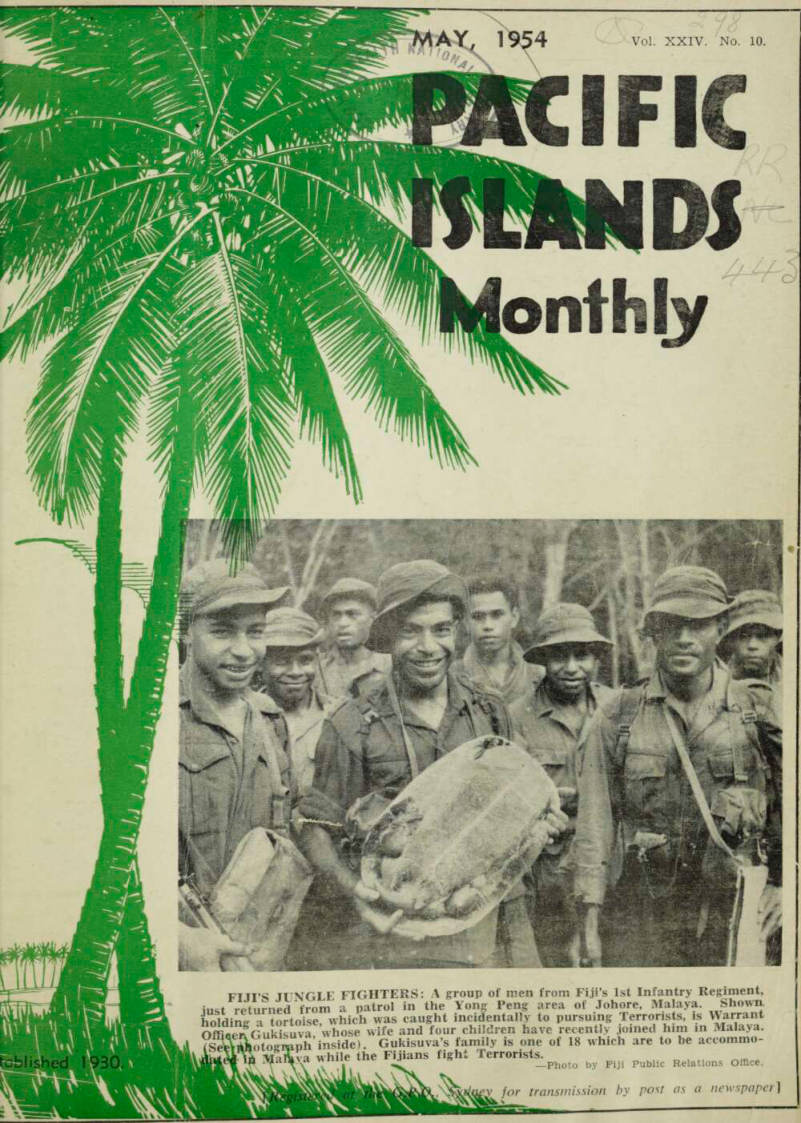 1
1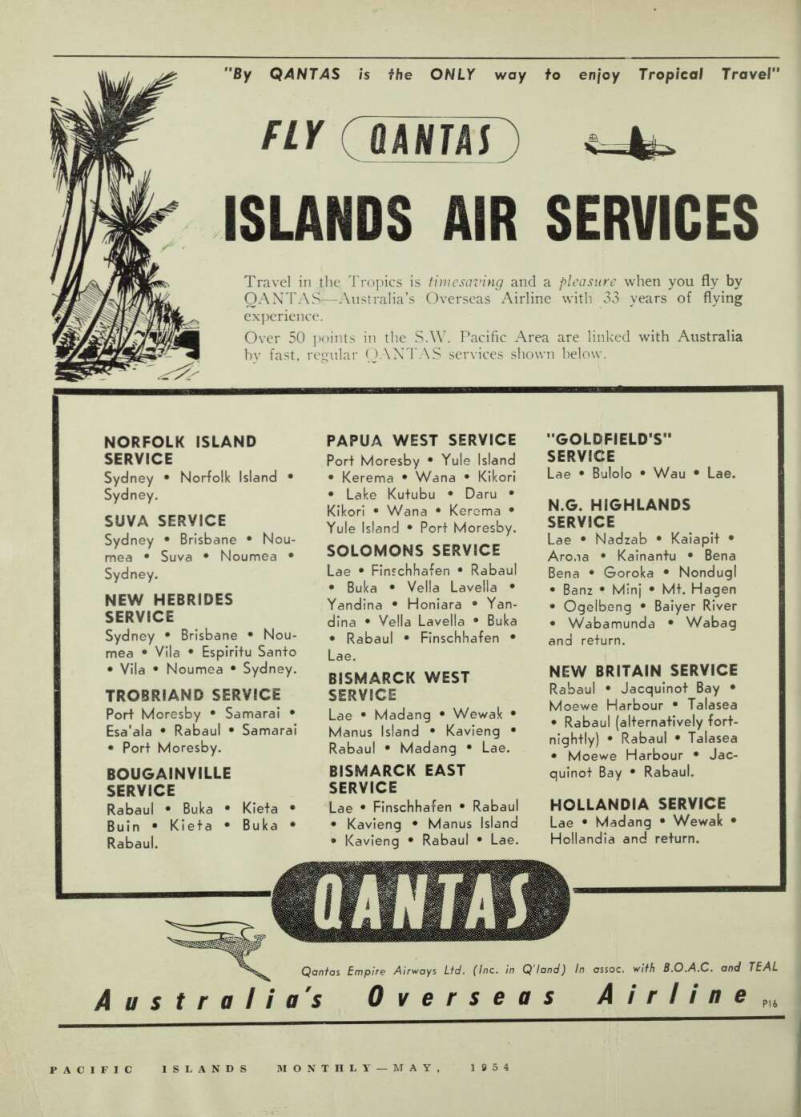 2
2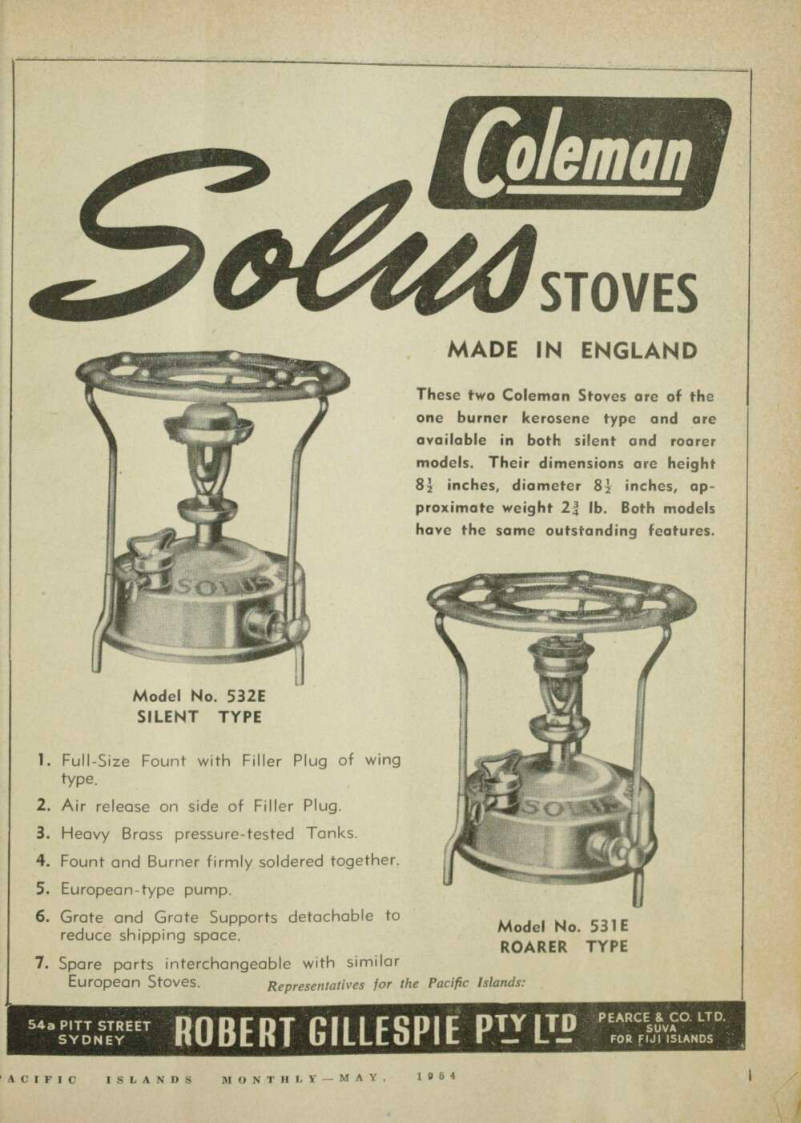 3
3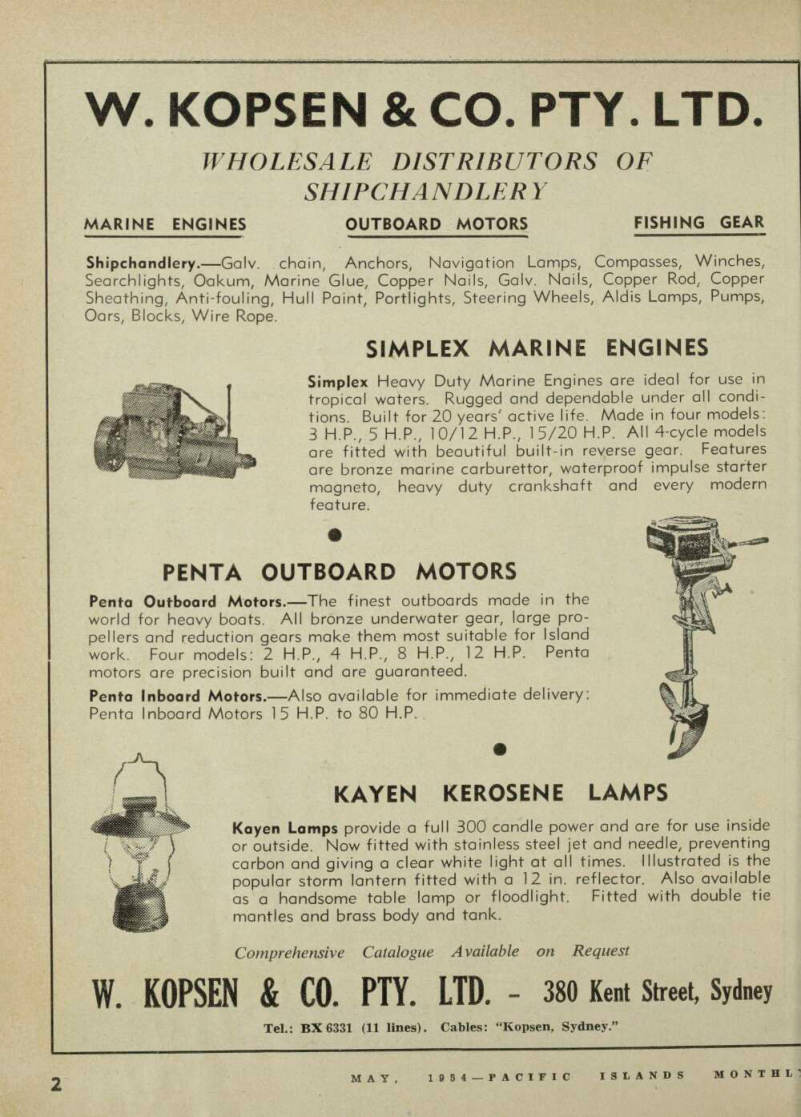 4
4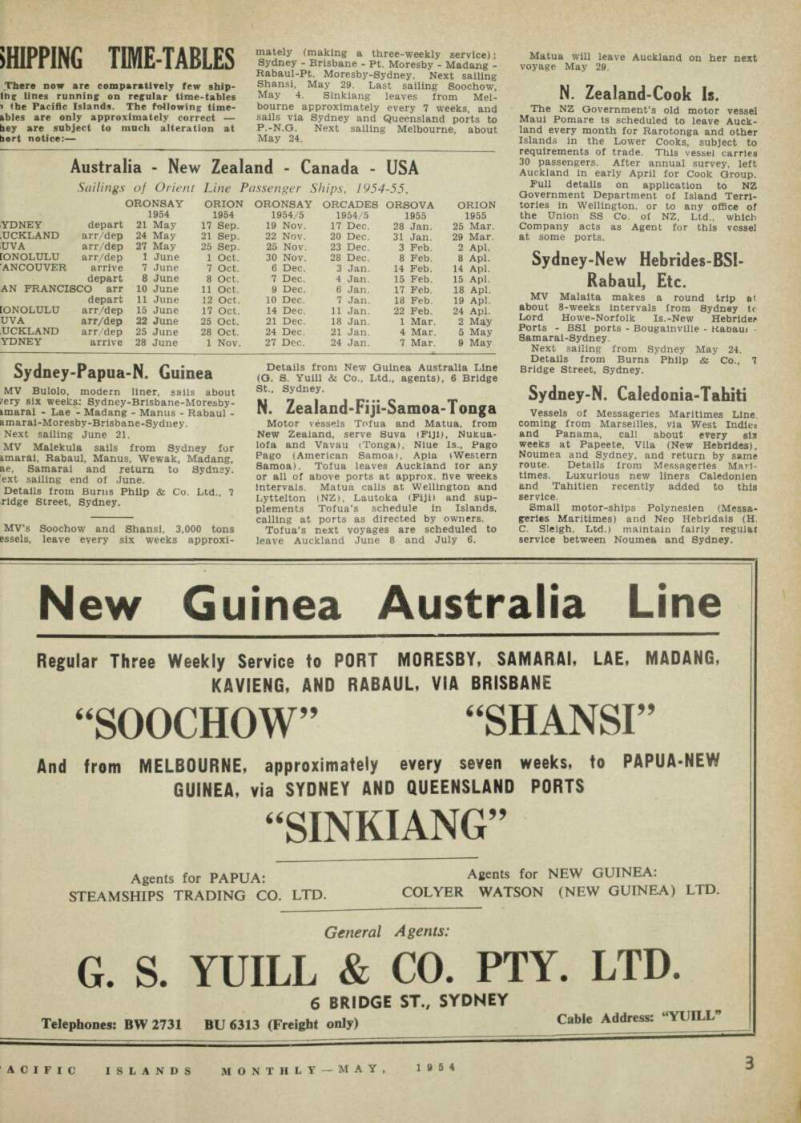 5
5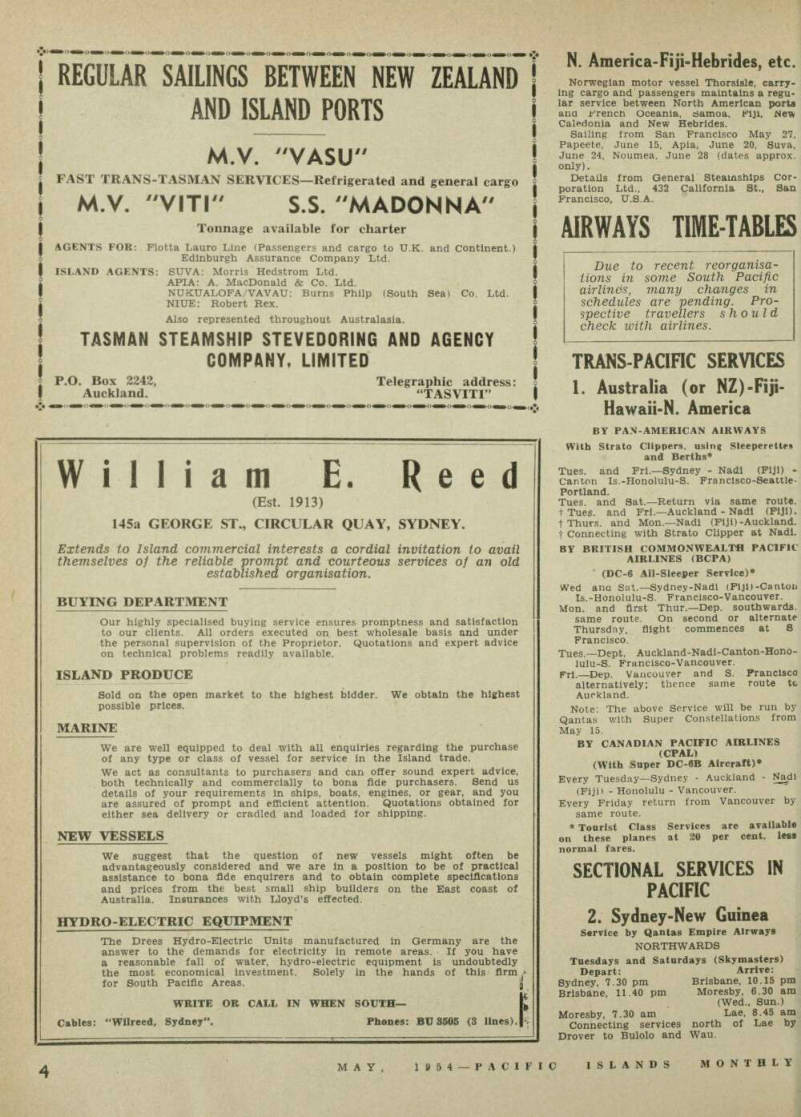 6
6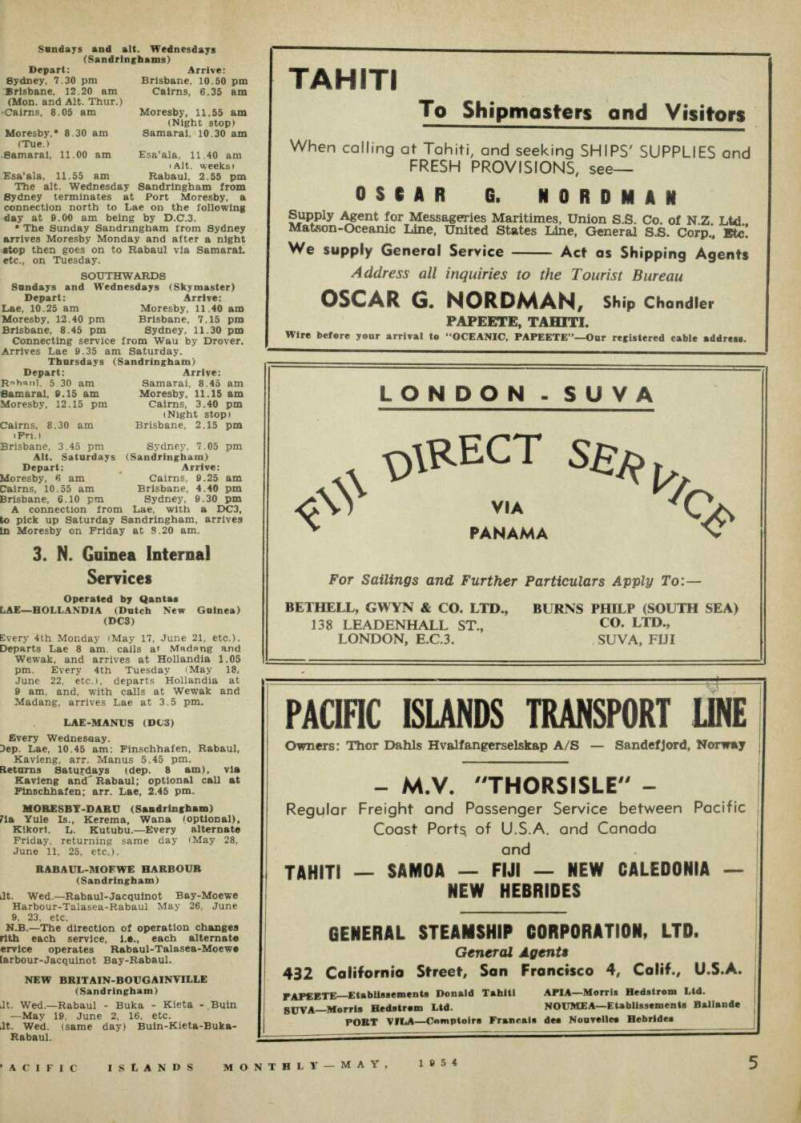 7
7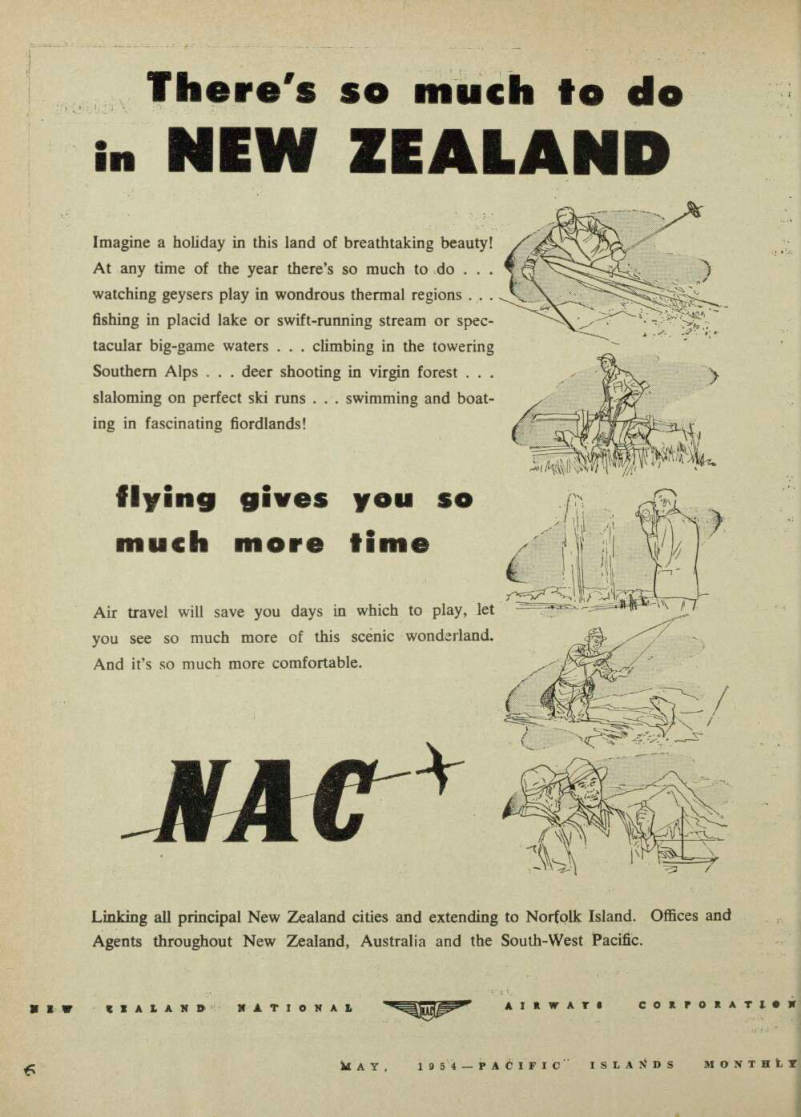 8
8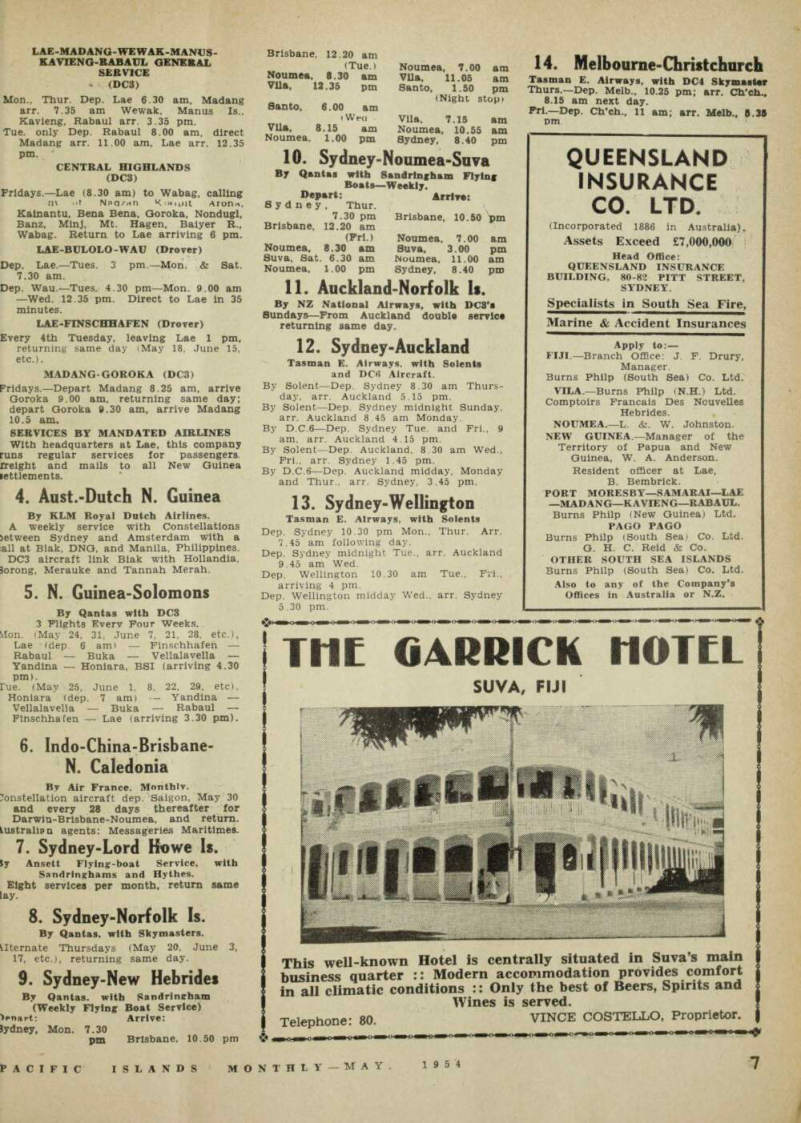 9
9 10
10 11
11 12
12 13
13 14
14 15
15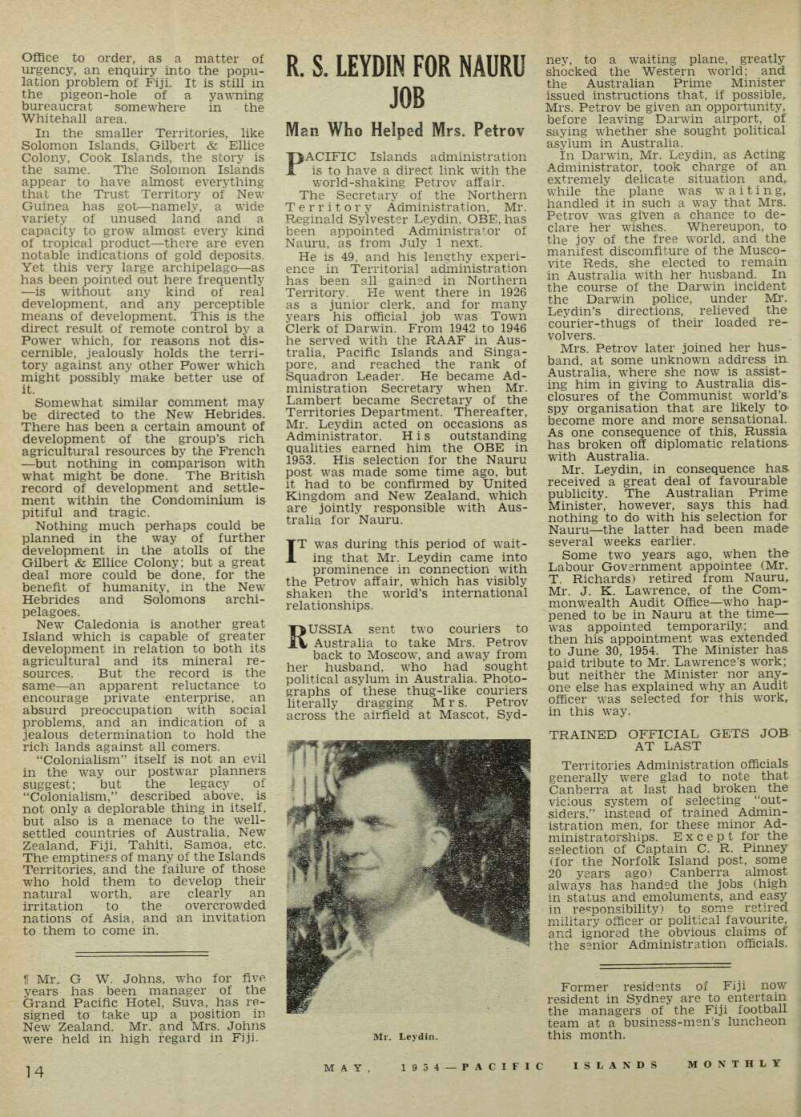 16
16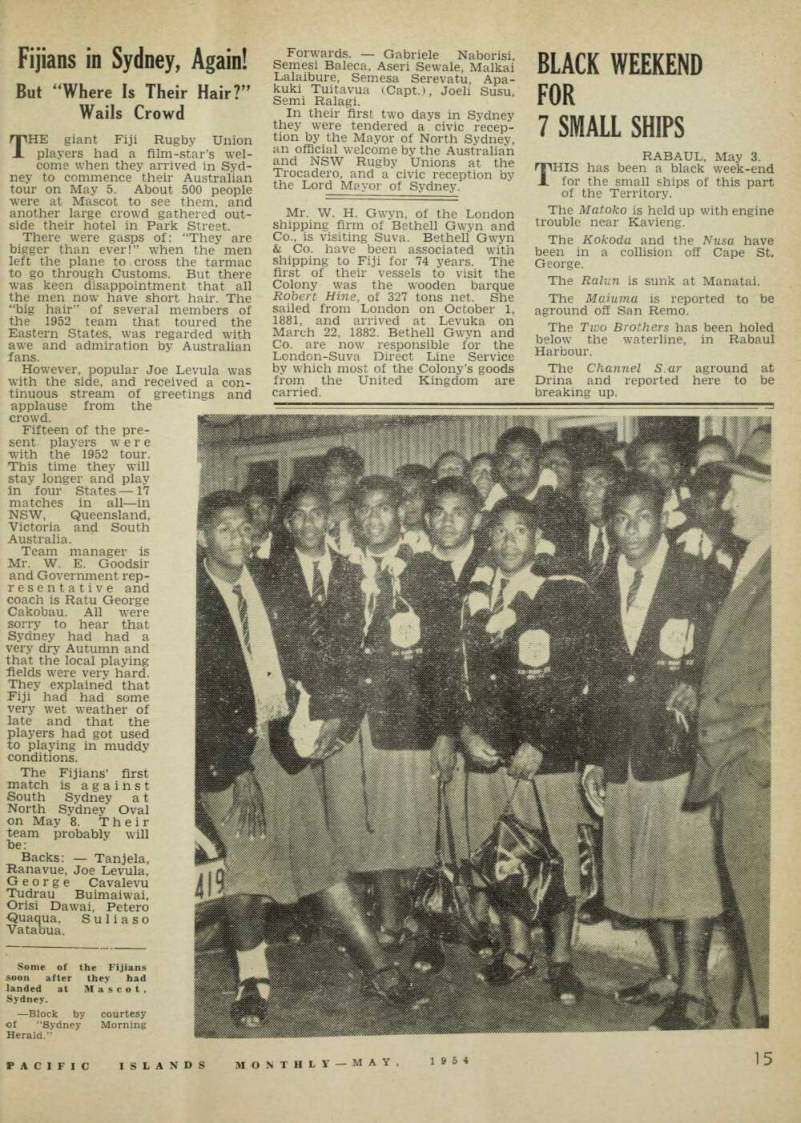 17
17 18
18 19
19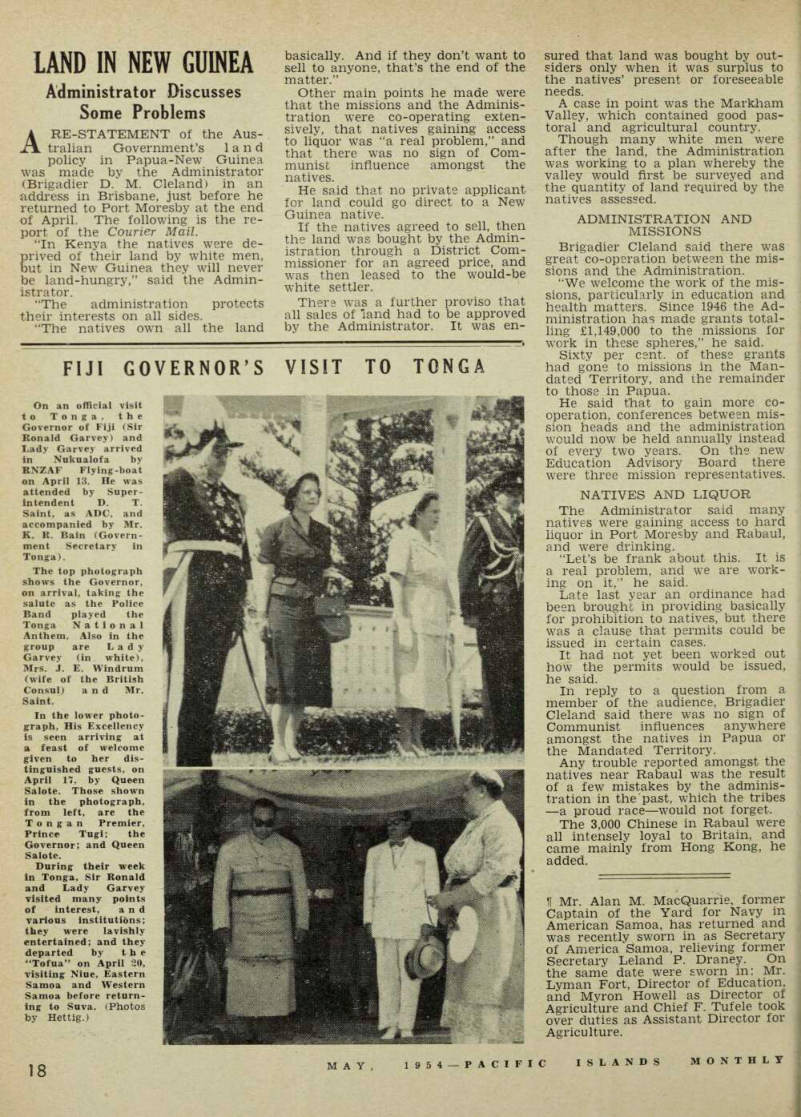 20
20 21
21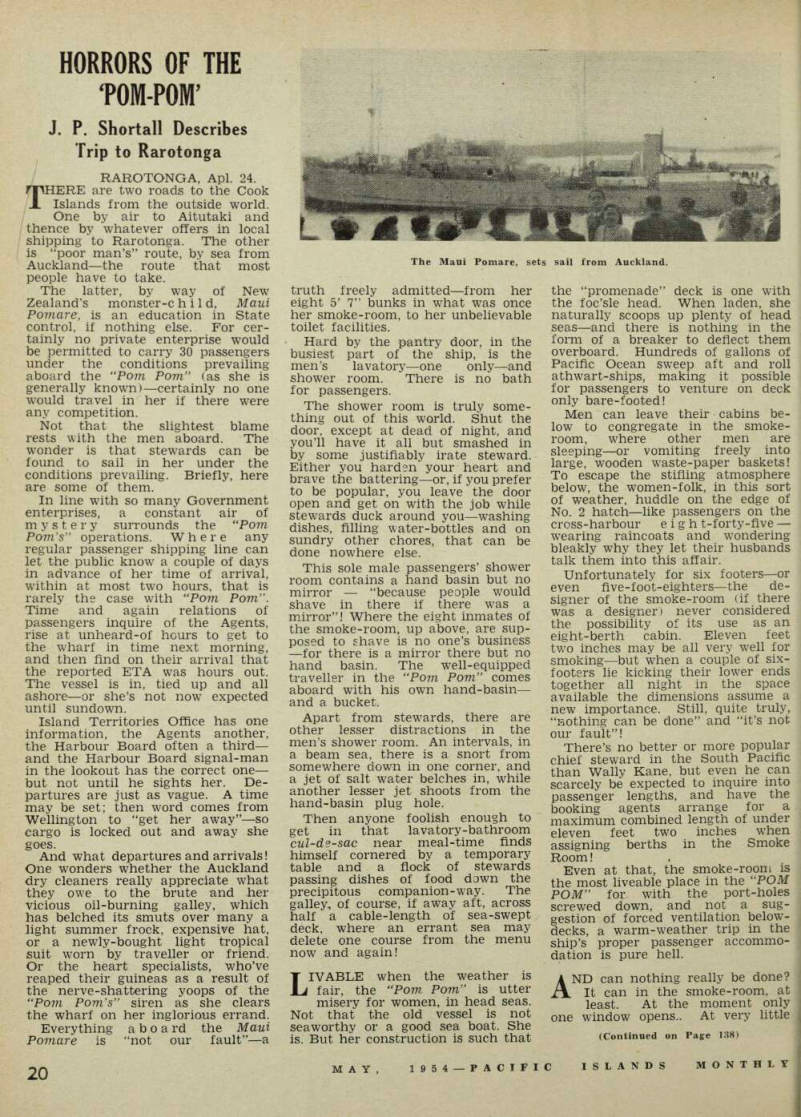 22
22 23
23 24
24 25
25 26
26 27
27 28
28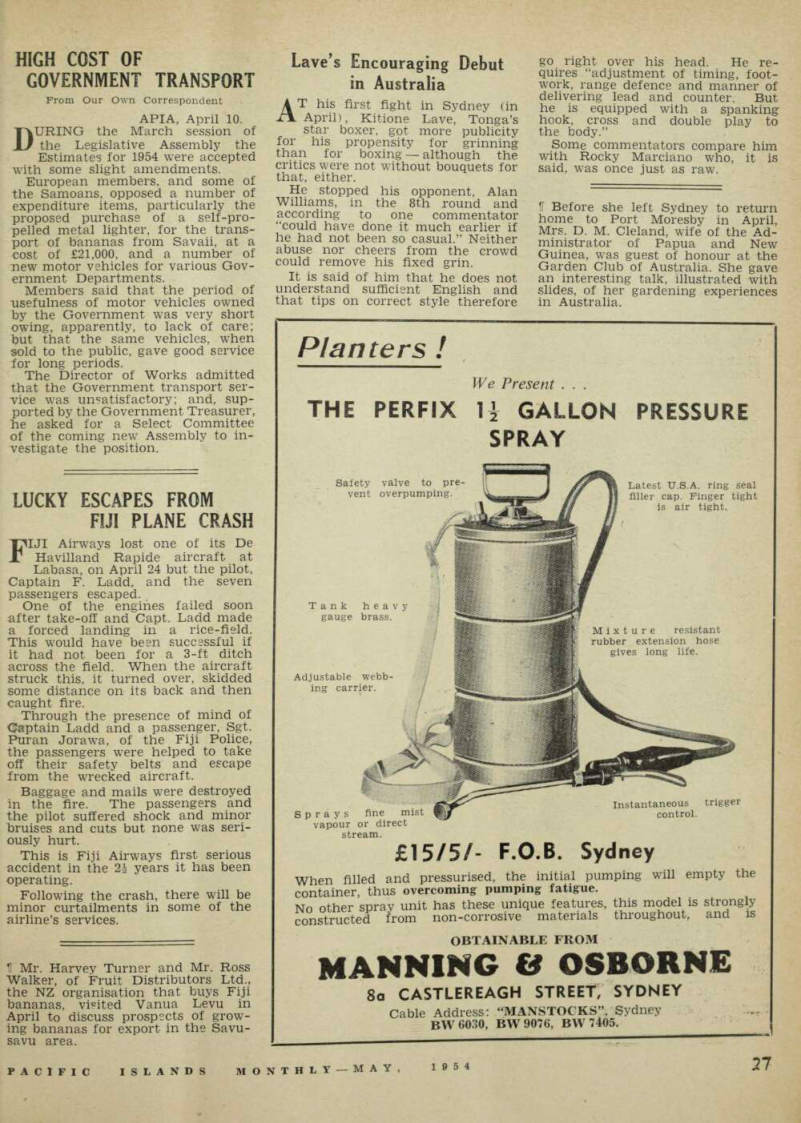 29
29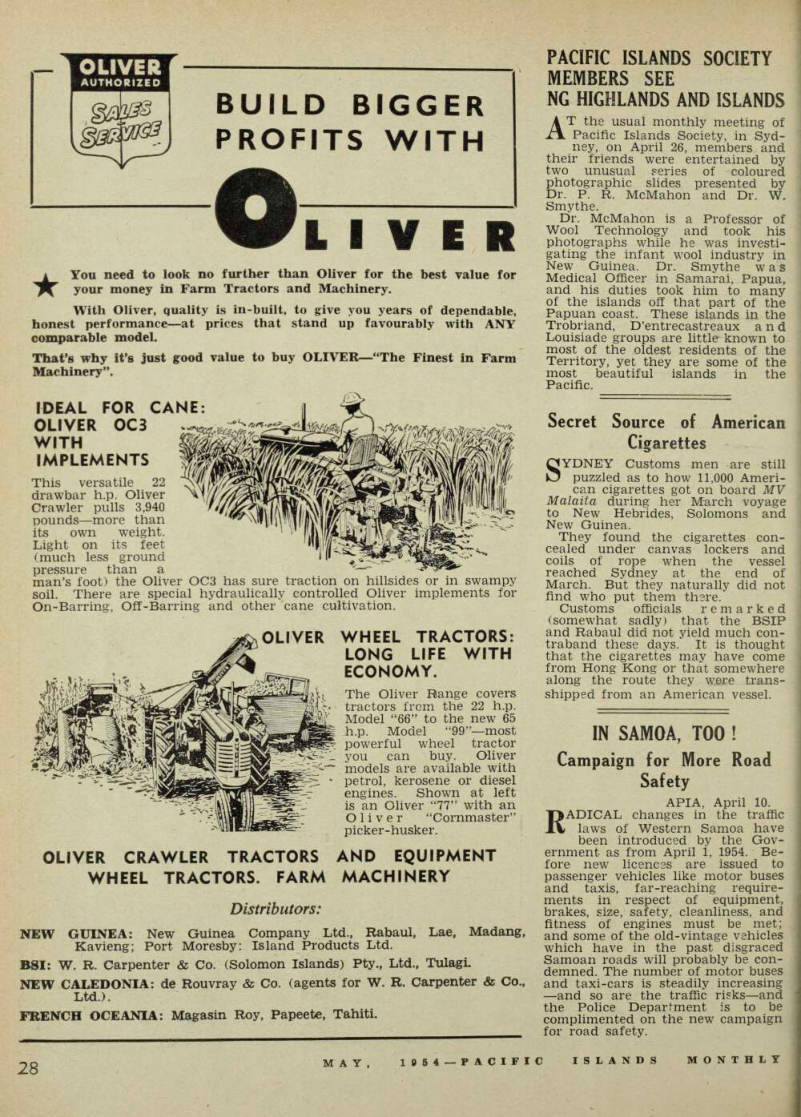 30
30 31
31 32
32 33
33 34
34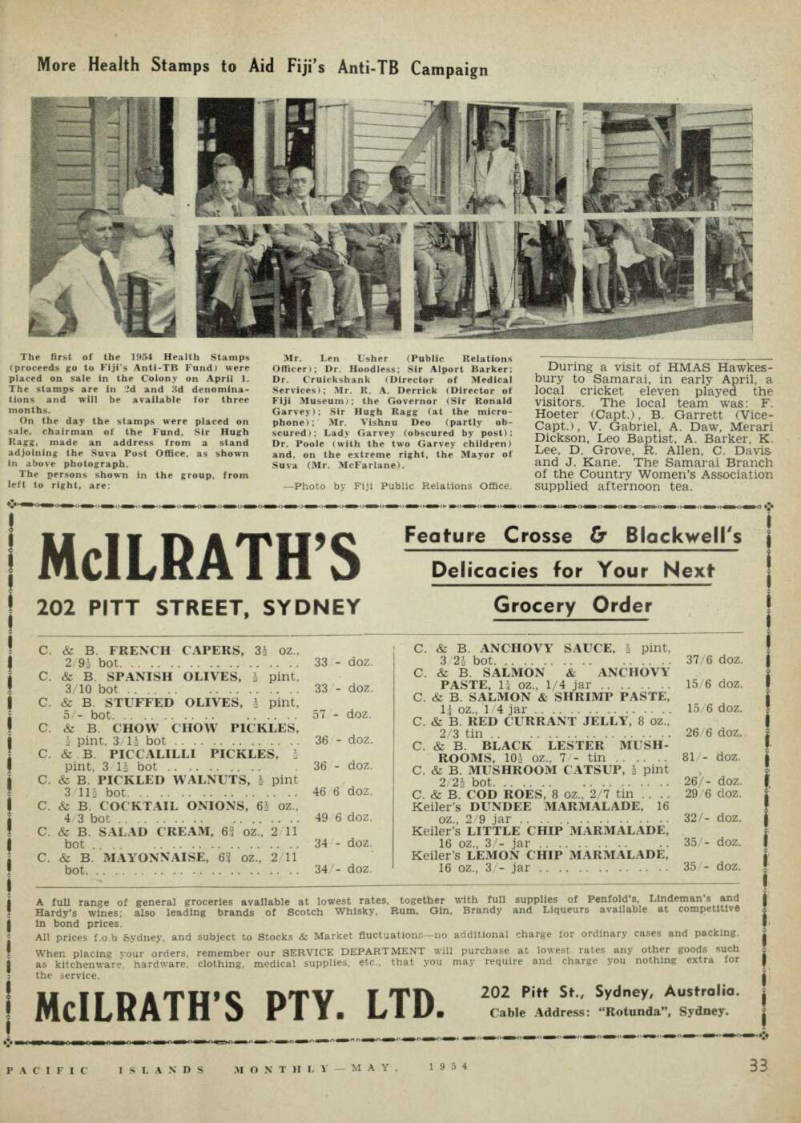 35
35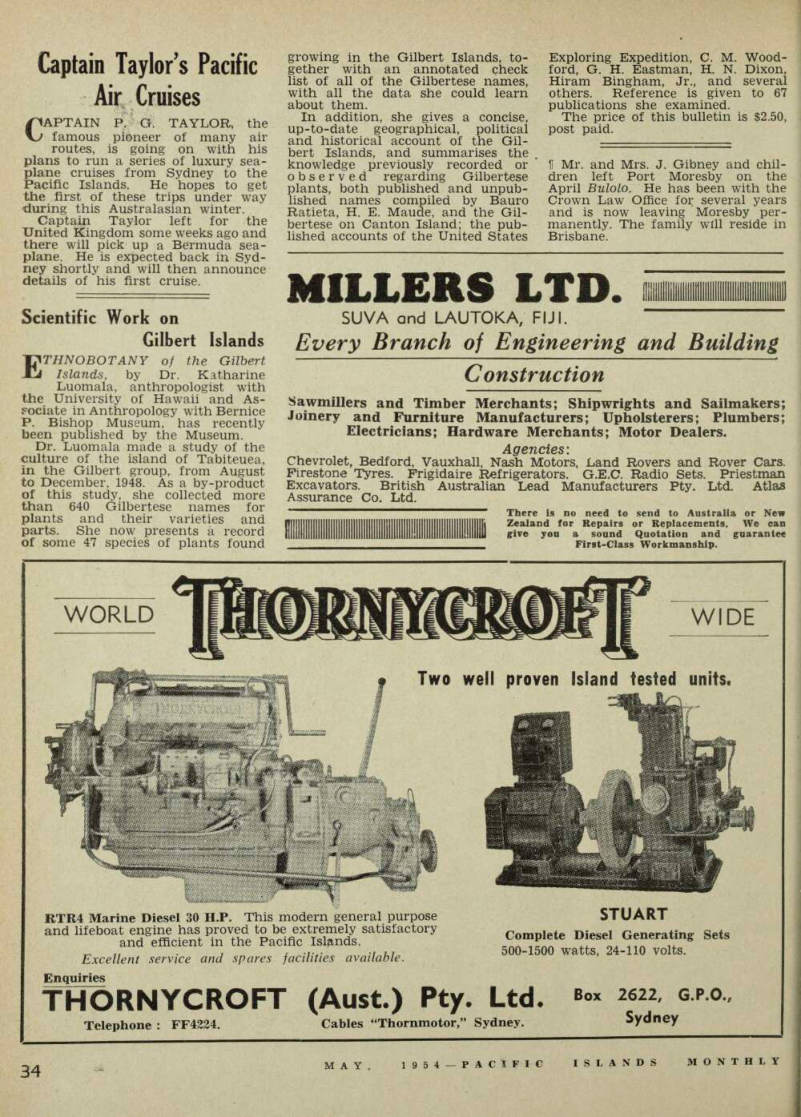 36
36 37
37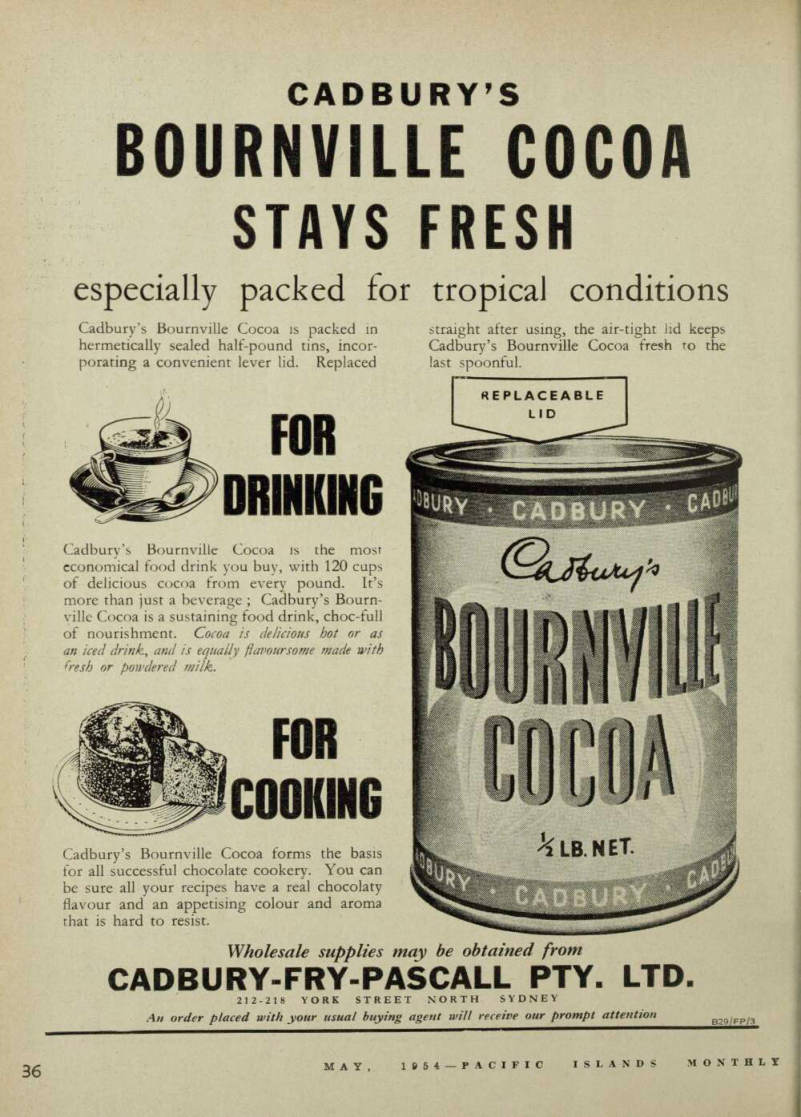 38
38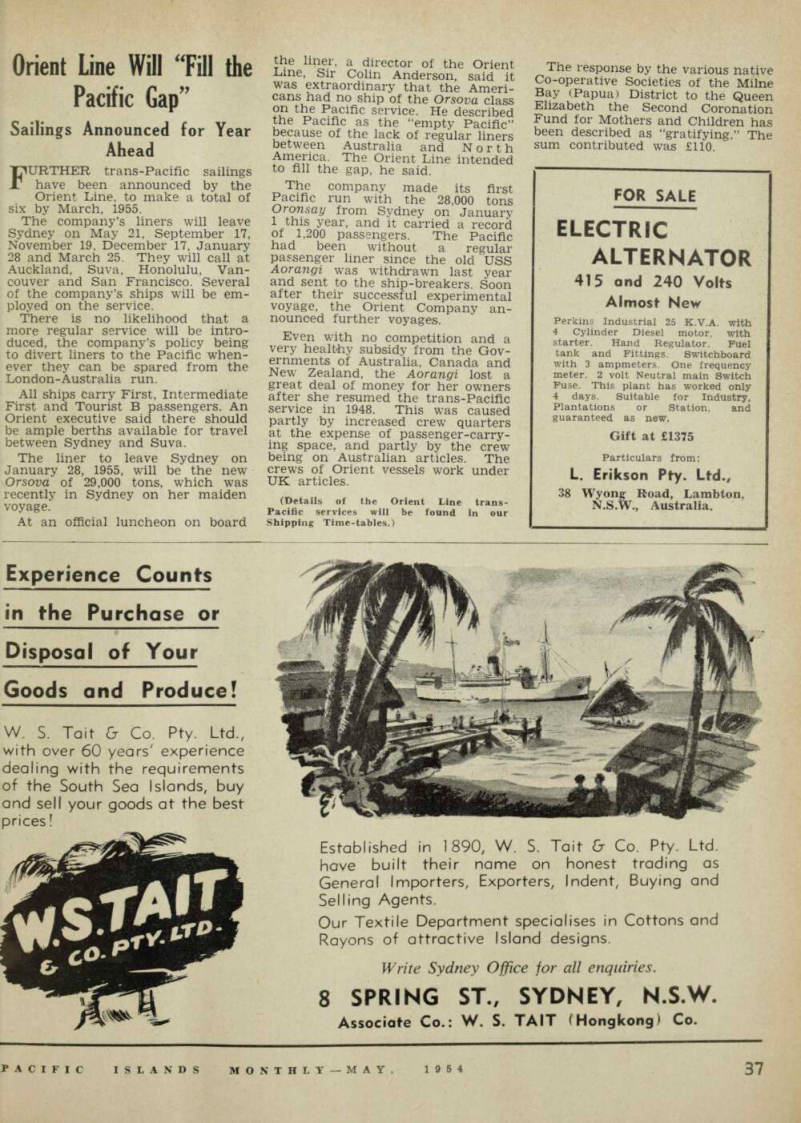 39
39 40
40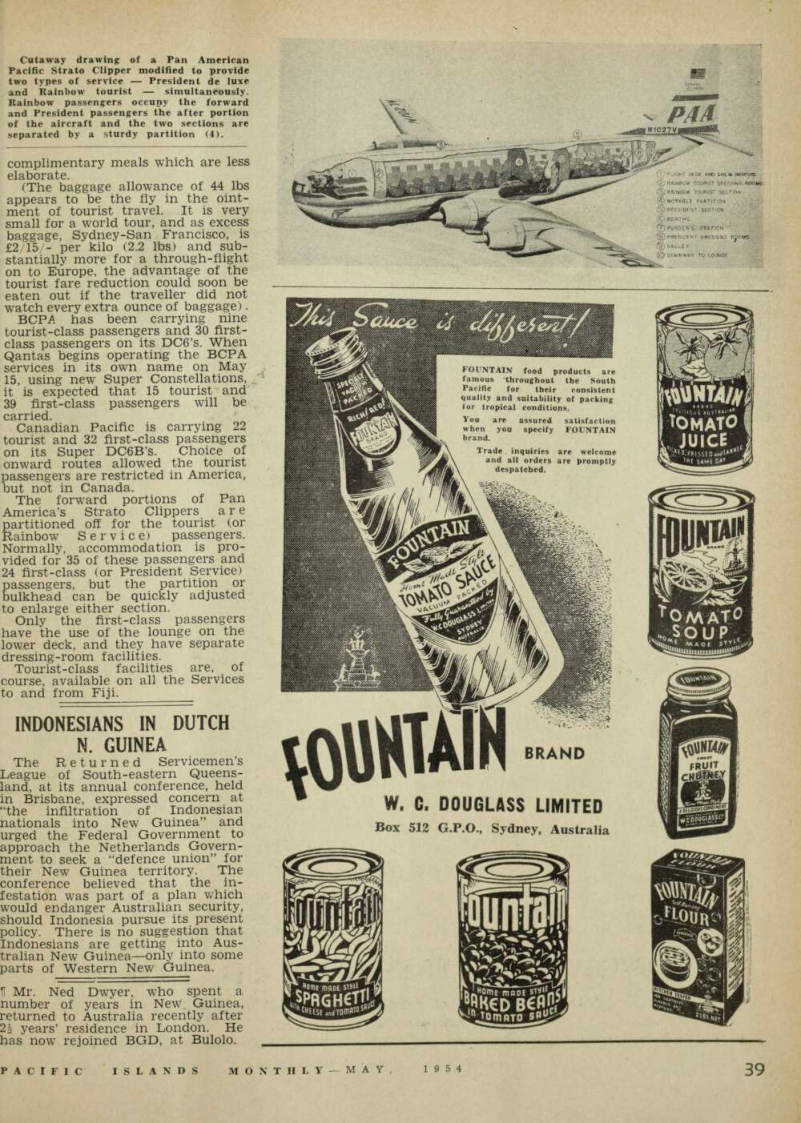 41
41 42
42 43
43 44
44 45
45 46
46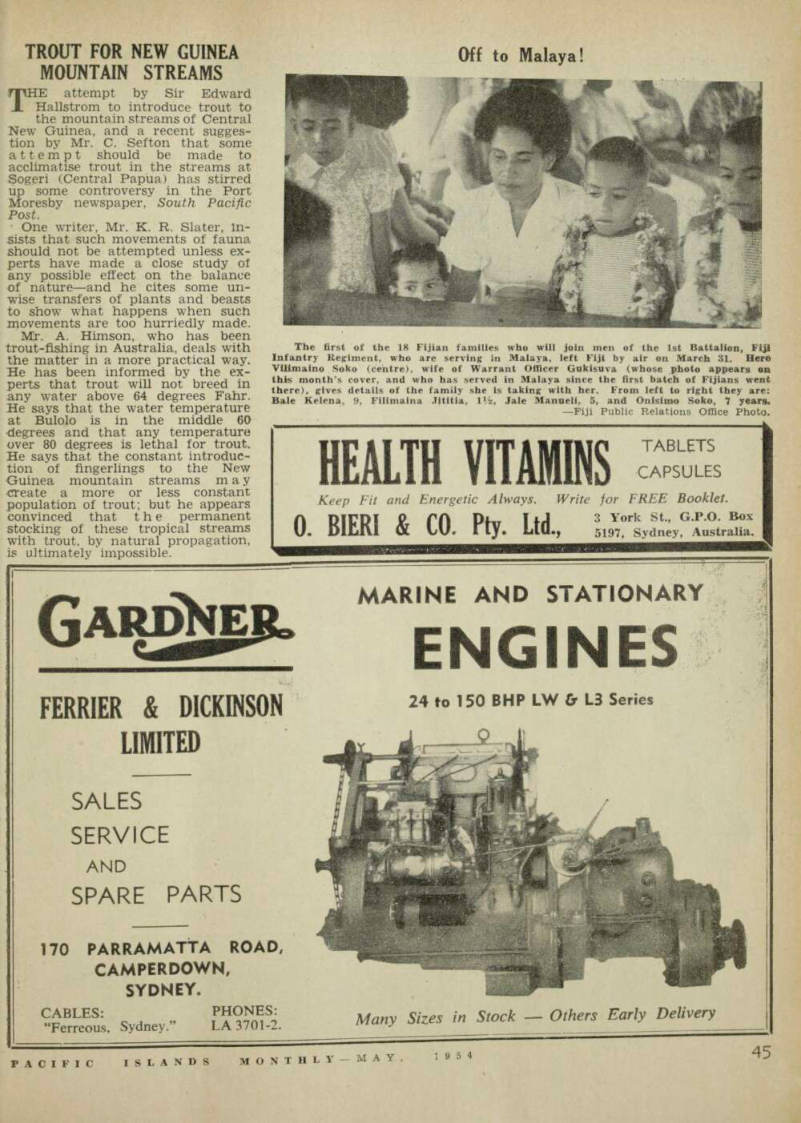 47
47 48
48 49
49 50
50 51
51 52
52 53
53 54
54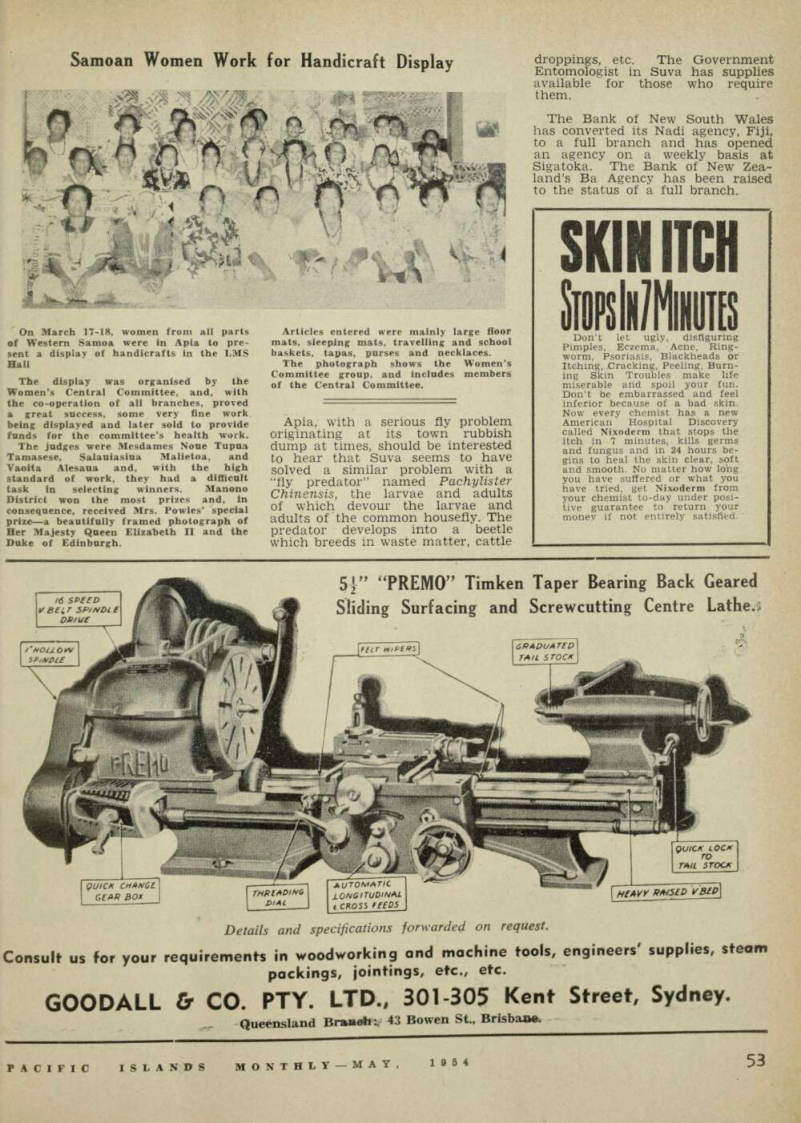 55
55 56
56 57
57 58
58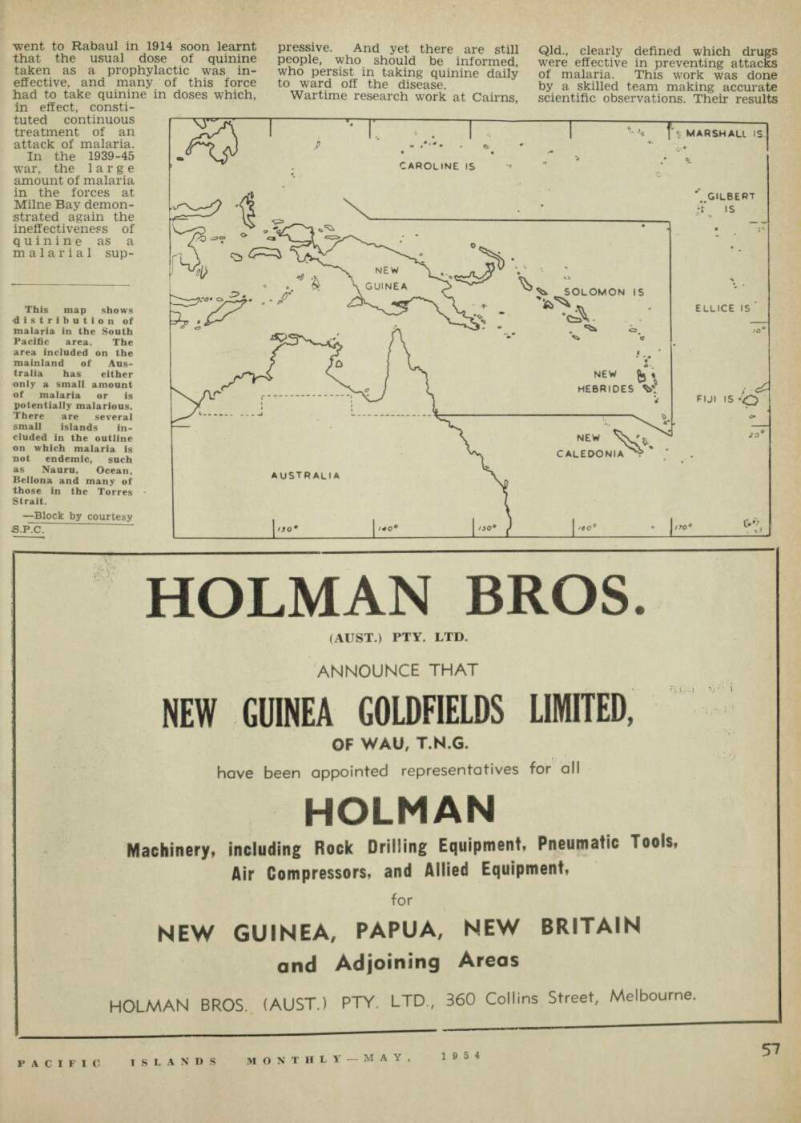 59
59 60
60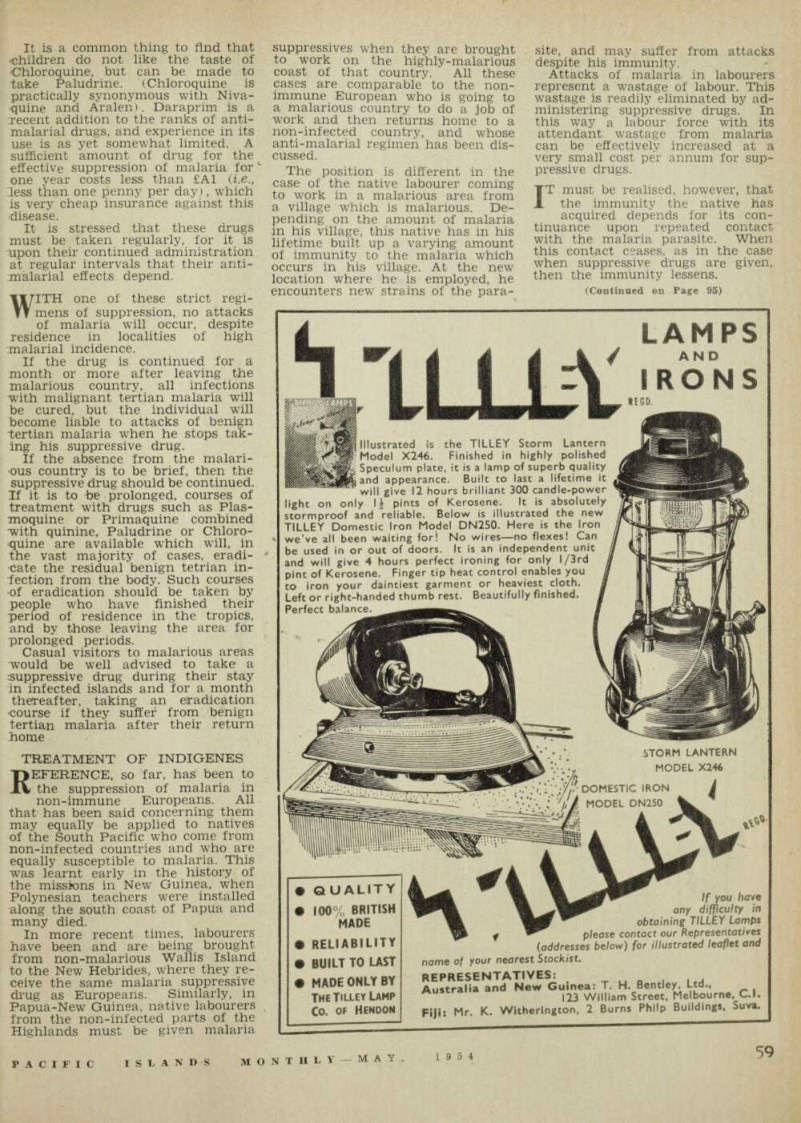 61
61 62
62 63
63 64
64 65
65 66
66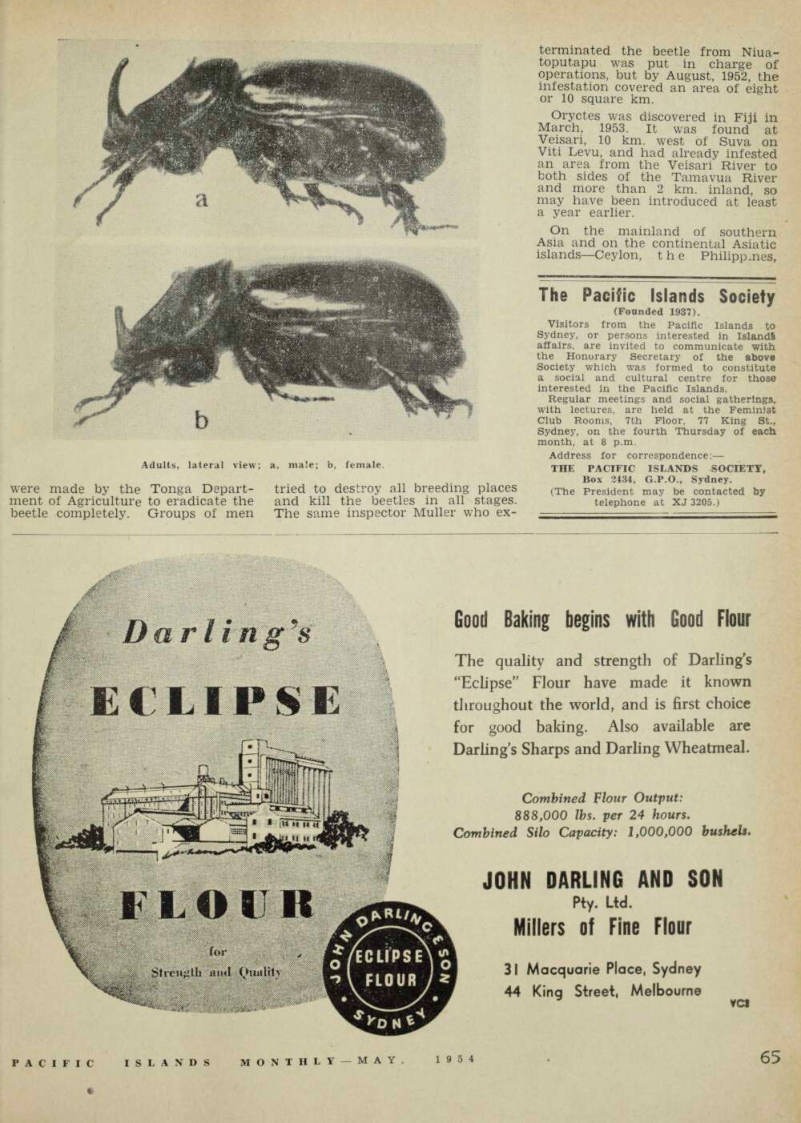 67
67 68
68 69
69 70
70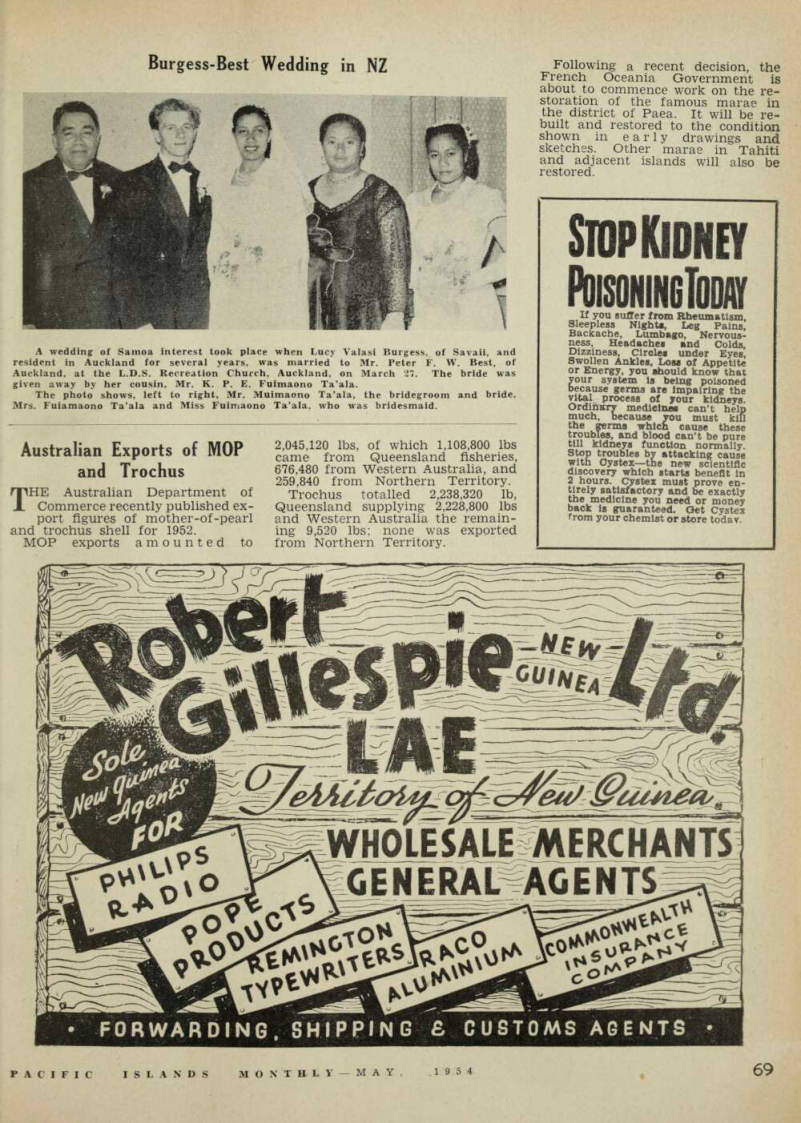 71
71 72
72 73
73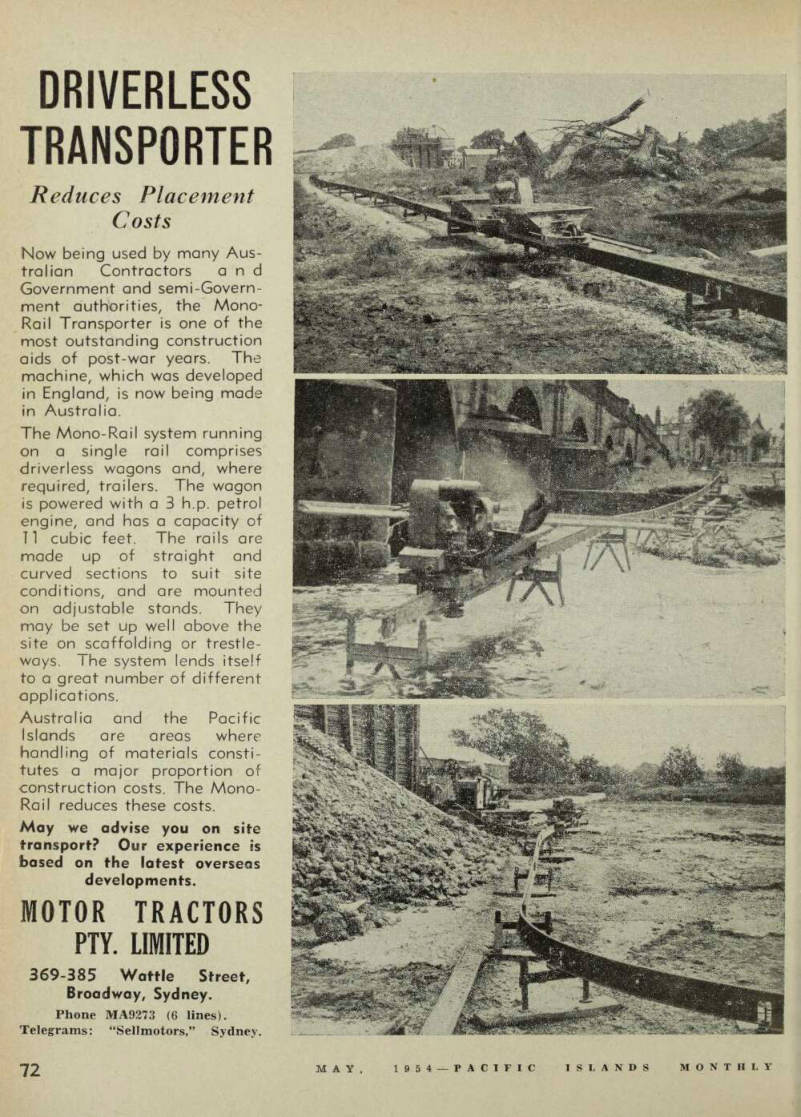 74
74 75
75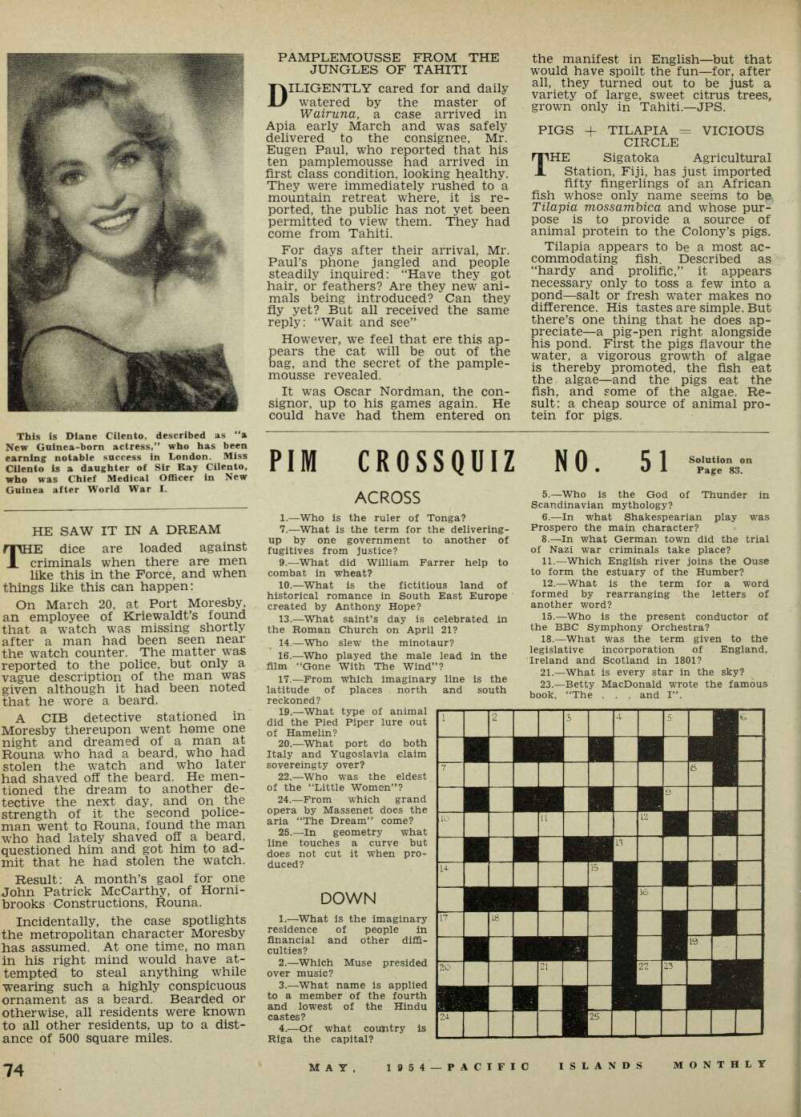 76
76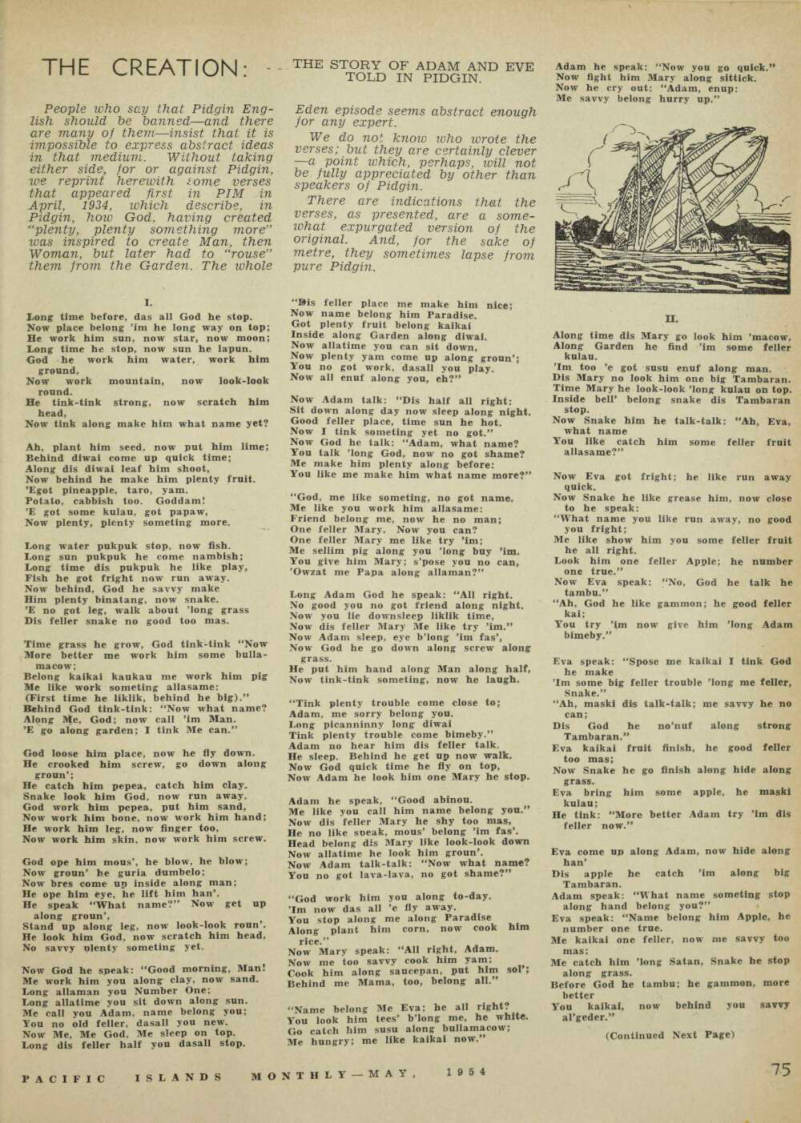 77
77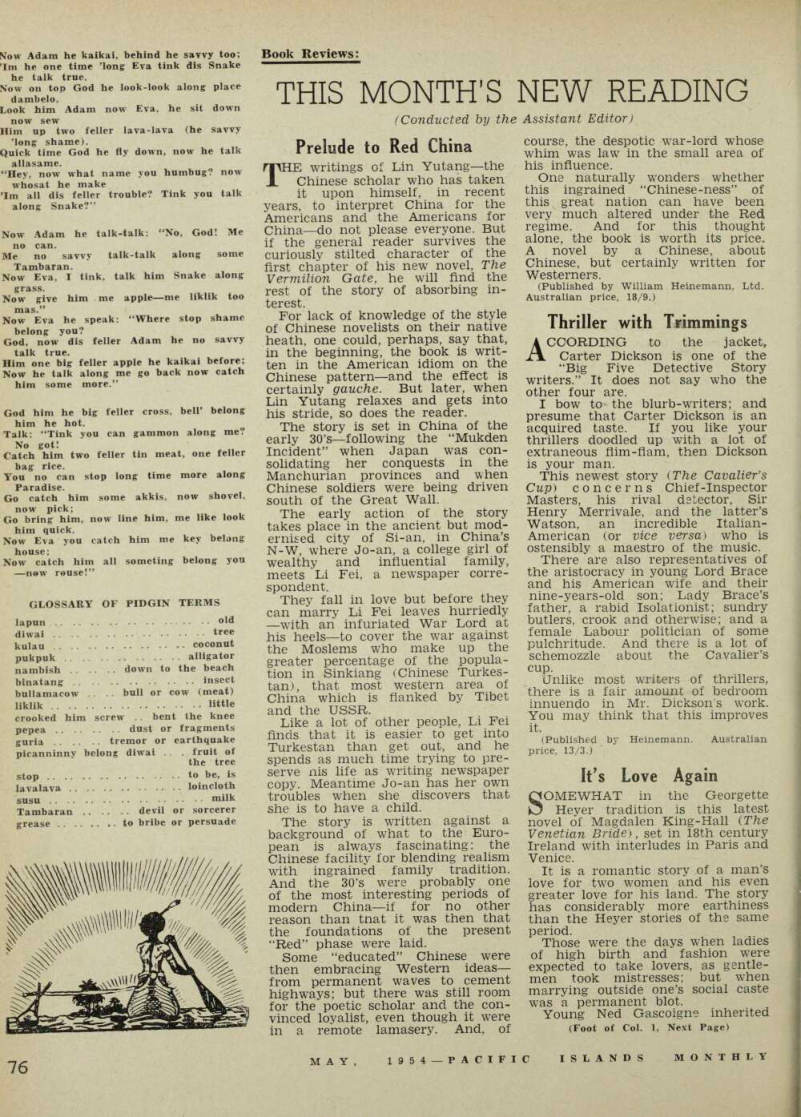 78
78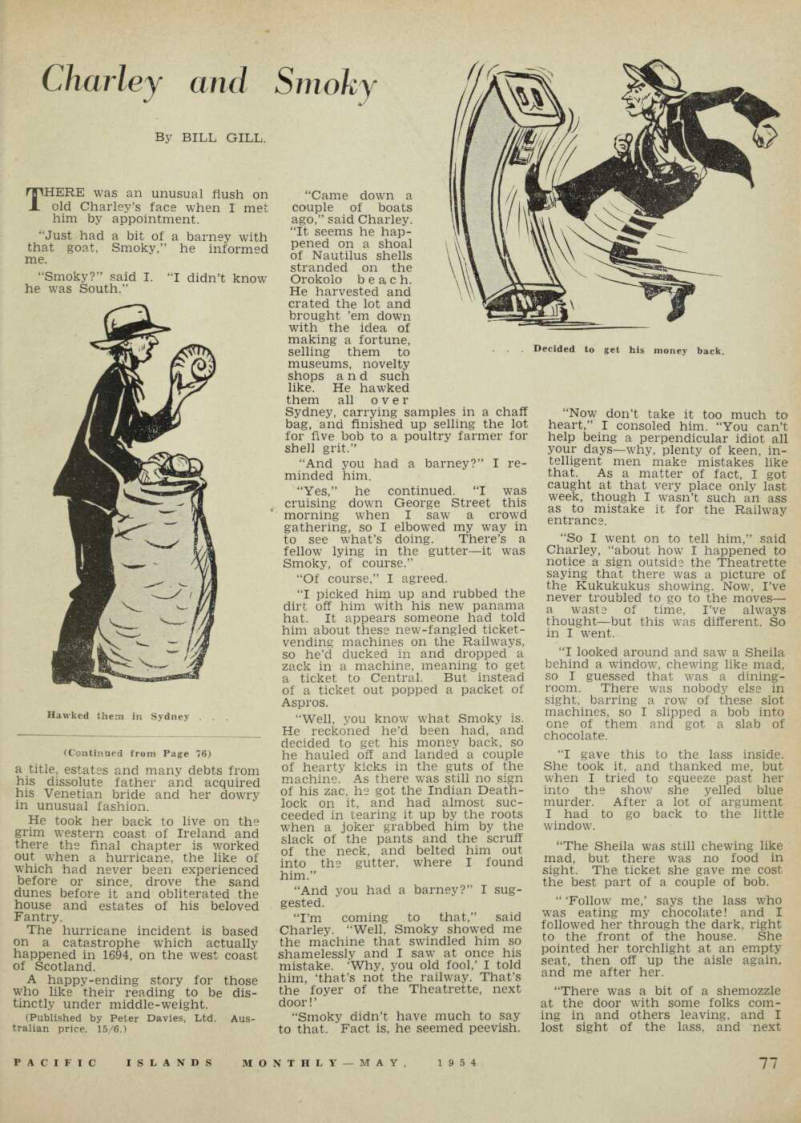 79
79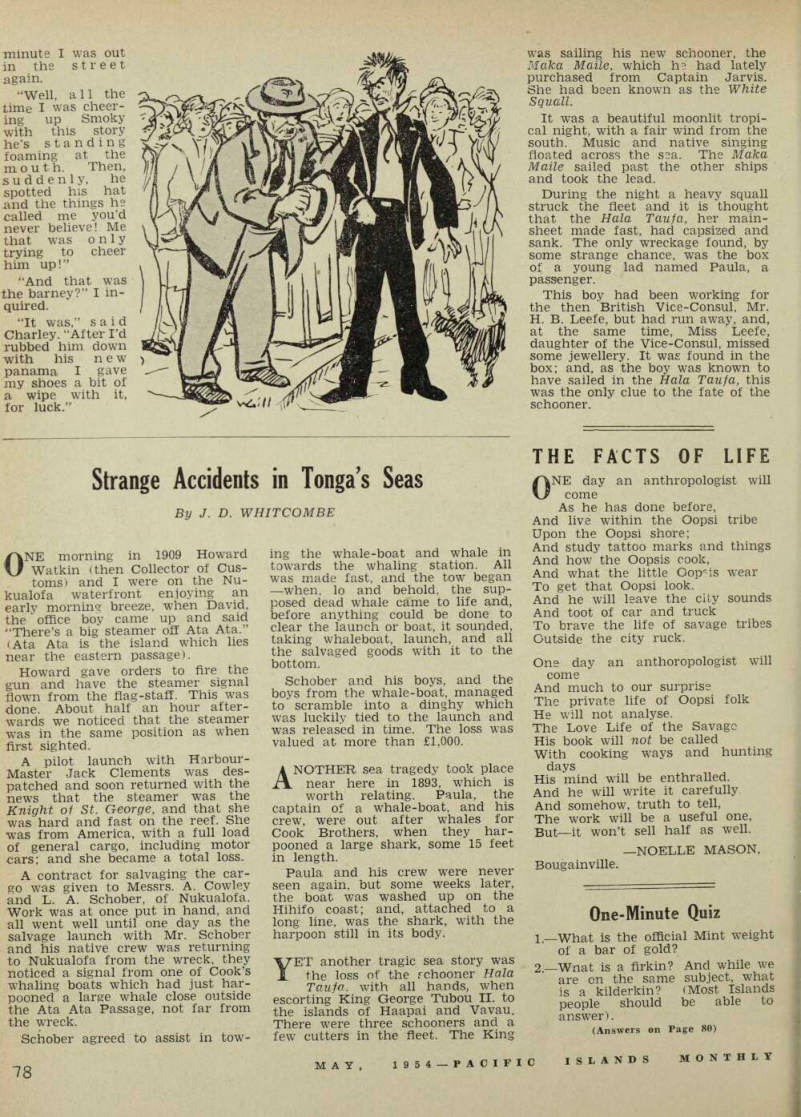 80
80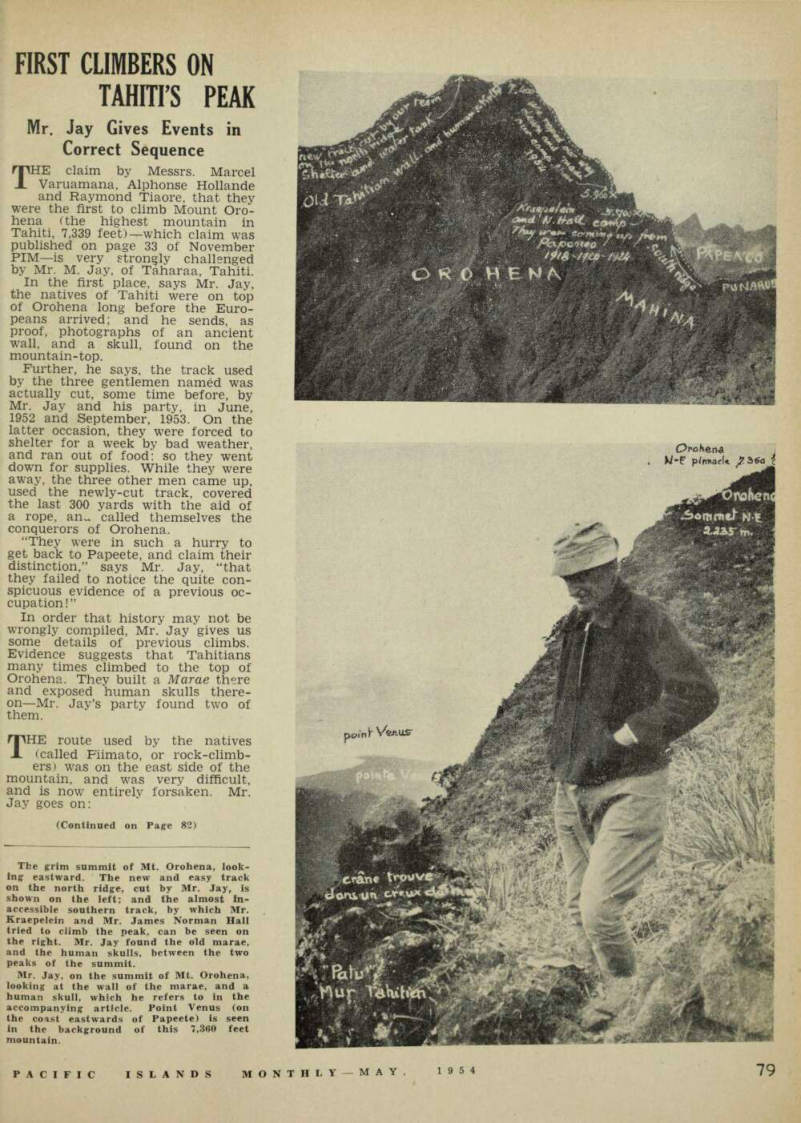 81
81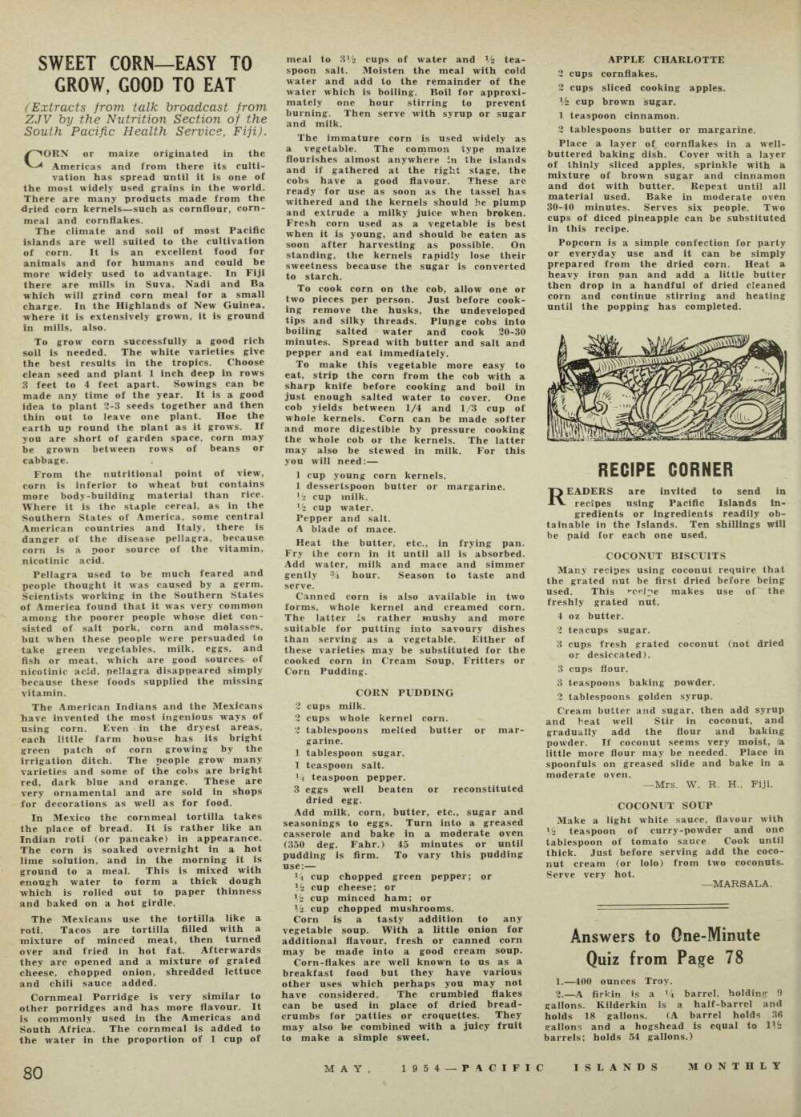 82
82 83
83 84
84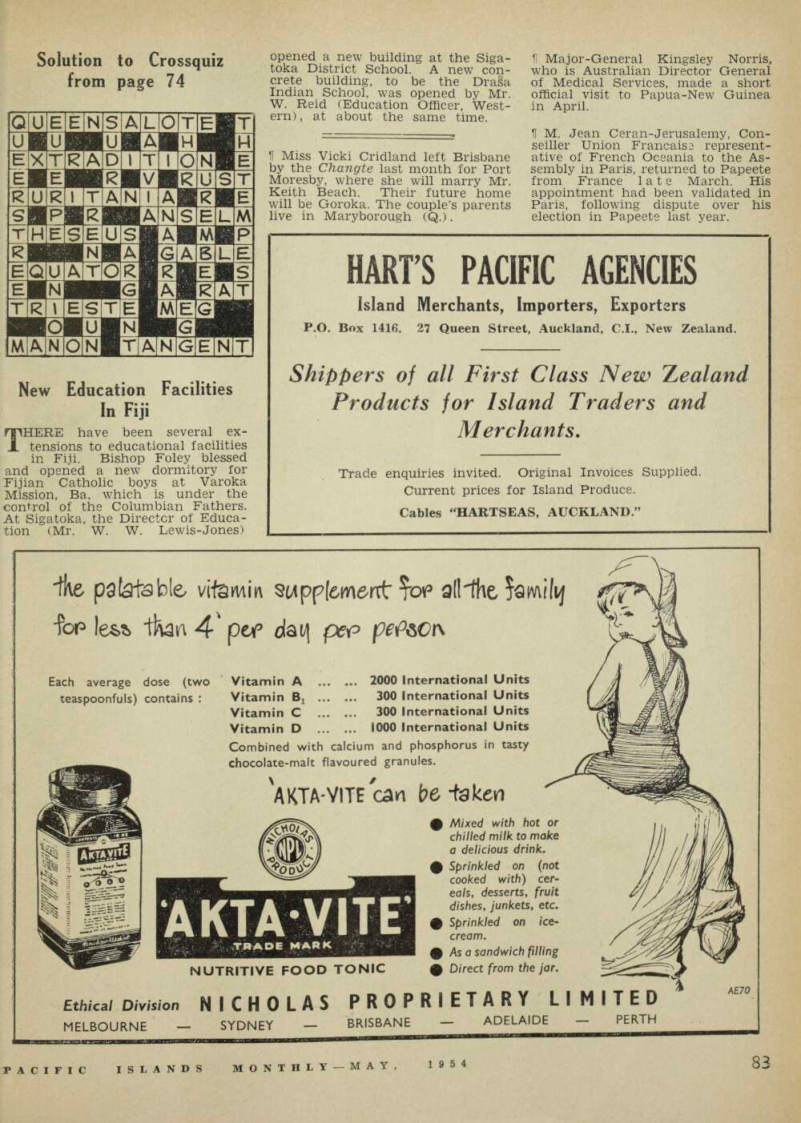 85
85 86
86 87
87 88
88 89
89 90
90 91
91 92
92 93
93 94
94 95
95 96
96 97
97 98
98 99
99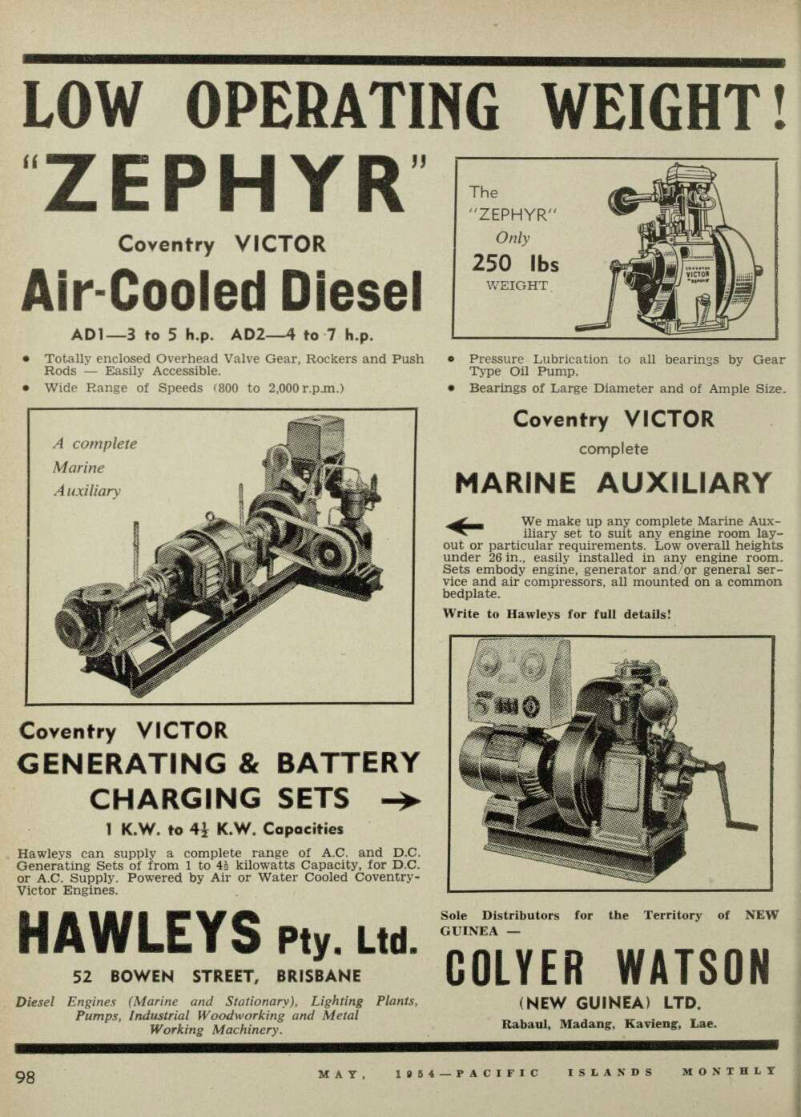 100
100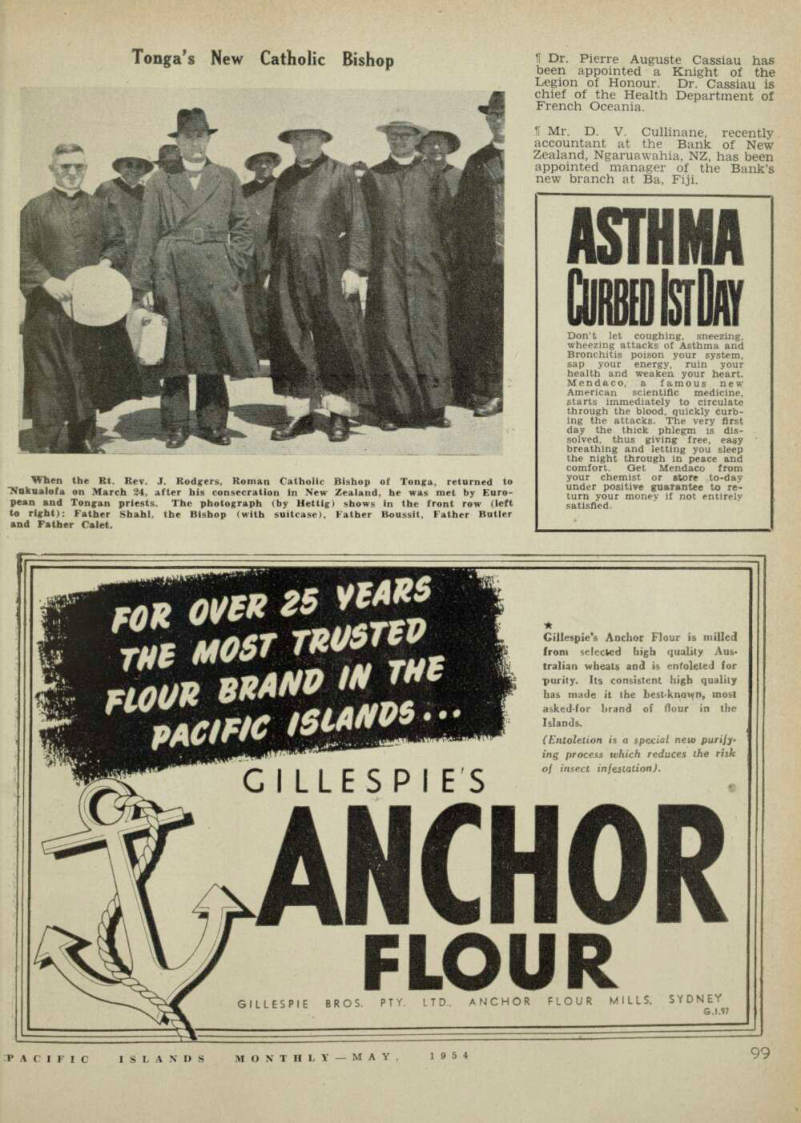 101
101 102
102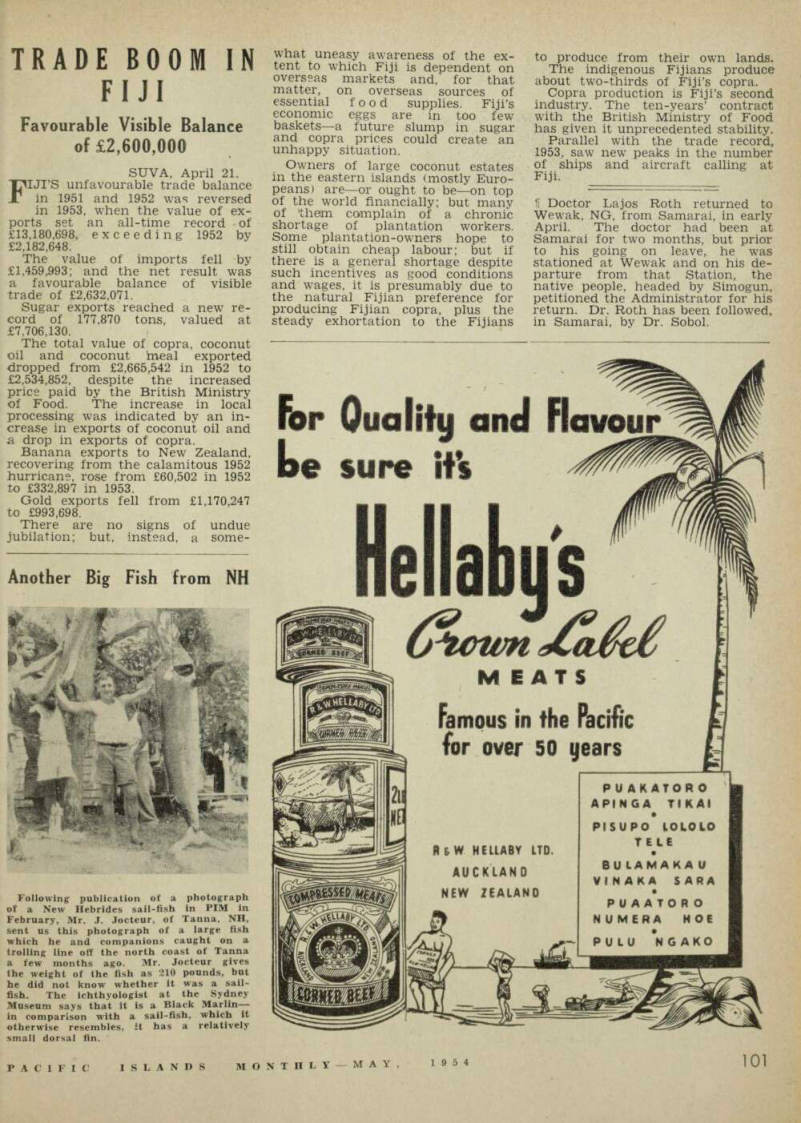 103
103 104
104 105
105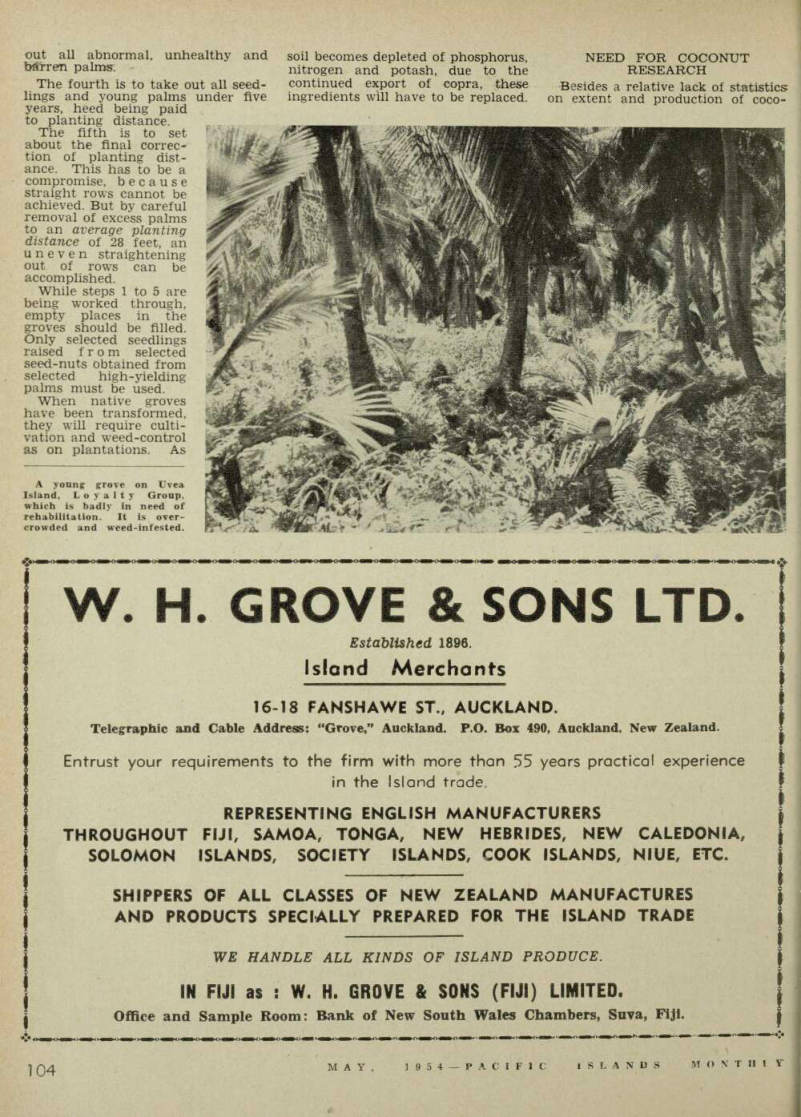 106
106 107
107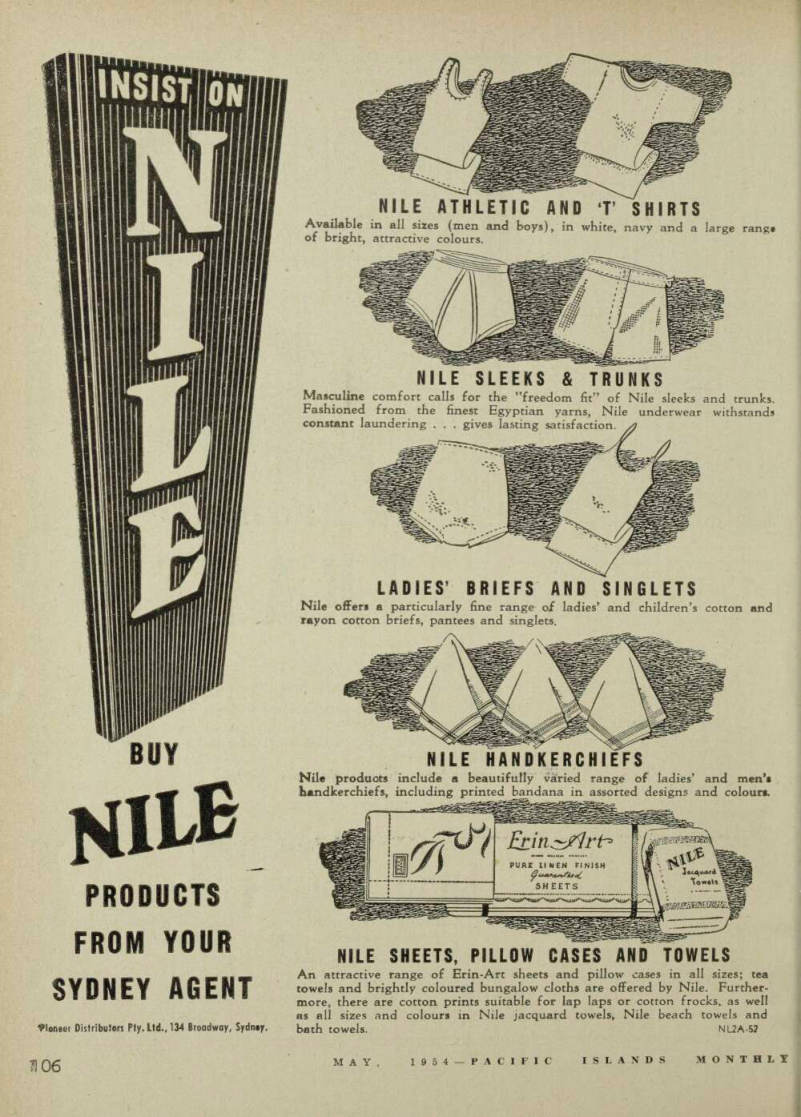 108
108 109
109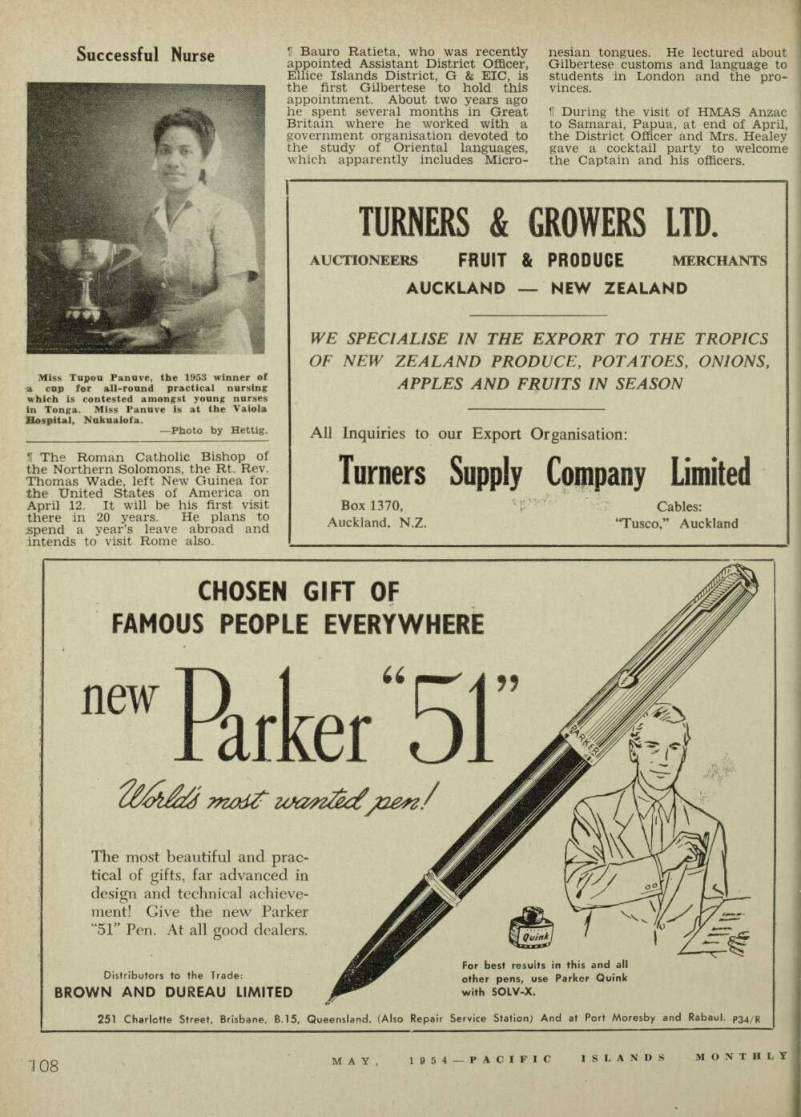 110
110 111
111 112
112 113
113 114
114 115
115 116
116 117
117 118
118 119
119 120
120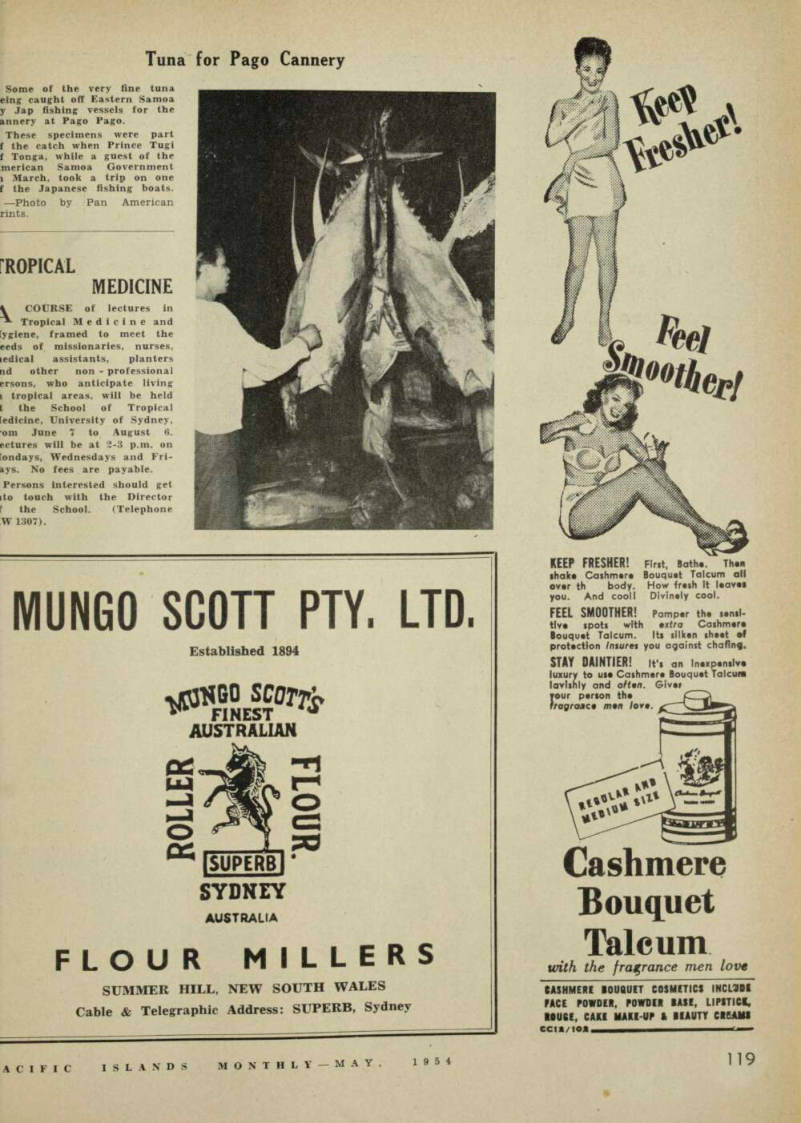 121
121 122
122 123
123 124
124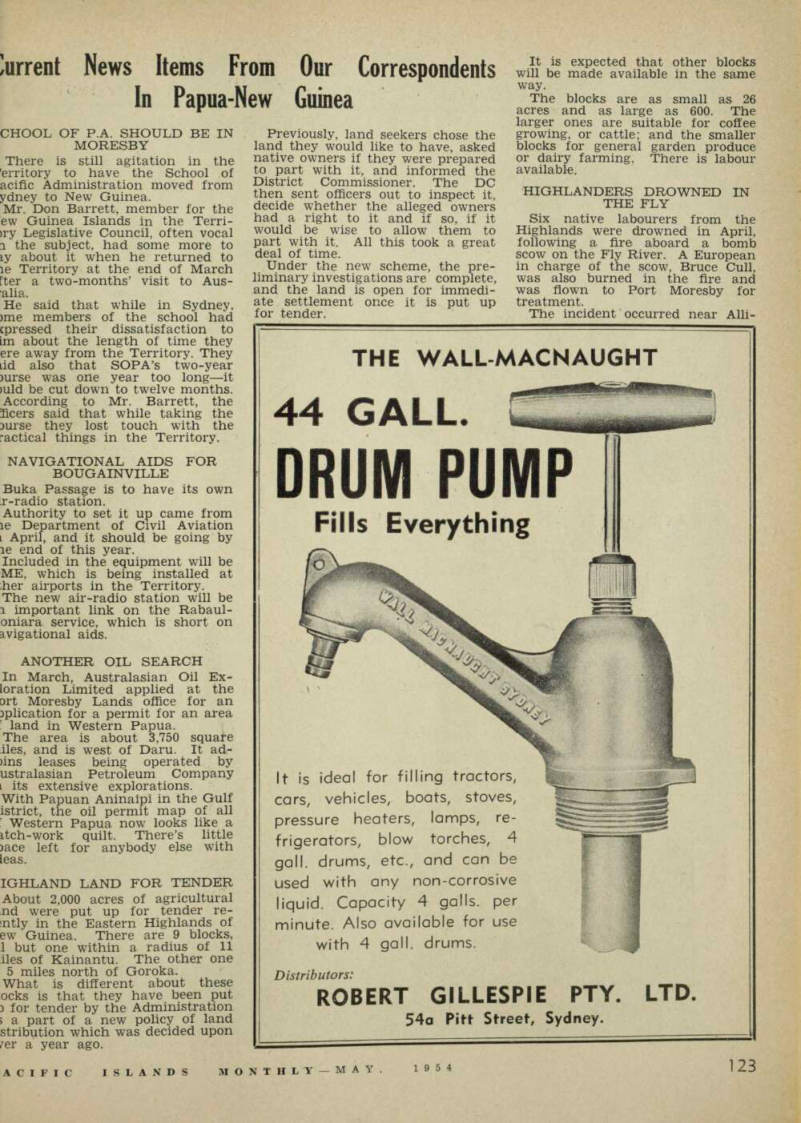 125
125 126
126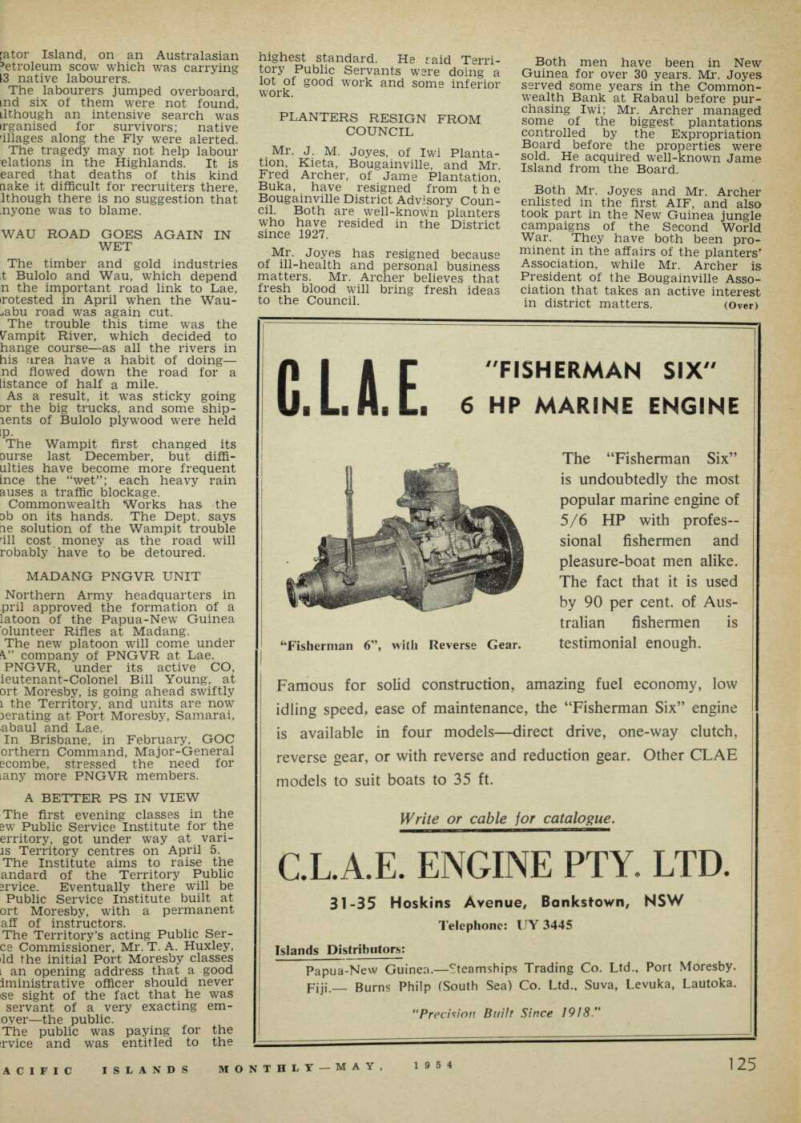 127
127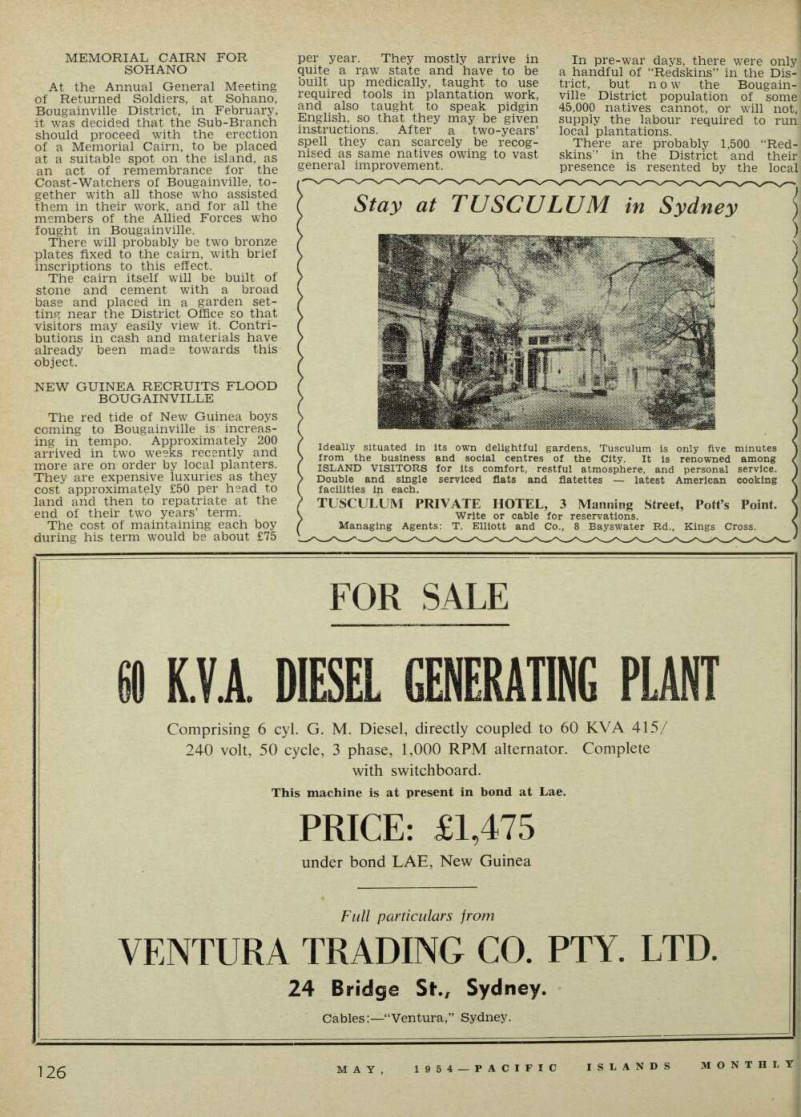 128
128 129
129 130
130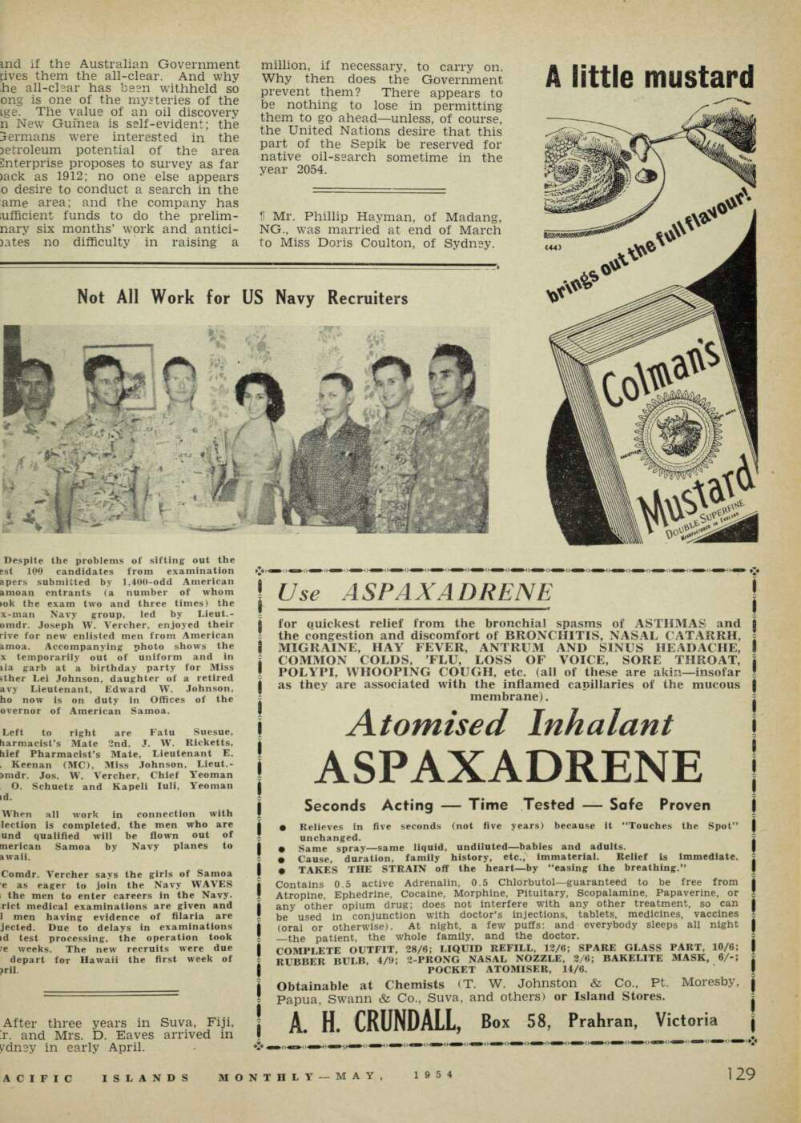 131
131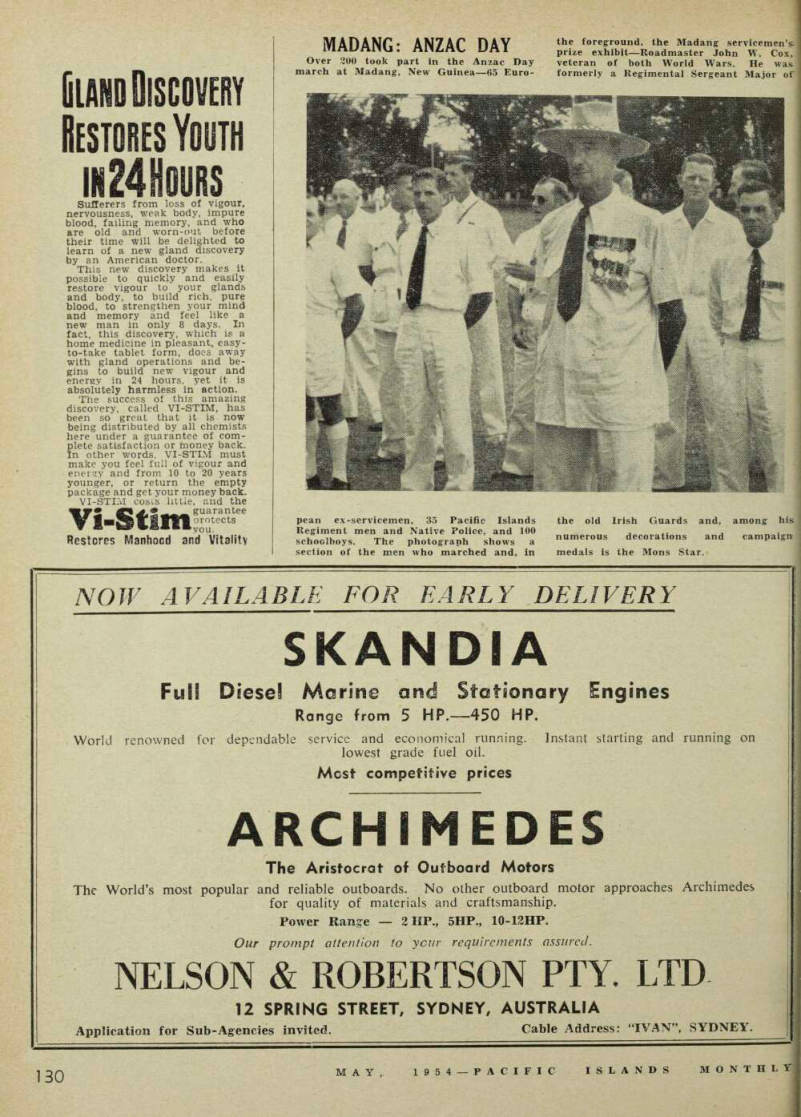 132
132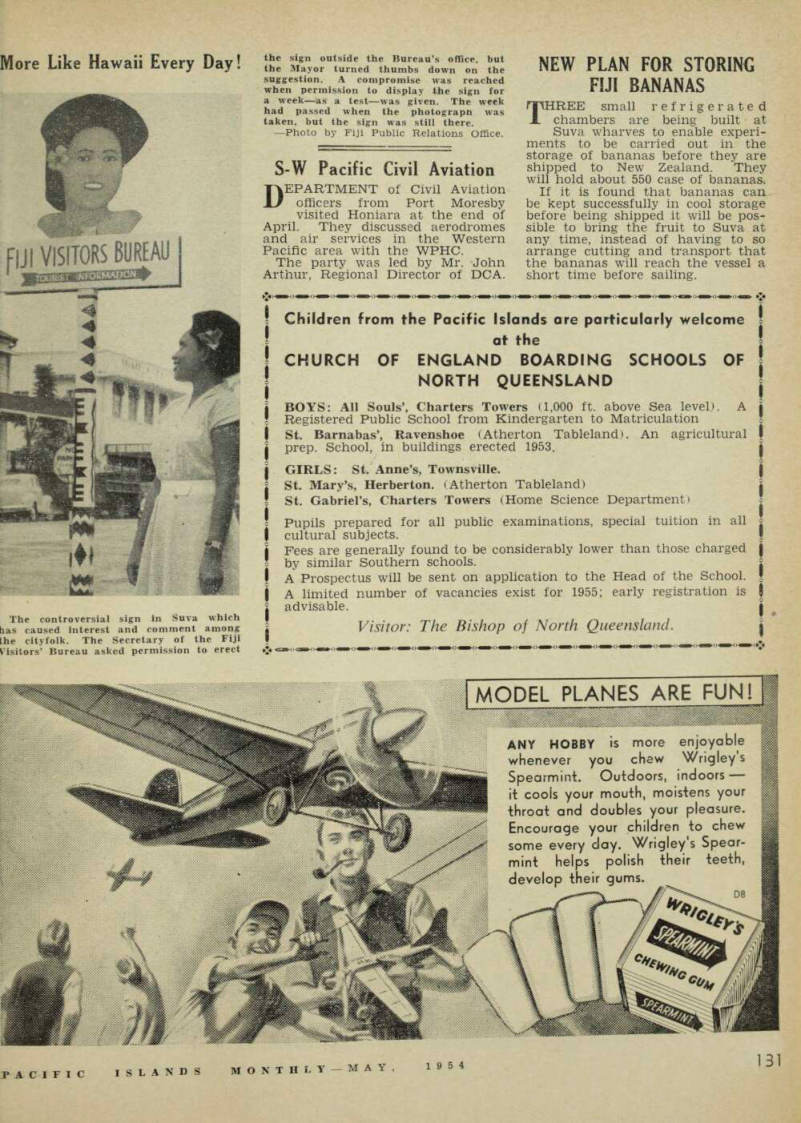 133
133 134
134 135
135 136
136 137
137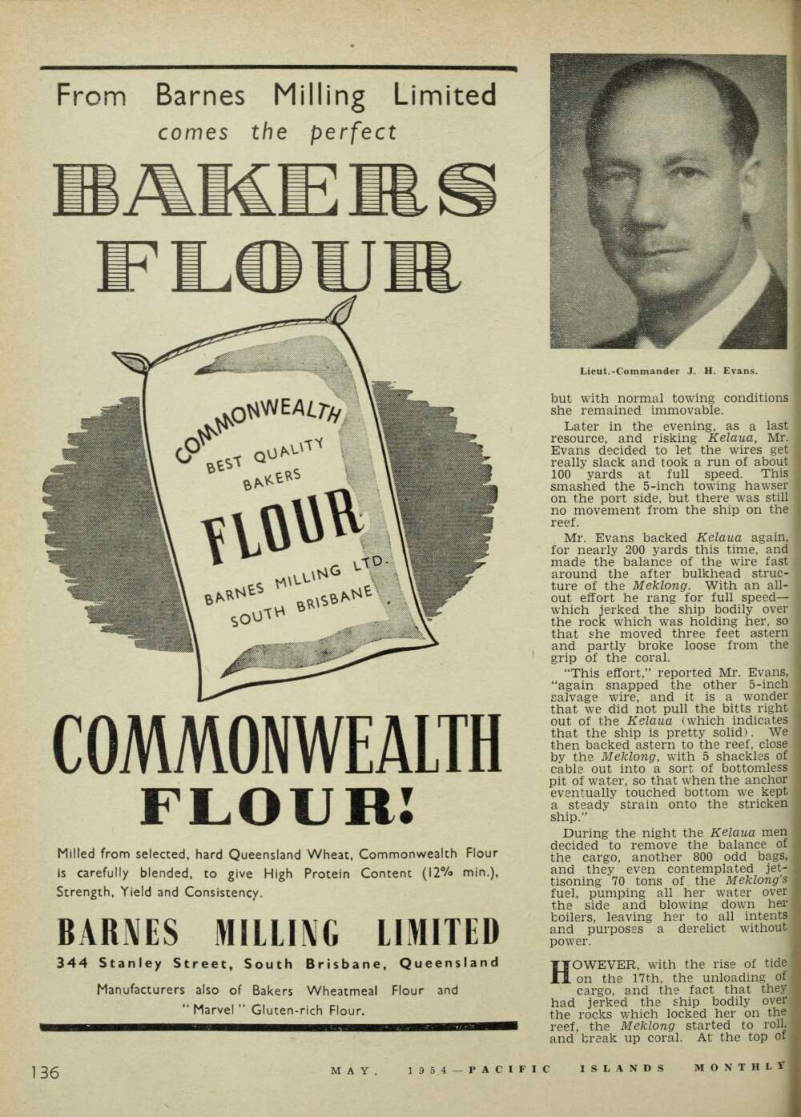 138
138 139
139 140
140 141
141 142
142 143
143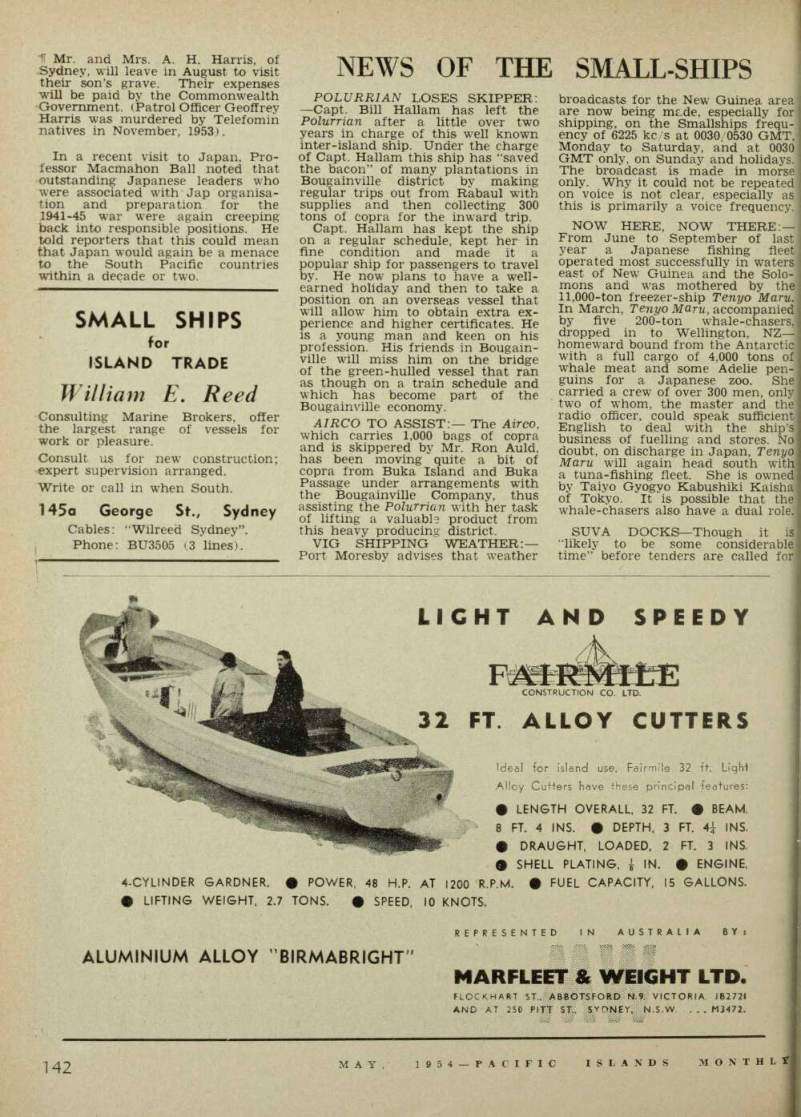 144
144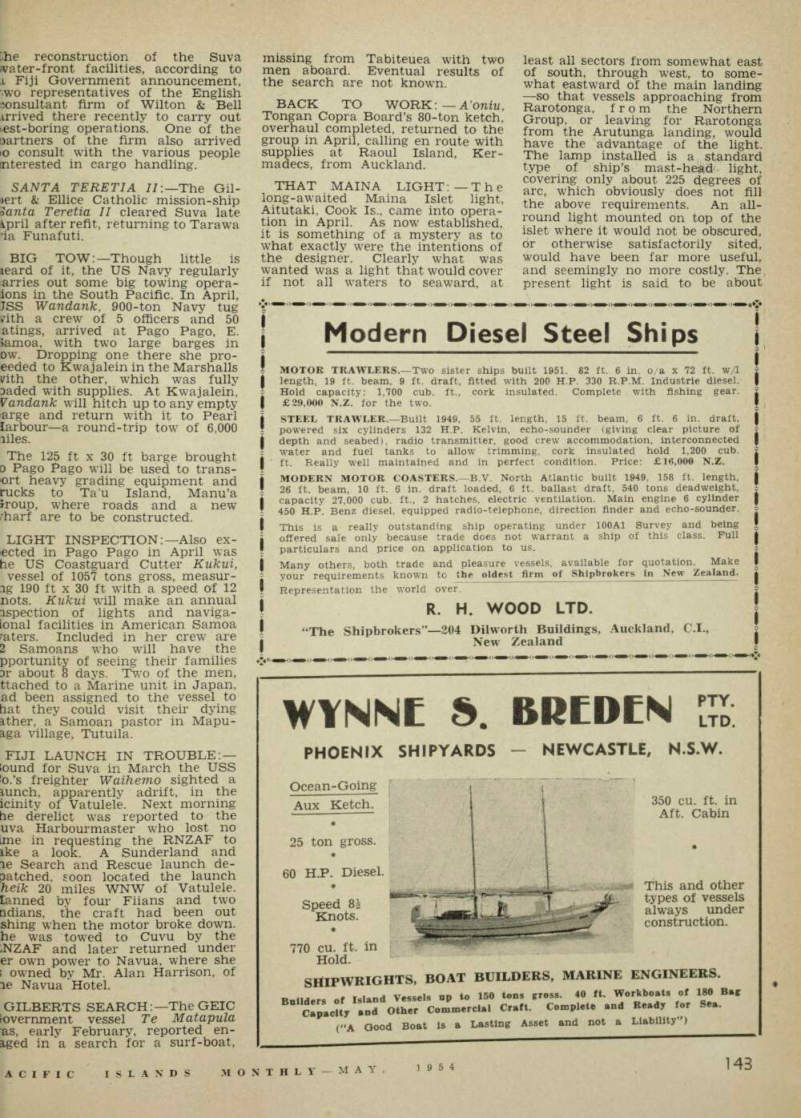 145
145 146
146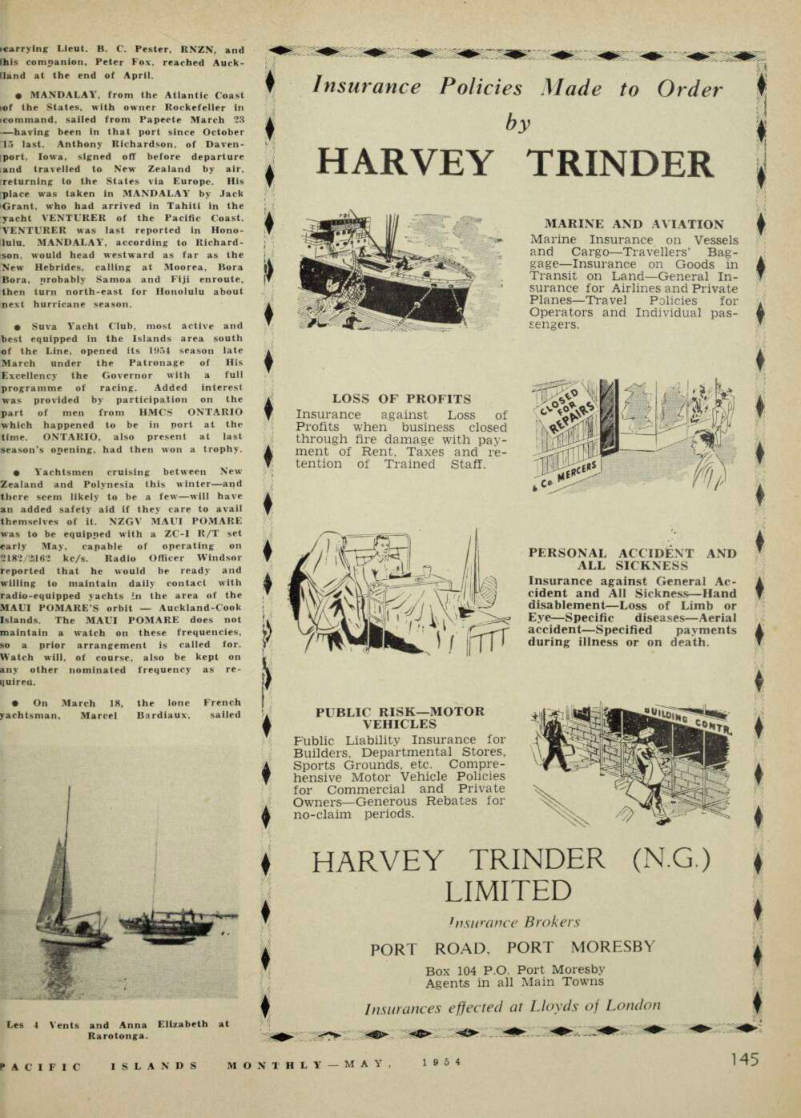 147
147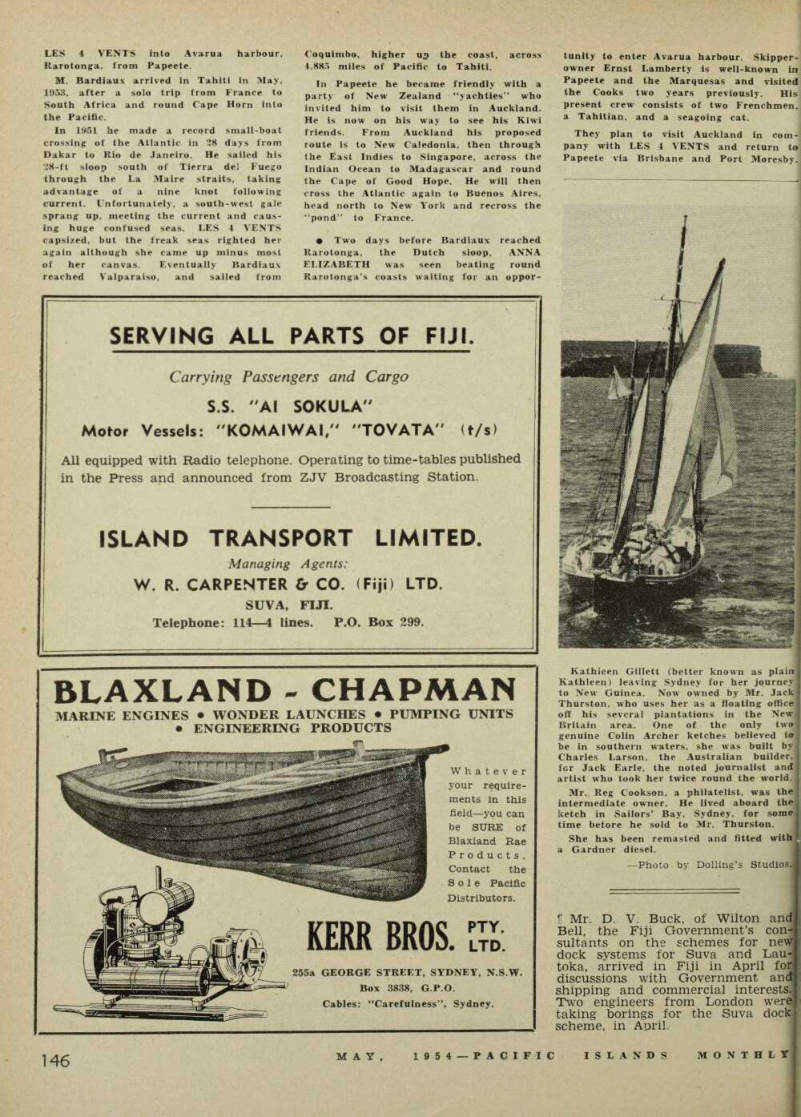 148
148 149
149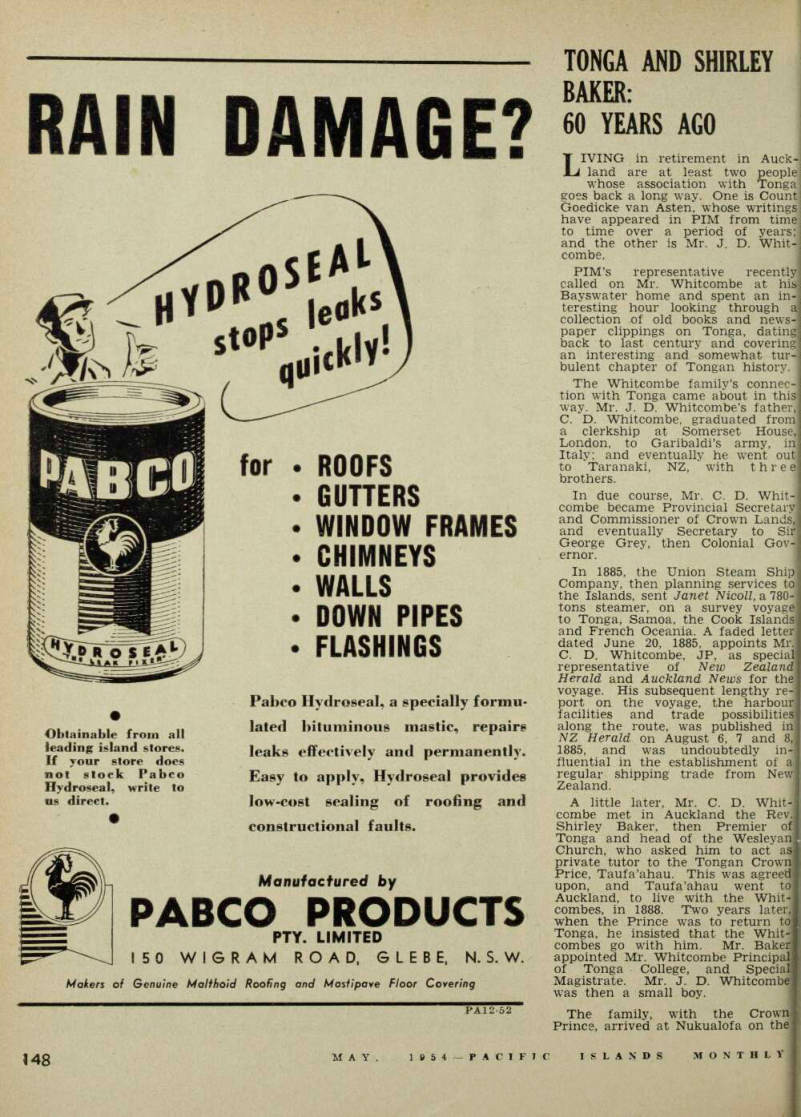 150
150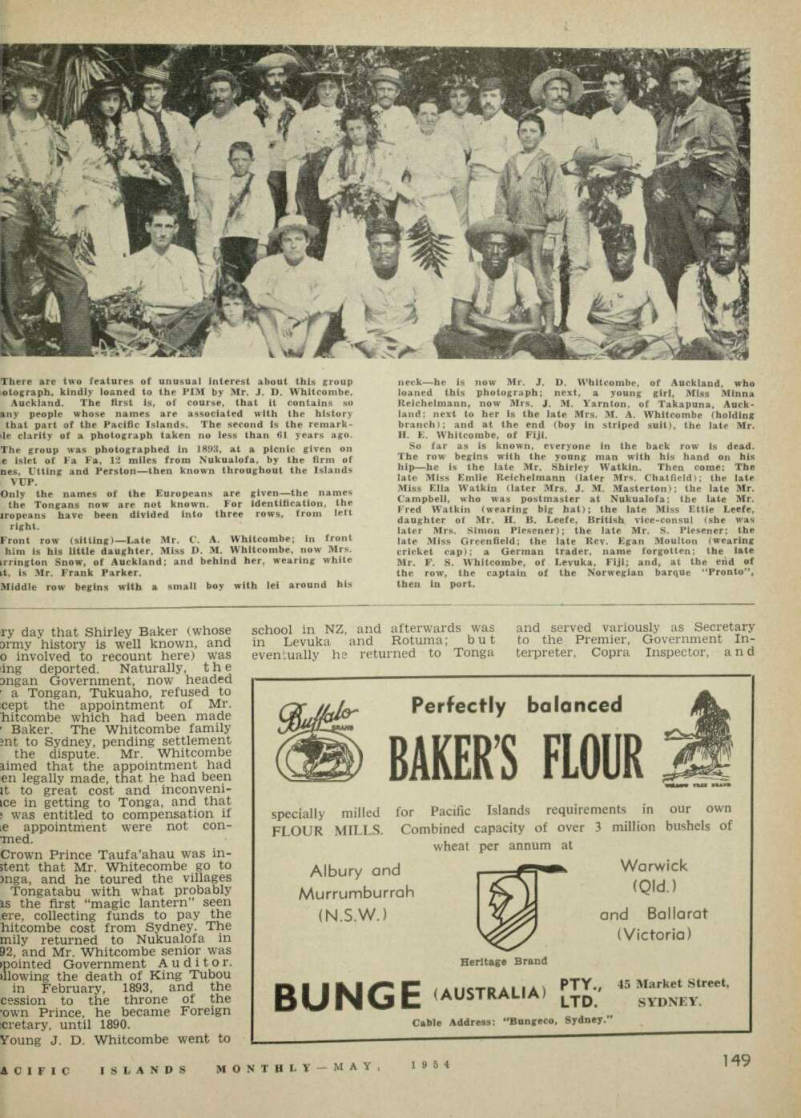 151
151 152
152 153
153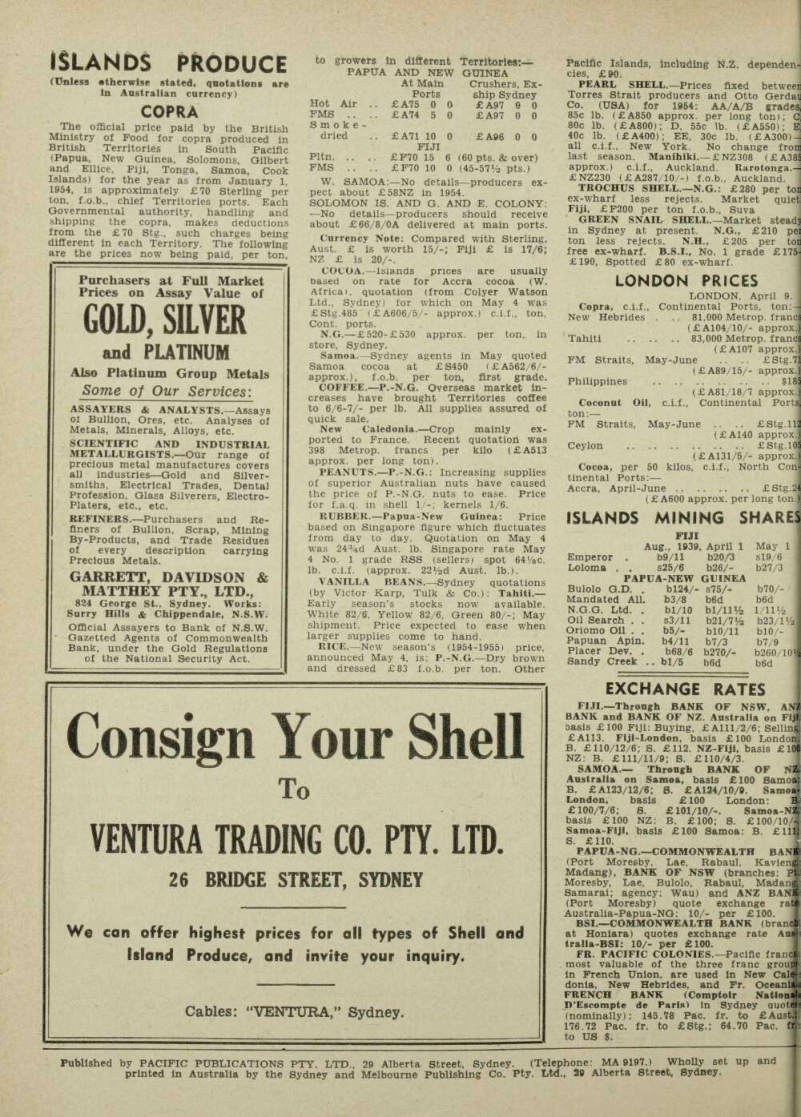 154
154 155
155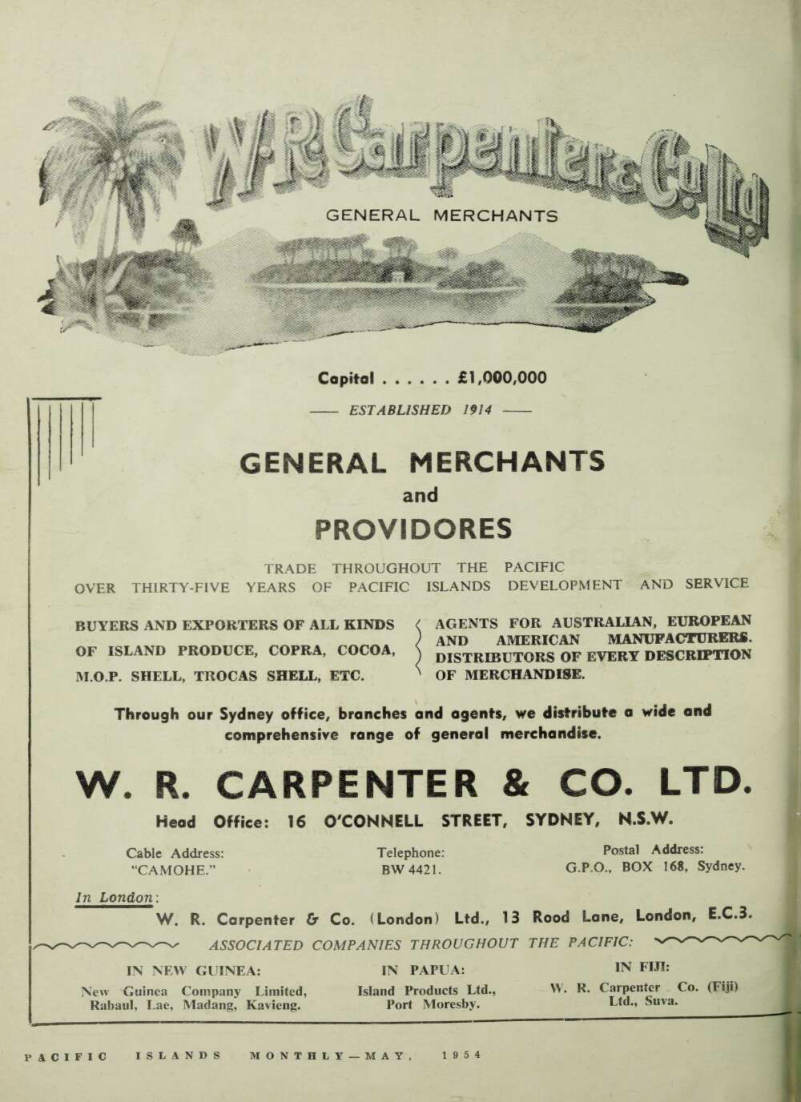 156
156