malaria victims
p. 47 · Read in the full issue
Drug combination holds new hope for
Anew drug combination
offers hope to chronic malaria sufferers who have built up immunity to exist ing treatments, researchers said. It may also prove an effective initial treatment for the mosquito-borne disease that kills up to three million people each year.
Scientists at the Medical Research Council in The Gambia had tried out combination therapy in malaria cases in the wake of its success in treating AIDS and tuberculosis, they said. “We believe that the use of com bination therapy against malaria will have an impact on the enormous damage malaria causes every year in Africa,” researcher Lorenz von Seidlein said in a statement.
Writing in the latest edition of The Lancet medical journal, Von Seidlein and his col leagues said they combined the standard
anti-malaria drug pyrimethamine-sulpha
doxine and a new compound called arte sunate. Initial tests on 600 Gambian chil dren were very promising.
“The combined treatment was safe, well tolerated and effective,” they said in the report. The standard treatment for malaria is Chloroquine but sufferers often build up resistance. It is then replaced by pyrimethamine-sulphadoxine but resistance can also develop to this. The researchers said that adding artesunate to current treat ment regimens in Africa, home to 90 per cent of malaria sufferers, will have an impact on the enormous damage malaria causes every year in Africa.
“The WHO (World Health Organisation) is
presently coordinating 12 large trials
throughout Africa which will evaluate the
advantages of using combination therapy as
first line treatment against malaria,” Von Seidlein was quoted as saying.
He said the children were randomly
assigned both drugs - pyrimethamine-sul
phadoxine and artesunate - or pyrimethamine-sulphadoxine with a place bo or just artesunate. After just one day, more children on the new combination were free of infection than those who received only the standard treatment. Symptoms were also relieved quicker in the two arte sunate groups. Malaria kills by invading red blood cells and multiplying quickly.
Reuters
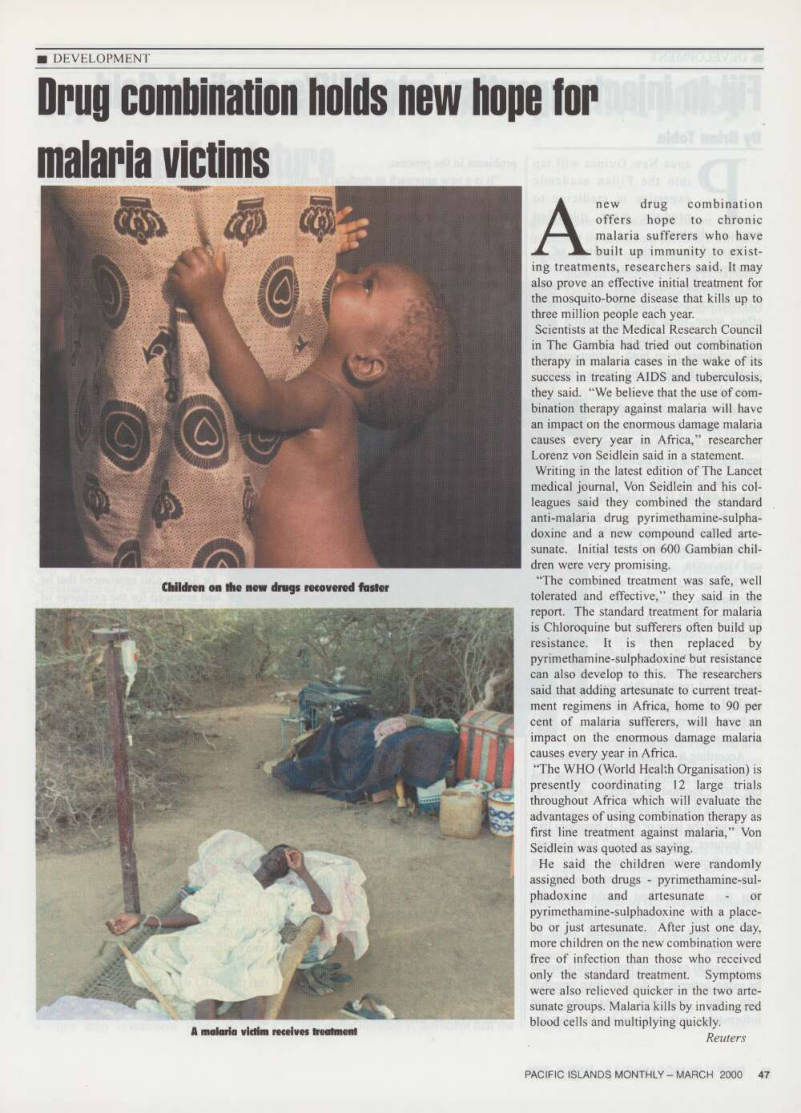
Children on the new drugs recovered foster
A malaria victim receives treatment