Away from the beaten tracks
p. 34 · Read in the full issue
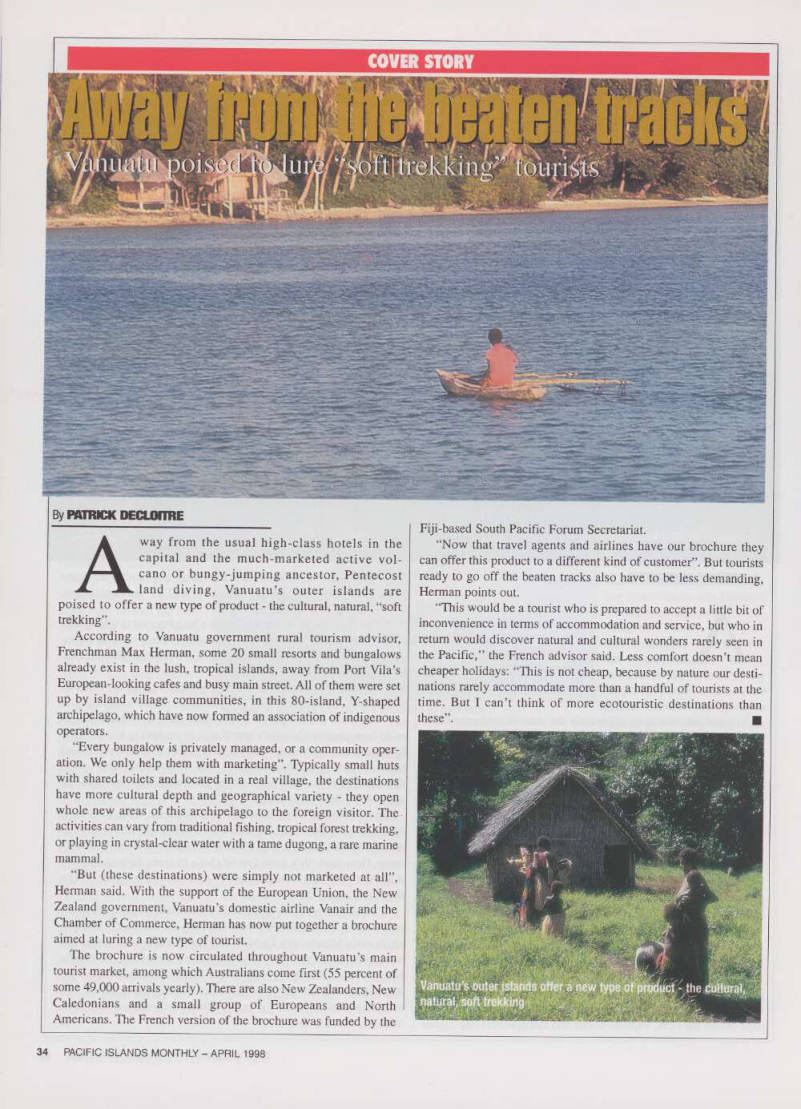
Vanuatu poised to lure "soft trekking" tourists
By Patrick Decloitre
Fiji-based South Pacific Forum Secretariat.
“Now that travel agents and airlines have our brochure they can offer this product to a different kind of customer”. But tourists ready to go off the beaten tracks also have to be less demanding, Herman points out.
“This would be a tourist who is prepared to accept a little bit of inconvenience in terms of accommodation and service, but who in return would discover natural and cultural wonders rarely seen in the Pacific,” the French advisor said. Less comfort doesn’t mean cheaper holidays: “This is not cheap, because by nature our desti nations rarely accommodate more than a handful of tourists at the time. But I can’t think of more ecotouristic destinations than these”. b
Away from the usual high-class hotels in the capital and the much-marketed active vol cano or bungy-jumping ancestor, Pentecost land diving, Vanuatu’s outer islands are poised to offer a new type of product - the cultural, natural, “soft
trekking”.
According to Vanuatu government rural tourism advisor.
Frenchman Max Herman, some 20 small resorts and bungalows already exist in the lush, tropical islands, away from Port Vila’s European-looking cafes and busy main street. All of them were set up by island village communities, in this 80-island, Y-shaped archipelago, which have now formed an association of indigenous operators.
“Every bungalow is privately managed, or a community oper ation. We only help them with marketing”. Typically small huts with shared toilets and located in a real village, the destinations have more cultural depth and geographical variety - they open whole new areas of this archipelago to the foreign visitor. The activities can vary from traditional fishing, tropical forest trekking, or playing in crystal-clear water with a tame dugong, a rare marine mammal.
“But (these destinations) were simply not marketed at all”, Herman said. With the support of the European Union, the New Zealand government, Vanuatu’s domestic airline Vanair and the Chamber of Commerce, Herman has now put together a brochure aimed at luring a new type of tourist.
The brochure is now circulated throughout Vanuatu’s main tourist market, among which Australians come first (55 percent of some 49,000 arrivals yearly). There are also New Zealanders, New Caledonians and a small group of Europeans and North Americans. The French version of the brochure was funded by the
Vanuatu's outer islands offer a new type of product - the cultural, natural, soft trekking.