The economic question
p. 18 · Read in the full issue
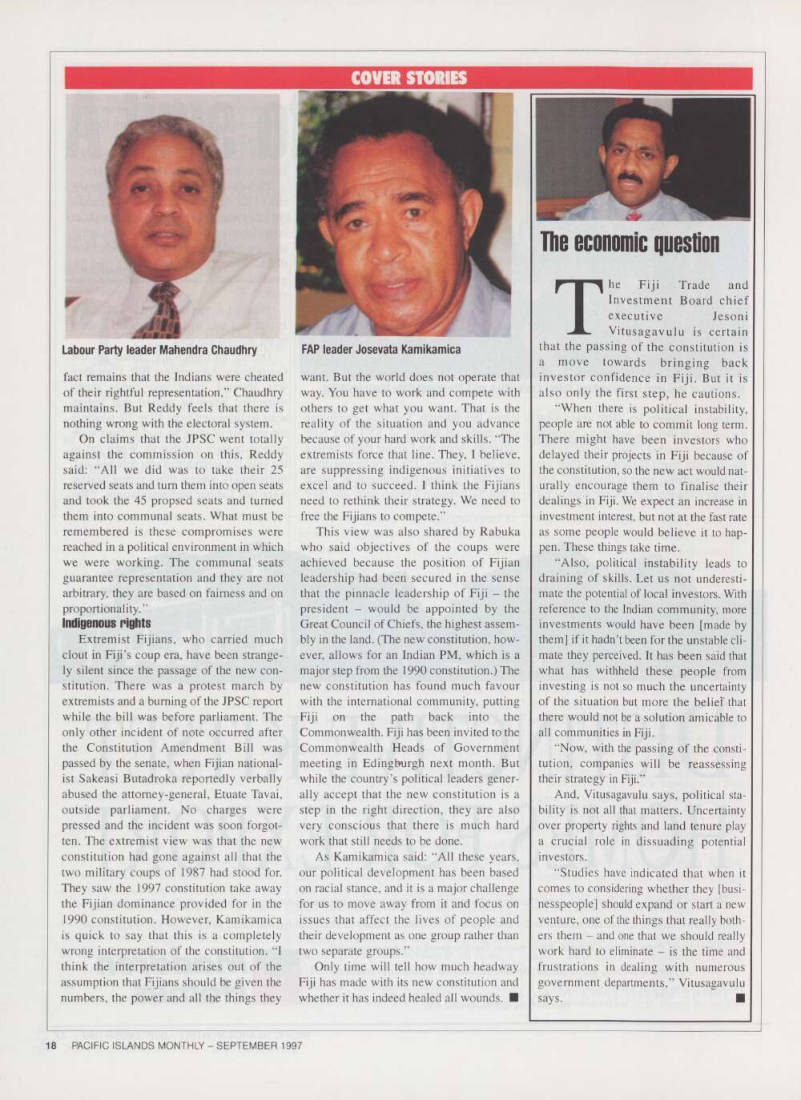
The Fiji Trade and Investment Board chief executive Jesoni Vitusagavulu is certain that the passing of the constitution is a move towards bringing back investor confidence in Fiji. But it is also only the first step, he cautions.
"When there is political instability, people are not able to commit long term.
There might have been investors who delayed their projects in Fiji because of the constitution, so the new act would nat urally encourage them to finalise their dealings in Fiji. We expect an increase in investment interest, but not at the fast rate as some people would believe it to hap pen. These things take time.
“Also, political instability leads to draining of skills. Let us not underesti mate the potential of local investors. With reference to the Indian community, more investments would have been [made by them] if it hadn’t been for the unstable cli mate they perceived. It has been said that what has withheld these people from investing is not so much the uncertainty of the situation but more the belief that there would not be a solution amicable to all communities in Fiji.
"Now, with the passing of the consti tution, companies will be reassessing their strategy in Fiji.”
And, Vitusagavulu says, political sta bility is not all that matters. Uncertainty over property rights and land tenure play a crucial role in dissuading potential investors.
“Studies have indicated that when it comes to considering whether they [busi nesspeople] should expand or start a new venture, one of the things that really both ers them - and one that we should really work hard to eliminate - is the time and frustrations in dealing with numerous government departments,” Vitusagavulu says. ■