history
pp. 41-43 · Read in the full issue
Western Samoa Independence
A touch of history
According to archaelo gists, Samoa was first settled nearly 3000 years ago, after a gradual migration from South-East Asia. As Samoan legend holds, the islands became the cradle of Polynesia or Hawaiki, from which settlers voyaged and settled on other Polynesian islands throughout the Pacific.
In 1722, the explorer Jacob Roggeveen became the first European to come into contact with Samoa, which eventually led to intermittent contact between European sailing ships and locals. More permanent relations between European and Samoans came into being with the arrival of the London Missionary Society during the 1830 s,
which led to the islanders’ rapid conver sion to Christianity.
Traders looking for copra, sandal wood and other products were also established and began to flourish along with trading firms, notably German, which initiated large-scale production of copra and rubber. The Germans’ success led to an increase in interest from other powers with colonial designs.
By the late 1800 s, Samoa had become the focal point of colonial rival ry between Germany, Great Britain, and the United States. By 1900, this had led to the islands being divided up between Germany and the United States. The eastern part of the group of what is now American Samoa came under US con trol and has remained so to the present day. Germany was given the western
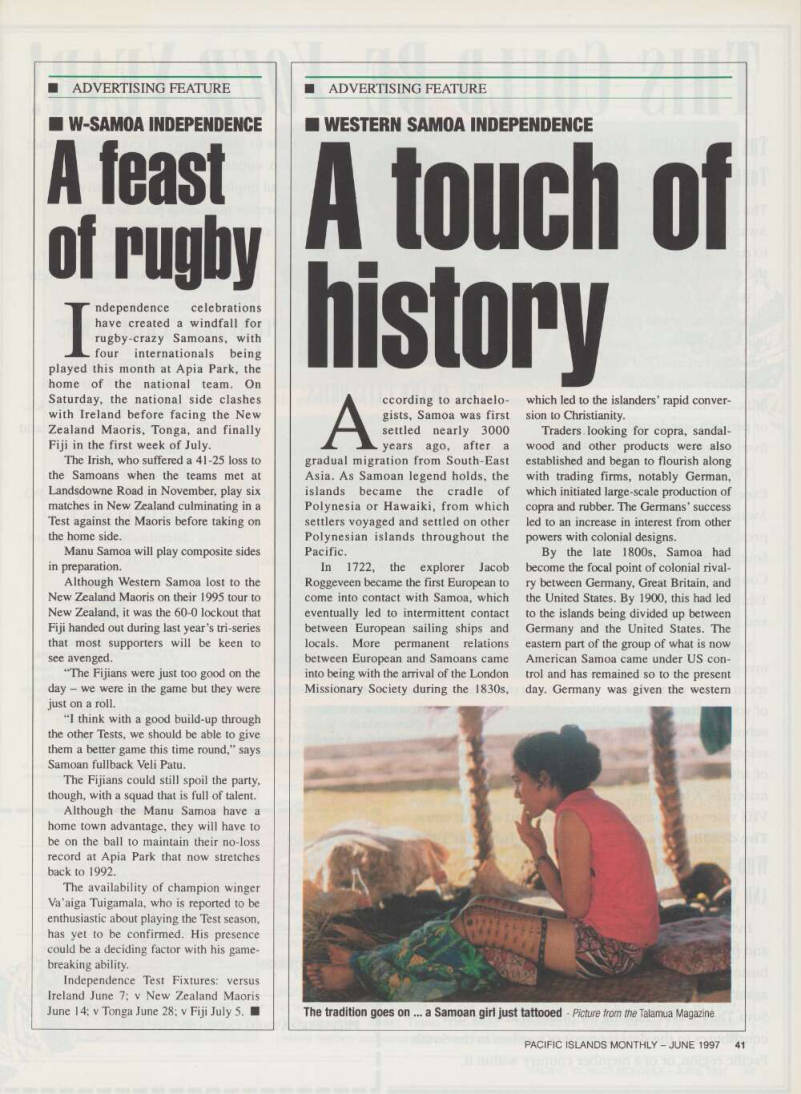
The tradition goes on...a Samoan girl just tattooed -Picture from the Talamua Magazine
islands, while Britain was givem territorial concessions elsewhere in the Pacific.
Although somewhat austere in their governing of the western islands, under the Germans, huge tracts of lands were con verted into commercial enterprises. The country’s first effective road and bridge system was put in place and an efficient communications system with the outside world was established.
At the outbreak of World War One in 1914, a New Zealand force of 1400 soldiers landed to claim what was then German Samoa, the first country to be won over by the allied forces. But, as with the Germans, Samoans found the New Zealand adminis trators difficult to live with.
This led to the formation of the Mau, a national movement that became instrumen tal in bringing about Samoan self-rule. In 1929, the Mau leader Tupua Tamasese (whose nephew and namesake is now lead
er of the opposition) was murdered by New Zealand troops during a peaceful demon stration through Apia.
Tamasese’s death and the election of a more enlightened Labour government towards the issue of Sajnoan nationalism allowed moves toward self-rule to gain momentum.
On January 1, 1962, Western Samoa became the first Pacific Island nation to become an independent state. Celebrations have for years been held in June because the weather is meant to be better.
Since then, a combination of Westminster-style government fused with some traditional elements has set the stage for 13 successive governments and four prime ministers.
Prime Minister Tofilau Eti Alesana, who was first elected to parliament in 1959, becomes the longest-serving PM and mem ber of parliament in history. ■
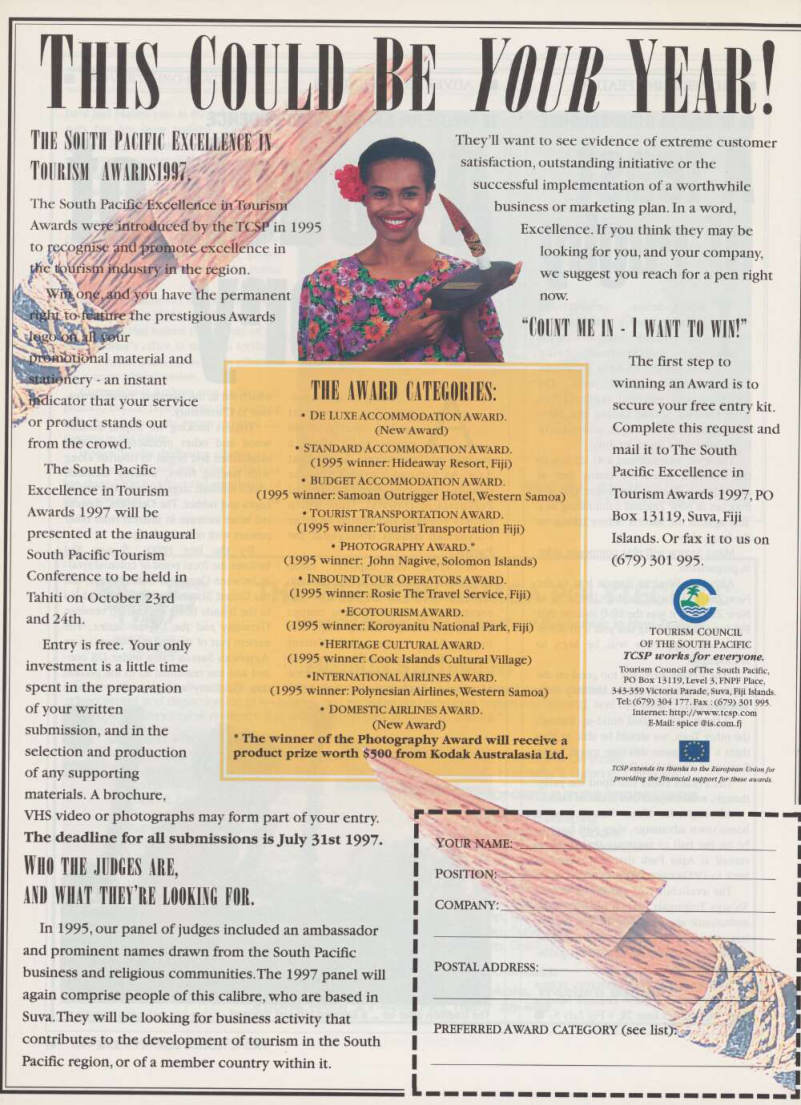
The tradition goes on...a kava-drinking ceremony - Picture from the Talamua Magazine
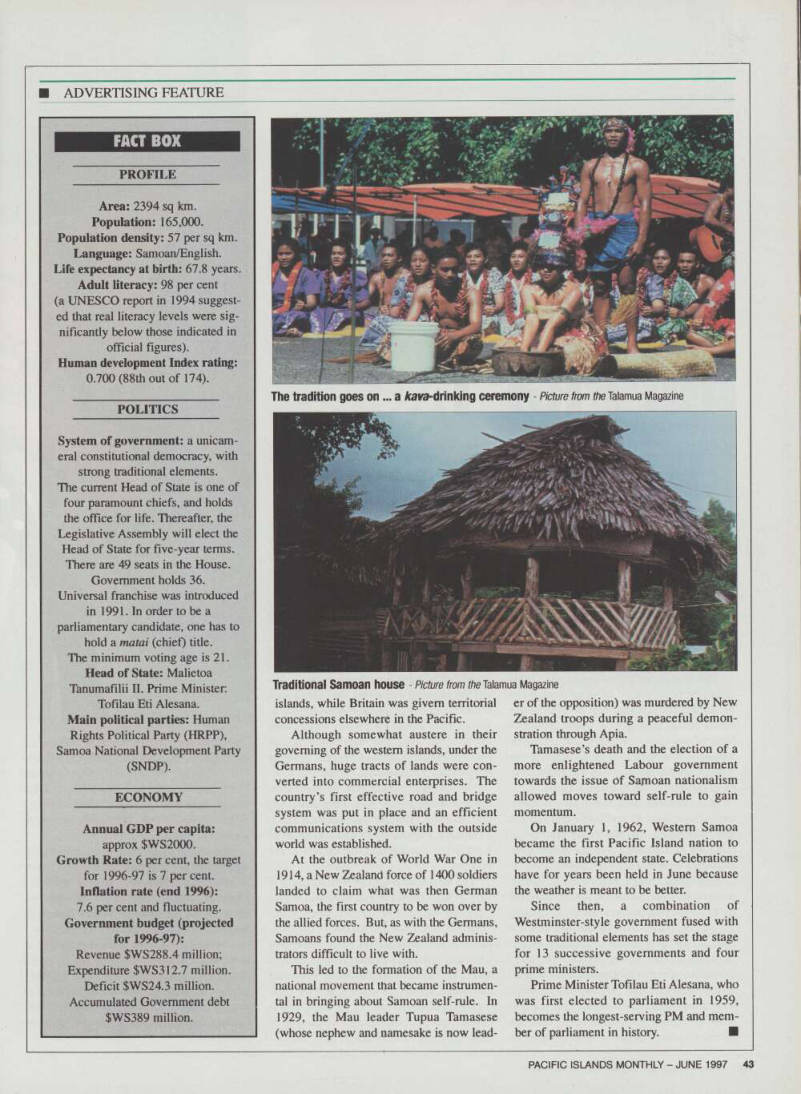
Traditional Samoan house - Picture from the Talamua Magazine