The sunken
pp. 53-55 · Read in the full issue
Diving
The sunken President
... Vanuatu’s historic dive site Story and photography by Jerry Hall
When the captain of the troop carrier President Coolidge
intentionally grounded his
sinking ship, he not only saved the troops and crew on board, he also created one of the best wreck dives of the Pacific.
Due to quick thinking and a conve nient shore, all but two of the 5000-plus men on board were saved, and the South Pacific country of Vanuatu became home to the largest accessible wreck in the world.
Launched as a luxury liner in 1931, the Coolidge was converted into a troop carri er after the bombing of Pearl Harbour and sent to the south-west Pacific.
On October 26, 1942, she steamed through Second Channel en route to the US base in Luganville, Espiritu Santo.
No one on board knew that the chan nel, to protect the port, had been mined just the day before.
The only ship to be sunk didn’t belong to the enemy.
After the grounding, as the crew evac uated to the nearby beach, the ship filled with water, listed to port, and slipped off the reef.
The ship came to rest barely 100 yards from the beach, with her bow some 60 feet below the surface and the stem set tling in around 240.
Billed as the “largest accessible wreck” the 654-foot, 23,000-ton President Coolidge could also be labelled “the most convenient”.
A 10-minute drive from Luganville, followed by a short walk and an easy rope-guided descent, puts a diver at the bow of a seemingly endless wreck.
During the descent, as the ship comes into view, the enormity of it is over-
whelming. Immediately upon reaching the bow a diver finds himself starring down the barrel of the large bow gun.
Diving deeper along the wreck one can explore cargo holds one and two, filled with jeeps, anti-aircraft guns, aircraft drop tanks, and 105 mm shells.
Beyond the holds begins the ship’s superstructure and a labyrinth of penetra tion opportunities. Into the captain’s quar ters or passenger accommodation, the bridge or barbershop, the routes are end less.
Evidence of the ship’s luxurious past is still plainly visible.
Beyond the wheelhouse lies the enor mous ballroom with ornate lamps and a mosaic fountain.
Aft of the ballroom and the promenade deck are rows of closely spaced toilets, an obvious post cruise ship amendment.
Past the men’s room is the lounge, graced with a fireplace and “The Lady”, a statuesque sculpture of a voluptuous woman who once posed gracefully with a unicorn, but is now condemned to lying on her side in 150 feet of water and get ting felt up by every passing diver.
Accessible through the stacks or via holes in the hull, the engine room beck ons, deep and spooky. Down past the ER (and the confining limits of the recre ational tables) the sight of a tiled swim ming pool, three- and five-inch guns, and the propeller-less shafts are enhanced by the tingle of narcosis.
Although no longer crewed by
humans, the sunken ship is inhabited by more fish than it ever held passengers.
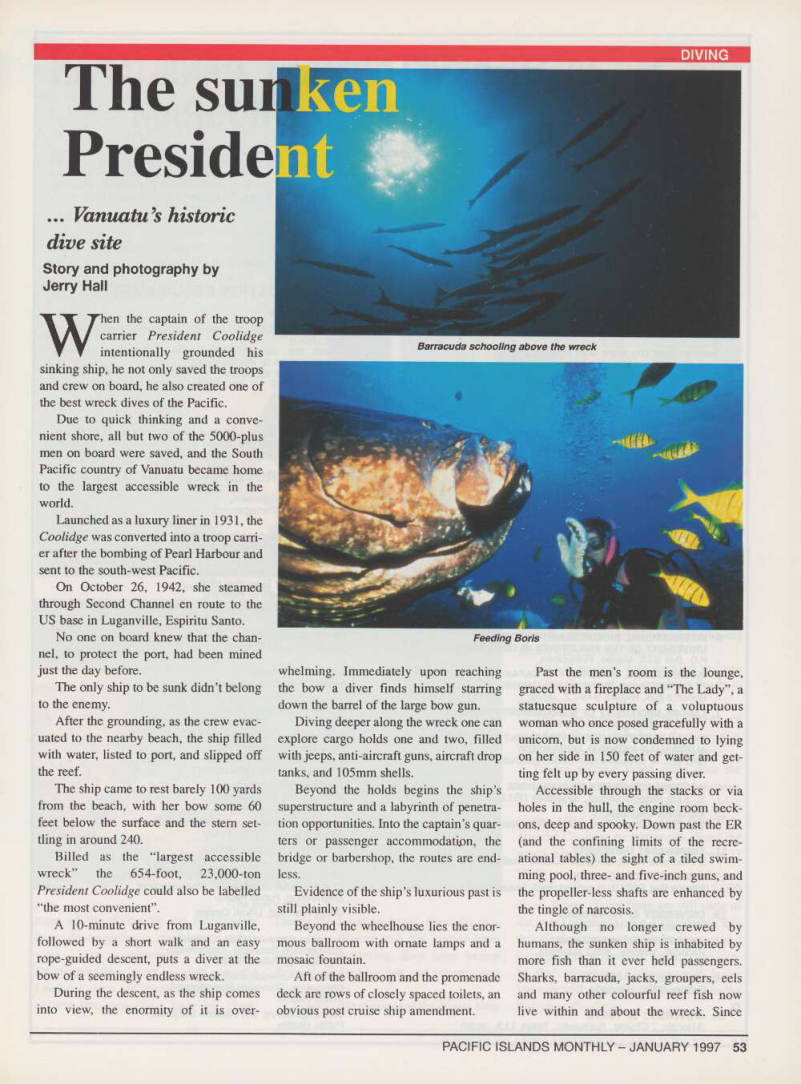
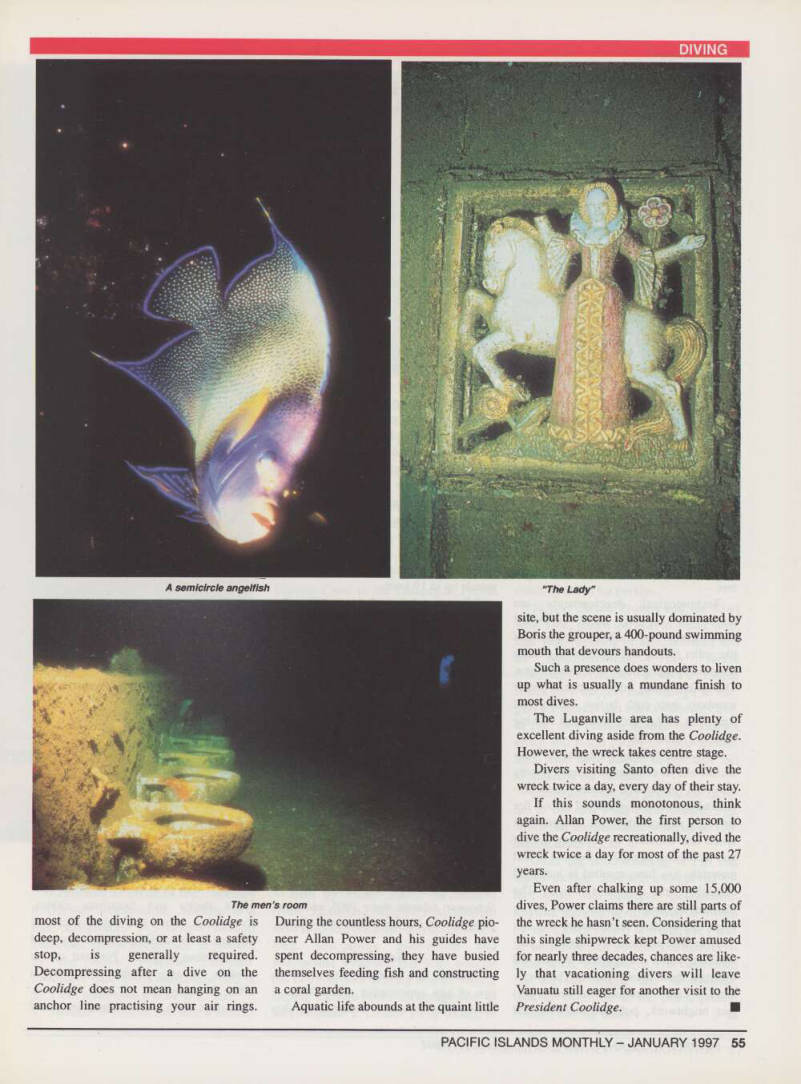
Sharks, barracuda, jacks, groupers, eels and many other colourful reef fish now live within and about the wreck. Since
Barracuda schooling above the wreck
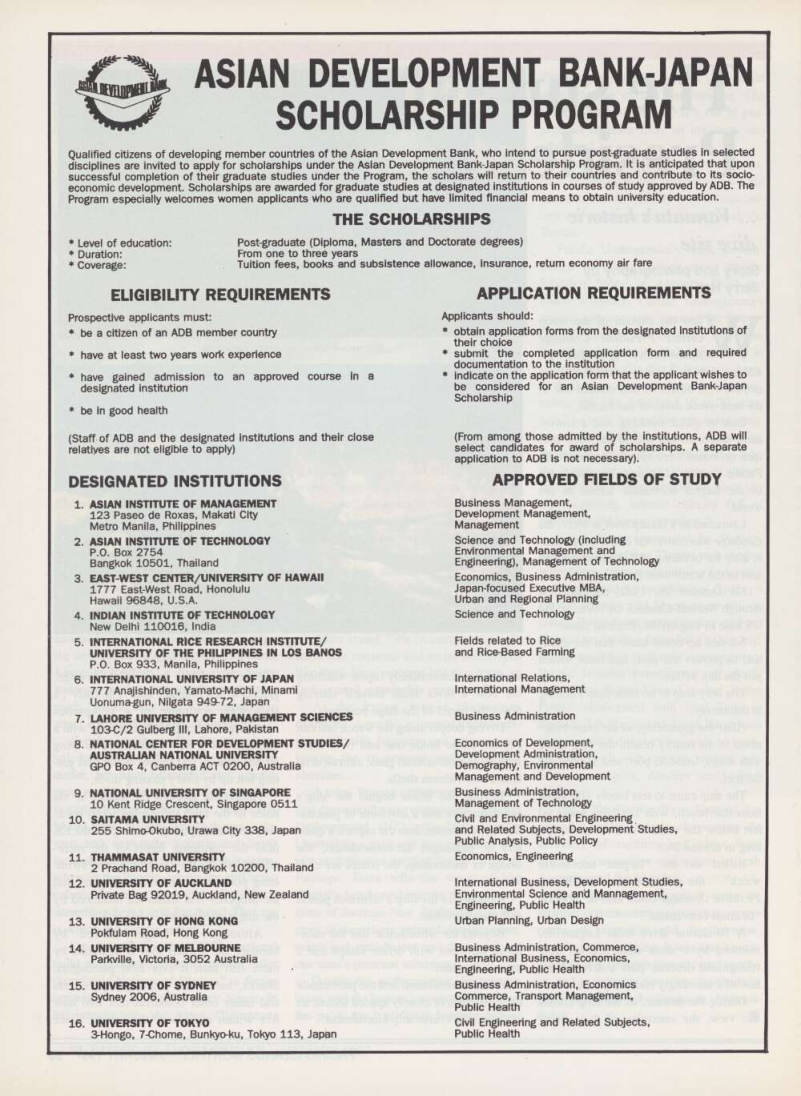
Feeding Boris
most of the diving on the Coolidge is deep, decompression, or at least a safety stop, is generally required, Decompressing after a dive on the Coolidge does not mean hanging on an anchor line practising your air rings.
During the countless hours, Coolidge pio neer Allan Power and his guides have spent decompressing, they have busied themselves feeding fish and constructing a coral garden.
Aquatic life abounds at the quaint little
site, but the scene is usually dominated by Boris the grouper, a 400-pound swimming mouth that devours handouts.
Such a presence does wonders to liven up what is usually a mundane finish to most dives.
The Luganville area has plenty of excellent diving aside from the Coolidge.
However, the wreck takes centre stage.
Divers visiting Santo often dive the wreck twice a day, every day of their stay.
If this sounds monotonous, think again. Allan Power, the first person to dive the Coolidge recreationally, dived the wreck twice a day for most of the past 27 years.
Even after chalking up some 15,000 dives, Power claims there are still parts of the wreck he hasn’t seen. Considering that this single shipwreck kept Power amused for nearly three decades, chances are like ly that vacationing divers will leave Vanuatu still eager for another visit to the President Coolidge. ■
A semicircle angelfish
The men’s room
“The Lady"