responsible?
p. 32 · Read in the full issue
So, who is responsible?
The police in Fiji claim there is very little they can do to remove mental sufferers from the streets and pro vide them with an alternative life and the Department of Social Welfare blames a lack of facilities and legal red tape as hin drances to effective action.
Josefa Davui, the assistant director for social welfare, suggested the need for a rehabilitation centre.
“They need a place which is like a home and not a hospital,” he said.
He used village family life as an example. “There are so many mentally disturbed people in the villages but because they are well looked after and not made to feel inferior they are really no trouble at all.”
He said most victims were recipients of a family assistance allowance but “because they are mentally disturbed ... they roam the streets where they often
start begging”.
“We have tried several times to go out and talk to these people and provide a home but they just refuse to come. Those whom we have tried to institutionalise just look for ways to get out and often they are successful. They are happier on the streets than in the enclosed rooms of the institution. Once I spoke to a young woman on the street and suggested she go back to the village where she would have a decent place to live and family to care for her. We even said that we would pro vide an allowance to her family to help support her.
“After all this she turned to me and quite harshly said that if I thought the vil lage was so good why didn’t I go there,’’Davui said, adding that such peo ple just refused to change.
The police claim their hands are tied and that they are unable to remove those with mental disorders from the streets unless they ar reported to be violent.
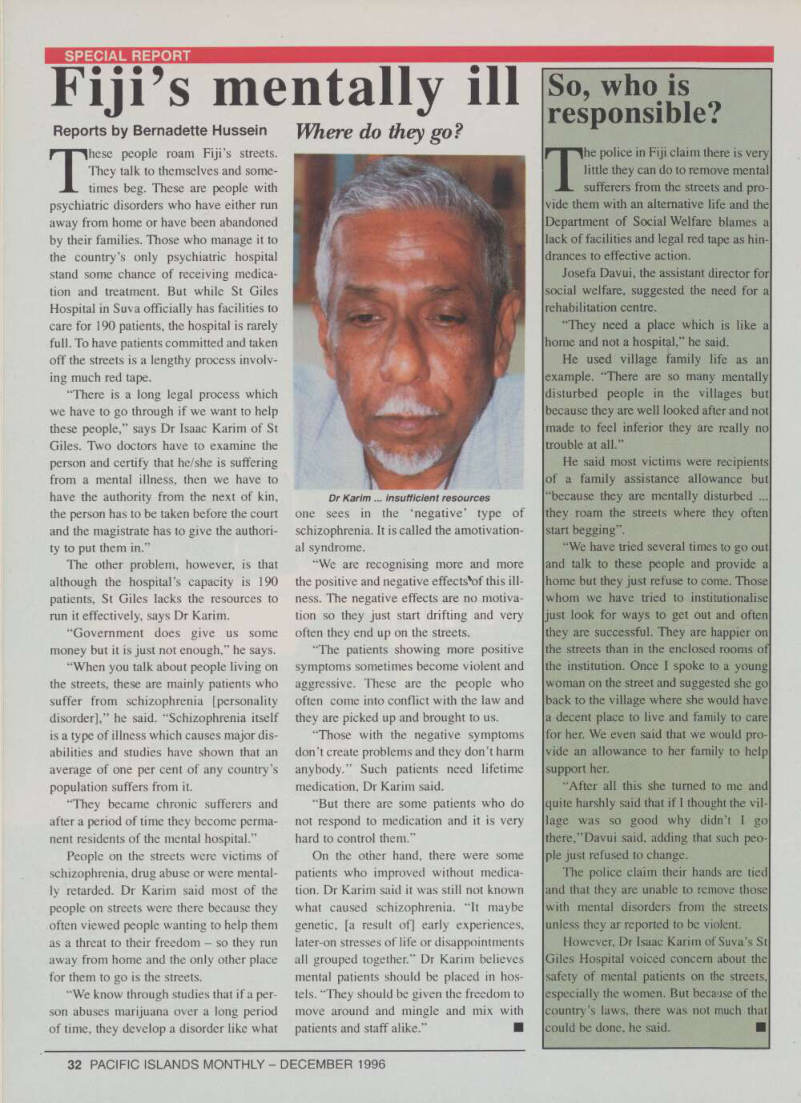
However, Dr Isaac Karim of Suva’s St Giles Hospital voiced concern about the safety of mental patients on the streets, especially the women. But because of the country’s laws, there was not much that could be done, he said. ■