modern-day society
pp. 39-41 · Read in the full issue
Traditions thrive in modern-day society
By Sam Vulum
Despite growing modem influences in Papua New Guinea, the coun try’s unique traditional cultures continue to be a major part of people’s
lifestyles - both in urban and rural areas.
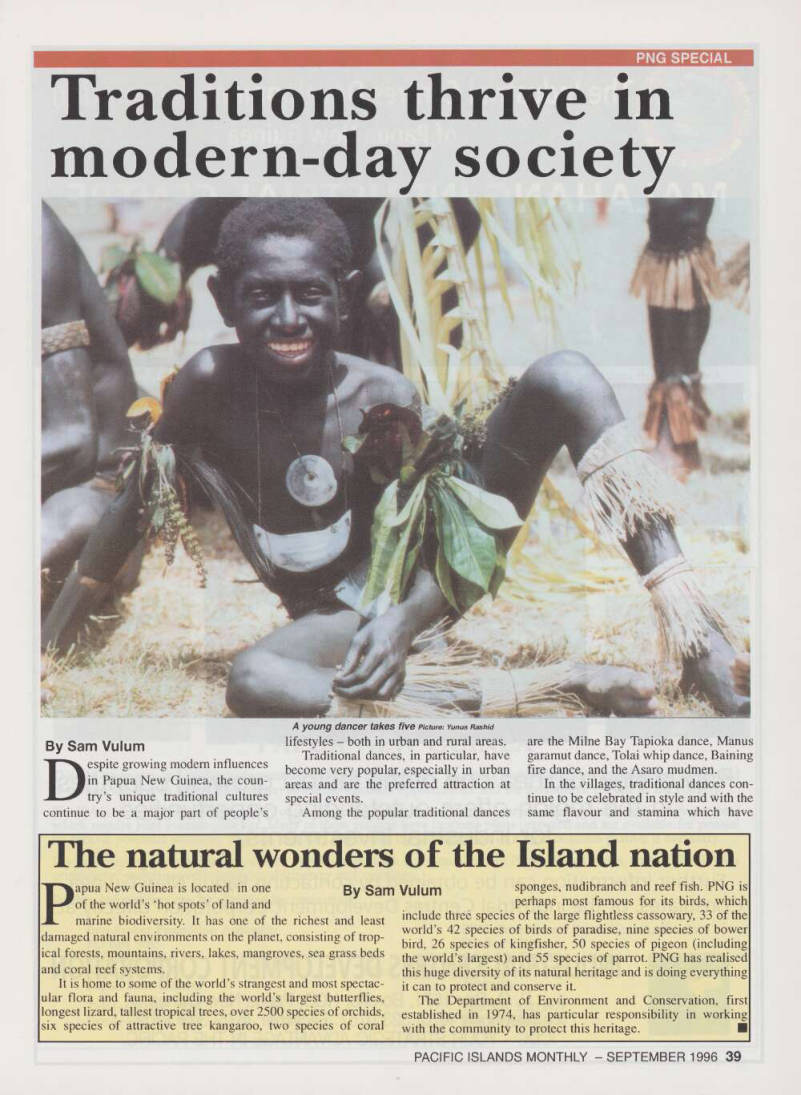
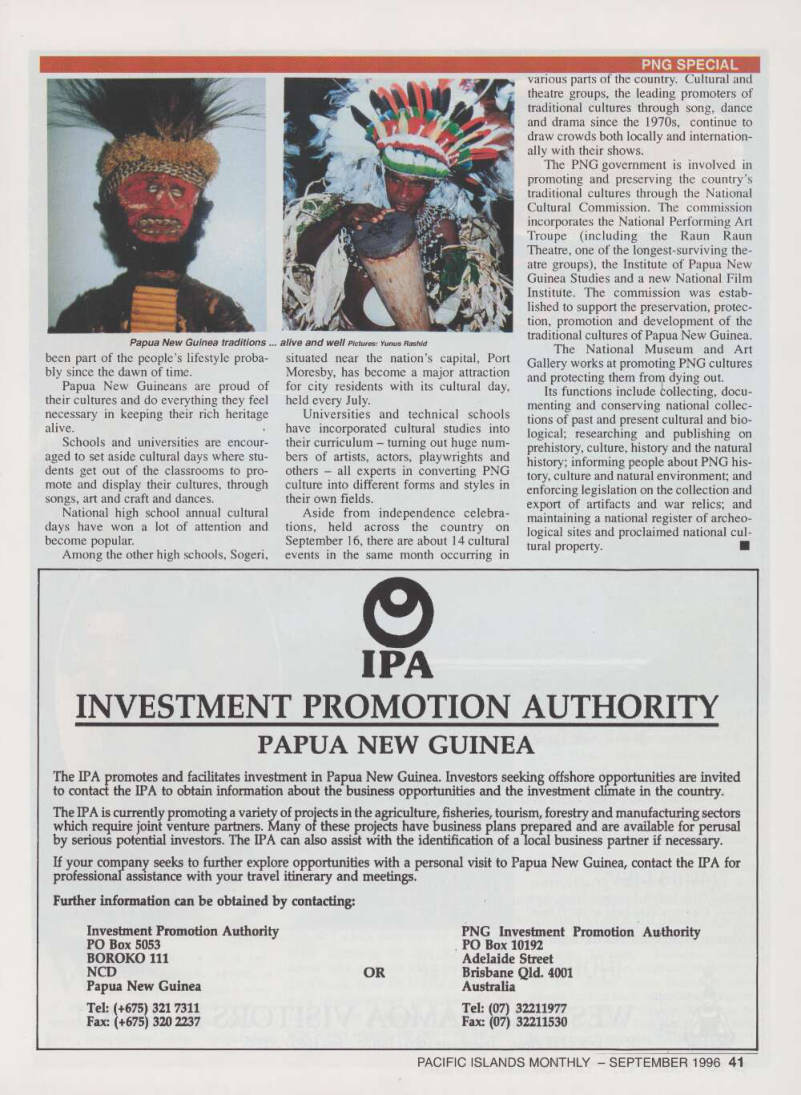
Traditional dances, in particular, have become very popular, especially in urban areas and are the preferred attraction at special events.
Among the popular traditional dances
are the Milne Bay Tapioka dance, Manus garamut dance, Tolai whip dance, Baining fire dance, and the Asaro mudmen.
In the villages, traditional dances con tinue to be celebrated in style and with the same flavour and stamina which have
A young dancer takes five Picture: Yunus Rashid
been part of the people’s lifestyle proba bly since the dawn of time.
Papua New Guineans are proud of their cultures and do everything they feel necessary in keeping their rich heritage alive.
Schools and universities are encour aged to set aside cultural days where stu dents get out of the classrooms to pro mote and display their cultures, through songs, art and craft and dances.
National high school annual cultural days have won a lot of attention and become popular.
Among the other high schools, Sogeri,
situated near the nation’s capital. Port Moresby, has become a major attraction for city residents with its cultural day, held every July.
Universities and technical schools have incorporated cultural studies into their curriculum - turning out huge num bers of artists, actors, playwrights and others - all experts in converting PNG culture into different forms and styles in their own fields.
Aside from independence celebra tions, held across the country on September 16, there are about 14 cultural events in the same month occurring in
various parts of the country. Cultural and theatre groups, the leading promoters of traditional cultures through song, dance and drama since the 19705, continue to draw crowds both locally and internation ally with their shows.
The PNG government is involved in promoting and preserving the country’s traditional cultures through the National Cultural Commission. The commission incorporates the National Performing Art Troupe (including the Raun Raun Theatre, one of the longest-surviving the atre groups), the Institute of Papua New Guinea Studies and a new National Film Institute. The commission was estab lished to support the preservation, protec tion, promotion and development of the traditional cultures of Papua New Guinea.
The National Museum and Art Gallery works at promoting PNG cultures and protecting them from dying out.
Its functions include collecting, docu menting and conserving national collec tions of past and present cultural and bio logical; researching and publishing on prehistory, culture, history and the natural history; informing people about PNG his tory, culture and natural environment; and enforcing legislation on the collection and export of artifacts and war relics; and maintaining a national register of archeo logical sites and proclaimed national cul tural property. ■
Papua New Guinea traditions ... alive and well Pictures: Yunus Rashid