take priority in Majuro
pp. 15-16 · Read in the full issue
The South Pacific Forum
Trade and economy to take priority in Majuro
Reports by Bernadette Hussein
The 27th South Pacific Forum in Majuro, Marshall Islands, this month will have at the top of its list trade and economic issues of the region, the discussion of which. Forum Secretary-General leremia Tabai believes, will help open more doors to overseas trade in the Pacific.
However, he is quick to point out that a lot of work is needed before the perfect results are achieved.
“This is an area where a lot is yet to be done in terms of the economic perfor mance of our member states,” Tabai said.
“Every year we talk about how we can improve or make better trade ties, but this time I think there will be some detailed discussions. This follows the outcome of two resolutions from last year’s regional Finance Ministers’ meeting.
“One is the tariff reform, on which some studies have been undertaken... We have to see what kind of tariffs the mem ber states are imposing and then work out whether there need to be changes and, if so, what and why.” But at the same time, Tabai said, the leaders will look for ways to maintain the level of income for Forum countries and re-enhance develop ment in these countries.
“The other (resolution) has to do with investment transparency. The objective of this is to have a of the policies for development. A while back, the minis ters had agreed on the non-buying invest ment principles and there arose the ques tion of investment transparency. Here again major work was done to see what is happening in all the countries and the result of that is now ready for considera tion.”
The discussions will allow countries to
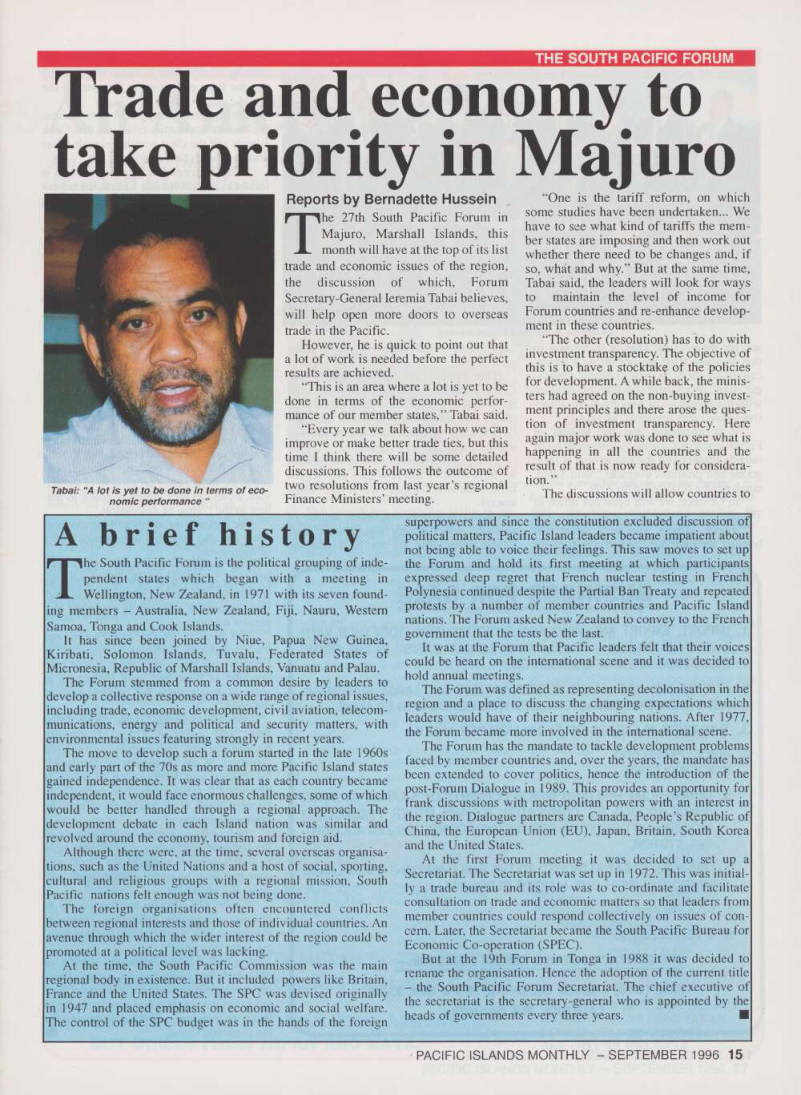
Tabai: “A lot is yet to be done in terms of eco nomic performance “
see for themselves what is happening in this area and what the Forum, as a whole, can do for them, as well as enable them to get into investment-transparent policies with the objective of making them attrac tive to overseas investors, he said.
“It is important that the leaders of Forum countries realise the importance of outside traders and the promotion of their goods and products overseas,” said Tabai, emphasising relations with Asia.
“In October, we will open our office in Tokyo.
“These offices are very important because they are our links to countries we
have not have had much to do with in the past.”
The Forum is now targeting the Chinese market. “We have had talks with the people concerned and things look pos itive. The relationship between ASEAN (Association of South-East Asian Nations) and the region is very significant.
“We go to these nations and show what we have to offer and how they can benefit from trade with us, and vice-versa,” Tabai asserts.
“Japan is a very important source of tourism - which is very important for most Island states. And so, we hope that the
opening of the office in Japan will encour age the flow of tourists to this part of the world.
The Majuro meeting will also address the recent economic crisis in the Cook Islands and the clear warning signals it has sent to other Island nations.
“What happened in the Cook Islands is for them to sort out but I think the bigger issue is how the other countries can protect themselves,” Tabai said.
“This situation, which a number of the countries are in now, was acknowledged in the Finance Ministers’ meeting in Port
Moresby.
“They discussed a series of reform pro grammes and encouraged the countries to undertake them. These were particularly in areas of public service and development of the private sector.
“In the Cook Islands it was a very small population with a very large government.
“I think a large number of Island nations are heading in the same direction and, if they want to avoid what happened in the Cook Islands, they will have to cut down the size of the public service. This is a major area they have been asked to look into but that cannot be done without look ing at the other side - promotion of the pri vate sector, an area which is going to fea ture in the course of discussion.”
The region’s resources and the environ ment are also expected to be major topics of discussion.
“On fisheries, the issues there are: First, the question of how the region can secure the maximum resource; and sec ond, ensure the resource is exploited in a similar manner.
“On forestry, at the last Forum, our leaders endorsed the South Pacific Code of Logging and this time I think it will be a question of what has been happening at national levels since the endorsement of the code.”
One environmental issue which Tabai feels will generate a lot of interest, because of its importance to regional countries, is the protection of coastlines, the erosion and deterioration of which is
becoming a serious problem, particularly
on very small atolls where its effects are felt more acutely.
“Before its appearing on the agenda of the forthcoming Forum, nobody was able to find a way to address (the issue) and now that they have the chance, they will make the most of it.
“There will also be nuclear issues to discuss, especially after the Treaty of Rarotonga was signed by the nuclear pow ers early this year.”
As the Island countries gather in Majuro to put to discussion issues affect ing the region as a whole, it is hoped last ing solutions are found, giving meaning to this year’s theme - Pacific Solidarity for the Common Good. ■
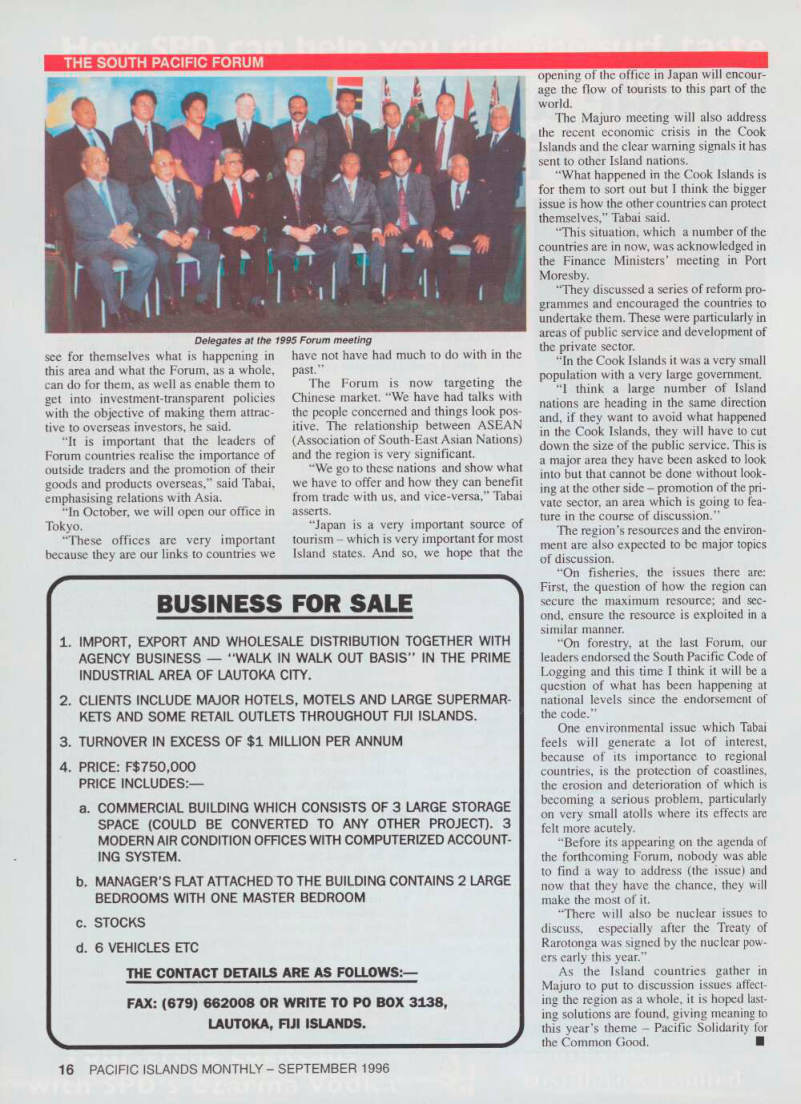
Delegates at the 1995 Forum meeting