Foreign Trade
p. 46 · Read in the full issue
OF all the sectors of the economy, foreign trade has shown the most dramatic growth. During the last 10 years it rose from US$43.B billion to U 55139.1 billion.
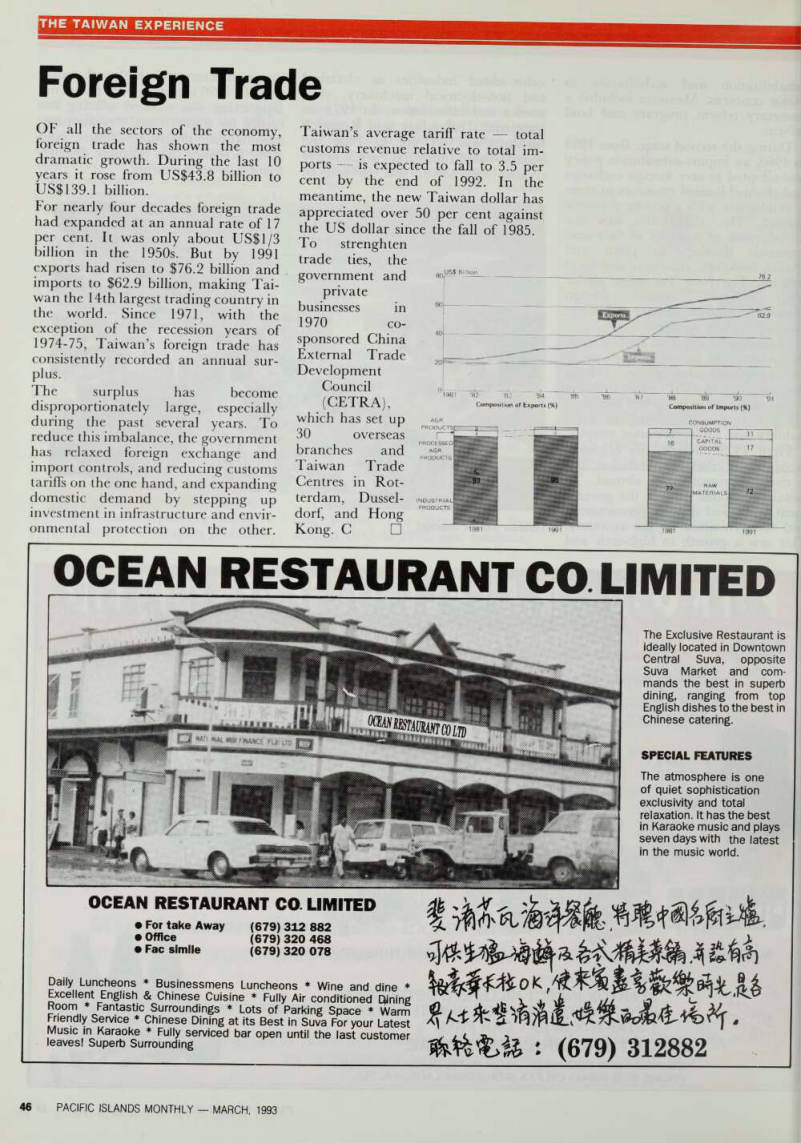
For nearly four decades foreign trade had expanded at an annual rate of 17 per cent. It was only about USsl/3 billion in the 19505. But by 1991 exports had risen to $76.2 billion and imports to $62.9 billion, making Tai wan the 14th largest trading country in the world. Since 1971, with the exception of the recession years of 1974-75, Taiwan’s foreign trade has consistently recorded an annual sur
plus.
The surplus has become
disproportionately large, especially
during the past several years. To reduce this imbalance, the government has relaxed foreign exchange and import controls, and reducing customs tariffs on the one hand, and expanding domestic demand by stepping up investment in infrastructure and envir onmental protection on the other.
Taiwan’s average tariff rate total customs revenue relative to total im ports is expected to fall to 3.5 per cent by the end of 1992. In the meantime, the new Taiwan dollar has appreciated over 50 per cent against the US dollar since the fall of 1985.
To strenghten trade ties, the government and private businesses in 1970 co sponsored China External Trade
Development
Council
(Cetra),
which has set up 30 overseas branches and Taiwan Trade Centres in Rot terdam, Dussel dorf, and Hong Kong. C □