Sepik faces new problems
p. 45 · Read in the full issue
Floods
In the wake of a disaster
Sepik faces new problems as floodwaters subside
By Wally Hiambohn
WAT ER, water, dirty water everywhere.
In and under houses, under trees and over gardens.
With it is expected to come diseases, starvation and many deaths, a situation the PNG government is preparing in earnest to face.
Thai was what the people of Sepik River, PNG’s second largest, and a jopular tourist destination in the north ire seeing and living with.
The river runs from the PNG ndonesian border for 600 miles >efore emptying into the Bismarck >ea.
With an estimated emergency md relief assistance bill of K 6 nillion for the first month, and K 5 aillion for subsequent months, it ias sought overseas aid while ationwide appeals have been lunched.
Prime Minister Rabbie Jamaliu described the floods as NG’s biggest natural disaster.
Public co-operation and support ave been encouraging as individ als, families, groups and organis
tions donate cash, food " and other laterials for the Sepik people.
In its first week, a radio appeal by the ational Broadcasting Commission ased K 20,000 cash from donations, and des of clothes and a large quantity of od.
Countries including Fiji and New ?aland were among the first to pledge Pport and formal requests were being ade to Australia and the European
:onomic Community.
The government has already, through e National Sendee Corp a newly tablished unit to train unemployed uths for community work, discipline d pride allocated K 1 million to help e flood victims.
The floods were a direct result of heavy ins in the highlands which sent millions litres of water northward into the pik lowlands.
Though seasonal it occurs every 10
years the one that hit this year was not at levels expected.
The river, the lifeline for the region’s 100,000 people, broke its banks, rising to a metre above its bank in certain places
and flooding strings of villagesalong the
way.
Food gardens were submerged under water, drinking water contaminated and only houses built on stilts remained above water.
Six deaths have already been con firmed as a result of the flood.
A child drowned when it fell out of bed at night, an elderly woman from celebral malaria and the rest from dysentry and pneumonia.
Government authorities, including Namaliu, have visited the flood affected area and made assessments of the
damage.
East Sepik provincial secretary Vin cent Maragau said the people were in urgent need of medical and fuel supplies and fresh water.
He predicts an outbreak of diseases such dysentry, malaria, typhoid, pneu monia and diarrhoea was imminent.
After one of his visits Maragau said he had seen debris, and even human faeces, everywhere.
Pit latrines and graves were afloat making the water extremely unhygienic.
The smell and sight of human waste was everywhere,” Maragau said.
We have strongly advised them
against catching fish near their villages because they may catch diseases.”
He told of poisonous snakes finding refuge in village houses and posing a threat to people.
Since the floods 28 medical aid posts and 15 schools have closed down.
The National Disaster and Emergency Services, which is co-ordinating relief assistance, plans to send four large barges up-river to be stationed at strategic places along the river as relief bases.
People would then travel in by canoe or outboard motor to get relief supplies or medical attention.
“The people are surviving and coping for the moment, but how long they will cope for is something we do not know,”
Mr Maragau said.
“The situation is critical in terms of water, medicine and fuel, not in terms of food as yet, but that will come about in a month or so when the water has subsided.”
The government’s massive relief effort has been treated with some skepticism by its political opponents who see it as a
political gimmick to win votes there.
The worst affected area is Foreign Affairs Minister Sir Michael Somare’s electorate. He was the first politician!! to visit the area, and even conducted election campaigns during Namaliu’s visit there on May 9.
But responding to these criti cisms, Sir Michael said, “This is a coincidence but (it’s) a genu ine case. I personally do not need situations like this to win an election.”
However, the most notable criticism has been of the KI
million given by the National Service
Corp (NSC).
The minister responsible for the NSC, Karl Stack, comes from West Sepik, part of the flood area.
Most of the money, he said, would be used to hire youths from a mountain area to transport and deliver supplies to people, a move critics have laughed off.
“These youths are not the best people for this job because they are mountain people who do not know how to swim or have not seen a boat or operated an outboard motor,” said Maris Hayes, president of the activist group, Women in Politics, and an election candidate.
“People’s money is being used to gain political support.” Hayes condemned such actions as an “evil and dishonest” way for those in power to gain personally by the ignorance and sufferings of the people.
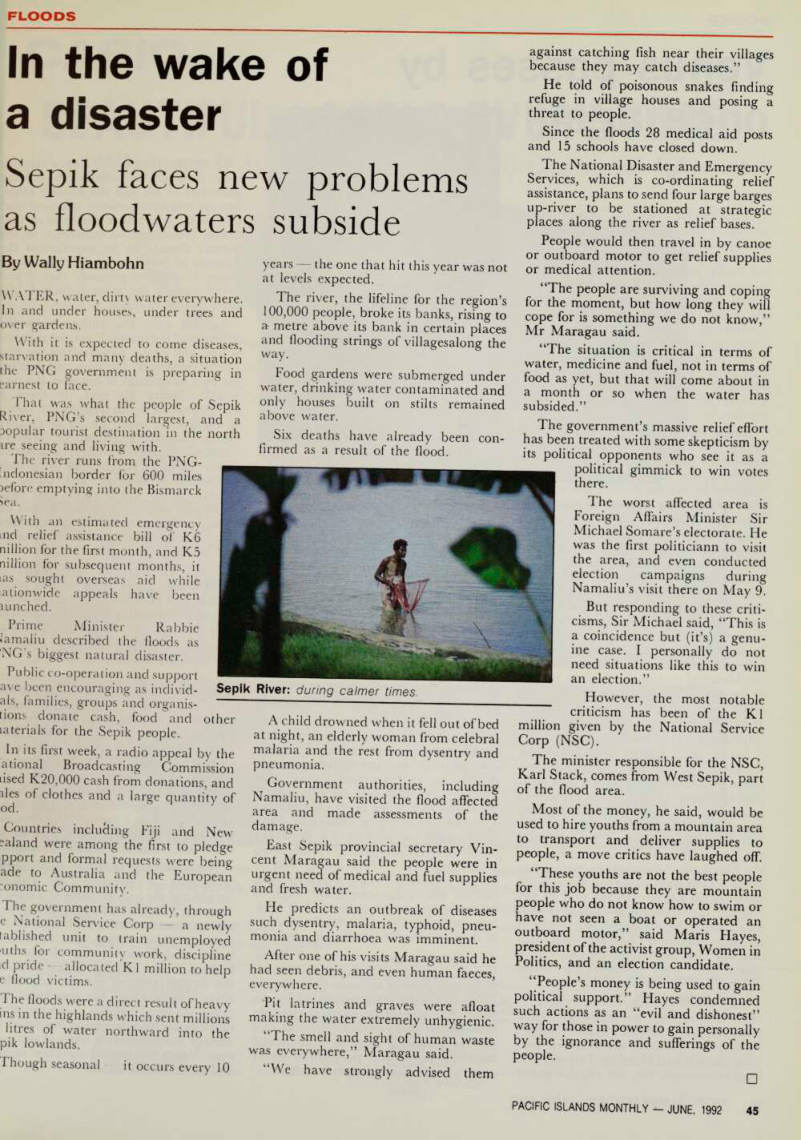
Sepik River: during calmer times.