The crisis came after the cyclone
p. 25 · Read in the full issue
By Anna Buckley
CYCLONE Betsy’s attack on
Vanuatu last month was dra matic, and the response immedi ate but the real crisis arose afterward.
Betsy’s 110-knot winds wrought a trail of injury and damage through the islands from January 8 to 11, then headed for the Queensland coast of Australia. The National Disasters Advisory Committee met just hours after she had passed, but w ere paralysed by a lack of information.
Disaster experts had been flown in from Australia and the Vanuatu Red Cross w'as at the ready with blankets, mosquito nets and medical supplies.
Government departments had prepared to w'ork on Sunday, and church leaders were anxious to assist. All were impatient for action but, knowing nothing of the nature or extent of the damage, the Disaster Committee could only advise everyone to “be prepared”.
Embassies offered transport and relief supplies. The domestic aircraft Vanair was ready to go, if only funds had been forthcoming for fuel. Instead, 90 troops from the Vanuatu Mobile Force were deployed, five at a time, in fuel-hungry helicopters provided by the French and Australians. The relief operation waited for the Zealand Andover plane, which was on standby from day one but arrived five days later.
The French, in particular, were quick
to show solidarity with the new Francophone government, promptly sending an executive jet and helicopter from new Caledonia. Recently arrived Phillipe Guerin, the first French am bassador in the country for four years, said food and medicine would follow.
The fatality list from the cyclone still is uncertain. Ten fishermen, thought to be Taiwanese, still were missing after
being sighted drifting in the Selwyn
Straits, and hopes faded for nine men who had set out in a speed boat from the southern Solomon island of Santa Cruz.
A report from Tanna described the unfortunate death of a two-year-old child. Carefully strapped to a tree by a mother who feared her baby might be blown away in the storm, the child was reportedly hit dead on the head by a falling coconut. On Pentecost, Chief Sara Mata Wataliro reported a fit old man who had died of fright.
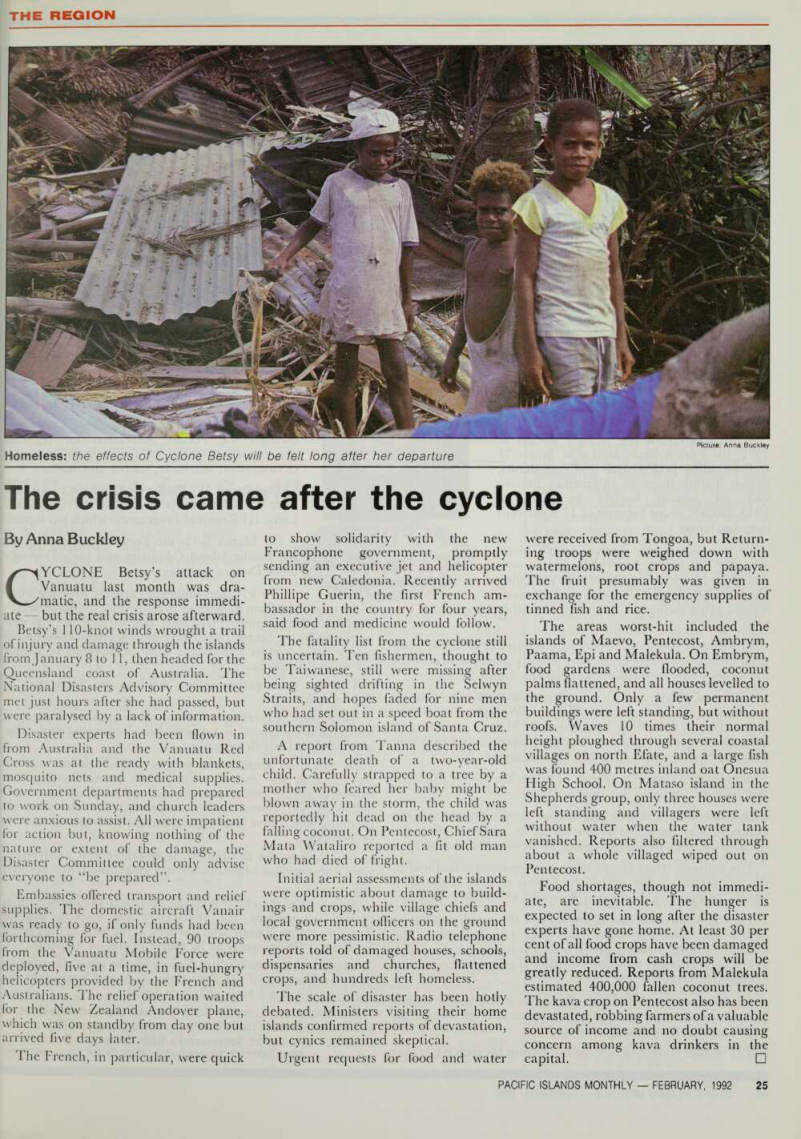
Initial aerial assessments of the islands were optimistic about damage to build ings and crops, while village chiefs and local government officers on the ground were more pessimistic. Radio telephone reports told of damaged houses, schools, dispensaries and churches, flattened crops, and hundreds left homeless.
The scale of disaster has been hotly debated. Ministers visiting their home islands confirmed reports of devastation,
but cynics remained skeptical.
Urgent requests for food and water
were received from Tongoa, but Return ing troops were weighed down with watermelons, root crops and papaya.
The fruit presumably was given in exchange for the emergency supplies of tinned fish and rice.
The areas worst-hit included the islands of Maevo, Pentecost, Ambrym, Paama, Epi and Malekula. On Embrym, food gardens were flooded, coconut palms flattened, and all houses levelled to the ground. Only a few permanent buildings were left standing, but without roofs. Waves 10 times their normal
height ploughed through several coastal
villages on north Efate, and a large fish was found 400 metres inland oat Onesua High School. On Mataso island in the Shepherds group, only three houses were left standing and villagers were left without water when the water tank vanished. Reports also filtered through about a whole villaged wiped out on Pentecost.
Food shortages, though not immedi ate, are inevitable. The hunger is expected to set in long after the disaster experts have gone home. At least 30 per cent of all food crops have been damaged and income from cash crops will be greatly reduced. Reports from Malekula estimated 400,000 fallen coconut trees.
The kava crop on Pentecost also has been devastated, robbing farmers of a valuable source of income and no doubt causing concern among kava drinkers in the capital. □
Picture: Anna Buckley
Homeless: the effects of Cyclone Betsy will be felt long after her departure