ship from Japan
pp. 47-48 · Read in the full issue
Shipping
Tuvalu gets new ship from Japan
By Diana McManus
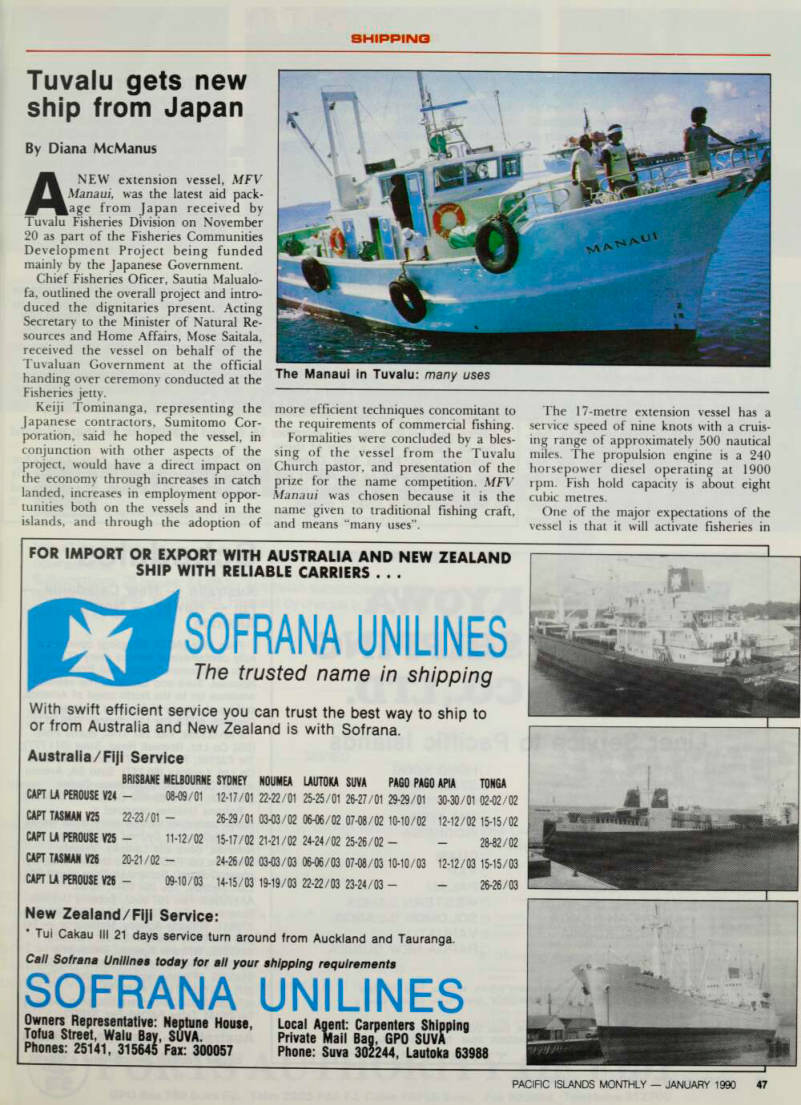
ANEW extension vessel, MFV Manaui, was the latest aid pack age from Japan received by Tuvalu Fisheries Division on November 20 as part of the Fisheries Communities
Development Project being funded
mainly by the Japanese Government.
Chief Fisheries Oficer, Sautia Malualo fa, outlined the overall project and intro duced the dignitaries present. Acting Secretary to the Minister of Natural Re sources and Home Affairs, Mose Saitala, received the vessel on behalf of the Tuvaluan Government at the official handing over ceremony conducted at the
Fisheries jetty.
Keiji Tominanga, representing the
Japanese contractors, Sumitomo Cor poration, said he hoped the vessel, in conjunction with other aspects of the project, would have a direct impact on the economy through increases in catch landed, increases in employment oppor tunities both on the vessels and in the islands, and through the adoption of
more efficient techniques concomitant to the requirements of commercial fishing.
Formalities were concluded by a bles sing of the vessel from the Tuvalu Church pastor, and presentation of the prize for the name competition. MFV Manaui was chosen because it is the name given to traditional fishing craft, and means “many uses”.
The 17-metre extension vessel has a service speed of nine knots with a cruis ing range of approximately 500 nautical miles. The propulsion engine is a 240 horsepower diesel operating at 1900 rpm. Fish hold capacity is about eight cubic metres.
One of the major expectations of the vessel is that it will activate fisheries in
The Manaui in Tuvalu: many uses
the outer islands and service those
fisheries by carrying repair tools for
fishing boats, spare parts and extra fishing gear. At present the commercial fisheries infrastructure is based solely in the capital, Funafuti.
Saitala said that technology transfer in itself will not further the cause of smal ler islands unless it can be demonstrated that there is ultimately some commercial benefit from it. He warned that technol ogy transfer could well create further dependency upon more developed na tions and donor countries as well as other sectors of the Tuvalu economy if Fisheries Division staff failed to meet the challenge presented by new vessels with
hi-tech equipment.
Six smaller training vessels were pre sented to Tuvalu earlier this year by the Japanese Government, completing Phase 1 of the overall four-phased project.
Three of these were damaged in trans shipment, and a fourth vessel was dam aged when it was trapped beneath the fisheries wharf during a rising tide.
Technicians from Sumitomo Corpora tion were in Tuvalu to check the new ship and help local tradesmen repair the
damaged vessels.
The third part of the Fisheries Com munities Development Project involves
improvement works on the Funafuti Fisheries Centre, and the tender for a Japanese Contractor was due to start last month. It’s expected that construction works will begin early this year.
The final phase involves construction of a Fisheries Centre on Vaitupu island, and upgrading of the Vaitupu access channel. □