The new
p. 51 · Read in the full issue
killer
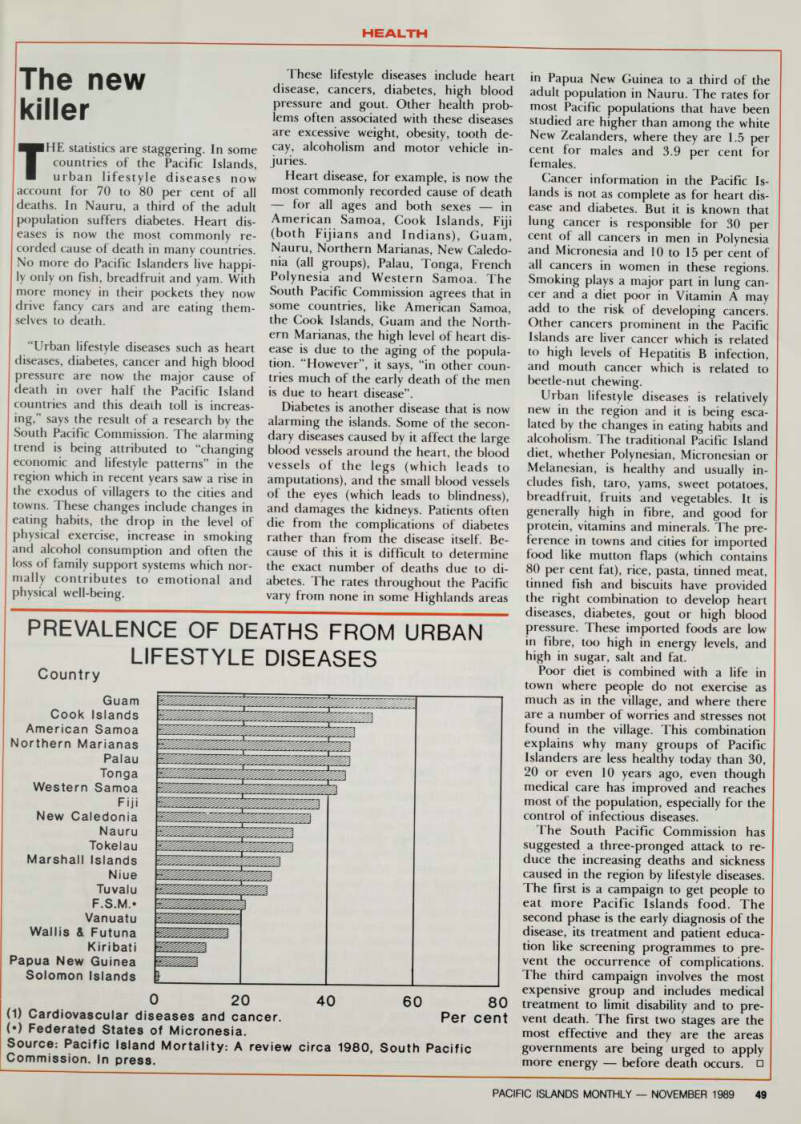
THE statistics are staggering. In some countries of the Pacific Islands, urban lifestyle diseases now account for 70 to 80 per cent of all deaths. In Nauru, a third of the adult population suffers diabetes. Heart dis eases is now the most commonly re corded cause of death in many countries.
No more do Pacific Islanders live happi ly only on fish, breadfruit and yam. With more money in their pockets they now drive fancy cars and are eating them selves to death.
“Urban lifestyle diseases such as heart diseases, diabetes, cancer and high blood pressure are now the major cause of death in over half the Pacific Island countries and this death toll is increas ing,” says the result of a research by the South Pacific Commission. The alarming trend is being attributed to “changing economic and lifestyle patterns” in the region which in recent years saw a rise in the exodus of villagers to the cities and towns. These changes include changes in eating habits, the drop in the level of physical exercise, increase in smoking and alcohol consumption and often the loss of family support systems which nor mally contributes to emotional and
physical well-being.
These lifestyle diseases include heart disease, cancers, diabetes, high blood pressure and gout. Other health prob lems often associated with these diseases are excessive weight, obesity, tooth de cay, alcoholism and motor vehicle in juries.
Heart disease, for example, is now the most commonly recorded cause of death for all ages and both sexes in American Samoa, Cook Islands, Fiji (both Fijians and Indians), Guam, Nauru, Northern Marianas, New Caledo nia (all groups), Palau, Tonga, French Polynesia and Western Samoa. The South Pacific Commission agrees that in some countries, like American Samoa, the Cook Islands, Guam and the North ern Marianas, the high level of heart dis ease is due to the aging of the popula tion. “However”, it says, “in other coun tries much of the early death of the men is due to heart disease”.
Diabetes is another disease that is now alarming the islands. Some of the secon dary diseases caused by it affect the large blood vessels around the heart, the blood vessels of the legs (which leads to amputations), and the small blood vessels of the eyes (which leads to blindness), and damages the kidneys. Patients often die from the complications of diabetes rather than from the disease itself. Be cause of this it is difficult to determine the exact number of deaths due to di abetes. The rates throughout the Pacific vary from none in some Highlands areas
in Papua New Guinea to a third of the adult population in Nauru. The rates for most Pacific populations that have been studied are higher than among the white New Zealanders, where they are 1.5 per cent for males and 3.9 per cent for females.
Cancer information in the Pacific Is lands is not as complete as for heart dis ease and diabetes. But it is known that lung cancer is responsible for 30 per cent of all cancers in men in Polynesia and Micronesia and 10 to 15 per cent of all cancers in women in these regions.
Smoking plays a major part in lung can cer and a diet poor in Vitamin A may add to the risk of developing cancers.
Other cancers prominent in the Pacific Islands are liver cancer which is related to high levels of Hepatitis B infection, and mouth cancer which is related to
beetle-nut chewing.
Urban lifestyle diseases is relatively new in the region and it is being esca lated by the changes in eating habits and alcoholism. The traditional Pacific Island diet, whether Polynesian, Micronesian or Melanesian, is healthy and usually in cludes fish, taro, yams, sweet potatoes, breadfruit, fruits and vegetables. It is generally high in fibre, and good for protein, vitamins and minerals. The pre ference in towns and cities for imported food like mutton flaps (which contains 80 per cent fat), rice, pasta, tinned meat, tinned fish and biscuits have provided the right combination to develop heart diseases, diabetes, gout or high blood pressure. These imported foods are low in fibre, too high in energy levels, and high in sugar, salt and fat.
Poor diet is combined with a life in town where people do not exercise as much as in the village, and where there are a number of worries and stresses not found in the village. This combination explains why many groups of Pacific Islanders are less healthy today than 30, 20 or even 10 years ago, even though medical care has improved and reaches most of the population, especially for the control of infectious diseases.
The South Pacific Commission has suggested a three-pronged attack to re duce the increasing deaths and sickness caused in the region by lifestyle diseases.
The first is a campaign to get people to eat more Pacific Islands food. The second phase is the early diagnosis of the disease, its treatment and patient educa tion like screening programmes to pre vent the occurrence of complications.
The third campaign involves the most expensive group and includes medical treatment to limit disability and to pre vent death. The first two stages are the most effective and they are the areas
governments are being urged to apply
more energy before death occurs. □