Land of the Dani
pp. 27-30 · Read in the full issue
focus
By Liz Thompson
Flying into Wamena, district capital of Jawaijaya in Irian Jaya, the profound natural beauty of the Baliem Valley is spread before you.
Rolling mountains basking in spirals of white mist, valleys swollen with rivers of turbulent white water and waterfalls coursing their way through rugged rain forest pour from majestic precipices. At 7500 feet, high in the Baliem Valley terracing systems hang precariously from sheer mountainsides, a testament to the determination of the Dani people, the area’s indigenous inhabitants. Many things have changed in Irian Jaya, as they are, so quickly in so many
Photos: Liz Thompson
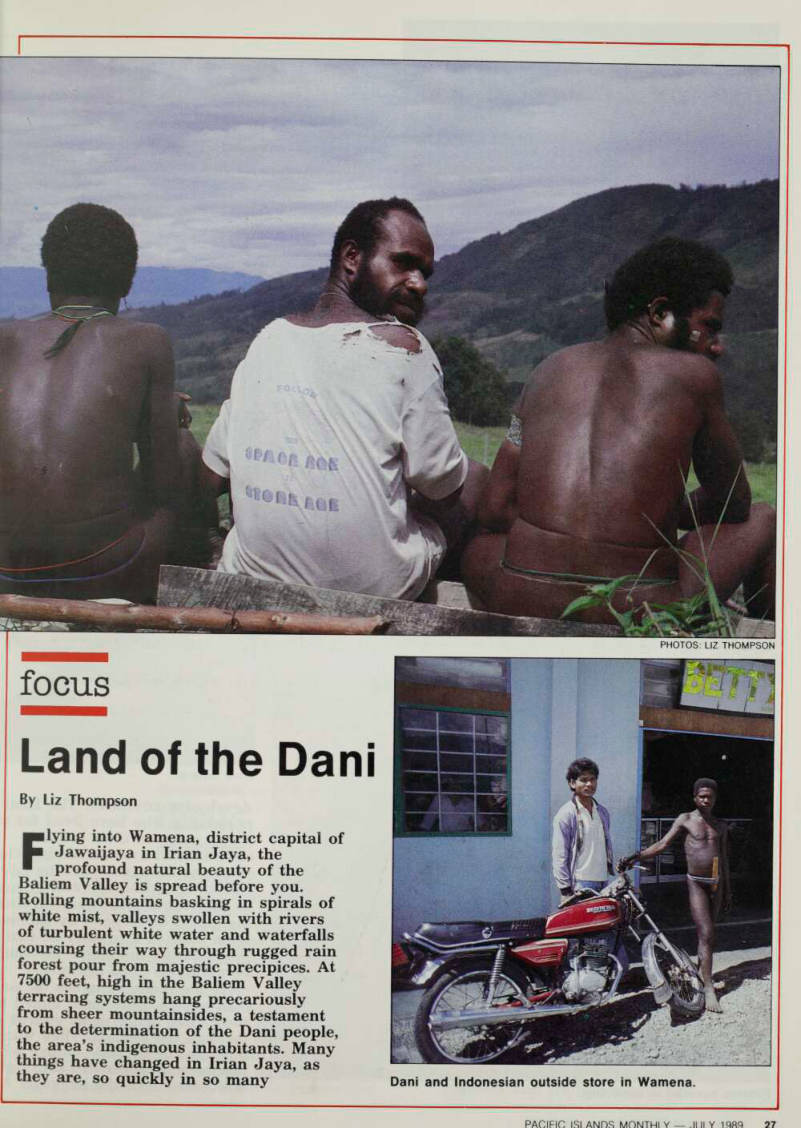
Dani and Indonesian outside store in Wamena.
developing countries. The Dani population who have lived for pei 25,000 years in their pristine environment are confronting chan advance; the results of the adven effects of technology and commu as they move into every far-flung the globe. Governed by Indonesi Irian Jay a is a country of two cu Wamena the incredible meeting o two is at its most obvious.
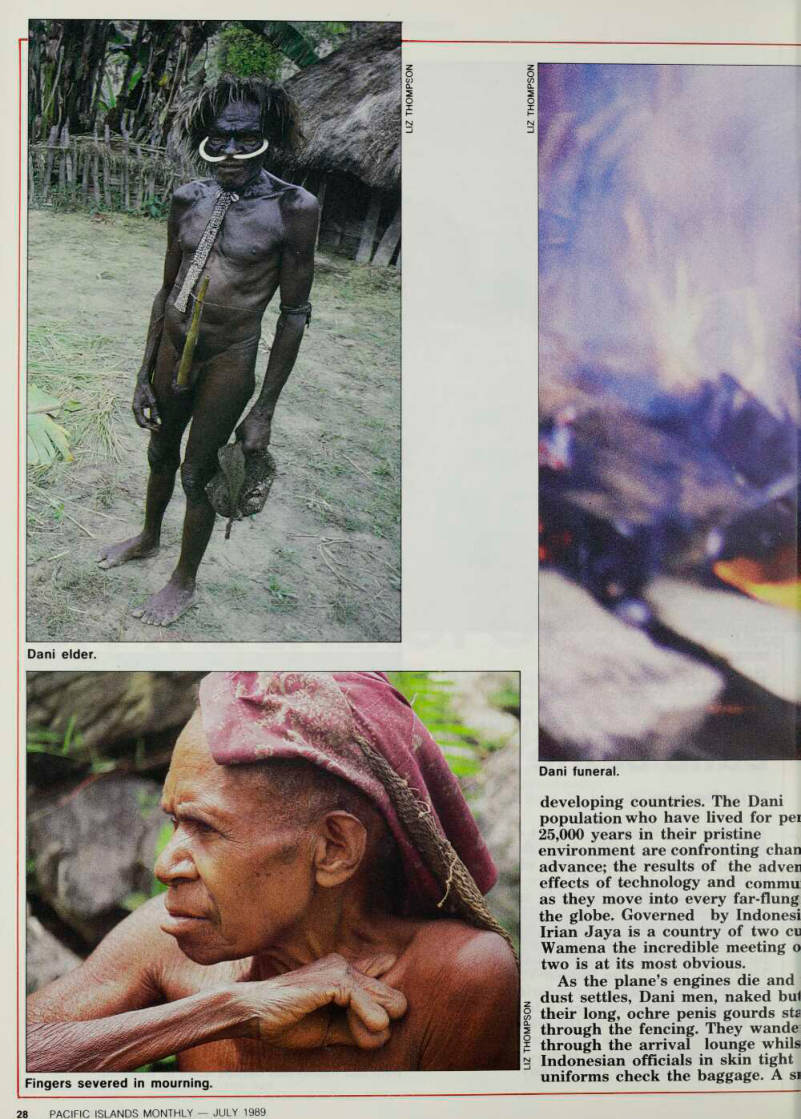
As the plane’s engines die and dust settles, Dani men, naked bul their long, ochre penis gourds sta through the fencing. They wande through the arrival lounge whils Indonesian officials in skin tight uniforms check the baggage. A si
Dani elder.
Fingers severed in mourning.
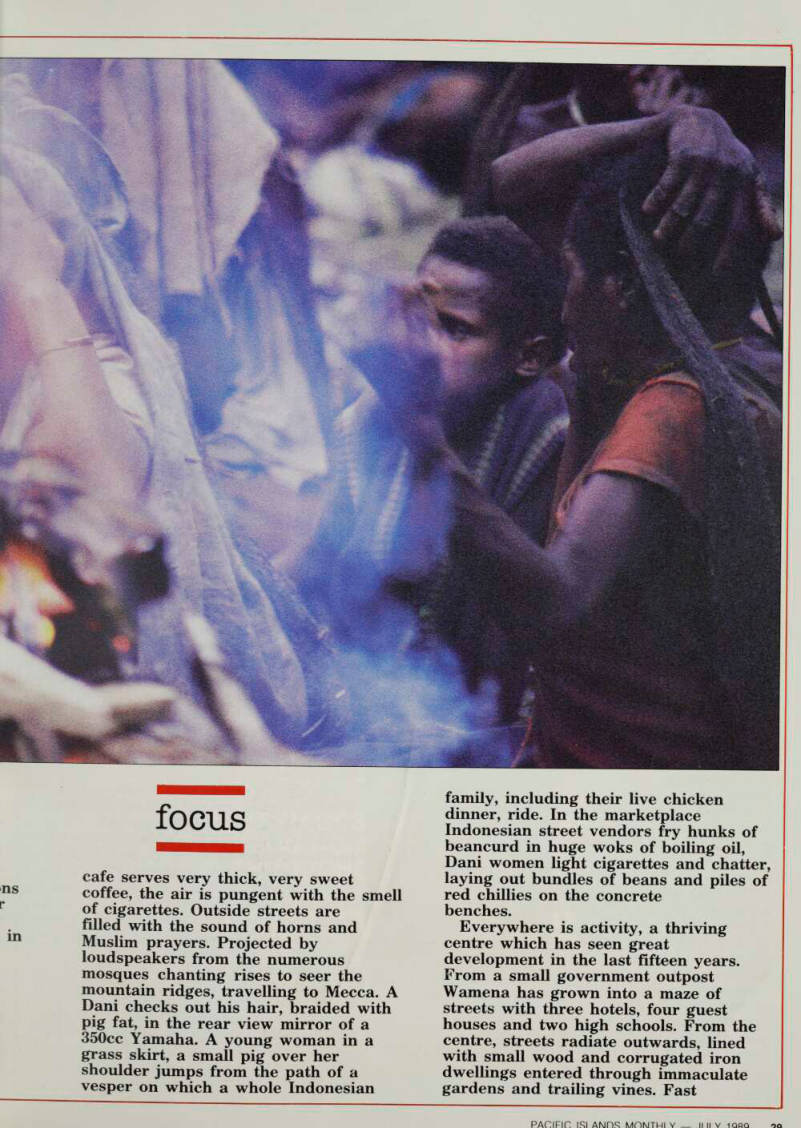
Dani funeral.
Liz Thompson
Liz Thompson
Liz Thompson
ns r in
cafe serves very thick, very sweet coffee, the air is pungent with the smell of cigarettes. Outside streets are filled with the sound of horns and Muslim prayers. Projected by loudspeakers from the numerous mosques chanting rises to seer the mountain ridges, travelling to Mecca. A Dani checks out his hair, braided with pig fat, in the rear view mirror of a 350 cc Yamaha. A young woman in a grass skirt, a small pig over her shoulder jumps from the path of a vesper on which a whole Indonesian
family, including their live chicken dinner, ride. In the marketplace Indonesian street vendors fry hunks of beancurd in huge woks of boiling oil, Dani women light cigarettes and chatter, laying out bundles of beans and piles of red chillies on the concrete benches.
Everywhere is activity, a thriving centre which has seen great development in the last fifteen years.
From a small government outpost Wamena has grown into a maze of streets with three hotels, four guest houses and two high schools. From the centre, streets radiate outwards, lined with small wood and corrugated iron dwellings entered through immaculate gardens and trailing vines. Fast
developing, emerald green rice paddies border the town eventually giving way to the Dani’s village hamlets all finally embraced by an enclosing arm of unbroken ranges. Beyond the town are the
pathways which lead out into the Baliem valley itself. Pathways which
are becoming
increasingly more established since the area was officially opened to outsiders in 1986, there is now a Baliem Valley tourist map for trekkers.
Walking out into the clean air and silence the valley’s floor is deeply etched within irrigation channels. Women tend gardens carving at the
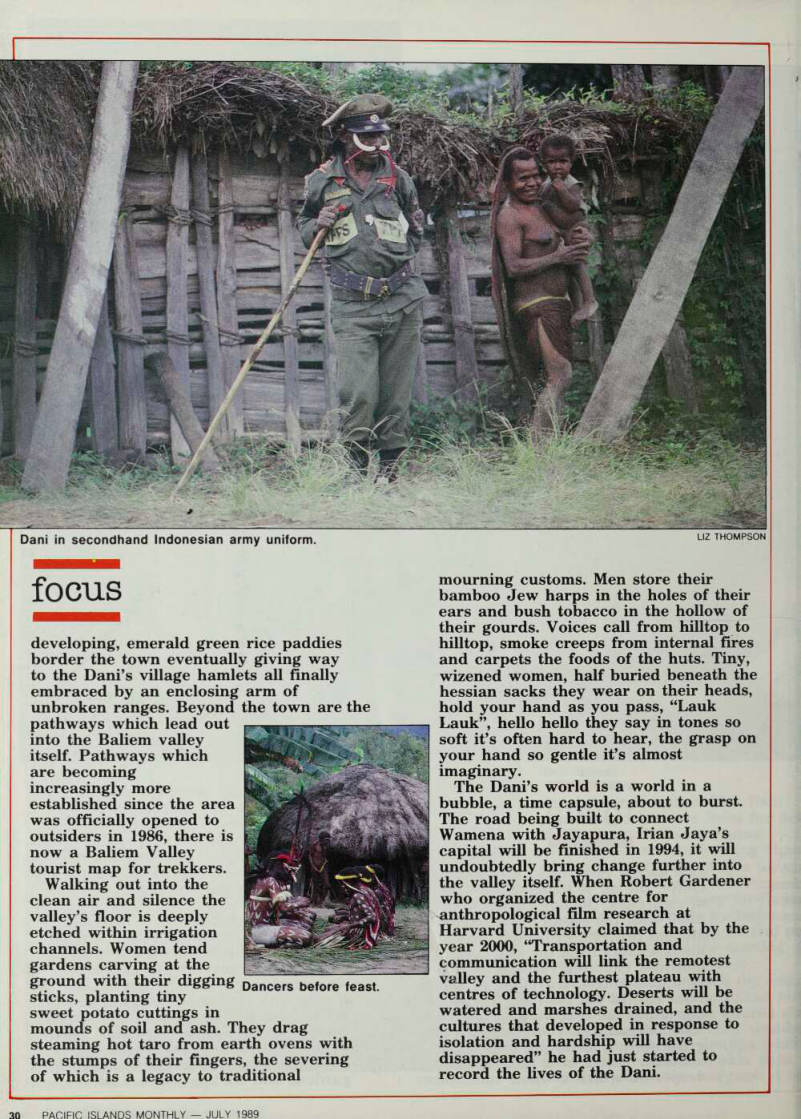
ground with their digging Dancer s before feast. sticks, planting tiny sweet potato cuttings in mounds of soil and ash. They drag steaming hot taro from earth ovens with the stumps of their fingers, the severing of which is a legacy to traditional
mourning customs. Men store their bamboo Jew harps in the holes of their ears and bush tobacco in the hollow of their gourds. Voices call from hilltop to hilltop, smoke creeps from internal fires and carpets the foods of the huts. Tiny, wizened women, half buried beneath the hessian sacks they wear on their heads, hold your hand as you pass, “Lauk Lauk”, hello hello they say in tones so soft it’s often hard to hear, the grasp on your hand so gentle it’s almost imaginary.
The Dani’s world is a world in a bubble, a time capsule, about to burst.
The road being built to connect Wamena with Jayapura, Irian Jaya’s capital will be finished in 1994, it will undoubtedly bring change further into the valley itself. When Robert Gardener who organized the centre for anthropological film research at Harvard University claimed that by the year 2000, ‘Transportation and communication will link the remotest valley and the furthest plateau with centres of technology. Deserts will be watered and marshes drained, and the cultures that developed in response to isolation and hardship will have disappeared” he had just started to record the lives of the Dani.
Liz Thompson
Dani in secondhand Indonesian army uniform.