Patrick Riviere/Sydney Freelance
p. 43 · Read in the full issue
New Zealand
The Wealthy Go For Labour
From KARENMANGNELL in Auckland
NEW Zealand’s Labour Govern ment won over the wealthy and survived a protest vote from the poor in the mid-August elections to retain its 15-seat majority in parliament. After one of the most boring campaigns in memory, election night itself produced a host of surprises.
Labour scared the daylights out of Na tional by launching an assault on its pre viously true-blue urban seats. National struck back in a few rural electorates. The Democratic Party went down the tube, losing its two parliamentary seats and gaining its smallest portion of the vote since the party formed as the Social Credit Political League in 1954.
Overall, Labour picked up a 3.2 per cent swing in the country’s 24 wealthiest seats.
The voters who had done well out of the free-market policies of Rogernomics de serted National in droves. Labour won the protest votes which had gone, previously, to the Democrats or the New Zealand Party.
Labour’s Jenny Kirk scored the shock of the night by taking the National seat of Birkenhead, held by the retiring former Opposition leader Jim McLay. Another Labour candidate, Judith Tizard, ran Na tional’s finance spokesman Doug Gra ham to within 760 votes in Remuera in what was considered a blue-ribbon stronghold.
Labour also won the provincial seat of New Plymouth and withstood challenges from National in the rural seats of Waitaki
and from the Democrats in Wanganui.
While Labour won the highest share of the urban vote since 1972, it suffered a large swing against it in Labour strongholds.
Labour ministers such as the Prime Min ister David Lange and Finance Minister Roger Douglas had their majorities chopped as the sufferers from Rogernom ics recorded their protest.
Labour’s rural support was also below that of 1972. It lost ground in the four Maori seats where the Mana Motuhako party, which advocates Maori self-determina tion, scored a 14 per cent swing. The La
hour strongholds also saw a large drop in voter turn out.
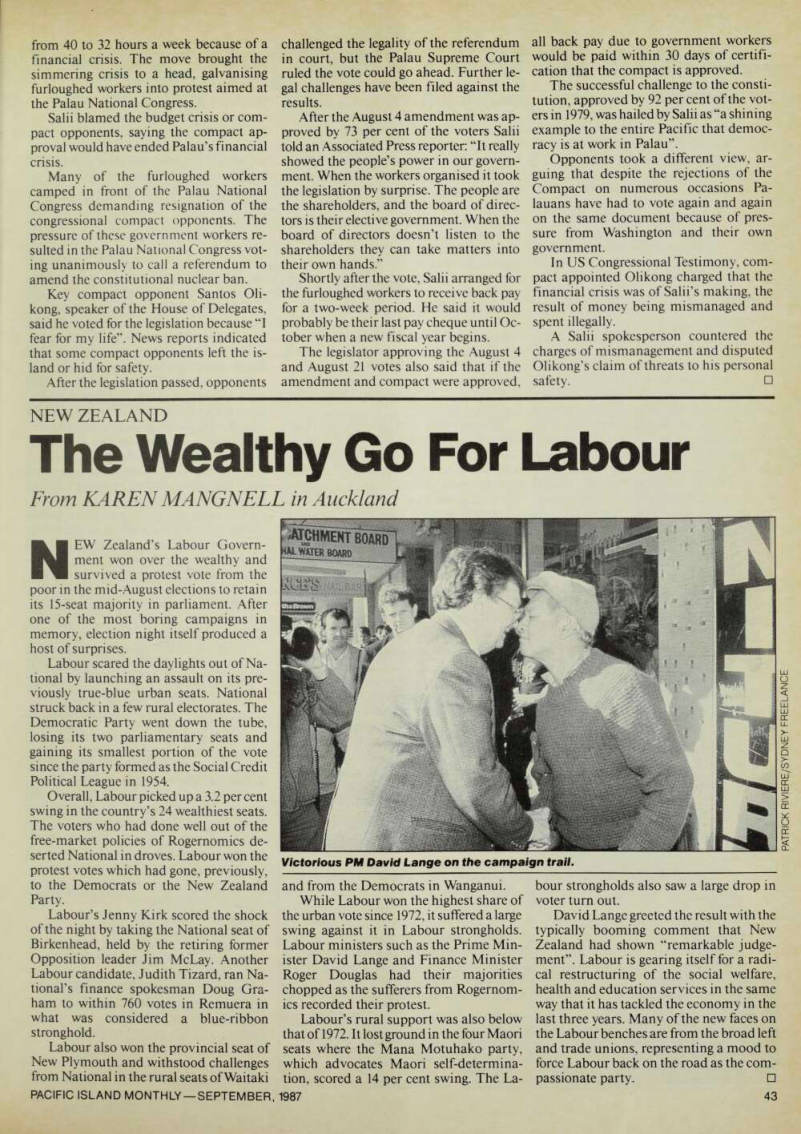
David Lange greeted the result with the typically booming comment that New Zealand had shown “remarkable judge ment”. Labour is gearing itself for a radi cal restructuring of the social welfare, health and education services in the same way that it has tackled the economy in the last three years. Many of the new faces on the Labour benches are from the broad left and trade unions, representing a mood to force Labour back on the road as the com passionate party. □
Victorious PM David Lange on the campaign trail.