A cook’s tour of the South Pacific
pp. 37-38 · Read in the full issue
South Pacific
The Cuisine of the South Pacific. By Gwen Skinner Published by Hodder & Stoughton, Auckland, 1983.
ISBN 0 340 33975 X. Price $39.95.
Take a dash of history, a pinch of memoirs, a spoonful of geography and a bunch of fresh recipes, decorate with tasty photography, and there you have The Cuisine of the South Pacific.
Gwen Skinner has used her own experiences gathered while cruising the South Pacific on the ferro-cement yacht Swanhilde as the basis for this book, but the list of ack nowledgments at the back, and the comprehensive bibliogra phy, indicate that she also drew on a wide range of expertise to ensure accuracy.
The book begins by defining its area of interest from
Papua New Guinea eastward to the Marquesas Islands, from Tuvalu south to New Zealand.
Each island nation is served in a separate chapter. “The Chinese in the South Pacific” and “The Indians in the South Pacific” are also included two racial groups with distinctive cuisines which are very visible influ ences on South Pacific food.
These two groups are often ignored in literature on this area.
Chapter 2, “The Staple Foods of the South Pacific”, is the longest, and is highly re commended. Ms Skinner has described these foods in detail botanical description, geological requirements, role in each society (apart from being a nutrient), and common prepa ration. Clear pen sketches illus trate this chapter. Included here is a comprehensive table of vernacular names of the main food plants, divided into Melanesian, Polynesian and Micronesian. The similarities are widespread, e.g. the coco nut is called nu or niu in all three areas. Pacific earth ovens and their variations are de scribed and just before moving on to the tastier section of the book one can find out what substitutes can be used for common ingredients such as taro or coconut milk if one does not have access to a vibrant island-style market.
The Cook Islands tempt the taste buds first. The potted history is generally accurate as is the small, detailed map. This applies to each succeeding
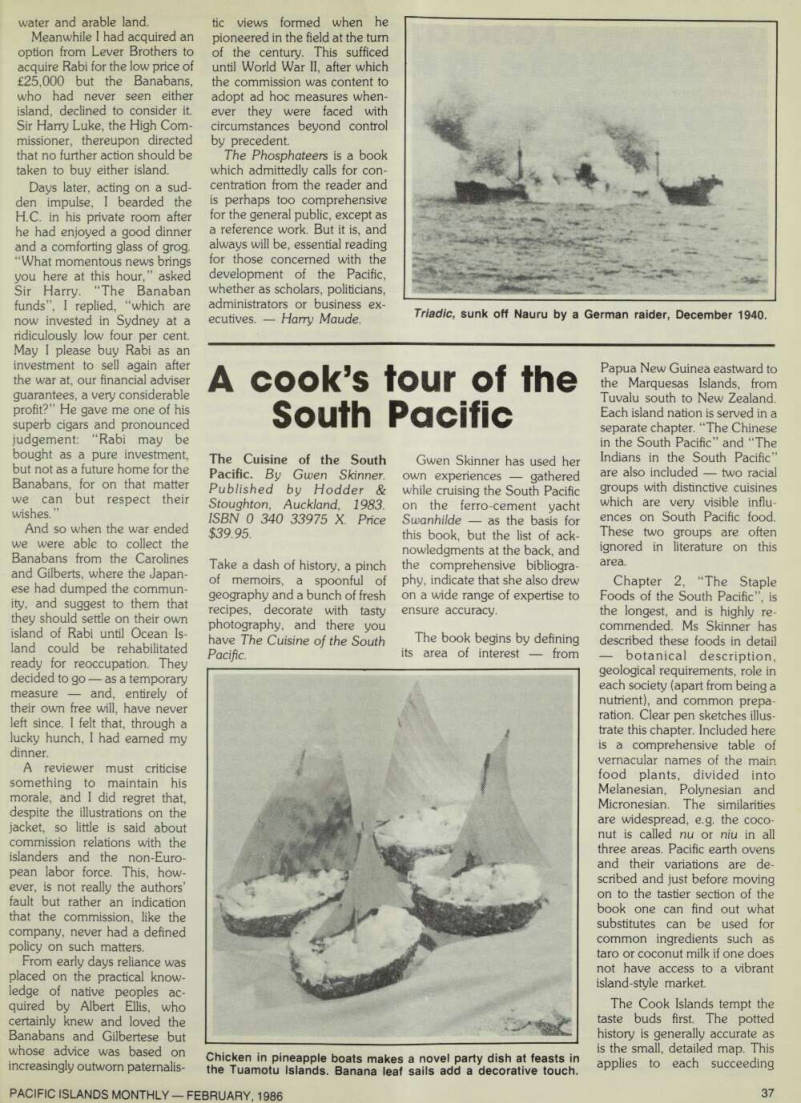
Chicken in pineapple boats makes a novel party dish at feasts in the Tuamotu Islands. Banana leaf sails add a decorative touch.
chapter, and the photography of James Siers helps illustrate the character of each nation.
The validity of these sections is somewhat diminished by the travel-brochure-style para graphs which head the recipes themselves. For example: “The pounding drums of Vanuatu send out messages on the humid night air and volca noes belch forth steaming lava.
Amidst this drama, Vanuatu cooks prepare the evening re freshments and so restore the calm that invariably follows an excellent meal ...”
The recipes are delicious clear instructions and simplicity of ingredients (taking note of the substitutes listed earlier) would encourage the most timid of cooks to attempt an island-style meal. Some are a little esoteric palusami quiche lorraine for example and sometimes the recipes attri buted to a particular country seem a bizzare choice In donesian Rump Steak and Chicken Curry Chow Mein from Vanuatu for instance. But these are minor blemishes. Of more importance is the absence of any reference to, or recipes for, the delicious “coconut crab” and “flying fox” (fruitbat) which are eaten in New Cale donia and Vanuatu with much enthusiasm by tourists and indi genes alike. Nor is there any mention of the übiquitous cabin crackers and tinned mackerel which, truth to tell, are more commonly eaten than many more traditional foods.
The color plates by Michael Willison have been well pre sented. Positioned among the dishes are good examples of handicrafts although some are not of the particular nation they are supposed to represent.
But the use of wooden bowls, shells, basketware, fresh leaves and alfoil as serving platters, liberally scattered with fresh flowers, gives this book definite added appeal.
The size and beauty of The Cuisine of the South Pacific suggests that it may spend as much time on the coffee table as in the kitchen. But this should not discourage those cooks who wish to relive their own island culinary experience, and should certainly encourage the armchair traveller who wants to visit this particular part of the world. Ngaire Douglas.