Cocker pins hope on
pp. 41-42 · Read in the full issue
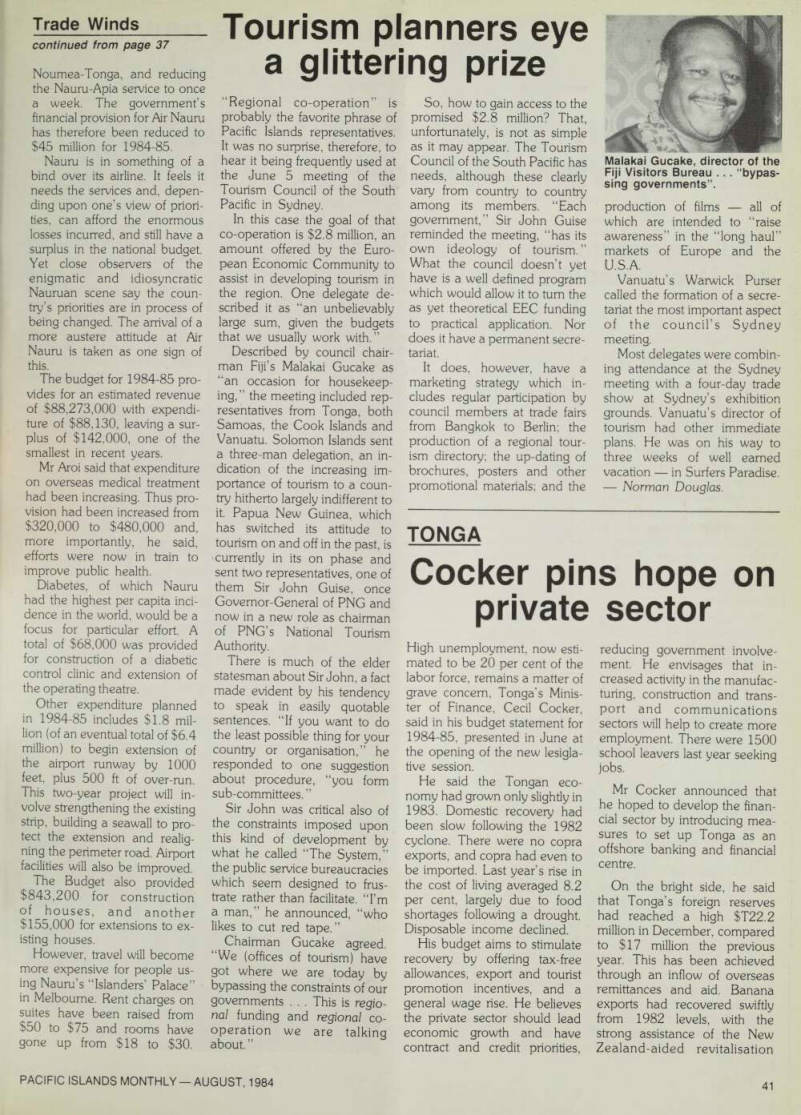
Tonga
Cocker pins hope on private sector
High unemployment, now estimated to be 20 per cent of the labor force, remains a matter of grave concern, Tonga’s Minister of Finance, Cecil Cocker, said in his budget statement for 1984-85, presented in June at the opening of the new lesiglative session.
He said the Tongan economy had grown only slightly in 1983. Domestic recovery had been slow following the 1982 cyclone. There were no copra exports, and copra had even to be imported. Last year’s rise in the cost of living averaged 8.2 per cent, largely due to food shortages following a drought, Disposable income declined.
His budget aims to stimulate recovery by offering tax-free allowances, export and tourist promotion incentives, and a general wage rise. He believes the private sector should lead economic growth and have contract and credit priorities,
reducing government involve ment. He envisages that in creased activity in the manufac turing, construction and trans port and communications sectors will help to create more employment. There were 1500 school leavers last year seeking jobs. u P , , , r C^ er , an n° un c e d that he , ho Pf d to develop the finan clal se ? or mtr ° ducin S mea . sl i r tf 0 ® et U P Tonga as an offshore bankln 3 and financial cen re ’
On the bright side, he said that Tonga’s foreign reserves had reached a high $T22.2 million in December, compared to $l7 million the previous year. This has been achieved through an inflow of overseas remittances and aid. Banana exports had recovered swiftly from 1982 levels, with the strong assistance of the New Zealand-aided revitalisation
scheme. The non-copra-based manufacturing sector registered an increase.
Australia, with $4.7 million aid, closely followed by New Zealand, Japan, the European Economic Community, West Germany, headed the list of donors who will provide most of Tonga’s $21.5 million deve lopment expenditure for the
coming year.
Mary Fonua in
Nukualofa.
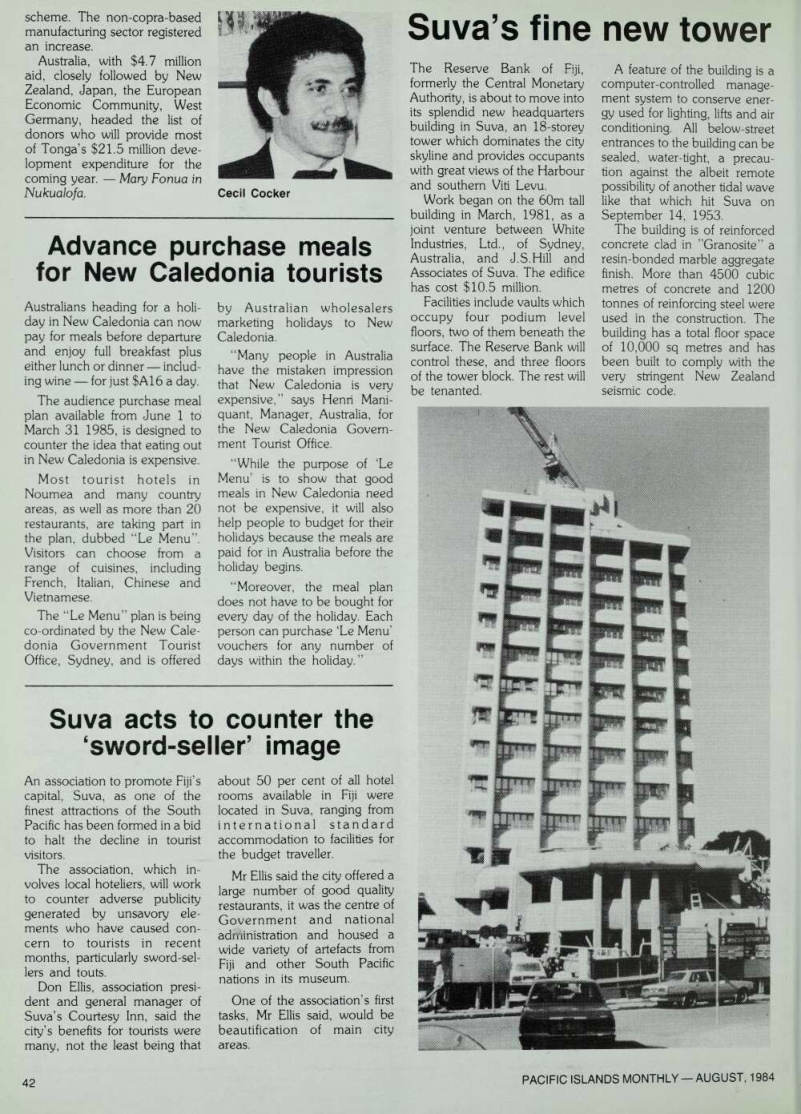
Cecil Cocker