Nut name study
pp. 18-21 · Read in the full issue
not so nutty
The idea of making a compara tive study of the words used by different Pacific Island com munities for the various parts of the palm tree, as a means of tracing cultural and historical re lationships between the com munities, first occurred to us during a cruise on that fine ship the Linblad Explorer, which by now has almost become a second home to us. The fact that coconut palms abound on all islands, and that the finer points can be de
monstrated simply by picking up
a nut or a frond from the ground not only made our inquiries easier, but also made it possible to ensure maximum accuracy,
even when our shore visits were
fairly brief.
We have also tried to find corroborative and supplementary data in the anthropological litera ture, but, we must confess, with very little success. Even when a field, worker gives a rather full account of the uses to which the various parts of the palm are put, the native terminology is rarely indicated in a systematic and exhaustive manner. The out standing exception is not al
together unexpectedly Peter
Buck, the only anthropologist of Polynesian ancestry. His chapter in Ethnology of Tongareva (Bishop Museum, 1932) should
serve as a model for all Pacific field workers. Unfortunately, it has never done so.
We have gathered relevant names from 11 island groups or individual islands. Most of the terms have an extremely wide distribution. This is the case, for example, with the word for the coconut palm itself niu (nu,
We leave it to the judgement of the intelligent reader to decide whether the almost universal use of these terms is at all related to the fact that they denote the most useful parts of the palm tree.
Another observation which does not take long to make is that the generally acknowledged cul tural and linguistic cleavage bet-
ni). Other widespread terms are kaka for the stipule or fibrous tissue at the base of the frond, puru for the husk, and uto for the haustorium, or the white spongy mass that fills a sprouting coconut.
ween eastern and western Poly nesia is reflected in the existence of the pairs of terms listed in the
accompanying table.
Far more interesting than such universal parallels and broad di visions, however, are the histor
Postmark Papeete Marie-Thérèse and Bengt Danielsson
Western Polynesian languages Eastern Polynesian languages English equivalent launiu/rouniu nikau frond taume roro/’oroe spathe kano kiko/To kernel hua/sua vai water
ical relationships revealed by the many small word clusters linking a limited number of islands.
One such cluster, as might be expected, encompasses the Soci ety and the Cook islands, where the following variants of the word for midrib are found: fa-niu (Tahiti), ’a-nu (Rarotonga), and wha-ni (Manihiki-Rakahanga). ’Apu/kapu for coconut shell cup has an identical distribution. The most interesting case is surely that of the highly aberrant term used in the Southern Marquesas islands for the palm tree, e’ehi, which reappears in Mangareva as ere’i, which is perfectly in ac cordance with the laws govern ing the inter-island sound shifts.
The same holds true for the Mar quesan term for the spathe, ’o’o, and its Mangarevan counterpart, roro. Finally, if we equate, as we should, the Marquesan term kei kaha with the Mangarevan puru ka’a, both meaning husk, we have a third word-pair confirm ing the oral traditions recorded by the early missionaries to the effect that Mangareva was originally settled from the Marquesas.
But this is not all. There are also linguistic links between is lands at opposite ends of Poly nesia, with no traces in between.
The most intriguing example is the unique sharing between Mangareva and Samoa of the word raparapa/lapalapa for the midrib of the frond. It is also worth nothing that the typically western Polynesian word for coconut shell cup, ipu, is found, in eastern Polynesia, only in the Marquesas. As is widely known to Polynesian scholars, the main conclusion to be drawn from the extensive archeological excava tions undertaken since World War II is that the Marquesas were the first islands to be settled in eastern Polynesia, and that the early settlers must have come straight from the then culturally uniform area of today’s Samoan and Tongan island groups.
A short disgression seems jus tified here. It concerns the very similar findings made by Ber nhard Zepemick in his study from 1970: Pflanzennamen als Hinweis auf kulturelle Be ziehungen innerhalb Polyne siens. For instance, the Samoan and Futunan word for the candle
nut tree, lama, jumps over the Cook and Society islands (where the tree is called tutui ) to the Marquesas, Mangareva, and all the way to Easter Island, sub stituting only r for /.
Another botanical name that makes an almost identical jump is mei, the common word for the breadfruit tree both in a western cluster of islands made up of Tonga, Futuna-Uvea, and Niue (as well as the Carolines), and in an eastern cluster consisting, sig nificantly enough, once more of the Marquesas and Mangarevan islands. Everywhere else in Poly nesia it is called kuru, ’uru or ’ulu.
Last but not least we have intriguing instances of unique terms, used only in an extremely restricted geographical area. The Tuamotu archipelago is a fine example, for practically all the names of the two dozen or so plants that make up the meagre local flora have no counterparts elsewhere in Polynesia. To cite only a few such isolates: Col ocasia esculenta, is called fakea, Messerschmidtia argentea, ngeongeo, Guettarda speciosa, kahaia and Portulaca species pokea. As for the pandanus palm, which throughout Poly nesia is known by the name fara/hala it is called tima in the western and viri in the eastern Tuamotus. In more than 50 inst ances, a certain plant name is restricted to a single atoll.
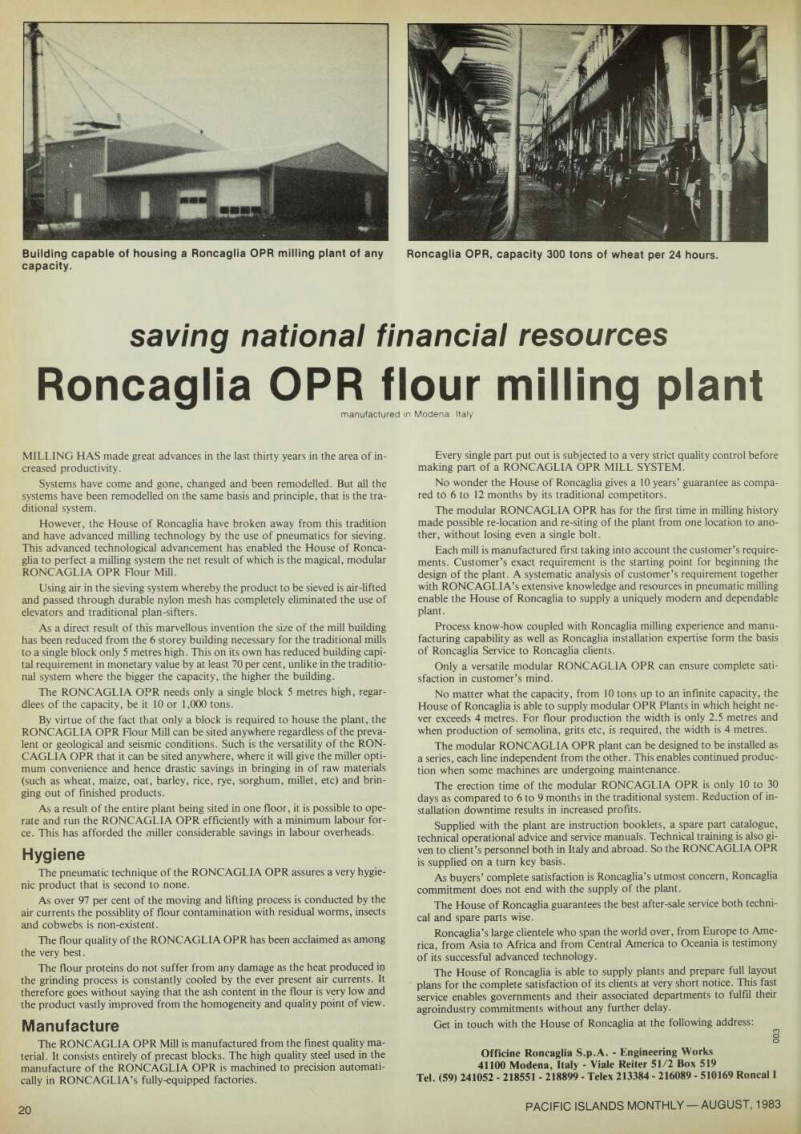
Coconut terminology is equally varied and distinct: of the 16 terms listed in the table for the island of Raroia, nine are un known in the rest of Polynesia, and some of them have never been recorded elsewhere in the Tuamotus. The only explanation we can offer for this peculiar situation is the extreme isolation, of both of the group as a whole, and of the individual atolls with in it.
The only big island possessing an equally high percentage of isolates is Tahiti, and in this particular case we can for once discern the social mechanism re sponsible for the vocabulary changes.
This has been done in an expe cially able manner by our friend and neighbor Ralph Gardner White in his contribution to the Kenneth P. Emory Festschrift.
His article is entitled “Onomast ically induced word replace ments in Tahitian” (“onomastic” means “relating to names”).
The most famous example of such a replacement is one dating from the second half of the 18th century, and resulting from the tabooing of the syllable tu, be cause Tu was the title of the new Tahitian “king” who has gone down in history as Pomare I.
It seems that at a slightly ear lier date, the same principle had caused the palm tree to be re named ha’ari. The word is still commonly used today, although
we can find the old pan- Polynesian word niu in some legends and mythological texts recorded around 1820 by the first Protestant missionaries. We can even get an inkling of the basis for the creation of the new word when we learn that ’akari is the word for a mature nut in the adjacent Cook Islands.
As we said at the outset, this is an extremely simple type of
Parts of the coconut in the lan guage of Raroia, a small atoll in the Tuamotu archipelago of French Polynesia.
study in which our only aim has been to establish historical rela tionships with the help of coconut terminology. But al though we have made an effort to avoid it, there is nevertheless a
methodological problem involv
ed, which we must in honesty touch upon.
The problem can be stated as follows; shall we compare only
the words used for absolutely identical features of the palm tree, the nuts and the frond, or shall we base our comparisons on all existing cognate words, even when their meaning differs con siderably? The conclusions we draw from our material will not be the same in the first case as in the second.
For example, in the sense of a
frond, the word nikau/ni’au ex ists only in the Society and Cook Islands. But a dry flower stalk is called nikau in Mangareva, and ni’au means coconut leaf midrib in the Hawaiian language. The Marquesan word for a flower stalk is hihi, which at first glance seems to be a completely unique appellation until we open the LMS Tahitian dictionary and dis
cover that there is indeed a word hihi, which is used to describe the two holes in a nut that cannot be pierced! Throwing our net a little more widely, we can haul in the word ’a’ano which in Tahi tian denotes a container consist ing of an emptied whole coconut shell, but in Samoan means the coconut kernel Marie- Therese and Bengt Danielsson.