Pacific Priorities
p. 13 · Read in the full issue
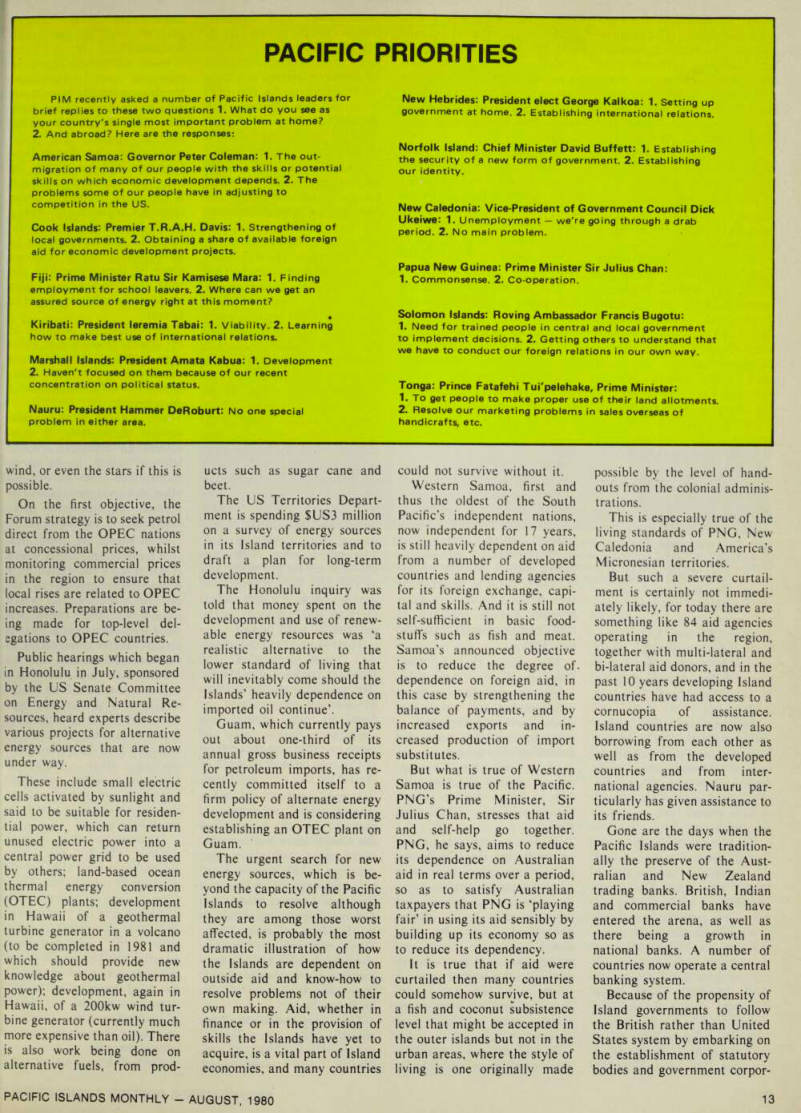
PIM recently asked a number of Pacific islands leaders for brief replies to these two questions 1. What do you see as your country's single most important problem at home? 2. And abroad? Here are the responses; American Samoa: Governor Peter Coleman: 1. The out migration of many of our people with the skills or potential skills on which economic development depends. 2. The problems some of our people have in adjusting to competition in the US.
Cook Islands: Premier T.R.A.H, Davis: 1. Strengthening of local governments. 2. Obtaining a share of available foreign aid for economic development projects.
Fiji: Prime Minister Ratu Sir Kamisese Mara: 1. Finding employment for school leavers. 2. Where can we get an assured source of energy right at this moment? • Kiribati: President leremia Tabai: 1. Viability. 2. Learning how to make best use of international relations.
Marshall Islands: President Amata Kabua: 1. Development 2. Haven't focused on them because of our recent concentration on political status.
Nauru: President Hammer Deßoburt: No one special problem in either area.
New Hebrides: President elect George Kalkoa: 1. Setting up government at home. 2. Establishing international relations.
Norfolk Island: Chief Minister David Buffett: 1. Establishing the security of a new form of government. 2. Establishing our identity.
New Caledonia: Vice-President of Government Council Dick Ukeiwe: 1. Unemployment we're going through a drab period, 2. No main problem.
Papua New Guinea: Prime Minister Sir Julius Chan: 1. Commonsense. 2. Co-operation.
Solomon Islands: Roving Ambassador Francis Bugotu: 1. Need for trained people in central and local government to implement decisions. 2. Getting others to understand that we have to conduct our foreign relations in our own way.
Tonga: Prince Fatafehi Tui'pelehake, Prime Minister: 1. To get people to make proper use of their land allotments. 2. Resolve our marketing problems in sales overseas of handicrafts, etc.