NZ's Island trade makes
p. 55 · Read in the full issue
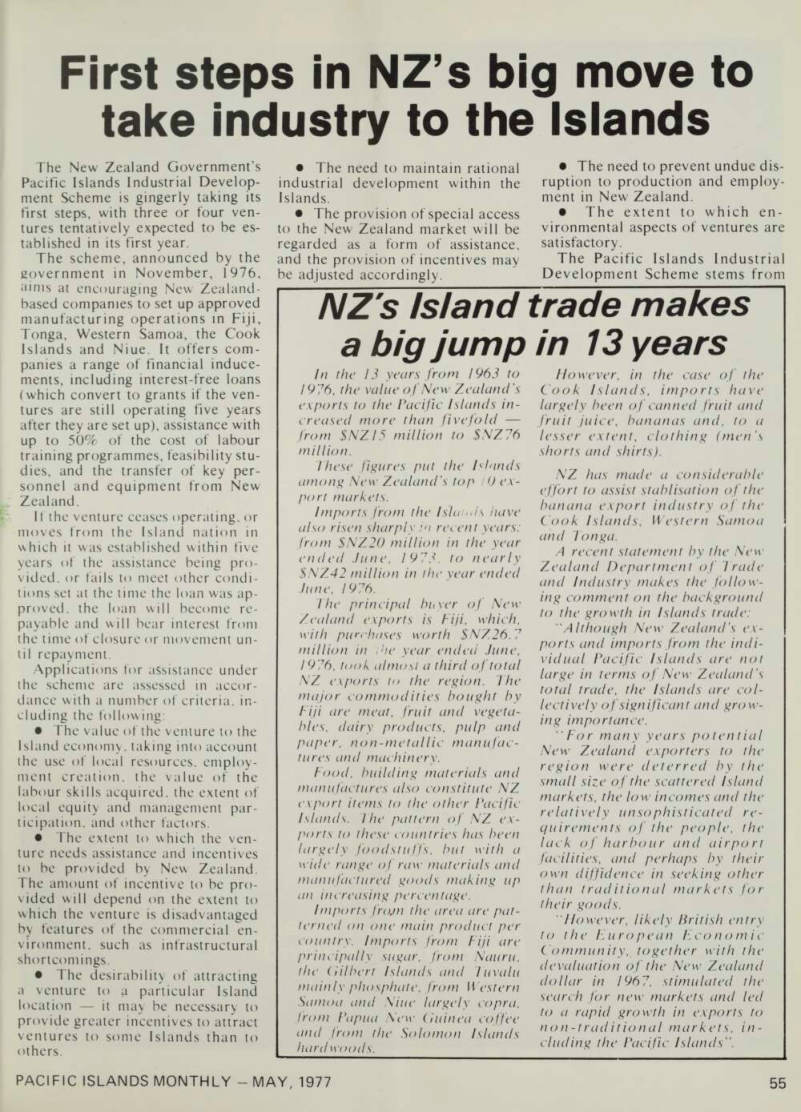
a big jump in 13 years
In the 13 years from 1963 to 1976, the value of New Zealand’s exports to the Pacific Islands in creased more than fivefold from SNZIS million to SNZ76 million.
These figures put the Elands among New Zealand’s top iO ex port markets.
Imports from the Islands have also risen sharply in recent years: from SNZ2O million in the year ended June, 1973. to nearly SNZ42 million in the year ended June, 1976.
The principal buyer of New Zealand exports is Fiji, which, with purchases worth 5NZ26.7 million in die year ended June, 1976, took almost a third of total NZ exports to the region. The major commodities bought by Fiji are meat, fruit and vegeta bles, dairy products, pulp and paper, non-metallic manufac tures and machinery.
Food, building materials and manufactures also constitute NZ export items to the other Pacific Islands. The pattern of NZ ex ports to these countries has been largely foodstuffs, but with a wide range of raw materials and manufactured goods making up an increasing percentage.
Imports from the area are pat terned on one main product per country. Imports from Fiji are principally sugar, from Nauru, the (Albert Islands and Tuvalu mainly phosphate, from Western Samoa and Niue largely copra, from Papua New Guinea coffee and from the Solomon Islands hard woods.
However, in the case of the Cook Islands, imports have largely been of canned fruit and fruit Juice, bananas and, to a lesser extent, clothing (men’s shorts and shirts).
NZ has made a considerable effort to assist stablisation of the banana export industry of the Cook Islands, Western Samoa and Tonga.
A recent statement by the New Zealand Department of Trade and Industry makes the follow ing comment on the background to the growth in Islands trade: "Although New Zealand's ex ports and imports from the indi vidual Pacific Islands are not large in terms of New Zealand's total trade, the Islands are col lectively of significant and grow ing importance.
"For many years potential New Zealand exporters to the region were deterred by the small size of the scattered Island markets, the low incomes and the relatively unsophisticated re quirements of the people, the lack of harbour and airport facilities, and perhaps by their own diffidence in seeking other than traditional markets for their goods.
"However, likely British entry to the European Eco nom ic Community, together with the devaluation of the New Zealand dollar in 1967, stimulated the search for new markets and led to a rapid growth in exports to non-traditional markets, in cluding the Pacific Islands".