Dancing, feasting into
pp. 12-13 · Read in the full issue
the Nauruan dawn
Roast pigs from the Solomons, fruit from Japan, Island dance teams from Micronesia, a band from the Cook Islands, T-shirts from Hong Kong, book matches from Australia and drinking water from all over the Pacific. These are some of the im ported ingredients which went to make the social arrangements for the 15th South Pacific Conference the most successful, and probably the most colourful, of any conference.
Although the debates within the conference itself were less than satis factory, the hospitality and generosity of the Republic of Nauru and the many arrangements made for the re ception of the 140 delegates and observers and their entertainment after conference hours, were a huge success. They brought nothing but praise from the visitors, many of whom were frankly astounded at the detail of the arrangements.
Nauru had been working for 12 months to make itself a worthy host to the conference, but in recent months there had been greatly in creased activity as the republic’s own ships and airlines brought in equip ment and supplies from all points of the compass.
The Nauru Civic Centre, begun in March last year on the site of the old hospital and social hall, was rushed through to the point where the conference could occupy the
main function hall and offices, although a cinema and some other facilities of the $4-million complex have still to be finished by the Hono lulu firm of builders.
The main air-conditioned hall, where the conference took place, is magnificent in design, with every kind of comfort and facility, includ ing an up-to-the-minute communi cations system that allowed delegates to move freely about the conference and still hear proceedings in either French or English through individual electronic ear-pieces, issued to each participant.
The old Hotel Menen, at Anibare Bay, where most of the VIP dele gates stayed, had been improved and extended (it now has a total of 58 rooms) at a cost of S 3 million and is of top standard in design and facilities. A day and night shuttle service of small, fast buses moved delegates between the hall and the hotel and to other accommodation made available to them at nominal cost in government and Nauru Phosphate Corporation housing. Cars and drivers were made available to delegate leaders.
The republic had also rushed through work on widening and seal ing the round-island road of 12 miles, done by Japanese contractors in six months at a cost of $1.6 million. A whole new modem telephone system, Japanese built, was put into the
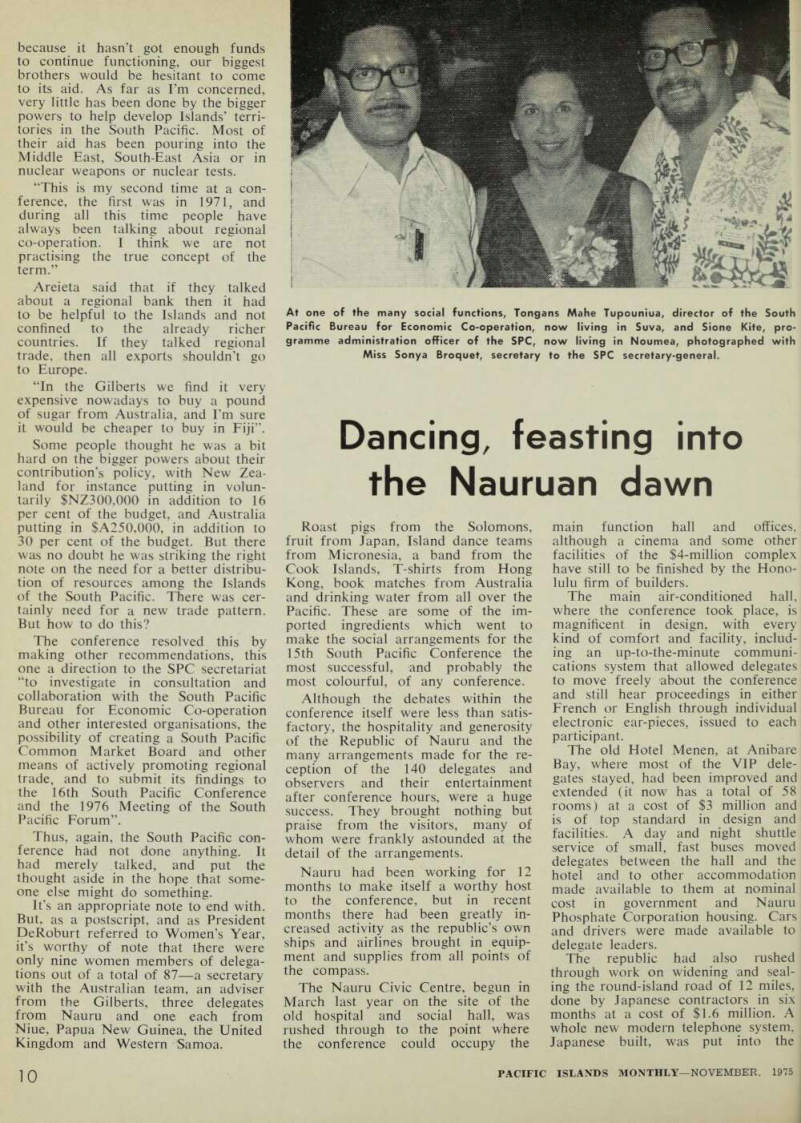
At one of the many social functions, Tongans Mahe Tupouniua, director of the South Pacific Bureau for Economic Co-operation, now living in Suva, and Sione Kite, pro gramme administration officer of the SPC, now living in Noumea, photographed with Miss Sonya Broquet, secretary to the SPC secretary-general.
island to coincide with the con ference.
Although most SPC member governments put on social functions during the conference, the Nauruan nights were easily the most memo rable and Island in atmosphere— especially a night of feasting and dancing put on by President De- Roburt in his other capacity of Head Chief of Nauru.
The Head Chief directed all the arrangements himself for the feasting, which was in the grounds of his own house near the conference hall, and he was still working when the first guests began arriving, so he had no :hance to change out of his working shorts. That party went on all night, helped by dancers from Truk and ather areas of the US Trust Territory af Micronesia who were flown in by Air Nauru to put on some of the Tiost fascinating dancing seen at any Conference.
Food had also been flown to Nauru from other parts of the Pacific, md delegates danced to the rhythm of fake’s Band. Jake (Rarotonga fire nan Jake Numanga), with brothers famatoa and Ti Short, who run a ilantation when they are not belting >ut the rhythm, were brought by air Tom Rarotonga as guests of Nauru, md played on no fewer than seven wenings during the conference, twice ;oing right through the night until • am and once until 7 am. But Jake igreed that the daddy of them all vas the Head Chief’s party, which inally finished at 10 am the next lay in a house several miles away, vith President Deßoburt as the lead ag participant.
Other Island entertainments that Dok conference delegates into the lawn hours were feasts put on by the jader of the Nauruan delegation, luraro Detudamo, who is also Nauru’s Minister for Works and Community Services, by the three idies of the Nauruan delegation, and y the managing director of the re ublic-owned Nauru Phosphate Cor oration.
The NPC was a vital link in the apply of food and also of water to ie conference visitors. NPC catering iperyisor Alex Waugh, with a staff i kitchens, bakery and butchery, orked round the clock, supplying lore than 5,100 meals in addition > extra meals put on in regular icss-rooms, and the meals supplied / the hotel.
At the big party at the NPC’s Cliff odge, Waugh’s staff started at 4.30 n and were still cleaning up at 1.30 n next day. Stewards and kitchen aff on Nauruan-owned ships off lore were also pressed into service id they sent ashore a stream of
meals and savouries to help out the staff at the hotel and hard-working Tongan waiters there under chief steward John Tonga.
Nauru has insufficient water sup plies of its own and imports water by ship to keep the island’s storage tank topped up. But as Nauru was currently in the grip of a drought, extra supplies had to be brought in to meet this in addition to the extra needs of the conference delegates for a fortnight.
The largest single quantity of water shipped in during the confer ence, and the biggest ever single load to reach Nauru, was 30,000 tons aboard a new Japanese tanker, the Silverway, directly out of a Japanese shipyard and en-route to Australia.
It was chartered especially by the NPC as a water carrier.
Most delegates were not aware of Nauru’s water problem, and with true island hospitality their hosts didn’t bother to draw it to their attention, let alone mention the cost to the re public of its importation.
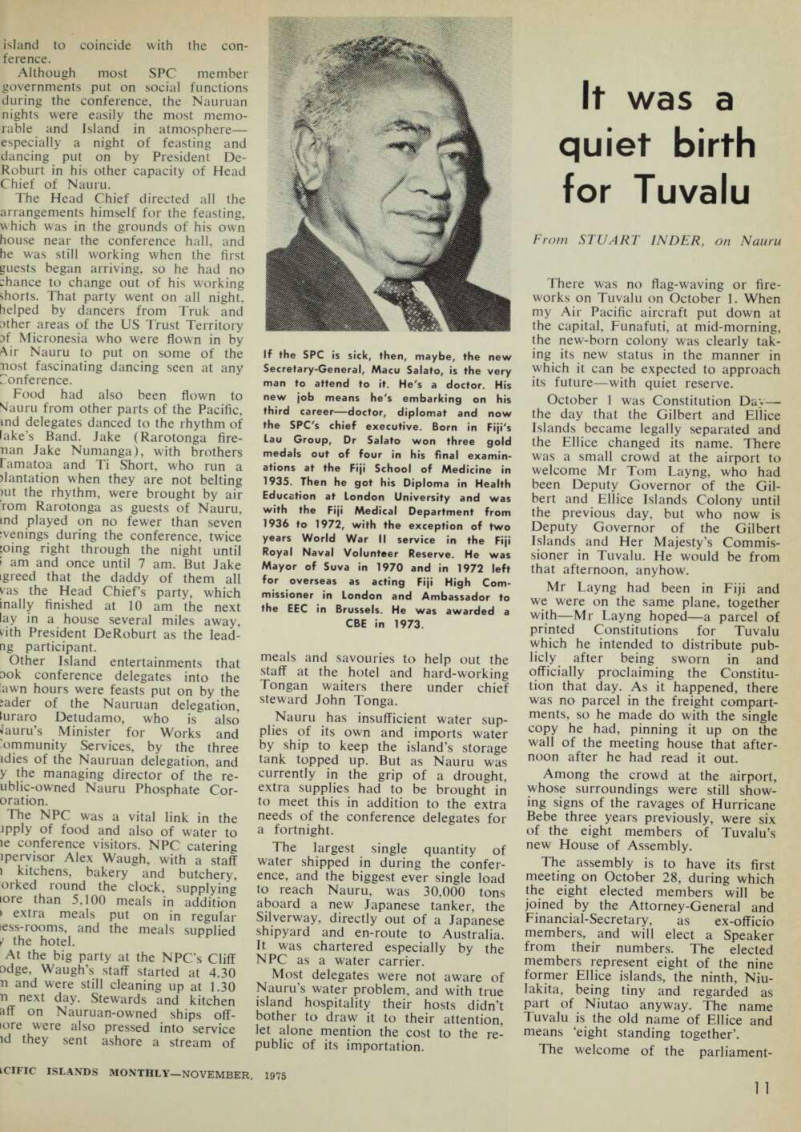
If the SRC is sick, then, maybe, the new Secretary-General, Macu Salato, is the very man to attend to it. He's a doctor. His new job means he's embarking on his third career—doctor, diplomat and now the SRC's chief executive. Born in Fiji's Lau Group, Dr Salato won three gold medals out of four in his final examin ations at the Fiji School of Medicine in 1935. Then he got his Diploma in Health Education at London University and was with the Fiji Medical Department from 1936 to 1972, with the exception of two years World War II service in the Fiji Royal Naval Volunteer Reserve. He was Mayor of Suva in 1970 and in 1972 left for overseas as acting Fiji High Com missioner in London and Ambassador to the EEC in Brussels. He was awarded a CBE in 1973.