Micronesia's future in the melting pot
p. 15 · Read in the full issue
From a Saipan correspondent
The existence of Micronesia as an independent united state is more in doubt than ever. The Marshall Islands district legislature’s threat to break with the Congress of Micro nesia over revenue sharing (PIM, May, p 8) has been backed up by the traditional leaders, the Iroij.
After an all-day meeting at Majuro on April 26, the leaders issued a proclamation, which was later read in church pulpits, support ing moves by the legislature to establish a political status com mission and calling for separate talks with the United States.
The Nitijela (Legislature) fol lowed up its decision to pull out of the Congress and the talks with the
United States by another resolution
opposing participation in the coming
Constitutional Convention, the Con gress legislation for which was signed into law at the end of March.
Much will depend on American attitudes as to how far the Mar shalls will go in their determination to have done with Congress and the joint talks. Their threats, which now have the backing of the Nitijela and the Iroij, may melt away if the Congress agrees to talk again with the Marshalls over revenue sharing.
Meanwhile. America is sitting on the fence. Her reaction to the Mar shallese threats came in statements from the departments of State and Interior. So far, they said, no regard
will be paid to separatist threats and America intends to proceed with the next round of the status talks with the Congress Joint Committee. They are expected in the last quarter of this year. However, if the Marshal lese make good their threats and boycott the Constitutional Conven tion elections in June, the United States will take the situation more seriously.
All this is a big disappointment to Senator Lazarus Salii (Palau), the joint committee chairman, who re turned to Saipan in the middle of April well satisfied with talks he and other members had in California with Ambassador F. Haydn Williams in an effort to clear the air for the next round.
The Marianas, the first of the Island groups to dissent from the plan for a united Micronesia, were scheduled to begin the fourth round of their talks with the United States on Saipan on May 15.
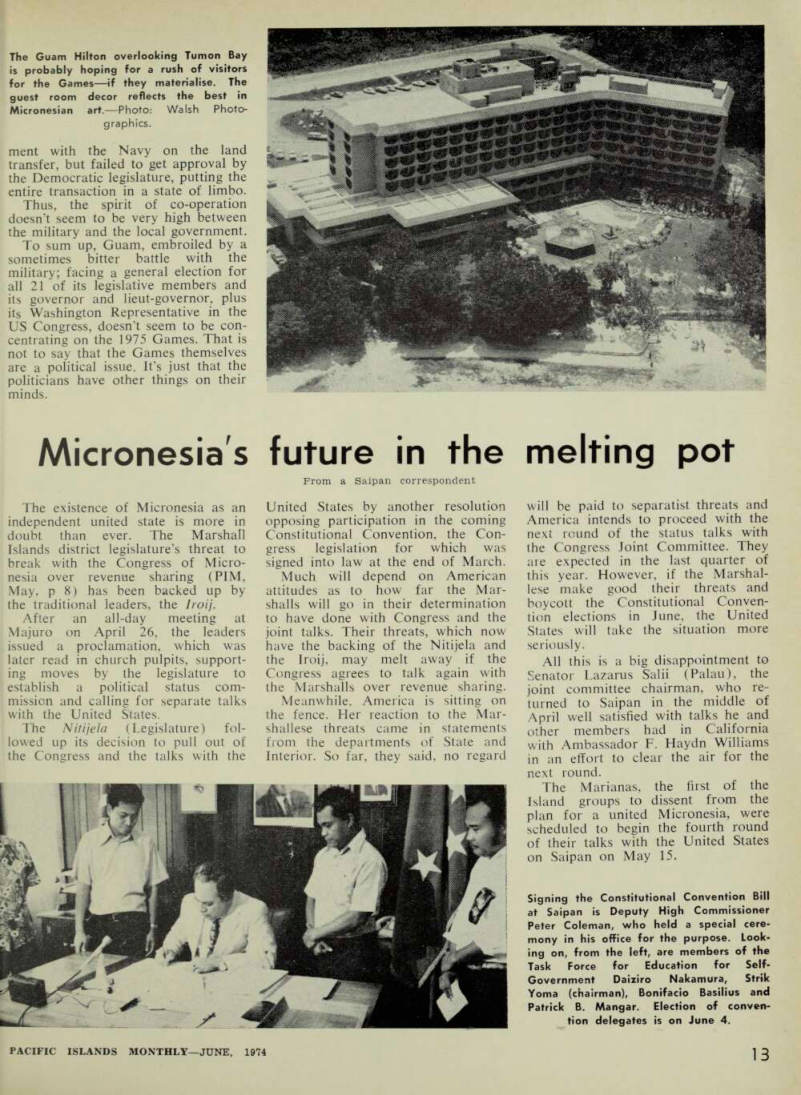
Signing the Constitutional Convention Bill at Saipan is Deputy High Commissioner Peter Coleman, who held a special cere mony in his office for the purpose. Look ing on, from the left, are members of the Task Force for Education for Self- Government Daiziro Nakamura, Strik Yoma (chairman), Bonifacio Basilius and Patrick B. Mangar. Election of conven tion delegates is on June 4.