Battlegrounds
pp. 37-40 · Read in the full issue
Of The Pacific
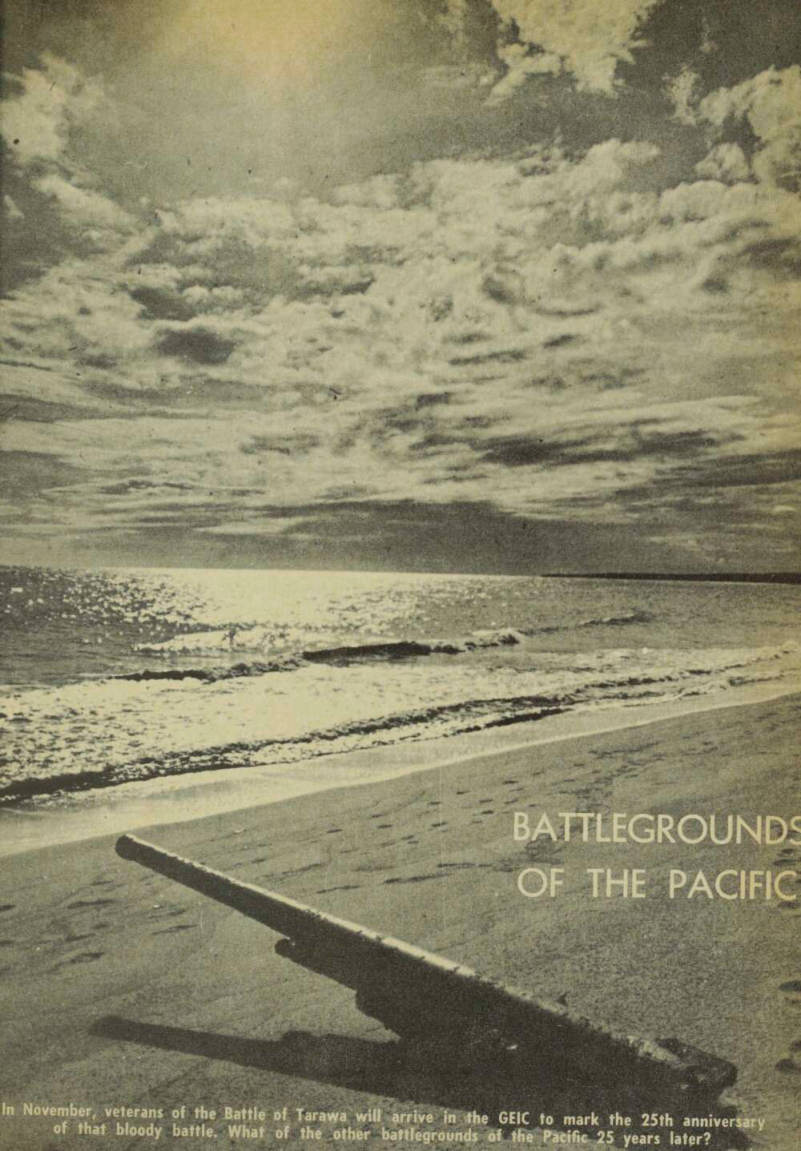
In Member, veterans of the Battle of Tarawa will arrive in the GEIC to mark the 25th anniversary of that bloody battle. What of the other battlegrounds of the Pacific 25 years later?
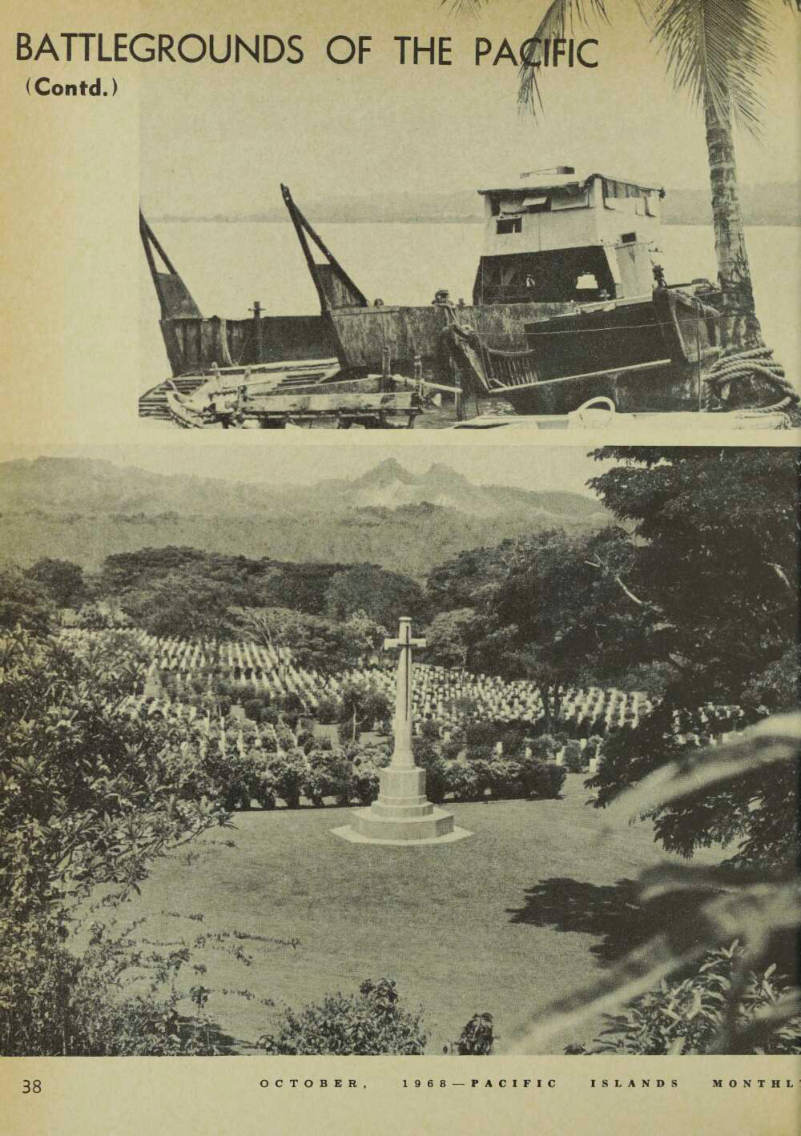
IT is a long time since Australian- American troops were seen in force in the South Pacific. But the relics of their battles remain. Old tanks with jungle vines creeping over them, landing barges rusting by the foreshore, and aircraft falling to pieces are found everywhere. The only well kept reminders of the bloody battles of the Pacific war are the war cemetries, like Bomana (where some 4,000 servicemen are buried), just out of Port Moresby, and Bita Paka near Rabaul.
From Bomana, P-NG, a steep road winds up to the Sogeri tableland. On the tableland is a monument which marks the start of the Kokoda Trail.
A few miles further on the road stops at Ower’s Corner. It was from here in 1942 that all equipment and pro visions had to be carried over the Trail.
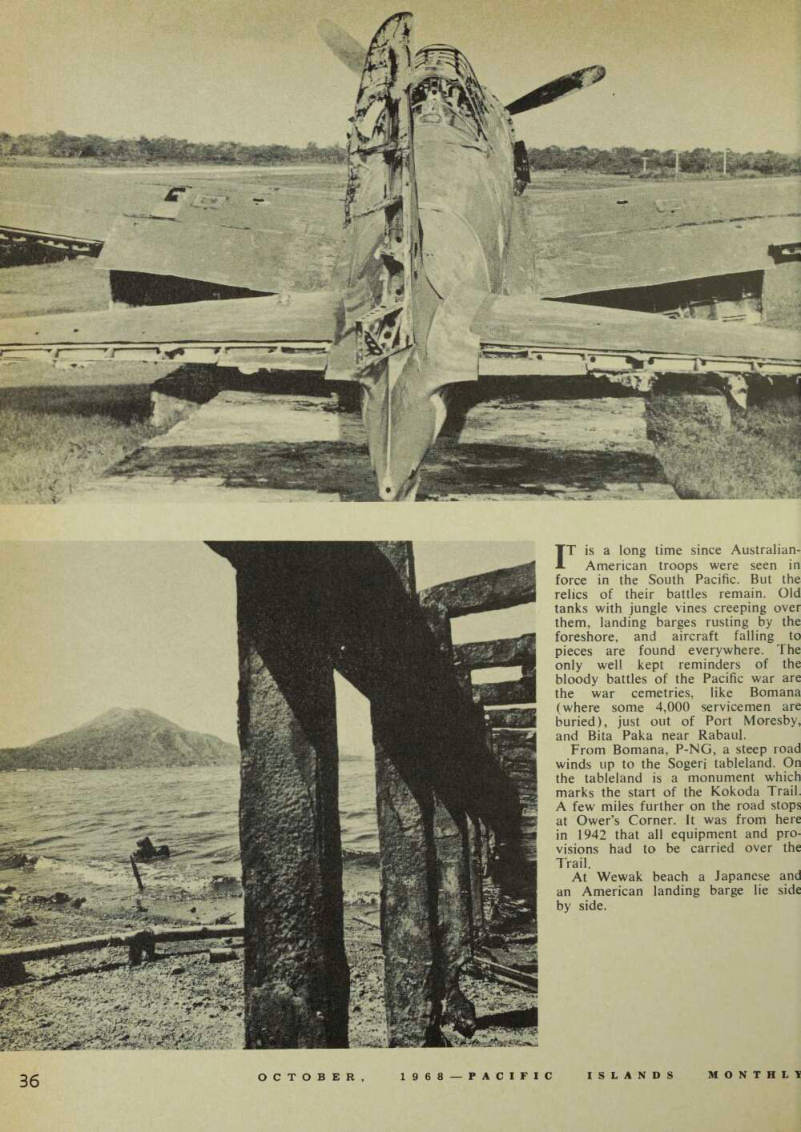
At Wewak beach a Japanese and an American landing barge lie side by side.
One of the last of the Japanese Zero fighters, can be seen on a con crete slab, at Kavieng, New Ireland.
After many years, it is slowly crumbling to pieces.
An important Japanese bastion in the South Pacific during the war was Rabaul. During their occupation, the Japanese had fortified and honey combed the hills surrounding the harbour. Today American landing barges, rusted and rotting, are still to be seen on the foreshores.
August 1942, when the US Marines landed on Guadalcanl, was a turning point in the Pacific War. On the beaches, in the surrounding hills, plantations, creeks, rivers, can be seen scars and relics of the battle.
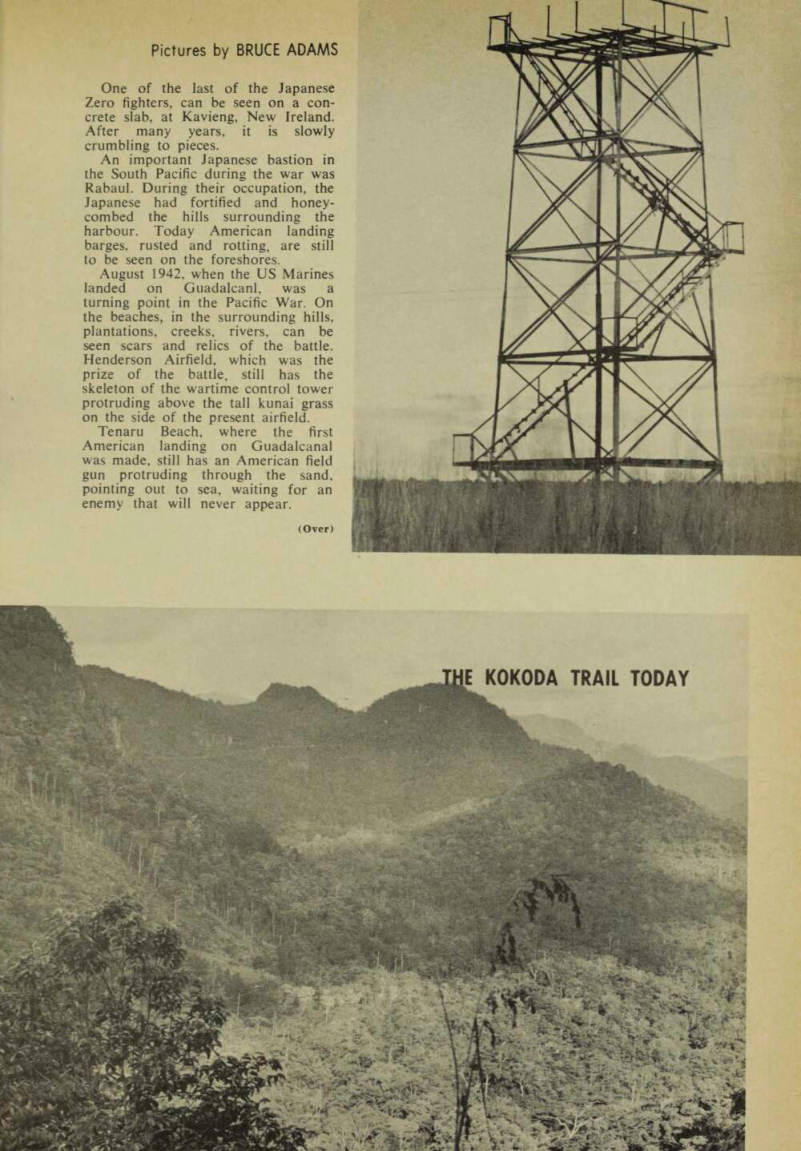
Henderson Airfield, which was the prize of the battle, still has the skeleton of the wartime control tower protruding above the tall kunai grass on the side of the present airfield.
Tenaru Beach, where the first American landing on Guadalcanal was made, still has an American field gun protruding through the sand, pointing out to sea, waiting for an enemy that will never appear. (Over)
Pictures by BRUCE ADAMS