in tramp
pp. 37-42 · Read in the full issue
A Brett Hilder Profile Went to sea
steamers
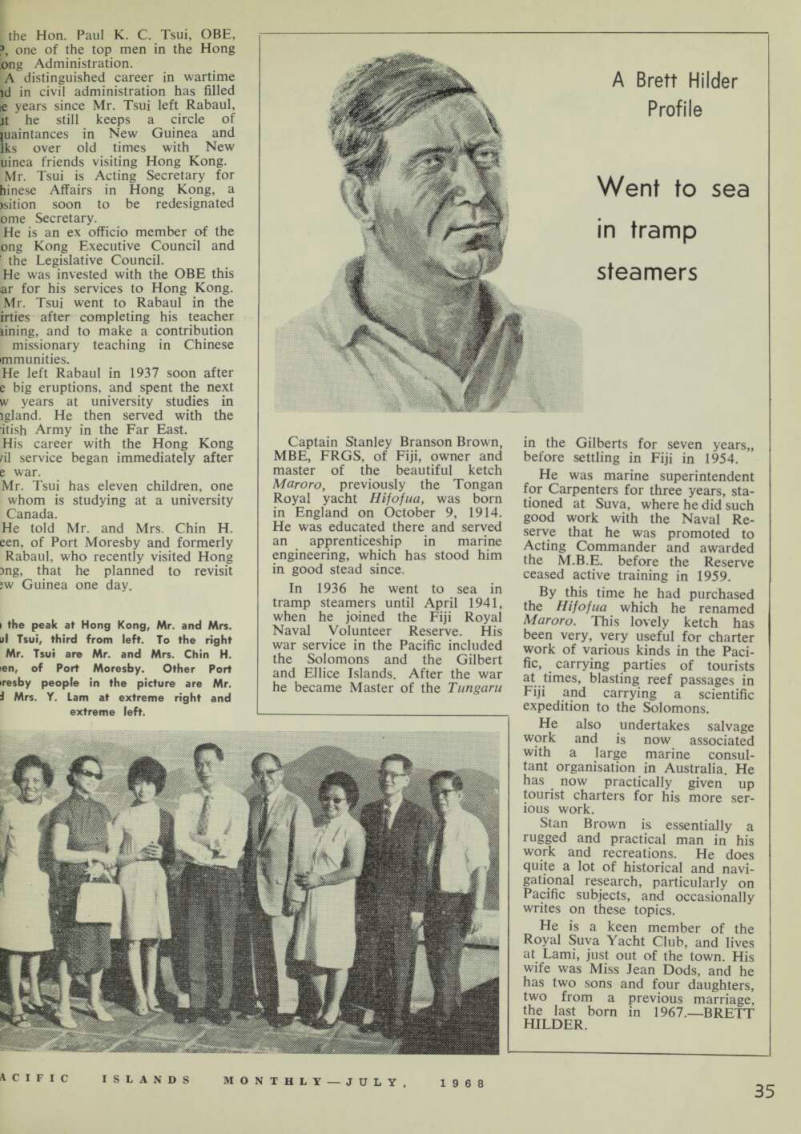
Captain Stanley Branson Brown, MBE, ERGS, of Fiji, owner and master of the beautiful ketch Maroro. Previously the Tongan lky? 1 yacht Kifofua was bom m England on October 9, 1914- He was educated there and served an apprenticeship m marine engineering, which has stood him in good stead since.
In 1936 he went to sea in tramp steamers until April 1941 when he joined the Fiji Royal Naval Volunteer Reserve. His war service in the Pacific included m° m n S , anc; . if 16 p llbert and Ellice Islands. After the war he became Master of the Tungaru
in the Gilberts for seven years,, before settling in Fiji in 1954.
He was marine superintendent for Carpenters for three years, sta tioned at Suva, where he did such good work with the Naval Re serve that he was promoted to Acting Commander and awarded the M.B.E. before the Reserve ceased active training in 1959.
By this time he had purchased the Hifofua which he renamed Maroro. This lovely ketch has been very, very useful for charter work of various kinds in the Paci fic, carrying parties of tourists at times, blasting reef passages in Fiji and carrying a scientific expedition to the Solomons.
He also undertakes salvage work and is now associated with a large marine consul tant organisation in Australia. He has now practically given up tourist charters for his more ser ious work.
Stan Brown is essentially a rugged and practical man in his work and recreations. He does quite a lot of historical and navi gational research, particularly on Pacific subjects, and occasionally writes on these topics.
He is a keen member of the Royal Suva Yacht Club, and lives at Lami, just out of the town. His wife was Miss Jean Dods, and he has two sons and four daughters, two from a previous marriage,
the last bom in 1967,-
Brett
Hilder.
travel
A Regular Rim Department
Reporting News Of South
Seas Tourism And Travel
From The Inside
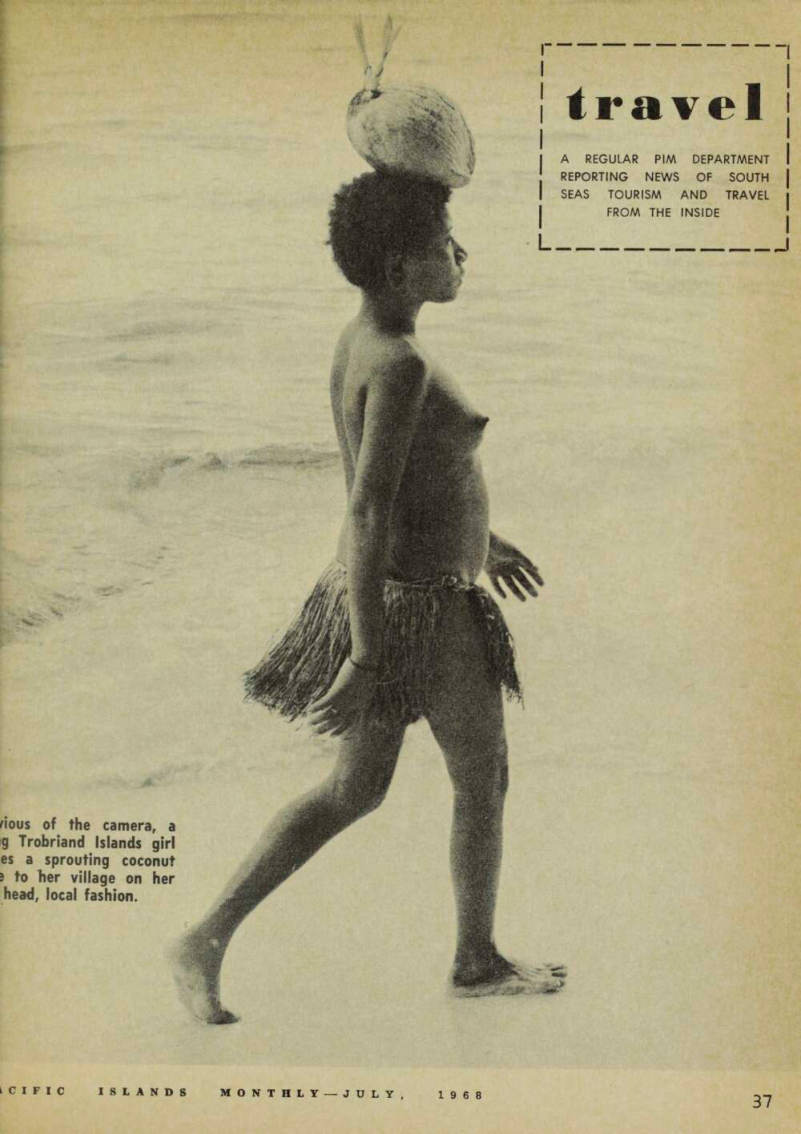
[?]ious of the camera, a [?]g Trobriand Islands girl [?]es a sprouting coconut [?]5 to her village on her head, local fashion.
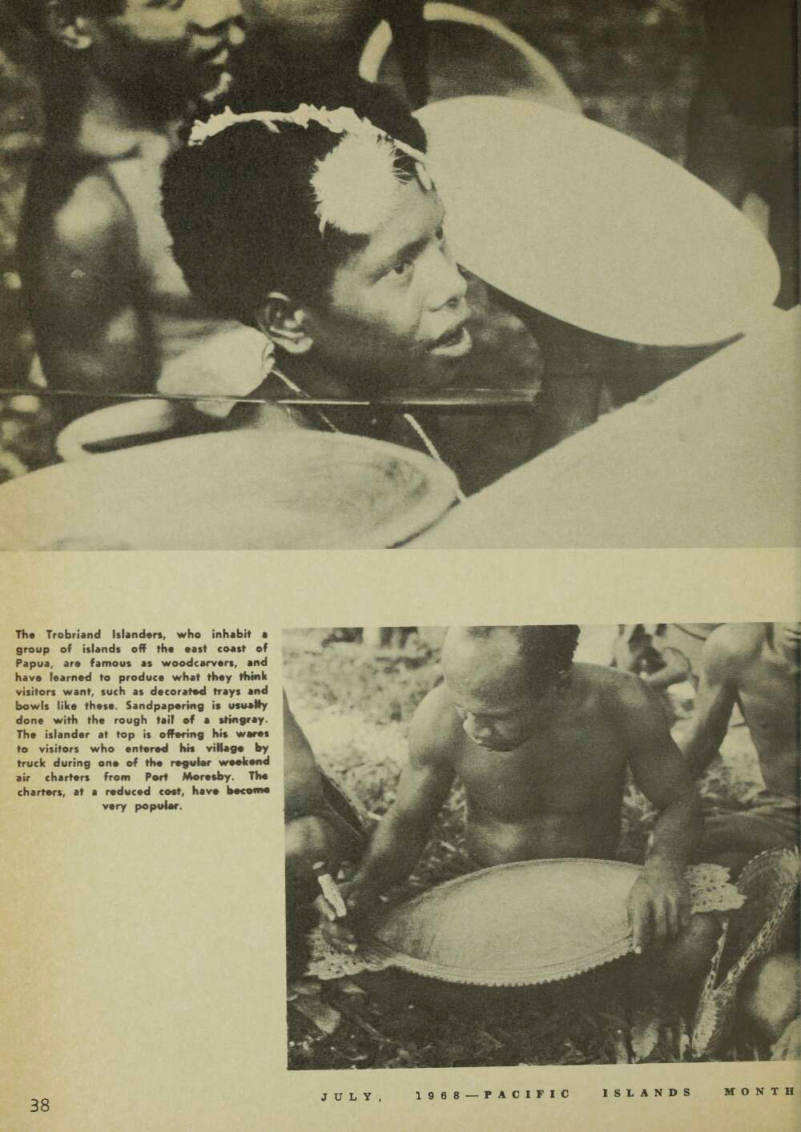
The Trobriand Islanders, who inhabit group of islands off the east coast of Papua, are famous as woodcarvers, and have learned to produce what they think visitors want, such as decorated trays and bowls like these. Sandpapering is usually done with the rough tail of a stingray.
The islander at top is offering his wares to visitors who entered his village by truck during one of the regular weekend air charters from Port Moresby. The charters, at a reduced cost, have become very popular.
[?]isitors to Kiriwina on the regular weekend charter clamber [?]board the trucks at the start of their visit, which includes a [?]anoe trip and detailed inspections of Trobriands villages, where the yam storage houses (below) can be clothed and [?]ecorated more spectacularly than the islanders themselves (right).
Nothing is know the history of the ancient stones [?] Kiriwina, but wo is being carried o on them, Surroundin undergrowth w[?] especially cleared f[?] this photograph be taken. At left an interior photo graph of part an extensive ca[?] system on the isfan[?] in which skeleto[?] have been found