travel
pp. 35-38 · Read in the full issue
The quiet glory of Old Levuka
A Regular Piaa Department
Reporting News Of South
Seas Tourism And Travel
From The Inside
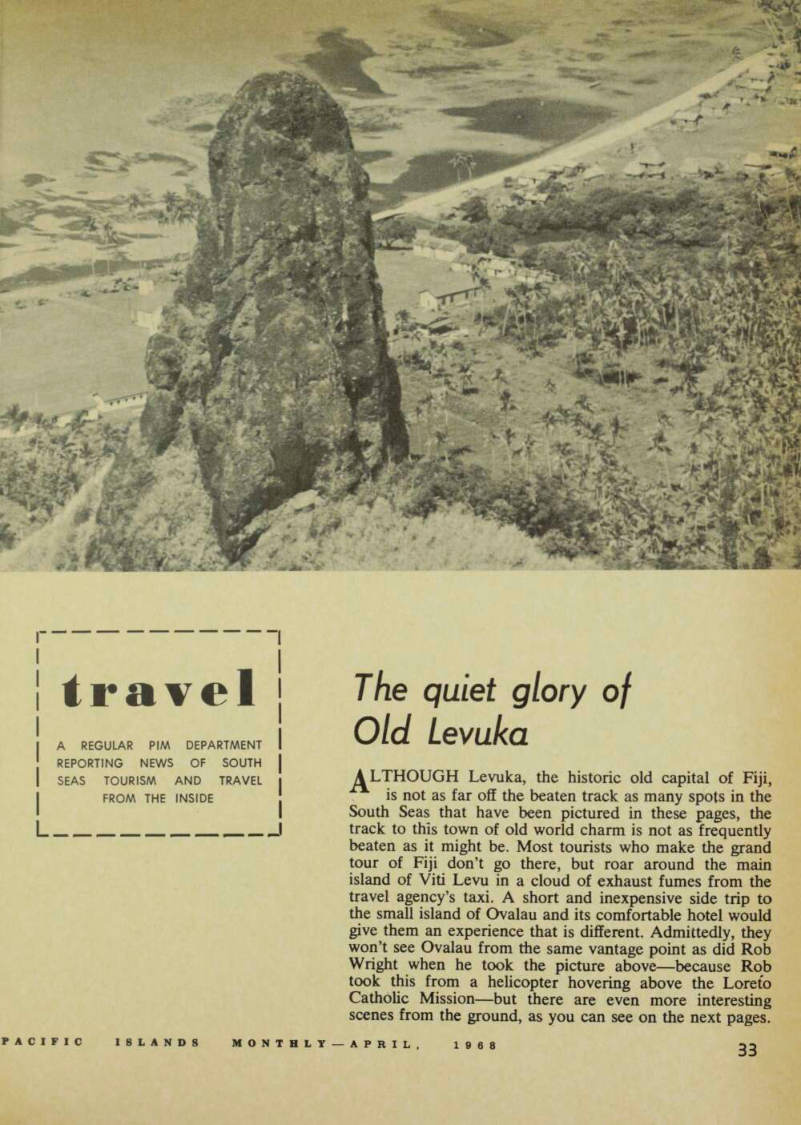
Levuka, the historic old capital of Fiji, is not as far off the beaten track as many spots in the South Seas that have been pictured in these pages, the track to this town of old world charm is not as frequently beaten as it might be. Most tourists who make the grand tour of Fiji don’t go there, but roar around the main island of Viti Levu in a cloud of exhaust fumes from the travel agency’s taxi. A short and inexpensive side trip to the small island of Ovalau and its comfortable hotel would give them an experience that is different. Admittedly, they won’t see Ovalau from the same vantage point as did Rob Wright when he took the picture above—because Rob took this from a helicopter hovering above the Loreto Catholic Mission—but there are even more interesting scenes from the ground, as you can see on the next pages.
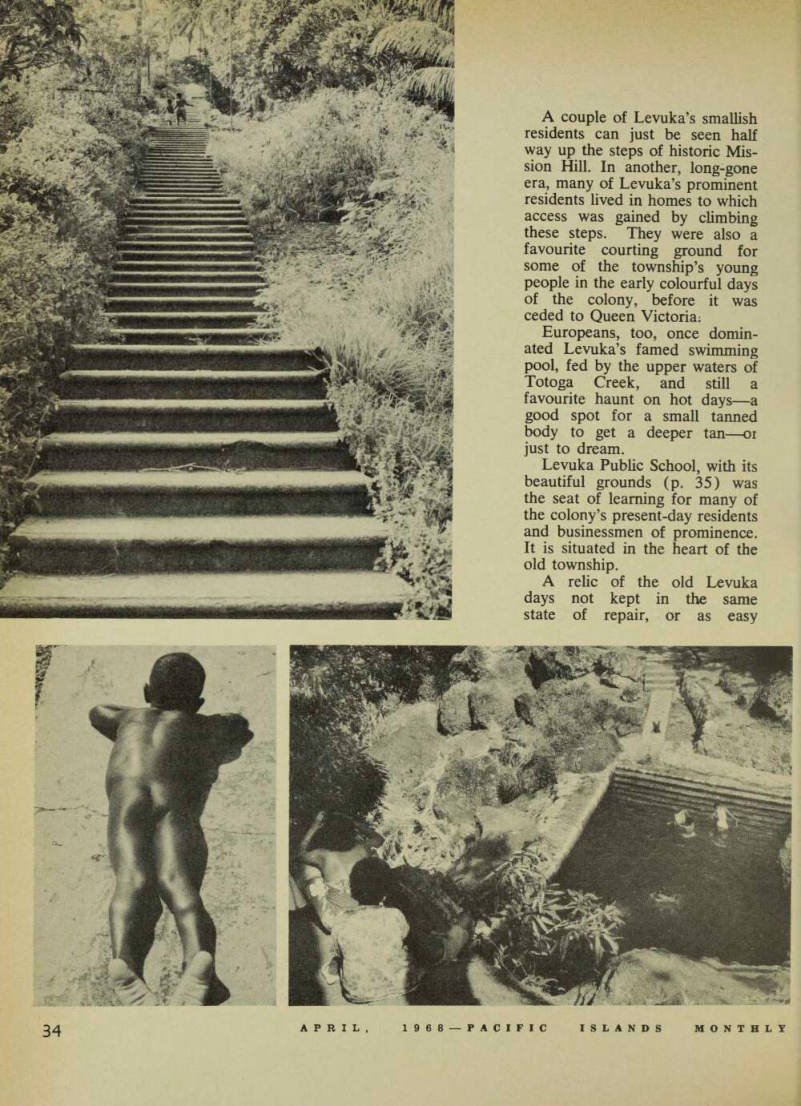
A couple of Levuka’s smallish residents can just be seen half way up the steps of historic Mis sion Hill. In another, long-gone era, many of Levuka’s prominent residents lived in homes to which access was gained by climbing these steps. They were also a favourite courting ground for some of the township’s young people in the early colourful days of the colony, before it was ceded to Queen Victoria; Europeans, too, once domin ated Levuka’s famed swimming pool, fed by the upper waters of Totoga Creek, and still a favourite haunt on hot days—a good spot for a small tanned body to get a deeper tan—or just to dream.
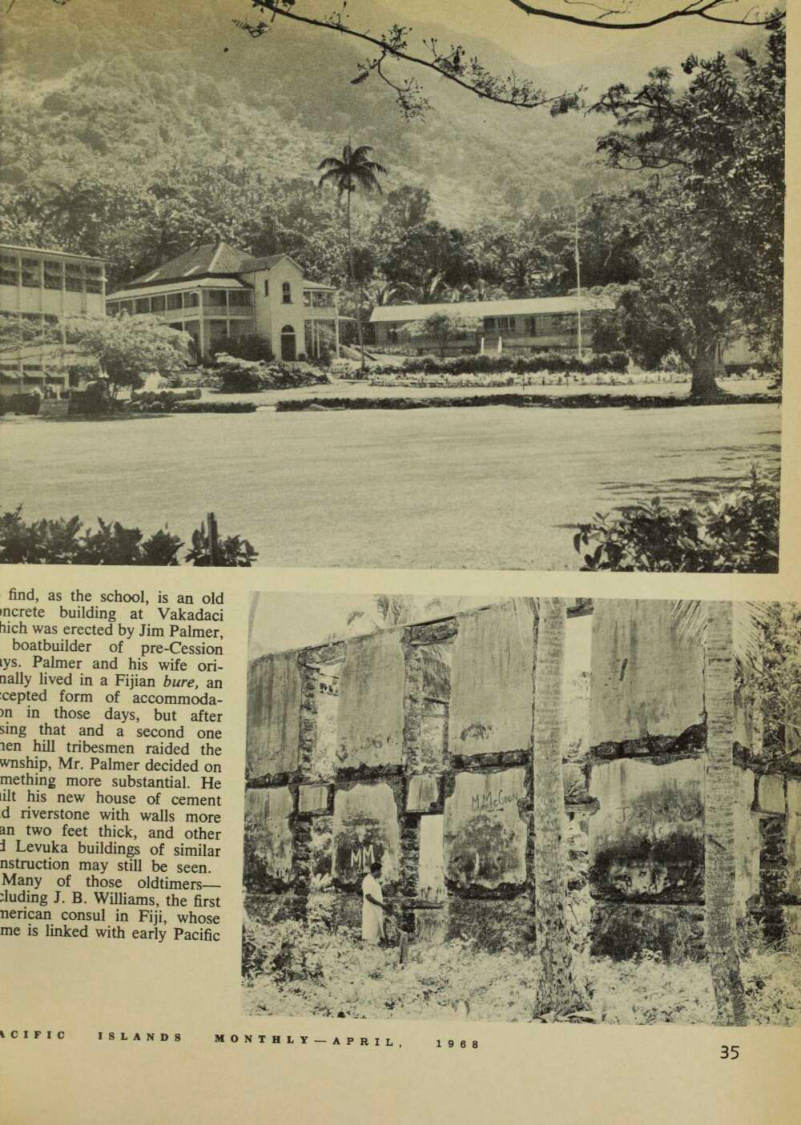
Levuka Public School, with its beautiful grounds (p. 35) was the seat of learning for many of the colony’s present-day residents and businessmen of prominence.
It is situated in the heart of the old township.
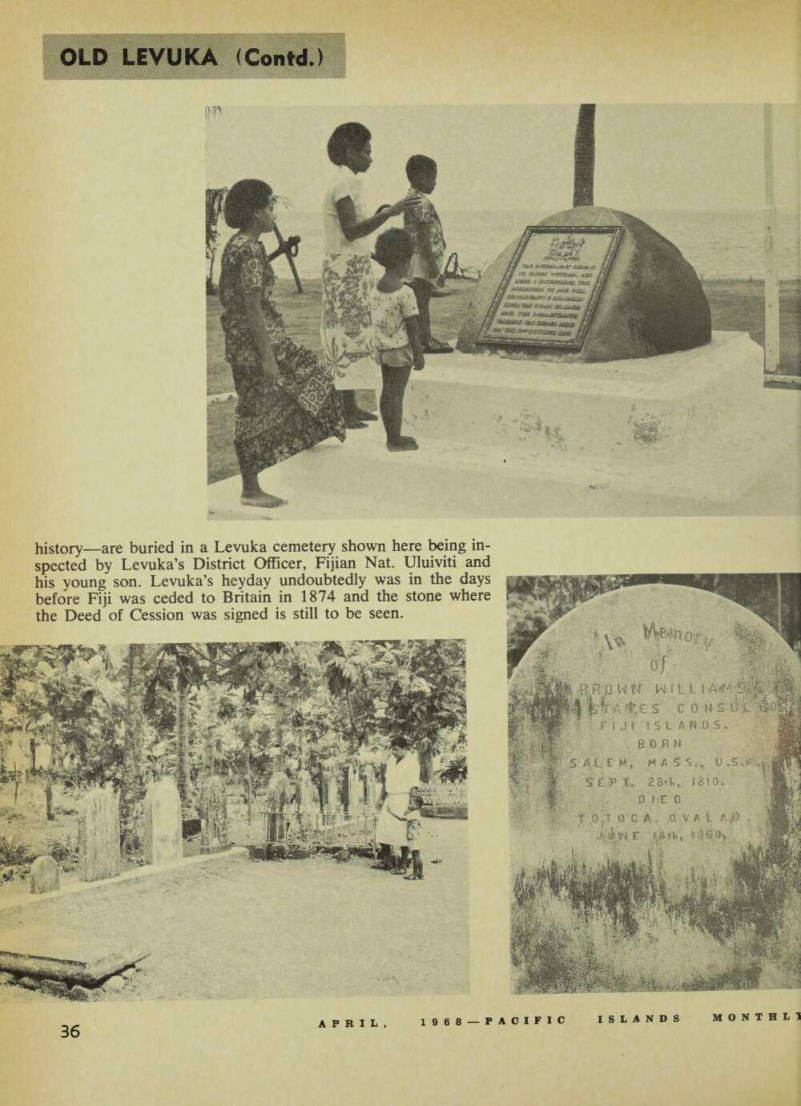
A relic of the old Levuka days not kept in the same state of repair, or as easy
find, as the school, is an old
►ncrete building at Vakadaci
tiich was erected by Jim Palmer, boatbuilder of pre-Cession lys. Palmer and his wife ori aally lived in a Fijian bure, an cepted form of accommoda )n in those days, but after sing that and a second one len hill tribesmen raided the wnship, Mr. Palmer decided on mething more substantial. He lilt his new house of cement d riverstone with walls more an two feet thick, and other 1 Levuka buildings of similar nstruction may still be seen.
Many of those oldtimers— finding J. B. Williams, the first nerican consul in Fiji, whose me is linked with early Pacific
history—are buried in a Levuka cemetery shown here being in spected by Levuka’s District Officer, Fijian Nat. Uluiviti and his young son. Levuka’s heyday undoubtedly was in the days before Fiji was ceded to Britain in 1874 and the stone where the Deed of Cession was signed is still to be seen.