travel
pp. 47-49 · Read in the full issue
Fiji's Lau group: where things are different
By Kathleen Hancock
A trip on a trading vessel has always been the best way to see island life—and as far as Fiji’s Lau group is concerned it’s not just the best way—it’s the only one.
RAVELLERS can board the Lau Provincial Council’s spanking v cargo ship, the 220-ton Uluila >a, at Suva, and set off for a bliss week or two pottering round these ely islands in air-conditioned nfort.
Dr, alternatively, independent types an exploring mind can organise party and charter Captain Stan >wn’s ketch, Maroro, at a sur singly reasonable cost per head, 1 plan their own itinerary with a pper whose knowledge of Pacific ters and Pacific history is almost endary.
Polynesia and Melanesia merge in Lau group, which is a scattera -9 of small islands lying midway ween Fiji and Tonga.
First raids, then settlement by ngans, led to mingling of blood ich has resulted in a people who i be counted among the hand nest in the Pacific.
Trading headquarters
rhe seafaring Tongans made Lau ir base for operations in Fiji about middle of last century, and lafu, cousin of Tonga’s King orge I, became the virtual ruler of northern islands of the group.
Under his protection, the German
travel
More News And Features On
South Seas Tourism And
Travel From The Inside
Tennings brothers made their trading headquarters at Lomaloma on Vanua Balavu, and business was brisk enough to outstrip that of the pros perous merchants of Levuka.
In those days, the village of Lomaloma was a port of entry into Fiji, and one of the busiest settle-
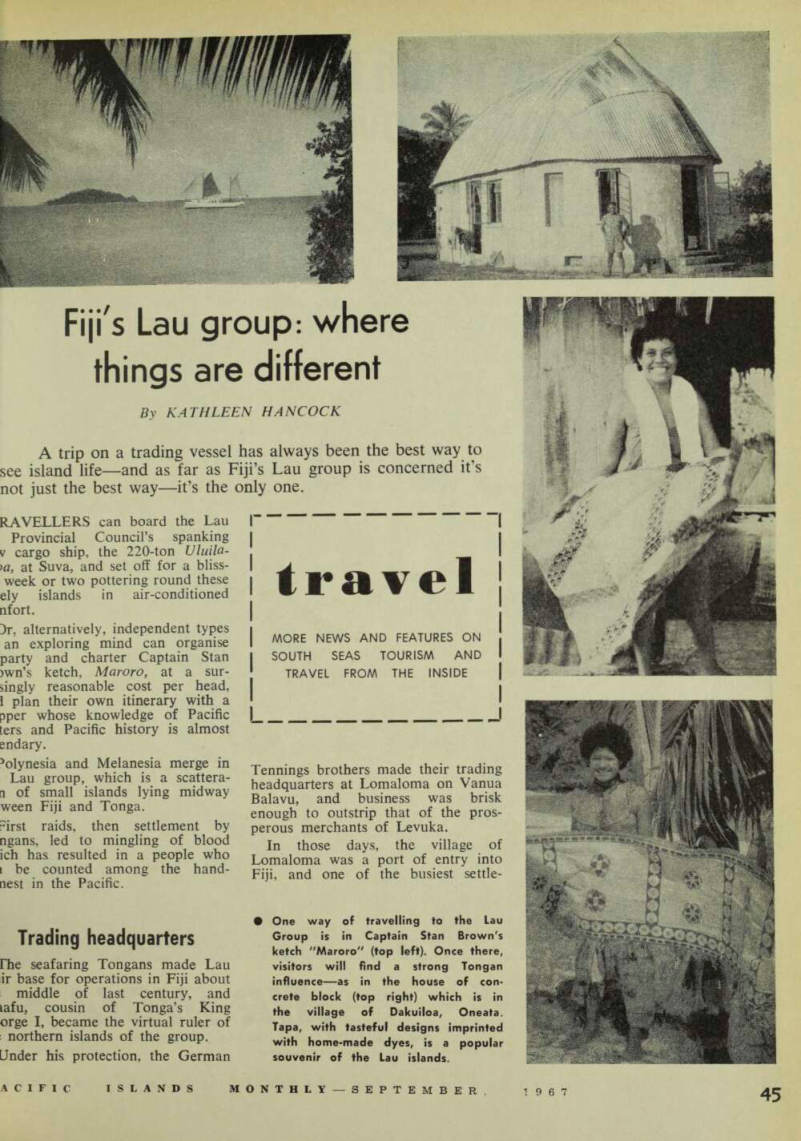
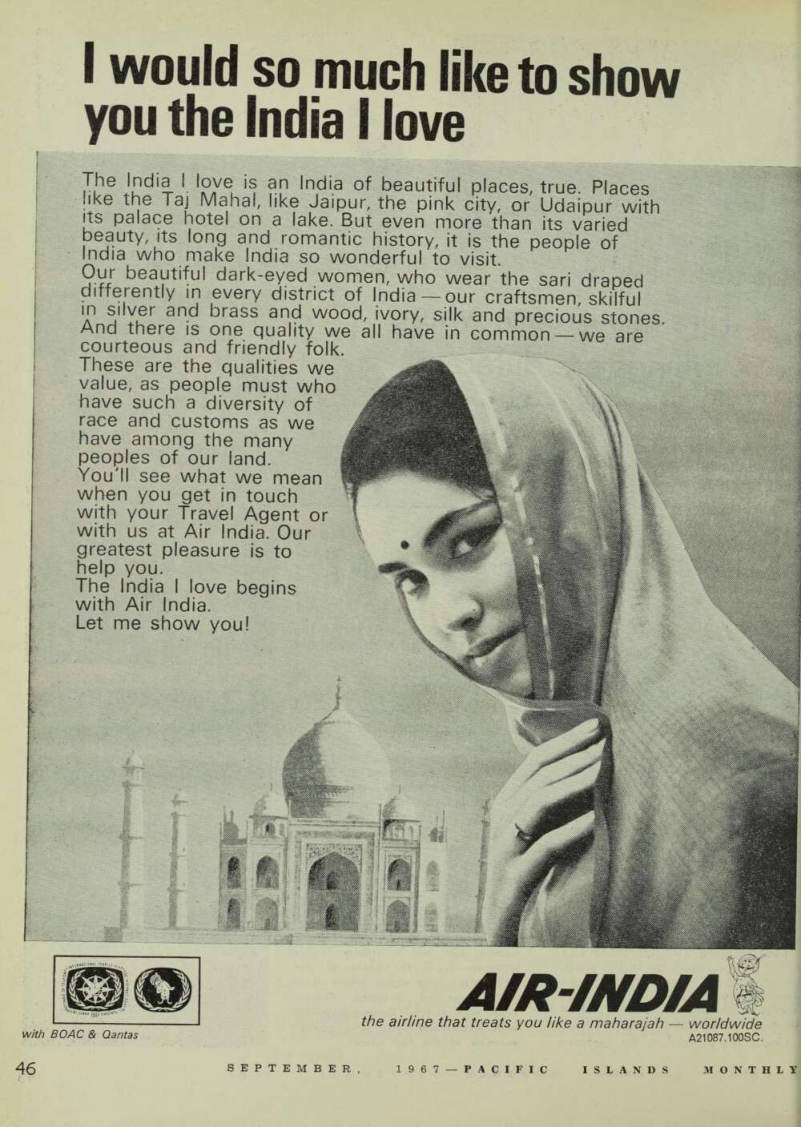
• One way of travelling to the Lau Group is in Captain Stan Brown's ketch "Maroro" (top left). Once there, visitors will find a strong Tongan influence—as in the house of con crete block (top right) which is in the village of Dakuiloa, Oneata.
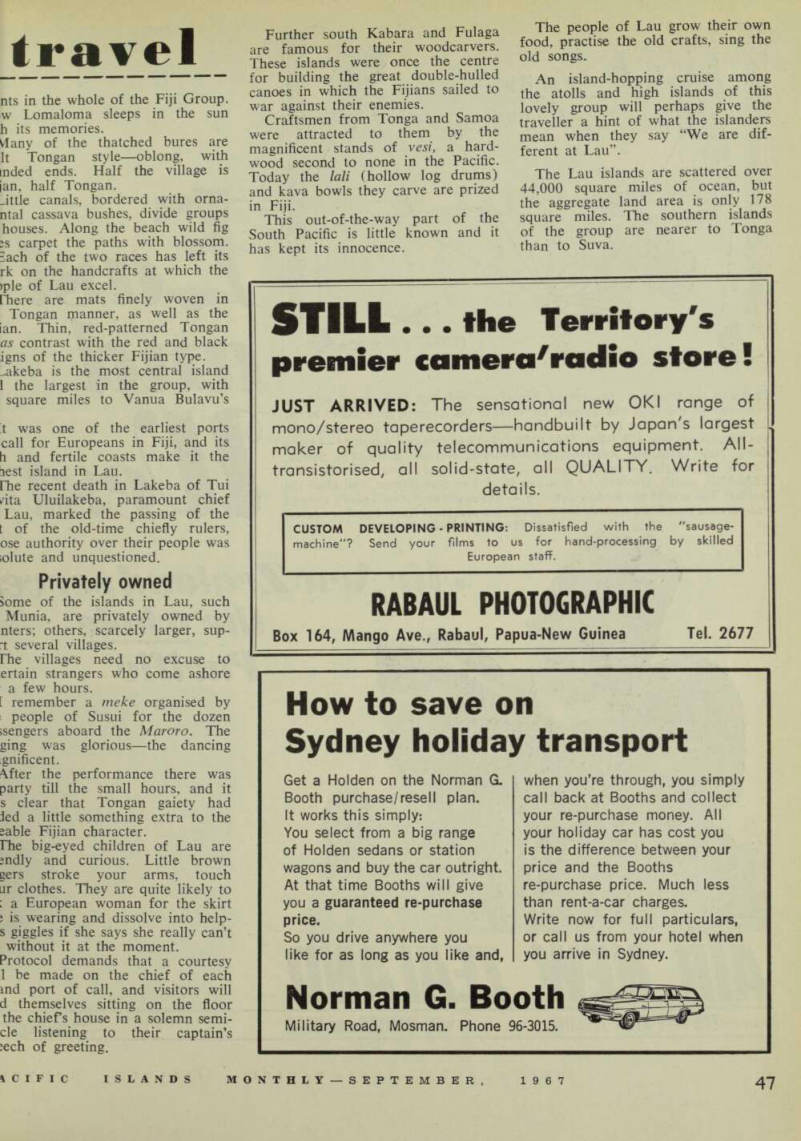
Tapa, with tasteful designs imprinted with home-made dyes, is a popular souvenir of the Lau islands.
nts in the whole of the Fiji Group, w Lomaloma sleeps in the sun h its memories.
Vlany of the thatched bures are It Tongan style—oblong, with mded ends. Half the village is ian, half Tongan.
Jttle canals, bordered with orna ntal cassava bushes, divide groups houses. Along the beach wild fig is carpet the paths with blossom. lach of the two races has left its rk on the handcrafts at which the >ple of Lau excel.
Fhere are mats finely woven in Tongan manner, as well as the ian. Thin, red-patterned Tongan as contrast with the red and black igns of the thicker Fijian type, is the most central island I the largest in the group, with square miles to Vanua Bulavu’s it was one of the earliest ports call for Europeans in Fiji, and its h and fertile coasts make it the iest island in Lau. fhe recent death in Lakeba of Tui /ita Uluilakeba, paramount chief Lau, marked the passing of the t of the old-time chiefly rulers, ose authority over their people was ;olute and unquestioned.
Privately owned
some of the islands in Lau, such Munia, are privately owned by nters; others, scarcely larger, sup *t several villages.
Fhe villages need no excuse to ertain strangers who come ashore a few hours. [ remember a meke organised by people of Susui for the dozen isengers aboard the Maroro. The ging was glorious—the dancing gnificent.
After the performance there was party till the small hours, and it s clear that Tongan gaiety had led a little something extra to the eable Fijian character.
Fhe big-eyed children of Lau are mdly and curious. Little brown gers stroke your arms, touch ar clothes. They are quite likely to : a European woman for the skirt 5 is wearing and dissolve into help s giggles if she says she really can’t without it at the moment.
Protocol demands that a courtesy 1 be made on the chief of each md port of call, and visitors will d themselves sitting on the floor the chiefs house in a solemn semi cle listening to their captain’s ;ech of greeting.
These islands were once the centre for building the great double-hulled canoes in which the Fijians sailed to war against their enemies.
Craftsmen from Tonga and Samoa were attracted to them by the magnificent stands of yesi, a hardwood second to none in the Pacific.
Today the lali (hollow log drums) and kava bowls they carve are prized in Fiji.
This out-of-the-way part of the South Pacific is little known and it has kept its innocence.
ol d songs.
An island-hopping cruise among t h e a tolls an d high islands of this lovely group will perhaps give the traveller a hint of what the islanders mean when they say “We are dif ferent at Lau”.
The Lau islands are scattered over 44,000 square miles of ocean, but the aggregate land area is only 178 square miles. The southern islands of the group are nearer to Tonga than to Suva.