Contrasts
pp. 120-122 · Read in the full issue
The New Hebrides
Is A Land Of
IN the past few years, the Anglo- French Condominium of the New Hebrides has been attracting more and more tourists. It is likely to con tinue doing so as its many points of interest become better known.
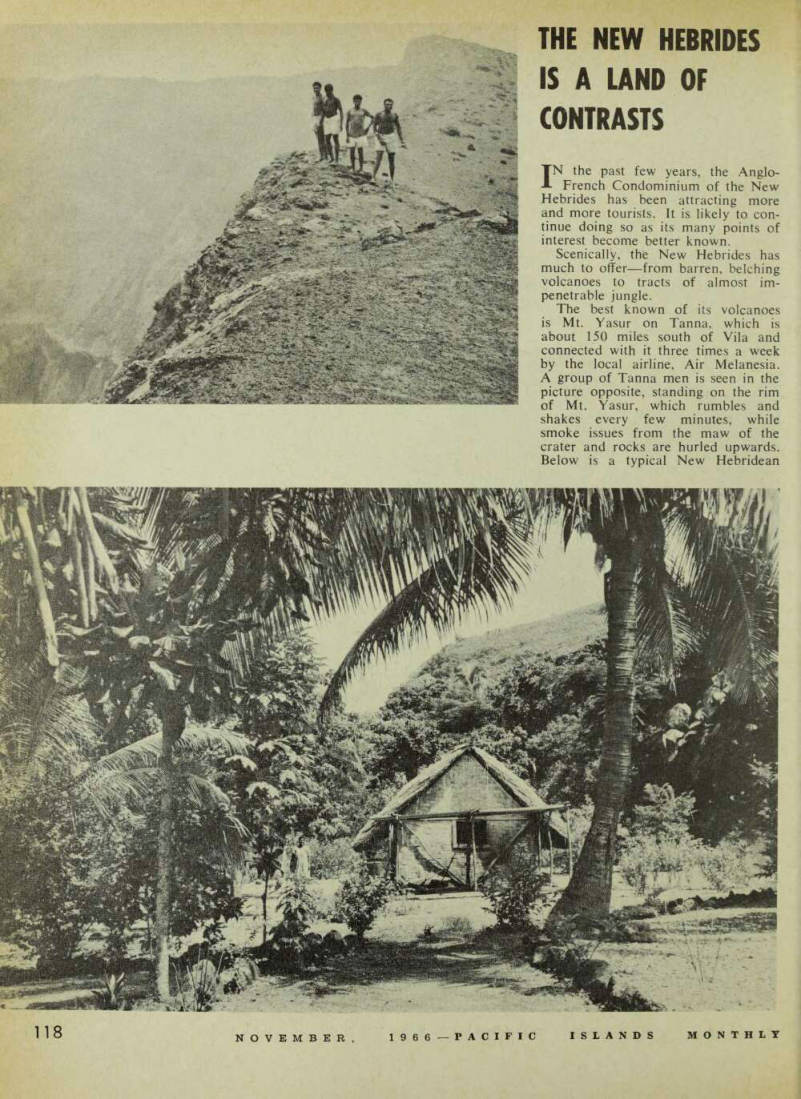
Scenically, the New Hebrides has much to offer—from barren, belching volcanoes to tracts of almost im penetrable jungle.
The best known of its volcanoes is Mt. Yasur on Tanna, which is about 150 miles south of Vila and connected with it three times a week by the local airline, Air Melanesia.
A group of Tanna men is seen in the picture opposite, standing on the rim of Mt. Yasur, which rumbles and shakes every few minutes, while smoke issues from the maw of the crater and rocks are hurled upwards.
Below is a typical New Hebridean
house in more agreeable surround ings.
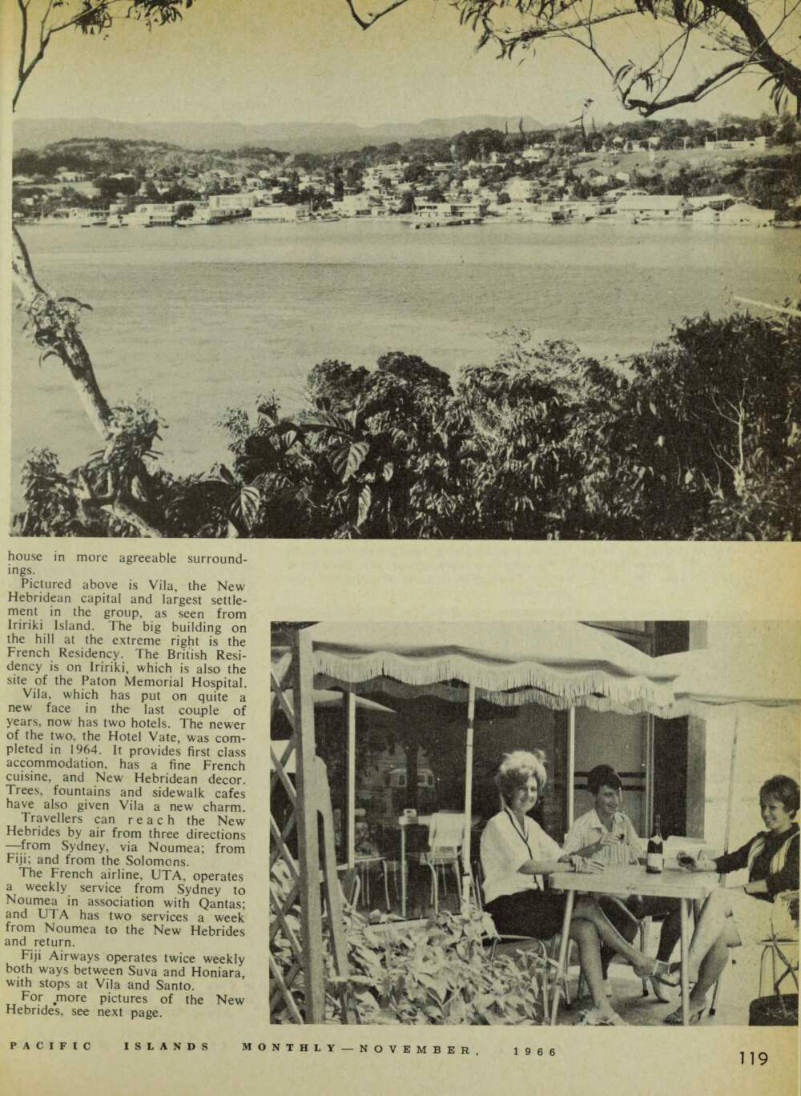
Pictured above is Vila, the New Hebridean capital and largest settle ment in the group, as seen from Iririki Island. The big building on the hill at the extreme right is the French Residency. The British Resi dency is on Iririki, which is also the site of the Paton Memorial Hospital.
Vila, which has put on quite a new face in the last couple of years, now has two hotels. The newer of the two, the Hotel Vate, was com pleted in 1964. It provides first class accommodation, has a fine French cuisine, and New Hebridean decor.
Trees, fountains and sidewalk cafes have also given Vila a new charm.
Travellers can reach the New Hebrides by air from three directions —from Sydney, via Noumea; from Fiji; and from the Solomons.
The French airline, UTA, operates a weekly service from Sydney to Noumea in association with Qantas; and UTA has two services a week from Noumea to the New Hebrides and return.
Fiji Airways operates twice weekly both ways between Suva and Honiara, with stops at Vila and Santo.
For more pictures of the New Hebrides, see next page.
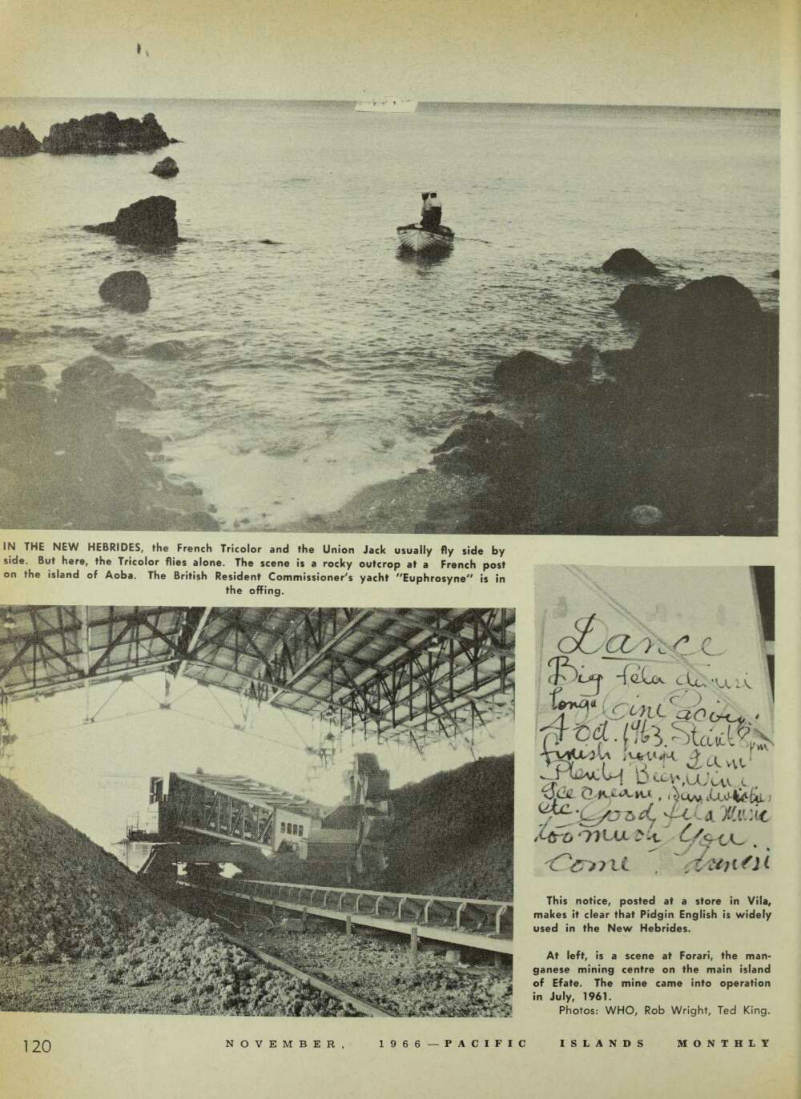
IN THE NEW HEBRIDES, the French Tricolor and the Union Jack usually fly side by side. But here, the Tricolor flies alone. The scene is a rocky outcrop at a French post on the island of Aoba. The British Resident Commissioner's yacht "Euphrosyne" is in the offing.
This notice, posted at a store in Vila, makes it clear that Pidgin English is widely used in the New Hebrides.
At left, is a scene at Forari, the man ganese mining centre on the main island of Efate. The mine came into operation in July, 1961.
Photos: WHO, Rob Wright, Ted King.