Monthly
Pacific Islands Monthly
Ovember, 1966
30 Aust. cents Three shillings 70 US cents SO French Pac. frcs.
te New/s agazine Df The South Pacific
Established 1930
e ed at G.P.0., Sydney, for '..mission by post as a newspaper.
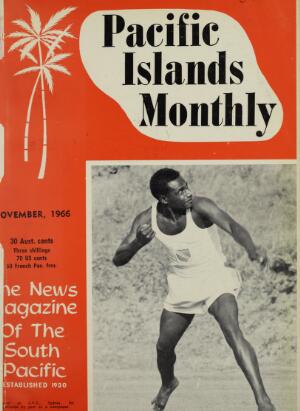
OUR COVER: With the Second South Pacific Games in Noumea only a few weeks away. Islands athletes are now putting everything they have into train ing. This fine study by Ted Marriott shows Solomon Islands athlete Andrew Wagina, of King George VI School, throw ing the javelin in preliminary trials.
Andrew comes from San Cristobal.
Advertisements & other items, pp. 2-8 (4 items)
February 14
To Australia -
DAILY
TAA Electras
and special
pure jet flights
November 24-
December 25
January 19-
February 14
Book now
To meet your heavy travel requirements before Christmas and early in the New Year, TAA is increasing services to Australia. You’ll be able to fly on our Mark II Electra 8.0. P. (‘Bird of Paradise’) service every day during these periods.
And wait for it there will be some additional flights by Whispering T-Jet. How’s that for a real travel bonus to add to your holidays?
Naturally demand will be heavy, so we suggest you book early to make sure of the flight you want.
Remember that cargo capacity will be increased too because every TAA flight carries Air Express and Air Cargo.
So contact your nearest Travel Agent or TAA.
Port Moresby 2101 ■ Lae 2311 ■ Rabaul 2567 Madang 78, 268 ■ Goroka 8 ■ Mt. Hagen 4 ■ Wewak 103
TAA
Fly the Friendly Way
TAAB39/66
Interested in
BOREHOLE PUMPING
This is one you
MUST SEE!
The
low
highly efficient
cost
□SO*) ft o
BOREHOLE
PUMP
HoNO
pumps Mono-Lift Borehole Pumps are made and
warranted by Mono Pumps (Australia) Pty.
Ltd. Australia's best known makers of
Self-priming Pumps and Pumping equip-
ment.
You’ll save all ways with a Mono-Lift Borehole Pump, because Mono-Lift uses the simplest and most efficient of all pumping mechanisms to:— ★ Minimise Price. ★ Cut maintenance. ★ Simplify installation. ★ Reduce horsepower. ★ Yield more water for every dollar of price and unit of horsepower.
How does Mono do it? . . . By adapting the wellknown principle of Rotor/Stator operation to borehole usage.
The result? ... A simple unit which requires only the wear-resistant rotor and stator element to be immersed at the bottom of the bore. All other drive mechanism locates at ground level, and Mono-Lift achieves full efficiency from minimum horsepower, without the need for pistons, buckets or other wear-creating moving parts.
Stainless steel drive shaft. All sizes from 100 to 10,900 g.p.h.; up to 400 ft. total head. Supplied complete with electric motor and V-drive; available also for petrol, diesel or tractor drive.
MONO PUMPS (AUSTRALIA) PTY. LTD.
Head Office: Lower Dandenong Road, Mordialloc, Victoria. 90 5211 Please send full particulars of your MONO-lift Bore Hole Pumps.
MAIL COUPON
Agents enquiries invited.
Name I Address.
I I P.l, Tick here □ if you are a trader interested in securing the Monolift franchise.
u *7 m* liquid m
Starch
fAf
*UIT
Mm
This is
the easiest way
to keep
everything you wash
looking fresh
and new
Why is Zippy Liquid Starch so easy? It is ready dissolved. No lumps no mess! Just add three cups of water to one cup of Zippy. Then dip your shirts, shorts, blouses, dresses, curtains and household linen. You’ll love the way your iron skims over. And what a crisp, fresh result! Zippy adds new life to cottons and synthetics makes them newer looking. You know it even helps keep clothes clean! Try some Zippy liquid starch soon.
For trade enquiries: Reckitt & Coiman Pty. Limited Wharf Road, West Ryde, N.S.W., Australia.
Cables: Reckitts, Sydney.
ZIPPY LIQUID STARCH
A Reckitt & Coiman Product
HPSI9A
BURNS PHILP (SOUTH SEA) CO. LTD.
GENERAL MERCHANTS AND SHIPOWNERS
SHIPPING. , CUSTOMS AND FORWARDING AGENTS
BRANCHES
FiJ
i:
SUVA.
LEVUKA.
LAUTOKA.
LABASA.
SAVU SAVU.
BA.
SIGATOKA.
TAVUA.
ROTUMA ISLAND.
TAVEUNI.
Samoa:
APIA.
PAGO PAGO
Tonga:
NUKUALOFA.
HAAPAI.
VAVAU.
NORFOLK ISLAND
NIUE ISLAND.
AGENTS FOR:
QUEENSLAND INSURANCE CO. LTD.
BURNS PHILP TRUST CO. LTD.
SHELL COMPANY (P. 1.) LTD.
OVERSEAS AGENTS
BURNS, PHILP Cr CO. LTD., Sydney.
BURNS, PHILP Cr CO. LTD., London.
BURNS PHILP CO. OF SAN FRANCISCO
SHIPPING AGENCIES
• The New Zealand Shipping Co. Ltd. • Shaw Savill & Albion Co. Ltd. • Port Line Ltd. • Bank Line Ltd. • General Steamship Corporation Ltd. • Blue Star Line • Cunard Line • Compagnle des Messageries Maritimes • British India Steam Navigation Co. Ltd. • Royal Interocean Lines • Nederland Line Royal Dutch Mail/Royal Rotterdam Lloyd.
EXCLUSIVE DISTRIBUTORSHIPS INCLUDE
• AKAI TAPERECORDERS
• DUNLOP PRODUCTS
• EPIGLASS PRODUCTS
• FERGUSON TRACTORS
• HELENA RUBENSTEIN
• HITACHI ELECTRONICS
• HOLDEN VEHICLES
• JOHNSON'S WAXES
• ROLEX WATCHES
• REVLON COSMETICS
• PENTAX CAMERAS
• SUNBEAM APPLIANCES
INTERNATIONAL AIR TRANSPORT ASSOCIATION REPRESENTATIVES for
QANTAS EMPIRE AIRWAYS LTD. AIR NEW ZEALAND UNION DE TRANSPORTS AERIENS ALITALIA PAN AMERICAN AIRWAYS
ASSOCIATED COMPANIES
BURNS PHILP (NEW HEBRIDES) LTD.
AUTOMOTIVE SUPPLIES CO. LTD.
CORRIE & CO. LTD. • NARAIN FURNITURE CO.
LTD.
SPECIALISED SERVICES
EXPERT ADVICE ON WORLD AND LOCAL TOURS
TRAVEL SHIPPING FORWARDING CUSTOMS
FORMALITIES INSURANCE.
REGISTERED OFFICE: SUVA. FIJI
Code Address: "BURNSOUTH' mi
Arnott’s Nice Biscuits Crisp and sugar-sprinkled Arnott’s Lemon Crisp Biscuits With tangy lemon centres
pgeslic
-4W?M^,oran\
Arnott’s Orange Slice Biscuits Tangy orange cream in biscuit sandwich ■
n^WHWTMW 1
SHREDDED*!
Arnott’s Shredded Wheatmeal Biscuits Golden-grain goodness for morning tea.
H 699
feme* plscuW-
MtTT
found xalf Arnott’s MILK ARROWROOT Biscuits All-day energy for children a favourite with all the family. m m Arnott’s SAO Biscuits Ideal for snacks, suppers or between meals.
Ki
co'°Jh
Arnott’s SCOTCH FINGER Biscuits Chunky and butter-rich, with the true shortbread flavour. f Arnott’s CHEESE JATZ Biscuits Crisp as could be with a fine cheese flavour perfect for entertaining.
There is no Substitute for Quality
YOU
NAME IT
You name it and Smirnoff Vodka does wild things with it.
Like? Orange juice (Smirnoff makes it a swinger) tomato juice (watch it kick up its heels). Cocktails proper? With Vermouth it makes a martini that’s more of a martini than a martini is. It’s called a Vodkatini.
SMIRNOFF
DOES IT
6728
1
ACIFIC ISLANDS MONTHLY NOVEMBER, 1966
3
ACIFIC ISLANDS MONTHLY NOVEMBER. 1966
5
ACIFIC ISLANDS M O N T H L Y N O V E M B E R , 1966
Pacific Islands
Monthly
Owned And Published By
Pacific Publications Pty. Ltd.,
29 ALBERTA ST. (G.P.O. BOX 3408), SYDNEY.
Telephones: 61-9197, 61-7101, 61-4369
Telegraphic Address: PACPUB, Sydney.
Chief Executives
Managing Director: R. W. Robson.
General Manager: Selwyn Hughes
Book Publishing Division
Editor; Judy Tudor.
Pacific Islands Monthly
Editor: Stuart (nder.
Assistant Editor: Robert Langdon
Branch Offices
Melbourne: Newspaper House, 247 Collins St Tel.: 63-7053.
Fiji: Pacific Publications (Fiji) Ltd., Fiji Times Building, 20 Gordon Street, SUVA, Tel.: 25601.
Fiji Times Office, Vidilo Street, LAUTOKA.
Tel.: 60-422.
Papua-New Guinea; Pacific Publications (N.G.) Pty. Ltd. Representatives: Mrs. Joan Carter, P.O. Box 16, PT. MORESBY {Tel.: 2504); Miss Pat Robertson, P.O. Box 227, LAE; Mr. Steve Simpson, P.O. Box 154, RABAUL (Tel.: 2547).
Representatives
New Zealand: J. D. Whitcombe, C.P.O. Box 2229, Queen Street, Auckland. Tel.: 76056.
Hawaii: C. C. Spencer, 203 Yap Bldg., 3465 Waialae Ave., Honolulu. Tel.: 775538.
United States: Mrs. A. L. Craib, 1631 80th Avenue, Oakland 21, California.
Tel.: LOckhaven 8-1201.
United Kingdom: S. R. Warman, Candlewick House, 116-126 Cannon Street, London, E.C.4.
Tel.: Mansion 3674/7.
H. A. Mackenzie, 4A Bloomsbury Square, London, W.C.I. Tel.: Holborn 3779.
Agents
All main trading firms and stores in the Pacific Islands.
Pacific Publications Pty. Ltd. is the Australian agent for THE FIJI TIMES.
Subscription Rates;
Australia: 30 cents Aust. or 3/- ($3.60 Aust. or 36/- for 12 months). New Zealand, all British Commonwealth South Pacific Territories, Tonga, New Hebrides and Western Samoa: 3/local currency (36/- local currency per annum).
Elsewhere in the South Pacific: 50 French Pacific francs or 70 US cents (600 French Pacific francs or $B.OO US posted per annum).
Posted to USA, $B.OO US per annum. Posted to the UK and all other countries: £Stg.2.
"Pacific Islands Monthly" is air-freighted to all subscribers and agents in the South Pacific; copies to other areas go by surface mail.
In This Issue
Ieneral
hampion Runner May Miss Games . 9 oyages Without Instruments 35 olynesian Migrations 89 istory of Surf-Board Riding 95 hipping of Bananas 109 uts in Pacific Air Fares 127 ecord Carpenter Profit 141 opra Market Flat 143 ombined Marketing Plan 143
Merican Samoa
resident Johnson's Visit 13 eaders' Views on Samoan Article 34 batches Industry 144
Ook Islands
■(-Minister Seeks Mauke Seat 75 isappearance of Native Birds 76 arbour Survey 105 Jl ection Details 10, 11, 40 jneral Rites for a Chief 41 Dffins Behind Sugar Industry 55 Flying-boats 76 leep-Breeding 91 ncient Pottery 91 ore Asian Fishermen for Levuka 101 ial Trading Voyage from NZ 105 ggest Locally-Built Ship 105 utter Aground 107 evor Withers and the Yasawas 121 iter-lsland Transport Survey 141 ore Money for Banabans 154
Iench Polynesia
nti-Bomb Mayor Elected ... 12 >rgotten Marquesas Islands 71
Gilbert And Ellice Islands Colony
Fanning Is. Cable Station Leased 17 Plan for New Ship 101 Growing Interest in Tourism 131 More Money for Banabans 154 Teams for Games 156
New Caledonia
South Pacific Games Fever 8 Convict Escapist Extraordinary . 85 Promotion for Admiral 101 Japanese Fishing Boat Wrecked 105 Mining Strike Ends 143
New Hebrides
Eight Die in Plane Crash 12 New British Resident Commissioner 15 Future of Aviation 17 "Apprehension" on Future 37 New Ship for Mission 103 Pictorial Series 117 Archaeological Research 136
Norfolk Island
Rock-Hewn Planning 73 Burials Problem 76
Papua-New Guinea
Questions for Electors on Future 8 Quest for Third South Pacific Games 8 Trouble Looms Over Kieta Copper 13 Plantation Wage Decisions 15 Serious Land Problems 19 Aerial Ropeways 19 Women's Association Anniversary 19
Local Customs Men 20 "Little Chimbu" 20 Reader's View on New Columnist 37 Morobe Goldfields 42-47 Christine Kaputin on Race Relations 60 Susan Young on Race Relations 65 New Administration Ship 105 Wharf Congestion at Lae 107 Assistant Harbour Master for Moresby 107 Two New Books 136 New Administrator 135 Anti-Malaria Progress 135
Pitcairn Island
Increasing Mechanisation 76 Magistrate Resigns 136
Solomon Islands
Athletic's Records Broken 9 History by Dr. Fox 135 High Commissioner Back 136 Meeting on New Bishop of Melanesia 136 Big Tract of Land for Lease 141
South Pacific Commission
New Secretary-General 8 Economist Appointed 136
Tonga
Japanese Fishing Boat Incident 101
United States Trust Territory
Growing Interest in Tourism 131 First Commercial Pilot 135
Wallis And Futuna
Wallis Island Flag 34 Three Kings 71
Western Samoa
Queries on Wharf 20 Historic Title Renounced 20 Support for PM on Red Aid 33 Teams for Games 156
DEPARTMENTS: Topicalities, 17; To the Point with Percy Chatterton, 25; Letters to the Editor, 34; Planters' Digest, 51; From the Islands Press, 76; Magazine Section, 85; New Books, 95; Shipping, 101; Cruising Yachts, 113; Travel, 117; People, 135; Business and Development, 141; Produce Prices, 145; Shipping, Airways Schedules, 146; Deaths of Islands People, 153.
Top SPC Post
UK Man Named For Top SPC Post
Sir Gawain We stray Bell, a 57year-old Englishman with wide military and government experience in Africa and the Middle East, has been appointed Secretary-General of the South Pacific Commission from January 1 next year.
SIR GAWAIN will take over from Mr. W. D. Forsyth, an Aus tralian, who has held the post for the past three years.
Sir Gawain’s most recent job has been as British Government adviser on constitutional affairs in the Gilbert and Ellice Islands Colony, He arrived in Tarawa on October 15.
Sir Gawain has been a member of the British Overseas Civil Service since 1931. He has seen service in the Sudan, Palestine, and Kuwait, and was Governor of Northern Nigeria from 1957 to 1962.
In 1963 he became Secretary- General of the Council for the Middle East and has since carried out a number of assignments in the Middle East including that of con stitutional adviser to the Federal Government of South Arabia, and adviser on administrative organisa tion to the Sultan of Muscat/ He served in the Middle East dur ing the war, and commanded the Third Mechanised Regiment of the Arab Legion in 1943-45. He was demobilised in 1945 with the rank of lieutenant-colonel.
Sir Gawain Bell
Noumea Fever Builds Up - As
NG Fights For Third Games
By a Staff Writer
Strong forces are at work to see to it that Papua-New Guinea does stage the Third South Pacific Games in 1969 after all.
THE decision not to hold the Games was taken by the Sep tember sitting of the House of As sembly after the Administration had presented figures showing high costs.
But the facts at that meeting were produced for reasons of political expediency and there is strong public pressure to have the decision re versed.
Main advocate for reversal is Dr.
John Gunther, president of the Papua-New Guinea South Pacific Games Association. He is vice chancellor of the P-NG University.
In Port Moresby on October 17 Dr. Gunther said that since the As sembly’s decision, the P-NG associa tion had renewed its invitation to the Games Council to hold the 1969 Games in Port Moresby.
He said this invitation was not made in defiance of the Assembly but was merely a reiteration of an in vitation made in Suva in 1963, at the conclusion of the first Games.
The New Guinea association had full authority to do this, he said, as only it was responsible for invitations.
Invitation
“The invitation has been issued on the understanding that the Admini stration will not have to find the astronomical figures put to the House of Assembly,” said Dr. Gunther.
“The association has a strong and active committee examining the whole position. It is hoped that before the next meeting of the House facts can be presented which will show that the association was justified in going ahead with its invitation.
“If, however, it is found that when the Games Council meets in Noumea in December this year that the Games will cost such a great deal of money that it is unlikely it can be raised, then P-NG must regretfully withdraw its invitation.”
Dr. Gunther said that until the facts could be placed before the As sembly in December it was hoped that members would not pre-judge the issue, as it “is sincerely thought
we can prevent the people of the South Pacific losing respect for the ability of P-NG to maintain the South Pacific Games as a competi tive meeting of great regional significance.”
Dr. Gunther’s decision to renew the invitation despite the Assembly’s view was typical of his approach to problems. He wholeheartedly be lieves that Port Moresby should stage the Games and he felt that by renew ing the invitation he would gain time from Noumea to work out a solution by December.
He is out on a limb, and it has taken courage to make this stand.
But obviously he and his association believe it is in the best interests of the territory. They are appalled at the possible loss of face should New
Guinea really have to cancel at this eleventh hour.
In his October 17 statement Dr.
Gunther presented some of the facts which his association is now con sidering in its bid to save the Games for New Guinea.
Dr. Gunther said the figures quoted by the Administration in the As sembly were based on an ideal optimum plan, without alternatives.
A large area at Konedobu, Port Moresby, was already being prepared for playing fields and could well be used for the Games without significant cost. Housing to be built for other purposes could also be used for the Games.
Dr. Gunther added, “The P-NG Games Association, as the organising body for the Games in this territory, believes that the Games can be staged here, if necessary without expense to the Administration”.
8,000 Expected In Noumea
Meanwhile, preparations have been intensifying for the Second Games in Noumea from December 8 to 18.
The organisers of the Games re cently drew the attention of the New Caledonian authorities to the ques tion of food supplies needed during the Games.
They have pointed out that, besides about 1,300 athletes and officials, some 2,000 tourists are expected in Noumea for the Games, plus a num ber of New Caledonians from the country districts.
Naval vessels from the French fleet in Tahiti may also come, bring ing the number of visitors to about 8,000.
Some food for the Games athletes — yams, taro and sweet potatoes— has already begun to arrive in Noumea from the country districts; while a number of commercial houses in Australia and New Zealand have given other foodstuffs, including dairy produce.
Two New Zealand cyclists are to help prepare French Polynesia’s cycling team for the Games.
The cyclists will be supplied by the New Zealand Amateur Cycling Asso ciation. They will leave for Tahiti in mid-November.
Several athletes in the Solomon Islands have shown good form re cently.
At an Amateur Athletic Associa ion meeting in Honiara, two athletes established new local records, and wo set new personal best perform mces.
One record-breaker was David 3ale, who did the 110 metres hurdles
(Continued on p. 156)
(Continued from p. 9)
in 16 seconds—o. 2 of a record faster than his, and the, previous best. The other was pole-vaulter I. Willing, of Maravovo, Guadalcanal, who cleared 10 ft 6 in. This was 4\ in. better than the previous BSIP record and equal to the South Pacific Games record.
GEIC Team
The Gilbert & Ellice Islands Colony team, announced on October 22, includes one 15-year-old, and one 16-year-old. Average age of the team excluding basketballers, is 18.
As tipped in October PIM, no women were selected. The entire team is “local” and does not include any expatriates.
Only three members of the team represented the Colony at the first Games in 1963.
Most of the athletes will be com peting in more than one event and in the following complete GEIC list the first event mentioned for each competitor is that athlete’s specialty: TABLE TENNIS: Kokea Malua
(competed at Suva); Vaaia Lafiti, aged 16; Lomitusi Lameko (com peted at Suva); Borerei Uriam, aged 15.
TENNIS: Wiram Tarawa (com peted at Suva); Robati Smith; Atanimane Neti.
ATHLETICS: Kiali Neinei, 800 m., 1,500 m., triple jump; Falailiva Tafaki, long jump, triple jump, 200 m.; Tion Rota, 1,500 m., 800 m., 5,000 m.; Solomona lelemia (from Ocean Island), high jump; Pulu Poutongo (from Nauru), pole vault.
BASKETBALL: Tewa Rabangaki (and discus); Maketi Faniu; Tiaapa Manapa; Kalanise Fomai; Tauriamten (and discus); Kelisiano Talake; Uelese Malanga; Paul Tatireta; Tesio Mafoa; Semi Bob; Mesako Toma.
West Samoa's Position
Western Samoa’s sportsmen and women in October were training, and arguing over team selections, with greater enthusiasm than ever.
The Samoan contingent will probably number between 32-35, made up of tennis, women’s basket
ball, boxing, athletics, weightlifting and table tennis.
Officials are counting on a gold medal in weightlifting, a possible gold medal in women’s basketball, as the team is reportedly even stronger than that which just missed winning at the first Games; and several possible gold medals in athletics (in the 5,000 and 10,000 metre events and 110 m. hurdles). Local athletes have lately been returning times better than the winning times in these events at the last Games.
In Apia they say boxers have every chance of collecting a medal or two, and that the men’s tennis, with any luck, could conceivably collect a bronze medal.
Teams so far named are: TENNIS: M. Westerlund, D.
Betham, L. Purcell, R. Rankin, J.
Loi On, H. Betham and T. Faaiuaso, with R. H. Carruthers as manager.
Women’S Basketball:
Sialafua Skipps. Molly Johnston, Petimara Petaia, Alice Carter, Siniva Tu’u’au, Eliza, Veronika, Faamua, Malama, Hunkin, Dawn Rasmussen, with To’oto’o Pulotu as coach.
WEIGHTLIFTING: Curtis Wall work, Paul Wallwork, Pasefika Bernard and Peko Seuli.
Four Queries On
P-Ng's Future
Papua-New Guinea electors will be asked four important questions about the territory’s political future early next year when the House of Assembly’s select -committee on constitu tional development visits all districts on another inquiry.
P-NG will go to the polls in February, 1968.
The committee will particu larly ask electors; © Do you think that mem bers of the 1968 House of As sembly should participate more fully in the executive government of the territory, and if so, how can this be done? • Would you suggest any change in the present system of parliamentary under-secretaries? • Should there be any altera tion to the composition and the role of the Administrator’s Council? • Are there any other con stitutional matters you wish to bring to the committee’s atten tion?
Athletics Champ.
May Be Barred
From Games
From Bob Hawkins, in Suva The South Pacific’s fastest long distance runner and cham pion in the 800 and 5,000 metres, schoolteacher Mike Joyce, might be barred from de fending his titles at the Noumea Games.
IN January this year he left Papua- New Guinea, the country he brilliantly represented at the first games at Suva in September, 1963. and took up a teaching appointment with the Fiji Education Department.
The rule on eligibility for the Games states that a non-island born competitor must be resident in a ter ritory for two years immediately prior to the Games.
But Joyce’s residence in P-NG ap pears to have been broken and the 10 months he has been in Fiji bar him from representing his new country of residence.
Joyce, whose performances in Fiji this year have kept the recorders busy and have inspired many Fijian
athletes to surprise themselves with their capabilities, is beginning to despair of the chance of defending his titles.
He has sent several letters this year to the president of the P-NG Amateur Athletic Association, Mr.
Don Barrett, and a letter to the secretary of the PNGAAA, Grace Cuthbertson, to see if there is a chance to compete at Noumea.
But he hasn’t given up hope.
On Buckhurst Park, Suva, at the 1963 Games, Joyce romped home in the 800 and 5,000 metres and took the silver medal in the 1,500 metres.
At Rabaul in 1964, at the ter ritory championships, he set a P-NG record of 4 mins 5.1 secs for the 1.500 metres. This time was 16 seconds faster than the winner’s time at the Suva Games.
In August, 1965, he established a new P-NG record of 15 mins 45 secs for the 5,000 metres.
He was unable to defend his 1.500 metres title that year because the 5,000 and 1,500 metre events were placed 35 minutes apart on a two-day programme!
Shatters Records
Since moving to Fiji Joyce has done nothing but shatter records.
He has repeatedly broken the all comers’ and national records in the 1.500 and 5,000 metres.
His best times so far this season are 15 mins 19 secs for the 5,000 and 4 mins 5 secs for the 1,500.
He also has the fastest time in Fiji for the 800 metres (2 mins 0.1 secs) and 10,000 metres (34 mins 2 secs).
“As far as I know there is no one anywhere near my times for the 1.500 metres, 5,000 metres and 10,000 metres in P-NG this year and there certainly isn’t in Fiji,” said Joyce in October.
He feels that his years in P-NG should still qualify him for a place in the P-NG team.
“I take the view that I have in fact established residential qualifications for P-NG and, having established them once don’t have to re-establish them.”
He said it was quite common, for example, for a non-Australian born swimmer to compete for Australia and then go to the United States to study.
This swimmer, he says, can still compete for Australia and does not have to re-establish eligibility.
Joyce, who plans to be at Noumea for the Games, if only as a spectator, has taken an active part in the coaching and training of middle distance runners in Fiji, as he did in P-NG.
Mike Joyce in action in Fiji.
Advertisements & other items, p. 11 (1 item)
9
PACIFIC ISLANDS MONTHLY—N O V E M B E R , 1966
Ratu Mara Heads Fiji’S
New Government
From a Suva Correspondent
Prominent Fijian Ratu K. K. T. Mara takes the newly created post of “Leader of Government Business” in Fiji, fol lowing the success of his Alliance group in the Fiji general elections in October. He heads an Executive Council, or “Cabinet”, of 10.
THE Executive Council does not include any members of the opposition Federation group, which was the big surprise of the elections by securing an impressive vote.
Led by Indian lawyer Mr. A.
D. Patel, the Federation won all nine of the Indian communal seats which it sought, and missed out only on three cross-voting seats which it con tested. Thus it won nine out of a possible 12 seats. A PIM corres pondent had predicted (Oct., p. 10) that possibly from only three to six Federation men would get in.
The Federation collected about 65 per cent, of the total Indian votes.
But Alliance candidates got 82 per cent, of the Fijian votes, and thus are in power, with Mr. Patel and his members forming the opposition.
The new Legislative Council in November will be invited to recognise the position of the Leader of the Opposition.
But meanwhile, the poll results and the failure to include any Federation
members in the new Executive Council have aroused speculation in the colony as to what will happen next.
Some say the Federation may boycott the Legislative Council and that Mr. Patel, on the poll result, will feel he is strong enough to force a showdown and launch something like a civil disobedience campaign.
But opportunities for civil dis obedience in India are greater than those in Fiji with its widely differing communities, and Mr. Patel’s Party will no doubt continue to talk inside and outside the council.
Executive Council
There is also a view that the Federation might stage a grandstand walkout from the first meeting of the council, but if this were done it would be a nine days’ wonder and Mr. Patel would merely have lost a pulpit. He has promised his sup porters another London constitutional conference in two years and he may be content to wait.
Looking at Fiji’s new Executive Council, it was wise to allow Ratu Mara to keep his former portfolio of Natural Resources in view of his interest in the five-year development plan.
The reasoning behind the appoint ment of Mr. Vijay R. Singh as Member for Social Services (formerly held by Mr. Patel) probably was that Mr. Singh should be elevated to prove that support of the Alliance brings more satisfying results than support of the Federation. And of course Mr. Singh deserves the honour.
A lawyer, former civil servant, and the candidate with the biggest majority of the election (18,000), Mr. Singh is astute, ambitious, and a good organiser. With the other Indian member of the Executive Council, Mr. K. S. Reddy, to help him, as Parliamentary under-secretary, he should make a good minister.
A new portfolio, of Commerce In dustry and Tourism, goes to Ratu Edward Cakobau, who was elected unopposed. Ratu Edward, Ratu Mara, and Ratu Penaia Ganilau (Sec retary for Fijian Affairs) make an impressive panel of Fijians. Ratu George Cakobau, elected to the Legislative Council by the Council of Chiefs, is not in this Cabinet.
Although it might have been expected that Mr. C. A. Stinson, former Suva Mayor and in the Legislative Council for the first time, might have got the tourism port folio, he will still be involved with tourism as Member for Communica tions and Works. But he’ll be too busy pushing the new Nadi-Suva road to have spare time for other facets of the tourist industry.
Three Women
Mr. John Falvey had the Works portfolio previously, but he accepted it only because there was difficulty at that time in finding a man. He is in the new Executive Council without portfolio, and will certainly be one of the elder brethren and advisers. He is a busy lawyer.
Farmer Douglas Brown, who won a cross-voting seat with a 15,000 majority, will probably get a parlia mentary secretaryship, and if round pegs are to be fitted into round holes he ought to become righthand man to Ratu Mara in his Natural Resources job.
For the first time there will be three women in the council—a Fijian,
Mr. A. D. Patel.
Ratu Mara.
Adi Losalini Dovi, elected by the Council of Chiefs; an Indian, Mrs, Irene Narayan, who won a Federa tion seat; and Mrs. Loma Livingston, Alliance. Another woman candidate, Mrs. M. Bain, Alliance, was defeated in the Suva constituency by a small margin.
Adi Losalini is a 36-year-old mother of four, the wife of Dr. J.
A. R. Dovi, and with considerable experience in Government.
Mrs, Narayan, 34-year-old school teacher who came to Fiji from India 11 years ago, has had the most political experience of the three women, and is a tireless worker for increased women’s interest in politics. She was a popular Federa tion candidate, hard working.
Mrs. Livingston, a European, is the fourth generation of her family in Fiji.
Among the other new members of interest is old-hand Mr. Harold Gibson, who returns as an indepen dent after defeating Mr. F. G.
Archibald by 100 votes.
Federation Superior
At the inquest on the elections it’s been generally agreed that the Federation members were superior to all others in the Indian community in organisation and toughness.
Thousands of illiterate voters were issued with cyclo-styled slips of paper bearing the legend—and it was a legend in many cases—that the bearer was illiterate and wished to vote for the names on the paper. And, of course, the names on the paper, also in cyclo-styled printing, were those of the Federation candidates.
Many were accepted, although under the regulations, polling clerks were supposed to ask voters for the name of the candidate of his choice.
Under the regulations, any voter, who genuinely thought he would be more than 10 miles from the polling booth on voting day, or was feeble or ill, could apply for a postal ballot.
Many voters, it turned out, were ill. In some places authorities might have thought an epidemic was raging as various organisers hit on the idea of lending a hand to get postal ballots, in the hope that the votes would go to their men. Thousands of postal ballot applications came in —more than 4,000 in one con stituency. But each when it came back as a vote was scrutinised very closely by officials, some of whom used magnifying glasses to compare thumb prints of the illiterates.
Result: In some constituencies re turning officers rejected more than half the postal votes.
—But That’s On The Way
It’s Not Self-Government —But That’s On The Way
A Survey by R. W. Robson.
As a result of the Fiji elections in October, Fiji may not have achieved independent self-government, or anything like it —but it is on the way. The 92 years of paternalistic adminis tration through the British Colonial Office ended just as the elections began, with the promulgation of Fiji’s new constitution.
AT the elections, a total of 156,860 Indians, Fijians, Europeans, part- Europeans and Chinese were entitled to cast their votes (there are 75,768 Indians on the rolls, 74,575 Fijians and 6,340 Europeans), The Legislative Council of 40 members which has now emerged is thus: Alliance, plus independents (14 Fijians, 9 Europeans. 3 Indiana, 1 Chinese) 27 Federation (all Indians) 9 Official members (nominated by Governor) 4 Classified by races the council comprises: Fijians (including one official, nominated member) 15 Indians (9 Federation, 3 non- Federation) 12 Europeans (including three officials, nominated) 12 Chinese 1 The Alliance is a grouping of all races, and subscribes to racial unity, the new constitution and retention of the link with Britain.
The Federation is a political organisation which demands a common electoral roll (as opposed to communal rolls, see PIM, Oct., p. 10) and has expressed sentiments regarded as strongly anti-European, anti-constitution and anti-British con trol.
Voting Analysis
Here is an analysis of how the races voted (for details see p. 40): The percentage of overall votes was impressive, Indians gave an 89 per cent, vote, general voters 87.9 and Fijians 81.5.
Alliance candidates got 82.4 per cent, of Fijian votes, 15.7 per cent, of Indian and 98 per cent, of general.
Independents got 12 per cent.
(Continued on p. 154)
Fijian votes, 19 per cent. Indian and 1.7 general.
About 66,000 Indians voted of the 75,768 on the Indian roll. Of the votes, Federation got about 43,500, or 65.2 per cent., and captured all nine of the Indian com munal seats. The remainder voted for mostly Alliance candidates.
Neither the Fijian nor general roll had Federation candidates and the three Indians elected on the cross voting roll were non-Federation. The cross-voting roll is Fijian, Indian and general rolls treated as one.
Many Indian voters, under Federa tion instructions, would not use the ballot papers handed to them in the cross-voting constituencies. In two districts, informal votes totalled more than 20,000.
Under Fiji’s new constitution, the Governor retains control of external affairs, defence, internal security, (including the police) and of major Public Service appointments. He has an influential voice in finance.
To assist him with the Public Service the Governor now has a Public Service Board, the chairman being Mr. P. D. Macdonald who has just retired from the old post of Colonial Secretary. The title of Colonial Secretary has been changed to that of Chief Secretary.
All other administration will be shaped by the Legislative Council, subject to the Governor’s veto.
Except that the legislature is elected mostly on communal rolls instead of a common roll, Fiji’s new political system is generally similar to that under which Australian and New Zealand crown colonies in the last hundred years moved from London’s paternalistic care to full self-government.
Because of wide racial differences, a common roll is not at present practicable in Fiji. It inevitably would lead to civil disorder. The common roll will come, but only when Fijians, Asians and Europeans have learned to live in harmony.
The common roll might have been given serious consideration in Fiji in 1964-65 but fear about its adoption was aroused years ago by the per formance of the Nadi-Lautoka groups of Indians who caused so much industrial and political dis turbance. That fear was confirmed by the non co-operation shown by the same groups when Sir Derek Jake way was trying to get racial unity on constitutional issues in 1964-65, and by the tactics of the
Federation leaders in the recent elections.
The new Executive Council has two significant features—namely, that the Governor announced that before he set it up he had had a formal consultation with Ratu Mara; and that the members do not include any Federation men.
Ratu Mara, Oxford educated, is leader of Government Business not because of any desire to flatter the Fijian race but because of his out standing quality and the merit of public service already rendered.
The Federation leaders, Messrs, Patel and I. Madhavan, were in the old Executive Council. There could be two reasons for them not being in this new Government.
Either they were invited, and declined; or the Governor and Ratu Mara, in choosing the Cabinet, decided that inclusion of a Federa tion man could lead to disruption.
Probably the latter.
Whatever the case, it is likely the nine Federation members will form themselves into an Opposition, anti government, anti-constitution, anti- European and perhaps even anti- Fijian.
In any event they surely will broad cast abroad the facts that, although half Fiji’s population is Indian and two-thirds of the Indian voters supported the Federation, there are two Indians in the new Government of 10—and neither is a Federation man.
But another obvious fact is that at least one-third of the Indian popula tion, plus all the Fijians, Europeans, part-Europeans and Chinese, totalling 320,000 (as compared with 160,000 pro-Federation Indians), support the broad programme of racial unity and progressive development on which the Alliance members were elected.
Sir Derek Jakeway and Ratu Mara have ahead of them a difficult job of re-organisation and development.
They need, above all, a group of Executive Councillors who will work in a spirit of co-operation and trust.
They seem to have got such a team.
Situation To Be Deplored
Fiji’s situation is greatly to be deplored.
The Indians are a numerous, strongly established community.
Despite handicaps imposed by an un fortunate segmentation in creeds, culture and political thinking, there
are men of outstanding ability in the professions, trades and commerce.
But a sine qua non of develop ment is that the Indians work in harmony with the Fijians, who need the help of the older immigrant races in their now impressive adaptation to the ways of the modern world; and with the Europeans, who are on their way out.
Instead of that, the Indians have for years allowed their wild men to run loose in political and industrial affairs, poisoning the socio-political structure.
It will take time, for example, to break down the suspicion of Indians created among the Fijians by the Federation’s pre-election dis plays.
It is a good Legislative Council and an impressive Executive Council, and they will tackle the formidable tasks in workmanlike style. But the Government must keep in the fore front of its planning the paramount need to break down the racial barriers.
In this curiously constituted little nation there cannot be real achieve ment without racial harmony.
One of the Government’s first tasks is to get the majority of the Indian community as a full working partner.
Government
Fiji's New
These are the 10 members of Fiji’s Executive Council:
Elected Members
Ratu K. K. T. Mara, Fijian, Member for Natural Re sources and Leader of Gov ernment Business.
Mr. J. N. Falvey, European, Member Without Portfolio.
Mr. Vijay R. Singh, Indian, Member for Social Services.
Ratu Edward Cakobau, Fijian, Member For Commerce, In dustry and Tourism.
Mr. K. S. Reddy, Indian, Par liamentary Secretary assisting Member for Social Services.
Mr. C. A. Stinson, European, Member for Communication and Works.
Officials
Mr. J. S. Thomson, Acting Chief Secretary.
Mr. Justin Lewis, Attorney- General.
Mr. H. P. Ritchie, Financial Secretary.
Ratu Penaia Ganilau, Secretary for Fijian Affairs and Local Government.
In addition the Legislative Council will be invited to appoint the following people as Parliamentary Secretaries to assist members of Eexcutive Council: Dr. L. Verrier, Secretary to the Leader of Government Busi ness.
Mr. D. W. Brown and Jonate Mavoa, Natural Resources.
Ratu Deve Toganivalu, Fijian Affairs and Local Government.
Peniame Naqasima, Commerce Industry and Tourism.
Emosi Vuakatagane, Social Ser vices.
Mayor Elected
New Anti-Bomb
In Papeete
The Union Communale, a group of Tahitians who are op posed to France’s nuclear testing programme in the Pacific,
emerged triumphant in elections
for the Papeete municipal coun cil in October.
HEADED by Mr. Georges (“Tetua”) Pambrun, the Union Communale ended the long reign over Papeete of Senator Alfred Poroi, who campaigned with the slogan, “Voter pour Poroi, c’est voter pour la presence Francaise” (“To vote for Poroi is to vote for the French presence)”.
Senator Poroi had been mayor of Papeete continuously for 24 years before the election. He has been French Polynesia’s senator in the French Parliament for the past four.
The new mayor, a 60-year-old pharmacist, is a former deputy mayor of Papeete and a former member of French Polynesia’s Territorial As sembly. He is a son of a French man who settled in Tahiti in 1902.
Among those who supported the Union Communale in its election campaign were two well-known anti bomb crusaders, Messrs. John Teariki and Jean-Baptiste Ceran-Jerusalemy.
Banned Political Parties
Mr. Teariki, who is Deputy for French Polynesia in the French Parliament, has constantly and out spokenly opposed France’s nuclear testing project in the Pacific.
Mr. Ceran-Jerusalemy is a former leading member of two Tahiti political parties—the RDPT and the Pupu Tiama Maohi that were banned by decree of President de Gaulle in November, 1963 (PIM, Dec., 1963, p. 13).
The banning of the two parties followed the circulation in Tahiti of petitions protesting against the “in vasion” of the island by French troops for the nuclear testing project.
F ootnote: Before the municipal elections, Senator Poroi made a “famous last words” prediction in an interview with a writer from the monthly English-language magazine, Tahiti. Asked about his prospects at the elections, Senator Poroi said: “No problems, I am going to win because I know Papeete best; and the citizens here know that my career is dedica ted to their welfare”.
Pioneer Pilot,
Seven Passengers
Die In Crash
Civil aviation in the New Hebrides suffered a severe set back in October when a three engine Drover aircraft crashed
in rugged, mountainous, bush
country in the south of Tanna,
killing all eight people on board.
It was the Condominium’s first fatal plane crash.
THE plane, which belonged to Air Melanesia, was piloted by Mr.
Paul Burton, the pioneer pilot of internal commercial air services in the Condominium.
Three of the seven passengers on board were Europeans; the others were New Hebrideans, The Europeans were: Dr. Rouzard, a French Government medical officer; the Rev. Ross Blackwell, a Presby terian missionary from Melbourne, Victoria, who was stationed at White Sands, Tanna; and Mr. George Trigg, a British education officer on Tanna.
Dr. Rouzard’s widow was expecting a baby in November; while Mr. Trigg was to have been married in No vember to Miss Shirley Layton, of Gosford, NSW. Miss Layton, a Pres byterian teacher on Tanna, has been in the New Hebrides for about 4i years.
One of the four New Hebridean
passengers was a medical dresser called Louis, and one was a child.
Information about the two others had not come to hand when PIM went to press.
Started In 1960
Mr. Burton, who was married with one daughter, was the foundation pilot of New Hebrides Airways, which started the first commercial air service within the New Hebrides in 1960.
New Hebrides Airways was founded by Mr. Bob Paul, an Aus tralian planter on Tanna (see p. 17).
It combined with the French company Hebridair in June under the name of Air Melanesia for a trial period of six months.
Mr. Burton was highly popular and widely admired in the New Hebrides for his flying skill. He took his small aircraft up in all sorts of weather; landed and took off from airstrips that would have shocked pilots in more developed countries; and did it all with a minimum of navigational aids.
Before going to the New Hebrides, he piloted planes in outback Australia.
He was born in Canada 55 years ago, but went to Australia at the age of five.
Mr. Burton took off on his last fatal flight at about 11 a.m. on Fri day, October 21, bound from Lenakel, on the west coast of Tanna, to the small island of Futuna, about 65 miles due east.
Two minutes after take-off, he radioed that all was well. After that, nothing was heard from him.
Extensive Search
Aftes a radio message was received from Futuna that the plane had failed to arrive, a Sunderland flying-boat, a DC4 and an Aztec aircraft began an extensive search for it.
The Sunderland was called in from the Royal New Zealand Air Force base at Laucala Bay, Fiji. The DC4 was a French Navy plane from Noumea. And the Aztec was under charter to Air Melanesia from a rental company in New South Wales.
The three planes were on the fourth day of their search when wreckage of the ill-fated Drover was found by a party of searchers comb ing the mountainous interior of Tanna on foot. The wreckage was about three miles inland.
The loss of the Drover, which was insured, completely disorganised Air Melanesia’s schedules, as its two other regular aircraft—a Drover and a Domier—were both out of action at the time of the crash.
Paul Burton
Battle For Bougainville
Is Coming To A Head
From a Rabaul Correspondent The Battle of Bougainville appears to be coming to a head. The battle centres around the demands of New Guineans in the Kieta area for royalties from land which is currently being tested by Conzinc Riotinto for copper.
r seems that the copper is there, but under present territory laws, land owners are not entitled to royalties from mining activities, be cause minerals beneath the earth are the property of the Crown.
Basically the situation is the same as reported in PIM in March (p. 19), except that now both sides—Admin istration and New Guinean land owners—are more determined to stay put on their views.
Meat in the sandwich is still CRA, which has been embarrassed over the Government’s stand because it knows that it will need the goodwill of the locals to develop the area when the time comes. CRA would be willing to adopt some kind of share-out system.
Pickets, Police
Already the local situation has be come rather ugly, with the New Guineans virtually picketing CRA activities, and preventing them from getting on with their work. The police detachment at Kieta has been strengthened.
Now the Catholic Mission in Bougainville has come out in strong support of the native objections and is against the new mining ordinance passed by the Assembly at its June meeting. This ordinance provides for a system of compensation and land rents for mining lands (PIM, July, p.
The priests on Bougainville say this ordinance should be repealed and property owners be given royalties.
Fhe priests say the ordinance was passed by the House in “unseemly haste”.
Bishop L. L. Lemay, of Bougain ville, said in October that because >f the Australian Government’s de ;ermination to enforce its views on he people, Kieta was being ‘turned nto a battle ground”.
He said the owners of the mineral idds were angry because they had lever been asked if they were willing o have their grounds occupied. The ocal people were merely trying to lold on to their land.
The basic question was whether the Australian way of life should be forced upon the people of the territory through Australian ordinances, even though these could cause disur^f nces peace.
The Catholic stand might well harden the view of the House of Assembly when it meets in November.
At this meeting the member for Bougainville, Mr. Paul Lapun, will introduce amending bills designed to give a five per cent, royalty to land owners.
The Administration has already made it clear that it will not reverse its stand, and this attitude was confirmed by the Minister for Territones, Mr. Barnes, at a news confcrence in Port Moresby in October.
Mr. Lapun may not have a chance ot getting his amendment passed, because many members resent the missions suggestion that the June ordinance was passed with unseemly naste. and because some elected members resent moves by any mission to openly intrude into territory pomics. m The unseemly haste allegation certainly won t stick.
The new ordinance was introduced into the House on June 8 by the Secretary for Lands, Mr. Don Grove, who gave a most detailed explana tion of it. The debate was resumed on June 10 when Mr. lan Downs, speaking in pidgin, gave a clear out line of the purposes of the bill.
The main debate took place on June 14, but meanwhile there had been considerable discussion outside the House among elected members, and there was much lobbying over Mr. Lapun’s announced intention to seek amendments Of 21 speakers in the June 14 de bate, 12 were New Guineans, six were European elected members and six official members, Mr. Lapun’s amendment was moved in the committee stages, during which there was further debate. The subsequent voting on Mr. Lapun’s amendment to seek a five per cent royalty for land owners indicated that members were well aware of the principles involved. The amend ment was defeated 30 votes to 22.
It will be interesting now to see how the November meeting deals with the same problem.
Early in October, President Lyndon B. Johnson made history when he became the first US President to visit the South Pacific while in office. President Johnson stopped off briefly in American Samoa en route to New Zealand, Australia and the seven-nation conference in Manila. His massive reception in Sydney inspired staff cartoonist Rob Walsh to this comment on the Lyndon Johnson cult on New Hanover. . . .
"Okay—your disguises are perfect—now let's go through the plan again."
Advertisements & other items, pp. 15-16 (2 items)
13
PACIFIC ISLANDS MONTHLY—N O V E M B E R , 1966
Hedstrom
MORRIS
LIMITED
HEAD OFFICE: SUVA, FIJI
LONDON OFFICE
Morris Hedstrom Limited Candlewick House, 116/126 Cannon St.,
LONDON, E.C.4.
AUSTRALIAN REPRESENTATIVE
W. R. Carpenter & Co. Ltd. (Merchandise Division) the A.&N.Z. Building 68 Pitt Street, Sydney
REGISTERED CABLE ADDRESS:
DEUMBA—SUVA, AAORRISHED—LEVUKA, CAMOHE
SYDNEY, SUVAMARK—LONDON, MORRISCO
NUKUALOFA, DEUBA—APIA, CODES: ALL
For Friendly Service and complete satisfaction it's Morris Hedstrom Ltd. in
General Merchants
Produce Buyers
Importers and Exporters
Ship Owners
Plantation Owners Commission and Insurance Agents
AGENTS & DISTRIBUTORS FOR;
Adhesive Tapes, Ltd.
Bush Radios, Ltd.
Bowater—Scott Corporation, Ltd China Navigation Co.
John Dewar Gr Sons, Ltd.
Electrolux Limited.
Evinrude Outboard Motors.
Ford Motor Co.
General Electric Co. Ltd.
Goodyear Tyre Gr Rubber Co.
Guinness Exports, Ltd.
Medley, Thomas Gr Co. Ltd.
Imperial Chemical Industries, Ltd Matson Navigation Company.
Mobil Oil Australia Pty. Ltd Max Factor Gr Co. Inc.
Napier Bros. Ltd.
Parker Pen Company Ransomes, Simms Gr Jefferies, Ltd.
Rootes, Ltd.
Smiths English Clocks, Ltd.
Tanqueray Gordon Gr Co. Ltd Taubmans, Ltd.
Yorkshire Imperial Metals Ltd.
Morris Hedstrom Limited are
LLOYD'S AGENTS
in Fiji and Samoa
V9NOA “ VOWVS
Wage Decisions
'Keen Interest'
In Plantation
From Don Barrett, in Rabaul The attitude of the House of Assembly to the report of Papua-New Guinea’s rural wage inquiry, and to the P-NG Administration’s handling of the
report, are being keenly awaited
by the plantations.
THE decision to increase plantation wages, together with other re commendations that will certainly add to production costs, come at a time when copra prices have dropped sharply, when pest and disease pro blems face the cocoa industry (out put is down by several thousand tons this year) and portion. of the last coffee harvest remains unsold.
The report, a most comprehensive one occupying some 40 foolscap pages, was released in September, and the Administrator, Sir Donald Cleland, announced then that the Assembly will be asked to approve legislation to give effect to its re commendations.
Not all the recommendations are those of the board of inquiry. The board recommended an increase of 50c per lunar month in the cash wage of first and second-year agreement workers, but Sir Donald announced that Assembly approval would be sought for an increase of $1 a month.
Restraint Needed
Sir Donald said the Administration shared the board’s opinion that there must be restraint on any measure which would increase production costs of rural export industries, but he said that “at the same time careful consideration must be given to the needs of rural workers”. A larger increase than that recommended would be justified and would not go beyond the capacity to pay of the industries concerned, he added.
The proposed new increases will raise the cash component of the minimum rural wage to $4 and $4.50 a month for first and second-year agreement workers respectively.
Increases for third-year employees will need further consideration, the Administrator says.
It is fair to say that most employers of rural labour anticipated that an increase in the minimum wage would be recommended.
The board recommended against the introduction of an all-cash wage for rural employees, and against any action to introduce a statutory system of bonus payments.
Present legislation requires em ployers to ration all agreement workers, and many employers find that so-called “casual” workers are more efficient if housed and fed.
There is no doubt that they would be better fed than if an all-cash wage were paid. In any case, in more remote plantations a cash wage would be impracticable.
Many employers already operate bonus systems with differing degrees of success, and it seems wise to leave this as a matter for individual agreement between employer and employee.
A recommendation regarding leave has been accepted by the Administra tion as being desirable. The board suggested leave at the rate of one week a year, exclusive of public holidays, and long service leave of
three weeks after five years’ con tinuous service. However, the board’s recommendation that leave for agreement workers be contingent on the signing of a second agreement was rejected.
These recommendations are much in line with concessions sought and obtained for the territory’s urban workers in recent years. They are certainly just, but will undoubtedly increase costs of production.
At the same time, with better conditions of employment it would seem that employers might reasonably expect greater continuity and so more efficiency from their labour.
Two important recommendations accepted by the Administration but which will demand further research concern the development of a piece rate system for major rural industries, and experiments in labour settlement in areas of concentrated rural development.
These recommendations point the
(Continued on p. 144)
way to an abandonment of the long standing, but surely rather archaic, system of agreements.
A recommendation for the training of supervisors for rural industry is stated as being “valuable and ac ceptable”. Some action in this direc tion has already been recommended and taken by the territory’s ad hoc Youth Employment Committee. One of the problems seen by this latter committee is to get employers and rural workers to accept educated supervisors. The committee’s report makes the final point that its sug gestions are “generally aimed at encouraging more permanent em ployment, and the development of greater experience among rural employees. But increased mobility of labour and greater flexibility in employer-employee relations are also considered to be matters of im portance.”
Highlands' View
In Goroka in October, Mr. lan Downs, president of the Highlands Farmers and Settlers’ Association, said association members “deplored” the increase in wages for first year labourers “to an extent which would compromise the ability of rural employers to reward longer service employees”.
He said the Administration’s decision was a blow against career workers, because employers could not be expected to pay higher wages to both short term transitory em ployees and workers of long service.
He added: “The public should realise that employers of labour in the territory are under an obligation to provide food, clothing, accommo dation, fuel, light, cooking facilities, blankets and other issues for an employee and his whole family.
Because of this the entire work force is fully protected from rises in the cost of living”.
Another "Kiwi"
In Top U.K.
Islands Post
A New Zealander, Mr. Colin Hamilton Allan, has been ap pointed British Resident Com missioner in the New Hebrides.
MR. ALLAN, who became Assis tant Resident Commissioner in 1962, succeeded the late Mr. A. M.
Wilkie, who died in August while travelling to England on leave ( PIM, Sept., p. 20).
Mr. Allan’s new appointment means that there are now two New Zealanders at the head of Britain’s four remaining colonial territories in the South Pacific. The other is Mr.
V. J. Andersen, Resident Commis sioner in the Gilbert and Ellice Islands Colony.
Mr. Allan, who is 45, was born in Wellington, New Zealand. He studied at Canterbury University and at Magdalene College, Cambridge, and holds a Master of Arts degree and a diploma of anthropology from Cam bridge.
After serving with the New Zealand Army during the war, Mr. Allan went to the BSIP as an administrative cadet in 1945. He remained there until 1958, serving at various times as a District Commissioner, Special
Lands Commissioner (he wrote a study of BSIP land tenure), and Senior Assistant Secretary of the Western Pacific High Commission.
Mr. Allan was seconded to the New Hebrides in 1959 and has re mained there ever since. He is mar ried with two children.
In the 1955 New Year Honours List, Mr. Allan was awarded the OBE. He was made a Commander of the French Order of Merit during the visit to the New Hebrides in September of General de Gaulle.
Mr. Allan
Advertisements & other items, p. 18 (1 item)
©[LH/SMZI and
r, m P
dentures become
when you clean them properly with
Steradent
Even if you wear dentures, you can have the wonderful clean, fresh feeling you get when you’ve just cleaned your teeth . . . with Steradent. You see, Steradent does what toothpaste cannot do . . . removes all stains from dentures . . . purifies every tiny crevice . . . freshens the mouth. Only with Steradent do you get the personal satisfaction of that wonderful ‘clean and fresh’ feeling. Start using Steradent today . . . immerse your plate each day while you shower and dress, for clean dentures . . . fresh dentures.
For Trade enquiries: Reckitt & Colman Pty. Limited Wharf Road, West Ryde, N.S.W., Australia.
Cables: Reckitts Sydney
A RECKITT & COLMAN PRODUCT
Am Steradent
Cleans false teeth better than ever
Tropicalities
What will happen to New Hebrides aviation now that Air Melanesia has lost one of its two Drover aircraft in the tragic crash on Tanna in October?
WILL Bob Paul, whose vision, energy and drive got commercial aviation going in the New Hebrides in the face of almost unbelievable official indifference and hostility, be able to find another dedicated, dare devil pilot to replace his ill-fated friend and partner, Paul Burton?
Will Paul Burton’s loss increase the possibility of Bob Paul’s airline falling further, if not completely, into French hands?
Would a subsidy from the Con dominium Government be of any real help in the financial difficulties the airline is now bound to face?
Or has civil aviation in the New Hebrides now reached the stage that the only hope for its safe continu ance is a Government shareholding
Where Does New Hebrides Aviation Go From Here?
through one or more of the major airlines serving the Pacific?
Whatever the future may be, our sympathies and those of a good many people in the New Hebrides will be with Robert Urquhart Paul, whose business stationery makes no men tion of his airline interests, but de scribes him simply as “R. U. Paul, Trader and Planter.”
R. U. Paul is a quiet, friendly Australian who trades and plants in four of the southern islands of the New Hebrides. His main trading station is at Lenakel, Tanna. He also has outstations throughout that island, plus others on Futuna, Aniwa and Erromanga; and he has two copra plantations and one of coffee.
His interest in air communications in the New Hebrides goes back to 1952 when he first discussed the idea of an internal service with the French Resident Commissioner, Mr. Pierre Anthonioz.
Seasick
Then in 1958, Paul was violently seasick while travelling with a load of cattle in the Darnley from Vila to Lenakel. This resolved him to buy an aeroplane himself and to qualify as his own pilot.
He went to Australia for this dual purpose early in 1959, but met Paul Burton, who had been running a country air service from Bourke.
After Burton had been to the New Hebrides to look the place over, the pair agreed to form a company, New Hebrides Airways.
In July, 1959, Paul asked official dom in Vila for permission to operate a service between Tanna and Vila, plus help in building an airfield on Tanna.
The British response was negative, and the French were openly opposed
to his proposal. So Paul decided to build his own airfield on Tanna.
As his own land was unsuitable, he approached natives at Loasia, offering them part-ownership of the air ser vice he proposed to start.
Many of the Tannese at that time were active members of the Jonfrum movement, a cargo cult, and the idea of having a part share in an aeroplane fitted in perfectly with their aspira tions.
So Paul issued them with 1,300 shares, for which they paid £1 each; and they allowed their land to be used for an airfield, which they helped to build.
The building of the airfield, how ever, was no easy task. The French side of the Condominium Govern ment refused to allow Paul to hire any of its heavy public works equip ment—it had always been available for hire to anyone previously—so Paul found his own way of building an airstrip.
After the strip was cut from the forest, Paul graded it by towing an old truck chassis behind his Land- Rover. Another strip was built in similar fashion at Lenakel. Two other strips already existed at Santo and Vila.
In April, 1960, Paul and Burton bought a Dragon Rapide that had been serving as an aerial ambulance in Queensland, and flew it to the New Hebrides via Port Moresby, Rabaul and Honiara. Once arrived, British and French Administrations would not give them permission to carry paying passengers. But they got round that by asking prospective
Mr. Paul.
passengers to pay £5 for a packet of cigarettes in Paul’s stores, then giv ing “free” rides on New Hebrides Airways.
Passenger traffic grew rapidly, but the comic opera fare arrangement continued until Mr. Julian Amery, the British Under-Secretary of State for the Colonies intervened.
The Dragon Rapide remained in service until well into 1961, when it was condemned as no longer air worthy. Fiji Airways then came to the rescue by chartering Paul a de Havilland Dover, which it later sold to him.
Meanwhile, the New Caledonian airline Transpac, which had shown an interest in the possibilities of New Hebridean services from the begin ning, formed a new company, Hebridair, with which to enter the field.
However, it was not until February, 1964, that Hebridair got going with a German two-engine Dornier air craft. It was not exactly received with open arms.
Petrol Drums
In fact, when it tried to gain access to NHA’s strips, the natives rolled empty petrol drums across them to prevent the Dornier using them.
Hebridair’s Dornier also suffered a series of landing accidents which put it in Noumea for long periods of repair.
But it managed to establish itself and to keep going with the help of a “few questions asked” subsidy of £5,000 a year from the French Gov ernment.
New Hebrides Airways always kept ahead of Hebridair, but several factors have combined to loosen the strong grip that Bob Paul and Paul Burton once had on the New Hebrides aviation situation:— • NHA made a deal with a French building contractor, Ardimani, to build more airfields for it, in return for which Ardimani acquired the largest single block of shares in
Nha.
• The petrol drum incidents caused the Condominium Govern ment to decide to take over all air fields from NHA, and it is now buy ing them up. • NHA was persuaded to pool its resources with Hebridair for a trial period of six months from last June.
The government decision to take over NHA’s airfields was, in the be ginning, advantageous to NHA in that, with the proceeds it received from the sale of its first field, it was able to buy another Drover.
However, the loss of one of the company’s two Drover’s in October
has now offset this advantage in that the insurance on it is unlikely, by any means, to cover the cost of a new plane. Even the prospect of a subsidy from the Condominium Gov ernment does not seem likely to solve the financial problems.
The loss of Burton in the crash has created further difficulties for Paul in that Burton held about 20 per cent, of the issued capital.
We can only guess at what will happen to Burton’s shares now. But we do know that it won’t be easy for Paul to find another British pilot of the same calibre, as British pilots are pretty scarce even in comfortable countries, and there’s not much to attract them in the rugged New Hebrides.
It could be that a Government shareholding through one of the Commonwealth airlines is about the only hope for continued, reliable, British-flavoured airline services with in the Condominium.
Certainly, it looks as if Bob Paul’s biggest challenge now is to stop the French getting an even bigger share in his business than is the case now.
They Want Some
Aerial Ropeways
GUINEAN farmers in two districts are asking the Admin istration to look into the chances of constructing aerial ropeways to help move produce to markets.
First query came from the Pindiu area, in the mountain ranges behind Finschhafen, where much coffee is grown. Then a similar request came from Bougainville.
There is a growing awakening to the advantages of cash-cropping among New Guineans. There is an
abundance of fertile soil. The big problem in many places is getting the produce to market.
The P-NG Director of Public Works, Mr. Jim Burns, has not scoffed at the idea of aerial rope ways. He admits their use in such places as Hunza and Nepal—places that are known to New Guineans in these days of radio. He has pro mised to investigate the practicability of constructing ropeways, but it seems certain that a good deal will depend on initial cost and the volume of traffic that could be expected.
Meanwhile through local government councils and members of the House of Assembly the pressure is being kept up.
Anniversary
For NG Women
THE New Guinea Women’s Asso ciation of Victoria, which is celebrating its 25th anniversary in November, was born of grim events.
It was formed in November, 1941, a month before Pearl Harbour, when a band of women evacuees from New Guinea joined together to help one another and to raise money for comforts for their men in the terri tory. The small band soon swelled when news of Pearl Harbour resulted in all the women and children being sent south.
With most of New Guinea over run by the Japanese, there was no news of most of the men for the next few years; most were believed prisoner in Japan.
With the end of the war it was learned that almost the whole civilian population left behind in New Guinea had been wiped out—most of them aboard the ill-fated prison ship.
Montevideo Maru.
So these courageous women who now found they were widows decided to raise money enough to found a permanent memorial scholarship to these men who died, and a number of children living in the territory have benefited from this scholarship.
The Melbourne association also played a major part in erecting the memorial gates to the entrance of Rabaul’s Queen Elizabeth Park. And after 25 years, members of the Mel bourne association still meet each month at various homes, and contri bute to both local and territory charities.
President is Mrs, Catherene Lewis; vice-presidents Mrs. Olga Bliss and Mrs. W. Holland; hon. secretary Mrs, Donella Walker and hon. treasurer Mrs. Margaret Farnsworth.
The 25th anniversary will be celebrated at the home of Mr. and
Mrs. W. C. Groves, of Camberwell —which is fitting, as Mrs. Groves was one of the founders in Mel bourne, and she also played a major part in founding last year a New Guinea Women’s Club in Canberra.
Meanwhile at the New Guinea Women’s Club in Sydney Mrs. A.
Green has taken over as president from Mrs. N. Foxcroft, who held that post for a record 20 years.
New Guinean
Customs Men?
THERE has been a good deal of criticism in Papua-New Guinea at the Administration’s apparent
failure to train young New Guineans as Customs officers. Questions have been asked in the House of As sembly—the answer usually being that it is hard to attract the right kind of trainee.
Now a belated beginning has been made with the appointment of a special training officer to the Customs Branch of the Department of Trade.
He has had experience in this type of work in Australia and he seems to have made a very good start — young trainees appear happy and are responding to tuition.
We hope these youngsters are allowed to complete a full course of training before they are asked to accept responsibility.
His Renunciation
Made History
A LONGSTANDING and appar ently serious dispute over the high Tuiaana title of Western Samoa was settled peacefully at the Lands and Titles Court in Apia in October.
Tufuga Efi, son of former Head of State Tupua Ramasese and budding politician, made a surprise announce ment in court renouncing the title and all the honours attached, “if it meant a peaceful settlement to the dispute.”
The dispute started when the dis trict of Leulumoega conferred the Tuiaana honours on Tufuga Efi at a ceremony in May last year.
Objections were lodged immediately in court by a number of grouns connected with the title. The hear
ing was scheduled to take place last November but was postponed in an effort to reach agreement outside court.
Chief Judge P. L. Molineaux earlier expressed grave concern about the dispute and made some pointed remarks about the relevance of tradition to the modern world.
After the action by Tufuga Efi in renouncing the title the Judge said he had nothing but praise for the wisdom of the leaders of the parties.
He said that never in the history of Samoa had anyone renounced such a high title and the relinquishing by Tufuga Efi of the Tuiaana title was historic. He should be commended for an unselfish stand.
Little Chimbu Was
For The Twins
JJTTLE CHIMBU, the first book for children written about New Guinea, in New Guinea, by a terri torian, has had an immediate success, but this has not affected its author illustrator, Nancy Curtis, one wit.
An educational firm has selected Little Chimbu and his quaint adven tures with the Kokomo bird as its children’s book of the year for Christmas, and a company producing souvenirs wants to use Little Chimbu’s appealing features on chinaware.
Nancy Curtis is New Zealand-born, a graduate of the Auckland Teacher’s Training College, and she had an eventful career before going to New Guinea 10 years ago and there marrying Inspector Bill Curtis, of the Royal Papua-New Guinea Con stabulary. Today they live in Mt.
Hagen with their twin daughters, aged six, and Nancy spends all her spare time painting and drawing.
After teaching in New Zealand Nancy worked as a market gardener, as a journalist in England, the US and Australia, and as a dress designer in London, Paris and New Zealand.
She worked for Molyneux in London and Paris, starting by picking pins off the floor and graduating to cutting, fitting and designing, (Back in New Zealand she made clothes for the wives of Governors-General and for the late Queen Salote of Tonga). Her travels have also taken her to Japan and Lapland.
Little Chimbu was written down for the twins. They were so fond of the story that she put it on tape so they could turn it on whenever they wished. The drawings and the book came later, after some talks with enthusiast Judy Tudor, Pacific Publications’ book editor, who is also a New Zealander,
Nancy Curtis with the twins and their friends.
Honolulu University
Leases Fanning Is.
Cable Station
The Research Corporation of the University of Hawaii in Honolulu has obtained a lease of the former Cable and Wireless station on Fanning Island for a period of five years from January 1, 1967, with an option of renewal for a further 15 years.
The corporation plans to establish a scientific research station on Fanning which will be primarily concerned with oceanographic studies.
The assistant director of the corporation, Mr. Frank J.
Callender, visited the island in July in the first plane to land on the island ("PIM”, Aug., p.
Fanning Island, 1,150 miles south of Honolulu, is admini stered as part of the Gilbert and Ellice Islands Colony. Except for the former cable station (40 acres), the island is owned by Fanning Island Plantations Ltd., a subsidiary of Burns Philp and Co. Ltd., of Sydney.
Advertisements & other items, p. 20 (1 item)
Brockhoff
SSSSS
Whatever the occasion
there’s one to please yo
, ~h the wonderful range of delicious Make friends with t re are so many biscuits from Brock o • the most V aneties to choose from, all B rockho ff wholesome, finest fir , est biscuits.
There’S a biscuit to please you, whatever the occasion.
Here are a few to choose from. p • v .hi# j
CRACKER n CHEESE
Two tender crackers sandwiched together with a mellow cheese filling. An instant snack from the bright blue pack.
JA M
BP
BROQCHOFF
RAISIN
LUNCHEON
TARTAN
i piped edge Shortcake
BROCRHOff •
Mali
Milk
o
Coconut Bar
kALrJI
ULIA
A tender golden crisp cracker that tastes as if it is already r . buttered. The cracker you can eat itse^f or with savouries or dips.
EDINBURGH
SHORTBREAD
Made in the true Scottish tradition with fresh eggs, sugar and rich dairy butter.
Onion shapes
SHAPES
These delicious, one-bite ready-made savouries are ready to serve anywhere, in the convenient tray pack. Savoury Shapes, true nutty flavour.
French Onion Shapes, real onion flavour.
Ssfeidlsi
oaxco oven crisp oy
rue VERSATILE CRACKER
it k %
SALADA
A crisp, light, golden cracker to enjoy with all meals and snacks. The slight touch of salt brings out the full flavour of all spreads, toppings, & cheese.
Australia’s finest biscuits baked oven-crisp by BrockhofF.
Wrapped in MXXT/A, the most moistureproof ‘Cellophane’ in the world.
Look for the baker on the packet.
BROCKHOFF’S BISCUITS PTY. LTD.
53-71 Huntingdale Rd., Burwood E. 13, Victoria, Australia.
Cables ‘ Brockbick ’ Melbourne.
Telephone 28 0222
Ng's Land Problems
Are Serious
Dissatisfaction over land in Papua-New Guinea, we believe, will soon be in the public eye, at home and abroad, in a big way. On Bougainville, in Rabaul, Madang and Port Moresby there is special trouble brewing; in Rabaul, illegal native squatting has the Administration and private enterprise disturbed.
Big territory developers may refuse to put in more capital without guarantees, and the Highlands Farmers and Settlers' Association is seeking a com mittee of inquiry into land avail ability generally.
Queries On Apia's
New Wharf
T op-lev el discussions have been going on in Apia, Western Samoa, about the condition of Apia’s new £Stg.Boo,ooo wharf, which was opened only in March. Representatives of the contractors (the wharf was a joint American and New Zealand venture ) have been visting Apia, accompanied by legal officers.
It is understood an offer has been made to refund some of the con tract price.
The talks centre around the condition of the concrete and the sleeves which surround the wharf piles. More investigations will be made of the concrete below the water at Apia, and possibly at the new wharf at Asau.
Advertisements & other items, pp. 23-26 (2 items)
For Strength And Energy
It’s marvellous what a difference Milo makes! m $ -
■ t a
ySK
mmm 22 ns 22 -'-o.
Flou
that
MILLED
rfU«M a
FRESH
& %8i when
lied
TO by $ ca sh
agent
you PP ; y % % W? t % & > ¥ Milled fresh—when called for —then packed in clean, strong sacks or drums. That’s the reason why Mungo Scott’s have the largest output of any mill in Australia.
Mungo Scott’s skilled laboratory staff put to practice, every modern method to ensure you receive the finest quality entoleted flour.
Since 1894 . . . Mungo Scott “a good firm to do business with.”
We oride ourselves on documentation.
MUNGO SCOTT PTY. LTD.
Bakers Flour Sharps Meals Cake Flour Biscuit Flour Sponge Flour Summer Hill, NS.W., Australia Cable & Telegraphic SUPERB Sydney rba94B
STOUT
r~i r- i i , . > i ' j r
DVNA
■ c j£*
LAND
CRUISER
y *j.
IS* Toyota offers something for everyone: a long-body, double-tire truck; pickup trucks; and a four-wheel drive, allpurpose vehicle. The work you have cut out for you will tell you which model, or models, to look into.
In any case, they're at the Toyota dealer nearest you.
JAPAN’S LARGEST AUTO MAKER
TOYOTA MOTOR
SUPPiTes™ 5 ; PAPUA FIJI ISLAND; AUTOMOTIM (SOUTH SEA) CO., LTD., APIA GUAM; RICKY’S AUTO CO.. P.O. BOX 1458, AGANA S ° U ™ C °” LTD " PAG ° PAG ° WESTERN SAMOA : BURNS PHILF
MMi
m mm m m m ■ was wm m y
eityt
Miiwesanl
(I
FILTER
m
WBHm
1592 1672 I i 1
KOI CL IUMttU
LING SIZE
n f s mmmmmmmmmmmmmrn
Pacific Islands Monthiy-November, 1966
To The Point
With Percy Chatterton
In the midst of the LMS Mission Station at Hanuabada, on the shores of Port Moresby Harbour, a round block of concrete, having the appearance of an outsize “silent cop” protrudes from the ground. It marks the spot where a flagstaff formerly stood—the flagstaff on which the British flag was raised when the south-eastern part of New Guinea was declared a British Protectorate in 1884, and again, four years later, when the same territory was annexed to the British Crown.
AS a matter of fact, it was I who wa§ responsible for putting the concrete block there in the early 1930’5, when it became clear that the rotting stump of the old flagstaff wouldn’t last much longer, and that the casuarina tree which had been planted beside it would have to give way to power lines.
Looking round for a cheap and easily installed “marker”, we came on a barrel of cement which had got damp and hardened in the barrel.
So we just knocked off the timber of the barrel, dug a hole, and dropped the barrel-shaped chunk of cement into it, with the top few inches protruding out of the ground.
With considerably more than the iceberg’s reputed six-sevenths submerged, it is not surprising that this lump of concrete remained undislodged by the alarums and excursions of war, and survived to witness the sunset of colonialism.
Some Thoughts On The Brave Words Of Mr. Romilly
The ceremonies of 1884 and 1888 were apparently only two of a num ber of occasions on which the British flag was raised on this flagstaff; and after the ceremony on September 4, 1888, Dr. Lawes, the pioneer LMS missionary, commented drily in a letter to his London headquarters: “There was not much display, and it was well that there was not, for flag-raising must seem to the natives to be a white man’s amusement. The function on September 4 was the tenth at which I have been present in New Guinea. It is getting monoto nous.”
In the same letter Dr. Lawes wrote: “British New Guinea is now a part of the Queen’s dominions, and the people of it are as much her subjects as you and I.”
Poor man; he could not be ex pected to foresee that Australian immigration laws would later make this statement look a bit silly.
In 1884 Dr. Lawes had already been established at Hanuabada for 10 years, and had acquired a know ledge of the Motu language. On the occasion of the proclamation of the protectorate, he acted as interpreter to explain to the people of Hanua bada the meaning of the acts per formed and the words used.
Among the words spoken and translated on the occasion were some which have not been forgotten over the years, and which, in recent times, have been quoted by Papuans in tones of increasing cynicism.
“Your lands,” said Mr. Special Commissioner Romilly, “will be secured to you. Your wives and children will be protected.”
There is no subject about which Papuans and New Guineans feel so deeply and so easily become angry as that of land. In early land trans-
The first time the British flag was raised in Port Moresby was on November 6, 1884, when Commodore J. E. Erskine (inset) of HMS "Nelson" did the job at Hanuabada.
Dr. Lawes.
Misunderstandings Over Transactions
actions there was probably almost total misunderstanding on the Papuan side as to the nature of the trans action, and on the European side almost total unawareness of that mis understanding. The two parties not only didn’t talk the same language; they weren’t even on the same wave length.
“I conceive,” said a Nigerian chief half-a-century ago, “that land belongs to a vast family, of which many are dead, few are living, and countless members are unborn.”
This concept is one which would have found ready acceptance by Papuans and New Guineans in the 1880 s and ’9os, and well on into the present century. But that land in which, it was believed, the spirits of the dead were still active, and to the use of which the unborn had rights, could be bartered away was an idea which just wasn’t understood.
Of course, Papuans did sometimes have their land alienated from them.
This happened when they were con quered or driven out by a more powerful tribe. If the all-powerful white man had taken their land from them by force they would have resented it fiercely, but they would have at least understood it. What did happen they didn’t even understand.
Not Ownership
1 feel quite sure that the Papuans who accepted a few knives, axes and laplaps from the newly arrived white men thought that they were thereby granting them the use of their land, not the ownership of it.
This is almost certainly true of the group of Koita people who, in the 1890 s, “sold” a vast area of land on the outskirts of Port Moresby, from the border of the present airport right out to the Laloki River, for a tally of trade goods which, while it looks impressive on paper, had to be shared by nearly 100 members of the group, and which anyway didn’t represent a great deal in cash at the prices of the nineties.
It was when the recent plan to establish a SlO million university on part of this land received publicity that descendants of this group of people began to ask questions, and came to me, as their “member”, look ing for answers. They didn’t like the only answer I could give them, and I am told that they are still looking for someone who will help them to re-
Feeling Of Having Been Diddled
gain possession of their forebears’ land. They haven’t a hope.
The now brittle but perfectly valid deed which I sighted at the Registrar- General’s office places it beyond doubt that their grandfathers did sell the land, and it is too late now to find out whether they understood what they were doing.
So this little group of Koita people joins the many, many groups of Papuans and New Guineans who harbour the feeling that somewhere along the line they’ve been diddled.
Add to this a widespread sense of dissatisfaction over “waste and vacant land”. This phrase is like a red rag to a bull among Papuans, The law provides that land adjudged to be “waste and vacant” can be declared to be Crown land.
The allegation made by one well known Papuan that early Govern ment officers declared as “waste and vacant” any land on which they couldn’t see any sign of houses or gardens from the decks of the vessels in which they coasted along off-shore may be a picturesque exaggeration; but it could be that the wish has sometimes been father to the thought.
Money Consciousness
Nowadays, of course, it would no longer be true to say that Papuans and New Guineans don’t understand what they are doing when they sell their land. They understand only too well. With the decline of communal sentiment and the growth of indi vidualism, consciousness of the con tribution of the dead and the rights of the unborn has failed. On a rising tide of money consciousness, “How much money is our land worth?” becomes the all-important question.
Yet here again the ways of the white man appear incomprehensible.
Why should this patch of stony, un productive ground in Port Moresby be worth $l,OOO, while that piece of much more fertile soil in the bush is not worth 1,000 cents? The simple villager who values his land by its ability to produce yams and bananas wonders if he is being diddled again.
The bright side of the picture is to ?e found in the work of the Land Pities Commission. The commis sioners not only show incredible salience in constructing genea ogical tables of villagers and delving nto tribal land tenure customs, but dso allow a healthy informality to :reep into their procedures.
“He can’t say them but he can sing them,” said the young man who had led the white-haired gaffer to a seat facing the commissioner.
The scene was a local government council chamber in which a dispute between seyeral village groups over the ownership of an offshore island was being heard. The room was filled with the contenders and their friends. Others peered interestedly through the windows.
Piquancy was added to the occasion by the fact that the Administration regarded the island as being “waste and vacant”.
The old man was the star witness of one of these village groups and his “evidence” consisted of the words of a traditional song of his village.
“He can’t say them, but he can sing them.” The commissioner didn’t turn a hair. “Let him sing them then,” he said.
The quavery old voice rose and fell in the rhythm of the chant. The commissioner and his assistants listened decorously. The interpreter murmured a translation of the words, This was one of the most touching scenes I have witnessed during many years in Papua, and a few incidents
ike this can cover a multitude of dangers. Nor does it really matter nuch whether the old chap’s song vas relevant to the issue or not. }ver long years I have had to school nyself to listen patiently to stories vhich couldn’t possibly affect the ssue, but which had to be listened o if their tellers were to go away atisfied.
Two of the major mistakes which ve Europeans make in this territory ire too much formality and too much laste. In his own way of life the *apuan is accustomed to transacting lis business at a personal level with •eople whom he knows personally, lie cold formality of the unknown ►fficial and the impersonally worded ptter or form daunt and defeat him. k> does impatience with a tardy esponse. Papuans must be given ime to think, and their little grey ells don’t work as furiously as those f Hercule Poirot.
Mineral Resources
Related to the problem of land is iat of mineral resources, over which storm is currently raging. At one xtreme the Administration, backed y the Minister, Mr. Barnes, is stand ig pat on what they proclaim to be le inviolable principle of the owner hip of minerals by the State.
At the other, the landowners of iougainville are standing pat on the ssertion that he who owns the land wns the minerals; while some of lem, it would appear, go further and laim the right to decide whether the linerals under their land shall be worked or left where they are.
Between these two camps, Mr. Paul
Lapun, member for Bougainville in the House of Assembly, tries to find a compromise with a plea that it would not be unreasonable for the landowners to receive a payment cal culated on the value of the minerals taken out of their land rather than, as the Administration proposes, on its unimproved value. Mr. Lapun’s sug gestion of 5 per cent, of royalties seems modest enough.
One can but hope that when the argument is resumed in the House in November there will be a little less standing-pat on principles of dubious validity and a little more
sweet reasonableness. For the “principles” on both sides are of dubious validity.
The Administration’s “principle” apparently is that what is good for Australia is ipso facto good for Papua and New Guinea. This assumption underlies much territory legislation, but it just isn’t true.
On the other hand some Papuans and New Guineans are inclined to assume that it is possible to carry over in toto the customary laws of the era of subsistence economy into the day of the almighty dollar, and this also isn’t true. They cannot have
Paul Lapun.
the advantages of both worlds and the drawbacks of neither.
The welfare of the territory calls for a solution which will enable Conzinc Riotinto to get the copper out (if it’s really there) with the co operation and goodwill of the people of Bougainville. It is as unrealistic to suppose that economic develop ment can go on behind a screen of police batons as it is to cherish the hope that the tide of “progress” can be halted.
Perhaps it’s a pity it can’t be. I sometimes wonder whether my Papuan friends who are rushing so eagerly out of a subsistence economy into a cash one realise the price they have got to pay in the loss of so much that made for happiness in the older way of life.
I think that it was Ogden Nash who said that “Progress was alright once, but it’s gone on too long”.
Many middle-aged Papuans would agree with him.
When I get tossed out of the House of Assembly in 1968, I think I shall turn my energies to founding and promoting “The Anti-Progress Asso ciation of Papua”. It will be a lost cause from the start, of course, but it will be great fun. I have already designed a badge—a Bandicoot Rampant over a Yam Couchant (one of those long thin ones which grow so well in a sandy soil and which are so delicious when baked in hot ashes).
Underneath there is a tasteful scroll carrying the legend “To Hell with Progress”.
Artist Rob Walsh's sketch for the badge of Percy Chatterton's "Anti-Progress" organisation.
Advertisements & other items, pp. 28-34 (3 items)
Heavy Duty Diesel Electric Sets
U !'■*** m
RED
Hi
RYINC
m
POWERED BY "BRAYBON
DfESEI ELECTRIC SETS
mmm
HEAVY DUTY DIESEL ELECTRIC SETS
a
• SELF REGULATING
• SELF EXCITING
• COMPACT
• FLANGE MOUNTED
• TROPIC PROOFED
• ECONOMICAL
• GUARANTEED
The illustrated Braybon/Ruston air cooled fan ventilated diesel plants are manufactured for application where reliable economical power is required for plantations, properties, etc., to operate electric motors, lighting, heating, power tools, pumps, transceivers, domestic appliances and such equipment. These plants have been engineered to give lasting reliable power with absolute minimum of maintenance. Each component is liberally rated for operation in high ambient temperatures, and Alternators are guaranteed for a period of 12 months. Braybon power plants are installed and operating also in the Antarctic Region for the Australian Government as well as throughout the Pacific Islands. Plants can be supplied for off standard voltages and frequency. We manufacture both petrol and diesel sets A. C. and D. C. from 1 to 100 KVA capacity.
MAN U FACT UR ED BY BRAYBON BROS. JS 27-33 WASHINGTON STREET, SYDNEY - PHONE: 61 6853 (4 LINES) TELEGRAMS; “BRAYBONIAN,” SYDNEY.
Pea-Beu
Kills all Insect Pests
Quicker than any
Other Insecticide
Survival of insect pests
is not possible with this
Powerful New Spray
The powerful fume action of Pea-Beu insecticide penetrates deep into remote corners and crevices searching out and killing all insect pests on contact, an action described by one observer ‘as if by an electric shock’.
Pea-Beu is effective against all insect pests, flies, mosquitoes, cockroaches, fleas, moths, bugs, silverfish, ants, etc. Immunity by these insects to powerful Pea- Beu is not possible.
Pea-Beu is guaranteed not to contain any poisonous active ingredients and cannot harm the lungs or delicate tissue, so Pea-Beu can be sprayed with complete safety near food, or where food is stored and near children and pets.
High concentration of pleasantly perfumed Pea-Beu means its use in the home is most economical even though it costs slightly more.
Supplies of powerful Pea-Beu are available at most chemists and leading stores.
OUTFIT YOUR BOAT
WITH ONLY THE FINEST GEAR
From Australia’s Leading Marine
Specialists
The most
experienced in
the Marine game
SINCE
1878
"SEKURA"
LIFEBUOYS
(Germany) Conventional round shape in white. 24 in. : $13.28 28 in. : $19.00 Horse shoe shape in air-sea rescue orange. 25* in. : $14.49 in. : $23.97
"VORTEX"
PUMP
(Aust.) Capacity 30 gallons per min.
Easily operated by hand.
"A BIG MOVER”
Price $64.65 'Kopsen Foot Pomp" only $B.OO.
Capacity 4 gal. per min. ■##
"VI RE
The Ideal Yacht Auxiliary, Fishing Boat
Engine or Runabout Unit
6 H.P. FROM FINLAND:—
”BV" Direct Drive Mod $214.00 "BVK” Clutch Model $230.00 "BVR" Red & Rev. Gear Mod $272.00 The most popular small boat engine in Australia and Pacific.
"TRITON"
BOATHOOK
HEADS
Single anodised $2.86 Double anodised $2.38 New Shape in Nylon $1.86 With 4 ft Alloy Staff: $4.68; 6 ft: $5.70; 8 ft: $6.76.
WHAT'S NEW?
Our New Marine Catalogue will be released from Sept. Over 150 pages, fully priced, plus illustrated & interesting editorial included.
Price: $1.75 plus postage. Book now!
New "SL4OO" Toilets available soon from Scotland weighing only 21 i lb in colours fully porcelain bowl. 3 in 1 "Paddle-Pump-Boathook" in one unit. Just arrived from the U.S.A. Write for brochure.
"HENDERSON"
BILGE PUMPS
Made in Cowes, England.
Model "K" (12 gals per min.) : $33.02 Model "A" (21 gals per min.) : $51.40 Model "T'A" (14 gals per min.) : $41,72 Now Nylon Coated to stop corrosion.
"C.Q.R."
ANCHORS
"The anchor with the best holding capacity" 5 lb : $ 5.82 10 lb : $ 8.80 15 lb : $15.72 20 lb : $19.80 27 lb : $24.98 35 lb : $31.10 45 lb : $42.55 60, 80, 140, 170 lb.
WIND SOCK
"TRITON"
$3.15
RACING PENNANTS
in colours 5" x 3"— 51.63 6" x 4”— 52.21 8" x 6"—52.21 State Colour New nylon inspection port only $1.14 ea. 4
<JEZD
33 r
Charters Towers, North Queensland.
Church of England boarding school for boys from Grade 3 to Matriculation.
ALL SOULS' SCHOOL
Sound religious and moral training under the care of the Brotherhood of S. Barnabas.
Excellent scholastic results under the guidance of a staff of university graduates and trained teachers.
Individual attention: classes average 25 boys each.
Modern brick classrooms opened 1964, Science Block 1965.
Ample provision for games: 6 ovals, 4 tennis courts, gymnasium and swimming pool.
Healthy climate: 1,000 feet above sea-level.
The Bro. M. A. P. Mattingley, M.A. (las.), Dip.lnst.Ed.dond.),
M.A.C.E.
First Term begins 31st January, 1967; boarders return by 30th. (Telephone 43 Charters Towers) Fees and other particulars may be had on application to the Headmaster.
BATTERY CHARGERS • ALTERNATOR SETS
DIESEL GENERATOR SETS
Weight: 68 lbs.
Price: $150.00 12, 24 and 32 volt sets available.
Larger plants available with diesel prime movers.
BRAYBON BROS. PTY. LTD,
27-33 Washington Street, Sydney.
DISTRIBUTORS—T.P.N.G.: Steamships Trading Coy. Ltd.
Harpic
toilet cleanser / ,A> with septic tanks
1 LB.B OZ.NET
THE
ECONOMY SIZE
TOILET
CLEANSER
gives you o
dean sparkling
toilet
KILLS GERMS
SAFEGUARDS YOUR FAMILY
SAFE WITH SEPTIC TANKS
A RECKITT & COLMAN PRODUCT
For trade enquiries: Reckitt & Colman Pty. Ltd., Wharf Road, West Ryde, N.S.W., Australia.
Cables: Reckitts, Sydney.
Ha rpic
aec» toilet cleanser V* with septic tanks
t LB. NET
FAMILY SIZE
RCS 6
tIMC ( I*l4 S. E. Tatham & Co. Pty. Ltd.
414 COLLINS STREET, MELBOURNE, AUSTRALIA
Cables: “SET” Telephone: 60-1125 Australian Buying & Shipping Agents for Gilbert fir Ellice Islands Colony Wholesale Society
Pacific Islands Agents
For many leading Australian Manufacturers of
• CONFECTIONERY • BISCUITS
• CANNED MEATS • FLOUR & RICE
• MILK PRODUCTS • SOAP PRODUCTS
etc., etc.
Resident Representatives in
PAPUA and NEW GUINEA
FIJI, TONGA and SAMOA
BRITISH SOLOMON ISLANDS
GILBERT & ELLICE ISLANDS
FRENCH TERRITORIES
Associate Company
S. E. TATHAM (Fiji) LTD.
Suva G.P.O. Box 671 Lautoka P.O. Box 366 Our watchword is SERVICE!
NEW ENGLAND
PRESBYTERIAN LADIES’COLLEGE
ARMIDALE, N.S.W.
A COMPLETELY MODERN BOARDING AND DAV SCHOOL FOR GIRLS Bracing climate 70-acre site overlooking Armidale— excellent new accommodation extensive playing fields—all sport catered for Full Academic Curriculum, Kindergarten and Primary to Higher School Certificate and Matriculation.
SUBJECTS
WYNDHAM SCHEME-Core Subjects- English, Mathematics, Science, History or Geography, Music, Craft, Art.
ELECTIVES History or Geography, French, Latin, Art, Needlework. Home Economics.
EXTRA SUBJECTS— Piano, String and Wind Instruments, Theory, Ballroom Dancing, Tennis Coaching, Speech Training.
PLC.43.106
FIRST TERM 1967 COMMENCES WEDNESDAY, Ist FEBRUARY A School Brochure is available on application to the HEADMISTRESS
MISS CATHERINE MACLEAN, M.A., Dip. Ed.
NEW ENGLAND PRESBYTERIAN LADIES’ COLLEGE, ARMIDALE, N.S.W.
WHAT KIND OF BUILDING
DO YOU
Trading Stora, Hospital Building, Staff Quarters and Barracks, General Purpose Buildings, Cottages . . . whatever your need the TULLOCH Kingstrand flexible modular system, with its adaptability to a wide variety of buildings, will, no doubt, be able to solve your problem . . . economically, too.
The simple stressed-skin construction of TULLOCH Kingstrand buildings makes them an economical proposition with minimum material requirements for such a strong construction; the ease of erection, by local labour using simple tools supplied; and, the fact that limited maintenance is necessary because of their resistance to Are, corrosion end insect attack.
AND WHERE
O No matter where you need your building, getting it there is easy if it is a TULLOCH Kingstrand unit . . . the light weight and simple disassembly and re-erection make it a reasonable proposition to move buildings from place to place. TULLOCH Kingstrand buildings can be flown to remote sites and up to five complete cottages can be carried by a five-ton truck ... an advantage in areas where unmade roads are encountered.
The strength of TULLOCH Kingstrand buildings—and the economy—4s dee to the deeply troughed sheets used to form walls, roofs aed beams, which serve as structural members and cladding all In one ... no special frame is required, and alterations and additions can be simply made.
Write us for FREE comprehensive literature and technical Information.
W
building products division
Concord Road, Rhodes, N.S.W. 73-0477.
SPECIALISTS IN METAL BUILDING MATERIALS.
29
ACIFIC ISLANDS MONTHLY NOVEMBER, 1966
31
’ A C I F I C ISLANDS MONTHLY NOVEMBER, 1966
Samoans Support Threat
To Seek Red Aid
• Was Prime Minister Mataafa bluffing when he said recently (PIM, Oct. p. 20) that his staunchly Christian nation would turn to the Communists for aid if it could not get aid from the West? Nobody knows—but whether he is or not, the Samoans are behind their leader in his challenge, as this background report from Apia stresses.
From R. F. Rankin, in Apia Western Samoa’s politicians and public got as big a shock as anyone on a Saturday morning in mid-September when over Radio Australia came news that Prime Minister Fiame Mataafa had said that if he did not get economic aid for Samoa from the West he would turn to the Communist bloc.
INTERVIEWED later Mataafa confirmed the news. “That was exactly what I said and exactly what I meant,” he said.
The background is that for some time Samoa has put out feelers towards the United States on the chances of aid, and after a personal talk to US Secretary of State Dean Rusk earlier this year, Mataafa was led to believe that any request he made would be received sympatheticall £ . . , But m the meantime there has been a failure of the US, Canada, Britain, and to a large extent Australia, to respond to Mataafa’s personal appeal for £Stg.2oo,ooo to start a plantation rehabilitation programme following January’s serious hurricane.
And then came to light a miscalculation which made the money situation even worse.
It was found that at least an extra one million US dollars would be needed to clear a channel at Asau before any vessel could use the new deep water wharf. The wharf project was financed by a £1 million loan raised in New Zealand and guaranteed by the New Zealand Government. The million has been used up, the Asau wharf is finished, and there is no money left with which to cut the channel.
Mataafa felt sure that his friends the Americans would now come to light with a dredge to cut the channel or with some money to get the job done. But back came word from Washington via Wellington no dredge, no money.
“I was deeply shocked and bewildered,” said Mataafa. “The afternoon I got word of this refusal I just couldn’t work. I couldn’t believe it.”
For years experts have been telling the Samoans that all they had to do was to show their sincerity in making independence a success, produce specific projects for aid, and the money would roll in. And the Samoans have believed it.
“We have made this country a model of stability and common sense f or newly independent nations throughout the world, and when we really need help and ask for it we are refused. If we cannot get help from where we expect it, who can blame us for looking elsewhere*?” asked Mataafa.
Ua ■. ’ c . , , IT oi that Samo f ne eded SUSI w u, ° f n , to con lP le te the Asau eq^ pme i 1 1 t and J eas f another ““Si?® 1 for S eneral development, There are no hungry Samoans f!?,*’ bu A, p,a T ng . for the Lm'™ ° L T? pl j n V ' 1 th f “ ? ha ! ' f we don 1 get that finance ’. he added - The situation has been aggravated the hurricane, which has cut ex port ea ™ings for the year by per haps £500,000. And it is being made n ?°. re interesting by the forthcoming v i & i t a Soviet journalist for the first t i me - Deputy editor of the foreign section Izvestia, Mr. Vadin B. Kassis, is “gathering information for articles on the the. people of Western Samoa.” His visit was planned some me tefore Mataafa’s statement.
Western Samoa’s man-in-the-street is solidly behind Mataafa, and his prestige among the people is as high as ever. If aid is forthcoming, from whatever source, it will be even higher.
The Editors' Mailbag
Wallis Island Flag
Sir, —In the very interesting article by the Rev. John J. Hurley on “Vexil lology in the the South Seas” (PIM, Sept., p. 81), it is stated that “the French territories fly only the famous Tricolor. . .
It is very little known that the Wallis Islands have their own flag, which is daily flown beside the French on the king’s palace at Mata- Uta (Wallis Island). This flag is red with a Maltese white cross in the centre and a small Tricolor in the upper righthand corner.
E. W. Lamberty
Captain, MV Tuvalu Suva, Fiji.
Editors’ Note: Our thanks to reader Lamberty for adding another flag to South Seas vexillology. A hunt through our files even revealed a picture of it fluttering outside the king’s palace on Wallis. However, as far as we could make out from this, the cross on the flag is not Maltese and not white, but a dark coloured cross patee on a white background. Herewith an artist’s impression.
Looking Underneath
The Gold
Sir, —There are many Americans who have had the opportunity to serve in American Samoa that are concerned with the future of the islands. It was with pleasure that we read Robert Langdon’s article “All That Glitters Isn’t Gold . . ( PIM , Sept., p, 31).
We would like you to know, how ever, that there are many of us who taught in Samoa who were very interested in the people, the language, and the culture. Both my husband and I learned the Samoan language and became well acquainted with the customs by spending vacation periods in the villages of our students. Not wanting to be “trippers”, we volun teered to sign over for another con tract feeling that we could be even more effective during the second two years. We were turned down because the Government did not want to hire any teachers without television ex perience. The fallacy of this philo sophy is obvious.
Although we left Samoa in 1964. we still hear regularly from our students and occasionally see them when they come to the States. They
tend to back up many of your observations about the rapid “pro gress” in Samoa. It seems that too often the people most concerned are never consulted: the Samoans them selves. There are certainly many improvements that can and should be made, such as a sewer system and increased health facilities, but evidently such projects are not “showy” enough.
The Reader’s Digest article was no more slanted than numerous others that have been recently published.
It seems incredible that articles criticising the Lee Administration have been suppressed for so long.
As you pointed out, there have been many fine improvements, but there is always a place for criticism and evaluation. Again, let me express my sincere gratitude for your in formative piece. It is hoped that other objective reporters will take the time to scrape off a little of the “gold” and see what is underneath.
Christine L. Otto
17672 Iron Bark Way, Irvine, California, USA.
Sir, —Last week I ordered Judy Tudor’s Many A Green Isle because your September issue indicates that she is not one of those “peregrinating writers, racing to tight schedules through the colourful South Seas (who) provide pictures that are out of focus”.
This week I read the “All That Glitters Is N0t...” article in the same issue, and may I suggest you provide Robert Langdon with the same book. He has come to some remarkably Grimm conclusions as a result of his “few days in Samoa”, and I find his reporting as out of focus with reality—but as well written—as the best of fairy tales.
His Henny-Penny-The-Sky-Is-Falling
style makes exciting reading, although, unfortunately, his verbal rock tossing does far more damage than those stones he claims were thrown at him by Samoan boys.
In my three months in Samoa, I have not been able to draw con clusions of cultural downfall from stones, skirts and smiles as did Mr.
Langdon, but I do recognize that of such trivia news is made. Neither can I believe that Governor Lee intended to create “Paradise”—that would have been most presumptive of him. And, I know, he hasn’t fashioned hell, so perhaps the truth lies somewhere between Reader’s Digest and PIM.
My guess is that he was merely trying to improve the lot of a proud and wonderful people. In doing so he stepped on some toes. It wouldn’t surprize me if those who cried “ouch!” the loudest may have had their toes in the wrong places to begin with.
As for the angry part-Samoan, visiting his homeland for the first time in 20 years and indignant over the changes here, I wonder where he spent those 20 years, what salary he was making, and what his standard of living was. I wonder, too, why the editor of PIM in “What the Samoans Say About Progress” (state ments supposedly supporting Lang don’s viewpoint) did not question the validity, or at least the timeliness of the eight quotations when seven of them were more than a year old.
As one of those Stateside “trip pers” Mr. Langdon seems to abhor, 1 hope that in the two years I’ll be iere that I will be able to accomplish something constructive. I’ll certainly lave more time for it than those let-Age-Jaunters who visit Samoa ictween planes and then publish itartling conclusions based on original ihotography of ladies’ posteriors!
Jack H. Stoltz,
Principal Leone High School. s ago Pago, American Samoa.
/Oyages Without Instruments
Sir, —Now that we have left Torres >trait 2,000 miles astern and have the ndian Ocean South-East Trades mder our tail, we have been forced o realise regrettably that we have aid goodbye to the Pacific for the noment.
This letter is partly to say how nuch we have appreciated reading the iccounts of yachts’ progress, includ ing our own, in the PIM. We will till be keeping in touch, and the ise of swell lines south of Bougain ille.
As we will be returning to the
last thing we did before leaving Darwin was to take out a subscrip tion.
The second purpose of this letter is to make a request to your readers.
I am particularly interested in in digenous methods of navigation by the stars, swell, etc., because a study of their potentialities may contribute towards elucidating the settlement and subsequent inter-island contact in the Pacific.
We made a test voyage without instruments last year between Tahiti and New Zealand. (The story is told in Daughters of the Wind, which
Reeds of Wellington are bringing out about Christmas.) More recently we have been col lecting data from islanders who have made non-instrumental trips, and I have been amazed to find what a considerable amount of this lore re mains and that a number of tech niques used have no equivalent in Western navigation.
Examples are the methods of the captains of the lakatoi that used to undertake the hiri trading voyage across the Gulf of Papua, star and wave refraction techniques still in use by a Tongan cutter skipper, and the
Pacific within the next two years to make a more systematic study, I would be most grateful if any of your readers could let me know about inter-island canoe or cutter voyages without instruments over distances of, say, more than 100 miles that are still being made or have been made recently.
If possible I would like the names of individual islanders or at least of the islands concerned so that we can visit them.
Our address from November to January is: c/o Sunderland, 9 Anerley Road, Parktown, Johannes burg, South Africa.
Our permanent forwarding address is: c/o Naydler, 1 Paper Buildings, Temple, London, EC4, England.
David Lewis, Mb, Chb.
Catamaran Rehu Moana, Towards Durban, via Cocos.
New Columnist
Sir, —I was depressed to find your new columnist Percy Chatterton opening his score with the ritual New Guinea blast at other writers.
It was a graceless preliminary to the book which he himself will in evitably produce before too long.
I wrote my own Assignment New Guinea after about 12 months in the territory. I feel no need to apologise for this.
No doubt a residence of 30 years might have improved my background knowledge. Unfortunately I did not have 30 years to spare—a complaint shared by most other professional writers.
I remember Percy Chatterton as one of the most honest—and, cer tainly, most entertaining, members of the House of Assembly.
I hope more of the humour will shine through in his future columns, and I look forward to reading them.
Keith Willey.
Manly, NSW.
"Better Off French"
Sir, —I read with interest the com ments on the recent spate of rumours on Britain’s future in the New Hebrides. Having lived here for many years, and through hard work established myself with a large stake in the country, I view with dismay the extraordinary attitude the British have to their own countrymen; and, despite Mr. Lee’s assurances, I have every reason to be apprehensive about my future here.
British officials gave no help when a planter appealed for their assistance because his property was being used by natives, who, apart from squatting, were intimidating his wife by terrify ing her. Finally, the French stepped in and a land commission was
appointed to investigate. This should have been done by the British Dis trict Agent, but no one was prepared to rock the boat.
The French assisted their internal airline both in financing and subsidis ing it after it came in on ground pioneered by New Hebrides Airways.
The British contribution to British aviation in six years of operations has been one wheelbarrow.
To be in business here and be British is to be constantly accused of exploitation. It has caused the British people to slowly pull out of
business; and the British Administra tion will not rest until the few re maining are driven out.
Perhaps the remark of a well known planter (British) sums it up.
When told of the rumours that the British were leaving, he paled and said: ”My God! For a moment I thought you said the French were leaving.”
Personally, I think we would be better off being French.
Alan Breck.
Vila, Hebrides.
Advertisements & other items, pp. 36-41 (2 items)
Insurance
THE
YORKSHIRE
CO. LTD.
(Incorporated in England)
ALL CLASSES OF
INSURANCE
Including
Fire Accident Guarantee —Motor Workers Marine
PAPUA AND NEW GUINEA BRANCH
James Arcade, Cuthbertson St., Port Moresby.
Manager, J. L. Walters.
CHIEF ISLAND REPRESENTATIVES
Port Moresby . . . E. A. James & Co.
Rabaul A.S.P. (N.G.) Ltd.
Lae W. J. Smyth Madang . . . Rabaul Trading Co. Ltd.
Manus ... Edgell & Whiteley Ltd.
Honiara, 8.5.1. P. . . E. V. Lawson, Ltd.
Suva ... Williams & Gosling Ltd.
Noumea R. Laubreaux Norfolk Island . . . Martin's Agencies Apia E. A. Coxon & Co.
taostotao
Vigour Renewed
WITHOUT OPERATION
U you feel old before your time or suffer from nerves, brain and physical weakness, you will And new happiness and health In an American medical discovery which restores youthful vim and vigour quicker than gland operation. It Is a simple home treatment In tablet form, discovered by an American doctor. Absolutely harmless and easy to take, but the newest and most powerful invigorator known to science. It acts directly on your glands, nerve* and vital organs, builds new, Bure blood, and works so fast aat you can see and feel new body power and vigour In 24 to 48 hours. Because of its natural action on glands and nerve*, your power and memory often Improve amazingly.
And this amazing new gland and vigour restorer, called VI- Stlm, ha* been tested and proved by thousands In America, and is now available at an chemists here. Get Vi-S tins from your chemist to-day. Put It to the test. See the big Improvement In 24 hours. Tak* the full bottle under the guarantee that it must make you full of vlm, vigour and energy, and feel 10 to 20 years younger, or money back. % T m O ■ • To restore
Hellaby’S
€ a t/t
CANNED MEATS
ff
CROWN
"PACIFIC”
*R O
ARROW
th
HELU^
POWER!
POWER!
on your property when needed
for all requirements
DUNLITE
CAN SUPPLY AUSTRALIA'S LARGEST RANGE
OF POWER PLANTS - ALTERNATORS - BATTERY
CHARGERS - GENERATORS - D.C. MOTORS
m i
sis
Dunlite are undisputed leaders in the field of power equipment. Over 30 years of pioneering research and development is positive guarantee! The power plant range alone consists of over 200 models, A.C. and D.C., engine driven, wind operated, mobile, stationary, portable, with manual, remote control or automatic starting.
Whatever the power needs of your household, propery, workshop, Dunlite can match it. The dependability of Dunlite plants is borne out by continuous orders from the Administration of the Territory of Papua and New Guinea. Every Dunlite unit is thoroughly tropic proofed, and is a ready-to-run, packaged unit with no special installation requirements. Ask your nearest distributor for a free copy of the brochure "10 Essentials" which shows step by step how to choose the correct power plant for your needs.
Manufactured by Distributed by
DUNUTI ELECTRICAL CO. PTY. LTD.
21-27 Frome Street, Adelaide, S.A.
Cables/Telegrams: "DUNLITECO", Adelaide.
Rural Services Pty. Ltd., 65 Ipswich Road, Woolloongabba, Brisbane.
Steamships Trading Company Ltd., Port Moresby.
N.G.G. Trading Company Ltd., Lae.
New Britain Electrical Co., Rabaul.
Colyer Watson (N.G.) Ltd., Goroka.
See and Try Them for Yourself!
THE NEW, IMPROVED
\ ANCHOR
MILK POWDERS
SSI
** '***' Wo * •" tT H
ANCHOR
SSi OR SM
new
ss
EAIA^
N*.
f^ooua
eal* n :
NEW
OF
CT OF NEW I
These new Anchor milk powders in the attractive, NEW containers are now available. Try them and you will agree they are easier, quicker, better!
NEW ANCHOR FULL CREAM MILK POWDER
and NEW ANCHOR SKIM MILK POWDER
SOLE DISTRIBUTORS AMALGAMATED DAIRIES LTD., AUCKLAND, N.Z.
'mpm* Wm mi - • .■■'■■ iti f : V ; '.'o .:■.: .
F|LaJ ■ - L
Mm ■■■ ■■;■■"" : ':... ■ i;sistl i: i: I .. .< v ' ; '£ *' <' J * /'''■' lu! : ;;";:i ?;r : ;: .>-"<' ■ ■'' t ' : I I iH| :?©£ i
nil
V . - ■ ■..
' -J mi .Jt’.-i m ■ ' ■ .
New 3400—46 hp* The 3400 is ideal for light-to-medium duty industrial applications.
Loading on plantations. Grounds keeping.
Forestry. Materials handling. Mowing.
Landscaping. Trenching with a backhoe.
Spreading and leveling. Available with the complete range of transmissions from four-by-four to 10-speed. *Manufacturer’s S.A.E. rating.
New 4500—56 hp* Ford designed the new 4500 for total industrial use. Heavy-duty digging, ditching, and excavating in construction work. Comes complete with hydraulic system for big-capacity backhoeloader operation. A tough, powerful tractor for all industrial applications. Available with fast-shuttling four-by-four transmission or shift-on-the-go 10-speed transmission.
NEW FROM FORD!
Rugged new industrial tractors to dig, lift, load,
push, pull at lower costs.
Ten exciting new developments for industrial applications await you at your Ford tractor dealer.
Four tough new Ford industrial tractors —for industrial applications ranging from loading to building bridges.
Three new, deep-digging Ford backhoes. 10 ft., 13 ft., 15 ft.
Three powerful new Ford loaders.
You’ll get longer work life and less downtime from these tough new industrial Ford tractors. Stronger, nonadjustable front axle and axle supports. Larger diameter
TRACTORS
EQUIPMENT
clutches with heavy-duty facings. Stronger rear axle and rear axle housings. Heavyduty crank case. Interchangeable parts that simplify replacement.
You’ll speed up production with these fast, efficient industrial Ford tractors.
Choose from a wide range of transmissions.
Transmissions that give usable power quickly to suit your operating requirements.
Cut costs and save time with all-new Ford industrial tractors, backhoes, and loaders. See your Ford tractor dealer now. r' A |v *s! m w 3500—46 hp* The sturdy new 3500 has a >rt wheelbase for loader-backhoe operations :onfined areas. Excellent for operating Itipie combinations: loader-rear blade, der-scraper, loader-mower. A high-capacity chine particularly suited for the construction rket. Available with four-by-four transmission i straight four-speed transmission.
New 4400-56 hp* This economical new industrial tractor has exceptional weight balance and low center of gravity for heavy drawbar work and loader-backhoe operation.
Handles a wide range of applications such as grading, tree removal, loading, materials handling, and towing. Available in both fast-shuttling four-by-four and shift-on-the-go 10-speed transmission.
Fiji Election Details
Fiji’s new Legislative Council will have 36 elected mem bers—34 of whom were elected at the polls between September 26 and October 8, and two of whom were nominated by the Great Council of Fijian Chiefs. Following are details of how the voting went; asterisks denote candidates elected.
Cross Voting
Central Cross Voting
Fijian
*Ratu Edward Cakobau (All) Unopposed
Central Cross Voting
Indian
* Abdul Lateef (All) 15,498 M. S. Tikaram (Fed.) 13,487 C. P. Singh 7,939 S. N. Kanhai 1,505 M. Columbus 1,077 M. Azam 987 Informal votes 1,584 M. Azam, M. Columbus and S. N. Kanhai lose their deposits.
Central Cross Voting
General
♦D. W. Brown (All) 21,208 J. Ah Koy 5,604 D. J. Whippy 2,622 T. J. McNally 976 Informal votes 11,518 T. J. McNally and D. J. Whippy lose their deposits.
Northern And Eastern Cross
Voting Fijian
*Ratu K. K. T. Mara (All) . . . . 26,025 Neman! Waka 8,635 Informal votes 885
Northern And Eastern Cross
Voting Indian
♦Vijay Raghubar Singh (All) , . 26,634 Vijah Singh (Fed.) 8,068 Informal votes 808
Northern And Eastern Cross
Voting General
*Dr. Lindsay Verrier (All) Unopposed
Western Cross Voting Fijian
♦Joshua Toganivalu (All) . . 25,960 Penaia Rokovuni (Fed.) 23,171 Isikeli Nadalo (Nat Dem) 4,242 Informal votes 2,085 Isikeli Nadalo loses his deposit.
Western Cross Voting Indian
*K. S. Reddy (All) 28,200 Deo Narayan (Fed.) 25,509 Informal votes 1,729
Western Cross Voting General
♦Mrs. L. Livingston 23,768 The Rev. P. K. Davis 22,677 Informal votes 8,882
Fijian
Macuata/Bua Fijian
♦Emosi Vuakatagane (All) . . 2,885 Militoni Vereaqali Leweniqila . . 1,774 Informal votes 207 79.1 pc poll.
Cakaudrove Fijian
*Jone Naisara (All) 4,908 Anare M. Tuidraki 949 Informal votes 314 85.1 pc poll.
Suva-Rewa Fijian
*Alipate Vuate Sikivou (All) . . 4,427 Jone Cure Mataitini 1,779 Noa Niubalavu Nawalowalo . . . 1,268 Informal votes 158 75.6 pc poll.
Tailevu Fijian
*William Brown Toganivalu (All) 3,347 Livai Volavola 1,530 Meli Saronicava Baleilakeba . . . 383 Informal votes 187 83.0 pc poll.
Meli Saronicava Baleilakeba loses his deposit.
South Central Viti Levu Fijian
♦David Toganivalu (All) 4,368 Penaia Lalabalavu Latianara . . 981 Meli Radelaiburelevu Loki 873 Ifereimi Nakaiwalu 205 Informal votes 182 81.3 pc poll.
Ifereimi Nakaiwalu loses his deposit.
North West Viti Levu Fijian
♦Sakiasi Waqanivavalagi (All) . . 6,354 Isaia Vakabua 1,670 Jone Ravunakana 1,268 Informal votes 191 79.2 pc poll.
South West Viti Levu Fijian
♦Peniame Naqasima (All) . . . . 5,600 Apisai Tora (Nat Dem) 2,632 Informal votes 133 83.2 pc poll.
Lau-Rotuma Fijian
♦Jonate Mavoa (All) Unopposed
Lomaiviti-Kadavu Fijian
♦Solomone Momoivalu (All) Unopposed
Indian
Suva Indian
♦Mrs. Irene Narayan (Fed.) . . . 5,676 A. I. N. Deoki 2,779 Informal votes 108 87.2 pc poll.
Tailevu-Rewa Indian
♦K. C. Ramrakha (Fed.) . . . . 3,220 K. B. Singh 677 R. L. Regan 604 Informal votes 105 82.3 pc poll.
South Central Viti Levu Indian
*M. T. Khan (Fed.) 4,380 R. I. Kapadia 1,650 B, D. Moti 67 B. D. Lakshraan 24 Informal votes 150 77.2 pc poll.
B. D. Lakshman and M. D. Moti lose their deposits.
South West Viti Levu Indian
•A. D. Patel (Fed.) 7,601 Ayodhya Prasad (All) 4,025 Informal votes 167 90.5 pc poll.
West Viti Levu Indian
*S. M. Koya (Fed.) 6,318 Jaswant Singh 2,221 C. A, Patel 19 Informal votes 201 89 pc poll.
C. A. Patel loses his deposit.
North West Viti Levu Indian
*R. D. Patel (Fed.) 4,704 James S. Singh (All) 4,411 Informal votes 104 94.3 pc poll.
North East Viti Levu Indian
*C. A. Shah (Fed.) 3,799 Vishnu Deo (All) 1,955 V. P. Bajpai 770 Informal votes 100 92.3 pc poll.
Northern And Eastern Indian
♦Ramjati Singh (Fed.) 2,328 H. Kohli 1,238 Informal votes 206 86.3 pc poll.
North East Vanua Levu Indian
*J. Madhavan (Fed.) 5,049 A. Gaya Prasad 2,494 Informal votes 320 86.2 pc poll.
General
Suva General
*J. N. Falvey (All) 1,544 *C. A. Stinson 1,384 *H. W. Yee (All) 1,381 Mrs. M. Bain (All) 1,288 Informal votes 4 89.6 pc poll.
West Viti Levu General
*R. G. Kermode (All) *R. H, Yarrow (All) Unopposed
Northern General
*H. B. Gibson 392 F. G. Archibald 292 H. A. Thaggard 151 L, H. Simpson 73 Informal votes 33 Simpson loses his deposit. 90.0 pc poll.
Eastern And Central General
*W. M. Barrett (All) 816 R. Spowart 132 Informal votes 11 86 pc poll.
Council Of Chiefs
Selections
*Ratu George Cakobau ♦Adi Losaliui
Funeral Rites For A Fijian Chief
WHEN Ratu Tevita Uluilakeba, Tui Nayau and paramount chief of the Tongan influenced Lau islands of Fiji, died on his 69th birthday in October he received a funeral befitting his high rank. Before his body was ceremoniously taken by sea to the chiefly burial grounds of Lakeba, it lay in state in Suva at the house of his son, Ratu K. K. T. Mara. Women dressed in black lined the sides of the great carpet of tapa outside the house as the casket arrived (below) and sombre Fijians, carry ing war clubs, stood guard in the grounds during the lying-in-state. Thousands of Fijians paid homage by bringing gifts of tabua (whale's teeth), mats, tapa and food.
P hotos: J. P. Sinclair (top) and P-NG Extension Services.
Wau, centre of the Morobe goldfields of New Guinea, seen from the air, its famed uphill airstrip dominating the valley.
Today, timber is taking over from gold, and at nearby Bulolo a million pine-tree seedlings are raised in nurseries each year.
Morobe's Colourful Days Are Past - But
There's A New Life Ahead
By a Special Writer
It is now more than 12 months since Bulolo “Number Five”, the last of the eight famous gold dredges of New Guinea’s Bulolo Gold Dredging Ltd., ceased operation. But the dire predic tions that followed that closure—that Bulolo had “had it” and that the nearby town of Wau was dying—have not come to pass.
THE famous Morobe goldfields are neither dead nor dying, although the great dredges may be. For 35 years, broken only by the disruption of World War 11. those dredges tore into the rich alluvial flats of the wide Bulolo Valley, mangling the ground into a wilderness of stone, yet winning gold in such quantities that the very economy of the old Mandated Terri tory depended on them.
From 1937-39, gold production from the Morobe fields exceeded S 4 million a year and approached $6 mil lion from 1940-41, most of it being won by the dredges.
Postwar production reached a peak of $4.2 million in 1953, but declined steadily after this. In 1965 production was worth about $1 million. It will drop further now that it is no longer economic to dredge the gold from deep levels. The gold price has re mained fixed since 1949, but produc tion costs have soared.
What Future For Gold?
Is there, then, any future in gold production in the Morobe goldfields?
BGD Ltd. have not withdrawn en tirely. The comparatively small-scale sluicing operation at Windubosh is still producing and the company is testing prospects in the Porgera area of the Western Highlands.
Bulolo Number Five, and several other dredges, can be quickly put back into service if the price of gold increases to a sufficient extent. Miner E. S. Nichterlein still operates a small sluicing operation near Windubosh.
The Bayliss family continues to sluice near Bulolo.
But Gold and Power Ltd.—the last surviving company operation on the once-rich Upper Watut—was sold in 1965 to the Lutheran Mission, for use as a school, and there appears to be little likelihood of further large scale operations in the Watut.
New Goldfields Ltd. have large proven reserves at Golden Ridges, near Wau, sufficient for at least 10
years of profitable operation. The main production is from an open-cut, with some small-scale sluicing.
Koranga Gold Sluicing Ltd., operating for years on the brink of dissolution, is at work restoring water races. Edie Alluvials has been a small but rich operation in recent years.
At the famous Edie Creek, two well-known miners still work on— “Scotty” Sutherland and Ned Part ridge. Surrounded by the abandoned, desolate shacks of yesteryear, they are getting a little gold and live on at their beloved Edie, but it is a hard struggle to survive with steadily rising costs and declining returns.
An increasingly importapt develop ment in recent years has been the pro duction of gold by native goldminers.
As companies and individual Euro pean miners have abandoned unpay able ground, native miners have moved in. With their lower overheads and standard of living they are able
to work ground that would be im possible for the Europeans, Five years ago tribute agreements wer e introduced between European leaseholders and native miners of proven ability. Now there are 58 tribute agreements in operation and they have proved to be very successf u 'v S™"* the na ! iv f mi " er access ° ar ground than the average na !iy < ; P™ sp « ,or ca " fi " d - , KI , osin 8 °f Bulolo Num er ve ’ com P an y as C( 7 m " , menced ><> P arts J . of J '•? val ! e V le ? ses to selei r ted individual native miners °n tribute. There is every reaso ? to belleve that natl Y e ‘"buting will become increasingly important.
Probably there are some 1,000 natives engaged in goldmining on their own behalf on th ® Morobe K gold . fie , ds . Their production for the finan , cial year 1965 66 amoU nted to $126,000, of which the small number of tributers produced up to one-third, (Over)
Bulolo Number Five—the last of the famous dredges—just before she closed down.
Native gold production is levelling out and it seems unlikely that it will in crease by any significant amount.
Although the yield per head is small, the native miner develops habits of self-reliance and prefers to s’cratch for gold—in all corners of the goldfields—rather than engage in paid employment for Europeans. The Administration provides much practi cal assistance to native miners through the Mines Office at Wau.
So much for the mines and the miners.
But the towns of Wau and Bulolo are emphatically not dying, for no longer is gold the only product. The towns are well stabilised.
Population Stable
The white population of Wau to day is approximately 260, and of Bulolo and district 550. Approxi mately 5,000 native people are in employment. These figures have re mained reasonably stable for some years past.
Certainly the white population has fallen sharply from the old days, when gold was king, but it is un likely that the numbers will fall be low present levels. From time to time one reads in the local papers of well known oldtimers leaving the gold fields for good; mention is 1 seldom made of the newcomers who are re placing them.
The economy of Wau is today based on the various operations of New Guinea Goldfields Ltd. and on the coffee plantations and mixed farms. For many years NGG Ltd. was an unprofitable enterprise, but in recent years the company has branched out into timber operations, general trading, shipping management and coffee farming.
The company operates a modern and efficient sawmill, processing the fine-quality pine growing around the slopes of the Wau Valley. The under ground gold workings at Golden Ridges—expensive to operate and barely profitable have been abandoned and the company is con centrating on low-yield open cut min ing which has the advantage of con siderably lower production costs. The company has made steadily increasing profits over the past five years, ex-
The hills around Bulolo (top left) are scarred by the hoses of the sluicing claims. The picture shows the rugged ness of the country. Centre, an early Junkers on Wau's sloping airstrip.
Bottom, the settlement at fabulous Edie Creek in its hey-day.
Wau Has Had Coffee Since The 1920's
ceeding $300,000 for the first time in 1965.
NGG is the biggest employer in the Wau Valley, and the present healthy condition of the company is good for the whole valley.
It is not generally realised that high-quality arabica coffee was first grown at Wau in the late 1920’5.
The Department of Agriculture planted a five-acre block with Blue Mountain coffee from Jamaica, which was later taken over by C. L. B.
Wilde. Wilde greatly extended the experimental plantings and when war came he was operating a fine planta tion, producing coffee of world class.
The Wilde plantation was brought back into production after the war.
There was great interest in coffee as a cash crop.
By the end of 1950 much of the available land in the valley—un fortunately very restricted in extent — had been leased to European farmers and planted with arabica coffee, which has become increasingly impor tant to the economy of the valley.
The output will continue to improve as new plantings come into bearing.
Fine Climate
The Department of Agriculture has attempted to interest the village people in outlying areas in coffee production, but the response has been disappointing. The only important native coffee-producing area in the Wau sub-district is the Upper Watut, where a flourishing rural progress society had been established.
Other significant industries in the Wau Valley are mixed businesses, mixed farms, a dairy farm and com mercial vegetable farms although these last are of decreasing impor tance.
Wau today, enjoying one of the finest climates in New Guinea, will clearly maintain its present economic position.
Undoubtedly, the saviour of Bulolo has been the pine tree. Far-sighted men long ago realised that one day the gold would come to an end. The slopes of the Bulolo Valley were covered with a dense growth of first quality native pine—klinkii and hoop.
Many trees exceeded 200 feet in height.
Before the war the goldfields depended for its existence on the
aeroplane—there was no road access to the coast, although this was under consideration when war came. Timber was cut for local use only, for it could not be economically trans ported by air.
Ironically it was the war—the war which caused so much devastation— that provided the key to the future of Wau and Bulolo. A good road was constructed by Australian army engineers to the coast at Labu, at the mouth of the Markham.
The long-term value of this road was to far outweigh the material losses caused by the war, for the road was to become the lifeline of the gold fields, just as the aeroplane had been in the early years. Almost everything consumed and produced at Wau and Bulolo today is transported in heavy vehicles along the road that the army built.
Plywood Starts
Even as BGD Ltd. worked to get the gold dredges and hydro-electric plants back into operation, the possibilities of large-scale exploitation of the enormous pine-stands of the Bulolo Valley were being studied. The essential requirements were now avail able: road transport, cheap hydro electric power and fine workshop facilities.
The Commonwealth Government and BGD Ltd. formed a joint com pany, to manufacture high-grade plywood at Bulolo. The controlling interest in the new company—
Commonwealth-New Guinea Timbers Ltd.—is held by the Commonwealth.
The Department of Forests set up an experimental station at Bulolo and began the study of nursery culture of the two pine species found in the valley. Production of plywood began in January, 1954, and over the next 10 years as the dredges, one by one, ceased operation, many of the staff of BGD Ltd. were absorbed into CNGT Ltd. and trained in their new role.
A Pulp Mill Next
Inevitably the total number of European staff that could be employed at Bulolo fell, year by year, but it is unlikely that there will be any further significant decline. It is planned to install a pulp mill within the next few years, when the volume of thinnings from the newly-planted forests justifies it. This could lead to further employment.
As the natural forest is cut by CNGT Ltd., the Forestry Depart ment team plants pine seedlings, 640 to the acre, The end result will be at least 40,000 acres of new pine forest, denser and of better quality for plywood manufacture than the natural forest. The annual harvest of natural pine is planned to ensure that it will last until the first of the replanted trees are ready for cutting.
A cycle will thus be established, and provided the balance between cutting and replanting is not dis turbed, the supply of timber should
Still remaining in the Edie Creek is this tin shed, believed to be the original "haus tin biskit", the first police station in the Edie Creek area. Although there is no longer any need for a permanent police station there, a police officer from Wau visits the area two or three times a month. Seen here is S/Insp. Graham Bourquin.— Photo: M. R. Hayes.
never cease. The output of plywood in recent years has been valued at up to more than $2 million per annum, a significant proportion of the total annual export production of New Guinea.
The company is employing more and more native people in the plywood mill. Natives are today successfully operating complicated machines that were once considered to be beyond their capacity. The Bulolo companies are the largest private employers of native ap prentices in New Guinea. They are training 40 lads under the territory’s apprenticeship scheme in many trades, passing on the skills that will be so essential once New Guinea gains self government.
An interesting, development in the Wau-Bulolo area has been the influx of native squatters in the last few years from as far afield as Madang, the Sepik and the Goilala district of Papua.
Native Squatters
Attracted initially by the lure of gold, hundreds of natives walked in and squatted on Crown lands and old mining tenements, principally around the Wau Valley. Many engaged in prospecting, and used this as a justification for establishing homes and small village settlements. Most were joined by their wives and children.
They began to plant crops, and sold their surplus produce in the weekly markets at Wau and Bulolo. There was a real danger that unless con trolled their gardening activities would endanger the future of the vital timber industry, and eventually the Administration decided to survey all suitable land and make it available to the squatters on regular leasehold.
The first block of land was sub divided and leased in 1965 and when the whole of the available land has been distributed there will be several hundred small leaseholders with their families, producing truck and cash crops and helping to strengthen the economy of the Morobe goldfields.
Advertisements & other items, p. 48 (1 item)
csr Vinylflex
cool and colourful
CSR Vinylflex Floor Tiles Save money, lay your own Vinylflex Tiles.
Easy-to-follow instructions are packed with your tiles. . . . and so easy to keep clean. Choose from 53 colours and 7 attractive patterns. CSR Vinylflex Floor Tiles are long-lasting, easy to maintain, rot-proof and unaffected by tropical conditions.
csr Vinylflex
FLOOR AND WALL TILES
Ask for a free colour brochure
EXP.FTI6O
Aviation Played
Big Part In
Morobe Goldfields
The fabulous Morobe gold fields rocketed to fame when gold was discovered in 1921 by
the legendary “Sharkeye” Park,
at the junction of Koranga Creek and the Bulolo River, just be low the present site of the town of Wau.
KORANGA Creek proved to be amazingly rich. Word of the new find spread, and other famous pro spectors made the hard and dangerous walk to the Koranga.
By the end of 1925 there were over 50 prospectors with their teams scattered over the Koranga, Watut and Bulolo country. In 1926 the extraordinary field at Edie Creek, 7,000 ft up the mist-shrouded slopes of Mount Kaindi, was discovered by W. G. Royal. There was a real gold rush. Men poured into New Guinea, eager to make their fortunes at the new Eldorado. Few did so.
Edie Creek, whilst enriching the discoverers, proved to be limited in extent. The physical hardships of working the new field were appalling.
The newcomers, mostly inexperienced, faced heartbreaking conditions in the sodden, icy heights of Edie Creek.
Every pound of food, every piece of equipment had to be carried in on
the backs of carriers from the coast at Salamaua, a tough journey for the experienced man but almost impos sible for the newchum.
There were no roads, no stores, no amenities. Life was as primitive as it could well be, and warmed only by the bright lure of gold.
The harshest of the conditions vanished when the aeroplane came to the goldfields. The man most responsible was C. J. Levien, who was District Officer at Morobe when Park found gold at Koranga. Levien was a man of vision.
He resigned from the Administra tion and went into the new field. He became convinced that the future of the field lay in large-scale com pany operations and he realised that the key to development was aerial transport, a completely new concept on the scale that Levien envisaged.
He dreamed and planned and toiled and when he died in 1932 he had laid the foundations for the future prosperity of the goldfields.
Air Age Begins
The first aircraft landed at the raw new strip at Wau in April, 1927, a fragile wartime biplane piloted by Captain A. E. “Pard” Mustar. So commenced the air age on the gold fields.
A company was formed to exploit the alluvial flats of the Bulolo Valley. Plans were made to fly in the component parts of gold dredges, in huge aircraft that were not even flying when the first plans were made.
The township at Bulolo sprang into existence and as, one after another, the great gold dredges were brought
From a pre-war gold rush population of 350 or more, Edie Creek now has three permanent residents. They are (left) George Sutherland (known as Scotty) who arrived at Edie Creek about 1926, and Stella and Ned Part ridge, who arrived there about 1933.
Although almost all the claims there are worked by native miners, these three linger on. It's home to them.
Photo: M. R. Hayes.
The Gave The Goldfields Life
into operation, the new town began to overshadow Wau.
Other companies were formed: New Guinea Goldfields Ltd., Koranga Gold Sluicing Ltd.. Day Dawn Ltd. and others. The day of the individual prospector had come to a close.
Giant Junkers aircraft came into use, and broke world records for the carriage of freight.
Wau and Bulolo grew. Life was good on the Morobe Goldfields.
Other settlements were established; the Watut, Black Cat, Bulwa, Baiune, Sunshine. Hotels and stores were built, a racecourse developed, roads constructed, electricity installed, pic ture theatres erected. Everything was carried in by air. Without the aeroplane, the goldfields would have died before their time.
There were over 3,000 whites on the field when World War II came, and the energies of almost all of them were directed towards the production of gold.
Battered During War
Both Wau and Bulolo suffered heavily during the war. The Japanese attempted to capture Wau with its vital airstrip, and they fought their way from the coast to the edge of the strip before being turned back and destroyed. The town was repeat edly bombed and strafed and few buildings or facilities survived.
The Japanese never reached Bulolo, but it was feared that they would capture the town with its superb engineering facilities. In 1942 the eight dredges were scuttled and the three hydro-electric power plants and the fine engineering workshops were largely destroyed.
With war’s end Australians return ed to the goldfields. An immense task of rehabilitation awaited the big companies, and gold production in 1947 amounted to only $560,000.
But that year saw the eight dredges of BGD Ltd. again in full operation.
New Guinea Goldfields Ltd. and Koranga Gold Sluicing Ltd. went back into production. Gold output exceeded $2 million in 1950 and continued to increase until 1953, from which time it has continued to decline.
Now not one dredge remains in operation.
Advertisements & other items, pp. 49-52 (2 items)
47
PACIFIC ISLANDS M O N T H L Y N O V E M B E R . 1966
Sliding Doors
Wunderlich is doing
wonderful things with
ALUMINIUM
SLIDING DOORS
Aluminium Sliding Doors give every room a better view give elegance to entrances will bring outdoors indoors and virtually double the size of your living areas—these are just a few of the wonderful things Wunderlich is doing with Aluminium Doors. Let them do wonderful things for you —be your home modern or traditional in design. Write for colourful literature today.
LTD
HEAD OFFICE:
393 Cleveland Stßedfern N.S.W., Australia . 69 0366
No other chocolate can possibly give you
THAT CREAMY, CREAMY
CADBURY TASTE!
F ' • \j Nothing else has got that Cadbury taste because there’s a glass and a half of pure, fresh, full-cream milk in every half-pound of Cadbury’s Dairy Milk Chocolate. Another good reason for saying
CadtimcfA
MDB/2FC/5
THE BIGGEST-SELLING BLOCK CHOCOLATE IN AUSTRALIA
FACTORIES OFFICES FIATS EXTRA
m jo
SMARTNESS
STRENGTH
ECONOMY
BROWNBUILT VERSATILITY ALLOWS
COMPLETE FREEDOM OF DESIGN!
with Brownbuilt
ROOF DECKING
best for all industrial and commercial applications!
Consider these big Brownbuilt benefits in commercial and industrial building; unique vertical rib design gives greatest strength. Exclusive Button-Punch fixing ensures permanent stability. Strong, light weight, Brownbuilt needs less structural framework. Keeps installation costs down. Allows broad, unsupported spans, wider purlin spacings. Shops, offices, factories, schools, flats, halls, churches. You name 'f—Brownbuilt roofs it. And does a better job everytime!
Brownbuilt Roof Decking is the perfect choice for every roofing need.
Brownbuilt
limited*
METAL SECTIONS DIVISION
• MOROBE CONSTRUCTIONS LIMITED
Saraga Street, Six Mile, Port Moresby, PAPUA.
• D. C. WATKINS LIMITED
Angau Drive, Boroko, T.N.G. • JOHN STUBBS & SONS (PAPUA) LIMITED Lawes Road, Port Moresby, PAPUA.
• RABAUL METAL INDUSTRIES
Malaguna Road, Rabaul, T.N.G.
• FIJI REDDY CONSTRUCTION CO. LTD.
Box 80, G.P.0., SUVA.
BMs % * yr c ?R. w
MOTEL.
BB.PB
Digest
Pacific
Planters '
Treatment For Sucking Pests
EXPERIMENTAL trials are in pro gress in the Solomons, New Heb rides and Fiji with Solvirex granules for use against sucking pests in sugar cane, groundnuts, rice, potatoes, melons, tomatoes, etc.
Results should be interesting, as the granules represent a new ap proach to pest control problems.
Overseas, the granules have been shown effective when applied in a variety of ways, and at all stages of the growth of the plant.
The granules contain a systemic organophosphorous ester that is readily absorbed in the plant’s sap stream.
One indication that the chemical is suited for tropical conditions is that it is not adversely affected by rainfall. Another encouraging factor is that the distribution of the insecti cide in the tissues is in step with the development of the plant, providing long-lasting control of insect pests.
Solvirex is a free-flowing granule without dust. It can be placed by hand or mechanically in the furrow or planting hole at the same time as the seed, thus giving pre-emergence treatment.
The granules can also be applied after germination on top of the emerging plants (top dressing), or in an advanced stage of growth to the soil at the base of the plants (side dressing).
In temperate climates Solvirex has shown itself effective against aphids, white flies, leaf hoppers, mealybugs, woolly aphis, mites, and the nymphal and adult stages of thrips.
How To Control Navua Sedge
"DANE of farmers in almost every part of Fiji is the weed, Navua sedge, which is also known under a variety of names in other areas of the Pacific.
Navua sedge belongs to a tropical species recorded from India and it was accidentally introduced to Fiji.
The exact date of introduction is not known but plants were seen in 1933.
The weed is recognisable by leaves which are linear-lanceolate and mostly clustered at the base of the
plant. It is a grass-like, perennial plant usually between one and two ft high, but occasionally seen be tween four and six ft high. The flowers’ leaf-like bracts are six in number, three of which are long, and three short.
Navua sedge is extremely difficult to eradicate and it loses no time in smothering pasture grasses. The leaves and stems of the weed are dry and fibrous and unpalatable to cattle. In agricultural and plantation lands the sedge competes with the crop plants for the available mineral nutrients, water and sunlight, reduc ing crop yields.
It is a plant with apparently no redeeming features at all, for it is also a potential breeding place for rats, insect pests and plant diseases.
Farmers should be on constant guard against its introduction on their land, and use only clean crop seeds and planting material, including grass or cuttings.
Cattle, horses, goats or pigs from infected districts should not be moved to clean land without first being held in clean, concrete yards for 10 or more days, fed with fodder which is free of Navua sedge and their bodies washed and brushed once a day to remove all sedge seeds.
Gravel or soil from infested areas should be refused. Navua sedge plants should be killed before they set seed, and roadsides, fence lines, creek and river beds should be free of the weed.
Regular weeding is of the utmost importance. Although some grasses compete with the sedge better than others, no grass will, under grazing, control Navua sedge without assis tance from the management pro gramme.
Uprooting and burying is an effec tive method of control. Although the sedge is shallow rooted, sections of the root left in the soil are capable of sending up new shoots.
Each plant should be cut round with a spade, making sure that all of the root system will be lifted from the soil when the spade is worked under the plant to turn it over.
The seed of the weed is small and light, and easily shaken from the stalks, and because of this, unrooted plants should be buried as near as possible to where they were growing, to prevent the seed from being spread.
This method is more suitable for the control of isolated plants and new infestations than for large areas.
If mechanical control is to be used the traditional practices of ploughing, discing and harrowing are more suitable for the initial control of large infestations on arable lands.
In both agricultural and pastoral
sites, the ploughing must be directed at destroying the growing sedge and bringing the roots to the surface.
The furrow must be turned over so that the sedge is buried and the immature seed prevented from maturing. Upturned roots should then be heavily disced to cause the greatest possible amount of damage to them; then the land should be heavily harrowed and conditions created to encourage the germination of the seed and root stocks, to be harrowed again and killed.
The operation may have to be re peated several times at short inter vals of two to three weeks, but it should be kept up once started, re gardless of the weather.
Several chemicals will effectively control Navua sedge if correctly applied. The most successful is the ester formulation of 4 cholorphenoxy acetic acid plus sodium chlorate. These two herbicides are mixed together at the rate of 4 lb a.e. of 4 C.P.A. plus 2 lb sodium chlorate 100 per cent, diluted in 80 gallons of water. As the sedge matures and sets seed, this mix ture has to be increased using up to 8 lb a.e. of 4-C.P.A. plus 2 lb sodium chlorate diluted in 80 gallons of water per acre.
This chemical treatment will cause some burning of the grass, which will recover. It is important that the herbicides are applied in 80 gal lons of water per acre and that the spray is forced down into the crown of the sedge plants and on the ad jacent soil. The best results have been obtained with high volume spraying at high pressures.
But chemical control can only be successful if supported by a regular weeding programme timed to kill the growing weeds and prevent re infestation.
After the initial knock down, the bare earth under the sedge will be exposed to the sun, and three to six weeks after the original plants have rotted the site will be a mass of ger minating seedlings, which must be sprayed to maintain control and en courage the grass to take over.
Seed Rot In Rice
APS appearing in rows of dry land rice are more than likely caused by seed rot and seedling blight.
The disease can be recognised by seed rotting in the ground, or else the seedlings die soon after emer gence. Survivors are stunted, yellowed, and have poor roots.
The disease is associated with the use of dirty, fungus-infected seed from a previous crop. Bad soil pre paration is a contributing factor.
Rice suffering from seed rot will show under conditions of wet weather during harvest when the grain may “sweat” and the fungi will then in vade the grain.
This grain is discoloured brown, black, red, green, yellow or pink, depending upon the type of organism involved.
Pre-emergence blight is worse in very cool soil, and in warm soil, post emergence is more noticeable.
Seed that is badly discoloured should not be used. Harvesting should take place if it is possible under dry weather conditions, and rice should be thoroughly dried by spreading it out in the sun before bagging. If a
drying machine is available it should be used.
Avoid sowing dates that are too early as early-planted rice suffers more from seedling blight than does late-planted rice.
For really effective control, seed should be treated with a mercurial dust at 2 oz/100 lb of seed. • Mr. L. Pronk has been ap pointed shipping director for Burns Philp (NG) Ltd., and will be based at Port Moresby. He will supervise all the company’s shipping activities in Papua-New Guinea. He was formerly secretary of the Australia- Malaya Shipping Conference.
Advertisements & other items, pp. 53-56 (2 items)
Navua Sedge
Control
WITH
NOCWEED
SEDGE
CONTROL
The 4-C.P.A. formulation prepared for tropical use.
Gives good control at a reasonable cost.
NOCWEED
SEDGE CONTROL
Available from:
P.O. BOX 59, P.O. BOX 89,
BANKSTOWN, SUVA, FIJI.
AUSTRALIA. Attn.: A. CATES,
FOR
IMPROVED
COFFEE
CROPS
High coffee yields depend on correct supplies of nutrients to the plant, and Complete Fertilizer RUSTICAIS-15-15 is especially recommended to ensure fruitful trees on potash-rich soils. It provides simultaneously nitrogen, phosphoric acid, potash and important trace elements. RUSTICAIS-15-15 promotes uniform fruit growth and ripening, thus improving quality. RUSTICA CO 15-15-15 is climate-proof packed, easily stored and spread, and its highly concentrated nutrients make it economical in transport, storage, and spreading.
RUSTICA
RUSTICA MEANS MORE PROFIT
For supplies of fertilizers manufactured by RUH R-STICKSTOFF AG, Bochum, West Germany, and for information, write to: Theo Thomas & Co. Pty. Ltd., Rainau Plantation, P. O. Box 84, Kokopo, T. P. & N. G.
T urn grass into lawn easier with a ’66
ICTA
K Obtainable from: SUVA MOTORS LTD., Suva, Lautoka.
ISLANDS PRODUCTS LTD., Port Moresby.
NEW GUINEA CO. LTD., Rabaul, Madang, Lae, Kavleng, Kokopo.
THE ANSWER TO
TOUGH COUNTRY
% & ar $
A TOUGHER TRUCK
INTERNATIONAL AACOD-182 DIESEL
On or off the road this truck can really take the
punishment. Nothing fancy, everything functional
ideal for road transport with an 18' tray on 166" wheelbase and full ton payload. Powered by the famous Perkins 6-354 diesel engine and complete with heavy duty front axle, 5 speed transmission, 2 speed rear axle and heavy frame, this vehicle gives the power and strength for tough conditions.
AACOD is available in shorter wheelbases to take a full 7 cu. yard capacity tipper and can be supplied with petrol engine if required.
CONTACT YOUR IH DISTRIBUTOR TODAY
NEW GUINEA: N.G.G. Trading Co., LAE.
Steamships Trading Co. Ltd., RABAUL.
New Guinea Goldfields Ltd., WAU.
Hagen Auto Port, MT. HAGEN.
Goroka Motors Pty. Ltd., GOROKA.
B & G Motors, WEWAK.
PAPUA: Steamships Trading Co. Ltd.,
PORT MORESBY.
SOLOMON ISLANDS: Solomon Motors Ltd., HONIARA.
NEW HEBRIDES: Kerr Bros. Pty. Ltd.,
SYDNEY.
NEW CALEDONIA: Agence Automobile,
NOUMEA.
FIJI: Niranjan's Service Station, SUVA.
TAHITI: Hintze & Company, PAPEETE.
HI666EPIM
53
pacific ISLANDS MoNTHLY—N O V E M B E R , 1966
M’Sstve
The Boffins Behind
The Advance Of
Fiji Sugar Industry
Prom a Suva Correspondent In a long, white building, through the windows of which wafts a sickly sweet smell which has long been accepted by the locals as part of their environment, a white overalled man bends over a microscope.
A foot away another man checks the gradu ations on a thin tube and makes notes in a black book.
TIHERES nothing exciting about . any of it. It is an ordinary day in the backroom of Fiji’s sugar industry a routine move in the up-todate laboratories of South Pacific Sugar Mills Ltd. at Lautoka, in the heart of the canenelds, The building stands a few yards from the Lautoka mi , one of the world’s biggest sugar mi vr S '*K- „ Nothing exciting but it is all part of a tight that has gone on in Fiji tor more than 60 years, since the time when the Colonial Sugar Refinmg Company established its first experimental breeding station at T antnU* ab ° Ut 5 mlles fr ° m ‘ , Cane breeding must go on just nothing S els V e,” says M?? U Joe manager of SPSM’s agricultural research station. “No breeding prok "“ “ -
Credit To Bofflos
Yet the seemingly dull exercises earned out at the station have done
“iS T
on the rampage-disease, old age, soil erosion, breeding quirks and oldfashioned methods of farmfng
To the boffins goes the credit for the present high output of Fiji’s sugar fields and the relative peace m an industry bedevilled by politics, but peopled by peasant farmers who are now learning the value of artificial fertilisers and modern methods of farming, and unlearning the habits of their forefathers.
When the CSR came to Fiji shortly after King Cakobau and his chiefs had ceded their 500-odd islands to Queen Victoria, it found a handsome looking cane already growing there, a cane thick and juicy but one which was rapidly becoming inbred. //tL~ m„UL • <l6 Noble CdM6 The company was so impressed w,th the Fl )‘ cane that it called it r the noble ? a "e”, a "d “noble” it has ZJ? ~*f • «d Thanks to scientists in Java
secret of Afferent varieties
SS brought from Oueeis and WaS * r ° f science s invasion of nature s pre-
serves. The Rarawai station was only the third such station in the world, The early fight was a hard one There were two diseases rampant among the crops—Fiji disease, which is the sugar cane’s equivalent of man’s common cold, and downy mildew a fungus which stunts growth The scientists got to work on the Fiji disease virus and the fungus by producing new resistant types of cane. Out of their efforts and out of the much-improved soils, grew two of the then finest canes in the world, Pompey, produced by cross ing Petite Sennerville and Malaia and Badila ’ a native of New Guinea which had been weathered in Aus tralia.
tiomfor'yem-s^but^^ow^Ly obelong 0 belong
fn historv and i f u? 8
There was Aiax fhen r.l hi
M’Sstve
? T oman) ’ Mentor, Pindar, Ragnar, H ° mer ’ and nOW Spartan ‘
Weather "Manufactured"
£ r 6S ’ th ! „ cellu,ose ba Ss and the stran S e ’ tall, narrow building fT 6 dstance . from ‘ h * mate laboratories, which looks like the
Disease-causing leaf hoppers are being bred in this cage at SPSM's agricultural experimental station at Lautoka, watched over by technical field officer M. Ayyub. The leaf hoppers can be treated so as to virtually breed them selves out of existence.
shower rooms or the detached kitchens common to Fijian villages and Indian settlements, only larger.
This shower room really is a shower room, or a tropical downpour room, or a drought room, or a tropical winter room or any other sort of weather likely to be en countered by sugar-cane.
Here, the boffns manufacture weather, and then use it to nudge Mother Nature into performing somersaults.
Experimenting with cane breeding, and crossing the noble aristocratic cane with the more vigorous, hardier wild cane, the scientist sometimes finds himself baulked, notably when it comes to crossing two varieties which flower at different times.
That is when the nudge comes from Mr. Joe Daniels and his first assistant, Mr. Krishnamurthi.
The wild cane normally flowers earlier than its noble cousin, and to obtain a cross both must flower at the same time. So the wild cane is put to sleep and its flowering delayed until the “noble” cane flowers and the marriage can take place.
This is how it’s done: Inside the weather room, selected wild cane is subjected to varying degrees of light and temperature. As the amount of “sleep” the cane gets affects growth, it is “wakened” at all sorts of odd times by time-controlled electric lights which supply artificial sunshine in the middle of the night.
"Tropical Rain"
Water jets in the roof are turned on and down comes the “tropical rain”. The cane accepts it all as coming from Mother Nature, lapses into a sleepy state and delays the flowering.
And cane is not the only subject that has undergone the weather trick.
Not very long ago Mr. Daniels decided to attempt a boon for Fiji’s epicures by getting them more of that great Fiji delicacy, the river-side reed called duruka, sometimes ir reverently known as “Fiji asparagus”.
The Fiji variety comes into season for only a few weeks in March and April, when it is much sought after.
But it is a bad keeper.
Duruka has a cousin in New Guinea which comes into season in January and February and a “mar riage” between the two might produce a duruka which would be in season for a much longer period than the Fiji parent.
That’s why some imported New Guinea duruka got the treatment with artificial weather, with what result we do not yet know.
But experiments of that kind are merely a recreational activity of
the backroom boys, whose main purpose is to produce new varieties of cane, including varieties which will be suitable for growing in the many places where conditions differ widely.
It may be a cane which relishes sandy soil, or one which is more at home on a well-drained hillside, or in the rich loamy soil of the valleys.
You will see in this area of Lautoka the equipment of the meteorologist— the rain gauge, thermometers, sun shine recorders, wind gauges, baro meters, daylight integrators for measuring the heat energy from the sun, and the evaporimeter for measuring the amount of moisture evaporating from the soil.
Climate research, it is hoped, will enable more accurate crop estimating, for the sugar producer has to plan his harvesting and milling programme and his overseas sugar shipments.
SPSM has three well-equipped met. stations and 61 rainfall stations in the four cane-growing areas, and all serve the colony in its day-to-day weather recording as well as being the company’s scientific team.
And there are also several glass houses in the area. In one, cane grows under simulated conditions, and buzzing in there among the cane are the insects which bring disease, notably Fiji disease. Some day this small glasshouse and its buzzing insects may supply the answer to many disease problems.
In another glasshouse are rows and rows of cane seedlings, the off
spring of the marriages engineered in the weather room. Each year there are 15,000 of them, all different, and perhaps a “star”—a prodigy which will produce the finest cane in the world!
But it will take 10 to 12 years to prove the worth of the best of them.
There are six two-year stages, with the 15,000 varieties being gradually, and ruthlessly eliminated until, after 10 years, there will remain only one or two, parents of new commercial stock, high-yielding in sugar and not susceptible to disease.
There is an agronomy laboratory here also, where soils and plants are
analysed, for there is no room for guess work in the sugar industry.
The agronomist is there to advise the farmer about his soil, to tell him what it needs in the way of plant food, and his advice will be correct with no room for error.
The boffins have produced a small gadget which in a matter of seconds can do in the middle of a canefield what it took hours to do in a laboratory in times gone by—gauge the sweetness of the growing cane.
The instrument, which is pointed at one end, is inserted into a cane stalk. The juice runs into a reservoir in the instrument and the sugar content is measured on a minute gauge.
The sweetest areas of cane can then be cut first and harvested, an important advantage when the farmer is cutting to a fixed quota.
The Last Miracle
Eradicating disease, producing the best canes, controlling soil erosion, employing the best fertilisers, advising the farmers, adding pounds to his income and helping Fiji’s staple in dustry to keep up with a competitive world of sugar, are all daily jobs for the boffins at Lautoka.
But there is one miracle which eludes them. For months now a drought in the cane areas has threatened to undo the effects of much laboratory work.
The boffins may be able to control the weather in the weather room, but outside, nature’s hands are still on the controls.
At right, Mr. Krishnamurthi examines young cane planted by a new method in polythene bags and which is now being tried out at Fiji's four mills.
A typical sight any day in Fiji. Fiji-Indian children, on their way to school, call in at a canefield to see how work is progressing.
Advertisements & other items, pp. 57-61 (3 items)
Pacific Islands Monthly-N O V E M B E R , 1 96 6
A Lovely Complexion
Advertisement
How to Cherish
Margaret Merril Beauty Skin Care Consultant A beautiful complexion retains its equisite texture and youthful smoothness when it is cherished with basic beauty-care. Here is some advice to help you preserve a soft, dewy complexion and to gain greater loveliness than you ever thought possible.
Beauty Tonic
rpo keep your skin clear and fair and to tone and condition your A complexion to a new clarity and fine grained texture, saturate a cotton wool pad in lemon Delph skin freshener and gently press to the face and neck. The beautifying properties of lemons in the Delph freshener help stimulate the surface cells, clear out stubborn blemish-inducing and pore-clogging particles, smoothing and refining the complexion to a new beauty. To protect and nourish the new milky loveliness, smooth on a film of moist Ulan Beauty for the Mature Years rpowards maturity, cherish your skin with special nourishment A and moisture to smooth away wrinkle-dryness and keep facial lines at bay. Each evening work a layer of rich Ulan vitalizing night cream into the face and neck, massaging it with the fingertips in small, circular movements that spiral upwards and outwards. For daytime care give your skin the nourishing and beautifying benefits of isotonic oil of Ulan.
Smooth Elbows Smooth and lovely elbows will enhance the beauty of your arms.
Combine a teaspoon each of white sugar, lemon Delph freshener and oil of Ulan, and rub the mixture well into the elbows until the skin becomes pink and clean. Remove pack with warm water, dry thoroughly and then smooth in a rich film of oil of Ulan to nourish and promote a silky smooth surface. oil.
BLACKWOOD
established full
facilities for this
■ i m mm mm o
HBuB
t- .* IV «
iUCUO
30 : ■ m J.
BLACKWOOD HODGE (AUST) PTY. LTD. MAIEKUIA ST.. LAE
HODGE have
SALES and S
equipment a
LEFT: EUCLID PIVOT-STEER
LOADERS are available in four sizes with standard bucket capacities of yards to 3j yards and with a wide range of attachments including the log and lumber forks shown here.
A machine of the type illustrated is being operated by Collins Bros Pty. Ltd. of Goroka.
P & H 1058-TC TRUCK CRANE
of ton maximum lifting capacity.
P & H Truck Cranes are available in capacities ranging from 8 tons to 140 tons. A machine of the type illustrated here has recently been delivered to Delta Constructions Pty. Ltd. of Port Moresby.
BLACKWOOD HODGE (AOST) PTY. ITD. MAIEKUIA ST., lit
59
» A C I F I C ISLANDS MONTHLY NOVEMBER. 1966
Ng Race Relations
The Day That Was
A Watershed In
By Christine Kaputin, in Port Moresby
“No. I don’t go to Koki anymore. It just doesn’t seem worth it!” My companions registered polite concern. They clearly thought I was exagerating. We had been discussing the current shortage of fresh fruit and vegetables in Moresby, and I was bemoaning the fact that even Koki market (a limited and expensive source of produce, at best ) was out of bounds to me.
Now how could I explain what it had been like when my hus band had been here?
‘C'OR years I had been going to the ■T market with John and the children, and always it had been an outing to look forward to.
Although the sellers might not have known me nor John, they did realise that we were married, and that the milk-coffee skinned children were ours, and this made a difference to
our reception.
It would not be necessary to fight our way through the crowds to a pile of better quality bananas at the back —the bananas would be brought to me for my approval. More often than not, before I had made my purchase somebody might have passed across a bunch that was even better. There was always courtesy.
Not The Same Now
John is now in Hawaii, doing a degree at the university there, through the East-West Center. This means that I go to Koki on my own —or that I used to. I continued to go for a while but it wasn’t the same.
Whatever I was looking for I had to seek out myself now, and people were not always anxious to clear a path. Nobody helped me to select the best, and often when I found what I wanted I couldn’t attract the attention of the stallholder, who casually looked the other way.
Then not long ago, I collected a squirt of betel juice right across my feet. It’s possible it wasn’t deliberate, but the effect was the same as if it was. I felt if they resented my presence so much in their market, then I had no right to go there— so I don’t.
European women still shop at the
market, though never in great num bers. Some say they fell the at mosphere as I have described it, but as they’ve known no other, they don’t complain.
The hostile looks and indifferent attention are part and parcel to them of market day, and they just accept it—a thing I wasn’t willing to do, having once felt welcome there.
My personal experience at Koki has made me consider more deeply this question of black and white relations in Port Moresby. The fact is I don’t think that the change of attitude to me at Koki is entirely due to the fact that my New Guinean
husband is away and that therefore I am just another white woman.
There has, without doubt, been a change of attitudes and feelings in Port Moresby in the last two years, and the special treatment I had been getting at Koki had merely helped mask for me the extent of the change.
I can put a date to the beginning of the change. It is September 10, 1964, which was the day of the intro duction of lower wage scales for local officers in the New Guinea Public Service—people like John.
That day was a watershed in race relations. The very next morning, when I walked into my class (all public servants) with my usual “good-morning”, I was greeted by rows of glum faces, and a solitary sarcastic reply—“ls it?”
For almost 12 months an arbitration court in Papua- New Guinea has been hear ing evidence on a challenge to salaries that are paid to local public servants. The salaries were introduced in September, 1964, and the PSA wants them raised. In this story a young Port Moresby woman, married to a New Guinean, gives the background to events in human terms that every body can understand.
Latest picture of Christine Kaputin and her three children, Rellie, 4, Darren, 2, and John, 3.
The Writer
Christine Kaputin is an Aus tralian girl, from Perth, who married John Kaputin, a Tolai from Rabaul, in 1961 in Port Moresby. Trained as a school teacher, she is today a lecturer at the P-NG Administrative College, but hoping soon to be able to join her husband in Honolulu, where he is studying at the East-West Center.
'Economic Rents' Made It Worse
I had no trouble convincing them that it was a sad day for me too, my husband being just as much affected as they. It had suddenly put an end to some of my plans.
We talked it over there and then, and I felt in them not bitterness or resentment (that was to come soon enough) but bewilderment —a loss of faith, a “why have they done this to us?” feeling.
Under the new wage plan which has caused so much trouble New Guinean public servants cannot obtain the salaries that are at present being paid to expatriates. As an example of how the difference in salary works, look at these figures:
Position Overseas Local
Clerk . . . $2,888-3,384 $1,280-1,416 Patrol Officer . . $3,010-4,250 $B4O-1,416 Chief Legai Officer . . $7,106-7,624 $2,880-3,000 Also there are many “extras” which the overseas officers get, thus in creasing the difference still further.
For example, a basic wage adjustment of $370, a child allowance of $364, and an expatriate allowance of $960, which would be paid to a married man with three children and seven years service, make a total of $1,694 in extras on top of a salary which is already two or three times that of his local counterpart.
Why Not For Others Too?
I’ve not heard any New Guinean officers disputing the expatriate allow ance. But some of them do feel strongly about being deprived of married and child allowance, especially as most of them have more children than the average European.
I noticed a more specific change a few months later. I had been on leave in Perth since soon after Sep tember 10, and then my husband came down.
He, too, had changed. There was a new resentment, a new “anti” feeling stemming from thwarted hopes and pent-up frustrations. And he was not alone.
His friends and contemporaries felt the same—many lacking John’s former good adjustment—felt much more so, and even those who still managed a smile weren’t really smil ing inside.
They had all been working towards promotion at that time. They would
very soon enter the second division of the Public Service (as it existed then) —the division which was occupied almost exclusively by Aus tralian public servants, because membership required the matricula tion certificate.
The effect of the new regulations was to freeze salaries for local people, and make it impossible for them to earn the greater rewards being shared by Australians along side whom they were working, even though they may have had the same qualifications, and, in a few cases, the same experience.
This was the bitter pill that was first causing resentment among that small group who were affected in that early stage. But worse was to come.
Economic rentals were introduced.
Broadly speaking, this means that rents were increased considerably (say, for a three-bedroom house, from roughly $2 to $8 per week) but expatriates were then given an additional rental allowance which reduced their actual payment to the original $2. This fooled no-one, least of all the local officers, who were annoyed about what they termed the futile deceit.
Far better to say openly, “We’ll charge $2 to Europeans and $8 to New Guineans!” It would be unjust, but honestly unjust, and honesty seems to be fast fading in all dealings and feelings between races. Some of the few New Guineans who were liv ing in the housing estate, Boroko, moved out simply because of the financial burden. Others were equally determined to stay.
To us, it mattered not. We had never wanted to live in Boroko any way (although we did want a better standard of housing than we had at Hohola).
John and his friends could, on rare occasions, glimpse the principle behind the new moves, but their understanding was swallowed in resentment that the belt-tightening measure—the entreaty for New Guinea to learn to live within its means—was directed only at the New Guinean and did not apply to the white man.
Is it really any wonder there was resentment? Those not particularly affected by the new measures were resentful on behalf of those who were.
For ourselves, it meant a complete change in our plans.
I had been blithely telling my friends that when the next baby arrived (the third), I was going to knock off work for 10 years. John would be eligible for promotion to the second division after he matricula ted in a few months and although his salary would be increased to only $4O plus per week, I felt we could manage to live on it (even in Moresby and with three children).
Now, suddenly, he would be on $36 a week almost forever (or so it seemed). And even I baulked at trying to live the way we wanted to on that.
We certainly didn’t ever live as most Europeans do. We didn’t stock
John Kaputin
'Easy To Talk' Of Future Leaders
much drink in the house, we rarely entertained, and then only very modestly, our outings were limited, and our diet included more than a fair share of tinned fish and rice. (Of course I realise there are Euro peans who live like this now, even to the fish and rice).
But the budget was always supple mented by my own income. To live entirely on John’s current salary would mean a greater pruning of expenses (mostly food) than I was prepared to undertake. We didn’t necessarily want “the best” for our children (as fond parents are wont to boast), but we did want what we considered a decent standard.
John, too, had been offered a high standard of living ever since he was sent to secondary school in Australia, and after 8-10 years a foreign way of life just isn’t so “foreign” any more.
A Confidence Trick
John and his contemporaries were sometimes divided and often in consistent in their assessment of the new situation, but the one thing they seemed to agree on was that it was some type of gigantic and not-very convincing confidence trick. These were the men who, because of their better education, were supposed to be the future leaders.
It is easy to talk about them being “future leaders” but apparently another thing to credit them with having the same feelings, hopes and ambitions as anybody else.
It was like saying on the one hand that they were no different from Europeans, and then making it quite clear, through economics, that they were different.
While we are all being exhorted to minimise racial differences and mix -mix-mix, They (those unseen opponents), are making the task in creasingly impossible. They are doing it through salaries (“Do come and have a piece of taro with me, in return for the chicken I shared with you last week”); through housing (“I’d love you to come, but not when it rains. The floor is underwater, and we have no furniture!”); and through plain inequality (“He earns as much in one day as I earn in five. How can I entertain him here!”) What I am especially concerned about is the effect of these measures on race relations at a time when
goodwill is more than ever required.
Too often people say that the New Guineans get everything for nothing, and don’t appreciate it. The critics seem unable to sit down and work out for themselves that this business of handing out things itself breeds resentment, and is doing just that right now.
Among the student group, especially, there is resentment, not because things are done for them; but because there is no alternative to having things done for them—they are not in a position to do things for themselves. More and more they really want to stand on their own
feet, but so often they are frustrated by lack of know-how, and even lack of opportunity.
I have a young Tolai friend, who took a job with a large private enterprise concern, on the understand ing that he would be given recog nised accountancy training. This has never materialised.
After months of agitation and frustration, he has finally realised it probably never will materialise. He had the determination to enroll him self in a course and pay his own fees (no mean effort on his wages!) Now he says he feels a greater sense of satisfaction at having done this,
knowing he is not beholden to any one for his training.
Certainly I do move a lot among the student group, who are a social class in themselves. But they are an important class and it is vital that New Guinea understands their think ing. It is dangerous to say, as some do, that it is “only” the student class that bears resentment, as if minor numbers are of minor importance.
Strong anti-white resentment as a result of the salary moves has spread to others besides the students in Port Moresby. I know of New Guineans, once polite, who are now offhand or openly offensive to Europeans. These people say they don’t want white men in their houses, they don’t want to drink with them, or have any social engagements. They have withdrawn inwards, and it is tragic.
I don’t profess to know where it will lead. I would think every New Guinean in Moresby is aware of this new spirit of resentment, and be cause many Europeans are still un aware, it is even deeper.
Solution Not Easy
It is not easy to offer solutions.
On the housing rentals there is no doubt in my mind that rents should be re-examined, and genuine economic rents should be worked out, so that the man on $36 per week is paying proportionately less than the man on $lOO. The current rent of $8 for a three-bedroom furnished house is cheap even by Australian standards, and it is minimal by ruling territory rates. Why can’t a European on $6O-$ 120 per week afford this?
Surely it is still low enough to act as an “enticement”!
On the other matters it is not so easy. I have heard several solutions offered. One is that the economic measures be introduced by the local people themselves, when the time comes for Australia to reduce its grant to New Guinea drastically.
The second is that everybody gets a decent wage on the same scale, and that local taxes be raised to take much of this back. I know that the minute any such proposals are voiced, there will come the old cry that it will be the “last straw” and “recruitment from Australia will cease”. I have heard this ever since I arrived in the territory in 1958. I believe this year has been a record year for recruitment!
Whatever complaints might arise from increased rents and taxation, at least black and white voices could complain in unison, and what better way of fostering “togetherness” than by sharing a grouch against the Gov ernment.
Advertisements & other items, pp. 64-66 (1 item)
Dairy Frost Pty. Ltd.
These fully automatic high volume continuous Dairy Frost freezers can now dispense both Extra Thick Frosty Shakes and Dairy Frost soft serve from the one machine. This is achieved with the new Super Pasteurised Twin Mix. Minimum effort is required with these machines, as they have been designed for rush trading turnover. New Creamy Super Pasteurised Canned Mix is available in half gallon cans ... ready for use. Because of super pasteurisation, refrigeration is not necessary until the can is opened. New and slightly used machines obtainable at reasonable prices. for Above: Famous Mloo Counter Model.
Does not require 3-phase wiring, and can be plugged into normal 3-pin power point.
Right: large 4” floor model greater output.
Both machines can be used for either Extra Thick Frosty Shake or Soft Serve. i
'NO REFRIGERATION NECESSARY'
DAIRY FROST PTY. LTD., 13 South Street, Rydalmere, N.S.W. Phone 638 0401.
Please send me full details of the extra profits 1 can earn with an Extra Thick Frosty Shake installation.
NAME...
ADDRESS
(BLOCK LETTERS)
STATE,
R-E-L-A-X
in Big City Comfort
( Wherever you are in the Pacific)
IN INVITING FOAM-RUBBER UPHOLSTERED
LOUNGE CHAIRS FROM
MILLERS LIMITED
From their headquarters in Suva Millers are constantly shipping to islands in the Pacific, items of furniture ranging from expertly - sewn cushions to luxurious lounge suites. Convertible divans, cupboard units . . . whatever you require can be made to order by Millers 7 experienced craftsmen. And don't forget MILLERS stock a delightful range of Fijian raintree in tables, trays, bowls and novelties.
MILLERS
SUVA c lautoka G.P.O. Box 296, Suva.
*r a ■ // f. m / ■ \
In Australia - dairy cows
are treated like beauty queens-
that is why Australian Butter and Cheese are famous for goodness, energy and flavour Selective breeding and scientific feeding of Australia’s dairy herds, plus the golden sunshine and rich pastures of an ideal dairying climate make the big difference in the flavour and food value of Australian dairy foods. Australian Butter and Cheese are processed by modern, hygienic equipment and strict controls ensure perfect quality.
Australian butter is full of energy, flavour and vitamin A goodness. It is a health food that only Nature can provide. Australian CHEESE is a concentrated food —full of protein, rich in calcium.
It is available in many types, to suit every taste.
For energy, goodness and flavour, buy Australian Butter and Cheese.
Trade enquiries to: Australian Dairy Produce Board, 406 Lonsdale Street, Melbourne, Victoria, Australia.
B
AUSTRALIA
In Port Moresby"
"I Felt The Resentment
By Susan Young, in Port Moresby
Quite suddenly, the other day, I understood the resent ment—and sometimes hatred—with which New Guineans are increasingly coming to view the white people in their midst.
I REALLY felt, for the first time, the seething emotion which before I had been able to grasp only with my mind.
I was sitting outside one of Port Moresby’s newer residential build ings watching the world go by. A constant procession of sleek limousines slid up to the front door, collected or deposited their chatter ing white passengers and streamed off again; inside the building I could hear educated voices and the plush thud of large fridge doors closing on well stocked ice-boxes.
If you were to think that this is a description of a perfectly ordinary everyday scene in Port Moresby and therefore an extraordinary thing to get worked up about, you would be quite right on the first point and quite wrong on the second.
Because it is indeed a typical scene of European life in Port Moresby; and it is precisely that which is mak ing the New Guineans so angry— the very fact that we take our position of privilege so much for granted that we think it extraordinary that less fortunate mortals should envy us.
For it is undoubtedly a position of great privilege which the whites enjoy. They have large, well-equipped houses or flats, motor cars, servants and salaries which even at their lowest are way beyond the wildest dreams of most New Guineans.
As though that were not bad enough, all Europeans, in the eyes of the indigenous people, move with that unconscious air of ease and self-assurance which goes with superior education and social security and which (however irrationally) is
Part of the suburb of Boroko, Port Moresby. Do the Europeans take their privileges too much for granted?
Harmony Being Lost In The Towns
in itself a cause of resentment among the have-nots of this world.
The error of privilege is com pounded by the contempt, arrogance and lack of interest with which so many white people regard New Guineans.
All this, of course, is very bad for race relations.
Certainly it is true that the harmonious relations which exist be tween the races in many outback communities in P-NG are rapidly being lost in the towns.
This, I think, is chiefly because many New Guineans, on arrival in the towns, come across the worst type of white man for the first time and, moreover, come across him in large numbers.
In the bush they have probably dealt mostly with Government officers and missionaries, all of whom can plainly be seen to be working for the people in some way or another and who, generally speaking, treat them with respect.
But in the towns natives see Euro peans who are in the territory solely for what they can get out of it.
They meet European after European who is offhand to them, or con temptuous, or downright insulting.
They hear Europeans dismiss those fellow whites who do care as “native happy”. In the towns the myriad benefits of civilisation appear dazzlingly desirable, while at the same time the wildly unequal distri bution of this power and wealth is starkly apparent.
What Can Be Done?
This is the sort of thing that makes Communists out of people, which finally makes a man reach for his knife with hatred in his eyes. And who can blame him?
Yet all normal people, both white and brown, would say that this is something which must not be allowed to happen in Papua-New Guinea.
How do we stop it happening, how can we ensure that the territory develops peaceably into the full stature of nationhood? For many of the Europeans who are concerned about race relations these are hard questions to answer.
These are the people who try to do their bit towards fostering good relationships by treating natives with friendliness and courtesy, inviting them into their homes, offering them lifts in their cars; but who are afraid
to protest loudly on behalf of the New Guineans for fear that it might stir up just those feelings which they are anxious should be avoided.
They are sincere, honourable, responsible people and they want peace in our time.
These people fear the consequences of white discrimination and indifference. But most Europeans have a much cruder fear: they are afraid of the native people themselves because they are different, and because they represent a threat to white supremacy.
This fear takes the form of viciously expressed contempt and an almost hysterical dread of violence, especially rape. Every misdemeanour committed by a native is put down to his being brown, instead of being seen for what it really is—the kind of frailty which is the same the world over, regardless of race.
To be sure, women may be assaulted in the territory. But in what country in the world do women not run this risk? There are plenty of places where women are just as unsafe as they may be in Papua-New Guinea.
In any case, many women ask for trouble (and bring it on others who do not) by their dress—or rather un dress—which may be just normally provocative back home, but which in
Badly Needed r :Respect And Equality
more modest Papua-New Guinea be comes a flagrant invitation to rape.
This is specially true in the towns, where many of the native men are separated from their womenfolk back in the villages and who are bewildered and frustrated by the un familiar stresses of urban life in a white-dominated world.
To be sure, it is necessary to lock up your house at night in Port Moresby. But in what city in the world does the prudent householder not do this?
In any case, it is small wonder that the indigenes sometimes thieve, for the flaunted wealth of the Europeans constitutes a cruel temptation.
It seems to me that for all Euro peans living in the territory there are a couple of perfectly plain ways to ease the problem of race relations.
One is to get to know the New Guineans. It becomes difficult to hate or despise those whom you under stand.
The other is to give the New Guineans what they want—respect and equality of opportunity.
To some extent, the Administration and missions are already giving the respect and working towards the equality. But in the last resort the responsibility, as always, lies with individuals. It is the attitudes and behaviour of ordinary, average white people that is causing so much of the rising resentment.
The tragedy is that the ordinary, average white person does not recog nise his responsibilities, and would be shocked to see himself for what he is rapidly becoming—the villain of the piece.
If we are not careful, tragic history is going to repeat itself in Papua- New Guinea: trouble is going to be caused, not by the wilful acts of wicked men, but by the casual in sults and indifference of ordinary men; and by the failure of good men to do anything about it. When will we ever learn? • The Papua-New Guinea De partment of Forests has appointed an entomologist to carry out research into insect pests causing damage to departmental nurseries and planta tions. He is Mr, Barry Gray, formerly of Sydney. Mr. Gray will be stationed at Bulolo.
The Writer
Miss Susan Young, English b has heen Port Moresby ... , , . since the beginning of this year, as public relations officer for the Anglican Mission in Papua-New Guinea. She writes here of . ... „ general race attitudes in Port Moresby as she sees them. She has never met Mrs. Kaputin.
Advertisements & other items, pp. 68-72 (2 items)
Dewar’s
it never vanes f 5 50 Gjty ? p^-* |S
ftk
u\. ” **»o*«TutKT jflO»U
r the ,
'scotch to
be seen
with
Prii* ’
TO M«» MAJfSn
I De
I -* 1 15 Nl' t ; H »U»O. ST IIUD.M Unde " comm^U Sons Ltd. -, lin
D pua new guinea printing co. ply. ltd.
All Types Commercial Job Printing and Paper Ruling Stationery Requirements Mail Orders Invited Rubber Stamp Suppliers Papua New Guinea Printing Co. Pty. Ltd.
P.O. Box 633, Cables & Telegrams; Port Moresby Printer Port Moresby
BURNS PHILP (New Hebrides) LTD.
REGISTERED Office: VILA, NEW HEBRIDES
Branch office at SANTO
Exporters, Importers and General Merchants
Commission, Shipping and Custom Agents
Representatives for BURNS PHILP TRUST CO. LTD., QUEENS- LAND INSURANCE CO. LTD., and LLOYD’S OF LONDON, Agents for SOCIETE DES PETROLES SHELL DES ILES FRANCAISES DU PACIFIQUE, and numerous overseas manufacturers of all classes of merchandise.
Sydney Agents: BURNS, PHILP & CO. LTD., 7 Bridge St.
San Francisco Agents: BURNS-PHILP CO. OP SAN FRANCISCO INC., 311 California St.
London Agents: BURNS, PHILP & CO. LTD., 35 Crutched Friars, E.C.3.
BABY NEEDS THIS HELP
TO KEEP HAPPY & WELL!
Unhappy babies can’t tell you what makes them cry with pain and discomfort. Even the most attentive mother sometimes is at a loss to know how to comfort her little one. So frequently it’s teething trouble that causes crankiness, feverishness and other distressing symptoms. You can relieve these troublsome upsets by giving your baby Fisher’s Teething Powders. Since 1876 mothers all over Australia have found Fisher’s Teething Powders the most effective and soothing aid to baby’s sore gums, digestive disturbances and intestinal upsets due to teething. The original Formula is further improved in accordance with the latest medical knowledge.
Another great virtue of Fisher’s Teething Powders is their safety. They do not contain Calomel, Opiates, Bromides or any harmful substances. Even if the babe by mischance should eat several, they could do no harm.
By giving your baby a Fisher’s Teething Powder as needed, you not only keep the little one happy and well, but save yourself all those upsets and nervous tensions that beset a mother when her baby suffers distress. Be sure to get a supply of Fisher’s Teething Powders from your chemist or store. Only 2/6 or 25c. for 20. If you have any difficulty buying Fisher’s Teething Powders, write direct to Fisher & Co. Manufacturing Chemists, 17 May Street, St. Peters, N.S.W., Australia.
\ A* 5 BD 50 TK
FOR
r ►
GILLESPIE'S
Gillespie’s Anchor Flour is milled from selected high quality Australian wheats and is entoleted for purity. Its consistent high quality has made it the best-known, most asked-for brand of flour in the Islands. (Entoletion is a special purifying process which reduces the risk of Insect infection.)
NCHOR
FLOUR
GILLESPIE BROS. PTY. LTD., ANCHOR FLOUR MILLS, SYDNEY. Cable Address: Gillespie, Sydney.
GILLESPIE BROS. (Q'LD.) PTY. LTD., Albion, Brisbane.
LOCK UP WITH
9
for top security..
Don’t take risks when your valuable
and often irreplaceable possessions arc
at stake. Invest in a first class padlock—
a Lockwood —for “top security”.
Up to 78,000 different key combinations
ensures that only your key will open your padlock. The shackles are of casehardened steel or all brass, and are
available in various lengths. Most
Lockwood pin-tumbler padlocks can be
“master-keyed”.
CYLINDER MO( , T| ,
[Lj/.jt—_ p locks. a s ion - de p«« UUL “ bll, ‘y. *ecurit Til M ? OViag p * ns *o 1 J I brass Over 30 «■ 'll • £b / P Ec ations in
—■ . 7 Av.ilabJ.
It/ master-key’ ly#tWß No C ] 100 No 201 206 307 night latches.
Sturdy, reliable mechanism. Available with or without snib. Nos. 100. 201 and 206 illustrated.
LATCH.
Jusi Pu«h door open, puij lt todo!
, 1U cJO;
E «y to install a - “«iou a features strong ,n
NO’, 300. 300/,o| CATCH
Slur dy Altracl . *TCH. : v .®- Can be
wbbed from in- P 3 r»
STREAM LATCHES.
Many popular durable hmshas No. 2D i frustrated. No. 200 **Nar rostile" also available.
PNEUMATIC CLOSER NO
401. For all doors op to 40 lbs. weight.
NO’a 403 , 404 HYDRAULIC
CLOSERS.
For all doors. Brackets and arms for every instalL-ion.
OGDEN INDUSTRIES PTY. LIMITED
Edward Street, Huntingdale, Victoria.
Largest manufacturers of cylinder locks in the Southern Hemisphere.
s the
m mi The fact that it’s MADE in the Territory makes all the difference. Walpamur has developed its paints in the Territory especially for Territory conditions with a powerful mould-resisting fungicide additive which ensures troublefree finish and outstanding durability.
WALPAMUR QUALITY PAINTS INCLUDE
Walpamur Coloramic Gloss Enamel Walpamur Colors mlc Satin Enamel Watpamor Latex Flat Wall Finish Quick-drying Treadwell Floor and Ravine Paint Neva rust Roof and Structural Paint Exterior and Interior Undercoats Sealers Primers for Wood and Metal Anti Fouling Paint Made in New Guinea by
THE WALPAMUR CO. (N.G.) LTD.
LAWES ROAD, KONEDOBU, PORT MORESBY Phone 4420. P.O. Box 106, Port Moresby
AU COLOURS
69
PACIFIC ISLANDS M O N T H L Y N O V E M B E R . 1966
Polynesia's
Forgotten Isles Are Still Forgotten
Among the people who
flocked to Tahiti in September for the visit of General de Gaulle were 28 representatives of the Marquesas Islands.
SWEDISH writer Bengt Danielsson aptly described the Marquesas a dozen years ago as the “Forgotten Isles of the South Seas” —and they still are, except that the arrival of the 28 Marquesans in Papeete served to remind a few people, at any rate, that they still exist.
The Marquesas, a group of a dozen scattered islands with a total land area of 492 square miles, are some 700 miles from Papeete. A century and a half ago, they had a thriving population of many tens of thousands; but European vices and diseases and emigration have since reduced the population to only three or four thousand.
Although the Marquesas are potentially rich agriculturally, little is now being done there in the way of agriculture because of lack of markets, lack of manpower and poor communications.
Only two shipping lines connect the group with the outside world, and their calls are infrequent and irregular. One of these lines is a local line, whose schooners link Taiohae, the main port in the group, with Papeete, The other is the Messageries Maritimes, whose pas senger-freighters call at Taiohae oc casionally en route from Marseilles to Sydney.
Economic Stagnation
The only industry in the Marquesas that is currently profitable is the carving of wood sculptures for Tahiti’s tourist market.
The economic stagnation of the group induces most of the young men to leave home as soon as they can for the bright lights and more exciting life of Papeete.
Various schemes have been put forward from time to time to revitalise the Marquesas, but nothing ever seems to come of them.
One scheme is to build airstrips on Nukuhiva and Hivaoa, the two largest islands; another is to build
a freezing works at Taiohae for fish, meat and vegetables; and a third is to go in for cattle-raising in a big way.
A year or so ago, when French Polynesia’s Governor, Mr. Jean Sicurani, visited the Marquesas, it seemed that the Administration planned to make an early start on the building of the airstrips (PIM Aug., 1965, p. 11). But nothing much seems to have been done about them yet, although the proposal now is to build them for short take-off Breguet aircraft.
When and if the airstrips are
opened, the Marquesas will no doubt become a good deal less forgotten than they now are—especially if someone is enterprising enough to provide accommodation for tourists.
Footnote : President de Gaulle’s visit to New Caledonia also served as a reminder that there are still three kings in France’s Pacific empire, They are Lavelua Tomassi, king of Wallis Island, and Tamolevai Sileno and Tuigaifo, the kings of Futuna, All three kings went to Noumea with members of the Territorial Assembly of Wallis and Futuna to meet the French President.
Advertisements & other items, pp. 73-74 (1 item)
Turners Supply Company Limited
TURNERS & GROWERS LTD.
AUCTIONEERS FRUIT & PRODUCE MERCHANTS
AUCKLAND, NEW ZEALAND
WE SPECIALISE IN THE EXPORT TO THE TROPICS
OF NEW ZEALAND PRODUCE, POTATOES, ONIONS,
APPLES AND FRUITS IN SEASON
All Inquiries to our Export Organisation:
Turners Supply Company Limited
Box, 1370 Cables Auckland, N.Z. “Tusco”, Auckland
More and more people are asking for the historic liqueur from Scotland.
The ancient recipe for Drambuie me udes old Scotch whisky, heather honey and delicate herbs n i
DRAMBUfI
Drambuie
PRINCE CHARLES EDWARD’S LIQUEUR
BRITISH SOLOMONS TRADING CO. LTD.
P.O. BOX 94, HONIARA. GIZO. AUKI.
GUADALCANAL. WESTERN SOLOMONS. MALAITA.
Wholesale and Retail Merchants, Shipowners, Airline,
Shipping, Customs and Insurance Agents. Importers and Exporters of all Island Commodities and Produce.
CABLES: 'TRADE"
OVERSEAS AGENTS:
AUSTRALIA;
D. A. Gubbay Pty, Ltd., 149 Castlereagh Street,
SYDNEY.
JAPAN:
Mitsui & Co., P.O. Box 822,
TOKYO.
U.S.A.:
Burns Philp Company,
311 California Street,
SAN FRANCISCO.
UNITED KINGDOM:
Morris Hedstrom, Candlewick House, Cannon Street, LONDON.
INTERNATIONAL AIR TRANSPORT ASSOCIATION REPRESENTATIVES FOR:
Ansett-A.N.A. Fiji Airways U.T.A. 8.0.A.C.
AGENTS FOR THE FOLLOWING;
Qantas T.A.A.
British Motor Corporation Shell Oil Co.
British Solomons Forestry Co.
Ltd.
Messageries Maritime British Phosphate Commission Honda Scooters and Motorcycles Pacific Islands Transport Line Shaw Savill & Albion Co. Ltd.
Philips Electrical Co.
Royal Interocean Lines Canon Cameras Johnson Outboard Motors B. Copra Board China Navigation Co. Ltd.
Burns Philp & Co. Ltd.
Bank Line Ltd.
Time and Life International Karlander Line (Gizo) P.O. Orient Line Daiwa Line Holland Australia Line C. Building Materials Mikimoto Pearls Toshiba Radios, etc.
Rolex Watches Noritake China Coseley Prefab. Buildings Alfred Grant (Real Estate) EMAIL Limited Longines Watches Fordson Tractors A.M.P, Society McCulloch Chain Saws A.M.P. (Life Insurance) Yorkshire Insurance (Sub-Agents) Weston Electronics Sitmar Line Lloyds Triestino Alitalia Lufthansa Black & Decker Pty. Ltd.
MAMA (Aust.) Pty. Ltd.
Hoover Ltd.
Hawker De Havilland Fitwear Knitwear Cyclone Products Tooheys Klinkii Plywood Dewars Whisky Gordons Gin Little Ships Boat Finishes
Selleys Products
Lloyds Agents for the 8.5.1. P.
Taft Industries
fresh ...
sparkling
cooling
RESCH’S
SPECIAL EXPORT
PILSENER
Specially brewed for tropical climates ... never affected by even the hottest temperatures . . . refreshing . • • cooling ... invigorating.
RESCHS
SPECIAL EXPORT
PILSENER
ir.uiiim
Rock-Hewn Plumbing
On Norfolk Island
By Anne Kent Stidolph
Plumbing has come a long way in the last 100 years , even in the last 20. New ideas and new materials have stream lined a trade that was once considered unnecessary.
TODAY it is one of the first and most important considerations in the building of castle or cottage for human occupation.
On a recent trip to Norfolk Island, about 1,000 miles east of Australia, I was intrigued by the plumbing system of the one-time gaol, which was built about 1826 during the penal settle ment days of the island.
The main gaol was constructed from hand-hewn stone, quarried from the off-shore island of Nepean.
One Soldier
It was built in the shape of a pentagon with the cells in double rows radiating from the centre to the points of the angles.
The space in between the double rows of cells was divided down the centre to form exercise yards—one for each row of cells. This meant that the whole gaol could be super vised by one soldier stationed in the centre.
At the end of each row of cells was a toilet. This, like the building, was made from hand-hewn stone, even to the seats which consisted of one large slab approximately four
feet square, and one foot thick with a hole in the middle.
All the waste matter was carried off to the sea some 400 or 500 yards away through a system of drains underneath the gaol and also built of stone slabs.
It was an ingenious construction, especially in a time when plumbing was in its infancy, and it served the gaol well.
Although it is over 100 years since the prisoners were withdrawn from the island, and the buildings have become crumbling ruins, the stone drains can still be traced and at least one toilet seat is intact for all to see.
Officers' Bath
All the construction work was done by the prisoners under the supervision of the prison authorities.
Today, many homes on the island have septic tanks, for there is still no public sewerage system.
Another piece of plumbing that called for some ingenuity was the Officers’ Bath. This was built across a stream.
It was cut from one piece of stone and placed in such a position that the water flowed through it as needed.
Stone steps led down to it, and the whole was enclosed within stone walls.
If warm water was needed, this was heated on nearby fires and carried down to the bath.
Still There
The bath is still there, as it was over 100 years ago but now its only purpose is as a tourist attraction.
There is no water reticulation as such on Norfolk, although some places have water piped from springs.
As a whole, residents have to rely on tanks for all their water needs, and a fairly well distributed rainfall of 54 inches a year generally meets their requirements.
Some day, perhaps, an up-to-date and no less ingenious sewerage and water system as the gaol once had will be installed on this historic and lovely island and the hand-hewn drainage of the penal days will be forgotten.
The Officers' Bath pictured above was situated in front of a parade ground that was in use from 1826 to 1855. Stone steps lead down to it.
At right is a partial view of the bath, seen from the steps.
Advertisements & other items, p. 76 (1 item)
P(/MPl£Mpefml IRON
W. H. GROVE & SONS LTD.
Established 1896
Island Merchants
16-18 FANSHAWE STREET, AUCKLAND
Telegraphic and Cable Address; “Grove”, Auckland. P.O. Box 490, Auckland, New Zealand Entrust your requirements to the firm with more than 60 years' practical experience in the Island trade.
REPRESENTING MANUFACTURERS
THROUGHOUT FIJI, SAMOA, TONGA, NEW HEBRIDES, NEW CALEDONIA, SOLOMON ISLANDS, SOCIETY ISLANDS, COOK ISLANDS, NIUE, PAPUA,
NEW GUINEA, ETC.
SHIPPERS OF ALL CLASSES OF NEW ZEALAND MANUFACTURES AND PRODUCE SPECIALLY PREPARED FOR THE ISLAND TRADE WE HANDLE ALL KINDS OF ISLAND PRODUCE IN FIJI as: W. H. GROVE & SONS (FIJI) LIMITED
Wff£M TH£R£& MO £L£Cr#fC POW£R
iot'6tv ’■*
P(/MPl£Mpefml IRON
Australia's best selling non-electric Ironl For reliability, eaoe of handling, and excellence of quality at a low price, you can't beat D^M.n^rP 11 s .J^l icity itself t 0 operate—NO PUMPING IS REQUIRED. ITS IMPOSSIBLE TO OVERFILL THE FUEL TANK and one filling does approximately 2 hours effortless ironing. Attractively finished in nickel plate. Scare parts always available. 4 IT I mi
'uozT~
% / The PORTABLE OUTDOORS COOKER at a sensible price!
Twin independent burners for fast cooking. Twin tanks for double capacity. Steel case, when opened, acts as triple-wind shield. Rustproof. Noisy or silent burners as required. Small or large porcelain enamel ovens also available separately. HANOl—the lowest priced QUALITY Twin Burner Portable!
Better buy HAND!! A\ailable at leading stores or direct from manufacturers: —
HAND! WORKS.
Compo Road, Rocklea, phone 47 2121
BRISBANE QUEENSLAND AUSTRALIA
Ex-Minister Seeks
Seat He Lost
In Bribe Case
Mr. Julian Dashwood, a former Cook Islands Cabinet Minister, has lodged an appeal against being struck off the elec toral roll on the island of Mauke following his conviction in June of corruptly attempting to obtain a bribe while a Minister of the Crown.
Mr. DASHWOOD wants to get back on the roll so that he can contest a by-election to fill the Mauke seat in the Cook Islands Legislative Assembly. The seat has been vacant since his conviction.
The Cook Islands Premier, Mr.
Albert Henry, told the Press about Mr. Dashwood’s appeal when he visited Auckland early in October en route to a South Pacific Com mission meeting in Noumea.
“The people of Mauke wondered why Mr. Dashwood had been struck off the roll, and when it was ex plained to them, they asked him to appeal so that he could stand again,”
Mr. Henry said.
He added that the closing date for nominations and the election itself had been delayed for a fortnight so that the New Zealand High Com missioner to the Cook Islands, Mr.
L, J, Davis, who would hear the appeal, could consult Mr. Dash wood’s lawyers in New Zealand. Mr.
Davis, who arrived in Auckland at the same time as Mr. Henry, con firmed that Mr, Dashwood had lodged an appeal, and corrected an impression given by Mr. Henry that Mr. Dashwood was appealing against his conviction.
Pleaded Guilty
“Mr. Dashwood could scarcely appeal against his conviction since he pleaded guilty,” Mr. Davis said.
Mr. Dashwood, a 67-year-old Englishman, has lived in the Cook Islands since 1929. He is the author of a novel and a hilarious autobio graphy, South Seas Paradise.
He won the Mauke seat in the general elections in April last year by 197 votes to 43. Eight months earlier he had been suddenly and mysteriously sacked from the Cook Islands Executive Committee (Cabinet) headed by Mr. D. C.
Brown. On that occasion, he proclaimed—like Macarthur after the fall of the Philippines—“l shall return”.
His conviction of the charge of attempting to obtain a bribe followed the theft from his room of certain documents, which were photostated and widely circulated on Rarotonga.
The theft of the documents roused widespread indignation among the Cook Islanders, but the chief emotion engendered over the revelation about the bribe was one of sympathy for Mr. Dashwood.
At a public meeting on Rarotonga
attended by about 1,000 people on May 19, Mr. Henry (speaking as leader of the Cook Islands Party) said that if a businessman had done what Mr. Dashwood was alleged to have done, it would have been “looked upon as good business tactics “But unfortunately this sort of thing cannot be done in Govern ment,” he added.
Footnote : If Mr. Dashwood loses his appeal, the Cook Islands Party’s candidate for the Mauke by-election will be Mr. T. A. Henry, Mr. Albert Henry’s son.
Advertisements & other items, p. 77 (1 item)
There's An Apex Belt
FOR EVERY PURPOSE
For obligation-free Advisory
Service contact: —
APEX BELTING (N.S.W.) PTY. LTD.
APEX HOUSE, 496 KENT STREET, SYDNEY.
Phone: 26-6938. stockists throughout New Guinea Papua. and
FOR HOPKINS ODLUM LTD.
Branches and representatives throughout Australia.
FROM THE FOREST
TO THE USER...
only the most modern methods of production and processing are used.
These factors ensure that top quality building and moulding timbers are available to you from:—
THE PACIFIC LUMBER CO. LTD.
P.O. Box 161, Suva. Cables "Paclum", Suva
From the Islands Press
PIDGIN English serves the purpose of communication among peoples who otherwise would be unable to convey their feelings, thoughts and wishes to one another. Just because only a few people speak Solomon Islands Pidgin English, or Gela, does not make these two languages in any way inferior to English or any other language spoken by more people. Letter from Francis Bogutu, Kukum, in the “BSIP News Sheet”.
ONE of the freedoms that we have always enjoyed has been the freedom from financial worries for funeral expenses when some one dies on the island. The main reason why burial is free is be cause Norfolk Island men give up their time to ensure that the grave is dug, and, contrary to public belief, this is not done by the Administration.
We are all faced with the same end, and it would be gratifying to all to see some of our new settlers come forward on these sad occasions and help share the burden that free burial now throws on a handful of men.— Editorial in the “Norfolk Islander”. ris the aim of all planners in underdeveloped countries to bring the country to a stage where it can progress under its own steam. Western Samoa is still a long way from this dream, but the progress being achieved in agriculture and other fields of development over the past year, despite a devastating hurricane, brings the dream closer to realisa tion than ever before.
Over the past months more than 2,000 acres have been newly planted or replanted in coconuts, and village farmers are demanding more seedlings than can at present be supplied; cocoa extension is well under way; the outlook for bananas looks brighter than it has been for years; small crop exports are growing at a rapid rate; the Enterprises Incentives Act is en couraging a growth of local in dustry well up to expectation: and tourism is showing the steady in crease predicted.
All these projects, however, involve a lot of expense before
they start to show returns on any scale. It is virtually impossible for any underdeveloped country to develop its resources out of its own meagre earnings, and it is this fact coupled with the hurricane that disastrously cut Samoa’s export earnings that has prompted the Prime Minister to so effec tively focus the attention of the world on Samoa’s plight by threatening to seek aid from the Communists, if no help is forth coming from the West.— Editorial in “Samoana”, Apia.
F every other country in the world of comparable climate, there is at least a variety of local birdlife. Here on Rarotonga the only bird one sees is the minah bird.
What has happened to the native birds of Rarotonga? With the exception of remote stories of small indigenous finches and pigeons away back in the valleys and mountains, we never see or hear of native birds.
It is understood that minahs were originally brought to this fan land to exterminate a species of insect, which was a threat to some of our local produce. Now, it would appear that this bird has more than substantiated its useful ness, in that it has now become a pest. Minahs are now eating some of the very produce which they have been brought in to protect, as many plantation owners will substantiate.
Fowls cannot be fed without the minahs getting a large share.
Is there nothing we can do to preserve, or promote the restora tion of our few native birds, and eradicate, or at least cut down, on the breeding of minahs?— Reader’s letter in “The Cook Islands News”, Rarotonga.
WITH the end of Laucala Bay as an active flying-boat base close at hand, a demonstration has been given in the past week of the need for, and value of, the mercy missions flown by the RNZAF Sunderlands still stationed at the base, A call to Pukapuka. in the Cook Islands, was followed closely by another to the Tokelaus. In both cases, patients in urgent need of surgery were brought to Apia
Hospital. The Sunderland returned to Laucala Bay and almost at once was called on to fly to Lomaloma to drop blood for a maternity case being treated there.
This contribution to the saving of three lives inevitably raises the question of what will happen when the flying-boats are no longer available at Laucala Bay. . . .
Whether the role now occupied by the flying-boats can be com pletely filled by any other service likely to be available seems doubt ful. It would be reassuring to learn that thought has been given to filling at least part of the gap, and that the service which has meant so much—often life itself— to many will not be just casually abandoned. Editorial in “The Fiji Times”, Suva. early in 1965 a ▼ Bristol crawler tractor, made available by Colonial Develop ment and Welfare assistance, was assembled at Bounty Bay. This was followed on the next ship by a Massey wheel tractor, from the same source. These two units virtually began the era of mechanisation on wheels [on Pitcairn Island].
Within a short space of time, barrow trackways were improved up to dry weather vehicle roads.
The cycling craze caught the younger folk, until now mostly all the school children use these two wheeled concerns, as do some of the island youth. . . .
Further advances were made with the advent of two motor cycles, one of which is often em ployed to tow a small trailer unit.
Inquiries are in hand for gov ernment diesel-driven vehicles in the jeep or Land-Rover class, and although the definite time of arrival is still uncertain, this type of conveyance should further speed up transport within the next year or so. At least one private inhabitant is also very interested in obtaining a four-wheeled vehicle in the near future. However, be fore it is possible to operate motorised transport in all weathers, further improvements will be necessary to consolidate the existing clay roads.
Therefore negotiations are also being made for the early delivery of a semi-mobile rock crushing plant. Editorial in “Pitcairn Miscellany”.
Advertisements & other items, pp. 79-86 (1 item)
Ik I'-I
steamships trading COMPANY LTD m m M / /
TRADING COMPANY LTD
Department Stores Wholesale & Retail Merchants Motor Vehicle Distributors Automotive & Engineering Supplies Builders’ Hardware Office Supplies & Equipment Shipowners Shipping Agents Stevedores Customs & Forwarding Agents Insurance Agents Travel Agents Slipway Proprietors Marine Engineers General Engineers Refrigeration Engineers Sheet Metal Fabricators Industrial Gas Manufacturers Cold Stores Cartage Contractors Quarry Masters Rubber Planters Coffee Planters Copra Planters Cocoa Planters Coffee Processors Sawmillers Timber Merchants Dowelling Manufacturers Aerated Water Manufacturers Hotel Proprietors
REPRESENTING
Abel Exptrs. & Imptrs. Pty. Ltd. (Welding Equip.) Jean D’Albret/Orlane (Cosmetics).
N. V. Appleton Pty. Ltd. [Naco Louvres).
A.R.C. Engineering Pty. Ltd. (Mesh).
Australian Hardboard Export Co Pty. Ltd.
Balm Paints Limited.
I
.ill
m
Ik I'-I
3. fm >/■ m « / B.A.S.F. (Fertilizers).
Beaufort (Air Sea) Equipment Ltd.
Bonds-Wear Pty. Ltd.
Braemar Engineering Co. (O’ld.) Pty. Ltd.
James Buchanan & Co. Ltd.
Butterick & Vogue Patterns.
Center Products Ltd. (Door Equip.) Chivas Brothers Ltd. (Chivas Regal).
Cottees Ltd.
Cyclax (Australia) Pty. Ltd.
Cyclone K-M Products Pty. Ltd.
Dexion (Australia) Pty. Ltd.
Dinmore Pottery Pty. Ltd.
Email Ltd. (Electrical Appliances).
Eterna S.A. (Swiss Watches).
Fesq & Co. Pty. Ltd. ("Red Mill" Rum).
Hanimex Pty. Ltd. (Photographic).
Thomas Hardy &. Sons Ltd. (Wines).
Hawker De Havilland Marine.
Honda Motor Co. Ltd.
John Lysaght (Aust.) Ltd.
National Art Metal Co. Pty. Ltd.
Oliver Sportsgoods Ltd.
Outboard Marine (Australia) Pty. Ltd.
Peters Arctic Delicacy Pty. Ltd.
Petersville (Export) Pty. Ltd.
Phoenix Biscuit Co. Pty. Ltd.
Pioneer Chemical Pty. Ltd.
Prince Motors.
Ramset Fasteners (Aust.) Pty. Ltd.
Revel Industrial Products Ltd. (Furniture).
R. J. Reynolds Tobacco Co. (U.S.A.).
Rolls Royce of Australia Pty. Ltd.
Rootes Motors Overseas Ltd.
Ruston & Hornsby (Aust.) Pty. Ltd.
Sher Power Tools Pty. Ltd.
S. Smith & Sons (Australia) Pty. Ltd.
Spartan Paints Pty. Ltd.
Tecalemit (Australasia) Pty. Ltd.
Victa (Export Division) Pty. Ltd.
Villiers (Aust.) Pty. Ltd.
Sidney Williams & Co. (Pty.) Ltd.
Wormald Bros. (Aust.) Pty. Ltd.
Wunderlich Limited.
HEAD OFFICE; PORT MORESBY, PAPUA
CABLE STEAMSHIPS" ALL PORTS
TELEX 115 PORT MORESBY, P.O. BOX 74
BRANCHES IN: MADANG POPONDETTA»LAE*RABAUL»SAMARAI«GOROKA»MOUNT HAGEN
TRADE ENQUIRIES
AUSTRALIA
STEAMSHIPS TRADING COMPANY LTD.
A.S.L HOUSE 171-175 CLARENCE STREET, SYDNEY
TELEPHONE 29-6166
CABLE "STEAMIES" SYDNEY TELEX 20076
GREAT BRITAIN
PORTMAN WHOLESALE & OVERSEAS) LTD.
40 DUKE STREET, LONDON W.l
Kerosene
Electrolux kerosene-operated deep freezer conserves up to 100 lb. dry weight of pre-frozen packaged foods for many weeks in tropical ambient temperatures as high as 100 deg. Fahr, (38 deg. Cent.) or even higher, provided there is a drop at night. Even fresh foods (meat, game, fish, vegetables, butter, etc.) may be kept for several weeks or many times longer in C 80 than in an ordinary refrigerator.
Uses no ice or electricity. The Electrolux C 80 operates anywhere by kerosene, economically and with high efficiency. 9
Anywhere
in the
Tropics . . 9 ( % n 4 M \s.
Rabaul, Madang, Lae, Kavieng, Kokopo.
BURNS PHILP (N.H.) LTD,,
Vila, Santo.
Port Moresby
V. LAWSON LTD.
Honiara.
The big two are Here!
POWDEBE?
nft AUSTRALIA TS
316 MAKES i, PTV ITD
ERs CREAMERIES (GRAFTON) p
Peters Famous Full Cream Powdered Milk—delicious for drinking—ideal for cooking.
Yes! The fresh taste of Peters Powdered Milk will delight you.
The most economical milk money can buy.
POWD
9b
t,USTR^' A
IOW%
Pelers
and
Dutch Jug
Both from the rich dairying area of Northern N.S.W. 1 [233 i Ca L
DRIP
Skiivi
LOyy.
Turn water into NON-FAT skim milk with Dutch Jug Crystals. Dissolve instantly in cold water —high in protein, vitamins and minerals. Also available . . . 56 lb. bags of Peters Full Cream Milk. 28 lb. bags of Dutch Jug Crystals.
C. SULLIVAN, C. SULLIVAN.
Queensland Pty. Ltd., New Guinea Ltd.,
G.P.O. Box 1697 V, BRISBANE. RABAUL.
i r Robert Hutchinson has a name for making the very best flours, sharps and meals Robert Hutchinson has many years of know-how in producing quality flours, sharps and meals.
These products are brought to you in jute, calico and hessian sacks, flour and meal also being available in drums. An important feature of Hutchinson flours and sharps is that they are entoleted, a process ensuring outstanding keeping qualities even under the most adverse conditions.
Write Robert Hutchinson for full details: ■ Baker’s Flour ■ Wheaten Sharps ■ Wheaten Meal ■ Biscuit Flour ■ Cake Flour ■ Hutmill Stock & Poultry Food.
Robert Hutchinson Limited
Hartington Street, Glenroy, Victoria, Australia. Telephone 306-7261. Telegraph “Hutmiir
THE
CHINA NAVIGATION COMPANY LTD.
OF LONDON
a Hill A... m.s “CHANGSHA" departing Hong Kong.
PROVIDES A COMPREHENSIVE
PACIFIC ISLANDS SERVICE
• Regular service from Japan DIRECT to Lae and Port Moresby by “Kweilin” and “Chekiang.” • Monthly service from Japan and Hong Kong to New Guinea and Papuan ports, Noumea and Honiara by “Yochow,” “Yunnan” and “Chefoo,” with regular calls at Santo and Vila, returning to Japan direct. • Monthly service from Japan and Hong Kong to Fiji DIRECT by “Kwangtung,” “Kwangsi,”
“Norman” and “Nanchang,” returning to Japan via New Zealand, Manila, Hong Kong and Shanghai. • Fortnightly service—Sydney, Brisbane to Port Moresby and Samarai by “Shansi” and “Soochow.” • Monthly service from Melbourne, Sydney and Brisbane DIRECT to Port Moresby, then Manila, Keelung and Hong Kong by “Changsha” and “Taiyuan.” • Monthly service from main Australian ports to Rabaul, Lae and Madang DIRECT, then Hong Kong, Okinawa, Japan by “Woosung,” “Wenchow” and “Wanliu.” • Passages available on all sailings except “Wenchow,” “Wanliu” and “Woosung.”
PAPUA and NEW GUINEA: Steamships Trading Co. Ltd., Port Moresby. Samarai, Lae, Madang, Rabaul WEWAK: Burns Philp (New Guinea) Ltd.
KAVIENG: New Guinea Co. Ltd.
NEW CALEDONIA: Etablissements Ballande, Rue de L’Alma, Boite Postale 18, Noumea. 8.5.1. P.; British Solomons Trading Co. Ltd., Honiara.
NEW HEBRIDES: Les Comptoirs Francais des Nouvelles-Hebrides, Vila and Santo.
FIJI: Morris Hedstrom Ltd., Suva. Lautoka, etc WESTERN SAMOA: Morris Hedstrom Ltd., Apia.
TONGA: Morris Hedstrom Ltd., Nukualofa and Vava’u.
TAHITI: Etablissements Donald, Papeete.
JAPAN: Butterfield & Swire (Japan) Ltd., Tokyo, Yokohama. Osaka. Kobe and Nagoya.
EASTERN MANAGERS: Butterfield & Swire, 9 Connaught Rd., Central, Hong Kong.
General Agents in Australia
SWIRE & YUILL FLY. LTD.,
8 Spring Street. Sydney. 27-4701. 481
The great
new ideas in lift trucks
have been
Ifflffl (DBA raWBUIS
seven years
and more!
Buy today's
best truck
Own tomorrow's
best trade
New on HYSTER since 1958 The Hyster “no change” oil clutch has 8 years of field proof.
That’s 7 years more than any competitive lift truck oil clutch.
New on HYSTER since 1959 And still exclusive. Monotrol —the Hyster control system that puts forward, reverse and acceleration in a single foot pedal.
New on HYSTER since 1957 And still exclusive—instant accessibility to all major service points with just a flip of the hood.
Hyster leads because Hyster leads in development. When you select Hyster you select the lift truck that puts you at least 6 years ahead of obsolescence.
Hyster Australia Pty. Ltd., Ashford Avenue, Milperra, N.S.W.
NYLEX^WAVELOCK’
REINFORCED VINYL
a remarkable new protective covering that outlasts conventional materials e Boat coverings, awnings, hatch covers, sailbags, sea anchors.
There’s no limit to the marine uses of Nylex-‘Wavelock' the revolutionary covering material that simply shrugs off salt and spray, and outlasts conventional coverings every time. ‘Wavelock’ is rot-proof, shrink-proof, and won’t mildew under the worst conditions. ‘Wavelock’s' unique construction-super-tough Nylon mesh laminated between /If fl / i / it m 2 layers of vinyl is the reason why it is so strong, yet so light in weight. And nothing sets off your small craft as smartly as ‘Wavelock’s' attractive range of colours! Easy to keep clean, too —just wash it over.
Available in 4 grades, with a strength to suit every application.
Moulded Products (Australasia) Limited Export Division, 165 Cremorne Street, Richmond, Victoria, Aust. 4^
mjlex
y. 4, m $ I mm w w Distributed by
W. H. GROVE & SONS LTD.
PO BOX 3718, AUCKLAND. N.Z.
W. H. GROVE & SONS (FIJI) LTD
PO BOX 281, SUVA. FIJI
S. 0. SVENNSON (N.G.) LTD.
PO BOX 508
PORT MORESBY
NEW GUINEA
SUMMER HILL and STRATH FI ELD (Sydney, New South Wales) A Church of England boarding and day school for boys f m 4 !S m m m u i Trinity Grammar School, one of the Associated Schools of N.S.W., is a Church of England foundation. Boys of all denominations are accepted.
It has three separate establishments, namely, the Senior School (at Summer Hill) and the Primary and sub-Primary Schools (both at Strathfield). The curriculum ranges from Kindergarten to Matriculation.
Boarders are accepted from ten years of age upwards.
Scholarships: There is a number of Scholarships offering and the major Scholarships range in value from $4BO to $756 per annum.
Games and other activities: The School has 24 acres of playing fields, two swimming pools (with filtration plants) and a fully equipped gymnasium. Apart from games, numerous activities, interests and hobbies are encouraged and pursued.
PRESIDENT OF THE SCHOOL COUNCIL: HIS GRACE, THE ARCHBISHOP OF SYDNEY.
HEADMASTER: J. WILSON HOGG. M.A. (OXON), F.A.C.E.
Convict Escapist
Henri T Artas,
Extra Ordinary
By Lew Priday
During World War 11, when I was staying at the Hotel Cosmopolitan in Noumea, I was visited by an old man rather under average height, with a live eye and an intelligent expression, who spoke ungrammatical but understandable English.
HE was Henri Tartas, the most notable of the small remaining ex-convict group of the New Cale donian population. He put into my hand an old exercise book in which he had written out for me, in pencil but in quite legible French, an ac count of his three escapes.
The first was from Bourail to Queensland in an open boat; the second was on a raft from He Nou to the New Caledonian mainland, and thence across the roughest sort of country to near the mouth of the Pourina River on the East coast; and the third escape, in a boat that he and his mates took months to build, was to German New Guinea.
Shoe Repairer
Thereafter, until his death a year or two later, I saw a good deal of the old man, who was fond of basking in the sun under the flamboyant trees on the Place des Cocotiers, when he was not working to keep himself alive by repairing shoes for his fellow citizens.
The most interesting of his adventures was his escape to Queens-
land, which I am outlining in this account.
I found Tartas to be a man of courage and independence, and well believed him capable of leading and inspiring his mates in the desperate adventures he related in his exercise book.
One day I asked him why he preferred to end his days on a lonely bunk in an old tin shed to living in the old men’s home on the heights run devotedly by French, Australian and New Zealand Little Sisters of the Poor, whom I shall never cease to admire.
“Well, Monsieur Friday, you see it s like this,” he said, “freedom comes first with me, and I strongly object
to being asked to mumble a prayer to le bon Dieu before I am given a meal. For le bon Dieu was never very good to me.
“Certainly I was sent here, long ago when I was still a youth, for taking a small sum of money that didn’t belong to me. It was in the region of Bordeaux, and if it hadn’t been a church I took it from, I don’t think Fd have been sent here at all.
I expect these days they’d have let me off with a caution as it was a first offence.”
Below I have translated and slightly abbreviated Tartas’ story of his escape from Bourail to Bowen in an open boat.
It is my intention to hand the original manuscript to either the public library in Bowen, where the escape is still remembered—or was some years ago; or to the Mitchell Library in Sydney.
Bourail To Bowen
In An Open Boat
TN the colony of New Caledonia, A I, Henri Tartas, was taught the trade of shoemaker, and spent much time on the main penitentiary depot at He Nou, the island which protects Noumea harbour.
But about 1892, when transportation ceased and the penitentiary was re organised, the boot factory was closed
As an old man, Henri Tartas was lean, wiry and grizzled. Like many other "incorrigibles", his wrists bore evidence of much time spent in shackles.
This photograph of the boat in which Tartas and his mates escaped to Queens land was sent to
Lew Friday during
World War II and was identified by Tartas some time before his death. It was still seaworthy over 40 years after the escape.
down and I and others were sent to work at a shop run by the Brothers Noury, at Bourail, who also tanned the leather they used.
I was glad to get away to the New Caledonian mainland, and soon I and some of my mates resolved to escape to Australia in an open boat. Unfortunately none of us had any sailing experience, but we decided to leave all the same, for the direction was that of the setting sun and escapees before us had shown that the prevailing wind and current would carry us to Queensland.
We had our eye on a boat five metres long, tied up at the regular small boat berth by the sea some miles away. She needed a sail and a mast, but a mate who was not leaving with us promised to scrounge these.
He stole a big piece of canvas, rather worn, but considered good enough for the voyage, and also manu factured primitive oars from the staves of a large cask.
Together we assembled a cask of water, 30 kilos of rice, some large bunches of bananas, and at the last moment an accomplice stole from the bakery 15 large long loaves of bread.
We were then ready to set off, hoping to be well up the reef protected coast ere the alarm was given.
Strong Gale
We were favoured on our tramp from the town by a gale so strong that we heard no dog bark; all the same, day was not far off when we loaded our craft. The bread and rice were unfortunately soaked.
By sunrise on this May morning of 1893 we were well out to sea, with no vessel in sight, congratulating ourselves that the worst part of our
adventure was behind us. We sliced the loaves in two and spread them and the rice on bags to dry.
For the first three or four days all went well, but then the dried bread began to go mouldy and the bananas, wet with salt water, began to ripen too quickly. We decided to eat up these provisions before they went rotten, and as there were seven of us—five shoemakers and two tanners —this didn’t last long.
A few days later only some of the rice was left, and in spite of the protestations of two of us, who argued that Australia couldn’t be as far off as we imagined, severe rationing became necessary. To make things worse, seven or eight days after our departure the wind dropped.
Everything Lost
Rocked by the sea we lay about in all sorts of dejected attitudes in the bottom of the boat, unable to make progress. Being May, the nights were chilly, and as we were tortured by hunger and unable to sleep properly, the days seemed endless.
Presently the wind sprang up again, and one fine night we made such progress that when morning came some of us swore they could see the mountains of Australia. But these disappeared during the day, only to reappear on the morrow in ever changing shapes, until we had to admit they were only clouds.
Nevertheless they were in the right direction, and finally, towards two o’clock on a fine moonlight morning, we saw before us a long line of reef, along which we sailed hoping to find a passage. We wanted to get through before daylight, without being spotted.
Presently one man pointed to a
likely gap, we lowered sail and took to our oars, but disastrously, since we drifted in too close, the current took us and we turned turtle in the surf; mast and sail came loose, and we lost all, clothes, shoes, the last of our rice and water, leaving us shivering helpless on the coral. Worse still, the bow was stove in.
We just about resigned ourselves to die, for although we could see land it was still a long distance away.
So day broke; the tide rose and there was no sight of a sail to come to our help. We decided to rip out one or two ribs of the boat to use as oars. Then we all crowded into the stern to keep the boat from being swamped.
Too Feeble
Empty stomachs made us too feeble to row, but we gingerly pushed off and were borne by the current towards an islet where the falling tide prevented us from landing.
It was torture to abandon hope of lying on the sand drinking fresh water from holes in the rocks. But at last the sea rose, and in the end we grounded.
We looked for water, but there was none. Not far off loomed a larger island which I subsequently found to be Pentecost. It was only 300 metres away, so we pushed off once more and arrived at a truly miraculous beach. I mean that there was a fresh water spring, and as soon as we made holes in the sand they would be filled for us to drink from, and nearby were some fig trees with fruit
Convicts on parade outside their barrack-like huts on Ile Nou, the notorious New Caledonian peniten tiary.
edible and good for our empty stomachs.
We stayed there for some days, then pushed on to the mainland, but found there no trace of human life save a rusty old tomahawk, which came in useful for cutting up the fruit of the pandanus, for opening oysters and for splitting open the extremely hard clams which we had to eat raw as we had no fire.
In place of mustard we used the rotten meat of old coconuts thrown up by the sea, but all this food gave us the most violent diarrhoea, which lasted for weeks.
Then one fine day we saw smoke rising from the island we had left.
This decided us to return there, pull ing on our primitive oars. We noticed two aboriginal women clad in ready made dresses sitting by an open fire, and suspected their menfolk could not be far off; but we ruefully agreed we were by now too thin to be appetising should they prove to be cannibals.
In fact, the women greeted us hospitably and offered us fish—the first cooked food we had seen for weeks. They gave us to understand that their men were fishing, and indeed, they turned up as it was growing dark, with an enormous dugong they had captured. They, too, greeted us affably, and all prepared a huge fire on which stones were heated sufficiently to cook the animal entire. . . .
Sawmill
We stayed with these people for three or four days. Then, feeling that we could no longer impose on our hosts, we got them to lead us to an Englishman who had started a sawmill on the island, though at the moment it was not working for lack of water. We were well received, and a special baking of bread was made in a big camp oven.
In the days that followed we made several excursions over the island, which was the one on which we had first found fresh water and figs—it was certainly Pentecost.
The day came when the English man told us he couldn’t keep us any more; he and his mate would take us to the mainland where we might find work at a gold mine.
So, one morning, we set off in his cutter, sitting in the hold with a big sack of Singapore potatoes.
He said he would see if he could land us unobserved, but we were soon to find out that instead he had warned the police of our arrival.
When we reached the jetty a big policeman grasped us by the arm and passed us on to another who hand-
cuffed us. Under escort, we were rather brutally marched off to the prison at Bowen.
Next morning, after a visit by the doctor, we were put on a meagre ration, tea, a bit of butter, a small piece of bread, and two potatoes— we were dying of hunger.
But the local priest, Father Bucas, called, and when I told him of our misery, lack of food, sickness from eating raw shellfish, and that we were now possessed of a hunger that nothing could satisfy, he went off to see the doctor, who sent along a big sack of pototoes which the warder’s wife set us peeling in the courtyard.
When she came back the sack was empty and there were no peelings, something she didn’t understand, for she thought we were lazy and had thrown them down the closet.
It was such a mystery to her that she sent for the reverend father, and only then did she understand that we had eaten all of them raw, so great was our hunger.
Next morning Father Bucas brought along a master bootmaker who set us to work making shoes for the townsfolk, to measure. He brought along the tools of the trade, including blocks, so we set to at our old occupation.
From this time the prison became a paradise. Every day people brought us things to eat, even cakes. We worked in the evening by lamplight,
Cells at Ile Nou penitentiary from which many a condemned man was taken to the guillotine in the bad old days. The walls of the penitentiary were pulled down in 1939 to make way for the Pan American Airways base. Ile Nou was a big US naval base in World War II.
and our visitors brought bottles of drink, which we shared with our kindly gaoler, the master shoemaker, and others.
Unfortunately, this didn’t last long.
The order arrived for us to be sent to Brisbane.
There, although we weren’t treated too badly, we had to say goodbye to high living, to beer.
Back To New Caledonia
Once a week we had to appear at the police court, to be remanded until a warder from New Caledonia arrived to take us back.
Even though we had not admitted our identity, we could have been recognised from the penitentiary photographs which had been sent over.
By an extradition law passed some years earlier, we were condemned to be returned to He Nou.
Two months after our return, we appeared before a special tribunal, which gave us terms of solitary con finment.
I, being regarded as the leader, received the maximum sentence for an escapist—five years. I nearly went mad.
All they gave us to read was religious pamphlets and books of no live interest whatsoever.
When my five years were up, I was set to work again at my old employment, in a shop making foot wear for the warders.
But once again my thoughts were
all of escaping, . . ,
Advertisements & other items, pp. 87-90 (3 items)
85
PACIFIC ISLANDS M O N T H L Y N O V E M B E R , 1966
87
PACIFIC ISLANDS MONTHLY-N O V E M B E R . 1966
Filmo Depot
Prices are cheapest
in Hong Kong
NEW!! BELL & HOWELL
"ELECTRIC EYE" cameras available i 0 8 m.m, and 16 m.m. Cine AND Photo Models!
BELL & HOWELL s m.m. and .6 m.m.
Silent and Sound Projectors and latest models.
Slide-projectors, etc. gami 16 m.m. Subminiature Cameras.
RADIANT PROJECTION SCREENS
CASTLE- Home Movie Films.
Please write for catalogue and prices.
Sole Agents
FILMO DEPOT
313 Marina House, Hong Kong.
QUEENSLAND
INSURANCE
CO. LTD.
(Incorporated 1886 in Australia) Assets Exceed $40,000,000.
Head Office:
QUEENSLAND INSURANCE
BUILDING, 80-82 PITT STREET,
SYDNEY.
Specialists in South Sea Fire, Marine & Accident Insurance Apply to:— FlJl—Branch Office, Suva: R.
Quartermaine, Manager and at
LAUTOKA BA LEVUKA
LABASA
Burns Philp (South Seas) Co.
Limited.
Resident Officer at Lautoka- S. D. Sharma.
NOUMEA—W. Johnston.
VlLA—Burns Philp (New Hebrides* Limited.
SANTO—Burns Philp (New Hebrides) Limited.
PAPUA & NEW GUINEA
PORT MORESBY—D. J. Granter,
Manager for Papua & New Guinea.
PORT MORESBY—SAMARAI—LAE
—MADANG—RABAUL—
KAVIENG.
Burns Philp (New Guinea) Limited.
Resident Officer at Rabaul: R. P. Hiley.
Resident Officer at Lae- J. D. Maclean.
HONIARA (8.5.1. P.):
Wm. Breckwoldt & Company.
PAGO PAGO:
Burns Philp (South Sea) Co. Ltd.
OTHER SOUTH SEA ISLANDS:
Burns Philp (South Sea) Co. Ltd.
Also at any of the Company’s Offices in Australia or N.Z.
Mothers !
Give your children the Group Vitamins
they need for energy- every day!
Give them VEGEMITE! It's absolutely delicious spread on toast or in sandwiches. And just one teaspoonful supplies half their daily requirement of the B Group Vitamins, the energy vitamins their bodies can’t store up. It's so easy to ensure that your family stays happy, healthy and bouncing with vitality, when you give them VEGEMITE every day!
VEGEMITE is pure concentrated yeast extract, the richest natural source of the B Group Vitamins. for good food and good food ideas r ßeg’d Trade Marks unmijramniunn
KRAFT
KRAFT*
KR2S>
i Vj % *c m St* W;' 'mm m m &
Those Polynesian
Migrations
Anthropologists from Hono lulu's Bishop Museum put forward the view at the recent 11th Pacific Congress in Tokyo that the Polynesian inhabitants of both New Zealand and Hawaii came from the Mar quesas and Society Islands of French Polynesia.
Mr. Yoshiko Sinoto said migration from Eastern Poly nesia began in the Marquesas with several waves spreading out to the Society Islands, New Zealand, Easter Island and Hawaii.
“New Zealand seems to have been hit twice from the Mar quesas, once via the Society Islands indirectly and later directly,” he added.
Dr. Kenneth Emory expressed similar views.
Advertisements & other items, pp. 91-92 (2 items)
89
PACIFIC ISLANDS MONTHIY-N O V E M B E R . 1966
i Sparklets syphons
SODA WITH A SPARKLE
WW Fill a Sparklets syphon with water, add a pinch of bicarb., screw in a Sparklets bulb...now you're ready to go! You've got enough fresh tingling soda for everyone's drinks, both long and short. Try Sparklets soda with fruit squash. When you run out, just make some more soda on the spot —always keep a spare box of bulbs handy. And Sparklets soda is bubbling fresh, costs so little.
Available at all stores THE BRITISH OXYGEN CO. LTD., LONDON N. 17.
Nissan —Datsun
Tough! Reliable!
Roomy, luxuriously appointed . . . and such styling!
Sleek .. . smart. . . sensational. . . The elegant DATSUN combines compact design with large car convenience; provides spacious seating. The newly designed engine with a full synchro gearbox develops 67 b.h.p—top speed is over 87 m.p.h.
DATSUN
I i Japan’s Largest Exporter of Automobiles NISSAN MOTOR CO., LTD./Tokyo, Japan DISTRIBUTORS—Territory of Papua & New Guinea: Papua: Boroko Motors & Transport Pty. Ltd. P.O.
Box 102, Port Moresby. New Guinea: New Guinea Co., Ltd. Lae, Madang, Goroka & Mt. Hagen. New Britain, New Ireland area: Rabaul Garage Ltd. Rabaul. Fiji: Suva Motors Ltd. P.O. Box 34, Suva.
Breeding Sheep In Fiji
There’s Nothing New About Breeding Sheep In Fiji
From John Carter in Suva When mutton bred in Fiji was served to the Queen Mother at Government House, Suva, earlier this year, it was regarded by some people as an interesting novelty.
BUT it was rather an old novelty, for the first breeding sheep brought into Fiji were well estab lished in the country by the time it was ceded to Britain. And it is on record that wool from Wakaya Island was sent to the London Exhibition in 1862.
The first sheep were brought in by Dr. I. M. Brower, who was US Consul from 1860 to 1876, and extensive runs were opened up on the northern shores of Viti Levu and on Vanua Levu, particularly on the Bua coast. Several good flocks were also on Makogai.
In 1864 it was estimated that upwards of 1,000 sheep were brought to Fiji from Australia, making a total of 3,000 sheep in the country.
Despite all dire prophecies about footrot and other diseases which would affect sheep in the tropics, they did well. The sheep fattened, the wool grew rapidly, and the ewes bred politically.
In a comprehensive survey of the sheep industry in the early days, Charles R. Turbet, a former chief veterinary officer in the Department of Agriculture, recorded that David Wilkinson, of Bua, one time in
terpreter to King Cakobau, brought in sheep in 1879.
In 1901, H. H. Darcy brought that flock up to 2,000 with fresh importations. Edwards and Hall carried on in 1912, and just recently, a descendant of that Edwards (Mr.
A. Edwards, of Bua), brought in new blood from overseas.
On Viti Levu in the nineties J.
Tyler ran sheep at Tavua, bringing in fresh sheep from Australia in 1908. The remnants of that flock were taken over by Messrs. Foulis and Marsh under the management of the late Mr. G. C. Foulis at Wainivoci, and ran successfully for several years.
Mr. Tyler was not the only person to bring in sheep in 1908.
Pig, Dog Menace
In that year K. P. Wright, Rasikula Estate, Nadroga, in the Western zone of Viti Levu, brought 1,436 sheep from the west of New South Wales.
He lost only 19 on a protracted sea trip, and only six on the long drive from Lautoka to the Sigatoka River.
“There is little doubt that if land can be obtained, the next few years will see sheep farming rank as one
of the principal industries in the colony,” The Fiji Times commented.
The veterinarians and early planters agreed that the sheep did well in rolling, hilly country, with short grass and small patches of bush, and that the stony hillsides prevented footrot.
However, native-owned dogs, wild dogs and wild pigs proved to be a menace, and within a year or two most planters had given up their interest in sheep.
“Shooting wild pigs and wild dogs became monotonous,” one planter said.
Another said: “If wild dogs were exterminated, sheep production would be an easy and profitable proposition.”
The original sheep-breeding Edwards’ view was that “sheep in Fiji would long ago have been a big industry if it had not been for the dog question”.
The mutton that the Queen Mother ate at Government House this year came from a flock that is considerably smaller than some of those that were in the colony years ago.
But the present-day flock could well grow to be much bigger than those of the old days.
The Department of Agriculture is experimenting with this flock to determine how many sheep the small Fijian and Indian farmers can run economically, producing both wool and mutton.
Wool sold well on the overseas markets, and today there is a large population of Indian people who, for religious reasons, cannot eat beef, and who have developed a strong liking for mutton curry.
The fact-finding has been done and the industry proved. And, with imports of fresh, chilled or frozen sheep and lambs amounting to £196,573 in 1965, and, with mutton in airtight containers bringing the total to £253,275, it can certainly be regarded as an industry with a bright future.
Mr. Yee Kee Chan, manager of Leylands Ltd., Suva, inspects carcases of locally produced lambs with the Veterinary Officer, Mr. J. L. Baker.
2,000 Years Old
Pottery May Be
Fragments of pottery discovered recently near the township of Ba, on Viti Levu, Fiji's main island, may date back 2,500 years, according to the Director of the Fiji Museum, Mr.
J. B. Palmer.
Mr. Palmer says that the age of the fragments will be determined by radio-carbon dating, and that this could indicate that the ancestors of the Fijian people were in Fiji at a much earlier date than had been supposed.
Advertisements & other items, p. 94 (1 item)
weed and pest problem
Our man in Suva
will solve your
If weed or pest infestation is your problem talk to lan Rodger.
He'll show you the right IWD application equipment and a wide range of proven products. For example ★ Weedone 57 and Weedone Standard for weeds in Sugar Cane. ★ Phytazol D for chemical drains clearance. ★ VVeedar 77 and Stam E-34 for weed control in Rice. ★ Nuvan for fly and mosquito eradication. ★ Sprayrite Spraying Machinery.
Contact your Weedone distributor or our Technical Sales Representative lan G. Rodger, 23-996 Suva, Box 79, Suva, Fiji. Now! □
ivon uiniKins
NEW PLYMOUTH, NEW ZEALAND.
REDONE
Increased POWER Greater RELIABILITY and PERFORMANCE
LeM CRAMMOND CTR 66 TRANSCEIVER
% m % % • For all Marine and Land based services where reliable long distance communication is essential. • Size 13 in. x 17 in. x 8 in., Weight 30 lbs. 12 or 24 Volts DC.
• P.M.G. APPROVAL.
IT’S ail NEW! and features
★ Fibreglass printed circuit boards for reliability. ★ Silicon Transistors.
SILICON Transistors, the latest advance in solid state circuitry providing GREATER RUGGEDNESS . . . GREATER
RELIABILITY.
. . . You'll like the New Styling, too!
2-TONE BAKED ENAMEL FINISH
Transmitter input power 70 watts —50 watts Aerial Power. Tuning meter, plus tuning light for ease of transmitter tuning. 5 transmitter channels —Receiver tunable 2-10 Megacycles and Broadcast Band with crystal locking provision on 5 channels. Full 3 Watts Receiver Audio Power.
Automatic Noise Limiter. Full reverse polarity protection. Low battery drain. Gimbal Mounting Bracket. Fibreglass Whip Aerials and bases.
Model CTR 66 L for services restricted to 25 Watts Aerial Power.
IMil
Mnfg. Co. Pty. Ltd.
463 VULTURE STREET, EAST BRISBANE.
QUEENSLAND. AUSTRALIA.
ALL ENQUIRIES DIRECT OR SEE YOUR LOCAL CRAMMOND AGENT
Yesterday
As the November issue of PIM went to press 20 years ago, the Pacific was still emerging from its post-World War II reconstruction blues. In New Guinea, copra planters were still sore because of the low price they were receiving from the Production Control Board, while their op posite numbers in Fiji were celebrating a rise of £F2/18/6 per ton for all grades of copra pro duced in the Colony.
But if the price of copra was a bone of contention, the Pacific was booming in other spheres. Two trans-Pacific air services had been put into full operation, although few people were using them. PIM commented that the fare of £A2I4 from Sydney to San Francisco was far too high; and it was probably right, as the fare is now only about SA6OO (£300), while prices generally have increased threefold.
OTHER items from PIM for November, 1946, were: THE “blundering bureaucrats and politicians” of Australia’s socialist government had driven the United States from the huge fortified base at Manus, in New Guinea, where the US had spent $156 million on construction and had planned to occupy it per manently. After a lot of fuss the Australian Government announced that it would not give the United States rights to the base but would share it—under certain conditions.
The Americans eventually ceased negotiations and started dis mantling the base.
BUNDLES for Britain were still fashionable. In Fiji, the Gov ernor’s wife, Lady Grantham, headed a committee that organised an appeal for gifts for still rationed Britain. She was pictured beside a lorry loaded with cases of Fiji soap and Fiji canned pine apple—all headed for London for war-battered Britishers.
MORE than 1,000 Chinese were preparing to leave Tahiti for China, The Chinese consul-general was negotiating with a steamship company for their transportation.
Nearly 200 Europeans had left Tahiti by the Sagittaire and an other 60-odd were due to depart in November. PlM’s corres pondent could give no reason for the exodus.
ERIC FELDT’S famous book The Coast Watchers had just been published. The book told the story of the part played by the Coast Watchers in the Pacific War.
FOLLOWING a volcanic erup tion on Niuafoou (Tin Can Island) in September, 1946, the Tongan Government decided that its 1,800 inhabitants should be evacuated. Most of the Govern
ment buildings, trade stores, houses and installations on the island were destroyed when the centre of the island blew up.
P-NG was being invaded by a steady stream of war-surplus buyers from Australia, who were flown to the territory at the Gov ernment’s expense and taken on conducted tours of the acres of “car parks” where ex-service vehicles and aircraft had been assembled and abandoned. Local residents claimed that while these buyers had received the red carpet treatment, they had to locate any thing they wanted in the jungle and were otherwise frustrated by red tape and shilly-shallying from the Commonwealth Disposals Commission.
A PROPOSAL to resettle 100 people from the overpopu lated Gilbert and Ellice Islands Colony in Tonga was passed unanimously by Tonga’s Parlia ment and approved by Queen Salote and the Privy Council. (However, the proposal was never taken up. The Gilbertese went eventually to the BSIP, and Tonga now has population problems of its own.) MR. HENRI SAUTOT, the first French Colonial Governor to declare for General de Gaulle and Fighting France in 1940, had arrived in Sydney en route to New Caledonia from France. Accom panied by his wife, Sautot stated that he was returning to become “a gentleman farmer”. Sautot was deported from Noumea in 1942 following his clash with Rear- Admiral d’Argenlieu, and was subsequently appointed Governor of a French African colony by de Gaulle.
Mrs. Judy Tudor was in Papua- New Guinea during this month 20 years ago taking PIM's first look at the Highlands. Goroka did not exist then and Mt. Hagen consisted of District Officer George Greathead's pit-sawn timber house and some grass huts. These Hagen natives, whom Mrs. Tudor photographed, were still officially "uncontrolled".
Advertisements & other items, p. 96 (1 item)
Erinmore
Mcs 4v There really is nothing quite like Erinmore’s rich, satisfying flavour.
It comes from a century-old blending process SECRET to the makers of Erinmore.
Treat yourself to a tin of Erinmore today - taste the rich flavour of this cool, slow-burning tobacco!
ERINMORE
FLAKE AND MIXTURE IN VACUUM TINS
EF2
Crocodile Hunting
Vivid Account Of Crocodile Hunting
In the latter part of 1963 and in early 1964, “PIM” carried a number of stories about a sudden upsurge in crocodile hunting in New Guinea, the Solomons and New Hebrides.
THE reason was a sudden world shortage of crocodile hides, caused by the political upheaval in the Congo.
As far as we know, none of the Pacific crocodile hunters has yet written a book on the subject; but if one ever does, he will be hard put to improve on Crocodile Hunt, Keith Willey’s lively, vivid and often amus ing account of croc.-shooting in Aus tralia’s Northern Territory.
Willey, a triple prize-winning Aus tralian journalist, was working on a Darwin newspaper when the collapse of the Congo sent hide prices soar ing, and he and a friend took to the swampy plains behind Darwin in the hope of making some big money.
With a mob of primitive abori ginals, Willey and his friend spent several months in the bush, living on such savouries as snakes, goannas, buffalo meat, geese, parrots, cocka toos, snakes’ eggs, and what not— and shooting a crocodile now and then.
In the course of his adventures, the author acquired a remarkable fund of crocodile lore; and his superb account of the life history of a crocodile, which occupies an early chapter, is probably unmatched in any literature.
Willey is well known in New Guinea as the author of Assignment New Guinea. He is now writing a book about Tonga’s ’Ata castaways.
RL.
$4 50 R )° CODILE HUNT ‘ Jaca randa Press.
Keith Willey.
Of Surfboard Riding
The Month's New Reading
Decline, Fall And Revival Of Surfboard Riding
The numerous and increasing devotees of surfboard riding throughout the world already have an ample literature of the how-to-do-it variety. But it is only now that a book has been produced which thoroughly examines the colourful history of the sport.
CALLED Surfing: The Sport of Hawaiian Kings, the book was written by two Californians, Ben R.
Finney, an instructor in anthropology at the University of California, and James D. Houston, a freelance writer.
Surfing, the authors say, has long been popular along the West African coast and it was widely practised throughout Oceania particularly Hawaii —in pre-European times.
It reached its peak in Hawaii because that territory’s climate and Wave shapes favoured it most; and it was there that Europeans first witnessed it in 1778.
Lieutenant James King, who was with Captain Cook on that occasion, thought that the “boldness and address” of the Hawaiians in per forming their difficult and dangerous manoeuvres was “altogether astonish ing” and “scarcely to be believed”.
Several decades later, the mis sionary William Ellis described how the Hawaiians would desert their daily tasks en masse to enjoy them selves in a rising surf.
Women Adept
Women were as adept on a board as the men, and this was important to surfing’s widespread popularity, for, “if a man and woman happened to ride the same wave together, custom allowed certain intimacies when they returned to the beach”.
More formal courtship was also carried out in the surf, when a man or woman tried to woo and win a mate by performing on the waves.
Of all the Hawaiians who surfed, it was the ali’i, or chiefs, who were the most proficient at it, for they had the most leisure to practise it.
The surf-riding chiefs usually had a personal surf chant that proclaimed their glory and skill; and as the chiefs did not deliver the chants themselves, they kept chanters in their retinues to do so.
The chiefs also had special rights in certain surfing areas, as well as special boards called 010 on which they were probably able to perform prodigious feats as yet unmatched by modern surfers.
To handle an 010 was a feat in it self in that it might be up to 18 ft in length and 150 lb in weight.
Surfing was completely woven into the religion, language, festivals, love, songs and story of ancient Hawaii.
Yet within half a century or so of Captain Cook’s arrival, the sport had almost completely disappeared along with all other pastimes and customs of the ancient Hawaiians.
Religion Abandoned
As Europeans and Americans ar rived at their islands, as explorers, traders, missionaries and settlers.
Western culture penetrated the life of Hawaii and eventually disorganised and overwhelmed the old social system.
The most important factor in this social upheaval was the abandon ment of the Hawaiian religion, which immediately stripped surfing of “much of its cultural plumage”.
Almost simultaneously, the first Western missionaries arrived, and before long their puritanical teachings had struck a further blow.
It was not that the missionaries were opposed to surfing in itself. But they took a dim view of the things that went with it—betting, scanty costumes, and sexual freedom.
Without these accompaniments, the Hawaiians lost interest in surfing and took to other more acceptable pastimes.
But surfing never died out com
pletely—as it did in other Polynesian centres, such as Tahiti and New Zealand —and several circumstances combined to revive it again round the turn of the century.
First, there was the enthusiasm of a couple of insatiable surf addicts, George Freeth and Alexander Hume Ford, the first of whom took surfing from Hawaii to California in 1907.
TTien there was the visit to Hawaii in 1907 of the famous American writer Jack London, who wrote an impassioned article on “The Royal Sport” for a national American magazine.
Finally, the surfing promoters in Honolulu leased an acre of beach and founded the Hawaiian Outrigger Canoe Club for the purpose of “pre serving surfing on boards and in Hawaiian outrigger canoes”.
Jack London
From here on, interest in surfing in Hawaii spread at a prodigious rate, and when Jack London returned on a visit in 1915 he was amazed to find that the Outrigger Club had I, members, “with hundreds more on the waiting list, and with what seems like half a mile of surf-board lockers”.
Except for a lull during World War 11, interest in surfing has been spreading ever since, and besides Hawaii and California, there are now large numbers of devotees of the sport in Australia, New Zealand, Peru, South Africa, Israel, France, Uruguay, Japan, England and Venezuela.
New skills and new surfboards are constantly being developed, and it now seems that the only thing likely to impede the spread of the sport still further is lack of waves to ride on.
In Sydney, at any rate, surfboard riding has become so widespread that at least one shire council has had to limit surfers to certain sections of its beaches so that non-surfers can bathe in boardless peace.
Surfboard riders are not taking these prohibitions lying down.
“I agree that something has to be done about protecting the bathers,” one of them said in a letter to the Sydney Daily Telegraph on October 11, “but do surfboard riders have to be shunted off to a part of the beach where there are no waves at all?”
If other Sydney surfers should take up this cry in a big way, it could provide Messrs. Finney and Houston with some interesting material for a future edition of their book.—RL.
(Surfing: The Sport Of Hawaiian
KINGS. Charles E. Tuttle Company, Inc.
Rutland, Vermont. U 553.25.)
Advertisements & other items, p. 98 (1 item)
peeking teal
£cuth £eaA ?
Too many peregrinating writers, racing to tight schedules through the colourful South Seas, provide pictures that are out of focus. To them, palm-fringed shores and smiling brown islanders conform to a well-known pattern, and nothing emerges of the real Islands atmosphere.
Now, in Many a Green Isle , experienced Pacific editor and traveller Judy Tudor, whose “beat” has been the South Pacific for 25 years, presents a different survey —diverting, light-hearted, packed with incident, embellished with dry humour and cynical insight, in places a valuable contribution to Pacific history—but, above all, different because it is authentic.
For those who already know the Islands, or for those who for the first time are seeking the real South Seas, there is fascination on every page of Many a Green Isle as it makes real-life journeys from New Guinea to Tahiti, from Fiji to the Gilberts, and entertaining sidetrips off beaten paths in the Cooks, the Samoas and Nauru. Fine photographs add to the book’s attractions.
MANY A GREEN ISLE sells for $3.50, plus postage, 12c British Commonwealth, 34c Foreign; or SUS4.SO posted. Order from the publishers, or of course you may buy it direct from Islands or Australian booksellers.
Pacific Publications Pty. Ltd.
Box 3408, G.P.0., Sydney.
Australia's Flag
-And The 32,823
It Didn't Get
Books can be written about virtually anything but not many people would consider the Aus tralian flag the subject for a
35/- book.
Nonetheless, Frank Cayley who specialises in Australian oddities, has managed to gather together an amazing amount of material on “the” flag and on every other piece of bunting that was ever flown in Australia.
Probably not one Australian in 100 has ever thought sufficiently about his flag to realise that it is not so very long since he had no national flag at all.
The Commonwealth of Australia has been in existence only since January 1, 1901. Before that the States seemed to get by with the Union Jack. In the year prior to Federation, however, there was great flag fever. The Melbourne Herald started it with a flag competition, the prize for the winning entry being £25 given by a local bookseller. The winning design had the Union Jack prominent on it, the Southern Cross and six red stripes. This competition was no sooner over than another Melbourne journal, The Review of Reviews for Australasia, announced another £5O prize, and the new Commonwealth Government, not to be outdone, upped the ante to £75 and announced a flag competition of its own.
"Misplaced Ingenuity"
Finally the Review and the Commonwealth combined forces with their competitions and entries began to come in from all over the world —32,823 in fact, in which everything from rampant kangaroos and other livestock vied with wild stripes, rising suns and zig-zags.
The man who arranged them later for public display described them, in the understatement of the year, as “miracles of misplaced ingenuity”.
The tremendous task of choosing the winner went on for months and finally five entries were judged equal first. Their designs were almost identical and with minor changes be came the Australian ensign as it is
known today.-
JT.
(FLAG OF STARS. Rigby Ltd. $3.50.)
Novels , Old And New
Probably no one would be more surprised that the late Arthur W. Upheld that his pre war books are still being re
printed not only in paperback
form but in hard covers.
The Bone Is Pointed, Which
was first published in 1938 has now been resurrected in much more glamorous form than the original and no doubt will add a few dollars and cents to the Upfield estate.
A quite-young Napoleon Bonaparte, detective-inspector, does his stuff in the Great Australian Outback although as usual with this author, the plot is less important than the background.
(The Bone Is Pointed. Angus And
Robertson. $2.25.)
The High Commissioner
by Jon Cleary. Cleary is not only one of Australia’s more successful novelists but one of its most prodigious travellers. The setting of this one is London, more precisely the Court of St. James among all the ambassadors and glitter of inter
national diplomacy.
With Cleary, of course, it could be almost anywhere—from Burma to Botswana—although this time the main characters are purely Australian and the plot is bang up to the minute.
At an international conference, the Australian High Commissioner is about to crown an outstanding career with a foolproof solution to “the Vietnam problem”.
At the crucial moment, however, evidence comes to light that the High Commissioner is none other than a murderer who did his wife in 20 years previously.
A bright young detective is sent from the Sydney CIB to London to arrest him—and although most readers who have Vietnam on their minds hope that he will drop dead, this he finally does, as the plot grows more and more tangled.
(The High Commissioner. Collins.
$2.85.) MENFREYA by Victoria Holt.
All the novels written by this author have a deceptive romantic air, as though they were prepared specially for little, lonely maiden ladies in
London bed-sitting rooms. But they are usually good reading and this one is no exception, despite the blurb on the dust-jacket that sounds like the synopis of a serial in Peg's Paper.
Menfreya is a house on a Cornish cliff top, inhabited by the magic Menfreys family—or magic to Harriet Delvaney, who tells the story and becomes entagled with these larger than life characters. The period is Edwardian and there is murder and mystery too. (MENFREYA. Collins. $2.85.)
When Eight Bells Toll By
Alistair Maclean. This author, like Cleary, is a fictional globe-trotter, but for his current novel he stays right in his native Scotland where, from a bleak bay in the Western Highlands, the hero sets out to discover why millions of pounds worth of gold bullion are being pirated right there in the Irish Sea.
Dead bodies, the Secret Service, and dour Highland humour are part of the ingredients. This author needs no reviews to sell his books these days; the fans line up for them
without prompting.-
JT.
(When Eight Bells Toll. Collins.
$2.85.)
Advertisements & other items, p. 99 (1 item)
oCij^e
WITH ROB WALSH
People with discriminating attitudes should be kicked out of Papua-New Guinea and the Christian outlook of racial equality encouraged. —Gen. Sec. to the South Pacific Commission, Mr. William Forsyth.
Vi 55?* let's call the boss a white so-and-so and get deported
to Australia."
Best Of The Paperbacks
Fiction And Crime:
The Invisible Man, By H. G.
Wells. This novel was published in 1897 and was one of the early ex cursions into what might be called science fiction. Wells, however, was able to combine fine writing with it, which is more than most modern writers on the subject are able to do (Fontana; 60c).
Autumn Of Terror, By
Tom Cullen. The crimes and times of Jack the Ripper recapitulated— again (Fontana; 80c).
Footman In Powder, By
Helen Ashton. An historical novel of the Regency period but very non- Georgette Heyer. A below-stairs view of George 111, his wife and family, all of whom seemed slightly, and some of whom were completely, round the bend (Fontana; 80c).
Assignment In Brittany
And Pray For A Brave Heart,
international bestsellers of inter national intrigue, by Helen Mclnnes (Fontana; 80c).
Murder Most Royal And
THE SIXTH WIFE, by Jean Plaidy are both historical novels and, as the titles suggest, based on the turbulent court of King Henry VIII.
The first is the story of the two murdered queens, Anne Boleyn and Catherine Howard; the second novel is about one of Henry’s luckier spouses, Katharine Parr, who survived him (Pan; 80c and 60c).
THE SIREN SONG, by David Beaty. A triangular drama of the air age—two airline captains and the flirtatious wife of one of them (Pan; 60c).
THRESHOLD, by Stephen Coulter.
A mysterious explosion cripples a British nuclear submarine on the ocean bed inside Russian territorial waters. Should the men on her be left to die to conceal her presence? (Pan; 60c).
Dover One And Dover Two,
by Joyce Porter whose invention of Detective Chief Inspector Dover is
hailed with delight by crime con noisseurs (Pan; 60c each).
The Hand Of Mary Con
Stable And Too Many Ghosts,
by Paul Gallico, in a new role, that of thriller writer with bizarre and frightening use of psychic pheno mena (Pan; 80c each).
The Miami Mob And Man
HATTAN MURDER, by Robert Caine Frazer. Women and guns for those who like American style crime busting (Fontana; 40c), Australiania:
White Man’S Shoes, By Olaf
Ruhen. When first published (I 960) a PIM reviewer said: “An unusual, diverting kind of book by a skilful writer and modern thinker”. It con cerns the emancipation of natives of an unnamed Melanesian Island who, when fully converted, develop the vices of the old white traders (Horwitz Publications; 65c).
The Big Country, By E. V.
Timms, who also has an attempt to deal with the problem of race. His heroine is a beautiful part-Aborigine (Pacific Books; 80c).
The Witch’S Thorn, By Ruth
Park. The background is a small North Island New Zealand town built beside a geyser—and like the geyser, the emotions of the towns people, Pakeha and Maori, also erupt at regular intervals (Horwitz Publications; 70c).
Mr. Jelly’S Business, By The
late Arthur W. Upfield. One of the early Detective-Inspector Napoleon Bonaparte mysteries whose popularity still goes marching on (Pacific Books; 75c).
Ray Mitchell’S Boxing
QUIZ. Ray Mitchell is a sporting commentator on an Australian tele vision station where he has been asked 9,106 questions on boxing. This book is based on those questions— and, of course, Ray’s answers (Horwitz Publications; 65c).
Strangers In The Ophir,
by Tom Ronan. Pioneering back country Queensland provides the background for this novel which has the traditional bush characters of troopers, murderers, horse-thieves, cattle-duffers and station owners. (Pacific Books; 80c). (Our copies from William Collins (Over seas) Ltd.; Angus & Robertson Ltd.: Horwitz Publications Inc.)
A G-G Writes
Of His Pa
And Grandpa
The history of a country is the history of its people, and
although Lord Casey’s Austra
lian Father and Son (his grand father and father respectively) were neither typical nor average Australians, their combined lives spanned a century of Australia in its most formative years. grandfather. Dr. C. G. Casey, A was born in Liverpool in 1811 of Irish parents. At 22 he went to Australia as a ship’s doctor, and re mained on in Tasmania as a medical officer. He never returned to England, and died in Victoria at the age of 85.
His eldest son, Richard Gardiner Casey, was born in northern Tas mania in 1846 and died in Honolulu in 1919, aged 73, on the way back to Australia from London. From the age of 17 to 47 he was a pastoralist —first a jackeroo then manager and owner.
During the rest of his life he was engaged in commerce and industry, in mining particularly, but was for a period of five years Member for Warrego in the Queensland Legisla tive Assembly.
RGC was not born with a silver spoon in his mouth but he was a man of his time in Australia, with initiative, drive and the necessary qualifications for emerging in the upper crust of Australian squatocracy and grasping the industrial oppor tunities that emerged therefrom.
As such his ideals remained firmly rooted in England and in the period of his affluence he became as familiar with that country as with his own.
He married late, at 42, the 23-year old daughter of a leading Brisbane merchant, shipowner and MLC; and in his mature years he had a cultiva ted taste for racehorses, old wine and Savile Row clothes.
If you take the shearer or the drover as the typical Australian of the 19th century, the Caseys were as untypical as they come.
They were nonetheless not rarities in the stratum of society to which they belonged. It was men like these who dragged Australia out of its convict settlement beginnings and set it on a new course.
Lord Casey—now General-General of Australia—is no novice writer.
However, this book is set out rather like a text book, as though its purpose is to instruct someone in far away England. It is only when he writes of his father as a human being that he gets away from this instructive style.
Both grandfather and father were prodigious letter writers and diary keepers. Their industry in these departments provided the basic material for this book.
(Australian Father And Son.
Collins. $3.60.)
Lord Casey
Sydney Harbour
In Pictures
SYDNEY people, visitors, or overseas friends who are never likely to visit Sydney will all be delighted to own Sydney Harbour, a new book of pictures by Sydney photographer Laurence Le Guay (Angus and Robertson, 53.50).
Sydney Harbour is “The”
Harbour for Sydney people, for as poet Kenneth Slessor points out in his short and sparkling in troduction, there is no indefinite article, just as there is none for Londoners who speak of “The”
Monument, or Europeans who speak of “The” Continent, as if they had the only monument or continent or harbour in the world.
Certainly there is no other harbour like Sydney’s, and here it is in many moods, photographed from many different vantage points, from the upper reaches of the Lane Cove River, to Manly Wharf.
Advertisements & other items, p. 102 (1 item)
Millers Limited
MARINE & GENERAL ENGINEERS
BOILERMAKERS FOUNDRYMEN
BOAT-BUILDERS SHIP-REPAIRERS
f A VESSELS UP TO 500 TONS GROSS CAN BE FITTED OUT AND OVERHAULED AT OUR WHARF AND
OUR SHIPWAY CAPABLE OF ACCOMMODATING
VESSELS UP TO 100 FT. IN LENGTH AND 70
TONS DEADWEIGHT,
Modern Machinery Largest Work Shops in Colony Providing Efficient Service
MILLERS LIMITED
P.O. BOX 296, SUVA, FIJI
Cruising Yachts
Pacific Shipping And Cruising Yachts
More Asian Fishing Boats To Work Out Of Levuka
Korean and Formosan fishing boats are to join Japanese boats operating out of Levuka, on the Fijian island of Ovalau.
THEY will supply fish for a canning factory to be built at Levuka, which will can fish for export as pet food to the United States.
The factory will be built by the Japanese-controlled Pacific Fishing Company, which expects production to start about next March.
A company spokesman said recently that the Korean and Formosan crews were inexperienced in freezing fish at sea, so some of their catches reached port in sub-standard con dition.
Sub-standard flesh from these fish would be canned as pet food at Levuka, while the choice flesh would be sent to the US for canning.
Bones, tails and heads would be treated in a fish meal plant which the company recently opened in Levuka.
Served by a fleet of 25 to 30 ships, the Japanese company has been freez ing fish at Levuka for export since mid-1964. A couple of dozen Japanese technicians live ashore.
Japanese, Korean and Formosan
ships also supply two American can neries at Pago Pago with fish for canning. They use the long-line fish ing method.
Japanese Fishing Boat
In Tonga Incident
Captain Tevita Fifita, Tongan Government pilot for Ha’apai and Vavau, intercepted a Japanese fishing boat off Ha’ano, the northermost island of the Ha’apai Group in late September for illegally entering Tongan waters.
Captain Fifita (hero of the Minerva Reef drama several years ago) was sailing to Vavau in the Fonualei when he saw the Japanese fishing ship Kaiho Maru No. 18 anchored close by the island of Ha’ano.
When the Fonualei headed for the Japanese ship, the Japanese hoisted anchor and headed out to sea.
Captain Fifita then changed course again, but the Japanese did likewise in an apparent effort to get away.
Finally, the Japanese hove to when the pilot flag was hoisted on the Fonualei.
Captain Fifita boarded the Japanese vessel, and asked the captain, through the English-speaking radio operator, whether his ship was in difficulties.
The Japanese captain replied that she was not, and that the crew had been gathering coconuts.
When Captain Fifita ordered the Japanese to leave the area, he was told that some of the crew were still ashore at Ha’ano. He then escorted the Japanese ship to the island while
the stranded crewmen were picked up, and directed the ship to sea.
Reporting the incident, Tonga’s Chronicle says Captain Fifita has handed a full report to the Govern ment for further action.
Plan For New Ship
For G.E.I.C.
The British Colonial Secretary has agreed that the Gilbert and Ellice Islands Colony should submit a Colonial Development and Welfare Scheme for finance to purchase a high-density passenger vessel capable of transporting up to 200 people.
With this vessel in the colony, it is hoped that future recruiting and repatriation of labour for the British Phosphate Commissioners can be undertaken by the Government on a charter basis, thus saving large sums of money from going out of the colony.
Promotion For
French Admiral
Rear-Admiral Francois Picard- Destelan, commander of French naval forces in the Pacific, was promoted to vice-admiral recently.
Admiral Picard-Destelan has been in his present post for more than two years. He is an extremely popular officer, not only in French circles but among US and Australian naval men. He is a very good friend of the US Ambassador to Australia, Mr.
Ed. Clarke.
Admiral Picard-Destelan saw war service in the Algerian forces from
Levuka's present fish-freezing factory was opened in 1964. It is seen in this aerial picture with five Japanese fishing boats alongside the wharf.
1939 to 1941, and from that year to 1944 was aboard the French battle ship Richelieu. He also saw service with the Home Fleet in the North Sea. In the last year of the war he commanded an escort vessel in convoy work.
After the war, he saw service in SHAPE and other organisations, and spent some time at the Pentagon.
Following active command aboard various vessels, he was named rear admiral in 1961 and was posted to various executive positions in the French Admiralty.
In April, 1964, he was posted to the Pacific command.
A widower—his wife lost her life in tragic circumstances some years ago in Tahiti—the new vice-admiral has five children.
Admiral Picard-Destelan arrived in Canberra in late October to begin a round of farewells to Australian Government officials and service chiefs.
He will end his tour of duty in the Pacific in November and return to France.
New Ship For New
Hebrides Mission
Five New Hebrideans arrived in Brisbane in early October to take their first look at a newly-acquired 45 ft mission vessel which they will sail home across 1,000 miles of open ocean to the Seventh-day Adventist Mission at Aore, near Santo.
The New Hebrideans will have an Australian pastor for their captain on the return journey.
He is Pastor Walter G. Ferris, a
master mariner, at present director of the Seventh-day Adventist Welfare Centre for Aborigines, at Kuranda, near Cairns.
Pastor Ferris has had 34 years of experience in sailing medical mission ships in the South West Pacific.
The newly-acquired vessel, MV Pacifique, was formerly a pleasure cabin cruiser which was originally based at Brisbane, but more recently at Yeppoon.
Travelling to Brisbane has been the crew’s most thrilling assignment to date, in that for all of them it meant taking their first plane and train rides.
Their reaction? Planes and trains are not for them!
“We couldn’t get a wink of sleep,” one said.
All five New Hebrideans are ex perienced sailors. The eldest, “Cap tain” Daniel Mial, is more than 60 years old and has sailed the mission’s boats for more than 30 years.
The MV Pacifique has been purchased in Brisbane to replace the MV Nakalagi which was wrecked in a storm some time ago.
She was dedicated on October 9 at Griffith’s Private Jetty, Corona tion Drive, Brisbane, under the direction of Pastor K. S. Parmenter, president of the Seventh-day
Admiral Picard-Destelan
Adventist Church in Queensland, and Mr. J. K. Irvine, assistant secretary of the Australasian division of the Seventh-day Adventist Church.
The Pacifique’s anchorage will be off the Adventists’ slipway at Acre.
This is extensively used by boats of other missions and traders. The slip way is run in conjunction with the church’s large missionary training school, and is under the control of missionary and marine engineer, Arnold Paget.
Sailing Of
"Waimate" Delayed
The Union Steam Ship’s inter island freighter, Waimate, has had her November sailing delayed by at least three weeks through bad weather on the New Zealand coast, industrial trouble in New Zealand and con gestion at Auckland.
While at Auckland on her last trip she underwent a survey.
Her next trip out of Sydney for Fiji, Samoa, Tonga and New Zealand is tentatively scheduled for November 29.
Mv "Papua" Goes
Into Service
A new motor vessel, the Papua, built at the Ballina ship yards in northern New South Wales, arrived in Port Moresby in October to go into service for the Federation of Native Associations Ltd.
The Papua is 70 ft long. She can carry 100 tons of general merchan dise and 65 deck passengers.
She will operate from Abau in the Central District to Dam in the Western District. This service was previously operated by the Hiri, which has been sailing on the Papuan coast since 1962.
The Hiri will be based at Samarai from now on.
Trial Voyage
To Fiji
A second experimental voyage from Lyttelton to Suva and Lautoka, Fiji, was made by the Holm Shipping Company’s motor-vessel Holmdale in late September.
The voyage was the result of a request by Christchurch exporters of meat, poultry by-products and potatoes for more regular shipping facilities to the Pacific Islands.
The bulk of New Zealand’s Pacific trade is usually handled through Auckland.
The 911-ton Holmdale, under Captain G. Patrick, is one of the fastest small vessels on the New Zealand coast.
Apart from the Fiji venture, the Holm company has established a link between Lyttelton and New Caledonia.
Biggest Locally-Built
Ship Launched In Fiji
The Fiji Public Works Department is building a steel landing barge, which will be used to carry con struction units for building airstrips in the smaller islands of the group.
It will be the largest steel vessel ever built in Fiji.
The barge, the Duiyabaki, was launched on September 17 by Mrs.
J. N. Falvey, wife of the Member for Works and Communications. The vessel is named after one of the big canoes said to have brought the first Fijians to Viti Levu.
The Duiyabaki will be finished in December and is expected to go into service in January.
The barge is 110 ft long and has a beam of 26 ft. She will be powered by two Rolls Royce supercharged 240 hp diesel engines, which will give her a speed of about eight knots.
The craft has a displacement of 200 tons. She will be used for carry ing construction equipment for the PWD and other Government cargo to outlying islands, especially to islands where other ships can’t go.
She will be able to run up on the beach.
Ship Launched For
P-Ng Administration
The Aria, the last of five ships built for the Papua-New Guinea Administration for general purposes, was launched at Rabaul in Sep tember.
She is a 70 ft, 50-ton ship, built by the Toboi Shipbuilding Co. Ltd. in about eight months.
The name Aria is a Kuanua word meaning “something different”.
Cook Islands
Harbour Survey
The New Zealand survey ship Lachlan was due to sail from Auck land for Rarotonga in late September to survey port facilities for the NZ Department of Island Territories.
The Lachlan was to spend a fort night working off Avarua and Avatiu.
The results of her survey will be available for possible port develop ment.
Japanese Fishing
Vessel Wrecked
A Japanese fishing vessel piled up on a reef to the north of New Caledonia in late September.
The site of the wreck is the “Recif des Francais”, some miles north of Pott Island, at the etxreme north
The landing barge "Duiyabaki" under tow after being launched in Sep tember.
of New Caledonia’s barrier reef. No accident to the crew was reported, but the vessel was abandoned. The crew was taken off by a second vessel sent down from Santo, New Hebrides.
Fiji Cutter Goes
Aground
The Viani Princess, a Fiji auxiliary cutter, went aground on a reef of Lekubi, Bua Bay, Vanua Levu, on September 14, but was subsequently towed off by the Government ship, Degei 11.
The Viani Princess arrived back at Suva under her own power a week later, and went on to the slip for an inspection of damage to her hull.
Complaints Over Lae
Wharf Congestion
The Lae Chamber of Commerce decided at a recent meeting to write to the Assistant Administrator, Services, Mr. L. W. Johnson, ex pressing concern at the shortage of storage space and berthing facilities at the Lae wharf.
Figures presented to the chamber showed a big increase in the amount of cargo passing through Lae. • In December-March, 1965-66, there were 108,000 tons, against 75,000 tons in December-March, 1964-65; • In June-August, 1966, there were 23,400 tons. A big increase was expected for September. • In August, 22 ships entered and left Lae, and 26 were expected in September.
Mr. Ralph Phillips said port facilities would have to be extended, as the amount of cargo would increase. The peak had not been reached.
A few days after the Chamber of Commerce meeting, Captain John Olsson, master of the Delos, said that overcrowding at Lae (and Port
Moresby) was costing his company thousands of dollars.
On the most recent trip the loss was $4,000, Delays in unloading cost the ship two running days, and it cost $2,000 to run the Delos each day.
Some days later there was a meet ing at Lae wharf to study the problem at first hand.
Officials of the New Guinea Co., the Chamber of Commerce and the Customs Department attended.
Mr. Stedman said after the meet ing that all agreed the situation was “drastic”.
Mr. Roy Oslington, manager of A. H. Bunting Stevedores, said that a shortage of storage space at Lae had cost his company thousands of dollars. It had paid $3,200 for tarpaulins to cover cargo at the wharf.
Flags For Their
Funnels
All China Navigation Co. ships are to have the company’s flag painted on the funnel. The company operates 16 ships to various ports in the Pacific Islands.
The flag is made up of two red and two white triangles with a blue line running down the middle.
The Taiyuan already has the flag painted on the funnel, and other ships will be attended to as they pass through Hong Kong.
New Assistant Harbour
Master For Moresby
Captain Richard Harold Davis has taken up duties as Port Moresby’s new assistant harbour master and shipping inspector.
For the previous four years, Captain Davis was employed by the Burns Philp (New Guinea) Ltd.
"Viani Princess"
shipping line, travelling between Aus tralia and Papua-New Guinea.
He is a former master of the CSIRO fisheries research vessel, the Derwent Hunter.
An Englishman, Captain Davis served 19 years with the Royal Navy in which he held a submarine com mand.
Solomons Mail Arrives
By Bottle
A bottle containing a letter, which was thrown into the sea about 1,000 miles north of the Solomon Islands, has been recovered from a beach near Amsor village in the Aitape sub- District of Papua-New Guinea by three New Guinea boys.
Bearing the name of Mr. Liasson, of Sweden, the letter described where the bottle had been thrown into the sea from a ship and requested that the finder reply to an address en closed.
The letter has been handed to the Assistant District Commissioner at Aitape, Mr. H. Roach.
Thoughts On Shipping
Bananas
NEW Zealander Jim Shortall, whose perennial interest in ships and the things carried in them is well-known to PIM readers has sent PIM a few notes on the world banana market, as he sees it.
He was writing from Guayaquil,
Ecuador, where his ship was then loading for Japan.
He says: “It may be of interest to Islands growers that the trend these days is for all bananas to be shipped in cartons instead of the former method of shipping in stems (I think only NZ and Australia use crates).
“The cargoes for Japan go in cartons containing 12 kilos approxi mately, in ‘hands’—not stripped down to single bananas as is done in the South Pacific.
“That size, and a carton twice that size, are being shipped to France.
To the US we have taken only the larger-sized cartons.
“We did take a part-cargo of stems to Hamburg last year, but I think it will be all cartons soon. The cartons used in the French Caribbean islands are shipped in folded form from France, and quickly ‘unfolded’ on arrival. In Guayaquil, the cartons are made locally.
“Taiwan (Formosa) bananas— Japan’s normal main supply—are favoured over Ecuador bananas by the Japanese consumers. But the Ecuador bananas sell at a lower price, and the handy-sized cartons are preferred by the small retailers.
“The Taiwan bananas are shipped in big cane baskets, in hands.
“So long as there is a good supply of Taiwan bananas, it’s hard to sell
Ecuador bananas in Japan. But Taiwan is right in the track of the typhoons which play havoc with the crop. That is when Ecuador—and Tonga—get a chance.
“However, Ecuador, the largest banana-exporting country in the world, with about 35 million stems worth SUS7O million, has no trouble selling to Europe.
“Almost all the loading at Guayaquil is done in mid-stream in the river, with lighters on either side, the cartons carried aboard two at a time up gangplanks through doors in the ship’s side.”
Commenting on the idea of ship
ping bananas from the Islands in cartons, PlM’s Suva correspondent says: “There is no chance of doing this at the moment. The reason is that the Union Steam Ship Co., which does all the shipping of bananas from the Islands to New Zealand does not have holds equipped for handling cartoned cargo, because of the height between decks.
“Only so many cartons can be stacked on top on each other. Other wise, they collapse.
“It is believed, however, that the Union Steam Ship Co.’s new ship, to replace the Matua, will have stowage facilities for cartoned cargo.”
9 LA BELLE SOLE, 64 ft yacht, arrived at Suva early in October from Rarotonga (P/M, Oct., p. 115). Mr.
R. W. Franson, son of the owner, Mr. Roger Franson, of Los Angeles, was treated at the CWM Hospital in Suva for a suspected heart attack, and was then allowed to rejoin the yacht.
Mr. Franson, Sr., and his wife, who joined La Belle Sole in Tahiti, expected to fly back to the United States from Fiji.
La Belle Sole was to leave Suva after a few days for the New Hebrides, New Caledonia, New Zealand and Sydney. • RONGOMAU, one of the mother ships in the Auckland-Suva yacht race earlier this year, left Suva on September 20 for Auckland.
She had been cruising in the Fiji Group since her arrival in May.
On board were the owner-skipper, H. I. Dimock, his 17-years-old niece, Rosaline Chadwick, Semesa Vasu, Nemani Sarasau and Flying-Officer M. Tiller. • LUCENT, 70-year-old gaff ketch, was due to leave Noumea on October 3 for Sydney with Bernard Katchon, his wife Yvonne, and a Swiss entertainer, Roland Ernst.
Lucent, which was built at St. Ives, Cornwall, in 1896 of pitch pine on Cornish oak, is 34 ft overall, with a 11 ft 6 in. beam and 5 ft draught.
She began her career as a Cornish mackerel boat and is still in excellent condition.
Sailed by Roger Jameson, Lucent left England seven years ago for the West Indies, Panama and Galapagos.
She spent a year in the Galapagos, where Jameson worked with a team of UNESCO experts. From there, she sailed to the Tuamotus, Societies, Australs, Cooks, Samoas and Fiji.
The Katchons, who are Australians, and Ernst, took over in February to sail the yacht to Australia. They sailed from Suva to the Lau Group, then to the New Hebrides and Loyalties.
Mr. Katchon tells us in a note from New Caledonia that he had spent four weeks in the beautiful atolls of Uvea and Beautemps-Beaupre, which were “trulv a yachtsman’s paradise”.
“We reached the east coast of New Caledonia at the beginning of Sep tember,” he said, “and intend to leave
from Noumea for Sydney on October 3.
“It is our intention to sell Lucent lock, stock and barrel in Australia.” • AUTU, 35 ft New Zealand trimaran, arrived in Nukualofa on September 26 from Raratonga. On board were owner D. Morgan, skipper P. J. Duggan, and one crew member.
After a paint job on the beach, Autu was due to leave for New Zealand on October 6, ending her six months’ trip round the Pacific. • STORNOWAY, a big motor yacht registered in New York, arrived in Vila, New Hebrides, on September 28 with a Mr. and Mrs. Petersen.
The Petersens left San Francisco in mid-March and have visited the Marquesas, Society Islands, Solomons, Samoas and Fiji.
They plan to return to the United States after visiting New Caledonia, New Zealand, Australia, the Philip pines and Japan. • PORPOISE, 38 ft American ketch, left Pago Pago in late Septem ber for Vavau and Nukualofa. She went on to Auckland on October 5.
Porpoise is skippered by Mrs.
Louise Meyer. Crew members are Tom Thurston, Gordon Hooper and Peter Quackenbush. • NO BUTS, 28 ft yawl, arrived unexpectedly in Fiji waters in late September after a series of mishaps which started when she broke her anchor chain off Late Island. Tonga.
Owner-skipper. Charles Carr, of Honolulu, had taken a three-man
"Lucent" under sail. The large yard arms are part of an efficient self-steering system, which operates with winds from any quarter.
seismological survey party to Late from Vavau; and while the yawl was anchored off the island, the anchor chain broke in heavy seas and high winds. Carr then found the clutch would not engage.
When he managed to get the engine going, he found the yawl was taking water.
Bailing was of no avail, but just when he was about to abandon ship, he found the leak.
Having made temporary repairs, he tried to sail back to Late. But the current was too strong.
Vavau also seemed out of the question, even though it was only 35 miles away. So Carr made for Fiji, 450 miles away.
He called at Lakeba to radio to Suva about the three men marooned on Late, and then sailed to Suva, via Lautoka.
After No Buts was overhauled at Suva, Carr planned to sail for Auck land. © SEA FEVER, 42 ft ketch, which Larry and Margaret Alexander, their young son John and nephew Richard Lewis, sailed round the world, was sold recently in Los Angeles to Mr. Ronald Cox.
Sea Fever completed her cir cumnavigation on July 31 last year when she reached Honolulu after a 4i-year cruise {PIM, Sept., p. 109).
The Alexanders eventually found it too expensive to live aboard their ketch, and decided to try to sell her in Honolulu. When this idea failed, they sailed her over to Los Angeles, taking 23 days for the trip.
The Alexanders, who are now living in Hilo, Hawaii, built Sea Fever themselves. They hope to build another boat later on. • MY ON lE, 36 ft ketch, will leave her home port of Miami, Florida, in early November, with owner-skipper A 1 Gehrman and his wife “Mike”.
The Gehrmans plan a second cir cumnavigation.
Myonie completed her first cir cumnavigation in June, 1964. She had figured in PIM many times before that.
On their new voyage, the Gehrmans hope to visit many South Pacific islands, plus New Zealand, Australia and Japan. • STRIDER, Los Angeles yacht, with Bob and Charlene Heacock, has tied up in Suva to wait out the hurri cane season.
Strider, a reverse-sheer sloop, left Los Angeles in July, 1965, for Hono lulu; cruised the Hawaiian Islands
until March this year; then went on to the Tuamotus, Tahiti, the Societies, Rarotonga ( PIM, Oct., p. 115), Tonga and Fiji.
Bob is now working for a Suva engineering firm; and the Heacocks plan to haul their boat and do some painting and repairs.
“We are living aboard at the Royal Suva Yacht Club, where we receive our mail,” Mrs. Heacock tells us in a note. “We have had a very good cruise thus far—fortunately no bad weather, and nothing serious going wrong with the boat.
“We thoroughly enjoy reading your magazine, and think you are per forming a real service to the people in these islands.” & VALKYRIE, 31 ft ketch, with 72-year-old John Goetzcke, sailed into Durban after a 34-day trip from the Seychelles on September 26.
Mr. Goetzche, an American, spent about a year in the Pacific Islands in 1963-64. He is on a voyage round the world which began in Charlotte Amalie, Virgin Islands. • NOMAD, 49 ft yacht from Auckland passed through Vila, New Hebrides, in October en route to Brisbane. On board were the owner builder, Bryan Williams, his wife Pauline, and three children, Mark, 12, Suzanne, 11, and Jannice, nine.
The Williams family are on a world cruise. They left NZ on April 4 and have since visited Rarotonga, Aitutaki, French Polynesia, Samoa and Fiji.
• MATATUA, 36 ft cutter, from Auckland, which has been cruising French Polynesia, the Samoas and Fiji, visited Vila in October. • TA’AROA, 49 ft ketch, arrived in Pago Pago from the Cook Islands on September 28 for a five-day stay.
The owner is Jack H. Sederlund, of Corono del Mar, California.
He has a crew of four consisting of Barbara Zimmer. Chris Dalby, Allen Hessamer and Nancy Spencer, all from Newport Beach, California. • NAOMI, 46 ft steel yawl, arrived in Pago Pago from Niue on September 30 for a four-day visit.
"Valkyrie"
travel
A Regular Rim Department
Reporting News Of South
Seas Tourism And Travel
From The Inside
One of the most fertile and attractive islands in the South Pacific is the island of Tanna in the New Hebrides. But you would never guess it from this photograph of Tanna's constantly active volcano, Mt. Yasur, and the surrounding area.
Yasur is one of the many points of interest for the increasing flow of tourists to the New Hebrides. (See next page.)
In The News This Month
Aria Autu Degei II Delos Duiyabaki Fonualei Hiri Holmdale Jacques del Mar Kairo Maru No. 18 La Belle Sole Lachlan Matatua Lucent Myonie Naomi
Nakalogi Nautaka No Buts Nomad Pacifique Papua Porpoise Richelieu Sea Fever Stornaway Strider Ta’aroa Taiyuan Valkyrie Viani Princess Waimate
Advertisements & other items, pp. 103-108 (2 items)
101
PACIFIC ISLANDS MoNTHLY—N o V E M B E R . 1966
Spartan
Photograph of Francis Drake b) courtesy of Dominion Far East Line. The other two ships, namely George Anson and Geryais Sleigh (tanker), also treated with Hydracote. . i mmu • mm How much does it cost you in labour to keep your ships spic’n span?
What do you do now?
Chip down, prime, wait a few days, then some undercoat, overnight to dry, and then finish it with two coats because the primer "shows” through. How many days did all that take? And then before you can turn around, back come the rust slicks naturally! Because mostly you ship a bit of water and you get a lot of salt spray over each coat before you can get it all finished.
BUT WITH
Spartan
HYDRACOTE
Chip down to bare plate yes, you need to do that, but a little light rust or even dampness on the plate won’t hurt. Wash down with fresh water, brush on one coat of Spartan Hydracote, leave for thirty minutes and then put on another coat another hour and then on goes the third coat. After that you can finish with your favourite brand of Marine Enamel.
DON’T WASTE TIMES! FINISH YOUR JOB IN ONE DAY Use Spartan Hydracote—the 100% Acrylic Latex Anti-Corrosive paint
specifically designed for Marine painting.
• DRIES IN 30 MINUTES —COVERS 900 SO. FT. PER GALLON
PERFECT FOR PATCH MAINTENANCE
THE TOUGHEST DECK PAINT FOR WOOD OR STEEL DECKS PREVENTS CORROSION ON NAIL-HEADS AND HINGES, TOO • May be applied by brush, spray or roller coaler.
For technical information and all further details write to:
Spartan Paints Pty. Limited
594 St. Kilda Road, Melbourne, Vic., Australia.
From Ocean Liner to Outrigger Canoe:
Through Our World Contacts We Can Arrange the Sale or Purchase of Most Types of Vessels.
• SALVAGE CONTRACTORS
• SHIP AND CARGO SURVEYORS
• NAUTICAL ADVISORS, COMPASS ADJUSTERS
• ADMIRALTY CHART AGENTS
• SHIP, LAUNCH AND YACHT BROKERS
• NAVIGATION TUITION!
We Arrange Delivery of Vessels and Sell NAUTICAL BOOKS,
SEXTANTS, COMPASSES, snd LIFESAVING EQUIPMENT.
“Anything to do with Ships and ” t n
NAVIGATION FOR YACHTSMEN
This correspondence course by Captain G. W. Dunsford, M.I.N. (Master Mariner —Square Rigged) has been completely revised. It teaches Ocean and Coastal navigation. Quick, accurate and simple methods, an interesting course beautifully bound and complete with chart instruments, etc. Special Australian Supplement on local coastal navigation. ☆
TRANS PACIFIC MARINE LTD.
P.O. Box 3269, Auckland, C.l. N.Z.
Cables: "PACMARINE" Auckland.
tkk <;
M.V. PAVLA GAY
7 5- ft. General Purpose Vessel
Powered by
,\ GARDNER BL3B Marine Diesel Engine
200 B.H.P.
\ filled with 3:1 Reducing Gear & Heal Exchanger Owner: Mr. J. 4. THURSTON, R4B4UL. A
Seen
at every
port • • .
Economy, reliability and exclusive power-to-weight, power-tospace design of Gardner Marine Diesel Engines puts them in the forefront in ports throughout the world.
The Gardner 6LX Marine Propulsion Diesel Engine. 110 B.H.P. at 1,300 R.P.M., 485 Ib/ft. torque at 1,100 R.P.M. Fuel consumption .324 pints per 8.H.P./HR.
I wss m mm m
MARINE PROPULSION
MARINE AUXILIARY
DIESEI
EN6INES
For Immediate Delivery
A wide range of engines for Ratings from 28 to 230 B H.P.
Choose from: FIVE LW SERIES Engines TWO L3B Series Engines The 6LX Series Engine marine applications.
Gardner offers a range of engines virtually custom built for every type of craft —new or old. Full specifications are available from: Sole Agents for N.S.W., Papua, New Guinea and South West Pacific Islands &
PTY.
DICKINSON
LTD.
Telegrams: "FERREOUS", Sydney
SALES SERVICE SPARE PARTS:
Herbert Street, Artarmon, N.S.W., Australia.
Telephone: 43-1215
POSTAL ADDRESS:
P.O. Box 21, Artarmon, N.S.W., Australia.
mm I ■■ i x
ONE
&RINE
!■ H ii For those who only want the best Interlux Poly One-O-One Full Gloss Marine Finish
... for your boat...
When maintenance takes a big slice out of your boating pleasure, it’s time to change to a marine gloss that outlasts all others—lnterlux Poly One-O-One Full Gloss Marine Finish. Interlux Poly One-O-One Full Gloss Marine Finish is superior for your boat. The tougher, more durable gloss withstands the ravages of the sun, salt air and the sea. The brilliant lustre and beauty of your boat stays for years. So Interlux Poly One-O-One Full Gloss Marine Finish gives you two things; the world’s best marine gloss, and more time to spend on the water, enjoying the pleasures of boating.
INTERNATIONAL MAJORA PAINTS PTY. LTD.
PHILLIP STREET. CONCORD. N.S.W.
AUSTRALIAN UNIT OF INTERNATIONAL PAINTS LTD., THE WORLD’S LARGEST SUPPLIER OF MARINE PAINTS
IMP—2S
She Sails Closer To
The Wind, Now
The Betio (Tarawa) ketch "Nau taka", which was built at Vaitupu, Ellice Islands, in the 1920'5, was recently re-rigged in the GEIC Whole sale Society's boatyard at Betio as a gaff-rigged sloop. She now sails much closer to the wind and is much faster, according to reports.
"Nautaka" sailed in Fiji waters in pre-war days, and was sailed single handed back to Tarawa in 1944 by Captain Langdale, a legless man.
Since then she has been employed as a copra collector in Tarawa lagoon.
Advertisements & other items, pp. 109-110 (1 item)
Most
AUTHORISED
EXPERIENCED
FIBERGLASS
FIRM IN THE
SOUTHERN
HEMISPHERE ■
We have everything in Fiberglass—and the know how!
Write for FREE pamphlets on Fiberglass sheathing and
"ARMOURGLASS"!
We are at present appointing local agents in the South Pacific and would welcome enquiries.
THOUSANDS OF SATISFIED
CUSTOMERS
(A/asia.) Pty. Ltd., Willoughby, N.S.W., Australia Fiberglass is here for GOOD!
TAIKOO DOCKYARD
HONG KONG
SHIP AND ENGINE BUILDERS AND REPAIRERS
■ ' 11
ill®
r I ' ■■ WwAm . u ■ ■ ■ MR ■ 1 3 m ■ ’mm ■ ■ i
PPL
Pi JR>; >• ---.4 m ■ i ■ N. > • i 1 ** a m H : ■ - > • • ■ n '’M S
AUSTRALIA:
SWIRE & YUILL PTY. LTD
"Swire House", 8 Spring St.,
SYDNEY
Representatives:
NEW GUINEA
BURNS PHILP (NEW
GUINEA) LTD.
PORT MORESBY
NEW ZEALAND:
C. W. F. HAMILTON & CO. LTD.
Lunns Road, Middleton,
CHRISTCHURCH
Enquiries welcome—either direct or through our representatives.
Looking?
How’s Your Boat Looking?
Boat painting, that perennial but necessary chore for those who depend on the sea for their livelihood or who merely get a kick out of “mucking about in boats”, can be made less irksome by a study of the new Inter national Boat Painter’s Manual just issued.
Its quick-reference chart, to gether with specifications detail ing the correct paints and prior preparations for all types of surfaces (wood, ply, fibreglass, steel, canvas, etc.) supplies the answer for all above and below the waterline varnishing and painting.
Even your wife could do the job for you with this hint-packed manual in her paint-stained hands.
(International Boat
Painter’S Manual, 3Rd Edn. Pub
lished by Majora Paints Pty. Ltd., Sydney. 50c.)
Advertisements & other items, pp. 111-112 (1 item)
CclentaH
BUILD YOUR OWN BOAT
from a J. H. YOUNG Easily Built BOAT PLAN Craft of all types and sizes. 2/- 12 page catalogue from:
J. H. YOUNG BOATS LTD.,
P.O. Box 8, Birkenhead, N.Z.
For an up-to-date coverage of new and current plantation equipment. 1966-67 Edition
"POWER FARMING TECHNICAL ANNUAL"
Price: $2.50 post free.
Available from: "POWER FARMING", Box 1813, G.P.0., Sydney, Aust.
The Pacific Islands Society
Box 2434, G.P.0., Sydney.
Phone: 59-1778.
A social and cultural centre for those interested in the Pacific Islands.
Regular meetings and social gatherings, with lectures, are held at the Feminist Club Rooms, 7th Floor, 77 King St., Sydney, on the last Thursday of each month, at 8 p.m.
KEEP FOOD and DRINKS COLD and FRESH WITH A
CclentaH
n
Snowlite Coolers
Coleman's range of plastic-lined coolers are now available through Robert Gillespie's. Solid Therma Lock styrene insulation all round keeps food colder . . . longer. The exclusive "Royalite" plastic-base covering prevents rust, scuffing, leaks or stain . . . adds strength and resists dents. Wipes clean instantly. The plastic "Royalite" interior is strong and smooth and has no joins. All coolers are constructed from heavy gauge steel, welded and riveted for extra strength and longlife. Deep tray for dry food storage. Choose from three attractive baked enamel colours: green, patio pink, or aqua. Coolers are available with the Mag- Lock latch or Bail handle. The Mag-Lock latch is a magnetic device which is popular on many modern refrigerators. The Bail handle locks upright in an easy-to-carry position.
Represenatives for the Pacific Islands: Robert Gillespie Pty. Ltd. Robert Gillespie Pty. Ltd. Pearce & Co., Ltd. 22 Young St., Sydney Rabaul, Port Moresby, Suva 334 Queen St., Brisbane Lae, Madang Cable: "Robergill".
KINKELDER Spraying Equipment
Produced by Leading European Specialists in Plant Protection There is a model for
EVERY
PLANTATION,
CROP,
BUDGET and Most makes of Tractors With the "KINKELDER" LOW VOLUME mist blowing system you can SAVE UP TO 40% on your Spraying Costs— Write for free brochure describing this system to: Sole Distributors for Pacific Islands —
KERR BROTHERS PTY. LIMITED
4 O'Connell Street, Sydney.
P.O. Box 3838, G.P.0., Sydney. Cable Address: "Carefulness".
Advertisement
To Beautifv
Your Neck
A smooth, elegant neck is soon attained by using vitalizing cream every night. Cream nightly and once a week wrap a towel, wrung out in hot water, round the neck for a few minutes before creaming. This will help the Ulan vitalizing night cream to add moist nourishment and a lovelier milky bloom to the skin.
don't be vague ...
ask for
Haig
the oldest name
in SCOTCH WHISKY
HAICJS
famous since 1627 PM64
3658
Now Available!
FICHTEL & SACHS KM37
8 H.P. ROTARY PISTON 4-CYCLE MARINE ENGINE
• 3 OPTIONAL DRIVES
• FORCED AIR-COOLING
• HAND OR ELECTRIC STARTS
1. V7OL Weight only 44 lbs.
Forced air-cooling, forward, neutral, reverse.
Variable pitch 10" propeller, sailing position optional. Fuel 2.9 pts./hr.
H7OL Fairey Hydraulic ‘‘loo series” marine drive.
Weight approx. 58 lbs. Completely shaftless, fully-flexible vibration-free drive. Can be placed m any position. 2 blade propeller, 12" x 11V 2 " 3 blade 12" x 10". Fuel 2.9 pts./hr. 3. W7OL Inboard with 4:1 reduction gearbox. Forward, neutral, reverse. 56 lbs. inc. gearbox. Its small dimensions make it unequalled in its field.
Fuel 2.9 pts./hr.
For information, demonstration, contact sole Aus
CABLES: ROTOMATIC, Melbou
ralasian distributors: ne.
ROTOMOTIVE INDUSTRIES (A’ASIA) PTY. LTD.
307 City Road, South Melbourne, Victoria, Australia. 694034
"PIVER"
(the only truly ocean tested and proved)
TRIMARAN - YACHTS
SAFE COMFORTABLE FAST
UNSINKABLE
Write for valuable free book on sailing, handling, amateur building, loading, rigging, 100 illustrations, etc., and brochure on designs and price lists. (Enel. 75c mailing expenses.) $1.50 Airmail.
INTERNATIONAL TRIMARAN
INDUSTRIES (AUSTRALASIA)
"Rysdyk House", Pacific Highway, Gosford, N.S.W.
Sole Builders for S.E. Asia — Pacific —A ustralasia (Covered by international Copyrights and Patents)
News Sought Of Yachtsman
Yachtsman
An American woman, Mrs.
Lucille M. Raby, recently wrote to the harbour master in Port Moresby in an effort to contact a yachtsman, Warren John Raby, who left Miami, Florida, in a 40 ft trimaran with two other men about the beginning of Septem ber.
The trimaran, whose first three letters are “Pri”, was to have picked up Mrs. Raby in Costa Rica for a cruise to Australia and New Guinea. However, Mrs.
Raby had a heart attack in Costa Rica and had to return to the United States before the trimaran arrived.
A letter, which Mrs. Raby sent to the Port Moresby harbour master for delivery to Mr. Raby is now being held by PIM. Any one knowing Mr. Raby’s where abouts is asked to contact us or Mrs. Raby. Her address is: At. 2, Box 627, Clearwater, Florida, USA.
Advertisements & other items, pp. 113-118 (2 items)
Bish Limited
(Established 1906 )
ENGINEERS
f P 3 Suva Slipway—Ships slipped up to 1,000 tons SHIP REPAIRS, ALL FORMS OF MARINE AND
GENERAL ENGINEERING
Steel Fabrication, Iron and Brass Founding by
BISH LIMITED
MANAGER: A. M. Bennett, R.E.A. Al MAR.E LOND. Residence 'Phone: 24580.
Agents for: DEUTZ Marine and Stationary Diesel Engines G.P.O. Box 172, Walu Bay, Suva. Cable Address; "Blshlimited", Suva.
WORKS PHONE: 23021 and 23022.
i®- I Corned Beef Corned Mutton Meatreat
THE CHOICE
OF THE ISLANDS
Sheep and Lamb Tongues Braised Steak Pat Dripping Pat Lard Sandwich Pastes (
PALM
5 Lamb and Green Peas Steak and Kidney Pudding Kegged Meats Frozen Meats Smallgoods Bulk Dripping and Lard
AND
Salisbury
CANNED MEATS
SPECIALLY PACKED FOR THE PACIFIC ISLANDS
WESTFIELD FREEZING CO. LTD.
Postal Address: Private Bag, C.P.0., Auckland, N.Z. Cables "FILALORA", Auckland.
PRICE LISTS FORWARDED ON APPLICATION
Killer
INSECT
Hsu Burnt
AtROSOI
FOR A SURE
KILL OF ALL
HOUSEHOLD
INSECT PESTS,
COCKROACHES.
A product of: Scoffs Detergents (A'asia.) Pty. Ltd., Botany, N.S.W., Aust.
Trade Enquiries:
TILLOCK & CO. PTY. LTD.
c A E
T*AOC HARK »EO!sT*«f D
Or-Q
C^EAM
SWEE
NEW
CARNATION
PRODUCT!
Now you can enjoy Peacock Full Cream Sweetened Condensed Milk... a top quality condensed milk made by the producers of Carnation Evaporated Milk. It’s on sale at your local store at a value-for-money price.
RidKidneysof
Poisons&Acids
If you suffer from Rheumatism, Sleepless Nights, Leg Pains, Backache, Lumbago, Nervousness, Headaches and Colds, Dizziness. Circles Under Eyes, Swollen Ankles, Loss of Appetite or Energy, you should know that your system is being poisoned because germs are impairing the vital process of your kidneys.
Ordinary medicines can’t help much, because you must kill the germs which cause these troubles, and blood can’t be pure till kidneys function normally.
Stop troubles by attacking cause with Cystex—the new scientific discovery which starts benefit in 2 hours. Cystex must prove entirely satisfactory and be exactly the medicine you need or money back is guaranteed. Get Cystex from your chemist or store today.
MIHHA
MM If you cough, wheeze, can’t breathe or sleep well due to Asthma, Catarrh or Bronchitis attacks, get MENDACO from your chemist or store today.
MENDACO works through the blood and bronchial tubes to dissolve and remove offending phlegm congestion. Then your cough is curbed, you can breathe freely, sleep like a baby, and regain natural energy.
Satisfaction or money back is guaranteed. Save this notice.
f i ery Eczema
OuicklyCurbed
Don’t let ugly, disflgunng Pimples, Eczema, Acne, Ringworm, Psoriasis, Blackheads or Itching, Cracking, Peeling, Burning Skin Troubles make life miserable and spoil your fun.
Don’t be embarrassed and feel inferior because of a bad skin.
Now every chemist has a new American Hospital Discovery called Nixoderm that stops the Itch in 7 minutes, kills germs and fungus and in 24 hours begins to heal the skin clear, soft and smooth. No matter how long you have suffered or what you have tried, get Nixoderm from your chemist to-day under positive guarantee to return your money if not entirely satisfied.
If it's a
BITTER RUM
you're wanting...
Jriaate
Overproof, underproof, in // J / quarts, pints and 5 oz. flasks /JS 0/6/?Cf6Cf BLENDED AND BOTTLED BY JOHN WALKER AND SONS LTD. f 8 6 3C
• last time we saw^ris
c m •' J
SS tel
Mais Oui! AIR-INDIA jets do get about the world. We’re in Paris almost every day. Twice some days. Right in! No transferring to a local airline. But Paris is only one of the 27 important cities we fly to regularly. The same goes for Rome, Beirut, Zurich, Moscow, New York, London. We can show you several different routes to London, all the same air fare—even the via Moscow route. Stopovers too.
We can also show you something very special in passenger attention. An international cuisine that is justly famed. Hostesses, chosen for their grace and poise, gowned in rich silk saris. Maharajah service we call it.
It comes with every AIR-INDIA ticket. Have a talk with your travel agent. He can be a helpful guide in planning your AIR-INDIA journey.
AIR-INDIA
the airline that treats you like a Maharajah—worldwide AIR-INDIA flies to Aden, Bahrein, Bangkok, Beirut, Bombay, Cairo, Calcutta, Frankfurt, Geneva, Hong Kong, Kuwait, London, Madras, Moscow, Nairobi, Nadi, New Delhi, New York, Paris, Perth, Prague, Rome, Singapore, Sydney, Teheran, Tokyo, Zurich.
Suva Office; Victoria Parade, Suva (Tel. 25561 also 25646) Nadi Office: Terminal Building, Nadi Airport (Tel. 72344). with BOAC and Qantas 12608 A172.84.1003c
Contrasts
The New Hebrides
Is A Land Of
IN the past few years, the Anglo- French Condominium of the New Hebrides has been attracting more and more tourists. It is likely to con tinue doing so as its many points of interest become better known.
Scenically, the New Hebrides has much to offer—from barren, belching volcanoes to tracts of almost im penetrable jungle.
The best known of its volcanoes is Mt. Yasur on Tanna, which is about 150 miles south of Vila and connected with it three times a week by the local airline, Air Melanesia.
A group of Tanna men is seen in the picture opposite, standing on the rim of Mt. Yasur, which rumbles and shakes every few minutes, while smoke issues from the maw of the crater and rocks are hurled upwards.
Below is a typical New Hebridean
house in more agreeable surround ings.
Pictured above is Vila, the New Hebridean capital and largest settle ment in the group, as seen from Iririki Island. The big building on the hill at the extreme right is the French Residency. The British Resi dency is on Iririki, which is also the site of the Paton Memorial Hospital.
Vila, which has put on quite a new face in the last couple of years, now has two hotels. The newer of the two, the Hotel Vate, was com pleted in 1964. It provides first class accommodation, has a fine French cuisine, and New Hebridean decor.
Trees, fountains and sidewalk cafes have also given Vila a new charm.
Travellers can reach the New Hebrides by air from three directions —from Sydney, via Noumea; from Fiji; and from the Solomons.
The French airline, UTA, operates a weekly service from Sydney to Noumea in association with Qantas; and UTA has two services a week from Noumea to the New Hebrides and return.
Fiji Airways operates twice weekly both ways between Suva and Honiara, with stops at Vila and Santo.
For more pictures of the New Hebrides, see next page.
IN THE NEW HEBRIDES, the French Tricolor and the Union Jack usually fly side by side. But here, the Tricolor flies alone. The scene is a rocky outcrop at a French post on the island of Aoba. The British Resident Commissioner's yacht "Euphrosyne" is in the offing.
This notice, posted at a store in Vila, makes it clear that Pidgin English is widely used in the New Hebrides.
At left, is a scene at Forari, the man ganese mining centre on the main island of Efate. The mine came into operation in July, 1961.
Photos: WHO, Rob Wright, Ted King.
travel
The Man Who Put The Yasawas On The Map
By R. W. Robson
Captain Trevor Withers, of Fiji, retired, reclines happily nowadays in front of his luxurious “bure”, at Yalobi, Way a. As befits a dreamer, he habitually looks eastwards, over a glorious panorama of the Yasawa islands.
HE rarely looks westwards. That is because he also is a practical and logical man. Westwards, hang ing very high over the Fijian village, is a bare, black, pinnacled rock. It reminds him of his inevitable end.
Up on that rock, the warm hearted villagers, who expressed their love for him in the construction of his magnificent bare, have prepared for him a grave, in an honoured place. It is a fine old Fijian custom.
But Trevor finds the sight of that pinnacle, where his bones inevitably will rest, a trifle irksome. He still is a healthy, middle-aged bachelor.
Withers And Gatty
Why do the Yasawas Fijians thus love the living Withers, and plan to honour him when dead? It is because he partly solved their economic problem by pioneering the Blue Lagoon Cruises, and also because he always has treated them with great respect, and demonstrated his regard for them with educational and medical aid.
Before 1939, Trevor Withers ran a profitable legal agency in Auckland, handling the business affairs of numerous country solicitors. When war came he gave up everything for distinguished service in the air force.
travel
There he met and became firm friends with the late Harold Gatty (who had been Wiley Post’s navigator in the first flight around the world).
Harold also was a practical dreamer —when Japan struck at Pearl Harbour in 1941, he already was pioneering Pan American’s first trans pacific services.
Gatty told Withers about those amazing swarms of tuna which haunted the South Pacific Islands, and he joined Gatty in that far sighted but unsuccessful enterprise to establish a fishing and canning industry in Fiji.
The tuna were there, all right, but —as the Japanese were subsequently to demonstrate with their long-line system—the Gatty fishing techniques were wrong.
With his capital much shrunken, Trevor Withers went back to Auck land, with a view to resuscitating his legal agency, but it was no use—the Islands were calling, irresistibly, and he returned to Fiji.
He had seen the Yasawas. Other
people, too, had assessed their unique beauty—it was there that an Ameri can film company made the film Blue Lagoon starring Jean Simmons., In the early ’fifties, there was only a trickle of tourist traffic to Fiji,, compared with today; but Trevor saw the possibilities of a Yasawas cruise —three or four days of planned' Islands wandering. It would be something unique. But there was one obstacle.
The Yasawas chain is simply a mass of reefs, swept by unexpected currents; and the British Admiralty, which has surveyed practically every group in the Pacific, never had charted the Yasawas.
Undaunted Trevor used his steadily dwindling capital to go all over the chain and make his own set of charts, and to purchase a good little ship and equipment. The ship he named Turaga Leva. It was a real gamble—literally all or nothing—but the charts and the little ship served their purpose, and the Blue Lagoon Cruises were established. Their fame spread. He sold the first vessel, bought the Governor’s yacht, named it Blue Lagoon, and carried on.
Trevor Withers, as well as being a skilled navigator and seaman, was an ideal host. Ninety per cent, of his guests became his friends and advertisers. He entertained them, and fed them well.
On the matter of entertainment,
The luxurious "bure" which has been built by the Fijians on Yalobi, in the Yasawas, for Captain Withers.
Trevor Withers.
it is worth remembering that Withers is an incorrigible practical joker. I hope that he and his former pas sengers will forgive me if I tell of one priceless feature that he intro duced into his cruises.
At one place in the chain a high, rocky cape overhangs the cruise route —a steep drop directly into sea.
Withers named this The Virgins' Leap. As his vessel approached, he told the story.
In the old days, he said, a Tongan war expedition approached the island.
There was a large Fijian population.
The Fijians, fearing the Tongans, sent their women and children, in cluding a large number of rare virgins, back into the hills. The Tongans overwhelmed the Fijian defenders, and set off after the women. The women retreated up the hill at the end of the island. The Tongans followed. Finally the virgins, faced with a fate worse than death, lined the cape and, as the Tongans came on, they all jumped over into the sea.
Shillings And Sophistication
As told dramatically by the solemn Captain Withers, it was a moving story.
“Here,” he said “we pay honour to their courage and to their memory”. He slowed speed, let off a mournful sound on the ship’s siren and, as they passed The Virgins’
Leap, he and his crew stood to at tenion. Invariably, the passengers followed suit.
It was a highlight of a memorable cruise—but a gorgeous spoof. The new owners don’t do it any more... probably only a Withers could get away with it.
Captain Withers and his Blue Lagoon Cruise opened up some delightful places—the caves with their mysterious carvings, at Sawa i-Lau (actually, beside the beautiful lagoon where the film was made); the native market under the palms, along the beach, at Nacula; the lovely beach and unspoiled village at Yalobi, where the head men direct an old-time kava ceremony and primitive dancing, to welcome the visitors.
The cruise ship lies overnight in
The famous Blue Lagoon (top picture) taken from Caves entrance, the "Sayandra" in the distance. Centre shows Captain Peter Ulu taking pas sengers ashore from the "Sayandra".
Visitors inspect the handicrafts market under the palms on Nacula Island in the lower picture.
quiet, landlocked places like Cunu and Matacawa, where villagers put on fire-lit local entertainments—all fruits of Withers’ enterprise.
Before Withers, the Yasawas had only a fish and coconuts economy, and the people were poor. Now, they get a substantial number of shillings each trip from the tourists; but they still are poor, and happy, if a little more sophisticated.
At the Blue Lagoon (Sawai-i-Lau) I wandered around a clump of rocks, seeking a picture. There 1 found a couple of comely Fijian girls, looking for shellfish along the beach. They greeted me with cautious smiles.
I asked them to come back around the corner, where ardent photo graphers were gathered. They re treated, quickly. I urged them to come along.
Then the older one, with inbred courtesy, came up to me and whispered the only English phrase she knew, probably taught her by the local Methodist missionary: “Master, I am not free”. The smaller one said nothing, scrabbled shyly with her toes in the sand. Perhaps she was free.
Anyway, I got them around to the waiting cameras, and all was well— they earned their shillings legiti mately.
Goodwill
In his 14 years, pioneering and running the Blue Lagoon cruises, Withers gained not only the goodwill but also the love of the Fiijans along the chain. That goodwill was worth something as tourism grew, and other entrepreneurs got their eyes on the Yasawas.
One experienced lad decided to run cruises also. The Fijians, at first, did not quite get it. Then they showed their teeth. The new arrivals were told, with frankness backed with ferocity, that the islands belong ed to the Fijians; that Withers was there with their permission; and if any other gentlemen came in with cruise ships not directed by Withers, there would be acute unpleasantness.
The competitor, naturally, was indignant. Why should Withers have a monopoly? On his next trip, he was accompanied by the District Officer. What happened is not quite clear; but the officer somehow held the scales of justice nicely balanced, the Fijians were placated, and Captain Withers was left alone in
the area he had developed, and charted.
Last year, Captain Withers sold out to New Zealand interests, re presented by Captain Claude Miller.
Captain Miller brought in his young son, lan and introduced the cruise ship Romanda, another nicely-equip ped converted Fairmile from Auck land, and Captain A. P. Tonkin and his wife; and now they are running the two vessels (Sayandra and Romanda ) in an expanded tourist service out of Lautoka, through the Yasawas chain.
Captain Withers’ right-hand man and deputy was a Fijian, Captain Peter B. Ulu, who can take the
Sayandra through that maze of islands and reefs (on one 4-hours’ run they make 38 changes of course!) almost on memory alone.
Peter, also, is highly popular among the Fijians. At the end of May, Peter was not happy about the changes, and had informed the new owners that he was going to another job.
Trevor Withers has now removed his home from Lautoka to Yalobi, in Waya, in the Yasawas; and from there, among his Fijian friends, he benevolently observes the operations of his busy successors, operating the service he pioneered, and still based on his goodwill and his charts.
Advertisements & other items, pp. 124-128 (2 items)
Nedlloyd Lines
Only Qantas offers you
so many flights to London!
so many routes to fly!
so many cities to see on the way!
If you’re flying to London, call in a specialist.
Qantas. Or ask your Travel Agent. He’ll tell you that Qantas is the specialist in swift, direct jet flights to London and that only Qantas offers four ways to fly there: via Singapore, via the U.S.A., via Hong Kong, via Mexico. He’ll also tell you about the splendid choice of spectacular cities there are to see on the way at no extra airfare. Enjoy that immense Qantas sense of hospitality, as wide as the world Qantas flies to.
AUSTRALIA'S ROUND-WORLD AIRLINE
46 YEARS OF DEPENDABLE SERVICE
ZEALAND, 8.0.A.C. and S.A.A.
Q 4.44.66
NEDLLOYD LINES
NEDERLAND LINE • ROYAL DUTCH MAIL • AMSTERDAM
ROYAL ROTTERDAM LLOYD ROTTERDAM
ROYAL ROTTERDAM LLOYD ROTTERD
REGULAR SAILINGS BY FAST, MODERN, CARGO VESSELS
from CONTINENTAL PORTS via PANAMA to
PAPEETE, APIA, NUKUALOFA, SUVA and NOUMEA
from CONTINENTAL PORTS and U.K. via SUEZ to PORT MORESBY, HONIARA, RABAUL, LAE and MADANG
heavy-lift facilities—refrigerated space—cargo deeptanks
excellent passenger accommodation
other ports called at subject to sufficient inducement Ets. Donald Tahiti, Papeete.
W. R. Carpenter & Co., Suva.
Nelson & Co. Ltd., Apia.
Wm. Breckwoldt & Co., Honiara.
For further particulars apply to agents
son & Co. Ltd., ' Burns Philp (South Sea) Co. Ltd., Agence Maritime Pentecost, Noumea.
New Guinea Company Ltd., Rabaul & Madang.
Nukualofa.
Burns Philp (New Guinea) Ltd., Port Moresby & Lae.
Advertisement
Hair
That Sparkles
FAIR hair becomes even more beautiful, clearer, cleaner and youthful, sparkling with the brilliance of diamonds to reflect its loveliness at depth, when shampooed with the modern “Peek-In” glow shampoo by Delph.
Enjoy the
latest in
Road, Grin & Bear It (Jimmy Newman); Your Cheatin’ Heart; Cold, Cold Heart; Lovesick Blues (Hank Williams). Guitar Boogie (Arthur Smith); Once More (Osborne Bros.); You Take The Table & I’ll Take the Chairs (Bob Gal I ion); Life Gets Tee-Jus Don’t It (Carson Robinson); Star Spangled Heaven (Conway Twitty) MGM-02.7590 $4.50
NAT MARA & HIS TAHITIANS “PEEPING
AT PAPEETE’’ Orohena (Mountain Legend); Poe Taire (Tahitian Flower); I Vini Vini Vana Vana (Tahitian Girls); Tipi Tipe (Tubai My Beloved Island) Rarotonga “Tonga’’ Drums; A.E.1.0. (Drinking Song); Tiare (Flower Song); Tau Tare Iti (Tahitian Love Song); Morere Iti E (Tahitian Lullaby); Pana Pana Drums; Manuhoe Maa Anani (Life in Early Tahiti); Pee Pee Te Peue (Love Song); Toerau (Trade Wind); Drums of Foone. VIKING 12” L.P. MONO
VP.9B $4.50.
BILL WOLFGRAMME & HIS ISLANDERS “TOMI
TOMI” Tomi Tomi; Hawaiian Love; Kohala Marsh; Beyond the Reef; Kalina Waltz; On the Beach at Waikiki; In the Royal Hawaiian Hotel; Hula Love; Hawaiian Paradise; How Do You Do; I Found A Little Grass Skirt; Farewell Blues.
VIKING 12” L.P. MONO VP.115 $4.50
KEN LEMON, Vocalist “THIS HOMBRE CALLED
I
CONNIE FRANCIS & HANK WILLIAMS, JR.,
SING GREAT COUNTRY FAVOURITES Blue,
Blue Day; Bye, Bye, Love; Mule Skinner Blues; Send Me The Pillow You Dream On; Singing The Blues: and others (Stereo) 5E.4251 Mono t. 4251 $4.50 FIRST OF THE FAMOUS Dear John Letter (Jean Shephard); Divorce Me C.O.D. (Merle Travis); Foolin’ Around (Buck Ovens); Coin’
Steady (Faron Young); Gone (Ferlin Husky); Humpty Dumpty Heart (Hank Thompson); One Has My Name, The Other Has My Heart (Jimmy Wakely); Right or Wrong (Wanda Jackson); Shotgun Boogie (Tennessee Ernie Ford); Smoke, Smoke, Smoke (Tex Williams): There’s a New Moon Over My Shoulder (Tex Ritter); Young Love (Sonny James) T. 2275 $4.50
HANK WILLIAMS GREATEST HITS Cold, Cold
Heart; Jambalaya; Kaw-Liga; Your Cheatin’
Heart: Settin’ The Woods On Fire; There'll Be No Teardrops Tonight; and others Hank Williams, Country & Western E. 3918 $4.50 JUST BETWEEN THE TWO OF US I’ll Never Be Fooled Again; Let’s Be Sweethearts Again; A Little Heartache; You and Me; You Can Say That Again: and others Rick & Thel Carey, Country & Western 3305X.7743 $4.50
MGM MILLION SELLERS, COUNTRY & WESTERN
Volume 1: Gonna Find Me A Bluebird; Half- Breed (Marvin Rainwater): Walking Down the LEMON” Blue Berry Hill; Don’t Forbid Me; Don’t Tell Me Your Troubles: Driftin' Along; Four Kinds of Lonely: He’ll Have to Go; I’m Leaving Town; In A Mansion Stands My Love; King of the Road; Oh, Lonesome Me; Pearly Shells; Sea of Heartbreak. VIKING 12” L.P.
MONO VP.172 $4.50
JIMMIE RODGERS, Vocalist “15 MILLION SEL-
LERS” Are You Really Mine; Bimbombey; Honeycomb; I’m Never Gonna Tell; Joshua Fit the Battle O’ Jerico; Just A Closer Walk With Thee; Kisses Sweeter Than Wine; Make Me a Miracle: Oh Oh, I’m Falling In Love Again; Ring-A-Ling- ALario; Secretly: Waltzing Matilda: The Wizard; Woman From Liberia. ROULETTE
12” L.P. MONO R. 25179 $4.50
THE TAMANI GIRLS with THE HENRY PURCELL TRIO “BULA MAI VIT1” (WELCOME TO FIJI) Lufu Na Yakavi: Na Yalo Rarawa; My Tani; Isa Lei. VIKING 7” E.P. MONO VE.SB $1.35 EDDIE LUND * HIS TAHITIANS (Recorded in Tahiti'* “TAHITI . . . MON AMOUR” Taku Moe E: Toku Tokaringa; Pekahi: Totara Tamure. VI-
KING 7” E.P. MONO VE.BO $1.35
PEPE & THE RAROTONGANS “COOK ISLANDS
SONGS FESTIVAL” Do You Understand? (Marama Koe): Searching For You (Kim Ae Tamo); Never Let Us Part (Kia Kope Taua e Tatakake); I Love You (Kau Inangaro Au La Koe). VIKING 7”
E.P. MONO VE.IIO $1.35
MAIL ORDERS PLEASE ADD POSTAGE
pry
416 GEORGE ST, SYDNEY • 251641
PALINGS BRANCHES AT BANKSTOWN, NEWCASTLE, WEST MAITLAND, GOULBURN,
WOLLONGONG. ALBURY, ORANGE. TAMWORTH, LISMORE.
N PI 72.82
Specialising in Pacific
Islands Insurances
FIRE—MOTOR VEHICLE-
MARINE—HULLS AND CARGO-
EMPLOYER’S LIABILITY.
Bonds —in accordance with Administration Ordinance —COPRA insured from drier to buyer—and all other classes arranged at lowest current rates.
Established Agencies throughout the Territory of Papua and New Guinea.
RABAUL, T.N.G.
Managing Agents: New Guinea Co., Ltd.
Island Representative: J. V. Harten, Rabaul Branch.
SUVA, FIJI
Colony of Fiji Branch Office; McGowan’s Building, Margaret St., Suva.
Branch Manager: L. M. Rolls.
Southern Pacific Insurance
Co., Ltd.
Head Office; The Wales House, 66 Pitt St., Sydney.
no
ZEISS
Fight Glare Strain
and Eye Strain
with ZEISS UMBRAL
ZEISS SUNGLASSES
"ZEISS UMBRAL" sunglasses absorb irritating rays (infrared and ultraviolet).
They protect and soothe the eyes in conditions of extreme glare strain.
Their sherry-like lens tint goes particularly well with sun tan. They do not distort colour values. They increase the visual sharpness of the eyes in glare conditions. Latest style Ladies' and Gents' Frames.
Ask for “ZEISS UMBRAL”
Suncastle Brand carT Distributing Agents for CARL ZEISS PTY. LTD., Sydney.
WM. BRECKWOLDT & CO.
RABAUL • PORT MORESBY 9 LAE • MADANG • HONIARA
• APIA • SUVA.
0 Look at a Ronson and you’ll see sophistication
Light it and you'll see more
We spend seven weeks building every Ronson to stand out in the crowd. The deep gloss finish (we put on a thicker coating of chrome than is really necessary), the smooth, precision action. They show at once.
There’s sophistication, too, in the way a Ronson lights first time. Every time. And in its adjustable flame height. For cigarettes, cigars and pipes. Just twist the Varaflame wheel.
You’ll find 3,000 lights per filling (5second filling) a welcome improvement over your old lighter, too. Look at the Ronson range soon.
Recognised round the world for lighters and electrical products of quality.
Pacific Islands M O N T H L Y N O V E M B E R . 1966
travel
New Cuts For Pacific Air Fares From April
By a Staff Writer
There will be cuts in air fares across the South Pacific from next April, but the full extent of the cuts was still some thing of a mystery to airline offices at the end of October.
THE decision to make the cuts was taken at the annual International Air Transport Association conference held in Honolulu in October. But the details were not announced and some airlines are still working them all out.
The new fare structure will also need ratification by the various gov ernments.
On the face of it, the main fare reductions decided on at the con ference seemed to be aimed mainly at the market taking young people from Australia and New Zealand to Britain, and not travelling by way of the Pacific, A new “youth fare” from Britain to Sydney will cost $390 one way.
This is within $5O of the fare for the same trip by the cheapest sea competitor.
South Pacific travellers will benefit through a different system of inclusive tour fares and excursion fares. These cuts will be as much as 30 per cent.
Basically the changes are:— • “Age concessions”—a cut of about 30 per cent, for people aged 26 or under travelling to Britain and Europe from Australia and New Zealand on the tourist rate. • “Inclusive tour fares” reduc tions of about 30 per cent, on package deal tours from Australia and New Zealand to the United States and Mexico. • “Excursion fares” (25 per cent, reduction on tourist rate) will be given to travellers on the same routes who complete their journey within a given period. • “Special promotional fares” the duration of reduced fare tours to Britain and Europe is to be extended from the present maximum of 35 days to 60 days.
The person who wants to travel from Australia to one of the Pacific territories and return will be assisted by the new excursion fares to Tahiti. American Samoa and New Caledonia. These rates are to be limited to specified months.
Apparently the existing excursion fare to Fiji will actually be in creased to $173.85 from about $152
travel
but the period in which it will apply will be extended. Excursion fares to Fiji have applied, up to the present, during the periods November-Feb ruary and July-September, but under the new arrangement they are to operate from June 1-August 21 and October 21-March 31.
Evidently the alterations to the period of excursion fares will cut out the very popular travel period during the Australian and New Zealand schoolchildrens’ vacation in September.
The introduction of inclusive tour fares to the various islands will be a help to the traveller who wants his food, accommodation, tour ing and air fare settled in a “package deal”.
Inclusive fares already existing to Fiji and New Caledonia are to be expanded.
Survey
A PIM survey in Sydney in late October brought these results: PAN A MERIC A N AIRWA YS: Inclusive tours between Australia and the USA will be available from April I, on a 30 per cent. cut. The total cost of the inclusive tour must be at least 110 per cent, of the usual tourist rate for the same trip.
Excursion rates with a 25 per cent, reduction of the normal tourist fare will also be available.
Inclusive tours will be $799.10 to Honolulu and $990 to the west coast.
Travel must be completed in 21 to 45 days.
The new excursion rate from the US West Coast to Sydney will be SUS 736 ($A654 approx.), compared with the current all-year tourist fare of SUS 1,008 (SAB96). The same trip terminating in Auckland will cost SUS7OO (5A622), current rate is SUS 934 ($A830); and terminating in
Nadi will cost SUSS92 ($A526), compared with the current fare of
Sus79O (Sa7O2).
The excursion fares will be avail able for people travelling northbound to the US between the periods March 10 to May 17 and September 1 to October 31; travelling south from the US excursion fares will be available between the periods April 1 to May 31 and August 10 to October 17.
There will be new group con cessions for groups of 50 or more people travelling to Tahiti from the US West Coast or Honolulu. Con cession fare from the US West Coast will be SUS42O ($A373) and from Hawaii will be SUS2B7 ($A255), but it will be valid only if travel is completed within 6-15 days.
No news of the new lATA fare concessions to American Samoa.
QANTAS: Inclusive tour fares, with a 30 per cent, reduction, to be available on routes between Canada, the US and Mexico, to Australia, NZ and the Pacific Islands and return.
Tours will be available from the US between March 10 and May 17 and September 1 to October 31.
From Australia and the Pacific, the reduced fares will be available from April 1 to May 31 and from August 10 to October 17.
An excursion fare at 25 per cent, reduction for the same months in the same area will be available.
Excursion Fares
Qantas will offer excursion fares to New Zealand from Sydney and return. Concession fare of $95.30 available from June 1 to August 15 on the route Sydney-Auckland- Sydney, but people in New Zealand will not get this concession.
Excursion fares to Nadi will be available for the new period of validity, for trips of a minimum of 10 days and a maximum of 23 days.
New inclusive tour fares are also planned for Tahiti, Fiji and American Samoa. A low inclusive tour fare already exists from Sydney to New Caledonia. These inclusive tour rates will operate on a year-round basis.
Excursion fares to the same areas will be of limited duration.
AIR INDIA: No details of the new concessions available in Sydney.
The company at present offers excursion fares from Sydney to Fiji return.
Canadian Pacific Air
LINES: Inclusive tours and excursion rates to operate on the Sydney- Vancouver service from April 1. The excursion fares will later be extended so that Australians can
fly across the South Pacific to North America and return via the north Pacific and Far East. The concession will apply both ways, but a mileage surcharge will be added on the North Pacific leg.
CPAL will continue with the excursion fares to Fiji.
Uta-French Airlines: No
details yet available. The company at present offers an excursion fare be tween Sydney-Fiji, and Sydney-New Caledonia-Tahiti. There are also in clusive tours to those areas and a circle trip operates in association with others between Sydney-New Cale donia-Fiji-New Zealand-Sydney. The circle route costs $187.10 between February 16-October 31. For the rest of the year the same trip is worth $250. Passengers must stop over in at least two places.
Extensions Soon
UTA will soon be extending its Pacific services. The company will inaugurate a weekly service from Papeete to Auckland and return from November 1 this year, using a DCS, departing Papeete every Thursday.
From December 6 a UTA Caravelle jet, based in Noumea, will run three weekly services—Noumea- Sydney-Noumea, departing on Tues days; Noumea - Auckland - Noumea, departing on Wednesdays; and Noumea-Nadi-Noumea, departing on Saturdays.
Air New Zealand: Full
details not available but “Air New Zealand plans to take full advantage of the lAT A concession”.
Air New Zealand has recently regained the right to operate into Tahiti from New Zealand, but this service is not expected to recom mence until the company gets a re placement for the DCS jet which crashed in NZ earlier this year.
Nothing definite has been arranged for a replacement.
BO AC: No details yet available.
BOAC now operates a regular service from Sydney to Nadi via Auckland and return, with a round trip excursion fare for those who return from Nadi to Sydney direct.
But BOAC has recently been granted rights to operate from Sydney to London via Fiji, Hawaii and the US and expects to commence next April, The service will be in conjunction with Qantas, with BOAC’s 707’s operating three times a week.
Advertisements & other items, pp. 129-132 (1 item)
Dry Skin
Planning a trip to Honiara, Solomon Islands?
CONTACT BLUMS HOMETEL
Self contained modern flats with private toilet, shower, refrigerator and all modern facilities in each room. Low daily, weekly and monthly rates.
Cable or write: Blum's, Honiara, for bookings. Tours arranged.
Advertisement
End
Dry Skin
There’s nothing lovelier than a satin smooth skin that has been tanned by the summer sun to a golden bloom, but take care that the skin’s natural fluids have not been depleted by exposure to sunshine and warm, drying breezes. Before making-up, stroke a film of tropical moist oil of Ulan over your face and neck to maintain the oil and moisture balance of the skin cells. This beautifying Ulan oil will nourish skin tissues and banish every trace of wrinkledryness.
. . . Margaret Merril
ENGLAND - U.S.A. - EUROPE
CANADA - SOUTH AMERICA -
SOUTH AFRICA - JAPAN
AUSTRALIAN INTERNATIONAL
Travelcentre Pty. Ltd. will arrange steamer and air reservations on all principal services for travel anywhere.
BOOK NOW FOR 1966 AND 1967
No service fees charged.
STEAMER AIR RAIL MOTOR
COACH RESERVATIONS
COMPLETED
Individual itineraries a specialty prepared FREE.
Tour Planning, Maps and Brochures Supplied.
Book Now With
AUSTRALIAN INTERNATIONAL
Travelcentre Pty. Ltd.
Formerly Bramair International Pty. Ltd.
Carlton Centre, 55-63 Elizabeth Street, Sydney, N.S.W.
Phone 25-6875 (six lines) Cables: "TRAVAUST".
OFFICIAL PASSENGER BOOKING AGENTS
RECORDS ARE
BIG BUSINESS
lIU
WE CAN EXPORT DISCS TO SELECTED TERRITORIES FROM A WIDE VARIETY OF LABELS CO VERING HUNDREDS OF ARTISTS: JULIE ANDREWS • JIMMYSHAND • ERNEST ANSERMET • LOUIS ARMSTRONG • FRANK SINATRA • SHIRLEY BASSEY • THE GOONS • THE BEATLES • ACKER BILK • VICTOR BORGE • MARIA CALLAS • SEGOVIA • FRANK CHACKSFIELD • JULIUS KATCHEN • DAVE CLARK 5 • DEAN MARTIN • RUSS CONWAY • BING CROSBY • KINGSTON TRIO • FATS DOMINO • MANTOVANI • THE SHADOWS • PETE FOUNTAIN • CONNIE FRANCIS • STAN FREBERG • JUDY GARLAND • GIESEKING • GILBERT & SULLIVAN • P. J. PROBY • SLIM WHITMAN • ROLLING STONES • NANCY WILSON • TRADE ENQUIRIES WELCOME. WRITE FOR FURTHER INFORMATION AND A FREE COPY OF OUR FULLY
ILLUSTRATED 1966-7 RECORD CATALOGUE TO:—
HIS MASTER'S VOICE (N.Z.) LTD.
|nj Head Office: P.O. Box 296, Wellington, New Zealand.
- * m A
sasssass
Linking the
PACIFIC
ISLANDS
with...
EUROPE. WEST INDIES,
NEW ZEALAND, AUSTRALIA and STH. AFRICA
One Class iiners, Southern Gross (20,000 tons) and Northern Star (24,000 tons) air-conditioned with the latest in amenities.
Regular sailings approximately every six weeks via Panama Canal and South Africa,' calling at a selection of the following ports: Fiji, Rarotonga, Tahiti, Acapulco, Balboa, Curacao, Trinidad, Barbados, Miami (Pt. Everglades), Bermuda, Lisbon, Southampton, Las Palmas, Cape Town, Durban, Fremantle, Melbourne, Sydney, Wellington, Auckland, For full particulars apply:— Fiji—Any branch or agency of Burns Philp (South Sea Co. Ltd.) Cable Address: Burphil Tahiti Messageries Mantimes Papeete, Cable Address; Messagerie Papeete.
SHAW SAVILL LINE
a / A
Advertisement
Lemons
For Beauty
TO keep your skin clear and fair you need the natural cleansing and bleaching tonic of lemons. Ask your chemist for a bottle of lemon Delph, the latest type skin freshener used by beautiful women throughout the world. Lemon Delph makes the complexion, neck and shoulders fair and lovely as it melts out plugged pores, closes them to a beautifully fine texture. Lemon Delph freshener is excellent for a quick cleanse or to quell a greasy nose. A little brushed on the hair after your shampoo will give it the glamour of sparkling diamonds.
This is a luxury skin freshener, cleanser and tonic.
RAMBLER'S GUIDE TO
NORFOLK ISLAND
78c at bookstalls or from Pacific Publications Pty. Ltd., Box 3408, G.P.0., Sydney (plus 7c postage).
YOUR NEXT
LEAVE
Modern up to the minute homes at Palm Beach, Whale Beach, Avalon, Newport, Church Point, Mona Vale, etc., available to Island Residents for Holidays. Write for information to;—
J. T. STAPLETON
PTY. LTD.
ESTATE AGENTS,
133 PITT STREET, SYDNEY.
25 5305, 25 1737 or any of the Branch Offices located at Mona Vale, Newport, Avalon, Palm Beach.
■ ■ V > m c m o > P* ii mm r i m* D Z < - V €t m m » wi . ..
SB ii .
"V': . .M i m V- & > I wv
Greenlites are the only matches
in the world that light when wet... they’re made for your part of the world Greenlites are tropical matches, waterproof. Ask for them.
Made in Australia by Bryant & May.
Growing Interest In
Tourism In Geic,
Micronesia
By a Staff Writer
The United States Trust Territory of the Pacific Islands and the neighbouring Gilbert and Ellice Islands Colony may be opened up to tourists in a big way before long.
K.
AT present, the two territories are rarely visited by tourists, as air links with the outside world are poor and hotels are either small or non existent.
However, both territories have shown considerable interest in de veloping a tourist industry in the past few months; and there has been a good deal of talk about linking the two territories by air, thereby creat ing a new tourist route between the North and South Pacific.
Concrete evidence of the increasing interest in tourism in the two terri tories in recent months includes: • Surveys on the tourist potential of the US Trust Territory (the Mariana. Marshall and Caroline Is lands) by two American experts— Mr. James E. Paris, former Director of Tourism in American Samoa; and Mr. R. W. Hemphill. • A resolution by the Congress of Micronesia (the legislative body in the Trust Territory) asking the US High Commissioner to make a thorough study of ways of promoting tourism in the territory (PIM, Sept., p. 73). • A visit to Nauru by the Ad ministrator of Marianas District, Mr.
Peter Coleman, about the possibility of establishing an air link between the Marianas and Nauru. • The commencement of work in April on the building of a 50-room hotel at Saipan in the Marianas ( PIM , May, p. 127). • The appointment of Mr. J.
Hall, a British tourism consultant, to make a survey of the tourist industry potential in the Gilbert and Ellice Islands. (Mr. Hall is due to arrive in Tarawa on November 18 for a week’s visit and will inspect suggested sites for a tourist hotel on the atoll.) • The visit of the GEIC Whole sale Society’s vessel Moana Raoi to the Marshall Islands in October to investigate commercial and tourist possibilities “with a view to the colony having greater contact with the Trust
Territory”. On board the Moana Raoi were the manager of the Whole sale Society, Mr. W. J. Kirkby-Jones, and the GEIC Travel Officer, Mr. P.
Barker. • The granting of permission to two US charter airlines, Southern Air Transport and Trans-International Airlines, to fly between the US, American Samoa, Guam, Johnston Island, the Marshall Islands, Okinawa, Wake Island and points in Australia, Indonesia and Asia.
In making his survey of the tourist potential of the US Trust Territory, Mr. Paris visited all six districts— Marianas, Marshalls, Ponape, Truk, Yap and Palau.
He thought Palau had the “greatest developable potential” and that this should form the “key or anchor point for a tourist development pro gramme”.
“Palau has sufficient attractions to draw people to it as a destination point, whereas most of the other places are points to visit en route to or from Palau,” he said.
“This being the case, I believe the Palau development should be one of the primary ones, and that as
a starting point one should consider building at least 300 double-bedded rooms.”
Mr. Paris suggested that hotels should also be built at Saipan in the Marianas (150 double rooms), Majuro in the Marshalls (150 rooms), and at Ponape, Truk and Yap (each 100 rooms).
All hotels should be first-class to international standards double bedded and air-conditioned.
They should not be “high-rise” buildings, as these would mar the fundamental charm of the district.
Air Links
Referring to the means of reach ing these places, Mr, Paris said it should be borne in mind that tourists do not like backtracking, because this was costly and time-consuming. It was therefore necessary to think in terms of north-south or east-west routes into and through the territory.
Mr. Paris suggested that Wake Is land (a US possession midway be tween Honolulu and Guam) could be used as a point of entry into the territory from the east, or US side.
“Wake has full long-range jet facilities and has a quite adequate terminal building,” he said.
“It is questionable whether Wake would be able to accommodate any large number of transient passengers on an overnight basis, but if Trust Territory passenger schedules were carefully co-ordinated, there need not be any great span of time spent at Wake.
“Since both Wake and Guam have long-range jet facilities, I would sug gest that the airports which are in existence in the various districts and the one to be built in Ponape be built up to accommodate short-haul jets.
“If this concept is accepted, then the long-haul jets could put down from Honolulu, and points east, in Wake, discharge the passengers who wish to visit the Trust Territory, and they, in turn, could be picked up by short-haul jets.
“From Wake to Majuro, which would be the point of entry into the Trust Territory, is about 800 miles.
With a short-range jet, this would be something less than a two-hour haul.
“Then traffic originating in Hono lulu and the east could flow from Majuro westward to Truk, Ponape, Yap, Palau, Saipan and exit at Guam.
“Of course, some passengers would not care or have time to make all
the stops, but they would be there should they wish to do so.”
Mr. Paris said that traffic emanating from the west—Tokyo, Manila, Okinawa, Hong Kong, etc.—could enter the Trust Territory through Guam, and flow unimpeded to the east, leaving at Majuro for Wake Island.
“There is also a very good chance that an air link could be developed between Majuro and the Gilbert and Ellice Islands,” Mr. Paris said.
“Currently, Fiji Airways is operating out of Fiji to Funafuti and Tarawa using, at last report, a fourengined Heron aircraft.
“Of course, these are very small aircraft, but the development of the airstrips and hotel facilities in the Trust Territory, would, I am sure, occasion an expansion of the airlift capacity of Fiji Airways to the point that it might be possible for them to put on Lockheed Electras.
“The alternative to using Wake as a point of entry would be to develop a long-range jet operational airfield at Majuro.”
The report on tourist potential in the Trust Teritory by Mr. Hemphill was less specific than that of Mr.
Paris, but it arrived at a number of the same conclusions.
Advertisements & other items, pp. 133-136 (1 item)
Book Your Travel
through N. & R.
☆ We offer a comprehensive travel service covering steamer and air reservations on all principal services for travel anywhere: Pacific Islands, Australia, England, U.S.A., Europe, Canada, South America, South Africa, Japan.
Tour planning, maps and brochures supplied and individual itineraries can be supplied free of charge.
No service fee charged.
Book now through:
Nelson & Robertson Pty. Ltd.
197 Clarence St., Sydney. Phone 29-2871 288 Stanley St., South Brisbane. Phone: 4-3793 Cable: "IVAN", Sydney and Brisbane.
New Guinea Representatives: RABAUL TRADING CO. PTY. LTD., Rabaul, Lae, Madang.
mm VB
Sitter
Afel
US
FAM
OR LD £ 9 A * f \* 6 o ! i o
Victoria
Bitter
Drink a beer that’s really beer Victoria Bitter. Enjoy its clean, keen, cold taste. Linger over its full-bodied sparkle and get a lift that makes you glad you’re thirsty. Victoria Bitter is a man’s drink which refreshes like nothing else can. Try it. You’ll understand, at once, why Australians and people the world over who know good beer drink “Vic”.
BREWED BY THE FAMOUS CARLTON & UNITED BREWERIES LTD., MELBOURNE.
ITS AUSTRALIA’S INDEED THE WORLD’S BEST BEER.
C.B 437-48
KARLANDER NEW
GUINEA LINE LTD.
TELEPHONE 2381
MILFORD HAVEN ROAD, LAE, N.G.
Regular cargo vessels trading between
Australia, Papua, New Guinea and
Solomon Islands.
r . ini 11 Ml *« * « I .
SPECIALISING IN CONTAINER SERVICES
Agents:
PORT MORESBY—STEAMSHIPS TRADING CO. LTD.
RABAUL—RABAUL TRADING CO. LTD.
WEWAK—KARLANDER NEW GUINEA LINE LTD.
MADANG—STEAMSHIPS TRADING CO. LTD.
LAE—N.G.G. TRADING CO. LTD.
HONIARA—E. V. LAWSON LTD.
Managing Agents:
F. H. STEPHENS PTY. LTD.
LINER HOUSE, 13-15 BRIDGE ST., SYDNEY, NEW SOUTH WALES,
AUSTRALIA. TELEPHONE 27-8311
CUTL
operating!
COSTS f
WITH
Napi&v
FARM
EQUIPMENT
m •--••• % trtns ■ * . -.fi. > n. r g «»*v; H R .-V ZW IB 3fi3 The result of many years’ design experience and exhaustive testing, the Napier range of quality implements helps to get any job done faster . . . more effectively . . . with minimum horsepower.
Running costs are reduced too, because Napier implements are designed to work continuously in the toughest conditions.
Lengthy stoppages for maintenance are out . . . Napier stays on the job.
MOUNTED DISC PLOUGH
(3-Furrow Model Illustrated) Manufactured in 2,3, 4,5, 6 and 7-disc units with 26-inch or 28-inch discs. The Napier Mounted Disc Plough is suitable for attachment to most popular makes of tractors.
ROW CROP PLANTER
These self-contained units consist of a row crop planter box with a selection of plates available for planting maize, peanuts, peas, etc. and a fertilizer box of 701 b. capacity.
DOZER BLADE
6ft. and 7ft. 6in. blades are available. Blades can be lifted 21ins., set at a maximum angle tilt of 15° and at a maximum blade angle of 30°.
V
MOUNTED DISCER
Available with 12, 14, 16 or 18 discs of 20in. or 22in. dia. The overhead gang frames have a high degree of strength and feature ease of adjust, and extra trash clearance. implements Dealers in the Pacific Islands: NEW GUINEA CO. LTD.-New Guinea
ISLAND PRODUCTS LTD
N. JOHNSTON & CO. New Caledonia
MORRIS HEDSTROM LTD. — Tonga
Fiji, Western Samoa
BURNS PHILP (NEW HEBRIDES) LTD.
—New Hebrides.
People
• Papua-New Guinea’s Admini strator-Designate, Mr. D. O. Hay, will take up his appointment in Port Moresby on January 8 next year.
The present Administrator, Sir Donald Cleland, and Lady Cleland have begun a series of farewell tours to each territory district. Between October 31 and November 12 they will visit Popondetta, Mendi, Mount Hagen, Wewak, Vanimo, Madang, Kundiawa and Goroka. • A Pago Pago merchant, Mr.
Herbert J. Scanlan, recently com pleted a five-year correspondence course in law with the Blackstone School of Law, Chicago, Illinois, and has now received a bachelor of laws degree from the school. Mr. Scanlan is brother of the late Eric Scanlan, a former Secretary of American Samoa, who was drowned several years ago. • Mr. Fred Warner, Registrar of Co-operative Societies in Fiji for the past nine years, was due to leave Fiji on pre-retirement leave in late October. Mr. Warner, who is 60, went to Fiji 34 years ago to go into private business. He joined the Civil Service in 1944, and became Assistant Registrar of Co-operatives in 1951. He was made Registrar three years later.
Mr. Warner will take up a post with the South Pacific Anglican Council in Fiji under the Bishop in Polynesia on his return from leave in New Zealand. • Outstanding progress in the campaign to wipe out New Guinea’s number one health hazard—malaria —has been reported in Rabaul by the senior Administration malariologist, Dr. W. Saave.
He said recently that the malaria eradication programme introduced in a test at Cape Gloucester on the west coast of New Britain four years ago, had been highly successful.
Before the test 35 per cent, of the people in the area had been seriously affected by malaria. The incidence was now reduced to three per cent.
New drugs which had been used during the past 12 months were largely responsible for the progress.
Dr. Saave said only a few young children now suffered enlarged spleens and considerable general health improvement had been effected for people in the area.
• The Rev. Dr. Charles Fox, who first went to the Solomons in 1908, recently completed a history of the Solomon Islands for use in BSIP schools. Dr. Fox, now 88, is the author of several other books, in cluding Threshold of the Pacific (1924) and Kakamora (1962). He remained in the Solomons throughout the Japanese occupation.
O Major Geoffrey Bovey, Chief Education Officer in the BSIP for the past 10 years, left Honiara to return to England in October. Major Bovey, who had been BSIP Chief Commissioner of Scouts since 1958,
was given a farewell campfire in Honiara by members of five local scout groups on October 1. Two days later, Major and Mrs. Bovey were guests of honour at a party given by the entire BSIP Education Department. • The US Consul in Suva. Mr.
Harry L. Cobum, is to visit Honiara from November 11 to 19. • Ramon de Leon Guerrero. 23. of Saipan, has become the first Micronesian to receive a commercial pilot’s licence from the US Federal Aviation Agency. (Over)
• Dr. Allen C. Service has been appointed Director of Medical Services in American Samoa. He succeeds the late Dr. Harold Tucker, who died on July 23. • The High Commissioner for the Western Pacific, Sir Robert Foster, and Lady Foster, returned to Honiara from leave in the United Kingdom on October 11. • The Rev. Lopeti Taufa, of the Pacific Theological College in Suva is to edit the Pacific Journal of Theology from the December number onwards.
The Journal is the voice of the Pacific Conference of Churches, and seeks to unite the work of all the Churches in the Pacific area.
The previous editor was the Rev, Clarence E. Norwood, of Apia. • Two American archaeologists, Dr. Richard Shutler and his wife Dr. Elizabeth Shutler, arrived in the New Hebrides in late September to undertake research on Espiritu Santo.
The Shutlers spent several months in the New Hebrides in 1964, working on Aneityum, Tanna, Futuna, Aniwa, Erromanga, and Efate. They found evidence that Tanna was inhabited by man more than 2,000 years ago • There will be a combined book launching party in Sydney in Novem ber for two New Guinea oldhands— Messrs. Ivan Champion and Malcolm Wright. Ivan Champion has just had republished, by Lansdowne Press, his Across New Guinea from the Fly to the Sepik (first edition in 1932) and Malcolm Wright has put out his second book, by the same publishers, The Gentle Savage. • Seventy Anglican clergymen will meet in Honiara in November to consider a successor to the Rt.
Rev. Alfred Hill, who is to retire as Bishop of Melanesia next June.
Bishop Hill will be 65 in November. • Mr. R. M. Watson, a senior research officer of the Reserve Bank of Australia, will arrive in Noumea in November as economist with the South Pacific Commission —a three year appointment. • Mr. John Christian, Pitcairn Island’s magistrate for the past 10 years, arrived in Auckland in the Ceramic on October 10 for an eye operation. Mr. Christian resigned as magistrate two days before leaving Pitcairn.
Advertisements & other items, pp. 137-142 (2 items)
Exporters
to the Pacific Islands!
BREWO-ITALIA S.R.L.
Exporters General Merchants
via Cappuccio 19 Milano, Italy
Cable Address: Brewomil.
Pacific-Islands Branches:
P.O. Box 222, RABAUL/New Guinea
P.O. Box 409, PORT MORESBY/!.P.N.G.
P.O. Box 185, MADANG/T.N.G.
P.O. Box C 5, HONIARA/8.5.1.P.
P.O. Box 47, APIA/Western Samoa P.O. Box 352, NOUMEA/New Caledonia Mr. H. M. S. Wright Head Office:
BRECKWOLDT & CO., HAMBURG/GERMANY.
Offices at; London, Antwerp, Kuala Lumpur, Bangkok, Hong Kong.
All Italian goods available.
WM. BRECKWOLDT & CO.
<:•!•• V TVvXv, i 4 ..V ntc.TßArs
nn7w
Your Executor
Should be
Second to none
c, THA7 '
[' the Well-informed men and women never hesitate to call on the services of professional men; they know when specialised skill and knowledge are essential. Executorship is one of these tasks. It calls for the fulltime services of professional Trust Officers—men who “know the ropes”—and are capable of overcoming every problem connected with probate, taxation, finance and management.
Burns Philp Trust is a professional organisation devoted to the efficient handling of its clients’ financial affairs.
It is ready to accept full responsibility as Executor, Administrator, Trustee, Attorney or Agent. Its services are fully explained in a 20-page brochure, available free at every B.P. Branch.
Trust Officers at Head Office are responsible for the affairs of Islands clients, and a senior Trust Officer visits Papua-New Guinea at regular intervals. Write for free advice if you have a problem; there’s no obligation when you consult B.P. Trust.
BURNS PHILP TRUST
COMPANY LIMITED
Executor • Administrator • Trustee Attorney • Agent.
Head Office: 7 Bridge Street, SYDNEY.
Telegrams: “BURNSTRUST”, SYDNEY.
Also Registered Offices at Melbourne, Brisbane, Port Moresby (Papua), and Vila (New Hebrides).
Canberra Agent: BURNS PHILP TRUSTEE COMPANY (CANBERRA) LIMITED, Suite 11, Landtrust Building, East Row, CANBERRA CITY, A.C.T.
What a wonderful way to see fascinating, friendly
FIJI !
All year round you’ll find Fiji a wonderful holiday resort, and where better to enjoy it to the fullest than as a special guest of NORTHERN HOTELS!
Tariffs are planned to fit your budget—luxury suites, self-contained “Bures” or comfortable rooms—they’re yours to choose.
At fabulous KOROLEVU BEACH HOTEL—the resort that made Fiji famous — at the air-conditioned CLUB HOTEL, Suva, or at NANDI, LAUTOKA, TAVUA, BA, RAKI RAKI and SIGATOKA, wherever you travel around Viti Levu, the main island in the Fiji Group, you’ll find a warm welcome at a NORTHERN HOTELS hotel. Discuss your tour with your travel agent, he will be happy to make all arrangements, or if you prefer, write to us direct — NORTHERN HOTELS LTD., BOX 285, SUVA, FIJI
and find top quality foods.
ETA
l i
peanut oil
IPT.6FLOZ
Cook with Chefol Peanut Oil and seal in all the food’s natural juices. Choose Chefol for baking, frying and as a base for salad
Sa fted almc#
ETA
' The fresh-roasted Peanut flavour of ETA Peanut Butter makes it a real family favourite.
And it’s packed full of
fresh, health-giving
nourishment.
Smooth, creamy ETA Mayonnaise dresses up your salads, makes them taste delicious. Every time you serve salad, be generous with ETA Mayonnaise.
Product of ETA Foods Division of The Marrickuille Holdings Limited G Q Anytime’s the time to enjoy top quality selected ETA Nuts. They’re so fresh, crisp and crunchy. ETA Salted Cashews ETA Salted Peanuts, and many other fascinating varieties. in all-Australian Company.
Look for the ETA label
and find top quality foods.
Choose your
size from
the
Electrolux
new economy line
Z 3 \ G Full range of models Low priced Economic to run
Luxuriously equipped
Efficient Renowned for reliability
NEW COMPRESSOR REFRIGERATORS
For homes with electricity. These elegant models are fitted with extremely economical cooling units which :ompress electricity costs to the minimum.
KEROSENE REFRIGERATORS
For perfect cooling in non-electrified areas. Electrolux kerosene refrigerators are completely silent and nave no moving parts to wear out. cr B L .1 6V T economy line offers you a full range of refrigerators which caters for everybody—with both compressor models mat really economise on electricity and kerosene models. f reS a , w '^ e ran 9e of sizes, all beautifully equipped, with plenty of space for food and large bottles. You'll find exactly whai nee m the size that you want—in the Electrolux new economy line.
Distributed by:
W. R. CARPENTER & CO. LTD.
NEW GUINEA CO. LTD.
RABAUL, MADANG, LAE, KAVIENG, KOKOPO.
BURNS PHILP (N.H.) LTD., Vila, Sanfo
and their agents,
ISLAND PRODUCTS LTD.
PORT MORESBY.
E. V. LAWSON, Honiara
Every day there are so many ways to use and enjoy
NESTLES IDEAL MILK
m m 1 /V m i pw acs * % f -T fM m
freshen
up down
south
Lazy, lazy you. Another mountain to be climbed, another fish to be caught, another show to be seen - and you just sitting there! Savouring the cool, green comfort of a shady oak the year-round spring-fresh crispness of New Zealand air.
Yet here’s the beauty of a New Zealand holiday! You can tramp the forests of Fiordland or survey them lazily from a launch. Catch V / massive fighting trout in a mountain lake or feed tame ones at Rotorua.
Ride the “wild west” gold trails of Central Otago or watch a rodeo from a deck chair. And enjoy your holiday, either way, because you stay so cool.
AIR NEW ZEALAND’S service, too, is refreshingly different, its service, comfort, cuisine make the perfect start to a perfect holiday.
Talk New Zealand soon to your travel agent or AIR NEW ZEALAND office.
AN Z 6511
In association with QANTAS and 8.0.A.C.
U.N. Experts To Study Fiji's
Business and
Development
U.N. Experts To Study Fiji's Inter-Island Transport
A detailed and integrated survey aimed at improving the transport situation between the scattered islands of the Fiji group is to be undertaken jointly by the Fiji Government and the United Nations Development Programme.
THE survey is part of the colony’s new five-year development plan.
It will take three years to complete, at a cost of SUSI million.
UNDP will contribute the major portion of the money $U5634,700 and Fiji will pay the equivalent of $416,624. The plan of operation was signed by the parties in New York in July.
The United Nations, as the execut ing agency, will provide a team of international personnel, including a project manager, port and shipping specialists, road transport experts, economists, civil engineers and a hydrographer. It will also grant fellowships for advanced training and will provide a small amount of equip ment consisting of soil testing and hydrographic surveying instruments.
The Fiji Government’s contribution will take the form of professional and other staff, building facilities and services.
The project manager, assigned by the United Nations, is Dr. Werner K.
J. Nittscher, a transport expert from Hamburg, Germany, who arrived in Fiji in mid-September.
The UNDP Administrator, in his report to the UN recommending the project, said ways of applying latest transport techniques would be in vestigated, with the aim of obtaining the most effective transport at the lowest cost.
500 Islands
Specialists would, for example, examine the use of air cushion (hovercraft) vehicles for coastal and inter-island shipping, and con tainerised cargo carried by landing craft.
The project would survey roads, shipping and port facilities and result in recommendations for their improvement.
Fiji has more than 500 islands, of which 100 are permanently inhabited. Two-thirds of the popula tion of almost 500,000 live in one of the two main islands—Viti Levu— and the remainder are distributed over Vanua Levu (the second largest island) and the smaller islands.
The Administrator said in his re port; “International air and sea com munications are well developed, but internal and inter-island links are inadequate. Many communities lack effective transport facilities, a situa tion aggravated by the rugged topography and the distance between the islands. The main problems at present are the irregularity of road and shipping services and the high cost of transporting goods. All of these factors have hindered economic growth as well as social integration”.
During the first six to nine months of the project, existing data will be collected as a means of presenting a comprehensive picture of the present state of Fiji transport. The information will also be used to prepare projections of transport re quirements over the next three decades.
Following the preparatory phase, specific studies will be undertaken to plan projects for the decade 1967- 1976. These will include a feasibility and, if necessary, an engineering survey of the Suva-Nadi road which links the capital with the main inter national airport and population centre on the western coast.
Other studies will be concerned with the possible use of cargo con tainers and coastal hovercraft services and with projects involving roads, wharf sites and local air strips to be developed during the next decade.
Finally, semi-detailed projections of transport needs in Fiji, and means of meeting those needs during the decade 1977-1986, will be prepared.
Record Profit For
Carpenter Group
VI/'. R. Carpenter Holdings Ltd.
" reported a record consolidated net profit of $4,989,663 for the year ended June 30 last—the group’s 23rd successive annual profit increase.
The profit incorporates the results of a large group of subsidiaries operating in the Pacific Islands and Australia.
Among these subsidiaries are the New Guinea Company Ltd., Island Products Ltd. and Coconut Products Ltd. in Papua-New Guinea; and Morns Hedstrom Ltd., Millers Ltd. and W. R. Carpenter & Co. (Fiji) Ltd., in Fiji.
The latest group profit is an in crease of $296,757, or 6.3 per cent over the result for 1964/65.
It was struck after charging $2,265,409 (down $181,497) depre ciation and amortisation; providing $2,299,037 (up $26,179) for taxa tion; and deducting $107,935 (down $3,603) interest of outside share holders. Tax provision shown above includes $73,311 in respect of Fiji dividend tax.
The consolidated result is equiva lent to an earning rate of 33.26 per cent, on issued capital of $l5 million. (Over)
This compares with the previous year’s earning rate of 35.76 per cent, on smaller average capital of $13,125,000.
Dividend is unchanged at 15 per cent. for the year, absorbing $2,250,000 of the profit. The final dividend of per cent, is payable on November 30.
Group reserves rose during the year by $2.9 million to a total of $36.8 million. Major items in this total include $10.2 million of revenue reserves; $11.9 million of undistri buted profits; and $ll.l million of capital reserves.
Accounts of the parent company show income of $3,472,438 from subsidiaries and $731,223 from in vestment.
In their annual report, directors say that the group’s Pacific Islands sub sidiaries achieved another good rise in merchandise turnover.
Production from wholly owned estates amounted to 11,569 tons of copra and 1,067 tons of cocoa.
Directors also state that net profits of Australian-based subsidiaries re mained on a generally satisfactory basis.
During the year the company sub scribed $1,760,000 in taking up full entitlements to a number of share issues and, as a result, acquired a further 1,450,000 shares in Wool worths Limited; 868,000 shares in Commercial & General Acceptance Limited; and 260,000 shares in Ansett Transport Industries Limited, Since the close of the year a sub sidiary, Southern Pacific Insurance Co. Ltd., has taken up its entitle ment to 189,383 shares in an issue by Associated Securities Ltd.
Shares and debentures held in listed companies are shown as hav ing a book value of $17,841,510 as at June 30 last, and a market value of $20,000,022 on the same date.
Other investments total $3,250,281, including $1,227,350 of Australian, Fijian and Samoan Government loans.
The accounts also show that group liquidity has been maintained. At June 30 last, cash at bank, on hand, and on deposit amounted to $5.7 million as against $5.2 million a year previously.
The annual meeting will be held on November 11.
It's A Flat
Copra Market
PHILIPPINE EM copra averaged only £Stg.6l 7s. 6d during Sep tember—the lowest monthly average recorded since November, 1962.
Since the end of September the
copra market has been very flat, hardly moving off £Stg.6o 15s. This market dullness has applied also to practically all of the edible oilseed group.
Chairman of the P-NG Copra Marketing Board, Mr. lan McDonald, said in Port Moresby in late October: “The reason for the decline in price can be found mainly in the in creasing supplies of copra and coco nut oil that have been reaching Europe over recent months.
“Recent statistics show that in August copra supplies to Europe and the US rose to 122,000 metric tons compared with 111,000 tons in August, 1965. This has brought the total for the period Jan./Aug., 1966, to almost 770.000 metric tons, an increase of 188.000 over the same period in 1965.
“Over the next six months or so it seems likely that world market supplies of groundnuts and copra will decline quite appreciably, and this, coupled with a better demand for soyabean on account of the high
percentage of meal used in stock foods required over the northern winter period, could result in a gen eral recovery in the edible oil market.
“There are, of course, indications of increased supplies of fish oil and lard, possibly also of sunflower oil and palm oil, but these could well fol low the upward price trend which is likely to be set by soyabeans, and thus not affect copra and groundnut prices.”
Mining Strike Ends
In New Caledonia
¥IfORKMEN at the New Cale ** donian nickel mining centres at Thio, Poro and Kouarou resumed work in late October after a 27-day strike—the longest in the country’s history.
The strike began in late September when negotiations broke down between union leaders and the mining company, Societe le Nickel, which
has monopolistic control of New Caledonia’s nickel industry ( PIM , Oct., p. 11).
The negotiations concerned the employment at Thio of two executive engineers (who had stated that they wanted no unionism among their employees) and a suspended union leader called Beneteau.
The unions wanted the engineers transferred from Thio; and the mining company, although prepared to reinstate the suspended union man, would not agree to re-employing him at Thio.
Neither side gained anything from the strike, but while it lasted the people of Noumea had less noisome red dust to contend with than usual because of reduced production at the nickel smelters.
The conditions of settlement in cluded the re-employment of all strikers in their former positions without loss of privileges, no re prisals by Societe le Nickel, and a three-month programme by the com pany to improve relations with its workers. The company also agreed to show more respect for trades union principles.
To Take Vacation
To help ease the situation, union leader Beneteau will take a two month vacation before he resumes work; and one of the engineers, who was described during the strike as a negrier (nigger driver), will go on holidays about Christmas. The engineer was previously in Katanga.
The strike is conservatively estimated to have cost 5A50,000 a day. While it lasted, there was wide spread sympathy for the strikers— many thousands of francs being sub scribed by the public to a special fund for them. Contributors included the police, public servants and
employees of the Bank of Indo- China, which, like Societe le Nickel, is owned by the Rothschilds.
Early in the strike, Societe le Nickel announced through the Rothschild-owned newspaper France Australe that, as it was unable to obtain nickel ore, the furnaces at its Noumea smelters would be closed down, and that about one-third of the smelters work force —about 900 men—would be put off. Others would be stood down as activities slackened.
The Societe said there would be “sorry” consequences if the furnaces were shut down, because it would take considerable time to ready them for relighting and men would only be taken back gradually.
With the South Pacific Games and Christmas coming up, some saw the announcement as an attempt to blackmail the Territorial Assembly, which was about to go into session.
However, if coercion was intended, the Assembly was not intimidated for it unanimously passed two resolutions supporting the strikers.
One resolution condemned the at titude of Societe le Nickel in the dispute and declared itself solidly behind the workmen and their unions.
The other set up a special fund to pay monthly familly allowance to the strikers.
Am. Samoa May
Get Watch industry
THE US Senate Committee has approved legislation to set watch manufacturing quotas for American Samoa, as well as Guam and the Virgin Islands.
Out of a quota of 4.7 million watches annually, American Samoa has been allotted 194,442.
The industry is a promising one
as a tariff loophole permits such goods to enter the US duty free if modifications are performed in Ame rican territories.
Several watch firms have evinced interest in setting up plants in American Samoa.
Big Tract Of BSIP
Land For Lease
The BSIP Government is in viting applications for the lease of 4,600 acres on the Guadal canal Plains. Further areas, in cluding one of 2,900 acres, may be available for negotiation.
The Guadalcanal Plains are suitable for large-scale mechani cal cultivation, with or without irrigation, and, initially, without substantial forest clearing. Their total area is about 75,000 acres.
Leases for 33 years at an annual rental of 45 cents an acre are proposed in a 15-page illustrated prospectus issued by the BSIP Government. The Gov ernment is willing to consider an option for renewal for a further period of 33 years, subject to a possible rental re assessment at the end of the first term.
Advertisements & other items, pp. 143-144 (2 items)
141
PACIFIC ISLANDS MONTHLY_N O V E M B E R . 1966
Henuessy Brapy
j Advertisement
New Way
To Reduce
Weight
A tablet specially designed for sweet tooths that aids in weight reduction is now available.
You can now slim and stay slim by taking one or two tablets after the main meal each day to dispel and neutralise the fatty unsaturated content of the food eaten and lessen body weight until normal.
Excessive weight, besides robbing one’s youth and beauty, soon I leads to the risk of development I of high blood pressure, hyper- I tensive heart disease and circulative, coronary, and internal , disorders. A sensible diet of lean meat, fish, fruit and vegetables, avoiding excesses of sugary and starch content foods and the use of poly-unsaturated oils in the preparation of food, together with Mevon Extract tablets each day is the safe and easy way to reduce excess weight.
These Mevon Extract tablets quickly sweeten the breath, hasten digestive processes of all foods and contribute to a healthier, happier enjoyment of daily living. They are so easy to take and are sucked like a sweet. These Mevon Extract tablets do not need a doctor’s prescription and are available at most leading pharmacies.
Established Cable Address:
1870 “WEYSEAS, SYDNEY ”
Place yourselves in the hands of Specialists (or your requirements in
FRESH FRUIT & VEGETABLES
POTATOES & ONIONS
★ We invite your inquiries WEYMARK & SON (Overseas) Fty. Ltd.
14-18 STEAMMILL STREET, SYDNEY, N.S.W.
THE STEEL TUBE AGE
Steel tube Is, almost without exception, the best way to convey things. Oil, gas, chemicals, wires, voices and water —all can be carried equally well.
Steel tube is, also, a most versatile structural medium, especially suited to humid climates with its resistance to corrosion when ends are properly sealed.
Stewarts and Lloyds are also distributors for galvanised Iron, olectrodos and welding equipment—John Valves and Saunders Diaphragm Valves.
STEWARTS AND LLOYDS
(DISTRIBUTORS) PTV. LIMITED
For enquiries and supplies, contact any of the following merchants; New Guinea: Burns Philp, Steamships Trading, Island Products Ltd., New Guinea Co., Rabaul Metal Industries.
Fiji Agent: Burns Philp (S.S.) Co. Ltd., Suva.
HENUESSY BRAPY
ESTABLISHED IN COGNAC SINCE 1765
Over 200 years of experience and the finest stocks of aged Cognac in the world.
H£NN£SST
Plans For
Combined
Marketing
There were significant moves in the South Pacific in October to establish a co-operative copra and cocoa marketing organisation between govern ments.
The moves are a direct result of Lord Silsoe’s 1963 in vestigation into the Fiji Coco nut industry, when he pointed out that South Pacific copra exporters should combine to exert a far greater influence over the world copra situation.
Lord Silsoe suggested that territories “take the initiative” to discuss together their regional problems.
The initiative was taken last year by Fiji, Western Samoa and Tonga, and as a result, on October 16 in Apia Messrs.
C. D. Aidney and P. B.
Matasau, of the Fiji Coconut Board, and the board’s sec retary, Mr. J. S. Matheson, had two days of discussion with members of the Western Samoa Copra Board. The Fiji mem bers had already visited Tonga for talks with the Tonga Copra Board.
The meeting agreed that; © To establish actual pre miums obtainable for com bined copra of Fiji, Tonga and Western Samoa a parcel of 300 tons of Ist grade copra, made up equally by the three terri tories, is to be shipped on consignment shortly. • Preliminary inquiries are to be made into the pos sibility of combined charter shipments of copra, copra by-products and cocoa. o The boards of the three territories are to recom mend to their governments a co-ordinated research pro gramme aimed at the most effective utilisation of tech nical and financial resources in the coconut industry and dissemination of research information. • The three territories will fully share information on the types of dryers available especially for small pro ducers.
This was the first consulta tion between the three boards and it was decided to hold similar meetings every six months. The next meeting will be in Fiji next May. The meet ing agreed that the eventual formation of a Pacific Market ing Board would ensure more effective marketing of South Pacific produce.
Advertisements & other items, pp. 145-146 (3 items)
143
PACIFIC ISLANDS M O N T H L Y N O V E M B E R , 1966
Wage Decisions
144
P NG PLANTATION
(Continued from p. 15)
NOVEMBER, 1966 PACIFIC ISLANDS MONTHLY
Flour.
PLAIN AND
Mi# RAIS I NO
€Uk
ESTABLISHED 1868
Agents for Fiji, Tonga and Samoa; C. SULLIVAN (PACIFIC ISLANDS) LTD., Suva, Fiji
Produce Prices
(Unless otherwise stated, quotations are in Australian currency. Aust. $ equals approximately 8/- Stg., NZ, or W. Samoa; 9/- Fiji; 10/- Tonga; 5.381 Ceylon Rupees: 98 Pac. Frs.; $U51.125.)
Copra
PAPUA-NEW GUINEA:—AII production is delivered to Copra Marketing Board, controlled by six members, including three planters’ representatives; and the board directs distribution and sales, and makes payments to the producers. Production goes mainly to (a) Unilever, in UK, (b) Australia for local consumption, (c) crushing-mill in Rabaul, and (d) Japan (surplus as available). Prices generally tally with ruling rate in Philippines, with premiums for hot-air dried.
P-NG Board’s tentative purchase prices for copra delivered main ports are: Hot-Air Dried, $143 per ton; FMS, $l4O per ton; Smoke-Dried, $138.98 per ton.
FIJI:—The Fiji Coconut Industry Board fixes the prices to be paid for Fiji copra on a formula based on that for Philippines copra, and taking into account freight, taxes, selling costs, shrinkage, etc. The copra must be graded at centres in Suva, Levuka, Lautoka, Savusavu and Taveuni. Prices in Suva to Nov. 14 were- First grade, £PSI/15/-; second grade, £F46/17/6; third grade, £F39. A scale of deductions has been established for copra delivered to grading centres other than Suva.
WESTERN SAMOA: Official Copra Board takes all production, sells same and makes payments to producers. It goes mainly to Abels Ltd., NZ crushers, and the open market. Local price re cently was £56/12/6 Samoan, first grade.
TONGA; Sales are under Government control. Part of production goes to Europe, under arrangement with Unilever controlled by Philippines prices, and part on to open market.
SOLOMON IS.: All production marketed
through official BSI Copra Board, at prices based on Philippines rate. Output goes to Unilever, UK; to Australian crushers; and the balance on to the open market. Prices, in Sept., were: Ist grade, $130; 2nd grade, $126; 3rd grade, $ll6 per ton, f.0.b., BSIP ports (Honiara.
Yandina and Gizo).
GILBERT AND ELLlCE:—Production marketed in Europe through official Copra Board, at prices based on Philippines rates less freight, etc. The Copra Board subsidises the price at: First Grade $29.36 per ton, Second Grade $18.16 per ton.
NEW HEBRlDES:—Official price on Oct. 10 was approximately $64 (6,400 Pac. Francs). French price in Oct. was 785 francs per metric ton, c.i.f., Marseilles.
COOK IS.: —Copra goes to Abels, Ltd., of Auckland, who operate the only NZ copra crushing mill. Price paid is average London price for previous three months, less handling charges. Prices for last quarter, Oct.-Dec., 1966, were £NZS6/6/l Ist grade, £NZSS/1/1 standard grade— both per ton, f.0.b., Rarotonga.
Other Produce
COCOA;—lslands prices are usually based on the rates for Ghana cocoa.
On Oct. 24 these were approx. £Stg.l96/5/- per ton, Jan.-Mar., c.i.f., Sydney.
On Oct. 25, Quote No. 1: In store Rabaul, export quality $350 per ton, ex wharf Sydney, $403. Quote No. 2: Best quality, ex-wharf Sydney, $435, in store N.G. ports $391 (for UK, Continent and USA shipments).
Overseas market indecisive, in Oct. awaiting accurate information regarding next Ghana crop.
W. SAMOA:—Current prices quoted in Sydney, on Oct. 25 were; Grade 1, £Stg.29o; grade 2, £Stg.2s6/10/- per ton, f.0.b., Apia.
COFFEE.—P.-N.G.: Oct. 25, Quote No. 1, good quality A grade 40c per lb; B grade 38c; C grade 35c. c.i.f., Sydney.
Quote No. 2, A grade 43c per lb; B grade 40c; Plantation X 39c; Native X 36c, del. Sydney.
Approximate overseas f.o.b. coffee prices were reported on Oct. 25 as: Kenya AA £Stg.37s per ton, A £ Stg.36o, B £Stg.3ss, C £Stg.347, TT £ Stg.3so; Uganda Robusta (std. grade) Dec. shipment £ 5tg.237/10/-, Jan. £ 5tg.242, Feb. £Stg.24l, BHP £Stg.2l7, f.0.b.; Indonesian Robusta API Special £ 5tg.272, API £Stg.2s2, AP2 £Stg.22B, APIO £ 5tg.242, c. and f.
PEANUTS.—P.-N.G.: Sydney agents re ported Oct. 25, f.0.b., Lae; Kernels— white Spanish 15c lb.
RUBBER.—P.-N.G. price is based on Singapore rate, which on Oct. 21 was: Nov. shipment 64 Va Straits cents per lb,
c.i.f. (18.69 c Aust.); Prompt shipment
63% Straits cents (18.38 c Aust.); Dec. shipment 65Va Straits cents (18.89 c Aust.) per lb.
VANILLA BEANS.—Victor Karp Tulk & Co., Sydney, reported on Oct. 25: Prices are; white and yellow label processed, standard packs, $5.40, green label, $5.30, c.i.f., Sydney.
RICE (Aust.): Prices, until May, 1967, are—P.-N.G.: Dried brown rice, 112 lb bags, $l2l per ton, f.o.w. Sydney or Melbourne. Vitamin enriched white rice 112 lb bags, $134 per ton, f.o.w. Other Pacific Islands: Polished white or dried brown rice, $142 per ton, f.o.w.
PEARL SHELL.—Quotations for Aus tralian M.O.P. Shell on Oct. 25 by Sydney independent shell agents were: Sound $1,650 per ton, D $l,lBO, E $670, EE $470 (in store Sydney). Cook Islands: Penrhyn £NZ32O (approx.), f.0.b., Raro tonga.
TROCHUS.—Sydney buyers indicated the following quotations to Islands pro ducers: Oct. 25 Papua $l6O-$lBO per ton; N.G., 8.5.1.—5150-$l7O per ton, f.o.b.
Islands ports.
GREEN SNAIL SHELL.—Sydney buyers quoted: Oct. 25, No. 1, Ist grade, $490, f.o.b. Islands ports, 2nd grade, nom., $240 on wharf, Sydney. No. 2, $440 (best quality), on wharf, Sydney.
Crocodile Skins. On Oct 25
Sydney buyers quoted for 12 in. and over, first grade quality as follows; P.-N.G.— $2.90 per in., f.o.b. P-NG ports, small scale (salt water); large scale (fresh water) $l.BO per in. 8.5.1. $2.90 (small scale) del. Sydney.
PAPUAN GUM: $l9O per ton, del.
Sydney; New Guinea graded gum $lB5 per ton, f.0.b., New Guinea ports.
BECHE-DE-MER: Chang Sing Loong Co.
Suva, quote F 2- (4 in. to 7 in.) to F3/- (9 in. to 11 in.) lb for well processed commercial varieties.
SHARK FINS: Chang Sing Loong Co.
Suva, offers F4/6 per lb for well-dried fins of commercial quality. ICEP Pty. Ltd. 22 Taylor St., North Curl Curl, Sydney, quote 65c to 85c lb., ex-store Sydney according to quality.
London and US Quotations
COPRA: LONDON, Oct. 21, Philippines, in bulk, SUSI 73 (equal to £Stg.6l/9/3) per long ton, c.i.f., UK/Nth. European ports. Malayan IV c.i.f. UK/Nth Euro pean ports, UQ. NEW YORK: Oct. 21 Philippines, c.i.f., Pacific Coast ports nom. SUSI6O. CEYLON; Spot, 930 Rupees per ton.
Coconut Oil: London, Sept.-Oct.
shipment, Ceylon, 1% in bulk, £Stg.96 per ton, c.i.f., UK/Nth. European ports.
Rubber: London, Oct. 21, Spot
19%d Stg. lb; Nov. shipment 19 3/16d Stg. lb; Jan. shipment 19 13/16d Stg. lb.
Exchange Rates
FlJl.—Through BANK OF NSW, ANZ BANK, BANK OF NZ and THE BANK OF BARODA LTD. Australia on Fiji, basis £F100: Buying, $A221.73; Selling, $A226. Fiji-London, basis £ Stg.loo • B. £FII2; S. £FIIO/15/-. NZ-Fiji, basis
£Nz100: B. £Flll/11/9; S. £Fiio/4/3.
Western Samoa. Through Bank
OF WESTERN SAMOA. Australia on W. Samoa basis £WS100: B. $A246.67; S. £A249.08. W. Samoa-NZ, basis
£Nz100: B. £Ws99/11/3; S.
£WSIOO/10/-, Fiji-W. Samoa, basis
£ Ws100: B. £Fio9/17/6; S. £Fiii.
W. Samoa-London, basis £Stg.loo: B
£Wsioo/1/3; S. £Wsioi/10/-.
is - and papua-new guinea.—Australian currency used; no exchange payable in transactions with Australia.
French Pacific Colonies.—Pacific
francs (CPF) are used in New Cale donia, New Hebrides, and Fr. Polynesia.
FRENCH BANK (Comptoir National D’Ecompte de Paris, Sydney, in Oct., 1966, quoted: Selling, Noumea, 98 Pac. francs to $ Aust.; Papeete 98 (nom.) Pac francs to $ Aust.; 247 Pac. francs to £ Stg., approx. 90 Pac. francs to US $• Noumea 18 Pac. francs to 1 French franc (conversion rate: 1 Pac. franc equals 0.055 French franc). Paris-London: Buying 13.79 francs to £Stg.
Stock Market
(Quotations are in Australian Dollars
Sa2 = £Ai.)
Sydney Stock Exchange share price in dex for “Ordinaries” on Oct. 24 was 315.96; on Sept. 23, it was 314.70.
1 Sydney
I Sept. 23 Oct. 24 Seller Seller Bali Plantations . . .48 3.55 b 3.95 .49 2.46 .51 3.85 b 3.80 b .48 2.42 5.40 2.91 .63 2.50 Burns Phllp . . . .
Burns Philp (SS) Camalec Carpenter, W. R. .
ChoiseuI Plntn. .
C.S.R. Co
Dylup Plantations 5.40 2.86 .60 Fiji Industries . . . 2.10 Hackshall’s . . . . 1.20 b 1.18 Kerema Rubber . .25 .25 Koitaki Rubber 1.45 1.45 Loloma Rubber . . .43 .42 Makurapau Plntn. . .45 Mariboi Rubber . .34 .35 Plantation Holdings . .42 .38 Queensland Insurance 4.20 4.30 Rubberlands ... .28 .28 Sogeri Rubber . . . .62 .62 Sthn. Pac. Insurance 1.85 b 1.60 Steamships Trading . 1.09 1.08 Watkins Consolidated .43 .45
Oil And Mining Shares
Sept. 23 ( Oct. 24 Emperor . . . b .46 s .50 N.G.G. Ltd. . s .65 s .58 Oil Search s .17 s .14 Pac. I. Mines s .43 s .42 Papuan Apin. s ,16 s .19 Placer Dev. .
S23.10 S22.60
Shipping, Airways
Information
Shipping Timetables
• PIM's shipping and airways schedules are revised each month just before publication from infor mation supplied by the shipping and airways companies. Detailed information on ships' sailing dates should be obtained from shipping agents.
Brisbane - Sydney -
West Ng • Indonesia
The P.N. Djakarta Lloyd Shipping Company operates a monthly cargo service between Indonesia, West New Guinea and East Australian ports, with the Pilar Regidor, Gunung Guntur and Gunung Tambora.
Details from John Manners and Co. (Aust.) Pty. Ltd., general agents, 4 Bridge St., Sydney (27-9164).
Sydney - Fiji
The CSR Company operates a passenger/cargo service, usually with the MV Rona, departing Sydney every three to four weeks for Suva and Lautoka.
Details from Colonial Sugar Refining Co.
Ltd., 1-7 Bent St., Sydney (2-0515).
SYDNEY - FIJI - TONGA - SOMA Union Steam Ship Co. maintains a six-weekly cargo service with the Waimate from Melbourne and Sydney to Lautoka, Suva (including transhipments for Vavau and Niue), Nukualofa and Apia with return to Sydney via Fiji ports Auck land and Tauranga.
Details from Union Steam Ship Co. of NZ Ltd., 247 George Street, Sydney (2-0528); or other branches and agents.
Sydney - Fiji - Uk
Chandris Line vessel Australis main tains a two-monthly passenger service from Sydney via New Zealand and Fiji to Southampton, and return via Suez to Sydney.
Details from Chandris Line, 135 King Street, Sydney (28-2451).
Sydney - Fiji - Vancouver
Pacific Shipowners Ltd., of Suva, normally operate a passenger-cargo ser vice three times yearly with the Lakemba calling at Sydney, Melbourne, Suva, Lautoka, Honolulu, Vancouver.
Details from American Trading and Shipping Co. Pty. Ltd., 19 Bridge Street, Sydney (27-4147).
Sydney - Geic - Honolulu
Columbus Lines of New York, operate approximately monthly passenger-cargo sailings from Sydney or Brisbane to Tarawa, Gilbert and Ellice Islands Colony, continuing via Honolulu to Los Angeles.
Details from American Trading and Shipping Co. Pty. Ltd., 19 Bridge Street, Sydney (27-4149).
Sydney - New Caledonia -
New Hebrides - Fr. Polynesia
Messageries Maritimes Line passenger cargo vessels, Tahitien and Caledonien from Marseilles, via West Indies and Panama, call regularly at Papeete, Taiohae (Marquesas Group), Vila Noumea and Sydney, and return by same route.
Polynesie maintains three - weekly passenger sailings between Sydney, Noumea, Vila and Santo.
Details from Messaseries Maritimes. 2 Young St., Sydney (27-2654).
SYDNEY - NZ ■ FIJI - HAWAII -
Canada - Usa
P. and O. Lines passenger vessels call approximately monthly at Auckland, Suva and Honolulu on eastbound and westbound voyages between Sydney and Vancouver, San Francisco, Los Angeles, occasional calls are made at Pago Pago and Nukualofa.
Details from P. and O. Lines of Aust.
Pty. Ltd., 55 Hunter St., Sydney (2-0317).
SYDNEY - NZ - FIJI - TAHITI -
Panama - Uk
Southern Cross and Northern Star passenger vessels each make four round the-world voyages per year, from Southampton, UK, alternatively via South Africa and Panama, generally calling at Sydney, Wellington, Rarotonga, Papeete and Fiji (Southern Cross only).
Details from Shaw Savill Line, 8a Castlereagh St., Sydney (28-1828).
Sydney - Nz - Tahiti -
Panama - Usa
Holland-America Line passenger vessel Maasdam leaves Sydney twice a year for Panama and USA, calling at Wellington and Papeete.
Details from Europe-Canada Line, cnr.
Bridge and Pitt Sts., Sydney (27-6432).
Sydney - Norfolk Is. -
New Caledonia
Jacques del Mar (owned by Societe Maritime Caledonienne, Noumea), makes a regular three weekly passenger-cargo voyage from Sydney or Melbourne to Lord Howe Is., Norfolk Is., New Cale donia (Noumea).
Details from F. H. Stephens Pty. Ltd., 13-15 Bridge St., Sydney (27-8311).
Sydney - Norfolk Is. - New
Hebrides - Bsi
MV Tulagi (passenger-cargo) leaves Sydney about every six weeks for Norfolk Is.. Vila, Santo, Honiara and BSI ports.
Details from Burns, Philp and Co. Ltd., 7 Bridge Street, Sydney (2-0547).
Sydney - Papua - New Guinea
Burns Philp passenger/cargo vessels maintain regular services from the Aus tralian East coast to New Guinea ports.
Bulolo maintains a six-weekly service from Sydney and Brisbane to Pt. Moresby, Samarai, Lae, Madang and Rabaul.
Braeside sails every eight weeks from Melbourne, Sydney and Brisbane to Pt.
Moresby, Samarai, Rabaul, Madang, Lae, Pt. Moresby.
Malekula maintains a seven-weekly service from Sydney and Brisbane to Pt. Moresby, Lae, Madang, Lombrum, Lorengau, Kavieng, Rabaul and Bougain ville ports.
Moresby maintains a seven-weekly service from Sydney and Brisbane to Pt.
Moresby, Samarai, Lae, Madang, Wewak, Lobrum, Kavieng and Rabaul.
Montoro sails every eight weeks from Melbourne and Sydney to Pt. Moresby, Samarai, Rabaul, Kavieng, Wewak, Alexishafen, Madang, Lae and Pt.
Moresby.
Details from Burns, Philp and Co. Ltd., 7 Bridge Street, Sydney (2-0547).
China Navigation Co. Ltd. vessels Soochow and Shansi provide a regular fortnightly passenger-cargo service from Sydney to Brisbane, Pt. Moresby, Samarai and Sydney, sailing from Sydney every second Monday.
Details from China Navigation Co. Ltd. (Swire and Yuill Pty. Ltd., general agents), 8 Spring St., Sydney (27-4701).
Karlander New Guinea Line cargo vessels Sletta, Sletfjord and Sarang leave Sydney approx, weekly for P-NG ports, calling at Brisbane, Pt. Moresby, Rabaul, Lae, Madang, Wewak, Kieta and Honiara
(Bsip).
Details from Karlander NG Line (F.
H. Stephens Pty. Ltd., agents), 13 Bridge Street, Sydney (27-8311).
Austasia Line’s passenger/cargo vessel Makati runs monthly between Australian ports (turn round at Melbourne) and Papua-New Guinea, calling at Pt.
Moresby, Rabaul, Madang and Lae.
Details from Blue Star Line (Aust.) Pty.
Ltd., 32-34 Bridge St., Sydney (27-1271).
Sydney - P-Ng - Far East
Austasia Line’s passenger/cargo vessels Australasia and Malaysia run monthly between Australian ports (turn round at Melbourne) and Singapore, via Pt.
Moresby.
Details from Blue Star Line (Aust.) Pty. Ltd., 32-34 Bridge St., Sydney (27-1271).
Australia-West Pacific Line vessels maintain passenger-cargo services from Japan and Hong Kong to Australia calling fortnightly at Pt. Moresby, Rabaul, Lae and Madang, on northbound trips and monthly on southbound trips.
Details from Wilh. Wilhelmsen Agency, 13 Bridge St., Sydney (27-6301).
China Navigation Co. Ltd. cargo vessels Woosung, Wenchow and Wanliu call monthly at Rabaul, Lae and Madang on their way north from Melbourne, Sydney and Brisbane to Hong Kong, Okinawa and Japan.
China Navigation Co. Ltd. vessels Changsha and Taiyuan provide a monthly passenger-cargo service calling at Pt.
Moresby when northbound between Aus tralia. Manila. Keelung and Hong Kong.
Details from China Navigation Co. Ltd. (Swire and Yuill Pty. Ltd., general agents), 8 Spring St., Sydney (27-4701).
Dominion Far East Line vessels Francis Drake and George Anson maintain monthly passenger-cargo services between Sydney and Japan (via Manila, Hong Kong and Formosa), return via Guam and Rabaul.
Details from H. C. Sleigh Ltd., 115 York Street, Sydney. Tel. (2-0253).
Sydney - Tahiti - Uk
Chandris Line vessel Ellinis maintains a regular passenger service every two months from Sydney via New Zealand and Papeete to Southampton, and return via Suez to Sydney.
Details from Chandris Line, 135 King Street. Sydney. Tel. 28-2451.
Europe - New Guinea -
Bsip, Geic
Nederland Line Royal Dutch Mail and Royal Rotterdam Lloyd operate a service every six weeks from the Continent and London via Suez to Port Moresby, Honiara or Tarawa (alternating each voyage), Rabaul, Lae, Madang, Alexishafen, Wewak, Sukarnapura, Biak, Manokwari and Sorong.
Europe - Tahiti - New
Caledonia - Australia
Messageries M a r i t i m e s vessels Marquisien, Malais, Mauricien and Maori, run monthly between France and New Zealand, via Panama Canal, calling at Papeete and Noumea.
Messageries Maritimes passenger-cargo vessels Vivarais. Vanoise. Velay, Ventoux and Noumea via Djibouti, India, Ceylon and Australia. From Sydney, vessels go to Noumea; return to France via Bris bane and southern Australian coastal ports.
Details from Messageries Maritimes, 2 Young St., Sydney (27-2654).
EUROPE - TAHITI - W. SAMOA -
Tonga - Fiji - N. Caledonia
A regular passenger/cargo service every three weeks from the Continent and UK, via Panama, to Tahiti, Fiji and New Caledonia, calling at Western Samoa and Tonga every second voyage, is operated Jointly by Nederland Line Royal Dutch Mail and Royal Rotterdam Lloyd.
Details from Royal Interocean Lines, 261 George St., Sydney (2-0573).
Far East - Fiji
China Navigation Co. Ltd. vessels Kwangsi, Norman, Nanchang and Kwungtung operate a monthly passenger cargo service from Japan and Hong Kong southwards to Fiji direct, returning to Japan via New Zealand and Far Eastern ports.
FAR EAST - FIJI - NZ - SYDNEY Royal Interocean Lines operate a monthly passenger-cargo service with the Tjimanuk, Tjitarum and Tjiliwong from Hong Kong and Singapore to Fiji and NZ, calling at Suva and Lautoka, and returning via the Philippines.
Details from Royal Interocean Lines, 261 George St.. Sydney (2-0573).
Far East - P-Ng
China Navigation Co. Ltd. vessels Kweilin and Chekiang maintain a regular monthly passenger/cargo service from Japan direct to Lae and Pt. Moresby.
FAR EAST - P-NG - BSI - NEW
Hebrides - New Caledonia
China Navigation Co.. Ltd., vessels Yochow, Yunnan and Chefoo maintain a monthly cargo service from Japan and Hong Kong southwards to Wewak, Rabaul,
Kavieng, Madang, Lae, Samarai, Pt.
Moresby, with regular calls at Honiara, Santo, Vila and Noumea returning to Japan direct.
Details from China Navigation Co. Ltd. (Swire and Yuill Pty. Ltd., general agents), 8 Spring St., Sydney (27-4701).
JAPAN - SAMOA - TONGA - FIJI - N. CAL - N. HEB. - BSI The Daiwa Navigation Co. Ltd. runs a monthly passenger/cargo service from Japan via Guam to Apia, Pago Pago, Nukualofa, Suva, Lautoka, Noumea, Vila, Santo and Honiara.
New Zealand - Cook Is.
NZGS Moana Roa (40 passengers) makes approximately monthly voyages from Auckland (NZ) to Rarotonga (Cook Islands), with calls at Niue and some other Cook Islands when cargo warrants.
Details from NZ Department of Island Territories, Wellington (Tel. 45-117) or any office of Union SS Co. of NZ, Ltd.
NZ - FIJI - TONGA - SAMOA Union Steam Ship Co. passenger/cargo vessels Tofua and Matua depart from Auckland alternately every two weeks for Fiji, Tonga and Samoa.
Tofua maintains a service every four weeks from Auckland to Suva, Pago Pago, Apia, Niue, Vavau, Nukualofa, Suva, and return to New Zealand (usually Auckland).
Matua maintains a service every four weeks from Auckland to Lautoka, Apia, Ha’apai, Nukualofa, Suva, and re turn to New Zealand (usually Auckland).
Details from Union Steam Ship Co. of NZ, Quay and Commerce Sts., Auck land. (Tel.: 49-430).
New Zealand - Tahiti
New Zealand Shipping Co. Ltd. vessels Ruahine, Rangitoto and Rangitane, operating between NZ and UK, via Panama, make a call every two months at Tahiti, northbound and southbound.
Details from NZ Shipping Co. Ltd., Customhouse Quay, Wellington, NZ.
Tonga - Fiji - Australia
The Tonga Copra Board vessel Niuvakai operates a six-weekly passenger cargo service from Melbourne and Sydney to Lautoka, Suva, Apia and Nukualofa.
Details from Burns Philp and Co. Ltd., 7 Bridge Street, Sydney (B 0547).
Tonga - Fiji - Samoa
Tonga Shipping Agency operates a cargo and passenger service between Nukualofa and Fiji (Suva, Lautoka, Ellington, Rotuma) with MV Aoniu. Calls are also made as required at Apia (W, Samoa) and Pago Pago (Am. Samoa).
Turn-round in Suva is usually two days, and the agents there are Morris Hedstrom, Ltd.
UK - PANAMA - SAMOA - FIJI The Fiji Direct Service is maintained by Conference vessels, sailing at regular monthly intervals out of London, via Panama, for Apia, Suva and Lautoka.
Bethell, Gwyn and Co. Ltd., act as Load ing Brokers in London.
Uk-Panama-Tahiti-Australia
Cogedar Line vessel Flavia, operates a passenger service regularly from Southampton, via Panama and Papeete to Sydney.
Details from agents: H. C. Sleigh, 115 York St.. Sydney. Tel. B 0253.
UK - PAPUA - NG - BSI Bank Line operates a monthly direct service from Europe to Pt. Moresby, Samarai, Lae, Madang, Wewak, Kavieng, Rabaul and Honiara, occasionally extend ing to Tarawa, GEIC, and other Pacific Islands.
Details from Bank Line (A/asia.) Pty.
Ltd., 269 George St., Sydney (27-2041).
USA - AMERICAN SAMOA - FIJI -
Australia
Matson-Oceanic Line operates a monthly passenger-cargo service from Los Angeles with the Sonoma, Sierra and Ventura. Terminal ports, in Australia, vary with cargoes offering. Vessels call at Sydney, Brisbane, Melbourne, Fiji, Pago Pago, Papeete (occas.) and Hono lulu.
Details from Matson Lines, 50 Young St., Sydney (27-4272).
USA - PACIFIC PORTS - NZ ■
Sydney - Usa
Matson Line vessels Mariposa and Monterey maintain a regular service every three weeks from San Francisco and Los Angeles to Bora Bora, Papeete, Rarotonga, Auckland, Sydney, and return via Noumea, Suva, Niuafoou, Pago Pago and Honolulu to San Francisco.
Details from Matson Lines, 50 Young Street. Sydney (27-4272).
Usa - Tahiti - Australia
Farrell Lines passenger-cargo ships on US Atlantic Coast-Panama-Sydney service make three-weekly calls at Tahiti on southbound voyages.
Details from Wilh. Wilhelmsen Agency, 13 Bridge St., Sydney (27-6301).
USA - TAHITI - SAMOA - FIJI -
New Caledonia
Pacific Islands Transport Line’s vessels Thorsgaard and Thor I maintain approxi mately monthly services from West Coast Nth. American ports to Papeete, Pago Pago, Apia, Suva, Lautoka, Noumea, and return.
Details from agents: Birt and Company (Pty.) Ltd., 2 Castlereagh Street, Sydney (2-0313).
Advertisements & other items, p. 149 (1 item)
Daiwa Line
DIRECT SERVICE
JAPAN/SOUTH PACIFIC
M.V. "TAHITI MARU" V-10
Dep. JAPAN December 2.
GUAM December 7 (ETA).
APIA December 20 (ETA).
PAGO PAGO December 21
(ETA).
SUVA December 23 (ETA).
LAUTOKA December 25
(ETA).
NOUMEA December 31 (ETA). * VILA January 8 (ETA). * SANTO January 9 (ETA) * Subject to cargo inducement.
Heavy lift, reefer space and passenger accommodation available.
SUBJECT TO ALTERATION WITH OR WITHOUT NOTICE.
Next sailing — M.V. “Daisen Maru”, late December, 1966.
The Daiwa Navigation Co., Ltd.
OSAKA: "DAILINE" TOKYO: "FUNEDAILINE"
AGENTS:
GUAM: Atkins, Kroll (Guam) Ltd.
APIA: Burns Philp (South Sea) Company, Ltd.
PAGO PAGO: B. F. Kneubuhl.
NUKUALOFA: Tonga Shipping Agency.
SUVA: Banno Oceania Ltd.
LAUTOKA: Banno Oceania Ltd.
NOUMEA: Agence Maritime Pentecost.
SANTO: South Pacific Fishing Co. (N.H.) Pty. L** 1 VILA: Burns Philp (New Hebrides) Ltd.
HONIARA: British Solomons Trading Company Ltd.
PAPEETE: Etablissements Baldwin.
Airways Timetables
Trans Pacific Services
Sydney - Brisbane - Honolulu •
North America
By QANTAS (with 707’s) Sun.: Dep. Sydney 0900, arr. Brisbane 1015, dep. 1100, arr. Honolulu Sat. 2340, dep. Sun. 0100 for San Francisco, arr. 0740.
Sun.: Dep. San Francisco 1000, arr.
Honolulu 1310, dep. 1415, arr. Nadi Mon. 1830, dep. 1900, arr. Brisbane Mon. 2040, dep. 2125 for Sydney, arr. 2235.
SYDNEY - FIJI - HAWAII - USA By QANTAS (with 707’s) Thurs., Sat.: Dep. Sydney 0900, arr. Nadi 1450, dep. 1535, arr. Honolulu Wed., Fri. 2340, dep. Thurs., Sat. 0100, arr.
San Francisco 0740.
Tues., Thurs., Fri., Sun.: Dep. Sydney 1900, arr. Nadi 0050, dep. 0135, arr.
Honolulu 0940, dep. 1050, arr. San Francisco 1730. (Extends to Vancouver alt. weeks Nov. 4, 18, Dec. 2, 16, 30, etc.).
Mon., Wed., Sat.: Dep. Sydney 1900, arr.
Nadi 0050, dep. 0135, arr. Honolulu 0940, dep. 1050, arr. San Francisco 1730 (to New York, London).
Mon., Wed., Fri.: From New York, dep.
San Francisco 2000, arr. Honolulu 2310, dep. 2359, arr. Nadi Wed., Fri., Sun. 0415, dep. 0500, arr. Sydney 0715.
Tues., Thurs., Sat., Sun.: Dep. San Francisco 2000, arr. Honolulu 2300, dep. 2359, arr. Nadi Thurs., Sat., Mon., Tues. 0415, dep. 0500, arr.
Sydney 0715. (Prom Vancouver via San Francisco alt. weeks Nov. 5, 19, Dec. 3, 17, 31, etc.).
Thurs., Sat.: Dep. San Francisco 1000, arr. Honolulu 1310, dep. 1415, arr.
Nadi Fri., Sun. 1830, dep. 1915, arr.
Sydney 2130. (International Dateline is crossed be tween Nadi and Honolulu.)
Sydney - Fiji - Tahiti -
Mexico
By QANTAS (with 707’s) Thurs.; Dep. Sydney 2000, arr. Nadi 0150, dep. 0235 for Papeete, arr. Wed. 0850, dep. 2230 for Acapulco, arr.
Thurs. 1020, dep. 1120 for Mexico City, arr. 1205 (to Nassau, Bermuda, London).
Sat. (from London, Bermuda, Nassau): Dep. Mexico City 2210 for Acapulco, arr. 2300, dep. 2359, arr. Papeete Sun. 0410, dep. 0510 for Nadi, arr. Mon. 0750, dep. 0835 for Sydney, arr. 1050.
SYDNEY - HAWAII - USA via FIJI,
Nz Or Am. Samoa
By Pan American Airways
(with 707’s) Tues., Sat.; Dep. Sydney 1730 (arr. Nadi 2320, dep. 2359), Honolulu arr. Tues., Sat. 0805, dep. 1000 for Los Angeles, arr. 1655.
Mon.; Dep. Sydney 1730 for Pago Pago (arr. Mon. 0140, dep. 0230), Honolulu arr. 0835, dep. 1000 for Los Angeles, arr. 1655.
Thurs.; Dep. Sydney 1530 for Auckland (arr. 2010, dep. 2145) for Honolulu arr. Thurs. 0815, dep. 1000 for Los Angeles, arr. 1655.
Sun., Thurs.: Dep. Los Angeles 2100 for Honolulu, Nadi, arr. Tues., Sat. 0545, dep. 0645, and Sydney, arr. 0900.
Sat.; Dep. Los Angeles 2100 for Honolulu, Pago Pago, arr. Sun. 0540, dep. 0640, and Sydney, arr. Mon. 0930.
Tues.: Dep. Los Angeles 2100 for Honolulu, Auckland, arr. Thurs. 0815, dep. 0900 for Sydney, arr. 1000.
Sydney ■ N. Caledonia - Fiji
Tahiti - Usa
Uta-French Airlines (With Dcb’S)
Wed.: Dep. Sydney 0940 for Noumea, arr. 1320, dep. 1435 for Nadi, arr. 1720, dep. 1805 for Papeete (cross Dateline) arr. 0020, dep. 1000 for Los Angeles, arr. 1950.
Sat.: Dep. Los Angeles 0100 for Papeete, arr. 0725, dep. Sun. 0700 for Nadi (cross Dateline) arr. Mon. 0940, dep. 1025 for Noumea, arr. 1120, dep. 1235 for Sydney, arr. 1430.
Fri.; Dep. Noumea 1435 for Nadi, arr. 1720, dep. 1805 for Papeete (cross Dateline) arr. 0020, dep. 1000 for Los Angeles, arr. 1950.
Thurs.: Dep. Los Angeles 0100 for Papeete, arr. 0725, dep. Fri. 0700 for Nadi (cross Dateline) arr. Sat. 0940, dep. 1025 for Noumea, arr. 1120. (NOTE; Flights from Sydney to Noumea and return are operated in association with Qantas.)
Sydney - New Zealand - Fiji
BOAC (with 707’s) Mon., Fri.: Dep. Sydney 0900, arr, Auck land 1345, dep. 2130, arr. Nadi 0020 (Tues., Sat.).
Tues., Sat.: Dep. Nadi 0505, arr. Auck land 0755, dep. 0930, arr. Sydney 1035, thence London via Singapore.
SYDNEY - NEW ZEALAND - FIJI •
Hawaii - Canada
By Canadian Pacific Airlines
(with DCB’s) Fri.: Dep. Sydney 1535, arr. Nadi 2130 Fri., dep. 2230, cross International Dateline, arr. Honolulu 0640 Fri., dep. 0800 for Vancouver, arr. 1625, dep. 1800 for Amsterdam.
Sun., Mon., Wed., Fri.: From Amsterdam, arr. Vancouver 1740 Wed., dep. 1910, arr. Honolulu 2155 Wed., dep. 2355, cross International Dateline, arr. Nadi 0410 Fri., dep. 0520 for Sydney, arr. 0735 (alt. Fri. to Auckland, arr. 0810).
New Zealand - Tahiti - Usa
By Pan American Airways
(with 707’s) Wed.: Dep. Los Angeles 1300 for Honolulu, dep. 1815 for Papeete, arr. 2340.
Thurs.: Dep. Papeete 1815 for Honolulu, arr. 2340, dep. 0130 for Los Angeles, arr. Fri. 0650.
Sat.: Dep. San Francisco 2200, dep. Los Angeles 2359 for Papeete, arr. Sun. 0615, dep. 0700 for Auckland, arr.
Mon. 1050.
Mon.: Dep. Auckland 2359 for Papeete arr. Mon. 0655, dep. 0800 for Los Angeles, arr. Mon. 1750 and San Francisco, arr. 2005.
Australia-New Zealand
Because days and frequencies of trans- Tasman services change at short notice, it is impossible to give reliable detailed information on the services outlined below. Intending passengers are advised to check timetables with the airlines or travel agents.
Brisbane • Auckland
QANTAS/AIR-NZ (with 707’s, DCB’s and Electras) Twice weekly, both ways.
Brisbane - Wellington
AIR-NZ (with Electras) One service weekly, both ways.
Melbourne - Auckland
QANTAS/AIR-NZ (with Electras) Three times weekly, both ways.
Melbourne - Christchurch
QANTAS/AIR-NZ (with Electras) Three times weekly, both ways.
Melbourne - Wellington
AIR-NZ (with Electras) Twice weekly, both ways.
Sydney - Auckland
QANTAS/AIR-NZ (with 707’s and DCB’s) Daily, both ways.
BOAC (with 707’s) Twice weekly, both ways.
PAN AMERICAN (with 707’s) Thurs.: Dep. Auckland 0900, arr. Sydney 1000.
Thurs.: Dep. Sydney 1530, arr. Auckland 2010.
Sydney - Christchurch
QANTAS/AIR-NZ (with DOS’s and 707’s) Daily, both ways.
Sydney - Wellington
QANTAS/AIR-NZ (with Electras) Daily, both ways.
Australia-Pacific Islands
Sydney - Fiji
AIR-INDIA (with 707’s) Tues.: Dep. Sydney 1010, arr. Nadi 1555.
Wed.: Dep. Nadi 0730, arr. Sydney 0955.
Sydney - Lord Howe Is.
AIRLINES OF N.S.W. (with Sandringham Flying-boats) Frequent services from Rose Bay Base each week. Departure time is depen dent on time of high tide at Lord Howe Island.
Sydney - New Caledonia
QANTAS/UTA (with 707’s) Fri.: Dep. Sydney 1100 for Noumea (arr. 1430), dep. 1545 for Sydney, arr. 1735.
Sydney - Norfolk Is.
QANTAS (with DC4’s) Wed., Sat.: Dep. Sydney 0800, arr. NI 1445. Flight extends NI-Auckland-NI. (See “Inter-Territory Services”).
Thurs., Sun.: Dep. NI 1445, Sydney, arr. 1845.
Sydney - Papua - New Guinea
Trans Australia Airlines and Ansett-ANA operate from Sydney to Lae and return with Electras.
Northbound
TAA: Daily (exc. Tues., Sun.): Dep.
Sydney 2340, arr. Brisbane 0110, dep. 0155, arr. Pt. Moresby 0600, dep. 0650, arr. Lae 0740.
On Nov. 25, Dec. 2,9, 16, only (Boeing 727): Dep. Sydney 2330, arr. Pt. Moresby 0215.
Ansett-ANA: Daily, exc. Wed., Sat., dep.
Sydney 2345, arr. Brisbane 0115, dep. 0200, arr. Pt. Moresby 0605, dep. 0655, arr. Lae 0745.
Southbound
TAA: Daily (exc. Mon. Wed.): Dep. Lae 0930, arr. Pt. Moresby 1020, dep. 1100, arr. Brisbane 1455, dep. 1530, arr.
Sydney 1705.
On Nov. 26, Dec. 3, 10, 17, only (Boeing 727): Dep. Pt. Moresby 0340, arr. Sydney 0625.
Ansett-ANA; Daily, exc. Thurs., Sun., dep.
Lae 0925, arr. Pt. Moresby 1015, dep. 1055, arr. Brisbane 1450, dep. 1525, arr. Sydney 1700.
NOTE: The Ansett-ANA service from Sydney to Lae and return will operate daily to the above schedule from Nov. 28 to Dec. 25. The TAA service from Sydney to Pt. Moresby and return will operate daily from Nov. 23 to Dec. 24.
Old. - Papua-New Guinea
TAA (with Fokker Friendships) Mon.: Dep. Townsville 1300, arr. Cairns 1355, dep. 1500, arr. Pt. Moresby 1720.
Wed.: Dep. Pt. Moresby 1445, arr. Cairns 1705, dep. 1800, arr. Townsville 1855.
Cairns-Pt. Moresby-Cairns
ANSETT-ANA (with Fokker Friendships) Fri.: Dep. Cairns 1330, arr. Pt. Moresby 1545.
Fri.: Dep. Pt. Moresby 1625, arr. Cairns 1840, dep. 1920, arr. Townsville 2015.
New Zealand-Pacific Is.
Nz - Fiji
AIR-NZ (with DOS’s and Electras) Mon., Tues., Thurs., Fri., Sun.: Dep.
Auckland 2130, arr. Nadi 0020.
Wed.: Electra dep. Auckland 1000, arr.
Nadi 1355.
Wed., Sun.: Electra dep. Auckland 1000, arr. Nadi 1355.
Wed., Sat.: Electra dep. Auckland 2030, arr. Nadi 0025.
Tues., Wed., Fri., Sat.: Dep. Nadi 0505, arr. Auckland 0755.
Sun., Thurs.: Electra dep. Nadi 0505, arr. Auckland 0900.
Mon.; Dep. Nadi 0930, arr. Auckland 1220.
Mon., Fri., flights ex-Auckland and Tues., Sat. flights ex-Nadi are operated by
Boac.
Sun., Wed.: Electra dep. Nadi 1500, an.
Auckland 1855.
Nz - Fiji - Am. Samoa
AIR-NZ (with DCS’s) Sun.: Dep. Auckland 2130, an. Nadi 0020 Mon. Dep. Nadi 0200, cross Inter national Dateline, an. Pago Pago Sun. 0445.
Sun.: Dep. Pago Pago 0715, cross Inter national Dateline, an. Nadi Mon. 0815.
Dep. Nadi 0930, an. Auckland 1220.
Nz - Hawaii - Usa
AIR-NZ (with DCS’s) Wed., Fri.; Dep. Sydney 1500, arr. Auck land 1945, dep. Auckland 2100, an.
Honolulu 0720, dep. 0900, an. Los Angeles 1655.
Wed., Fri.: Dep. Los Angeles 2100, an.
Honolulu 2315, dep. 0030, an. Auck land 0715 Fri., Sun., dep. Auckland 0900, an. Sydney 1005.
Nz - New Caledonia
AIR-NZ (with Electras) Fri.: Dep. Auckland 1315 for Noumea, arr. 1540.
Fri.: Dep. Noumea 1645 for Auckland, an. 2105.
Nz ■ Norfolk Is.
AIR-NZ (by Qantas DC4’s) (Charter) Sat.: Dep. NI 1600, Auckland, arr. 1945.
Wed.: Dep. NI 1600, an. Auckland 1945.
Sun.: Dep. Auckland 1030, an. NI 1330.
Thurs.; Dep. Auckland 1030, an. NI 1330.
NZ - Tahiti
Uta-French Airlines (With Dcs’S)
Fri.: Dep. Auckland 1430 for Papeete (cross Dateline) arr. Thurs. 2115.
Thurs.: Dep. Papeete 0900 for Auckland (cross Dateline) an. Fri. 1230.
Inter - Territory Services
Fiji - Gilbert & Ellice Islands
FIJI AIRWAYS LTD. (with Herons) Fri- : Dep. Suva 0745, an. Nadi 0825, dep. 0910, Funafuti, an. 1305. Sat., dep.
Funafuti 0700, Tarawa, arr. 1140.
Sun.: Dep. Tarawa 0630, Funafuti, arr. 1130, dep. 1230, Nadi, arr. 1625, dep. 1655, Suva, arr. 1735.
Fiji - New Hebrides • Bsi
FIJI AIRWAYS LTD. (with Herons) Vlon.. Thurs.: Dep. Suva 0900. Nadi, an 0940. dep. 1025. Vila, an. 1300. Next day (Tues. or Fri.) dep. Vila 0900, Santo, an. 1015, dep. 1045, Honiara, arr. 1440.
Wed.. Sat.: Dep. Honiara 0630. Santo, arr. 1025. dep. 1055. Vila, an. 1205, dep. 1235, Nadi. an. 1705. dep. 1735, Suva. an. 1815.
Fiji - Tonga
Fiji Airways Ltd. (With Dcs’S)
Tues., Thurs.: Dep. Nadi 0615, an. Suva 0700, dep. 0800, an. Nukualofa 1200.
Dep. Nukualofa 1245, arr. Suva 1445, dep. 1600, arr. Nadi 1645.
Details from Fiji Airways Ltd., Victoria Parade, Suva.
Fiji - Western Samoa
FIJI AIRWAYS LTD. (with Herons) Sat.: Dep. Nadi 0615, arr. Suva 0700, dep. 0750, cross Dateline, an. Apia Fri. 1300.
Fri.: Dep. Apia 1350, cross Dateline, an.
Suva Sat. 1700, dep. Sat. 1730, an.
Nadi 1815.
Hawaii - Am. Samoa - Tahiti
By Pan American Airways
(with 707’s) Tues.; Dep. Honolulu 1000. arr. Pago Pago 1410, dep. 1500. arr. Papeete 1850.
Tues.; Dep. Papeete 2230, arr. Pago Pago Wed. 0040, dep. 0130. an. Honolulu 0735.
New Caledonia ■ New Hebrides
Uta-French Airlines (With Dc4’S
and Herons) Tues.: Dep. Noumea 0700, arr. Santo 0940, dep. Santo 1445, an. Noumea 1725.
Thurs.: Dep. Noumea 0800, arr. Vila 1100, dep. Vila 1300, arr. Noumea 1600.
New Caledonia - Wallis Island
Uta-French Airlines (With Dc4’S)
Monthly service (second Wednesday) Wed. (Nov. 9); Dep. Noumea 0800, an.
Wallis 1530.
Monthly service (following Friday) Fri. (Nov. 11); Dep. Wallis 1000, arr.
Noumea 1500.
P-Ng - Solomons
TAA (with Fokker Friendships and DOS’s) Alt. Tues.: Dep. Lae (DCS) 0600 for Rabaul, Buka, Munda, Yandina, Honiara, arr. 1620 (Nov. 1. 15, 29 etc.).
Alt. Wed.: Dep. Honiara (DCS) 0730 for Yandina. Munda, Buka. Rabaul, Lae, arr. 1545 (Nov. 2, 16, 30, etc.).
Alt. Tues.: Dep. Lae (Fokker) 0845 for Rabaul. Buka, Munda, Honiara, arr. 1630 (Nov. 8, 22, etc.).
Alt. Wed.: Dep. Honiara (Fokker) 0715 for Munda, Buka, Rabaul, Lae, arr. 1235 (Nov. 9, 23, etc.).
P-Ng - West Ng
TAA and Garuda Indonesian Airways, using DOS’s, run services between Lae and Sukarnapura Both services are fortnightly.
Tahiti - Honolulu
Uta-French Airlines (With Dos’S)
Sat.: Dep. Papeete 1000, arr. Honolulu 1525, dep. Sat. 1700, arr. Papeete 2220.
Tahiti - Usa
Uta-French Airlines (With Dos’S)
Wed.; Dep. Papeete 1000, arr. Los Angeles 1950, dep. Thurs. 0100, arr, Papeete 0725.
Fri.; Dep. Papeete 1000, arr. Los Angeles 1950, dep. Sat. 0100, arr. Papeete 0725.
Pan American Airways (With 707’S)
Thurs.: Dep. Los Angeles 1300, dep. Hono lulu 1815, arr. Papeete 2340.
Fri.: Dep. Papeete 0130, arr. Honolulu Fri. 0650, dep. 0900, arr. Los Angeles 1555 Fri.
Sat.: Dep. San Francisco 2200, dep. Los Angeles 2359, arr. Papeete 0615 Sun.
Mon.; Dep. Papeete 0800, arr. Los Angeles Mon. 1750, arr. San Francicso Mon. 2005.
W. Samoa - Am. Samoa
Polynesian Airlines Ltd.
(with DCS) Sun.; Dep. Apia 0300, 0530, 0800, 1900; Mon. 0800; Tues. to Thurs. 0600; Fri. 0930, 1600; Sat. 1430.
Sun.: Dep. Pago Pago 0415, 0645, 0915, 2015; Mon. 0915; Tues. to Thurs. 0715; Fri. 1045, 1715; Sat. 1545.
W. Samoa - Fiji
Polynesian Airlines Ltd.
(with DCS) Tues.; Dep. Apia 1000, Thurs. 0900, arr.
Nadi 1315 Wed. and 1215 Fri.
Wed.: Dep. Nadi 1445, Fri. dep. 1330, arr.
Apia 2015 Tues. and 1900 Thurs.
W. Samoa - Tonga
Polynesian Airlines Ltd.
(with DCS) Alt. Sun. (Oct. 2, 16, etc.); Dep. Apia 1030, arr. Tonga Mon. 1345.
Alt. Mon. (Oct. 3, 17, etc.): Dep. Tonga 1445, arr. Apia Sun. 1800.
Internal Services
Fiji
FIJI AIRWAYS (with Herons, Drovers, and DOS’s) Suva-Nadi-Suva; Daily.
Suva-Ura-Suva: Wed., Sun.
Suva-Labasa-Suva: Mon., Wed., Thurs., Sun.
Suva-Savusavu-Matei-Suva: Mon.
Suva-Matei-Savusavu-Suva: Sat.
Suva-Labasa-Matei-Labasa-Suva; Tues., Fri.
Suva - Labasa - Savusavu - Labasa - Suva: Sat.
Suva - Savusavu - Labasa - Savusavu - Suva: Wed., Thurs., Sun.
Details from Fiji Airways Ltd., Victoria Parade, Suva.
French Polynesia
RAI (with DC4 and Bermuda Flying-boats) Papeete-Moorea-Papeete: Mon., Tues., Thurs., Sat.
Papeete - Raiatea - Bora Bora: Mon., Tues., Wed., Thurs., Fri., Sat., Sun.
Papeete - Huahine - Raiatea - Bora Bora: Thurs.
Bora Bora-Raiatea-Papeete: Daily.
Bora Bora - Raiatea - Huahine - Moorea - Papeete: Thurs.
Bora Bora-Rangiroa-Papeete: Thurs.
Details from RAI, Quai Bir Hakeim, Papeete, or any UTA office.
Guam - Us Trust Territory
Trust Territory Air Service
(with SAl6’s and DC4’s)
Guam-Marianas
Guam - Saipan - Rota - Guam: Mon., Wed. (DC4).
Guam - Rota - Saipan - Guam: Tues., Sat. (DC4).
Guam - Saipan - Guam: Thurs., Fri. (DC4).
Guam-Carolines
Guam-Yap-Koror: Thurs. (DC4).
Koror-Yap-Guam: Fri. fDC4).
Guam - Yap - Koror - Yap - Guam: Sun. (DC4).
Guam-Carolines-Marshalls
Guam-Truk-Kwajalein: Tues. (DC4).
Kwajalein - Majuro - Kwajalein - Truk - Guam: Wed. (DC4).
Truk - Ponape - Kwajalein: Tues. (SAI6).
Kwajalein - Ponape - Truk; Wed. (SAI6).
New Caledonia
TRANSPAC (with Heron and/or Aztec) Noumea - Mare - Noumea: Mon., Tues., Thurs., Fri.
Noumea - Lifou - Noumea; Mon., Tues., Wed., Fri., Sat.
Noumea - Ouvea - Noumea: Mon., Thurs., Sat.
Noumea-Isle of Pines-Noumea: Daily.
Noumea-Thio-Noumea: Daily.
Noumea-Houailou-Noumea: Daily.
Noumea-Poindimie-Noumea: Daily.
Noumea-Hienghene-Noumea: Daily.
Noumea-Kouaoua-Noumea: Daily except Sun.
Noumea - Kone - Voh - Koumac - Voh - Kone-Noumea: Mon., Wed., Fri., Sat.
Noumea - Tontouta - Noumea: Charter only.
New Hebrides
Air Melanesia
(with Drover and Aztec) Mon.: Vila-Lamap*-Norsup*-Santo.
Vila-Tanna-Vila.
Santo - Walaha - Longana - Sara/ Lonorore*-Walaha-Santo.
Santo - Norsup - Lamap*-Santo.
Tues.: Vila-Tongoa-Vila.
Vila-Lamap-Norsup*-Santo.
Santo-Vila-Santo.
Santo-Norsup*-Lamap-Vila.
Wed.: Vila-Tanna-Vila.
Vila - Tongoa* - Lonorore/Sara* - Longana-Walaha-Santo.
Thurs.: Santo - Walaha - Longana - Lonorore* - Sara - Longana - Walaha - Santo.
Santo-Walaha-Longana-Vila.
Vila-Santo-Vila.
Fri.: Vila - Lamap* - Norsup - Santo.
Vila-Tanna-Vila.
Santo-Norsup-Vila.
Tanna - Aneityum - Tanna (fort nightly).
Tanna-Futuna-Tanna (monthly).
Sat.: Vila-Santo-Vila.
Vila-Tongoa-Vila.
NOTE: Asterisk represents optional stop.
Lonorore and Sara are on Pentecost: Walaha and Longana are on Aoba; Lamap and Norsup are on Malekula.
Because of the loss of one of Air Melanesia’s two Drovers in October, some schedules may be disrupted for several weeks.
Details from Air Melanesia, Vila, or local agents.
Papua - New Guinea
Operated by TAA
Lae-Rabaul-Lae (Fokker
Friendships and DCS) Daily (exc. Wed.); Lae-Rabaul.
Daily (exc. Mon., Wed.): Rabaul-Lae.
PORT MORESBY-DARU (Beechcraft) Mon., Fri., Sat.: Pt. Moresby - Daru - Balimo - Pt. Moresby.
Pt. Moresby-West Papua (Aztec)
Mon., Wed., Fri.: Pt. Moresby-Kerema- Baimuru - Kerema - Pt. Moresby.
Reservations beyond Kerema subject to administration requirements.
PT. MORESBY-EAST PAPUA (Beechcraft) Tues.: Pt. Moresby - Gurney - Misima - Gurney-Pt. Moresby.
Wed.: Pt. Moresby-Gurney*-Pt. Moresby. • Launch connects at Gurney to and from Samarai on Wed. only.
Lae-Madang-Wewak-Manus
Kavieng-Rabaul (Dcs)
Mon., Thurs.: Lae - Madang - Wewak - Manus-Kavieng-Rabaul.
Mon.: Rabaul-Kavieng-Manus-Wewak.
Mon., Thurs., Fri.: Lae-Madang-Wewak.
Daily (exc. Mon., Thurs.): Wewak - Madang-Lae.
Mon., Wed., Thurs.: Kavieng-Rabaul.
Mon., Tues., Fri.: Rabaul-Kavieng.
RABAUL-NEW IRELAND (Beechcraft) Fri.: Rabaul-Namatanai-Rabaul.
Central Highlands (Dcs)
Mon.: Madang - Baiyer R. - Hagen - Banz-Minj-Goroka-Lae.
Tues.: Lae - Goroka - Minj - Banz - Mt. Hagen - Baiyer R. - Madang.
Wed.: Madang - Wabag - Hagen - Banz - Minj-Goroka-Lae.
Fri., Sat.: Lae-Goroka-Madang-Wewak.
Thurs.: Lae - Goroka - Minj - Banz - Hagen-Wabag-Madang.
Tues., Sat.: Mt. Hagen-Goroka-Lae.
Sun.; Lae - Goroka - Minj - Banz - Mt. Hagen-Madang.
Pt, Moresby-Popondetta-Lae
(Dcs)
Sat.: Pt. Moresby-Kokoda (opt.)-Popon detta-Garaina-Lae.
Sat.: Lae - Garaina - Popondetta - Kokoda (opt.)-Pt. Moresby.
Pt. Moresby-Bulolo-Lae (Dcs)
Thurs., Sun.: Pt. Moresby-Bulolo-Lae.
Thurs., Sun.: Lae-Bulolo-Pt. Moresby.
Pt. Moresby-Wau-Bulolo
(Beechcraft) Sat.: Pt. Moresby-Wau-Bulolo-Pt. Moresby.
Madang-Goroka-Lae (Dcs)
Tues.: Lae - Goroka - Minj - Banz - Hagen - Baiyer R. - Madang.
Mon.: Madang - Baiyer R. - Hagen - Banz-Minj-Goroka-Lae.
Pt. Moresby-Goroka-Madang (Dcs)
Fri., Sun., Tues., Thurs.: Madang-Goroka- Pt. Moresby-Goroka-Madang.
Lae-Rabaul-Lae (Dcs)
Tues., Thurs., Fri., Sat., Sun.: Lae-Rabaul.
Fri., Sat., Sun., Tues., Thurs.: Rabaul-Lae.
Thurs.: Lae - Finschhafen - Cape Gloucester - Talasea - Hoskins - Jacquinot Bay-Rabaul.
Sat.: Rabaul - Jacquinot Bay - Hoskins - Talasea - Kandrian - Cape Gloucester - Finschhafen-Lae.
Rabaul-Buin-Rabaul (Dcs)
Mon., Wed., Fri.: Rabaul - Nissan Is. (optional Fri. only) Buka-Wakunai- Kieta - Buin - Kieta - Buka - Nissan Is. (optional Mon. only) - Rabaul.
Rabaul-Talasea-Rabaul (Dcs)
Sat.: Rabaul - Jacquinot Bay - Hoskins - Talasea.
Sun.: Talasea-Hoskins-Rabaul.
Tues.: Rabaul-Hoskins-Talasea.
Thurs.; Talasea - Hoskins - Jacquinot Bay-Rabaul.
Papuan Airlines Pty. Ltd.
(with DCS’s and Piaggios) Mon.: Dep. (DCS) Pt. Moresby-Popon detta-Kokoda-Pt. Moresby. (Piaggio) Pt. Moresby-Rorona (opt.)- Aroa (opt.)-Kairuku (opt.)-Bereina- Woitape - Tapini - Bereina - Kairuku (opt.)-Aroa (opt.)-Rorona (opt.)-Pt.
Moresby. (Piaggio) Pt, Moresby - Tapini - Woitape (opt.)-Pt. Moresby.
Tues.: (DCS) Pt. Moresby - Popondetta - Kokoda-Pt. Moresby. (DCS) Pt. Moresby - Daru - Balimo - Daru-Pt. Moresby. (Piaggio) Pt. Moresby-Cape Rodney- Paili (opt.)-Pt. Moresby. (Piaggio) Pt. Moresby - Woitape - Tapini-Pt. Moresby. (Piaggio) Pt. Moresby-Rorona (opt.) Aroa (opt.) - Kairuku - Bereina - Pt.
Moresby. (DCS) Pt. Moresby-Mt. Hagen-Pt.
Moresby. (DCS) Pt. Moresby - Gurney (Samarai) - Pt. Moresby.
Wed.; (DCS) Pt. Moresby - Kokoda - Popondetta-Pt. Moresby. (Piaggio) Pt. Moresby - Tapini - Woitape-Pt. Moresby. (Piaggio) Pt. Moresby-Rorona-Aroa- Kairuku-Pt. Moresby. (DCS) Pt. Moresby - Bereina - Pt.
Moresby.
Thurs. (Piaggio): Pt. Moresby - Woitape - Tapini-Pt. Moresby. (Piaggio) Pt. Moresby-Rorona (opt.)- Aroa (opt.) - Kairuku - Bereina - Kairuku (opt.)-Pt. Moresby.
Alt. Thurs. (Nov. 3, 17, etc.): (DCS) Pt.
Moresby - Popondetta - Wanigela - Vivigani - Losuia - Popondetta - Pt.
Moresby.
Alt. Thurs. (Nov. 10, 24, etc.): (DCS) Pt.
Moresby - Popondetta - Losuia - Vivigani-Popondetta-Pt. Moresby.
Fri.: (DCS) Pt. Moresby - Popondetta - Pt.
Moresby. (DCS) Pt. Moresby - Gurney (Samarai)-Pt. Moresby.
(Piaggio) Pt. Moresby-Cape Rodney- Paili-Pt. Moresby. (Piaggio) Pt. Moresby - Tapinl - Woitape-Pt. Moresby. (Piaggio) Pt. Moresby-Rorona-Aroa- Kairuku-Pt. Moresby. (DC3) Pt. Moresby - Bereina - Pt.
Moresby.
Sat.: (DCS) Pt. Moresby - Popondetta - Kokoda-Pt. Moresby. (Piaggio) Pt. Moresby - Woitape - Tapini-Pt. Moresby.
ANSETT-MAL (with DOS’s and Piaggios) Mon.: Rabaul-Lae-Rabaul.
Madang-Lae.
Lae-Goroka-Madang.
Goroka-Lae-Bulolo-Pt. Moresby.
Pt. Moresby - Bulolo - Lae - Goroka - Mt. Hagen-Madang.
Lae-Wewak-Vanimo-Wewak.
Madang-Momote-Kavieng-Rabaul.
Lae-Mt. Hagen.
Mt. Hagen-Banz-Lae.
Mt. Hagen - Wapenamanda - Wabag - Mt. Hagen.
Mt. Hagen-Goroka-Mt. Hagen.
Mt. Hagen-Madang.
Mt. Hagen-Mendi-Mt. Hagen.
Tues.: Rabaul-Lae-Rabaul.
Wewak - Madang - Lae - Goroka - Madang-Wewak.
Rabaul - Kavieng - Momote - Wewak - Madang-Goroka-Lae.
Madang - Mt. Hagen - Banz - MinJ - Goroka.
Mt. Hagen - Erave - Kagua - lalibu - Mt. Hagen.
Mt. Hagen-Lae-Mt. Hagen.
Wewak - Lumi - Nuku - Wewak - Hayfield-Yangoru-Wewak.
Wewak-Telefomin-Ambunti-Wewak.
Wewak-Angoram-Wewak.
Mt. Hagen - Goroka - Kainantu - Goroka-Mt. Hagen.
Mt. Hagen-Mendi-Mt. Hagen.
Wed.: Rabaul-Lae-Rabaul.
Lae-Madang-Wewak.
Madang-Lae.
Lae-Goroka-Madang.
Lae - Goroka - Madang - Wewak - Momote-Kavieng-Rabaul.
Goroka - Lae - Bulolo - Pt. Moresby - Bulolo-Lae-Goroka-Madang.
Wewak-Lae.
Mt. Hagen - Kainantu - Lae - Kainantu- Goroka-Mt. Hagen.
Mt. Hagen-Mendi-Mt. Hagen.
Mt. Hagen - Wapenamanda - Wabag - Mt. Hagen.
Thurs.: Rabaul - Kavieng - Momote - Wewak-Madang-Goroka-Lae.
Madang - Goroka - Bulolo - Pt.
Moresby-Bulolo-Goroka.
Mt. Hagen-Mendi-Mt. Hagen.
Wewak - Hayfield - Yangoru - Wewak.
Mt. Hagen-Goroka-Mt. Hagen.
Wewak-Aitape-Dagua-Wewak, Wewak-Vanimo-Wewak.
Wewak-Angoram-Wewak.
Wewak-Ambunti-Wewak.
Fri.: Rabaul-Lae-Rabaul.
Madang-Lae.
Lae - Goroka - Madang Wewak - Momote-Kavieng-Rabaul.
Goroka - Lae - Bulolo - Pt. Moresby - Bulolo-Lae-Goroka.
Wewak - Lae - Goroka - Minj - Banz - Mt. Hagen.
Madang - Mt. Hagen - Banz - Minj - Goroka-Madang.
Mt. Hagen-Pt. Moresby.
Mt. Hagen - Erave - Kagua - lalibu - Mt. Hagen.
Mt. Hagen-Tari-Mt. Hagen.
Mt. Hagen - Lae - Mt. Hagen - Wapenamanda - Wabag - Mt. Hagen.
Mt. Hagen-Lae.
Lae - Madang - Wewak - Vanimo - Wewak.
Rabaul-Kavieng-Rabaul.
Mt. Hagen-Mendi-Mt. Hagen.
Mt. Hagen-Goroka-Mt. Hagen.
Wewak - Lumi - Nuku - Wewak - Hayfield - Yangoru - Wewak - Angoram-Wewak.
Sat.; Rabaul-Lae-Rabaul.
Wewak-Madang-Lae-Madang.
Rabaul - Kavieng - Momote - Wewak - Madang-Goroka-Lae.
Goroka-Lae-Goroka.
Pt. Moresby-Mt. Hagen.
Mt. Hagen - Kainantu - Lae - Kainantu- Goroka-Mt. Hagen.
Mt. Hagen - Mendi - Mt. Hagen.
Mt. Hagen-Goroka-Mt. Hagen.
Solomon Islands
MEGAPODE AIRWAYS (with Dove) (NOTE: See P-NG-Solomons timetable under Inter-Territory Services for connecting flights.) Honiara-Auki (Malaita)-Honiara: Tues.
Fri.
Honiara-Yandina (Russell Is.)-Honiara: Thurs. (Fortnightly, Nov. 10, 24, etc.).
Honiara - Yandina (Russell Is.) - Sege - Munda, and return: Wed. (Fortnightly.
Nov. 9, 23, etc.).
Honiara-Kira Kira-Honiara: Wed. (Fort nightly, Nov. 2, 16, etc.).
Honiara-Munda (New Georgia)-Barakoma (Vella La Vella)-Munda-Honlara: Fri. (Fortnightly, Nov. 11, 25, etc.).
Honiara - Yandina - Munda - Barakoma - Munda-Yandina-Honiara: Mon. and every second Fri. (Nov. 4, 18. etc.).
Honiara-Avu Avu-Honiara: Thurs., Sat. (Three times monthly: Nov. 3 5 17 etc.).
Details from Megapode Airways, PO Box 103, Honiara. BSIP.
Advertisements & other items, pp. 151-154 (2 items)
149
PACIFIC ISLANDS M O N T H L Y N O V E M B E R . 1966
Pacific Islands Transport Uni
Owners: Thor Dahls Hvalfangerselskap A/S—Sandefjord, Norway.
Motor Vessels "THORSGAARD" and "THOR I"
Regular Freight and Passenger Services between Pacific
Coast Ports of U.S.A. and Canada
and
TAHITI - SAMOA - TONGA - FIJI - NEW CALEDONIA
NEW HEBRIDES
GENERAL STEAMSHIP CORPORATION LTD.
General Agents 1 Bush Street, San Francisco 4, California, U.S.A.
APlA—Burns Philp (South Sea) Company, Ltd.
PAPEETE Agence Maritime Internationale Tahiti.
PAGO PAGO—G. H. C. Reid & Co.
NOUMEA—Etablissements Ballande.
SYDNEY—Birt & Co. (Pty.) Ltd.
SUVA—Burns Philp (South Sea) Company, Ltd.
LAE/RABAUL—Burns Philp (New Guinea) Ltd.
PORT VILA Comptoirs Francais de Nouvelles Hebrides.
UNION STEAM SHIP CO. OF N.Z.
LIMITED
Serving the Pacific for nearly 100 years.
Regular Sailings by Modern Vessels
From Melbourne and Sydney to Lautoka, Suva (including transhipments for Vavau and Niue), Apia and Nukualofa.
Also from Auckland to Lautoka, Suva, Nukualofa, Vavau, Niue, Pago Pago, Apia and from New Zealand to Port Moresby direct.
Ship your cargo by a Union Company Vessel.
BRANCHES AT ALL MAIN AUSTRALIAN, NEW ZEALAND AND ISLAND PORTS.
AUSTRALIA
WEST
;• -i
PACIFIC
LINE
II , I
a
Linking
PACIFIC ISLANDS
with the FAR EAST and AUSTRALIA
M.V. "SAMOS"
branch* I o^c^^f I M^bouri«V^l R w^ , nfa : m^t! I phw?e^ I^6^3cS? N A ° ENCY PTY ' LTD - 13 ' 15 BrldBC «•■ "*«»• «“»= AUSTRALIAN AGENTS: Brisbane & Adelaide—Gibbs, Bright & Co.
ISLAND AGENTS: Madang, Lae and Rabaul (New Guinea)—New Guinea Co. Ltd. Port Moresby (Papua)—lsland Products Ltd.
FAR EASTERN AGENTS: Japan—Dodwell & Co. Ltd. Hong Kong and Manila —Everett Steamships Corporation.
FIJI DIRECT SERVICE
VIA PANAMA
Regular Sailings every four weeks
London to Suva & Lautoka
Through Bills of Lading to LABASA - LEV UKA - APIA - PAGO PAGO
NUKUALOFA - VAVAU • NIUE
For further particulars apply to BETHELL, GWYN & CO LTD. BURNS PHILP Beaufort House, Gravel Lane, (SOUTH SEA) CO. LTD.
London, E.l. Suva
Deaths Of Islands People
Mr. E. P. Hitchcock Ernest Pither (Ernie) Hitchcock, a resident of Papua-New Guinea for more than 35 years, was killed in a road accident near Mittagong, NSW, on September 9. He was 74.
During a long and colourful life in P-NG, Ernie Hitchcock was in turn a medical assistant, miner, soldier, trader and planter. In recent years, until retiring to live in Canberra near his daughter, Mrs. Bob Manson, and her family, he ran his plantation, Biwa, on Djaul Island, near Kavieng.
In the early post-war years he con ducted a trading establishment at Lae.
In the 30’s, Ernie Hitchcock spent a number of years mining in the Upper Watut and Surprise Creek areas, on the fringe of the Kukukuku country.
In 1942, at the age of 50, he saw active service with the New Guinea Volunteer Rifles, with the rank of lieutenant. He was a platoon com mander with B Company in the Wau- Salamaua area, along with the late Alf Lane and Col O’Loghlen (now Sir Colman).
Hitchcock was as tough and cun ning an NGVR leader as could be found, despite his age. With three
of his old pre-war friends, Bill Forrester, the late Jim Mayos and Jim’s brother, Bill Mayos, who were members of his platoon, he aggressively harassed Jap patrols.
When the NGVR was disbanded in 1943 Hitchcock joined the New Guinea Infantry Battalion with the rank of captain and again quickly made his presence felt in the field with his new unit, which consisted mainly of native soldiers. He was fondly referred to as “The Skipper” by his fellow officers in the NGIB.
In World War I he served with the AIF and won the Military Cross, the Distinguished Conduct Medal, the Legion of Merit and was twice men tioned in Dispatches.
Sir Ragnar Hyne
Sir Ragnar Hyne, former Chief Justice of Fiji, former BSIP Chief Magistrate and holder of several legal appointments in Tonga, died in England on October 4, aged 73.
Sir Ragnar was born in Norway and qualified as a lawyer in Queens land.
He went to the BSIP as Chief Magistrate and Legal Adviser in 1929, and to Tonga in 1932 where he held the posts of Director of Edu cation, Secretary to the Premier, Chief Magistrate, Judge of the Land Court and Chief Justice of Tonga.
His first appointment in Fiji was in 1942 as Resident Magistrate and Assistant Legal Adviser to the Western Pacific High Commission.
After war service, Sir Ragnar was in Britain’s African colonies in legal posts until he returned to Fiji in 1953.
When he retired from Fiji he held legal posts in Cyprus and Gibraltar.
Mrs. Louise Agnes Lussick The death occurred at her home at West Kogarah, Sydney, on October 10 of Mrs. Louise Agnes Lussick (formerly Brunt), a member of a well-known family in Western Samoa.
Mrs. Lussick was born in Apia in 1902. She married Mr. Alf Lussick in Apia in 1922, and they moved to New Guinea to live. They remained there until 1937 when they moved to Australia.
Mrs. Lussick is survived by her husband and five children Walter (Kavieng, P-NG), Patricia (Mrs.
Turner, Brighton-le-Sands, Sydney), Alf (Canberra), Frank (Liverpool) and Stanley and Richard (Sydney).
Many relatives live in Samoa, includ
ing Mrs. Lussick’s brother Frank, who is head of the broadcasting service.
Ratu Tevita Uluilakeba Ratu Tevita Uluilakeba, the Tui Nayau, paramount chief of Lau in Fiji, died at Lautoka on October 4 on his 69th birthday.
His son, Ratu K. K. T. Mara, was in Lautoka on election business at the time.
After a varied career in the Gov ernment service, Ratu Tevita returned to Lau to hold several posts in the Fijian Administration.
During World War II he served in the Solomons.
Ratu Tevita was a great song writer and composed several well known Fijian songs, including the famous Isa Lei.
He was a great grandson of Ratu Cakobau who ceded Fiji to Great Britain in 1874 (See also p. 41).
Atunaisa Laqeretabua
Atunaisa Laqeretabua, who re presented Fiji at Rugby many times, and who was well known as a drum major in the Fiji Military Forces, died in October, aged 63.
He was a member of every Fiji Rugby team chosen over a period of 14 years against Tonga and the New Zealand Maoris.
In World War II he served in the BSIP, and on his discharge became a banana farmer.
He leaves a widow and three children.
Dr. P. J. Monaghan Dr, P. J. Monaghan, former Chief Medical Officer in Western Samoa, died recently at Wellington, New Zealand.
He was a familiar figure in the South Pacific for many years.
Mr. A. B. Edwards Mr. Arthur Bayne Edwards who died in Fiji on October 14, aged 88, was the oldest Fiji Government pensioner.
He went to Fiji in 1899 as a cadet from the Colonial Office and held many administrative posts.
He retired in 1922.
Mr. Riley Alien Mr. Riley Allen, who was editor of the Honolulu Star-Bulletin for nearly 50 years, died in Honolulu on October 2 at the age of 82.
Mr. Allen took a keen interest in the Samoas over the years and visited those islands several times. The last time was in 1962 for the South Pacific Conference in Pago Pago.
Increased Royalty
For Banabans
The royalty on Ocean Island phos phate paid to the Banabans on Rabi Island, Fiji, has been increased from 3/8 to 7/- a ton. Simultaneously, the tax imposed by the Gilbert and Ellice Islands Colony on the phos phate has been increased from 25/to 35 1 1 a ton.
This is the second time this year that these payments have been in creased. In February, the royalty was increased from 2/8 to 3/8 a ton, and the GEIC tax from 23/- to 25/a ton, effective from February, 1965.
New increases are from July, 1966.
As the rate of extraction from Ocean Island is now fixed at 450,000 tons a year, compared with 310,000 tons before February, 1965, the Banabans' annual income from phos phate has risen from about £41,300 to £157,000 in less than two years.
In the same period, the GEIC tax has risen from about £356,500 to about £BOO,OOO.
The better deal that the Banabans are now receiving stems directly from a series of articles in RIM last year which revealed their serious dis content over royalties.
Advertisements & other items, pp. 156-161 (3 items)
Survey Of Jiji Election Results
154
NOVEMBER, 1966 PACIFIC ISLANDS MONTH L Y
(Continued from p. 11)
Classified Advertisements
POSITION VACANT
PAPUA AND NEW GUINEA TOURIST
BOARD. Executive Director. Applications are invited for the position of Executive Director of the Papua and New Guinea Tourist Board.
Duties of the Position. The Board was recently set up as a statutory body and is charged with the broad responsibility for developing the tourist industry in the Territory. The Executive Director will be directly responsible through the Board for guiding the development of all facets of the industry, framing an appropriate promotional programme and acting as its full time executive. Tourism in the Territory is virtually only in its beginnings.
Developing the industry in the Territory constitutes a real challenge but at the same time offers tremendous opportunities to the right man.
Salary and Terms and Conditions of Service. The main features of terms and conditions of service are: —1. Salary will be negotiated from $7,000 per annum upwards. 2. Subsidised accommodation will be provided. 3. One month’s leave after 12 months’ service. 4. Leave fares provided to Sydney for self and family. 5. Provision will be made for Provident Fund after satisfactory probationary period. 6. The Executive Director, when appointed, will also have a place on the Board.
Career Details. Brief but comprehensive details of career, experience and qualifications should be sent to the Chairman, Papua and New Guinea Tourist Board, c/- Department of Trade and Industry, P.O.
Box 612, Port Moresby, Papua and New Guinea. Closing date November 10, 1966.
Experience in the tourist industry at the level of responsibility indicated will be specially relevant.
Classified Advertisements
Per line, 5/- or 50c Aust.; Minimum rate, 4 lines.
STAMPS & COINS
WANTED TO BUY. Used Stamps of Pacific Islands in any quantity cash by return mail. Petterd’s Stamp Depot, Box 221 C, G.P.0., Hobart, Tasmania.
STAMPS & COINS purchased at highest prices: Lists available—Aust., N.Z., Fiji & Pacific, Papua-N.G., Australian States.
Send 1/- Postal Note. P. Downie, 94 Elizabeth St.. Melbourne, Vic.
TOP PRICES PAID FOR ISLAND
STAMPS. Current issues, old accumulations (used or unused), covers, collections.
Seven Seas Stamps Pty. Ltd., Sterling Street, Dubbo, N.S.W., Aust.
INVESTMENTS
THE GROWING TOURIST INDUSTRY in
the New Hebrides offers opportunities for rewarding investments in particular in Santo. Please write to the New Hebrides Chamber of Commerce, Vila, New Hebrides, for full report.
TRADE ENQUIRIES
MAIL ORDER. Whatever you might want from Hong Kong (Photographic and Cine Equipment, Transistor Radios, Household Appliances, Chinese Brocades, Plastic Flowers, Cultured Pearls, etc.) we can supply you. Right prices and personal care assured. Please write us for quotations. Filmo Depot Ltd., 313 Marina House, Hong Kong. Established in Hong Kong since 1936.
HAND MADE FISH NET. Giving nylon size mesh, depth length. Price quote, other goods supplies. Mercantile Co., Box 131, Hong Kong.
WANTED TO BUY
BUYERS of Ambergris. Lockwood Magrath Pty. Ltd., P.O. Box 50, Botany, N.S.W., Aust. Cable: “ELLEMCO”, Sydney.
NATIVE ARTIFACTS, shields, masks, figures. Primitive and ceremonial objects.
H. M. Lissauer, 17 Burns St., Elwood, Melbourne, Australia.
CATCHERS OF INSECTS. I want to come into contact with catchers or collectors from all Islands in the Pacific. I buy all species of insects (butterflies, coleopters, etc.) in perfect condition. Please write full information to: Richez, 2 ch. de Binche, Mons (Belgium).
NURSERY
LIMBERLOST NURSERIES. Specialising in Dendrobium Orchids—Hibiscus and unusual exotic plants. Free lists posted on inquiry:—Limberlost, P.O. Freshwater, Cairns, N.Q., Australia, Fully illustrated 40 page catalogue. Air Post—7sc.
POSITION WANTED
AUSTRALIAN gent, single, 26, seeks interesting position Islands. Carpenter by trade, world travelled. Write: T. Cranny, 27 Anfield St., Glenorchy. Tas.
FOR SALE
BODEN’S BOAT DESIGNS. The well
known Naval Architect, Cecil E. Boden, has compiled two excellent Boatbuilding Books for the amateur builder. One is a manual on Boatbuilding, the other a Design Book describing and pricing over one hundred boats to build. These books can be yours for $A3.00 including postage. 3 Rawson Place, Sydney, N.S.W., Australia.
FLEETS. Fast 26 ft cruiser, twin Volvo Penta inboards-outboards, good accom., radio, sounder, £2,750. 40 ft diesel workboat, built 1965, in survey, radio, sounder, £5,250. 50 ft luxury cruiser, built to highest standards 1960, twin 6-cyl. Gardner diesels, aux. diesel, deepfreeze, auto pilot, radio, sounder, 2 toilets, hot and cold shower, fully found and rigid inspection invited, £20,000.
Fleets, Rowe’s Bldg., Edward St., Brisbane.
Cable: “Fleets, Brisbane”.
M.V. “MOISANA”. 85 feet cargo vessel, net tonnage 59, Ruston 204 H.P. engine, plus over $4,000 value in engine spares.
Ship in good condition with 12 months’ survey. Price $22,000. For further particulars contact: R. H. Jennings & Co., P.O.
Box 169, Rabaul, T.N.G.
•SAMOAN SONGS OF LOVE AND
DANCING”. 33-1/3 LP record containing 14 of the most melodic Samoan songs— recorded in Apia. £2/10/- Samoan currency, post paid. Samoa Records, P.O.
Box 139, Apia, Western Samoa.
SHIPBROKERS (AUCKLAND) LIMITED,
Sale & Purchase Brokers for Island Passenger and Trading Craft, Tugs, Lighters, and Pleasure Craft. Cables; “Shlpsales”, Box 1679, Auckland.
M.V. “LOATTA”. 160 feet auxiliary ketch, net tonnage 102.9, Crossley engine, new A.P.U. Perkins, hull in survey to February, 1967, and engine under running survey.
Price $22,000. For further particulars contact: R. H. Jennings & Co., P.O. Box 169, Rabaul, T.N.G.
BOOKS, MAGAZINES, ETC.
ALL BOOKS AND JOURNALS ON AUS-
TRALASIA AND THE PACIFIC BOUGHT
AND SOLD. Catalogues issued and sent free on application. Correspondence invited. Berkelouw, 114 King St., Sydney.
Telephone: 28-7874.
PAPERBACKS, magazines, books. Parcels of six best sellers $A3.60; five best sellers SA4, both plus postage. Australian and overseas fashion and sporting magazines.
Single copies supplied. Large range of children’s and cook books. Special attention to Islands customers. Inquiries invited. Challis Books & Magazines, 12 Challis Ave., Potts Point, N.S.W., Aust.
BOOKS FOR ALL. Let me know your requirements. My terms are the best and you will get prompt and personal service.
Highest prices paid for any Pacific literature. Specialist in library supply.
Bryan Hood, 8.A., Dip. N.Z.L.S., International Bookseller, 29, Corn St., Witney, Oxon, England.
RAMBLER'S GUIDE TO
NORFOLK ISLAND
AAerval Hoare's book takes the historic island road by road, hill by hill, and ruin by ruin, and breathes warmth and colour into its history for the benefit of visitors, residents and ramblers-ingeneral.
Illustrated by numerous maps and an isometric view of Kingston in 1856. 78c at bookstalls or from Pacific Publications Pty. Ltd., Box 3408, G.P.0., Sydney (plus 7c postage).
AIRVIEWS OF
NEW ZEALAND
Photographs of every district . . . also pictorial ground scenes. Representative views of South Pacific Islands.
Pictures supplied for use in books or feature articles —send for price list.
WHITES AVIATION LTD.
C.P.O. Box 2040, Auckland, New Zealand.
C. Sullivan (Export) Pty. Ltd.
66 PITT STREET SYDNEY BOX 3373, G.P.O.
BUYERS OF
NON-FERROUS SCRAP METAL
As agents for "Metal Traders Pty. Ltd.", we have become one of the largest buyers of non-ferrous scrap metals in the Pacific.
Many tons of valuable scrap which could be turned into cash, lie abandoned and forgotten throughout the Pacific Islands.
Our branches and agents throughout all the bigger Islands will discuss terms, and arrange shipment with you.
Compare our offer before sending your next shipment.
WE ARE BUYING AGENTS
W. S. TAIT & Co. Pty. Ltd.
Since 1890 22 Jamison Street, Sydney, N.S.W.
POSTAL ADDRESS: Box 5315, G.P.0., Sydney.
TELEGRAPHIC ADDRESS: "Success", Sydney.
FOR PROMPT, CAREFUL AND
EXPERT ATTENTION TO
REQUIREMENTS OF
MERCHANTS IN
THE PACIFIC
ISa
<3S
Sole
Distributors
in the
Pacific of:
REGARDLESS OF THE
PRODUCT, OR THE
ORIGIN, WE
CAN SUPPLY
TOUR
NEEDS. A
A f
sp E(
A. 7 "FULDA" Tyres r '"AAYNOR" Cordials "ROWCO" Scrubcutters "SEBEL" Steel Furniture "RIVIERA" Casual Shoes
"MISS MUFFET" Jams
"NOBEL" Intercom Phones "HOADLEYS" Confectionery "FAIRWAY" Fibreglass, Lifebuoys, Rafts, etc.
'PLASTEVIC" Vinyl Antifouling Paint
AND
CANNED FISH
BISCUITS
GROCERIES
DRIED PRAWNS
STOVES
TORCHES
TOOLS
EDIBLE OILS
STAINLESS STEEL SINKS
KEROSENE IRONS
KEROSENE REFRIGERATORS
OREGON TIMBER
TOYS
TEXTILES
BLANKETS
SACKS
PAPER PRODUCTS CIGARETTES
WE SELL ON WORLD MARKETS
Coffee • Cocoa • Shell • Copra, etc.
SPECIALISTS IN ALL FAR EAST GOODS
W. £.7. (&U Ay. fa
22 Jamison Street, Sydney, N.S.W.
POSTAL ADDRESS: Box 5315, G.P.0., Sydney.
TELEGRAPHIC ADDRESS: "Success", Sydney.
WE ARE SELLING AGENTS
Throughout the Islands .
m i I u im i £ wm 9\ m ■ ■: ■ i li tm
. proven quality for demanding conditions
When conditions get tough, the experienced shooter chooses ICI sporting ammunition.
He knows that for reliability, power packed economy and consistent accuracy there's none better than ICI.
There’s an ICI cartridge for every shooter whether it be ICI shotgun shells for dense, even patterns and economy; Rimfires for hard-hitting accuracy and reliability; Centrefire for heavier game; or air rifle slugs and pellets for lots of fun at low cost.
mJi
Your local dealer stocks and recommends
SPORTING AMMUNITION >
A M 8420
QUIETLY ATTRACTIVE
RANDOM PATTERN CONSTELLATION PATTERN STANDARD PATTERN
IVORY PLAIN
Actual size of tile: 12-5/8" x 12-5/8". Visible surface after fixing: 12" x 12'
Cane-ite tongue & grooved
AC OUSTI-TILES
put a ceiling on noise
Tongue and grooving ensures accurate alignment and a flat, even surface to give added beauty and sound control on new or existing surfaces. Fix with staples to battens or direct to hardboard, timber lining boards or existing surfaces that are true and even.
These buildings feature Cane-ite Acousti-Tiles; Colonial Mutual Life Assurance Society Building, Suva • Suva General Post Office • The New Guinea Club, Rabaul • The Australian Broadcasting Studios, Port Moresby.
MADE IN AUSTRALIA BY CSR BUILDING MATERIALS, DIVISION OF THE COLONIAL SUGAR REFINING CO. LTD. 21
AVAILABLE AT LEADING
ISLAND MERCHANTS
Please post this coupon, for details and information on staple guns, to: CSR Building Materials, Export Department, 2 Bent Street, Sydney, Australia. <^sR>
NAME
ADDRESS
EXP.ATISB
Noumea Games Fever Builds Up
156
NOVEMBER, 1966 PACIFIC ISLANDS MONTHLY
Index to Advertisers
Adams Industries . 27, 56, 110, 124, 127, 129, 142 Air India International .. 116 Air New Zealand 140 All Soul's School 29 Amalgamated Dairies Ltd. .. 37 Apex Belting (Aust.) Pty.
Ltd 75 Arnott, Wm, Pty. Ltd. 4, 5 Australian Dairy Produce Board 64 Aust. International Travel Centre Pty. Ltd 127 Bank of N.S.W 121 Bethel I, Gwyn & Co. Ltd. 152 Bish Limited 11l Blackwood Hodge (Aust.) Pty.
Ltd 58, 59 Blum, A. J. & G 127 Braybon Bros. Pty. Ltd. 26, 29 Breckwoldt & Co. Wm. .. 135 British, The Oxygen Co. Ltd. 89 British Solomons Trading Co.
Ltd 72 Brockhoff's Biscuits Pty. Ltd. 18 Brownbuilt Pty. Ltd 50 Brunton & Co 144 Bryant & May 130 B. .. 3, 67, 136, cov. iii Cadbury-Fry-Pascall Pty. Ltd. 49 Carlton & United Breweries Ltd 132 Carnation Company Pty. Ltd. 114 Carpenter, W. R. & Co. Ltd. 78, 138, cov. iv Classified Advertisements .. 155 Crammond Radio Co 92 C. Building Materials 46, 159 Cystex 114
Dairy Frost Pty. Ltd. .. 62 Daiwa Shipping Line .. .. 147 Dewars Scotch Whisky .. 66 Drambuie Liqueur Co. . .. 71 Dunlite Electrical Co. Ltd. .. 36 Ferrier & Dickinson Pty.
Ltd 104 Fiberglass (A/asia.) Pty. Ltd. 107 Filmo Depot Ltd 87 Fisher & Co 68 Ford Tractor division .. 38, 39 Foremost Consolidated Pty.
Ltd 79 Frigate Rum 115 Gilbey, W. & A., Ltd. .. 6 Gillespie Bros. Pty. Ltd. . . 68 Gillespie, R., Pty. Ltd. . . 109 Grove, W, H. & Sons Ltd. 74 Haig, John, & Co. Ltd. .. 110 Handi-Works Co 74 Harris, Keith & Co. Ltd. .. 160 Hellaby, R. & W„ Ltd. .. 35 H. (NZ) Ltd 128 Hutchinson, Robert Ltd. .. 80 Hyster Aust. Pty. Ltd. . 82 I. Ltd 158 International Harvester Co. . 54 International Majora Paints Pty. Ltd 106 Kerr Bros. Pty. Ltd 109 Kopsen & Co. Pty. Ltd. .. 28 Kraft Foods Limited . .. 88 Lane's Pty. Ltd 51 Marrickville Holdings Ltd. . 137 Melbourne University Press . 98
Mendaco 114 Millers Ltd 63, 100 Mono Pumps (Aust.) Pty.
Ltd 1 Morris Hedstrom Ltd 14 Moulded Products (A/asia.) Ltd 83 Mungo Scott Pty. Ltd. .. 22 Murray Sons & Co. Ltd. .. 94 Napier Bros. Ltd 134 Nederland Line & Royal Rotterdam Lloyd .. .. 122 Nelson & Robertson Pty.
Ltd 131 Nestle Co. (Aust.), The 21, 139 Nicholsons Pty. Ltd 124 Nissan Motor Co. Ltd. .. 90 Nixoderm 114 Northern Hotels Ltd 136 N.S.W. Timber Industries Pty. Ltd 110 Ogden Industries Pty. Ltd. . 69 Pacific Lumber Co. Ltd., The 75 Pacific Islands Transport Line 149 Pacific Publications Pty.
Ltd 96 Pacific Islands Society .. 109 P-N.G. Printing Co. Pty. Ltd. 67 Presbyterian Ladies College . 32 Qantas 122 Qld. Insurance Co. Ltd. .. 87 Reckitt & Colman Pty.
Ltd 2, 16, 30 Rhur Stickstoff, AG .. . . 52 Ronson Products Ltd 126 Rotomotive Industries (A/asia.) Pty. Ltd 110 Rothmans of Pall Mall (Aust.) Ltd 24 Sanitarium Health Food Co. 88 Scotts Detergents (A'asia.) Pty. Ltd 113
Shaw Savill & Albion Co.
Ltd 128 Southern Pacific Insurance Co. Ltd 124 Spartan Paints Pty. Ltd. .. 102 Stapleton, J. T., Pty, Ltd. . 129 Steamships Trading Co.
Ltd 77 Stephens, F. H., Pty. Ltd. .. 133 Stewarts & Lloyds (Dist.) Pty. Ltd 142 Sullivan (Export) Ltd. . .. 156 Swire & Yuill Pty. Ltd. .. 81 T.A.A cov. ii Taikoo Dockyard 108 Tait, W. S. & Co. P/L .. 157 Tatham, S. E., & Co. P/L 31 Taubmans Industries Ltd. .. 90 Tooth & Co. Ltd 72 Toyota Motors Sales Co. Ltd. 23 Trans Pacific Marine Ltd. 103 Trinity Grammar School .. 84 Tulloch Ltd 32 Turners Supply Co. Ltd. .. 71 Twiss & Browning & Hallowes (Export) Ltd. .. 142 Union Steam Ship Co. of N.Z. Ltd 150 Victa Mowers 53 Vi-stim 34 Walpamur Co. (NG) Ltd., The 70 Watkins-Dow, Ivan, Ltd. .. 92 Westfield Freezing Co. Ltd. 112 Weymark Pty. Ltd 142 Whites Aviation 155 Wilhelmsen, W., Agency P/L 151 Wunderlich Limited .. .. 48 Yorkshire Insurance Co. Ltd. 34 Young, J. H. Boats Ltd. .. 109 Zeiss, Carl, Pty. Ltd 125
Advertisements & other items, pp. 162-164 (3 items)
Published by PACIFIC PUBLICATIONS PTY. LTD.. 29 Alberta Street, Sydney. (Telephone: 61-9197). Wholly set up and printed
printed in Australia by the Sydney and Melbourne Publishing Co. Pty. Ltd., 29 Alberta Street, Sydney.
Gold Badge
• To Islands Cordial-makers . . . Pastryooks .
FOLLOW THE EXAMPLE OF
. Confectioners . . . Canners
AUSTRALIA'S LEADING FOOD PROCESSORS
WHO FOR 30 YEARS HAVE CONSISTENTLY USED
GOLD BADGE
FINE QUALITY
ESSENCES and EDIBLE COLOURS
COLD
BADGE
BRAND
AND
CO
LTD.
Samples are available for manufacturers We are Flavouring Specialists producing highly concentrated soluble essences for the food industries and invite your enquiries, either direct or through your usual buying channels.
KEITH HARRIS & CO. LTD
Sefton Road, Thornleigh, N.S.W Cables Kehar, Sydney 1015 Ann Street, Valley N.l, Qld.
Cables: Keharbris, Brisbane
r ' / n
(newguinea) F
D D D Pi m m*
BURNS
GENERAL MERCHANTS, T?
& CUSTOMS /
AGENTS %/
Head Office: Port Moresby, Papua
Cable Address: BURPHIL.
AGENTS FOR: DISTRIBUTORSHIPS
Burns Philp Trust Co. Ltd.
Queensland Insurance Co. Ltd.
Lloyds of London Stewarts & Lloyds Distributors Pty. Ltd.
Shell Company (Pacific Islands) Ltd.
OVERSEAS AGENTS:
Bums Philp & Co. Ltd., all Australian States Burns Philp & Co. Ltd., London Burns-Philp Co. of San Francisco Inc.
TRADE INQUIRIES INVITED
SHIPPING AGENTS FOR:
Bank Line Ltd.
Burns Philp & Co. Ltd.
Cogedar Line Campagnie Des Messageries Maritimes Crusader Shipping Co. Ltd.
Cunard Steamships Co. Ltd.
Nederland Line Royal Dutch Mail P. & O. Orient Line Royal Rotterdam Lloyd The indo-China Steam Navigation Co. Ltd.
AIR LINE AGENTS FOR:
Ansett-A.N.A.
Trans-Australia Airlines Qantas Empire Airways International Air Transport Representatives
TRAVEL DEPARTMENT:
Consult our experienced personnel for planning world wide travel.
INCLUDE:
Beresford Pumps Briggs & Stratton Engines British Paints Buckingham & Carnatic Textiles Canon Cameras "Cecoco" Machinery Conditionaire Air Curtain Doors International Majora Paints "John" Valves Joseph Lucas Electrical & C.A.V. Equipment Land Rovers & Rover Cars Massey-Ferguson Tractors and Equipment Mikimoto Pearls National Radios & Appliances Noritake Chinaware Pioneer Chain Saws Rover Power Mowers Sunbeam Appliances Tempair Air Conditioners Vauxhali Cars & Bedford trucks
EXPORTERS OF:
Coffee & Cocoa Beans, Peanuts, Rubber & Trochus Shell.
BRANCHES and SHOPPING
CENTRES:
PAPUA: Port Moresby, Boroko, Samarai, Popondetta and Daru.
NEW GUINEA: Rabaul, Kokopo, Kavieng, Lae, Wewak, Madang, Goroka, Wau, Bulolo, Kainantu and Mt. Hagen.
SHOPPING centre
re i n m i i i i
APITAL £10,000,000
ERAL MERCHANTS
ASSOCIATED
COMPANIES:
NEW GUINEA:
New Guinea Co. Ltd., Rabaul, Madang, Lae, Kavieng.
Coconut Products Ltd., Rabaul.
PAPUA:
Island Products Ltd., Port Moresby.
FIJI:
W. R. Carpenter & Co. (Fiji) Ltd.
Morris Hedstrom Ltd., Suva.
Suva Motors Ltd., Suva.
Island Industries Ltd., Suva.
PV of
2 1 JULI 967
"TU'A,
Tsland trade of all classes of merchandise from World Markets.
Buyers of Island Produce: Copra, Cocoa and Coffeebeans, etc.
Development and Service in the Op Jk 1 Pacific Islands Agents for Australian European and American Manufacturers including Electrolux, Chrysler, Ford, McCallums Whisky, Victa Mowers, Enfield Engines.
BUYING ENQUIRIES
LONDON: Morris Hedstrom Ltd., Candlewick House, 116/126 Cannon Street, London.
SYDNEY: W. R. Carpenter & Co. Ltd., The A.N.Z. Building, 68 Pitt Street, Sydney.
CARPENTER & CO. LTD.
the A.N.Z. Building, 68 Pitt Street, Sydney, Australia Established 1914 Cable Address:
"CAMOHE"
Telephone; BL 5421 Postal Address: G.P.O. Box 168, Sydney
Islands Monthlv-November, 1966
Page scans (164)
 1
1 2
2 3
3 4
4 5
5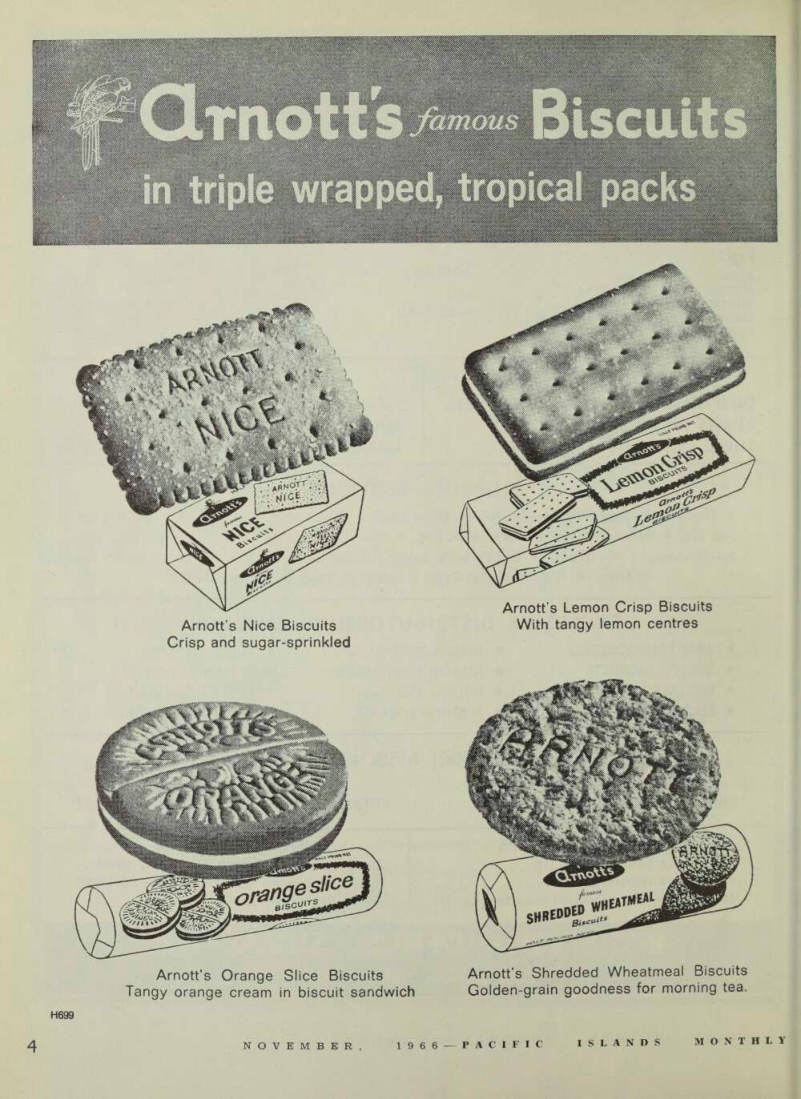 6
6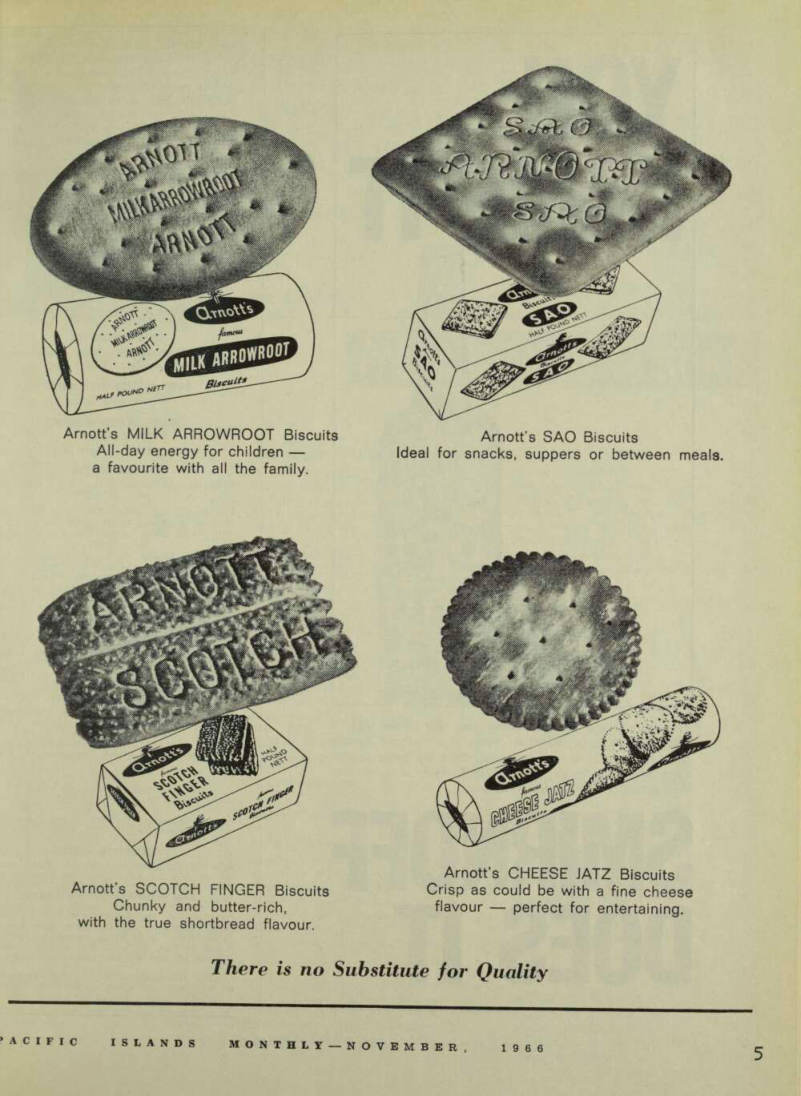 7
7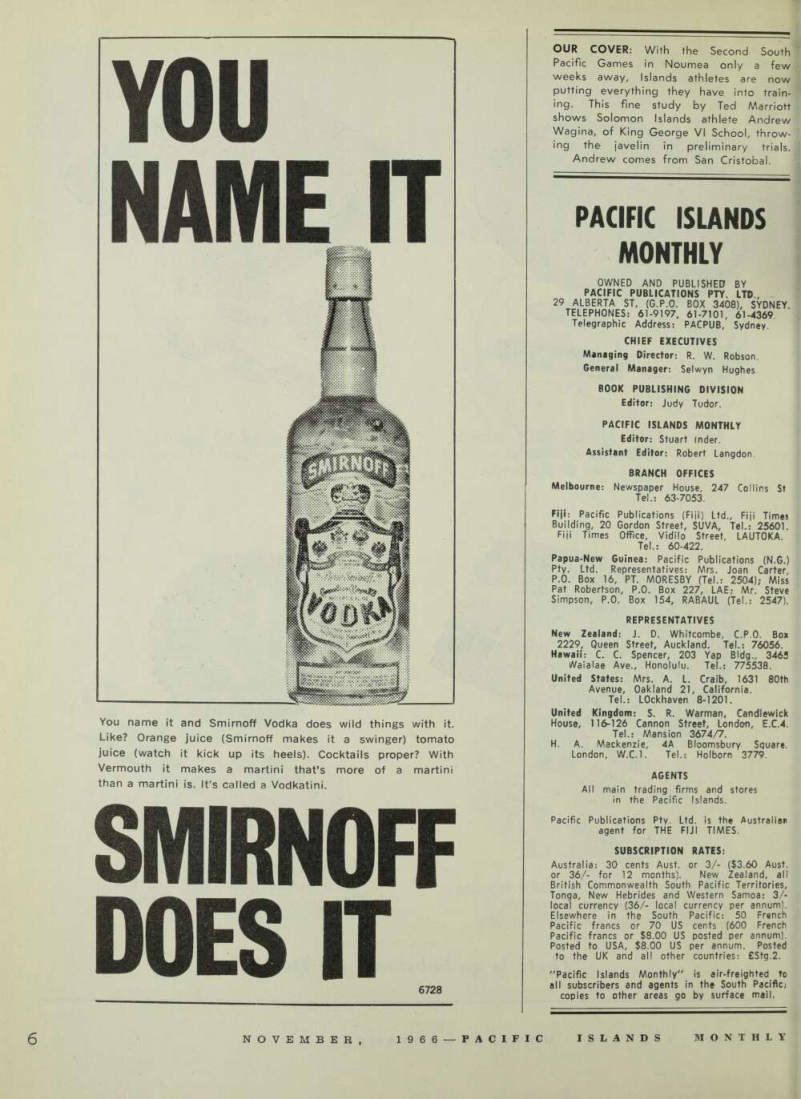 8
8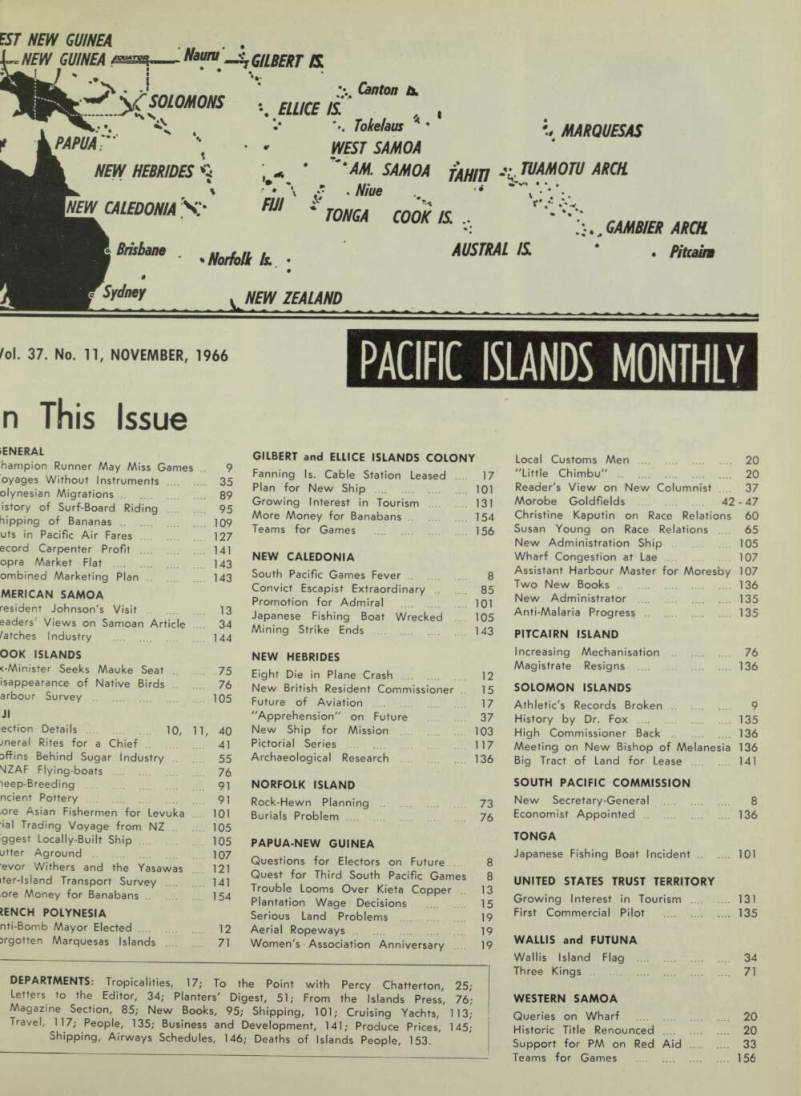 9
9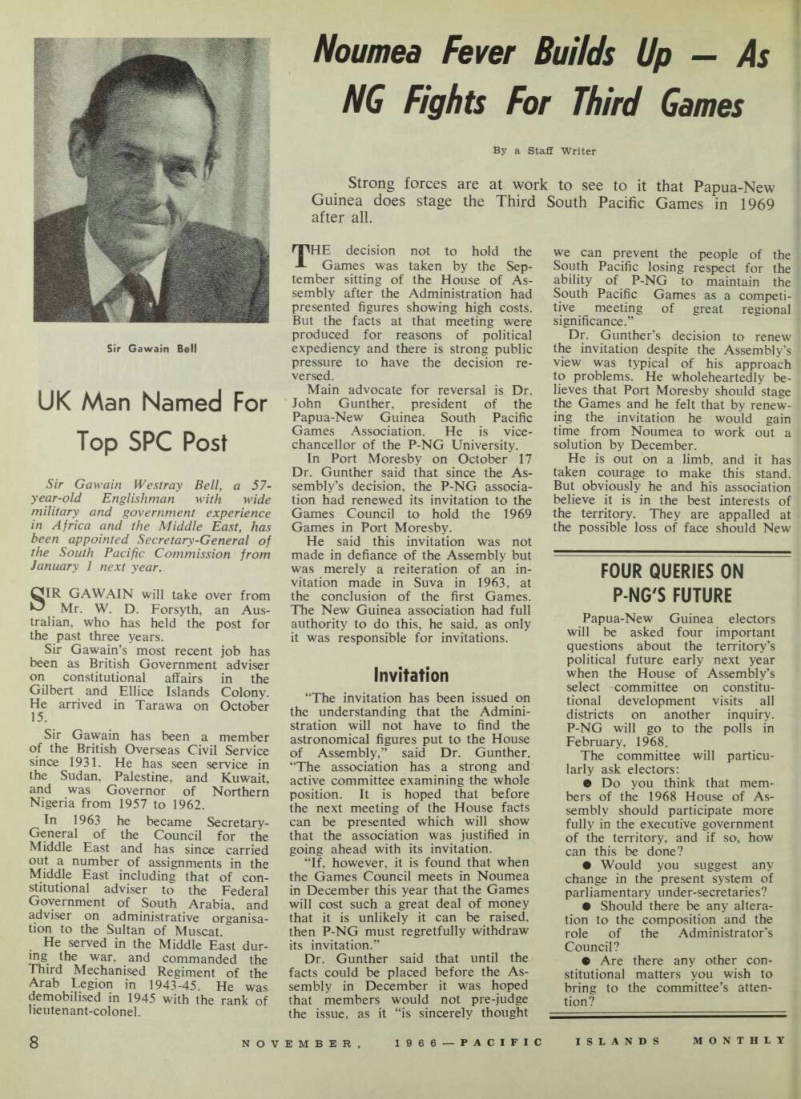 10
10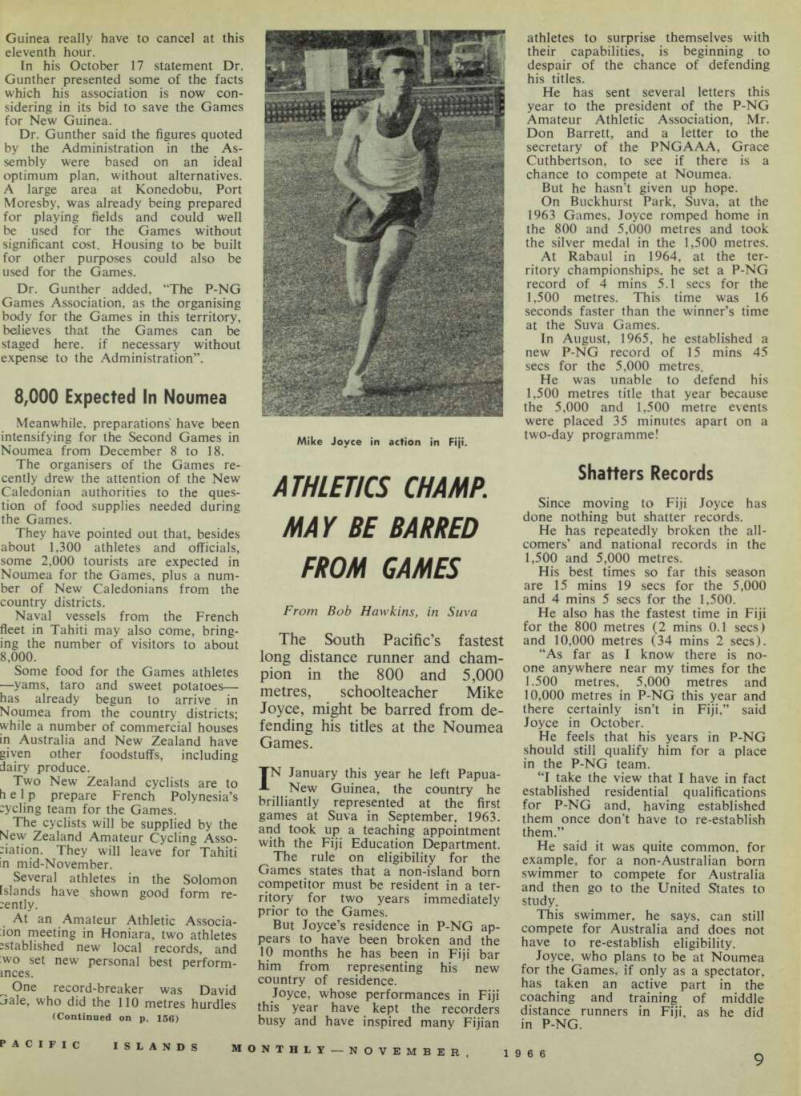 11
11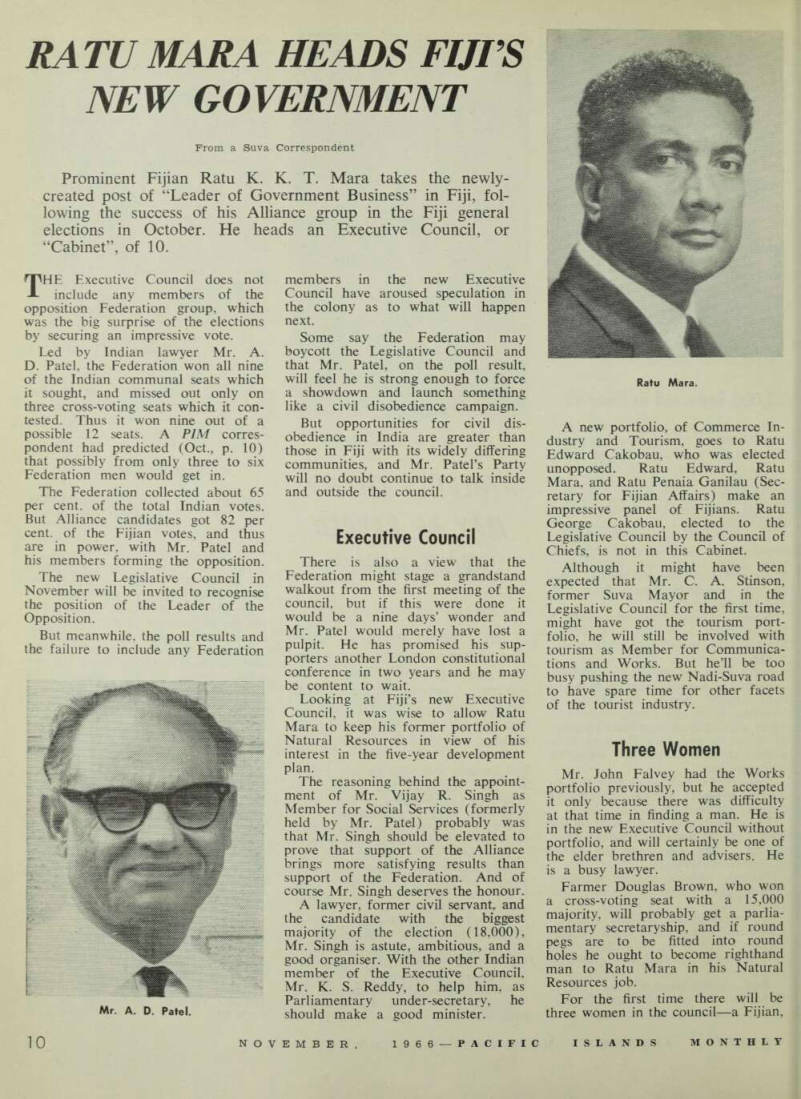 12
12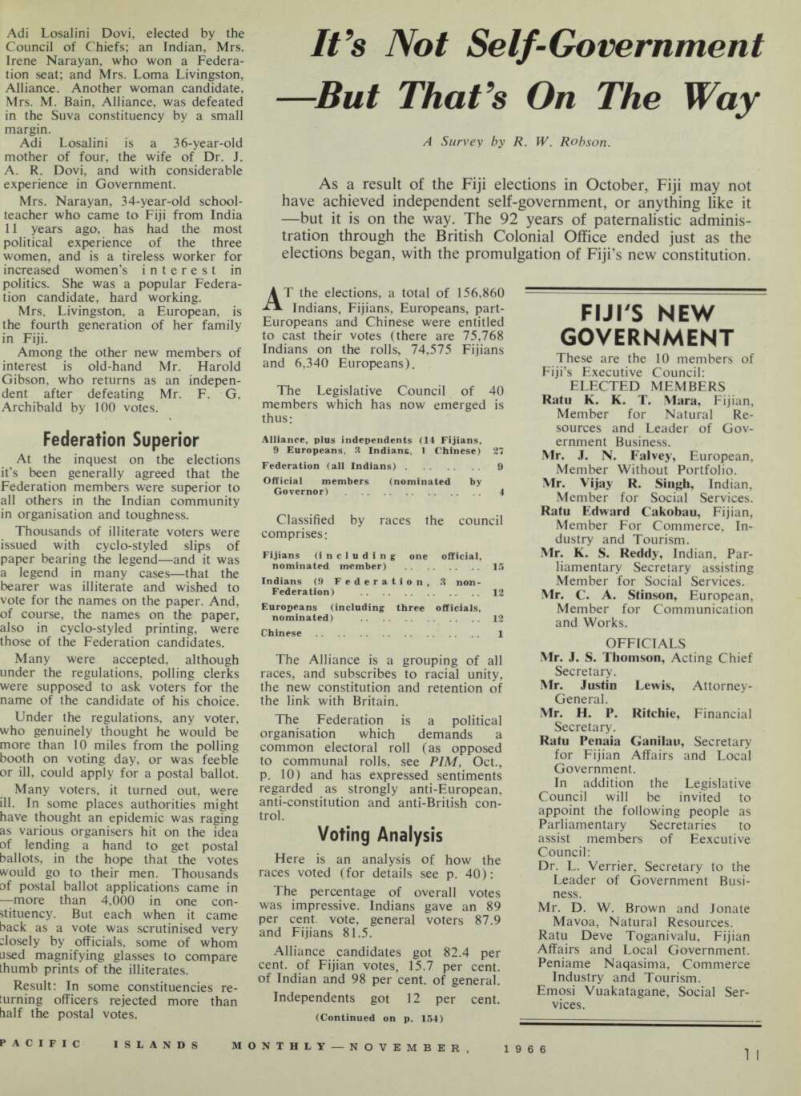 13
13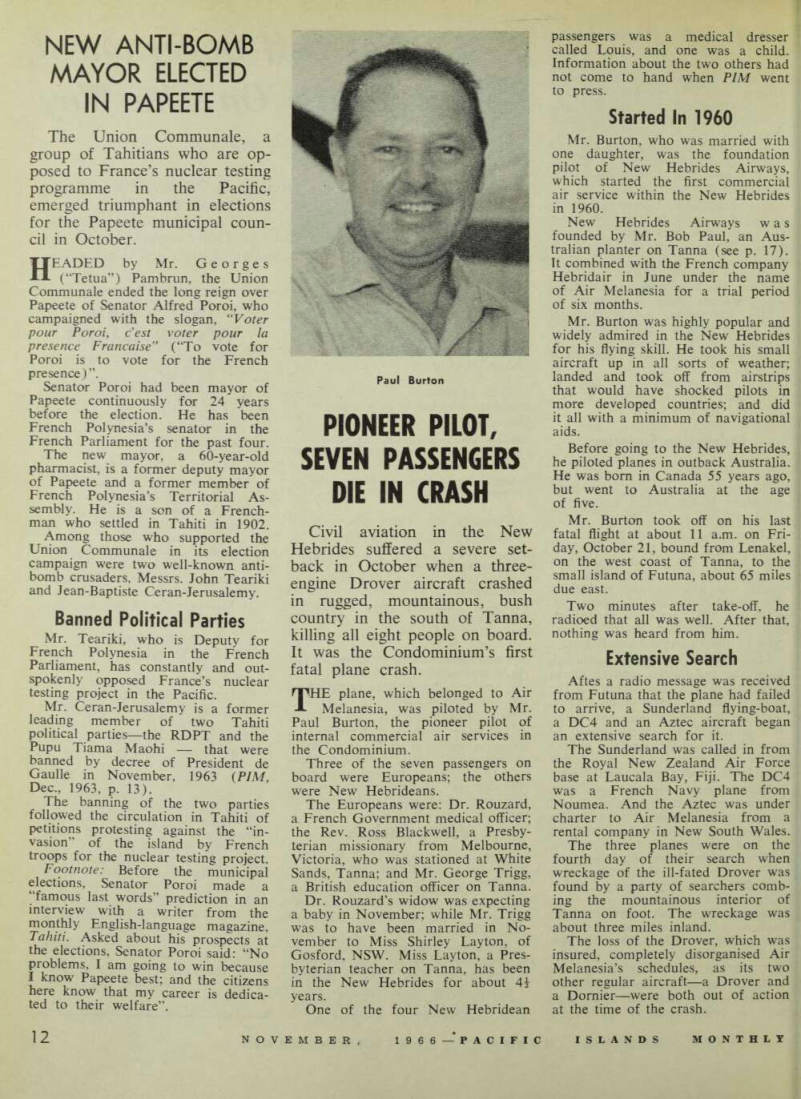 14
14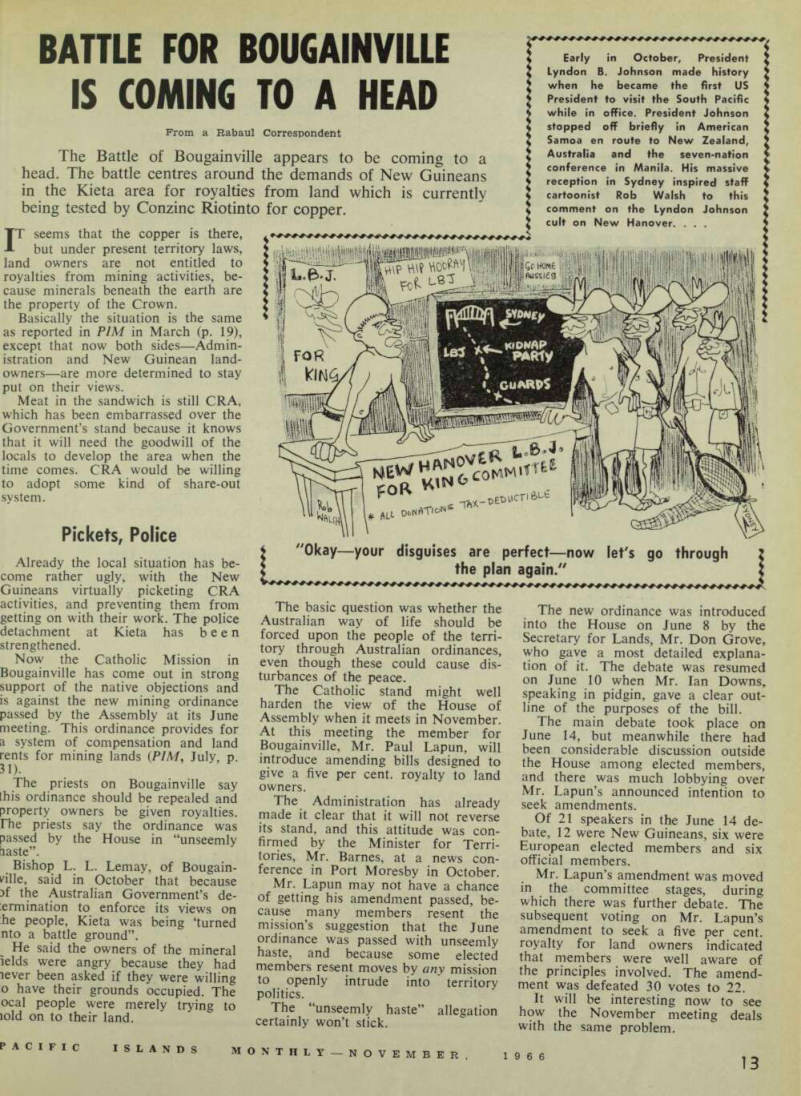 15
15 16
16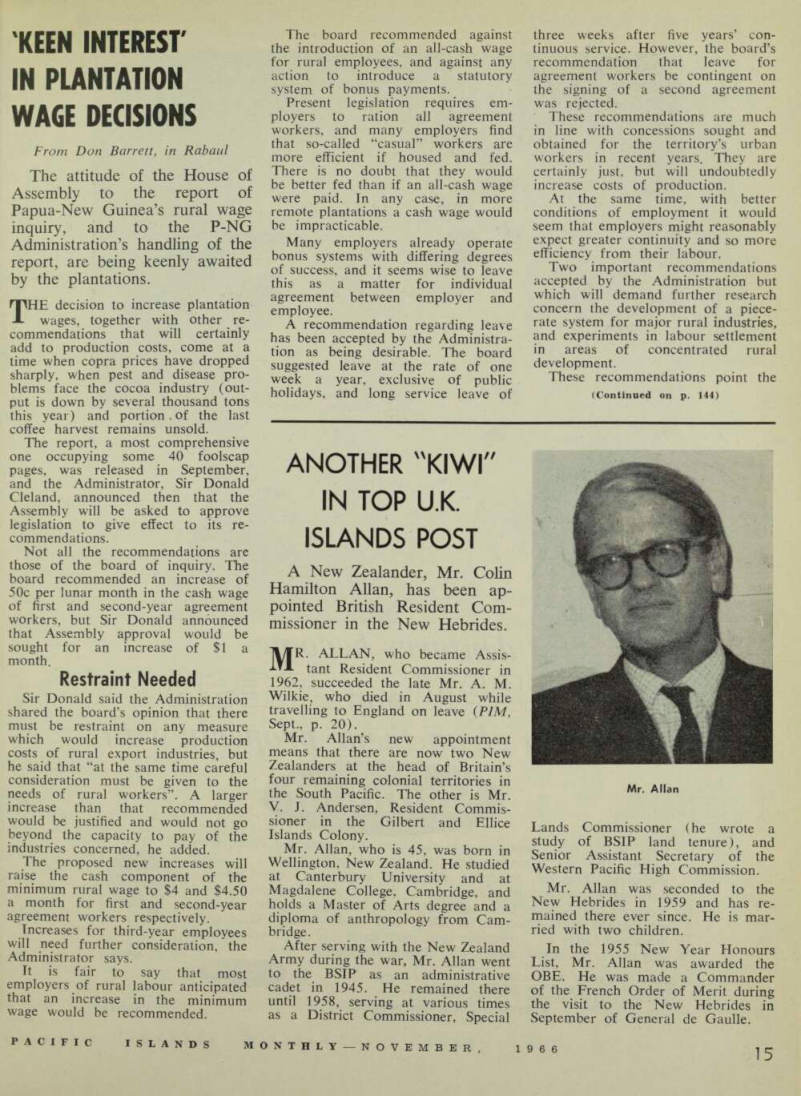 17
17 18
18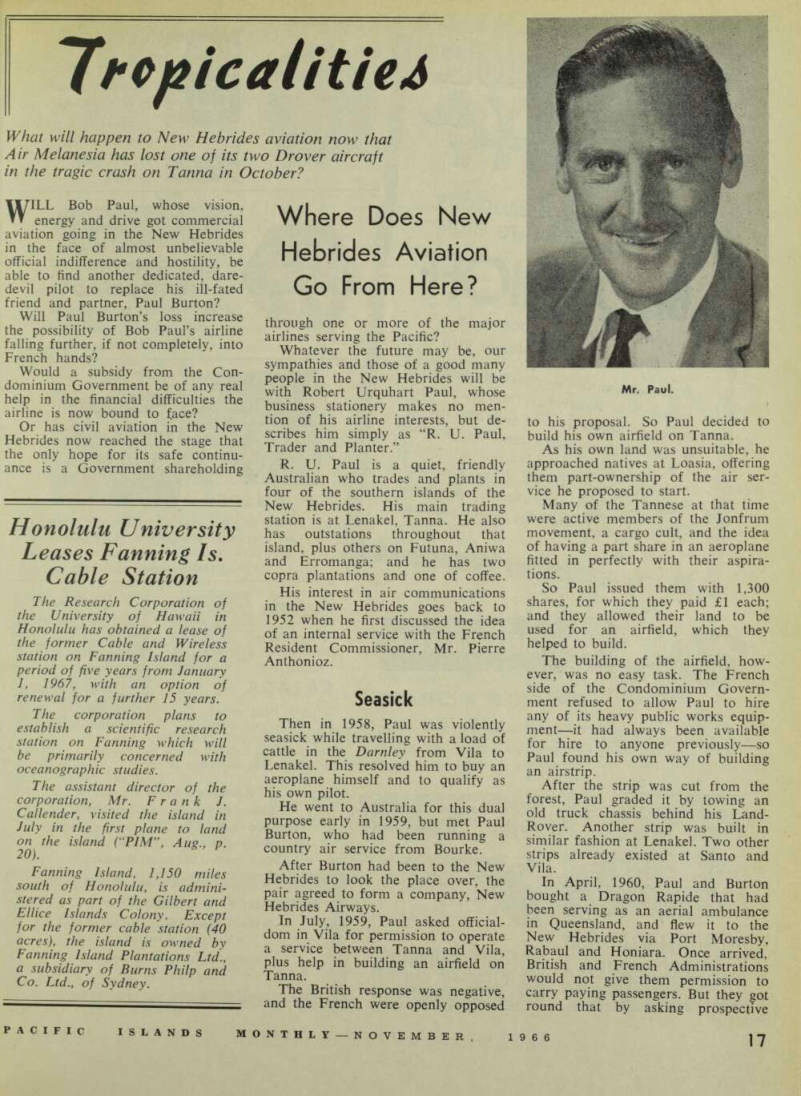 19
19 20
20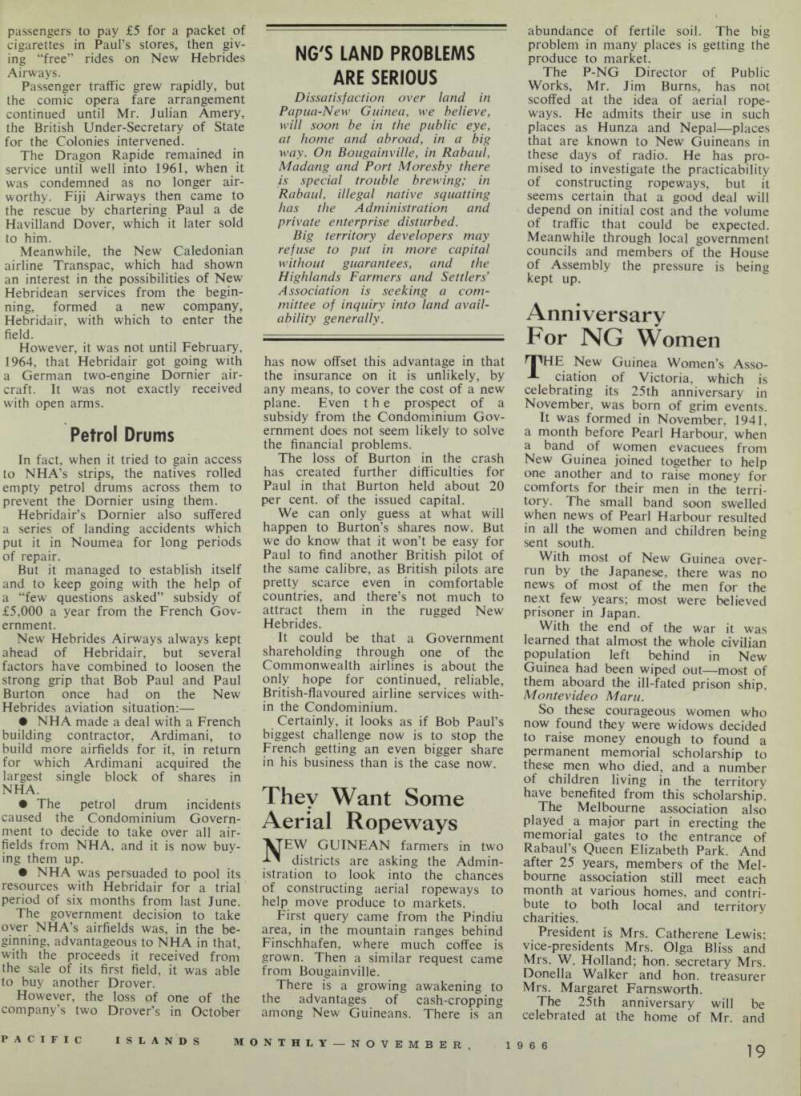 21
21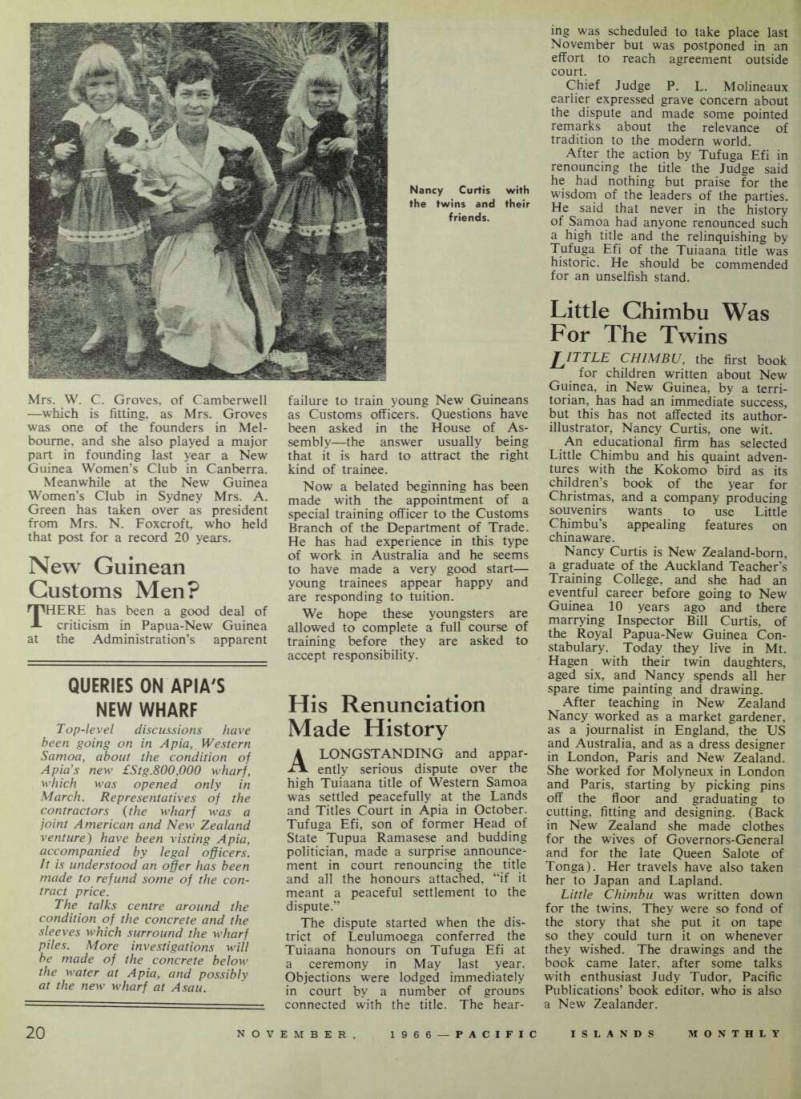 22
22 23
23 24
24 25
25 26
26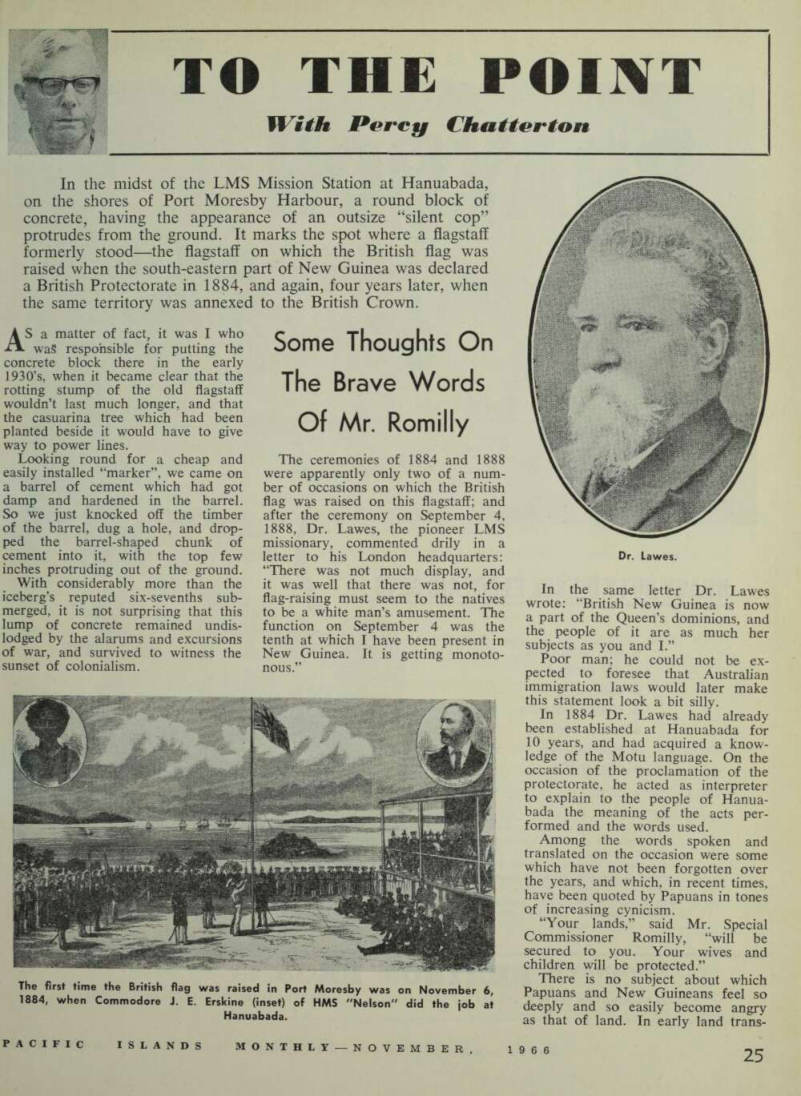 27
27 28
28 29
29 30
30 31
31 32
32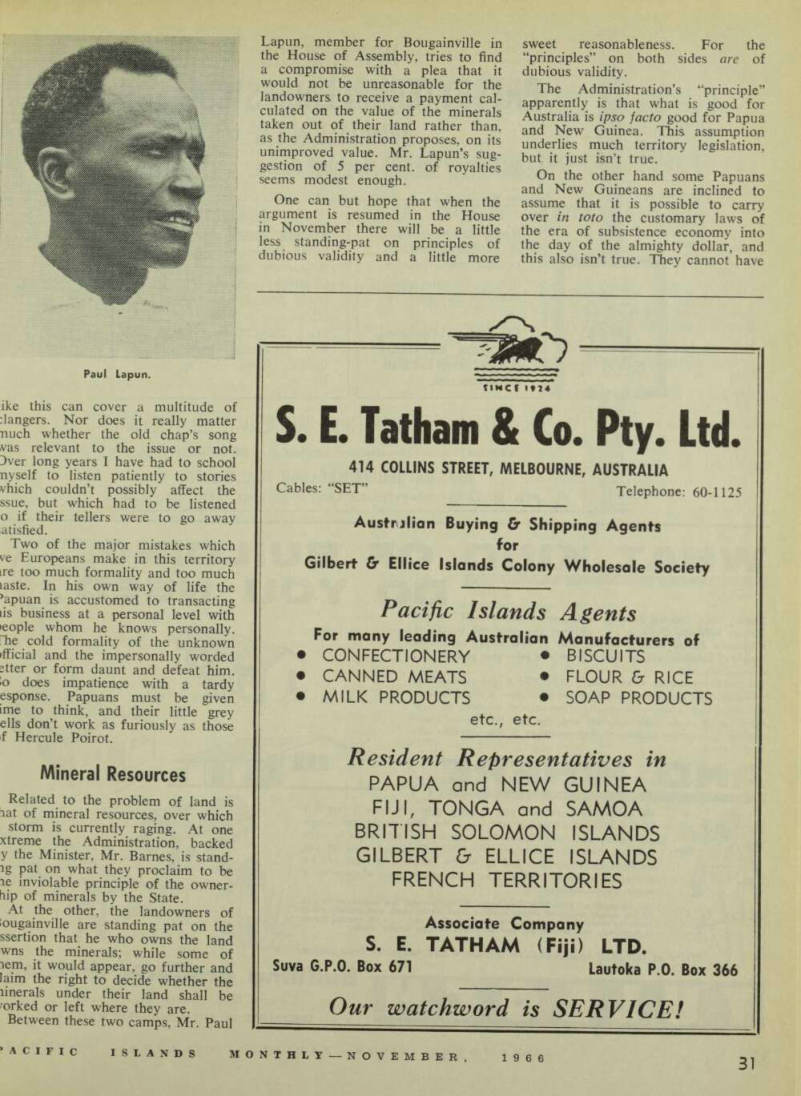 33
33 34
34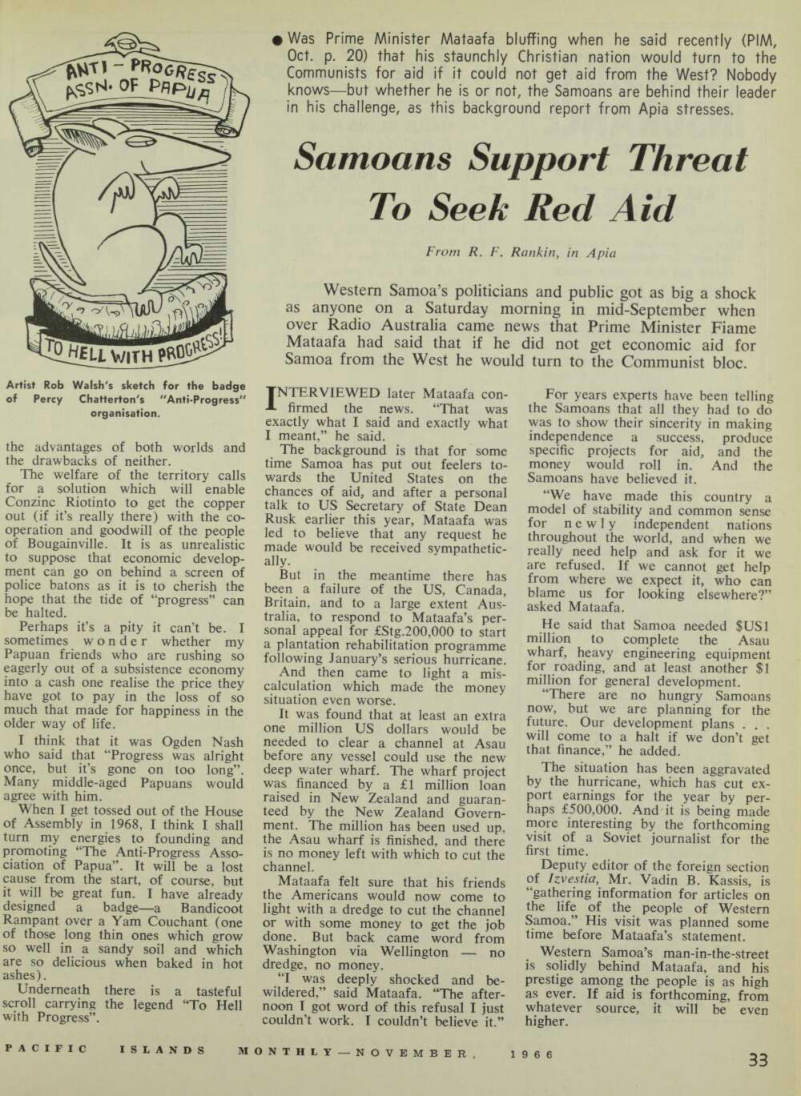 35
35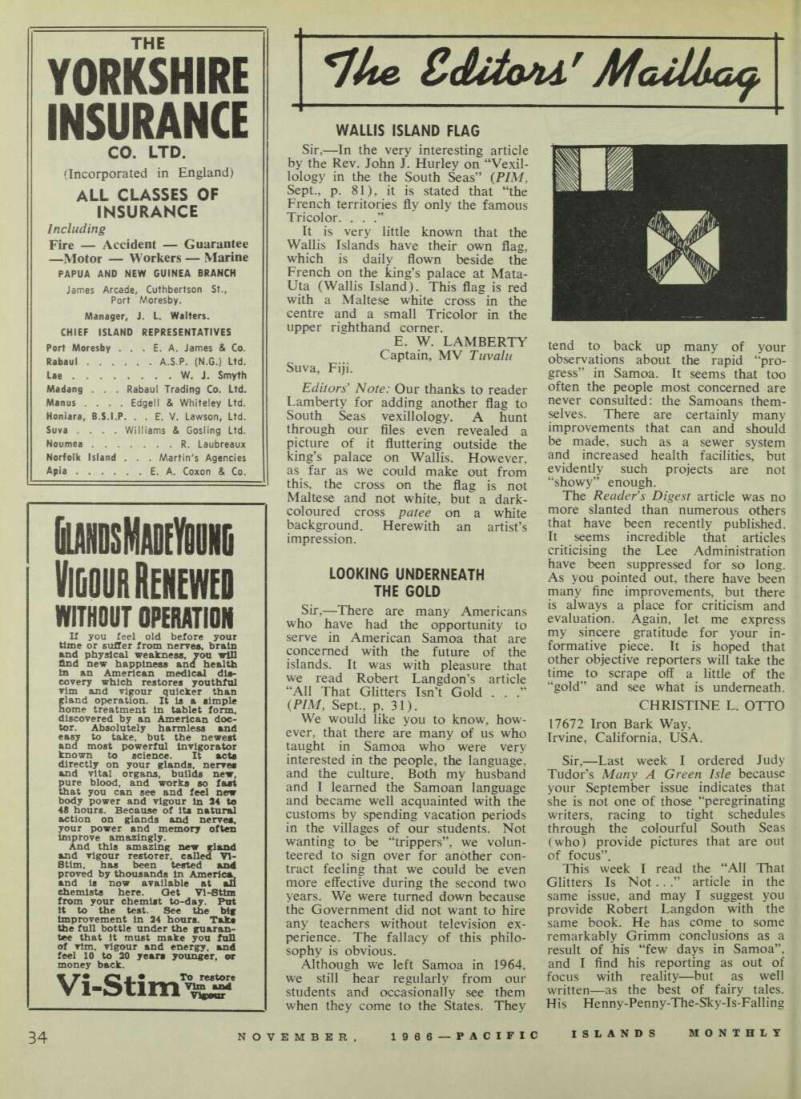 36
36 37
37 38
38 39
39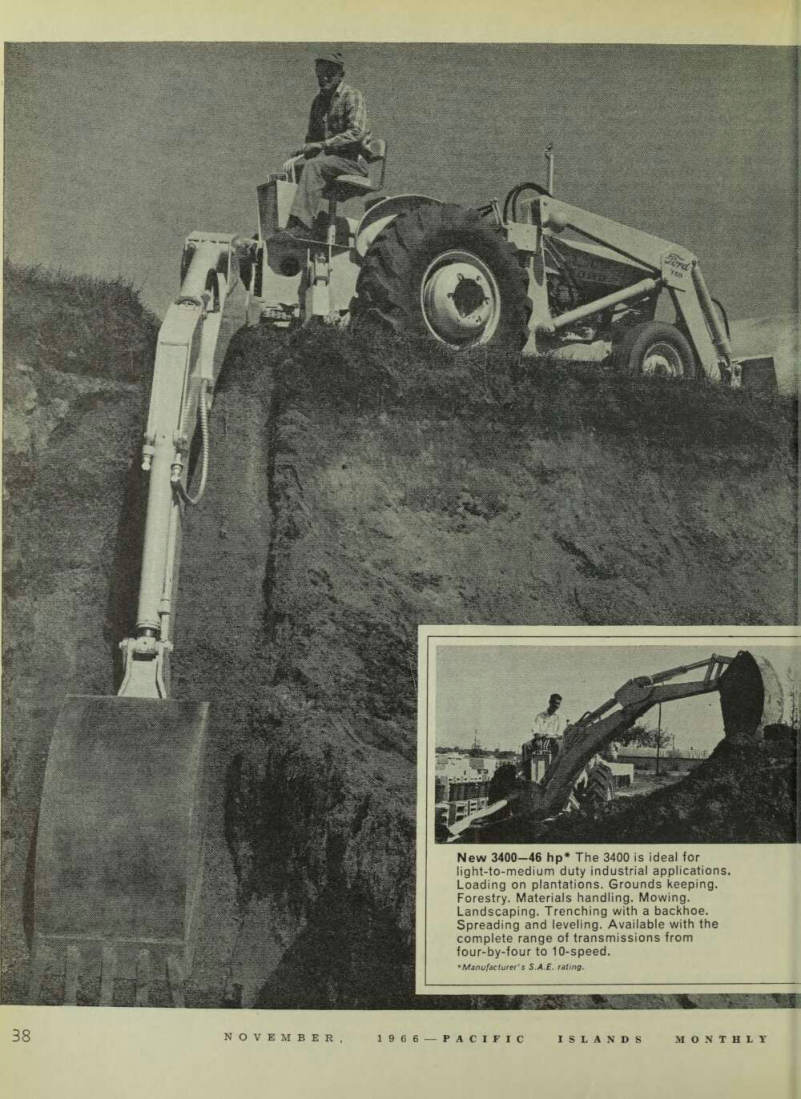 40
40 41
41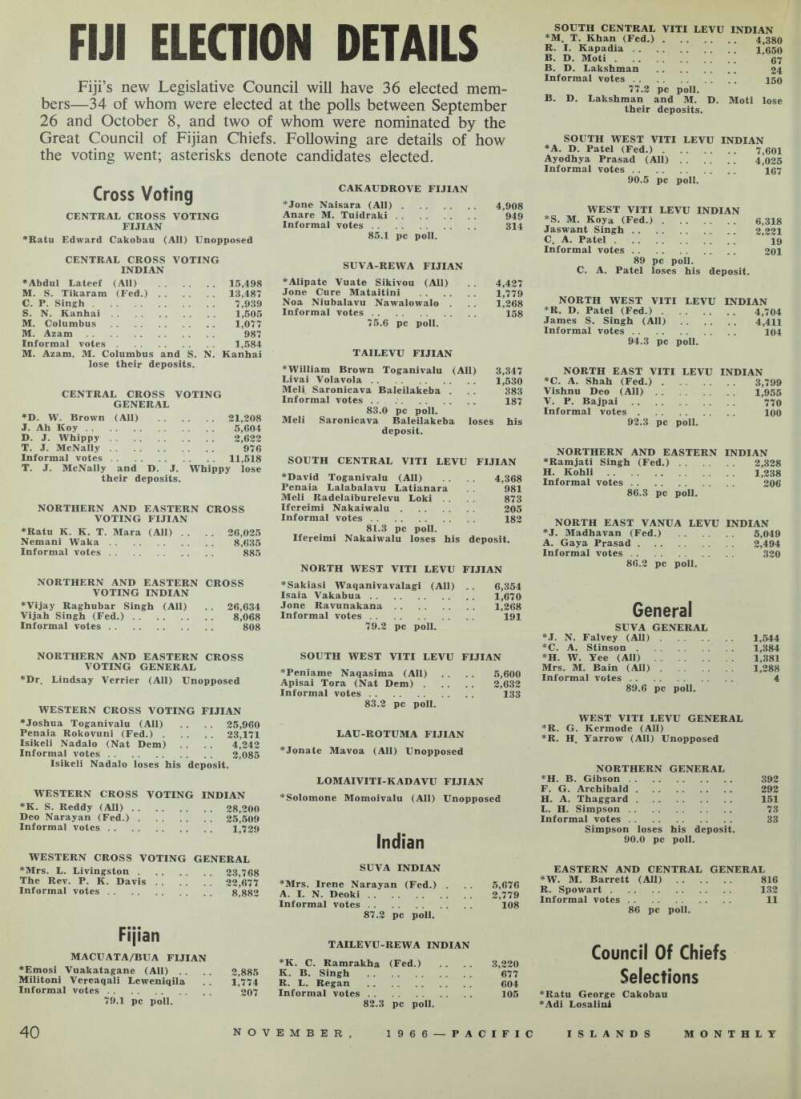 42
42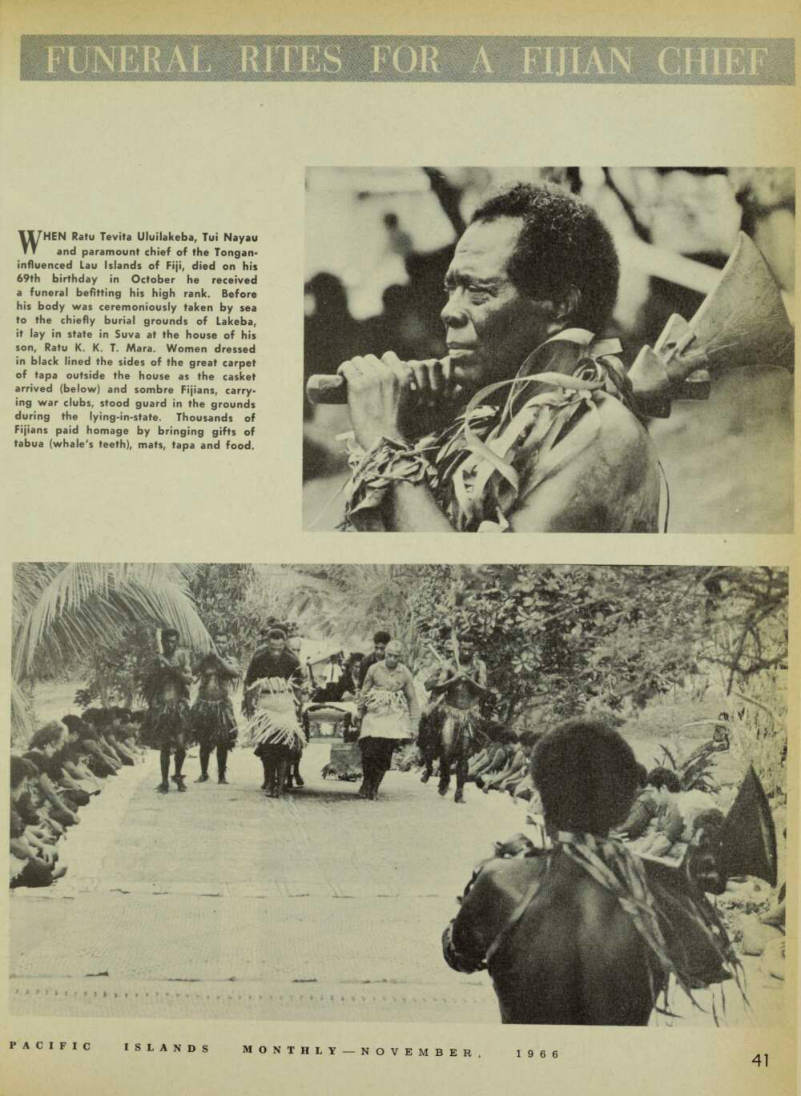 43
43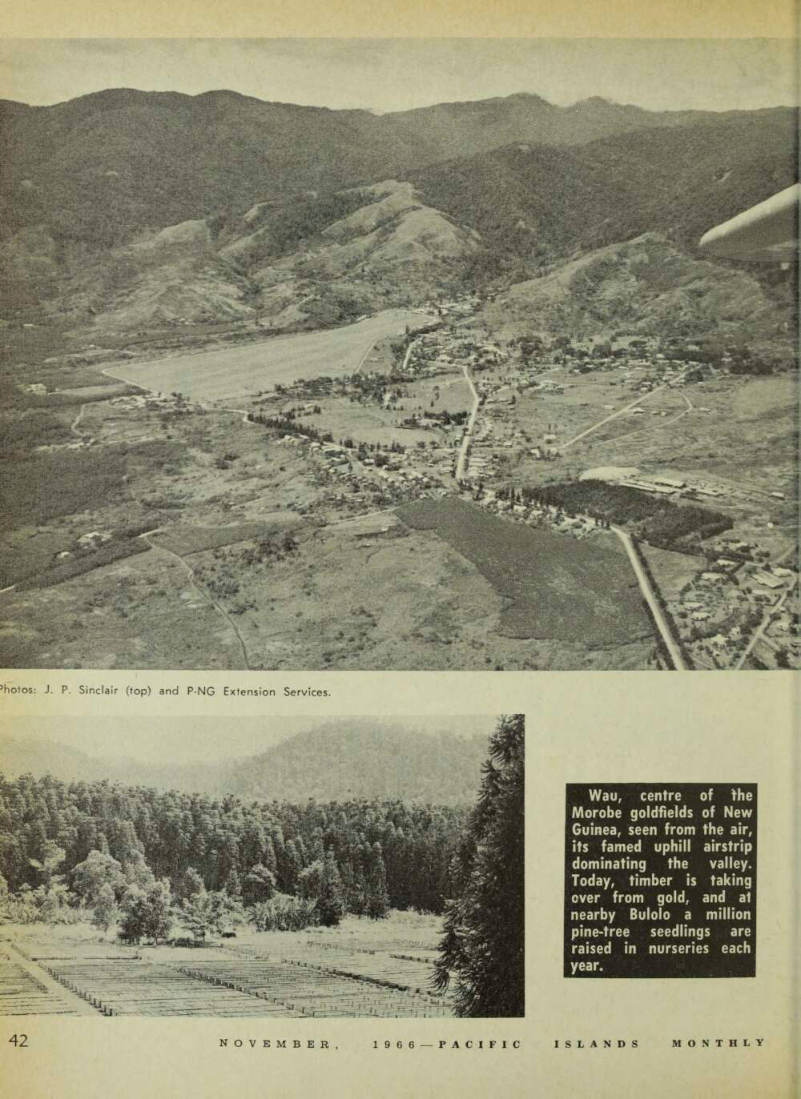 44
44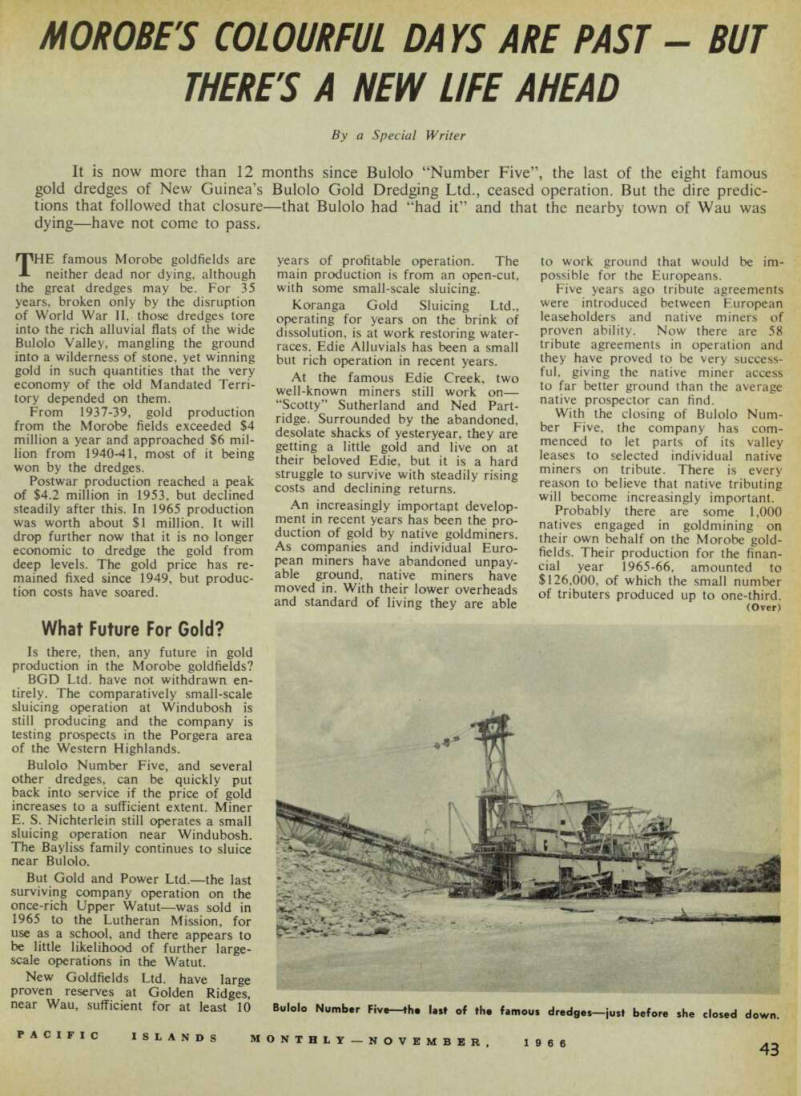 45
45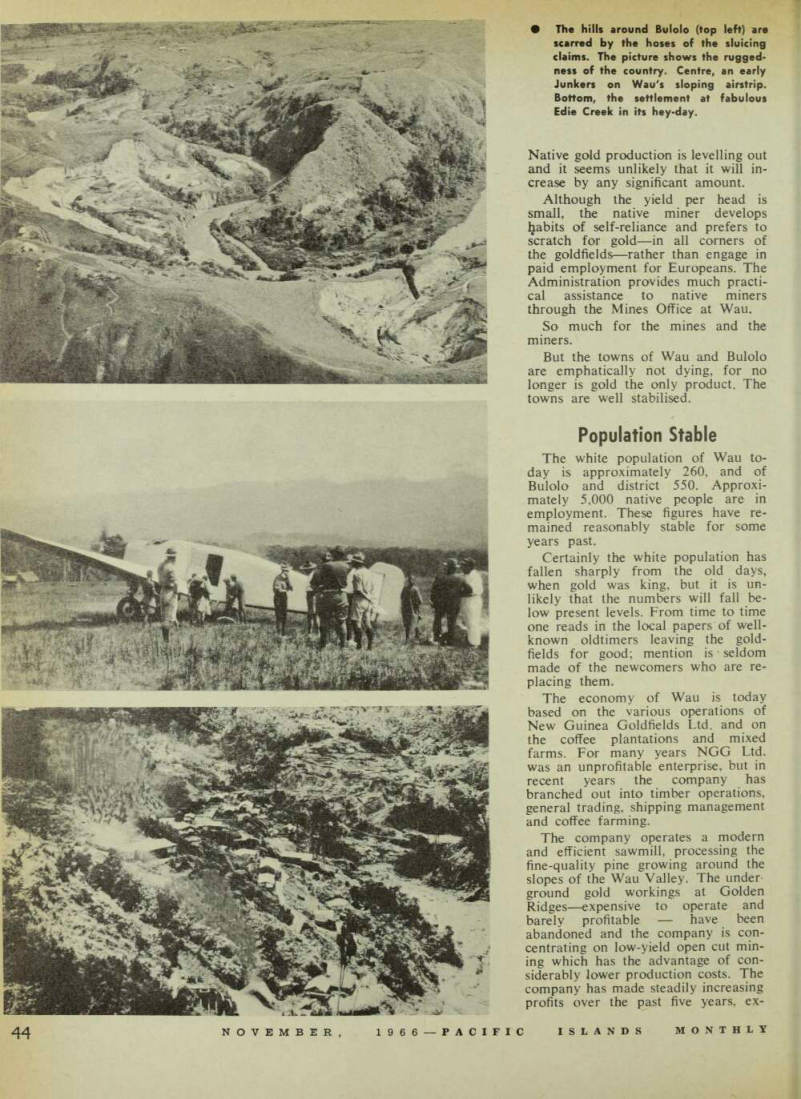 46
46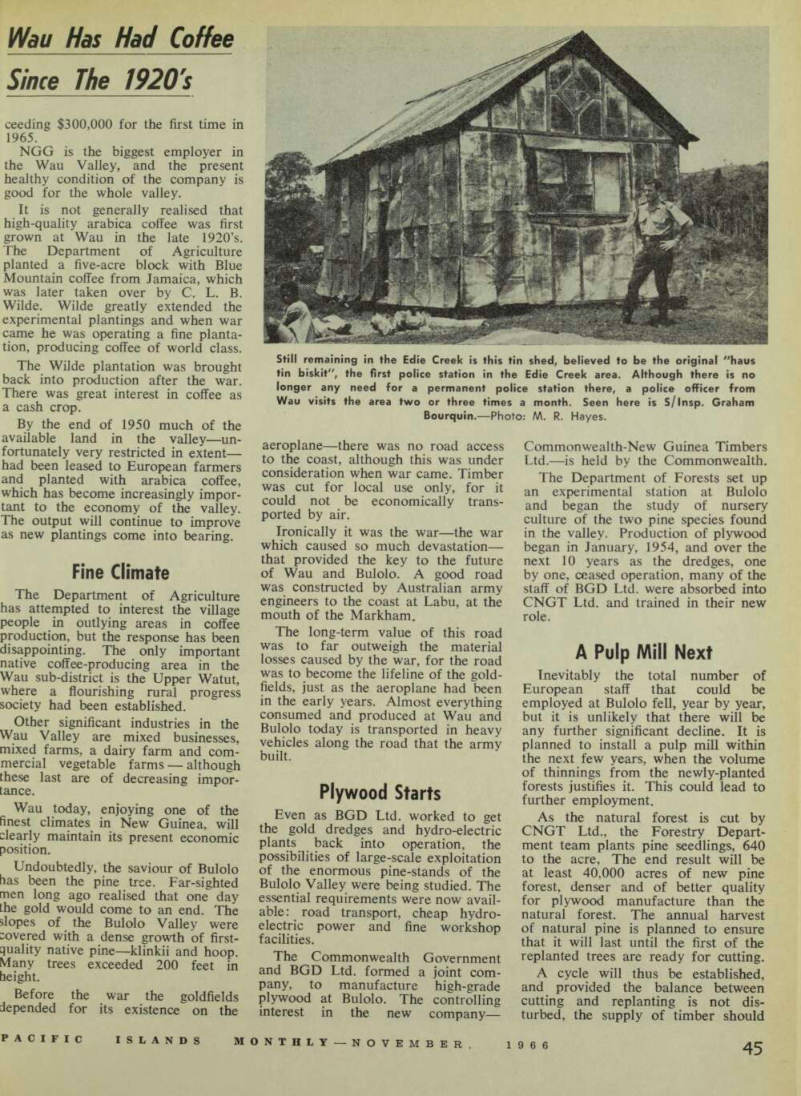 47
47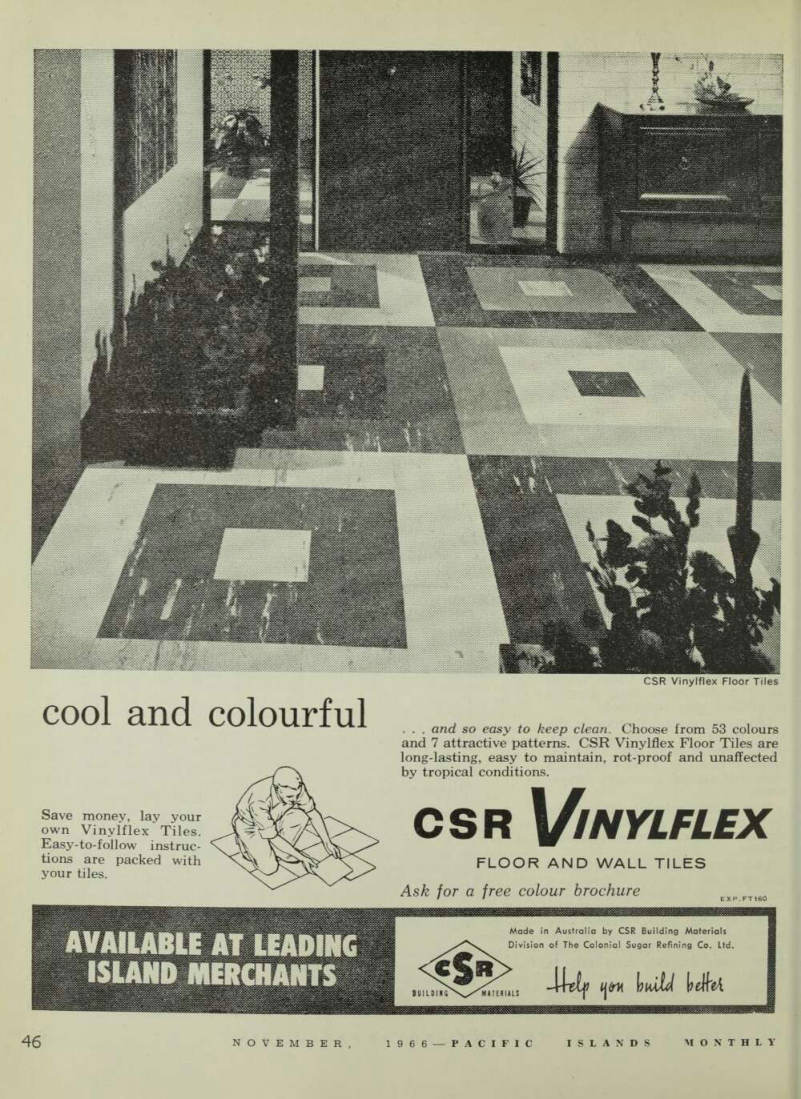 48
48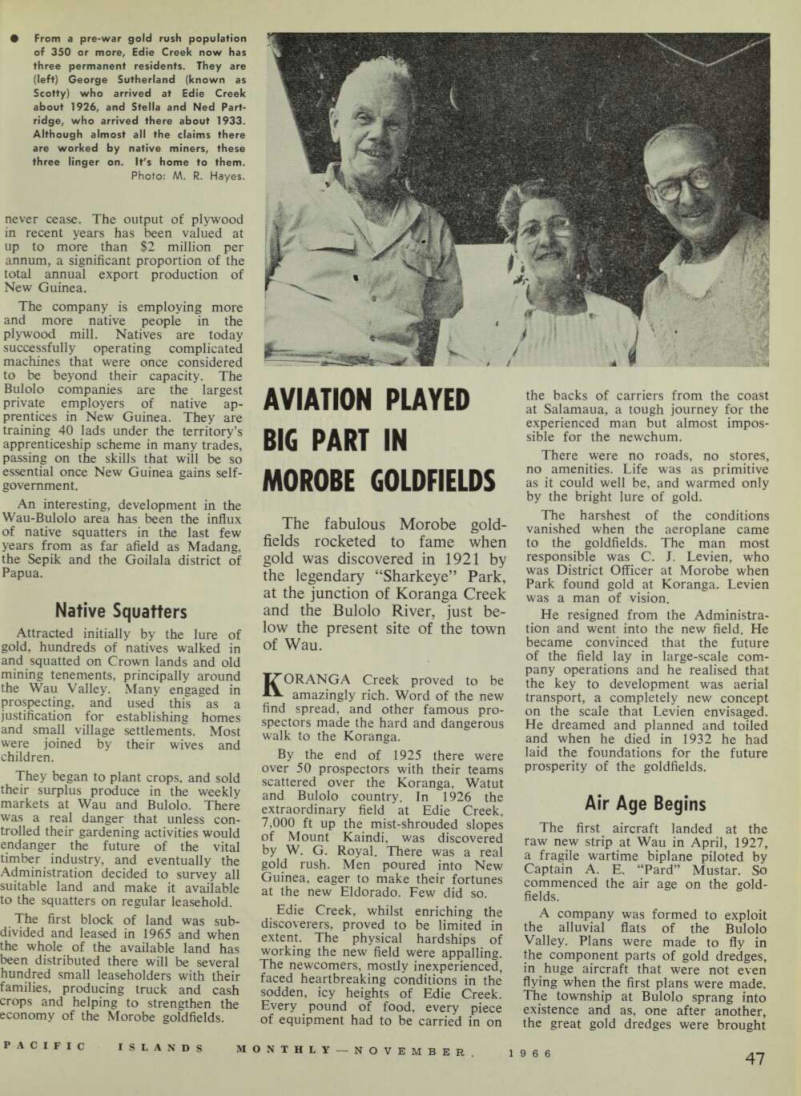 49
49 50
50 51
51 52
52 53
53 54
54 55
55 56
56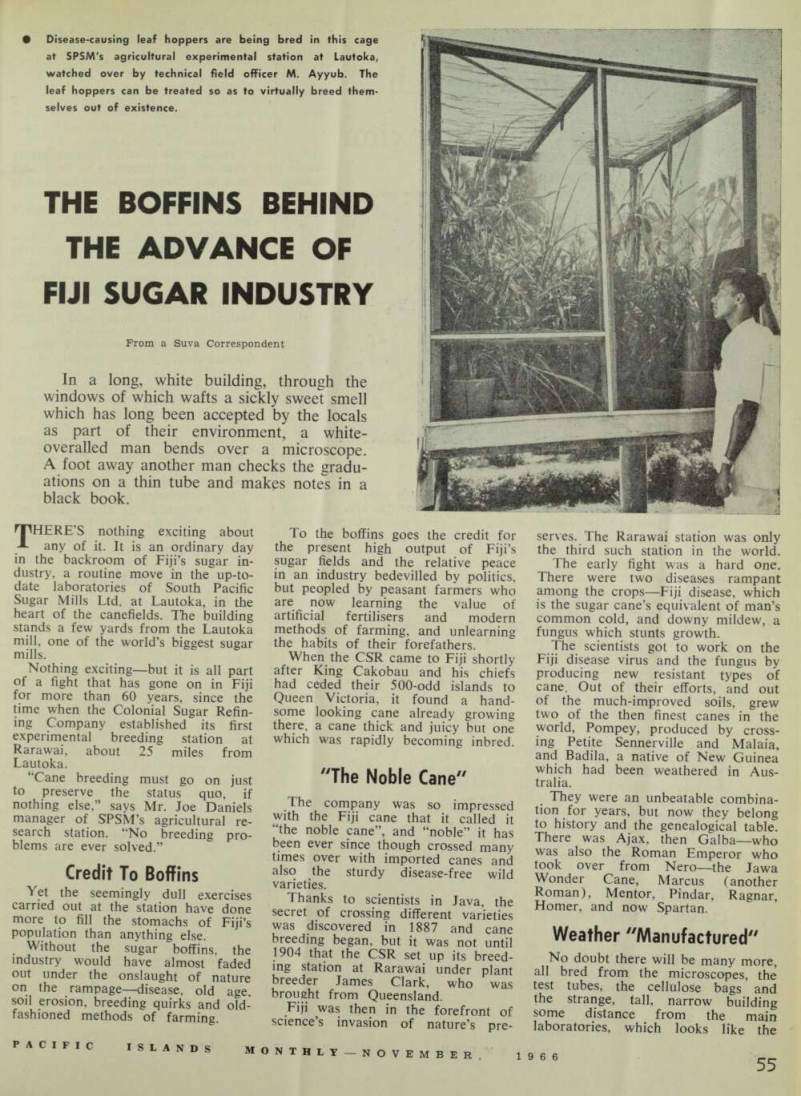 57
57 58
58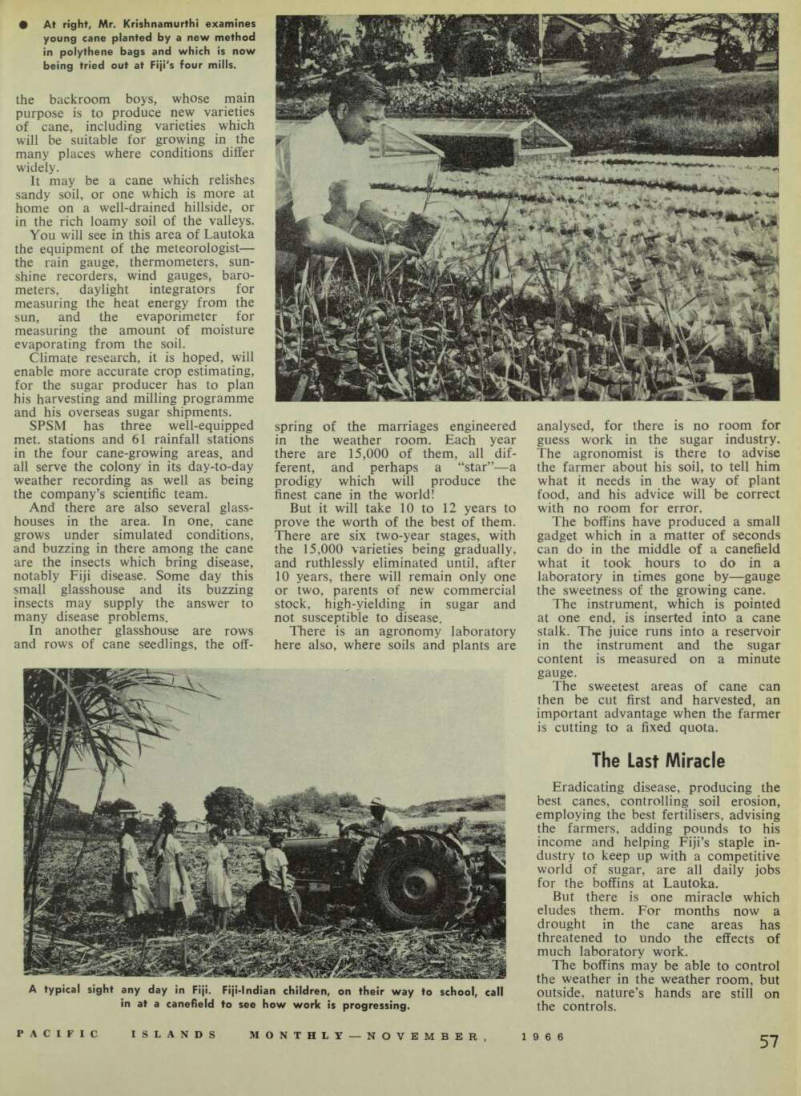 59
59 60
60 61
61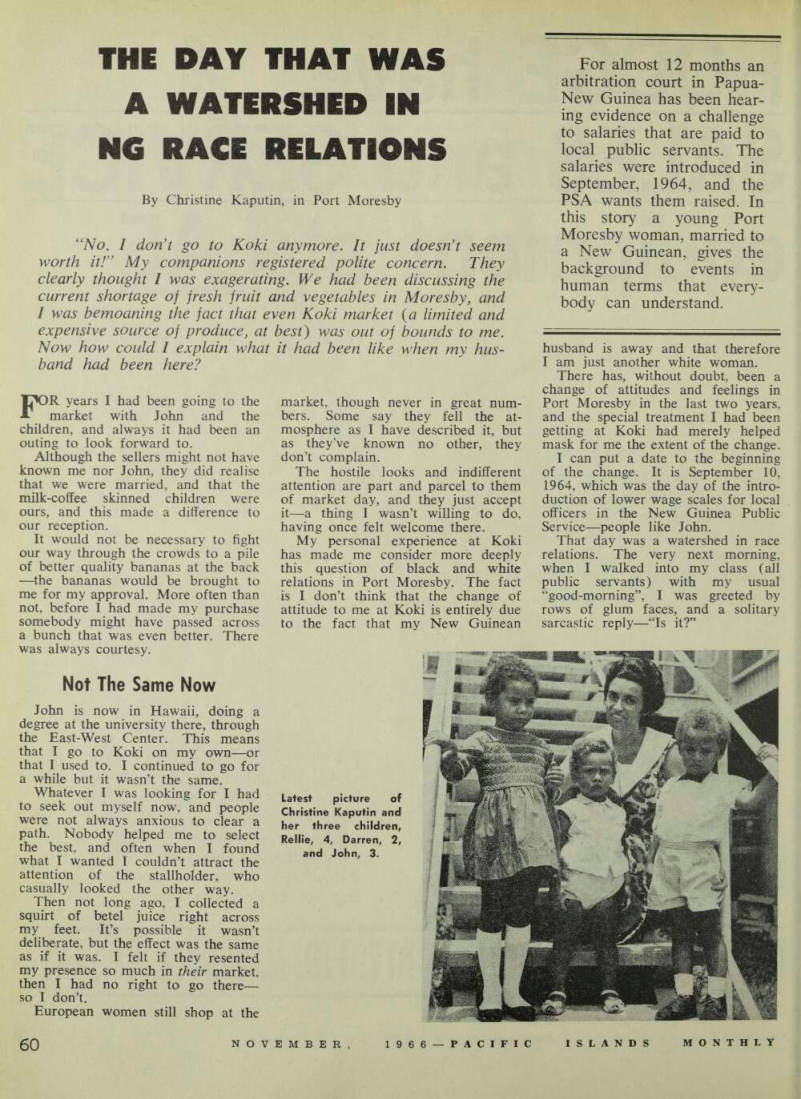 62
62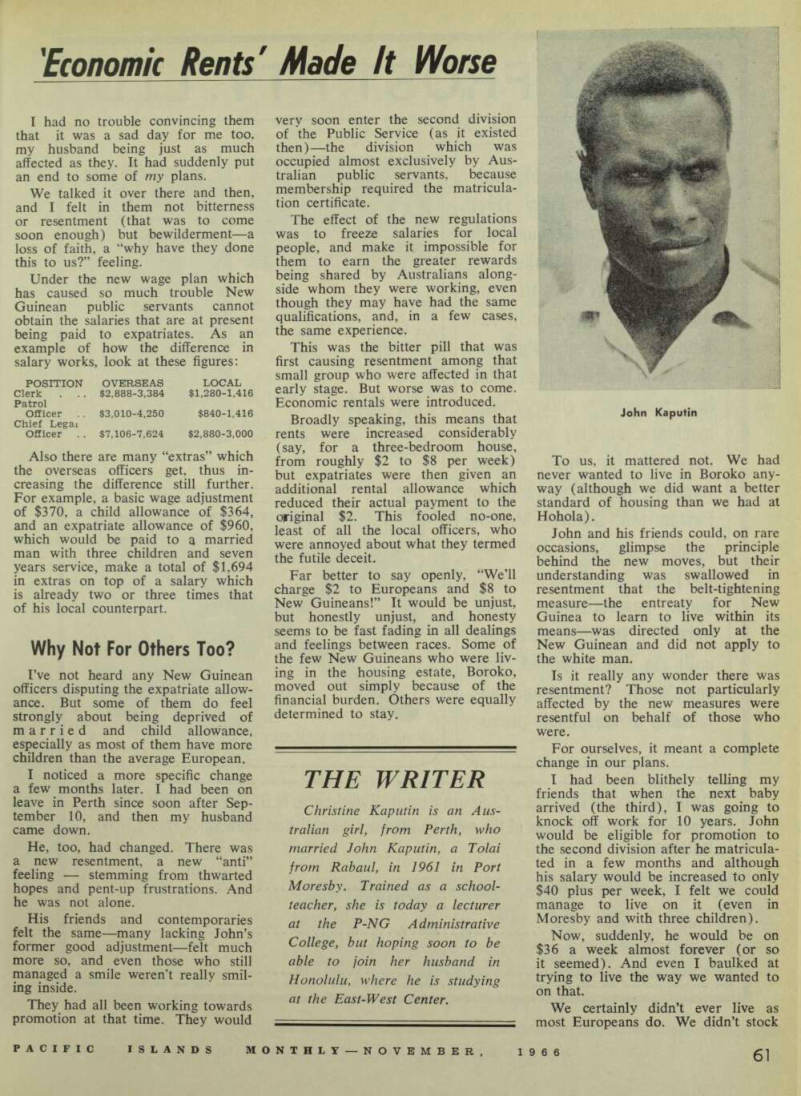 63
63 64
64 65
65 66
66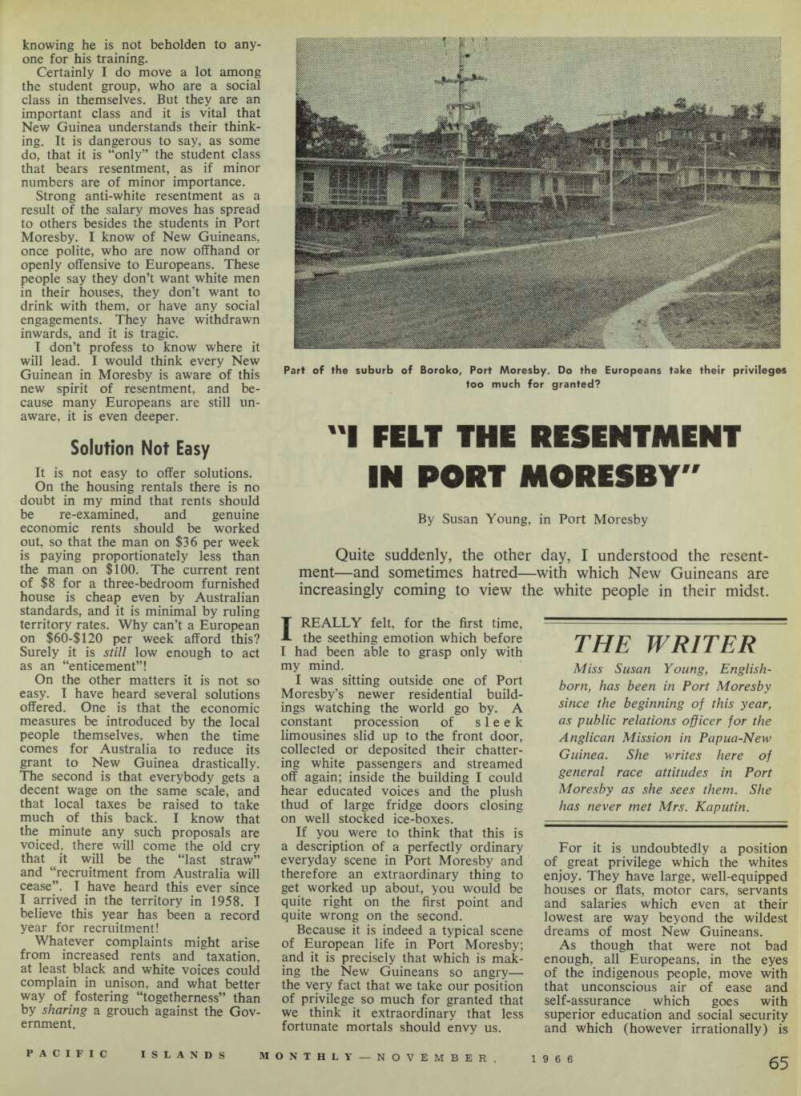 67
67 68
68 69
69 70
70 71
71 72
72 73
73 74
74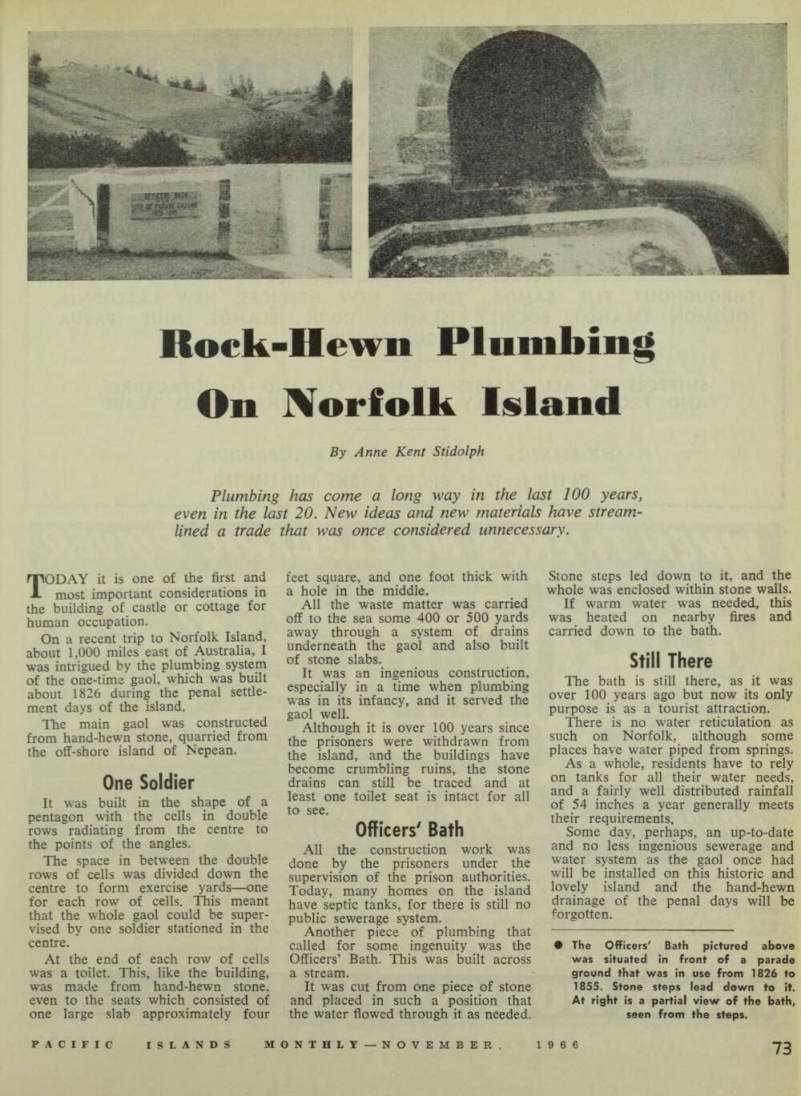 75
75 76
76 77
77 78
78 79
79 80
80 81
81 82
82 83
83 84
84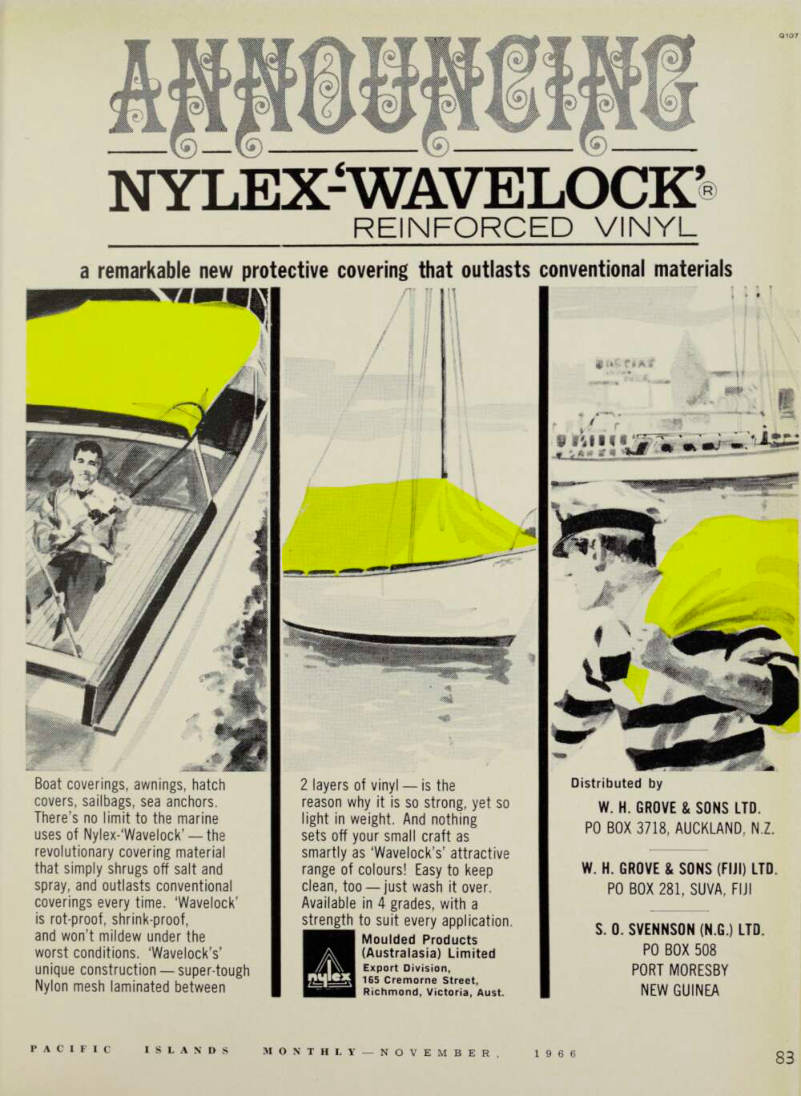 85
85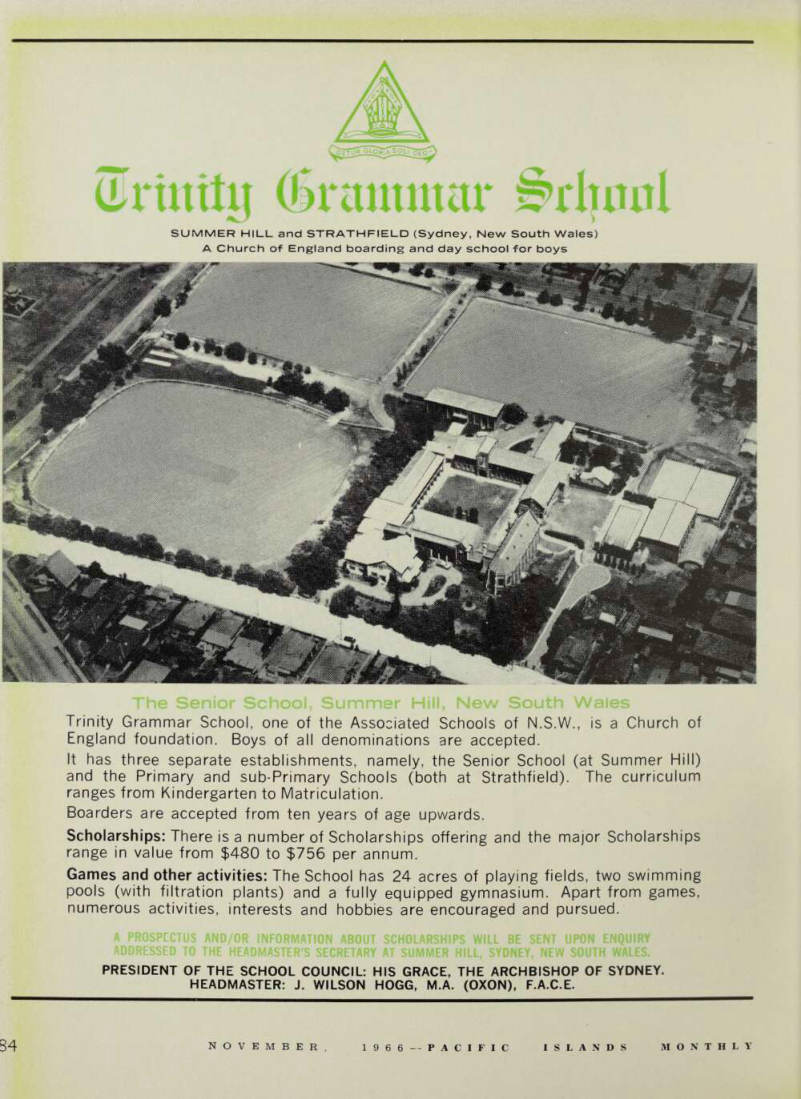 86
86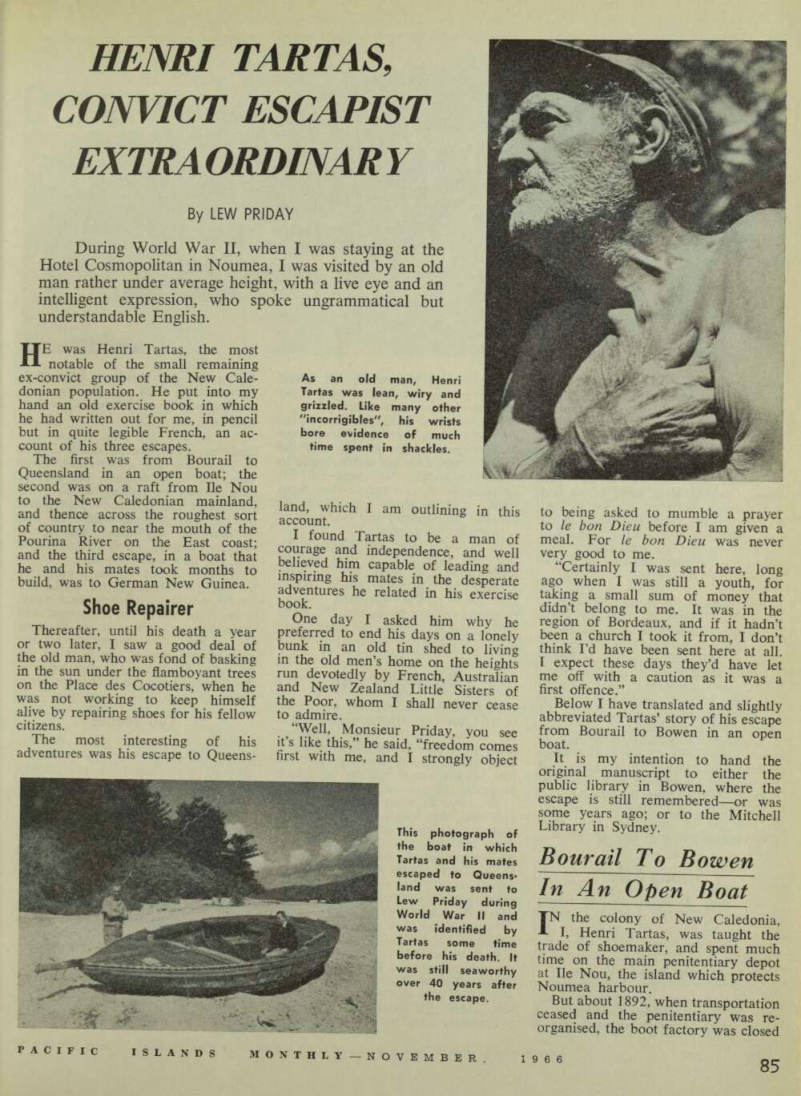 87
87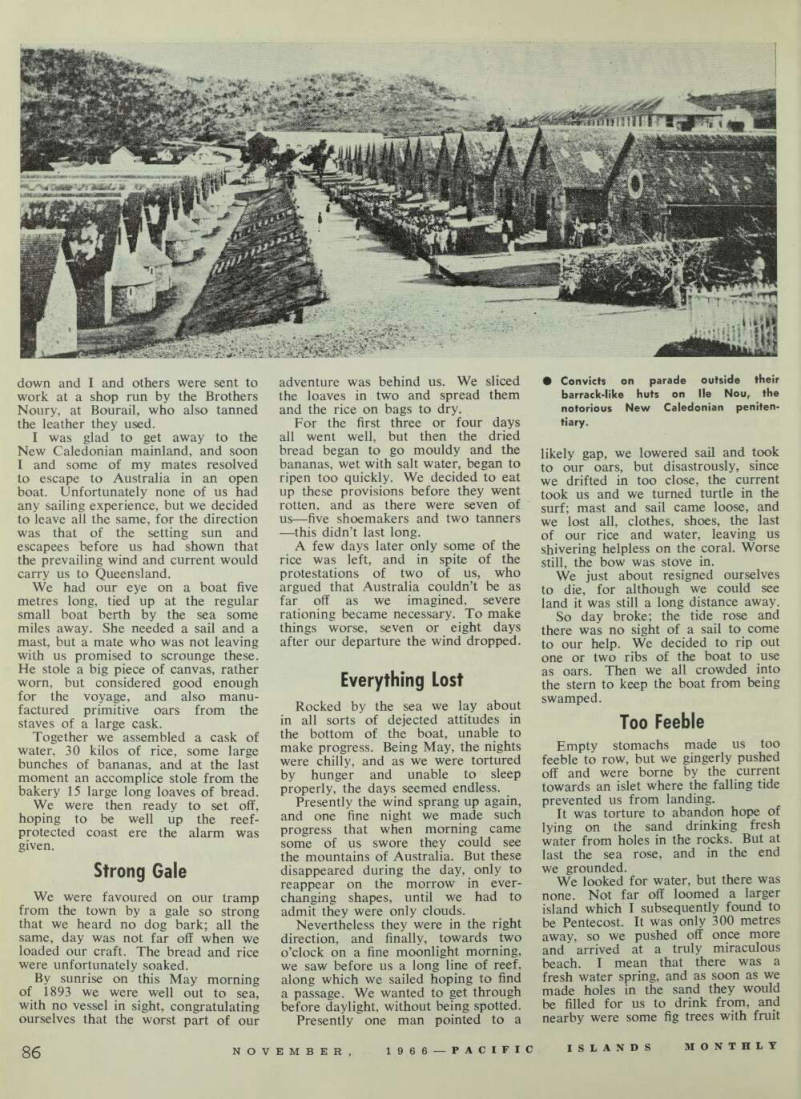 88
88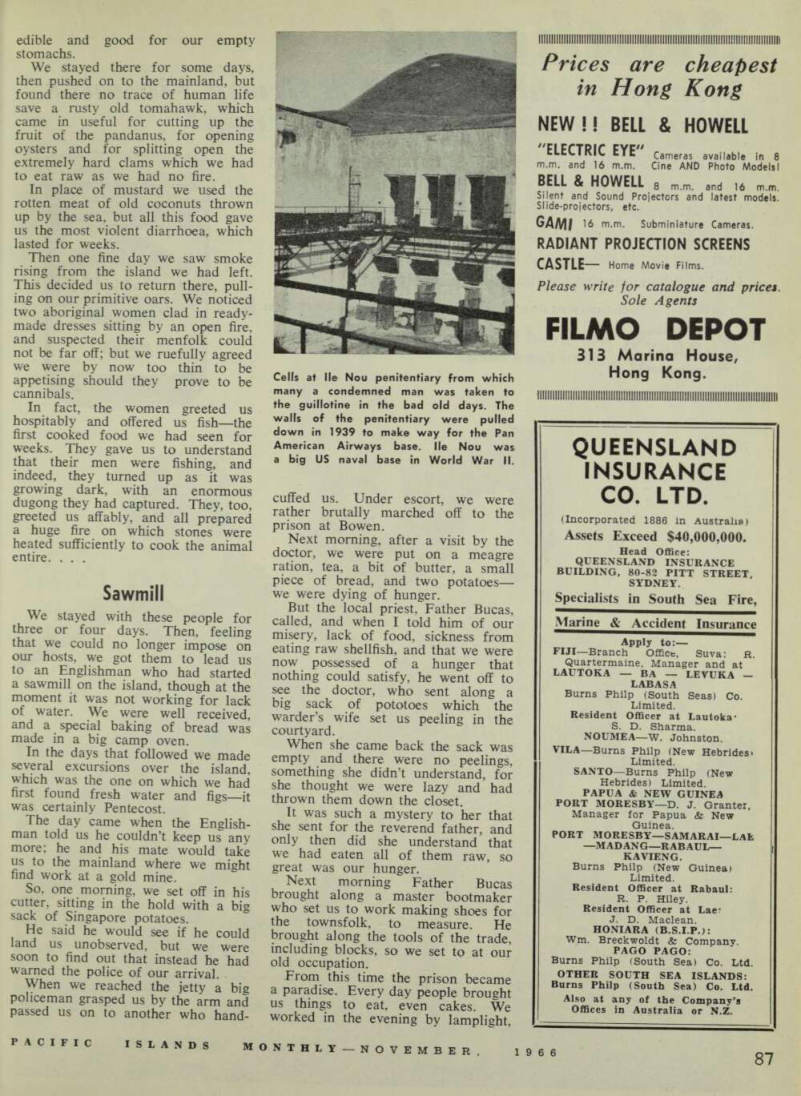 89
89 90
90 91
91 92
92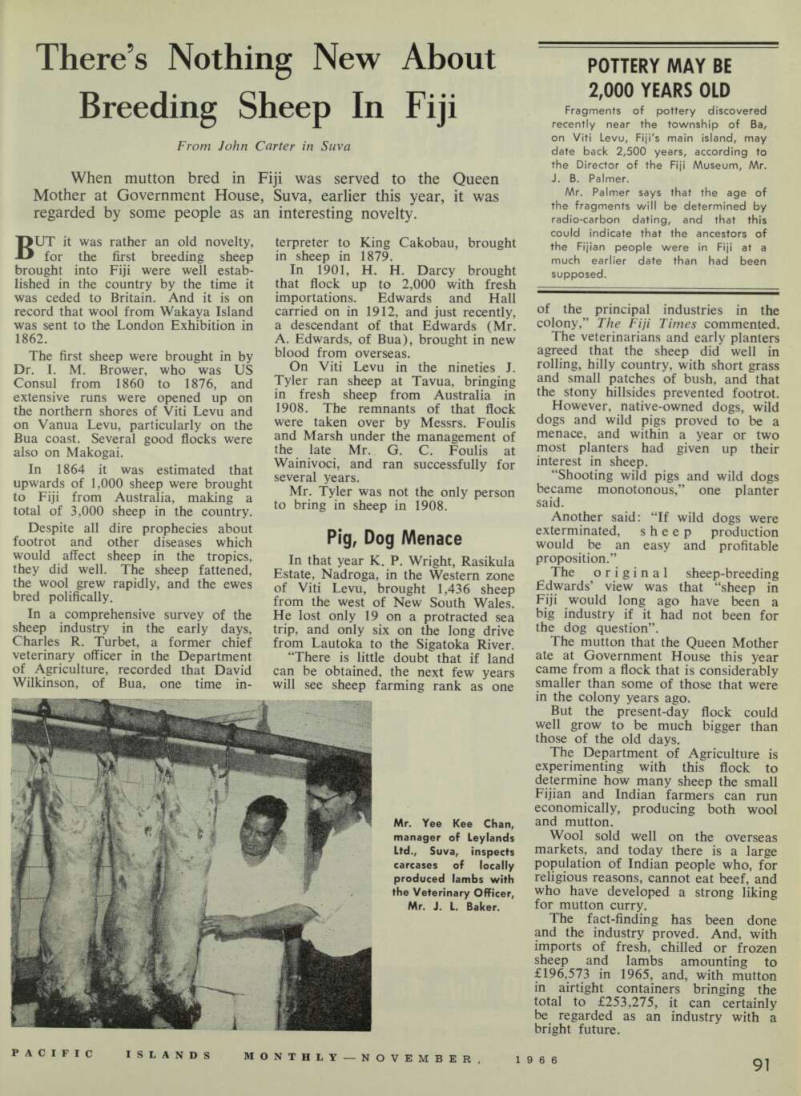 93
93 94
94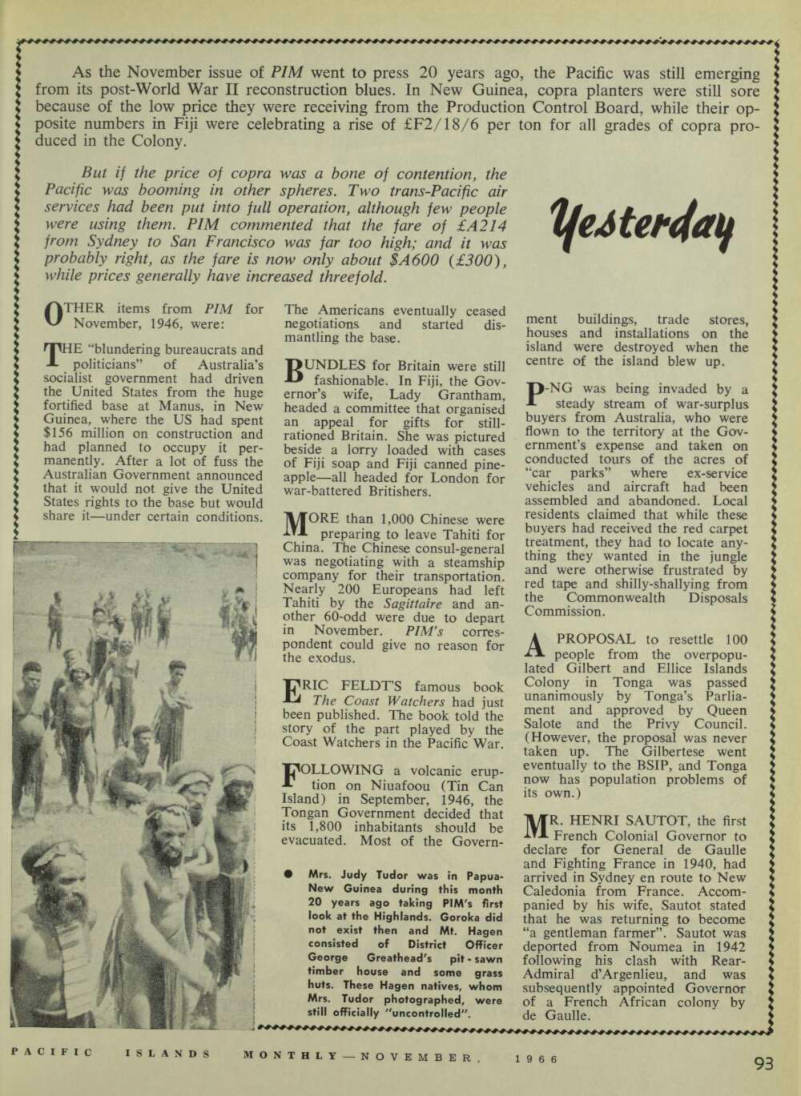 95
95 96
96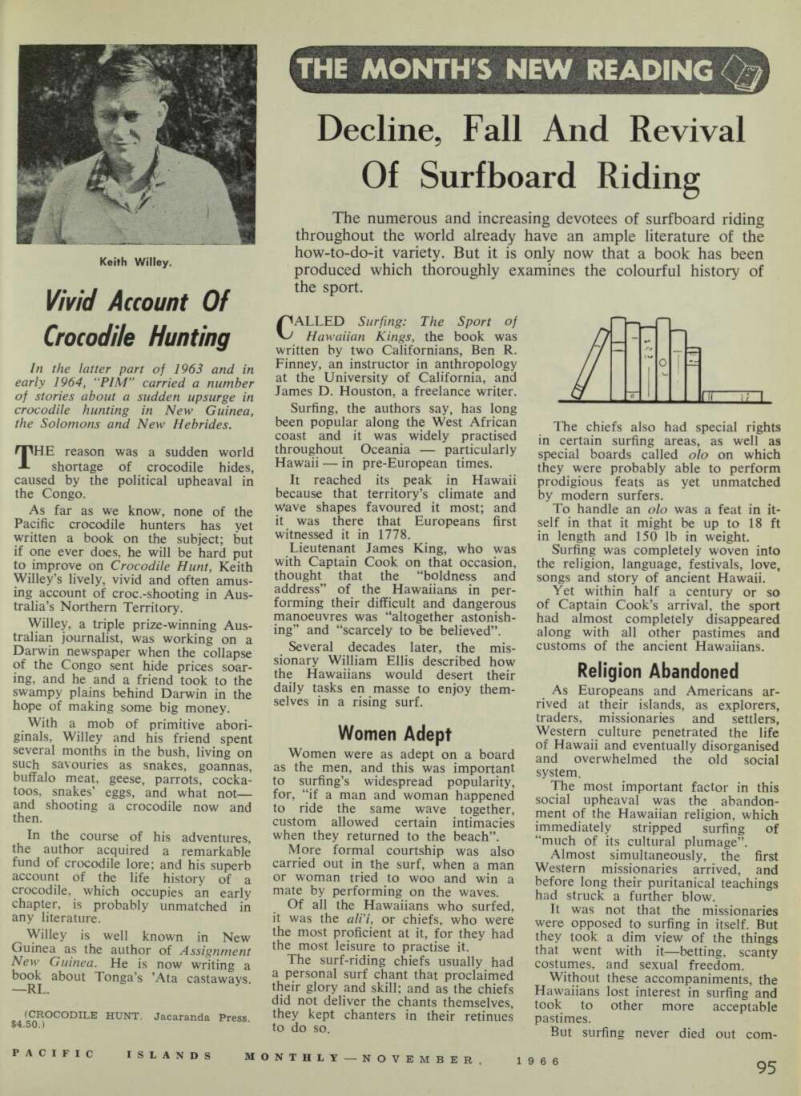 97
97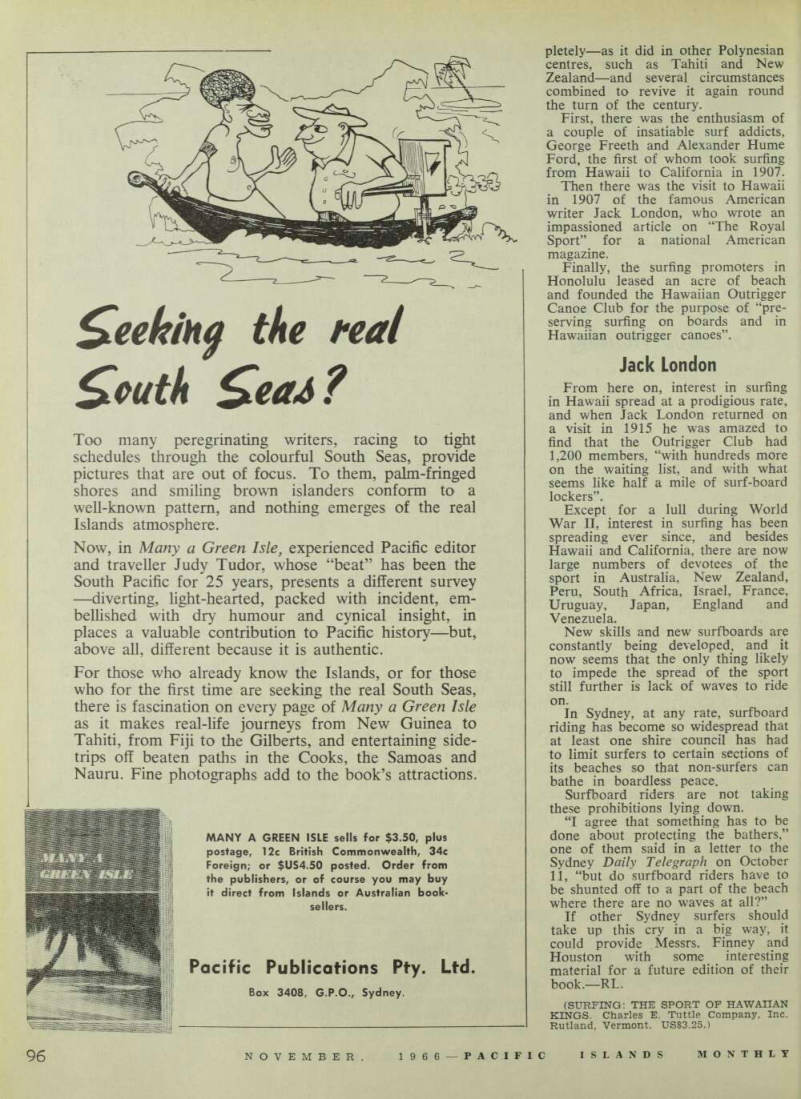 98
98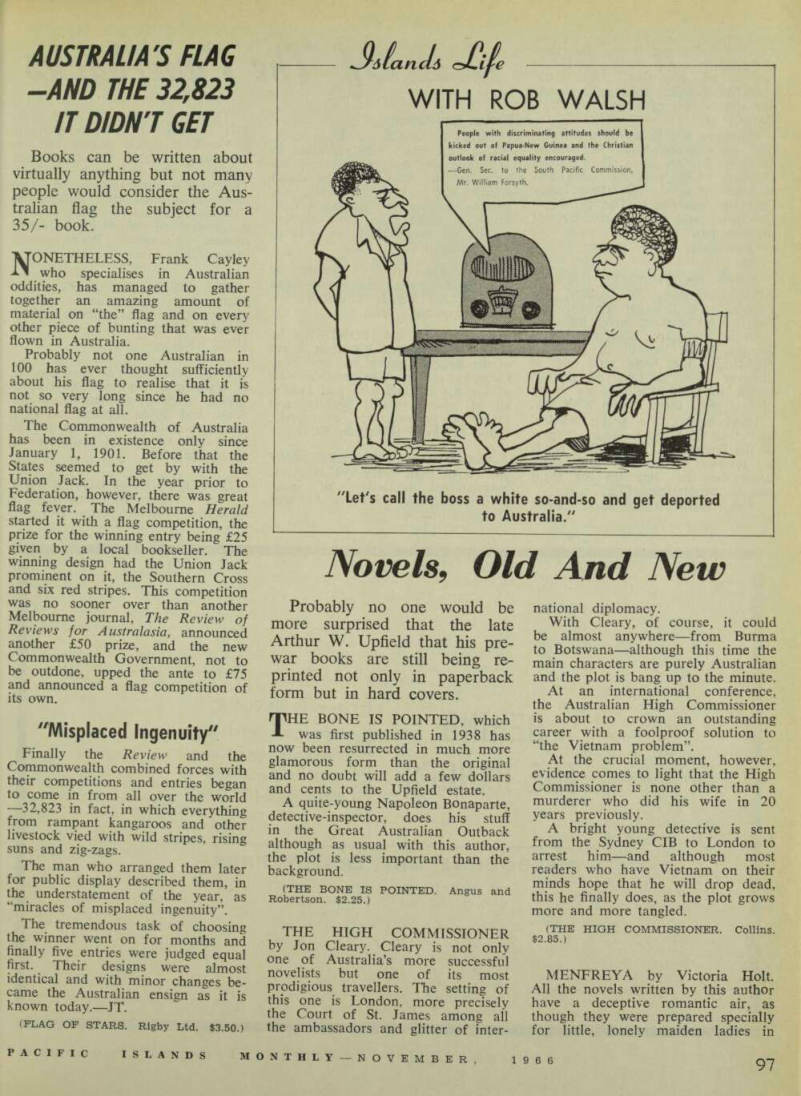 99
99 100
100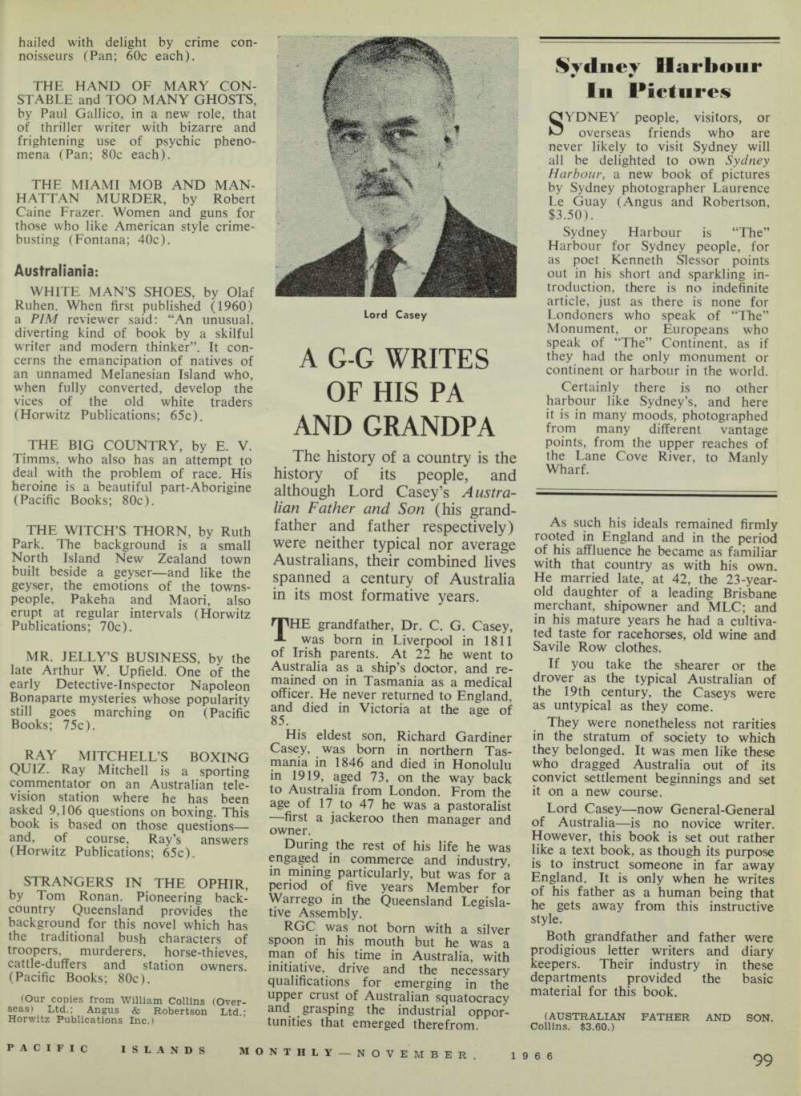 101
101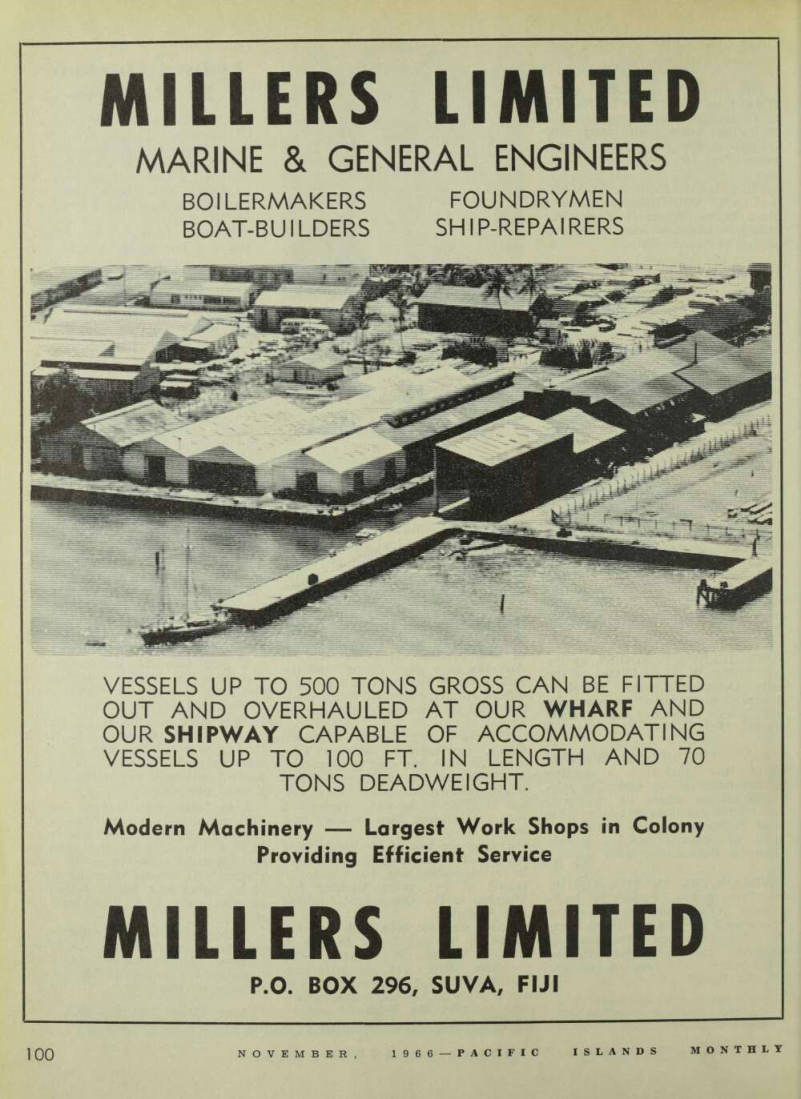 102
102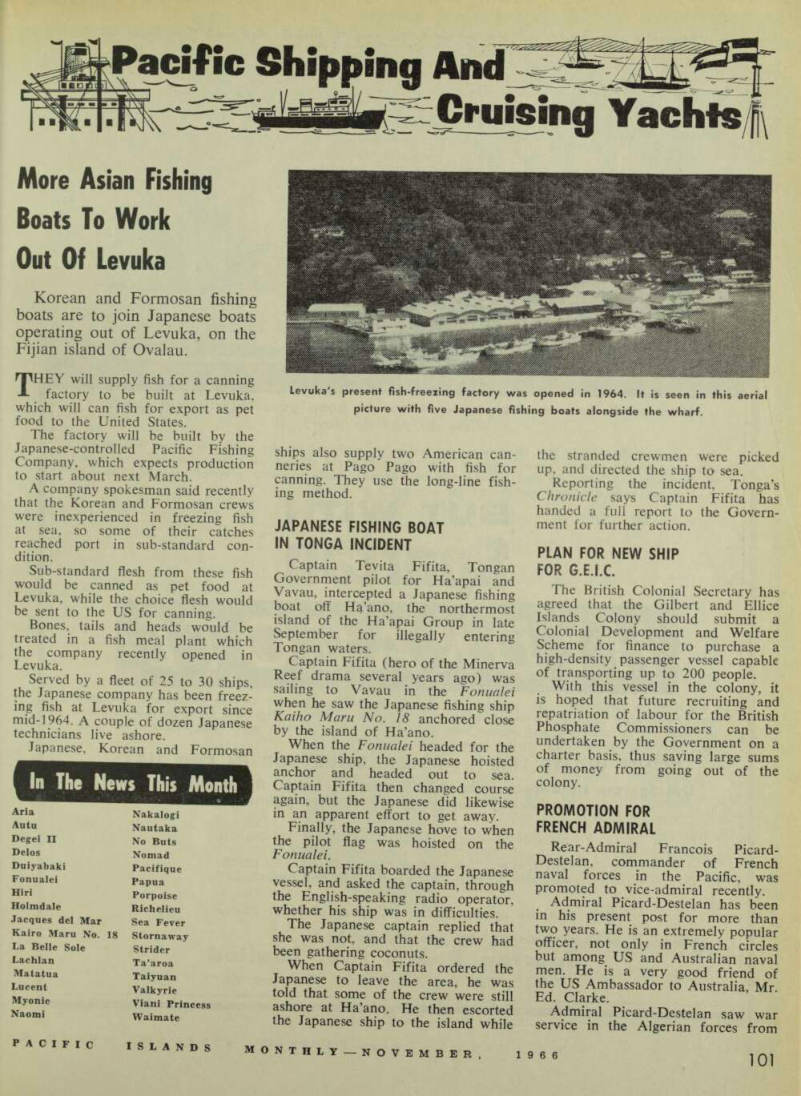 103
103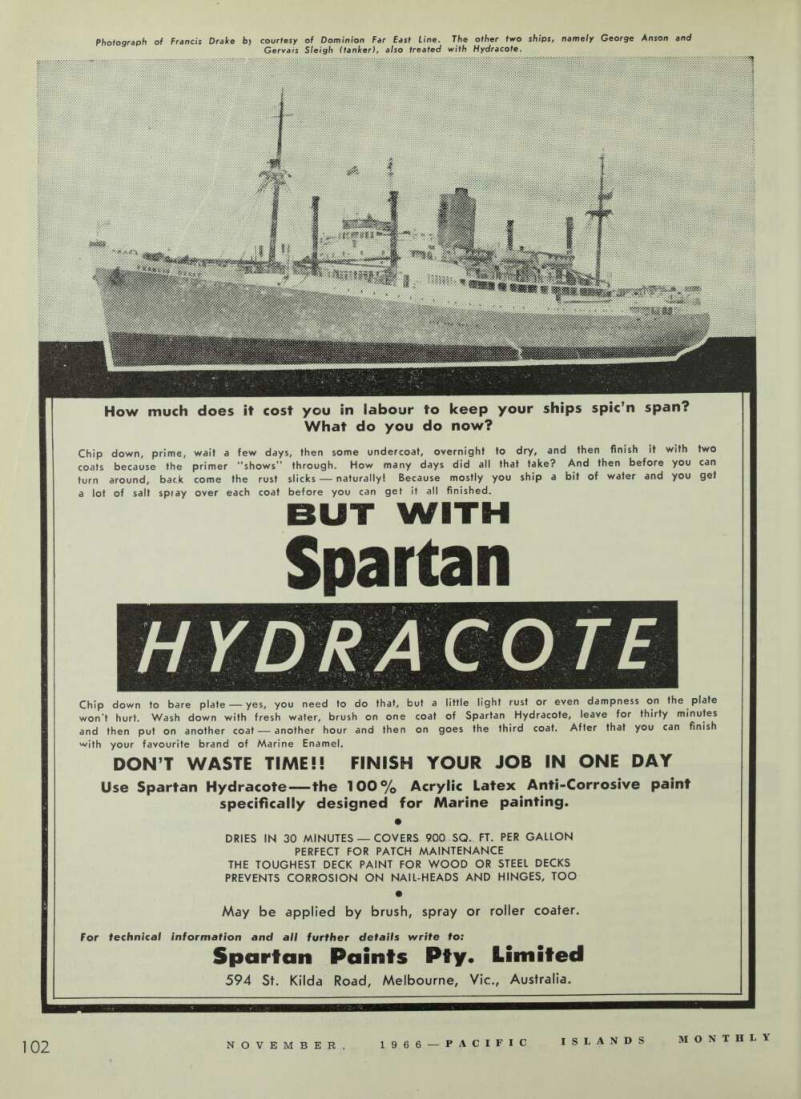 104
104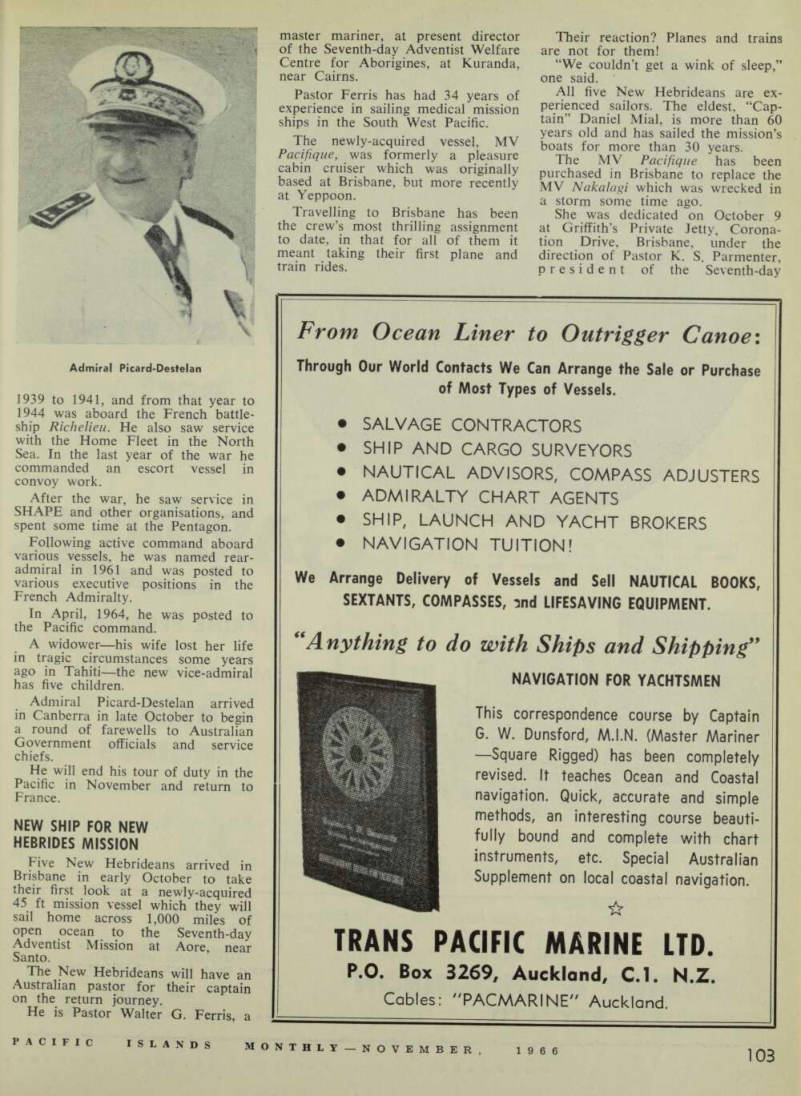 105
105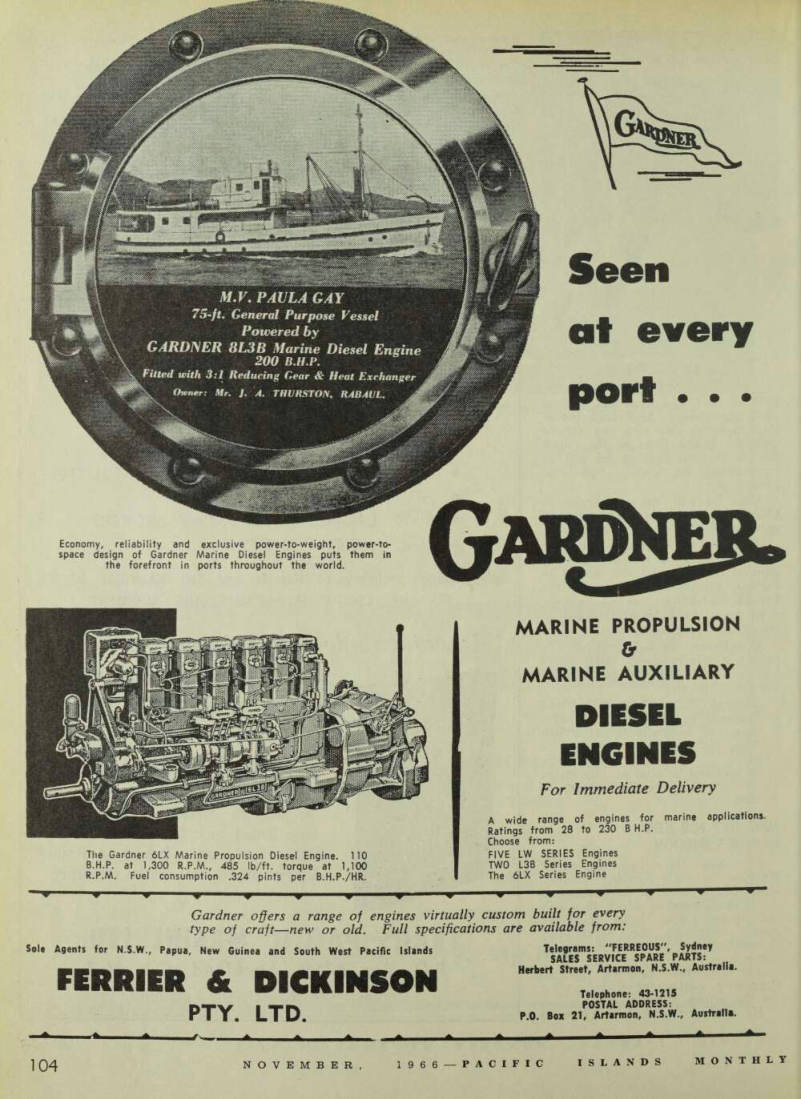 106
106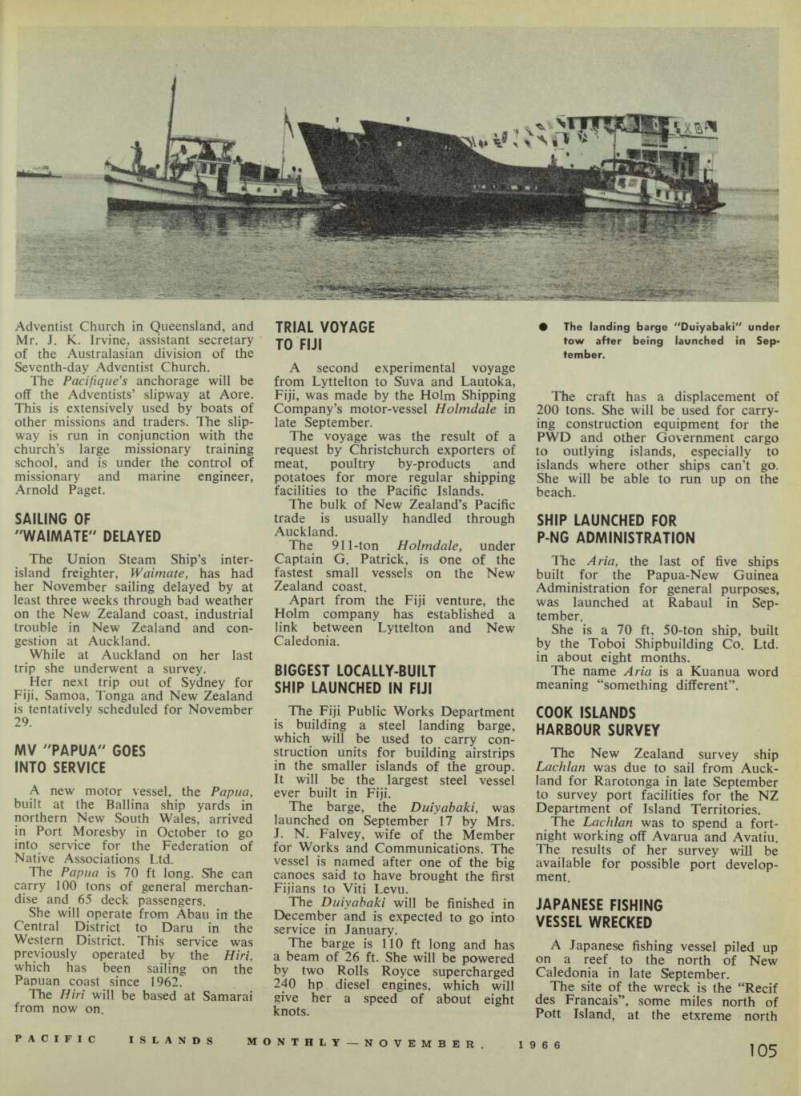 107
107 108
108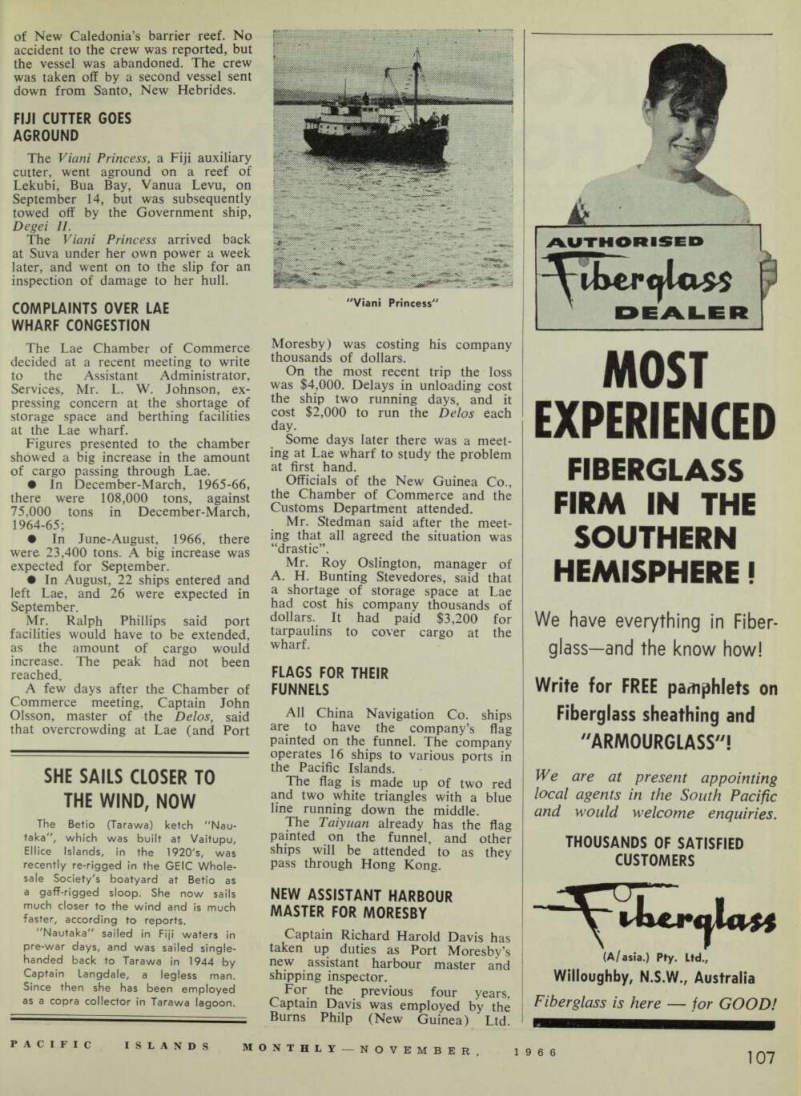 109
109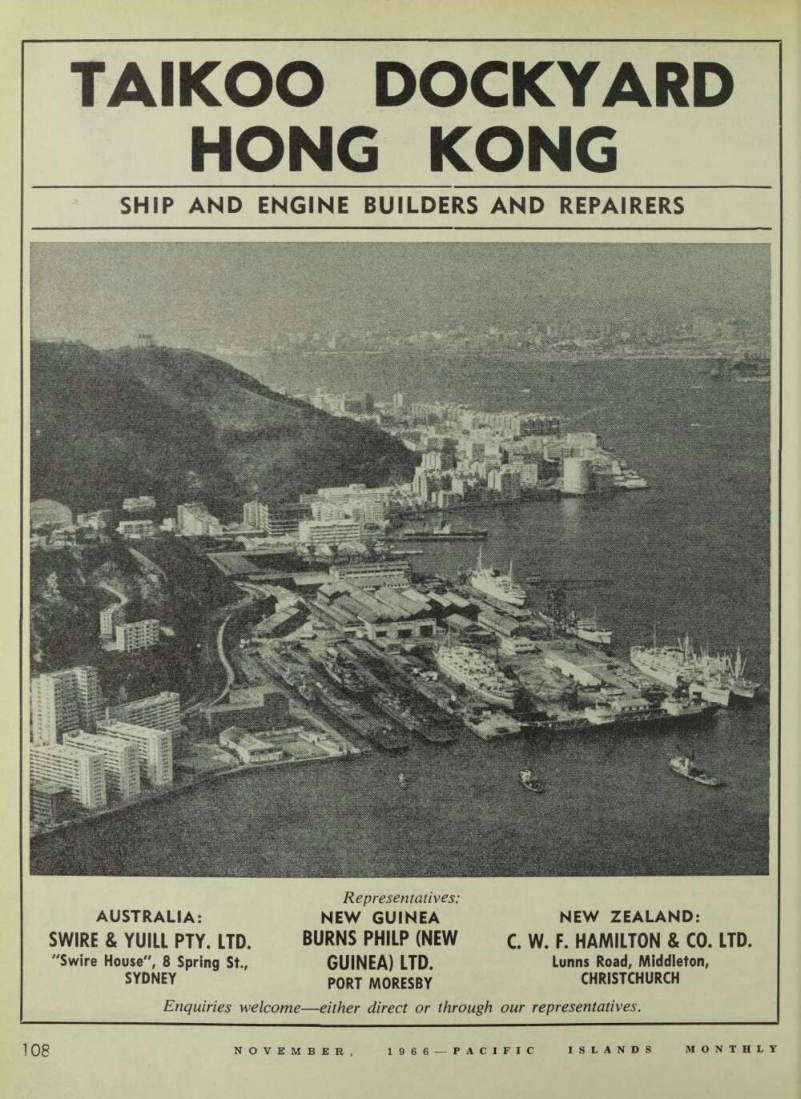 110
110 111
111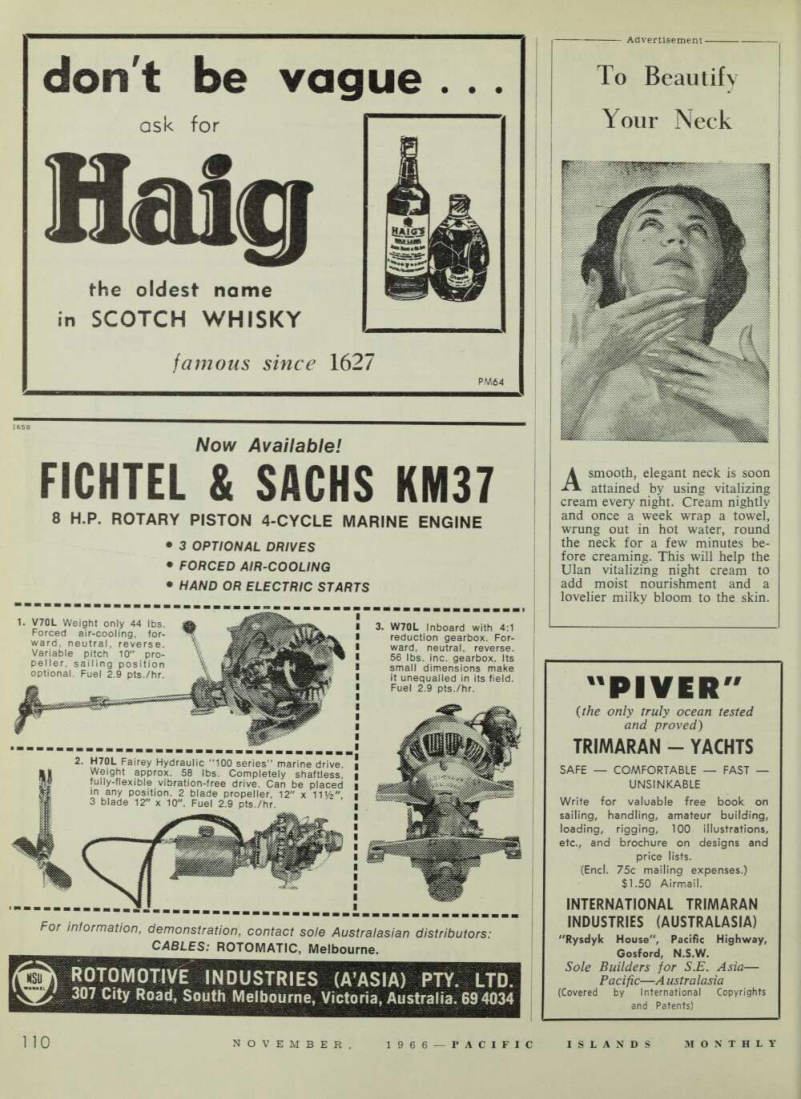 112
112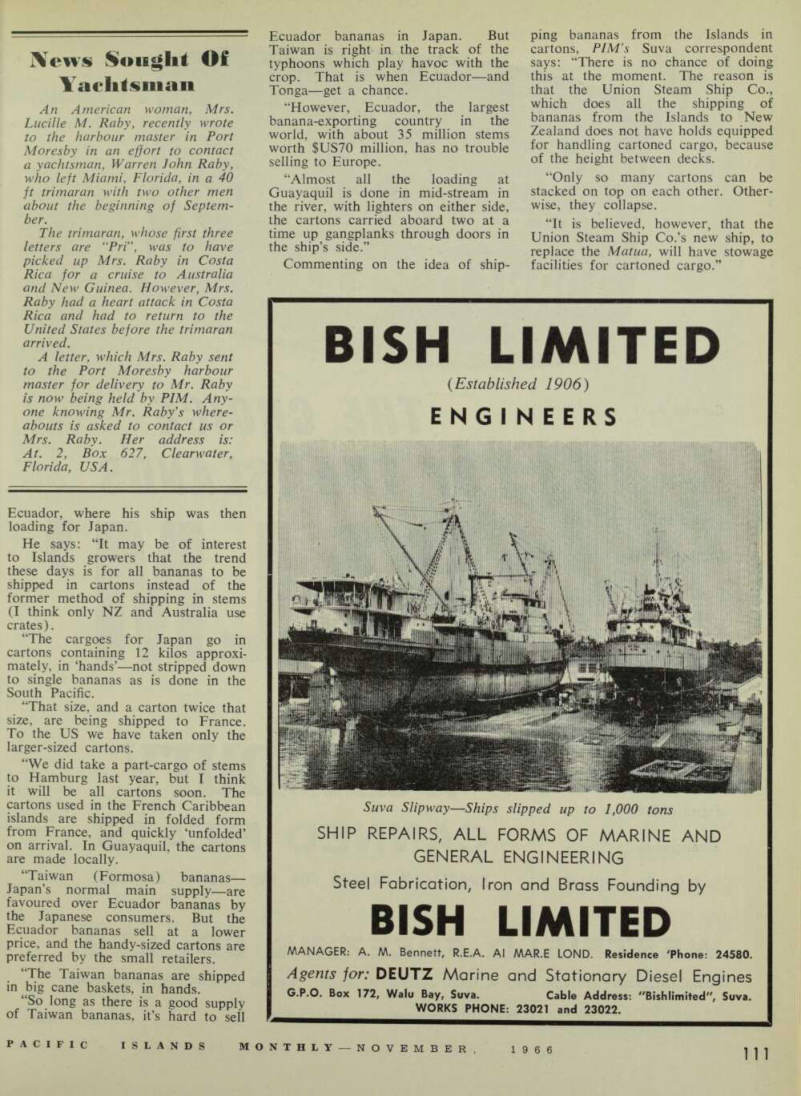 113
113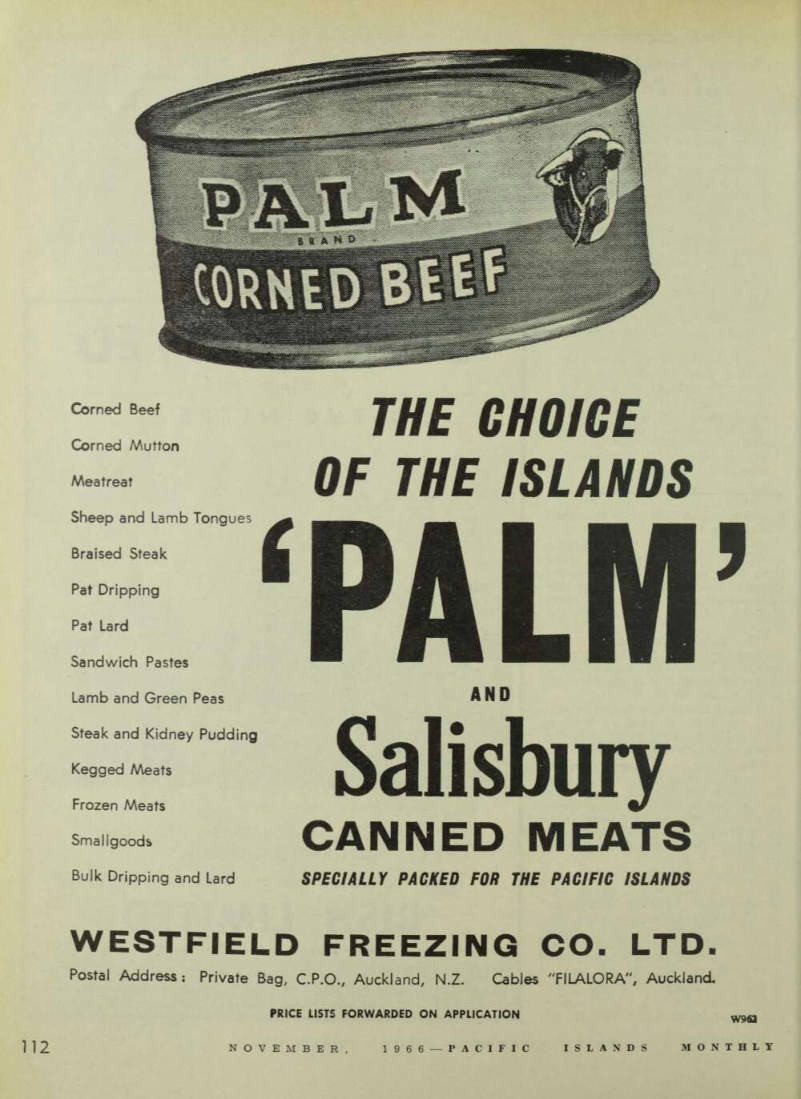 114
114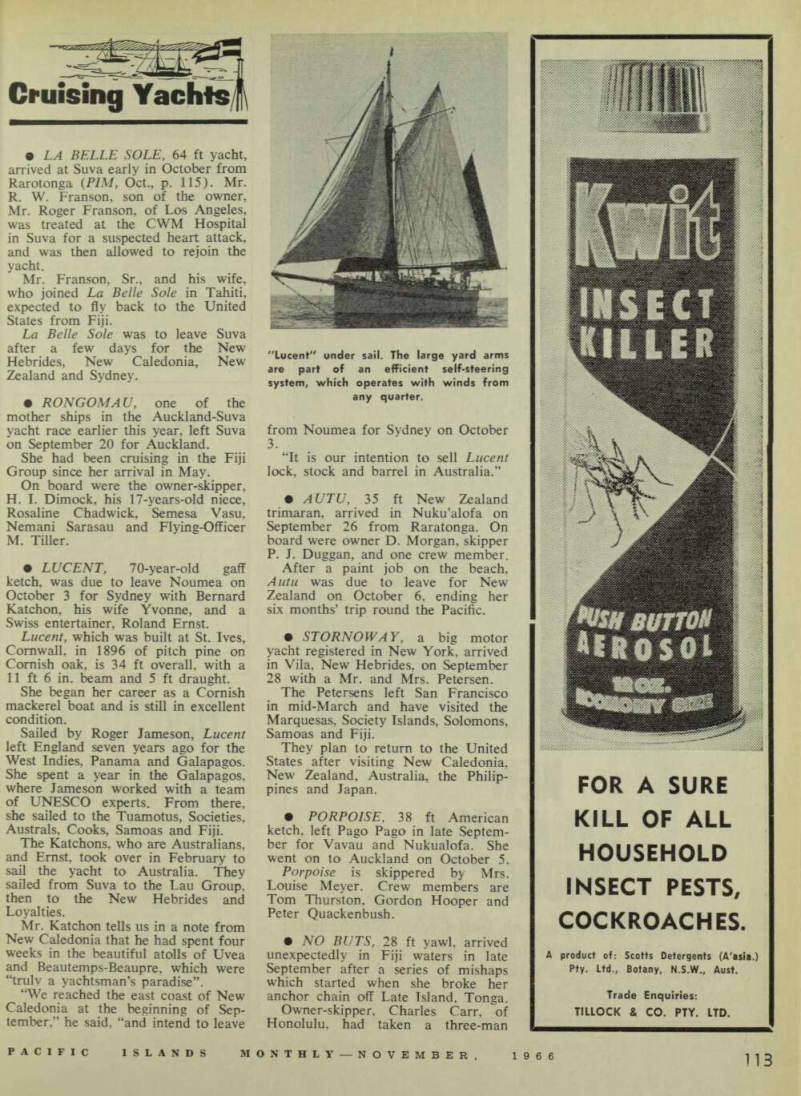 115
115 116
116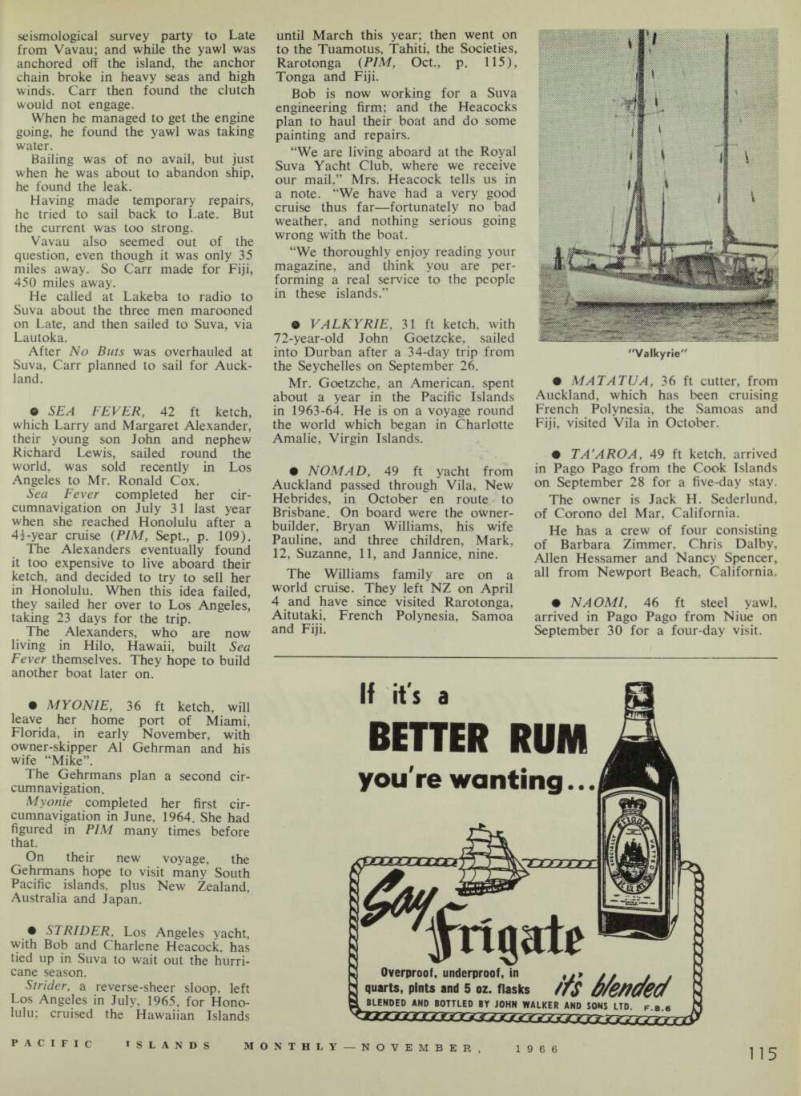 117
117 118
118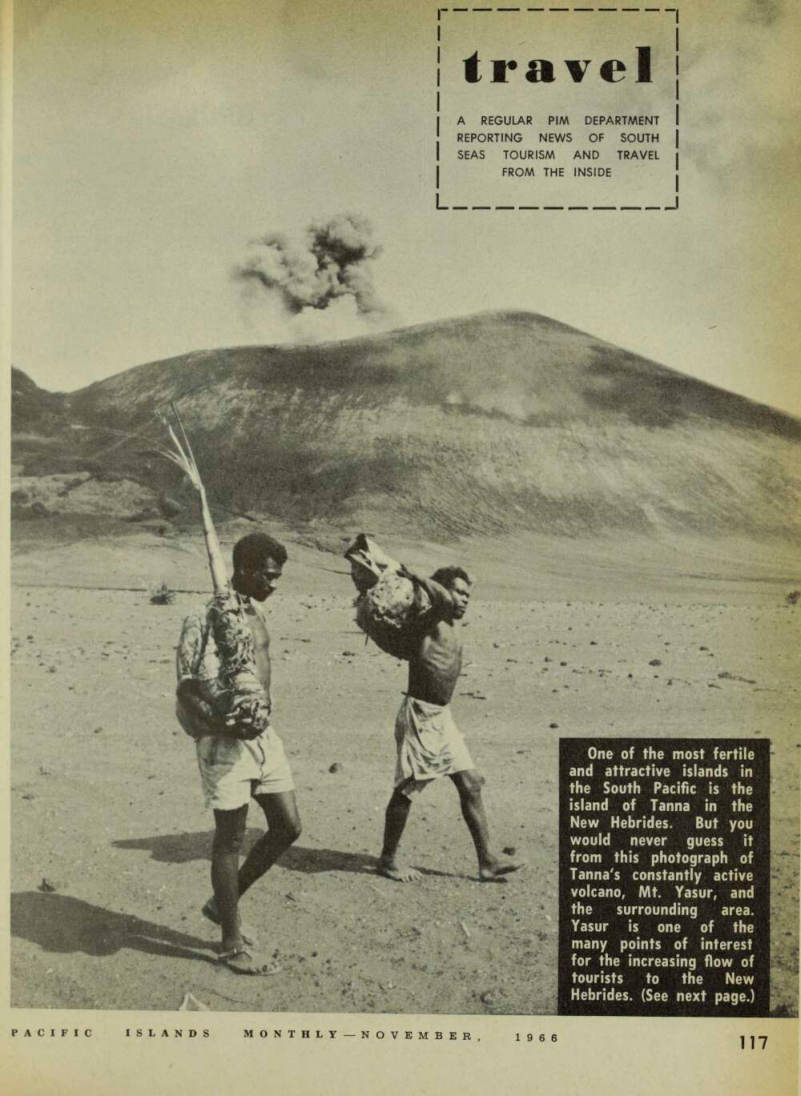 119
119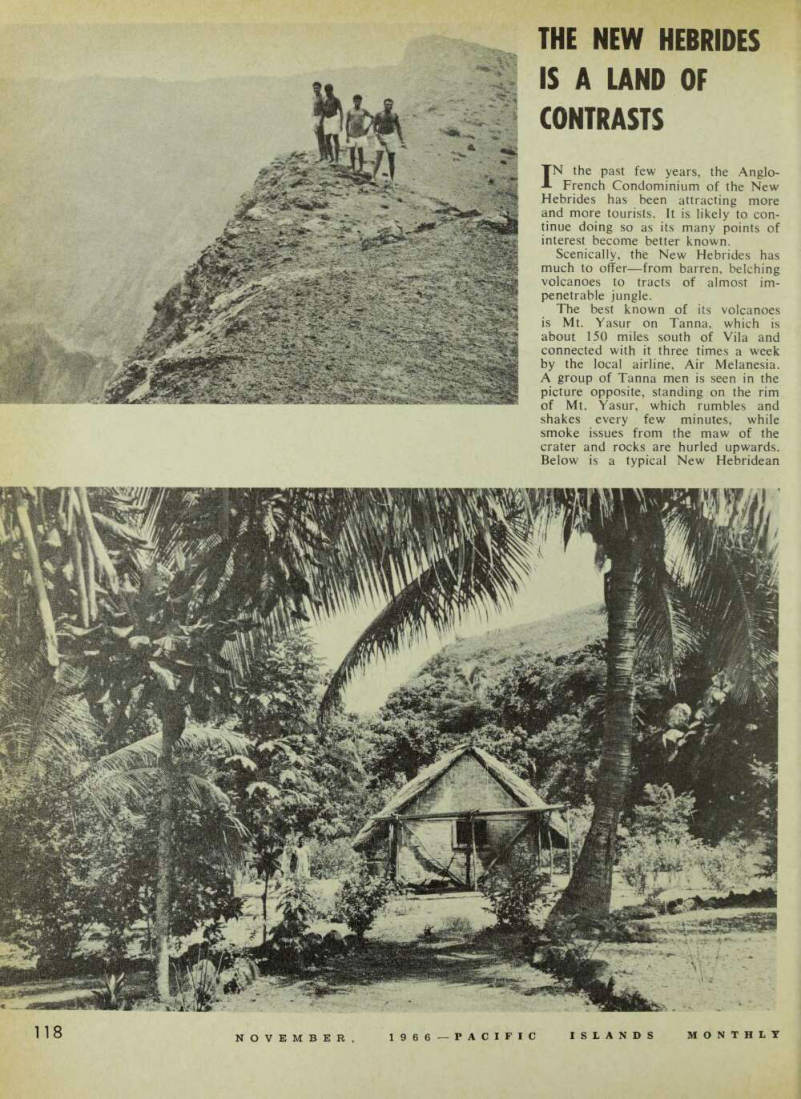 120
120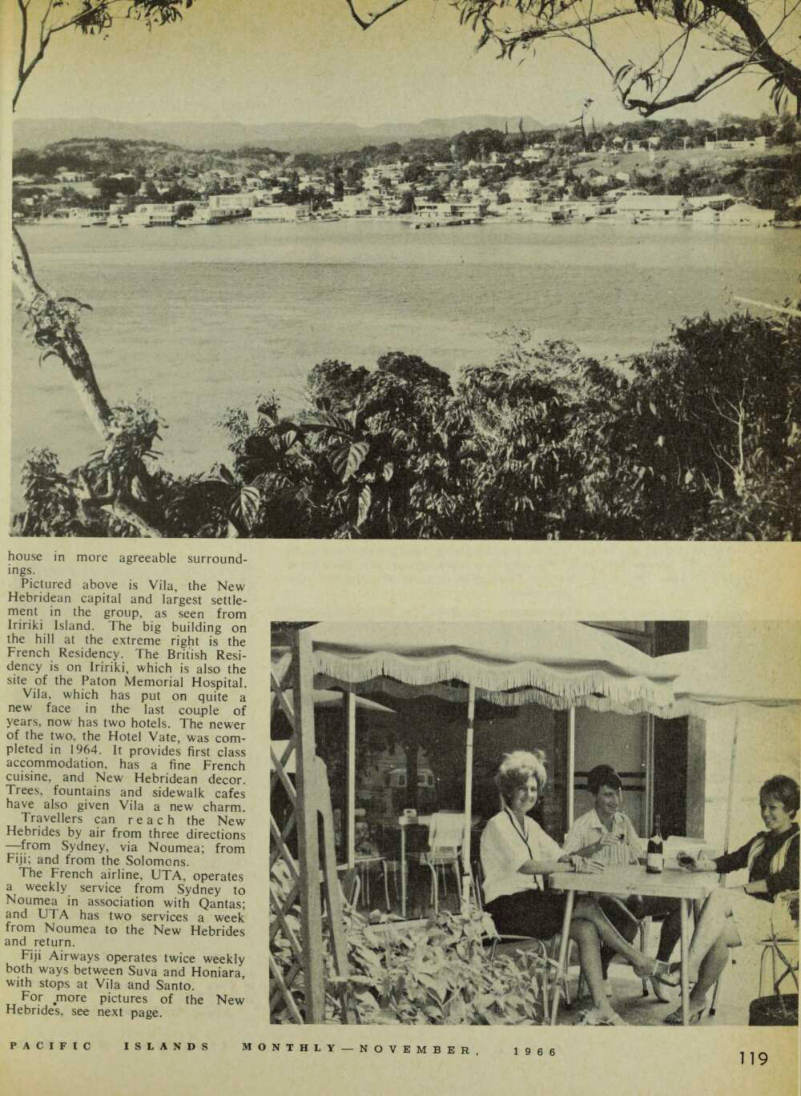 121
121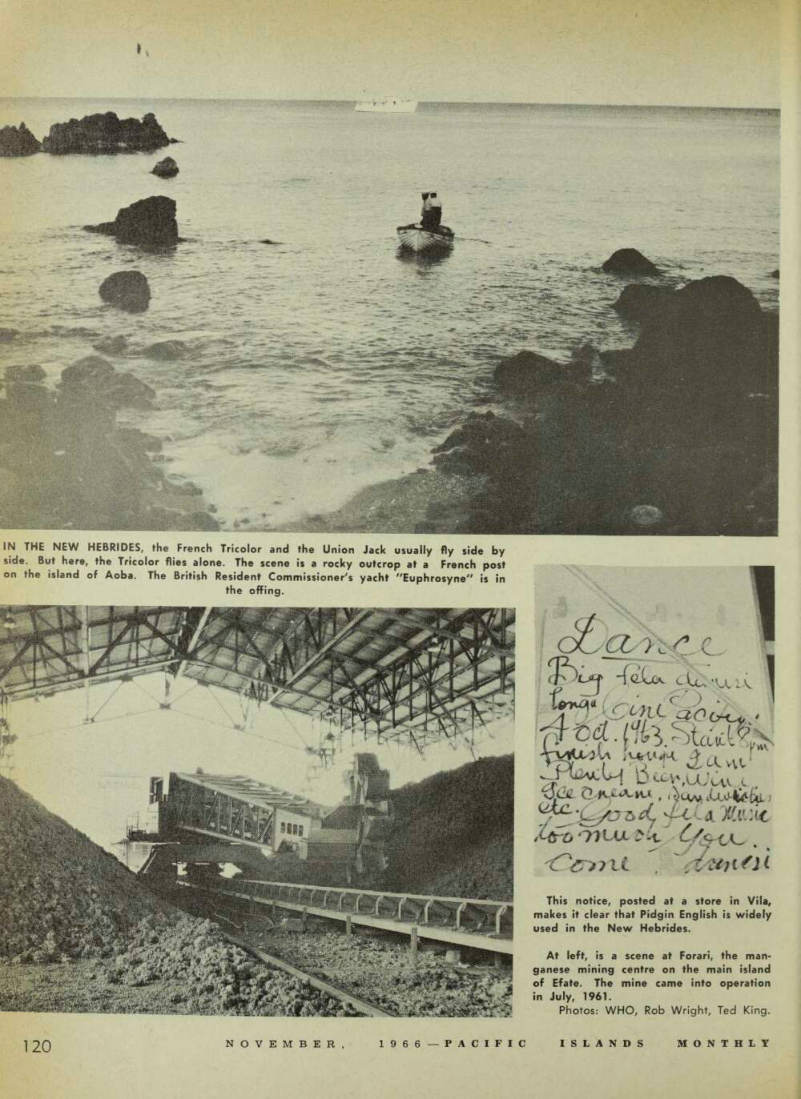 122
122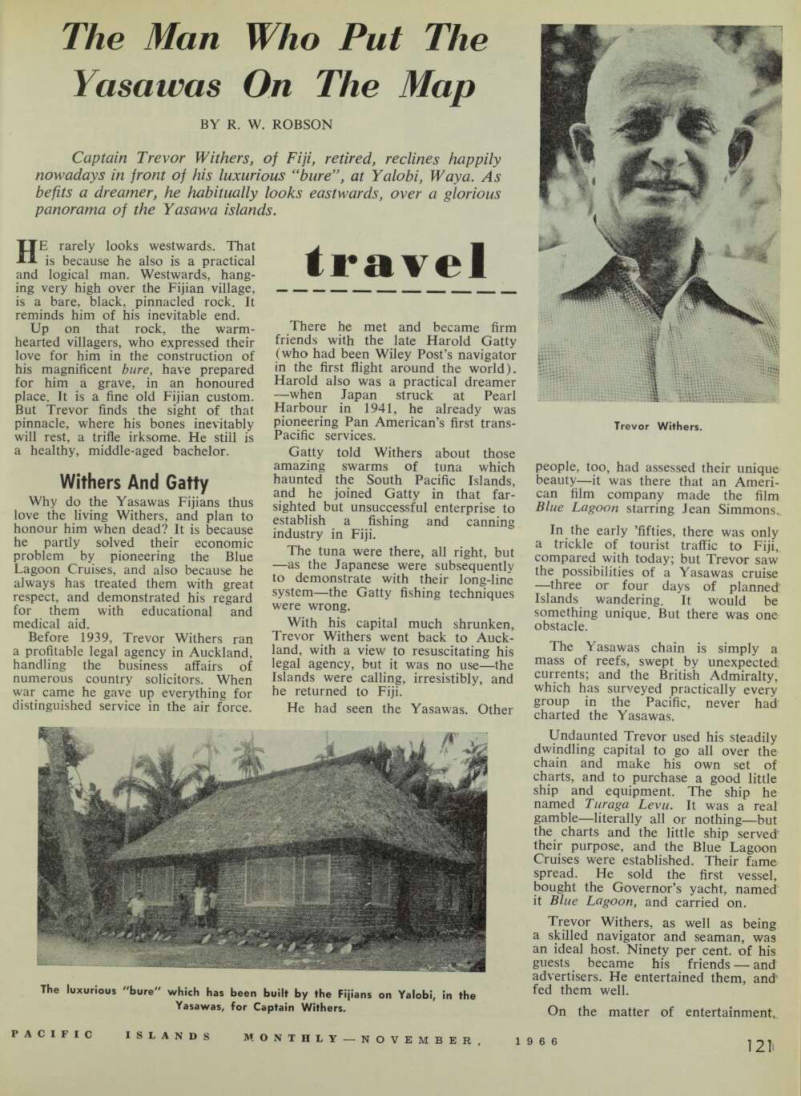 123
123 124
124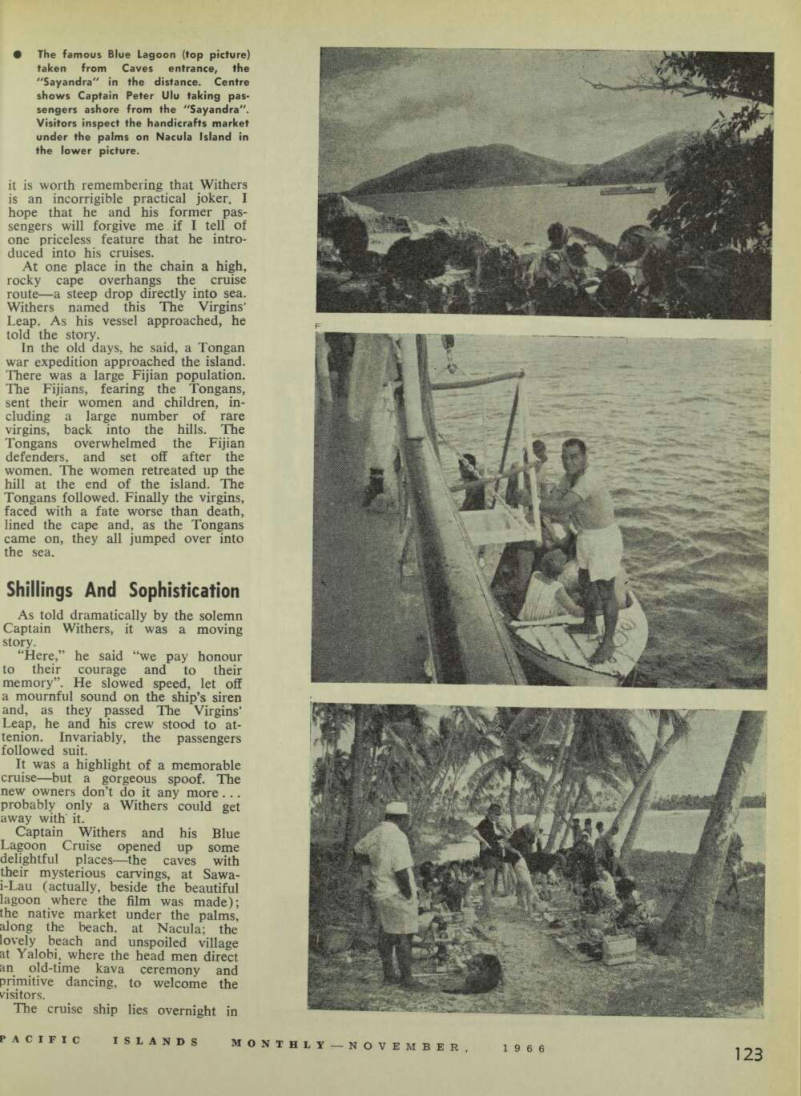 125
125 126
126 127
127 128
128 129
129 130
130 131
131 132
132 133
133 134
134 135
135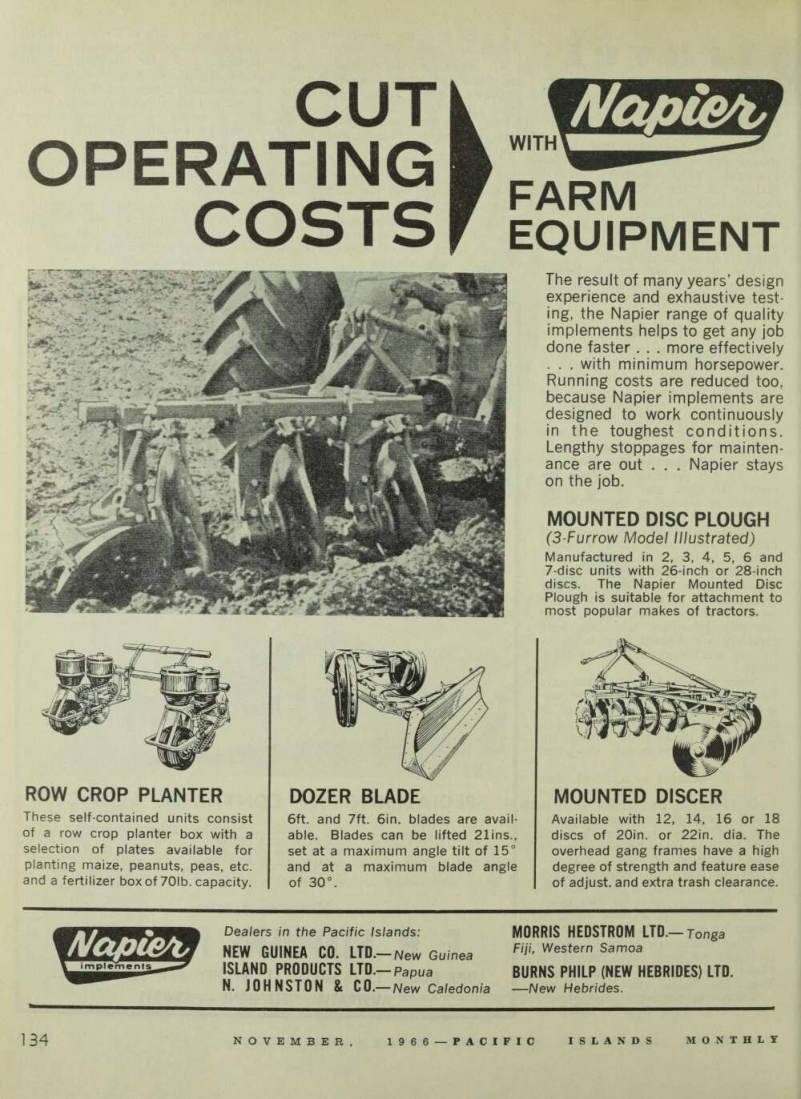 136
136 137
137 138
138 139
139 140
140 141
141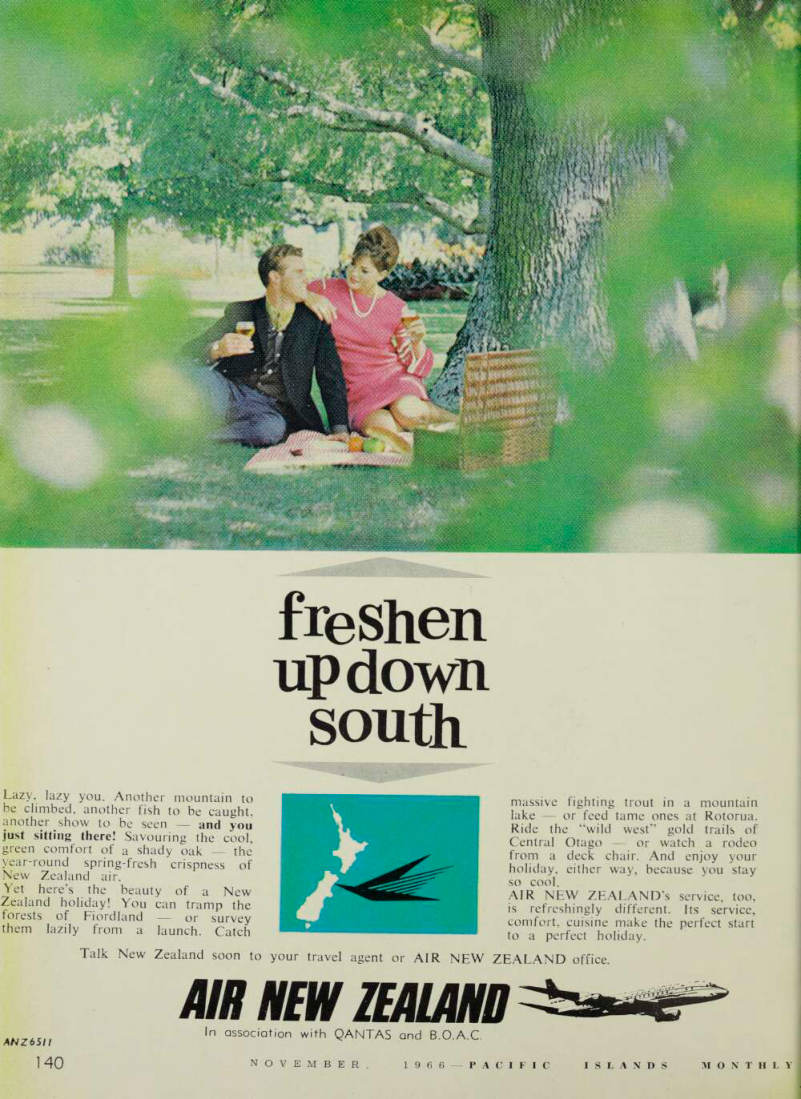 142
142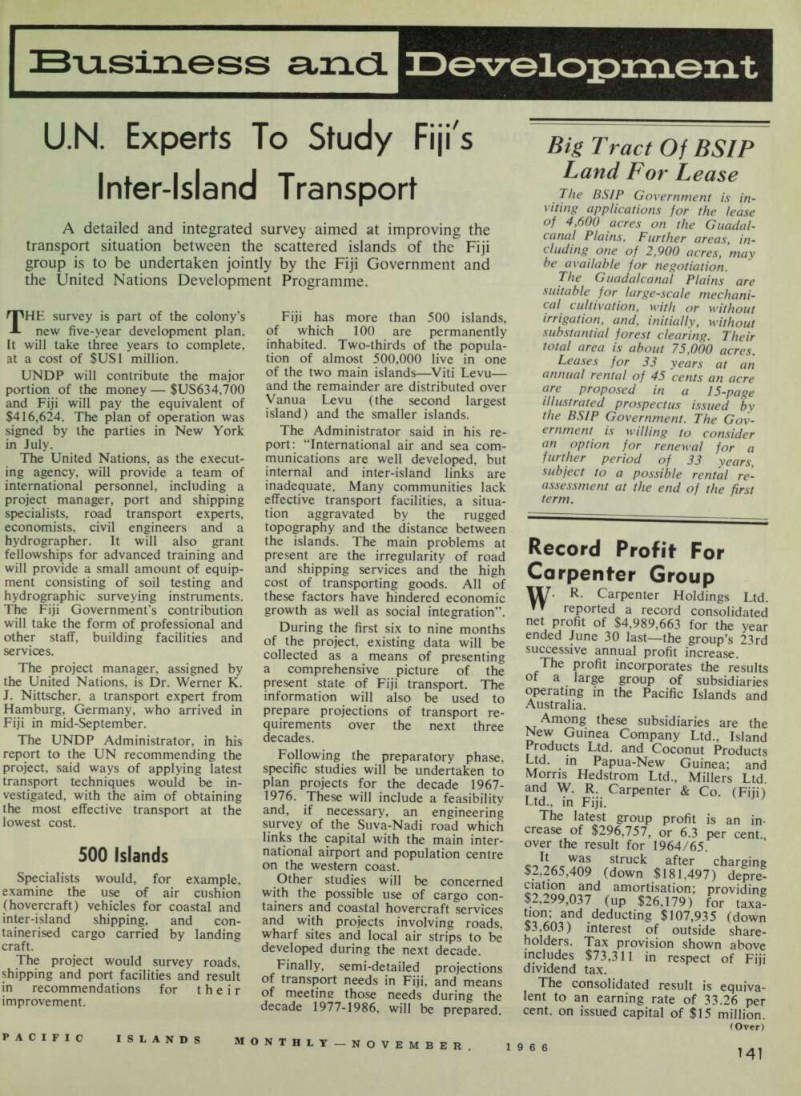 143
143 144
144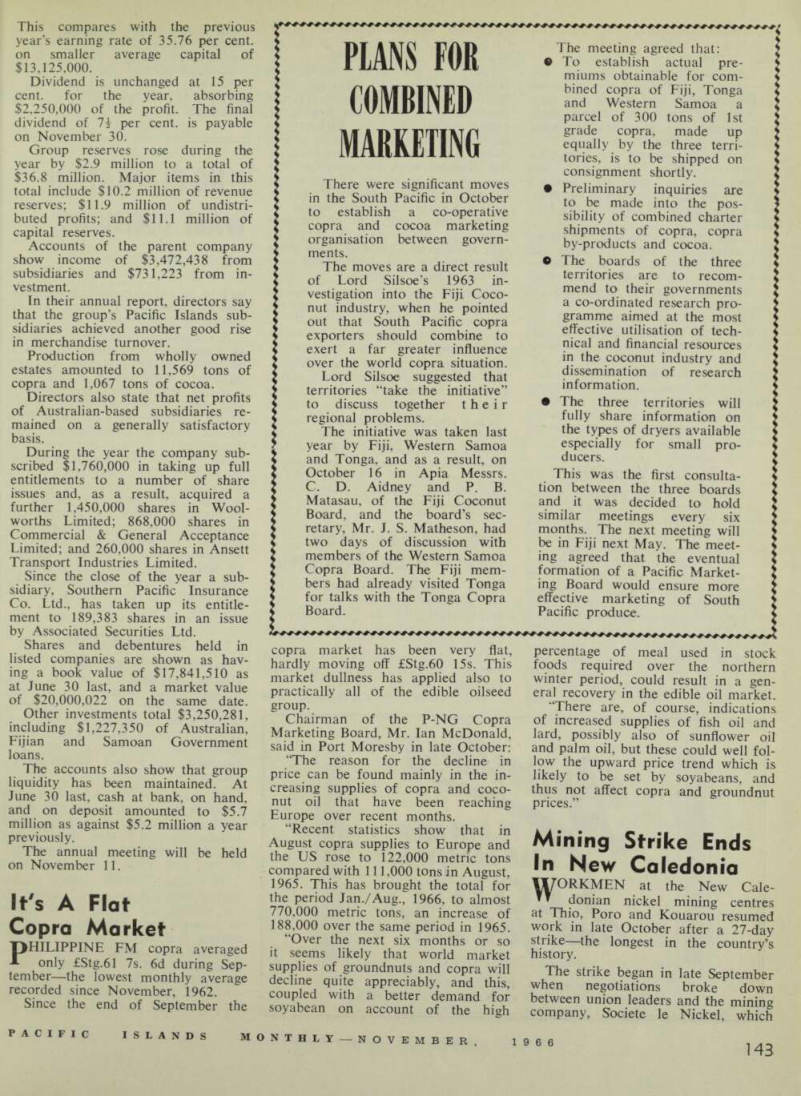 145
145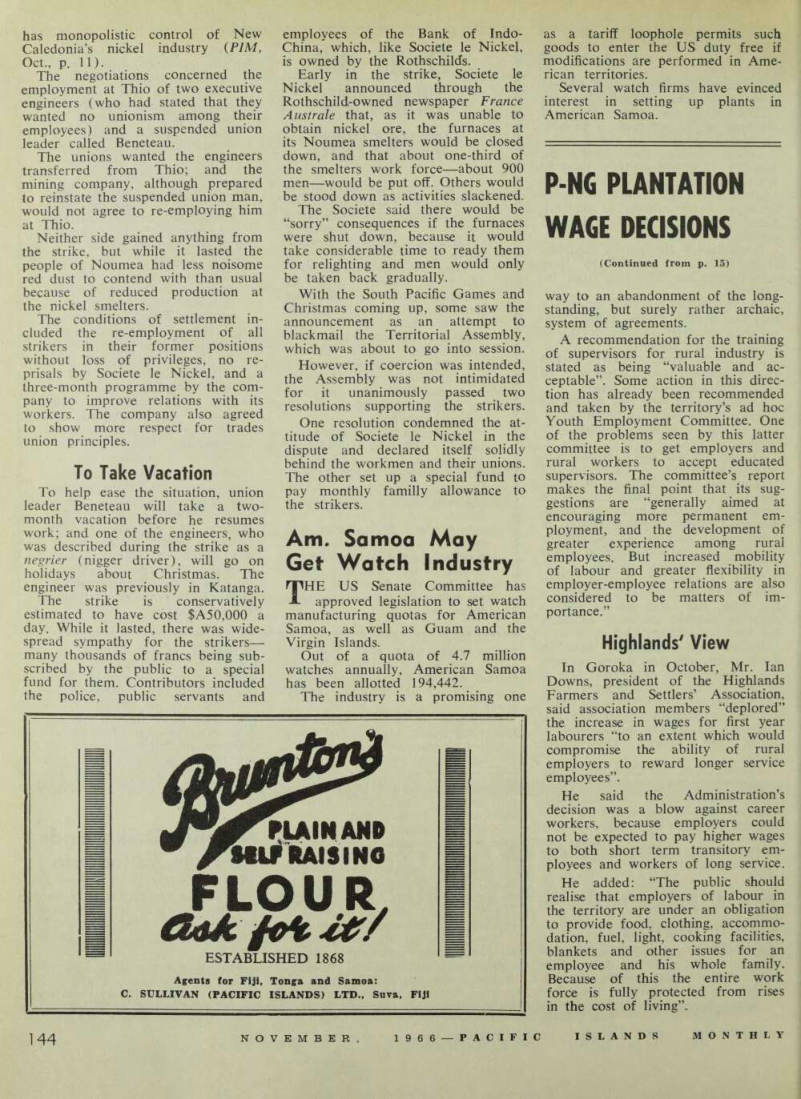 146
146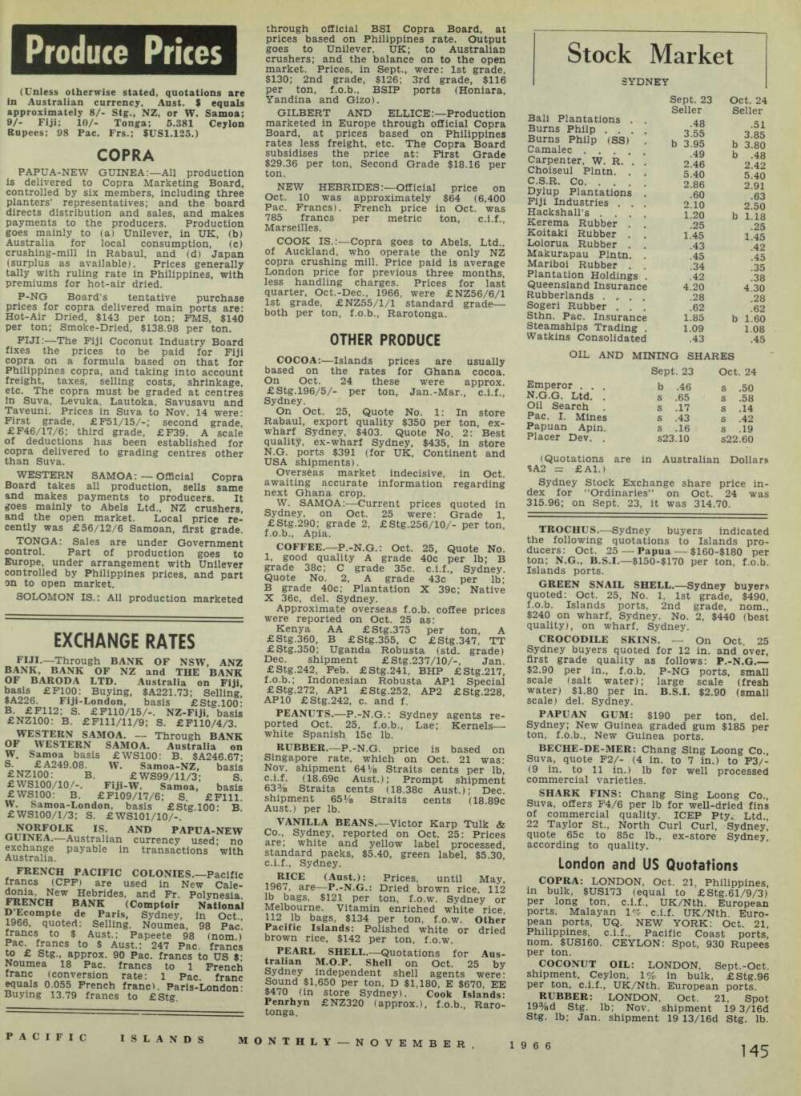 147
147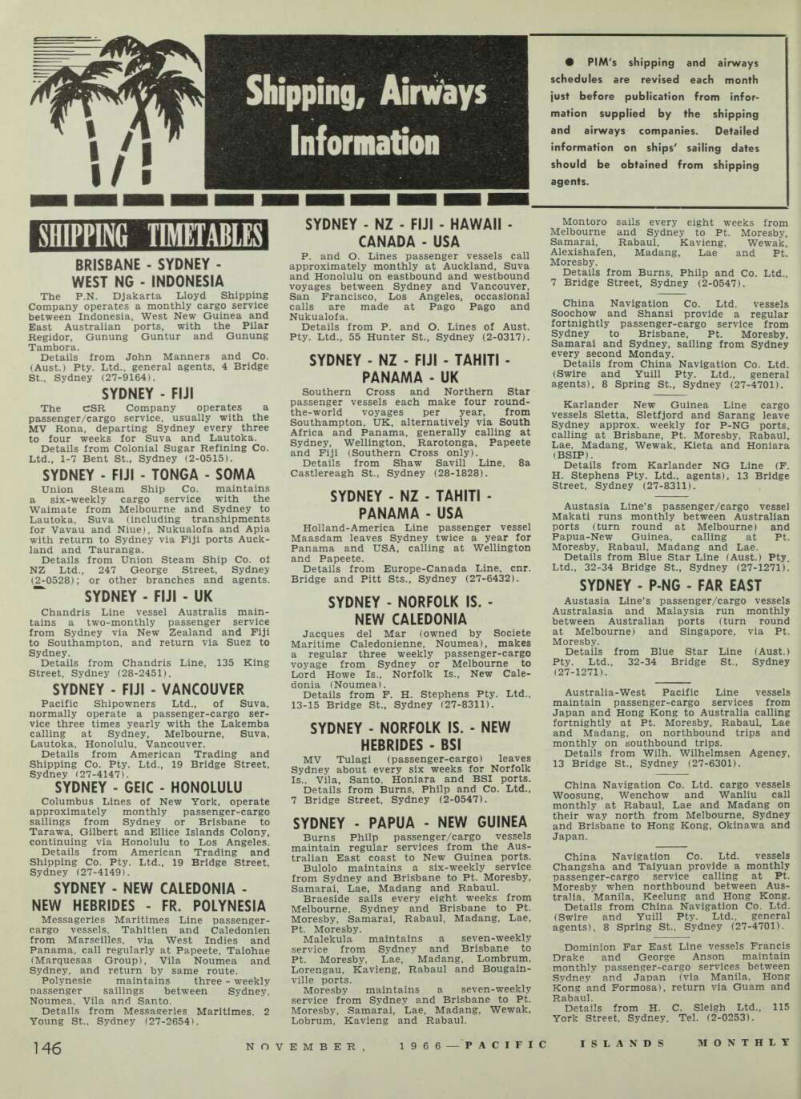 148
148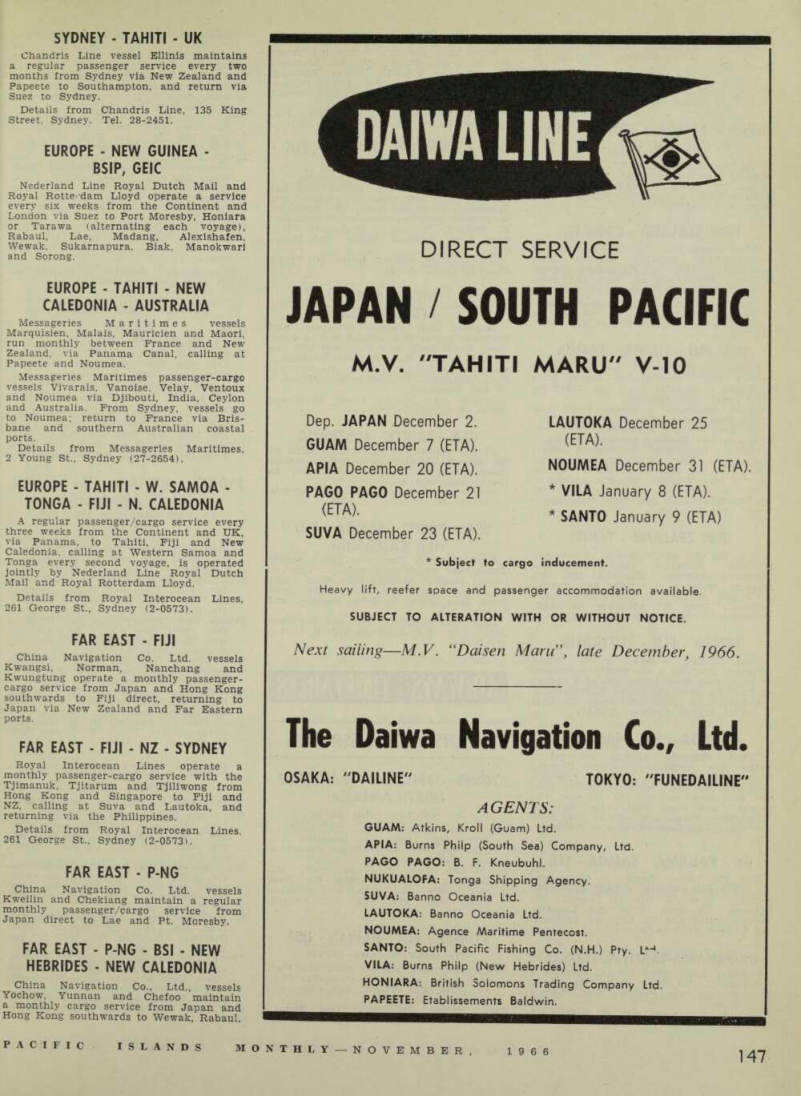 149
149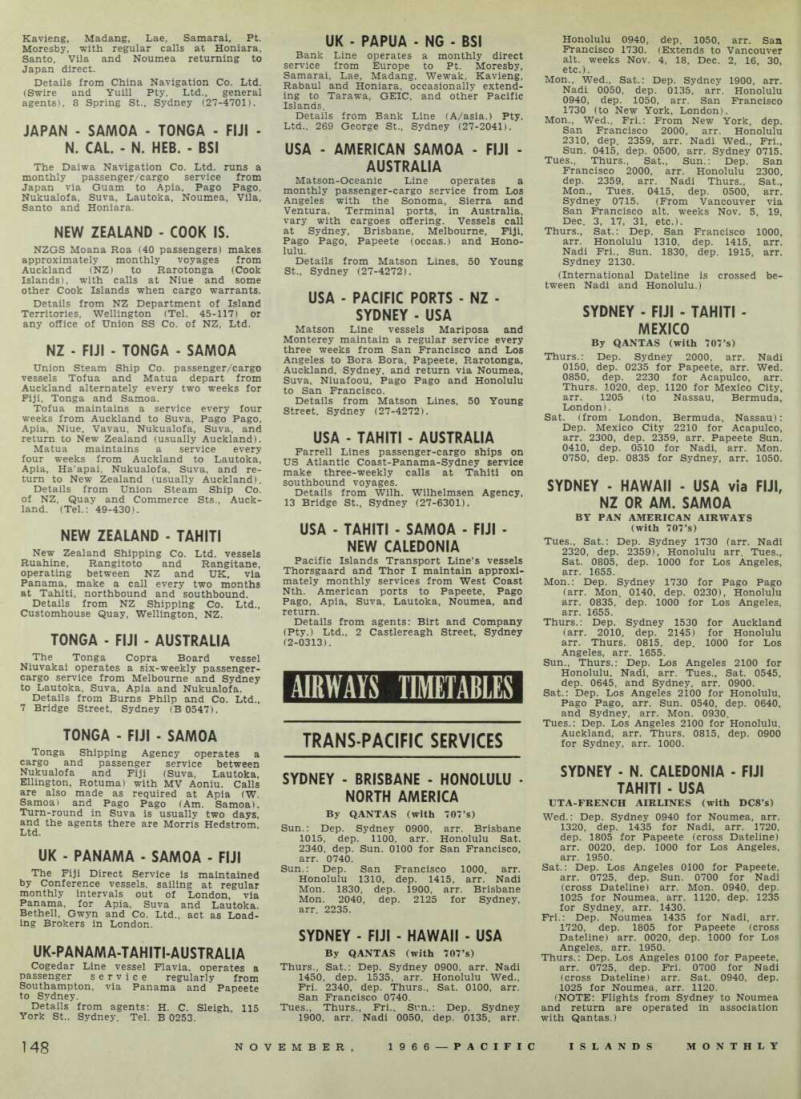 150
150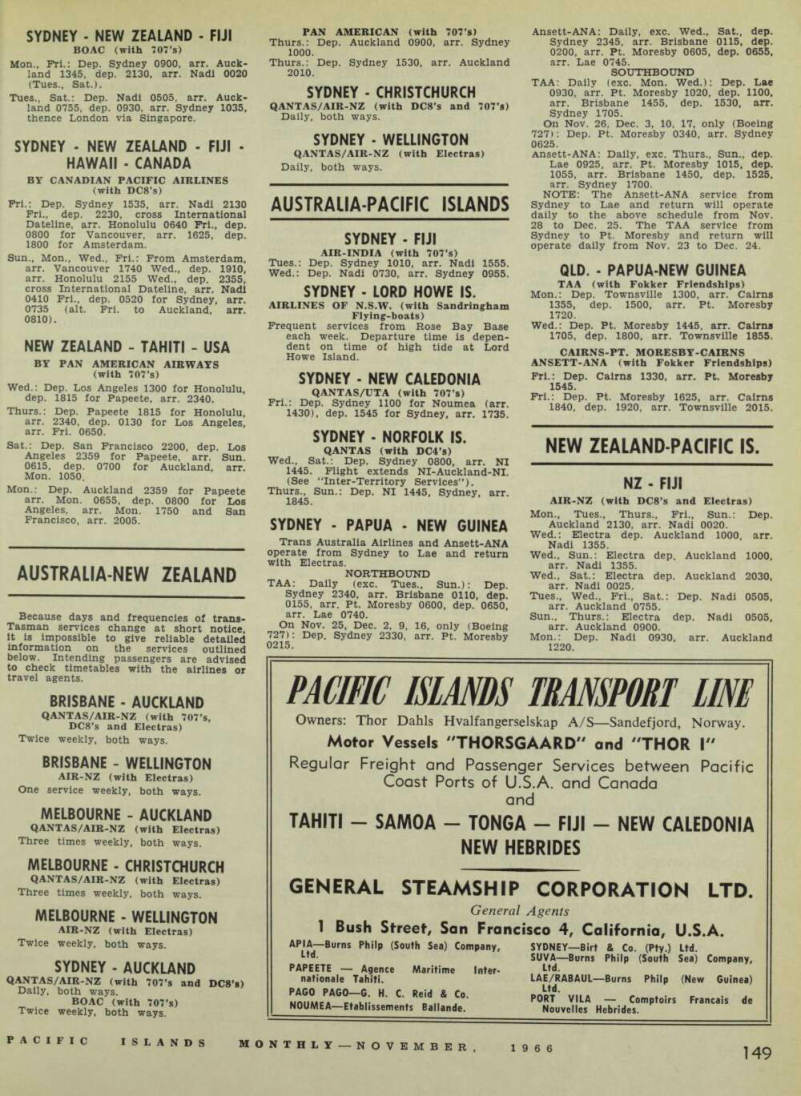 151
151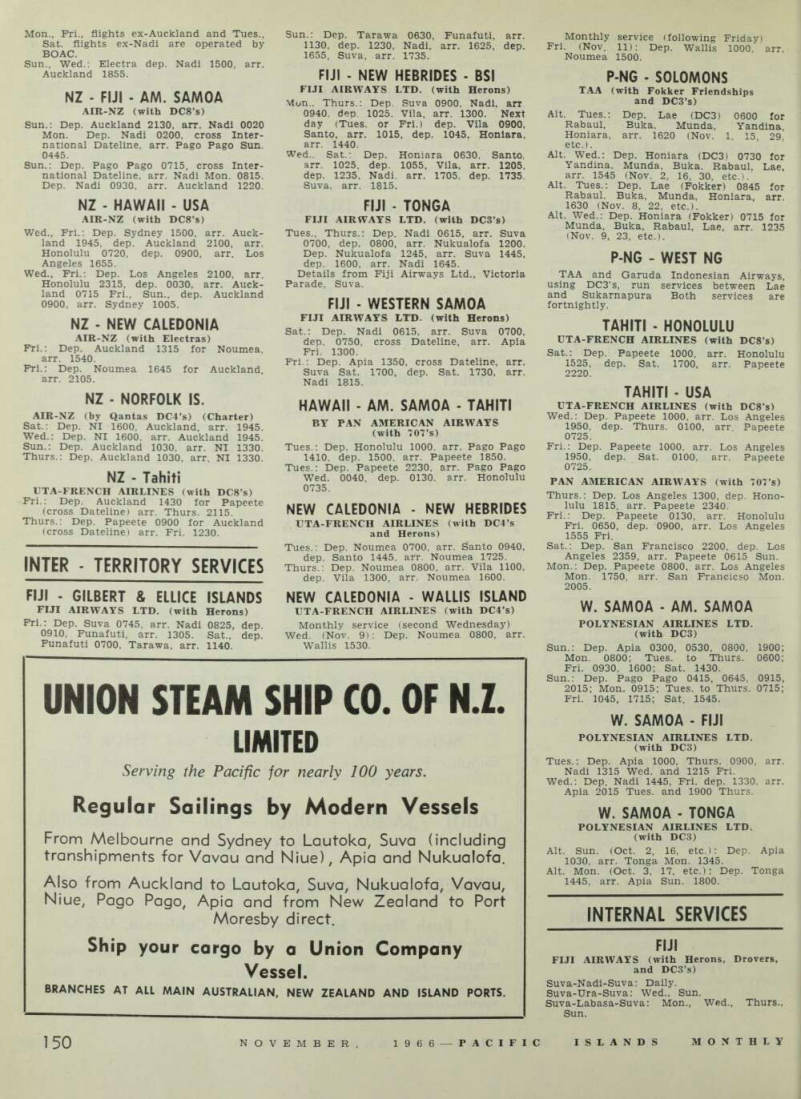 152
152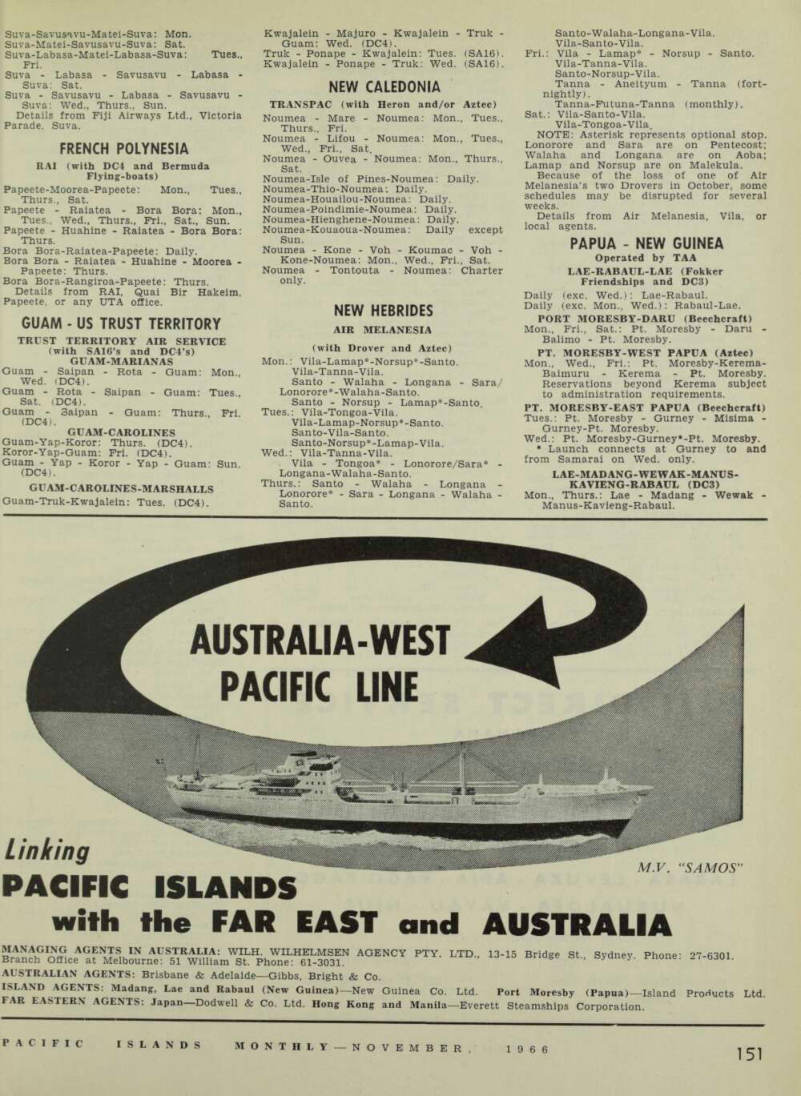 153
153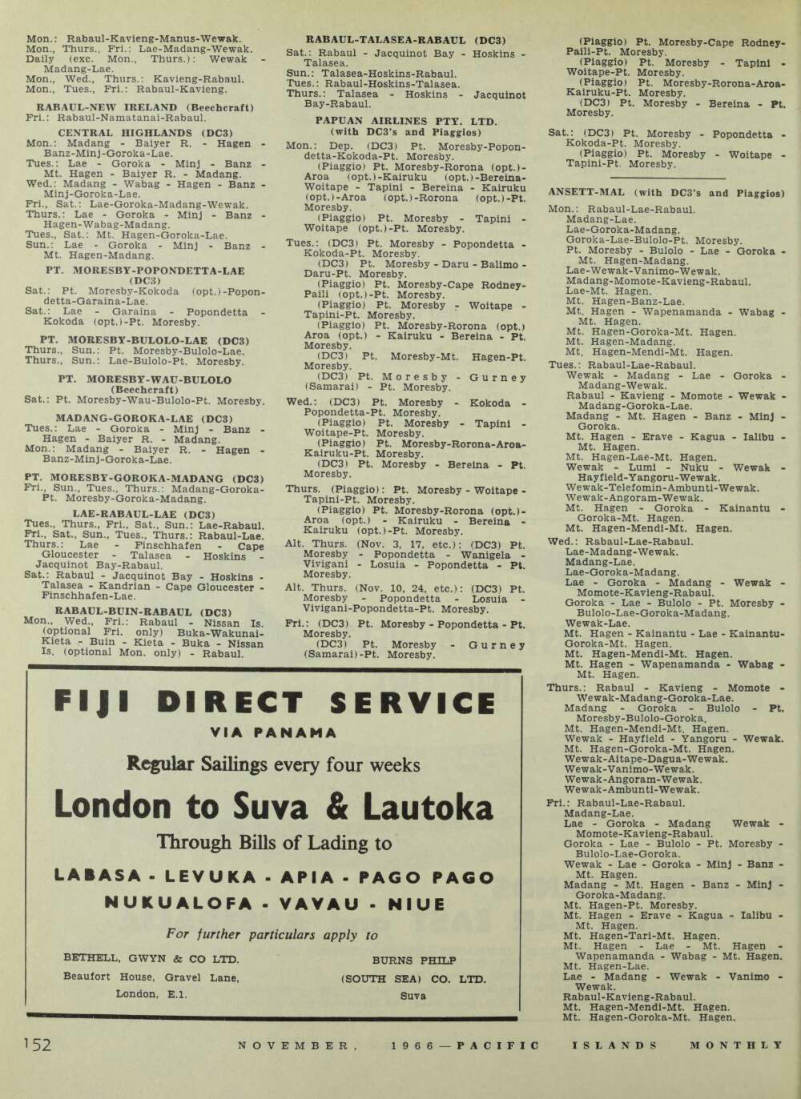 154
154 155
155 156
156 157
157 158
158 159
159 160
160 161
161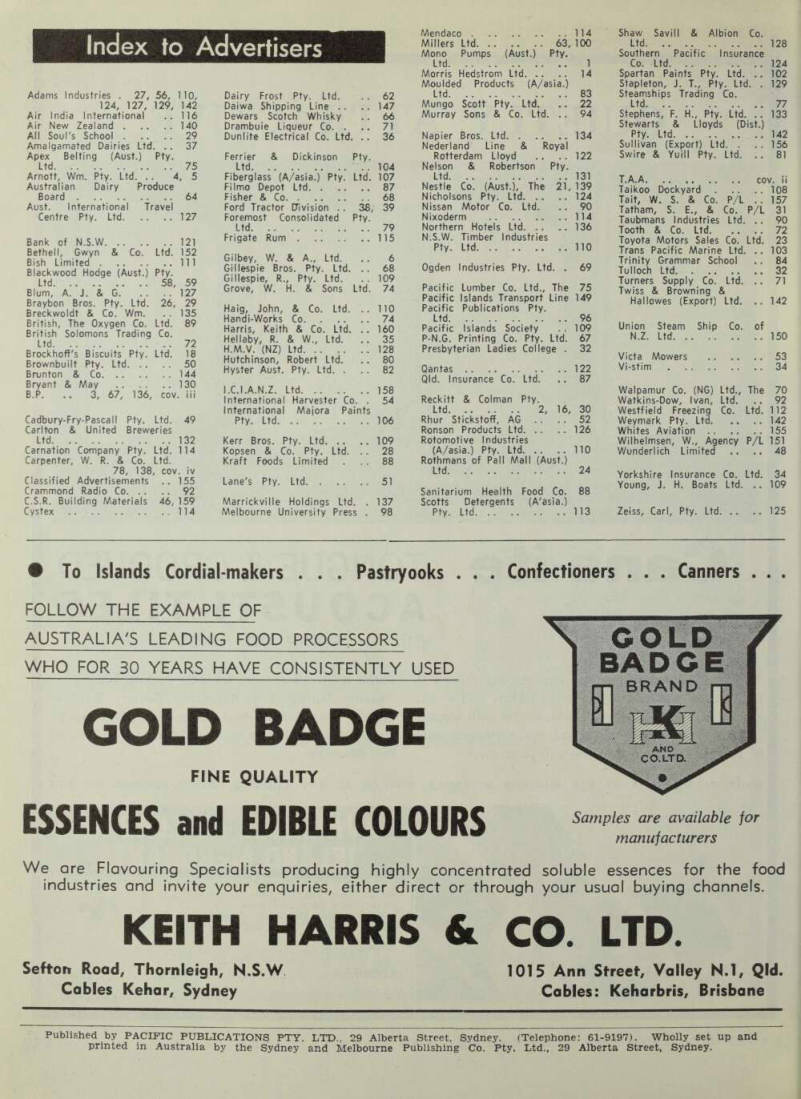 162
162 163
163 164
164