it's fete
pp. 115-117 · Read in the full issue
Time in Tahiti Again
travel
A Regular Piaa Department
Reporting News Of South
Seas Tourism And Travel
From The Inside
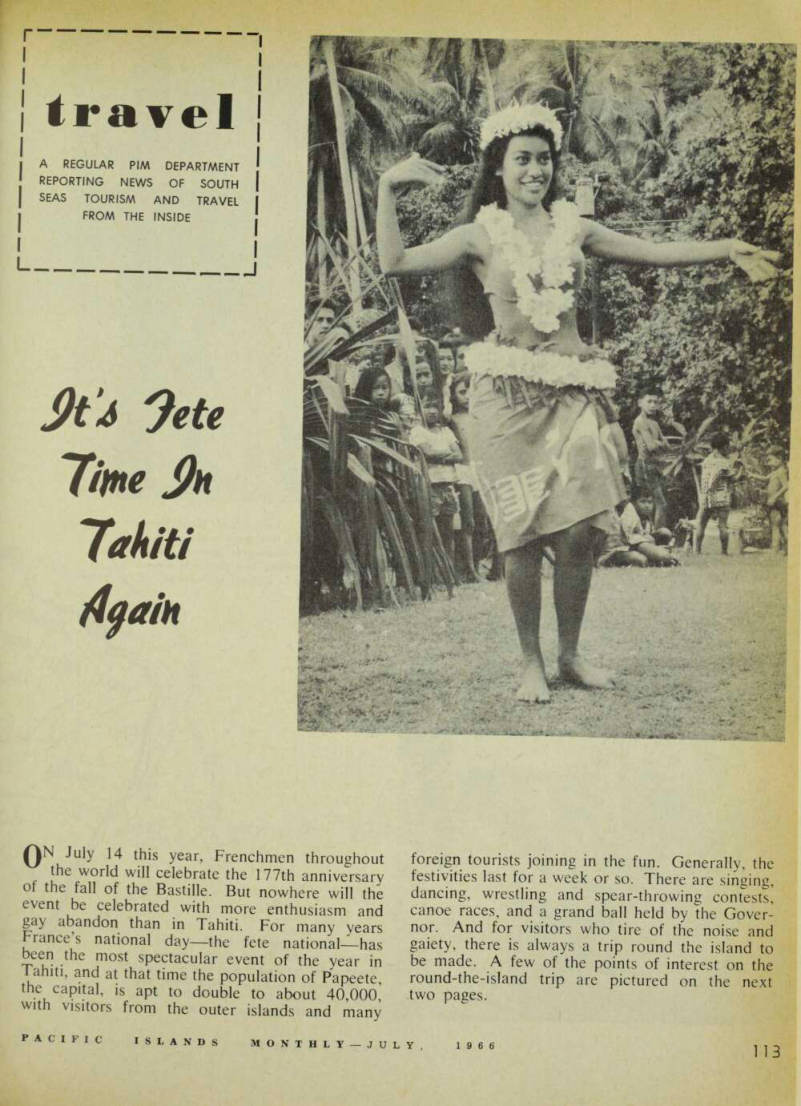
QN July 14 this year, Frenchmen throughout the world will celebrate the 177th anniversary of the fall of the Bastille. But nowhere will the event be celebrated with more enthusiasm and gay abandon than in Tahiti. For many vears ranees national day—the fete national—has been the most spectacular event of the year in 1 ahiti, and at that time the population of Papeete, the capital, is apt to double to about 40,000, with visitors from the outer islands and many
foreign tourists joining in the fun. Generally, the festivities last for a week or so. There are singing, dancing, wrestling and spear-throwing contests, canoe races, and a grand ball held by the Gover nor. And for visitors who tire of the noise and gaiety, there is always a trip round the island to be made. A few of the points of interest on the round-the-island trip are pictured on the next two pages.
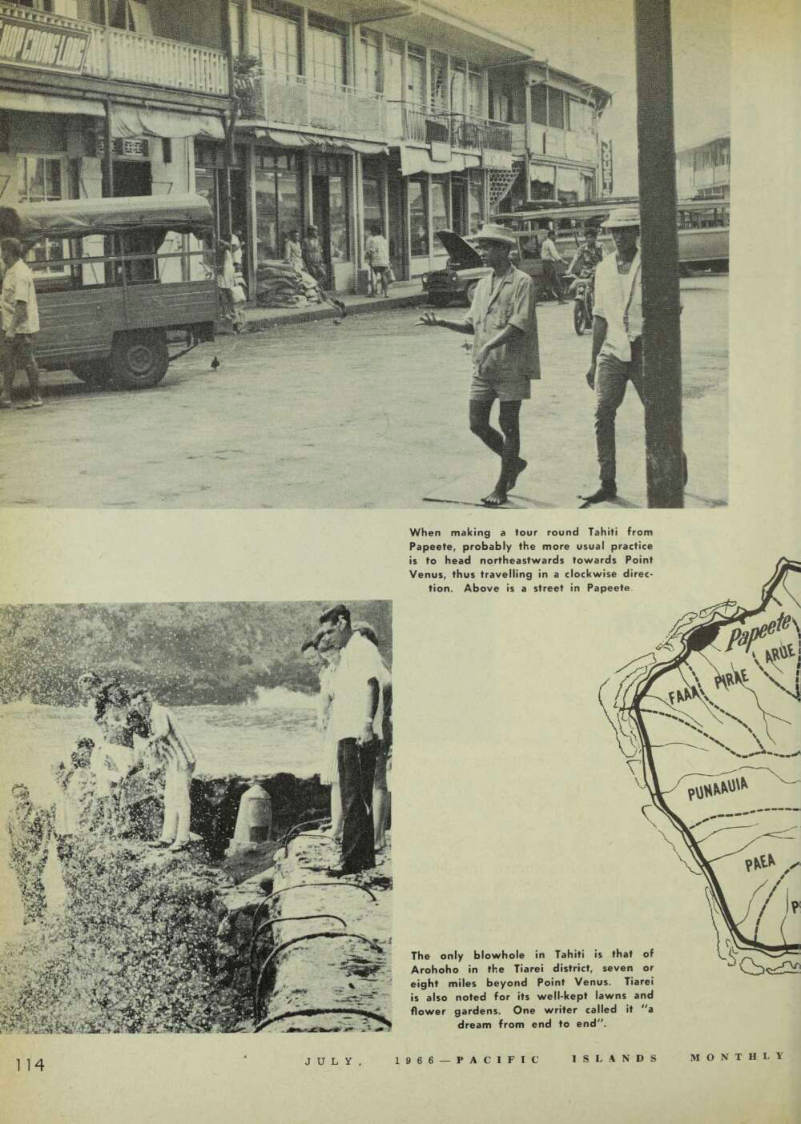
When making a tour round Tahiti from Papeete, probably the more usual practice is to head northeastwards towards Point Venus, thus travelling in a clockwise direc tion. Above is a street in Papeete
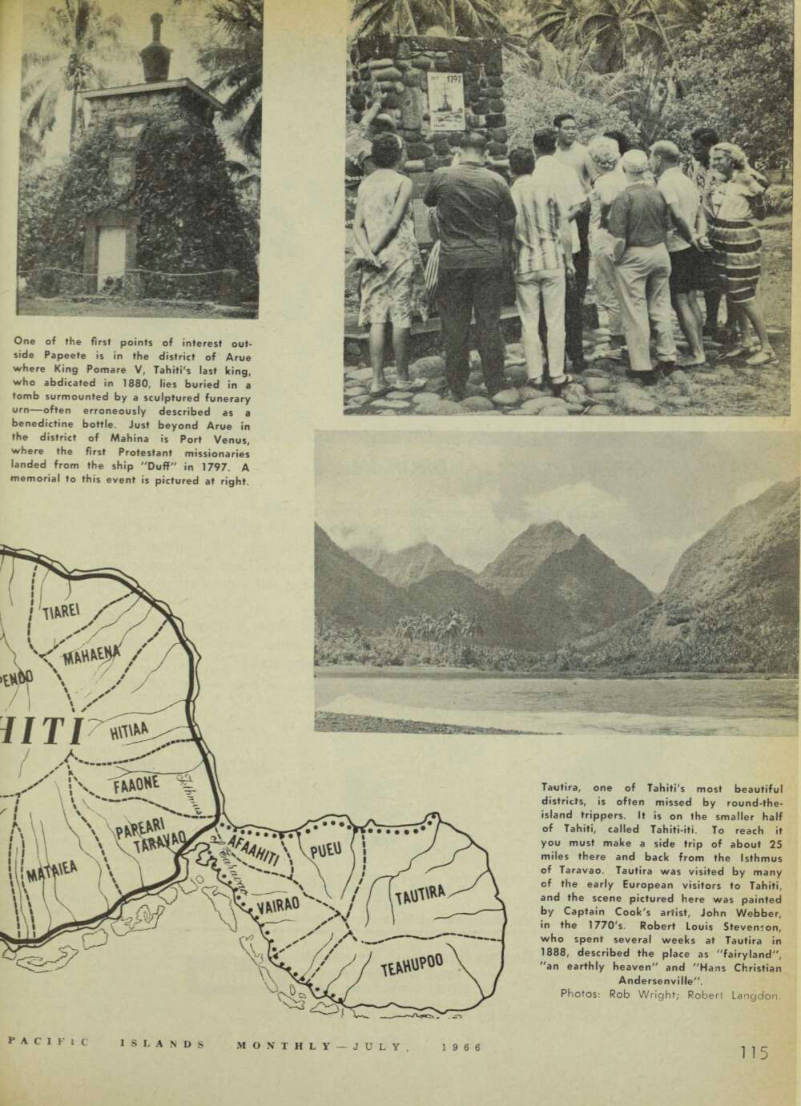
The only blowhole in Tahiti is that of Arohoho in the Tiarei district, seven or eight miles beyond Point Venus. Tiarei is also noted for its well-kept lawns and flower gardens. One writer called it "a dream from end to end".
One of the first points of interest out side Papeete is in the district of Arue where King Pomare V, Tahiti's last king, who abdicated in 1880, lies buried in a tomb surmounted by a sculptured funerary urn —often erroneously described as a benedictine bottle. Just beyond Arue in the district of Mahina is Port Venus, where the first Protestant missionaries landed from the ship "Duff" in 1797. A memorial to this event is pictured at right.
Tautira, one of Tahiti's most beautiful districts, is often missed by round-the island trippers. It is on the smaller half of Tahiti, called Tahiti-iti. To reach it you must make a side trip of about 25 miles there and back from the Isthmus of Taravao. Tautira was visited by many of the early European visitors to Tahiti, and the scene pictured here was painted by Captain Cook's artist, John Webber, in the 1770'5. Robert Louis Stevenron, who spent several weeks at Tautira in 1888, described the place as "fairyland", "an earthly heaven" and "Hans Christian Andersenville".
Photos: Rob Wright; Robert Langdon.