Jet Age
pp. 119-121 · Read in the full issue
Tahiti—In The Jet Age
travel
A Regular Pim Department
Reporting News Of South
Seas Tourism And Travel
From The Inside
gEFORE the New Zealand airline TEAL (now Air New Zealand) pioneered an air service from Auckland to Tahiti after World War 11, Tahiti was a long way away from any where, and not easy to get to. Now, with Pan American, Qantas and UTA-French Airlines pro viding frequent jet services from Sydney, Hono lulu and Los Angeles, the island has more plane connections with the outside world than any other in the South Pacific after Fiji, and is less than half a day away from both Australia and the United States.
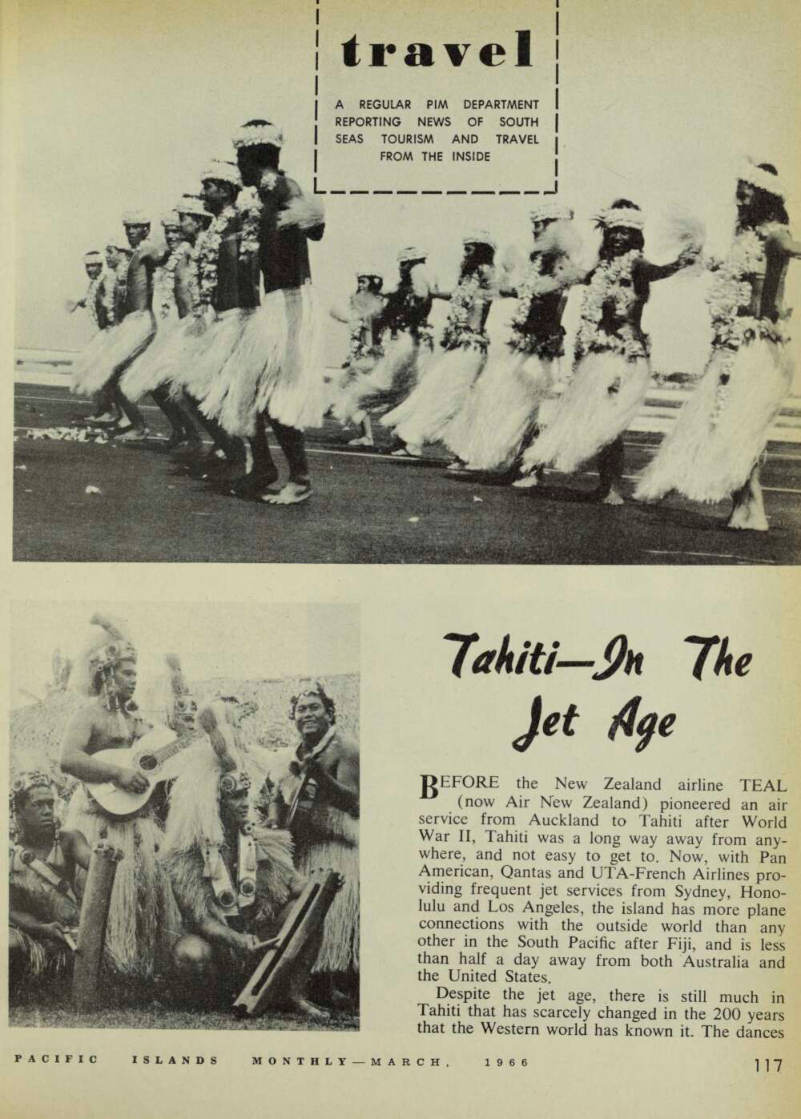
Despite the jet age, there is still much in Tahiti that has scarcely changed in the 200 years that the Western world has known it. The dances
and dancing costumes, for ex ample, are still much as they were in the days of Wallis, Bougainville and Cook; and, although the musicians have added the guitar to their instru ments, they still play the ancient “toere”, made from a hollowed log (see picture, p. 117).
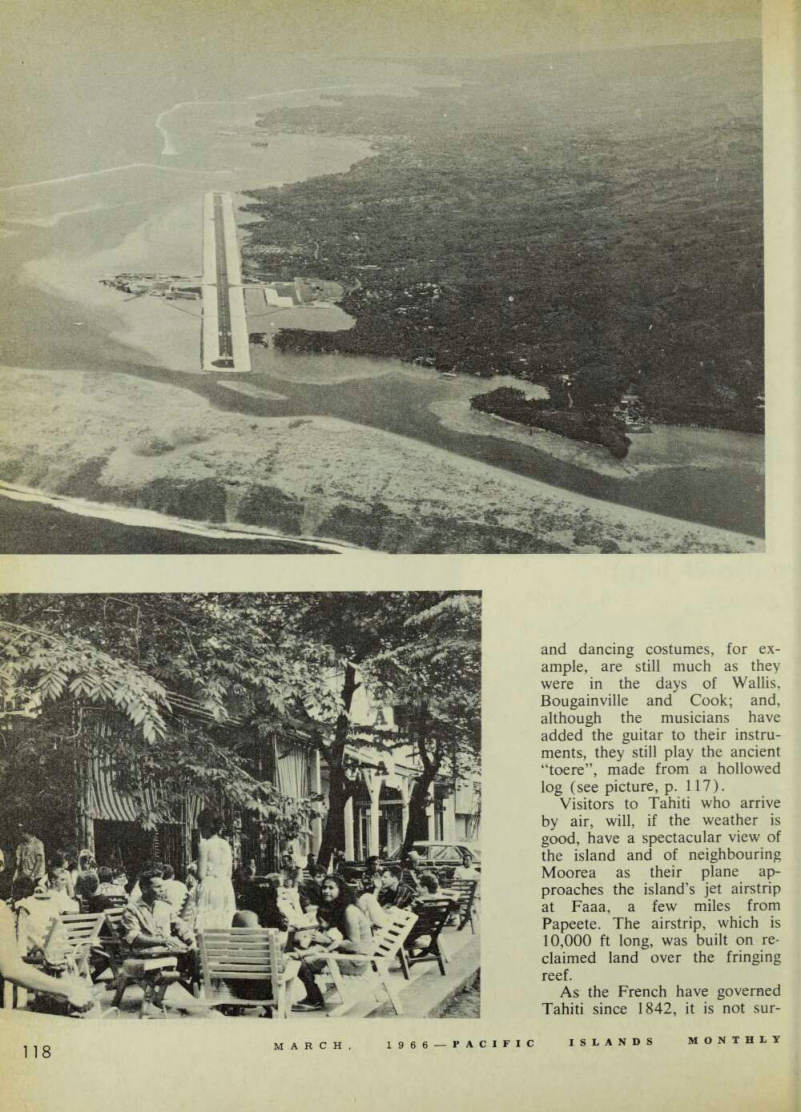
Visitors to Tahiti who arrive by air, will, if the weather is good, have a spectacular view of the island and of neighbouring Moorea as their plane ap proaches the island’s jet airstrip at Faaa, a few miles from Papeete. The airstrip, which is 10,000 ft long, was built on re claimed land over the fringing reef.
As the French have governed Tahiti since 1842, it is not sur
prising that some pleasant French aspects of life have been transplanted to the island. One of these is the open air cafe, a number of which are now to be found in Papeete. But the Poly nesian way of doing things is still much in evidence, particu larly where food is concerned— witness, the picture at right.
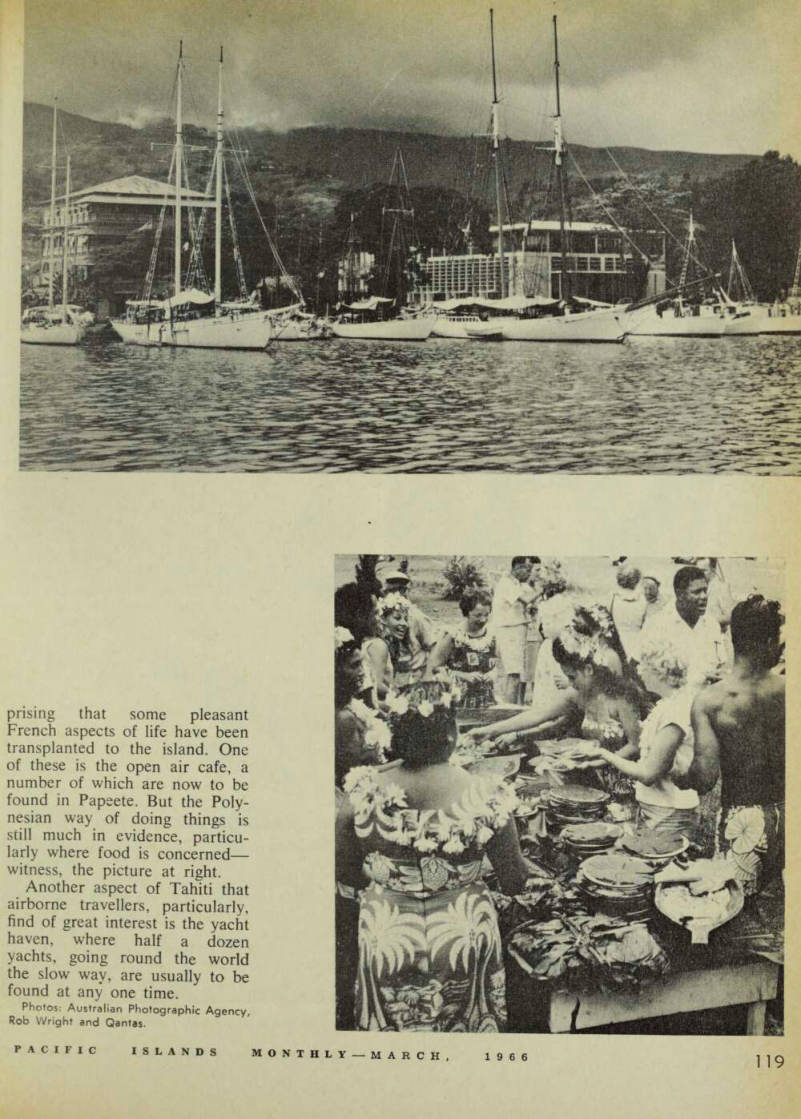
Another aspect of Tahiti that airborne travellers, particularly, find of great interest is the yacht haven, where half a dozen yachts, going round the world the slow way, are usually to be found at any one time.
Photos: Australian Photographic Agency, Rob Wright and Qantas.