Fiji's Future Could Be In The Hands
pp. 27-30 · Read in the full issue
Hands Of These Five Men
By R. W. Robson
To a degree that few people fully recognise, the future of he rich British Colony of Fiji depends upon the individual [ualities of a handful of highly-placed Englishmen.
April the following people are coming or going, or are about to and their movements and de ms will give shape to early events
fiji:
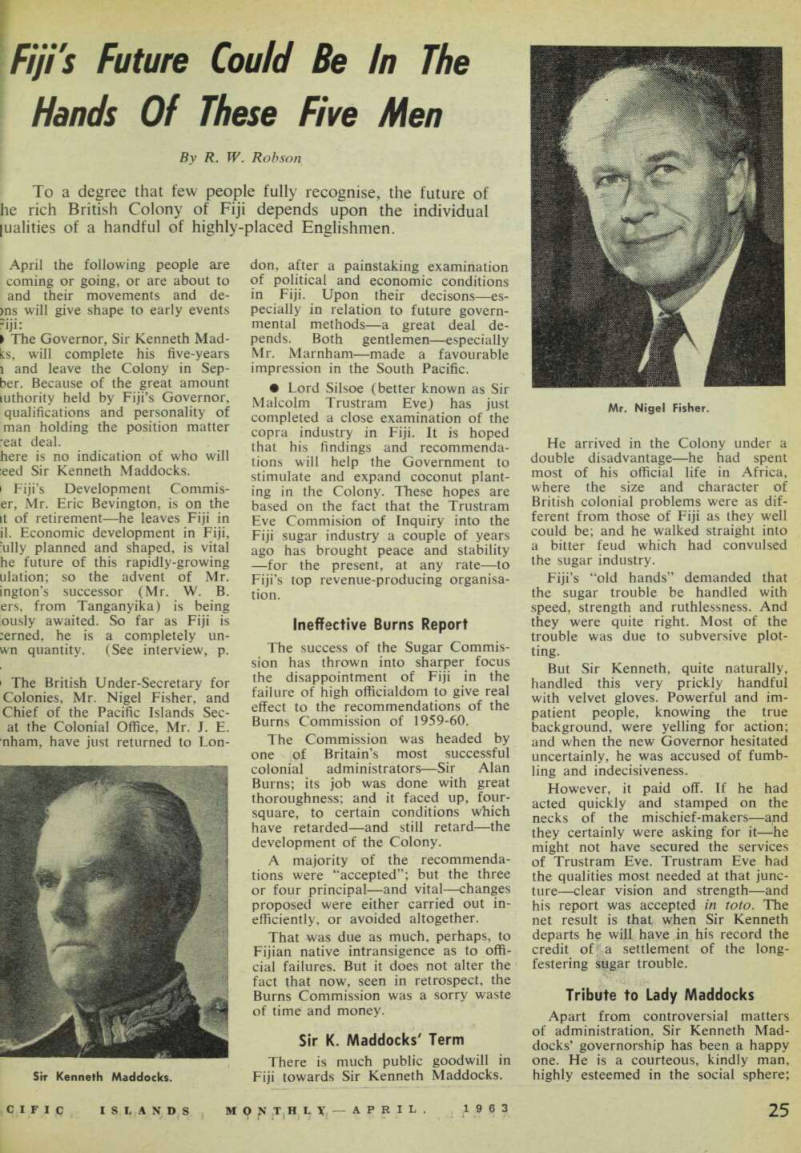
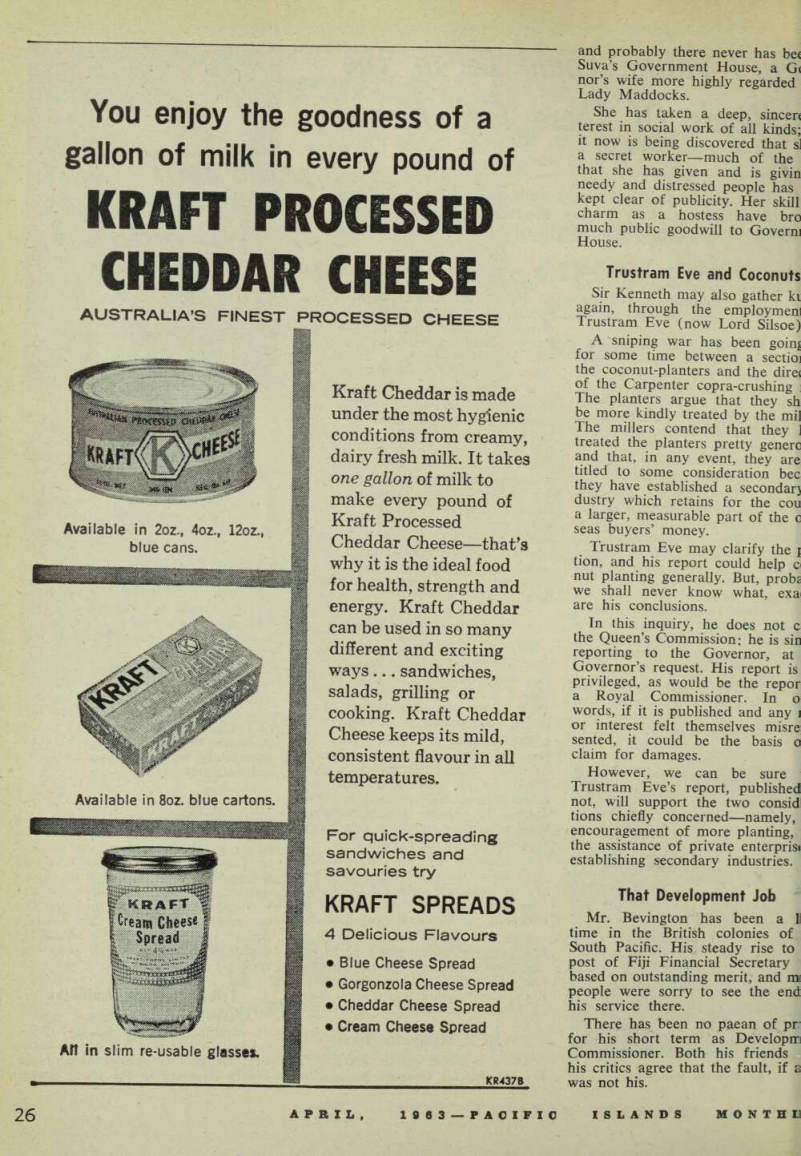
\ The Governor, Sir Kenneth Mad ks, will complete his five-years i and leave the Colony in Sep ber. Because of the great amount luthority held by Fiji’s Governor, qualifications and personality of man holding the position matter :eat deal. here is no indication of who will :eed Sir Kenneth Maddocks. • Fiji’s Development Commis er, Mr. Eric Bevington, is on the it of retirement —he leaves Fiji in il. Economic development in Fiji, ; ully planned and shaped, is vital he future of this rapidly-growing ulation; so the advent of Mr. ington’s successor (Mr. W. B. ers, from Tanganyika) is being ously awaited. So far as Fiji is :erned, he is a completely un wn quantity. (See interview, p. i The British Under-Secretary for Colonies, Mr. Nigel Fisher, and Chief of the Pacific Islands Sec at the Colonial Office, Mr. J. E. nham, have just returned to Lon-
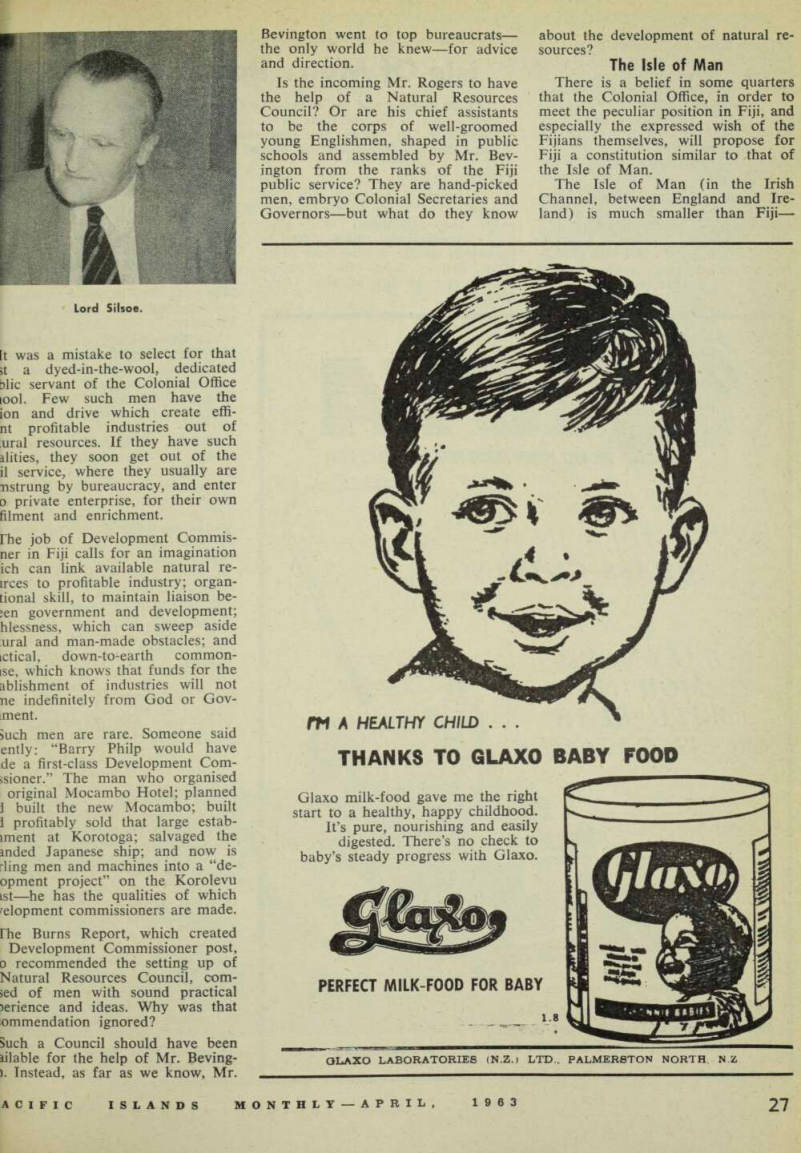
don, after a painstaking examination of political and economic conditions in Fiji. Upon their decisons—es pecially in relation to future govern mental methods—a great deal de pends. Both gentlemen—especially Mr. Marnham—made a favourable impression in the South Pacific. • Lord Silsoe (better known as Sir Malcolm Trustram Eve) has just completed a close examination of the copra industry in Fiji. It is hoped that his findings and recommenda tions will help the Government to stimulate and expand coconut plant ing in the Colony, These hopes are based on the fact that the Trustram Eve Commision of Inquiry into the Fiji sugar industry a couple of years ago has brought peace and stability —for the present, at any rate —to Fiji’s top revenue-producing organisa tion.
Ineffective Burns Report The success of the Sugar Commis sion has thrown into sharper focus the disappointment of Fiji in the failure of high officialdom to give real effect to the recommendations of the Burns Commission of 1959-60, The Commission was headed by one of Britain’s most successful colonial administrators—Sir Alan Burns; its job was done with great thoroughness; and it faced up, four square, to certain conditions which have retarded —and still retard—the development of the Colony.
A majority of the recommenda tions were “accepted”; but the three or four principal—and vital—changes proposed were either carried out in efficiently, or avoided altogether.
That was due as much, perhaps, to Fijian native intransigence as to offi cial failures. But it does not alter the fact that now, seen in retrospect, the Burns Commission was a sorry waste of time and money.
Sir K. Maddocks 7 Term There is much public goodwill in Fiji towards Sir Kenneth Maddocks,
He arrived in the Colony under a double disadvantage—he had spent most of his official life in Africa, where the size and character of British colonial problems were as dif ferent from those of Fiji as they well could be; and he walked straight into a bitter feud which had convulsed the sugar industry.
Fiji’s “old hands” demanded that the sugar trouble be handled with speed, strength and ruthlessness. And they were quite right. Most of the trouble was due to subversive plot ting.
But Sir Kenneth, quite naturally, handled this very prickly handful with velvet gloves. Powerful and im patient people, knowing the true background, were yelling for action; and when the new Governor hesitated uncertainly, he was accused of fumb ling and indecisiveness.
However, it paid off. If he had acted quickly and stamped on the necks of the mischief-makers—apd they certainly were asking for it—he might not have secured the services of Trustram Eve. Trustram Eve had the qualities most needed at that junc ture —clear vision and strength—and his report was accepted in toto. The net result is that when Sir Kenneth departs he will have in his record the credit of a settlement of the long festering sugar trouble.
Tribute to Lady Maddocks Apart from controversial matters of administration, Sir Kenneth Mad docks’ governorship has been a happy one. He is a courteous, kindly man, highly esteemed in the social sphere;
Sir Kenneth Maddocks.
Mr. Nigel Fisher.
and probably there never has be« Suva’s Government House, a G< nor’s wife more highly regarded Lady Maddocks.
She has taken a deep, sincen terest in social work of all kinds; it now is being discovered that s] a secret worker—much of the that she has given and is givin needy and distressed people has kept clear of publicity. Her skill charm as a hostess have bro much public goodwill to Govern] House.
Trustram Eve and Coconuts Sir Kenneth may also gather ki again, through the employmenl Trustram Eve (now Lord Silsoe) A sniping war has been goinf for some time between a sectioi the coconut-planters and the dire( of the Carpenter copra-crushing : The planters argue that they sh be more kindly treated by the mil The millers contend that they ] treated the planters pretty generc and that, in any event, they are titled to some consideration bee they have established a secondarj dustry which retains for the cou a larger, measurable part of the c seas buyers’ money.
Trustram Eve may clarify the i tion, and his report could help o nut planting generally. But, proba we shall never know what, exa< are his conclusions.
In this inquiry, he does not c the Queen’s Commission: he is sin reporting to the Governor, at Governor’s request. His report is privileged, as would be the repor a Royal Commissioner. In o words, if it is published and any i or interest felt themselves misre sented, it could be the basis o claim for damages.
However, we can be sure Trustram Eve’s report, published not, will support the two consid! tions chiefly concerned—namely, encouragement of more planting, the assistance of private enterprist establishing secondary industries.
That Development Job Mr. Bevington has been a II time in the British colonies of South Pacific. His steady rise to post of Fiji Financial Secretary based on outstanding merit, and mi people were sorry to see the end his service there.
There has been no paean of pr for his short term as Developm Commissioner. Both his friends his critics agree that the fault, if s was not his.
It was a mistake to select for that it a dyed-in-the-wool, dedicated blic servant of the Colonial Office 1001. Few such men have the lon and drive which create effi nt profitable industries out of ural resources. If they have such alities, they soon get out of the il service, where they usually are nstrung by bureaucracy, and enter 0 private enterprise, for their own filment and enrichment.
Fhe job of Development Commis ner in Fiji calls for an imagination ich can link available natural re irces to profitable industry; organ tional skill, to maintain liaison be jen government and development; hlessness, which can sweep aside ural and man-made obstacles; and ictical, down-to-earth common ise, which knows that funds for the ablishment of industries will not ne indefinitely from God or Gov iment. >uch men are rare. Someone said ently: “Barry Philp would have de a first-class Development Com jsioner.” The man who organised original Mocambo Hotel; planned 1 built the new Mocambo; built ! profitably sold that large estab iment at Korotoga; salvaged the mded Japanese ship; and now is rling men and machines into a “de opment project” on the Korolevu ist —he has the qualities of which relopment commissioners are made.
Fhe Burns Report, which created Development Commissioner post, o recommended the setting up of Natural Resources Council, com sed of men with sound practical Jerience and ideas. Why was that ommendation ignored?
Such a Council should have been lilable for the help of Mr. Beving i. Instead, as far as we know, Mr.
Bevington went to top bureaucrats— the only world he knew—for advice and direction.
Is the incoming Mr. Rogers to have the help of a Natural Resources Council? Or are his chief assistants to be the corps of well-groomed young Englishmen, shaped in public schools and assembled by Mr. Bev ington from the ranks of the Fiji public service? They are hand-picked men, embryo Colonial Secretaries and Governors —but what do they know
about the development of natural re sources?
The Isle of Man There is a belief in some quarters that the Colonial Office, in order to meet the peculiar position in Fiji, and especially the expressed wish of the Fijians themselves, will propose for Fiji a constitution similar to that of the Isle of Man.
The Isle of Man (in the Irish Channel, between England and Ire land) is much smaller than Fiji—
Lord Silsoe.
141,000 acres and 56,000 people. It is nominally part of England, and it is under British protection, but it always has enjoyed almost complete self-government. It has two Chambers (one partly nominated and one wholly elected on adult suffrage) in its local parliament, and the adminis tration is presided over by a Gover nor appointed by the British Crown.
The Channel Islands, similarly part of England, have a somewhat similar administration, but in that case it is split up among a series of Councils which administer the different islands.
For a detailed report of the situation in the Isle of Man, see accompany ing article.