How They Drank The Kaiser's Health
pp. 87-92 · Read in the full issue
Under The Noses Of The New Zealanders
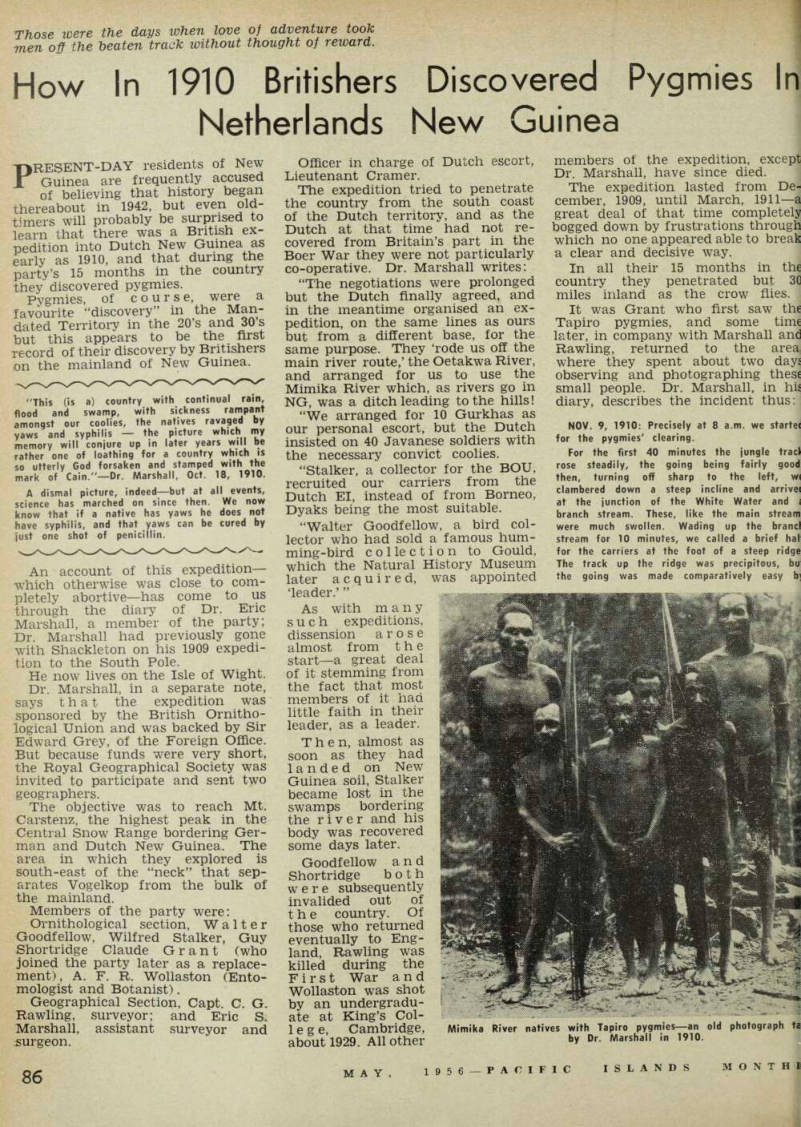
IN April, a spry, well-groomed, elderly gentleman, by name George Wilhelm Hagedorn, called at the PIM office in Sydney. He introduced himself as that German resident of Upolu, Western Samoa, who boarded the warship Scharn horst off that island in September, 1914, and who was described by PIM some months ago as “a rather jovial citizen.”
In a gracious, old-world manner, Mr. Hagedorn revealed some in teresting facts about this highlight in his World War I career, when (see PIM, September, 1955, p. 79) cruisers of the Imperial German Navy threatened to upset the relative harmony that had prevailed in Western Samoa following the occupation of that German territory by New Zealand troops a few weeks earlier.
Mr. Hagedorn was at that time a prominent planter and a mem ber of the Legislative Council. It can be taken for granted that the visit of the cruisers to Mulifanua plantation was not a coincidence, but a deliberate action to contact this leading German resident and learn the local facts.
Mr. Hagedorn was anxious to point out that he was the “rather jovial citizen” referred to in our September account, not Captain Hagedorn, a brother of his, who was also a local planter. Captain Hage
dorn is now living in Germany, in Bremen.
Secondly, there were three Ger man warships, the Scharnhorst, Gneisenau, and Nurnberg. And thirdly, both the Scharnhorst and Gneisenau had first entered Apia harbour and then departed on their visit to Mulifanua plantation.
The NZ troops fully expected the warships to return to Apia that evening to bombard that port, and were taking action accordingly.
Rowed out to the Scharnhorst by some of his plantation boys, Mr.
Hagedorn was received by the com mander and taken before Admiral (Count) Von Spec, with whom he spent three hours discussing the situation of the moment, and, among other things, drinking a toast to the Kaiser, while the New Zea landers around in Apia prepared for a bombardment.
When the German officers were fully appraised of the position ashore, the merits and demerits of a little shelling were discussed and here Mr.
Hagedorn pleaded the futility of such action, emphasising that noth ing would be achieved by the action and that all German residents were receiving considerate treatment from the NZ troops.
The Count admitted frankly that they were looking for enemy vessels but wished to steer clear of the superior firing range of HMAS Aus tralia.
It was suggested that Mr. Hage dorn proceed with the vessels on their war-time errands, but he pleaded that this would only bring harm to his relatives and fellow Germans ashore and disrupt a situa tion that, viewed philosophically as a misfortune of war, was as satis factory as could be expected.
Assured by the Count that no offensive action would be taken, and that the warships would leave for other parts, Mr. Hagedorn returned ashore and took immediate steps to contact Colonel Logan, QIC NZ troops, to whom he conveyed the results of his visit.
Mr. Hagendore assured PIM that Colonel Logan was “a fine gentle man,” and added, “He was good enough to call me a brave man.”
Mr. Hagedorn’s little trip to the Scharnhorst was to alter the course of his life, however.
Shortly afterwards he was in terned in New Zealand for 6 years and 9 months—long after the war w T as over. This was, he claims, be cause of his considerable influence with the Samoan people and would have been an embarrassment to the New Zealand authorities in the re
(Continued at foot of Page 90)
construction period that follow upon the granting of W. Samoa NZ as a League of Nations Manda And, because of his Scharnhoi associations, Mr. Hagedorn v again interned in World War 11, t coming very familiar with the e vironment of Tatura internme camp in Victoria, Australia.
On his release in 1945, Mr. Hag dorn resided in Germany for so] years and returned to Australia 1952, with permission to reside h( as long as he wishes.
Now 75, and living near Carlir ford, NSW, he bears no grudge I his long internments, and is as : terested as ever in agricultu matters and is still a “rather jov citizen,” happy that he was oi peacemaker in a delicate incid< between two major world Power t New Caledonia potato grow are, it is reported, dismayed at 1 advice from Sydney that se< potatoes are £7O per ton and tr have asked the French Consul to “try to do something about However, as Sydney housewives currently buying seed or any otl potatoes for eating at 1/- per lb is doubtful if anything can be do t At a meeting of the Norfolk Isla
Agricultural and Horticultural !
ciety, held in April, it was foi necessary to postpone the Sri until October, due to a recent s] of very dry weather on the Isla An Exhibition will be held in place during the week of Centenri Celebrations in June; but no pn will be awarded.