Pim Crossquiz No. 50
p. 76 · Read in the full issue
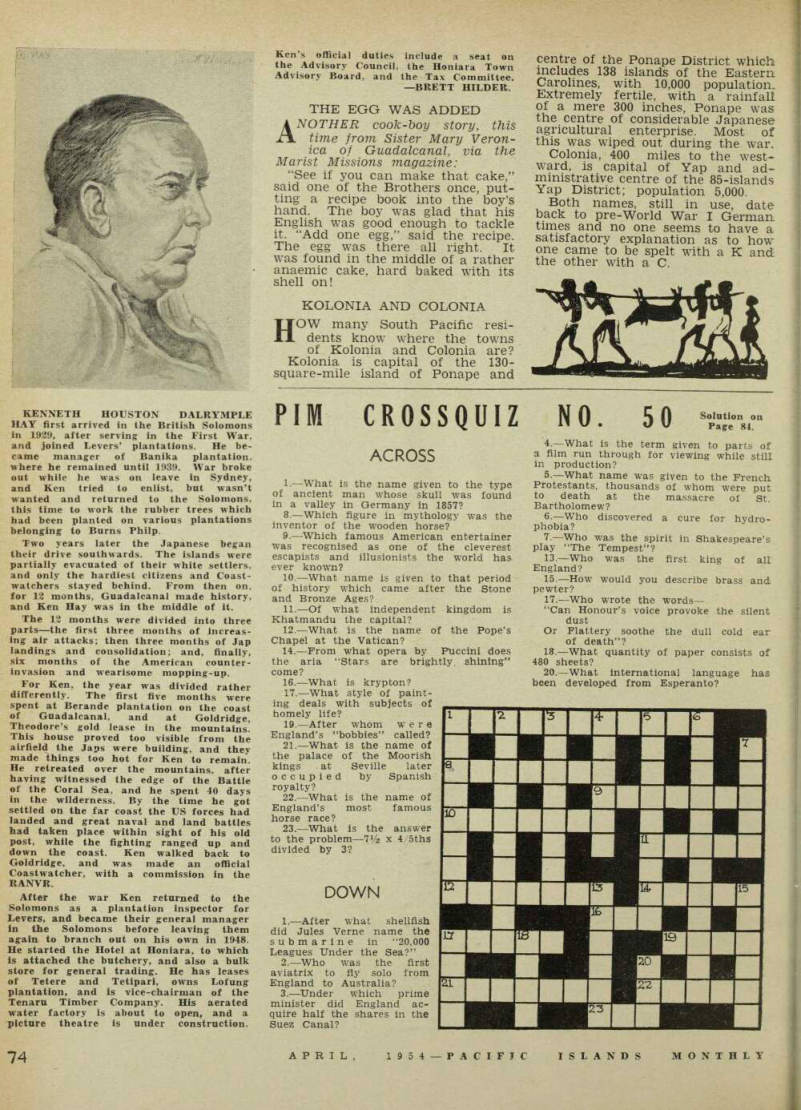
Solution on Page 84.
Across
I. —What is the name given to the type of ancient man whose skull was found in a valley in Germany in 1857? 8. —Which figure in mythology was the inventor of the wooden horse? 9. —Which famous American entertainer was recognised as one of the cleverest escapists and illusionists the world has ever known? 10. —What name is given to that period of history which came after the Stone and Bronze Ages? 11. —Of what independent kingdom is Khatmandu the capital? 12.—What is the name of the Pope’s Chapel at the Vatican? 14.—From what opera by Puccini does the aria “Stars are brightly, shining” come?
16. —What is krypton? 17. —What style of paint ing deals with subjects of homely life? 19. —After whom were England’s “bobbies” called? 21. —What is the name of the palace of the Moorish kings at Seville later occupied by Spanish royalty? 22. —What is the name of England’s most famous horse race? 23. —What is the answer to the problem— lV2 x 4 sths divided by 3?
Down
1. —After what shellfish did Jules Verne name the submarine in “20,000 Leagues Under the Sea?” 2. —Who was the first aviatrix to fly solo from England to Australia? 3. —Under which prime minister did England ac quire half the shares in the Suez Canal?
4. What is the term given to parts of a film run through for viewing while still in production? 5. What name was given to the French Protestants, thousands of whom were put to death at the massacre of St Bartholomew? 6. —Who discovered a cure for hydro phobia? 7. Who was the spirit in Shakespeare’s play “The Tempest”? 13.—Who was the first king of all England? 15.—How would you describe brass and pewter? 17. —Who wrote the words — “Can Honour’s voice provoke the silent dust Or Flattery soothe the dull cold ear of death”? 18. —What quantity of paper consists of 480 sheets? 20.—What international language has been developed from Esperanto?