Coconuts
p. 54 · Read in the full issue
Rotuma:
Land Of
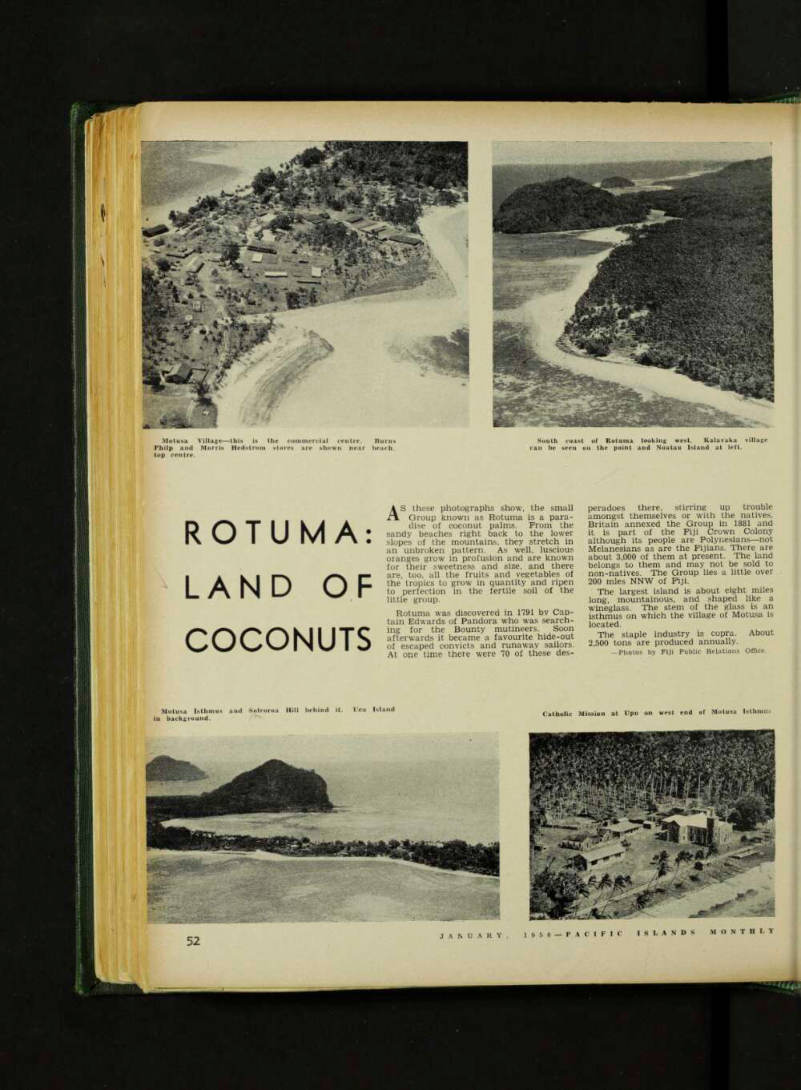
AS these photographs show, the small Group known as Rotuma is a para dise of coconut palms. From the sandy beaches right back to the lower slopes of the mountains, they stretch in an unbroken pattern. As well, luscious oranges grow in profusion and are known for their sweetness and size, and there are, too. all the fruits and vegetables of the tropics to grow in quantity and ripen to perfection in the fertile soil of the little group.
Rotuma was discovered in 1791 bv Cap tain Edwards of Pandora who was search ing for the Bounty mutineers. Soon afterwards it became a favourite hide-out of escaped convicts and runaway sailors.
At one time there were 70 of these des
peradoes there, stirring up trouble amongst themselves or with the natives.
Britain annexed the Group in 1881 and it is part of the Fiji Crown Colony although its people are Polynesians—not Melanesians as are the Fijians. There are about 3,000 of them at present. The land belongs to them and may not be sold to non-natives. The Group lies a little over 200 mles NNW of Fiji.
The largest island is about eight miles long, mountainous, and shaped like a wineglass. The stem of the glass is an isthmus on which the village of Motusa is located.
The staple industry is copra. About 2,500 tons are produced annually. —Photos by Fiji Public Relations Office.
Motusa Village—this is the commercial centre. Burns Philp and Morris Hedstrom stores are shown near beach, top centre.
South coast of Rotuma looking west. Kalavaka village can be seen on the point and Noatau Island at left.
Motusa Isthmus and Solroroa Hill behind it. Uea Island in background.
Catholic Mission at Upu on west end of Motusa Isthmus