Pago Pago Disillusioned These
pp. 53-67 · Read in the full issue
Hopeful Pilgrims
Australian, who says that he has always taken it to heart when the USA criticised British Colonial policy, recently visited Pago Pago, American Samoa . with an American friend. The Aussie expected a streamlined, chromium-plated Colony; it is not clear what the Yankee expected, but both were disappointed. This is what they later wrote us:
THIS has been written jointly by an American and an Australian. The criticisms about Pago are not meant as a crack at US Administration but as an indirect tribute to the often maligned British Colonial Policy.
In the course of a boat cruise recently we spent roughly four hours in Pago Pago and our impressions, therefore, are fleeting—possibly not indicative of the true state of affairs. If so, we apologise.
If not, we hope these lines will serve to remind would-be armchair critics that ex perience counts in all walks of life, even in Colonial Administration.
To casual visitors throughout the Pacific, the various ports of call, with their com paratively large towns behind them are the “show-windows” of each particular island group. These windows in Suva, Tonga, Vavau, Apia, Papeete (to retain the simile) are very “well dressed.” They are at least clean and neatly layed out.
Pago Pago on the other hand, is like a junk-shop window; at a distance its array of goods looks fascinating. On closer in spection there’s much soiled merchandise to be found amongst the new.
WE approach Tuituila in late afternoon and as our boat steams up the harbour at Pago, cannot help but be impressed with the magnificent hills towering on either side; or by the hun dreds of orderly naval buildings and re pair shops hugging the shore line. The particular wharf at which we berth is also impressive. Built of ferro-concrete its freshly painted sheds and clean ap
proaches are, perhaps, the best in the South Pacific. Undoubtedly, the rate at which the efficient and highly mechanised naval ratings unload produce from the holds, is the fastest.
Picturesque, too, are the Naval Officers’ quarters left of the wharf which, from where we stand on the ship’s deck, appear to cover the old Pago golf course. Even ashore, inside the various trading stores we find shelves packed with every con ceivable brand of American foodstuff and general merchandise-colourful pages of the Saturday Evening Post come to life!
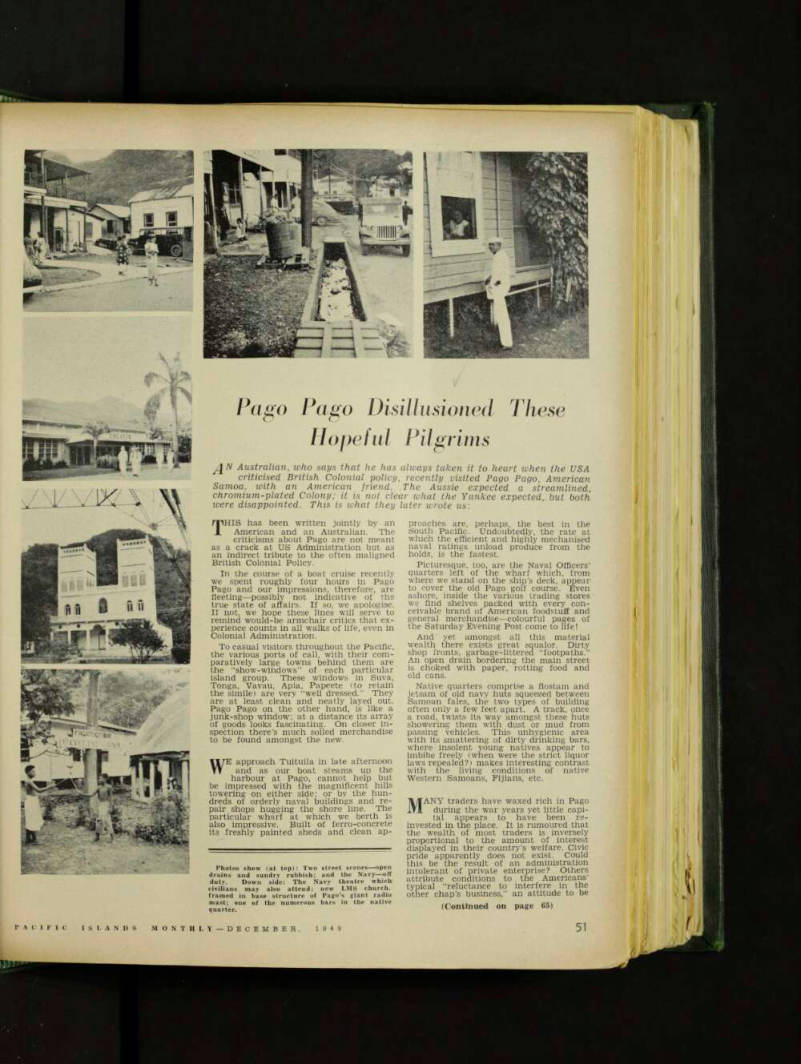
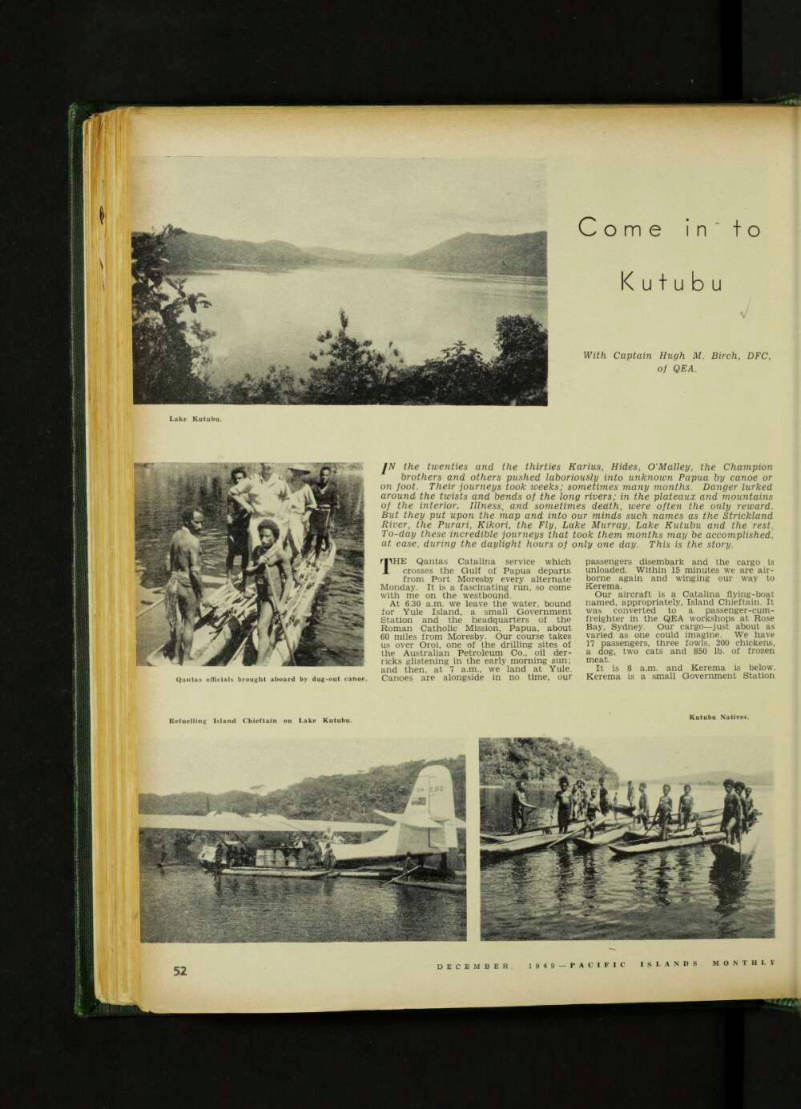
And yet amongst all this material wealth there exists great squalor. Dirty shop fronts, garbage-littered “footpaths.”
An open drain bordering the main street is choked with paper, rotting food and old cans.
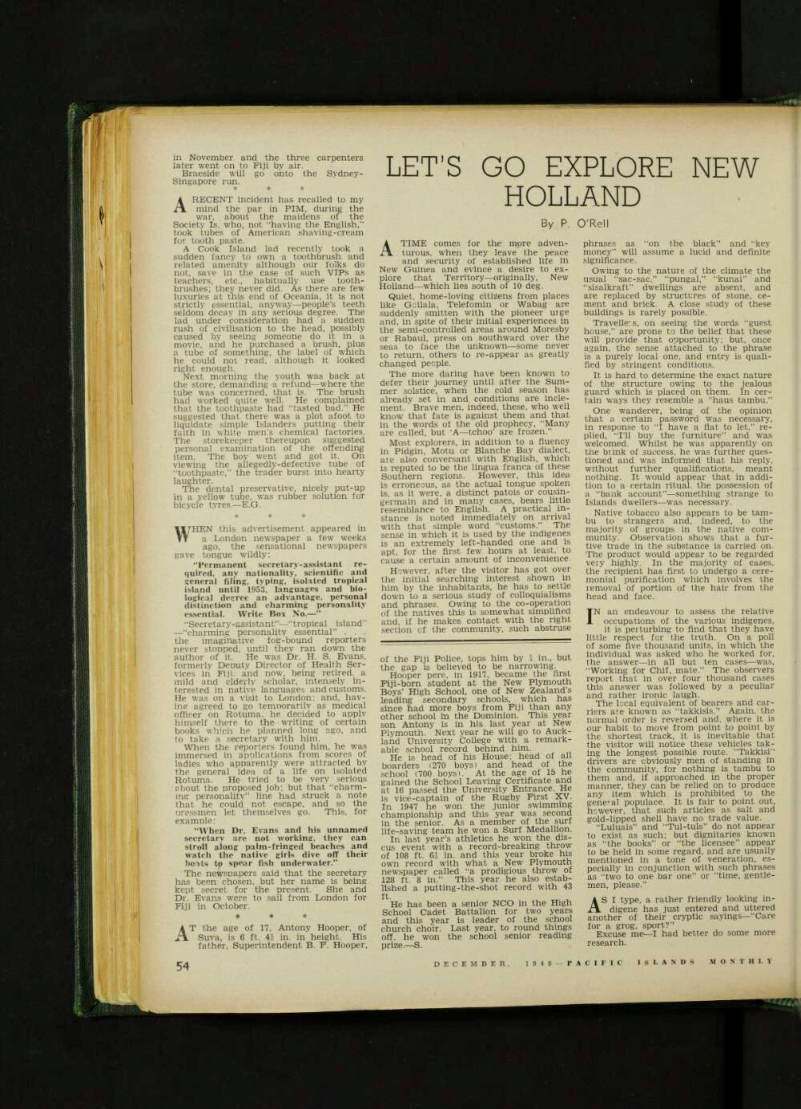
Native quarters comprise a flostam and jetsam of old navy huts squeezed between Samoan fales, the two types of building often only a few feet apart. A track, once a road, twists its way amongst these huts showering them with dust or mud from passing vehicles. This unhygienic area with its smattering of dirty drinking bars, where insolent young natives appear to imbibe freely (when were the strict liquor laws repealed?) makes interesting contrast with the living conditions of native Western Samoans, Fijians, etc, MANY traders have waxed rich in Pago during the war years yet little capi tal appears to have been re invested in the place. It is rumoured that the wealth of most traders is inversely proportional to the amount of interest displayed in their country’s welfare. Civic pride apparently does not exist. Could this be the result of an administration intolerant of private enterprise? Others attribute conditions to the Americans’ typical “reluctance to interfere in the other chap’s business,” an attitude to be
(Continued on page 65)
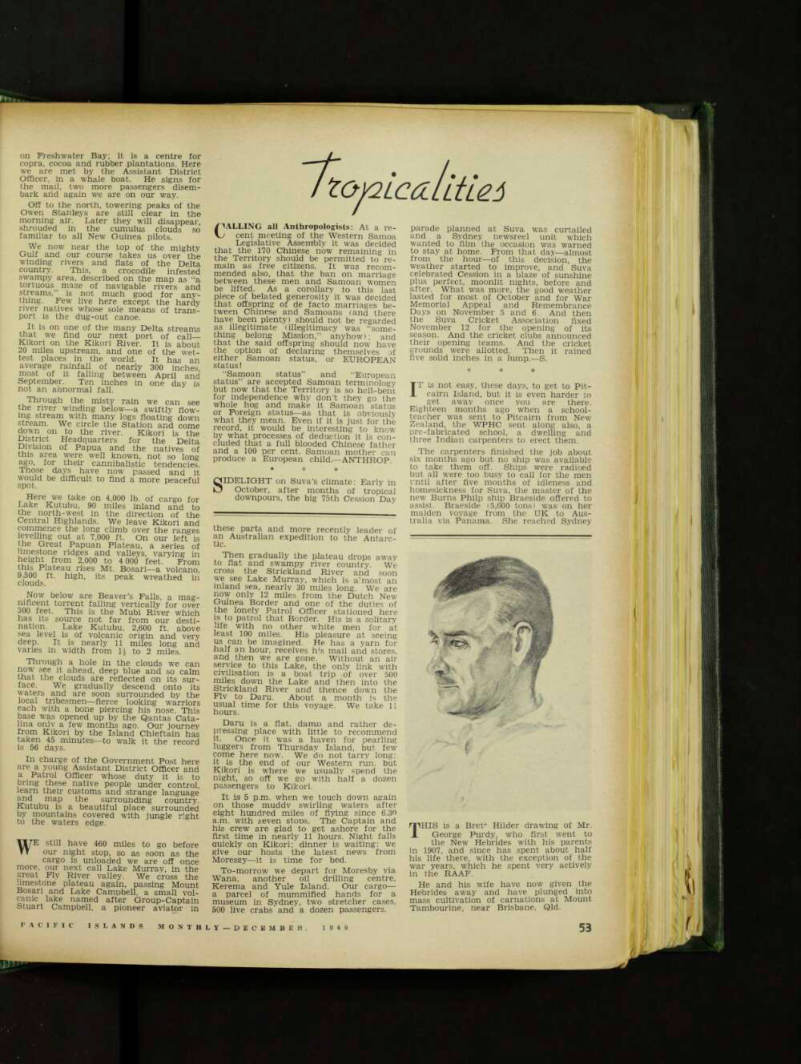
Photos show (at top): Two street scenes —open drains and sundry rubbish; and the Navy—off duty. Down side: The Navy theatre which civilians may also attend: new LMS church, framed in base structure of Pago’s giant radio mast; one of the numerous bars in the native quarter.
admired when dealing with people of equal social development, but harmful when applied to natives who have access, but are unadjusted, to European stand ards.
Under these conditions you can’t give natives a large measure of self-govern ment overnight. You must prepare them for it over a period of generations. With out constant correction and education the native will throw an empty food can out the back door of his hut. He knows little and cares less about unclean gutters bringing him sickness. Unless disciplined he will eat the white man’s tinned food, live in his abandoned houses without the knowledge nor inclination to pay attention to elementary principles of hygiene. Just how high is the incidence of TB and Venereal Disease in Pago’s native quarter?
With naval buildings well maintained but the native and civilian areas in such sorry condition, the immediate query springs to mind—“ls US Naval Adminis tration sufficiently interested or experi enced to cope effectively with such a set-up . . . from the point of view of native welfare?” For this, apart from military proficiency, is the point of view under discussion.
Before attempting an answer, let us take a brief look at the administrative set-up:— (1) The governor of Eastern Samoa is a naval officer appointed by the President. (2) All laws are made by the governor and are subject to the approval of the Navy Department. (3) Natives have a considerable amount of self government, enact ing laws concerning counties and villages, retaining as far as pos
sible their old forms of govern ment.
Perhaps the root of the trouble is con stitutional, and native interests would be better served by an administration inde pendent of the Navy and answering to some authoritative body similar to the Western Pacific High Commission in Suva.
With Tuituila’s natural wealth it seems odd too, that a healthy private enterprise has not been fully encouraged? No doubt by now the US has already discussed future improvements of native wel fare with other nations of the South Pacific Commission in Noumea.
Meanwhile, perhaps some local resident can, through the columns of this journal, enlighten us further as to the true con ditions existing in Pago to-day.
During deputation work in Tasmania, the Rev, Kolmio Saukuru, Fijiian Metho dist Missionary to Australian Aborigines, was given a civic reception in Hobart and Launceston.