He Pilots Ships
p. 40 · Read in the full issue
The Other Man’s Job:
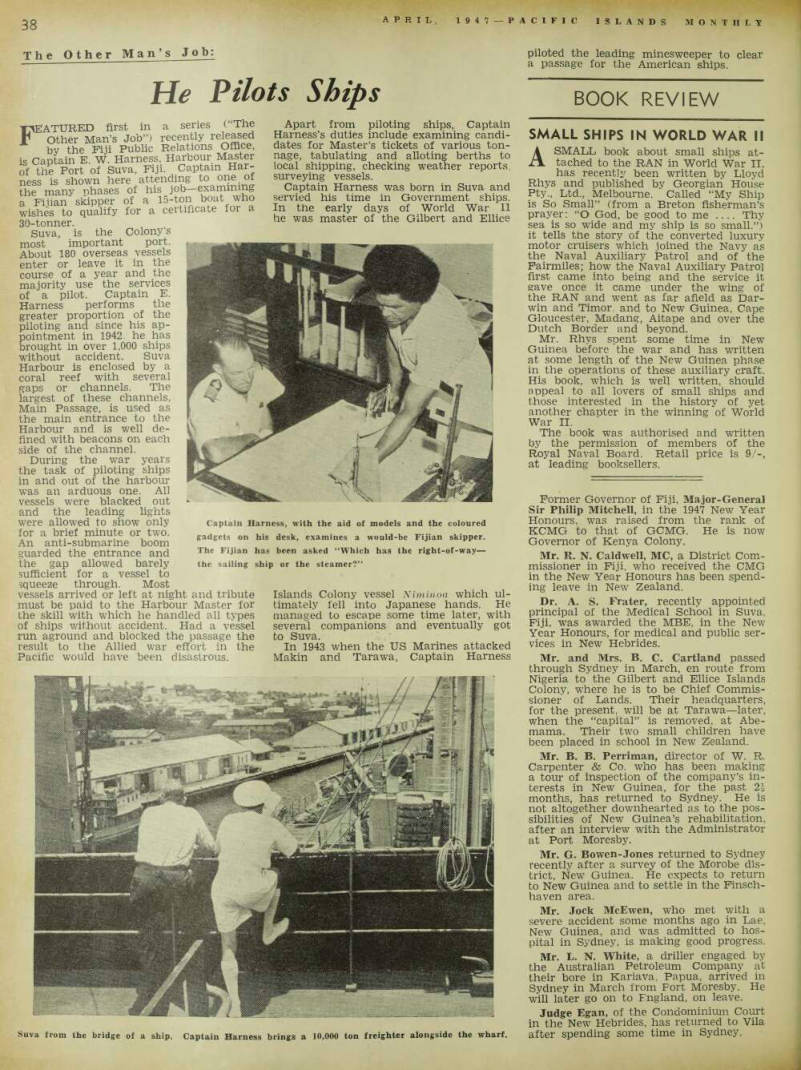
FEATURED first in a series (“The Other Man’s Job”) recently released by the Fiji Public Relations Office, is Captain E. W. Harness, H^ou r Master of the Port of Suva, Fiji. Captain Har ness is shown here attending to one ot the many phases of his job examining a Fiilan" skipper of a 15-ton boat who wishes to qualify for a certificate for a 30-tonner.
Suva, is the Colony's most imnortant port.
About 180 overseas vessels enter or leave it in the course of a year and the majority use the services of a pilot. Captain E.
Harness performs the greater proportion of the piloting and since his ap pointment in 1942. he has brought in over 1,000 ships without accident. Suva Harbour is enclosed by a coral reef with several gaps or channels. The largest of these channels, Main Passage, is used as the main entrance to the Harbour and is well de fined with beacons on each side of the channel.
During the war years the task of piloting ships in and out of the harbour was an arduous one. All vessels were blacked out and the leading lights were allowed to show only for a brief minute or two.
An anti-submarine boom guarded the entrance and the gap allowed barely sufficient for a vessel to squeeze through. Most
vessels arrived or left at night and tribute must be paid to the Harbour Master for the skill with which he handled all types of ships without accident. Had a vessel run aground and blocked the passage the result to the Allied war effort in the Pacific would have been disastrous.
Apart from piloting ships, Captain Harness’s duties include examining candi dates for Master’s tickets of various ton nage, tabulating and alloting berths to local shipping, checking weather reports, surveying vessels.
Captain Harness was born in Suva and servied his time in Government ships.
In the early days of World War II he was master of the Gilbert and Ellice
Islands Colony vessel Niminoa which ul timately fell into Japanese hands. He managed to escape some time later, with several companions and eventually got to Suva.
In 1943 when the US Marines attacked Makin and Tarawa, Captain Harness
piloted the leading minesweeper to clear a passage for the American ships.
Suva from the bridge of a ship. Captain Harness brings a 10,000 ton freighter alongside the wharf.
Captain Harness, with the aid of models and the coloured gadgets on his desk, examines a would-be Fijian skipper.
The Fijian has been asked “Which has the right-of-way— the sailing ship or the steamer?”