South Seasugar Lands
pp. 42-43 · Read in the full issue
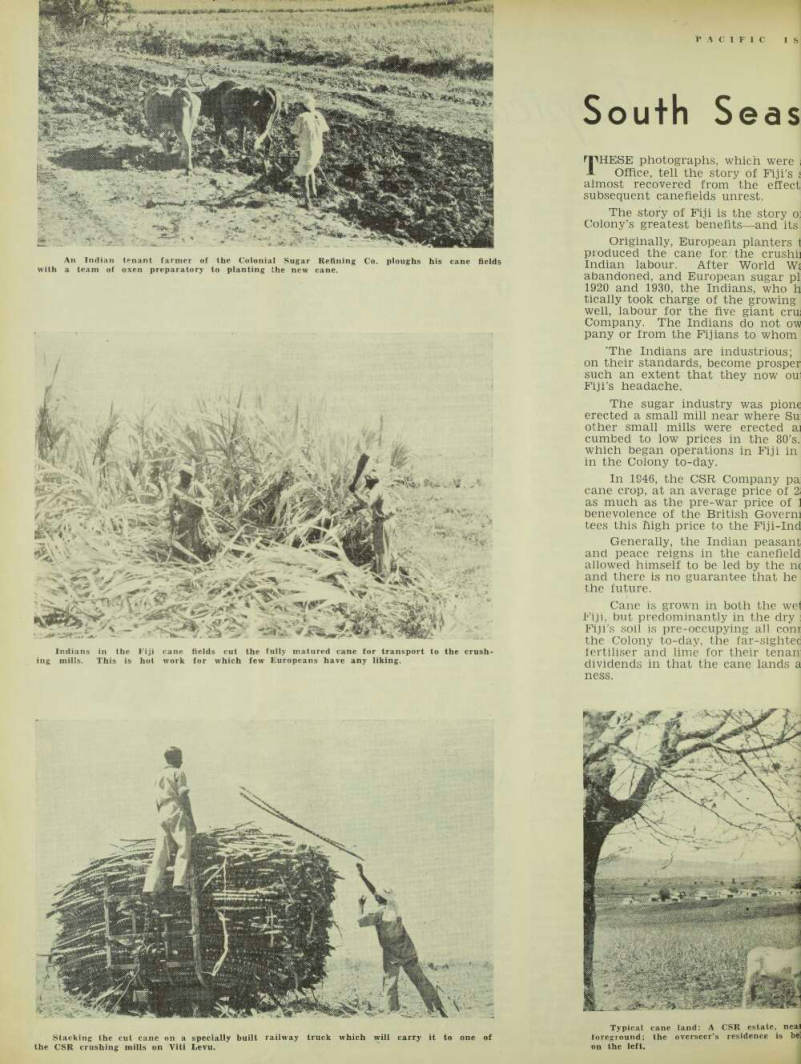
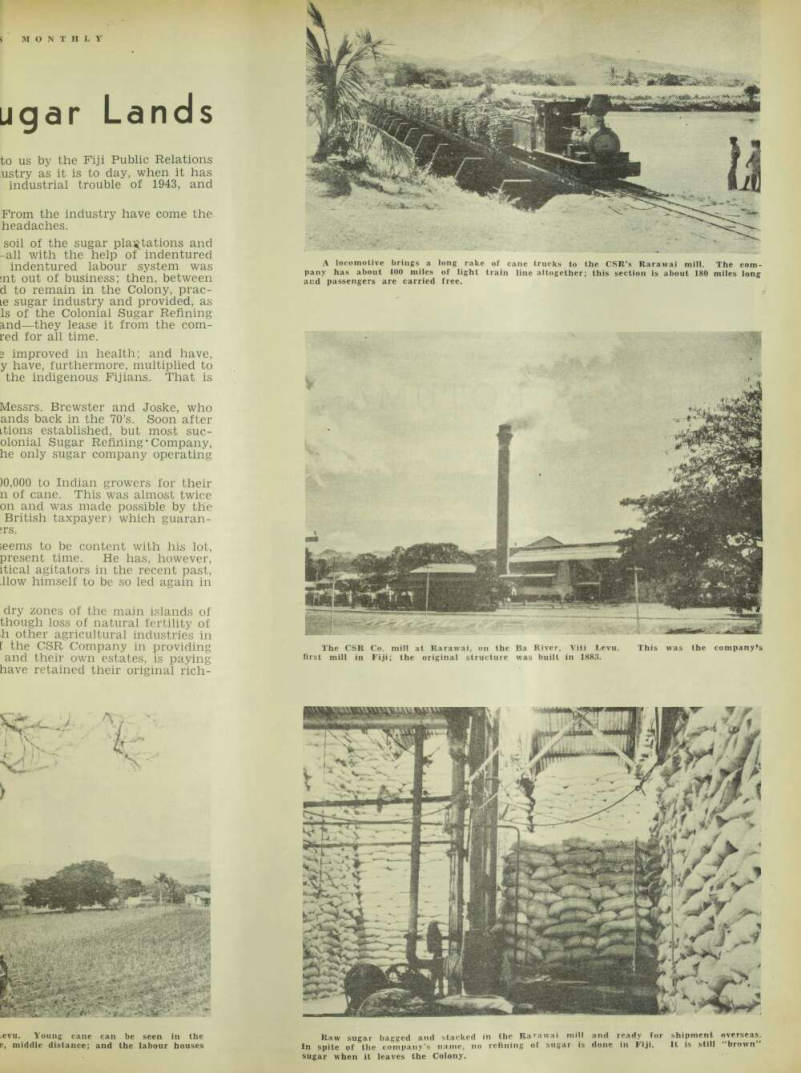
THESE photographs, which were , Office, tell the story of Fiji’s i almost recovered from the effect subsequent canefieids unrest.
The story of Fiji is the story o; Colony’s greatest benefits—and its Originally, European planters 1 produced the cane for/ the crushi] Indian labour. After World Ws abandoned, and European sugar pi 1920 and 1930, the Indians, who h tically took charge of the growing well, labour for the five giant cru Company. The Indians do not ow pany or from the Fijians to whom 'The Indians are industrious; on their standards, become prosper such an extent that they now ou Fiji’s headache.
The sugar industry was pione erected a small mill near where Su other small mills were erected ai cumbed to low prices in the 80’s, which began operations in Fiji in in the Colony to-day.
In 1846, the CSR Company pa cane crop, at an average price of 2 as much as the pre-war price of ] benevolence of the British Govern] tees this high price to the Fiji-Ind Generally, the Indian peasant and peace reigns in the canefield allowed himself to be led by the m and there is no guarantee that he the future.
Cane is grown in both the wel Fiji, but predominantly in the dry Fiji’s soil is pre-occupying all com the Colony to-day, the far-sightec fertiliser and lime for their tenan dividends in that the cane lands a ness.
Typical cane land: A CSR estate, neal[?] foreground; the overseer's residence is bel[?] on the left.
to us by the Fiji Public Relations ustry as it is to day, when it has industrial trouble of 1943, and From the industry have come the headaches. soil of the sugar plantations and -all with the help of indentured indentured labour system was mt out of business; then, between d to remain in the Colony, prac ie sugar industry and provided, as Is of the Colonial Sugar Refining and —they lease it from the corn red for all time. 2 improved in health; and have, y have, furthermore, multiplied to the indigenous Fijians. That is Messrs. Brewster and Joske, who ands back in the 70’s. Soon after Ltions established, but most suc olonial Sugar Refining*Company, he only sugar company operating )0,000 to Indian growers for their nof cane. This was almost twice on and was made possible by the British taxpayer) which guaran is. ;eems to be content with his lot, present time. He has, however, itical agitators in the recent past, ,llow himself to be so led again in dry zones of the main islands of though loss of natural fertility of h other agricultural industries in f the CSR Company in providing and their own estates, is paying have retained their original rich-
A locomotive brings a long rake of cane trucks to the CSR’s Rarawai mill. The com pany has about 400 miles of light train line altogether; this section is about 180 miles long and passengers are carried free.
The CSR Co. mill at Rarawai, on the Ba River, Viti Levu. This was the company’s first mill in Fiji; the original structure was built in 1883.
[?]ievu. Young cane can be seen in the [?]e, middle distance; and the labour houses
Raw sugar bagged and stacked in the Rarawai mill and ready for shipment overseas.
In spite of the company’s name, no refining of sugar is done in Fiji. It is still “brown” sugar when it leaves the Colony.