Polynesia Takes to the Air
pp. 42-43 · Read in the full issue
(Photographs by White’s Aviation)
fTUIE same spirit of adventure that sent X the Polynesians out from their ancient homeland to seek new lands beyond the horizon has persisted through the generations and is as strong to-day as it was a thousand years ago when the look-out on the leading, double-canoe sighted Ao-tea-roa. But it is a case of other days, other ways. Now our South Sea Islanders, if they can manage it, go by air.
Sailing ships, islands schooners, motor boats, liners Polynesia has accepted them all and since the coming of the European to the Pacific has been everready to embark in any or all of them.
Tahitian, Cook Islander, Samoan, to all of these the far, blue horizon beckons;
but then, when once away, so does the home island. Their idea of bliss seems to be either coming or going; to be saying farewell or hullo, with all the Polynesian’s uninhibited delight in a sentimental wallow at boat side or plane hatch. long, one of our most familiar JT scenes in Rarotonga has been the activities on the wharf when a schooner was departing for the outer islands or a steamer was leaving for more distant lands. There were the pretty girls, and the fat mamas; the small children looking unnatural in their stiffstarched best. There was much hugging and kissing and copious weeping and the
piling-on of flower leis and the last, long waving of hats and handkerchiefs.
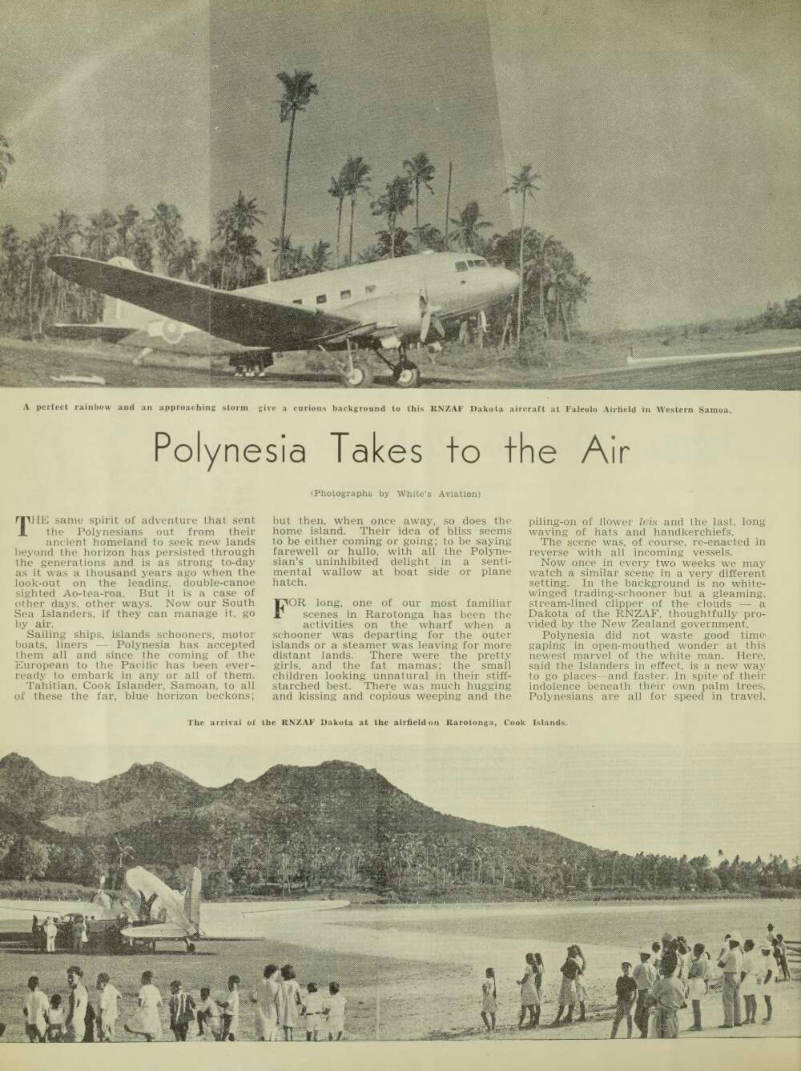
The scene was, of course, re-enacted in reverse with all incoming vessels, Now once in every two weeks we may watch a similar scene in a very different setting. In the background is no white winged trading-schooner but a gleaming, stream-lined clipper of the clouds a Dakota of the RNZAF, thoughtfully pro vided by the New Zealand government.
Polynesia did not waste good time gaping in open-mouthed wonder at this newest marvel of the white man. Here, said the Islanders in effect, is a new way to go places—and faster. In spite of their indolence beneath their own palm trees, Polynesians are all for speed in travel,
A perfect rainbow and an approaching storm give a curious background to this RNZAF Dakota aircraft at Faleolo Airfield in Western Samoa.
The arrival of the RNZAF Dakota at the airfield on Rarotonga, Cook Islands.
be it per bicycle, buggy, truck or plane.
It is impossible to go too fast to please them.
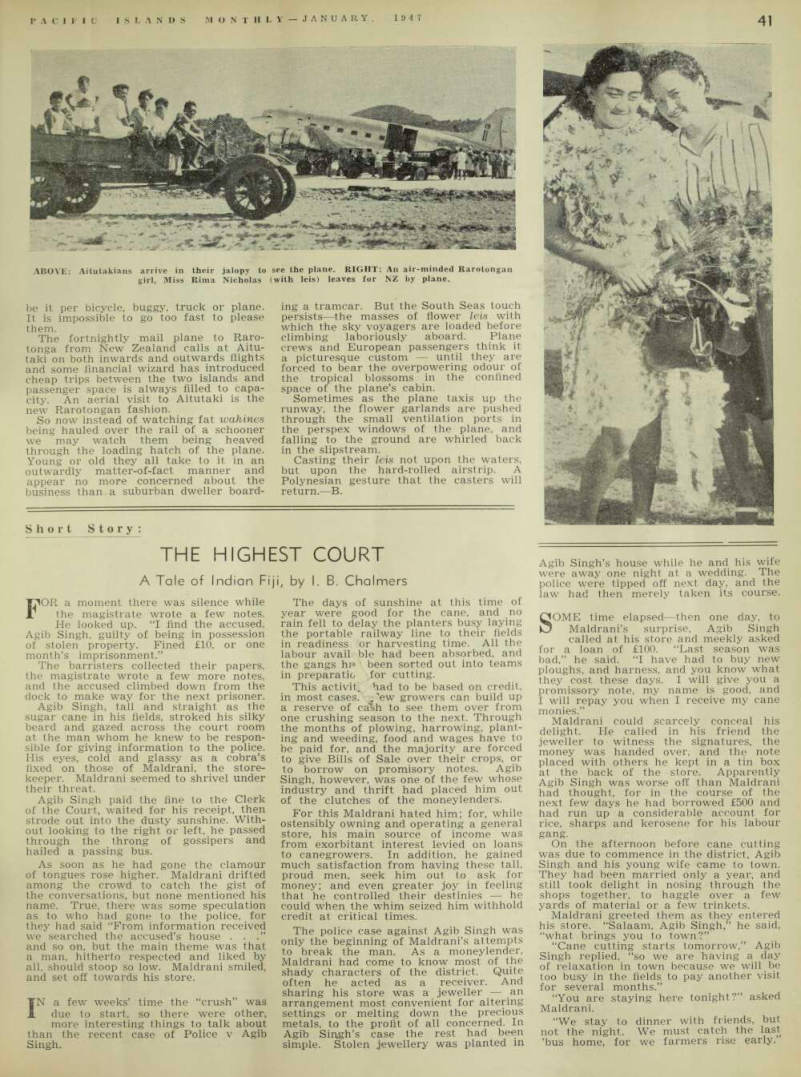
The fortnightly mail plane to Raro tonga from New Zealand calls at Aitu taki on both inwards and outwards flights and some financial wizard has introduced cheap trips between the two islands and passenger space is always filled to capa city. An aerial visit to Aitutaki is the new Rarotongan fashion.
So now instead of watching fat wahines being hauled over the rail of a schooner we may watch them being heaved through the loading hatch of the plane.
Young or old they all take to it in an outwardly matter-of-fact manner and appear no more concerned about the business than a suburban dweller board
ing a tramcar. But the South Seas touch persists—the masses of flower leis with which the sky voyagers are loaded before climbing laboriously aboard. Plane crews and European passengers think it a picturesque custom until they are forced to bear the overpowering odour of the tropical blossoms in the confined space of the plane’s cabin.
Sometimes as the plane taxis up the runway, the flower garlands are pushed through the small ventilation ports in the perspex windows of the plane, and falling to the ground are whirled back in the slipstream.
Casting their leis not upon the waters, but upon the hard-rolled airstrip. A Polynesian gesture that the casters will
return.
B.
ABOVE: Aitutakians arrive in their jalopy to see the plane. RIGHT: An air-minded Rarotongan girl, Miss Rima Nicholas (with leis) leaves for NZ by plane.