Men Who Pioneered Anglican Mission In Papua
pp. 35-36 · Read in the full issue
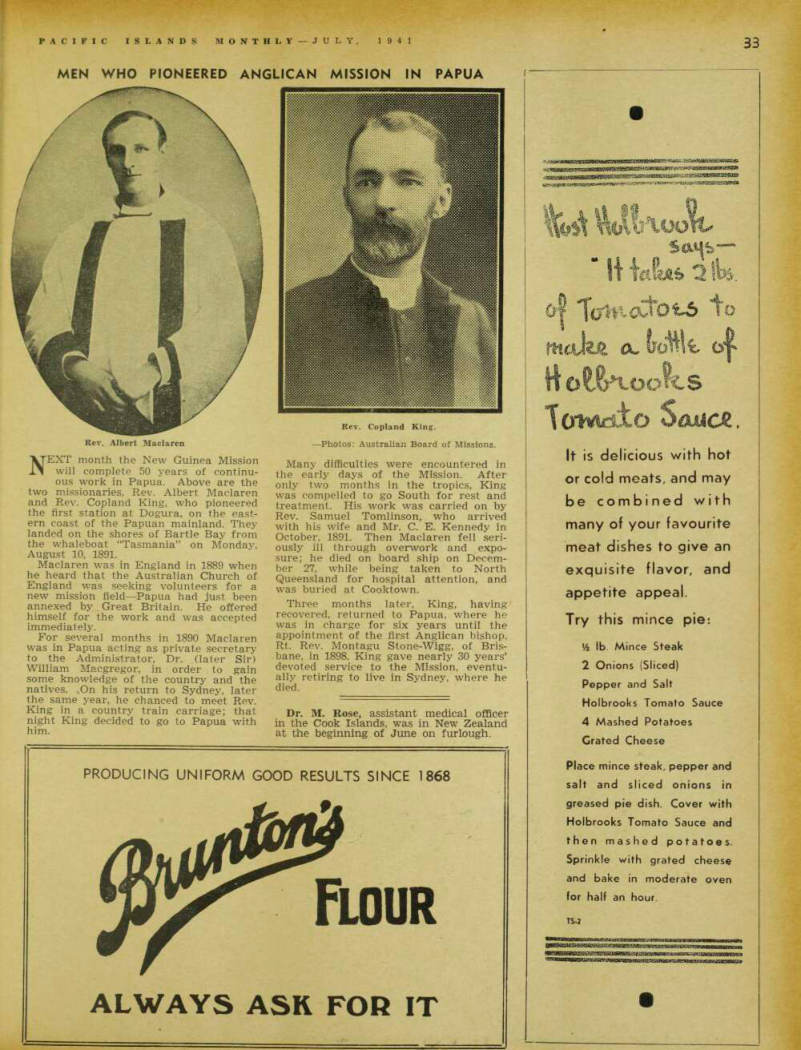
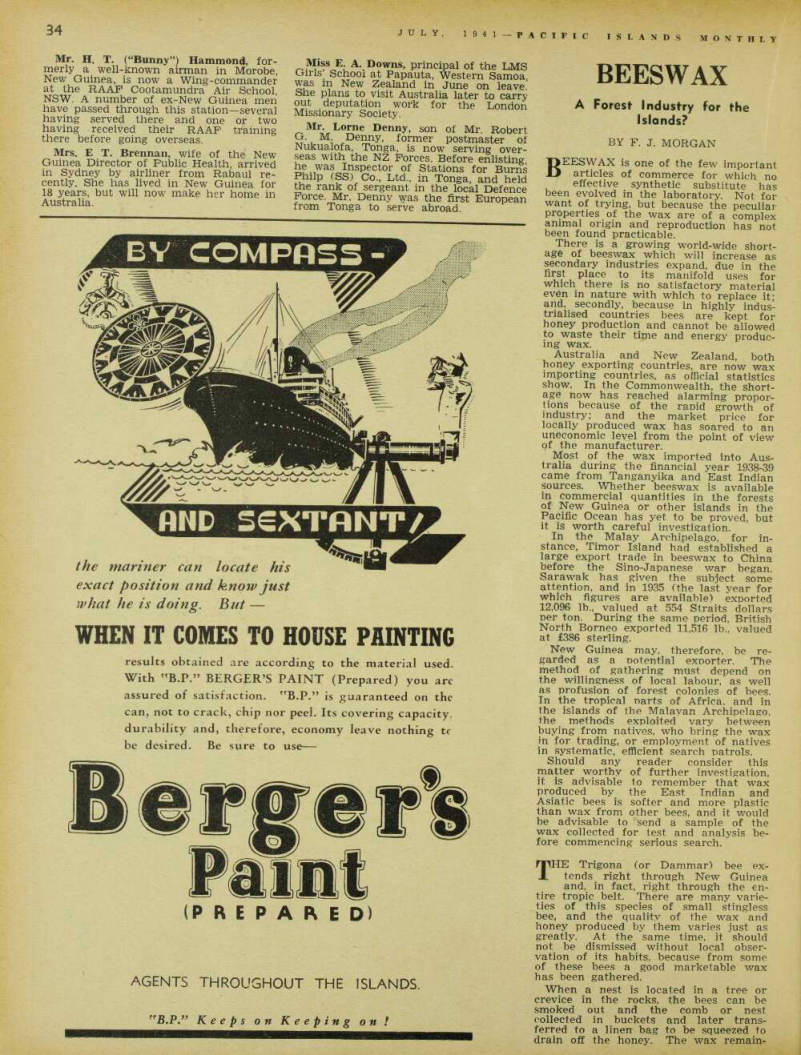
NEXT month the New Guinea Mission will complete 50 years of continu ous work in Papua. Above are the two missionaries, Rev. Albert Maclaren and Rev. Copland King, who pioneered the first station at Dogura, on the east ern coast of the Papuan mainland. They landed on the shores of Bartle Bay from the whaleboat “Tasmania” on Monday, August 10, 1891.
Maclaren was in England in 1889 when he heard that the Australian Church of England was seeking volunteers for a new mission field —Papua had just been annexed by Great Britain. He offered himself for the work and was accepted immediately.
For several months in 1890 Maclaren was in Papua acting as private secretary to the Administrator, Dr. (later Sir) William Macgregor, in order to gain some knowledge of the country and the natives. s On his return to Sydney, later the same year, he chanced to meet Rev.
King in a country train carriage; that night King decided to go to Papua with him.
Many difficulties were encountered in the early days of the Mission. After only two months in the tropics, King was compelled to go South for rest and treatment. His work was carried on by Rev. Samuel Tomlinson, who arrived with his wife and Mr. C. E. Kennedy in October, 1891. Then Maclaren fell seri ously ill through overwork and expo sure; he died on board ship on Decem ber 27, while being taken to North Queensland for hospital attention, and was buried at Cooktown.
Three months later, King, having recovered, returned to Papua, where he was in charge for six years until the appointment of the first Anglican bishop, Rt. Rev. Montagu Stone-Wigg, of Bris bane, in 1898. King gave nearly 30 years’ devoted service to the Mission, eventu ally retiring to live in Sydney, where he died.
Dr. M. Rose, assistant medical officer in the Cook Islands, was in New Zealand at the beginning of June on furlough.
Rev. Albert Maclaren
Rev. Copland King.
Photos: Australian Board of Missions.
Mr. H. T. (“Bunny”) Hammond, for merly a well-known airman in Morobe, New Guinea, is now a Wing-commander at the RAAF Cootamundra Air School, NSW. A number of ex-New Guinea men have passed through this station —several having served there and one or two having received their RAAF training there before going overseas.
Mrs. E T. Brennan, wife of the New Guinea Director of F'ublic Health, arrived in Sydney by airliner from Rabaul re cently. She has lived in New Guinea for 18 years, but will now make her home in Australia.
Miss E. A. Downs, principal of the LMS Girls School at Papauta, Western Samoa was in New Zealand in June on leave.
She plans to visit Australia later to carry put deputation work for the London Missionary Society. Mr I »',r Lorile Denn y. son of Mr. Robert G M Denny, former postmaster of Nukualofa, Tonga, is now serving over seas with the NZ Forces. Before enlisting he was Inspector of Stations for Burns Philp (SS) Co., Ltd., in Tonga, and held the rank of sergeant in the local Defence Force. Mr. Denny was the first European from Tonga to serve abroad.