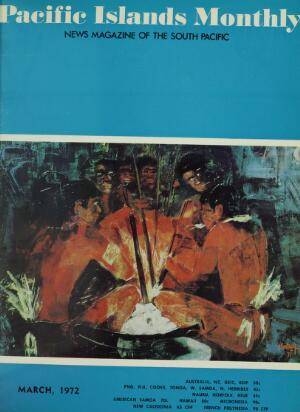
Pacific Islands Monthly
News Magazine Of The South Pacific
March, 1972
Australia, Nz, Geic, Bsip 50C
PNG, FIJI, COOKS, TONGA, W. SAMOA, N. HEBRIDES 45c
Nauru, Norfolk, Niue 45C
AMERICAN SAMOA 70c HAWAII 80c MICRONESIA 90c NEW CALEDONIA 65 CFP FRENCH POLYNESIA 90 CFP
Our Cover
It is Nalot time in Espiritu Santo in the New Hebrides, a solemn ceremony which forms the subject of this painting by Marcel Moutouh, part-French, part-Vietnamese painter with a studio in Santo, New Hebrides, who is establishing a reputation in the Pacific for his work, both primitive and abstract. Nalot is a traditional dish of Santo, con sisting of taro which is cooked, unpeeled, in a stone oven. After cooking, it is peeled and put into a large carved dish situated in an open space in the hut. The men squat round the dish and, using long clubs, pound the taro to a set rhythm which rises and falls.
Apart from feast days, Nalot is also prepared as a welcoming ceremony for visitors. The paint ing was photographed by Dr. R.
Joura.
Advertisements & other items, p. 2 (1 item)
Double Your
Pleasure
Buy two Toyotas. The Toyota Corolla on top.
The Toyota Celica below. You get a big double combination That a single car can't give you. For more or less the same price. You get twice the beauty, power and economy.
The Corolla really skips along.
With famous Toyota good mileage. The Celica skips and skimps about the same. And you have a choice of five youthful, sporty models. But in both cars you get: Fresh air flow-through ventilation. Thick fully reclining front bucket seats. Safety padded interior. Unit construction. Plus two Toyotas.
Toyota Corolla _J New Toyota Celic * A RS
IBSsa
« ™PUA™NEWGUINEA: ELA MOTORS LIMITED. Scratchley Rd„ Badili, Papua U.S. TRUST TE RR!TOR Y: //VTA MICROL CORPORATION PO Box 267, Saipan FIJI ISLANDS: AUTOMOTIVESUPPLIESC ‘ I f m 1I LJ boxSssX American Samoa: burns ph. lp, south sea,lvTUlr BURNS PHILP (SOUTH SEA) LTD.Apia GUAM: R f 7EPH Y R SERVICE STATION PTY LTD..Honiara NEW CALEDONI, NEW HEBRIDES MOTORS LTD.,P.O.BoxIB.ViIa SOLOMON ISLANDS. - IBSEMENTS E A MARTIN & FILS,B.P. 61 Papeete COO SOCIETE DTMPORTATION AUTOMOBILE DU PACIFIC, Noumea TAHITI. ETABLISSEMtN IS t.A. ivim bUI/l t I C U HVirun I n I lUIV nu I •
ISLANDS: COOK ISLANDSTRADING CORPORATION LTD., Rarotonga
In This Issue
Eneral
>uth Pacific Forum 21 owe for free trade 95 "black" 123
Merican Samoa
bman public defender 34 ientific laboratory 105
Dok Islands
►uth Pacific Forum 21 ittle for the premiership 24 ibery at elections 29 >ubtful future for "Moana Roa" ... 85 ove for free trade 95 xle accidents 121 Jction preparations 125 hing contest 127 II uth Pacific Forum 21 e Banabans' mining dispute 27 uth Pacific arts festival 28 ►or into Yasawas 28 ►mmunications link-up with Hawaii 29 e Wendt's "Fiji Talanoa" 32 sons controller retires 34 va girl weds in Sydney 34 drofoil service 83 nerva Reef 93 >ve for free trade 95 Danese in Fiji land deal 96 siness growth 121
Ench Polynesia
■ax or a tragedy 29 liti letter 50 tooner's sudden death 79
Lbert And Ellice Islands
ting government leader 34 d of famous John Williams line ... 72 st private shipping line 83
Islanders enter world of commerce .. 97 Church bell 122
Nauru
South Pacific Forum 21 Extended Australia-Guam service ... 87 Move for free trade 95
New Caledonia
Autonomy issue 26 Helen Rousseau's diary 30 20 million dollar loan 96
New Hebrides
First university degree 35 Primitive tribe at arts festival 71 Courageous voyage 122 Condominium's future 132
Niue
Meat prices 97 Population exodus 132
Norfolk Island
Report on historic buildings 77 Jet noise nuisance 132
Papua New Guinea
What law prevails? 25 Bougainville copper project 37 Percy Chatterton's column 48 Economical New Guinea journey ... 53 Wuvulu Island carvings 57 Women priests 60 Modern Karlander vessels 87
Hard-going for politicians 113 Cathedral repairs 121
Pitcairn
Cruise ship's special call 105
Solomon Islands
Archaeologist returns 35 Subsidised coconut planting 97 Florence Binskin's death 107
Tonga
South Pacific Forum 21 Minister in Sydney 34 Bishop appointed 35 Boxing champion in Australia 45 Weaving display at arts festival ... 69 National shipping line 83 Minerva Reef 93 Move for free trade 95 Loan from UK Government 96 Workers in New Zealand 123
U.S. Trust Territory
Status talks 26 Women in politics 34 Improved copra production 85 Millions for Micronesia 127 Ship held in Majuro 132
Western Samoa
South Pacific Forum 21 Hydro-electric power scheme 29 BP director appointed 35 Move for free trade 95 Business good in Samoa 96 Chairman of Polynesian Airlines ... 97
DEPARTMENTS: Up Front with the Editor, iii; From the Islands Press, 13; The Editor's Mailbag, 15; Tropicalities, 28; People, 34; Magazine Section, 69; Yesterday, 75; Book Reviews, 77; Pacific Shipping, 81; Cruising Yachts, 88; BOAC Jet News, 89; Business and Development, 95; Produce Prices, 99; Shipping and Airways Information, 101; Deaths of Islands People, 107; Postscripts, 121; In a Nutshell, 132; Advertisers' Index, 131.
Advertisements & other items, p. 4 (1 item)
JheJteefJtotel
TOUK
clientu)Ul love you for it.
m m The beautiful coral beaches of Fiji and the warm blue Pacific. Palm trees waving in an ocean breeze and warm, friendly native hosts.
And the Reef Hotel. What more could a client ask ?
When your clients are guests at the Reef Hotel, they can expect all the amenities of an international standard hotel as well as the beauty of an untouched island. The Reef has 72 air-conditioned suites, luxuriously furnished and spacious, with bath/shower and toilet.
We can offer your clients two pools and a private beach, breakfast balconies, and dancing every night with special floor shows. They can go horse riding, skin-diving,
boating and big-game fishing.
And there’s also duty-free shopping in the hotel’s own mall.
Suggest the Reef Hotel.
Your client will love you for it.
The reasonable tariffs are: Single .—F$l5.OO Twin _F517.50 Suites F 540.00 Agent’s commission 20%.
For more information and bookings write or phone: P.O. Box 59, Sigatoka, Fiji
Telephone: Sigatoka 50044
GH343/K&B
REEF HOTEL
Up Front
with the Editor
We've suddenly got a new power bloc
The South Pacific Forum was aunched in Wellington last August vith a membership of five fully nvolved nations, plus Australia and Jew Zealand on the sidelines wearing olerant, Friendly Uncle expressions, n Canberra in February the second leeting broke up with a membership f seven fully-involved nations.
Australia and New Zealand went way looking slightly bemused, a ttle apprehensive, wondering how ic hell they had got themselves into lis, and the five Island nations went ff with the kind of smile that fable as it was seen on the face of the ger.
Australia and New Zealand have sen manipulated by crafty experts— nd anybody who has had any ex srience of Island politics knows just ow sophisticated they are. The Poly esian talking chiefs learned their ■aft at university colleges with istories going back countless genera ons, where the student who failed > pass his examinations literally •st his head. Australia and New ealand, with their superiority com lexes born of wealth and family mnections were bound to lose once ie Islands turned their attention to em in earnest.
What we saw in Canberra last onth, without public acknowledge ent, or indeed without general vareness, was the creation of a ;w power bloc covering a huge ea of the earth’s surface—a bloc bich will grow in membership and power as the South Pacific looms rger in the affairs of a diminishing Drld. As Island territories, including ipua New Guinea with its expand g econmy and population, become If-governing, they will join the oc, where all members are equal, o important decisions that are made this area of the world, and which ill affect the welfare of this area the world, can now be made thout the involvement of the South icific Forum. The forum countries, spite their varying sized populations,
have a common purpose, and their mutual responsibilty is the prosperity of all the peoples of the South Pacific. Their destinies are per manently linked.
What happened in Canberra in Feb ruary is exciting news to the South Pacific, because it means the full emergence of the South Pacific Forum has banished the isolation of the Islands—the isolation of one island group from another, the isolation of all the island groups from Australia and New Zealand, the isolation of the Pacific from the rest of the world.
It will also bring Australia and New Zealand closer to each other, for the
forum has already underlined the fact that despite the lip service and the real goodwill between the two anchor dominions of the South Seas, there are many significant matters in which they need closer understanding.
New Zealand will be less ap prehensive than Australia over the sudden new turn of events. New Zealand has been closer, for longer, to the problems of the Islands than has Australia with her past fascina tion, almost exclusively, with Europe and more recently with South-East Asia. New Zealand probably saw the writing on the wall when Fiji, Samoa, Tonga, Nauru and the Cooks first asked last year for “a little advice” about planning a loosely organised meeting of Island heads with Australia and New Zealand.
New Zealand invited this harmless “forum” without a firm agenda or procedures, this “Island fashion dis cussion”, to meet in Wellington. This it did, and everybody liked it so much, and there was so much good will, that Australia offered Canberra as the next venue.
But the forum had begun to take on a body and soul. Australia must have got its first indication that something more than a series of in formal talks around the kava bowl was developing when it attended a meeting on South Pacific trade in Wellington in November. This meet ing had met as result of a proposal approved by the first forum.
One of the subjects discussed at this trade meeting was the matter of New Zealand union interference with the affairs of Island shipping, especially Cook Islands shipping.
Island delegates at the meeting decided to take advantage of the
government de-registration of the New Zealand Seamen’s Union, which had just occurred, to put pressure or the NZ Government to give Island shipping greater immunity. This the} did while the trade meeting was stil in progress.
This bit of political in-play tn the Islanders impressed Australis mightily. It saw that the Islander were quite capable of smooth!] turning a situation to their owi advantage. It secretly hoped tha events in Australia in Februar wouldn’t give the Islanders attending the Canberra forum the same op portunity to play politics.
Australia’s apprehension was well founded. As you can see from PIM’ report on the Canberra forur (p. 21), Fiji played clever politic in Canberra on the matter of Island migration to Australia.
Ratu Sir Kamisese Mara wa aware that immigration is a sensitiv subject in Canberra. He was possibl also aware the Immigration Depar ment and the Department of Foreig Affairs are not in agreement on ho 1 the policy should be administere for Pacific Islanders.
Ratu Mara probably also kne' that in this Australian election yea the ALP leader, Mr. Gough Whitlan is promising to issue visas into Au tralia without racial distinction, an that under a Whitlam governmen leading Suva businessmen Mr. Be Jannif would not continue to have tl humiliation of having to state h financial position every time he wan to visit Australia.
Ratu Mara’s political tactics wi] I think, result in Australia doir something about making its in migration procedures less personal objectionable, less racial. It may brir closer the time when Australia wi introduce visas f< people like Mr. Jannif, who ha 1 * long since satisfied even Australia c their bona fides.
But Ratu Mara’s political tactic best of all, should prove to Austral that the Friendly Uncle image is ju not acceptable to the Pacil Islanders; that the Islanders must 1 treated as intelligent equals, j people as much entitled to their poi: of view as Australians. For Friend Uncles are easy to come by—Jap; tomorrow would be happy to ado that role.
The emergence of the South Pacil Forum as a permanent body shou help to ensure that Australia nev again takes its responsibilities f( granted in this part of the world.-
Stuart Inder
Advertisements & other items, pp. 5-7 (2 items)
Iii
iCIFIC ISLANDS MONTHLY—MARCH, 1972
Willem Ii
THE CIGARS
WHICH MADE
DUTCH CIGARS
FAMOUS
TSHET
NV. WILLEM lISIGARENFABRIEKEN
VALKENSWAARD HOLLAND
I
Australia's top record retailer
offers mail order service!
For over 30 years, Edels have been renowned for customer service and supply of all types of recordings.
Now you can select from the largest stock of local and imported records in Australia —every type—country and western, popular, rhythm and blues, etc., etc.
You are invited to add your name to our mailing list (we already have many customers in the Pacific Islands) and receive listings of the latest release recordings available through our C.O.D. mail order system. >K GeorgeStreet, Sydney. N.S.W. 2000 Please send me by post, pamphlets on (Name type of music you are interested in) (Name items of interest, records, tapes, etc.) Name— Address.
I understand that this places me under no obligation of any kind.
PIM 7/69
Pacific agriculturalists will want the . . .
1972 POWER FARMING TECHNICAL ANNUAL
572 pages of information on all the latest agricultural machinery and implements. $3.75 including postage.
PACIFIC PUBLICATIONS (AUST.) PTY. LTD.,
Box 3408, G.P.0., Sydney, 2001.
Glamapyne on cupboard doors and walls.
Glamapyne
transforms rooms
into havens of
comfort and beauty
Glamapyne Is Pyneboard, a building board surfaced on both sides with durable, easily cleaned melamine plastic laminate. Glamapyne is ideal for kitchen cupboards, furniture and built-ins. Choose from 11 popular woodgrains and crisp white. Matching edge laminate available.
I MELAMINE SURFACED PYNEBOARD
glamapyne
m - . v - Pyneboard built-in, quick easy construction.
Save money on
time and labour
with Pyneboard
Pyneboard is a quality particle board, as easy to work with as softwood. The board can be cut to any shape. Off-cuts can be butt glued and used, reducing wastage. A good range of sizes is available including 16' x 6' sheets in fine surface Pyneboard.
PYNEBOARD
FOR FURNITURE AND BUILT-INS
MADE IN AUSTRALIA BY PYNEBOARD PTY. LTD.
EXPORT SALES: 5 O’CONNELL STREET, SYDNEY, AUSTRALIA 2000
EXP.P.2IBJL
Pacific Islands
Monthly
FOUNDED BY R. W. ROBSON IN 1930
Owned And Published By
Pacific Publications (Aust.) Pty. Ltd.,
29 Alberta St., Sydney, N.S.W., 2000.
Postal Address: G.P.O. BOX 3408, SYDNEY,
N.S.W., 2001.
Telegraphic Address: PACPUB, Sydney.
Telephones: 61-9197, 61-7101, 61-4369.
Consulting Directors: R. W. Robson, Judy Tudor.
Chief Executives: General Manager: Selwyn Hughes.
Publisher; Stuart Inder.
Director of Advertising; W. A. Gasnier
Pacific Islands Monthly
Editor: Stuart Inder.
Assistant Editor: John Carter.
Advertising Manager: W. A. Gasnier.
Circulation Manager: Barry Badger.
Representatives
Fiji: Pacific Publications (Fiji) Ltd., Fiji Times Building, 20 Gordon Street, Suva. Tel.: 25601 Fiji Times Office, Mayfair Building, Namoll Ave., LAUTOKA. Telex: 1144. Tel.: 60-422.
Papua New Guinea: LAE, P.O, Box 227; RABAUL, Mr. Steve Simpson, P.O. Box 433 c/- Rabaul Photographic. Tel.: 2677).
French Polynesia: Distribution—Hachette Paci fique, 10 Ave Bruat, Papeete.
New Zealand: Pacific Publications, C.P.O. Box 2229, Auckland. 379-494. Representative: John Spedding, Civic House, 291 Queen St., Auckland, Tel.: 379-494.
United Kingdom: S. R. Warman, Park House, 22 Park Street, Croydon, CR9 3NP. Tel.i 01-6884177.
Overseas Newspapers (Agencies) Ltd., Cromwell House, Fulwood Place, London, W.C.I. Tel.: 01-242-0661. Cables; WESNEWS, London, DS4 Japan: Advertising—Universal Media Corpora tion, C.P.O. Box 46, Tokyo. Tel.: 666-3036 Victoria: Advertising—Wilke & Co. Ltd. 37 Brown's Road, Clayton, Vic., 3168. Tel..- 544-8222.
Queensland: Advertising—Beale Media Services 232 St. Paul's Terrace, Fortitude Valley Old., 4006. Tel.: 51-5827.
Subscription Rates:
"Pacific Islands Monthly" is air-freighted to all subscribers and agents in the Pacific Islands; copies to other areas go by surface mail, Australia (including Lord Howe and Thursday Is.), 8.5.1. P., Gilbert and Ellice Is.; $5.50 Aust. ; Papua-New Guinea, Norfolk Island, Nauru, Tonga and New Hebrides; $5.00 Aust.; New Zealand: $5.50 NZ,- Fiji, Cook Islands, Niue and Western Samoa: $5 00 (local currency); American Samoa: $B.OO US; U.S. Mainland Micronesia (including Guam): $lO 00 US- Hawaii: $9.00 US; New Caledonia: 750 French Pacific francs; Tahiti and French Polynesia: 850 French Pacific francs; United Kingdom and elsewhere: £3.25.
Copyright ©, 1972,
Pacific Publications (Aust.) Pty. Ltd.
March, 1972.
Vol. 43, No. 3.
Advertisements & other items, pp. 7-20 (10 items)
1
&CIFIC ISLANDS MONTHLY-MARCH 1972
Burns Philp
‘■mil .
I Ly\
SHIPPING AGENCIES
The New Zealand Shipping Co. Ltd.
Shaw Savill & Albion Co. Ltd.
Blue Star Port Line (Management) Ltd.
Bank Line Ltd.
General Steamship Corporation Ltd.
Compagnie des Messageries Maritimes Royal Interocean Lines Daiwa Navigation Company Ltd.
Sitmar Line Flotta Lauro (Lauro Lines) Australasia Pty. Ltd.
Tonga Shipping Agency.
Karlander Kangaroo Line
THE PACIFIC
FIJI,SAMOA,TONGA,NIUE Is, NORFOLK Is.
BURNS PHILP
(SOUTH SEAT CO.LTD.^^^H
REGISTERED OFFICE; SUVA, FIJI.
TELEPHONE NO: 22661
TELEX NO; FJ1127
Code Address; "BURNSOUTH"
EXCLUSIVE
DISTRIBUTORSHIPS
INCLUDE
Akai Taperecorders Sunbeam Appliances Dunlop Products Hitachi Electronics Holden Motor Vehicles Rolex Watches Revlon Cosmetics Pentax Cameras Massey-Ferguson Tractors Olympic Tyres Penfold Wines
AGENTS FOR
Queensland Insurance Co. Ltd.
Shell Company (P. 1.) Ltd.
Bureau Veritas
ASSOCIATED COMPANIES
Burns Philp (New Hebrides) Ltd.
Burns Philp Trustee Co. Ltd.
Automotive Supplies Co. Ltd.
Corrie & Co. Ltd.
Wrought Iron and Steel Construction Co. Ltd.
Bish Ltd.
SPECIALISED SERVICES
Expert advice on Shipping, Forwarding,- Customs formalities; Insurance.
COMPLETE TRAVEL
SERVICE
accredited agents for the
INTERNATIONAL AIR
TRANSPORT ASSOCIATION
OVERSEAS AGENTS: SYDNEY• LONDON *SAN FRANCISCO
a w m K £ V. f|s| 4*U r^ % - /v^ * f * -f />
This many shaves
from one blade:
And more. In fact you’ll probably give up counting. It’s the miracle polymer coating on the edge that gives you unbelievably long lasting comfort, more smooth close shaves than any other blade, every one as easy as the first... shave after shave after shave after shave after shave after shave after shave...
Gm eft« tv.
SHUNLESS STEEL
LAD
Stain!
> ft vvv
Hey! Are yon in the right place? es! And at the right time too! > nr
liiijJniTlH
A pure jet service for the islands - starting April 1972.
The Pacific islands’ own airline-Air Pacificwill bring the people of the islands a faster, more comfortable service with the introduction of their first British Aircraft Corporation One-Eleven 475, Rolls Royce powered, pure jet aircraft.
A taste of luxury travel when you visit your neighbouring territories. Faster, more convenient connections with international trunk lines.
For the latest timetable and fares, contact the nearest office of Air Pacific - the Pacific islands’ own airline. am (Formerly known as Fiji Airways) General Sales Agent for Air New Zealand, BOAC, QANTAS and TAA. 1625
Cllx
Crackers
taste as n
theyre
buttered!
Brockhoft CIU ate crisp. tenderaVheart, Eat Idem into spreads. ° [ Oven-crisp Brockhofl» Crackers are ready
’SSSSS&***
m i 919 There’s value, variety and quality in
BROCKHOff BISCUITS
6441/8 x 6V4
(SD
MORRIS
HEDSTROM
LIMITED
HEAD OFFICE: SUVA-FIJI
LONDON OFFICE;
MORRIS HEDSTROM LTD.,
Park House,
22 Park Street,
CROYDON, CR9 3NP.
AUSTRALIAN REPRESENTATIVE
W. R. CARPENTER 0 CO. LTD.,
(MERCHANDISE DIVISION),
The A. & N.Z. Building,
68 Pitt Street,
SYDNEY, 2000.
Registered Cable Addresses:
MORRISHED —SUVA, APIA, NUKUALOFA. • SUVAMARK LONDON. • MORSTROM SYDNEY.
AGENTS AND DISTRIBUTORS FOR:
SHIPPING
China Navigation Company Lloyd's Lloyd Triestino Mitsui OSK Lines Pacific Australia Direct Line Pacific Far East Line, Inc.
MOTOR
Alfa-Laval A.R.A. Airconditioners Assoc. Battery Makers of Aust. Ltd.
Champion Spark Plug Co.
Chrysler U.K. Ltd.
D. H. Davies & Co. Ltd. ferodo Ltd.
Ford Motor Co.
Fram Filters Ltd.
Good year Tyre & Rubber Co.
Hayter Exports Ltd.
Howard Rotavators Pty. Ltd.
Napier Bros. Ltd.
Norton-Villiers Outboard Marine International W. H. Wylie
GENERAL
Addis Limited Benford Ltd.
Crittall-Hope Export Electrolux Ltd.
Imperial Chemical Industries Ltd.
James A. Jobling Ltd.
John Stevenlon & Sons (Export) Ltd.
H. & R. Johnson Ltd.
Kelvinator International Inc. (Leonard Refrigerators) Longines SA Marley Floor Tile Co.
Nippon Kogaku (Nikon Cameras) Noritake Co. Ltd.
Olympus Optical Parker/Eversharp Pen Co.
Pilkington Bros. ltd.
Procter & Gamble Ronson Ltd.
Rowntree & Co. Ltd.
Sanyo Electrical Singer Australia Ltd.
Wiltshire File Co. Pty. Ltd.
Winstone Ltd.
Yorkshire Imperial Metals
LIQUOR
Bacardi International Drambuie Liqueur Co. Ltd.
Guinness Exports Jas. Hennessy & Co.
John Dewar & Sons Ltd.
McWilliams Wines Pty. Ltd.
Tanqueray Gordon & Co. Ltd.
PHARMACEUTICALS & COSMETICS
Burroughs Wellcome & Co. N.Z. Ltd.
Ciba Laboratories Cynamid DHA Pty. Ltd.
Elizabeth Arden Glaxo Laboratories Ltd.
Lentheric Perfumes Max Factor Rimmel Ltd.
Smith & Nephew Ltd.
West Silten Pharmaceuticals
for friendly service
and complete
satisfaction its . . .
MORRIS HEDSTROM
LIMITED
Fiji-Western Samoa-Tonga
In the tense atmosphere of an operating theatre, a human life can depend on the structural strength built into a suture finer than a human hair. The surgeon uses it almost automatically, thus placing on record his faith in its ability to do a job perfectly—without fear of malfunction. One tiny thread. Yet, in its own way, it must function every bit as accurately as today's most sophisticated
electronically controlled
cardiac monitor. Both carefully designed and manufactured to do specific jobs. Both as different as chalk and cheese, but with one common denominator —reliability. And reliability is what KP is all about.
M.D. & B.RS
know what KP means. r i With buying houses in both London and New York, Kempthorne's specialists keep their fingers on the pulse of World markets, ever watchful for latest developments in the surgical and dental fields.
Service. Quality. Reliability. Integrity. Today's surgical and dental profession knows exactly what KP means.
Enquiries to: The Marketing Manager Kempthorne Prosser & Co. Limite P-O. Box 319, Dunedin.
A
great bunch
of flours.
Robert Hutchinson makes the greatest bunch of flours in the Pacific. Bakers’ flour.
Superlite cake and sponge flours.
Biscuit flour and cracker flour.
Wheaten sharps and wheaten meal.
We’re particularly proud of our bunch of flours. So we have a technical advisory service to help you use them properly.
So next time you see a Robert Hutchinson flour (or even one of our Hutmill stock feeds), remember it’s just one of the bunch.
ROBERT
HUTCHINSON
LIMITED
the flour people
Harrington Street, Glenroy, Victoria, Australia. 3046. Telephone Melbourne 306 7261 *3 * m
If you have dentures to keep clean,
aches and pains to stop
OISPRIM
HP227;:
cuts and scratches to heal
...trust us.
For Trade Enquiries: Reckitt & Colman Pty. Limited, Wharf Road, West Ryde, N.S.W. Australia.
Cables; Reckitts Sydney.
GET TO GRIPS
WITH THESE VICES
Take a look at these Rabone Chesterman vices.
They're specially designed for the craftsmen and handyman who knows quality when he sees it, and doesn't have money to burn.
From the engineer's swivel-based job, to the carpenter's lightweight corner model, they're all masterpieces of engineering; all attractively finished in stove enamel, and all having the backlash-free lead screw.
Rabone Bn
Chesterman
A member of the RCF Group of Companies Whitmore Street Birmingham BIBSBD England
FLEXIBLE POWER
10 SHUT FORESTS
* ■ ■ We have built Fork Lift trucks to lift 55,000 lbs U Trucks for container shipping Fork Lift with grabber holds for timber and log work in forests and on the wharves - log skidders for moving logs sideways or any way required. Model illustrated features a 4 speed power-shift transmission, and power steering.
Power comes from a 100 h.p. Ford diesel unit.
Over the .years we’ve acquired a lot of ‘knowhow’ on loading problems for every conceivable type of product if you’ve a problem then we'll solve it for you. Just ask us! Our deliveries are prompt our prices competitive.
LEES INDUSTRIES LIMITED
PRIVATE BAG, PAPAKURA, N.Z.
PHONE; 86-019 PAPAKURA
■lll
wmm
Wunderlich
building materials
set modern design trends
rend tnHsw IP fnr m n/Jnrn ! I The trend today is for modern design—low cost, maintenance-free building materials. The answer lies with asbestos-cement manufactured and supplied by Wunderlich Limited. The vast range of asbestos-cement products includes flat sheets for walls and ceilings— profile sheets for carports, gable ends, feature walls and garages and corrugated sheets for roofing, wallinq and fencing.
Construction of economical flats, home units and residences demands modern design trends—in asbestoscement —by Wunderlich Limited.
Write for free, informative literature on asbestos-cement building products.
Wunderlich Limited, Head Office: 393 Cleveland Street, Redfern 2016 Australia. Telephone 69 0366
LTD
ASBESTOS-CEMENT PRODUCTS
AVAILABLE FROM AUTHORISED DISTRIBUTORS
138/5/6
Lunch size, snack size
SAO biscuits
are the right size!
Crisp, fresh Arnott’s Sao biscuits ... right size to satisfy, right size for snack foods, too! Cheese for lunch? A big slice fits just right on Sao. So does a slice of ham or salami.
Prefer jam or spread? Or how about tomato? Simply serve with Sao—the right-size biscuit that makes all the crisp difference to lunches at home and at school or outof-doors. The triple-wrapped pack keeps the biscuits crisp and fresh.
Qrnott's/«" Biscuits
There is no Substitute for Quality
Icific Islands Monthly—March, 1972
5
*CIFIC ISLANDS MONTHLY—MARCH, 1972
7
UJIFIC ISLANDS MONTHLT-Marph 10-70
Icific Islands Monthly—March, 1972
11
CIFIC ISLANDS MONTHLY-MARCH, 1972
From the
Islands Press
Letter from Moses Nasam, Tari, Southern Highlands, in the PNG Department of Information's "Our News', in reply to letter quoted on this page in December, 1971: We can see with our own eyes that many expatriates who have been here for some time have introduced bad things such as swearing, or using bad language.
We and our grandparents did not swear and we did not understand swearing, but now all the young people copy the words and use them. Also in many places you will find people in shops, banks, or offices who are not willing to help our people, or keep them waiting , . .
I think we need people here who are first of all, honest, respectful and trustworthy. It is no good having well-educated people who do not have good characters.
A news item in "Cook Islands News", reporting Premier Albert Henry's defence of his
government's overspending.
The premier said the government has worked hard in the year 1970. They did more work In 12 months and overspent about $67,000, work which should take over 14 months to do.
The government in its aim to work for the people has done its job with eagerness, ft is perfectly alright to spend the money for he benefit of the Cook Islands, said the Premier.
Extract from editorial in 'The Samoa Times": Fhe decision by Cabinet to stop the prime minister’s >ress conference over 2AP is highly unfortunate t is a great pity the prime minister appears to have >een swayed by the “image” considerations at the xpense of fulfilling one of democracy’s primary equisites— to keep the people informed. It might be iseful for the “image builders” to remember that he “lasting image” must be based on sincerity. The Samoa Times’ has never had any double of the prime minister’s sincerity up until now. lem in BSIP Tourist Authority's "Bulletin": k 10-foot long "Tafuliae", the red shell money made in the :land of Malaita and used in the payment of the aditional Bride Price, has been placed in the Money luseum of a German bank in Munich. Mr. Harold Mozley Jcently purchased a very Tine example of this red shell loney on behalf of Mr. D. M. Brink, a director of a firm in ong Kong, who had read about a Malaita bride being aid for in Tafuliae and was very anxious to obtain a sample.
Ir. Brink was so delighted with the shell money that he ecided to donate it to the Bayerische Gemeinde Bank Money luseum in Munich so that it could be displayed to the public.
From a letter by "Non-Believer" in the Cook Islands News": Despite the fact that a United Nations' commission has called racial prejudice "a crime against society" there is a religious group active in the Cook Islands which seeks to indoctrinate the local people with the belief that negroes are inferior and will not go to Heaven. There are now two groups of puritanical bigots who believe that Polynesian dancing is sinful and who seek to suppress this aspect of local culture. Another religious group seeks to compound the problems of malnutrition by preaching to atoll dwellers that to eat staple foods such as pork and shellfish is a sin.
Have these people the right to inflict their narrow minded bigotry on a relatively "innocent" Polynesian people?
Public notice in 'The Fiji Times': I regret that I gave the impression in The Fiji Times item, "What we resolve to do in the New Year" that Labasa does not have any proper accommodation for tourists. I admit that the Grand Eastern Hotel has proper accommodation but what I only intended was to say I hoped Labasa would benefit by the increasing Tourist Industry and that my son's new hotel will help Labasa to cope with the tourists when they come.
JADURAM,
Nasea, Labasa.
Comment in the "The Norfolk Islander" by Pat Lush on the conviction of local businessman Jack Fitzpatrick for driving a car in contravention
of the ""D-plate"" ordinance on Sunday:
If driving a car in this way from wharf to garage constitutes a breach of the law, what then is the true position of a rental car or transport operator who plies for hire on the Sabbath? ... If the island’s need is tourism, then, like it or not, it must make some sacrifice in catering for the wants of the tourist public. This inevitably will include the provision of services, prominent among them transport.
News item in "Tohi Tala Niue": Part of the cargo from the recent visit of the MV "Moana Roa" was a gift from the Pakuranga Rotary Club. The Director of the International Service Committee of the Club, Mr. W. A. Duncan, was advised of a list of priorities and within a short time was able to tell us that the Club had acquired a new obstetric delivery bed for the Lord Liverpool Hospital ... Dr. Lipitoa accepted the bed on behalf of the Niue Government and the Health Department. He was sure that the bed would be well used by the mothers of Niue . . . There had (so far), unfortunately, been no birth at the hospital since the bed was received, but we understand that shortly the expectant mothers of Niue will be doing something about this.
'Correction" published in the "Tonga Chronicle":
The twin girls born to Mrs. Lucila Abolencia on New Year’s Eve were four weeks premature and not four months as incorrectly stated in the caption to the picture on the front page of last week’s ‘Chronicle’.
13
ACIFIC ISLANDS MONTHLY-MARCH, 1972
Australian engineering equipment
T
gives you higher volume
at lower production cost
What's in Australia for you? Everything in the engineering field ferrous and non-ferrous metals; finished and semi-finished machined parts, forgings and castings; machine tools and plant to equip your own factory; or a complete package deal to set up local production.
Australian engineering materials and equipment are recognized throughout the world for quality, reliability and high-volume production.
Most of Australia's 62,500 factories use machine tools and equipment designed within Australia to handle any volume from jobbing to batchproduction to continuous operation.
You can look with confidence to Australia to satisfy your engineering needs to enable you to achieve greater efficiency at lower production cost, and with a minimum of maintenance.
what's in Ck
Australia J 5
for you? * >M
Find out today. All you have to do Is contact the Australian Government Trade Commissioner who will put you in touch with suppliers of Australian products; cnr. Pratt and Joske Streets, SUVA (P.O. Box 1252). Tel: 25624.
Australian Department of Trade and Industry
The Editor's Mailbag
PIM and the rest of the world
The Editor’s “Up Front” article in January (p. 15), in which he points out that PlM’s secondary objective is explaining the Islands to the rest of the world, has prompted me to send what might be some encouragement.
PlM’s primary aim is to inform the Islanders about events in the Islands, but I would like to refute what the editor says about PIM not being read by the rest of the world.
I would like to say that one small voice has listened to, and often repeated, your messages—repeated :hem to many segments of the world.
My PIM subscription commenced in the early 19305, when I was in Eape York Peninsula. Later I visited Port Moresby in company with Charles Cecil Burt, “Scotty” Mac, Errol Flynn, but we put our small :raft up on the reef near Moresby.
'An insurance commissioner came )ut and declared us wrecked and ater sailed our vessel for his own )ersonal use).
Being a “Pommy B”, I have had 'our publication sent on to me in ill parts of the world over the 'ears. PIM, and the many books ssued from your printing press— lobson’s, Judy Tudor’s and others— lave been on our shelves almost as oon as published.
You have properly recorded much >f the heroism and horror of the apanese occupation and how it was let and how the atrocities stained the ’acific for ever. It is high time the me record is made available to Aus ralia and to the Islands of what took lace in civilian and service offices f-power in those days. The Tol lassacre. the loss of men in Rabaul, le Canberra idiocy over not getting le people of Rabaul out in response ) Harold Page’s message, and the uilt of the Department of Ter itories under Halligan should be sealed today, as well as the eroism of the Islanders, and the ontrast in the few who went over ) the enemy even when in AIF niform after being captured in NG.
We live in stirring times but the
hard task of informing the world has gone on in many areas where I know that PIM has been taken or sent—Queensland, Wales, Florida, London, foreign offices abroad, cricket clubs in Singapore and Britain.
We have listened in to the ABC guest speakers, or ABC “Notes on the News”, and have welcomed the inclusion of the PIM editor or other staffers to refresh us from the drones of the dons of the universities.
Please note your hard work is being appreciated in many more places than you know.
Even here in Canberra, PIM passes from me to several ex-Territorians, and there is a strong but silent “New Guinea association” which includes in its membership old New Guinea hands such as the Archers, Fishers, Noakes, to whom your journal must still go. It is indeed necessary for PIM to continue its dual role of informing Islanders and informing the world. It is even more important now, so do not restrict your sail cloth.
R. Eliot.
Canberra.
Niue Fights Back
I would like to comment on your report (PIM, Nov., p. 32) re garding New Zealand aid to Niue.
One must understand that any de veloping country needs help and Niue is no exception. The Niuean people appreciated very much the aids New Zealand has offered since the island was annexed in 1900. All New Zealand’s financial aids are highly respected by us, and are not going down the drain as a respected Suya citizen thinks. Anyone who visited Niue 10 years ago and sees it now can surely see the develop ment which has taken place. The island’s leaders are anxious to have something of their own in spite of New Zealand’s helping hand. And that’s what we are doing now; not just sitting back. We are New Zea land citizens and we are privileged to accept her assistance in the same way Fiji was helped by Britain. In fact, all territories in the Pacific region were helped by various met ropolitan governments.
Niue might change her mind in the future, but right now we are New Zealand Respected Citizens, and it hurts if “Mr. Respected Citizen of
Suva” expresses horror over things that don't concern him, especially when we are using New Zealand financial aids wisely.
H. P. Foliola.
Tuapa, Niue.
Return To Milne Bay
This year marks the 30th anniver sary of the defeat of the enemy in the Milne Bay area of Papua New Guinea.
A committee has been formed to commemorate the Anzac Day, and a 30th anniversary week has been planned for period September 6 to 13. The highlight of this week will be local participation in the weekend, culminating in the PNG National Day, September 11.
The committee is anxious tc attract as many ex - servicemen as possible, and would appreciate any publicity you could give in youi publication. The Australian Govern' pient has been approached to assist and an invitation has been extender to the US forces, as well as our own To date, we are concentrating or the Anzac Day Commemoration ser vices.
This year, as Anzac Day falls oi a Tuesday, it is proposed to hold ! ball in the Bay Theatre on Saturday April 22, and the Anzac Day wil consist of Dawn Service at Turnbul Field Memorial, followed by a gun fire breakfast at the Cameron Club The main parade and service will b held at 10.30 a.m. on the town oval adjacent to the new District Head quarters. An afternoon of sport band playing and a free film screen ing of war newsreels are offered.
Any persons desirous of attendin should contact the committee an arrangements will be made for accom modadon.
G. Masters
Anzac and 30th Anniversary Commemoration Committee, P.O. Box 28, Alotau, Milne Bay, Papua.
Sechstroh Identified
The Rev. A. H. Voyce (PIM, Nov p. 29) has been correctly informec the German’s Sechstrohfluss is th river now mapped as the Tami o the north coast of New Guinea, fiv miles west of the border with Wei Irian. See Otto Finsch, 189; Ethnologische Erfahrungen . . Wiei p. 182.
Ian Hughes
New Guinea Research Unit, Port Moresby.
Advertisements & other items, pp. 21-26 (2 items)
15
ACIFIC ISLANDS MONTHLY-MARCH, 1972
1
PAPUA
NEW GUINEA
PRINTING CO.
PTY. LTD.
• Commercial Offset and Letterpress printers to the territory.
Factories in Port Moresby and Lae.
And we also can supply your regular and specialised stationery needs.
OFFICE EQUIPMENT
RUBBER STAMPS
We welcome your mail orders.
P.O. Box 633, Port Moresby P.O. Box 759, Lae P.O. Box 30, Mount Hagen Cables & Telegrams: PRINTER Port Moresby and Lae
Which insurance
company will cover
you best?
We’ll find out.
We’re Insurance Brokers, the first and most experienced in the Territory.
If you wish to avail yourself of our services, just lift the phone, or drop a note.
We’ll welcome the opportunity to serve.
HARVEY TRINDER
Insurance Brokers Hunter Street, Port Moresby. Tel. 2241-2 Agents:
STEAMSHIPS TRADING COMPANY LIMITED
Port Moresby, Samarai, Popondetta, Goroka, Mount Hagen, Rabaul, Madang and Kieta, Bougainville.
R. W. MANFIELD, Bulolo.
DEVON TRADERS, Lae.
D. J. GUBBAY & COMPANY (N.H.) PTY. LTD., Honiara.
And at Sydney, Melbourne, Brisbane, Adelaide, Perth, Hobart and Launceston.
Personal, commercial, industrial insurances at
Lloyd’s and companies
' ' HT.4171
Come over to Consulate, CONSU LATE if* rirh invitinn fiAX/our of . w-w • mm K enjoy the rich inviting flavour of choice Virginia tobacco* enhanced by a touch of refreshing menthol.
People who know the best insist on Consulate—the world's first Virginia menthol cigarette.
COOL CLEAN CONSULATE
For that surprising extra it gives you filter tipped cigarettes
fO* u
the I
flOH*
°VE« 5 ®
MOST T
BRA* D
the
PACIF ,C
.SIANDS-
(jiUeApie J
m nOR
ANCHOR
FLOUR
MAINTOP HIGH PROTEIN
BISCUIT FLOURS AND WHEATMEALS
Gillespie flours are milled from selected high quality Australian wheats and are entoleted for purity. Their consistent high quality has made them the best-known, most asked-for, brands of flour in the Islands. (Entoletion is a special purification process which reduces the risk of insect infection.)
GILLESPIE BROS. PTY. LTD.
HEAD OFFICE:
2 UNION ST., PYRMONT, SYDNEY, N.S.W.
(G.P.O. BOX 2518, SYDNEY, 2001).
PHONE: 660-4933
CABLE ADDRESS:
"GILLESPIE",
SYDNEY AND BRISBANE
BRISBANE OFFICE:
ALBION, BRISBANE, QUEENSLAND.
(P.O. BOX 8, ALBION, BRISBANE, 4010).
PHONE: 6-1121
KAVIENG
MADANG
RABAUL
KIETA
LAE
T* HONIARA
PORT
MORESBY
SAMARAI
BRISBANE
SYDNEY
Were on
the run..
24 hours a day
7daysaweek!
It’s true! Our 4 ships “New Guinea Chief,”
“Island Chief,” “Coral Chief,” “Papuan Chief” are always on the run providing fast, regular, efficient services between Sydney, Brisbane, Port Moresby, Samarai, Lae, Madang, Rabaul, Kavieng, Kieta and Honiara.
And because of side-port unit-loading, all our ships stay on the run, with a minimum of ‘tied-up’ time in port. Side-port unit-loading is a fast, safe, efficient method of handling cargo.
If you would like to see how you could save money on unit-loading, let us show you our 20 minute film “Cargo Revolution” ... Then we will have your cargo on the run.
'A
□ New Guinea Australia Line
Member of the Swire Group PTY. LTD.
General Agents: PORT MORESBY—Steamships Trading Co. Ltd. SYDNEY—Swire & Gilchrist Pty. Ltd Agents at: BRISBANE—VViMs, Gilchrist & Sanderson Pty. Ltd. PAPUA-NEW GUlNEA—Steamships Trading unVi iad*a f °o . New G , umea Chief” at Rabaul and “Island Chief” at Kavieng—Burns Philp (N.G.) Ltd.) HONlARA—British Solomons Trading Co.
SGO27
Better than ever!
i tilt UT New iar...New labeL.New cap...and New natural coffee flavour from Nescafe’s famous 43 beans!
Pacific Islands Monthly
The Islanders Make The Forum A
New Force In The South Seas
From JOHN CARTER, in Canberra
The South Pacific Forum, mini-UN of the Islands, is really under way.
With the second meeting of its seven month-old career—held in protocol ridden Canberra at the end of February—the leaders of the five Island member-countries of Nauru, Fiji, Western Samoa, Tonga and the Cook Islands, plus Australia and New Zealand, really got it off the ground.
The talks were spread over three days—less than a dozen hours all told, not counting the inevitable asides outside the CSIRO’s Conference Room—but things were done and President Hammer Deßoburt of Nauru; Ratu Sir Kamisese Mara, Fiji’s PM; Tupua Tamasese Lealofi IV, Prime Minister of Western Samoa; Mr. Albert Henry, the Cook’s Premier; and Prince Tui’pelehake, Prime Minister of Tonga, came away with a sense of having achieved something.
They’d got a foot in Australia’s immigration door, laid the founda tions for a trade organisation, cleared the decks for action against airline ‘invaders” and arrived at an under standing on such diverse topics as education, the Law of the Sea, tele communications, and the establish ment of a joint disaster fund.
There was a formal opening by Australian Prime Minister W McMahon, but no formal closure.’
Had there been, the delegates would have echoed Prime Minister Tama sese’s words to PIM.
The first meeting in Wellington was merely exploratory. We were feeling our way. Now we know our way and with this meeting we have set the forum in motion and are get ting things done. It was a satisfactory Reeling. ”
It was obvious from the start that :rade would be the main topic. More lours of discussion, both in the sessions and in the socialising at light, were spent on it than on any >ther. Indeed, to outsiders it looked
as if one aspect of it might create the rock on which the forum could founder.
Ihey were all agreed that some Kind ot body was necessary to coordinate trading activities between the partners and to build up a clearing house of information and ideas.
Much of this had already been blueprinted by the Committee on South Pacific Trade which met in Wellington last November. This committee adyocated the creation of a secretanat.
It was from that idea that the Islanders began their discussions (see p. 95 for the background of the trading proposals) but almost immediately a coral head was in sight, The Fijians wanted the secretariat sited in Suva but Premier Albert Henry, whose second home is NZ, wanted it in Auckland. He was being thoughtful, he said. Fiji already had to bear the brunt of the financial burdens arising from the presence in
Fiji of the University of the South Pacific, from the staging of the Arts Festival, from PIPA, also in Suva, and if the South Pacific Bureau for Economic Co-operation (the agreed grandiose title of the secretariat) turned up in Suva, it would be a straw for the camel’s back.
Such a magnanimous thought was touching. But it didn’t cut much ice with Ratu Mara, who hadn’t been very happy with several of the de cisions of the committee in Welling ton. He h a( j been furious with the Fiji delegation to the trade meeting in Wellington over its action in agreeing to the final draft. Certainly some of the moves recommended would cut across Fiji’s interests.
Over the matter of siting the bureau, some newspapermen reported that there was a split in the forum as a result of the “disagreement”, But there was no split; it was merely the Islanders’ way of doing things, of putting up points, talking around
Japan takes a forward policy in the South Seas
“We are interested in the Islands because we are a nation of the Pacific and that is the main reason.”
So ran a message from the Japanese Embassy in Canberra in reply to a Press request for comment on a very significant invitation which Japanese Ambassador Shizuo Saito extended to the members of the South Pacific Forum. The invitation was to dinner at the Embassy and all the Island leaders accepted.
There were rumours that the dinner was to be the vehicle for conveying to the Island leaders Japanese offers of help for their countries. But no offers were made at the dinner. Island leaders said later that speeches and conversation round the table were confined to a courteous exchange of pleasantries.
An embassy official confirmed this but also explained: “We are very much concerned with the South Pacific, particularly with Fiji, and we are taking a forward policy. In the circumstances we don’t have any concrete plan on how to carry out a programme of co operation. It is still in the embryo state.
We have to study what you need. We would have to study social situations in the various islands, what kind of products you can produce and the criterion of industry, and also the transport system. There are so many things to study. We are contemplating sending experts to the Islands to obtain this information and this may be the first task for Japan to do.”
them and gradually, together, arriving at common ground.
Certainly there were overtones of national rivalries involved. Was Fiji wanting to be the “political hub” of the Pacific? The Samoans supported Mr. Henry over the Auckland site; President Deßoburt was all for the Suva site, with Tonga on the fence.
But Tamasese, Western Samoa’s Prime Minister, was quite prepared to give way if others persisted in championing Suva.
And that was what happened.
Suddenly, out of it all, came complete agreement, and the bureau will be in Suva. It will cost $90,000 in its first year of existence; Australia and New Zealand will pay two-thirds and the remaining $30,000 will come from the Islands. To muffle the rivalries, the headship of the bureau will go round with Fiji’s turn coming way down the line.
The agreement on establishing a bureau brought up the question of the future of PIPA (the Pacific Islands Producers’ Association).
After the November trade meeting in Wellington, Fiji was worried over it because PIPA was its brainchild.
The committee had suggested that the functions of PIPA could be taken over by the bureau, or PIPA could become a sub-section. In fact, it spelled it out in terms of “assuming responsibility for PIPA”.
What worried the Fijians was the fact that in PIPA were some of the dependent territories such as GEIC and Niue, and what was to happen to their interests? Bully for Fiji for its concern over the little man!
That query has still to be answered because it looks as if PIPA will be asked to commit suicide, probably in June, at the next PIPA meeting.
It will be decided then whether PIPA is to be merged into the bureau or be allowed to live a little longer.
But it seems certain that, in the long run, PIPA must go.
The most important aspect of the bureau discussions was the desire by the forum members to create a Free Trade area in the South Pacific.
Big Brothers Australia and New Zealand had already warned them of the pitfalls that exist in lowering tariff barriers. The forum heeded the warning and when the bureau gets going, the establishment of a Free Trade agreement will be discussed.
A continuing examination will be made in the meantime of ways of lowering tariff barriers. Free trade will also be an important question at the third meeting of the forum in Suva this September.
ANZ have promised “sympathetic consideration” for any scheme that will allow Islanders easier access to Australia and New Zealand markets.
Bv winning this promise from ANZ,
the Islanders achieved a major victory, but Australia might as well recognise from the start that the Islanders are after something more than the chicken-feed they got when Australia lowered the barrier for Island artefacts and curios.
Territories outside the forum are not being ignored but it was stressed that, initially, any Free Trade area created will be confined to the five Island member countries, From trade to the next most im portant question, immigration.
If anybody following what went on at the Canberra forum attempted to use newspaper reports as a guide to what happened when immigration matters were discussed, they would have got a wrong impression, There were big headlines which looked dramatic but a lot of the stuff underneath was fairy floss. It was an emotional subject because the Islanders are conscious of racial dis crimination, of a White Australia policy and of second class citizenship.
But in the end the issue wasnt such a hot one. ... , .
There was a deal of grandstanding and politicking in the question.
Carrier of the biggest banner was Ratu Sir Kamisese Mara, who wasted no time, before the forum members even reached the subject, in l his views to Australia at a news con ference.
Line-up at the forum with, from the left, Ratu Sir Kamisese Mara, Prime Minister of Fiji, Tupua Tamasese Lealofi IV, Prime Minister of Western Samoa, Sir Keith Holyoake, Foreign Minister of New Zealand, Chief Hammer DeRoburt, President of Nauru, Mr. Nigel Bowen, Australia's Minister for Foreign Affairs, Mr. Albert Henry, Premier of the Cook Islands, and Prince Tu'ipelehake, Prime Minister of Tonga.
AH in amity on Australian immigration
He told the Press of his bitter ex perience in 1961 of having an Aus tralian Customs officer turn the contents of his suitcase on to the floor at Sydney airport while he was a transit passenger from Fiji to India.
Ratu Mara told the news conference that he has since avoided transiting Australia wherever possible. “I am not bitter. I have learned to forget such experiences,” he said.
But he added that he wanted to force the issue with Australia on four points: (1) The question of perma nent migration to Australia from the Islands; (2) the admission of Islanders for on-the-job and institu tional training to equip them with the skills needed in the Islands— engineering and refrigeration were two he mentioned; (3) the admission of labourers to Australia for fixed periods; (4) abolition of visa require ments for non-white visitors from the Islands.
Fiji’s Prime Minister got a lot of publicity on his views.
Later, when the forum did reach the subject, Australia got Immigra tion Minister Dr. Forbes to explain Australia’s position on all four points, but the man who cooled the air was Australian Prime Minister McMahon.
Ratu Mara had also taken ad vantage of a courtesy call to Mr.
McMahon to put his position face-to face. McMahon explained Australia’s attitude and Ratu Mara afterwards told the Press that he was satisfied with the explanation, and “appreci ated” Australia’s position and diffi culties.
On the question of permanent migration he said, “I am now satis fied because I now understand the background of Australia’s policy. It is very difficult to get into my country as a permanent resident as well. We also are particular who we have in”.
On the employment of labour from the Islands he said he recognised the difficulties which would be caused through trade union protests in Aus tralia. The Fiji Prime Minister also made it clear that he had a different understanding now on the use of visas, in that Australia was using the system to combat illegal immigration.
But Ratu Mara won his point on the training of Islanders. Prime Minister McMahon promised that Australia would do something about it. Probably about 100 Islanders a year will be allowed into Australia for on-the-job training.
Ratu Mara summed up his feelings of his interview with McMahon this way: “I have no doubts now since
this meeting of minds, and I am able to explain to my people that 1 was impressed by the sympathy and will ingness of Australia to co-operate”.
What was Australia’s explanation on immigration? Dr. Forbes told it this way at the forum: Australia’s policy was to maintain a flow of settlers who would be inte grated rather than form minority groups, and since 1966 that policy has provided for the entry of some non-Europeans. Between 9,000 and 10,000 now settled in Australia were mainly relatives of people already living in Australia, or were people who had special skills or qualifica tions. More than 54,000 permanent residents were of non-European origin and there were over 10,000 trainees as well as several thousand on temporary permits.
It was not a policy of exclusion but one to create an essentially cohesive society. But it could be stressed that Australian policy was not likely to be radically changed to allow unqualified non-European migrants into the country. This policy was not a racist exclusive policy and the government was ready to co-operate for the train ing requirements of Pacific Islanders with specific needs.
Premier Albert Henry told the Press later, “We all accepted this in formation from Dr. Forbes”.
He said he had never got hot under the collar over the migration issue.
For one thing he was in a sort of a glasshouse himself and stone throwing wasn’t advisable. As he ex-
plained, Cook Islanders could enter New Zealand whenever they liked and live there permanently, but New Zealanders had to have a permit to live in the Cooks. And, he pointed out, that wasn’t a racist move. “If we allowed into our country all the New Zealanders who want to come in, there wouldn’t be room for us,” he said.
And what did happen about migra tion in the forum itself? Nothing.
Knowing it was an emotional subject, Ratu Mara took it rationally at the conference table and there were no sparks and little discussion.
Some people later asked themselves what kind of extra information Ratu Mara could have been given to make him come out like a lamb after going in like a lion? As an intelligent man he must have known beforehand the reasons for Australia’s policies, and he could have learned nothing new.
Had he been bought off in the sense that he had obtained some important, unrevealed concessions?
No, the truth is that Ratu Mara was taking advantage of Australia’s vulnerability on immigration to do some politicking. Immigration is a hot subject in the Islands, and Islanders (particularly Ratu Mara) are very conscious of the racist element in Australia’s policy which makes it mandatory for a Fijian or Indian citizen of Fiji to get a visa to enter Australia, while a European with British background from Fiji may come in without one.
Ratu Mara believes that this Aus tralian attitude on visas upsets racial harmony in Fiji, which thus makes Australian policies a live Fiji domestic issue. He deliberately set out to get as much mileage as possible out of his attack without having any inten tion of going so far as to cause a diplomatic breach. In other words, he set out to make his point. It has probably won him some Indian votes at home.
One “government” which would not appreciate one topic in the forum was the newly-formed Government of Minerva. When considering the Law of the Sea, the forum heard an appeal for assistance from Tonga perturbed at the moves by an American-based syndicate to take over Minerva Reef (see p. 93).
The forum pledged its support of Tonga in any attempt to repel boarders and promised to examine the legal aspects of ownership of reefs outside territorial waters. It will raise this question along with others in the forthcoming Law of the Sea Conference in Geneva. Forum members were naturally sympathetic to Tonga’s concern over the sudden
Continued on p. 129
Mr. Albert Henry ". . . we all accepted the information".
emergence of another “republic” right on its doorstep; they have their own reefs to safeguard!
The Geneva conference will also be asked to discuss problems arising out of the defining of territorial waters in archipelagoes. The question is, should expanses of sea between islands in a group be international or territorial waters?
Although the forum leaders spent comparatively little time on civil aviation matters, that subject loomed large in their minds and those of the Australians. The Prime Minister of Western Samoa brought his Minister for Civil Aviation, Tupuola Efi, and also the civil aviation administrator, and Senator Cotton, Australia’s Minister for Civil Aviation, was also there.
It was one topic which did en gender a little heat, certainly from the President of Nauru who gave what one delegate described later as being the most forceful expression of a point of view he has been heard to make”. President Deßoburt both attacked and defended.
A few days earlier he had with drawn Naum from the board of Air Pacific, the consortium of airlines and nations which embraces all the forum countries, and which regards itself as being heir, with Polynesian Air Lines, to the growing regional air traffic in the Pacific. The forum was :onscious of Naum’s withdrawal. It expressed “fear of intmsion from Dutside”—that is, from other inter lational airlines and some national >nes too—and argued that the region ;hould continue to stick together on iviation.
Air Pacific (formerly Fiji Airways) md PAL started their services for the )enefit of their own people when ! very one else had no interest in the slands. Now the Islanders are afraid hat as tourism is growing, others mi try to take what is theirs. Pan Vmencan and Continental Airlines, fi, ha u- e recentl y been given ights by Washington (although bv obody else) to take a more active ole in South Pacific aviation.
Australia’s internal Ansett Airways » also taking a close interest and is ivmg a helping hand to Air Nauru i establishing its new routes from lelbourne to Naum. Ansett’s lotives are suspect and there is a :rong rumour that Ansett has a nan cial interest in Naum’s expensive ew F2B jet.
Ansett has no international rights self, but is hoping to get them,
possibly through New Guinea. The forum was not happy that Nauru was attempting to go it alone, but Presi dent Deßoburt argued forcibly that he was entitled to run his airline his own way.
There was a singular absence of any reference to a matter which, some weeks before, had raised the ire of Fiji’s Prime Minister—the $7OO air fare concession between Australia and London. This concession, it transpired, was confined to nationals of ANZ, and citizens, say, of Fiji, were barred. Ratu Mara’s reaction to this was violent. He threatened to refuse Fiji landing rights to the air lines.
He would, it was anticipated, raise the matter in the forum but he didn’t and there was no reference to it in the communique. If a compromise had been reached, the forum wasn’t told about it.
So far as shipping was concerned, the forum seems to have lost some of its earlier interest in the subject.
Tonga has rationalised its shipping, melding the vessels into one com mercial set-up (see PlM’s shipping section) and Nauru is going it alone, but the forum is interested, at least in the threat to services to the Islands posed by trade unions. The bureau —the only logical body—will prob ably have to tackle the problem likely to arise of Island shipping, operating to Australia and New Zealand, being faced with demands from the unions for employment of New Zealand or Australian nationals instead of Islanders who are on lower wage scales.
The forum couldn’t make a final decision on shipping because it is still awaiting the results of a UNDP survey. In any case, Fiji and Western Samoa are not so sure now that a regional shipping line is a good thing since it has become obvious that ship ping is an expensive operation. They are not anxious therefore to push any body’s barrow on the subject.
They are probably hoping that the matter of establishing a regional shipping line will die a natural death, so they won’t have to declare their attitude to it.
Education was another subject which appeared on the agenda but which engaged the attention of the Island leaders for only a few minutes —long enough, however, for a com plaint to be registered over the failure of the University of the South Pacific to take advantage of schemes offered by other countries to subsidise
salaries of university staff with the object of attracting the best.
Three hurricanes have caused havoc among some of the Islands this season so it was natural that the forum would be asked to give a thought to the question of help for hurricane victims.
The forum responded with alacrity.
It decided to create a disaster fund of $500,000 to be raised over the next 12 years. Forum members will contribute in equal shares and the question of its administration will be decided by the Island leaders in May.
Why May? All five leaders are ex pected to meet informally in May in Suva while the Arts Festival is on.
Nauru had another bad day during the discussion on tele-communications.
At the first forum in Wellington President Deßoburt had pointed out that although Australia, NZ and Fiji had good communications because they were on the main cables, places like Nauru, the Gilbert and Ellice, Tonga, the Samoas and the Cooks were out on a limb with poor radio telephone services restricted in times.
He proposed that the undersea cable from Guam be extended to Nauru, Tarawa and then on to the eastern Polynesian islands. In Wellington the member nations were doubtful about the high cost of this, but decided to have it investigated anyway. In Canberra it was reported that the cost was prohibitive and the forum turned thumbs down. But it agreed to look at alternative methods of communications for these off-the beaten-track islands.
There were other matters decided —oceanic resources, regional co operation—but the drama had gone with the closing of the chapter on immigration and by noon on the third day there was little to talk about other than agreement on a com munique on what they had talked about. It was issued in the afternoon, with suitable comments from Premier Henry but it’s dry bones (published for the record on p. 131).
Surely, the people of the Islands deserve something more than a bald communique? After all, it’s their future, their prosperity, their lives which are in the balance. Should they have to rely for details, who said what and to whom, on the lobbying of journalists not allowed into the meeting, nor for the most part invited to the forum’s social functions?
Now that the forum has taken on substance, should it not be opened, as the South Pacific Conference is opened, to the Press?
• Turn to p. 131 for full text of the official communique.
politics in
All the fun of party politics in the Cooks
The Cook Islands political pot, which has been simmering for several months, has begun to boil as the election campaigners turn on the heat in a struggle for power which will be resolved with the general elections on April 11.
Challenging the ruling Cook Islands Party led by Premier Albert Henry is the newly-formed Democratic Party which, almost at birth late last year, posed a threat to the CIP when its ranks were strengthened by the United Cook Islanders Party which en masse enrolled under the Demo crats banner.
The name, the Democratic Party, was given to it by its founder. Dr.
Tom R. H. Davis, a Rarotonga-born physician with a brilliant record, especially in the United States where he lived for 19 years, holding down top medical research jobs, one in the sphere of space projects. He was medical monitor for the Mercury space project.
He left his job as research physician with Arthur D. Little Inc., of Massa chusetts to return home late last year with his goal Premier Henry’s job.
Known in the Cooks as Tom Taote, Dr. Davis is described, even by some of his opponents, as a modest, kindly and patient man. Premier Henry, out side politics, regards him as a friend and, when Dr. Davis first declared his intention of opposing the Premier, offered him a government depart mental job, but there was a sarcastic tinge to the offer.
Away from home for 19 years, Dr.
Davis, who is fluent in English, Tahitian, French and Spanish, was a little rusty with his Maori, so he polished it up, and at his meetings shines with his political speeches couched in the local dialect.
With the political thermometer rising, tempers are rising with it. An under-the-belt blow for the Demo crats came from the islanders of
Mauke where the CIP enjoys con siderable support. There they en dorsed the candidature of Mr. T. A.
Henry, the Premier’s son, a govern ment minister. But, they did more than that. They passed a resolution to close the meeting hall to any group other than the CIP wanting to use it for political meetings.
Another meeting on the same island ended with a decision that the islanders would support only the CIP, but there were accusations later that the members of the island’s council were attempting to dictate to the people how they should vote.
A dramatic accusation came from Premier Henry on February 15 at a CIP meeting in the Arorangi packing shed.
“Today,” he declared, “I received a tragic cable from Rakahanga which stated that Opposition members were stoning the houses of CIP supporters and had broken windows.”
This statement, the Cook Islands News reported, brought “gasps from the crowd”.
Dr. Davis has set himself a for midable—some say, an impossible task—in challenging the Premier and he is starting with a heavy handicap.
The CIP holds 16 of the 22 seats in the Legislative Assembly. At the general elections in 1965 the CIP won 14 seats. In 1968, it swept into leadership by winning all nine seats in Rarotonga, three in Aitutaki, and a total of 16 of the 22 available. This left the Opposition United Cook Islanders Party only six seats, all in the outer islands.
As the government, the CIP strengthened its position by setting up and assisting numerous village com mittees in Rarotonga and the outer islands and by sponsoring women’s and youth organisations. It gained the support of the elderly, infirm and destitute by introducing pensions for them, and it extended the existing
housing scheme to give a very large number of Cook Islanders modern, durable, hygienic houses at low cost.
It has introduced a measure of land reform to help small planters and has made laws to ensure that landowners get a fair deal from people who wish to lease land for the building of hotels and motels.
ClP’s opponents concede some of its claims but say that in the doing of these things CIP put the country in hock to the tune of little short of $1 million. The government was chal lenged by the UCI in the Legislative Assembly earlier in the year over its spending spree and Premier Henry couldn’t deny that there were financial difficulties. His defence was that they put the country into the red in 12 months instead of in 14 months and that the money was spent in a good cause.
Premier Henry blamed the Public Service for obstructionism which caused his government difficulty in carrying out its policies. In 1969, a constitutional change provided for political appointments to top govern ment posts, including those of resi dent agents and clerks-in-charge in the outer islands. Such men are named by the Public Service Com mission but these nominations have to have the Cabinet’s OK.
This year public servants elected to the assembly will have to resign from their posts. Previously they were allowed to keep their jobs.
The campaign proper is due to start in mid-March, but February saw numerous committee meetings of both parties in Rarotonga and some in the outer islands. Most of the meetings were well attended, with between 200 and 300 people present at some of the Rarotonga meetings.
Both parties were electing their various campaign committees.
In early February Dr. Davis said
Continued on p. 108
national airport at Rara tonga. Premier Albert Henry said that he expects it to be opened by mid-1973.
Photo-A. G. Shearer.
he was confident that his party would gain the majority of seats. He based his forecast on “the very apparent swing of voters away from the Cook Islands Party as demonstrated by the significantly larger crowds attending the Democratic Party rallies, and the outright support of the Ariki (chiefs) and other influential mem bers of the community.
Premier Albert Henry seemed un concerned. He said he expected mem bership of the CIP to increase and that the ClP’s campaign was pro ceeding as planned in a peaceful and orderly manner, and that it was “not yet in top gear”.
CIP supporters in the Arorangi district of Rarotonga have nominated their two candidates for the general elections. They are Messrs. Taru Moana and Tamataia Pera, both previous CIP members of the Legis lative Assembly. At a meeting con vened by the Ariki and Island Coun cil of Mitiaro it was unanimously decided that Mr. Raui Pokoati would again be the island’s CIP candidate and the CIP supporters on Mauke Island had made it clear that their candidate will be the present Minister of Internal Affairs, Mr. T. A. Henry, who won the Mauke seat, unopposed, in the May, 1968 elections. Reports say that 98 per cent, of Mauke’s population will vote CIP and that the remaining two per cent, are ‘non political’
On February 14, the Premier addressed the largest political gather
ing seen * n Cooks in recent years.
The Victory cinema, in Avarua, was packed with people and others stood outside near the loudspeaker, When asked if it was true that the Government owed $1 million and was “°ut of money’, the Premier B ave an indirect reply that implied that a government never went broke and could always raise more finance by borrowing. He said the Cook Islands people owed the government $1,700,000 in housing and economic development loans, electric power accounts, and so on. He denied allegations that he and his ministers h a d interfered with the Cooks judiciary—that they had tried to m fluence the court s judges, It s believed that the Democrats will accuse the government of ex ploiting the people because local salaries have fallen behind the m creasing cost of living. Public Ser vants had been promised salary increases of 15 per cent. Last Novem ber they received a 10 per cent, m crease and were told the remaining five per cent, would be paid when funds were available, The government had got itself into series financial difficulty by using up all its cash reserves and by accumu lating liabilities in excess of its immediate cash resources, According to the interim report by the Audit Office of New Zealand “this unsatisfactory liquidity position arose despite borrowings over the period (December 31, 1969 to Octo ber, 1971) of approximately $1,000,000 from the Post Office Savings Bank and by bank overdraft, The Democratic Party is expected
to advocate land law reforms, the liberation of the Public Service from political interference, private owner ship of Press and radio services, and other undertakings.
It is too early yet to predict what the outcome of the elections will be, but it is certain that Premier of the Cook Islands and leader of the CIP, Mr. Albert Henry, faces the greatest challenge to his and his party’s political dominance.
Rabaul watches
the action and waits for results
By Judy Tudor
Rabaul and the rest of East New Britain District of Papua New Guinea hasn’t had much going for it in the last 12 months: Riots, Mataungan recalcitrance; the murder of its popu lar District Commissioner; force eight earthquakes; a tidal wave; and the exodus of a lot of people who felt that they couldn’t stick the place any longer.
Worse than any of these factors in the present depressed state of Rabaul affairs are the low prices for copra and cocoa. Recovery of these would probably go further than anything else towards raising morale in the district.
Local commercial interests and the hotels talk of a 25 per cent, fall off in business, although others, includ ing Burns Philp and Plantation Hold ings Ltd., say that their figures are better than in the previous year.
The construction phase at the copper project at Panguna, Bougain ville, rubbed off to some extent on Rabaul suppliers but this too has finished, and there has been little or no investment except from such in curable local diehards as Messrs. Jack Thurston, John Chipper, Harry Dowling and Alec Hopper, who seem to go on, perhaps from habit, perhaps because they are stuck with it.
Generally, Rabaul and the Gazelle Peninsula were on tip-toe in February awaiting the outcome of two events ~—the trial of the 13 Tolais allegedly implicated in the murder of District Commissioner Jack Emanuel; and the elections, which began on February 19 but whose results will not be known until about March 11.
The trial was taking place in the completed portion of the extra ordinary looking new court house, with packed public galleries and
counsel for defence and prosecution imported from Australia.
There was much criticism locally of what was regarded as interference from legal associations and do gooders in Australia whose sympathies apparently all lay with the accused; and outrage and horror at the murder of Emanuel were raging hotter than ever.
It was believed that the trial might have been better conducted by local counsel, with some appreciation of local background, than by strangers from Australia who spend days arguing legal minutiae and fine points of law which, no matter how clever in a sophisticated society, were con fusing to people who still funda mentally believe in an eye for an eye.
Although the murder and the trial both took place in New Britain, they are regarded as only symptoms of the general breakdown in law and order in the whole territory and, during the first week of the trial, the extra ordinary story of the blood-money extortion at Mt. Hagen broke, adding fuel to the fire. [Six months ago a Western High lands coffee planter knocked down a local native with his motor vehicle.
The victim died and the planter was charged with manslaughter but exonerated by the court. The tribe to which the dead man belonged then threatened the planter with death for himself, his wife or his family if he did not pay over a sum of money and some of his cattle.
In February, in a public ceremony outside the Mt. Hagen District (Mice, in the presence of District Office per
sonnel, the planter handed over $l,OOO and four pedigreed bulls worth $l,OOO to representatives of the tribe. It was suggested at the time that the Administration was itself preparing to pay $l,OOO to another group for a man run down accidentally six years previously by an Administration vehicle.] The question is being asked in New Guinea, what law prevails? That of the jungle or the law of the courts?
Many feel that the position is rapidly being reached when it will be unsafe for any European to drive a motor vehicle. Already you are warned that, if you should have an accident involving a native, not to stop to give help even if you have to leave the victim dying on the road.
Drive on to the nearest police station, because if you do stop, nine chances out of 10 you will be set upon and beaten up by the bystanders —as happened to the Mt. Hagen planter at the time he was involved in his accident.
On the whole, private individuals with a stake in Papua New Guinea have gone along pretty quietly since the territory began its political emancipation 10 years ago, but at present, amongst these people, there is probably more outspoken resent ment at the shape affairs have taken than at any time in the last decade.
Weakness in the Australian Govern ment is reflected down through the Administrator and top public servants who, when faced with two alterna tives, generally take appeasement; and who are more concerned to sit on the lid of the boiling pot until they can get out with a golden handshake,
Part of Rabaul's new air-conditioned court house which was brought into use for the trial of the Tolais accused of implication in the murder of District Commissioner Jack Emanuel last August.
than they are with making firm and difficult decisions or providing leader ship.
Few top, policy-making public ser vants have any personal mana or following; there is no national leader in sight. Konedobu with its public servants and policy makers, has just become a great, disembodied “They” in which there is little faith and less hope.
No one knows how self-government —or independence if the Labour Party wins the next Australian elections—is going to work although most are convinced that it won’t, at least not as a unified force pulling the dozens of dissident factions into an instant nation.
To this extent Rabaul has more hanging on the current elections than most. The disruptive, radical Mataungan Association has been claiming for a long time that it has the hearts and minds of the majority of the Tolai people but they have never, until now, stood up to be counted. But four Mataungans are standing in four local electorates and if these win in a landslide, as many people fear that they might, it is accepted that New Britain and New Guinea will be in for a bad time.
If they should be cut down to size or receive no more than 25 per cent, of the votes, there is hope that the Gazelle Peninsula will have a little more peace than it has had in the last 12 months.
The trial of the 13 Tolais charged with the murder of District Commis sioner Jack Emanuel last August was still continuing at the end of February. The trial had begun in Rabaul on February 2. The 13 have pleaded not guilty.
The hearing has been marked by lengthy legal argument, on the pro priety of admitting various state ments as evidence and in one case on the propriety of a statement made by the Chief Justice of PNG, Mr. Justice Minogue, who is hearing the evidence.
Two Australian QC's, Mr. E. A.
Lusher and Mr. F. Galbally, are rep resenting the defendants, and another Australian QC, Mr. F. Brennan, is counsel for the crown, assisted by the Deputy Crown Solicitor in Rabaul, Mr. N. H, Pratt.
Among those who have given evi dence for the defence is John Kapu tin, a prominent member of the Mataungan Association, who said that he was told by a Rabaul police offi cer that it was up to the defendants to get legal aid. He had then sent a telegram to Australia asking about legal assistance.
NC autonomy 'live issue'
From GERALD ROUSSEAU in Noumea On January 17, Governor Louis Verger invited a selected group of local journalists to come up to his residence for a chat. The next day the local Press quoted Governor Verger as saying: “The French Govern ment will not grant New Caledonia internal autonomy as understood in some political circles”. The Governor was also quoted as claiming that “autonomie interne” (internal self-government) would only lead to independence.
Local political circles were quick to note that the Governor had not given a Press conference but was applying the well-established metro politan French practice of giving “news” to selected journalists.
Leaders of the December-formed “New Caledonian Front for Au.onomy” replied by holding their own Press conference on January 26.
Spokesmen for the front stated that “the Governor should not indulge in local politics, taking sides and using the prestige of his position to try to influence the electors”. The front claimed that constitutionally “it is parliament alone which has the role of deciding on the political statutes of overseas territories, as it has done for the Comoros Islands and Djibouti (in Africa), both of which have internal autonomy within the French Republic”.
The front also claimed that it is because, and only because, of the nickel riches of New Caledonia that the Paris Government is opposed to granting the island autonomy. The front also pointed out that the strong central control exercised by Paris in the past had already caused the breaking away of certain parts of the French Republic (Algeria, etc.) and warned that New Caledonia was already bound for independence, unless Paris was more comprehensive and allowed greater “real de centralisation” in the form of internal autonomy.
The Governor’s statement and the front’s Press conference created a keen debate, and one daily, La France Australe, for several days ran various opinions on the autonomy issue.
The front holds 13 seats in the 35 member Territorial Assembly due for re-election next July-August.
'Hopeful' Us-Micronesian
Talks In April
The next round of the US-Micronesian talks on the future political status of Micronesia will now begin in Palau in April. It had been expected they would take place earlier than this, at the conclusion of the current session of the Congress of Micronesia, which has been taking place in Palau.
In the Senate of the Congress on February 15, Senator Lazarus Salii, chairman of the Joint Committee on Future Political Status, said the committee was close to agreement with the US on a number of important issues, and he asked Congress to allow the committee more flexibility in its fu.ure negotiations.
He said if the committee did not have to have specific directions from the Congress, it could reach a tentative solution best suited to the needs and aspirations of Micronesia”.
Senator Salii’s request meant that agreement looked hopeful.
Meanwhile, on Saipan, Ricardo R.
Santos, who is a tenth-grade student at the Marianas High School, was arrested and charged with arson in
connection with the fire that damaged the residence of the High Commis sioner for the Trust Territory, Edward Johnston, last November, Police said they found dynamite, a r jfl e and other items, including jewellery allegedly belonging to the High Comm i ss i one r, in a cave said to b ave been used by Santos. Penalty for arson is up to $ 5 ,000 fine or 2 0 §in j or both .
Ambassador Arthur Hummel, Jr., who for seven months has headed the Office for Micronesian Status Negoti ation, is being transferred to the US Department of State as Deputy Assistant Secretary in the East Asian Bureau, in charge of South East Asian Affairs.
Will It Be This Time
For The Banabans?
Having tried innumerable other avenues in their pursuit of increased returns from the phosphates being excavated from their ancestral lands, the Banabans have decided to place their claims before the High Court in England. The court has been asked: 1. To find that all phosphate royalties received by the Crown since 1912 are held for the Bana ban community and should be paid to the Rabi Island Fund. 2. To find that the Crown should pay $156,128 to the Banaban Council of Leaders from the GEIC’s Revenue Equalisation Fund in respect of royalties for the period 1946-50. 3. To determine the sum total of royalties received by the Crown but not paid to the Rabi Island Fund or used for the benefit of the Banabans (i.e,, paid to the GEIC). 4. That all funds received by the Crown as trustee of the Rabi Island Fund or for the Banabans should be accounted for and placed at the disposal of the Banabans.
In short, the Banabans are seeking the full financial benefit of the phos phate industry over the past 60 years.
Further, they are asking that, in ac cordance with an agreement signed in 1913, the British Phosphate Com missioners be compelled to replant worked out lands on Ocean Island.
The latter claim is of particular in terest because it is based on an agree ment which pre-dates the formation of the BPC. This agreement recog nised Banaban ownership of the phos phates on Ocean Island—a position since denied by the UK Government -—in addition to the surface land rights which have never been in dispute.
From 1909 to 1912, when the Pacific Phosphate Company was try ing to acquire new mining areas, its efforts were consistently thwarted by John Quayle Dickson, the Resident Commissioner, who argued that the price offered—£2o per acre—was too low and that the Banabans should receive at least £lOO. Even this figure was ludicrously low when the company was extracting more than 12,000 tons of phosphate per acre and selling it at a net profit of 22/- per ton or over £13,000 per acre. The stalemate lasted until 1913 when E.
C. Eliot, the new Resident Commis sioner, succeeded in negotiating an agreement between the company and the Banabans.
Under the principal clauses of the agreement the purchase price was fixed in the £4O-£6O range depending on location and quality; an upper limit of 145 acres was to be trans ferred; and the company was to pay the Banabans a royalty of 6d per ton on phosphate exported (thus recog nising Banaban ownership of the phosphates). In addition it was agreed “That they [the company] shall return all worked out lands to the original owners, and that they shall replant such lands—whenever possible—with coconuts and other food bearing trees, both in the lands already worked out and in those to be worked out”.
Certainly while mining operations concentrated in the 145 acres acquired under the agreement, no serious attempt was made to fulfil
the replanting clause. Obviously, with only barren coral pinnacles remaining after mining was completed, replant ing would involve the costs of ship ping topsoil to the island—costs which would have trimmed the hand some dividends being paid by the company.
The BPC came into being in 1920 when the Governments of the United Kingdom, Australia and New Zealand combined to buy out the assets of the Pacific Phosphate Company for £3,500,000. The investment has paid for itself many times over and, for 50 years, has resulted in cheap and plentiful phosphates for Australasian farmers. The purchase agreement explicitly stated that the BPC was to receive “The full benefit of all leases tenancies and other rights to or over lands in the said islands (Ocean Island and Nauru) under land deeds made between the native landowners of the said islands and the company . . . subject to the payments and royalties thereby received and the cove nants and conditions therein contained” (italics added). It is presumably on this section that the Banabans are basing their claim against the BPC.
The replanting issue was not prominent in the 1920’5, but towards
• Continued on p, 108.
The cheerful quartet above—l. to. r. Mr. Richard Brown, the Rev. Tebuke Rotan, manager of the Rabi Island Council, Sir Elwyn Jones QC, a former British Attorney- General and Mr. John Macdonald—had some weighty matters to discuss in January in Fiji, where the picture was taken. Sir Elwyn is representing the Banabans of Rabi Island in their dispute with Britain over phosphate mining at Ocean Island, their former home in the Gilbert and Ellice Islands colony. Mr, Brown and Mr.
Macdonald are his legal colleagues.
the end of the decade Arthur Grimble as Resident Commissioner tried to negotiate an agreement for the trans fer of further land with one of the conditions being that worked out lands would not be replanted. Negoti ations broke down. Pressure was brought to bear and the Mining Ordinance of 1928 was the outcome.
Under the Ordinance land rights were declared to be surface rights only, and all phosphate rights were said to rest with the Crown (a condition which was applied only to certain precious metals in most other countries).
The Crown could, in the ‘public interest’, purchase such lands and place them at the disposal of a licensee for exploitation. Compensation for sur face rights was to be determined by the Government and any additional payments, whether royalties or not, were to be paid by grace and not by right- . . , , It is hardly surprising that the Banabans feel cheated. In effect, they have spent the past 40 years playing a team that not only made the rules but also acted as referee.
Over the past decade or so the Banabans, looking to the example of the Nauruans, have stepped up their campaign in the Press and by ap proaching the United Nations. They have received minor additional bene fits but even now the financial surplus on the Ocean Island operation is divided between the GEIC and the Banabans in an approxi mate ratio of 85 : 15. To this point the arguments have focussed on need —the need of the GEIC with its marginal economy compared with the relative wealth of the Banabans who live on the fertile Fijian island of Rabi. , Now the Banabans are asking that the matter be decided on the basis of right. By implication they are suggesting that the United Kingdom, and not phosphates, should foot the bill for the GEIC.
Advertisements & other items, pp. 34-35 (2 items)
TropicaLities
The real South Seas on display
Despite the noises made by dele gates to the South Pacific Conference in Noumea last September, and Tahiti’s announcement later that it couldn’t afford to take part, and Guam’s decision not to attend, the great South Pacific Festival of Arts seems all set to be a success, with no shortage of cash to do the job that has to be done.
“We’ll definitely be able to pay all our bills—there need be no concern about that,” the festival’s executive director, Victor Carell, told us in Suva the other day.
The festival takes place in Suva between May 6 and 20. It’s spon sored by the South Pacific Com mission, and being officially staged by Fiji.
Mr. Carell is optimistic about the possibility of receiving financial assist ance from UNESCO. A sum of $15,000 has been suggested but this was still under consideration in February.
On top of the Fiji Government’s festival allocation of $lOO,OOO have come what Mr. Carell described as “substantial cash contributions” from business firms both within Fiji and overseas. Airline and shipping organi sations have helped cut costs by pro viding assistance “in kind”. Other help, free of charge or at reduced cost, has come from technical firms.
There will be 3,000 Islander partici pants.
There will be no profit from the festival—but profit isn’t the aim, says Mr. Carell. “The most we could take in in ticket sales would be about $30,000,” he pointed out, “and we’ll need to outlay at least $130,000.”
Despite its earlier doubts, Tahiti appears to be going ahead with its intention of providing a programme and has told Mr. Carell that between 30 and 40 performers will be in Fiji for the festival. Fifteen of these will
be dancers, appearing in Fiji after touring Australia and New Zealand.
At the end of February, however, Tahiti was still awaiting cash from the French Government for festival expenses.
There looks like being plenty of accommodation in Suva for the festival, despite earlier indications that the place was loaded to the plimsoll. It turns out that some travel agents and outside promoters raced in and made block bookings of hotels on the assumption that rooms would be in short supply. Now they have the bookings and not enough personal clients to take ad vantage of them, so others will get them.
Season tickets are available for SFSO, $3O and $2O, depending on where you sit. On most evenings there will be outdoor dancing and entertainment at Sukuna Park from 10 o’clock on, but there is no charge for this.
The programme includes dancing and singing from all over the Pacific, drama, ballet, lectures, folk opera, films, demonstrations, poetry reading, even an exhibition of Pacific stamps.
There is theatre from Australia and New Zealand (including a prize winning Australian play, The Legend of King O’Malley, which might well turn out to be incomprehensible to Suva audiences).
Why the arts festival anyway?
Victor Carell’s wife, dancer Beth Dean, explained it in an interview over Niue’s radio station in January this way: “It’s to bring together all those many people who several thousand years ago were separated and went out to all the islands to their separate ways and developed new dances and songs. This will be the first historic returning of all those people in one place to see what changes have come, how different each thumbprint is. The original is always better than a copy and so the festival committee has asked everyone to dress in the original fashion for these old songs, legends and history stories, and to have nothing that would seem the least bit European in quality to spoil what we have . . .
“This is a great rebirth in the whole of the South Pacific for the benefit of the rest of the world. The whole world is getting sick, they have sick theatre, nudity, and everything that’s lost and banal and ugly, and now this joy—that is why the Cook Islanders were such a success in Sydney—this true joy is coming forth like a gorgeous volcano erupting at midnight. You can see the sparks and the flame. If this can happen in the South Pacific the festival is a success.” 9 For another story on things to be seen at the great festival, turn to p. 69.
A door to the
inner kingdom
Up in the Yasawas, a superbly scenic group of islands stretching to the north-west of Viti Levu, the out side world is slowly moving in.
Change has come in a variety of ways—in the form of self-help pro grammes instituted by the govern ment, new health centres, better organised water catchment schemes, schools on almost all the inhabited islands and co-operative stores in most villages.
Between January and October last year, Yasawa Islanders earned more than $30,000 from the sale of masi alone —more than the income from copra. Cruise operators made a sub stantial contribution to village finances in payment for entertainment and permission to take passengers ashore.
But all this brings its problems.
While welcoming revenue from tourism, the villagers have made it clear that they won’t subjugate religious or traditional beliefs in pursuit of it. They find Western
standards of dress (or undress) un acceptable, for one thing.
Cruise operators, careful not to offend village proprieties, advise pas sengers not to wear bikinis or too brief clothing when going ashore.
Nor will villagers perform for visitors on Sundays. They remain, never theless, as hospitable and spon taneously friendly as they ever were.
But village efforts to control tourism in the Yasawas have resulted in one unpleasing development.
One of the highlights of a Blue Lagoon cruise through the island chain has always been a visit to the mysterious swimming cave on Sawa i-Lau. After scrambling up a steep track to the entrance, visitors were rewarded with a glimpse of the past —strange wall symbols said to have been carved by a race of people inhabiting the island in some pre- Melanesian time.
The carvings are still there and the adventurous can still swim in the cold black waters of the inner caves.
But first they must walk up a flight of cement steps—visible for miles around—and through a door installed there by the Fijian landowners, and aesthetically jolting.
Only cruise operators who pay for the privilege and obtain the key from the nearby village may now take people to see these historically
intriguing caves.
Bottle SOS hoax;
or a tragedy
A bottle washed up on a German slaud in the North Sea contained a nessage calling for help from a ship vrecked yachtsman who gave his josition as being in the Tuamotus. fhe date on the message was March 1964—almost eight years ago. The jerman police have asked Interpol o make inquiries.
Seaman Johnny Clausen was out or a walk along the beach of Fohr sland in the North Sea with his amily in January when he saw a ottle, barnacle-covered and sea weed-wrapped, lying on the shingle, le broke the bottle and out came piece of paper. A message on it ; . ad: My name is Harold James iene. I am on a small island in ie Pacific. Our yacht has been recked in a hurricane. My wife and Dth children have been drowned, and food are running out. lease send help quickly.” Then mowed details of his position—l 4 agrees south, 140 degrees west— men would place the castaway in e Tuamotus.
If the bottle had been thrown into the sea in the Tuamotus it had travelled about 30,000 kilometres.
What at first seemed to the finder to be a hoax was later treated seriously by the German police who have alerted Interpol. According to Dr.
Jens Meincke of the Institute of Oceanography at Kiel, he thinks such a voyage for the bottle “is unlikely but nevertheless possible”. PIM thinks it’s a hoax. A yachtsman, knowing his navigation, would probably name the group of islands he was marooned among and the name of his yacht. The note in the bottle gave neither.
Pressured votes
in the Cooks
Bending over backwards to ensure that no imputations of unfair pressure should be levelled at his party, com paign organiser for the Cook Islands Party, Mr. T. A. Henry, warned members of regional committees of the party in January that although it was not specifically forbidden by law, it was distinctly bad form for land owners to press their tenants to vote for particular candidates by threaten ing them with ejectment from their lands.
Rumours, he said, were being circulated that certain members of landowning families were saying to occupiers of their lands that they had to vote for certain political parties at the forthcoming parliamentary elec tions, or face just such a consequence.
“Although this is not vet an offenr*
it is an evil method of bribery,” Mr.
Henry said. He asked all committee members to watch for these threats and to report to the central com mittee or to him directly in his capacity as Minister of Justice. There were two reasons, he said, for his wanting to know of any threats.
He would like to know the name of the owner making threats so that it could be made known to the other members of the landowning families.
And there may be good grounds for the introduction of legislative measures to curb it.
More watts for
H'csleni Samoa
More and more business houses and homes are going electric in Western Samoa, and the government is having to buy a new diesel gene rator to cope with the increased demand. But a generator is only a starter.
The government is going ahead with plans for a major hydro-electric power scheme at Afulilo in the moun tains about 25 miles east of Apia, the capital. A big dam and a power station will be built and from the power station, which will be at sea level, the current will be carried to a major station near Apia for distri bution to locations, probably on the south and east coasts. The west and north coasts already have electricity.
The bill for the Afulilo project is estimated at SUS3.S million and com pletion is expected by 1977. The Italian company, Electroconsult, is preparing plans and also investigating other electric power potential on Upolu.
Radio link
Radio 3D3AB University of the South Pacific called KB2XXK Uni versity of Hawaii on February 2 when an experimental satellite com munications link-up was inaugurated between Fiji and Hawaii. Financed by a $15,000 grant from the Car negie Foundation in New York, the link could ultimately be used between the USP in Suva and students in regional centres in the South Pacific TT«?? e acting Vice-Chancellor of the USP, Professor R. Honeybone said that the satellite communications link-up meant that in a small way, the USP was entering the space age’
Both universities have been allocated 2i hours a day of satellite time for experimental programmes.
This is the recently-selected symbol of the University of the South Pacific in Suva.
It was designed by an ex-student, Mitieli Bari, of Suva and incorporates a coconut palm and a stylised 'takia' (outrigger canoe).
29
ACIFIC ISLANDS MONTHLY-MARCH, 1972
Visitors make
the scene in Noumea
New Caledonia Diary
with
Helen Rousseau
February in Noumea was a month of visitors—from the un identified to the uninvited and the uninitiated.
The unidentified visitor was the presumed carrier who brought dengue fever to the island. The fever was diagnosed by virus specialist Dr. Leon Rosen, who flew in from Hawaii, invited by the SPC to work in collaboration with Noumea authorities who were concerned at the spreading of the epidemic.
From blood samples of local patients, Dr. Rosen identified the fever in his Honolulu laboratories.
By mid-February the epidemic had subsided: it was believed the virus had been brought to the territory by an unidentified traveller from overseas.
It was the uninvited visitor who next dominated the scene in Noumea, arriving in time for the 25th anniversary celebrations at the South Pacific Commission.
Wendy came from the north and so monopolised the situation that she prevented one important guest from reaching the SPC festivities: Mr. Tom R. Smith of Wellington, an SPC secretary-general of 10 years back, had to cancel his trip after international air flights were temporarily suspended.
Cyclone Wendy brought devas tating rain and wind—particularly in the north of the island. In Noumea she provided a wet week end for the Commission celebra
tions, February 5 to 7. Guests who flew in for the occasion in cluded islanders such as Ratu George Cakobau from Fiji, Dr.
Ma’afu Tupou from Tonga and Tofa Lauofo Meti from Western Samoa, besides Mr. Robert W.
Skiff from the United States Em bassy in Suva, Mr. Bhagwan Singh, High Commissioner for India in Fiji and Mr. L. S. Price, new British Deputy High Commis sioner in Suva.
The celebrations opened against an eruption of the eternal French suspicion of Anglo-Saxon domina tion. A local weekly had just come out with another variation on the popular theme that foreign powers are hovering to snatch the nickel spoils in New Caledonia. The paper charged that Britain has a great dream: “the creation of a Commonwealth of the Pacific, that she would direct through Aus tralia”. t , This statement was made by the Journal Caledonien, which is owned by the three sons of Senator Henri Lafleur, a supporter of President Georges Pompidou and of the local administration. Besides taking a look at independent Fiji, the weekly saw the growing im plantation in the New Hebrides of such firms as Qantas, Australian banks and trading houses, as part of a manoeuvre to reinforce British influence in the Pacific.
Meanwhile, the Caledonians seemed quite unconcerned at this
threat of invasion and they lined up at the SPC headquarters to collect their first day covers of the 25th anniversary stamp. A tem porary post office had been pro vided at the Commission Open Day on February 5 to sell the new 18 francs stamp. In blue, green, red and white it depicts the Commission headquarters with the flags of the 8 member govern ments flying from the balcony of the secretary-general’s apartment above.
The SPC flag-raising ceremony planned outdoors for February 7 was abandoned because of Wendy and an exchange of speeches was held indoors, as scheduled, before an audience including the Aus tralian consul Mr. Alan Edwards as well as French military, civil service and business personalities.
The ceremony still had its own colour, with proceedings opened by a fanfare from the French military band as Governor Louis Verger entered the hall.
Addresses were delivered by the SPC secretary-general Mr. Fred Betham, of Western Samoa, by Ratu George Cakobau, Lauofo Meti and Governor Louis Verger.
Everyone was so much con cerned about what the French and Anglo-Saxons might say that it was good to hear one of the opening ecumenical prayers include a plea for “our Pacific people which after all is what the SPC is working for. As for the French Governor’s speech, no sooner had copies of the text been distributed
• "Hotel de Ville" it says over the doorway. It's Noumea's town hall, op posite the Place des Cocotiers in Central Park.
than there came a hurried mes sage to say that certain underlined words were not meant to be under lined.
In both English and French, the text of the Governor’s address concluded with the underline: “may the Commission continue for many years, within the scope set, the exciting task it so rightfully cherishes”. How those words (set here in italics) ever came to be underlined was still being in vestigated at the evening’s official reception.
Both toasts at the reception were made in French and when one visiting Senior Commissioner queried what had been said, a staff member promptly issued her warning “not to get political”, especially in front of the press!
In the meantime, the SPC has received some interesting staff reinforcements over the past months, particularly on the side af social development work among slanders.
Dr. Frank Mahony, the new lirector of the Social Program, las come from the University of Hawaii and made his first island dsits. He is supported in his sec ion by fellow Americans Peter ligginson (Youth Work Officer) nd Morris G. Fox, UN Social Velfare Adviser.
In the health section, Miss Jguyen-Thi-Tuyet, the new Health mucation Officer, has arrived in Joumea from Saigon. Miss Tuyet as studied in the USA and so ?eaks fluent English and French esides Vietnamese. Her graceful o-dai makes a colourful addition > international dress at the Com ussion.
Meanwhile, the Economic sec -3n of the SPC was somewhat Tleted in early February, with ily one programme officer re aming (agriculturalist Michel unbert). This was after the cent departure of Fisheries Eficer Val Hinds, UN Agricul rahst Ed. Hugh, Economist Bob cCumstie and Business Training ficer Hal Croft. Hal returned Australia after spending 14 * n ..^ e Pac ific, including NG, Fiji and 5 years at the >mmission.
Diere were other international :ivities in Noumea during Feb iry—in the sporting field.
A spectacular basketball ex hibition from the Harlem Globe trotters and a visit by Australian and Fijian boxers had opened this year’s sporting season. In February the territory welcomed two tennis teams of four men each from Australia and France.
The Australians included such experienced players as Frank Sedgman and Neil Frazer, while in the French team was a young Caledonian—Wanaro N’Godrella, from the Loyalty islands. Now aged 22, Wanaro is revelling in big international tennis after play ing in several series of South Pacific Games.
Caledonian swimmers took over the sporting relay from the tennis men. From first indications, 12year-old Patrick Legras was dominating the boys’ events, while a 13-year-old newcomer from France, Daniele Maussion, showed up well among the girls. Marie- Jose Kersaudy has now retired from swimming and returned to France. In the meantime, Cale donian coach Jacques Mouren says he detects lots of promise among a group of young 9 and 10 year olds, this season.
From the swimming, attention was centred on Noumea’s indoor stadium with a contest on Feb ruary 12 between boxers from Australia, Fiji, Tahiti and Tonga.
Stars of the evening included the Munich Olympics hope Maco Nena of Tahiti and the Fijian Alipate Korovou, who was called in at the last moment to replace an Australian declared overweight.
Korovou, who was not strictly in training, was defeated by Samisoni N Gata of Tonga with a knockout in the 6th round.
The Tahitian boxers were among a group of 53 sportsmen who flew across to Noumea for a week from the Central Sport Club of Tahiti. The club, including basketball and soccer teams, raised $A 12,000 to finance their visit, which was a most welcome initia tive, this being the first time a club, rather than a territorial selection, had made such a trip.
Finally, to come to the “un initiated” visitors: they were the ones who disembarked in the port of Noumea mid-February and nonchalantly entered the new dockers’ canteen. They were not dockers, certainly. And as they admired the floral decorations, the
shrubs from the Forestry Depart ment, the authentic artefacts from the Noumea Museum and the big Bienvenue sign above the door way, they were probably far from suspecting that they were being welcomed into a dockers’ canteen.
But this was indeed the case for the 1,000-odd millionaires-or nearly who arrived in Noumea aboard the most prestigeous French liner afloat—the “France’ 9 . The new canteen was hurriedly finished and decorated to make up for the lack of visitor facilities in the port of Noumea—a lack which present plans expect to remedy shortly, however.
The coming of the “France” had the French Administration mobilised for weeks before its arrival, involving all the top echelon up to the Governor’s right hand man.
Special detachments of police, military band, naval escort were employed for this momentous occasion, together with all manner of Administrative and private per sonnel, to make sure that all went well for this one day visit to Noumea on the “France’s” world cruise.
Certainly the dockers benefited from the occasion, which thus speeded up completion of their im pressive new recreation and dining hall. In addition, the dock workers are currently being paid a mini mum wage of 5A1.30 per hour.
On the tourist scene, however, results have not been so impres sive. Figures issued by the Cale donian Tourist Office show that the number of visitors to the Terri tory last year registered only 11,934. Their average length of stay was 5.8 days. That represented a drop of 17 per cent, in the volume of tourists and a drop of 28 per cent, in the number of tourist-days, compared to the pre vious year.
These figures do not include cruise passengers, who tend to number around 20,000 per year.
Improvements are in sight, how ever, with the two new deep-water berths for overseas ships expected to be ready by mid-March and June respectively. At the same time, work continues on the new overseas terminal at Tontouta air port. The construction is scheduled for completion by July 14, with the official opening planned for November this year.
Advertisements & other items, p. 37 (1 item)
' Ific Islands Monthly—March, 1972
fiji talanoa
What's to become of us all in political Fiji?
CRYSTAL ball-gazing is a frustrating business. With Fiji's first general election since independence looming close (late April probably, though this depends on when the Prime Minister instigates the dissolution of Parliament), reading the political portents begins to resemble a game of chance.
The governing Alliance party seemingly has every prospect of retaining power, though almost certainly with a reduced majority. But in some constituencies any thing could happen. One of the most intriguing fights will be in Vanua Levu North and West, where one of Fiji's "big four" chiefs, Ratu Senator Penaia Ganilau (Minister for Home Affairs and Leader of Government Business in the Senate) will do battle with National Federation Party candidate Captain Atunaisa Maitoga.
Captain Maitoga, a former army officer and now a canefarmer at Wailevu, near Labasa, declares that Ratu Penaia is going to the "political gallows"—and he may be right. The constituency has 17,000 registered Indian voters, 7,000 Fijian voters and 300 General electors.
The situation has assured a welter of speculation. Asa Fijian with the utmost respect for his chiefs and for tradition, does Captain Maitoga feel uneasy about the prospect of trouncing Ratu Penaia?
Why didn't the Alliance ensure that this high chief was given a safer seat?
Alliance party and Ratu Penaia's success will depend upon whether Indians as a race vote this time for the NFP. Some may be torn between party loyalty and their respect for Ratu Penaia, whom many hold in the same high esteem as they do the Prime Minister. Some Alliance ob servers say Ratu Penaia will need about 95 per cent, of the Fijian vote —and about 40 per cent, of the Indian.
At the same time, NFP success in some other constituencies will depend upon whether Fijians vote along monolithic lines. If they do not, according to NFP general secretary Mr. K. C. Ramrakha, the Opposition party has a "reasonable" chance of scraping through.
ONE of the greatest difficulties facing Fiji's politicians—and those attempting to assess their chances of success —is the lack of a common political language.
Effective cross-racial party politicking is seriously hindered by the communication breakdown, for it's a rare politician indeed who can espouse the cause with equal fluency in Fijian, Hindustani and English. Even more exceptional is the
political observer with the facility to understand and assess po.iffca. cogent in a I the vernacular publications of Fiji. kep Ramrakha who is Opposition whip pointed out ' that the political lang P ag P of |ndians in Fi ji iSf of course( Hindustani. Among Fijians, political disa|mosf a)ways in Fijian Qnly g sma|| section of the population can read
. understanc! political com-
menf jn fhe Eng [j s h.lan 3 uage daily news- // The Fj .. Times // and the rea dership H fhe vernacu!ar p ress is similarly subject
, limitations.
Much of what appears in the numerous and Hindi . language newspapersof them hj h , influential—passes unnoticed in the overaM sche me of things.
Hindi-language newspapers, according fQ Ramr akha, contain "some very acidic, gross per sonal attacks" on people. jh e same sor t of thing appears in news-
fiji talanoa
With Sue Wendt, In Suva
papers in India, he said, partly because the Indian laws of libel are not the same as English libel laws. He added that Fijian newspapers also contain a lot of "very extreme writing".
It was the duty of politicians in Fiji to throw up a common political language, declared Ramrakha, and in his mind English was the logical choice. "If we were to jettison English in our search for a common identity, that would be a sad day. It would be a tragedy to push English out".
K. C. Ramrakha's audience at the Press Club seminar was illustrative of the com munication problem. Some of those who write for the vernaculars would find it difficult to express themselves in English journalese. Ninety per cent, of English writing journalists in Fiji (mostly ex patriates, perhaps with a smattering of school French or German, but what use is that?) are unable to read a word of Fijian or Hindustani.
When it comes to putting the message across to a desired audience, however,
some of Fiji's politicians aren't averse to
.wffAnff 'LTiTr D Pa.el
™ Vimes" last year, he had say Jhich wouldn't have gone down well in the NFP-supporting ' Pacific Review", "Mr. Patel's action was in fact a very important development in F.,. politics. He was choosing h.s own forum, said Ramrakha. "However, in language Hindus would understand Mr. Patel worshipped on that occasion before the wrong deity, Naturally, the deity tried to suck him in. (In mid-September R. D Patel, who is one of the main contenders for future NFP leadership, gave a statement to The Fiji Times" criticising the y P res . ent NFP leader, Mr. S. M. Koya. The Fiji Times ran several subsequent art cles speculating on the outcome of the Patel-Koya clash and its effect on the party, ome wee s later, at a meeting of M the workmg CO J"* mittee of the NFP, r. a e sai
wished to withdraw what he had written to "The Fiji Times" and requested that the matter be regarded as closed.) K. C. Ramrakha told the seminar that it did seem as though the century-old "Fiji Times" was taking a more indepen dent line than previously, moving away from its pro-government stand. "Five years ago, 'The Fiji Times' would not have fallen into the bad books of the Prime Minister, who is not happy with 'The Fiji Times' services and has talked of the need for a government newspaper," he remarked. (He did not appear to gloat.) The excitable Mr. Ramrakha last year urged the government to "strangle"
"The Fiji Times", the dominion's only daily newspaper and the publication with the widest readership. It did seem a mite undemocratic of him—but at the Press seminar, he pointed out that it had really been another instance of language misinterpretation. "I was just using the English to its extreme," he explained "I meant that the government should compete it out by encouraging the
establishment of another daily news paper."
More newspapers or not (whatever hap pened to actor Raymond Burr's plans to establish a daily paper here?), the local radio station would serve the dominion well if it gave a weekly rundown in English (as the common language) from the vernacular Press. It might help bridge the language gap that prevails in most spheres of Fiji life—and give the various communities a better idea of what the others are thinking!
A TRIUMPH for the National Federation Party in February was the approval of a bill providing for the common roll system of election in Fiji municipalities, a move long opposed by those fearing Indian "takeover" at local government level.
Despite serious misgivings, the gov ernment backed the bill to honour a commitment given during the pre-indepen dence constitutional conference in London.
Attorney-General Mr. J. N. Falvey—who was later attacked by Opposition leader, Mr. S. M. Koya for bringing up "pro vocative" issues—said it was only fair for the government side to declare its views, although it would honour the commitment made in London.
Government was convinced that common roll was not in Fiji's best interests. It was a constitutional form which had failed in multi-racial or multi-religious countries such as Ireland, the United States, Malaysia, Rhodesia and South Africa.
Although given the vote in practice and the opportunity of representation in theory, the minority found themselves in fact either unrepresented or under-represented, a situation leading to bitterness and potential violence.
Mr. Falvey drew a grim picture of civil rights demonstrations, black power move ments and violence in the US, saying that guaranteed representation for the black minority population might have defused bitterness and strife.
The system of cross-voting currently employed in Fiji meant guaranteed re presentation for all groups, he said—thus "giving reality to our professions of tolerance, harmony and goodwill". It was often said that Fiji was different from other multi-racial countries—but the dominion should learn from the mistakes of other countries. Fiji had had a sharp lesson at the time of the 1968 by elections.
The Attorney-General declared that if Fiji's Indians (though he wasn't accusing them of it) had seen common roll as a neans of political domination, surely the unhappy examples he had cited must lave made them relinquish the idea.
Where was the advantage even to the Jominating race, if they had to cope with m unrepresented, disgruntled, bitter and esentful minority? Common roll was a
spent force and not in the interests of Fiji.
An irate Siddiq Koya replied that whenever some sort of agreement was reached—as with the Suva and Lautoka common roll issue, at the London con ference—it was the Attorney-General who brought up provocative matters for debate.
There were people, he said ominously, who wanted to destroy the London con ference and the atmosphere which had been built there.
The Bill approved in February provides that elections on a common roll basis should be held in Suva and Lautoka within six months of the act coming into force. is to have a Royal Commission on representation procedures sometime after the general elections. Under the present system about 6,000 general electors have eight seats in the House, 96,000 Fijians have 22 seats and 98,000 Indians have 22 seats.
Although this representation was un fair, declared Opposition leader Koya, his party would "continue to tolerate this injustice because we are the product of a higher civilisation than the reactionary group we have in Fiji."
He asserted that Indians in Fiji had no intention of dominating any race in Fiji and added: "I have said before and I say again that even at the risk of being criticised by my own party, I don't wish to impose common roll on the Fijian people—and I stand by that."
Mr. Koya took the opportunity too of hitting out at "The Fiji Times"—that "racial newspaper"—and its editor, Mr.
L. G. Usher, whom he described as Public Enemy No. 1 because of his opposition to
common roll and his belief that it would lead to domination of one race by another.
For the record, Mr. Usher later chal lenged Mr. Koya in a letter to repeat his statements in public, protesting against the "vicious personal attack" made from behind the shelter of parliamentary privilege.
POLITICIANS and newspapermen aren't the only ones in Fiji preoccupied just now with the problem of "getting the message across". Travel man Kalyan Ghose complained to RIM that with Fiji's tourist industry so busy not telling the left hand what the right was doing, travel agents found themselves in the dark about such basic questions as hotel tariffs and projected accommodation.
"One reads about planned hotel ven tures and one is, of course, very pleased," said Mr. Ghose. "But so many of them never eventuate. What we need is collated information on what is actually going ahead—not hearsay or what it is hoped might happen. It's simply impos sible to give overseas agents an accurate idea of what accommodation will be available in Fiji in the next couple of years."
To add to the confusion, he said, Fiji hotels raised their tariffs without sufficient warning to agents. They did it different times of the year—and some raised prices more than once in any 12-month period. It was difficult for agents to anticipate what inclusive tour costs were going to be. Why couldn't hoteliers decide their tariffs, increase them altogether (preferably in April, as re commended by the Fiji Hotel Association) and stick to it?
Why not indeed?!
Former Chief Justice in Fiji, Sir Clifford Hammett, and Lady Hammett were garlanded with salusalu when they visited the Draiba Fijian School before their departure from Fiji in February. Fiji's new Chief Justice, Sir John Nimmo—having weathered the storm of controversy aroused by his appointment—was welcomed by Fiji's legal fraternity on February 11. The controversy arose when some members of the local Law Society objected to the appointment of an Australian as the dominion's Chief Justice.
Advertisements & other items, p. 39 (1 item)
33
’ACIFIC ISLANDS MONTHLY—MARCH. 1972
People
• Ponapean mother Antelise Shoniber intends to invade a Micro nesian-men-only sphere—politics—and run for a Ponape senate seat in the Congress of Micronesia election later this year. She thinks the men may be jealous, having to compete against a woman in a job which, hitherto, has been a man’s preserve, but she is sure she can do a better job. “The men in the congress are afraid to speak out when something is wrong,” she said.
“They always let the Americans, the bosses, have their way, even when they don’t agree with it and think it’s wrong. If I think I’m right, I’ll speak up and say what is good for my people.” She’s optimistic about suc cess. “When I go to the congress, the people must know what I’m going there for,” she said. “When I come back, the people must know what I did there.” Antelise isn’t impressed with the job congress has been doing.
“It isn’t giving the people the things they need and ask for. They need roads, electricity and water, the hos pitals are filthy and need in-service training and better nursing care.” • Controller of Prisons in Fiji since 1964, Major Walter Morgan retired at January’s end and the post has reverted to an expatriate officer, Mr. John Bradley, who was adviser on prison administration in Botswana and Nigeria before going to Fiji. Levuka bora Major Morgan was with the Prisons Service for 25 years after serving with the Fiji Military Forces in World War 11, He was in the Solo mons campaign from April, 1943 until August, 1944. He was awarded the Imperial Service Order in the Queen’s Birthday Honours in 1971.
Mr. Bradley, aged 48, served with the King’s African Rifles in Burma in World War 11. • Mr. Kenneth Franzheim II is President Nixon’s choice as the first US Ambassador to Fiji. Mr. Franz heim is already Ambassador to New Zealand and Western Samoa and the additional chore is, as the White House announcement says, “without additional compensation”. In other words, he doesn’t get paid for being Ambassador to Fiji, but he’ll get a few trips a year from Wellington to Suva which, particularly in winter in Windy Wellington, is pay enough.
Mr. Bob Skiff, US Consul in Fiji, remains in his job with a name change. He becomes charge d’affaires. • Two new appointments have been made by the UN Development Programme to the Pacific. Mr. Henry Kaufman, who has held posts with the UN in Geneva, Congo, Tunisia and Laos, heads the new office of UNDP in Port Moresby, which as a branch of the Sydney office will help facilitate projects in Papua New Guinea.
Mr. N. C. Angus, formerly As sistant Commissioner with the NZ State Services Commission, has been appointed public administration ad viser in Suva. He has been employed by the UN in Turkey, Ethiopia, the Sudan and Jamaica, and has visited Malaysia, Western Samoa and Fiji in connection with the Colombo Plan and New Zealand Aid programme. • Elected members of the GEIC’s Legislative Assembly met in January at Tarawa and elected Naboua Ratieta as acting Leader of Govern ment Business. He will occupy the position during the absence through illness of Reuben K. Uatioa, MBE, the Leader of Government Business, who was elected to the position in
April last year. In the elections ihe previous month, Reuben Uatioa was the only one of the five Elected Mem bers of the old Governing Council to keep his seat. Naboua, who rep resents Marakei, was first elected to the House of Representatives in a by-election in 1968 and was returned unopposed last March. © American Samoans, in collision with the law and needing a champion, will find themselves being defended by a woman, Barbara Ann Sena, wife of Dr. Jorge Waite of the gov ernment’s computer centre. She suc ceeds Judge Arthur Morrow, who has retired after six years in the post, which he occupied on retiring as Chief Justice in 1965. Mrs. Waite obtained a bachelor of arts degree and a doctorate in jurisprudence at De Paul University and a master of laws degree at Berkeley School of Law in the University of California.
She has practised in California’s Supreme Court and has been an assistant public defender in Alameda, California. • Tongan Methodist minister the Rev. Mosese Latu has been appointed as minister in Sydney to Pacific Islanders living in the city. He was inducted at a service in Sydney con ducted by the Rev. Wesley Pidgeon, NSW secretary for Overseas Missions, and the Rev. S. G. Cowled, for many years chairman of the Methodist Church in Fiji. Mr. Latu, who was trained at Tupou College in Tonga and the Navuso Agricultural College in Fiji, has been working among Aborigines in Arnhem Land. • Professor M. G. A. Wilson has been appointed Head of the School of Social and Economic Development and Professor of Geography and Population studies at the University of the South Pacific in Suva. Cur rently Associate Professor in the Department of Geography at Monash University, Victoria, he is expected to assume his post at the USP early in July, He will be on a 2J year second ment from Monash.
In another senior appointment to the USP, Professor H. R. Cushman has recently taken up the post of Professor of Agriculture. His ap pointment follows on from recom mendations made by the Report of the Agricultural Mission to the USP in 1970.
Formerly Professor of Agricultural Education at Cornell University, New York, Professor Cushman, is based in Western Samoa, at the South Pacific Regional College of Tropical
The pretty girl in the picture is, or was, Miss Margaret Krishnan. She left Suva to work in the South Pacific Commission's office in Sydney and found a husband — Mr. Malcolm Holmes, of Sydney. Mar garet's family lives on the Queen's Road at Vulagi, Lami, outside Suva.
Agriculture at Alafua. He will travel extensively in the region, particularly to the USP in Suva for consultations.
His major responsibility will be to carry out a detailed investigation into the need for training courses in agri culture at all levels in the region and to relate his findings to the resources already available in Western Samoa and Fiji. • Lauofo Meti, of Western Samoa, has been appointed a director of BP South-West Pacific Limited. Lauofo Meti has occupied a number of pro minent Government positions in Western Samoa as well as being the first Pacific Islander to chair a session of the South Pacific Commission. He is the senior commissioner for Samoa on the South Pacific Commission as well as being a director of a number of companies in Western Samoa. • Dr. Frank Mahony, who has 10 years in anthropology in Micro nesia and four years in Africa among his experiences, comes from teaching at the University of Hawaii to his new post of director of the social development programme of the South Pacific Commission. With a special interest in linguistics, he was in Sydney in February looking at the SPC’s growing resource material for teaching English as a second language.
Dr. Mahony’s personal hope is to see development take place primarily in terms of human resources develop ment, with economic considerations taking their place as part of the pat tern and not dictating the pattern as they so often have all over the world. • Dr. Roger Green, of Auckland University, is back in his hunting ground in the BSIP, scene of his archaeological discoveries last year when he unearthed the camp site of Mendana’s second expedition at Graciosa Bay on Santa Cruz. He is continuing excavations at Suiena village on the island of Ugi, and also plans to visit Duff islands. He is ac companied by Mr. Graeme Ward of Otago University, who had Ulawa on his calling list as a possible valuable site of prehistoric adze makers. Mr. Ward’s dig is expected o last three months. • Mr. Morrison Thompson, of .e New Hebrides, has graduated rom the University of Papua and sew Guinea with a Bachelor of Arts legree—but so have others! What is loteworthy in Mr. Thompson’s case s that he is the first New Hebridean o obtain a university degree. He’s
moved around a little to get it, start ing his education at the King George VI School in the Solomons, contin uing at Ipswich Grammar School in Queensland and spending five years at the university. He hopes to take up administrative work at Vila.
Twelve New Hebrideans are studying at the University of the South Pacific in Suva. ® Dr. Ram Narendra Dube, 27, of Nadi, who recently gained a Doctor of Philosophy degree in Organic Chemistry from the University of Auckland, has a number of “firsts” to his credit. He is believed to be the first Fiji student to gain a Master of Science degree with first class honours from Auckland University, the first Fiji student to be awarded a New Zealand Post Graduate Scholarship by the New Zealand University Grants Committee and the first to gain a Ph.D. degree from a New Zealand university. Dr. Dube originally went to New Zealand on a Fiji Government scholarship. He graduated with a B.Sc. degree in 1967 and obtained his M.Sc. with first class honours in 1968. • Father Patrick Finau SM, Vicar- General of the Roman Catholic Diocese of Tonga, has been “named” by Pope Paul as coadjutor bishop, with right of succession, to the Bishop of Tonga, the Most Rev. J. H. M.
Rodgers. Following custom in giving coadjutor, or assistant bishops the titles of ancient sees now dormant in areas usually occupied by the Islamic faith. Father Finau has been given the titular bishopric of Aurusuliana.
After education at St. Patrick’s Col lege and Mount St. Mary’s Seminary, Greenmeadows, New Zealand, he was ordained priest in 1959 by Bishop Rodgers. He is director of Roman Catholic education in Tonga and regional superior of the Marist Order in Tonga and Niue. • Cook Islander Mrs. Marjorie Crocombe, BA, wife of professor Ronald Crocombe, Pacific Studies professor at the University of the South Pacific in Fiji, has been back home on a working holiday. She has been digging out facts about six LMS missionaries who went from Rarotonga to Papua New Guinea in 1872. One of them was Ruatoka, of Mangaia, who worked with the Rev.
James Chalmers, who was murdered and eaten by New Guinea cannibals in 1901. Mrs. Crocombe, who ob tained her BA in sociology and hist-
ory last December at the USP, hopes to complete her researches in time for the centenary celebrations in November of the United Church of PNG and the Solomons.
Air Pacific's 21 pretty hostesses will be wearing this new relaxed-look uniform when the airline inaugurates its BAC 111 services on April 2, flying from Fiji to Papua New Guinea. The uniform, modelled here by Patricia Singh, replaces the sari worn by Indian hostesses and the full-length sulu which looks so charming on the Fijian girls. Incorporating the air line's colours of dark blue and turquoise, the uniform was unanimously approved at a directors' board meeting in January.
Advertisements & other items, pp. 41-42 (2 items)
35
ACIFIC ISLANDS MONTHLY—march, 1972
from Japan’s audio-only specialist
A new audio product
5 3 3 m - ■ ■■ -■ ■ 3 3
Bansui's 210 A solid-state
2-band SW/MW tuner with stereo amplifier
rou seldom find a high-class receiver and stereo amplifier in me compact package. But here it is.
"he 210 A offers flawless reception in >oth MW and SW bands and boasts ;uch big-receiver characteristics as extraarge tuning meter, direct tape monitor jwitch, and high-sensitivity ferrite bar mtenna.
Silicon circuitry throughout guarantees exceptional signal-to-noise ratio and very wide dynamic range for fine-grained,
high-linearity sound.
All of this is housed in one luxurious walnut cabinet with silver-gold aluminum panel. Uncompromising quality from the inside out. From Sansui, Japan's audio-
only specialist.
AbC U UUliai oiynui iw - • .. , , !E VEE RADIO LTD. Teerad House 13, Midstone Street, Grey Lyn° Auckland 2 Mew Moresby, Papua & New Guinea.
JX 224, Rabaul. Tel: 2462 / MICHAEL CHOW i CO. P/L o L.,i Sl,eet p O_ Boxlo6 Bor O k„. T SS J ; p„ O TOSONIC P.O. Box 519, Madang. Tel: 2503 / :I: 55445 / PINGS (MT HAGEN) P/L P.O. Box 165, Mt Hagen. Tel: 385 j' BOUGAINVILL , 8 / ELECTRIC CO., LTD. 14-1, 2-chome, Izum., ICHEL MERCIER Angle Des Rues Alma-Sebastopol B.P. 1123 Noumea, Nouveue-Caledoma. Tel. 59-11 et 40 78 / SANSU. jginami-ku, Tokyo, Japan
Your House Defines Your Status
Among The Lavocrats Of Arawa
By Judy Tudor
The coast of the south-east corner of Bougainville is beautiful. Dark green hills that go down to the sea; long shorelines of mostly volcanic sand but here and there interspersed by a tiny, golden beach; romantic small islands set off-shore in pic turesque situations.
All this you see from the plane as you sweep in to land at Aropa. The rest comes as aesthetic anti-climax, an affront to the eyes: Kieta’s untidy squalidness, wedged in between bay side and the first hills, its growing pains erupting in the new satellite of St. Michaels; and, half a dozen miles further west of Kieta, the new dor mitory town for the $4OO million Panguna copper project, stark in its
soul-destroying newness—Arawa.
Experience tells you that one more wet season and Arawa’s ghastliness will have grass; that some people will feel permanent enough to plant
a shrub or two; and that the present starkness will then be decently screened by greenery.
But right now a large part of what was the famous Arawa plantation is a grey expanse of mud, puddles and water holes. Over this, with only a dozen feet between each, stand rows and rows of obscene, unpainted, fibro cement houses, built up off the ground about eight feet, teetering on 4-inch, galvanised-iron pipes instead of piles.
The town plan provides for one third company houses; one-third Government and one-third private enterprise. So far, private enterprise
has not weighed in with its con tribution to contemporary Bougain ville domestic architecture. Only the Admin, and Bougainville Copper Pty. Ltd. have shown their hands.
Administration houses come in two types: Bloody Awful; and Awful Bloody Awful. My hosts, being veterans of 16 years, are in the BA type. It’s a full-blown family: kids, dogs, cats and a fierce lorikeet.
Between them they share three mini bedrooms, a mini-sitting room, a mini-porch with a roof over it, the usual offices and a laundry. There is no hot water in the bathroom but by bringing in the self-heating washing machine from the laundry it is pos sible to boil up, then pump it out into the bottom of the shower recess and, by crouching on your haunches, have a hot bath.
About 12 feet from the porch is the butt-end of a company house,
• Panguna, the mighty copper mining project which is changing the face of Bougainville's mountains is having its effect on people. Life in the mushrooming town of Arawa (shown above), is for pioneers, as this special report from Judy Tudor tells.
with the exhaust-end of an air conditioner going full blast, so that those in the Admin, house get all the irritations of mechanical air-conditioning without any of its benefits.
The back bedroom, where I took up my temporary quarters, looked out on another air-conditioned house.
This, said my hostess, obviously had a fault because at regular intervals it made a noise like a coconut falling to the ground, followed by a sound like a small but determined tornado. Sure enough, all through the first night, that air-conditioner dropped its coconut, the small tornado followed and I counted off the seconds in between each performance in an effort to woo myself to sleep.
Another intriguing item in that room was a trap-door in the floor, under a built-in shelf. In the event of fire you have to fling it open, squeeze yourself through the hole (providing, of course, that you don’t weigh more
than seven or eight stone) and climb down a sort of galvanised-pipe, jungle-gym to the ground, You can’t say that government architects, who put the two entrances to the house in one corner, don’t provide something for the comfort and well-being of their public servants.
Underneath the house which because of the thin pipe legs, trembles with every step like a con slant earthquake—there is a sea of mud, a sheet of water or loose earth, according to the season and the weather. Tenants may have it cemented if they wish, at a cost of about S2BO to themselves, The Awful Bloody Awful Admin. house has two bedrooms, no roof on the porch and no laundry. Under the house there is, instead of this last convenience, a cement tub and a washing machine and there the lady of the house does her laundry in full
view of everyone for half a block around. If anything further is needed to cut the expatriate down to size, this must be it.
There are no fences, no boundary marks, each household mentally set ting the lines of demarcation and with its strip of earth fore and aft, probably occupies an area of 80 ft by 40 ft.
Company houses of several grades are mixed in with the Admin, houses but semi-VIPs of the company are apt to find themselves with a house on one of the knolls around the perimeter of the town. Outwardly company houses are as tasteless as those of the Administration —stuck up on high piles, unpainted fibro cement, undistinguished in every particular. Inside it’s another story.
Even the lowest grade has one air conditioned room, ceiling fans every where else; adequate furniture. Under the house there is a full cement slab, a small room that can be used as a box room, a shower/toilet and a laundry with washer and dryer. The lady of the manor doesn’t have to be seen toiling at the wash-tub.
Further up the scale are fully air conditioned houses, some with family rooms, and umpteen bathrooms and countless lavatories. Because the tenants of Admin, houses have none of these luxuries they feel that they are on the outer, socially speaking, and are therefore not counted in the housing hierarchy. As a consequence, fantastic tales circulate amongst them about the mod. cons, of company houses, some of which they allege have five lavatories.
Even among company people this
Arawa at street level-the house on the left in the picture on the left is the second grade of Administration house; the other two are company houses, outwardly distinguished by the fact that they have a central block of "conveniences" down stairs. On right, the centre building is the temporary police station with the lock-up in the hut on the left. When there is anyone "in residence" in the latter, you can sometimes see his hands sticking through the wooden bars at the top of the door. A permanent police station is in course of erection. The big shed houses the fire engine.
sense of being fixed in a Lavocracy exists because a man’s position socially is judged by his importance in the company and the type of house he lives in becomes the outward sign of his status. The whole set-up provides extraordinary opportunities for ego-building and snobbery. Giant companies and company towns were ever thus, but as Bougainville Copper Pty. Ltd. is the biggest commercial enterprise ever to hit New Guinea, the belief that it is nearer to God than ordinary mortals is consequently more easily maintained.
Certainly, the company has leaned over backwards to counter criticism before it can begin; it has paid out vast sums of money for land, leases, and in compensation; it gives local Guineans job opportunities that didn t exist before, it has big training schemes, and has men in its employ whose only purpose is to foster good relations between the company and the indigenous community. The com pany believes that it can supply new answers to old questions and, super ficially anyway, black in South Bougainville is not only beautiful but downright lucky.
However, there are no indications to date that Bougainvilleans think any more of the company than they did of the old-time planter and trader who had quite different answers to the same old questions.
The people stay in their villages, which are plastered with keep-out notices and are out of bounds to
company employees. Non-company
expatriates establish relations from
the roadside before entering and find, when they do, a cold reception from the arrogant young, but a friendly enough reaction from the older generation.
Nor do the locals see any sense in the fact that Mr. F. R. McKillop’s plantation was in 1969 forcibly resumed by the Administration and gutted for the new town of Arawa.
Some political capital might have
been made of it in Port Moresby if this European land had remained inviolate while native land was resumed, but locally this destruction of such a valuable commercial asset was regarded as ridiculous. Further more, the plantation processed local village cocoa and as this is now no longer possible, tree crops represent a depressed industry thereabouts.
The only signs now that Arawa
Plantation ever existed are a sprin kling of tall coconuts left amongst the houses; the copra and cocoa shed, with a rotary drier still in one comer now used as the “community centre” (movies three times a week, bring your own chairs); and the plantation guest house that has become the District Office. The District Com missioner sensibly commutes to Kieta each day where he has a house
Tailings from the mining operations are disposed of in the Jaba River, whose mouth is seen in the recent photograph at top left. At right, the mouth of the Jaba as it looked 12 months ago. Locality map shows (shaded area) where the tail ings will eventually spread. Map is not to accurate scale.
at the top of a hill, with views out over the bay and the off-shore islands, Up to recently the people most affected by the mining project and compensated therefrom were at the Panguna site of the mine or on the east coast but now some people on the west coast are coming in for their chop.
When the mine is in full operation up to 90,000 short tons of ore can be processed each day. From each ton the company expects to recover 0.48 per cent, copper and 0.36 pennyweights of gold The rest is waste and the dknnsal of taflines is Sore a nrohlem nJ some magnitude and one it whirt company" officials are exceed in plv CO y ® . ... . , .. - . taill Jg s are, m fact, disposed of m the Jaba River, which discharges into hmpress Augusta Bay on the west
coast, but it is expected that a large percentage of the spoil will be run off into swamp land before it reaches the sea. The company has leased 25,000 acres of land for this purpose and compensated the 150 people who h y c in the area to the tune of $84,000 for the loss of the fish in the river.
Nonetheless, the turbid, brown stream flowing into the sea is the first sight a visitor on the direct flight from Port Moresby gets of Bougainville and * n e ? e da y s when everyone is on the pollution bandwagon, the company is naturally sensitive on the subject. . J he building phase of the Bougainville co PP er P ro i ect is now complete.
Most of the constructi °n camps are c l° sed and the workers shipped out; at Panguna, 100-ton dump trucks shuttle ore from the open cut to the crushers round the clock; the ore is ground, pulverised, concentrated and piped over the Crown Prince Range in the
form of slurry, down to filtering and drying plant at Loloho on Anewa Bay, where it is stored ready for shipment, In spite of the fall in world price of copper and the now accepted Japanese back-out from contracts, the company appears confident of dis posing of its annual production in Spain, Germany and Japan all of which have the installations to refine and separate the 500,000 oz of gold from the estimated 150,000 tons of copper. Somewhere in the plans is a refinery for New Guinea but this is a project for the far future and one that carries with it in-built pollution and conservation problems, At Arawa the first housing phase is over, the huge hospital is almost ready for staff and company personnel not directly concerned with mining activity are being moved down there from Panguna. Initially, the town will have a population of about 3,000
The changing face of the mountains.
Arawa is an open town
and this is expected to gradually in crease to 8,000.
At the moment Arawa can be said to be breathing but hardly living. In a full blaze of outside lighting, because electricity is not charged for by meter, it starts to go to bed at 8 p.m. to awake with a bang at six, when most of the men of the town roar off in their vehicles, 16 miles by all-weather road, over the range at 3,400 ft., to their jobs at Panguna.
Wives remain behind to the house hold chores, their neuroses and large slices of boredom.
Domestic help is hard to come by, expensive and impossible to house in Administration homes and difficult in those of the company—to such an extent that there appears to be, on the part of authority, a deliberate policy of preventing the development of a servant class.
Arawa is suburbia, tropical certainly, but suburbia, peopled by family units from Australia, New Zealand, America and Europe who might just as well have dropped in on Bougainville from outer space. In time, New Guinea will rub off on those who stay long enough but for the present, these company towns could, except for the climate, as easily be in Peru or Patagonia.
For the majority, contacts with the indigenous inhabitants and the rest of the territory are seen through company eyes and company policies so that the whole atmosphere of Arawa is unreal and un-New Guinea, badly in need of a leavening of des pised private enterprise to bring it down to earth.
At present there are two shops in the town—a chemist and the super market, the supermarket being com monly referred to as the trade store.
The chemist is privately owned; the supermarket is run by the Panguna Development Foundation set up by the company with the idea of attract ing local shareholders and “in support of indigenisation”. The PDF intends to build the hotel and a tavern and it brings snorts from other intending local entrepreneurs who see it more as a formidable competitor than as a support.
In line with established policy, the first commercial leases have been let to enterprises with at least 49 per cent, indigenous participation. Later, other blocks will be put up for which anyone can tender. Already there are branches of Commonwealth and National Banks operating in tem porary premises.
Although Panguna is strictly com pany, Arawa is an open town, tech nically maintained by the Admin
istration and the company on a 60/40 basis. Local government consists of the Arawa Municipal Commission, with the District Commissioner as chief commissioner, and on which the company has one member, the town’s people one member, and the Bougain villeans one member, each with his deputy. Nonetheless, it is a company dominated town, with vastly more company houses than Administration, and none at all from private individuals.
The development of commercial and private enterprise in Arawa will be at a much slower pace than the
miracle wrought by the company within the last few years. It has literally moved mountains, built roads, two new towns, a port, a power station, sophisticated mining installations and spent over $4OO mil lion in the process.
Even if you recoil from the first, raw physical manifestations of this fantastic effort in an undeveloped corner of the world where previously nothing more sophisticated than a mechanical cocoa-drier existed, in the long term you have to admit that Bougainville Copper Pty. Ltd. could mean the difference between New Guinea with a viable economy and New Guinea as a perpetual pensioner of the Australian tax-paver.
Advertisements & other items, pp. 46-50 (1 item)
International Trucks
Proved best by test
on one of the world’s
toughest truck
testing courses!
>■ f * L Proved best of all by thousands of owners!
INTERNATIONAL TRUCKS
ACCO Series trucks (with GVW ratings from “Tv"““cT"“pT 15,000 lb. to 35,000 lb.) have been testedand proved-under the worst conditions you could ever imagine ... conditions far worse than any you are likely to meet!
A top seller in Australia, the top truck in the carrying field, ACCO Series trucks are the ones to buy if you want the best!
Get full details today from your local distributor or send coupon.
International Harvester Company of Australia Pty. Ltd.
I 171-205 City Road, South Melbourne, Vic. Aust. 3205.
J Please send me complete details of the ACCO Series Trucks
J NAME -
] ADDRESS
■ POSTCODE
NEW CALEDONIA: Agence Marine Agricole Electique, Boite
Postals 473, NOUMEA, NEW CALEDONIA
FIJI: Niranjan's Auto Port Limited, G.P.O. Box 450, SUVA.
FIJI ISLANDS "NIRANJAN"
NEW HEBRIDES: Kerr Bros. Pty. Limited, G.P.O. Box 3838,
SYDNEY, N.S.W.
SOLOMON ISLANDS: Solomon Motors Limited, P.O. Box Cl 6,
HONIARA. GUADALCANAL BSIP. "SOLMOT"
TAHITI: Tahiti Produits Shelltex Boite Postale 350, PAPEETE,
TAHITI
6710/E/FP
&K 2
the Maharajah
invtes you aboard
his giant new
Palace in the Sky.
There’s a new way to cross the world. Join us at Nadi, or Singapore, or Sydney, and Air-India’s Maharajah service is yours as always. And then from Bombay fly on to Europe and London (and New York if you wish) in Air-India’s giant new 747 . . . big, beautiful, uniquely magnificent and the first of its kind between India and Europe. The Air-India 747 is truly a Palace in the Sky. Ask any Travel Agent. treats you like a Maharajah TAKE A BREAK - HALFWAY TO EUROPE Modern India is one of the world’s great travel bargains. You can see a whole lot of India on your way to or from Europe at no extra air fare . . . the colour, the contrast, the excitement of a country that stretches from the snow-capped Himalaya to the fringed beaches of the South. On your way to Europe, take a break. Take a tour in India - at no extra air fare.
DELHI
TTA
OMBAY
✓ X.
Hi S : m 25204 A 327.86
« o
1 timer^
ran* ro raw
cms
wro LA
i A model available to suit all conditions and every purpose.
Obtainable from:
SUVA MOTORS LTD.
Suva, Lautoka.
ISLAND PRODUCTS LTD.
Port Moresby.
NEW GUINEA CO. LTD.
tabaul, Madang, Lae, Mount Hagen, Minj, Goroka.
% 1 S. E. Tatham & Co. Pty. Ltd.
G. P. O. BOX 8,
MELBOURNE 3001, AUSTRALIA.
Telephone 60-1125, Cobles "SET
PACIFIC ISLAND AGENTS,
EXPORTERS, BUYERS, SHIPPERS.
Australian buying agents for the Gilbert and Ellice Island Colony Development Authority. la In association with
S. E. TATHAM (FIJI) LTD.
Lautoka P.O. Box 366, Telephone 60483 Suva G.P.O. Box 671, Telephone 25780 Cables “SET". 1 1
SINCE 1924
They seek
chance to come out fighting
By Mike Hohensee,
PIM's Sports Writer
It is not surprising that Tonga’s Mani Vaka, the current South Seas heavyweight champion and rated number five in the Commonwealth, has turned to Australia for work.
The South Pacific boxing scene has become too parochial for this stocky champion who in less than six months has methodically disposed of his nearest rivals—three Fijian heavy weights.
He cut the big Fiji heavyweight titleholder, Filimone Naliva, down to size in six rounds, outpointed the revered former champion Leweni Waqa over 10 rounds, and more recently took the South Seas belt off Marika Naivalu with a 14-round tko.
And that really is about the measure of the professional heavy weight situation in the South Pacific.
Vaka is short in stature and possesses a build more associated with a light heavyweight, yet in ability he stands head and shoulders above his heavier and less nimble challengers.
Vaka wants to move to Australia now that he has run the full, if some what narrow, islands course. Last month he contacted Sydney-based Ernie McQuillan, Australia’s number one trainer and promoter, who in his 50 years in the fight game has steered 44 boxers to Australian titles and two to Empire titles.
McQuillan (67) fosters 50 boxers mostly professionals, at his modern gymnasium in Newtown, a Sydney mburb, and although much of his energies in recent weeks has been Jirected towards his star pupil Tony SJundine, the Australian middleweight mampion shortly a contender for the commonwealth crown, he had suf
ficient time on his hands to tell me that he would be only too willing to sign up the Tongan.
“Yes, I’d definitely take him on,” said McQuillan emphatically. “I’ve seen him box a number of times and he has sparred in this gymnasium with Mundine. He defeated the Aus tralian heavyweight champion Foster Bibron a year or so ago. I’ve been very impressed with him,” he added.
Which is praise indeed from McQuillan who considers that “nine out of 10 island boxers are not worth a light! They are unreliable and hard to handle. It’s difficult to get them to train.”
However, he admits to having made a South Pacific talent-spotting tour in January; he visited Western Samoa, New Zealand and Fiji.
“There wasn’t much to see,” said McQuillan, “although I did find an up-and-coming lightweight in Apia.
He’s 20, but I won’t tell you his name for all the other promoters will be after him!”
McQuillan, a shrewd businessman with a commercial TV contract to fill the Sydney screens with bouts once a week, can rest easy in the knowledge that he is not committing himself to an “island gamble”. Vaka must pay off.
He has proved himself in the rings of Fiji and Australia and there is no one wearing leather gloves, as far as I can see, to stop him punching his way to the Australian heavyweight title. And Australia could be the springboard to full Commonwealth recognition.
I saw Vaka finish off Fiji’s Filimone Naliva last year with a competent,
calculated display which left no doubts in anyone’s mind that the Tongan was far superior.
Vaka, looking almost diminutive against the big man from Ba, weaved, ducked and successfully evaded the long reach of his opponent. He threw punches only when he knew they could do damage; he refused to mix it; he dictated the pace.
It was all over in the sixth. Naliva was failing fast and, although he was never flattened, he took comfort from his trainer’s nod which suggested that 10 rounds would be four too many.
Naliva took the full count on one knee. He was under no misapprehen sion that this boy was too fast and too good.
It was reported that Vaka was prepared to give Naliva a return fight—but on his terms. Vaka demanded a $F2,000 purse, two return air tickets from Tonga to Fiji, and accommodation.
No promoter has stepped forward as far as I know and it is unlikely that anyone will for prize-money of such proportions is unheard of around the rings of the South Pacific.
But it is not so unrealistic when the men with the “belts” fight else where in the world. Vaka could ex pect to take home purses three or four times that figure if he manages to buckle up an Australian title.
It is not remarkable, therefore, that Vaka sees Australia as a land of boxing opportunity where he can move up the ladder and, at the same time, earn more money.
“If I do get hold of Vaka,” said McQuillan, “I’d like to trim him down
Mani Vaka
Samisoni Ngata
Tongan heavies
to a light-heavyweight although I haven’t seen him for some time.”
I have, and I think it would be a mistake to force Vaka to shed those extra pounds. He is solidly built and fleet of foot for a heavyweight who packs a considerable punch.
Losing weight has spelt disaster for many boxers. It saps their energy and stamina and takes the fire out of their punches.
Vaka thinks and moves quickly— valuable assets in the heavyweight division which all too often produces lumbering giants. I feel sure he could hold his own against some of Britain’s best, like awkward southpaw Jack Bodell and highly-acclaimed new comer to the paid ranks, Danny MacAlinden.
A return to the light-heavyweight division could bring Vaka face to face with countryman Samisoni Ngata, a recent addition to the McQuillan stable. McQuillan signed Ngata for a three-year term last month after he ko’d his latest op ponent, Australian Wooden. Ngata doesn’t pull his punches—he has chalked up six ko’s in 11 fights since he arrived from New Zealand last June.
He has lost two fights on points, the first to Australian light-heavy weight champion Greg McNamara and the other to the Pago Kid in Pago Pago.
McQuillan waxes enthusiastic about his new 21-year-old protege, known to the Sydney fight fans as the Mormon Kid. Many years back Ngata was taught the rudiments of boxing by a Mormon missionary in iis home town of Vaotu’u.
“In 12 months time this boy will ?e really good,” says McQuillan.
Perhaps you could rate him number our but there aren’t many good light leavyweights in Australia.”
I hope that the two Tongans never lo exchange blows for cash and that /aka sticks to the heavyweight eserve. Ngata may have started with flourish but we must still regard im as just one step in front of the McQuillan predicts great bmgs. I will wait for those 12 months 3 elapse before passing judgment.
On the other hand, Vaka is very luch an established commodity and e is capable, like Fiji’s Leweni Waqa efore him, to take islands’ boxing ) the world.
Advertisements & other items, pp. 52-53 (2 items)
Braybon
TABATA SKIN & SCUBA DIVING EQUIPMENT
: ' ■ ... m
Jtne
i
NEW
ZEALAND
NORFOLK ISLAND
Alla ting Ltd Ltd The TABATA line offers the importer a complete range of RUBBER
SKIN & SCUBA DIVING
EQUIPMENT and ACC-
ESSORIES for both the professional and amateur. Years of specialized manufacturing experience has establidied our line’s
REPUTATION FOR QU-
ALITY, ATTRACTIVE
and PRACTICAL DESI-
GNS and VERY COMP •
ETITIVE PRICES. We a-
Iso offer a varied line of rubber sundries for golfing, skiing and other popular sports.
For full particulars on our lines, write to:
Manufacturers TABATA CO., LTD.
Yajima 81dg..2-2Yoshi-cho. Nihonbashi .Chuo-ku,Tokyo CabIe:"EASTABA”Tokyo TELEX:2S2 -2806 EASTABATA TOK Tel: (663)8651 ~5
Braybon
Diesel electric
set—For site
illumination, AC
appliances,
power tools, etc.
jl Braybon Bros
PTY. LTD.
2 ROTHWELL AVENUE, CONCORD WEST 2138.
Tel.: 73-3246.
/portable/
Powered by Lister, Fetter or Honda air-cooled Diesel Engines, 2 kVA to 5 kVA, 240 volt, 50 cycle AC output.
Available Ex-Stock:— Kayco Electrics, P.O. Box 5447, Boroko, Port Moresby.
Export Sales Development Associates, P.O. Box 166, Port Vila, New Hebrides and P.O. Box 10159, Auckland, N.Z. 887374/172
Advertisement
The
Priceless
Asset of a
Beautiful
Complexion
rpODAY every woman is heiress A to a beautiful complexion.
This priceless asset has almost become her birthright, due to the tremendous advances of cosmetic science and in particular the discovery of a tropical moist oil which has the ability to influence the balanced functioning of the skin cells and to establish longterm perfection for the complexion.
Under ordinary circumstances, most skins fall prey to climatic conditions. In common with complexions the world over, the average skin of the woman living in Australia will also become affected by unfavourable weather hazards and the inexorable passage of time.
Skin-cell production, which occurs so spontaneously in childhood, slows down considerably during the advancement toward maturity and the complexion benefits tremendously from the stimulating, supplementary values provided by this tropical beauty fluid that encourages the retention of radiant health and youthful beauty.
The skin, which until recently was predisposed to become devitalized, slackened and aged can now suddenly enjoy the recreation of conditions under which it thrived and blossomed in fullest glory during the youthful years.
The fluid density of this revitalizing moist oil exerts an isotonic pressure sufficient to enable it to sink into the skin rather than ride ineffectually on the surface. In addition, it has unique “peeled” characteristics and does not contain the sealing elements present in ordinary oils, so that there is never any absorption difficulty. The importance of this aspect is graphically illustrated when a rose quickly withers and dies if its stem is coated with ordinary oil before it is placed in water, but with this isotonic oil . « the complexion is able to absorb all the nourishment needed for a velvety skin texture.
The flower-like bloom of your lovely complexion depends on a plentiful supply of moisture from the plasma colloids, the skin’s water carriers, which, when dry cause riverbeds of eroded cells to show on the face in the form of wrinkles. The moist oil stimulates and replenishes the plasma colloids from within, and has a hygroscopic ability to attract and draw in moisture from the air, rounding out the skin fluid cells to promote an exquisite, dewy bloom on the complexion.
The moist oil is known in Britain as oil of Ulan, in America and other parts of the world as °f Olay. It is available from chemists here as oil of Ulan.
Smooth it over your face and neck each night and use it as you would a make-up base by day It is the truly remarkable solution to any complexion problem and the wonderful means whereby every woman can inherit a flawlessly beautiful complexion for a lifetime.
Beauty Skin-Care
Consultants Recommend For sheer loveliness in complexion beauty, consultants are now recommending that a film of moist tropical oil of Ulan should always be smoothed over the face and neck before applying make-up. This will nourish and beautify the skin as well as protect it against the drying effects of wind and weather.
47
*CIFIC ISLANDS MONTHLY—MARCH, 1972
* Footnotes
Is Backwards
The Way Ahead
For Paguineans?
T'HOSE in our midst who prepare material in simple English for broadcasting to Paguineans make great play with the phrase “go ahead”. It crops up with almost wearisome frequency. The country must go ahead; education must go ahead; economic development must go ahead; we must all go ahead like mad.
Fair enough. But which way is “ahead”?
Is the western world going ahead? Or is it, like the Gadarene swine, rushing down a steep place into the sea? (At least the Sea of Galilee was unpolluted and they drowned in nice, clean water.) Until quite recently it was assumed almost universally by Paguineans that the white man’s world was the best possible of worlds, and one which they should strive to emulate. This assump tion is still widespread, if not universal, in the Highlands, whose people have not been in contact with that world for very long and are by tem perament “go-getters” anyway.
But in other parts of the country with a longer story of contact with the western world, the values of that world are being increasingly questioned, and it is perhaps not without significance that this questioning is most articulate in Bougainville, where westernization has come with a rush. They are being questioned too, over in the British Solomons, if Francis Bogotu’s play “This Man”, first written for the con secration of the new Anglican
Cathedral in Honiara, is anything to go by.
It is an ironic thought that the most dis satisfied groups in Papua New Guinea today (if we leave out the Mataungans) are the Papuans with too little development and the Bougam villeans with too much! Not only the Paguineans but some, at any rate, of their western mentors are beginning to have their doubts.
“I question whether we are doing the right thing by dragging them (the people of Papua New Guinea) into our rat race”. No, it wasnt the sentimental old retired missionary who writes “Footnotes” who said that. It was Mr. Doug Parrish, who, after 25 years in Papua New
Guinea’s Administration, latterly as Secretary for Labour (an unsentimental sort of job), recently resigned to enter industry in Australia.
Disenchantment is certainly in the air, not only in economics, but in the field of education too. Take this, for instance: “Personally I am fed up with many of the things that have been promised with the progress and increase of westernized education in our New Guinea, that have instead brought more poison in us and spoiled us”. No, not a primary school dropout, but one of the “lucky” few who have reached the
tertiary level of education.
If he feels like that, how do the unemployed urban dropouts feel. The beginning of a new school year is always a depressing, and sometimes a heart-breaking, time for me. Youngsters whose parents were once my pupils come to me as a last resort when all other doors have been closed to them, hoping against hope that I can work a miracle for them.
Some of their stories cause me to wonder where our present edu
cational system is taking us.
For instance, there was the lad who had completed his primary school course but had not done well enough in his final examination to win a place in a high school. He is 12. He will not be eligible to enrol at a vocational centre till he is 15, and not employable till he is 16, (or with special permission from the Department of Labour at 14). By the time he arrives at any of these ages he will probably have joined a juvenile gang like the one which recently broke into a car dealer’s yard, started one of the cars, and drove it around bashing up the rest.
What else is there for him to do? If ms
With Percy Chatterton
in Port Moresby
village were a rural one, he could help to fence in his mother’s garden or go hunting or fishing with his dad. But his village is one of those which have been swallowed up by the insatiable maw of urban Port Moresby, and his father works as a « car Pf nter for a firm of building contractors. (“Alas”, said an old chap who was one of my students 40 years ago, “the places where we used to catch bandicoots are covered in concrete now”.) A nice kid. What does “going ahead” mean to him?
Then there was the lassie who was actually lined up to go to high school. With joy she heard her primary school headmaster read out her name from the list of the lucky ones. Off she went, only to be told by the headmaster of the high school that her name wasn’t on his list. The fact that the two headmasters had received different lists was just an unfortunate clerical error at headquarters, I suppose.
Another nice kid. What does “going ahead” mean to her?
Twenty years ago the then fledgling Educa tion Department was worrying because primary school pupils were not getting through the course quickly enough, so that by the time they had finished it they were too old to start secondary education. This was true enough. It was said of one applicant for a scholarship to an Australian high school that he might have got it if he had remembered to shave before he went up for his interview. In another case a primary school teacher became suspicious about the age of one of his pupils, and found on enquiry that he was married with two children.
The fiat went forth. Pupils must be enrolled at an earlier age and pushed relentlessly through the two preparatory classes and the six standards of the eight year primary course. Missionaries who had used the two preparatory years to teach their pupils to read their mother tongue while acquir ing a basic knowledge of spoken English were told that, whatever the educational arguments in favour of such a plan might be, there just wasn’t time to spare for it.
English, English all the way. Only so could the pupils acquire enough knowledge of the magic language to enable them to profit by a secondary education. The fact that this meant that those who didn’t win through to high school left their primary school not effectively literate in any
language was conveniently ignored.
Excelsior! No time for two prep, classes.
Cut one out, and settle for a seven-year course.
Faster yet and faster. Why have a prep, class at all? Cut it out and settle for a six year course.
Think of the saving in teachers!
Now we’re getting somewhere. Ready for
high school at 12. Marvellous—provided they can get into high school. But what about the ones who don’t?
What to do? Well, if they’re finishing too soon we must start them off later. Let’s raise the entrance age to 7, then the town kids will have a chance of becoming apprentice gangsters before they enter school instead of having to wait till they leave it. (But 20 years ago you said that we must bring the entrance age down. Never mind what we said 20 years ago.) One or two old-time missionaries have sug gested timidly that the now unwanted prep, years might be utilised, as they used to be in many mission schools, to teach the pupils to read and write their own language. No, that won’t do.
Not enough teachers. Can’t spare any for that rubbish.
Well, what about recruiting teaching aides, like they have nursing aides in the hospitals?
Blimey, what would the Teachers’ Associa tion say?
Go ahead, go ahead, go ahead.
But which way is “ahead”?
"Alas ... the places where we used to catch bandicoots are covered in concrete now . . ."
Tahiti
Letter
From James Boyack
JEAN-CHARLES TROALEN walked into one of the dance joints in downtown Papeete last month. It may have been that his shaven head glowed in the black lighted dark like a New York City subway globe, but suddenly the music being played was Tahitian. There would be no foreign music for his ears. No French tunes, no American tunes. L’Affaire SACEM was taking yet another turn, even though a February Superior Court of Appeals decision here seemed to have sounded a death knell for the whole sticky business.
Troalen is the local representative of the French Society of Authors, Composers and Publishers of Music (SACEM). His job is to collect royalties from businesses which play music from the SACEM repertory (most Tahitian music is not included). The composers’ outfit has worked patiently for 10 years to establish its right to such payment. When last month’s decision upheld the October conviction of three nightclub owners accused of refusing to pay, it appeared that SACEM had established its first incontestable foothold in the territory since initial efforts to collect were made in 1962.
The SACEM Affair has consisted of dozens of letters, many complex negotiations, broken promises and French Government efforts to mediate from local to ministerial levels. Most of all it has been characterised by remark ably persistent local outcry against SACEM from every level of society. Those taxed have been no louder in their denunciations than every notable politician and local newspaper.
A history of the Affair, by itself, is not that interest ing. The fact is, however, that Tahiti has taken up arms against a group acting generously well within the bounds of the law. Why has the local citizenry been so con sistently outraged by SACEM? Why is a music tax so anathema here as to allow honest men to flaunt the law with confidence?
In spite of the miasma of charges and counter-charges thickly strewn in the Affair’s wake, two things are ob vious. SACEM demands are legally irreproachable and Tahiti has solid if sometimes mystical reasons for ignor ing them.
The reasons, as 1 see them, are cultural, creating a moral structure independent of international precedent,
and locally historical, emphasising political and economic habits that only could have achieved an operative place in a society, like Tahiti’s, which is insulated from the vulgar dynamics of the rest of the world.
That sounds like bull, and I ain’t no scholar, so bear with me as I try to point out some of the things that make Tahiti different (and delicious).
CULTURAL morality. Music is sacred in Tahiti. It’s everywhere, every day. Life here is a Tahitian waltz.
Music is as automatic as the sun, or blood. Almost every Tahitian owns a guitar or a ukelele. You cannot walk 200 yards on this island at night without hearing people singing. A party at its best is when there are enough guitars and cases of Hinano beer to go around, I finally got to sleep one night at 11 o’clock. Such a party was going on next door. The voices were strong, as if am plified from the middle of the earth. I woke up well after dawn. The voices were weaker, slower, but those people next door were still singing, eight hours later.
After numerous conferences with the Hotel and Night club Association (the organisation fighting SACEM taxation here), the local administration in 1967 produced a document to enlighten the Paris-based composer’s union. One paragraph said, “Music and dance are a kind of natural element in Tahiti and the very idea of a tax on music, for this reason, is a shocking anomaly. . . .
It is the general belief here that there can be no pro perty rights on a song. A musical air is a little bit like plain and simple air, like the wind, like the water in the lagoon which belongs to no one. An author should be flattered that the song he has composed is being sung elsewhere, but that he should desire to make money from his song is just as surprising as the idea that a woman might contemplate commercialising her charms.
There is no place for such European concepts in Tahiti.”
A music tax in Tahiti? Obviously ridiculous.
Then how did SACEM get its foot in the door in the first place? This is where we have to step back a few years. There are several critical dates and a way of political and economic life here over the last 10 years which must be understood.
SACEM was set up in France in 1850 and its struc ture was renovated by a law instituted on March 11, 1957. This law gave it the indisputable right to collect royalties anywhere in the French Republic and therefore in Tahiti.
The first jet plane landed here in late 1961. A few months later the SACEM tax collector made his first appearance. He didn’t know there was a Territorial Assembly election in October, 1963. Nor was he aware that the island’s small size and huge interest in politics made it possible for every event, no matter how insig nificant, to burst into a matter of burning political con cern. When the hotels and nightclubs shouted down his call for royalties in 1962, the then Governor Aime Grimald kindly requested that he come back when the situation had cooled off.
SACEM was held at bay by the governor’s concern for stability until February, 1964, when its representative began negotiations in earnest with local music users.
SACEM efforts coincided with the start of French in stallation here of the Pacific Experiments Centre (CEP).
It can be assumed that SACEM’s requirements were insignificant and potentially annoying to a French administration whose overriding concern was to set up nuclear test sites. Ironically, then, it was the arrival of the CEP and subsequent influx of men and money which prompted the then optimistic local hotelmen’s group to sign its first binding contract with SACEM on December 9, 1964. All the same, it took the governor and a specially flown-in Cultural Affairs Ministry represen tative to mediate the 1964 accords. fTK)DAY, the CEP has begun its gradual pullout from A Tahiti. SACEM’s rake off, if it appeared finally acceptable in 1964, is now an unmentionable burden to local businessmen. Their current logic, which reflects the thinking of the French administration itself, is that tourism must be encouraged as part of the overall pro cess of recycling Tahiti’s economy. This process began formally in June, 1966 with the adoption of the first Investment Code to attract foreign capital. It was to wards the end of 1966 that Hotels Tahiti and Taaone, the largest on the island, demanded a lowering of SACEM rates. Their reasoning then, which is doubly valid today, was that Tahiti’s artificial military economy had already been recognised and acted upon by Paris and territorial authorities; that tourism as a future resource had to be encouraged in every possible way and that SACEM was therefore obliged to lower its requirements here.
Once again the local administration was called in to Tcfrcw 1967. Local hotelmen began a partial boycott of SACEM to show their determination. After complex renegotiations, both the French authors’ group and the vS?; m S hts P°t federation accepted amendments to the i 9- Thls was in December, 1968, and the SACEM Affair appeared shelved. No such luck.
When in April, 1969, SACEM refused to write off unpaid dues between March and December, 1968, many members of the hotel federation refused to sign new contracts based on the amended agreement. Charles Poroi, federation president, then demanded further modi fications of the 1964 accords. This request was cate gorically denied by SACEM in July, 1969 * par , ked a total federation boycott of SACEM. The hotelmen reasoned that SACEM alone refused to take into full account the evident peculiarities of French Polynesia. In which case, to hell with SACEM.
And here is the first sign of honest men habituated to a certain type of political and economic give and take
I>ACK into history. There is a sensational precedent "for local businessmen keeping unwanted fingers out of their cash registers. There is no income tax in Tahiti.
Twice the Territorial Assembly has passed income tax laws and twice local merchants have pressured the administration into smothering them.
The tactics were the same in each case. Find a thousand bored people, hand rocks to some of them and then march them past the governor’s office to the assembly building. There, the gendarmes will hold back the “angry” mob which settles for breaking a few assembly windows. An “emergency” is declared and the reason for it, the tax law, is suppressed to maintain public order. This ritual drama occurred in 1958 and 1968, if my memory serves me, and speaks encyclo paedias about local politics.
The federation’s refusal to pay another franc to SACEM started an all-out war. The final battle took place in court last month, to the federation’s dismay.
Prior skirmishes occurred primarily in the local press.
Drafted into service on the side of local opinion were, among others, French National Assembly Deputy Francis Sanford and French Senator Alfred Poroi, two men who rarely share a common political view. Both men pub lished letters in the newspapers calling for the end of SACEM’s role in Tahiti. SACEM’s eloquent rebuttal, also published, had little effect on public opinion. These polemical exchanges took place in the final months of 1969.
The general attitude in Tahiti, then as now, was, ‘Who are these Frenchmen who think they can make us pay for music?’ The subtleties of artistic and intellectual property completely eluded the Tahitian in the street.
While there was not a single dissenting public local voice, the hotelmen were gradually awakening to the fact they were fighting someone who was not a member of the Tahitian “family”, and who therefore did not understand the traditional rules of the game. The federation maintained its tough public stance while privately wondering how much, and when, they would have to pay. SACEM was not to be bullied or run around anymore.
{Continued next page)
which for one of the few times in their experience, would not give one inch more. “A stalemate,” they declared, “we won’t budge either.”
SACEM had already decided to go to court when the hotel federation, in February, 1970, asked Governor Pierre Angeli to intervene on its behalf while m Paris.
It noted that Tahiti was competing with other Pacific destinations for tourist dollars. It requested that the governor use his good offices to obtain for Tahiti the ASCAP tariff of between 0.25 and 0.50 per cent, prac tised in Hawaii.
SACEM had faced a total boycott since the beginning of 1969. Some royalties from ’67 and ’6B had not been paid It therefore obtained affidavits in August, 1969 and February, 1970 to prove that SACEM material was being exploited illegally in many nightspots.
When the threat of court action did not budge the federation, legal proceedings were initiated in April of last year. A June court date was postponed until Sep tember 21.
Enter a last ditch effort by one branch of the family to save its relatives and to preserve the traditional way of conducting business here. The Territorial Assembly on September 14 abrogated the local application of the French law which allowed SACEM to operate.
The court decided last October that SACEM was perfectly justified in collecting royalties in Tahiti. It ruled that the assembly had overstepped its prerogatives by outlawing SACEM. Three nightclubs were fined and ordered to pay all back dues for the years ’69 and ’7O.
The court deemed acceptable a 2.5 per cent. SACEM levy and accordingly set damages ranging from 139,000 CFP to 267,000 CFP for those singled out in this precedent-setting example of SACEM’s power.
CLAUDE GIRARD, the dynamic, young Papeete lawyer for the defence, was able to establish several technical errors in the original judgment during the appeals session in January. His arguments, as he privately admitted, were not aimed at the legal, indis putable principles of SACEM action here. Rather he set out to minimise payments imposed, and he suc ceeded. The cabaret destined to pay 267,000 CFP, after the appeal, only had to cough up 30,000, and so it was for the other defendants. Girard established that a single constat did not prove that the same crime had been committed before or after the fact.
The assembly, meanwhile, had bowed to the court opinion that it could not rescind SACEM’s prerogatives here. Instead, invoking its right to regulate interior com merce, the assembly set 0.001 per cent, (one m 1,000) as a ceiling for SACEM taxation. This was at the end of December. The governor has yet to sign the decision into law. He has 90 days from assembly passage to do so.
Which brings us almost to the conclusion of “L’Affaire SACEM”. Will SACEM enforcer Jean-Charles Troalen only hear exempt Tahitian music when he goes out on the town? Will the governor inhibit SACEM action so as to make it unprofitable for the group to remain here? Is the SACEM Affair really over? I dare say not.
Advertisements & other items, pp. 58-60 (1 item)
Coolrooms And
Save hundreds of dollars
on Australia most efficient
WALK IN, ALUMINIUM
COOLROOMS AND
FREEZE ROOMS
Hundreds already installed! The most economical supplementary coolrooms for bottles and food, providing the largest storage capacity of any comparable coolrooms of the same exterior dimensions. Five sizes from 90-360 cu. ft. capacity; 16 models offering normal temp., two temp., deep freeze, or for pastry and ice storage applications. White vinyl interior, embossed rustproof aluminium exterior. • Supplied in easy—to-erect, do-it—yourself Kit Form.
Available from: SULLIVAN (EXPORTS) PTY. LTD., Kembla Bldg., 60 Margaret St, Sydney, 2000 and Branches.
MliM CALEDON I
ROY r9 GAfuM S ORE e AND°TsSOa*TE? Ch pOB 179 Vila, New Hebrides. 363 ik A s N 0 D N AND TA RoTrTSON Pn? d LTO.^97 e & n a Stf^Sirdney.^OOO. 65 BRECKWOLDT AND Cow 276 Pitt St, Sydney 2000 and Branches.
Manufactured by :
% WARBURTOH FRAHKI
199 Parramatta Road., Cnr. Skarratt Street, Auburn, N.S.W. 2144, Australia. Phone: 648-1711.
Powered by Kelvinator.
Five-year warranty on compressor. Early de> livery.
[PDR®
News magazine of the South Pacific
For more than 40 years Pacific Islands Monthly has been reporting on events in the Pacific Islands. Not the glossy travel brochure version but the significant things. Social and political changes, commercial development, historical background, extracts from the Islands Press, personalities and PlM's correspondence columns are a noted exchange mart of Pacific Islands opinion.
Take out a subscription and dip yourself each month into the real South Pacific.
USE THE FORM OVERLEAF TO BECOME A REGULAR READER
Please enrol me as a subscriber to “Pacific Islands Monthly”.
Attached find payment of for years subscription.
I I I I I I
□ NEW □ RENEWAL
(CAPITAL LETTERS)
NAME
ADDRESS
COUNTRY
PACIFIC ISLANDS MONTHLY
Box 3408, G.P.0., Sydney, N.S.W. 2001, Australia. 29 Alberta Street, Sydney, N.S.W. 2000.
I I I I J
D MARCH, 1972—PACIFIC ISLANDS MONTHLY
Sample New Guinea's Delights
Along The Shoestring Route
By John Eccles
As soon as I announced that I was going to travel to Papua New Guinea from Australia, people warned me that it would cost me $3O a day and that I would be lucky if I spent more than half a day outside hotels that could just as easily have been built in Sydney, San Francisco or Tokyo.
Due to their own laziness, they were wrong.
Papua New Guinea has turned out, for me, to be one of those places that is expensive for some tourists, but if you are prepared to dig below the surface, spend a little time looking for cheaper hotels, walk the streets in search of a tucked-away restaurant, it will be worthwhile.
For instance, I and my wife decided to visit the territory with the specific intention of seeing the Mt. Hagen Show and climbing the highest moun tain in Australian territory, Mount Wilhelm, and we wanted to do it cheaply.
We didn’t fly from Sydney direct to Port Moresby therefore. Instead we organised a car ride for the 1,600 miles to Cairns along the Queensland coast, and then we jumped on a Burns Philo-arranged charter flight to Hagen via Daru, in Papua.
The DC3 flight was as smooth as
the sea below. Passing over the tail end of the Barrier Reef we reached the green lushness of Daru, an island port of entry off the Western District coast. Luckily, Daru was having one of the half-dozen days a year when humidity was down to 80 per cent.
Our pilot told us we had a couple of hours to sightsee.
Half of us made off for the pub.
I decided that 10 a.m. was too early for me and took a ride in an airport truck around the waterfront. Facing the sea I found one of the great characters of Dam; George Craig, crocodile hunter in the territory for 15 years, and now owner of a pros perous looking trade store which sports native artefacts and over 60 live crocs of all shapes and sizes, in the back.
George’s store is the nearest thing to a tourist attraction in Daru and he doesn’t know it. He will take visitors right round his croc farm, describe artefacts to them and yarn about life in the territory; and more often than not his visitors will depart without buying as much as a bar of chocolate.
George told me he felt it was time to call it a day in the territory. He was leaving for Cairns and takine his
crocs and artefacts with him to open a “marineland” on Green Island. He would return to Daru about three times a year to supervise his store— and that was all.
Back on the plane we were off flying first low over the ocean, then the huge entrance of the Fly River and then north over the rugged Southern Highlands to Mt. Hagen.
I had never been to the territory before and the show was an unfor gettable experience. I was told later there were 50,000 Highlanders for the festivities, as well as an estimated 10,000 tourists bent on photographing every one of them.
We paid $2.50 a night to sleep on the floor of the local school because accommodation had been booked up a year earlier, but that didn’t matter; it didn’t matter that sometimes it looked like the tourists might overrun the natives in sheer numbers; it didn’t matter that the restaurants were sell ing poor food for fantastic prices.
What mattered was that I had sud denly been plunged into the Stone Age. However cynical Territorians might get about the Hagen Show’s concessions to tourism, it must rank as one of the seven tourist wonders of the world, alongside the Trooping
• Picturesque sights like these Mt. Hagen beauties, complete with bride price, can be seen at little ex pense—if you take the Shoestring Route mapped out below by John Eccles.
Great pressures
of the Colour, a climb up Mount Fuji, visiting Ayers Rock, gazing at the Statue of Liberty and sitting in the coolness of the Taj Mahal.
That evening, sitting over a cold “stubbie” of beer in the Country Club, I was told by one local that beneath the apparent gaiety of the show great pressures were simmering.
It was not for nothing, he told me, that lan Downs in his book The Stolen Land, had ended with warriors at the show declaring general may hem; it was not for nothing that a helicopter was kept continually circling the showground laden with tear gas; it was not for nothing that the police riot squad had put on a special performance of their handling of troublemakers in the ring on the first day of the show. He told me that whatever I did, I was not to get caught between groups of Wabags and Hagen men for they had a ven detta.
He kept that up until I failed to buy the next shout; and then he began telling another visitor that he wouldn’t leave the Highlands for any thing. Funny people.
There was no trouble of any signifi cance at the show although I was told that one man who had encouraged natives to throw spears at Europeans had been conveniently locked up in custody for the duration of the show.
Police could be seen wherever there were large concentrations of natives, but the natives themselves looked appreciative of police organisational abilities. In short, the show was a great success; and the next show is expected to be bigger and better.
The day after the show Hagen was quiet again. My wife and I decided to hitch down the Highlands Road right through the centre of New Guinea to Lae but there was very little traffic. A young man working for a mission stopped in a petrol truck and took us 20 miles along some rough but spectacular road.
Ten minutes later a New Guinean driving an Administration car picked us up and gave us a smooth ride to Kundiawa, crossroads to Mt. Wilhelm.
Many people, I know, deplore hitch hikers in the Islands. If he can t afford to take the bus and keep out of our way, they say, he shouldn’t come here in the first place. I don’t subscribe to this. I think if a young couple are decently presentable, are prepaied to carry on a reasonable conversation with a driver and are
prepared to pay their own way, then there is nothing more sensible than a driver providing a seat in his car.
But we were now in Kundiawa, with no significant chance of hitching a further ride on what Keith Willey in his book New Guinea calls “what must be the most hazardous road in New Guinea”, the road to Kegsugl.
We therefore talked three other like minded people into hiring a TAL push-pull aeroplane for a hair-raising 10 minute flight to the Kegsugl air strip. At $6 a head it was a bargain.
Not only did we catch a glimpse of Wilhelm, but landed on the highest airstrip in the territory (8,250 ft) and the second highest for light aircraft in the Southern Hemisphere.
We had made one mistake. As it was then evening we could not start climbing the mountain immediately.
Instead we made our way down to the Catholic Mission, 900 ft below the airstrip, and were given per mission to sleep in one of the native huts. If the mission should erect a guesthouse, it could make a fortune.
For the past few months it has been deluged by increasing numbers of tourists wanting accommodation. I understand that cheap accommodation is to be built at the airstrip in the near future, but for the time being,
if tourists go to stay at the mission let them at least, as we did, pay a contribution to mission funds.
There is a strong alpine feeling about the mission and indeed many of the occupants are German. They were wonderfully hospitable people.
We hired Chimbu porters at $1 a day and began climbing the 14,793 ft mountain. We first tramped past the airstrip, then up a river bed, and then there was the hard bit—l,ooo ft of sheer rain forest, which we negoti ated with sweat running down our faces and mud and vines impeding our feet.
Such people as patrol officers, of course, take this sort of thing in their stride, but I was a journalist with a paunch and my wife was no athlete.
But no excuses; we made the top of the mountain (but not at that stage the peak) and then hiked the rela tively easy distance to a glacier lake, one of two, at the foot of the main peak. We were then at 11,900 ft and had the choice of sleeping on the bare boards of a local council “A”-frame shed for $2 a night, or sleeping in the comfort of a native bush hut with a fire to warm our toes. We chose the bush hut because it was free; but we were disturbed by a
• Mt. Wilhelm, highest peak in Papua New Guinea, could be a tourist attraction, says our
shoestring tourist.
This picture shows one of the glacier lakes near the foot of the main peak.
Altitude exhaustion
local native who had been ordered by the powers-that-be (whoever they were) to cut down all bush huts in an effort to make tourists stay in the empty “A” shed. Where the native carriers would then have stayed I don’t know, but for our two nights there they slept with us for warmth.
Next morning before light we were off (without my wife) to climb the remaining 3,00 J rarified feet to the summit. We climbed sheer for 1,000 feet and I learnt it was here that many people drop out through altitude exhaustion, as they take the climb too fast. I took it very slowly.
We passed the shattered remains of an American bomber that had crashed on the mountain during the war.
Below we could see the two lakes cut by some huge glacier, it’s believed about 10,000 years ago.
Climbing along the ridge I was told by my more experienced companions to keep walking and never to sit down, because at this altitude I might not be able to get up again. All the while the views were magnificent. I could quite clearly see the Ramu River in the distance and beyond that, New Guinea’s northern coast.
Soon, however, cloud began to close in and the last 1,000 ft were climbed in such darkness that I couldn’t take photographs. It didn’t matter, as I didn’t reach the summit.
After climbing and groaning for three hours I had finally neared the rocky outcrop which I believed to be the top. But no-one had told me you had to be a rock climber to handle the last six feet, in which you must edge your way round a corner with a 1,000 ft drop immediately below. I had to sit and watch my companions sign my name for me, because I wasn’t going to jump into space to sign my name in a rotten book. I learnt later that if my guide had been a little brighter he could have led me round the back of the rock, where there was a fairly simple way of reaching the top. My companions planted a stick announcing a new summit height at the top (we had been asked to carry it up) and then we headed down again.
With the significant increase in tourists to tackle the mountain, local kiaps are talking in terms of building proper cooking and sleeping facilities at the lakes, accommodation at the airstrip and improving the path to the top.
What with Wilhelm’s natural
Continued on p. 59
scenery and its abounding wild life— giant rats, wild dogs, black birds and honey eaters —I don’t see how it can stop being a major tourist attraction for long.
Back down the mountain we were invited by the local kiap to drive with him and the local Lutheran missionary to Kundiawa some 37 miles away.
And what a ride. Although we had flown it in 10 minutes it takes the best part of 3i hours to drive the distance. I have never been on a more beautiful road—or a more dan gerous one. The sides of the moun tains up to the road are cultivated with coffee by the local Chimbus.
The angle gets as steep as 70 degrees but such is over-population in the Chimbu that the locals have to hang on the sides of the mountain to grow their crops.
Back in Kundiawa we were only too pleased to get going again. It has what can only be called a bad atmosphere. It’s a boom town—but the boom has done nothing to bring smiles to the faces of the local popu lation.
It was getting dark in Kundiawa when we stopped a native “taxi truck” and offered him a dollar each for the trip to Goroka. We climbed in the back and spent the next four haurs looking into a sheet of black rain and wondering when the pro verbial night hijackers were going to
jump aboard and kidnap the truck on the Daulo Pass. We had heard bad reports about hijacking of merchan dise in these parts and to make matters worse I realised after a while that we were driving without lights —to fool any ambush, I presume.
We did arrive in Goroka, how ever, and made for the local council hostel, a worthy place of refuge that offers a clean bed and a hearty break fast for the cheap price, by territory standards, of 53.75 a night. Because it was so reasonably priced it was virtually packed with everybody.
It hurts to leave such a gem of a hotel but we were back on the road again the next day, and after a long wait by the side of it, we received a lift from a coffee grower to the delightful town of Kainantu. The coffee grower was as pessimistic about the future of the territory as most of the Highland Australians I had met. But like most Australians I met m the territory he talked of the country in a love-hate fashion I
found fascinating,
H e could talk of “the blacks” and “us” in a way that would make Vorster beam with pride, but the next moment spoke of New Guinea and its people with a sensitivity that the English, with all their colonial pre tentions, have perhaps never achieved, and I’m English. It strikes me that the Australian in New Guinea, for all
his rough ways, is a good deal closer to the indigenous people than he realises; and because he is close to them he is rough in talking about tnem.
From Kainantu we hopped aboard a truck heading for the new township of Yonki, 20 miles away. You won’t find it on the map because it hardly exists yet. Morobe Constructions are in the process of building a temporary township there for workers on the Ramu River hydro-electric scheme.
The first part of the scheme calls for a temporary township, the second for a dam and the third for a permanent home for workers at the dam, of 120 homes. When the dam is completed all the surrounding area will be flooded, but the scheme will provide electricity as far away as Madang and Hagen.
We stayed a welcome night at the temporary camp and were treated to a hearty meal. The next day we con tinued on our way on the truck.
Over the Kassam Pass and down to the flat plains surrounding Lae, and finally to Lae itself. We had come a road distance of 350 miles from Hagen and here it was as hot as Hagen was cool. What a magnificent road, and what a magnificent ex perience.
We had come from Sydney right through New Guinea for less than some people would pay for a week at a 'Honolulu hotel.
Advertisements & other items, pp. 62-64 (2 items)
you’ll love the rest*
M Ill'll 11l MM
)nna^|
lan toutn^v ! m
iWEIN/
:ca
lilit]
X" rm >mm «r** if' ■ *- 'Uis* Trn,UJ s II - ‘
“AM n
t M Remember those good old Heinz 57 varieties? Of course you do.
They’re still available.
But now they’ve got company.
World-wide company. Hundreds of other tasty Heinz products from American Hamburger Dill Pickles and British Stuffed Manzanilla Olives to toothsome Australian Salads. From Mango Chutney to Green Tomato Piccalilli Relish.
In fact Heinz now make one of the world’s largest ranges of foods. And they’re all as good as the good old 57 that made our name famous.
is* i ■ El F
Onl
It keeps them going in conditions
that would stop others short
The rugged range of MF Slashers will make short work of any shredding, clearing or cutting job. Nine models, in mounted and trailed designs provide an extensive range of cutting widths from four to six feet. And, each model has a range of attachments that equip it for a wide range of slasher applications. Top-quality construction and advanced design pay off with superior performance
and long-life dependability. Among
many refinements, two features MP stand out a unique, large-diameter disc with four swing-back blades, that utilises the flywheel principle to maintain constant drive revs, even under the most severe cutting conditions.
In addition, it drastically reduces the horse-
power requirement. The fully shrouded design
of the output shaft is another oustanding feature. It eliminates any possibility of fencing wire or other foreign material wrapping around the shaft to cause damage to the machine.
Massey Ferguson
World’s largest maker of tractors, headers, cane harvesters, diesel engines, backhoes and loaders.
MF72011 ASK YOUR MASSEY FERGUSON DISTRIBUTOR FOR COMPLETE DETAILS ... THE MAN TO SEE IS HERE
PAPUA NEW GUINEA
Eia Motors Limited, P.O. Box 75,
PORT MORESBY
Branches and Dealers throughout Papua New Guinea
FIJI, TONGA, WESTERN
SAMOA AND OTHER SOUTH
PACIFIC TERRITORIES
Motor Division, Burns Philp (South Sea) Co. Ltd., P.O. Box 355,
SUVA, FIJI
Branches throughout the region
NEW CALEDONIA
Pacific Motors, S.A.,
B.P. 41, NOUMEA
BRITISH SOLOMON ISLANDS
R. C. Symes Pty. Ltd.,
HONIARA, GUADALCANAL
TAHITI
Ets, Donald,
P.O. Box 131, PAPEETE
NEW HEBRIDES
CONDOMINIUM
Pentecost Pacific S.A., Santo and Port Vila
55
ACIFIC ISLANDS MONTHLY—MARCH, 1972
Driftwood Can Look
Ferocious
This shark with the great, lashing tail is typical of the carving now being done by the Wuvulu Islanders, who live about 112 miles off the north coast of New Guinea. Another characteristic is the teeth, which are real sharks’ teeth, from baby sharks. The islanders carve mostly from driftwood, so various timbers are used. Some of the driftwood is in the form of large logs that have been swept far out to sea from the mouth of the great Sepik River on New Guinea’s north coast, and when they come ashore the islander who first sights suitable timber for carving or for a canoe, or for the village, will put his “mark” on it to let everybody know it’s been claimed. Not much Wuvulu carving has been available over the years, but more of it is likely to come on the market as a result of the launching of a new land development scheme on the island (also known as Maty island) by Wuvulu Holdings Pty. Ltd. Under this scheme (reported in detail in PlM’s February issue) the com pany has, among other things, made a contract with the PNG Government to assist in the marketing of island artefacts. In Sydney the agency has been given to art and artefacts dealer Laurie Mar shall, who operates the Tapa Gallery in Underwood St., Paddington.
He describes the Wuvulu carvers as “very talented, and showing ori ginality”, but he is anxious to get them to produce more of their own traditional work. He suspects that the shark designs have been “intro duced” because somebody considered that they were marketable.
“They are highly marketable”, he said. “But excellent carvers like these should be encouraged to have full rein.” The original of the shark reproduced is about 12 in. long.
Advertisements & other items, pp. 66-68 (2 items)
Demka
MERCHANDISE
FROM
BRAZIL
DENMARK
FRANCE
HONGKONG
JAPAN
SWEDEN
UNITED KINGDOM
• BELGIUM
• FINLAND
• HOLLAND
• ITALY
® SOUTH AFRICA
• TAIWAN
• WESTERN GERMANY
automotive parts • air conditioners • agricultural sprayers and tractors • brushware •bakery machinery • car batteries • dry batteries • biscuits • biscuit making machinery • bottle coolers • gas stoves • battery chargers • beer • carpets • canned vegetables • concrete mixers • canned meats • champagne • chickens • curtain materials • confectionery • clocks • ceiling fans • cigars • clothes pegs o cosmetics • cement blockmaking machinery • deep freezers • drycleaning machinery • decorative plywood • ready made doors • dish washers • essences • electrodes • electric tools • floor tiles • furniture • fork lifts • floor coverings • generators • garage lifts • hardwood • hardboard • household appliances • insulation paper
THROUGH THE INTERMEDIARY OF:
DEMKA
m inner spring mattresses • garage jacks • laminated plastic sheets • liqueurs • louvre blades o lamps and fittings • milk • motor cycles • outboard engines • pressure lamps • perfumes • ports and sherries • plywood • passenger vehicles • plastics • paper bags • PVC • piping and fittings • petrol and diesel engines • pianos • refrigerators • radios • sealing equipment • sanitary ware • stainless steel sinks • spin dryers • sanitary napkins • serviettes • slicers • trucks • tubular furniture • timber • toilet paper • tractors • towels • tyres and tubes • tape recorders • umbrellas o vinyltiles • vodka • whisky • washing machines • wash basins • window glass • welding equipment • wines, etc., etc.
BRITISH SOLOMON ISLANDS • FIJI
NEW CALEDONIA • AMERICAN SAMOA
WESTERN SAMOA • NORFOLK ISLAND
PAPUA NEW GUINEA • COOK ISLANDS
WALLIS & FUTUNA ISLANDS • TAHITI
GILBERT & ELLICE IS. • NEW HEBRIDES 2-12 CARRINGTON ST. (SHELL HOUSE), SYDNEY. CABLE: "DEMKAY", SYDNEY Jjb -
And they're still fetching good prices! Conus Gloria Maris (Cone Glory of the Sea) retains its rarity value and is a shell collector's dream piece. Which isn't surprising. They don't actually litter the Island beaches, and perfect specimens in the possession of collectors can be counted on one hand, almost. Best place to find them, it's said, is on the sea-bed in the deeper spots. This one, pictured here, was found 30 ft down off Manus island in the Admiralty group.
It was up for sale last month at Marine Specimens in Sydney's George Street. The price tag on it was $4OO.
It is beige-brown in colour with a smooth texture and should not be confused with the more common Conus Textilus which abounds in the South Pacific and is, therefore, easy to buy at a few cents, or a dollar maybe. c o*/i/s 3TO /»r off , *oo. oo
-sa
Keep well informed
on
New Guinea affairs
by reading
NEW
GUINEA
AND AUSTRALIA,
THE PACIFIC AND
SOUTH EAST ASIA.
75c a copy ($2.80 Aust. a year) at your bookstore, or direct from: The Sydney and Melbourne Publishing Co. Pty. Ltd.
29 ALBERTA STREET, SYDNEY,
N.S.W. 2000.
(Postal Address: Box 1813, G.P.0., Sydney, N.S.W. 2001.)
Gloomy Faces In A Boom Town
59
PACIFIC ISLANDS MONTHLY— MARCH 10-70
Continued from p. 57
no big
There'll be no big hand from the bishop
That ecclesiastical hot potato, women priests, has reached the South Pacific!
Miss Mary Belfry, 27-year-old American-born ex-secretary to the Anglican Bishop of Papua New Guinea, wants to be a priest in the Episcopal Church, which is the Anglican Church in the United States, And her former boss, the Rt.
Rev. David Hand, doesn’t approve.
He believes that the priesthood is an exclusively male preserve.
At present, women cannot become priests in the Episcopal Church, but many people think that very soon that church will vote to admit women priests. In anticipation of this, Mary is planning to enter an American theological college later this year, to take a Master’s degree in divinity.
She was bishop’s secretary in PNG in 1969 and 1970.
On hearing of her ambition, Bishop Hand commented: “Just as mother hood belongs exclusively to the femae sex, so priesthood belongs ex clusively to the male sex.”
To justify his stand, the bishop pointed out that Jesus chose men only to be His apostles and added that, until recently, the Anglican Church had always maintained the traditional position of the Western and Eastern churches in barring women from the priesthood.
He expressed fears that the intro duction of women priests might hinder the Anglican church’s rela tionship with the Roman Catholic church, though he recognised that such a move might actually im-
prove relationships with Protestant churches, many of which are in favour of women ministers, at least in principle.
The Congregational Church in England had at least one ordained woman minister, the Rev. Dorothy F. Wilson, more than 40 years ago.
Last year, Bishop Hand, in his capacity as chairman of the South Pacific Anglican Council, voted against a resolution at the Anglican Consultative Council in Kenya which, by a narrow margin, approved the ordination of women.
He said at the time that he believed that for cultural and social reasons, Pacific Islanders were not yet willing to accept women priests.
However, he has, subsequently, said that if the Anglican church as a whole approved the ordination of women as priests he would, in loyalty, abide by that decision.
And, he admits that “many women have pastoral and preaching gifts equal to those of men, which can and should be used in the service of the Church”.
Meanwhile, the rot has already set in, and not so far from home either. Two women were recently ordained as Anglican priests in Hong Kong.
Miss Mary Belfry already has experience of the Church in the Pacific and wants to serve in the office of priest. She is getting ready to face the job, but it's not at all sure that the job will be there.
Advertisements & other items, pp. 69-76 (1 item)
being a
she stopped
blem
pro
child
M Until we started buying PAULS Longlife Milk I couldn’t be sure she was getting all the protein and minerals she needed •fiJ 0 *® 1 one advantage of having high quality germ-free milk that s perfect for infants and young ones With the wholesome, real milk taste that we all like in our drinks and on cereals. Plus the big convenience PAULS Longlife Milk can be safely stored without refrigeration. and here it is
THE VERY NEW
TETRABRIK
for high quality milk. i • new half litre size • new shape better to handle and easier to store
'Mmillkf/
Longlife
Liquid Milk
KENWOOD MAKES
K L-4080 KW-5056 Wm
ivvng
KF-601 * 4 ™ / yCJr Spell it perfection and temporarily mis- ■ f place your headphones. You’ll want to live Wj/tkjr every beat of new Kenwood stereo direct now W/r that a real breath-of life system is waiting to take you away —not astray—to where your sights are set.
A whole new world of exciting, throbbing sound. <enwood sound surround, and the mix and match magic that’s yours in Kenwood components are as beautiful as they are potent.
Kenwood components were meant to be mixed and matched and sound-engineered to make the magic of sound reproduction more potent!
KA-4002 KA-4002; KP-3021: KW-5066:
KX-7010A:
KF-6011: KL-4080: 95W Solid State Stereo Amplifier.
Electrical Automatic Stereo Turntable. 4-Head Solid State Stereo Tape Deck.
Stereo Cassette Deck with Tape Selector.
Solid State Audio Denoiser.
SOW Damped Pipe Duct 3-Way 4-Speaker System.
Stereo Headphones with floating speaker unit.
The
China Navigation Company
was launched on theYangtse
ninety nine years ago
In 1873 the China Navigation Company commenced operations with two paddle steamers, the “Glengyle” and the “Tunsin,” serving the Yangtse River trade.
Today, the China Navigation Company provides
the most extensive network of cargo routes within the area bordered by Japan, Tahiti, New Zealand, Australia and the Malay Peninsula.
The two paddle steamers have been replaced
by twenty-six cargo ships.
The Company’s early dependence on the
Yangtse and the China coast for its living is marked nowadays only by the names of some of its ships . . . traditionally of those towns and provinces in China where the Company grew to
its present high standing.
The China Navigation Company—the name that has become synonymous
with experience . . .
reliability . . . speed
. . . service.
For further details and all enquiries there are Agents at the following ports: Melbourne: P. & 0. Lines of Australia Pty. Ltd.
Brisbane: Wills, Gilchrist & Sanderson Pty. Ltd.
Papua and New Guinea: Steamships Trading Co. Ltd., Port Moresby, Samarai, Lae, Madang, Rabaul, Kieta.
Wewak: Kavieng: Burns Philp (New Guinea) Ltd.
Fiji: Morris Hedstrom Ltd., Suva, Lautoka.
Western Samoa; Morris Hedstrom Ltd., Apia.
Tonga: Morris Hedstrom Ltd., Nukualofa and Vava’u.
Tahiti: Etablissements Donald, Papeete.
Japan: Swire McKinnon, Tokyo, Yokohama, Osaka, Kobe and Nagoya.
Eastern Managers: Butterfield & Swire, 9 Connaught Rd., Central, Hong Kong.
New Caledonia: Etablissements Ballande, Noumea. 8.5.1. P.: British Solomons Trading Co. Ltd., Honiara.
New Hebrides: Les Comptoirs Francais des Nouvelles-Hebrides Vila and Santo.
CN CO
SWIRE & GILCHRIST PTY. LTD.,
General Agents in Australia, 8 Spring Street, Sydney. Phone: 2 0522
THE CHINA NAVIGATION CO LTD
Member of the Swire Group SGO4I
m t* w m r t: ■ m 0 m m
n.- a® ».r
*tdi
j* '- 0> *#■ J* ’
Rally ho!
The searing sun of South East Africa ’7l blazed down upon the drivers of 113 cars as they raced across burning sands, dried sloughs, plunging straight over tumbling weeds and dried bones turned white under the dry and ofttimes steaming heat of the desert. Car by car dropped out, sometimes due to mechanical failure, ofttimes tumbling end over end landing against solid embankments, or cracking into large boulders hidden by the drifting sands until there were only 32 entrants left in the 1971 East Africa Safari. A battered, white silty-sand covered Datsun 240-Z driven by Edgar Herrmann and Hans Schuller covered the 3,900 mile course which included 620 of the toughest miles thru Tanzania ever driven in a rally competition... to sweep a winning stake of Ist, 2nd & 7th in outright, class and team events...for the second year in a row. ■ In 1970, a very wet year for rallies in East Africa, the Datsun 1600 SSS ploughed through gully washes, swift moving shallow streams, through torrential downpours... to come in Ist, 2nd, 4th and 7th in outright, and Ist in team and class event.
A great victory!
Sweltering heat prevailed in the 1969 East Africa Safari Rally in the world’s toughest, gruelling jungle-to-mountain 3,100 mile course—and the Datsun emerged triumphantly as the top winner—sweeping Ist through 6th places in class event, outright 3rd and sth and taking Ist in team event.
An unparalleled triumph!
Datsun research and engineering has come a long way since they entered their first African Rally in 1963 with two Datsuns completing the course, although there were no prizes that year.
It has been good years for, in every rally, Nissan has learned and benefited from the knowledge and experience acquired through the rugged rally courses —and Nissan’s technology gained from these experiences goes into each and every car that rolls off their assembly line. See your nearest distributor for a true rally winner.
To bigger and better things—to Datsuns a cheering Rally Ho!
NISSAN MOTOR CO.. LTD.
@ DATSUN
Around the islands with: BOROKO MOTORS LTD. Port Moresby, Lae, Madang, Mt. Hagen. RABAUL GARAGE LTD.
Rabaul. SUVA MOTORS LTD. Suva, Lautoka. MORRIS HEDSTROM LTD. Apia. AGENCE ALMA. Noumea PENTECOST PACIFIC S.A. Port Vila, Santo. R.C. SYMES PTY. LTD. Honiara. B.F. KNEUBUHL. Pago Pago. SIRIUS SERVICE STATION. Norfolk SOCIEDADE AGRICOLA PATRIA E TRABALHO LDA. Dili. JACOB ENTERPRISES Nauru. RICKLEMAN BROTHERS. Nukualofa. J.C. TENORIO ENTERPRISES. Saipan. J&G MOTOR CO.,LTD. Guam
*■ M.-*, -4 m & * r* w S jjSH SI wm
We got it there.
A lot of things in the Territory wouldn't be happening if it wasn't for Conpac. Because Conpac will carry any kind of cargo. From a king-sized bulldozer to sheet steel, steel girders, a radio-active Cobalt unit, meat. You name it.
We'll carry it. It's just part of the service we offer. Conpac's contribution to the Territory's development. Conpac also serves you better with: Direct services to Port Moresby and Lae.
When you ship with Conpac your goods arrive the fast way. Conpac specialises with separate direct services from Sydney/Brisbane to Port Moresby and to Lae. MV "Nimos" offers a 17 day turnabout to Port Moresby. MV "Tenos" a 19 day turnabout to Lae.
Exclusive "Cargo Advisory Service".
Conpac has its own fully-staffed offices at Port Moresby and Lae. If you have a problem cargo or a cargo problem ask the expert cargo advisory team at either Conpac office to assist you. This service is one of the many ways Conpac is assisting in the development of the Territory.
Exclusive. Simple shipping documentation.
Only Conpac offers simplified standard import/ export documentation. Large shippers will find it saves valuable time and money. Small to large shippers can still use the highly suitable existing documentation. Only Conpac offers you a choice.
Ship your cargo the fast, efficient way through Conpac. Offices are located at Musgrave St. Port Moresby. Telephone 2369. And at Macdhui St.
Lae. Telephone: 2269.
MNPtK
CONTAINERS PACIFIC EXPRESS LINE
SYDNEY: 7 Bridge Street. Phone: 2 0547. BRISBANE: 133 Mary Street. Phone: 31 0391. ’5836
CON2B 8 7
f,. s v>- ■W r v» ??*Ar
tb^bM
* ? ..it* \> %<€ ',‘f. kw $K $ s&*{ & W *V *’; #& !%* m$ A v ‘|A %s % mn* jf %%■% Jfc- *■ i
J? lit:* /Sbi
» Wx* * ■W!V. pi . *.*
pf?f I #' W ;
I . AUSTRAUA'S
MOST EXPERIENCED
EXPORT HOUR MIItERS
W SS&H> w\ - >#*?*'*'V
*S wj®*- V*!*. * i x*' *% VP* ? \ - XT,,“|..1 M msixk *v s»WfP,; < - ; - r i is. c%:i -w IMSIw *v- ; f *fctl. *l|% I, ■'* -■ *•' , ;.■: m
JSAJ
mi 1
FHIVIUUO Oil
X* • ... ri /■-• %, . •/ . '■ ' •>: - PRODU I
SINCE 1868
im: . •••'/: : „ /Ml JM
®ssb
If® -• 5 V \>?m I: ■% >• f #f aif* *u -.
PRODUCERS OF BRUNTONS
FAMOUS
ROm.BAKERS' FLOURS
CAKE, BfSCUIT AND NOODLE
FLOURS, SHARPS, ETC.
M SMiINC A*v ? *y a" f *» «i *sp* *. ; k'p’ i|J52
I >aM I \
/ /vf. ; .
W
This is the famous Ship Clock, made in gold by Hans Schotthein.
Heralds appear on the hour, and parade before the unhappy Rudolf 11, ruler of the Holy Roman Empire from 1576-1612. The clock is now in the British Museum.
BensonaU Hedges
The gold pack tells its own story. mm ■ ■ 016 P. 162 7 71 016. P. 1628. 7.71
Magazine Section
Mat making is not so much an Arts Festival chore as a Tongan way of life
Living history will be well in evidence at the South Pacific Festival of Arts to be held in Fiji from May 6 to 20. A particular case is the con tribution from Tonga of demonstrations of two traditional crafts which are still part of everyday life in the kingdom. These are the making of tapa cloth and the weaving of fine mats.
The women of Tonga are celebrated mat weavers, and among them those of the Ha’apai group and the remote northern islands of Niua Fo’ou and Niua Toputapu are acknowledged to be outstanding in their patient production of par ticularly fine mats. Sixteen of them will co-operate in making four Tongan fala (mats), each six feet by four feet, during the festival. The mats go by the traditional names of Fala Paongo, Fala Toua and Fala Fihu.
The material comes from the leaves of various species of pandanus, which are cured and woven in a number of specific patterns. The Fala Paongo is a mat normally made for people of noble rank and presented to them by their people. There is a Paongo species of pandanus, which dries out to a reddish-brown colour which characterises this mat. Fine strips of leaf are woven double thickness to make it a specially valuable possession.
The same leaf is used by the Niua Fo’ou women for weaving their speciality, the Fala Tui.
The white tofua leaf makes an effective contrast in the pattern. A much thicker mat is woven separately and attached as an underlay, resulting in a very strong and practical product.
The other two mats are made from the tofua pandanus which is white or off-white in colour. (over)
The Hon. Ve'ehala, a Tongan noble who is the recognised authority on Tongan traditions, will lead a troupe of skilled Tongan dancers to the South Pacific Festival of Arts in Suva in May.
Here he is wearing a magnificent "robe" of Tongan tapa for an historic occasion—the coronation of King Taufa'ahau in Nukualofa in 1967.
Curing makes the difference between the two mats. The Fala Fihu is very fine, soft and white, being made only from the soft inner strip of the leaf. It is either boiled or baked, then soaked in sea water, softened and bleached in the sun. Very fine strips are then cut and woven with great care.
In Tonga, where mat weaving is part of everyday life, women often gather together to make light of the routine by talking and singing while the work goes on, and to help one another with the weaving. There are always large numbers of mats pre sented on great occasions including births, weddings and funerals. Fine mats are always treasured.
Mats are used for floor covering and bedding, but there are uses which are quite peculiar to Tonga, like the wearing of the mat called ta’ovala around the waist as a sign of respect.
The background to this custom is said to be that in times long past, men returning from a long sea voyage would cut the mat sails of their canoes to cover their nakedness before appearing before their chief.
There are ta’ovala which are hundreds of years old and carefully retained by Tongan families.
Tapa cloth is likewise a Tongan speciality of great note, although, of course, it is made elsewhere. Also a communal enterprise, the finely beaten bark cloth is given in large quantities to everyone as he passes a major milestone of life, like being born, marrying or dying. Vast amounts are made for presentation
to the king, noblemen, and the church, and it is also a daily use item for beds and bedding, and makes partitions and decorations for It is worn as a costume in Tongan dancing.
Tongans make more use of the material than anyone else in the Pacific.
Tapa cloth is made from the bark Q f t h e hiapo, a kind of mulberry tree xhe trees are cultivated for cut-
ting down at an appropriate time, when they Tark l and night. The bark is stripped olt ana
the°uter layer re^ d b^k th^
s th After an overnight soaking it ? for beating 8 8 18 ieaQ y lor ° CcUUIs - It is placed on a tutua, a nar wooden surface, where it is beaten with a wooden mallet called an ike.
Separate pieces are beaten out by the women to the number required tor
In Fiji, as in Tonga and almost all the Islands, fine mats figure prominently in ceremonials particu larly in those honour ing some dignitary.
On left, these Somo somo women dancers are holding mats ready for the moment when they will be presented to the Governor. Below, in the lauan ceremony of "tabakau", these men go forward on their knees to lay the mat at the feet of the Governor.
Photos: Rob Wright.
the size of the cloth to be made, which might be as much as 300 to 500 feet long for special occasions.
They take the pieces home and sleep on them to flatten and remove all the creases from them. Then the pieces are cut square, doubled and glued together with arrowroot or tapioca.
The design is prepared in advance in the form of a relief called a kupesi, an undertaking requiring great skill. The ribs of coconut leaves are sewn on to a young piece of the base of a coconut shoot in the required design. The tapa cloth is placed over the kupesi and a dye of raw koka sap is rubbed on, leaving an impression of the pattern, The pattern is completed by hand painting with brushes made from the seeds of the pandanus and natural dyes, either the sap from a koka tree or mangroves. The effect of different shades of brown and black is achieved by boiling the dyes.
The whole process of tapa making will be demonstrated at the South Pacific Arts Festival in Fiji. Thirty four Tongan women will be involved, with an expert making a kupesi. Five different pieces of tapa will be made, embodying ancient Tongan designs.
Tonga’s contribution to the dancing at the Arts festival involves a troupe of 150 dancers under the direction of Hon. Ve’ehala. Like groups from all round the Pacific, they are pre paring with great thoroughness for what is expected to be a splendid all-island display.
The programme lists formal pre sentations by dancers from Papua New Guinea, Fiji, GEIC, the Solo mons, Tahiti, New Caledonia, Wallis, New Hebrides, Rotuma, Samoa, and the Cook Islands. There will be Maori dancing, and Chinese, Indian, Banaban, Nauruan, Niuean and Aus tralian aboriginal dancing—a feast to gorge the capacity of the most avid lover of live theatre.
This is but a small part of the packed fortnight of artistic offerings planned for the South Pacific Festival.
Three thousand participants from 20 countries will be involved. The University of the South Pacific, in Suva, will have a unique village of traditional houses, and canoes of traditional Island design from at least eight territories will show their paces on the harbour. Two of the biggest kava bowls ever produced have been beautifully made in Fiji’s Lau group especially for the festival. They each measure 4i ft across.
Modern and European music and drama will blend with Asian and Island varieties in a continuous series of events, and there will be dozens of daily “happenings”, such as mid-city
lunch hour performances to keep a continuous round of entertainment going. The Cook Islands National Arts Theatre will present demonstra tions of wood carving, weaving and 12 games that are indigenous to their islands, as well as their spectacular stage performances.
Niue’s children feature in that island’s offering of dancing and their own games. Not so historic perhaps,
but definitely now part of the local scene is the South Pacific style of cricket. A challenge match will be played between Niue and Samoa.
Short of a painstaking island-to island search taking years, no one is likely to see as much of the culture of the Pacific, of which the Tongan tapa and mat making are a sample, as he will in the fortnight of the Suva festival.
This is a fine example of a Fijian "tanoa", or kava bowl and one not much smaller than the king-sized kava bowls promised for the Festival of Arts. Photo: Rob Wright.
Advertisements & other items, p. 78 (1 item)
Paciftjg Islands Monthly-March, 1972
Small Nambas Venture Out
For the first time in their obscure and unrecorded history, the Small Nambas, one of the New Hebrides ’ most primitive tribes, will venture into the world overseas—and that at the behest of the Arts Festival organisers.
The Small Nambas, whose home is on South Malekula, will send a team of dancers to Suva. They will take with them their colourful ceremonial masks and headdresses representing the best examples of New Hebridean primitive art, and will perform tribal dances never before seen outside their own villages.
The New Hebrides Cultural Centre, eager to show the con dominium’s own culture at its best, is combing the territory for ex amples of native art. It is expected that a wide selection of artefacts — masks, carvings, slit gongs, model canoes —will be collected at the centre, and there are high hopes that the best of paintings produced by the condominium’s many artists will find their way to Suva.
A paying-off pennant for
the John Williams line
After 127 years the missionary ships named John Williams are no more. The last of them, John Williams VII, has been sold by the mission to the Gilbert and Ellice Islands Government and has had its name changed.
The end of the “line” had been foreseen 18 months ago, when the Congregational Council for World Mission (formerly the London Mis sionary Society, owners of the famous ships) decided that improvement in airways and shipping services within the Gilbert and Ellice Islands Colony made the present John Williams un necessary.
The CCWM set July, 1972, as the date for the ending of the service.
But instead it was decided to sell her to the GEIC Government earlier than this, and on Friday, December 31 last, she sailed to her old anchorage at Antebuka, where there was a short handing-over ceremony. She then be came the Nareau.
The last message sent out from the John Williams VII was a telegram to London to Princess Margaret, who had christened her and the previous John Williams, saying all aboard were “grateful of the Princess’ interest in the last two ships of a line now termi nated after 127 years in the Pacific”.
In January one of the tasks of the Nareau, ex-John Williams VII, was to tow to Tarawa the boat in which two people are attempting to row the Pacific, and which struck a reef.
The first John Williams was launched on March 20, 1844. She was built because she was sorely needed in the Pacific. The LMS had been making do with different vessels of other names from earliest times, the most famous of them being the Messenger of Peace, built by Rev.
John Williams in 1827 on Rarotonga.
Of it, Williams said, “Although 1 knew little of ship-building, and had scarcely any tools to work with, I succeeded in about three months in completing a vessel between 70 and 80 tons burden, with no other assist ance than that which the natives could render, who were wholly un acquainted with the mechanical art .
The project of making a ship of his own had been maturing in Williams’ mind for some time. He
had wanted it so he could extend his mission from the Cooks to the Samoas and to the New Hebrides.
Timber for it was cut in the mountains, and split by wedges. Bent planks were obtained from crooked
The martyr John Williams . . . seven ships were his memorial.
The "Messenger of Peace" was an ungainly vessel, but a triumph of heart and ingenuity when John Williams carved her out of the forests of Rarotonga in 1827. She is shown at left, and above is the last of the series of mission ships to bear the name of the pioneer shipbuilder, "John Williams VII".
Mistaken for pirates
trees. For iron, the builders were mainly dependent upon rusty anchor chain, for oakum they used coco nut fibre, for rope they used hibiscus fibre, ror sails they used native mats, made up like a patchwork quilt.
She was a strange-looking craft, and after sailing thousands of miles in her, Williams said some people mistook the ship and her crew for “South American patriots, others for pirates, and others could not tell what to make of us”.
The Messenger of Peace was re placed with the Camden, a 200-ton ong bought in Britain, and it was the Camden which carried Williams to the New Hebrides where, on Erro manga in November, 1839, he was killed by the natives.
After five years’ work the Camden returned to England in 1843, where the directors of the LMS decided they would build a better ship and to adopt a new method of fund raising to do it.
The new ship was to be called after the martyred Williams, and children in British Sunday schools were asked to contribute the money to build and operate her.
The initial appeal was for £4,000.
But £6,237 was raised, and on March 20, 1844, the clipper-rigged, 103 ft long, 24 ft 8 in. wide, John Williams was launched in Harwich.
She was a fine three-masted barque of 296 tons, bearing as a figurehead a bust of John Williams, with open Bible in hand, preaching to the heathen of the South Seas.
The children of Samoa raised £4OO additionally so as to equip the new vessel with 29 canoes in which the preachers could make contact with the shore Ihe John Williams sailed the South Seas for 20 years, and became famous. On May 16, 1864, she was wrecked on Pukapuka. She went down deep but everybody was saved her first officer (and later master) Captain Turpie sailing 400 miles in an open boat to the Samoas to get help for the passengers and crew left stranded on Pukapuka. They were there a month before being rescued John Williams II followed in 1865* built with £ll,OOO raised in the same manner, from the children of Britain and Ireland.
She sailed in January, 1866, on what turned out to be her first and only voyage.
From London she went to Aus tralia and on to the New Hebrides, where she struck a reef at Aneityum.
She survived that, returned to Sydney for repairs, and then set off again for the New Hebrides, the Loyalty group and finally Niue.
In Niue in January, 1867, she was driven ashore and became a total loss. Captain Turpie was despatched to Samoa in a small schooner for help—his second experience of the kind. But John Williams 111 followed in 1868, and after this the famous “line” became established, with much better luck—the fourth, fifth, sixth and seventh vessels following at decent intervals. The children of Sunday schools outside of Britain also helped pay for these.
So now the line has ended, a little before its time and not with a bang but a whimper. But the John Williams line is not likely to be for gotten while there are still ships sail ing the Pacific. • Captain E. V. Ward, of the m.v. Ninikoria, said in Tarawa in February that he believed the London Missionary Society houseflag carried by the John Williams line was the oldest houseflag in the Pacific, and John Williams VII was the last of the oldest line of ships in the Pacific.
“The story of the LMS ships is a wonderful story of adventure and discovery,” he said. “We who sailed in the John Williams ships are sad to see their passing, and an able pen could write a book about the lire.”
Nareau, the new name of the John Williams VII, is the name of an old Gilbertese god—a change indeed for a line of ships sponsored by Christ ianity!
John Williams VI, as she appeared in PIM's pages in 1961, just prior to her retirement in favour of the last vessel of the line. Number VI had been in commission since 1948, when at two years of age she had been converted for the L.M.S. and "launched" by Princess Margaret.
The first John Williams . . . built by the children's pennies.
Turning the 20-year-old pages of PIM, searching for material for YESTERDAY, we get the feeling that the Almighty— and we don't mean to be blasphemous— would feel the same as we feel when we look at the headlines and read the story underneath.
Something's pending; something's bound to happen; this has been planned and that will come about. Will it?
Ah hah! We know the answer—2o years later. HE'd have known it at the time, before the time, so we are suitably humble. But the thought came when reading about "Minister and Samoans in lively debate on administration of {erritcry", in PIM, March, 1952.
Advertisements & other items, p. 82 (1 item)
you’ve seen everything!
When we fly
you around Papua
New Guinea...
you’ve seen everything!
. V .fruHlß
* £• i'. mm ... .>• V.
Arisen
Airlines of Papua New Guinea
That’s the advantage of having ports throughout the Territory served by 150 flights weekly. There’s such a lot to see from Wewak in the Sepik to busy Port Moresby. From the stone-age to the twentieth century. From dawn to dusk. All the things you want to see are within our reach. Quickly and conveniently.
A bold statement in such a fascinating land would be “Getting there is half the fun”. But with our personalised service every mile of the way, it is half the fun. Nothing is too much for our hostesses.
Nothing is a trouble.
Remember, the best way to see Papua New Guinea is with Ansett Airlines of Papua New Guinea. You’ll be impressed with our regular schedules and our connections!
ETT
AIRLINES OF PAPUA NEW GUINEA
in conjunction with ANSETT AIRLINES OF AUSTRALIA
Yesterday
It was all to do with a meeting in Apia between the NZ Minister for Islands' Territories, the Hon. T. Clifton Webb— there was a film star called Clifton Webb, who used to stand on his head, but it couldn't be him—the Western Samoa Legislative Assembly, the Fono of Faipule and leading officials, "concerning matters affecting administration of Western Samoa". They talked about establishing an Executive Council, im proving the judicial system, increasing food production and extending the observatory at Mulinuu Point. Samoans wanted Samoan members of the Executive Council elected by the vote of the Samoans in the Assembly but the High Commissioner, Mr. R. G.
Powles, wouldn't agree.
And we thought, "Fancy, that's how it was then". Nine years later Western Samoa was independent and the Samoans could please themselves who voted for whom. That's what we mean about
feeling like the Almighty. You think,
"What a fuss they're making. They might have saved themselves the bother".
By the way, Mr. Powles became Sir Guy Powles and the NZ Ombudsman who sees to it that Big Brother doesn't tread on the little man, like the Samoan who didn't want to be trodden underfoot.
We felt the same way about another item; "Big plan for new timber industry".
It was a big story about the Common wealth Government and Bulolo Gold Dredging Ltd.—the most successful gold mining company in New Guinea, the story said agreeing to form a joint
company. Commonwealth New Guinea Timbers Ltd., to exploit in the Morobe section of New Guinea a stand of Klinlcii Pine est.mated to produce 500 millions of super feet. There were high hopes of success and also thoughts about conservation, a going thing today, and how they would replace the chopped-down timber with more trees. We know now how it went.
It s doing fine and firmly in business.
In fact, PlM's got an advert, about the company's products on page 118 of this issue—and that's not a free puff.
One group which had worried in the past but was cockahoop in March, 1952, was the copra planter fraternity. For ages, in Fiji, New Guinea, the Solomons and Samoa, they'd carried on about the villainy of the British Ministry of Food, which was paying them in devalued currency without making up the difference.
Well, the British Government came good, upped the buying price of copra above the world price and brought tears of gratitude to the planters' agonised eyes. In a matter of months the MOF price shot up to £73 a ton in Fiji, from £6l/7/-, and to £69 in PNG, from £57.
Planters in British dependencies were "sitting pretty" said PIM. Maybe, it was a good thing that the planter, in the
midst of his rejoicing, couldn't see to what depths his morale and his copra, would descend in 1972!
Round about the same time, Fiji was licking its wounds after the disastrous hurricane which blew parts of Viti Levu and the Yasawas inside out on January 28. That 20-year-old RIM report said Fiji was courageously repair ing storm damage. But it also reported that no end of a row was going on between the government, the Methodist Church and "The Fiji Times". Apparently, a Methodist minister in the Waidina Valley area had reported to his head quarters that some Fijians were suffering famine conditions, their gardens having been devastated by the hurricane. The Rev. A. Tippett, head of the Methodists in Fiji, told "The Fiji Times" which told the people and the British Empire.
The government was furious and, said RIM, it became angry when its officials investigated and found that, "while some of the natives were distressed, there was nothing resembling famine conditions".
Perhaps as a kind of light relief, RIM printed an unusual story—unusual today maybe—about a European, a driver, who was gaoled for a month in Port Moresby for an offence under the new Native Women's Protection Ordinance. The man had "permitted" a native woman to reside in premises "other than those of a native" between 6 p.m. and 6 a.m. "without the prior written consent of the District Commissioner".
The man told the court he intended to marry the girl, but he was gaoled all the same. Surprising? It's not so long since such a law and others regarded as discriminatory, like the one which laid down what a native must wear, were wiped from the Statute Book.
There were plenty of other stories but, seeing that there has been mention lately about some bright ideas for exploring the possibility of establishing hydro-electricity schemes in Fiji, let's finish with one which was headlined "No hydro-electricity for Suva". The idea was to harness the Navua River and supply Suva and south Viti Levu with electricity. RIM said the experts had reported that such a scheme would cost £5 million and would still fall short of the ideal. The Fiji Government agreed with the Colonial Development Corporation that "this kind of hydro-electricity was not for Fiji."
So, if anyone else starts another hare like it, maybe somebody will take out the report, dust it off, show it to those who matter and save all the expense of another feasibility study which would probably cost as much as the whole works would have cost 20 years ago!
Father Edward Tremblay, in the Islands for 30 years, most of the time at Haapai in Tonga, was reported by PIM in March, 1952, to be leaving Tonga for a new job as Vocational Director and Marist Mission agent for the US and Canadian areas, with headquarters in Boston. PIM's latest news of him was received about two months ago when he was said to be seriously ill in hospital in America.
Advertisements & other items, pp. 84-86 (1 item)
The Qantas747B
a better way to fly.
Qantas gives you the big, smooth, quiet and beautiful 7478. This is the plane with the biggest First Class Lounge in the skies. The one with movies and stereo*, with wide, wide aisles and wide custombuilt seats. The Qantas 7478 has 15 washrooms. Separate Shaver Bars.
And it’s a quieter plane from nose to tail.
Even the main galley is below, so you’re really away from any noise. You can now fly the Qantas 7478 between Fiji, Honolulu and San Francisco, and between Fiji and Australia and on to Europe.
txaisiTas
7478 The service is as big as the plane. *IATA regulations require us to make a charge of $2.25 for headsets.
QANTAS. 'with AIK INDIA. AIR NtW ZEALAND, BOAC and MSA.
L 81.1169
11th edition
PACIFIC ISLANDS
YEAR BOOK
The standard reference book on the Pacific Islands The Pacific Islands Year Book was first published in 1932. It has now become the recognised standard reference work on the Pacific. The 11th edition, like its predecessors, covers in depth every Pacific Island in the 68 million square miles of the world's largest ocean. There is also a section dealing with the Asian countries bordering the western periphery of the Pacific Ocean which are having an increasing impact on the whole area. Each territory is dealt with exhaustively—geography, history, method of government, people, industries, trade, commerce, transport and communications, tourism, listing of public servants, business firms, etc. For those who want a quick reference, there is a "summary section" where the main territories and islands are treated in brief.
TOURIST SECTION
The Pacific is the fastest growing tourist area in the world. All Islands' governments are now fostering the industry. The Pacific Islands Year Book gives all available information on where to go, how to get there, what to see and where to stay. 542 pages, cloth bound.
Use the form overleaf when ordering
gmmnmEsmmesmmn ON IP tilt FOHM
"PACIFIC ISLANDS YEAR BOOK" sells in Australia and P.N.G. for $9.50 Aust. plus 75c posted; Pacific Islands and overseas countries $9.50 Aust., plus 85c posted; U.S.A., $12.00 U.S., posted.
Please send copy(ies) “PACIFIC ISLANDS YEAR BOOK ” to
NAME
ADDRESS
(BLOCK LETTERS, PLEASE
for which payment of is enclosed.
Pacific Publications (Australia) Pty. Ltd.
JLmmrnm
29 Alberta Street, Sydney, N.S.W. 2000. (Postal address; Box 3408, G.P.0., Sydney, N.S.W. 2001) When ordering ask for our Pacific book catalogue
MARCH, 1972—PACIFIC ISLANDS MONTHLY
Book Reviews
Some Sober Advice On The
Need To Preserve History
At the request of the Australian Council of National Trusts, a Historic Buildings Committee was set up a couple of years ago to report on Norfolk Island’s historic buildings.
The committee consisted of Cedric Flower, David Saunders, Richard Young, Philip Cox and John Morris.
They were all familiar with the island’s architecture and restoration problems, but David Saunders and Philip Cox were especially so. For David Saunders was the architect responsible for the restoration of No. 9 Quality Row and Philip Cox and Associates carried out restoration on Nos. 5 and 8 Quality Row. Last year Philip Cox published Building Nor folk Island (reviewed PIM, Dec., 1971).
The committee’s report The Historic Buildings of Norfolk Island —Their Restoration, Preservation and Maintenance , a 63-page study of the subject from all angles, has now been published by the Australian Council of National Trusts.
It is the most comprehensive and best-documented work on Norfolk’s historic structures to date. It contains detailed information on every convict era building and nearly every ruin on the island, and includes a chapter on the remaining Melanesian Mission buildings and one on the picturesque homes built by the Pitcairners. There are two important appendices and a short bibliography.
The report contains more than 60 black and white photographs (some are rather small, but all are distinct), two maps, and reproductions of two early Norfolk paintings and two architectural plans dating from the second convict settlement. Nothing seems lacking except an index; an omission that could be remedied in a second edition.
In simple and direct language the problems of restoration are explained, and followed by practical suggestions for their solution. The “Notes on Restoration” cover every phase of the
work from the foundations to the roofs and include the landscaping of courtyards and siting of garages.
Restoration of the island’s convict era buildings has been going on since 1962 with the aid of annual Common wealth Government grants. Last year a special grant of $lOO,OOO was made for the restoration of the Officers’ Quarters at Kingston, which were gutted by fire in 1970. As the report emphasises the outstanding historical and architectural importance of Norfolk’s buildings it is just
possible that the annual contributions from the Commonwealth will be in creased in the future.
The committee’s research into early plans and manuscripts has yielded all sorts of fascinating details about the buildings, and, incidentally, has thrown fresh light on the purpose of a couple of structures. The arcaded ruin at Longridge, traditionally known as The Stables, turns out to be the remains of a prisoners’ barracks, and the Officers’ Bath at Kingston was probably not used for bathing at all,
The Trust report re veals that the struc ture at right, for long known as The Stables, is in fact the remains of prisoners' barracks at Long ridge. Above, the St.
Barnabas' Church of the Melanesian Mis sion is another historic building dis cussed in the report.
but as a place for drawing water.
Appendix A is devoted to the re development, by Travelodge, of the old Paradise Hotel into a 120-room establishment. And the report doesn’t mince matters.
It calls the Paradise Hotel “the greatest intrusion into the historic environment of Kingston”, and goes on to say “ideally, it should go”. But as the Paradise Hotel has been pur chased by Travelodge and the damage has been done, conditions for a covenant and guides for the Norfolk Island Administration in supervising the reconstruction and redevelopment of this hotel are set out quite plainly.
They will make sober reading for those concerned with the project, but will have the approval of preser vationists on the island and elsewhere.
For not everyone is enthusiastic about the Crown lease for the land occupied by the Paradise Hotel being trans ferred to Travelodge. Moreover, the Paradise lease had only 16 years to
run before il expired, but on the J rans^ r t 0 Travelodge it was renewed for 50 years ’
Appendix B deals with the Lions’
Club, also at Kingston, which has been renovated in a modern style and is a bit of an eyesore at present, Fortunately the Lions, in conjunction with tbe Norfolk Island Administration, are already planning to bring their building into harmony with the rest . of the Kingston complex. And, unlike Travelodge, they have only a 10 year lease.
The Australian Council of National Trusts has performed a considerable
service in focussing attention on Norfolk’s convict-era and late-19th centufy buildm 8 s b Y publishing this report.
It should be read by everyone with an interest in the island’s past, pre sent or future. And Appendix A, in particular, should be required reading for members of the Norfolk Island Council, some of whom, at times, appear to have skipped their home work.—Merval Home. (the historic buildings of Norfolk island. Report of Australian
the”^council," at i°2T I maren%°¥t. Sidney!
$1.95, or $2/20 posted).
The old officers' quarters at Kingston is to be restored with a special grant of $100,000. It was gutted by fire in 1970.
Advertisements & other items, p. 88 (1 item)
Lightburn
Kerr Bros, the Lightburn people for
Islands
We are able to offer immediate delivery of the complete range of Lightburn products . . . concrete mixers, hydraulic jacks, electric power tools and electric washing machines.
Due to the high standard of their engineering and their outstanding reliability, these Lightburn products are being exported in ever increasing volume to over 70 countries.
LIGHTBURN
Exported to over 70 Countries For further information or supplies contact KERR BROTHERS PTY. LIMITED, 65 York St., Sydney, N.S.W. 2001
schooner 'Valrosa'
It was a quick death for the schooner 'Valrosa'
In October, 1965, Valrosa, one of the best-known schooners in the South Pacific, a solid, 62-year-old, 99 ft two-master, hit a reef in the Tuamotus. She died in 100 minutes.
PIM told the story of her passing in December, 1965; of how she put out from Rangiroa, largest island of the Tuamotus, on a charter cruise with tourists and local people on board, encountered bad weather and, 10 hours after leaving Rangiroa, ran on to Tikahaou reef at 4 a.m. on October 25. Three crewmen risked their lives taking a steel cable from the ship to the reef, then ran a shuttle service in the lifeboat to get those on board ashore. Not a life was lost.
There were rumours current in Papeete that the ship was deliberately wrecked for the insurance; that she was rotten, a floating grave.
That was more than six years ago.
Now meet the man who was at Valrosa s helm when she struck the 'eef Australian Des Kearns, then a H-year-old.
Valrosa was one of six craft which lelped Keams to sail round the world md then write a book on his six £ar, 100,000 mile odyssey— World Vanderer, 100,000 miles under sail. nis is how Valrosa died.
“I was alone with the helm, the sa and the long heaving deck. A amt white light threw life onto the rass compass and binnacle before ie. A fraction west of sou-west was ie course. The heavy rain made the amish work and spars glisten. The r w ?s swollen with freshness and ie wind moaned aloft. Up forward e long forefoot snored along, while e foaming seas kept endless race. i a,m - Dick had just gone dow after seeing nothing ahead, aen , there was the most credible vision—a flash of white id the silhouette of a coconut tree
directly ahead of the bowsprit. It was that same reef that for generations sailors had glimpsed before their destruction. In those few remaining instants you try and imagine what it is going to be like.
I spun the wheel hard’a’starboard and, though I don’t remember saying it, yelled to the skipper, Marc Darnois, who was sleeping just inside the after coachhouse, ‘Marc, Marc I can’t believe it!’
“Next I remember the images of dark waves beside the ship, being picked up on the sea, and finally the agonizing crunching and grinding sounds as the vessel came to rest on the coral with the deck towards the shore and the keel to weather. The helm spun like a chocolate wheel as the rudder grounded, sheering off the wormgear steering and at the same time ejecting the magnificent scroll-work panel into the air like a
champagne cork.
At first Marc and I were the only ones on deck. A few streaks of light showed the outline of the stricken Valrosa /ying over on her side. We knew she was finished.”
The accusations that the ship was deliberately wrecked, Keams dismisses m one line. Obviously, he had a clear conscience. And Pan-Am senior pilot Hugh Gordon seemed to have no doubts of his innocence, either. He signed Keams up in Tahiti as master of the two-masted schooner Monsoon, to sail her to Honolulu. That voyage was uneventful.
Not so the trip he made in the Sydney-based 30 ft Carmen-class sloop Carronade around the Horn in the wake of Chichester. Not many yachties can boast of rounding the Horn and fewer still of being rolled in the process.
In his six years voyaging, Kearns sailed in three more ships the famous Grand Banks fishing vessel Bluenose 77—20 knots in a Gulf Stream battle the three-masted barque Carthaginian, and racing champion Ondine.
He came home in Ondine and that story is still remembered. It was 1968. Ondine was on her way from Greece to Sydney for the Sydney- Hobart Yacht Race. She was driving at nine knots in the Southern Indian Ocean when her 99 ft mast cracked and went over the side. Ondine, racing against time in what seemed a forlorn hope of making Sydney for the race, made it with a jury rig with only four days to spare. A new mast was flown out from Germany. At noon on Christmas Eve Ondine had her new mast and a few days later was first over the line up the Derwent River. Kearns got married a few weeks later, to a girl he had met in Gibraltar, one of Ondine’s calling places. He had $6O in his pocket proceeds of a sale he made of Ondine’s old mast stump!
Kearns, an ex-trainee executive is an experienced sailor. He is also a facile writer and an observant one and one doesn’t need to be a yachting enthusiast to enjoy his yarn, although it helps. He is also a good photo grapher. The 88 photographs in the book—they’re not all his, however—
JC.
make his telling easier.-
UNDER II ?* D^ ER ’ 100,000 MILES UNDER SAIL. By Des Kearns. Angus & Robertson. $4.95.) s
"Valrosa", photographed at Rangiroa as she was leaving on her last fatal voyage, only a few hours before she became a total wreck.
Advertisements & other items, pp. 89-90 (2 items)
79
tCIFIC ISLANDS MONTHLY-MARCH, 1972
Millers Limited
MARINE & GENERAL ENGINEERS
BARGE & BOAT BUILDERS FOUNDRYMEN
BOILERMAKERS SHIP REPAIRERS
METALOCK AGENTS
FIJI'S LARGEST BARGE—built for Marine Pacific Ltd., by MILLERS, of course!
Vessels up to 1,000 tons can be overhauled and fitted out at Millers' wharf and slipping facilities are available to Millers on the Government slipways. Millers have the largest workshops in Fiji, which house the latest machinery, providing prompt and efficient service. Millers can handle almost any job—Building Construction, Automotive Engineering, Joinery, Air Conditioning and Refrigeration plus Furniture and Upholstery factories. / A/l / P.O. BOX 296, SUVA, FIJI. PHONE 23031.
Pacific Shipping
P & O takes a long, hard look
Recent events suggest that the whole business of passenger liner operation is under careful considera tion by the top London management of the biggest people left in the field, P & O.
It would not be surprising if several of the line’s well-known vessels were to disappear from the routes, without replacement, over the next year or two. The Cunard Line has set a precedent in disposing of its big liners which may bear strongly on the company’s thinking.
Latest victim of the big passenger ship decline is the 30,000-ton Iberia, a comparative youngster which has been a worry to her owners, P & O, for some time. After the current South Pacific cruises end, Iberia will take her final farewell from Sydney on March 16, and on arrival in Britain will be withdrawn from service and disposed of.
Mr. Peter Parry, Chief Executive of P & O’s Passenger Division, an nounced this on February 4, saying that the decision had been taken on commercial and technical grounds.
“Commercially the introduction into service of our new 15,000-ton custom built cruise liner Spirit of London, scheduled for later this year, has had a bearing on our decision,” he said.
“The technical grounds are that, although still attractive from a pas senger point of view, Iberia is less flexible to operate than the rest of the fleet in the sense that she is slower and has a more limited range. Iberia has reached the stage where she needs substantial sums spending on her, and we do not think this would be a good investment.”
Mr. Parry did not mention the engine trouble that has plagued the ship contributing to her early retire ment, but it’s a fair bet that it did.
Because the Iberia is still so good looking, observers believe she is more
likely to be “sacrificed” to a ship breaker than to be sold to a southern European or Asian line which, with lower crew costs, might sail her in competition with P & O’s other pas senger liners, Iberia’s older sisters, the 28-year-old Chitral, of 14,000 tons, and 22-year-old Chusan, of 24,000 tons, may well be expected to follow her into retirement within the next two years.
Palmy days of the passenger liner trade have given way to days when cruises to palmy isles are all that can make a passenger liner pay. P & O announced increases in the cruise programmes for 1972 and 1973 at the same time as the Iberia’s with drawal was made known, and the spokesman declared forcibly that the company intended to develop this sector of its business.
Is is unlikely that the P & O line, will go back on this assertion willingly, with 7,000 jobs in a job hungry Britain depending on its operations, but nevertheless the pos sibility of cheaper air fares and larger airline capacities eventually wiping
out the profits of holiday cruising is not to be discounted.
P & O gave some details of the new cruises a week or so later.
The Himalaya will make more cruises this year, as will also the Oriana and the Oronsay, the net increase in cruises scheduled being six for the year, bringing the total to 38.
Himalaya will cruise continually for 8 months beginning in June and the other two ships for approximately five months and two months from November. The enlarged programme will offer 47,000 berths, an increase of 7,000 on the original plan.
This will apparently be at the ex pense of the Australia-UK route principally. Voyages projected for 1972 have been cut from 16 to 14, and the nine at present listed for 1973 may be further reduced.
Containers May Yet
Reach The Islands
Interocean NZ Ltd. still held an option on a container ship under con struction in Holland, Mr. T. Halla raker, general manager of the corn-
The 42,000 ton "Oriana" will show the P & O flag more often in the Islands this year, when together with "Himalaya" and "Oronsay", she takes part in an expansion of the company's cruise programme.
pany, said last month. A previous option had lapsed because plans had not been completed when the ship was ready, but an option had been taken on another ship due for com pletion in July.
Plans for the service were “still cooking”, and ports of call were not yet decided upon. “We are still work ing on the venture,” he said.
Capitalism Reaches Geic
The GEIC will have its first private enterprise shipping line this month with the start of a service between Suva and Tarawa. Cargo will be carried on a monthly basis by the Equator Shipping Company, which has acquired a 159-ton former Baltic Sea trader for the service.
Another Round Of
Islands Freight Rises
The Union Steam Ship Company and the Holm Shipping Company both raised NZ coastal freight rates on January 31, by 8 per cent, and 7* per cent, respectively. Both had been in difficulties with costs and facing further wage rises, so the increases came as no surprise. On February 12 USS rates to Pacific Islands went up by 7 per cent.
Hydrofoil May
Skim Fiji Waves
Plans for a hydrofoil service be tween the two main islands of Fiji Viti Levu and Vanua Levu, became hrmer with a visit to Suva at January’s end by Captain Frank W s l lk ®T of Sydney’s Port Jackson and Manly Steamship Company. He had talks with Mr. Charles Stinson, Minister for Communications and Tourism.
The company is believed to have in mind a regular service with hydro foil craft capable of more than 40 knots, which would take passengers tor a fare lower than present air tares.
Ghost Ship Of The
Western Pacific
bizarre T outcome of Cyclone January was the finding L the .? 9 ft motor launch Ring Lee 100 miles from Honiara, where she lad been abandoned at the height of he storm.
She had been torn from her moor ngs by 70 mph wind and moun ainous seas, and the crew of six lad given up hope of making head way towards the shore, even with full ngme power, so they abandoned her nd took to a dinghy. It was soon wamped but five of them made it
safely ashore. The sixth was found drowned three days later.
The motor had been left running as the launch disappeared into the open sea in the early hours of the morning. Three days later, the Fling Lee was seen drifting powerless 100 miles north-east of Guadalcanal.
Villagers and people from a Malaita mission station went out and towed her to shore.
Now Tonga Has A 'National 7
Shipping Line
The Tongan Government has formed a national shipping line, to be called the Pacific Navigation Company. It
has a share capital of ST2 million, subscribed by the government, the Tonga Copra Board and the Tonga Produce Board. The company will take over the services provided by the Tonga Shipping Agency, but a date for its beginning business has not been set.
Only the Ministry of Agriculture’s fishing vessel Ekiaki will remain out side the control of the new company.
Vessels the Pacific Navigation Com pany will operate are Tauloto , Niuvakai, Aoniu, Hifofua, Olovaha, K q o, Pakeina, Ulufonua, Fonualei, Fanga’ilifuka, and the pilot launch Unga.
Future Of 'Moana Roa'
Still In Doubt
What to do with the islands ship Moana Roa which had incurred a loss of $346,000 for her owners, the New Zealand Government, during the last financial year, was recently de ferred pending a report by an inter departmental advisory committee.
The Department of Maori and Island Affairs does not expect a decision to be made until the new airport at Rarotonga is completed.
Moana Roa’s trade has been with the -ook Islands.
Meanwhile, Cook Islands Premier, Vlr. Albert Henry, says that because >f its cost, Moana Roa should go, as oon as the second Cooks vessel is >perational in June. A fast, efficient ervice with two smaller ships which wild work the port of Avatiu would how a twofold benefit, the Premier nmks.
A timetable integrated with the ipemng of the banana crop would nable better quality fruit to be anded in New Zealand, which would enefit both the consumer and the roducer, he said.
Money spent by the Department t Maori Affairs to meet operating >sses on the Moana Roa was listed 5 aid to the Cook Islands, but it was o direct aid to the economy.
He said that when the Moana Roa as brought into service, present :onomic conditions could not have ' en envisaged, as there was no talk ien of an international airport owever, Mr. Henry said the Cook lands would never cease to be ateful for the service provided bv e Moana Roa.
Dat-Building In The Marshalls
Boat-building has been resumed in e Marshalls District of the United ates Trust Territory under a scheme
to supply the outer islands com munities with copra boats.
The boats are part of a grant-in-aid programme designed to improve copra production by streamlining copra collecting in the outer atolls.
According to Marshalls Community Development Officer, Jina Lavin, Robert Reimers Enterprises has com pleted the first of 16 boats to be built under the scheme. The craft cost $U52,600 each. The government will pay 80 per cent, of the cost, and the individual community the remaining 20 per cent.
So far, boats have been ordered by Jaluit, Arno, Ebon, Mili and Rongelap.
“Any community can request a boat; pay the 20 per cent, and they’ll receive one,” said Lavin,
Uss Reduces Its
Operating Losses
Union Steam Ship Co. of NZ Ltd., recently sold by P&O to NZ and Australian interests, reduced its operating loss for the year ended September 30 last year. A loss of SNZ 189,647 was reported, compared with a loss the previous year of $NZ1,315,911.
Depreciation was static at
$4,045,931 ($4,084,989). Directors
did not recommend the payment of an ordinary dividend.
The new chairman of USS, Sir Peter Abeles said that fuller control would be taken of subsidiary com panies, among which is NZ’s Holm Shipping Company. A review of all operations was in progress. It was possible, he said, that future services might be combined and include Pacific Islands interests. He had no doubt that island trade had to be built up, and there was great potential in the island cruise market.
"Moana Roa" ... Cook Islands will always be grateful.
'Jacques Del Mar'
Goes To Panama
The French-flag motor vessel Jacques del Mar (formerly Burns Philp’s Tulagi ), owned by Sbciete Maritime Caledonienne, Noumea, has been sold by Banks Brothers and Street, Sydney, to Gambela Enter prises Ltd., SA (Panama), and delivered.
About 2,746 tons gross and 2,360 tons dwt. she was built by Grange mouth Dockyard in 1955 and spent most of her days on the BP run to Norfolk Island, the Solomons and Hebrides, with occasional calls in the
Geic.
Nauru Extends Its
Aust.-Guam Service
? ad A fic Sh /.PP in S Lines has extended its Austraha-Guam service, a iv!r P ,j Ua Guinea Ports, to take m Mindanao in the southern Philip pines. In Mindanao it will pick up contract cargo for Guam.
As on the return journey from Guam to Australia the ship would be ra vfllm g virtually empty, it would be available to pick up cargo in New Gmnea ports for Australia. The ship would also have sufficient space afte? loading the contract cargo for Guam to pick up timber for Australia if such cargo is available. . line has also extended its ser vices from Australia to Nauru to take m Majuro in the Marshall Islands.
Ships In Trouble
Through The Islands
The Islands had their share of osses and groundings of vessels in he last two months, with at least our losses and four groundings in volving varying damage. In early anuary salvors in Suva and Pago ago expressed no interest in salvaging motor fishing vessel, Korea 71, ground off a Suvarov Island reef. v ° rea 71 was holed in the engine uom and port double bottom fuel mk, and any salvage would have , the . of 75 tons t rotten fish aboard.
In mid-January, the motor vessel ".lu'Z s ? nk 36 fathoms five miles mh-west of Tree Point, near amarai, Papua. Heavy seas shifted ; r p c T a^ go and capsized the vessel, s PIM reported last month, all 21 )o a rd were picked up after abandon g snip. nf N ° m 1 89 ' ton fishin 8 boa t it of Tokyo, was surveyed in Suva early January, and emergency pairs were recommended for her Mr fuel pipes. The Rabaul hydro- Li Ermes was grounded in the NG ands area and extensively damaged
I All foils were knocked out of position, port and starboard drain pipes were broken and rudder and the forward bulkhead bent.
In the Honiara area, of Guadal canal, the 23 ft fibreglass fishing boat Cleopatra was sunk during Cyclone Carlotta, on January 17, and refloated, extensively damaged, on January 20.
On January 25, the motor liquified gas carrier Guinea Gas was refloated after grounding south of Shortland Light, Shortland Reefs, Samarai. The tug Vanapa helped her refloat and Guinea Gas proceeded under her own steam to Samarai.
Work boat Jean R successfully ■efloated the 437-ton steel motor ishmg vessel Satsu Maru No. 7 off Mackenzie Shoal, Rabaul. There was io apparent hull damage to the Tokyo-registered vessel.
Veronique, a 75 ft landing craft >n a delivery voyage from Brisbane o Vila, New Hebrides, sustained ngme damage en route on January 4 and was assisted to Noumea, New "aledonia. She underwent repairs in Noumea and left on January 25 rriving at Vila on January 28.
Willow bank, the Bank Line copra went aground on the River [umber, UK, for a brief 32 minutes n January, with no hull damage.
New Taiwan Marine Transporta -3n Co. Ltd., of Taipei, issued a atement on January 13 saying that )thmg had been heard of the 147-ton uwan-registered tunafishing vessel an Chi No. /, for four months. With crew of 21, Wan Chi left Pago igo on July 27 last year for fishing i the South Pacific”.
She gave her last reading to NTMT August 8. Lloyd’s Agents reported at she was spoken to by another ssel in September, but since then no aorts had been received.
\Rlander Getting
W Ships For Ng
The two ships with which the rlander line opened its service be :en Australia and New Guinea six rs ago, Sletholm and Sletfjord, e withdrawn from service 1 sold to interests in Singapore.
J company proposes to replace ai with more modern vessels, be se the 20-year-old pair were no ?er economically worthwhile. )ne of the replacements is the a, sister ship of the Sariba, already the run. Sofia, like Sariba, has n on the Australian coastal trade. a will go on the run in March. A >nd ship is expected to go into ice later this year.
Advertisements & other items, pp. 92-98 (4 items)
Put Motor-11Atioiu
in your work with
■m mi m G.M. Bedford Industrial Diesel Engine, Models 330, 330 T.
CLAE make engines. Engines for trucks. For boats. For industry. Generators, power units and pumping sets.
CLAE are proud of their hard-earned reputation as the most reliable name in the business of precision. They look after you from the moment your enquiry is received. And they keep looking after you—long after the sale is made — by efficient, expert after-sales service and by the very largest spare parts department in the country.
If your equipment is not running as well as it should —if your costs are too high—if you’re too long off the fob through costly delays in finding spare parts—you NEED Clae!!
CLAE Parts and Service back-up guarantees down-time being kept to an absolute minimum. Send us details of your application NOW.
It’ll be different from all the rest, and that’s the kind of challenge we like the best.
CM TS sr « G.M. Bedford Diesel Generator Sets, Models 220 G and 330 G.
CLAE BDUS Diesel Marine Engine, 145 h.p Paragon P4OO Series Hydraulic Transmission.
G.M. Bedford 6 cyl. 466 C.I. fitted with 15" Flood Pump Clae Engine Sales & Service, 31 Hoskins Ave., Bankstown, N.S.W. 2200.
Clae Engine (Old.) Pty. Ltd., Lavarack Ave., Eagle Farm, Queensland 4007.
Please send me details of.
Name Address.
Si
the pnwer
f .Date.
DISTRIBUTED BY; Townsville: Nth. Queensland Diesel Services Pty. Ltd.
Adelaide: Rasch Motors (S.A.) Ply. Ltd. Ph. 51 5371-3 • Launceston: Highlme Ph. 28 3155 • Hobart; Motors Pty. Ltd. Ph. 2 0571 Ph. 79 3688 • Melbourne: Motor Spares Ltd. Ph. 30 0271 • Marine Services, Ph. 31 3082 • Perth: Attwoods Marine Centre.
LIGHT
FITTINGS
LOW PRICED PLASTIC
LAMPS & PENDANTS
IN BRIGHT
DECORATIVE COLOURS
AVAILABLE FROM
L. R. BRUCE & CO.
P.O. BOX 84, FITZROY, 3045,
VICTORIA, AUSTRALIA.
FOR SALE: M.V. HAEREMAI STAR
FAIRMILE, general purpose vessel, suitable conversion ferry/ tourist. Presently in Commonwealth Survey. Length 112 ft., draft 6 ft. Paxman engines, 14 knots, range 2,000 miles. T.K.S. automatic pilot, life rafts, jackets, radar.
Price: $A30,000.
Write:
STELLA KIRK REAL ESTATE
P.O. BOX 2379, DARWIN, 5794, AUSTRALIA. TELEPHONE: 3979. i
RELIABILITY
IN ANY WEATHER IN ANY CRAFT
i 111. Lees 475 & 150-180.
Never a moment's worry when your craft is powered by a Lees Marine Engine. Economical too! Backed by an efficient service throughout Australia and the Pacific, covering instant replacement of spare parts ... and expert advice free. .
Send for Brochure with details of Marine Engines, orbitrol power steering, casale V-drive, jets, gearboxes, cooling systems, etc. . . . it’s FREE.
LEES MARINE LIMITED PHONE: 86-019 PAPAKURA
tropic or temperate climate —Fibreglass Refrigerated
units by George & Ashton exceed all requirements George and Ashton moulded fibreglass refrigerated units are unaffected by rust, rot, fatigue, weathering or corrosion. No joints to harbour vermin, so cleaning is easy. Used for any type of vehicle or as static storage units. Any size units can be supplied assembled or in prefabricated sections for easy shipping and erection on site.
Approved by N.Z. Depts of Health and Agriculture.
GEORGE &
ASHTON I
P.O. Box 2056, South Dunedin, New Zealand.
Phones 54-108, 54-109 George & Ashton (P. 1.) Ltd, Box 296, Suva, Fiji.
Phone 26-249.
FIJI HEMS
■-■IVUTTBH*
The Fiji Meats unit illustrated is the second supplied to this Company
FISHING OR CARGO VESSELS
55 ft x IS ft 6 in. x 7 ft. Trawler type Solidly built, coppered. Gardner diesel Excel, cond. Good accom. In Survey Suit able cargo or fishing. $A28,000.00. 48 ft Trawler equipped for fishing anc prawning. Cummins diesel. In Survey $A15,000.00. 56 ft x 16 ft x 4 ft, presently working copra New Guinea area. Gardner. Wheelhouse aft. Licensed 12 deck passengers.
Reasonable price can be negotiated.
P!ease write for full details and photos P-0. Box 86, Gladesville, N.S.W. 2112, phone: Syd. 803263. or
FIGHT Glare Strain
with ZEISS UMBRAE
ZEISS UAABRAL Sunglasses are made in two tints absorbing either 65% or 85% of visible light.
They protect and soothe the eyes in conditions of extreme strain. 85% lenses are recommended for use because of glare effects off water or for those who are sensifive to light. In other cases 65% lenses will give adequate protection.
Qsiss]
Distributing Agents for
CARL ZEISS PTY. LTD.,
Sydney.
BRECKWOLDT & CO.
PTY. LIMITED
Rabaul • SYDNEY • KIETA
• WEWAK • PORT MORESBY • LAE
• MADANG • MT. HAGEN
• HONIARA (8.5.1. P.)
PROUDS (FIJI) LIMITED
The Triangle, Suva, Fiji
o m Newage BMC marine engines are economical, rugged, reliable and virtually unbreakable. But if something should go wrong, it’s good to know you can get any part quickly — from Lars Halvorsen. 11l Lars Halvorsen are Jm sole East Coast distributors for Newage BMC, and to w IML them, after sales service is a big thing. When you buy Newage BMC you don’t buy i worries in the unlikely event of a breakdown all you need do is make one phone call for spare parts, to Lars Halvorsen. Dealer enquiries invited B I
VEDETTE PETROL 24 BHP
CAPTAIN DIESEL. 38 BHP
COMMANDER
DIESEL 55 BHP
I
COMMODORE
DIESEL 70 BHP
P
SEALORD
5-7 DIESEL. . 100 BHP
Hi
v: JBMf SONS PTY. LTD.
Waterview Street, Ryde 80 0251
Telegrams: “Halvorsens”, Sydney
Builders of Halvorsen Boats LH /1371/71
FOR ALL YOUR SHIP REPAIRS
. mi f i ■I *0 ' : ;;s 1! ■
CABLES;
"BISHLIMITED"
G.P.O. BOX 172,
SUVA. FIJI ISLANDS.
BISH LIMITED
Works phone: 23021, 23C 22668, 22669, 22660.
H29BL
(ESTABLISHED 1906)
A/H Workshop: 230 Manager: 237 Asst. Man.: 23
PRICKLY
HEAT?
relief is swift with
ISOPHYL
(for adults)
EGOZITE
(for infants or young children) ask your family chemist!
EGO LABORATORIES PTY. LTD.
MELBOURNE
Specialists lor Dermatological preparations
GENERATING SETS
New and used sets up to 600 kVA.
STONE CRUSHERS
Jaw and Gyratory types.
MINING EQUIPMENT
Ball Mills. Hammer Mills.
Disintegrators.
WINCHES
Air, electric and diesel engine powered.
AIR COMPRESSORS
Both electric and diesel engine driven from 80 cfm upwards.
D. H. BERGHOUSE
PTY. LTD.,
61-65 MACARTHUR STREET, ULTIMO
SYDNEY, N.S.W. 2007, AUSTRALIA.
Cables: "Bergmachines", Sydney.
CAMMERAY MARINA SYDNEY
COM*
Welcomes cruising yachtsmen. Friendly informal atmosphere.
Slips and all marina facilities available at:
MIDDLE HARBOUR
BUNNY AND FRAN RABBITTS.
(Advertisement)
I need rest-
baby's exhausted,
too —
What would
you do?
I've tried to be an attentive mother but so many times I've felt at a loss to know just how to comfort my little one.
Baby, having arrived so much later than Tim and Jen, I'd really forgotten the distressing symptoms that come with teething troubles.
Then, in desperation I remembered Fisher's Teething Powder.
You'd be amazed what an effective and soothing aid they are to baby's sore gums, digestive disturbances and intestinal upsets which are natural teething disorders.
Another great virtue of Fisher's Teething Powders is their safety They do not contain Calomel, Opiates, Bromides or any harmful substances. Even if the baby by mischance should eat several, they could do no harm.
By giving your baby a Fisher'* Teething Powder as needed, you not only keep the little one happy and well, but save yourself all those upsets and nervous tensions that beset a mother when her baby suffers distress. Be sure to get a supply of Fisher's Teething Powders from your chemist or store. Only 30 cents for 20 powders, write direct to Fisher & Co., Manufacturing Chemists, 17 May St., St, Peters, N.S.W. Postcode 2044.
Acific Islands Monthly—March, 1972
85
CIFIC ISLANDS MONTHLY-MARCH. 1972
87
CIFIC ISLANDS MONTHLY-MARCH. 1972
Cruising
Yachts
• CHALLENGE, 30 ft sloop sailed by solo yachtsman Henri Cordovero was one of several resting in Sydney in February, awaiting the end of the cyclone season before taking to the blue water. Following a voyage down through the Pacific to Auckland, Challenge is expected to visit Port Moresby next. KALEWA, a 36 ft sloop from Canada, with Glen and Joan Reid also passed through Auck land to Sydney on a cruise that began in Vancouver. ORIENTAL LADY, Jon and Karen Ebbing’s 40 ft ketch rigged trimaran, was in from New Guinea. PIM last reported them waiting out a cyclone in Rabaul in February, 1970. STARDRIFT, 30 ft cutter from England via the Bahamas, the Pacific and Auckland with Nicholas and Fairlie Clifton was also in Sydney.
• Aquarius.— A 41 Ft Ct-41
ketch carrying Felix Cramer and his family is back in Kwajalein, Marshall Islands after a three-month voyage from Taiwan via Guam and Ponape.
Various mishaps including engine failure and the loss of a forestay, required repairs en route. Felix has now returned to his job at Kwajalein missile range. • MEI MARU, 30 ft ketch owned by Dr. Earl Hansen of Oakbank, California, is based for this year at least in Kavieng, New Ireland. After a trip through the South Pacific and a period in New Zealand, Dr. Hansen headed north and in New Guinea he ended up with a job in the Public Health Department. Now he is District Health Officer at Kavieng, and on completion of his term, aims to continue a round-the-world cruise, with first port of call in Indonesia. • NEXUS, the 33 ft sloop, which has been carrying Chuck and Frances Harris around the Pacific for the last four years, with appearances m Sydney, on the Barrier Reef, in New Guinea, New Zealand and a dozen other islands, belongs to the Harris family no longer. Chuck and Frances sent PIM a card recently saying that they reached Honolulu, spld Nexus, continued on to California and are now building a 45 ft cutter. In their
four years cruising they logged 30,000 miles.
They sailed home to California on the 61 ft New Zealand ketch Tyrant, with John and Maureen Guzzwell and their sons, James and John. The new owner of Nexus is Tom Welch. • SEA HAWK, ketch formerly owned by Bob Rowley, has been sold in Honolulu after 4* years and 9,000 miles of cruising, and he is now at Opua, Bay of Islands, NZ, newly married to Deidre, and concentrating on building a new cutter. It is to be of William Atkins design, Tally-Ho Major, 34 ft 6 in. overall, and will carry a lofty rig with 800 sq. ft of working sail and 1,200 sq. ft for light weather. • Lloyd’s Register of Shipping has introduced a new certification scheme for Glass Re-inforced Plastic yachts, an aid yachties will find useful when building new craft. GRP yachts are universally accepted in the United States now, and while wooden-hulled yachts make up the majority of cruisers in the Pacific, GRP’s are ap pearing in increasing numbers in this region, according to Lloyds.
GRP’s were first made as general craft in 1943, but it has been only in the last 10 years they have come into their own, as have the slower ferro-cement yachts. Today they vary between 22 ft and 50 ft.
Lloyds says the new scheme will ensure proper quality of construction of GRP’s and enhance safety require ments. Inquiries should be directed to the Secretary Lloyds Register, 77 Fenchurch Street, London, EC3. • STORNOWAY, British auxiliary vawl which extensively cruised the South Pacific in the late 1960’5, was laid up at Palma, Canary Islands, ott North Africa, awaiting repairs, in January. The yawl was dismasted in gentle winds, en route to the West Indies, and her rigging had to be cut to prevent sinking. Rails and upper boards on Stornoway’s starboard side were subsequently damaged.
She was sailed to Palma under jury mast and is awaiting a new mast, plus a possible major engine repair. • HI SPAN I A, French yawl on a five-year global cruise, with solo yachtsman Max Graveleau, was at Pitcairn just before Christmas. The weather allowed him ashore only once in the six days that Hispania was anchored in the lee of the island, but the hospitality was good, as usual.
Boac
Pacific Jet
News
The Vc10 Is My
Delight
By Captain NORMAN BRISTOW, Flight Train ing Manager, VC10s, BOAC.
The VClo—which BOAC operates through Fiji providing services to the USA and UK in one direction and to New Zealand and Australia in the other—is undoubtedly a pilot’s air craft.
I first flew it during its development trials. I still think, as I thought then, that it is the best aeroplane I have ever flown. It is a delight to handle.
Despite its size and the enormous power available it is extremely docile under all flight conditions.
The first impression the crew has on entering a VClO’s flight deck is that, compared to other aircraft, it is spacious, has good instrument lay out and generous window areas.
From our large, individual seats we hnd it easy to operate all the controls —m particular the much-used auto pilot and radio switches—without continually having to reach up to the roof as in some other types.
To the layman the mass of con trols and dials must seem, at first sight, too complex to understand.
They are, in fact, in carefully planned and logical sequence around the flight deck, depending on who uses them—the captain, first officer or engineer.
From the flight deck we hear the engines only as a remote hum. In tact, when we start up engines on the ground we have to rely on the starter and ignition lights to tell us that we are actually “alight”.
D T, he D pOWer of the VClO’s four Kolls-Royce Conway engines—and ne design of the cleanswept wings mables the aircraft to take off at .peeds some 20 mph slower than comparable types, and after a shorter am.
She lifts easily to 30,000 feet in eight mmutes, enabling her to stay
well within the very precise noise abatement restrictions imposed at most airports.
Despite this very high rate of climb the pressurisation system is so good that neither we nor the pas sengers ever experience any sensation m the ears.
All our flying control surfaces elevators, rudders, ailerons, flaps and air brakes—are powered and have either duplicated or even triplicated systems. We believe in belt as well as braces—and safety pins too!
As is normal in a modern aircraft the electrical systems are also dup licated or triplicated. In point of fact something like 70 separate functions would have to fail simultaneously to make the aircraft unmanoeuvrable.
When I land a VC 10 anywhere in the world it is at a speed about 20 mph less than my colleagues in other types. That is a valuable margin of advantage to me.
Some of the first crews to come to me for training on VC 10s were cautious when they heard veteran pilots eulogise its virtues. One senior pilot said to me soon after completing his training: “I took their talk with a pinch of salt at first, but this really is a wonderful aircraft”.
Captain Norman Bristow.
BOAC forges link
between the orient and East Africa
BOAC is to introduce the world’s first air service linking Tokyo and Hong Kong with Nairobi through Colombo and the Seychelles, a group of islands in the Indian Ocean.
The new service which will start operating at the beginning of April will continue from Nair obi to London.
Flights will be by VC 10s twice weekly in each direction and will provide the most direct and quickest link between the Far East and East Africa.
It will give island people the opportunity to stopover in Hong Kong for shopping and then on to East Africa to see the wild life and join in safari holidays.
Alternatively they can join the service at Colombo.
Advertisements & other items, p. 99 (1 item)
89
Afipir KT .vno
AOIFIC ISLANDS MONTHLY-MARCH, 1972
(BOAC Supplement Advertisement)
Better Holiday Ideas For '72
The British Tourist Authority and BO AC have co-operated to produce an exciting set of unusual holiday suggestions titled ‘Special Interest Britain
IN conjunction with Supertravel, one of Britain’s leading tour companics, visitors can be met at London Airport, transported to a leading London hotel, and the following day begin one of the different touring holidays that last for two weeks.
They range from specially-planned visits to the finest of English country
the a be«of Eni'llsh /arms ‘and
J? fairs 8 lamou c y There are tours for the literary minded covering everything from Chaucer to Churchill, and for the sportsman a chance to play on some of the famous British golf courses.
Perhaps you prefer to make your own holiday plans. If so, there is the BTA information desk in the arrival hall at the BO AC Victoria Air Term j na l
Or, from your London hotel you can dial the Teletourist Information Service for full details of “what’s on’’, highlights of the London scene, for starters. This service received more than a million calls in 1970. p or th e family on a budget there j s an excellent new publication by the BTA entitled “LONDON—a guide *° inex P ensive accommodation”.
For the v i sitor not seeking expens ive esta bli s hments and who prefers t h e smaller hotels, there is a fund of precise information on hotels below £3 p er person per night for bed and breakfast. p or instance—from the over 300 hotels listed, we take one random example: The Shalimah Hotel, 25 Nettingham Place, W.I. (one could hardly be more central in London). It has
20 rooms, among them singles, doubles, and “family” with reductions for children. All modestly priced from £2.50 to £3 per night, including breakfast.
Limited copies of the guide may be obtained from BO AC, Box 1361 Suva, Fiji, with them vour reauire ments and once in Lon y don yol ? wil discover that there is in Britain, throughout every day of the year, something to interest you. Be it an evening of ballet or a day at a build ing exhibition, be it farming or fashion or the Brigade of Guards or, indeed, the Bard of Stratford-on- Avon. It is all there waiting for you in Britain—the landmark of your 1972 holiday of a lifetime and you travel from Fiji by BO AC’s famous
Vcio.
Windsor Castle, which (depending on which runway at London Air port is in use during the time of your landing or take-off) can be seen from the window of your VC10.
city
London: it's everyone's city
A LTHOUGH the British rightly -C* regard London as their capital city, today, as never before, the rest of the world claims London as its own.
For London, straddled across the River Thames, hub of BOAC’s world wide air network, belongs to every body.
From all quarters of the globe, visitors in their hundreds of thousands flock there every year.
Nowhere else in the world are there so many places and so many people of interest concentrated in such a small area—from Leicester Square, with its gay theatre-land, and Lambeth and its ecclesiastics, to Petticoat Lane, (the cheapjack
market) on Sunday mornings and Piccadilly in the rush hour.
London is full of palaces and parks, royalty and Wren architecture, tycoons and tradition, pomp and pageantry.
And for the visitor who cannot find time for the real thing, there is the biggest waxworks in the world Madame Tussaud’s, which, in any case, is well worth a look.
It is a city of lovable Cockneys— that is what the real Londoners are called—and colour. Of red double decker buses, sleek silver underground trains, and green long-distance
coaches. Its black taxicabs are unique.
And there is nothing like Piccadilly Circus by night—though Tokyo’s Ginza is a very close runner up. Or the elegance of Mayfair.
Central London’s square mile, known as Soho, contains more night life—real nightlife—than any other square mile in the world. And, despite restrictive British licensing hours, it is possible to drink alcohol right round the clock in London, by making use of special concessions available in the areas of the markets—Covent Garden (fruit and vegetable), Smith field (meat), and Billingsgate (fish).
There are more licensed premises, newspapers, magazines and news agencies concentrated in Fleet Street than in any other street in the world.
London has its own very special mediaeval fortress—the Tower of
One of London's more recently constructed landmarks is the 620-foot high Post Office Tower. A restaurant, which slowly revolves at the top of the tower, gives diners an ever-changing view of the capital.
The Yeomen Warders of the Tower of London are often known as Beefeaters be cause of their large appetites for meat in Tudor times. Although at one time the only men permanently under arms, today their duties include acting as guides for the thousands of people who visit the Tower each year. The Beefeater here is seen with Tower Bridge in the background.
London—which contains the Crown Jewels guarded by uniformed men called Beefeaters. They earned their name in Tudor times.
And, at Buckingham Palace, where Queen Elizabeth lives when she is in London, as well as St. James’s Palace just around the corner, there are the colourful ceremonies of Changing of the Guard.
Some of the world’s most fashion able shops are situated in Piccadilly, Bond Street, Knightsbridge and Oxford Street.
And, for entertainment, there are cinemas, theatres and museums by the dozen —one of the biggest zoos in the world (at Regent’s Park and one of the finest gardens in the world (at Kew).
Nearly 11 million people of every race, creed and colour have been peacefully and happily absorbed by this great metropolis. Everybody loves London, but nobody really knows it all—not even the Ixmdoners themselves!
And it’s not much more than a day’s travelling time away from Fiji.
There are VC 10 services five times weekly via Honolulu, Los Angeles and New York.
And, if you want to go the other way around, you can join BOAC’s
services over Singapore or Hong Kong and through India and the Middle East, at Sydney.
The Guards (of which there are five regi ments, the Scots, the Welsh, the Irish, the Coldstreams and the Grenadiers) marching along the Mall, with Buckingham Palace and the Queen Victoria memorial in the background.
Advertisements & other items, p. 101 (1 item)
91
d PACIFIC JET
BOAC NEWS
’ACIFIC ISLANDS MONTHLY-MARCH, 1972
Usa Showcase
For Britain
B 0 A C's new airport terminal at New York is developing into a showcase not only for the airline but also for British industry.
The terminal at John F.
Kennedy Airport, opened 19 months ago, is the first and only one built by a non-US airline and has won several design awards.
Its facilities include its own health, immigration and customs agencies with the normal shopping facilities, hairdressing salon, restaur ants and cocktail lounges — including an English pub.
Many British firms were involved in building the ter minal and the list of British made goods involved ranges from computer equipment to public address systems and from tiles to TV sets screen ing flight information. Inside the terminal there are show cases in the shopping arcade and arrivals area and more showcases and display units in the main passenger con course. All in all they provide a permanent exhibition of British export goods.
reservation staff
TV teach in for BOAC reservation staff
BOAC reservations staff in Britain, Europe and the United States are using the airline’s £5O million Boadicea computer complex to teach themselves how to make computer ised hotel bookings.
Within a few months, information on hundreds of hotels in Europe, Britain and the United States will be instantly available through Boadicea, just as today it stores details of BOAC and partner airline flights and enables flight bookings to be made in a matter of seconds.
The beauty of the training scheme is that the students can work alone using Boadicea’s TV-type display terminals as teaching machines. The only other aid they need is a simple instructional booklet. No conventional classrooms, blackboards or lecturers are required.
The programmed hotel booking course is the first practical applica tion of CAESAR (Computer Ac tivated Education System to Airline Requirements) which has been developed by BOAC.
Advertisements & other items, p. 102 (1 item)
Pacific Jet
92
BOAC
PACIFIC ISLANDS MONTHLY—MARCH, 1972
(BOAC Supplement Advertisement)
'it means business'
Republic of Minerva says 'it means business'
From SUE WENDT in Suva
The first positive response to letters addressed by the “Secretary of State for the Republic of Minerva” (PIM, February, p. 104) has come from the Sultanate of Ocussi-Ambeno, a territory which is part of the island of Timor in the Indonesian group. It has offered to enter into diplomatic and consular relations with the Republic of Minerva.
Other sovereign states throughout the world have been more cagey.
Fiji had received a letter signed by a person designating himself by the above title. Prime Minister Ratu Sir Kamisese Mara admitted this but was not enthusiastic about any official response.
Spokesman for the Ocean Life Re search Foundation, Mike (he has been called Mark) Oliver, 43-year old Lithuanian-born US electronics engineer, hopes that Tonga, at pre sent rather hostile to the idea of the republic on its doorstep, will eventu ally appreciate the peaceful intentions of the new nation and recognise it officially.
He stresses that the Minerva idea is not some sort of super-unique land development seeking publicity in order to attract finance. He is only interested to show that the Republic of Minerva means business, he says.
For the uninitiated, it’s rather difficult to grasp Mike Oliver’s con cept of how the Ideal Society might work (though those who’ve read the hefty novels by authoress Ayn Rand may detect an echo of a philosophy they’ve heard somewhere before) but he has a certain persuasiveness about him.
He digresses a lot into lengthy illustrations of injustices perpetrated against individuals by governments (“For example ... but don’t quote this”) but somehow succeeds in half convincing one that it just might be possible—-if the rest of the world allowed it—for a determined band of financially-independent people to conjure up a whole new nation out of nothing. And live in it, governed by nothing but their own concepts of how they ought to be governed.
Pinned down, Mr, Oliver describes himself as a believer in the “non initiation of forced principle”. At the same time, he asserts that he’s “no
milk toast either”. In other words, if you don’t like what’s being forced down your throat, get up, get out and create an alternative.
It’s not as simple as throwing off the shackles of civilisation and re turning to nature. Minerva is en visaged as a sophisticated, technolo logically-oriented community.
“We are not revolutionaries, we are not militarists. Nor are we fugi tives from anything. But we have had enough of certain things and we don’t want them any more,” he de clares.
“It is no use being an ivory-tower philosopher—the trick is to make things work. We make no promise of Utopia, because that is not possible, but we believe we can build a better society than exists else where.”
During the Ocean Life Research Foundation’s long search for a suit able place to build a “sea city”, says Mr. Oliver, many thousands of people have shown interest in the principle of creating a new nation, based on the premise that no government should be allowed powers that in fringe on the freedom of individuals or entities. “We believe that govern ments should not be delegated rights that are denied to individuals,” he explained.
Primarily, the aim was to create a society from which “economic facism” had been eliminated. “Just as 300 years ago we separated Church from State to the everlasting benefit of people in the Western world, we must go one step further and separate government from the economic sphere,” said Mr. Oliver.
“Governments today act to create rather than avoid monopolies. Why should there be control of commerce?
The Republic of Minerva will operate on the principle of free trade, with no duty and no taxes.
“The elected government will act as an arbitrating agency when an act of force or fraud is performed. It is envisaged that people will make a voluntary contribution for the run ning of a small police force and courts of law. They will be under no compulsion to contribute, but it is expected that they would wish to
do so for the success of the project.”
While Minerva could not become self-sufficient in food, said Mr. Oliver, it could be economically viable with the production of technological equip ment, chemicals, electronics, etc.
British sovereigns minted before 1932 had been considered as a possible currency for the republic, because there were enough of these coins available for the purpose.
The republic already had a con stitution, he said. Provisional presi dent was Mr. Maurice C. Davis of Orange, California, an electronics project engineer who was also one of the directors of the Ocean Life Research Foundation.
The third director, and provisional vice-president of the republic, was a London businessman ‘‘with varied interests”, Mr. Richard King, of Westminster.
Mr. Oliver would himself hold no government office. ‘‘Any person who has contributed funds to this project, or who is actively involved in its de velopment, is automatically dis-
Mr. Mike Oliver . . . dreams of a new nation, a new society, a new republic.
The emblem shown above is in the centre of the "republic's new flag. It's a gold Olympic flame. Photo: Prasidh.
Rllllflmn "cm rlfu”
uUllUiny SCO Illy
qualified from government,” he said.
He claimed that there would be no problem in obtaining money to finance the building of a “sea city”.
Nor did he foresee any construction or engineering problems that could not be overcome.
Initially, pole-construction dwellings would be erected on the reclaimed land. “It will look like any other island community, with trees, gardens, houses and a sea wall,” he said “All the land will be for sale to individuals.”
Among those who share Mr.
Oliver’s hopes for a “better society” are Canadian couple Matthew and Betty Burpee, who sailed their 65 ft trimaran Triptych into Fiji waters last year. They had hoped to start a charter business in Fiji, but were prevented from doing so because of local restrictions (see last month’s
Pim, P. 96).
In January they said they were now hoping to help pioneer the Republic of Minerva and the Triptych would prove very useful m carrying representatives of the Ocean Life Research Foundation be tween Suva and the Minerva Reefs, Meanwhile, Tonga was not taking it all lying down. She raised the
question of the Minerva Reef take over at the Canberra Forum (see p. 21) and, at about the time that Prime Minister Prince Tui’pelehake asked the forum for assistance in establishing sovereignty over it, the Tongan fishing vessel Eliaki was actually at South Minerva Reef and her crew was erecting a survival kit for shipwrecked mariners.
This was stated to be a gesture by the Tongan government both for strong sentimental and practical reasons, to contribute to the welfare of wayfaring seamen who may be in need by providing the nucleus of fishing equipment, medical supplies and provisions. It is intended that these should be replenished from time to time.
In Canberra, the Prime Minister talked to PIM about the move. Yes, it was to indicate to the world—and, no doubt, to the Republic of Minerva —that Tonga had an interest in the reef.
HRH smiled and his eyes twinkled an affirmative to the query as to whether it was a kind of take-over act.
The forum is backing Tonga for sovereignty and the Geneva Con ference on Law of the Sea will be told so.
Keeping killing
out of politics
Fiji will hold a referendum this year on the question of retaining or abolishing the death penalty. A Bill providing for the referendum was approved by the House of Represen tatives, despite onposition from the Deputy Speaker, Mr. R. D. Patel, on the grounds that taking a referendum was a derogation of the sovereignty of Parliament.
The House also decided that the current suspension of the death penalty in Fiji should be continued until the end of this year, pending the holding of the referendum. Except for certain categories of murder, capital punishment was suspended for five years in 1965. This period was later extended until May this year.
The Attorney-General. Mr. J. N.
Falvey, said the referendum would not be taken until after the forth coming general elections in April/ May, because it should be kept out of
the hurly-burly of political campaigns.
Only citizens of Fiji would be allowed to vote in the referendum and the issue would be determined on the basis of numbers and not communities, he said.
Advertisements & other items, p. 104 (1 item)
Peter Fisher Trading
PTY. LTD.
321 PITT STREET, SYDNEY, 2000, AUSTRALIA
TELEPHONE; 26-110? CABLES: "FISHERION", SYDNEY
EXPORTERS TO THE PACIFIC
ISLANDS
Some of the firms and products we represent: BRYANT & MAY matches MAURI BROS, yeast
PMU FOOD PRODUCTS
TOOHEYS beer FRENCH KNIT car seat covers REPCO automotive parts CRAVEN confectionery BROWNBUILT office furniture
ADVANCE CONTAINERS
HARDIE'S building products
SEBEL furniture BEARD beds and mattresses HUNTER DOUGLAS furniture JJJ. corn beef WHITE ABBEY Scotch whisky PETROMAX pressure lamps CHILTONIAN biscuits ATLAS plastic ware POLARIS stainless steel ware
ADVANCE PLASTICS
WALKER frozen meat BOND'S underwear
ANDY spotlights
COUNTRY CLUB shirts WILLOW metal ware FILLETTA tinned fish
PAULCALL TOOL INDUSTRIES
ASTRA razor blades STERLING bakery machinery
AND MANY MORE
Supplying butchers’ knives, cooks’ knives, sheath knives and pocket knives from Switzerland, Sweden, Norway, Finland and other countries.
Machettes and bush knives from Portugal, Spain and other countries.
Business and Development
Island leaders move towards free trade
The South Pacific took a step further towards forming itself into a Free Trade Area as a result of discussions at the Second South Pacific Forum in Canberra in late February.
The forum countries—Australia, NZ, Fiji, Western Samoa, Tonga, Nauru and the Cook Islands— decided to carry out full investiga tions into the possible development of free trade among themselves. It will be one of the matters to be handled by the newly-formed South Pacific Bureau for Economic Co operation. The bureau is to have its headquarters in Suva.
The next meeting of the forum, also to be held in Suva, in Sep tember, will hear a report on progress on the free trade plan.
It s not likely, however, there will be quick progress, because there are many difficulties to be resolved before such a scheme is possible, even though most of the member countries are in favour of it.
The idea has been mooted for some time, but it became a live issue only last November when the member countries of the forum met in Wellington to discuss South Pacific trade matters generally.
This meeting, of the Committee of South Pacific Trade, had before it a report from the Cook Islands Government recommending the im mediate establishment of a South Pacific Islands Free Trade Associa aon, with the aim of getting free rade between the forum countries mder way by the middle of this fear.
The Cooks suggested that Fiji be mcouraged, as “the Pacific island nore industrialised than any other,” o develop a role as trading hub of he islands, and that regional trade n manufactured goods and in some igncultural products be developed.
The Cooks submitted that revenue rom duties and tax on regional xchange of commodities among the
forum countries was “so small that any movement to abolish tariffs will not cause any noticeable depletion in the general revenue account of the territories concerned”.
The Cook Islanders also proposed that the Islands combine in a bulk ordering scheme for goods they all use, as one way of keeping prices down. It commented on the develop ment of inflation throughout the Islands in recent years, and said that Island territories that were depen dent on one or two countries for their imports were at the mercy of inflationary pressures which developed in those countries.
The Wellington meeting was wary about rushing into a free trade scheme, especially after hearing from Australia that economic integration had in the past posed many problems for countries attempting to achieve it. But it felt something could be done meanwhile about rationalising investment, and about closer co-opera tion in planning.
Fiji pointed out that even ex panded Island markets would not be large enough to support inter island trade, and that in the long term it would be best for Australian and New Zealand manufacturers to set up plants in the Islands to make component parts for re-export into the dominions or for export to Island and world markets.
This would help give work to Islanders and at the same time raise
their purchasing power.
The bulk purchasing scheme re commended by the Cooks was not seen as a significant suggestion, and it was proposed that such an idea might best be suited to purchases for government use. This is another of the matters that will be the responsibility of the new Bureau for Economic Co-operation.
The new bureau will also act as a clearing house for information on trade and economic matters, carry out statistical studies on trade* identify opportunities for the widen ing of Pacific trade, plan rationalisa tion of manufacturing and processing industries, and generally promote regional trade co-operation in the region.
One thing which is weighing heavily on the side of inter-island co operation is the knowledge that a co ordinating body will save money and effort wasted through duplication. Ail the forum countries are selling the same things, copra, bananas, produce.
Any development they might make will be along identical lines with wasted effort resulting if they plan separately and then find themselves cutting across plans already made by their neighbours.
Two people whose interest in a free trade may be considerable are Prime Minister Tamasese of Western Samoa and Australia's Prime Minister Mr. W. McMahon. Mr.
McMahon opened the forum session.
West Samoa content
with growth rate
A preliminary report issued by the Department of Economic Develop ment indicates a rise in the value of exports in 1971 of 33 per cent., i.e. $4,502,098 against $3,387,888 in 1970.
Copra accounted for most of this, exports being up 85 per cent, at 17,781 tons (9,619 tons) but only 48 per cent, up in value because of the drop in copra prices ($2,018,756 against $1,366,241).
Imports were down 5 per cent, at about $9.2 m., bank deposits were up 18 per cent., tourists came in greater numbers, and retail sales in Apia were estimated to be 20 per cent, better than the previous year. Cocoa exports were worth $1,276,998 against $1,036,437, bananas were steady at $535,323, but the first year’s export of timber by Potlatch reached only $200,000, a fifth of that hoped for.
Non-completion of dredging of Asau Harbour prevented ships entering to pick up the timber scheduled for mil ling.
Western Samoa’s accumulated trade deficit was reduced from $6,389,888 to an estimated $4.7 m. The year’s surplus is attributed to foreign inflow in the form of remittances by Samoans living overseas (now nearly $2 m. annually), foreign loans and investment, donations by church groups and tourist spending.
Government revenue receipts rose 13.7 per cent, for the first 10 months of the year to $6,303,213, with ex penditure in the corresponding period up only 8.1 per cent, at $5,913,453.
The Bank of Western Samoa reported greater activity, and this was reflected in the generally brighter pattern of business in Samoa.
Loan for Tonga
In addition to continuing British technical aid in the form of training in Britain and the provision of experts and equipment for the kingdom, the UK government has made an interest free loan of £250,000 to Tonga. In an agreement signed in Nukualofa on February 2, the Overseas Develop ment Department undertook to sup port with the loan a wide range of projects in Tonga’s development programme during the financial year 1972-73.
Suva-based Australian Trade Com missioner for SW Pacific, Mr. L. J.
Martin has completed his first visit to Tonga together with a familiarisa tion sweep of Western and American Samoa and Tahiti. He said in Nukualofa that the establishment of a Fiji office showed the importance his government attached to the area.
Overall he thought Tonga was heading in the right direction, with good possibilities in shipping, fisheries and the wide range of vegetables she was able to produce. But it was important to study the requirements of the export market and fit local industry to supplying. He instanced as a possibility the canning of pulp tomato which he said could be ex ported to Australia and many other countries during their off season.
20 million dollar loan
for New Caledonia
New Caledonia is to receive a loan of approx. SA2O million from the French bank Banque de Paris et des Pays Bas (PARIBAS). Governor Louis Verger said the loan is expected to finance projects which will provide mainly for building up the territory’s infrastructure, principally roadworks.
These loan funds will thus be in ad dition to the SAI4 million worth of investment and equipment expenditure which the Territorial Assembly recently approved in the Territory’s budget for 1972.
The PARIBAS bank, which is providing the loan at ten per cent, interest, is the fourth and latest bank installed in New Caledonia. It is expected to be officially opened this month.
Japanese in
Fiji land deal
Sole rights for the sale in Japan of sites at Pacific Harbour, the $32 million resort and residential project at Deuba, on Fiji’s Viti Levu have been granted by Pacific Hotels and Developments Ltd. to a major Japan ese development firm, the Nomura Real Estate Company of Tokyo.
The Fiji firm’s managing director, Mr. Ralph Grierson, told PIM the Nomura organisation was expected to open a major sales campaign in Japan in February, depending on receipt of final approval from the Bank of Japan to remit foreign cur rency. Application for the bank’s ap proval was lodged in January.
Mr. Grierson commented: “In creased trade links between Fiji and Japan, which supplies a large pro portion of duty-free goods for Fiji’s tourist trade, plus the growth in numbers of Japanese visitors to Fiji, makes Japan a logical place for an extension of our activities.”
Pacific Hotels and Developments Ltd., have established major sales centres in the USA, Australia, New Zealand, Thailand and Hong Kong, as well as Britain and Japan.
New directors for
Polynesian Airlines
Mr. E. Annandale, manager of the O. F. Nelson Company in Apia, has been appointed chairman of the Board of Directors of Polynesian Airlines. He was already a member of the board and had been acting as chairman during the illness of the late Mr. E. F. Paul.
As majority shareholder, the Western Samoa Government has nomi nated for board membership Mr.
Tofilau Eti, a member of parliament and former Minister of Health, and Mr. Lew Taylor, New Zealand Director of Civil Aviation.
To fill the vacancy caused by the death of Mr. Paul, Mr. Alan Grey has been appointed to the board.
GEIC goes into an
uncommon market
Islanders of the GEIC have moved into the world of commerce. Once they bartered or sold their produce privately, but now marketing has caught on—ever since February when villagers on Nabeina stocked four canoes with produce and paddled to
Bikenibeu where they set up a stall in the maneaha (meeting house).
Trade was brisk and within two hours they’d disposed of the lot, for $4O. It was a successful experiment in marketing which will be repeated, with Radio Tarawa announcing the opening of GEIC’s second market in its history.
Maybe, it won’t be long before the middle-man makes his appearance on the scene and the Gilbertese get really into the world of commerce.
Some BSIP farmers
planted rubbish
In terms of acres, copra planters in BSIP’s Central District have gone to town over the subsidised new coconut planting programme. Total new planting in all parts of the district last year was 1,786 acres, of which 1,400 acres belonged to the small landowners. Total planting in 1970 was only 490 acres under subsidy.
But agricultural field officer for the Central District, Mr. J. Janke, isn’t satisfied. Too many of the seed nuts used were rubbish, he complained.
The department had plenty of im proved seed nut for new plantings, and these were being offered at 5c each, delivered free. Yet, few planters had taken advantage of the offer.
Among sub-districts, Santa Ysabel planted 221 acres compared with 29 acres in 1970; Guadalcanal South planted 456 acres (120 acres in 1970), Guadalcanal East, including Gela and Bellona, 381 acres (215 acres), and Guadalcanal West, in cluding Russells and Savo, 728 acres (126 acres). • The people of Niue will pay more for best cuts of meat but less for gravy beef although the Niue Development Board has increased the price of its meat sold to Burns Philp Ltd. by more than a third. Announcing a rise of S6 —from $l6 per 100 lb dressed weight for steer or prime beef to s22—the board said the new price allowed for the largest portion of the carcass, which is sold as gravy beef, to be retailed at 26c a lb against the previous 34c lb. The retail price for dearer cuts had been substantially increased, but was still considerably below that for imported meat.
This photograph illustrates three fishing firsts for Fiji. It's the first blue marlin ever caught by a woman in Fiji (in January); the first really big catch for American visitor Mrs. Shari Givens; and the first marlin caught in Fiji in 1972. Joni, a crew member of the game fishing vessel "Bobbie Dee"—operated from The Fijian Hotel by Marlin Investments Ltd.—poses with a delighted Mrs. Givens and her 175 Ib marlin. An all tackle and 80 Ib Fiji women's record is being claimed for the big fish.
The high c. 0.1. of
F. ••/ • r
1)1 s c.i.f.
The Fiji Government, which is now having some sort of trauma about the rate of local inflation, might first look at its own contribu tion to this.
Its incredibly high rate of import duty, for instance.
Based on c.i.f. values that rise every time overseas shipping com panies up their freight rates, it is all augmented by a Port & Service Tax loaded on top of everything else.
Recently a woman we know bought a discontinued line of Japan
ese stoneware at bargain rates in a Sydney department store for the kitchen of her house in Fiji. It cost her $25, was packed in a case and despatched from Sydney by sea.
Surprise, surprise—and no little consternation—at the Suva end to find a bill from the customs agent for over $3O, making that bargain crockery now worth, landed, $55.
Serves her right, of course. Why shouldn’t she eat her victuals off a banana leaf and drink her tea from one of those plastic cups manufac tured in Lautoka?
People have been howling about Fiji’s c.i.f. system of import duties for years and are always answered
by a stream of official gobbledegook.
But even without a c.i.f. basis, the dominion has the highest rate of duty in the Pacific. As an example, the duty on crockery in Papua New Guinea is 5 per cent.; in Western Samoa it is 25 per cent. Commonwealth and 37i per cent, foreign; in the New Hebrides you can choose between paying 15 per cent, on the c.i.f. value or 16i per cent, on f.o.b. value.
But Fiji levies a rate of 25 per cent, preferential and 50 per cent, general, plus all the trimmings of freight, insurance, port and service tax, etc.
Fiji’s high rate of import taxes should stimulate local industry and, to an extent, this has been the case.
But all too often the local product is geared not to local wage costs, which are still low, but to the im ported article which is manufactured in a high-wage country and has to pay freight and Fiji duty.
The end result of this is that Fiji is becoming the most expensive place in the Pacific in which to live.
Nor does this affect only the person who fancies eating off a Japanese stoneware breakfast set, but filters right down to the most menial of Fijian labourers who increasingly depend on store food and market vegetables. It takes a lot to fill a Fijian stomach and with dalo at 20 cents per miserable tuber, it’s an ex pensive business these days.
Population explosion
or drift to towns?
The population of urban areas in Papua New Guinea increased spectacularly in the five years between the 1966 and 1971 censuses. Accord ing to preliminary figures of the 1971 census, there were increases of more than 100 per cent, in Lae, Rabaul, Goroka, Mr. Hagen and Kieta.
The 1971 census figures for the various urban areas, with the increase on the 1966 census in brackets, are: Port Moresby, 66,244 (24,396); Lae, 34,699 (18,153); Rabaul, 24,778 (14,217); Goroka, 10,756 (5,930); Mt. Hagen, 9,609 (6,294); Kundiawa, 2,056 (468); Kieta, 2,402 (1,647); Wewak, 12,154 (3,209).
Other towns also had major and minor increases in population. • Fiji’s airline, Air Pacific, joined giant Pan American World Airways, Continental/Air Micronesia and Japan Airlines for talks at Saipan in the Marianas at the end of January.
On the agenda were the proposed regulations for charter flights to Saipan and use of Saipan’s Klobler airfield.
Advertisements & other items, pp. 105-108 (2 items)
95
“ACIFIC ISLANDS MONTHLY—MARCH, 1972
Diesel Engines
New and reconditioned 4 H.P. to 350 H.P. air and water cooled
DIESEL ELECTRIC
PLANTS
Up to 175 KVA
DIESEL PUMPING
PLANTS
Diesel Engines for all applications including truck and marine installations.
Large stocks, parts and service exchange accessories for 71 and 53 series GM diesel engines.
Full range NISSAN diesel engines and parts.
MACQUARRIE INDUSTRIES
Ply. Ltd., 133 Bakers Road, Coburg, Victoria 3058.
DIESEL PARTS N.S.W.
Pty. Ltd., 38 Adderley Street, Silverwater, N.S.W. 2141.
FROZEN
LEN R.
P.O. BOX 289
Cables: Canlen
MEAT EXPORTERS
Small Marketing Company with wide supply access.
Watchword is service.
Write or cable
HARLAND LTD
NEW PLYMOUTH, NX
Telephone: 36-720
COCOA, COFFEE & COPRA
CROP DRIERS
Illustrated is a Rotary coffee or cocoa dryer capable of handling wet beans straight from the fermentry. Can be supplied with auto cleaning brooms.
Nu-Way fully automatic burner.
Heat exchanger designed to burn rubber-wood and coffee husk. (Patent pending)
C.P. ENGINEERING MANUFACTURE:
DRYING EQUIPMENT;
Industrial, Commercial and Agricultural. Rotary, cocoa, coffee, copra driers. Heat exchangers— oil, coffee, husk or solid fuel fired. Air heaters —oil fired.
FURNACES FOR:
Heat treatment, normalising stress relieving, metal melting and forging.
STEEL FABRICATION:
Design, manufacture and installation.
POLLUTION CONTROL:
After Burner, gas scrubbing and Cupola water spray systems.
AGENCIES FOR BURNER EQUIPMENT:
Nu-Way, Eclipse and Carlisle gas; Todd oil and gas, Nu-Way Benson air heaters.
INCINERATION:
Domestic, Commercial, Industrial, Pathological, Municipal, noxious fumes and chemical wastes.
Sole Agents in Queensland and New Guinea for NU-WAY OIL BURNERS
COMBUSTION & POLLUTION
ENGINEERING
PTYLTD
Cnr Boundary Road and Priority Street, Wacol Industrial Estate, Brisbane, Qld. 4076.
Telegrams and Cables: "COMPOLENG" Brisbane. Telephone: 72-2611.
Produce Prices
(Unless otherwise stated, quotations are in Australian currency. Australian dollar equals $l.OO New Zealand; 96 cents Fiji; 81 sene Western Samoa; $l.OO Tonga, 45.8 new pence UK, 110 French Pacific francs, 1.19 SUS.)
Copra
Copra moustries are controlled through copra boards m NG, the Solomons, the GEIC, both Samoas, Fiji, Tonga and the US Trust Territory.
New Hebrides, the Cooks, French Polynesia and New Caledonia don't have boards and copra is either soid individually by growers to overseas buyers or used for local making of soap, etc.
The boards were born after World War II and their functions, which vary among terri tories, include orderly selling overseas, main taining stabilisation funds, raising government revenue and developing copra on long-term bases.
NEW GUINEA: The board, with planters' reps, directs distribution and sales and pays planters. Shipments are made to UK, European markets and to Australia and Japan, and coco nut oil mills on New Britain.
Latest prices, delivered main ports were hot-air dried, $llO per ton; FMS, $lO7 pet ton,- smoke-dried, $lO5 per ton.
FIJI:—The board fixes prices on Philippines copra, taking into account freight, taxes, selling costs, shrinkage, etc. Prices recently were -Ist gratle, $F77.75 ; 2nd grade, $F67.75, CAS, $r47.75.
WESTERN SAMOA: The board makes pay ments to producers through its agents—local tirms—and sells the copra on the open market with a portion to Abels Ltd., NZ Recent $7040 ISt qUal ‘ ty ' SB4JO; 2nd Quality, TONGA: All copra is sold to the board wh, «" sends it to Europe and the ooen market. Recent prices to growers were Ts7o Ist grade, and TssB 2nd grade, per ton Per coconut 1.2 c.
SOLOMON IS.:—All production through board nL t Pr ! C6S *i, ba f. ? n FbHippines rates. Output goes to the UK, Japan, Australia and the rest nrJo tol" o markef . Recent prices were: Ist grade $95; 2nd grade, $9l; 3rd grade, $Bl BSIP P° rts (Honiara, Yandina ‘ and 9r G li ßE m m ND . ELLI S E - 2 * c P er lb Hst grade); 2c per Ib (2nd grade).
NEW HEBRIDES: Copra sold direct by Planters t 0 France and Japan. Official market Crinrh °< n Jan ', 24 for $ 37 - Marseilles 68 French francs (per 100 kilos) Feb. 16.
Nationalising
Exchange Rates
BaJk oT S r 7 OU9 n h ° f . NSW ' ANZ B^k, eftv Rank NZ c't B r nk r-° f Ba r r ° da i National SPonal k ' . S .- erlm £ £ °" Fi i *• buying £1 = SF2 085; selling £1 = $2.11. Aust. $ on Fiji $, buying $A1.0117 = SFI, selling $A1.0288 WESTERN SAMOA.—Through Bank of Western SWS° a fa| C a° n i rolled fr ° m NZ ' SC,,er SAI - 2470 t 0
Norfolk Is., Papua New Gulnea.—Aus
tralian currency used; no exchange payable in transactions with Australia PSaF 5 aFK M COLON'ES.-Pacific francs rininti “*u d a" Ne V Caledonia, New Hebrides Futuni WItH Aus f ralian , dollars), Wallis and Svdnev on F n h d & Polyn s sia - Bank, bydney, on Feb. 23, quoted: Selling Noumea r 24 to the sAust. ; p rroi dO - : , Buymg ' 132275 francs to the 13 99 TrYnr 9 T exp + u rt a r. nd J mport transactions). 13 22 francs to the £ (financial—nearly all o. the f transactions). Also £ equals 240 1363 (buymg) 2403181 (seHing) Pac. francs; 5.50 £ d 1 rnetropolitan franc.
Banks should be approached for daily quotes.
COOK IS.:—Copra goes to Abels, Ltd., ot Auckland, wno operates NZ s copra crusmng mill. Prices for Jan. 1 to Mar. 31, packed shipping weights f.0.b., were fixed at $NZ123.55 Ist grade, hot air dried, $NZ121.48. Ist grade sun dried, and $NZ119.92 standard grade J* UST , TE R R ITORY: $122.50 (grade 1), $112.50 (grade 2), $102.30 (grade 3), delivered ?on ri / Ct c , entr OeS; 0 eS; *',lo (grade IJ, $lOO (grade 2), $9O (grade 3), picked up outer islands.
Other Produce
BECHE-DE-MER: Chang Sing Loong Co.
Suva, quote 45c (4 in. to 10 in.).
Honiara.—Live slugs, over six inches, black 10 £' . other colours—l2 for 10c. chillies.—Solomons, Honiara, Tabasco, grade one dried 22c per lb; long red, grade one dried, 12c per lb.
COCOA—isiands rates are based on Ghana prices. Ghana price on Feb. 22 (Jan./Mar shipment) was spot £5tg205.50 ton, ci f UK Continent.
Feb. 22, Quote No. 1: In store Rabaul export quality, $345 per ton, delivered ex wharf Sydney, $425. Quote No. 2: Best quality l x ,^ wh , arf s V dne Y $421 (Apr./May shipment), $429 (June/July shipment); in store NG ports, $341 (Apr./May shipment), $349 (June/July shipment).
W. Samoa.—No recent quotes.
Solomons.—4 cents a id delivered to a fermentary, 3 cents a ib at buying points COFFEE.—PNG: Feb. 22, good quality A grade, 36c per lb; B grade, 33 l 2 c ; C grade,' 31 c; Y grade, (ex-store Sydney).
W Samoa,—Recently, WSTEC ground and dried beans, 49 sene per Ib (wholesale).
CROCODILE SKlNS.—Honiara: $1.89 to $2 25 per sq. in.
Green Snail Shell.—S3So A Ton F.O.B.
(nominal).
PAPUAN GUM.—Graded gum $215 per ton, f.o.b.
PASSIONFRUIT—Cook Islands, islands Foods Ltd. pays growers NZ2.5c per Ib for good fruit PAPAW.—Cook Islands, Island Foods Ltd pays growers. NZ2c per Ib for good fruit.
PEANUTS. P-NG: Sydney agents reported recently f.0.b., Lae, Kernels—white Spanish 17.25 c ib PEARL SHELL.—Torres Strait Pearlshellers' Assn, has no recent quotes. Solomons.— Honiara, mother of pearl blacklip 14c-16c Ib, goldlip 18c Ib. Cook Islands.—Penrhyn, 20-25 c per Ib, del. Rarotonga 33-35 c per Ib. French Polynesia.—Tuamotu, Gambier shells, to $l,OOO oer ton, Papeete.
PYRETHRUM—NG growers 17c Ib, flowers RICE (Aust.):—PNG: Dried brown, 112 Ib bags, $123 a ton, 40 Ib bags, $133 a ton; vitamin enriched white, 56 Ib bags, $136.50 a ton; all f.o.w. Sydney/Melbourne. Pacific Is lands: Calrose med. grain, white, 56 Ib bags, SAI2B-SAI33 a long ton. Kulu long grain white, 56 Ib bags, SAI64-SAI67 a long ton. All prices f.o.w. Sydney/Melbourne.
RUBBER.—PNG prices is based on Singapore rates which on Feb. 4 were: No. 1 RSS (Malayan cents a kilo fob). Mar. 88.75-91.25; Apr. 90-92.75.
SANDALWOOD.—New Hebrides, landed on th; beach, Vila and Santo, no recent quotes.
SHARKS FINS.— Chang Sing Loong Co., Suva, offers 75c per Ib for Ist quality, 45c for mixed quality.
TROCHUS.—BSIP 4c (uncleaned), 5c (cleaned) per Ib.
TURTLE SHELL.—BSI: 20c to $1.20 per Ib, depending on size and quality.
VANILLA BEANS. Prices recently were: White and yellow label processed standaro packs, $7.50; green label $7.40, c.i.f., Sydney.
Tonga.—sl4.2o, f.0.b., Nukualofa; $T4.50, Mel bourne.
RUBBER.—London, No. 1 RSS spot (per kilo), Feb. 4, prompt shipment, 13.83 p (c. and
Uk, Us Quotes
COPRA.—LONDON, Feb. 21, Philippines, in bulk, SUSI3S (Mar. reseller) per long ton, c.i.f,. UK/North European ports; US Pacific coast, b SUSIII, s SUSIIU.
COCONUT OIL—LONCfON, Feb. 17, £stglos (Feb./Mar. reseller).
Papuan drill can
go ahead now
The hostile reception met with in Papua New Guinea by Australia’s de cision to ban further off-shore gas and oil exploration in the Gulf of Papua pending a report from the Barrier Reef Royal Commission on the effect of drilling, resulted in late February in the government having to ease restrictions.
The government has now agreed that an exploratory well can be drilled by Phillips in Deception Bay. How ever, drilling of a well at Pasca will have to wait until receipt of the com missioner’s report.
Mr. Andrew Peacock, new Austra lian Minister for External Territories, said the government’s decision would allow “the important work of oil and gas exploration to continue in Papua.”
Nationalising
PNG's archives!
PNG’s archives branch of the De partment of Social Development and Home Affairs will in future be known as the National Archives of Papua New Guinea. However, it will remain a branch of the department. At pre sent housed in the House of Assembly, it will soon be moved to permanent premises.
Stock Market
Sydney
Sellers
Jan. 25 Feb. 22 ANG Hold. 1.00 . . 1.04 1.10 Bali Plantations .50 .40 b.34 Burns Philp 1.00 3.00 4.30 Burns Philp (SS) 2.05 3.97 3.50 Carpenter .50 2.47 2.63 Choiseul Plntn. 1.00 . 3.00 3.00
C.S.R. 1.00 . . .
5.00 5.18 Dylup Plntn. .50 . .64 .61 Fiji Industries 1.02 . bl .90 2.25 Kerema Rubber .50 . b.10 b.10 Koitaki Rubber .50 . b.52 .48 Lolorua Rubber .50 . b.15 b.15 Makurapau Plntn. .50 .62 .60 Mariboi Rubber .50 . .08 b.08 PNG Motors .50 .45 .52 Plantation Hldgs. .50 .80 .85 Queensland Ins. 1.00 4.00 4.25 Rubberlands, .50 b.07 .07 Sogeri Rubber, .50 . .52 .49 Sth. Pac. Ins., .50 . 1.75 .28 Steamships Tdg., .50 .72 .72
Territory Brewery, .50
.30 .35
Oil And Mining
I Shares
Bougainville .50 . 2.42 3.15 Buka Min. .10 . ■02' 2 .02 J
C.R.A. .50
6.00 b6.24 Cultus Pacific .25 b.l 3 .20 Emperor .10 . .48 .38 Highland Gold .20 . .10 .10 NG Gold Ltd. .35 . .42 .42 Oil Search .50 .20 .19 Pacific 1. Mines .25 .06 .06 Placer Dev.* . b24.00 b26.50 Southland .25 * No aar value .62 .60 Sydney Stock Exchange share price index for ordinaries on Jan. 25 was 494.44. 22 it was 518.41.
On Feb.
Advertisements & other items, p. 110 (1 item)
The Bank Line
MONTHLY SERVICES
U.K., CONTINENT to PAPUA-NEW GUINEA & SOLOMON ISLANDS PAPUA, NEW GUINEA to NORTH AMERICA & U.K., CONTINENT SOLOMON ISLANDS, FIJI, TONGA, SAMOA AND TARAWA to U.K.,
CONTINENT
☆ U.S. GULF/AUSTRALASIA VESSELS CALL AT FIJI WHEN REQUIRED
FOR PARTICULARS APPLY:
THE BANK LINE (AUSTRALASIA) PTY. LTD., SYDNEY, N.S.W.
nedlloyd Koninklijke Nedlloyd nv
REGULAR SAILINGS BY FAST, MODERN, CARGO VESSELS
from CONTINENTAL PORTS via PANAMA to
PAPEETE, APIA, SUVA, LAUTOKA, NOUMEA and
NEW ZEALAND
other ports called at subject to sufficient inducement
heavy-lift facilities—refrigerated space—cargo deeptanks
For further particulars apply to agents
Ets Donald Tahiti, Russell & Sommers (Wellington) Papeete. Ltd., Wellington, N.Z.
Morris Hedstrom & Co. Ltd., O. F. Nelson & Co. Ltd., Lautoka. Apia.
Carpenter's Fiji Ltd., Suva.
Agence Maritime Pentecost, Noumea.
Interocean Australia Services Pty. Ltd., Sydney.
Shipping
& Airways Information
Sydney - West Irian - Indonesia
Djakarta Lloyd Shipping Company operates a six to seven weeks' cargo service F?° O m.nl? done^ a t 0 Sydney ' Melbourne and Fremantle; there are inducement calls at Brisbane.
Df.? et i a Jii S t™? 1 . J° h n Manners and Co. (Aust.) Pty. Ltd., 4 Bridge Street, Sydney (27-9164)
Aust. - West Irian
Karlander New Guinea Line with Stembe SSIfJJ 8 car 9® service every nine weeks from Sydney to Djayapura.
Details: Karlander Aust. Pty. Ltd., 19-31 Pitt Street, Sydney (27-6301).
SYDNEY - NZ - FIJI/TAHITI - UK Pinole ns -4 n ? s ' with Australis, Britanis and tnmis, maintains a twice-monthly passenger servce from' Sydney via NZ, Suva (Australis), via . N ?.' Tahiti (Britanis and Ellinis). S(2 B O245 C) andriS Li " e ' 135 Ki " 3 S,r “'' Sitmar Line, with one liner, the Fairstar Svdnp\f S M 9 J°- weekl V Passenger service from Sydney, Melbourne or Brisbane to Southampton, n * '?. N x' Papeete ' Panama and Lisbon.
SyS„ly ,S (27 ro «2,f mar UnC ' 22 *'“<■ SYDNEY - LORD HOWE IS. - NORFOLK
„ , - New Caledonia
Karlander operates 19-day service from don?a V f ° L ° rd HOW6 ' N,orfolk and New Gale- Details from Karlander Aust. Ltd., 19-31 Pitt Street, Sydney (27-6301).
Charqeurs Caledoniens, with the Port de France operates two-weekly passenger/caroo service Sydney-Noumea. 9 Details: Hetherington Kingsbury Pty. Ltd 4 Bridge Street, Sydney (27-1671). Y Q "
Sydney • Geic - Honolulu
Tarawa ' GE,C and Hon °- Ltd Det 33? f rioro Col ° c ve J rseas Services Pty.
Lta., 333 George Street, Sydney (29-2101)
Sydney - New Caledonia -
New Hebrides
«!l:°nnc ne % e^ mainta J ns f hr ee-w e ekly passenger Sa te 9 r Sy , dney ' r Noumea ' Vila and Santo Streef 31 Sydney 1 261 G *> y3B
Sydney - Brisbane - Noumea
fo, S Sf; s W e'^ce Cao " aine Sc °"' opara,K 8 Streetf'^Sydney 1 (^S| C 54> A ° Stra,ia ' 261 Geor ‘» p- a A 4 SI !-. ‘ F,JI ' N - CALEDONIA J. , 1 1^l ra,,a Li l n , e ' s MV Taiyuan offers a 'rnm Rr-c f J ‘ Wee i ,y c Passenger/cargo service md Noumea Syd " ey - ,0 Suv8 ' ‘■«>*»l«.
Detaifs from Swire and Gilchrist, 8 Spring I-* an S d yd J e a y uto^a°: s22) ' Hedst ™ SYDNEY - NZ - FIJI - HAWAII -
Canada - Us
uva a a n n d H Hni'? e i S CaM regu,ar, V at Auckland, 1 *' onolul “ on eastbound and westbound aHs at b plno ee p Sydney a ? d the DS; occasional al J. s at Pago Pa 9° and Tonga.
M Det « S u fro l n P& 0 b 'nes of Aust. Pty td., 55 Hunter Street, Sydney (2-0317).
SYDNEY - NZ - FIJI - AM. SAMOA •
Hawaii - Cooks - Tahiti
Shaw Savill's Northern Star and Ocean Monarch make round-the-world voyages each year, and also cruise in Pacific. They ai *. ft 1 " Southampton, alternately via South Africa and Panama, calling at Sydney Wellington Auckland, Suva, Pago Pago. Hont lulu, Rarotonga and Papeete.
Details from Shaw Savill and Albion, 8a Castlereagh Street, Sydney (28-1481)
Australia - Fiji
Nauru Pacific Shipping Lines operates regu lar passenger/cargo service from Melbourne and Sydney, to Suva and Lautoka Details from Nauru Pacific Shipping Lines 227 Col,ins Street - Melbourne (654-4977); Interocean Australia Services, 261 George St., Sydney (2-0573).
AUSTRALIA - FIJI - US - NZ Karlander (Aust.) Pty. Ltd. operates three weekly cargo services from Melbourne and Syd ney for Suva, Lautoka, Los Angeles, San Francisco and Auckland with sideport door ships, Woolgar, Slevik and Wyvern.
Details from Karlander (Aust.) Ltd., 19-31 PtJ S I?H et ' S^ d » ney c ,- (2 J‘ 630, 1 ; F - H ‘ Stephens ,77- Ltd., 554 Flinders Street, Melbourne Lautoka 3 ' BumS Ph ‘ ,p (SS) C °' Ltd -' Suva and
Australia - New Caledonia -
Fiji - New Hebrides
Messageries Maritimes Line with Gange operates monthly cargo service from Adelaide Melbourne, Port Kembla (occasional), Sydney' Newcastle (occasional), and Brisbane (occa sional), to Noumea, Suva, Lautoka, Port Vila and Santo.
Inquiries from France Australia, 261 George Street, Sydney (27-2654). 9
Australia • Png - Bsip
Conpac Pacific Express (Burns Philp and AWP Line) operates three-weekly passenger cargo service from Sydney and Brisbane to Lae wth Tenos, and to Port Moresby with Nimos Details from Burns Philp and Co. Ltd. 7 Bridge Street, Sydney (2-0547).
New Guinea Australia Line's vessel Coral Chief operates every 17-18 days from Sydney to Brisbane, Port Moresby and Samarai (alt voyages); Island Chief operates every 20/22 ShLi fr ? m .i- Syd £ ey - t 0 , Brisban e, Lae and Rabaul, calling Kavieng alt. voyages; Papuan Chief operates every 21 days from Sydney and Brisbane to Honiara, Kieta and Gizo; New Guinea Chief operates every 21 days from Sydney and Brisbane to Rabaul and Madang All are cargo services. stalls from Swire and Gilchrist, 8 Spring Street, Sydney (20-522). 9 Amplex NG, with Jette Bue, operates monthly cargo service Sydney-Rabaul-Lae, Fulleborne, Wilelo and Bakada.
Detans: Hetherington Kingsbury, 4 Bridge Street, Sydney (27-1671).
New Guinea Express Line with two ships operates three-weekly (Moresby Express), Mel bourne, Sydney, Port Moresby, Lae; (Lae Ex press), Sydney, Brisbane, Lae.
Details from New Guinea Express Line, 37 Pitt St., Sydney (241-1396) and 72 Eagle St., Brisbane (21-9333), Westralian Farmers Trans (3s*4366) ' 459 ins St., Melbourne AUST. - PNG ■ BSIP ■ NEW HEBRIDES Karlander New Guinea Line's five cargo vessels call at Brisbane, Lord Howe, Port
Moresby, Samarai, Rabaul, Lae, Madang, Wewak, Kicta Honiara Gizo, Manus, Vila, Santo, Norfolk Island. One carries passengers.
Details from Karlander Aust. Ltd 19-31 Pitt Street, Sydney (27-6301).
Australia - Png - Nauru -
Philippines - Guam ■ Geic
Nauru Pacific Shipping Lines operates regular passenger/cargo service from Melbourne and Sydney to Port Moresby, Lae, Rabaul, Kieta, Naum, the Philippines, Guam and Tarawa. °f ai 's from Nauru Pacific Shipping Lines, 227 Collins Street, Melbourne. (654-4977); Interocean Australia Services, 261 George St., Sydney (2-0573).
Australia - Guam
Karlander New Guinea Line operates a five weekly cargo service from Sydney, via Bris bane, to Guam.
Details: Karlander Aust. Ltd., 19-31 Pitt Street, Sydney (27-6301).
Australia - Png - Far East
Austasia Line, with Malaysia, runs six-weekly cargo/passenger service from Australia to PNG and Malaysia.
Detaifs: Macquarie Travel, 183 Macquarie Street, Sydney (221-3799).
E and A Line passenger ships, Cathay and Chitral, make monthly round voyages from Melbourne, Sydney and Brisbane calling at Port Moresby, Manila, Hong Kong, Keelung, Kobe, Nagoya, Yokohama, Tokyo and Rabaul Details from P. and 0. Lines of Aust. Pty.
Ltd., 55 Hunter Street, Sydney (2-0317).
FAR EAST - FIJI - NEW ZEALAND China Navigation operates a three-weekly cargo service from Hong Kong to Lautoka, Suva Kong P ° rtS ' Manila ' Kaosh 'ung, Keelung, Hong Deteils from Swire and Gilchrist, 8 Spring Street, Sydney (20-522). W Royal Interocean lines operates monthly pass enger/cargo service with three ships from NZ to Djakarta (alt. months), Bangkok, Pt. Swett enham, Singapore to Suva, Lautoka and NZ. o*l r l5 fr ° m lnter °cean Australia Services, f c 6 ' George Street, Sydney (2-0573); Burns Philp (SS) Co. Ltd., Suva and Lautoka.
Far East - Png - Bsi
China Navigation operates regular cargo service from Hong Kong to Wewak, Madang Lae, Rabaul, Kieta, Honiara, Port Moresby' Details from Swire and Gilchrist, 8 Spring Street, Sydney (20-522). 9 FAR EAST - NEW GUINEA - S. PACIFIC China Navigation Co. Ltd. operates monthly cargo service from Japan to NG and South Pacific ports.
Details from Swire and Gilchrist, 8 Spring Street, Sydney (20-522).
Europe - Tahiti - W. Samoa
Fiji - N. Caledonia - Nz
Nedlloyd Lines operates from Europe three weekly cargo service via Panama to Tahiti Apia, Fi|i and New Caledonia; every alternate month from the Continent to Tahiti, New Cale donia and NZ.
Details from Interocean Australia Services 261 George Street, Sydney (2-0573).
North Europe - New Caledonia
Hamburg/Sued operates monthly cargo ser vices from Dunkirk and Le Havre to Noumea, vi 3 Panama.
D * Det i a *j S Columbus Overseas Services Pty. Ltd., 333 George Street, Sydney (29-2101)
Europe - Tahiti - New Caledonia
Messagenes Maritimes operates five cargo services a month from north and Mediterranean European ports to Papeete and Noumea, one H?rpr r t mn f?n m dir M Ct from Papeeta ' two returning Jiff! Mo? Noumea, one returning via Japan Noumea) 0163 and 006 rerurning via Nz (after -Details * fro c m ., M essageries Maritimes, 332 Pitt Street, Sydney (61-6664).
JAPAN - GUAM - FIJI - SAMOA -
N. Caledonia - N. Hebrides
Daiwa Line runs a monthly cargo service p°™ J A P - an wf G c am t 0 Suva ' Lautoka, Pago Pa £ 0 ' AP'a, Vila, Santo and Noumea.
Details from Burns Philp (SS) Co. Ltd., Suva.
Japan - New Guinea
Mitsui and China Nav. vessels provide fortnightly cargo services from major Japanese cities to major NG ports and return.
Details from Swire and Gilchrist, 8 Spring Street, Sydney (20-522).
New Zealand - Cook Is.
NZGS Moana Roa (40 passengers) makes monthly trips from Auckland to Rarotonga, with calls at Niue and lower Cook Islands when cargo warrants.
Details from NZ Department of Maori and Island Affairs, Wellington (71-846) or any office of Union SS Co. of NZ Ltd.
Lorena, on charter to Cl Shipping Co. Ltd., operates three-weekly freight service from Auckland to Rarotonga and calls at Aitutaki alt. voyages. Also calls at Lyttelton.
Details: Silk and Boyd, Box 131, Rarotonga, or CIS Co., Box 448, Auckland.
Jeane Philippe, on charter to Gammon-Mime, calls monthly at Whangarei and other NZ ports en route to Rarotonga.
Nz - Cook Is. - Tahiti
Holm Shipping Co. Ltd. operates a 24-day service from NZ to Rarotonga and Papeete.
Details from Holm Shipping Co. Ltd., John Bates Building, 10 Customs St. E., Auckland (33-946).
NZ - FIJI - TONGA - SAMOAS - NIUE IS.
Union Steam Ship Co. of NZ Ltd. operates three vessels from Auckland. Tofua (passenger cargo), calls at Suva, Pago Pago, Apia, Vavau, and Nukualofa, Suva, Auckland, every four weeks. Taveuni (cargo only) calls at Lau toka, Suva, Pago Pago, Apia, Nukualofa, Suva, Niue, Auckland, also every four weeks to provide with Tofua a regular alternate fortnightly service. In addition, Waimea (cargo only) leaves Tauranga and Auckland at approximately six weekly intervals on the route followed by Taveuni.
Details from any office of Union Steam Ship Co., Fiji, Tonga, Samoa, Auckland.
NZ - NORFOLK - N. CALEDONIA - AUST.
Holm Shipping Co. vessel, Holmburn, operates 26-day passenger-cargo service Auckland (Onehunga), Norfolk Is., Noumea, Brisbane, Lyttelton, Auckland.
Details from Holm Shipping Co. Ltd., John Bates Building, Customs St. E., Auckland (33-946).
NZ - N. CALEDONIA - N. HEBRIDES • FIJI - WALLIS IS. - NG - BSIP - TAHITI Sofrana, with four ships, operates cargo service from Auckland and Tauranga (NZ) to Noumea, Vila, Santo, Suva, Lautoka, Futuna, Wallis, New Guinea, BSIP ports and Tahiti.
Details from Sofrana, 42 Customs Street, Auckland (37-2228, 36-4521), P.O. Box 3614.
Nz - Fiji - Us
Crusader cargo ships call at Levuka and Honolulu on NZ-US west coast trips.
Details from Crusader Shipping Co. Ltd., P.O.
Box 3649, Wellington (46-439).
TONGA - SAMOA - FIJI - AUSTRALIA Pacific Navigation Company Ltd. (formerly Tonga Shipping Agency) operates monthly cargo service between Nukualofa, Apia, Pago Pago, Suva and Lautoka with Tauloto, to Melbourne and Sydney. . , , , x Details from Burns Philp and Co. Ltd., 7 Bridge Street, Sydney (2-0547).
UK - PANAMA - SAMOA - FIJI The Fiji Direct Service, cargo pnly, is main tained by Conference vessels, sailing at regu lar monthly intervals out of London, via Panama, for Apia, Suva and Lautoka.
Details from Burns Philp (SS) Co. Ltd., Suva.
UK - PNG - BSIP - GEIC - N. HEBRIDES -
N. Caledonia
Bank Line operates a monthly direct cargo service from Europe, via South Africa, to Pt.
Moresby, Samarai, Lae, Madang, Wewak, Kavi enq Rabaul and Honiara, occasionally extend ing to Tarawa, Vila, Santo, Kieta, Djayapura and Yandina. Each alternate month vessels sail via Panama and call direct at Noumea before Bank Line (A'asia) Pty. Ltd., 269 George St., Sydney (27-2041).
Us/Japan - Micronesia
Ml LI, with several inter-island passenger cargo ships, operates regular services out of the US west coast and Japan, via Honolulu and Guam to all major Micronesian ports, including Saipan, Yap, Koror, Ponape, Truk, Kusaie, Kwajalein and Majuro. [retails from MILI, PO Box 468, Saipan, Mariana Islands.
Us - Hawaii/Samoa - Australia
Pacific Far East Line operates monthly ser vice from Los Angeles with the Samoa Bear, Korea Bear, and America Bear to Sydney, Bris bane, Melbourne, Burnie, Auckland, Pago Pago, Honolulu, Los Angeles and San Francisco. All carry passengers. „ , , Details from PFEL, 50 Young Street, Sydney (27-4272).
Us - Fiji/Tahiti - Australia
Bank Line Ltd. operates regular cargo ser vices from US Gulf ports to Australia and NZ.
Calls at Suva, Lautoka and Papeete on demand.
Details from Bank Line (A/asia) Pty. Ltd., 269 George Street, Sydney (27-204).
Pacific Far East Line cruise ships, Mariposa and Monterey operate regularly from San Fran cisco, Los Angeles, Moorea, Papeete, Rarotonga, Auckland, Sydney, and return via Suva, Niua foou, Pago Pago and Honolulu to San Fran- C ' S Details from PFEL 50 Young Street, Sydney (27-4272).
USA • TAHITI - SAMOA - FIJI - NEW
Caledonia
Pacific Islands Transport's Thorsgaard, Thorsisle and Thor I operate three-weekly cargo services from North American west coast ports to Papeete, Pago Pago, Apia, Suva, Lautoka, Noumea and occasionally Santo, Vila.
Details from Trans-Austral Shipping Pty.
Ltd., 19 Pitt Street, Sydney (27-2441).
Cook Is. - Tahiti
Silk and Boyd Ltd. operates service from Rarotonga to Tahiti with Bodmer, Akatere, and Manutai, for general cargo and passengers.
Details: Silk and Boyd, Rarotonga, Ets Donald, Papeete.
Airways
Trans Pacific Services
US - HAWAII • BRISBANE - SYDNEY Qantas, with 7075, operates via Brisbane, leaving Sydney on Thurs., departing from San Francisco on Thurs.
SYDNEY - FIJI - TAHITI - MEXICO Qantas, with 7075, operates twice weekly out of Sydney on Tues. and Fri. and return out of Mexico City on Tues. and Sat. Stops at Acapulco.
SYDNEY • FIJI - HAWAII - CANADA CP Air, with DCBs, operates weekly services out of Sydney on Sat. and Vancouver on Thurs.
SYDNEY - NZ ■ HAWAII - US Air-NZ with DCBs, operates from Sydney to Los Angeles, via Auckland and Honolulu on Mon., Fri., and Sat. and returns Mon., Wed., and Sat.
SYDNEY - NZ - TAHITI - US Air-NZ, with DCBs, operates from Sydney to Los Angeles, via Auckland and Papeete on Sun. and returns Fri.
SYDNEY ■ FIJI • HAWAII ■ US Qantas, with 7075, operates daily services between Sydney and San Francisco via Fin (except Thurs.) and Honolulu with 7478 s, Mon,.
Wed., Sat. Additional services between Aust. and Fiji on Fri., Sat. and Sun BOAC, with VClOs, operates from Melbourne and Sydney to Los Angeles on Tues, Thurs., Fri., Sat. and Sun., and Los Angeles to Sydney and Melbourne daily except Mon. and American Airlines, with 7075, operates three daylight flights from Sydney to Nadi and Honolulu (Sat., Sun., Mon.), returning from Honolulu to Nadi and Sydney Thurs., Fri. and
Sydney - Fiji - Hawaii
American Airlines, with 7075, operates day light flights Sat., Sun., Mon., returning Thurs., Fri., Sat.
SYDNEY or NOUMEA - US (via FIJI,
Nz Or Tahiti)
UTA, with DCBs, operates out of Sydney on Tues. and Fri. and Noumea on Mon., Wed., Thurs., and Sun., NZ on Thurs.
SYDNEY - US (via N. CAL., FIJI,
Or Hawaii)
PanAm, with 7475, arrives Sydney from Los Anoeles, via Honolulu and Nadi, on Sun., Tues. and Thurs. and leaves on return flight the same days.
PanAm, with 7075, operates four days a week return trans-Pacific service out of Sydney and Los Angeles; Mon., Wed. and Fri, flights to Australia go to Melbourne and return to Sydney the same day. Mon. Sydney-LA flight is via Noumea and Honolulu. Jets connect with services to London, Europe and Far East. Jets fly Sydney-Hawaii non-stop both ways Wed., Fri. and Sat.
Melbourne - Fiji
Qantas with 707 s operates Fiji, Fri., Sat., and Sun. (Sun. flight via Sydney).
Melbourne - Fiji - Us
Qantas, with 7075, operates from Melbourne to San Francisco via Fiji on Tues. , Fri. and Sun.
Melbourne - Fiji - Hawaii
American Airlines, with 7075, operates day light flights from Melbourne Tues. and Thurs., leaving Honolulu on return Tues. and Sun.
MELBOURNE - NZ - HAWAII - US Air-NZ, with DCBs, leaves Melbourne for Los Angeles via Auckland and Honolulu, on Sat, and returns Wed.
MELBOURNE - NZ ■ TAHITI - US Air-NZ, with DCBs, operates from Melbourne to Los Angeles via Auckland and Papeete on Wed., returning on Sun.
NZ - AM. SAMOA - TAHITI or
Hawaii - Us
PanAm, with 7075, operates out of Auck land, via Tahiti, on Mon. and and via American Samoa and Honolulu on Thurs. and Sat. Los Angeles and .San Francisco.
American Airlines, with 7075, operates out of Auckland to Honolulu, via Nadi on Wed. and Fri. and from Honolulu to Auckland, via Nadi on Mon. and Wed.
NZ - FIJI - HAWAII - US Air-NZ, with DCBs, leaves Auckland for Los Angeles, via Fiji and Hawaii on Thurs. and leaves on return same day.
Fiji - Hawaii
American Airlines with 707 s operates out of Honolulu to Nadi daily (Mon. and Wed flichts via Pago Pago), and from Nadi to Hono lulu daily (Wed. and Fri. flights via Pago Pago).
Canada - Fiji
CP Air with DCBs, operates from Vancouver to Nadi on Mon., returning Wed.
Australia-Far East
Sydney - Png - Far East
Qantas, with 7075, operates services out of Sydney on Mon. to Port u More £ n a "J jS?
Kong, and returns from Hong Kong on Tues. and Sun. via Manilla.
Australia-New Zealand
Qantas, Air-NZ, BOAC and UTA operate regular trans-Tasman services. Qantas and Air-NZ link major NZ cities with Australian east coast cities.
Australia-Pacific Islands
(For other schedules touching these islands see also trans-Pacific services.)
Melbourne - Noumea - Tarawa
And Majuro
Air Nauru operates, on a temporary basis, a twice-weekly service, Melbourne-Brisbane- Noumea-Honiara-Nauru and return (with extra services Nauru-Majuro, Nauru-Tarawa), using a Fokker 28 jet.
Details: Nauruan Government Office, 227 Collins St., Melbourne.
Sydney - Fiji
Air-lndia, with 7075, operates weekly services to Nadi on Tues., returning to Sydney on Wed.
Sydney - Lord Howe Is.
Airlines of NSW, with flying-boats, operates four times weekly, return services from Rose Bay, Sydney, to Lord Howe. Extras on holidays.
Sydney - New Caledonia
Qantas and UTA operate Sydney to Noumea Mon., Tues., Wed., Fri,, Sun.; and Noumea to Sydney on Mon., Wed., Fri., Sat. and Sun.
Sydney - New Zealand - Fiji
BOAC, with VCTOs, operates services out of Sydney on Mon. and Sat., and out of Nadi on Tues. and Sun. NZ call is at Auckland.
Sydney • Norfolk Is.
Qantas, with DC4s, operates three times weekly. More in holiday periods.
Australia - Png
TAA and Ansett, with 727 s or DC9s, operate 14 times a week from Brisbane, Sydney or Melbourne to Pt. Moresby.
TAA Fokkers operate Townsville, via Cairns, for Port Moresby on Mon., returning same day by same route. Tues., Townsville via Cairns to Port Moresby, and Port Moresby to Brisbane, via Cairns, Townsville, on Thurs.
Ansett, with Fokkers, operates Wed. service Cairns-Port Moresby-Cairns-Townsville, and a Thursday service Port Moresby-Cairns.
New Zealand-Pacific Is.
(See also trans-Pacific services.)
Nz - Am. Samoa
PanAm, with 7075, operates from Auckl-and to Pago Pago on Thurs. and Sat., and returns on Wed. and Fri.
Nz - Fiji
Air-NZ, with DCBs, operates daily return services from Auckland to Nadi.
Nz - Fiji - Am. Samoa
Air-NZ, with DCBs, operates services out of Auckland on Tues. and Sat. and from Pago Pago on Tues. and Fri.
Nz - Tahiti
UTA, with DCBs, operates weekly from Au s k xa/ 1 °a- and Fri - and returns Mon. and Wed. Air-NZ, with DCBs, operates weekly from Auckland on Sun., returning Sat
Nz - New Caledonia
UTA, with Caravelles, operates weekly from Noumea on Wed. and returns same day.
Air-NZ, with DCBs, leaves Auckland Sundays for Noumea and returns same day.
NZ - NEW CALEDONIA - NEW HEBRIDES UTA, with Caravelles, operates weekly from Auckland to Vila, via Noumea, on Wed and returns Mon.
Nz - Norfolk Is.
A'r-NZ, with chartered Qantas DC4s, operates once weekly, leaving Norfolk Is. on Sat. and Auckland on Sun.
Nz - Fiji - Hawaii
Air-NZ with DCBs, operates out of Auck tand to Pip and Honolulu on Thurs., and out of Honolulu to Fiji and Auckland on Thurs Amencan Airlines, with 7075, leave Auck land for Honolulu, via Nadi, on Wed. and Fri. and return over same route Mon. and Wed.
Inter - Territory Services
Tahiti - Easter Is. - Chile
LAN-Chile, with 7075, operates weekly, leav ing Santiago Thurs., arriving Papeete Thurs. evening, dep. Fri. evening, arr. Santiago Sat Stopover Easter Is. each way.
OetaHs LAN-aiMe, 11th floor, Carlton Centre, 55 Elizabeth St., Sydney (28-9629, 28-5621); 95 Queen St., Auckland (375-840).
Fiji - Geic
Air Pacific, with 7485, operates from Suva to Tarawa via Nadi and Funafuti on Satur days and returns to Suva via Funafuti and Nadi on Sundays.
Geic - Nauru
Air Pacific and Air Nauru each operate fort nightly between Nauru and Tarawa (weekly service).
Nauru - Marshall Is.
Air Nauru makes a fortnightly flight Nauru- Majuro and return.
Fiji - Western Samoa
Air Pacific, with 7485, operates one service a week from Nadi to Apia via Suva, leaving Fiji Thurs. Return service from Apia to Nadi via Suva, leaves Apia Mon.
Polynesian Airlines, with 7485, operates one service a week from Nadi to Apia, leaving Nadi on Mon. Return service from Apia to Nadi, leaves Apia on Thurs.
Western Samoa ■ Tonga
Polynesian Airlines, with 7485, operates a twice weekly service from Apia to Tonga, leav ing Sun. and Wed. from Apia, arriving Tonga on Mon. and Thurs. respectively. Return service leaves Tonga on Tues. and Fri., arriving Apia on Mon. and Thurs. respectively.
FIJI - N. HEBRIDES - BSIP - P. MORESBY Air Pacific, with 7485, operates from Suva on Wed., Fri. and Sun., via Vila and Santo, to
Honiara. Planes leave Honiara on Tues., Thurs. and Sat. for Suva. On Mon. 748 s fly direct to Pt. Moresby from Honiara and return to Honiara same day, staying overnight before flying to Fiji Tues.
Fiji - Tonga
Air Pacific with 748 s operates from Suva to Nukualofa four times a week.
Fiji - Wallis/Futuna
Fiji Air Services operates weekly services to Wallis and Futuna Is.
Details; Fiji Air Services, P.O. Box 1259, Suva (22-666).
Fiji - Am. Samoa - Hawaii
American Airlines, with 7075, operates out of Honolulu to Nadi daily (Mon. and Wed. via Pago Pago), and Nadi to Honolulu (Wed. and Fri., via Pago Pago).
FIJI - AM. SAMOA ■ COOK IS.
Air Pacific (chartered by Air-NZ) with HS74Bs, operates fortnightly service from Nadi to Rarotonga, via Pago Pago (technical stop), returning via Aitutaki and Pago Pago. Service leaves Nadi on Thurs. and returns on Fri.
Hawaii - Am. Samoa
PanAm, with 7075, operates from Honolulu to Pago Pago on Wed., Thurs., Fri. and Sat.
Hawaii - Am. Samoa - Tahiti
PanAm, with 7075, operates to Tahiti, via Pago Pago on Thurs. and Sat. and to Tahiti on Tues. and Sat.
Hawaii • Micronesia - Okinawa
Continental-Air Micronesia with 727 s operates from Honolulu, Wed. and Sun. via Midway (fuel stop only), Kwajalein, Majuro, Ponape, Truk, Guam and Saipan; Tues. to Okinawa from Guam and Saipan. Return to Honolulu Wed. and Sat.
New Caledonia - New Hebrides
UTA, with Caravelles, operates five return services a week, out of Noumea on Mon., Wed., Thurs., Fri. and Sat. to Vila. Returning Mon., Wed., Fri. (2 flights) and Sat.
NEW CAL. • WALLIS IS. - NEW CAL.
UTA, with Caravelles, operates a twice monthly service, leaving Noumea on the second and third Tues. of the month.
New Guinea • West Irian
TAA operates DC3s Madang to Djayapura and return alt. Tues.
Png - Solomons
TAA operates Fokker and DC3s three times weekly. Wed. aircraft leaves Pt. Moresby for Honiara, returning Thurs. Tues. and Sat. air craft leave Rabaul for Honiara via Buka, Kieta, Munda, Yandina, returning Wed. and Sun. A daily Fokker also leaves Pt. Moresby direct to Kieta, returning next morning.
Tahiti - Us
UTA, with DCBs, operates on Sun., Tues., Wed., Thurs., Fri., Sat. (non-stop from Papeete to Los Angeles), and returns the same day.
PanAm, with 7075, operates to San Francisco, via Los Angeles on Mon., Tues. and Fri.; to San Francisco, via Honolulu on Tues. and Sat.; and to San Francisco, via Pago Pago and Honolulu, on Sun. and Thurs.; from San Francisco via Honolulu and Pago Pago, to Tahiti on Sat., and from San Francisco, via Los Angeles, to Tahiti on Mon., Wed. and Sat.
Air-NZ, with DCBs, flies to Los Angeles from Papeete on Sun., leaves Los Angeles Fri.
W. Samoa - Am. Samoa
Polynesian Airlines, with DC3s, operates between Apia and Pago Pago (four services, Fri.; three Mon., Thurs., Sat., Sun.; two Tues..
Wed., all flights 45 min.),
Tonga - Niue - W. Samoa
Polynesian Airlines, with 7485, operates weekly service from Tonga to Niue, leaving Tues., arriving Niue Mon., leave Niue Mon., arrive Apia same day.
Tahiti - Cook Is.
Air Tahiti with Piper Aztec, operates char ter service from Papeete to Rarotonga.
Internal Services
Fiji
Air Pacific, with HS74Bs, DC3s and Herons operates regular services to Labasa, Matei, Nadi, Nausori and Savusavu.
Fiji Air Services, with Beech Baron and Nor man Islander aircraft, operates to Ovalau Is..
Korolevu, Natadola, Deuba and Castaway Island resort. „ „ Details: Fiji Air Services, P.O. Box 1259, Suva (telephone 22-666).
French Polynesia
Air Polynesie, with DC4s, Twin Otters and Islanders, operates to Bora Bora, Huahine, Moorea, Rangiroa, Raiatea, Manihi and Mar qU[)etails from Air Polynesie, P.O. Box 314, Quai Bir Hakeim, Papeete, and UTA offices.
Air Tahiti, with light aircraft, operates shuttle service from Papeete to Moorea and charter service to Raiatea, Bora Bora, Huahine, Rangiroa and Manihi.
Gilbert And Ellice Islands
Air Pacific, with Herons, operates regular services between Tarawa, Butaritari, North Tabiteuea and Abemama.
Guam - Us Trust Territory
Continental-Air Micronesia with 727 s and DC6s operates regular service connecting Honolulu, Okinawa and Guam with Saipan, Rota, Yap, Palau, Truk, Ponape, Kwajalein and Majuro.
Details from Air Micronesia, Saipan.
Air Pacific Inc. (not connected with the Fin based Air Pacific) with Piper Navajos, operates regular services linking Guam, Saipan, Tinian, and Rota, and charter services are available to other Trust Territory islands.
Details, Air Pacific Inc., Saipan.
Lagoon Aviation Inc. with Grumman Wid geons, operates charter services for the Mar shalls district, based on Majuro.
Papua New Guinea
TAA operates scheduled services throughout the territory, and has Fokker, DC3 and Twin Otter aircraft available for charter.
Ansett operates throughout the territory.
Aerial Tours operates in Central, Western, Gulf and Sepik districts. .. .
Territory Airlines, a charter and third level airline, operates from Madang, Goroka, Mt.
Hagen, Chimbu and Mendi to Highland and coastal centres.
Macair operates throughout the territory.
Bougainville Air Services operates charter and fare services daily throughout Bougain ville, in Cessna and Britten-Norman Islander aircraft. Details: Arawa, Phone 956-159; Buka Phone 16. Box 298, PO, Kieta.
New Caledonia
Air Caledonie, with Twin Otters, and Is landers operates regular services to Houai lou. Isle of Pines, Isle Ouen, Kone, Koumac, Lifou, Mare, Noumea, Ouvea Touho, Mueo, Belep, Tiga.
Details from Air Caledonie, Noumea.
New Hebrides
Air Melanesiae with Britten-Norman Islanders operates to Santo, Malekula (Norsup and Lamap), Aoba (Walaha and Longana), Pentecost (Lono rore), Erromanga, Tongoa, Aneityum, Tanna and Vila. Twenty-one direct flights connect with all UTA flights Noumea-Vila and return.
Details from Air Melanesiae, P.O. Box 72, Vila.
Solomon Islands
Solair, with Beech Barons and Islanders operates to Auki, Avu Avu, Barakoma, Bel lona Is., Fera Is., Gizo Honiara, Kira Kira, Marau, Munda, Parasi, Sege, Yandina, Santa Cruz, Mono, Rennell Is.. Choiseul Bay and Ballalae.
Details from Solomon Islands Airways Ltd., Box 23, Honiara, BSIP.
Pitcairner Home.—On A 76-
day Pacific cruise, the American President Lines cruise ship President Wilson dropped anchor off Pitcairn Island and was tickled pink to do so.
It was a special call—to take off a descendant of two Bounty mutineers, Mrs. Melva Evans, who had been back home from the United States for the first time since leaving the island with her new husband in 1968.
Born on the island she met her hus band, David Evans, when he was stationed on Pitcairn with a US Government satellite tracking station in 1968. Mr. Evans, a geophysicist, took his wife home to McMinnville, Tennessee. They returned to Pitcairn, via New Zealand and a freighter, in December for a month’s stay but this time there was a party of five, Mrs.
Evans, who numbers Fletcher Chris tian and Midshipman Edward Young among her ancestors, her husband and their three children. During her stay at Pitcairn, the President Wilson held open house for the islanders.
Sweet Samoan Air?—A Small
but highly sophisticated scientific laboratory may be established in American Samoa to test the quality af air before it is polluted by moving Dver a land mass. The US National Dceanic and Atmospheric Administra ion proposes a site at the eastern ip of Tutuila for a Southern -lemisphere link in its chain of imilar laboratories in Hawaii and >ther northern regions. The scheme :ould provide overseas training in cience and employment in the aboratory for a few young Samoans.
Advertisements & other items, pp. 113-116 (2 items)
Corporation
FURNESS INTEROCEAN
GENERAL AGENTS
310 Sansome Street, San Francisco, California 94104 Telephone WU 340929 RCA 27207 Cables (415)398 2000 INTERCO B SFO INTER UR "INTERCO'' \\ *
POLYNESIA LINE, LTD.
Fast independent, regular liner service - Freight and Passenger - between U.S. West Coast and the South Seas
INTEROCEAN NEW ZEALAND, LTD
Operators, brokers and agents serving New Zealand and the South Seas
CUTLASS STEAMSHIP CORP
Liner service from U.S. and Canadian Pacific Ports to .
Manila, Bangkok and ports in
Borneo, Java and Malaysia
PORT AGENTS;
FIJI
W. R. Carpenter 8t Co. (Fiji) Ltd.
P. O. Box 299, Suva Telephone: 23801 Cables: Camohe
SAMOA
Kneubohl Maritime Services Corp.
Pago Pago, American Samoa Telephone: 32617 Cables: Kneubuhlinc
TAHITI
Maison Morgan-Vernex Boite Postale 449 Papeete Telephone: 309 Cables Morex
INTEROCEAN
NEW ZEALAND
P. O. Box 3637 Wellington Telephone: 71-233
UNION STEAM SHIP CO. of N.Z.
LIMITED
Serving the Pacific for nearly 100 years.
Regular Sailings by Modern Vessels
From Auckland to Lautoka, Suva, Pago Pago, Apia, Niue, Vavau, Nukualofa. Also from Tauranga to Lautoka, Suva, Apia, Nukualofa. Regular sailings from Australia to New Zealand to enable transhipment of cargo to ail the above ports.
Ship your cargo by a Union Company Vessel.
BRANCHES AT ALL MAIN AUSTRALIAN, NEW ZEALAND AND ISLAND PORTS.
PACIFIC ISLANDS TRANSPORT UNE
Owners: Thor Dahls Hvalfangerselskap A/S—Sandefjord, Norway.
Motor Vessels "Thorsisle", "Thorsgaard" and "Thor I"
Regular Freight and Passenger Services between Pacific Coast Ports of U.S.A. and Canada and TAHITI - SAMOA - TONGA - FIJI - NEW CALEDONIA
NEW HEBRIDES
GENERAL STEAMSHIP CORPORATION LTD.
General Agents 400 California Street, San Francisco, California, U.S.A.
APlA—Burns Philp (South Sea) Company, SYDNEY—Trans-Austral Shipping Pty. Ltd.
Ltd. SUVA —Burns Philp (South Sea) Company, PA S,r> a sar “ a,i,in,e ,n,e " MaM) PAGO PAGO —G. H. C. Reid & Co. PORT VILA Comptoirs Francois de NOUMEA—Etablissements Ballande. Nouvelles Hebrides.
DIRECT MONTHLY SERVICE
JAPAN-GUAM-SOUTH PACIFIC
GUAM-TARAWA-SUVA-NUKUALOFA-lAUTOKA
PAGO PAGO-APIA-NOUMEA-SANTO-VILA
JAPAN-WEST IRIAN-DILI
HONGKONG-DJAJAPURA-BIAK-MANOKWARI
SORONG-DILI
FLEET
"FIJI MARU" D/W 9,840 T
"ELLICE MARU" 9,935 T
"SAMOA MARU" 9,519 T
"PALAU MARU" 6,494 T
"TOKELAU MARU" 11.997 T
"RYUKAI MARU" 3,787 T
"TAHITI MARU" 9,058 T
"BIAK MARU" 6.430 T
AGENTS:
GUAM: Atkins, Kroll (Guam) Ltd.
TARAWA: The Wholesale Society.
APIA: Burns Philp (South Sea) Company Ltd.
PAGO PAGO: B.F. Kneubuhl., Inc.
NUKUALOFA: Tonga Shipping Agency.
SUVA: Burns Philp (South Sea) Co. Ltd.
LAUTOKA: Burns Philp (South Sea) Co., Ltd.
NOUMEA: Agence Maritime Pentecost.
SANTO: South Pacific Fishing Co. (N. 1.1.) Pty. Ltd.
VILA: Burns Philp (New Hebrides) Ltd.
HONIARA: British Solomons Trading Company Ltd.
PAPEETE; Establissements Baldwin.
HONG KONG: Ike Maritime Co. Ltd.
SINGAPORE; The Borneo Company (Singapore) SDN BHD.
DJAJAPURA: P.N. Pelajaran Nasional Indonesia.
BIAK: P.N. Pelajaran Nasional Indonesia.
SORONG: P.N. Pelajaran Nasional Indonesia.
DILI: Sang Tai Hoo.
THE DAIWA MAViGATIOM CO., LTD.
OSAKA: "DAILINE" TOKYO: "FUIMEDAILINE"
HEAD OFFICE:
No. 2, 5-CHOME AWAJIMACHI
HIGASHIKU, OSAKA.
TEL. OSAKA (203) 1871-5.
TOKYO OFFICE:
No. 20, 3-CHOME KANDA-NISHIKI-CHO
CHIYODAKU, TOKYO.
TEL. TOKYO (292) 2441-5.
FOR SALE
LUXURIOUS GOLD COAST RESIDENCE
overlooking Southport golf links, 5 min.
Surfers Paradise. Completely furnished, garden laid out. $32,000. 51 Shaw St., Southport, Qld. 4315. Australia. Tel. 31-4837.
CONCRETE BLOCK MACHINE. Makes
blocks, flags, edgings, screen-blocks, garden stools —up to 8 at once and 96 an hour. SAIO7 c.i.f. main ports. Send for leaflets. Forest Farm Research, Londonderry, N.S.W., 2753.
TRADE ENQUIRIES
JINGSING & CO., Box 15792, Hong Kong.
Export; Fishnet, toys, radios, perfumes, garments, umbrellas, plastic and paper ware. Import: Island produce.
BOOKS, MAGAZINES, ETC.
ALL BOOKS AND JOURNALS ON AUST-
RALASIA AND THE PACIFIC BOUGHT
AND SOLD. Catalogues issued and sent free on application. Correspondence invited. Berkelouw, 15-19 Boundary St., Rushcutters Bay, Sydney, 2011. Phone: 31-8215.
BODEN’S BOAT DESIGNS PTY. LTD..
695 George St., Sydney, 2000. Get your Bodens Boat Designs and Boat Building Book from newsagents everywhere. Posted direct $A2.20 surface mail.
PEN FRIENDS
IS THERE SOMEONE in Nauru, or any independent island, who is willing to entertain friendly correspondence with an Italian young man and, eventually, stamp exchange? If yes, write to; Giovanni de Santis, Casella Postale 97, 70100, Ban, Italy.
Classified Advertisements
Per line, 95c Aast.; Minimum rate. 4 lines
POSITIONS WANTED
COLLEGE GRADUATE with grocery management and Economic Development Adviser experience in the Pacific Islands seeks position in management with responsibility. Reply; EJS, c/- Box 3408, G.P.0., Sydney, 2001.
WANTED TO HIRE
BARGE to carry approx. 230 tons of machinery from Northern N.S.W. to Lae.
Required about July. Contact; Don Ruming & Co., Box 448, Inverell, N.S.W., 2360.
accommodation
MOTEL
Situated in beautiful, landscaped grounds complete with large swimming pool in the heart of booming Port Moresby, this modern fully air conditioned Motel enjoys full bookings all year round.
PRICE: Aus. $lBO,OOO
Contact: Paradise Real Estate, Box 3058, Port Moresby. Tel. 54155.
VISITING BRISBANE?
Stay at TOWER MILL MOTEL. First class air-oonditioned accommodation, T.V., private bathroom and verandah with a delightful view. Two restaurants.
From $lO.OO per day.
Book through your Travel Agent or Airline office or direct to 239, Wickham Terrace, Brisbane. Telephone 31-1421.
WANTED
FREEHOLD LAND
Am interested in buying a large tract of freehold land in the South Pacific. Might pay cash.
Please write: "PAM", cl- Box 3408, G.P.0., Sydney 2000, Australia.
NEW HEBRIDES
LAND FOR SALE
Two beautiful islands; hotel sites with view or with flawless white sand beach; cattle and timber land.
All Freehold (fee simple).
These rare parcels in this unspoiled paradise have some extraordinary benefits —excellent climate, fishing and swimming in crystal clear water. Happy, friendly, carefree Islanders, no property tax, no income tax, no corporate tax, no capital gains tax. An investors' dream.
Also for sale —a complete 24-room hotel with private lagoon frontage.
Write: Land-CIMCO, P.O. Box 208, Port Vila, New Hebrides.
PARK VIEW MOTEL—BRISBANE
Quiet location—opp. Botanic Gardens.
Single, double, family suites, all with refrig., air conditioning, phone, TV, radio, tea making facilities, from $lO. Pool and restaurant. , Phone 31-2695 —Telex 40270.
Write for coloured brochure— Park View Motel, 128 Alice St, BRISBANE, Old., 4000.
GEM CUTTING
We offer a comprehensive range of saws, grinders, polishers and tumblers for the hobbyist. Write for a free catalogue to — Rytime-Robilt Pty. Ltd., 218 Bay Road, Sandringham, Victoria, 3191,
fhghghghĝhgfghf
GOING OVERSEAS?
Worried about leaving your home, possessions and garden untended? Marr. couple (late 40's) will look after them on caretaker basis approx. May-Oct., 1972, or normal rent by arr't. Queensland area or adjac. Islands pref'd. Impeccable ref's and previous experience this type of occupancy. INTERESTS: painting Conchology and gardening. If interested, please write to "CARETAKERS", C/- Box 69A, G.P.0., Hobart, Tas. 7001. THANK YOU,
GOLD COAST—BURIEIGH HEADS
PARK TOWERS
* Luxurious s.c. prestige 2 b.r. apartments • 50 yds from ocean —seen from all units Brochure available write — Keith Hatcher, Mgr., Goodwin Tee., Burleigh Heads, Queensland. 4220 or Phone 35 2354
105
ACIFIC ISLANDS monthly—MAßCH, 1972
Deaths of Islands People
Dr. R. Nayacakalou One of Fiji’s most distinguished scholars, Dr. Rusiate Nayacakalou, OBE, died suddenly in Suva on February 6, aged 45. Dr. Nayacakalou, who died in an ambulance taking him to the Colonial War Memorial Hos pital after he had suffered a heart attack, had a distinguished academic career in anthropology. He played an important role in establishing reforms within the Fijian administration. He had been manager of the Native Land Trust Board since 1969 and was the first Fijian appointed to this post.
Dr. Nayacakalou graduated B.A. with honours at Auckland University in 1956 and subsequently lectured and did research work there. Two years later, he was appointed to assist Professor O. H. K. Spate in his in vestigation into the economic prob lems and prospects of the Fijian people. He then went to the Univer sity of London, where he was awarded a Ph.D. in 1963.
In 1964, after appointment to the lecturing staff of Sydney University, he was released to undertake the im plementation of a report by a Council of Chiefs committee, which had examined the Fijian administration and Fijian regulations.
Dr. Nayacakalou was awarded the OBE in the Queen’s Birthday Honours last June. His citation said: “The general acceptance and successful implementation of the important re-
forms of the Fijian administration are largely the work of Dr. Nayacakalou and in this achievement he has made a significant contribution to the future of his people and the dominion.”
Dr. Nayacakalou leaves a widow and six young children.
Mrs Florence Binskin The death of Mrs. Florence Binskin of the Island of Dreams, Vella Tavella, occurred on January 27th She was 78.
One of the well-known identities of the Western Solomons, she was the eldest child of Norman Wheatley, the early trader, and was born on August 5, 1893. She was educated in Sydney but otherwise spent the whole of her life in the Western Solomons. In 1910 she married Joseph Binskin, who began his career in the Solomons working for her father, and whose home on a small island off Baga was the scene of the “Binskin massacre” the year before, when the first Mrs.
Binskin, Unga, and her two children were killed in a raid on the island while her husband was away on a trading voyage.
Despite the grisly history of the island, Florrie preferred it to any where else in the world. It was she who gave the island its name, from a popular song at the time of her wedding. She and Joe lived happily on the Island of Dreams and had three children Florence (1912), Josie (1914) and Bill (1915).
Joseph Binskin died in 1941, just before the Japanese invaded the Solomons, and at about the same time Bill went off to join the Australian Army. Florrie turned down the oppor tunity of evacuating to San Cristobal, and was soon plunged into the war when the enemy occupied her home.
She took refuge in various villages in the interior of Vella Lavella for the remainder of the occupation, assisting the coastwatchers and other allied personnel and evading capture.
On her return home after the fighting, Florrie discovered that she had lost everything. Among items looted or destroyed by the enemy were the stock of the trade store valued at £12,000, the 40-ft ketch “Alice” and 5,000 head of cattle on the plantations. The plantations them selves were a mass of overgrown bush.
Undeterred, Florrie set to work to make a living, and for the first three and a half years lived all by herself on the island. In 1952 she formed a partnership with Jeff from Malaita and they were able to get the plan tations operating sufficiently to scrape a bare living from them.
Always cheerful and with wide interests, there was nothing Florrie liked better than for a visitor to call on her at her Island of Dreams and' to have a cup of tea and a good chat. She was related to the Wheatley, Wickham, Palmer and Talasasa. families of the West and had many tales to tell of the old days which were still so vividly retained in her memory.
Her grandson Paul Scobie was with her at the time of her death, and her funeral was attended by her son Bill and about 50 people, mainly from Vella Lavella. She was buried, as she wished to be, in a grave beside her husband on the Island of Dreams.
Elder Kaltosak Sokomanu A well-known personality of south Efate in the New Hebrides, Elder Kaltosak Sokomanu, died in the Paton Memorial Hospital on February 9.
Elder Sokomanu was 80 years old.
He served in the British Police and later in the Condominium Post and Telecommunications Department, re tiring in 1957.
Elder Sokomanu was awarded the Western Pacific Certificate and of Honour in June, 1962. He is sur vived by his son, A. G. Kalkoa and three daughters.
Dr. R. Nayacakalou.
Mrs. Florence Binskin.
Advertisements & other items, pp. 117-122 (4 items)
*Cific Islands Monthly-March. 1972
The Banabans?
108
THIS TIME FOR
Continued from p. 27
PACIFIC ISLANDS MONTHLY —MARCH, 1973
/■ * 111 J I a ***
LOOK ISiBHuS GIBCIIOIIS
Continued from p. 24
Home Freezer Owners
SOUTH PACIFIC SUPPLY CO.
Supply
HOME FREEZER PACKS
of top quality New Zealand produce.
Price lists available on request.
SOUTH PACIFIC SUPPLY CO.
P.O. Box 4183, Auckland, New Zealand.
■ * % n %
opu
e
leasure in your life
Music and news for people on the go.
From National, three dependable entertainers. 1 Pocket-size cassette tape recorder (Model RQ-2125). Easy one-hand operation. Built-in sensitive condenser microphone. “Auto-Stop" mechanism shuts off recorder at end of tape. Monolithic 1C for unexcelled performance, and AC/battery operation. Weighs 1-5/8 pounds. 2 Portable radio (Model R-419). MW, plus three shortwave bands covering the rangefrom 1.6 MHz to 26.1 MHz. 8 transistors. Tone and volume best in this class through 10cm PM dynamic speakers. Weighs 3-5/16 pounds. 3 Combination radio, cassette tape recorder and record player (Model SG-110).
AC/battery operation. Radio is MW/SW; record player is 2-speed (33-1/3 and 45rpm) with ceramic partridge and sapphire stylus. Multi-purpose meter as a recording level meter, tuning meter and battery checker. Weighs 9-7/16 pounds.
I NATIONAL
Complete after sales service available throuohout Australia
The answer to the TV set
in home entertainment
Rich years of creativity and togetherness, something the TV has driven from many homes. The Yamaha Electone brings it back and provides much more besides.
The satisfaction of really playing from the very first day, even for children who have never studied music before.
Versatility to meet every talent; the Yamaha Electone organ is designed to stimulate musical growth.
Durability for decades, thanks to solid state 1C circuitry.
If you've never heard the living beauty of the Electone Natural Sound speakers, or the vibrant realism of the exclusive sound-in-motion tremolo, you don't know what your family's missing.
See the whole generous selection of Yamaha Electone organs, and let us show you how to fill your home and life with music.
H YAMAHA
P.O. Box 1, Hamamatsu, Japan
NIPPON GAKKI CO., LTD.
Telephone: Hamamatsu 6TIIII S®9| p * m 0 \ f 5
I * > I' r * S * um <m »4V
b swuction
S^SS4S£h&-
PaneHab bu pac , ic Are a.
gas^^' cKLY '
nELF o,?ht place, «"'"■’
N THE —-
o,i ‘'”
Anything soes.
With Bacardi rum
The worlds great rum:
With Bacardi rum do your own.. Coke; One jigger of Bacardi m 'X m mk ma.ks o. The Coca-Cola Company Limited Bacard. and Ba. d.vrce are reg.ster.d trad, marks ol Bacard. i Company Limited.
Ific Islands Monthly-March, 1972
O'er mountain, thru jungle
and swamp, it's been hard going for PNG's politicians
By DONALD WOOLFORD in Port Moresby
The timing of self-government and independence, the nominal major issue in Papua New Guinea’s third general election now in progress, is being largely forgotten as candidates encounter the realities of village politics.
Despite the development of political parties and the imminence of major constitutional change, the election, like its predecessors in 1964 and 1968, is primarily a “roads and bridges” affair.
Three major parties are contesting the election—the United Party, the People’s Progress Party and the Pangu Party. The United Party is the only one with any real prospects of winning a majority in the 100member House.
It draws the bulk of its support from the densely-populated, relatively unsophisticated Highlands. It enjoys substantial support from white busi ness and planter interests and can afford a more lavish campaign than its rivals.
Its main aim is to delay self government as long as it can. It also emphasises the need for tougher law and order measures and wants an Australian-style, private enterprise economy.
People’s Progress is in the middle.
It largely agrees with the United Party on constitutional change, but takes a more critical attitude towards Australian Government policies and tends to attract the better-educated minority.
On the left is Pangu, which for the last four years has been demanding
immediate self-government and which emphasises the need for special help to boost indigenous participation in the economy.
In a nutshell, the United Party argues that more time is needed for the territory to develop with the help of Australian skills and money while Pangu maintains that PNG people can only learn to govern themselves by actually doing it and the time for starting is overdue.
It stresses that self-government and independence will not mean the flight of Australians and their capital, but also makes clear that only a certain sort of Australian—the one with the special skill or the willingness to adapt his life to local standards—will be welcome.
In the big towns, especially Port Moresby, the self-government issue looms as the major one. But in the bush, where the great majority of votes are to be gleaned, such con siderations mean virtually nothing.
Despite the parties’ national cam paigns, what will determine the fate of many of the 611 candidates will be religion, tribal affiliation, “big man” status and personality.
A new road, bridge, school or aid post is worth all the constitutional theory in the world.
Most candidates, however, are wary of making promises, even parochial ones. In previous elections many pledges were made and many of them were not kept. Villagers have long memories for broken promises.
“I think candidates are aware now that it’s dangerous to make too many promises,” the chief electoral officer, Mr. Simon Kaumi, commented.
Furthermore, the concept of political parties is still misunderstood and many villagers reject the idea outright.
The parties are adapting to the realities.
They have all allowed their candidates to decide for themselves whether to campaign on a party plat form or to let their allegiance be
Mr. Oala Oala-Rarua, Assistant Ministerial Member for the Treasury, has resigned and dropped out of the race, to become a member of PNG's Conciliation and Arbitration Tribunal. A timely move, perhaps. His head could have rolled in the elections.
Mr. Simon Kaumi. . . . As Chief Electoral Officer he has 1,001 problems to over come.
Party squabbles
quietly forgotten. Many have chosen the latter course.
Joe Langro, the sitting member for West Sepik regional has struck so much anti-party feeling he has publicly resigned from Pangu. Party officials in Port Moresby are certain he will, if re-elected, immediately join up again. There is confusion in some electorates over which candidate be longs to which party.
The United Party claims more than 300 candidates are its men—in some electorates virtually everyone running is said to be a member—but has refused to publish a complete list.
Pangu has divided its men into en dorsed candidates, party members and sympathisers.
Only People’s Progress has an nounced a firm list of 25 candidates.
Several candidates are being claimed by more than one party.
The United Party is confident it can win a majority. It expects to sweep the Highlands and most of the less developed areas of the other mainland districts. It would then need to pick up only the odd seat on the coast and in the islands to get home.
But, even if it gains a majority, many observers doubt its ability to mould all its members into a cohesive, well-disciplined governing party.
Pangu expects to dominate the towns and do well right along the coast. It hopes the National Party, a splinter Highlands movement with which it is loosely associated, will win a few seats from the United Party.
Furthermore, it expects regional movements like the militant Mataun gan Association on the Gazelle Peninsula and Napidakoe Navitu on Bougainville to do well and generally support it in the House.
People’s Progress, which is prob ably strongest in the islands, aims to win the balance of power and join the United Party in a governing coalition. The election should also clarify such regional issues as the jazelle Peninsula crisis. It will pro vide the first real test of the popular support enjoyed by the Mataungans md their opponents, the Gazelle -ouncil.
On Bougainville, it should indicate stren B t h of secessionist feeling.
Vhat many observers fear is that here will be a political split along egional lines. If the Highlands go >ne way and the more sophisticated reas the other, the regional sus icions that already trouble Papua Jew Guinea politics will be worsened.
Probably the most difficult job is
2,000 polling places
that of ensuring that all the 1,500,000 eligible electors have the chance to cast their vote. This is the significant challenge which is now being met by Simon Kaumi, the young Papuan chief electoral officer.
Unlike most countries, in PNG the polls must go to the people. There are about 2,000 polling places, most of them mobile and some having to reach almost inaccessible villages.
Voting has been going on since February 19 and ends on March 11, and to collect the votes, polling teams, comprising nearly 5,000 people drawn from all government depart ments, are using light planes, heli copters, launches, canoes and, most frequently, their feet, to reach the voters in this land of 800' islands, 14,000 ft mountains, almost im penetrable jungle and swamps.
They patrol into areas where Western life has, as yet, made no impact, into, for example, the wild upper reaches of Papua’s Western District where only a few months ago an unknown tribe was discovered.
“We have patrols that walk for four days just to reach one small village,” Kaumi said, “and when they get there they’ll get perhaps 60 votes.”
Such patrols require a team of carriers for their supplies, portable polling booths and blood-red ballot boxes.
Even in areas of relative sophistica tion, the problem of illiteracy is still widespread. Hundreds of thousands of voters may know who they prefer, but will be unable to read the ballot paper. In the two previous elections they had to tell a polling official who they wanted so he could mark the paper.
To reduce this “whisper vote — widely criticised because of its poten tial for abuse—ballot papers this time also carry the photographs of all candidates.
However, many are expected to still vote verbally.
The government has budgeted $500,000 for the election. Kaumi has no idea if it will be enough.
One of his chief fears is heavy ram during the voting period which would disrupt patrolling and force him to rely more on planes and helicopters.
Accidents are always possible. In the 1968 election a canoe carrying a box of ballot papers overturned on the Sepik River, and a government official’s wife spent the following night operating a hair-dryer over the box to dry out the papers.
Kaumi, 35, is determined the com-
The candidates
plex operation will be successful. He sees it as the most important test an indigenous public servant has yel faced.
The balding father of four from Popondetta he was deputy to an Aus tralian officer in 1968. He became chief electoral officer in 1970. A man who admits to having once had political ambitions himself, he is now content to direct the machinery that will decide so many other political fates. He said, “It’s a tough job that’s being run for the first time by local people. I know many people say we aren’t capable of doing this sort of job yet.
“So I’m very aware how important it is for the image and self-confidence of ail local public servants that it goes off well.”
What of the candidates? According to the campaign manager of one candidate, villagers are “saying that politicians are like pigs. They only come snuffing round when they’re hungry”.
As the candidates have cam paigned, they have found the most common village reaction ranges be tween apathy and downright hostility.
The villagers have now had eight years’ experience of being represented in the House of Assembly. They tend to be sceptical of its value.
All over the country they have been accusing politicians of deserting them once elected. A frequent re action has been: “We haven’t seen you since you came asking for our vote four years ago. Why should we vote for you again?”
This attitude works against sitting members and few observers will be surprised if more than half the faces m the House which opens on April are new.
The ministerial and assistant minis terial members, whose work has kept them in Port Moresby and away from their electorates for much of the last four years, will be particularly hard The candidates vary as much as the country and the people they wish to represent. Many candidates, particu larly m the Highlands, are illiterate subsistence farmers. At the other end of the scale are men like Dr. Reuben laureka, one of the territory’s first medical graduates and a senior officer p t] ? e Public Health Department, and Raul Pora, an economics graduate and Reserve Bank research officer.
On the whole, Mr. Kaumi said, the :andidates are markedly younger and better educated than those of 1968 Ihe majority are indigenes but there
Young voters '
are 39 Europeans and a handful of mixed race and Chinese.
There are also four women and one of them, Papuan health officer Miss Josephine Abaidjah, is given a fair chance of ending the complete male dominance of the House.
There is, in many areas, the begin ning of anti-white feeling. There were 20 Europeans in the old House, but few will be surprised if that num ber is sharply reduced this time despite the addition of 16 new seats.
Kevin Fletcher, the assistant general secretary of the Public Service Asso ciation, who is running for Central Regional, says he has met anti-
Australian feeling.
“I ploughed through mud up to my knees for half a day to get to a village in the Mekeo,” he said.
When I got there an elder told me I should go back to Australia if I to be a politician. ‘Right then I reckoned it was the best advice I’d ever had.”
Candidates are finding that patience is the quality they need most. Gavera Rea, an Australian-educated personnel officer and trade union leader, said he usually has to wait in a village for several hours before a group gathers.
“You go in and pass the word around that you want to talk to them, he said. “Then there’s nothing you can do but sit down and wait until they’re ready.”
And once the speech has begun, the candidate has to compete with fowls' Children ’ pigs ’ d °gs and One of the big unknowns is how the estimated 225,000 18 to 20-year olds, enfranchised for the first time are voting.
As they represent the best-educated sector of the country, there is a general assumption that they tend to favour the young, well-educated and more radical candidates, but some candidates are reporting trouble reaching them. , , tnany areas, candidates are nil ’ b V lH ? ge P rotocol > to speak n the villages ceremonial meeting *°vS j In some areas ’ youngsters are orbidden entry to these houses.
It works similarly for women. In .ome villages Miss Abaidjah is re ported to have met hostility from nen and been unable to contact the vomen. Some candidates doubt if here is much point trying to preach o the women. vote the way their men ell them, said one candidate.
Aap.
Advertisements & other items, pp. 124-130 (3 items)
Ltd.*
r Established 1890 offering merchants in the Pacific, buying service giving prompt, careful and expert attention to ail requirements.
For that service with a difference, cable "Success", Sydney. £ HI Representing Manufacturers of: Tilley Lamps, Success Footwear, Del Monte Products, Murray Valley Drinks, etc., Lingman Italian Gas Ranges, Success Petrol Washing Machines, E. W. Pipe Fittings, Sharp Calculators, Success Canned Fish, and other leading Brands. A -5? % X HIGHEST PRICES OBTAINABLE ON THE WORLD MARKETS
FOR YOUR
SHELL - COCOA - COFFEE - COPRA - ETC. 31 Macquarie Place, Sydney, N.S.W. 2000
G.P.O. BOX 5315, SYDNEY, 2001.
CABLES: "TAITCO'', SYDNEY.
Seatrans House, Gore St., Auckland, N.Z.
P.o. BOX 2044, AUCKLAND, N.Z.
CABLES: "TAITCO", AUCKLAND.
Continually growing
popularity
HELLABY’S CANNED MEATS
‘CROWN’
PACIFIC’
‘ARROW’
HELLABY
m V, ' >• '
MORE PORTS /MOREOFTEN
with
RLJUMDER
KARLANDER NEW GUINEA LINE: Serving; Pt. Moresby, Samarai, Lae, Madang, Rabaul, Wewak, Manus Is,, Kieta, Honiara, Yandina Gizo, Vila, Norfolk ls v and Lord Howe Is.
KARLANDER KANGAROO LINE: Serving; Los Angeles, San Francisco, Auckland, Melbourne, Suva, Lautoka.
AUSTRALIAN TERRITORY LINER SERVICES: Serving,- Melbourne,
Sydney, Newcastle, Brisbane, Weipa, Gove, Thursday Is.
Managing Agents
KARLANDER (AUSTRALIA) PTY, LIMITED
19-31 Pitt Street, Sydney o . u General Agents
u. SB. WW*
Asencies - /SF **»*! S Burn» ra phUp SST&
- - 6BSSS.& c„
)S U t ! d H a 7ls.? : Tori e s W |r u s,ri e .rud L ' i - N ° rf °"‘ ,S ' : B “"“ «.S.) ltd.
Don't let your
family down
You've worked hard to give them a home, schooling and security. Don't let that hard-won security erode away because you continued to overlook making out a Will. With a properly planned Will, you can be certain in the knowledge that your property will eventually pass to the people you specify, and also that your Estate will be as large as possible after probate and duties. In this regard, we invite you to take advantage of the advisory service we provide, entirely free of obligation. Our specialists in Estate Planning will be delighted to help you plan your Will most efficiently, or to discuss it fully with your solicitor or accountant. that
THE
BURNS PHILP TRUSTEE
COMPANY LIMITED
Fiji Office: Mr. A. W. Cooper, Resident Manager, Rodwell Road, Suva Telephone: 2 4661 Also Registered Offices at Port Morseby (Papua) and Vila (New Hebrides) Head Office: 51 Pitt Street, SYDNEY 2000 Telephone: 241 1021. Telegrams: "BURNSTRUST," Sydney BPI 3
NOW YOU CAN HAVE A CUMULATIVE INDEX TO THE
FIRST 15 YEARS OF RIM
You can find in a few seconds anything RIM ever published from issue No. 1, August 1930, to July 1945, on any sub ( ecn whether a two-line snippet or a major article. Nearly 10,000 people are listed in the biographical section alone. This valuable, detailed index contains 228 pp. measuring 11 by 8* inches, cloth bound, printed on tough paper.
Price in Australia and P-NG, $25.00, plus 80 cents registered post; elsewhere $1.05 registered post; USA, $30.00 US, including registered post.
PACIFIC PUBLICATIONS (AUST.) PTY. LTD.,
BOX 3408, G.P.0., SYDNEY, N.S.W. 2001.
ml 9 A C 5 > Jl
YORKSHIRE
YORKWAY
YORKSIL
... a family
portrait from
Yorkshire Imperial
Since 'Yorksil' - the iatest addition to the Yorkshire family was introduced he's been hogging al! the limelight. So we decided it's high time we gave more exposure to big brothers 'Yorkshire' and 'Yorkway'... all 'stars' in their various applications for use with light gauge copper tubing.
Yorkshire is of course the original capillary fitting with inbuilt solder ring. 'Yorkway' is long socket length for end feeding hard or soft solders.
'Yorksil' with short socket for economical silver brazed joints.
Ask your supplier for Yorkshire Imperial fittings
YORKSHIRE
IMPERIAL
YORKSHIRE IMPERIAL AUSTRALIA PTY. LTD.
144-154 Milperra Road. Revesby, N.S.W. 2212. Tel.; 77-0561' Melbourne: 569-0859, Brisbane: 36-0455, Perth: 24-1017, Adelaide; 57-4445
YL/4B
Continental Tyres
Famous throughout the World for Troublefree Service - High Mileage Outstanding Quality - Superior Comfort - Maximum Safety Proved under all climatic conditions on every kind of road in more than a hundred countries (on 11 nen Id ICiu m m i Werke Akl iengesellschaf IHd n nover Largest and Leading Tyre Manufacturers in the Federal Republic of Germany
Sole Distributors'.
BRECKWOIDT & CO. (N.G.) PTY. LTD.
P.O. Box 222,
RABAUL.
P.O. Box 185,
MADANG.
P.O. Box 72,
KIETA.
P.O. Box 1549, Boroko,
PORT MORESBY.
P.O. Box 1188,
LAE.
P.O. Box 237,
MT. HAGEN.
P.O. Box 178,
WEWAK.
BRECKWOLDT & CO.
P.O. Box 47, APIA.
BRECKWOLDT & CO. (5.1.) LTD.
P.O. Box C 5, HONIARA.
fhghghƒghgfhg
This little flower is your
key to the safe insect killer
ONE of the safest and most potent insect-killers known to contemporary science is derived from an innocent-looking small white flower, the African Pyrethrum daisy. Pure pyrethrins, as chemists call this substance, is the active ingredient in Peaßeu insect spray, and the key to its concentrated killing-power. Continuing research by the chemists in the laboratories of A.N.I. Chemical Research and by health and environmental authorities throughout the world, confirms that insects do not become immune to pyrethrum. Pea- Beu contains a high concentration of pyrethrins which means that short bursts only are needed to kill flies, mosquitoes and every type of insect pest.
Filthy flies: universal health menace Entomologists and medical research workers have established the common fly to be a carrier of typhoid, cholera, smallpox, infective hepatitis amoebiasis in epidemic proportions.
Every fly you kill lessens the risk to your family, helps keep their food uncontaminated. Pea-Beu is recommended to kill every fly that enters
Pea-Beu-the safe.
your home because it is guaranteed completely effective yet absolutely safe.
No fears near food At this season your kitchen and food-cupboards are the favourite places for both blowflies and houseflies, especially when attracted by exposed food as you cook or serve. Of course you’re reluctant to use pungent insecticides, and fear toxic effects. But never hesitate to use Pea-Beu. Its active ingredient guarantees it’s harmless to humans and pets, and thanks to the purity of all its ingredients, it is completely safe to spray anywhere in the home. so pure it’s safe to spray
anywhere
powerful insecticide.
OUVEpi
LIFOV
MARB
NniUßPi
NOW BUB-C&VBPONIB
ILF
ves pins
GROUPE
GROUPE PENTECOST
34, RUE DE L'ALMA.
TELEPHONE: 21.14/NOUMEA.
• AGENCE ALMA S.A. 2, rue de I'Alma—Tel. 30 02. Distributor for: Citroen Nissan Jeep Wiliys Vespa Velosolex —Clark John Deere Evinrude Topper Craft General Tire CRC etc. . . . • AGENCE CALEDONIENNE DE G.F.A., 34, rue de I Alma—Tel. 28 65. Insurance Agents; fire, accident, burglary, motor, transport. Marine and life insurance arranged, o AGENCE MARITIME ET AERIENNE CALEDONIENNE S.A. (A.M.A.C.) Shipping Agents, 26, rue George Cleemenceau—Tel. 21 14. Agents for: Nedlloyd Lines Nippon Yusen Kaisha Ltd. Shinwa Kaiun Kaisha Daiwa Navigation Co. Ltd. Showa Kaiun Kaisha Sakae Kaiun Kaisha Taiheiyo Kaiun Kaisha —Holm Shipping Co. Ltd. Lloyd Triestino Flotta Lauro. • CALTRAC S.A., 7 and 9, rue Jean Jaures—Tel. 34 60. Caterpillar dealer.
CLAUDE FRANCE S.A., 34, rue de I'Alma—Tel. 34 51. Everything from Paris French perfumes Fashionwear for Ladies, Children and Babies' Garment Lux lingerie Christofle silverware Novelties. • CINE OPTIC BUREAU SERVICE S.A. (C. 0.8.5.), 24, rue de Alma Tel. 38 14. Distributor for: Japy and Hermes typewriters - Facit Odhner Friden —3M Gestetner Kodak Zeiss Ikon - Rollei Werk Bolex. « ELECTRIC RADIO S.A., 35, rue de I'Alma— Tel. 48 24. Everything dealing with radio and TV Electric supplies Fittings Installations and repairs. Distributors for: Norge Sanyo Ray-O-Vac Onan lg I nis .^ I , Ca L 0 r ..™«„ x -T et £v, • • • ESTATE DEPARTMENT, 34 rue de I'Alma—Tel. 21 14. Real Estate —Builders and Contractors. • LIBRAIRIE PENTECOST S.A., 34, rue de I'Alma—Tel. 21 14. Magazines Books School and office requisites Stationery. • L'UTILE ET L'AGREABLE S.A., 33 rue de I Alma —Tel. 29 76. Complete kitchenware Crockery Cutlery Plated ware —■ Pottery Ornamental brass ware Garden furniture Elna sewing machines. • METO S.A., 2 and 5, rue de I'Alma —Tel. 34 84. Repair workshops Motor cars Tractors —" Boat e . l ]?' n l as - Distributor for: Mercedes Auto Union Hyster Dunlop Subaru Daf Bosch etc. . . . • MINING, GROUPE MINIER PENTECOST, 34, rue de I'Alma—Tel. 21 14. Nickel Chrome Manganese Tungstene Copper etc ... Exportation of Nickel ore to Japan. Agents of Mitsubishi Shofi Kaisha Ltd. (Tokyo) and of Sumitomo Shoji Kaisha Ltd. (Tokyo). • PACIFIC MOTORS S.A., 9, rue Jean Jaures—Tel. 34 75. Distributors for: Chrysler Massey Ferguson Kohler Hyster Johnson Lawn Boy Rust Oleum De Havilland boats, etc. . . . • PENTECOST AVIATION, Magenta Airport—Tel. 41 19. Cessna distributors Cessna 150, 72 185, 206, 310 D. 310 P. Aircraft for hire. • S.C.A.T. S.A., SOCIETE CALEDONIENNE D'ACCONAGE ET DE TRANSPORTS S.A., 4 rue de la Republique— Tel. 27 91. Stevedoring Transport on the whole territory Cartage. • VOYAGENCE S.A., 26, rue Georges Clemenceau Tel. 20 85.
Travel agents: UTA Air France Air Caledonie Air New Zealand Qantas Pan American Airways Air India, etc. E assen 9er sales agents. • S.V.P., SOCIETE DES VEHICULES DU PACIFIQUE S.A., 34, rue de I'Alma—Tel. 21 14. Sole representative agency for MAM trucks. • MARKETING DEPARTMENT, 43, rue de I'Alma—Tel. 27 93. Representative agency for: Black and White Hannapier Gillette. • SOCAFLU S.A., SOCIETE CALEDONIENNE DES FLUIDES, 34, rue de I'Alma—Tel. 21 14. Water supply Hewing' r n P J l u A^' n |. l 7r Tl , A ' r conditioning Drying. • PENTECOST PACIFIC S.A., in Port-Vila and Santo, New Hebrides. • SAT. NUI. SOCIETE D ACCONAGE TAHITIEN, SI3, rue des Remparts, Papeete, Tahiti. Stevedoring Transport on whole territory Cartage.
PENTECOST
P
115
ACIFIC ISLANDS monthly—MAßCH, 1972
117
’ACIFIC ISLANDS monthly—march. 1972
Postscripts
Black Sunday
January 30 was Black Sunday for seven motor cyclists on Rarotonga.
Four were brought to grief in one big pile-up which ended with three going to hospital. The remainder were in separate accidents.
The pile-up came near Avarua when three machines were travelling in “convoy”. One attempted to over take the leader and collided with it.
Both crashed and a third joined the melee.
An oncoming Honda 50, with rider and pillion passenger, ploughed into the heap.
In the other incidents, a motor cyclist collided with a car; another ran into a parked motor cycle and one was brought down by a dog which ran into his path.
Hunts grows
The Hunts group of companies continues to prove itself one of the fastest-growing organisations on the Fiji tourism scene. Following ex pansion of its operations to include Australia, New Zealand and the Solomon Islands, the group has now consolidated all of its shareholdings m Fiji under the control of one com pany—Hunts Holdings Ltd.
Coinciding with this announcement February 1, managing director Mr. Dick Warner revealed that an agreement had been reached in Principle for the international merchandising company of Jardine Matheson to take a substantial
minority shareholding in Hunts
rioldmgs Ltd. “The partnership will )nng considerable strength to the -lunts Group,” he said. “Jardines is i company with a very long trading ustory, mostly in SE Asia and the Jnent, particularly through its ictivities in shipping and the tour nd travel business.”
j-ood Samaritan
The 30-year-old Anglican cathedral t Saints Peter and Paul at Dogura i Papua’s Milne Bay District was in anger of falling down and nobody 'as interested.
At least, that’s how it looked when
the cathedral authorities cast around for someone to do the repairs and for funds to foot the bill. Big con tractors and church organisations weren’t interested but a Lutheran, private enterprise builder Mr. Werner Pieru, has come to the rescue.
A 48-year-old German immigrant to Australia, Mr. Pieru is doing the work at cut-price rates with the as sistance of a team of locals. The bill will be about $12,000, but an appeal for donations has brought in only $2,000 a “disappointing response” said the cathedral authorities who, however, have been assured of the remaining $lO,OOO from the Austra lian Board of Missions.
Two extra pillars are being built into the 170 ft long building to sup port the west end which is sinking under pressure from the rest of the building. The outside walls, which are flaking badly, are being re plastered and covered with a special preservative paint.
The scaffolding is local bamboo lashed together with stripped cane known as “bush string”.
Epic voyage
A courageous mercy mission was carried out in Vila Bay at the height of the hurricane Carlotta. Boatswain Ernest of the British Marine Depart ment. captain of the touring launch Keo, undertook to transfer a doctor from the hospital on Iririki Island to Fila Island where a young girl had had her leg broken by a falling door.
As the crow flies, the distance is only a little over half a mile, but in a 30 ft launch, at the height of a hurricane, the voyage was of almost epic proportions and deserves to be put into song. It probably will.
Immigrant peals
A church bell, which was in the tower of St. Andrews Church, Cran leigh, Surrey, has been sent to Betio in the Gilbert Islands to be used in the Protestant Church built there a few years ago.
The bell, weighing U cwt, was cast in 1898, and the church being about to be demolished, the Cran leigh postmaster, Mr. H. Sparrow, who had served a term as Chief Postmaster at Tarawa, arranged for the bell to be given to the GEIC and for its recovery and transport to Betio to be paid for by a firm and the local Rotary Club.
The Rotary Club also collected over 200 books to be sent as a gift to the Betio children.
Tongans for NZ
New Zealand employers were so pleased with their 61 Tongan workers who were employed in the Hutt Valley area last year, that more will be welcomed there this year.
Eighty-one men were due to arrive in the valley last month, the employers, Ford Motor Company, Todd Motors, Austin Distributors Federation, Alex Harvey Metal Con tainers, the NZ Railways and W.D.& H.O. Wills, having increased the ac commodation.
Another contingent will leave Tonga in July and will be back home for Christmas with their wages.
According to Mr. E. C. D. Watson, chairman of the immigration com mittee of the Hutt Valley Chamber of Commerce, the first group of Tongan workers—6l of them—was very successful.
“Their conduct was first class,” said Mr. Watson. “They set a high standard for the next group to fol low.”
Workers from Fiji have also been in New Zealand, but their work has not been as congenial as that in the Hutt Valley. They have been on the laborious job of tussock grubbing in Canterbury and there has been some criticism of their accommodation and conditions.
Companies “black”
Companies in Papua New Guinea and Fiji are named, with others, on a black list which is being compiled by a self-described “anti-racist’ 1 movement within Australian univer sities called The Anti-racist Move ment.
The list appears on a typed letter which is going the rounds of the miversities and which proposes a of all anti-racist novements within the universities.
The letter, which is unsigned and :arries only one address—a proposed nformation exchange c/- the Union, donash University, Clayton, Vic oria—appeals for concerted action rom groups “such as the Anti apartheid, pro-Papua Niugini and left
ring groups.”
ITie first action planned is a ational campaign to “deny all niversity facilities to companies and istitutions which our research esignates as racist”, and defines racist companies” as those which don’t give equal wages and con itions to their workers of different aces; operate on land on which lacks live and have traditional rights f ownership, particularly if there is rong black opposition to the com
pany; deny their services on grounds of race.”
The list of “companies for research and further action” includes, in PNG, Burns Philp, Steamships Trading, CRA, Bechtel-Pacific, W. R. Car penter, Harrison and Crossfield, Dillingham Corporation, Kennecott and Mt. Isa Mines, Rothmans and Gulf Oil, and. in Fiji, Burns Philp, Travelodge and newspapers.
“This is a brief, tentative list, by all means add your own villains,” the letter reads.
The letter names Nabalco in Gove, CRA in Bougainville and South Afri can Airways as “ideal initial targets” for action which, it is proposed, should include, “Strong pressure on students not to take jobs with them on graduation; the total exclusion of company reps, on campus for recruit ment; a total ban on all their advertising in student papers; pressure to cancel all contracts and research agreements currently existing between them and university personnel, re gardless of whether this research relates directly to their racist activities; intense research into all their activities, and a campaign against them outside the universities, such as attendance at board meetings and other actions.”
Cooks battle
The Cook Islands politicians are clearing the decks for action and announcing their candidates for the
Legislative Assembly elections
scheduled for April 11.
Dr. Tom Davis, who came home :rom the United States, where he vas a research physician, has found nore support for his new Democratic arty with which he hopes to unseat ’render Albert Henry and his ruling -ook Islands Party. He has been Dined by the United Cook Islanders arty, the members of which have ecided to sink their own identity nd join forces with Dr. Davis.
Indefatigable Mr. Albert Henry as been quick off the mark with is campaign and, by the end of anuary, had held three meetings in ie main districts of Rarotonga.
At one of the meetings, Mr. Henry renounced that Dr. Joseph Williams, firector of Health, had decided to dmquish his Aitutaki seat which will aw be defended by Mr. Geoff Henry ho is external affairs officer in the remier’s Department. Mr. Teaukura
ho represented Teau-o-Tonga, has
so resigned and is replaced by Mr. ®r°wne, a Rarotongan business an. Other candidates waving the IP banner are Terii Samatua
(Penrhyn) and Vaka Akatika (Raka hanga).
Candidate Mr. Joe Browne, who has been an “underground” supporter of the Cook Islands Party for several years, confessed that before 1966 he had sat on the fence, “observing which side to support”. After the second election, although he never made it known, he fully supported the present government.
“If the people are prepared to carry me. I’m ready” he told a cheer ing audience.
Millions for TT
United States President Nixon has agreed to the full amount asked by the Trust Territory for its 1973 budget, a matter of US$6O million with another $1 million for the Economic Development Loan Fund.
That’s the first hurdle cleared. The second, and final one is the United States Congress which must also agree before the $6l million begins to flow into Micronesia.
More than $l6 million is for capital improvement projects and $43 million is for operating costs including big grants for education, health and public services, with health taking nearly $7 million and education $11.2 million.
The bill for capital improvements includes $2.4 million for the first phase of the new teaching hospital at Ponape—total cost $5.7 million— -5500,000 for the rehabilitation of Bikini Atoll, $4.8 million for water and sewerage projects on Sa : pan, Truk and the Marshalls, and $500,000 for the first part of the new Micronesia Community College at Palikir on Ponape.
Fishy tale
In an annual fishing contest between the three villages of Puka mka in the Cook Islands in January ishermen caught an estimated five ons using outrigger canoes—making he best recorded catch for the island.
V total of 422 big fish was caught Lai (tuna), maimai, ono, dolphin, mo paara. Roto village won the ontest with 164 fish, Ngake came econd with 143, and Yato third with 15. Ngake entered eight boats, Roto even and Yato only four. The fish 'as shared among the people. It was stimated that if the fish had been aid at 30c a lb the catch would ave been worth $3,360. However, ie people of Pukapuka never sell sh to each other; they prefer to ivide catches.
Advertisements & other items, pp. 131-141 (8 items)
121
ACIFIC ISLANDS MONTHLY-MARCH, 1972
Queensland
BENEFIT FROM 86 YEARS
OF INSURANCE EXPERIENCE
INSURANCE
Company Limited
.<^* PORATED 1886 IN AUSTRALIA)
HEAD OFFICE: 82 Pitt Street, Sydney FlJl—Branch Office, Suva, Manager for Fiji; K. Galloway LAUTOKA, BA, LEVUKA, LABASA-Burns Philp (South A i anager at Laut °ka: U. Singh.
PAPUA-NEW GUINEA— Branch Office, Port Moresby; Manager for Papua & New Guinea: D. J. Granter A ?,’ MA J? ANG ’ rabaul, KAVIENG, MT. HAGEN—Bums Philp (New Guinea) Limited.
District Manager at Rabaul: C. D. Dickings. Acting District Donnelly B ' Wam ‘ District Mana S er at Mt. Hagen: HONIARA (b.s.i.p.)— Breckwoldt & Company (s I ) Pty. Limited. v * NOUMEA—W. Johnston.
VlLA—Burns Philp (New Hebrides) Limited.
SANTO—Bums Philp (New Hebrides) Limited.
NORFOLK ISLAND—Bums Philp (South Sea) Co. Limited TAHlTl—Arthur Chung; Immeuble B. 1., Front deMer, Papeete OTHER SOUTH SEA ISLANDS—Burns Philp (South Sea) Co. Limited.
Assets exceed $A65,000,000
Rambler's Guide to Norfolk Island
A visitor's guide to historic Norfolk Island by an island resident, Mrs. Merval Hoare, who takes the reader with maps and charts on a stimulating tour of every point of interest on this second-oldest British settlement in the South Seas.
Price $l.OO Aust., plus 15c postage, or $1.40 U.S. posted.
Available from:
PACIFIC PUBLICATIONS (AUST.) PTY. LTD.
29 Alberta Street (G.P.O. Box 3408), Sydney.
Ma. e. EAGLE & SONS
PTY. LIMITED.
MTti national Established 1947.
Dealers for International Harvester Always on hand a large range of new and used, light and heavy duty Trucks * Tractors • Earth Moving Industrial and Agricultural Equipment.
We specialize in urgent Supply and Despatch of Spare Parts Orders to anywhere, particularly International Harvester Parts.
A, E. EAGLE & SONS PTY. LTD. P.O. Box 385, Gosford, N.S.W. 2250. Australia Phone: Gosford 250458.
SPECIALIST EXPORTERS
POTATOES ONIONS
GARLIC BLUEPEAS
FRESH FRUIT AND VEGETABLES
N.Z. DAIRY BOARD GHEE
GERRARD WIRE TYING EQUIPMENT
GENERAL MERCHANDISE COOLER
FREEZER
Current Quotations from:
Turners Supply Company Limited
P.O. Box 1370, AUCKLAND. Cables: "TUSCO" Auckland.
PACIFIC EXPORT DIVISION of TURNERS & GROWERS LTD. Wholesale Fruit and Produce Merchants, Auckland, New Zealand.
THE
YORKSHIRE INSURANCE
CO. LTD.
(Incorporated in England)
A MEMBER OF THE GENERAL ACCIDENT GROUP OF COMPANIES
ALL CLASSES OF INSURANCE
AUSTRALIAN HEAD OFFICE: 10-12 Spring Street, Sydney.
Group Manager for Australia: R. M. Trotter.
PAPUA AND NEW GUINEA BRANCH: Douglas Street, Port Moresby.
Manager: H. M. Harvey.
CHIEF ISLAND REPRESENTATIVES
Port Moresby, James Services Pty. Ltd.; Rabaul, A.S.P. (N.G.) Ltd.; Lae, Radio Cabs (Lae) Pty Ltd., Madang, W. Stokes; Manus, Edgell & Whiteley Ltd.; Honiara, 8.5.1. P., E. V. Lawson.
Ltd.; Suva, Williams 4 Gosling Ltd.; Noumea, R. Laubreaux; Norfolk Island, Martins Agendas- Apia, E. A. Coxon & Co.
W. H. GROVE & SONS LTD.
ESTABLISHED 1896
ISLAND MERCHANTS
Exporters to the Pacific of Dairy Products and all New Zealand consumer and manufactured goods.
ENTRUST YOUR REQUIREMENTS TO THE
ESTABLISHED FIRM.
P-0. Box 3718, Cables
AUCKLAND GROVE AUCKLAND
WILLIAM UNO & CO.
are pleased to advise they
SUPPLY PRIME EXPORT QUALITY MEATS—
available as fully prepared pre-packaged meats for domestic use, and bulk meats for institutions Prices available on application to:
WILLIAM LAND & CO.
56 SYLVAN RD., TOOWONG, BRISBANE, Q. 4066
YOUR NEXT LEAVE
Modern up to the minute Domes at Palm Beach, Avaion, Newport. Church Point.
Mona Vale, etc., available to Island Residents for Holidays. Write for information
J. T. STAPLETON PTY. LTD.
ESTATE AGENTS.
133 PITT STREET, SYDNEY, 2000. 25-5305, 25-1737 also Box 32, P. 0., Avalon Beach, Sydney 2107. 918-2221.
HP WF MPB O FRA” 10 radar
Picking your way among
islands,reefs,and sea traffic?
m \ " 1 FG 200 For further information please contact:
FRA 10
Don't leave it to chance. Leave it to Furuno marine radars and echo sounders. Whether you pilot a fishing boat.pleasure boat.fug,or ferry, you need not leave navigation to chance. The precision Furuno Radar model FRA-10and the portable Furuno Echosounder model FG-200arethe ideal navigational aids for you !!
Why not take your chance with Furuno *?
Other mam products: Radiotelephones, Loran Receivers, Fish Finders, Facsimile Receivers, Automatic Direction Finders, Sonars, etc.
0 FURUNO ELECTRIC 9 52,Ashihara-cho,Nishinorniya City,Japan.
CO., LTD. Cable: FURUNO NISHINOMIYA
Ask for FOUREX—the dear sparkling amber beer..
available in BOTTLES, CANS and STUBBIES
The Popular
‘lts Quality Never ’
Wholesale Distributors:
C. SULLIVAN
(NEW GUINEA) PTY. LTD.,
Port Moresby, Lae, Mt. Hagen, Rabaul, Kieta, Lautoka and Suva, Fiji.
AGENCIES :
R. Bensley—Madang. Ping Shee & Co. —Wewak. E. V. Lawson Pty. Ltd. — Honiara, British Solomon Islands.
iASTLEMAINj
fcniMAif
xxxx
'lTteral'
pnwuit
*ITTERAl
OOIUJ.UIN{ t»
xa« Brewed from the finest Ingredients by Castlemaine Perkins Limited, Brisbane, Queensland, Australia.
to the Pacific Islands
76 Years' Experience
Selling
"SERVICE"
NELSON & ROBERTSON
PLANTATION HOUSE, 197 CLARENCE STREET, SYDNEY
CABIES: "IVAN", SYDNEY, BRISBANE. TELEX: AA22381, SYDNEY.
ISLAND MERCHANTS
SHIPPING AGENTS
TRAVEL AGENTS
INSURANCE AGENTS
REAL ESTATE AGENTS
PTY. LIMITED
{Established 1895 ) Branch Office: Nelson & Robertson Pty. Ltd., 303 Adelaide St. f Brisbane, Qld.
New Guinea Representatives: Rabaul Trading Co. Pty. Ltd., Rabaul Lae Madang Kieta.
as
SOUTHERN PACIFIC INSURANCE
COMPANY LIMITED
Head Office: Equitable Life Building, 80 Alfred Street, AAilsons Point, N.S.W., 2061.
Specialising in Pacific Island Insurance for over 30 years. requirements • FIRn • FIRE AND VOLCANIC ERUPTION • HOUSEHOLD COMPREHENSIVE • MOTOR VEHICLE • COMPULSORY THIRD PARTY • COMPULSORY WORKERS' COMPENSATION
• PUBLIC LIABILITY • MARINE
Enquiries invited for all classes of insurance from special representatives at, AU a L i : » Ja o k I' * ay —Meager for Papua & New Guinea, Mango Avenue PO Bo* 12? 751; A i e ORT M ORES e B r 7: M H ana r^ at M L lr e ' Hon9<S Builili "9' Central Avenue P 0 Box Cuthbertson Street. P. 6. Box 136. RoMs—Manaoer W lo F "® y S M Building, Building, Margaret Street. P.O. Box 521. Manager for Fiji, McGowans
SANDYS
EXTRUDED ALUMINIUM
ADJUSTABLE LOUVRES
FITTED WITH ALUMINIUM OR GLASS BLADES
FOR SUN AND VENTILATION CONTROL
ALSO SANDYS EXTRUDED ALUMINIUM GLAZING BAR FOR
ECONOMICAL SAWTOOTH ROOF AND SIDEWALL GLAZING
AVAILABLE FROM :
JAMES SANDY PTY. LTD.
637 GARDENERS ROAD, MASCOT,
NSW., 2020, AUSTRALIA.
• GLASS MERCHANTS
• ALUMINIUM STOREFRONTS
• ALUMINIUM WINDOWS AND DOORS
• SHOWER SCREENS
• MIRRORS
For
RUM
at its best...
say
OVERPROOF AND UNDERPROOF
In 5 oz. and 13 oz. flasks and 26 oz. and 40 oz. bottles.
BLENDED AND BOTTLED BY JOHN WALKER & SONS LIMITED.
X R
£&s&S&sSSS
->• -vs*«
Australia,the
healthy country
Many things make Australians healthy. Perhaps the major reason for their health is Australia itself. It has been called the lucky country. It is a land of bright sunshine, clean air and green pastures.
A rich land with thriving dairy herds and abundant dairy products...butter, cheese, skim or full cream milk powder, ghee, sweetened condensed or evaporated milk, butter oil, infants’ and invalids’ food.
These same dairy products are available here.
Pure, fresh and nourishing. Try them today.
Australia’s best is the world’s best.
Always look for the word 'AUSTRALIA’on the label.
Trade enquiries to: the Australian Trade Commissioner 4? y°4 r i rea > or t 0 Australian Dairy Produce Board.
G.P.O. Box 1657 N, Melbourne. 3001. Australia. .7533/
♦ SULLIVAN EXPORT SERVICE *
C. SULLIVAN (EXPORT) PTY. LTD.
4th Floor, Kembio Building,
60 MARGARET STREET, SYDNEY, 2000, N.S.W.
Telephone: 29-8144 (6 lines). Telegrams and Cables: CHASULL, Sydney.
MELBOURNE
C. SULLIVAN (EXPORT)
PTY. LTD.
59 William Street, Melbourne, 3000, Vic.
Telephone: 62-6600.
Cables and Telegrams: CHASULL, Melbourne.
BRISBANE
C. SULLIVAN (Q'LAND)
PTY. LTD.
Empire House, cnr. Queen & Wharf Sts., Brisbane. 4000 (G.P.O. Box 1697 V, Brisbane, 4001.) Telephone: 24958.
Cables and Telegrams: CHASULL, Brisbane.
NEW ZEALAND
C. SULLIVAN (N.Z.)
LTD.
Levein Building, cnr. Paul & Alrdale Sts., Auckland, 1.
Telephone; 36-0472.
Cables and Telegrams: CHASULL, Auckland.
Also at: PORT MORESBY • LAE • RABAUL • SUVA • LAUTOKA • LONDON • SAN FRANCISCO
OFFERING A COMPREHENSIVE BUYING SERVICE
TO ISLANDS CLIENTS
Make light work of it!...
V- SC-iV • S vM ' v ■ . C • I* g&-:.t - •: •■. j: •;V; •. •■. ; '. - *v •* .v
OTHER HANOI PRODUCTS!
'Handi' range of quality products also includes: a portable Twin-Burner Stovette and 'Handi' Pumpless Petrol Iron.
Keep a
HANOI handy!
No need to fumble and fume! Throw light on the subject with a 'Handi'. It's twice as bright as electric light. Completely stormproof. Simple and safe to use.
PRESSURE OPERATED
One filling gives 12 hours of brilliant 300 candle-power lighting. Built to last, with chromed, rust-proofed finish. Petrol or Kerosene models.
Ask for Handi! Everywhere!
HANOI WORKS PTY. LTD.
Compo Rd., Salisbury North - Ph. 472122
BRISBANE, QUEENSLAND, AUSTRALIA
Everybody loves
vflebi&M biscuits
58S you’ll love the freshness buy some nowl
123
*CIFIC ISLANDS MONTHLY-MARCH, 1972
Lcific Islands Monthly—March. 1972
*Cific Islands Monthly—March, 1972
set UP
RFrvrVrFRFD AT THE GPO SYDNEY FOR TRANSMISSION BY POST AS A NEWSPAPER CAItOUKY a.
Australian priS given on the front cover is recommended Australian retail price only.
Feathers ruffled as islands take to air
Continued from p. 23
ACIFIC ISLANDS MONTHLY-MARCH, 1972
- fiiTBTS
An official look at the Islanders' forum
FULL TEXT OF THE CANBERRA COMMUNIQUE
of Western Samoa, Tonga*'and* of the Cook Islands, and the Australian and New Zealand Ministers for Foreign Affairs met in Canberra from February 23-25 for informal discussion of many issues affecting the lives and welfare of the peoples of the South Pacific All participants acknowledged the value of meeting again to build upon the foundations laid at the inaugural session of the forum held in Wellington in 1971.
This second meeting advanced the process of mutual consultation and represented P further stage in the sympathetic understanding of each other s problems and in willing collaboration in practical measures directed to their solution The advantages of co-operation and the opporl tumty of easy and informal exchanges were found to reinforce a sense of regional identity and common purpose directed to the advancement of all the peoples of the region.
Tp«Bp. tl i , , tradp nhi'ort?/ 7k recognised that a prime tn rh a °n b J C, *k C of *t he re 9' on was to endeavour ® * . the satt5 att * ef L .whereby the territories y d ®P ender, t had supplied raw materials ,tan cou " tr, ® s but were unable to ?ome •SLiLh.! 0 ?!* th 7* ui^e^, : be m increased ? !. he ? attern i 0 f ld vestment in th^uiiJdc - • 1 - ra » de ' i. ncreas ed Inz£ sVbiect tn cfl!!^ t 0 ** ,oc ? ted in Suva ' would itself rpoort a n „d by I committee, which to the forum nn P °>!^**L n » J l3 of the bureau der,V,n9 from the work -. . u ‘ The forum agreed that the fundamental purpose of the bureau would be to ensure that the process of consultation on trade and related matters among members of the South Pacific 255“" ■ continuing basis and that projects )e sw?ft£ re9,onal viewpoint can »e swiftly Implemented.
The Principal functions of the bureau, which rade exoaosion m tbe ob,ec,lves of re 9lonal H
devefoDm^nt'^fif^t"d In C ° n ' the Nand membe s S the fo um ade Bm ° n9 •> ctll/l j , ° f the forum dy u dev ?lopment plans and policies of me 7 lb^ s in . a " effort to promote co- « ,n • r e 9 ,on ; and to investigate the ror regional development planning aimed ® T . th, "9s at a rationalisation of manufacturing and processing industries and !. a cm®vement of economies of scale in cer-
?! ?" ente ;P r,ses -
ai ? ad visory service on sources of k ?k SlSt «" Ce, i ai 4 and investment Ijlnfui' * th off ' Cial and private, that are ava 'l a ble to members of the forum. 5 - Undertake studies of regional transport as necessary, and help co-ordinate the action Uth government and private, in this sector ' 6. Advise and assist member oovernments with the operation of a regional Sade and tourist promotion service ' 7 p .. f;.**£? vlde a means of regular and rapid cona, P on 9 the islands on the region's import requirements to enable the bulk ordermg of essential imports by official agencies. «• Act « « clearing house for information on If ade ' Pfo d uct'on, and economic development in the region and in areas outside the region ’c h j; e * “ :;:r, It was agreed that care should be taken to avoid unnecessary duplication of activities with °ther multi-national bodies in the region Com of the bureau would be apportioned on the b fl sis of one-third each to Australia New Zealand and the Islands as a aroun ’ ...
LAW OF THE SEA:—The forum discussed Law t he . Sea ' .Including territorial waters, the fnntrof nll P 7 n u P, . e ' nght . s of inn ocent passage cont ol over fisheries, and measures to control ’J" the Pac * ,f,c - There , * as a broad
saw st
- fiiTBTS
Minerva Reef and noted that the legal steps to be taken were being put under study.
IMMIGRATION:—The forum heard statements by Island leaders outlining the immigration difficulties of Island people in the areas of permanent entry, training opportunities, tem porary employment and visitors permits. The Australian Minister of Immigration and New Zealand Foreign Minister explained their im migration policies and undertook to give sympathetic consideration to allowing more people from the Islands to enter their countries for training in technical skills unavailable in their home countries.
CIVIL AVIATION:—There was a general ex change of views on civil aviation in the South Pacific introduced by Western Samoa, in which all delegations took part.
The forum recognised the importance of aviation communications in the isolated situa tion of Pacific islands and the advantages of solidarity were stressed. Emphasis was placed on the importance of co-operation among the countries represented in the interests of the airlines and the peoples of the region. The attention of the forum was drawn to the special problems of those who were not mem bers of the regional consortium.
The forum noted the discussions held in Melbourne last September between Ministers of Civil Aviation had been valuable in further ing co-operation in regional air transport and the intention that such meetings should be held in future at regular intervals.
TELE-COMMUNICATIONS:—The forum received a paper on tele-communications prepared by Australia and New Zealand and learned that a decision had been taken against the southward extension through Kwajalein of a submarine cable. It was resolved that the South Pacific Commission be invited to conduct further studies in consultation with Island territories including estimated revenue, estimated costs to members, and possible sources of finance for the various methods of communication. Fiji undertook to raise the matter at the forthcoming South Pacific Conference.
OCEANIC RESOURCES:—The forum studied an information paper on the steps being taken to commence a pilot project aimed at 'farming' the lagoons and atolls of the Cook Islands.
SHIPPING:—The forum noted the need to keep under review possible impediments to the development of shipping services within the region.
EDUCATION;—The forum recognised the im portance of education and that it should always appear on the agenda of meetings, particularly with regard to the University of the South Pacific. The forum received the report of an international mission on medical education in the South Pacific, and a draft letter from the chairman of the University Grants Committee to the vice-chancellor of the university, for information. Attention was drawn to the fact that the university was not taking advantage of salary supplementation schemes offered by some countries. Members with representatives on the council of the university were invited to urge the use of this resource.
REGIONAL CO-OPERATION: There was
general acceptance of the importance of con sultation and of the need to develop a habit of collaboration. The forum received a paper by Australia listing the International Organisa tions in the South Pacific. It was considered that the new South Pacific Bureau for Eco nomic Co-operation could amplify and tabulate the list and include individual projects through out the region.
REGIONAL DISASTER FUND: The forum
approved the establishment of a regional disaster fund for the Island members, to be built up over 12 years to a total of $500,000.
The Island members would contribute equally to the fund.
FUTURE MEETINGS:—It was agreed to accept the offer of the government of Fiji to be host at the next meeting of the forum to be held •n Suva in September, 1972.
Index to Advertisers
dams Ind. 47, 119 ir India 42 ir Pacific 4 nsett 74 rnott, Wm. 12 ust. Dairy Board 127 acardi 112 mk Line 100 irghouse 87 sh Ltd. 86
O.A.C. 89, 90, 91, 92
* . 2, 116, cov. iii aybon 46 eckwoldt, Wm. 118 itish Tobacco 68 ockhoff's 5 uce 83 unton & Co. 67 yant 85 mmeray Marine 88 rpenter, w - R./ 43, cov. iv stlemaine Perkins 124 ie Engine 82 issified 106
Commonwealth Timbers H 8 Combustion Eng. 9A
Csr I
Daiwa Line 105 Demka 53 Dept, of Trade 14 Eagle 122 tdels cov. iv Ego 87 Fisher & Co. 88 Fisher, Peter 129 Frigate Rum 126 Furness 103 Furuno Electric 124 Geelong Investments ii George & Ashton 84 Gillespie Bros. 18 Gillette 3 Grove, W. H. 123 Groupe Pentecost 120 Halvorsen 86 Handi Works 128 Harvey Trinder 16 Harland 97
Heinz, H. J. 54 Hellaby 115 Hutchinson, Robert 8 International Harvester 40 Karlander Line 115 Kempthorne Prosser 7 Kerr Bros. 78 Land, Wm. 123 Lees 10, 84 Macquarie 96 Massey-Ferguson 56 Matsushita 109 Millers Ltd. 80 Morris Hedstrom 6 Nederland Line 100 Nelson & Robertson 125 Nestle Co. 20 Nissan 64, 65 Pacific Islands Transport Line 104 Panelfab 111 Pauls Foods 61 PNG Printing 15
Qantas 76 Qld. Insurance 121 Rabone Chesterman 10 Reckitt & Colman 9 Rothmans 17 Sandy, J. 126 Sansui Electric 36 Southern Pacific Insurance 125 South Pac. Supply 108 Stapleton, J. f. 123 Stella Kirk 83 Sullivan, C. 128 Swire & Gilchrist 19, 63 Tabata Co. 46 Tait, W. S. 114 Tatham, S. E. 44 Toyota cov. ii Trio Electronics 62 Turners Supply 122 Union SS Co. 104 Warburton Frank! 52 Webster, David 130 Willem II cov. iv Wunderlich Ltd. li Yorkshire Imperial 117 Yorkshire Ins. 122 Zeiss, Carl 85
Advertisements & other items, p. 141 (1 item)
131
ICIFIC ISLANDS MONTHLY—MARCH, 1972
Nutshell
In a Nutshell
Ship Held In Majuro.—The
Greek-owned ship mv Pacific Paul, on charter to Transpacific Lines, Inc., the new name assumed by MILI, is port bound in Majuro under an attachment order awaiting the result of a civil action which TRANSPAC is bringing against her owners for damages re sulting from cargo losses. The suit is a sequel to a criminal court hearing in January when several crew mem bers were fined SUSI,OOO each for stealing cargo. The civil action writ alleges that there were further thefts since Pacific Paul left Palau and that stealing occurred all through the 23month period the ship was under charter to TRANSPAC. The ship will be unable to leave Majuro unless her owners post a bond for 585,000 plus a quarter of the costs.
Impetuous-He Died—A 6 Ft
plus, 15 stone Queenslander, John Bradshaw, aged 32, pulled a New Guinea highlander from among his 29 companions in a truck at Mount Hagen and struck him in the mouth three times. The highlander Wani Oke, retaliated by throwing a stone at Bradshaw which struck him on the temple. Bradshaw died later from brain damage. Mr. Justice Raine, in the Supreme Court at Mount Hagen, gaoled Oke for three years three months for manslaughter and another highlander, Wani Rumins, who had taken part in the fight, to one year.
Of Bradshaw’s action, Mr. Justice Raine said: “His impetuosity led to his death. This is a classic spur of the moment manslaughter case where, passions aroused, death was caused by a recklessly indifferent hostile act.”
New Hebrides On Agenda
—British Under-secretary for Foreign and Commonwealth Affairs Mr. An thony Kershaw, who was in the New Hebrides in January, will be talking shortly with his French opposite num ber, Mr. Messmer. He told the British House of Commons of this when asked what he was doing to co-operate more closely with the French Gov ernment over development in the condominium. As he pointed out, there is already the closest co operation—there was a joint meet ing in Paris last October—but he would be having more talks. Would
the talks touch on the New Hebri deans’ aspirations for independence?
QUEEN’S STATUE—A burnished bronze statue of Queen Salote, Queen of Tonga, is to be erected in Nuku alofa, probably among the Royal tombs, at a cost of $14,145. The sculptor, Australian Marc Clark, hopes to complete the work by next December. The statue will depict the queen in a blend of coronation robes and Tongan dress, and her coat of arms will appear on a bronze plaque to be fixed on the pedestal. The figure of the queen will be between seven feet and eight feet high.
NIUEAN EXODUS.—Migration is thought to be behind the drop of 206 in Niue’s population between 1966 and the census of 1971. The latest total is 4,988, of which males are in a majority of 28. Boys heavily out number girls however. More than half the population is under 15, and in this age group there are 1,313 males and 1,200 females. Women outnumber men by 565 to 474 in the ages 20 to 39, which presumably indicates that a considerable number of men have gone overseas in search
of work. It looks as if many may have to look abroad also for wives if most are to marry.
The same five year period saw a rise in the population of Western Samoa of 9.3 per cent., to 143,547.
Males outnumber females by 74,227 to 69,320. The increase was more pronounced in Savaii (10.2 per cent.) than in Upolu (8.9 per cent.).
Samoa’s numbers would have been much greater but for a net emigration of 8,970 during the five years. It is calculated that if all these Samoans had stayed at home, the population increase would be about 16 per cent.
Heaven Help Them!—Trying
to extract political advantage out of spiritual authority was charged against two pastors of the Apostolic Church by a rival European candidate in a Western Highlands seat in the PNG elections. Andrew Flower complained early in February that the two pastors had said in church that God would be very angry with people who did not vote for them. Flower suggested they might be straining their own connec tion with the Almighty. “God help the next House of Assembly if this sort of electioneering continues,” he said.
Boeing flew this new jet, the Boeing 737 (133 economy passengers), from Sydney to Norfolk Island in February to help Qantas decide whether to buy it to replace the old DC4 on the run. The jet's arrival (here it's taking off from Norfolk) resulted in protests from a group of islanders horrified by fears of the effect of jet noise on local fauna, not to mention local homo sapiens. Sydney acoustics engineer Louis A. Challis made tests for the group and reported that under the glide path the noise was "ear shattering". But there is probably more to the issue than noise. Some Norfolk Islanders are not so sure now they want the increased development and tourism that will come with the jet. Qantas says it would also like to use the 737 on a possible new link from Port Moresby to Guam.
Advertisements & other items, pp. 142-144 (2 items)
Published by PACIFIC PUBLICATIONS (AUST.) PTY. LTD., 20 Alberta Street, Sydney, 2000. (Telephone: 61-9107). Wholly set up
and printed in Australia by The Sydney and Melbourne Publishing Co. Pty. Ltd., 29 Alberta Street, Sydney, 2000.
REGISTERED AT THE GPO SYDNEY FOR TRANSMISSION BY POST AS A NEWSPAPER CATEGORY B.
Australian price given the front cover is recommended Australian retail price only.
Burns Philp (New Guinea) Limited
GENERAL MERCHANTS
SHIPPING AND CUSTOMS AGENTS
Head Office: Champion Parade, Port Moresby.
PHONE: 2202. TELEX: PM] 16. CABLE ADDRESS: BURPHIL.
BRANCHES:
Subsidiary Companies Hotel Moresby Ltd.
Ela Motors Ltd.
Local Laundries Ltd.
Moresby Hire Services Ltd.
Papua Hotel Ltd.
The B.N.G. Trading Co. Ltd.
The Port Moresby Freezing Co. Ltd.
Overseas Agents Burns, Philp & Co. Ltd. All Aust. States.
Burns, Philp & Co. Ltd., London.
Burns-Philp Co. of San Francisco.
Burns Philp (South Sea) Co. Ltd.
Burns Philp (New Hebrides) Ltd.
Agents for Burns Philp Trustee Co. Ltd.
Queensland Insurance Co. Ltd.
Lloyds of London.
Stewarts & Lloyds (Australia) Pty. Ltd.
Shell Company (Pacific Islands) Ltd.
Distributorships include
British Paints Buckingham & Carnatic Textiles Byford Products Citizen Watches "CeCoCo" Machinery Conditionaire Air Curtain Doors Hardie's Building Products Heuga Tile Floor Coverings Jean Patou Parfums "John" Valves Johnson Ceramic Tiles Kienzle Clocks Marcel Rochas Parfums Mikimoto Pearls National Radios & Appliances Noritake Chinaware Rolex Watches Ronson Products Rover Power Mowers Sunbeam Appliances, Mowers & Rural Products Exporters of Coffee & Cocoa Beans, Peanuts, Rubber Shipping Agents for Bank Line Ltd.
Campagnie Des Messageries Maritimes Chandris Line Cogedar Line Containers Pacific Express Line Cunard Steamships Co. Ltd.
Eastern & Australian Steamship Co. Ltd P & O Lines of Australia Pty. Ltd.
Nederland Line Royal Dutch Mail Societe Francaise de Navigation The French Line Union Steam Ship Co. of N.Z. Ltd.
Airline Agents for Ansett Airlines Qantas Airways Ltd.
Trans-Australia Airlines International Air Transport Association Representatives Travel Department For World Wide Travel
BURNS PHILP (New Guinea) Ltd.
FOR service and real value
L N
WORLD TRADERS
IN THE PACIFIC
> * v 1
SUVA
i //\ V I
LD MARKET
it.
I
vWI
SYDNEY
W \bharv Op V * Z: o
AUCKLAND
NEW ZEALAND
The W. R. Carpenter Group has been a major trader between the Pacific Islands and the rest of the world for more than 55 years. As a grower, buyer and processor of island produce such as copra, coffee and cocoa beans the Group has contributed to the economic progress of the area and of its peoples.
Associated companies of the Group in the Pacific Islands include:
PAPUA AND NEW GUINEA
W. R. Carpenter (T.P.N.G.) Limited Coconut Products Limited New Guinea Company Limited Boroko Motors Limited The Group is also a wholesaler and retailer and holds many
leading agencies, including
• NISSAN/DATSUN • FORD • DEWARS WHISKY
• ELECTROLUX • GORDON'S GIN
• EVINRUDE • VICTA
FIJI
W. R. Carpenter (South Pacific) Limited Carpenters (Fiji) Limited Morris Hedstrom Limited Millers Limited Island Industries Limited Suva Motors Limited
W. R. CARPENTER & COMPANY LIMITED
68 PITT STREET CABLES: U.K. OFFICE:
Page scans (144)
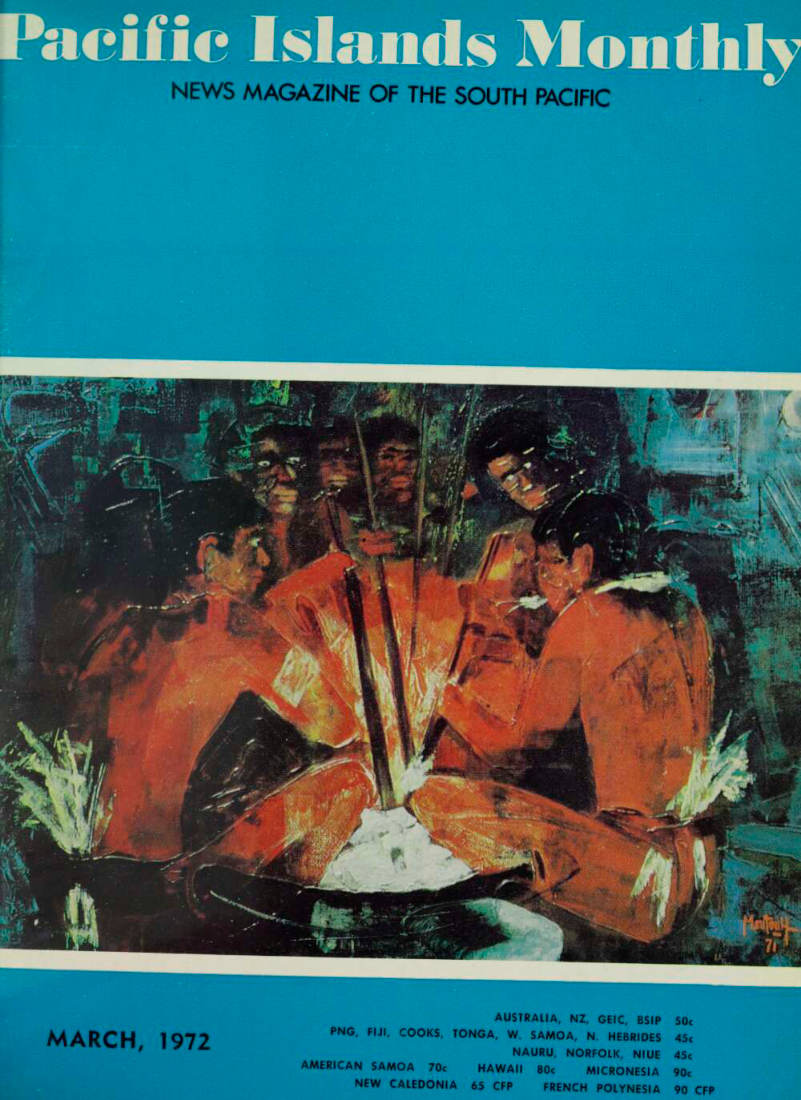 1
1 2
2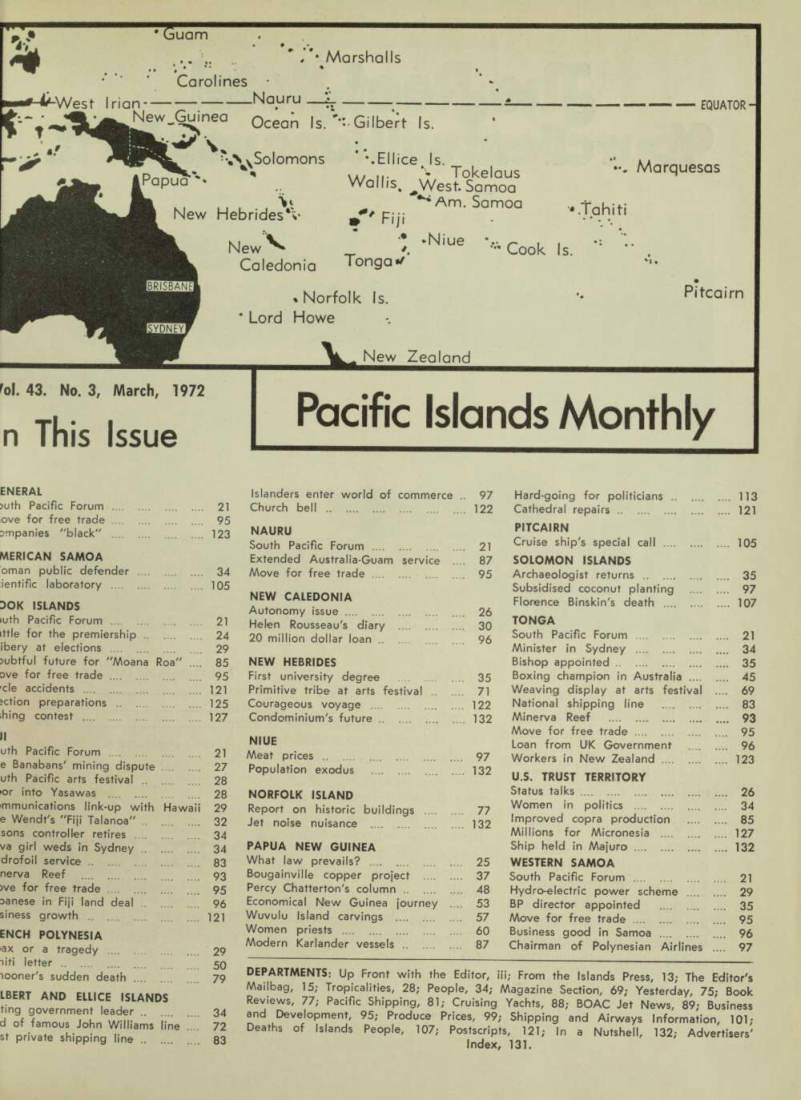 3
3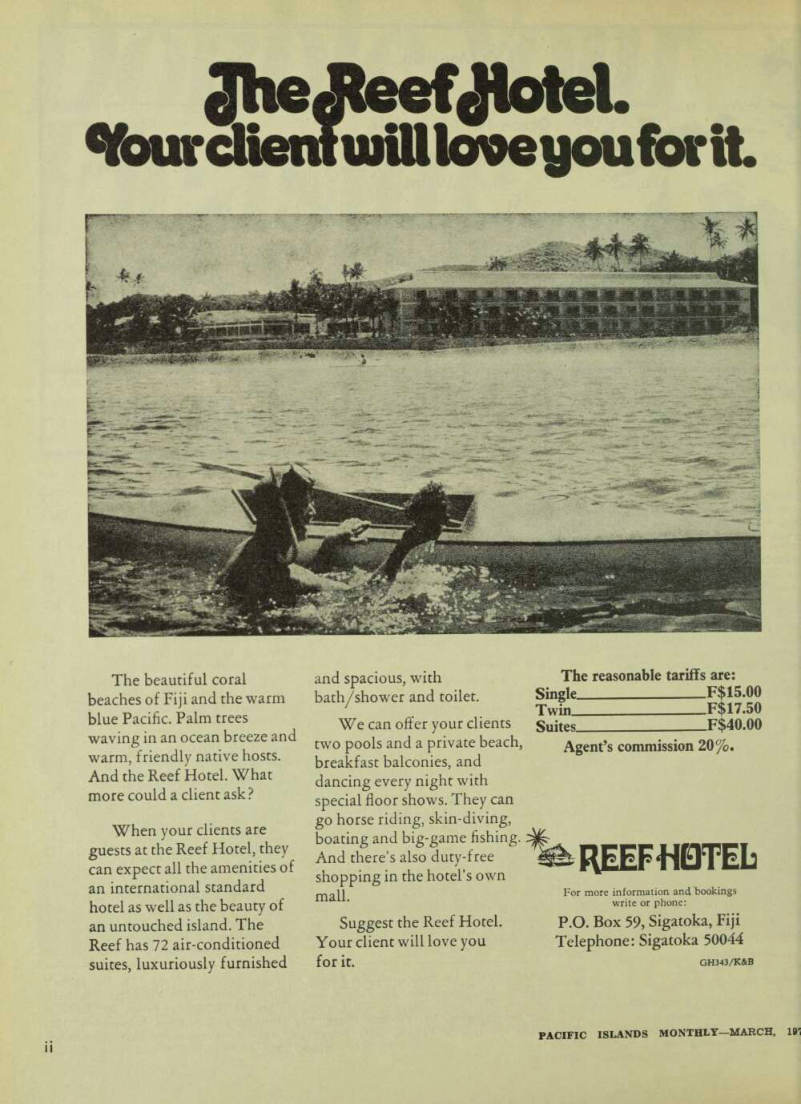 4
4 5
5 6
6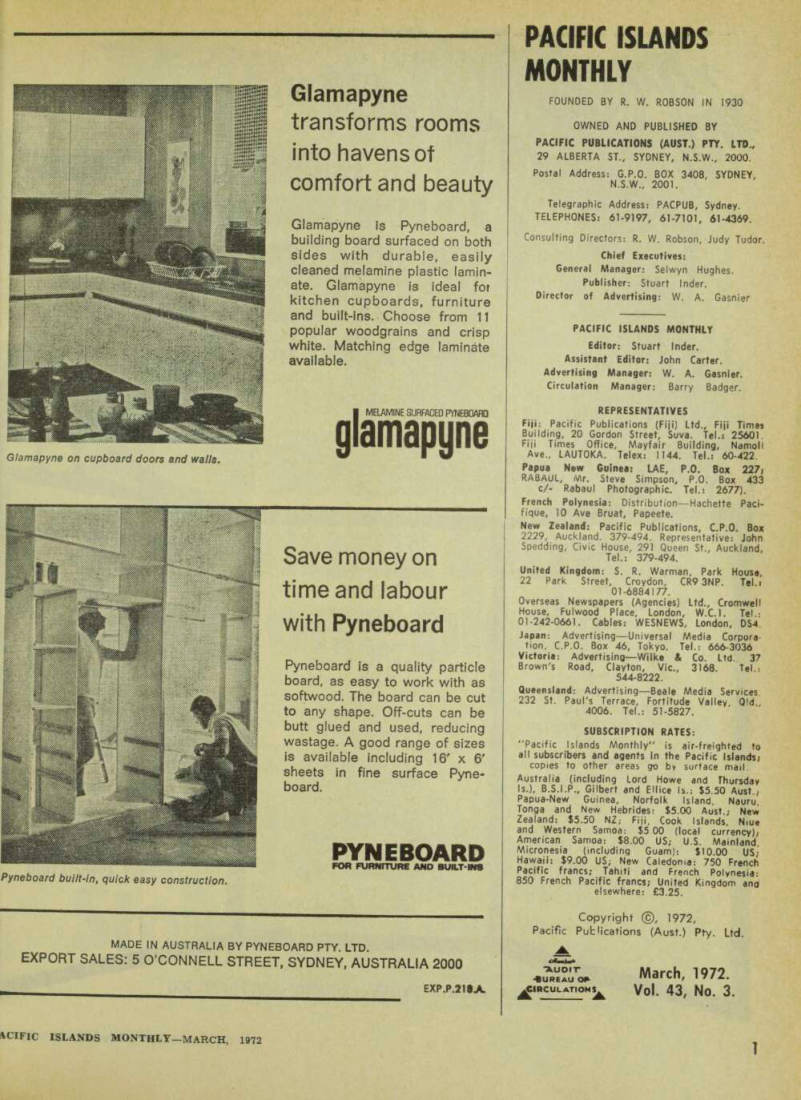 7
7 8
8 9
9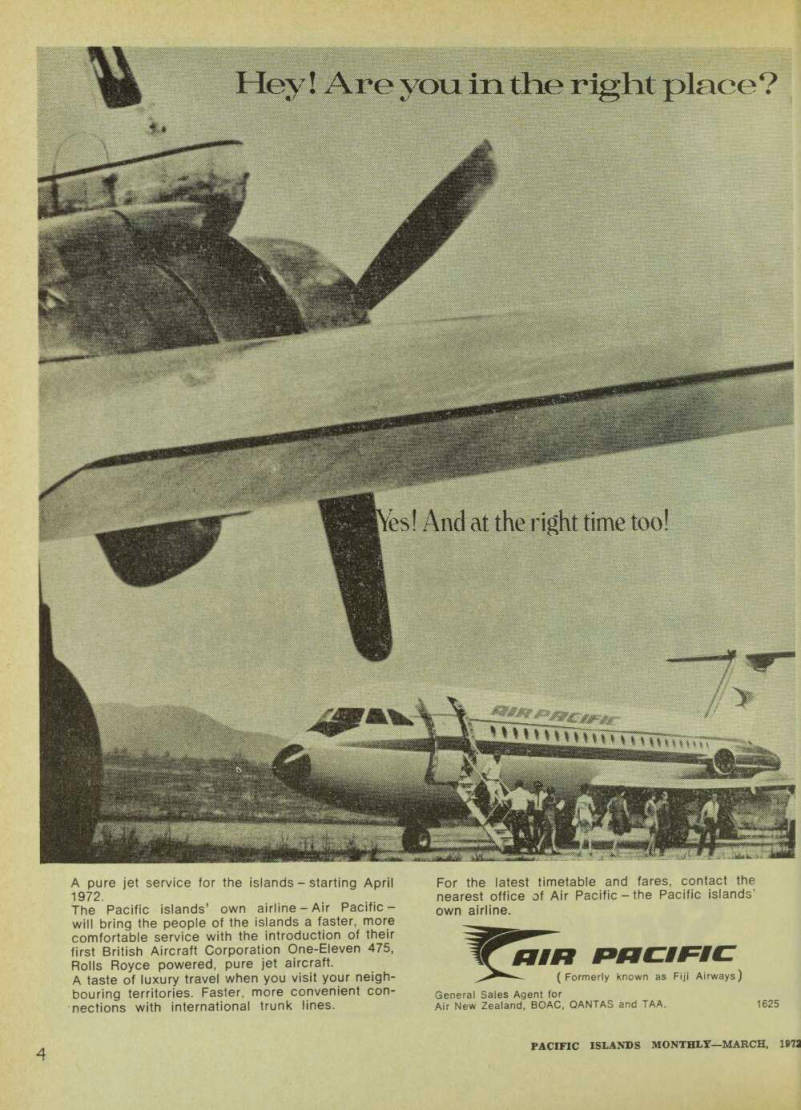 10
10 11
11 12
12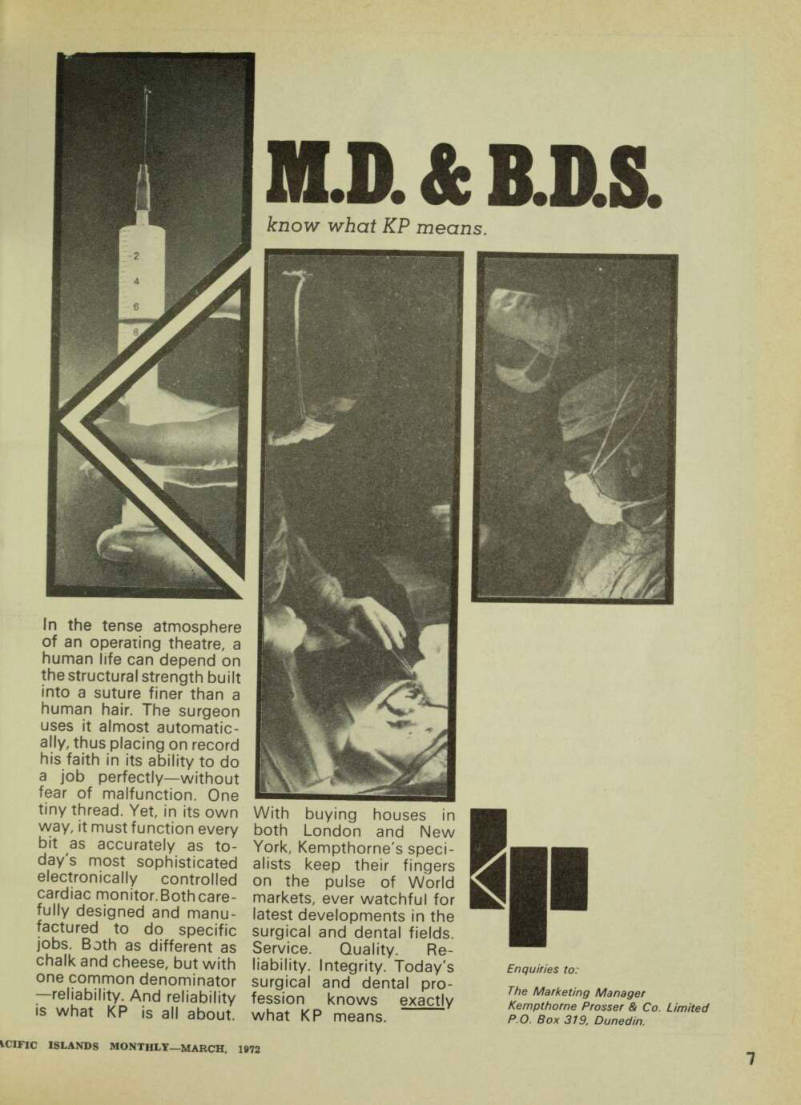 13
13 14
14 15
15 16
16 17
17 18
18 19
19 20
20 21
21 22
22 23
23 24
24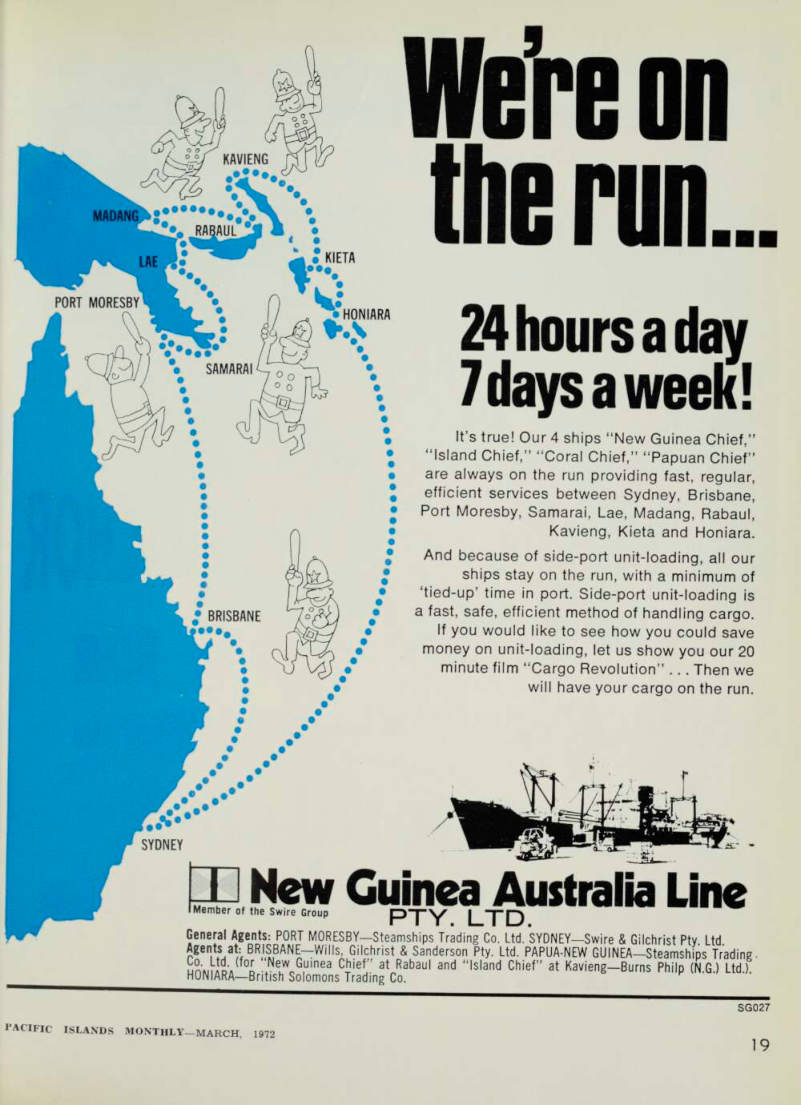 25
25 26
26 27
27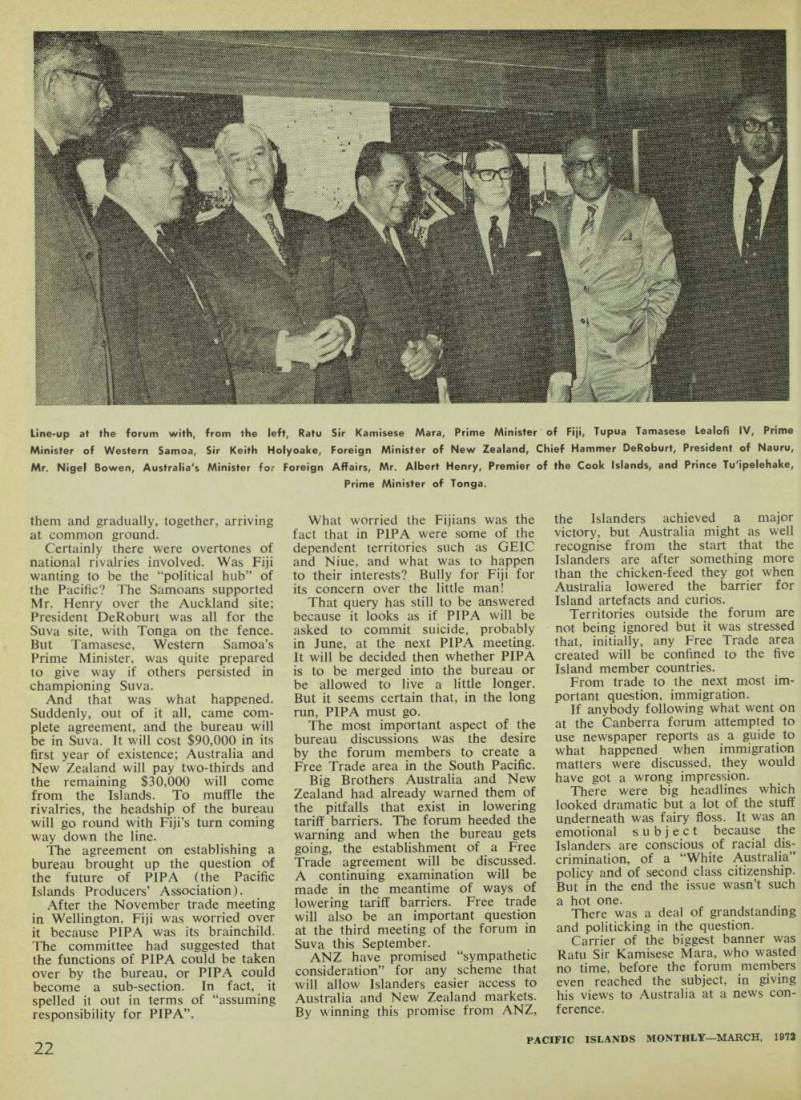 28
28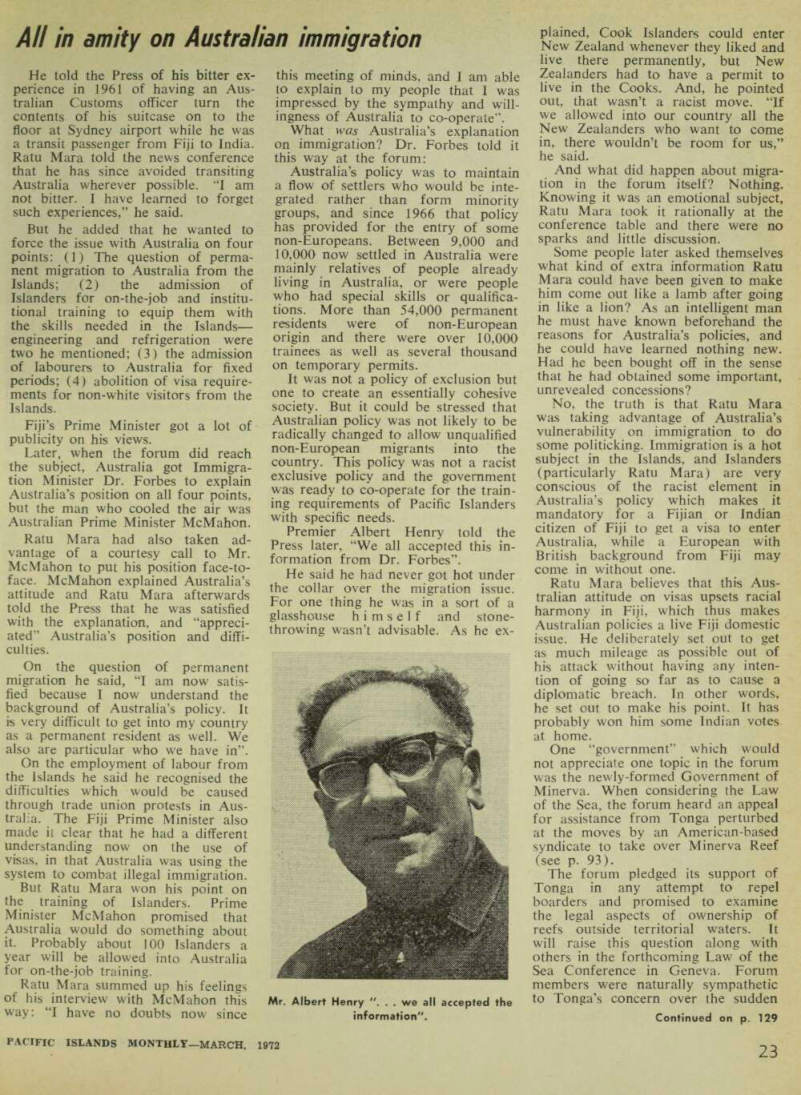 29
29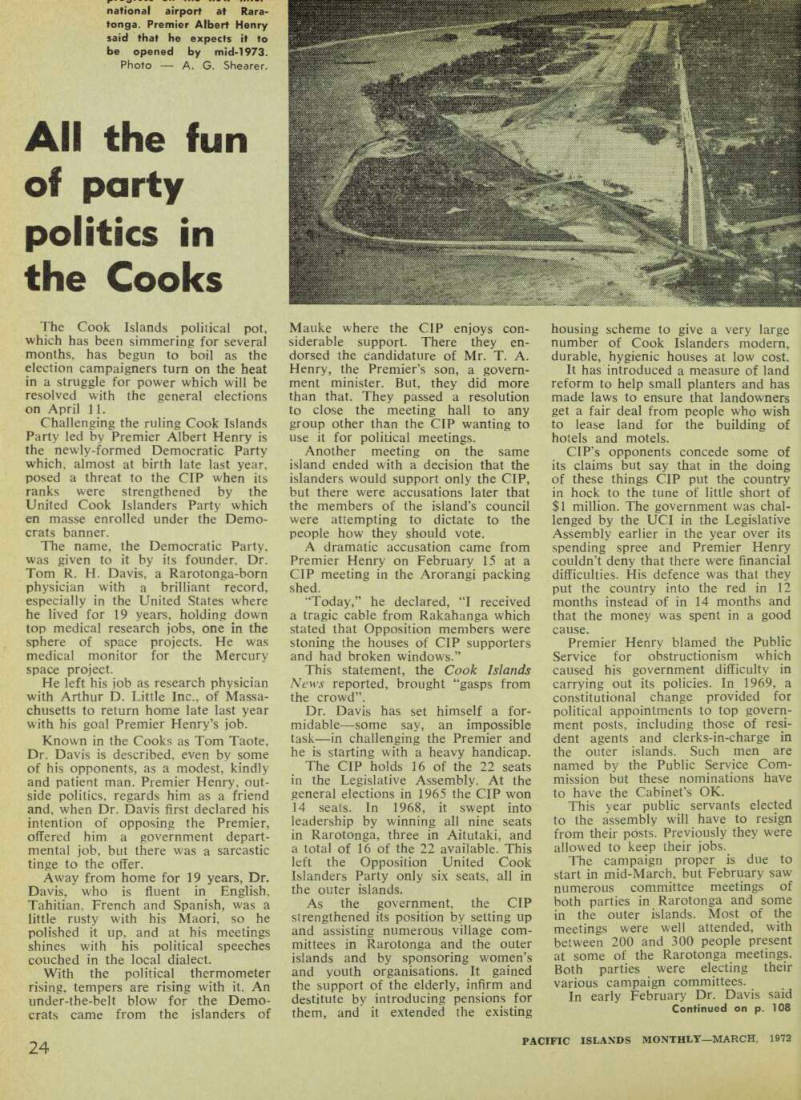 30
30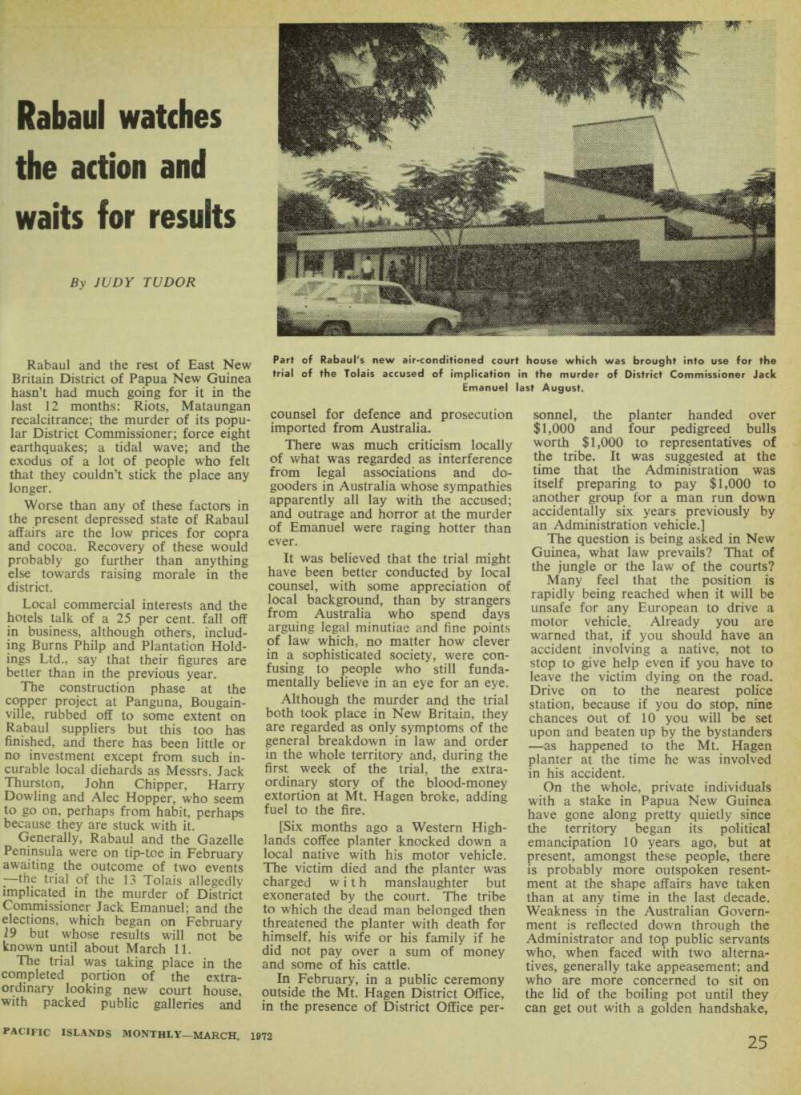 31
31 32
32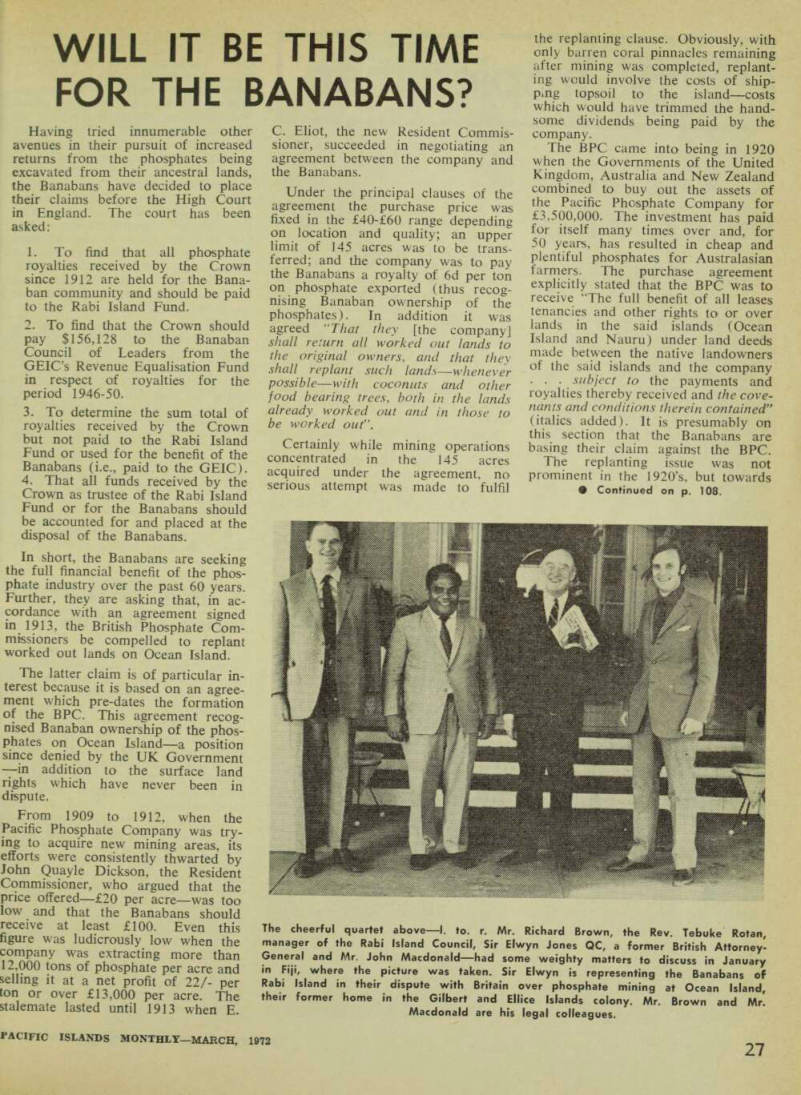 33
33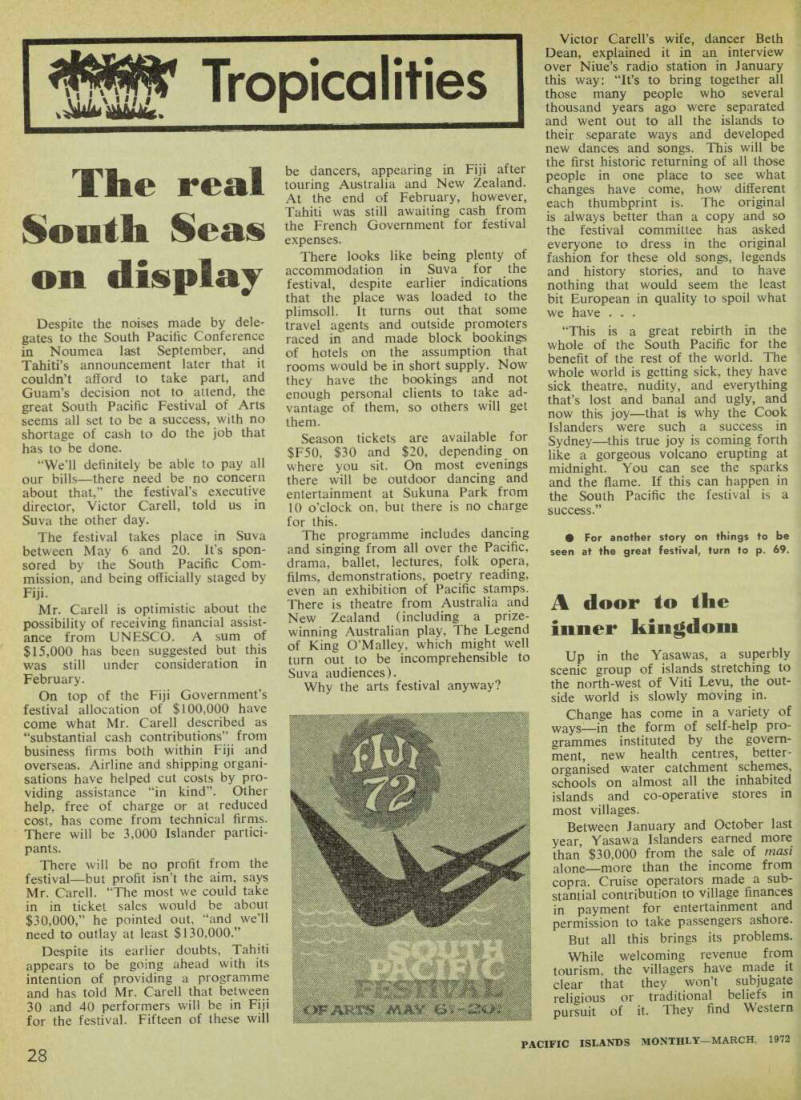 34
34 35
35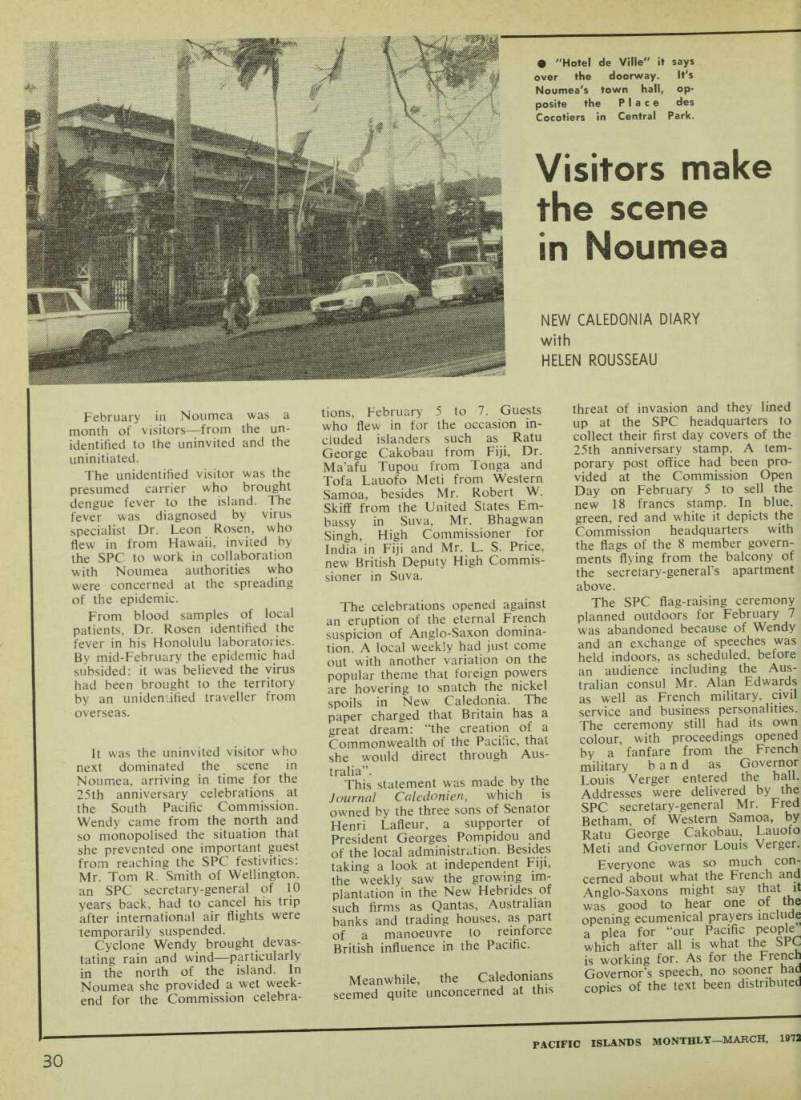 36
36 37
37 38
38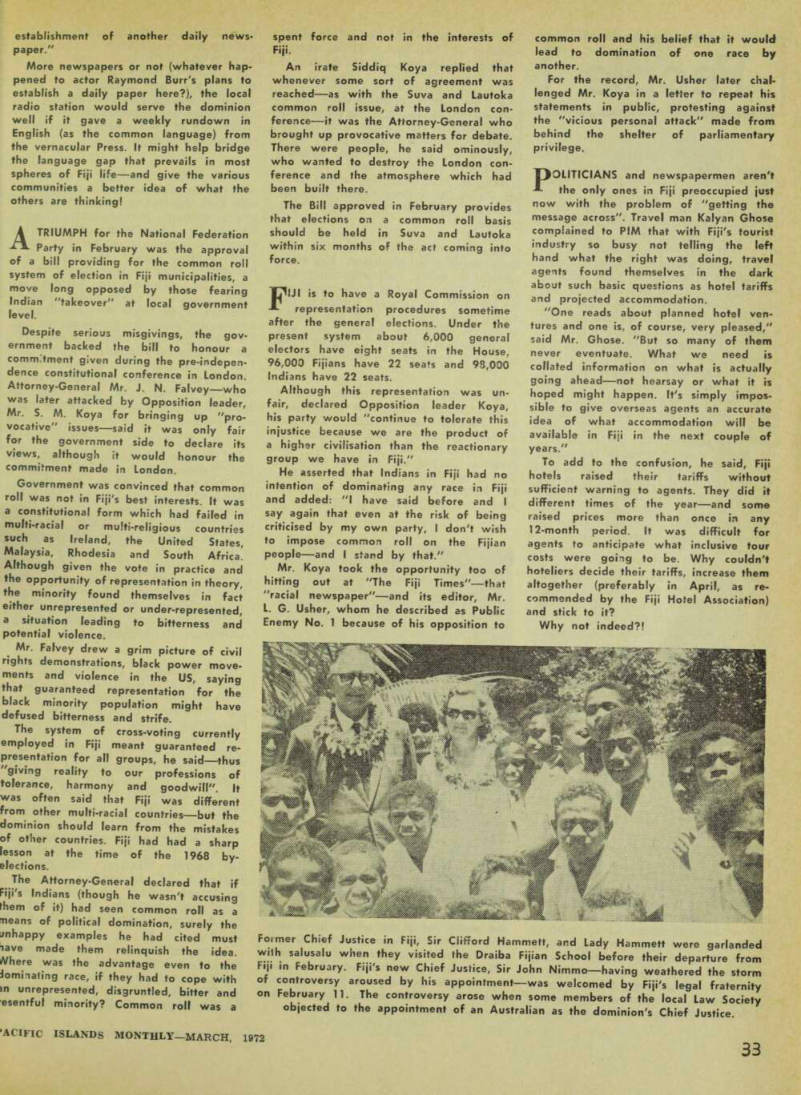 39
39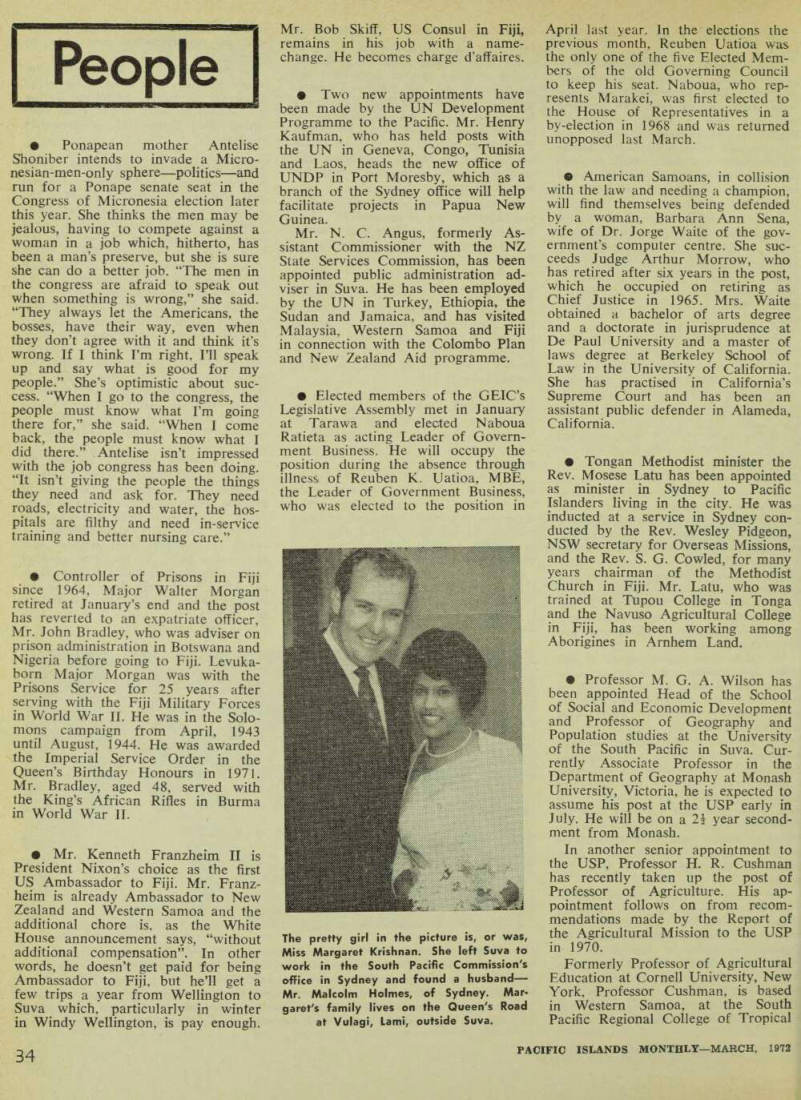 40
40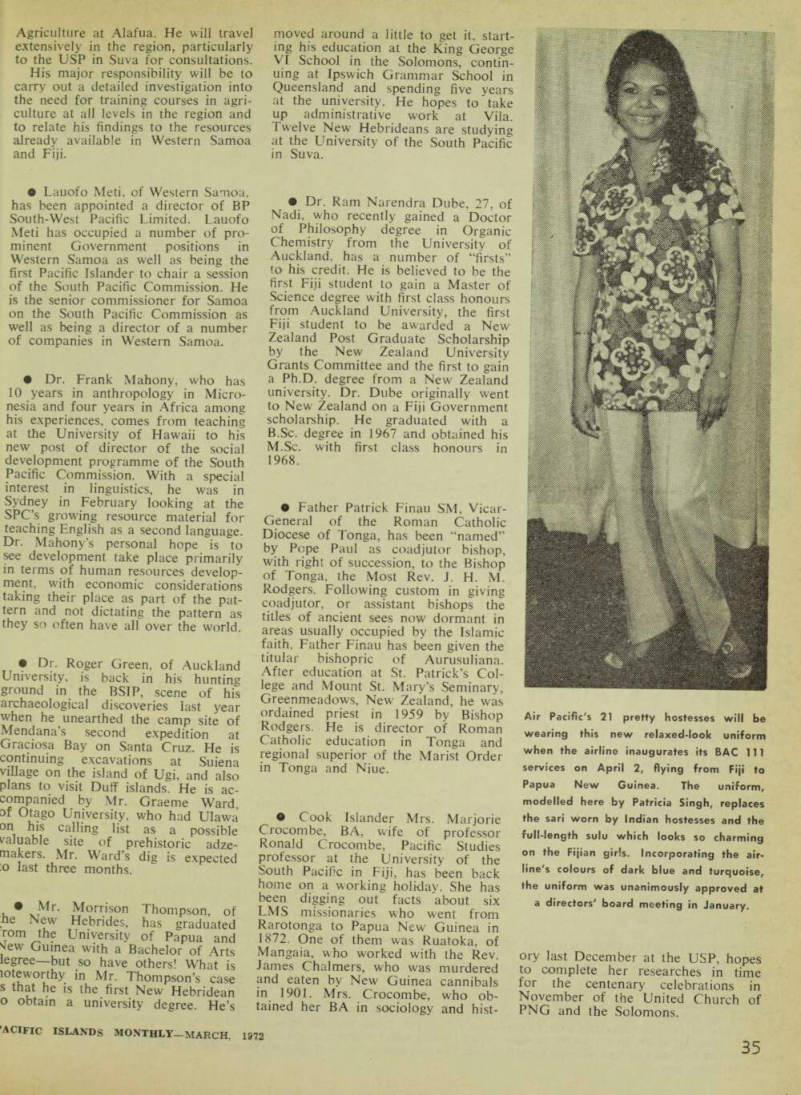 41
41 42
42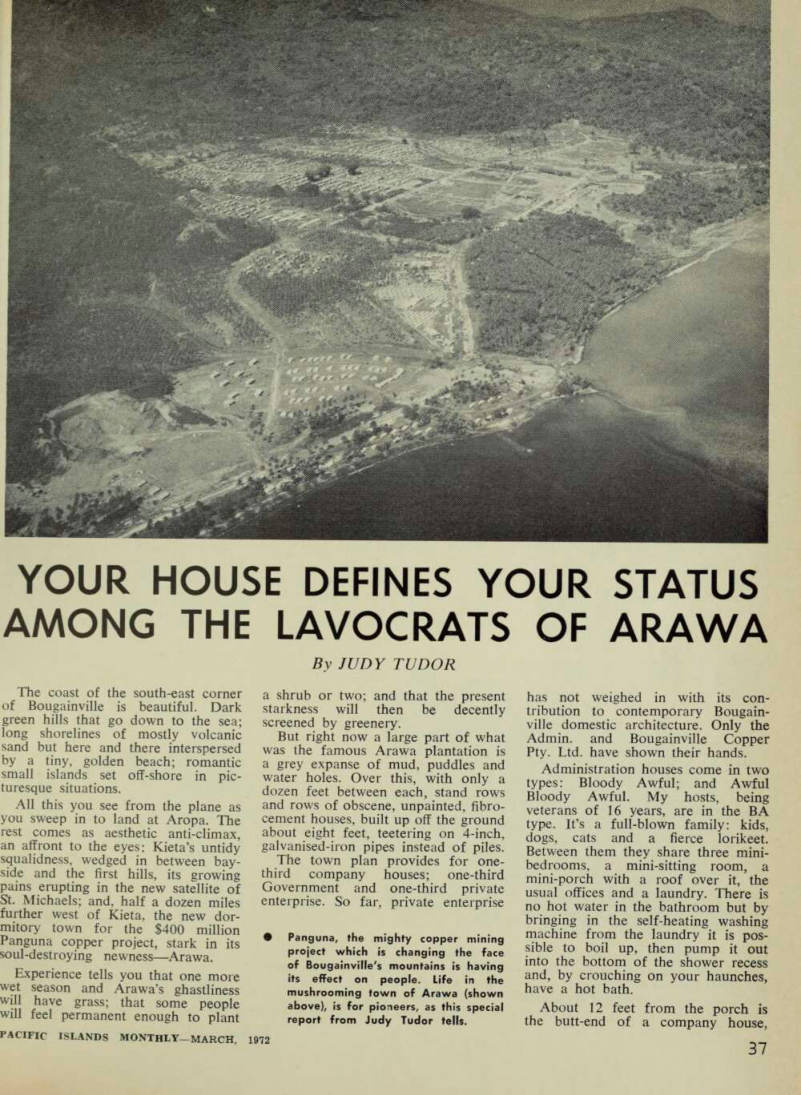 43
43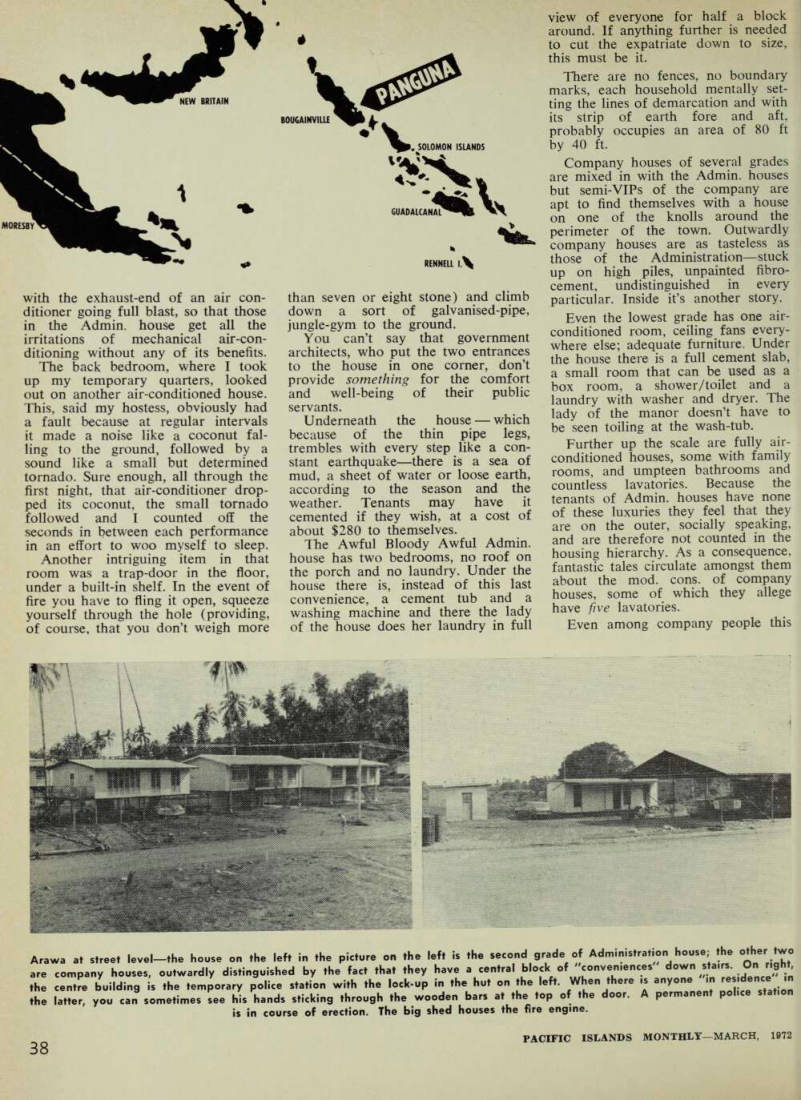 44
44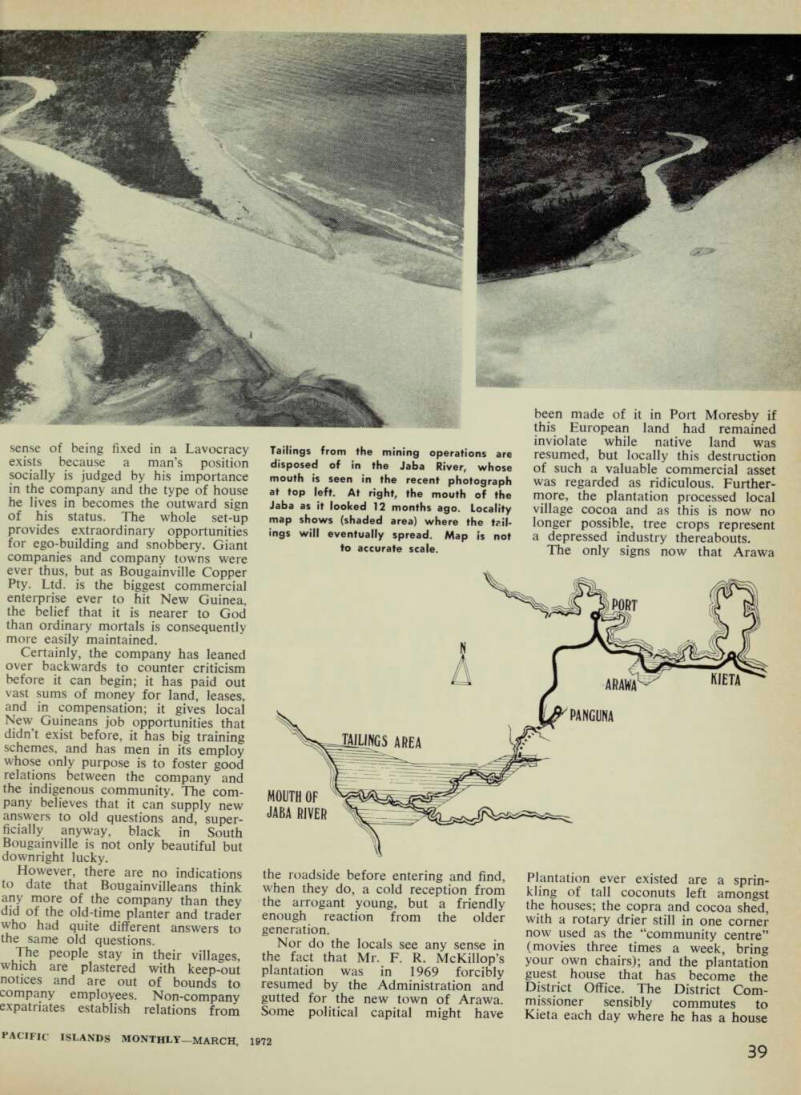 45
45 46
46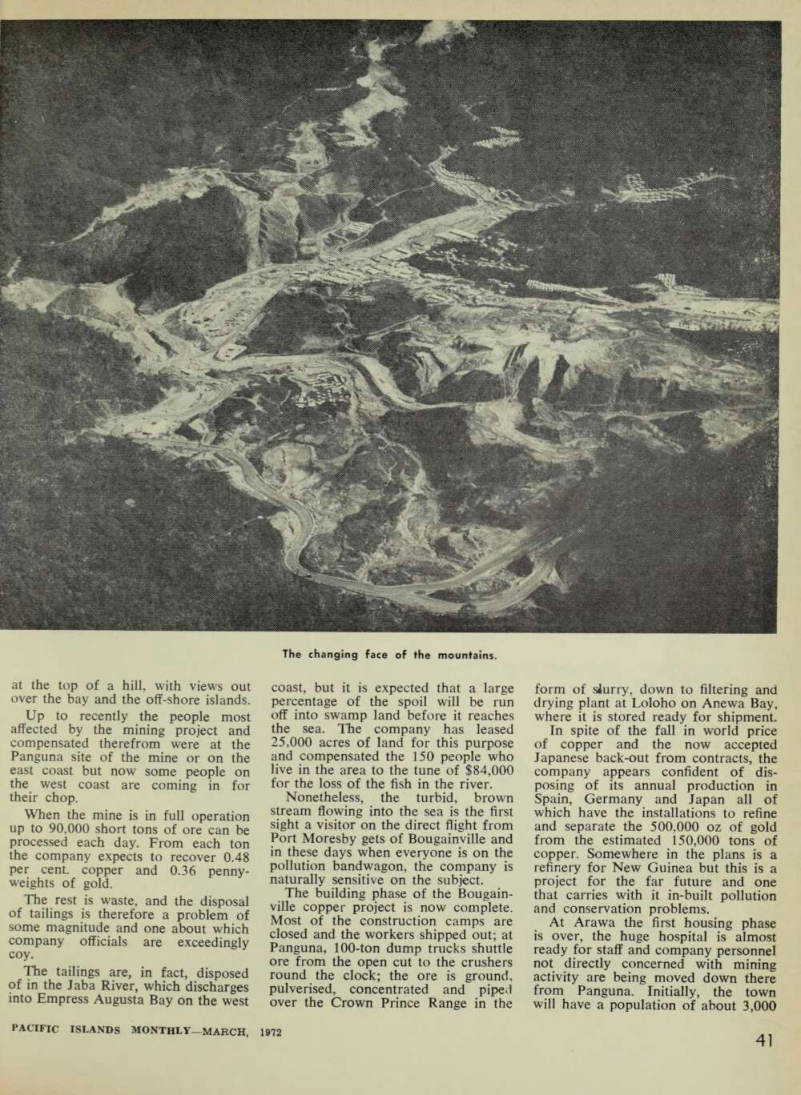 47
47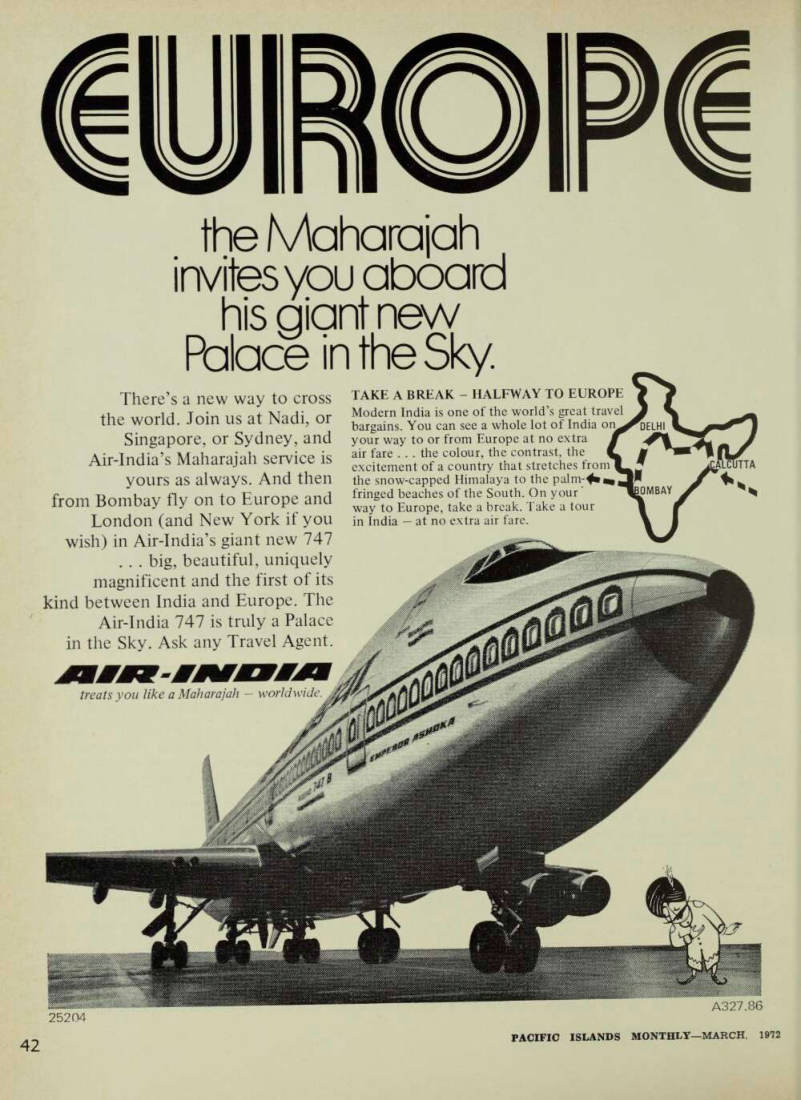 48
48 49
49 50
50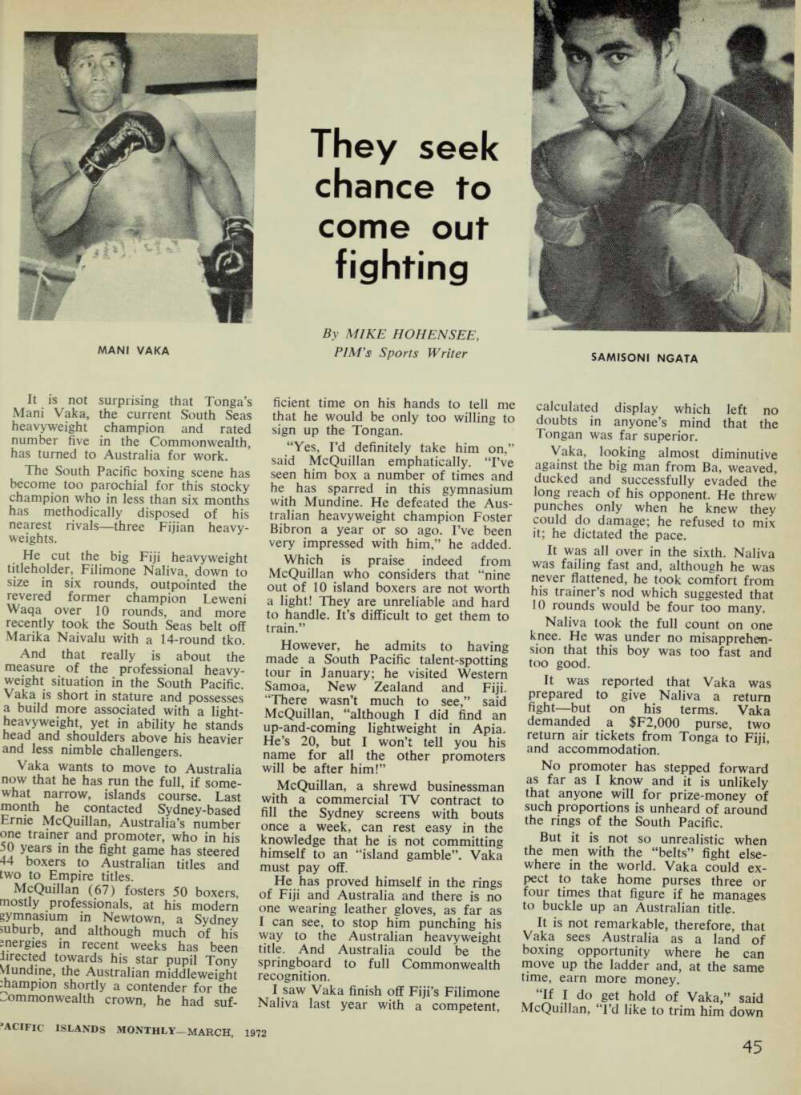 51
51 52
52 53
53 54
54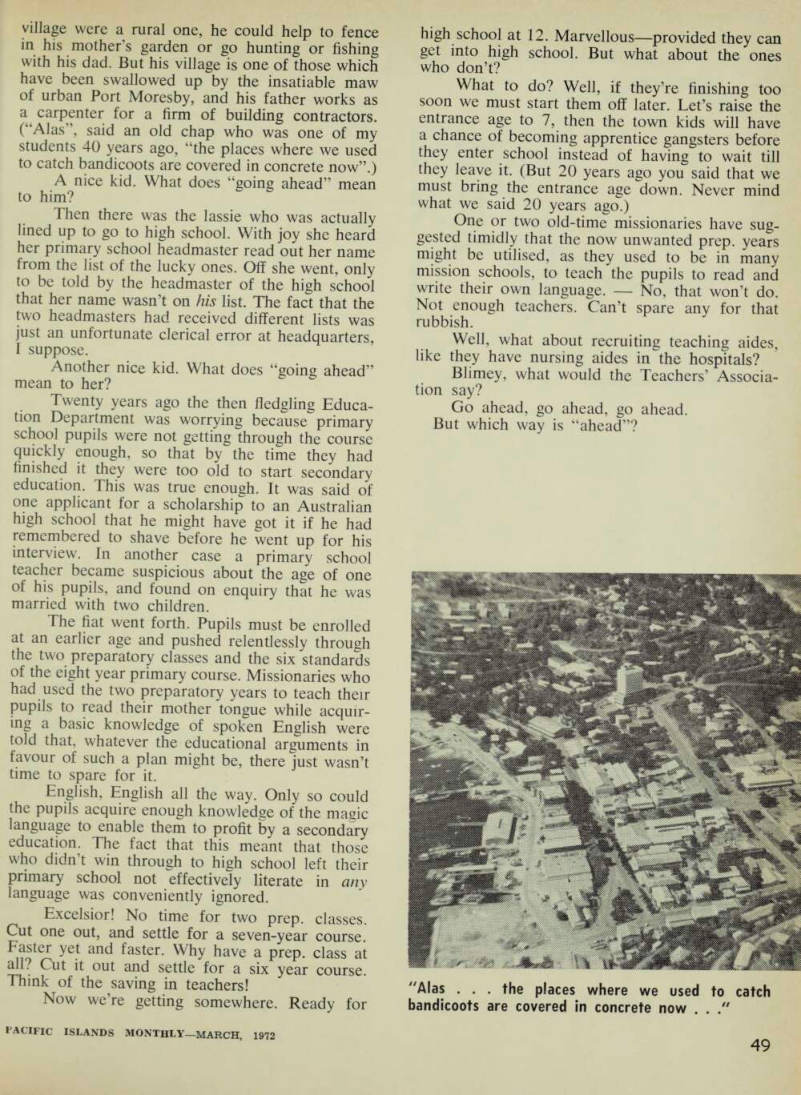 55
55 56
56 57
57 58
58 59
59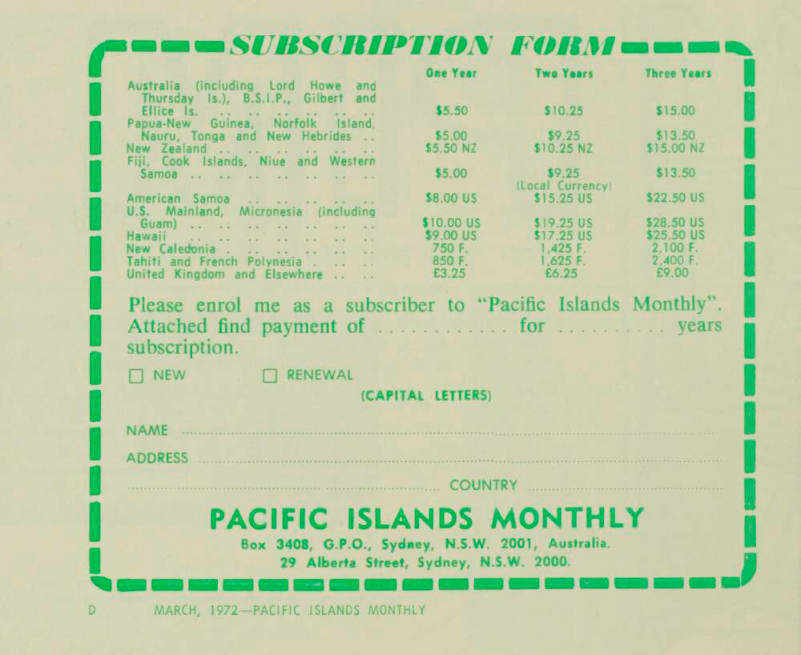 60
60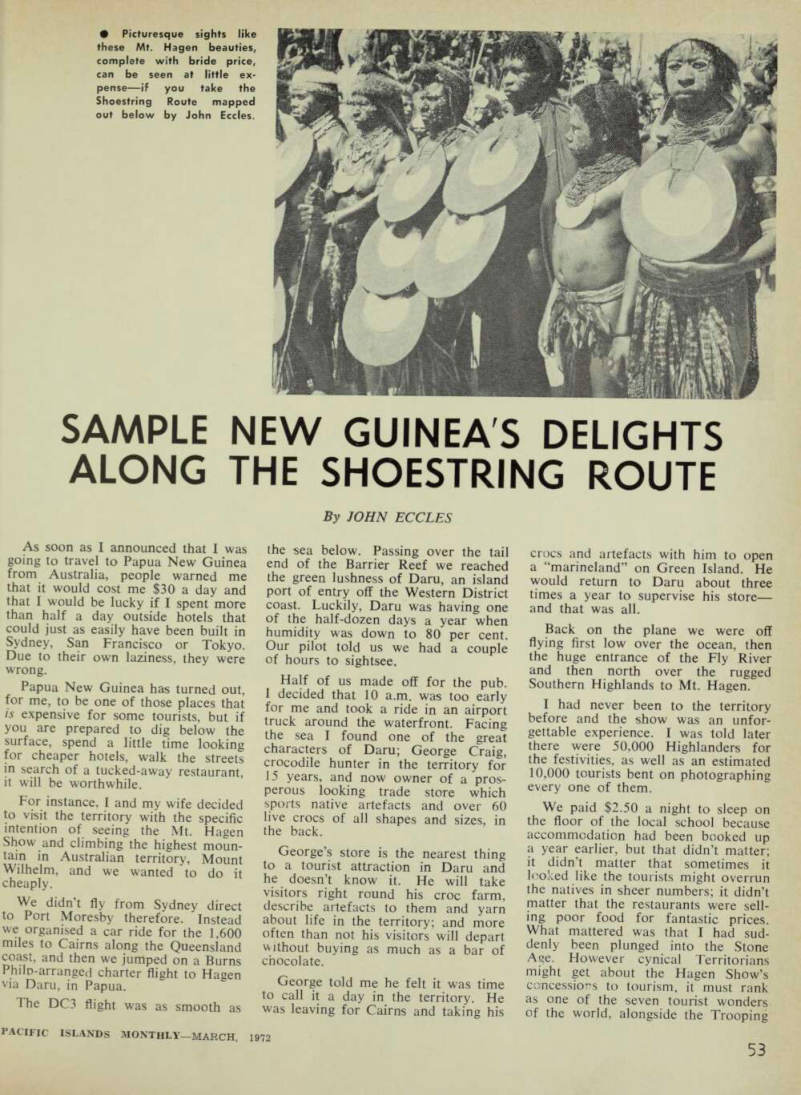 61
61 62
62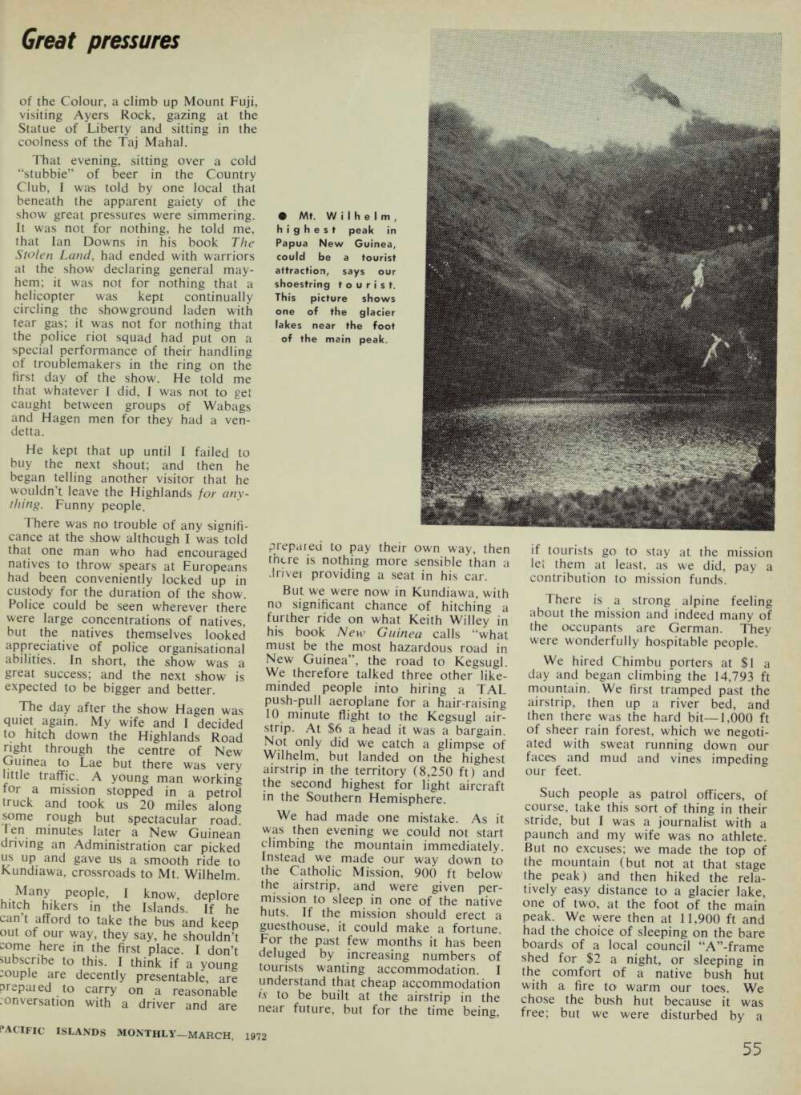 63
63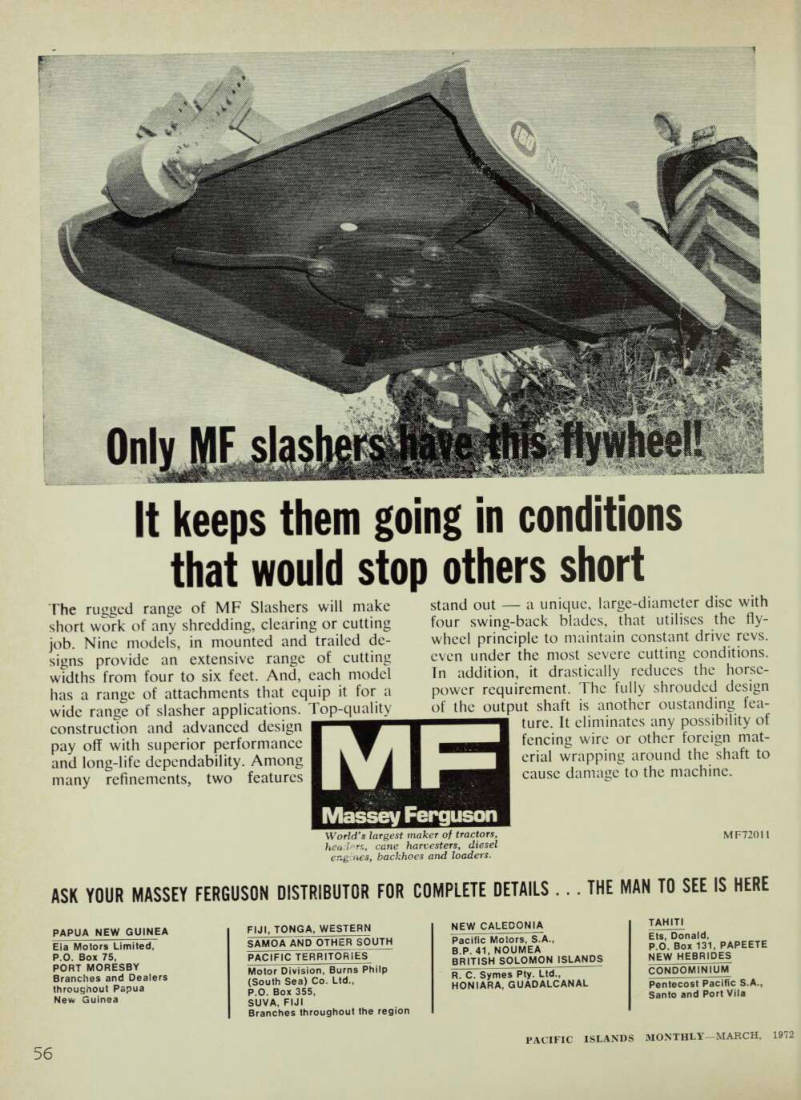 64
64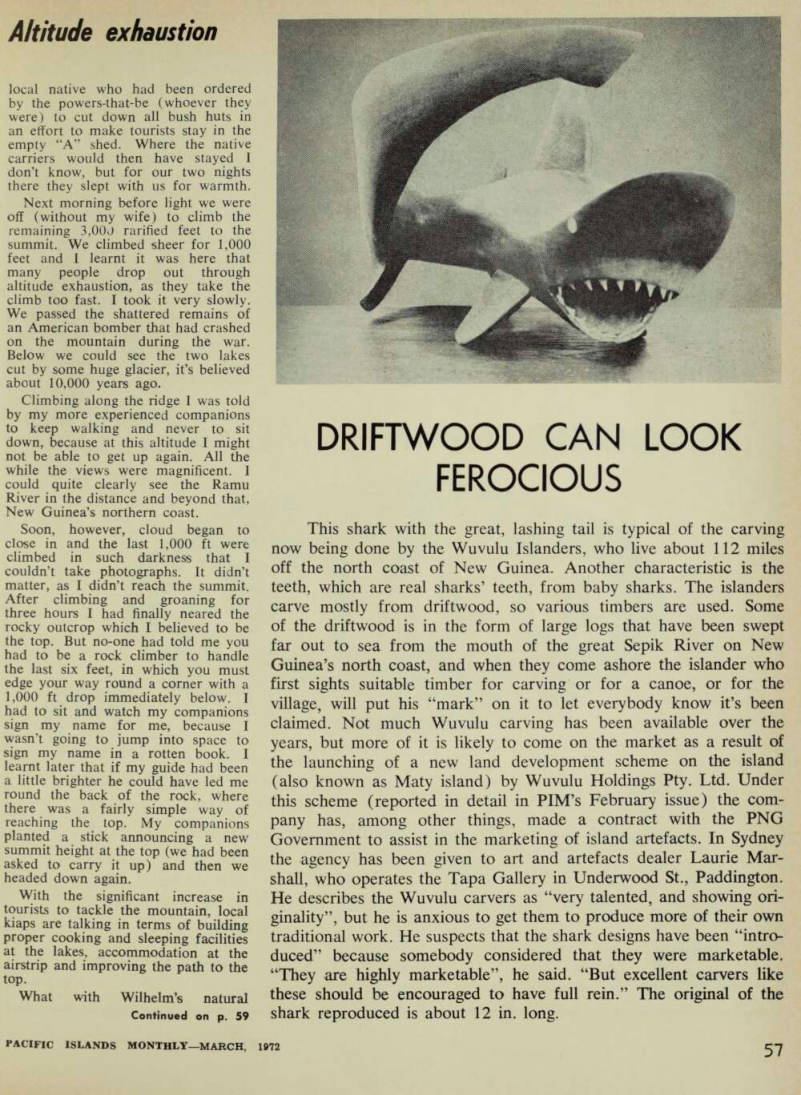 65
65 66
66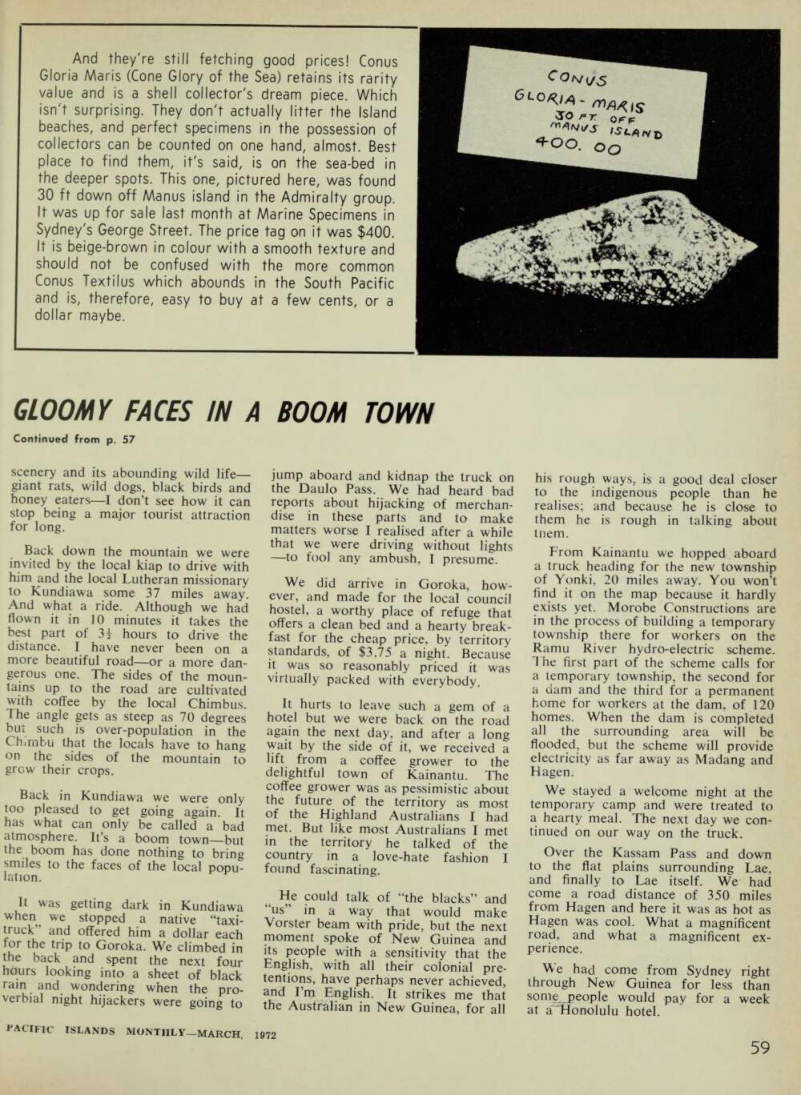 67
67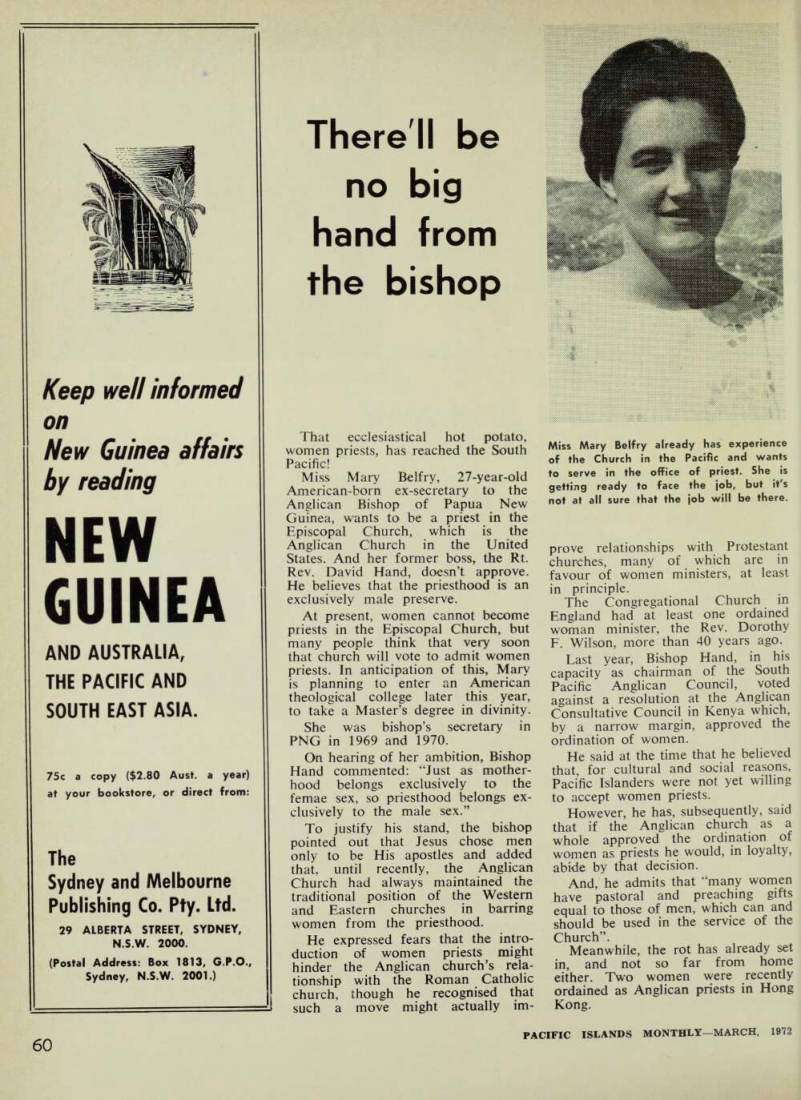 68
68 69
69 70
70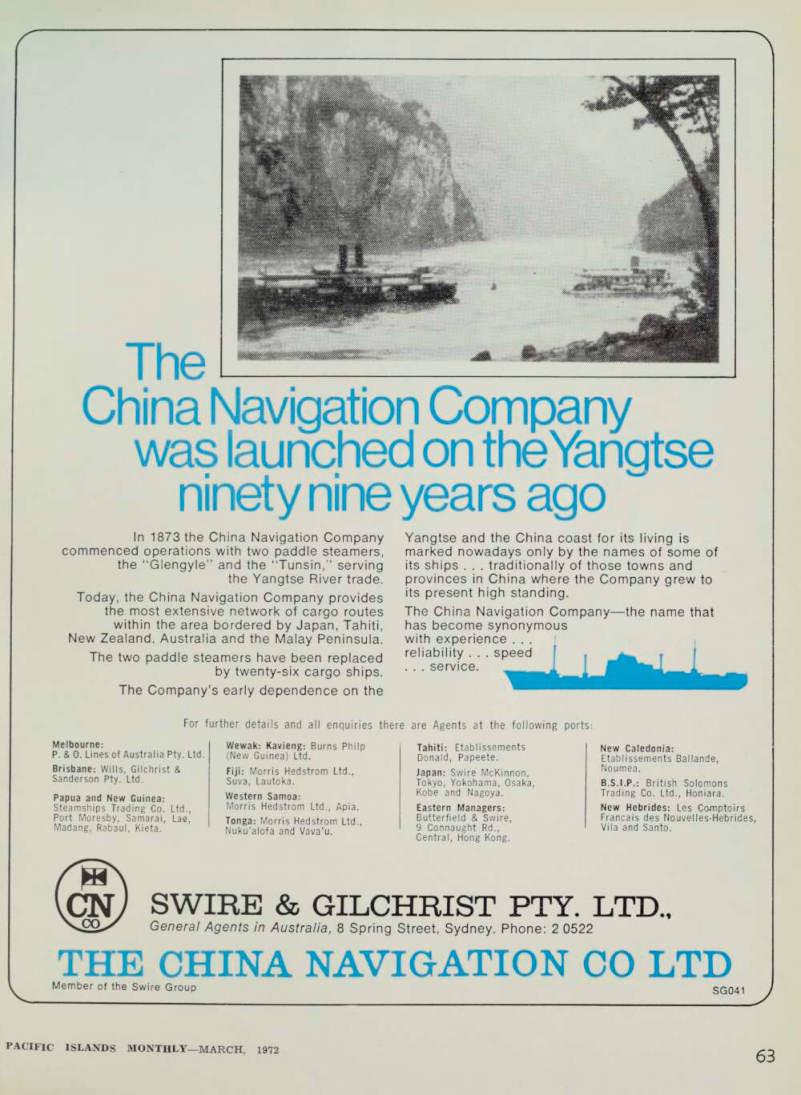 71
71 72
72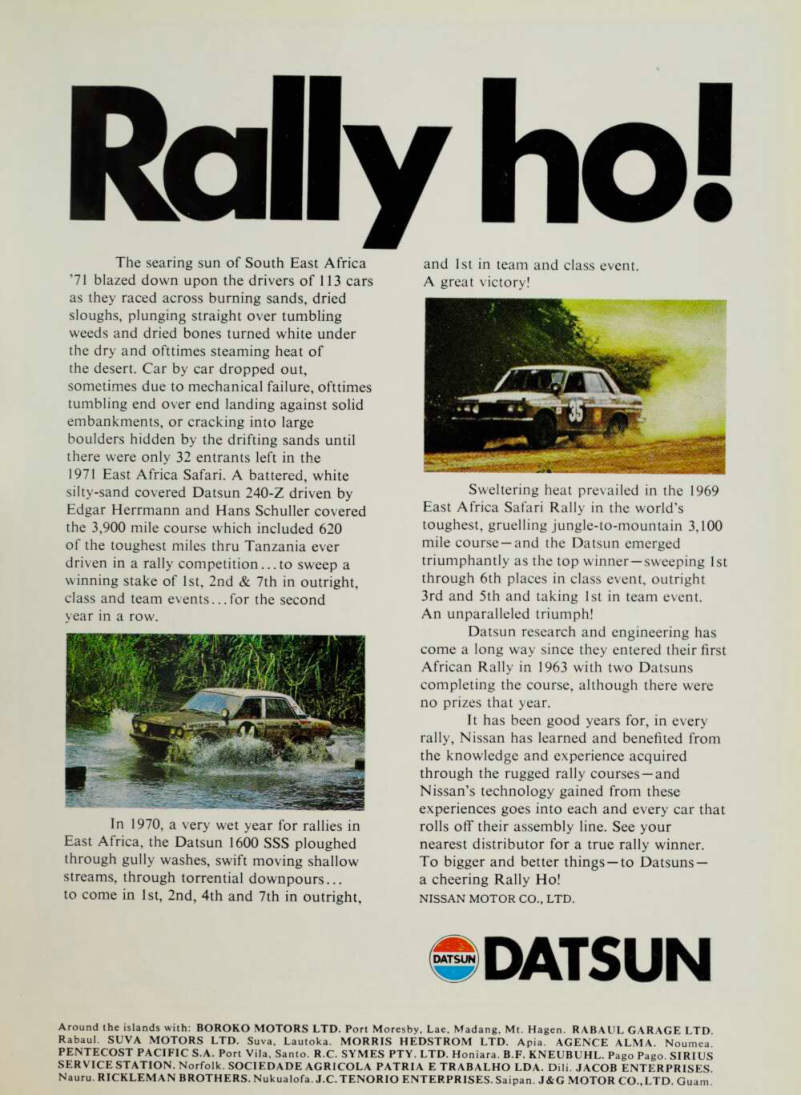 73
73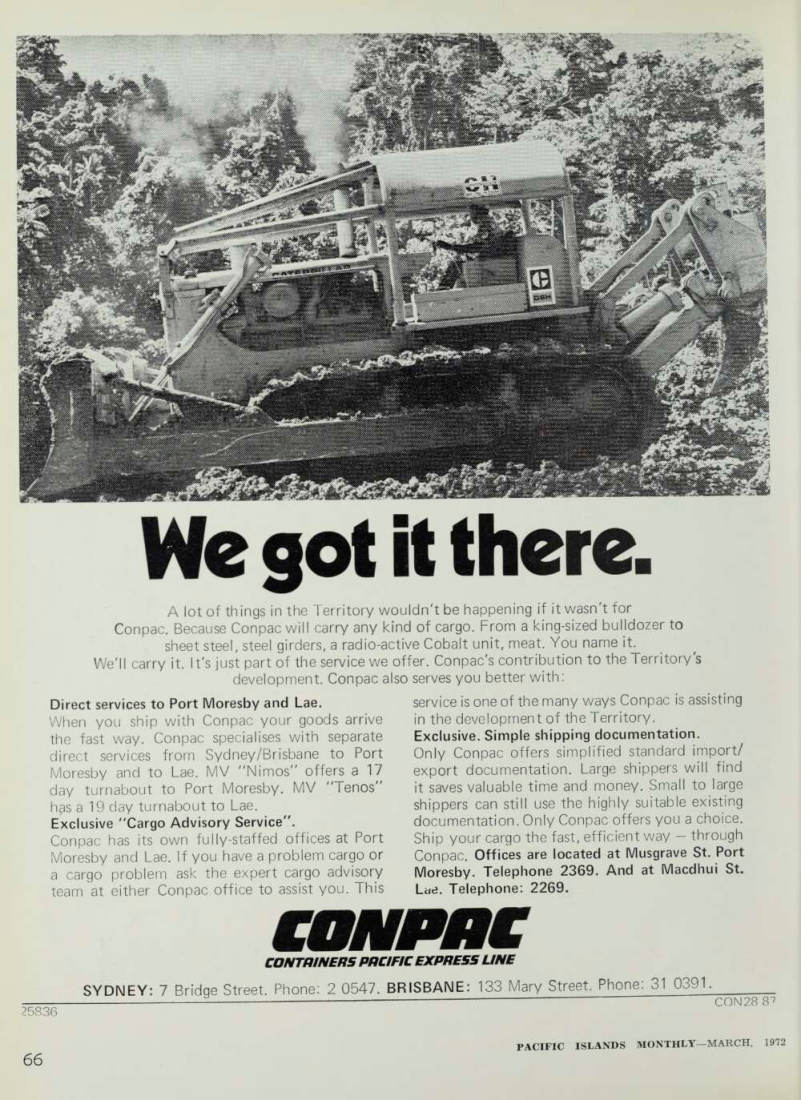 74
74 75
75 76
76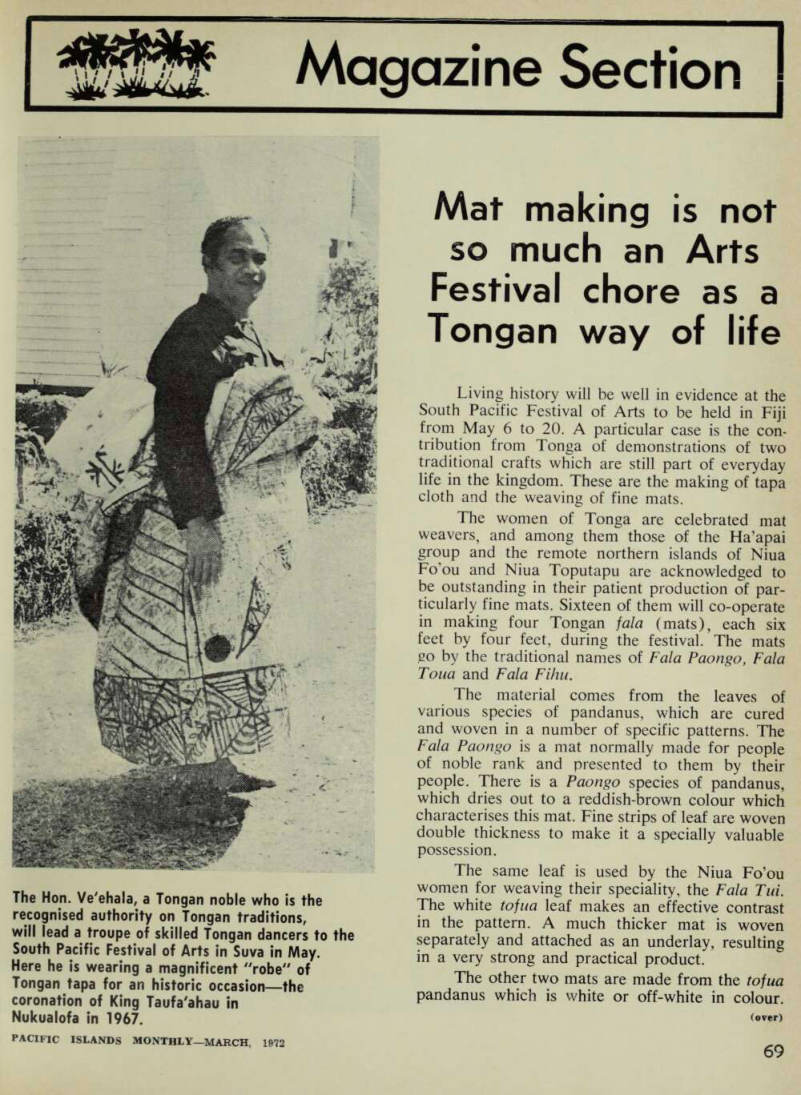 77
77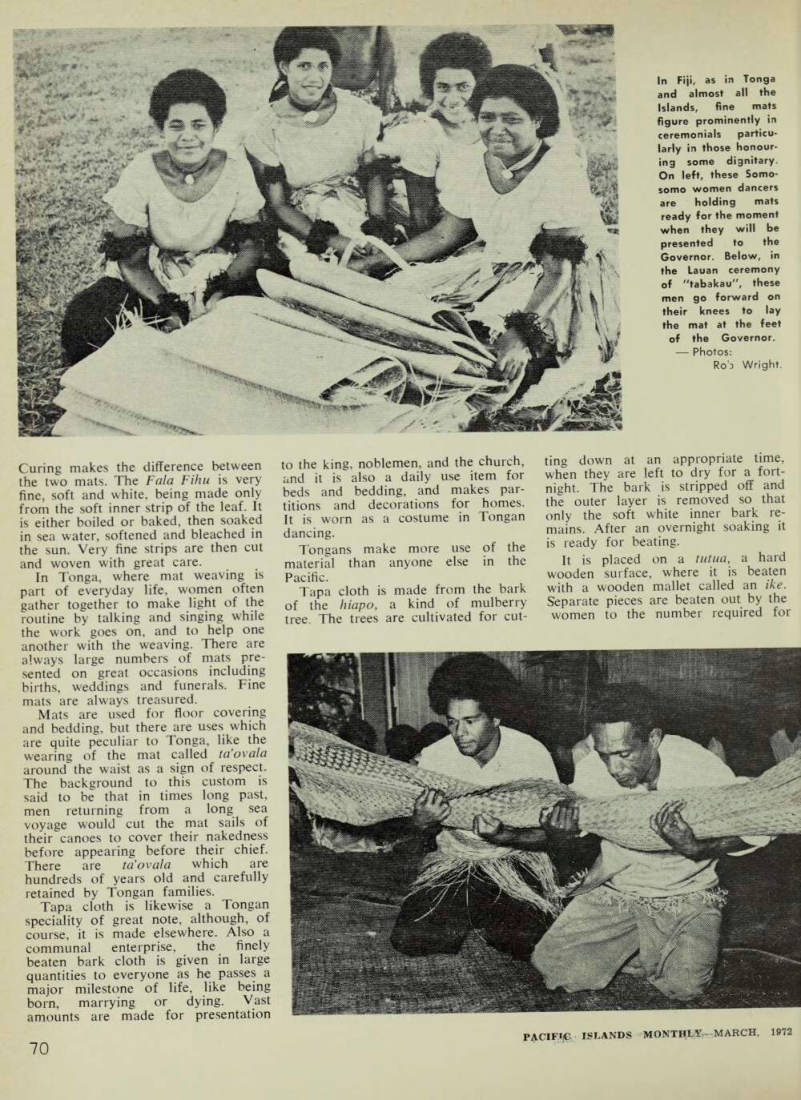 78
78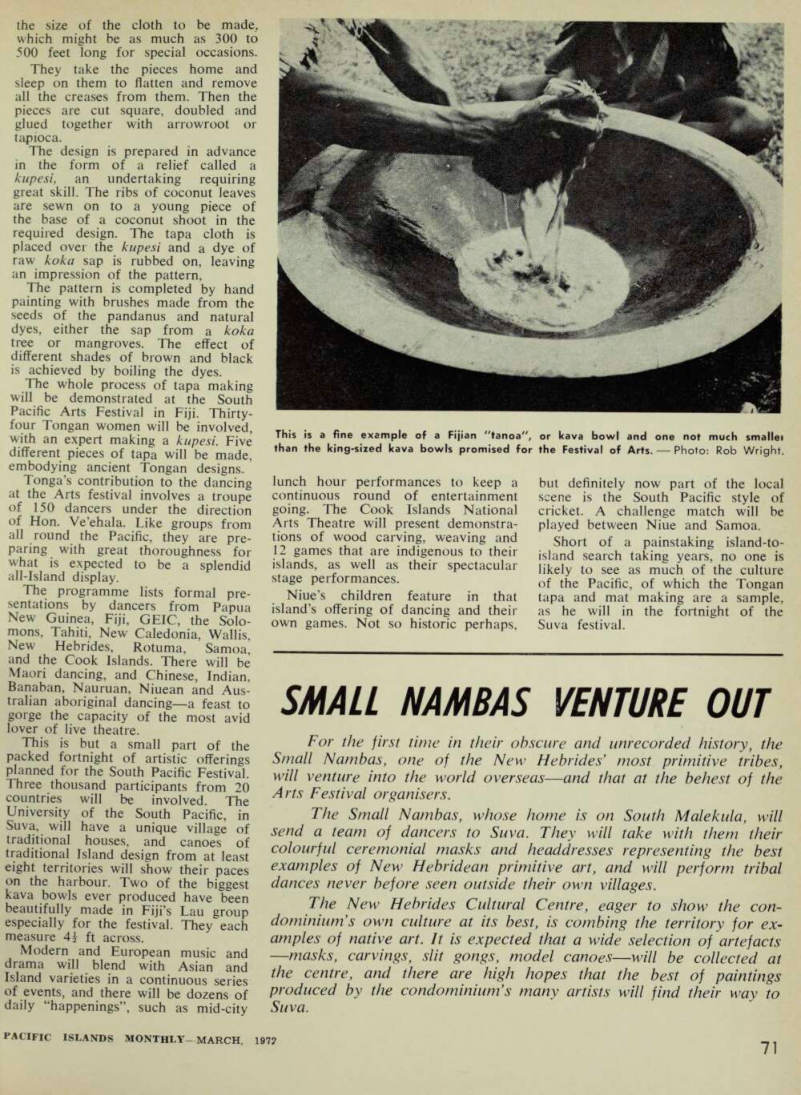 79
79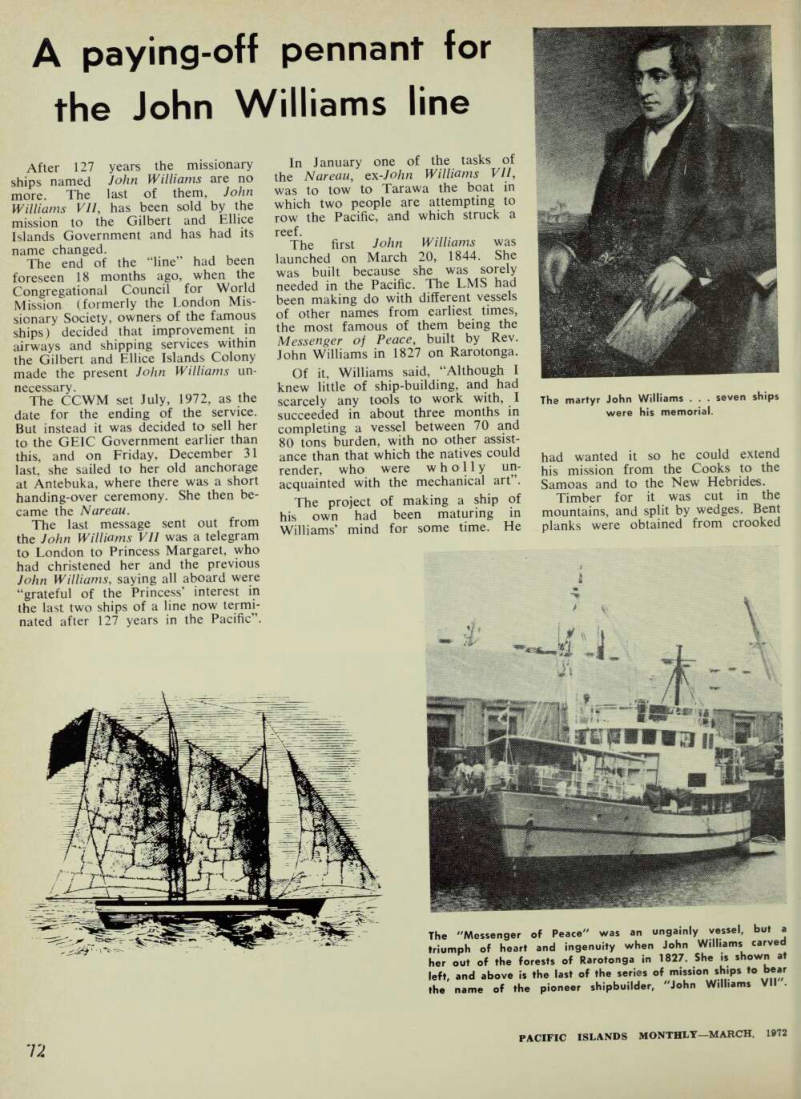 80
80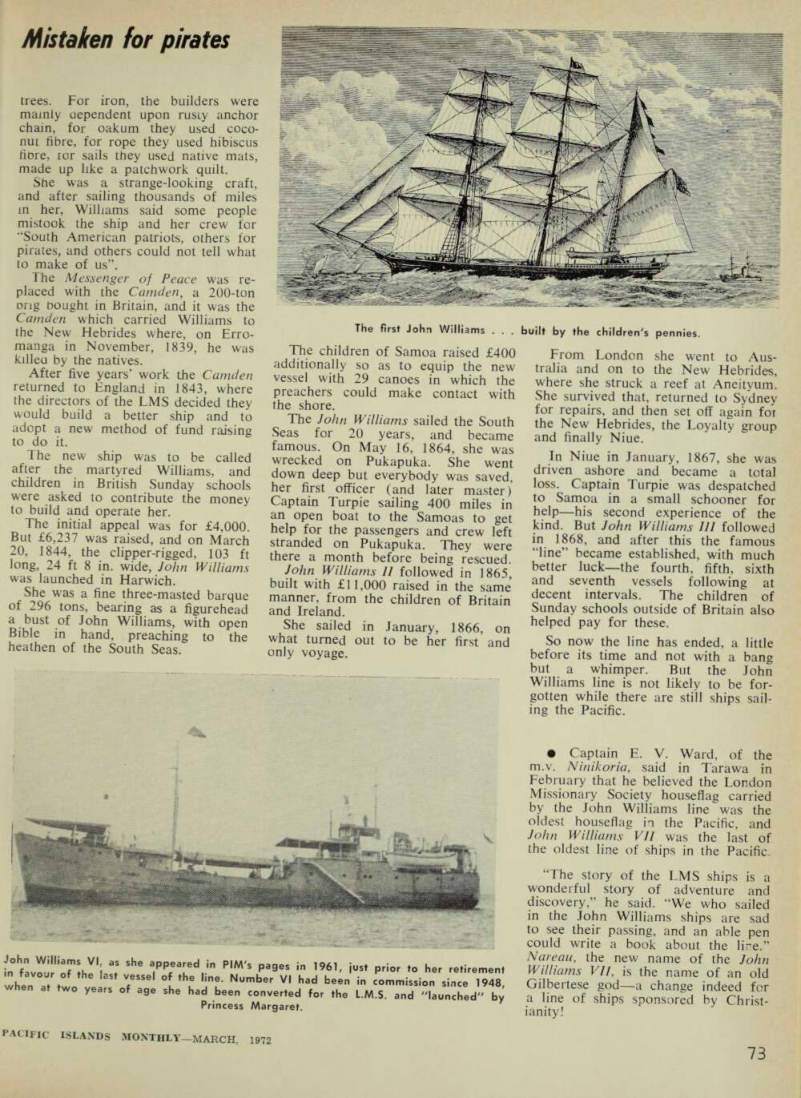 81
81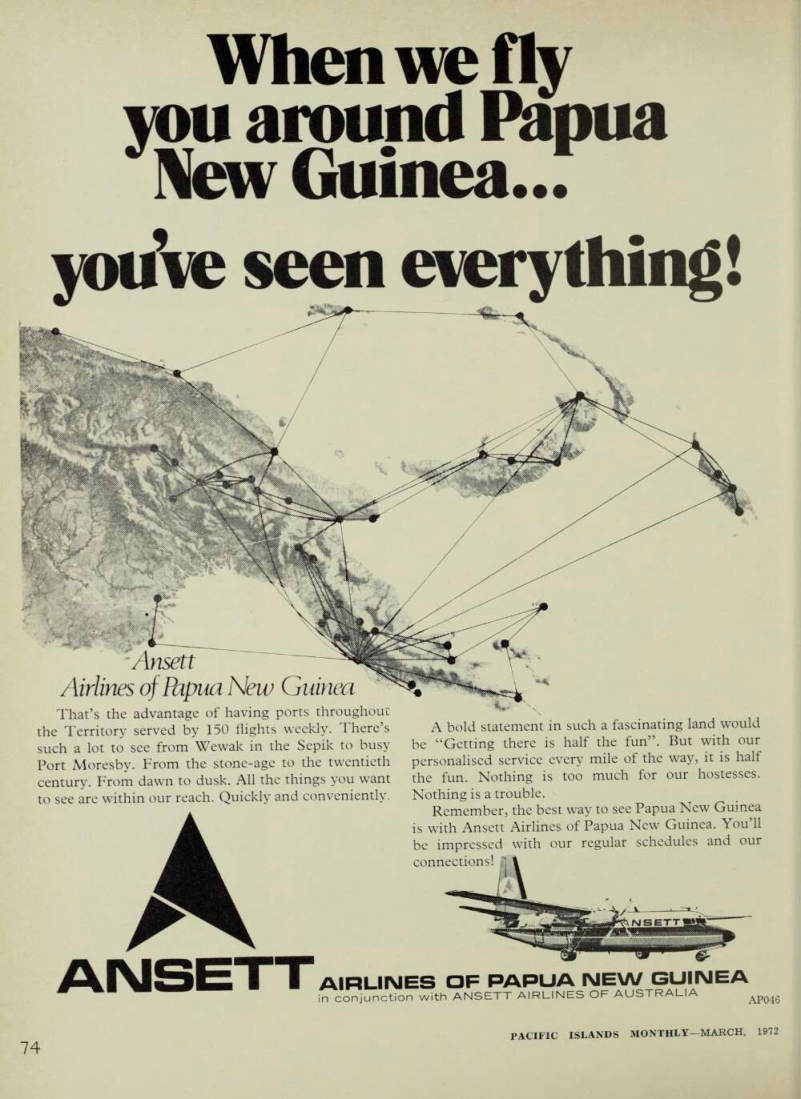 82
82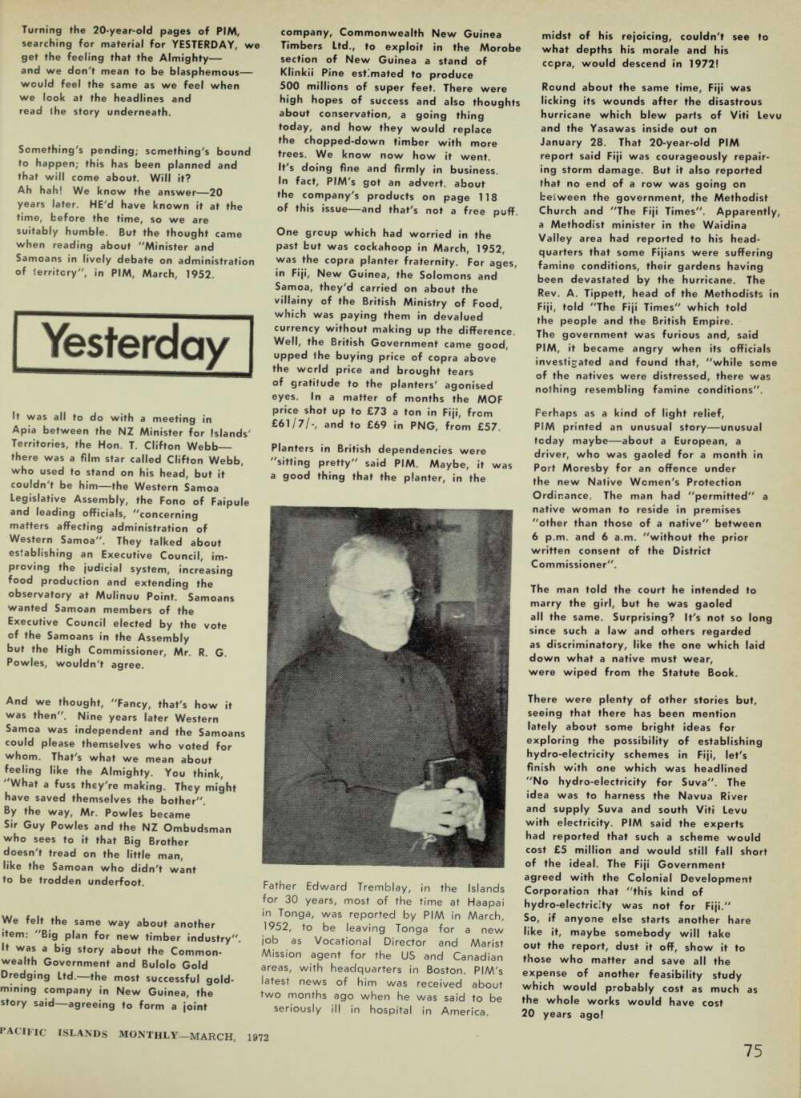 83
83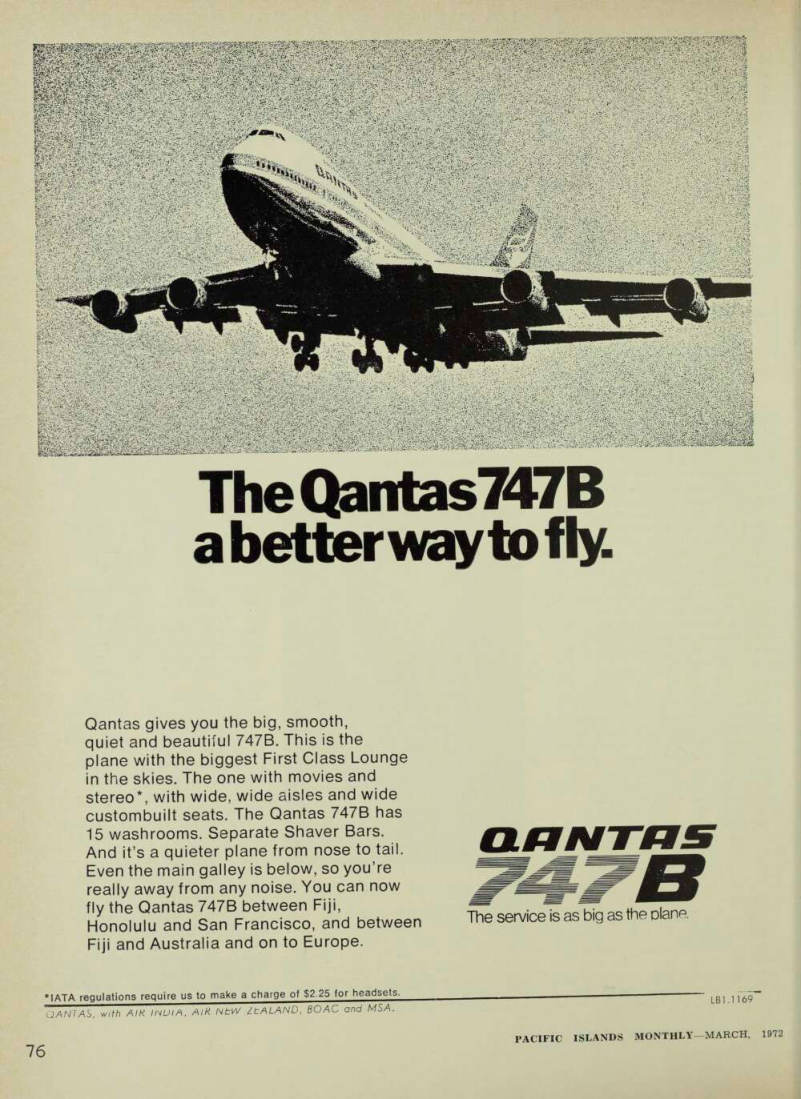 84
84 85
85 86
86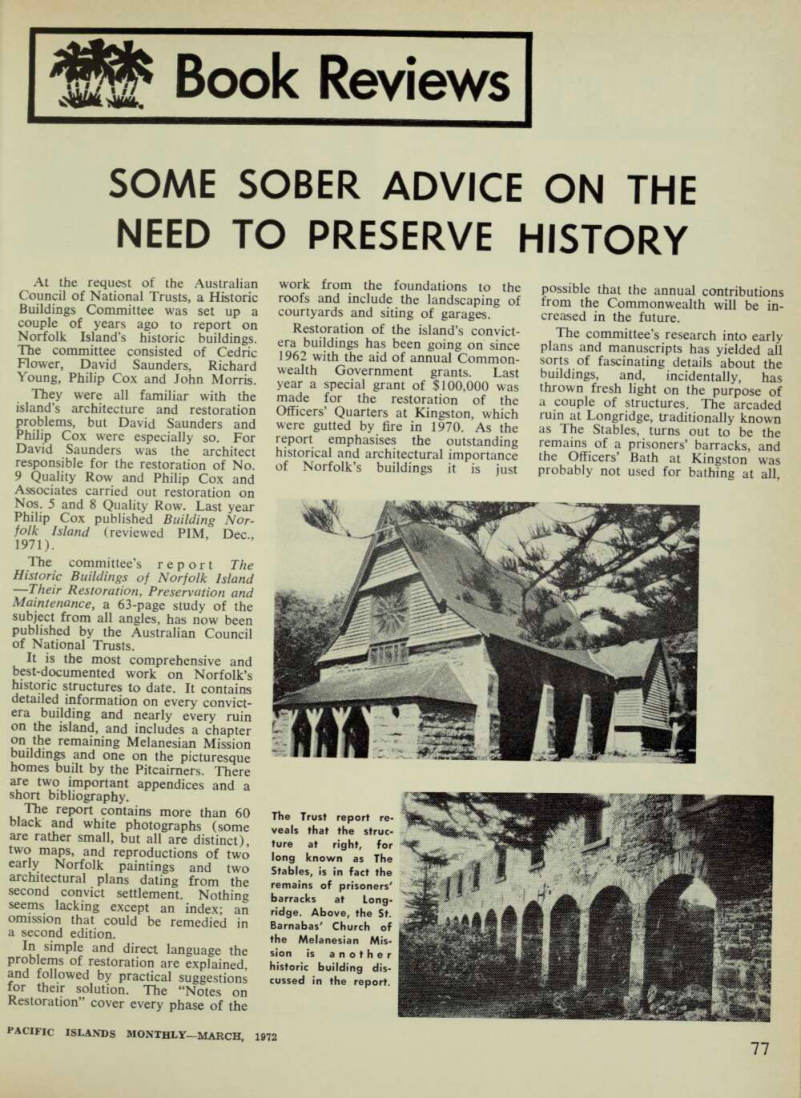 87
87 88
88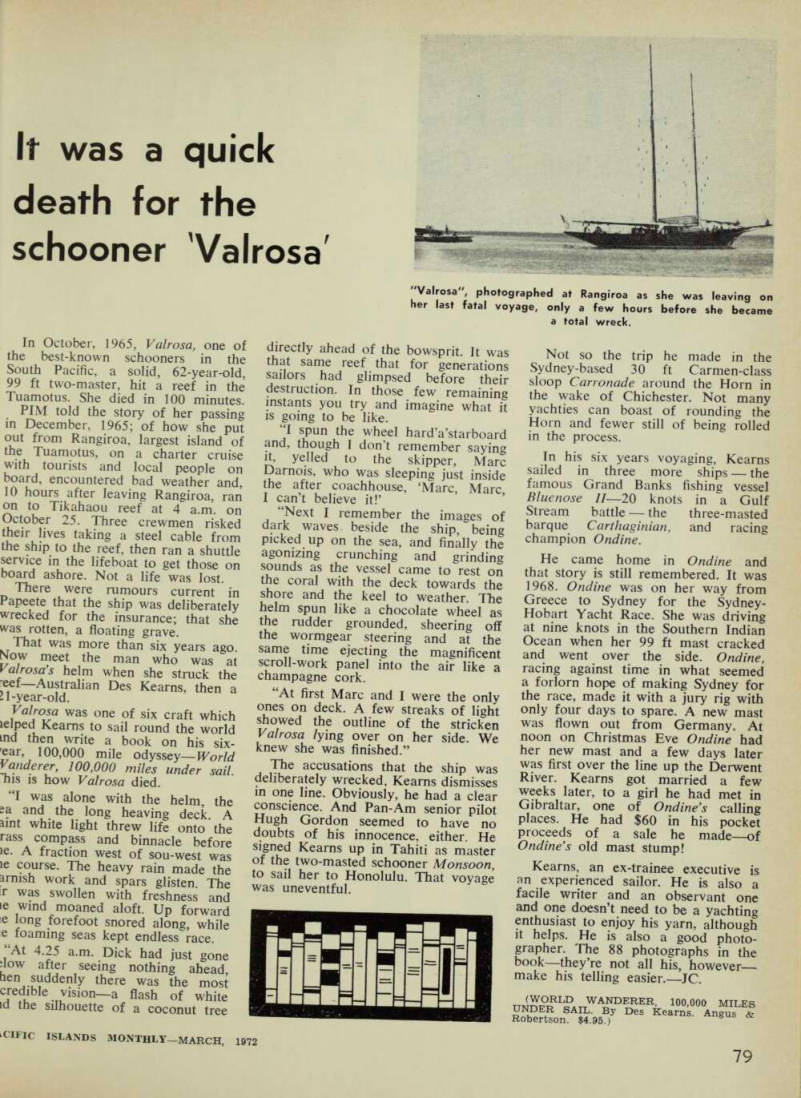 89
89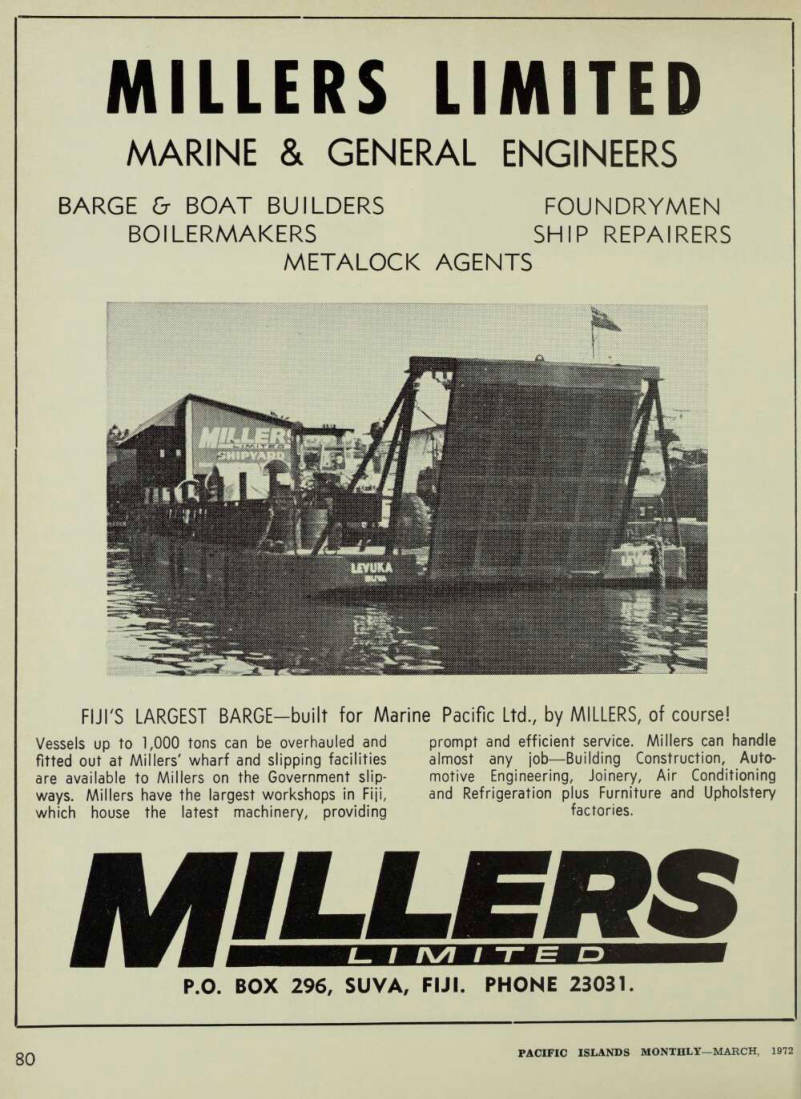 90
90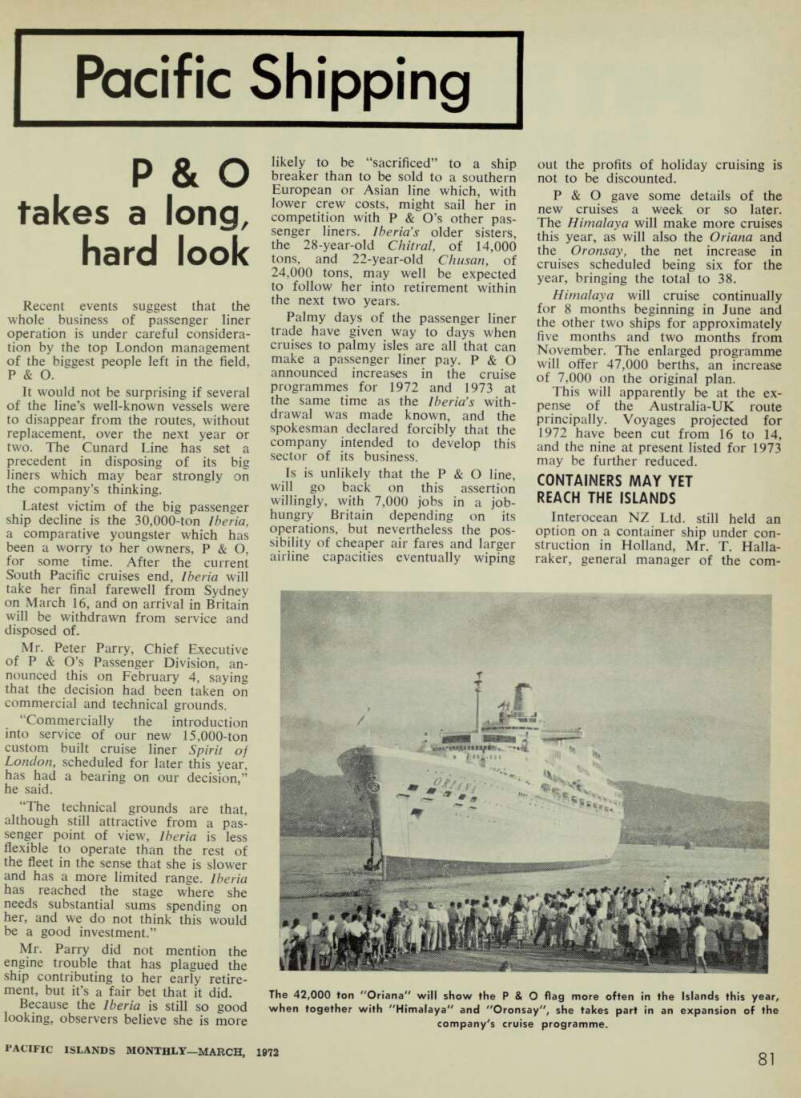 91
91 92
92 93
93 94
94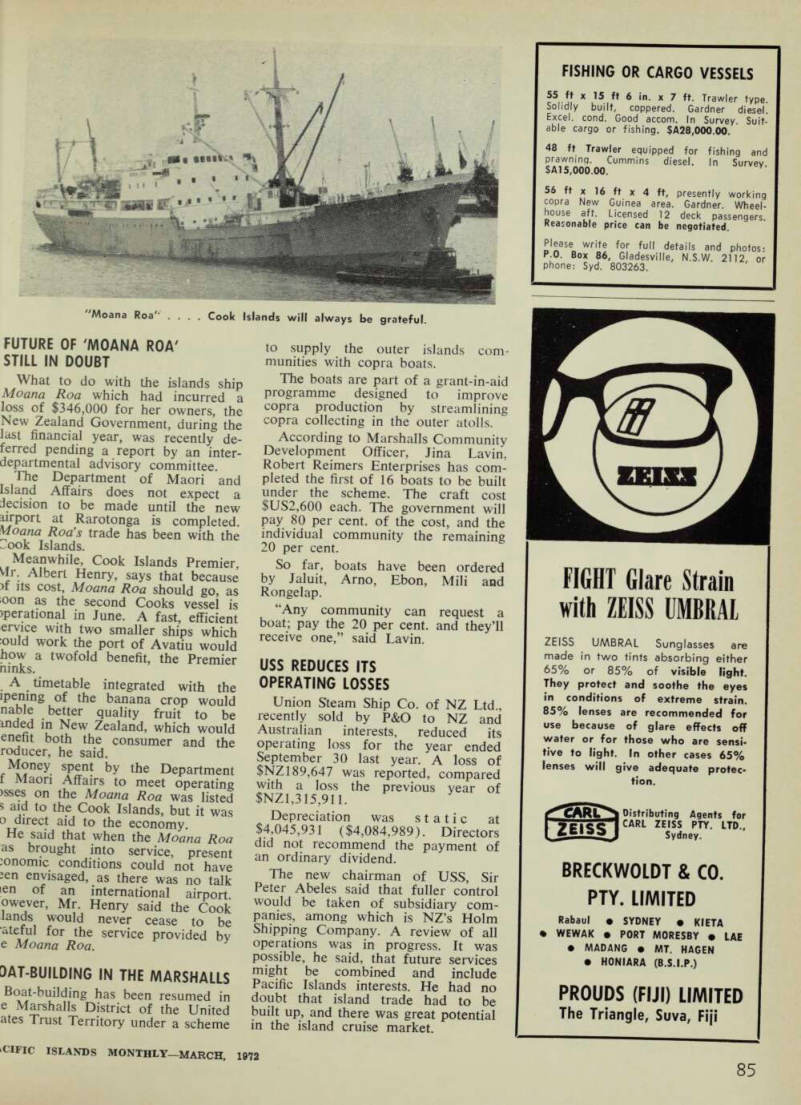 95
95 96
96 97
97 98
98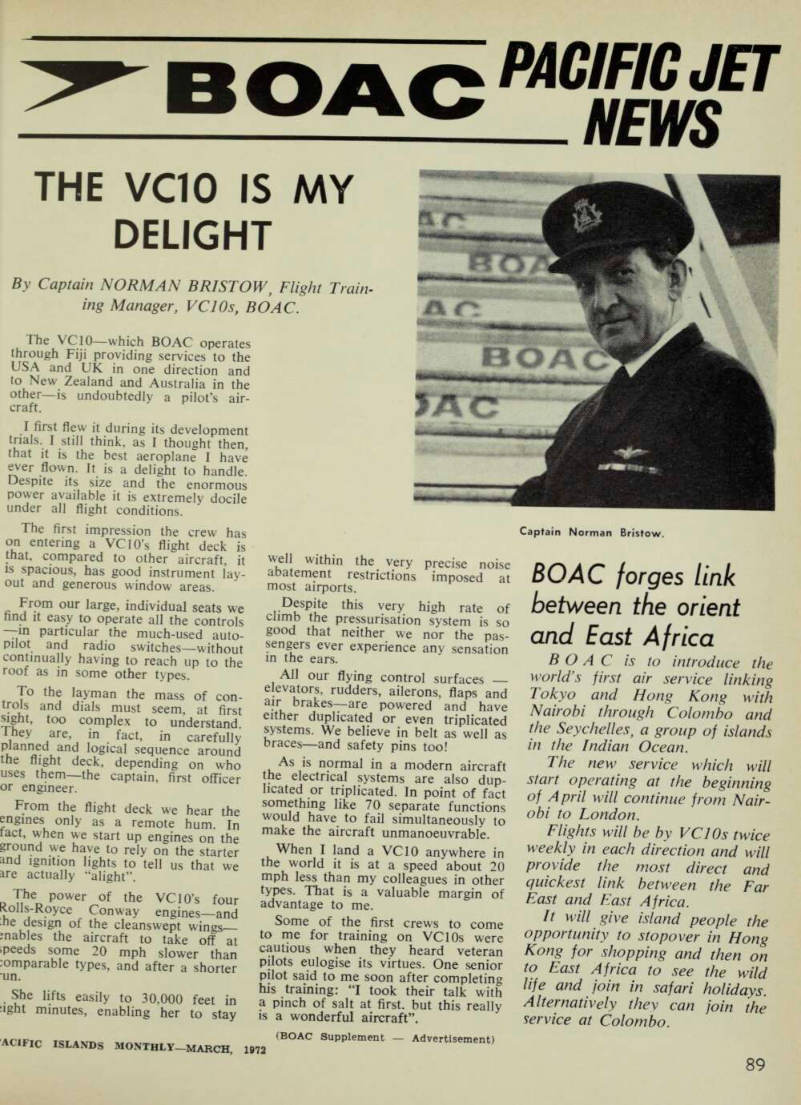 99
99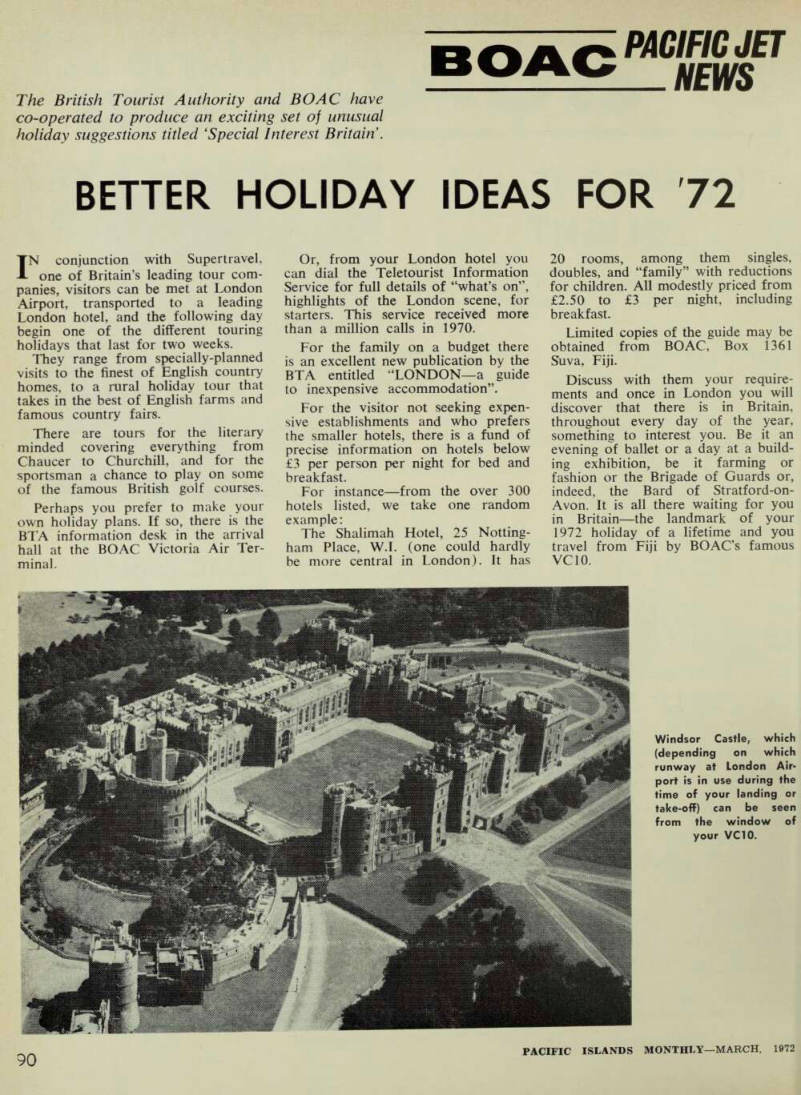 100
100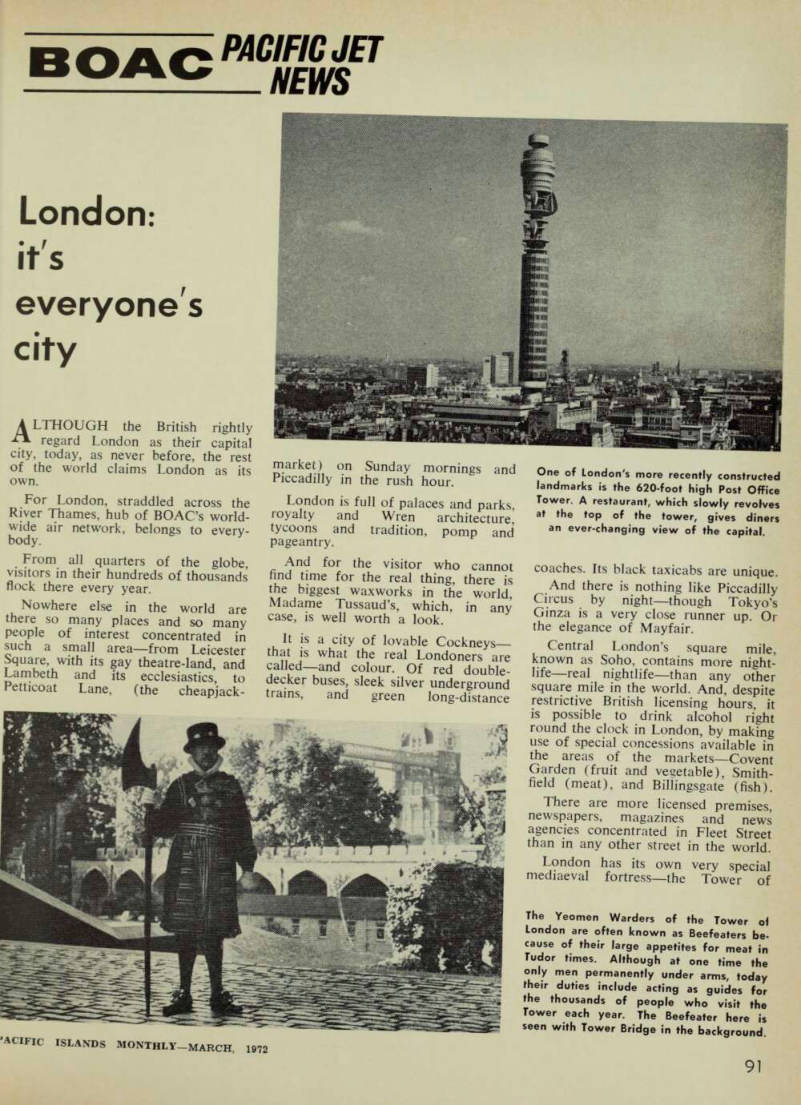 101
101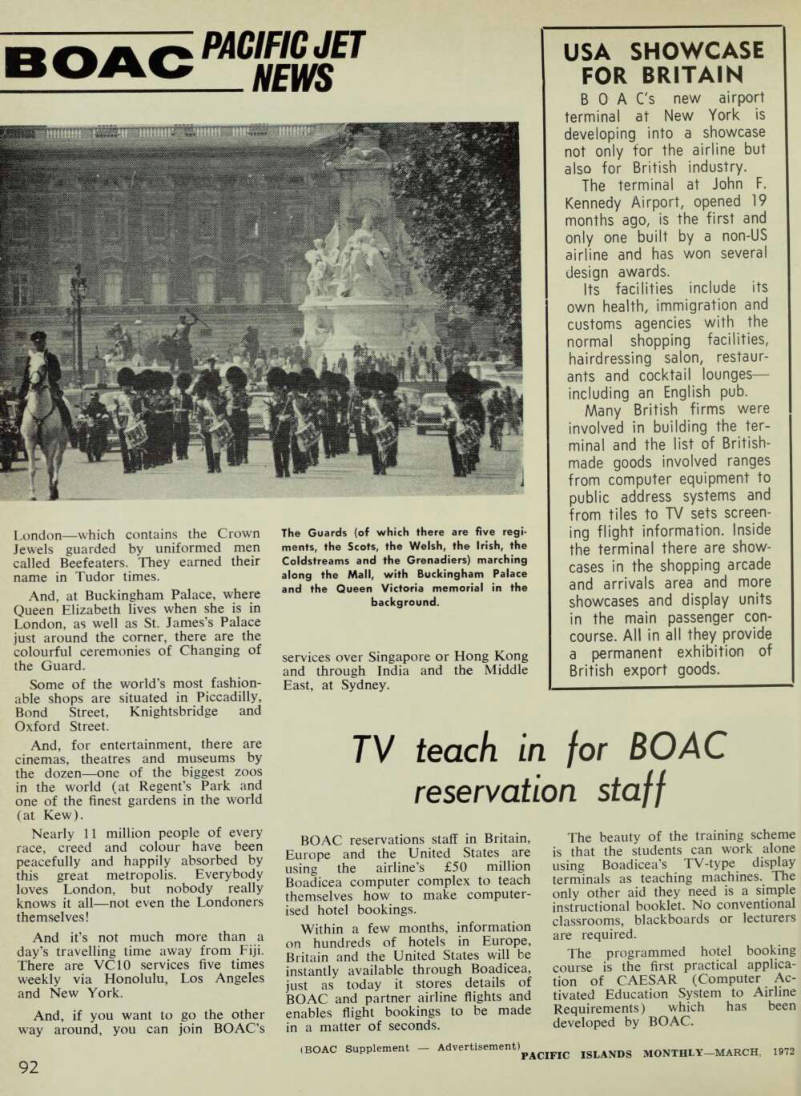 102
102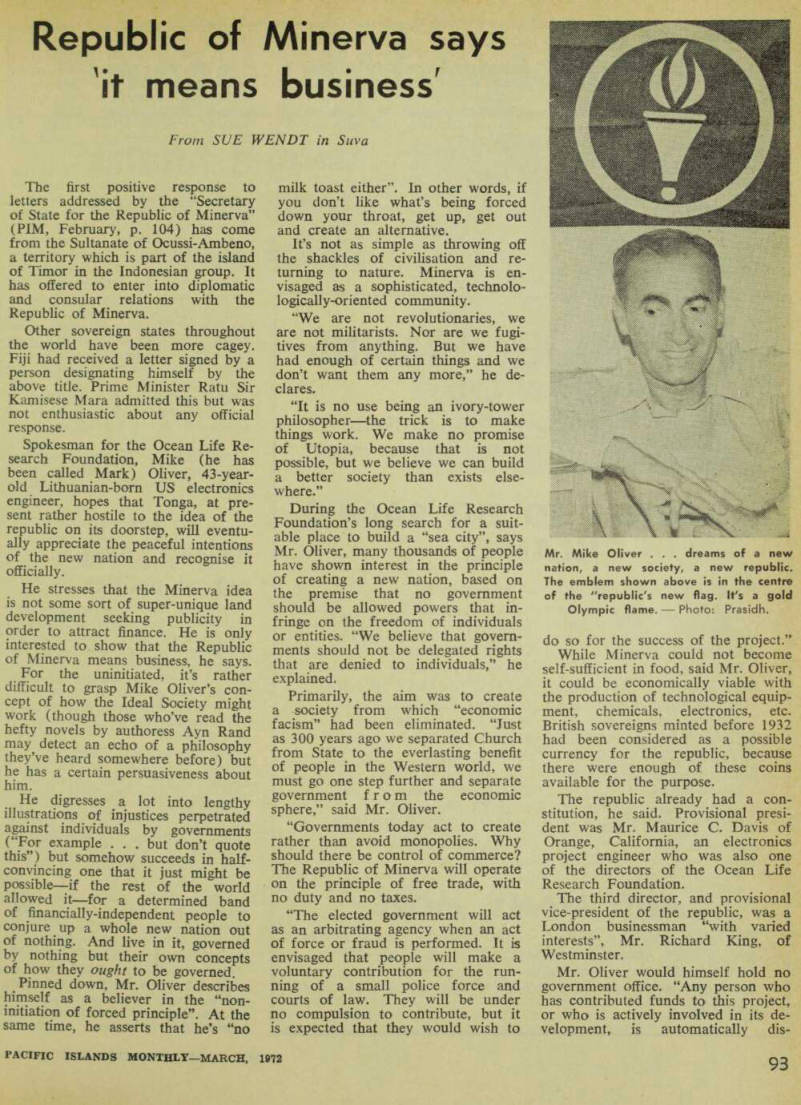 103
103 104
104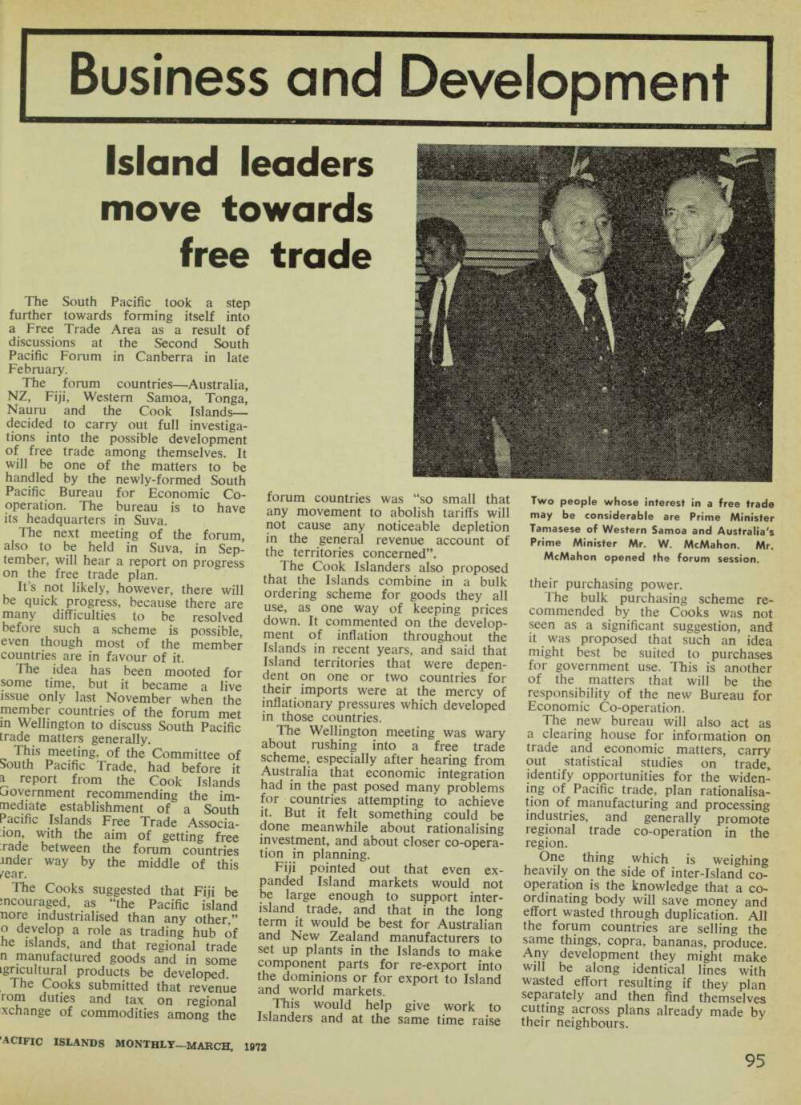 105
105 106
106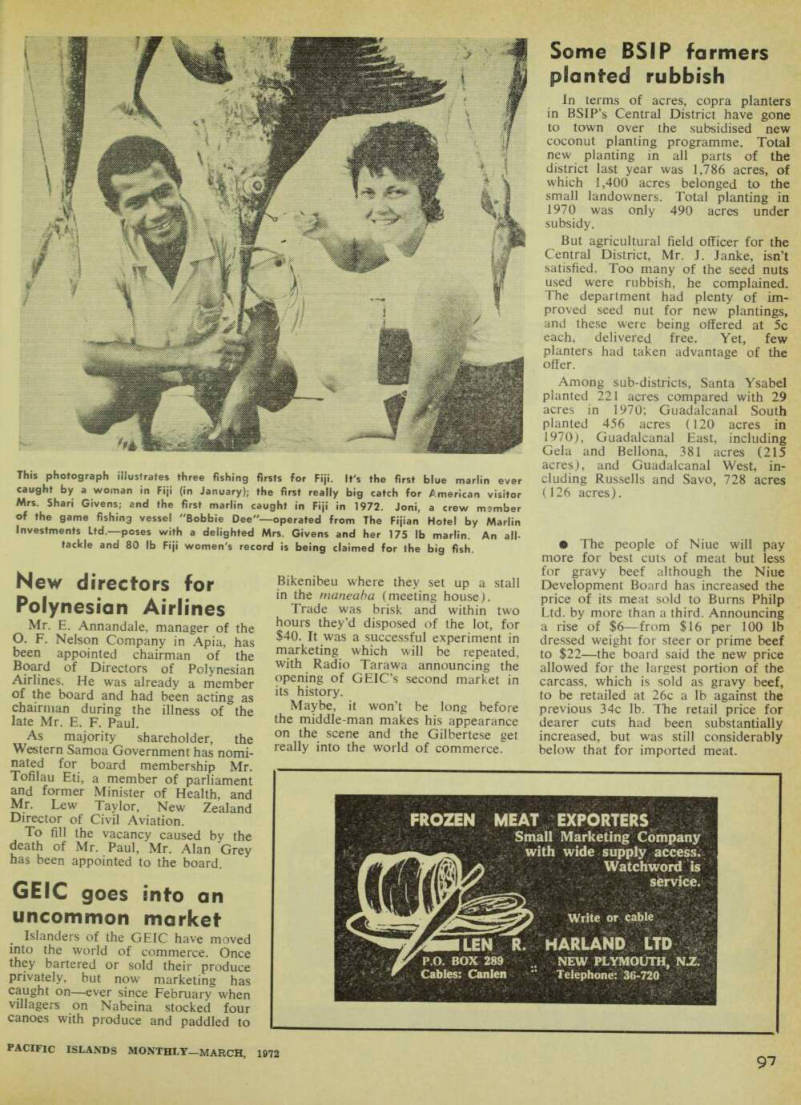 107
107 108
108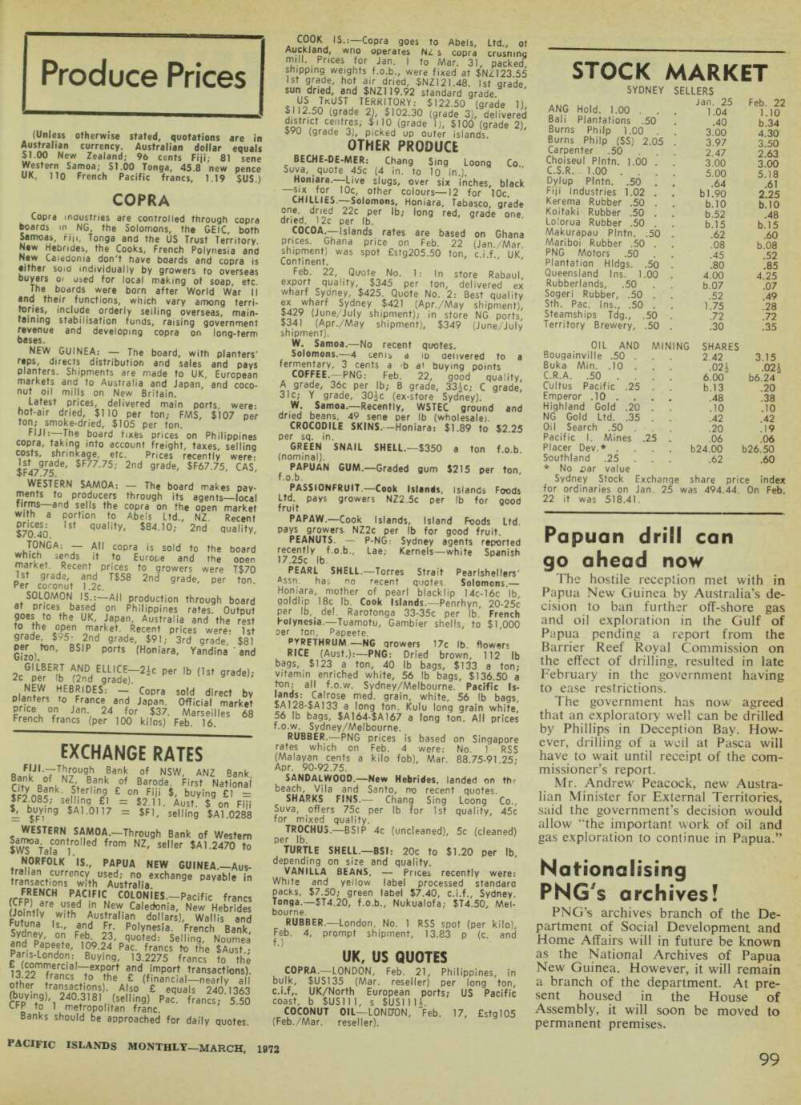 109
109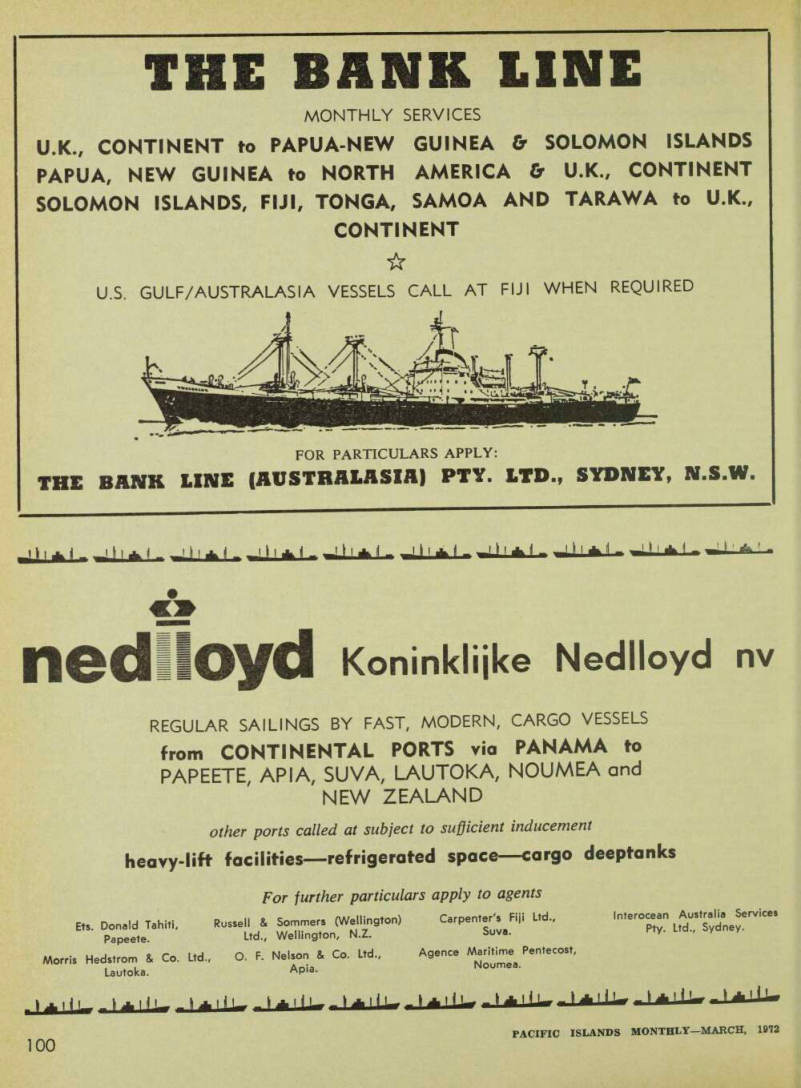 110
110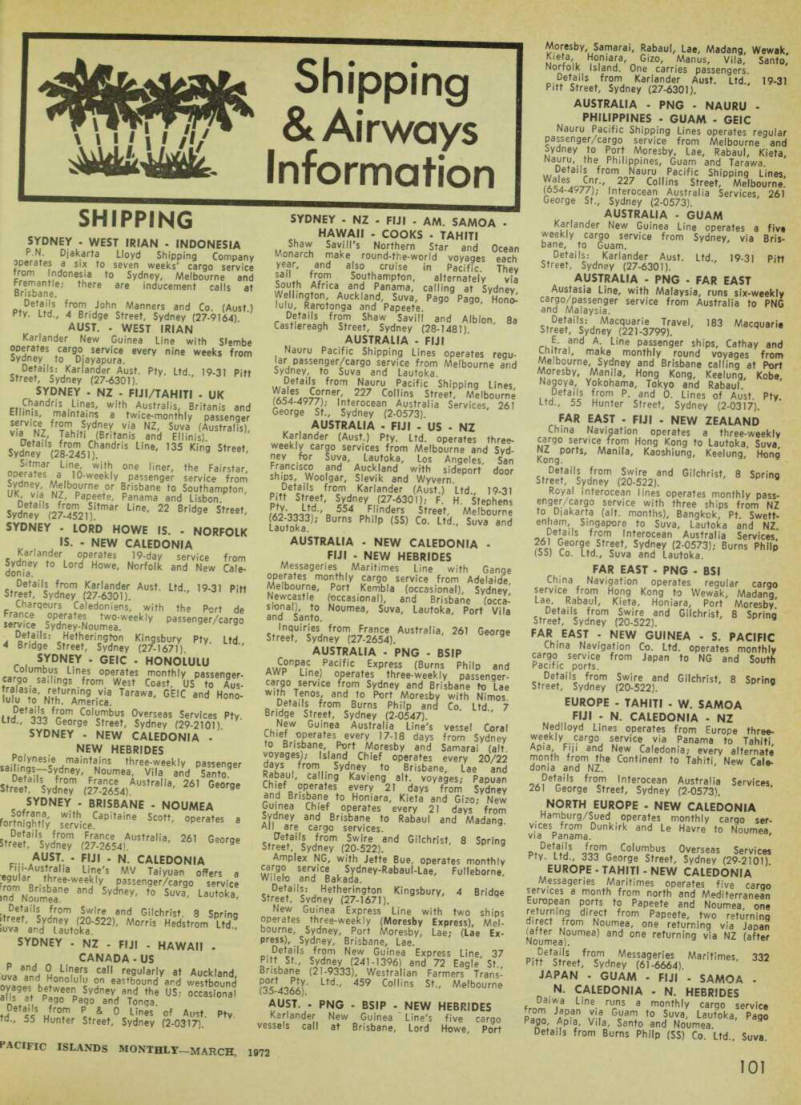 111
111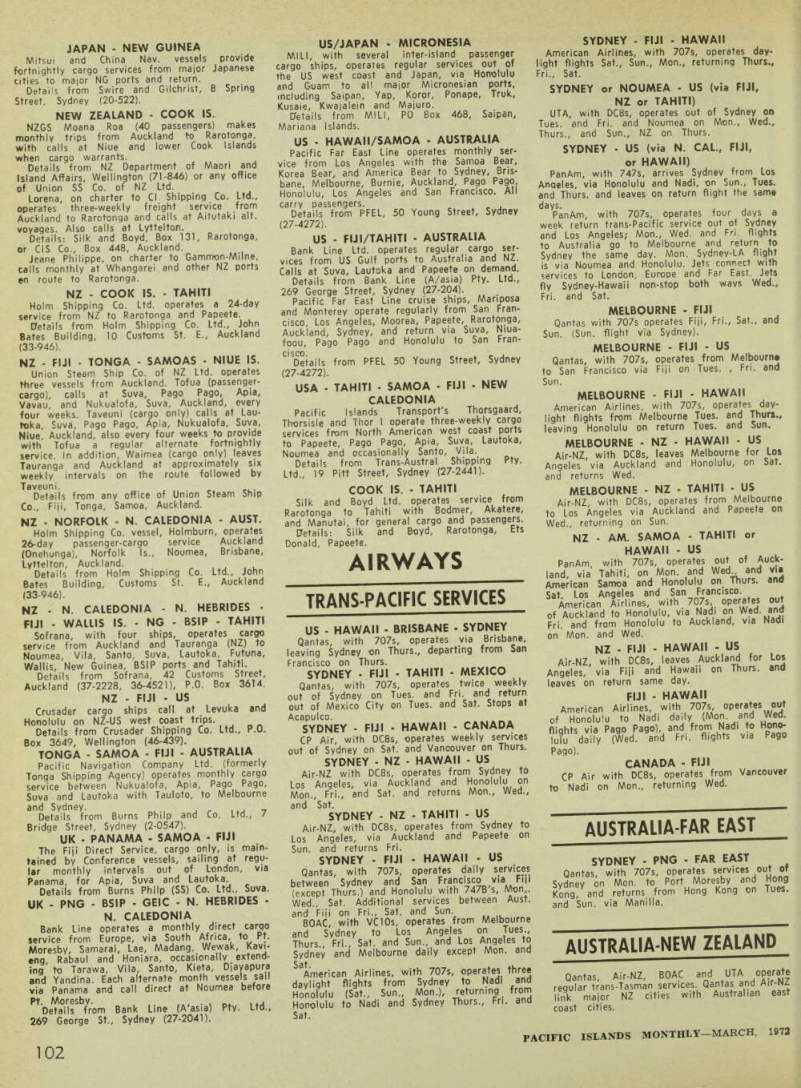 112
112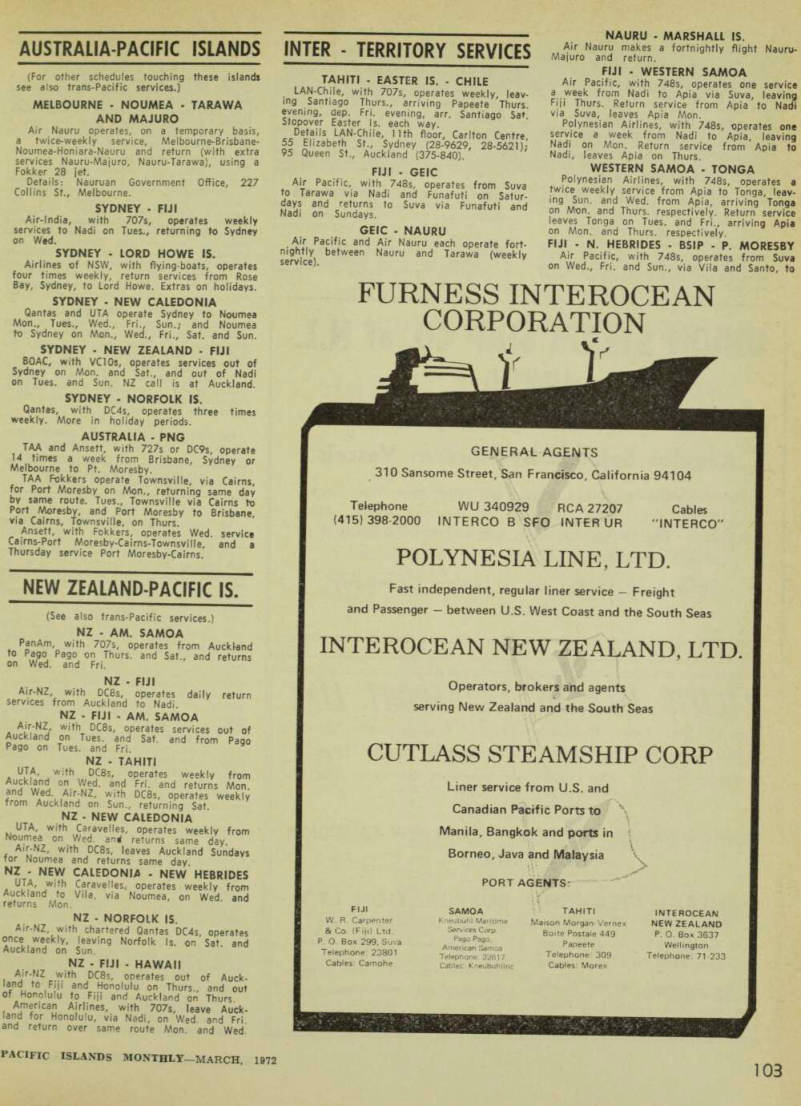 113
113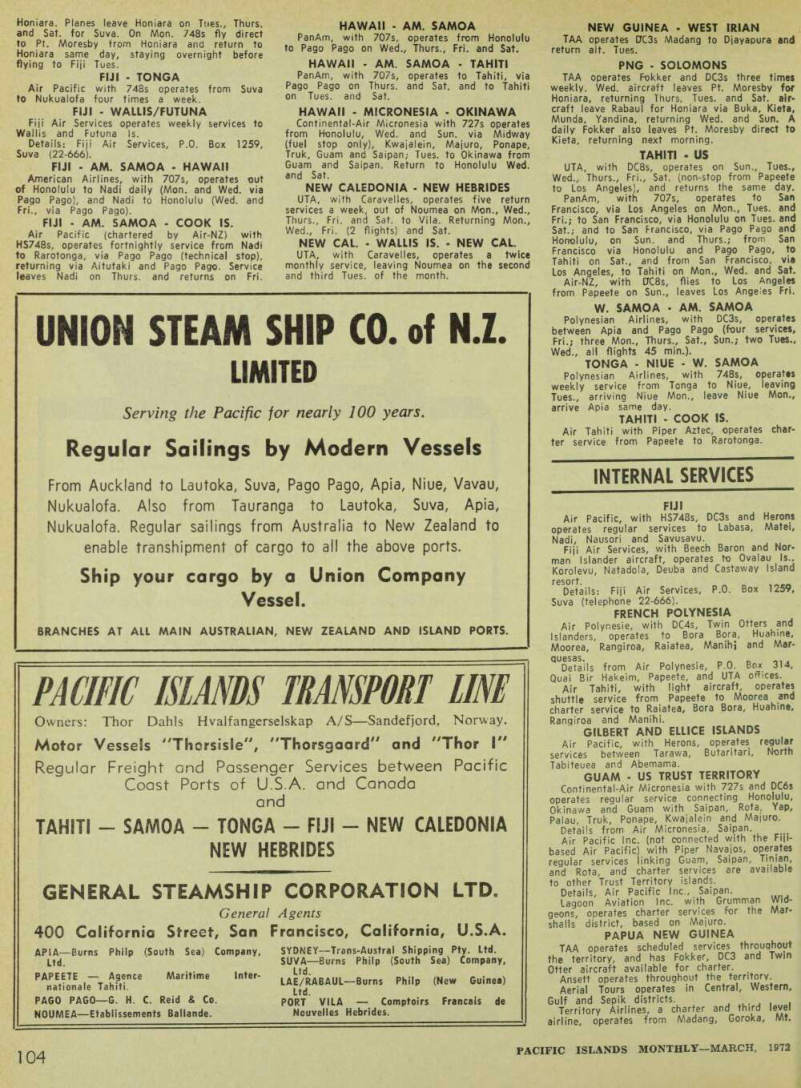 114
114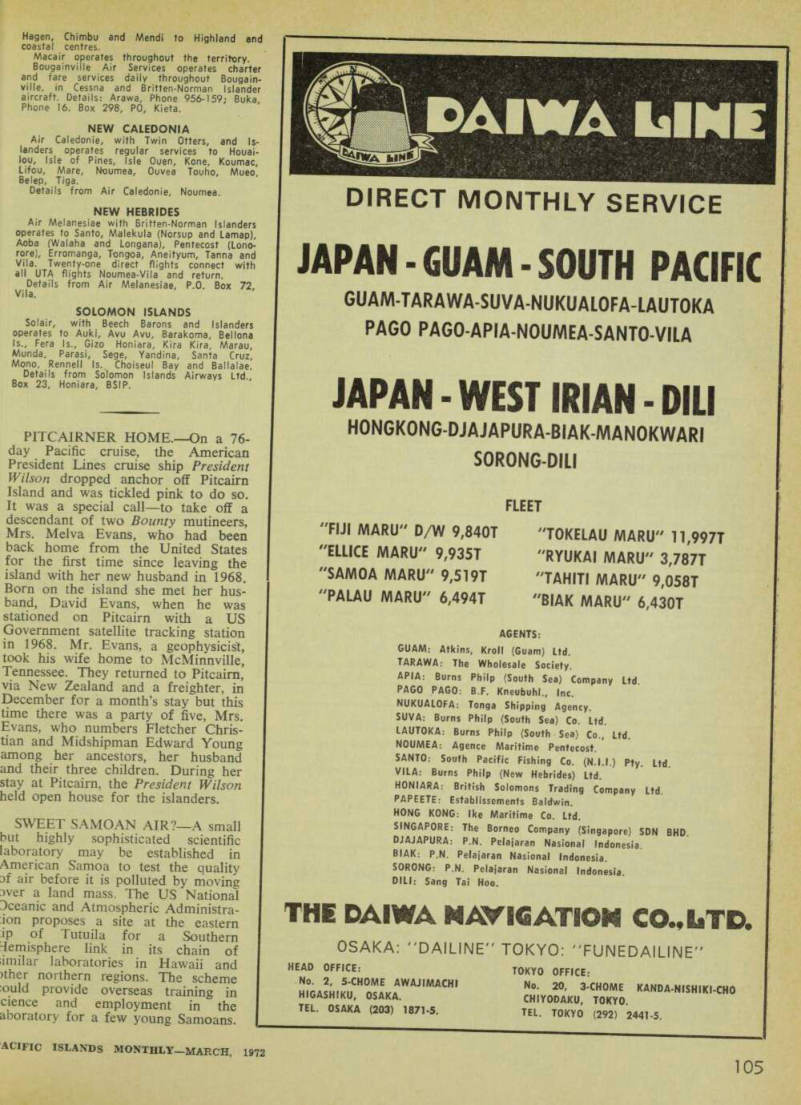 115
115 116
116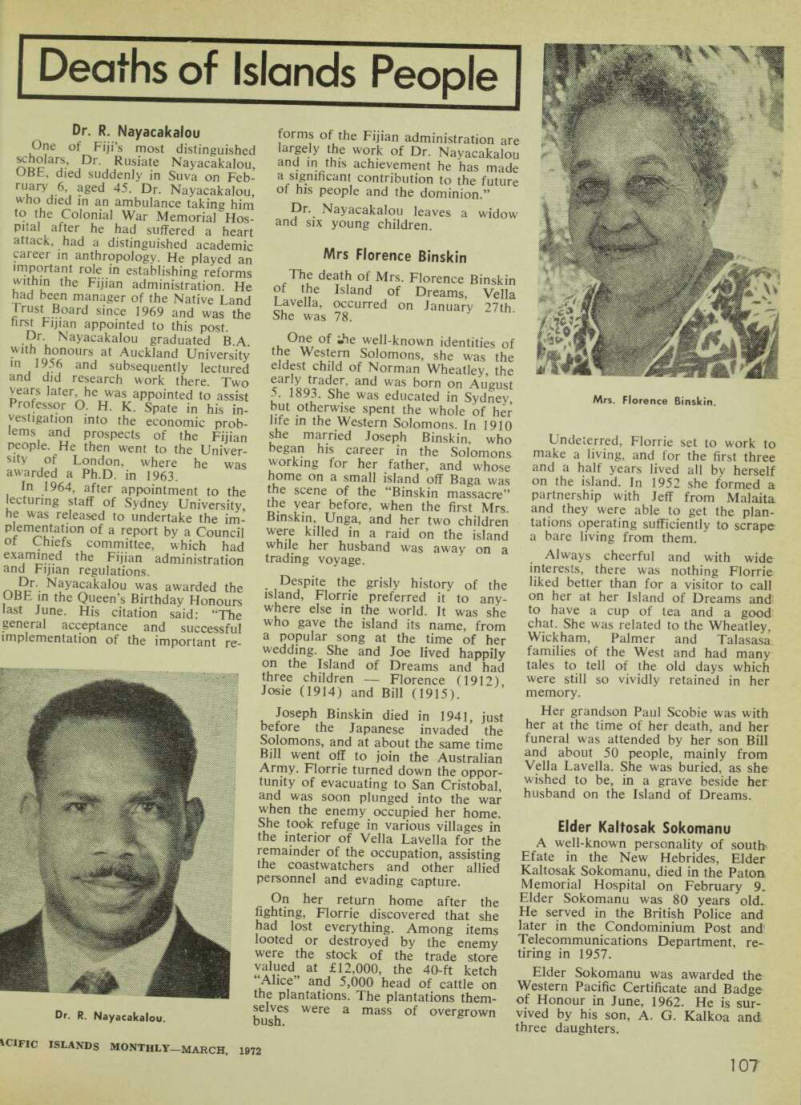 117
117 118
118 119
119 120
120 121
121 122
122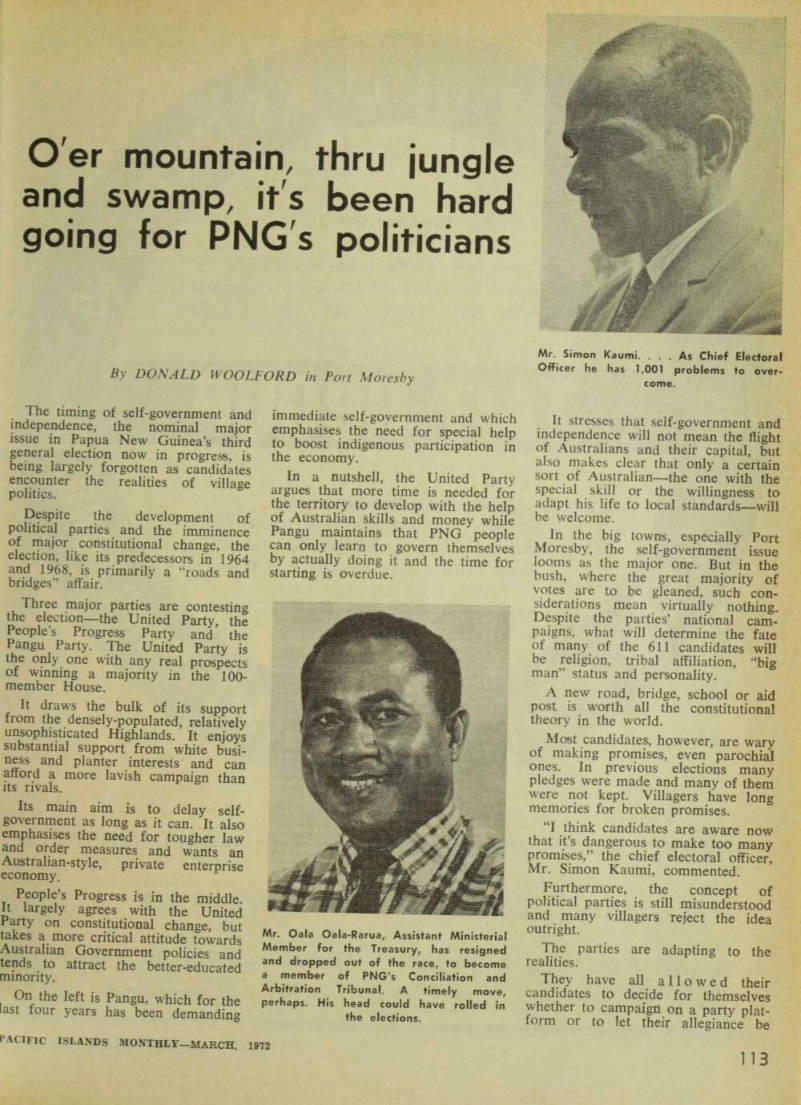 123
123 124
124 125
125 126
126 127
127 128
128 129
129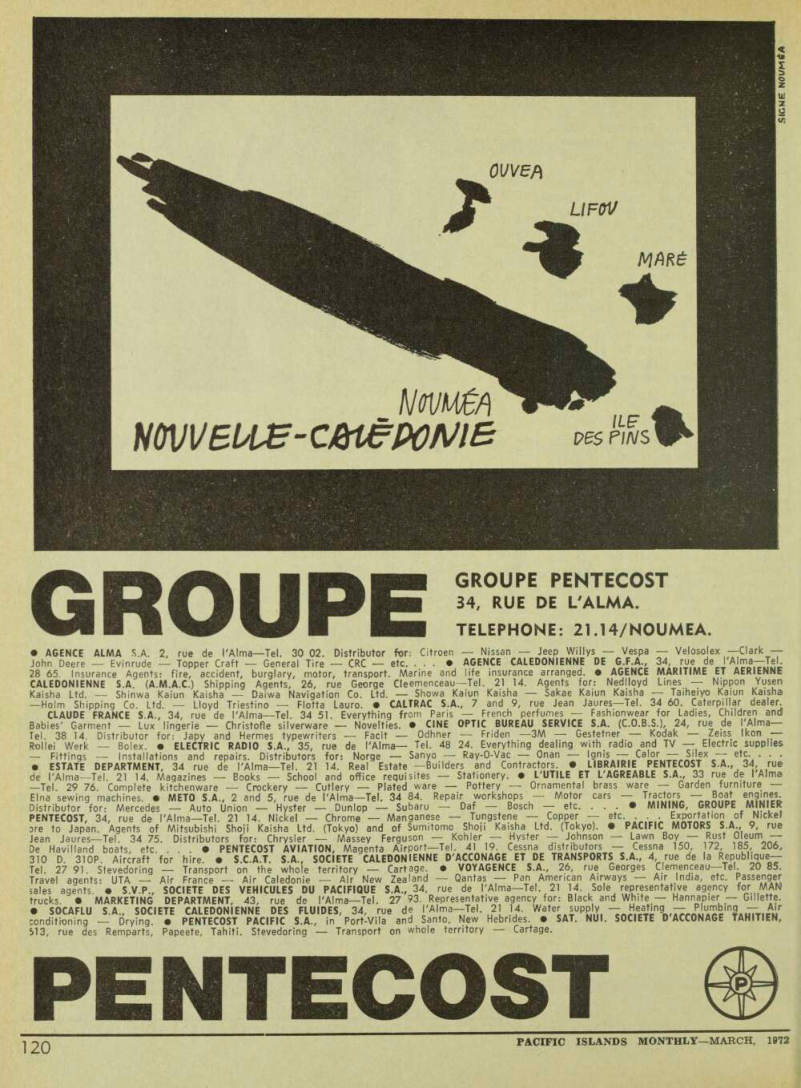 130
130 131
131 132
132 133
133 134
134 135
135 136
136 137
137 138
138 139
139 140
140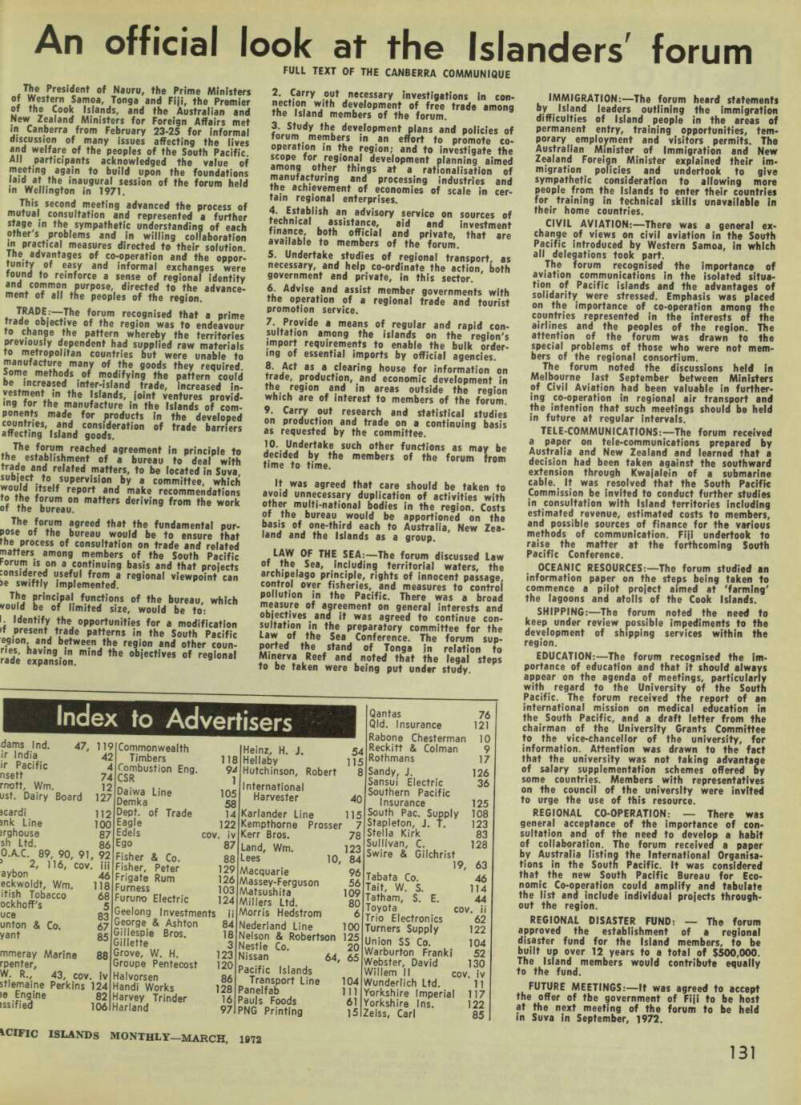 141
141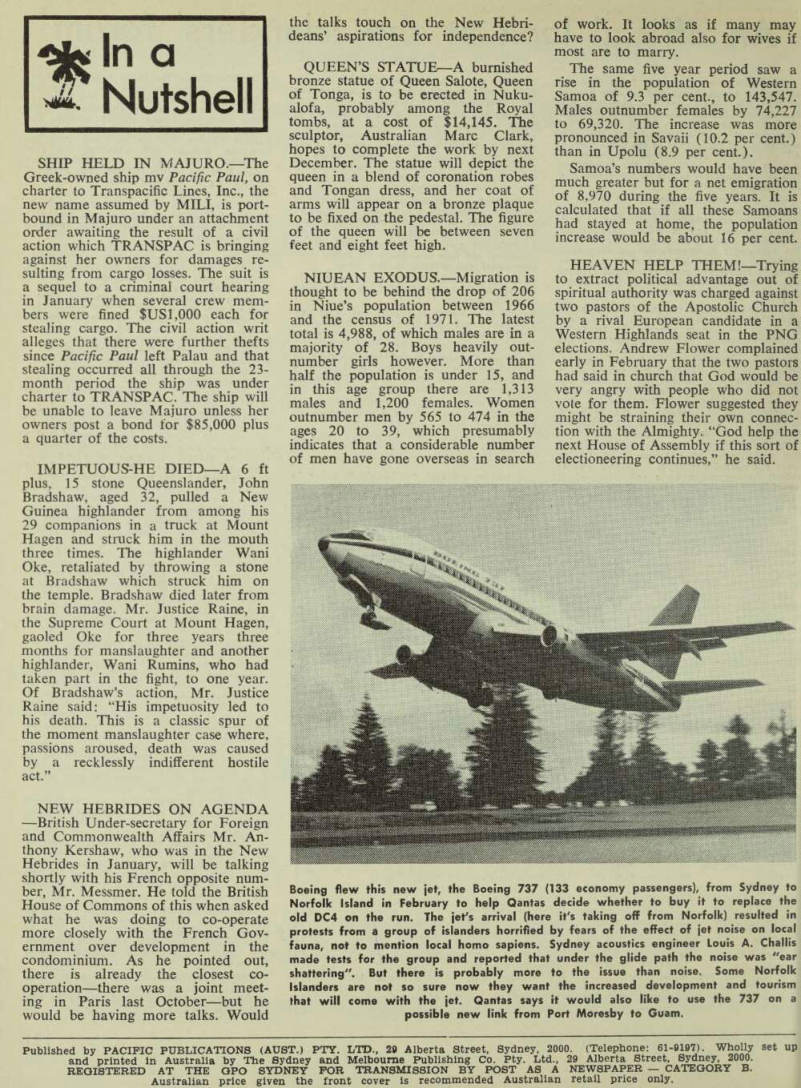 142
142 143
143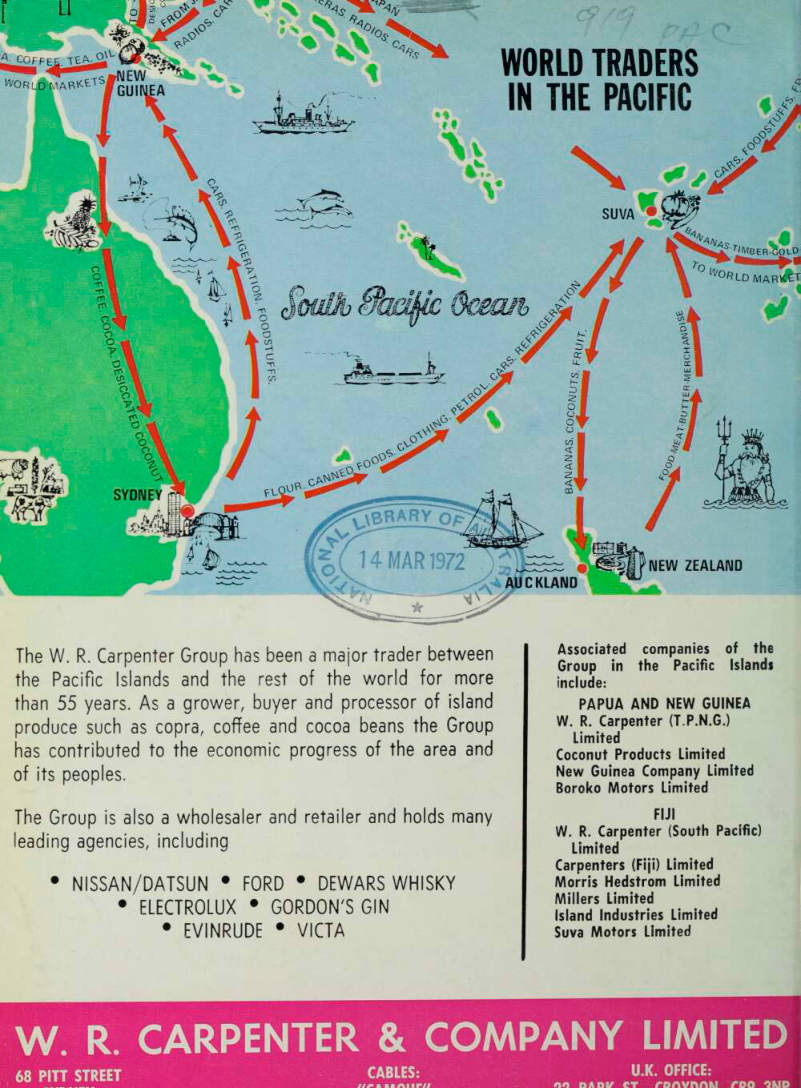 144
144