Monthly
Pacific Islands
/S Magazine
Of The
Uth Pacific
Australia, 40C. • New
\Nd, 45C. • Fiji, 3/9. •
:h pac. islands, 55 frcs.
• U.S. Pac. Territories,
• P-N.G. And All Other
Territories, 35C. Local
Currency.
Bruary, 1968
h
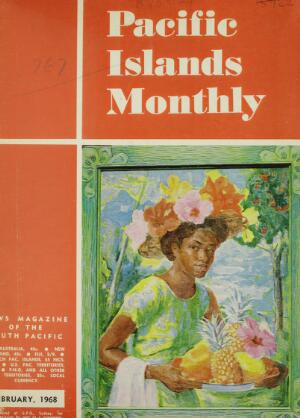
OUR COVER: One of the most remark able European women in Fiji today is Mary Edwell-Burke, a 70-year-old Aus tralian artist, who painted our cover picture, which she has called "Hibiscus Hat". An article on Miss Edwell-Burke's life and work appears on p. 68.
Photo: Caines Jannif.
Advertisements & other items, pp. 2-4 (2 items)
One flight...
1823 miles of extra
Between Papua/New Guinea and Australia, everyone gets extra care when they fly TAA ‘Bird of Paradise’. Business or holiday travel, family travel or sentimental journey whatever your reason to fly, you’ll relax and enjoy TAA’s international standards of service with five hostesses to pamper your every need. Drinks are free first class. Meals are culinary masterpieces from canapes right through to cheese, coffee and mints. Everyone gets extra care on a ‘Bird of Paradise’ flight especially the youngsters, who’ll really enjoy their games and books. So take care to book TAA, and we’ll take extra care of you. Call your Travel Agent or TAA now.
Port Moresby 2101, Lae 2311, Madang 2478, Rabaul 2567, Goroka 8, Mt. Hagen 4, Wewak 103.
Fly TAA the Friendly Way
m
TAA36B9/67
jin I, ilium in in in
BURNS PHILP (SOUTH SEA) CO. LTD.
GENERAL MERCHANTS AND SHIPOWNERS
SHIPPING, CUSTOMS AND FORWARDING AGENTS
AGENTS FOR:
QUEENSLAND INSURANCE CO. LTD.
BURNS PHILP TRUSTEE CO. LTD.
I SHELL COMPANY (P. 1.) LTD.
SHIPPING AGENCIES
• The New Zealand Shipping Co. Ltd. • Shaw Savill & Albion Co. Ltd. • Port Line Ltd. • Bank Line Ltd. • General Steamship Corporation Ltd. • Blue Star Line • Cunard Line • Compagnie des Messageries Maritimes © British India Steam Navigation Co. Ltd. • Royal Interocean Lines • Nederland Line Royal Dutch Mail/Royal Rotterdam Lloyd.
EXCLUSIVE DISTRIBUTORSHIPS INCLUDE
OVERSEAS AGENTS
BURNS, PHILP Cr CO. LTD., Sydney.
BURNS, PHILP Cr CO. LTD., London.
BURNS PHILP CO. OF SAN FRANCISCO.
• AKAI TAPERECORDERS
• DUNLOP PRODUCTS
• EPIGLASS PRODUCTS
• FERGUSON TRACTORS
• HELENA RUBENSTEIN
® HITACHI ELECTRONICS
• HOLDEN VEHICLES
• JOHNSON'S WAXES
• ROLEX WATCHES
• REVLON COSMETICS
• PENTAX CAMERAS
• SUNBEAM APPLIANCES
INTERNATIONAL AIR TRANSPORT ASSOCIATION REPRESENTATIVES for
QANTAS EMPIRE AIRWAYS LTD. :: AIR NEW ZEALAND UNION DE TRANSPORTS AERIENS ALITALIA PAN AMERICAN AIRWAYS
ASSOCIATED COMPANIES
BURNS PHILP (NEW HEBRIDES) LTD.
AUTOMOTIVE SUPPLIES CO. LTD.
CORRIE & CO. LTD. O WROUGHT IRON AND STEEL
CONSTRUCTION CO. LTD. • BISH LTD.
SPECIALISED SERVICES
EXPERT ADVICE ON WORLD AND LOCAL TOURS
TRAVEL SHIPPING FORWARDING CUSTOMS
FORMALITIES INSURANCE.
REGISTERED OFFICE; SUVA. FIJI
Code Address: "BURNSOUTH" illlliiiiiiiiiiiiiiiiiiiiiiiiiiiiiiiiiiiiiilliiiiiiiiiiliillliiiillllllllllllllllillllllllllllllllllil^
For workshop...
for industry
CIG can meet all your requirements for welding, cutting, bending, shaping and spray painting with equipment and instructive literature that cannot be matched.
Available only from
CIG NEW GUINEA PTY. LTD., P.O. BOX 93, Lae.
CIG’S LOCAL TECHNICAL SALES REPRESENTATIVE: Mr. R. L. Steadson.
CIG New Guinea Pty. Ltd., P.O. Box 1636, Boroko, T.P.N.G.
BOROKO MOTORS LTD., P.O. Box 72, Mt. Hagen.
MADANG SLIPWAYS LTD., P.O. Box 47, Madang.
N.G.G. TRADING CO., Milford Haven Road, P.O. Box 151, Lae.
BOROKO MOTORS & TRANSPORT PTY. LTD., P.O. Box 102, Port Moresby.
I. L. CHIPPER & CO., Box 228, Rabaul.
MESSRS. COLLINS & LEAHY PTY. LTD., P.O. Box 57, Goroka.
INDUSTRIAL GASES FIJI LIMITED, Box 687, G.P.0., Suva. 2504/67
Industrial Gases
COMWELD Gas Welding & Cutting Plants; Rods & Fluxes; Flame Cleaning, Flame Hardening & Flame Heating Equipment.
R s
EMF
Electric Welding
Equipment
Arc Welding Machines; Automatic Welding Machines; Electrodes.
Arnold-DeVilbiss
Spray Painting
Equipment
including spray guns, air filters and compressors—to multi-purpose units with spray booths and a full range of automatic equipment.
1
ACIFIC ISLANDS MONTHLY FEBRUARY, 1968
In This Issue
Eneral
lew Australian Prime Minister 30 r avels of Trimaran "Rebel" 45 ook on Polynesian Women 95 Journal of Pacific History" 96 jng Bottle Drift 103 Matua" May Be Sold 107 ood Time to buy Islands Shares 122 ew Year Honours List ... 135
Merican Samoa
Drean, Chinese Disturbances 34 C 8 Flights from NZ Doubled 53 shing Survey of Tutuila 110 luipment from Canton Island 126
Ook Islands
actors on Strike 26 land Traders Escape Hurricane 109 jrotonga's Hurricane Damage 117 Jl jymond Burr, Businessman 28 tter on Illegitimacy 36 iva's New Hotels 40 tiversity's Modest Start 56 ackshalls Sell Bread Interests 63 wa's Water Problems 65 ■tist Mary-Edwell Burke 69 nployers Welcome Tax Changes 74 ipt. H. A. Gyllenberg—A Profile 87 x>k on Legends, Myths 93 Jtch Shipper's New Ships 110
Waterfront Explosion—Eight Die 111 Two Crusoes Give Up ... 116 Japanese Interest in Bauxite 123 Lower Trade Deficit 123
French Polynesia
Call for Self-Government 23 Teariki's Submission to de Gaulle 96
Gilbert And Ellice Islands Colony
Top Post for Islander 71
Nauru
Independence Celebrations 21 Another "Human Torch" ... 30 Background to a Mini-nation 34 Constitutional Convention 35 World's Best String Figure Makers 81
New Caledonia
Call for Self-Government 23 Book on Sandalwood Trade 91
New Hebrides
Athletes Break More Records 26 New Hotel for Santo 53 Pioneer Pilot Remembered 53 Book on Sandalwood Trade 91
Niue
New Steel Tugboat 107
Norfolk Island
Criticism of Rubbish Disposal 36 Ship Badly Damaged on Reef 103
Papua-New Guinea
Variety in Coming Election 24 "Junior" Buchanan—H'lands Candidate 25 Moresby's Pool of Unemployed 28 Rabaul Loses Monty Stobo 28 Venturesome Voyager Dies 29 Canberra Seminar 31 Trobriands as Holiday Resort 37 Hotel People Criticised 50 Lae Hotel's Promising Start 51 Rabaul Plans for Museum 53 Desiccated Coconut Factory 61 R. B. Carpenter's $2 Million Estate 61 Growth of Lae 65 Land of Unculture 73 Mortlock, Tasman Islands Make News 85 Useful New Atlas 94 "Bulolo" Withdrawn from Service 101 Gloria Maris Shell Banked 11l Freight Price Rise Likely 111 Fast Ship to Service Lae 112 Big Lae Cattle Project 123 Transport Survey Approved 125 Big Vanimo Timber Project 125
Solomon Islands
Success of Honiara Club 29 Shortlands Airstrip 36 Malaita—A Must for Visitors 41
Tonga
Rosier Times Ahead 27 Social Changes on Tin Can Island 54 Support for King's Trilithon Theory 70 Crayfish Boat Leaves Australia 110
U.S. Trust Territory, Guam
New Air Service from Sydney 48 Chief Justice Retires 121
Western Samoa
UN Advisers Leave 121 NZ Prices Unpopular 125
DEPARTMENTS: Up Front with the Editor, 14; Tropicalities, 28; To the Point with Percy Chatterton, 32; Letters to the Editors, 36; Travel, 37; Port Moresby Personality, 68; From the Islands Press, 76; Magazine Section, 81; Yesterday, 89; Book Reviews, 91; Shipping, 101; Cruising Yachts, 113; People in Pictures, 118; People, 121; Business and Development, 122; Produce Prices, 127- Shipping, Airways Schedules, 129; Practical Planter, 139; Deaths of Islands People, 154; Index to Advertisers, 156.
Advertisements & other items, pp. 6-15 (4 items)
International C-tine
trucks that can really take it in the tropics ■ ... .. :^>>yyyy^M^y>y>.yy.'y.
II m r m+m Mountains, plains, roads, no roads ... it’s all the same to International C-LINE trucks. Day in, day out, they keep on taking it ... wherever they are in the tropics. That’s because IH engineers know tropical conditions and how to build trucks to match them.
All C-Line trucks from 1-ton capacity to the maximum permitted by road laws are job-rated that is, all components are matched to model capacity. 4-wheel drive models too. No wonder you get such lasting dependability from an International C-Line truck.
See the C-Line soon!
m K
FOR FURTHER INFORMATION, CONTACT
NEW GUINEA: N.G.G. Trading Co., Lae.
Steamships Trading Co. Ltd., Rabaul.
New Guinea Goldfields Ltd.. Wau.
Auto Repairs, Banz.
Wewak Engineers, Wewak.
TAHITI: Hintze & Company, Papeete.
PAPUA: Steamships Trading Co. Ltd., Port Moresby.
SOLOMON ISLANDS: Solomon Motors Ltd., Honiara.
NEW HEBRIDES: Kerr Bros. Pty. Ltd., Sydney.
FIJI: Niranjan's Auto Port, Suva and Lautoka.
NEW CALEDONIA: Agence Automobile, Noumea.
H2139/EX/32
5 RECIPES
FOR MODERN
fe I fis HOUSING
c ■m What else could give you so much
living space per dollar spent?
Your housing budget goes so much further with Hardie’s Building Products. You can build elevated homes with lightweight construction techniques which save money on foundations—savings which can be devoted to providing increased living space.
The home above—one of hundreds photographed by Hardie’s in a nation-wide photo survey shows the effective styling achieved with Hardie’s Flat Sheets used in boldly defined wall panels. Or you may prefer one of the range of Hardie’s moulded panels. See for yourself the variety of home styles and designs already built with Hardie’s sheets and panels in the new trend that's sweeping the country.
We’ll send you our unique photo-gallery of dozens of homes in Hard<e’s Housing Report, 1967. Send for your copy today.
Even more important, we’ll also send you recipes for success in building your own home—how and where to use Hardie's Building Products.
TO HELP YOU BUILD HOMES LIKE THIS ...
Some of the homes you can build with our recipes are shown at right. There are many more designs, prepared for us by a leading architect. We’ve published them, with plans, in Hardie’s Recipes for Home Planning. Send the coupon for your copy.
Not only are Hardie’s Building Products Australia’s most versatile, most practical building materials, they are unequalled for tropical conditions. They are completely unaffected by climatic extremes, cannot rot or rust, are immune to termites, and need no maintenance.
BUILDING PRODUCTS
BURNS PHILP
(NEW GUINEA) LTD.
I Post this coupon for: ■ FREE HOUSING REPORT & RECIPE BROCHURE I To James Hardie & Coy. Pty. Ltd., I Box 3935, G.P.0., Sydney. 2001
NAME
ADDRESS
8M752.NG86
World
quality
mm < Ri 1 r & Only the world's finest Virginia tobaccos are blended to produce ...
PLAYER’S
GOLD
i LEAF
one ofthe great cigarettes
Q671-5/67
BROCKHOff
Whatever tn
there's one to pl e „ onderful range of delicious M^fricuds^^; ar e so men, biscuits from a „ made from the m<* va rieties to choose from. Brockhoff wh ogme. toest Aa straUa’s hnestj-scu^ T^ ere s a t^e occasion.
VO U'
Here are a tew w
J: yr
>*j
CLIX
A tender golden crisp cracker that tastes as if it is already buttered. The cracker you can eat by itself, or with savouries or dips.
EDINBURGH
SHORTBREAD
Made in the true Scottish tradition with fresh eggs, sugar and rich dairy butter.
Jf BROCKHOfr \
Savoury Shapes
SAVOURY SHAPES
These delicious, one-bite ready-made savouries are ready to serve anywhere, in the convenient tray pack.
9 BROCKHOff
•Peanut Crisp
Salada
• ok. m o vmn crime by rm vtmsAruj *
©V* JAM
P?SE?I?s
I
RAIS I
LUNCHEON
SALADA
A crisp, light, golden cracker to enjoy with all meals and snacks. The slight touch of salt brings out the full flavour of all spreads, toppings, & cheese.
Australia’s finest biscuits baked oven-crisp by Brockhoff.
Wrapped in MXXT/A, the most moistureproof ‘Cellophane’ in the world.
Look for the baker on the packet.
ARNOTT, BROCKHOFF, GUEST Pty. Ltd.
53-71 Huntingdale Rd., Burwood, E. 13, Victoria, Australia.
Cables ‘Brockbick’ Melbourne.
Telephone 28 2888 mmmm
mm.
VB Ml
ILtter
us
FAM
OR LD £ *
Victoria
Bitter
Drink a beer that’s really beer Victoria Bitter. Enjoy its clean, keen, cold taste. Linger over its full-bodied sparkle and get a lift that makes you glad you’re thirsty. Victoria Bitter is a man’s drink which refreshes like nothing else can. Try it. You’ll understand, at once, why Australians and people the world over who know good beer drink “Vic”.
BEEWED BY THE FAMOUS CAELTON & UNITED BEEWEEIES LTD., MELBOUENE.
ITS AUSTRALIA'S INDEED THE WORLD'S BEST BEER.
C.B 437-48
Australian
butter & cheese
... help children grow faster
... give children more energy
m-. i 7 % ,
AUSTRALIA
From the rich pastures of Australia come the finest n dairy products including the finest cheese, butter, *hee and canned or powdered milks. H Unsurpassed or flavour, Australian butter gives you full Vitamin A md D content. Australian cheese gives you excellent :oncentrated food value full of protein and rich n calcium. ■ For energy, goodness and flavour dioose Australian dairy products.
Always look for the word 'Australia' on the label Trade Enquiries to: Your resident Australian Trade Commissioner or— Australian Dairy Produce Board,
G.P.O, Box 1657 N,
Melbourne, Victoria. Australia. 3001.
SPECIFIED FOR
THESE
COMMONWEALTH
DEPT. OF WORKS
PROJECTS:
New Guinea Housing for Papuan Infantry Regiment.
Taurama Army Barracks.
Commonwealth Banks.
Reserve Banks Honiara, Port Moresby.
Lae Army Barracks.
P.M.G. Station, Rabaul.
Australian Capital Territory Orroral Valley Tracking Station. 2CA Canberra.
Tidbinbi I la Tracking Station.
Bureau of Mineral Resources.
The Secretariat Building.
Royal Military College —Duntroon.
Dept, of Navy— H.M.A.S. Harman Barracks.
Northern Territory Darwin Hospital.
Reserve Bank.
Commonwealth Education Dept.
R.A.A.F. Hangars.
New South Wales Holsworthy Army Camp.
R.A.A.F. Base, Richmond.
Kapooka Army Camp.
D.C.A. Buildings, Mascot.
Atomic Energy Commission. ...and similar projects in other States.
Fiji Derrick Technical Institute, Suva.
Suva Post Office.
Brownbuill
the strong roof!
in
Here’s proof:
Brownbuilt’s unique button-punching process.
Tests supervised by the Department of Civil Engineering, University of Melbourne, proved the ability of the Brownbuilt decking system to withstand upward suction loads equivalent to winds of cyclonic force.
POSITIVE CONCEALED FIXING.
Brownbuilt’s great strength lies in its deep rib profile, concealed fixing method and exclusive, proven button-punching process for sheet interconnection. The combination of all three results in a completely secure, weatherproof, maintenance-free roof unaffected by heat expansion.
Note these other features: 1. Greatest span strength permits economical roof frame designs. 2. Most versatile—adaptable to all roof designs . . . flat skillion, steep pitch, up-and-over and radial pitch. 3. Wide selection of materials—galvanised steel, copper, aluminium, stainless steel, pre-coated “COLORARMOR.” 4. Unmatched service—qualified technical representation coupled with smooth-running shipping facilities through our Export Division.
Prompt and complete documentation—we take care of the details.
Brownbuilt
■nnHBHHUBi LIMITEDHBB
METAL SECTIONS DIVISION
499 Princes Highway, Kirrawee, Sydney, 2232.
Cable: Metform.
Local Distributors AAorobe Constructions Pty. Ltd., Saraga Street, 6 Mile, Port Moresby.
D. C. Watkins Ltd., Angau Drive, Boroko, Port Moresby.
John Stubbs & Sons (Papua) Ltd., Lawes Road, Port Moresby.
Madang Building Supplies, Madang.
Lae Plumbing Ltd., Lae.
Reddy Constructions, Suva, Fiji.
HOLBROOKS
rice
The complete
rice dish
cooks in just
1 7 minutes.
ncetnso
nso
a i m Now you can whip up a Blue Ribbon special in as little as 17 minutes with Holbrooks Rice-a-Riso. Everything’s in the packet, the rice, all the delicious herbs, spices that make Rice-a-Riso a family favourite ... a favourite with Mum, too, because it’s so quick and easy to prepare.
A RECKITT & COLMAN PRODUCT
SEVEN MOUTH-WATERING FLAVOURS to
please all tastes . . . Mexican, Spanish, Chinese, Curry, Beef, Mushroom and Chicken. Try one tonight.
Exciting recipes on every pack.
For trade enquiries: Reckitt & Colman Pty. Ltd., Wharf Road, West Ryde, N.S.W., Australia.
Cables: Reckitts, Sydney.
H8163C
Quick easy construction of a Pyneboard built-in unit
for built-ins
shelving
furniture
partitions
Pyneboard saves money and labour. Pyneboard is easy to use and it cuts to any shape without loss of strength. Panels quickly glue and screw together to make strong, rigid units. Off-cuts can be butt-glued and used. The smooth surface of Standard Pyneboard is a splendid base for paint or plastic laminates. Sheet sizes in Standard Pyneboard up to 16' x 6'.
Timber Veneered Pyneboard is veneered with actual timber to give you genuine timber grains on a strong, stable, panel product. A decorator effect for furniture and built-ins that can only be achieved with natural wood. Choose Walnut, Maple, Black Bean, Coachwood and many others.
Also paint grade veneer for easy painting. Panel sizes up to 8' x 4' in 5/8", 11/16", 3/4", 13/16" thicknesses.
PYNEBOARD
<*§•»> builoing s v > /materials Made in Australia. Marketed by
CSR BUILDING MATERIALS SALES PTY. LTD.
AVAILABLE FROM—New Guinea & Papua: Burns Philp (N.G.) Ltd. Island Products Pty. Ltd., Pt. Moresby. The New Guinea Company Ltd. Steamships Trading Company Ltd. Fiji, Tonga, Samoa: Burns Philp (S.S.) Co. Ltd. W. R. Carpenter (Fiji) Ltd. Morris Hedstrom Ltd. Solomon Islands; Tischler Constructions. New Hebrides: C.F.N.H., Santo & Vila. Norfolk Island: Irvine’s Building Supplies.
m •••; m >»:<■ mm i •.V. more tomatoes., more sauce.
more flavour.
Heinz Spaghetti
9
ACIFIC ISLANDS M o N T H L Y F E B R U A R Y . 1968
11
ACIFIC ISLANDS MONTHLY FEBRUARY, 1968
13
ACIFIC ISLANDS MONTHLY FEBRUARY, 1968
Pacific Islands
Monthly
Established 1930: 38th Year of Publication.
Owned And Published By
Pacific Publications Pty. Ltd.,
29 Alberta St., Sydney, N.S.W., 2000.
Postal Address: G.P.O. BOX 3408, SYDNEY.
N.S.W., 2001.
Telegraphic Address: PACPUB, Sydney.
Telephones: 61-9197, 61-7101, 61-4369.
Chief Executives: Managing Director: R. W. Robson.
General Manager; Selwyn Hughes.
Book Publishing Division
Editor: Judy Tudor.
Pacific Islands Monthly
Editor: Stuart Inder.
Assistant Editor: Robert Langdon.
Branch Offices
Melbourne: Newspaper House, 247 Collins St., Victoria, 3000. Tel.: 63-7053.
Fiji: Pacific Publications (Fiji) Ltd., Fiji Times Building, 20 Gordon Street, SUVA. Tel.: 25601.
Fiji Times Office, Vidilo Street, LAUTOKA.
Tel.: 60-422.
Papua-New Guinea: Pacific Publications (N.G.) Pty. Ltd. Representatives: Mrs. Joan Carter, P.O. Box 16, PT. MORESBY (Tel.: 2504); The Manager, P.O. Box 227, LAE; Mr. Steve Simpson, P.O. Box 154, RABAUL (Tel.; 2547).
Representatives
New Zealand: J. D. Whitcombe, C.P.O. Box 2229, Queen Street, Auckland. Tel.: 76056.
United States; Mrs. A. L. Craib, 1631 80th Avenue, Oakland, California, 94621.
Tel.: LOckhaven 8-1201.
United Kingdom: S. R. Warman, Candlewick House, 116-126 Cannon Street, London, E.C.4.
Tel.: Mansion 3674/7.
H. A. Mackenzie, 4A Bloomsbury Square, London, W.C.I. Tel.; Holborn 3779.
Agents
All main trading firms and stores in the Pacific Islands.
Pacific Publications Pty. Ltd. is the Australian agent for THE FIJI TIMES.
Subscription Rates:
"Pacific Islands Monthly" is air-freighted to all subscribers and agents in the South Pacific; copies to other areas go by surface mail.
Australia (incl. Lord Howe Is., and Thursday- Is.): $4.50 Aust.; Papua-New Guinea, Norfolk Is, Nauru, 8.5.1., G. & E. Group, Tonga and New Hebrides: $4.00 Aust.; New Zealand; $5.25 NZ; Cook Is., Niue and Western Samoa; $4.00 (local currency); Fiji £2/5/- (local currency); American Samoa and U.S Pacific Territories: $B.OO (local currency); French Pacific Territories —New Caledonia, Tahiti, etc.: 660 French Pacific francs; United States of America; $9.00 U.S.; United Kingdom and elsewhere: £2/15/- Stg, Airmail postage to USA, UK and elsewhere Is additional.
Up Front
with the editor
lan Grabowsky (pictured on p. 119) is one of those Islands old hands who help make the job of producing this magazine a pleasure. He is one of a widely distributed group of Islanders with whom we keep in contact, although often a year or two may pass before we next see each other.
THESE friends of ours can turn up anywhere at any time, and nearly always without warning, and when they do we catch up on their gossip and enjoy their conversation before they are swallowed up again.
For many years now lan Gra bowsky has lived in Melbourne, and it is a long time since he last piloted an aircraft in New Guinea. Those days are still very much part of his life, especially since 1962 when lan began the task for the Australian Department of Civil Aviation of pre paring a detailed history of New Guinea aviation.
There is a colourful, spectacular story to be told of that development, and lan Grabowsky’s own part in it has fitted him ideally for the job of seeking out the facts.
It is fact-hunting that has involved him. His is the research task; the writing is for scomebody else, although lan himself, in different circumstances, would be more than capable of doing that too.
Born in Finland. lan has been involved in aviation since 1917, when he was trained as a pilot with the Royal Naval Air Service (later com bined with the Royal Flying Corps and renamed the RAF), He came to Australia from England as a soldier-settler in 1920, but within a few years he joined DeHavillands as sales manager, and then, in 1931, became a pioneer of New Guinea aviation, flying with or managing Guinea Airways there until 1937.
Back in Australia in 1938, and during a long stretch with Australian National Airways, he pioneered the famous Air Beef scheme for out back Australia; later he became special projects officer for TAA.
During World War II he organised the civilian repair facilities for the
RAAF and the American forces ii Australia. lan Grabowsky has not one, bu two, artificial legs. He lost his leg; at different times as a result o: Berger’s Disease (the first one wai when he was in New Guinea), am he had to let his flying licence laps< in 1938. Nevertheless, 20 years afte; giving up active flying he flew solo aluminium legs and all, in a Tige; Moth at Charleville, Queensland— for the hell of it.
His New Guinea aviation histor] has been a mighty task of research To show for it he has five thicl typescripts covering the 10 yean from 1926, the result of diligent anc skilled investigation into every avail able record, including pilots’ logs anc personal diaries, and something like 150 to 200 personal interviews witl the men who flew, or repaired oi directed the planes in that remarkable period of development, when Nev Guinea pilots were doing things thai had never been attempted anywhere before. lan’s thick volumes tell that greal story in chronological order, anc they are packed with detailed sources and references. Fascinating personal stories and reminiscences ol the men who flew are recorded side by side with the official statistics.
They’ve involved five years of hard labour, based on 50 years of ex perience in the field, and now lan
has to give the work up. In Sydney the other day for a much-needed rest, we caught up with each other, and I found him far from well.
He told me how, about a month earlier, he had gone to his Mel bourne office as usual, sat down, and broke into a shivering sweat. He couldn’t go on. His doctor has told him he can’t do any more work on his aviation records; he must retire. lan is 68. His stumps are giving him pain for the first time in many years.
What happens to his five volumes covering the first 10 years of New Guinea’s aviation history, lan doesn’t know. They belong, of course, to the Department of Civil Aviation, but there are no plans to have them edited or published.
I believe it would be better to get them published sooner rather than later, so that the dwindling band of pioneers who are still on deck can correct any errors or make any ad ditions to the record. And it’s a valuable record.
There surely is a task here for Papua-New Guinea’s new university, in combination perhaps with Qantas or the W.R. Carpenter Group, who have shared in New Guinea’s aviation development. Little finance would be needed. What proposals, please, to publish lan Grabowsky’s massive labour of love?
ON this subject of old hands, old friends and old records, this is the occasion to announce that PIM will soon farewell assistant editor Robert Langdon. After nearly six years with PIM, Bob in April will join the staff of the Australian National University, Canberra. He is to establish there a new clearing centre for Pacific manuscript material, and his task will be to ferret out Islands material before it is lost, for the benefit of several libraries in Australia, New Zealand and the US.
PIM is a very personal magazine.
We make more friends than money.
I bear Bob’s departure as a personal cross, for PIM to some extent is Robert Langdon; he has added his own ingredients of scholarship and specialised research to PI M’s recipe.
The taste of the magazine won’t be quite the same, and I shall miss him as a personal friend.
But his skilled pen will not be lost to us entirely, for he plans to be an occasional contributor on the sub jects that are his special love, such as Polynesian history. He’ll always be welcome in PlM’s paper-strewn office when he’s in town; as are the lan Grabowskys of the Pacific.
Stuart Inder
Advertisements & other items, pp. 17-22 (2 items)
every purpose!
0
OFFERS YOU
a full range
of hardware
N 0.2258 No. 234 Padlock Padlock n N0.210/211 Streamlatch No. 245 Padlock No. 201 Nightlatch No. 203 Deadbolt No. 570 Series Cylinder Mortice Locks & Latches No. 400 Door Closer No. 402 Door Closer No. 137 Locking Lever Handle No. 590 Short Back Set Cylinder Mortice Deadlocks No. 270 Coin Machine or Cabinet Lock
INCLUDING
locks for
every purpose!
No. 2258 Padlock Safe, inexpensive 5-disc tumbler padlock. Solid die-cast case.
Brass shackle. 900 key changes.
No. 211 Streamlatch Solid brass cylinder and bolt.
Over 78,000 different key patterns.
Many popular durable finishes.
No. 234 Padlock 5-pin tumbler mechanism. 78,000 key changes. Solid extruded brass case, steel shackle.
No. 245 Padlock For heavy duty, top security. 5 pick-proof tumblers. 78,000 key changes. Solid extruded brass case. Shackle locks both sides.
No. 570 Series Cylinder Mortice Locks and Latches All moving parts are of solid brass, precisely machined and finished to give a lifetime of service.
No. 201 Nightlatch Solid brass bolt works on a double spring action. 78,000 key changes.
No. 400 Door Closer Pneumatic action. Specially designed for use on medium internal doors up to 70 lbs. weight.
“Hold-open” checking device holds door open at any desired angle.
No. 402 Door Closer Fast, positive pneumatic action.
Powerful internal spring. Easy to regulate closing speed. Exclusive “hold-open” feature.
No. 203 Deadbolt Ideal for back doors. 78,000 key changes.
No. 590 Short Back Set Cylinder Mortice Deadlocks For hinged or sliding metal or wooden doors.
No. 137 Locking Lever Handle 5-disc tumbler mechanism. Locks or unlocks with a 90° turn of key.
Actuating mechanism also engages or disengages with a 90° turn of lever handle when the assembly f is unlocked by the key.
No. 270 Coin Machine or Cabinet Lock 5-disc tumbler mechanism. 960 key changes. Adaptable to a wide variety of applications and functions.
WITH
Manufactured w Australia by
n a v. ✓ Ogden Industries
pty. limited
PTY. LIMITED
Edward Street, Huntmgdale
Victoria, Australia
WW FLAKE OR
I I MIXTURE TOBACCO
I I IN VACUUM TINS
S*
such good rich flavour
-distinctive aroma
-there's more of both in ERINMORE
Erinmore makes friends in any company. Smokers welcome its good rich flavour. Others, womenfolk especially, enjoy its distinctive aroma. This comes from the century-old blending process, secret to the makers of Erinmore.
No other tobacco can give you so cool and sweet a smoke.
ERINMORE
Mads in Northern Ireland by Murray, Sons & Company Limited, Belfast. Manufacturers of fine tobacco since IB
you can bend
our rules
Rab
Che
1
-without breaking then
kik
Rabone
Chesterman
Rabone Chesterman Limited, Birmingham 18 England Rabone Chesterman Handiflex are made from ver special, finely tempered steel thatwraps round curve: fits into corners and slides through small gaps.
In six or ten foot lengths, the Handiflex is just or of a wonderful range of Rabone Chesterma
pocket rules.
> c z o > m n 0 •1 5 n Q Z K II os: ■ m \\ . v* Si m Z -■i. i m H . a IN ; i r i a I
Greenlites are the only matches
in the world that light when wet... they’re made for your part of the world Greenlites are tropical matches, waterproof. Ask for them.
Made in Australia by Bryant & May.
mi > *s* r %
STEWARTS AND LLOYDS
IN THE PACIFIC ISLANDS
PIPES FOR TROPICAL CONDITIONS
• Steel Pipe—Galvanised, Ungalvanised, Screw-
ed and Socketed or Plain End for pressure and structural applications • Steel and Malleable Screwed Pipe Fittings • Linepipe and Buttwelding Fittings for welded pipeline installations • Steel Piling Tubes • Cast Iron Pipes • Electric Conduit—Steel and P.V.C. • Light-Gauge Precision Steel Tube • Plastic Pipes—P.V.C. and
Low and High-Density Polythene.
For enquiries and supplies contact the following merchants: — Burns Philp (New Guinea) Company Ltd.
Burns Philp (South Sea) Company Ltd.
Morris Hedstrom Ltd.
W. R. Carpenter (Suva) Ltd.
Millers Ltd.
I. H. Carruthers Ltd, 0. F. Nelson & Co. Ltd.
Steamship Trading Co.
Island Products Ltd.
The New Guinea Company Ltd, Rabaul Metal Industries Ltd.
STEWARTS AND LLOYDS (DISTRIBUTORS) PTY. LIMITED
Herbert Street, St. Leonards, N.S.W. 2065.
S&LS6IOA
t 5
SEPPELT
AUSTRALIA’S LEADING WINE
IN 39 COUNTRIES
VINTABB
VWTAOt
Here are another two fine wines from the House of Seppelt. Chalambar Burgundy is an outstanding vintage burgundy from the famous Great Western winery in Victoria, Another vintage-dated wine is Rhymney Chablis, which is matured in large casks for two years before bottling.
Seppelt's knowledge of wine-making ensures that each Seppelt wine is true to its type and comparable to the world's finest. m
SEPPELTS
i/p * * u
SEPPELTS
CHABLIS
BURGUNDY
. i iomi i I > •«i of tusiiuit- »ii i a Do the right thing every time always serve Seppelt wine. m WINNER OF AWARD FOR OUTSTANDING EXPORT ACHIEVEMENT A5Y510
Everything Remploy
makes has one thing
in common-quality
••• »m % m m mmm % Easy armchairone item in our range of Metal Furniture The spacious Gladstone Bag. One of many fine Remploy Travel Bags Luxurious Divan Sets and Spring Interior Mattresses. Deep, durable comfort.
Remploy also make a wide range
of Industrial protective clothing,
and such commercial and household products as Domestic Furniture, School Satchels, Brief Cases,
Shopping Bags, Ironing Tables.
Remploy are represented in the South Pacific by
DEMKA PTY. LTD
Shell House, 2-12 Carrington Street, Sydney, New South Wales, Australia
ng.|
We’ve gof something to do with
the nearness of you
You could say we’ve shrunk the South Pacific. Sort of.
Now Samoa’s just a short hop from Fiji. French New Caledonia just an heure or two from New Zealand. Australia just a loud holler from New Zealand. And so on.
The same goes for the Orient, Tahiti, Hawaii and U.S.A. All are linked by AIR NEW
ZEALAND DC-8.
So the bigger we get, the smaller the South Pacific gets. With more flights.
More destinations. More service.
More of the good things of jet travel.
More often.
AIR NEW ZEALAND
with QANTAS and BOAC % m as w
ANZ6725
16
FEBRUARY, 1968 PACIFIC ISLANDS MONTHI
Independence Comes
To Tiny Nauru
But Now What?
From PIM editor STUART INDER and PlM’s Nauru correspondent NAURU, January 31 It is a surprising thing that independence day for Nauru is been less spectacular than the occasion exactly two sars ago when Nauru inaugurated its first Legislative ouncil.
Today there have been more dis iguished visitors, more ceremonial id more speeches than there were ro years ago, but there has been ss headiness in the air, less ithusiasm than two years ago.
One reason for this is that auruans are not normally demon rative. But there is another reason.
Nauru appears to be a more mbre island for having finally hieved the substance for the adow. I don’t mean that the island apprehensive about its future—it els fit enough to manage. But now dependence is here what is left on e horizon? Much hard work.
The celebrations themselves are a eat success.
The fireworks, the concerts, the Hilary ceremonies and formal pro edings have been run both with actitude and with a welcome avening of that Nauruan fo rmality which creeps in on those *:asions when the official pro amme becomes overwhelming.
It’s all been very well arranged, ae independent Republic of Nauru me into existence at midnight auru time this morning with the
beautiful sounds of a Nauruan church choir singing Nauruan hymns at a combined Catholic and Protestant service under the palms.
Fireworks especially brought from Sydney together with an expert to set them off gave the Nauruan children—and Nauru has many children—their first treat.
Leaders chosen
Only a few hours later it was very much an adult show, with coats and ties, as official visitors crowded the small Legislative Assembly chambers to watch the inaugural Assembly elect, without any fuss, the Speaker and the five men who will manage the affairs of the nation as the Council of State for the next few months (see PP- 22, 34).
Nauru’s constitution, which comes into force today, makes no mention of a President, Chief Minister or Cabinet Minister. These details have yet to be decided by the Consti tutional Convention, which is legally entitled to continue its deliberations until June 30.
Although there is some talk by
Convention members that a Presid ency might be “too grand”, there is no real doubt that, basically, the executive of the new republic will be along the lines of the draft sub mitted by the Nauruans to the partnership powers several months ago—that is a President and Chief Minister and Cabinet Ministers.
But the deliberations of the next few months should be interesting, nevertheless, just in case new divisions show up.
It was no surprise that the man elected as the chairman of the Council of State this morning was Head Chief Hammer Deßoburt, the architect of Nauruan independence.
And, of course, it was Deßoburt, who, in a brief ceremony, with little pomp, raised for the first time the royal blue and gold Nauruan flag.
There was no cheering but it was a moving moment, especially for Deßoburt himself.
Hotel-less Nauru has had to go to extraordinary lengths to accommodate the modest list of visitors who have arrived for the celebrations of Inde pendence Day.
A crash programme of house
• The new Nauruan flag flew in Australia for the first time at 11.15 [?]m. on January 31 when it was raised alongside the Australian flag on [?] roof of the multi-storey Bank of NSW building in Collins Street, Mel [?]ourne. The building houses the offices of the Nauru Local Government [?]ouncil and the Nauru Co-operative Society, The ceremony was performed [?]y two Nauruan members of the office staff, Messrs. Paul Jeremiah (left) and Theodore Moses.
The flag has a royal blue field with a gold stripe across the centre [?]presenting the Equator. The 12-pointed star—symbolising the original 12 [?]ibes of Nauru —Is situated below the gold line to indicate Nauru's position [?] relation to the Equator. The star is white.
The flag-raising ceremony was one of two functions held in Melbourne January 31 to mark the attainment of independence. The other was a [?]inner at a leading city hotel. The guest list of about 100 included about 5 Nauruans (including schoolchildren) living in Australia, the staff of the vo Nauruan organisations mentioned above and members of the British [?]osphate Commissioners' staff and Department of Territories.
building resulted in a number of new houses, meant for government staff, being available, together with a number of Administration houses which are temporarily vacant through the absence on leave of expatriate teachers. These houses will be needed for as little as 48 hours in some cases. Most of the guests are being fed by an imported staff of cooks, in a house temporarily converted to a dining room.
All homes filled
The BPC has put into use the one official guest residence, Nauru House, more commonly known as the White Elephant. An imposing modern two-storey house, with its timber exterior all painted in white, it commands a magnificent view over the phosphate loading plant, and is used for a few weeks each year when high officers or special guests of the Commissioners are on the island. But more than half-a-dozen guests would soon get in each others’ way at Nauru House, and so it will be pinch and squeeze for the critical period there too.
A number of the newer Nauruan homes have also been handed over graciously by their occupants for the temporary housing of visitors.
The guests have come in a number of aircraft from divergent points.
One aircraft arrived from Brisbane, mainly loaded with newsmen, another with official guests from Sydney.
There were also a VIP aircraft direct from Canberra and a RAAF aircraft from Victoria, carrying a brass band.
Fiii Airways has put through a special flight of its H 5427 via Tarawa, to bring in several Pacific leaders, including Prime Minister Fiame Mataafa of Western Samoa; Ratu George Cakobau representing Fiji’s Chief Minister, Ratu K, K. T.
Mara, who was unable to attend be cause of illness; Mr. V. J. Andersen, Resident Commissioner of the Gilbert and Ellice Islands; and Tebuke Rotan, manager of the Rabi Island Council, Fiji. (The Rabi Islanders are really Nauru’s phosphate neighbours, the Ocean Islanders, who moved from Ocean Island to Rabi after the war.)
The VIP aircraft from Australia brought in Cabinet ministers and top officials of the departments of External Affairs and Territories, led by the Minister for Territories, Mr.
C. E. Barnes. The diplomatic corps includes the British High Commissioner in Australia and the Japanese and German Ambassadors.
Various people who have assisted the Nauruans towards independence, including their economic advisers, are among the official guests, as also are representatives of the New Guinea House of Assembly. The Press party includes newsmen from New Zealand, the United States, Russia, and Japan, and teams from the Australian Press, radio and TV.
Following the formal transfer of power today and the flying of Nauru’s new flag, 'there was an inaugural meeting of the Legislative Assembly of the Republic.
There is an exhibition of Nauruan national games this afternoon.
The Nauru Local Government Council is host at a barbecue for the
whole island in the evening, which is being organised by the Apex Club of Nauru. The Apex Club is also conducting an art competition during the celebrations as a cultural con tribution. An informal concert closes the Independence Day programme.
Some people will already be departing on February 1, including the Administrator, Brig. L. D. King.
That day a programme of sports, including Australian Rules football, will be held. The third day of the Independence holiday, February 2 will see the Nauruan games com pleted in earnest, and all the visitors on the way home, so by then it will be time to settle down and get the new republic on the track of working out its independent future.
• See also Background to a mini[?] nation p. 34; Nauruans find indepen dence is good for their Constitution p. 35; When it comes to making string figures, the Nauruans are world champs p. 81.
These Men Will Run Nauru
From a Nauru correspondent Here are the five men elected by the Assembly to com prise Nauru’s Council of State—the body which will govern Nauru until the President and Cabinet are elected under the new constitution. The President of the republic is expected also to be Chief Minister, and be in charge of the Cabinet. How ever, details of the executive have yet to be agreed on.
Hammer Deroburt. One Of
the “pre-war men” (as four of this five are), the present Head Chief went to school in Geelong in the 1930’5. Not long back in Nauru, he was among the islanders whom the Japanese removed to Truk during the war.
He became a teacher in the Nauru Education Department, and coun cillor for Boe District. Later he left teaching to become manager of the Nauru Co-operative Society, an institution for which he still has an enduring affection.
He is still the chairman of its board, and gives any precious moment he can spare from politics to its help and encouragement. He is also chairman of the Nauru Lands Committee and, despite his heavy political responsibilities, he keeps an interest in many facets of Nauru life.
The title Head Chief comes down from the former Council of Chiefs,
which preceded the Local Govern ment Council.
Married, with one daughter, i schoolgirl in Australia, the Hea< Chief is a man of great courage strength and ability, with an engaginj smile and confidence in himself am his people. He was awarded tht 0.8. E. in 1966, and undoubtedly hi will be President and Chief Ministe of the republic.
AUSTIN BERNICKE. The oldes member of the group, he is at presen the superintendent of the Naun General Hospital. He was previousl: its pathologist, having done som years of medical study in Mel bourne before World War 11. H represents Buada District in th Local Government Council, of whici he is secretary, and in the Legislativi Assembly. Like the Head Chief, he i; a keen churchman, and is senio deacon of the Protestant chapel a Nibok.
Mr. and Mrs. Bernicke have i
ypically large Nauruan family, some of whom are grown up and perform ing responsible jobs in Nauru, while others are students in Australia or ?n the island.
ATEGEN BOP. A student in Aus tralia just before World War 11, \tegen Bop was still there when war wertook Nauru, so that he remained n Australia until the reunion of the People in 1946. Now in his mid 'orties, Mr. Bop is also the father )f a large family, seemingly with )ne child at each stage of the Nauru education ladder. He has represented he district of Meneng as councillor hr many years, has been assistant nanager of the Nauru Co-operative Society, and a senior officer in the •4auru Post Office.
JOSEPH DETSIMEA. At present le is employed as radiographer at he Nauru General Hospital, a pos tion to which he rose from school ng at the Sacred Heart Mission, 4auru, and through technical courses n Australia. Mr. Detsimea is the ong standing representative of Yaren District, through which runs the 4auru airstrip.
A survivor of the evacuation to 'ruk during the war, Mr. Detsimea ; a happy family man, but with few hildren of his own. He is always he children’s man, and any move or their welfare is near to his heart.
Buraro Detudamo. The
oungster of the team, Buraro was ducated after the war at Knox "ollege, Sydney. He is a son of the ormer Head Chief Detudamo of reat renown. A career in the Nauru 'ublic Service was interrupted for wo years while he served as urchasing officer for the Nauruan 'o-operative Society in Melbourne.
Returning to the island and the üblic Service, Mr. Detudamo rose d the position of Nauruan Affairs Officer, and meanwhile councillor >r the mixed electorate of Übenide. >n the formation of the Legislative 'ouncil in 1966, he had to step own to lower status in the Public ervice in order to stand for elec on, because under the special tuation of Nauru’s tiny population, nly heads of departments and not üblic servants, generally, are ex luded from the legislature. The lauruan Affairs Officer was graded s head of a department.
Buraro Detudamo was a youngster i the contingent deported to Truk, low widely travelled and ex erienced. he is a frequent spokes lan, for instance as chairman of ic steering committee of the Nauru onstitutional Convention. He is larried to Eliza, a former teacher, id now a busy mother.
Advertisements & other items, p. 24 (1 item)
22
FEBRUARY 1968 PACIFIC ISLANDS M O N T H I !
New Caledonia, Tahiti
Calls for self-government in New Caledonia, Tahiti
• And the Tahitians want foreign scientists to advise on fall-out President de Gaulle was faced with strong pressure from New Caledonia and French Polynesia in January to grant the two territories internal self-government within the French Republic.
In New Caledonia, the Territorial Assembly voted 24 to 9 in favour of a resolution asking for internal self-government. The vote was taken after a four-hour debate.
The motion was proposed and supported by the majority Union Caledonienne party and one indepen dent member. It was opposed by the Entente UNR party and another independent member. Four members abstained.
The motion also asked that the Minister for Overseas Territories, General Billotte, bring the question of self-government for New Cale donia before France’s National As sembly when it meets in April.
Vote on bomb tests
French Polynesia’s Territorial As sembly passed a resolution in mid- January asking France to appoint a six-man international commission to “control radio-active pollution and its fallout” from French atomic tests at Mururoa Atoll this year.
The resolution was proposed by Mr. Francis Sanford, deputy for French Polynesia in the French Parliament. Voting on the resolution was 17 to 7.
The resolution asked that the forth coming nuclear tests be observed by six atomic scientists—three French and three foreigners. The Assembly proposed that the three Frenchmen should be Professors Jean Rostand.
Theodore Monot and Kastler, all hostile to nuclear tests. It was suggested that the three foreign observers should come from the US, New Zealand and Japan.
In a three-hour debate on the motion, a member of the majority parties, Henri Bouvier, said: “It is not a matter of attacking French prestige, but we have no confidence in French scientists who say there is no pollution [from the nuclear tests]”.
French Polynesia’s former deputy, Mr. John Teariki, said: “Nobody has yet seen results from tests on con
tamination after the last bomb experiments. There are plenty of things that are being hidden from us”.
Mr. Nedo Salmon, a member of the opposition, said: “We agree with you [on a commission of inquiry] provided you don’t talk of foreign scientists”.
Sanford resigns
Mr. Sanford said that if the French Government refused the Assembly’s request for an international com mission, “then we can go further and ask for the bomb tests to be stopped”.
Twelve days after the debate, Mr.
Sanford announced that he had resigned from the Independent Republican Party in the French Parliament, thereby depriving Presi dent de Gaulle’s government of its absolute majority. The government had previously had a majority of one—244 supporters to 243.
Mr. Sanford had stated after the Territorial Assembly debate that he would withdraw his support from President de Gaulle if the Assembly’s resolution on radioactivity was ignored, and if the French Govern ment did not take heed of the people’s wish for internal self-govern ment in French Polynesia.
French Polynesia’s senator in the French Parliament, Mr. Alfred Poroi, who is a red-hot Gaullist, strongly criticised the Territorial Assembly resolution on radioactivity in a telegram from Paris. He said he disapproved of the resolution and had “complete confidence in the science of French technicians”. • Mr. R. N. Hamilton, a former Australian Commissioner in Fiji and who is now Australian Commissioner to Kenya, has also been named as Australia’s representative in Ethiopia and Uganda. Mr. Hamilton will be Australian Ambassador to Ethiopia and High Commissioner in Uganda.
Advertisements & other items, p. 25 (1 item)
23
ACIFIC ISLANDS MONTHLY FEBRUARY. 1968
Plenty of variety in P-NG's
second genera! election
From a Port Moresby correspondent Nominations for Papua-New Guinea’s second House of Assembly closed on February 5 with 484 candidates to contest the 84 seats in the elections to be held from February 17 to March 16. This compares with 299 candidates for 54 elec torates in the first general election in March, 1964.
In this year’s election, there are 15 regional and 69 open electorates.
The regional electorates can only be contested by candidates with certain minimum educational qualifications— the P-NG Intermediate Certificate or its equivalent.
The list of 50-odd candidates for the regional electorates, includes nearly two dozen Papuans and New Guineans with the necessary educa tional qualifications.
This should convince even Mr.
Nathaniel Eastman, of Liberia, that the change from “special” to “regional” electorates was not just a piece of humbug.
Political parties
Even in the Western Highlands, the list of eight candidates includes three New Guineans.
In the open electorates, too, there appears to be quite a sprinkling of young, well-educated men, and it will be interesting to see how many of them can defeat their more mature, but less educated opponents.
Six political parties—all unthought of at the last election have
sponsored candidates. These parties are the United Democratic Party, Pangu, All Peoples’ Party, New Guinea Agriculture Reform Party, the Territory Country Party and the National Progress Party (NAPRO).
The youngest candidate is a 21year-old New Guinean, Herman Kabai, a school teacher, who is con testing the East Sepik regional elec torate.
The oldest is Mr. Percy Chatter ton, a 69-year-old retired English missionary, who has lived in Papua since 1924. Mr. Chatterton, who represented Central Special in the last House, is seeking re-election in the Moresby Open Electorate, which comprises the urban area of Port Moresby. He is opposed by the recently-retired and much-respected Director of District Administration, Mr. Keith McCarthy, who is probably better known on the New Guinea side of the border than in Papua.
There are nearly 50 Europeans contesting the elections in either the regional or open electorates. Only one has been returned unopposed— Mr. Ron Neville, representative for West Papua Special in the last House, who will occupy the Southern High lands regional seat.
Straight fight
Other candidates, all New Guineans, to be returned unopposed are Joe Paul Langro (West Sepik Regional), Wesani Iwoksim (Upper Sepik) and Tei Abal (Wabag). Tei Abal, a self-educated man of 37, was one of the most impressive speakers in the last Assembly.
Speaker Horrie Niall, who was unopposed in 1964, is now opposed in the Morobe Regional Electorate by Tony Voutas, the young university graduate who, following the death of Bill Bloomfield, won the Kaindi by-election by a very comfortable majority.
This contest, between a member of the “old guard” and one of the
foundation members of Pangu, will be watched with great interest.
Another straight fight between Europeans which will be full of interest is that between Don Barrett and Roy Ashton, both members of the last House, for the New Britain Regional Electorate.
At the other end of the scale, one of the Chimbu electorates, Sinasina is to be contested by no fewer than 16 candidates.
There will be a specially interest ing line-up in Central Regional, with two European and three Papuan candidates. Of the latter, one repre sents Pangu, a second the newly formed NAPRO party, while the third, Oala Oala Rama, is standing
(Continued on. p. 153)
Among the long list of native candidates at the election is the famous cult leader Yali, who failed to gain a seat in the last Assembly.
The only European to be returned un opposed in this year's election is Mr. Ro[?] Neville (top) who will represent the Southern Highlands. Speaker Horrie Nial (below), who was unopposed in the 1964 election, will battle it out this time with Tony Voutas, member for Kaindi in the last House.
as an independent. Of the two Euro peans, one, Ron Slaughter, is a former elected member of Legco, while Andy Anderson was an un successful contender in the 1964 elections.
Among the other European can didates is sitting member Keith Tetley, who is not given much chance of re-election in Kikori Open.
He is opposed by Pangu’s Albert Mauri Kiki and by a well-known Koriki leader, Tommy Kabu, a NAPRO candidate. The last named could well give Albert Mauri Kiki a nasty fright.
Over the border
Two Papuans are giving it a go in New Guinea. A young Motuan school teacher, Morea Tabe, is one of five candidates challenging Zure Zurecnuoc, Treasury’s Under-sec retary, in the Finschhafen Open.
Zure is exuding confidence in his ability to hold his opponents off.
The other Papuan who has crossed the border for the election is even more courageous. He is a storeman.
John Baptist Poe, who is challenging the Rai Coast’s famous and formid able cult leader, Yali, well-known to readers of Peter Lawrence’s Road Belong Cargo.
In North Bougainville, Francis Hagai, one of the leaders of the much-publicised Hahalis Welfare Society, has two opponents, both, like himself, ex-teachers, but in other respects having a very different background. Both are local govern ment councillors. One, Donatus Mola, is a vice-president of P-NG’s Federa tion of Savings and Loans Societies, while the other, Samson Purupuru, was a member of the Electoral Boundaries Committee which revised the electoral boundaries in 1966-67.
This should be a very interesting contest indeed.
In Western Papua there will be one father-and-son team out electioneering. Robert Tabua, Under secretary for Public Works in the last House, is contesting the South Fly Open, while his son. Goodwill Tabua, is entered for the Gulf and Western Regional under the banner
Of Napro.
In the Alotau Open, well-known sitting member John Guise is opposed by two Papuans and one European; but the prevailing opinion seems to be that he will have no difficulty in holding his seat.
Forty-six native public servants have resigned to contest the elections.
Sixteen of these are interpreters, eight are teachers and six are clerical assistants.
In addition to these 46 officers, two policeman have resigned. All can return to their old jobs if un successful.
Besides the native and European candidates, there are about half a dozen Chinese standing for election.
But there is only one woman can didate—the mixed race wife of a plantation owner.
About 1,180,000 voters are on the rolls. This is about 10 per cent, up on 1964.
UN observers
Candidates forfeit their S5O nomination fee if they fail to win one-eighth of the successful can didate’s total of primary votes.
Voting is non-compulsory and a modified preferential system whereby a “number one” against any can didate’s name is sufficient for a formal vote.
A four-man United Nations mission will visit the Trust Territory of New Guinea to observe the elec tions.
The mission will comprise dele gates from New Zealand, France, Britain and Liberia.
E. Highlands Candidate
Is No Ordinary Young
Business Tycoon
From a correspondent in Goroka, NG Wherever you go in the Eastern Highlands of New Guinea these days—Kainantu, Obura, Wonenara, Okapa, Lufa, Wata bung, the Bena and, of course, Goroka itself —you are likely to run into a medium-sized fresh-faced, tow-headed talkative young man sponsoring his own candidature for the Eastern Highlands regional seat in P-NG’s new House of Assembly.
He is Ranald Dennis Buchanan, better known throughout the length of the Highlands, Madang and the Sepik as “Junior”, Junior Buchanan, who turned 35 last November, is chairman and sole proprietor of Territory Airlines, the fastest expand ing airline in New Guinea, and weight for age, probably in Australia.
Unabashed
Junior’s active political campaign ing in the Eastern Highlands has put colour into the Assembly elections in his area. He is conducting a vigorous campaign and has been careful to (a) link himself with a few prominent native leaders and (b) keep clear of the mess of political parties which in the last 12 months have sprung up to the confused minds of the voters.
In the 1964 Assembly elections Junior conducted a lively and un abashed campaign against the
great lan Downs and polled a most respectable number of 37,000 votes, considering the calibre of his opponent. But Downs has retired from political life, and the electorates have been redrawn, so Junior must be given a good chance of being elected this time.
He is being opposed by former patrol officer Barry Holloway, sitting member for the Kainantu Open, and by the optimistic Peter Fox, Goroka businessman and tireless member of all sorts of committees.
The experts—or those who claim they are—see the election as a con test between Holloway and Junior.
Holloway will certainly not be easy to beat. His record in the House is unblemished, he is a sincere worker, he has identified himself with the Pangu Party, and has made a great effort to obtain more native support by espousing many schemes designed to achieve early self-government and eventual independence.
If the electorate was a more sophisticated one it is likely that Holloway would win, but in the Highlands the bulk of the New Guineans are suspicious of political parties and are afraid of any accelerated move towards indepen dence.
Junior Buchanan’s oustanding at tribute is his determination. Once he has become involved in a problem he won’t give up until it has been settled. He would be a keen, trouble some and pertinacious critic of the government, but he is a man with a great personal stake in the country.
He has had no great amount of former education; he certainly is no orator; and on first encounter his brash, direct approach often provokes dislike. But he improves on acquaint ance. He has no frills or affectations; he is easily approachable; and while he presumably would find the formalities of parliamentary pro cedure tiresome and time-wasting, he is shrewd enough and adaptable enough to conform.
Background
Junior Buchanan was a schoolboy at All Saints College, Bathurst, NSW, when in late 1948 the school was visited by its most famous old boy, war ace Bobbie Gibbes. Gibbes was then operating that magnificiently adventurous airline of immortal memory, Gibbes Sepik Airways, and he later wrote to the headmaster ask ing if he could recommend a promis ing lad willing to build himself a career in commercial aviation in New Guinea.
Junior got the job, arriving in New Guinea just before his 17th birthday.
He worked for Gibbes as traffic
lan Downs
Barry Holloway
"Junior" Buchanan
officer and general clerk in various territory centres, ending in Goroka in 1955.
It was there, in 1958, that he got his big opportunity by raising sufficient capital to buy Territory Airlines. The company had been put up for sale following the crash of a Tiger Moth in 1957, in which the company’s managing director and chief engineer. Jack Gray, and one of the principal shareholders, Jim Smith, were killed.
Opposition
The airline at that time consisted of one DH 84 and a Cessna 170.
Junior decided to concentrate on Cessna operations. The staff then con sisted of himself, a pilot/engineer and an office girl.
He disposed of the DH 84 and got another Cessna, a 180, in March, 1959, and within a couple of years he had four Cessnas operating in the Highlands and occasionally in the Madang district.
He found himself up against strong opposition almost from the start.
MAL, the W. R. Carpenter sub sidiary, had previously bought out Gibbes Sepik Airways and MAL had in turn been bought out by Ansett- ANA. Then in 1961, following the withdrawal of Qantas operations in New Guinea, TAA had acquired Qantas’ four single-engined Otters, which were available for charter
operations. Junior, then only 28, found himself in a struggle for survival against the two giants of Australian commercial aviation.
He didn’t sit down and wait to be wiped out. He kept his aircraft flying by adopting very competitive charter rates and he won the sympathy of a rapidly growing number of settlers. Assisted by the invaluable advice of his first sponsor, the redoubtable negotiator Bobbie Gibbes, Junior kept niggling at the Administrator of the day, Sir Donald Cleland, and the Department of Territories in Canberra. Sir Donald and the then Minister for Territories, Mr. Hasluck, and the secretary of his department, “Eskie” Lambert, were impressed by Junior’s courage and drive, and it was through their good offices that Junior eventually got an interview with the then Minister for Civil Aviation, the late Senator Sir Shane Paltridge. On this man Junior’s future depended.
Junior told Sir Shane that Ansett was his main threat because that company had been granted exclusive rights to service the five major freight ports from Mt. Hagen, which was the centre of the rapidly expanding Highlands district.
Sir Shane advised Junior, “Go and have a talk with Reg Ansett”. Junior, the extrovert who would not be deterred from attempting to interview the Pope or President Johnson if it suited him, approached the powerful Ansett boss. Said Reg, in effect; “For God’s sake, keep out of my hair and you’ll get by!”
Junior got by. In February last year Ansett announced he was dis posing of all his light aircraft in New Guinea, except for four Piaggios w u hich would no longer engage in charter work, Rrmlit future DnyriT Turure Today Territory Airlines operates unrestricted charter services in the four Highlands districts and Madang, and its fleet consists of three Cessna 185’s, six Cessna 206’s, three Cessna 336’5, one Cessna 402 (pressurised nine seater) with another on order, and two Beechcraft Barons. There were three Barons, but one crashed in November.
To fly these aircraft the company employs 23 pilots, headed by the operations manager Wes Guy, DFC, one of the territory’s most ex perienced pilots, and 28 other Euro peans and more than 50 New Guineans. In Goroka, Junior has a new . two-storey office building and terminal, modern workshops for all 1 118 , se rvlcin S and numerous houses and “ ats to “ ouse h lB s t a *t- One would think that the develop ment of this considerable enterprise would be more than suffeient to occupy the attention of a man of 35 with a wife and five children, But Junior Buchanan is no ordinary young business tycoon. He is a member of the District Advisory Council, and is vice-president of the Goroka Council. His latest bid to become a politician is being watched with great interest locally.
Doctors On
Strike
All Cook Islands doctors in Rarotonga went on strike on January 24 after delivering an ultimatum to the Government demanding increases in salaries retrospective to January, 1964.
The doctors had had consulta tions with the head of the public service in mid-January and had agreed to await a salaries re assessment.
The Premier, Mr. Albert Henry, said in a radio broadcast that the Government would not be dictated to and the doctors must return to work by 9 a.m. on January 25 and their griev ances would be investigated.
The Premier ordered all outer island doctors to remain at their posts and requested the High Commissioner to inform the New Zealand Government and seek medical personnel to run the Cooks’ hospital services for the duration of the emergency. — W. H. Percival.
New Hebrideans Break More Records
NEW HEBRIDES athletes, who broke a number of records at a meet ing in Vila in mid-November ( PIM , Jan,, p. 30), had further successes in Noumea in early December when they competed by invita tion against a New Caledonian team and the Lyndale Athletic Club of New Zealand.
The New Hebrides men’s relay team, consisting of Yves Rolland, Jean Bai, Seru Korikalo and Charles Godden, won the 4 x 100 metres relay in 42.2 sec., clipping 0.6 sec. from the South Pacific Games record established in Suva in 1963.
In addition, Charles Godden, a student at the British Secondary School, won the 100 metres in the fastest time recorded at Noumea’s Magenta Stadium in 10.9 sec.
Yves Rolland and Jean Bai both set up New Hebrides best per formances of 22.6 sec. for the 200 metres, and John Naupa came third in the pole vault with a New Hebrides best performance of 11 ft.
In the women’s events, Saria Kaluat came second in the 100 metres in 12.8 sec., which equalled the New Caledonian record and established one for the New Hebrides. The women’s 4 x 100 metres relay team, consisting of Merilyn Rose Leo, Saani Mali, Mary Jo Jacobe and Saria Kaluat, also established a New Hebrides record with a time of 53.0 sec.
Tonga looks
With Coronation Year in the past...
Tonga looks to a rosier future
From a Nukualofa correspondent Tonga is now looking back on Coronation Year—the beginning of the Taufa’ahau Era—and the impression it gets is that 1967 was probably the turning point in Tonga’s economy It was a year of big changes and of progress.
Today, there is a feeling of prosperity, and visiting businessmen say they feel that Tonga is on the verge of a boom. This is despite the fact that there is nothing concrete to support their view. But many business ventures in the last 12 months have been successful; a group of local businessmen are about to begin a factory to make banana cases from local and imported timber; two firms are interested in establishing canning factories; and there is a report— unconfirmed—that a brewery has obtained land, and plans to' brew in Tonga. Bee-keeping, an industry which is flourishing on Niue, may be introduced
New records
Meanwhile, the 1967 output of copra and bananas was a record.
Vavau, which was crippled by the 1961 hurricane, is getting back into agricultural production and has found an eager market for her initial vanilla exports.
The tourist trade, with the publicity it got from the coronation, looks like having a bright new year. More than 100 tourist group tours have booked for 1968. They are mostly arriving by air, each group numbers about 28, and the average stay of each will be about three days. The P and O Line will have eight cruise
ships visiting Tonga, and the new overseas wharf, which was opened in coronation year, will obviously attract more cruises.
There is to be duty-free shopping for Nukualofa, and the Peace Corps people have already opened a travel bureau in the Dateline Hotel and produced a brochure on things to see and do. The offshore island of Onevai is being developed for tourists, with facilities for swimming, boating and fishing, and tours will be made to it with a recently-purchased craft.
Sterling reperCUSSionS
. » V There is talk of a regular New f^ a t nd ; To " ga ya £ ht Jf ce an 4 a tentative inquiry has been received from Australia about golf tourna ments. Some observers would like Tonga to build a full championship golf course and thus attract inter national competition of the kind Hawaii does. Tonga’s climate for golf is surely the best in any Pacific territory.
As against this development, de valuation of sterling in 1967 certainly had some serious repercussions.
There was a drop in the value of Tongan investments in London and New Zealand, and it affected banana prices. Tonga must work harder agriculturally.
gut repayment of overseas loans, particularly for the wharf, will be easier. Already essential consumer goods, noticeably butter and meat which come from New Zealand, have dropped in price and lower prices are expected on all imports from New Zealand and Britain including vehicles, heavy machinery, timber and building materials, Tongan merchants will benefit from their greater buying power in New Zealand as will Tongan families w ho send their children there for secondary or university education.
Devaluation means that New Zealand will do better trade with Tonga and presumably take trade away from Australia. Although Aus t h y t k few of Xo , npa J%oods she j the kingdom ’ s leading supplier’ ® • Australia s reputation is high m Tonga despite this balance of pay ments. Although Australia possibly as more to B am by concentrating greater efforts on South-east Asia and Papua-New Guinea, she found the time in 1967 to send a six-man par hamentary delegation to Tonga, and *bis fact-finding mission was success ful from everybody’s point of view, e delegation saw evidence of Aus trahan aid in the Telegraphs and Postal departments, and in schools
(Continued on p. 136)
• Nukualofa's only hotel, the newly opened Dateline, did a thriving busi ness with the influx of visitors to Tonga for the Coronation. The King hopes that tourism will be an important adjunct in the future economy of the kingdom.
Photo: Rob Wright.
where technical wings had been built, equipped and staffed with Australian help.
Aid was timely
The timing of this aid came at the half-way mark of the kingdom’s five year development programme, when Tonga’s financial resources were stretched to capacity, and Australia’s gesture in accelerating agricultural and trade training in Tonga has brought much goodwill.
The kingdom meanwhile con tinues to absorb the American Peace Corps aid which arrived in 1967.
The Corps is settling down to the various projects. The first 39 volun teers included nurses, sanitation workers, a fish farming biologist, an architect, a journalist (who has al ready given the local weekly govern ment paper a facelift) and executives to help with public relations and tourism. In January a further 90 volunteers, mostly teachers, arrived.
Working alongside the Americans is a smaller, compact team of young New Zealanders from the NZ Volun teer Service Abroad Scheme. They have been here much longer, and 10 of them in nursing and teaching pro fessions have impressed with their quiet, efficient dedication. Very soon their first big team effort in forestry and cattle farming will transform life on the volcanic island of Eua.
The South Pacific Commission also gave a big hand to Tonga during 1967. There was a comprehensive seminar on health education, aimed at teaching primary school children the basic rules of hygiene, and a training school in animal husbandry,
with special emphasis on pig and poultry raising, in which the East- West Center and the Tongan Govern ment were additional sponsors.
Tonga has been years behind other islands in animal breeding and management techniques.
There was also a seminar on mother and child care and family planning—important, because family planning is an urgent problem in Tonga. There are now more people than land available for their agri cultural needs.
Britain's help
Britain, of course, is doing as much as she ever was in Tonga. Recently Nukualofa was visited by Sir Arthur Galsworthy, an envoy of the Com monwealth Office, who had further talks about the Treaty of Friendship between Britain and Tonga. The Treaty, signed in 1958, is currently being revised, and the changes are ex pected to be ratified soon. Sir Arthur, who, twoand-a-half years ago, put in motion the integrated five-year development plan, was impressed with the real progress made since his last visit—on the new wharf, the coconut replanting scheme, the new hospital and police training school, the airport terminal building, and the scheme for expanded power and tele phone services.
Britain has provided a number of the experienced advisers in the fields of finance, economics, agriculture, civil aviation and law revision—and thus also greatly helped in making much of Tonga’s concurrent progress possible.
New Role For
Tv Actor
TV actor Raymond Burr, who gained fame and fortune for his role as lawyer Perry Mason in the small-screen series of Erie Stanley Gardner's mystery stories, now plans to play the role of a Fiji businessman.
Mr, Burr got a foothold in Fiji two years ago when he bought Naitauba, one of the islands in the northern Lau Group. (PIM, Feb., 1966, p. 33).
Mr. Burr's latest venture is the formation of an export-import company designed to develop trade links between Fiji and Canada.
An announcement on the new company was made at a Press conference in New Westminster, British Columbia, Canada, in late January. The company's head office will be in New Westminster, and there will also be one in Suva.
Mr. Burr said at the Press con ference that the company would attempt to establish Canadian markets for Fiji products and Fiji markets for Canadian products. It would also encourage Canadian investment in Fiji, particularly in the tourist industry and in real estate; and it would bring experts to Fiji from all parts of the world to teach local artisans modern techniques for example, silk screen printing.
Raymond Burr
Tropicalities
The swimming pool at Port Moresby’s Ela Beach has its uses—not the least of them lately as a recreation centre for the town’s native unemployed. You will find them there late at night.
SOME recent visits of ours to the pool at about 11 p.m. appear to indicate that different tribal groups of the out-of-works occupy the pool each night. As though by mutual consent, when one group is in oc cupation the others stay away.
We got to talking to some of them.
On one night the pool was occupied by men from Lese, in the Gulf District, who had been in Port Moresby without work for periods of from a few weeks to three years.
They had sought out the bright lights, knowing that other members of their tribal group in the town would find accommodation for them until they got a job. There were seven in the group we spoke to, and none had jobs.
The next night we found nine Finschhafen men who had come to Moresby looking for domestic work and found none. These nine had been out of work for more than two years.
On another evening a group of 10 were from Goroka, and all had lost their jobs in domestic service—mostly because their employers had resigned, had retired or been transferred with out making any provision for them either to get new work or to return home.
These two groups, like the first, were being kept by their tribal con nections in Port Moresby.
Faceless
Such groups as these may be found in all of the territory’s major settle ments. How many there are nobody knows. They are faceless, the Admin istration seems to be making no real effort to find out about them; it does not know for instance whether these people are exercising their right to vote, or whether they are avoiding taxation or their othei obligations.
This body of unemployed is the submerged portion of the iceberg, and for all anybody knows it could be just as dangerous as an iceberg in the event of a collision.
As more residents in the towns
Action needed on
Moresby's /
of unemployed
replace domestic servants with wash ing machines, the number of these unemployed will surely rise. Tribal obligations are nowadays nowhere as strong as they once were, and they are fast becoming weaker.
Shouldn’t this problem of unem ployment be identified and tackled?
Certainly P-NG’s Department of Labour officials cannot be expected to spend their nights at the Ela Beach swimming pool. But if they called in there occasionally, it might give them some leads on what they are up against.
NG’s “Monty” Stobo
goes south
WHEN Mr. and Mrs. “Monty”
Stobo left Rabaul in early January, Rabaul lost two of its best behind-the-scenes community workers.
Unobtrusively, in his modest way, Mr. Stobo had done a lot to keep Rabaul one of the prettiest and cleanest towns in the South Seas.
Mrs. Stobo, through her work on th© Rabaul Horticultural Society and also the Girl Guides, will be long remembered.
For nearly eight years Mr. Stobo, known to all his friends as “Monty”, had been Rabaul manager for Burns Philp (NG) Ltd. Then, last Sep tember, ( PIM, Oct., 1967, p. 101) he was appointed shipping manager at head office, Sydney.
Mr. Stobo arrived in Sydney on January 18 on the last voyage of the Bulolo (see p, 101) and started work in his new job the next day. He told us he hoped to buy a house on Sydney’s north side.
BP in Rabaul prospered with “Monty” at the helm —the retail store
had a facelift; a supermarket and an automotive section were opened and the big firm pulled away from its competitors on the lucrative retail front.
But “Monty” Stobo will be better remembered for encouraging the plantings of frangipanis along Rabaul’s streets, introducing clean low-cost homes for New Guinean employees, improving the working conditions of stevedores and co operating with the District Commis sioners as much as possible.
The Stobos gained a widespread reputation for hospitality—visitors, plantation owners, businessmen were all welcome at the Stobo home, some to the extent of a bed for the night.
Using BP transit labour, Mrs.
Stobo personally supervised the clearing of about six acres of govern ment and BP land near their Rabaul home, converting it into a beautiful park for orchids, bananas and pine apples. The Stobo home was often open to charity fetes, garden parties and other community activities.
Mr. Stobo’s business career is not unusual for a BP man. He joined Sydney head office as a junior in the Island agencies department in 1926 and was first sent to Port Moresby as an acting accountant for the BP sub sidiary, BNG Trading Co., in 1934.
He followed this up with two years as acting accountant at Samarai and in 1938 he was transferred to the travel department at Sydney. He enlisted in the army in 1940 and spent three years in the NG Islands.
In 1951 he was permanently back in NG as BP branch inspector.
He met his wife Joan while they were both travelling in the com pany’s ship, Bulolo.
Honiara Club
shows how
CYNICS who doubt that Pacific Islanders can run their own licensed club and make a success of it ought to take a good look at the Honiara Club on Guadalcanal in the Solomons.
Nearly four years old now, the clubhouse is a small, refurbished Quonset hut off Mendana Avenue, half a mile south of Honiara’s Men dana Hotel.
From a modest start in March, 1964, with 17 members and about $l4O in funds, the club now has 186 paid-up members (subscriptions are either $4 or $6) and a sum of $5,000 in the bank.
It also has plans to build a new SIO,OOO clubhouse around the Quon-
set, which is showing more than a few signs of wear.
The new clubhouse will include a central bar, with added barmen’s facilities, two stages for local singers, musicians and picture shows, a second table tennis table, a com mittee room and a snack bar.
The club’s president and its major founder is Dr. Gideon Zoleveke, 45, a Solomon Islander who is senior health education officer of the BSIP. Dr. Zoleveke, who has just been made an MBE (see p. 135), told us in December that the club was formed because a club was needed where Islanders, Europeans and Chinese could meet.
Honiara’s Guadalcanal Club, about a mile up the road, was con sidered “too posh” by most Islanders and was mainly a preserve for Euro peans although Islanders could be long to it and do.
To start the Honiara Club, Dr.
Zoleveke interested 16 Europeans, Fijians, and Solomon Islanders. Four dances were organised to raise funds and each foundation member paid an initial S 6 subscription. These efforts produced just enough to pay for the club’s registration and buy a liquor licence.
The Quonset hut, originally used for labour lines, and the land around it, were rented from the Lands De partment.
A $3BO icebox and some chairs were bought from local businessmen on hire purchase, a refrigerator was bought from the government for $32, and club members made themselves a table tennis table.
Two record-players were donated.
At first, the club opened for limited hours because it couldn’t afford to pay barmen for long periods. But now the doors are open seven days a week, 111 hours a day.
The club has its troubles—unruly members sometimes get a little out of hand with too many beers in them.
But Dr. Zoleveke believes that if a new, brighter clubhouse were built, all members would “rise to the occa sion” and behave accordingly.
“You can’t expect a lot of respect for a club if it’s not really smart,” he said. “They don’t play up at the Guadalcanal Club or the Mendana Hotel.”
Venturesome NG
voyager passes on
WHEN New Guinea miner, planter and copra inspector Mr. Charles Alfred Reason died in December while holidaying in Australia, many old territorians recalled the hardy voyage he made around the New Guinea mainland 26 years ago in a
Dr. Zoleveke.
The Honiara Club.
small launch to escape the invading Japanese.
With five men—C. M. Rouse, Tom Spencer, E. W. Haynes, Geoffrey Luff and Victor (“Nifty”) Nixon—Mr.
Reason used his 30 ft plantation launch to sail the six to safety from Angoram on the Sepik to Port Moresby—under the noses of the Japanese most of the way.
The trip on his 27-year-old launch, which did a mighty five-miles-an hour, took a month.
After meeting at Angoram, the six men motored down to Simbini, at the Sepik’s mouth, and set off on February 24, 1942. It was a race against ' time, as Japanese patrol boats and other vessels were in the area, preparing for the landing at Salamaua and Lae, which took place on March 8.
The little party reached Sek, near Madang, on February 25, and by March 3 they were in Busaga, near Finschhafen.
Three days later Finschhafen was occupied, but the launch had left Busaga at 9 p.m. on March 3, run ning straight across the Huon Gulf to bypass Lae and Salamaua.
By noon on March 4, Mr. Reason and his five fellow-travellers anchored in the little port of Morobe, well to the south-east of Salamaua. After a hurried meal and a few hours’ sleep, the voyagers left at dawn the next morning.
On March 5 they made Yoga: on March 6 they reached Buna: and on
March 9 they stopped at Tufti, Cape Nelson, where “Nifty” Nixon reported in his diary: “We had good kaikai and a good bath”.
After a stop at Dogura Mission, they reached Samarai on March 12.
They finally reached Port Moresby on March 19.
Mr. Reason went from there to Australia, but not for long. He re turned to the Islands in American small ships and also helped to build the Norfolk Island airstrip.
After World War II he worked on New Guinea plantations for 10 years and later took a job with the Agriculture Department as copra inspector at Kavieng. He was on long service leave when he died.
Mr. Reason is survived by his wife Nancy, his daughter, Mrs. Helen Bryant, of Djaul Island, Kavieng, and one son, John, who is at the Toowoomba Grammar School,
Queensland.
Another “human
torch” on Nauru
ON January 4, a Nauruan woman, mother of six children and a respected member of the teaching profession, calmly walked out of her house by Nauru’s picturesque Buada Lagoon, poured kerosene over her self, and set herself alight.
She stood without flinching on the spot while flames licked all round her, until in a few moments she
dropped to the ground, and ap parently died almost instantly.
Inquiries have yielded no explanation of the tragedy.
Suicide by burning has become a grisly tradition for the women of Nauru. Every year or so another case occurs—the ninth one since 1948 being reported in these columns in March, 1966 (p. 21). This was the tenth.
No one seems to know just why this particular form of self-destruc tion is practised in Nauru, but it has obviously become part of the psychology of the female population, because from time to time reports are heard of threats to do the same, apparently with marked effect on the person threatened with being an un willing witness.
However, on Nauru, as in the Gilbert Islands, the suicide rate has always been somewhat higher than elsewhere. In the Gilberts, the most common way of committing suicide is by jumping from the top of a coconut tree or by self-impalement on a knife.
Jumping from coconut trees used also to be the usual way of self destruction on Nauru in the old days.
But on Nauru, many of the people can no longer climb a coconut tree.
On Nauru, and also in the Gilberts, the motive for suicide seems almost invariably to have had some sexual basis, such as jealousy or ill treatment.
New P.M. is no stranger to the Islands
Senator John Gorton who became Prime Minister of Australia in January following the tragic drowning in December of Mr. Harold Holt (“PIM”, Jan., p. 28), is no stranger to the islands of the South Pacific.
His most recent visit to the area was in July last year when he represented Australia at the coronation of King Taufa’ahau Tupou IV in Nukualofa. He was then Minister for Education and Science.
Our picture was taken on an earlier occasion, in New Guinea, when Senator Gorton (right) was Australian Minister for the Navy, and pressed the button which put into operation the Coastwatchers ’ Memorial Light at Madang. This was on August 15, 1959. Seen stand ing behind him at the ceremony is the former Admini strator of P-NG, Sir Donald Cleland. In his opening speech at Madang, Senator Gorton said that the spirit of co-operation between New Guineans and Europeans which had developed during the war would continue to be built on as “the light continues to shine”. It was a good speech and Senator Gorton was a popular visitor, the general opinion being that he was a straight shooter with no frills. He had a colourful war record of his own.
No shortage of ideas on what
to do about New Guinea
By Robert Langdon
A thousand or so people attended a summer school in Canberra over the Australia Day holiday weekend to hear discussions on what Australia should or should not do in New Guinea.
The school was arranged by the Australian Institute of Political Science. Several dozen Europeans and about a dozen New Guineans ad dressed the school. There was no shortage of ideas, including a good proportion of the ivory tower and extra woolly variety.
A common view on the part of many European speakers was that Australia’s paternal and colonialist attitude towards the territory must end; and that independence for the territory should be its stated policy.
Most of the New Guinean speakers, on the other hand, never mentioned the word independence, or if they did, they seemed to think it was a long way off. But they made it clear that they would like to see a continuance of Australian aid, and plenty of it. (This raised an un answered question: Is it possible to give aid without being paternal?)
Presure from without
Probably the most pertinent observation at the seminar was made by the Minister for Territories, Mr.
C. E. Barnes, who was held up to ridicule by several European speakers.
Mr. Barnes pointed out that whereas in all other countries that had become independent in recent years, the pressure for independence had come from within, in the case of New Guinea the pressure for in dependence was coming from with out, while resistance to it was com ing from within.
Mr. Barnes strongly defended Aus tralia’s policy in New Guinea, which, basically, he said, was self-determina tion for the people.
He said; “We are seeking the social, economic and political ad vancement of the people of Papua and New Guinea to the stage at which they are ready to choose their own form of government”.
Mr. Barnes was sharply criticised by several speakers for stating, both at the seminar and previously, that some form of association with Aus
tralia might be open to Papua-New Guinea after self-determination.
Mr. H. B. Turner, a Liberal member for New South Wales in the Federal Parliament, said Australia could be leading the people of the territory up the garden path on this question.
It was not entirely up to the New Guineans to choose their own future, he said. Australia would have a say, too, about any proposed associa tion in the future, and could reject what the New Guineans wanted.
“We should clearly say that in dependence is the goal and plan for it,” Mr. Turner said. “It is inevit able, anyway.”
Mr. J. H. Wootten, QC, also took the view that independence was inevitable, and said it was in Aus tralia’s interests to make the territory independent as soon as it was politically and administratively viable.
“We should demonstrate our sincerity and sense of urgency by indicating the pre-requisites for in dependence,” he said.
“One obvious pre-requisite is the transfer of policy-making and admini strative authority to Port Moresby so that the indigenous people can learn to take over the reins of gov ernment.”
AAore investment
The president of the Sydney Chamber of Commerce, Mr. F. M.
Hewitt, said that an economy con trolled and operated by Papuans and New Guineans was necessary before one could speak of an independent New Guinea. He thought much more private capital investment was needed in the territory, and he outlined a five-point plan to attract this capital.
A stable tax policy and a land policy which permitted investors to acquire suitable land were two necessities, Mr. Hewitt said.
Among the comments made by New Guinean speakers were;
• To Robert, officer of the Reserve Bank, Port Moresby; “There should be more indigenous owner ship [of businesses] in the territory.
A dangerous future political situation could arise if nothing is done”. • Another native speaker; “We appreciate the help of the Australian people, but we need more of this”. • Albert Maori Kiki, secretary of the Pangu Party; “We ask you not to treat us as black people of New Guinea, but as equal partners.
Let us buy shares in the companies of New Guinea. You will all be welcome in our country provided the present situation develops in a proper way”. • Paul Lapun, MHA for Bougain ville: “More help is needed at the village level”. • Michael Somare, foundation member of Pangu: “It is very hard to unify New Guinea with its 700 languages. We have no feeling of one nation yet”. • Lepani Watson, Under-secretary for the Treasury; “We [Papuans and New Guineans] do not trust each other. In the present House of Assembly, we had an elected leader.
Then we threw him out. Then we threw out Gala Gala Rarua from the Pangu Party. If we do not see this mistake, we will create diffi culties in the future”. • Bernard Socorra, law student; “I, personally, think that unifying the whole island of New Guinea is more practicable than uniting the territory to Australia as a state. Aus tralia should indicate what its policy would be if Papua-New Guinea took the initiative to unite the two sides of New Guinea”.
Mr. Barnes
Are New Guineans drinking
more and enjoying it less?
I sometimes think that the first 40 years of this century were in some respects a golden age for those Papuans who had come into contact with Christianity and the Pax Britannica during the last quarter of the previous one. This may be just senile nostalgia for “the good old days”.
But I don’t think that it is.
IT is true that during those years paternalism and racial discrimi nation were rampant. It is true that health, education and social welfare services were rudimentary and economic development minimal.
But it is also true that this period was one in which Papuans who had come under government and mission influence had abandoned the worst of their own vices and had not yet adopted the worst of ours.
In a world in which Noah’s epoch making discovery of how to get drunk had spread far and wide, primitive Papua was almost unique in being practically free from intoxi cating beverages. In the western district of Papua, the Kiwai made a drink locally known as gamada, which appears to have closely re sembled, if it was not identical with, the Polynesian kava; and, like the latter, it was used mainly for cere monial purposes.
The much more potent “coconut toddy” appears to have been a later introduction from either Indonesia or the Torres Straits islands, and not to have been indigenous.
They didn't drink
I have been told that a kava- type beverage was made and drunk in some parts of New Guinea too. But by and large, it is true to say that prior to contact with Europeans, the vast majority of Papuans and New Guineans had no means of get ting drunk.
In pre-war Papua (as distinct, per haps, from New Guinea with its German background) there was very little drinking by indigenes. The law forbade it, and few Papuans broke or even resented the law. There was a certain amount of pilfering of beer and spirits, and there were a few metho addicts. But it wasn’t really a problem, except perhaps in the Daru area where contact with Thurs day Island had been considerable.
Then came the Pacific war, and with it Australian and American troops—and their beer. In sharing the latter with the friendly and help-
wd fit J I / f i ' jd J percy chatterton
ful brown men among whom they found themselves they had nothing but the most generous and kindly in tentions. But the effect of this exercise in mateship was to create in many Papuans a taste for intoxicants which they had not previously had. 1 emphasise that I am speaking of Papua in general; the situation in New Guinea may have been different, and in the Daru and trans-Fly area of Papua it was certainly different.
Enjoy the sensation
With the restoration of civil gov ernment at the end of the war, and the establishment of a single adminis tration for the two territories, the authorities found themselves attempt ing to re-enforce pre-war prohibition with decreasing success against a rising tide of resentment.
Some Papuans wanted to drink because they really liked the stuff.
Many more wanted to drink because they enjoyed the sensation of getting drunk. And an increasing number wanted to drink to demonstrate that they were as good as the white man.
The fact that he could drink and they could not became a symbol of their growing sensitivity to discrimi nation.
The plea that prohibition was for their own good fell on deaf ears.
It was met by the unanswerable argument: If this is a good thing, let us enjoy it too; if it is a bad thing, give it up yourselves.
The strangeness and repulsiveness of some of the concoctions imbibed during this period is clear evidence that the attraction was not so much that of drinking as of getting drunk.
My own most vivid recollection of
that time is of being called upon, as a minister, to officiate at the mass funeral of 10 Kiwai men who had broken into a paint store and pur loined a drum of methyl alcohol with which to make merry.
By 1962 it was clear that the situ ation was getting out of hand.
Various remedies were suggested.
Total prohibition for all races was one. Europeans were not wanting who said that they were prepared to give up their grog for the good of the country, and some of these prob ably really meant it, though others may have been influenced by the thought that it was extremely un likely that they would be called upon to make this sacrifice.
On the other hand, there were dire predictions that if the territory went dry all the Australians would im mediately clear out, and one colour ful character declared that, if de prived of his Scotch, he would set up an illicit still in his garage.
Proposals for a permit system in variably foundered on the inability of their propounders to suggest what the qualifications for receiving a permit should be. The suggestion of one member of the Papuan elite that eligibility for a permit to drink should depend on possession of the Queensland Junior Certificate did not commend itself very widely.
His own recipe
One Highlands leader claimed the right to drink for all his people on the curious ground that the con sumption of alcohol promoted longevity. He based this belief on his observation that white men aged less quickly than New Guineans, and that, as the most radical difference be
tween their respective ways of life was that white men were free to get drunk while New Guineans were not, it was obvious that the secret of longevity lay in the use of alcohol, a secret which the white men were selfishly withholding from his people.
The final decision to remove all restrictions on drinking based on race, and to try to curb over ndulgence by tightening up the pro visions of the Liquor Licensing CLdinance, was probably the only >ne which could have been made.
A permit system would merely aave shifted the frontier of resent nent from one boundary line to mother; it would not have removed t. And it is difficult to see how otal prohibition could have been nade to work—for two reasons.
In the first place, the long, un guarded and sparsely inhabited coast ine of New Guinea would have made imuggling an extremely profitable md comparatively risk-free pro fession.
In the second place, by this time nost Papuans and New Guineans lad found that the preparation of )Otent home-brews from readily ivailable fruits such as papaws was luite easy, and that even the home iistillation of spirits from such naterials, while a little more diffi cult, was not beyond the ability of a esourceful villager.
So, on September 26, 1963, the loors of P-NG’s pubs were thrown ipen to all races.
They can put it away!
It had been predicted that this vould be the signal for an orgy of Irinking by Papuans and New juineans, followed by a tailing off >nce the novelty had subsided.
The reverse proved to be the case.
Papuans, at any rate, approached the exercise of their new freedom cautiously, and from small begin lings the volume of drinking built ip gradually. It has continued to mild up since, and from my own vantage point in a predominantly ndigenous suburb I would hazard he opinion that both the volume of irinking and the volume of excessive irinking are still building up.
More drunks stagger or are partly Lagged partly carried by their mates, last my house on pay night than hrmerly. And more Papuans who ised to pass it with a couple of lottles of beer sticking out of their lockets now pass it with cartons of leer on their shoulders.
It is a solemn thought that most if this beer is drunk luke-warm!
A small group of our neighbours, he men of perhaps half-a-dozen
families, had a party one afternoon a few days before Christmas. Next morning, their womenfolk gathered up the empty stubbies. They com pletely filled a 44-gallon drum.
The fetish of “social drinking” acquires new overtones in New Guinea. It is difficult for any but the very determined to get drunk at a cocktail party or reception which runs its course in a couple of hours.
Late night parties offer more oppor tunities, but even the most hardened European party-goers generally call it a night round about 2 or 3 a.m.
Papuans, on the other hand, adopted the motto “We don’t go home till morning” centuries before we made it the theme of a popular song, and regard it as a point of honour not to disperse till daylight appears.
Worrying feature
This was all right in the old days, but after an all-night session with warm beer even the sturdiest con stitutions wilt, the most melodious songsters wander off key, and the most robust guitars sound an un certain note. Hie party ends “not with a bang but a whimper”, or per haps with a brawl.
A couple of Decembers ago I sat in at a local government council meeting at which a councillor asked that a police patrol should be sent to stand by at his village on Christ mas Eve to quell incipient brawls.
“On earth, peace; goodwill towards men,” I murmured to the council adviser who was sitting next to me.
Perhaps the most worrying feature of all this is a mental rather than a physical one. This year our Christ
mas was marred by an accident in which a number of people returning from a pre-Christmas party were tipped out of a truck on to their heads. A Papuan and an Australian were subsequently discussing the incident. The Papuan took the view that they should have organised themselves taxis to get home in be fore they went to the party. The Australian suggested that it would have been a good idea not to get drunk.
Surprised
The Papuan looked surprised. “Oh no,” he said. “Getting drunk was OK, but they should have made ar rangements beforehand to get home by taxi.”
If we are moving into an era in which getting drunk is OK, where do we go from there?
A very lively organisation, SEVA (Society for Encouraging Voluntary Abstinence), has been trying to tackle this problem. It has done a very good job indeed, both in the educational field among young people who have not yet reached drinking age, and in helping excessive drinkers who are prepared to tackle their problem the hard way—by cutting the stuff out altogether and going on the water wagon.
We certainly need SEVA, with its gospel of abstinence. Maybe we need, too, an organisation working parallel to, and one would hope in close co-operation with SEVA, which would try to help those who are not prepared to take the SEVA way but who do seriously want to get their drinking under control and to achieve temperance, in the true meaning of
On pay nights, more drink by the carton than by the bottle.
that much misused word. This or ganisation would perhaps have an even tougher job than SEVA. But it would be worth trying.
However, I mustn’t paint too gloomy a picture of our situation.
There are still plenty of Papuans and New Guineans who don’t drink at all, any many others who drink in moderation. And there are still plenty of happy, drink-free parties.
The Port Moresby police say that they had a nice, quiet festive season —only three dead and 166 arrested at the Christmas weekend, with another 70 arrests at the New Year.
About 1 a.m. on New Year’s morn ing a bunch of young Papuans, mainly teenagers, came cavorting up our road, banging tins and uttering joyous cries. As they came abreast of my house a police van approached from the opposite direction, drew in to the side of the road, and watched them pass. Deciding, apparently, that they were harmless, it moved slowly on, raking the margins of the road with its spotlight. The youngsters paused, turned about, and careered back in the wake of the police car in joyous abandon. As nice a display of joie-de-vivre as I’ve seen.
But, as I have said, they were mainly teenagers.
How many of them will be drunks by New Year 1978—in a land where young persons are deemed to be old enough to drink at 18, but not old enough to vote till they are 21?
Chinese, Koreans At
"War" In Samoa
Sporadic fighting between Nationalist Chinese and South Korean fishermen took place in Pago Pago, American Samoa, in late January over a period of two days. At least two Chinese were injured and had to receive hospital treatment.
Most of the fighting took place at the Starkist cannery at Satala. A cannery official said “bad blood” had existed between the two groups since a boat from one group had reportedly rammed a boat from the other group last year.
Governor Owen S. Aspinall met representatives of the fisher men on January 24 and called on the Chinese and Korean consuls in Honolulu to come to Samoa to talk to their people.
Meanwhile, most Chinese, Korean and also Japanese fishermen in Pago Pago were ordered to remain in their boats.
mini-nation
Background to a mini-nation
The Republic of Nauru, which attained its independence on January 31, will be the world’s smallest nation—with an in digenous population of only 3,100 and an area of 5,263 acres.
But it will also be one of the wealthiest nations per capita, due to its extensive high-grade phosphate deposits.
Total population is about 6,000, comprising Chinese, Europeans and Gilbert and Ellice Islanders working the phosphate.
Nauru was first sighted by Euro peans in 1798. Foreign domination began in 1888 when Nauru was occupied by Germany then busy expanding its colonial interests in the Pacific. German control lasted until World War I, when Australia took control.
In 1920 the island formally became a British mandated territory under the League of Nations with Britain, Australia and New Zealand accept ing the trustee mandate.
1,200 deported
In World War 11, the island was shelled by a German raider in December, 1940, and bombed by the Japanese before they occupied it in August, 1942. It was then frequently bombed by Allied aircraft.
The sinking of Japanese supply ships made the food situation desperate, and during the Japanese occupation 1,200 Nauruans were deported to the Japanese garrison on Truk in the Carolines to work as forced labourers.
After the war ended, the survivors —only 737 out of I,2oo—were re turned to Nauru. The remaining 463 had died of starvation, disease and Japanese brutality.
The date of the reunion of the survivors with those who had re mained on Nauru was January 31, 1946. This is why the Nauruans chose that day first as the date for establishment of the Legislative Council (in 1966) and again to mark independence.
Australian control of Nauru con tinued from 1947 when it was made a United Nations Trust Territory, with Australia, Britain and New Zealand as the Trust powers.
The political advancement of the Nauruans did not begin until Decem ber, 1951, when the first elections were held for the Nauru Local Gov ernment Council which replaced the
old Council of Chiefs, largely a hereditary body and with no powers.
Formation of the council and the emergence of strong leaders, in particular Head Chief Timothy Detudamo and the present Head Chief Hammer Deßoburt. accelera ted the Nauruans’ desire to control their own affairs.
The first step towards self-govern ment had to be control of the phosphate industry, and in recent years, through patient negotiation with the partner governments, and the assistance of skilled economic advisers, they began to gain ground.
The phosphate royalty rate, origin ally one halfpenny per ton. had risen to only 37 cents by 1965—in a period of 45 years. The rise over the next few years was rapid—first to $1.75 in 1965 and to $4.50 in 1966.
In June, 1967, it was agreed that the phosphate would be purchased at $ll a ton for the next three years, subject to world price adjustments, and that the partner Governments would hand over the control of the phosphate industry to the Nauruans from 1970.
Full independence
The Nauruans have to pay $2O million for the capital assets of the British Phosphate Commission, and if this payment is completed by 1969, the basic phosphate price will rise to $l2 per ton for the third year.
After 1970, the industry will be controlled by a Nauru Phosphate Corporation. Phosphate will continue to be supplied to Australia and New Zealand if they care to pay the prices the Nauruans will be able to demand.
Agreement on independence was not long in following the phosphate agreement, and came finally on October 24, 1967.
With the achievement of control of the phosphate industry, and now on January 31, full independence, only one matter remains unresolved, the question of the Nauruans’ future.
Phosphate extraction has destroyed
(Continued on p. 153)
-third of the island’s area, and it :stimated that in 30 years’ time, phosphate deposits currently iding at nearly 60 million tons, be worked out. By that time ost 80 per cent, of the island will e been destroyed. he Nauruans have already ;sed on with plans for alternative istries. They have placed an ir overseas for a trading vessel, are investigating the setting up i fish cannery as the surrounding ers abound with fish. >ue largely to the wisdom of the tralian Government and the iruans themselves, a high pro ion of the phosphate royalties • the years has not gone directly the pockets of Nauruan land ;ers. his money has been paid into pecific fund to cover long-term stments, development of alter ve industries, and housing.
Six top posts
aon after Independence Day, ru will have established its civil ice structure Europeans are g engaged for the six top posts, :h include the position of Chief etary. The latter $lO,OOO tax-free goes to a former Fiji Govern t officer and British Consul in ga, Mr. Q. V. L. Weston. t the elections for Nauru’s first lan Legislative Assembly on lary 26, all nine members of the Legislative Council were returned, jding Victor Eaoeo, who had ;ned from the old council in ember because he thought that pendence should be delayed for her 12 months until Nauru was e ready. he full Assembly membership is: i. Tsitsi, A. I. Amram, A. J. uape, D. P. Gadaraoa, R. D.
Jregore, A. D. P. Denagabwida, imer Deßoburt, N. T. K. Aroi, tin Bernicke, T. Depaune, J. T. , D. A. A. Dabwido, R. B. B. idamo, I. V. Eoaeo, L. G. N. ris, G. Derog, Joseph Detsimea, ). Keke. auru’s first Speaker is a well :ated man, the Rev. Alfred ■am, 44, who is Minister of the man Protestant Church. e was six years in Sydney doing logical training.
Nauruans find indepedence is
good for their Constitution
From a Nauru correspondent
January 21.
Here on Nauru it’s been a frantic, frantic month before independence. At times, one wonders how we will ever get Nauru’s new flag flying on time. Has any republic ever been born so quickly?
It was, of course, no surprise to the Nauruans that the Head Chief was completely successful in wring ing out of the Australian Government a complete capitulation to his demands for absolute independence on the day of his choosing—January 31, 1968. The pattern had been so well tried and proven—decide with the aid of professional advisers, the most that can be asked for at the time, ask for it, and sit tight with the assurance that pressure from UN will result in the demands being met.
Now that the mini-state of Nauru has to chart its own course, its lonely situation in the Pacific may become symbolic of a self-chosen loneliness in the great world of politics.
The mechanics of it
Head Chief Hammer Deßoburt is confident that he has power enough, albeit a different kind of power, to protect the interests of his people from that he exercised in the days of playing the field in the UN Trusteeship Council. Now the influence must be purely economic, the raw purchasing power of an awful lot of still-valuable phosphate.
The Nauruans have taken with gusto to the mechanics of setting up their own republic. While their representatives in Canberra were frantically at work with the legal draftsmen to prepare a draft con stitution, they nominated no less than 10 per cent, of their eligible selves for election to the Constitu tional Convention. That is, 96 nominations were made for 27 places on the convention, while the number of registered voters was slightly less than 1,000. With the nine elected members of the Legislative Council ex-officio, the convention numbered 36.
A bizarre note was struck by Councillor Victor Eoaeo, who has in recent times won a reputation for being the fly in the ointment of peaceful independence-making. Coun cillor Eoaeo has spoken out against
the haste with which the hand-over is taking place, and even went to the trouble of appealing (too late) to the UN to slow things down.
He is not opposed to the principle of independence (he is at pains to point out) only to the rush, which he believes could be unfavourable to a good settlement of many problems concerned with indepen dence. Goaded by some taunts from the supporters of the “do-it-now” policy. Councillor Eoaeo resigned from the Legislative Council, and nominated for election to the con vention as an ordinary member. He received the vote of confidence he was seeking, coming out at the top of the poll in his electorate.
It then looked as if the convention would be one member short, as the closest date chat a by-election could be held for the vacant Legislative Council seat was January 6. At that stage someone must have read the small print, for it was announced that a mistake had been made; those who were councillors as at November 21, 1967, were automatically on the convention, and Councillor Eoaeo had resigned on November 30.
Recount
A quick recount resulted in another outside member being declared elected to the convention, while the temporarily ex-councillor took his ex-officio place all the same.
When the Constitutional Conven tion got under way an January 3, the Legislative Council Chamber strained to an undignified crush to contain the crowd. The Administrator, Brig.
L. D. King opened the proceedings, and then left them in the hands of Councillor Hammer Deßoburt, pre viously appointed bv the councillors to be the convention’s chairman. The first session, a merely mechanical one to adopt standing orders and elect a steering committee, saw the dele gates in a mood to try out their new debating prowess, and hours passed while amendment and gag. formal motion and informal con-
fusion, went gaily round and round, until at last Standing Orders emerged triumphant and unscarred, just as they had been submitted at the out set. The session ended so late at night that the next morning’s working session had to be cancelled to allow the steering committee time to meet.
While a number of the members of the convention appeared a little out of their depth, a good and sufficient number were able and willing to wrestle with the difficulties of constitution making.
The convention showed a remark able tenacity for discussion, and avid interest in the principles which were to shape the island’s future govern ment, and so the timetable ran sadly awry.
On January 19 about two thirds of the articles of the proposed con stitution had been dealt with, and so a close finish between the con vention and Independence Day seemed assured.
Professor J. W. Davidson, the constitutional adviser, had hoped to get back briefly to his desk at the Australian National University before actually taking part in the Indepen dence Day celebrations on January 31, but he decided to stay on and see the debate through to the end.
Professor's part
Had he been obliged to leave, the convention would have changed markedly in character, for up to that point, he had, by invitation, found himself the main speaker. Until then a quarter of all the words spoken in the convention had probably been spoken by Professor Davidson.
It is perhaps a measure of the degree of influence of the adviser.
On the introduction of every new major item (and one gathers most
(Continued on p. 136)
Professor Davidson
items in a constitution may be thus described) the professor was called upon to elucidate and amplify the provisions, and on many occasions to answer questions put by members who wanted to gain a clearer grasp of the issues or to have explained the legal implications of a word or phrase.
The professor sat for this purpose at a small table on the rostrum at the chairman’s right hand, and was joined a little after proceedings had begun by Miss R. Armstrong, a con stitutional law draughtsmen from the Australian Attorney-General’s Depart ment, who also sat in at the invita tion of the convention.
Except for the secretary, Mr. I.
Bowditch, who was also the Nauru Administration’s legal officer, the remainder of persons involved in the convention were Nauruans. The members came from a wide variety of trades and professions. Looking around the cramped Legislative Council chamber one could see doctors, a dentist, an engineer, a minister of religion, radiographer, various people in technical and clerical administrative posts—but all were men.
Capital punishment
Early in the proceedings, under provisions for the protection of the individual’s right to live, keen dis cussion took place on the subject of capital punishment. There is, as one member stated, a strong aversion to capital punishment among Nauru ans, so even if it is not banned by the constitution, it seems unlikely that a Nauruan Legislative Assembly of the future will give it a place on the statute book. One member pointed the moral of the French king who used the guillotine as an instru ment of policy, and suffered its use upon himself.
At another point a member some what pedantically said that the phrase “citizen of Nauru” sounded wrong to him, and that it ought to read “Nauruan citizen”. Another member said that he couldn’t see the point of the distinction. Mr. Lagumot Harris, who contributed considerably to much more weighty points at other times, rose to clarify, saying that nobody used the term “house of the dog” but the term “dog house” was quite well known.
One of the undercurrents of Nauruan life came close to the
surface when, under the article guaranteeing freedom of religion, a member sought to have provision inserted for state support for denomi national schools.
There is already a measure of such support given in Naum, but the proposal was to make an increase mandatory upon certain approval being given by the Government. After keen debate the amendment was narrowly defeated—ls to 12, in a house of 36. Several members ab stained from the vote.
Finance was a subject which aroused the hackles of some members.
Per capita, there is plenty of it in Nauru, but nevertheless there was criticism of the proposed expenditure on salaries for the six new secretaries of the Government departments, all to be newly-imported expatriates, it is understood.
Even more were heard the rumblings of owners of phosphate lands, who did not say, but whose contributions to the debate on funds derived from phosphate sales implied that they thought that they could make better use of the money than the government. But then, what tax payer anywhere has ever thought differently?
The Editavs Mailbag
Recognising Illegitimacy
Sir, —I read with interest your article on de facto marriages and “illegitimate” off-spring in Fiji (Nov., p. 75). I fear that your correspondent has rather overstated the problem, because I am certain that this is a Pacific-wide matter.
The real difficulty arises where Christian concept of monogamy, and legal registered marriage, are applied to a people whose traditions do not conform to such a view. Mr James Michener brings this conflict out very sharply in the novel, Hawaii— and the film of the novel is again de voted to this theme.
Why concentrate on the rejected waifs of society when there are per sons in high places in Fijian society who would, according to Christian concepts, and the British law, be classed as “illegitimate”? Instances could be cited, but in the present atmosphere which attaches to the word it would be wrong to do so.
By Fijian reckoning, these persons have a legitimate place in Fijian society. Yet, cruelly, if one of their parents died without making a will, the child would be disinherited.
I know the name of UN is much maligned in the Pacific. But the UN charter seeks to abolish illegitimacy; it asks why the child should be punished through no fault of its own.
The child is not responsible for the situation.
The solution would be to pass legislation recognising the special position of illegitimate children in Fiji.
T. S. Sharma.
Shalimar St., Samabula, Suva.
Shortland's Airstrip
Sir, Some time ago, with a number of other interested people, I went up to Ballalae Island, in the Shortlands, to see if the old Japanese airstrip could be cleared and brought back into operation as a civil air field; also to confirm the rumour that there were some Japanese aeroplanes still around.
We set out in the Megapode Air way’s Dove for Mono, which is the nearest airfield, and then proceeded bv boat to Nila, to pick up Father O’Grady, who had volunteered to show us where to find the planes.
We found that on the ground it
was difficult to see that there had been an airfield, but once we had positioned ourselves on the runway we were able to see the runway boundaries, i.e. we could see the limits of the grading that had taken place. From the air, one could tell that on the runway alignment the trees were a slightly lighter shade of green.
The aeroplanes were there alright —a number of Oscar single seat fighters, two or three dive bombers and the remains of an unidentified two- or four-engined bomber. Further up the strip were two more bombers, believed to be Bettys. Also near Nila are some parts of seaplanes and the remains of several four-engined flying boats.
We came to the conclusion that the airfield could be brought back into operation, but of course none of us were surveyors. It would, how ever, be very useful to have a strip in the centre of the Shortlands, and near to Bougainville.
In the war history of the Solomons, very little mention is made of this airfield, yet by its size it seems to have been one of the biggest Japan ese bases in this area.
If any readers can give me any information or pictures for reproduc tion, I would be very grateful. My address for correspondence about the airfield is 11A Jean Street, Largs Bay, South Australia.
H. E. Hall.
Honiara, British Solomons.
Norfolk Island Complaints
Sir, —I am enclosing a copy of a letter I have sent to the Adminis trator of Norfolk Island, following a recent holiday I spent on the island.
It’s as follows: We recently stayed on Norfolk Is land for 17 days. We were greatly impressed by its natural beauty, and appalled by what is being done to mar that beauty.
Tourists are directed to visit Head stone Point, as one place of interest.
We did so, to find that the island’s rubbish is tipped over the cliff there, into the sea, with the result that the headland is littered with bottles, tins, cardboard boxes—anything and every thing. Furthermore, we found that much of this litter was washed by the tide on to Anson Beach.
Why is the rubbish of the island
not deposited in an incinerator, and bottles dealt with in some other fashion? Or don’t the residents care that one of their national assets is being marred in this way?
We were taken by the proprietors of our hotel to two barbecues at Emily Beach. On the first occasion, well before Christmas, there was not much litter, and the remains of our barbecue were deposited in two petrol drums provided. On the second barbecue, we found that the petrol drums had not been emptied, and they were already overflowing before our meal remains had been disposed of.
Can the council not do something about this state of affairs? I imagine that Norfolk Island depends reason ably heavily on its tourist trade, judging by the number of duty-free shops. But it seems to me that little is done for tourists except to en courage them to buy the duty-free goods. We met many people (includ ing many of those at our hotel) who would have shortened their stay had they been able to get places on an aeroplane. But it is not sufficient to count on the fact that once the people arrive, they have to stay.
It will not take long for the tourist bureaux and travel agencies to learn that Norfolk Island has vast dis advantages as a holiday resort. I, for one, intend to give my impres sions to the NSW Tourist Bureau, the Bank of NSW travel agency, and the Pacific Islands Monthly.
We felt also that the hotel in which we stayed provided in food and service nothing comparable with that provided on the mainland at similar prices. I know that this last matter is not one for the Adminis tration, but it is of interest, for it was the feeling of other guests during our stay. And those guests, like me, will recommend holidaymakers to consider carefully before they go to Norfolk Island.
(Mrs.) Nancy Deans.
Castlecrag, NSW.
Tonga's Coronation
Sir, —I would like to convey to Mr. Stuart Inder my appreciation of the report of the Tongan coronation of a few issues back (August, p. 45).
I meant to do this earlier, but have been out of Australia a good deal recently. Of all the reports I read, I thought the report written by Mr.
Inder showed the most understanding of the position in Tonga and was the fairest and most objective.
(Rev.) C. F. Grtbble,
General-secretary.
Methodist Overseas Mission, Sydney.
travel
A Regular Pim Department
Reporting News Of South
Seas Tourism And Travel
From The Inside
Pretty Trobriand Island girls have their faces painted before starting a dance. For more pictures, turn the page.
Try The Trobriands
A HOLIDAY with a difference. A group of tiny Pacific islands.
The pleasures associated with an island holiday—basking in the sun beneath palm trees, swimming, ex cellent fishing. And a touch of the unusual. It’s all to be found in the Trobriand Islands, 100 miles off the north east coast of Papua; fertile and
thickly inhabited.
The main island of the group, Kiriwina, is a coral formation, 30 miles long and in parts, 12 miles wide.
One of the few Europeans living permanently on Kiriwina is Aus tralian Tim Ward. With his wife he runs the only hotel in this group of islands.
The main interest of visitors to the Trobriand Islands will certainly be in the people themselves. But other attractions include the fantastic fish ing, from big game to reef; in the Trobriands the fishing yarns are really true and for the really adventurous, traveller, crocodile hunts can be organised.
Twice a year the Papuans hold a
festival for the yam gathering. Pigs are killed—as this is a special oc casion. This happens about November and July, The Kiriwina Hotel has a newly completed swimming pool surrounded by self-contained, native style huts.
Only a minute’s walk from the hotel are the beaches. White sand, crystal clear water and palm trees.
Health-conscious visitors will be pleased to note that the Trobriands are free of malaria and there is a full-time doctor in residence.
The Trobriand Islanders are honoured to show people through their villages. The islanders are honest, extremely friendly and keen to sell their wares to anybody in terested in their skills. They do make magnificent wood-carvings, which are sold at low prices. Whether a coffee table (with hand-carved legs) or a chess-set, these carvings are some of the best to be found in the whole Pacific.
One of the most interesting places to visit on Kiriwina is the site of their own version of Stonehenge. This is a mysterious collection of square stones carved into blocks (some weighing up to seven tons). The strange thing about these stones is that the Trobriand people know nothing of their origin. They say the stones “have always been there”.
Underground caves, with stalactites, and water holes to swim in, are as fascinating as some of the famous caves of Southern Australia.
Some years ago the Trobriands were famous for their natural pearls and from time to time an excellent pearl will still turn up. Small natural pearls are always on sale to visitors and the prices are not excessive.
A fascinating evening’s entertain ment is to be a spectator at some of the tribal dances of the islanders.
These usually depict domestic events, the harvesting of crops, fertility rites and ancestor worship.
Papuan fishermen supply the bounty of the sea to the hotel each day—fish, crabs, lobster, and there is an abundance of tropical fruits.
It’s hard to believe such a place could still exist in its natural simplicity— but it does. Kiriwina is different.
To get to the Trobriands, you fly to Port Moresby by the daily Ansett or TAA 727 jet and take the scheduled Thursday flight by Panuan Airlines to the Trobriands. The fare by Papuan Airlines to Kiriwina is $94 return to Port Moresby and the hotel accommodation on Kiriwina is $9 per day. inclusive. Through pas sengers between Australia and Asia may also travel to Port Moresby on the weekly Qantas 707.
Story And Pictures By Bruce Adams
In the top picture opposite, Trobriand Islanders push their canoe ashore after a 30-mile sea trip. They are noted for long voyages. Opposite, below, is Administra tion Headquarters at Losuia, main town of the Trobriands, and several mites from Kiriwina Hotel-two views of which are seen on this page.
New Suva Hotels
Fiji's current tourism boom is reflected in the amount of hotel building that has been going on in the colony lately.
These two new hotels are within a few miles of the heart of Suva.
Above is the re cently-opened Trade Winds Hotel at Lami which has an un rivalled view of the Bay of Islands. At right is the soon to-be-opened turtle roofed Isa Lei Hotel, with Suva on the other side of the harbour.
Photos: Rob Wright.
Off the beaten track,
down Malaita way
By staff writer KEN McGREGOR
Don’t miss a trip to Malaita when you visit the British Solomon Islands Protectorate.
The BSIP’s most populous island is only a 30-minute plane ride from Henderson Airfield, 10 miles out of the Solomons capital, Honiara, on Guadalcanal.
Recently I paid my $17.40 for a eturn day trip from Honiara to see tie big island, centre of blackbirding divides late last century. (Because f its large population, Malaita was n ideal spot for recruiters from the Queensland and Fiji sugar planta ins).
A small light plane from Megapode drways, the New Guinea-owned 'SIP internal airline, left Henderson t 8 a.m. and returned about 5 p.m.
Up front with the pilot, Harold [all, I was rewarded with wide iews of Honiara and eastern Guadal anal before we moved into a set Durse north-east towards Malaita, cross the blue Pacific.
We flew very low and picked out small craft and outriggers without any trouble. After 10 minutes we reached the Florida Group of islands, with tiny islets and motus surrounded by brilliant green reefs and sandy beaches. From the air there were few signs of European life—only tiny thatched villages popping into view along the coastline or in little clearings inland.
Pleasant drives
We flew on over Big and Small Gela Islands and over the ocean for another 10 minutes before the great navy-blue shape of Malaita appeared out of the sea.
Malaita’s airstrip is on the island’s north-west coast, about six miles from the main town, Auki. It is built on the water’s edge.
We landed smoothly, and jumped out to be welcomed by a handful of Europeans, Chinese and dozens of laughing ‘picaninnis’ (Malaita youngsters). I boarded a sturdy Jeep to take me to Auki.
It was a pleasant 20-minute drive, along a mostly dirt road, winding among dense trees covered with vines of every colour of green, and shaded coconut groves with smaller cocoa trees nestling under the palms.
Auki is one of those beautiful South Seas towns with an ideal har bour, several native villages with huts on stilts by the water’s edge and the inevitable Chinese trade stores dominating the main street.
They play marbles
At the end of the street, is the small overworked little wharf where island traders of all descriptions tie up.
In the concreted village market place, which opened on Wednesdays and Fridays (unfortunately I picked a Tuesday), about two dozen
Malaita is an island with a heavy rain- Fali and dense tropical vegetation.
Road-building is hard work. This is a typical scene. Photo: Rob Wright.
[?]e Dove aircraft of Megapode Airways which operates between Honiara and Auki.
islanders watched while three boys played marbles.
All the Chinese stores, and there are six in Auki, had abundant sup plies of marbles on display and together with umbrellas, they are big sellers. The umbrellas combat the sun rather than the rain, especially for women with babies. But a lot of the menfolk are partial to them too.
Most men wear a pair of shorts, maybe a singlet, and thongs or sandals. Sunglasses are popular.
Women are quite content with a laplap around their waists—nothing else is required. Malaita, while only a few miles north of Guadalcanal, is noticeably hotter and the humidity is also higher.
Auki Island village, set on a little island about half a mile off Auki wharf, is very pretty with about 20 stilted huts around the foreshore with coconuts in their backyards.
A trip to the village is worthwhile in one of the many outrigger canoes beached near the wharf.
Langa Tanga Lagoon, south of
Auki, stretches for five miles, and contains many beautfiul little islands dotted with coconut palms, hibiscus and other tropical foliage.
You can walk about two miles south of Auki over a narrow bridge and through a village as primitive as you are likely to find anywhere.
Huts are built off the ground and families eat around small earthern fireplaces underneath.
Club life
Eyes peeped out of the huts at me and cries of “Good Morning” came from all quarters.
Just behind the village is a pri mitive pig pen where half a dozen pigs wandered about cheerfully.
Someone had stuck a picture of the Queen on one hut and a neigh bour had countered with an equally old picture of Prince Philip. They believe in the monarchy at Auki!
Aukl’s new nine-hole golf course had just been completed and locals claimed that golfers who played Honiara’s bigger course just couldn’t handle the Auki one.
“Auki’s course is deceptive,” I was told. “Looks a lot shorter than it really is, and there are a lot of traps,”
The Malika , a 40 ft motor vessel which carries passengers from Malaita on a regular run to the “big smoke” of Honiara, pushed off on its nine and a half hour trip about 11 a.m. chockablock with passengers.
Chinese businessmen
For a little town, Auki has its share of clubs. There are the Auki Club, with about 60 members; the Auki Golf Club—26 members; and the Auki Tennis Club with an asphalt and cement court. Rarusa Club, a smaller version of Honiara’s successful Honiara Club, has a big following of Solomon Islanders, and there is the South Sea Community Club, which includes five Fijian families, recruited by the BSIP Public Works Department.
The Chinese traders include Kwang Chong and Company, Sze Tu Kut, Quan Kew, Quan Yin, Quan Hong and Company (a branch of the Honiara company of the same name) Chow Lai (store and bakery) and Leong Yee (bakery only).
As in most Pacific Islands, the Chinese are respected as both good
This is Malaita's old hospital at Auki. It has been closed down as such, but is being refurbished to handle malaria cases and for use as an administrative centre.
Photo: Rob Wright.
Auki's main street and shops (left) aren't exactly George Street, Sydney, but many islanders congregate there nevertheless. Some may spend all day looking at goods in the shop windows without spending a cent. "Malika" (right), an island trader, commutes between Auki and Honiara, about nine sea-hours away.
Copra, cocoa plantings recovering
businessmen and good citizens. Their storefronts don’t resemble David Jones in Sydney but nevertheless all are doing well, some very well, thank you.
A drive by jeep around the 60 odd miles of dirt road the PWD has built from Auki northwards around North Malaita is well worth it. Everywhere the prolific growth is prominent and I couldn’t help wondering what it would have been like if Malaita hadn’t been hit by a big cyclone just over a year ago, destroying or strip ping thousands of coconut palms and ruining many valuable cocoa trees planted in the shade of the palms.
Malaita is only just recovering from the after effects.
The only European planter on Malaita is Mr. Robert Gordon, who spent eight years planting in the Russell Group, before going to Malaita nine years ago.
Today he has about 9,000 acres on Baunani Plantation, 25 miles south of Auki, on Malaita’s west coast.
When the cyclone hit Malaita, Mr.
Gordon and his wife, Joan, lost about 1,200 palms and most of his trees that were left standing were stripped of all nuts and fronds. Mr. Gordon normally produces about 300 tons of copra a year; but production in 1967 was 200 tons.
The gaol
“If copra prices hadn’t brightened up lately, I would have had to tem porarily close down the place,” he said.
Malaita’s District Commissioner, Mr. R. Turpin, said that most copra and cocoa plantings were now just recovering from the year-old cyclone.
Mr. Turpin is anxious to get the coastal road built right round the island, as this will speed up develop ment. The PWD is building it at the rate of about a mile a month.
DC Turpin also is preparing for a 1969 census which will be the first real count of the Malaitans ever taken. Malaita. is easily the most populated island in the Solomons and if it had the same harbour facilities
and cleared land as Guadalcanal il would certainly have been the site of the Protectorate’s capital aftei Tulagi was destroyed in World Wai 11. Present population is believed tc be about 60,000 people.
I paid a half-hour visit to Auki’; gaol, set high up in the town proper Inmates consisted of a couple o: pig thiefs, a female murderer anc several in for assault during the day Officers told me of the time, year ago. when the gaol was filled will adulterers—adultery then being re garded as a serious crime. The mal( offenders built a tunnel from thei quarters to the women’s section an< made nightly visits—which wen very well until a “new recruit” gavi the show away.
That’s what they told me, anyhow and it’s not difficult to believe ii this beautiful, off-the-beaten-trad South Seas town.
Advertisements & other items, pp. 43-46 (3 items)
travel
41
ACIFIC ISLANDS MONTHLY FEBRUARY, 1968
Moscow. . Air-India
Only Air India flies you straight from Sydney to hear Yevtushenko recite his own poetry in his own country.
You don’t dig poetry? It’s London your going to? Bear with us while we explain.
With Air India, and only Air India can you take a stop-over in Moscow. No extra airfare —just stay in Moscow on your way to (or from) London, for as long as you fancy.
Fancy the Bolshoi Ballet? Fancy vodka and caviar in their native land? Fancy a tour of the mighty Kremlin?
Just ring your travel agent and get the details of our via Moscow flights. We’ll fly you there with such loving care and attention that you’ll bearly bear to leave us. Our silk saried hostesses will lavish Maharajah service on you even bring slippers for your feet.
Air India can fix you up in Moscow so you needn’t even buy
a pocket dictionary.
Anyway, Yevtushenko speaks English.
AIR INDIA flies Boeing jets to Aden, Bahrein. Bangkok. Beirut, Bombay, Brussels, Cairo, Calcutta, Djakarta. Frankfurt, Geneva. Hong Kong, Kuwait, London Madras, Moscow Nairobi, Nadi, New Delhi, New York, Paris, Perth, Prague, Rome, Singapore, Sydney Teheran, Tokyo, Zurich.
MOSCOW. . AIR-INDIA
the airline that treats you like a Maharajah world-wide over 35 years experience SUVA OFFICE: Victoria Parade, Suva (Tel. 25561 also 25646) NADI OFFICE; Terminal Building, Nadi Airport.
Tel. 72344 also 72552). f
far.
with Air New Zealand BO AC and Qantas
A 222.87. IOOSc
NEDLLOYD LINES
u .„.. p|! . NEDERLAND LINE ■ ROYAL DUTCH MAIL ■ AMSTERDAM
MANA Kb ROYAL ROTTERDAM LLOYD ROTTERDAM
REGULAR SAILINGS BY FAST, MODERN, CARGO VESSELS
from CONTINENTAL PORTS via PANAMA to
PAPEETE, APIA, NUKUALOFA, SUVA and NOUMEA
from CONTINENTAL PORTS and U.K. via SUEZ to PORT MORESBY, HONIARA, RABAUL, LAE and MADANG other ports called at subject to sufficient inducement
heavy-lift facilities —refrigerated space—cargo deeptanks
excellent passenger accommodation For further particulars apply to agents Ets. Donald Tahiti, Papeete.
W. R. Carpenter & Co., Suva.
Nelson & Co. Ltd., Burns Philp (South Sea) Co. Ltd., Agence Maritime Pentecost, Apia. Nukualofa. Noumea.
Wm. Breckwoldt & Co. (8.5.1. P.) Burns Philp (New Guinea) Ltd., New Guinea Company Ltd., Pty. Limited. Port Moresby & Lae. Rabaul & Madang.
44
FEBRUARY, 1968 PACIFIC ISLANDS MONTHLI
travel
You, Too, Can Sail
The South Seas
By ANN GLENN, of the trimaran “ Rebel”
How does a girl from the desert of Texas wind up sailing across the Pacific in a trimaran? In my case, it was relatively simple. I married a fellow whose determined ambition is to sail around the world in his own sailboat.
Just where his ambition comes from is a little difficult to explain.
It seemed simple enough when he first told me the story. He was 11 years old, and it was a hard winter in Happy, Texas.
When the water pipes in the school froze, an unexpected holiday was declared, and the Glenns loaded the family into the car and drove 650 miles to Corpus Christi on the Gulf of Mexico.
During a harbour spin in a charter launch, Marvin saw a sun-tanned young man lolling in the cockpit of a small sailing dinghy, trailing his feet in the water. He took one look at this, remembered the zero degree
travel
S**? , b h aC , k in “W# and ?f p,ded * hat thls was the llfe for It was about five years later that he persuaded two of his younger brothers to go into partnership with b * m * n buying an d building a kit
boat ‘
At the end of a winter’s construe tion, the three boys were the proud owners of the only sailboat in Swisher County—an 8 ft pram.
By this time the family had moved from Happy to Tulia, and were con sequently 17 miles closer to the nearest navigable waters.
The boys carried their pram the remaining five miles to Tule Lake on top of the family car. From sheer necessity, they quickly became ex pert at manoeuvring in close quarters, because the lake was little more than 100 yards at its widest point, and a quarter of a mile long.
The boat provided as much pleasure as the Corpus Christi episode had promised, and the process of moving to bigger and better boats began.
By the time I came on to the scene, at Texas Tech. University, Marvin was sole owner of a 12 ft class boat, and years of reading boating magazines and sailing biographies had merely strengthened his ambition.
As our friendship deepened, my reading material was carefully monitored, and together, we read book after book on the adventure of sailing the South Seas.
By the time we married, two years later, it was decided. We would finish our last year of University, pull our mobile home to California, and look around for a place to build a boat.
We were in California a year
• In the past couple of years, Marvin Glenn and his wife Ann have bobbed up regularly in PIM's yachting columns as they have cruised the South Pacific in their 35 ft trimaran "Rebel". They have visited the Marquesas, Society Islands, Rarotonga, American Samoa, Western Samoa, Tonga, Fiji and New Caledonia, and are now in Australia.
Here Ann Glenn tells how . . .
"Rebel”
Ann Glenn does a spot of typing in "Rebel's" cabin.
before we found that place, but the time was well spent. We bought a set of plans for a 35 ft trimaran from Arthur Piver, and spent rainy week ends building a scale model and fine weekends visiting possible building sites in the area.
Then, in 1961, we stumbled on to the perfect situation—a large, rambl ing house set on pilings above a stretch of private beach, and, most important of all, beside the house was a vacant lot where we could begin our project.
What followed was nearly four years’ of construction. All that time Marvin continued to work as an industrial engineer and I continued to teach at a local high school.
Marvin’s salary was for living ex penses and for building the boat.
Mine was used to pay for the house.
When we were ready to sail, we decided we would sell the house and live on the monthly payments.
Money from selling the car, the furniture, and personal belongings would be added to the savings account to provide a lump sum in case of unexpected expenses.
But, four years is a long time, and keeping our enthusiasm was much harder than any economies we practised.
Neighbours watched
True to cartoon tradition, the frames for the boat were built ir the living room. After that, con Struction moved outdoors—to the great interest of the neighbours anc the Sunday beach strollers.
We smiled to ourselves as w« overheard their comments: “It’s toe narrow; it’ll turn over”. And, as we finished the main hull and startec the first float: “They’ve made i mistake; they’re starting again”.
Confusion and speculation in creased, for by the time we begai the third hull, a friend buildinj another trimaran had moved hi three hulls to the lot, and the plaa was locally known as Glenn Boa Works.
At the end of a year, we had com pleted the three hulls and connectinj crossarms. We were confident wi would be sailing very soon. Thi second year crawled by as we buil decks and cabin, cut hatches an< installed windows, and began th slow job of interior work.
The third year was even mon painful. We discovered that the cos of construction was fractional com pared with the cost of rigging, an< we spent a frustrating amount o time shopping for the best buy oi countless items of expensive gear.
Finally, in June, 1965, Rebel was launched. It began quietly enough, as we had told only Marvin’s family and a few friends of our plans.
Everything went smoothly at first.
We dug a hole in the sea wall, moved the boat down to the beach an a track of planks, and painted the bottom.
By this time, however, the scene ■esembled a circus back lot, as diildren and dogs raced upon the sand, and cars lined the cliffs of >ur small bay.
A reporter for the local newspaper ippeared and wanted to know if we :ould hurry the launching up a bit, )ecause he had another appointment it 4.30.
His appointment was the least of )ur problems!
The surf, which had been calm, vas now four to five-foot rollers, md the tide was going out, exposing he rocks we had planned to float >ver.
Then, trouble! The planks on the and shifted, and the trailer wheels ;ank up to the axle —Rebel was tuck.
Frantic digging and hauling inched ler close to the edge of the water, n the end, dusk was settling as a rowd of volunteers—some we didn’t ven know—waded into the waist leep water and bodily lifted Rebel rom her cradle and launched her nto the breakers.
It was too late to sail around to ►an Francisco Bay as we had >riginally planned, so we moved to n anchorage just beyond the •reakers for the night. We nodded
Marvin and Ann Glenn photographed in Tonga during the Coronation last year.
Spacious compared with motorcycle
numbly to the repeated congratula tions and best wishes of friends; we were wet, cold, and hungry, and we were completely drained physically and emotionally. On our way ashore for something to eat, we swamped the dinghy in the breakers and had to swim in, towing the boat.
It was near midnight when we returned to Rebel to spend the first night afloat in our boat. Approx imately 10 minutes after going aboard, I was ignominiously and thoroughly seasick.
I wondered miserably to myself if this was what I had spent nearly four years working for!
What a wretched night we had. In addition to the seasickness—Marv thought it was funny, but dared not laugh—our sleep was sketchy as we kept getting up to check the bilges for leaks or to take bearings to be sure we weren’t dragging anchor.
Next morning, I was still seasick, but as we raised the sails for the first time and headed up the coast for a pleasant day’s sail to San Francisco Bay, I formed the basis of my present philosophy: “It will go away”.
The moment when we sailed under the Golden Gate Bridge in the boat we had built with our own hands was a proud one; it was worth work ing and waiting for.
Trial voyage
A few months later the beach house was sold, and Rebel was the only home we had. We “retired” from our jobs—much to the astonish ment of our employers, who had known of our plans, but apparently had not believed we really intended to leave.
August saw us heading down the California coast to Catalina on our maiden voyage. We were out to test the boat and see just what it could take.
On the passage down, we were accompanied by one of Marv’s brothers and his wife, and the trip was relatively pleasant, with only a few hair-raising experiences.
Another brother joined us for the return to San Francisco, against the wind. This passage forced us to admit with a combination of pride and rue that Rebel could take more than we could.
Once again, seasickness was the chief offender; only Marvin was immune.
We had our full share of rough
weather and broken gear. And, it was many more weeks of sailing before I learned to trust Rebel completely and could adjust to the variety of ominous sounds connected with sailing our small boat.
See the U.S. first
Back in San Francisco, we abandoned Rebel to the care of a friend for several months. We were off to “see the world” shortly, and we both agreed that we should see some of our own country first.
Accordingly, we made a two-month circle tour around the United States on a motorcycle, camping along the way. This trip served a psychological purpose, as well. We had felt cramped in moving from the large house into Rebel, but after two months’ living with what we could carry on the motorcycle. Rebel seemed a spacious home by comparison.
We were home in mid-December, but Christmas got lost in the rush of final shopping and packing for our now imminent departure.
We loaded Rebel with my wild estimate of six months’ supply of food, mostly tins, but including some 720 freeze-dried meals—bought at half-price on the condition that we buy all that the dealer had.
We took on 30 gallons of water and an evaporator to be used to convert salt water to fresh in case of emergency.
The water was carried in one-
gallon plastic containers which permitted us to keep an accurate count of the amount remaining, and which could easily be moved about to balance the trim of the boat.
Excitement mounted, and suddenly, to our surprise, we found that we were in the midst of the greatest social success of our lives. We had dinner invitations night after night.
I teased our friends by saying that they were assuring their claim to fame—no matter what happened.
If our trip was a success, they could say: “Yes, . . . and, you know, they had dinner with us just before they left”, and if something terrible happened, they could say: “Yes, poor things, . . . you know they had dinner with us just before they left!”.
It was apparent that we would never finish final preparations by remaining in San Francisco. So, on a quiet Sunday afternoon in mid- January, 1966, we sailed under the Golden Gate Bridge, outward bound.
We stopped nearly a month in the port of Morro Bay installing ad ditional gear and re-stowing pro visions.
Here we were so impressed by the friendly reception given us at the Morro Bay Yacht Club that we be came “Vagabond” members, a special designation for yachts going over seas.
Probably the most important job accomplished in Morro Bay was the construction of a wind vane self steering device which would eliminate the necessity of standing watch and
Marvin Glenn takes a sun sight.
watch and would permit us to sleep at night.
On “sea trials” between Morro Bay and San Diego, the vane proved only partially effective, so our final job in San Diego was to re-design and re-build it.
Completed, tested, and approved, the vane was dubbed “Johnnie REB”, and became a permanent member of the crew. On the subsequent voyage, for about 85 per cent, of the time, we were able to “let Johnnie do it”.
First step, 3,200 miles
Finally we reached the point where nothing remained but to raise the sails, cast off the dock lines, and wave goodbye.
On March 9, we slipped through a light early morning fog and headed south and west toward the Marquesas Islands, 3,200 miles away.
The four years required to build Rebel had provided plenty of time for studying related subjects, includ ing navigation.
This was our only vague un certainty as we faced the vast stretch of water between us and our first landfall. But Guadalupe Island, ap proximately 200 miles along our course, provided a final checkpoint, and, on the second day, when Marvin’s noon sun sight placed us within a few miles of our known aosition, we sailed on, reassured.
Fhe dream had become reality.
In the two years’ cruising that has brought us to Australia, if the pas sages between islands have sometimes 3een terrifying, sometimes boring— lie independence of travelling in our )wn boat has more than com aensated.
We have been able to travel where ve wanted to, when we wanted; the mly timetable we keep is dictated ?y the seasons. And we have been ible to afford prolonged visits )ecause we have come equipped with Dur own food and lodging.
Cruising from island to island is i far cry from teaching in a Texas schoolroom, but it is a way of life hat I have adopted with great satis :action.
Rebel and her crew will continue o sail for as long as it is financially r easible. Then, chances are 10 to )ne, that we will go back to the >eginning and start working step by tep toward another boat and another :ruise!
• Sydney-based James Anderson, a young American photo-journalist whose work has been appearing widely lately in national and international magazines, including “Life”, wrote the following caustic commentary after a visit to Papua-New Guinea. PIM pub lishes it without comment, and invites replies.
Advertisements & other items, pp. 48-52 (3 items)
Zeiss Sunglasses
an
ZEISS
Fight Glare Strain
and Eye Strain
with ZEISS UMBRAL
ZEISS SUNGLASSES
"ZEISS UMBRAL" sunglasses absorb irritating rays (infrared and ultraviolet).
They protect and soothe the eyes in conditions of extreme glare strain.
Their sherry like lens tint goes particularly well with sun tan. They do not distort colour values. They increase the visual sharpness of the eyes in glare conditions. Latest style Ladies' and Gents' Frames.
Ask for “ZEISS UMBRAL”
Suncastle Brand uw Distributing Agents for CARL ZEISS PTY. LTD., Sydney.
WM. BRECKWOLDT & CO.
RABAUL • PORT MORESBY • LAE • MADANG • HONIARA
PROUDS (FIJI) LIMITED
The Triangle, Suva, Fiji
1 What a wonderful way to see
fascinating, friendly
FIJI?
At fabulous KOROLEVU BEACH HOTEL— the resort that made Fiji famous —at the air-conditioned CLUB HOTEL, SUVA, or at NANDI, LAUTOKA, TAVUA, BA and SIGATOKA, wherever you travel around Viti Levu, the main island in the Fiji Group, you'll find a warm welcome at a NORTHERN HOTELS Hotel. Discuss your tour with your travel agent, he will be happy to make all arrangements, or if you prefer, write to us direct.
NORTHERN HOTELS LTD.,
BOX 285, SUVA, FIJI
Australian agents: Shaul International, 7th Floor, 291 George St., Sydney, N.S.W. Telephone: 29-2701.
Anew
concept in
proven reliability
rolZs
I .
Fiji Airways
new jet prop
service.
Mighty Rolls Royce jet prop engines provide the power for Fiji Airways Hawker Siddeley 748. The last word in dependability, they guarantee you a smooth journey, guarantee you stop-watch timetable precision - underlining yet again the importance to Fiji air travel of the introduction of the 748. Yes, reliability takes on a host of meanings when you fly Fiji Airways jet prop in Fiji or through the South West Pacific. And every one of them benefits you. J > tff
WINGS OF THE SOUTH PACIFIC"
Victoria Parade, Suva. Offices also at Nadi Airport and throughout the South West Pacific region.
SEE YOUR TRAVEL AGENT OR FIJI AIRWAYS
AIR SERVICE TO
GUAM
A new Pan American weekly air service from Sydney to Tokyo, via Guam, will begin on February 6.
The service will bring Guam and the AAicronesian islands of the United States Trust Territory within a few hours' flight of Australia for the first time.
The new service will link Sydney and Tokyo by the shortest, most direct route, and will be an extension of Pan Am's present New York-San Francisco-Tokyo run.
The new flight will leave Sydney each Tuesday at 8.30 p.m., arriving at Guam at 4.10 a.m. on Wednesday, Tokyo at 6.20 a.m., Honolulu at 10 p.m. and San Francisco at 6.15 a.m.
Anew
concept in
speed
Fi|l Airways
new jet prop
service.
Fiji Airways new jet prop service operates return flights between Suva and Nadi regularly, covers the entire South West Pacific region, does it quicker, more conveniently than ever before. You cruise at jet speed at above-the-weather altitudes with the added advantage of weather-mapping radar en route. With the introduction of this fast new jet prop service, flying now more than ever is the way to travel. Try it soon. j\
‘WINGS OF THE SOUTH PACIFIC’
Victoria Parade, Suva. Offices also at Nadi Airport and throughout the South West Pacific region.
SEE YOUR TRAVEL AGENT OR FIJI AIRWAYS
KARLANDER NEW
GUINEA LINE LTD.
Regular cargo vessels trading between
Australia, Papua , New Guinea and
Solomon Islands
SPECIALISING IN CONTAINER SERVICES
PORT MORESBY—STEAMSHIPS TRADING CO. LTD.
RABAUL—RABAUL TRADING CO. LTD.
WEWAK—BRECKWOLDT & CO. (N.G.) PTY. LIMITED
KIETA—BRECKWOLDT & CO. (N.G.) PTY. LIMITED
MADANG—B. J. BACK PTY. LTD.
LAE—N.G.G. TRADING CO. LTD.
HONIARA—E. V. LAWSON LTD.
Managing Agents:
F. H. STEPHENS PTY. LTD.
5 MACQUARIE PLACE, SYDNEY, NEW SOUTH WALES, 2000,
AUSTRALIA. TELEPHONE 27-8311
MILFORD HAVEN ROAD, LAE, N.G.
TELEPHONE 2381
ENGLAND—U.S.A.—EUROPE—CANADA—SOUTH AMERICA
SOUTH AFRICA—JAPAN
Australian International TRAVELCENTRE Pty. Ltd. will arrange steamer and air reservations on all principal services for travel anywhere.
BOOK NOW FOR 1968 AND 1969
STEAMER AIR RAIL MOTOR COACH RESERVATIONS COMPLETED Individual itineraries —a speciality—prepared FREE.
Tour Planning, Maps and Brochures Supplied.
Book Now With
AUSTRALIAN INTERNATIONAL TRAVELCENTRE PTY. LTD.
Carlton Centre, 55-63 Elizabeth Street, Sydney, N.S.W. 2000.
Phone: 25-6875 (six lines) Cables: 'TRAVAUST'
OFFICIAL PASSENGER BOOKING AGENTS
travel
47
ACIFIC ISLANDS MONTHLY FEBRUARY, 1968
travel
49
ACIFIC ISLANDS MONTHLY FEBRUARY, 1968
Those "Rude
And Unpleasa "
P-Ng Hotels
By James Anderson
Do all the hotel people in Papua-New Guinea have a chip on their shoulder—a “step-on
them before-they-step-on-you”
attitude to business?
I don’t know, but after a recent territory business tour during which I stayed at many hotels, perhaps I might be forgiven for thinking so.
Frankly, I found a lot of unpleasant ness and rudeness in the territory hotel business. I didn’t like it, and 1 think it’s time the territory hotel industry took stock of itself.
Let me start at the beginning and tell you of some of my experiences.
My first port of call was Port Moresby, where I arrived by air at 2 a.m. from Brisbane and looked forward to a sleep for the rest of the night at accommodation I had booked through Ansett Airways in Sydney three months before.
I was met by a gentleman waving a flashlight, who said, “Who are you and what do you want?” I told him.
He replied that if I hadn’t sent him the money for the room then I didn’t have a room. He couldn’t hold rooms for people who made reserva tions through the airlines instead of sending a deposit, he said.
It was now 4 a.m. I asked if I could sleep on the verandah until daylight and then sort things out and was told no. Not knowing where to go, I sat in front of the hotel for about an hour until a woman came out and said, “You can come in now, Mr. Anderson. We’ve found your reservation”.
I was shown to my room.
Later that morning I left the hotel, although I had booked in for two nights, and was roundly lectured by the lady for this.
What a beginning! I didn’t expect to find first-class service and accom modation in New Guinea, and would not have been upset about the mix up in the reservations had I been treated with more courtesy.
Later, all through the territory I heard complaints from hotel owners about the difficulty of getting staff, equipment and furnishings, of high costs and the never-ending problems associated with native labour.
But politeness costs nothing, and if some of the European staffs I met in territory hotels were only half as considerate as many of their native staff, the territory would be a better place to holiday in.
There was an instance at one hotel, where I tried to order a middy of beer from a woman behind the bar, and had to repeat myself several times, finally explaining that I wanted “a small glass of beer”.
“Well, my gosh,” she said. “Why didn’t you say so. I thought you were talking about a bloody auto mobile or something!”
Worse to come I could only assume that she couldn’t understand my American accent, but worse was to come. After serving me with my beer (a middy, by the way, is an Australian measure of beer), she joked with the barman in a very loud voice about how some people “never learn to speak English”.
At the reception desk at the same hotel I asked if the receptionist would call me a cab. She said, “There’s the phone. You can call one yourself”. But as I reached for the phone she put her hand on it, and said, “That will be sixpence please ”.
At a hotel in the Sepik district I got into trouble because I helped myself to some ice for my drink from an ice-bucket on the bar. The native drink waiter was serving somebody else.
The manager, sitting at the other end of the bar, called out to me, “Hey you! We have service here!”
I felt like replying, “Where the hell is it?” But this being the only hotel in that area, I smiled, gritted my teeth and said, “sorry”.
I could give you more examples in different places, but why bother.
It’s the general atmosphere that counts. And the general atmosphere is: “If you don’t like it you can sleep under the nearest coconut palm, because we hotel people really couldn’t care less”.
As a visitor, the general lack of courtesy made me mad.
Off To A Good Start
By a Staff Writer
Lae’s recently opened $BOO,OOO hotel, The Melanesian, is already proving popular with visitors and locals and is vieing with Port Moresby’s Gateway Hotel at Jacksons Airport for the title of New Guinea’s top first-class hotel.
The Melanesian’s bars have been open for several months, but it was only in November that it began ac cepting guests in its 46 twin-bed suites.
The local people are inclined to say that the hotel is “premature” and “before its time” because its food, service and accommodation are so good.
Each suite is fully carpeted and air-conditioned. All have private bathrooms, telephones, two channels of recorded music and radio.
Meals are served in an air-con ditioned dining room on a table d’hote or a la carte menu.
There are three separate bars— the Outrigger Bar, which spills on to a wide terrace overlooking the hotel lawns, a public bar and a tavern bar.
In addition, there is the Cedar Room,
a cocktail bar which adjoins the dining room.
The hotel manager, Mr. Rolf Gschwind, told me in December that at least half of the guest accom modation had been occupied up till then.
This was a very good start and also an indication that people were prepared to pay a little extra for a really good first-class hotel in the territory, he said.
Steamships Trading Company Limited, the hotel’s owner, is train ing native staff as assistants in all operations.
The cable address of The Mela nesian is Hotelae; the address is P.O.
Box 125, Lae; and the telephone: 2905-6.
ANEW Tahiti travel agency, Pacific Travel, opened in Papeete in December. The manager is Mr.
Philippe Chenu. Pacific Travel will operate a fleet of five buses for sight seeing and transport of tourists.
Guests relax in the air-conditioned comfort of the Cedar Room at the Melanesian Hotel, Lae.
Advertisements & other items, p. 54 (1 item)
to get Some People
It takes us Six weeks
to London
You can get to London in a day. Some people do. Most like to sample the interesting places that Qantas flies to on the way. Hong Kong. New Delhi. Teheran. Rome.
Athens. Vienna . . . lots of fabulous cities to choose from. No extra airfare. And there’!! always be another Qantas jet along. 47 years of flying people have taught us when, where and how you like to fly. Go abroad with Qantas. And take a year if you like. Every day of the week, Qantas V-Jets fly out direct to Europe and London.
Ask your local Travel Agent or Qantas for details.
AUSTRALIA’S WAY TO THE WORLD: AMERICA, ASIA, EUROPE AND AFRICA QANTAS, with AIR INDIA. AIR NEW ZEALAND, BOAC , MSA and S.AA. 7Q3R I
INFORMATION IS NOT LIKE OIL
Searching for oil is sometimes chancy— you may strike it, or you may not.
Information is not like oil, however. It is there, waiting for you.
You can get the information you require about Australia through the Commonwealth Trading Bank of Australia.
With a network of over 1,000 branches covering every part of Australia, the Commonwealth Trading Bank can provide up-to-the-minute, accurate information on Australia’s economic structure, its markets, raw materials, primary and secondary industries, trade and investment opportunities.
To tap this wealth of information write to the Chief Manager, International Division, Commonwealth Trading Bank, Box 2719, G.P.0., Sydney, N.S.W., Australia, 2001.
COMMONWEALTH TRADING BANK
of Australia
airport is
Town where the airport is
Of the many thousands of travellers who pass through Nadi international airport each year, only a small fraction have an opportunity to visit the nearby town of Nadi, which has a predominantly Indian population.
Nadi is a vigorous town, which is growing rapidly. New and better buildings are replacing many of the town’s older wooden shacks.
This typical Nadi street scene was photographed by Rob Wright.
Admiral's Bunker
Another Use
For Japanese
MOVES are afoot to build a $24,000 historical and war museum for the New Guinea Islands on top of Admiral Isoroku Yama moto’s bunker, in Clark Street, Rabaul, opposite the New Guinea Club.
Admiral Yamamoto, who was killed on Bougainville, directed Japanese operations in the Pacific area from the bunker from about 1942 to 1944.
Mr. Don Clarke, president of the New Britain Historical Society, told PIM recently that the society hoped to obtain the land where the bunker is situated from its owner, the New Guinea Club.
He said one storey would be built on top of the bunker. The bunker itself would be lit and ventilated.
The Japanese fortifications would be kept as they were as far as possible. (One item of interest is a ceiling map of New Britain).
Mr. Clarke said the historical society hoped to house all European and other historical records of New Britain, New Ireland, Bougainville, Manus and the NG Islands in the museum, and put on display relics of early traders and missionaries, the Germans, the Australians and the Japanese occupation.
There would also be examples of Chinese and native arts and crafts, local shells and a section on the mineral wealth of the area.
AIR New Zealand will step up its DCS jet service from Auckland to Pago Pago via Nadi from one to two flights a week, beginning on March 21.
The twice-weekly flights are designed to strengthen Air New Zealand’s appeal to overseas tourists, especially Americans, and to New Zealanders.
MR. LOUIS LECA, who already runs four businesses in Santo, announced plans recently for a new hotel in that town. He said that Santo did not at present have enough hotel accommodation to satisfy demands, and that a new hotel of 20 rooms was contemplated. It was expected that a capital of $250,000 would be needed to build it.
THE British airline, BOAC, expects to be operating daily services across the South Pacific by 1972, according to the chairman, Sir Giles Guthrie.
At present BOAC flies across the Pacific three times a week with Boeing 707’s, from Sydney to San Francisco, via Fiji and Hawaii.
The airline has ordered six Boeing 747 Jumbo jets, which will be
delivered by 1972, and in the same year the Anglo-French supersonic Concorde is expected to start running commercial services.
Both the Jumbos and the Con cordes could figure in BOAC plans for the South Pacific, although the airline has made no definite plans yet for their use in this area.
Pioneer Pilot
Remembered
A special flight of Air Mela nesia took residents of Aoba, Tongoa and Efate to the island of Tanna on November 26 to witness the unveiling of a plaque in memory of the late Paul Burton, a pioneer airman in the New Hebrides.
Burton and seven other people were killed when a Drover air craft he was piloting crashed in rugged mountain country on Tanna some 16 months ago. The memorial plaque was unveiled at Lenakel airfield by the chief of Tanna, Kabalu. Its inscription reads: “This plaque is dedicated to the memory of Paul Hollings worth Burton, pioneer of internal aviation in the New Hebrides, who died in service on Tanna on October 21, 1966”.
The Lenakel airfield will henceforth be known as Burton Field.
Social eruption on Tin Can Island
By William H. Dame
Eruption-prone Tin Can Island has exploded again. This time, however, instead of the usual destructive lava confined to the environs of the tiny island itself, the eruption was started by a magazine article that circled the earth and created interest in the island in 185 countries! This was the lead article, the publisher’s column, in an issue of Time magazine.
The article told how the 37 English reading residents of Tin Can Island received Time in the tin can mail from Matson Line’s SS Monterey, how these readers translated the news to their 600 or so Tongan speaking friends and how, finally, the pictures were cut out to decorate their homes while the remainder of the magazines was used to cover pupils’ exercise books.
How the article was published and what happened then make an interest ing story.
Wide reaction
For over six years I’ve been manager of the gift shop on the Monterey, and for the past three years I’ve sent my used Times ashore at TCI (really Tonga’s Niuafo’ou) and have often wondered what hap pened to them. So I enclosed a questionnaire which was answered by voluble Kitione Mamata, the island’s telegraph operator.
I condensed his 31-page letter to five pages, which I submitted to Time with a picture of the actual tin can mail transfer at TCI. I expected a line or two at most in some future article dealing with unique delivery
problems, and asked that the tin can method be contrasted with Eskimo dog sled delivery up north or delivery by flying saucer to Planet Pincus No. 7, if Time had any readers there.
But Time did a longer piece and the excitement began!
Telephone calls and letters came from all directions. Some of the letters were requests for Tin Can Island stamps, but others, plus personal comments from passengers
and crew, made me either chuckle or cringe. A few of the choicer ones were: Sir: That island’s the perfect place to escape the bomb. How do I get there?
Sir: Is this man (Mamata) a mis sionary?
Sir: He’s Rousseau’s Noble Savage.
Please don’t corrupt him with our civilisation.
Sir: What’s the point? You expose those natives to all that ex pensive advertising and they can’t buy a thing.
Sir: How much did Matson have to pay for that blurb?
Sir: If you can get my name and product mentioned in “Time”,
Tin Can Island (Niuafo'ou), the Tongan outlier, from the air. The volcanic forma tion is clearly seen. The islets in the large central lake (the old crater of the island) themselves have craters. Photograph is by Byron Farrell, made avail able by Wilmon Menard.
Riding around the southern edge of the big lake. Tin Can island now has a population of about 570. It was 1,300 when it was evacu ated following a violent eruption in 1946. The islanders have gradually been returning since 1958.
I’ll pay you ONE THOUSAND DOLLARS! Will you try?
Sir: You should be stuffing that can with good Christian tracts to save their immortal souls instead of all that nonsense you get in "Time”. Shame on you both.
Sir: Some people will do anything to get their name in print.
Sir: Now send them "Newsweek" to show the other point of view.
Sir: May I have your autograph?
Old friends have been uncovered and new friends made. A former university classmate wrote, “Never mind sending magazines to illiterate Australian aboriginals on Tonga- Bonga. Write and let us know how you are”. (Confined, as this old pal is, in an ivory “think” tower back in the USA, I’m not surprised that he confuses the Aboriginal with the much more sophisticated Polynesian).
Contrast his letter with one from a New York schoolteacher of non- English-speaking adults, who offered to assist in setting up a programme that teaches English by word-picture association.
Impact
But, what was the impact of the article on Tin Can Island?
Mamata reported that, “I and all join with you in GLAD that our little island is visited by MILLIONS EYES and that Niuafo’ou is up with the SIGHTS of the world! We are proud of the race that we are!”
He said that the four mailmen in the outrigger canoe, whose picture Time printed, are, . . forever changed. They take with them every where they go their appearing and show to everyone with Glad. Is the first thing they see in the morning and the last at night. They don’t find in their MINDS how many is MILLIONS PEOPLE who see their SHAPE around the world.”
What has the article done to and for Mamata? He reports that since the article appeared he has received, “. . . telegram and the pouring in of letters from many countries, USA Switzerland, Netherlands, Sweden, Germany, Italy, Brazil, Israel at war, India, Japan, Formosa and others.
“Some say ‘congrats’, some ask stamps requisitions, exchange of
cultures and how life of people here with theirs in comparison. I answer all with thanks for the unexpected GOOD or beneficial future that will come to unforgetable Niuafo’ou be cause of it. Packages of clothing and gifts arrive from Monterey and Mariposa. These I share with other islanders and we give thanks.”
Old routine now
Now that the excitement generated by the article and the Tongan corona tion have simmered down, the TC islanders are gradually returning to their old, routine copra-making life.
And from what I’ve learned about the island, these brave people, perched as they are on the rim of one of the world’s most active volcanoes, live with the constant threat of fiery eruptions. They deserve their fame.
Kitione Mamata has been in con stant touch with me, sending me
Kitione Mamata, who took these pictures of some of his fellow islanders (on the right they are in their Sunday best) wrote under the picture at left: "Niuafo'ou taxi on local boat day. It's why horses are our best friends as they share with our shoulders in carrying loads from place to place, especially in making copra".
Kitione Mamata, the island's telegraph operator, in his radio shack, a copy of "Time" displayed proudly.
many pictures of life on the island.
I can’t use them all but I’ll quote some of his captions, in his own English, so you have some of the facts of life on Tin Can Island.
Children take part in many ways in making copra so that they may share with their parents in this dirtiest and heaviest task. With their money they can have their share of a cloth, an exercise book, or just a sweet. . . . Our island tough guy is named Seli Kata, who is well known because of his bad behaviour. He always acts to pretend to be an out standing criminal. He has many dogs for hunting wild pigs and he likes to leave his hair long. His habit is to carry a big knife with him wherever he goes (I don’t know for what purpose). . . . We have a big hill near the lake known as Mokoiu where most people run in times of earthquake or eruption. . . . Here is a picture of two mothers (not married) with their babies, walking around their drying copra, to keep away pigs, horses, etc., from eating their copra. . . .All the lakes in the island are at full tide because of continuous rain for months and up to now not enough sun to evaporate them to their normal tides. Because of this you cannot now see steam in the hot lakes. Also there is only low and weak bubbling. . . . There is no post office or government building in Niuafo’ou up-to-date except the Copra Board office. . . .
Here is a picture of three women on horses’ back, passing our front door midday today. They have been in the southern village of Petani, where there is a tiny retail store, and there they bought sugar and matches which are on their horse with them on their way home. . . .
"Monterey's" gift shop manager, William Dame, who keeps in touch with the Tin Can islanders.
Fiji's new
Modest start for Fiji's new University
Fiji’s new University of the South Pacific will be on quite a modest scale when it opens on February 1 at the old RNZAF flying-boat base at Laucaia Bay, near Suva.
The university will start with only two classes. One will consist of first year students from the Fiji School of Medicine and the Fiji School of Agri culture. The other will comprise students, nearly all from Fiji, who have passed the University entrance examination.
There will be about 85 students in residence and 210 day students. Be sides those from Fiji, there are some from the Gilbert and Ellice Islands, the New Hebrides, and the British Solomon Islands Protectorate.
Board and lodging is £F4O a term and tuition is £lO a term. Lunch and dinner for day students will be pro vided at 2/6 per meal.
The students will work at approxi mately New Zealand University scholarship level, the first four to six weeks of the opening term being de voted mainly to English.
Degree classes for arts and science students will not begin until 1969.
Dr. Colin C. Aikman, Professor of Jurisprudence and Constitutional Law and Dean of the Law Faculty at the Victoria University of Wellington,
has been appointed Vice-Chancellor designate of the University of the South Pacific.
Dr, Aikman is expected to take up his duties in April or May.
He is a barrister and solicitor, and an expert on constitutional law. He has frequently served as a New Zealand representative in the General Assembly of the United Nations and on its committees. He also helped draw up the present Cook Islands constitution.
To begin with, the Fiji university will have a teaching staff of only a dozen or so. But the Interim Council has authorised up to 10 appointments of professorial rank to be made this year and up to 15 appointments at lecturer and senior lecturer level for next year.
By late last year, the P-NG Uni versity in Port Moresby, which opened last March, had already ap pointed 11 professors, one associate professor, 10 senior lecturers, 10 lecturers, 15 tutors, a couple of re search assistants, and a variety of laboratory technicians. In addition, there were 10 librarians, numerous secretaries and administrative staff.
This large staff served 226 students.
Of the total of 226 (of whom 46 were part-time), 131 were doing pre liminary year courses (i.e., courses designed to bring them up to uni versity entrance standard); 88 were doing first-year courses; and seven (all Australians) were studying for higher degrees.
The first-year students were divided into three faculties—arts, law and science.
Dr. Aikman.
Nun swims mile
to get help
A Roman Catholic nun swam fully clothed for a mile through open sea in Papua-New Guinea’s Sepik district recently to get help for five companions who were clinging to a capsized dug-out canoe.
The nun swam to an island and alerted villagers who rushed out in canoes to save the five other nuns. One of the nuns could not swim. She was held by the others while they waited to be rescued.
The six nuns had paddled the canoe 15 miles to an offshore island. They were capsized on the return voyage.
Advertisements & other items, pp. 59-62 (1 item)
unni
BY APPOINTMENT TO
HER MAJESTY THE QUEEN
SUPPLIERS OF SMOKERS REQUISITES
ALFRED DUNHILL LIMITED
7
Jku.
The House of Dunhill, the most distinguished tobacco house in the world
takes pride in presenting
Dunhill King Size
Filter Cigarettes.
SgjMG pU
n* ILL
The n-J- tra
rY ' e U de
d : Lond° n .1 Ltd ■ L °
unni
LONDON PARIS NEW YORK
The most distinguished tobacco house in the world.
NP29
o
EARN
P.A
... watch
your money
grow!
. . . invest in the
Earlwood-Canterbury Permanent!
CURRENT RATE
Here are six good reasons why: 1. Your money is safe. It is invested in “bricks and mortar security" and in addition, is guaranteed by the Permanent Building Societies Guarantee Fund up to $lO,OOO. 2. No fixed investment term. Your money is available for withdrawal at short notice, either in whole or part. 3. Earns 6% P.A. dividend. This is the current dividend paid to investors on July 3rd, January 3rd. 4. Net return on your money. You receive a full dividend, not one less deductions or market losses. 5. How much may be invested? From $1 up to $lO,OOO. 6. Your investment is “gilt-edged.” Your money is invested in literally hundreds of first-quality homes. As a member of the Association of Permanent Building Societies of N.S.W. we operate to very strict standards of conduct and liquidity to give complete protection to you, the investor.
ETY
EARLWOOD-CANTERBURY PERMANENT
BUILDING SOCIETY LIMITED
142 Beamish Street, Campsie, N.S.W. 2194, Australia Gentlemen, Forward me Application Form for investment in the Earlwood- Canterbury Permanent.
NAME
ADDRESS
ECP4
N'o nr' k / V\\& j Ac nts aS e ov\f d Vi^° d sen Or das' V eit^ ea SM atter I***?.
Seta an itoto u\at paste* at W e ,nB atvd r—. p 0T ts, s etVt^ G QlS u ‘ PAJ» * te „ ct aod u)M rc vO(3 ft to Su*" 1 - 15 sh‘P s y° U ficrun^ on the P^ C y oU^opiy oB
... . V^ 6 * SfISSBI
ivort 1
OVSP-
SttWS
ca^att a^?|S^n " '" ce if ' A dM> set'
S^Dl
‘?ap v
sSS^si^ sB,N
RIM 30/1/68
AGENTS: Papua and New Guinea: Steamships Trading Co.
Ltd., Port Moresby, Samarai, Lae, Madang, Rabaul. Wewak: Burns Philp (New Guinea) Ltd. Kavieng: Burns Philp (New Guinea) Ltd.
New Caledonia: Etablissements Ballande, Noumea. 8.5.1. P.: British Solomons Trading Co. Ltd., Honiara.
New Hebrides: Les Comptoirs Francais des Nouvelles-Hebrides, Vila and Santo. m CN CO
SWIRE & YUILL PTY. LTD.
Fiji: Morris Hedstrom Ltd., Suva, Lautoka, etc.
Western Samoa: Morris Hedstrom Ltd., Apia.
Tonga: Morris Hedstrom Ltd., Nukualofa and Vava’u.
Tahiti: Etablissements Donald, Papeete.
Japan: Butterfield & Swire (Japan) Ltd.
Tokyo, Yokohama, Osaka, Kobe and Nagoya.
Eastern Managers: Butterfield & Swire, 9 Connaught Rd., Central, Hong Kong. 8 Spring Street, Sydney. Telephone: 27 4701.
Agents for
THE CHINA
NAVIGATION CO. LTD.
They eon tv in nil shapes
and sizes
Toyota Sedans cover the range, from the small Corolla 1100 to our Corona, and on up to the Toyota Crown. Each sedan is the best we can make in its size and price range, giving you features you'd expect to pay a good deal more for.
Start with the Corolla 1100 in the one litre class. It gives you more speed, using only 75% of its power at 100 km/h (60 mph). You get more safety, too, with safety padding, better vision, positive locking doors, to name just a few things. 3* twin
toyotabttw
TOYOTA
The top sedan from Toyota s the Crown —in the 2.3 litre class. This is our newest Crown, longer, lower than ever. New safety design does away with rough edges. New perimeter frame gives you more room, longer life.
The necessary speed, added safety, added life.
Whatever your needs there's a Toyota to fill them.
Look to Toyota, one of the top ten automobile manufactures in the world, exporting to over 90 countries.
DISTRIBUTORS: NEW GUINEA & PAPUA; THE PORT MORESBY FREEZING CO., LTD., MARY ST., PORT MORESBY, PAPUA FIJI ISLAND; AUTOMOTIVE SUPPLIES CO , LTD , P.O. BOX 143 LAUTOKA AMERICAN SAMOA; BURNS PHILP (.SOUTH SEA I CO., LTD., PAGO PAGO WESTERN SAMOA; BURNS PHILP (SOUTH SEA'i CO., LTD., APIA GUAM; RICKY’S AUTO CO., P.O. BOX 1458, AGANA
JAPAN’S LARGEST AUTO MAKER
TOYOTA MOTOR
desiccated coconut business
New Guinea gets back into the desiccated coconut business
By staff writer KEN McGREGOR, recently in Rabaul
Papua-New Guinea is back again in the desiccated coconut industry—this time in a big way. It’s the first development in this field since such an industry collapsed soon after World War II following a health scare. The new promoters have gone into the industry scientifically and have no worries about the future.
The promoters are the W. R.
Carpenter Group, who have begun producing desiccated coconut on their New Britain plantation of Ulaveo, 24 miles from Rabaul, on colourful Blanche Bay.
The plant has been established at a cost of more than $500,000 by Coconut Products Ltd., a Carpenter subsidiary.
Ulaveo is owned by another Carpenter subsidiary, Island Estates Ltd., which is administered locally by CPL.
Work started on the factory’s four acre site in February, 1967. It is already bigger than a similiar project in Tonga, and it will be the biggest desiccated coconut factory south of the Equator.
35-minute drive
Coconut Products hope to sell their desiccated coconut under the brand name of “Desikoko”, initially on the growing Australian market.
Later it aims to service the much bigger European markets.
The company is less hopeful about breaking into the United States markets because cargoes of desiccated coconut, being perishable, could be adversely affected by extra periods spent in tropical waters because of poor shipping connections.
While in New Britain in December
I took a 35-minute drive from Rabaul to Ulaveo along the winding Kokopo Road. The factory is a few hundred yards from the waters of Blanche Bay and is surrounded by old, tall coconut palms. It was bristling with activity.
Besides installing recently-arrived equipment, CPL was carrying out a learn-to-work programme for most of its shelters and peelers from NG’s Highlands.
By the end of January, 280 High landers, mostly from the Western and Southern Highlands, were to
have arrived at Ulaveo on two-year contracts.
In addition, local Islanders will be hired as carpenters, machine opera tors, equipment operators and mechanics.
The project’s success will depend to a very great extent on the efficiency of the hired Highlanders.
To train them, special permission has been given by the P-NG Admin istration to import four Filipinos for six months.
All from Pangasinan Province, 140 miles north of Manila, they are Esperidion Biado, 23, Vincente Gutierrez, 26, Rudolfo Soriano, 23, and Pepito Calictan, 21.
Each is capable of peeling and shelling about 1,200 coconuts a day.
Mr. Hans J. Rothkirch, the factory manager, told me that some of the Highlanders were already handling
• The new desiccated coconut factory (left) is set in a rich coconut-bearing plantation. It is under the control of Mr. Hans J. Rothkirch (third from left in the right-hand picture). Much of the success of the project depends on the four Filipino instructors shown on either side of Mr. Rothkirch.
nuts at the rate of about 600 a day for short periods. However, it was not certain yet if this rate could be sustained.
There is little chance of the factory running out of nuts. Set in the heart of what is the richest copra area in New Guinea, coconut supplies will come from CPL plantations (and there are several big ones nearby) other company plantations and local growers.
Certainly it will provide another market for New Guinea Islands nuts.
Fuel
About 300,000 nuts, or about three days’ supply, will always be kept on hand in bins adjacent to the covered shelling area. Coconut husks and shells will be the only fuel used in the big factory boilers.
When production started, the nuts were moved into individual peelers’ and shellers’ bins by mechanical conveyor belts. Nuts were shelled and peeled and the coconut meat put on another set of conveyor belts to be transferred to the production area.
Then all meat was systematically sorted for quality or damage, then trimmed, sterilised, dried and screened or separated into particle sizes, com monly known as coarse, medium, macaroon or fine.
The desiccated coconut is packed into 100 lb bags which are sealed on the inner lining with polythene to stop moisture coming in from the outside and oil losses from the inside.
Employees working in the pro duction area (and these number about 25) have to observe rigid regulations on body cleanliness.
They are provided with specially-
washed uniforms (T-shirts, shorts and berets), and must have a hot shower before entering the production area.
Must wash
If they leave their positions they must wash their faces and hands before returning, Mr. Rothkirch, who has had 30 years’ experience with desiccated coconuts in the Philippines, said the health precautions would meet the requirements of any country in the world.
Work at the factory started with one shift, but it is hoped to have this stepped up to two and then three by mid-1968.
World competition among desic cated coconut producers is very keen.
Five big desiccators in the Philip pines have extensive markets already set up, particularly in the United States.
Used for candy fillers, biscuits and pies, NG desiccated coconut could be a big money-earner for the ter ritory in the late 1960’s and through the 1970’5.
Highlanders, working in cubicles, shell coconuts at W. R. Carpenter's new desiccated coconut factory near Rabaul under the supervision of the factory's assistant manager, Mr. C. W. G. Johnson (in white shirt, right, at rear) and a Filipino instructor.
Advertisements & other items, pp. 63-65 (1 item)
leaves $2in.
II. II. Carpenter
Mr. Randolph Bolton Carpenter, former chairman and managing director of W. R.
Carpenter Holdings Ltd., who died on October 3, left an estate of $2,061,971.
Probate of his will and codicil was granted in the Australian Capital Territory Supreme Court to Permanent Trustee Company ( Canberra ) Ltd. on December 20.
In his will, Mr. Carpenter
directed that $50,000 be paid to his wife, Mrs. Gladys Lindfield Carpenter, before all other bequests, in addition to any income she may have been entitled to under his will.
He also directed that after the death of his wife, income from his estate should go to his daughter, Edith Mary Proud.
After her death, the residue of his estate is to go to four children of his daughter. Mrs.
Proud is the wife of Mr. S. S.
Proud, Carpenter's general manager.
The estate included a stamp collection valued at $12,387.
HAT
a car
for
everyone
m coupe Elegant, young, fast, comfortable, safe, economic. Immediate braking possibility under every condition is the feature which gives safety to the fast cars. The sealed circuit cooling system assures perfect performance of this car under the most extreme climate conditions (from 31°F to +.l22°F). New reduced price: $2,198
FIAT MOTORS OF AUSTRALIA PTY. LTD.
AMERICAN SAMOA
Silver Star Transport Inc.,
P.O. Box CB-4,
PAGO PAGO.
FIJI
AAotibhai & Co. Ltd., P.O. Box 40, BA.
NAURU ISLAND
Nauru Co-operative Society,
NAURU ISLAND.
NEW CALEDONIA
Agence Automobile, P.O. Box 579,
NOUMEA.
NEW GUINEA
Andersens (Pacific) Trading Co. Ltd., P.O. Box 415,
LAE.
Ottley Bros. Pty. Ltd., P.O. Box 4,
MOUNT HAGEN.
Andersons (Pacific) Trading Co. Ltd., P.O. Box 223,
RABAUL.
NEW HEBRIDES
Societe Bourgeois & Cie., P.O. Box 28,
PORT VILA.
NEW ZEALAND
Torino Motors Pty. Ltd., P.O, Box 6240,
AUCKLAND.
NORFOLK ISLAND
Red Rental Car Co. Ltd., P.O. Box 147,
NORFOLK ISLAND.
PAPUA
John Buchan Motors Pty. Ltd., P.O. Box 102,
PORT MORESBY.
SOLOMON ISLANDS
Chan Wing Motors Ltd., P.O. Box 820,
HONIARA.
TAHITI
Agence Tahiti Poroi, P.O. Box 83,
PAPEETE.
WESTERN SAMOA
E. A. Coxon & Co. Ltd., P.O. Box 38,
APIA.
Bread Interests Sold
Hackshalls Ltd., an Australian firm making soap, and coconut oil in Fiji, has sold its flour-making and bread-baking interests for an un disclosed price to Dalton Brothers Holdings Ltd., another Australian bread-baking firm. The W. R.
Carpenter group has about a 25 per cent, holding in Dalton Brothers.
Financial sources felt that the sale would not affect Hackshalls' Fiji interests. Hackshalls already have a big investment portfolio, worth about $2.5 million on the market.
Their flour milling operations, although big, were not profitable because subsidised imports from Europe especially France were sold in the Pacific Islands for less than production costs (PIM, Oct., 1967, p. 14).
Advertisements & other items, p. 66 (1 item)
□Scis
Interested
BOREHOLE PUMPING
This is one you
MUST SEE!
The
tow
highly
efficient
cost
□SCIS
t O
BOREHOLE
PUMP
HoNO
pumps < You’ll save all ways with a Mono-Lift Borehole Pump, because Mono-Lift uses the simplest and most efficient of all pumping mechanisms to:— ★ Minimise Price. ★ Cut maintenance. ★ Simplify installation. ★ Reduce horsepower. ★ Yield more water for every dollar of price and unit of horsepower.
How does Mono do it? . . . By adapting the wellknown principle of Rotor/Stator operation to borehole usage.
Mono-Lift Borehole Pumps are made and warranted by Mono Pumps (Australia) Pty.
Ltd. Australia's best known makers of Self-priming Pumps and Pumping equipment.
The result? ... A simple unit which requires only the wear-resistant rotor and stator element to be immersed at the bottom of the bore. All other drive mechanism locates at ground level, and Mono-Lift achieves full efficiency from minimum horsepower, without the need for pistons, buckets or other wear-creating moving parts.
Stainless steel drive shaft. All sizes from 100 to 10,900 g.p.h.; up to 400 ft. total head. Supplied complete with electric motor and V-drive; available also for petrol, diesel or tractor drive.
MONO PUMPS (AUSTRALIA) PTY. LTD.
Head Office: Lower Dandenong Road, Mordialloc, Victoria. 90 5211 Please send full particulars of your MONO-lift Bore Hole Pumps.
MAIL COUPON
Name Agents enquiries invited.
I Address I Tick here □ if you are a trader interested in securing the Monolift franchise.
MP66/225/PIM
Red Letter Day For
Viwa, But They've
A Problem Still
For the 400 inhabitants of the tiny island of Viwa, in the remote northwest of the Fiji group, Nov ember 1 was a red-letter day. Once and for all, they hope, a perpetual supply of drinking water is at last available to them all.
On that day the Fiji Government landed on the coral sand and rubble island, 50 miles from the western district capital of Lautoka and 15 miles from its nearest island neigh bour, a 50-foot long solar still for their use. Installed and brought into use within a matter of days, fed by sea-water, the still is now churning out a steady 30 gallons per day.
The island’s history has been one of continual worry over the problem of where to get enough water for the bare essentials. The island has only two or three wells that produce a brackish brew.
The highest point on the island stands only about six feet above sea level, and islanders rely on what catchment they can get from roof tops into tanks that have a total capacity of only a little over 8,000 gallons.
Routine
Annual rainfall is only a little over 60 inches and months without any rain at all are the rule rather than the exception. Thus daily rationing is merely routine. Islanders scoop holes in the bases of coconut palms to catch rain trickling down the boles, and they have dug others in stones to provide added storage when the rains do come.
The 30 gallon-a-day still, though a guarantee of drinking water, will not solve the water shortage.
More tank capacity is required, if only the islanders can pay for the materials. They have been short of cash since 12 months ago, when a moderate tropical storm gave the island’s sole industry, copra, a knock out blow, and nothing has been ship ped from the island since.
More stills could be an answer, but the model just delivered was built by the government for experi mental purposes and no funds are available from that source for ad ditions.
Thoughts on the growth of Lae
By DIANA NIZETTE, a “very ordinary housewife”
I cannot claim to be a B4—that is, here before the war—but 1 am a territorian because my entry permit says so. We came to Lae almost 11 years ago, and the changes since then! Little boutiques seem to be springing up everywhere and I can’t help but comment on the difference in my shopping schedule.
We still have our shortages, and some new arrivals still com plain, but it doesn’t take long to know where to go for this and that. Remember the days when we inquired first if the flour was “with” or “without”?
The weevils were no real bother because they came out in the sifting.
Once our magazines had to come by postal subscription, now we have two news-agencies; make up and perfume had to be bought when we were on leave, now we have two pharmacies, and a number of stores carry an excellent range; shoes were almost impossible to get; patterns, except by special order, quite out of the question (do you remember try ing to buy a button?). And fresh fruit came in only once every six weeks.
All of these things are now in almost constant supply.
We have five stores which sell stylish frocks; two gift shops; several shops with an excellent range of men’s clothing; and even an artist’s supply shop. This art shop also stocks a fantastic range of paper-backs, from children’s books to the Latin and Greek classics.
We now boast a laundry and dry cleaners and—would you be lieve it?—you can buy fish-and chips at the market!
We do lack in Lae now an eating house where the visitor may have a midday meal or snack. Our two milk bars close at noon, and not everyone knows they may eat in the club dining rooms. Not everyone may want to go to the hotel or motel where, quite naturally, charges are higher.
And there is no provision for that “after-the-pictures” snack, and one assumes that courting couples say goodnight on an empty stomach. There is a rumour that a building now going up in 2nd Street is to house a coffee lounge.
Lae is a lovely spot, daily growing more beautiful. New buildings are mostly quite elegant, and no longer boxes with an awning over the footpath. I am happy here and hope to stay for many more years.
There is one thing, though. I do wish I didn’t have to send to Sydney each time I want a hank of darning wool!
A scene in busy Lae.
Advertisements & other items, pp. 68-70 (1 item)
**Sssz
■ : : V n HM f m C 0 m m m. * w MO-rr
NIC?
s* m m Arnott’s Nice Biscuits Crisp and sugar-sprinkled Arnott’s Lemon Crisp Biscuits With tangy lemon centres
**SSSZ
&>Z
BIS
's/t QlfCUlt* Arnott’s Orange Slice Biscuits Tangy orange cream in biscuit sandwich Arnott’s Shredded Wheatmeal Biscuits Golden-grain goodness for morning tea.
Uncut Biscuit mett pounc *ALf Arnott’s MILK ARROWROOT Biscuits All-day energy for children a favourite with all the family. x>- Arnott’s SAO Biscuits Ideal for snacks, suppers or between meals. -•irV. s co^ Arnott’s SCOTCH FINGER Biscuits Chunky and butter-rich, with the true shortbread flavour.
Arnott’s CHEESE JATZ Biscuits Crisp as could be with a fine cheese flavour perfect for entertaining.
There is no Substitute for Quality
*5
MSN--
Lmi /- *»/
PORT MORESBY
PERSONALITY
Lady Mann, wife of the Chief Justice of Papua- New Guinea, Sir Alan Mann, has been living in Port Moresby for 10 years now. Sydney bom, she later moved to Melbourne where she was a practising solicitor. They have four daughters, three at school in Australia, and the other, who is married, is a doctor.
Lady Mann is chairman of the P-NG regional committee for UNICEF, which she formed in 1966; is patron of the SPCA; a member of the Stamp Advisory Board and is interested in the Women’s Graduates Association. Her interests are reading and floral arrangements. Lady Mann is a keen tennis player. —Sibyl Lloyd.
of gaiety and spirit
At 70, her art is still full of gaiety and spirit
From MARGARET BAIN, in Suva The genial carrier driver was to be at Mary’s gate 20 miles down the coast from Suva by eight o’clock. “Ask Asgar Ali to come as early as possible on Friday morning,” Mary had said. “He’s a friend of mine,” she added, as an assurance that a message from her would be sufficient. He could be relied on.
“He can’t be there any earlier,” she went on, with obvious con sideration, “because he has to come all the way in from Nausori.”
The collection of 57 paintings, all but 10 new ones, being lent for an exhibition by Mary Edwell-Burke, was to be at the Civic Centre by Friday. Hanging could not begin until the Suva City Council closed its doors for business on Friday evening. And when the staff arrived at work next morning, we must have our stage set, for the curtain was to go up that evening at a preview showing to be opened by the Australian Commis sioner in Fiji.
Later that day I went up the stairs to find her in the gallery. The life size painting “Meke by Night”, and the others completing her list of new work for sale, stood out of the way ready for hanging.
70 years old
My eye caught sight of one of the gayest paintings I have seen: a portrait of a young Fijian girl of slight physique, wearing a sun hat, its wide shady brim laden with hibiscus like a sea of Nature’s multi-colour. In her hand she held an enamel dish of the most delect able-looking tropical fruit, so real one felt almost impelled to reach out and touch it. It had the effect of making one’s mouth water.
I looked from the painting to Mary. How incredible to paint like that when you are over 70 years of age; an age conventionally regarded as old. How incredible to project such unbounded gaiety of eye and spirit.
“I have had an extraordinary life and some of the strangest things have happened to me,” Mary was telling me. “One day as I was walking along an empty road, I heard hurried footsteps running up behind me. The
PIM would have liked to have pub lished a photograph of Miss Mary Edwell- Burke, the subject of the accompanying article. But she is one of the most camera-shy people in the Pacific and refuses to have her photograph taken.
A colour photograph of Miss Edwell- Burke's painting "Hibiscus Hat" is our cover picture for this month.
next thing I knew, a blow had struck me across the top of my back, just below my neck. I swung round with amazement to see a young woman, “ ‘You too old’, the young woman said, emphasising each word delibera tely, with contempt and anger in her face and voice, as if I had no right to still be living and upright. And with that, she walked on! Incredible!”
Mary Edwell-Burke’s Suva ex hibition was a great success, aesthetically and financially. The Civic Centre provided a setting to be proud of, the fine paintings—rang ing in variety and colour from tiny floral miniatures, garden landscape, the Fijian people in traditional and modern dress, to life-size portraits of leading public figures of today and yesterday—were fittingly com plemented by exotic tropical flowers and foliage arranged by the floral group of the Suva Orchid and Horticultural Circle. It raised over $2OO for the YWCA Building Fund.
Home to stay
Born in Australia, Mary Edwell- Burke first came to Fiji in 1933.
Since then she has made 24 arrivals and departures, and now, she says, she is home to stay. She now lives at Delai Talei (Mount Pleasant), on the Queen’s Road, near Suva.
There she has a studio where she has cut back the bush, having survived the rigours of living in
the open in a tent for many months.
Bullocks levelled the land for the house.
She tells the story of the approach of her 11th birthday, and when asked what she would like, she had replied in deadly earnest: “A box of the best oil paints, and”, she had added emphatically, “to be left alone —with no messages to do”.
A vivid childhood memory is of being held up to ridicule at school when her turn came in the class to say what she would like to be when she grew up.
“I want to be an artist,” she had answered innocently enough, only to have the fury of her teacher un leashed upon her and a lecture on the absurdity of such an idea.
Garden lover
She has always been a garden lover and she recalls an incident when her mother chided her: “It’s time you got to your easel; you have wasted the whole morning in the garden”.
What her mother didn’t realise, Mary explains, was that “I had been mentally painting all morning as I enjoyed myself in the garden, and now I was ready to paint at my board”.
From the age of 13i, on the advice of an eminent art teacher, she was taken away from school and began four years’ full-time art school studies in Australia. Later, at the age of 18, her mother took her first to England and then to Paris where she studied as a sculptor and a painter at the Academic Colorossi.
At the age of 19, she submitted a portrait of a Russian woman and had it accepted at the annual ex hibition of the Paris Salon. This was in 1914, when the outbreak of war was looming large, when the im pressionists Cezanne, Monet and Renoir, were living and painting in Europe—doubtless in Paris, too.
“If any one artist influenced my work, it wasn’t any of those artists, but Whistler—l admired him deeply for his fine portraiture, and particu larly for the famous portrait of his mother,” she says.
“It was the distinguished ""artists of the stage, like Pavlova and Sara Bernhardt, whom I believe influenced my work. The exquisite grace of Anna Pavlova (then 31), I recall seeing in London with Harry Lauder and a vast array of wonderful talent, the whole thing for a shilling!
“If anything influenced me—and a lot did—the only performance I saw of Sara Bernhardt influenced me more than anything else. A great tragic actress; such sensitivity you
could not imagine. I dreamed of bringing that sort of thing into my work.
“I remember as a child that she was such a famous and revered artist when she visited Sydney that to do her honour they took the horses away and pulled her carriage bodily!
“I am first a Christian Scientist; secondly a painter. I don’t say I am as good a Christian Scientist as I should be, but I do make an effort to be as good a one as I can humanly be. I approach my subjects from the angle of my religion. It doesn’t mean that one sees people as dull— rather the reverse.
“If you look through my paintings, you will not see evil qualities. That is not because I ignore evil; but an artist cannot paint a portrait of somebody and put in evil even if the sitter displays evil, because if you did this you would have to leave out the good.
“You must keep to the positive in portraiture as far as the subject will allow. You don’t make a person look like a saint when he is not; but you don’t put evil in and leave out his dignity and other qualities. Each of my paintings is statement in its own right; although they may be dressed
alike, there is a totally different state ment.”
Mary Edwell-Burke’s work has been purchased by collectors all over the world. In Australia, seven paintings were purchased by the Trustees of the National Art Gallery of New South Wales, several by the Brisbane National Gallery, and others by the National Gallery of Adelaide.
Nine paintings were purchased by the Howard Hinton Benefaction at Armidale.
She was the first woman to be commissioned to paint a portrait for the Australian Commonwealth Gov ernment; later, she was commissioned by the Bar Association of New South Wales to paint a portrait of the Chief Justice of New South Wales, then Sir Frederick Jordan. She is an elected Fellow of the Royal Art Society of New South Wales.
Tahiti exhibition
Her particular love has been to paint dark-skinned people. She has lived in India, Ceylon, Java, Bali, New Zealand, New Caledonia, Canada, Norfolk Island and Tahiti.
She has painted the people of these countries in addition to those in Australia, France and Fiji.
At the age of 21, she held her first “solo” exhibition at the invitation of the French Governor and the British Consul at the British Consulate in Papeete, Tahiti. The entire exhibi tion was sold out and the Governor bought a large painting for Govern ment House.
Mary’s dream is that one day her property of 5J acres on the Queen’s Road will be a beautiful garden where people from all over the world will come to see the arts of the country being practised and taught— not in a 20th century style building, but in small bures in the local style.
It’s her dream to provide a simple retreat where artists can come to rest and paint.
Is it possible in her own lifetime?
“Why not?” she says. “After all, Mary Baker Eddy founded The Christian Science Monitor at the age of eighty-nine!”
Of her great love for painting the Fijian people, Mary expresses herself in these words: “Although at times I am exasperated, to me they are like the deep notes of a piano and I find those rich notes satisfying.
Nothing gives me more aesthetic pleasure than to hear the resonance and depth in the Fijian singing; there is a depth there that I have found in no other race. I cannot stay away from Fiji.”
Advertisements & other items, pp. 71-72 (2 items)
69
PACIFIC ISLANDS M O N T H L Y P E B R U A R Y , 1968
Cadbury's
When you buy chocolate
always say ‘I want Cadbury’s’
Nothing else has got that Cadbury’s taste because there is a glass-and-a-half of pure, fresh, full-cream milk in every half-pound of Cadbury’s Dairy Milk Chocolate.
Look for the famous purple and gold wrapper.
CADBURY'S
DAIRY MILK CHOCOLATE
the biggest selling block chocolate in Australia
MDB 16/7
S. E. TATHAM
& Co. Pty. Ltd.
MELBOURNE, AUSTRALIA
G.P.O. Box 8, Cables “SET”
Telephone 60-1125
SOME OF THE FIRMS
WE REPRESENT ARE
Sunshine Biscuits Sunrise (Confectionery) Flamenco.(lnstant Coffee) Cremota (Quaker Oats, Jets) Merchants (Canned Soft Drinks) Hancock’s (Spaghetti, Cereals) Melbourne Canning (Jams, Bleach) Water Wheel (Flour, Sharps, Wheat) General Food Corporation (Twisties) Edward Zorn (Margarine, Cooking Fats) Macßobertson’s (Chocolates, Confectionery) Rodd (Cutlery) \ Palm (Mattresses) Esteel (Cookware) Vendolux (Cafe Bars) Warner-Drayton (Fans) Mitchell’s (Abrasives) Regent (Swiss Watches) Gainsborough (Furniture) Austramax (Pressure Lamps) Preservene (Soap Products) Charles Tims (School Requisites) Ascow and Philadelphian (Shirts) Lawn Chair and Tubco (Garden Furniture) Sunrise Lustretone (S.S. Sinks, Plumbers’ Supplies) Electronic Industries (Electrical Household Appliances)
DIRECT ENQUIRIES WELCOMED
Associate Company
s. E. TATHAM (FIJI) LTD.
Suva, G.P.O. Box 671.
Lautolca, P.O. Box 366
EXPORT AGENTS
PACIFIC ISLANDS
AGENTS
Australian buying and shipping agents for the Gilbert and Ellice Islands Colony ySk Wholesale Society
SINCE 1924
Tonga's Ha'amonga
More Support For
King's Theory On
Further sightings at Tonga's ancient trilithon, the Ha'amonga, on Dec ember 23 (longest day) have provided additional support for the theory of King Taufa'ahau Tupou IV that the trilithon was originally erected to determine the seasons in Tonga in ancient times (RIM, Sept., p. 56 and Oct., p. 34).
The first sighting was made on June 21 last year (shortest day).
Another was made on September 23 (the equinox).
As was the case at the first two sightings, the king was present in person at dawn on December 23 to see the sun rise from the sea at a point indicated by a V-notch on the crosspiece of the trilithon.
He said afterwards that, to gain further support for his theory, ad ditional sightings were planned at full moon during the coming months.
The sightings would check the pos sibility of the significance of moon rise as an integral part of the original purpose of the Ha'amonga.
Outstanding
Top Post For
Gilbertese
Reuben K. Uatioa, An Out
standing 43-year-old Gil bertese, has been chosen as Chief Elected Member in the GEIC’s newly-elected House of Repre sentatives, Uatioa, who was appointed GEIC information officer in 1955 and broadcasting officer in 1964, was awarded the MBE in the 1966 New Year’s Honours List.
The position of Chief Elected Member, a newly-created one, is the highest political post yet avail able to an Islander in the GEIC.
No specific duties are laid down for the Chief Elected Member in the GEIC’s new constitution, but the intention appears to be that he shall lead the elected members in both the House of Representatives and the new Governing Council.
Under the new constitution, which was proclaimed by the Queen on August 23 last year, the GEIC’s former wholly-nominated Advisory Council has been re placed by a mainly-elected House of Representatives, and the former Executive Council has been re placed by the Governing Council.
Advisory body
The Chief Elected Member is chosen by elected members of the House of Representatives.
The House of Representatives has 23 elected members and seven official members. Nineteen of the elected members are from electoral districts in the Gilbert Group, and the other four from the Ellice Group.
The House of Representatives has no legislative authority, its function being to advise the Gov erning Council on legislation and other matters concerning the gov ernment of the colony.
The Governing Council consists of five official and five elected members under the presidency of the Resident Commissioner.
The elected members of the House of Representatives are: Mote Tiotake (Makin), Mareko loteba (Butaritari), Buren Ratieta (Marakei), Kabiriera Kararaua (Abaiang), Tuari Bokarawa
(Abaiang), Reuben Uatioa (Urban, which takes in Urban Tarawa and Ocean Island), loteba Kirieta (Tarawa Rural), Edward Martin (Urban), Tem Jacob (Maiana), Inatio Binoka (Aranuka and Kuria), Tekinene Tetabo (Abe mama), Kaitara Metai (Nonouti), Father Gilbert Lamusse (Tabit euea), Nation Bwenawa (Tabit euea), Otiuea Tanentoa (Bern), Babera Kirata (Onotoa), Akabo Ebarata (Nikunau), loteba Tamuera Uriam (Tamana), Tete bano Aram (Arorae), the Rev. losia Taomia (Southern Ellice), Melitiana Kais a m i (Southern Ellice), Founuku Tipelu (Northern Ellice), Sione Tui Kleiss (Northern Ellice).
Official members
The seven official members of the House of Representatives are: The Assistant Resident Com missioner, Mr. D. G. Cudmore, and the Attorney-General, Mr.
C. P. North-Coombes (both ex officio); the Chief Medical Officer, Dr. E. P. Hamblett; the Senior Assistant Secretary, Finance, Mr.
M. D. Allen; the Commissioner of Works, Mr. D. S. Short; the Assistant Secretary, Personnel, Mr.
J. B. McCaig; and the Marine Superintendent, Captain G. W.
Sharp, Messrs. Cudmore, North- Coombes, Allen and Short, and Dr. Hamblett are the official mem bers of the Governing Council.
The elected members of the Governing Council, in addition to Reuben Uatioa, are: Buren Ratieta (Northern Gilberts), Edward Martin (Central Gilberts), lateba Uriam (Southern Gilberts) and losia Taomia (Ellice Islands).
Alternate representatives have been chosen to replace these four elected members on the Governing Council in the case of illness, absence from the colony or in capacity.
Allowances
The new House of Representa tives met for the first time on December 8. The Resident Com missioner, Mr. V. J. Andersen, delivered the opening address (PIM, Jan., p. 34).
It was then proposed that a select committee should be ap pointed to consider and make recommendations for the payment of allowances to the elected members of the House. This pro posal was adopted.
Advertisements & other items, p. 74 (1 item)
Hedstrom
MORRIS
LIMITED
HEAD OFFICE: SUVA, FIJI
LONDON OFFICE
Morris Hedstrom Limited Candlewick House, 116/126 Cannon St.,
LONDON, E.C.4.
AUSTRALIAN REPRESENTATIVE
W. R. Carpenter & Co. Ltd. (Merchandise Division) the A.&N.Z. Building 68 Pitt Street, Sydney, 2000
REGISTERED CABLE ADDRESS:
DEUBA—SUVA, MORRISHED—LEVUKA, CAAAOHE-
SYDNEY, SUVAMARK—LONDON, MORRISCO
NUKUALOFA, DEUBA—APIA, CODES: ALL
For Friendly Service and complete satisfaction it's Morris Hedstrom Ltd. in
General Merchants
Produce Buyers
Importers and Exporters
Ship Owners
Plantation Owners Commission and Insurance Agents
AGENTS & DISTRIBUTORS FOR:
Adhesive Tapes, Ltd.
Bush Radios, Ltd.
Bowater—Scott Corporation, Ltd.
China Navigation Co.
John Dewar Gr Sons, Ltd.
Electrolux Limited.
Evinrude Outboard Motors.
Ford Motor Co.
General Electric Co. Ltd.
Goodyear Tyre £r Rubber Co.
Guinness Exports, Ltd.
Medley, Thomas £r Co. Ltd.
Imperial Chemical Industries, Ltd.
Matson Navigation Company.
Mobil Oil Australia Pty. Ltd.
Max Factor & Co. Inc.
Napier Bros. Ltd.
Parker Pen Company Ransomes, Simms & Jefferies, Ltd.
Rootes, Ltd.
Smiths English Clocks, Ltd.
Tanqueray Gordon & Co. Ltd.
Taubmans, Ltd.
Yorkshire Imperial Metals Ltd.
Morris Hedstrom Limited are
LLOYD'S AGENTS
in Fiji and Samoa
V9NOJL - vowvs - iru
Of Unculture
New Guinea: Land
From a Port Moresby correspondent Perhaps Oala Oala Rama is right. Australian expatriates in Papua-New Guinea ARE second class citizens. Should the whole lot of them depart for Australia tomorrow they will leave behind them not one example of what one might call Art with a capital letter.
New Guineans will be left with the impression that the world’s architecture consists of weatherboard, fibrous - cement and corrugated-iron box-like structures - They will know nothing of national theatre, of music, of pamtmg, other than the traces that somehow may survive from their own earlier cultural back- •„ • * „ •
rt^3io«r^nt nSI t>SHminjSJSSJn
development the Administration has neglected the cultural pursuits that are needed to make a community alive.
Except on the part of wellmeaning, but often unqualified individuals, there has been no concerted effort to encourage artistic enterprise.
There has been no attempt to teach theatre, let alone establish a national theatre, as has been done in other developing countries.
Some of the groups of the Northern District of Papua are adept at mime, but they have not had any encouragement to perfect or display this art.
The Sepik and Trobriand Island people are expert wood-carvers,
but all that has been done for them is to encourage the crudification of this art for undiscerning tourists. The Department of Trade and Industry is aiding the massproduction of artifacts as trade, not as art.
Sepik masks are being turned out by t he hundreds—poor, crude things that lack any kind of merit and which quickly become remote from the beauty and the bold expressionism of the painstakinglycarved originals< H , ° . ... . . do 1S fbmg to the artists 18 to destr oy m them any sense art or ar tistic enjoyment. It is £ ot 8 9° d ? ay ’ ? 8 one lt said ’ t “ at Melanesian art the past was purely utilitarian, f °r thls 18 not so - Jt , waB °f ten T 1631 to . be no more than decorat [ ve a Joy t° the artist and to tae eye °* t * ie beholder.
There are opportunities today, if we grasp them, for the welding i n t° one related art form of, say, the charming bark cloth of the Northern District and the carving, weaving and other decorative ability of many others.
Musical appreciation in this country has been foisted upon the
people in a haphazard way. We have groups formed into guitar and drum bands behaving in a poor imitation of The Beatles, or other similar sound-makers popu larised in the territory by the Australian Broadcasting Corn mission.
The ABC appears to believe that Melanesian programmes must contain nothing P but * “ pop ”; other kinds of music are clearly in tended for the ears of the expatriates, * . . . xl If this continues, the ABC may justly be accused of taking away more than it has given, The Pacific Islands Regiment may come in for a share of criticism for many other things, but it did show regard for art when it introduced a pipe band producing unsophisticated sound but capable of sophisticated harmony.
Tbe Government’s policy of all old economic development is narrow. The territory may perhaps be j e ft with an economy (although there is no certainty of that), but it will have nothing else to appreciate. It will be a body with out heart or soul.
• Papua-New Guinea's Department of Trade is en couraging the mass production of artifacts as trade, not as art, according to the author of this article, and this, he says, is destroying any sense of artistic enjoyment.
Won't Reach
Long Arm Of
Fiji Law
So Far Now
Employers in Fiji using Fijian
men between the age of 18 and 60 heaved a sigh of relief at the news that methods of extracting provincial taxes to finance the Fijian Administration are soon to be altered.
Defaulters are no longer to be treated as criminals and liable to be tossed in gaol if they cannot cough up the money when the long arm of the provincial constable grasps their shoulder. Future procedure is to be the same as the general Fiji law for the recovery of debts. The province to whom taxes are owed will have to sue the defaulter, and, if payment is not made, it will have power to seize his personal goods to realise money owing.
Provincial taxation is levied on Fijians over and above the normal basic tax and income tax levied by the central government. It is cal culated annually by each province to cover its budget, and used mainly for minor public works and admin istrative charges, including the Fijian judiciary (which, it has also been announced, will progressively disap pear from the Fiji scene in the next 12 months).
Hauled off in the night
Employers in Fiji are well aware of the inconveniences for everybody of the present method of provincial tax collection. Their early morning roll-calls often reveal absentees who have been hauled off in the night by the constable for not having paid a minor sum (rarely in any one year does the tax total more than £6 a head).
At other times the employer can see trouble coming in the shape of a provincial constable hovering in the background, waving a blue chit at some unfortunate employee who is hopping from one foot to another.
On such occasions it generally needs an advance of wages if the man is to be spared a week or so of prison diet.
The system of gaoling defaulters does not help the province either, for once a sentence is served the debt is wiped out.
There is also to be a different system of rating to realise revenue for provinces. It’s been recognised that the equal division of money to finance a provincial budget among all eligible males is unfair as the poor are asked to pay as much as the rich.
Liability is to be related to the ability to pay and also to the amount and quality of land which Fijians own in their respective provinces.
Ratu P. K. Ganilau, Minister for Fijian Affairs, has forecast that it will take some time to alter the rating system, over 4,000,000 acres of Fijian land being involved. The value of every individual piece of land has to be known.
System criticised
The abolition of Fijian magistrates and courts will end a dual legal system in the colony which has come under increasing criticism lately.
Though dealing mainly with charges against Fijians which arise from breaches of regulations and by-laws made by the Fijian Administration, these courts also handle minor matters of a criminal nature and matrimonial causes.
The changes reflect the increasing dispersal of Fijian families through out the colony due to better com munications, expanded employment and shrinking of the village com munal way of life.
Ratu Ganilau
Advertisements & other items, pp. 76-77 (2 items)
Carnation
ii m
?»AOC MA«X«£OijTt» ?D
Condensed
tN d
c ßeam
SWEE
NEW
CARNATION
PRODUCT!
Now you can enjoy Peacock Full Cream Sweetened Condensed Milk... a top quality condensed milk made by the producers of Carnation Evaporated Milk. It’s on sale at your local store at a value-for-money price.
and mosquitoes
Keep your home safe from dangerous flies and mosquitoes
Most housewives know only too well the annoyance caused by flies and mosquitoes that invade the home, but not all are aware that these insect pests are guilty of conveying all manner of germs that are dangerous to human beings. One fly may carry over three-and-a-half million virulent bacteria, and the bite of a single mosquito could transmit malaria, dengue, yellow fever, encephalitis or filariasis.
It is probably all too easy to regard as harmless those two houseflies buzzing around your living-room but stop and consider that if their progeny manage to survive every hazard you will have 382,020,000 billion descendants to deal with before the summer’s end, and it becomes imperative that you kill those flies forthwith!
Mosquitoes also multiply at an alarming rate, and even in our enlightened era this dread insect still kills a million people a year. Since it needs water in
order to begin breeding, initial preventive measures point to the elimination of all places where small reservoirs of water might collect, such as old tins or bottles, fire buckets, roof gutters or drains.
The housewife has a particularly successful means at hand for instantly killing insect invaders, thanks to the development of a powerful safe aerosol spray insecticide ideal for domestic purposes because it does not contain any of the poisonous chlorinated hydro-carbons and is therefore perfectly safe to spray near children, food and pets. Because of its complete ease of application, high concentration and exceptional factors of safety, Pea-Beu aerosol fine-mist spray may be used to keep kitchen, pantry, living-room, bedroom, nursery and cellar pest-free. Its “umbrella-spreading” action expands widely and deeply, requiring an economical minimum of spraying to destroy flies, mosquitoes, cockroaches, fleas, moths, bugs and ants.
From the Islands Press
IT had to happen some time [on Pitcairn Island]. A head on collision between Hondas on a corner— luckily at slow speed and with no one hurt.
Ten coming up from Aute Valley and Charles going down.
Ten’s front forks were twisted and required a few hours’ work on them, while Charles’ bike has a distinct lop-sided look without there being anything much wrong.
Drivers! Take heed of the first rule in the book. Keep left.— News item in “Pitcairn Miscel lany”, Pitcairn Island.
WHAT’S wrong with expressing an opinion these days?
What’s wrong with thinking that people should wear crash helmets, kids should behave on the buses, the authorities should keep the roads clear and someone should give Keith McDonald a hand with coaching junior tennis enthusiasts.
Why does everyone write letters to the editor over a pen name?— Letter from Elizabeth Mansom in “Pinacle Post”, Nauru.
WITH the end of another year [1967] approaching it is customary to look back over the year just past and forward to the year ahead.
Most businessmen [in Western Samoa] have found the year the poorest for a long time as far as sales go, because what with the after effects of the hurricane; and financial restrictions, un employment and devaluation ad versely affecting aiga in New Zealand; the people have not had anywhere near as much money as they would like to spend.
The poor business however is not symptomatic of any chronic weakness in the economy—it was largely the result of a natural misfortune which might, of course, strike at any time but which by the law of averages is unlikely to do so again for some time.
The fact is that despite falling export earnings during this year, the economy is probably basically stronger now than it has ever been and future prospects are very bright.
Coconut replanting is going ahead well and the first effects of
this will be felt in another two years.
There is little doubt that agri cultural production and earnings will next year show an enormous improvement over this year’s figures.
Potlatch should start operating before the middle of next year and there is not much doubt that with the clear-cut approval given Potlatch, other big overseas com panies eyeing the vast potential of the land and sea of Samoa will not be far behind.
This then has been a good year to get out of but it has contained the elements leading to greater prosperity ahead. Editorial in the “Apia Advertiser”, Apia.
GIVEN permission to go for a drink of water while working with a party from Suva Gaol, a 19-year-old Fijian prisoner took the opportunity to escape. But his liberty did not last long.
The thirst that freed him also trapped him. for within 24 hours he was caught drinking the Fijian national drink, yaqona (kava), in a saloon in Suva. He had changed into civilian clothes but was recognised and re-captured. He went back to prison quietly.— News item in government news letter, “News from Fiji”, Suva.
FOR years ownership of the former German and Japanese lands on Yap has been clouded.
At the end of World War 11, land held by the Japanese auto matically was turned over to Trust Territory’s new government.
But what land had the Japanese acquired legally, and what had been seized during the war with little or nothing paid the original owners? Where were the boundaries of the land?
Thanks largely to the efforts of Peace Corps lawyers and the land management office, an at tempt is now being made to find out what land really belongs to the government.
During the past year and one half, the government has filed claim to three tracts formerly held by the Germans and Japan ese. After a claim is filed, Yapese who feel they have rights in the
property have up to one year to notify the government. Then a hearing is held and ownership determined.
One of the big reasons for pressing claims now is so future planning can be carried out, knowing what land is owned by the government, what is not.— News item in “The Rai Review”, Yap Island, Western Carolines.
I AM a Fijian with a peaceful mind. I hope that more than 90 per cent, of my race like to live and work with Europeans and Indians. . , .
There is a lot of talk about the future of Fiji, in and outside of Fiji.
The only solution which I hope will solve the problem is for our Fijian chiefs to ask Her Majesty’s Government to hand over the rights of our land which our great chiefs bestowed on her in 1874, so that we Fijians can do what we like with our beloved Fiji.— Letter from Viliame Saule kaleka, of Ra, in “The Fiji Times”, Suva.
THE police [on Tarawa] wish to draw the public’s attention to a large number of juveniles, ages ranging from six to 15 years, who are operating among residences.
Their methods are to steal a few eggs—or shells, which they then take around the houses— not to sell, unless the house is occupied, but merely to justify their presence near the house if seen.
In the event of the house being left open while the occupier is out the children go through the windows and steal whatever is handy to dispose of, and parti cularly cash.
These are not isolated cases, but very prevalent. Many arrests have been made; and in several cases the culprits have been re latives of household staff and have at some time or other visited the house with such staff, and have gained pre-knowledge of the lay out and whereabouts of the most desirable objects.
Frigidaires, and foodstuffs, in cluding drinks of all kinds are good targets, as also cigarettes.— Police notice in “Colony Infor mation Notes”, Tarawa.
Advertisements & other items, pp. 79-82 (1 item)
Statecraft
■sifc -■ - -■» » - > f t* ... ■ p *b aspr K3E v h I s- \ : i n
A i"l
ip*
This is
WAIPA SAWMILL
home of STATECRAFT timber.
hnuu.r. ui i r^Au^ STATECRAFT export timber
□ IN THE GRADE YOU SPECIFY
□ OF UNVARYING TOP QUALITY
□ WITH MONTHLY DELIVERIES
Statecraft
OREGON
Trade inquiries welcomed to: — Sales Manager, Waipa Sawmill, P. 8., Rotorua, N.Z.
U m h 9 J V ■■V.. ; i 8K © 0 Tfr
DATSUN
There's a Brand-New
Generation DATSUN on
the Highways Today!
The Logical Development Of
Superior Engineering!
BETTER: The same engineering know-how that swept DATSUN through rallies in Africa, Monte Carlo, Canada and Australia has produced a new generation DATSUN —the revolutionary 1600 Luxury Sedan!
A newly designed independent rear suspension-very rare in other cars—keeps this DATSUN always level, always smooth and superbly quiet, with flat-cornering, curvehugging power that constantly astounds.
SAFER: The new 1600 incorporates U.S.
Federal required safety features such as impact-absorbing body sections, seat belt anchorages, leakage resistant fuel tank, interior crash padding, anti-burst open doors, and non-glare devices on the largesize wiper blades. Maximum all around vision is another added safety plus; front corner vents are completely eliminated.
FASTER: Under the sleek hood purrs a 96 HP OHC engine that reaches 100 mph (160 kph) in effortless ease. Rugged, powerful and reliable, the new 1600 gives outstanding performance in stop-and-start city traffic or high-speed highway cruising.
All this with the added bonus of maximum fuel economy and minimum maintenance.
BIGGER: A luxury sedan in the truest sense, the 1600 combines forward sweeping beauty with unexcelled performance.
Plenty of leg-stretching room, softly cushioned interior seats, five-passenger spaciousness, generous storage space, curved side windows, fresh-air dashboard ventilators, and above all, the feel of a luxury car.
That’s why we’ve named it the DATSUN Luxury Sedan!
DATSUN
»■« NISSAN MOTOR CO., LTD.
Available at:
BOROKO MOTORS LTD.
Port Moresby, Lae, Madang, Mt. Hagen.
RABAUL GARAGE LTD.
Rabaul.
SUVA MOTORS LTD.
Suva, Lautoka.
Robert Hutchinson has a name for making the very best flours, sharps and meals Robert Hutchinson has many years of know-how in producing quality flours, sharps and meals.
These products are brought to you in jute, calico and hessian sacks, flour and meal also being available in drums. An important feature of Hutchinson flours and sharps is that they are entoleted, a process ensuring outstanding keeping qualities even under the most adverse conditions.
Write Robert Hutchinson for full details: ■ Baker’s Flour ■ Wheaten Sharps ■ Wheaten Meal ■ Biscuit Flour ■ Cake Flour ■ Hutmill Stock & Poultry Food.
Robert Hutchinson Limited
RMS 7
Hartington Street, Glenroy, Victoria, Australia. Telephone 306-7261. Telegraph “Hutmill”
Magazine Section
Pacific Islands Monthly
When it comes to making string, the Nauruans are world champs.
• With her husband, who eventually became British Resident Commissioner in the Gilbert and Ellice Islands Colony, Mrs. Honor Maude, now of Canberra, lived in the GEIC for a total of 15 years between 1929 and 1948. While in that part of the Pacific, she took the opportunity of investigating the Nauruans' remark able skill in the making of string figures. A book by her on the subject is to be published soon by the South Australian Public Library Board.
By Honor Maude
It is a surprising fact, and one little known to Europeans, that the most widespread recrea tion in the world is not football or tennis, or any of the games played by us, but the making of string figures, commonly called cat’s cradles. In these, patterns are made on the hands with a closed loop of string.
Even among Europeans it was once a popular pastime, and indeed today most children can make a few simple patterns. But elsewhere its devotees are numbered in millions—men and women, young and old—in Asia, Africa, America, among the Eskimos, in Australia, New Zealand, and throughout the islands of the Pacific.
What is even more surprising, however, is to find that with all the competition from the major centres of population, the prize for being the most expert string figure makers in the world must be given to the never more than 2,000 people of the island of Nauru. It is rather as if Niue was to win the Davis Cup.
Yet the Nauruans, according to their own traditions, have been in venting and playing with string figures for only a hundred years, whereas in other communities the art is as old as their ancestral legends.
First figure
The originators of string figure making on Nauru were said to be Derangabua and Anako. (The great grandchildren of one of them were alive in 1937).
They both lived in the Buada dis trict, close to the inland lagoon, and Derangabua would show his patterns to anyone who was interested.
The first figure was a simple one, well-known in other parts of the Pacific, and was probably introduced to Nauru by Gilbertese drift voyagers.
This first figure was called Eruen, or the castor oil fish (above).
From such simple beginnings, the Nauruans developed their own style, progressing from the usual number of three loops on each hand (thumb, index and little finger) to figures beginning with four or five loops on each hand.
Then they would take a string from one finger, make a little loop on it and put it over another finger, pulling that finger’s original loop up through it and thus making the suc cession of little loops that an early writer suspected could only have been made completely off the hands.
The figure called Amet Dedogo Oeron (The Man who holds up the Sky), gives a good idea of the dis tinctive rounded effect resulting from this technique (top picture next page).
The Nauruans also made great use of two series of movements for “finishing off” after making the central pattern.
One of these series is also used on Tikopia for nearly half of their pat terns, though not only as a means of ending off, and the other is found throughout the Gilbert Islands, also for making complete patterns. Each of these series of movements had a name: Eongatubabo and Amwangijo.
In the 19th century the Nauruans started to have island-wide com petitions, which were soon held an nually, and the experts would never be seen without their string, winding it round their wrists or throwing it over their shoulders when not in use.
Through these competitions, the actual inventing of new patterns be-
"Eruen", or the castor oil fish.
came a popular exercise; one not known, I believe, among any other people.
The competitor would turn away from the gathering while making his latest creation, and then suddenly turn round and hold the masterpiece up for all to see.
The other competitors would then vie to be the first to copy this pattern, and some of them would succeed in doing so with amazing speed, despite their intricacy.
Almost none of the many mytho logical names commemorated in Nauruan legends are found pictured in string: the man who held up the sky, already mentioned, is an ex ception; and Egigu, the girl who went to the moon, is another.
This last figure possesses its own chant as well as a long and involved story.
Among the most favoured subjects are chiefs and their wives; and one of particular interest is that of Eigamoia, the celebrated peacemaker who stopped the fighting between the north and south of Nauru during the latter part of the last century.
Faced cannon fire
Eigamoia was known as the Queen of Nauru, and early records tell of there being a chief for each district and a “Queen” (now believed to have been the senior member of the powerful clan of Eamwit) over them all, whose word was law.
In the chant accompanying her figure, the Queen goes forward to stop the fighting in the face of cannon fire, and it ends by asking, “Is there anyone as able as Eigamoia?”. ‘ In pre-1914 days, the regular visit of the German doctor to incoming phosphate-loading ships was the sub ject of the realistic design at left called Dogida. This shows a distinct central figure with head, legs and arms; and, indeed, one can see his arms firmly braced on each side of the launch in which he is standing.
Another modern figure was in vented when the first umbrella reached the island. It is extremely difficult to make, being a double figure and showing the lady (the trader’s wife) represented by the central diamond, with the umbrella over her head.
• These four figures are called TOP: "Amet Dedogo Oeron" (The Man who Holds Up the Sky); SECOND: "Egattamma"—one of the most com plicated, but attractive figures; THIRD: "Dogida" (The German doctor); BOTTOM: "Imwingen-kuri" (Cross beams supporting a house).
A song which accompanies this pattern includes the rather delicious observation that now an umbrella has reached Nauru, there is nothing left in the world to marvel at.
The fascinating art of making string figures was saved from being lost through the blight of European civilisation by the foresight of one of Nauru’s many castaways, Ernest Stephen, an Australian, who, as a lad, was left stranded on the island in 1880 by a hard-hearted ship’s captain ( PIM, Aug., p. 87). He married an islander and settled down, and it was some years before bis father, who had sent him on the voyage for his health, succeeded in finding out where he was.
Ernest Stephen was evidently much mpressed by the Nauruans’ dexterity as he collected 15 of the most in dicate patterns and attached them to pieces of paper.
These figures were made with a very finely plaited string made of luman hair, 10 to 15 feet long.
About the year 1900, Stephen these patterns to Dr. W. H. -urness, an American missionary, vho gave them to his sister, Mrs.
Caroline Furness Jayne.
Pictured in book
Mrs. Jayne was then engaged in vriting a book about string figures fom many parts of the world, so ;he had drawings made of the Nauru figures and put them at the end of ier book, which was published in 1906. (It was recently reprinted).
She admitted in her work that the Nauruan patterns were “the most daborate that have ever been col ected”, and added, unbelievingly, hat “they are apparently formed on he hands”.
The figure which caused her to nake this comment is, in fact, not nade entirely on the hands in the Caroline Islands, though it is on •'Jauru. It is called Imwingen-kuri, neaning cross-beams supporting a louse (bottom picture, p. 82).
The only other record of the naking of string figures on Nauru is >y the anthropologist, Paul Ham >ruch, who made extensive studies )n Nauru before World War I. He
• The names of these figures are TOP: "Eigamoia" (The Queen of Nauru); SECOND: "Emainodogonigae" (A Woman in her House); THIRD: "Eidigauw" (The Lady with the Umbrella); BOTTOM: "Administrative Staffs" in which the central figure represents the Administrator of Nauru and the smaller figures on either side his staff.
stated that he did not take any notice of the game while he was on the island, but got his information from a Nauruan whom he took back to Germany with him. In his study of Nauru, he described how to make 27 simple figures, using a com paratively short string.
Thus, for many years, the secret of Nauru’s unique and wonderful string figures remained unsolved, and the Nauruans themselves gradually forgot them (or at least gave up making them), until, in 1937, having marvelled at the drawings in Mrs.
Jayne’s book, I went to Nauru with the express purpose of learning and recording any patterns that might still be remembered.
On Nauru, thanks to the enthus iastic co-operation of a small group of the older men and the hospitality, aid and encouragement of the Admin istrator and his wife, Captain and Mrs. R. C. Garsia, I was able, dur ing a six-week stay on the island, to collect nearly 100 figures.
My informants worked hard, con ferring together and helping each other to remember and recapitulate long-forgotten figures, and each day more and more would be recon structed and proudly shown to me.
These included 10 of the patterns in Mrs. Jayne’s book, all of which were duly learnt by me and re corded; the remainder, alas, are lost.
More figures
After I had left the island, 23 more figures were collected and taken to Captain Garsia; these were attached to plyboard and photo graphed, with notes made on each one by the Administrator, which showed that 12 of the patterns were new inventions and the others old ones belatedly remembered.
I have often been asked why it is that the Nauruans, in the dexterity of their movements and the intricacy and beauty of many of their patterns, have developed the art of string figure making far beyond the point where the rest of the world has stopped.
The answer, I think, is to be found in their unique annual competitions, which engendered a spirit of keen rivalry, leading to constant impro vements in techniques and per formance.
Where other communities, far greater in size, were content with repeating their traditional patterns from generation to generation, oc casionally supplementing them by borrowing from neighbouring groups, the Nauruans alone were constantly inventing and improving: and like all true artists ever seeking an un attainable ideal of perfection.
Advertisements & other items, p. 86 (1 item)
Complexion
■Advertisement
Make your
Youthfully
Beautiful
Today you can cherish your complexion beauty as never before, keeping your skin wonderfully young and lovely. The discovery of a tropical moist oil with a remarkable, nourishing influence on the skin makes it possible for women all over the world to enjoy unprecedented complexion loveliness that is virtually evergreen.
Now, when nature starts slowing down in early adulthood and supplies less and less of the skinbeautifying essentials to the complexion surface, this unique moist oil comes wonderfully to the rescue. Because it is isotonically pressurised to balance with the skin’s own fluids the replenishing moist oil amalgamates easily with dwindling fluids within the cells and stimulates the cellular functions of the skin so that youthful loveliness is restored and sustained. An invisible film of moist oil applied to the face and neck each night, and used as a powder-base by day, will provide the complexion with all the oil and moisture required to keep the skin young and beautiful.
It is. to the skin virtually what water is to a flower, reviving and keeping it exquisitely fresh and flourishing. Endowed with hygroscopic qualities that attract and draw moisture from the atmosphere, the moist oil helps overcome dehydration of the epidermal (top) layer and ensures the retention of a dewy bloom on the skin all through the day.
Called oil of Ulay in England and oil of Olay in other parts of the world, this unique moist oil is known as oil of Ulan in the Pacific Islands and is available from chemists. Complexions cannot help but thrive and blossom when well-tended with this beautifying fluid.
Beauty Skin-care
Consultants
Recommend
For sheer loveliness in complexion beauty, consultants are now recommending that a film of moist tropical oil of Ulan should always be smoothed over the face and neck before applying make-up. This will nourish and beautify the skin as well as protect it against the drying effects of wind and weather.
When your complexion seems to be showing signs of keratinization (skin coarsening), brace and clarify the skin by vigorous toning. After cleansing, pat your skin briskly with a cotton pad soaked with lemon Delph skin freshener to clear away blemishinducing impurities and invisible flakes that cause blackheads and a muddy appearance to the skin.
Your complexion will soon regain a smoother texture and radiant youthful appearance.
The tissue-thin skin area surrounding your eyes needs the gentlest and tenderest of care.
Finger-pat moist oil of Ulan around the eyes before you apply make-up, working from the nose and over the upper eyelid, then down and round the eyes towards the nose again. The special isotonic properties of the tropical beauty fluid makes it invaluable for keeping wrinkle-dryness at bay and protecting the youthful appearance of pretty eyes.
Tasmans
Spotlight On The
Mortlocks And
By a Staff Writer
A report from Port Moresby in December that restrictions have been placed on visitors to the Mortlock and Tasman Islands has pushed into the limelight two small New Guinea atolls that rarely figure in the news.
The two atolls are the eastern most parcels of land in Papua-New Guinea. Mortlock Island, whose native name is Tauu, consists of about 20 islets 150 miles north-east of Bougainville. Tasman Island, or Nukumanu, consists of some 40 islets about 200 miles east of the Mortlocks, and about 36 miles due north of Ontong Java in the British Solomon Islands Protectorate.
The two atolls passed into Euro pean hands 86 years ago for about eight axes and 20 lb of tobacco. The famous “Queen” Emma once gave the Mortlocks away as a wedding present.
The atolls are now tabu for Euro pean and other travellers because the 750 islanders who are of Polynesian origin, have not developed immunity to common respiratory infections and other sicknesses such as bowel and venereal diseases.
Announcing the restrictions, the P-NG Administrator, Mr. David Hay, said normal trade and bona-fide visitors could still visit the groups provided they had medical inspec tions beforehand. He could not say
when the travel restrictions would be lifted.
The restrictions followed reports that copper workers from Bougain ville had planned to visit the islands for a holiday.
The two atolls have been known to Europeans for more than 300 years.
Discovered by Dutch
The Mortlocks were discovered in June, 1616, by the Dutch explorers Le Maire and Schouten, and were named Marcken after a town in Holland. They were sighted by Tasman on March 24, 1643—shortly after he had discovered the Tasman Islands—and were recognised by him as Marcken.
In 1795 Captain Mortlock of the ship Young William sighted them, and named them Hunter’s Islands in the mistaken belief that they were the “seven islands” sighted by Cap tain Hunter from the Waaksamheyd on May 18, 1791.
The Russian hydrographer Krusen stern discovered this mistake some 30 years later and gave the group the
name Mortlock on his chart pub lished in 1824.
At times since then the Mortlocks have also been called the Marquen, Marqueen, Massacre Islands besides their native name, Tauu.
In the middle of last century, the entire crew of a whaler was reported to have been killed by the then numerous Mortlock Islanders.
Apart from this episode, neither the Tasman nor the Mortlock Islanders seem to have had much contact with Europeans until “Queen”
Emma Forsayth arrived from Samoa and began building up her empire in the scattered New Guinea islands.
In 1881, the chief of the Mortlocks sold his islands to her for four axes and 10 lb of tobacco. Queen Emma bought the Tasman Islands for a similar sum about the same time, together with the Fead, Nissan and Carteret Groups.
The coconut-growing pioneer R. H.
R. Parkinson, who was a firm friend of Queen Emma, visited both groups in the 1880’s and helped establish commercial coconut grow-
• Girls from the Mortlocks, said to be the prettiest in the South-West Pacific, are keen dancers and singers. An American flyer who was stranded in the group during World War II taught the islanders several American songs, which has resulted in some startling derivations.
ing. Coconuts were already growing at the time.
Willie Coe, Emma’s brother, arrived from Samoa in 1890. Sent to oversee his sister’s island planta tions, he, more than anyone, brought the Mortlock and Tasman Islanders under control.
Trochus and tortoiseshell were collected as well as copra.
Queen Emma sent a large number of New Irelanders to the Mortlocks to boost the falling population and work as labourers. Many of the newcomers took local girls for their mates. When the local males pro tested, Emma’s traders protected them.
About 1891, an Englishman, Joseph Highley, who was one of Queen Emma’s accountants, married one of Emma’s sisters, who had also arrived from Samoa.
Queen Emma gave the pair the Mortlocks as a wedding gift.
The newly-weds settled in the Mortlocks. But Highley, who was dependent on a regular supply of drugs for a serious ailment, died in 1894 when a prolonged interruption to shipping services from Kokopo prevented his drugs from arriving.
He is buried in the Mortlocks.
His tombstone reads. “Sacred to the memory of Joseph Highley, born Halifax, England. Died November 19, 1894, aged 48”.
Highley’s widow, who became Mrs.
Calder when she re-married, ap parently stayed on in the Mortlocks for the next 20 years.
Resentment
But little is known of the Mortlocks at that period, except that the islanders gained a reputation for aggressiveness and resentment against outsiders.
The New Irelanders were the cause of much ill-feeling; while there were complaints to the German centre at Kokopo in 1907 that the Mortlock Islanders refused to allow Euro peans to settle.
After World War I, both the Mortlocks and the Tasmans, being part of the former German territory of New Guinea, were taken over by the Australian Expropriation Board.
Both Highley’s widow. Mrs.
Calder, and Highley’s daughter, Frances (who had married a German medical officer, Dr. Bruno Kroening), claimed possession of the Mortlocks.
The board awarded half of the property to Mrs. Calder, who died in 1931 in the Mortlocks from injuries she received when dynamite she was handling for killing fish exploded. Mrs. Kroening, living at Kieta, Bougainville, then inherited Mrs. Calder’s Mortlock interests.
A former plantation inspector of the board, Mr. J. E. (Jock) Goodson, bought the other half of the property for £3,684 in 1927.
Goodson sells out
For the next 9 years. Mr. Goodson lived in the Mortlocks, sailing to Rabaul every few months in his at tractive ketch, Marqueen, to sell copra and buy supplies.
But low copra prices and other difficulties forced Mr. Goodson to sell out in 1936 to Burns Philp and Company Ltd., which ran the pro perty for the next 30 years.
Meanwhile, the Tasman Island plantation had been put up for sale by the Expropriation Board in 1927, and had been bought, with some 33,000 coconut trees, by a Mr. J. E.
Davies.
During World War 11, the Japan ese bombed the coconut groves on both the Tasmans and the Mortlocks on two occasions for no apparent reason. But little damage was done and no one was injured.
When Burns Philp relinquished its interest in the Mortlocks in 1966,
• An aerial view of the tiny motus of the Mortlocks (left) taken by PIM editor Stuart Inder on his trip there by Catalina flying-boat in early 1955.
The vast lagoon is in the centre of the atoll. Below is a village hut on Nukumanu, main island of the Tasmans.
Mrs. Kroening, who had lived on Bougainville since the early 1920’5, except for the war, still has her interest in the property which had once belonged to her father and mother. Mrs. Kroening, who is now in her 70’s, is working the plantation in association with the islanders.
Meanwhile, European interests in the Tasman Islands have lapsed, and the Tasman Islanders now handle their own copra and sell it to a Chinese trader from Buka Passage who maintains a well-stocked store in the Tasmans.
The Mortlock Islanders, who number about 450, were described by an official visitor a couple of years ago as industrious and skilled at carving and weaving.
They make model Polynesian-style canoes, wooden hooks for deep-sea fishing, ingenious shark lures, and looms for weaving cloth. These activities bring them in a substantial income.
Indolent
The Mortlock Islanders have close relations with the people of Nuguria about 200 miles to the north-west, and a number of marriages have taken place between the people of the two islands.
To make the large canoes they need for their ocean voyages, the Mortlock Islanders use logs which drift to their island from Bougain ville and other islands to the west.
Mortlock girls have been described as the prettiest in Melanesia. They have light-brown skins, not the black skins of the Solomon Islanders, and are very good dancers and singers.
An American flyer, stranded there in World War 11, taught them many American songs.
The Tasman Islanders, who total 200-odd, are said to be more indolent than the Mortlock Islanders and not such good craftsmen, although they are of the same racial type.
By inter-marriage over many generations, the Tasman Islanders have built up a close relationship with some families of Ontong Java, 36 miles away in the BSIP.
One of their main interests, apart from local affairs, is to exchange visits with the people of Ontong Java and trade with them.
He’S Seen Service
A Brett
Milder
Profile
He’S Seen Service
In 38 Ships
Captain H. A. Gyllenberg (pictured), of the MV Rona, which was recently in the news in Fiji, was born in Finland in 1917 of Swedish and English parents.
At the height of the Russian Revolution, his English mother took him to England and from there to New Zealand, where he was educated and matriculated.
Young “Gyllie” went to sea in the tradition of his mother’s family who were without excep tion seafarers.
His first ship was RMS Aorangi in which he had his first introduction to Fiji waters. Since then he has served in 38 vessels all over the world.
He served in the three-masted barques Winterhude and Killoran from South Australia, round Cape Horn to Falmouth for orders, Glasgow, and return to Australia by way of Cape of Good Hope.
He saw service in the ill-fated but courageous Jervis Bay, Komata and Hauraki.
He served in vessels trading to Spain during the Civil War and to North Africa during the evacu ation of Greece and Crete.
He served for 10 years as an officer with the Union Steam Ship Company of New Zealand, Ltd.
In 1949 he made his home in Sydney and was for several years first officer of SS Carlisle. In 1952 he joined the Colonial Sugar Refining Company Ltd., and in 1957 was promoted to temporary command of the SS Fiona and later to temporary and permanent command of SS Tambua and MV Rona.
Captain Gyllenberg is married and lives at Turramurra, New South Wales.
Hobbies? He has played Rugby Union and tennis and has been a member of a gliding club; he has studied drawing, painting, sculpture and etching. But nowa days he settles for a bit of brick laying and gardening.
The MV Rona is on a regular service from Sydney to Suva, Lautoka, Ellington and Labasa.
She carries general cargo from Sydney and brings back molasses.
This ship has modern, self contained accommodation for eight saloon passengers. Her voyages take 18 days from Sydney back
to Sydney.-
Brett Hilder.
Advertisements & other items, pp. 90-92 (1 item)
Braybon
DIESEL DRIVEN
ALTERNATING SETS
For prompt deliveries in capacities from 2K.V.A. to 25K.V.A. larger sets quoted to specification
• MANUAL START .REMOTE START
• ELECTRIC START .FULLY AUTOMATIC
REPRESENTED IN ALL STATES & T.P.N.G.
PTY.
LTD.
7-5 K.V.A. UNIT
ILLUSTRATED
MANUFACTURED BY
BRAYBON BROS
27-33 WASHINGTON STREET, SYDNEY - PHONE: 61 6853 (4 LINES) □
m
EXCITING COUNTRY & WESTERN RECORDS
"THE SPRINGTIME, IT BRINGS ON
THE SHEARING"
Flash Jack From Gundagai; The Station Cook; The Road To Gundagai; Click Go The Shears ... By Gary Shearston.
BP 233226. $5.25
"HAPPINESS IS YOU" . . .
By Johnny Cash.
She Came From The Mountains; Is This My Destiny; Happy To Be With You; Guess Things Happen That Way; For Lovin' Me; etc. SBP 233372. $5.25 "MY KIND OF COUNTRY" . . . .
By Marty Robbins I'll Have To Make Some Changes; Do Me A Favour; Sorting Memories; Sixteen Weeks; etc. SBP 233403. $5.25
"JOHNNY HORTON'S GREATEST
HITS"
The Battle Of New Orleans; Sink The Bismarck; North To Alaska; Johnny Reb; Whispering Pines; All For The Love Of A Girl; etc. KLLS 1649. $5.25
"HELL BENT FOR LEATHER"
... By Frankie Laine.
Rawhide; High Noon; Cool Water; Mule Train; The Hanging Tree; Wanted Man; etc. KLLS 1669. $5.25
"TONIGHT
CARMEN"
Marty Robbins
STEREO SBP 233436
MONO BP 233436
"CARRYIN' ON"
With Johnny Cash and June Carter
STEREO SBP 233433
MONO BP 233433
Carrytn’OnwHti
Johnny Cash
KS
iwuasn
b Carter
&June
IFn
\ -fc Many More Country and Western records Available, -fc Latest Pamphlets dispatched free at your request. -K Prompt service and safe arrival guaranteed.
M Most records available in Mono or Stereo. (Please state when ordering). -K Postage charge up to 3 lb is 80c.
“The House Of Better Music”
437-9 George Street, Sydney, N.S.W., 2000
PHONE: 29-5252.
i
When first-aid is needed
-so is DETTOL
When your child gets a cut or scratch you need something that is more effective than a household disinfectant.
You need Dettol.
Dettol guards against the risk of septic infection, penetrates to kill germs and so promote healing.
Dettol does not pain or stain yet is so effective and gentle.
No wonder Dettol is the antiseptic trusted by doctors and nurses and recommended in more than 450 medical text books and papers.
For Trade Enquiries: Reckitt & Colman Pty. Limited, Wharf Road, West Ryde, N.S.W. Australia Cables: Reckitts Sydney Dettol, the most recommended antiseptic is available in cream as well as liquid form. A RECKITT & COLMAN PRODUCT
DETTOL
■ . C : M
DETTOL
yesterday
Which would be Fiji’s international airport—Nadi or Nausori?—was one of the burning questions in the Pacific when PIM was published 20 years ago. Nadi, built by the Americans during World War 11, was the favoured strip be cause it was already used by trans-Pacific aircraft flying be tween Sydney and the US. However, Nausori, in Viti Levu’s wet zone, was far nearer Fiji’s capital, Suva. Nadi, of course, got the nod in the end.
OTHER items in PIM for February, 1948, included: THE new Governor of Fiji and High Commissioner for the Western Pacific, Sir Leslie Brian Freeston, his wife and young daughter, arrived in Suva on January 20. Shortly afterwards Sir Leslie went on a brief visit to Honiara, BSIP.
THE recently-started Noumea- Papeete air service with a Catalina aircraft was expected to become monthly rather than fornightly when the firm running the service, Societe Francaise de Transports Aeriens du Pacifique, bought additional aircraft. The service was via Nadi and Aitutaki.
V’EW GUINEA’S Bulolo Gold Dredging Ltd. recovered 7,057 ounces of gold, worth over $70,000, in January, 1948.
DUE to big rises in cocoa and copra prices, Western Samoa was booming. Trade figures for 1947 doubled those for the pre vious year and Samoans and Europeans competed to buy new cars, American refrigerators, radios and bicycles, PlM’s Apia correspondent reported.
EXHAUSTION of New Cale donian overseas funds had caused a run on Noumea stores.
People had besieged the counters offering to buy almost anything available, at almost any price, PlM’s correspondent said. Popular buys included dress materials, shoes and petrol. ‘TpHE hours of work are nine A hours daily, six days a week, for everyone. Boys marry at 18, girls at 16. The State presents young couples with a house and furniture on marriage . . . Every one may cease work, if this is wished, at 65, and draw half-pay for the rest of their lives.”
Such was a description of life in the Cocos Islands of the Indian Ocean.
THERE were heart-rending sights for thirsty territorians in Port Moresby’s Customs sheds.
Cases of beer lay smashed on the floor with broken glass and dark stains on the concrete—all pointing to the wastage of “gallons of the precious fluid”.
THE motor vessel Bulolo, taken over by the British Admiralty from Burns Philp and Co. Ltd.
at the outbreak of World War 11, was expected to be back in BP’s service from Australia to New Guinea by the end of 1948.
Meanwhile, the BP ship Montoro was doing most of the work on this run.
Abnormally heavy rain lasting about a fortnight in early January, 1948, flooded many rivers on Guadalcanal, BSIP. The Lunga River overflowed and washed away a big three-year-old American-built bridge and buried Henderson airfield under a foot of water a mile wide.
NEARLY 6,000 American war dead, all in bronze-handled, stainless-steel caskets, lined with linen and satin, were at Kukum, near Honiara, BSIP, awaiting shipment to American cemeteries at Hawaii and in the US.
THE battle-scarred town of Lae had a new cinema—the result of seven months of work by ter ritorians using mainly salvaged war material.
MR. H. F. AYSON, formerly Resident Commissioner and Chief Judge in the Cook Islands, had died in New Zealand, aged 63.
He had been associated with the Cooks for 27 years.
The well-known 106 ft Chinese junk "Cheng Ho" was in the news in February, 1948. Under the command of her new owner, Captain Eric de Bisschop, she had just arrived in Papeete after a trip from Honolulu, via Christmas Island, and was expected to leave in a few days for the return trip to Honolulu. The "Cheng Ho" was originally built by an American millionairess before World War II to collect tropical plants in South-East Asia. The craft is still afloat in French Polynesia.
Book Reviews
How Islands sandalwood trade grew from a passion for tea
If Englishmen and Englishwomen had not taken to sipping tea in large quantities instead of quaffing ale round about the time that Captain Cook was discovering the Pacific Islands, the chances are that the British Government might not now be involved in the New Hebrides.
The English predilection for tea, which, 200 years ago, was obtainable virtually only from China, made it necessary for English merchants to find some commodity that the Chinese were prepared to accept in exchange for their tea.
Eventually the merchants solved their problem by selling the Chinese raw cotton and opium which they obtained from India.
However, in the newly-established penal settlement of Sydney, where the thirst for tea was even stronger than it was in England, the merchants were not in a position to obtain cotton and opium; and it was not until sandalwood was discovered in the neighbouring Pacific Islands that they found a commodity that the Chinese wanted.
New Hebrides find
Sandalwood, which the Chinese of those days burnt in their temples, was first discovered in Fiji in the early years of the 19th century. There was later a sandalwood boom in Hawaii; and a few cargoes of the wood were obtained from the Marquesas Islands.
But the islands which proved to be the most valuable source of sandal wood were the islands of the South- West Pacific—the New Hebrides, Isle of Pines, the New Caledonian main land, and the Loyalties.
The discovery of sandalwood in this area came at a time when it had virtually been cut out in all the other islands.
The man who discovered it was one of the best-known Islands trading skippers of the early 19th century, Captain Peter Dillon, who is re nowned for his discovery of the fate of the French explorer La Perouse.
Dillon, who was a veteran of the sandalwood trade in Fiji, was actively
seeking sandalwood at the New Hebrides island of Tanna when he learned that the wood was to be found on the neighbouring island of Erromanga.
Sailing immediately for Erromanga, he anchored in the bay on the island’s western side which is now called after him. However, he could make no headway in trading with the natives, and soon abandoned his hopes of obtaining a cargo of sandalwood there.
Dillon made no subsequent attempt to exploit his find. But before long the details of it became known to others, and a headlong rush began to cash in on it.
Dr. Dorothy Shineberg, of the Aus tralian National University, who has just published a valuable study of the sandalwood trade in the South-West Pacific, believes that Captain Thomas Ebrill, of Tahiti, was probably the first of the New Hebrides sandal wooders in 1826 and 1827.
Rush to Erromanga
However, the first sandalwood voyage to the New Hebrides of which details are known was that organised by Captain Samuel Henry, of Tahiti, who chartered the ship Sophia in 1829.
Henry’s expedition began with the landing of a small gang of Tongans near the shores of Dillon’s Bay. The Sophia was then sent to Tonga to get more labour, and returned in late July, 1829, with 95 more men.
Although the Tongans could not make friends with, nor obtain the co-operation of, the Erromangans, they managed to cut to four tons of sandalwood a day.
They had apparently obtained quite a stock of the wood when the Sophia, for some reason, sailed for Honolulu.
There, news of the Erromanga
sandalwood stands soon leaked out; and within a few weeks two Hawaiian ships and one British were racing the Sophia back to New Hebrides to join in the new “gold rush”.
The three new ships brought about 600 extra labourers—Hawaiians and Rotumans —to the island.
The notion of the Hawaians, it seems, was to colonise Erromanga and exterminate the Erromangans.
Not surprisingly, hostilities broke out between the Erromangans and the Hawaiians, and this, combined with a sickness, which killed off many of the labourers, resulted in no one getting any sandalwood to speak of.
Secret voyage
For about 11 years after this fiasco, there was apparently no new attempt to exploit the sandalwood in the area. Then an event occurred which resulted in a second rush.
On April 28, 1841, the brig Camden, of the London Missionary Society, arrived in Sydney, where one of the crew, Edward Foxall, told a group of merchants about some sandalwood he had seen at the Isle of Pines.
Three and a half months later, the merchants dispatched two ships to that island with Foxall as pilot, to gather a cargo of the precious wood.
Although they tried to keep the Isle of Pines discovery a secret, the news soon leaked out, and during the next 12 months at least 25 voyages in quest of sandalwood are known to have been made from Australia to New Caledonia. There was also renewed interest in Tahiti in the southern islands of the New Hebrides. And for the next 25 years, the sandalwood stands of the two groups were continuously exploited.
In the early days, the sandal
Among the rich sources of sandalwood in the middle of last century were the New Caledonian mainland, the Isle of Pines and the Loyalties.
wooders got on reasonably well with the islanders. But when an epidemic broke out on the Isle of Pines, they received the blame for it and life became increasingly dangerous.
In November, 1842, the islanders vented their anger on the crew of the brig Star, who, one and all, were massacred and eaten. A few months later, the crew of the schooner Catherine were involved in another dreadful affray.
News of the Catherine affair kept other sandalwooders away from the Isle of Pines for at least 18 months.
But, meanwhile, the growing scarcity of wood there had caused them to fan out to other places—to the Loyalty Islands, the mainland of New Caledonia and the New Hebrides.
Highly speculative
Each voyage was highly specula tive and potentially dangerous. There was no knowing whether the market for the wood in China would remain firm or whether a glut would bring a ruinous fall in price; there was no knowing whether the natives on a newly-found beach would be friendly or otherwise; and the seas around the sandalwood islands were filled with uncharted reefs and shoals.
The first man to attempt to take some of the danger and speculation out of the sandalwooding business was an Englishman, Captain James Paddon, a merchant skipper on the China coast.
In 1843, Paddon conceived the idea of establishing a trading station on one of the islands in the New Hebrides, where sandalwood could be collected and stored for shipment to China as required.
With the financial backing of a Parsee merchant in Canton. Paddon gathered a band of colonists together in Auckland and sailed north.
Although he lost 17 of his men in a massacre at Mare Island, in the Loyalties, he went on to the New Hebrides where he established a settlement on Inyeuc Islet, off the southernmost island of Aneityum.
Despite various setbacks, business thrived, and when Bishop Selwyr visited the settlement in 1848, he was struck by its “appearance ol comfort and respectability”.
Opposition
Besides collecting sandalwood, Paddon made his settlement a haver for passing ships by laying in plenti ful supplies of ships’ provisions, stores and coal. He also introduced sheep, horses and cattle.
Meanwhile, a Sydney businessman, Robert Towns, whose name is com-
memorated in the North Queensland city of Townsville, had moved into the sandalwood business in opposi tion to Paddon.
Paddon never forgave Towns for this, and worked in bitter rivalry with him until 1856, when he was forced to come to an agreement with him.
Over the years, Paddon established trading stations on Tanna, Erro mange, the Isle of Pines and He Non (in Noumea harbour). He extended his business to take in coconut oil, beche-de-mer and tortoiseshell; he pioneered the introduction of cattle to New Caledonia; and was respon sible for bringing the first large batch 3f European migrants to that ter ritory.
Towns, for his part, also set up jading stations at various islands; md extended his business in the same way as Paddon. But he had in advantage over Paddon in having lumerous profitable projects in Aus ralia, and was by far the more successful businessman.
By the early 1850’s, the two men vere finding sandalwood increasingly
difficult to get—some islands having been so denuded that hardly a stick was to be found for a botanical col lection.
The sandalwood trade was almost on its last legs when Paddon found some good stands on the island of Espiritu Santo in 1853. This kept the trade going until after his death in 1861; and after Towns withdrew from it in 1864 because of his pre occupation with other matters.
However, the golden days of sandalwooding were well and truly past by then—and no new dis
coveries have since been made to revive it again.
As Dorothy Shineberg observes in her book, the sandalwood trade with the islands of the South-West Pacific “was simply an episode, now forgot ten” in Australia’s extensive colonial trade with China. But it was an important episode in its way.
It enabled such people as Robert Towns to accumulate sufficient capital to begin building commercial empires in Australia, It brought the Islanders in many places into contact with Europeans for the first time and gave them access to such items of European material culture as iron, which had far-reaching effects on traditional ways.
In addition, the trade became a lever by which the missionaries sought to involve the British Government in the New Hebrides because of stories of various malpractices as sociated with it.
Today, a century after the golden days of sandalwooding came to an end in the New Hebrides, Australians are still drinking tea in a big way, although most of it now comes from Ceylon, India, and Indonesia, rather than China.
Next time you have a cup of tea, perhaps you will spare a thought for the old sandalwooders who helped our ancestors to establish the tea drinking habit.
You might spare a thought also for the British Government, which, partly because of sandalwood, is still stuck in the New Hebrides long after it has been able to give most of its other former colonies and pro
tectorates away.
RL.
• Aneityum, the southernmost island of the New Hebrides, was a happy hunting ground for the sandalwooders in the early days. Both Paddon and Towns had stations there at various times.
Advertisements & other items, pp. 94-95 (2 items)
What's for
BOOK NEWS
With the 10th edition of the PACIFIC ISLANDS YEAR BOOK AND WHO’S WHO still warm from the press (although many outbound copies will probably be delayed by the Australian nation-wide postal strike) we reluctantly turn our eyes to the publishing year ahead.
What’s on the agenda?
First—a new printing of Nancy Curtis’ Little Chimbu. The first edition was sold out by December.
Second —a new edition of Rambler’s Guide to Norfolk Island, by Merval Hoare; revised, with a new coloured cover, and several pages
of pictures.
Third—and as yet untitled, a full-length book on New Guinea between the wars by the late G. W. L. Townsend. If you are inclined to say not another New Guinea book, wait till you have read this one!
Kassa Townsend was a different sort of character; a District Officer who enjoyed baiting bureaucrats and who, in the New Guinea idiom, was strong tumas. The New Guinea he writes about is the one he loved —but one that was not all sweetness and light.
Fourth —towards the end of the year, a new edition of the Handbook
of Fiji.
For fun-pieces, a mural map of Fiji and some instant-information; a book of grass-roots, New Guinea art collected over 30 years by a Lutheran missionary; and probably another adventure for Little Chimbu.
The Book Editor
OTHER TITLES AVAILABLE;
General
MANY A GREEN ISLE, by Judy
Tudor
A different kind of survey of the colourful South Seas. Illustrated 256 pages cloth bound. Price: $3.50 Aust., plus postage, 17 cents Aust., 49 cents overseas, $4.75 U.S. posted.
QUEEN EMMA, by R. W. Robson
The romantic story of Emma Coe, who founded a commercial empire in then unknown New Guinea. Illustrated; 240 pp., cloth binding. Price: $3.00 Aust., plus postage, 17 cents Aust., 41 cents overseas, $4.25 U.S. posted.
RIM'S PACIFIC
A collection of stories that have appeared in the "Pacific Islands Monthly" in the last 15 years. Illustrated, 220 pages, cloth binding. Price: $2.75 Aust., plus postage, 13 cents Aust., 37 cents overseas, $4.00 U.S. posted.
For Children
FIJI JOHNNY, by Nancy Curtis
Johnny is a small Fijian who whistled so loudly his father sent him away to find a job—and many adventures. Drawings in colour and black-and-white. $A1.95, plus postage, 13 cents Aust., 30 cents Overseas, $2.65 U.S. posted.
For Children
LITTLE CHIMBU, by Nancy Curtis
The story of a small boy who lives at the bottom of a tall mountain in New Guinea. In colour and black and white.
Price: $1.95 Aust., plus postage, 13 cents Aust., 30 cents overseas, $2.65 U.S. posted.
Reference
THE HANDBOOK OF PAPUA
AND NEW GUINEA
A reference book for businessmen, tavellers, schools, universities and libraries, tourists and residents. Price: $2.00 Aust., plus postage, 30 cents Aust., 41 cents overseas, $2.75 U.S. posted.
HANDBOOK OF FIJI
Up-to-date information on the Crown Colony of Fiji. Plus a full tourist guide. Pr)ce: $1.50 Aust., plus postage, 21 cents Aust., 29 cents overseas, $2.15 U.S. posted.
MARINE SHELLS OF THE PACIFIC
by Walter 0. Cernohorsky
An authoritative handbook for all shell collectors by an expert who has spent 16 years exploring Pacific Islands reefs; 60 plates; 21 diagrams. Price: $6.50 Aust., plus postage, 17 cents Aust., 49 cents Overseas, $B.OO U.S. posted. * Order from the publishers, or direct from Islands or Australian booksellers.
Pacific Publications Pty. Ltd.
29 Alberta Street, Sydney, 2000. (Box 3408, G.P.0., Sydney, 2001).
Excursions into Fiji's legendary past
HAVE you ever wondered how and why Rotuma, 250 miles north of Fiji, was formed?
Well, long ago when Rotuma just didn’t exist, a little Samoan girl called Maiva wanted to leave her unhappy home and live with her grandfather, Raho, on a beautiful new island.
So Raho rounded up a few trustful friends, built himself a sturdy canoe and set off with Maiva across the wide Pacific to the west.
After many days’ travel, the hardy canoeists found no land. So soil from the canoe’s coconut baskets was tossed over the side.
The soil didn’t sink, it floated, and what’s more it “grew and grew” until at last it formed one large island complete with hills, valleys, beaches and coconut palms.
The canoe landed on its self-made island and the Samoan pilgrims went ashore. Maiva, Raho, and the rest, decided to settle and call their new home Rotuma; and they and their descendants lived there ever afterwards . . .
This explanation for the origin of Rotuma and the Rotumans comes from a book called Myths and Legends of Fiji and Rotuma, by A. W.
Reed and Inez Hames. It also contains explanations for just about everything else in the Fiji Group, It’s not a book for the general reader, but for the enthusiast who wants a better insight into Fijian thinking or for those who know Fiji well enough to identify the various places talked about.
Myths and Legends is a valuable folklore record, much research having gone into it. It is well illustrated by artist Roger Hart. KMcG. * . AN P, LEGEND S OP FIJI AND ROTUMA. Published by A. H and A. W. Reed, Auckland, Wellington, Sydney, $2.25).
(THEY CAME FOR SANDALWOOD.
Melbourne University Press. $7.50).
93
ACIFIC ISLANDS MONTHLY FEBRUARY. 1968
"Workhorse"
Tribute To The
Of Aviation
Of the thousands of types of aircraft that have been built since man first learned to fly, one type has earned a special place in history and in the hearts of the many pilots familiar with it.
This plane is the DC3, which has earned a reputation for safety and dependability and doing almost the impossible.
It was the DC3 and other Douglas Commercial aircraft that lifted the publics faith in air travel after a series of disastrous and highly publicised crashes in the early 19305.
The first DC3 was put into service in 1936 and soon became the most popular aircraft in the US.
Since then over 10,000 have been built and of these about 5,000 are still in service around the world, including the Pacific Islands. Not surprisingly, the DC3 is often referred to as “the plane that will not wear out”.
Even in the jet age, manufacturers and airline operators are still look ing for a replacement for this “old workhorse 5 ’ and there is every pos sibility that they will still be looking when the Concorde is being pensioned off.
Among the many admirers of the DC3 are two American authors, Carroll V. Glines and Wendell F.
Moseley, who have now written a tribute to the aircraft in The DC3, the Story of the Dakota (Hutchinson, $6.15). '
Contained in their book are numerous stories and pictures of DC3s that have continued flying after losing large chunks of wingtip; survived mid-air collisions or have landed safely after bomb explosions in their baggage compartments, etc.
The authors deal extensively with the wartime version of the DC3, the C 47, and with its service all over the world.
Its reliability on long ocean hops was one of the Allies’ great assets in the Pacific War.
After a couple of hours with the Glines-Moseley opus, it is certainly hard to imagine how we could ever have managed without the old faithful DC3.—WT.
Undoubtedly, the pilot is the glamour-boy of aviation. He always has been and always will be.
But there are men who share equal responsibility and who rarely, if ever, get any of the glory.
How many air travellers give a thought to the highly-skilled men who sit in the airport control towers and are responsible not for one but every aircraft coming in, going out or passing through their area of con trol?
Australia has an air safety record unrivalled anywhere in the world today, and Angus and Robertson has recently-published a small and well illustrated book, Take-off to Touch down, the Story of Air Traffic Control, by D. E. Chari wood, ($2,50), which gives an insight into the “back room” of everyday air travel.
In his book Mr. Charlwood, a senior officer in the Air Traffic Control Organisation in Australia, traces the history of the country’s air control from the days when Kingsford-Smith. Ulm. Taylor and the other pioneers flew “by the seat
of their pants” at just on 100 mp to the present near-sonic jet trav( that allows very little margin fc error on anybody’s part, pilot c controller.
This most revealing and interestin little book is well worth the attentio of every aviation-minded reader; may even prove of interest t younger people considering what 1 do when they leave school.—WT.
AN unusual paperback from Ho witz Inc., Sydney, is Flyin Saucers Where Do They Com From? by Richard Tambling—ur usual in that it emphasises Australia “sightings” (with brief mention c New Guinea).
For those interested in “Ufo’s” th is a good 60 cents worth, container as it does a list of societies, bri. bibliography, hints on spotting Ufc and what to do if you see one.
Although I found this book vei interesting I regret to say that M Tambling has failed to convince n
that flying saucers are real.
—WT.
Among the many DC3 aircraft to se[?] service in the South Pacific was this on with which the now-defunct Samoa[?] Airlines inaugurated a Pago Pago-Api[?] service in 1959.
S-W Pacific
New atlas on S-W Pacific
I. G. Ord’s Atlas of the South West Pacific (Jacaranda Press, $1.35) fills a need that has been felt in the area for a long time.
And it fills it well. The atlas, in colour, deals in detail with Australia, NZ, S.-E Asia and Papua-New Guinea, and pays some attention to Fiji, the South Pacific Islands area, and the world in general. But it will have special value in P-NG to which it pays greatest attention. P-NG maps include information on trade and commerce and major exploration.
Advertisements & other items, p. 96 (1 item)
94
FEBRUARY. 1968-PACIFIC ISLANDS MONTHI
On The Women
Attractive Book
Of Polynesia
A couple of years ago, the Seven ?as Publishing Pty. Ltd., of Welling on, New Zealand, brought out a lamorous album of 60 superb olour photographs of Tahiti—3o of iem of Tahitian women—which we ud at the time were “probably the nest of Tahiti ever published in a ngle book " (PIM, Jan., 1966, p.
S).
The photographs were by Hubert eben, a German-born photographer, ho settled in New Zealand in 1961.
Sieben has now provided a further :ries of 28 magnificent full-page holographs—this time entirely of omen—to illustrate a luxurious book (titled Women of Polynesia JNZIO.SO) by a New Zealander, r. Terry Barrow.
The book is also illustrated by imerous other photographs, paint gs and drawings, some in colour it most in black and white. These ustrations are mainly the work of lists and photographers who visited e South Seas in the 18th, 19th id early 20th centuries.
It is not clear whether Dr. arrow’s text is meant to prove some ing about the pictures, or whether e pictures are meant to prove mething about the text.
Dr. Barrow, at any rate, discourses an informative and well-informed ay on a variety of subjects—the lysical characteristics, mental lalities and ideas of beauty of the )lynesians; their religious concepts id mythology; social structure, arriage and family; arts and crafts; fiynesian women in European art id literature; and, needless to say, aether Polynesian women really are uninhibited in sexual matters as ey have always been reputed to be.
The book has some 244 pages, aich measure approximately 11 ches by 8. It is a most attractive oduction.
Other books
Other attractive books issued re ntly by Sevenseas Publishing Pty. d. (with numerous colour illustra ms by Hubert Sieben) are; • The Maori People of New •aland. This is a 60-page account the evolution of the Maori and fir music by James Siers, plus an count of their love legends by W.
Ngata. The pages measure 12 in.
x 9 in. Softbound, the book sells for
Jnzi.2S.
• Maori Songs of New Zealand (with both words and music) col lected and arranged for piano by Sam Freedman. This book, which runs to 164 pages, incorporates the material in The Maori People of New Zealand mentioned above. Hard cover editions sell for 5NZ6.95; soft cover, 5NZ4.95. • Music of the Maori, a hard cover book of 44 pages, is a critical account of traditional and modern Maori music, which traces its development from pre-European times to the present day. The author is Dr. Terry Barrow. (SNZI.9S). • A series of booklets on Rotorua, Fiji, Australia, The Family of the Maori, etc., published at NZSO cents each. These booklets are also available with LP records of music of the places in question.—RL. (Copies from Sevenseas Publishing Pty.
Ltd., P.O. Box 1431, Wellington, NZ).
Another AG
author
ANOTHER booklet by a New Guinean, this time from Papua, has been brought out by Oxford University Press, Mel bourne. Called Orokaiva, it is written by Mackenzie Jovopa, an employee of the P-NG Ad ministration’s broadcasting sec tion.
Last year OUP brought out the first of a series of small booklets about life in NG by New Guineans. This was Kum Tumun of Minj ( PIM, May, 1967, p. 97) which the pub lishers believed was the first book ever published by a New Guinean. Three others— Under The Mango Trees, Molu of Mendi and Negode of Nab wageta—have been or will be published.
With the help of several photo graphs and a map on the back cover, Orokaiva tells, in simple and very readable English, the story of Jovopa’s life.
Born just before World War II at Orokaiva, near Popondetta, his education at Sangara Angli can Mission School was rudely interrupted by the Japanese in vasion in 1942.
Frightened by the fighting, he hid with his family and villagers until Australian troops re-oc cupied the area. After the war, he went back to school for two years and then became a trainee clerk with the Health Depart ment at Higaturu.
Soon afterwards, Mount Lamington, near Jovopa’s home village, erupted and the young Health Department worker lost his mother and brothers in the eruption.
In 1951 Jovopa was transferred to the administration broadcast ing section in Port Moresby.
The story ends abruptly four years ago, with Jovopa married with five children, and the proud owner of a block of land near Sangara where he contemplated retiring to build a home and be a farmer.—KMcG.
(Stories Of Our People; Oxford
University Press, Melbourne, 30 cents !
A bedside book
of South Seas stories
One of the most readable Pacific books to appear on the market in recent months is an anthology entitled True Tales of the South Seas , selected and edited by A. Grove Day and Carl Stroven, of the English Department at the University of Hawaii.
The book contains two dozen stories by a score of authors, set in a wide variety of islands throughout Polynesia, Melanesia and Micronesia, They range in time from the marooning of Alexander Selkirk on Juan Fernandez at the beginning of the 18th century to the capture of a Japanese pilot on Niihau Island, Hawaii, at the time of Pearl Harbour.
The stories have been arranged so that the reader (if he reads them in
order) will progress from the recent past into the increasingly distant past.
The recent past is represented by such authors as Eugene Burdick, Blake Clark, Sir Arthur Grimble, James Norman Hall, Charles Nord hoff and W. Somerset Maugham.
Of somewhat older vintage are the stories by Robert Louis Stevenson, Louis Becke, Mark Twain and Thomas Henry Huxley.
And from an era even more re mote are the tales of Commodore Charles Wilkes, Owen Chase (whose ship was wrecked by a whale), Peter Dillon, John Martin (who recorded the memoirs of Will Mariner, of Tonga). William Bligh, David Sam well (who witnessed the murder of Captain Cook), George Robertson (master of the ship that discovered Tahiti), etc.
In making their selection of stories, the editors say that their first con sideration was that the stories should be true.
With one exception, their choices do have a genuine ring about them.
The exception is Somerset Maugham’s story “My South Sea Island”, which the editors say proudly has never previously been collected.
“My South Sea Island”, which is based on notes on Tetiaroa published in Maugham’s A Writer's Notebook, is so obviously phony and so feeble that Maugham no doubt had good reason for not publishing it among his collected works. It is a pity that the editors of True Tales of the South Seas marred an otherwise excellent
selection by reprinting it.
RL.
(True Tales Of The South Seas.
Souvenir Press. London. $3.85).
Will Mariner
Advertisements & other items, p. 97 (1 item)
95
CIFIC ISLANDS MONTHLY—FEBRUARY, 1968
Telling De Gaulle
About Tahiti In No
Uncertain Terms
When President de Gaulle visited Tahiti in September, 1966, in the course of a week’s visit to France’s Pacific terri tories, he granted an audience to John Teariki, then French Polynesia’s deputy in the French
Parliament, who presented a
submission on the territory’s problems and views.
The submission must have been one of the most strongly-worded documents ever made to the French President by a citizen of a French territory.
In it, Teariki accused the French Government of deliberately exploiting the economic situation in French Polynesia so that the CEP (the organisation responsible for the nuclear testing programme at Mururoa Atoll) would become dominant.
“Likewise,” he said, “our crushing budgetary problems have been adroitly manipulated to increase the power of the State over the local administrative service, leading irresistibly towards the disappearance of our last territorial freedom.”
Teariki went on to say that most Polynesians did not wish to be separated from France, but they did wish that their relations with her might be “cleansed and regularised” by a revision of the territorial con stitution.
Victim of plot
He made no bones about the fact that, in his opinion, French Poly nesian’s former deputy, Pouvanaa a Oopa, who was imprisoned and exiled in 1958 after being convicted of arson, was a victim of a political plot.
And he wound up by bitterly denouncing the establishment of the nuclear testing project, without the Polynesians first being consulted, as an act which seriously endangered the health of the people and their descendants and constituted “a serious violation of the contract which binds us to France and of the rights which the Charter of the United Nations recognises we have”.
Whether President de Gaulle did anything more than grunt or hrrrrmph when he received Mr. Teariki’s submission has not, as yet, been vouchsafed to us. But a full summary of the submission itself has now been published in an interesting article by Professor Jim Davidson in the second volume of the Journal of Pacific History, which was issued late last year.
The Journal, which is produced by the Department of Pacific History, at the Australian National University, is an annual publication of some 240 pages dealing with the political, economic, religious and cultural history of the Pacific Islands, their archaeology, prehistory and ethno history, as well as contemporary government and political develop ment.
Other features
Besides Professor Davidson’s article, there is an article by David Stone on the Cook Islands’ view on the French nuclear tests. Other articles on current affairs include one on Tonga since the death of Queen Salote by a Tongan scholar, Dr.
Sione Latukefu, and others on the South Pacific’s new universities in Papua-New Guinea and Fiji.
Among the articles on historical subjects is a portrait of the Pacific Islands labour trade by Deryck Scarr; a discussion on linguistics and the prehistory of the South-Western Pacific by S. A. Wurm; a study of the NSW sealing industry from 1800 to 1821 by D. R. Hainsworth; and others on urban growth in Hawaii, politics at Atiu; and a strange out burst of religious hysteria at Onotoa Island in the Gilberts.
Other features in the Journal include reviews of Pacific books, notes on recently-discovered or recently-acquired manuscripts and papers of interest to Pacific his torians, etc., and a survey of the holdings of the Archives of Hawaii.
Copies of the Journal are obtain able from the Editors, The Journal of Pacific History . Australian National University, Box 4. P. 0., Canberra. ACT, Australia, at 5A3.50,
SNZ3. 30/- Stg. or SUS 4.-
RL.
Advertisements & other items, pp. 99-102 (2 items)
97
ACIFIC ISLANDS MONTHLY - FEBRUARY, 1968
The sandwich
vegemite, Tomato and honest-to-goodness kraft Cheddar Cheese
you could live on
%/ The bread and butter supply energy and Vitamin A. The tomato adds Vitamin C, the vegemite* yeast extract supplies the precious B group Vitamins for healthy vitality, and the kraft Cheddar Cheese is packed with strengthening protein and calcium, kraft Cheddar has the fresh taste the whole family goes forand they thrive on it!
After all, it takes 8 pints of fresh, creamy milk to make every pound of kraft Cheddar Cheese-that’s why you can rely on its purity and nourishment.
You couldn’t eat better or enjoy lunch more!
KRAFT
» l e I Hi for good food and good food ideas
REGD. TRADE MARK
Electrolux
Kerosene
Deep Freezer
Electrolux kerosene-operated deep freezer conserves up to 100 lb. dry weight of pre-frozen packaged foods for many weeks in tropical ambient temperatures as high as 100 deg. Fahr. (38 deg. Cent.) or even higher, provided there is a drop at night. Even fresh foods (meat, game, fish, vegetables, butter, etc.) may be kept for several weeks or many times longer in C 80 than in an ordinary refrigerator.
Uses no ice or electricity. The Electrolux C 80 operates aunywhere by kerosene, economically and with high efficiency.
Anywhere
in the Tropics . . 9 I I £ fa i I 1 J > Distributed by:
W. R. CARPENTER & CO. LTD.
NEW GUINEA CO. LTD., Rabaul, Madang, Lae, Mf. Hagen, Minj, Goroka.
ISLAND PRODUCTS LTD., Port Moresby.
MORRIS HEDSTROM LTD., Fiji, Western Samoa, Tonga.
BURNS PHILP (N.H.) LTD,, Vila, Santo.
E. V. LAWSON LTD., Honiara.
> i I 9.S 5S -is S 3 £. ~.&£
: y ‘“f&r t"^
ivs,.
Flour that's
MILLED
FRESH
: , ~W~ rV 2 ;a * 5_A “
I*JNCO
«*»« IP «•*& -"Sgl
when called for by
your shipping agent
os*
imm
fjl
-■w. -m •^*r. *v / y 4r
tot
■m i Milled fresh—when called for—then packed in clean, strong sacks or drums. That’s the reason why Mungo Scott’s have the largest output of any mill in Australia.
Mungo Scott’s skilled laboratory staff put to practice, every modern method to ensure you receive the finest quality entoleted flour.
Since 1894 . . . Mungo Scott “a good firm to do business with.”
We pride ourselves on documentation.
Bakers Flour Sharps Meals Cake Flour Biscuit Flour Sponge Flour
MUNGO SCOTT PTY. LTD
QQ2£m
Summer Hill, NS.W., Australia Cable & Telegraphic SUPERB Sydney
RBA94P
t- They all need protection.
And the best covering you can get is . . .
Mylex Vynaprufe
RVISO
The unique construction of Mylex ‘Vynaprufe’ RVISO makes it the best protection you can get —a tough nylon mesh laminated between two layers of super-strong vinyl. Best outside because it remains unaffected by all weather conditions. Goods are carefully protected even if out in the open for months at a time. Best inside, because it’s lightweight, easier to handle, and has exceptional tear resistance. And in various colours including safety colour for night-driving yellow. Mylex ‘Vynaprufe’ won’t rot or mildew. Is impervious to oil, grease and fertilisers. Is waterproof a wet tarpaulin is never a problem. You just fold it and stow away. Mylex ‘Vynaprufe’ RVISO. Best protection a man can get!
See for yourself. Fill in this coupon. We’ll send you samples. Right away.
TO: Export Division MYLEX CORPORATION LIMITED, 165 Cremorne Street, Richmond, Melbourne, Victoria, Australia.
Please forward brochure and samples of ‘Vynaprufe' RVISO for use as— I Name; Company; Address:-
Yachts Yachts
Pacific Shipping And Yachts Yachts
“Bulolo" Withdrawn
From Service
End Of An Era
For New Guinea
Shipping
After a total of nearly 20 years’ service and 161 return trips between Australia and Papua-New Guinea, Bums Philp and Company Limited’s distinguished 6,500-ton flagship MV Bulolo was withdrawn from service after she arrived in Sydney on January 18.
After discharging her cargo at her sual berth at Walsh Bay, the Bulolo dll go to an anchorage off Blues oint in Sydney Harbour. BP paid her
crew one week’s pay for each year’s service on January 22, and then dis missed them.
The Bulolo’s last master, Captain Brett Hilder, has been given com mand of another BP ship, the 5,000ton passenger-cargo vessel Braeside.
The Braeside, which carries 12 passengers and twice as much cargo as the Bulolo, left Sydney for New Guinea ports on January 31. She is on a regular Sydney-New Guinea ports run.
The Braeside’s former master, Captain Malcolm Lawson, is on leave.
The Bulolo is a 29-year-old veteran of the Sydney-New Guinea trade.
Without use she will deteriorate rapidly. Shipping circles believe there is a chance the Australian National Line, which runs two big passenger ships from the Australian mainland to Tasmania, may buy the Bulolo for passenger services to New Guinea.
If not, scrap value seems the Bulolo’s destined end.
Since late 1948 no ship has been
more popular on NG shipping runs.
Up to her retirement she carried some 750,000 tons of cargo, 40,000 passengers (many of them “round trippers”) and travelled 885,000 miles.
Built in Great Britain in 1937-38, she left Sydney on her first run to New Guinea in November, 1938.
Between then and the start of World War II she made eight such trips.
After years of complaints by ter ritorians that BP cared little or nothing about the comfort of pas sengers, the white, luxurious Bulolo, with her streamlined bar and glass sided swimming pool, surprised many regular travellers and made cynics suspicious.
Her dining room was air-con ditioned by “thermotank installation” and living space (for over 200 people) throughout was ventilated by the “punkah-louvre” system—both innovations for that period.
Some territorians dubbed her “an interior decorator’s masterpiece”—
• The "Bulolo" heads for her berth just under the Sydney Harbour Bridge at the end of one of her numerous voyages to New Guinea.
iot an Islands ship at all, but a liner designed for tourists. “The whole lace is cluttered up with round rippers”, one traveller said.
TTie British Admiralty requisi oned the Bulolo when World War II roke out in September, 1939. She /as repainted black and armed for aval operations.
The Bulolo played an important art in the Allied invasion of North ifrica and Sicily, the Anzio land ig and Dunkirk. As a headquarters hip she was visited by King George T, Sir Winston Churchill and Field larshal Smuts.
While several BP ships, notably le Macdhui, found a watery grave uring the war, the Bulolo, in the lick of things throughout, led a harmed life.
After World War II she was and re-entered the NG run n August 18, 1948. This time she r as finally “accepted” by territorians s a true Islands ship— not to lention the thousands of tourists who avelled in her.
Exactly three years after she re ommenced her run, a serious fire roke out in a cargo of copra in Jo. 3 hold while she was near ydney. Beached in Sydney Harbour, le Bulolo’s fire was controlled, but ot before £200,000 worth of amage was done.
But three months later, with all epairs completed, she sailed again :>r NG.
Several well-known skippers com landed the Bulolo. Her first captain 'as “Sandy” Campbell. Best known r as “Wild Bill” Wilding. Captain lilder was her skipper for the last >ur years.
BP bought the Bulolo with an eye ) the tourist trade and she did in act carry many tourists, but for 90 er cent, of her commercial life she an at a financial loss, due to high
crew and stevedoring wages and troubles with maritime unions.
Since February, 1950, rumours had circulated that she was up for sale.
For several years, BP would dearly liked to have found a buyer. This problem remains.
It is extremely unlikely that a European-worked ship of her size, run by private enterprise, will appear again in NG. Few firms can afford to keep running non-paying ships indefinitely— not even BP.
New Trading Ship
For Fiji
The Maritime Shipping Co-op.
Association, of Lau, Fiji, has bought a ship in Norway to replace the locally-built Yatu Lau, which has done yeoman service for many years.
The new ship, the Alta, will be the biggest local trading ship in Fiji waters.
Of 699 tons gross, she has a speed of about 12 knots, and a cargo capacity for 350 tons, plus 25 tons of freezer cargo.
The owners plan to combine “off beat” tourist cruises with the normal commercial work of the Alta .
There will be accommodation for 30 first class passengers in 13 two berth cabins, two single cabins and a two-berth suite.
In the second class section there will be accommodation for 27 passengers in nine three-berth cabins.
In addition modifications will be made to provide seating accom modation in a deck house for about 40 deck passengers.
The Alta is equipped with modern navigational aids, including radar.
Five Ships Aground
N Separate Mishaps
The island trader Jacques del Mar II had to undergo three weeks’ re pairs to her hull in the Newcastle Dockyards in January and February after she went aground on a reef off Norfolk Island on January 7.
She was the most badly damaged AUa of five shi P s which went a B round briefly in separate mishaps in the Pacific Islands in less than four weeks du ™* , DeCember . and accidents occurred, in order, at Gizo, Papeete, Norfolk Island and ort Moresby, Jacques del Mar 11, a 1,950-ton passenger-cargo vessel, was entering Kingston anchorage at Norfolk Island when she hit a reef which was not known previously to extend as far out to sea as it does, Her well-known master, Captain
[?]aptain Brett Milder, last skipper of the "Bulolo".
Emile Savoie, discharged most of he cargo to lighters.
The ship remained on the reef for day while her Sydney agents, F. H. ►tephens Pty. Ltd., had divers and alvage experts flown from Sydney o carry out temporary repairs.
She then sailed to Newcastle, /here she was docked. Repairs are xpected to be finished on February , when the vessel will resume her egular run.
To replace the Jacques del Mar II jmporarily on her Lord Howe dand-Norfolk Island-Noumea run, ie Karlander New Guinea Line’s ,300-ton passenger-cargo vessel letfjord extended her regular New juinea run and left Sydney for Lord [owe Island and then Norfolk Island n January 20.
The Jacques del Mar II is owned y the Societe Maritime Cale onienne, of Noumea.
On December 15, the 5,990-ton ank Line freighter Beaverbank, titering Gizo Harbour to pick up Dpra, went aground near an island t the harbour entrance.
The Beaverbank was freed four days later and she continued her run to Suva, Nukualofa, Apia and Tarawa.
Another Bank Line freighter, the 6,461-ton Dartbank spent 20 hours stranded on Tatana Reef, in Fairfax Harbour, Port Moresby, after she hit the reef on January 9.
With the help of high tide and her own power, she was refloated the next morning.
Port Moresby diver, Mr. Harry Heath, inspected her hull and found little damage. She left for Samarai and Lae soon afterwards with vehicles, machinery and cement from London.
The 600-ton tanker Pacific Carrier. registered in Port Moresby, went aground on a reef on the east side of the main Suva Passage on Dec ember 16.
Suva diver Stan Brown and his assistant Josefa Aisea dived under the ship while she was aground to check her hull. They reported little damage.
The following day the ship was refloated at high water under her own steam, and with the help of the tugs, Tui Nakoba and Shell 50.
Her Sydney agents, Berg and Com pany, told PIM she was not holed and received only minor dents.
On December 19, the 24,000-ton Shaw Savill Line ship Northern Star, leaving Papeete for Acapulco, Mexico, struck a reef less than a 100 feet from a black buoy, which marks the pass into Papeete Harbour.
It was reported the ship developed steerage difficulties just before the grounding, which occurred in high seas and torrential rain.
Northern Star’s bow rested on the reef and her stern swung around.
A correspondent in Papeete said many would-be rescuers rushed out to help the stricken ship.
“Skippers and crew of the 20-odd yachts tied stern to the Papeete quay,
• The "Jacques del Mar II", photo graphed by Fred Dunn in Noumea last year just after she had begun operating on the Lord Howe Island— Norfolk Island —Noumea run.
[?] new "Ninsa II", owned by the New Ireland Transport Society Ltd., of Kavieng, New Ireland, is now servicing the New Guinea Islands, including Manus, New Britain, [?]ugainville, and, of course New Ireland. She is 70 ft long, cost $140,000, and carries general cargo and island produce.
jumped into action,” he said. “Yachts tenders, skiffs, dinghys and even i couple of inflatables were launched.
Dars and outboards were placed in appropriate positions and ‘the fleet’ sped toward the distressed liner.
“Those not going to sea, shouted hrough cupped hands, instructions :o the ship’s pilot, who at this time appeared to need help.
“By the time the yacht tug fleet vas alongside and ready to receive ines, the Northern Star had managed o get free and was slowly making aer way back to the dock.”
Repairers carried out immediate vork on the minor damage and the Northern Star sailed on December 21.
Fop Architect Designs
R Ugboat For Niue
Niue will soon have a new 27 ft teel tugboat, designed by a top naval irchitect, Mr, Warwick J. Hood, of Jydney, to make lighterage work at Mofi easier and more efficient.
The tugboat will cost more than >NZS,OOO, without design costs, and vill be in service early this year. It s being built by Niue Islanders, under he supervision of Niue’s Department )f Public Works. Steel plates have >een imported from Australia and he small quantity of timber in the mat has come from New Zealand.
Mr. Hood is best-known as the lesigner of the elegant yacht Dame l attie, the Australian challenger for he America’s Cup. He has also lesigned Peter Warner’s crayfishing mat Ata, which left for Tonga re
cently (see below), and crayfish and tuna boats in New Zealand and South Australia.
His brother, Mr. Peter Hood, also a boat designer, recently spent several months in Rabaul re-designing the yacht Kathleen Gillett for the Sydney-to-Hobart yacht race.
Mr. Warwick Hood told PIM that the tugboat would have to be light enough to be lifted on to Niue’s Alofi Wharf. The wharf’s derrick could take loads of up to seven tons and the boat would weigh about four tons.
It also should not be longer than 30 ft or have a beam wider than nine ft. Its draught would be five ft.
The tugboat would be able to tow four lighters, with up to eight tons of cargo in each, or would be able to tow a barge with a 20-ton load, The tugboat’s engine would be a Lee’s marine conversion of a Ford son engine, which is standard in many tractors. As there were several already on Niue it saved the cost of importing a new engine and its accompanying parts.
The tug will replace one of Niue’s three wooden launches which was damaged early last year when it was washed on to a reef in heavy seas.
It was deemed uneconomical to repair it.
The tug is the second designing
ob that Mr. Hood has done for 'Jiue, Three years ago, he designed the )rototype for a fleet of five steel ighters to replace the island’s con certed surfboats used in loading Work started on these in October, [965.
The final cost was £Stg 1,050 each, without design costs.
The first lighter was launched on November 13, 1965. The last of four >thers was completed in January.
Ie Who From A
Hurricane Runs Away . . .
When warnings of the approach >f December’s devastating hurricane n the Cook Islands were issued in larotonga on December 17, the kippers of two small motor vessels, vhich were tied up in Avatiu Jarbour, decided that: He who from a hurricane runs away Lives to sail another day.
According to the available neteorological information, the two hips would be safest if they got away rom Rarotonga and sailed north. So he skippers of both wasted no time i putting to sea.
The two ships are the Akatere, of 01 tons, belonging to A. B. Donald
Ltd., and skippered by Archie Pickering; and the 169-ton Tagua, working for the Cook Islands Trading Company and skippered by Don Silk.
The Akatere, with no cargo and only her drums of fuel acting as ballast, steamed about 50 miles north of Rarotonga—and sailed into winds estimated at 100 knots. The barometer reading was 9.70 mbs.
Big seas smashed the port naviga tion light and stove in the port windows of the bridge. At one stage the ship almost capsized, but she came up slowly.
Captain Pickering ran before winds from the south which drove him north and away from the storm which
was moving south. “We sped like a surfboard,” he said afterwards. “Now we know all about that particular sport.”
The Tagua was more fortunate.
She sailed about 30 miles north of Rarotonga, and although Captain Silk reckoned that he got into the centre of the hurricane and encountered winds of over 100 knots, his vessel was not damaged. However, seas broke over the bridge and the barometer dropped to 9.68 mbs.
The full force of the hurricane hit Rarotonga about 8.30 a.m. on December 18, by which time the Akatere and Tagua were well out at sea. If they had remained in harbour,
the chances are that they would have been pounded to pieces against the wharf as the top rails of the harbour pmngs were torn off by the heavy
Where To Fish At
Tutuila
Experts from American Samoa’s Agricultural Department finished a three-month investigation of Tutuila’s fishing grounds in early January aboard the government’s new 33 ft fishing boat Tautai Ae.
They found that off-shore fishing is best on the west and south-west sides of Tutuila.
The top spots are Cape XaputapUj Leone Bay and Steps Point, which js Ia n b d e most southerly P oint of the The Tautai Ae was launched last September in an effort—the latest of many—to entice American Samoans to set up their own commercial fish ing business (P/M, Oct., 1967, p. 103). She immediately began look ing for fish round Tutuila.
Mr. Dick Holloway, fisheries development officer, and Pemerika Tauili’ili, market manager, said the crew of the Tautai Ae found night fishing on the whole more productive than day fishing.
At night a 25 or 50 watt light bulb had been suspended over the boat’s side, weighted with lead to make it sink and with its sockets covered with electrician’s tape for waterproofing.
They found the two best baits were cuttlefish and skipjack tuna or bonito.
The fish caught were much the same at all spots—mu, malai, savangi, white tuna, barracuda and aku.
This year the Division of Fisheries planned to develop a prototype com mercial fishing boat subject to exact costs, Mr. Holloway said.
He estimated that for such a project an initial cash investment of SUS 11,400 would be needed. This would include $6,000 down payment on the boat, $2,400 for fishing equip ment, and $3,000 for other expenses.
Annual operating costs would be $27,177 and the potential annual profit about $17,280 before taxes.
Crayfish Boat
Leaves For Tonga
Australia’s newest crayfish process ing ship. Ata, left Sydney on January 6 for Tonga.
The Ata is owned and skippered by wealthy Australian industrialist Mr. Peter Warner.
She is designed to stand close in shore so she can turn her floodlights along the tops of reefs, so that fishermen can gather in the crays when they come up to feed.
The vessel was designed by Mr.
Warwick J. Hood, who has designed lighters and a tugboat for Niue in recent years (see p. 107).
Three New Ships In
Service To Fiji
Royal Interocean Lines, the Dutch owned shipping company, has in troduced three bigger passenger-cargo vessels on its Far East-New Zeland run, via Fiji.
The ships are the 6,000-ton vessels Straat Torres and Straat Madura, and the 4,000-ton Houtman. They will increase the line’s cargo capacity by 50 per cent, on this run and enable the line to enter the wet salted hides export business from Fiji to the Far East.
Straat Torres took her first con signment of 40 tons of hides from Fiji to Hong Kong recently.
The new ships replace the Tjimanuk, Tjiliwong and Tjitarum.
Eight Die In
Slipway Explosion
Seven Asian seamen and a Fijian ilipway worker died in January from jurns received when a bucket of paint hinner exploded in a small work nen’s washroom at the Public Works Department slipway at Walu Bay, Suva, on January 13.
Seven of the dead men were in a *roup of nine inside the washroom it the time. A Formosan sailor was leaning oil-stained clothing with a mcket of paint thinner, a volatile luid.
Suddenly there was a flash as the vapour ignited and searing flames shot through the washroom, envelop ng the men.
The ground outside shook and lames forked out of the louvred vindows. Rescuers pulled open the vashroom doors and the nine men :ell outside, a few still burning.
Two men, Koreans, died the same lay. The other six men died within 13 days. The Koreans were from the Ishing vessel Nam Hae 271, in Suva ; or an overhaul from her base in Pago Pago, American Samoa.
Dead were Jin Keum Chul, 28, 21hoi Byung Soon, 25, Lee II Woo, 15, Lim Moo Sup, 30, Oh Sun Wy, 19, and Lee Sang To, 26, all of Korea,
and Tacaka Turagakula, a Fijian PWD slipway worker.
The Formosan sailor, who was using the fluid when the fire started, died on January 26. He was Chuang Mou.
Two other injured in the fire, Sailosi Nasau, 37, a Fijian, and Jotama Mani, a Rotuman, were in a satisfactory condition at the hos pital. One of these was outside the washroom when the explosion oc curred.
Increase Likely In
Australia-P-Ng Freights
Freight charges on Australia-New Guinea shipping routes seem certain
to go up later this year, according to Islands shipping authorities.
A good bet for the time of the increase, which will be at least 7i per cent., will be near June 30, when Burns Philp and Company Ltd. lose their right to carry all copra out of the territory into Australia.
Many territory interests, particu larly the powerful, Rabaul-based Planters’ Association, are expected to vigorously oppose any increase in freight charges.
The Planters’ Association is a big importer of foodstuffs, especially rice, and an equally-big exporter of Islands produce such as cocoa, coffee and copra. (Over)
BP’s two major competitors on the New Guinea shipping routes—the Australia-West Pacific Line and Karlander New Guinea Line—will be after a healthy slice of the valuable backloading of copra to Australia.
Between them they almost duplicate BP services to the rich copra producing centres of Rabaul, Madang, Kieta and Wewak.
Both feel the BP charge of $l7 a ton for copra, pegged for over six years, is too low. BP will share this view when it no longer has the monopoly on the freighting of copra from the territory.
BP is also anxious to make up for the $400,000 Australian Government subsidy to run its ships with Aus tralian crews which it is also losing this year ( PIM, Nov., p. 24).
The company is already saving money by withdrawing the un profitable flagship Bulolo from the New Guinea run. With a big Euro pean crew of seamen and stewards it was said Bulolo’s running costs took about $4,000 a day out of the BP till.
China Navigation Company, which runs a service from Sydney to Port Moresby and Samarai, and return, should be able to move in on the
copra business to a lesser extent With many ships serving the Soutl Pacific from the Far East, Chim Navigation could even increase it return services to New Guinea fron Australia.
Shippers feel a freight rise woulc be justified because of increasec stevedoring costs and also genera rises in all shipping expenses. Ii many instances it is cheaper to shij goods from Britain to New Guine; than from Australia to New Guinea Salt is $lO a ton cheaper fron Britain to Rabaul than from Adelaidi to Rabaul.
Cocoa costs $26 a ton, includinj transhipment, from Rabaul to Hobart via Hong Kong, whereas via Sydne; or Melbourne, the same ton of cocoi costs $6O.
New Ship To
Call At Lae
MV Milos, a fast, containerise< Swedish vessel plying between Aus tralia and the Far East, will mak( her first New Guinea appearanc when she calls at Lae on Februar 7 with foodstuffs, motor vehicles am general goods from Australia.
She will then continue on he regular run to Manila, Taiwan am Hong Kong.
The Milos is a s3i million, 6,787 ton vessel, which started operatinj between Australia and Japan las August for the Australia-Wes Pacific Line (PIM, Sept., 1967, p 101).
The company’s Sydney agents Wilh. Wilhelmsen, told PIM tha Lae would be included on mos future runs by the Milos. Other Nev Guinea stops, such as Rabaul am Port Moresby were being considered they said.
To service the Milos, and the othei Australia-West Pacific Line vessel which call at Lae (Aros, Delos Samos and Tenos ), Watkins (Over seas) Ltd,, of Lae, will build s $150,000 freight terminal for th< company.
Work began in January on the terminal at the corner of Macdhu: and Montoro Streets.
When completed on May 20 it will include 29,000 square feet of ground space and will have a capacity ol 700,000 cubic feet.
The new shed should improve Lae wharf facilities which have frequently been critised by local importers. They claim big quantities of in-store goods at the wharfs, particularly rice, have been pilfered because it is hard tc lock many shed doors.
In The News This Month
iatere Ita moe ros a iaverbank •aeside ilolo irousin’ II limere irtbank ilos ava eedom tana >pe mtman ler cques del Mar II Hide II hn Hanna acdhui itua ilos anterey otuora
Mundeano Nam Hae No. 261 Northern Star Pacific Carrier Pilou-Pilou Rebel Renee Tighe Samos Seafari Sletfjord Straat Madura Straat Torres Tabu Tagua Tarmin Tautai Ae Tenos Tjiliwong Tjimanuk Tjitarum Tofua Triton Wairangi Whisper Winston Churchill Yatu Lau
Advertisements & other items, pp. 103-104 (2 items)
101
ACIFIC ISLANDS MONTHLY FEBRUARY, 1968
GarAtc^
IN GOOD COMPANY-
ii mcoum st mm IT C Motor Vessel
"SEEKER'
Owner:
P. Settree,
Huskisson,
N.S.W.
hum me mutuums /// ton scorn In company with continuous working craft throughout the world, "SEEKER" operates under reliable
GarAtc^
DIESEL POWER
The excellently equipped and competent "SEEKER" is powered by a Gardner 6L38 Marine Diesel Engine with 2:1 reduction gear, set to develop 150 B.H.P. at 1,000 R.P.M. (This is a continuous rating). 6L38 Gardner Marine Diesel engines are designed for closed circuit fresh water cooling.
Generations of operators and owners throughout the world have, and still do, place their faith in Gardner diesel engine design performance and trouble-free economy.
MODELS
FOR
VESSELS
OF ALL
TYPES
Gardner offers a range of engines virtually custom built for every type of craft —new or old. Full specifications are available from: Sole Agents for N.S.W., Papua, New Guinea and South West Pacific Islands. R SPARE' PART?**
FERRIER & DICKINSON “ tHr
POSTAL ADDRESS:
PTY LTD P.o. Box 21, Artarmon, N.S.W., 2064, r I I • U • Australia
Long Bottle Drift
A bottle dropped from the Matson liner "Monterey" on July 29, 1966, in the vicinity of Fanning Island, was found recently more than 3,000 miles away—on a beach near Bowen, Queensland.
The bottle was dropped by a Californian, Mr. Jerome Kurreuther, as the "Monterey" crossed the Equator in longitude 165 degrees 31 mins. West. Its message contained a verse by Rudyard Kipling.
Advertisements & other items, pp. 105-114 (5 items)
103
ACIFIC ISLANDS MONTHLY FEBRUARY, 1968
Boro
MEANS QUALITY,
COMFORT,
DEPENDABILITY
AND
PERFORMANCE
to the most competitive prices in Australia
BORO YACHT DESIGNS
Hilly St., Mortlake Point, Sydney.
P.O. Box 126, Burwood, N.S.W., 2134.
Designers and builders of fine yachts and commercial vessels in steel, timber and fibreglass up to 100 feet.
MILLERS LIMITED
MARINE & GENERAL ENGINEERS
BOILERMAKERS
BOAT-BUILDERS
FOUNDRYMEN
SHIP-REPAIRERS
VESSELS UP TO 500 TONS GROSS CAN BE OVERHAULED AND FITTED OUT AT OUR WHARF. SLIPPING FACILITIES FOR VESSELS UP 1,000 TONS GROSS CAN BE HANDLED AT THE GOVERNMENT SLIPWAY, WHICH IS AVAILABLE TO US.
Modern Machinery Largest Work Shops in Colony Providing Efficient Service
MILLERS LIMITED
P.O. BOX 296, SUVA, FIJI
MANY OF THE WORLD’S NEWEST
AND MOST
EFFICIENT BOATS
rt ■ • ■■l .
I Rl
Illustrated are:
Top: 'EASTERN MAHIGIR', built in England for prawn fishing in the Bay of Bengal; powered by Kelvin Diesel TB, 240 s.h.p. with 2\: 1 reduction gear.
Below: 'KIARA', research boat at Lagos owned by The Nigerian Federal Fisheries Service; powered by two Kelvin Diesel 120 s.h.p. engines.
ARE POWERED RY
KELVIN
POWER
RANGE
10 s.h.p. to 320 s.h.p.
IKitWD BO diesel
Kelvin Diesel are the leading power units within their power range in new British fishing boats up to 80 ft. long—this confirmed over the last two years by the statistical account compiled by 'World Fishing'.
Despite the home demand 75% of Kelvin engines are exported to the world's markets and the pictures show two of the fine modern vessels in which they are installed.
Our close association with fishing interests ensures that every Kelvin engine is designed to meet fishing requirements and, in the larger engines of the T range, to provide many extra advantages such as multiple ancillary drives, hydraulic reverse/reduction gear, a special highly developed cooling system, all of this combined with extremely robust construction, ease of access, and compact size.
THE BERGUS-KELVIN CO. LTD., Dobbies Loon, Glasgow, Scotland Agents and Distributors:
PACIFIC INDENT COMPANY,
P.O. BOX NO. 154,
RABAUL,
NEW GUINEA
RICHARD & AHIQUIST PTY. LTD.,
MARINE & GENERAL ENGINEERS,
P.O. BOX 176,
RABAUL, NEW GUINEA
ERROL W. G. HASSAL. ESQ-
MANAGER, N.G.G. TRADING CO.,
P.O. BOX 459, LAE,
TERRITORY OF PAPUA & NEW GUINEA
M. D. FORSYTH, ESQ., MANAGER,
FISH PACKERS (PAPUA) PTY. LTD.,
PORT MORESBY,
TERRITORY OF PAPUA & NEW GUINEA
Union Co. may
sell "Matua"
The well-known 4,250-ton island trader Matua, which operates a monthly passengercargo service from New Zealand to Fiji, Western Samoa and Tonga, may be withdrawn from service in late May and sold.
A spokesman for her owners, the Union Steam Ship Company, told PIM that the Matua’s timetable was undecided after she arrived in Auckland on May 21.
Asked about a New Zealand report that the 32-year-old Matua would be withdrawn from service and sold, the spokesman said: “Where there is smoke there could be fire”.
M. R. HORNIBROOK
(PTY.) LIMITED
SHIPBUILDERS
NEWSTEAD, BRISBANE, QLD.
3ROOK
-LT HI P m " -■ / Tug “Bulimba”, 48 ft. in length, powered by Gardner 6L38 engines.
Enquiries invited for Small Steel Ships and Barges. Dry Dock; Machine, Electrical and Woodworking Shops available.
PHONE: 51-1831 TELEX: 40358
Increased POWER Greater RELIABILITY and PERFORMANCE
circuitry providing GREATER RUGGEDNESS . . . GREATER
RELIABILITY.
' 1 c TR Si I' mmm . . . You'll like the New Styling, too!
2-TONE BAKED ENAMEL FINISH
For all Marine and Land based services where reliable long distance communication is essential. Size 13 in. x 17 in. x 8 in. Weight 30 lbs. 12 or 24 Volts DC.
P.M.G. APPROVAL.
Transmitter input power 70 watts —50 watts Aerial Power. Tuning meter, plus tuning light for ease of transmitter tuning. 5 transmitter channels—Receiver tunable 2-10 Megacycles and Broadcast Band with crystal locking provision on 5 channels. Full 3 Watt Receiver Audio Power.
Automatic Noise Limiter. Full reverse polarity protection. Low battery drain. Gimbal Mounting Bracket. Fibreglass Whip Aerials and bases. Model CTR 66 L for services restricted to 25 Watts Aerial Power. crammond radio Mnfg. Co. pt y . Ltd. 463 :r:„ ET ir: : ALL ENQUIRIES DIRECT OR SEE YOUR LOCAL CRAMMOND AGENT
CAIRNS DRYDOCK AND ENGINEERING COY.
CAIRNS, NORTH QUEENSLAND, AUSTRALIA
DRYDOCKING AND REPAIR
FACILITIES
to handle all classes of
BOTH WOOD AND STEEL VESSELS
Up to 200 ft. Length Overall
All classes of wood and steel vessels built to client's specifications.
Wholly owned subsidiary of:
KEITH HOLLANDS SHIPPING CO. PTY. LIMITED
23A Spence St., Cairns, P.O. Box 892, Cairns, Queensland
Of marker buoys
and curvy girls
“Kopsen’s Boating Gear Illustrated”, a valuable 120page guide for anyone seeking information about boating equipment, has just been published by the old-established marine equipment distributor, W. Kopsen and Co. Pty., Ltd., of Sydney. The catalogue costs $1.50, plus 25 cents postage. It will be of particular value to anyone in the Islands who has a boat, as it covers just about every piece of equipment a boat owner could want.
An interesting short history of the founder of Kopsen and Co., William Gustav Kopsen, is included in the catalogue.
There are also some strategically placed photographs of curvaceous women among the illustrations of such things as anchors, marker buoys and water closets. They’re part of the “in” way to sell boating gear, no doubt.
We can arrange SALE • PURCHASE * DELIVERY - CHARTERING of Most Types of Vessels We have a consultancy department and we invite shipowners and operators to approach us when considering any items appertaining to the purchase of new or second hand tonnage. We can investigate, develop and operate all forms of shipping projects on an international basis and work is already being undertaken by us in this field.
We Specialise in the Delivery of Ships.
CHARTS ‘ HYDROGRAPHIC PUBLICATIONS
We are principal agents for the sale of British Admiralty, New Zealand and R.A.N. charts and Hydrographic Publications. We carry large stocks and will airmail your orders. ■
NAVIGATION FOR
YACHTSMEN
This correspondence course by Captain G.
W. Dunsford, AA.I.N. (Master Mariner— Square Rigged) has been completely revised. It teaches Ocean and Coastal navigation. Quick, accurate and simple methods, an interesting course beautifully bound and complete with chart instruments, etc. Special Australian Supplement on local coastal navigation.
TRANS PACIFIC MARINE LTD.
P.O. Box 3269, Auckland, 1. N.Z.
Cables: "PACMARINE", Auckland.
For over 80 years Australia's leading supplier of
BILLIARDS & SNOOKER
TABLES &
EQUIPMENT
Heiron & Smith are suppliers of Billiards and Snooker Tables in various sizes and accessories to Australia's leading clubs and private homes.
For further particulars write to:
HEIRON & SMITH
Billiards House, 93 York St., Sydney. Phone: 29-6060, 29-6069 r
Drambuie
PRINCE CHARLES EDWARD'S LIQUEUR
More and more people are asking for the historic liqueur from Scotland.
The ancient recipe for Drambuie includes old Scotch whisky, heather honey and delicate herbs : sE Ya
D&AMBLUI
"GLORIA MARIS" GOES
INTO BANK
A native fisherman has deposited in a bank vault in Port Moresby a rare Gloria maris shell which he hopes to sell to a new York shell collector for more than $ A 1,000.
The fisherman, Saja Thomas, found the shell a perfectly formed one measuring 5i in.— on the south coast of New Britain recently. At first he did not realise the value of his find, but he became suspicious when a European trader offered him $lOO for it.
There are thought to be only about two dozen Gloria maris specimens in the world.
A Roman Catholic priest.
Father Laurence Beermann, of the Vunapope mission, “banked” the shell for Saja, and wrote to a New York collector who had expressed interest in getting the next Glora maris shell to be found.
In 1964, another shell of the same size found near Rabaul was sold for SUS2,OOO ( PIM , May, 1964, p. 124).
PRICKLY
HEAT?
relief is swift with
|ISOPHYL
(for adults)
OR
EGOZITE 1
(for infants or young children) Distributed by:
PACIFIC DRUG HOUSES (FIJI)
LAUTOKA
MORESBY WHOLESALE
DRUG SUPPLY
BOROKO
EGO LABORATORIES PTY. LTD.
MELBOURNE
)94A Specialists for Dermatological preparations
CAPTAIN W. L. KENNEDY
(Established 1931)
SHIPBROKERS, BUSINESS & REAL ESTATE
32-34 Bridge Street, Sydney 2000
’Phone: 27 3797. Cables: “CAPKEN”, Sydney.
DIESEL TANKER. 117 ft x 24 ft, about 200 tons dwt., in full survey. $65,000.
TWIN DIESEL, STEEL CARGO VESSEL. Carry around 200 tons, one hold, large hatch, el. winches, in survey. $50,000.
CARGO VESSEL, 66 ft x 18 ft, wood copper sheathed, 260 h.p. diesel, excellent condition. $36,000.
STEEL REFRIGERATED VESSEL. 58 ft x 16 ft 6 in., built 1961, new 6LX Gardner diesel just installed. A solidly constructed commercial craft. $42,000.
LICENSED PASSENGER FERRY, 72 ft x 17 ft, Gardner diesel BL3, carry 174 persons in survey. Suitable easy conversion cargo. $40,000.
TRAWLER. 50 ft x 15 ft, built 1964, 140 h.p. Rolls-Royce diesel, fully equipped and in survey. $21,000.
FISHING VESSEL. 35 ft x 11 ft 6 in. x 6 ft, 90 h.p. diesel, ideal work or tow launch. 56,300.
NEAR NEW WORKBOAT. 27 ft x 9 ft 8 in., 4 cyl. diesel, all new less than one year, cabin and large cockpit. $6,500.
We shall be pleased to obtain independent surveys of any craft we offer and subsequently arrange delivery either on ship’s deck or sea as desired.
Nothing quite compares with a
Nikon
Your personal NIKON (or NIKONOS, NIKKOREX, NIKKORMAT) carried so casually, immediately identifies you to those who know cameras as a person who can afford the finest and will not settle for less.
As sole P-NG distributors for Nippon Kogaku K.K. we can offer you these fabulous 35mm system cameras at savings up to $lOO.OO compared with prices in Australia.
Why settle for less choose NIKON!
CUSTOM DEVELOPING - PRINTING: Dissatisfied with the "sausagemachine"? Send your films to us for hand-processing by skilled European staff.
RABAUL PHOTOGRAPHIC
“The Territory’s Premier Camera Store”
Box 164, Mango Ave., Rabaul, New Guinea. Tel. 2677
105
ACIFIC ISLANDS MONTHLY FEBRUARY, 1968
107
•ACIFIC ISLANDS MONTHLY FEBRUARY, 1968
109
ACIFIC ISLANDS MONTHLY FEBRUARY, 1968
Popular Port For
Yachtsmen
Most world-girdling yachtsmen who pass through the Pacific finish up sooner or later at Durban, South Africa. This was the scene at the yacht jetty re cently when there were about a dozen boats tied up that had been in the Pacific in the past six months or so. Among them were four from Australia Cythera, Hope, Safari Too and Clipper I; three from California— A tea.
Dove and Karen Margretha; three from England— Shireen, Mother of Pearl and Nimble Days; one Canadian— Kelea; and one from New Zealand— Bona Dea. Most were planning to leave in Dec ember and January. Photo: Bianca Lavies.
Cruising Yachts
• IDLER, 24 ft Tahiti ketch, with singlehander Mr. Sherman Price, arrived in Durban on December 21 for a month’s stay before continuing his round-the-world trip.
In 1962, Mr. Price relinquished a go-kart track and snack bar in the United States, bought Idler and started his trip. In the Pacific, he has visited Hawaii, Tahiti, the Cook Islands and Papua, When last reported in PIM, he was in Port Moresby {PIM, Nov., 1967, p. 107). • TABU, 32 ft catamaran with Austrian singlehander Wolfgang Hausner, was to leave Durban in mid- January for Europe via Recife and the West Indies. Hausner left Fremantle, Western Australia, last Tune in an attempt to be the first to sail a catamaran solo round the world.
He reached Durban after stops at Indonesia, Lombok, Bali, Mada gascar, Mozambique, and Lourenco Marques. His stay in Europe will last about a year before he continues his trip back to Australia via the Panama Canal and the Pacific. • MOTUORA , 30 ft New Zea land trimaran, with skipper, George
Embage, Alison Mackie, of Auck land, and Wendy Henriksen, of Brisbane, has been having a good look at the South Sea Islands in recent months. She was due in Honiara in late December from Rabaul.
Motuora began her cruise in Auck land and sailed to Noumea, Brisbane and Port Moresby. She reached Rabaul after stops at Samarai, Lae and Madang.
“We have been most impressed by the unspoiled beauty of New Guinea, the very pretty and prosperous towns and extremely friendly people,” Miss Henriksen said in a note to PIM.
She said the crew intended to work in Honiara for a few months before leaving for Singapore. • WAIRANGL 33 ft NZ ketch, reached the Mooloola River, Queens land, on December 28 after a cruise of the Pacific Islands which began in May, 1966, and included several stops in Fiji, New Caledonia and Papua.
The ketch originally left Whan garei, NZ, for Suva with Mr. Len Addenbrooke, his wife Jackie, and sons David, Philip and Shane. They spent six months in the Fijis and the Lau Islands before sailing to Noumea and on to Gladstone, Queensland, where Mrs. Addenbrooke had a baby daughter.
After touring ashore for some time, the Addenbrookes, including the baby, went on a six-month cruise of the Barrier Reef.
In October, 1967, Wairangi
reached Port Moresby, and after a short stay, cruised the south-east coast of Papua.
Mr. Addenbrooke, in a note to PIM, said this area offered a great potential for cruising yachtsmen. “It will, in time, surpass in popularity the better-known cruising grounds of today,” he said. • CHIMERE, 44 ft French yawl, with owner-skipper Jean Bluche and his English cousin Andrew Reynolds, which arrived in Durban on Nov ember 17, sailed for France in mid- December.
Chimere is on her second trip round the world with her owner.
She entered the Pacific early last year via the Panama Canal. Calls in the Pacific included Pitcairn, Tahiti, New Zealand and Port Moresby. • TARMIN, 25 ft masthead sloop, with singlehander John Sowden, arrived at Papeete on Christmas Eve.
The sloop left Spain on November 1, 1966, sailed down to the Canary Islands and West Indies, passed through the Panama Canal and on to the Galapagos, Marquesas and Tahiti. • MUNDEANO, 38 ft ketch, with Phil and Virginia Dutcher and their cat Billie, is still at anchor at Arue, Tahiti.
The Dutchers left San Diego, California, over a year ago.
After several stops in the
Marquesas and Tuamotus, the] arrived in Papeete in March, 1967 stayed one day, and moved to th< Arue district. They have been then ever since. • JELLICLE 11, Mike Bayles’ 2 1 ft sloop, arrived at Russell, Nev Zealand, in mid-December after 5 November stop in Rarotonga. • SEAFARI, 40 ft trimaran witl Roy and Betty Milford, arrived a Papeete on December 20 for a refit She will sail on to New Zealand ii April. Seafari left England thre< years ago. • TRITON, 35 ft trimarai registered at Sydney, arrived ii Papeete from Rarotonga on Dec ember 17 en route to Honolulu anc California, Aboard are threi bachelors, lan Eeles, Don Morm< and Tony Spooner. • GITANA, 30 ft Tahiti ketch with Frank and Marlene Bennet and Frank’s brother Hugh, arrive( at Papeete on December 18 on ! trip round the world. The Bennett; were 15 months out of Tacoma Washington. • RENEE TIGHE, 30 ft ketch out of Los Angeles, arrived a Papeete on December 17 fron Nukuhiva with owner-skipper Ear H. Koepke and crewman Kevii Hann.
Renee Tighe has been cruising Central and South America and wil head for Australia after a stay ii Tahiti. • EREVA, 30 ft cutter from Lo; Angeles, with Fred Sibthorpe anc his wife Mike, arrived at Papeete on December 23 after calls in the Marquesas and Tuamotus. The Sibthorpes plan to sail west fron; Tahiti. • CAROUSIN’ 11, 40 ft trimaran with Captain Mike Kane and a nevi crewman, Rich Zedelt, left Papeete on December 28 for Rarotonga.
• FREEDOM, 42 ft yawl, arrived n Papeete from Auckland with Peter ind Joan Smith on December 21 for i stay of a couple of weeks before ailing on to Hawaii. • WHISPER, 32 ft American loop, arrived at Funafuti, Ellice slands, on November 28 from Apia, Vestern Samoa, with Hall and Margaret Roth.
The Roths planned to stay in : unafuti a week before heading to 'arawa, en route to Japan.
The Roths left California last kpril ( PIM, Dec., p. 111). • JOHN HANNA, 30 ft ketch, dll leave California in March for a ruise of the Pacific Islands with a ew owner, Mr. Curtis St. Bonnet, nd crewman. Mr. Richard Shaffer, f Sausalito, California.
The ketch’s former owner, C. K. ying, of New York, and her former rew, J. Counterman, of Hollywood, nd Isaia Koromeca, who is working t the Polynesian Cultural Center, [awaii, are all saving up for a return •ip to the Pacific in a larger vessel -“this time for good”, according to Ir. Wing in a recent letter to PIM.
John Hanna turned up in PlM’s achting columns many times after le left California in May, 1962, on round-the-world trip. She was last sported in 1967 having a refit in lonolulu {PIM, July, 1967, p. 115) ist before completing her circum avigation.
• Winston Churchill, 52 Ft
utter, chartered by Mr. John Jarrett, rrived in Papeete in early December n her way to Melbourne, where she 'as expected to arrive on February The cutter left Melbourne on ipril 6. 1967. She sailed round the 'ape of Good Hope to New York > see the America’s Cup, then down ic east US coast, and through the anama Canal to the Marquesas and ahiti.
Her crew includes Warren Neale, ohn Manson. David Rohnsheim and [en Pittman. • AMOE, 100 ft French motor acht, claimed to be the most modern rivately-owned vessel of her kind in le Pacific, arrived in Suva in mid- December on a deliverv voyage from apeete to Noumea after a change f ownership.
Her captain. Jacques Nozeran. laced the yacht’s value at about 30 lillion Pacific francs (S 300.000).
The sleek Amoe had covered the 90 miles from Pago Pago to Suva i two days averaging 15 knots in eavy seas.
The craft has a maximum speed
of 23 knots. Her full range of electronic equipment includes an automatic pilot and depth sounding device, plus radar.
The Amoe made American Samoa from Papeete in five days.
The crew of eight—French and Tahitian—were making the delivery for Mr. Honori Pantaloni, of Noumea, who plans to use the luxury motor yacht for five-hour tourist runs between Noumea and the Isle of Pines.
Built in Cannes (France) in 1964 by Chantiers Navals de L’Esterel, the Amoe was previously owned by a leading Tahitian businessman, Mr. G.
Datcharry.
She resumed her journey to Noumea after refuelling in Suva.
The new owner has already decided on a new name for the vessel.
It is Pilou-Pilou, the name of a New Caledonian dance.
• REBEL, 35 ft trimaran with Marvin and Ann Glenn, was anchored in Pearl Bay, Sydney, in mid-January, The Glenns were considering doing a motorcycle tour of Eastern Australia and they also had tentative plans to sail Rebel to Tasmania.
Last year Rebel figured in PlM's yachting columns several times when the Glenns visited American Samoa, Vavau and Nukualofa in Tonga, many islands in the Fijis and New Caledonia (see also p. 45). • HOPE, 30 ft Australian cutter, which made a brief stopover at Thursday Island in late 1966, left Durban recently for Cape Town, Hope’s owners Graeme and Jutta Townes will sail for Rio de Janeiro after the Cape. They eventually hope to sell the cutter in the United States, travel on to Europe, buy a motor cruiser and explore the European canals.
"John Hanna"
Advertisements & other items, pp. 116-118 (2 items)
Pkqdwtibo
BY PERFORMANCE
Proved by sa/es too
For
fens, scores or hundreds of
circulars, office forms, price lisfs,
minufes, multi-colour drawings,
memos, specifications, etc.
Simply type, write or draw in up to seven colours on ONE Fordigraph paper master Put it in here
and get a copy per second!
FORDIGRAPH
CONSUL
DE LUXE
MODEL
Less than Vi per copy!
Automatic Consul inkless (spirit) duplicator produces up to 500 copies in up to seven colours simultaneously from one original.
Clean and simple to use. No inks or costly stencils, no involved preparation. Also low-cost electric Consul De Luxe model and lowerpriced hand-fed Consul.
PHONE 25 2821 NOW
OR WRITE OR CALL FOR DEMONSTRATION,
FORDIGRAPH, 428 GEORGE STREET, SYDNEY
Where are you
yachtsman?
Where are you, yachtsman? Where have you been? Where are you going next? For years, PlM's yachting columns have served as a post office to keep everyone interested in cruising yachts in touch. Why not drop us a line from your next port of call?
HOW TO CLEAN AWAY ACNE
Send for Brochure all about ACNEBAN, latest scientific treatment for all victims of Acne, Blackheads, Pimples, etc.
ACNEBAN is a safe, sure home treatment that gives unbelievable results within 2 weeks.
Write your name and address (in
BLOCK LETTERS) to:
SELECTED PRODUCTS, DEPT. Pim 2
Box 5189 GPO, Sydney, Australia
Planning a trip to Honiara, Solomon Islands?
CONTACT BLUMS HOMETEL
Self contained modern flats with private toilet, shower, refrigerator and all modern facilities in each room. Low daily, weekly and monthly rates.
Cable or write: Blum's, Honiara, for bookings. Tours arranged.
NOW RELEASED
NEW CATALOGUE
AVAILABLE FOR THE BOATING MAN, SHIPPING AND
HEAVY INDUSTRY.
A complete, useful guide to buying in the islands (over 120 pages). Fully priced, described, illustrated with breaking loads, etc. • OVER 2,000 LINES AND SIZES OF MARINE GEAR, PLUS:
• MARINE ENGINES, INBOARD AND OUTBOARD
• HEAVY LIFTING EQUIPMENT • SHIPS GEAR PLUS: America's Cup, Admiral's Cup and informative articles.
POST THIS COUPON & $1.75 FOR YOUR COPY NOW:
W.KOPStN
(Postage and packing included) TO:
NAME
ADDRESS
Feb/P.I.M.
W. KOPSEN & CO. PTY. LTD., 382 Kent St., Sydney, Aust.
MICK SIMMONS
“The Home of Sport"
Sydney's Leading Sports Store
Everything for the 9 Surfing and Spearfishing Equipment 9 Guns and Accessories 9 Baseball 9 Body Building 9 Boxing Apparel 9 Football (all codes) Headquarters: 137 King St., Sydney and 720 George St., Sportsman . . . ® Golfing Requirements 9 Hockey 9 Ski Wear 9 Judo ® Squash 9 Tennis 9 Cricket G.P.O. Box 4057, Sydney 2001.
Haymarket, N.S.W.
BUM
W INTEROCEAN STEAMSHIP
GENERAL AGENTS
680 Beach Street, San Francisco, California 94109.
Telephone: 415-771-6400 ITT 910-372-7388 RCA 27-337 Cables: "INTERCO"
POLYNESIA LINE LTD.
MOTOR VESSEL "GRAZIELLA ZETA"
Regular Freight and Passenger Service between Pacific coast Ports of U.S.A.—Canada and Tahiti—Samoa (other ports on inducement)
MARINE CHARTERING AUSTRALIA PTY. LTD.
Box 1631, G.P.0., Sydney, N.S.W. 2001, Australia Telephone: 27-8505 Cables: "EXPLORER—Sydney'
PORT AGENTS
PAPEETE: Maison Morgan—Vernex, Cables —"Morex", PAGO PAGO: B. F. Kneubuhl, Cables—"Kneubuhling".
YOUR NEXT LEAVE
Modern up to the minute homes at Palm Beach, Avalon, Newport, Church Point, Mona Vale, etc., available to Island Residents for Holidays. Write for information to:
J. T. STAPLETON PTY. LTD.
ESTATE AGENTS,
133 PITT STREET, SYDNEY, 2000. 25-5305, 25-1737 or any of the Branch Offices located at Mona Vale. Newport, Avalon, Palm Beach.
115
ACIFIC ISLANDS MONTHLY FEBRUARY, 1968
To Civilisation
Adam And Eve
Crusoe Return
Los Angeles health enthusiasi Bruce Johnson, 42, and his 22-
year-old female companion, Miss
Shari Quam, returned to the United States at the end of De cember after spending nearly sb weeks on an uninhabited island
in Fiji.
The couple made headlines lasi year with an announcement that thej were going to “revert back to nature’ on “a deserted island about 80 miles from Pago Pago” ( PIM, Nov., p 31) When the American Samoan Gov ernment raised difficulties aboul landing on the island they had ir mind—Rose Atoll—they decided tc try their luck in Fiji (PIM, Dec., p 32) Johnson and Miss Quam chose Waqava, an uninhabited island neai Kabara in the Lau Group, on the recommendation of a sea captain ir Suva.
They were landed there by the inter-island copra vessel Uluilakeba with nothing but bathing attire and film and photographic equipment, “It wasn’t as pleasurable as one might expect,” Johnson said after returning to civilisation. “We’re glad we did it, but we wouldn’t do it again.”
Days without food
The couple said they sometimes went for days without food. All they could find on the island were coco nuts and crabs.
Johnson lost 32 lb in weight, and Miss Quam lost 20 lb. However, apart from this and some coral cuts, they were none the worse for their adventure.
Both looked tanned and fit when they returned to Suva in the Uluila keba.
Johnson said that he and Miss Quam planned to write a book about their adventure called Adam and Eve Crusoe. Television companies had also expressed interest in their adventure.
Rarotonga
Feels
Fury Of
Hurricane
The devastating hurricane that struck the Cook Islands in mid- December (PIM, Jan., p. 22) left a trail of havoc on the main island of Rarotonga, especially in the main settlement of Avarua, as these pictures show. The top picture shows what happened at Joe Browne's bakery. Above is the fishing boat Haku Nui , which had been beached, and which was holed in the bow and jammed between the U.S.S. Co. shed and the Agriculture Offices. At right is the sorry picture of the U.S.S.
Co. wharf at Avarua after the big blow.
Photos: Johnson's Studio, Rarotonga.
Advertisements & other items, p. 119 (1 item)
117
ACIFIC ISLANDS MONTHLY FEBRUARY, 1968
Pacific People
in Pictures
Bowls is popular with the women of Levuka, Fiji, and they may be seen (left) trundling the bowls on afternoons when most of the men are at work.
Below, Ronald Tavue, in Port Moresby, receives from P-NG's Acting Public Service Com missioner, Mr. L. F. Butler, the prize for the best student in the Local Court Magistrate's course at the recent P-NG College of Administration graduation. He comes from Rabaul, where he has been posted.
Mr. L. E. Clayphan (left), well known in the South Pacific, particularly in Fiji and New Guinea, has been appointed a director of W. R. Carpenter (New Guinea) Ltd. He has been in the territory since 1960. At right, is Mr. Adi D. Kapadia, who has taken over as Air-lndia's manager for Fiji. He succeeds Mr. K. K. Ghose, who
has been appointed general
manager for Cathay Hotels (Fiji) Ltd. For the last 20 years Mr.
Kapadia has worked for Air-lndia in Bombay. His wife Jane ac companies him.
Top left, the executive director of UNICEF, Mr. H. R. Labouisse (left) and the Australian Ambassador to the UN, Mr. Patrick Shaw, sign an agreement in New York on December 21 for UNICEF aid to help education in Papua New Guinea. UNICEF has allocated $US275,000. Behind them are UNICEF representatives Mr. Wilfred Asten and Mr. John Kelso. Above right, on a visit to Sydney from Melbourne in January was former P-NG aviation pioneer lan Grabowsky. For a comment, see "Up Front with the Editor", p. 14. At left are two islanders recently ordained to the priesthood, and both graduates of the Holy Spirit Regional Seminary, near Madang, NG. At top is the Rev, Timothy Bobongi, of Malaita, BSIP, who has returned to Honiara. Below is the Rev. Cornelius To Vauta, who goes to his hometown, Rabaul.
Advertisements & other items, pp. 120-121 (2 items)
118
FEBRUARY. 1 9 6 8 -PACIFIC ISLANDS MONTHL
’Acific Islands Monthly February, 1968
People
TWO UN advisers whose work over the past three or four years could have a profound effect on Western Samoa’s future left Apia in January. They are architect-town planner Z. M. Wolak and economic planner A. Gerakas.
During his three-year term Mr.
Wolak, a Pole, completed many major projects. The most spectacu lar of these was a master develop ment plan for Apia involving the construction of a modern municipal centre, government offices and a town plaza in a garden setting on the 28 acres of land in front of Beach Road, reclaimed during the wharf construction.
Mr. Gerakas, who was Director of the newly-formed Department of Economic Development, was largely responsible for a revolutionary change in economic attitudes during his four years in Apia. Much of the credit for the general acceptance of tourism, foreign capital, industrial incentives and the need for long term economic planning must go to him and, to a lesser extent, to the Minister of Finance, Mr. G. F. D.
Betham, who generally acted on his advice.
Mr. Gerakas left to take up a top civil service post in Hawaii—Director of Economic Planning. Mr. Wolak intends to complete his doctorate in Europe, while his wife, a medical doctor, who was working at Apia Hospital, will study tropical medicine in London. • An Administration officer who took part in the early development of the Eastern Highlands District of Mew Guinea left Moresby on January 12 to settle in Australia. He is Mr.
F. G. Aitchison, the First Assistant Director of the Department of Dis :rict Administration. He has retired after 34 years’ service.
• Cruising photographer, Jim
Anderson, who took this picture, knows her only as Marie. She is a pretty French-
Tahitian from Uturoa, Raiatea,
who says she hopes to go to France one day. She loves to cook, and her favourite dish is baked cream puff.
Mr. Aitchison was in charge of the government station at Kainantu in 1933—0n1y five years after the first patrol had penetrated the area from the Chimbu Divide to the Mark ham River.
During World War 11, Mr. Aitchi son served first as a private and later as a major in the Sepik, Northern, Morobe and Eastern Highlands Dis tricts. He selected and established coast-watching stations in the Bougain ville and Sepik Districts. Later, he helped to re-establish civil adminis tration.
Mr. Aitchison and his wife plan to establish a small horse stud on a property outside Sydney. • Kipling Uiari, 24, who studied at the University of Queensland, has become the first student from Papua- New Guinea to complete courses leading to the degree of Bachelor of Arts.
His course included studies in psychology, geography, economics, English and education. Mr. Uiari comes from Gona Village in the Northern District. His father is a teacher with the Anglican Mission. • Mr, lan Graham Turbott, an administrative officer in the Gilbert and Ellice Islands Colony from 1948 to 1956, was made a Knight Bachelor in the New Year Honours List. Mr.
Turbott, a New Zealander, who is now Governor of the Associated State of Grenada in the Caribbean, was created CMG in 1962 and CVO in 1966. After leaving the GEIC, he served in the Colonial Office for two years and was then Administrator of Antigua until 1964. • Mr. F. R. J, (Ron) Davies, widely known as the New Zealand Education Department’s officer for Islands education, retired recently after 40 years’ service with the de partment. His appointment as head master of the Provincial School, Lodoni, in Fiji, in 1939, marked the beginning of a long association with education in the Pacific Islands. • Mr. Jaswant Singh Gill, 42, recently took up his appointment in Suva as Commissioner for India in Fiji. He replaces Mr. D. Murugessan, who has returned to India. Mr. Gill is the youngest of the seven commis sioners who have so far represented their country in Fiji. He has pre viously served in Argentina, Nepal, Ghana and Australia. • Dr. Robert K. Shoecraft has
been appointed Chief Justice of the United States Trust Territory. He succeeds Justice Edward P. Furber, who retired on January 31, after 20 years’ as Chief Justice of the Trust Territory. Dr. Shoecraft has served in the Trust Territory since Decem ber of 1958. He began his career as Assistant Attorney-General and in 1961 was named Attorney-General with responsibility for the entire legal programme of the Trust Territory. • The Bishop in Polynesia, the Rt.
Rev. John Charles Vockler, has re signed to enter an Anglican religious order. He said recently that his six years as bishop had been extremely exacting and had left him physically, mentally and spiritually weary. He added that he wanted to give time and thought to scholarship and the exacting theological problems facing the Church in the Pacific today. • Mr. Walter O. Cernohorsky, of Vatukoula, Fiji, has been appointed conchologist to the Auckland War Memorial Museum and will take over from Dr. A. W. B. Powell next April.
Mr. Cernohorsky is author of Marine Shells of the Pacific recently pub lished by Pacific Publications Pty.
Ltd. • Mr. Jacques Mouradian, French Resident Commissioner in the New Hebrides, was recently promoted to the rank of Officer in the Legion of Honour. Mr. Louis Tolme, of CFNH, has been appointed a Chevalier in the Legion for military purposes.
Justice Ferber.
Advertisements & other items, p. 123 (1 item)
121
ACIFIC ISLANDS MONTHLY FEBRUARY. 1968
Islands investment
Busines and Development
If you've cash to spare now seems the time for Islands investment
By a staff writer
With Islands produce such as cocoa and copra currently fetching high prices, and with shares in Islands trading and plantation companies paradoxically selling for unusually low prices, now is probably one of the best times for many years for adding Islands stock to your investment portfolio.
The reason that Islands stock is available at virtually bargain prices is that Australia is now enjoying a mining boom, and many investors are putting the bulk of their money into nickel, oil and iron ore prospects. As a result, interest in the traditional blue-chip leaders such as Burns Philp and Co. Ltd. and W.
R. Carpenter and Co. Ltd. has waned. , , Burns Philp, with extensive and profitable copra and cocoa holdings, were in the unusual position in late January of seeing their $1 shares drop to their lowest figure for two y ears —s3.4s compared with $9.95 for their $2 shares in January, 1966.
The 50c shares of W. R. Carpenter, which has similar interests, were down to $1.95 in late January com pared with $3.75 two years ago.
Bumper prices
Shares in other Islands trading and plantation companies were equally depressed.
Meanwhile. Islands copra and cocoa were fetching bumper prices.
The copra prices are fixed by the individual territories, while cocoa prices depend largely on fluctuations for Ghana cocoa.
Prices for first grade copra in Fiji until January 28 were fixed at £F92/17/6—a rise of about £F3S a ton since last October and the highest price that Fiji copra has commanded since at least 1957.
Produce experts said they couldn’t remember when Fiji prices were so high although some had the notion that a short-lived boom following World War II brought prices of about £FIOO a ton.
In New Guinea in early January the Copra Marketing Board increased prices for copra by $lO for all
grades, and hot-air copra rose to $136 a ton —New Guinea copra’s highest price for nearly two years.
New Guinea growers will also re ceive a bounty above these prices at the end of 1967-68 for every ton of copra produced.
Prices for New Hebrides copra, despite its low-grade, reached $lOO a ton in December and have since maintained this level. It is the highest peak for five years.
Copra doing well
In Tonga, where both Burns Philp and W. R. Carpenter have trading interests, prices for first grade copra rose to STIS3 a ton in January. This is a STS4 increase on prices for last October. Second grade Tongan copra also rose in January, fetching STI2I a ton. Interesting—considering copra output in Tonga for 1967 was a record (story page 29).
Western Samoan copra prices rose in December by about SWS2O per ton for each of the three grades.
First grade is now worth $W5116.50 per ton.
Solomon Islands copra has main tained its current level —$120 per ton for first grade—for some time.
Present cocoa prices are not as spectacular as those for copra, but they are unusually healthy. New Guinea, Western Samoa and Fiji here stand to benefit most.
First quotes for in-store cocoa at Rabaul have been consistently fetch ing prices in excess of $530 a ton over the past three months. Cocoa sellers told PIM many lots of cocoa were sold with a $6O premium above this figure.
Burns Philp, with extensive copra and cocoa holdings in both New Guinea and Fiji, has a stated $4.15 asset backing per $1 share. Many
investors believe this is a conserva tive figure in view of the company’s huge investment portfolio.
Also the company has a generous bonus policy (last bonus was in 1964-65), and last year’s profit of $4 million-odd more than doubled the $l.B million distributed in dividends.
Burns Philp (South Seas) with its main interests in Fiji, will benefit from higher produce prices also.
Last year stock exchanges valued this firm higher than its parenl company but in January its $2 shares were selling for $3.35—10 cents lower than Burns Philp and Company Ltd. shares.
These shares have an even highei asset backing than the parenl company’s.
W. R. Carpenter, with its desicca ted coconut and tea interests expec ted to bear fruit in coming years hit a low of $l.Bl on Australiai stock exchanges late last year.
The company has increased it; dividend to 16 per cent, for its 5( cent shares and directors have statec that conditions in the current yeai are better than in 1966-67.
Another Islands leader on stock ex changes Steamships Trading Com pany—was probably the best bm of the lot at 56 cents in late January Steamies’ shares steadfastly refuse t< recover to their former $1 status o last year.
The company’s $BOO,OOO hotel a Lae has opened promisingly and witl the current dividend of 10 per cent and an asset backing of $1.19 pe share, Steamies’ offer a dividend yieh of some 8.9 per cent. —far above B 1 or Carpenter.
Stand to benefit
Smaller plantation firms such a Bali Plantations, Dylup Plantations Plantation Holdings, Makurapai Estates and Choiseul Plantations al stand to benefit from the highe produce prices.
These public firms have extensiv cocoa, copra, rubber and cattle in terests throughout the New Guine mainland and the New Guine: Islands.
They all give excellent divider yields and some will undoubted! raise payouts if copra and coco prices stay high for the next fe\ months.
Dylup Plantations with cocos copra and cattle holdings west o
Madang, pay 12i per cent, on 50 :ent shares currently selling for only 58 cents —resulting in a yield of about 10.8 per cent.
Plantations Holdings and Maku ■apau Estates shares are both valued at below par while the companies 3ay eight and 10 per cent, dividends, fhe two grow cocoa and copra.
Bali Plantations had a big profit all in 1966-67, but directors are con ident things will be much better in he current year. A 10 per cent, lividend is maintained and with the hares selling at 54 cents with an isset backing of 78 cents, they are till a good buy, Choiseul Plantations, with its in erests in the rich Bougainville area ind the backing of Burns Philp, is *lew Guinea’s biggest purely planta ion firm whose shares can be bought m stock exchanges.
Profits for 1966-67 exceeded 1500,000 and will certainly go higher or the current year. This fact will lean an almost certain increase in he company’s 16 per cent, dividend.
lapanese interest
n Fiji bauxite
Nippon Light Metal Company, of apan, is expected to ask the Fiji Jovernment for permission to mine auxite in Vanua Levu and set up a iji subsidiary with a capital of U 530,000 by June, according to a from Tokyo in December.
The Nippon Company has made a vo-year survey of the bauxite de osits and has estimated there are six lillion tons of exploitable tribydrate auxite resources with 50 per cent, lumina content.
If given approval to go ahead, the impany hoped to start shipments to ipan from Fiji in late 1970 at the ite of 200,000 to 300,000 tons a ear, the report said.
: iji gold output' falls
Emperor Gold Mining Co. NL, ijian goldminer, reported in late muary a sharp fall in gold produc on for the first three months of the irrent financial year.
Despite a significant increase in the uount of ore treated by the com my, gold production fell nearly 12 ir cent.
Directors said that 76,038 tons of 'e was milled as against 71,800 tons the same period of 1966-67, but fld recovered was down from 5,773 oz to 22,765 oz.
However, with new financial assist ice from the Fiji Government, mperor will be able to carry out creased exploratory and develop ental work.
Big cattle project
for NG Industries
Five seven-eighths Brahman bulls, bought in Queensland recently for $3,900, will be imported into New Guinea soon as part of an ambitious cattle-breeding plan by New Guinea Industries Pty. Ltd., a Lae-based meat-supplier and sawmiller.
The company will also bring in 140 other breeding cattle in February to graze on Munum and Narakapor, its two former plantation properties less than 30 miles outside Lae.
With 500 Brahman-cross cattle already on Manum and Narakapor, New Guinea Industries hopes to have both properties fully stocked by 1970 with 1,500 breeders and another 3,000 head of cattle.
Businessman Giuseppe Zavattaro and several other businessmen formed New Guinea Industries in 1945 with a small trade store in Lae and the Rising Sun goldmine, on the Upper Watut, bought from Mick Leahy, Soon afterwards, the store was closed to concentrate on the mine, which, in 1952, after much expense and trouble, proved unworkable.
In 1948 New Guinea Industries was given the franchise to transport all Vacuum Oil petroleum products in New Guinea, Two ships were bought—the 370ton Erica and the 1,000-ton Vina— and money was made plying fuel supplies at a time when bulk oil de pots had not been installed.
Narakapor, a 500-acre mixed pro duct plantation 18 miles from Lae, was bought from Joe Lorraine in the 1950’5.
Timber from Narakapor supplied a small sawmill the firm set up in Lae and more timber was bought from other plantations in the Markham Valley.
In the mid-1950’s the company’s petrol-carrying business dropped off when bulk installations were installed
at major NG towns. Soon afterwards, in 1958, one of the company’s ships exploded in Wewak Harbour, and the business which had “paid the way” for the company for about 10 years lapsed.
Munum, a plantation seven miles from Narakapor, and bigger, had meanwhile been bought and about 1,600 acres of peanuts were planted.
Cattle on a small scale and some cocoa were added to both properties.
Then in 1960 the company was granted a timber lease of 6,000 acres 20 miles from Lae, on the road to Bulolo. Today this lease has grown to 24,000 acres.
When the government sawmill in Lae closed down in 1960, New Guinea Industries’ mill capacity was increased to fill the gap and the tim ber business has flourished ever since.
The company’s mill became the biggest in the territory for a short time in 1965 when it produced 30,000 super feet per day. Meanwhile, Lae became NG’s biggest timber pro ducer.
Profits were ploughed back into cattle and cash crops. However, over the last three years, peanut crops as elsewhere in the Markham, have been less profitable.
The company’s present plans are to turn their two properties com pletely over to cattle in 1970. Guaran teed markets for beef are available in Port Moresby, the Highlands, Rabaul, Lae and Madang.
Other projects of the company in clude the completion of a $400,000 office block in Second Street, Lae, due for completion early this year.
Eighty per cent, of the office space has already been booked New Guinea Industries’ head quarters will remain on 39 acres at Milford Haven, two miles from Lae.
• Three of the Brahman cattle being imported into P NG by New Guinea Industries.
'-NG transport
urvey approved
The Governing Council of the nited Nations Development Pro amme (UNDP) has approved a le-year transport survey in Papua “w Guinea.
The purpose of the survey is to aw up a transport development ogramme and to establish the ganisational and technical basis for ective transport administration in ; territory.
The survey is expected to cost a :al of 5U5596,600. The UNDP ocation is $489,600; Australia will )ntri b u t e the equivalent of 07,000.
The survey will be carried out by ; International Bank for Recon uction and Development (World nk).
IZ prices annoy
Western Samoans
Hopes that devaluation by New aland would result in a lower cost living in Western Samoa have not ;n realised, according to PlM’s >ia correspondent.
He says that the export prices of my New Zealand goods have risen sharply since devaluation that ; Apia Chamber of Commerce :ided in January to protest to the w Zealand Trade Commissioner aut what they considered un
tenable profiteering.
Samoan businessmen were further loyed by the fact that Samoa was ng discriminated against in that w Zealand exporters were quoting /er prices to Fiji and elsewhere, rhe manager of one of Apia’s gest stores said that New Zealand :ter had gone up 24 per cent., at and milk products between 10 1 15 per cent., and timber about per cent. said New Zealand canned >ds, biscuits and chocolate were v more competitive with Aus lian products but he expected that se, too, would soon rise in price. \s a result of the price rises, he 1 other Samoan businessmen were estigating sources of supply in stralia and Europe for goods viously bought from New Zealand.
Because margarine from England h 10 per cent, butter content was v very much cheaper than NZ ter, he predicted falling butter SS.
Jamoa’s Minister of Agriculture, ifili Time, was irate at an attempt
by the New Zealand suppliers of banana cases to increase their price by 20 per cent.
“Despite the poor service we are getting from New Zealand and the trouble over the price, we would prefer to get our cases from New Zealand because New Zealand buys all our bananas,” he said. But he warned that if a settlement could not be reached, Samoa might once more switch to Portugal for cases as she did last year. The Portuguese cases proved to be of satisfactory quality and cheaper.
In all the trouble over rising prices, Samoa’s Controller of Customs and chairman of the Price
Tribunal, Mr. V. Brebner, saw one consolation.
“Just think what would have happened if we had devalued too,” he said. “We would have found it almost impossible to live.”
Big timber project
in Vanimo area
Government agricultural officers have begun negotiations with native owners to acquire 600,000 acres of native-owned land in the Vanimo area for the largest timber project in New Guinea.
Vanimo is on the northern coast
of the New Guinea mainland, about 25 miles east of the New Guinea- West Irian border. Timber resources of the area are estimated at 4,500 million super feet.
The land is owned by about 4,500 natives, many of whom are semi nomadic hunters. More than $300,000 is expected to be paid for it.
Good access is available nearby at Vanimo Harbour, which is a sheltered, deep-water port.
Japan will be the main market for the Vanimo logs. New Guinea Gold fields began shipping timber from its 35,000-acre lease, west of the native-owned land near Vanimo, in September last year ( PIM, Oct., 1967, p. 105).
A company spokesman told PIM in January that one million super feet of timber had so far been shipped to Japan and an experimental small shipment of logs had been sent to Australia. Another million super feet of timber was awaiting shipment to Japan, he said.
Copra prices
may drop
A general decline in the price of copra could occur during the next few months, according to the chair man of the Papua-New Guinea Copra Marketing Board, Mr. lan McDonald.
In a report issued in Port Moresby on January 23, Mr. McDonald said: “Prices for most edible oils and fats generally are expected to stabilise and. in some cases, particularly sunflower and ground nuts, to show a
firming tendency over the next few months.
“The soya bean market, as usual, will exert a big influence on edible oil prices, not only in the US but in world markets, particularly as the danger of devaluation of the US dollar is now regarded as having been removed, at least for the time being.
“Prices of sunflower and fish oil are at present so low that a reaction on the side of producers must be expected sooner or later, and with increasing production of ground nuts being expected, laurics will probably come under heavy pressure. Thus it would not be surprising to find a general price decline in copra during the next few months.
“However, at present copra prices are steady with a firming tendency, and have averaged £Stg.lo7 over the last few weeks. It is likely that this price level will continue at least for the remainder of this month.”
Canton Island
gear for Samoa
American Samoa is to receive about $U5350,000 worth of equip ment such as tractors and road graders from the mid-Pacific Ameri can air base at Canton Island. This follows a recent decision by the US National Aeronautics and Space Administration to close down its base on Canton Island, a small atoll 750 miles north of American Samoa.
The US Federal Government decided to give the equipment to American Samoa and the US Navy has agreed to transport the equip
ment free of charge. A Navy tug boat and the inter-island vessel YF-340, with two barges, will make several trips from Pago Pago to Canton and all equipment is expected to have arrived in Pago Pago by February 17.
Canton Island, which was once well-known to trans-Pacific airline passengers, sprang into prominence in 1937 when it became a strategic stop over for air services from the United States to Australia.
Ownership of the island was ther claimed by both Britain and the United States, and when no agree ment on this could be reached, botl Canton and nearby Enderbury Islanc were placed under joint British anc American control for communicatior and aviation purposes.
From then until the late 1950’s trans-Pacific air passengers stoppec at Canton overnight. During Work War 11, the island was occupied h] thousands of US servicemen.
With the coming of big jet aircraf in the late 1950’s and 1960’5, th< need to stop at Canton Island t( refuel became superfluous, but th« aviation facilities were maintained fo emergencies until June, 1965, by th< US Federal Aviation Agency.
When FAA withdrew, its facilitie were taken over by a group of tech nicians who manned a small Gemin tracking station for the Nationa Aeronautics and Space Administra tion.
Pilots have now been asked t( delete all references to navigationa aids on Canton from their aero nautical charts.
Advertisements & other items, pp. 124-128 (6 items)
February, 1968-Pacific Islands Monthl
123
ACIFIC ISLANDS MONTHLY FEBRUARY, 1968
124
FEBRUARY, 1968 PACIFIC ISLANDS MONTHLI
Kwit
SEAR & GUNN SALES PTY. LTD.
44 Hotham Parade, Artarmon, N.S.W., 2064, Australia • Manufacturing specialists of builders' hardware and plumbers' brassware. • Pre-fabricated, pre-tested, bath and shower, shower and sink sets complete with cocks and spouts. • Full range of copper and brass sewerage fittings, low and high pressure brassware, etc. • Quotes quickly supplied for housing projects, motels, hotels and hospitals.
Free Brochures Supplied Upon Request
Kwit
FLY and
INSECT
KILLER
FOR A SURE
KILL OF ALL
HOUSEHOLD
INSECT PESTS,
COCKROACHES.
A product of: Scotts Detergents (A'asia.) Pty. Ltd., Botany, N.S.W., Aust.
Trade Enquiries:
TILLOCK & CO. PTY. LTD.
D jEapua new guinea printing co. ply. ltd.
All Types Commercial Job Printing and Paper Ruling Stationery Requirements Mail Orders Invited Rubber Stamp Suppliers P.O. Box 633, Port Moresby Cables & Telegrams: Printer Port Moresby
22233 if it 9 s a
better
Hum
you 9 re
truwttiny
suy
it’s blended Overproof, underproof, in quarts, pints & 5 oz. flasks.
AND BOTTLED BY JOHN WALKER AND SONS LTD. l IS®
F2O3M
Safeguard their
future
This sure way
THAT*
V 0 The Do you keep putting off making a Will because you cannot decide on an Executor? Are you worried about the elderly friend whom you appointed years ago? Or are you one of those people who just can’t decide to see a Solicitor about making a Will? Whatever your problem, the best thing to do is to find out why a professional Executor, Burns Philp Trustee, is best equipped to safeguard your family’s future.
Ask for a Burns Philp Trustee brochure at any B.P.
Branch. It explains why practical men and women appoint a professional Executor. If you read it carefully, you will not hesitate to place full responsibility where it belongs—in the capable hands of Burns Philp Trustee.
Trust Officers at Head Office are responsible for the business affairs of Islands clients. Every few months a senior Trust Officer visits Papua-New Guinea. Should you need urgent advice, write to Burns Philp Trustee.
There’s no obligation at all.
BURNS PHILP TRUSTEE
COMPANY LIMITED
Executor • Administrator • Trustee Attorney • Agent.
Head Office: 7 Bridge Street, SYDNEY 2000 Telegrams: “BURNSTRUST”, SYDNEY.
Also Registered Offices at Melbourne, Brisbane, Port Moresby (Papua) and Vila (New Hebrides).
Canberra Agent: BURNS PHILP TRUSTEE COMPANY (CANBERRA) LIMITED Suite 11, Landtrust Building, East Row, CANBERRA CITY, A.C.T., 2601. ’ 9.570
T /J Ire/ /
GUARANTEED
QUALITY
Wholesalers and
Resellers Wanted
TEMMAH PRODUCTS
AUST. PTY. LTD.
339 Pacific Highway, Artarmon,
N.S.W. 2064.
Phones: 43-3325, 86-3904.
Cables: "TEMMAH", Sydney.
Holidays in Sydney?
Before you visit Sydney contact us about buying a near-new Holden. We’ll have the Holden you want ready when you arrive. When you leave we’ll BUY
BACK AT A PRE-
ARRANGED PRICE.
Why not write us now and get full details. You’ll find it’s cheaper than hiring a car.
SUTTONS MOTORS - homebush
112 Parramatta Road, Homebush, N.S.W. Phone: 76-0333
125
CIFIC ISLANDS MONTHLY FEBRUARY, 1968
126
FEBRUARY. 1 9 6 8 -PACIFIC ISLANDS MONTHL
Produce Prices
(Unless otherwise stated, quotations are a Australian currency. Australian dollar quals $l.OO New Zealand; 9/7 Fiji; 98 ’acific francs New Caledonia and Tahiti; /3 sterling and $1.12 USA.)
Copra
PAPUA-NEW GUINEA:—AII production ! delivered to Copra Marketing Board, ontrolled by six members, including three lanters’ representatives. The board directs istribution and sales, and makes pay lents to the producers. Production goes lainly to (a) Unilever, in UK, (b) Aus ralia for local consumption, (c) crushing till in Rabaul, and (d) Japan (surplus s available). Prices generally tally with iling rate in Philippines with premiums >r hot-air dried.
P-NG purchase prices for copra de vered main ports in February were hot ir dried, $136 per ton; FMS $133 per »n; smoke-dried, $l3l per ton.
FIJI: —The Fiji Coconut Industry Board xes the prices to be paid for Fiji >pra on a formula based on that for hilippines copra, and taking into account eight, taxes, selling costs, shrinkage, ;c. The copra must be graded at centres i Suva, Levuka, Lautoka, Savusavu and aveuni. Prices in Suva to February 25 ere; Ist grade, £F9I/5/-; 2nd grade, FB6/5/-; CAS, £F76/10/-. A scale of sductions has been established for copra slivered to grading centres other than iva.
WESTERN SAMOA:—AII production Is ild to the Copra Board of Western imoa at fixed prices. The Board makes lyments to producers through its agents -the local firms—and sells the copra on le open market with a portion to Abels ;d., NZ. Prices from December 21 were V 5116.50 for grade one, SWSIII.SO for ade one sun dried, and $W5103.50 for ade two.
TONGA: All copra is sold to the Tonga )pra Board which sends it to Europe id the open market. January prices growers were STIS3 first grade and 'l2l second grade.
SOLOMON IS.: All production marketed rough official BSI Copra Board, at
prices based on Philippines rate. Output goes to Unilever, UK; to Australian crushers; and the balance on to the open market. Prices on Jan. 15 were: Ist grade, $120; 2nd grade, $116; 3rd grade, $lO6 per ton, BSIP ports (Honiara, Yandina and Gizo).
GILBERT AND ELLlCE;—Production marketed in Europe through official Copra Board, at prices based on Philippines rates less freight, etc. The Copra Board subsidises the price at $67.20 per ton for first grade.
NEW HEBRIDES:—Copra sold direct by planters to France and Venezuela. Official market. Price on Jan. 15 was $lOO (1,000 Pac. Francs). French price was 1,200 francs per metric ton, c.i.f., Marseilles.
COOK IS.: —Copra goes to Abels, Ltd., of Auckland, who operate the only NZ copra crushing mill. Price paid is average London price for previous three months, less handling charges. Prices for January, February and March, have been fixed, subject to freight adjustment, at $NZ168.95 first grade, hot air dried; $NZ166.87 first grade, sun dried, and $NZ165.30 standard grade, all per ton packed f.o.b.
Other Produce
BECHE-DE-MER: Chang Sing Loong Co..
Suva, quote F 2- (4 in. to 7 in.) to P3/- (9 in. to 11 in.) lb for well processed commercial varieties.
COCOA:—lslands prices are usually based on the rates for Ghana cocoa.
On Jan. 24 they were £ 5tg.297/10/- per ton, c.i.f., UK (Spot price).
On Dec. 25, Quote No. 1: In store Rabaul, export quality $525 per ton, ex wharf Sydney, $570, and declining. Quote No. 2: Best quality, ex-wharf Sydney, $556, in store NG ports $533 (for UK, Continent and USA shipments).
W. Samoa.—Latest prices quoted in Sydney, on Jan. 10, were: Grade 1 £Stg.29s; grade 2, £Stg.26s per ton] f.0.b., Apia (Jan. to Mar. shipment).
COFFEE. P-NG: Jan. 22, Quote No. 1, good quality A grade 38c to 40c per lb; B grade 37c to SSVSsc; C grade 35c to 36c; X grade 36c to 39c and native X grade 33.5 c to 34c.
Crocodile Skins. On Jan. 22
Sydney buyers quoted for 12 in. and over, first grade quality as follows: P.-N.G.— $3.00 per in., f.o.b. P-NG ports, small scale (salt water); large scale (fresh water) $2.00 per in. 8.5.1., Honiara: $1.89 per in. Gizo; $2.10 per in.
GREEN SNAIL SHELL.—A Sydney buyer quoted: Jan. 24, No. 1, Ist grade, $5OO, f.o.b. Islands ports, 2nd grade, nom., $240 on wharf, Sydney, Honiara: 16c lb.
PAPUAN GUM: New Guinea graded gum $lB5 per ton, f.0.b., Samarai, un graded gum $174, f.0.b., NG.
PEANUTS.—P.-N.G.; Sydney aeents re ported Jan. 24, f.0.b., Lae; Kernels— white Spanish 15c lb.
PEARL SHELL. A Sydney buyer, on Jan. 24, quoted these prices: Sound $1,650 per ton, D grade $l,lBO, E grade, $650, EE $470 (in store Sydney).
Solomons.—Honiara, mother of pearl blacklip 15c lb, goldlip 20c lb.
Cook Islands.—Penrhyn Island, SNZ7OO (approx.), f.0.b., Rarotonga.
RICE (Aust.): Prices, until Mar. 31, 1968, are—P.-N.G,: Dried brown rice, 112 P bags, $l2B per ton, f.o.w. Sydney or Melbourne. Vitamin enriched white rice, 56 lb bags, $142 per ton, f.o.w. Brown] 40 lb bags $l3B per ton. Other Pacific
Islands: Polished white (56 lb bags) or dried brown rice (112 lb bags), $l5O per ton, f.o.w.
RUBBER. P-NG price is based on Singapore rates, which on Jan. 25 were: Prompt nominal shipment 44 5 / a Malayan cents per lb; February, M 46 cents per lb; and March, M 46 3 /4 cents per lb (all about 14 Aust. cents per lb).
SHARK FINS: Chang Sing Loong Co.
Suva, offers F4/6 per lb for well-dried fins of commercial quality. ICEP Pty. Ltd 22 Taylor St., North Curl Curl, Sydney] quote 65c to 85c lb., ex-store Sydney’ according to quality.
TROCHUS.—A Sydney buyer indicated the following quotations to Islands pro ducers; Jan. 24 Papua $175-$lB5 per ton; N.G., 8.5.1.—5150-$l6O per ton. f.o.b. Islands ports—direct shipment to overseas markets.
TURTLE SHELL.—BSI: first grade un marked 90c a lb at Gizo.
VANILLA BEANS.—Victor Karp Tulk & Co., Sydney, buy mainly from Tahiti for Sydney and Melbourne essence makers.
Prices on Jan. 25 were: white and yellow label processed, standard packs, $5.80 green label, $5.75, c.i.f., Sydney.
Uk, Us Quotes
COPRA: LONDON, Jan. 15, Philippines, in bulk, SUS26S per long ton, c.i.f.
UK/Nth. European ports. US Pacific Coast, Philippines, SUS23O per short ton.
Coconut Oil; London, Jan. 15,
Ceylon, 1% in bulk, £Stg.l64 per ton, c.i.f. UK/Nth. European ports.
Rubber: London, Jan. 25, Spot
leVad Stg. lb; Feb. 16d Stg. lb,- Apr 16 5 /sd Stg. lb.
Exchange Rates
FlJl. —Through Bank of NSW, ANZ ink, Bank of NZ, Bank of Baroda. istralian dollar on Fiji pound, buyer )235, seller 2.0576. Fiji-London, £F104.5 £Stg.loo.
WESTERN SAMOA.—Through Bank of astern Samoa, controlled from NZ, seller 1 to SWS Tala 1.2470.
Norfolk Is. And Papua-New
JlNEA. —Australian currency used: no change payable in transactions with stralia.
French Pacific Colonies.—Pacific
mcs (CPF) are used in New Cale nia, New Hebrides (jointly with Aus ilian dollars), Wallis and Futuna ands and Fr. Polynesia. French Bank, dney, on Jan. 24, quoted: Selling, umea and Papeete, 98 Pac. francs to Aust.; approx. 90 Pac. francs to US $• umea 18 Pac. francs to 1 French franc mversion rate: 1 Pac. franc equals i 55 French franc). Paris-London- Buy l 11.88 francs to £Stg.
Stock Market
Last Sales Sydney
Oil And Mining Shares
Sydney stock exchange share price in dex for ordinaries on Jan. 24 was 462.71. On Dec. 20 it was 440.67.
ĥ. Lemon .50 . . .
Dec. 20 .75 Jan. 24 .70 ANG Hold. 1.00 .95 .93 Bali Plantations .50 .56 .54 Burns Philp 1.00 . . 3.65 3.45 Burns Philp (SS) 2.05 3.60 3.25 Camelec .50 . . , .50 .57 Carpenter .50 . . . 1.97 1.95 Choiseul Plntn. 1.00 2.70 2.80
C.S.R. 1.00 . . . .
4.59 4.68 Dylup Plntn. .50 .60 .58 Fiji Industries 1.02 . 2.33 2.30 Hackshalls .50 . . 1.65 1.68 Kerema Rubber .50 .20 .20 Koitaki Rubber .50 .60 .70 Lolorua Rubber .50 .36 .35 Makurapau Plntn. .50 .50 .49 Mariboi Rubber .50 .30 .26 Plantation Hldgs. .50 .40 .36 Queensland Ins. 1.00 5.25 5.55 Rubberlands .50 . . .25 .25 Sogeri Rubber .50 . .59 .55 Sth. Pac. Ins. .50 . 2.00 1.98 Steamships Tdg. .50 .60 .56 Watkins Cons. .50 . .72 .71
C.R.A. .50 . . .
11.30 11.95 Emperor .10 ... . .75 .82 NG Gold Ltd. .35 . . .64 .60 Oil Search .50 , . .42 .60 Pacific I. Mines .25 . .40 .45 Papuan Apln. .50 . . .44 .43 Placer Dev. 30.30 30.50 • No par value
Advertisements & other items, pp. 129-130 (3 items)
127
ACIFIC ISLANDS MONTHLY FEBRUARY 1968
128
FEBRUARY, 1968 PACIFIC ISLANDS MONTHL
The Bank Line
MONTHLY SERVICES
UNITED KINGDOM AND CONTINENT
TO AND FROM
PAPUA, NEW GUINEA AND THE SOLOMON ISLANDS
ALSO :
FIJI, TONGA, SAMOA AND TARAWA TO UNITED KINGDOM AND CONTINENT ☆
U.S. GULF/AUSTRALASIA SERVICE VESSELS CALLING AT
FIJI, ETC., WHEN SUFFICIENT INDUCEMENT OFFERS FROM U.S. GULF PORTS
FOR PARTICULARS APPLY:
THE BANK LINE (AUSTRALASIA) PTY. LTD., SYDNEY, N.S.W
SOUTHERN CROSS-NORTHERN STAR
Linking the
PACIFIC ISLANDS with . . .
England, West Indies, New Zealand,
Australia and South Africa
• One Class liners, Southern Cross (20,000 tons) and Northern Star (24,000 tons) —airconditioned with the latest in amenities.
Regular sailings approximately every six weeks via Panama Canal and South Africa, calling at a selection of the following ports: Fiji, Rarotonga, Tahiti, Acapulco, Balboa, Curacao, Trinidad, Barbados, Miami (Pt. Everglades), Bermuda, Lisbon, Southampton, Las Palmas, Cape Town, Durban, Fremantle, Melbourne, Sydney, Wellington, Auckland.
For full particulars apply: — Fiji—Any branch or agency of Burns Philp (South Sea Co. Ltd.).
Cable Address: Burphil.
Tahiti. Messageries Maritimes, Papeete.
Cable Address: Messagerie Papeete.
SHAW SAVILL LINE
rA
Shipping, AirWays
Information
Shipping Timetables
JSTRALIA - FIJI - USA - CANADA Pacific-Australia Direct Line, owned by 8 Transatlantic Steamship Co. Ltd., of r eden, operates a fast cargo service, parting Adelaide, Melbourne, Sydney d Brisbane every three to four weeks • Lautoka and Suva en route to West ast, USA, and Canada.
Details from Trans-Austral Shipping y. Ltd., 275 George Street, Sydney )-2551).
Brisbane - Sydney -
West Irian - Indonesia
The P.N. Djakarta Lloyd Shipping mpany operates a monthly cargo service im Indonesia to Sukarnapura, Brisbane, dney and Melbourne with three 12,000i freighters.
Details from John Manners and Co. ust.) Pty. Ltd., general agents, 4 Bridge , Sydney (27-9164).
Sydney - Fiji
DSR operates a passenger/cargo run th the MV Rona, departing Sydney ;ry three to four weeks for Suva and utoka and return.
Details from Colonial Sugar Refining Co. i., 1 O’Connell St., Sydney (2-0515). r DNEY - FIJI - TONGA - SAMOA [Jnion Steam Ship Co. maintains six-weekly cargo service with the dmate from Sydney to Lautoka, Suva .eluding transhipments for Vavau and re), Nukualofa and Apia with return Sydney via Auckland. The return trip sasionally takes in Malua (Fiji) and uranga (NZ) for timber.
Details from Union Steam Ship Co. of . 247 George St., Sydney (2-0528).
Sydney - Fiji/Tahiti - Uk
3handris liners Australis and Ellinis .intain a two-monthly passenger service m Sydney via NZ, Suva (Australis ly), Papeete (Ellinis only) to Southamp i, returning via South Africa.
Details from Chandris Line, 135 King , Sydney (28-2451).
Sydney - Geic - Honolulu
Columbus Lines of New York, operate proximately monthly passenger-cargo lings from West Coast, USA (with :asional calls at Papeete or Pago Pago) Australia and New Zealand, returning . Tarawa, GEIC (with transhipments to ijuro in the Marshall Islands) and nolulu to Los Angeles or Vancouver.
Details from American Trading and ipping Co. Pty. Ltd.. 19 Bridge Street, Jney (27-4149).
Sydney - Lord Howe - Norfolk
Is. - New Caledonia
Jacques del Mar II (owned by Soclete Maritime Caledonienne, Noumea), makes a regular three weekly passenger-cargo voyage from Sydney or Melbourne to Lord Howe, Norfolk and Noumea.
Details from F. H. Stephens Pty. Ltd., 5 Macquarie Place, Sydney (27-8311),
Sydney - New Caledonia -
New Hebrides - Fr. Polynesia
Messageries Maritimes Line passenger cargo vessels, Tahitien and Caledonien from Marseilles, via West Indies and Panama, call regularly at Papeete, Taiohae (Marquesas Group), Vila, Noumea and Sydney, and return by same route.
Polynesie maintains three - weekly passenger sailings between Sydney, Noumea, Vila and Santo.
Details from Messageries Maritimes, 2 Young St., Sydney (27-2654).
SYDNEY - NZ - FIJI - HAWAII -
Canada - Usa
P. and O. Lines passenger vessels call approximately monthly at Auckland, Suva and Honolulu on eastbound and westbound voyages between Sydney and Vancouver, San Francisco, Los Angeles, with occasional calls at Pago Pago and Tonga.
Details from P. and O. Lines of Aust.
Pty, Ltd., 55 Hunter St., Sydney (2-0317).
SYDNEY - NZ - FIJI - TAHITI -
Panama - Uk
Southern Cross and Northern Star passenger vessels each make four round the-world voyages per year, from Southampton, UK, alternatively via South Africa and Panama, calling at Sydney, Wellington, Auckland, Rarotonga, Suva, and Papeete.
Details from Shaw Savill Line, 8a Castlereagh St., Sydney (28-1828).
Sydney - Nz - Tahiti -
Panama - Usa
Holland-America Line passenger vessel Maasdam leaves Sydney twice a year for Panama and USA, calling at Wellington and Papeete, Details from Holland-America Line, cnr.
Bridge and Pitt Sts., Sydney (27-6432).
Sydney - Norfolk Is. - New
Hebrides - Bsi
MV Tulagi (passenger-cargo) leaves Sydney about every six weeks for Norfolk Is., Vila, Santo, Honiara and BSI ports.
Details from Burns, Philp and Co. Ltd., 7 Bridge Street, Sydney (2-0547).
Sydney - Papua - New Guinea
Australia-West Pacific Line operates a regular cargo/passenger service from Mel bourne, Sydney and Brisbane to Port Moresby, Lae, Madang and Rabaul.
Details from Wilh. Wllhelmsen Agency Pty. Ltd., 13 Bridge St., Sydney (27-6301).
Burns Philp passenger/cargo vessels maintain regular services from the Aus tralian East coast to New Guinea ports.
Braeside sails every eight weeks from Melbourne, Sydney and Brisbane to Pt.
Moresby, Samarai, Tonolei, Rabaul, Madang, Lae, Port Moresby, Sydney, Mel bourne.
Malekula maintains a seven-weekly service from Sydney and Brisbane to Lae, Madang, Lombrum, Lorengau, Rabaul, Bougainville ports and return.
Moresby maintains a service from Sydney direct to Lae, thence Madang, Rabaul and return direct to Sydney.
Montoro sails every eight weeks from Melbourne and Sydney to Pt. Moresby, Samarai, Rabaul, Kavieng, Wewak, Alexishafen, Madang, Lae c.nd Pt.
Moresby.
Details from Burns, Philp and Co. Ltd., 7 Bridge Street, Sydney (2-0547).
China Navigation vessel Papuan Chief leaves Sydney every two and a half weeks for Brisbane and Port Moresby. Alternate trips include a call at Samarai.
Details from Swire and Yuill Pty. Ltd., 2 Spring St., Sydney (27-4701).
Karlander New Guinea Line cargo vessels Sletfjord, Saidor, Sarang and Sletholm leave Sydney approx, weekly for P-NG ports, calling at Brisbane, Pt.
Moresby, Rabaul, Lae, Madang, Wewak, Kieta, Fulleborn, Gizo, Honiara, Buka and Vanimo.
Details from F. H. Stephens Pty. Ltd., 5 Macquarie Place, Sydney (27-8311).
Sydney - P-Ng - Far East
Austasia Line’s passenger/cargo vessels Australasia and Malaysia run monthly between Australian ports (turn round at Melbourne) and Singapore, via Pt.
Moresby and Djakarta.
Details from Blue Star Line (Aust.) Pty. Ltd., 32-34 Bridge St., Sydney (27-1271).
Australia-West Pacific Line vessels maintain a passenger/cargo service from Adelaide, Melbourne, Sydney, Brisbane to Lae thence Taiwan, Hong Kong and Manila, with return to Australia occasionally via Island ports.
Details from Wilh. Wilhelmsen Agency, 13 Bridge St., Sydney (27-6301).
China Navigation Co. Ltd. cargo vessels Woosung, Wenchow and Wanliu call monthly at Rabaul, Lae and Madang on their way north from Melbourne, Sydney and Brisbane to Hong Kong, Okinawa and Japan.
• PlM's shipping and airways schedules are revised each month just before publication from infer* mation supplied by the shipping and airways companies. Detailed information on ships' sailing dates should be obtained from shipping •gents.
China Navigation Co. Ltd. vessels Changsha and Taiyuan provide a monthly passenger-cargo service calling at Pt.
Moresby when northbound between Aus tralia, Manila, Keelung and Hong Kong.
Details from Swire and Yuill Pty. Ltd., 8 Spring St., Sydney (27-4701).
Dominion Far East Line vessels Francis Drake and George Anson maintain monthly passenger-cargo services between Sydney and Japan (via Manila, Hong Kong and Formosa), return via Guam.
Details from H. C. Sleigh Ltd., 115 York Street, Sydney (2-0253).
Europe - New Guinea - West
Irian - Bsip - Geic
Nederland Line Royal Dutch Mail and Royal Rotterdam Lloyd normally operate a service every six weeks from Europe and London via South Africa to Pt. Moresby, Honiara or Tarawa (alt. voyage), Rabaul, Lae, Madang, Alexishafen, Wewak, Sukarnapura, Biak, Manokwari and Sorong.
Details from Royal Interocean Lines, 261 George St., Sydney (2-0573).
Europe - Tahiti - New
Caledonia - Australia
Messageries Maritimes vessels Marquisien, Malais, Mauricien and Maori, run monthly between France and New Zealand or Australia via Panama Canal, calling at Papeete and Noumea.
Messageries Maritimes passenger-cargo vessels Vivarais, Vanoise, Velay, Ventoux and Vosges run monthly between France and Noumea via South Africa and Aus tralia. From Sydney, vessels go to Noumea: return to France via Brisbane and southern Australian coastal ports.
Details from Messageries Maritimes, 2 Young St., Sydney (27-2654).
EUROPE - TAHITI - W. SAMOA -
Tonga - Fiji - N. Caledonia
Nederland Line Royal Dutch Mail and Royal Rotterdam Lloyd operate a regular passenger/cargo service from the Con tinent and UK every three weeks via Panama to Tahiti, Western Samoa, Fiji and New Caledonia, and every alternate month from Panama to Tahiti, New Cale donia and New Zealand. Transhipments for Tonga, Am. Samoa, Niue and Fiji ports are off-loaded at Suva (Fiji) and Apia (Western Samoa).
Details from Royal Interocean Lines, 261 George St., Sydney (2-0573).
Far East - Fiji
China Navigation Co. Ltd. vessels Kwangsi, Norman, Nanchang and Kwangtung operate a monthly passenger cargo service from Japan and Hong Kong southwards to Fiji direct, returning to Japan via NZ and the Far East.
Details from Swire and Yuill Pty. Ltd., 8 Spring St., Sydney (27-4701).
Far East - Fiji - Nz
Royal Interocean Lines operate a Straat Torres, Straat Madura and Hoetmon from Hong Kong, Bangkok (opt.), Pt. Swettenham and Singapore to Fiji and NZ, calling at Suva and Lautoka, and returning via the Philippines.
Details from Royal Interocean Lines, 261 George St., Sydney (2-0573).
Far East - P-Ng
China Navigation vessels Kweilin and Ninghai maintain a regular monthly passenger/cargo service from Japan to Lae and Pt. Moresby, thence Tasmania, Melbourne and Fremantle.
Details from Swire and Yuill Pty. Ltd., 8 Spring St., Sydney (27-4701).
FAR EAST - P-NG - BSI - NEW
Hebrides - New Caledonia
China Navigation vessels Chefoo, Chengtu and Chekiang maintain a monthly cargo service from Japan and Hong Kong to Rabaul, Kavieng, Madang, Lae, Samarai, Pt. Moresby, with regular calls at Wewak, Honiara, Santo and Noumea returning to Japan direct.
Details from Swire and Yuill Pty. Ltd., 8 Spring St., Sydney (27-4701).
JAPAN - SAMOA - FIJI - N.
Caledonia - N. Hebrides - Bsi
Daiwa Navigation runs a monthly passenger/cargo service from Japan via Guam to Apia, Pago Pago, Suva, Lautoka, Noumea, Vila, Santo and Honiara.
Details from Banno Oceania Ltd., Suva.
New Zealand - Cook Is.
NZGS Moana Roa (40 passengers) makes monthly trips from Auckland to Rarotonga, with calls at Niue and other Cook Islands when cargo warrants.
Details from NZ Department of Island Territories, Wellington (71-846) or any office of Union SS Co. of NZ, Ltd.
NZ - FIJI - TONGA - SAMOA Union Steam Ship Co. passenger/cargo vessels Tofua and Matua depart from Auckland alternately every two weeks for Fiji, Tonga and Samoa.
Tofua maintains a service every four weeks from Auckland to Suva, Pago Pago, Apia, Niue, Vavau, Nukualofa, Suva, and return to New Zealand (usually Auck land).
Matua maintains a service every four weeks from Auckland to Lautoka, Apia, Nukualofa, Suva, and return to New Zealand (usually Auckland).
Details from USS of NZ, Quay and Commerce Sts., Auckland (40-430).
Nz - New Caledonia -
Norfolk Island
Holm and Co. Ltd., vessel Holmburn provides a two-monthly service from NZ to Noumea and Norfolk Island and return.
Details from Holm Shipping Co., Cus toms Street East, Auckland (49930).
Nz - Tahiti - Cook Islands
Holm and Company’s passenger-cargo vessel Magga Dan maintains a two monthly service from Auckland, NZ, to Papeete and Rarotonga, with calls at Lautoka, Suva, Apia and Nukualofa when cargoes warrant.
Details from Holm and Co. Ltd., Customs Street East, Auckland (49930).
New Zealand - Tahiti - Uk
New Zealand Shipping Co. Ltd. vessels Ruahine, Rangitoto and Rangitane, operating between NZ and UK, via Panama, make a call every two months at Tahiti, northbound and southbound.
Details from NZ Shipping Co. Ltd., Customhouse Quay, Wellington, NZ.
Nth America - Tahiti -
Am. Samoa
Polynesia Line vessel Graziella Zeta maintains a regular seven-week cargo route (with limited passenger space) from Los Angeles, San Francisco, Coos Bay (British Columbia) to Papeete and Page Pago and return the same way.
Details from Marine Chartering (Aust.) Pty. Ltd., Box 1631, GPO, Sydney (27-8505).
Tonga - Fiji - Australia
The Tonga Copra Board vessel Niuvakai operates a seven-weeklj passenger-cargo service from Melbourne and Sydney to Lautoka, Suva, Apia, Page Pago and Nukualofa.
Details from Burns Philp and Co. Ltd., 7 Bridge Street, Sydney (2-0547).
Tonga - Fiji - Samoa
Tonga Shipping Agency operates J cargo-passenger run from Nukualofa an< Fiji (Suva, Lautoka, Ellington, Rotuma with MV Aoniu. Calls are also made a: required at Apia and Pago Pago.
Details from Burns Philp (SS), Suva.
UK - PANAMA - SAMOA - FIJI The Fiji Direct Service is maintainei by Conference vessels, sailing at regula monthly intervals out of London, vli Panama, for Apia, Suva and Lautoka Bethell, Gwyn and Co. Ltd., act as Load Ing Brokers in London.
Details from Burns Philp (SS), Suve UK - PAPUA - NG - BSI Bank Line onerates a monthly direc service from Europe via South Africa t Pt. Moresby, Samarai, Lae, Madang Wewak, Kavieng, Rabaul and Honian occasionally extending to Tarawa, GEIC or Vila and Santo, New Hebrides.
Details from Bank Line (A/asia.) Pt] Ltd., 269 George St., Sydney (27-2041).
UK - TAHITI - NZ - AUSTRALIA Cogedar Line vessel Flavia, operates passenger service regularly froi Southampton, via Panama, Papeete an Auckland, to Sydney.
Details from agents: H. C. Sleigh, 11 York St., Sydney. (2-0253).
Usa - Am. Samoa - Hawaii
Australia
Matson-Oceanic Line operates monthly passenger-cargo service from L( Angeles with the Sonoma. Sierra an Ventura. Regular calls include Sydne; Brisbane, Melbourne, Pago Pago an Honolulu.
Details from Matson Lines, 50 Your St., Sydney (27-4272).
USA - PACIFIC PORTS - NZ -
Australia - Usa
Bank Line Ltd., operates reguli services from US Gulf ports to Austral: and NZ. Frequency of sailings offerii fortnightly availability for calls at Sut and Lautoka on demand.
Details from Bank Line (A/asia.) Pt Ltd., 269 George St.. Sydney (27-2041).
Matson Line liners Mariposa and [onterey maintain a regular passenger/ irgo service every three weeks from San rancisco and Los Angeles to Bora Bora, apeete, Rarotonga, Auckland, Sydney, ad return via Noumea, Suva, Niuafoou, ago Pago and Honolulu to San Francisco.
Details from Matson Lines, 50 Young treet, Sydney (27-4272).
Usa - Tahiti - Australia
Farrell Lines passenger-cargo ships on S Atlantic Coast-Panama-Sydney service ake three-weekly calls at Tahiti on luthbound voyages.
Details from Wilh. Wilhelmsen Agency, 5 Bridge St., Sydney (27-6301).
USA - TAHITI - SAMOA - FIJI -
New Caledonia
Pacific Islands Transport Line’s vessels tiorsgaard and Thor I maintain approxl ately monthly services from West Coast :h. American ports to Papeete, Pago igo, Apia, Suva, Noumea, occasionally mtoka, Vila and return.
Details from Trans-Austral Shipping Pty. :d., 275 George St., Sydney (29-2551).
Advertisements & other items, pp. 131-132 (2 items)
129
ACIFIC ISLANDS MONTHLY FEBRUARY, 1968
130
FEBRUARY, 1968 PACIFIC ISLANDS MONTHL
Airways Timetables
(International Dateline is crossed be een Nadi and Honolulu.)
Trans Pacific Services
rDNEY - BRISBANE - HAWAII - US QANTAS (with 707’s) lurs.: Dep. Syd. 1700, arr. Bris. 1815, dep. 1900, arr. Honolulu 0745, dep. 0900, arr. San Francisco 1545. iurs.: Dep. San Francisco 1745, arr.
Honolulu 2055, dep. 2230, arr. Bris. 0400, dep. 0450, arr. Syd. 0605.
SYDNEY - FIJI - HAWAII - USA QANTAS (with 707’s) es., Fri., Sat., Sun.; Dep. Syd. 0945, arr. Nadi 1535, dep. 1620, arr. Hono lulu 0025, dep. 0145, arr. San Francisco 0830 (to Vancouver alt. Sun.). >n., Wed., Fri., Sat.: Dep. Syd. 1900, arr. Nadi 0050, dep. 0135, arr. Hono lulu 0940, dep. 1100, arr. San Francisco 1745. »n„ Wed., Fri., Sun.: Dep. San Francisco 2000, arr. Honolulu 2310, dep. 2359, arr. Nadi 0415, dep. 0500, arr. Syd. 0710.
'n., Tues., Fri., Sat.: Dep. San Francisco 1100, arr. Honolulu 1410, dep. 1500, arr. Nadi 1915, dep. 2000, arr. Syd. 2210 (from Vancouver alt. Mon.).
BOAC (with 707’s) Tues., Thurs., Sun.: Dep. Sydney 1900, arr. Nadi 0050, dep. 0135 Wed., Fri., Mon. (cross Dateline) arr. Honolulu arr. San Francisco 1745.
Tues., Thurs., Sat.: From London. New York, dep. San Francisco 2000, arr.
Honolulu 2310, dep. 2359 (cross Date line) arr. Nadi Thurs., Sat., Mon. 0415, dep. 0500, arr. Sydney 0710.
SYDNEY - FIJI - TAHITI - MEXICO QANTAS (with 707’s) Wed.; Dep. Syd. 2000, arr. Nadi 0150 Thurs., dep. 0240, arr. Papeete 0855 Wed., dep. 2230, arr. Acapulco 1020 Thurs., dep. 1120, arr. Mexico City 1210 (to London).
Sat.: Dep. Mexico City 2200, arr. Acapulco 2250, dep. 2350, arr. Papeete 0400 Sun., dep. 0500, arr. Nadi 0740 Mon., dep. 0825, arr. Syd. 1035.
Sydney - Hawaii (Via N. Cal,
FIJI, NZ OR AM. SAMOA) - USA PANAM (with 707’s) Tues., Wed., Fri., Sun.; Dep. Sydney 1730 (arr. Nadi 2320, dep. 2359), Honolulu arr. Tues., Wed., Fri., Sun, 0805, dep. 1000 for Los Angeles, arr. 1655.
Mon.: Dep. Syd. 1600 for Noumea (arr. 1930, dep. 2030), Pago Pago (arr. 0145, dep. 0235), Honolulu (arr. Mon. 0840,
dep. 1000), Los Angeles, arr. 1655.
Thurs.; Dep. Sydney 1600 for Auckland (arr. 2045, dep. 2145) for Honolulu, arr. Thurs. 0815, dep. 1000 for Los Angeles, arr. 1655.
Sat.. Dep. Syd. 1600 for Auckland (arr, 2045, dep. 2140), Pago Pago (arr. 0205, dep. 0245), Honolulu (arr. Sat. 0850, dep. 1000), Los Angeles, arr. 1655.
Sun., Mon., Wed., Fri.: Dep. Los Angeles 2030 for Honolulu, Nadi, arr. Tues., Fri., Sun. 0515, dep. 1615, and Sydney, arr. 0825.
Sat.: Dep. Los Angeles 2030 for Honolulu, Pago Pago, arr. Sun. 0510, dep. 0610, Noumea, arr. Mon. 0755, dep. 0845, Sydney, arr. Mon. 1035.
Tues.: Dep. Los Angeles 2030 for Hono lulu, Auckland, arr. Thurs. 0745, dep. 0825 for Sydney, arr. 0930.
Thurs.; Dep. Los Angeles 2030 for Hono lulu, Pago Pago, arr. Fri. 0510, dep. 0610, and Auckland, arr. Sat. 0845, dep. 0930 for Sydney, arr. 1035.
Sydney - New Caledonia -
Fiji - Tahiti - Usa
UTA-French Airlines (with DOS’s) Wed.: Dep. Syd. 0940, arr. Noumea 1320, dep. 1435, arr. Nadi 1720, dep. 1805 (cross Dateline), arr. Papeete 0020 Wed., dep. 1000, arr. Los Angeles 1955.
Fri.: Dep. Los Angeles 2345, arr. Papeete 0610, dep. Sun. 0800 (cross Dateline), arr. Nadi Mon. 1035, dep. 1120, arr.
Noumea 1215.
Fri.: Dep. Noumea 1435, arr. Nadi 1720, dep. 1805, arr. Papeete 0020 Fri., dep. 1000, arr. Los Angeles 1955.
Wed.: Dep. Los Angeles 2345, arr. Papeete 0610 Thurs., dep. 0800 Fri. (cross Dateline), arr. Nadi 1035 Sat., dep. 1120, arr. Noumea 1215, dep. 1330, arr.
Syd. 1525.
SYDNEY - NEW ZEALAND - FIJI -
Hawaii - Canada
Canadian Pacific (With Dos’S)
Alt. Sun. (Jan. 7, 21): Dep. Syd. 1800, arr. Nadi 2355, dep. 0040 Mon. (cross Dateline), arr. Honolulu 0850 Sun., dep. 1010, arr. Vancouver 1735 Sun.
Alt. Fri.: Dep. Vancouver 1800, arr. Hono
lulu 2145, dep. 2245 (cross Dateline), arr. Nadi 0305 Sun., dep. 0345, arr.
Syd. 0600.
Alt. Sun. (Feb. 11, 25): the DOS’s will end and start at Auckland, leav ing at 2105 and arriving at 0640.
NOTE: CPA operate a weekly Toronto- Honolulu run (Fri., Sun.) and a Vancouver-Honolulu run nine times per week.
Sydney - Nz - Hawaii Or
Tahiti - Usa
AIR-NZ (with DOS’s) Wed., Fri.: Dep. Syd. 1500, arr. Auckland 1945, dep. 2100, arr. Honolulu 0720, dep. 0830, arr. Los Angeles 1525.
Sun.; Dep. Syd. 1815, arr. Auckland 2300, dep. 2359, arr. Papeete 0655, dep. 0800, arr. Los Angeles 1750.
Wed., Sun.; Dep. Los Angeles 2000, arr.
Honolulu 2315, dep. 0030, arr. Auck land 0715 Fri., Tues., dep. 0900, arr.
Syd. 1005.
Fri.: Dep. Los Angeles 2000, arr. Papeete 0215 Sat., dep. 0330, arr. Auckland 0715 Sun., dep. 0900, arr. Syd. 1005.
Nz - Am. Samoa, Tahiti Or
Hawaii - Usa
PANAM (with 707’s) Mon.: Dep. Auck. 2355, arr. Papeete 0640 Mon., dep. 0750, arr. Los Angeles 1735.
Thurs.: Dep. Auck. 2145, arr. Honolulu 0815 Thurs., dep. 1000, arr. Los Angeles 1655 (then direct NY).
Sat.: Dep. Los Angeles 2359, arr. Papeete 0615 Sun., dep. 0700, arr. Auck. 1015.
Sat.: Dep. Auck. 2140, arr. Pago Pago 0205, dep. 0245, arr. Honolulu 0850, dep. 1000, arr. Los Angeles 1655 (then direct NY).
Australia-Far East
Sydney - P-Ng - Philippines -
Hong Kong
QANTAS (with 707’s) Thurs.: Dep. Sydney 0900, arr. Pt.
Moresby 1235, dep. 1335, arr. Manila 1625, dep. 1710, arr. Hong Kong 1855.
Fri.: Dep. Hong Kong 2100, arr. Manil 2240, dep. 2325, arr. Pt. Moresby 06S Sat., dep. 0725, arr. Sydney 1055.
Sydney - Guam - Tokyo
PANAM (with 707’s) Tues.: Dep. Sydney 2030, arr. Guam 04!
Wed., dep. 0500, arr. Tokyo 0620.
Tues.: Dep. Tokyo 2155, arr. Guam 031 dep. 0400, arr. Sydney 0925,
Australia-New Zealand
Brisbane - Auckland
QANTAS/AIR-NZ (with 707’s and DOS’s) Three times weekly, both ways.
Brisbane - Wellington
AIR-NZ (with Electras) One service weekly, both ways.
Melbourne - Auckland
QANTAS/AIR-NZ (with Electras) Four times weekly, both ways.
Melbourne - Christchurch
QANTAS/AIR-NZ (with Electras) Five times weekly, both ways.
Melbourne - Wellington
QANTAS/AIR-NZ (with Electras) Three times weekly, both ways.
Sydney - Auckland
QANTAS/AIR-NZ (with 707’s and DOS’s Daily both ways.
BOAC (with 707’s) Twice weekly, both ways.
PAN AMERICAN (with 707’s) Two services weekly, both ways.
Sydney - Christchurch
QANTAS/AIR-NZ (with DOS’s and 707’s Daily both ways.
Sydney - Wellington
QANTAS/AIR-NZ (with Electras) Daily both ways.
Australia-Pacific Island
Sydney - Fiji
AIR-INDIA (with 707’s) Tues.: Dep. Sydney 1045, arr. Nadi 164 Wed.: Dep. Nadi 0800, arr. Sydney 101
Sydney - Lord Howe Is.
AIRLINES OF N.S.W. (with Flying-boat About twice weekly from Rose Bay. Tin of departure depends on high tide the lagoon at Lord Howe Is.
Sydney ■ New Caledonia
QANTAS/UTA (with 707’s) Mon., Fri.: Dep. Sydney 1100 for Noum arr. 1430), dep. 1545 for Sydney, a: 1735.
Tues., Sun.: Dep. Noumea 0930, arr. Sy 1150, dep. 1310, arr. Noumea 1720.
Wed.: Dep. Syd. 0950, arr. Noumea 1320 Fri.: Dep. Noumea 1545, arr. Syd. 1735.
SYDNEY - N. CALEDONIA - FIJI ■ F UTA AIRLINES (with Caravelle) Tues., Sun.: Dep. Noumea 0930 f Sydney, arr. 1150, dep. 1310 f Noumea- arr. 1720.
Sat.: Dep. Noumea 0930 for Aucklan arr. 1320. dep. 1500 for Noumea, ai 1705-
Sydney - New Zealand - Fiji
BOAC (with 707’s) don., Sat.: Dep. Sydney 0900, arr. Auck land 1345, dep. 2130, arr. Nadi 0020 (Tues., Sun.). ?ues., Sun.: Dep. Nadi 0505, arr. Auck land 0755, dep. 0930, arr. Syd. 1035, thence London via Singapore.
Sydney - Norfolk Is.
QANTAS (with DC4’s) lon., Wed., Pri., Sat.; Dep. Sydney 0800, arr. NI 1445. Flight extends NI-Auck land-NI Mon., Wed., Sat. only (See “NZ—Pacific Islands”). ‘ues., Thurs., Sun.: Dep. NI 1445, Sydney, arr. 1845.
Ion.: Dep. NI 1600, arr. Syd. 2000.
Australia - P-Ng
Trans Australian Airlines and Ansett- NA each operate from Sydney or Mel ourne to Pt. Moresby and return five mes a week, with Boeing 727’5.
Northbound
nsett-ANA: Mon.: Dep. Melb. 0700, arr.
Syd. 0805, dep. 0835, arr. Bris. 0945, dep. 1035, arr. Pt. Moresby 1325.
Wed.: Dep. Syd. 0630, arr. Bris. 0740, dep. 0820, arr. Pt. Moresby 1110.
Pri.; Dep. Syd. 0700, arr. Bris. 0810, dep. 0850, arr. Pt. Moresby 1140.
Sat.: Dep. Melb. 0715, arr. Syd. 0820, dep. 0910, arr. Pt. Moresby 1250. in.: Dep. Syd. 0700, arr. Pt. Moresby 1040.
AA: Tues., Thurs., Sat., Sun.: Dep. Syd. 0700, arr. Bris. 0810, dep. 0850, arr.
Pt. Moresby 1140.
Pri.: Dep. Melb. 0700, arr. Syd. 0825, dep. Syd. 0910, arr. Pt. Moresby 1250.
Southbound
asett-ANA: Mon.: Dep. Pt. Moresby 1415, arr. Bris. 1655, dep. 1800, arr. Syd. 1910, dep, 2000, arr. Melb. 2110.
Wed.: Dep. Pt. Moresby 1200, arr.
Bris. 1440, dep. 1545, arr. Syd. 1655, dep. 1800, arr. Melb. 1910.
Fri.: Dep. Pt. Moresby 1230, arr. Bris. 1510, dep. 1615, arr. Syd. 1725, dep. 1800, arr. Melb. 1910.
Sat.: Dep. Pt. Moresby 1340, arr. Syd. 1710, dep. 1800, arr. Melb. 1915.
Sun.: Dep. Pt. Moresby 1130, arr. Bris. 1410, dep. Bris. 1515, arr. Syd. 1625, dep. Syd. 1800, arr. Melb. 1910.
LA: Tues., Thurs., Sat.: Dep, Pt.
Moresby 1230, arr. Bris. 1510, dep. 1545, arr. Syd. 1655, dep. 1800, arr.
Melb. 1910.
Pri.: Dep. Moresby 1340, arr. Syd. 1705, dep. 1800, arr. Melb. 1910. in.; Dep. Pt. Moresby 1240, arr. Syd. 605, dep. 1800, arr. Melb. 1910.
TAA and ANA each operate a weekly 34 from Sydney to P-NG with cargo ily. These are: STA; Thurs., Dep. Syd. 1930, arr. Bris. 2205, dep. 2320, arr. Pt. Moresby 0610 Fri. it.: Dep. Pt. Moresby 0800, arr. Bris. 1440, dep. 1735, arr. Syd. 2015.
LA: Sat., Dep. Syd. 2000, arr. Bris. 2245, dep. 2310, arr. Pt. Moresby 1610 Sun., dep. 0735, arr. Lae 0900. on.: Dep. Lae 0630, arr. Pt. Moresby 0755, dep. 0845, arr. Bris. 1545, dep. 2015, arr. Syd. 2305, dep. 0005, arr.
Melb. 0250 Tues.
Queensland - Papua
TAA (with Friendships) on.: Dep. Townsville 1230, arr. Cairns 1325, dep. 1430. arr. Pt. Moresby 1650.
Wed.: Dep. Pt. Moresby 1445, arr. Cairns 1705, dep. 1800, arr. Townsville 1855.
ANSETT-ANA (with Viscounts) Thurs.: Dep. Cairns 1615, arr. Pt. Moresby 1815.
Pri.: Dep. Pt. Moresby 0825, arr. Cairns 1025.
New Zealand-Pacific Is.
Nz - Am. Samoa
PANAM (with 707’s) Fri.: Dep. Pago Pago 0610, arr. Auckland Sat. 0845.
Sat.: Dep. Auckland 2140, arr. Pago Pago Sat. 0205.
• PlM's shipping and airways timetables are correct to time of publication.
Nz - Fiji
AIR-NZ (with DOS’s and Electras) Daily (except Tues., Pri.): DCS dep.
Auckland 2130, arr. Nadi 0020.
Sat.; DCS dep. Auckland 0100, arr. Nadi 0350.
Daily: DCS dep. Nadi 0505, arr. Auck land 0755.
NOTE: Mon., Sat. flights ex-Auckland and Tues., Sun. flights ex-Nadi are operated by BOAC.
Nz - Fiji - Am. Samoa
AIR-NZ (with DCS) Sat., Dep. Auckland 0800, arr. Nadi 1050, dep. Nadi 1145 (cross Dateline), arr.
Pago Pago 1445 Fri.
Sat.: Dep. Pago Pago 1600 (cross Date line I, arr. Nadi Sun. 1700, dep. Nadi 1800, arr. Auckland 2050.
Nz - New Caledonia
Air-Nz (Dcb’S)
Sun.: Dep. Auckland 1300 for Noumea, arr. 1445.
Sun.; Dep. Noumea 1600 for Auckland, arr. 1930.
Nz - Norfolk Is.
AIR-NZ (with Qantas DC4’s on Charter) Mon., Wed., Sat.: Dep. NI 1600, Auckland, arr. 1945.
Tues., Thurs., Sun.; Dep. Auckland 1030, arr. NI 1330.
Nz - Tahiti
UTA-French Airlines (with DCB’s) Fri.: Dep. Auckland 2345 for Papeete (cross Dateline), arr. Fri. 0635.
Thurs.: Dep. Papeete 0725 for Auckland (cross Dateline), arr. Fri. 1055.
• PlM’s shipping and airways schedules are correct to time of publication.
Inter - Territory Service
Chile - Easter Is. - Tahiti
LAN-Chile (with DC6-B’s) Fortnightly services operate fron Santiago to Papeete, via Easter Island Aircraft spend a four-day stopover ir Tahiti before returning to Chile.
Details from LAN-Chile, Santiago.
Fiji - Gilbert & Ellice Islands
Fiji Airways Ltd. (With Hs74B)
Alt. Sun. (Feb. 11, 25): Dep. Suva 0700 arr. Nadi 0745, dep. 0830, arr. Funa> futi 1130, dep. 1215, arr. Tarawa 1545 Alt. Mon. (Feb. 12, 26): Dep. Taraws 0800, arr. Funafuti 1130, dep. 1215 arr. Nadi 1515, dep. 1600, arr. Suve 1645.
Fiji - New Hebrides - Bsi
Fiji Airways Ltd. (With Hs74B)
Thurs.; Dep. Suva 0700, arr. Nadi 0745 dep. 0830, arr. Vila 1015, dep. 1100 arr. Santo 1200, dep. 1245, arr Honiara 1550.
Fri.: Dep. Honiara 0730, arr. Santo 1030 dep, 1115, arr. Vila 1215, dep. 1300 arr. Nadi 1630, dep. 1715, arr. Suvi 1800.
Fiji - Tonga
Fiji Airways Ltd. (With Hs74B)
Wed., Sat.; Dep. Nadi 0845, arr. Suvs 0930, dep. 1030, arr. Tonga 1340, dep 1430, arr. Suva 1545, dep. 1630, arr Nadi 1715.
Fiji - Western Samoa
Fiji Airways Ltd. (With Hs74B)
Tues.: Dep. Nadi 0845, arr. Suva 0930 dep. 1030 (cross Dateline), arr. Apis Mon. 1435.
Mon.; Dep. Apia 1525 (cross Dateline) arr. Suva Tues. 1730, dep. 1800, arr Nadi 1900.
Hawaii - Am. Samoa - Tahiti
PANAM (with 707’s) Tues.: Dep. Honolulu 1300, arr. Pago Pagi 1710, dep. 1755, arr. Papeete 2145.
Tues.: Dep. Papeete 2255, arr. Pago Pagi Wed. 0105, dep. 0145, arr. Honoluh 0750, dep. 0900 for Los Angeles, arr 1555.
New Caledonia - New Hebrides
UTA (with DC4) Tues.; Dep. Noumea 0800, arr. Santo 1040 dep. 1110, arr. Vila 1215, dep. 1530 arr. Noumea 1725.
Fri.: Dep. Noumea 0800, arr. Vila 0955 dep. 1315, arr. Santo 1420, dep. 1450 arr. Noumea 1730.
NEW CAL. - WALLIS IS. - NEW CAL UTA (with DC4) Second Wed. each month.
Wed. (Jan. 10, 24): Dep. Noumea 0800 arr. Wallis 1530.
Thurs. (Jan. 11, 25): Dep. Wallis 1100 arr. Noumea 1630.
New Guinea - West Irian
TAA (with DOS’s) Fortnightly flights leave Lae, viE Wewak, to Sukarnapura and return the next day (Feb. 13, 27).
P-Ng - Solomons
TAA (with Fokker Friendships) ues.: Dep. Pt. Moresby 0700, arr. Lae, 0800, dep. 0840 for Buka, Munda, Yandina, Honiara, arr. 1630. r ed.: Dep. Honiara 0730 for Yandina, Munda, Buka, Rabaul, Lae, Pt. Moresby arr. 1415. he Fokker calls at Yandina on alternate Tuesdays (Feb. 6, 20), and Wednes days (Feb. 7, 21).
Tahiti - Usa
UTA-French Airlines (with DCB’s) ed.: Dep. Papeete 1000, arr. Los Angeles 1955, dep. Wed. 2345, arr. Papeete Thurs. 0610. :i.: Dep. Papeete 1000, arr. Los Angeles 1955, dep. Fri. 2345, arr. Papeete 0610. it.: Dep. Papeete 0810, arr. Honolulu 1340, dep. 1505, arr. Los Angeles 2200.
By PANAM (with 707’s) iurs.: Dep. Los Angeles 1300, dep. Hono lulu 1730, arr. Papeete 2255. i.: Dep. Papeete 0130, arr. Honolulu Fri. 0650, dep. 0900, arr. Los Angeles 1555 Fri. it.: Dep. San Francisco 2200, dep. Los Angeles 2359, arr. Papeete 0615 Sun. on.: Dep. Papeete 0750, arr. Los Angeles Mon. 1735, arr. San Francisco Mon. 1950.
W. Samoa - Am. Samoa
Polynesian Airlines (With Dcs)
illy: Dep. Apia 1600, arr. Pago 1640, dep. Pago 1705, arr. Apia 1745. on., Wed., Thurs., Fri.: Dep. Apia 0800, arr. Pago 0840, dep. Pago 0905, arr.
Apia 0945. in.; Dep. Apia 0445, 0545, arr. Pago 0525, 0625, dep. 0630, 0730, arr. Apia 0710, 0810.
W. Samoa - Tonga
Polynesian Airlines (With Dcs)
:n.: Dep. Apia 0830, arr. Tonga Mon. 1130.
Dn.; Dep. Tonga 1215, arr. Apia Sun. 1515.
W. SAMOA - WALLIS IS. - FIJI
Polynesian Airlines (With Dc4)
ies., Dep. Apia 1330 (cross dateline), arr. Nadi 1630 Wed., dep. 0345 Thurs., arr. Wallis Is. 0630, dep. 0700 (cross dateline), arr. Apia 0940 Wed. i.: Dep. Apia 0645 (cross dateline), arr.
Wallis Is. 0725 Sat., dep. 0745, arr.
Nadi 1045, dep. 1145 (cross dateline), arr. Apia 1700 Fri.
Internal Services
Fiji
Fiji Airways, with Herons, DOS’s and HS74B operates regular services to basa, Matei, Nadi, Suva and Savusavu.
Details from Fiji Airways, Victoria rade, Suva.
French Polynesia
RAI, with DC4’s and a Bermuda flying at, operates regular services to Bora ira, Huahine, Papeete, Raiatea and ingiroa.
Details from RAI, Quai Bir Hakeim, peete, or any UTA office.
Guam - Us Trust Territory
Pan American Airways, under contract, with SAl6’s and DC4’s, operates regular services to Guam, Koror, Kwajalein, Majuro, Pagan, Ponape, Rota, Saipan, Truk and Yap.
Details from any Pan-Am office.
Papua - New Guinea
TAA, with Fokker Friendships, DC3’s, Twin Otters and Aztecs, operates regular services to Baimuru, Baiyer R., Balimo, Banz, Buin, Bulolo, Buka, Cape Gloucester, Cape Hoskins, Daru, Finschhafen, Garaina, Goroka, Gurney (Samarai), Jacquinot Bay, Kandrian, Kavieng, Kerema, Kieta, Lae, Madang, Malalaua, Manus, Minj, Misima, Mt. Hagen, Nissan Is., Popon detta, Pt. Moresby, Rabaul, Talasea, Wabag, Wakunai, Wau and Wewak.
Ansett-MAL, with Fokker Friendships, DC3’s and Piaggios, operates regular services to Aitape, Ambunti, Angoram, Banz, Bulolo, Erave, Goroka, Hayfield, lalibu, Kainantu, Kagua, Kavieng, Kundiawa, Lae, Lumi, Madang, Mendi, Minj, Mt. Hagen, Momote, Nuku, Pt.
Moresby, Rabaul, Tari, Telefomin, Vanimo, Wabag, Wapenamanda, Wau, Wewak and Yangoru.
Papuan Airlines Pty. Ltd., with DC3’s and Piaggios, operates regular services to Aroa, Balimo, Bereina, Cape Rodney, Daru. Gurney, Kairuku, Kokoda, Losula, Mt. Hagen, Paili, Popondetta, Pt. Moresby, Rorona, Tapini, Vivigani, Wanigela and Woitape.
New Caledonia
Air Caledonie, with Herons and Aztecs operates regular services to Hienghene, Houailou, Isle of Pines, Kone, Kouaoua, Koumac, Lifou, Mare, Noumea, Ouvea.
Poindlmie, Thio, Tiga and Voh.
Details from Air Caledonie, Noumea.
New Hebrides
Air Melanesia, with Drovers, operates regular services to Aneityum, Epl, Erromanga, Lamap, Longana, Norsup, Santo, Tanna, Tongoa and Vila.
Details from Air Melanesia, Vila.
Solomon Islands
Megapode Airways, with Apache and Dove aircraft, operates regular services to Auki, Avu Avu, Barakoma, Honiara.
Kira Kira, Marau, Munda, Sege and Yandina.
Details from Megapode Airways, PO Box 103, Honiara, BSIP.
Advertisements & other items, pp. 133-136 (5 items)
131
CIFIC ISLANDS MONTHLY FEBRUARY. 1968
Baiwa Line
'-A
DIRECT MONTHLY SERVICE
JAPAN GUAM & SOUTH PACIFIC
M.V. "TOKAI MARU" V-5
Dep. JAPAN March 31.
GUAM April 5.
APIA April 15.
PAGO PAGO April 15-16.
SUVA April 18-19.
LABASA April 19-20.
LAUTOKA April 21-22.
NOUMEA April 24-26.
VILA May 5.
SANTO May 6-7.
Heavy lift available.
Subject to alteration with or without notice.
Next Sailing — M.V. “Samoa Mam”, V-6
THE BAIWA NAVIGATION <O., LTD.
OSAKA; "DAILINE" TOKYO: "FUNEDAILINE"
AGENTS:
GUAM: Atkins, Kroll (Guam) Ltd.
APIA: Burns Philp (South Sea) Company, Ltd.
PAGO PAGO: B. F. Kneubuhl.
NUKUALOFA: Tonga Shipping Agency.
SUVA: Banno Oceania Ltd.
LAUTOKA: Banno Oceania Ltd.
NOUMEA: Agence Maritime Pentecost.
SANTO: South Pacific Fishing Co. (N.H.) Pty. Ltd.
VILA: Burns Philp (New Hebrides) Ltd.
HONIARA: British Solomons Trading Company Ltd.
PAPEETE: Etablissements Baldwin.
PlM's airways schedules are arranged alphabetically from point of departure under five main headings: Trans- Pacific Services, Australia-New Zealand, Australia-Pacific Islands, Inter- Territory Services and Internal Services.
PACIFIC ISLANDS TRANSPORT lINE
Owners: Thor Dahls Hvalfangerselskap A/S —Sandefjord, Norway.
Motor Vessels "THORSGAARD" and 'THOR I"
Regular Freight and Passenger Services between Pacific
Coast Ports of U.S.A. and Canada
and
TAHITI - SAMOA - TONGA - FIJI - NEW CALEDONIA
NEW HEBRIDES
GENERAL STEAMSHIP CORPORATION LTD.
General Agents
1 Bush Street, San Francisco 4, California, U.S.A.
APIA —Burns Philp (Sooth Sea) Company, SYDNEY —Trans-Austral Shipping Pty. Ltd.
Ltd.
PAPEETE Agence Maritime Inter- SUVA—Burns Philp (South Sea) Company, nationale Tahiti.
PAGO PAGO—G. H. C. Reid & Co.
NOUMEA —Etablissements Ballande.
LIU.
LAE/RABAUL —Borns Philp (New Guinea) Ltd.
PORT VILA Comptoirs Francais de Nouvelles Hebrides.
UNION STEAMSHIP CO. OF N.Z.
LIMITED
Serving the Pacific for nearly 100 years.
Regular Sailings by Modern Vessels
From Sydney to Lautoka, Suva (including transhipments for Vavau and Niue), Nukualofa and Apia.
Also from Auckland to Lautoka, Suva, Pago Pago, Apia, Niue, Vavau, Nokualofa and from New Zealand to Port Moresby direct.
Ship your cargo by a Union Company Vessel.
BRANCHES AT ALL MAIN AUSTRALIAN, NEW ZEALAND AND ISLAND PORTS.
FIJI DIRECT SERVICE
via PANAMA Regular Sailings every four weeks
London to Suva & Lautoka
Through Bills of Lading to LABASA - LEVUKA - APIA - PAGO PAGO
NUKUALOFA - VAVAU - NIUE
For further particulars apply to BETHELL, GWYN & CO. LTD. BURNS PHILP Beaufort House, Gravel Lane, (SOUTH SEA) CO. LTD.
London, E.l. Suva.
AUSTRALIA-WEST PACIFIC LINE
ftlC
KID GLOVE SERVICE
Exporters/Importers. Your cargo to and from Papua/ New Guinea is assured “Kid Glove Service” when entrusted to Australia-West Pacific Line.
By advanced, modern techniques in cargo handling, the proven service of A.W.P.L. is still second to none in the Papua/New Guinea Trade.
Your cargo is treated V.I.P. when shipped A.W.P.
For further enquiries, please contact A.W.P.L. Agents:— 1 Sydney and Melbourne — Wilh. Wilhelmsen Agency Pty. Ltd.
Brisbane and Adelaide —Gibbs Bright & Co. Pty. Ltd.
Lae, Rabaul, Madang—New Guinea Company Limited.
Port Moresby—Island Products Limited.
AUSTRALIA WEST PACIFIC LINE
132
FEBRUARY, 1 9 6 8 PACIFIC ISLANDS MONTHL
133
NTHLY FEBRUARY, 1968
ACIFIC ISLANDS MO
134
FEBRUARY, 1968 PACIFIC ISLANDS MONTHL
Territories Chief
Awarded C.B.E.
In Honours List
Mr. George Warwick Smith, Secretary of the Australian Terri tories Department since 1964, received the order of Comman der of the British Empire in this year’s New Year Honours List.
Mr. Smith, who is 51, received the highest award given to people living in or connected with the South Pacific Islands.
The complete list is:
Cbe
George Henry Warwick Smith, Secretary of Australian Department of Territories, Canberra.
Qbe
Ray Herbert Hastings Nobbs, District Coroner, Norfolk Island.
Herbert Hughson Stubbs, Port Moresby, for charity and community services.
Dr. K. H. Gilchrist, principal of Fiji School of Medicine, Suva.
MBE (Civil) William Thomas Brown, Kieta, Bougainville, District Officer, Depart ment of District Administration.
Arthur Kenneth Jones, for services in the manufacture of prosthetic equipment in P-NG.
Mr. R. W. Balfour, Town Clerk of Suva.
Ratu Jone Kikau, retiring Roko Tui Tailevu.
Liwa Kolau, Madang, president of Ambenon Council.
Mrs. Dorothy Smith, missionary sister-in-charge, Churches of Christ Mission clinic, Ranmawat, South Pentecost, New Hebrides.
Michael Rapasia, recently president of the Guadalcanal Council and re cently member of the Executive Council and Legislative Council, British Solomon Islands Protectorate.
Dr. Gideon Zoloveke, Senior Health Education Officer, British Solomon Islands Protectorate.
BEM (Civil) Mrs. Mary Kekedo, senior as sistant at Kokoda Primary “T”
School, P-NG.
Cyril Joseph Small, works super visor, P-NG, BEM (Mil) Chief Petty Officer Alisi Kamou nabi, R.A.N., of Manus, P-NG.
Private (Temp. WO2) Manli Rosi, R. Aust. Inf., Kokopo, New Britain.
Queen’s Police Medal for Distinguished Service Patrick Robert Larkin, Port Moresby, Deputy Commissioner of Police, P-NG.
Colonial Police Medal for Meritorious Service Mr, G, Hindhaugh, Assistant Super intendent of Police, in charge of Central Police District, British Solomon Islands Protectorate.
Advertisements & other items, pp. 137-140 (5 items)
135
ACIFIC ISLANDS MONTHLY FEBRUARY, 1968
Tonga looks to future
136
Tonga looks to future (Continued from p. 27)
FEBRUARY, 1968 PACIFIC ISLANDS MONTHLY
Nauru hammers out a constitution (Continued from p. 31)
137
LCIFIC ISLANDS MONTHLY FEBRUARY, 1968
w. £ T. (&u % fa
WE ARE BUYING AGENTS
Since
1890 V. S. TAIT & Co. Pty. Ltd
31 Macquarie Place, Sydney, N.S.W., 2000
POSTAL ADDRESS: Box 5315, G.P.0., Sydney 2001.
TELEGRAPHIC ADDRESS: "Success", Sydney.
DR PROMPT, CAREFUL AND
(PERT ATTENTION TO
EQUIREMENTS OF
iERCHANTS IN
HE PACIFIC
in the
Pacific of:
& A "FULDA" Tyres r '"AAYNOR" Cordials "ROWCO" Scrubcutters "SEBEL" Steel Furniture "RIVIERA" Casual Shoes
"MISS MUFFET" Jams
"NOBEL" Intercom Phones "HOADLEYS" Confectionery "FAIRWAY" Fibreglass, Lifebuoys, Rafts, etc.
PLASTEVIC" Vinyl Antifouling Paint
AND
IGARDLESS OF THE
tODUCT, OR THE
[IGIN, WE
IN SUPPLY
lUR
EDS.
WE Coffee
STAINLESS STEEL SINKS
KEROSENE IRONS
KEROSENE REFRIGERATORS
OREGON TIMBER
TOYS
TEXTILES
BLANKETS
SACKS
CIGARETTES
SELL ON WORLD MARKETS
• Cocoa • Shell • Copra, etc.
CANNED FISH
BISCUITS
GROCERIES
DRIED PRAWNS
STOVES
TORCHES
TOOLS
EDIBLE OILS
PAPER PRODUCTS
SPECIALISTS IN ALL FAR EAST GOODS
w. £ T. (&u % fa
21 Macquarie Place, Sydney, N.S.W. 2000 POSTAL ADDRESS: Box 5315, G.P.0., Sydney 2001.
TELEGRAPHIC ADDRESS: "Taitco", Sydney.
WE ARE SELLING AGENTS
Wunderlich materials—
set modern design trends
The trend today is for modern design —low-cost maintenance-free building materials. The answer lies with asbestos-cement manufactured and supplied by Wunderlich Limited.
The vast range of asbestos-cement products includes flat sheets for walls and ceilings—profile sheets for carports, gable ends, feature walls and garages—and corrugated sheets for roofing, walling and fencing.
Construction of economical flats, home units and residences demands modern design trends —in asbestoscement —by Wunderlich Limited.
Write for free, informative literature on asbestos-cement building products.
Wunderlich Limited Head Office: 393 Cleveland Street, Redfern, 2016. Australia.
Telephone 69 0366.
ASBESTOS-CEMENT
AVAILABLE FROM AUTHORISED
PRODUCTS
DISTRIBUTORS
138
FEBRUARY, 1968 PACIFIC ISLANDS MONTHI
[?]Major Part
The Practical Planter
[?]Ences Play A
[?]N Stock
Planning
Fences for agricultural purposes are one of the most fundamental of all farm struc tures but are essential for containing stock on the property and, what may be a more im portant aspect, the efficient subdivision of the property.
)St Agriculturists Are
liliar with the various types of ces available, their construction I erection, but one feature of fenc which outweighs the possible vantages of one type of fence over )ther is the layout or planning of cing schemes. 7 ar too often fences are erected ply because a smaller sub ision is required for some specific pose without taking into account effect on the overall layout of property. )n badly planned properties, fences i to follow an erratic pattern of i progressively cleared of timber, are laid out according to a metric pattern which may look >d on paper but disregards the blems initiated by bad placement. ; present limits of cultivation also ;rmine the positioning of fences many cases but any expansion cropping will necessitate another :eline. well-erected fence can have a ful life of 40 years but if it has n badly placed, 40 years of in venience will ensue. Soil erosion be caused directly by the in fect placement of fences or it may interfere with erosion control i the same disastrous effect, 'ences are by no means a cheap
investment on a property, but this capital outlay can be wasted entirely if the positioning of fences damages the structure of the property and lowers its initial value. Fences should be an improvement and increase a property’s value.
Because fences form a more or less permanent feature of a property, their placement should be thoroughly planned with particular attention be ing paid to the erosion aspect. A few important points to be considered when planning a fence layout are outlined in this article. If fences on your property need replacing or if you have not yet fenced, these points should serve as a basis for your plan.
Fencing purpose
The basic reason for fences is adequate stock management wnich entails access to both feed and water as well as stock movement from paddock to paddock or to yards with a minimum of trouble. This basic relationship between fences and stock should be adhered to in any planning scheme.
Erosion is the next important aspect of a fencing plan. Fences
can cause erosion by determining the artificial limits of cultivation, access tracks, firebreak positions and some stock pad positions.
These four factors tend to con centrate the natural water flow and give rise to serious erosion of the soil if the fences are badly placed.
Correct placement along with some secondary measures overcome this problem.
Cultivation
When fences are sited without due thought for water disposal areas, in terference with erosion control occurs and, in our present state of knowledge, contour working with or without banks is generally necessary to control erosion on cultivated land.
Therefore, a fence positioned acutely across the contour becomes a real problem every time the area is cultivated. To make matters worse, such a fence prevents contour banks being discharged into a natural de pression.
In this latter respect, either the
A new type of complete steel fence marketed in England may soon prove of interest to planters in the South Seas.
ice has to be opened up or an ificial waterway has to be built, ither alternative is attractive.
Fences and associated gates de mine the access tracks around a )perty. Badly located tracks can ste time, cause bogging and ision in wet weather and are ex mely difficult to maintain in good ler.
Firebreaks
[t is normally necessary to have :breaks follow the fences, but the *e ground required for a firebreak es rise to high run-off during n. Severe gullying will result with isequent damage to the fence if ivision is not made for this run to be discharged at frequent in vals.
Fhe position is aggravated where fence is placed acutely across illow depressions. In these cases, firebreak usually acts as a ersion drain and takes the full ter flow with the result that the :break is scoured out and the ce undermined.
Pronounced stock pads caused by stock consistently walking along fences, suffer the same effects as the firebreaks with the scouring out and subsequent undermining of the fence.
However, the previous inference that a fence must be placed on the contour to be correctly positioned is not always the case. Contour fences are harder to build and maintain than straight fences and are therefore re commended last of all.
Fences on the contour have a place only in subdividing cultivation, where paddocks cannot be made small enough by other fence positions.
Planning points
Taking an example of the property layout pictured in diagram 1, the division on the surface appears to be quite straight-forward and rather geometric, as shown by diagram 2.
However, if a closer look is taken at the plan of the property showing the natural features which cannot be changed, the property is already subdivided into distinct natural areas requiring differing treatments.
There are timbered areas requir ing timber treatment, clear areas suit able for agriculture, rocky areas necessitating light stocking and water points fitted into the scheme so that there are no dry paddocks.
By superimposing the original geo metric fencing layout on these natural irregular areas, a mess of awkwardly shaped and small pieces of land is produced with fences crossing and re crossing water courses as shown in diagram 3.
The correct and most efficient method of subdivision on this par ticular property is shown in diagram 4 utilising the natural layout of the land.
Fencing programmes are necessarily long-term so a drawn plan is required to ensure that each part of the pro gramme lends itself to the overall scheme. This is especially so where there are existing fences, as the new additions will have to combine with the old to give reasonable control of the property.
Fence erection is expensive, but if a fence is really badly placed, it is sound business to replace it rather than be inconvenienced for perhaps 10 to 20 years.
As illustrated in the example of property subdivision, it becomes obvious that a plan showing the natural divisions is a necessity but other features should also be in cluded. These embody water points (existing dams, bores or water holes and sites proposed for use in the near future); major ridges and water
courses; stony, wet or eroded areas; timber density; any area requiring special treatment such as saline areas; and areas suitable for cultivation.
An easy way of obtaining a plan showing most of this information is from an aerial photograph. In the absence of this, an outline plan can be drawn from available maps with the interior detail being plotted by someone capable of doing a chain and compass survey. A suitable scale can be worked out to suit the size of the property.
With all of this information, fence planning is relatively easy. Many fences will follow natural boundaries, especially watercourses.
Watercourses usually occur on the junction of different soil types.
Consequently, fences placed ad jacent to watercourses will separate
Diagram 1. tural features usually divide even a regular [?]ped block into a number of irregular areas, requiring different management.
Diagram 2. regular shaped block of land and the type of subdivision often used.
Diagram 3.
A geometric pattern of subdivision super imposed on naturally irregular areas results in a mess as far as cultivation and manage ment is concerned.
Diagram 4.
A pattern of subdivision following the principles of good fencing. Only one class of land is in each paddock.
>ils requiring different management id will not interfere with water sposal from cultivation, access acks, firebreaks and stock pads, [any awkward creek or gully cross es will be eliminated.
Since water points, bores and dams e frequently on watercourses, nces placed adjacent to these make ie best possible use of available ater facilities. Of course, all fences innot be placed near watercourses it other convenient natural posi ms can be utilised.
One such suitable position is along e ridge lines. Located in this posi in, a fence will not interfere with »ntour cultivation as it cuts the intour at right angles. Another im >rtant aspect to this method is the ck of collected water on a ridge tracks and firebreaks are fairly fe from erosion. Any water that ics accumulate can easily be dis »sed of by spur drains.
Suitable position
Other suitable locations are on the ntour or directly down the slope, isitioning fences either parallel or right angles to contour working d not causing awkwardly shaped ids.
By referring back to diagram 4, the inciples just outlined can be applied, ie only contour fence needed is the e between paddocks B and C where sre is no natural subdivision. Con ir fences can sometimes be built mg the top of a contour bank, but is proves difficult especially in acking soils.
It is preferable to place a contour ice in a series of straight lines im ;diately below a contour bank or tween two banks spaced wider than rmal. The latter arrangement ows for longer spans of straight ice.
Paddock H, which is rocky and ht carrying country, can be handled o ways. If the dams are per ment waters, the land can be htly stocked throughout the year, liereas, if the dam sites are small, ; land should be heavily stocked ule the winter lasts and when dry, ; stock can be withdrawn to another ;a with permanent water which s been spelled.
The small paddock G with water can be utilised as a holding paddock.
Since paddocks C, D, E and F all join G, mobs can be easily trans ferred from one to the other through G. The inclusion of a small set of yards in this paddock would be a decided advantage.
From the foregoing, it will be seen that the use of natural features on a property is a simple, yet effective, method of planning a fencing scheme but variations will have to be drawn up to suit individual needs and cir cumstances. It will be appreciated, however, that a little planning leads to more efficient working around the property.
Fences in general
Most agriculturists are familiar with the various types of fences, con struction materials and erection, so the actual types of fencing schemes will not be discussed in this article as they would prove too innumerable and impossible to condense success fully. However, some general points will be covered.
Several factors determine the type of fence erected on any given pro perty, or more exactly, on any given part of a property. The requirements of a fence influence the type or style of fence normally erected, however, certain other aspects such as avail ability and cost of materials and ease of construction play a big part. In fact, all four factors should be con sidered together when new fencing schemes are envisaged.
The main two factors of the above mentioned would be the requirements or efficiency of the fence for a par ticular purpose, and the costs.
Efficiency is self-explanatory, as an inefficient fence is a waste of capital.
Fences must be durable and stock proof so that animals can be retained in their respective paddocks.
On the other hand, any attempt to reduce costs by erecting fewer posts per mile, for example, would be bad
economy if maintenance expenses were increased or the fence lost its efficiency.
Materials
Materials employed for fencing cover a wide and diverse range but, whichever material is chosen, it must suit the job. Points to be considered in the selection of fencing material are costs, erection, durability and freight.
The first three points are straight forward considerations in any type of undertaking, but freight is one that is often overlooked. One type of material may be regarded as the cheapest satisfactory material on paper, but with freight taken into account, it may work out dearer in the long run than a more durable or more easily erected type that is avail able locally.
Therefore, when fencing is pro posed, consider all aspects before making a final decision on materials.
Fence posts can be of timber, steel or concrete construction depending on the most economic proposition.
Timber for posts depends largely on local supply, the size for the require ments of the fence and availability.
There are numerous species of timbers used, either as split or round posts.
The main points to consider when selecting timber for fencing purposes are strength, resistance to decay, white ants and fire.
Steel posts are available as pro prietary lines and when used in con junction with timber or concrete posts, a strong, substantial fence can be constructed. Costs of steel fences are higher than timber but durability is high.
Concrete posts are becoming popular especially where timber is scarce and suitable sand and gravel
A typical application of grazing utilising an electric fence for positive retention of cattle.
Further details on this equipment can be obtained from The Oaken Corporation Pty. Ltd., of Sydney.
Cattle fence.
Sheep fence.
Cattle, sheep and lamb fence.
; obtainable. A sound concrete post, her as a fence, strainer or gate st, is dearer than its timber and el counterparts but is virtually srlasting, and can be used solely in combination with steel, irability of the concrete post is its tin advantage, being resistant to fire d white ants and possessing a low untenance cost.
Timber treatment
With the continuing depletion of ' naturally durable fence post ibers, the treatment with pre vatives of less durable timbers is v gaining momentum. These ated posts are proving cheaper, mger and longer-lasting than split >ts of naturally durable timbers.
Experimental field tests have shown t preservative treated posts are 1 in sound condition after 40 irs, and it has been estimated that average service life of some of treated posts will be about 75 rs. This estimate, of course, would y with the type of preservative d and how it was applied. The intity of preservative applied per iic foot influences the life expect y. fliysical losses, such as fire, have n estimated to account for less n one per cent, of treated fence ts, the main failure is breakdown Dugh decay or termites. mentioned before, preservative 2 and application vary consider /- Coal tar creosote has been emas a wood preservative for r a hundred years now, and is i where protection against rot and nites is required but paintability cleanliness is unimportant. Most this preservative is insoluble and not be leached from the post rain water.
Electrified fences
he water-borne preservatives, con ing copper, chromium and arsenic 5, on the other hand, are ex ally clean and paintable. Because he greater inherent toxicity, these 5 are effective at much lower lings than cresosote and are fixed lin the timber by a chemical re on, rendering the toxic cem ents insoluble. ome methods of application are replacement, hot and cold bath tment, cold soak processes or the sure treatment. The first three
methods can be achieved by the pro perty owner himself with the simplest of tools, but pressure treatment re quires special equipment.
Virtually all fences are strung with steel wire being a cheap and easily erectable material for the purpose of stock-proofing and subdivision. Steel wire being a good conductor of elec tricity, is ideally suited to electrifica tion for the positive retention of stock within their allotted paddock.
The added deterrent in the electric charge enables less capital to be in vested in fencing, as the number of strung wires can be reduced and yet still effectively control cattle and to a lesser extent, sheep and lambs.
On present indications, the main use for electric fences is in con junction with strip grazing of fodder.
This enables a single wire fence to be erected across a large paddock, and grazed progressively across the paddock with complete control of stock within the strip being grazed.
These two methods of use for elec tric fences utilise different equip ment and therefore should not be confused. The controllers used for strip grazing are not suitable for multi-strand fence charging, bu t special low impedence controllers are available to meet the special elec trical problems which are not en countered in the usual single line earth return installations. " ■
A typical fence constructed of pressure treated fence posts from Hicksons Timber Impregna tion Co., of Sydney.
Advertisements & other items, pp. 142-154 (13 items)
February, 1968-Pacific Islands Month!
Accuracy
in voltage regulation
EFFICIENCY
of output
DEPENDABILITY
in running
SAFETY
in operation
ECONOMY
of maintenance & Dunlite 9 KVA A.C. plant powered by 15 h.p. air cooled diesel.
That's why Dunlite "single-unit” design electric power plants offer such economical trouble-free power supply.
Over 30 years of intensive research and development coupled with continuous field service have produced features that are now included as standard equipment on Dunlite electric power plants . . . features such as Engine Hour Meter to indicate maintenance oil change, Oil Pressure safety Shut Down, Automatic Type Starter eliminating decompressor solenoids, Simplified Control Panel, Static Voltage Control, 0.8 Power Factor Alternator.
All Dunlite plants are conservatively rated, thoroughly run-in and tropic proofed— and are complete ready-to-use package units with no special installation requirements.
RELIABLE ELECTRIC POWER BEGINS AND ENDS WITH
DUNLITE WHY MOST BUYERS CHOOSE FROM
AUSTRALIA'S LARGEST RANGE OF POWER PLANTS
It's the logical choice, proven by precision performance on long periods of precision running! Dunlite power plants feature prominently with the Fighting Forces, the P.M.G., Heavy Industry, Antarctic Expeditions, Country Lighting Authorities—and are used as automatic mains failure plants for hospitals, radio stations, telephone exchanges. With over 200 models, A.C. and D.C., single and 3-phase, there is a plant just right to supply all your plantation power needs. Ask your nearest distributor to advise— he knows.
DUNLITE ELECTRICAL CO. PTY. LTD.
21-27 Frome Street, Adelaide, S.A. Cables/Telegrams: "Dunliteco" Adelaide.
Distributed by: Rural Services Pty. Ltd., 65 Ipswich Road, Woolloongabba, Brisbane.
N.G.G. Trading Company Ltd., Lae.
Colyer Watson (N.G.) Ltd., Goroka.
New Britain Electrical Co., Rabaul.
Felling, cutting,
parting, carpentering
DOLMAR
solves your problems Guide Bar Saw Type CL Ripping Saw Type S 150/200 C Distributors:
Wm. BRECKWOLDT & CO.
Rabaul Madang Port Moresby Lae Kieta Wewak Honiara Apia Sydney P.O. Box 222 P.O. Box 185 P.O. Box 409 P.O. Box 557 P.O. Box P.O. Box 178 P.O. Box C 5 P.O. Box 47 i.P.O. Box 5027, 2001
DOLMAR
For big trunks of tropical hard wood with diameter up to 80"
Hamburg/Germany
He'd do better with a
HAND)
KERO-PET
Stormproof
LANTERN !
Twice as bright as electric light!
Don't put up with dim, eye-straining light get a HANOI Pressure Lantern for brilliant 300 candle-power lighting in your home, caravan for fishing, boating ANYWHERE! gives you approximately 12 hours of brilliant lighting.
The HANOI is completely stormproof, easy, safe to use and one filling Beautifully finished, rustproofed. You can pay a lot more for a lantern, but you can't buy better.
AVAILABLE IN KEROSENE AND PETROL MODELS
Other HANOI qualify products include: The HANOI Portable Twin- Burner Stovette and the HANOI Pumpless Petrol Iron. Ask for HANOI! \ / \ \ I / I I I / \ / \ ✓ Compo Rd., Salisbury North, Ph. 47 2121
Pfy.LtJ. BRISBANE, QUEENSLAND, AUSTRALIA
Remember how mould used to
mess up your paint?
Then along came Dulux* with ‘Spring’ and ‘Super-Enamel’.
And suddenly mould didn't seem nearly so keen about discolouring the finish.
Dulux ‘Spring’ is the flat plastic paint that doesn’t offer mould anything to grow on. ‘Super-Enamel’ is the one you use for cupboards and doors where steam and grease are about.
They both flow on smoothly. ‘Spring’ dries to a smart matt finish. ‘Super-Enamel’ contrasts wonderfully with a high, hard gloss.
If you spot a stain or a hint of mould, just wipe *Dulux is a registered trade it off and nobody will know you haven't just painted. We make our paints right here in New Guinea to be sure they’ll stand up to local conditions. mark of BALM PAINTS LTD. mm
AUTHORISED
MOST
EXPERIENCED
FIBERGLASS
FIRM IN THE
SOUTHERN
HEMISPHERE!
We have everything in Fiberglass—and the know how!
Write for FREE pamphlets on
Fiberglass sheathing and
"ARMOURGLASS"!
We are at present appointing local agents in the South Pacific and would welcome enquiries.
THOUSANDS OF SATISFIED
CUSTOMERS
(A/asia.) Pty. Ltd., Willoughby, N.S.W., Australia Fiberglass is here for GOOD!
1 Advertisement)
Beautify Your Hair
Your hair will be alive with highlights and exquisite new beauty. It will look clearer and more youthful, free of all dulling film and glowing with rich deep-down tones and lustre when shampooed with the modern ‘Peek-In’ Glow shampoo by Delph.
Established Cable Address:
1870 “WEYSEAS, SYDNEY”
Place yourselves in the hands of Specialists for your requirements in
FRESH FRUIT & VEGETABLES
POTATOES & ONIONS
★ We invite your enquiries WEYMARK & SON (Overseas) Pty. ltd.
14-18 STEAMMILL STREET, SYDNEY, N.S.W. 2000
BURNS PHILP (New Hebrides) LTD.
REGISTERED Office: VELA, NEW HEBRIDES
Branch office at SANTO
Exporters, Importers and General Merchants
Commission, Shipping and Custom Agents
Representatives for BURNS PHILP TRUSTEE CO. LTD., QUEENS- LAND INSURANCE CO. LTD. AND LLOYD’S OF LONDON, Agents for SOCIETE DES PETROLES SHELL DES ILES FRANCAISES DU PACIFIQUE, and numerous overseas manufacturers of all classes of merchandise.
Sydney Agents: BURNS, PHILP & CO. LTD., 7 Bridge St.
San Francisco Agents: BURNS-PHILP CO. OF SAN FRANCISCO INC., 311 California St.
London Agents: BURNS, PHILP & CO. LTD., 35 Crutched Friars, E.C.3.
QlakdsMadeYodno
Vigour Renewed
WITHOUT OPERATION
If you feel old before your time or suffer from nerves, brain and physical weakness, you will And new happiness and health In an American medical discovery which restores youthful vim and vigour quicker than eland operation. It Is a simple home treatment In tablet form, discovered by an American doctor. Absolutely harmless and easy to take, but the newest and most powerful Invlgorator known to science. It acts directly on your glands, nerves and vital organs, builds new, Bure blood, and works so fast aat you can see and feel new body power and vigour In 34 to 48 hours. Because of Its natural action on glands and nerves, your power and memory often improve amazingly And this amazing new gland and vigour restorer, called Yl- -Btim. has been tested and proved by thousands In America, and Is now available at an chemists here. Oet VI -Stine from your chemist to-day Put It to the test. See the W| Improvement In 34 hours. Taks the full bottle under the guarantee that It must make you fun of vim vigour and energy, and feel 16 to 30 years younger, sr money back.
Vi-Stim’S
rt
★ SULLIVAN EXPORT SERVICE ★
C. SULLIVAN (EXPORT) PTY. LTD.
4th Floor, Kemblo Building,
60 MARGARET STREET, SYDNEY, 2000, N.S.W.
Telephone; 29-8144 (6 lines). Telegrams and Cables: CHASULL, Sydney.
C. SULLIVAN (Q'LAND) PTY. LTD.
Empire House, cnr. Queen & Wharf Sts., Brisbane. 4000 (G.P.0., Box 1697 V, Brisbane, 4001.) Telephone; 24958. Cables and Telegrams: CHASULL, Brisbane.
C. SULLIVAN (N.Z.) LTD.
Windsor House, Queen Street, Auckland Telephone; 43-307. Telegrams and Cables: CHASULL, Auckland.
Offices of: LONDON, SAN FRANCISCO,
AND AT SUVA AND LAUTOKA, FIJI;
RABAUL AND LAE, NEW GUINEA.
To Islands Cordial-makers . . . Pastrycooks . . . Confectioners . . .Canners . . .
)LLOW THE EXAMPLE Of
JSTRALIA'S LEADING FOOD PROCESSORS
HO FOR 30 YEARS HAVE CONSISTENTLY USED
GOLD BADGE
FINE QUALITY
SSENCES and EDIBLE COLOURS
COLD
lADGE
I BRAND m
ANO
CO
LTD.
Samples are available for manufacturers e are Flavouring Specialists producing highly concentrated soluble essences for the food industries and invite your enquiries, either direct or through your usual buying channels.
KEITH HARRIS & CO. LTD.
ffron Road, Thornleigh, N.S.W.
Cables: Kehar, Sydney 1015 Ann Street, Valley N.l, Qld.
Cables: Keharbris, Brisbane
Rid Kidneys of
PDisons&Adds
If you suffer from Rheumatism, Sleepless Nights, Leg Pains, Backache, Lumbago, Nervousness, Headaches and Colds, Dizziness, Circles Under Eyes, Swollen Ankles, Loss of Appetite or Energy, you should know that your system is being poisoned because germs are impairing the vital process of your kidneys.
Ordinary medicines can’t help much, because you must kill the germs which cause these troubles, and blood can’t be pure till kidneys function normally.
Stop troubles by attacking cause with Cystex—the new scientific discovery which starts benefit in 2 hours. Cystex must prove entirely satisfactory and be exactly the medicine you need or money back is guaranteed. Get Cystex from your chemist or store today.
TURNERS & GROWERS LTD.
AUCTIONEERS FRUIT & PRODUCE MERCHANTS
AUCKLAND, NEW ZEALAND
WE SPECIALISE IN THE EXPORT TO THE TROPICS
OF NEW ZEALAND PRODUCE, POTATOES, ONIONS,
APPLES AND FRUITS IN SEASON
All Inquiries to our Export Organisation:
Turners Supply Company Limited
Box, 1370 Cables Auckland, N.Z. “Tusco”, Auckland
Fiery Eczema
OuicklyCurbed
Don't let ugly, disfiguring Pimples, Eczema, Acne, Ringworm, Psoriasis, Blackheads or Itching, Cracking, Peeling, Burning Sirin Troubles make life miserable and spoil your fun.
Don't be embarrassed and feel Inferior because of a bad skin.
Now every chemist has a new American Hospital Discovery called Nixoderm that stops the itch in 7 minutes, kills germs and fungus and in 24 hours begins to heal the skin cls»f, soft and smooth. No matter how long Eu have suffered or what you ve tried, get Nixoderm from your chemist to-day under positive guarantee to return your money if not entirely satisfied
QUEENSLAND INSURANCE CO. LTD.
(incorporated 1886 in Australia) Assets Exceed $40,000,000.
Head Office: QUEENSLAND INSURANCE BUILDING, 80-82 PITT STREET, SYDNEY.
Specialists in South Sea Fire, Marine & Accident Insurance Apply FIJI —Branch Office, Suva: R. Quartermaine, Manager and at
LAUTOKA, BA, LEVUKA, LABASA—Burns
Philp (South Seas) Co. Limited. Resident Officer at Lautoka: S. D. Sharma.
NOUMEA —W. Johnston.
VlLA—Burns Philp (New Hebrides) Limited.
SANTO —Burns Philp (New Hebrides) Limited.
PAPUA & NEW GUINEA, PORT
MORESBY—D. J. Granter, Manager for Papua & New Guinea. to:—
PORT MORESBY, SAMARAI, LAE,
MADANG, RABAUL, KAVIENG-—Burns
Philp (New Guinea) Limited. Resident Officer at Rabaul: A. Leong. Resident Officer at Lae: J. D. Maclean.
HONIARA (8.5.1. P.): Wm. Breckwoldt & Company.
PAGO PAGO: Burns Philp (South Sea) Co. Ltd.
OTHER SOUTH SEA ISLANDS: Burns
Philp (South Sea) Co. Ltd.
Also at any of the Company’s Offices in Australia or N.Z.
KINKELDER Spraying Equipment
Produced by Leading European Specialists in Plant Protection There is a mode! for
EVERY
PLANTATION,
CROP,
BUDGET and Most makes of Tractors With the "KINKELDER" LOW VOLUME mist blowing system you can SAVE UP TO 40% on your Spraying Costs — Write for free brochure describing this system to: Sole Distributors for Pacific Islands —
KERR BROTHERS PTY. LIMITED
4 O'Connell Street, Sydney 2000.
P.O. Box 3838, G.P.0., Sydney 2001. Cable Address: "Carefulness".
MIWU
MUM
If you cough, wheeze, can’t breathe or sleep well due to Asthma, Catarrh or Bronchitis attacks, get MENDACO from your chemist or store today.
MENDACO works through the blood and bronchial tubes to dissolve and remove offending phlegm congestion. Then your cough is curbed, you can breathe freely. sleep like a baby, and regain natural energy.
Satisfaction or money back is guaranteed. Save this notice.
afe.
Ni
GROVE
6U!U)t»OS
' " ,r '_ „ „ <;: .. *. .^7".
W. H. GROVE
& SONS LTD.
Established 1896
P.O. BOX 490. AUCKLAND,
NEW ZEALAND.
ISLAND
MERCHANTS
REPRESENTING
MANUFACTURERS
THROUGHOUT THE
PACIFIC ISLANDS
In Fiji as
W. H. GROVE & SONS
Gillespie’s Anchor Flour is milled from selected high quality Australian wheats and W is entoleted for purity. Its L consistent high quality has ■ made it the best-known, most asked-for brand of flour in v the Islands. (Entoletion is a special purifying process which reduces the risk of insect infection.)
GILLESPIES
NCHOR
FLOUR
GILLESPIE BROS. PTY. LTD., ANCHOR FLOUR MILLS, SYDNEY, 2000. Cable Address: Gillespie, Sydney.
GILLESPIE BROS. (Q'LD.) PTY. LTD 1 ., Albion, 4010, Brisbane.
A* s TK*
css
m m z rz
H ELLABY’S
CANNED MEATS »
PACIFIC
ARROW
vft Vi
ARROW
COMMBP
PACIFIC
THE
YORKSHIRE INSURANCE
CO. LTD.
(Incorporated in England) Australian Control Office: 20 Queen St., Melbourne, 3000. Manager for Australia: H. N. Crawley.
ALL CLASSES OF INSURANCE
Including FIRE • ACCIDENT • GUARANTEE • MOTOR • WORKERS • MARINE PAPUA AND NEW GUINEA BRANCH: James Arcade, Cuthbertson Street, Port Moresby.
Manager, J. L. Walters.
CHIEF ISLAND REPRESENTATIVES
Port Moresby, James Services Pty. Ltd.; Rabaul, A.S.P. (N.G.) Ltd.; Lae, New Guinea Industries Pty. Ltd.; Madang, C. Sidaway; Manus, Edgell & Whiteley Ltd.; Honiara, 8.5.1. P., E. V. Lawson, Ltd.; Suva, Williams & Gosling Ltd.; Noumea, R. Laubreaux; Norfolk Island, Martin's Agencies; Apia, E. A. Coxon & Co.
Advertisement
Lemons
For Beauty
To keep your skin clear and fair you need the natural cleansing and bleaching tonic of lemons. Ask your chemist for a bottle of lemon Delph the latest type skin refresher used by beautiful women throughout the world. Lemon Delph makes the complexion, neck and shoulders fair and lovely as it melts out plugged pores, closes them to a beautifully fine texture. Lemon Delph freshener is excellent for a quick cleanse or to quell a greasy nose. A little brushed on the hair will give it the glamoui of sparkling diamonds. This is a luxury skin freshener, cleansei and tonic.
Introducing
CORRASCOPE FIUV
in Beautiful Colour
50 ft. (8 mm.) 100 ft. (16 mm.)
200 DIFERENT SUBJECT
Japan Hong Kong Philippines Vietnam Bangkok Singapore Borneo Ceylon India Tehe Greece France Italy S| Switzerland Netherlands Engl U.S.A. Panama Peru Bo Honolulu Tahiti Fiji, Et Catalogues Upon Request
FILMO DEPOI
313 Marina House, Hong Kong
AIRVIEWS OF
NEW ZEALAND
Photographs of every district . . also pictorial ground scenes. Repre sentative views of South Pacif Islands.
Pictures supplied for use in book or feature articles —send for pric list.
WHITES AVIATION LTD.
C.P.O. Box 2040, Auckland, New Zealand.
Turn grass into lawn easier with a ’6B
SCTA
Obtainable from: SUVA MOTORS LTD., Suva, Lautoka.
ISLAND PRODUCTS LTD., Port Moresby.
NEW GUINEA CO. LTD., Rabaul, Madang, Lae, Mt. Hagen, Minj, Goroka.
FACADE BOOKSHOP
•ING'S ARCADE, RABAUL, T.N.G.
P.O. Box 542 :tion. Penguins and Pelicans, technical d specialised texts, juvenalia, art oks, magazine suoscriptions. /rite for our comprehensive catalogue.
GOMIS
RENT-A-CAR & TOURS
i the picturesque Highlands of Papuaw Guinea. Numerous interesting local irs available or maybe you would care join us in an unforgettable trip from ; through Kainantu, Goroka, Chimbu.
BOX 113, MOUNT HAGEN.
) Pacific Islands Society
Box 2423, G.P.0., Sydney, 2001.
Phone: 59-1778. social and cultural centre for those ;sted in the Pacific Islands. pilar meetings and social gatherings, lectures, are held at the Feminist Rooms, 7th Floor, 77 King St., ;y, on the last Thursday of each ti at 8 p.m.
: th Edition
&NDBOOK OF P-N.G.
ompletely revised and enlarged. is a reference book for businessmen, /ellers, schools, universities and aries, Government departments, rists and territory residents. The latest lion contains full details of the jcture of the administration including names of officials, and, of special lortance, a summary of the major itical developments in the territory. :e: $2.00 Aust., plus postage, 20c tish Commonwealth, 35c Foreign, $2.75 . posted.
From your bookseller or
CIFIC PUBLICATIONS PTY. LTD.,
29 Alberta Street, Sydney (G.P.O. Box 3408).
]^s
Specialising in Pacific Islands
Insurances
FIRE • MOTOR VEHICLE • MARINE • HULLS AND CARGO
• EMPLOYER'S LIABILITY.
Bonds —in accordance with Administration Ordinances —COPRA insured from drier to buyer—and all other classes arranged at lowest current rates.
Established Agencies throughout the Territory of Papua and New Guinea.
RABAUL, T.N.G. —Managing Agents; New Guinea Co., Ltd. Island Representative: J. V. Harten, Rabaul Branch.
SUVA, FlJl —Colony of Fiji Branch Office: McGowan's Building, Margaret Street, Suva. Branch Manager: L. M, Rolls.
SOUTHERN PACIFIC INSURANCE CO., LTD.
Head Office: The Wales House, 66 Pitt Street, Sydney 2000.
1 e.Le.f Le-x-
MARINE CONTROLS
TO SUIT ALL CRAFT
STEERING
SINGLE LEVER THROTTLE AND
GEARSHIFT CONTROLS
THROTTLE AND CHOKE CONTROLS
FOR POWER BOATS AND YACHTS
REMOTE CONTROLS FOR ALL USES
INCLUDING DIESEL ENGINES
Available from
TELEFLEX PRODUCTS (MARINE) PTY. LTD.
cnr. Clarendon & Campbell Sts., Artarmon, N.S.W. 2064. Telephone: 43-5679
AUSTRALIAN & PACIFIC ISLAND DISTRIBUTORS
TRADE INQUIRIES WELCOME
To
TELEFLEX PRODUCTS (MARINE) PTY. LTD.
cnr. Clarendon & Campbell Sts., Artarmon,
N.S.W. 2064.
Please send me without obligation or cost full
particulars and details on;
(Indicate with X literature required)
TELEFLEX
□ STEERING FOR INBOARD APPLICATION.
□ STEERING FOR OUTBOARD APPLICATION.
□ STEERING FOR AQUAAAATICS.
□ SINGLE.LEVER THROTTLE/GEAR SHIFT CONTROL
INBOARD.
□ SINGLE-LEVER THROTTLE/GEAR SHIFT CONTROL
OUTBOARD OR AQUAAAATICS.
□ THROTTLE OR STOP CONTROL.
□ DUAL STATION CONTROLS.
□ IF INTERESTED IN PACIFIC ISLAND DISTRIBUTION.
NAME
ADDRESS
fresh ... sparkling ... cooling
RESCH’S
SPECIAL EXPORT
PILSENER
Specially brewed for tropical climates . . . never affected by even the hottest temperatures . . . refreshing . . . cooling . . . invigorating.
Cific Islands Monthly February, 1968
Practical Planter
142
FEBRUARY, 1968 PACIFIC ISLANDS MONTHL
143
ACIFIC ISLANDS MONTHLY FEBRUARY, 1968
Practical Planter
145
CIFIC ISLANDS MONTHLY FEBRUARY, 1968
Practical Planter
146
FEBRUARY, 1968 PACIFIC ISLANDS MONTHL
147
CIFIC ISLANDS MONTHLY FEBRUARY, 1968
148
FEBRUARY, 1968 PACIFIC ISLANDS MONTHL
149
CIFIC ISLANDS MONTHLY FEBRUARY, 1968
150
FEBRUARY, 1968 PACIFIC ISLANDS MONTH
151
I F I C ISLANDS MONTHLY FEBRUARY, 1968
152
FEBRUARY, 1968 PACIFIC ISLANDS MONTHL
Ng Women's Club
Donations
Donations totalling $415.10 were made to the New Guinea Women’s Club during its Christmas functions in December.
Those making gift's were: W. R. Carpenter & Co. Ltd., $200; RSS & AILA (Rabaul Sub-branch), $25; Mrs. U. Adams, Mr. and Mrs. M.
Middleton, Mrs. P. Stewart (Lae), each $2O; Mrs. Laird, Burns Philp & Co. Ltd., Mrs. G. Thomas, Mr. and Mrs. C. W.
Blake (Rabaul), each $10; Mrs. E. Good, $8; Mr. and Mrs. L. Roberts, $7.80; Mrs.
N. Duncan, Mrs. M. Costello, Mrs. H. H.
Page, each $6; Mr. and Mrs. J. Adams (Rabaul), Mr. and Mrs. E. Wauchope, Burns Philp & Co. Ltd. (Port Moresby), each $5; Mr. and Mrs. J. Dunbar-Reid, $4.20; Mr. and Mrs. R. Haviland, Pacific Publications, Miss J. Jones, each $4; Mrs. F. Britten, $2.80; Mr. and Mrs. D.
Watt, Mrs. N. Smith, Mr. E. Holmes, Mrs. M. Carpenter, Mr. and Mrs. C.
Normoyle, Mr. and Mrs. H. White man, Mr. and Mrs. R. McKay, Mr. and Mrs. A. Mackey, Mr. and Mrs. N.
Poxcroft, each $2; Mrs. H. Clover, $1.50; Mrs. E. Thomsett, Miss J. Ewen (England), each $1; Mrs. E. Drane, 80 cents.
Advertisements & other items, p. 155 (1 item)
Papua-New Guinea election
(Continued from p. 24)
ickground to Nauru (Continued from p. 34)
Deaths Of
Islands
People
Mr. Leo White Mr. Leo White, well kno throughout the South Pacific as photographer and aviation exp* died suddenly in Auckland, NZ, December 29. He was 61.
The late Leo White developed unusual talents while a news phc grapher on the staff of New Zealc Herald and other NZ journals; < his interest in aviation was dem strated when he went into busin on his own account with Whi Aviation Ltd. in Auckland in IS and established the monthly, Win Aviation.
Some striking pictorial work ca from his Auckland studio, and so notable publications including vari( aviation guides. But probably he v always be remembered for his volume, White’s Pictorial Referei of New Zealand, wherein are produced hundreds of photograj taken by him from the air, and wh give an almost completely connec picture of New Zealand, from no to south—even the tiniest townsh are there and recognisable.
Photographs which he took on many visits to the Pacific Islan including New Guinea, are kno across the world. He was the autl of two books.
Leo White had practically reti] from active business at the time his death, but made travel and pho graphy his recreations.
Sir George Lowe Sir George Lowe, Chief Justice Fiji from 1958 to 1961, died Auckland on Christmas Day while a holiday visit to New Zealand fr England.
Hon. Kalanivalu-Fotofili
The Hon. Kalanivalu-Fotofili, paramount chief of Tonga, died Tonga on January 5.
Educated at the governnw primary school at Niuafoou a Tupou College, Tongatapu, he v appointed to the title of Kalanivj in 1935 and elected a member the Legislative Assembly in 1936.
Until his death he served cc tinuously in the Assembly as Noble’s representative for Tongataj ’Eua and the Niuas.
Advertisements & other items, pp. 156-157 (4 items)
154
FEBRUARY, 1968 PACIFIC ISLANDS MONTHL
Classified Advertisements
Per line, 60c Aust.; Minimum rate. 4 lines.
FOR SALE
FLEETS. 54 ft promenade deck carvel cruiser with flying bridge, built to highest standards 1963, twin 6 cyl. 137 h.p. Rolls- Royce diesels, master’s stateroom aft, deckhouse 20 ft long, diesel auxiliary. 2 way radio, echo sounder, refrigerated cabinet, hot showers, etc. Fleets. Rowe's Building, Edward St., Brisbane. Cable; “Fleets”, Brisbane.
BODEN’S BOAT DESIGNS. The well
known Naval Architect, Cecil E. Boden, has compiled two excellent Boatbuilding Books for the amateur builder. One Is a manual on Boatbuilding, the other a Design Book describing and pricing over one hundred boats to build. These books can be yours for $3.20 including postage. 3 Rawson Place, Sydney, N.S.W., 2000, Australia.
NEW 50 ft steel fishing-cray fishing trawler. 170 h.p. Caterpillar diesel. 10,000 lb storage, snap brine freezer, galvanised inside and out. Cash or terms. Enquiries: Box 234, Lae, T.N.G.
TIMBER WORK BOATS, designed and built. Let us quote for your requirements.
Bindley & Roberts, Menai, Sydney, 2232,
CONCRETE BLOCK MACHINE. Makes
blocks, slabs, edgings, screen-blocks, garden stools—up to 8 at once and 96 an hour! Only SA7I. Send for leaflets.
Forest Farm Research, Londonderry
N.S.W., 2753.
FERRO CONCRETE BOATS. Our ex-
perience is your safeguard, we can confidently undertake any assignment for hulls from 26 ft to 75 ft. Several boats already operating in the Islands. For quotations etc., write: Ferro Cement Ltd.
P.O. Box 2393, Auckland. N.Z.
POSITION VACANT
EXPERIENCED SKIPPER for new 50 ft steel fishing cray-fishing trawler. 170 h.p.
Caterpillar diesel to be launched, Christmas 1967. 10,000 lb storage plus snap brine freezer. Galvanised inside and out. Would consider skipper with investment. Potential for fishing in New Guinea waters. Enquiries: P.O. Box 234 Lae
T.N.G.
ACCOMMODATION
SUN, SURF, HOLIDAY. New 8 storey luxury home units. Ocean front, one block from shops, large pool, full service optional, covered car park, elevator realistic tariffs. Sahara Court, Surfers Paradise, Q’ld., 4217.
BOOKS, MAGAZINES, ETC.
ALL BOOKS AND JOURNALS ON AUS-
TRALASIA AND THE PACIFIC BOUGHT
AND SOLD. Catalogues issued and sent free on application. Correspondence invited. Berkelouw, 114 King St., Sydney. 2000. Telephone: 28-7874.
STAMPS Cr COINS
WESLEY FIRST DAY COVERS from
Australia and Pacific Islands. Sent to members at special rates. Join by sending a few dollars to Wesley Cover Service, Box 46, Milson's Point, N.S.W., 2061.
Whilst your Account is in credit, all new issues are sent. Don’t delay send today.
Wesley Cover Service, Box 46, Milson’s Point, N.S.W.
WANTED
STAMPS purchased at highest prices; Lists available —Aust., N.Z., Fiji & Pacific, Papua-N.G., Australian States. Send 17- Postal Note. P. Downie, 94 Elizabeth St., Melbourne, Vic., 3000.
STAMPS, wanted, mint or used, British Solomon Is., Christmas Is., Cook Is., Fiji, Nauru, Norfolk Is., N.Z., Papua-N.G., Pitcairn Is., Tonga. St. George Stamps and Coins, Box 27, P. 0., Beverley Hills, N.S.W., 2209, Aust.
TOP PRICES PAID FOR ISLAND
STAMPS. Current issues, old accumulations (used or unused), covers, collections.
Seven Seas Stamps Ptv. Ltd., Sterling Street, Dubbo, N.S.W., 2830, Aust.
CASH PAID FOR STAMPS. Collections.
Accumulations. On-paper Used Stamps.
Unused Stamps. Or First Day Covers.
Send stamps or detailed list with price required. John Laredo, Box 46, Milson’s Point, N.S.W., 2061.
SEA SHELLS of Pacific Islands. K. Mijts, Agronomy Department, University of New England, Armidale, N.S.W., 2351, Australia.
TRADE ENQUIRIES
MAIL ORDER. Whatever you might want from Hong Kong (Photographic and Cine Equipment, Transistor Radios. Household Appliances, Chinese Brocades, Plastic Flowers, Cultured Pearls, etc.) we can supply you. Right prices and persona] care assured. Please write us for quotations. Filmo Depot Ltd., 313 Marina House. Hong Kong, Established in Hong Kong since 1936.
EXPORT, new surplus stock. Garments, shorts, trousers, footwear, cloth, radios, umbrellas, rainwear, watches, cane furniture, pomade, perfumes. Import: fungus, birdnest, sharkfin, shell. Johnson Young Co., Box 423, Hong Kong.
DON 7 ! BE LONESOME
Pen a Line Some to interesting people, home and abroad.
All age groups (male/female).
Send for form to:
P.A.L.S.
Emerson Chambers, Blackett St., Newcastle/Tyne, NEI 7 JF, Northumberland, England.
155
DIFIC ISLANDS MONTHLY FEBRUARY, 1968
Macquarrie
ET GREATER RECOVERY FROM
»GS IN THE FOREST . . .
BVIATE EXPENSIVE HANDLING OF LOGS • REDUCE TIMBER TO EASILY HANDLED SIZES MPLIFY TRUCKING PROBLEMS • ONLY TWO MEN REQUIRED FOR ALL OPERATIONS
WITH A
‘FORESTMIL” PORTABLE SAW
The "Forestmil" is portable and completely selfcontained including saw teeth sharpener.
Two inserted tooth saws cut at right angles removing the flitch in one operation, maintaining extreme accuracy.
Any size timber up to 12 in. x 6 in. including boards can be cut from logs any diameter. Resawing or edging not required.
S 3 mm
nuCactured by:
MACQUARRIE
r.
A ' Illustration shows the machine cutting a flitch. The four support corner posts are fitted with winches for raising and lowering to desired cutting depth. The operator is holding the power feed lever which is variable speed.
Standard machine cuts from logs up to 18 ft. long. Special units are available for cutting longer than 18 ft. The cutting head and boom are moved sideways for desired width of cut by means of synchronised chain and sprockets. Graduated dial face indicates exact width of cut.
The "Forestmil" will cut timber 12 in. x 6 in. at 40 F.P.AA. and remove the cut section at 50 F.P.M. a Illustration shows the feed control lever in upward position returning V the power unit along the boom, at the same time removing the cut timber.
ROUNDY PTY. ITD.
115 BAKERS ROAD, NORTH COBURG, VICTORIA—Phone: 35-4012, 35-6125
Index to Advertisers
Adams Industries . 75,84,146, 150 Air India International .. 42 Air New Zealand Ltd. . 20 Arnott, Brockhoff & Guest Pty. Ltd 7 Arnott, Wm. Pty. Ltd. . 66, 67 Australian Dairy Produce Board 9 Aust. International Travel Centre Pty. Ltd 50 BALM Paints Ltd 144 Bank Line (Australasia) Pty.
Ltd., The 128 Bergius-Kelvin Co. Ltd. .. 106 Bethell, Gwyn & Co. Ltd. . 133 Blum, A. J. & G 114 Boro Yacht Designs .. 103 Braybon Bros. "Pty. Ltd. .. 88 Breckwoldt & Co. Wm. . . 142 British Tobacco Co 6 Brownbuilt Ltd 10 Brunton & Co 146 Bryant & May 17 B. .. 1, 125, 146, cov. Mi Cadbury-Fry-Pascall Pty. Ltd. 69 Carlton & United Breweries 8 Carnation Company Pty. Ltd. 74 Carpenter, W. R. & Co. Ltd. 98, cov. iv Commonwealth Industrial Gases Ltd 2 Commonwealth Trading Bank 52 Crammond Radio Co 108 C. Building Materials Sales Pty. Ltd 12 Cystex 148
Daiwa Shipping Line .. ..131 Drambuie Liqueur Co. Ltd. 110 Dunlite Electrical Co. Ltd. . 140 Earlwood & Canterbury Per manent Building Society Ltd 58 Ego Laboratories Pty. Ltd. . 11l Facade Bookshop 151 Ferrier & Dickinson Pty.
Ltd 102 Fiat Motors of Australia Pty.
Ltd 62, 63 Fiberglass (Aust.) Pty. Ltd. 145 Fiji Airways 47, 49 Filmo Depot Ltd 150 Fordigraph Pty. Ltd 114 Frigate Rum 124 Gillespie Bros. Pty. Ltd. .. 149 Gomis Rent-a-Car 151 Grove, W. H. & Sons Ltd. 149 Handi Works Pty. Ltd. .. 142 Hardie, James & Co. Pty.
Ltd 5 Harris, Keith & Co. Ltd. .. 147 H. J. Heinz Co. (Aust.) Ltd. 13 Heiron & Smith 110 Hellaby, R. &W„ Ltd. .. 150 Hollands, Keith, Shipping Co. Pty. Ltd 108 Hornibrook, M. R. (Pty.) Ltd 107 Hutchinson, Robert Ltd. .. 80 International Harvester Co. . 4 Johnson, J. Stanley .. .. 88
Karlander New Guinea Line 50 Kennedy, Captain W. L. ..112 Kerr Bros. Pty. Ltd 148 Kopsen, W. & Co. Ltd. .. 115 Kraft Foods Limited . . . . 97 Macquarrie Boundy Pty. Ltd. 155 Mendaco 148 Mick Simmons 116 Millers Ltd 104 Mono Pumps (Aust.) Pty.
Ltd 64 Morris Hedstrom Ltd 72 Mungo Scott Pty. Ltd. . . 99 Murray, Sons & Co. Pty.
Ltd 16 Nederland Line & Royal Rotterdam Lloyd .. .. 44 Nelson & Robertson Pty. Ltd. 152 N.G. Aust. Line 59 N.Z. Forest Service .. 77 Nissan Motor Co. Ltd. . 78, 79 Nixoderm 148 Northern Hotels Ltd 116 Nylex Corporation Ltd. .. 100 Ogden Industries Pty. Ltd. . 15 Pacific Islands Society, The 151 Pacific Islands Transport Line 132 Pacific Publications Pty. Ltd. 92 Papua-New Guinea Printing Co. Pty. Ltd 124 Polynesia Line Ltd 116 Qantas 52 Qld. Insurance Co. Ltd. .. 148 Rabaul Photographic .. .. 112 Rabone Chesterman Ltd. .. 16 Reckitt & Colman Pty. Ltd. 11, 90 Remploy Ltd 19
Rothmans of Pall Mall (Aust.) Ltd Scotts Detergents (A/asia.) Pty. Ltd Sear & Gunn Sales Pty. Ltd.
Selected Products Seppelt, B. & Sons Pty.
Ltd Shaw Savill & Albion Co.
Ltd Small & Shattell Pty. Ltd. . .
Southern Pacific Insurance Co. Ltd Stapleton, J. T., Pty. Ltd. .
Stewarts & Lloyds (Dist.) Pty. Ltd Sullivan (Export) Ltd. .
Suttons Motors T.A.A co Tait, W. S. & Co. P/L ..
Tatham, S. E., & Co. P/L Temmah Products Aust. Pty.
Ltd Tooth & Co. Ltd Toyota Motor Sales Co.
Trans Pacific Marine Ltd. . .
Turners Supply Co. Ltd. ..
Union Steam Ship Co. of N.Z. Ltd Victa Mowers Vi-stim Weymark Pty. Ltd Whites Aviation Wilhelmsen, W., Agency P/L Wunderlich Ltd Yorkshire Insurance Co. Ltd.
Zeiss, Carl, Pty. Ltd. .
Advertisements & other items, pp. 158-160 (3 items)
Published by PACIFIC PUBLICATIONS PTY. LTD., 29 Alberta Street, Sydney, 2000. (Telephone: 61-9197). Wholly set up ar
printed in Australia by The Sydney and Melbourne Publishing Co. Pty. Ltd., 29 Alberta Street, Sydney, 2000.
Small & Shattell Pty. Ltd.
s&s PORTABLE DOUGH BRAKE
m P • Can be used anywhere ir Bakehouse. • Rollers best cast iron machined and polished. • Rollers are instantly revers ing with reversing switch. • Thickness guage fitted. ® Direct Driven with Electric Motor. • Tables of steel and can be lifted when not in use. • Guards and Scrapers Supplied.
DIMENSIONS:- Length sft. Width 3ft Height 4ft. Sins.
Motor housed underneath and dus proof.
SMALL & SHATTELL PTY. LTD.
BAKERY ENGINEERS
41-49 JOHNSTON STREET, FITZROY, MELBOURNE, 3065, VICTORIA.
ead Office: Port Moresby, Papua
AGENTS FOR:
Cable Add ress: BURPHIL.
mm
DISTRIBUTORSHIPS
Burns Philp Trustee Co. Ltd.
Queensland Insurance Co. Ltd.
Lloyds of London Stewarts & Lloyds Distributors Pty. Ltd.
Shell Company (Pacific islands) Ltd.
OVERSEAS AGENTS:
Burns Philp & Co. Ltd., all Australian States Burns Philp & Co. Ltd., London Burns-Phiip Co. of San Francisco Inc.
TRADE INQUIRIES INVITED
SHIPPING AGENTS FOR:
Bank Line Ltd.
Burns Philp & Co. Ltd.
Cogedar Line Campagnie Des Messageries Maritimes Crusader Shipping Co. Ltd.
Cunard Steamships Co. Ltd.
Nederland Line Royal Dutch Mail P. & O. Orient Line Royal Rotterdam Lloyd The Indo-China Steam Navigation Co. Ltd.
AIR LINE AGENTS FOR:
Ansett-A.N.A.
Trans-Australia Airlines Qantas Empire Airways International Air Transport Representatives
TRAVEL DEPARTMENT:
Consult our experienced personnel for planning world wide travel.
INCLUDE:
Beresford Pumps Briggs & Stratton Engines British Paints Buckingham & Carnatic Textiles Canon Cameras "Cecoco" Machinery Conditionaire Air Curtain Doors International Majora Paints "John" Valves Joseph Lucas Electrical & C.A.V. Equipment Land Rovers & Rover Cars Massey-Ferguson Tractors and Equipment Mikimoto Pearls National Radios & Appliances Noritake Chinaware Pioneer Chain Saws Rover Power Mowers Sunbeam Appliances Tempair Air Conditioners Vauxhall Cars & Bedford Trucks
EXPORTERS OF:
Coffee & Cocoa Beans, Peanuts, Rubber & Trochus Shell.
BRANCHES ond SHOPPING
CENTRES:
PAPUA: Port Moresby, Boroko Samarai, Popondetta and I NEW GUINEA: Rabaui, Kokopo, Kavieng, Lae, Wewak, Madang, Goroka, Wau, Butoto, Kainantu and Mt. Hagen.
Daru.
WR.CABPENTEB6CO.ITI
V
ill
urn
ar'Jk
GENERAL MERCHANTS
For more than 50 years the W > , 3 g.--fepei%r Group has brought progress and service to the Pacific lslands-as whole-
salers and retailers; as : as
copra, coffee and cocoa beans,- and by creating and
facilities which have contribut‘dj|, fhe*economic develop-
merit of the area.
The Group is a buyer of merchandise from world markets, and holds many valuable agencies. These include • ELECTROLUX • NISSAN/OATSUN • DEWARS WHISKY • FORD • GORDON'S GIN • VICTA MOWERS
• EVINRUDE OUTBOARD MOTORS • CHRYSLER
Associated companies of Group in the Pacific Islai include:
PAPUA/NEW GUINEA
Island Products Limited New Guinea Company Limited Coconut Products Limited Boroko Motors Limited
FIJI
W. R. Carpenter & Co. (Fiji) Li Morris Hedstrom Limited Island Industries Limited Suva Motors Limited
W. R. CARPENTER & CO. LTD
HEAD OFFICE: 68 PITT STREET, SYDNEY, N.S.W., AUSTRALIA 0
CABLE ADDRESS;
"CAMOKE"
o
TELEPHONE:
25-5421.
LONDON OFFICE:
116-126 CANNON STREET, E.C.4.
o
Cific Islands Monthly February, 1968
Page scans (160)
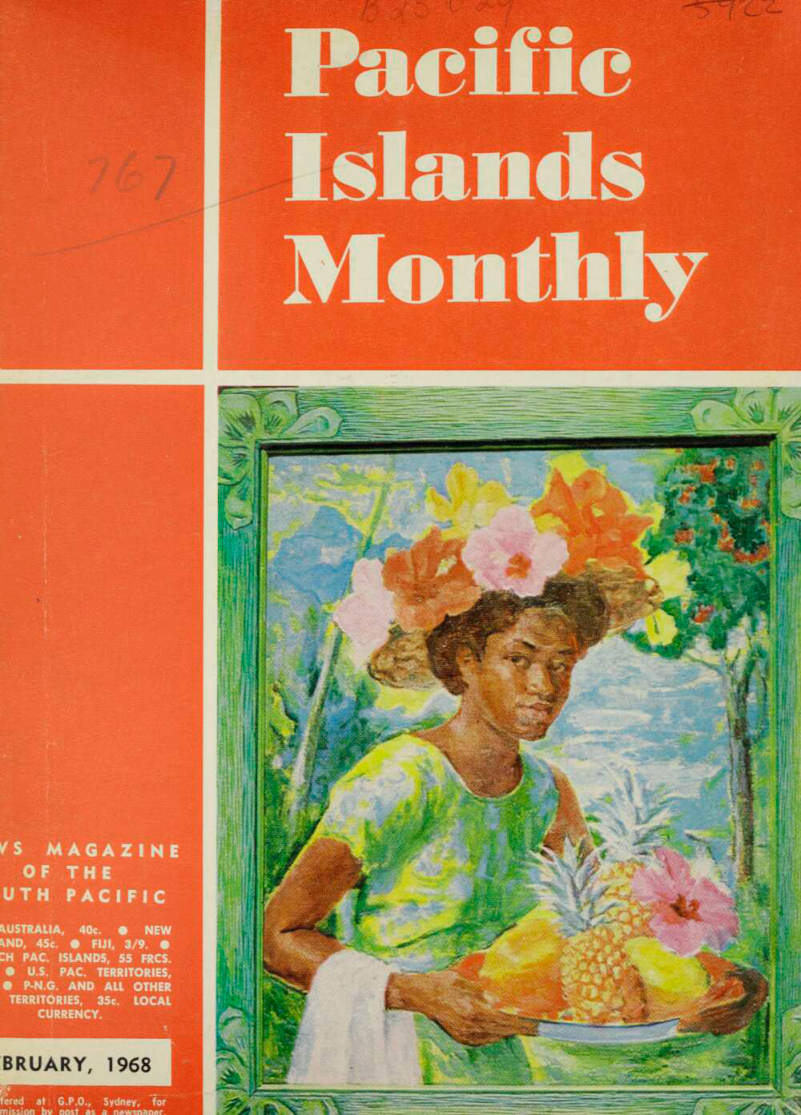 1
1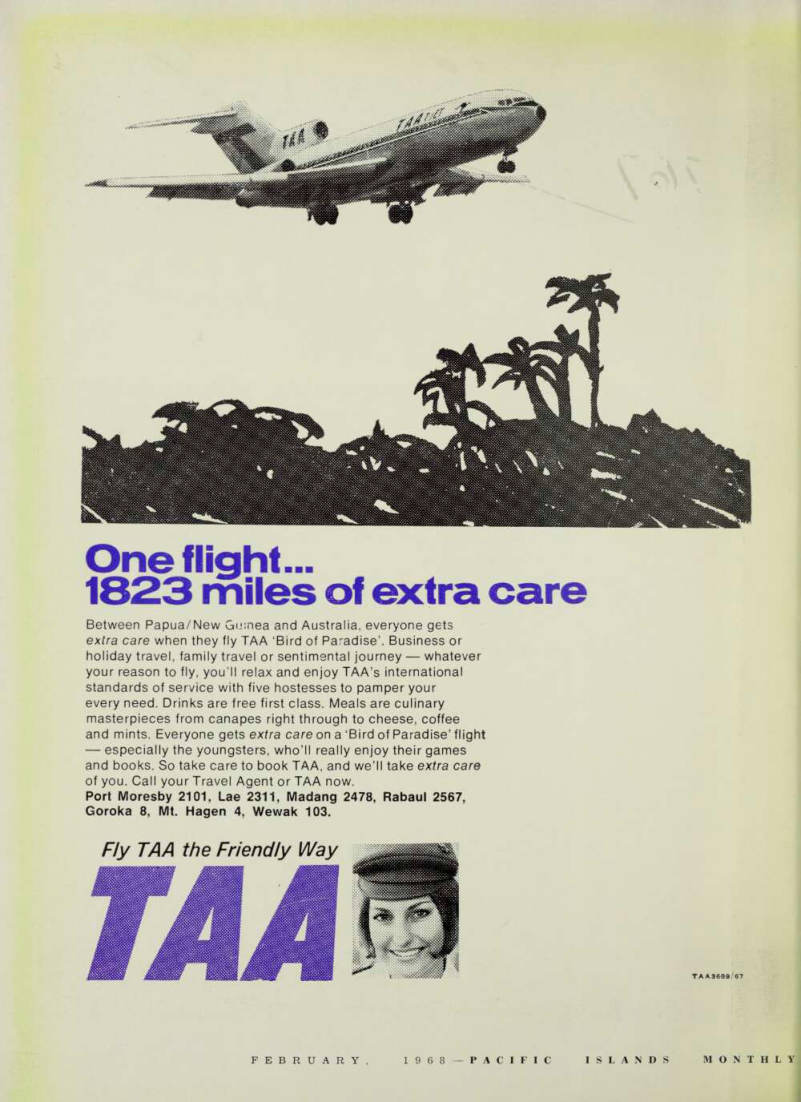 2
2 3
3 4
4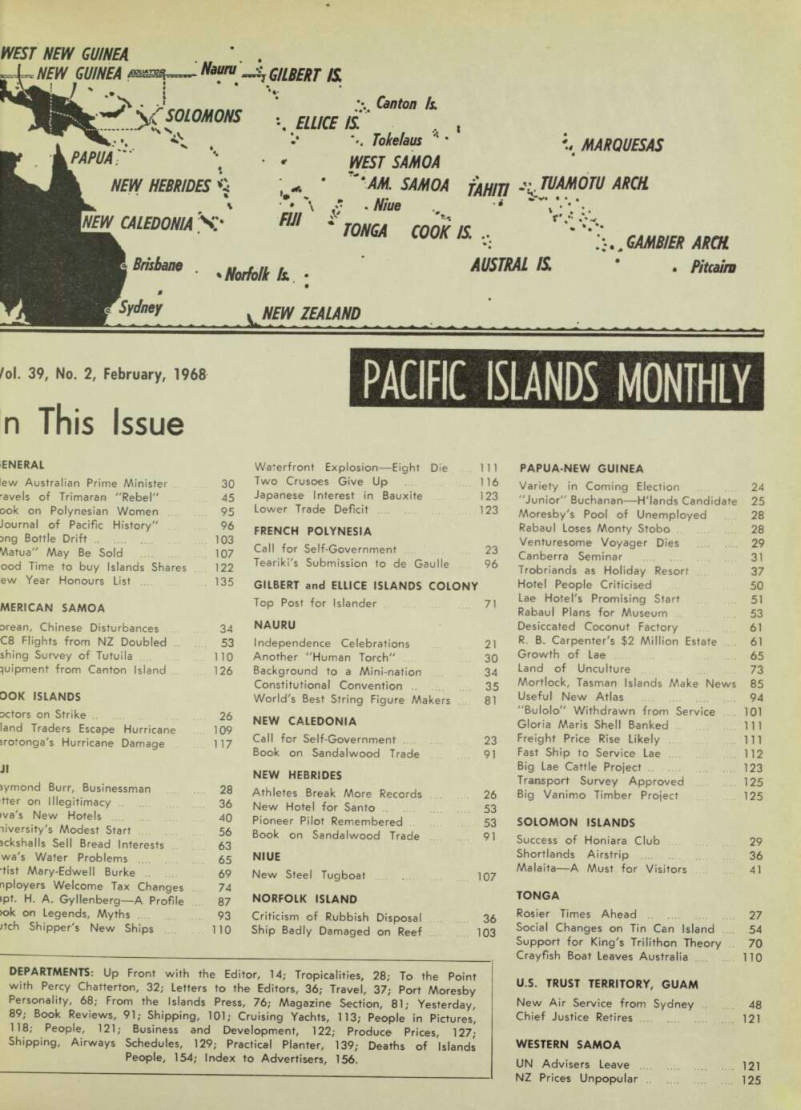 5
5 6
6 7
7 8
8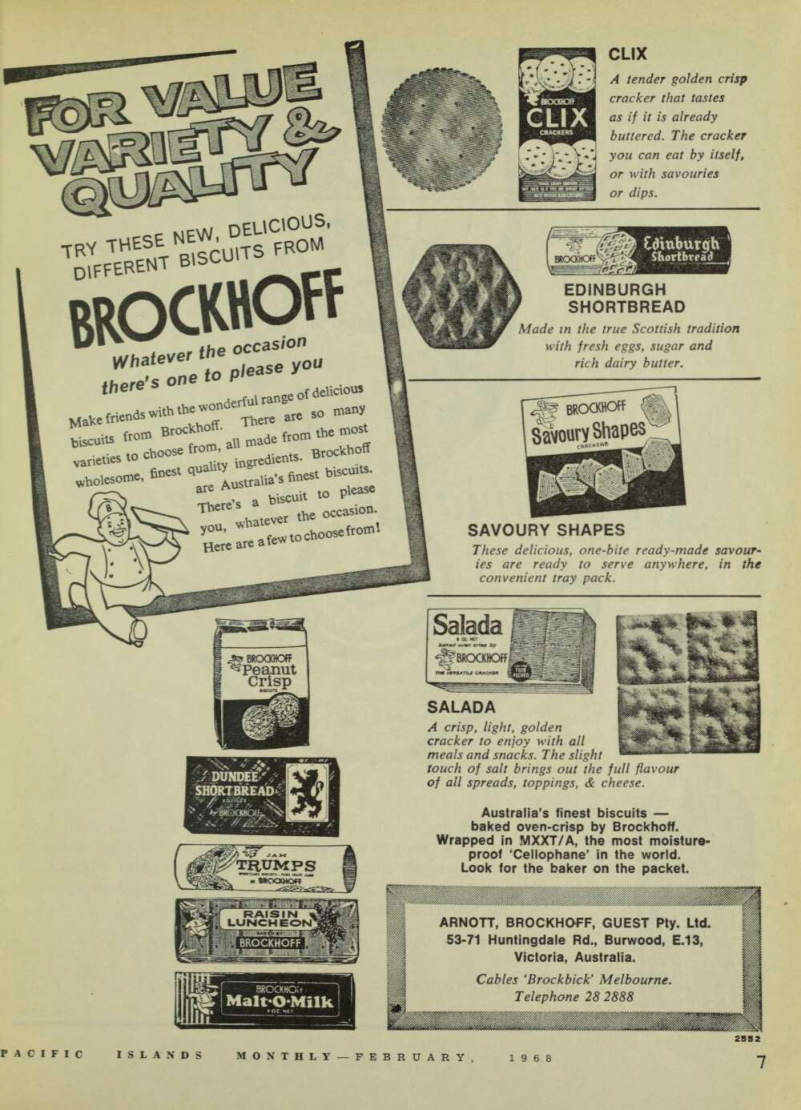 9
9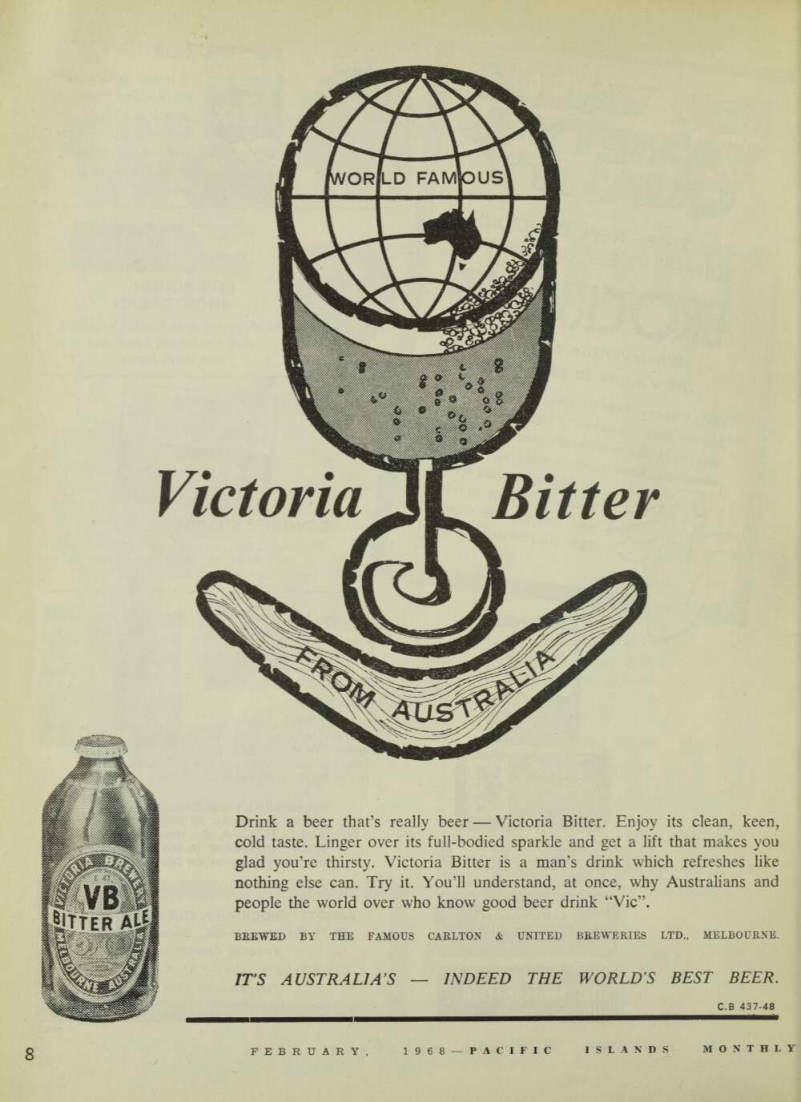 10
10 11
11 12
12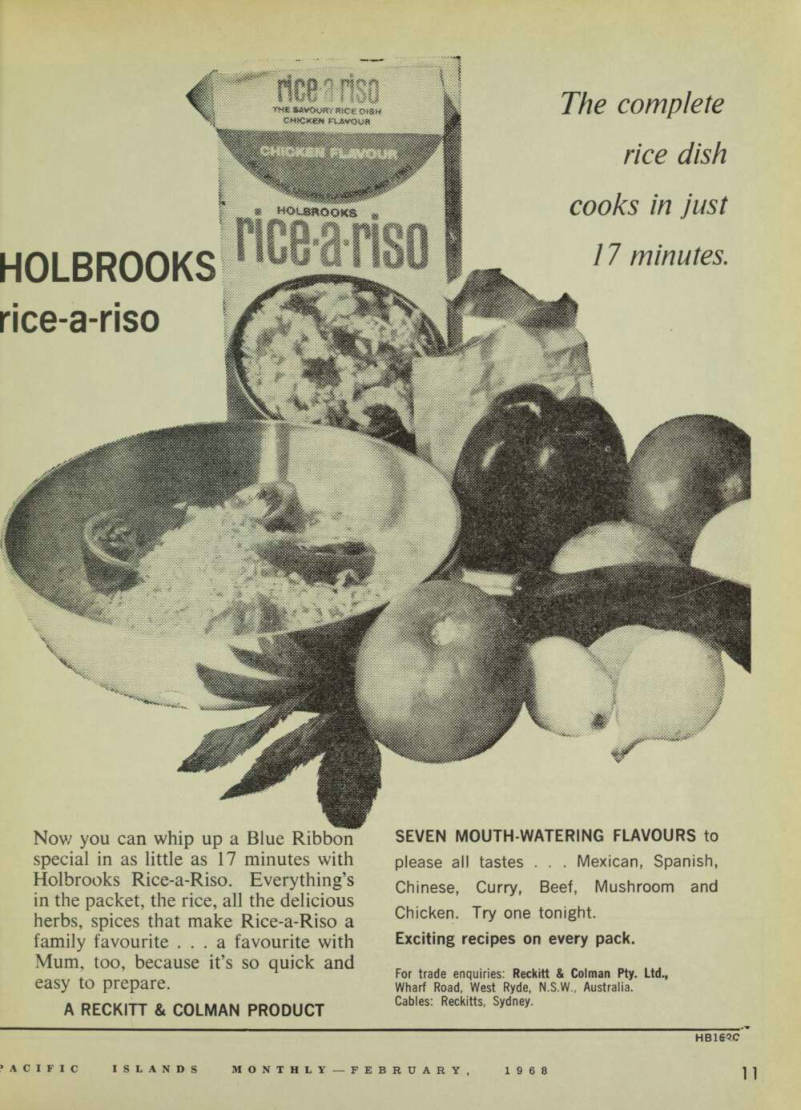 13
13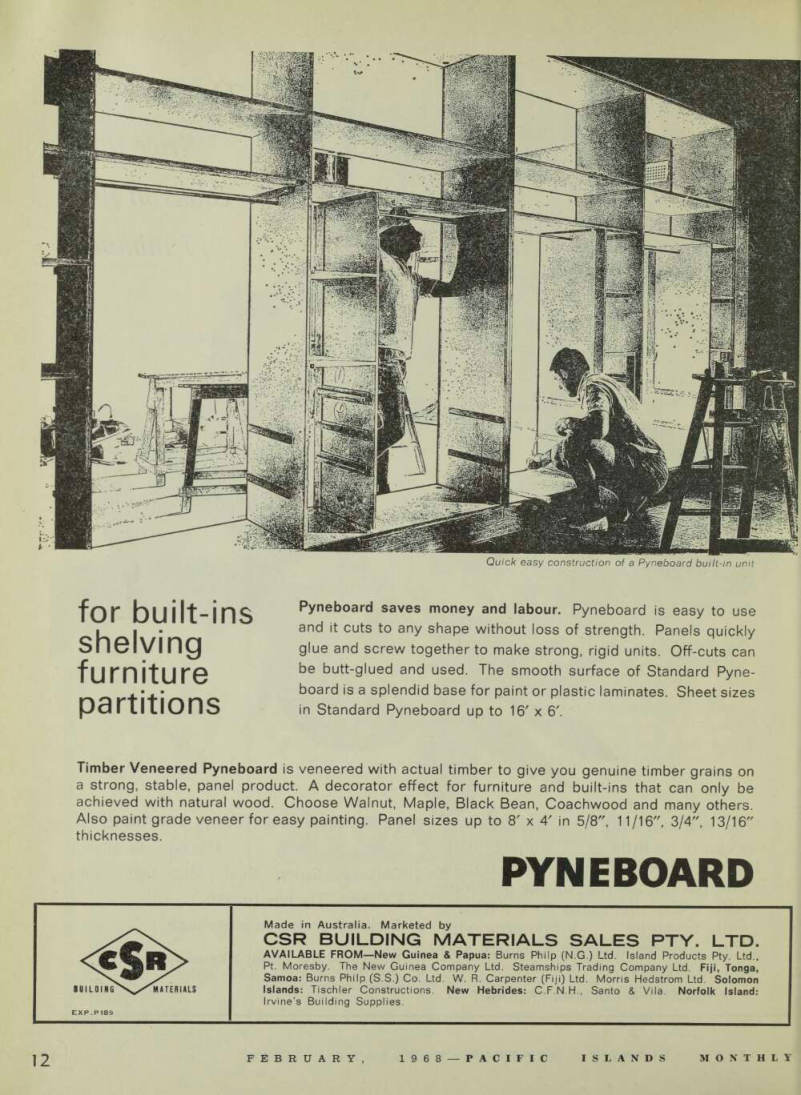 14
14 15
15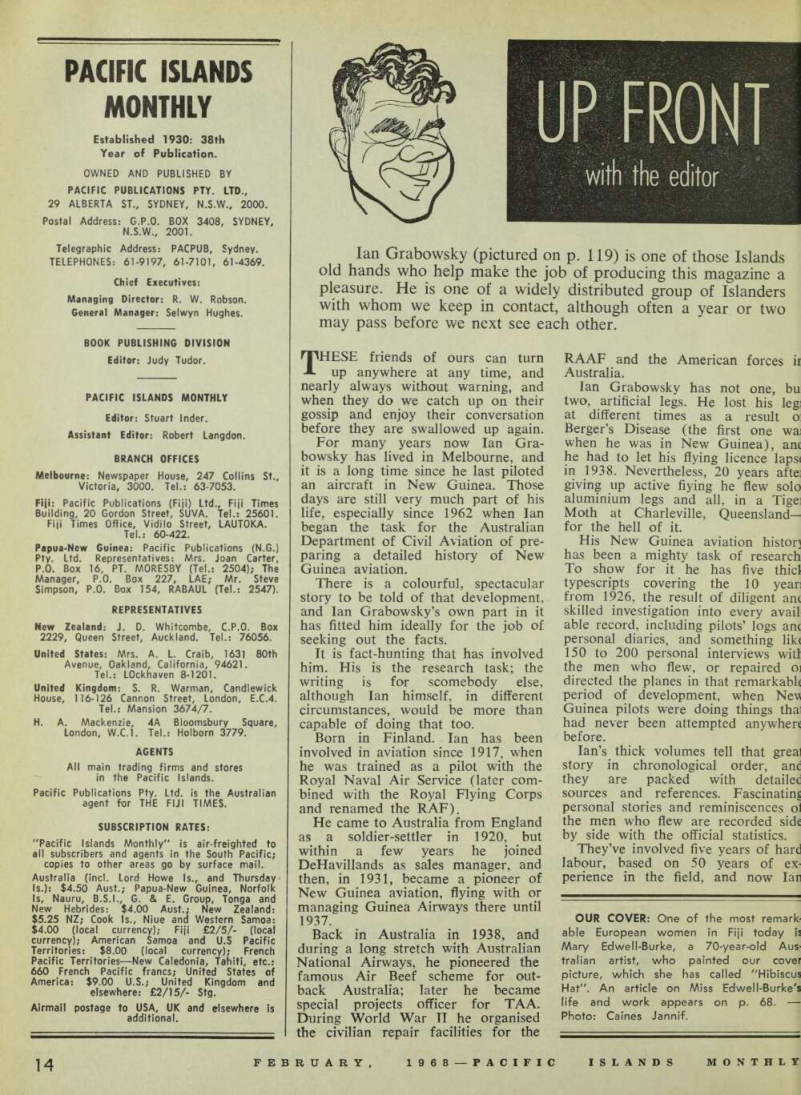 16
16 17
17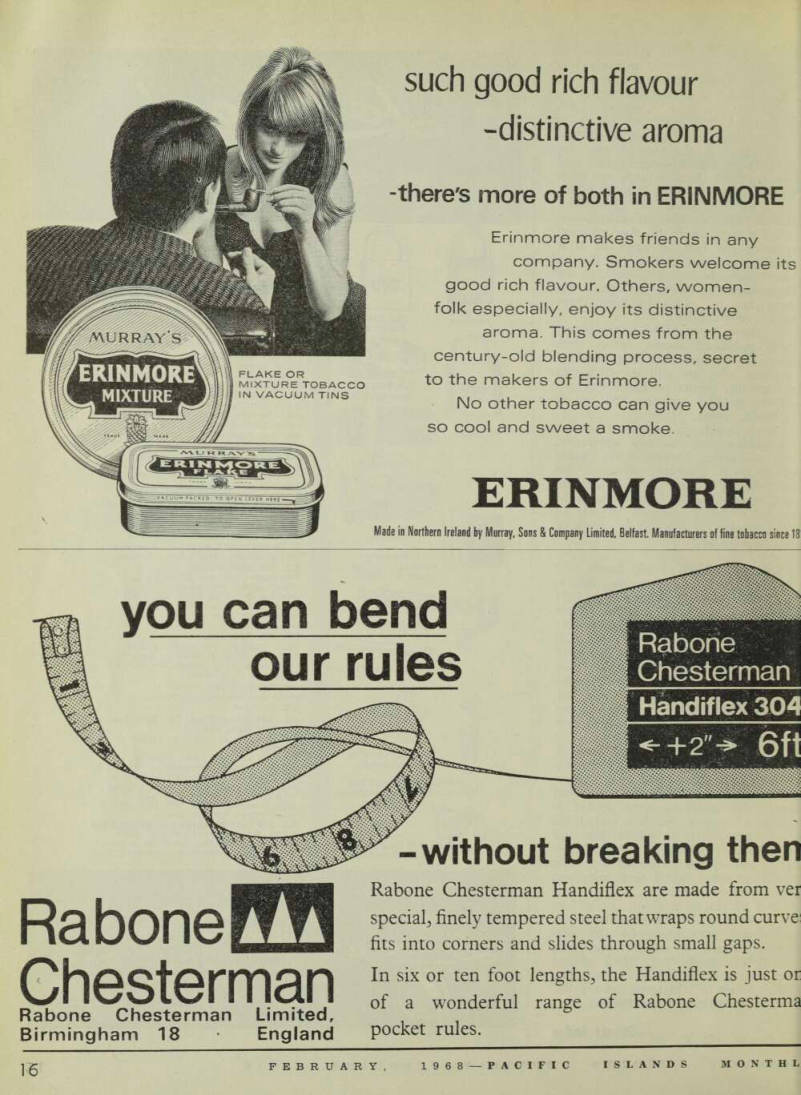 18
18 19
19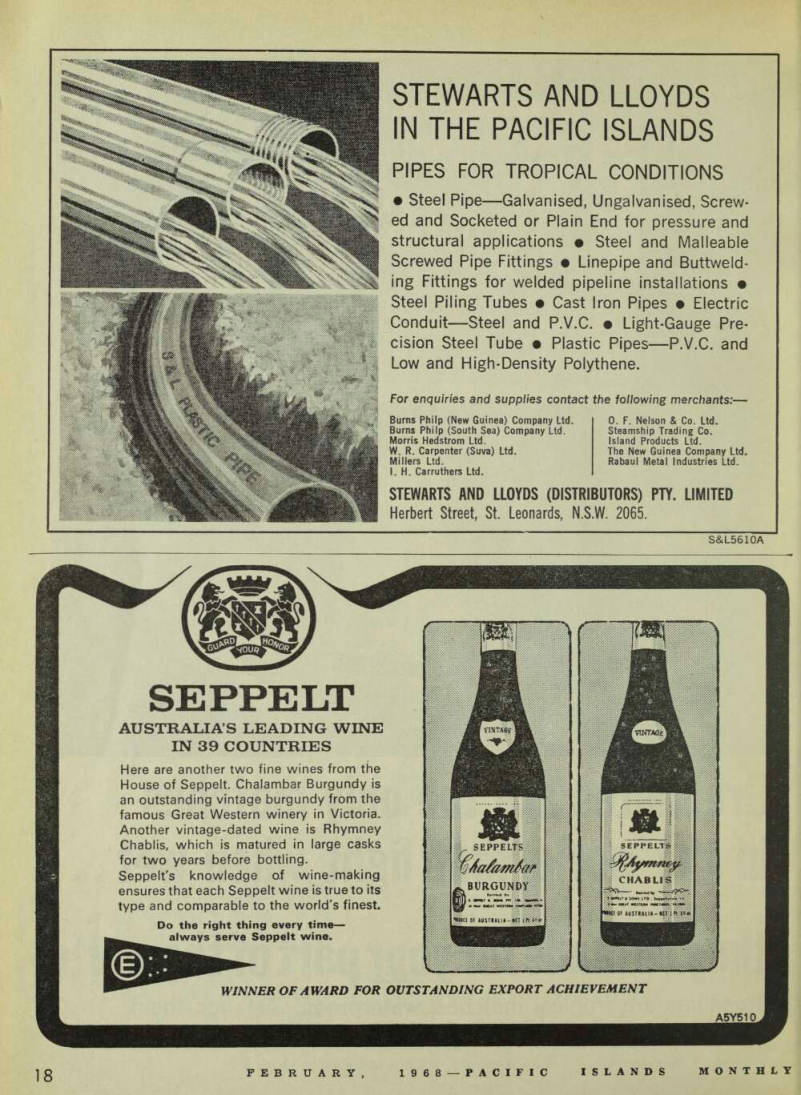 20
20 21
21 22
22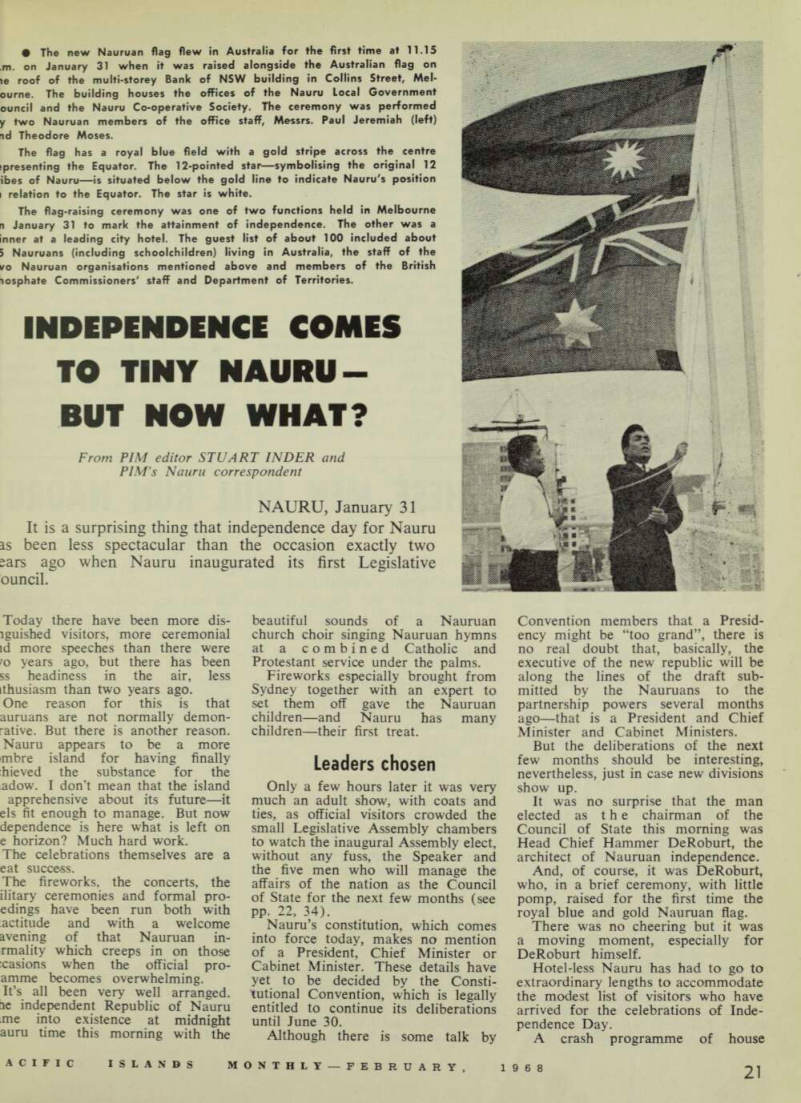 23
23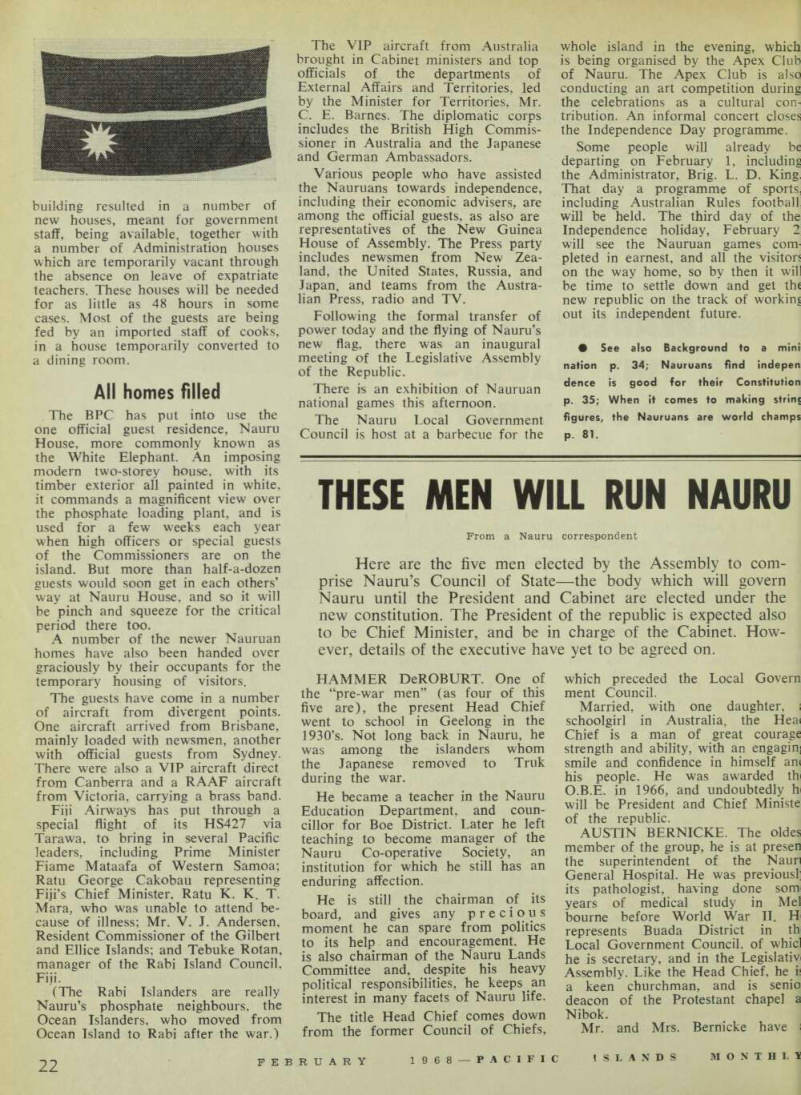 24
24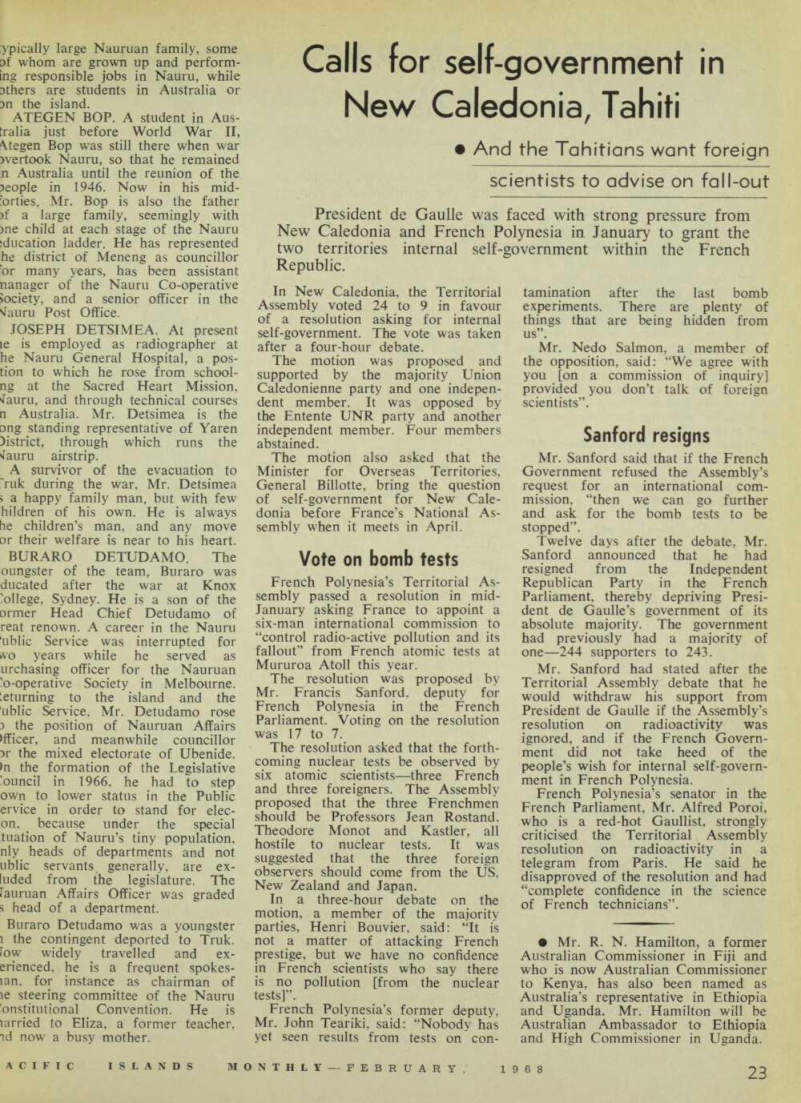 25
25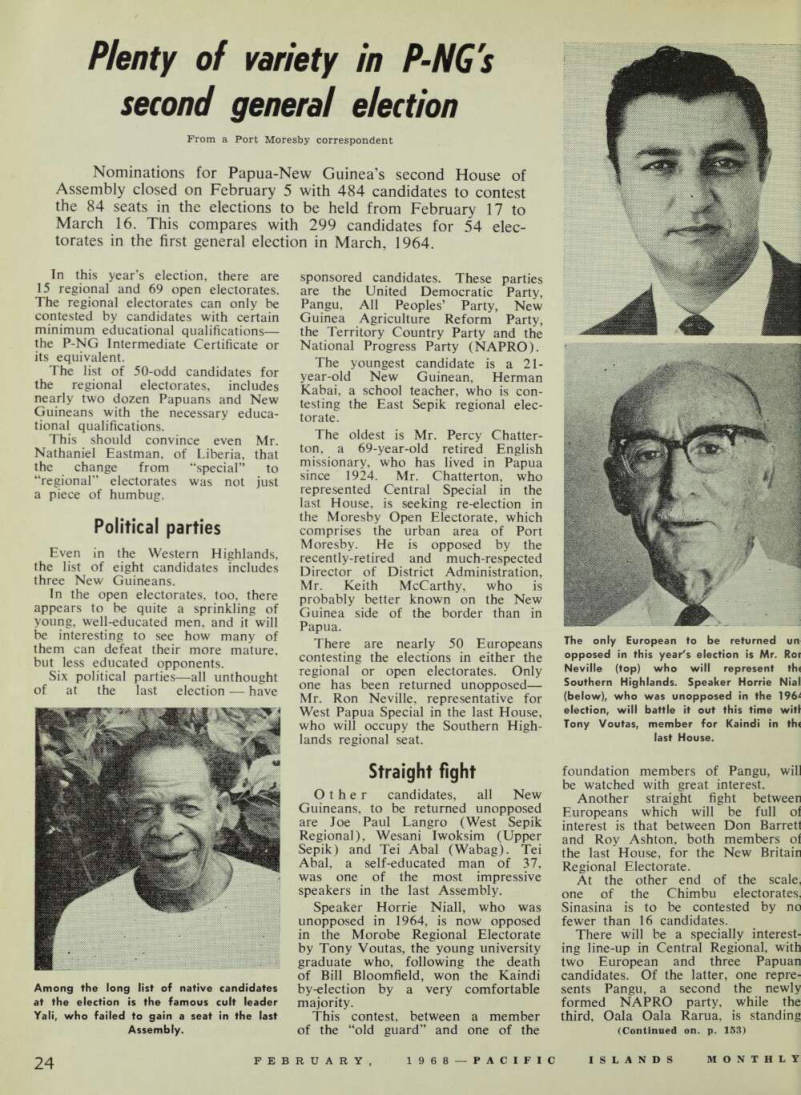 26
26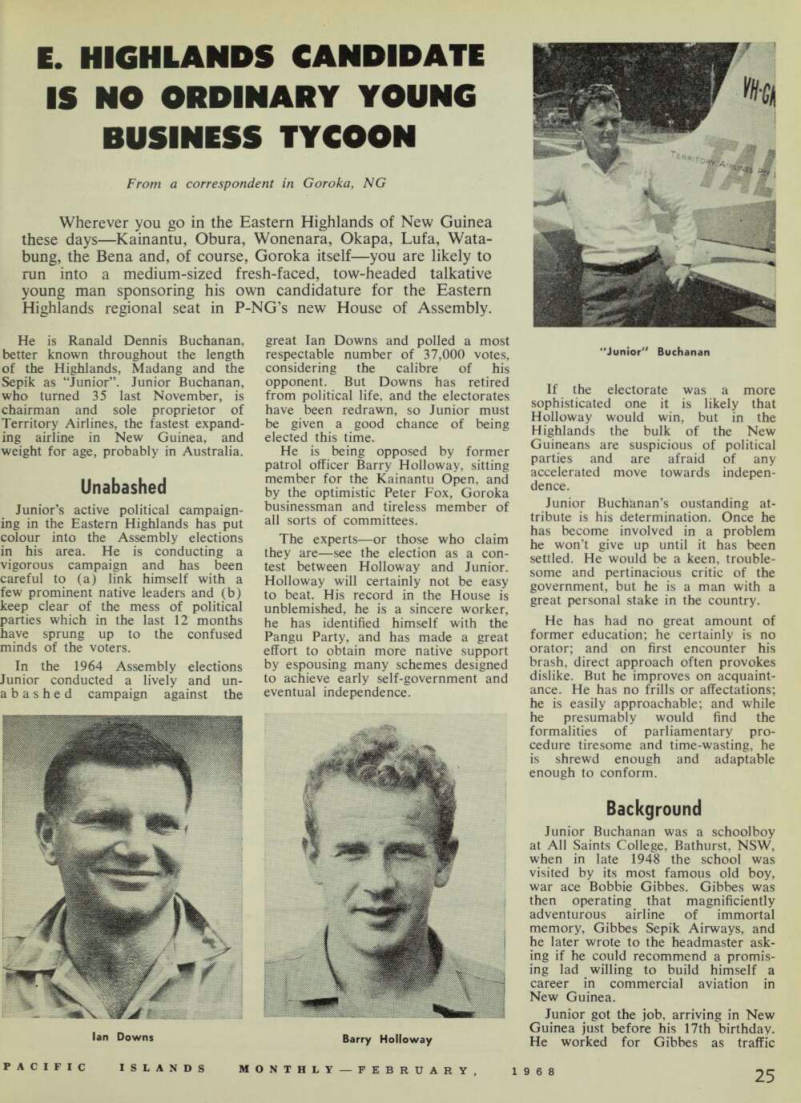 27
27 28
28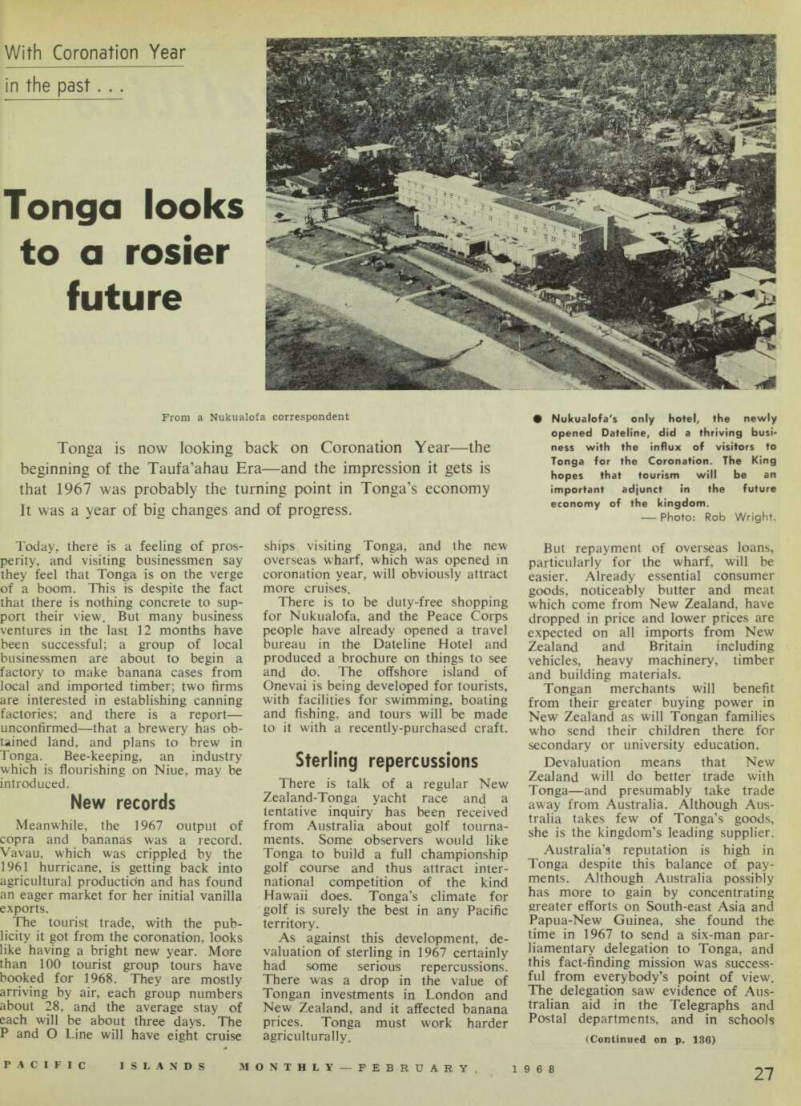 29
29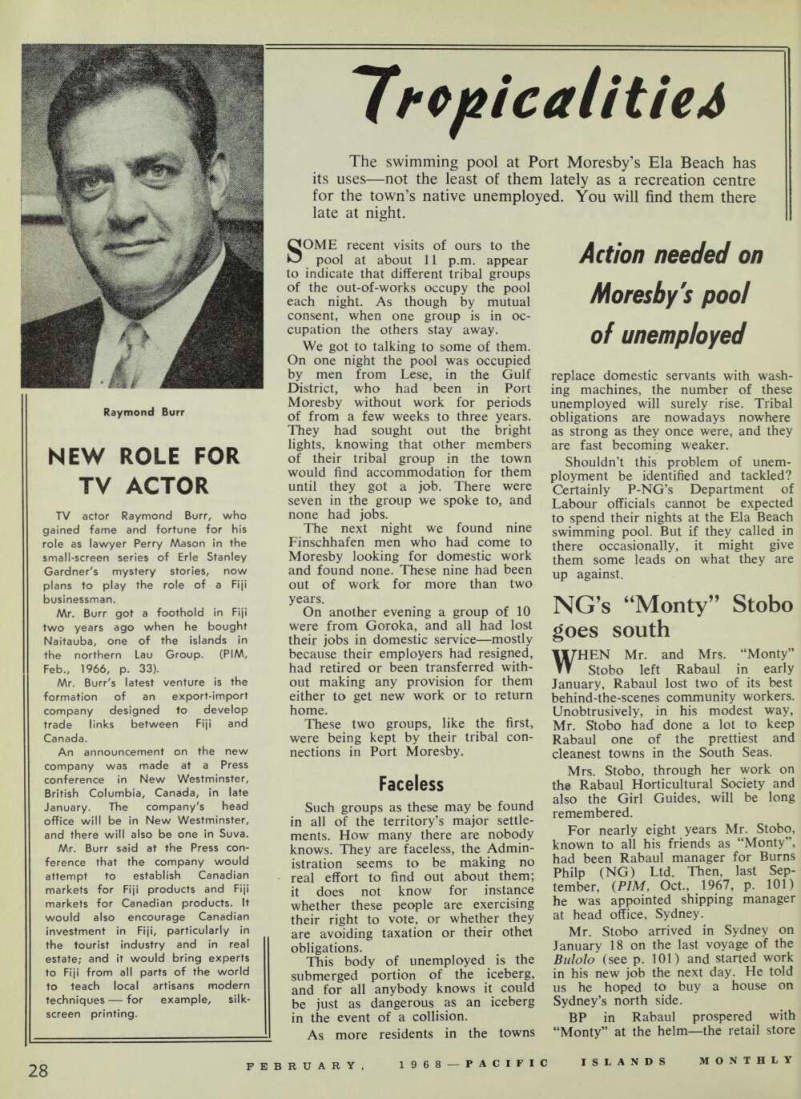 30
30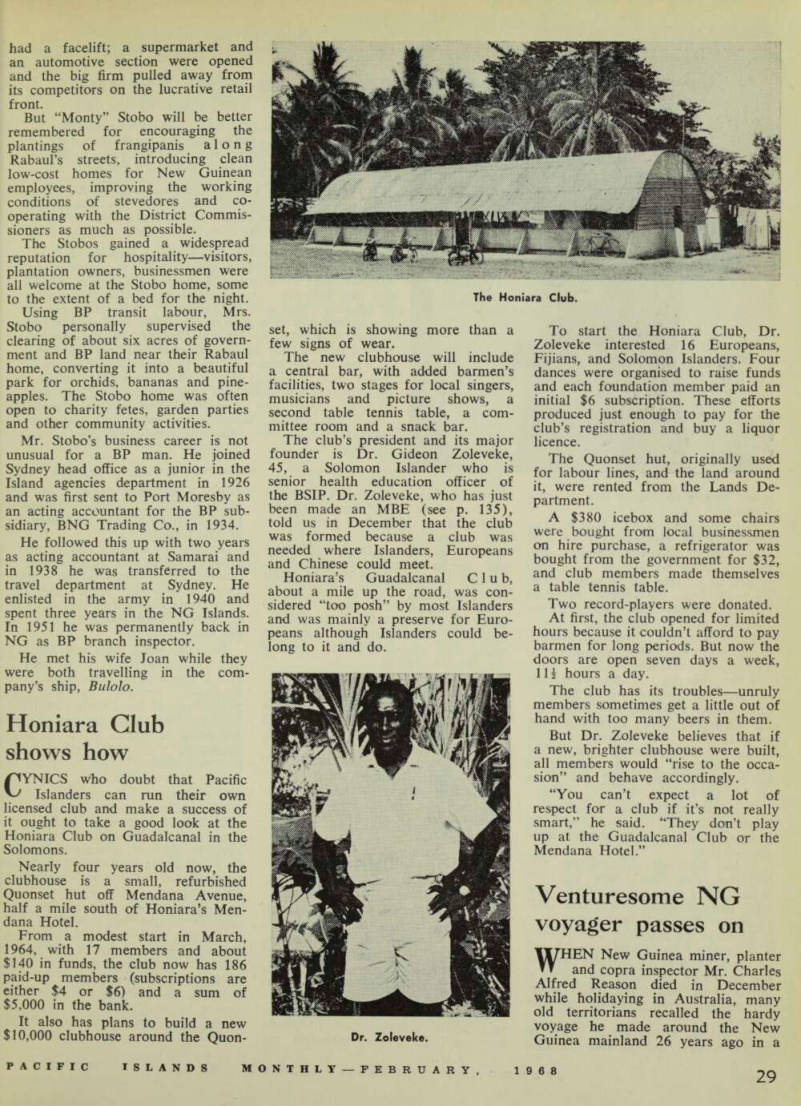 31
31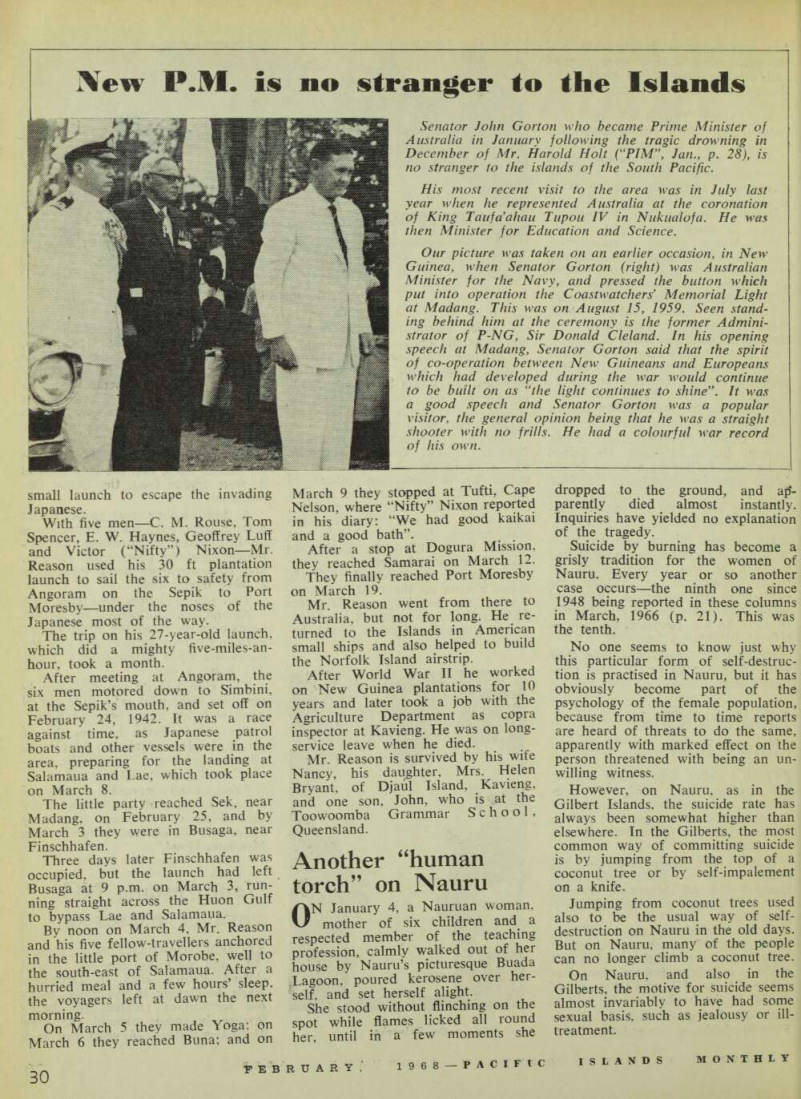 32
32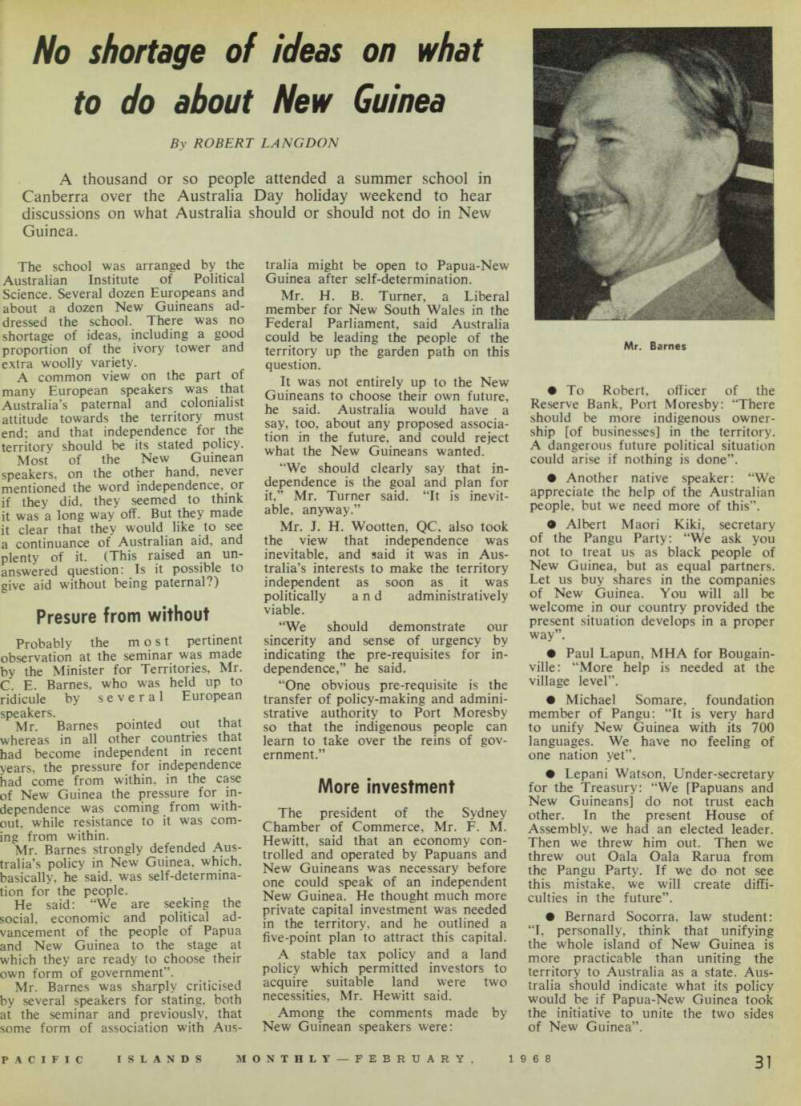 33
33 34
34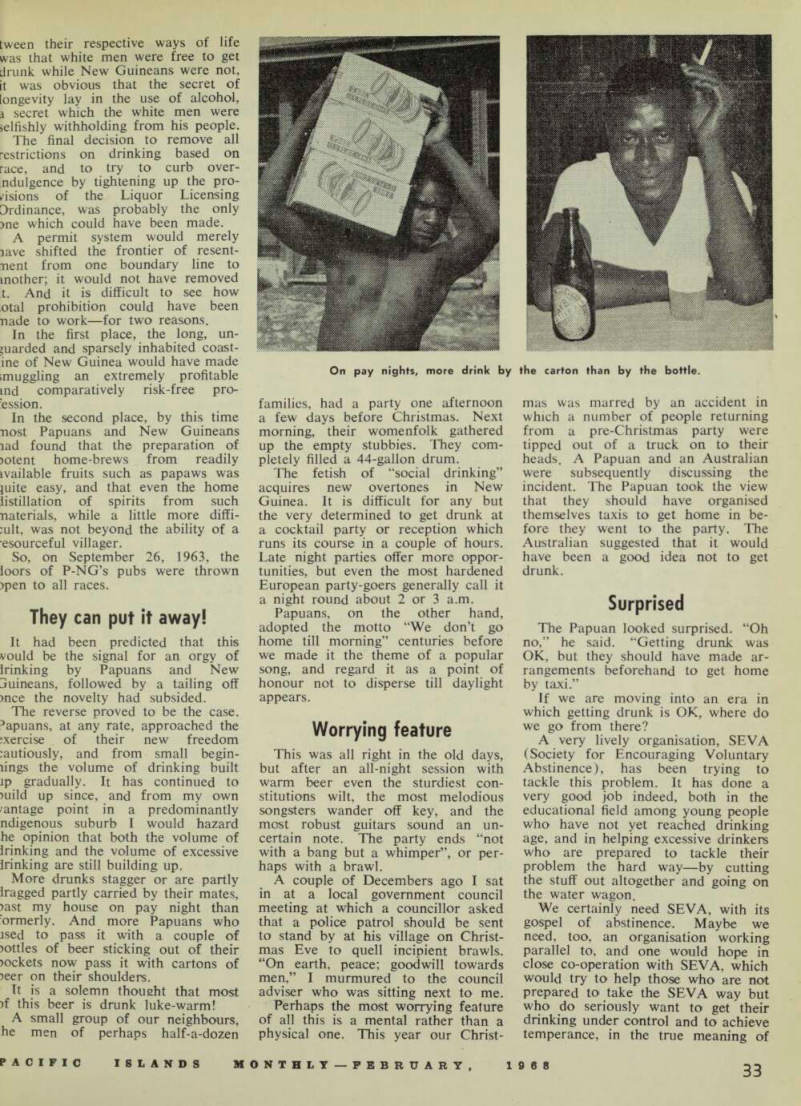 35
35 36
36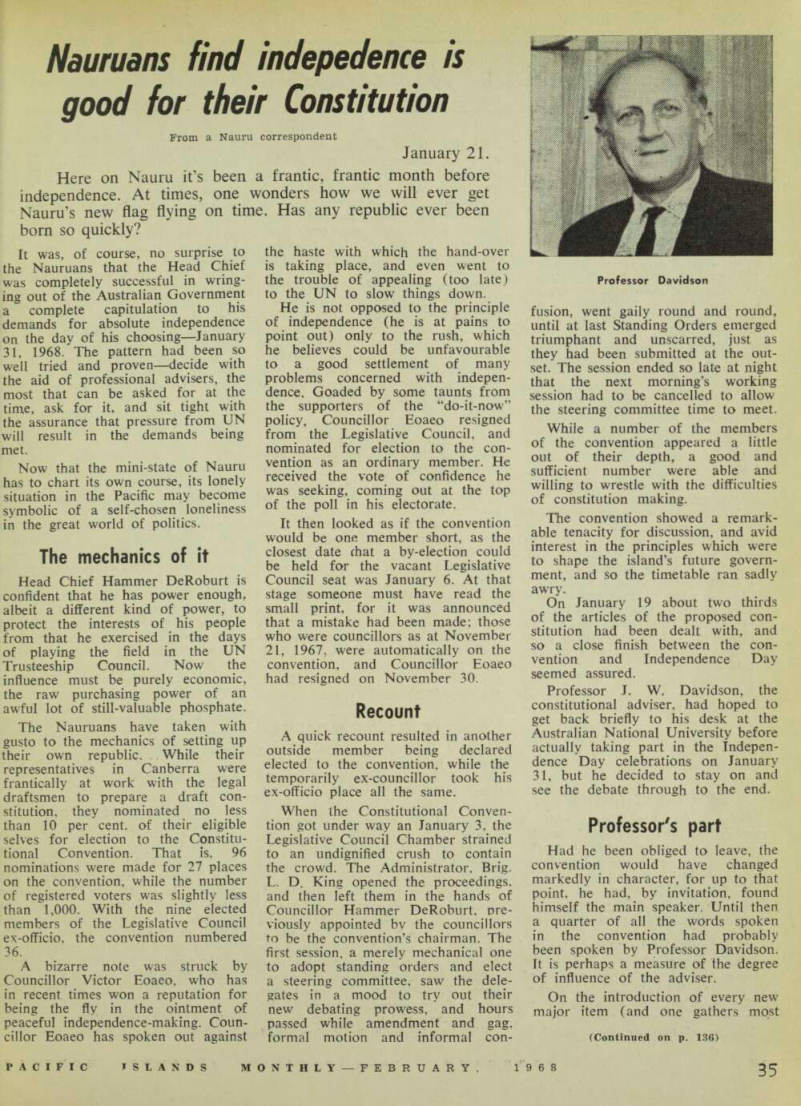 37
37 38
38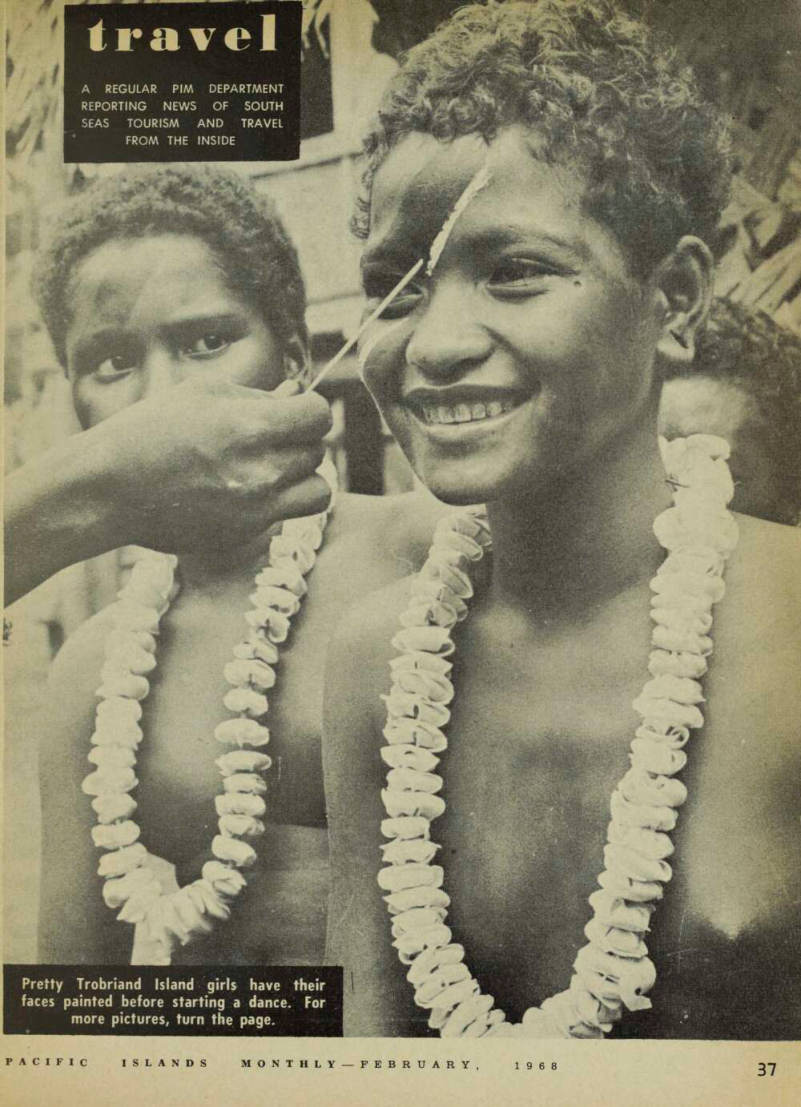 39
39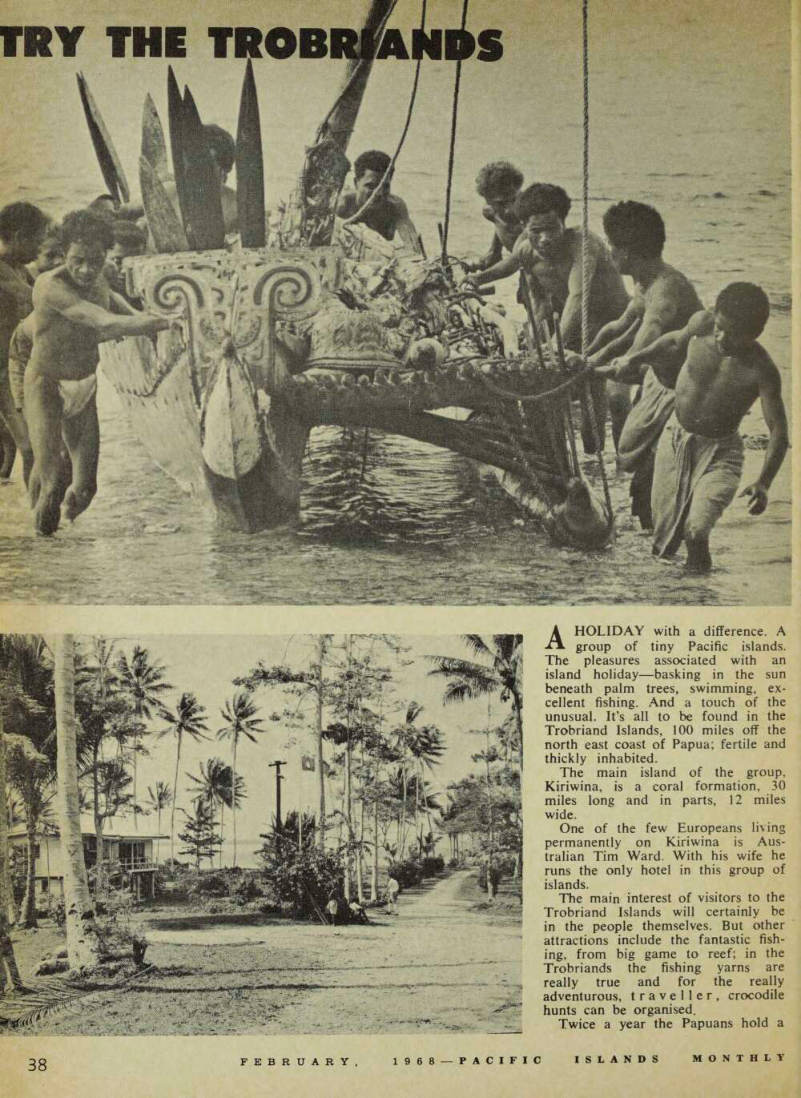 40
40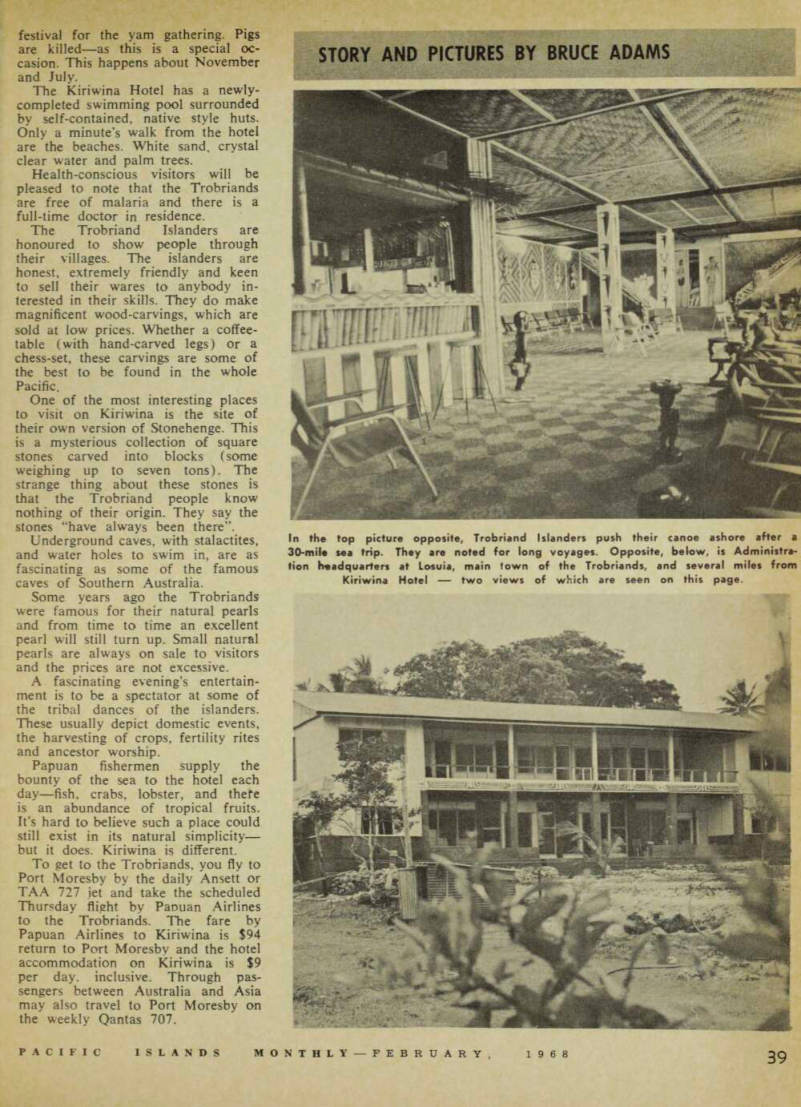 41
41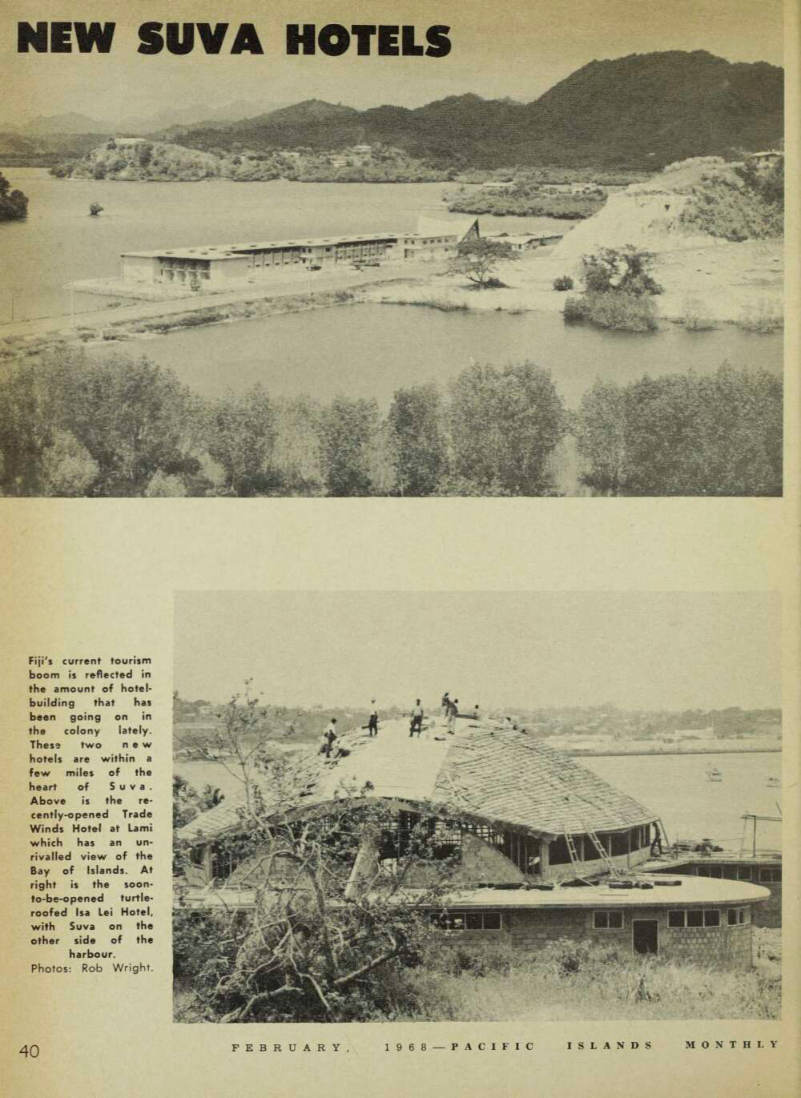 42
42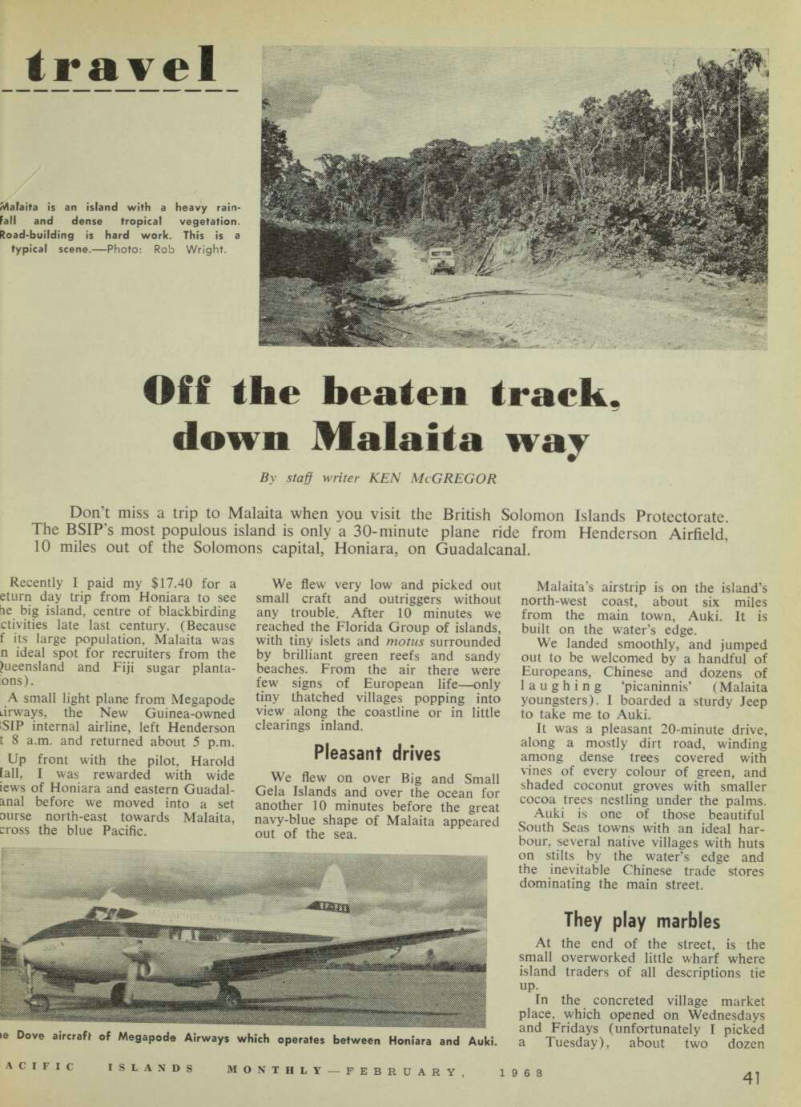 43
43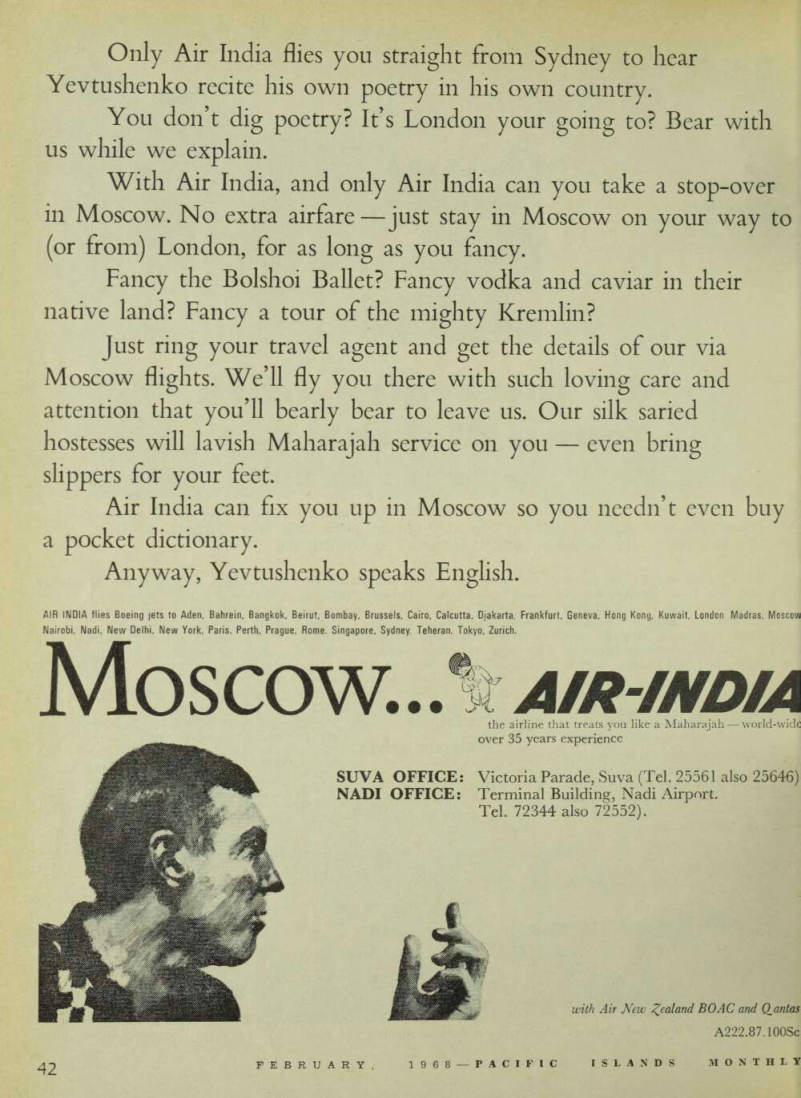 44
44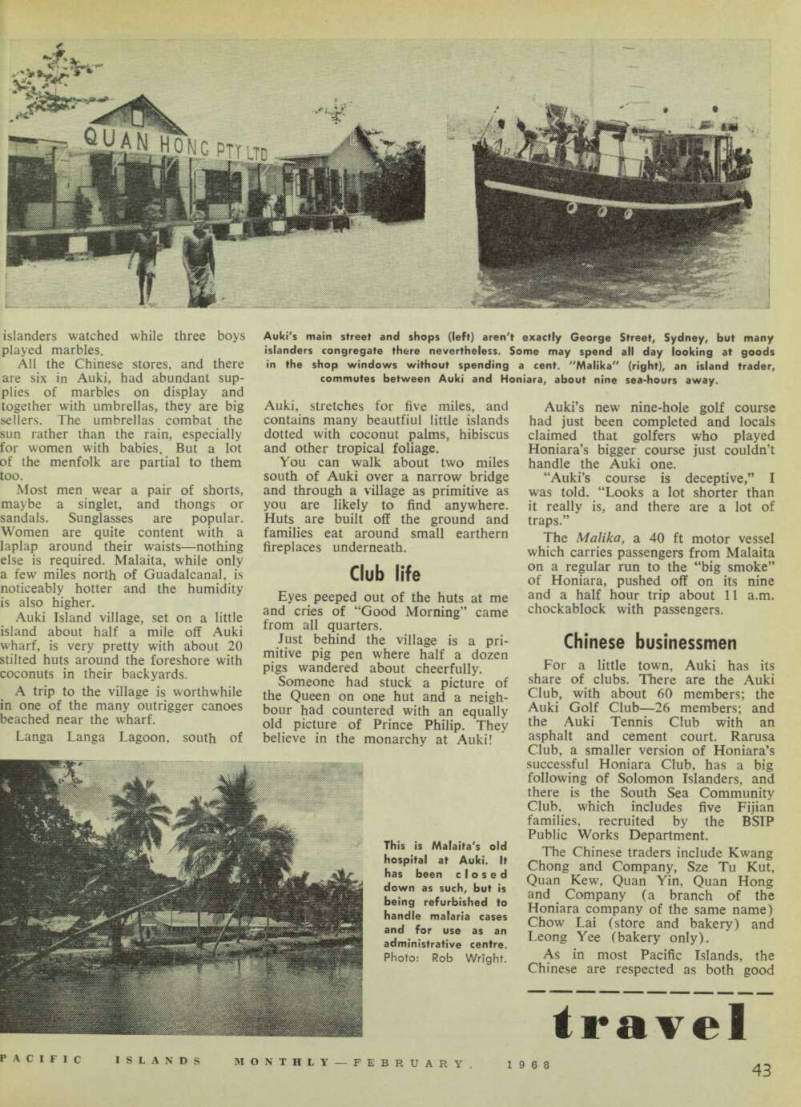 45
45 46
46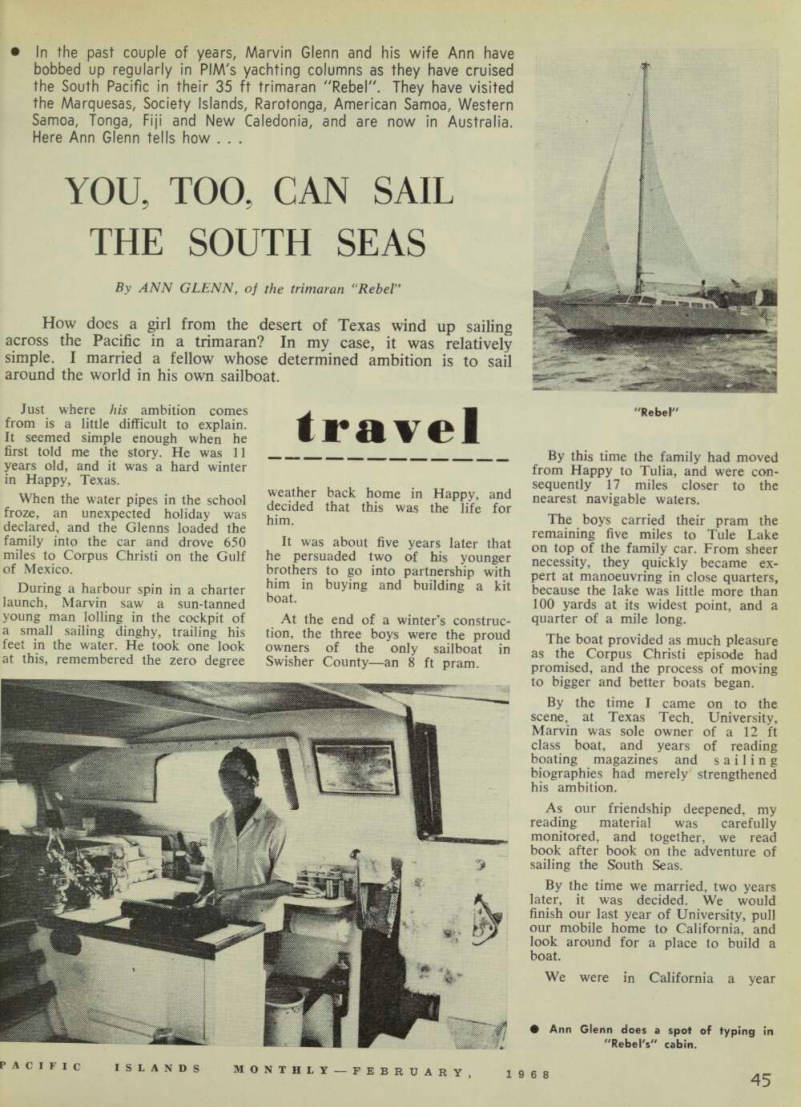 47
47 48
48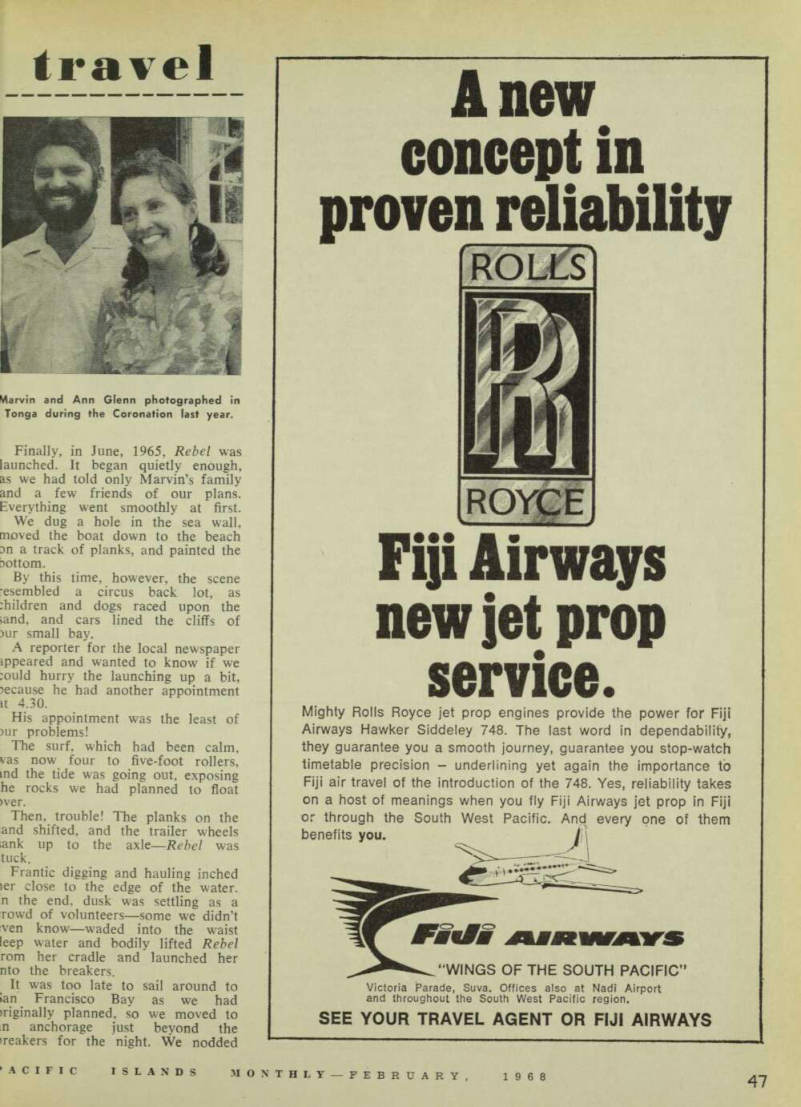 49
49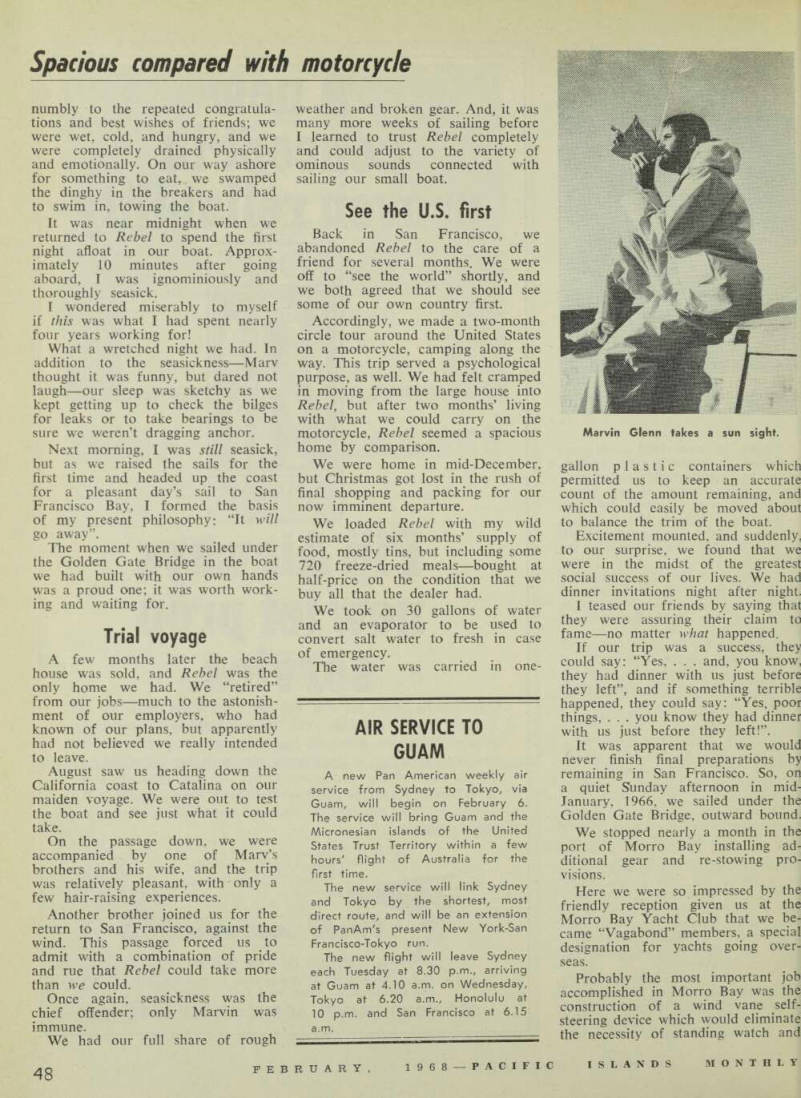 50
50 51
51 52
52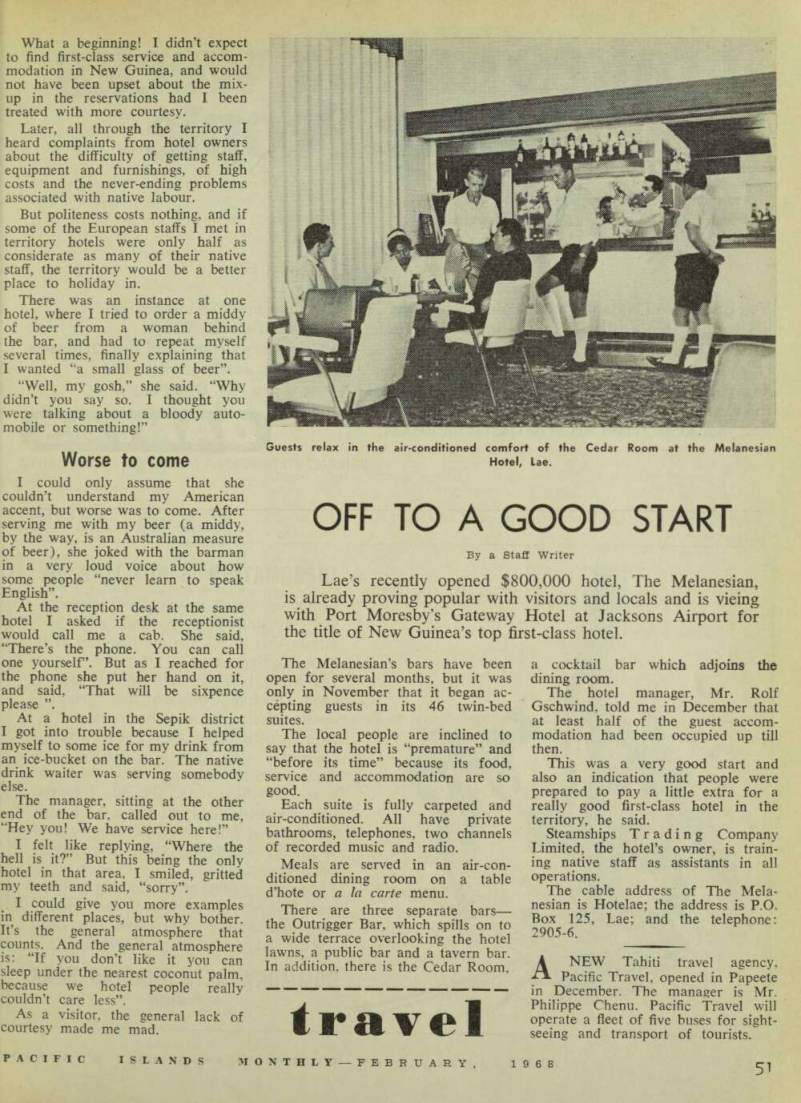 53
53 54
54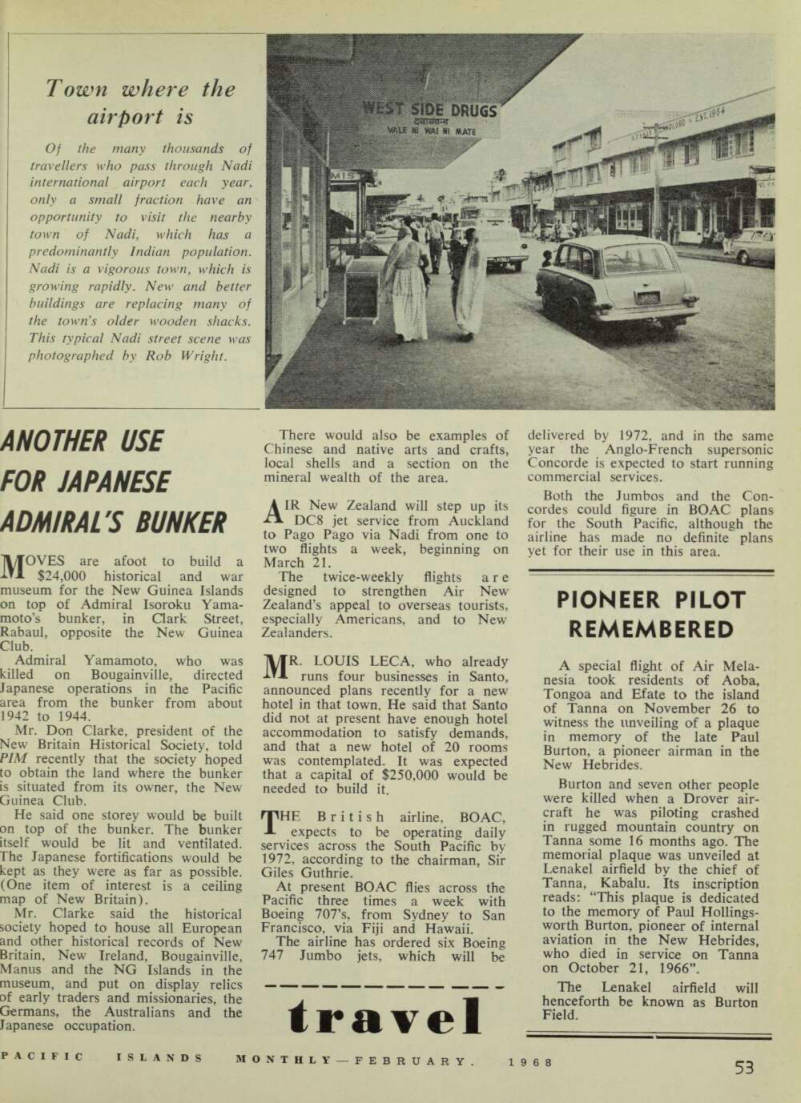 55
55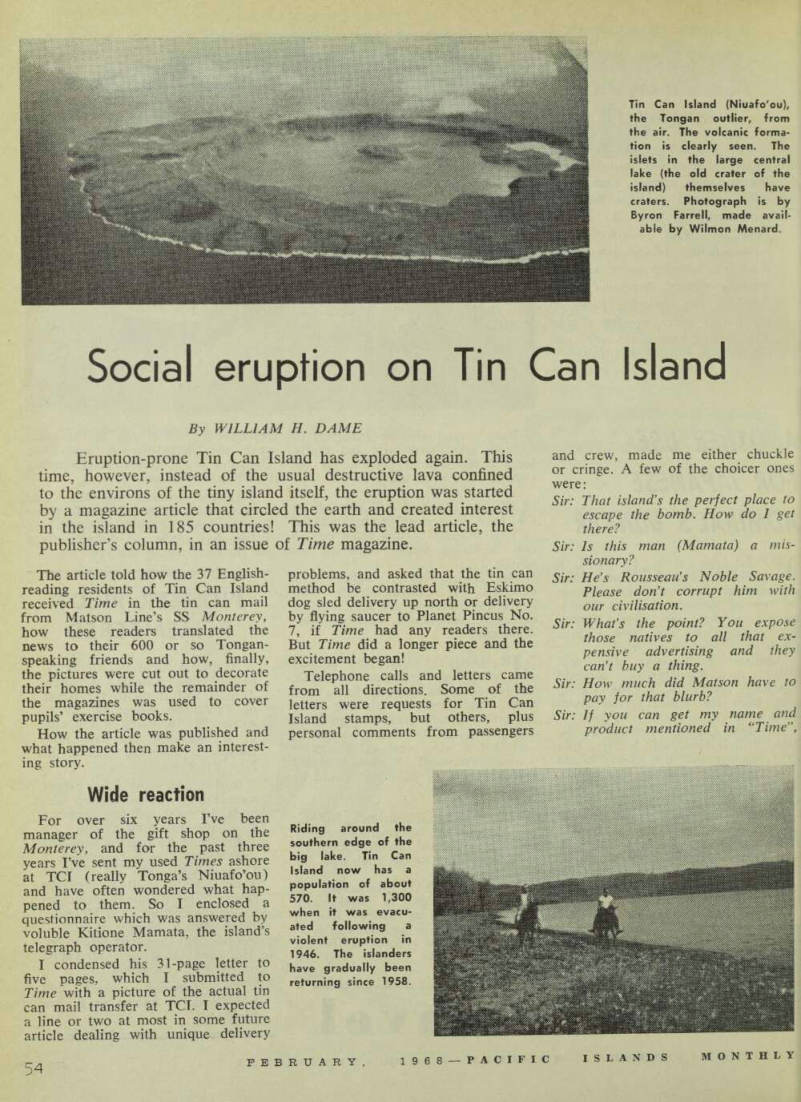 56
56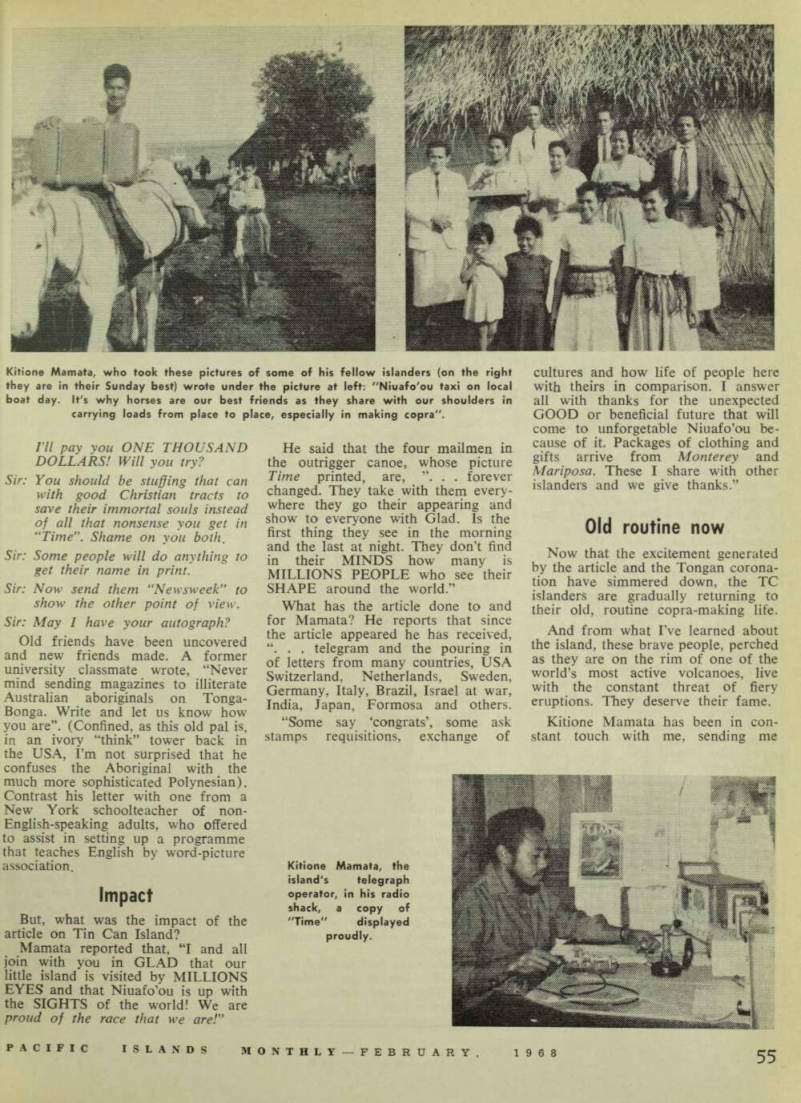 57
57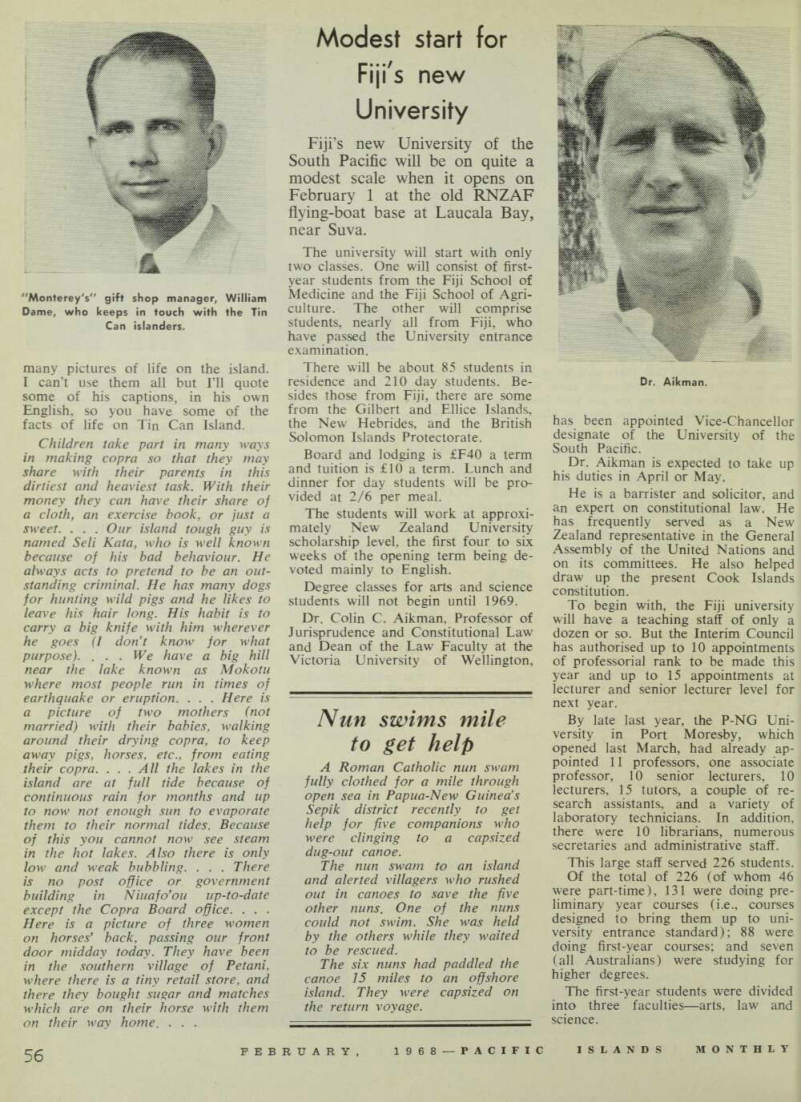 58
58 59
59 60
60 61
61 62
62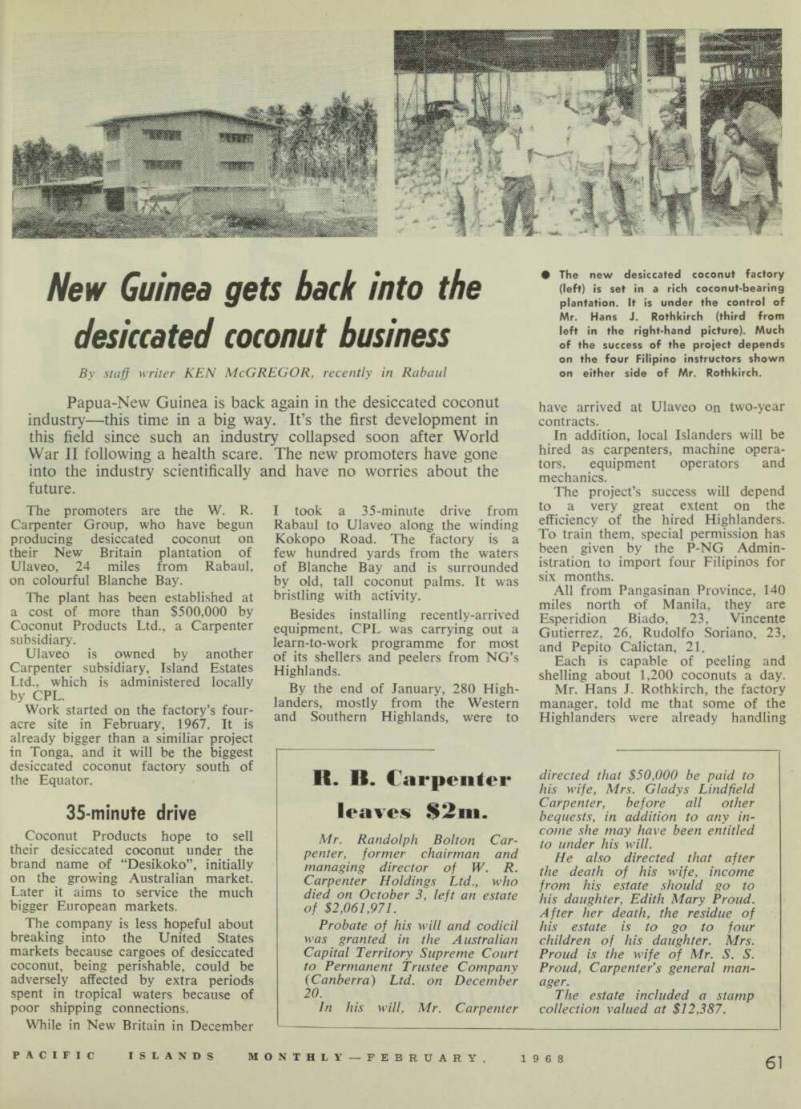 63
63 64
64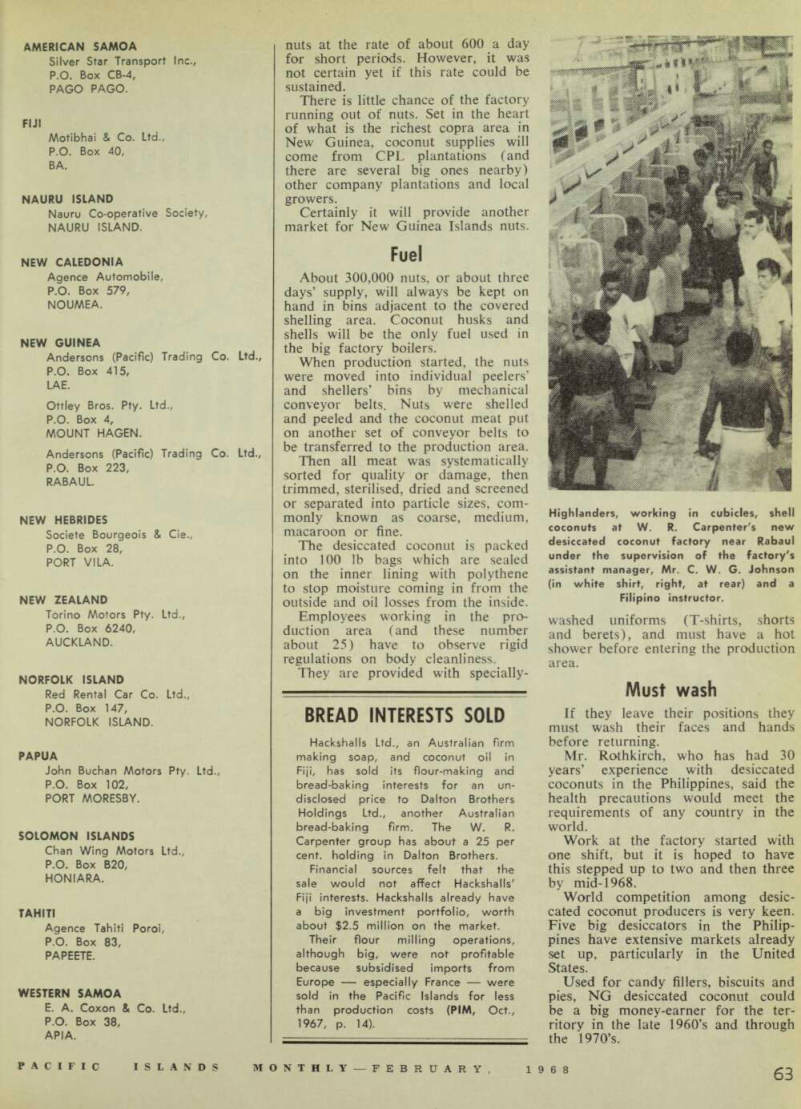 65
65 66
66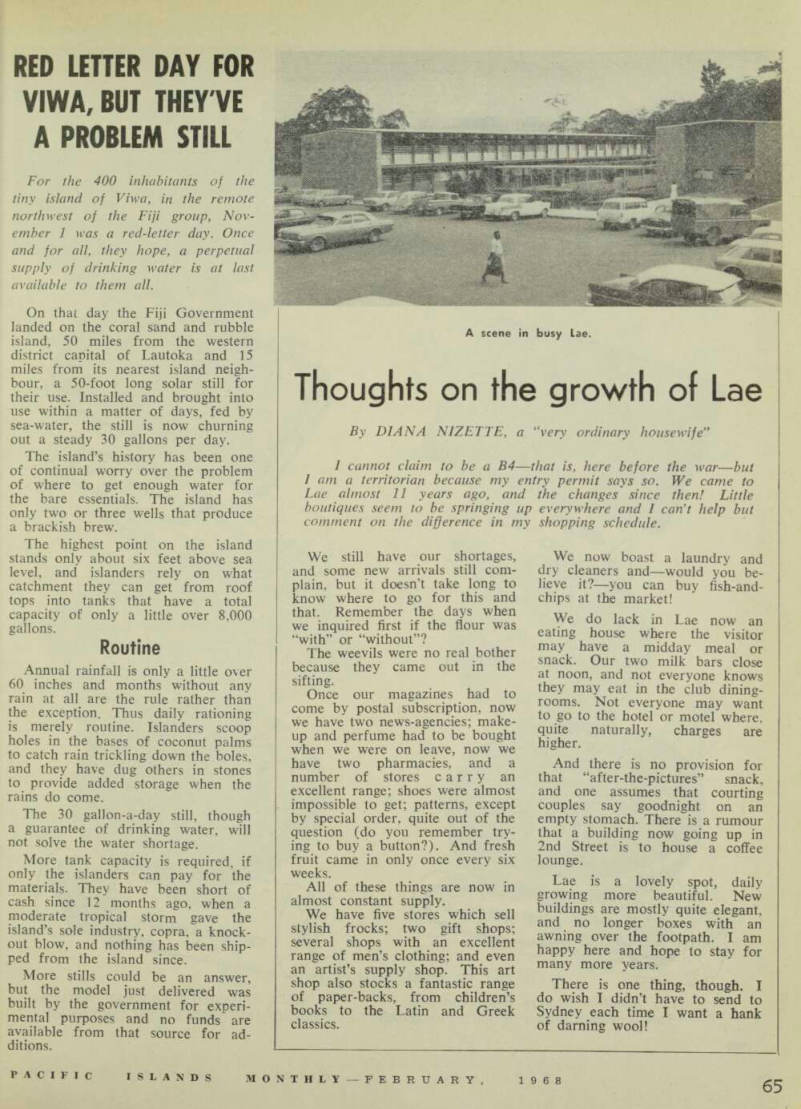 67
67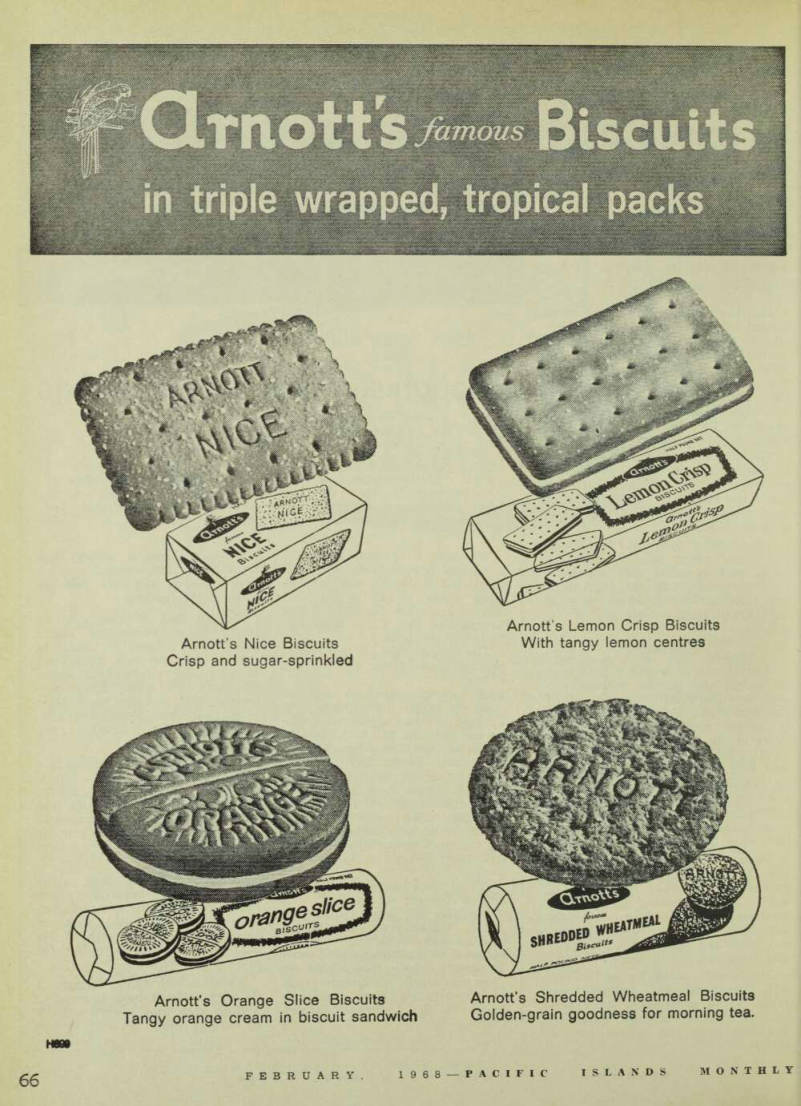 68
68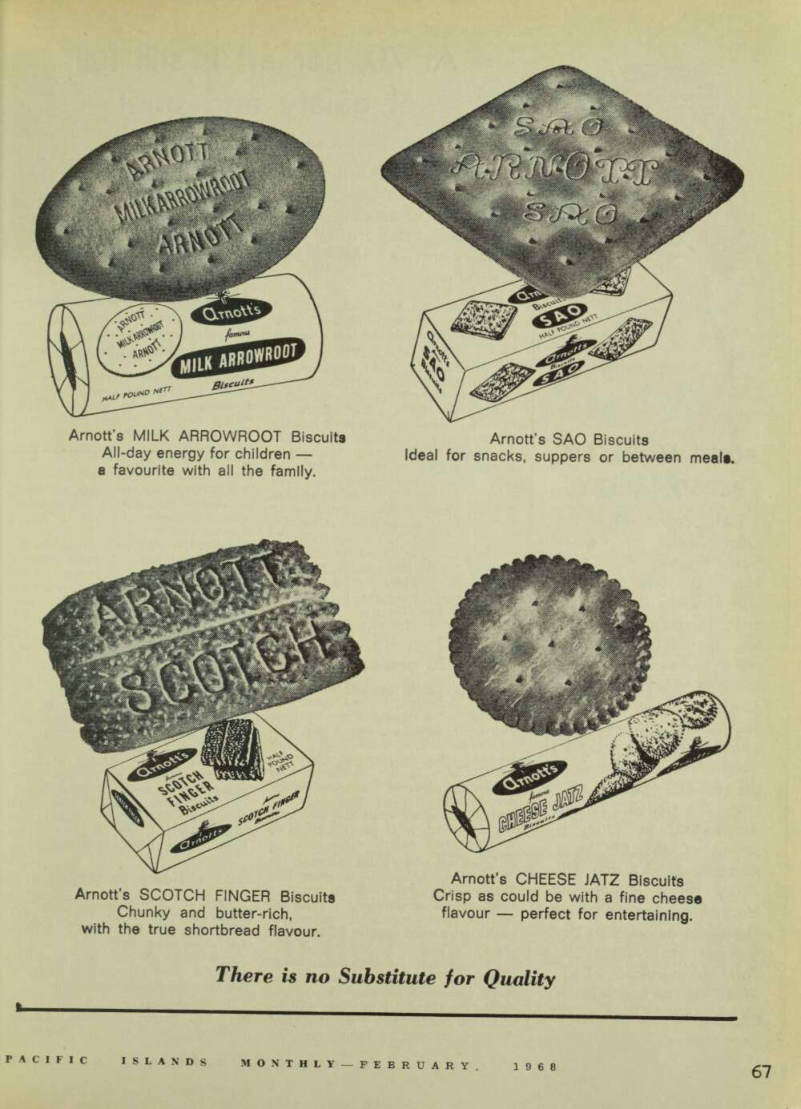 69
69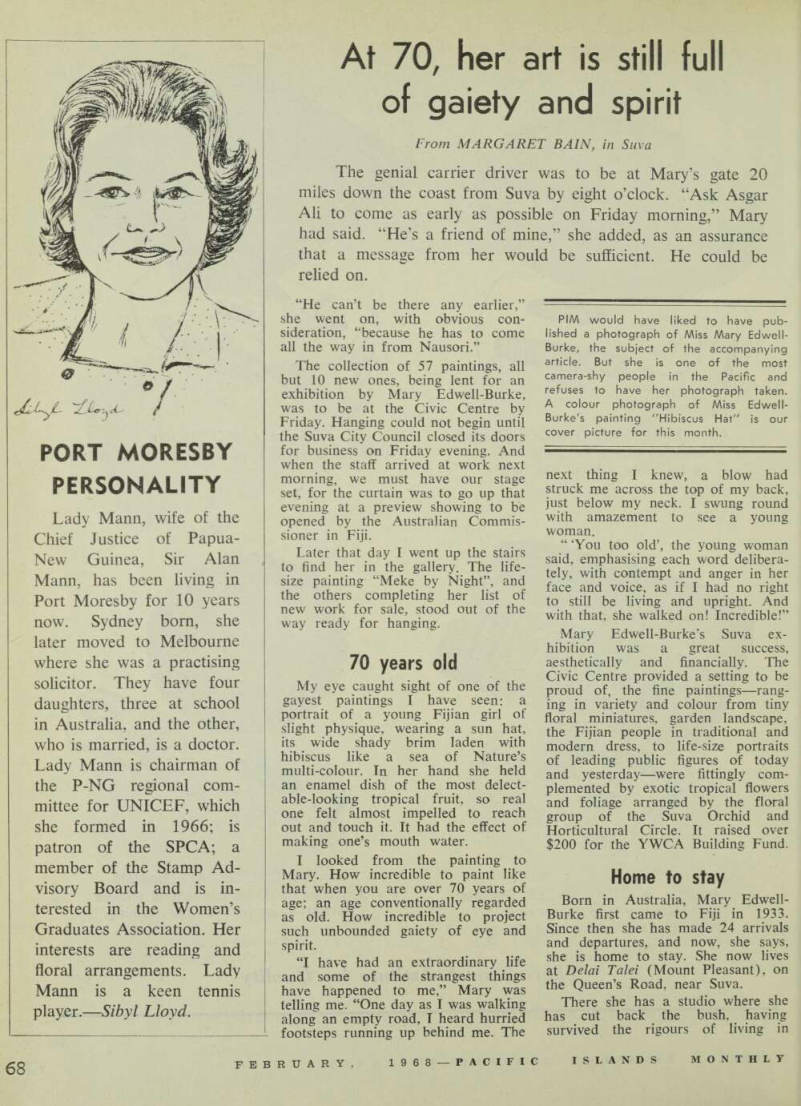 70
70 71
71 72
72 73
73 74
74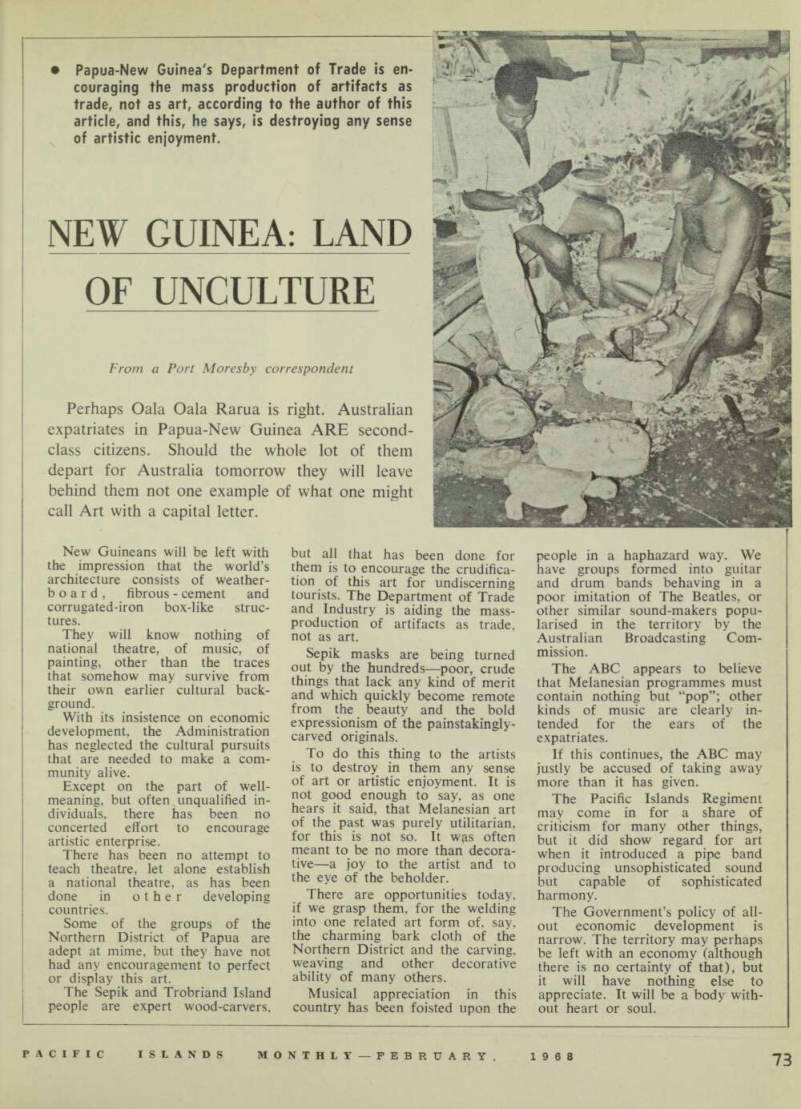 75
75 76
76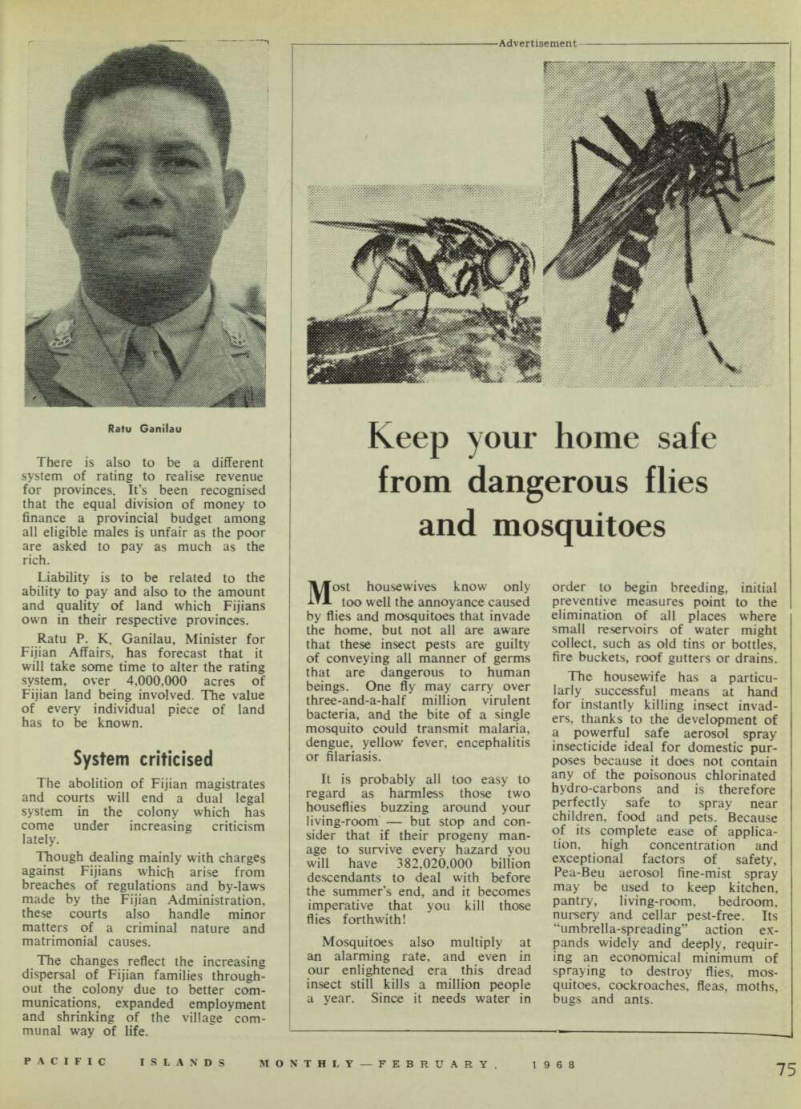 77
77 78
78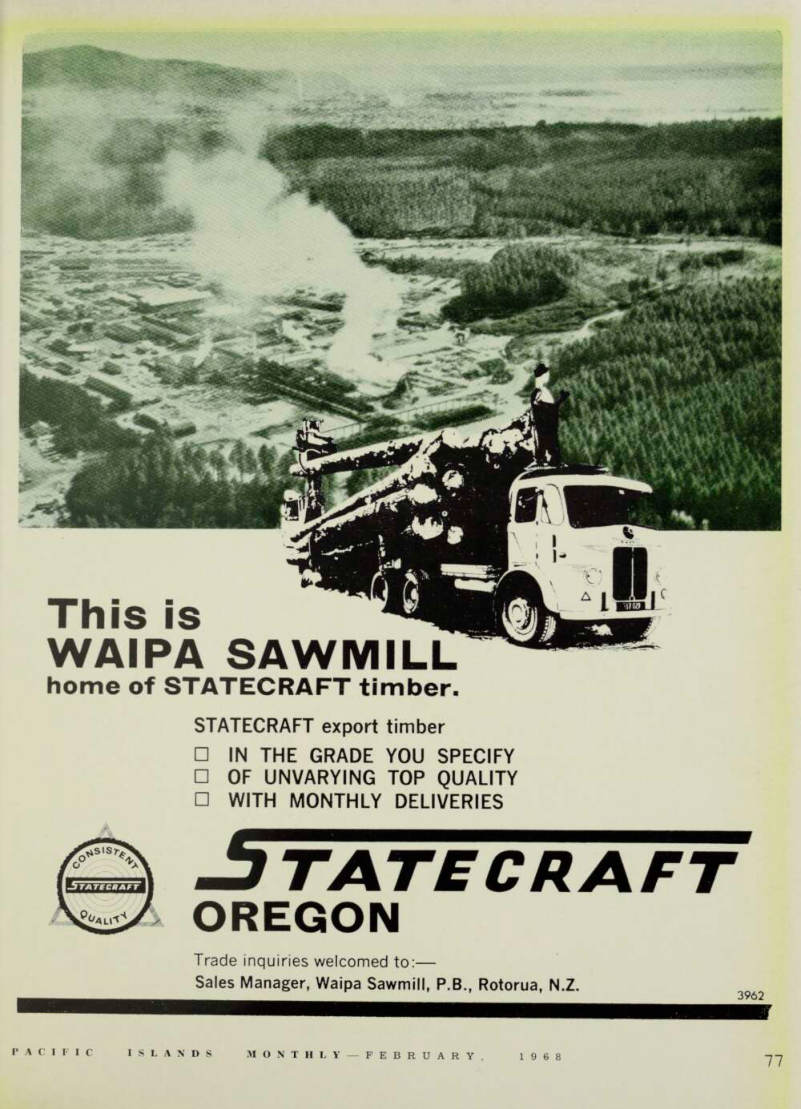 79
79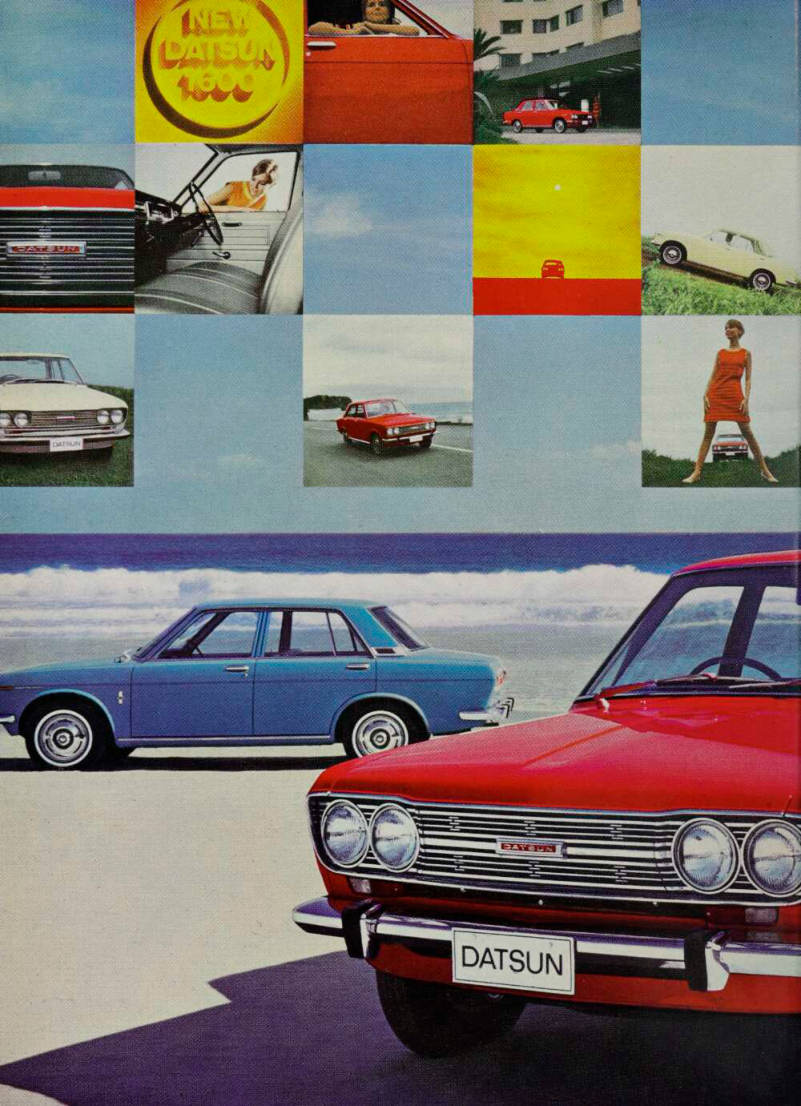 80
80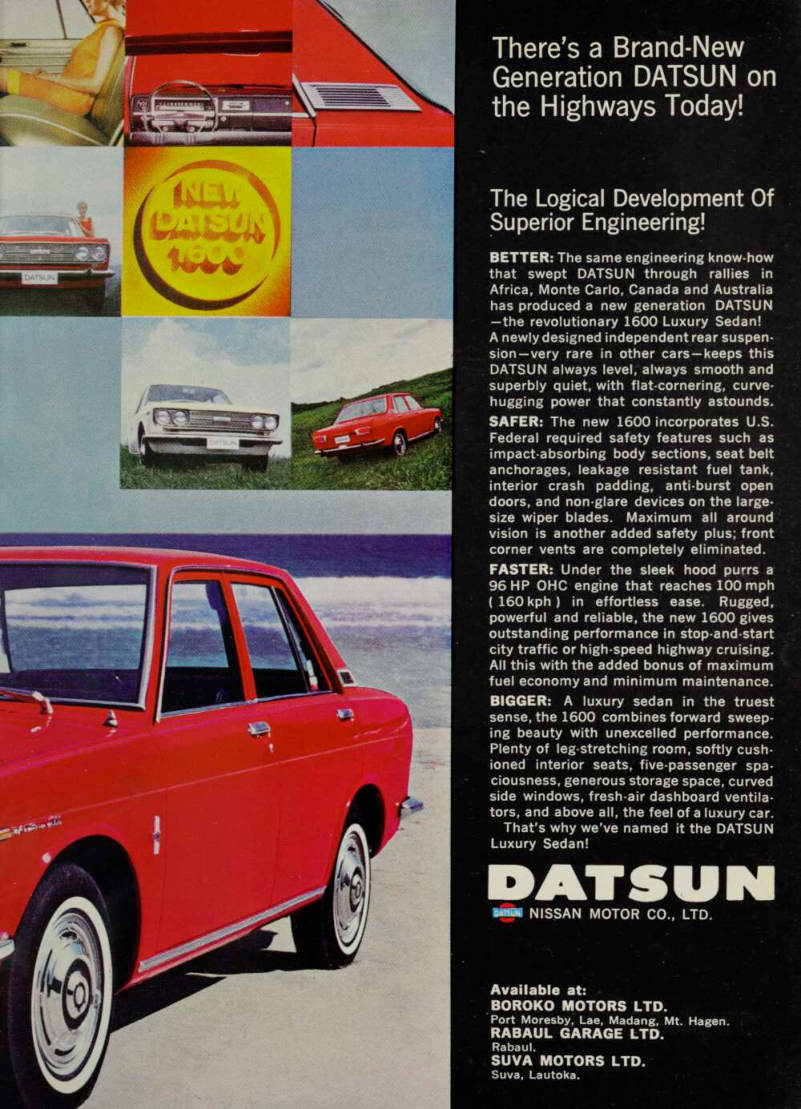 81
81 82
82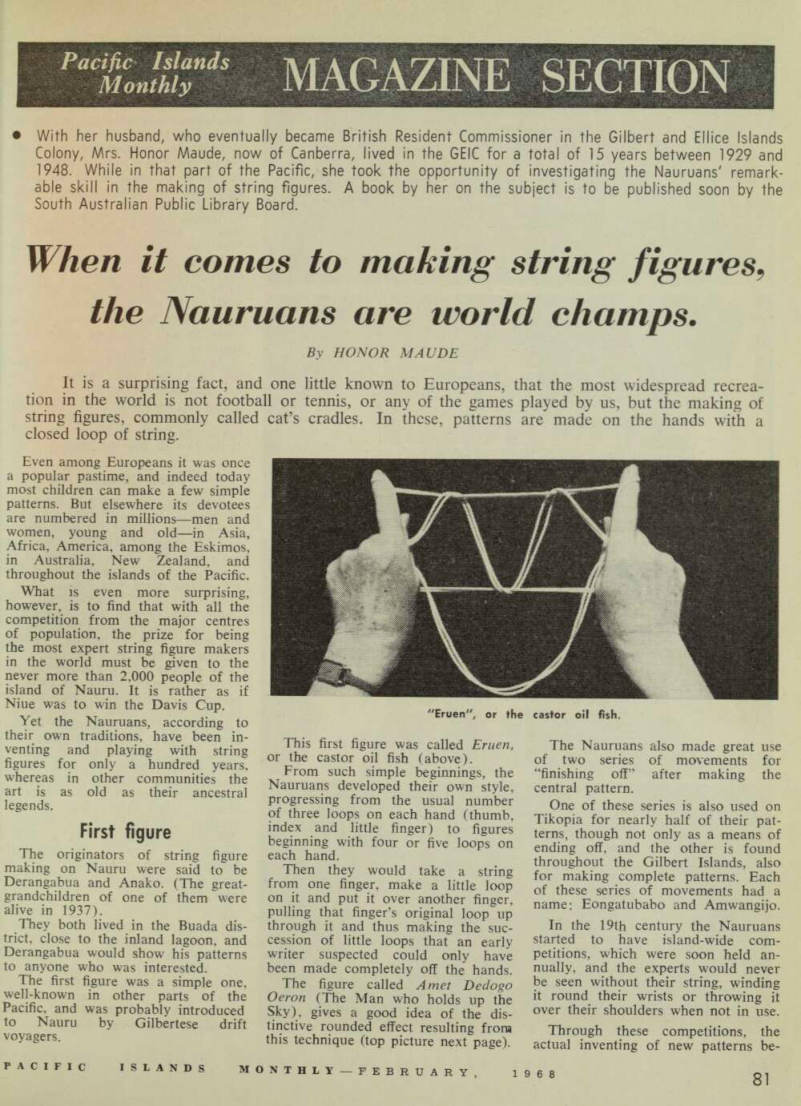 83
83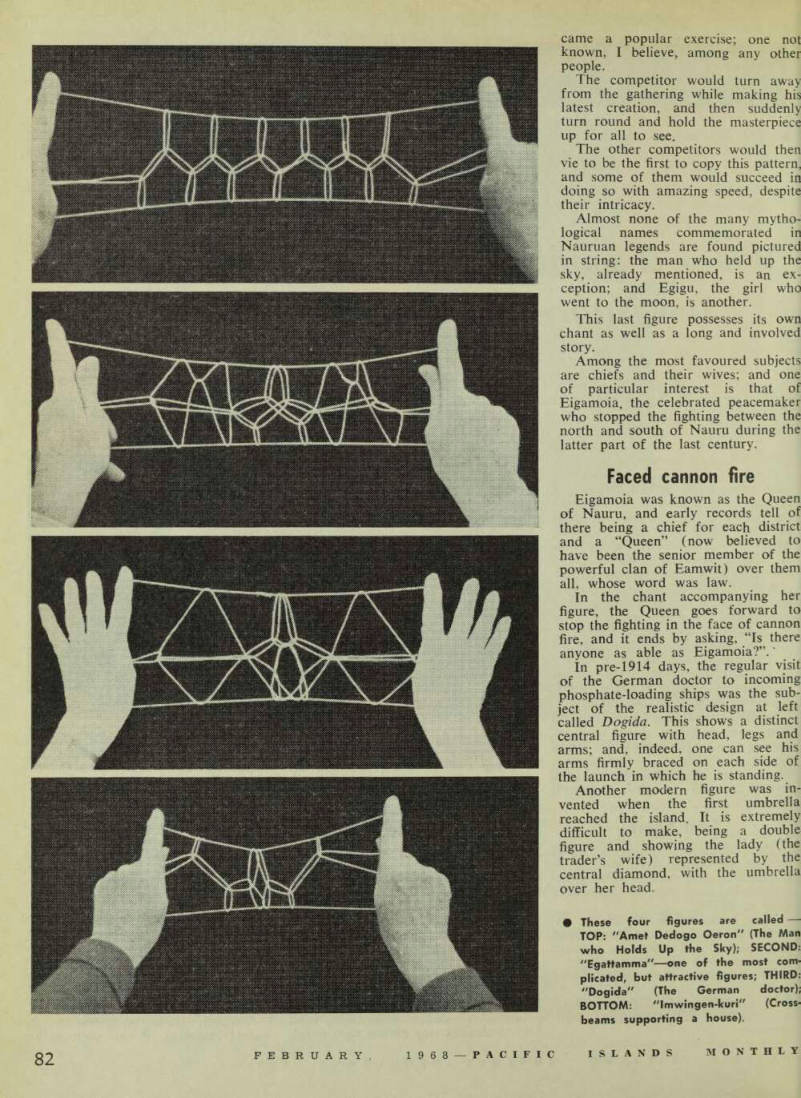 84
84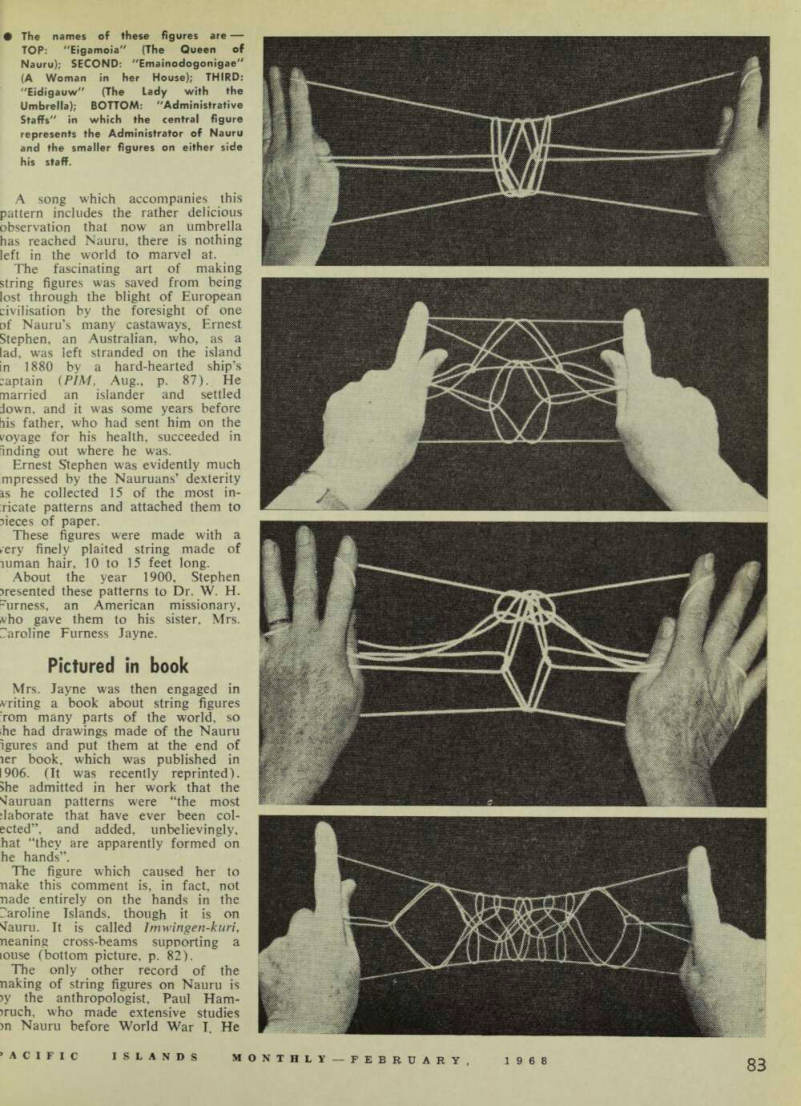 85
85 86
86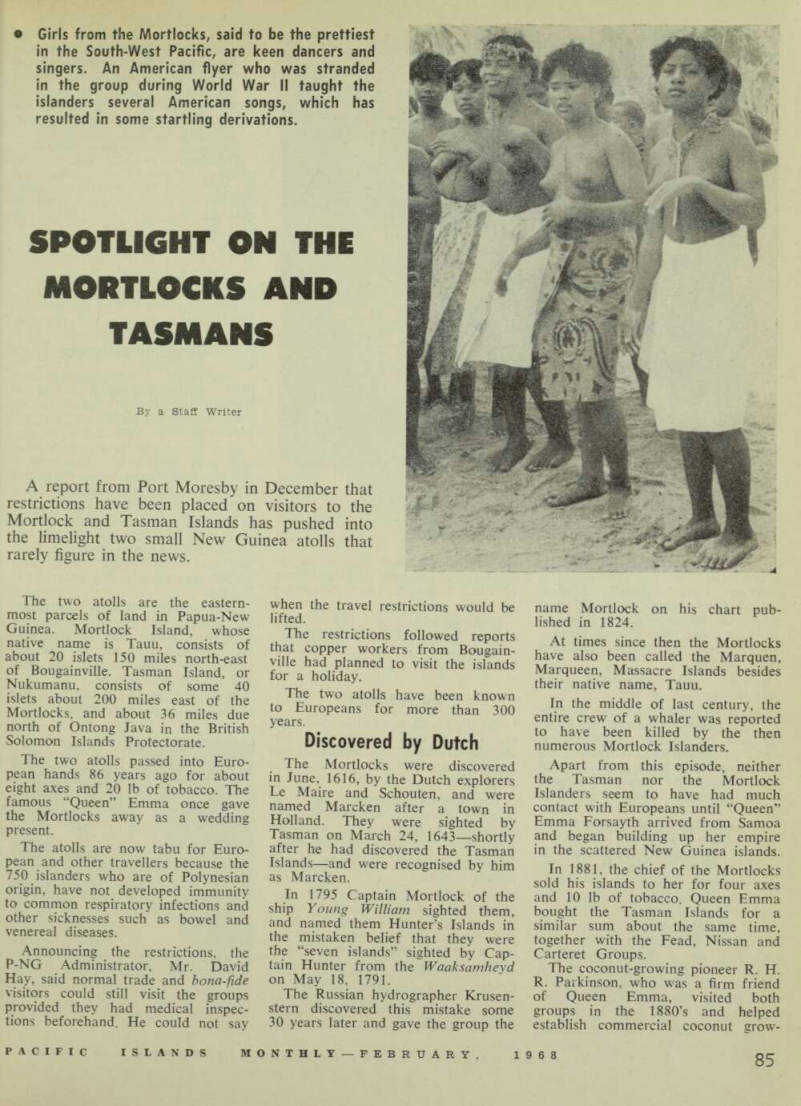 87
87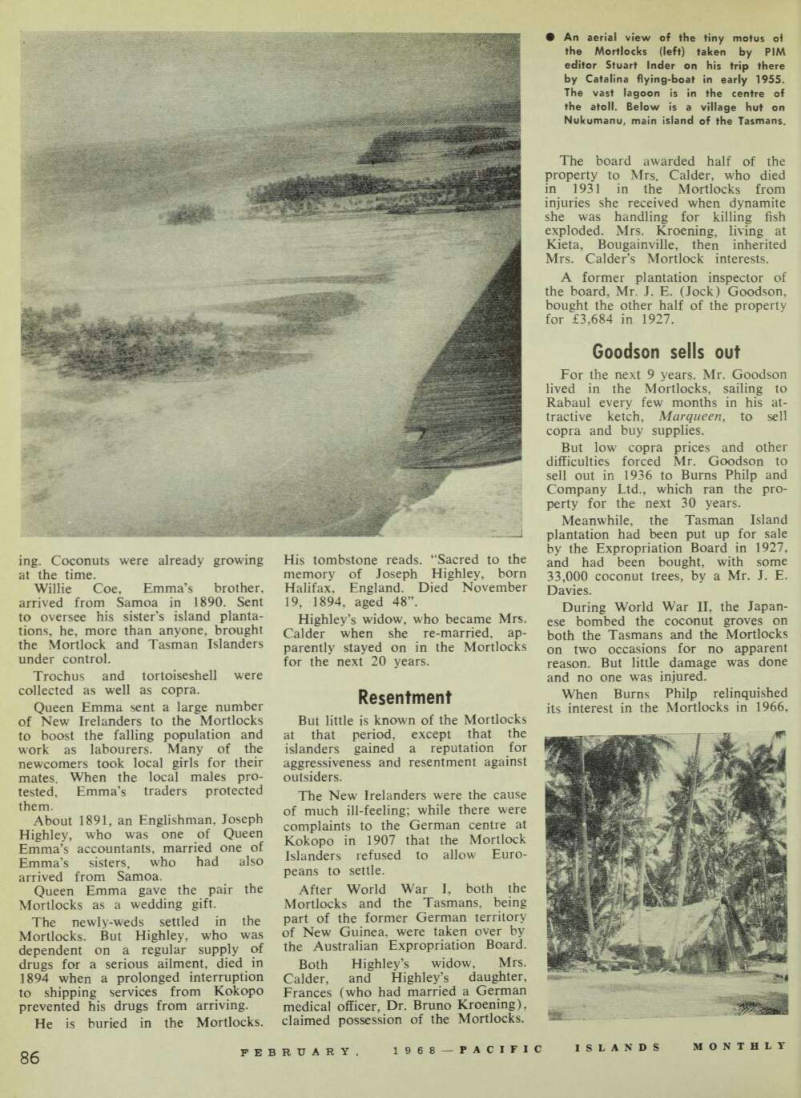 88
88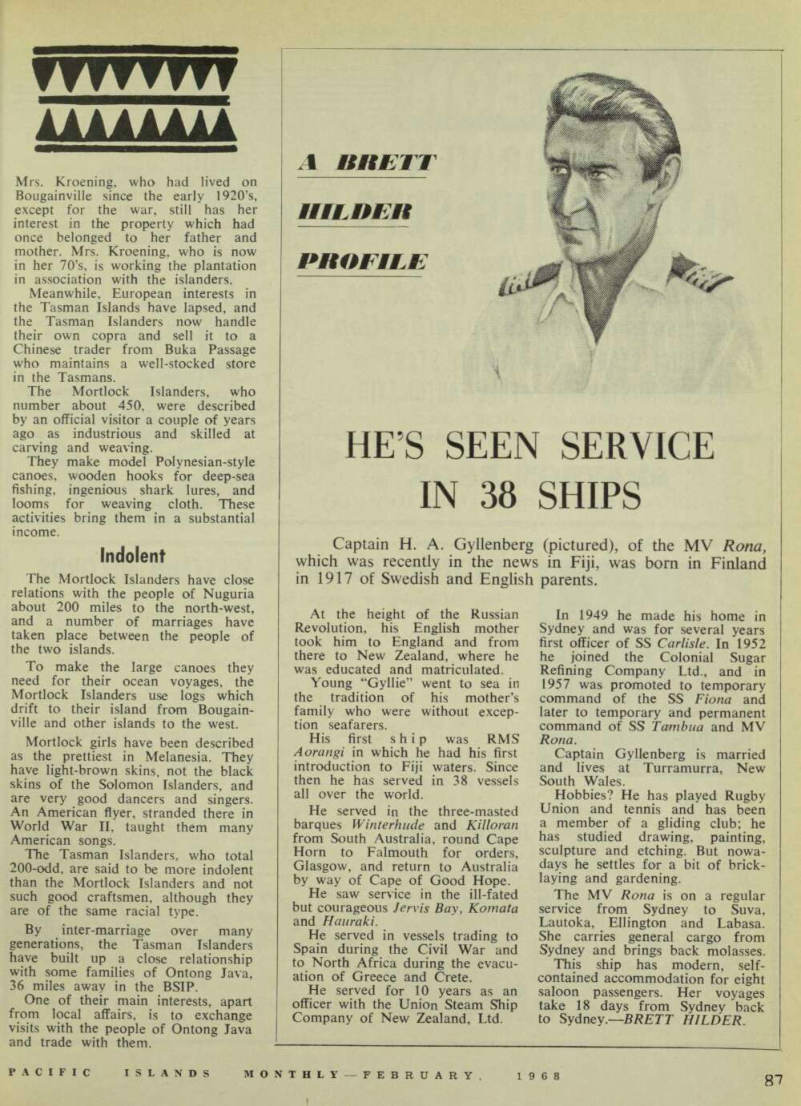 89
89 90
90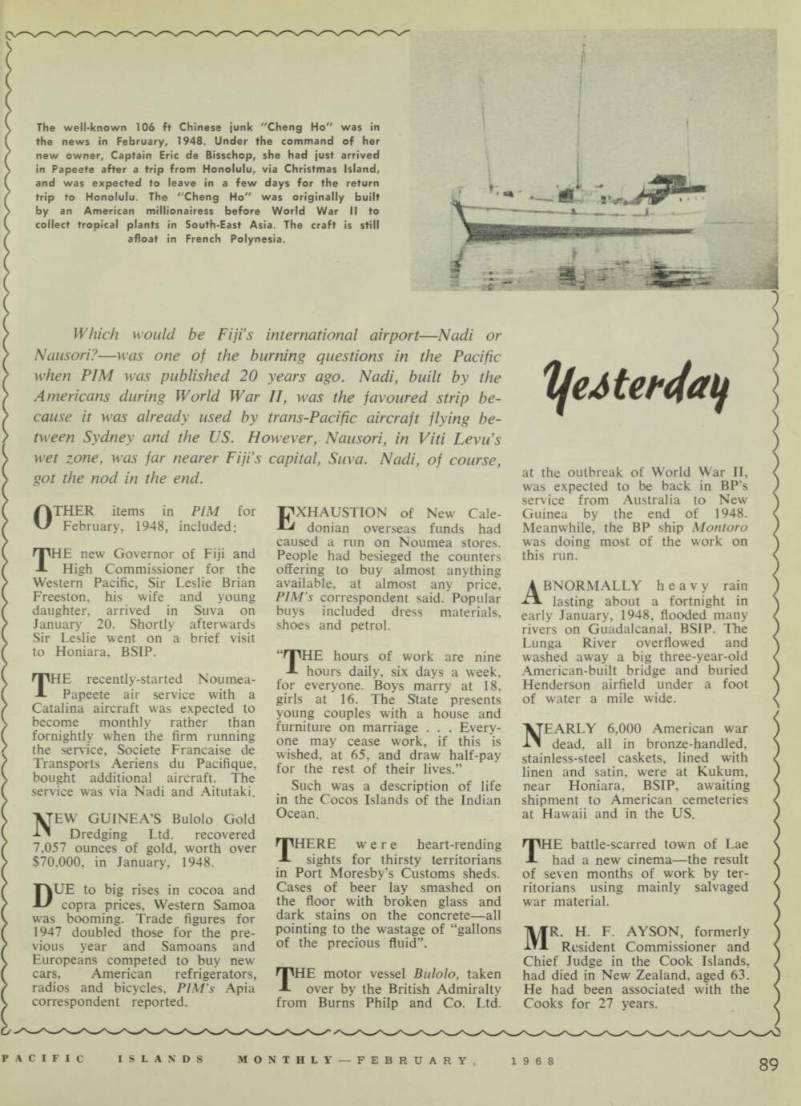 91
91 92
92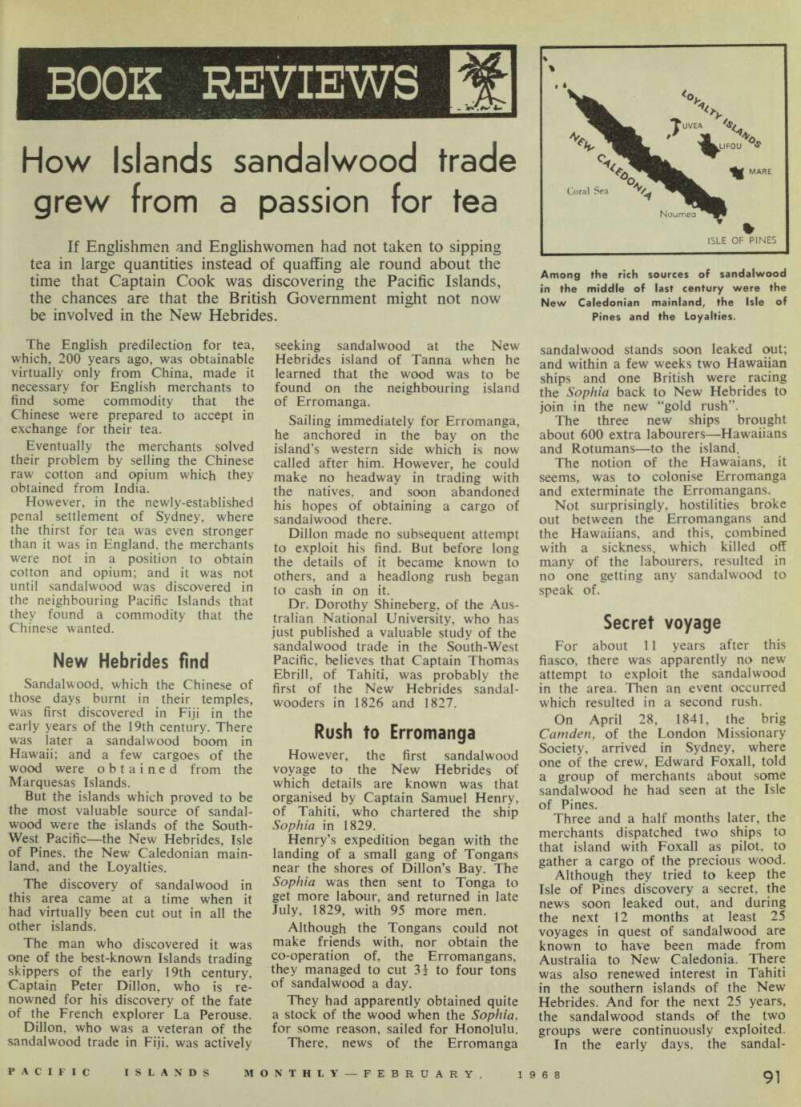 93
93 94
94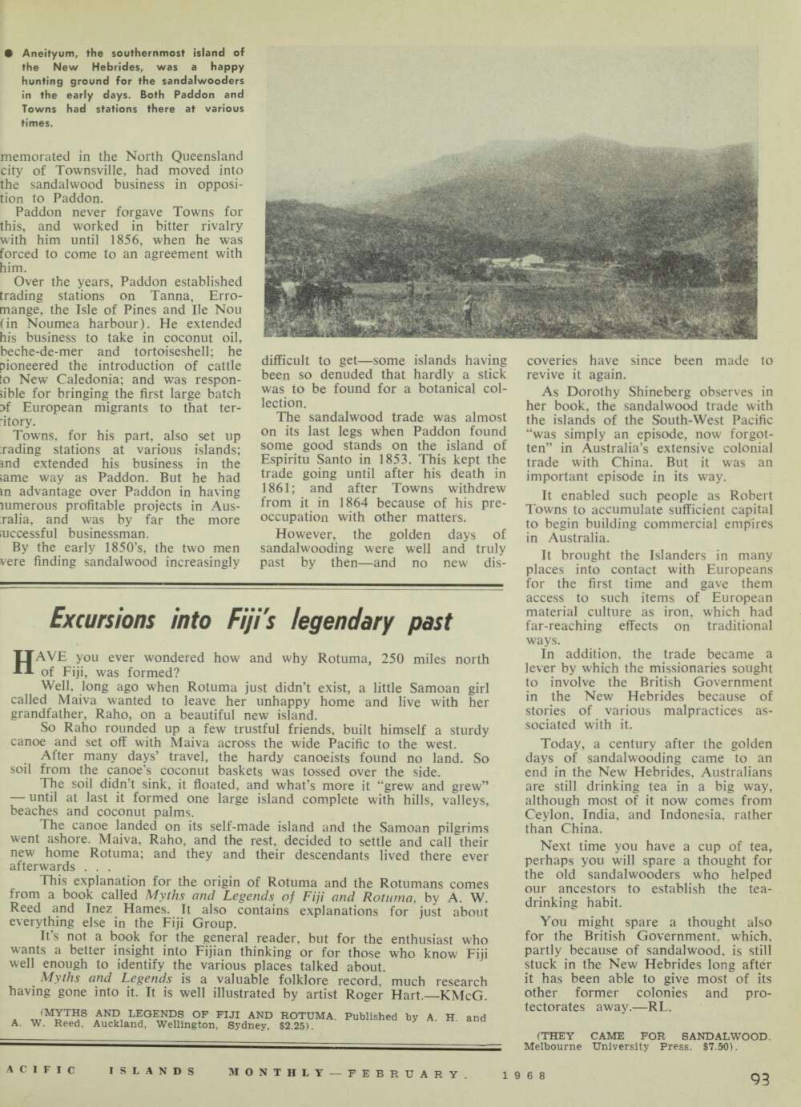 95
95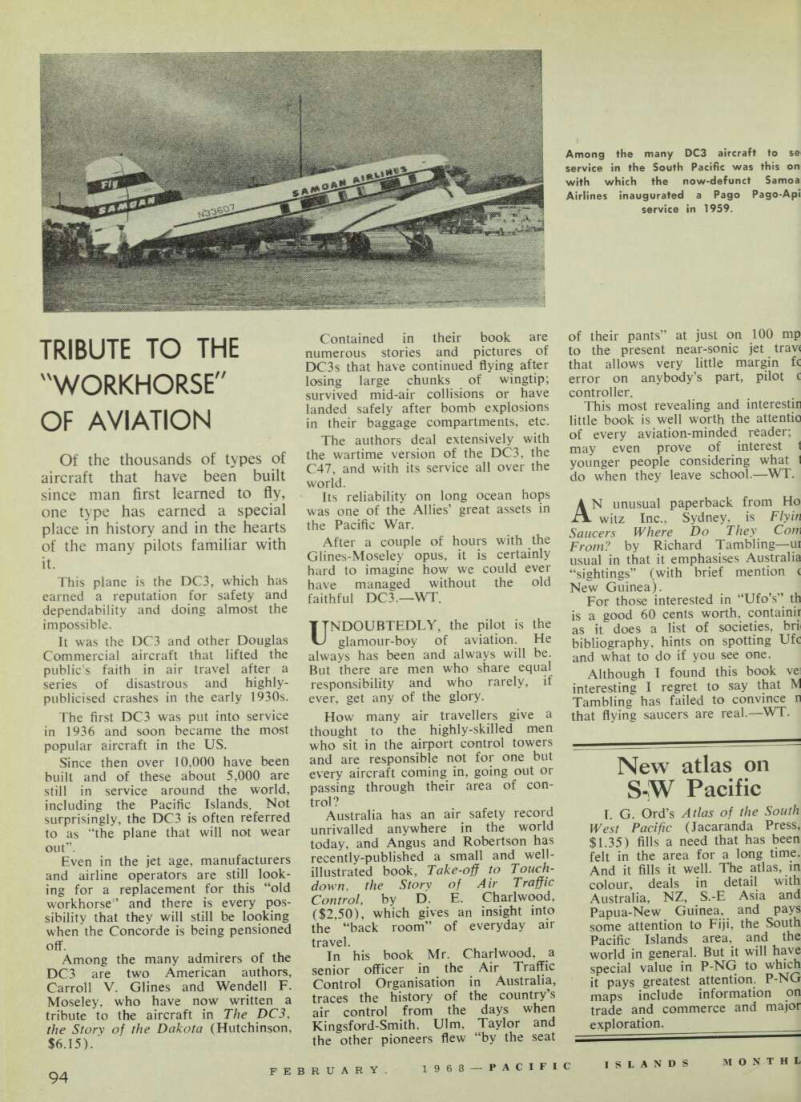 96
96 97
97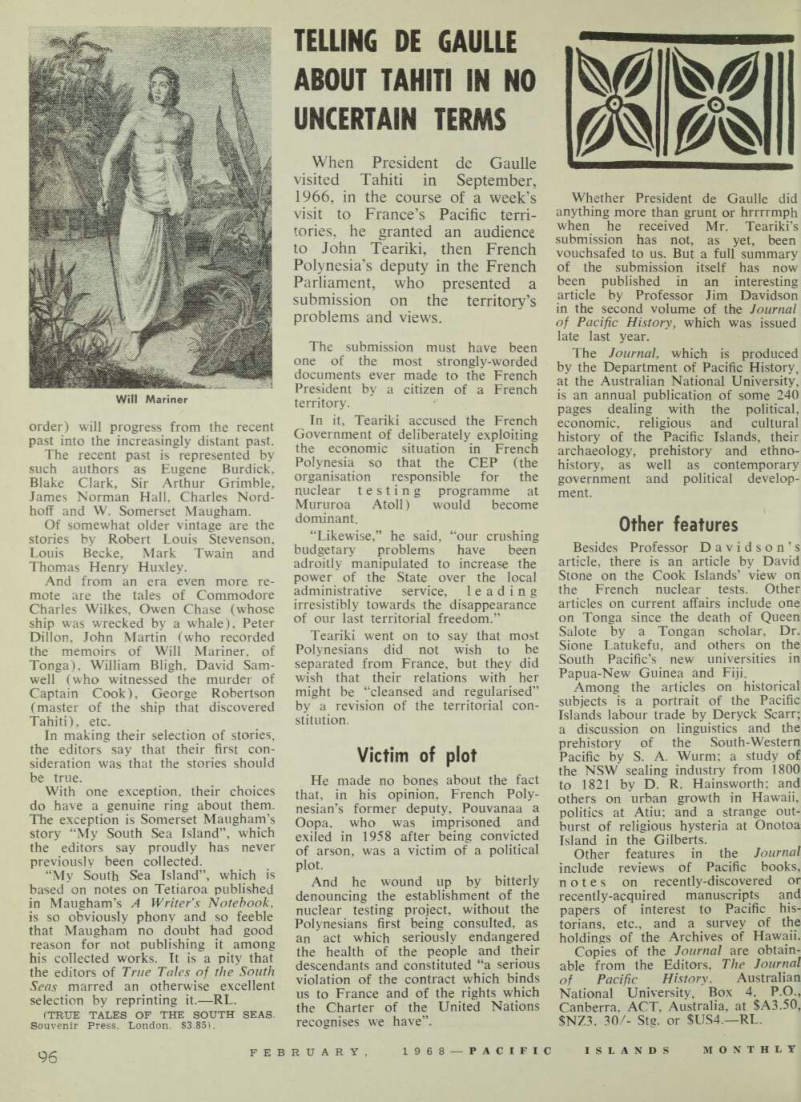 98
98 99
99 100
100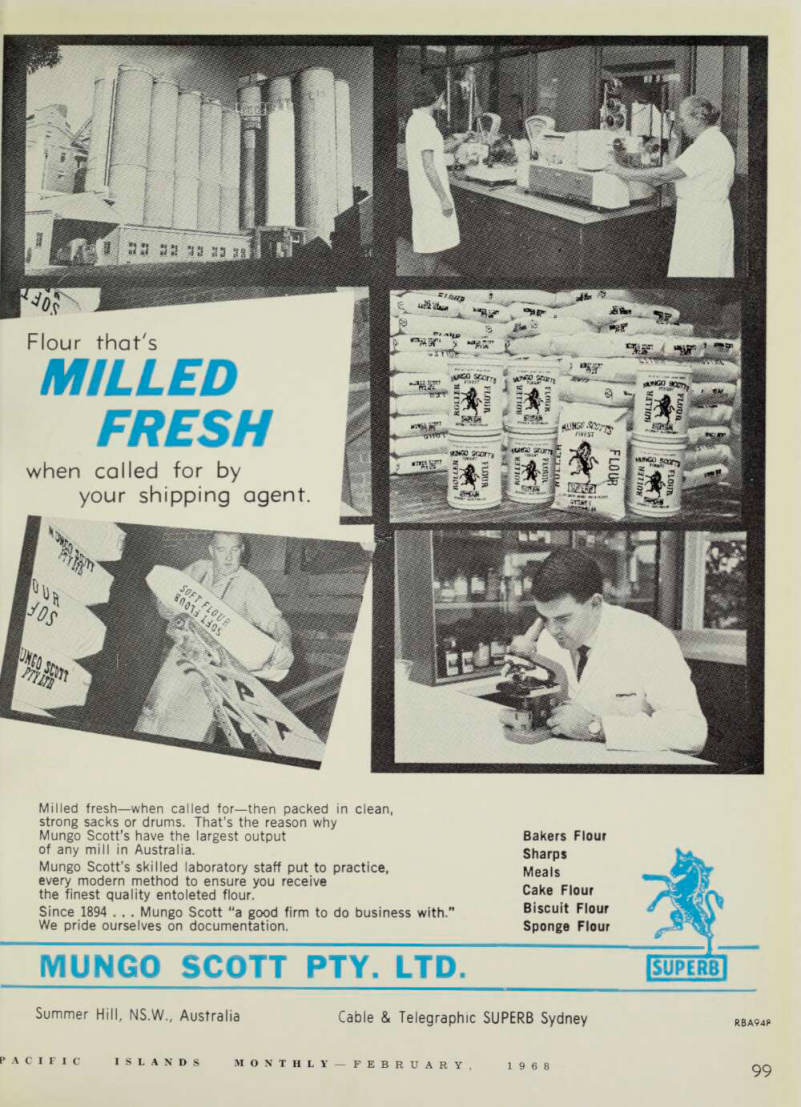 101
101 102
102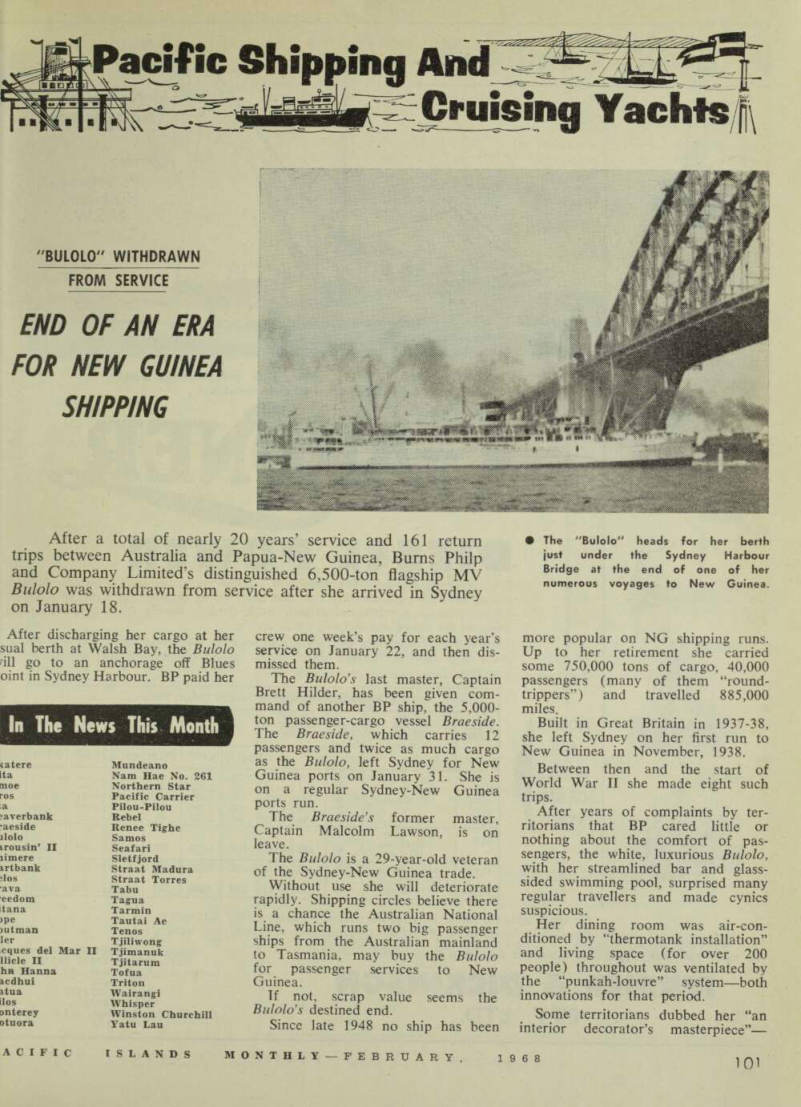 103
103 104
104 105
105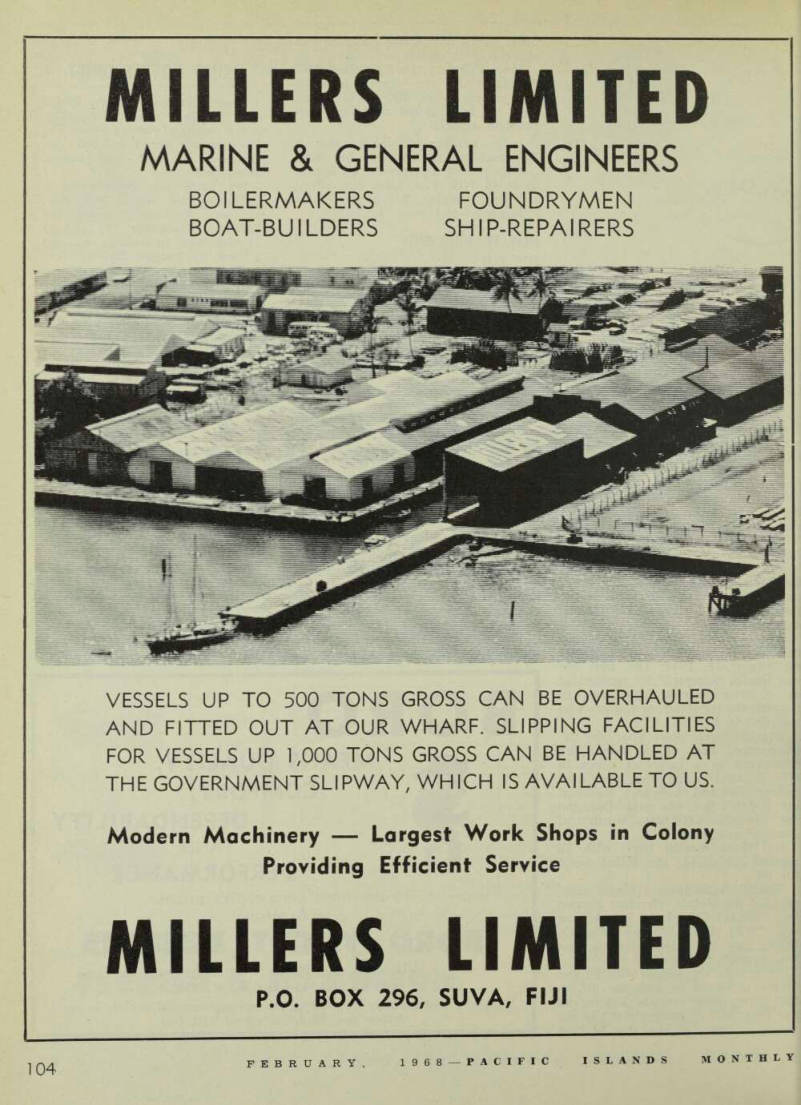 106
106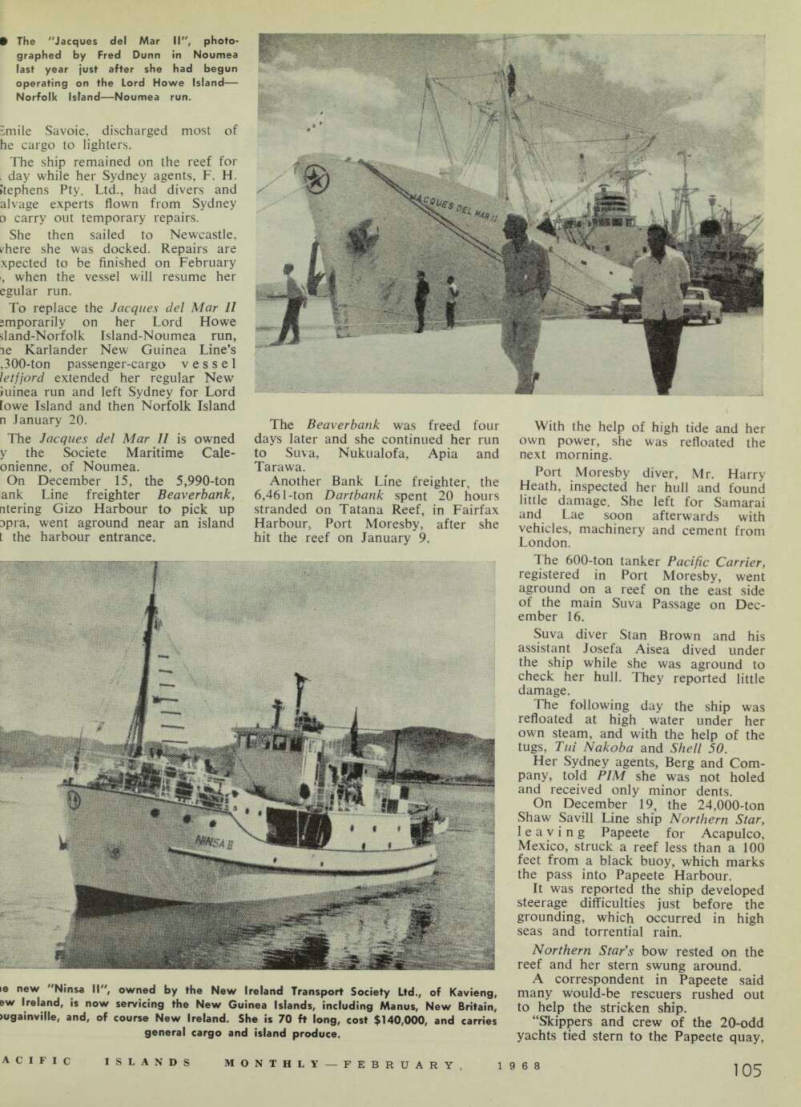 107
107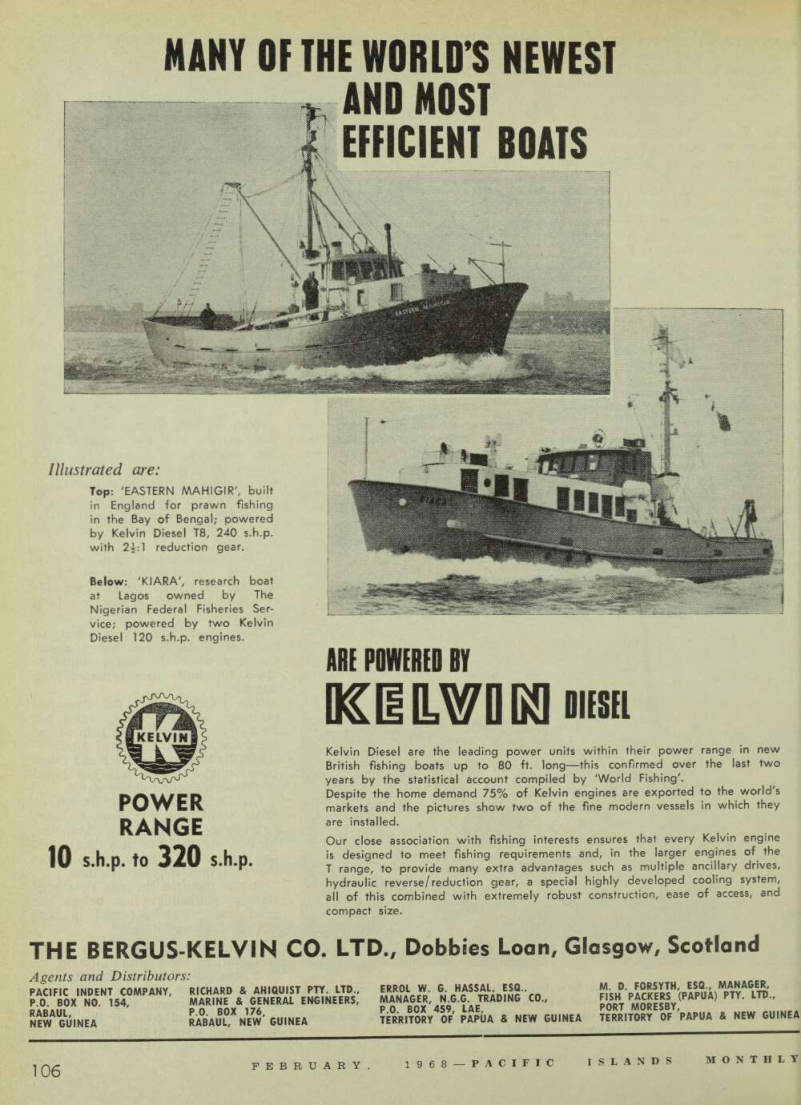 108
108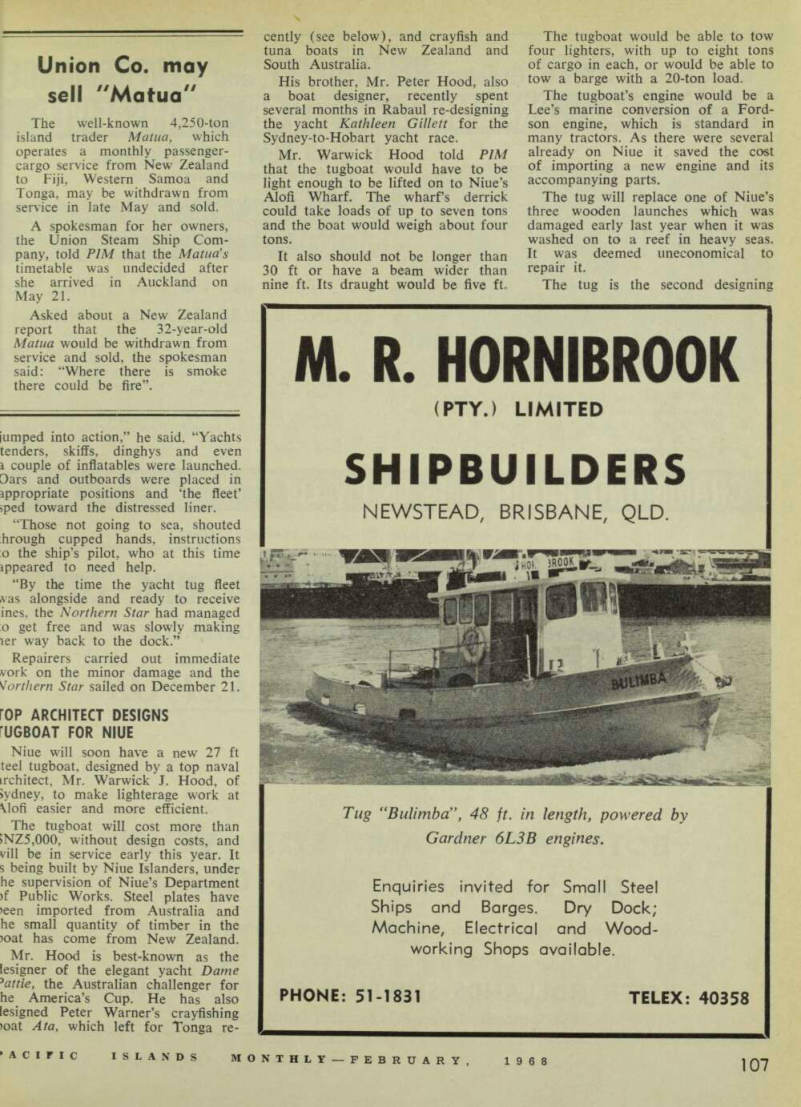 109
109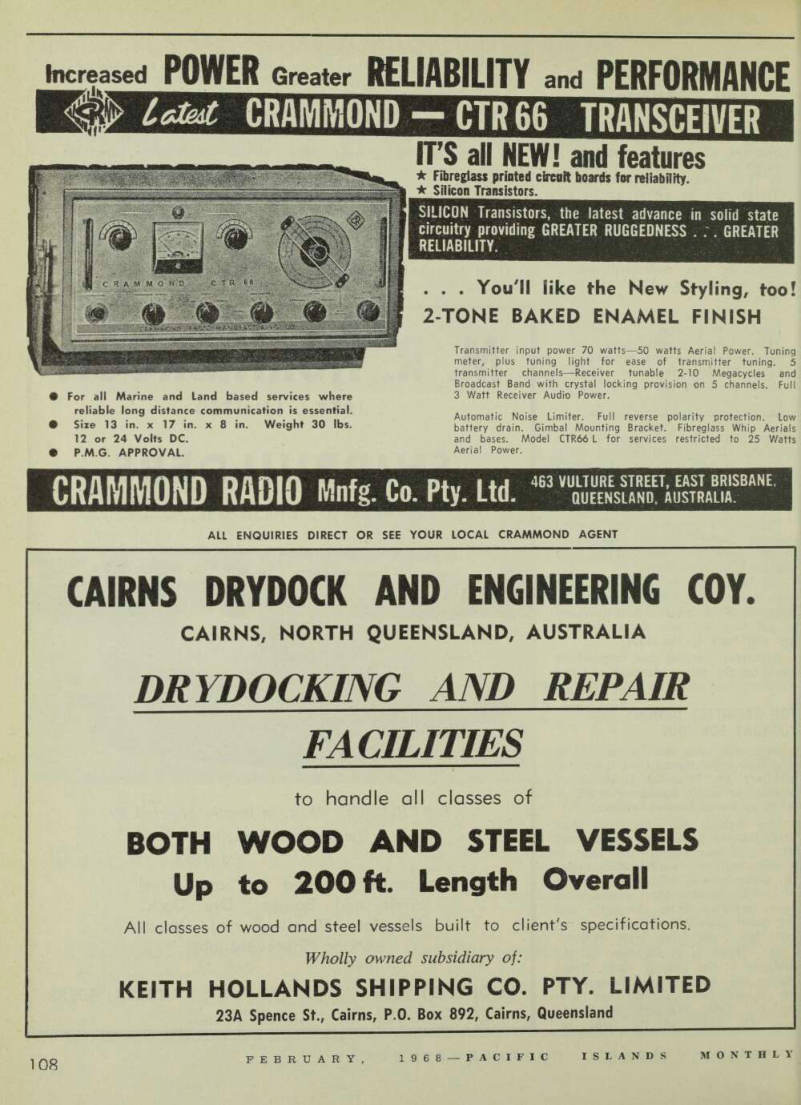 110
110 111
111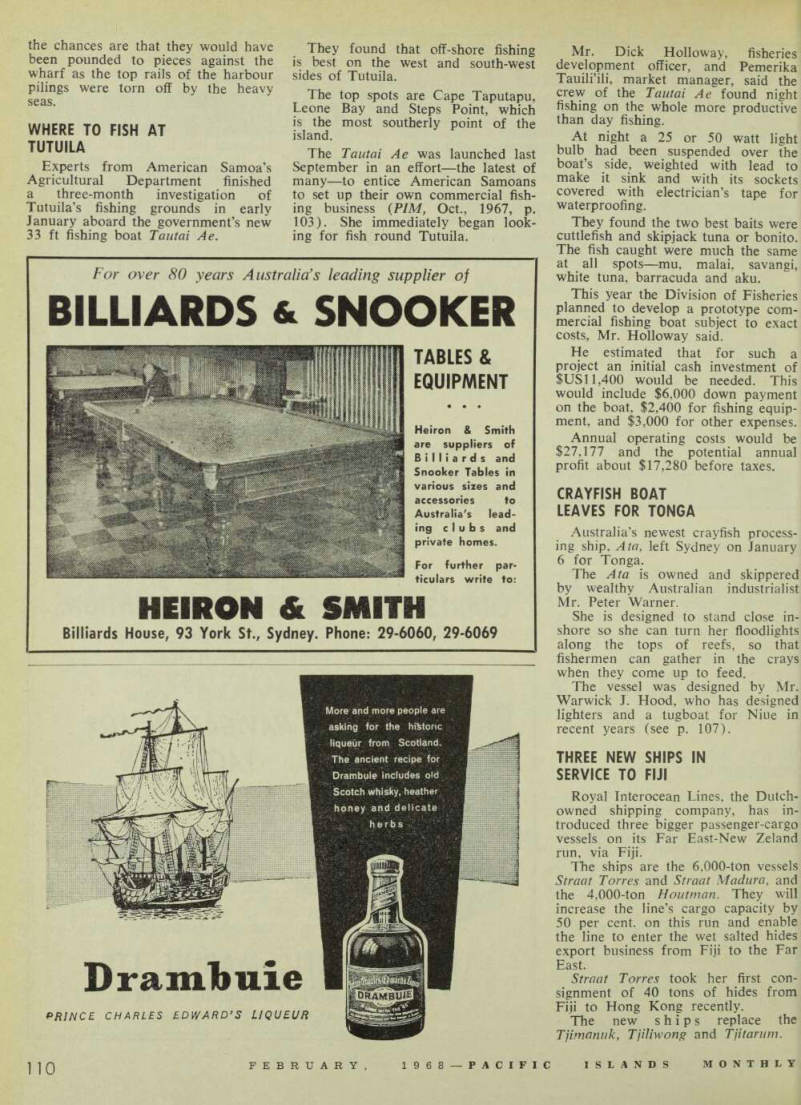 112
112 113
113 114
114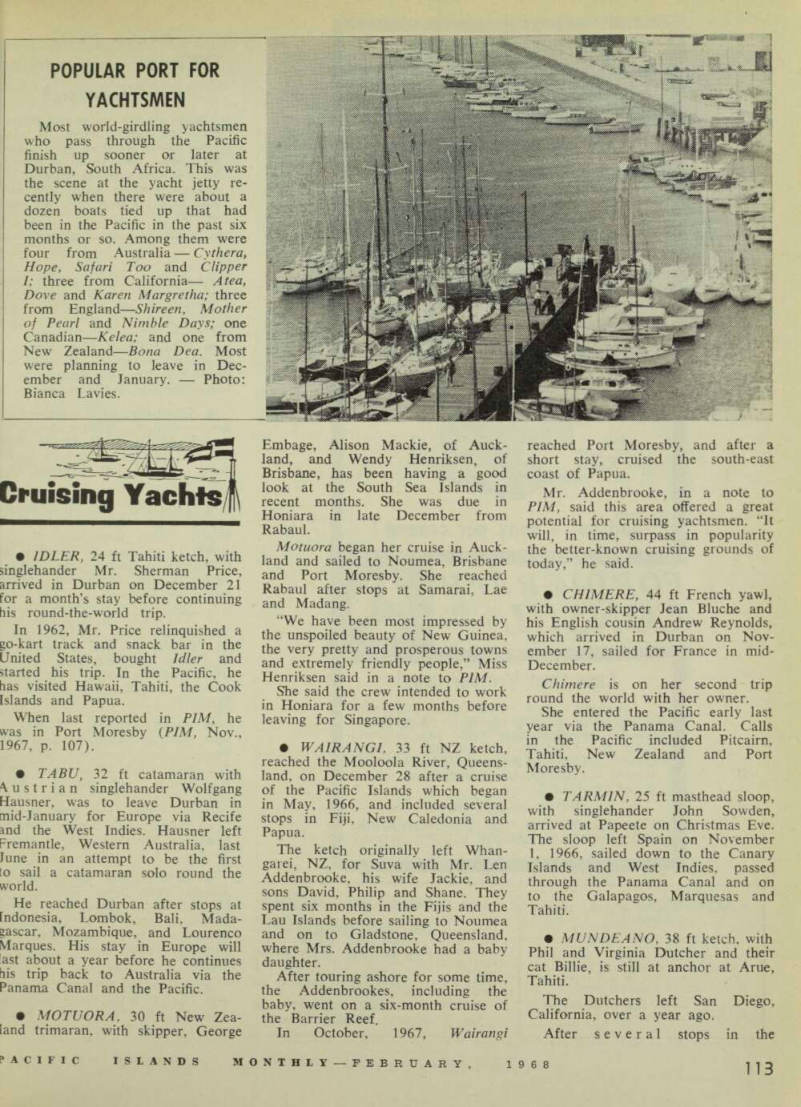 115
115 116
116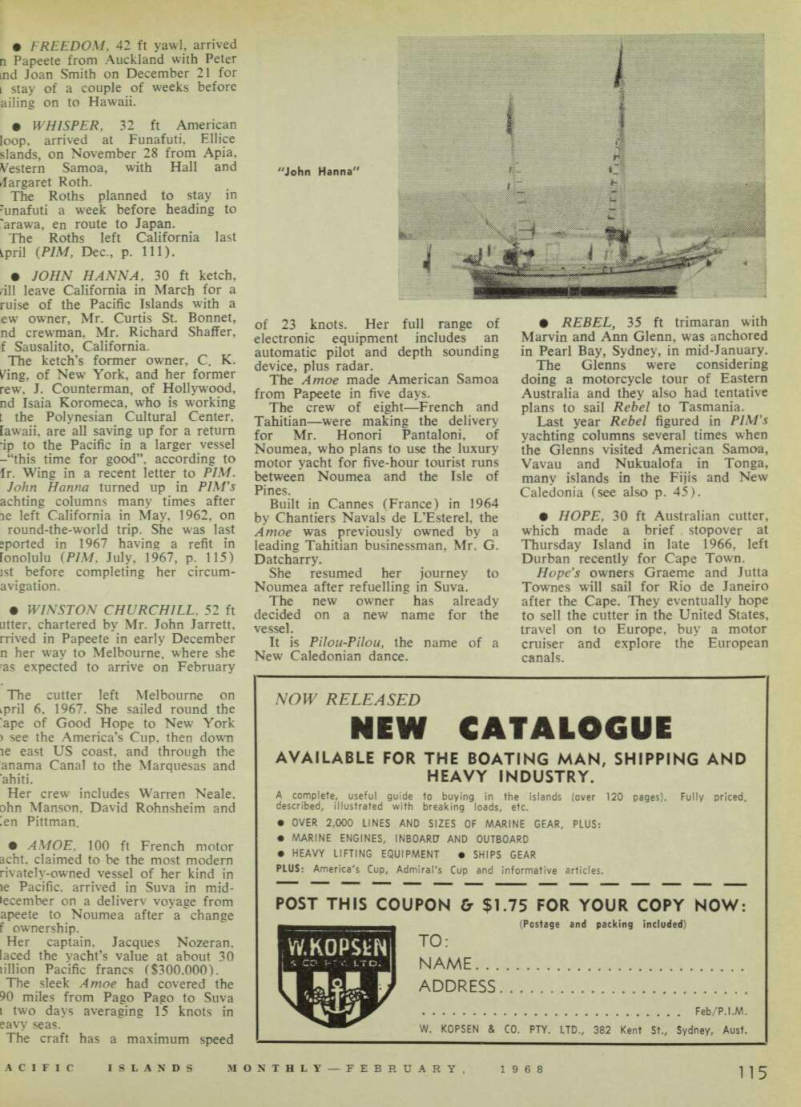 117
117 118
118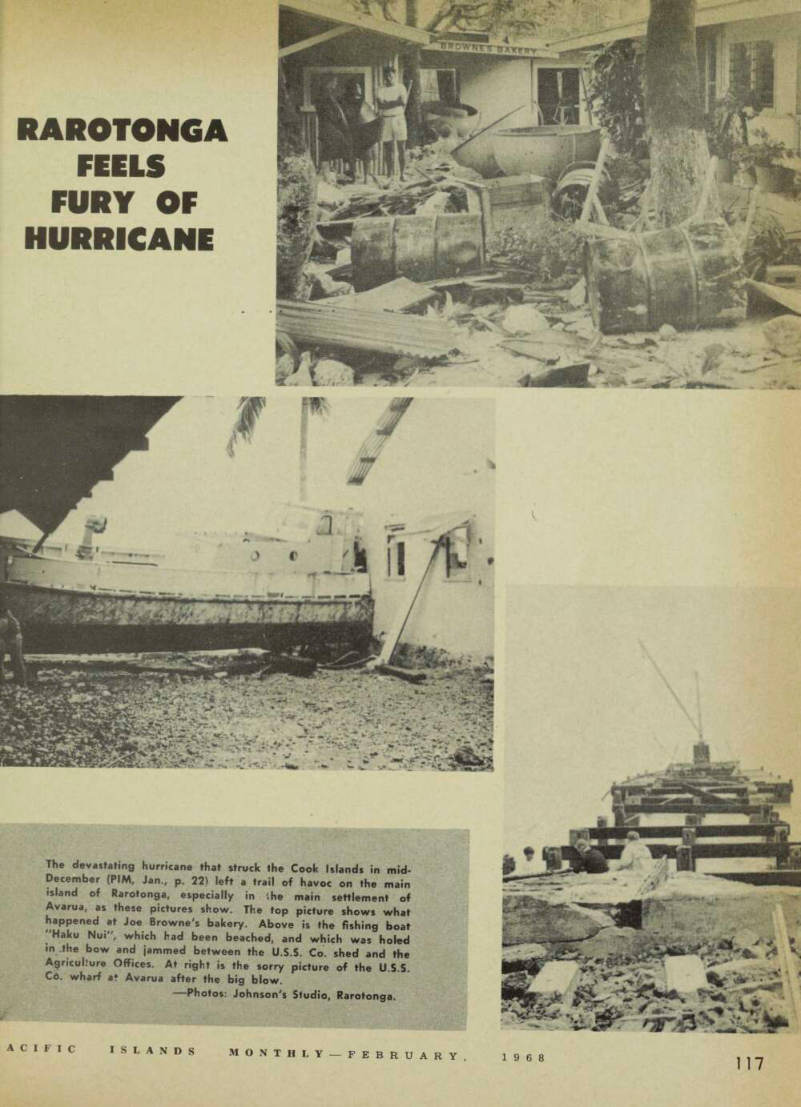 119
119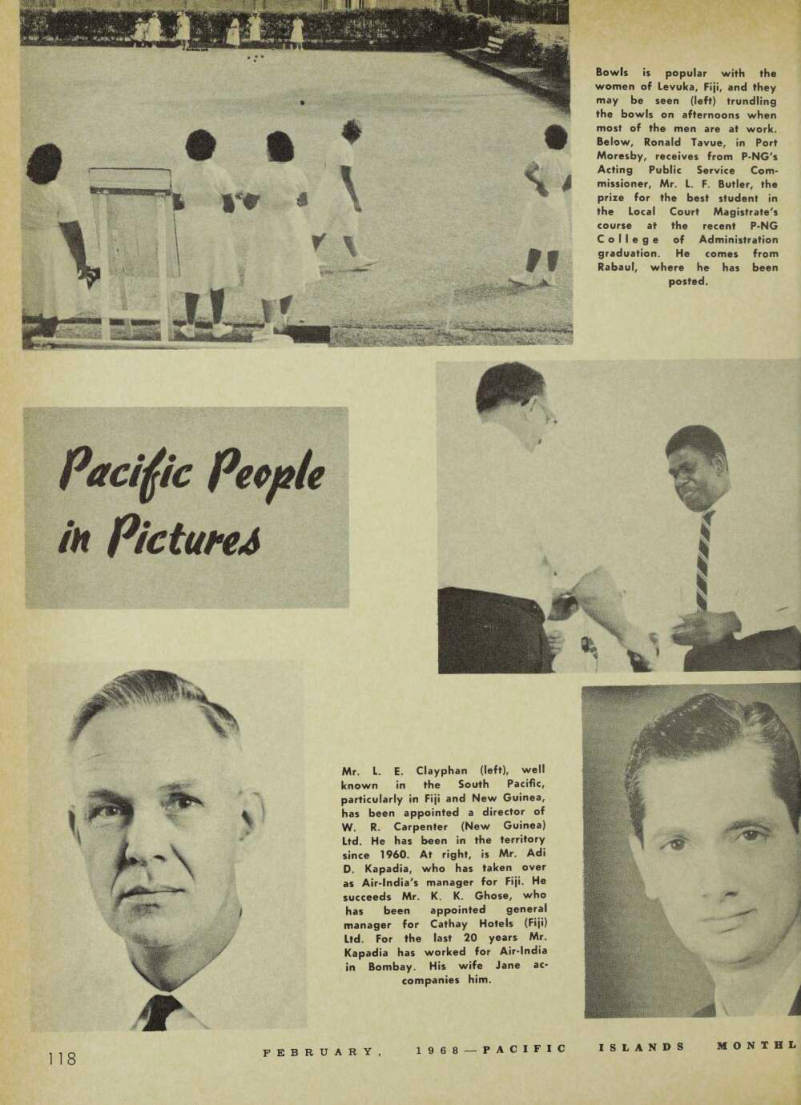 120
120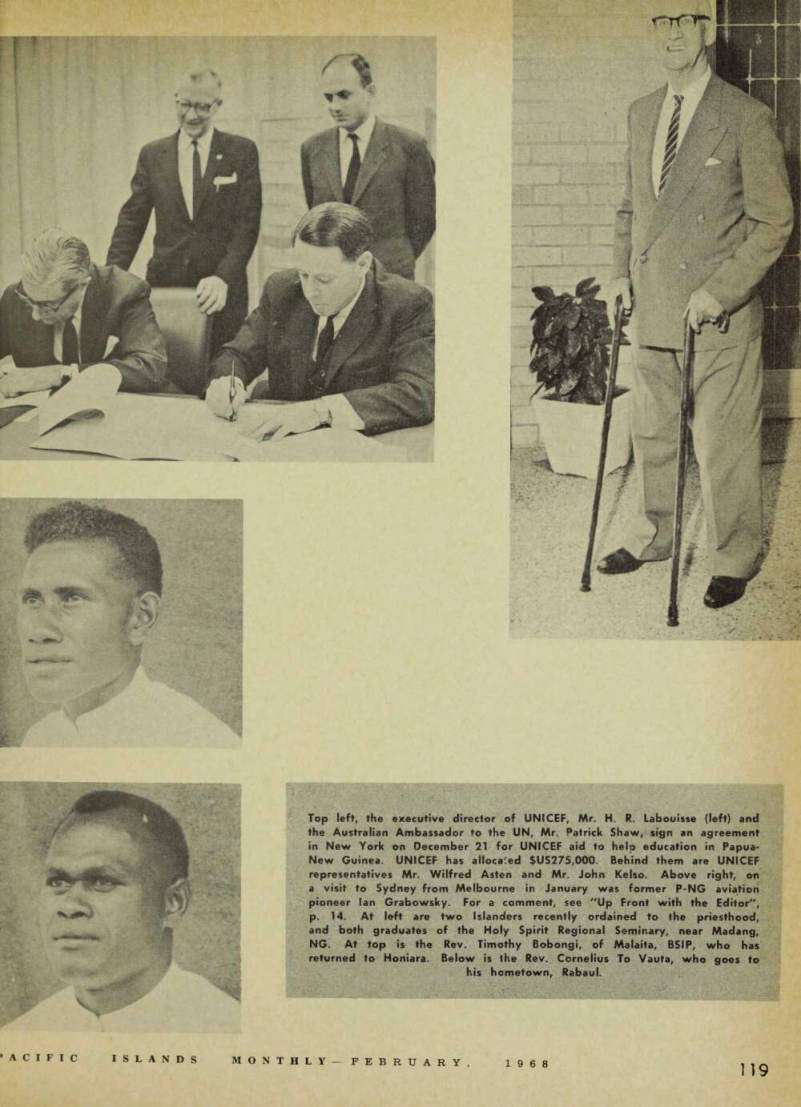 121
121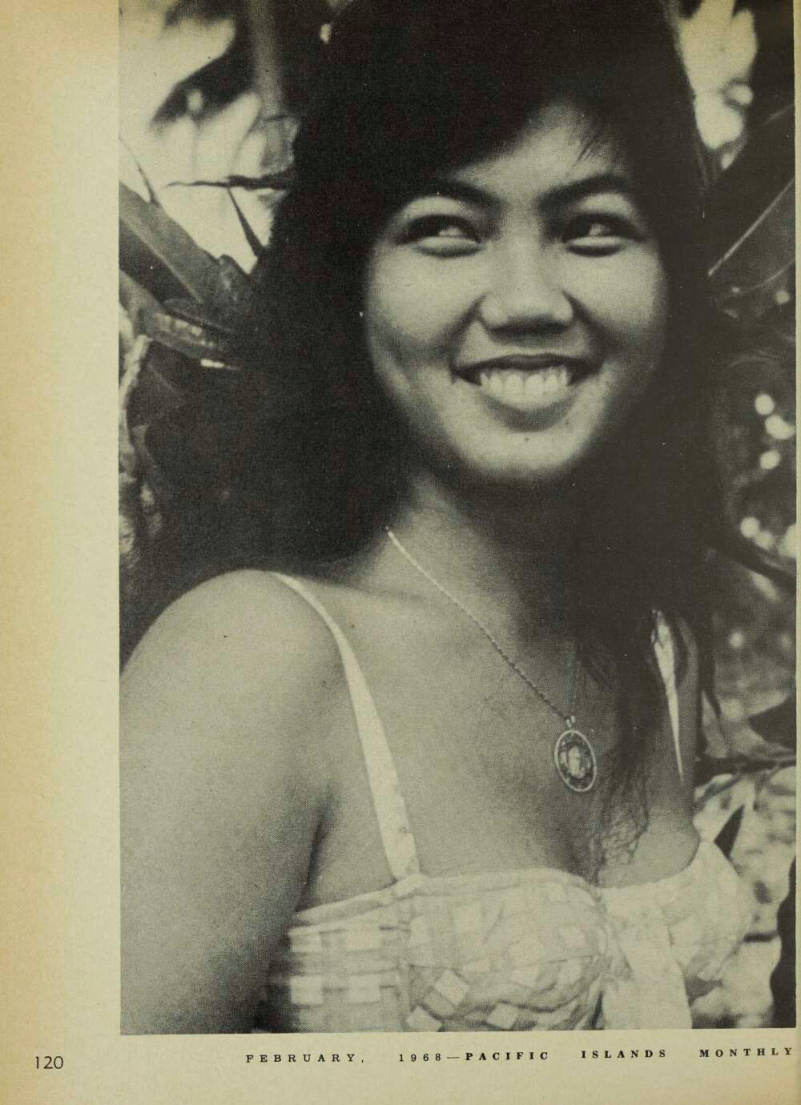 122
122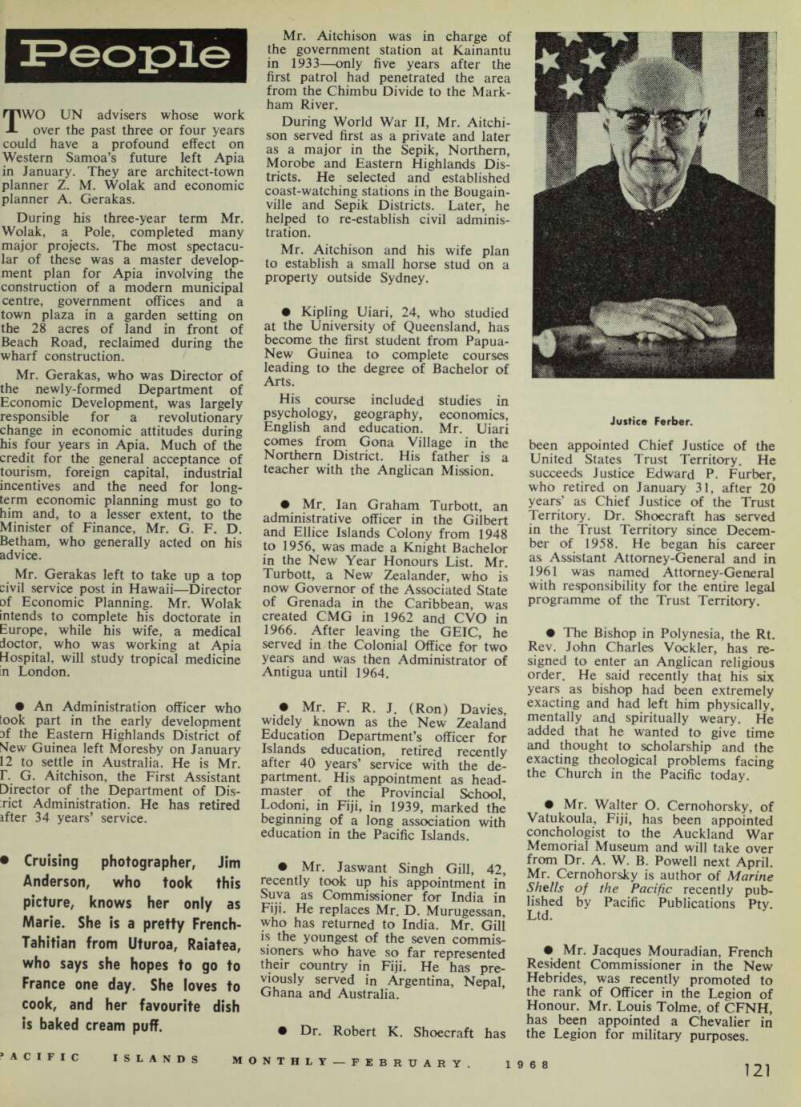 123
123 124
124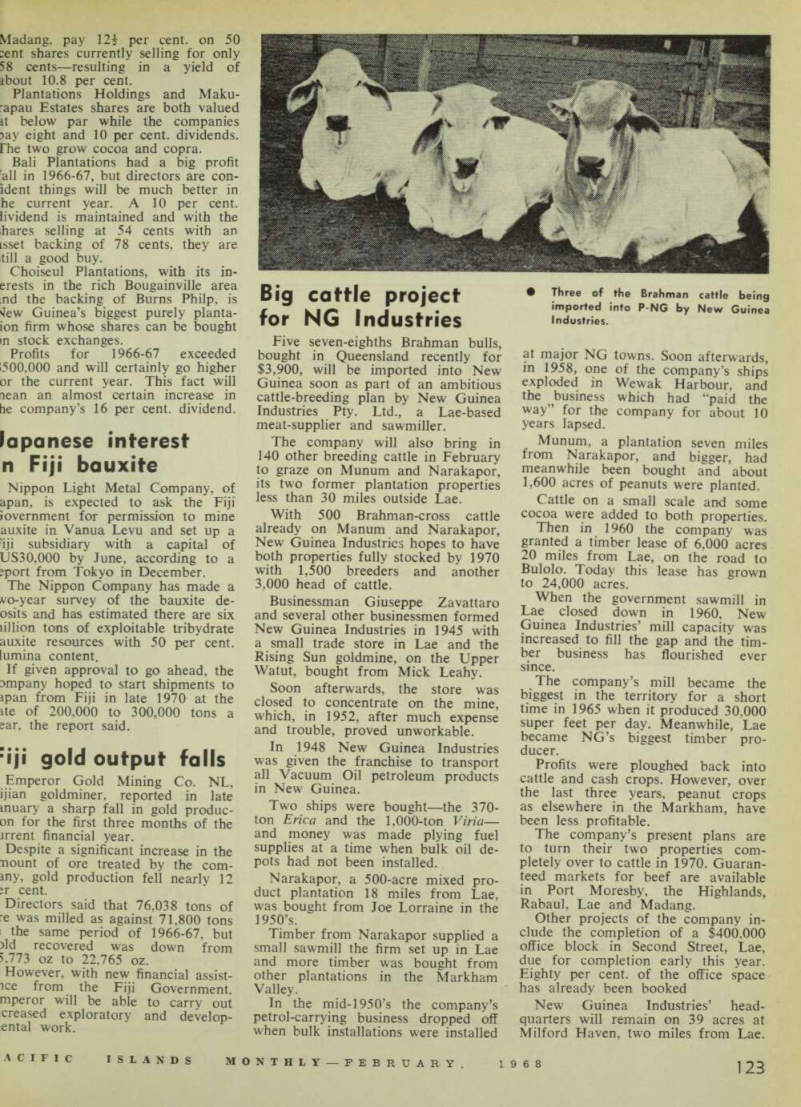 125
125 126
126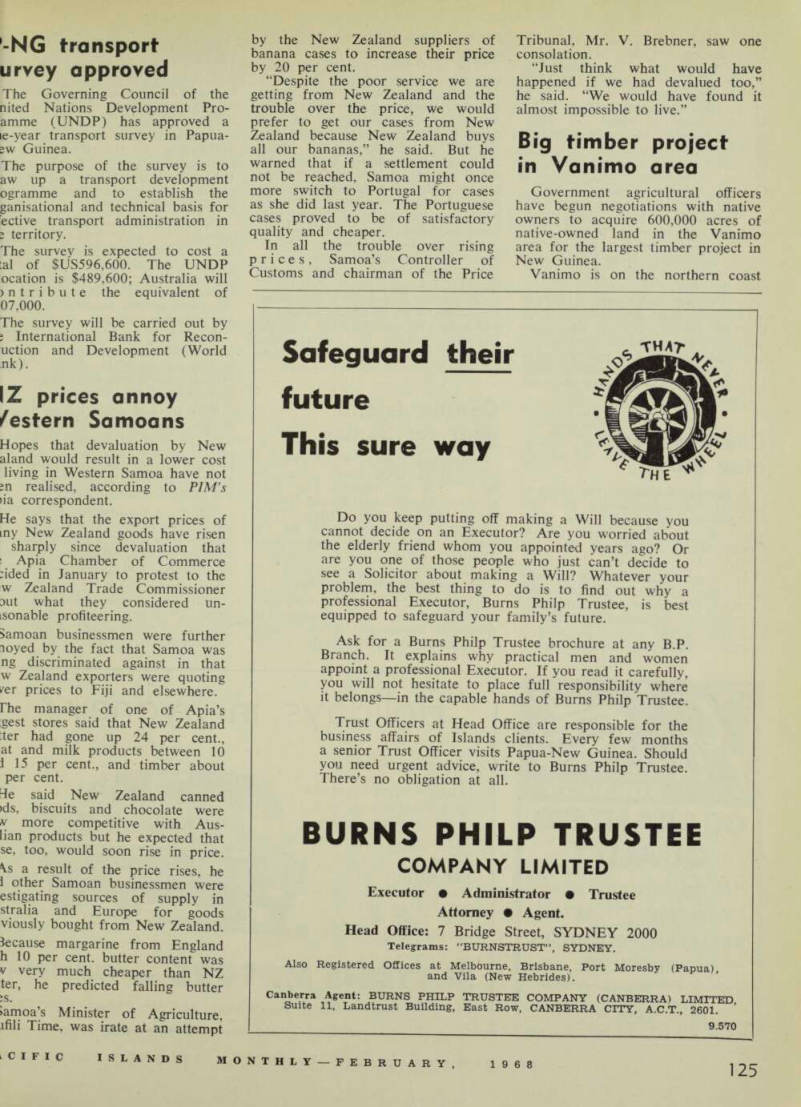 127
127 128
128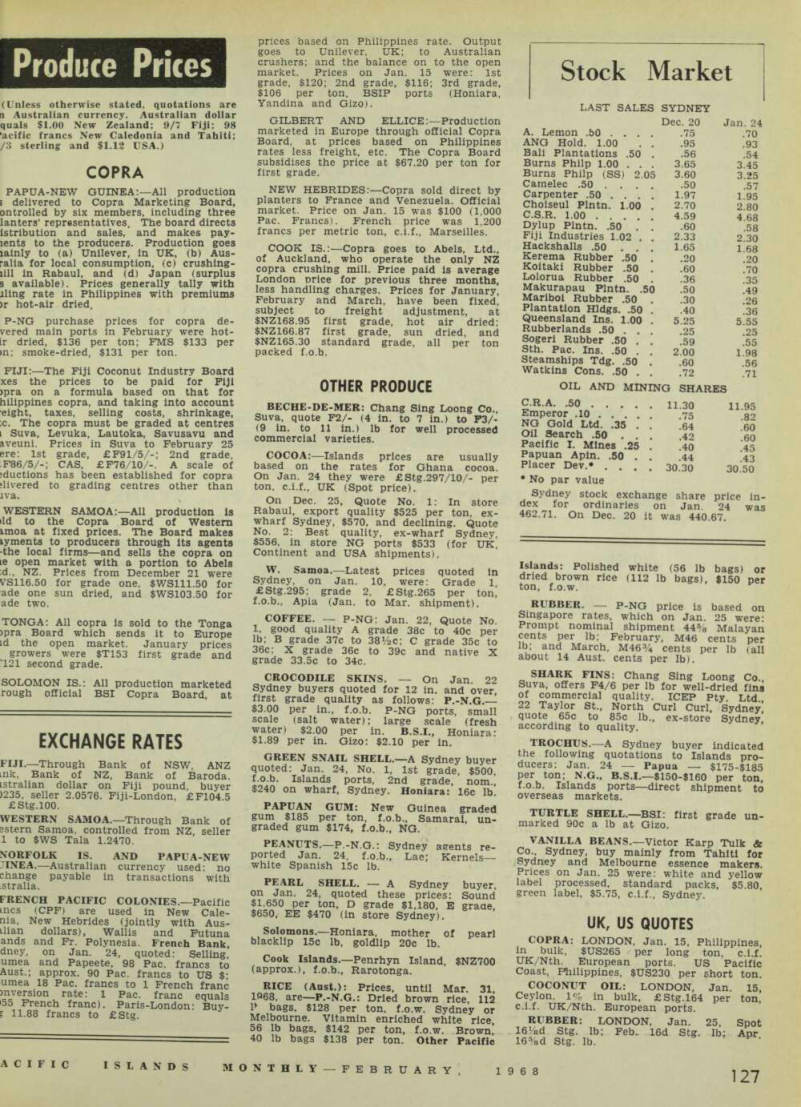 129
129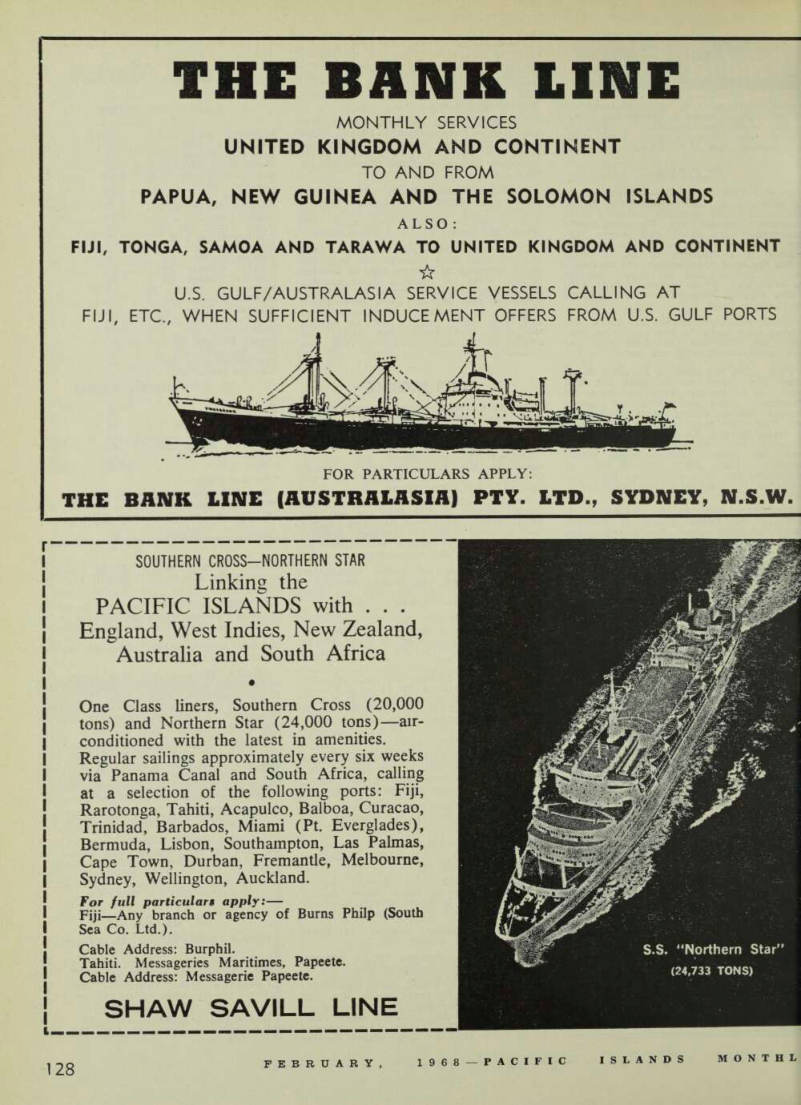 130
130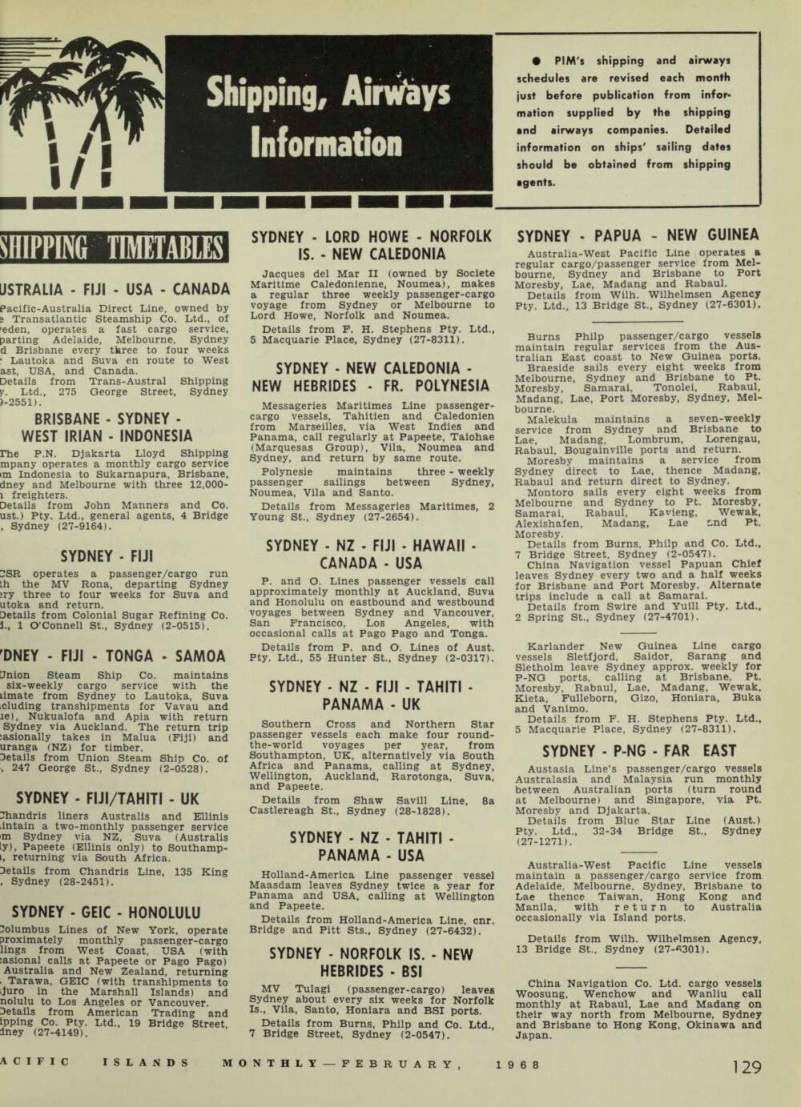 131
131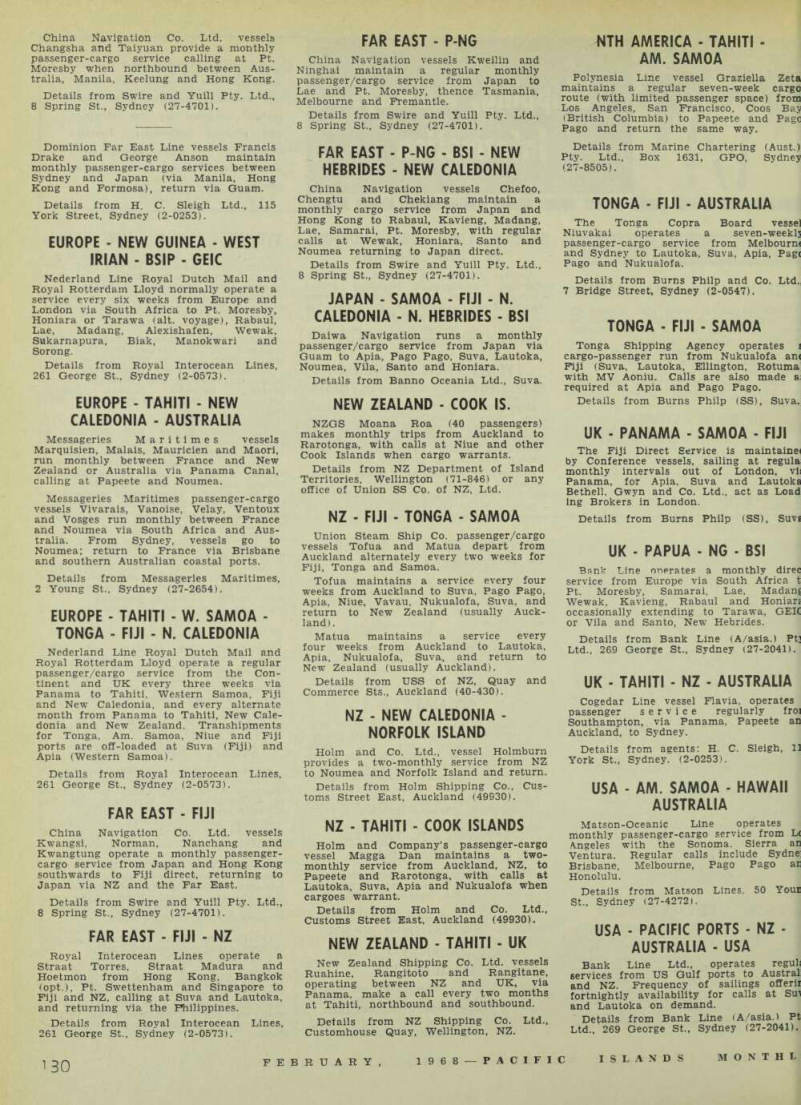 132
132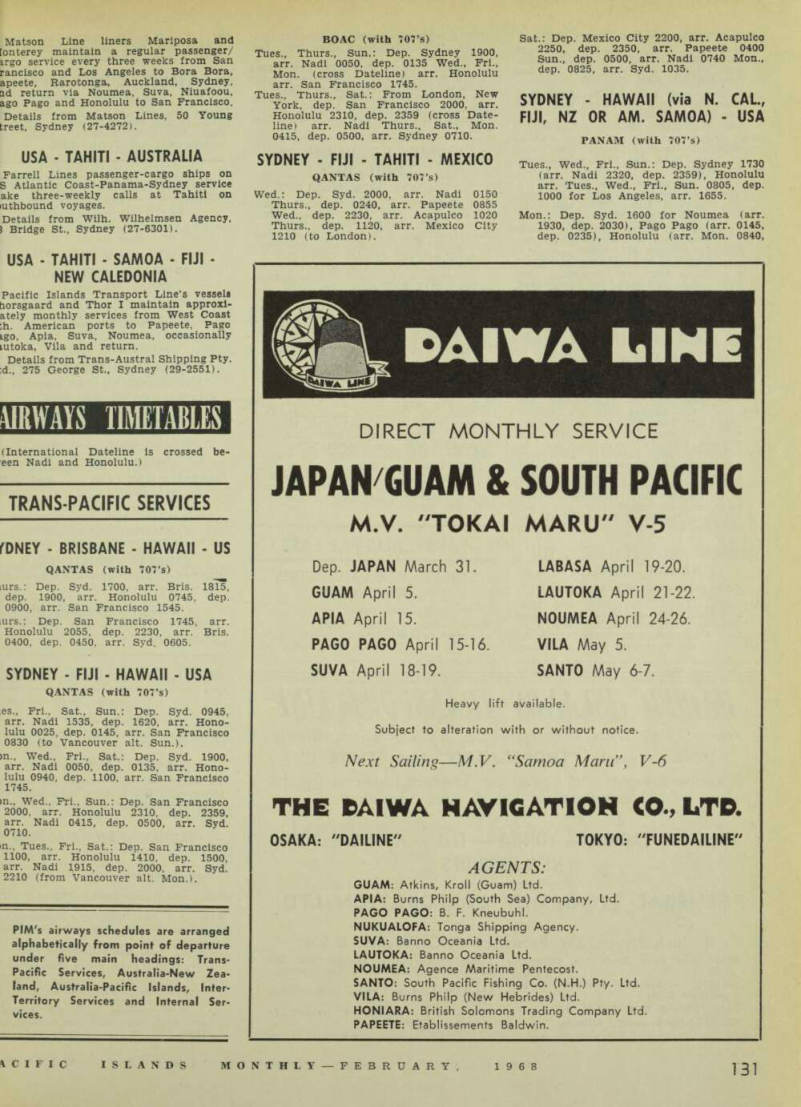 133
133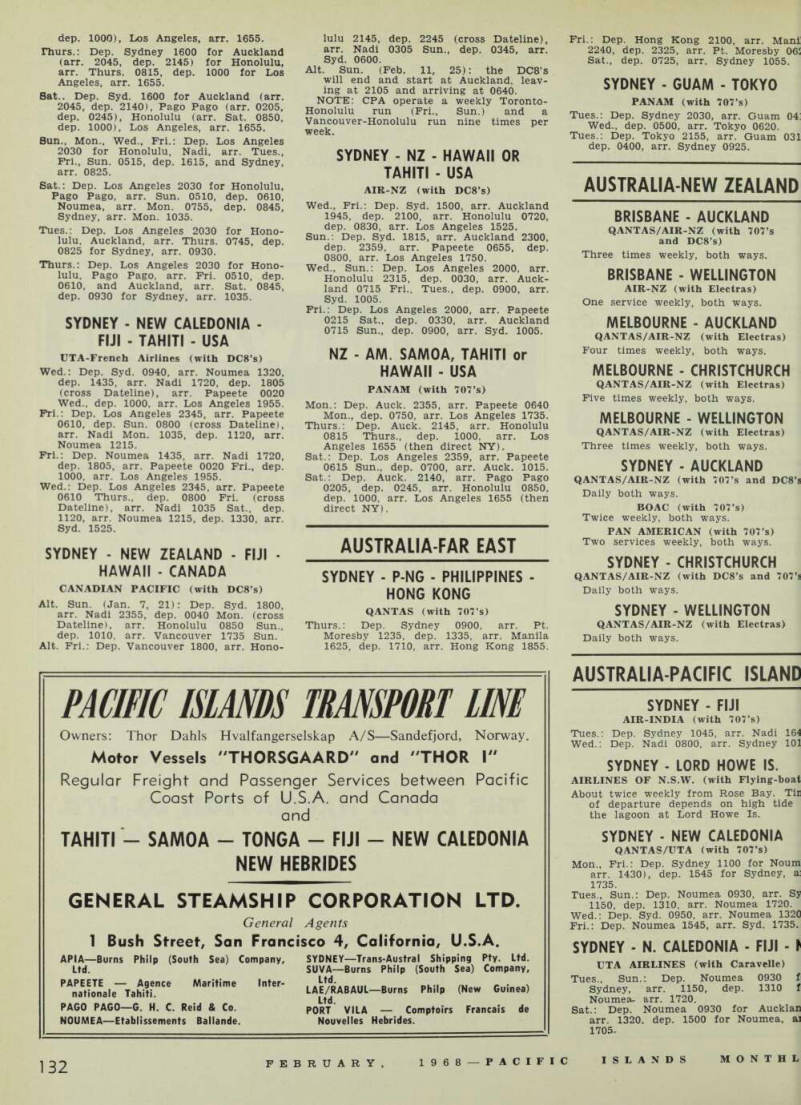 134
134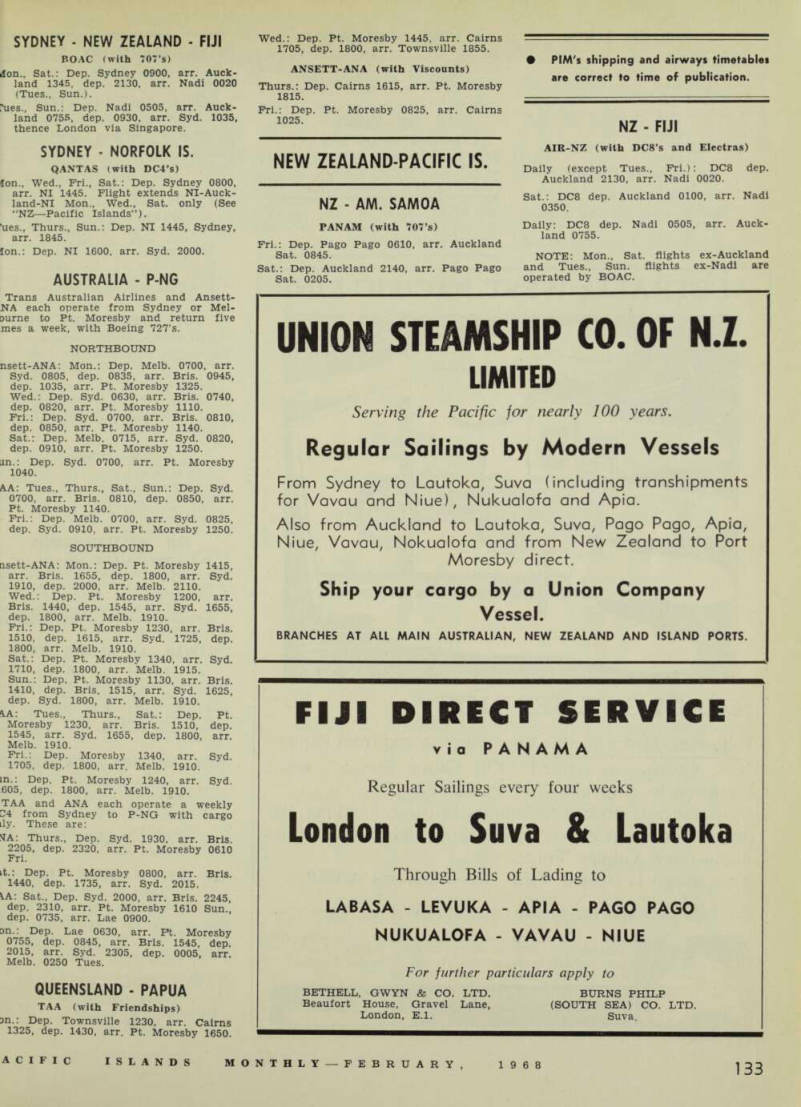 135
135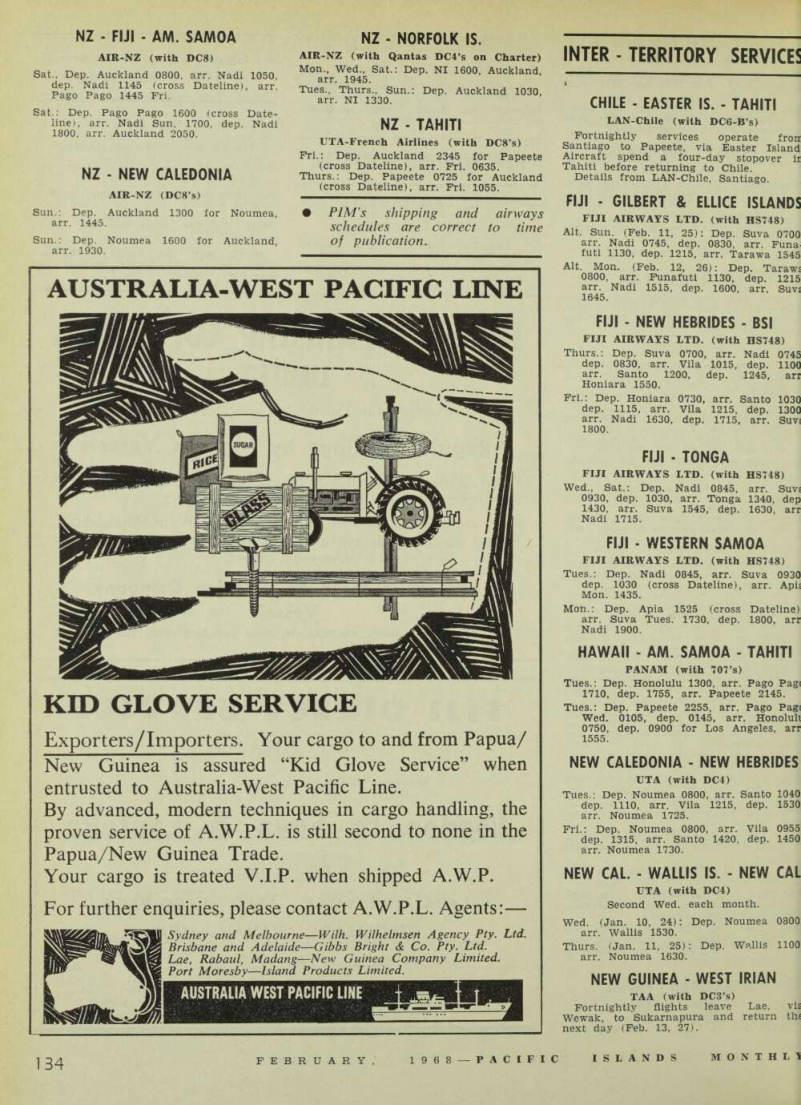 136
136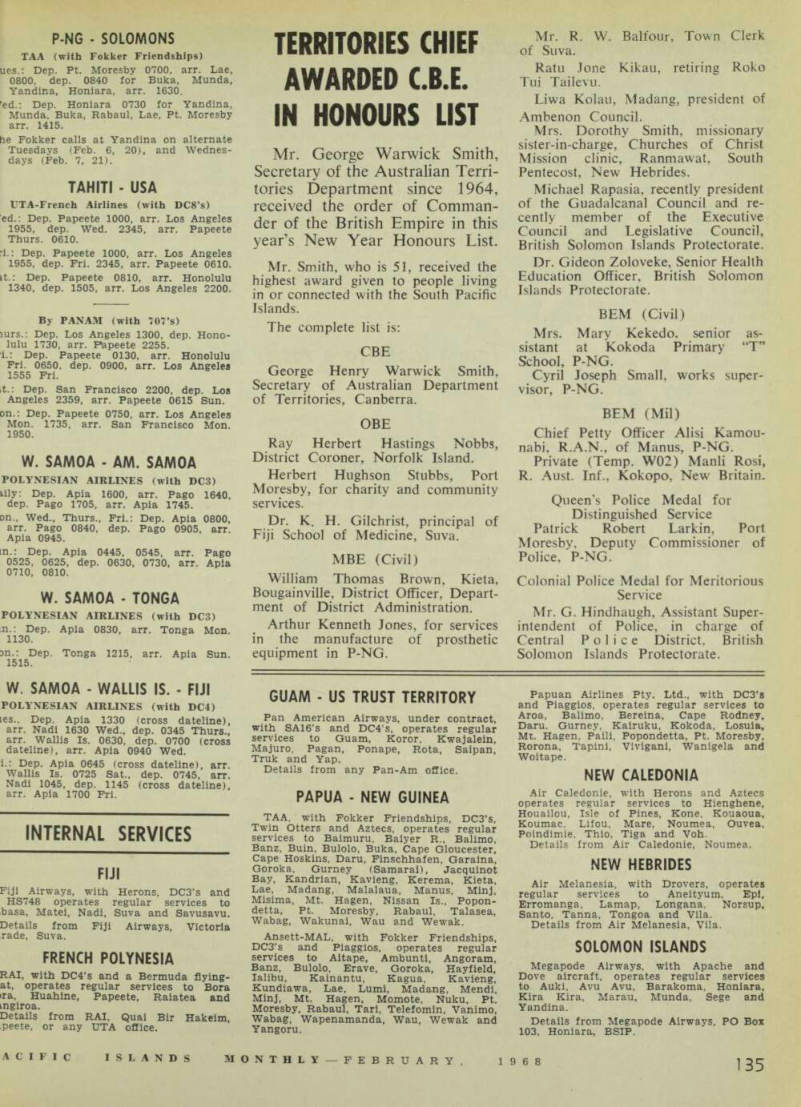 137
137 138
138 139
139 140
140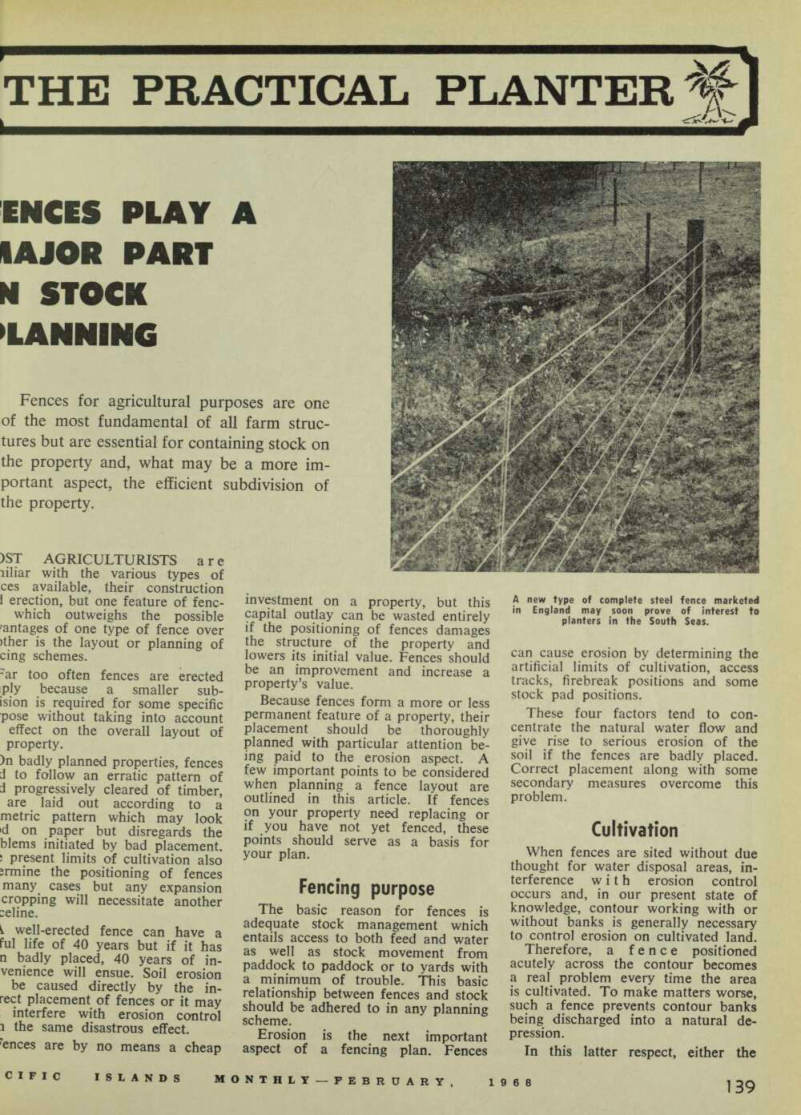 141
141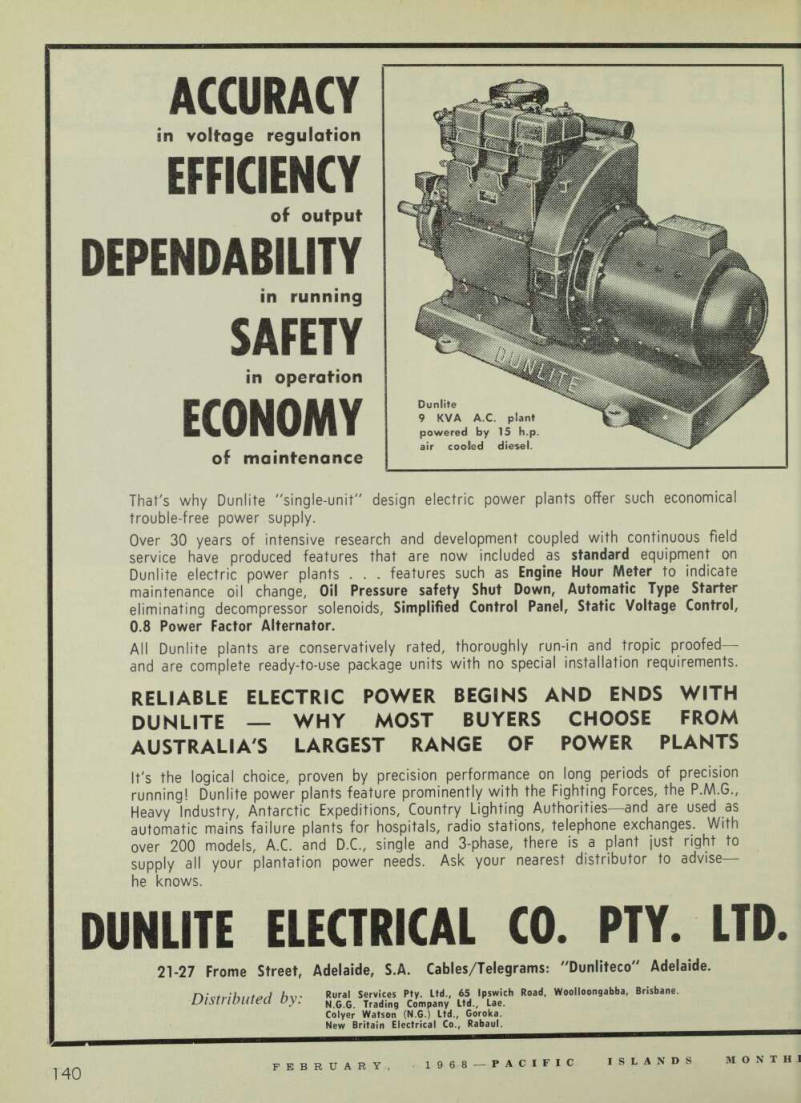 142
142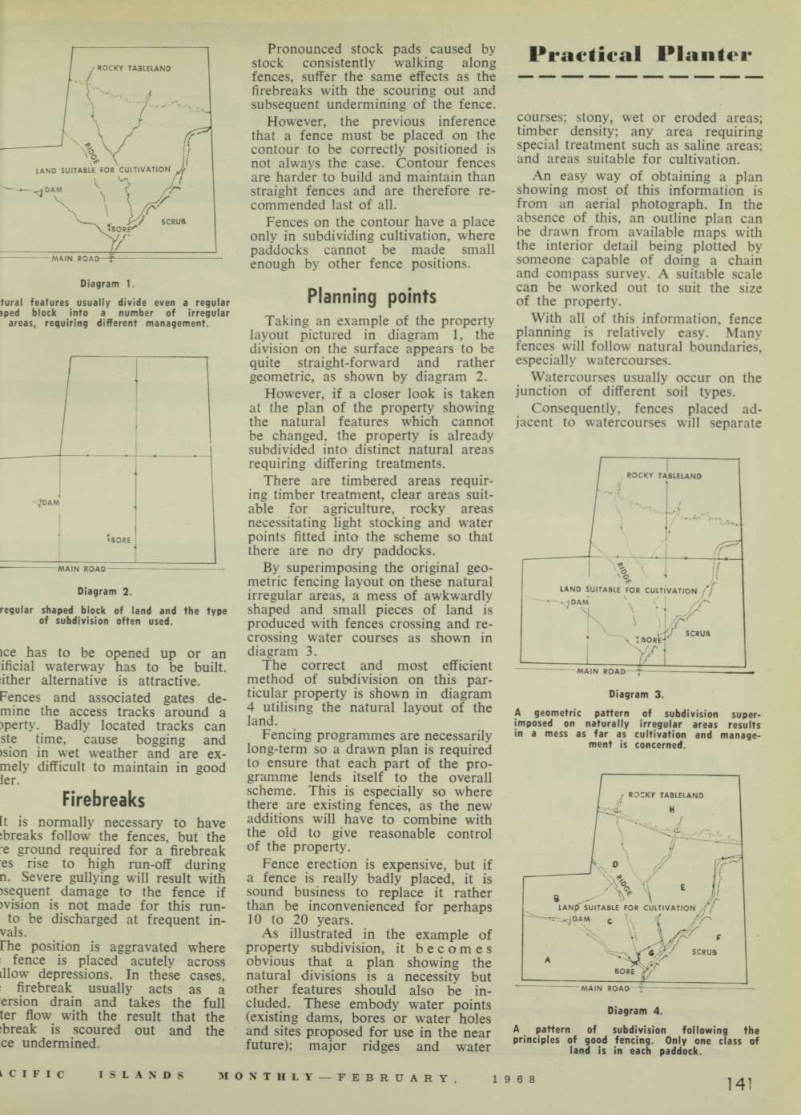 143
143 144
144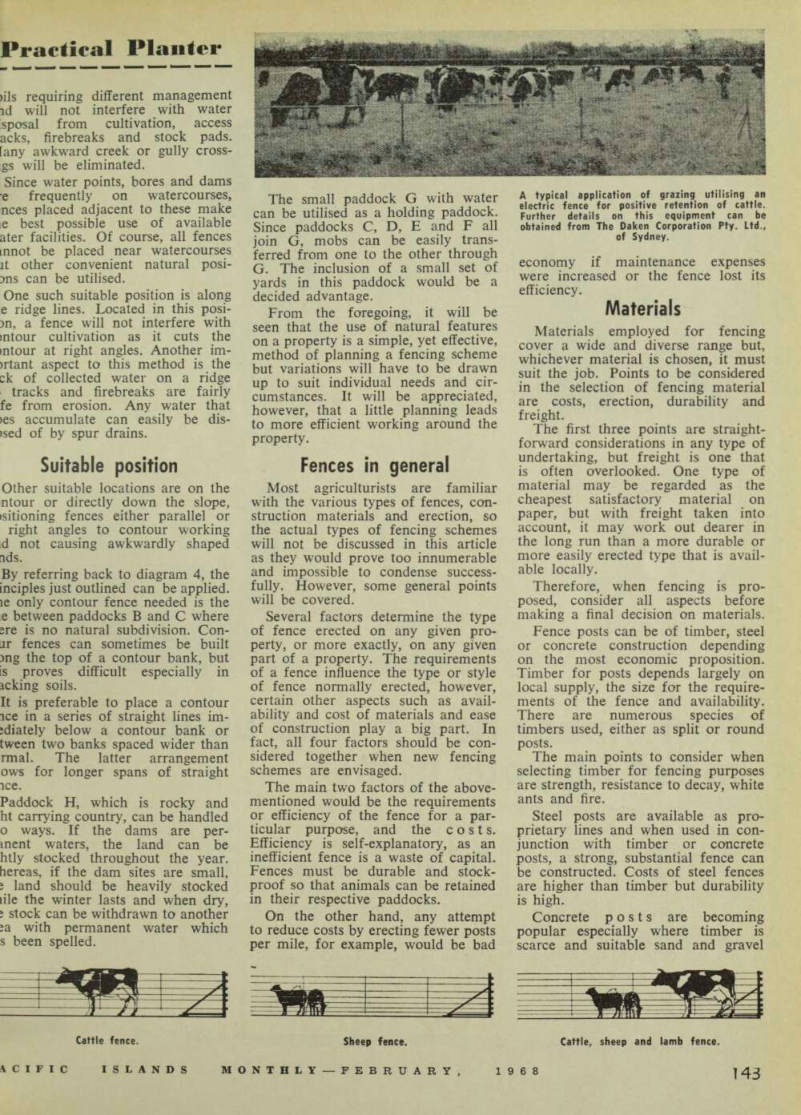 145
145 146
146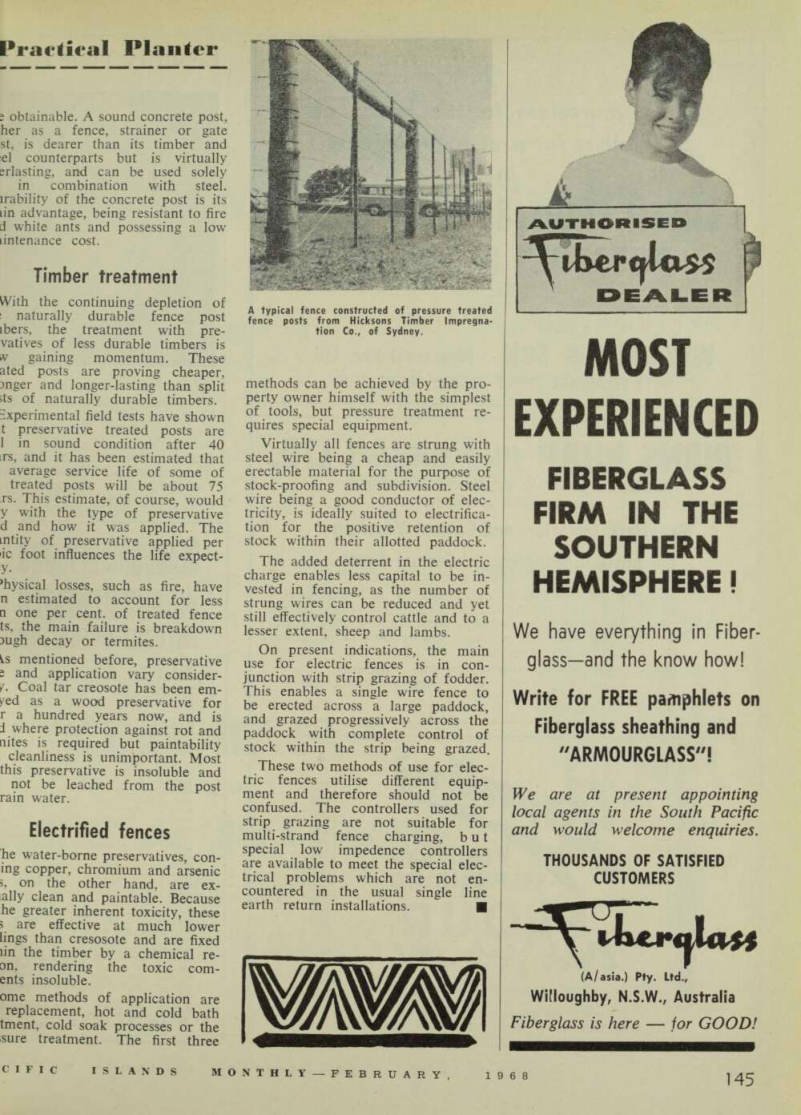 147
147 148
148 149
149 150
150 151
151 152
152 153
153 154
154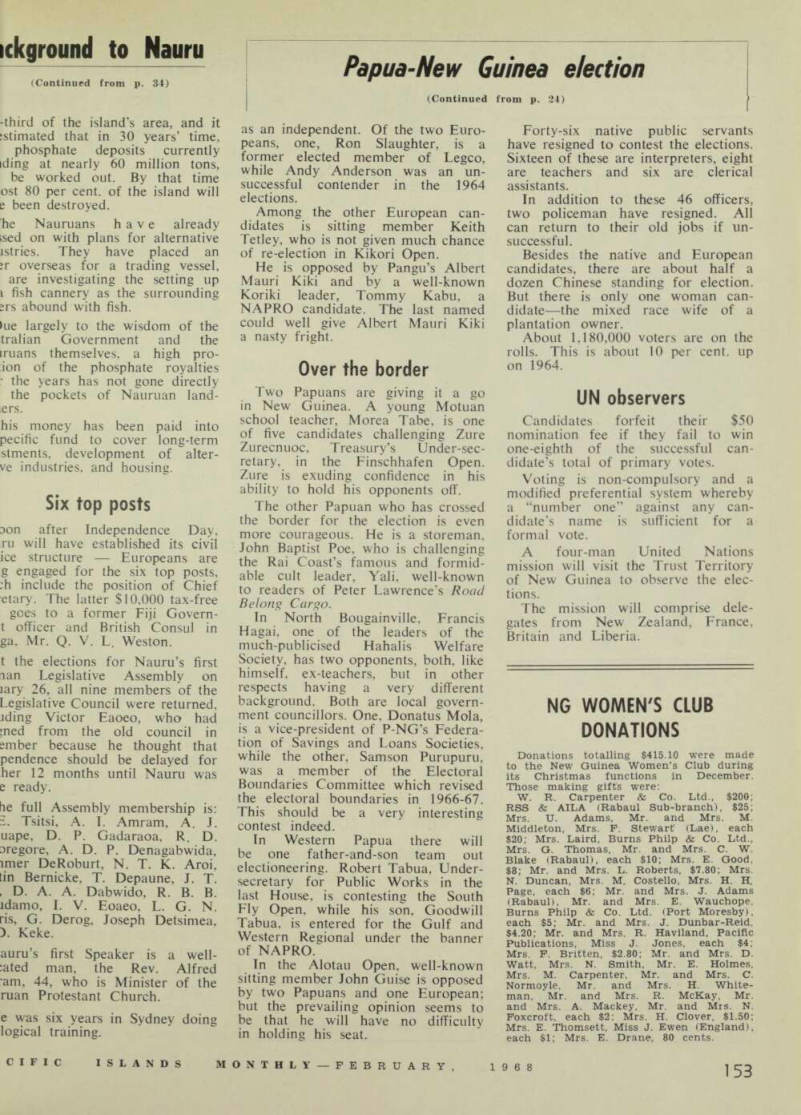 155
155 156
156 157
157 158
158 159
159 160
160