Monthly
Pacific Islands Monthly
Lews Magazine
Of The
South Pacific
January, 1968
Registered at G.P.0., Sydney, for transmission by post as a newspaper.
Australia, 40C. New
[?]Ealand, 45C. Fiji, 3/9.
[?]Rench Rac. Islands, 55 Frcs.
[?]Fp U.S. Pac. Territories,
Oc. P-N.G. And All Other
Ac Territories, 35C. Local
Currency.
Advertisements & other items, pp. 2-4 (1 item)
at the hattam a
V N N\ ft 7 5f > ♦ u» W r> ,*>v; r,/ y A All
I/imv' mtly he fairies
But you’ll have to look. Papua/New Guinea is a jungle-garden, full of twists and surprises and contrasts of time. TAA’s Ann Travaire, Australia’s leading women’s travel adviser has planned a most comprehensive and relaxing tour of the Territory.
With specially trained tour hostesses and the luxury of TAA air travel added to the arrangements.
Off the beaten track you’ll go. By launch along the coast. Take in a cocoa plantation. A scenic flight to Madang. Another launch trip. Native children singing, send you on your way in your TAA aircraft to Mt. Hagen. By coach into primitive parts of the land, where you’ll see some of the most primitive people of the world.
Market day. A native ‘Sing Sing’. A flight to Goroka. Then to Lae. Bulolo and the pine mills. And back to Port Moresby.
So this is the land the twentieth century nearly forgot. You won’t.
For details of Ann Travaire’s regular tours of the Territory, contact your nearest Travel Agent or TAA.
Fly TAA the Friendly Way
TAA
T A A 3831 / 67
BURNS PHILP (SOUTH SEA) CO. LTD.
GENERAL MERCHANTS AND SHIPOWNERS
SHIPPING, CUSTOMS AND FORWARDING AGENTS
Fiji:
SUVA
LEVUKA.
LAUTOKA.
LABASA.
SAVU SAVU.
BA.
SIGATOKA.
TAVUA.
TAVEUNI.
BRANCHES
Samoa:
APIA.
PAGO PAGO.
Tonga:
NUKUALOFA.
HAAPAI.
VAVUA.
NORFOLK ISLAND.
NIUE ISLAND.
AGENTS FOR:
QUEENSLAND INSURANCE CO. LTD.
BURNS PHILP TRUSTEE CO. LTD.
SHELL COMPANY (P. 1.) LTD.
OVERSEAS AGENTS
BURNS, PHILP & CO. LTD., Sydney.
BURNS, PHILP & CO. LTD., London.
BURNS PHILP CO. OF SAN FRANCISCO.
SHIPPING AGENCIES
• The New Zealand Shipping Co. Ltd. • Shaw Savill & Albion Co. Ltd. • Port Line Ltd. • Bank Line Ltd. • General Steamship Corporation Ltd. • Blue Star Line • Cunard Line • Compagnie des Messageries Maritimes • British India Steam Navigation Co. Ltd. • Royal Interocean Lines • Nederland Line Royal Dutch Mail/Royal Rotterdam Lloyd.
EXCLUSIVE DISTRIBUTORSHIPS INCLUDE
• AKAI TAPERECORDERS
• DUNLOP PRODUCTS
• EPIGLASS PRODUCTS
• FERGUSON TRACTORS
• HELENA RUBENSTEIN
• HITACHI ELECTRONICS
• HOLDEN VEHICLES
• JOHNSON'S WAXES
• ROLEX WATCHES
• REVLON COSMETICS
• PENTAX CAMERAS
• SUNBEAM APPLIANCES
INTERNATIONAL AIR TRANSPORT ASSOCIATION REPRESENTATIVES for
QANTAS EMPIRE AIRWAYS LTD. AIR NEW ZEALAND UNION DE TRANSPORTS AERIENS :: ALITALIA PAN AMERICAN AIRWAYS
ASSOCIATED COMPANIES
BURNS PHILP (NEW HEBRIDES) LTD.
AUTOMOTIVE SUPPLIES CO. LTD.
CORRIE & CO. LTD. O WROUGHT IRON AND STEEL
CONSTRUCTION CO. LTD. • BISH LTD.
SPECIALISED SERVICES
EXPERT ADVICE ON WORLD AND LOCAL TOURS
TRAVEL SHIPPING FORWARDING CUSTOMS
FORMALITIES INSURANCE.
REGISTERED OFFICE: SUVA, FIJI
Code Address: "BURNSOUTH"
WVN*.*,
>7r?r :v/*z f.V. ■A
MSI
■«. ml
fresh new
colours and
patterns in
vinyl
flooring
Embossed CSR Vinylflex Floor Tiles. Photograph shows the new Lido Pattern. Others new are Fiesta and Colonial. Now you can choose from six embossed CSR patterns (Lido, Fiesta, Colonial, del Prado, Travertine, Seastone), in gay, exciting colours or quiet, neutral tones. Embossed CSR Floor Tiles have a thirddimensional texture, so beautiful, so easy to keep clean. (12" x 12" x 1/10" thickness.) CSR Vinylflex Floor Tiles, Marbleised Pattern. A smooth-surfaced vinyl tile in carefully selected fashion colours.
New colours have been added in accord with changing decorating styles. (9" x 9".) CSR Vinylflex Floor Tiles are long lasting, easy to clean, and unaffected by tropical conditions. Ask for coloured leaflet. m fMirfqw ft A ■
csr Vinylflex
FLOOR AND WALL TILES
In This Issue
General
US Dollar Curbs 21 Islands Homage to Mr. Holt 28 Death of Mr. J. Mitchell 35 New Polynesian Theory 61 New Pacific Islands Year Book ... 91 Louis Becke Anthology 94 NZ Shipper Raises Freight Rates ... 107 Yachtsmen Rescued Off Q'land ... 11l "Tulagi" Captain Resigns 11l Island Firm's 40 Years 125
American Samoa
President Johnson's Visit 28 Book by Governor Lowe 94 Shipping Enterprise Fails 101 Yacht Fees May Be Waived 116
Cook Islands
Lightning Kills Fishermen 22 Extensive Hurricane Damage 22 Ancient Rarotongan Wreck 67 Rarotonga's Bisected Ships 88
Easter Island
Air Link with Tahiti 51
French Polynesia
Tahiti-Moorea Swim 25 Photogenic Moorea 37 A Drive Around Moorea 41 Air Link with Easter Island 51
Fiji
Government without Opposition ... 23 Support for Trade Scheme 35 Nadi's Weaving Centre .. 53 Currency Change Missed 76 Seven-Headed Snake 85 New Glass-bottom Cruiser 103 Sugar Industry 117 Air Agreement with W. Samoa ... 123
Gilbert And Ellice Islands Colony
House of Representatives Meeting ... 34
Nauru
Thoughts on the Future 14 Independence or Bust 24 Police Chief Leaves 29 View of Island Life 31
New Caledonia
Erie Stanley Gardner's Visit 29 New Australian Consul 121
New Hebrides
Athletics Records Broken 30 Elusive Outlaw 81 New BP Trade Ship 109 Advisory Council Meeting 122 Pioneer Missionary's Death 136
Niue
Native-born Treasurer 121
Norfolk Island
Administrator Leaving? 30 Death of C. M. G. Adam 136
Papua-New Guinea
Assembly Elections 25, 32 Ownership of Vulcan Island 27 Pt. Moresby Personality 28 Union of Churches 33 Tallest Building 34 Story of the Highlands Road 49 Booming Lae 51 Rabaul Wants Tourists 53 Cargo Cult—An American View ... 54 University Library Grows 71 Pt. Moresby-Durban Yacht Race ... 113 New Development Bank Manager .. 121 District Commissioners Appointed .. 121 Gas Strike Off Papua 125
Solomon Islands
Golf at Auki 30 Auki's Boats Ready Soon 105 Big 1967 Trade Deficit 123
Tonga
New Island Born 26 Visit by US Warship 105 Japanese Yacht's Visit 115 Death of Dr. F. Matheson 136
Us Trust Territory
New Territory Airline 53 Shipping Contract Extended 105 Ponape's Mr. Etsheit in Rabaul 107
Western Samoa
Go ahead for Potlatch Project 21 More Delay on Asau Wharf 101 Director of Education 121 Airways Agreement with Fiji 123 Apia Gets Town Market 124 Japanese Timbermen Arrive 124
DEPARTMENTS: Up Front, 14; Port Moresby Personality, 28; Tropicalities, 28; with Percy Chatterton, 32; Travel, 37; From the Islands Press, 76; Magazine Section, 81; Yesterday, 87; Book Reviews, 91; Shipping, 101; Cruising Yachts, 113; People in Pictures, 118; People, 121; Business and Development, 122; Produce Prices, 127; Deaths of Islands People, 136; Shipping, Airways Schedules, 129; Practical Planter, 139.
Advertisements & other items, pp. 6-15 (3 items)
Everything Remploy
makes has one thing
in common-quality
mi: m - ' ; Luxurious Divan Sets and Spring Interior Mattresses. Deep, durable comfort Remploy also make a wide range
of Industrial protective clothing,
and such commercial and household products as Domestic Furniture, School Satchels, Brief Cases,
Shopping Bags, Ironing Tables.
Remploy are represented in the South Pacific by
DEMKA PTY LTD
Shell House, 2-12 Carrington Street, Sydney, New South Wales, Australia V The spacious Gladstone Bag. One of many fine Remploy Travel Bags.
Easy armchair— one item in our range of Metal Furniture.
BWOCKHOff
SZZXIPZ-
ther , range of delicious « s ° man, t biscuto from Br«*' ftom ,he most varieties to choose from, Brockhc" wholesome, hues « finest l bts-rn^ There’s a V- * h X^rromf H cre are a few w J; u
CLIX
tender golden crisp cracker that tastes as if it is already buttered. The cracker you can eat by itself, or with savouries or dips.
EDINBURGH
SHORTBREAD
Made in the true Scottish tradition with fresh eggs, sugar and rich dairy butter.
WOOHOff
SavourYShapes
SAVOURY SHAPES
These delicious, one-bite ready-made savouries are ready to serve anywhere, in the convenient tray pack.
/DUNDEE'//
shortbread; > VBRcSfKHOff> ‘’V - .v ; y-j&a.
TRUMPS
" BROCXHOFf
RAISIN 1
LUNCHEON
./ BROCKHOIr
l&r Malt O Milk
lira
Salada
bphmd ovwi crimp by
SALADA
»■ A crisp, light, golden cracker to enjoy with all meals and snacks. The slight touch of salt brings out the full flavour of all spreads, toppings, & cheese.
Australia’s finest biscuits baked oven-crisp by Brockhoff.
Wrapped in MXXT/A, the most moistureproof ‘Cellophane’ in the world.
Look for the baker on the packet.
ARNOTT, BROCKHOFF, GUEST Pty. Ltd,
53-71 Huntingdale Rd., Burwood, E. 13, Victoria, Australia.
Cables ‘Brockbick’ Melbourne.
Telephone 28 2888 mm
/ ■ « ... m m ; - t m i ss mm : ey mm
NOW THE TOUGH ONES ARE
TOUGHER THAN EVER
PLUS THE SAFEST IN THEIR CLASS
First comes the Toyota Land Cruiser.
Same reliability, but now new safety features.
Safety designed and engineered to meet all the American safety regulations.
A powerful 6 cylinder, 145 HP engine is coupled with 4-wheel drive and a 3-speed gear box with 2-speed transfer case to give you power to get over the toughest terrain.
There are lots of Land Cruisers to choose from, 4-door wagon, the 2-door wagon, 2-door Canvas Top and Pickup.
DISTRIBUTORS- NEW GUINEA & PAPUA: THE PORT MORESBY FREEZING CO.. LTD.. MARY ST., PORT MORSBY, PAPULA / FIJI ISLAND; AUTOMOTIVE SUPPLIES CO., LTD., P.O. BOX 143 LAUTOKA / AMERICAN SAMOA. BURNS PHILP (SOUTH SDA) CO., LTD.. PAGO PAGO / WESTERN SAMOA; BURNS PHILP (SOUTH SEA) CO., LTD., APIA / GUAM; RICKY’S AUTO CO., P.O. BOX 1458, AGANA
Next comes the Toyota Dyna.
Toyota’s dual-wheel light truck. Lots of changes here, like more engine, performance and improved starting.
Strengthened powertrain. And comfort and safety features. All new.
Plenty of Dyna models to choose from, too.
So choose the tough ones, made tougher and safer from Toyota ... the largest auto manufacturer in Asia.
TOYOTA MOTOR
JAPAN'S LARGEST AUTO MAKER
Australia supplies and Australia buys
Paper to Papua, sunglasses to the Solomons, commercial vehicles to New Caledonia, fuel to Fiji. The variety of Australian products selling in the Islands is wide. So is the range of services Australia makes available: consulting engineers, ship repairs, hotel outfitting and many others. Australia is a major trading country, exporting to world markets.
Australia is also a big import market. It is a source of investment capital for Pacific territories. It seeks an exchange of trade and tourists with the Pacific Islands Australia's fifth largest market.
For information on Australian products, manufacturers and agents, contact the Australian Trade Commissioner for the Pacific Islands. His address is 12th Floor, A.N.Z. Bank Building. 68 Pitt Street, Sydney. N.S. W. 'Phone 20372.
Australian Department of Trade and Industry
318 A
Headache?
I IS u. i m Get rid of it fast with Disprin
the soluble aspirin
The reason why soluble aspirin is so often prescribed for really fast relief when you’ve got headache or flu, is because it dissolves completely. Only soluble aspirin can do that. That’s why it acts so quickly, with little risk of stomach upset. Take Disprin, the soluble aspirin, the form of aspirin often prescribed.
For Trade Enquiries: Reckitt & Colman Pty. Limited, Wharf Road, West Ryde, N.S.W., Australia.
Cables: Reckitts Sydney
DISPRIN —A RECKITT & COLMAN PRODUCT
SPR
Bit
relieve
HPSI6A
ALUMINIUM
ADJUSTABLE
SUN
LOUVRES
For more than 50 years the products of Wunderlich Limited manufacturers and distributors of Australia’s largest range of building materials have been exported throughout the Islands of the South Pacific.
The company's range of products, which are available to meet the needs of architects and builders, is well known. • Wunderlich Aluminium Adjustable Sun Louvres are made fa order to a standard shape (width and profile)—in aluminium up to 12' high —to operate from inside or outside the building.
Free Colour Catalogues Available pr 111 / / Head Office: 393 Cleveland Street, Redfern, Sydney, 2016, N.S.W., Australia. Phone 69-0366.
r I would so much like to show
you the India I love
The India I love is an India of beautiful places, true. Places like the Taj Mahal, like Jaipur, the pink city, or Udaipur with its palace hotel on a lake. But even more than its varied beauty, its tong and romantic history, it is the people of India who make India so wonderful to visit.
Our beautiful dark-eyed women, who wear the sari draped differently in every district of India—our craftsmen, skilful in silver and brass and wood, ivory, silk and precious stones.
And there is one quality we all have in common —we are courteous and friendly folk.
These are the qualities we value, as people must who have such a diversity of race and customs as we have among the many peoples of our land.
You'll see what we mean when you get in touch with your Travel Agent or with us at Air India. Our greatest pleasure is to help you.
The India I love begins with Air India.
Let me show you! tt n ...
A with BO AC & Qantas
AIR-INDIA
the airline that treats you like a maharajah worldwide A21087.1005C.
GENERAL
FOODS
AT/ V ...bring you the good things in life!
Steak
HU n *97* rop wm
SOTt
r **n BA *(*r R *o*u Irvines Pastry, Irvines Cakes, Irvines Cookies, Irvines Frozen Pies . . . more quality General Foods products. They’re made in the most modern factory of its type in the Southern Hemisphere.
Trade enquiries to General Foods Corporation (N.Z.) Ltd., P.O Box 722, Auckland, N.Z.
A 4256
ERINMORE
MIXTURE
such good rich flavour
-distinctive aroma
there's more of both in ERINMORE
Erinmore makes friends in any company. Smokers welcome its good rich flavour. Others, womenfolk especially, enjoy its distinctive aroma. This comes from the century-old blending process, secret to the makers of Erinmore.
No other tobacco can give you so cool and sweet a smoke.
ERINMORE
in Northern Ireland by Murray, Sons & Company Limited, Belfast Manufacturers of fine tobacco since 1810,
Australian
butter & cheese
... help children grow faster
... give children more energy
'y m a * i Ml •' ...
AUSTRALIA
From the rich pastures of Australia come the finest in dairy products including the finest cheese, butter, ghee and canned or powdered milks. ■ Unsurpassed for flavour, Australian butter gives you full Vitamin A and D content. Australian cheese gives you excellent concentrated food value full of protein and rich in calcium. ■ For energy, goodness and flavour choose Australian dairy products.
Always look for the word 'Australia' on the label Trade Enquiries to: Your resident Australian Trade Commissioner or— Australian Dairy Produce Board,
G.P.O. Box 1657 N,
Melbourne. Victoria, Australia. 3001. Biat
9
PACIFIC ISLANDS MO NT HLY JANUARY, 1968
10
JANUARY, 1968 PACIFIC ISLANDS MONXHLt
Pacific Islands
Monthly
Book Publishing Division
Editor: Judy Tudor.
Pacific Islands Monthly
Editor: Stuart Inder.
Assistant Editor: Robert Langdon.
Branch Offices
Melbourne: Newspaper House, 247 Collins St., Victoria, 3000. Tel.: 63-7053.
Fiji: Pacific Publications (Fiji) Ltd., Fiji Times Building, 20 Gordon Street, SUVA. Tel.: 25601.
Fiji Times Office, Vidilo Street, LAUTOKA.
Tel.: 60-422.
Papua-New Guinea; Pacific Publications (N.G.) Pty. Ltd. Representatives: Mrs. Joan Carter, P.O. Box 16, PT. MORESBY (Tel.: 2504); The Manager, P.O. Box 227, LAE; Mr. Steve Simpson, P.O. Box 154, RABAUL (Tel.: 2547).
Representatives
New Zealand: J. 0. Whitcombe, C.P.O. Box 2229, Queen Street, Auckland. Tel.: 76056..
United States: Mrs. A. L. Craib, 1631 80th Avenue, Oakland, California, 94621.
Tel.: LOckhaven 8-1201.
United Kingdom: S. R. Warman, Candlewick House, 116-126 Cannon Street, London, E.C.4.
Tel.: Mansion 3674/7.
H. A. Mackenzie, 4A Bloomsbury Square, London, W.C.I. Tel.: Holborn 3779.
Agents
All main trading firms and stores in the Pacific Islands.
Pacific Publications Pty. Ltd. is the Australian agent for THE FIJI TIMES.
Subscription Rates:
"Pacific Islands Monthly" is air-freighted to all subscribers and agents in the South Pacific; copies to other areas go by surface mail.
Australia (inch Lord Howe Is., and Thursday Is.): $4.50 Aust.;Papua-New Guinea, Norfolk Is, Nauru, 8.5.1., G. & E. Group, Tonga and New Hebrides: $4.00 Aust.; New Zealand: $5.25 NZ; Cook Is., Niue and Western Samoa: $4.00 (local currency); Fiji £2/5/- (local currency); American Samoa and U.S Pacific Territories: $B.OO (local currency); French Pacific Territories —New Caledonia, Tahiti, etc.: 660 French Pacific francs; United States of America: $9.00 U.S.; United Kingdom and elsewhere: £2/15/- Stg.
Airmail postage to USA, UK and elsewhere is additional.
Up Front
with the editor
That great haze of phosphate dust which has obscured events on the small island of Nauru during these last few months of the hectic rush to independence will take many more months to settle. Not until it has settled do I think I have much hope of knowing just how the citizens of the world’s smallest republic will manage their new independence.
rm certainly not prepared to make any predictions. This may appear odd if you know that for some years I have been actively sympathetic to the Nauruan request for control of the phosphate and for political free dom. I have given my support often, both in print and on the radio, and I’ll have some satisfaction in being able to wave a Nauruan flag this January 31.
But being entitled to the right to independence, and having the re sources and the capacity to make it work, are not the same thing as making it work, and I have never been confused about the difference.
Having decided that the Nauruans were sincere about their requests, as I did some time ago, the first thing to do was to give them support.
The resources for an independent economy were always there. And with their ownership of the phosphate deposits achieved half way through 1967, they were thus in a position to set off on their own in a far sounder economic state than most territories that have achieved inde pendence before them.
I think that the Nauruans have the personal capacity for indepen dence, even accounting for the fact that the island is not exactly over burdened with men of the calibre of Hammer Deßoburt. I believe they have the capacity despite the views of some knowledgeable and undoubted good friends of the Nauruans who shake their heads over the recent swift turn of events and say moodily “The Nauruans just haven’t got it. They’re spoiled. They’ll never make it work”.
The Nauruans have got it. But will they decide to use it? Will they get stuck into the job and make it work?
Well, as I said, I’ll be waiting until the haze lifts.
I’d be surprised if there were any trouble from the dissenting voices to independence, represented by Councillor V. Eoaeo, who has gone on record lately asking that inde pendence be deferred for another year or so, as there has been “no need for this acceleration”.
Over the many months of the negotiations the trusteeship powers hopefully looked for signs of real dissent and discontent in the com munity, but found none. The Nauruans had closed ranks.
No doubt this was easier to do in Nauru than elsewhere because, of the population of 3,000 Nauruans, about 2,000 are under the age of 20, and about half of these are under the age of 10. But whether for the right reasons or the wrong ones, most of the people who*-have the respon sibility of making the decisions on Nauru have supported Hammer Deßoburt in his demands for inde
pendencc, and this is what matters.
If trouble comes in the first few years it will be because not enough Nauruans want to put their shoulders to the wheel, preferring the role of absentee landlord, and allowing others to earn their money for them.
It will be because the youngsters have not been taught that application is needed in a competitive world; that high failure rates at school, truancy, lack of discipline—all of which have been a marked feature of the educational scene on Nauru in recent years—are no way to develop a nation.
And if trouble comes it will come because of the Nauruan dislike of self-examination, of Nauruan sensi tivity to criticism.
Independent Nauru and the people in it can expect now to be more in the public eye, and not everything that will be written will be con structive, and some of it will be downright damaging. How will the new Nauru react? Ban its critics, like Cambodia and South Africa? I confess I don’t know, but I am not apprehensive.
Nauruans have their deadly sins, but they have their graces, too. “This may be a small people in terms of numbers,” the New Zealand repre sentative, Mr. Craw, told the Trustee ship Council in November when moving for the termination of the Trusteeship Agreement, “but it is a unified, proud and able people, a people imbued with a powerful sense of being, in themselves a quite unique human group.”
I hope when the haze lifts, Mr.
Craw will be seen to be right enough.
By the way, Mr. Craw was one of a handful of UN representatives who congratulated both the Nauruans and the Australians on the satisfactory completion of Nauru’s trusteeship.
The one exception was Soviet repre sentative Shakkov, who saw Nauruan independence entirely as a “great and invincible national movement waging a decisive attack against the forces of imperialism and colonialism, oppression and enslavement.”
Which reminded me of the pleasant lunch I had in Sydney a few months ago with a visiting Soviet professor, whose sound knowledge of South Pacific political problems won my admiration.
“If there are people like you in Moscow,” I said, “why does the Soviet spout so much South Pacific nonsense in the UN?”
“That’s nothing to do with me,” said the professor. “That’s politics.
There are those of us in Moscow who know what is really going on.”
Stuart Inder
Our Cover
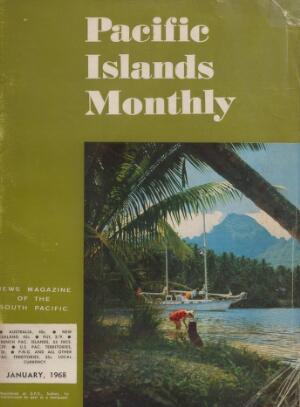
Ever since yachtsmen began sail ing round the world for pleasure— and they’ve been doing it now for close on 100 years — Robinson’s Cove in Papetoai Bay, Moorea, has been one of their favourite South Seas anchorages. This is hardly surprising, as the scenery and atmosphere in Papetoai Bay is as near to a yachts man’s idea of paradise as he is likely to find. Captain Cook was the first European to discover this idyllic spot; but no one now seems to know who Robinson was who gave his name to the yachtsmen’s cove. Photo: James Anderson.
Advertisements & other items, pp. 16-22 (2 items)
14
JANUARY, 1 9 6 8 -PAfiiriC ISLANDS MONTHLY
Established 1930: 38th Year of Publication.
OWNED AND PUBLISHED BY
PACIFIC PUBLICATIONS PTY. LTD.,
29 ALBERTA ST., SYDNEY, N.S.W., 2000.
Postal Address: G.P.O. BOX 3408, SYDNEY,
N.S.W., 2001.
Telegraphic Address: PACPUB, Sydney.
TELEPHONES: 61-9197, 61-7101, 61-4369.
Chief Executives: Managing Director: R. W. Robson.
General Manager: Selwyn Hughes.
t&o/u&ood
OFFERS YOU
cmm>
N 0.2258 No. 234 Padlock Padlock ViOEv n NO. 210/211 Streamiatch No. 245 Padlock No. 201 Nightlatch No. 203 Deadbolt No. 570 Series Cylinder Mortice Locks & Latches No. 400 Door Closer No. 402 Door Closer No. 137 Locking Lever Handle No. 590 Short Back Set Cylinder Mortice Deadlocks ■ No. 270 Coin Machine or Cabinet Lock iii
a full range
of hardware
INCLUDING
locks for
every purpose
No. 2258 Padlock Safe, inexpensive 5-disc tumbler padlock. Solid die-cast case.
Brass shackle. 900 key changes.
No. 211 Streamiatch Solid brass cylinder and bolt.
Over 78,000 different key patterns.
Many popular durable finishes.
No. 234 Padlock 5-pin tumbler mechanism. 78,000 key changes. Solid extruded brass case, steel shackle.
No. 245 Padlock For heavy duty, top security. 5 pick-proof tumblers. 78,000 key changes. Solid extruded brass case. Shackle locks both sides.
No. 570 Series Cylinder Mortice Locks and Latches All moving parts are of solid brass, precisely machined and finished to give a lifetime of service.
No. 201 Nightlatch Solid brass bolt works on a double spring action. 78,000 key changes.
No. 400 Door Closer Pneumatic action. Specially designed for use on medium internal doors up to 70 lbs. weight.
"Hold-open" checking device holds door open at any desired angle.
No. 402 Door Closer Fast, positive pneumatic action.
Powerful internal spring. Easy to regulate closing speed. Exclusive “hold-open” feature.
No. 203 Deadbolt Ideal for back doors. 78,000 key changes.
No. 590 Short Back Set Cylinder Mortice Deadlocks For hinged or sliding metal or wooden doors.
No. 137 Locking Lever Handle 5-disc tumbler mechanism. Locks or unlocks with a 90° turn of key.
Actuating mechanism also engages or disengages with a 90° turn of lever handle when the assembly '• is unlocked by the key.
No. 270 Coin Machine or Cabinet Lock 5-disc tumbler mechanism. 960 key changes. Adaptable to a wide variety of applications and functions.
Manufactured in Australia by
Ogden Industries
PTY. LIMITED
Edward Street, Huntmgdale
Victoria, Australia
28
We created this for the
world’s most experienced airline
We created this as a modern tribute
to ancient Greece
This one has a bit of both and a substantial
character of its own
The Day-date combines the rugged precision of the GMT- Master with the elegance of the King Midas from the Benvenuto 1 Cellini collection (a limited edition of men’s watches... inspired by the works of Cellini... very expensive).
And the Day-date has distinctive features of its own. The Geneva-made Oyster case is hewn from a solid block of gold or platinum. The bracelet, also in solid gold or platinum, is designed specially forthe case. The movement has won the highest possible distinction for t tS&JEx ' precision and qualitya chronometer can normally obtain! A calendar shows the date and the day of the week spelt out in full.
The Day-date is available only in gold or platinum and is quite possibly the most brilliant timepiece in the world today. Wear it when you fly your jet to the conference at Brasilia, swim off your yacht in the Aegean, or address the United Nations.
With a Rolex on your wrist, you have entire worlds in your hands. •t When a man has a world in his hands, you expect to find a Rolex on his wrist HO LEX
GENEVA
Rolex watches are available through Burns Philp (South Seas) Co. Ltd., Suva, Lautoka and branches throughout the Fiji Islands and the South Pacific. In New Guinea through Burns Philp (New Guinea) Ltd., Port Moresby and all branches in Papua/New Guinea.
HOLBROOKS
X i's- 4. $■
Australia’s latest selling
Worcestershire Sauce
makes the difference
Zesty! Tasty! Different. With a flavour all its own.
That’s Holbrooks Worcestershire Sauce. The most delectable sauce you’ve ever tasted.
It adds hearty good taste to roast meats, steaks and chops, fish, curry and game, adds rich new meaning to gravies. Makes a great appetiser in tomato juice. Holbrooks Worcestershire Sauce. Great Sauce.
Australia’s largest selling Worcestershire Sauce.
Try it. You’ll love it.
For trade enquiries; Reckitt & Colman Pty. Ltd., Wharf Road, West Ryde, N.S.W., Australia. Cables: Reckitts, Sydney.
A RECKITT & COLMAN PRODUCT
HBK
M at * I 5
SEPPELT
yj
VLVX4OB
AUSTRALIA’S LEADING WINE
IN 39 COUNTRIES
m Moyston Claret is a vintage-dated claret, smooth and full of character, that will increase the enjoyment of roasts and steaks or any meal. Arawatta Riesling, a light, delicate dry white wine with a full Riesling bouquet, is perfect with whitemeat and light luncheon dishes.
Seppelt's knowledge of wine-making ensures that each Seppelt wine is true to its type and comparable to the world's finest.
SEPPELTS
CLARET
r-
i RIESLING IJ
AUSTRALIA-KT TUftA
Of AUSTRALIA NfflnYl Do the right thing every time— always serve Seppelt wine.
M WINNER OF AWARD FOR OUTSTANDING EXPORT ACHIEVEMENT A5Y505
CROSS-NORTHERN STAR
Linking the
PACIFIC s ISLANDS with . . .
England, West Indies, New Zealand,
Australia and South Africa • One Class liners, Southern Cross (20,000 tons) and Northern Star (24,000 tons) —airconditioned with the latest in amenities.
Regular sailings approximately every six weeks via Panama Canal and South Africa* calling at a selection of the following ports: Fiji, Rarotonga, Tahiti, Acapulco, Balboa, Curacao, Trinidad, Barbados, Miami (Pt. Everglades), Bermuda, Lisbon, Southampton, Las Palmas, Cape Town, Durban, Fremantle, Melbourne, Sydney, Wellington, Auckland.
For full particulars apply: — Fiji—Any branch or agency of Burns Philp (South Sea Co. Ltd.). ' Cable Address: Burphil.
Tahiti. Messageries Maritimes, Papeete.
Cable Address; Messagerie Papeete.
SHAW SAVILL LINE
Fs* m * S.S. "Northern Star”
(24,733 TONS)
w >
WiM
(\m
PHC
w\», tatOit-JOUS* fMrwwnwwtVft r ™*»‘w» •
me MS PHD
top of
the tree
mi * . . . that’s ICI Sporting Ammunition, Tops for accuracy tops for reliability tops for hard hitting power and all round peak performance.
There’s an ICI cartridge for every shooter, whether it be ICI shotgun cartridges for dense, even patterns and economy, ICI rimfires for hard hitting accuracy and reliability. ICI centrefire for heavier game, or ICI slugs and pellets for lots of fun at low cost.
Get with the top shooters load up with the top ammo
SPORTING
AMMUNITION
AM IT*
Qrnotts
famous
Biscuits
TRIPLE
WRAPPED
PACKS
<5 C * % ■ i ft W m m. -f '
Serve simply
with Sao...
There is no Substitute for Quality
to foreign investment
Triumph For Prime Minister
W. Samoa opens the door to foreign investment
Prom an Apia correspondent Three years of negotiation and widespread, sometimes bitter debate, culminated in December with Western Samoa’s Parliament passing the Potlatch Bill without amendment, and without one voice raised in dissent on the final vote.
Apart from minor legislation, which is regarded as a formality, the Potlatch Bill is the final enactment needed to authorise the US firm of Potlatch Forests Inc. to develop the timber industry on the island of Savaii. The Potlatch Bill provides for taxation and other concessions as an incentive to the company to make its multi-million dollar invest ment.
Up to SUSB,OOO,OOO may be in vested over the next five years in developing loading, water supplies, electricity and a mill capable of handling 50-million board feet per year. The exact figure is not known.
The development will be at Asau, which will become the much needed second urban area in Samoa.
It is expected that top Potlatch officials will make the trip to Apia in January for the formal signing of the contract.
The enactment of the Potlatch Bill represents a giant step forward in the development of Western Samoa, for it supplies evidence of a major change in Samoan political attitudes over the past decade. Potlatch, which
itself is making its first venture over seas, will be the first foreign company to make a major investment in Samoan development.
The arguments that surrounded the proposal arose not so much against foreign capital as such, but out of the ingrained fear of Samoans, reinforced by events in Hawaii, Tahiti and to a lesser extent in Fiji and New Zealand, that they might lose their land to outsiders.
Once Prime Minister Fiame Mataafa put these fears to rest the bill had plain sailing. Most of the land in Savaii is customary land which cannot be sold. Forest lands will be leased from the owners by the Government, who will deal with Potlatch.
The development of this timber industry, said Mataafa, would be an ideal way of bettering the lot of the “landed but penniless masses”.
"Triumph"
It was a triumph for the Prime Minister. Only in November, follow ing the critical attitude of the Assembly’s Bills Committee to various pieces of Potlatch legislation, the Prime Minister had finally lost patience.
He told the House then that if an amendment of the Bills Com mittee concerning the Forests Bill was passed he would resign and ask the Head of State to dissolve parlia ment.
That sensational development came after the acting chairman of the Bills Committee, Fuimaono Moasope, said that the committee was guided by what was best for Samoa. This offended Mataafa, who was also angry at a previous remark by Fuimaono that if the bill were passed then “woe unto Samoa”.
The Prime Minister said the words clearly implied that Cabinet was try ing to introduce something damaging to the people. He said he had. naturally, been subject to disagree
able criticism during his eight years as Prime Minister, but “this was too much to take”.
He said that if the particular amendment was passed he would take it as a vote of no-confidence in him self and resign.
The Speaker called for an adjourn ment, seeking guidance from the Almighty in a prayer as he did so.
The meeting resumed briefly and Fuimaono withdrew his offending remarks.
The next morning Mataafa took the floor and said that his action had been entirely within the constitution.
He said he and Cabinet were guided only by what was best for the people as a whole, but that some members were apparently engaged in a whispering campaign, discrediting Cabinet’s actions and causing un certainty among other members.
He said that he had even heard rumours that he was pushing the Potlatch legislation because he had shares in the company.
“This is quite untrue,” the Prime Minister said.
“I wish someone would move that
Prime Minister Mataafa
the sawmill be stopped, then we could arrive at a decision and save a lot of time after we have been working on this proposal for three years!”
One of the senior members, Pilia’e, asked the Prime Minister to with draw his ultimatum. Then the Speaker asked whether anyone wanted to move a motion of no con fidence. None was forthcoming and the debate continued. The amend ment was passed on the voices; but the Prime Minister had made his point.
That argument and the later debate in December proved what some Cabinet Ministers had been saying all along—that only the prestige of Mataafa would get the bill through the House.
Cabinet also to blame
But Cabinet must take its share of blame for the situation. Negotia tions have been in deep secret, and much of the hostility towards the Potlatch deal has stemmed from ignorance of just what was intended.
Opponents of Potlatch played on Samoan land fears to embarrass the Government.
In the debate in December the situation was much cooler. Most MP’s speaking on the bill saw in Potlatch the promise of a major impetus to a lagging economy. This was a remarkable change in attitudes from a short 10 years ago, when most members saw in foreign capital, tourism, and other develop ment projects, only a threat to the traditional way of life.
“The Government should do more to encourage such investors as Pot latch,” one member told the House.
Now that Potlatch has gained such decisive approval, other investors, eyeing the great untapped potential of the land and waters of Western Samoa, may not be far behind. See "First Japanese Investment in Samoa", p. 124.
U.S. Dollar Cuts May
Mean Fewer Tourists
Pacific Islands leaders were closely studying the likely effects on them early in January of President Johnson's decision to reduce Ameri ca's balance of payments in 1968 by SUS3,OOO million.
US investment in developed countries outside of Western Europe, including Australia, are to be cut to 65 per cent, of the 1965-66 level, and investments in poorer countries will be limited to an increase of 10 per cent, on the 1965-66 average.
Tighter controls of US bank loans abroad are aimed at saving SUSSOO million.
American tourists have been asked to restrict travel for two years (to save $5OO million in 1968) and a crash programme to attract tourists to the US is being developed.
President Johnson's decisions are designed to strengthen the dollar and they mean that money will be tighter everywhere.
South Seas observers believe that as President Johnson's curbs on overseas investment do not apply to underdeveloped countries—and all the Pacific Islands are in this category—the hew measures will not affect the Islands directly. But there may be somewhat fewer tourists.
Killed by lightning
Two men fishing for tuna in a boat off Rakahanga, Northern Cooks, on December 18 were killed when their boat was apparently struck by lightning during a thunderstorm. The men were Pa Tupou and Tuatuirahi Temu.
Two other occupants of the boat, Araipu Nipu and Paaro Tika, abandoned the boat and swam ashore. The boat and the bodies of the two dead men were not recovered.
the Cook Islands
Devastating hurricane lashes the Cook Islands
From W. H. PERCIVAL on Rarotonga A hurricane which swept from north-west to south-east through the Cook Islands in mid-December caused widespread devastation and left many people homeless. Emergency supplies had to be sent to some of the affected islands.
The hurricane approached Puka puka Atoll on December 15, then took a southerly course which took it close to the islands of Nassau, Suwarrow, Palmerston, Aitut a k i, Mitiaro, Mauke and Rarotonga.
The hurricane centre was close to Rarotonga on the morning of December 18 and directly over Mangaia the same day.
On the night of December 17, hurricane force winds were experi enced on Palmerston, and winds of up to 50 knots on Aitutaki.
A report from Aitutaki stated that the yacht, Fast Lady, with a crew of Japanese students (see p. 115) was washed ashore there.
An American trimaran also got into trouble near Aitutaki and the crew was taken to the Residency. No casualties were reported.
Atiu’s landings were extensively damaged by very rough and high seas, and two houses were blown down.
Homes destroyed
On Mauke, most of the homes in Kimiangatau village were either de stroyed or very badly damaged. The new meeting house, opened last September, was destroyed, as were the Fruit Control Building and the guest house at the Residency. The whole village community was housed in the government school.
On Mangaia, which experienced high seas and strong winds, the Oneroa packing shed was blown down.
Rarotonga was badly hit by very rough seas and high winds. The seas almost completely demolished Avarua’s wharf, damaged Avatiu harbour, wrecked the beached fishing vessel Hakua Nui, damaged the Union Steam Ship Company’s build ings, eroded the coastal road in Avarua, destroyed houses, further damaged the wrecked brigantine Yankee, and played havoc with the hotel lounge.
Tons of coral rock were swept on to the main road in Avarua and into the hotel grounds. A big wave smashed through the wall of the lounge and carried the coffee bar out to sea.
Big seas swung Yankee com pletely around and swept her almost on to the beach. The vessel, which had been stuck on the reef since July, 1964, lost both masts.
The recently completed sea wall at the mouth of the Takuvaine stream was completely destroyed.
In a nearby bakery, the seas dam aged modern machinery which had been installed only recently and soaked about 200 sacks of flour.
The hospital at Tupapa was evacuated when seas invaded the grounds and buildings. Several people reported to have injuries treated, but none was seriously hurt.
Large boulders were carried on to
The NZ Minister of Island Territories, Mr. Hanan, who flew to Rarotonga to inspect the hurricane damage.
the coastal road on the island’s northern side.
Heavy rain caused floods in the low-lying areas, and winds gusting up to 82 knots (94 mph) caused further havoc.
In the heavily populated area of Tutakimoa, four houses were de molished and three others unroofed.
Most houses were flooded, and 270 people from the settlement took refuge in a hurricane safety shelter.
Twenty-nine houses were totally destroyed and about 150 were dam aged on Rarotonga, particularly those in the coastal areas of Tupapa, Matavera and Titikaveka, and about 90 people were left homeless. The piped water supply was cut off in some areas. Falling trees and branches brought down telephone and power lines everywhere, and the sheds and garage at the airport were blown down.
Before the “all clear” signal was given, people of the Ngatangiia and Titikaveka districts had started to clear up the wreckage and Public Works teams were clearing fallen trees and coral debris from the busiest sections of the coastal road.
Most Rarotongan homes were without piped water, electric power and telephones on the night of December 18, but Radio Cook Islands remained on the air, and the Cook Islands Premier, Mr. Albert Henry, broadcast an appeal for the people of Te-au-o-Tonga district to assist the government in cleaning up the storm damage in Avarua.
Volunteers clear up
Early the following morning, about 500 volunteers turned up to help men from Public Works. Private truck owners gave their services free, and trading companies gave tins of cabin bread biscuits, tinned meat and soft drinks to help feed the workers.
On the afternoon of December 19, the Minister of Island Territories, Mr. R. Hanan, and the Secretary of the recently-amalgamated Island Ter ritories and Maori Affairs Depart ments, Mr. J. M. McEwen, arrived by air from New Zealand to inspect hurricane damage.
Late report: On December 20, further reports indicated that the hurricane was probably the worst to hit the Cook Islands since 1942.
Aitutaki lost 53 houses and several other buildings; Mangaia’s new harbour was seriously damaged, a 10.000-gallon tank and several build ings were destroyed; Mitiaro’s radio station, Administration block and dispensary were apparently destroyed; and 90 per cent, of Rarotonga’s banana crop was destroyed.
Fiji's 'no-show'Opposition appears
headed for the ballot box
From a Suva correspondent Fiji Legislative Council’s Budget session in December was not so much a meeting as a shadow boxing display. Wildly swapping punches with an invisible opponent—the absent Opposition—the backbenchers succeeded only in jabbing their own Government in the breadbasket.
As a parade of the Government’s achievements through the year, it was a good meeting. The Budget, produced by the Minister of Finance, Mr. H. P. Ritchie, was also a good one.
RAnana <rhpirip rollancpc oanana scneme conapses By some it had been called a “standstill Budget”, a phrase which annoyed some of the ministers, who pointed out that it was anything but “standstill”. Certainly from the point of view of progress, of the implementation of plans, it was a very active Budget more roadworks, more hospitals, more classrooms, better water supplies and the glimmerings of ideas to tackle the housing problem.
For the taxpayer, however, it was a standstill Budget. There were no new taxes.
The meeting lasted a week, or rather it was held each day from Monday to Friday. On two after noons members went off to see for themselves what was what in the Rewa Valley, where new water supplies are being installed or planned; or they were out among the farmSj notably the Lomaivuna settie ment, where the scheme to produce almost all the colony’s banana exports has all but collapsed, In the council chamber there was no atmosphere, no drama, and the nine empty seats shouted loudest of all. They have been vacant since September 1, the day that Fiji’s full ministerial system came into effect, Opposition Leader A. D. Patel con demned the new constitution as “unjust” and led the walk out. The Opposition hasn’t been back, That doesn’t mean that the nine absentees were such a valuable
Suva keeps on growing despite Fiji's current political troubles. Here is a recent bird's-eye view of central Suva, with the new Town Hall under construction in the foreground. At the extreme right is the Suva Sea Baths. Left of the hall is Sukuna Park. Photo: Rob Wright.
Unprecedented feelings of racialism
' adjunct that the council can’t function without them. It can and it is. But an Opposition infuses life into a parliament, and in December most of the debates lacked lustre.
This led the backbenchers into error. They decided there ought to be an Opposition, and some of them tried to provide one, and made a sorry mess of it.
"Ham-handed"
They criticised the Government on points the answers of which they knew full well, but pressed home their chimerical attacks until the Chief Minister, Ratu Kamisese Mara, his patience worn thin, delivered a rebuke.
He told the shadow boxers that the Government resented the “ham handed” attempts of some of the Government backbenchers to take on the role of an Opposition.
They knew perfectly well, he pointed out, that on the majority of points brought up they could have obtained an answer from any of the ministers without bringing them up in the council meeting.
After that rebuke, members con fined themselves to the more sensible attitude of orthodox backbenchers, who in such debates usually press the claims of their own constituents for a bigger share of the cake than the planned spending gives them.
Meanwhile, outside the council chamber what is the Opposition— the Federation Party—doing?
It has held meetings in various places, hinting about by-elections.
Headed for by-elections?
As forecast here some time ago, they are working for by-elections for the nine Indian constituencies. If they miss the next meeting their seats will be declared vacant. There will then be by-elections, and they are hoping to win them all again. And then what?
They might follow the example of the Sinn Feiners, the Irish MP’s who refused to take their seats in the House of Commons because they wanted a free Ireland.
On the other hand they might, if they win their seats back, return in triumph, without loss of face.
Already criticism is growing over their boycott and some of their own supporters are questioning the wisdom of it.
There are other alternatives. Will the Government sit idly by and see them make a monkey out of the con
stitution? Constitutions can be changed, electoral regulations can be changed, and someone could come out with a sword to cut Mr. Patel’s Gordion Knot.
Perhaps some leader of the Indian community could appear and unite those who feel that a council boycott, plus Mr. Patel’s anti-European campaign, are no answer to the difficulties, the hopes and the aspira tions of the Indians.
There's a report that some in fluential Indian women are planning to produce their own candidates in any by-elections which might be held, and if so it wouldn’t be the first time that the women of the world have weighted the political scales!
Want Governor recalled
The silliest move of the missing Opposition has been for it to send a demand to London for the recall of the Governor, Sir Derek Jakeway, and for the removal of the Chief Secretary, Mr. G. P. Lloyd and the Public Relations Officer, Mr. Jack Hackett.
To date, the Governor and Messrs.
Lloyd and Hackett are still at their desks, and every week the Federation Party puts out more propaganda, as a hate exercise directed against the Europeans.
The “Ex-patriates” the Federation Party has dubbed them, as if all had come to Fiji to make a fortune and then leave. The Government they call the Expatriate Alliance Govern ment.
To listen to the Federation Party, one would think that every member of the Government had come from overseas, whereas, there are few true expatriates in the Government.
Mr. Patel, leader of the Federa tion Party, was himself born in India, but Pacific Review, Mr. Patel’s own local paper, is week by week becoming more virulent in the language it uses against other ex patriates.
Letter after letter refers to “white masters” and “black slaves” and today one hears in the streets, as never before, “Our white bosses”, “We poor black servants”. It’s reminiscent of some of Britain’s former colonies before they dissolved in holocausts of hatred.
There has never been racialism in Fiji as there is now. Somewhere in the Fiji constitution there is some thing about it being an offence to incite to racial hatred. Somebody should get round to invoking it.
Independent
They'll Be
Or Bust!
As expected, it was a busy New Year holiday period for anybody who had anything to do with the organisation of
Naum’s independence plans.
Naum will become an indepen dent republic on January 31.
The territory has been designing its own flag, and a coat of arms; arranging to overprint stamps; ap pointing senior public servants to run various departments; organising the guest list and other arrangements for the big day of celebrations; and working on the draft constitution.
The constitution has been the greatest and certainly the most im portant task. A team of experts in Canberra, led by Professor J. W.
Davidson, Professor of Pacific History at the National University, had the draft completed by January 1, in time for it to be discussed by Nauru’s constitutional convention, which was to begin its deliberations on Nauru on January 3.
Convention sits
The convention comprises the nine elected members of the Nauru Legislative Council, together with 27 other Nauruans who were elected at special general elections on December 16. There were 96 candi dates for the 27 seats.
There was also an election to fill the vacancy in the Legislative Council left by the resignation of Mr. I. V.
Eoaeo earlier in December. Mr.
Eoaeo had told the council that Nauruan independence without a relationship with Australia was too hazardous and that he and others wanted full independence to be deferred “for another year or so”.
He got no support in the council for his views. No reason was stated for Mr. Eoaeo’s resignation, but pre sumably it was in protest at the present course of events.
Approval of the draft constitution is not likely to be completed before Independence Day, but until the con stitution comes into effect Nauruan affairs will be managed by a Council of State.
The appointment of the council is a short cut method of obtaining legal
(Continued on p. 153)
independence by January 31—a date on which Head Chief Hammer Deßoburt had set his heart.
Early in the new year there will be general elections for the new Nauruan House of Assembly and for a President of Nauru, who will also be Chief Minister. Head Deßoburt is expected to be elected to this dual post.
Meanwhile, suitable men appear to have been chosen for four of the six senior executive Public Service positions on independent Nauru, which have been widely advertised.
The selections, which have yet to be confirmed, are for the post of Chief Secretary ($lO,OOO a year, negotiable), Financial Secretary ($9,000), Secretary for Health and Education ($8,000), and Secretary for Works and Community Services ($8,000). All these salaries are tax free. Applications are still being sought for the jobs of Secretary for Justice ($8,000) and Secretary for Industry and Island Development ($8,500).
Because of all the frenzied activity.
Nauru has been making great use of chartered aircraft lately. There is no regular air service to Nauru but there is an airstrip able to take DC4 air craft. There was a special DC4 flight from Sydney on November 6, others on December 14 and January 1, and there will be others on January 14, 28 or 29 and February 4.
He Swam From Tahiti
To Moorea
Fran AAorad, a 29-year-old Ameri can, became the first person in history to swim from Tahiti to Moorea when he climbed from the water at 7.10 p.m. on December 23 after a swim lasting 19 hours 10 minutes.
Morad, a masonry supervisor on the new Taharaa Inter-Continental Hotel, began his swim at the hotel job site overlooking Matavai Bay.
Although the distance from there to Moorea is only about 12 miles, strong currents forced Morad to swim 22 miles to reach his goal.
Three cabin cruisers and a row boat filled with guitar and ukelele playing Tahitians accompanied Morad on his swim, which began and ended in darkness. For the last three hours, he could barely lift his arms.
His only nourishment was liquids and a small piece of ham.
Morad, who was a champion swim mer over short distances at high school, trained for his Tahiti-Moorea epic by swimming from the Taharaa job site to Papeete, a distance of eight miles.
Morad's Moorea-Tahiti swim is the second notable water-sport record to be established in French Polynesia in recent months. In October, a French man, Jean Pierre Marquant, 25, rode the 180 miles from Tahiti to Bora Bora on one water-ski. • See also "Photogenic Moorea", p. 37.
P-NG’s new Assembly
They all want to be in P-NG’s new Assembly
From PIM and AAP-Reuter correspondents in Port Moresby Coffee plantation owners in the Highlands, crocodile shooters in the river swamps, missionaries, truck drivers, trade store operators, tribal fight leaders and public servants all want to stand for election to Papua-New Guinea’s new House of Assembly.
When nominations close in the first week in January, up to 700 can didates are expected to have lodged their names—compared with 300 in the first general elections to the Assembly in 1964. Electioneering will begin in earnest as soon as the nominations close, and polling will last from February 17 to March 16.
Town voting will be done on the first day and for the next four weeks more than 2,000 Government officers and volunteers will travel by heli copter, boat and on foot to police the elections.
According to the Chief Electoral Officer, Mr. Bob Bryant, voting trends should become apparent by midnight on the last polling day.
Voting system
The voting system is “modified preferential”. A number one against any candidate’s name is counted as a formal vote although the voter may not have marked any of his other preferences.
There will be 94 members in the new House compared with 64 in the old one. Only 10 of these seats will be held by the Government. Voting will be for 69 open electorates in which any New Guinean or any Aus tralian who has lived in the territory for five years is eligible, and 15 regional seats, also open to anyone so long as they have the equivalent of a territory intermediate school certificate.
In the last House there were 44 open and 10 special electorates—the special electorates then being restricted to Europeans.
In 1964 the electoral officers had only nine months to prepare for what was the territory’s first election from a common roll, but when vot ing begins in February the electoral officers would have had four years of experience and preparation.
Says Mr. Bryant, “Everyone who votes will have had experience of Local Government Council elections, which are really miniatures of the House of Assembly polling”. Voting
is not compulsory, as it is in Aus tralia. Last time about 72 per cent, of the one million eligible voters cast their vote, and Mr. Bryant hopes for a similar turn-out in the 1968 elections.
Arduous campaigning
He says that in the towns wet weather could have an adverse effect on voting, but in the villages “it doesn’t matter what the weather does —when the ballot box comes to the village it is a festive day”.
Campaigning in the territory is an arduous affair. Candidates have to do a lot of it on foot. Others have begun campaigning in light aircraft, canoes and four-wheel drive trucks.
Campaign platforms, in rural areas at least, are expected to centre on parochial issues bridges, hospitals, schools. In the towns, higher wages and better housing for New Guinean public servants will be the platforms for most political parties and most independent candidates.
The 10,000 strong Public Service Association. disappointed at its failure to force a review of last May’s controversial judgment on pay scales for public servants, is considering asking all election candidates to publicly state their opposition to, or support for, its efforts to gain higher wages for its local members.
Many of the candidates may be motivated by such things as a desire to help their countrymen, social prestige or aspiration to power. But the annual salary for MHA’s of $2,500 —more than six times the average New Guinean’s pay—will certainly have its attractions. • See Percy Chatterton's "To the Point", p. 32.
Seas Island
A New South
Is Born...
ANEW volcanic island, belching fire, steam and molten rock, was born in the western waters of Tonga early in December.
The new island is on a notorious line of weakness in the earth’s crust that begins at Mt. Ruapehu in the North Island of New Zealand and runs to Savaii, Western Samoa.
The line runs through the Tongan islands of Ata, Hunga Tonga, Hunga Ha’apai, Falcon Island, Tofua, Kao, Metis Shoal and Late.
The new island has appeared on Metis Shoal, about 30 miles north-north-east of Kao, where an island previously existed about 70 years ago.
It was first seen as a glow in the sky about 9 p.m. on December 12 by Captain Peter Bennett, of the MV Tofua. Thinking that it was a ship on fire, Captain Bennett changed course and headed for it.
• These two views of Tonga's new island on Metis Shoal were photographed by the editor of the Tonga "Chronicle", Mr. Jack Riechelmann.
However, from a distance of 13 miles he could see that it was a volcanic eruption. The new island that had been thrown up appeared to be about half a mile long and 150 ft high; but lava was erupt ing to a height of about 4,000 ft and smoke and steam were billow ing even higher.
Two days after the eruption was reported, Tonga’s King Taufa’ahau, the British Consul, Mr. A. C. Reid, senior Tongan Government officials, and Press men flew over the new island in a chartered Fiji Airways Heron aircraft.
The Heron approached the new island at a tentative 3,000 ft, and dropped to 1,200 after some trial circuits.
One of the Pressmen aboard, Mr. Alf Sanft, of radio station ZCO Nukualofa, described the mass of rock and ash as “no more than 100 yards across, and rising to approximately 50 ft”.
He said it was “not a solid cone, but rather a fearful jagged grey outcrop”, which was “boil ing at the base like a giant cauldron as the force of steam and debris clashed with the wash of the waves”.
Great columns of steam and rock were being hurled 1,200 ft into the sky at intervals of 10 to 15 seconds.
“We saw no glow of lava,” Mr.
Sanft reported, “but possibly the brilliant tropical sunshine and the thick billowing mass of grey black steam and smoke dissipated the light of what might be a brilliant inferno by night.”
Mr. Sanft added: “At the apex of each bursting convulsion the wind caught the mushrooming condensation and swept it upwards and away to a distance of 3,000
to 4,000 ft. Looking at this strange phenomenon from up wind was like watching a giant moving staircase escalating into the sky”.
Officials in Tonga believe that the new island is in the same position as that reported by HMS Metis in 1875 as being 29 ft high.
The same island was seen three years later by HMS Sappho and was then about 200 yards long and 110 ft high. It was emitting white smoke and was reported to be covered with sulphur.
The island was still active in 1886 and was said to be 151 ft high in 1890. But by 1898, it had two fathoms of water over it.
The reappearance of the island in December occurred: • About two weeks after a massive landslide on Ofu island in the Manu’a Group of American Samoa on November 25. • About two weeks before a series of earth tremors which shook Rabaul for about 30 seconds on December 25.
AS Tonga’s new volcanic island was rising to the surface, the New Guinea Government Gazette was formally announcing the end of a legal dispute over ownership of land at Rabaul thrown out of the sea in a volcanic eruption 30 years ago. The new land will go to the local natives.
It comprises 382 hectares on the harbour foreshores and in cludes land which in 1937 was known as Vulcan Island. But in the big eruption of that year Vulcan Island exploded with great loss of life, and built up a cone so fast that it joined itself to the mainland. In the years since, the area has become covered with vegetation.
In the photo above, the verdant Vulcan can be seen on the near side of Rabaul Harbour. Other
Rabaul volcanoes can be seen on the opposite shore.
Ownership of the new land has been in dispute since World War 11. It was claimed by the Admin istration as Crown land, and a few years ago part of its area was used as a racecourse. The local Lat Lat people disputed the Administration’s ownership. A court case awarded the land to the Administration; an appeal in 1966 resulted in the P-NG Supreme Court confirming that the whole of the area was in fact owned by the Administration.
Despite this firm ruling, the P-NG Administration through the Gazette has finally decided to declare the area as native land, and will not stand on its legal rights.
The Lat Lat people will now be able to decide how to divide up the land the sea gave them.
Advertisements & other items, pp. 28-29 (2 items)
26
JANUARY, 1968 PACIFIC ISLANDS MONXHLI
...And They've Settled The
27
PACIFIC ISLANDS MONTHLY— JANUARY, 1968
OWNERSHIP OF AN OLD ONE
T ropicalities
The tragic disappearance of Australian Prime Minister Harold Holt while swimming near Melbourne on December 17 brought the South Pacific islands closer to Australia in one week than they had been in years. Messages of con dolence poured in from Islands leaders, some of whom made immediate moves to attend the memorial service in Melbourne, despite the short notice and the approach of Christmas.
IT was announced early that West ern Samoa would be represented by Prime Minister Fiame Mataafa; Tonga by Deputy Premier and Finance Minister Mahe Tupouniua; Fiji by Chief Minister Ratu K. K. T.
Mara; P-NG by Administrator, David Hay; and Nauru by Head Chief Hammer Deßoburt.
Mataafa and Mahe were unable to get there on time, Mr. Hay and Ratu Mara made it, and Head Chief Deßoburt, although he was in Mel bourne on the day of the service, couldn’t get to the cathedral be cause of the traffic congestion. He instructed his Commonwealth car to turn around when it was obvious he would be late.
Ratu Mara had been planning to holiday in his home islands of Lau when he decided to go to Melbourne.
His aircraft was delayed at Nadi, so he transferred to another airline, arriving too late in Sydney to catch a special VIP flight to Melbourne.
But he was given official red carpet treatment and with Mr. R. M. Major, Fiji’s representative in Australia, he boarded a last-minute domestic flight in time to be at the service. Later he was able to present to the Australian Governor-General, Lord Casey, in Melbourne’s Government House, a tahua, or whale’s tooth, as a solemn act of respect from Fiji.
Normally prohibited
It is customary within Fiji to make such a presentation, as a declara tion of highest respect, on occasions of great moment, such as births and deaths, but it is most unusual for such an act to be performed by a Fijian outside of Fiji. Export of tahua is normally prohibited.
The particular ceremony performed by Ratu Mara, in private audience with Lord Casey, is known as ai reguregu. This is a duplication of the verb regu, “to kiss”, and it takes
Islands Leaders
Pay Homage
To Mr. Holt
its name from the fact that after presentation he who has presented the tabua is permitted to touch noses with the deceased.
The Melbourne service was a high ranking affair. Prince Charles flew from London to represent the Queen.
World leaders, including British Prime Minister Harold Wilson and President Johnson, attended the service (no body had been found so there could be no funeral).
The President, who was a personal friend of Mr. Holt, had made a special flight from Washington via Pago Pago, thus making his second visit to American Samoa within 14 months. He became the first President to visit American Samoa when he made his first visit there in October, 1966.
The December visit was hurried— the presidential jet touched down at Tafuna at 10 minutes to midnight and remained an hour—but the President received a colourful Poly nesian welcome from about 3,500 people—about one fifth of the entire population of the main island of Tutuila.
A White House security team had arrived on the island a few hours beforehand. About 30 minutes before the arrival of Air Force One, con taining the President, a chartered aircraft with more than 70 newsmen arrived from the States. Soon after, the presidential “back-up” aircraft landed (it goes along in case any thing happens to Air Force One).
Meanwhile, three Hercules C-130 Search and Rescue aircraft were in
operation along the President’s flight path.
A 300 ft long tapa stretched from Air Force One to a hastily built podium in the terminal, which was gaily decorated with flowers. Power ful floodlights were installed for news photographers and special teletype machines were installed in the ter minal for visiting newsmen.
Governor Owen Aspinall and Mrs.
Aspinall (a Samoan) headed a receiving line made up of ranking chiefs. Two small Samoan girls placed ulas around the President’s neck and both girls kissed him on
the cheek. The President chatted briefly with those in the receiving line, and later watched with enjoy ment the programme of Samoan siva dances.
In his address of welcome to the President, Governor Aspinall said American Samoa respected the solemnity of the occasion of his visit.
“The people of Australia are close to our hearts here in American Samoa,” he said. “Next to the people of California, there are more people that visit us from Australia than from any other place in the world.
We are most pleased that our own President should take time from his busy schedule to help bolster our friends in Australia in this, their hour of grief.”
Governor Aspinall also took the opportunity to tell the President that the people of American Samoa were solidly behind him in his stand on Vietnam. He said that on a per capita basis, there were more Samoans fighting in Vietnam, “and being wounded and dying for freedom, than any other race that claims the dignity of calling themselves Ameri cans”.
“We are all volunteers,” he said.
“There is not a draft card burner among us. Where some Americans might express their independence by ‘love-ins’, you will find American Samoans, Mr. President, beside you in fight-ins.”
On his way back to Air Force One, hundreds of Samoan hands were thrust at the President over restrain ing ropes. President Johnson grasped as many as he could before setting off on his pilgrimage to Melbourne.
Jack Woodmansey
leaves Nauru
THE Director of Police in Nauru, Mr. Jack Woodmansey, has returned to the Commonwealth Police Force, from which he has been on loan to Nauru for 18 months. At the November meeting of the Nauru Legislative Council he was farewelled with appreciative speeches from both sides of the House. Councillor A. Bernicke, on behalf of the Nauruans, said, “We would like to have him stay longer”.
With three teenage children at school in Australia, Jack and his wife Noreen find the pull of keeping a family together a strong one. He returns to Canberra as Inspector Ist Class, the rank he formerly occupied as second-in-charge of the N.S.W. section of the Commonwealth Police.
Jack Woodmansey was well-known in the Royal Papua-New Guinea Constabulary, where he spent nine years prior to 1957. His 6 ft 5 in. make him a landmark in any com munity.
The most important development affecting Jack Woodmansey’s depart ment during his term on Nauru was the lifting of the prohibition on liquor for Nauurans. The changeover was smoother than he expected.
It resulted in an abrupt cessation of crimes of housebreaking and stealing, for these were mostly con nected with the search for drink. But offences resulting from excessive drinking are now higher than before.
The police chief believes there will be improvement if there is a firm policy towards persistent offenders and general education towards moderate drinking habits.
Inspector Albert Harris, a Nauruan, has been in charge between police chiefs. The new man is Mr. David Mathers (see p. 121).
Famous novelist
surveys Noumea
OUR man in Noumea, Fred Dunn, meets his share of VlP’s, but the recent visit to Noumea of Erie Stanley Gardner really sent him for a loop. Fred has been a Gardner fan since the US invasion of New Caledonia in World War 11, when the Yanks brought with them bombs.
Coca Cola and that famous Gardner creation, Perry Mason.
Fred was one of the first aboard the Mariposa to give Gardner a special warm handshake, and to have a chat about his books, which sell well in New Caledonia both in
French and English. Gardner was taking a Pacific cruise on a working holiday.
Gardner told Fred: In the US and Canada 20,000 Gardner books are sold every day. They also sell in 40 other countries. He wrote his first book in 1921; the first Perry Mason appeared in 1932; 78 of his 136 books have been Perry Masons; he has written half-a-dozen travel books, mostly about Mexico, with which country he is enchanted.
Gardner also told Fred that he had always been interested in the better administration of justice (for 25 years he was a lawyer), and that he had been one of the organisers of the Court of Last Resort, which handled cases of suspected mis carriage of justice. The organisation was now defunct, although it had dealt with many cases.
The author’s hobby is exploration.
His delight is to set off for the wilds of Mexico with a few friends.
They travel by helicopter to some inaccessible spot, taking supplies and light transport. There the plane leaves them and they fan out explor ing. When they have had enough, they call in the helicopter, which whisks them back to civilisation.
Nice work ... if you can pay for it.
Cocking a wise eye at the stark mountains around Noumea, Gardner ventured that “there must be many spots in New Caledonia where man has never set foot” (he is right at that, as the New Caledonian is not over fond of footing).
As Fred left Gardner, the officer on the Mariposa’s gangway com mented: “Did you know when Einstein died they found a Perry Mason story on his desk?” Fred didn’t, but he could believe it.
Nauru's retiring Director of Police, Mr.
Jack Woodmansey.
Erie Stanley Gardner, as Fred Dunn's camera saw him in Noumea.
Arnold Palmers
of Auki
AUKI, on Malaita in the Solomons, is entering the big time. It’s ex tending its seven-hole golf course to nine holes, and the job should be completed early in the new year.
Meanwhile, the course has cele brated the passing of the seven-hole era with a Caddies’ Competition over 14 holes, with 22 Melanesian caddies aged between 10 and 14 fighting it out for a trophy donated by Mr. and Mrs. R. H. Gordon, of Baunani Plantation.
Each caddie was sponsored by a club member, who in turn caddied for the young competitor. Reported our man at Auki; “The youngsters amply demonstrated their potential as golfers. So the Gordons have now decided to present a Caddies’ Cup to be played for bi-annually. Robert Suri and Wilson tied for first with a 58, and after a play-off Suri came out the winner. Augustine was a close third with 59”.
The caddies for the day decided to be funny, and asked the youngsters for caddie fees. The joke misfired; the lads produced the money!
And who will take
over on Norfolk?
OUR report in December (p. 32) that Mr. Reg Marsh, Norfolk Island’s Administrator, had not yet resigned, apparently took many
Norfolk readers by surprise. Because Mr. Marsh stated early in September that he would retire before the end of the current financial year, many people took it for granted that he would have put in his resignation.
The continuing discord between the council and the Administrator strengthened this opinion, and it seems most unlikely that the locals will beg him to stay on.
Reg Marsh, a former school teacher, has taken a keen interest in education, and Administration ex penditure in this direction has been heavy. He has worked hard for tourism and has personally super vised the extension and maintenance of roads.
Speculation
As to be expected, there is now a lot of speculation on Norfolk about a successor. Several Canberra officials who have worked temporarily on Norfolk have been mentioned as possibilities. A popular choice is that of Mr. Patrick Ryan, who is at present Official Representative at Cocos Island. Mr. Ryan was Acting- Administrator on Norfolk for two months in 1961 when amendments to the Norfolk Island Act 1957, and the Council Ordinance of 1960, were being thrashed out. He should be familiar with some of the island’s political in-fighting.
FOOTNOTE : As at December 31, Mr. Marsh had not lodged his resignation.
• Our picture shows Saria, of the Vila Amateur Athletic Club, win ning the women's 200 metres race from Arlette Kapoui, of New Caledonia, and Monique Guenant who tied for third place with Monique Lacombe.
Port Moresby
Personality
Nan Watkins came from Perth to live in Papua-New Guinea in 1948. Her hus band is Mr. W, W. Wat kins, P-NG’s Secretary for Law, who retires this year.
Nan is a past territorial president of the Country Women’s Association, is on the board of directors of the YWCA, the Council of Social Services, the UNICEF committee and is a member of the Victoria League. She also broad casts on the ABC women’s programme. Her interests are music, reading and
swimming.-
Sibyl Lloyd.
Records Go At
Vila Meeting
MORE than a dozen national and all-comers’ records were broken when a team of athletes from New Caledonia com peted against a New Hebridean team in Vila on November 18.
Didier Lacabane of New Cale donia won the men’s 200 metres in an all-comers’ record time of 22.6 sec. But Seru Korikalo (New Hebrides) beat Lacabane in the men’s 100 metres in 11.2 sec. (The New Hebrides record holder for 100 metres, Charles Godden, was unable to compete because of injury).
Other all-comers’ records to be set by the visiting athletes were: Yannick Blanc’s, 800 metres in 2 min. 1.09 sec.; Rene Drain’s, 1,500 metres in 4 min. 25.3 sec.; Jacques Wawaanabu’s, high jump of 5 ft 9 in.; and Vidal Harper’s, 123 ft 11 in. throw in the mens’ discus.
The men’s 4 x 100 metres relay, in which the New Hebrides team was narrowly beaten, was won in a record time of 43.1 sec.
In the women’s events, Saria of the New won both the 100 and 200 metres, the latter in all-comers’ record time of 26.5 sec.
Saani Maafi, also of the New Hebrides, won the shot put with a new record put of 35 ft KHin., the discus being won by Jenny Nigote, New Caledonia, with a record throw of 110 ft 11 in.
Merilyn Rose Leo, New Hebrides, won the long jump from Marie Aka Awa, New Caledonia; and Toupuku, New Hebrides, equalled the new all-comers’ record for the high jump of 4 ft 4i in. with Monique Lacombe, of New Caledonia.
At the end of the meeting, both teams were presented by the president of the New Hebrides Amateur Athletic Association to the British and French Resident Commissioners.
Nauruans Subdued,
But Keen On
Independence
From a Nauru correspondent An interesting commentary on recent developments in Nauru is given by a roneoed newsletter pro duced by the Rev. Rex Matthews, of the Nauruan Protestant Church. It is one of a series produced by Mr.
Matthews, and is read by friends of the church in Australia. Here are some verbatim extracts from the newsletter: News of Nauru is dominated by the island’s impending independence.
On United Nations Day, October 24, a concert was held on the airstrip.
About half the population of 6,000 attended, and applauded items given by each national group, mainly singing and dancing.
The Administrator announced at the concert that Nauru was to be come an independent nation on January 31, 1968. There was no wild excitement. The news was greeted with polite applause. Nauruans are nevertheless very keen about achiev ing free national status.
It appears though that indepencence will mean, at least for a time, more Europeans having more big jobs in Nauru. Six new positions for heads of government departments have been advertised (abroad, not in Nauru). While the final say will rest with elected Nauruans, planning and execution of policies will be mainly in the hands of foreigners.
Moderation difficult
A people who have moved rapidly from an island society and economy into an atmosphere of advanced industralism and wealth find modera tion difficult. For instance, you may see in Nauru a child consuming a jar of Vegemite like one might eat an ice-cream.
Vegemite, peanut butter and Happy-ade, the cordial concentrate, are favourites for licking off the palm of the hand in school, where teachers wage a vain warfare against these misplaced nutriments, as well as against the übiquitous chewing gum.
There is the same carefree attitude amongst older folk to drinking. Some people drink too much, too often, but not with the spirit of vice which we usually associate with drunkenness.
Many Nauruans look nostalgically
to the old days, before the white man came, when they believe life was simple and free. It probably was much easier.
Compulsory schooling is irksome to most teenagers. Civilisation puts responsibility on us. Nauru is caught between two desires, wanting to go back and wanting to go forward, and there is little room for compromise.
A typical problem arises from the way children’s wishes have always been respected—a lovely feature of old Nauru. Today however it means that if a child decides he wants to live with a different family, no one will stand in his way. One boy’s mother said; “He does not want to live with me. I am married to a non- Nauruan now. I treat my other children firmly, and he wants to live the free island kind of life,”
After several years now with the adopted family, he is not likely to return. There are many like him. A result of this laissez-faire outlook is that few people are equipped for positions of leadership in the new government.
The figure of the Head Chief, Hammer Deßoburt, dominates Nauruan affairs. He alone, with the technical assistance of advisers like Professor J. Davidson of the Aus tralian National University, is responsible for the great political gains that have been made in the past two years.
Hammer is a member, a deacon even, of the Nauruan Protestant Church, and takes an active part in its life when he is at home. Managing affairs of state have kept the Chief absent from the island for all but
eight days in the last eighteen months.
Some wags say that the capital of Nauru is Middle Park in Melbourne (where Hammer has a house), but nevertheless the Head Chief enjoys tremendous stature amongst the Nauruan people.
Life continues to grow more and more hectic. If the island gets many more motor cars it will be difficult to find room on the roads. Breathing space is provided at present by the rapid rate at which inebriated drivers smash them up.
In a recent shipment, the Co operative Store received 67 new motor cycles, including massively powerful Honda 450’s. Most of them have already been sold. Dozens of Nauruans now own Falcon sedans and station wagons, but these appear soon to be outnumbered by drivers of Toyota Crowns.
Inauguration
The Apex Club, after many ups and downs, recently celebrated its formal inauguration with a five course dinner, held under the stars, at the Nauru Golf Club. Guests included the Administrator and Nauruan councillors. The Nauruan dentist, Ludwig Keke, was elected president of the club.
The 22 members entertained with a number of songs, one written for the occasion. Nauruans are natural harmonists who can form a choir at the drop of a hat. They more than made up for the not-very-musical Australians in the group. Apex may make a valuable contribution to the development of a sense of citizenship on Nauru.
This illustration is repro duced from a lino-cut by Rusden, a boy in form 1 at the Nauru Secondary School and is used to illu strate Mr. Matthews' newsletter, quoted here.
The cut shows an ancient Nauru sport, the catching and taming of frigate birds.
A few men still conduct the traditional contests, in which the first bird has to be caught by throwing a weighted cord over the bird in flight and dragging it down. It is then tamed and becomes a decoy for catching more. The winner is the man who has the most birds under control in the agreed time, perhaps a month.
New Guinea Assembly Stakes...
To The Point
With
Percy
Chatterton
They're lining up at the barrier for the New Guinea Assembly Stakes...
In Papua and New Guinea 1968 is election year, and the signs are that the elections for P-NG’s second House of Assembly are going to excite jar more interest, and a far more intelli gent interest, among the people at large than those of 1964. In the first place there is better understanding of the nature and work of the House. This is true even though it is also true that many voters continue to think of the worth of their member in terms of what he can bring home in the form of amenities — roads, bridges, schools, etc. —for his electorate.
In the second place there is better understanding of the mechanics of the electoral process. This is in part due to the educative effect of the 1964 elections, but still more to the adoption in local government elec tions of the same procedures as those used in national elections.
This means that since 1964 most of the people of the territory have had at least one trial run at the local level of the operation in which they will be taking part at the national level between February 17 and March 16.
On the other hand, there is still a lot of confused thinking over the two types of electorates, last time “open” and “special”, this time “open” and “regional”.
The territory is split up twice, once into a large number of small elec torates (the open electorates), and again into a small number of large electorates (the regional electorates), and every voter votes twice, once in his open and once in his regional electorate. And to make things more complicated local voters living out side the electorates in which they were born can choose between voting in the electorates in which they are resident and the electorates in which they were born.
New qualifications
In 1964, while the candidates in the open electorates could be of any race, those in the special elec torates had to be “non-native” and all were in fact Europeans. In the new regional electorates the qualifi cation for candidature will be an educational, not a racial one; and while one may welcome this change, the fact remains that it will make it harder for the unsophisticated voter to distinguish one from t’other.
So it is good news that, while the colour of the candidates will no longer offer the voters any clues, the colours of the ballot papers will. In 1964, voters were faced with a ballot paper which listed the can didates in the appropriate open and special electorates on one piece of paper, and not a few informal votes derived their informality from this snare.
This time, we are assured, the names of candidates in open and regional electorates will be printed on separate papers, white for open and coloured for regional electorates.
Complicating the situation, too, is the adoption of the Australian system of preference voting. In the early days of local government councils, voting was effected by the candidates standing up in an open space and their supporters lining up behind them. The candidate with the shortest tail dropped out, and his supporters joined another line to indicate their second choice. So the process of elimination continued.
Preferential system
This visual kind of preference voting was easy for Papuans and New Guineans to understand; but numbering names on a ballot paper is another story, especially when the number of candidates is considerable, as it was in 1964 and probably will be again this year.
Fortunately the electoral law pro vides that a vote is not informal if all preferences are not indicated; so long as the intention of the voter is clear the vote is valid. Had this not been so, the tally of informal votes in 1964 would have been very large indeed.
However, there are many people in the territory who think that the
preferential system is too difficult and too sophisticated for New Guinea, and that the British “first past the post” system would be more suitable.
The device of requiring a deposit, forfeitable if the candidate fails to secure a certain proportion of primary votes, originated, I believe, in Britain after World War I, and was intended to keep down the number of candidates standing in any one electorate by discouraging independent and splinter-party candi dates with little hope of success from giving it a go.
If this was the purpose of the intro duction of the device to New Guinea, where candidates have to pay down a deposit of fifty dollars, it did not achieve its purpose in 1964 and seems unlikely to do so in 1968. On the other hand it could well militate against adequate representation of the subsistence farmers who still form the bulk of the population.
The new House will be bigger than the old. It is amusing in retrospect to recall that when, in the early 1960’5, the Foot Report (the report to the Trusteeship Council of a UN Mission headed by Sir Hugh Foot of Britain) recommended a legislature of 100 members, there were howls of derision from within the territory.
“Far too big”, “Quite unnecessary”, were among the milder comments.
Not long after, the House of As sembly was established with 64 members. The new House will number 94. as near as maybe to Sir Hugh Foot’s figure.
It is fashionable these days in the territory to deride the UN in general and the Trusteeship Council in particular: and there can be no doubt that some very foolish state ments have somethimes been made by members of UN Missions and have
even found their way into resolutions of the General Assembly.
The demand for “free elections” in the territory, three years after the Administration had leant over back wards in its efforts to ensure that the 1964 election should be as free as they possibly could be, is a glaring example of such foolishness.
But, these gaucheries should not blind us to the fact that from time to time the UN has come up with some very on-the-ball criticisms and some very constructive recommenda tions, which have sometimes, perhaps, prodded the Australian Government and the territory’s Administration into actions which would not other wise have been taken or which would have been taken more tardily.
I remember one occasion in the House when a succession of speakers rose to “rubbish” the UN. At the coffee break I joined an astringent academic who had been listening from the public gallery.
“They don’t seem to realise”, he commented, “that if it wasn’t for the UN they probably wouldn’t be here”.
I suppose that the UN crack about free elections was really aimed at the special electorates. It is just as well that they have been eliminated.
But it is worth recalling that they were introduced in response to the strongly expressed desire of the native people of the territory that a means should be founded of ensuring that there would be some non-official European members in its first elected legislature.
It is a fact that the 10 Europeans elected to represent these electorates have tended to be anti-rather than pro-Administration, and that there has never been anything approaching a bloc vote of European members.
Even if there had been, it could have been defeated by a bloc vote of indigenous members.
What now?
What will be the position in the new House?
As native and non-native candidates will be opposing one another in both open and regional electorates, it is impossible to foresee how many Euro pean members will be elected. But those who do show up in the House next June will have got there on a predominantly native vote, and it is even more unlikely than it was in
the old House that they will ever vote as a bloc.
The votes on which the Govern ment will be able to rely will be those of the 10 official members plus those of the elected members who will become members of the Admin istrator’s Executive Council and of some others who, though not in the council, will hold assistant-ministerial rank.
If my arithmetic is correct, they will number 25 in a House of 94.
So the Government will still have to woo a substantial number of “free” votes to get its majorities.
Will it also have to woo the sup port of party blocs? We now have five parties. Reading from left to right (on my rating, though it’s hard to be sure!) they are: PANGU, United Christian Democratic, National Progressive (NAPRO), Ter ritory Country and All Peoples.
How many candidates will they field? How many of these will win seats? How many members elected as independents will later declare allegiance to one or other of them?
We shall know the answers to the first two questions quite soon, and to the third perhaps by the end of 1968.
In the meantime, one thing is for sure. In 1968 the vast majority of voters will vote for a person, not for a party. In 1972 it may be other wise. fpURNING from politics to A religion, the new year will bring another important event in the pro gress of the territory—a union of churches. The uniting churches are the Papua Ekalesia, the Port Moresby
United Church, and the Methodist churches in Papua, New Guinea and the British Solomon Islands Protec torate, and they will unite under the name of “The United Church of Papua, New Guinea and the Solomon Islands”, a collocation of initials which no amount of ingenuity can weld into a pronounceable name in the same way as that in which the Evangelical Lutheran Church of New Guinea has become ELCONG.
How church has grown
'Hie Papua Ekalesia is the church which has grown out of the work of the London Missionary Society, which began near Port Moresby in 1872 and spread along the whole southern coastline of Papua and into much of the hinterland on the southern side of the main range.
The Port Moresby United Church grew out of an English language church established by the LMS in the 1890’s in the then tiny township of Port Moresby.
Since the war it has been under the control of the United Church Board, a Congregational-Presbyterian- Methodist link-up which is also responsible for united churches in Darwin and Alice Springs; and, with the upsurge of secondary and tertiary education, it has drawn an increasing number of English-speaking Papuans and New Guineans into its ambit.
The Methodist churches which will be participating in the union are the product of the missionary effort of Australian and New Zealand Methodism since the 1880 s.
The new church will cover so large
Papua-New Guinea's House of As sembly building, seen at right, will have to be extended to take the enlarged 94-member Assembly that is being elected early in the new year.
Present membership is 64.
an area that it will have to be organised on a regional basis. That one of these regions will be an “urban region” is a welcome sign that the new body recognises the challenge posed to the Christian Church by urbanisation, a challenge which cannot be met by the time hallowed solutions of village Chris tianity.
A wider union?
Is this a prelude to a wider union of churches? Probably not in the near future. But it is encouraging that some other churches were sufficiently interested to send observers to the discussions which led to this union.
When, only a few years ago, I retired from missionary service, I used sometimes to ring up my erst while mission heaquarters. I would hear the handset lifted at the other end of the line and the toneful voice of one of my former lady colleagues would say “London Missionary Society”. A year or two later the same voice would murmur in my ear “Papua Ekalesia”.
Now I can hardly wait for the day when I shall dial the same old number and hear that charming voice, now breathlessly gasping, “United Church of Papua, New Guinea and the Solomon Islands”!
An illustration of the pace of recent development on P-NG is ANG House, the territory's highest building, which has just been opened in Port Moresby. It has 11 floors. Photo: Bob McKillop.
"Black Future"
Ahead For The
Gilberts
The Gilbert and Ellice Islands
Colony is facing a “very black
future” because of the exhaus tion in nine to 11 years of the
phosphate deposits at Ocean
Island.
The GEIC Resident Commissioner, Mr. V. J. Andersen, said this when he opened the inaugural session of the colony’s new House of Repre sentatives in December. The House consists of 23 elected members, two ex-officio members and five appointed members.
Mr. Andersen said that when the export of phosphate from Ocean Island ceased, the GEIC would lose about half of its revenue and about 600 jobs.
“All this means that we must watch every single penny we spend,” he said, “that we must do as much as possible with voluntary labour, that we must develop every asset we have, and that we must go out of our way to obtain all possible external assist ance.”
Mr. Andersen said that following discussions on Ocean Island phos phate in New Zealand in September, it had been agreed that: • The phosphate should be pro duced at the most economical ex traction rate possible—thought to be about 550,000 tons a year compared with the existing rate of 450,000 tons. • There would be a basic price for the phosphate similar to the basic price for Nauru phosphate. This had been assessed at SAll from January 1. • The difference between the actual cost of production on Ocean Island and the basic price would be shared between the Banaban land owners and the GEIC. However, the cost of production could not yet be assessed, and the division of the financial benefits into royalties for the Banabans and taxation for the GEIC had still to be decided by the Secre tary of State.
First budget
Mr. M. D. Allen, the colony’s Senior Assistant Secretary, Finance, enlarged on Mr. Andersen’s remarks on the phosphate industry when he presented the first budget to the new House.
He said that in the year to June
30, 1967, the British Phosphate Com missioners exported 437,500 tons of Ocean Island phosphate compared with 320,000 tons the previous year.
In this period, colony workers on the island had received over $700,000 in wages.
The new plan to calculate royalties for the Banabans and taxation for the colony on an agreed basic price for the phosphate would result in “a higher rate of benefit” for both parties.
“The Banabans are pressing strongly for a bigger share, and the GEIC government has been invited to put forward the colony’s case for increased benefits,” Mr. Allen said.
Record copra year
Mr. Allen went on to say that 1967 had been a record year for copra pro duction in the colony. To the end of November, 10,650 tons had been produced and 10,759 tons exported.
The total estimated production for the year was 11,000 tons, compared with the previous record of 10,125 tons in 1963, 8,447 tons in 1966 and 9,733 tons in 1965.
There were several reasons for the higher production of copra. One was that there had been a series of good rainfall years; another was the in centive provided by a copra rebate scheme: and a third was an increased demand for imported foodstuffs and other goods, which created a need for more money.
Mr. Allen said that improved com munications were vital for the economic development of the colony, and that several additions were to be made to the colony’s shipping fleet.
These were: • A sister ship to the 84 ft tour
Mr. Andersen
ing vessel Tautunu, which began ser vice in August. The new ship, the Tabuariki, was almost ready for de livery from Singapore. • A 12-knot lagoon ferry to carry 56 passengers under construction in Britain. • A passenger vessel which the Crown Agents were negotiating to purchase in Yugoslavia. After con version, this ship would carry 10 first class, 24 second-class and 144 steer age passengers.
Mr. Allen said that the build-up of traffic on Fiji Airways’ new 748 turbo-prop jet was encouraging and flights were currently running full.
But unless an air link with the US Trust Territory and beyond could be established, there was unlikely to be a more frequent service or sub stantial tourist traffic.
Air traffic rights
“Negotiations for Pacific traffic rights are in progress at international levels, and the colony’s small voice is being raised as loudly as possible,”
Mr. Allen said.
He said little progress had yet been made with the construction of new airfields for an internal service.
However, a Royal Engineers’ major, on loan from the British Ministry of Defence, was due in the colony in January to take charge of construc tion operations, and the people of Abemama had already cleared a strip.
The Government was in touch with several private aeronautical firms that might be interested in operating the proposed internal ser vice.
Mr. Allen said that 56 per cent, of the colony’s imports in the year to June 30, 1967, had come from Aus tralia; 12 per cent, came from Britain, five per cent, from New Zea land, and 27 per cent, from other countries. He added; “In the 12 months ending June, 1967, our exports totalled $5,583,000 in value, of which $4,254,000 was phosphate and $1,253,000 was copra.
“In the same period we imported goods to the f.o.b. value of $3,600,000.
This represents an increase of nearly 20 per cent, over the previous 12 months.
“The increase is due to a large ex tent to the greater volume of imports needed for the increased development programme—b uild i n g materials, machinery and transport.
“But there has also been an in crease in imports of consumer goods.
Imports of foodstuffs were up by 18 per cent, over the previous year, im ports of beer doubled to 135,000 gallons, and imports of clothing and piece goods increased by 19 per cent.”
Philp director
Veteran Burns Philp director buried at sea
By a staff writer
While he wasn’t a true sailor and hadn’t been to sea for more than 40 years, Joseph Mitchell still loved the sea and the Pacific Islands. So, when he died at 93, on December 9, unnoticed by the Australian business world, it was no surprise that his ashes were scattered from the Bums Philp flagship MV Bulolo, while it was headed north for New Guinea.
Bulolo’s captain and BP fleet com modore, Brett Hilder, with Mr.
Mitchell’s grandson. Dr. David Slade, consigned Mr. Mitchell’s ashes to the Pacific in privacy off Cape Byron, north New South Wales, on December 21. Joseph Mitchell was a man who shunned publicity all his life.
Yet no one disputed his title of Grand Old Man of the Pacific Islands —a tag he had more than earned dur ing an unequalled 75 years’ service with the Big Firm—Burns Philp and Co. Ltd. He retired as general manager in July, 1966, after 24 years in that position.
As a tall, 16-year-old youth from the little town of Picton, New South Wales, Joseph Mitchell joined Burns Philp on March 17, 1891. He was
(Continued on p. 153)
Mr. Mitchell.
an office boy on a salary of about £1 a week.
After five years in the BP Sydney office, he was sent to Vila in May, 1895, to manage the Australasian New Hebrides Co. which was started by Melbourne and Sydney businessmen in 1888 and in which BP had an interest. This company was liquidated in 1897, BP taking over all the properties.
The 21-year-old manager found the New Hebrides rough and lawless, and life there was an adventure.
The Condominium Government was not formed until 11 years later, and the community ruled itself. A French or British warship turned up in Vila about once a year to “hold court and generally to thrash out an nri,o IS xr 6S ’ u. -a a r M?K II n T S " , y ? ung Joe Mitchell fine. No regulations
meant no taxes, and profits were high. A solid Australian six feet two inches tall, he more than held his own with the French, and trading thrived.
Those days made an impression on him that was to last all his life.
Many years later he would speak of contacts all over Melanesia and Polynesia, but about the New Hebrides he was prepared to yarn for any length of time.
“I was a lot happier at that time than I ever was later in countries with a lot of laws,” he said once.
Early supercargo
Mitchell returned to Sydney from Vila in August, 1896, and for the next 11 years worked in the firm’s Island department, making several exploratory trips in the BP steamers Titus and Tam bo to New Guinea, the Caroline Islands, the Solomons, Ocean Island, Norfolk Island and the Gilbert and Ellice Islands.
In March, 1898, as supercargo aboard the small Titus, he pioneered a new trade route to the Marshall Islands, which at the time were owned by Spain but largely German influenced.
His wife, Irene, whom he had married in 1897, accompanied him on many of his trips, seeing many islands seldom visited by white women.
There were only about 20 Euro peans in the Solomons in those days and attacks from natives were so numerous that few dared reside on the main islands of Malaita and Guadalcanal. They placed their houses on offshore islands or lived in their boats.
Mr. Mitchell liked to recount an early trip to Ocean Island.
“No one knew much about the place, so I decided to go ashore and have a look around,” he said. “We did some trade with the natives and I walked right across Ocean—and I, like many others, never guessed that that upraised mass of apparently broken coral was nothing but a vast heap of phosphatic rock, worth millions of pounds.”
Although Mitchell made no mil lions out of Ocean Island’s phosphate, he was to go on and do it for the BP trading and investment empire.
In 1908 he was sent to Thursday Island, centre of a booming pearl shell trade. It was mostly his making that BP set up the profitable Wyben Pearling Co. Ltd. in January, 1913.
Wyben Pearling Co. gave him his first directorship at the age of 38.
Recalled to Sydney in 1912, Mr.
Mitchell was appointed a branch inspector for BP interests in the South Seas, a post which meant constant travelling. He checked company operations in New Guinea, the Solomons, Fiji, Samoa and Tonga.
This was a period of steady ex pansion.
World War I decimated the strong BP fleet of ships and in 1917 the branch inspector was sent to San Francisco to charter schooners to carry consignments of copra from the Islands to the US West Coast.
He set up a US subsidiary, Burns Philp Co. of San Francisco, which is still making money today as a buying office for BP branches.
February, 1918, found him in New
Zealand, where he set up a BP branch in Auckland.
BP expanded rapidly after World War I and it was decided to form Burns Philp (South Sea) Co. Ltd. in January, 1920, to control all BP operations eastwards of NG.
Apart from a quick trip to Fiji to oversee the new subsidiary’s interests, from about 1920 on until World War II he was permanently stationed in Sydney as general manager of the South Seas company.
In 1929, at the age of 55, he was made a director of the parent com pany—a position he held for nearly 40 years.
GIVI in 1942
In January, 1942, Mr. Lewis Armstrong retired as BP general manager and Mitchell was given the helm. He was then 68, an age when most men retire. He was a director of 19 associated companies, but he directed many more later.
For the next quarter century, more than any other man, he could claim to be “running the South Pacific”.
Decisions involving millions of pounds were made in his wood-panelled first-floor office in Bridge Street.
He directed much of the huge sums BP invested as it built up an invest ment portfolio which today is worth more than $4l million.
At the age of 92, in 1966, he finally admitted to personal friends that he was feeling “a little weary”.
He had decided to retire.
Up to his very last day’s work he had been picked up and driven to the office from his home at Strath field, arriving always before 9 a.m.
His office friends had quite a battle persuading him to leave at 4 p.m. instead of 5 p.m. to avoid the peak-hour rush.
During his short retirement he spent much of his time doing odd jobs around his Strathfield home, for he had always hated to be idle.
Mr. Mitchell’s first wife, Irene, died during World War 11. They had a daughter, Mrs. Slade, of Strathfield.
After his wife’s death he married Miss Ethel Vassie, who had been his secretary for more than 20 years..
She survives him.
Fiji Supports
South Pacific
Trade Committee
A proposal for a South Pacific Business Co-operation Com mittee to discuss common South Pacific trade problems is sup
ported by Fiji’s Chief Minister,
Ratu K. K. T. Mara.
Ratu Mara said in Sydney in December, during a brief visit to attend a memorial service to Mr.
Harold Holt (see p. 28) that Fiji would welcome greater access to busi ness people able to support Fiji’s industrial effors.
“Fiji will give such a scheme its support,” Ratu Mara said.
The proposal for a South Pacific Business Co-operation Committee was first put forward by leading South Australian businessman Mr. R. B.
Gall, in an article in PIM in October (p. 21). Mr. Gall is a member of the Australia-Japan Business Co operation Committee, and had pro posed that Australia should spear head establishment of a South Pacific Committee along the same lines.
In December Mr. Gall discussed the proposal at a meeting of the Australia-Japan Business Co-opera tion Committee in Canberra, and got the committee’s support.
Co-operation
In Canberra Mr. Gall said that if there was to be prosperity for the people of the South-West Pacific there had to be co-operation between the “haves” and “have nots”. He believed that the highly fragmented South Pacific community must benefit from the operation of a com mittee formed to discuss common problems.
He suggested that a steering com mittee be set up to investigate whether South Pacific businessmen really thought the committee was desirable. He said such a committee, to begin with, could consist of interested persons from Fiji, Tonga, Western Samoa, Australia and New Zealand. He envisaged that every territory covered by the South Pacific Commission, including the French territories, would be represented eventually.
Rata Mara said in Sydney that Fiji would be willing to supply suit able nominations for a steering com mittee.
"Nothing that earth can offer has stirred me more—in eye, in mind, in deepest spirit—than this entrance into the heart of Moorea..."
So wrote American novelist James Ramsay Ullman in describing Paopao Bay (above), one of the two fiord-like bays on Moorea's northern side. The bay (right) which is about two miles long, is surrounded by steep, spectacular montains, one of which towers over the Hotel Aimeo (below). A pleasant aspect of Moorea's scenery is that it is not cluttered up with automobiles. "Le truck" (below) is one of only a few hundred vehicles on the island.
There are three places for tourists to stay on Moorea the Hotel Aimeo, the Hotel Bali-Hai (above) and the Club Mediterranee. The Bali-Hai is run by three young Americans, and there fore has a special appeal for US visitors.
Visitors to Moorea who make a tour round the island will often get the feeling that they have stepped back into the early 19th century, as many of the houses are still built along the architectural lines introduced at that time by missionaries of the London Missionary Society. This is particularly so in the Papetoai district (where the two houses above and accompanying horse were photographed), as that district was once the South Pacific headquarters of the LMS. The IMS missionaries at Papetoai built the first stone church in the Sooth Seas — an octagonal one modelled on the Surrey Chapel of the Rev.
Rowland Hill, of London. The octagonal church, which was opened for worship in 1829, is still in good repair and is still in use. Photos in this section are by Rob Wright, Qantas, Tahiti Noi-Gray Line, and Robert Langdon.
Advertisements & other items, pp. 38-39 (1 item)
We’ve got something to do with
the nearness of you
You could say we’ve shrunk the South Pacific. Sort of.
Now Samoa’s just a short hop from Fiji. French New Caledonia just an heure or two from New Zealand. Australia just a loud holler from New Zealand. And so on.
The same goes for the Orient, Tahiti, Hawaii and U.S.A. All are linked by AIR NEW
ZEALAND DC-8.
So the bigger we get, the smaller the South Pacific gets. With more flights.
More destinations. More service.
More of the good things of jet travel.
More often. 1 ■ ■ \ mm : %| S - MJ: i ; :?■ .
A I H||k:- < .
I
AIR HIEW ZEALAND
with QANTAS and BOAC
ANZ6725
0
travel
A REGULAR RIM DEPARTMENT
REPORTING NEWS OF SOUTH
SEAS TOURISM AND TRAVEL
FROM THE INSIDE
c .
PhcteyeHic tfiwtea
ALD Omar Khayyam, that bon viveur of ancient Persia, used to wonder what the vintners bought that was half as precious as the goods they sold. In the same way, well-travelled visitors to Moorea, Tahiti’s craggily spectacular sister island, must often wonder where the Mooreans go for a holiday when they become tired of looking at their own scenery, or if, in fact, they ever do get tired of it. Visitors, at any rate, certainly never tire of Moorea-watching; and there can be few islands in the world that are photographed more constantly. A favourite camera angle is this one, taken from the beach outside the Hotel Aimeo in Cook’s Bay, with cloud-enshrouded Mt. Mouaroa in the background, and massive Mt. Rotui on the right. Other Moorea pictures appear on the next three pages.
with history, try Moorea!
If you like your scenery spiced with history, try Moorea!
By Robert Rangoon
Moorea, Tahiti’s craggily spectacular sister island, exercised a strange spell over many of the early Pacific explorers. Even though it is only 10 miles or so from Tahiti, the explorers were seldom curious enough to go and see what it was like.
Captain Cook, for example, who called at Tahiti four times in the course of his three famous Pacific voyages, and who liked to go every where, see everything, did not manage to get over to Moorea until his last visit in 1777.
Captain Bligh, who spent five months in Tahiti in the Bounty gathering breadfruit for the West Indies, never spent a single day in Moorea on that voyage. Nor did he pay it a visit when he returned to Tahiti in 1792 in the Providence.
Until quite recent years, most of Tahiti’s tourists were also content to observe Moorea at a distance—to admire it as part of Tahiti’s sunset —and leave it at that.
Nowadays, however, Moorea is on the tourist beat, and there are probably few days in the year when the streamlined inter-island ferry
Keke does not take over at least a couple of dozen visitors.
Yet Moorea is still virtually an unknown island. Most visitors, having booked into the Hotel Bali Hai at Maha repa or the Hotel Aimeo on fantastically beautiful Paopao Bay, are generally content to swim, stroll, sunbake or loaf in their immediate vicinity without giving a thought to what might lie behind the magnificent scenery that surrounds them on every side.
Historical associations
Certainly tourists are not encouraged to venture very far afield, for there are no organised tours which go much beyond the two deep fiord like bays on the northern side of the island; the hotel people are apt to say that there is nothing much more to see, anyway; and there are few vehicles available for hire to go anywhere on your own.
But it is possible, if you are persistent enough, to find some one who will hire you a jeep;
and you can then make what must surely be one of the most delightful island tours in the South Seas.
The tour is doubly interesting if you do a little delving into South Seas history and literature before hand, because Moorea is an island with many historical and literary as sociations which cannot be ap preciated unless you know something about them.
I made a tour round the island by jeep in mid-November with three friends who had come to Tahiti as I did on the inaugural flight of Air New Zealand, which now operates a weekly service to Papeete from Auck land and Los Angeles.
We hired a jeep for 1,500 Pacific francs ($l5) and set out from the Hotel Aimeo at 8.30 a.m. to circle the island clockwise. The distance
travel
according to our maps was 62 kilo metres —that is nearly 40 miles.
As was the case for almost the whole route, the road for the first five minutes was never more than a few yards from the sea, and the noise of our approach sent land crabs scurrying in all directors.
At the eastern entrance of Paopao Bay, we stopped for a few minutes at the attractive property of a Dutch painter, Aad van der Heyde. Some examples of his work reminiscent of Gauguin, were hanging in frames under the eaves of his studio.
Beyond the Bali Hai Hotel, which is run by three young Americans, we came to the garishly-painted Maha repa Protestant Church, where a
goat was sitting nonchalantly on the fence.
Like most other churches on Moorea, an island notable for its churches, this one had a strongly scriptural name, Jehova Nisi. A little further along was another, Kana Galilea.
The Kana Galilea is near the top end of Lake Temae, a sheet of water which gives the north-east corner of Moorea an atoll-like aspect.
The road skirts the lake on its landward side, and after several hundred yards brings you to Temae Village.
Temae has the distinction of being one of the few villages in Polynesia which is not built on the sea. It is also notable for its dancers, whose graceful charm had enlivened our evening at the Hotel Aimeo the night before.
Contemplating the bare-bottomed children who wandered about, and the neatly-tended graves at the end of each garden, I remembered that the American novelist Herman Melville had written about Temae (or, as he called it, Tamai) in his semi-factual novel, Omoo.
Heathenish games
He said that although the people of Temae were nominally Christians, their religion “sat lightly upon them” because they were “so remote from ecclesiastical jurisdiction”. For that reason, many heathenish games and dances still secretly lingered in their valley.
The Temae people may still be, for all I know, as remote from eccle siastical jurisdiction as they were in Melville’s day. However, they are now much nearer to the hurry of civilisation than anyone else on Moorea, for it is on the other side of Lake Temae that Moorea’s 800metre airstrip has been built.
The airstrip was opened in October.
At present, it is only capable of accommodating planes of the aero club variety. But plans are in hand to enlarge and improve it by 1970 so that bigger planes will be able to use it.
The airstrip arrangements are still engagingly primitive—no phones, no
• Three scenes on Moorea. Top—An old stone church at Haapiti on the western side of the island. Centre—Some of the Tahitian-style bungalows at the Club Mediterrannee at the north-western corner. Below—A cemetery in which some of the graves are protected by small open-sided houses.
shelter sheds, no refreshment kiosks, no waiting taxi cabs. So whenever a plane makes the eight-minute trip over from Tahiti, it must fly low over the relevant hotel or hotels before landing to warn it/them that there are customers aboard who will need transport from the airstrip.
A few minutes drive south of the airstrip, we came to the low-lying, rather forlorn looking village of Teavaro; then a few minutes more brought us to one of the most attractive spots in Moorea—Vaiere Bay, a placid expanse of silver water, surrounded by rather more flat land than usual and brilliantly green vegetation.
First Englishman
We reached Vaiere village, at the head of the bay, in pouring rain, and were glad to take refuge in a Chinese store, stocked with the usual as sortment of shirts, towels, bicycle tyres and tinned goods.
At the door, a trio of Polynesian women were gossiping with a blue eyed, sandy-haired man of sixty or so, dressed in sandals, dungarees and a battered straw hat.
The man, hearing us speak English and gathering that we were Anglaises, introduced himself to us in French as the grandson of George Bryan, the first Englishman to settle in the Vaiere district. His own name, he said, was John Suhas, but despite the John part, he could not speak a word of English.
Mr. Suhas told us that the British flag was still represented in the Vaiere district, as a New Zealander, Ross Curtis, had a copra plantation further round the bay.
Mr. Curtis, I thought, was a man of fine taste as far as his surround ings were concerned; and I imagined he would have got along famously with James Morrison, the Bounty’s boatswain’s mate, who was the first European to visit Vaiere and describe it.
After the Bounty mutiny, in which Morrison did not take part, he and several shipmates who had stayed in the Bounty, built a 33 ft schooner in Tahiti in which to sail to the East Indies. On November 12, 1790, they sailed it over to Vaiere on a shake down cruise.
Morrison observed that Vaiere was “a snugg little harbour where a ship could lie in seven fathoms of water
within half a cable’s length of the shore.
“Though the harbour’s mouth lies open to the sea breeze,” he went on, “the swell never reaches the shore ... and as the land breeze which blows every night affords an opportunity to get out every 24 hours, I should prefer the harbour to any that Taheite affords for a single ship, as all kind of provisions are found there common to both islands, and equally plentyful..
Sandalwood island
What Morrison said in 1790 still appears to hold good today. But yachtsmen and others seem never to have heard of Vaiere’s attractive qualities, and so the bay still has the same pristine air about it that it must have had in Morrison’s day.
From Vaiere to the next village, Afareaitu, we drove in drizzling rain past bushes of huge yellow and pink hibiscus, ferns and palm trees.
Within a few minutes, we came in sight of attractive Motu Ahi (Sandalwood Islet), which stands near the entrance to Afareaitu’s lagoon.
The boys at the two-storey Ecole de Afareaitu were playing soccer in the roadway as we drove up to a delightful old-world hostelry that stands next door to it in the centre of the village.
Known as Chez Pauline (Pauline’s Place), the hotel is run by the sister of John Teariki, chief of Afareaitu and one of French Polynesia’s most outstanding politicians.
Chez Pauline consists of two iron roofed buildings which seem to owe their architectural style to the English missionaries who worked in the district for several years in the first quarter of the 19th century.
"Art gallery"
Standing near the door of what we concluded was the parlour of the hotel—such an old-fashioned hotel could never have a bar!—we found a couple of dozen small stone tikis which had apparently been gathered in the district.
Inside, the room was decorated with a variety of shell knick-knacks, a huge tortoise shell, and a number of water colour apd pencil sketches.
Over glasses of deliciously cold Manuia, the hiere de Tahiti, we examined Pauline’s art exhibits, and found them to include samples of the work of at least two former resident artists of Moorea.
One was the celebrated American artist Edgar Leeteg. who was killed
in a road accident on Tahiti some 10 years ago and whose work now fetches fabulous prices. The other was W. Alister Macdonald, a Scottish artist, who died on Moorea in 1956 at the age of 95.
Macdonald’s pictures included a portrait, done in 1925, of le roi de Rurutu (the last king of Rurutu), whose grandson, now married to an American girl, I had chanced to meet in Tahiti a couple of days before.
Afareaitu, which means “house of the gods,” is a village of flowers com manding a full view of Tahiti. It is hemmed in on its landward side by a semi-circle of lofty, almost per pendicular mountains. Two of them —Mt. Mouapata (2,592 ft) and Mt.
Tohivea (3,975 ft) —are the highest on the island. Mt. Mouapata is remarkable in having a hole through its summit, just below the top.
Legend has it that a giant Tahitian once hurled a spear from the Punaauia district of Tahiti, which passed through the mountain top and sailed on to Huahine, cleaving that island in two.
I was sorry we could not afford to spend more time in Afareaitu than the half hour we did, as the village, historically, is one of the most interesting in the South Seas.
First book printed
It was there that the LMS mis sionaries opened their celebrated school, the South Seas Academy, in the early 1820’s. And it was there also that the first books ever printed in the South Seas were produced.
The first sheet of the first book— a 32-page spelling book—was pulled by King Pomare II of Tahiti on June 30, 1817. No copies of that book are now known to exist, but the exact spot where the book was printed can probably still be found because stones from a neighbouring marae were used to provide flagstones for its floor.
South from Afareaitu is the dis trict of Maatea, whose only claim to fame as far as I know is that it was there that Herman Melville and his friend Dr. Long Ghost first landed when they arrived in Moorea in 1842. Melville, who called the place Martair, thought it would be a pleasant place to spend the month of August, if “the mosquitoes could be induced to emigrate”.
In Melville’s day, there was an American called Zeke and a Cockney called Shorty living in Maatea and growing potatoes for the Papeete market; and Melville and Long Ghost spent some time with them
hunting and rambling in the mountains.
I doubt whether there are any market-gardening Zekes and Shortys in Maatea today. At least, we noticed none, and found nothing to tempt us to linger in the district until we reached the south-western corner of the island, where the road begins to trend northwards again.
"Back entrance" view
There, overlooking the bay of Athia is a fine “back entrance” view of Mt. Mouaroa and the other extravagantly-shaped basalt mountains that dominate Paopao and Papetoai Bays on the island’s other side.
A small village of thatched, bamboo huts stands on the bay shore, with brightly painted paopaos drawn up on the beach and fishing nets hanging from the trees.
The scene could easily be straight out of an 18th century engraving.
Yet Tahiti’s international airport, with its thundering jets, is less than a dozen miles away.
Beyond Athia Bay, there is another bay, Vaianahe, where a few more, but much less prepossessing thatched huts stand. Then there is little sign of human life until the village of Haapiti is reached a mile or two further on.
For part of the way between Vaianahe and Haapiti, there is little room for the road between the mountains and the sea; and the road frequently degenerates into a red, muddy ooze.
The village of Haapiti, midway up the western side of Moorea, is a prosperous looking place in a broad open valley, with lofty basalt peaks behind it.
Holiday resort
Although it is one of the largest villages on the island, it never figured in the early history of Moorea as did the others of its size, and never had a resident LMS missionary.
Haapiti has a fine school, many attractive children, and at least four churches. The oldest, a Catholic one, is pictured on p. 42. The other three are called Nazareta, Jerusalema and Galilea.
Beyond Haapiti, the land seems much drier, there are larger expanses of flat land, and more coconut trees.
At the north-west corner of the island is a holiday resort in the form
of a Polynesian village run by the Club Mediterranee of France.
The club was formed in 1950 to provide holidays for its members at moderate cost in various parts of the world. So successful has the idea been that the club now has more than 250,000 members all over the world.
On Moorea, the club has 75 twin bungalows furnished South Seas style, which should, by the look of them, provide “the delightful and easy informality of island living” that their promoters claim they do.
The village stands right on the margin of a truly turquoise blue sea and a fine sandy beach.
Just beyond the Club Mediterranee to the east is a small reef islet called Irioa, which has a small claim to fame in the early history of the Pacific, for it was there that the first Europeans to visit Moorea landed.
Cook's men
These Europeans were members of a boat party sent over from Tahiti by Captain Cook in 1769. Their purpose was to set up an astrono mical observation post to double check Cook’s sightings from Tahiti of the transit of the planet Venus.
The boat party included Joseph Banks, the rich young botanist and future president of the Royal Society, who went over to the mainland from Irioa to see if he could find any plants that did not grow on Tahiti.
He spent a good part of a day wandering about. But he did not go far enough east to discover the deep indentation of Papetoai Bay.
If he had, he may well have altered the course of Pacific history, for when Cook finally discovered the bay in 1777 on his fourth visit to Tahiti, he wrote: “For security and the goodness of its bottom it is not inferior to any harbour I have met with in any of the islands . . . The harbour has a romantic cast which renders it a prospect superior to anything in Tahiti.”
Even so, Papetoai did play a pro minent part in history, for it was there that the Tahitians first accepted Christianity, and it was from there that Christianity spread like wild fire to other parts of the Pacific.
Papetoai became the headquarters of the LMS missionaries in the
Pacific in 1811; and at one time, in 1817, there were no less than 25 missionaries quartered in the village that stands at the western entrance to the bay.
Those old missionaries have left their mark on the architecture of Papetoai to this day, for there is hardly a house that is not built in the tropical style of the Georgian period (see picture p. 40).
Octagonal church
Another relic of the early mis sionaries in Papetoai village is the octagonal church (also pictured on p. 40) that stands on the site of an ancient marae, a few yards from the water’s edge.
The church has the distinction of being the oldest European building still in use in the South Seas. The work of building it began in the year 1822 and it was opened for public worship in 1829.
The church is still in excellent repair—in fact, when I visited it, I found a man with a long ladder fixing one of its 20 tall windows.
The church has several inscriptions of ancient date above its doors, and is lighted within by several quaint, old-fashioned kerosene lamps sus
(Continued on p. 155)
pended on chains from the high, sky blue ceiling.
Leaving the village of Papetoai, we drove along the western side of Papetoai Bay (also called Opunohu Bay), which is dominated on its eastern side by Mt. Rotui, a majestic mountain of cyclopean dimensions, whose black, brooding summit is almost invariably lost in clouds.
At the head of the bay is the extensive valley of Opunohu, which is ringed in by a series of magnificent craggy peaks, which give it the ap pearance of a colossal amphitheatre of the gods.
The Opunohu Valley is the most extensive agricultural property in French Polynesia, and is now owned by the French Government.
It, too, has a place in the annals of the South Seas, for it was there
that the first large scale attempts at agriculture by Europeans were made.
The first of these was as far back as 1818, when John Gyles, of the London Missionary Society, tried un successfully to start a sugar plantation.
The scheme collapsed because the Mooreans feared they would become slaves.
In recent years, the property has belonged to an American, Mr.
Medford Kellum, who sold all but a small part of it to the French Government in 1962.
Mr. Kellum and his wife still live where they have always lived—in a neat, olive-green house on concrete pillars at the head of the bay. It was shipped out from the United States in prefabricated sections in 1925.
They have a number of interesting relics of former days on Moorea.
These include a collection of tikis gathered in the interior, an old whaler’s trypot, and a cannon ball,
which Mr. Kellum believes probably came from one of Cook’s ships.
From the Kellums’ house, there are two ways of returning to the Hotel Aimeo. One is through the ample Opunohu Valley behind mas sive Mt. Rotui. The other is along the coast.
We took the overland road, which, in some places, was as sloshy and oozy as anything we had encountered on the Maatea-Haapiti horror stretch.
However, the poor condition of the road was well compensated for by the magnificent close-ups of the craggy mountains of Moorea’s specta cular interior, which most tourists only see from a distance; and for the occasional whiff of sweet-smelling vanilla that wafted our way from a Chinese plantation.
It was exactly 2.30 p.m. when we regained the Hotel Aimeo, so that our 40-mile trip, which had been punctuated by numerous stops and detours, had taken exactly six hours.
Advertisements & other items, pp. 45-50 (2 items)
Fiji Airways introduce their
A new concept in
South Pacific air travel
ftJl
Fiji Airways introduce their
new Hawker Siddeley
let prop service.
Fiji Airways, most experienced airline in the South West Pacific, ushers in a new era in Fiji air travel. Operating both internally and throughout the region, Fiji Airways’ new jet prop aircraft now provides you with the international standard of service found in major airlines, a significant step forward in an age of growing sophistication in travel and transportation.
A NEW CONCEPT IN COMFORT
Relax in the spacious pressurised cabin, in figureplanned seats. Adequate head-room, individual amenity panels, air conditioning and attractive modern decor all make for more comfortable travel!
A NEW CONCEPT IN SPEED
Fiji Airways’ new jet prop service operates return flights between Suva and Nadi regularly, covers the entire South West Pacific region, does.it quicker, more conveniently than ever before. You cruise at jet speeds at above-the-weather altitudes with the added advantage of weather-mapping radar en route.
A NEW CONCEPT IN PROVEN RELIABILITY
Mighty Rolls Royce engines provide the power for Fiji Airways’ Hawker Siddeley 748. The last word in dependability, they guarantee you a smooth journey, guarantee you stop-watch timetable precision - underlining yet again the importance to Fiji air travel of the introduction of the 748.
A NEW CONCEPT IN SERVICE
In the air, on the ground, Fiji Airways’ new Hawker Siddeley 748 means better service all-round. You can plan a more convenient schedule, get there faster. And the in-flight service is just what today’s high-flying traveller- demands.
Many flights connect direct with international flights.
Existing aircraft still operate on some schedules.
I
“WINGS OF THE SOUTH PACIFIC’
Victoria Parade, Suva. Offices also at Nadi Airport and throughout the South West Pacific region.
SEE YOUR TRAVEL AGENT OR FIJI AIRWAYS
Frauds , Suva, Offers Duty Free
Shopping by Mail
Si Single Stone mm I Diamond 1 llUr IHI Engagement Ring. 6 Diamond Eternity Ring m Omega Seamastei Automatic Watch At Prouds, Suva, you will see the finest collection of watches and jewellery in the Pacific. At Duty Free and low duty prices.
Famous Swiss watches including Patek Philippe, Omega, Tissot and Prouds own Envoy at almost half mainland prices. Fine jewellery including Diamond Engagement, Eternity Rings and Opals. A beautiful Mikimoto Cultured Pearl collection at reduced duty prices. Binoculars from Zeiss and Spectator. Also Opera Glasses. French Perfumes from Christian Dior, Lanvin, Caron, Balenciaga and Le Galeon at reduced duty prices.
Safe delivery guaranteed, write for further information.
Prouds
The Triangle, Suva, Fiji. Telephone 2-2619
t P.O. Box 180, Suva a
YOUR NEXT LEAVE
Modern up to the minute homes at Palm Beach, Avalon, Newport, Church Point, Mona Vale, etc., available to Island Residents for Holidays. Write for information to:
J. T. STAPLETON PTY. LTD.
ESTATE AGENTS,
133 PITT STREET, SYDNEY, 2000. 25-5305, 25-1737 or any of the Branch Offices located at Mona Vale. Newport, Avalon, Palm Beach.
Anew
concept in
comfort
Fiji Airways
new |ct prop
service.
Relax in the spacious pressurised cabin, in figure planned seats.
Adequate headroom, individual amenity panels, attractive modern decor all make for more comfortable travelling. But comfort doesn’t end there. There’s air conditioning, panoramic windows, toilet and galley facilities. Travelling Suva/Nadi or to any regional destination you’ve a smooth, comfortable journey ahead aboard Fiji Airways Hawker Siddeley 748 jet prop. - O k 1
wnMi
CD
“WINGS OF THE SOUTH PACIFIC”
Victoria Parade, Suva. Offices also at Nadi Airport and throughout the South West Pacific region.
SEE YOUR TRAVEL AGENT OR FIJI AIRWAYS
TRAVEL
LET US BOOK YOU
ANYWHERE
ANY WAY
ANY TIME
FOR ALL TRAVEL ARRANGEMENTS
Contact Mr. Walker or Miss Pope
KELSON & ROBERTSON TRAVEL SERVICE
197 CLARENCE STREET,
SYDNEY, N.S.W. 2000
Phone; 29-2871. Cables: "IVAN", Sydney.
New Guinea Representatives:
RABAUL TRADING CO. PTY. LIMITED
MADANG, LAE, RABAUL.
What a wonderful way to see
fascinating, friendly
FIJI!
At fabulous KOROLEVU BEACH HOTEL—the resort that made Fiji famous —at the air-conditioned CLUB HOTEL, SUVA, or at NANDI, LAUTOKA, TAVUA, BA and SIGATOKA, wherever you travel around Viti Levu, the main island in the Fiji Group, you'll find a warm welcome at a NORTHERN HOTELS Hotel. Discuss your tour with your travel agent, he will be happy to make all arrangements, or if you prefer, write to us direct—
NORTHERN HOTELS LTD.,
BOX 285, SUVA, FIJI.
Australian agents: Shaul International, 7th Floor, 291 George St., Sydney, N.S.W. Telephone: 29-2701.
Anew
concept in
service
V
Fiji Airways
new jet prop
service.
In the air, on the ground, Fiji Airways new Hawker Siddeley 748 means better service all round. You can plan a more convenient schedule, get there faster. And the in-flight service is just what today’s high-flying traveller demands. Hostess service, meals and refreshments add up to a new concept in service. Only on Fiji Airways new Hawker Siddeley 748! j-
WINGS OF THE SOUTH PACIFIC”
Victoria Parade, Suva. Offices also at Nadi Airport and throughout the South West Pacific region.
SEE YOUR TRAVEL AGENT OR FIJI AIRWAYS
It takes us Six weeks
to get Some People
to London
You can get to London in a day. Some people do. Most like to sample the interesting places that Qantas flies to on the way. Hong Kong. New Delhi. Teheran. Rome.
Athens. Vienna . . . lots of fabulous cities to choose from. No extra airfare. And there’ll always be another Qantas jet along. 47 years of flying people have taught us when, where and how you like to fly. Go abroad with Qantas. And take a year if you like. Every day of the week, Qantas V-Jets fly out direct to Europe and London.
Ask your local Travel Agent or Qantas for details. M § AUSTRALIA’S WAY TO THE WORLD; AMERICA, ASIA, EUROPE AND AFRICA QANTAS, with AIR INDIA. AIR NEW ZEALAND, BOAC, MSA and S.A.A. 7Q3R
travel
highway to
How they built New Guinea's fabled highway to the Highlands
From AAP-Reuter and PIM correspondents in Lae Papua-New Guinea’s Road to the Highlands is daily taking more traffic, as visitors discover its potential. Tourists are finding that it will get them to the interior along a more picturesque route. The fabled highway is having its effect on the territory in other ways, too—for instance, trade through the seaport of Madang has dropped by 23 per cent, this financial year because cargo is now being road-hauled to the Highlands from Lae along the Highlands Highway. Once most of this cargo was airfreighted from Madang.
It has been estimated that 300 vehicles a day, most of them commercial, are using the highway today.
“The road they built a million years too soon,” “a death trap,” “a magnificent engineering feat,” “the home of a Masalai (evil spirit)”— that is the 350-mile Highlands High way, as it has been described.
The highway, in many places only a 12 foot wide ribbon of uncrushed river gravel, winds around jagged mountain peaks of up to 14,000 feet.
It also links the 850,000 people of New Guinea’s Highlands with the major northern port of Lae, and it is a growing attraction for tourists.
And along it the products of the primitive Highlanders coffee, tea, beef and pyrethrum—are now wind ing their way towards the markets of the world.
Administration officials had wished to build the highway for many years.
But attempts to find a route down precipitous Mount Kassam to the lowlands 100 miles from Lae were always frustrated.
In the early 1950’s a young Native
Affairs Officer, Gerry Toogood, now a senior Administration official, be ban a bid to find a route.
He met prospectors, cattle pioneers and village chiefs in his search for clues. He walked over every stock route, hunting pad or track to see if they could be enlarged.
"Impossible"
At last he settled on an old stock route—which wound down the heavily-timbered, torrent-laced mountainside at an average gradient of one-in-three.
Ignoring widespread claims that the project, without proper equip ment and strong financial backing, was impossible, the route was pegged out. Toogood recruited hundreds of villagers—men, women and children —whose only tools were wooden spades.
The Eastern Highlands District Commissioner of that day, Mr. lan
Downs told the Administrator, Sir Donald Cleland: “Sir, give me 300 shovels and six months and I will link Goroka with the coast”.
Downs placed a 21-year-old cadet patrol officer, Rupert Haviland, in charge of the road. His problems were immense.
In a race to beat New Guinea’s torrential “wet”, bridge decking to span the chasms through which the streams raged to the plains were hacked from the bush by the light of bonfires or pressure lamps. Pack horses and mules were needed to bring food and equipment to the workers.
But the worst problem was the area’s geological immaturity.
The region’s unstable rivers were likely to change course overnight.
The clay turned to slimy red ooze after rain, the highly-decomposed rock was likely to crumble.
As the director of the Common wealth Department of Works, Mr.
Jock Cameron, said later, it was the road they built “a million years too soon”.
But in mid-1953 the Kassam Pass road was open.
Much more had to be done before the Highlands road was a reality.
The roadhead was still far from Mount Hagen, the main centre of
There is continual development work on the Highlands Highway. These machines are working near Kainantu.
the Western Highlands. Between was cloud-capped Mount Daulo.
The Kassam Pass road itself had to be widened and strengthened be fore heavy commercial vehicles could use it. And bridges had to be built between Kassam and Lae, in the Markham Valley.
Problems mount up
The work went on. Much of it had to be done during the “wet” so gravelling could proceed without interruption in the dry season.
Two bulldozers were needed for every job: one to clear the mud, the other to pull the first out of the quagmire.
Stores, carted for miles by foot, were often delayed for weeks on the banks of flooding rivers.
Finally, in 1965, the highway was completed.
There are still many problems.
Road-slips of thousands of tons of oozing red clay frequently block the road or expose precipitous chasms.
The hairpin bends cause many accidents.
A member of the House of Assembly recently said that “at least 200 accidents involving injury” occur annually in the 100 miles between the Kassam and Daulo Passes alone.
Two native members of the now defunct Legislative Council were killed in an accident on the Daulo Pass, which led to a debate in the house in which the highway was called both “a death trap” and a “magnificent engineering feat”.
The 22,010 villagers in the area have their own explanation. They say a Masalai (evil spirit) who lives on top of the pass caused the deaths.
Accidents or not, traffic is con tinually increasing along the High lands Highway.
There are the tribespeoples, most leaving their villages for the first time, the men, armed with bows, arrows and spears in front: the women, laden with provisions and leading their long-snouted pigs, trail ing behind.
When they reach the Kassam Pass, the drivers of those 300 vehicles a day are reminded of one who made their gruelling journey possible.
The ashes of Rupert Haviland, who died in Sydney in 1957, were scattered over the pass.
At the top. local villagers erected a memorial cairn, which they still regularly tend.
Advertisements & other items, pp. 51-52 (2 items)
travel
Zeiss Sunglasses
ga on
ZEISS
Fight Glare Strain
and Eye Strain
with ZEISS UMBRAL
ZEISS SUNGLASSES
"ZEISS UMBRAL" sunglasses absorb irritating rays (infrared and ultraviolet).
They protect and soothe the eyes in conditions of extreme glare strain.
Their sherry-like lens tint goes particularly well with sun tan. They do not distort colour values. They increase the visual sharpness of the eyes in glare conditions. Latest style Ladies' and Gents' Frames.
Ask for “ZEISS UMBRAL ”
Suncastle Brand
CART
Distributing Agents for CARL ZEISS PTY. LTD., Sydney.
WM. BRECKWOLDT & CO.
RABAUL • PORT MORESBY
LAE
MADANG
HONIARA
PROUDS (FIJI) LIMITED
The Triangle, Suva, Fiji
Rambler's
Guide to
Norfolk Island
A visitor's guide to historic Norfolk Island by an island resident, Mrs.
Merval Hoare, who takes the reader with maps and charts on a stimulating tour of every point of interest on this second-oldest British settlement in the South Seas. Price 78c Aust., plus 7c postage {l2c foreign) or $l.OO U.S., post free.
Available from:
Pacific Publications Pty. Ltd.
29 Alberta Street (G.P.O. Box 3408), Sydney.
Introducing
CORRASCOPE FILMS
in Beautiful Colour!
50 ft. (8 mm.) 100 ft. (16 mm.)
200 DIFERENT SUBJECTS
Japan Hong Kong Philippines Vietnam Bangkok Singapore Borneo Ceylon India Teheran Greece France Italy Spain Switzerland Netherlands England U.S.A. Panama Peru Bolivia Honolulu Tahiti Fiji, Etc.
Catalogues Upon Request
FILMO DEPOT
313 Marina House, Hong Kong
ENGLAND—U.S.A.—EUROPE—CANADA—SOUTH AMERICA
SOUTH AFRICA—JAPAN
Australian International TRAVELCENTRE Pty. Ltd. will arrange steamer and air reservations on all principal services for travel anywhere.
BOOK NOW FOR 1968 AND 1969
STEAMER AIR RAIL MOTOR COACH RESERVATIONS COMPLETED Individual itineraries —a speciality—prepared FREE.
Tour Planning, Maps and Brochures Supplied.
Book Now With
AUSTRALIAN INTERNATIONAL TRAVELCENTRE PTY. LTD.
Carlton Centre, 55-63 Elizabeth Street, Sydney, N.S.W. 2000.
Phone: 25-6875 (six lines) Cables: 'TRAVAUST'
OFFICIAL PASSENGER BOOKING AGENTS
Planning a trip to Honiara, Solomon Islands?
CONTACT BLUMS HOMETEL
Self contained modern flats with private toilet, shower, refrigerator and all modern facilities in each room. Low daily, weekly and monthly rates.
Cable or write: Blum's, Honiara, for bookings. Tours arranged.
Highlands Road
Has Made Lae
A Boom Town
LAE, as the undisputed gateway to the Highlands, has become a boom town over the last few months and the good times show no signs of slackening.
A PIM staff writer, in Lae in December, found that Lae land values had soared and that blocks of land near the business centre were either impossible to get or sell ing for $4,000 or $5,000 a small block.
Business, retail, commercial and construction were all running very high. Burns Philp are carrying out big extensions to their central retail store.
One businessman said a big Aus tralian firm had offered him $20,000 for two flats he was building for $15,000.
But it’s the truckers who are mak ing the fast, big money. A three day return trip to Mt. Hagen grosses between $3OO and $4OO.
Some individual truck drivers are doing this 10 times a month. Quite a lot of the truckdrivers arrived in the territory originally on contract jobs with big firms, saw the oppor tunities, broke their contracts and started on their own.
They bought cheap Japanese trucks, ran them into the ground after 30,000 miles, and bought others on hire purchase.
The boom has its bad side effects and the Lae Chamber of Commerce would like to see fewer truckies sleep ing in their trucks in Lae streets and tougher driving tests introduced for the growing force of local drivers.
One big firm uses 40 trucks and pays New Guineans $35 a week.
• The Highlands Highway begins at Lae and penetrates into the interior of New Guinea.
Service To Begin
Chile-Tahiti Air
The Chilean national airline, LAN- Chile, will inaugurate an air service linking Chile and Tahiti via Easter Island in January. A DC6-B aircraft, carrying 40 passengers, will be used on the service.
On the first flight, the plane will leave Santiago on January 2 and will stay overnight at Easter Island, arriving in Tahiti about 3 p.m. next day. The plane will remain in Tahiti until January 7 and will return to Santiago after another overnight stop at Easter Island.
It is understood that the new service will also be fortnightly.
Advertisements & other items, p. 54 (1 item)
Morris
HEDSTROM
LIMITED
HEAD OFFICE: SUVA, FIJI
LONDON OFFICE
Morris Hedstrom Limited Candlewick House, 116/126 Cannon St.,
LONDON, E.C.4.
AUSTRALIAN REPRESENTATIVE
W. R. Carpenter & Co. Ltd. (Merchandise Division) the A.&N.Z. Building 68 Pitt Street, Sydney, 2000
REGISTERED CABLE ADDRESS:
DEUMBA—SUVA, MORRiSHED—LEVUKA, CAAAOHE-
SYDNEY, SUVAMARK—LONDON, MORRISCO
NUKUALOFA, DEUBA—APIA, CODES: ALL
For Friendly Service and complete satisfaction it's Morris Hedstrom Ltd. in General Merchants
Produce Buyers
Importers and Exporters
Ship Owners
Plantation Owners Commission and Insurance Agents
AGENTS & DISTRIBUTORS FOR:
Adhesive Tapes, Ltd.
Bush Radios, Ltd.
Bowater—Scott Corporation, Ltd.
China Navigation Co.
John Dewar Cr Sons, Ltd.
Electrolux Limited.
Evinrude Outboard Motors.
Ford Motor Co.
General Electric Co. Ltd.
Goodyear Tyre & Rubber Co.
Guinness Exports, Ltd.
Medley, Thomas & Co. Ltd. Imperial Chemical Industries, Ltd.
Matson Navigation Company.' Mobil Oil Australia Pty. Ltd. i Max Factor & Co. Inc.
Napier Bros. Ltd.
Parker Pen Company Ransomes, Simms & Jefferies, Ltd.
Rootes, Ltd.
Smiths English Clocks, Ltd.
Tanqueray Gordon & Co. Ltd.
Taubmans, Ltd.
Yorkshire Imperial Metals Ltd.
Morris Hedstrom Limited are
LLOYD S AGENTS
in Fiji and Samoa
FIJI - SAMOA - TONGA
travel
The Jet Age
Comes To
Micronesia
The US Secretary of the In terior, Mr. Stewart L. Udall, has announced that Air Micronesia has won a contract for providing air services to and within the US
Trust Territory.
The service from Honolulu to the Trust Territory is contingent on the agreement of the Civil Aeronautics’
Board.
Air Micronesia is a newly established corporation to be owned 31 per cent, by Continental Airlines, 20 per cent, by Aloha Airlines, and 49 per cent, by the United Micro nesia Development Association.
Announcing the new contract, Mr.
Udall said: “The jet age has come to Micronesia.
“Continental has agreed to inaugurate its service with a Boeing 727-100 QC tri-jet.
“This will permit the carriage of both passengers and cargo at the speed that will encourage tourism and promote economic development of the area.”
Operating through Air Micronesia, Continental will begin a vigorous travel promotion programme designed to improve the economy of the islands.
In addition, it will construct a hotel in each of the six principal population centres of the territory; and it will begin a training pro gramme for Micronesians, so as to staff the entire operation with Micro nesians as rapidly as possible.
As representative of business in terests in the six districts of the territory, the United Micronesia Development Association will be given an opportunity after five years to acquire an additional two per cent, of the stock and effective control of the Air Micronesia Corporation.
Mr. Udall said the Interior Depart ment would ask the Civil Aeronautics Board to permit an air service to Honolulu.
“The Honolulu gateway,” he said, “is crucial to all phases of Trust Territory development.”
VISITORS can now see demon strations of the art of basket and mat weaving from rushes and grass within a stone’s throw of Fiji’s international airport at Nadi. And
for those with half an hour to spare, the finished article can be carried away for a modest sum as a souvenir of the colony. There is added pleasure in having seen it made.
The new enterprise, styled the Fijian Handicraft Centre, is the joint effort of a lively European lass and a Fijian matron, Miss Beverley Watson and Una Matalau, who had friendly villagers build them, a traditional bure slap on the main highway from the airport to Suva.
It is stocked with authentic Fijian handicraft work and two mat and basket weavers, and a stenciller of tapa cloth.
The weavers, Magareta Vakalolo and Adi Naulubale, are sisters—you don’t find many Fijians related to each other with similar surnames — and come from the Lau group, home of some of the finest handicraft work Fiji has to offer.
Daily, since the centre opened late in November, the two women can be seen busily engaged at their task, producing mats, table centres or baskets to be hung amid a wide selection on the nut walls, or passed into the hands of a waiting client.
Business, Miss Watson said, has been brisk and she and her partner are now talking of additions to the centre, which is set in picturesque surroundings of tropical flowers and shrubs, and includes a coffee and refreshment bar under a huge shade tree in the grounds.
RABAUL, stuck on the north of New Britain, is well off the beaten track for tourists seeing New Guinea.
Visitors have to go hundreds of miles out of their way to see this beautiful little town, to look at the many traces of the Pacific War
there and admire Rabaul’s several volcanoes.
The New Britain Tourist Associa tion feels people don’t come to Rabaul, firstly, because the air fares are too high and second, because, it feels, Rabaul gets poorer air services than other big NG towns like Lae.
To attract more visitors to Rabaul the association will press that Rabaul be put back on a direct link with the TAA Fokker Friendship weekly run from Lae to Floniara, Solomons Islands.
In this way Rabaul can become part of a circle trip to Melanesia.
Late last year Rabaul was by passed on this run and Fokkers began flying direct from Buka to Lae, cutting about two hours off travelling time for people leaving the Solomons for Australia, via NG.
Now passengers from Honiara to Rabaul have to change into DC3’s at Buka for a H-hour flight to Rabaul.
The association is also keen to entice Fiji Airways to put their popular 747 prop-jet aircraft through Honiara to Rabaul, giving the town a fast link-up with Fiji and the big Polynesian tourist centres.
High air fares are the main stumbling block the association has to tackle to build up tourism and its solution is excursion air fares.
Which isn’t a bad idea. Most other territories have them. Why not NG?
travel
Wearers at work at Nadi's new Fijian Handicraft Centre. Photo: L. J. Wilkinson.
travel
In NG, they're still waiting for cargo
• American writer and correspondent Ben Lucien Burman, author of a number of books including the Catfish Bend series, has been travelling the South Pacific on a writing tour. His activities have occasionally got a mention in RIM. On a visit to New Guinea Ben Burman was particularly impressed by reports of Cargo Cult. Here is his account of what travellers are likely to hear and find there. New Guinea, he told us, is "a fascinating country for travellers who want to see something different". We concur.
By Ben Lucien Burman
The plane gave a violent lurch as we flew blindly through the black storm-cloud hiding the Bismarck Sea. The deep-tanned Australian sitting next to me, a Government doctor on his way to a new assignment, tightened his seat belt.
“You can’t mix the stone age and the space age without complication,” he said. “You’ll learn that before you’ve been in these islands a week.”
A patch of green showed moment arily through a break in the cloud.
The doctor continued, “Below us is a perfect example of what I’m saying. It’s New Hanover Island.
That’s where the natives have been wanting to buy President Johnson.”
The lean, blond man sitting across the aisle, an English engineer long in the islands, nodded in agreement.
“It’s part of the belief called Cargo Cult that’s all over this black part of the South Pacific,” he said. “It’s so crazy it’s unbelievable but, un fortunately, it’s all too true.”
The doctor surrendered his empty tea cup to the passing stewardess.
“The whole weird business started when Europeans arrived and brought with them the inventions and luxuries of the West. The natives, who were still living in the stone age, seeing all these wonders, thought they were magic. Since everything came on ships as what the white man called cargo, everything the white man owned became known by that name.
And so the new religion of Cargo was born.”
Came the Americans
The Englishman took up the story.
“The way you Americans became involved is jolly queer. In the old religion of the blacks there was a legend that some day their ancestors, their colour changed to white, would come back with all sorts of miraculous creations and give them to everyone in the islands free. The Europeans tried to tell them that these things were obtained only by hard work. But the natives didn’t believe a word.
travel
“Then came World War II and the Americans with their hundreds of ships bringing their millions of tons of supplies. Much of what they brought the Americans gave to the natives to win their goodwill and to reward them for often valuable ser vices. They left huge quantities of goods on the beaches when the war ended. Now no one can convince the black men that their legend wasn’t true.”
The plane began its descent and
I craned my neck for a last look at New Hanover Island, ending in a palm-fringed beach curving along a blue-dyed sea, and now receding in the distance.
“The Johnson Cult down there was a direct result of the war,” the doctor said. “The time came around for the tiny tax the natives paid each year, and the authorities found that the money wasn’t coming in as usual. They investigated and, to their amazement, learned the reason. The natives were saving up their money to buy President Johnson.
“After all, it was quite logical.
America was the richest country in the world, and since Johnson was its president, he was just the one to give them Cargo. About this time a ship ment of Johnson outboard motors arrived to power some government boats. The natives, protested bitterly when the authorities wouldn’t hand the motors over. The natives said that this was some of the Cargo being sent by President Johnson.”
Cargo Cult activities have been reported in Papua-New Guinea since the first arrival of Europeans. But the Pacific war, with its influx of Americans and their cargo, brought new manifestations —and these still occur, as Ben Burman found in his travels. This is wartime Rabaul and its volcanoes, seen from an American bomber. What were the New Guineans thinking below?
“There was an incident like that motors business before the war,” the engineer said. “A native leader named Batari started a cargo cult in the islands that won thousands of followers. About this time a big shipment of cases arrived marked ‘Batteries’. Batari was furious when the whites wouldn’t give him the boxes. Anybody could see that they were his property, sent him by the gods of his ancestors across the sea.”
Towards Rabaul
The No-Smoking sign appeared on the panel at the end of the cabin.
The plane began to descend sharply.
A few minutes later we landed at the airport of Kavieng, on the green shores of New Ireland.
New passengers came aboard: hard-bitten traders fresh from some leaky smallship plying the coast, missionaries on leave with their families, weather-beaten planters on their way home to look after their harvests of cocoa or copra. Soon we took off again. The water below us became an iridescent rainbow studded with green-tinted jewels, the famous atolls of the South Pacific.
A great volcano came in sight, smoking faintly. Near it spread the buildings of a large town, gleaming in the bright sun. It was Rabaul on the island of New Britain, not far from Bougainville, and several hours by plane from Guadalcanal of the Solomon Islands, known to thousands of Americans as the scene of bloody fighting in World War 11. We landed quickly.
A planter I had met on the plane drove me through the streets, alive now with fuzzy-haired black men wearing bright lava-lavas. With us was a specialist from the local agri cultural college who pointed out the superb hospital and schools built by the Australians in a herculean at tempt to bring self-government to the primitive inhabitants.
“Cargo is the old have-not philosophy, and these schools and the chaps who graduate from them and start their own plantations and busi nesses are the best cure,” said the agriculturist.
“But the others are a terrible problem. The leader of a recent Cargo Cult spread news that a big American submarine was coming, bringing the natives all they could wish for, and it would all be free.
Nightly a crowd of natives followed him as he went to the beach carry ing a soap box painted like a radio, from which he sent out signals to guide the submarine to shore.
“When the submarine didn’t show
up the natives said the white people had misdirected it to keep it away.
And not long ago villagers near here destroyed all their crops and all their pigs and burned down their houses.
They believed that if they showed their faith in Cargo this way the gods would send them something a hundred times better.”
Egg story
The planter nodded. “The Cargo Cult breaks out here as regularly as an Australian has his five o’clock beer. Only yesterday I heard the latest Carg': story which is spreading like a bush fire; according to this story, sometime this week hundreds of American airplanes will drop giant eggs into the house of every black man in Rabaul.
“Each egg will break open and out will walk a squad of American soldiers, loaded down with canned meat, and washing machines, and Mercedes automobiles.”
That night we dined with a group of the black leaders of the island, solemn, serious men, some speaking excellent English, some only pidgin, that curious language widespread in the South Pacific. The diner next to me, a statuesque black figure with hair that seemed to rise a full foot above his head, spoke regretfully.
“Cargo is one of the sad illusions of my people,” he said in flawless
travel
accents. “Over on Manus Island, they put all their money in paper rolls and then planted these in the ground.
They thought the rolls would grow money, just like a sweet potato plant grows potatoes.”
We started back to Rabaul. The agriculturist looked out across the starlit sky towards the distant Solomons. “I served there during the war,” he said. “One day our photo graphic planes began to pick up something odd in their pictures of a certain place. As the days passed the mysterious dots increased.
“We thought they might be some new type of Japanese secret weapon.
And then the Allies took the island and we found out. The Bougainville natives had been building little ware houses for the cargo they believed they’d get soon.”
Port Moresby
The man beside him nodded. “Not far from here we tried for weeks to persuade the people to build a school house. But they always answered that they were too busy. They were putting up a big warehouse to receive cargo.”
Next day we flew to Port Moresby,
New Guinea is a land of old and new, and sometimes the Stone Age and the Atom Age get mixed, with Cargo Cult reactions. These New Guinea Highland ers at Mount Hagen wear uniforms and decorations equally, if not more, re splendent than those of the P-NG Administrator, Mr. David Hay, who is seen with them.
Contradictions of ancient and modern
capital of the Territory of Papua- New Guinea, that huge island which is one of the world’s last frontiers.
Everywhere strange-looking tribes men whose skins varied from glisten ing black to delicate brown sauntered idly, some with bizarre tattooing on their chests. On every hand were strange mixtures of the old and the new.
In the ultra-modern parliament house built by Australia to help the island become a democracy, I heard of a candidate, just defeated, whose sole campaign promise had been that for every man, woman and child in New Guinea he would make the miracles of Cargo a reality.
I set off towards the border of the former Dutch New Guinea, now controlled by Indonesia and arriving at Wewak, which is in Australian New Guinea, changed to a tiny plane carrying only the pilot and Colin, a government official on a tour of inspection.
“It must be difficult for someone from the outside to understand Cargo,” he said. “Those of us who live here have come to accept it— if not expect it.”
We flew over a wide valley, criss crossed by a muddy river, then came down on an airstrip beside a minute native settlement. The district officer was a young man of perhaps 24, who, with a few native policemen, was the sole representative of the law for 1,000 black men, many of them perhaps still cannibals.
Cargo "freezers"
“The Cargo Cult here took a queer form,” he said as he served us tea.
“Some of the men had been to Wewak and seen electric refrigerators. So they made what they thought looked like refrigerators out of scraps of timber we had brought here by plane and connected them up with vines for electric wires. Then they sat down in front of their handiwork and prayed to their ancestors and waited.
“They were sure that if they prayed hard enough, the wood would turn into metal, the motors would appear in the top, and all they had to do would be to open the doors and take out all the ice cream and cold drinks they wanted, just the way they had seen the white men do in Wewak.”
We took off at dawn in a tiny plane across forbidding peaks and dense jungle of the Western High lands, a vast area whose very
existence was unknown to Europeans until 30 years ago.
“The Cargo Cult has never developed here as it did on the coast,”
Colin remarked, “probably because the black men haven’t known the whites long enough. But you find it now and then.
“We’re about 150 miles as the crow flies from the nearest salt water, with enormous 13,000 foot mountains in between. Yet I once saw a big dock here that the natives had built for the ocean liners that were going to steam up with cargo. In another place I saw their version of an air field, full of thousands of tree stumps, and near it a road two or three miles long, but leading no where.
“They didn’t know whether the cargo was coming by truck or by air, so they wanted to be ready either way.”
Curious weapon
We landed at a cluster of native huts so remote that on the other side of the low mountain no white man had ever set foot. As we climbed down from the plane, fantastically-painted figures stood watching, some carrying stone axes, some a curious weapon made of a single huge cassowary claw set in a hardwood handle, designed to tear out an enemy’s vitals. Now and then, one native more curious than the rest would come up to feel my clothes and to touch my skin.
A serious young District Officer told me, “The Cargo we had here was the Bank Cult. All through the jungle the natives make little build ings of bamboo in the shape of banks they had seen when they went down to the coast, complete even to tellers’ windows. The natives believed they had only to wait for money to come out.”
A glorious sunrise next morning found us on the way to Mt. Hagen, administrative centre of the High lands. Here the contrasts and con tradictions of the ancient and modern ways of life that had been notice able elsewhere reached an absurd climax. Outside the store selling the latest American-style comic books and soft drinks lounged fierce-look ing savages, their nostrils distended
travel
by boars’ tusks, their faces painted in terrifying masks.
I learned that the mountain dwel lers, because of the deep gorges which often separate their villages, com municate with each other by yodel ling, much in the fashion of the inhabitants of the Swiss Alps. As a result, among those near a town, Swiss yodelling records are enor mously popular.
Outside the small but modern hotel at Mt. Hagen a tall, naked figure bedecked with mother of pearl and brilliant bird-of-paradise headdress waited near the doorway. As I ap proached he held out a piece of paper. “You-fellow master givem me-fellow plenty money,” he said.
I looked at the paper, probably fished out of somebody’s wastebasket, the sort of paper on which he had seen the white man make a few magical marks at a bank and be given in return great mounds of dollars. It was a blank cheque on the Commonwealth Bank of Aus tralia. It was South Seas cargo!
There is Cargo Cult in the mountain peaks and valleys of rugged New Guinea, where old and new ways meet.
This is the Mendi .Valley, which can be reached by air from Mt. Hagen.
Advertisements & other items, pp. 59-62 (1 item)
Peibt Siuyvesant
Paris, Rome, Tokyo
wherever the jet routes meet,
Peter Stuyvesant is there.
A wide new world of taste.
Rich choice tobaccos.
Miracle Filter — so much more to enjoy! {Pete*' vtfNtS/ty c M ZO 0 m A 1671 1591 BAcc° s TO CHOl cE ■ w ■ si xt tacH /t <r 0 ’ ft •• 0 z 11; The International Passport to Smoking Pleasure.
WORLD COPYRIGHT.
WE’RE 15 SHIPS
STRONG & THAT MEANS
PACIFIC WIDE SERVICE
(And that’s only our Pacific services—
you should see all our fleet.)
X** • Regular service from Japan direct to Lae and Port Moresby. • Monthly service from Japan and Hong Kong (bimonthly from Taiwan) to New Guinea and Papuan ports, Noumea and Honiara, with regular calls at Santo and Vila, returning to Japan direct. • Monthly service from Japan and Hong Kong direct to Fiji, returning via New Zealand, Manila and Hong Kong. • Monthly service from Melbourne, Sydney and Brisbane direct to Port Moresby, then Manila, Keeking and Hong Kong. • Monthly service from main Australian ports direct to Rabaul, Lae and Madang, then Hong Kong, Okinawa and Japan. • Regular service from Sydney and Brisbane direct to Port Moresby and Samarai by “Papuan Chief.”
Papua and New Guinea: Steamships Trading Co.
Ltd., Port Moresby, Samarai, Lae, Madang, Rabaul.
Wewak: Burns Philp (New Guinea) Ltd.
Kavieng: Burns Philp (New Guinea) Ltd.
New Caledonia: Etablissements Ballande, Noumea. 8.5.1. P.: British Solomons Trading Co. Ltd., Honiara.
New Hebrides: Les Comptoirs Francais des Nouvelles- Hebrides, Vila and Santo.
Fiji: Morris Hedstrom Ltd., Suva, Lautoka, etc.
Western Samoa: Morris Hedstrom Ltd., Apia.
Tonga: Morris Hedstrom Ltd., Nuku’alofa and Vava’u.
Tahiti: Etablissements Donald, Papeete.
Japan: Butterfield & Swire (Japan) Ltd., Tokyo, Yokohama, Osaka, Kobe and Nagoya.
Eastern Manager: Butterfield & Swire, 9 Connaught Rd., Central, Hong Kong.
CN
SWIRE &YUILL PTY. LTD.
8 Spring Street, Sydney. Phone: 27-4701. Agents for
THE CHINA NAVIGATION CO LTD
5777
m m c? o
EARN
P.A. . . . watch
your money
grow!
. . . invest in the
Earlwood-Canterbury Permanent!
CURRENT RATE
Here are six good reasons why:
1. Your money is safe. It is invested in “bricks and mortar security" and in addition, is guaranteed by the Permanent Building Societies Guarantee Fund up to $lO,OOO. 2. No fixed investment term. Your money is available for withdrawal at short notice, either in whole or part. 3. Earns 6% P.A. dividend. This is the current dividend paid to investors on July 3rd, January 3rd. 4. Net return on your money. You receive a full dividend, not one less deductions or market losses. 5. How much may be invested? From $1 up to $lO,OOO. 6. Your investment is “gilt-edged.” Your money is invested in literally hundreds of first-quality homes. As a member of the Association of Permanent Building Societies of N.S.W. we operate to very strict standards of conduct and liquidity to give complete protection to you, the investor. b( BBSS m fi n
ETY
mm v®
EARLWOOD-CANTERBURY PERMANENT
BUILDING SOCIETY LIMITED
142 Beamish Street, Campsie, N.S.W. 2194, Australia Gentlemen, Forward me Application Form for investment in the Earlwood- Canterbury Permanent.
NAME
ADDRESS
ECP4
Choice^
FLOUR
Here’s why Mother’s Choice
Self Raising Flour should
be your choice
lt contains a special raising ingredient perfected for the tropics. lt has been famous for its quality for over 60 years in Australia. * There is a delicious pictured recipe on every pack, which is changed regularly, as well as basic baking recipes.
Buy Mother’s Choice Self Raising Flour in 2 lb. packs and tins and 4. lb. polythene jars. ~r.;.r 'sm.
SAlsin
TEA TIME
Enjoy the fresher, livelier flavour!
There’s nothing so refreshing as a cup of Kinkara Tea! Kinkara has a fresher, livelier flavour ... and you can enjoy it often because Kinkara gives you more cups to the pound. Kinkara has been preferred in Australia for over 60 years... try it and you’ll see why so many families "start the day well with Kinkara”.
NEt Ub.
Now available in quarter pound packs the fresher, livelier tea
Were Europeans living in
PIM man has a startling new theory...
Were Europeans living in the Eastern Pacific in the 16th century?
By Robert Langdon
Ever since the European explorers discovered the islands of the Pacific four and a half centuries ago, a controversy has been going on as to where the Islanders came from.
This controversy has been parti cularly focused on the origins of the Polynesians, who, being further from any continent than either the Mela nesians or the Micronesians, have created the greatest puzzle.
Some theorists, such as Thor Heyerdahl of Kon Tiki fame, have argued that the Polynesians came from the Americas, both North and South. Others have said that they came down the Asian corridor to Malaysia and struck into the Pacific from there; while at least one theorist, Andrew Sharp, believes they pushed into the Pacific from the direction of the Philippines.
Some of the theorists argue that the Polynesians found their islands by embarking on deliberate voyages of exploration. Others go along with Andrew Sharp in thinking that most of the islands were discovered when the islanders were accidentally blown from one place to another.
There is, in short, a theory on the Polynesians to suit almost every taste. But the Polynesian theorists have so far been agreed, by default, on one essential point—and that is that the ancient Polynesians were not descended from Europeans.
Plenty of evidence
To the best of my knowledge, no writer has ever even argued that some of the ancient Polynesians might have been descended from Europeans.
Yet there is, in my opinion, quite a lot of evidence to suggest that this could have been the case, especially in Tahiti and the surrounding islands.
When the first European explorers arrived in Tahiti in HMS Dolphin exactly two centuries ago, they found there many attractive people, some of whom were almost as light-skinned as themselves.
George Robertson, the Dolphin’s sailing master, observed that the Tahitians were of three different skin pigmentations.
“Some was a light coper collour, oythers a mulatto and some almost, if not altogeather white,” he said in his quaintly-spelt journal.
The copper-coloured people, Robertson said, were 10 times as numerous as the mulattoes (who were half-way in colour between the “whitest sort” and the “red or Indian colour”), while the mulattoes were “ten times as numerous as the whitest sort.”
Robertson also recorded that one woman he saw was “fully as fair, and hade as good features, as the generality of women in England”.
“Hade she been drest after the English manner, I am certain no man would have thought her of another country,” he added.
Bougainville, the French explorer, who visited Tahiti in 1768, was equally struck by the European ap pearance of many of the Tahitians, although he distinguished only two races among them.
Of the larger race, both in body size and numbers, he said; “Nothing distinguishes their features from those of the Europeans; and if they were clothed, if they lived less in the open air, and were less exposed to the sun at noon, they would be as white as ourselves.”
Some could blush
Captain Cook, who followed Bougainville in 1769, expressed similar views. The “superior” class of people, he wrote, were “not browner than people who are born or reside long in the West Indias, nay some of the women are almost as fair as Europeans.”
Cook’s companion, Joseph Banks,
thought the “better class” of people (especially the women) were “seldom browner than that kind of Brunette which many in Europe preferr to the finest red and white”. And he said he had even seen some of them “shew a Blush very manifestly”.
Pickersgill, one of Cook’s officers on his second voyage, recorded seeing a man who was the “coulour of a Flemmen” (i.e. a Fleming, or native of Flanders).
The man had red hair, bad teeth and grey eyes, and was at first taken for a European. “But on further examination,” Pickersgill wrote, “we found him to be a Native. How or by what means a white man comes to be born amongst a set of copper colour’d Indians, I leave the learned to account for”.
The white, or light-coloured people were not confined to Tahiti.
When Cook visited the neighbour ing islands of Huahine, Bora Bora, Raiatea, and Tahaa on his first voy age he found the natives—especially the women—even fairer than those of Tahiti. And on Huahine, in parti cular, he thought they were “more uniformly of one colour” than the Tahitians.
On the other hand, the mixed population that Cook and others had observed on Tahiti was also recorded at Raivavae, some 400 miles south of Tahiti.
When an officer from the Spanish ship Aguila went ashore there in 1775, he found that some of the
Captain Cook
people were white, some mulatto coloured, and some more swarthy.
On other islands again, there were apparently no white people at all. On Rurutu, 200 miles north-west of Raivavae, for example, Joseph Banks found the people “rather browner” than those in Tahiti and the other Society Islands. Kaukura, in the Tuamotus, was another such island.
Yet when the Russian explorer Bellingshausen visited it in July, 1820, he remarked that although the islanders were “very dark of face and body,” their features “did not differ from Europeans.”
“Brown”, “swarthy” and “copper coloured” were usually the adjectives applied by the early explorers to the natives of the Tuamotus. However, of the 76 atolls in the widely-scat tered Tuamotus, the explorers had landed on less than a dozen by the end the 18th century, and had there fore seen few of the natives at close quarters.
Explanations
The best explanations that anthro pologists have so far been able to offer for the presence of white or European-looking people in the Eastern Pacific in Captain Cook’s time are that: (1) Somehow, somewhere, thousands of years ago, the ancestors of the Polynesians mingled with a people of Caucasoid type before they moved into the Pacific from the Asiatic mainland. (2) The Polynesians are partly descended from a tribe of myster ious white men, headed by Thor Heyerdahl’s hero, Kon Tiki, who were pushed into the Pacific from Peru many centuries ago.
There is possibly some truth in both of these theories; but a more likely explanation, in my opinion, is that some of the Polynesians looked like Europeans two centuries ago because their ancestors in quite recent times were Europeans.
There is, at any rate, ample
evidence to support such an idea, although anthropologists, historians and others seem to have overlooked most of it. The evidence includes; • The discovery on Amanu Atoll in the Tuamotus in 1929 of four ancient cannon, which were thought at the time to be of Spanish origin. • The discovery on Hao Atoll, nine miles from Amanu, in 1606 of a number of items of non-Polynesian origin, including a gold ring with an emerald encrusted in it, and some dogs which resembled those of the Spanish province of Castille. • A statement in 1769 by Captain Cook’s Tahitian pilot, Tupaia, that a foreign ship had once been wrecked on a low island which he called O-anna, and which was almost certainly Anaa Atoll in the Tuamotus. • The discovery on Anaa in 1774 by the Spanish explorer Tomas Gayangos of a large wooden cross of ancient vintage. • A tradition on Rarotonga that a European ship was wrecked on that island long before the introduction of Christianity in 1823. • The discovery on Rarotonga in recent years of an ancient anchor and a rusty sword near the place where the European ship is said to have been wrecked.
Administrator's discovery
It will be seen from this list that at least three unknown European ships were apparently wrecked in the Eastern Pacific many years before Europeans began frequenting those parts.
If they were, it would scarcely be surprising, as the Pacific Islands have been the scene of so many European shipwrecks whose details are known that it would be strange indeed if there were not a few cases where those on board had no means of getting home to tell the tale.
The oldest of the three wrecks listed above was probably that at Amanu, as it apparently ante-dated
Quires’ visit to the Tuamotus in 1606 by quite a few years.
The Amanu wreck was discovered by the late Francois Herve (1879- 1939), who was French administrator of the Tuamotu Archipelago for 11 years from 1925.
In 1929, Herve was making a chart of rarely-visited Amanu with the island’s chief when he happened to remark that, unlike most other atolls, Amanu had no wrecks on its reef.
The chief replied that there was, in fact, a wreck; and Herve asked him to show it to him.
The chief then took him to a spot on the atoll’s eastern (or South American) side, where, in the water, embedded in the reef, he found four cannon and a pile of alien stones that had apparently been the ballast of a ship.
One of the cannon was raised from the reef and taken to Papeete in the Government schooner Mouette and placed in the museum of the Societe d’Etudes Oceannienes.
The Societe, however, never reported this interesting acquisition in its quarterly journal; and when I visited Papeete in November and made a special trip to the museum to see the cannon, I found that the Societe (having forgotten the details of its origin) had recently given it away to the Tahitian Battalion of the French Army.
Described by yachtsman
The Societe’s secretary, Miss Aurora Natua, immediately made an effort to relocate the cannon, but was unable to do so during my stay in Papeete.
So far, therefore, the only details I know about the cannon are those to be found in the only two books that happened to record its discovery —Gifford Pinchot’s reminiscences of a yachting voyage called To The South Seas, and Samuel Russell’s valuable guidebook of the 1930’5, Tahiti and French Oceania.
Pinchot, who was a Governor of Pennsylvania, saw the cannon in the Papeete Museum in September, 1929, in the presence of its discoverer.
He described it as “a very old short iron cannon (carronade)” and said that Herve thought it had probably belonged to “a Spanish ex ploring ship sent out from Peru”.
Russell described the cannon in his book as “extremely old” and “supposed to be of Spanish make”.
He added that there was “no record to show how it came to be embedded in the coral at Amanu”.
Neither Pinchot nor Russell
What Ouiros saw
realised that the wreck at Amanu very probably had some connection with the mysterious discoveries which the Spanish explorer Quiros made at neighbouring Hao Atoll in 1606.
Quiros was making his way west wards across the Pacific in search of the southern continent when he came to a large atoll (now identified as Hao), which he called La Conversion de San Pablo.
Being in need of water and fresh food, some of his men went ashore, and they there met an old woman dressed only in a loin cloth, whose “hair was dressed in the Spanish fashion”.
Wearing gold ring
The woman was taken aboard Quiros’ flagship where Quiros and his fellow officers observed that she was wearing a gold ring on her finger with an emerald set in it.
Quiros tried to persuade the woman to give him the ring in exchange for one of brass. But the woman knew a bad bargain when she saw it and refused.
Quiros also recorded that when the woman was given some wine to drink “she knew well” how to handle it; and that when she was shown the ship’s goats, she looked at them “as if she had seen them before”.
After the Spaniards had given the woman some presents, they took her ashore again, where 72 natives, who had just arrived from another part of the atoll, greeted them peacefully.
Presently, the native chief pro duced a head-dress of black feathers and sent it out to Quiros who was still on board his ship.
“To our great amazement,” one of Quiros’ associates recorded, “it con tained, also, tresses of very fair hair”.
Quiros’ pilot, Gonzales de Leza, was equally astonished by the head dress, describing it as a turban of feathers, with “a tress of women’s hair arranged like a diadem, long and very golden”.
But that was not all. The Spaniards also found a cedar pole on shore, which one of them thought had been “worked on the coast of Nicaragua or Peru”. They also saw some dogs “like those of Castille”.
All in all, Hao Atoll, whose in habitants were said to have “a tawny complexion like mulattoes”, was a most intriguing place for Quiros and his men.
But they sailed away apparently
Feasible theory
without suspecting that the Spanish coiffures, Castilian dogs, and Nicara guan cedar poles were almost certainly relics of one of their own ships that had come to grief in those parts; and that the tawny islanders were probably descendants of their own shipwrecked countrymen who had intermarried with the local women.
As Hao was not seen again by European explorers until 1768, and as Amanu was not “officially” dis covered until 1774, there is no other contemporary evidence to help elucidate this theory.
However, the discovery of the four ancient cannon at neighbouring Amanu in 1929 makes the theory highly feasible; and if one works on the assumption that what probably happened at Amanu-Hao might also have happened at Anaa and Raro tonga then a whole new field of speculation is opened up in the never ending controversy on the Poly nesians’ origin.
Ships lost in 1525
I have not gone into the question of what the ships could have been that were apparently wrecked on Rarotonga and Anaa, as not enough is known about them to be able to pinpoint the period in which they were lost (see panel).
However, I can make two sug gestions on the Amanu wreck, which apparently occurred sometime before 1606.
One is that it was the ship of Captain Diego Hurtado de Mendoza, which Cortez sent from Acapulco, Mexico, in May, 1532, to make dis coveries in the South Seas. “Neither Hurtado nor his vessel was ever heard of again,” according to the Spanish historian Bernal Diaz de Castillo.
Another, even more likely sug gestion is that the ship wrecked at Amanu was the 86-ton caravel San Lesmes, which disappeared after passing through the Straits of Magellan in 1526 with the expedition of Garcia Jofre de Loaisa the second man to attempt to sail round the world.
Whatever Amanu’s wreck was, not much arithmetic is needed to discover that her crew could have made a major contribution to the population of Eastern Polynesia by Captain
250,000 possible descendants
Cook’s time if they had intermarried with the local women.
Theoretical population figures for Amanu over the 2i centuries from 1606 to 1775 can, in fact, be shown to be quite staggering. For even if only five Spaniards took wives and multiplied, these original 10 people could have produced more than 250,000 descendants by 1775—as suming that each couple had three children, that each of their children had the same number; and that every generation was of 25 years.
If at the end of each generation, some children with predominantly European features mated with others of their kind, and those with pre dominantly islands features mated with their kind, two separate races would have grown up on Amanu along the lines of those seen by the first European visitors to Tahiti.
However, as the fathers would have been in a minority at the start, their culture would have had no (or little) impact on the culture of the islanders. (A parallel example is that of the Prussian seaman Martin Buschart, who was put ashore on the isolated Polynesian island of Tikopia in 1813. Buschart has left a legacy of Prussian-looking Tikopians on Tikopia—so an Australian doctor
once told me—but the Tikopians do not speak German or march the goose-step).
On a barren, unproductive atoll such as Amanu, an expanding, vigorous population would naturally not be able to survive indefinitely.
So some members of the population would emigrate from time to time, taking with them such things of value as they had. Others, no doubt, would drift to other islands in their canoes when caught in bad weather while fishing, etc.
By the end of three generations, some part of the community would undoubtedly have made the nine-mile journey from Amanu to Hao. And there, with their Spanish coiffures, Castilian dogs, Nicaraguan cedar poles, and gold and emerald rings, they would have been on hand to greet Quiros as he passed through the Tuamotus in 1606.
Many traditions
Either by the direct route or otherwise, and either by accident or otherwise, some of the Hao-Amanu people would almost certainly have eventually reached Tahiti, Raivavae and other islands to the south and west.
There are many accounts of migrations of this kind from the Tuamotus.
One well-known Tahitian family which originated in the Tuamotus is the Pomare family. The Pomares established a royal dynasty on Tahiti in the early 19th century which lasted for nearly 100 years.
The history of the Pomare family throws interesting light on the theory that there was European blood among the people of the Tuamotus.
The first member of the family whose name has come down to us was a famous warrior, Tunuiaeitetua, who was known for short as Tu.
Tu is said to have settled on Fakarava, a large atoll 45 miles north of Anaa, after conquering all the surrounding islands in the Tuamotus.
He is estimated to have arrived in Tahiti towards the end of the 17th century or early in the 18th. After settling at Taaone, near the present capital of Papeete, he and his descendants gradually gained power and influence.
A great-grandson of Tu, known to history as Pomare I. was a pro minent figure when the first European explorers reached Tahiti; and it was
Pomare I’s great-grandson, Pomare V, who was the last of the Tahitian kings.
From Tu to Pomare V, there were eight generations; and in none of those generations was there any known admixture of European blood.
Yet photographs of Pomare V and of his brother Tamatoa show them to have been so European in appearance that anyone who did not know, would almost certainly have taken them for Spaniards, Italians or Portuguese.
This extraordinary fact, and many similar ones that could be cited, cannot be accounted for, in my opinion, by invoking the aid of some mysterious Caucasoid people in ages past, nor in theorising about the white Kon Tiki people of Peru.
The fact that Pomare V, Tamatoa, and many other Tahitians and Eastern Polynesians looked like Europeans was because their ancestors in the not very distant past were Europeans!
Footnote: The only European ship that is positively known to have been wrecked in the Eastern Pacific before Captain Cook’s time is the African Galley of the Dutch explorer Roggeveen. This was lost on Taka poto Atoll in the Tuamotus in 1722.
Except for five sailors who deserted, the African Galley’s crew were transferred to Roggeveen’s other two ships. One of the five deserters could have fathered the red-haired “Flemmen,” seen by Pickersgill in Tahiti 50 years later.
King Pomare V. He died in 1891.
Advertisements & other items, pp. 64-68 (1 item)
Performance
THE FAMILY SEDAN WITH
SPDRTS GAR
: mmmmm m
«SSSS^®KSSSSS«BS
The FIAT 124 has the life, the light controls, the handling precision of a sporting car. A 1200 c.c. car with the punch of a hard-performing 1500 c.c. vehicle. In overall handling, braking and comfort, it leaves most of the 1500’s well behind. Ease of maintenance with no greasing points, frugal in fuel consumption, compact, seating 5 persons in comfort.
Disc brakes on all four wheels. Rear brake pressure self adjusting to suit load. The driving position is perfect, with a low-set steering wheel at arm’s length, pedals nicely aligned and a solid gear lever falling naturally to hand.
FIAT MOTORS OF AUSTRALIA PTY. LTD.
AMERICAN SAMOA
Silver Star Transport Inc.,
P.O. Box CB-4,
PAGO PAGO.
FIJI
Motibbai & Co. Ltd., P.O. Box 40, BA.
NAURU ISLAND
Nauru Co-operative Society,
NAURU ISLAND.
NEW CALEDONIA
Agence Automobile, P.O. Box 579,
NOUMEA.
NEW GUINEA
Andersons (Pacific) Trading Co. Ltd., P.O. Box 415,
LAE.
Ottley Bros. Pty. Ltd., P.O. Box 4,
MOUNT HAGEN.
Andersons (Pacific) Trading Co. Ltd., P.O. Box 223,
RABAUL
NEW HEBRIDES
Societe Bourgeois & Cie., P.O. Box 28,
PORT VILA.
NEW ZEALAND
Torino Motors Pty. Ltd., P.O. Box 6240,
AUCKLAND.
NORFOLK ISLAND
Red Rental Car Co. Ltd., P.O. Box 147,
NORFOLK ISLAND.
PAPUA
John Buchan Motors Pty. Ltd., P.O. Box 102,
PORT MORESBY.
SOLOMON ISLANDS
Chan Wing Motors Ltd., P.O. Box B20,
HONIARA.
TAHITI
Agence Tahiti Poroi, P.O. Box 83,
PAPEETE.
WESTERN SAMOA
E. A. Coxon & Co. Ltd., P.O. Box 38,
APIA.
Keep your family safe
from mosquitoes
Tt is of the utmost importance to keep your family safe from mosquitoes. The spread of malaria, directly attributable to the bite of the female mosquito, is still one of the costliest diseases known to man, killing a million people a year.
Today malaria is fought on a global scale at its source— with the eradication of the mosquito itself. Programmes for control are made easier by the fact that the insects must breed in water. The elimination of any possible breeding sites near the home, such as old tins and bottles, roof gutters, flower pots, fire buckets and drains, is a natural precaution to observe.
The mosquito is also a carrier of such serious diseases as yellow fever, dengue, encephalitis and filariasis.
There is no need, however, for you or your family to run formidable risks. Tremendous scientific advances made by A.N.I. Chemical Research now place the powerful effects of high-potency Pea-Beu aerosol insecticide at your disposal, an ideal means for eliminating the mosquito menace and for rapidly killing all insect pests on a pattern similar to fumigation.
As mosquitoes prefer shadowed and darkened areas, always spray the Pea-Beu fine mist spray towards pelmets, curtaining, the shadowed sides of furniture and dark room corners where mosquitoes lurk. The wide “umbrella-spreading” action of this concentrated insecticide will keep all your home and family safe from these disease-carrying pests and ensure that every mosquito is killed off. Pea-Beu is pleasantly perfumed, and can be sprayed freely with safety throughout the home.
% % a
S. E. TATHAM
& Co. Pty. Ltd.
MELBOURNE, AUSTRALIA
G.P.O. Box 8, Cables “SET”
Telephone 60-1125
SOME OF THE FIRMS
WE REPRESENT ARE
Sunshine Biscuits Sunrise (Confectionery) Flamenco,(lnstant Coffee) Cremota (Quaker Oats, Jets) Marchants (Canned Soft Drinks) Hancock's (Spaghetti, Cereals) Melbourne Canning (Jams, Bleach) Water Wheel (Flour, Sharps, Wheat) General Food Corporation (Twisties) Edward Zorn (Margarine, Cooking Fats) Macßobertson’s (Chocolates, Confectionery) Rodd (Cutlery) Palm (Mattresses) Esteel (Cookware) Vendolux (Cafe Bars) Warner-Drayton (Fans) Mitchell’s (Abrasives) Regent (Swiss Watches) Gainsborough (Furniture) Austramax (Pressure Lamps) Preservene (Soap Products) Charles Tims (School Requisites) Ascow and Philadelphian (Shirts) Lawn Chair and Tubco (Garden Furniture) Sunrise Lustretone (S.S. Sinks, Plumbers' Supplies) Electronic Industries (Electrical Household Appliances)
DIRECT ENQUIRIES WELCOMED
Associate Company
S. E. TATHAM (FIJI) LTD.
EXPORT AGENTS
PACIFIC ISLANDS
AGENTS
£ 1 * 1 % Australian buying and shipping agents for the Gilbert and Ellice Islands Colony Wholesale Society
SINCE 1924
Suva, G.P.O. Box 671.
Lautoka, P.O. Box 366
a£ea4e.
Vk m
i. A 1 i 66
PALM” and “SALISBURY
99 CANNED MEATS ARE SPECIALLY PACKED FOR THE PACIFIC ISLANDS
CORNED BEEF
CORNED MUTTON
MEATREAT
SHEEP AND LAMB TONGUES
BRAISED STEAK
PAT DRIPPING
PAT LARD
SANDWICH PASTES
LAMB & GREEN PEAS
STEAK & KIDNEY PUDDING
Also KEGGED MEATS
FROZEN MEATS
SMALLGOODS
BULK DRIPPING AND LARD
Price Lists: We will be pleased to forward price lists on application
WESTFIELD FREEZING CO. LTD.
Postal Address: Private Bag, C.P.0., Auckland, New Zealand. Cables: "FILALORA", Auckland
shipwreck story
Rarotongan man's old sword , anchor add weight to shipwreck story
A TRADITION that a Euro pean ship was wrecked on Rarotonga many years before Christianity was introduced to that island in 1823 is well known on Rarotonga among those who take an interest in historical matters. However, little has ap peared about it in print.
The tradition was briefly men tioned in PIM for January, 1945 (p. 22). It was then stated that gold and silver Spanish coins and fragments of a vessel were re puted to have been found on Rarotonga’s reef; and that black bearded white men were said to have come from the sea and to have lived on the island in the reign of Rau, 300 years ago.
The only other account of the tradition that seems to have ap peared in print was published in the Cook Islands Review for last October.
Its author, Mr. C. T. Cowan (also known as Tumu Korero), is Rarotonga’s foremost historian.
Mr. Cowan, who is part-Scottish, part-Rarotongan, was born on Rarotonga in 1886. He succeeded to his mother’s mataiapo title in 1908, and in 1909, he married Nuka Nuka, daughter of Kainuku Ariki, one of the Ngatangiia district’s two hereditary leaders.
According to his article in the Cook Islands Review, the ancient ship that is reputed to have been wrecked on Rarotonga was cast up on the reef at Ngatangiia, which is at the eastern end of the island. The name of the ship, pronounced in Maori, was Kora, and the captain’s name was Koni.
Canoe stolen
Except for the captain and three of his men, all of the crew were lost in the wreck. The four survivors came ashore, bringing a chest and some sacks with them. They lived on the marae of Kainuku (an ancestor of Mr.
Cowan’s father-in-law) at a place called Vaerota, and were kindly treated by the local people.
Captain Koni gave his sword to Kainuku, whose full name is thought to have been Kainuku-te- Anguangu.
One night Koni and the three seamen sailed away in a big canoe which they stole from the beach.
They were never heard of again.
Mr. Cowan said that when Kainuku Parapu (his father-in law?) was alive, he gave him a
sword which he (Kainuku) had found in the sand on his marae at Vaerota. The hilt was rotted and rusty. It was believed to be the same sword that had belonged to Koni.
“Some years ago,” Mr. Cowan added, “I got hold of an anchor found on the beach very close to the place where the Kora was wrecked. It was a strange anchor with only one fluke, unlike our modern-made anchor. ... It now lies in my home. . . . The name of the ship Kora was given to the place where it crashed and it is still being called that to this day.” ☆ ☆ ☆ MUCH less is known about the early European ship that was apparently wrecked at Anaa Atoll than about those at Amanu- Hao and Rarotonga.
J. R. Forster, a scientist who accompanied Captain Cook on his second voyage to the Pacific, re corded in his Observations Made During a Voyage Round the World, that Cook’s Tahitian pilot, Tupaia (or Tupaya), had spoken of a ship that had been wrecked at a low island called O-anna. “Some men perished, according to Tupaya’s account”, Forster said. He added that Tupaia was “the most in telligent man that ever was met with by any European navigator in these isles”; and this praise was echoed by Captain Cook.
Confirmation that a European ship was apparently lost at Anaa appears in the journal of the Spanish explorer Tomas Gayangos, whose ship Aguila was driven by a storm close to Anaa in November, 1774. Gayangos recorded seeing a big wooden cross standing on the beach on the inner side of the reef. “It was of moderate size, regular in all its proportions, and showed signs of having been erected there a long
time ago”, he wrote.
Robert
Langdon.
Advertisements & other items, p. 70 (1 item)
Dunlite
when electric power has to be . . .
All Dunlite power plants are conservatively rated and guarantee accurate voltage regulations under all load conditions.
ACCURATE
Continuous field testing has proved Dunlite are the most trouble free, economically operated power plants available.
ECONOMICAL
Extreme ease of service. Maintenance can be carried out by unskilled personnel.
EASILY MAINTAINED
mps
Dunlite plants are rugged in construction and will deliver full rated capacity even on long periods of continuous running.
RELIABLE
The Dunlite "singleunit" design eliminates troublesome belts and couplings, and dangerous exposed wires.
SAFE
All Dunlite plants are thoroughly runin, load tested and need no special installation requirements.
EASILY INSTALLED
and in a ready-to-run package unit
IT PAYS TO KNOW
DUNLITE
DUNLITE ELECTRICAL CO. PTY. LTD.
21-27 Frome St., Adelaide,
South Australia
Cables/Telegrams; "DUNLITECO", Adelaide
Distributed by:
Rural Services Pty. Ltd,, 65 Ipswich Road, Woolloongabba, Brisbane.
N.G.G. Trading Company Ltd., Lae.
New Britain Electrical Co., Rabaul.
Colyer Watson (N.G.) Ltd., Goroka.
Coincidence
—or not?
Before the first Europeans arrived in Tahiti in 1767, the word that the Tahitians used to describe a person from certain parts of the Tuamotus was popaa.
After the Europeans arrived, the word was used to describe a European or white man, and it still is.
Why did the Tahitians hit so readily on the word popaa for Europeans? Because they were white like some of the Tuamotuans? Or because they were both foreigners?
Another coincidence. . . .
The word for God in Spanish is Dios, with the accent on the second syllable. An old Tuamotuan word for God is Kio, with the accent on the second syllable.
Could it be that the Tuamotuan word Kio is the Spanish word Dios in disguise?
Advertisements & other items, p. 72 (1 item)
from Australia
All the best
Phoenix Biscuits! Best for goodness.
Best for flavour. Best for freshness. Silver foil wrapped to arrive as fresh as
the day they were baked.
s & \ m i ■ m w 50 6^ m m U
CREAM CRACKER
Bl SCUITS
CREAM CRACKERS
Flavoursome and filling! A light, creamy cracker that’s a low calorie favourite. Ideal for diet control.
Contains health-giving yeast. i
COCONUT CREAMS
Wonderful flavour! Baked with the finest quality tropicaf coconu and crammed full with coconut flavoured cream. % \ \ izoTSTSi’
New University Builds
Up One Of The
Great Libraries
On New Guinea
By W. G. Buick.
When the first ideas were put together for the library of the new University of Papua-New Guinea some 18 months ago, one of our first considerations was the building of a special collection of materials relating to New Guinea.
The word “materials” is used deliberately, for quite early we decided that the collection would not be restricted to the printed word.
Throughout the university library we are making as much use as our funds permit of the newer techniques of recording information so that magnetic tapes, motion-picture films, disc-recordings and micro-film as well as maps, pictures, and manu scripts—are equally regarded as library materials.
In the case of New Guinea material, too much exists other than on paper for it to be ignored.
Boundaries
Some boundaries had to be drawn around the area we were to cover.
It was tempting to make the collection relate to the whole of Melanesia, i.e., from Fiji to West Irian and including the Solomon Islands, the New Hebrides and the French territory of New Caledonia.
Necessarily the university must have good coverage of these areas, but it seemed impossible for us to collect in the depth that would lead to something like a complete cover age, so we decided to make Papua, the territory of New Guinea and West Irian our main targets.
We then set out to achieve as complete a collection of printed books and periodicals as possible on these areas and to obtain whatever manuscript and photographic items we could find.
The early purchase of the G. A.
V. Stanley collection helped us con siderably. Stanley was a graduate of Sydney University and was a petroleum geologist in New Guinea with a keen sense of bibliography and a more than antiquarian interest in all things pertaining to New Guinea.
Much of his collection had suffered from uncontrolled exposure to a climate inimical to books, but many rarities were included in it.
Its particular strength is in scarce early missionary publications which are often the only materials in some of the 700 or so indigenous languages.
Few copies
Most of these publications were printed on small hand presses in small editions. In many cases, there would be few other copies in existence.
We have received many gifts from people associated with the territory and we purchase whatever can be found both in and out of print.
We now have a very strong collection of material in English and there are few important items lack ing. The oldest book we have is Forrest’s A Voyage to New Guinea and the Moluccas, London, 1779. We also have the edition of 1780 and the Dublin edition of 1779.
The works of the first missionaries —Chalmers, Lawes, Brown and others—are well represented. So are those of the first discoverers and
explorers, such as D’Albertis, Moresby, and Jukes.
But there is one well-known work in the explorer class that we have not yet managed to acquire—J.
MacGillivray’s Voyage of HMS Rattlesnake.
Pacific navigators
By the judicious use of gift funds, we have obtained original copies of the printed journals of many Pacific navigators who visited the New Guinea area Bougainville, Cook, Hunter, Turnbull and others. We have most of the others in cheaper facsimile editions. However, we are still looking for a copy of the account of the d’Entrecasteaux ex pedition, edited by Rossel, which was published in France in 1820.
The earliest map we have showing New Guinea (in very incomplete outline) is an oddity. It is a children’s game, like Snakes and Ladders, played on a map of the world pub lished by Carrington Bowles, an English mapmaker, in 1790.
We are weakest in our holdings of local newspapers, but the proprietors of the three current papers are endeavouring, with hope of success, to remedy this situation in part at least.
We have not yet been able to fill many gaps in our collection of official publications. Even the most ephemeral of these have an impor tance which is rarely appreciated except by the scholar.
The collection of German books, while it is reaching a significant size, still lacks many items. Nevertheless, we have been able to obtain the works of Neuhauss, Schultze,
Librarian, University of Papua-New Guinea.
Parkinson and Finsch, and many other pre-World War I items.
It is not surprising that material in Dutch and Indonesian relating to West Irian is poorly represented.
This material is difficult to locate.
Much of it is very scarce and rarely comes on to the Australian market; and we have not been able to visit any of the centres where it might be discovered. The most significant item in this field is a complete set of the periodical Nova Guinea, which dates back to before World War I. It is the most expensive single item we have bought, the cost being $1,300.
4,000 printed items
There are now about 4,000 printed items in the New Guinea collection, making it the largest collection of its kind in the territory, and one which few other libraries anywhere can surpass.
We cannot report as successful a story with manuscripts, though it is most important that these should be preserved under the best conditions possible and that they should be accessible to scholars and research workers.
With the Stanley collection we obtained a long series of his account books which have not yet been assessed.
Dr. A. G. Price, of Port Moresby, has given a large series of manu scripts relating, for the most part, to the language, genealogy and customs of the Motu-speaking people.
Mr. J. K. McCarthy, the recently retired Director of District Admini stration, gave a valuable series of notebooks relating to the liquor inquiry of 1958 and other papers.
Here, too, should be mentioned a number of magnetic tapes given by Dr. Price and 17.000 feet of motion picture film made during the investigations into Kuru by Dr. D.
C. Gajdusek and others. This is part of a very large series of papers being deposited in the library by arrangement with the territory’s Department of Public Health.
Tape-recordings
The Embassy of West Germany has given us microfilm copy of some of the early German archives relat ing to New Guinea; and arrange ments are in hand for the copying of the remainder of the available material.
Unfortunately, these archives were sundered by the partition of Germany and some of the original material is housed in Potsdam, East Germany.
The library has an active, though
Much folk-lore lost
at present limited, programme of making tape-recordings of important and significant events as they occur.
Mr. Colin Freeman, who is the librarian of the New Guinea collec tion, has, for example, been record ing all of the university’s inaugural addresses. He has also recorded the speeches and singing at the 1967 Papua Ekalesia Bou-Bou ceremony at Pari village.
There is need for much more activity of this kind. There is still an almost unlimited field of oral history, folklore, song, linguistic and other material to be collected.
In many instances it is already too late.
This material is of great impor tance for future university studies, and the day will surely come when it will be an inspiration for a creative, satisfying and valued national life and culture.
This raises the important issue of the copying or even the transfer of maunscripts in other depositories.
Transfer is probably out of the question except for some items which it is understood are in temporary custody pending the provision of adequate facilities in the territory.
Official archives are probably not in our province; but there are very many series of important private papers in libraries in Australia and elsewhere which we should have copied for use in New Guinea.
Photographic records
There are many thousands of feet of magnetic tape and motion picture film available if the funds were at hand to copy them. There is much material in missions within New Guinea itself and other places which should at least be copied for per manent and safe preservation.
As a measure of the amount of material there is the success of Mr.
Cecil Abel in locating several cases of papers relating to his father and the Kwato Mission and the important verbal material which he collected on many feet of tape.
This material is the largest single series of manuscripts to have been given to the library.
At present, the only way in which it seems possible to collect any quantity of oral tradition, with the kind of coverage that is required, is to provide students with portable tape recorders to take home during the long vacations.
There is a need, also, to build up a collection of slides of botanical.
Photographers can help
zoological, palaeontological and anthropological objects, both in the field and in museums.
It is very desirable that we should have adequate photographic records of type-specimens deposited outside the territory- As the best and most representative collections of New Guinea art are in America and Europe, photographs should be made of all items so that, to some extent at least, they can be studied here.
Amateur photographers should be able to help considerably in building up a photographic iconography of New Guinea fauna and flora.
Our only material at present is a set of slides of the plates in Gould’s Birds of New Guinea, which was given by the State Library of South Australia. The book itself, one of the most, if not the most, valuable of all New Guinea books, is not in the collection.
The task of handling this New Guinea material should be men tioned briefly. As there is no national bibliography nor index of New Guinea periodicals, and the biblio graphies and indexes that do exist are very inadequate, this has made the tracing of items difficult.
It is hoped to make an early commencement on remedying these lacks.
No thesaurus or list of subject headings relating to New Guinea topics has ever been compiled and, as far as we have been able to discover, no really satisfactory guide to the names and synonyms of languages or social groupings exists.
This has necessarily meant a con siderable amount of research before cataloguing could be undertaken.
Similarly, place and regional names have caused us difficulty.
Altogether the staff has had problems rarely encountered in the same degree in other libraries.
Far from complete
The New Guinea collection is far from complete, but it will continue to grow. It is very dependent on gifts and it should be known as widely as possible that we are in terested in receiving all items, even the ephemeral.
Besides books, periodicals, pamphlets, papers, maps and govern ment publications, we are anxious to obtain photographs, letters of prominent people, tape recordings, leaflets, circulars, programmes of events, motion picture film and busi ness records.
We are interested in all aspects
of New Guinea and all phases of Papuan and New Guinean life.
These include the plants, animals and geology of New Guinea itself, the anthropology of the region and the work of the government, local councils, missions, institutions, asso ciations, societies, clubs and business houses in, or associated with the Territory of Papua and New Guinea.
Some of these materials will be of immediate use to our staff, students and others, but we are really look ing to the future in preserving much of this material.
In generations to come it will be of inestimable value both for itself and for the light it will shed on the present achievement and on the men who achieved and changed so much of New Guinea life and on the motives that inspired them.
The collection will be properly preserved and organised. It will be stored under the best possible con ditions in an air-conditioned building with adequate provision for fumiga tion.
The material will be properly catalogued by trained staff and, except in special circumstances, will be available to anybody who needs to consult it whether he is a member of the university or not.
With some materials which may be of a confidential nature we are quite prepared to restrict the access to it by putting it under seal for a stipulated number of years or dur ing the lifetimes of named persons.
Alternatively, access may be granted only with the authority of the donor.
We are quite willing to discuss matters of this kind at any time.
Microfilms
Before long we shall have micro filming equipment, and if it is not possible for us to have original documents, we would appreciate hav ing the opportunity of considering the copying of them.
Besides helping the university, microfilming would act as an in surance against accidental loss of the originals.
It should be clear that the New Guinea Collection in the University of Papua and New Guinea Library is a national treasure with already a considerable quantity of valuable and irreplaceable documents.
Like the library of which it is a part, it is as much a power-house in the intellectual world as any hydro-electric scheme is in the physical world.
Advertisements & other items, pp. 74-77 (1 item)
( Qjurrrfeotly
Super silent Caroma cisterns, proven in over 150,000 homes carry the seal of approval of the Design Council of Australia. Approved by Authorities in every State.
Good
Design
SBm (iii
4
leqanthj btijlea,
( Qjurrrfeotly
for Ijomeb of
: t
A if
.V W* t H
V ■; SMs
MATCHING TOILET SEATS
TOILET ROLL HOLDERS
SHOWER HEADS
f T S A N I TA R Y WA R E Trade Enquiries to: —
CAROMA SALES PTY. LTD.
83 Sydenham Rd., Marrickville, Sydney, N.S.W. 51 1341
When you buy chocolate
always say ‘I want Cadbury’s’
Nothing else has got that Cadbury’s taste because there is a glass-and-a-half of pure, fresh, full-cream milk in every half-pound of Cadbury’s Dairy Milk Chocolate.
Look for the famous purple and gold wrapper.
CADBDRTS
DAIRY MILK CHOCOLATE
the biggest selling block chocolate in Australia
HAVE YOU SEEN RADIO AUSTRALIA'S
LATEST PROGRAMME GUIDE?
It gives full details of all Radio Australia’s broadcasts, including special programmes and news bulletins for the Pacific area. (Details of French services to the Pacific too.) m, ■ vv m. . h.
WRITE FOR A FREE PROGRAMME GUIDE TO: RADIO AUSTRALIA, Melbourne, Victoria 3000, Australia or to: P.O. Box 90, Vila, New Hebrides or B.P, 22, Noumea, New Caledonia.
Radio Australia is the Overseas Service of the Australian Broadcasting Commission.
Hleuf authcHtaWe
handbook on
Pacific AhelU
Walter O. Cernohorsky has had a shell-collecting field-trip lasting virtually 15 years—ever since he went to Fiji to live permanently.
His new book, Marine Shells of the Pacific condenses that experience into a handbook of 248 pages designed for the amateur who has passed beyond the stage of picking dead shells up from the beach and who now wishes to take his hobby seriously. It is also of great interest to professionals who, except for occasional field trips, work far away from the areas where Pacific shells are found.
Cernohorsky’s interest in shells was first aroused when exploring Queensland’s Great Barrier Reef in 1951 and his scientific interest was fostered by Dr. F. A. Schilder, professor of zoology at Halle University. Dr. Alison Kay of the University of Hawaii and other zoologists and curators of museums subsequently encouraged him to work on the little-known molluscan fauna of Fiji and the Pacific.
The author has contributed articles to the learned journals of malacological and conchological societies all over the world and is honorary conchologist of the Fiji Museum. His contacts with other collectors in the Pacific have provided him with an unrivalled knowledge of his subject.
440 SHELLS DESCRIBED
Although the greater part of Marine Shells of the Pacific is devoted to descriptions and plates of 440 shells there are chapters on the evolution of gastropods, the classification of mollusca, notes on the animal within the shell, including its feeding mechanism, and for advanced students of conchology there are instructions for the removal of the radulae or lingual ribbon.
SHELL PHOTOGRAPHY
Notes on collecting techniques and the arrangement and preservation of a shell collection are followed by a chapter on shell photography, a subject usually neglected in a book of this sort.
A glossary of scientific and unusual terms will help the new collector over this particular hurdle and there is a detailed index.
MARINE SHELLS OF THE PACIFIC —Sells
for 5A6.50, plus postage, 25c British Commonwealth, 45c elsewhere, SUSB.OO posted.
Order from the publishers, or direct from Islands or Australian booksellers.
Pacific Publications Pty. Ltd.
29 Alberta Street, Sydney, 2000. (Box 3408, G.P.0., Sydney, 2001).
From the Islands Press
WHEN New Zealand devalued her currency and Fiji re valued hers, after devaluation, an opportunity was lost. It was to place the currencies of the two countries on a par with Aus tralia’s.
The difference [between Fiji’s and the others] is now too small to be particularly significant in commercial transactions, but the fact that there is a difference at all makes exchange calculations necessary.
There is so much interchange of trade among the three countries, and travellers move from one to the other so frequently that currencies of equal value would avoid much of the conversion that is now required.
Equality of value could possibly open the way to a common cur rency, and perhaps speed the achievement of the Pacific Com mon Market which hitherto has seemed only a dream, the fulfil ment of which is blocked by in superable obstacles.— Editorial in “The Fiji Times”, Suva.
WHY isn’t TV helping the children [in American Samoa] to be well educated?
Because English is not the Samoans’ native language.
It takes a teacher in the class room to answer the numerous questions arising from the children. Two different people with different opinions are some times involved here. The TV teacher may have one answer, and the classroom supervisor may have a different answer to the same question. This leads to con fusion and impedes learning.
Take speaking and writing English, for instance. The enuncia tion of the words by the TV teachers is just beautiful. The Samoan child catches on to this very fast, but to put words together in a sentence, to form a phrase, a clause, and a good English structure is very hard.
English speaking and English writing are two entirely different things.
Another example is the teaching of scientific subjects by TV. If experiments are conducted in chemistry, and there are colour
changes, the teacher must tell the students that the litmus paper has changed from red to blue because of the acid effect.
The teacher must assume the student will take his word for it.
Have the students seen proof of this? Unfortunately, no! It is difficult for them therefore to reproduce the experiments on their own. Here again live demonstra tions in the classroom by a teacher are vitally needed.— Reader’s letter in the American Samoan section of the “Samoa Times”, Apia.
ANY talk of independence or an autonomic interne indepen dent of continued French bill footing will gain viable signi ficance [in Tahiti] only when Tahiti can feed itself.
Tahiti will be able to feed itself only when the tourist industry matures. Ten years is about how long that should take.
Ironically, those visitors who get here before those 10 years elapse should have a last glimpse of what has made Tahiti one of the world’s last humble, beauti ful and innocent places. —ltem in “Tahiti: Echoes of Polynesia”, an English-language magazine pub lished in Papeete.
WHAT Mr. lan Hogbin says about Pidgin keeps coming back to my mind: “There is no doubt that Pidgin in some form will be the language of the future in all Melanesia”.
I am beginning to think so too, and I wonder what other people think about it. It is very important for us.
If it is true, would it not be wise to recognise Pidgin in our schools and go with it instead of fighting against it?
Think of all the money, time and work in trying to teach pure English! With what result?
Think of how the education in primary schools is held back be cause it is given in a language that very few of us will learn properly. How would English people like their children to have to get their primary school educa tion in say Chinese or Russian because these are important world languages?
If we can give half of our
children only Standard IV educa tion, I think it is better if we teach them in Pidgin and let them go ahead fast. It is better if the clever language teachers learn Pidgin and write the school books in the future language of Melanesia. Letter from Mark Maewodi, Kukum, in the “BSIP News Sheet”.
IN a developing country such as Papua-New Guinea, a major problem is the transition of its youth. In the villages around the main centres, young people live and think in a world different from their parents.
This gap, as education and a new sophistication parts children from their parents, could foster greater juvenile delinquency and rebellion.
The Administration’s attempt to interest a research organisation in the problems confronting Port Moresby’s young people is one that should be given the widest possible support.— Editorial in the “S ou t h Pacific Post”, Port Moresby.
KITE flyers at Tarawa are requested not to fly kites on Saturday mornings between 1100 hrs. and 1300 hrs. and on Sunday mornings between 0600 hrs. and 0800 hrs. in view of the possible danger to Fiji Airways aircraft.— Public notice in “Colony In formation Notes”, Tarawa.
HAVING constantly driven motor vehicles in and around Sydney for over 40 years (in fact, ever since most of the traffic was horse-drawn in that city), I feel qualified in being a little critical and offering some possibly un wanted advice [to Norfolk Island].
My advice is—STOP—don’t let this happen to your beautiful island. By stopping the import of more motor vehicles you will also be stopping the pollution of this God-given atmosphere with stink ing petrol fumes; you will be stopping the roads from becom ing race tracks; you will be stopping the ever-increasing risk to life and limb as it is already getting beyond the control of our one and only traffic authority; and you will be stooping the advent of the RAT RACE that has infested almost every country in the world. —Reader’s letter in the “Norfolk Islander”.
Advertisements & other items, pp. 79-82 (1 item)
Trading Company Ltd.
steamships trading company std
Department Stores Wholesale & Retail Merchants Motor Vehicle Distributors Automotive & Engineering Supplies Builders’ Hardware Office Supplies & Equipment Shipowners Shipping Agents Stevedores Customs & Forwarding Agents Insurance Agents Travel Agents Slipway Proprietors Marine Engineers General Engineers Refrigeration Engineers Sheet Metal Fabricators Industrial Gas Manufacturers Cold Stores
Cartage Contractors
Quarry Masters Rubber Planters Coffee Planters Copra Planters Cocoa Planters Coffee Processors Sawmillers Timber Merchants Dowelling Manufacturers Aerated Water Manufacturers
Hotel Proprietors
REPRESENTING
Abel Exptrs. & Imptrs. Pty. (Welding Equip.) Jean D'Albret/Orlane (Cosmetics).
N. V. Appleton Pty. Ltd. (Naco Louvres).
A.R.C. Engineering Pty. Ltd. (Mesh).
Australian Hardboard Export Co.
Pty. Ltd.
Balm Paints Limited.
I mm -t r Ltd ■ f B.A.S.F. (Fertilizers).
Beaufort (Air Sea) Equipment Ltd.
Bonds-Wear Pty. Ltd.
Braemar Engineering Co. (Q'ld.) Pty. Ltd.
James Buchanan & Co. Ltd.
Butterick & Vogue Patterns.
Center Products Ltd. (Door Equip.) Chivas Brothers Ltd. (Chivas Regal).
Cottees Ltd.
Cyclax (Australia) Pty. Ltd.
Cyclone K-M Products Pty. Ltd.
Dexion (Australia) Pty. Ltd.
Dinmore Pottery Pty. Ltd.
Email Ltd. (Electrical Appliances).
Eterna S.A, (Swiss Watches).
Fesq & Co. Pty. Ltd. ("Red Mill” Rum), Hanimex Pty. Ltd. (Photographic).
Thomas Hardy & Sons Ltd. (Wines).
Hawker De Havilland Marine.
Honda Motor Co. Ltd.
John Lysaght (Aust.) Ltd.
National Art Metal Co. Pty. Ltd.
Oliver Sportsgoods Ltd.
Outboard Marine (Australia) Pty. Ltd.
Peters Arctic Delicacy Pty. Ltd.
Petersville (Export) Pty. Ltd.
Phoenix Biscuit Co. Pty. Ltd.
Pioneer Chemical Pty. Ltd.
Prince Motors.
Ramset Fasteners (Aust.) Pty. Ltd.
Revel Industrial Products Ltd. (Furniture).
R. J. Reynolds Tobacco Co. (U.S.A.).
Rolls Royce of Australia Pty. Ltd.
Rootes Motors Overseas Ltd.
Ruston & Hornsby (Aust.) Pty. Ltd.
Sher Power Tools Pty. Ltd.
S, Smith & Sons (Australia) Pty. Ltd.
Spartan Paints Pty. Ltd.
Tecalemit (Australasia) Pty. Ltd.
Victa (Export Division) Pty. Ltd.
Villiers (Aust.) Pty. Ltd.
Sidney Williams & Co. (Pty.) Ltd.
Wormald Bros. (Aust.) Pty. Ltd.
Wunderlich Limited.
HEAD OFFICE: PORT MORESBY, PAPUA
CABLE "STEAMSHIPS" ALL PORTS
TELEX 115 PORT MORESBY, P.O. BOX 74 BRANCHES IN: MADANG'POPONDETT A • LAE* RABAUL»SAMARAI»GOROKA*MOUNT HAGEN
TRADE ENQUIRIES: AUSTRALIA GREAT BRITAIN
STEAMSHIPS TRADING COMPANY LTD.
A.S.L. HOUSE 171-175 CLARENCE STREET, SYDNEY
TELEPHONE 29-6166
CABLE "STEAMIES” SYDNEY TELEX 20076
PORTMAN (WHOLESALE & OVERSEAS) LTD.
40 DUKE STREET, LONDON W.l
XT'- ■ * • m m . • t-vt * m 'mzjm i «* w * j ■ t- ’ r < * if. >r -■ t ■' J* 4 ’4*.'N? / rvA' s';-*#' i-EPaCiM * <! -• TJt ■ ,M, i«v *Air»k<f./ v- / ■ V, <me »p*, #» i»'. * >. «* ' r{# : , : /\ r ", ,, • irWftji$ Y ft "*■ ■*' ’ **i.A ■■! * *i ,#s • A ’' j t ?p>v *V t • , ‘■•is // A V > ' SJf CBBQnHKfSNPt, :-N/'„ **i<i — 2 ' ' /■: ~; . ,"<-•■ ■> ■ • • • ’*. -V ■ ' ■•?, A".';, ''..l■ \ A i ■ <’■'_ .■ ’.,;• ■. ; v i.' ; •' . ■ - s -<v
The 1378-
The DATSUN 1000 is a real little wonder. Turns on a dime (13 ft). Seats 5 cosily. Has a plush interior, synchromeshed 4-speed transmission. Big, wide clear windows. Amazing storage space. 62 hp engine that zips along at 84mph. All this and more miles to the gallon at the lowest maintenance cost. No wonder we call it a wonder. You will too. Just drive it!
fmg.
• , ■ *v\ * f E'*&¥.
A V-C-
-v’*h *
'’> Qr >t. I
i - ,<•*., i
y&m&rjr v Pm< JIM
» * t|*4 / iUi* .1% m & * * , £V * • *, 1 .Vi r* - ;,:/! r IF^%
OATSUN
* i ’ N V g, - -, f *•••# ">i ■- -• v i / /
-• -'-if&K % -
wh; y- ■-*■- <i IM gr% v- ■* < >« s' .J I>* ■; - . ■ , ■ - • 4 , ;- v ■ - ■■' ;, ■ - ■ j,.„i &
*slplla
x y?/ IFv, 'l# - '•' f . ,y.v ,r:■-, tL'j */*'• * ; *l# ♦**• yfe Kl 4 "t %UI > ■.
'i
b wonder!
C®3 NISSAN MOTOR CO.. LTD.
Available at: BOROKO MOTORS LTD. RABAUL GARAGE LTD. SUVA MOTORS LTD.
Port Moresby, Lae, Madang, Rabaul. Suva, Lautoka.
Mt. Hagen.
DATSUN
***»• iiiiii lift! 11l : r "H S- ’Sr *%« «r • ■ ' ■ :• Siltl-S wxM SS i ■n ■■ i I H si Robert Hutchinson has a name for making the very best flours, sharps and meals Robert Hutchinson has many years of know-how in producing quality flours, sharps and meals.
These products are brought to you in jute, calico and hessian sacks, flour and meal also being available in drums. An important feature of Hutchinson flours and sharps is that they are entoleted, a process ensuring outstanding keeping qualities even under the most adverse conditions.
Write Robert Hutchinson for full details: ■ Baker’s Flour ■ Wheaten Sharps ■ Wheaten Meal ■ Biscuit Flour ■ Cake Flour ■ Hutmill Stock & Poultry Food.
Robert Hutchinson Limited
RHS7
Hartington Street, Glenroy, Victoria, Australia. Telephone 306-7261. Telegraph “Hutmill”
Magazine Section
Pacific Islands Monthly
Wily New Hebridean
Outlaw Led Condominium
Police On Many
A Fruitless Chase
By Robert Langdon
At 4 a.m. on the morning of March 22, 1911, an armed posse of four Europeans and about 80 New Hebrideans crept cautiously and silently along a narrow path in the dense bush behind Hog Harbour, on the New Hebridean island of Santo.
Their objective' was a big leaf house in a clearing—the home of a notorious New Hebridean bushman called Thingaru, who had been ter rorising the Sakau Peninsula of Santo for several months.
The posse hoped to find Thingaru at home, and, if possible, to capture him either dead or alive. But when they got within 400 yards of the house, Thingaru and his men, who were hidden in the bush a few yards from the road, opened fire and stopped the posse in its tracks.
The first shot wounded the posse’s guide; but the posse returned the fire with such spirit that the bushmen had to retreat deeper into the jungle.
A lively gunfight subsequently took place between the posse and the bushmen, and several of the partici pants on both sides were killed.
But Thingaru, the scourge of Sakau, escaped unscathed, as he did in a number of subsequent attempts to kill or capture him.
Fascinating diary
The story of Thingaru and of the various attempts to end his Ned Kelly-like career is an ever-recurring theme in a fascinating, 50-year-old diary that I have recently been read ing.
The diary was kept by an Aus tralian settler at Hog Harbour, the late Mr. Maurice M. Witts, and it was lent to me by his daughter, Mrs. B. L. Tyler, of Moss Vale, New South Wales.
Witts, a veteran of the Boer War, went to the New Hebrides as a
‘Til kill all the white people first , then the natives ” he boasted
settler about 1904 after a brief attempt to establish himself in Fiji.
He was then in his late twenties.
With two cousins, Theo and Arthur Thomas, he planted coconuts in the Hog Harbour area, and settled down to a rather lonely life as a planter and trader.
Apart from his cousins, the only other Europeans in the immediate vicinity were Dr. and Mrs. Ewen MacKenzie, a couple of Presbyterian missionaries.
The only link with the outside world was the Burns Philp ship Malaita, or occasionally, the Ma kambo, which called at about four weekly intervals.
The first reference that Witts made in his, diary to the Thingaru affair was under the date for lanuary 20, 1911, when the Makambo came in from Vila.
He had been expecting a reply from the government to a complaint he had made about a shooting affray on his property involving Thingaru; but the Makambo had brought him nothing.
This prompted him to indulge in some grumbling criticism of the government, and to add a few details about Thingaru.
“Thingaru is said to have threatened to wipe out all the white people here first, and then proceed with the natives,” he wrote.
“There is a general scare here. The local natives are afraid to venture to their own gardens for fear of getting shot.
“At the [Presbyterian] school, they are no less frightened; while T. T’s boys are panicky, watching at night and going carefully by day. So far mine are splendid and don’t seem to have caught the infection ..
Scare unabated
A fortnight later, Witts recorded that the Thingaru scare continued unabated. In fact, it had just received “a certain stimulus” as Thingaru and a chief called Ne-eth had recently shot two men, a woman and a child in the vicinity of Port Olry.
“Thingaru says he will have much pleasure in ‘doing for’ the one who sends letters to the government about him,” Witts went on, referring to himself.
He added: “If only we could go up and catch him and his tribe some dark night—but it is said that they never sleep in their houses now, which looks as though they are ex pecting that we will make a move of that sort..
The first step towards making the
Maurice M. Witts as he was during the Boer War. The photograph was taken in South Africa.
move that Thingaru and Co. ap parently visualised came on February 4, 1911, when a French police boat, with Captain Jancker, the French police commandant, arrived in Hog Harbour.
Five people killed
Captain Jancker held a conference on board with Witts and his two cousins to decide what should be done about Thingaru, whose gang by this time had killed five people and wounded one.
It was apparently agreed that the best plan was to hunt Thingaru down.
But as Captain Jancker had only half a dozen policemen with him, it was decided that he should run down to Vila and come back as soon as possible with as many British and French native police as could be spared.
Captain Jancker, with his British counterpart, Captain Harrowell, plus 10 British and 10 French native police, returned to Hog Harbour on March 17. A plan of action was immediately decided upon.
Jancker, with his 10 police and a number of native volunteers, were to go up by boat after nightfall to Port Olry, where, under the guidance of a French Catholic priest, Father Bochu, they would march on Ne eth’s village and capture him.
Meanwhile, Captain Harrowell, Witts, the Thomases, the 10 British police and such native volunteers who cared to go were to march in land from Hog Harbour and capture Thingaru.
It all seemed easy enough in theory, but it didn’t work out that way.
Jancker’s party was quietly sur rounding Ne-eth’s village when a dog barked, alarming Ne-eth and Co. and enabling them to escape into the safety of the bush, firing as they went.
"All for nothing"
Harrowell’s party was even less successful. After finding their way by “a maze of very bad bush tracks by feeble moonlight” for seven hours, the posse reached a village where the natives were thought to be friendly.
There, because no one in the posse knew the onward route to Thingaru’s, they “called out persuasively” in the hope of hiring a guide. However, instead of getting aid, the natives stampeded out of their sleeping houses into the bush, and as nothing would persuade them to come out again, and as it was getting too late
to surprise Thingaru, anyway, the posse had no option but to march empty-handed back to Hog Harbour.
They were on the road for a total of 18 hours, 16 of which were solid walking—and it was “all for nothing,” as Witts sourly confided to his diary.
But the police and the European settlers were determined to get Thingaru, and four days later, at three in the afternoon, they set out again.
This time the posse consisted of the two police commandants, Witts, Theo Thomas, the 20 native police, and about 60 native volunteers.
Each commandant took charge of his own police and about 20 volunteers; while Witts was given command of the remaining volunteers, whom he dubbed the Buffalo Brigade.
After marching through drizzling rain for three hours and getting thoroughly soaked, the posse made camp and tried unsuccessfully to get some sleep until midnight.
They then marched on towards Thingaru’s—with their native guide tied to a rope so that he would not run away.
“At four o’clock in the morning,”
Witts recorded in his diary, “we were within 400 yards of Thingaru’s house, creeping along in single file, very cautiously, very silently.
“I was in the extreme rear and
fancied I could hear twigs oc casionally snapping behind. I thought we were perhaps being followed.
“But just then from the front came the hollow, echoing report of two guns fired almost together, followed by a volley from the police.
“Again we had failed. The bush men were waiting for us, planted within 10 paces of the road. The first shot had wounded our guide, but the firing from our line caused the planners of this pretty little ambush to draw off a bit.
“We waited just where we were until daylight and then took possess ion of Thingaru’s house and yam garden. The house was from 25 to 30 yards long, and had sleeping ac commodation for about 15 men.
“After destroying the yams, we set alight to this big leaf house, and during most of the time thus oc cupied, we were being fired at from the thick bush nearby by a larger number of men than we would have thought possible.
“Three times I put my Buffaloes round the outer fence as a picket for the front, and each time they ran in. We could hear the bushmen talking 30 yards away, but could not see any of them. But we fired away in the direction of the voices and two of them were killed for a certainty.
“We had nearly finished our work of demolition when I was called in from the outer fence to find that T.
Thomas had been knocked over by two bullets—one of which had passed the lower extremity of the left lung, the other having lodged in the upper thigh.
“Beside him was a mission boy, still alive, but badly smashed.
“Hastily constructing what we could in the way of stretchers, we commenced our retreat. The bush men (seeing our move) made a determined attempt to cut us off.
“The Buffalo Brigade was getting quite panic-stricken and it was with difficulty that I could get sufficient men to carry the stretchers.
“When, soon afterwards, Wus, another mission native fell, the Buffaloes, with one impulse, rushed past him and no less than 40 of them took to the bush. Nor did we see any more of them until we got back home.
“Of the 20 who remained, they one and all did excellent work.
“But the horror of that return march!
“Four wounded men had to be taken a distance of 15 miles over an awful road. More than once I had
The area in which Thingaru had his headquarters was in wild country between Hog Harbour and Big Bay on the shorter of Espiritu Santo's two big peninsulas.
to shoulder a man myself and stagger along a few hundred yards.
“Wus and Sairsair died on the road.
“The sun was low when we reached the mission station, where Dr. and Mrs. MacKenzie at once took charge of Theo and the wounded guide. I toddled off home, where I drank in numerable cups of tea, as we had had neither water for food since 6 o’clock the previous evening ...”
Sentries posted
Back in Hog Harbour, however, no one could really rest, as word came through from a friendly native that Thingaru was gathering all the men he could get to make an attack on the mission station.
The message was taken seriously, as Thingaru had been heard to say, when his village was under attack, that he would repay the Europeans’ call.
Captain Harrowell therefore had the scrub cleared in the vicinity of the mission compound and a guard was appointed to watch over it.
Meanwhile, the Makambo came in and Harrowell got her to take a message, apparently asking for rein forcements, to the French cruiser Kersaint, which he knew to be anchored in the Segond Channel.
The Kersaint steamed up to Hog Harbour next day, put ashore a detachment of 20 marines in case of trouble, and sailed south again.
“It seems very strange the mission station being turned into a garrison post, with sentries out and armed men sleeping in the reserve,” Witts observed in his diary.
The sentries, however, had no shooting to do, for Thingaru ap parently soon learned of the strength of the mission station and kept well clear of it.
Everything, in fact, was so quiet that Witts’ diary is a blank from the day of the Kersaint’s departure until her return from Vila 11 days later with the British and French Resident Commissioners, Messrs.
Merton King and Martin, who had come to investigate the Thingaru problem in person.
Proclamation
Soon after their arrival, they drew up a proclamation offering a reward of £3O each for the capture of Thingaru, Ne-eth and another chief called Roneal.
They also decided to make Hog Harbour a police post for the time being—Witts being appointed its
commandant on a salary of £2OO a year.
Witts was given a detachment of six British and six French native police, including a corporal from both divisions. He was also authorised to recruit eight mission natives as auxiliary police for a term of six months, at the rate of £1 per month and “find for themselves”.
All this having been arranged, the Kersaint sailed south again with the two Resident Commissioners, Cap tains Harrowell and Jancker, eight of their policemen, and the detach ment of marines.
Contraband
Witts immediately recruited the eight auxiliary police he had been authorised to hire, and within a few days, amid rumours from all quarters about the whereabouts of Thingaru, Ne-eth and Co., he set out to track them down.
On April 15, with two British and two French native police, he went up in a dinghy to Port Olry in the hope of catching Ne-eth, but found on arrival that he was in the wilds of Cape Quiros, no one knew exactly where.
A fortnight later Witts went over land from Hog Harbour to Shark Bay where he found the French ship
Guadeloupe illicitly selling cartridges and gunpowder to the natives.
Going aboard, he made a search for contraband and found no less than 18 Snider rifles and 181 tins of gunpowder.
As he feared that this material might find its way to Thingaru and Co., he placed it under seal and addressed it to an official in Vila.
This action eventually brought a rebuke from the British police com mandant as being an unwarranted piece of interference in French affairs. But Witts felt he had been completely within his rights.
“Being as much a French official as a British,” he wrote in his diary, “why should I not search a French vessel, particularly when the safety of white residents, both British and French, would have been endangered by my not having done so?”
Ne-eth afraid
Meanwhile, Witts made another expedition to Port Olry in the hope of coming to grips with Ne-eth.
Striking into the bush with two guides, he eventually reached a native village, from which he sent word to Ne-eth asking him to come to him, and promising that he would neither be taken prisoner nor shot.
When Ne-eth replied that he was
Thingaru, the scourge of the Sakau Peninsula, was too elusive to have had his photograph taken. But he probably looked something like this and was similarly armed. The picture was taken in the Sakau area 30 or 40 years ago.
250 miles on foot without results
afraid to come, Witts sent word to him again that if he didn’t come out quickly, he (Witts) would return to Hog Harbour to get reinforcements to capture him.
This threat brought Ne-eth into the open, where, in the presence of 25 witnesses, Witts made him “sign” a paper promising—on condition that he received a pardon for what he had done—that he would never again shoot or cause anyone to be shot nor take part in any action against the government.
Shooting threat
Witts also got Ne-eth to agree that he would “come up whenever called upon to do so by those in authority,” and that he would do everything in his power to help capture Thingaru.
“All of this was carefully trans lated to him so that he will have no excuse if he breaks his promise,”
Witts wrote in his diary.
He added: “After seeing him sign the paper, I drew a revolver from my haversack and put it to his head explaining that if he ever dared to ‘gammon’ again that I would shoot him with every one of the six cartridges the revolver contained.”
Ne-eth having thus been brought “under control,” Witts returned to Hog Harbour where he learned that Thingaru was to attend a sing-sing and pig-killing at a certain village a few days hence.
This news spurred him into a flurry of activity in an attempt to get other European planters on the Sakau Peninsult to help him ambush Thingaru on his way to the sing sing.
But all of his plans to get his fellow Europeans to co-operate came unstuck, and Witts spent weeks in the bush on his own getting now here.
Three entries from his diary give an idea of his frustrations and difficulties at this time: June 10: Made attempt to be up to Thingaru’s house by moonlight, but got blocked by bad roads. Cut my way for two miles or more, but had to give it up.
June 16: Went overland to Port Olry. Took three boys with me.
Had to cut our way for miles. Road completely overgrown, or tangled up by late hurricane. Took us eight hours to go 10 miles . ..
June 18: Had another try to get up to Thingaru’s by moonlight. Went as far as Almiror’s during afternoon.
Had supper there and waited until moon rose at 12. Then I made a fresh start but not a man would put me on [i.e. direct me to] the road.
Declared there was no direct road; but last year I came down from Thingaru’s past Almiror’s on a road of a sort. Tried to find it myself, but had no success, so came home at 3 a.m. Am about sick of these night wanderings about the bush to no pur pose. I have now walked somewhere near 250 miles in connection with bush excursions, scouting, etc., and I am about as far ahead as I was at the beginning. Everyone wants to sool me on to Thingaru and Com pany as though I were a public bulldog, but not one person will give the least assistance ...”
Official reluctance
Ten days after this entry, Witts recorded that a British warship, HMS Prometheus, had arrived in Hog Harbour with the British Resident Commissioner, and that he had dis cussed with him and the captain of the ship the idea of “doing some thing” about capturing the hostile chiefs.
Both men, however, seemed reluctant to do anything, although they did promise to shell Thingaru’s village from Big Bay at some time in the future and to send parties in land after him.
It was also apparently agreed on at this meeting that Witts should disband and pay off his auxiliary police—and this he did the following day.
However, he had scarcely done so when a report came in that two men had tried to shoot a native woman within a mile of the mission station.
A few days later, Witts received another report that Thingaru and Roneal had made an attack on the village of Gussoo.
Spurred into activity again, Witts mobilised 10 men and hastened with them to take up positions on a road near Thingaru’s village.
“But though we waited all night until sunrise next morning, no one came,” Witts recorded with his usual disappointement.
Following this fiasco, Witts issued 375 Snider cartridges to the chiefs in several friendly villages in the vicinity of Hog Harbour, observing in his diary that he thought this proceeding was the only way of ensuring the villagers’ safety.
“These villages as they were, without cartridges, were entirely at the mercy of Thingaru and lived in a state of terror,” Witts said. “Now they say they are alright.”
A day or two after making this diary entry, Witts embarked in an inter-island vessel for Vila, where he stayed three days before sailing north again.
His diary, unfortunately, ends abruptly at this point—August 15, 1911—so no clue can be gleaned from it as to whether Thingaru again proved troublesome, whether he was eventually captured, or what, in fact, happened to him in the end.
I have consulted a number of other sources in an attempt to discover his fate. But apart from a news item in a Presbyterian mission magazine for October, 1911, saying that Thingaru was still at large despite the govern ment’s £3O reward for his capture, I have uncovered nothing.
This, I know, is a pretty un satisfactory way to end a story. But I’m hoping that there is a reader somewhere who knows how to end it better.
Footnote: A year or two after the Thingaru crisis, Witts, who had married, moved to New South Wales, He lived in the Moss Vale district until his death in 1966 at the age of 89. His cousin, Theo Thomas, who was seriously wounded in the first concerted effort to capture Thingaru, was successfully operated on in Sydney. He later returned to the New Hebrides, where he remained until the mid-1920’5. He died 10 or 12 years ago.
Advertisements & other items, p. 86 (1 item)
Heinz Salads
P ■
Quick and easy
Heinz Salads...
taste like you
worked for hours!
How long should you spend preparing salads this summer? As long as it takes to open a can! Heinz salads on lettuce make a complete meal fresh, delicious and so easy! Or use them as a tempting garnish. There are seven Heinz salads. Try them all!
Heinz Salads
taste like you worked for hours!
NET 7KOZ.
m m ' m
POTATO
SALAD
P « otl Fn E £ OBeS $1 H G n Potato Salad □ Vegetable Salad.
These two favourites come in two sizes, including big family size.
I=l Potato Salad with Ham D Potato Salad with Chicken n Vegetable Salad with Tuna a Vegetable Salad with Chicken D Hawaiian Rice Salad.
Heinz Salads taste like you worked for hours!
septcephalic
Snakes alive!—a septcephalic snake!
Hundreds of people, including many devout Hindus, flocked to the banks of Elevuka Creek, near the township of Ba, on Viti Levu, Fiji’s main island, early in December after local people reported seeing a seven headed snake.
The reports said the snake appeared from a hole, reared into the air, then disappeared.
A devout Hindu group made offerings of camphor, tamarind, flowers, milk and coconuts and sang incantations in an effort to charm the creature into view again.
Hindus at the site said the snake was a divine incarnation.
Advertisements & other items, p. 88 (1 item)
exac
v •• 0 mm ... for architects, surveyors, builders and engineers, the Fibron and Silverline measuring tapes are made to afford the highest degree of accuracy.
Easy to read, with a hook-end for single handed measuring. A heavy, flush fitting handle provides good leverage when winding in.
Fibron is a fibre glass tape which does not stretch or deteriorate even when wet.
Supplied in aluminium, leather or blue plastic coated steel case in a variety of lengths.
Silverline is manufactured from the finest quality steel and will not crack or peel.
Supplied in a stainless and plated steel case in a variety of lengths.
Rabone EH
Chesterman
FIBRON &
SILVERLINE
measuring tapes
Available from your usual
H supplier
RABONE CHESTERMAN LTD. BIRMINGHAM 18. ENGLAND
™i™HAMKSMOW
"HEARTBREAK TRAIL"
Hank Snow
DISTANT DRUMS
JIM REEVES
Stereo LSP 3471 <tC OC Mono LPM 3471
"DISTANT DRUMS"
Jim Reeves Stereo LSP 3542 (J*r nr Mono LPM 3542 $3.^3 iliip fa Many more Country & Western records available. fa Latest pamphlets dispatched at your request. fa Prompt service & safe arrival guaranteed. fa Most records available in Mono or Stereo. (Please state with order if Mono or Stereo is required.) fa Postage charge up to 3 lbs. is 80 cents.
NEW COUNTRY & WESTERN
RECORDS
"MORE SONGS OF THE SNOWY MOUNTAINS", by The Settlers —Snowy Mountains Theme, Brandy Mary, The Big Construction Game, Etc. CAMS/CAM 128. $2.95 "BLUE SIDE OF LONESOME", by Jim Reeves—Blue Side of Lonesome, Trying to Forget, Teardrops On The Rocks, Etc. LSP/LPM 3793. $5.25 "BUDDY WILLIAMS REMEMBERS" VOL. 2, by Buddy Williams & The Overlanders —Heading For The Warwick Rodeo, The Shearer's Goodbye, Soldier's Prayer. Mono LI 01786. $5.25 "IT'S A GUITAR WORLD", by Chet Atkins—Cast Your Fate To The Wind, A Taste Of Honey, Lara's Theme (from Dr. Zhivago), Pickin' Nashville, For No One, etc.
LSP/LPM 3728. $5.25
"GREAT COUNTRY SONGS", by Don Gibson—A Bom Loser, How Do You Tell Someone, Just Reach Out, Lost Highway, etc. LSP/LPM 3680. $5.25
“The House Of Better Music”
437-9 George Street, Sydney, N.S.W., 2000
PHONE: 29-5252.
Yesterday
An outbreak of polio in New Zealand caused near panic in several Pacific Islands territories 20 years ago.
Western Samoa slapped on strict quarantine precautions; the regular plane service from NZ was suspended; passengers and crew on NZ ships were not allowed ashore at Apia; flying-boat passengers from Sydney to the Solomons and the New Hebrides were not allowed to land; Fiji put all in coming travellers under 19 years into quarantine; and Norfolk Island banned visitors from New Zealand, thereby making things difficult for its own tourist industry.
THE polio scare was one of the main news stories in PIM for January, 1948. Other items 20 years ago this month were: HOLLAND was making plans for white colonisation on a large scale in Dutch New Guinea, which prompted PIM to comment that the Dutch policy was in strik ing contrast to that of Australia.
“Here are the Dutch setting up a new organisation to colonise Dutch New Guinea with white people,”
PIM said, “while Australia, with a large white colony already established in New Guinea, is setting up government depart ments whose chief purpose seems to be to push Europeans out of Australian New Guinea.”
TWO new shipping companies had started in Tahiti. The South Seas Shipping Company, with the diesel-engined ship Pomare, was to run between Tahiti and Hawaii, via Samoa, every six weeks and the Compagnie Taurua Limited, formed by five Tahitian residents, was to operate the Taurua, a former United States submarine chaser, in French Poly nesia.
HEAVY earth tremors, lasting several days, shook Tanna Island, New Hebrides, in Dec ember, making big cracks in roads, eroding the coastline and moving the French District Agent’s house by four inches.
TEN natives died and 20 more were likely to be blind for life, after they discovered and drank a cache of liquor in the Kokopo District of New Ireland, which was left behind by the oc cupying Japanese forces.
SIR Walter Ramsay McNicoll, Administrator of the Man dated Territory of New Guinea
from 1934 until the Japanese invasion early in 1942, died in Sydney in December, 1947 aged 70.
THE new Governor of Fiji and High Commissioner for the Western Pacific, Sir Brian Free ston, and his wife Lady Freeston, arrived in Wellington on their way to Suva.
A PEARL shell expert, Mr. C.
B. Alexander, announced plans to operate a £lOO,OOO fish ing industry in North Queensland and Papua waters with two vessels, bought at Cairns and Townsville.
COCOA prices were at an all time high. Western Samoan growers were receiving £245 a ton for beans and these prices were expected to continue.
FIJI had been having a season of strikes as a result of rising costs in the colony. At the Emperor and Loloma goldmines at Vatukoula, more than 900 workers had just resumed work after a week-long walk-out. In Suva, laundry workers had been out over board and lodging conces
sions; at Samabula, girl employees had been on strike over pay; and there had been a major hold-up at Nadi Airport.
A CASE that was to occupy the attention of PIM and New Guinea people for many months had come into the news for the first time. The case concerned Jock Garden, a well-known Labour leader, politician and government employee in Aus tralia, who had been charged in the Special Federal Court, Sydney, on January 2, 1948 on three charges of forgery and falsifica tion concerning a £50,000 timber deal in New Guinea.
Mrs. H. B. R. Parham,
writer, naturalist and travel ler, who was an authority on Fiji plant life, died in Suva on December 17, aged 85.
Among the pictures in PIM for January, 1948, was this one of Monseigneur Joseph Darnand, Bishop of Apia, who had just been raised to the dignity of Chevalier of the Order of the Legion of Honour. Bishop Darnand, a Frenchman, was in charge of the Marist Missions of Western Samoa, and was one of the best-loved prelates in the South Seas. At that time, he had served in Samoa for 42 years.
It's Old Stuff In
Cutting ships in halves
The South Seas
From GORDON RUSSELL in Wellington It is not often that a ship is deliberately cut in two, the halves pushed apart and an extra midship section fastened into place.
The operation has an audacious flavour that brings Press photo graphers around—and this was the case when the Cook Islands trader Tagua was lengthened by 18 ft in an Auckland shipyard in September ( PIM, Oct., p. 107). The additional length means that the Tagua can now carry another 60 tons for her owners, Messrs. Silk and Boyd, who operate the vessel out of Rarotonga.
The operation on the Tagua and her connection with Rarotonga re calls a similar operation that took place on Rarotonga exactly 135 years ago in very different circum stances. Had there been any Press reporters and photographers about in
those days, they would have captured quite a story.
The job was done by the Rev.
John Williams, the most dynamic of Rarotonga’s early missionaries.
Viliami, as the Rarotongans came to know him, had joined the London Missionary Society in 1817 and had set sail in the ship Harriet east about for the Societies via Sydney and New Zealand.
In the 364 days of that voyage he learnt a good deal about ships and the sea, and in 1821 he revisited Sydney, purchased the schooner Endeavour, sailed her back to the Societies and explored the little
known Hervey Group, as the Southern Cooks were called in those days.
In 1823 two native pastors were landed at Rarotonga in the Endeavour in dramatic circumstances, and in 1827 Williams joined them to con solidate the new order.
A year later, fretting for new pastures, he determined to build his own ship on the spot, something about 70 tons, schooner rigged.
He had no saw, no canvas, no rope and very little iron, but there was plenty of fine timber on the island and an army of husky ex warriors on call.
Makeshift forge
Williams set to work and when the keel was laid tattooed Islanders sallied forth with bamboo patterns of ribs and planking for branches made to measure. These were split in two with hand-forged wedges and adzed to shape, one for each side.
The ribs and the double planking were fastened with ironwood tree nails, the planking caulked with a concoction of coconut husks, dried banana stalks and shredded tapa cloth.
Lacking a forge Williams, evolved a wooden one—a two-cylinder affair like a huge bilge pump that delivered a fine blast through a perforated stone to a coconut charcoal fire.
He made a turning lathe for shap ing sheaves for his home-made blocks, and a rope-making machine for twisting the tough fibres of the
"The Messenger of Peace" as she was when she was first built. The picture is from John Williams' book "A Narrative of Missionary Enterprises in the South Sea Islands".
Before And
After
Two scenes in the life of the recently lengthened Cook Is lands trader "Tagua".
Top: The "Tagua's" new 18 ft hull sec tion, weighing 11 tons, is welded into place at the Auck land boatyard of A. & G. Price Ltd.
Below: Work com pleted, the newly painted "Tagua" prepares to sail from Auckland for the Cook Islands.
hibiscus tree bark. He forged pintles for his rudder from a pickaxe, a cooper’s adze and a large hoe.
Sails were fashioned from Raro tongan sleeping mats, quilted together, hemmed to shape. As a substitute for anchors, crates of wood filled with stones were used.
Eventually the ship, called the Messenger of Peace, rode upon the waters; and in due course Williams sailed her to Tahiti.
By good fortune HMS Seringa patam was there and the full re sources of the Navy were placed at his disposal.
With genuine oakum in her seams, new masts and rigging and real canvas sails, the home-made schooner became a stout and able vessel.
Over the next four years she covered many thousands of sea miles, to and fro through the Societies, the Cooks, and the Tongan Group.
Best of all, in Williams’ view, she took him to the untouched islands of Samoa, where he introduced the Gospel with great success.
In March, 1832, Williams was back in Rarotonga, where he beached the Messenger of Peace at Avarua.
She was due for repairs and he wanted to lengthen her and give her a new stern.
But before he could do so, a full scale hurricane swept the island and demolished churches, schools, homes and crops.
Out of the swamp
The schooner finished up half a mile inland, half submerged in a taro swamp.
It was several weeks before things were sufficiently back to normal for Williams to begin making alterations and repairs. These were done while the ship was actually in the swamp.
Williams then called his flock of about 2,000 people to help him refloat the vessel.
Huge trees were felled and placed under the bows upon transverse fulcrums. Platforms were then built upon the soaring upper ends of these levers and filled with coral stones.
As the load increased the bows lifted and were chocked. By laborious repetition of this process the ship was lifted clear of the mud.
The swamp was then filled with stones, logs of wood were laid across it, rollers were laid under the vessel, and a chain cable was passed around it. Thus prepared, the united strength of Rarotonga set to work to move her.
Slowly, with a great whooping and chorusing, she moved towards the sea and in a short time, as Williams joyfully recorded, “floated in her pride upon the sea”.
In memory of a New Guinea hero
For solution, see p. 96.
New Guinea native leader and war hero, Paramount Luluai Golpak, MBE, died at the age of 74 in his home village on New Britain in February, 1959. He isn’t being forgotten. A P-NG school magazine recently provided this crossword for its young readers, thus helping to keep alive the memory of a leading New Guinean. Try your own skill with it.
Across:
1. Golpak helped Aus tralians during the war. 2. Coastwatchers started to a few men to shoot. 6. The story was about World II 8. Coastwatchers had to from the Japanese. 9. World War (initials). 11. Golpak lived in this village. 13. Order of the British Empire (initials). 15. There is a stone memorial at the Patrol Post. 16. Returned Soldier (initials). 17. A memorial was built so people would remember Golpak. 18. Coastwatchers would near the coast to look for Japanese planes and ships. 19. SAlL—this is Golpak's village, mixed up. 22. He was a brave paramount luluai. 23. Rabaul is in New Britain. 26. Alan Lucas (initials). 27. Golpak and his group were called " Force". 28. A small, small creature.
Down:
1. Member of the British Empire (initials). 2. "Ate two pigs"—write down the second letter of each word. 3. Coastwatchers reported to Port Moresby by 4. There not many men as brave as Golpak 5. Golpak lived on this island. 7. In 1942, the attacked the Territory. 8. The people will always remember 10. New Guinea is to the of New Britain. 12. There were a of brave things done in the war. 14. The Australian government put up a memorial. 18. We always remember Golpak and his friends. 20. Australian government (initials). 21. When a friend borrows some money you give him what is called a 24. I proud that such a brave man came from my country. 25. Town (written the short way).
Advertisements & other items, p. 92 (1 item)
Bitter
lltter )
us
FAM
OR o %% * « **
Victoria
Bitter
Drink a beer that’s really beer Victoria Bitter. Enjoy its clean, keen, cold taste. Linger over its full-bodied sparkle and get a lift that makes you glad you’re thirsty. Victoria Bitter is a man’s drink which refreshes like nothing else can. Try it. You’ll understand, at once, why Australians and people the world over who know good beer drink “Vic”.
SKEWED BY THE FAMOUS CARLTON & UNITED BREWERIES LTD., MELBOURNE.
ITS AUSTRALIA’S
INDEED THE WORLD’S BEST BEER
Book Reviews
A new PIYB— to read or to girdle the Equator twice
The triennial travail is over; the mice have laboured and if they haven’t exactly brought forth a mountain they have at least brought forth a 720-page book (plus 152 pages of ad vertising): The tenth edition of the Pacific Islands Year Book and Who’s Who.
Like everything else these days, the Year Book tends to get bigger and bigger—about 100 pages longer than the 9th edition. Those of us who have had to work with it calculate that if all the small type in the book were set end-to-end it would probably go twice round the equator.
It is, in its way, symptomatic of the Pacific Islands today. As each of them get up and go, there is more to be said about them and more pages required to do it, so that the PIYB turns out to be not one book, but about two dozen books of various sizes, all bound into one.
The general section of the book— that which deals with Pacific Islands as a whole—still takes up only about 64 pages in the front. Approximately another 460 pages are required to deal with the islands and territories as individual entities.
That Islands flavour
To outsiders looking in, the Pacific “Islands”, whether they be atolls or something the size of New Guinea, appear to be the same. Visitors are unsurprised to meet Tahitian-type tamure dancers doing floor-shows in Fiji; or to be presented with Hawaiian leis or sit down to a luau or feast 6,000 miles from Honolulu.
But it is really only the Pacific gimmickery that has become uni versal.
If you forget for a moment the thousands of square miles of woven mats, bags and baskets, the wood carvings, the coloured grass-skirts, the decorated shells; look beyond papalagi tourist ladies in wild, native, printed muu-muus, sitting beside some hotel swimming pool, breath ing in the sweet tropical air and the black smoke from the kerosene
torches that have now become part of the the Pacific tourist hotel night scene—if you forget this and get back to taws, the Pacific Islands are very individual.
As they grow up and approach so called independence, they tend to become more so, to the extent that the old dream of a giant Pacific con federacy becomes more of a dream than ever. Or so it seems to me.
One reason for this is that big political frogs in little pools prefer to remain that way rather than lose
their identity and prestige in a very large ocean.
One of these days, because of this growing number of things that have to be said about individual Pacific territories, the PIYB will probably have to be divided into two volumes; but for the time being we have again managed to get it between two covers. This edition turns out, too, to be something of a layer cake, in white and blue—and primrose, too.
Index is better
The advertising sections are printed on primrose paper; the Who’s Who section on light blue. The blue section is sandwiched between the end of the Year Book proper and the general index, the latter being in white. Finding both the Who’s Who section and the index should there fore be easier in this edition than in the 9th, when the index came before the Who’s Who, and a number of infuriated customers insisted that they couldn’t find an index at all.
For the first time during the last three editions, the index has not been done by me but by someone outside the organisation. According to a number of my critics this auto matically makes it a great deal more useful.
Apart from the Gilbert and Ellice Islands Colony, where material was kindly supplied by the government; the Cook Islands, which has no air service at the moment, where material was supplied by the PIM corresponent; the Torres Strait Islands, material for which was
An agreeable aspect of Pacific gimmickry.
supplied by the Deputy Director of Aboriginal and Island Affairs; and some small individual islands—apart from these we went out and got the raw material for this edition.
This has involved many thousands of miles of air travel and, naturally, adds considerably to the cost of pro duction. But most governments are so inundated with paper-work them selves these days that few are willing to devote time to supplying, by mail order as it were, the kind of in formation in depth that is required for the PIYB.
When they find you on their door step, however, it is a different matter.
With almost no exception we have had the utmost co-operation from public servants and others, all the way from Honolulu to Canberra and from Papeete to New Guinea. They happily made records and material available to us.
Hunting big names
Apart from a general expansion all along the way, the 10th edition has two new sections. One deals with the countries along the western periphery of the Pacific Ocean—i.e., Japan and South-East Asia—all of which are having an increasing impact on Islands trade, politics and life in general; and another section, in the front of the book, gives a summary of each of the main Pacific Islands prepared especially for people who want a few vital facts and figures in a hurry. The islands in this section are treated in alpha betical order.
Finally, the Who’s Who section.
This was first introduced in the 9th edition and, in many respects, proved to be the most exasperating task I ever tackled. I assumed that the second time round would be easier, but this has not been the case.
All the old problems were there for the second edition: People of
half a dozen races, two score nationalities and many languages, scattered in islands over 68 million square miles of ocean. Many islanders, too, are still not literate in a Western language, some are not literate in any—yet many of these are as important, or as potentially important, to their own countries and the Pacific as any peripatetic university professor, PhD, MA and the rest, and a special effort has been made to include them although collecting their particulars was exasperating and difficult.
But perhaps the greatest problem of all in attempting anything of this sort, is the cavalier attitude of Pacific Islands residents as a whole to letters that arrive through the mail. A very high proportion of mail that is sent to the Islands, I believe, is never answered at all, but is popped straight into the WPB or shoved under the door-mat, until it is too late to do anything about it.
The great paper chase
All biographies that appeared in the 9th edition were sent back to the people concerned, at the addresses originally given, for up-dating and correction where necessary. Probably about 20 per cent, of these were not returned to us or were returned through dead-letter offices marked “Unknown”. (Among the unknowns were people who had lived 20 years or more on one island, who had been virtual house-hold names, and had left only in the previous year).
Where I was able to trace people who did not reply, their biographies have been retained; where I have not, I have exercised my discretion as to whether they stayed in or went out —and many went out.
As well as the old, revised biographies there were, of course, new ones to be added. I had imagined that having seen that a Who’s Who was not such a terrifying instrument of unsought publicity as some of my prospects had imagined when first I tried it in 1963, they would now be more amenable. To an extent this was true. Nevertheless, there are still many people who are as coy as vestal virgins when it comes to putting a few facts about themselves on paper. Many of these, over a social drink, will tell you outrageous things about themselves—but put a few respectable facts in writing? Not on your life!
Over most of these coy creatures there was no great worry whether their biographies were in or not; others, for good and sufficient
reasons, were pursued with serious intent. We chased one group of Pacific Islander prospects literally right across the world, with two alternative versions of the questionnaire; a colleague finally wrung the necessary information out of them while sitting on their bedroom floor, in a Canberra motel, at 7 o’clock one morning.
Facts of all kinds
rdLTS OT dll Kinub At the other end of the scale are those who will fill out reams of paper at the drop of a hat; or, ignoring the standard questionnaire that was designed to assist the poor bedevilled editor, produce a Curriculum Vitae of four tight-typed pages, academically and beautifully correct, but time-consuming for the busy journalist who has to deal with it.
In between are the great majority who accept this effort for what it is: An attempt to assemble a few simple facts about some of the people who are living and working in and for the Pacific—not for purposes of self-advertisement, as so many of my
most reluctant victims have tried to tell me, but just for the record.
What has finally emerged is far from being the most exhaustive Who’s Who in existence; it certainly is not the most exclusive; nor, as I have had a lot to do with it, by any means the most erudite. But it can make some claim to being one of the most unusual in that it covers such an extraordinary cross section of people.
Island governors and subsistence Fijian farmers who have gone to war and won a Military Cross; Uni versity professors and the New Guinea politician who has “no formal education but speaks Pidgin”; Tahitian fisherman turned painter and archbishops of the Roman Catholic Church—these and hundreds more of the interesting and different people who live in or are important to our Pacific Islands, as they are developing today, can be found among the 1,750 whose biographies are published in the new edition.
Meeting them, vicariously though it was, has been one of the com pensations of the editorial grind of
the last few months.-
Judy Tudor.
living
Restored to the living
Mr. Charles Robert Harley Nott, CMG, OBE, whom I inadvertently and unfortunately killed off prematurely in the 9th edition of the “Year Book”, by placing him among those “Deceased During Compilation”, has been restored to his rightful place among the living in the new “Year Book”.
Mr. Nott, who was Secretary for Fijian Affairs before he retired several years ago, fortun ately had a large enough sense of humour to see him, and me, over the crisis. He and Mrs.
Nott are at present living in Havelock North, Hawkes Bay,
New Zealand.-
JT.
Advertisements & other items, p. 94 (1 item)
Pacific Publications Pty. Ltd.
who lived with his father and his who lived with his father and his gjjj mother and his sisters and his brothers and his cousins and his aunts in a yellow thatched house in a village by the sea in- Fiji. Everybody loved Johnny (although he was a scamp) until one day a front tooth fell out. Then he began to whistle so loudly he frightened people half to death and gave his Mum a headache.
And what- happened?
Nancy Curtis—who produced the best-selling “Little Chimbu” last year—spent three months in Fiji writing and making the sketches that tell what happened when Fiji Johnny’s father sent him and his whistle out into the world to find a job.
“Fiji Johnny” sells for $1.95 Aust., plus postage, 14c Australia, 30c overseas; $2.65 U.S. posted.
Pacific Publications Pty. Ltd.
29 Alberta St., Sydney, N.S.W. 2000 Available from: (Box 3408, G.P.0., Sydney, N.S.W. 2001)
Australian books from the Far East
THE selected pieces from the Australian Museum magazine that make up the glossy Treasury of "Australian Wildlife (edited by Dr. D. F.
McMichael), are interesting on their own account; so are the many illustrations—-including over 30 plates in colour. Material ranges through Australia’s unique animals, birds, fish and other sea creatures, bugs and butterflies.
Interesting, too, for anyone interested in books, per se, is the fact that this beautifully-produced book, on fine art paper, over 300 pages long, sells for 5A7.95. If a similar book were produced in Australia it would likely cost twice that.
This book, like so many other glossy Australiana books, was pro duced in the Far East—Hong Kong, in this case, although it could as easily have been Japan or Taiwan.
Also from Hong Kong printers and the same Australian publishers is Possum Moods —a smaller but still glossy book by Paule Ridpath whose story and photographs amusingly tell something about the suburban possum.
Two years ago only a trickle of Australian and New Zealand books from Australian and New Zealand publishers, written by Aus tralians and New Zealanders, were produced away from their own countries. The trickle has now become a flood.
A-NZ printing and publishing costs are ferocious; anything but plain printing, on plain paper, with the minimum of illustrations, is becoming prohibitive. Publishers cannot be blamed for trying to produce books at a cost customers can afford—even if they have to go foreign to do it.
Nonetheless, the ultimate result of this will be interesting to see.
Will a duty be slapped on foreign-produced books? Or will all Australian and New Zealand publishing companies finally remove themselves to the Far East and operate from there? (TREASURY OP AUSTRALIAN WILDLIFE, $7.95; POSSUM MOODS, $2.95.
Published by Ure Smith Pty. Ltd., Sydney).
his Pacific paradise
Ex-Governor Lowe surveys his Pacific paradise
Americans may be divided on a lot of things these days, but of one thing they universally remain convinced. All Pacific Islands are paradises. It is no surprise then, that Richard Barrett Lowe has called his book about his experiences as Governor in American Samoa and, later, Guam, Problems in Paradise— the View from Government House.
Problems and paradise may be a contradiction in terms but the book itself is interesting enough. Interest ing for Americans, most of whom are still faintly surprised that the United States has any colonial pos sessions at all, and who like to know how it is done. And interesting for the rest of us who have been in the colonial business for a long, long time and are naturally intrigued to see our great and powerful American friends floundering in the same morass.
This is not to say that, in the long run, the Americans will be worse at this game than we have been; to the contrary. But in the meantime, we can be blase and cynical and surprised at nothing in colonial administration while the Americans are still finding out the hard way that, squeezed between political expediency back home in Washington (or Whitehall or Canberra), and indigene recalcitrance, colonial administration can be less than fun.
This air of surprise that there can be problems in paradise, especially when viewed from Government
House, comes out pretty strongly in Mr. Lowe’s book. He was appointed Governor of American Samoa in October, 1953, less than 2i years after the US Department of the Interior took over administration of the territory from the United States Navy which had administered it since 1900.
Between June, 1951 and October, 1953 there had been four governors and four acting governors. Even worse, American Samoa, which had had a Navy Base economy for 50 years suddenly found itself with no economy at all.
The total land area of the ter ritory is 76 square miles, a lot of it in the perpendicular, and by the time the Navy pulled out the Samoans had even got out of the habit of growing enough to feed themselves; in numbers, they had, moreover, increased from 5.600 in 1900 to 19,000 in 1951.
Off to Guam
In this state of political and economic chaos it says something for the Samoans’ innate sense of tradition and hospitality that on the arrival of Governor Lowe and his wife, that they brought out the bowl once more to prepare a Royal kava of welcome.
Probably to the Samoans’ surprise Governor Lowe stayed three years, and this fact alone went a long way towards stabilising a situation that appeared, at one time, to have got out of hand. It was during this time that the Van Camp tuna cannery was set up and Japanese methods of long-line fishing introduced. These revolutionised the economic outlook of the small territory and paved the way for more spectacular advance ments in televised education, tourism and the rebuilding of Pago Pago that have occurred in more recent years.
Lowe has some interesting things to say about his encounters with his opposite numbers in neighbouring British territories; his travels in the Pacific; the arrival of raft-drifter
Willis, and the newspaper furore it caused in 1954; the labour and other troubles of Swain’s Island; and how he was sued by an itinerant State sider who wanted to mechanise the American Samoa handicrafts industry.
In 1956 he accepted the Governor ship of Guam, which was a bigger territory, and he had a bigger salary and, all-round, much bigger problems.
Although American Samoa had at one time been a U.S. naval station, Guam still was, although administra tion was transferred to the Interior Department from Navy by Organic Act in 1950. The Navy was still a
Governor Lowe
force to be reckoned with (and still is to this day), and a head-on clash between civilian Governor Lowe, and Rear Admiral William Eerdmann, the Commander of Naval Forces, Marianas, stationed on Guam, was one of Lowe’s main problems in this particular paradise. It probably was a factor in why Lowe chose to retire at the end of 1959.
Although local Guamanian politics were more complicated than those of American Samoa and more than capable of providing a minor hell for any administrator, to the out sider looking in at American ter ritorial administration, it seems that the American political system itself created most of the major problems.
British colonial administration had been based on career officers all down the line, including governor ships; although Australia and New Zealand have at times departed from this so far as governorships are con cerned, they have retained the idea of a trained bureaucracy or public service.
The American system
The United States has never at tempted anything of this sort, evidently basing its reasoning on a belief that anyone who can under stand a potato farmer in Idaho will be capable of understanding and governing a subsistence taro grower in Yap.
Jobs in territory administration are therefore often the result of political patronage —of whether an individual toes the Republican line when the Republicans are in power; or is a Democrat when a Democrat is in the White House.
Some of the reasons set out in his book by Governor Lowe as to why certain people got certain jobs seem to me quite incredible, and a vital factor in the political intrigues that followed.
Even more difficult for the gov
ernor on the spot, is the American system of budgeting—the sum that is considered necessary even if given Presidential approval, can be cut to shreds by a hostile Senate for reasons having no bearing on territorial wel fare.
Governor Rex Lee, who has just left American Samoa after half a dozen years there, was accused in the latter part of his governorship of being away from Pago Pago more often than he was there. The way Mr. Lowe tells it, he probably had darned good reason. It seems to be inherent in the system that any governor of a US territory would need to spend a large part of his time in Washington, either defend ing his own actions against intriguers; or trying to get grants for very necessary works and services through a maze of steel-hearted, gimlet-eyed Stateside politicians.
Folksy book
In the American way this is a folksy sort of book. A British retired Governor, writing his memoirs, would never let on, of course, that he hadn’t been born and raised in Government House. The Lowes, on the other hand, are quite frank about the fact that they had never been in that position before and are glad to visit with Sir Ronald and Lady Garvey at G.H., Suva, en route, and pick up a few points. It is also full of anecdotes on Government House living, American style, and snippets of amusing information about the places and people the Lowes en counter.
As far as we know, this is the first book written by an ex-Governor of a US Pacific territory, and for this reason alone it’s well worth reading.
PROBLEMS IN PARADISE; published by Pageant Press, 101 Fifth Avenue, New York, NY, 10003; $US6.95.
Solution to crossword puzzle, p. 89.
For Becke fans
The Australian writer Louis Becke (1855-1913), who lived much of his early manhood in the Pacific, has been highly praised by literary critics and other writers for his portrayal of the South Seas of his day.
The mass of readers for the past half-century, however, have persistently neglected to read Louis Becke—either because his books have been too hard to get, or because his stories are not as good as the critics say they are.
If you have neglected him for reason No. 1 but would like to give him a go, then you’ll be glad to know that Dr. A. Grove Day, of the University of Hawaii, has just brought out an an thology of his short stories under the title “South Sea Supercargo” (Jacaranda Press, Brisbane,
$3.50).-
RL.
Louis Becke
That Man Again
R.aftsman William Willis, who sails through a section of ex- Governor Lowe’s book reviewed here, has just brought out another book of his own—his auto biography, The Hundred Lives of an Ancient Mariner (Hutchinson Publishing Group Ltd., $3.85).
The Samoas get a mention, but not a long one, for this book takes in his life and the Pacific has taken a surprisingly small share of it. Readable and re
commended.-
SI.
Advertisements & other items, pp. 97-102 (1 item)
All Souls' School
W!S
Charters Towers, North Queensland
Church of England boarding school for boys from Grade 3 to Matriculation.
Under the control of the Brotherhood of S. Barnabas.
Individual attention: classes average 25 boys each.
Modern brick classrooms opened 1964, Science Block 1965, Dining Hall 1967.
Ample provision for games; 5 ovals, 4 tennis courts, gymnasium and swimming pool.
Healthy climate: 1,000 feet above sea-level.
For Fees and other particulars apply to the Headmaster.
The Bro. M. A. P. Mattingley, M.A. (Tas.), Dip.lnst.Ed. (Lend.),
M.A.C.E.
First Term begins 30th January, 1968; boarders return by 29th. (Telephone 43 Charters Towers)
Hr*.
Drambuie
PRINCE CHARLES EDWARD’S LIQUEUR
More and more people are asking for the historic liqueur from Scotland.
The ancient recipe for Drambuie includes old Scotch whisky, heather honey and delicate herbs
KEEP YOUR "PIM" INTACT
We have available a folder in which you can bind 12 copes of the “Pacific Islands Monthly” yourself. The folder has a dark green plastic cloth cover with “Pacific Islands Monthly” in gold letters on the back.
It will keep your copies of “PIM” in their original condition and make a handy reference library of Pacific Islands affairs.
Price $2.00 Aust. ($3.00 U.S. post free)
PACIFIC PUBLICATIONS PTY. LTD.
29 Alberta Street, Sydney, 2000, N.S.W., Australia (Box 3408, G.P.0., Sydney, 2000.)
STILL .. . the Territory's
premier camera'radio store!
JUST ARRIVED: The sensational new OKI range of mono/stereo taperecorders—handbuilt by Japan's largest maker of quality telecommunications equipment. Alltransistorised, all solid-state, all QUALITY. Write for details.
CUSTOM DEVELOPING-PRINTING: Dissatisfied with the "sausagemachine"? Send your films to us for hand-processing by skilled European staff.
RABAUL PHOTOGRAPHIC
Box 164, Mango Ave., Rabaul, Papua-New Guinea Tel. 2677
D apua new guinea printing co. ply. ltd.
All Types Commercial Job Printing and Paper Ruling Stationery Requirements Mail Orders Invited Rubber Stamp Suppliers P.O. Box 633, Cables & Telegrams: Port Moresby Printer Port Moresby
A magazine of fact and ideas!
NEW GUINEA
and Australia, The Pacific and South-East Asia.
Published quarterly by the Council on New Guinea Affairs.
NEW GUINEA, is the first magazine devoted to New Guinea’s economic, social and political problems in development, in a lively but responsible way.
SA2 A YEAR (50 CENTS PER COPY) at your bookstall, or from:
NEW GUINEA QUARTERLY
29 Alberta Street, Sydney (Box 1813, G.P.0.).
No other spread
at any price
has more goodness
for your family than
ETA Table Margarine.
Here’s why
Energy: No other spread at any price is a better source of energy than ETA.
Nutrition:No other spread has more nutritive value than ETA—and its food value satisfies appetites too.
Vitamins: ETA is a good source of vitamins A and D.
Quality: ETA is a wholesome food made from carefully processed ingredients and is foil wrapped to preserve its goodness. Blends smoothly for cooking, too.
When you change to ETA you keep the change.
Cg b a l r w m m .
Cg b a I rWI
AUSTRALIA
’ U. *n 454 GBAMS
. Wn 227 GRAHS-
s L v ' mat - V r & m. m , a m .. % A \ ■ m % * X a m * 27.278
Choose your
size from
the
Electrolux
a \ > o a 7
new economy line
• Full range of models 9 Low priced 9 Economic to run 9 Luxuriously equipped 9 Efficient • Renowned for reliability
NEW COMPRESSOR REFRIGERATORS
For homes with electricity. These elegant models are fitted with extremely economical cooling units which compress electricity costs to the minimum.
KEROSENE REFRIGERATORS
For perfect cooling in non-electrified areas. Electrolux kerosene refrigerators are completely silent and have no moving parts to wear out. u rr 33 LL &31 : pp 111111111 iinxnij The new Electrolux economy line offers you a full range of refrigerators which caters for everybody—with both compressor models that really economise on electricity and kerosene models.
There's a wide range of sizes, all beautifully equipped, with plenty of space for food and large bottles. You'll find exactly what you need—in the size that you want —in the Electrolux new economy line.
Ditributed by:
W. R. CARPENTER & CO. LTD
NEW GUINEA CO. LTD.
Rabaul, Madang, Lae, Mt. Hagen, Minj, Goroka.
BURNS PHILP (N.H.) LTD., Vila, Santo
and their agents
MORRIS HEDSTROM LTD.
Fiji, Western Samoa, Tonga.
ISLAND PRODUCTS LTD.
Port Moresby.
E. V. LAWSON, Honiara
... fa ?-s maim r ■r \ ■v 'is "
Aft* 1I?U> “we- ■&*.. |P^
Flour that's
MILLED
FRESH
when called for by
your shipping agent.
"'var nfiSr § msjpm wms, ■ ...
HWWD
ja At - »•. »«si mo
KWMCO
- - *v?r * s
JRB!
«J*tv
HBHh
/ H y 4r % -w ■■‘Si' V •% Milled fresh—when called for—then packed in clean, strong sacks or drums. That’s the reason why Mungo Scott’s have the largest output of any mill in Australia.
Mungo Scott’s skilled laboratory staff put to practice, every modern method to ensure you receive the finest quality entoleted flour.
Since 1894 . . . Mungo Scott “a good firm to do business with.' We pride ourselves on documentation.
MUNGO SCOTT PTY. LTD.
Bakers Flour Sharps Meals Cake Flour Biscuit Flour Sponge Flour Summer Hill, NS.W., Australia Cable & Telegraphic SUPERB Sydney
RBA94P
Materials on the j0b... «s 5S liiliiiii : ? equipment on the plantation.
They all need protection.
And the best covering you can get is . . .
Mylex Vynaprufe
RVISO
The unique construction of Mylex ‘Vynaprufe’ RVISO makes it the best protection you can get a tough nylon mesh laminated between two layers of super-strong vinyl. Best outside because it remains unaffected by all weather conditions. Goods are carefully protected even if out in the open for months at a time. Best inside, because it’s lightweight, easier to handle, and has exceptional tear resistance. And in various colours including safety colour for night-driving yellow. Mylex ‘Vynaprufe’ won’t rot or mildew. Is impervious to oil, grease and fertilisers. Is waterproof a wet tarpaulin is never a problem. You just fold it and stow away. Mylex ‘Vynaprufe’ RVISO. Best protection a man can get!
See for yourself. Fill in this coupon. We’ll send you samples. Right away.
TO: Export Division NYLEX CORPORATION LIMITED, 165 Cremorne Street, Richmond, Melbourne, Victoria. Australia.
Please forward brochure and samples of ‘Vynaprufe’ RVISO for use as Name;— Company:— Address: ■—-
Pacific Shipping And Cruising Yachts
Cruising Yachts
Further Delay
Expected On
Asau Wharf
The deep-water wharf at
Asau, Savaii, Western Samoa,
which was completed in October, 1966, and which, because of un foreseen difficulties in clearing a channel, has stood in virginal isolation ever since, will ap parently have to wait yet another few months before the first ship
ties alongside.
For the past two years Public Works men, assisted intermittently by New Zealand navy divers, have been trying to blast a channel through the coral of the lagoon and reef.
For some time it was expected that the wharf might be opened in June, 1968. Early in December, however, the Director of Works, Mr.
L. McQuitty, revised the estimate.
Navy divers working at Asau had to give up as the usual December swells caused a current outside the reef that made it impossible for them to continue blasting.
They have now returned to New Zealand and expect to return in April.
As a result, the wharf is not now expected to be in use until Sep tember, 1968.
Mr. McQuitty said that the $2,400,000 harbour project involving wharves at Asau and Apia will probably cost an additional $400,000.
He said, however, that this would include a 4,500 ft airstrip built on the reef at Asau from the dredging spoil. This was not included in original plans.
End Of The "Manu'a Tele"—
History Repeats Itself
The fourth attempt this century by the people of the Manu’a Islands of American Samoa to run their own shipping enterprise came to a miser able end in mid-November when their ageing inter-islands vessel Manu’a Tele was sold to the Ameri can Samoan Government for $9,461.41.
The ship is to be stripped of such valuable equipment as she still con tains, then towed out to sea and sunk.
The Manu’a Tele had been laid up in Pago Pago since November. 1965, when the local Marine Board ruled that she could not go to sea again until certain repairs were carried out.
The owners of the ship, the people of Manu’a, already owed the govern ment $9,461.41 for repairs and materials at that stage.
After they failed to wipe off their debt and to make the repairs ordered
by the Marine Board, the ship was put up for sale by public tender.
Three bids were received—the one from the government, which bid the figure of its outstanding debt; one from a local shipping operator for $500; and one from a sixth grade school class in San Francisco for $73.60.
The Manu’a Tele, a wooden-hulled 124 ft converted minesweeper, was built at Tacoma, Washington, in 1944.
She was acquired from Hawaii by the Manu’ans early in 1948, but they were soon swamped by managerial difficulties, and after various ex pedients had been tried and had failed, the government had to take the ship under charter.
The charter arrangement lasted from 1951 to 1956, when the govern ment handed the ship back to the Islanders.
The Manu’a Tele ran three services—among the Manu’a islands of Ta’u, Olosega and Ofu; between Pago Pago and Apia; and from the Manu’a group to Pago Pago. She also made occasional trips to Swains Island and the Tokelaus.
In a good year she earned $40,000; but her average earnings were only $25,000.
Five Manu’a islanders acted as trustees of the Manu’a Tele enter prise.
One of them, Tima Ma’o, said last year that charges made to the Manu’a people by the Marine Board were “crippling to the enterprise” and “exorbitant”. When a propeller
• The "Manu'a Tele"
shaft was replaced, the bill was $3,000 for only 24 hours’ work, he said.
Ma’o said the Manu’a islanders had contributed many thousands of dollars to keep the Manu’a Tele going; and they were greatly dis ap poin t e d by the “unbending attitude” of the government, which had previously got the ship out of trouble with a $15,000 loan. The loan had been repaid in full within 12 months.
After the ship was laid up in Pago Pago, she became almost derelict.
Vandals stripped her of parts; and rust took over.
The Manu’ans first decided to go into the shipping business at the turn of the century when they saw out landers operating small schooners among the islands at a profit.
They formed the Manu’a Co operative Company in 1902 and bought William Blacklock’s schooner Ettie White.
However, five years later they had to replace the Ettie White and although they had not paid off their debt to Blacklock. they bought another schooner, the Altair, for $3,500.
The Altair was so dilapidated that they had to spend an additional $7,000 to make her seaworthy.
Even so, the Altair operated profitably for a while. She hauled copra from Manu’a to Pago Pago and took on charter business.
However, each inhabitant of Manu’a considered himself a joint owner of the ship, and it appeared to him preposterous that he should be required to pay for the trans portation of his goods or of himself and his family.
When the company failed to en force charges, the Governor acted as a trustee and put in his own manager. Although the Altair began to make money again, it was too
late because she was old and rotten and had to be replaced.
Another ship, called the Manua, was built in the US and arrived in Pago Pago in 1912. But she proved too big to operate and her engine caused a lot of trouble. She also involved her owners in a damage suit due to a collision in Apia harbour, and in 1915 she was cast aground in Apia by a hurricane.
With the management problem still unsolved, the Governor of the day.
Governor Stearns, concluded that the Manu’a people were “absolutely in capable of managing their own affairs in financial matters”.
He recommended either that their co-operative should be dissolved and the ship sold to an individual owner, or that the government should take her over and go into the shipping business.
“The co-operatives are an un limited annoyance to whatever official is charged with their super vision,” he said.
American Samoa’s historian.
Captain J. A. C. Gray, points out in his book Amerika Samoa that history repeated itself when the Manu’ans again bought and operated a ship— the Manu’a Tele.
Us Missile Warship
Visits Tonga
The first missile warship to call at Tonga, the USS Fox, arrived in Nukualofa from New Zealand on a three-day goodwill tour on December 9.
Officers and crew poured ashore at Nukualofa bringing back wartime memories of the time when Tonga was a staging camp for thousands of United States troops and for detachments of the United States Navy.
Schooner Runs
Into Lighthouse
The Fitheachban, 18-ton schooner, which operates day cruises from Lautoka to Qalito Island in the Mamanuca Islands of Fiji, hit the Vio Islands south-east lighthouse in Lautoka Harbour early on December 6 as she was about to put to sea.
It is understood that she developed a fault in the electrical steering device, and swung to starboard as it was passing the lighthouse.
The owner, Mr. A. D. Tregidga, who was in command, dived to examine the hull and reported that the hull sheathing was damaged.
The Fitheachban was sailed to Suva for slipping.
Boats From Auki
Ready In March
Four 26 ft T-class touring vessels and a 25 ft surfboat, built by 24 Pacific Islanders at a marine boat building school at Auki, Malaita, for the Solomon Islands Government, will be ready by March.
To have the ships built, the BSIP started a two-year shipbuilding course for Islanders in June, 1966, and has spent about $60,000 on the school and its equipment. The school is next to Auki’s small ships wharf.
Originally the school was run by the South Pacific Commission.
The BSIP recruited 18 Solomon Islanders, and two Islanders each from the New Hebrides, the GEIC and Niue.
David Pratt, 29, from Munda, Western Solomons, who showed ex ceptional promise, has been appointed assistant instructor and supervises when the instructor, Mr. Frank Faulkner, 38, is absent.
Mr. Faulkner, an Australian, spent 14 years in New Guinea before going to the Solomons to run the project.
He told PIM in December that all his students had done well and another scheme might be started when the present one ends in June this year.
Only local timber, such as u’ula and koila, was used to build the five ships.
The touring vessels will be used for administrative purposes through out the Solomons. The surfboat, believed to be the first built locally, will be used at Kira Kira.
Contract Extended For
Micronesian Line
The United States Trust Territory Government has extended its con tractual arrangement for logistic shipping service with Micronesian Line until August 31, 1968.
This will give the government time
to complete a detailed study of sea transportation requirements, The Trust Territory is presently exploring means of acquiring either new vessels or vessels of relatively recent vintage, with speeds of 16 to 18 knots, large booms and some containerisation space for transport ing cargo.
Means are being sought to acquire these vessels without seeking ap propriations from the US Congress in amounts that would curb the Trust Territory’s capital construction ex penditures for water and power, sewers, docks, hospitals and schools.
While this quest is going on, it was felt undesirable to enter into a
new contract for an extended period of time.
Micronesian Line will attempt to tighten its schedule and provide better service within the Trust Terri tory with its existing equipment. This may mean foregoing some calls at foreign ports such as Taipei and Manila.
Higher Freight Rates
For Union Steam
The Union Steam Ship Co. has increased freight rates for its ships operating between New Zealand and South Pacific Islands ports.
The lift is five per cent, but be cause of the revaluation of Fiji’s currency, freight rates in Fiji currency will be about 5\ per cent, lower than they were at the time New Zealand currency was devalued.
The USS Co., manager in Fiji, Mr. Jack St. Julian, said in December that the new rates were applied to recoup additional costs involved in the purchase, outside New Zealand, of fuel oil and ships’ stores, and higher stevedoring and port charges, etc.
The USS Co. operates the Tofua and the Matua between New Zealand, and Fiji, Tonga and Samoa.
Three New Zealand Liners
To Leave Pacific Run
The New Zealand Shipping Co. is to withdraw its three passenger cargo liners from the London-New Zealand service because of sub stantial losses, according to a report from London in December. The liners sail via Panama and make a call every two months at Tahiti northbound and southbound.
The liners are the Rangitane (21,867 tons), Ruahine (17,851) and Rangitoto (21,809).
They will be replaced by two Japanese-built, fast, refrigerated cargo liners each of 9,000 tons, which will go into service as the liners are phased out between May, 1968, and July, 1969, the report said.
Costly labour disputes were stated to be the reason for the withdrawal of the three liners from the run.
Ponape Trader
In Rabaul
In another attempt to open up trade between the United States Trust Territory and New Guinea, the 208ton island trader Tungaru made a week-long call at Rabaul in Decem ber to buy about $25,000 of goods, mainly kerosene, for trade at Ponape, Eastern Carolines.
Owner of the Tungaru , Mr. Carlos Etscheit, 67, of Ponape. told PIM
that the ship had left Ponape last July and had had a refit and engine overhaul at Fiji before going to Rabaul.
He said Rabaul was only 900 miles from Ponape—a five-day trip by sea —which was a lot cheaper than going northwards to Japan.
Mr. Etscheit has made periodical trips to Rabaul in the Tungaru over about four years and hopes to set up a regular service.
The Tungaru left Rabaul to return to Ponape on December 7.
Mr. Etscheit’s family has had links with Micronesia for more than 90 years.
His father, Dominique, left Europe
for Australia in 1874, hoping for a fortune from gold.
A year later he moved to the Marshall Islands, then owned by Spain, and set himself up as a shipper and trader, trading as far afield as the Philippines.
Among the colourful personalities he came into contact with in those days were “Bully” Hayes and New Guinea's Queen Emma.
In 1896 Mr. Etscheit, Sr., went to Europe to collect an uncle’s in heritance and to marry. He brought his wife back to the islands.
Three years later Germany bought the Marshalls, Carolines and Marianas from Spain. About the
same time, Mr. Etscheit, Sr., bought 1,250 acres on Ponape, which he promptly planted with coconuts.
Carlos Etscheit was born in 1900 and in 1905 he was sent to school in Europe, where he stayed for the next 19 years.
When the Micronesian islands were made a trusteeship of Japan after World War I, Mr. Etscheit, Sr., was sent back to Europe, where he died in 1924.
However, the 1,250 acres on Ponape had remained his property, and Mr. Etscheit, Jr., returned to claim them after his father’s death.
He married a Belgian girl, Simonne Frankard, in Europe in 1927 and brought her back to live at Ponape.
They had three daughters, Yvette, Monique and Renee.
Business picked up on Ponape in the 1930’s and Mr. Etscheit set up the Ponape Shipping Company, Carlos Etscheit Soap Company and the Carlos Etscheit Company.
Just before World War 11, the soap trade was particularly good.
During the war, the Japanese “interned” the Etscheits on their own plantation for 4i years.
When Ponape became a battle field, all the coconut trees on the plantation were destroyed.
After the war, with Micronesia under US control, Mr. Etscheit re sumed trading on Ponape and running ships, making an occasional trip to Nauru. He also cleared his plantation and planted more nuts.
He is one of the very few traders who has been allowed to stay under the United States trusteeship—a “loner”, trading in competition with the Islanders’ government-encouraged co-operatives.
This doesn’t seem to worry him
overmuch, but he admits he “doesn’t get around as fast as before”.
Mr. Etscheit’s wife died three years ago.
New Ship For Bp
In The New Hebrides
Burns Philp (New Hebrides) Ltd. has bought the 414-ton Dutch-built freighter Konanda from New Hebrides shipowner Captain Athol Rusden for $BO,OOO.
Captain Rusden bought the Konanda in late 1966 for £5tg.35,000 (. PIM, Feb., 1967, p. 101).
BP (NH) have been favourably embarrassed for several months
because the trading turnover on the Manutai, their only big inter-island trader in the New Hebrides, has exceeded that in their Vila store.
The Vila store is being rebuilt near Vila’s main jetty. It will have two floors the ground floor for retail and bulk operations and the top floor for offices.
When completed in August, it will have cost about $300,000.
The Manutai has a big trading store on board and makes over 20 regular calls throughout the New Hebrides buying produce and selling general trade goods.
BP will install a similar trade store
"Tungaru"
on board the Konanda and use her to complement the Manutai’s routes and cover several smaller calls the Manutai has had to miss lately.
Konanda’s master will be Captain E. W. Lamberty.
Seven People Rescued
From Reef
Seven Australians, including a young woman, were rescued from Osprey Reef, on the Great Barrier Reef north of Cairns, on December 17 by the Dutch freighter Anstel hooek.
The Australians left Port Moresby early in December in the 45 ft trimaran Cloud. A search began for them when they became overdue.
When found they had been on the reef for 10 days.
An RAAF Neptune bomber sighted them on Osprey Reef on December 16. The trimaran, with one pontoon submerged, was grounded on the reef.
The Neptune circled the boat as the Anstelhooek took the castaways off the reef.
The castaways included the owner skipper of the trimaran, Mr. H.
Chamberlain, of Port Moresby; Messrs. Ernest and John Lohberger, of Port Moresby; and Miss Carmel Ward, of Port Moresby.
Burns Philp Skipper
Leaves "Tulagi"
Captain Lloyd Davis, 39, master of the 2,700-ton Burns Philp passenger-freighter Tulagi, left the company after the Tulagi arrived in
Sydney in mid-December to take a shore job in Sydney.
Captain Davis joined Burns Philp in 1954 as third mate on the Malekula on the New Guinea run.
He served on the now defunct Singapore run on the Burnside and Brae side until 1961 before joining the Malaita, Tulagi and Malekula on Pacific Islands routes. He was made master of the Tulagi in late 1966.
Captain Davis will be temporarily
replaced by Captain J. Ealey, who had been in charge of the Bulolo during the recent absence on honey moon of Captain Brett Hilder, commodore of the BP fleet. • S. E. Tatham & Co. Pty. Ltd., export and shipping agents through out the Pacific since 1924, has ex tended its business and moved into new offices in Melbourne.
Captain Lamberty
In The News This Month
Altair Anstelhooek Apogee Atea Blue Water Bona Dea Bulolo Carousin’ II Clarinda Cloud Constellation Daru Dauntless Ettie White Fast Lady Fitheachban Fox, CSS Kelly Hope Jellicle II
Konanda Manu’a Manu’a Tele Manutai Matua Noolooloo Ohra Bangitane Rangitoto Seawanderer Ruahine Shireen Tofua Toolush Triton Tulagi Tungaru Wanderlure II Windsong IV
Advertisements & other items, p. 104 (1 item)
Power
IN GOOD COMPANY—
Motor Vessel
"TURRAMA"
Owner:
A. McMaster, Tuncurry,
N.S.W.
mmm sconm I ■ V 3 ■ ■■ ms KM inmms m scam Well equipped TURRAMA is fitted with the world famous Gardner 6LX Marine Diesel Engine.
In company with fishing craft in waters throughout the world, "TURRAMA" enjoys the economy, reliability and high power-to-weight, power-to-space design of Gardner Marine Diesel Engines. For over 60 years fishing vessels in all waters have been proving the superiority and outstanding performance of Gardner. Engines installed over 30 years age are still performing well in many instances. Models from 28 to 260 B.H.P. offer a range for every size and type of boat. Australia-wide Sales, Service and Technical assistance.
DIESEL
POWER
Gardner 6LX marine diesel engines with alternative settings up to 144 B.H.P. can be supplied, depending on application.
Other engines in the Gardner range offer ratings from 28 to 260 B.H.P.— all with the same world-wide record of reliability and long service.
Gardner offers a range of engines virtually custom built for every type of craft —new or old. Full specifications are available from: Sole Agents for N.S.W., Papua, New Guinea and South West Pacific Islands.
& DICKINSON
PTY. LTD.
Telegrams: "FERREOUS", Sydney
SALES SERVICE SPARE PARTS:
Herbert Street, Artarmon, N.S.W., 2064, Australia Telephone: 43-1215
POSTAL ADDRESS;
P.O. Box 21, Artarmon. N.S.W., 2064, Australia
Oolooloo, Oolooloo II,
and Noolooloo, Too
Storck Cruises of Suva are adding another glass-bottom cruiser to their fleet, which will now number four. The new cruiser, the Noolooloo, is a sister to the 000100100, 00100100 II and Oolala.
She is a 52 ft twin-screw luxury vessel. She will carry 120 passengers and will cruise at 10 knots.
The builders were Whippy’s, of Suva.
Advertisements & other items, pp. 105-114 (1 item)
G.M.C. Amphibian
BtAYBON
PORTABLE BATTERY
CHARGERS
12, 24, or 32 Volt os ordered $250 FOB S ydnEY. \ Distributors: STEAMSHIPS TRADING CO. LTD. (Papua/New Guinea).
Manufacturers:
BRAYBON BROS. PTY. LTD.
Braybonian Sydney. 27-33 WASHINGTON STREET, SYDNEY. Phone: 61-6853.
DUKW
G.M.C. AMPHIBIAN
6 wheel drive, excellent condition and completely seaworthy. Carrying capacity of 6 tons.
Fitted self inflating 1050 x 18 run flat tyres, for sand use. Rear mounted winch, 12,000 lbs.
Garwood. Only 4,600 miles. Fitted with propeller guard and equipped with spare prop, shaft and anchor.
Price: $2,151
NORM. BEECHEY CAR SALES PTY. LTD.
301 Sydney Rd., Coburg, Vic., 3058, Aust.
Phone; 36 4007 (Melbourne).
MILLERS LIMITED
MARINE & GENERAL ENGINEERS
BOILERMAKERS
BOAT-BUILDERS
FOUNDRYMEN
SHIP-REPAIRERS
m ■ m VESSELS UP TO 500 TONS GROSS CAN BE OVERHAULED AND FITTED OUT AT OUR WHARF. SLIPPING FACILITIES FOR VESSELS UP 1,000 TONS GROSS CAN BE HANDLED AT THE GOVERNMENT SLIPWAY, WHICH IS AVAILABLE TO US.
Modern Machinery Largest Work Shops in Colony Providing Efficient Service
MILLERS LIMITED
P.O. BOX 296, SUVA, FIJI
We con arrange SALE • PURCHASE • DELIVERY • CHARTERING of Most Types of Vessels We have a consultancy department and we invite shipowners and operators to approach us when considering any items appertaining to the purchase of new or second hand tonnage. We can investigate, develop and operate all forms of shipping projects on an international basis and work is already being undertaken by us in this field.
We Specialise in the Delivery of Ships.
CHARTS • HYDROGRAPHIC PUBLICATIONS
We are principal agents for the sale of British Admiralty, New Zealand and R.A.N. charts and Hydrographic Publications. We carry large stocks and will airmail your orders. v, *
NAVIGATION FOR
YACHTSMEN
This correspondence course by Captain G.
W. Dunsford, M.I.N. (Master Mariner— Square Rigged) has been completely revised. It teaches Ocean and Coastal navigation. Quick, accurate and simple methods, an interesting course beautifully bound and complete with chart instruments, etc. Special Australian Supplement on local coastal navigation.
TRANS PACIFIC MARINE LTD.
P.O. Box 3269, Auckland, 1. N.Z.
Cables: "PACMARINE", Auckland.
CAIRNS DRYDOCK AND ENGINEERING COY.
CAIRNS, NORTH QUEENSLAND, AUSTRALIA
DRYDOCKING AND REPAIR
FACILITIES
to handle all classes of
BOTH WOOD AND STEEL VESSELS
Up to 200 ft. Length Overall
All classes of wood and steel vessels built to client's specifications.
Wholly owned subsidiary of:
KEITH HOLLANDS SHIPPING CO. PTY. LIMITED
23A Spence St., Cairns, P.O. Box 892, Cairns, Queensland
W. H. GROVE & SONS LTD.
Established 1896
island Merchants
16-18 FANSHAWE STREET, AUCKLAND
Telegraphic and Cable Address: “Grove”, Auckland. P.O. Box 490, Auckland, New Zealand Entrust your requirements to the firm with more than 60 years' practical experience in the Island trade.
REPRESENTING MANUFACTURERS
THROUGHOUT FIJI, SAMOA, TONGA, NEW HEBRIDES, NEW CALEDONIA, SOLOMON ISLANDS, SOCIETY ISLANDS, COOK ISLANDS, NIUE, PAPUA,
NEW GUINEA, ETC.
SHIPPERS OF ALL CLASSES OF NEW ZEALAND MANUFACTURES AND PRODUCE SPECIALLY PREPARED FOR THE ISLAND TRADE WE HANDLE ALL KINDS OF ISLAND PRODUCE IN FIJI as: W. H. GROVE & SONS (FIJI) LIMITED
M. R. HORNIBROOK
(PTY.) LIMITED
SHIPBUILDERS
NEWSTEAD, BRISBANE 4006, QLD.
■'ME ■ H,» Barge “Tom Welsby” built for Islands Transport Pty. Ltd.
Enquiries invited for Small Steel Ships and Barges. Dry Dock; Machine, Electrical and Woodworking Shops available.
PHONE: 51-1831
TELEX: 40358
CUMMINS Service the Seaboard
i > OUT WITH THE OLD
sm f
IN WITH THE NEW
CUMMINS
DIESEL
No matter WHAT the trouble may be or WHEN it occurs, we expect our customers to call us whenever they need service. We The Cummins NH-220-M 165 b.h.p. inline marine have built our reputation on giving prompt, expert assistance diesel engine illustrated here will repower this the kind that keeps your CUMMINS Marine Diesel operating fishing boat. profitably. Remember ANY TIME is the right time to call usl m •• * Australian Distributors ■
CUMMINS DIESEL SALES & SERVICE
(AUSTRALIA) PTY. LTD.
Head Office: Ferndell Street, South Granville, N.S.W. 632 0231 Melbourne 5468691 Brisbane 682146 Adelaide 62 1936 Perth 65 1314 Launceston 6 2326 Townsville 9 3287 Grafton, South Grafton 255
& INTEROCEAN STEAMSHIP
GENERAL AGENTS
680 Beach Street, San Francisco, California 94109.
Telephone: 415-771-6400 ITT 910-372-7388 RCA 27-337 Cables: "INTERCO"
POLYNESIA UNE LTD.
MOTOR VESSEL "GRAZ I ELLA ZETA"
Regular Freight and Passenger Service between Pacific coast Ports of U.S.A.—Canada and Tahiti—Samoa (other ports on inducement)
MARINE CHARTERING AUSTRALIA PTY. LTD.
Box 1631, G.P.0., Sydney, N.S.W. 2001, Australia Telephone: 27-8505 Cables: "EXPLORER—Sydney"
PORT AGENTS
PAPEETE; Maison Morgan—Vernex, Cables—"Morex".
PAGO PAGO: B. F. Kneubuhl, Cables—"Kneubuhling".
BORO
MEANS QUALITY,
COMFORT,
DEPENDABILITY
AND
PERFORMANCE
to the most competitive prices in Australia
BORO YACHT DESIGNS
Hilly St., Mortiake Point, Sydney.
P.O. Box 126, Borwood, N.S.W., 2134.
Designers and builders of fine yachts and commercial vessels in steel, timber and fibreglass up to 100 feet.
PUSH DIG un
.. with INTERNATIONAL INDUSTRIAL EQUIPMENT
International Industrial Equipment is de-
signed to do your job better, to give you
bigger profits. In the International range,
there’s a choice of three powerful craw-
lers; three rubber-tyred loaders with a
range of several bucket capacities plus the
4-in-l bucket (dozer, skid shovel, scraper
or clamshell); a back-hoe and front-end loader combination and the most agile of
mobile cranes.
A4O-2 SUPERLOADER featuring front wheel drive that puts the traction where it’s needed.
B-2275 TRACTOR simplified working forces operate powerful tools at both ends.
A4l-2 MOBILE CRANE with power steering and articulated slewing action for confined areas. , % A-2554 SUPERLOADER —built to give more extra-big capacity bucket loads at every pass.
500 SERIES CRAWLER TRACTOR little
giant for big jobs where only the lightest machinery can go.
BTD-6 CRAWLER TRACTOR biggest proven profit-builder in the up to 50-hp drawbar class. / 4 4-IN-1 —one machine, four operations a bulldozer, skid shovel, scraper or clamshell.
I? Jr f V
■rv mm iVtaar* BTD-8 CRAWLER TRACTOR— heavy-duty rear end to keep you in the field longer, build profits.
FOR FURTHER INFORMATION. CONTACT:
INTERNATIONAL
HARVESTER
TAHITI: Hintze & Company, PAPEETE.
NEW GUINEA; N.G.G. Trading Co., LAE.
Steamships Trading Co. Ltd.,
RABAUL.
New Guinea Goldfields Ltd., WAU.
Hagen Auto Port, MT. HAGEN.
Auto Repairs, Banz.
PAPUA: Steamships Trading Co. Ltd.,
PORT MORESBY.
SOLOMON ISLANDS;
Solomon Motors Ltd.,
HONIARA.
NEW HEBRIDES; Kerr Bros.
Pty. Ltd., SYDNEY.
NEW CALEDONIA: Agence
Automobile, NOUMEA.
FIJI: Niranjan's Service Station, SUVA.
H 1935 E/PIM
“fc
PAIN
«- ■f
★ QUICKLY AND EFFECTIVELY
sprays any paint, varnish, lacquer, enamel, oil, bitumen, soap, polish, glue, insecticide, etc. —WITHOUT
BLOW-BACK OR MISTING.
ill M % *% aw & mM t, & & *) 3- a t> < ft 15, A $ t.
Enquiries:
VACTRIC ELECTRICAL APPLIANCES LTD.
BOX 526, G.P.0., SYDNEY.
tsssaaaaa » - - taza it it *s a better Hunt you Ve
trait tiny
say i»u it’s blended Overproof, underproof, in quarts, pints & 5 oz. flasks.
BLENDED AND BOTTLED BY JOHN WALKER AND SONS LTD.
F 203 9 Jt &
*» At?* ■•'•••
KRA
K*AfT
8 msn Bm\ M ?«s ■ m - ■ •
llw| M
>mmmssm m WmmMM
These fine Kraft
foods from Australia
bring you health
and flavour!
KRAFT}
Delicious Raspberry Conserve for hot scones, vegemite* to add flavour and nourishment to your breakfast toast.
Tasty Cream Cheese Spread for snacks and savouries. The pick of rich cheese.
Kraft makes all these and more to help build strong, healthy bodies.
Always look for nourishing Kraft foods from Australia. They’re nature’s finest. for good food and good food ideas .♦Trade Mark krstsb
You Take, But How
It's Not How Long
Fast You Go
Yachtsmen in Port Moresby are proudly calling it the longest race in the world —the 7,000 miles from Port Moresby to Durban.
The winner should be known soon since the qualifying period ended on December 31.
Although the $lOO prize is not enormous, the idea has caught on so well that a similar race is to be staged in 1968.
It all started when Port Moresby members of the Papua Yacht Club noticed that many visiting boats were on cruises that would take them to Durban. Then club member Noel Maloney offered to put up the prize money, and the race was on.
The winner is the yacht which makes the fastest trip to Durban. But as elapsed sailing time only is taken into account, there is plenty of time for competitors to linger en route.
They can take part without spoiling either their cruise or their chances in the race.
Engines may not be used, except to re-charge batteries, or when entering port.
Among the yachts in the first race are several mentioned in these columns this month. The Durban Yacht Club will do the judging job and send the results to Port Moresby.
• Picture shows the scene outside the Papua Yacht Club in Port Moresby.
Cruising Yachts
• DAUNTLESS, 28 ft trimaran from Seattle, has been in Nukualofa recently with her owner-skipper Errol Christen and crewman Curt Huffman.
Dauntless, which was last re ported in Rarotonga {PIM, Nov., p. 107), later visited Aitutaki for a five-week stay.
From Nukualofa, Christen intended to sail for New Zealand to wait out the hurricane season and amass funds for further travels. • CLARINDA, 26-year-old yacht with Colin lies and Martin Mitchell, of Great Britain, and a Canadian, Peter Harrison, called at Niue in October en route to Tonga and New Zealand.
Clarinda left England last April.
After passing through the Panama Canal, she called at Tahiti ( PIM, Oct., p. 115) and Aitutaki before reaching Niue. • SHIREEN, 52 ft English ketch, which spent several months in the Pacific Islands in 1965, has been in Durban recently. On board are owner skipper Michael Crockett and his wife Liz, who were married in New Zealand.
A New Zealand couple. Phil and Lissa Skipworth, who joined Shireen in New Zealand, left the ketch in Durban to travel through Africa on motor cycles. Their ultimate plan
is to get to England, buy a yacht, and sail it home again.
Shireen left England in July, 1964.
We last reported her in Nukualofa en route for Auckland in August, 1965 (PIM, Sept., 1965, p. 107). • BONA DBA, 41 ft New Zealand ketch, which took part in the 1966 Auckland-Suva yacht race, is cur rently in Durban. She has a crew of four—brothers Fred and Andrew Price, and Dick Thornbury, all from Invercargill, NZ; and Miss Jackie Minett, from Napier, NZ, who joined the ketch in Darwin.
After the Auckland-Suva race, Bona Dea visited New Caledonia and then spent a year in Australia. She reached Durban via Port Moresby, Darwin, Christmas Island, Cocos, Rodriguez, Mauritius, Reunion and Madagascar.
The crew plan to replenish their finances in Durban and then sail for Europe via the Cape, probably in January. After seeing as much of Europe as they can next summer, they will sail for home via the Panama Canal. They expect to be back in New Zealand within three years. • ATEA, 30 ft American fibre glass ketch, with Gordon Simmons, his wife Cookie, and their 17-year old daughter Carol, is due to sail from Durban to the West Indies in mid-January.
The Simmons family, who hail from Los Angeles, began a world cruise in June, 1964. They spent nine months in Tahiti and surrounding islands, and subsequently visited the Cook Islands, Samoa, Fiji, Brisbane (where eight months were spent refitting A tea), and Port Moresby
(where Mr. Simmons got a job for a year).
Atea reached Durban from Port Moresby in October, having called en route at Darwin, Christmas Island, Cocos, Mauritius and Reunion.
The Simmons family plan to be home in Los Angeles in June or July.
• Wanderlure 11, 73 Ft
motor yacht, which we last reported in Vila last February ( PIM, p. 113), reached Durban in November.
The yacht is owned by Mr. and Mrs. Carl Heintz.
Her crew comprises a Tahitian cook, Adrien Tamarino; a Colombian mechanic, “Veejee” Wijetunga; an American navigator, James Day; and a Filipino seaman, Gregorio Dor timas. • APOGEE, 30 ft yacht from Newport, Virginia, USA, reached Durban in November with solo yachtsman Alan Eddy.
Mr. Eddy, who began sailing round the world in mid-1963, spent a couple of years in the South Pacific and was frequently mentioned in PIM. He told reporters in Durban that his boat had been attacked by whales between Cocos and Rodriguez Islands.
“No damage was done, but it was a hair-raising experience,” he said.
“Between Cocos and Rodriguez I ran over a sleeping whale. He must have called his mates because sud denly a big wave appeared from behind with whales shooting out like torpedoes. There were 20 of them
around the boat. Their length was about 15 to 18 feet.
“Two decided to take a bash at the boat and they hit it twice, low down like they would hit a shark in the liver.
“I just stood there petrified, not knowing what to do and wondering if I should pour detergent over them.
“They followed the boat for about 20 minutes before they finally dis appeared.” • BLUE WATER, 42 ft ketch from Alaska with Richard and Sylvia Gard, was in Nukualofa in October. • HOPE, 29 ft Australian gaff rigged cutter, which reached Durban
last March ( PIM, May 1967, p. 113), sailed for Rio de Janeiro via Cape Town on November 7, Her owners are Graeme and Jutta Townes. • WINDSONG IV, 48 ft ketch, which left Melbourne in January, 1964, for a cruise in the Pacific and Caribbean, returned to Sydney at the end of November after having sailed 36,000 miles in a couple of months short of four years.
She struck only one patch of bad weather.
Windsong is owned by a stock broker, Mr. Philip Weate, who sailed the ketch for much of her cruise. He then returned to Sydney,
"Wanderlure II"
handing over command to Mr.
Michael Law, an Englishman.
The ketch was in Nukualofa in October and sailed from there to Noumea. • TOOLUSH, 35 ft wooden ketch owned and skippered by Stuart Burns, of Powell River, British Columbia, Canada, and with Michael Burns as crew, arrived in Pago Pago on November 20 for a four-day stay.
The ketch left Canada about 12 months ago and has since visited San Francisco, Los Angeles, Hilo (Hawaii), Honolulu and Canton Island.
• Seawanderer, A 36 Ft
ketch, arrived in Nukualofa on November 5 with owner-skipper Edward Allcard sailing solo.
Well-known as the author of three books, Allcard left Plymouth, England, 11 years ago in the 56-year old Seawanderer which he had bought as a derelict six years earlier.
He left Valparaiso last May for his first journey across Pacific. He has called at the Tuamotus, Tahiti, and Aitutaki (Cooks). Tonga is the 40th country he has visited.
From Nukualofa Allcard planned to sail via Minerva Reef for New Zealand where he will promote the sale of his latest book, Voyage Alone, and stay until April.
Asked if, on his solo voyaging, he ever feels the need of his fellow man, Allcard said he would some times welcome company, but he would spurn, in fact detest, any assistance in sailing his craft. • HELLY, 38 ft centreboard keel sloop registered at Balboa, Panama,
arrived at Rarotonga from Tahiti on November 19. On board were Dr.
Win Brabson, Dr. Ken Grant and stockbroker Ben Kajer, all US citizens, and all part-owners.
The three friends, all ex-US Air Force, bought Helly in Panama {PIM, Dec., p. 117). They left Panama on July 29, 1967, and reached Rarotonga via the Galapagos, Marquesas, Tuamotus and Society Islands. They plan to sail to New Zealand, Australia and the Mediterranean before returning home in two to three years.
Helly is an unusual yacht with racing lines. She was built in Hong Kong in 1962 by a ship’s master,
was sunk in Beirut harbour during a storm, and remained in Beirut for 13 months before being repaired and sailed to Panama, She is a Finisterre racing design. but her builder adapted her from yawl to sloop rig in an effort to improve performance. She has a teak hull and is fitted with a 15i hp diesel engine. • TRITON, 35 ft trimaran registered at Sydney, arrived at Rarotonga from Auckland on November 12 with three friends, all young bachelors, The crew are lan Eeles, Don Marmo and Tony Spooner. They
built Triton in 19 months, working during their weekends, and left Sydney last March.
After arriving in Auckland, they left their yacht for a while to hitch hike through the North and South Islands.
They have planned a world cruise and after leaving Rarotonga will visit Tahiti, Hawaii and San Francisco.
Their trimaran is powered with an 18 hp outboard engine. • JELLICLE 11, 25 ft sloop with skipper-owner Lt.-Cmdr. Michael Bailes, RN retired, on board, called at Rarotonga from Tahiti on Novem ber 24 and left the following day for the Bay of Islands, New Zealand.
The yacht is of Scandinavian Folk boat design, flush-decked, and equipped with nylon ropes and new terylene sails. She has no engine.
Lt.-Cmdr. Bailes visited Rarotonga 11 years ago in Jellicle I when he made many friends. His present visit was cut short because it is now the hurricane season and he was anxious to take advantage of a favourable wind.
Since leaving the Royal Navy in 1959, Mike Bailes, as he prefers to be called, sailed from England to the West Indies where he worked for a year as a charter skipper. He sailed back to UK in Jellicle II then made two more voyages to the West Indies in his yacht.
During his present voyage he worked in Tahiti for 18 months as a tourist guide. Food prices there, he says, are astronomical, especially for meat and eggs.
He found that Cook Islanders still have time to be friendly to strangers and that prices in Rarotonga are reasonable. He was still in the Navy when he first visited Rarotonga and had been granted a year’s special leave to make his voyage.
In New Zealand, he will have Jellicle II slipped and overhauled. He hopes to revisit Rarotonga after the hurricane season.
o CAROUSIN’ 11, 40 ft Piver designed trimaran, arrived in Papeete in late November with owner-skipper Mike Kane, and crew Jim Franker, Jim Wallace, Scott Daniel and Linda Littlejohn.
The trimaran left Hawaii in Sep tember and called at the Marquesas and Tuamotus en route to Tahiti.
Kane and crew hope to be the first to sail a trimaran round the world.
They were due to leave Papeete for Sydney about December 1. • OHRA, 25 ft cutter, which Lothar Harder, a German-born Aus tralian, built in Lae, New Guinea, in 1963, was wrecked in a collision with the Japanese freighter Avatu Mam near Durban at the end of October.
Harder and his sailing companion, David Dick, a Canadian art student, were rescued by the freighter and taken to Durban. Ohra was later washed up on a Durban beach.
Harder, who is known as “Laurie”, is a an engineering surveyor.
After building Ohra, he spent two years sailing in Australia, then sailed via the Barrier Reef to New Guinea, Timor, Bali, Christmas Island and Rodriguez.
Harder was an his way to Ger many to visit his parents. • DARU, 36 ft American ketch, which we reported in Port Moresby several months ago, reached Durban at the end of November.
• Constellation, 75 Ft (102
ft overall) American schooner, left Papeete in November 29 for the Marquesas, Honolulu and San Francisco. Aboard were owners Sid and Irene Wallace, and crew, Jern Hansen, Jerry Beem, Roger Gray and Warden Yee.
Constellation began a cruise from San Francisco to the South Pacific in December, 1966 (PIM, Dec., 1967, p. 113).
"Carousin' II" leaving the Ala Moana yacht harbour, Hawaii.
Advertisements & other items, p. 116 (1 item)
Sydney's Leading Sports Store
Advertisement
Nourish Your
Complexion
Youthful, line-free loveliness is restored to the complexion when it is generously nourished at night. After removing your make-up, massage gently with Ulan vitalizing night cream, paying particular attention to the crow’s-feet area where ageing lines and wrinkles first appear.
The vital blend of vitalizing elements and moist oils contained in the Ulan cream protects against wrinkle dryness and renders the skin wonderfully soft and velvety. This skin nourishment should be maintained during the day by smoothing in a film of oil of Ulan before making-up.
MICK SIMMONS
“The Home of Sport”
Sydney's Leading Sports Store
Everything for the Sportsman . . . • Surfing and Spearfishing Equipment • Guns and Accessories • Baseball • Body Building • Boxing Apparel • Football (all codes) Golfing Requirements Hockey Ski Wear Judo Squash Tennis Cricket Headquarters: 137 King Street, Sydney. G.P.O. Box 4057, Sydney and 720 George Street, Haymarket, N.S.W.
Japanese yacht
visits Tonga
Fast Lady, a 31 ft yacht with a Japanese crew, arrived in Nukualofa on November 12 after a five-month voyage from Japan.
Although there have probably been Japanese yachts in the South Pacific before, PIM can not recall one.
Fast Lady is owned by three old school mates, now students, who worked and saved for more than a year to buy the craft.
They are Junzo Noguchi (skipper), Kiyoshi Nakagawa and Kgiichi Saito.
From Nukualofa, the trio sailed for the Cook Islands.
Advertisements & other items, p. 117 (1 item)
Karlander New
GUINEA LINE LTD.
MILFORD HAVEN ROAD, LAE, N.G. TELEPHONE 2381
Regular cargo vessels trading between
Australia , Papua , New Guinea and
Solomon Islands .
SPECIALISING IN CONTAINER SERVICES
Agents:
PORT MORESBY—STEAMSHIPS TRADING CO. LTD.
RABAUL—RABAUL TRADING CO. LTD.
WEWAK—KARLANDER NEW GUINEA LINE LTD.
MADANG—B. J. BACK PTY. LTD.
LAE—N.G.G. TRADING CO. LTD.
HONIARA—E. V. LAWSON LTD,
Managing Agents:
F. H. STEPHENS PTY. LTD.
5 MACQUARIE PLACE, SYDNEY, NEW SOUTH WALES, 2000,
AUSTRALIA. TELEPHONE 27-8311
yacht fees
American Samoa may review
AMERICAN Samoa’s Gov ernor Owen S. Aspinall said in November that he was prepared to consider lifting current mooring charges on cruising yachts so that they would have no fees to pay in Pago Pago for 30 days.
Governor Aspinall said this when asked to comment on a yachtsman’s complaint in PIM for November (p. 107) that there was “an unfavourable climate for yachtsmen” in Pago Pago because of the introduction of high mooring fees.
There are no fees for vessels staying less than five days. How ever, vessels between 30 and 40 ft in length must pay $2O if moored to their anchor and $25 if moored to a government buoy. Vessels 60 ft and over must pay $4O if moored to their own anchor and $5O if moored to a government buoy.
These rates are for the first month in port. The rates double in the second month and triple in the third.
In addition, yachtsmen are assessed $2 for policing of the harbour; 50 cents for each con tainer of rubbish dumped; and 25 cents for 240 gallons of water drawn from the boat shed.
The mooring fees have been in force since last April.
Replying to complaints about the mooring fees, Governor Aspinall said that the authority to introduce them was granted by a law passed in the 1966 Legislature of American Samoa.
Although the government did not want yachts staying a long time in habour, he might be receptive to a 30-day grace period whereby yachts would be charged no mooring fees.
Governor Aspinall said that while most yachtsmen had been welcome visitors to Samoa, some had come and gone again, leaving their yachts behind them.
One abandoned yacht had been in harbour, moored to a government buoy, for nearly two years.
Two angles on Fiji's sugar industry
The photo at left by Rob Wright is not a close-up of a floor rug, but of cane farming near Nadi, Fiji. In the ploughed centre-field the minute white dot is a tractor and plough.
Meanwhile at nearby Lautoka, Fijians of South Pacific Sugar Mills lay down polythene film to form one of two 14C ft long storage pits for molasses.
Another sheet of polythene will cover the pit. It is an emergency measure made necessary by the world shortage of bulk liquid tankers because of the closure of the Suez Canal, and the method is still experimental. The polythene sheets are 150 ft long by 70 ft wide, and were made in Australia by ICIANZ. Each pit holds 1,500 tons of molasses.
In Wellington recently, Perekira Puepue mai, of Western Samoa (pictured top lef), and Mr. G. Collins, of the NZ Department of External Affairs, study the English Language Institute's diploma presented to Mrs. Mata'itusi Simanu at Victoria University. Puepue mai and Mrs.
Simanu, also of Western Samoa, had been studying the teaching of English for 12 months at the institute, left, Tongan nurse Miss A.
Heimuli, of Nukualofa, receives congratulations from NZ Director-General of Health, Dr. D. P. Kennedy, on obtaining her diploma for public health administration and teaching in Wellington. Miss M. Mata Tumua, of Apia Western Samoa (pictured top right) also received a diploma from Dr. Kennedy, in nursing service administration. Below, a happy group at a recent meeting of the Polynesian Association in Sydney, photographed by J. Reilly. They are from left, Mr. and Mrs. Ted Hopkins (Mrs. Hopkins is from Nadi, Fiji), George Mapaika, of Suva, and Ratu and Adi N. Dawai, from Nadi.
Pacific People
in Pictures
Tonga's Premier, Prince Tu'ipelehake, has returned to Tonga after a six weeks tour of the US as a guest of the State Department. He is pictured here in Washington, during a talk over the Voice of America. Top left, seen at the Polynesian Association in Sydney, are former residents of Ba, Fiji, Miss Jean Eyre and her sister Mrs. Mona Little.
Other guests at the same function included (below) Mrs. K.
Paul, of Suva, with her son and his wife, Mr. and Mrs. Alf Bowerman. Left, A. E. Stanley, sub-collector of Customs at Apia, Western Samoa, pictured in Wellington, where he has been taking a Customs administration course.
People
• Mr. lan Nicholson, Australian consul in Noumea for the past three years, returned to Canberra in December after completing his term of office in New Caledonia. The new consul is Mr. A. C. Wilson, a 30-year-old bachelor and Bachelor of Arts, who has been with the Australian Department of External Affairs for the past five years. After graduating from University College, Newcastle, Mr. Wilson was a teacher with the Ministry of Education in France for three years from 1958 to 1961. He was a member of Aus tralia’s mission to the United Nations in New York from 1963 to 1966. • Mr. Joseph W. Goss, 42, of Terre Haute, Indiana, arrived in American Samoa at the end of November to replace Mr. Virgil Rod as associate justice of the High Court of American Samoa. Mr. Goss held a similar post in the High Court of the US Trust Territory at Majuro, Marshall Islands. • Mr. K. G. Crellin has been appointed managing director of the Papua and New Guinea Develop ment Bank. Mr. Crellin will take up the appointment on February 1, following the resignation of the bank’s first managing director, Mr.
L. K. Cameron, on medical advice.
Mr. Crellin is a senior executive of the Australia and New Zealand Bank Ltd. where he has worked since 1937. He is at present manager of the Moonee Ponds (Victoria) branch of the bank. • December was a red-letter month for a Fiji-Indian woman, Mrs.
Kamalesvaran, now of Sydney. Early in the month one of her brothers, Mr. M. Tikaram, became the first locally born man to sit as a judge in the Supreme Court of Fiji. And a few days later, she was present for the premiere in Sydney of the Aus tralian film Journey out of Darkness • Mrs. Jorgen Petersen, Danish wife of a UN pottery expert
currently helping New Guineans
to develop a pottery industry,
made this attractive picture for Jim Anderson's camera after a swim recently on the beach at
Pig Island, off Madang.
in which her Ceylonese husband, who acts under the name of Kamahl, has one of the starring roles.
Mr. Tikaram, who became Fiji’s first locally born senior magistrate in 1963, has now been appointed an acting puisne judge. He qualified in law at Auckland University and Victoria University, Wellington. He was in private practice in Suva before entering the Fiji judicial department in 1959. • A Western Samoan woman, Dr.
Fanaafi Larkin, has become the first Samoan Director of Education in her country. She was previously As sistant Director. Dr. Larkin went to New Zealand as a scholarship student in 1946, and after graduating as a teacher, she taught for two years in Samoa. She then returned to New Zealand and obtained her BA and MA degrees at Victoria University, Wellington. The following year she went to London University and obtained her Ph.D. in two years.
After four years as lecturer in education at Victoria University, she returned to Western Samoa in 1965 to become principal of the Teachers’
Training College. She became As sistant Director of Education in 1966. • Mr. S. P. E. Tagelagi, Niue born, has been appointed Niue Treasurer and Comptroller of Customs. Mr. Tagelagi was educated on Niue, and in New Zealand under a NZ scolarship award, and in 1963 he became the first Niuean to com plete his accountancy professional examination. Mr. Tagelagi represented Niue at the sixth South Pacific Con ference in Lae in July, 1965. • There have been some changes and confirmations in the list of P-NG District Commissioners. Mr.
S. M. Foley and Mr. O. J. Mathieson have been confirmed as DC’s of Chimbu and Eastern Highlands dis tricts, respectively; Mr. J. E. Wake ford has been appointed DC of the West Sepik; the former W'est Sepik DC, Mr. D. J. Clancy, has been ap pointed to the Southern Highlands to replace Mr. D. Marsh, who goes on leave; and Mr. D. N. Ashton, formerly of Lae, becomes District Commissioner Bougainville. • Mr. Bill Smale, production manager of the Hastings container division of UEB Packaging Ltd. in New Zealand, has been appointed manager of Kiwi United (South Pacific) Ltd., Suva. He succeeds Mr.
Laurence. “Scotty” Thomson, who died suddenly in September.
Mr. Smale has been production manager at the Hastings plant for the past seven years. He migrated to New Zealand from England in 1953, shortly after his commission with the Fleet Air Arm ended.
He is married with five children. • Dr. James De La Cruz, a graduate of the Fiji School of Medicine, has been appointed acting District Medical Officer, Daru, in the Western District of Papua. He replaces Dr. Ilimo Batton, who has been transferred to Tari. Dr. De La Cruz was born in Lae, and graduated from Suva in 1960. • Nauru’s new Director of Police, Mr. David Mathers, is a friendly, efficient Scotsman. He flew to Nauru from Sydney on a charter flight on January 1 to take up his new post.
His wife Joan and some of the children (they have five) will follow later. Mr. Mathers has been living in Sydney recently, employed by the Australian Broadcasting Commission, but most of his working career has been with police forces in world trouble spots. He was in the British Army from 1941 to 1947. He was with the police in Palestine from 1947 to 1948, in Malaya from 1948 to 1951, in Hong Kong from 1952 to 1955, and in Aden from 1955 to 1963. When he left Aden for Aus tralia he held the rank of super intendent. For the last 18 months in Sydney Mr. Mathers has also been a group scoutmaster in Turramurra, a north shore suburb, and will be interested in Nauru’s scouting acti vities.
Mr. Bill Smale
Development
Business and
Lack of labour holds back development in the prosperous New Hebrides
With a favourable balance of trade, increasing copra pro duction and bright prospects for its new meat industry, the Anglo-French New Hebrides currently has one of the healthiest economies in the Pacific. However, its economic development is being held back by the lack of an adequate labour force.
These facts were revealed in Vila in December when the British and French Resident Commissioners, Mr.
C. H. Allen and Mr. J. Mouradian, formally opened the 15th session of the New Hebrides Advisory Council.
Referring to the labour situation, the Resident Commissioners said: “The absence of an adequate labour force has long been recognised as inhibiting the economic development of the territory.
“Even the most unskilled labour, with its low production rate, has proved to be difficult to obtain, and the problem has become more press ing with the widening in recent years of the New Hebridean economy by the introduction of new industries.
“There is a pressing need for the level and variety of skills possessed by the New Hebridean population to be raised if social development of the territory is to keep pace with economic development.
“This can be done only by educa tion and training and a first essential is obviously an assessment of present and future manpower requirements in order that educational and train ing facilities may be established in the light of the need.”
Copra main export
For the first time in the history of the Condominium, the Resident Commissioners presented a budget of more than £1 million sterling.
Reviewing the economy, they said that one of its most satisfactory aspects was the favourable visible balance of trade.
“In 1966, the value of our exports was £Stg.3.7 million while our imports were £Stg.2.B million,” they said.
“This satisfactory state of affairs has subsisted since 1963 and but for
the disasters of 1960 and 1961, we could have said that the situation had existed for the past 10 years.”
Despite diversification in a variety of fields, copra was still the main product, accounting for just under half of the Condominium’s exports in value.
Despite poor prices for most of the year, there was a good chance that copra exports would exceed 40,000 tons in 1967.
Unlike most other South Pacific territories, the New Hebrides’ copra production was increasing year by year.
The production of cocoa for the year was expected to reach 600 tons as against 696 tons in 1966 and 514 in 1965.
“Following the recent international agreement regarding prices and marketing, we are hopeful of a marked upswing in production,” the Resident Commissioners said.
Coffee down
“However, it is still sad that New Hebrides cocoa does not enjoy the quality reputation that it did before the war.”
The Commissioners said that coffee production was likely to reach only 150 tons in 1967 compared with 177 tons in 1966.
Sandalwood was still providing a small but valuable source of income on Erromango and Malekula, and local councils were urged to require adult men in their areas to plant 25 young sandalwood plants a year as a “valuable long-term investment for future generations”.
Referring to the meat industry, the Commissioners said that this was rapidly becoming one of the best prospects for the future. New
Hebrideans were showing a marked and growing interest in the industry.
In 1966, the value of meat exports reached £Stg.6o,ooo, which placed it fifth in order of importance and next after cocoa.
The export prospects for the local fishing industry for 1967 were “reasonably good”. The South Pacific Fishing Co. expected to export 6,000 tons compared with 6,563 tons in 1966.
The Commissioners said that the “broad fiscal agreement with the Condominium” under which the fish ing company had been operating had expired in October, 1966, and the existing arrangements were under re view.
“The fishing industry is a valuable one,” they said, “but our company has to face fierce competition from companies based in nearby territories which are anxious to give favourable terms to attract and retain the tuna industry.
“We, too, must be competitive, and for that reason careful attention is being given to the problem of future taxation arrangements.”
Tourism increasing
Referring to mining, the Com missioners said that the Compagnie Francaise des Phosphates de I’Oceanie expected to export 75,000 tons of manganese in 1967 compared with 65,161 tons in 1966. However, the world price for manganese was not good, and markets were not easy to find with new deposits being found elsewhere.
Meanwhile, the Joint Administra tion was holding talks with an inter national company interested in prospecting with new techniques for low grade ore deposits.
The scale of investment involved in the prospection phase was of such an order that special arrangements would be necessary.
Other points made by the Resident Commissioners were: • The construction of base in stallations and roads were proceeding apace on Erromanga where a new forestry industry was being developed. • The building industry had grown substantially in the last few years, and there were now 16 con tractors operating in the New Hebrides, of whom at least four were capable of doing more than £Stg. 150,000 of building a year. A
total of 7,130 square metres of building, with an estimated value of £5tg.665,000, had been approved by town planning authorities in Vila and Santo in 1966. The figures for 1967 were expected to be appreciably higher. • The number of tourists visiting the Condominium in 1967 was expected to reach 7,000 in 1967 com pared with 4,000 in 1966, and the figures for 1968 were expected to increase strikingly.
In introducing the draft estimates for 1968, the Commissioners said that although these showed a deficit of £77,885, it was proposed to balance the budget by introducing increased import duties on tobacco, wines, beer and spirits to net about £51,000, and by increasing the Customs service charge from one per cent, to 11 per cent, to bring in in creased revenue of £15,000.
The Advisory Council subsequently approved the increased duties on tobacco and liquor but declined to support the proposed increased Customs service charge.
Land questions
Among the matters which pro voked a good deal of animated and thoughtful debate in the council were two private members’ motions on land. One of these was introduced by the Rev. R. W. Murray; the other by Mr. H. Russet.
Mr. Murray asked that a com mission should be set up to in vestigate and report on the systems of land tenure operating in the Group, that it be entrusted with the consideration of land disputes, and that it be responsible for the formula tion of a land policy for the whole territory.
Mr. Russet asked that the Resident Commissioners should study any existing land problems in the New Hebrides, “especially any reasonable requirements put forward by certain indigenous communities”, with a view to finding solutions to them. “I also move that offences committed by certain trouble-makers in interfering with the property of others should be punished”, he said.
There was further discussion on land questions when Mr. Quantin, a soils expert from the French re search organisation ORSTOM, ad dressed the council on a soils survey he had made in the New Hebrides for the Condominium Government.
In reply to a question, Mr. Quantin said there was a very large potential of fertile but uncultivated land in the New Hebrides.
About half of this was on Santo, where only about 10 per cent, of tljp land was cultivated.
The Solomons
Trade Deficit Of
$3,494,000 IN
With disappointing export figures for copra and cocoa, the British Solomon Islands Pro tectorate had an adverse trade balance of $3,494,000 in 1967, the Financial Secretary, Mr. T.
Russell, said in Honiara in December when he presented his budget to the Legislative Council.
Mr. Russell said that the protec torate’s exports were still only worth about the same amount as they were in 1960, whereas imports were now valued at $8 million compared with just over $3 million seven years ago; budgetary expenditure now stood at more than $5l million compared with $2,742,000 in 1960; and develop ment expenditure was now more than $2l million compared with only $900,000 seven years ago.
The value of exports for the 12 months to September 30, 1967, was $4,430,000.
“The charge that Her Majesty’s Government is not playing its part [in the development of the Solomons] in spite of the economic plight of the United Kingdom cannot be sustained,” Mr. Russell said.
“Our remedy lies in our own hands, and that is an increase of exports which one day will have to sustain what services the protectorate can afford.
“I am confident that 1968 will show an improvement, but am worried by the moral effect on the will of the people that large quantities of aid over a long period of years must have.
“This year we have had to face up for first time to the rude shock that what is given in one year may not necessarily follow in the next.
“Nevertheless, the level of invest ment in the protectorate is an earnest of faith in the economic future and stability of the protectorate.”
Mr. Russell said no decision had been made as yet on whether full or some allowance would be made for the effects of devaluation on British aid to the BSIP.
It was hoped a decision would be made in early 1968.
The 1968 Appropriation Bill pro vided for $8,202,414 expenditure compared with $8,372,460 in 1967.
As expenditure of staff salaries,
AIR AGREEMENT. Mr. E. F. Paul, chairman of Polynesian Airways of Western Samoa, and Captain G. U. Allan, chairman of Fiji Airways, signing an agreement in Suva which will result in the two airlines co-operating on sales and services on flights between Fiji and Western Samoa. Services of Fiji Airways' turbo-prop 748 and Polynesian's DC4 will be co-ordinated and frequencies jointly arranged, and there will be regular discussions between the two airlines.
- Photo: Rob Wright.
hitherto met from the budget, would be met directly from the British Government, a true comparison would be the same amount for 1968 compared with $7,349,750 in 1967, he said.
Reviewing the protectorate’s eco nomy, Mr. Russell said that the annual target figure of 31,000 tons of copra that had been set had not been achieved, and the territory was being hard put to produce 24,000 tons.
The speed of development in the cocoa industry was also disappoint ing, and the protectorate would be lucky if 50 tons were produced in
1967 compared with 95 tons in 1966.
The smaller crop was largely due to devastation of cocoa groves on Malaita by a cyclone in 1966.
However, the 1968 rice crop could exceed 2,000 tons, or two-thirds of the protectorate’s total imports.
Timber exports were expected to reach 2i million cubic feet in 1967, or double the 1966 production. The target for 1968 was 3i million cubic feet.
Mr. Russell said Lever’s Pacific Timbers Limited would transfer to Kolombangara from Gizo in 1968 and Bougainville Development Cor poration hoped to begin operations
on Vangunu. Three other timber companies were in active operation.
A final assessment would be made in 1968 whether to grow oil palm.
Such a scheme would need an in vestment of $5 million.
Mr. Russell said International Nickel Southern Explorations Limited had reported a discovery of “im portant quantities” of nickel and associated metals on Santa Ysabel and adjoining San Jorge where the company has been working for about three years.
International Nickel would mine and stockpile 50,000 tons from the nickel deposits, and studies would be made in 1968 which would help it to decide whether to proceed with a full-scale mining venture.
The company would spend $350,000 in addition to the $857,000 already spent on the project.
Mr. Russell said recent develop ments in secondary industry included a tobacco factory now in operation and producing 600 lb of processed tobacco a week, a rattan furniture factory producing 100 chairs a month, and the near completion of a $50,000 beche-de-mer factory.
The Joy Biscuit factory had recently exported up to 25 tons of biscuits a month.
First Japanese
investment in Samoa
A company official and three employees of a joint Japanese-West ern Samoa timber milling company arrived in Apia from Japan late November to prepare for a start to Samoan milling operations.
The mill will be established at Leufisa, close to Apia, on the pro perty of Galuvao Farani, former M.P. and one of the company’s shareholders. The mill will start with nine Japanese and 20 Samoan employees, and it is hoped to eventually employ 60 Samoans.
It will mill timber for building and furniture; the products being available locally and also for export to Japan.
Apia gets a town
market at last
A bone of contention for years, the lack of a town market in Apia, was rectified early in December when without much fanfare Minister of Works Lesatele Rapi announced the opening of 77 stalls in the former banana packing sheds at Savalalo.
Lesatele said that it was hoped to eliminate entirely the street-side selling of food products.
Oil strike off
Papuan coast
Drilling 10 miles off the Papuan coast and 200 miles north-west of Port Moresby, the $7 million floating drilling rig Glomar Conception made a natural gas strike on December 18.
The strike well, called Uramu No. 1, blew out and flowed gas while drilling was on at 6,165 feet, below 91 inch casing set at 6,144 feet.
Operator of the consortium running the oil rig, Phillips Aus tralian Oil Company, gave no indica tion of the flow rate.
The well was controlled and operations continued in high-density mud.
The strike brought a hint of promise to shareholders of Oil Search Limited, which holds a lease adjacent to the strike area. However, the company’s 50 per cent, shares did not react and stayed at about 42 cents in late December.
Oil Search, together with British Petroleum and Esso Exploration and Production Australia Inc., is to spend about $lO million looking for oil in Papua this year and in 1969 {PIM, Nov., 1967, p. 125).
In late December Esso was carry ing out a seismic survey on Oil Search’s Iviri lease section in the Gulf of Papua.
40th anniversary of
Islands firm
Breckwoldt and Co. Pty. Ltd., well-known Islands trading firm with eight branches in New Guinea, the Solomons and Western Samoa, celebrated its 40th anniversary recently with the publication of a handsome booklet in German and English on the history of the firm.
The company was founded in 1927 by Wilhelm Breckwoldt in Hamburg, Germany. Mr. Breckwoldt, a keen philatelist, became associated with the Pacific Islands from 1931 onwards because he liked the look of the “rare and unknown” postage stamps that came from there.
By sending off letters to darkest New Guinea and colourful Fiji, seek ing orders for consumer goods and such things as rubber belts, Mr.
Breckwoldt received a stack of promising replies and added hand somely to his stamp collection.
In 1932 he booked a passage to Rabaul on the English steamer Esperance Bay to meet his customers personally.
The result was enough orders to keep his Hamburg office busy for
a year. So Brewo beer and Brewo razor blades turned up in the Islands.
Branches of Breckwoldt and Company appeared in Suva and Rabaul in 1934, Papeete in 1936 and Apia in 1937. Mr. Breckwoldt made follow-up visits to the South Seas in the late 1930’5.
With no sources of supply in Europe during World War 11, Mr.
Breckwoldt’s business came almost to a standstill. But Mr. Breckwoldt set up branches in Kobe, Japan, and Shanghai, China, and things began to pick up again about 1948.
In 1950, the company was allowed to reopen in Rabaul; offices in Suva and Apia were restarted; and in the
early 1950’s inroads were made in the Far East, South-West and West Africa.
Breckwoldt’s won agencies for VW cars, Olympia typewriters, Con tinental tyres and tubes, Sanyo electrical equipment and Carrier air conditioners.
Now, the company has plans to transfer its head office from Rabaul to Port Moresby. It has other branches at Madang, Lae, Kieta, Honiara, Apia and Wewak.
General manager for the Pacific Islands, Mr. H. Hoertelmann, is directly responsible to Hamburg headquarters, not to the company’s four-year-old Sydney branch.
Advertisements & other items, pp. 126-128 (1 item)
Security that only
a Professional
Executor can give
The The men and women who appoint a professional Executor are people with a purpose. They fully grasp the necessity for placing their affairs in capable hands, because they are determined to safeguard the family’s interests in every possible way. Probate, taxation, finance, and management are problems that will never be imposed on their inexperienced, hard-working friends or relatives.
Burns Philp Trustee can extend to you this sense of security and achievement. Experienced Trust Officers accept full responsibility and will relieve your family of all unnecessary anxiety. Burns Philp Trustee is also ready to serve as Trustee, Administrator, Attorney or Agent. A free, 20-page brochure, describing every service, is available at any B.P. Branch.
Trust Officers at Head Office are responsible for the business affairs of Islands clients. A senior Trust Officer visits Papua-New Guinea every few months. If you require advice urgently, write to Burns Philp Trustee.
No obligation at all.
BURNS PHILP TRUSTEE
COMPANY LIMITED
Executor • Administrator • Trustee Attorney • Agent.
Head Office: 7 Bridge Street, SYDNEY 2000 Telegrams: “BURNSTRUST”, SYDNEY.
Also Registered Offices at Melbourne, Brisbane, Port Moresby (Papua), and Vila (New Hebrides).
Canberra Agent: BURNS PHILP TRUSTEE COMPANY (CANBERRA) LIMITED, Suite 11, Landtrust Building, East Row, CANBERRA CITY, A.C.T., 2601. 9.565
PRICKLY
HEAT?
relief is swift with
iiiiiiiiiiiiiiiiiiiiiiiiiiiiiiiiiiiiiiiiiiiiiiiiiiiiiiiiiiiiiiiiiiiiiiiiiiiiiiiiiiiiiiiiiiiiiiiiiiiiiiiiiiiiiiiiiiiiiiiiiiiiiiiiiiiiiiiiiiiiniiiiiiiiiiiii
ISOPHYL
(for adults)
immmiimimimiimimimmmmimiiiiiiiimimiiimiimimiiiiiimimiiiiiiiimimiiiiiiitiiiiiiiiiiiiiiiiiiiiiiiiiimiiiiiiiiiil OR iiiiiiiiiiiiiiiiiiiiiiiiiiiiiiiiiiiiiiiiiiiiiiiiiiiiiiiiiiiiiiiiiiiiiiiiiiiiiiiiiiiiiiiiiiiiiiiiiiiiiiiiiiiiiiiiiiiiiiiiiiiiiiiiiiiiiiitiiiiiiiiiniiiiiii|
EGOZITE
(for infants or young children) Ilium ilium mini Distributed by:
PACIFIC DRUG HOUSES (FIJI)
LAUTOKA
MORESBY WHOLESALE
DRUG SUPPLY
BOROKO
EGO LABORATORIES PTY. LTD.
MELBOURNE
94A Specialists for Dermatological preparations
- * 'SN, 2S sx • ** ; % r *r% w i i ■ i ':*•
STEWARTS AND LLOYDS
IN THE PACIFIC ISLANDS
PIPES FOR TROPICAL CONDITIONS
• Steel Pipe—Galvanised, Ungalvanised, Screw-
ed and Socketed or Plain End for pressure and
structural applications • Steel and Malleable
Screwed Pipe Fittings • Linepipe and Buttwelding Fittings for welded pipeline installations • Steel Piling Tubes • Cast Iron Pipes • Electric
Conduit—Steel and P.V.C. • Light-Gauge Pre-
cision Steel Tube • Plastic Pipes—P.V.C. and
Low and High-Density Polythene.
For enquiries and supplies contact the following merchants: — Burns Philp (New Guinea) Company Ltd.
Burns Philp (South Sea) Company Ltd.
Morris Hedstrom Ltd.
W. R. Carpenter (Suva) Ltd.
Millers Ltd.
I. H. Carruthers Ltd. 0. F. Nelson & Co. Ltd.
Steamship Trading Co.
Island Products Ltd.
The New Guinea Company Ltd.
Rabaul Metal Industries Ltd.
STEWARTS AND LLOYDS (DISTRIBUTORS) PTY. LIMITED
Herbert Street, St. Leonards, N.S.W. 2065.
S&LS6IOA
REEL OVENS
VARIOUS SIZES AVAILABLE
TEN SHELF: 20, 30 and 40 TRAY.
Tray sizes: 29 in. x 16 in.
MILD STEEL CONSTRUCTION
TWO MANUAL OIL-FIRED BURNERS.
GAS-FIRED MODELS ARE AVAILABLE.
Drive: 1-h.p. T.E.F.C. MOTOR WITH
REVERSING SWITCH.
SMALL & SHATTELL PTY. LTD., BAKERY ENGINEERS 41-49 JOHNSTON STREET FITZROY VICTORIA, 3065 AUSTRALIA
TELEPHONES: 41-2167, 41-2168.
Produce Prices
(Unless otherwise stated, quotations are in Australian currency. Australian dollar equals $l.OO New Zealand; 9/7 Fiji; 98 Pacific francs New Caledonia and Tahiti; 9/3 sterling and $1.12 USA.)
Copra
PAPUA-NEW GUINEA: —All production is delivered to Copra Marketing Board, controlled by six members, including three planters’ representatives. The board directs distribution and sales, and makes pay ments to the producers. Production goes mainly to (a) Unilever, in UK, (b) Aus tralia for local consumption, (c) crushing mill in Rabaul, and (d) Japan (surplus as available). Prices generally tally with ruling rate in Philippines with premiums for hot-air dried.
P-NG purchase prices for copra de livered main ports in January were hot-air dried, $136 per ton; FMS $133 per ton; smoke-dried, $l3l per ton.
FIJI:—The Fiji Coconut Industry Board fixes the prices to be paid for Fiji copra on a formula based on that for Philippines copra, and taking into account freight, taxes, selling costs, shrinkage, etc. The copra must be graded at centres in Suva, Levuka, Lautoka, Savusavu and Taveuni. Prices in Suva to early January were: Grade one, £F88; grade two, £FB3/2/6 and grade three, £F7S/5/-. A scale of deductions has been established for copra delivered to grading centres other than Suva.
WESTERN SAMOA: —All production is sold to the Copra Board of Western Samoa at fixed prices. The Board makes payments to producers through its agents —the local firms —and sells the copra on the open market with a portion to Abels Ltd., NZ. Last prices in December were SWS96 for grade one, SWS9I for grade one sun dried, and SWSB3 for grade two.
TONGA: All copra is sold to the Tonga Copra Board which sends it to Europe and the open market. December prices to growers were $T123.50 first grade and $T111.50 second grade.
SOLOMON IS.: All production marketed through official BSI Copra Board, at
prices based on Philippines rate. Output goes to Unilever, UK; to Australian crushers; and the balance on to the open market. Prices on Dec. 15 were: Ist grade, $120; 2nd grade, $116; 3rd grade, $lO6 per ton, BSIP ports (Honiara, Yandina and Gizo).
GILBERT AND ELLlCE;—Production marketed in Europe through official Copra Board, at prices based on Philippines rates less freight, etc. The Copra Board subsidises the price at $67.20 per ton for first grade.
NEW HEBRIDES: —Copra sold direct by planters to France and Venezuela. Official price on Dec. 13 was $lOO (10,000 Pac.
Francs). French price on Dec. 13 was 1,225 francs per metric ton, c.i.f., Marseilles.
COOK IS.:—Copra goes to Abels, Ltd., of Auckland, who operate the only NZ copra crushing mill. Price paid is average London price for previous three months, less handling charges. Prices for January, February and March, have been fixed, subject to freight adjustment, at $NZ168.95 first grade, hot air dried; $NZ166.87 first grade, sun dried, and $NZ165.30 standard grade, all per ton packed f.o.b.
Other Produce
BECHE-DE-MER: Chang Sing Loong Co., Suva, quote P 2- (4 in. to 7 in.) to F3/- (9 in. to 11 in.) lb for well processed commercial varieties.
COCOA:—lslands prices are usually based on the rates for Ghana cocoa.
On Dec. 19 they were £Stg.29o per ton, c.i.f., UK (Dec. to Mar. shipment).
On Dec. 22, Quote No. 1: In store Rabaul, export quality $570 per ton, ex wharf Sydney, $525, and declining. Quote No. 2; Best quality, ex-wharf Sydney, $574, in store NG ports $544 (for UK, Continent and USA shipments).
W. Samoa.—Latest prices quoted in Sydney, on Dec. 11, were; Grade 1, £Stg. 295; grade 2, £Stg.27s/10/- per ton, f.0.b., Apia.
COFFEE.—P-NG: Dec. 22, Quote No. 1, good quality A grade 37c to 40c per lb; B grade 36c to 38c; C grade 35c to 36c; X grade 36c to 390 and native X grade 33.5 c to 34c.
Crocodile Skins. On Dec. 22
Sydney buyers quoted for 12 in. and over, first grade quality as follows: P.-N.G.— $2.90 per in., f.o.b. P-NG ports, small scale (salt water); large scale (fresh water) $l.BO per in. 8.5.1., Honiara: $1.89 per in. Gizo: $2.10 per in.
GREEN SNAIL SHELL.—A Sydney buyer quoted: Dec. 22, No. 1, Ist grade, $5OO, f.o.b. Islands ports, 2nd grade, nom., $240 on wharf, Sydney. Honiara: 16c lb.
PAPUAN GUM: New Guinea graded gum $lB5 per ton, f.0.b., Samaral, un graded gum $174, f.0.b., NG.
PEANUTS.—P.-N.G.; Sydney agents re ported Dec. 22, f.0.b., Lae; Kernels— white Spanish 150 lb.
PEARL SHELL. A Sydney buyer, on Dec. 22, quoted these prices; Sound $1,650 per ton, D grade $l,lBO, E grade, $650, EE $470 (in store Sydney).
Solomons. —Honiara, mother of pearl blackllp 15c lb, goldllp 20c lb.
Cook Islands.—Penrhyn Island, SNZ7OO (approx.), f.0.b., Rarotonga.
RICE (Anst.): Prices, until Mar. 31, 1968, are—P.-N.G.; Dried brown rice, 112 1> bags, $l2B per ton, f.o.w. Sydney or Melbourne. Vitamin enriched white rice, 56 lb bags, $142 per ton, f.o.w. Brown, 40 lb bags $l3B per ton. Other Pacific
Islands: Polished white (56 lb bags) or dried brown rice (112 lb bags), $l5O per ton, f.o.w.
RUBBER.—P-NG price is based on Singapore rates, which on Dec. 20 were: Prompt nominal shipment 49 7 / s Malayan cents per lb; January, M 50% cents per lb; February, M50 7 / s cents per lb (all about 14.50 Aust. cents per lb).
SHARK FINS: Chang Sing Loong Co.
Suva, offers F4/6 per lb for well-dried fins of commercial quality. ICEP Pty. Ltd 22 Taylor St., North Curl Curl, Sydney quote 65c to 85c lb., ex-store Sydney’ according to quality.
TROCHUS.—A Sydney buyer indicated the following quotations to Islands pro ducers: Dec. 22 Papua $175-$lB5 per ton; N.G., 8.5.1.—5150-$l6O per ton f.o.b. Islands ports—direct shipment to overseas markets.
TURTLE SHELL.—BSI: first grade un marked 90c a lb at Glzo.
VANILLA BEANS.—Victor Karp Tulk & Co., Sydney, buy mainly from Tahiti for Sydney and Melbourne essence makers.
Prices on Dec. 15 were; white and yellow label processed, standard packs, $6.20, green label, $6.10, c.1.f., Sydney.
Uk, Us, Ceylon Quotes
COPRA: LONDON, Dec. 22, Philippines, in bulk, SUS26I per long ton, c.i.f.
UK/Nth. European ports. US Pacific Coast, Philippines, SUS23O per short ton.
Coconut Oil: Lonon, Dec. 22
Ceylon, 1% in bulk, £Stg.l6o per ton, c.i.f. UK/Nth. European ports.
Rubber; London, Dec. 20, Spot
17%d Stg. lb; Jan. 17%d Stg. lb; March 18-l/16d Stg. lb.
Exchange Rates
FlJl.—Through Bank of NSW, ANZ Bank, Bank of NZ, Bank of Baroda.
Australian dollar on Fiji pound, buyer 2.0235, seller 2.0576. Fiji-London, £F104.5 to £Stg.loo.
WESTERN SAMOA. —Through Bank of Western Samoa, controlled from NZ, seller SAI to SWS Tala 1.2470.
Norfolk Is. And Papua-New
GUINEA. —Australian currency used: no exchange payable in transactions with Australia.
French Pacific Colonies. —Pacific
francs (CPF) are used in New Cale donia, New Hebrides (jointly with Aus tralian dollars), Wallis and Futuna Islands and Fr. Polynesia. French Bank, Sydney, on Dec. 19, quoted: Selling, Noumea and Papeete, 98 Pac. francs to $ Aust.; approx. 90 Pac. francs to US $; Noumea 18 Pac. francs to 1 French franc (conversion rate: 1 Pac. franc equals 0.055 French franc). Paris-London: Buy ing 11.7745 francs to £Stg.
Stock Market
• No par value Sydney stock exchange share price in „„for ordinaries on Dec. 20 was 440.67. On Nov. 25 it was 467.22.
kjklLAST SALES
Sydney
Nov. 24 Dec. 20 A. Lemon .bO . , . . .78 .75 ANG Hold. 1.00 . . 1.00 .95 Bali Plantations .50 .55 .56 Burns Philp 1.00 . . . 4.10 3.65 Burns Philp (SS) 2.25 — 3.60 Camelec .50 . .55 .50 Carpenter .50 . . . 2.13 1.97 Choiseul Plntn. 1.00 . 2.65 2.70
C.S.R. 1.00 . .
4.80 4.59 Dylup Plntn. .50 . .65 .60 Fiji Industries 1.12 2.30 2.33 Hackshalls .50 1.57 1.65 Kerema Rubber .50 .18 .20 Koitaki Rubber .50 . .76 Lolorua Rubber .50 .36 .36 Makurapau Plntn. 50 .48 50 Mariboi Rubber .50 .30 Plantation Hldgs. .50 . .40 40 Queensland Ins. 1 00 5.10 Rubberlands .50 .25 Soger! Rubber ,50 . .57 Sth. Pac. Ins. .50 1.80 Steamships Tde. .50 .62 60 Watkins Cons. .50 . . .68 .72
Oil And Mining Shares
C.R.A. .50 ,
12.00 11 30 Emperor .10 . . 1.05 NG Gold Ltd. .35 . .68 Oil Search .50 .39 42 Pacific I. Mines ,25 . .54 Papuan Apin. .50 . . .55 Placer Dev.» . . 33.00 30.30
Advertisements & other items, p. 130 (1 item)
The Bank Line
NEDLLOYD LINES
MANAGERS • NEDERLAND LINE - ROYAL DUTCH MAIL - AMSTERDAM
ROYAL ROTTERDAM LLOYD ROTTERDAM
REGULAR SAILINGS BY FAST, MODERN, CARGO VESSELS
from CONTINENTAL PORTS via PANAMA to
PAPEETE, APIA, NUKUALOFA, SUVA and NOUMEA
from CONTINENTAL PORTS and U.K. via SUEZ to PORT MORESBY, HONIARA, RABAUL, LAE and MADANG other ports called at subject to sufficient inducement
heavy-lift facilities—refrigerated space—cargo deeptanks
excellent passenger accommodation For further particulars apply to agents Nelson & Co. Ltd., Burns Philp (South Sea) Co. Ltd., Agence Maritime Pentecost, Apia. Nukualofa. Noumea.
Wm. Breckwoldt & Co., Burns Philp (New Guinea) Ltd., New Guinea Company Ltd., Honiara. Port Moresby & Lae. Rabaul & Madang.
Ets. Donald Tahiti, Papeete.
W. R. Carpenter & Co., Suva.
THE BANK LINE
MONTHLY SERVICES
UNITED KINGDOM AND CONTINENT
TO AND FROM
PAPUA, NEW GUINEA AND THE SOLOMON ISLANDS
ALSO :
FIJI, TONGA, SAMOA AND TARAWA TO UNITED KINGDOM AND CONTINENT ☆
U.S. GULF/AUSTRALASIA SERVICE VESSELS CALLING AT
FIJI, ETC., WHEN SUFFICIENT INDUCEMENT OFFERS FROM U.S. GULF PORTS Or Ov
FOR PARTICULARS APPLY:
THE BANK LINE (AUSTRALASIA) PTY. LTD., SYDNEY, N.S.W.
Shipping, Airways
Information
Shipping Timetables
• PlM's shipping and airways schedules are revised each month just before publication from infor mation supplied by the shipping and airways companies. Detailed information on ships' sailing dates should be obtained from shipping agents.
AUSTRALIA - FIJI - USA - CANADA Pacific-Australia Direct Line, owned by the Transatlantic Steamship Co. Ltd., of Sweden, operates a fast cargo service, departing Adelaide, Melbourne, Sydney and Brisbane every three to four weeks for Lautoka and Suva en route to West Coast, USA, and Canada.
Details from Trans-Austral Shipping Pty. Ltd., 275 George Street, Sydney (29-2551).
Brisbane - Sydney -
West Irian - Indonesia
The P.N. Djakarta Lloyd Shipping Company operates a monthly cargo service from Indonesia to Sukarnapura, Brisbane, Sydney and Melbourne with three 12,000ton freighters.
Details from John Manners and Co. (Aust.) Pty. Ltd., general agents, 4 Bridge St„ Sydney (27-9164).
Sydney - Fiji
CSR operates a passenger/cargo run with the MV Rona, departing Sydney every three to four weeks for Suva and Lautoka and return.
Details from Colonial Sugar Refining Co.
Ltd., 1 O’Connell St., Sydney (2-0515).
SYDNEY - FIJI - TONGA - SAMOA Union Steam Ship Co. maintains a six-weekly cargo service with the Waimate from Sydney to Lautoka, Suva (including transhipments for Vavau and Niue), Nukualofa and Apia with return to Sydney via Auckland. The return trip occasionally takes in Malua (Fiji) and Tauranga (NZ) for timber.
Details from Union Steam Ship Co. of NZ, 247 George St., Sydney (2-0528).
Sydney - Fiji/Tahiti - Uk
Chandris liners Australis and Ellinis maintain a two-monthly passenger service from Sydney via NZ, Suva (Australis only), Papeete (Ellinis only) to Southamp ton. returning via Suez.
Details from Chandris Line, 135 King St., Sydney (28-2451).
Sydney - Geic - Honolulu
Columbus Lines of New York, operate approximately monthly passenger-cargo sailings from West Coast, USA (with occasional calls at Papeete or Pago Pago) to Australia and New Zealand, returning via Tarawa, GEIC (with transhipments to Majuro in the Marshall Islands) and Honolulu to Los Angeles or Vancouver.
Details from American Trading and Shipping Co. Pty. Ltd., 19 Bridge Street, Sydney (27-4149).
Sydney - Lord Howe - Norfolk
Is. - New Caledonia
Jacques del Mar II (owned by Societe Maritime Caledonienne, Noumea), makes a regular three weekly passenger-cargo voyage from Sydney or Melbourne to Lord Howe, Norfolk and Noumea.
Details from F. H. Stephens Pty. Ltd., 5 Macquarie Place, Sydney (27-8311).
Sydney - New Caledonia -
New Hebrides - Fr. Polynesia
Messageries Maritimes Line passenger cargo vessels, Tahitien and Caledonien from Marseilles, via West Indies and Panama, call regularly at Papeete, Taiohae (Marquesas Group), Vila, Noumea and Sydney, and return by same route.
Polynesle maintains three - weekly passenger sailings between Sydney, Noumea, Vila and Santo.
Details from Messageries Maritimes, 2 Young St., Sydney (27-2654).
SYDNEY - NZ ■ FIJI - HAWAII -
Canada - Usa
P. and O. Lines passenger vessels call approximately monthly at Auckland, Suva and Honolulu on eastbound and westbound voyages between Sydney and Vancouver, San Francisco, Los Angeles, with occasional calls at Pago Pago and Tonga.
Details from P. and O. Lines of Aust.
Pty. Ltd., 55 Hunter St., Sydney (2-0317).
SYDNEY - NZ - FIJI - TAHITI -
Panama - Uk
Southern Cross and Northern Star passenger vessels each make four round the-world voyages per year, from Southampton, UK, alternatively via South Africa and Panama, calling at Sydney, Wellington, Auckland, Rarotonga, Suva, and Papeete.
Details from Shaw Savill Line, 8a Castlereagh St., Sydney (28-1828).
Sydney - Nz ■ Tahiti -
Panama - Usa
Holland-America Line passenger vessel Maasdam leaves Sydney twice a year for Panama and USA, calling at Wellington and Papeete.
Details from Holland-America Line, cnr.
Bridge and Pitt Sts., Sydney (27-6432).
Sydney - Norfolk Is. - New
Hebrides - Bsi
MV Tulagi (passenger-cargo) leaves Sydney about every six weeks for Norfolk Is., Vila, Santo, Honiara and BSI ports.
Details from Burns, Philp and Co. Ltd., 7 Bridge Street, Sydney (2-0547).
Sydney - Papua - New Guinea
Australia-West Pacific Line operates a regular cargo/passenger service from Mel bourne, Sydney and Brisbane to Port Moresby, Lae, Madang and Rabaul.
Details from Wilh. Wilhelmsen Agency Pty. Ltd., 13 Bridge St., Sydney (27-6301).
Burns Philp passenger/cargo vessels maintain regular services from the Aus tralian East coast to New Guinea ports.
Bulolo maintains a six-weekly service from Sydney and Brisbane to Pt. Moresby, Samarai, Lae, Madang and Rabaul.
Braeside sails every eight weeks from Melbourne, Sydney and Brisbane to Pt.
Moresby, Samarai, Tonolei, Rabaul, Madang, Lae, Port Moresby, Sydney, Mel bourne.
Malekula maintains a seven-weekly service from Sydney and Brisbane to Lae, Madang, Lombrum, Lorengau, Rabaul, Bougainville ports and return.
Moresby maintains a service from Sydney direct to Lae, thence Madang, Rabaul and return direct to Sydney.
Montoro sails every eight weeks from Melbourne and Sydney to Pt. Moresby, Samarai, Rabaul, Kavieng, Wewak, Alexishafen, Madang, Lae snd Pt.
Moresby.
Details from Burns, Philp and Co. Ltd., 7 Bridge Street, Sydney (2-0547).
China Navigation vessel Papuan Chief leaves Sydney every two and a half weeks for Brisbane and Port Moresby. Alternate trips include a call at Samarai.
Details from Swire and Yulll Pty. Ltd., 2 Spring St., Sydney (27-4701).
Karlander New Guinea Line cargo vessels Sletfjord, Saldor, Sarang and Sletholm leave Sydney approx, weekly for P-NG ports, calling at Brisbane, Pt.
Moresby, Rabaul, Lae, Madang, Wewak, Kieta, Pulleborn and occasionally Gizo, Honiara, Buka and Vanimo.
Details from F. H. Stephens Pty. Ltd., 5 Macquarie Place, Sydney (27-8311).
Sydney - P-Ng - Far East
Austasia Line’s passenger/cargo vessels Australasia and Malaysia run monthly between Australian ports (turn round at Melbourne) and Singapore, via Pt.
Moresby and Djakarta.
Details from Blue Star Line (Aust.) Pty. Ltd., 32-34 Bridge St., Sydney (27-1271).
Australia-West Pacific Line vessels maintain a passenger/cargo service from Adelaide, Melbourne, Sydney, Brisbane to
Lae thence Taiwan, Hong Kong and Manila, with return to Australia occasionally via Island ports.
Details from Wilh. Wilhelmsen Agency, 13 Bridge St., Sydney (27-6301).
China Navigation Co. Ltd. cargo vessels Woosung, Wenchow and Wanliu call monthly at Rabaul, Lae and Madang on their way north from Melbourne, Sydney and Brisbane to Hong Kong, Okinawa and Japan.
China Navigation Co. Ltd. vessels Changsha and Taiyuan provide a monthly passenger-cargo service calling at Pt.
Moresby when northbound between Aus tralia, Manila, Keelung and Hong Kong.
Details from Swire and Yuill Pty. Ltd., 8 Spring St., Sydney (27-4701).
Dominion Par East Line vessels Francis Drake and George Anson maintain monthly passenger-cargo services between Sydney and Japan (via Manila, Hong Kong and Formosa), return via Guam.
Details from H. C. Sleigh Ltd., 115 York Street, Sydney (2-0253).
Europe - New Guinea - West
Irian - Bsip - Geic
Nederland Line Royal Dutch Mail and Royal Rotterdam Lloyd normally operate a service every six weeks from Europe and London via Suez to Port Moresby, Honiara or Tarawa (alt. voyage), Rabaul, Lae, Madang, Alexishafen, Wewak, Sukarnapura, Biak, Manokwari and Sorong.
Details from Royal Interocean Lines, 261 George St., Sydney (2-0573).
Europe - Tahiti - New
Caledonia - Australia
Messageries Maritimes vessels Marquisien, Malais, Mauricien and Maori, run monthly between France and New Zealand or Australia via Panama Canal, calling at Papeete and Noumea.
Messageries Maritimes passenger-cargo vessels Vivarais, Vanoise, Velay, Ventoux and Vosges run monthly between France and Noumea via South Africa and Aus tralia. Prom Sydney, vessels go to Noumea; return to France via Brisbane and southern Australian coastal ports.
Details from Messageries Maritimes, 2 Young St.. Sydney (27-2654).
EUROPE - TAHITI - W. SAMOA -
Tonga - Fiji - N. Caledonia
Nederland Line Royal Dutch Mail and Royal Rotterdam Lloyd operate a regular passenger/cargo service from the Con tinent and UK every three weeks via Panama to Tahiti, Western Samoa, Fiji and New Caledonia, and every alternate month from Panama to Tahiti. New Cale donia and New Zealand. Transhipments for Tonga, Am. Samoa, Niue and Fiji ports are off-loaded at Suva (Fiji) and Apia (Western Samoa).
Details from Royal Interocean Lines, 261 George St., Sydney (2-0573).
Far East - Fiji
China Navigation Co. Ltd. vessels Kwangsi, Norman, Nanchang and Kwangtung operate a monthly passenger cargo service from Japan and Hong Kong southwards to Fiji direct, returning to Japan via NZ and the Far East.
Details from Swire and Yuill Pty. Ltd., 8 Spring St., Sydney (27-4701).
FAR EAST - FIJI - NZ - SYDNEY Royal Interocean Lines operate a monthly passenger-cargo service with the Tjimanuk, Tjitarum and Tjiliwong from Hong Kong and Singapore to Fiji and NZ, calling at Suva and Lautoka, and returning via the Philippines.
Details from Royal Interocean Lines, 261 George St„ Sydney (2-0573).
Far East - P-Ng
China Navigation vessels Kweilin and Ninghai maintain a regular monthly passenger/cargo service from Japan to Lae and Pt. Moresby, thence Tasmania, Melbourne and Fremantle.
Details from Swire and Yuill Pty. Ltd., 8 Spring St., Sydney (27-4701).
FAR EAST - P-NG - BSI - NEW
Hebrides - New Caledonia
China Navigation vessels Chefoo, Chengtu and Chekiang maintain a monthly cargo service from Japan and Hong Kong to Rabaul, Kavieng, Madang, Lae, Samarai, Pt. Moresby, with regular calls at Wewak, Honiara, Santo and Noumea returning to Japan direct.
Details from Swire and Yuill Pty. Ltd., 8 Spring St., Sydney (27-4701).
JAPAN - SAMOA - FIJI - N.
Caledonia - N. Hebrides - Bsi
Daiwa Navigation runs a monthly passenger/cargo service from Japan via Guam to Apia, Pago Pago, Suva, Lautoka, Noumea, Vila, Santo and Honiara.
Details from Banno Oceania Ltd., Suva,
New Zealand - Cook Is.
NZGS Moana Roa (40 passengers) makes monthly trips from Auckland to Rarotonga, with calls at Niue and other Cook Islands when cargo warrants.
Details from NZ Department of Island Territories, Wellington (71-846) or any office of Union SS Co. of NZ. Ltd.
NZ - FIJI - TONGA - SAMOA Union Steam Ship Co. passenger/cargo vessels Tofua and Matua depart from Auckland alternately every two weeks for Fiji, Tonga and Samoa.
Tofua maintains a service every four weeks from Auckland to Suva, Pago Pago, Apia, Niue, Vavau, Nukualofa, Suva, and return to New Zealand (usually Auck land) .
Matua maintains a service every four weeks from Auckland to Lautoka, Apia, Nukualofa, Suva, and return to New Zealand (usually Auckland).
Details from USS of NZ, Quay and Commerce Sts., Auckland (40-430).
Nz - New Caledonia -
Norfolk Island
Holm and Co. Ltd., vessel Holmburn provides a two-monthly service from NZ to Noumea and Norfolk Island and return.
Details from Holm Shipping Co., Cus toms Street East, Auckland (49930).
Nz - Tahiti - Cook Islands
Holm and Company’s passenger-cargo vessel Magga Dan maintains a two monthly service from Auckland, NZ, to Papeete and Rarotonga, with calls at Lautoka, Suva, Apia and Nukualofa when cargoes warrant.
Details from Holm and Co. Ltd., Customs Street East, Auckland (49930).
New Zealand - Tahiti - Uk
New Zealand Shipping Co. Ltd. vessels Ruahine, Rangitoto and Rangitane, operating between NZ and UK, via Panama, make a call every two months at Tahiti, northbound and southbound.
Details from NZ Shipping Co. Ltd., Customhouse Quay, Wellington, NZ.
Nth America - Tahiti -
Am. Samoa
Polynesia Line vessel Graziella Zeta maintains a regular seven-week cargo route (with limited passenger space) from Los Angeles, to San Francisco, Coos Bay (British Columbia), Papeete and Pago Pago and return the same way.
Details from Marine Chartering (Aust.) Pty. Ltd., Box 1631, GPO, Sydney (27-8505).
Tonga - Fiji - Australia
The Tonga Copra Board vessel Niuvakai operates a seven-weekly passenger-cargo service from Melbourne and Sydney to Lautoka, Suva, Apia, Pago Pago and Nukualofa.
Details from Burns Philp and Co. Ltd., 7 Bridge Street, Sydney (2-0547).
Tonga - Fiji - Samoa
Tonga Shipping Agency operates a cargo-passenger run from Nukualofa and Fiji (Suva, Lautoka, Ellington, Rotuma) with MV Aoniu. Calls are also made as required at Apia and Pago Pago.
Details from Burns Philp (SS), Suva.
UK - PANAMA - SAMOA - FIJI The Fiji Direct Service is maintained by Conference vessels, sailing at regular monthly Intervals out of London, via Panama, for Apia, Suva and Lautoka.
Bethell, Gwyn and Co. Ltd., act as Load ing Brokers in London.
Details from Burns Philp (SS), Suva.
UK - PAPUA - NG - BSI Bank Line operates a monthly direct service from Europe to Pt. Moresby.
Samarai, Lae, Madang, Wewak, Kavieng, Rabaul and Honiara, occasionally extend ing to Tarawa, GEIC, or Vila and Santo, New Hebrides.
Details from Bank Line (A/asla.) Pty Ltd., 269 George St., Sydney (27-2041).
UK - TAHITI - NZ - AUSTRALIA Cogedar Line vessel Flavia, operates a oassenger service regularly from Southampton, via Panama, Papeete and Auckland, to Sydney.
Details from agents; H. C. Sleigh, 115 York St.. Sydney. (2-0253).
Usa - Am. Samoa - Hawaii
Australia
Matson-Oceanic Line operates a monthly passenger-cargo service from Los Angeles with the Sonoma. Sierra and Ventura. Regular calls include Sydney, Brisbane, Melbourne, Pago Pago and Honolulu.
Details from Matson Lines. 50 Young St., Sydney (27-4272).
• PlM's shipping and airways timetables are correct to time of publication.
USA - PACIFIC PORTS ■ NZ -
Australia - Usa
Bank Line Ltd., operates regular services from US Gulf ports to Australia and NZ. Frequency of sailings offering fortnightly availability for calls at Suva and Lautoka on demand.
Details from Bank Line (A/asia.) Pty.
Ltd., 269 George St., Sydney (27-2041).
Matson Line liners Mariposa and Monterey maintain a regular passenger/ cargo service every three weeks from San Francisco and Los Angeles to Bora Bora, Papeete, Rarotonga, Auckland, Sydney, and return via Noumea, Suva, Niuafoou, Pago Pago and Honolulu to San Francisco.
Details from Matson Lines, 50 Young Street, Sydney (27-4272).
Usa - Tahiti - Australia
Farrell Lines passenger-cargo ships on US Atlantic Coast-Panama-Sydney service make three-weekly calls at Tahiti on southbound voyages.
Details from Wilh. Wilhelmsen Agency, 13 Bridge St., Sydney (27-6301).
USA - TAHITI - SAMOA - FIJI -
New Caledonia
Pacific Islands Transport Line’s vessels Thorsgaard and Thor I maintain approxi mately monthly services from West Coast Nth. American ports to Papeete, Pago Pago, Apia, Suva, Noumea, occasionally Lautoka, Vila and return.
Details from Trans-Austral Shipping Pty.
Ltd., 275 George St., Sydney (29-2551).
Advertisements & other items, p. 131 (1 item)
NOTE: Because of the closure of
the Suez Canal since the Israeli- Arab war last July ships normally using the Canal on Europe-South Pacific runs have been diverted around South Africa or through the Panama Canal.
Airways Timetables
(International Dateline is crossed be tween Nadi and Honolulu.)
Trans Pacific Services
SYDNEY - BRISBANE - HAWAII - US QANTAS (with 707’s) Thurs.: Dep. Syd. 0945, arr. Bris. 1100, dep. 1145, arr. Honolulu 0025, dep. 0145, arr. San Francisco 0830.
Thurs.: Dep. San Francisco 1100, arr.
Honolulu 1410, dep. 1500, arr. Bris. 2030, dep. 2115, arr. Syd. 2230.
SYDNEY - FIJI - HAWAII - USA QANTAS (with 707’s) Tues., Prl., Sat., Sun.: Dep. Syd. 0945, arr. Nadi 1535, dep. 1620, arr. Hono lulu 0025, dep. 0145, arr. San Francisco 0830 (to Vancouver alt. Sun.).
Mon., Wed., Frl., Sat.: Dep. Syd. 1900, arr. Nadi 0050, dep. 0135, arr. Hono lulu 0940, dep. 1100, arr. San Francisco 1745.
Mon., Wed., Fri., Sun.: Dep. San Francisco 2000, arr. Honolulu 2310, dep. 2359, arr. Nadi 0415, dep. 0500, arr. Syd. 0710.
Mon., Tues., Fri., Sat.: Dep. San Francisco 1100, arr. Honolulu 1410, dep. 1500, arr. Nadi 1915, dep. 2000, arr. Syd. 2210 (from Vancouver alt. Mon.).
By BOAC (with 707’s) Tues., Thurs., Sun.; Dep. Sydney 1900, arr. Nadi 0050, dep. 0135 Wed., Fri.,
Mon. (cross Dateline) arr. Honolulu arr. San Francisco 1745.
Tues., Thurs., Sat.: From London, New York, dep. San Francisco 2000, arr.
Honolulu 2310, dep. 2359 (cross Dateline) arr. Nadi Thurs., Sat., Mon. 0415, dep. 0500, arr. Sydney 0710. cvrtMEV n II tauiti sscviCA SYDNEY - FIJI - TAHITI - MEXICO By QANTAS (with 707’s) , T . . „ „ .
Dep Syd 2000, arr. Nadi 0150 Thurs., dep 0240, arr. Papeete 0855 Wed., dep. 2230 arr. Acapulco 1020 Thurs dep. 1120, arr. Mexico City 1210 (to London).
Sat.: Dep. Mexico City 2200, arr. Acapulco 2250, dep. 2350, arr. Papeete 0400 Sun., dep. 0500, arr. Nadi 0740 Mon., dep. 0825, arr. Syd. 1035.
Sydney - Hawaii (Via N. Cal,
ri n kit no Alts CAMnAI lICA FIJI, NZ OR AM. SAMOA) - USA
By Pan American Airways
(with .0. s) Tues., Wed., Fri., Sun.; Dep. Sydney 1730 (arr. Nadi 2320, dep. 2359), Honolulu arr. Tues., Wed., Fri., Sun. 0805, dep. 1000 for Los Angeles, arr. 1655.
Mon.: Dep. Syd. 1600 for Noumea (arr. 1930 dep 2 030), Pago Pago (arr. 0145, dep. 0235), Honolulu (arr. Mon. 0840, d ep. 1000) Los Angeles, arr. 1655.
Thurs : Dep. Sydney 1600 for Auckland (arr. 2 045, dep. 2145) for Honolulu, arr. Thurs. 0815, dep. 1000 for Los Angeles, arr. 1655.
Sat.. Dep. Syd. 1600 for Auckland (arr. 2045, dep. 2145), Pago Pago (arr. 0205,
dep. 0245), Honolulu (arr. Sat. 0845, dep. 1000), Los Angeles, arr. 1655.
Sun., Mon., Wed., Fri.: Dep. Los Angeles 2030 for Honolulu, Nadi, arr. Tues., Fri., Sun. 0515, dep. 1615, and Sydney, arr. 0830.
Sat.: Dep. Los Angeles 2030 for Honolulu, Pago Pago, arr. Sun. 0510, dep. 0610, Noumea, arr. Mon. 0755, dep. 0845, Sydney, arr. Mon. 1035.
Tues.: Dep, Los Angeles 2145 for Hono lulu, Auckland, arr. Thurs. 0745, dep. 0825 for Sydney, arr. 0930, Thurs.: Dep. Los Angeles 2030 for Hono lulu, Pago Pago, arr. Fri. 0510, dep. 0610, and Auckland, arr. Sat. 0845, dep. 0930 for Sydney, arr. 1035.
Sydney - New Caledonia -
Fiji - Tahiti - Usa
DTA-French Airlines (with DCB’s) Wed.: Dep. Syd. 0940, arr. Noumea 1320, dep. 1435, arr. Nadi 1720, dep. 1805 (cross Dateline), arr. Papeete 0020 Wed., dep. 1000, arr. Los Angeles 1955.
Fri.: Dep. Los Angeles 2345, arr. Papeete 0610, dep. Sun. 0800 (cross Dateline), arr. Nadi Mon. 1035, dep. 1120, arr.
Noumea 1215.
Fri.; Dep. Noumea 1435, arr. Nadi 1720, dep. 1805, arr. Papeete 0020 Fri., dep. 1000, arr. Los Angeles 1955.
Wed.: Dep. Los Angeles 2345, arr. Papeete 0610 Thurs., dep. 0800 Fri. (cross Dateline), arr. Nadi 1035 Sat., dep. 1120, arr. Noumea 1215, dep. 1330, arr.
Syd. 1525.
SYDNEY - NEW ZEALAND - FIJI -
Hawaii - Canada
By Canadian Pacific Airlines
(with DCB’s) Alt. Sun. (Jan. 7, 21): Dep. Syd. 1800, arr. Nadi 2355, dep. 0040 Mon. (cross Dateline), arr. Honolulu 0850 Sun., dep. 1010, arr. Vancouver 1735 Sun.
Alt. Fri.; Dep. Vancouver 1800, arr. Hono lulu 2145, dep. 2245 (cross Dateline), arr. Nadi 0305 Sun., dep. 0345, arr.
Syd. 0600.
Alt. Sun. (Jan. 14, 28): the DOS’s will end and start at Auckland, leav ing at 2105 and arriving at 0640.
NOTE: CPA operate a weekly Toronto- Honolulu run (Fri., Sun.) and a Vancouver-Honolulu run nine times per week.
• PlM’s shipping and airways schedules are correct to time of publication.
Sydney - Nz - Hawaii Or
Tahiti - Usa
AIR-NZ (with DOS’s) Wed., Fri.: Dep. Syd. 1500, arr. Auckland 1945, dep. 2100, arr. Honolulu 0720, dep. 0830, arr. Los Angeles 1525.
Sun.: Dep. Syd. 1815, arr. Auckland 2300, dep. 2359, arr. Papeete 0655, dep. 0800, arr. Los Angeles 1750.
Wed., Sun.; Dep. Los Angeles 2000, arr.
Honolulu 2315, dep. 0030, arr. Auck land 0715 Fri., Tues., dep. 0900, arr.
Syd. 1005.
Fri.: Dep. Los Angeles 2000, arr. Papeete 0215 Sat., dep. 0330, arr. Auckland 0715 Sun., dep. 0900, arr. Syd. 1005.
Nz - Am. Samoa, Tahiti Or
Hawaii - Usa
PANAM (with 707’s) Mon.: Dep. Auck. 2355, arr. Papeete 0640 Mon., dep. 0750, arr. Los Angeles 1735.
Thurs.: Dep. Auck. 2145, arr. Honolulu 0815 Thurs., dep. 1000, arr. Los Angeles 1655 (then direct NY).
Sat.: Dep. Los Angeles 2359, arr. Papeete 0615 Sun., dep. 0700, arr. Auck. 1015.
Sat.: Dep. Auck. 2140, arr. Pago Pago 0205, dep. 0245, arr. Honolulu 0850, dep. 1000, arr. Los Angeles 1655 (then direct NY).
Australia-Far East
cvhmcv d mp duii iddikicc
Sydney - P-Ng - Philippines -
Hong Kong
Ivumu
QANTAS (with 707’s) Thurs.: Dep. Sydney 0900, arr. Pt.
Moresby 1235, dep. 1335, arr. Manila 1625, dep. 1710, arr. Hong Kong 1855.
Fri,; Dep. Hong Kong 2100, arr. Manila 2240, dep. 2325, arr. Pt. Moresby 0625 Sat., dep. 0725, arr. Sydney 1055.
Australia-New Zealand
Brisbane - Auckland
QANTAS/AIR-NZ (with 707’s and DOS’s) Four times weekly, both ways.
Brisbane - Wellington
AIR-NZ (with Electras) One service weekly, both ways.
Melbourne - Auckland
QANTAS/AIR-NZ (with Electras) Five times weekly, both ways.
Melbourne - Christchurch
QANTAS/AIR-NZ (with Electras) Five times weekly, both ways.
Melbourne - Wellington
QANTAS/AIR-NZ (with Electras) Five times weekly, both ways.
Sydney - Auckland
QANTAS/AIR-NZ (with 707’s and DOS’s) Daily both ways.
BOAC (with 707’s) Twice weekly, both ways.
PAN AMERICAN (with 707’s) Two services weekly, both ways.
Sydney - Christchurch
QANTAS/AIR-NZ (with DOS’s and 707’s) Daily both ways.
Sydney - Wellington
QANTAS/AIR-NZ (with Electras) Daily both ways.
Australia-Pacific Islands
Sydney - Fiji
AIR-INDIA (with 707’s) Tues.: Dep. Sydney 1045, arr. Nadi 1640.
Wed.; Dep. Nadi 0800, arr. Sydney 1015.
Sydney - Lord Howe Is.
AIRLINES OF N.S.W. (with Flying-boats) About twice weekly from Rose Bay. Time of departure depends on high tide in the lagoon at Lord Howe Is.
Sydney - New Caledonia
QANTAS/UTA (with 707’s) Mon., Fri.: Dep. Sydney 1100 for Noumea arr. 1430), dep. 1545 for Sydney, arr. 1735.
Tues., Sun.; Dep. Noumea 0930, arr. Syd. 1150, dep. 1310, arr. Noumea 1705.
Wed.: Dep. Syd. 0940, arr. Noumea 1320.
Fri.: Dep. Noumea 1545, arr. Syd. 1735.
SYDNEY - N. CALEDONIA - FIJI - NZ
Uta-French Airlines (With
Caravelle) Tues., Sun.: Dep. Noumea 0930 for Sydney, arr. 1150, dep. 1310 for Noumea, arr. 1720.
Sat.: Dep. Noumea 0930 for Auckland, arr. 1320, dep. 1500 for Noumea, arr. 1705.
Sydney - New Zealand - Fiji
BOAC (with 707’s) Mon., Sat.: Dep. Sydney 0900, arr. Auck land 1345, dep. 2130, arr. Nadi 0020 (Tues., Sun.).
Tues., Sun.: Dep. Nadi 0505, arr. Auck land 0755, dep. 0930, arr. Syd. 1035, thence London via Singapore.
Sydney - Norfolk Is.
QANTAS (with DC4’s) Mon., Wed., Fri., Sat.: Dep. Sydney 0800, arr. NI 1445. Flight extends NI-Auck land-NI Mon., Wed., Sat. only (See “NZ—Pacific Islands’’).
Tues., Thurs., Sun.; Dep. NI 1445, Sydney, arr. 1845.
Mon.: Dep. NI 1600, arr. Syd. 2000.
Australia - P-Ng
Trans Australian Airlines and Ansett- ANA each operate from Sydney or Mel bourne to Pt. Moresby and return five times a week, with Boeing 727'5.
Northbound
Ansett-ANA: Mon.: Dep. Melb. 0700, arr.
Syd. 0805, dep. 0835, arr. Bris. 0945, dep. 1045, arr. Pt. Moresby 1335.
Wed.: Dep. Syd. 0630, arr. Bris. 0740, dep. 0820, arr. Pt. Moresby 1110.
Fri.: Dep. Syd. 0700, arr. Bris. 0810, dep. 0850, arr. Pt. Moresby 1140.
Sat.: Dep. Melb. 0715, arr. Syd. 0820, dep. 0910, arr. Pt. Moresby 1250.
Sun.: Dep. Syd. 0700, arr. Pt. Moresby 1040.
TAA: Tues., Thurs., Sat., Sun.: Dep. Syd. 0700, arr. Bris. 0810, dep. 0850, arr.
Pt. Moresby 1140.
Fri.: Dep. Melb. 0700, arr. Syd. 0825, dep. Syd. 0910, arr. Pt. Moresby 1250.
Southbound
Ansett-ANA: Mon.: Dep. Pt. Moresby 1425, arr. Bris. 1705, dep. 1810, arr. Syd. 1920, dep. 2000, arr. Melb. 2110.
Wed.: Dep. Pt. Moresby 1200, arr.
Bris. 1440, dep. 1545, arr. Syd. 1655, dep. 1800, arr. Melb. 1910.
Fri.: Dep. Pt. Moresby 1230, arr. Bris. 1510, dep. 1615, arr. Syd. 1725, dep. 1800, arr. Melb. 1910.
Sat.: Dep. Pt. Moresby 1340, arr. Syd. 1710, dep. 1800, arr. Melb. 1915.
Sun.: Dep. Pt. Moresby 1130, arr. Bris. 1410, dep. Bris. 1515, arr. Syd. 1625, dep. Syd. 1800, arr. Melb. 1910.
TAA: Tues., Thurs., Sat.; Dep. Pt.
Moresby 1230, arr. Bris. 1510, dep. 1545, arr. Syd. 1655, dep. 1800, arr.
Melb. 1910.
Fri.: Dep. Moresby 1340, arr. Syd. 1705, dep. 1800, arr. Melb. 1910.
Sun.: Dep. Pt. Moresby 1240, arr. Syd. 1605, dep. 1800, arr. Melb. 1910.
NOTE; Both airlines will operate extra services over the Christmas/New Year period, from Nov. 25 to Feb. 10. For details see local travel agents.
TAA and ANA each operate a weekly DC4 from Sydney to P-NG with cargo only. These are: ANA: Thurs., Dep. Syd. 1930, arr. Bris. 2205, dep. 2320, arr. Pt. Moresby 0610 Fri.
Sat.: Dep. Pt. Moresby 0800, arr. Bris. 1440, dep. 1735, arr. Syd. 2015.
TAA: Sat., Dep. Syd. 2000, arr. Bris. 2235, dep. 2300, arr. Pt. Moresby 0600 Sun., dep. 0735, arr. Lae 0900.
Mon.; Dep. Lae 0600, arr. Pt. Moresby 0755, dep. 0845, arr. Bris. 1545, dep. 1805, arr. Syd. 1925.
Queensland - Papua
TAA (with Friendships) Mon.: Dep. Townsville 1215, arr. Cairns 1310, dep. 1415, arr. Pt. Moresby 1635.
Wed.; Dep. Pt. Moresby 1445, arr. Cal. ..s 1705, dep. 1800, arr. Townsville 1855.
ANSETT-ANA (with Viscounts) Thurs.: Dep. Cairns 1615, arr. Pt. Moresby 1815.
Fri.: Dep. Pt. Moresby 0825, arr. Cairns 1025.
New Zealand-Pacific Is.
Nz - Am. Samoa
By Pan American Airways
(with 707’s) Fri.: Dep. Pago Pago 0610, arr. Auckland Sat. 0845.
Sat.: Dep. Auckland 2140, arr. Pago Pago Sat. 0205.
Nz - Fiji
AIR-NZ (with DCS’s and Electras) Daily (except Tues., Fri.); DCS dep.
Auckland 2130, arr. Nadi 0020.
Fri.: Electra dep. Auckland 2030, arr.
Nadi 0025.
Sat.; DCS dep. Auckland 0100, arr. Nadi 0350.
Daily; DCS dep. Nadi 0505, arr. Auck land 0755.
Sat.: Electra dep. Nadi 0215, arr. Auck land 0610.
NOTE: Mon., Sat. flights ex-Auckland and Tues., Sun. flights ex-Nadi are operated by BOAC.
Nz - Fiji - Am. Samoa
AIR-NZ (with DCS) Sat.: Dep. Auckland 1730, arr. Nadi 2020, dep. Nadi 2115 (cross Dateline), arr.
Pago Pago 0015, same day.
Sat.: Dep. Pago Pago 0130 (cross Date line), arr. Nadi Sun. 0230, dep. Nadi 0330, arr. Auckland 0620.
Nz - New Caledonia
Air-Nz (Dcs’S)
Sun.; Dep, Auckland 0800 for Noumea, arr. 0945.
Sun.; Dep. Noumea 1100 for Auckland, arr. 1430.
Nz - Norfolk Is.
AIR-NZ (with Qantas DC4’s on Charter) Mon., Wed., Sat.: Dep. NI 1600, Auckland, arr. 1945.
Tues., Thurs., Sun.: Dep. Auckland 1030, arr. NI 1330.
• PlM’s shipping and airways schedules are correct to time of publication.
Nz - Tahiti
Dta-French Airlines (With Dcb’S)
Fri.: Dep. Auckland 2345 for Papeete (cross Dateline), arr. Fri. 0635.
Thurs.: Dep. Papeete 0725 for Auckland (cross Dateline), arr. Fri. 1055.
Inter - Territory Services
Chile - Easter Is. - Tahiti
LAN-Chile, with DC6-B’s, operates fort nightly services from Santiago to Papeete via Easter Island. Aircraft spend a four day stopover in Tahiti before returning to Chile.
Details from LAN-Chile, Santiago.
Fiji - Gilbert & Ellice Islands
Fiji Airways Ltd. (With Hs74B)
Alt. Sun. (Dec. 31, Jan. 14); Dep. Suva 0700, arr. Nadi 0745, dep. 0830, arr.
Funafuti 1130, dep. 1215, arr. Tarawa 1545.
Alt. Mon. (Jan. 1, Jan. 15); Dep. Tarawa 0800, arr. Funafuti 1130, dep. 1215, arr. Nadi 1515, dep. 1600, arr. Suva 1645.
Fiji - New Hebrides - Bsi
Fiji Airways Ltd. (With Hs74B)
Thurs.: Dep. Suva 0700, arr. Nadi 0745, dep. 0830, arr. Vila 1015, dep. 1100, arr. Santo 1200, dep. 1245, arr.
Honiara 1550.
Pri.: Dep. Honiara 0730, arr. Santo 1030, dep. 1115, arr. Vila 1215, dep. 1300, arr. Nadi 1630, dep. 1715, arr. Suva 1800.
Fiji - Tonga
Fiji Airways Ltd. (With Hs74B)
Wed., Sat.: Dep. Nadi 0845, arr. Suva 0930, dep. 1030, arr. Tonga 1340, dep, 1430, arr. Suva 1545, dep. 1630, arr.
Nadi 1715.
Fiji - Western Samoa
Fiji Airways Ltd. (With Hs74B)
Tues.: Dep. Nadi 0845, arr. Suva 0930, dep. 1030 (cross Dateline), arr. Apia Mon. 1435.
Mon.: Dep. Apia 1525 (cross Dateline), arr. Suva Tues. 1730, dep. 1800, arr.
Nadi 1900.
Hawaii - Am. Samoa - Tahiti
By Pan American Airways
(with 707’s) Tues.: Dep. Honolulu 1300, arr. Pago Pago 1710, dep. 1755, arr. Papeete 2145.
Tues.: Dep. Papeete 2255, arr. Pago Pago Wed. 0105, dep. 0145, arr. Honolulu 0750, dep. 0900 for Los Angeles, arr. 1555.
New Caledonia - New Hebrides
UTA (with DC4) Tues.; Dep. Noumea 0800, arr. Santo 1040, dep. 1110, arr. Vila 1215, dep. 1530, arr. Noumea 1725.
Fri.: Dep. Noumea 0800, arr. Vila 0955, dep. 1315, arr. Santo 1420, dep. 1450, arr. Noumea 1730.
NEW CAL. - WALLIS IS. - NEW CAL.
UTA (with DC4) Second Wed. each month.
Wed. (Jan. 10, 24): Dep. Noumea 0800, arr. Wallis 1530.
Thurs. (Jan. 11, 25): Dep. Wallis 1100, arr. Noumea 1630.
P-Ng - Solomons
TAA (with Fokker Friendships) Tues.: Dep. Pt. Moresby 0700, arr. Lae, 0800, dep. 0840 for Buka, Munda, Yandina, Honiara, arr. 1630.
Wed.: Dep. Honiara 0730 for Yandina, Munda, Buka, Rabaul, Lae, Pt. Moresby arr. 1415.
The Fokker calls at Yandina on alternate Tuesdays (Jan. 9, 23), and Wednes days (Jan. 10, 24).
New Guinea - West Irian
TAA, using DC3’s, flies fortnightly from Lae, via Wewak, to Sukarnapura and returns the next day (Jan. 2, 16, 30).
Tahiti - Usa
Uta-French Airlines (With Dos’S)
Wed.: Dep. Papeete 1000, arr. Los Angeles 1955, dep. Wed. 2345, arr. Papeete Thurs. 0610.
Fri.: Dep. Papeete 1000, arr. Los Angeles 1955, dep. Fri. 2345, arr. Papeete 0610.
Sat.; Dep. Papeete 0810, arr. Honolulu 1340, dep. 1505, arr. Los Angeles 2200.
Pan American Airways (With 707’S)
Thurs.: Dep. San Francisco 1400, dep.
Honolulu 1815, arr. Papeete 2340.
Fri.: Dep. Papeete 0130, arr. Honolulu Fri. 0650, dep. 0900, arr. Los Angeles 1555 Fri.
Sat.; Dep. San Francisco 2200, dep. Los Angeles 2359, arr. Papeete 0615 Sun.
Mon.: Dep. Papeete 0750, arr. Los Angeles Mon. 1735, arr. San Francisco Mon. 1950.
W. Samoa - Am. Samoa
Polynesian Airlines Ltd.
(with DCS) Daily.: Dep. Apia 1600, arr. Pago 1640, dep. Pago 1705, arr. Apia 1745.
Mon., Wed., Thurs., Fri.: Dep. Apia 0800, arr. Pago 0840, dep. Pago 0905, arr.
Apia 0945.
Sun.: Dep. Apia 0445, 0545, arr. Pago 0525, 0625, dep. 0630, 0730, arr. Apia 0710, 0810.
W. Samoa - Tonga
Polynesian Airlines Ltd.
(with DCS) Sun.: Dep. Apia 0830, arr. Tonga Mon. 1130.
Mon.: Dep. Tonga 1215, arr. Apia Sun. 1515.
W. SAMOA - WALLIS IS. - FIJI
Polynesian Airlines Ltd.
(with DC4) Tues., Dep. Apia 1330 (cross dateline), arr. Nadi 1630 Wed., dep. 0345 Thurs., arr. Wallis Is. 0630, dep. 0700 (cross dateline), arr. Apia 0940 Wed.
Fri.: Dep. Apia 0645 (cross dateline), arr.
Wallis Is. 0725 Sat., dep. 0745, arr.
Nadi 1045, dep. 1145 (cross dateline), arr. Apia 1700 Fri.
Internal Services
Fiji
Fiji Airways, with Herons, DC3’s and a HS74B operates regular services to Labasa, Matei, Nadi, Suva and Savusavu.
Details from Fiji Airways, Victoria Parade, Suva.
French Polynesia
RAI, with DC4’s and a Bermuda flying boat, operates regular services to Bora Bora, Huahlne, Papeete, Raiatea and Rangiroa.
Details from RAI, Quai Bir Hakeim, Papeete, or any UTA office.
Guam - Us Trust Territory
Pan American Airways, under contract, with SAl6’s and DC4’s, operates regular services to Guam, Koror, Kwajaleln, Majuro, Pagan. Ponape, Rota, Saipan, Truk and Yap.
Details from any Pan-Am office.
Papua - New Guinea
TAA, with Fokker Friendships, DC3’s, Twin Otters and Aztecs, operates regular services to Baimuru, Balyer R., Balimo,
Banz, Buin, Bulolo, Buka, Cape Gloucester, Cape Hoskins, Daru, Finschhafen, Garaina, Goroka, Gurney (Samaral), Jacquinot Bay, Kandrian, Kavieng, Kerema, Kieta, Lae, Madang, Malalaua, Manus, Minj, Misima, Mt. Hagen, Nissan Is., Popon detta, Pt. Moresby, Rabaul, Talasea, Wabag, Wakunai, Wau and Wewak.
Ansett-MAL, with Fokker Friendships, DC3’s and Piaggios, operates regular services to Altape, Ambunti, Angoram, Banz, Bulolo, Erave, Goroka, Hayfleld, lalibu, Kainantu, Kagua, Kavieng, Kundiawa, Lae, Lumi, Madang, Mendi, Minj, Mt. Hagen, Momote, Nuku, Pt.
Moresby, Rabaul, Tarl, Telefomln, Vanimo, Wabag, Wapenamanda, Wau, Wewak and Yangoru.
Papuan Airlines Pty. Ltd., with DC3’s and Piaggios, operates regular services to Area, Balimo, Bereina, Cape Rodney, Daru. Gurney, Kairuku, Kokoda, Losula, Mt. Hagen, Paili, Popondetta, Pt. Moresby, Rorona, Tapini, Vlvlgani, Wanigela and Woitape.
New Caledonia
TRANSPAC, with Herons and Aztecs operates regular services to Hienghene, Houailou, Isle of Pines, Kone, Kouaoua, Koumac, Lifou, Mare, Noumea, Ouvea, Polndimie, Thio, Tiga and Voh.
Details from TRANSPAC, Noumea.
New Hebrides
Air Melanesia, with Drovers, operates regular services to Aneityum, Epl, Erromanga, Lamap, Longana, Norsup, Santo, Tanna, Tongoa and Vila.
Details from Air Melanesia, Vila.
Solomon Islands
Megapode Airways, with Apache and Dove aircraft, operates regular services to Auki, Avu Avu, Barakoma, Honiara.
Kira Kira, Marau, Munda, Sege and Yandina. „ Details from Megapode Airways, PO Box 103, Honiara, BSIP.
Advertisements & other items, pp. 133-137 (1 item)
Daiwa Line
DIRECT MONTHLY SERVICE
JAPAN'GUAM & SOUTH PACIFIC
M.V. "SAMOA MARU" V-4
Heavy lift, reefer space available.
Subject to alteration with or without notice.
Next Sailing — M.V. “Tokai Mam” V-5
THE CAIWA HAYICATIOH CO., LTD.
GUAM: Atkins, Kroll (Guam) Ltd.
APIA: Burns Philp (South Sea) Company, Ltd.
PAGO PAGO: B. F. Kneubuhl.
NUKUALOFA; Tonga Shipping Agency.
SUVA: Banno Oceania Ltd.
LAUTOKA; Banno Oceania Ltd.
NOUMEA; Agence Maritime Pentecost.
SANTO: South Pacific Fishing Co. (N.H.) Pty. Ltd.
VILA: Burns Philp (New Hebrides) Ltd.
HONIARA: British Solomons Trading Company Ltd.
PAPEETE: Etablissements Baldwin.
Dep. JAPAN February 27.
GUAM March 3.
APIA March 13.
PAGO PAGO March 13-14.
SUVA March 16-17.
LABASA March 17-18.
LAUTOKA March 19-20.
NOUMEA March 22-23.
VILA March 27.
SANTO March 28-29.
OSAKA: "DAILINE"
TOKYO: "FUNEDAILINE"
AGENTS:
FIJI DIRECT SERVICE
via PANAMA Regular Sailings every four weeks
London to Suva & Lautoka
Through Bills of Lading to LABASA - LEVUKA - APIA - PAGO PAGO
NUKUALOFA - VAVAU - NIUE
For further particulars apply to BETHELL, GWYN & CO. LTD. BURNS PHILP Beaufort House, Gravel Lane, (SOUTH SEA) CO. LTD.
London, E.l. Suva.
PACIFIC ISLANDS IKANSPOU IMF
Owners: Thor Dahls Hvalfangerselskap A/S —Sandefjord, Norway.
Motor Vessels "THORSGAARD" and "THOR I"
Regular Freight and Passenger Services between Pacific
Coast Ports of U.S.A. and Canada
and
TAHITI - SAMOA - TONGA - FIJI - NEW CALEDONIA
NEW HEBRIDES
GENERAL STEAMSHIP CORPORATION LTD.
General Agents
1 Bush Street, San Francisco 4, California, U.S.A.
APIA —Burns Philp (South Sea) Company, Ltd.
PAPEETE Agence Maritime Internationale Tahiti.
PAGO PAGO—G. H. C. Reid & Co.
NOUMEA—Etablissements Ballande.
SYDNEY —Trans-Austral Shipping Pty. Ltd.
SUVA —Burns Philp (South Sea) Company, Ltd.
LAE/RABAUL —Burns Philp (New Guinea) Ltd.
PORT VILA Comptoirs Francais de Nouvelles Hebrides.
UNION STEAMSHIP CO. OF N.Z.
LIMITED
Serving the Pacific for nearly 100 years.
Regular Sailings by Modern Vessels
From Sydney to Lautoka, Suva (including transhipments for Vavau and Niue), Nukualofa and Apia.
Also from Auckland to Lautoka, Suva, Pago Pago, Apia, Niue, Vavau, Nokualofa and from New Zealand to Port Moresby direct.
Ship your cargo by a Union Company Vessel.
BRANCHES AT ALL MAIN AUSTRALIAN, NEW ZEALAND AND ISLAND PORTS.
AUSTRALIA-WEST PACIFIC LINE
KID GLOVE SERVICE
Exporters/Importers. Your cargo to and from Papua/ New Guinea is assured “Kid Glove Service” when entrusted to Australia-West Pacific Line.
By advanced, modern techniques in cargo handling, the proven service of A.W.P.L. is still second to none in the Papua/New Guinea Trade.
Your cargo is treated V.I.P. when shipped A.W.P.
For further enquiries, please contact A.W.P.L. Agents:— 1 1 Sydney and Melbourne — Wilh. Wilhelmsen Agency Pty. Ltd.
Brisbane and Adelaide —Gibbs Bright <& Co. Pty. Ltd.
Lae, Rabaul, Madang—New Guinea Company Limited.
Port Moresby—lsland Products Limited.
AUSTRALIA WEST PACIFIC LINE
c* m
HELLABY’S
CANNED MEATS
" CROWN ”
” PACIFIC”
"ARROW
t 11 m a i.i, HtUAfiy
Deaths Of Islands People
Dr. Farquhar Matheson Dr. Farquhar Matheson, MB, Ch.B., who had been a consultant physician with the Tongan Govern ment since 1948, died at Neiafu, Vavau, on November 28.
Dr. Matheson, a Scotsman, was married to Patricia Ledyard, author of a well-known book on Tonga, Friendly Island.
He was educated at the University of Glasgow, first went to the Islands shortly after World War I when, as a young doctor, he spent some years in Apia, Western Samoa.
Later, he established a practice in Helensville, New Zealand, where he operated the Malolo Private Hospital, but by the 1940’s his thoughts again turned to the Islands. After a single term as CMO in Rarotonga, he went to Vavau where, for the past 20 years, he had acted as Consultant to the Tongan Medical Department.
He had been ill for some time before he died.
Dr. Matheson was given an official funeral, which was attended by gov ernment officials, civic and business leaders and a host of friends from all of Vavau. His coffin, draped with the Scottish flag and the Tongan flag, was carried to a grave site above Vavau harbour by the men of ’Utulei village, where he had made his home since 1949.
He is survived by his wife; his daughter, Tami Matheson, and his foster-daughter, Tupou Tonutonu.
Mr. S. Kalidas Mr. Sunderji Kalidas, a leading Fiji authority on Indian music, died recently at Nadi, aged 65. He was born in Porbandar, India, and arrived in Fiji in 1928.
Mr. Kalidas was also a scholar of the Hindi and Gujerati languages.
He was a founder of the Fiji Bharatiya Sangeet Samiti, and con ducted weekly prayer meetings at Nadi.
Mr. Kalidas leaves a widow, three sons and eight daughters.
Mr. H. L. R. Mansell Mr. Henry Leonard Rayner Mansell, 71, was drowned in Suva harbour on December 10.
Mr. Mansell was born in Auck land and went to Fiji with his parents in 1902.
He worked for W. R. Carpenter,
Morris Hedstrom and the Customs Department before joining the PWD about 12 years ago.
In World War I he served over seas with the NZEF.
Mr. Mansell is survived by a daughter and a son.
Mr. Joseph Mitchell The death occured in Sydney in December of Mr. Joseph Mitchell, former general manager of Burns Philp Ltd. For a tribute see p. 35.
Mr. C. M. G. Adam The death occurred on Norfolk Island on November 28 of Mr.
Charles Marie Gustav Adam who served in the Condominium and British Services in the New Hebrides for 35 years, including a long spell as British District Agent on Male kula.
Mr. Adam was born in Mauritius in 1883. He went to Vila in 1912 and, because of his fluency in French and English, served for a while as interpreter at the Joint Court. He was also Acting-Registrar.
Transferring to the British Colonial Service, Mr. Adam became the first British District Agent in Central District No. 2, which then consisted of the islands of Malekula, Pente cost, Ambrym, Paama and Lopevi.
The adjacent island of Epi was later included in his territory.
Mr. Adam’s headquarters were at Bushman’s Bay, Malekula, and from there he patrolled his district with a detachment of native police on foot and by boat.
When he first went to Malekula there were cannibals in the northern part of the island. But during the 20-odd years he worked among the people, he never had to defend him self by firing a shot at a native.
Mr. Adam served in the British and French Armies in World War I and in the intelligence section of the New Hebrides Defence Force in World War 11.
While on coastwatching duties in World War II in the jungle behind Bushman’s Bay, Mr. Adam found an ancient amphitheatre and some strange stone carvings which have yet to be investigated by scientists (PIM, July, 1967, p. 90).
Mr. Adam retired from the British Colonial Service in 1947 and went to live on Norfolk Island in the same year.
He took an active part in Norfolk affairs; was a member of the old
Advisory Council; and held the office of president in 1952-3.
Mr. Adam is survived by his wife.
His daughter, Mrs. M. J. McCoy, also lives on Norfolk Island.
Father Jules Barthe The death occurred at the St.
Michel Mission, Santo, New Hebrides, on November 12 of the Rev. Father Jules Barthe, a French Marist missionary who spent 52 years of his life in the New Hebrides.
Born at Aveyron, France, on July 13, 1884, he arrived in the New Hebrides in 1914 and was posted to the Roman Catholic mission station at Wala, Malekula, where he spent one year.
He was then transferred to Mont martre, Efate, where he laboured for 40 years.
In 1955, at the age of 70, he moved to Port Olry where it was thought he would live in quiet, well deserved retirement.
But he immediately began studying the local language and investigating the Big Bay and Cape Cumberland areas in his boat, Sainte Anita. His excursions in the Sainte Anita led to his discovery of some pagan tribes, whom he began to teach.
He retired to Vao in 1963.
Mr. George Bower Mr. George Bower, farm manager of the Fiji Leprosy Hospital, Makogai Island, collapsed and died in December while conducting a choir rehearsal of the Hallelujah Chorus in the hospital theatre.
Mr. Bower, who was 53, had been at Makogai since 1950, first as a carpenter and then as farm manager.
Mr. Adam photographed just before he left the New Hebrides.
Advertisements & other items, pp. 139-140 (2 items)
We Are Selling Agents
WE ARE BUYING AGENTS
W. S. TAIT & Co. Ply. Ltd.
Since 1890
31 Macquarie Place, Sydney, N.S.W., 2000
POSTAL ADDRESS: Box 5315, G.P.0., Sydney 2001.
TELEGRAPHIC ADDRESS: "Success", Sydney.
FOR PROMPT, CAREFUL AND
EXPERT ATTENTION TO
REQUIREMENTS OF
MERCHANTS IN
THE PACIFIC
cT iii illL'lJ (■] *S
in the
Pacific of:
"FULDA" Tyres '"MYNOR" Cordials "ROWCO" Scrubcutters "SEBEL" Steel Furniture RIVIERA" Casual Shoes
REGARDLESS OF THE
PRODUCT, OR THE
ORIGIN, WE
CAN SUPPLY
YOUR
NEEDS. A
g
r fW SPE
A. 7
MISS MUFFET" Jams
"NOBEL" Intercom Phones "HOADLEYS" Confectionery "FAIRWAY" Fibreglass, Lifebuoys, Rafts, etc.
PLASTEVIC" Vinyl Antifouling Paint
AND
CANNED FISH
BISCUITS
GROCERIES
DRIED PRAWNS
STOVES
TORCHES
TOOLS
EDIBLE OILS
PAPER PRODUCTS
STAINLESS STEEL SINKS
KEROSENE IRONS
KEROSENE REFRIGERATORS
OREGON TIMBER
TOYS
TEXTILES
BLANKETS
SACKS
CIGARETTES
WE SELL ON WORLD MARKETS
Coffee • Cocoa • Shell • Copra, etc.
SPECIALISTS IN ALL FAR EAST GOODS
W. £>. T. Pty.
31 Macquarie Place, Sydney, N.S.W. 2000 POSTAL ADDRESS; Box 5315, G.P.0., Sydney 2001.
TELEGRAPHIC ADDRESS: "Taitco". Sydney.
WE ARE SELLING AGENTS
I . - ' '■
RECIPES S
FOR MODERN S&-- '
- ■i i
HOUSING
'M ill /- ■ :>• What else could you use to get this
styling at comparable cost?
Right across Australia a new era in home design and construction has arrived. This trend is growing fast, creating homes like the one shown above. Those 'sheer' walls are Hardie’s Flat Sheets. Notice that you don’t see any sheet joins—they’re achieved with aluminium joint moulding.
What else could give you this effect plus the economy of lightweight construction in elevated homes? Especially consider the suitability of Hardie’s Building Products for tropical living. They are completely unaffected by climatic extremes, cannot rot or rust, are immune to termites, need no maintenance. Dozens of homes are illustrated in Hardie’s Housing Report, 1967. Send for this stimulating photo-survey. Now for the important part of our message.
TO HELP YOU BUILD HOMES LIKE THIS ...
So that you can benefit from these modern trends, we’ll give you recipes for success —a pace-setting collection of designs and plans prepared for us by a leading architect and contained in Hardie's Recipes for Home Planning, These recipes show you where and how to use Hardie’s sheets and panels. Send the coupon for the full collection.
On the practical side, Hardie’s Flat Sheets come in standard, thick compressed (up to 1" thick) and permanently coloured ‘Colorbord’ sheets. There’s also a range of Hardie’s moulded panels and roofing.
BUILDING PRODUCTS
BURNS PHILP
(NEW GUINEA) LTD.
r -i ■ Post this coupon for: ■
FREE HOUSING REPORT & RECI-PE BROCHURE
To James Hardie & Coy. Pty. Ltd., j Box 3935, G.P.0., Sydney. 2001
NAME
ADDRESS
k hi mm hb >■« mb ■■■ ■■■ mm mm mm amm wm-.mm 'um mS
8FW3t.N1386
138
JANUARY, 1968 PACIFIC ISL AN DS MONTHLY
How To Control Rats
The Practical Planter
Effectively
Rats are a serious economic and health hazard in the Pacific Islands. Rat damage to coco nuts and cocoa may, for example, account for more than 25 per cent, of the crop. The informa tion on the following pages is digested from Rat Control in the South Pacific, a South Pacific Commission handbook prepared by F. P. Rowe, and recently praised by American Samoa’s Gov ernor, Owen Aspinall, as “one of the best productions the Commission has brought out”. As it is now out of print it is reproduced in this form as a service to planters.
Nesting Habits
Rats prefer to live as close as possible to food and shelter. Inside buildings they nest in such places as the spaces between walls, under neath the floor, and in the roof.
Rubbish left lying around in, and near the home encourages them to live nearby.
Outside buildings rats can be found living in places like rubbish tips, in banks, between rocks, and in coconut and cocoa plantations, among rotting tree stumps, piles of husks, fallen fronds, tall grass, and beneath the roots and in the tops of trees.
Rats are mainly nocturnal and like to feed under cover. Generally, they do not travel long distances, and in habitats where they are able to live permanently close to food, water, and shelter, they may not travel much more than 200 feet from their nesting site during their whole lifetime.
Breeding And Development
In the warm climate of the Pacific rats breed at most times of the year.
Pregnancy in the rat lasts only 21 or 22 days, and the young develop very quickly and become inde pendent of their mother at about three to four weeks of age. Females, three to four months old, are capable of having their own young.
Rats produce an average of six to seven young in each litter.
The Food Of Rats
Rats are omnivorous and eat many different kinds of food ranging from all kinds of cereals to weed seeds, grass, fruit, fish, and meat.
They also feed off growing crops such as coconut, cacao, sweet potato,
papaya, taro, rice, sugar-cane, and peanuts. In addition, rats supplement their diet by eating various insects, snails, slugs, and crabs. Rats thrive best and have most young when they are able to feed off the variety of foodstuffs found in piles of waste garbage from the home and on refuse tips.
Rat Traces
Usually, rats can be detected quickly in buildings. If they are numerous they will almost certainly be either seen or heard. Rats also leave traces behind them. The kind of rat present and the approximate number can often be estimated from the shape of the droppings and their abundance. In dirty, dusty places, the footprints made by the rats and the marks made by their tails can often be seen. Dirty, sticky smears are another sign that rats are present.
The smears are made when the grease and dirt on the fur of the rat is rubbed off on a much-used run way.
The incisor teeth of rats grow continuously throughout life, and, to prevent them from becoming too long, rats gnaw frequently. Small chips of fresh wood or other materials is another clear sign of their presence. Out of doors, damage to growing crops is often the first indication that rats are present.
The control of rats
Improved Sanitation
By removing food sources and harbourage rat populations can be permanently reduced. In the home, food should be protected either in such containers as metal bins or glass jars, or stored in wire-mesh
containers. These containers will also keep out flies.
Rats are attracted by refuse, and food scraps should never be left lying around or thrown away out side the home. Waste food should be placed in a covered metal bin (which cannot he overturned) until it can be removed.
Chickens and pigs should be fed well away from the home or, better still, kept in their pens. On atolls, pig pens can often be sited over open water so that the tidal flow carries away the waste food. Under no circumstances should pigs and chickens be fed late at night.
Open refuse tips can become major rat-breeding sites and can result in the spread of rats over a wide area.
The garbage dumped in tips should therefore be compacted and covered with earth each day.
Rats obtain much of the water they need from the moisture in the foods they eat. The common rat in particular, however, likes an ample supply of free water. It is impossible to deny rats access to water in the field, but in the home, drinking water should be covered with a tight fitting lid.
Shelter for rats in the home is provided by rubbish that is allowed to accumulate. It should be re moved. The space underneath homes which are raised off the ground should also be kept clean; the surrounding grass should be kept short.
In fields and plantations the grow ing crops provide harbourage for rats. In coconut or cocoa plantations additional cover is provided by piles of coconut husks and rocks and thick vegetation, and, particularly on atolls, by crab holes. Groves and
plantations deep in litter are most likely to support the highest rat po pulations and it is important to eliminate the potential rat-breeding places in them.
Trapping
Break-back or kill traps can be used to control small populations of rats living in buildings, and to clear up the survivors of poison treat ments; they can also be used in situations where the use of poison is dangerous.
For the best results plenty of traps should be set close together for a few days rather than a few traps operated for weeks at a time.
Although some rats will be caught by traps baited and set immediately, trapping is more effective if the traps are baited but left unset until the bait is being eaten regularly.
In setting traps it should be re membered that rats prefer to run behind cover—against walls and along rafters—rather than in open places. The traps should be set at right angles across the runways and not on the open floor. Baits used to trap rats include breadcrumbs, flour, oatmeal, banana, and cubes of coconut or sweet potato.
Traps can be set in the field in such places as at the base or trunk of trees, among roots underneath shrubs, and between rocks. They are not, however, an effective or econo
mical control method when large areas have to be covered.
Proofing
It is not possible to prevent rats from entering open island-type houses, but they can be excluded from modern buildings and ware houses by adequate proofing. Doors and windows or louvres should fit tightly and, if window screens are fitted, they should be made of i-inch woven metal wire (not plastic) and should also be close-fitting. Roof rats, particularly, enter buildings at roof height either by climbing the walls or descending from overhang ing trees. They can be prevented from doing so by carefully covering the space between the eaves and the walls with i-inch wire mesh. Open ings as small as half an inch will admit young rats.
In warehouses it is important to make sure that rats are not carried into the building in sacks of copra, rice, or other foods. Any holes or cracks in the walls or around pipes should be stopped up with cement and the loading doors should be maintained in good condition.
Ventilator holes and the insides of windows should be fitted with heavy, i-inch wire-mesh screens, and 20-gauge metal pipe guards project-
Pradiral Planter
ing about 9 inches should be fitted to the down pipes.
The cables of ships tied up in port should be fitted with circular or cone guards.
The inside of the warehouse should be kept clean and the stored food should be raised off the floor on wooden platforms and stacked at walking distance away from the walls. Any rats living inside the building can then usually be detected quickly by looking for their foot prints in a 6-inch band of French chalk or similar powder laid along the floor next to the walls and around the stacks.
Copra, sun-dried on open plat forms, can be protected from rats by raising the platform 3 feet off the floor on posts covered by an aluminium-alloy metal. It is im portant to remove rubbish from the drying platform and to ensure that rats cannot drop on to the platform from overhanging trees.
The roof rat has been successfully prevented from damaging green nuts in coconut plantations where the fronds of trees do not touch by fixing an aluminium-alloy band around the trunk of each tree.
The band should be 12 inches deep, 0.006 inch thick, and fitted with a slight overlap at the most convenient place above 5 feet from the base of the tree with three 1inch, 11-gauge, aluminium-alloy nails.
Any other trees or creepers in the
left: A poorly fitted aluminium band on a coconut palm. The fallen frond which has become lodged in the ill-fitting band will enable a rat to climb the palm.
Right: Arrows in dicate further incor rectly fitted bands.
These can be by passed by rats climbing the trailing fronds.
plantation which permit rats to reach or jump across to the fronds must be cut down. This method of banding should also be effective where some trees are touching, provided that all the trees are banded.
Poison Baiting With
Anti-Coagulant Poisons
Rat poisons are of two main kinds, the slow acting or anti coagulants like warfarin and Pival in which the poison needs time to take effect, and quick acting or acute ones like zinc phosphide and arsenic.
Compared with acute poisons, warfarin is far safer where humans and other animals are concerned. Its main action is to prevent the blood from clotting so that rats die by bleeding to death. Warfarin is normally used against rats at a con centration of 0.025 per cent, in bait.
Common rats die after about three to four days of continuous feeding off warfarin bait, but a longer period of feeding is required if they do not get all their food from the baiting points.
The roof rat and the Polynesian rat are less susceptible than the common rat to warfarin poisoning, and feeding for a week or more may be necessary before a complete kill is obtained.
Warfarin can be procured ready mixed in bait, but it is more com monly supplied as an 0.5 per cent, concentrate or master-mix, one part of which has to be added to 19 parts by weight of a suitable bait base.
The bait preferred by rats in any given locality may have to be deter mined by experimental tests. Baits frequently used because of their good keeping qualities are crushed cereals such as maize, wheat, oats, and rice.
To get a good warfarin mix it is important to use bait of uniform size. With coarse bait particles which are usually preferred by rats, 5 per cent, of a vegetable oil (such as corn oil) or a white mineral oil must be added to ensure that the poison adheres to the grain.
The palatability of oil-cereal type baits may be improved further by the addition of 5 per cent, sugar, giving a bait formulation comprised of warfarin poison. 0.5 per cent, con centrate (1 part), cereal (17 parts), oil (1 part), and sugar (1 part) by weight.
The dry ingredients are first
mixed thoroughly either by hand or by mechanical mixer, and the oil is then slowly added to the dry mix with constant stirring.
In dry places, such as grain stores, it is sometimes preferable to use damp warfarin baits. Soaked wheat (wheat soaked in water over night and the excess water then drained off) is attractive to rats and can be mixed with warfarin 0.5 per cent, concentrate (19:1).
Damp baits containing warfarin, however, suffer from the disad vantage that they must be changed frequently if they are to remain fresh and palatable to rats.
In humid climates, warfarin baits tend to become mouldy if they are left in position for long periods. This can be delayed by the addition of a mould inhibitor or bait preservative.
Inhibitors used for this purpose are paranitrophenol (1 part in 400 parts of bait) and dehydroacetic acid (1 in 1,000). Since they may make baits a little unpalatable they should only be used where moulding of baits is a serious problem.
To control rats living in build ings with warfarin bait, baits should be laid on runways, preferably in open trays measuring about 7 in. x 5 in. x in. Bait laid against a wall or other vertical surface can be covered with a piece of wood or metal about 2 feet long, set at an angle leaning against the wall.
At eaves height bait can be laid in open trays or tins measuring 3 inches in diameter and H inches deep, and fixed to wooden beams with a single nail. It is better to be
generous with baits, as too few baits poorly placed may be missed by many rats.
At the beginning, about i lb. of bait should be laid at each baiting point. If after one or two days most of the bait has been eaten, twice as much fresh bait should be put down.
It is essential to have extra fresh bait for the rats to eat because one or two feedings will not cause them to die and also because rats will not eat mouldy or rancid food.
If the infestation is heavy the bait at each point should be looked at every one or two days. When no more bait is being eaten —generally after 10 to 14 days—the excess bait should be removed and any dead rats found should be burned or buried.
The whole of the infested area should be dealt with at the same time, for if only part of it is treated the remaining rats may soon breed again. If the infested area cannot be treated in one operation it should be treated block by block.
Warfarin baits used to control rats living in dense coconut groves where banding is not possible, in cocoa plantations, and in and around sugar-cane and rice fields, must be protected from the weather.
Suitable bait containers measuring 15 inches long and 3 inches in diameter are galvanized metal or bamboo pipes and tile drainage pipes closed at one end. Alternative con tainers are wooden or metal boxes, 15 in. x 12 in. x 6 in., with 2i-inch square holes cut out on two sides to allow rats to reach the bait; bowls
Bait containers for use on cocoa or coconut palms. Left: Fixed with an iron spike or batten. Right: Tied with a wire retaining loop.
or shallow tins about 6 inches in diameter and 1 i inches deep covered by a curved piece of galvanized sheet metal cut 15 inches square; and 5 to 10-gallon paint cans with holes cut at the base.
The spacing of baiting points will be dependent on the amount of ground cover and the abundance of rats. In general, the baiting points should be placed not more than 100 feet apart (five to the acre).
Sufficient bait should be placed so that it will last for about five days, and the bait should be inspected on the fourth day and more bait added if necessary. Any mouldy bait should be removed. Baiting should be con tinued until feeding ceases.
In coconut groves on atolls, land and hermit crabs may interfere with baits laid at ground level. Bait may then be placed either in containers fixed to the trunk of about every eighth tree, 3 to 4 feet from its base, or in containers raised off the ground on wooden stands.
If warfarin baits are left in position permanently a bait preservative, paranitrophenol or dehydroacetic acid, will almost certainly have to be added.
An alternative method of con trolling rats in coconut and cocoa plantations and groves, which has proved successful in the West Indies, is to use paraffin-wax bait blocks poisoned with warfarin. Poison-bait blocks can be made by mixing together—ll lb cornmeal; 2 lb sugar; and 1 lb 4 oz warfarin poison 0.5 per cent.
The dry ingredients should be mixed thoroughly and 8 lb of semi refined paraffin wax which has just
been melted should then be stirred into the dry mixture.
The mixture is next poured into a tray, and, when it has solidified, is cut into i lb blocks measuring about 10 in. x 2 in. x 2 in.
If the damage is heavy half of a block should be put at the foot of every third tree, but a half-block for every sixth tree is usually sufficient.
If necessary the blocks can be nailed on to the trunks of the trees.
Poison Dust And Liquid Baits
In places like warehouses, it is sometimes difficult to control rats with warfarin bait. Alternative methods are the use of either a powder containing warfarin or a solution of the sodium salt of war farin.
To obtain the best results with warfarin powder, the powder should be sprinkled on rat runways in patches about 2 feet long, 6 inches wide, and i to i inch deep. It should
also be sprinkled in rat holes and wall cavities. The poison clings to the feet and fur of a rat when it runs over the powder and is ingested when the rat grooms itself.
The concentration of warfarin used in powder form is 1 per cent., or 40 times that used in bait, and it should not be placed where it can be blown on to foodstuffs or where other animals can become con taminated. When the treatment is finished the excess powder should be swept up and burned.
To control rats with water poisoned by sodium warfarin it is essential to prevent rats from drinking at other water sources. Dripping taps should be turned off and broken pipes re paired.
The made-up warfarin solution can be placed in a bottle inverted over a small tin lid. A beer bottle will last one to three weeks depending upon the number of rats drinking from it.
The bottles should be fixed by a wire
Two bait containers. Left: Made from a piece of hollow bamboo. Right: A wooden or metal box, 12 inches by 15 inches.
Left: This wooden bait tray is protected by a cover and is set near a rat ex cavation. Right: A drain pipe closed at one end, used as a bait container.
loop and nail around the walls of the warehouse and should be topped up once a week while the treatment lasts.
Acute Poisons
At the strength at which acute poisons are used in baits, a rat has only to eat a few mouthfuls to be killed. At first however, rats may only nibble a new-laid poison bait, and poison- or bait-shyness may then develop.
To prevent this happening it is necessary to “pre-bait”. This con sists of laying plain bait for a few days until the rats are used to it.
Only then is poison added to the bait.
Acute poisons frequently used against rats are zinc phosphide at a concentration of 2i per cent., arse niuos oxide at 10 per cent., and, against the common rat only, antu (alpha-naphthyl thiourea) at 2 per cent.
Baits commonly mixed with acute poisons are crushed cereals, but other seeds, various meats, fish, grated or cubed coconut, and cubes of sweet potato have also been used.
Initially, several kinds of bait should be tried to find out what the rats like best.
With dry cereal baits, 5 per cent, of a mineral or vegetable oil is often added to prevent the poison from falling off the grain. Generally, damp baits are liked better than dry ones, but wet baits must be prepared and used fresh each day. Wheat soaked in water overnight and then allowed to drain, soaked bread, and boiled rice or cooked broken maize are recommended damp bait bases to use with acute poisons.
As with anti-coagulant poisons, so also when treating rats with acute poisons it is essential to survey the infested area thoroughly, and to choose and mark the baiting points, both in buildings and in the field.
Containers should be put down about ten days before baiting begins so that the rats can get used to them.
Against the common rat, 2 to 4 ounces of bait should be used at each baiting point, but for roof and Polynesian rats 1-ounce baits are usually sufficient. If the plain bait is well eaten on the second or third day, the poison bait can be laid im mediately, but it is often necessary to pre-bait much longer, especially
where roof and Polynesian rats are concerned.
All the plain bait that can be reached should then be picked up and bait containing the poison laid at all the points where the plain bait was eaten.
The poison bait should be left down for 24 hours or for two nights if it is safe to do so. Immediately afterwards all uneaten baits must be picked up and burned or buried well out of the reach of other animals.
It is not always possible to get a complete kill of rats in one treatment with acute poisons, and it may be necessary to carry out a second treatment. A different bait base and acute poison must then be used. If warfarin is used to follow an acute poison the bait base must also be changed.
Keeping Of Records
It is important to keep accurate records of treatments.. . (1) so that baiting points can be found during a treatment and all can be accounted for at the end of the treatment; and (2) to be able, after a number of treatments, to decide whether a new poison or new method has led to any improvement in control.
Advertisements & other items, pp. 142-156 (3 items)
aWmastetv
SAWMASTER
••CADET'
SAWMASTER
"The builder's Saw". 4 H.P. 4 cycle Petrol Engine OR If H.P. single phase electric motor. !s m o Qfc' * -
PETROL AND ELECTRIC MOTORS
interchangeable making it equally efficient in your workshop or on a site far removed from power.
JUF" ff
aWmastetv
WOODWORKING EQUIPMENT
EXCELLER
MORTISE-
MASTER
CHAIN
MORTISER
Vi / •bis;
for
and Contractors
“SAWMASTER” equipment is used in most leading timber mills throughout Australia and by over 6,000 professional builders and contractors. From this vast experience the ANGLO AUSTRALIAN ENGINEERING CO. has developed a range of woodworking equipment of outstanding quality, engineering precision and safety of operation. Full workshop facilities are provided on construction sites with the interchangeable petrol or electric motors available. The range of equipment includes heavy-duty saws, hobbyist saws, chain mortisers, jointer planers, saw benches and a special two-post saw for cutting laminated plastics, fibrous cement and ply-wood, to 10 ft. wide.
All EXCELLER equipment is moderately priced and low-interest terms can be arranged to facilitate ease of purchase.
EXCELLER
W JOINTER-PLANER
——— p 0 th| s coupon for details and prices."
ANGLO-AUSTRALIAN ENGINEERING CO. PTY. LTD.,
3-5 Exceller Avenue, Bankstown, N.S.W. 2200, Australia.
Please forward details of the (Please indicate your interest) Name Address
BROWNBUILT
ROOFING WAS
USED FOR THESE
COMMONWEALTH
DEPARTMENT OF
WORKS
PROJECTS:
New Guinea Housing for Papuan Infantry Regiment.
Taurama Army Barracks.
Commonwealth Banks.
Reserve Bank, Honiara, Port Moresby.
Lae Army Barracks.
P.M.G. Station, Rabaul.
Australian Capital Territory Orroral Valley Tracking Station. 2CA Canberra.
Tidbinbi Ila Tracking Station.
Bureau of Mineral Resources.
The Secretariat Building.
Royal Military College —Duntroon.
Dept, of Navy— H.M.A.S. Harman Barracks.
Northern Territory Darwin Hospital.
Reserve Bank.
Commonwealth Education Dept.
R.A.A.F. Hangars.
New South Wales Holsworthy Army Camp.
R.A.A.F. Base, Richmond.
Kapooka Army Camp.
D.C.A. Buildings, Mascot.
Atomic Energy Commission. . . and similar projects in other States.
Fiji Derrick Technical Institute, Suva.
Suva Post Office.
Why many
Government
architects and engineers
specify Brownbuilt
roofing
Brownbuilt's unique button-punching process.
Positive concealed fixing. No nail holes, no need to puncture sheeting. Proven button-punching process for sheet interconnection results in a completely secure, weather-proof and maintenance-free roof . . . withstands winds of cyclone force . . . unaffected by heat expansion.
Deep rib profile gives greatest span strength—permits economical roof frame structure designs.
Most versatile— adaptable to all roof designs . . . flat, ski I lion, steep pitch, up-and-over and radial pitch.
Wide selection of materials —galvanised steel, copper, aluminium, stainless steel, pre-coated “COLORARMOR,”
Unmatched service —qualified technical representation coupled with smooth-running shipping facilities through our Export Division.
Brownbuilt
l i m ite d mmmm
METAL SECTION DIVISION
499 Princes Highway, Kirrawee, Sydney, 2232. Cable: Metform.
Local Distributors Morobe Constructions Pty. Ltd., Saraga Street, 6 Mile, Port Moresby.
D. C. Watkins Ltd., Angau Drive, Boroko, Port Moresby.
John Stubbs & Sons (Papua) Ltd., Lawes Road, Port Moresby.
Madang Building Supplies, Madang.
Lae Plumbing Ltd., Lae.
Reddy Constructions, Suva, Fiji,
1 ... ■ BB:P19
m < ' tr***: ft <** >4re weeds in sugar cane your problem?
Or weeds in rice? Whatever your problem, big or small, your IWD distributor will have the chemical to solve it easily, effectively and economically. For weeds in rice—Weedar MCPA and Stam F-34.
Insects in rice (including Rice Yellows)—lWD DDT 20% Emulsion and Malathion 50%.
Weeds in sugar cane—Weedone 57.
Flies and mosquitoes—Nuvan and Diazinon.
Total vegetation control in drains—Phytazol D On roadsides, around buildings and paved areas—Phytazol A (Medium term control) or Dalam A (Long term control).
See also the range of Sprayrite spraying equipment—the most comprehensive range available.
FOR DETAILED INFORMATION. SEE YOUR NEAREST IWD WEEDONE DISTRIBUTOR OR OUR TECHNICAL SALES REPRESENTATIVE. ■» lAN G. RODGER. PH. 25-383. SUVA. PO BOX 840. SUVA. FIJI.
IVON WATKINS-DOW LTD New Plymouth (N.Z.) <^eEoon>
BRITISH SOLOMONS TRADING CO. LTD.
P.O. BOX 94, HONIARA. CABLES: "TRADE" GIZO.
GUADALCANAL. WESTERN SOLOMONS.
WHOLESALE and RETAIL MERCHANTS, SHIPOWNERS, TRAVEL AGENTS, INSURANCE AGENTS, IMPORTERS and EXPORTERS, SHIPPING AGENTS, etc.
AUSTRALIA:
D. A. Gubbay Pty. Ltd., 149 Castlereagh Street,
SYDNEY 2000.
Overseas
JAPAN;
Mitsui & Co., P.O. Box 822,
TOKYO.
sdc^enis:
U.S.A.:
Burns Phiip Company,
311 California Street,
SAN FRANCISCO.
UNITED KINGDOM;
Morris Hedstrom, Candlewick House, Cannon Street, LONDON.
fua
For travel around the World
Cjuadait
J J J S. canal travel Tours of Guadalcanal and outer Islands of the Solomons.
INTERNATIONAL AIR TRANSPORT ASSOCIATION REPRESENTATIVES. MEMBERS: P.A.T.A.
SUPPLIERS TO THE 8.5.1. P. GOVERNMENT.
Bank Line Ltd.
China Navigation Co. Ltd.
Daiwa Line Karlander Line (Gizo) Lloyds Triestino Messageries Maritimes Pacific Islands Transport Line P. 0. Orient Line Royal Interocean Lines Shaw Savill & Albion Co. Ltd.
Sitmar Line A.M.P. Life Assurance Lloyd's of London Yorkshire Insurance (Sub-Agents) A.N.Z. Bank (Gizo)
AGENTS FOR THE FOLLOWING;
British Motor Corporation Honda Scooters & Motor Cycles Fordson Tractors McCulloch Chain Saws Johnson Outboard Motors Shell Co. (P. 1.) Ltd.
Hawker De Havilland Little Ships Boat Finishes Selleys Products Black & Decker Pty. Ltd.
Coseley Prefab. Buildings C.S.R. Building Materials Cyclone Products Klinkii Plywood Taft Industries Beefeaters Gin Dewars Whisky Gordons Gin Heinekins Beer Martel! Brandy San Miguel Beer Tooheys Brewery Long Life Milk Noritake China Willow Ware Mikimoto Pearls Fitwear Knitwear Taubman's Paints Canon Cameras
EMAIL Ltd.
Hoover Ltd.
Longines Watches Rolex Watches Seiko Watches MMM (Aust.) Ptv. Ltd.
Philips Electrical Co.
Toshiba Radios, etc.
Weston Electronics 8.5.1. P. Copra Board British Phosphate Commission Burns Phiip & Co. Ltd.
Alfred Grant (Real Estate)
Increased POWER Greater RELIABILITY and PERFORMANCE
n
Lom. CRAMMOND CTR 66 TRANSCEIVER
m O & For all Marine and Land based services where reliable long distance communication is essential.
Size 13 in. x 17 in. x 8 in. Weight 30 lbs. 12 or 24 Volts DC.
P.M.G. APPROVAL.
CRAMMOND
IT’S all NEW! and features
* Fibreglass printed circuit boards for reliability. ★ Silicon Transistors.
SILICON Transistors, the latest advance in solid state circuitry providing GREATER RUGGEDNESS . . . GREATER
RELIABILITY.
. . . You'll like the New Styling, too!
2-TONE BAKED ENAMEL FINISH
Transmitter input power 70 watts —50 watts Aerial Power. Tuning meter, plus tuning light for ease of transmitter tuning. 5 transmitter channels —Receiver tunable 2-10 Megacycles and Broadcast Band with crystal locking provision on 5 channels. Full 3 Wat! Receiver Audio Power.
Automatic Noise Limiter. Full reverse polarity protection. Low battery drain. Gimbal Mounting Bracket. Fibreglass Whip Aerials and bases. Model CTR 66 L for services restricted to 25 Wafts Aerial Power.
Mir
■ ■ X,* nx„ liJ 463 VULTURE STREET, EAST BRISBANE.
Ming. LO. rty. Ltd. Queensland. Australia.
ALL ENQUIRIES DIRECT OR SEE YOUR LOCAL CRAMMOND AGENT
i Advertisement) -
Beautify Your Hair
m > Your hair will be alive with highlights and exquisite new beauty. It will look clearer and more youthful, free of all dulling film and glowing with rich deep-down tones and lustre when shampooed with the modern ‘Peek-In’ Glow shampoo by Delph.
BURNS PHILP (New Hebrides) LTD.
REGISTERED Office: VILA, NEW HEBRIDES
Branch office at SANTO
Exporters, Importers and General Merchants
Commission, Shipping and Custom Agents
Representatives for BURNS PHILP TRUSTEE CO. LTD., QUEENS- LAND INSURANCE CO. LTD., and LLOYD’S OF LONDON, Agents for SOCIETE DES PETROLES SHELL DES ILES FRANCAISES DU PACIFIQUE, and numerous overseas manufacturers of all classes of merchandise.
Sydney Agents; BURNS, PHILP & CO. LTD., 7 Bridge St.
San Francisco Agents: BURNS-PHILP CO. OP SAN FRANCISCO INC., 311 California St.
London Agents; BURNS, PHILP & CO. LTD., 35 Crutched Friars, E.C.3.
Established Cable Address:
1870 “WEYSEAS, SYDNEY”
Place yourselves in the hands of Specialists for your requirements in
FRESH FRUIT & VEGETABLES
POTATOES & ONIONS
★ We invite your inquiries WEYMARK & SON (Overseas) Pty. Ltd. 1 14-18 STEAMMILL STREET, SYDNEY, N.S.W. 2000
The Pacific Islands Society
Box 2434, G.P.0., Sydney, 2001.
Phone: 59-1778.
A social and cultural centre for those Interested in the Pacific Islands.
Regular meetings and social gatherings, with lectures, are held at the Feminist Club Rooms, 7th Floor, 77 King St., Sydney, on the last Thursday ol each month at 8 p.m.
Fiery Eczema
OuicklyCurbed
Don't let ugly, disfiguring Flraples, Eczema, Acne, Ringworm, Psoriasis, Blackheads or Itching, Cracking, Peeling, Burning Skin Troubles make 111# miserable and spoil your fun.
Don’t be embarrassed and feel Inferior because of a bad skin.
Now every chemist has a new American Hospital Discovery called Nixoderm that stops the Itch in 7 minutes, kills germs and fungus and in 24 hours begins to heal the skin clssr, soft and smooth. No matter how long vou have suffered or what you nave tried, get Nixoderm from vour chemist to-day under positive guarantee to return your money If not entirely satisfied.
PLAIN AND
mr raising
FLOUR.
CLdkfcb 4#/
ESTABLISHED 1868
Agents (or Fiji, Tonga and Samoa:
SULLIVAN (PACIFIC ISLANDS) LTD., Sura, Fiji
Advertisement
Lemons
For Beauty
To keep your skin clear and fair you need the natural cleansing and bleaching tonic of lemons. Ask your chemist for a bottle of lemon Delph the latest type skin refresher used by beautiful women throughout the world. Lemon Delph makes the complexion, neck and shoulders fair and lovely as it melts out plugged pores, closes them to a beautifully fine texture. Lemon Delph freshener is excellent for a quick cleanse or to quell a greasy nose. A little brushed on the hair will give it the glamour of sparkling diamonds. This is a luxury skin freshener, cleanser and tonic.
TURNERS & GROWERS LTD.
AUCTIONEERS FRUIT & PRODUCE MERCHANTS
AUCKLAND, NEW ZEALAND
WE SPECIALISE IN THE EXPORT TO THE TROPICS
OF NEW ZEALAND PRODUCE, POTATOES, ONIONS,
APPLES AND FRUITS IN SEASON
All Inquiries to our Export Organisation:
Turners Supply Company Limited
Box, 1370 Cables Auckland, N.Z. “Tusco” Auckland
KINKELDER Spraying Equipment
Produced by Leading European Specialists in Plant Protection There is a model for
EVERY
PLANTATION,
CROP,
BUDGET and Most makes of Tractors With the "KINKELDER" LOW VOLUME mist blowing system you can SAVE UP TO 40% on your Spraying Costs— Write for free brochure describing this system to: Sole Distributors for Pacific Islands —
KERR BROTHERS PTY. LIMITED
4 O'Connell Street, Sydney 2000.
P.O. Box 3838, G.P.0., Sydney 2001. Cable Address: "Carefulness".
FACADE BOOKSHOP
PING'S ARCADE, RABAUL, T.N.G.
P.O. Box 542 Fiction, Penguins and Pelicans, technical and specialised texts, juvenalia, art books, magazine subscriptions.
Write for our comprehensive catalogue.
For an up-to-date coverage of new and current plantation equipment. 1967-68 Edition
"POWER FARMING TECHNICAL ANNUAL"
Price: $2.75 post free.
Available from: "POWER FARMING", Box 1813, G.P.0., Sydney, N.S.W., 2001, Aust.
RidlQdneysof
Prisons&Adds
If you suffer from Rheumatism, Sleepless Nights, Leg Pains, Backache, Lumbago, Nervousness, Headaches and Colds, Dizziness, Circles Under Eyes.
Swollen Ankles, Loss of Appetite or Energy, you should know that your system Is being poisoned because germs are impairing the vital process of your kidneys.
Ordinary medicines can’t help much, because you must kill the germs which cause these troubles, and blood can’t be pure till kidneys function normally.
Stop troubles by attacking cause with Cystex—the new scientific discovery which starts benefit In 2 hours. Cystex must prove entirely satisfactory and be exactly the medicine you need or money back is guaranteed. Get Cystex from your chemist or store today.
THE
YORKSHIRE INSURANCE
CO. LTD.
(Incorporated in England)
Australian Control Office: 20 Queen St., Melbourne, 3000. Manager for Australia: H. N. Crawley.
ALL CLASSES OF INSURANCE
Including FIRE • ACCIDENT • GUARANTEE • MOTOR • WORKERS • MARINE PAPUA AND NEW GUINEA BRANCH; James Arcade, Cuthbertson Street, Port Moresby.
Manager, J. L. Walters.
CHIEF ISLAND REPRESENTATIVES
Port Moresby, James Services Pty. Ltd.; Rabaul, A.S.P. (N.G.) Ltd.; Lae, New Guinea Industries Pty. Ltd.; Madang, C. Sidaway; Manus, Edgell & Whiteley Ltd.; Honiara, 8.5.1. P., E. V. Lawson, Ltd.; Suva, Williams & Gosling Ltd.; Noumea, R. Laubreaux; Norfolk Island, Martin's Agencies; Apia, E. A. Coxon & Co.
n / / * / r A
HAND
PmP££Wpe/ro/
Australia's best selling non-electric Iron! For reliability, ease of handling, and excellence of quality at a low price, you can't beat the HANOI. It's simplicity itself to operate—NO PUMPING IS REQUIRED. IT'S IMPOSSIBLE TO OVERFILL THE FUEL TANK and one filling does approximately 2 hours effortless ironing. Attractively finished in nickel plate. Spare parts always available.
The PORTABLE OUTDOORS COOKER at a sensible price!
Twin independent burners for fast cooking. Twin tanks for double capacity. Steel case, when opened, acts as triple-wind shield. Rustproof. Noisy or silent burners as required. Small or large porcelain enamel ovens also available separately. HANDl—the lowest priced QUALITY Twin Burner Portable!
Better buy HANDI! Available at leading stores or direct from manufacturers: —
HANOI WORKS
Compo Rd., Salisbury North, Ph. 47 2121
BRISBANE, QUEENSLAND, AUSTRALIA
for
Gillespie’s Anchor Flour is milled from selected high quality Australian wheats and is entoleted for purity. Its consistent high quality has made it the best-known, most asked-for brand of flour in the Islands. - (Entoletion is a special purifying process which reduces the risk of Insect infection.)
Cl LLESP I E'S
NCHOR
FLOUR
GILLESPIE BROS. PTY. LTD., ANCHOR FLOUR MILLS, SYDNEY, 2000. Cable Address: Gillespie, Sydney.
GILLESPIE BROS, (Q'LD.) PTY. LTD., Albion, 4010, Brisbane.
Specialising in Pacific Islands
Insurances
FIRE • MOTOR VEHICLE • MARINE • HULLS AND CARGO
• EMPLOYER'S LIABILITY.
Bonds—in accordance with Administration Ordinance —COPRA insured from drier to buyer—and all other classes arranged at lowest current rates.
Established Agencies throughout the Territory of Papua and blew Guinea.
RABAUL, T.N.G. —Managing Agents: New Guinea Co., Ltd. Island Representative: J. V. Harten, Rabaul Branch.
SUVA, FlJl —Colony of Fiji Branch Office: McGowan's Building, Margaret Street, Suva. Branch Manager: L. M. Rolls.
SOUTHERN PACIFIC INSURANCE CO., LTD.
Head Office: The Wales House, 66 Pitt Street, Sydney 2000. as $
StopMthma
Mi Ate
If you cough, wheeze, can’t breathe or sleep well due to Asthma, Catarrh or Bronchitis attacks, get MENDACO from your chemist or store today.
MENDACO works through the blood and bronchial tubes to dissolve and remove offending phlegm congestion. Then your cough Is curbed, you can breathe freely, sleep like a baby, and regain natural energy.
Satisfaction or money back Is guaranteed. Save this notice.
R-E-L-A-X
in Big City Comfort
(Wherever you are in the Pacific)
IN INVITING FOAM-RUBBER UPHOLSTERED
LOUNGE CHAIRS FROM
MILLERS LIMITED
From their headquarters in Suva Millers are constantly shipping to islands in the Pacific, items of furniture ranging from expertly - sewn cushions to luxurious lounge suites. Convertible divans, cupboard units . . . whatever you require can be made to order by Millers' experienced craftsmen. And don't forget MILLERS stock a delightful range of Fijian raintree in tables, trays, bowls and novelties.
MILLERS
SUVA t LAUTOKA
G.P.O. Box 296, Suva.
Rambler's Guide to
Norfolk Island
A stimulating tour of every point of interest on this second-oldest British settlement in the South Seas. Price 78c Aust., plus 7c postage (12c foreign) or $l.OO U.S., post free.
Available from: Pacific Publications Pty. Ltd. 29 Alberta Street (G.P.O. Box 3408), Sydney.
JNO. BAKER
For Veterinary Instuments
BAKERS 4-BLADE STATION-KNIFE
Sheffield made. 4 in. stag haft. $4.45, postage extra.
HODGE PATTERN CALF DEHORNER
Suitable for calves up to 12 months' old. $28.50 postage or freight extra.
KEYSTONE CATTLE DEHORNER
(Not illustrated). For grown cattle, very strong. $31.75, postage or freight extra.
W. JNO. BAKER PTY. LTD.
26 Pitt Street, Sydney, N.S.W. 2000, Aust.
Phone: 27-7584
Fifth Edition
HANDBOOK OF P-N.G.
Completely revised and enlarged.
It is a reference book for businessmen, travellers, schools, universities and libraries, Government departments, tourists and territory residents. The latest edition contains full details of the structure of the administration including the names of officials, and, of special importance, a summary of the major political developments in the territory.
Price: $2.00 Aust., plus postage, 20c British Commonwealth, 35c Foreign, $2.75 U.S. posted.
From your bookseller or
PACIFIC PUBLICATIONS PTY. LTD.,
29 Alberta Street, Sydney (G.P.O. Box 3408).
Turn grass into lawn easier with a ’67
ICTA
Obtainable from: SUVA MOTORS LTD., Suva, Lautoka.
ISLAND PRODUCTS LTD., Port Moresby.
NEW GUINEA CO. LTD., Rabaul, Madang, Lae, Mt. Hagen, Mini, Goroka.
AIRVIEWS OF
NEW ZEALAND
Photographs of every district . . . also pictorial ground scenes. Representative views of South Pacific Islands.
Pictures supplied for use in books or feature articles—send for price list.
WHITES AVIATION LTD.
C.P.O. Box 2040, Auckland, New Zealand.
QlahssMmieYbdno
Vigour Renewed
WITHOUT OPERATION
If you feel old before your time or suffer from nenres. brain and physical weakness, you will find new happiness and health la an American medical discovery which restores youthful vim and vigour quicker than aland operation. It is a simple home treatment In tablet form, discovered by an American doctor. Absolutely harmless and easy to take, but the newest and most powerful Invlgorator known to science. It acts directly on your glands, nerves and vital organs, builds new, pure blood, and works so fast that you can see and feel new body power and vigour In 34 to 44 hours. Because of its natural action on glands and nerves, your power and memory often
improve amazingly.
And this amazing new gland and vigour restorer, called Tl- Btlm. has been tested and proved by thousands In America and Is now available at all chemists here. Oet V!-8 tins from your chemist to-day. Put It to the test. See the big Improvement In 34 hours. Taka the fun bottle under the guarantee that It must make yon full of vim, vigour and energy, and feel IS to 20 years younger, or money back. « y m • To restore
Vi-S times'
QUEENSLAND INSURANCE CO. LTD.
(incorporated 1886 in Australia) Assets Exceed $40,000,000.
Head Office: QUEENSLAND INSURANCE BUILDING, 80-82 PITT STREET, SYDNEY.
Specialists in South Sea Fire, Apply FlJl—Branch Office, Suva: R. Quartermaine, Manager and at
LAUTOKA, BA, LEVUKA, LABASA—Burns
Philp (South Seas) Co. Limited. Resident Officer at Lautoka: S. D. Sharma.
NOUMEA—W. Johnston.
VILA Burns Philp (New Hebrides) Limited.
SANTO—Burns Philp (New Hebrides) Limited.
PAPUA & NEW GUINEA, PORT
MORESBY —D. J. Granter, Manager for Papua & New Guinea.
Marine & Accident Insurance to:—
PORT MORESBY, SAMARAI, LAE,
MADANG, RABAUL, KAVIENG—Burns
Philp (New Guinea) Limited. Resident Officer at Rabaul; A. Leong. Resident Officer at Lae: J. D. Maclean.
HONIARA (8.5.1. P.): Wm. Breckwoldt & Company.
PAGO PAGO: Burns Philp (South Sea) Co. Ltd.
OTHER SOUTH SEA ISLANDS: Burns
Philp (South Sea) Co. Ltd.
Also at any of the Company’s Offices In Australia or N.Z.
★ SULLIVAN EXPORT SERVICE ★
C. SULLIVAN (EXPORT) PTY. LTD.
4th Floor, Kemblo Building,
60 MARGARET STREET, SYDNEY, 2000, N.S.W.
Telephone: 29-8144 (6 lines). Telegrams and Cables: CHASULL, Sydney.
C. SULLIVAN (Q'LAND) PTY. LTD.
Empire House, cnr. Queen & Wharf Sts., Brisbane. 4000 (G.P.0., Box 1697 V, Brisbane, 4001.) Telephone: 24958. Cables and Telegrams: CHASULL, Brisbane.
C. SULLIVAN (N.Z.) LTD.
Windsor House, Queen Street, Auckland Telephone: 43-307. Telegrams and Cables: CHASULL, Auckland.
Offices ot: LONDON, SAN FRANCISCO,
AND AT SUVA AND LAUTOKA, FIJI;
RABAUL AND LAE, NEW GUINEA.
fresh ... sparkling... cooling
RESCH’S
SPECIAL EXPORT
PILSENER
Specially brewed for tropical climates . . . never affected by even the hottest temperatures . . . refreshing , , , cooling . , . invigorating.
DO YOU HAVE DIFFICULTY
in procuring parts, cutting edges, bucket teeth or engine parts for your earthmoving equipment, tractors, bulldozers, forklifts, mining equipment or heavy machinery?
Contact us and we procure the right parts for you.
EXCAVATOR PARTS SUPPLY
COMPANY
13 Dickson Ave., Artarmon, N.S.W. 20264 Phone: 43-2142 After Hours: 47-1088
HOW TO CLEAN AWAY ACNE
Send for Brochure all about ACNEBAN, latest scientific treatment for all victims of Acne, Blackheads, Pimples, etc.
ACNEBAN is a safe, sure home treatment that gives unbelievable results within 2 weeks.
Write your name and address (in
BLOCK LETTERS) to:
SELECTED PRODUCTS, DEPT. Pim 1
Box 5189 GPO, Sydney, Australia
DON'T BE LONESOME
Pen a Line Some to interesting people, home and abroad.
All age groups (male/female).
Send for form to:
P.A.L.S.
Emerson Chambers, Blackett St., Newcastle/Tyne, NEI 7 JF, Northumberland, England.
Advertisement s.
Improve the
Beauty
of Your
Complexion
Modern scientific achievement now gives every woman the opportunity to have and hold complexion loveliness with the discovery of a tropical fluid that has remarkable properties to preserve and fully revive the youthful splendour of the skin.
This tropical moist oil rapidly re-creates those ideal circumstances within your skin that caused your complexion to blossom so superbly in youth. Since a lovely skin vitally depends on a balanced supply of natural elements to the sub-surface cells, the isotonic action of this beautifying fluid is fully appreciated as it merges easily with the skin’s own fluids, its ideal osmotic pressure taking replenishment where it is most needed.
Women of all ages have found that by smoothing the moist oil over the face and neck each night, and using it as a powder-base by day, their complexions become progressively lovelier. Because of its hygroscopic qualities it assists nature in restoring moisture that stealthily evaporates from the outer dermic layer, attracting moisture from the surrounding atmosphere and drawing it into the skin so that the complexion always retains its dewy bloom and youthful vibrancy.
In many countries of the world this beautifying fluid is known as oil of Olay and in England and other parts it is known as oil of Ulay. In the Pacific Islands it is available as oil of Ulan and is one of the truly amazing discoveries of our time, bringing fulfilment at last to every woman who has ever wished that she could look noticeably younger and lovelier.
Beauty Skin-Care
Consultants
Recommend
Beauty-care consultants are now recommending that, to take full advantage of the benefits of this moist Ulan oil, it should be smoothed over the face and neck daily before applying make-up. In this way it helps the plasma colloids to check lines and gives the skin a youthful bloom. * ❖ * Revive your skin at least once a day by lighty patting it with a pad soaked in lemon Delph freshener. Nothing is more rewarding in getting circulation moving and bringing fresh colour to the cheeks. Pat the skin in an upward direction from the base of the neck to chin and from cheeks to nose and hairline. Be gentle around eyes, but use a firm, slapping movement all along the jawline. Lemon Delph freshener has all the natural toning, cleansing and refining properties of special beauty lemons and gives the skin a lovely sparkle. * * * Test your skin for signs of roughness by gliding your fingertips lightly over your face and neck as you apply your daily base of moist oil. Airy dry or rough patches which may be evident should be gently massaged with a little extra oil of Ulan to cherish and smooth the skin.
This will also ensure that your make-up will blend evenly to give your complexion an exquisite, youthful appearance.
142
JANUARY, 1968 PACI FI C I S L AN DS MONTHLY
Nauru Independence
153
(Continued from p. 35)
PACIFIC ISLANDS MONTHLY JANUARY. 1968
Nauru Independence (Continued from p. 24)
Career of Mr. J. Mitchell
Rabaul Anniversary Service
The Lark Force Association of Sydney will commemorate the 26th anniversary of the fall of Rabaul at a special service to be held at Sydney’s Hyde Park Cenotaph on Sunday, January 21, at 2.45 p.m. The Salvation Army band will take part, and the speaker will be Maj.-Gen.
Ivan Dougherty.
Advertisements & other items, pp. 157-158 (2 items)
Touring Moorea
155
PACIFIC ISLANDS MONTHLY JANUARY, 1968
(Continued from p. 48)
Wmvz bank SAVINGS ACCOUNTS
A-N-Z
ANZ.324C
AUSTRALIA AND NEW ZEALAND BANK LIMITED - AUSTRALIA AND NEW ZEALAND SAVINGS BANK LIMITED V *<w % v.
A COMPREHENSIVE AND PROGRESSIVE SERVICE
THROUGHOUT THE SOUTH WEST PACIFIC
IS PROVIDED AT THE FOLLOWING A.N.Z. BANK BRANCHES PORT MORESBY, Champion Parade. BOROKO (Sub-branch), Hubert Murray Highway, Port Moresby.
LAE, Cnr. Coronation Drive and 7th Street. BANZ (Agency), Highland Farmers' and Settlers’ Association Clubrooms.
MADANG, Kasagten Road. MOUNT HAGEN, Main Street. RABAUL, Mango Avenue. LAUTOKA, Naviti Street.
NADI (Agency), Queen’s Road, Nadi. SUVA, Victoria Parade. HONIARA, British Solomon Islands Protectorate.
Classified Advertisements
Per line, 60c Aust.; Minimum rate, 4 lines.
TIMBER WORK BOATS, designed and built. Let us quote for your requirements.
Bindley & Roberts, Menai, Sydney, 2232, Aust.
FLEETS. 45 ft carvel ketch, built 1964, marine diesel 27 h.p. auxiliary, dacron sails, 6 berths, fully equipped for ocean cruising, $19,500. Fleets, Rowe’s Building, Edward St., Brisbane. Cables; “Fleets”, Brisbane.
CONCRETE BLOCK MACHINE. Makes
blocks, slabs, edgings, screen-blocks, garden stools —up to 8 at once and 96 an hour! Only SA7I. Send for leaflets.
Forest Farm Research, Londonderry,
N.S.W., 2753.
HOMESITE on Macleay Island, Queensland. Deep water anchorage, magnificent views, only 25 miles Gold Coast and Brisbane. Only $l,OOO, deposit $5O, balance over 3 years. Wallace, Box 61, Ringwood. Vic. Phone: 870-7632.
TRADE ENQUIRIES
MAIL ORDER. Whatever you might want from Hong Kong (Photographic and Cine Equipment, Transistor Radios, Household Appliances, Chinese Brocades, Plastic Flowers, Cultured Pearls, etc.) we can supply you. Right prices and personal care assured. Please write us for quotations. Filmo Depot Ltd., 313 Marina House, Hong Kong. Established in Hong Kong since 1936.
HAND MADE fish net. Please submit nylon size, mesh eye, depth, length. Right price supply. All enquiries welcome.
Mercantile Co., Box 131, Hong Kong.
ACCOMMODATION
SUN, SURF, HOLIDAY. New 8 storey luxury home units. Ocean front, one block from shops, large pool, full service optional, covered car park, elevator, realistic tariffs. Sahara Court, Surfers Paradise, Q’ld., 4217.
STAMPS & COINS
STAMPS purchased at highest prices; Lists available —Aust., N.Z., Fiji & Pacific, Papua-N.G., Australian States. Send 1/- Postal Note. P. Downie, 94 Elizabeth St..
Melbourne, Vic., 3000.
STAMPS, wanted, mint or used, British Solomon Is., Christmas Is., Cook Is., Fiji, Nauru, Norfolk Is., N.Z., Papua-N.G., Pitcairn Is., Tonga. St. George Stamps and Coins, Box 27, P. 0., Beverley Hills, N.S.W., 2209, Aust.
TOP PRICES PAID FOR ISLAND
STAMPS. Current issues, old accumulations fused or unused), covers, collections.
Seven Seas Stamps Pty. Ltd., Sterling Street, Dubbo, N.S.W., 2830, Aust.
BOOKS, MAGAZINES, ETC.
ALL BOOKS AND JOURNALS ON AUS-
TRALASIA AND THE PACIFIC BOUGHT
AND SOLD. Catalogues Issued and sent free on application. Correspondence invited. Berkelouw, 114 King St., Sydney. 2000. Telephone: 28-7874.
FOR SALE
“SONGS OF MICRONESIA”.' The first
high quality record ever made of Micronesian music available for common sale.
First offer ever made outside of the Marshall Islands. Essentially music of the Marshall Islands, recorded on Majuro and Kwajalein. Variety, includes both secular and religious music. Send $5.00, American, airmail post paid, to Lee Webb, c/- Julobar Konet, Ebeye Village, Kwajalein, Marshall Islands, Trust Territory of the Pacific. 96970.
DUKW, G.M.C. AMPHIBIAN. 6 wheel
drive, excellent condition and completely seaworthy. Carrying capacity of 6 tons.
Fitted self inflating 1050 x 18 run flat tyres, for sand use. Rear mounted winch, 12,000 lbs. Garwood. Only 4,600 miles.
Fitted with propeller guard and equipped with spare prop, shaft and anchor. Price: $2,152. Norm Beechey Car Sales Pty. Ltd., 301 Sydney Road, Coburg, Vic., 3058, Aust.
Phone: 36-4007 (Melbourne).
BODEN’S BOAT DESIGNS. The well
known Naval Architect, Cecil E. Boden, has compiled two excellent Boatbuilding Books for the amateur builder. One is a manual on Boatbuilding, the other a Design Book describing and pricing over one hundred boats to build. These books can be yours for $3.20 Including postage. 3 Rawson Place, Sydney, N.S.W., 2000, Australia.
Index to Advertisers
Adams Industries . 64, 114, 147, 148, 154 Air India International .. 11 Air New Zealand Ltd. . .. 36 All Souls' School . .. .. 95 Anglo-Australian Engineering Co. Pty. Ltd 140 Arnott, Brockhoff & Guest Pty. Ltd 5 Arnott, Wm. Pty. Ltd. .. 20 Australia & New Zealand Bank Ltd 155 Australian Dairy Produce Board 13 Australian Department of Trade & Industry .. .. 8 Aust. International Travel Centre Pty. Ltd 50 Baker, W. Jno 150 Bank Line (Australasia) Pty.
Ltd., The 128 Beechey, Norm, Car Sales, Pty. Ltd 103 Bethel I, Gwyn & Co. Ltd. 132 Blum, A. J. & G 50 Bono Yacht Designs .. .. 109 Braybon Bros. Pty. Ltd. . . 103 British Solomons Trading Co.
Ltd 144 Brownbuilt Ltd 142 Brunton & Co 147 B. .. 1, 124, 147, cov. iii Cadbury-Fry-Pascall Pty. Ltd. 73 Carlton & United Breweries Ltd 90 Carpenter, W. R, & Co. Ltd. 98, cov. iv Classified Advertisements .. 156 Crammond Radio Co 146 C. Building Materials Sales Pty. Ltd 2
Cummins Diesels Sales & Service (Aust.) Pty. Ltd. 108 Cystex 148 Daiwa Shipping Line .. ..131 Drambuie Liqueur Co. . .. 95 Dunlite Electrical Co. Ltd. .. 68 Earlwood & Canterbury Per manent Building Society Ltd 59 Ego Laboratories Pty. Ltd. . 125 Excavator Parts Supply Co. 153 Facade Bookshop 148 Ferrier & Dickinson Pty.
Ltd 102 Fiat Motors of Australia Ltd 62, 63 Fiji Airways Ltd. . 43, 45, 47 Filmo Depot Ltd 50 Frigate Rum Hi General Foods Corp (N.Z.) Ltd 12 Gillespie Bros. Pty. Ltd. .. 149 Grove, W. H. & Sons Ltd. 106 Handi Works Pty. Ltd. .. 149 Hardie, James & Co. Pty.
Ltd 138 Heinz & Co. (Aust.) Ltd., H. J 84 Hellaby, R. & W., Ltd. .. 135 Hollands, Keith Shipping Co.
Pty. Ltd 106 Hornibrook, M. R. (Pty.) Ltd. 107 Hutchinson, Robert Ltd. .. 80
1.C.1.A.N.Z. Ltd 19
Industrial Products Pty. Ltd. 72 International Harvester Co. of Aust. Pty. Ltd 110
J. Stanley Johnston .. .. 86 Karlander New Guinea Line Ltd 115 Kerr Bros. Pty. Ltd 148 Kraft Foods Limited .. .. 112 Marrickville Holdings Ltd. 60, 97 Mendaco 150 Mick Simmons .. .. ..114 Millers Ltd .104,150 Montres Rolex SA 16 Morris Hedstrom Ltd 52 Mungo Scott Pty. Ltd. .. 99 Murray, Sons & Co. Pty.
Ltd 12 Nederland Line & Royal Rotterdam Lloyd .. .. 128 Nelson & Robertson Pty. Ltd. 46 N.G. Aust. Line 58 Nissan Motor Co. Ltd. . 78, 79 Nixoderm 147 Northern Hotels Ltd 46 Nylex Corporation Ltd. . . . 100 Ogden Industries Pty. Ltd. . 15 Pacific Islands Society, The 147 Pacific Islands Transport Line 133 Pacific Publications Pty. Ltd. 50, 75, 92, 95, 96, 150, 151
P.A.L.S 153
Papua-New Guinea Printing Co. Pty. Ltd 96 Phoenix Biscuits 70 Polynesia Line Ltd 109 Prouds (Fiji) Ltd 44 Qantas 48 Qld. Insurance Co. Ltd. .. 151 Rabaul Photographic .. .. 96 Rabone Chesterman Ltd. .. 86 Radio Australia .. .. .. 74
Reckitt & Colman Pty. Ltd. 9, 17 Remploy Ltd 4 Rothmans of Pall Mall (Aust.) Ltd 57 Selected Products 153 Seppelt, B. & Sons Pty. Ltd. 18 Shaw Savill & Albion Co.
Ltd 18 Small & Shattell Pty. Ltd. . 126 Southern Pacific Insurance Co. Ltd 150 Stapleton, J. T., Pty. Ltd. . 44 Steamships Trading Co.
Ltd 77 Stewarts & Lloyds (Dist.) Pty. Ltd 126 Sullivan (Export) Ltd. . .. 152 T.A.A cov. ii Tait, W. S. & Co. P/L ..137 Tatham, S. E., & Co. P/L 65 Tooth & Co. Ltd 152 Toyota Motor Sales Co. Ltd. 6, 7 Trans Pacific Marine Ltd. .. 105 Turners Supply Co. Ltd. . . 148 Union Steam Ship Co. of N.Z. Ltd 133 Vactric Electrical Appliances Ltd 11l Victa Mowers 151 Vi-stim 151 Watkins-Dbw, Ivon Ltd. . . 144 Westfield Freezing Co. Ltd. 66 Weymark Pty. Ltd 147 Whites Aviation 151 Wilhelmsen, W., Agency P/L 134 Wunderlich Ltd 10 Yorkshire Insurance Co. Ltd. 148 Zeiss, Carl, Pty. Ltd 50
Advertisements & other items, pp. 158-160 (2 items)
Published by PACIFIC PUBLICATIONS PTY. LTD., 29 Alberta Street, Sydney, 2000. (Telephone; 61-9197). Wholly set up and printed
printed in Australia by The Sydney and Melbourne Publishing Co. Pty. Ltd., 29 Alberta Street, Sydney, 2000.
New Guinea
( D (
I mm •■ -v; *h > — ! 7s '?^S T 9 at 9~ !!"«ii /H <-A Burns m
philp^;
GENERAL MERCHANTS
& CUSTOMS
■ AGENTS
Head Office: Port Moresby, Papua
Cable Address: BURPHIL.
AGENTS FOR;
Burns Phiip Trustee Co. Ltd.
Queensland Insurance Co. Ltd.
Lloyds of London Stewarts & Lloyds Distributors Pty. Ltd.
Shell Company (Pacific Islands) Ltd.
OVERSEAS AGENTS:
Burns Phiip & Co. Ltd., all Australian States Burns Phiip & Co. Ltd., London Burns-Philp Co. of San Francisco Inc.
TRADE INQUIRIES INVITED
SHIPPING AGENTS FOR;
Bank Line Ltd.
Burns Phiip & Co. Ltd.
Cogedar Line Campagnie Des Messageries Maritimes Crusader Shipping Co. Ltd.
Cunard Steamships Co. Ltd.
Nederland Line Royal Dutch Mail P. & O. Orient Line Royal Rotterdam Lloyd The Indo-China Steam Navigation Co. Ltd.
DISTRIBUTORSHIPS
INCLUDE;
Beresford Pumps Briggs & Stratton Engines British Paints Buckingham & Carnatic Textiles Canon Cameras "Ceeoco" Machinery Conditionaire Air Curtain Doors International Majora Paints "John" Valves Joseph Lucas Electrical & C.A.V. Equi Land Rovers & Rover Cars Massey-Ferguson Tractors and Equipment Mikimoto Pearls National Radios & Appliances Noritake Chinaware Pioneer Chain Saws Rover Power Mowers Sunbeam Appliances Tempair Air Conditioners Vauxhali Cars & Bedford Trucks
EXPORTERS OF;
Coffee & Cocoa Beans, Peanuts, Rubber & Trochus Shell. ent * s a r-o cn M
AIR LINE AGENTS FOR;
Ansett-A.N.A.
Trans-Australia Airlines Qantas Empire Airways International Air Transport Representatives
TRAVEL DEPARTMENT;
Consult our experienced personnel for planning world wide travel.
BRANCHES and SHOPPING
CENTRES:
PAPUA: Port Moresby, Boroko, Samarai, Popondetta and Daru.
NEW GUINEA: Rabaui, Kokopo, Kavieng, Lae, Wewak, Madang, Goroka, Wau, Buiolo, Kainantu and Mt. Hagen.
SHOPPING CENTRE
W.R.CABPENTEH B CO.LTD
* A* 4k * * ■*
GENERAL MERCHANTS
For more than 50 years the W. R. Carpenter Group has brought progress and service to the Pacific Islands—as wholesalers and retailers; as buyers of island produce such as copra, coffee and cocoa beans; and by creating industries and facilities which have contributed to the economic development of the area.
The Group is a buyer of merchandise from world markets, and holds many valuable agencies. These include • ELECTROLUX • NISSAN/DATSUN • DEWARS WHISKY • FORD • GORDON'S GIN • VICTA MOWERS
• EVINRUDE OUTBOARD MOTORS • CHRYSLER
W. R. CARPENTER & CO. LTD.
HEAD OFFICE: 68 PITT STREET, SYDNEY, N.S.W., AUSTRALIA
CABLE ADDRESS: TELEPHONE: LONDON OFFICE:
"CAMOHE" 25-5421. 116-126 CANNON STREET, E.C.4,
Associated companies of the Group in the Pacific Islands include:
PAPUA/NEW GUINEA
Island Products Limited New Guinea Company Limited Coconut Products Limited Boroko Motors Limited
FIJI
W. R. Carpenter & Co. (Fiji) Ltd.
Morris Hedstrom Limited Island Industries Limited Suva Motors Limited
Page scans (160)
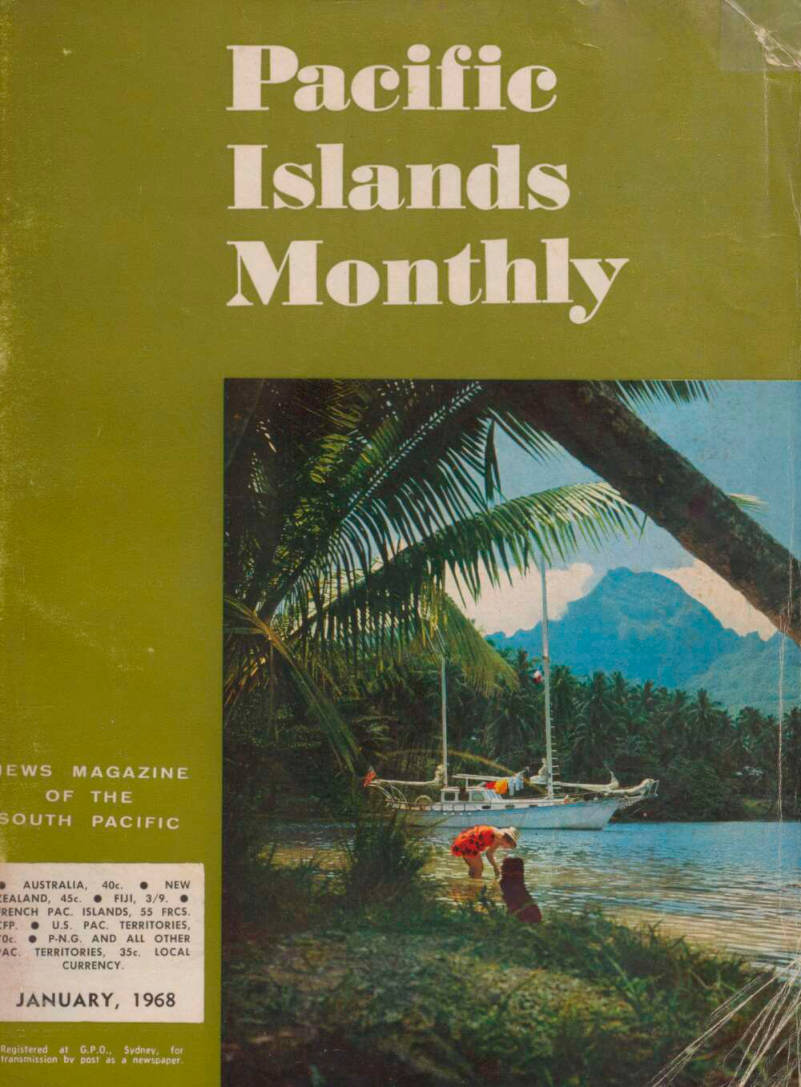 1
1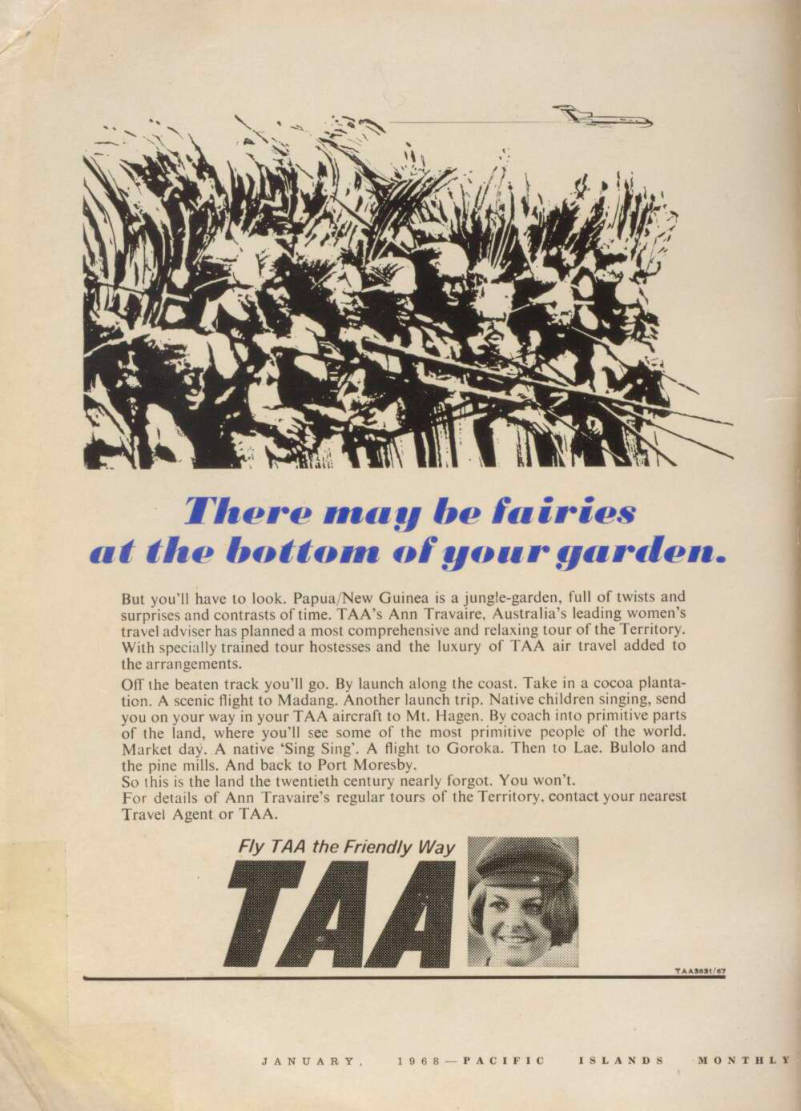 2
2 3
3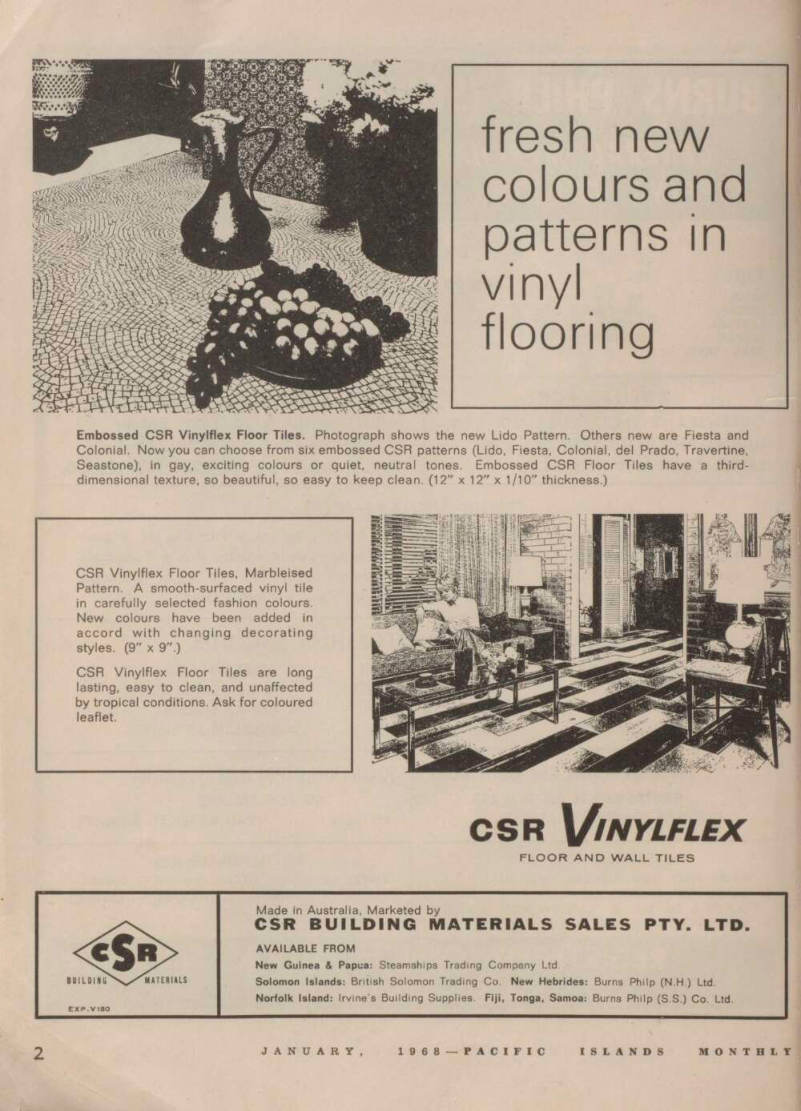 4
4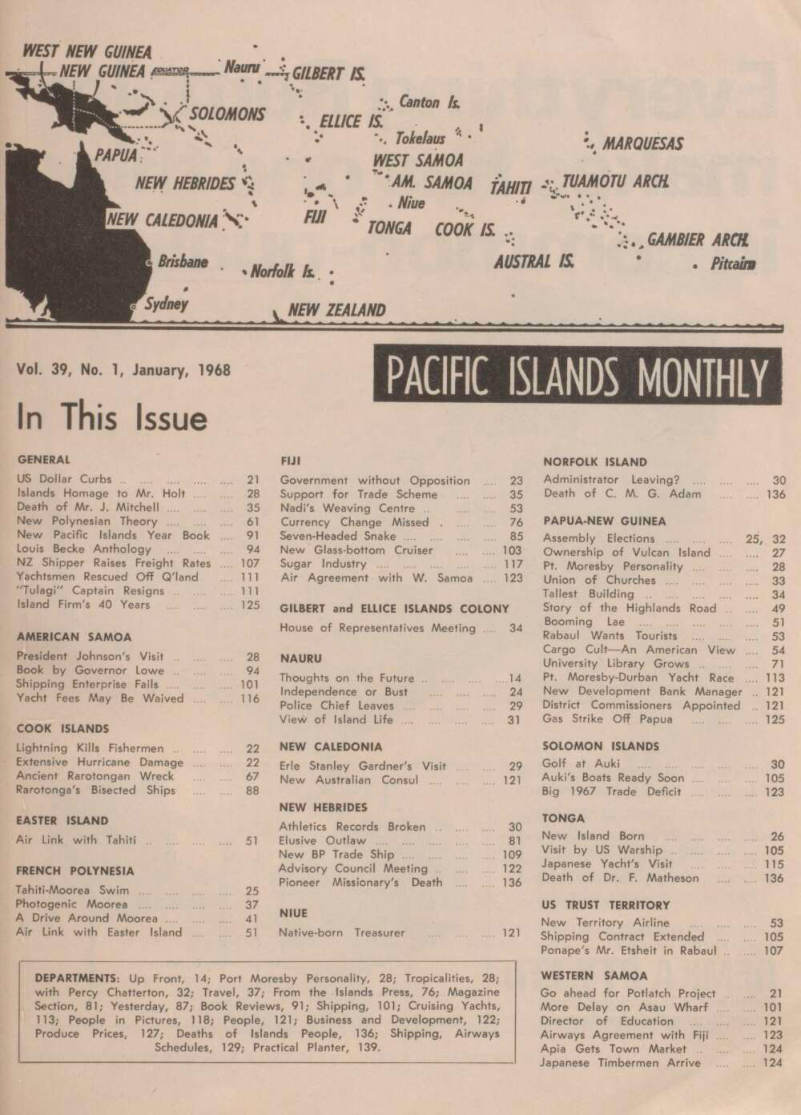 5
5 6
6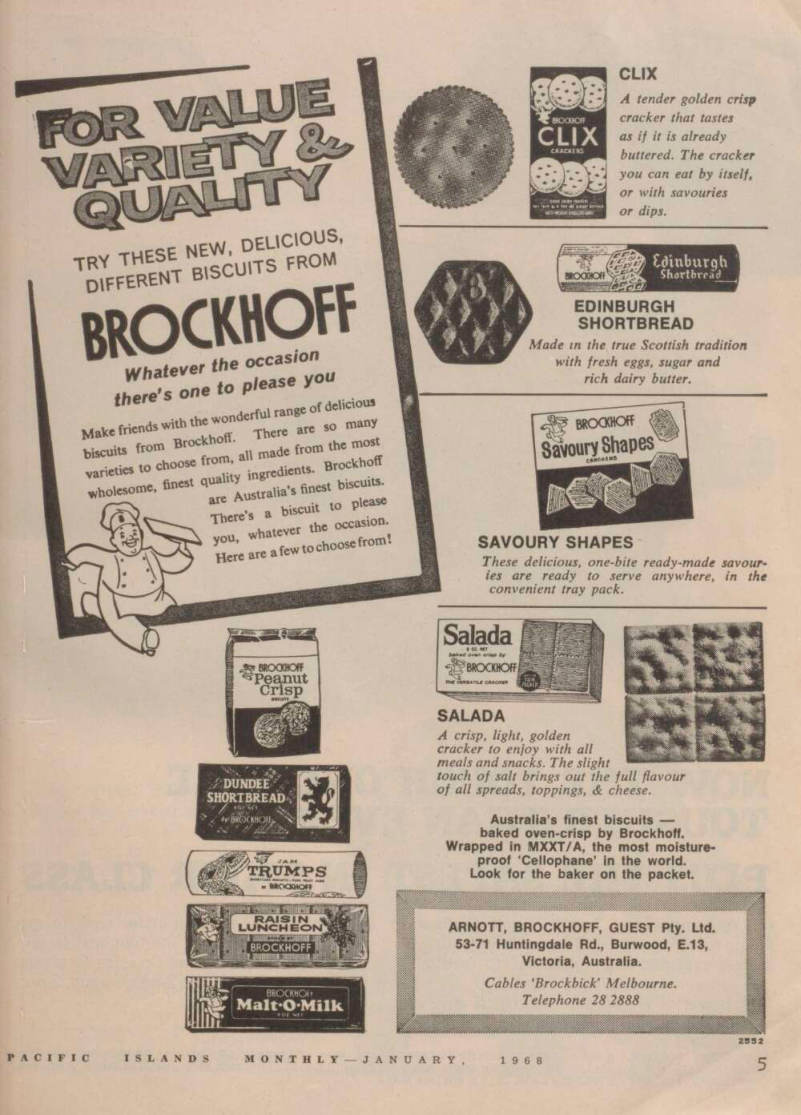 7
7 8
8 9
9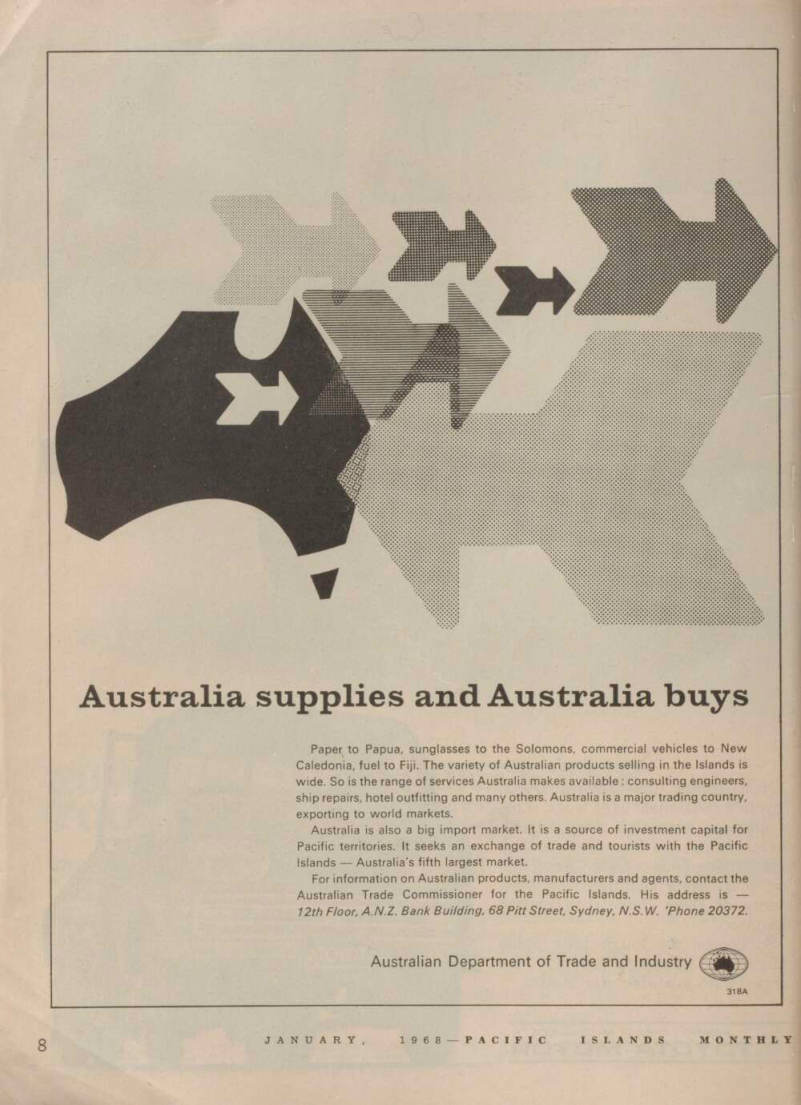 10
10 11
11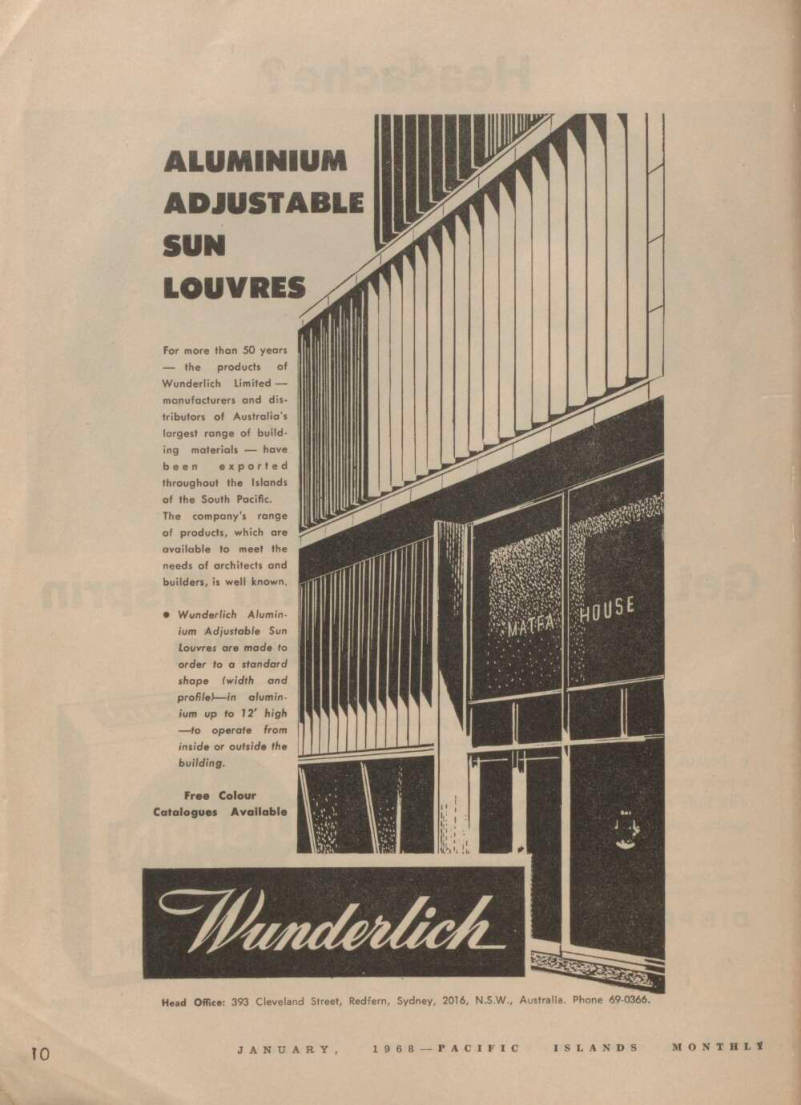 12
12 13
13 14
14 15
15 16
16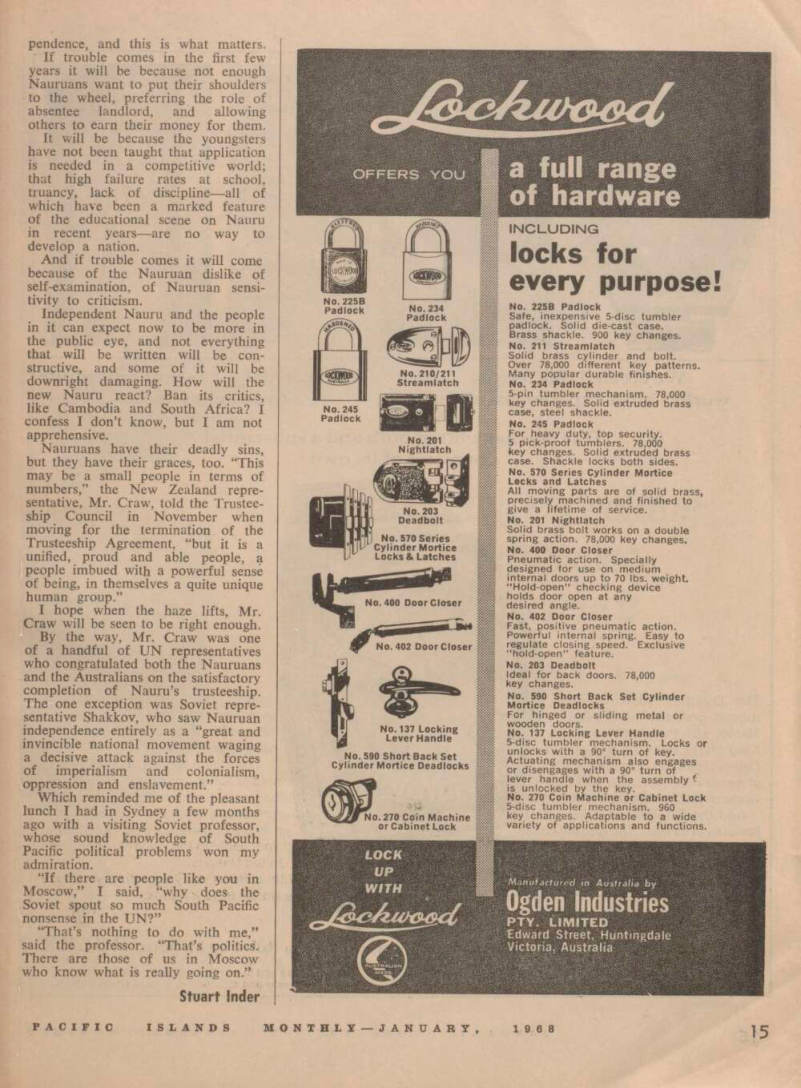 17
17 18
18 19
19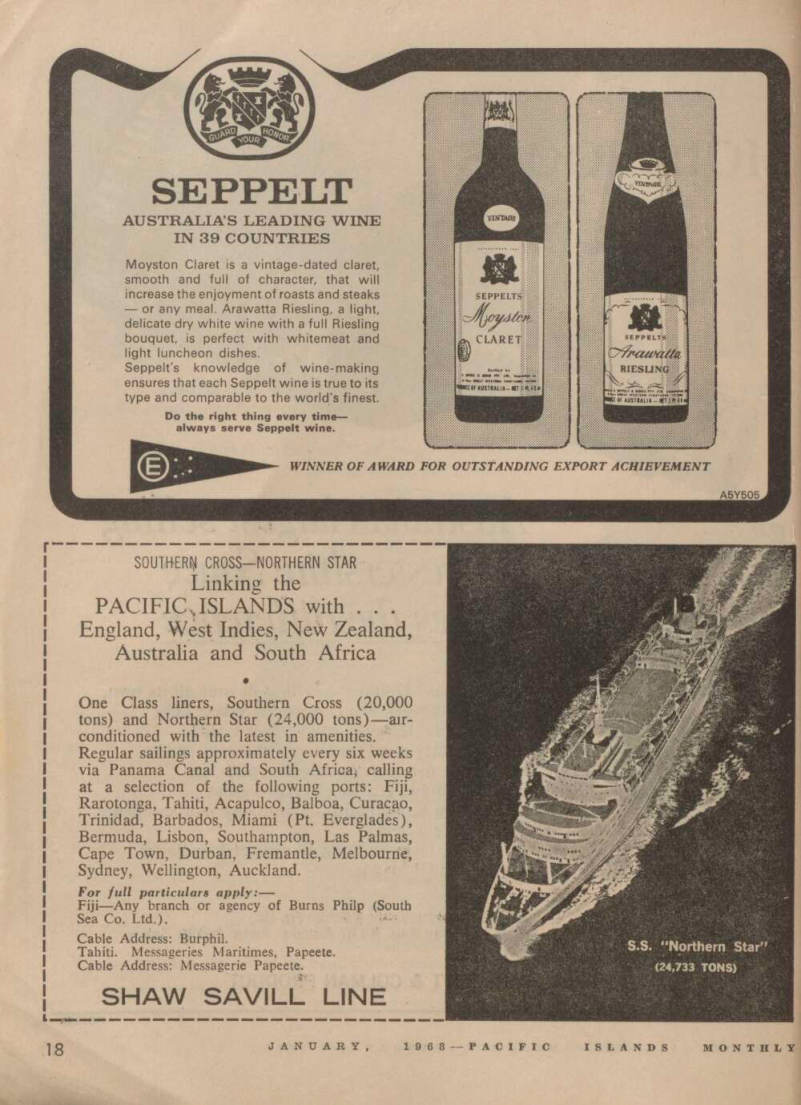 20
20 21
21 22
22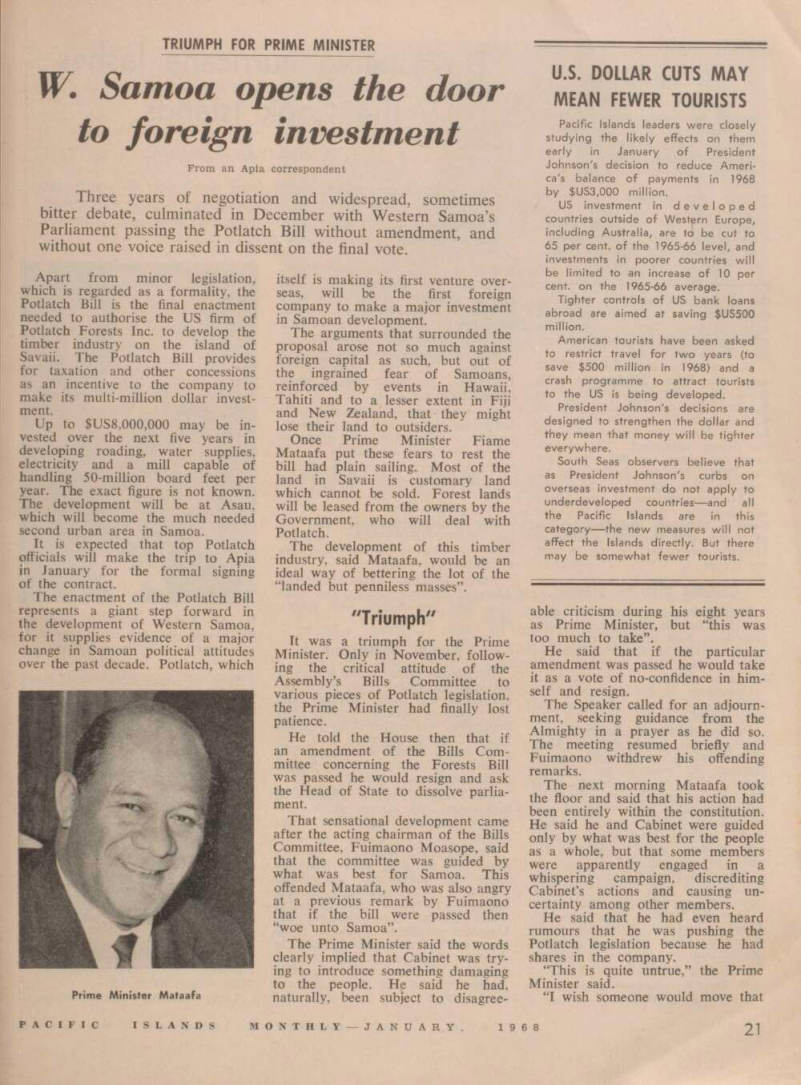 23
23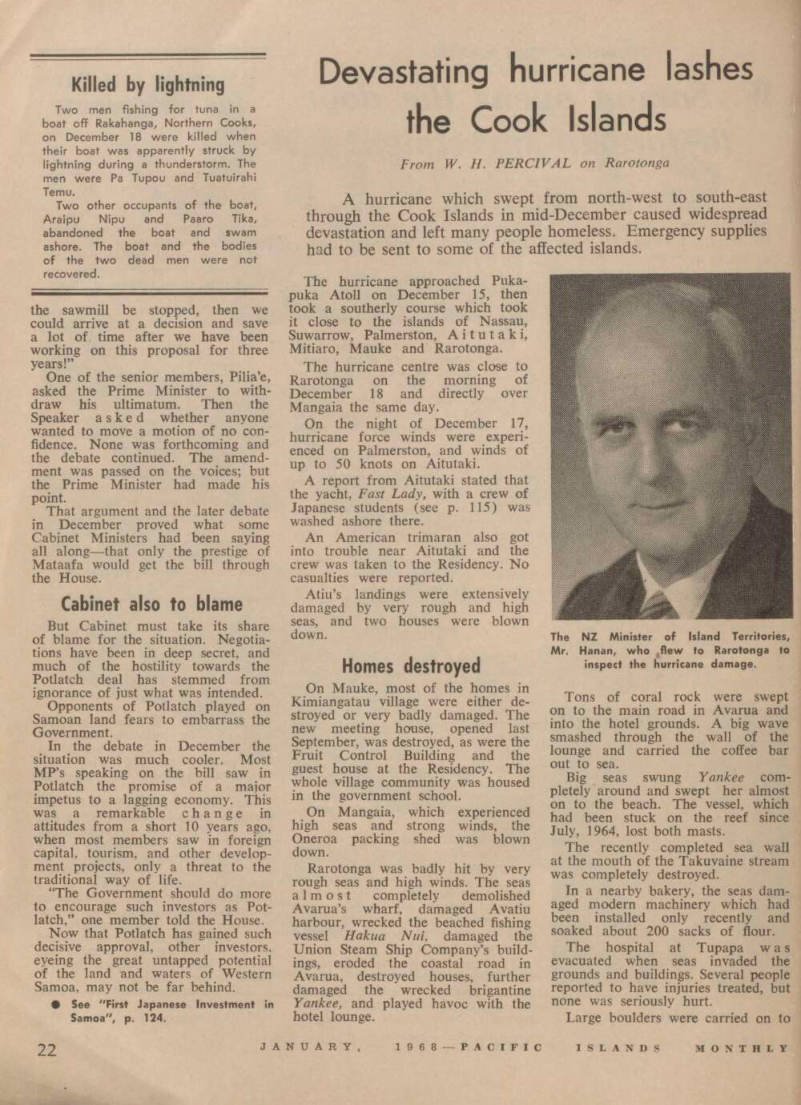 24
24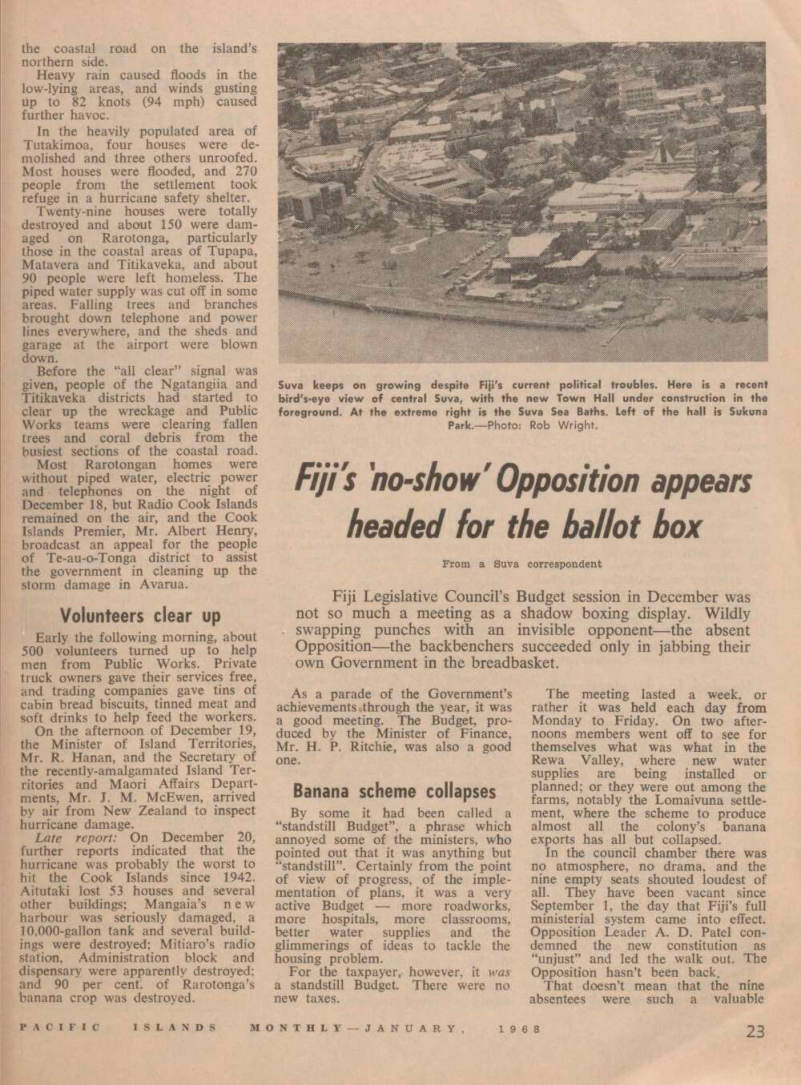 25
25 26
26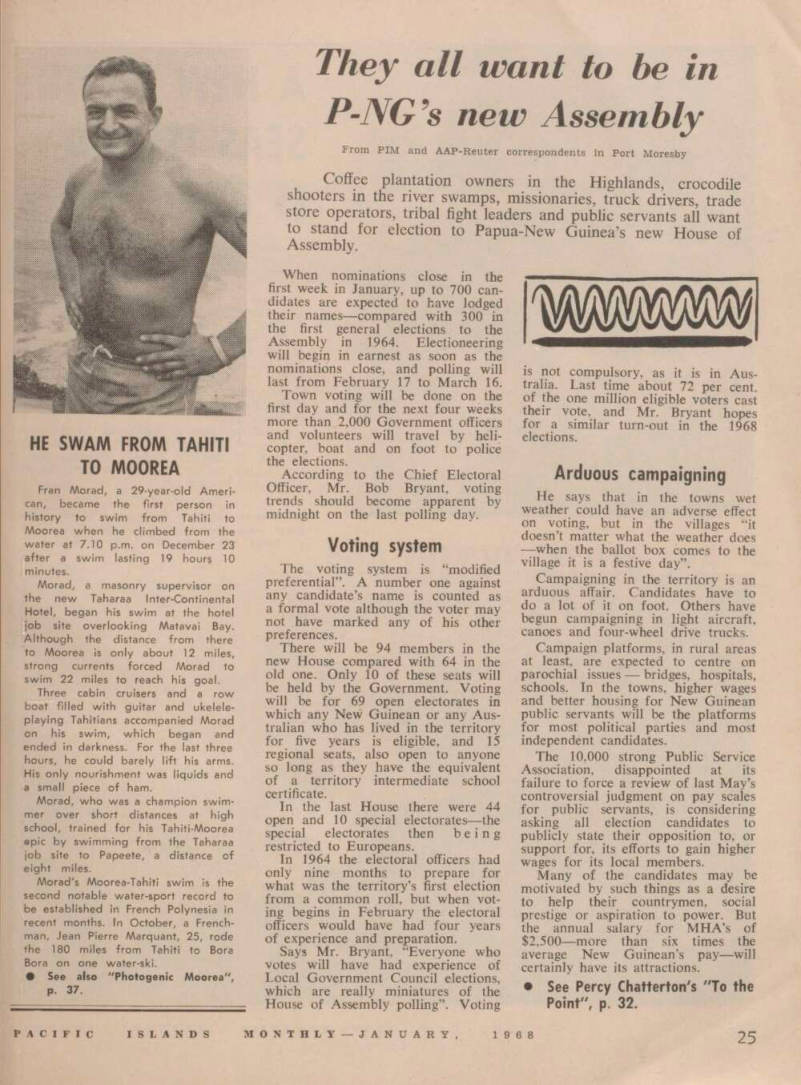 27
27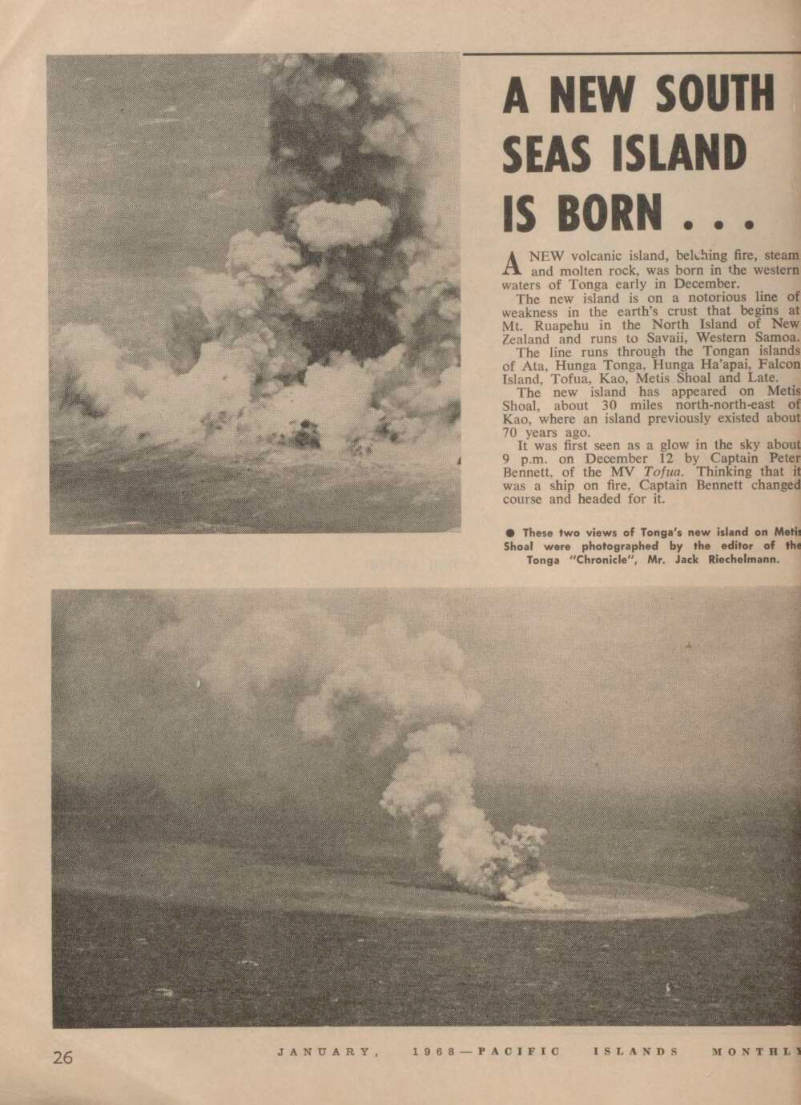 28
28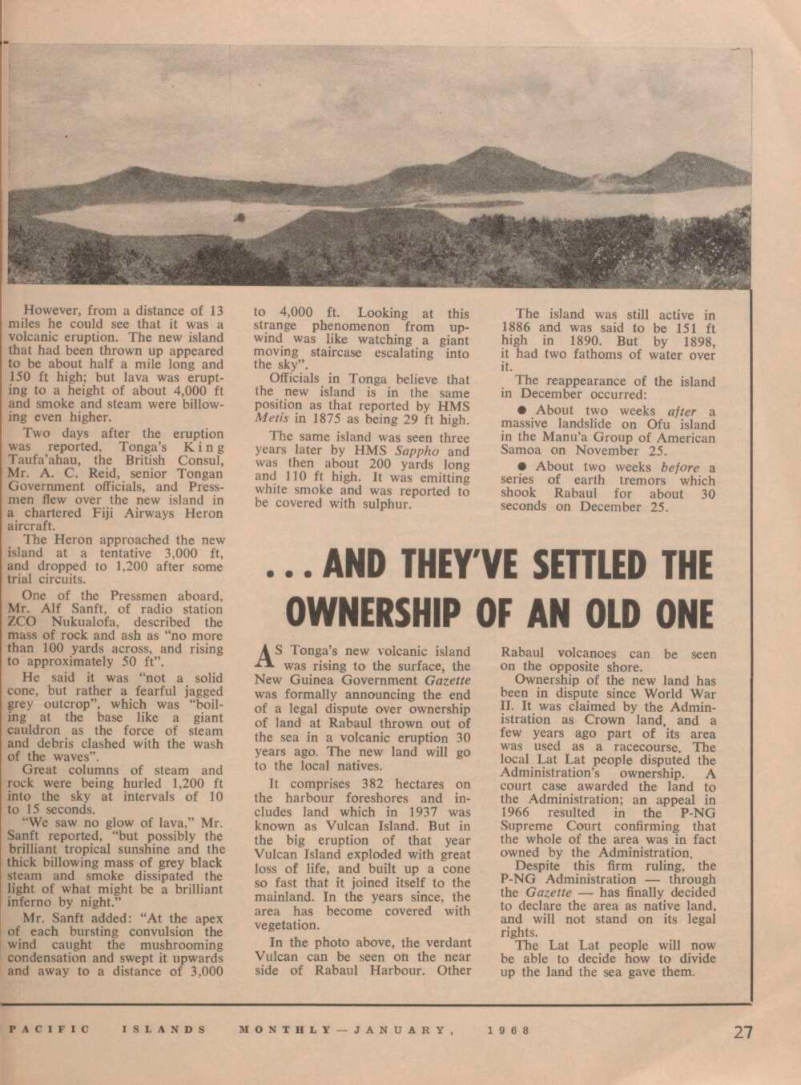 29
29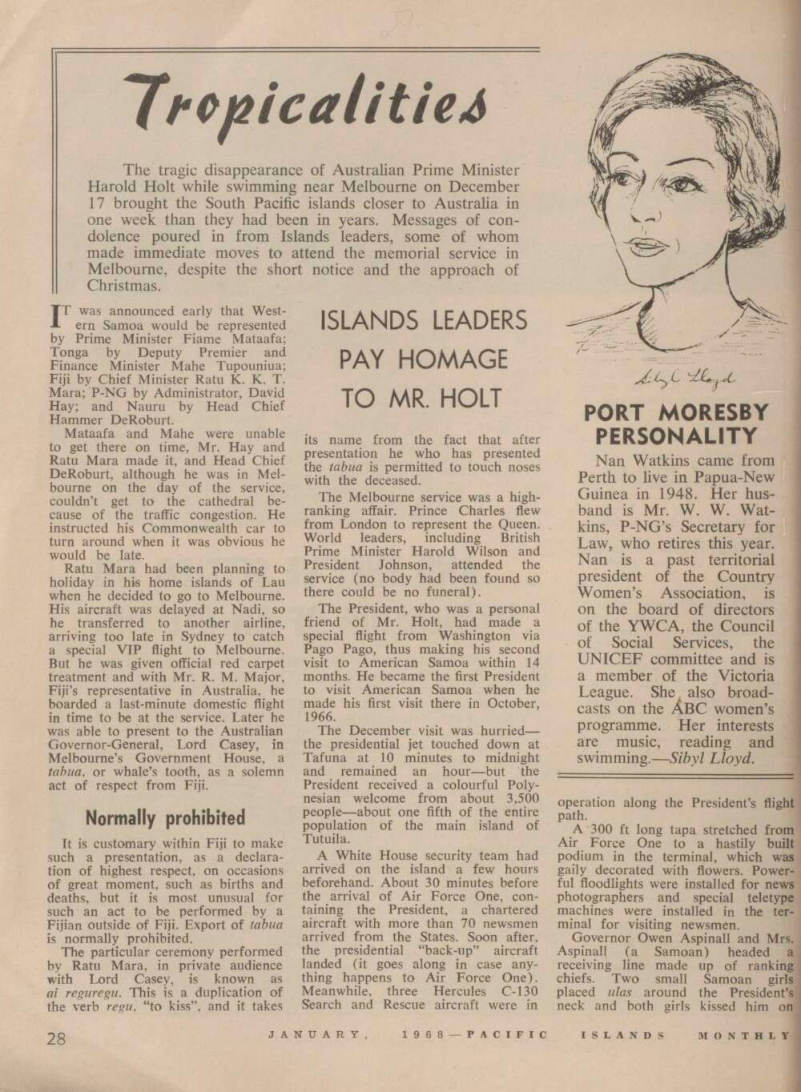 30
30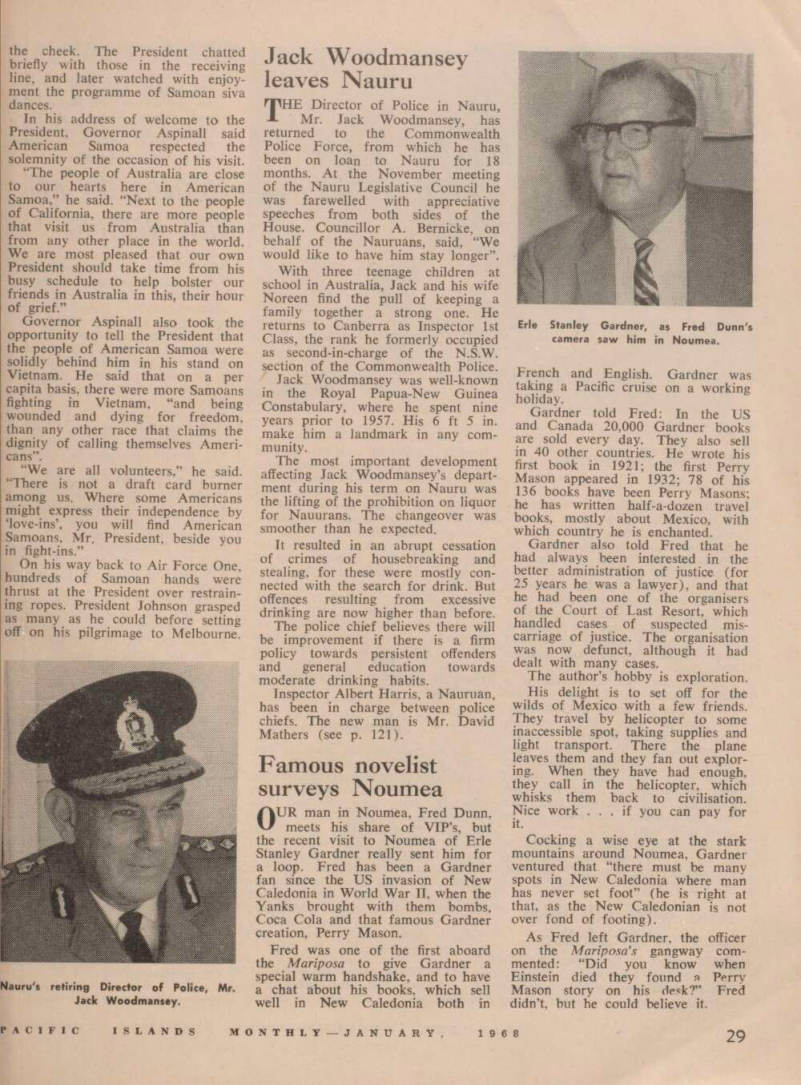 31
31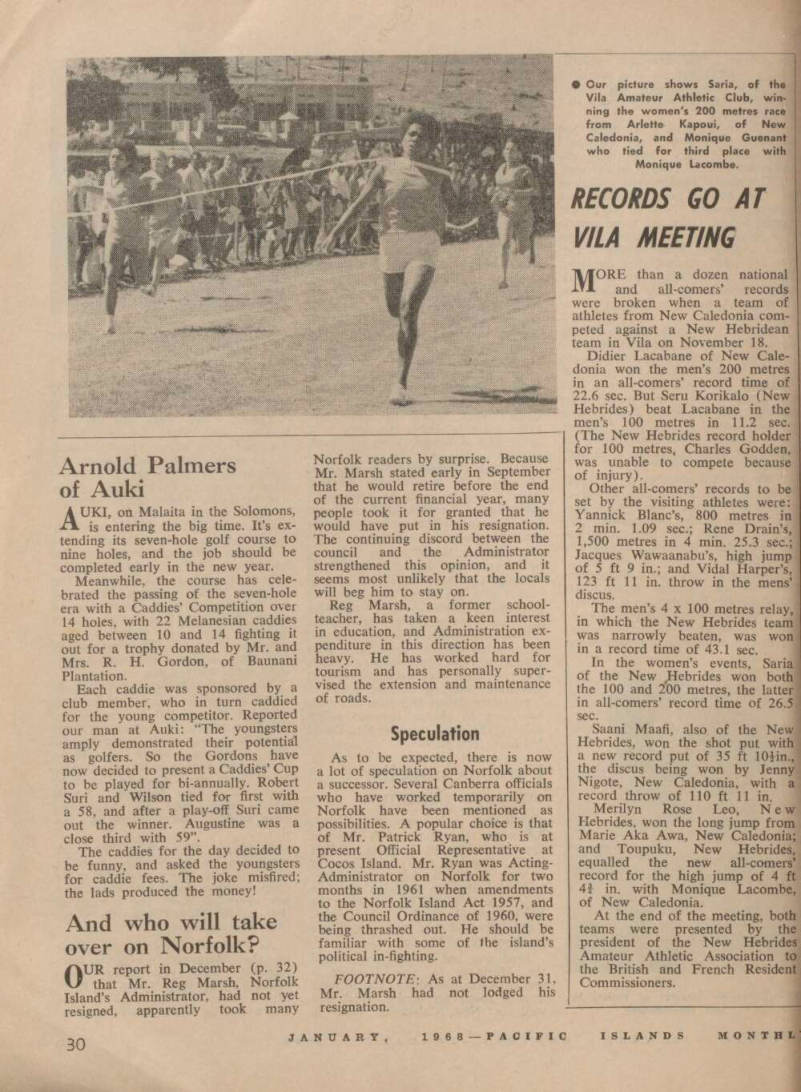 32
32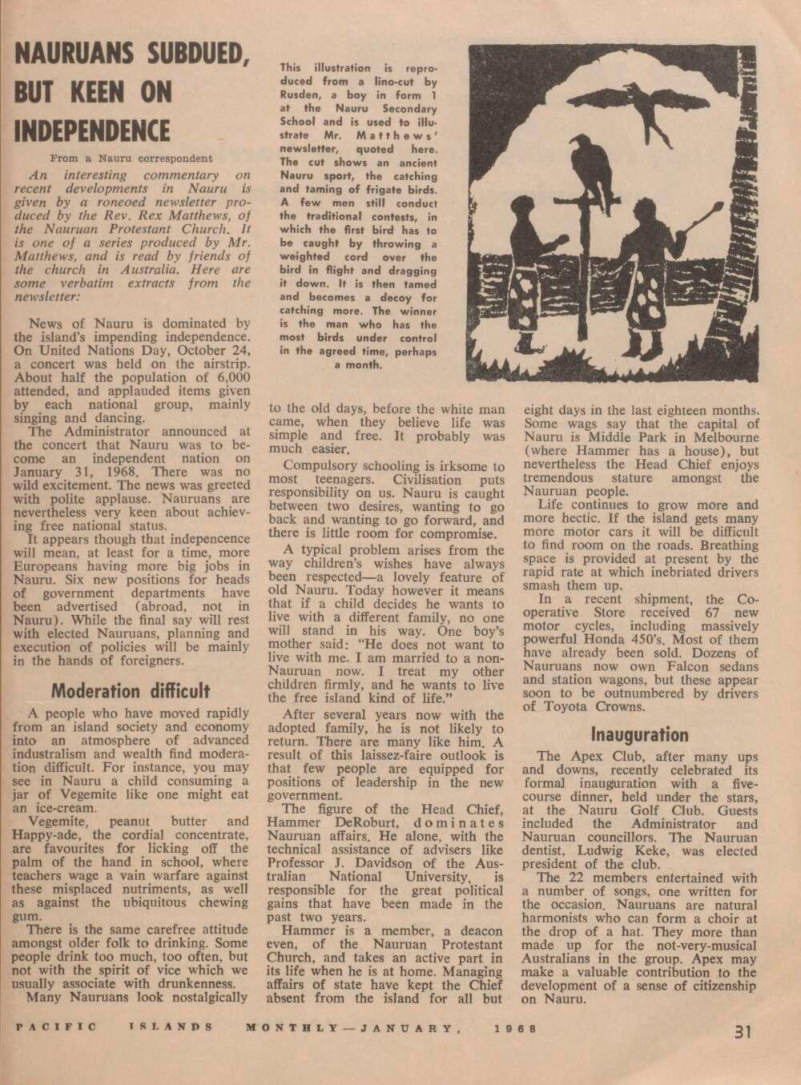 33
33 34
34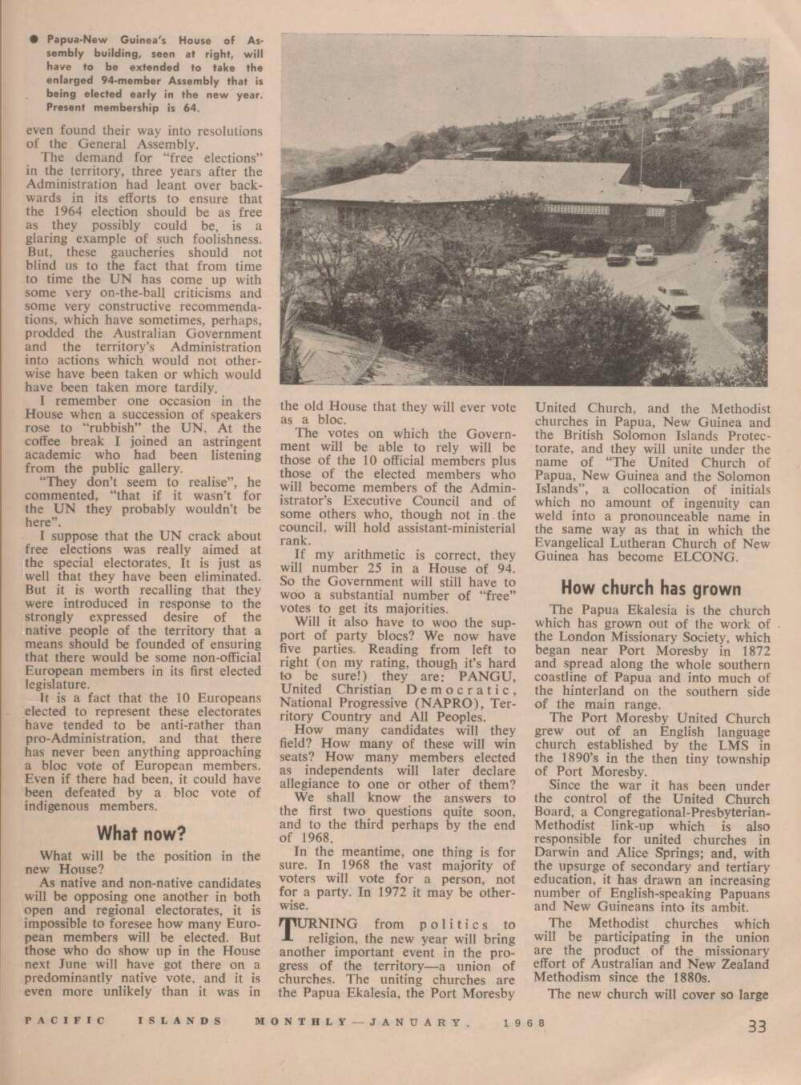 35
35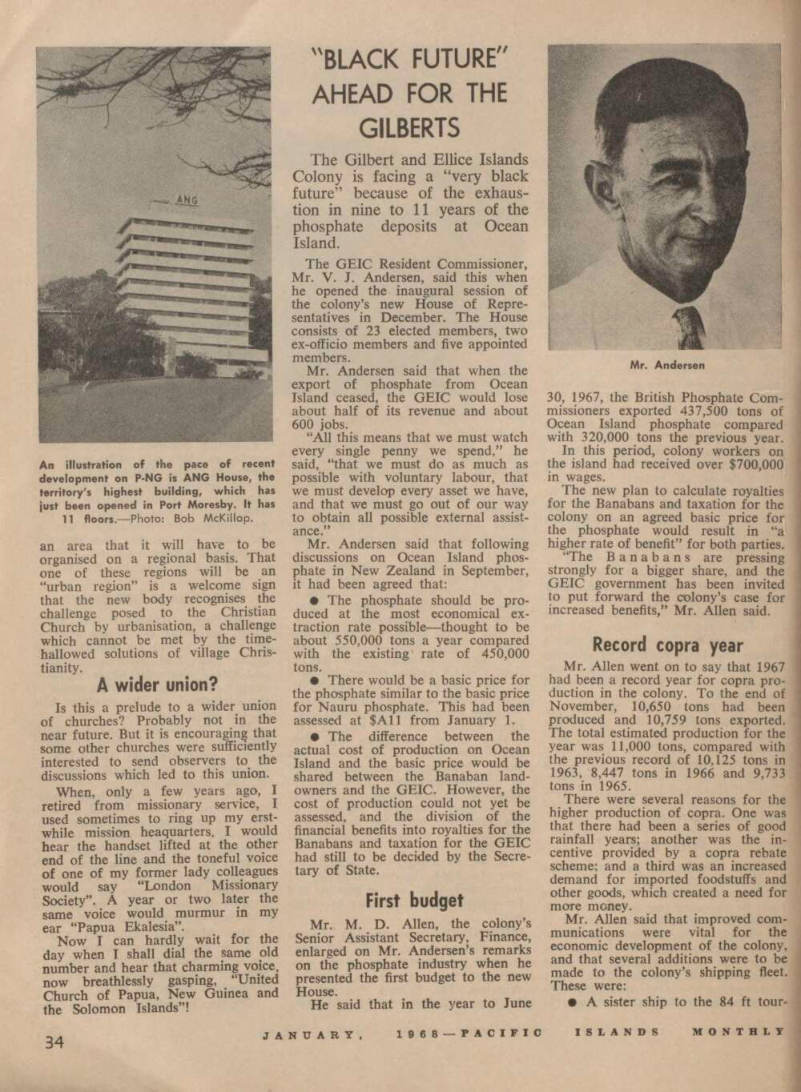 36
36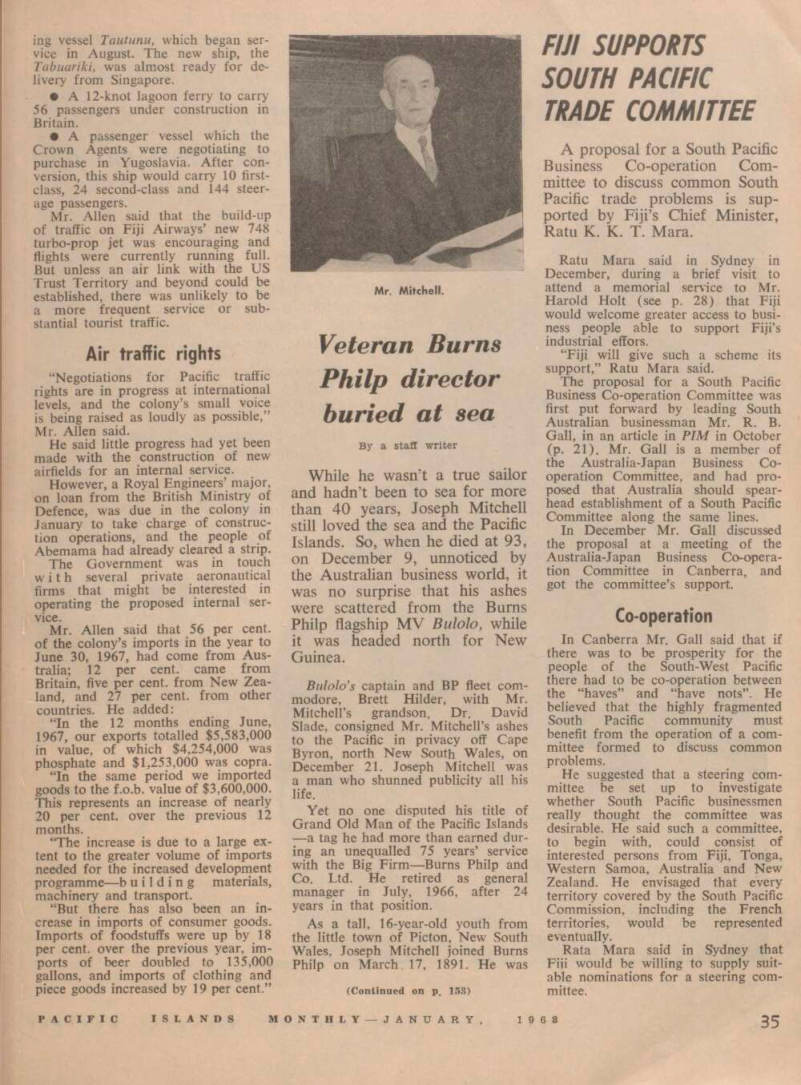 37
37 38
38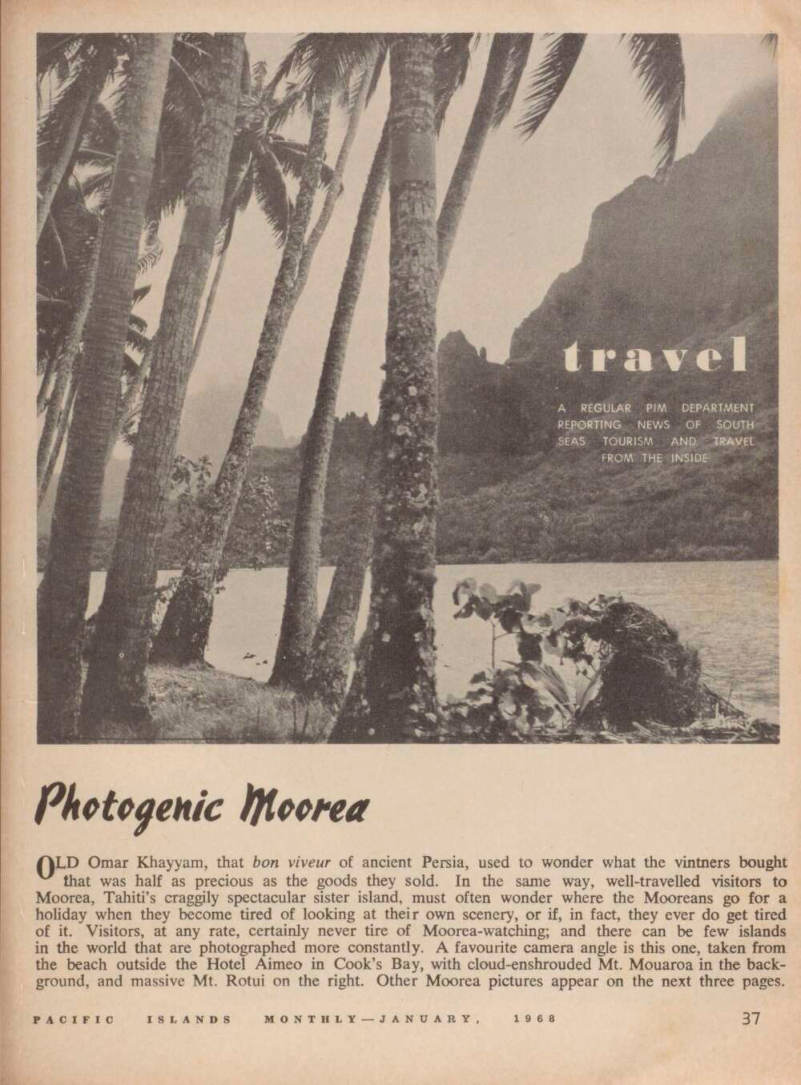 39
39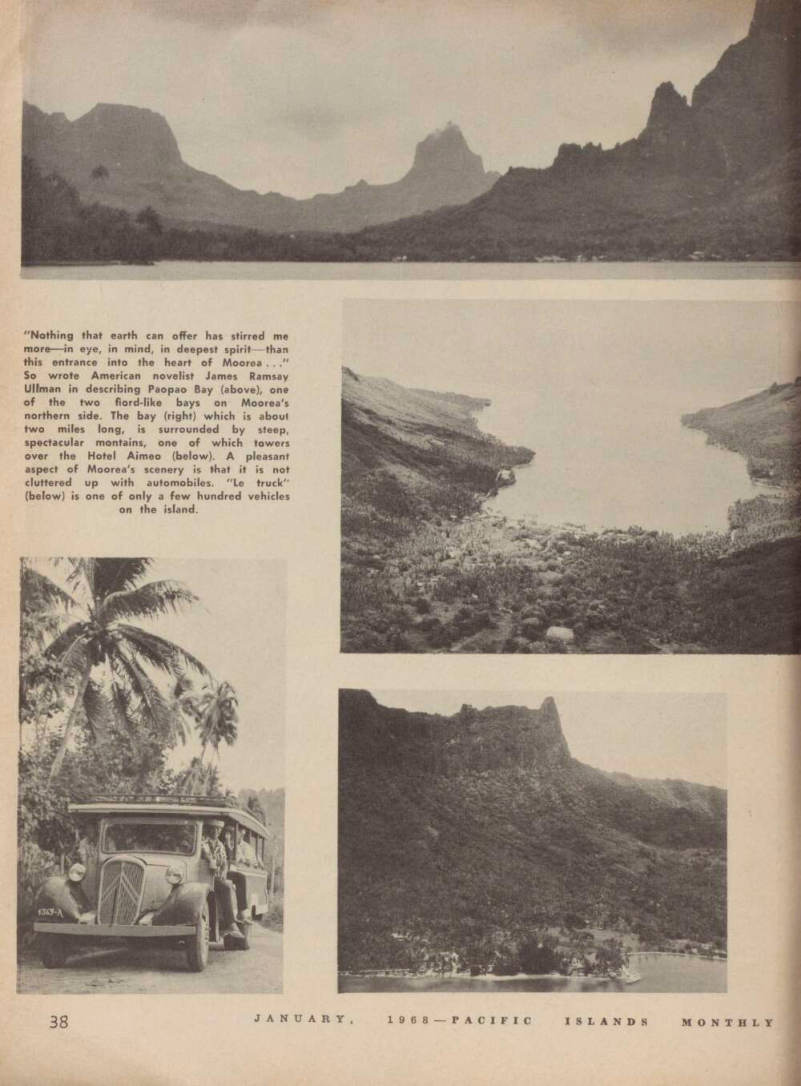 40
40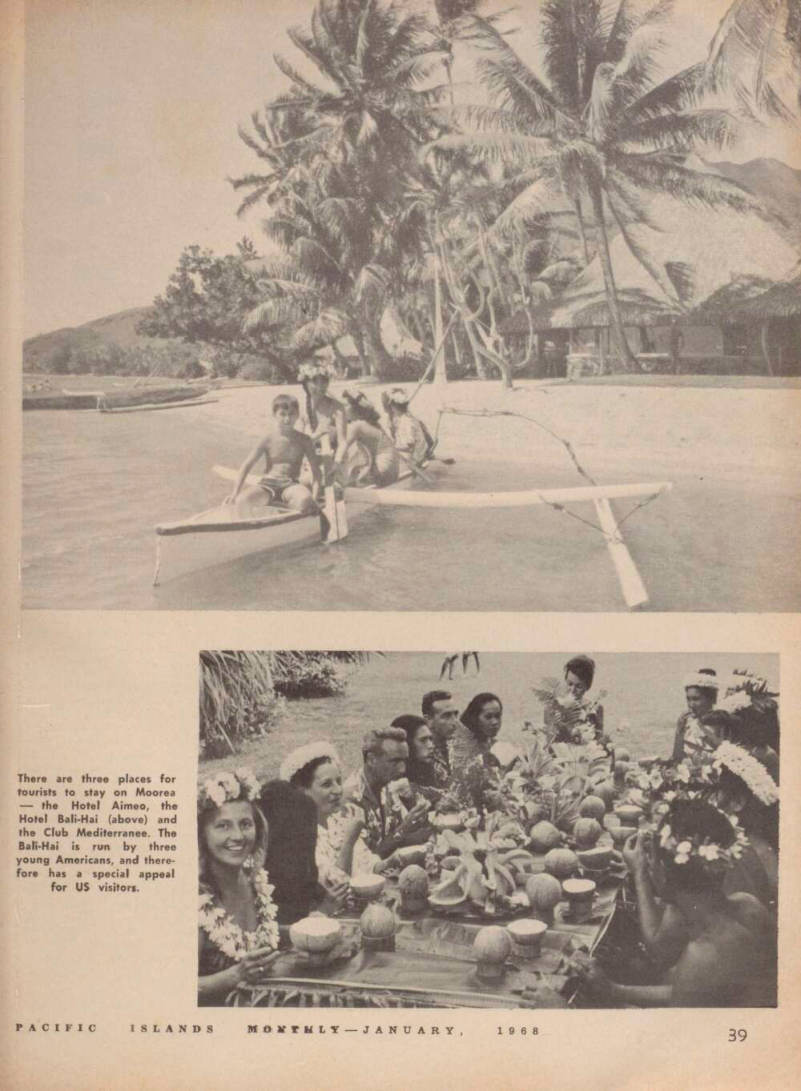 41
41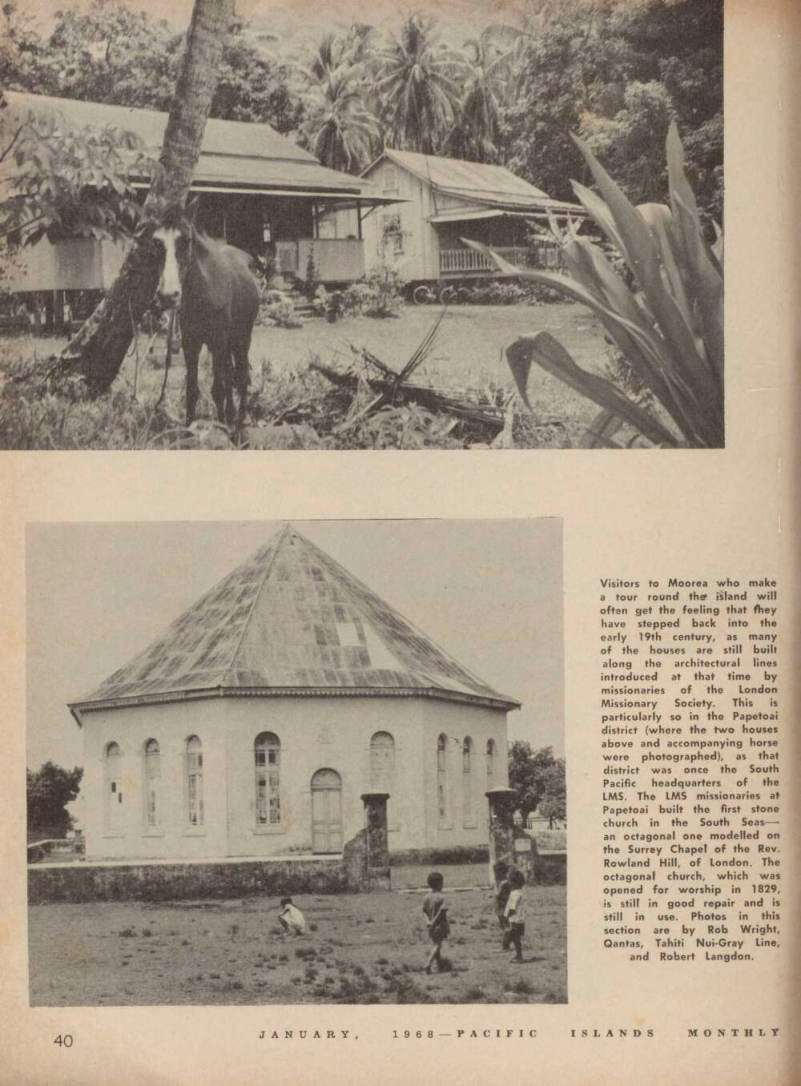 42
42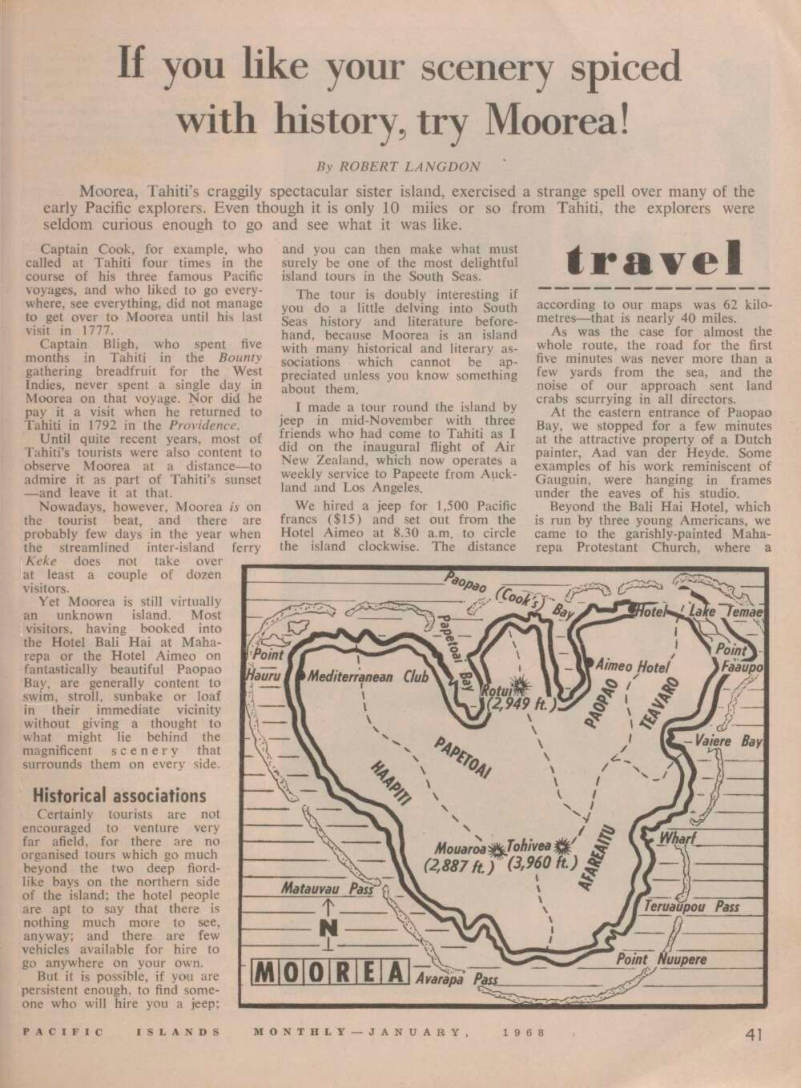 43
43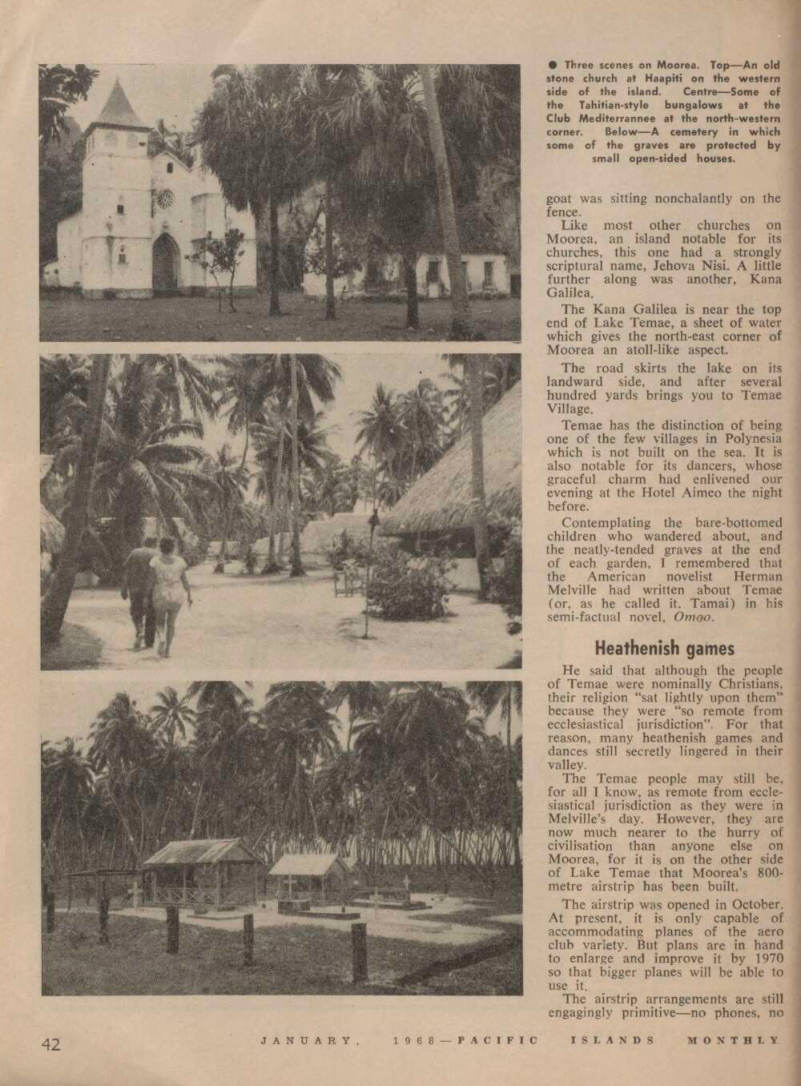 44
44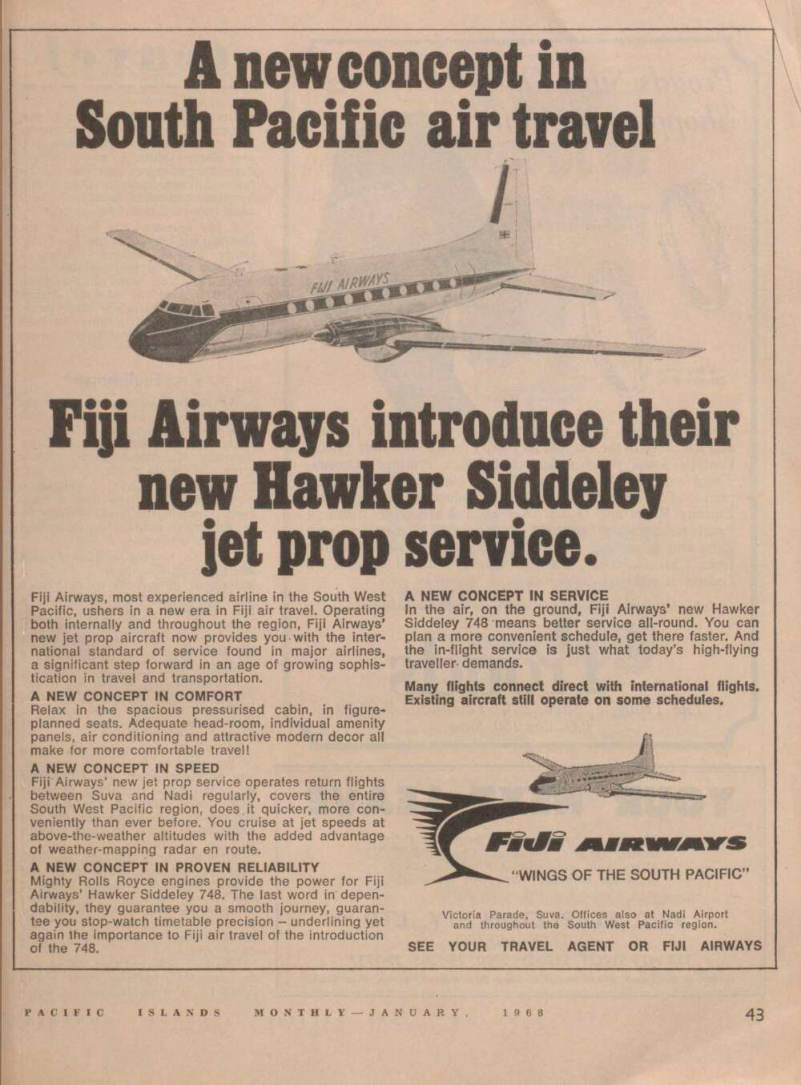 45
45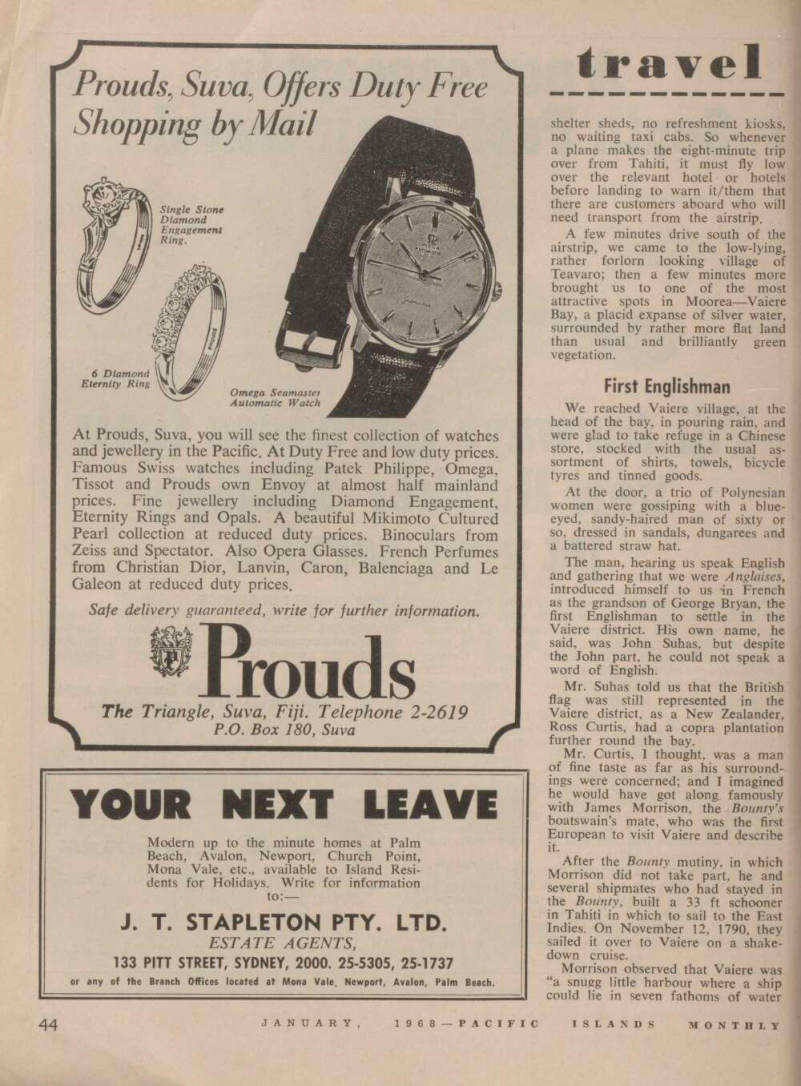 46
46 47
47 48
48 49
49 50
50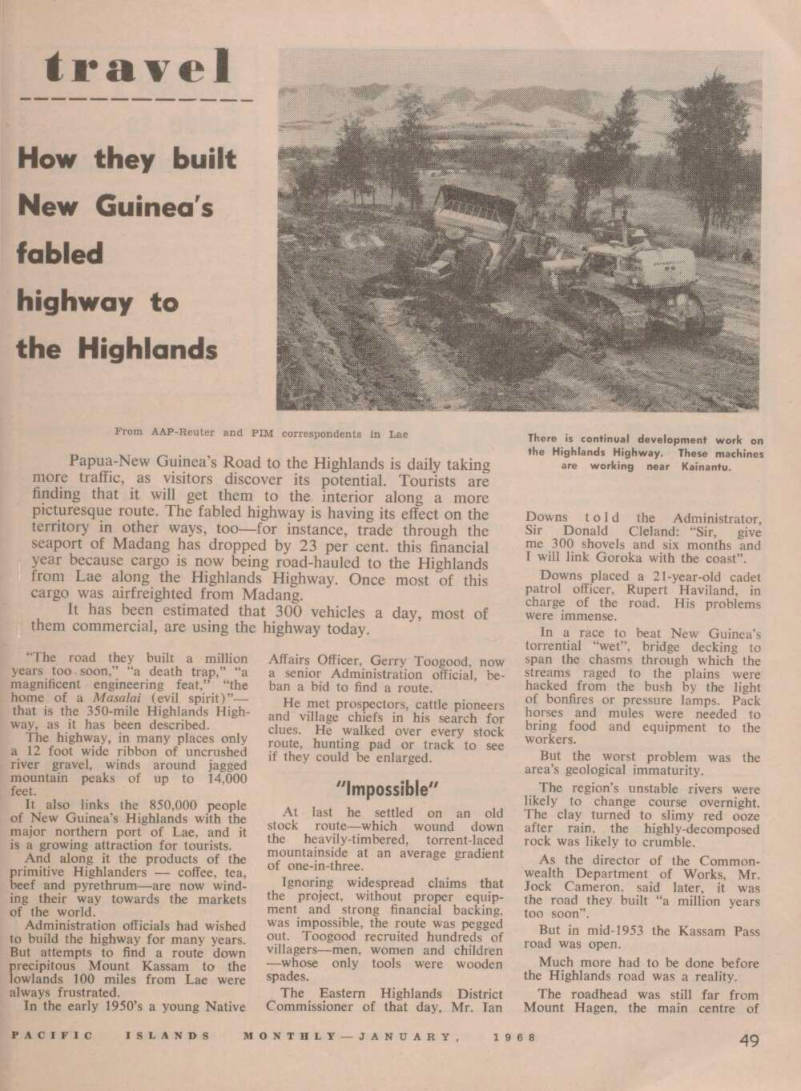 51
51 52
52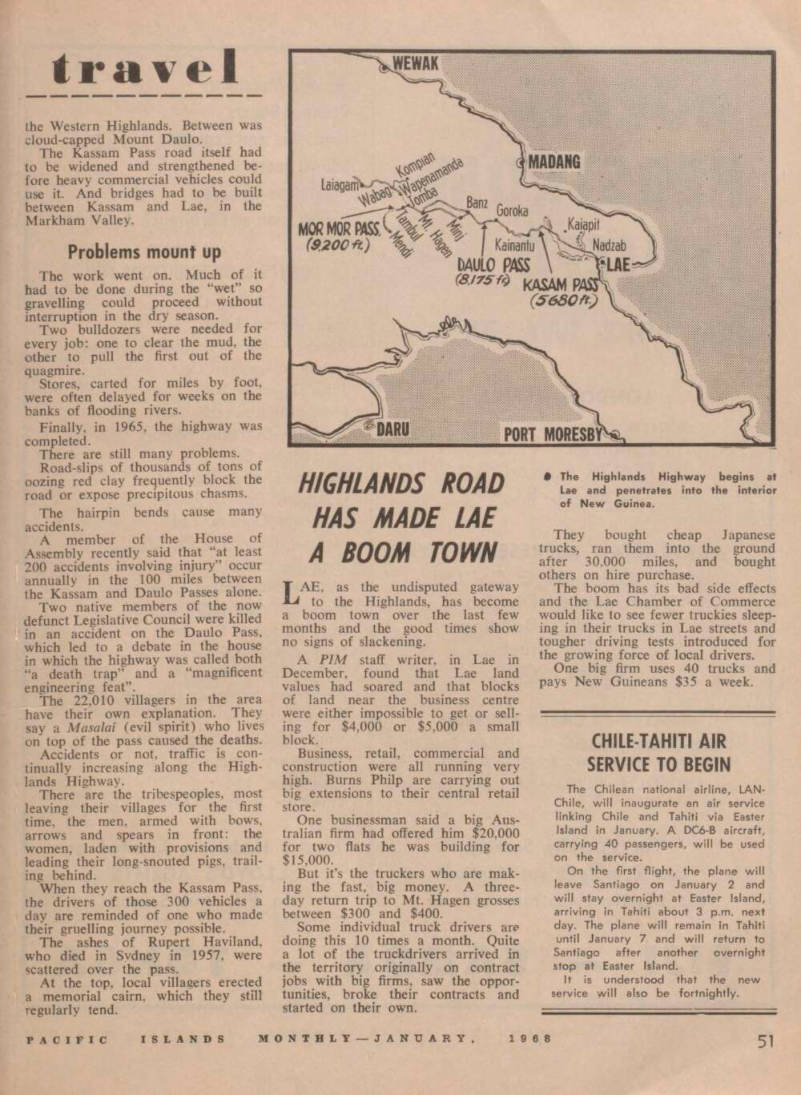 53
53 54
54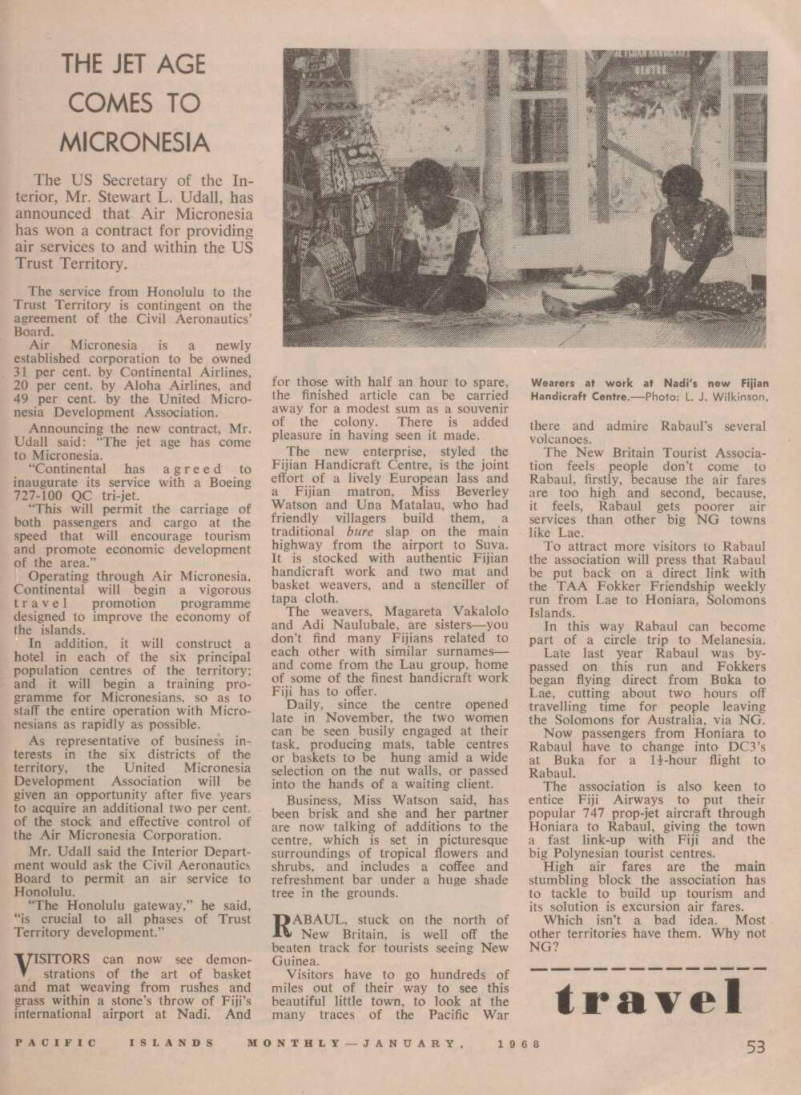 55
55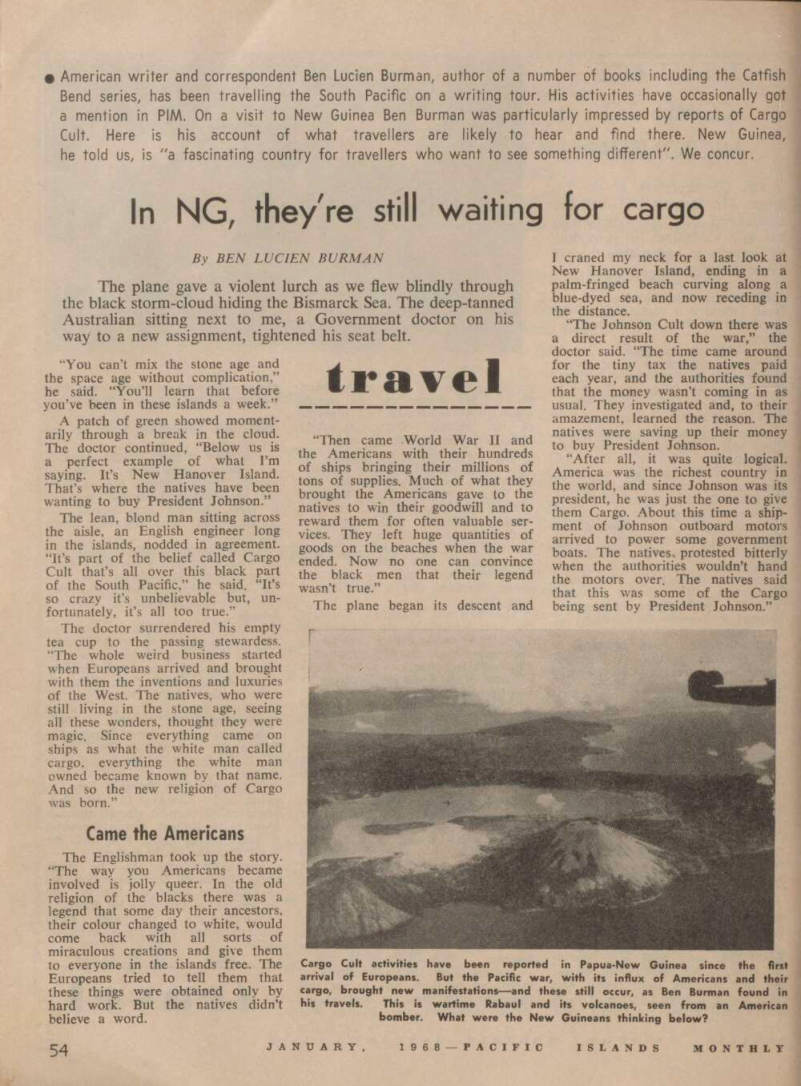 56
56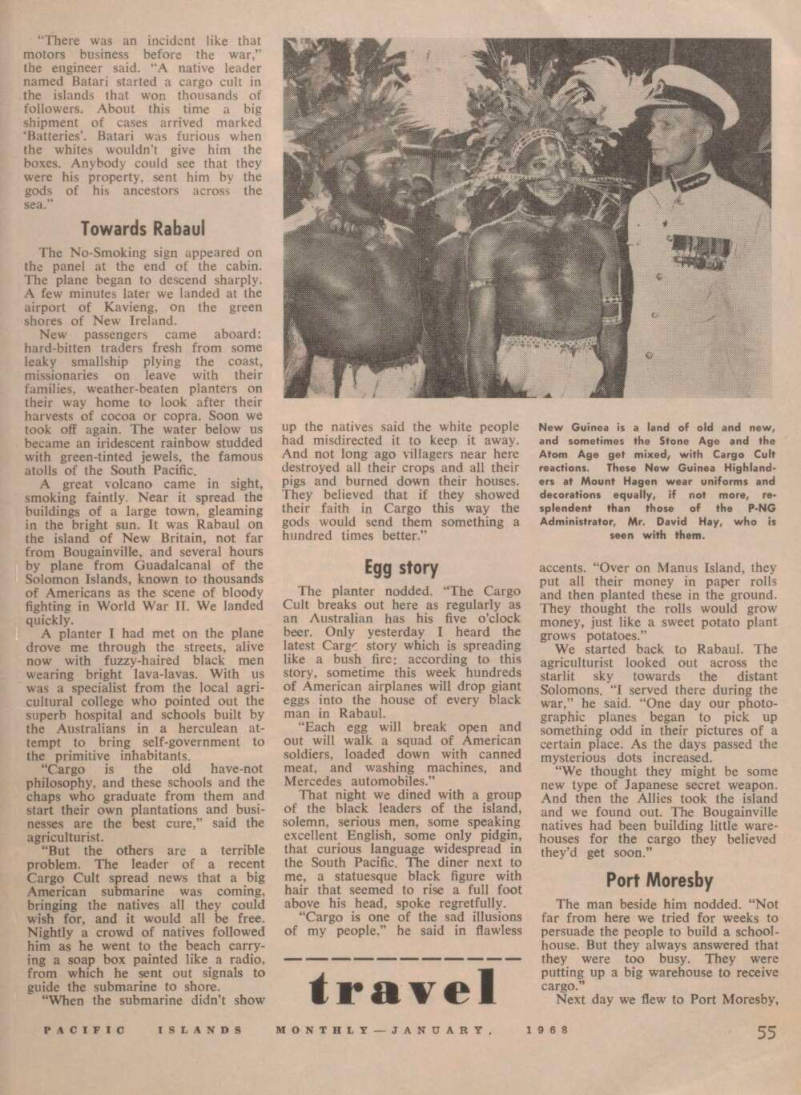 57
57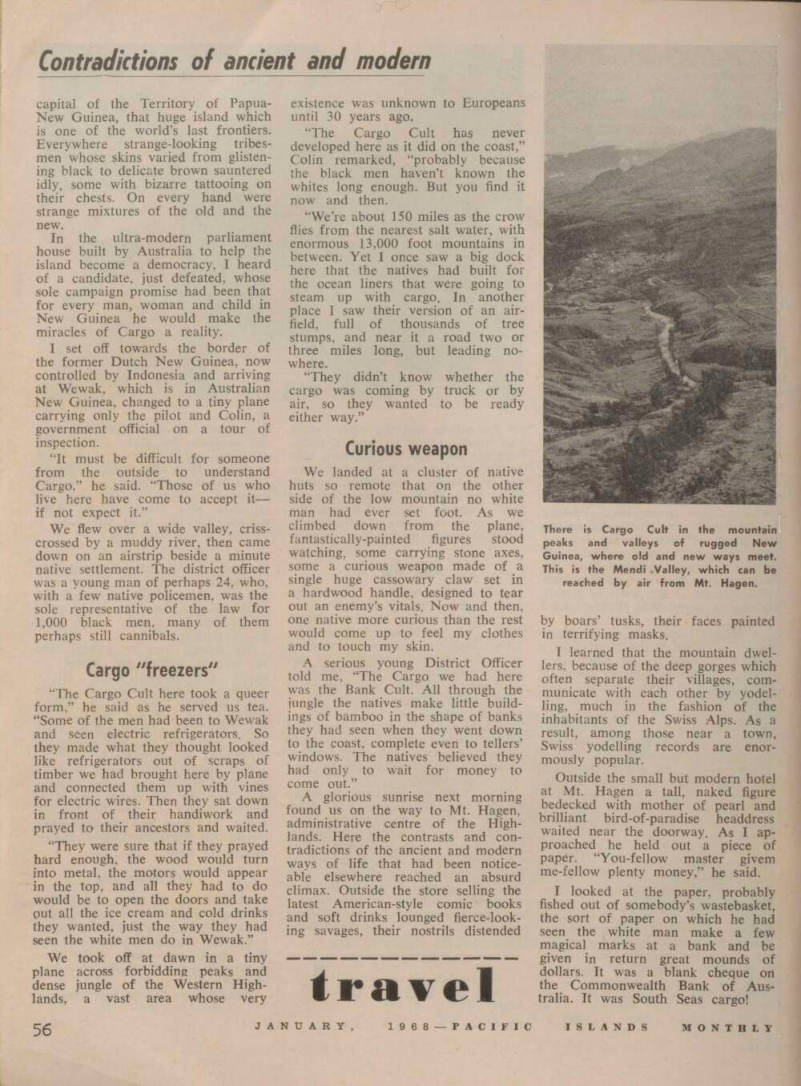 58
58 59
59 60
60 61
61 62
62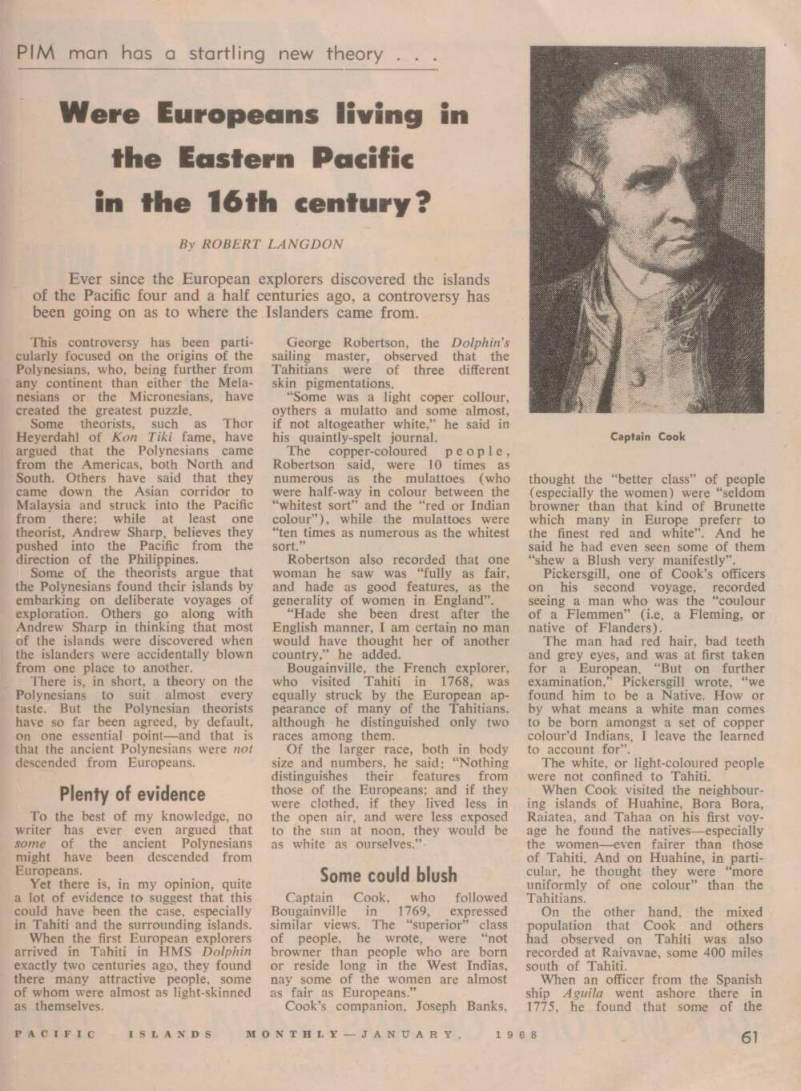 63
63 64
64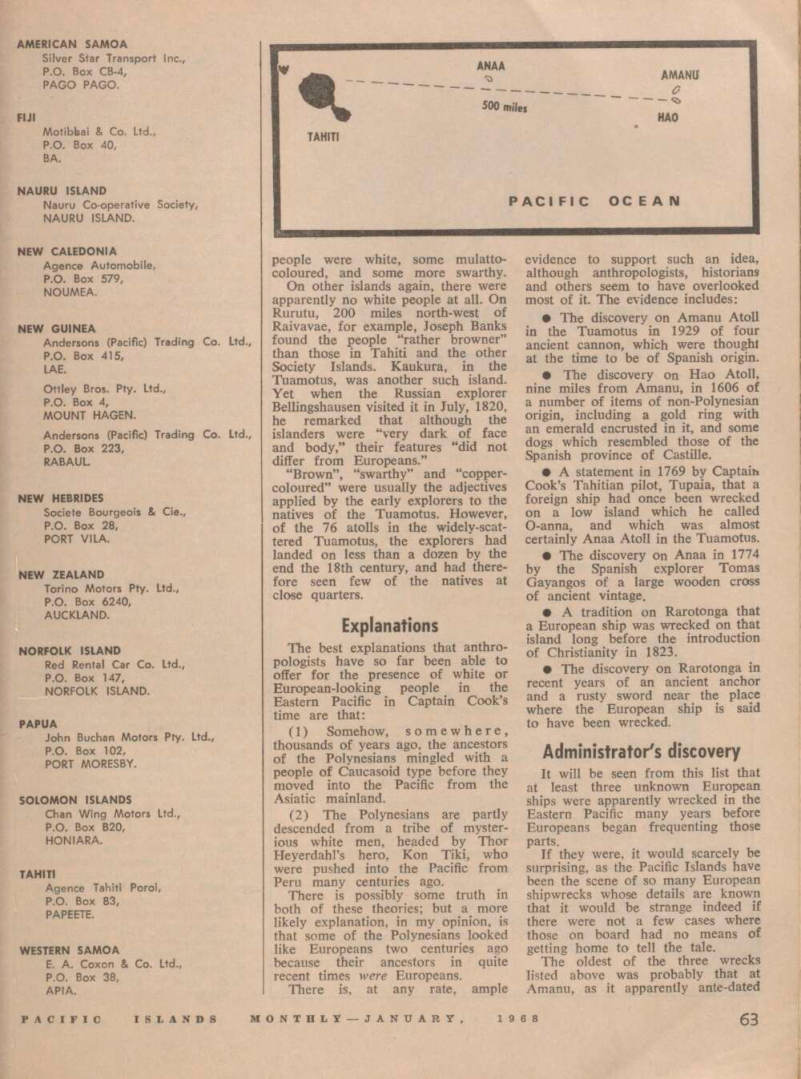 65
65 66
66 67
67 68
68 69
69 70
70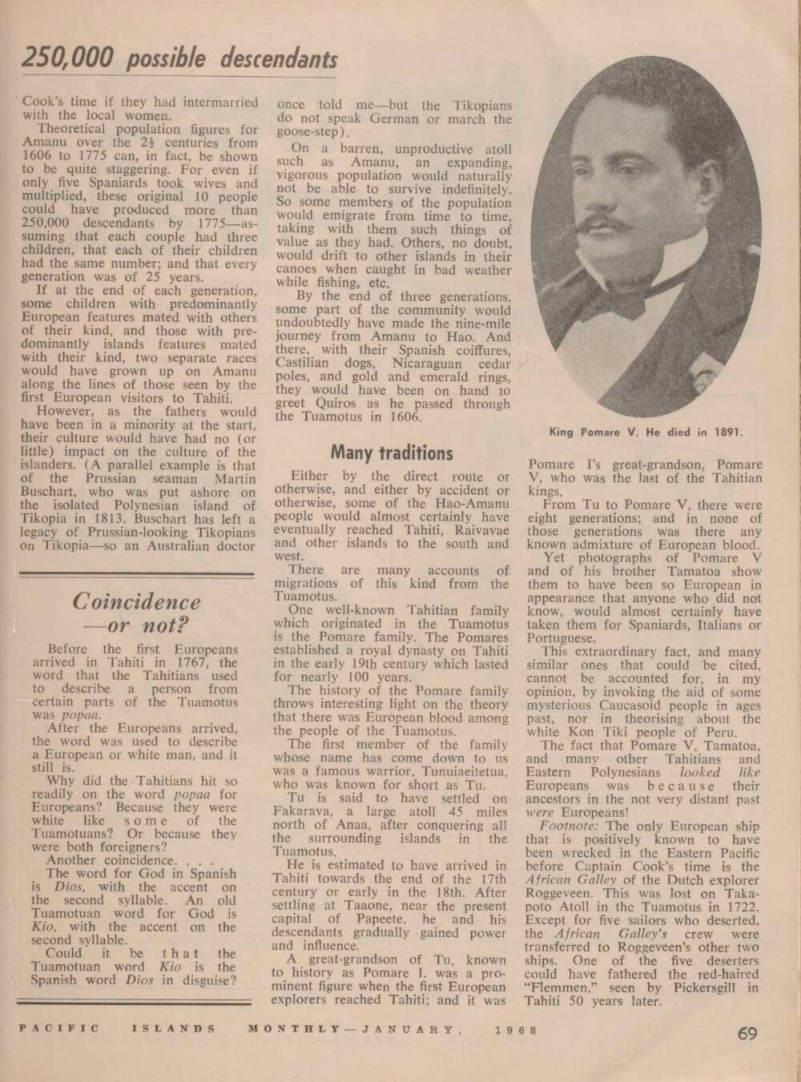 71
71 72
72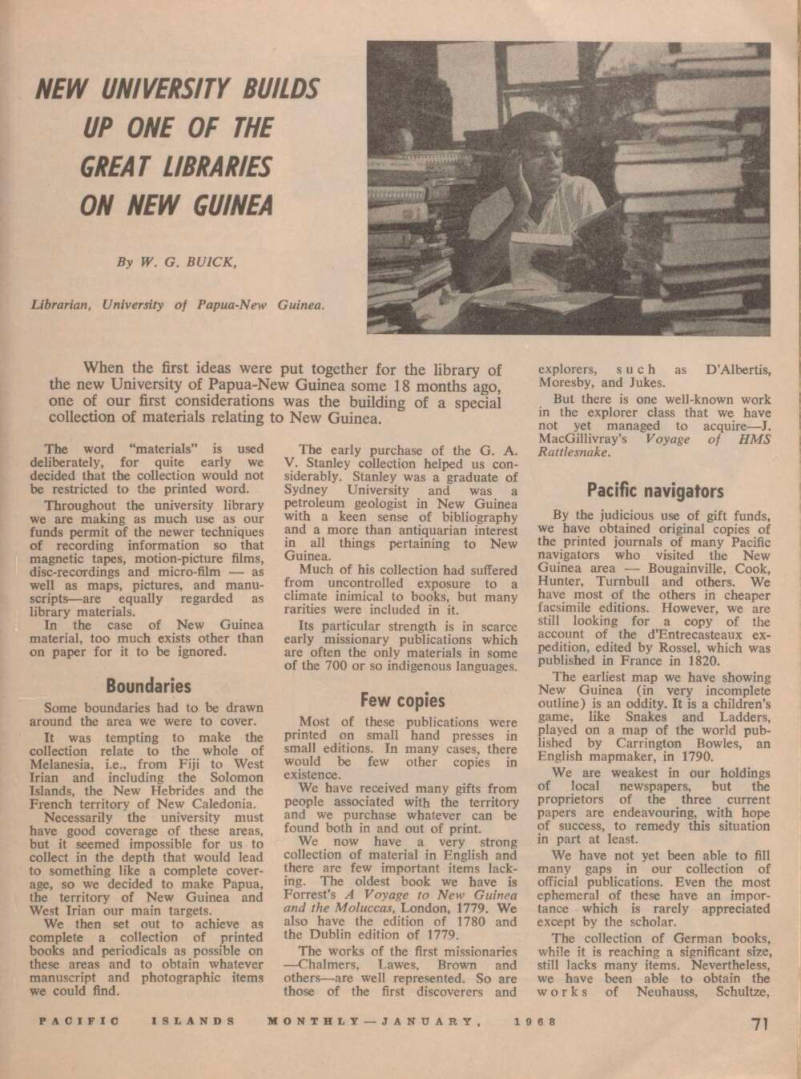 73
73 74
74 75
75 76
76 77
77 78
78 79
79 80
80 81
81 82
82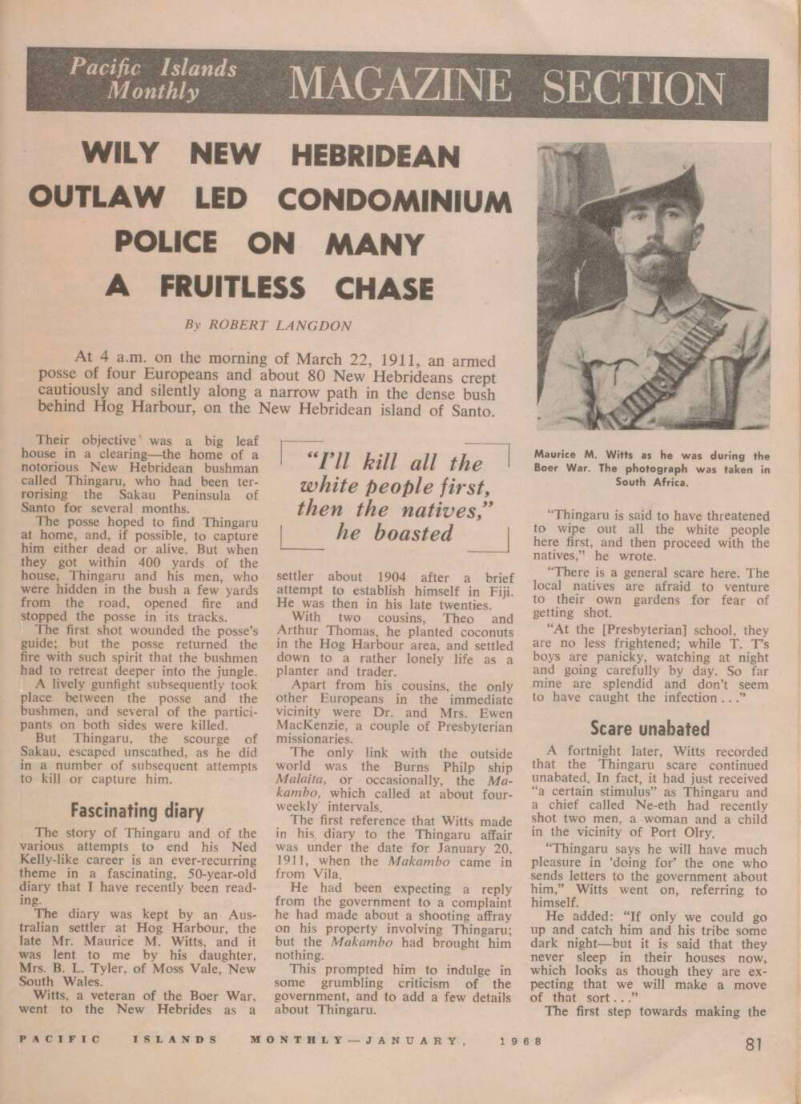 83
83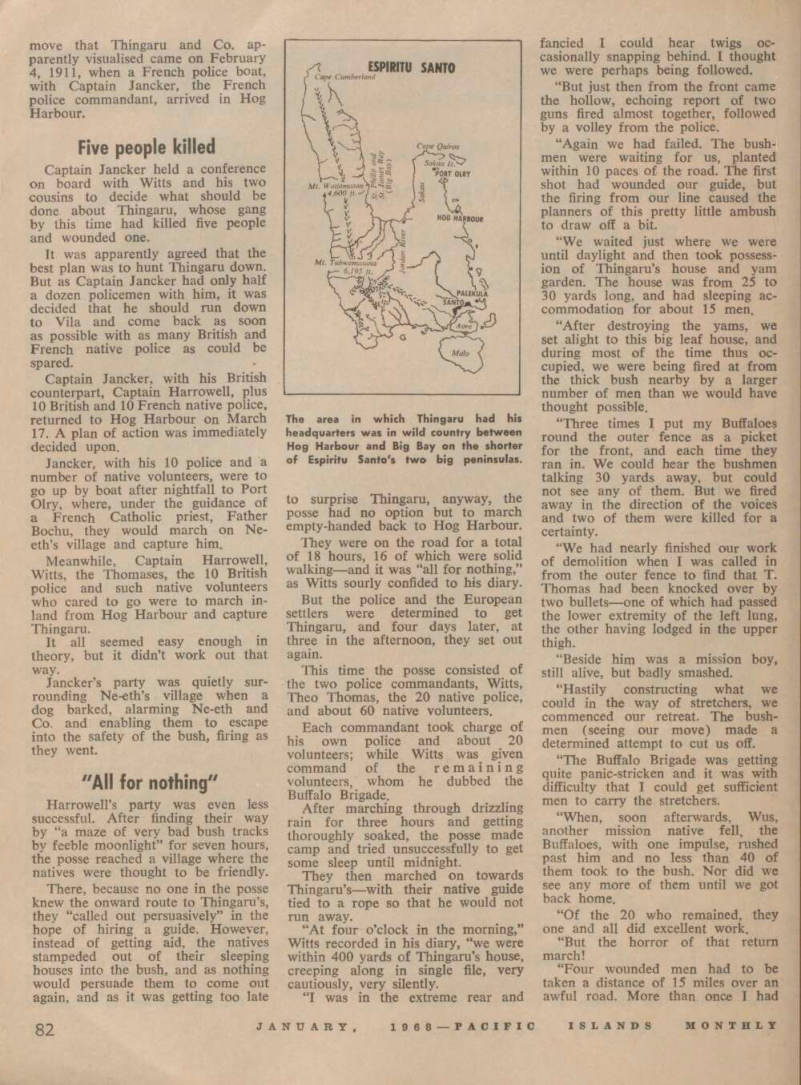 84
84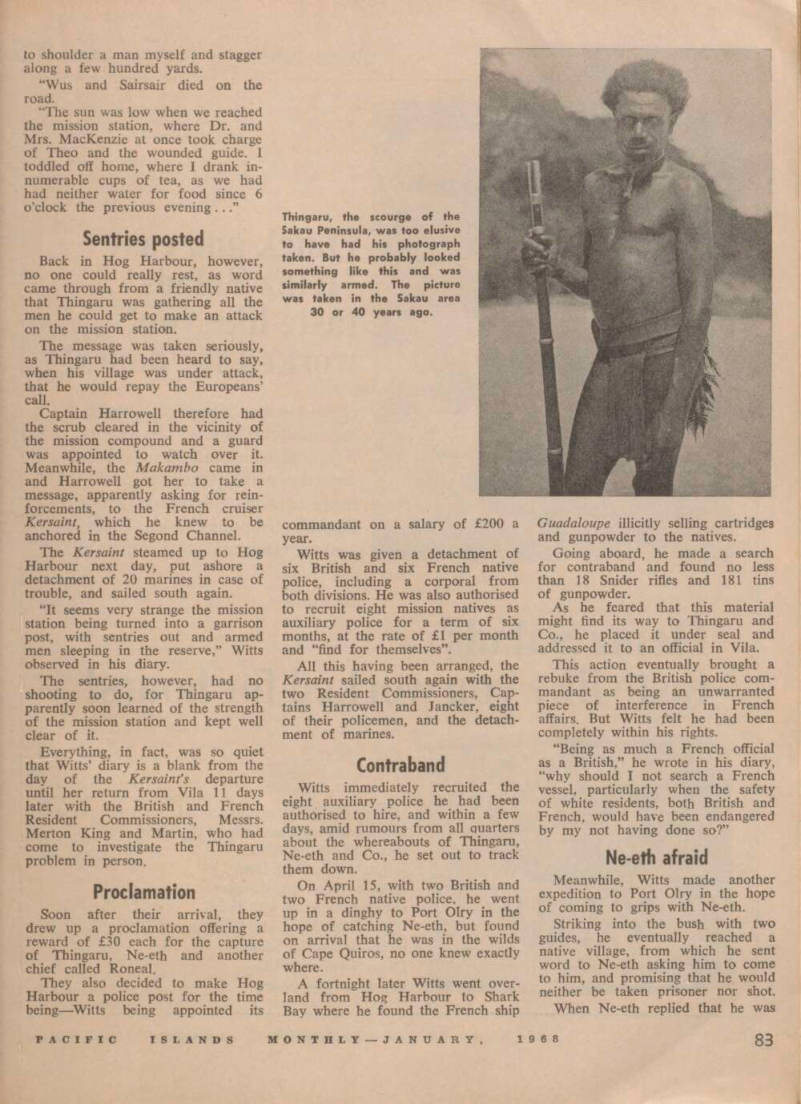 85
85 86
86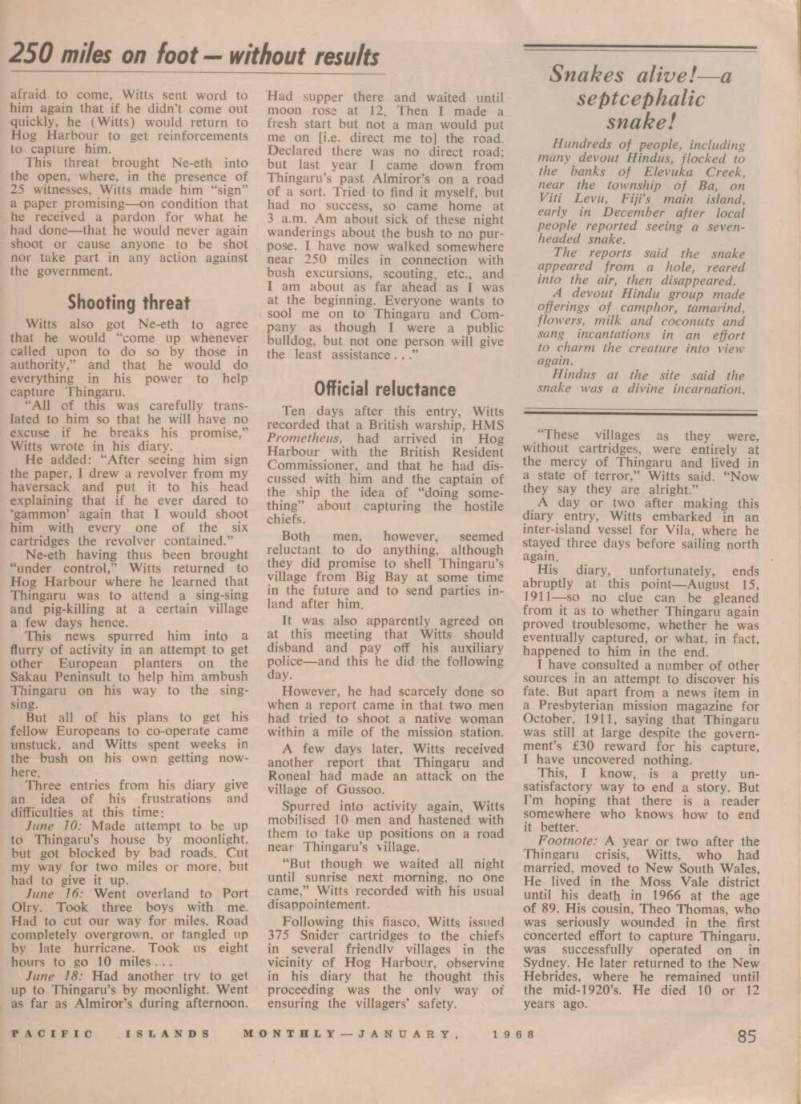 87
87 88
88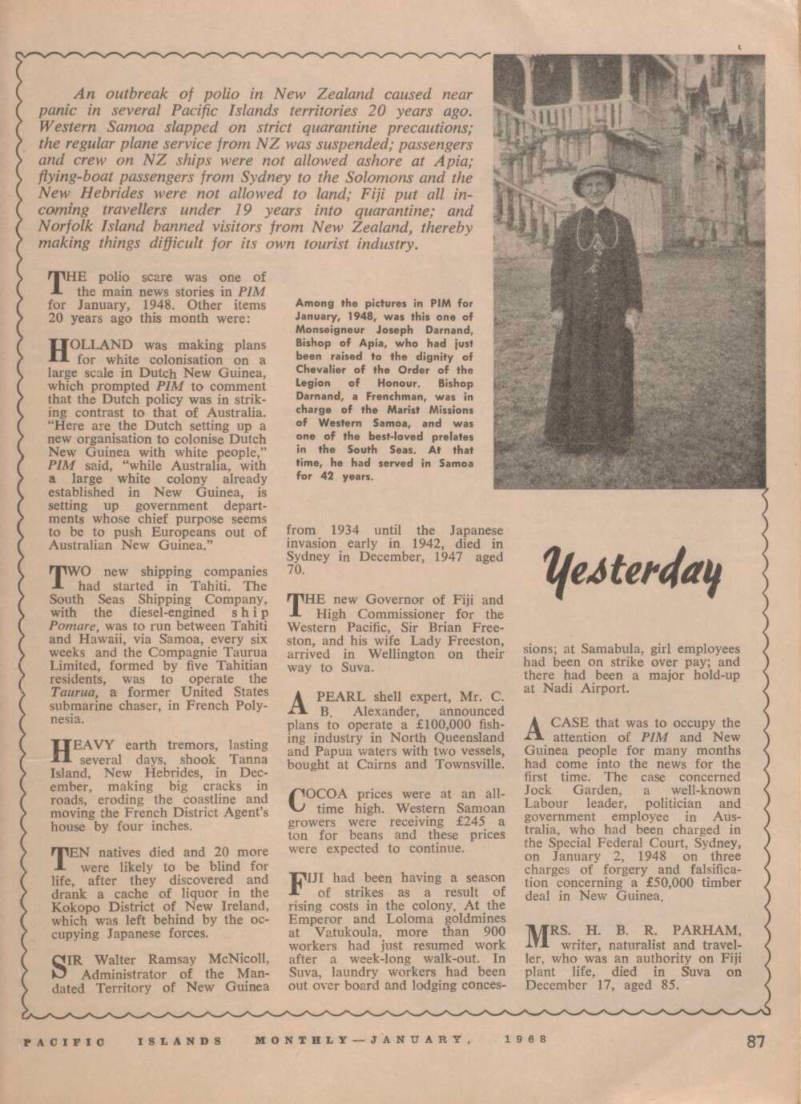 89
89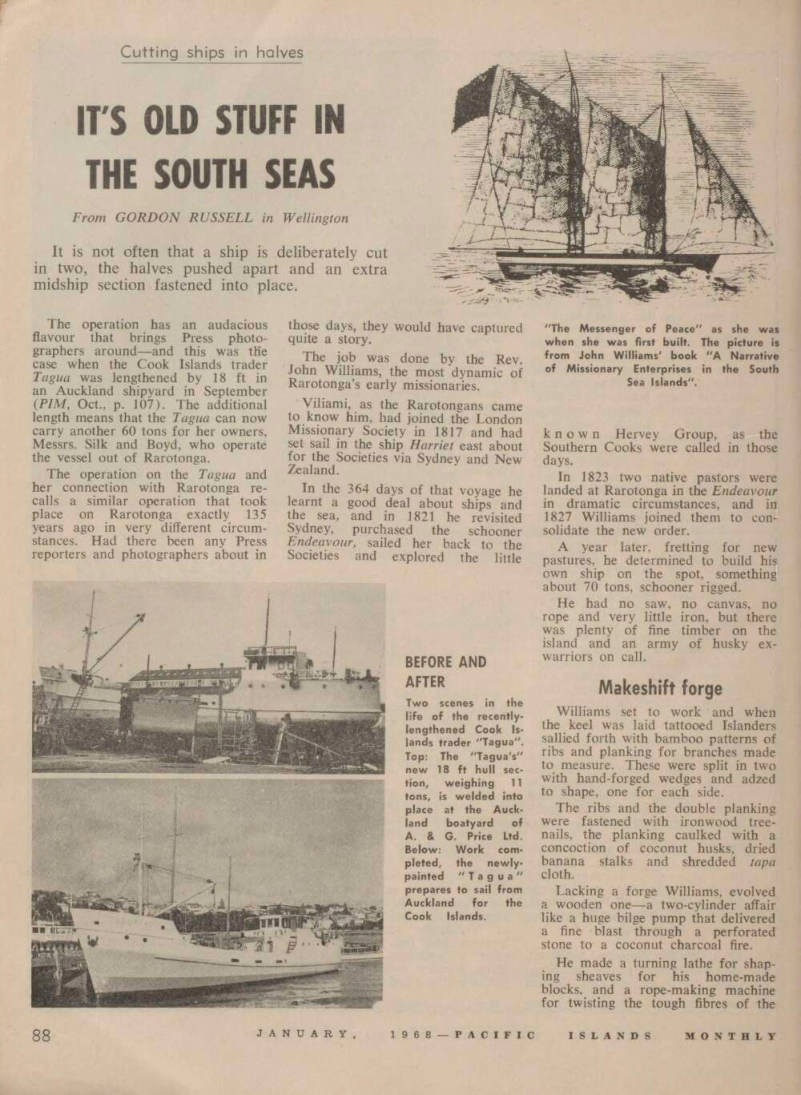 90
90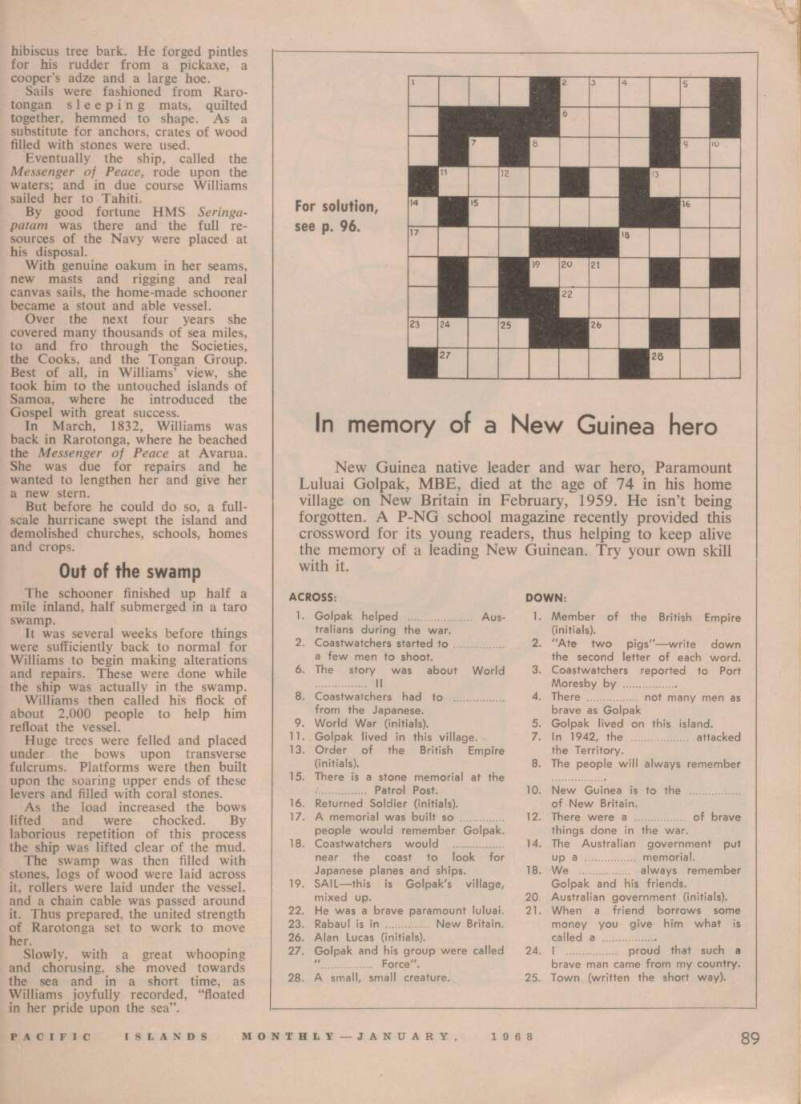 91
91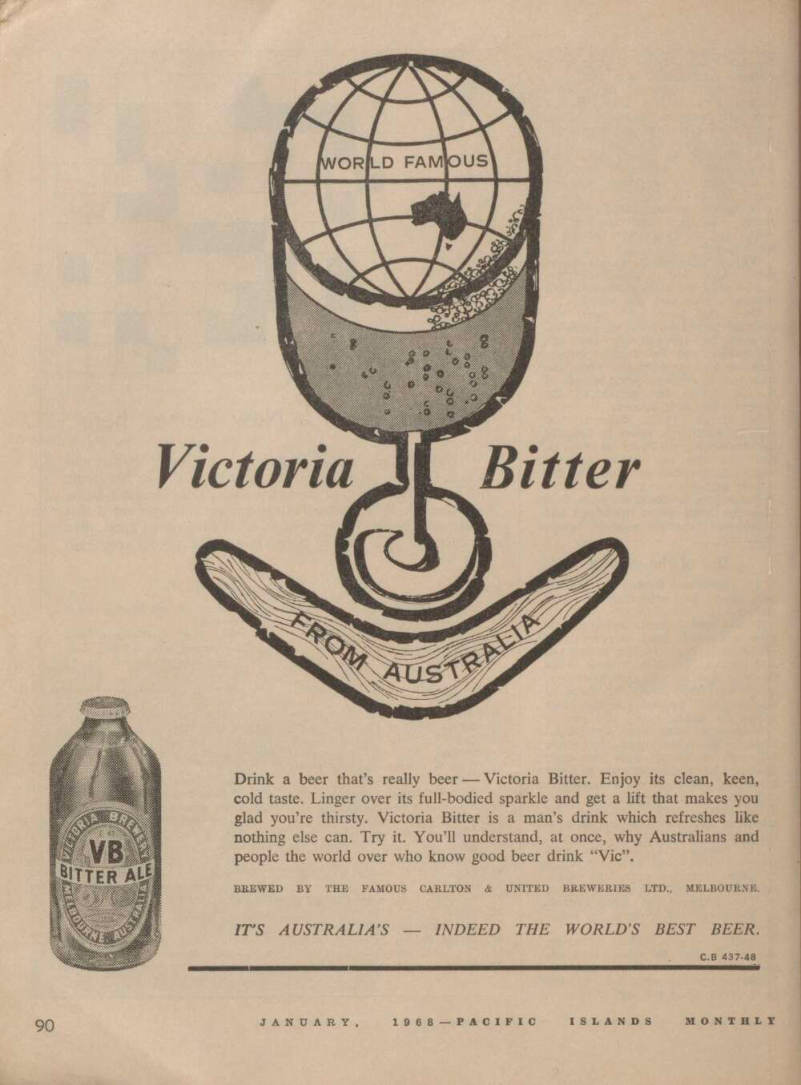 92
92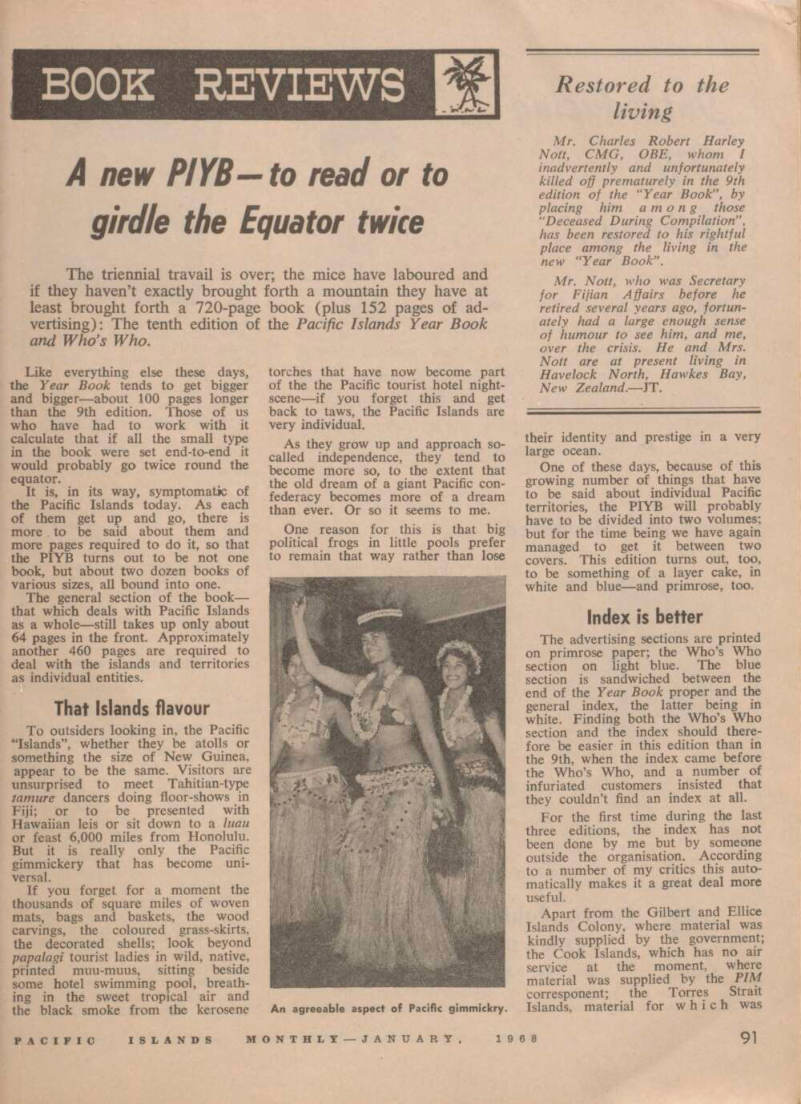 93
93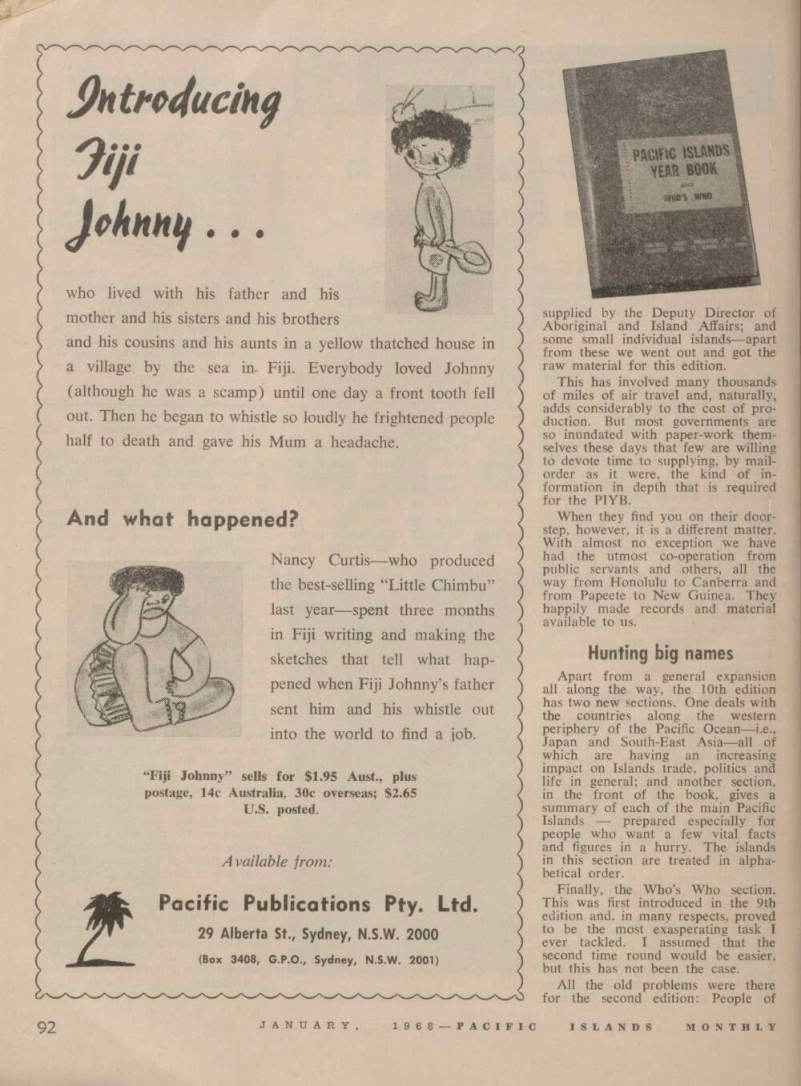 94
94 95
95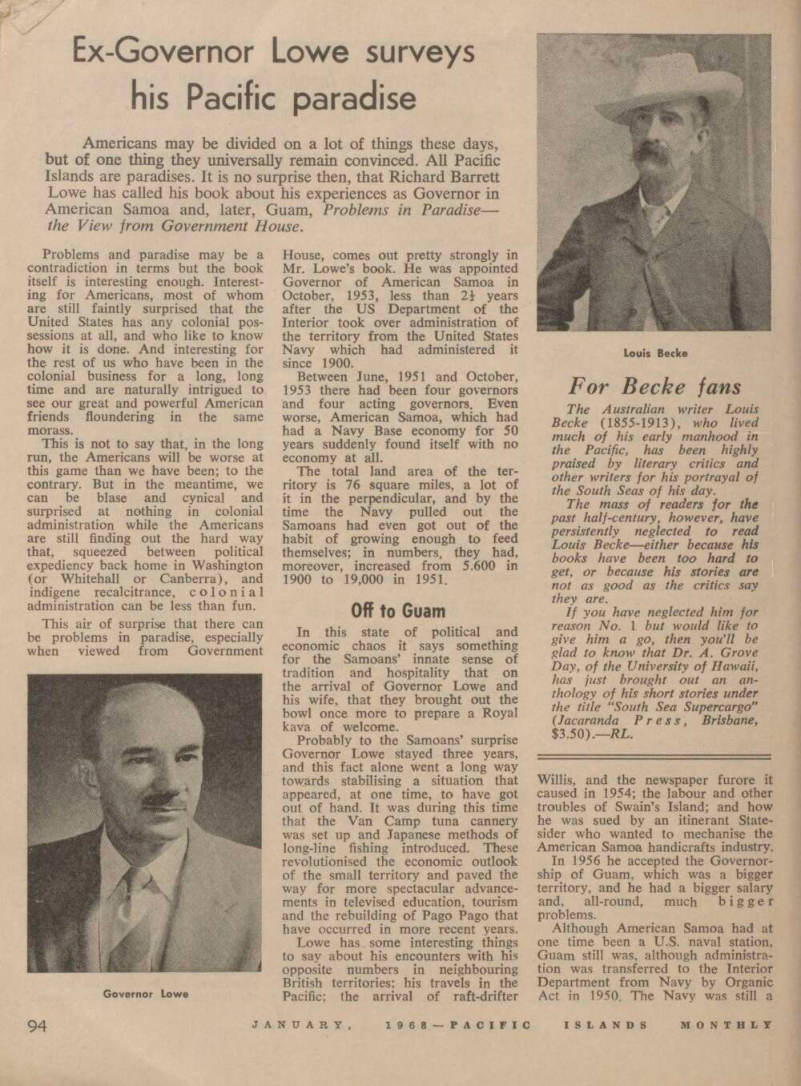 96
96 97
97 98
98 99
99 100
100 101
101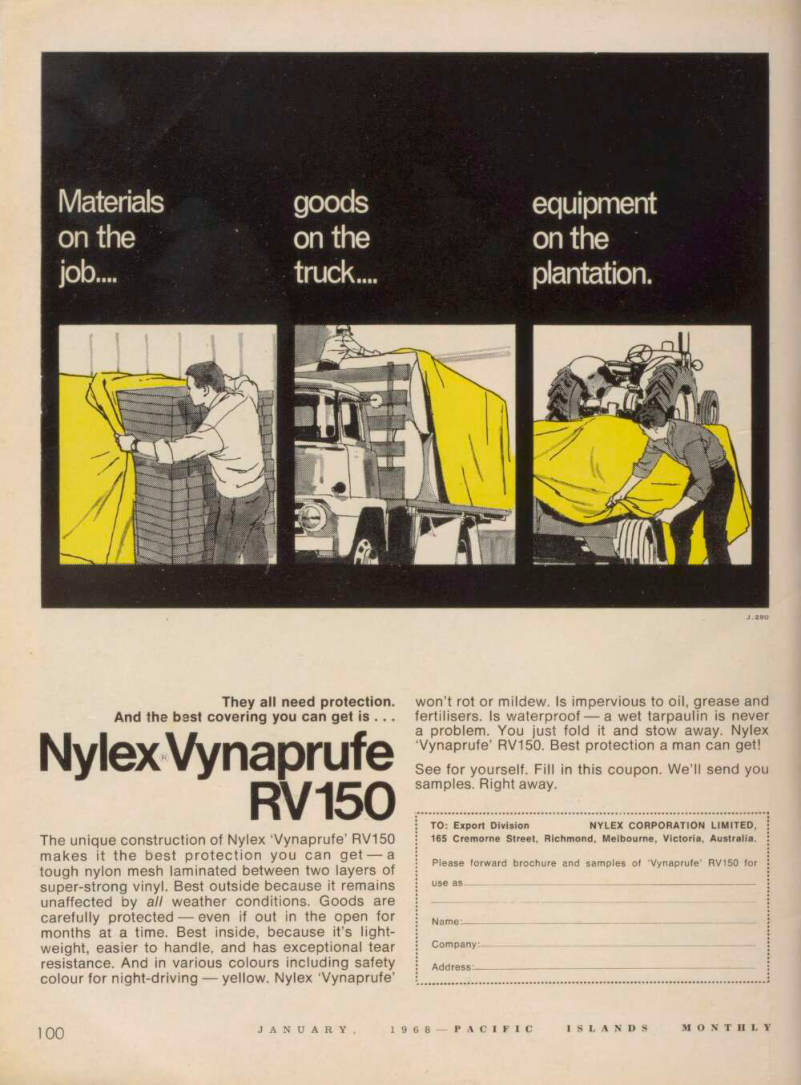 102
102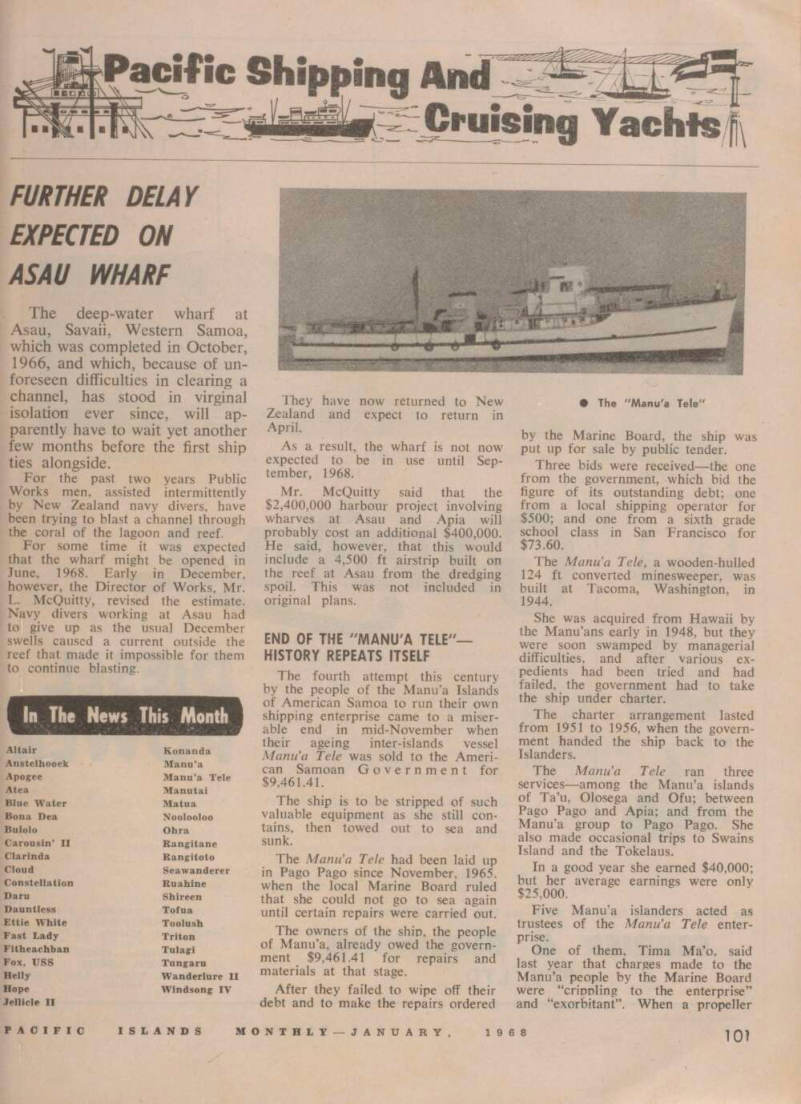 103
103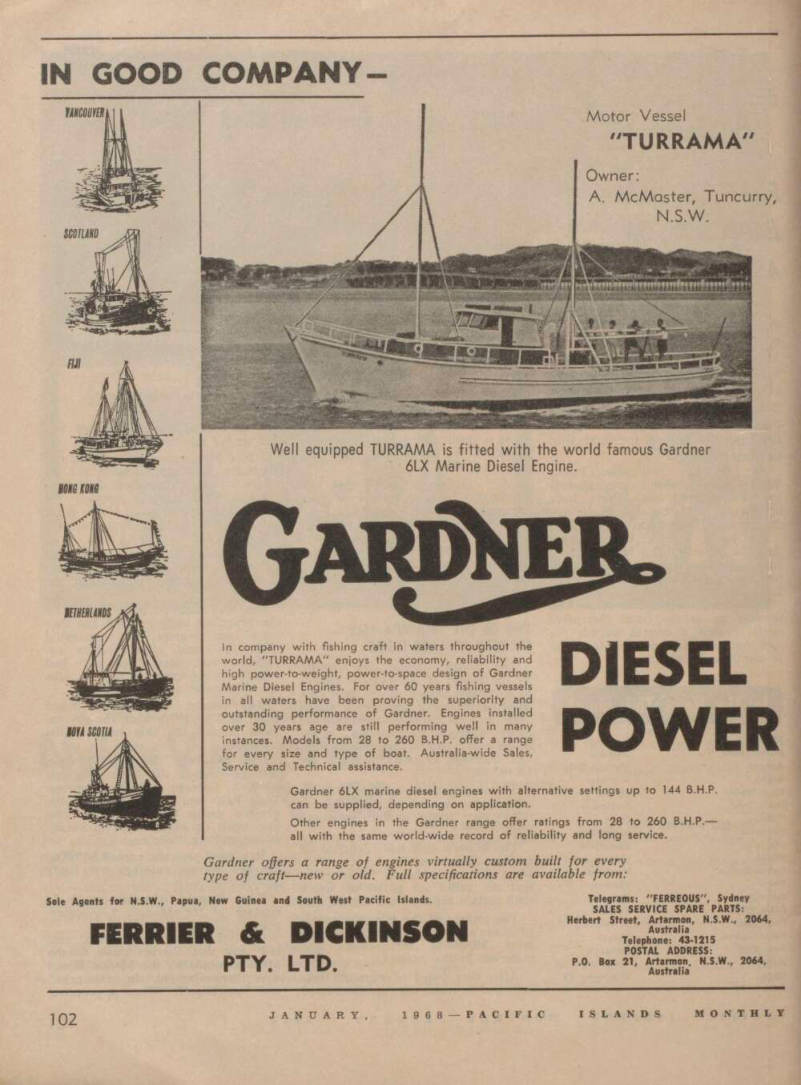 104
104 105
105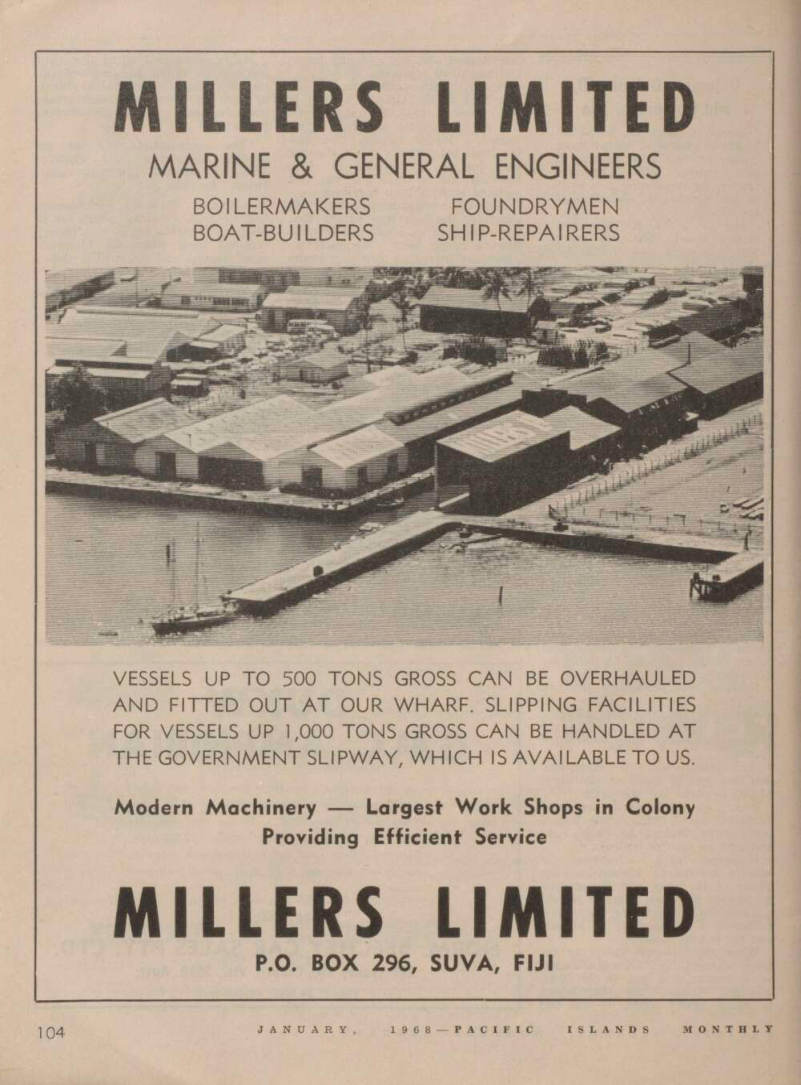 106
106 107
107 108
108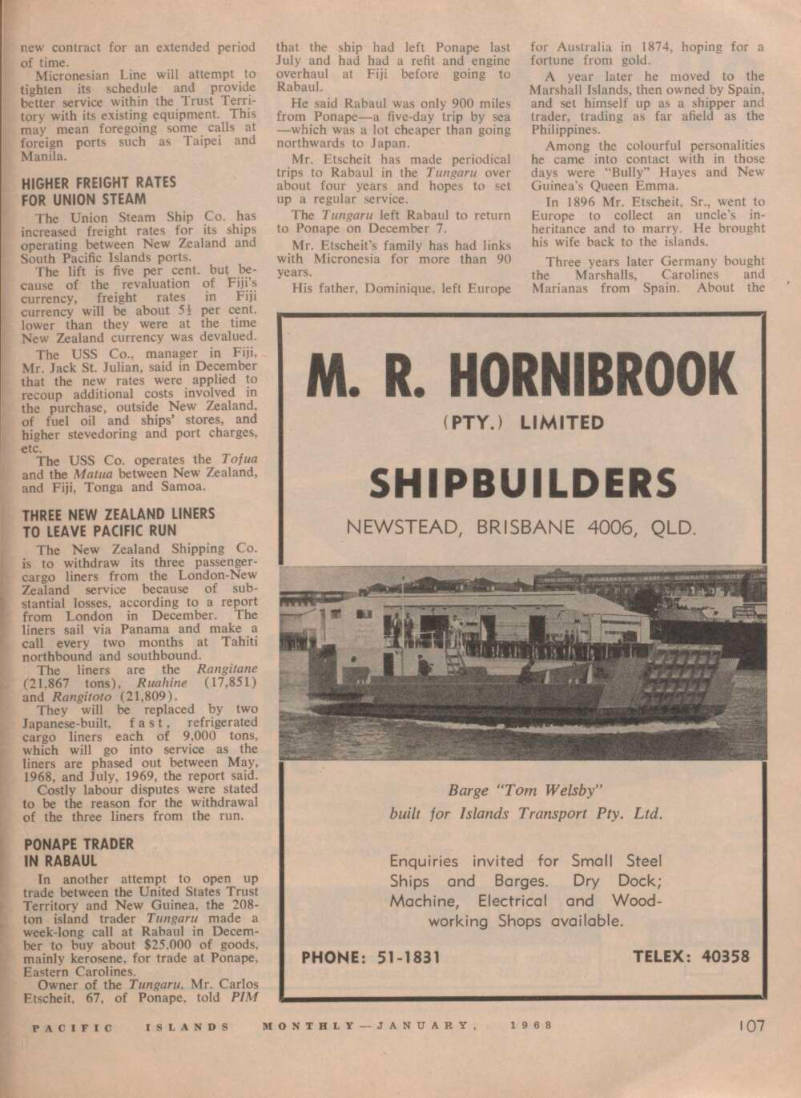 109
109 110
110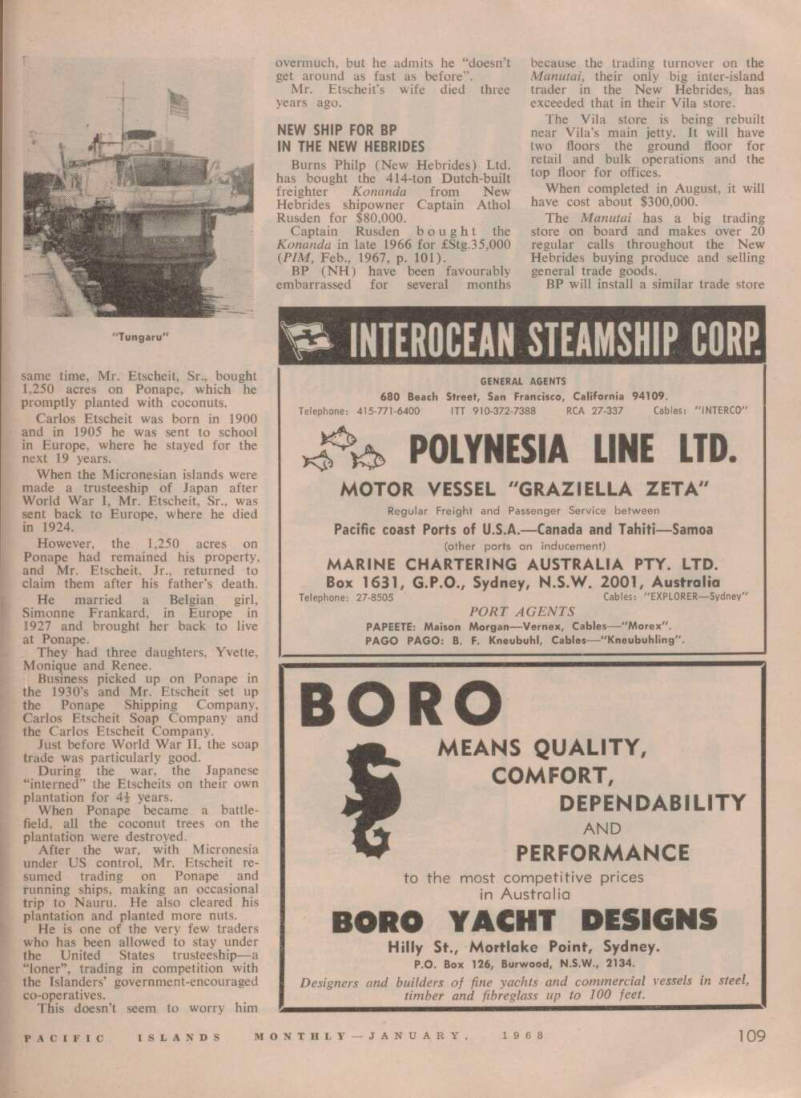 111
111 112
112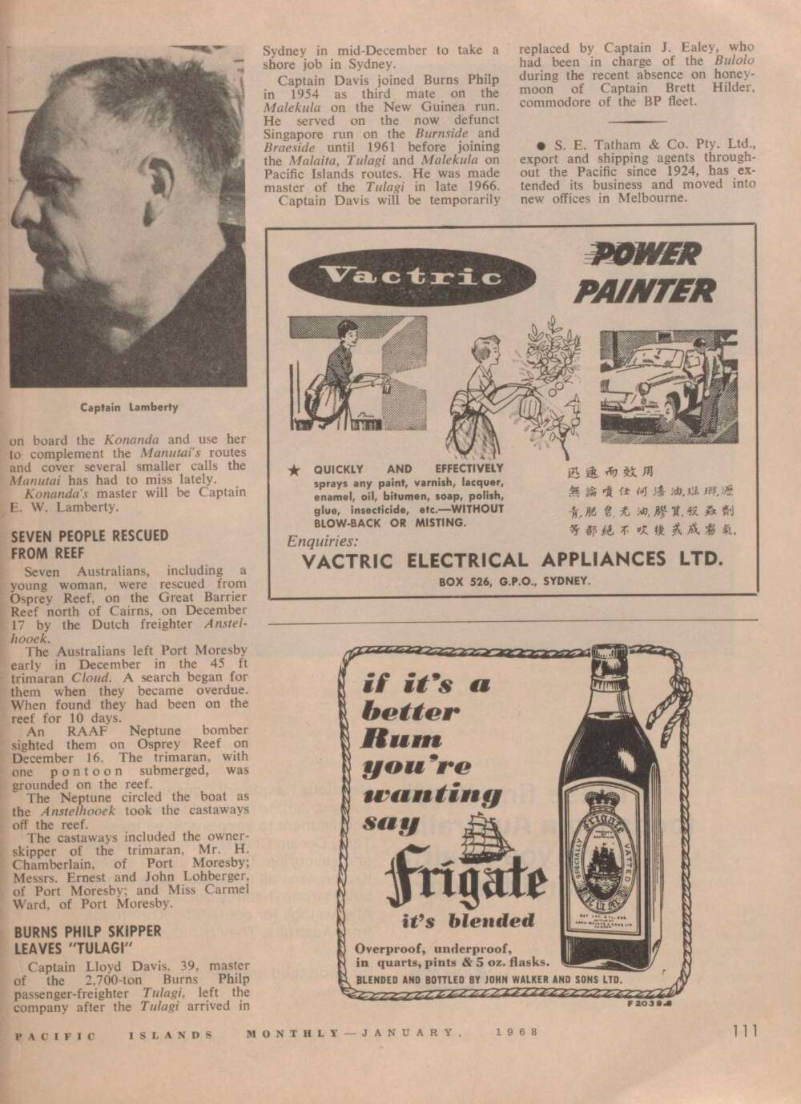 113
113 114
114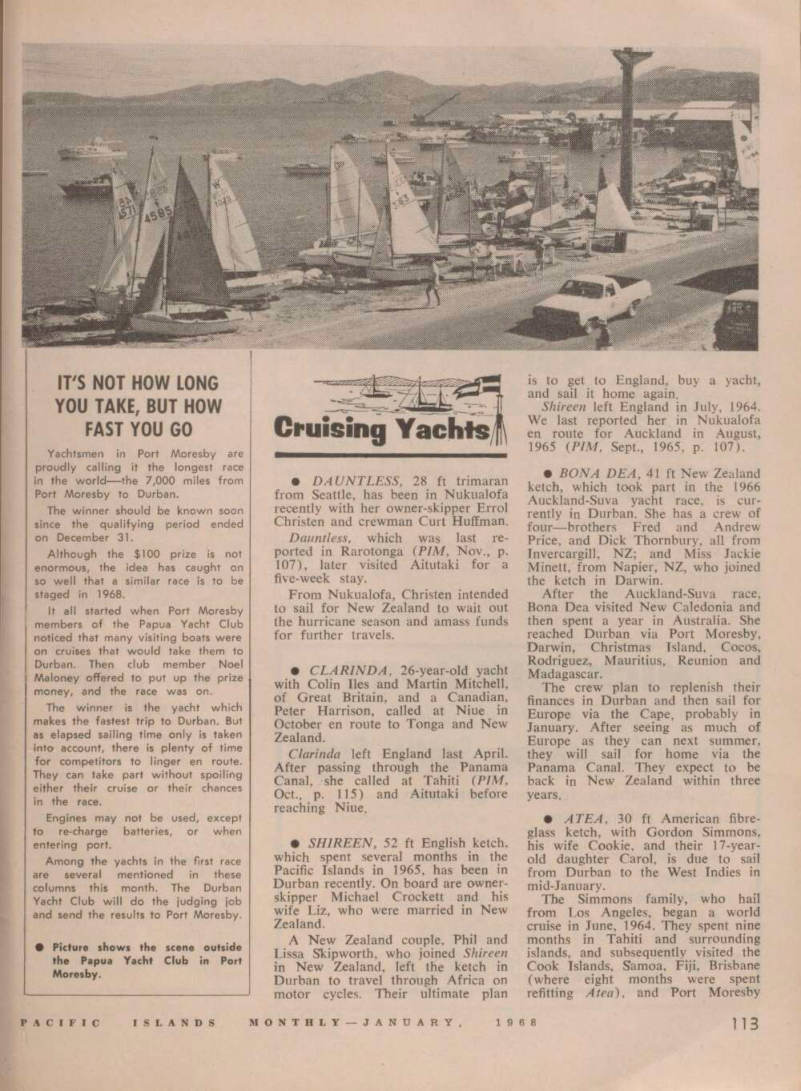 115
115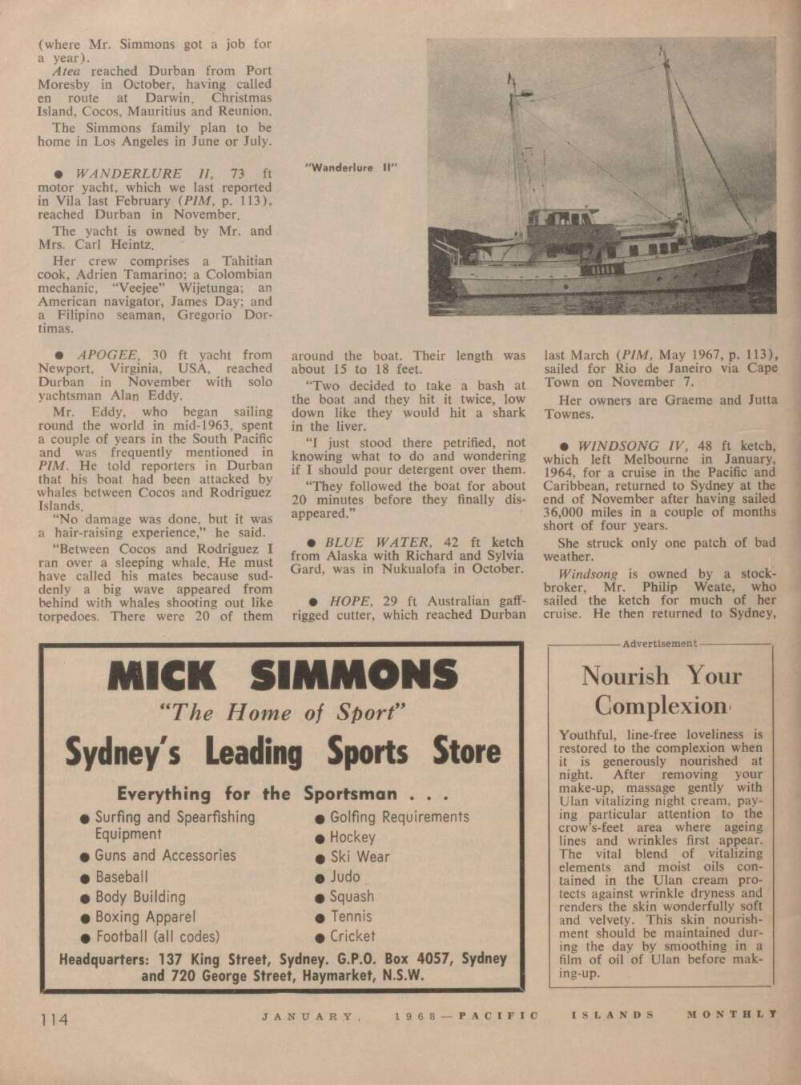 116
116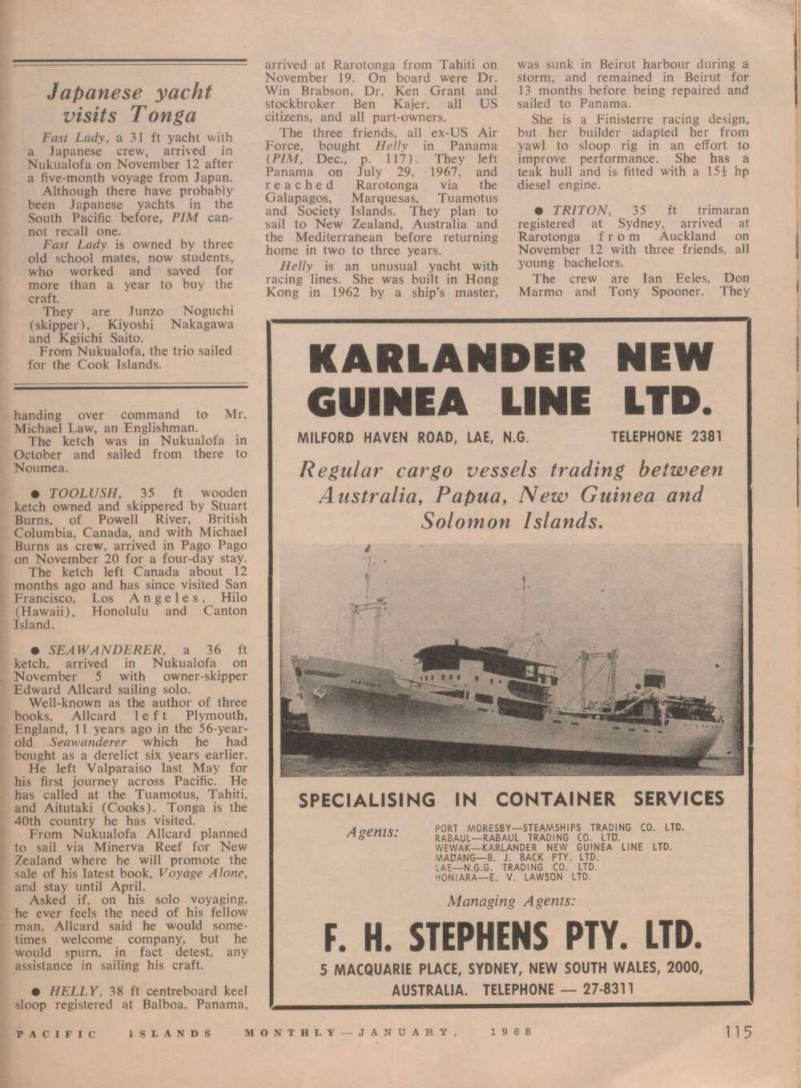 117
117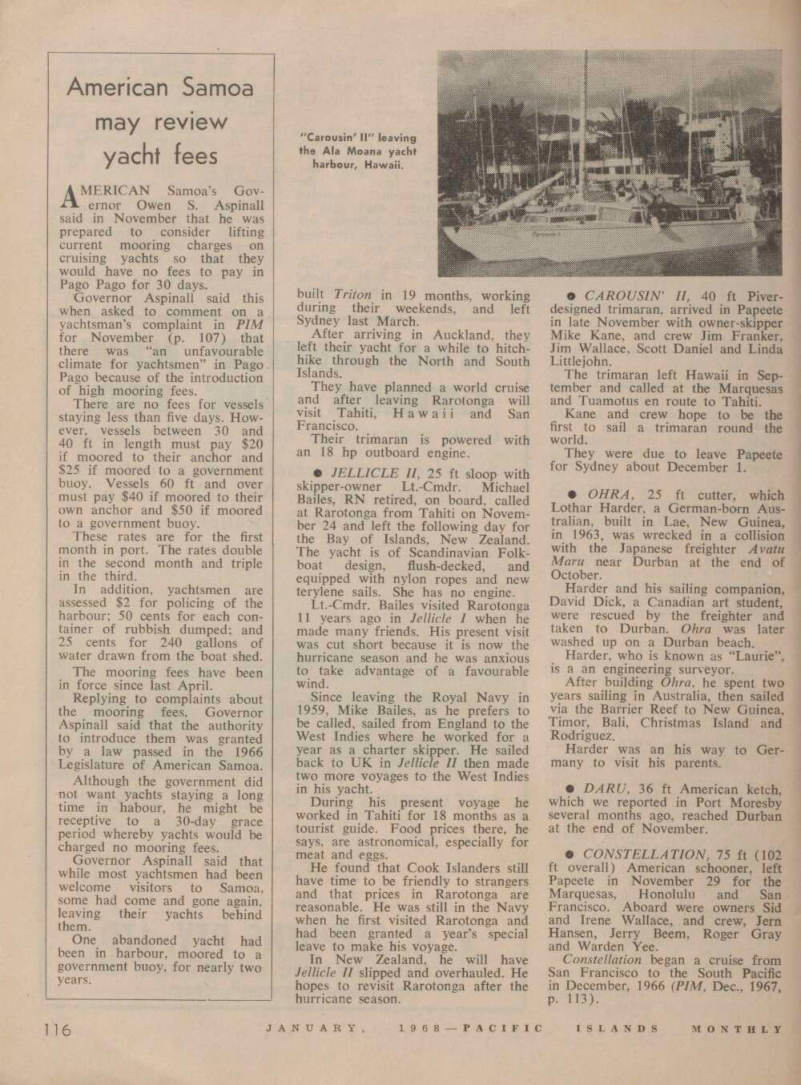 118
118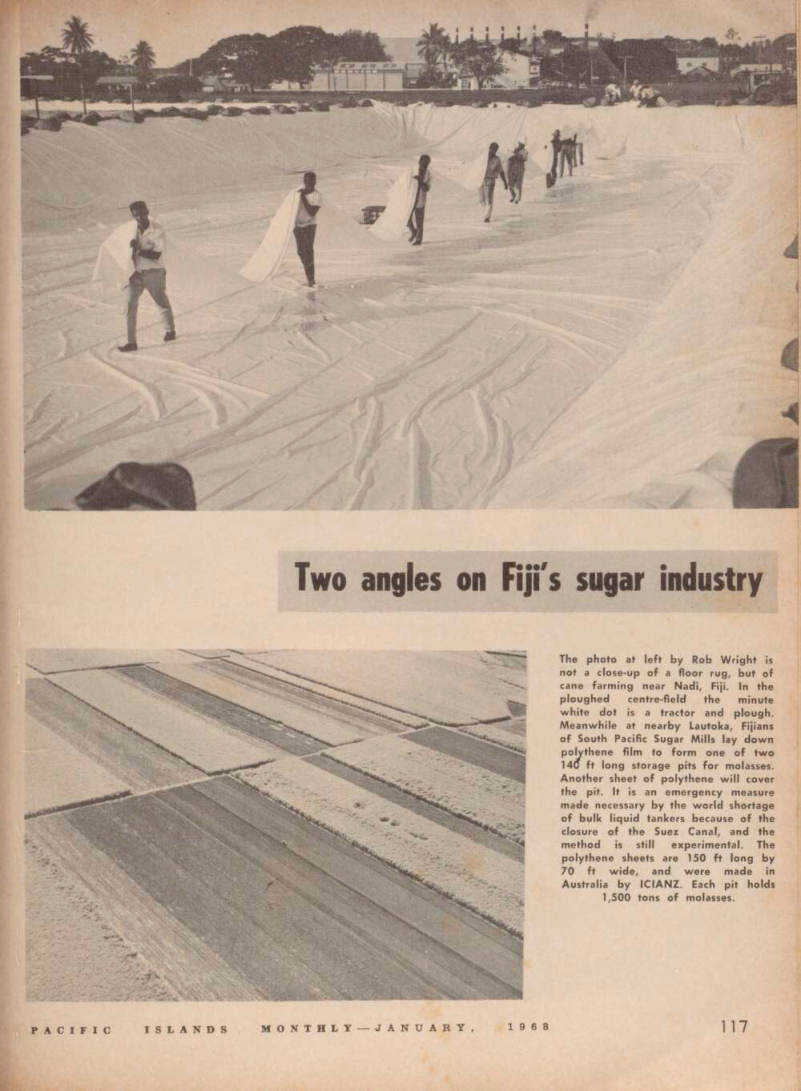 119
119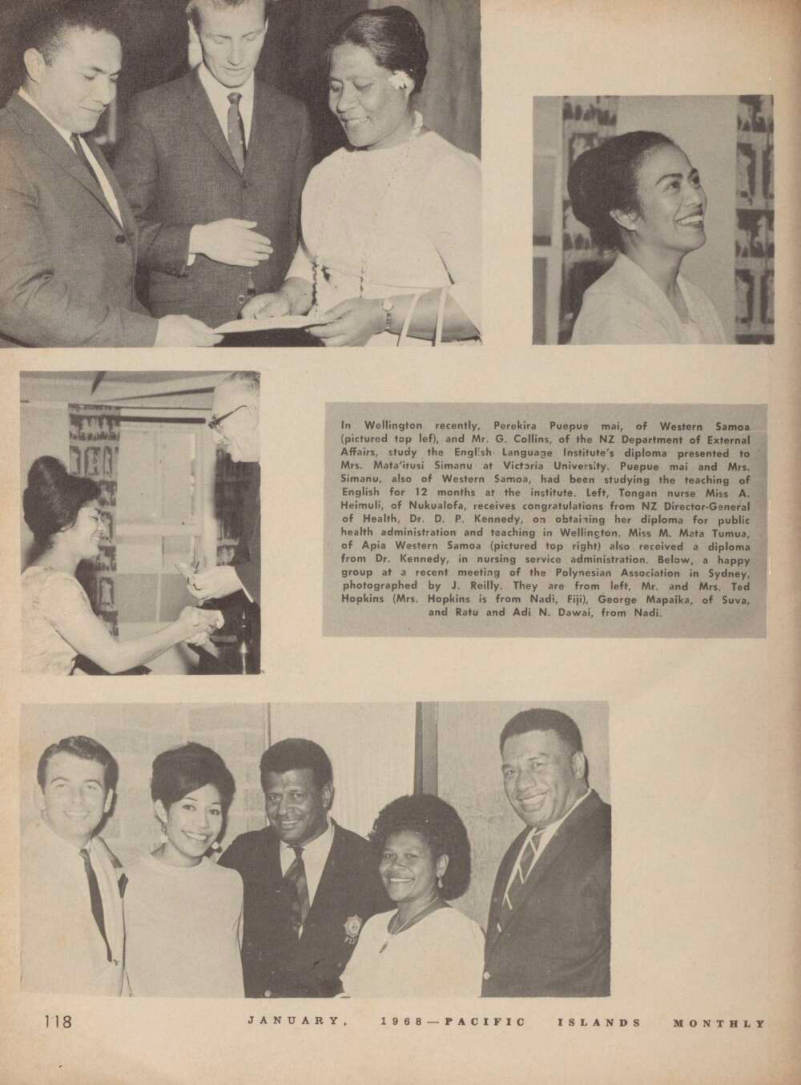 120
120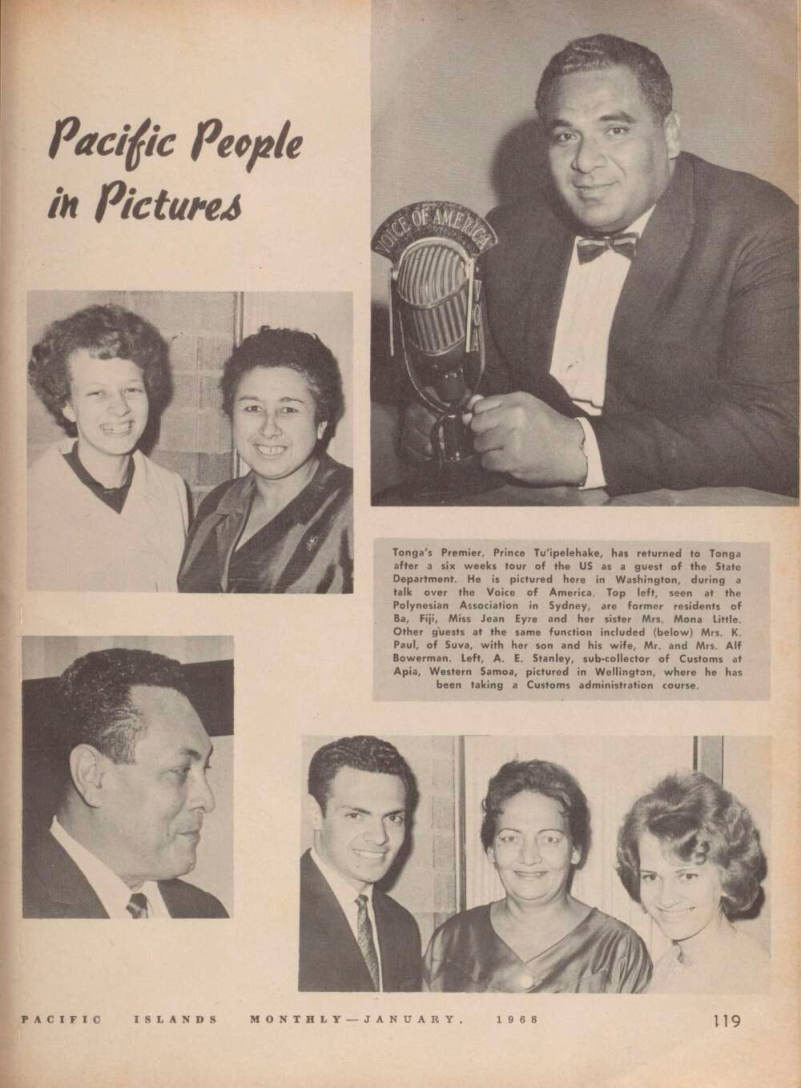 121
121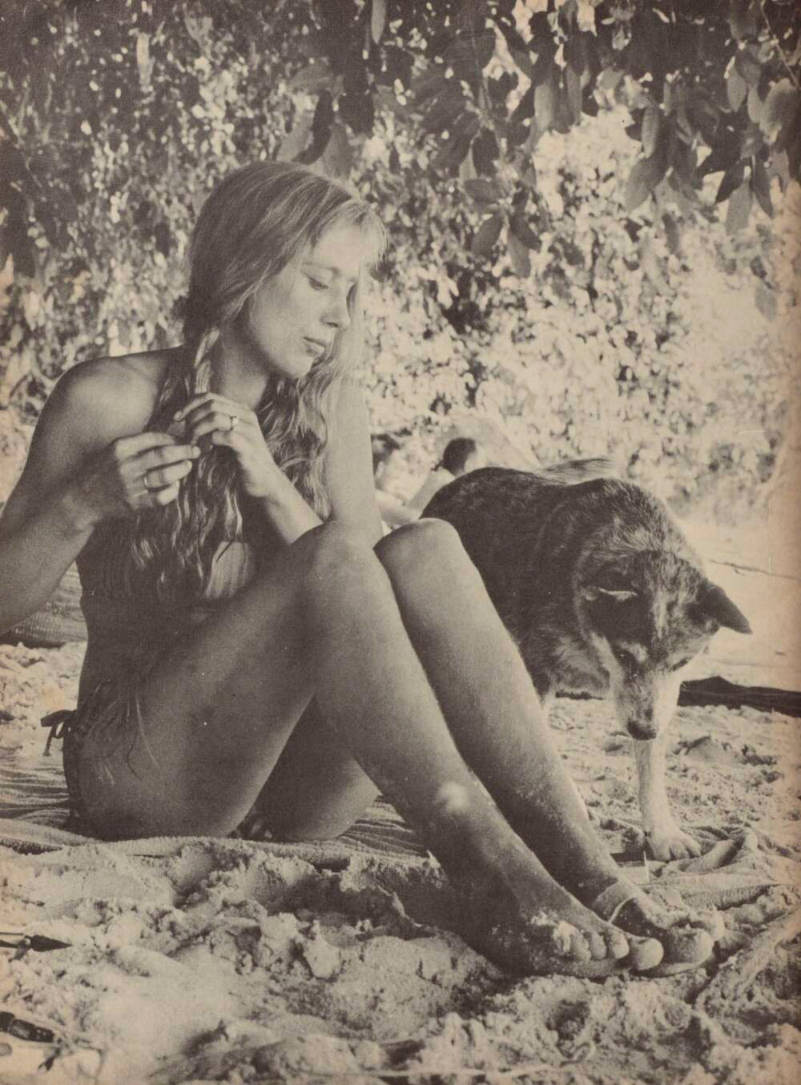 122
122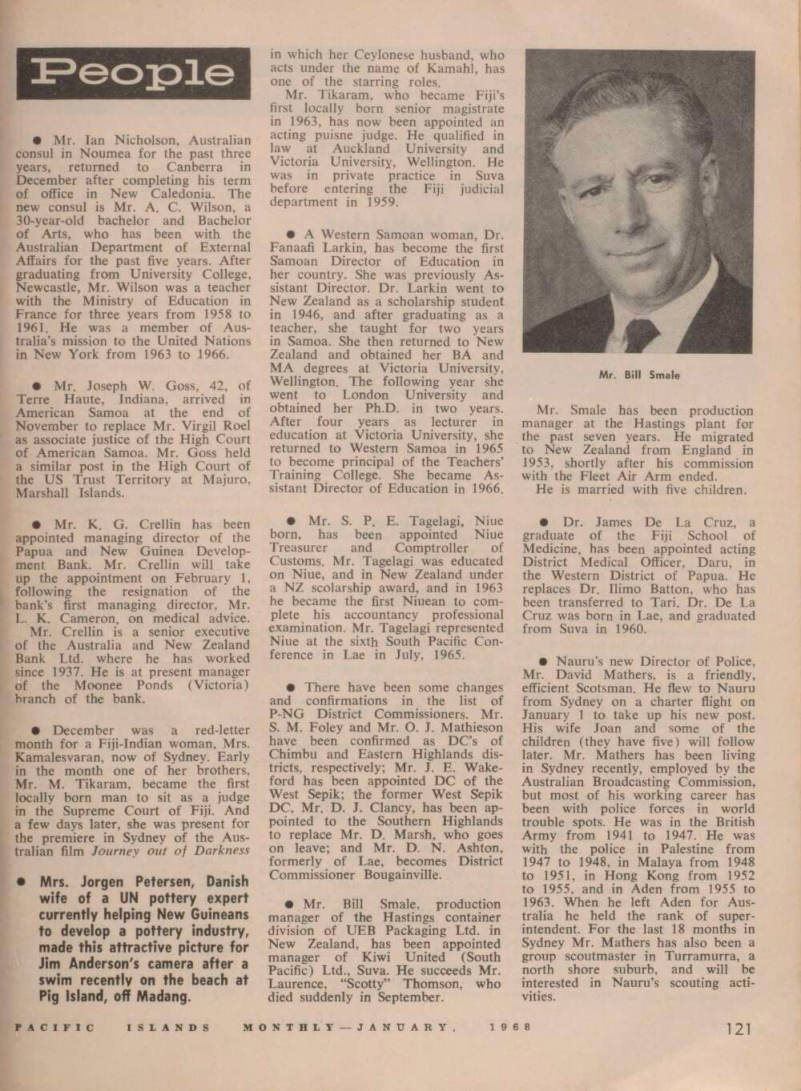 123
123 124
124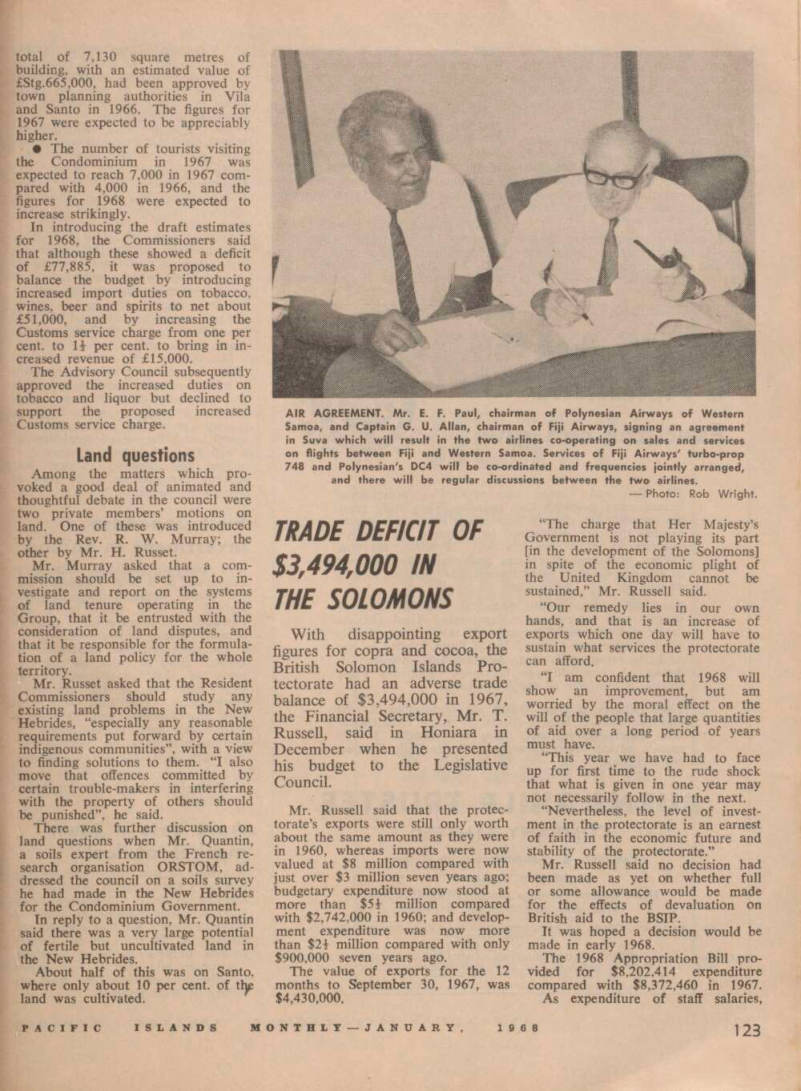 125
125 126
126 127
127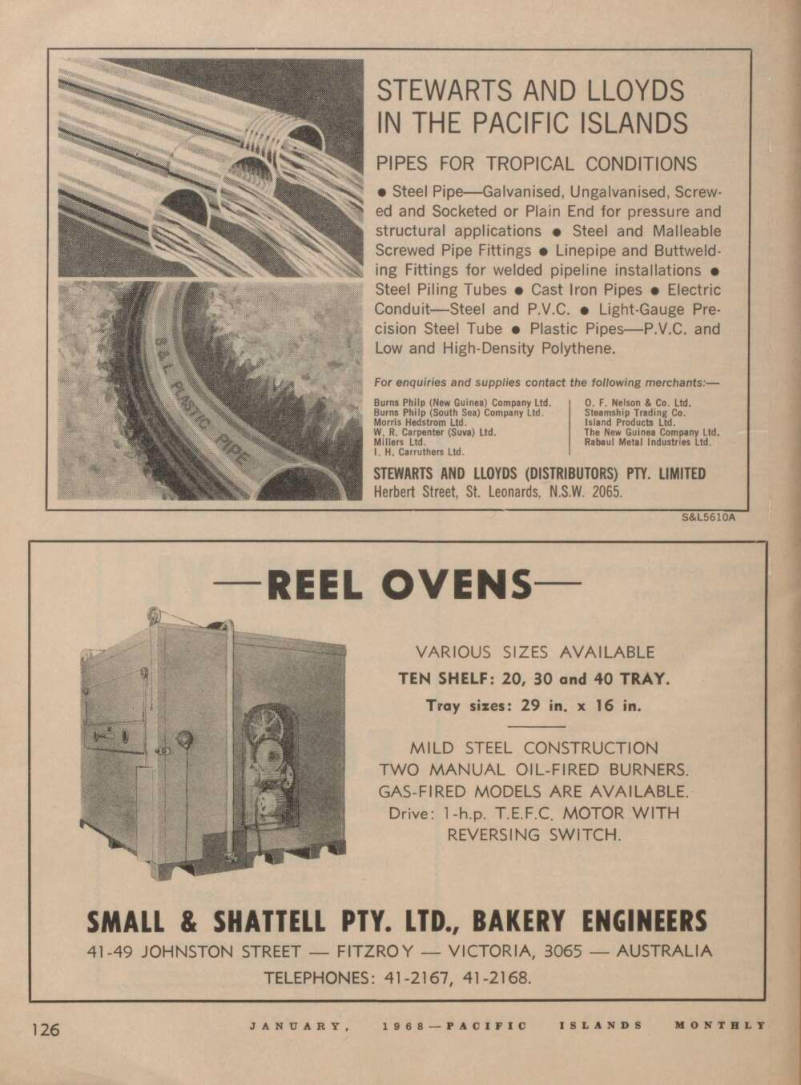 128
128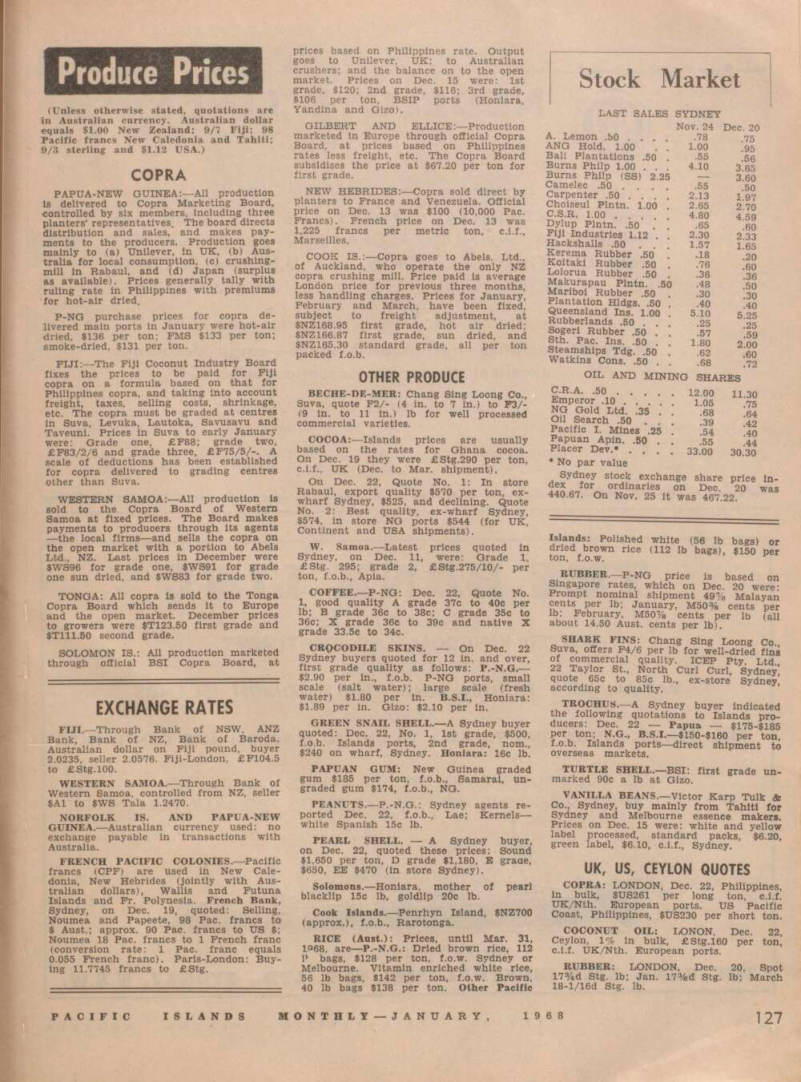 129
129 130
130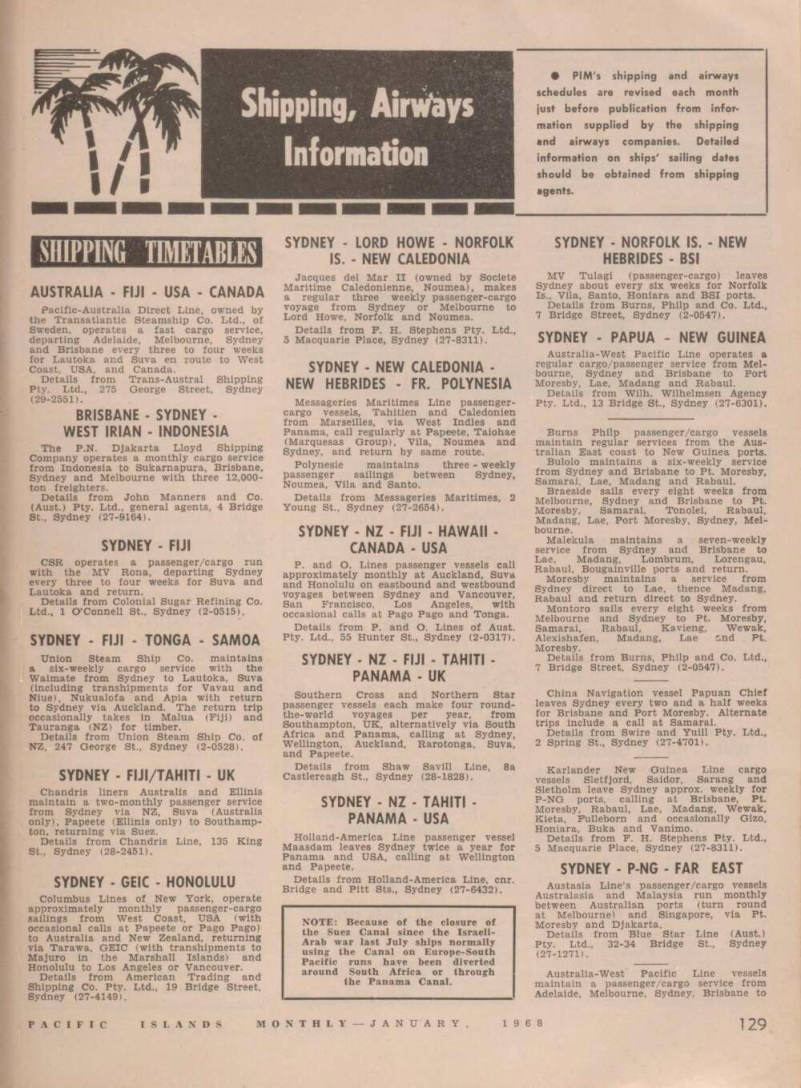 131
131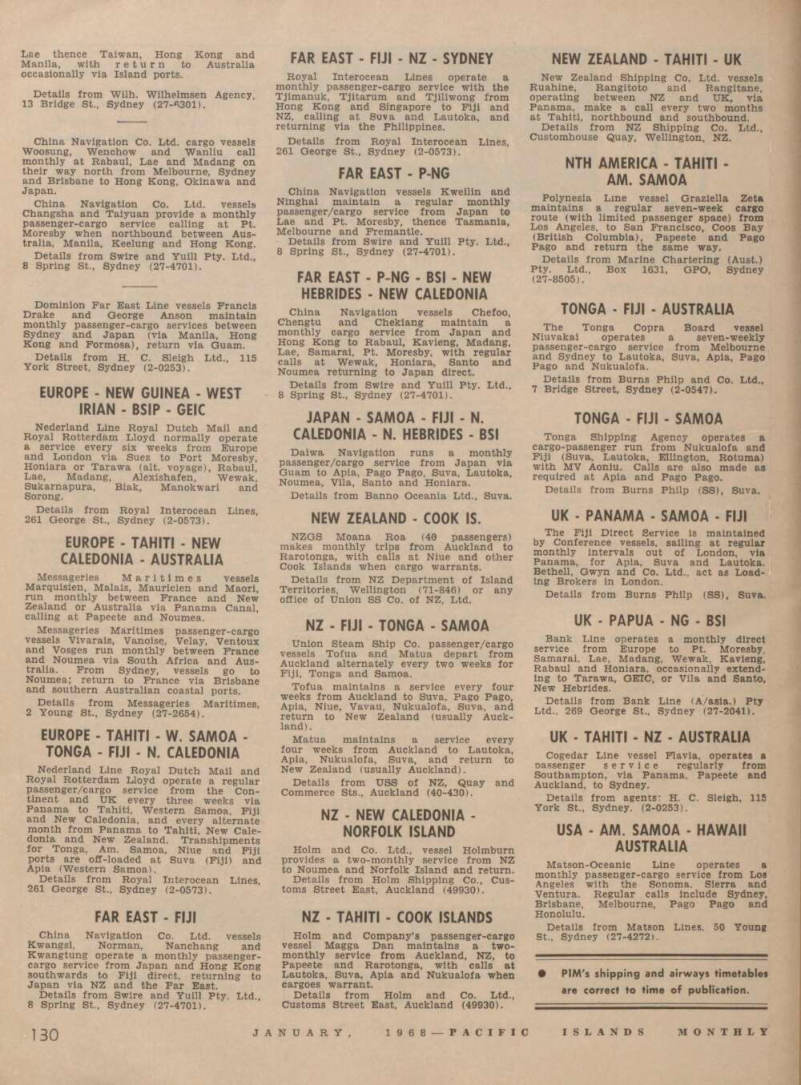 132
132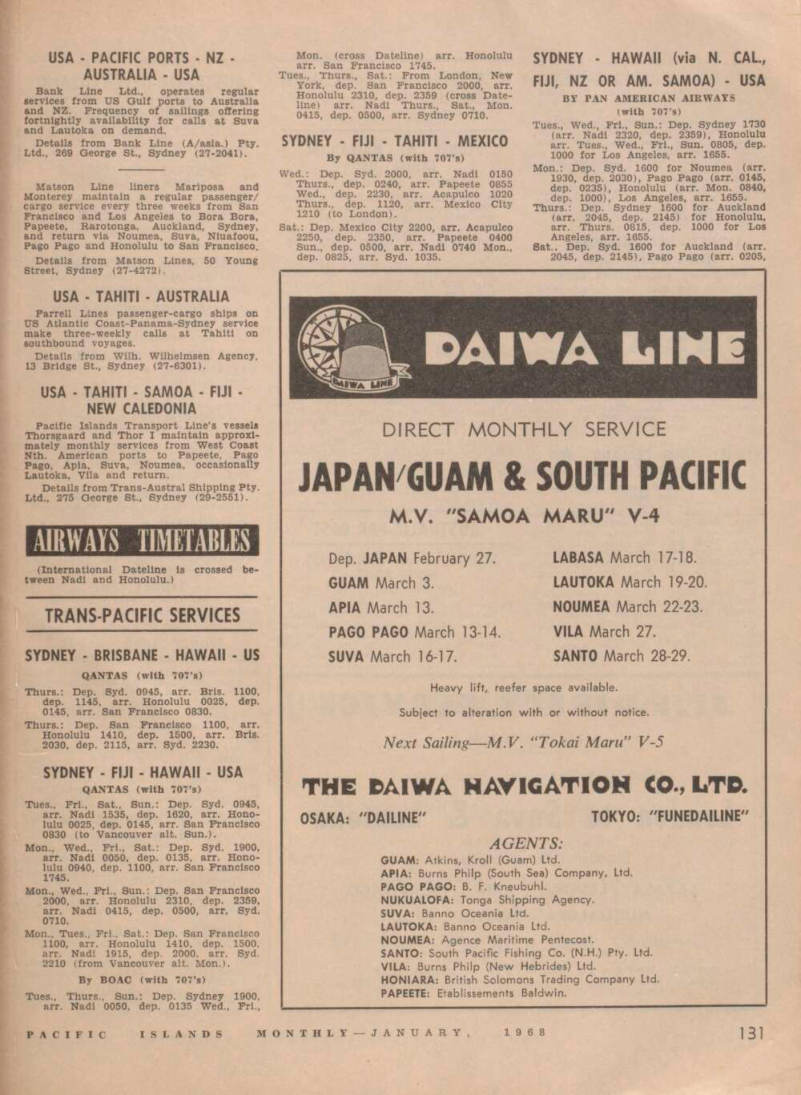 133
133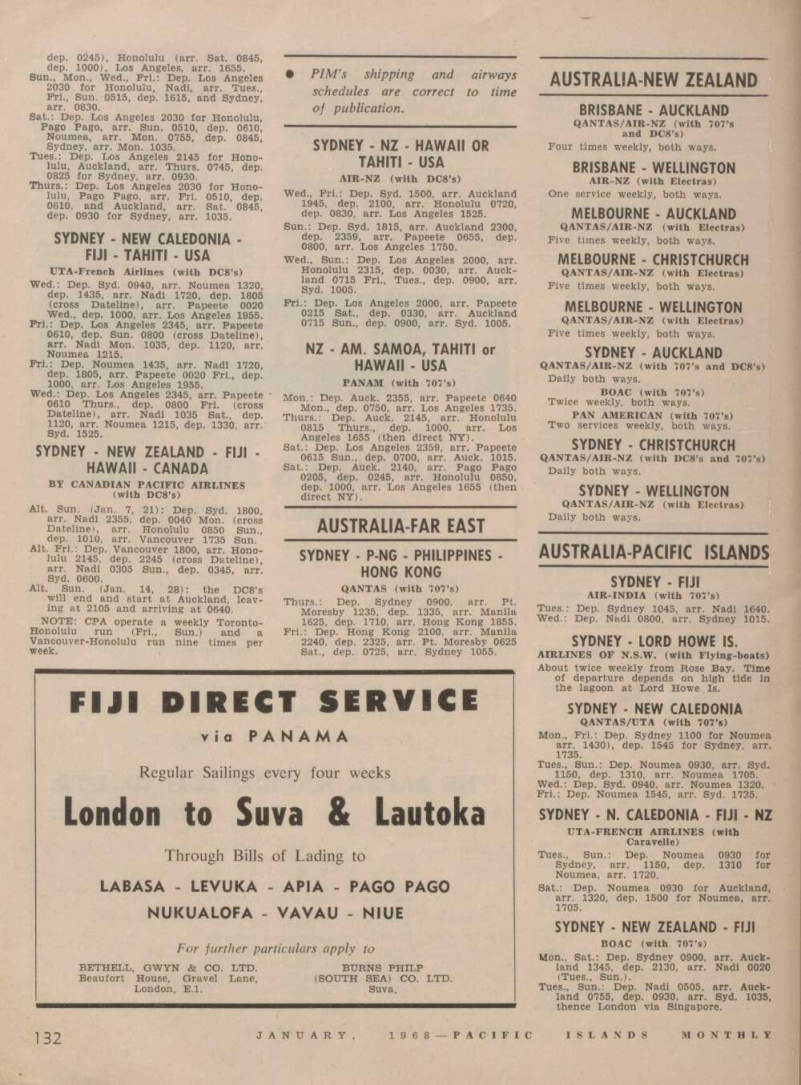 134
134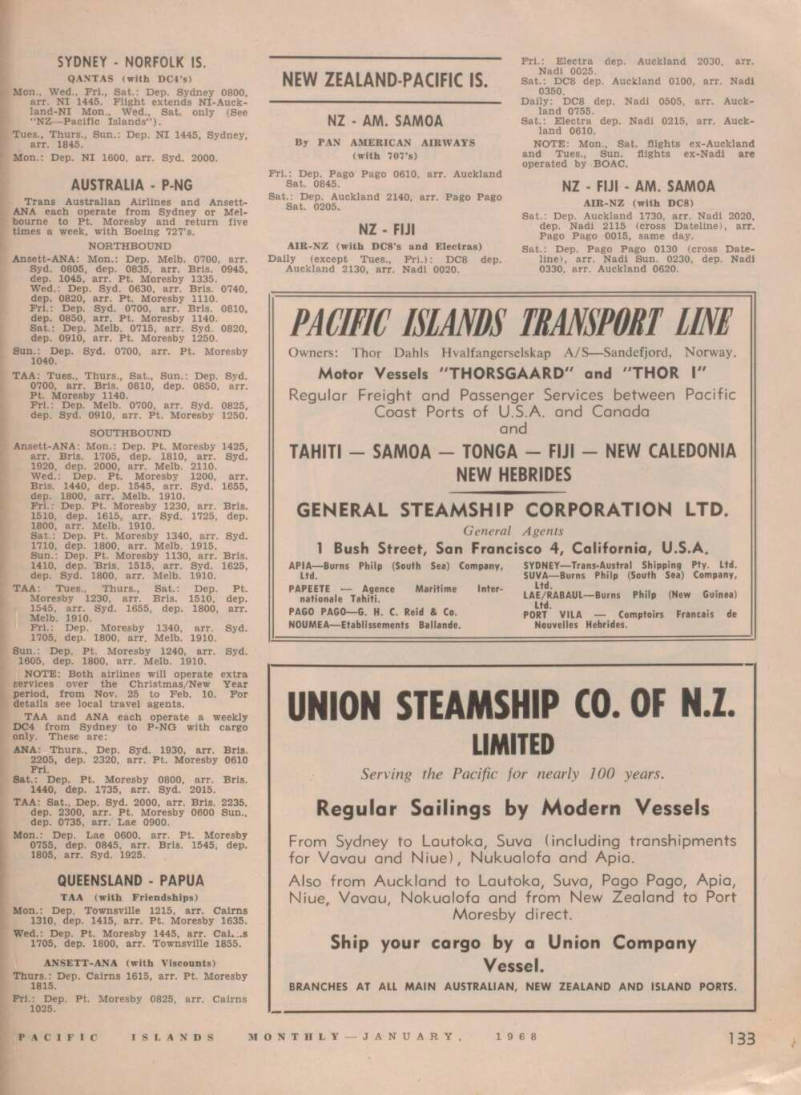 135
135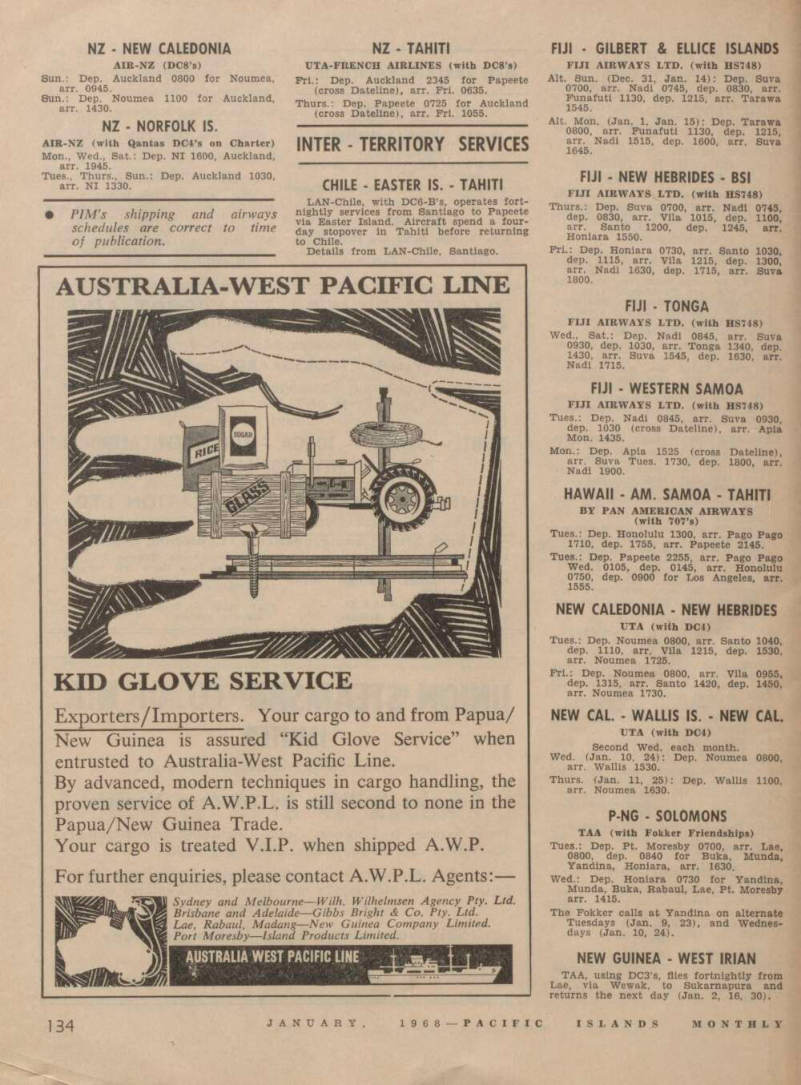 136
136 137
137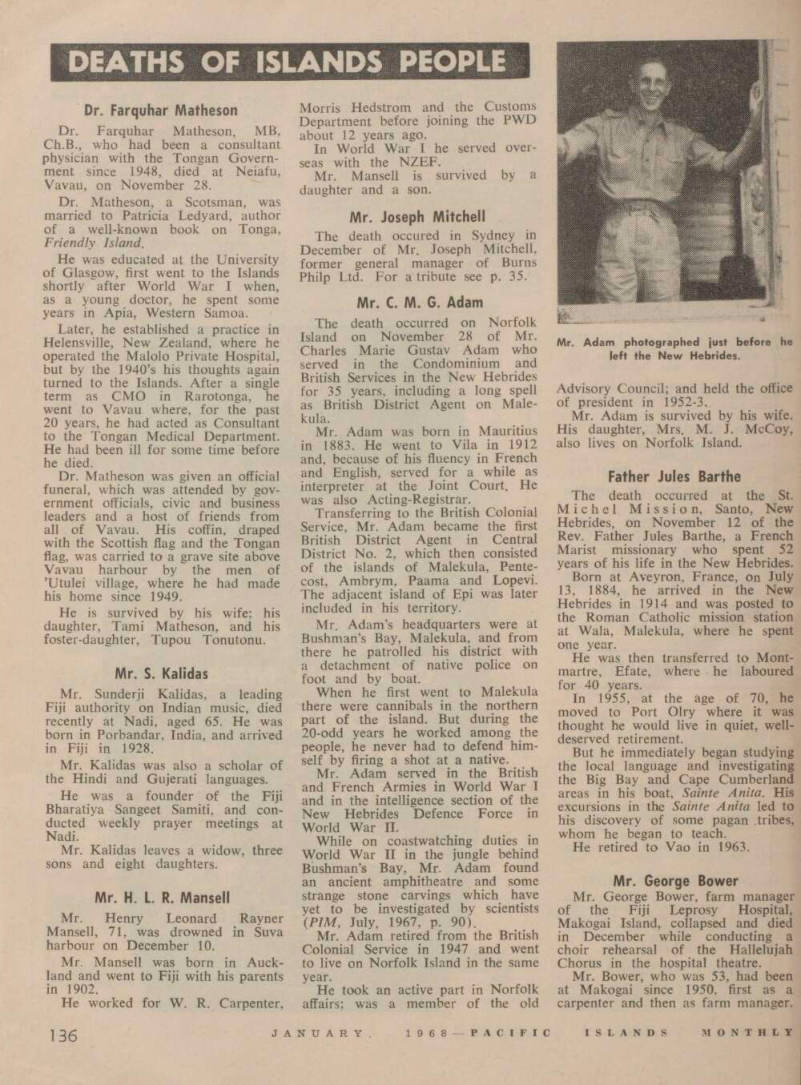 138
138 139
139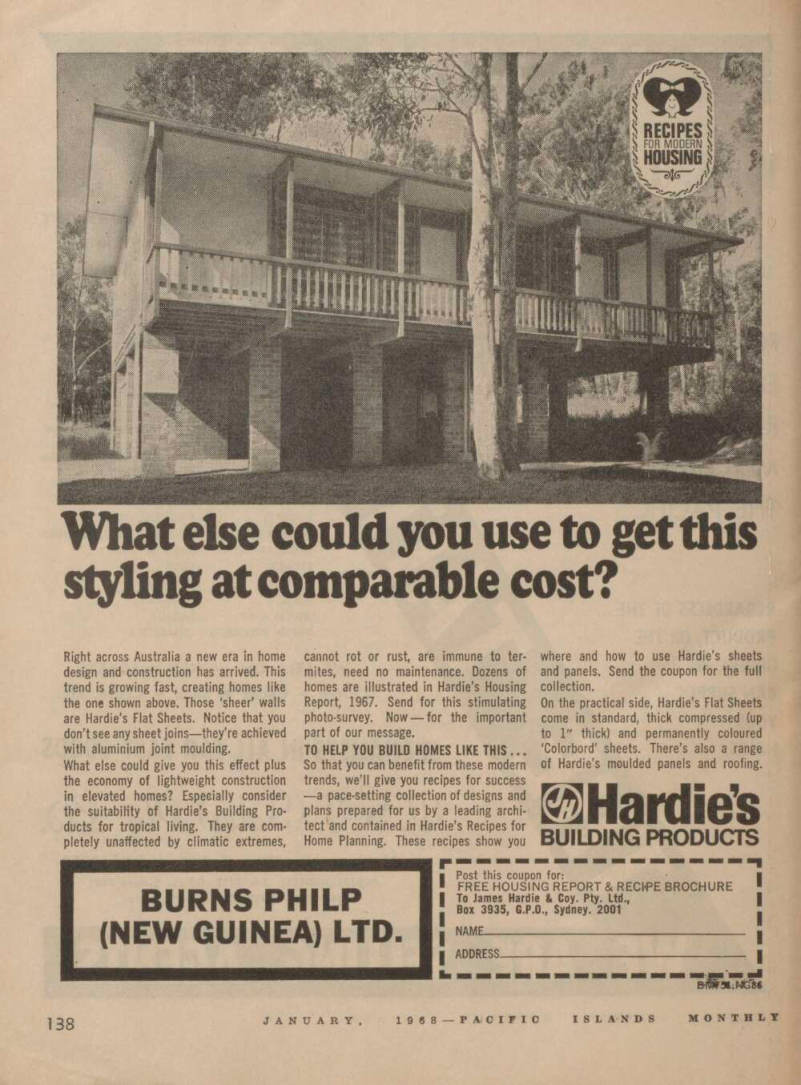 140
140 141
141 142
142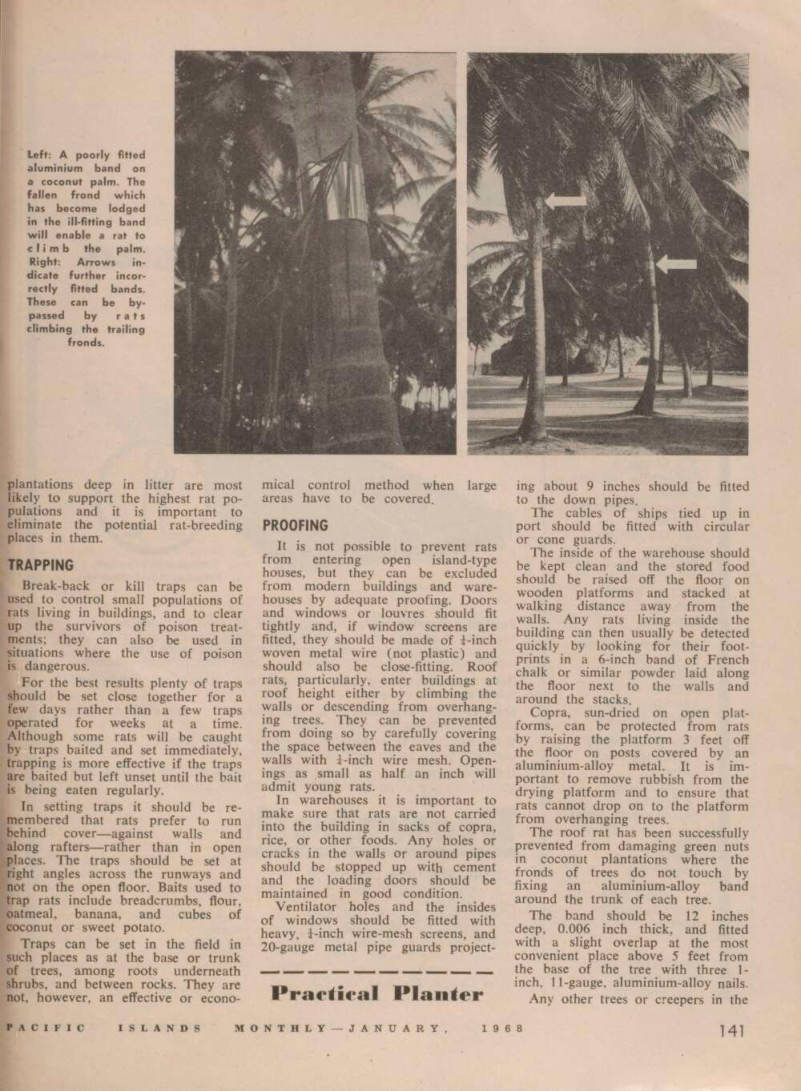 143
143 144
144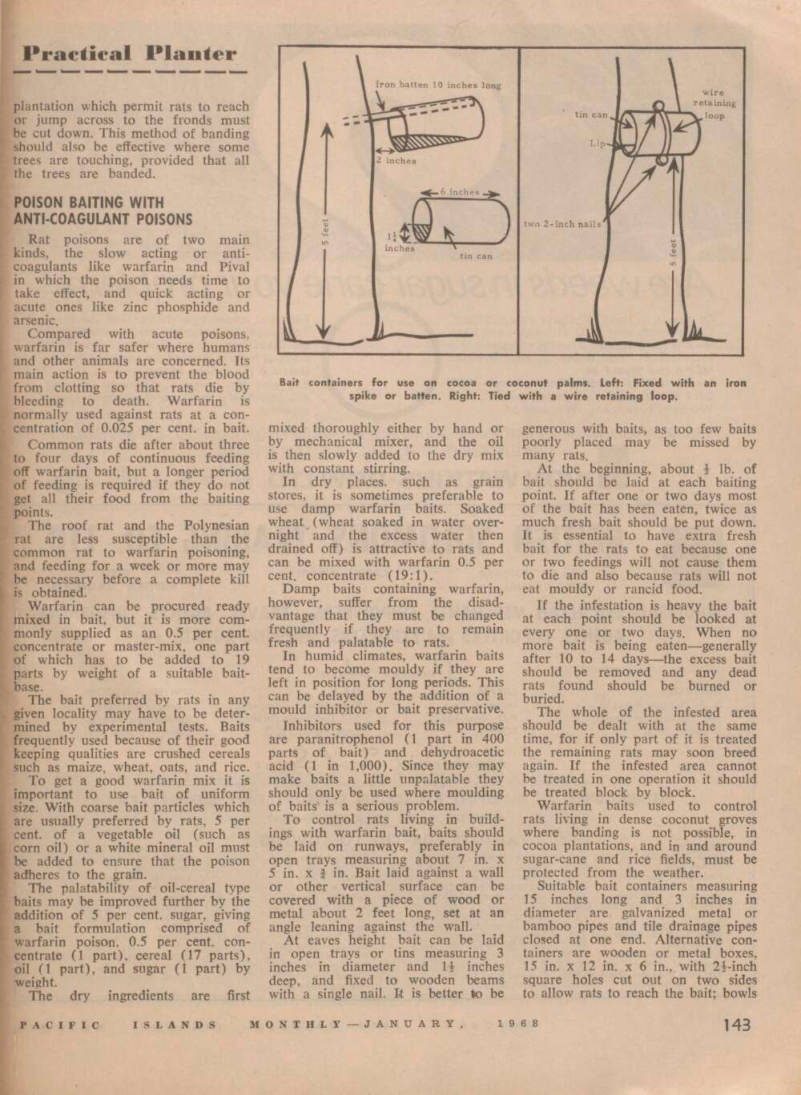 145
145 146
146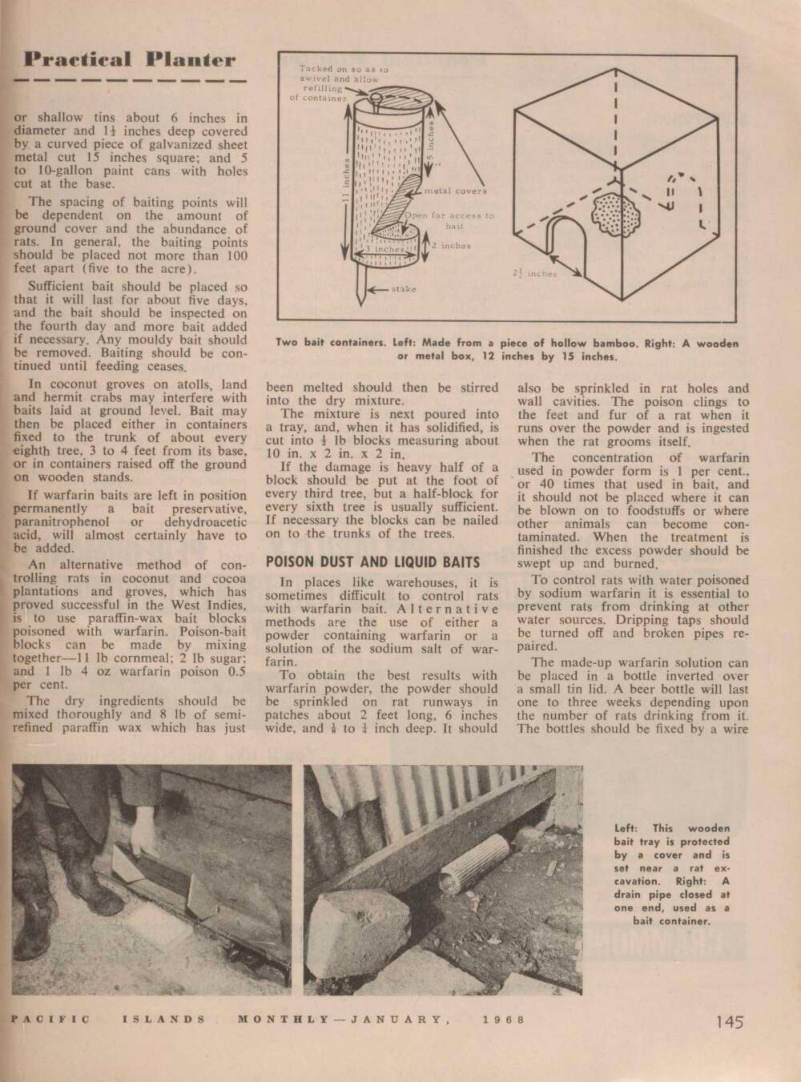 147
147 148
148 149
149 150
150 151
151 152
152 153
153 154
154 155
155 156
156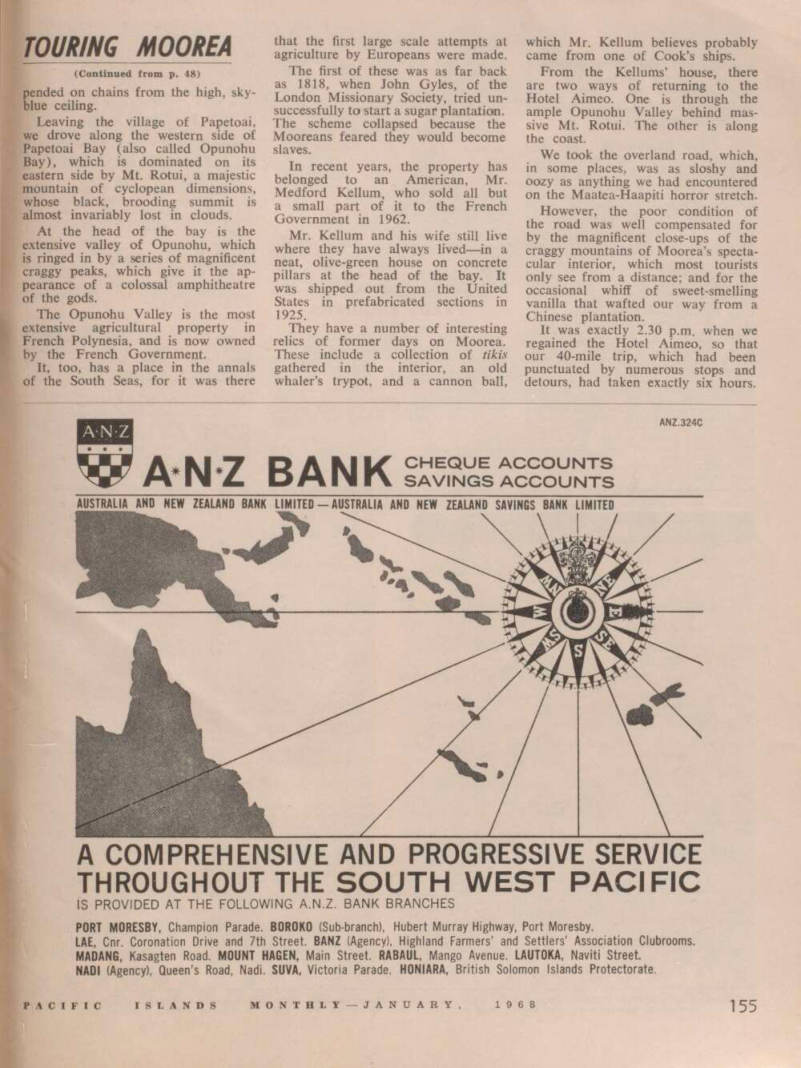 157
157 158
158 159
159 160
160