Monthly
Pacific Islands Monthly
)Vember, 1965
3/- 60 US cents 50 French Pac. frcs.
r\e News lagazine Of the South Pacific
Established |930
sred at G.P.0., Sydney, and at P.O , i.. m. • 1... &
OUR COVER: We don't know much a this girl except that she's Samoan, she has that indefinable something Western man has found attractive the last 200 years, and that the can man caught her just at the right in; in typical surroundings to make an al five picture.—Photo: Pan American W Airways.
Advertisements & other items, pp. 2-4 (2 items)
Australia Is A Big Country
Big and generous in everything unusual, Australia has much to offer holiday visitors.
For example, the wonders of the Great Barrier Reef that stretches for over 1000 miles. The gaiety of the sun, sand and surf on Queensland’s Gold Coast. The awesome, colourful beauty of the Red Heart of Australia; and the quiet tranquillity of Tasmania, or the tropic wonders of Papua/New Guinea.
All this is yours to enjoy through Trans- Australia Airlines.
TAA can offer a huge range of low-cost, packaged ‘Fly-Away Holidays’ to any of the above areas and TAA will take care of everything. Travel, bookings by air, road, rail or sea, accommodation, sight-seeing trips —even theatre bookings and restaurant reservations!
You have nothing to do but enjoy yourself.
Trans-Australia Airlines serves 140 ports throughout Australia and Papua/New Guinea.
Do more —see more, on a TAA ‘Fly-Away Holiday’.
Contact your nearest travel agent or Trans- Australia Airlines office.
fly
THE FRIENDLY WAY
Trans-Australia Airlines
TAABC2o/e
FULL GLOSS 100% ACRYLIC
SPRUCE
EXTERIOR HOUSE PAINT
COLOUR
m-mz&m New Outside Glossy Spruce lasts around 10 years
What else does it do that’s hard to believe?
Every paint ad you’ve ever read tells you you’ll save time and money.
So does this one.
But it also explains why you’ll do the job faster and save a lot of money while you’re doing it.
To start with, Spruce under actual test proved to have an exceedingly high resistance to mould.
Other points:— 1. Dulux glossy Spruce doesn’t need undercoats. You patch up and finish with the one paint. 2. Slap it on as fast as you like. It covers perfectly and fills all those tiny cracks as you go. You get the whole job done in half the usual time.
3. You don’t have to change paints between different surfaces. Glossy Spruce paints straight over timber, brick, fibro, galvanised iron. 4. You can paint glossy Spruce over a damp wall yet it dries in a hurry. 5. Brushes clean up in cold water. 6. Finally, there isn’t another glossy exterior paint in the world that’s so easy to use or lasts anything like the nine, ten, eleven years you’ll get from Spruce. Why? New Dulux Spruce is the only glossy exterior paint that is 100% acrylic. It’s just like having your whole house wrapped in a perspex coat. Which probably doesn’t mean very much, until you start adding up all that time and money you save.
8.2633.5A.FP
As the Maraschino Cherry
said to the Italian Vermouth
GILBEY'S IS SUCH A GREAT INTERNATIONAL GIN WHY M ix WlT 2762 Q
1
CIFIC ISLANDS MONTHLY NOVEMBER, 1965
Pacific Islands
Monthly
Owned And Published By Pacific
Publications Pty. Ltd., 29 Albert
St. (Box 3408, G.P.0.), Sydney.
Telephones: 61-9197, 61-7101, 61-436
Telegraphic Address: PACPUB, Sydney
Chief Executives
Managing Director: R. W. Robson.
General Manager: Selwyn Hughes.
Book Publishing Division
Editor: Judy Tudor.
Pacific Islands Monthly
Editor: Stuart Inder, Assistant Editor: Robert Langdon.
Branch Offices
Melbourne: Newspaper House, 247 Collins Tel.: 63-7053.
Fiji: Pacific Publications (Fiji) Ltd., Fiji T Building, 20 Gordon Street, SUVA. Tel.: £ Fiji Times Office, Vidilo Street, LAUTO Tel.: 420.
Papua-New Guinea: Pacific Publications (I Pty. Ltd., Portlock St. (P.O. Box 16), Moresby. Tel.: 2504. Representative: Joan Carter.
Representatives
New Zealand: J. D. Whitcombe, C.P.O. 2229, Queen Street, Auckland. Tel.: 760 Hawaii: C. C. Spencer, 203 Yap Bldg., : Waialae Ave., Honolulu. Tel.: 775538 United States: Mrs. A. L. Craib, 1631 Avenue, Oakland 21, California.
Tel.: LOckhaven 8-1201.
United Kingdom: S. R. Warman, Candle House, 116-126 Cannon Street, London, E: Tel.: Mansion 3674/7.
H. A. Mackenzie, 4A Bloomsbury Sqi London, W.C.I. Tel.: Holborn 3779.,
Agents
All main trading firms and stores in the Pacific Islands.
Pacific Publications Pty. Ltd. is the Austro agent for THE FIJI TIMES.
Subscription Rates:
Australia, New Zealand, all British Comi wealth South Pacific Territories, Tonga, Hebrides and Western Samoa: 3/- I currency (36/- local currency for 12 mom Elsewhere in the South Pacific: 50 Fr Pacific francs or 60 US cents (600 Fr Pacific francs or $7.00 US posted for months). Posted to the UK, US and all c countries: £Stg.2 or $7.00 US.
"Pacific Islands Monthly" is air-freighteo all subscribers and agents in the South Pac copies to other areas go by surface mail
Advertisements & other items, p. 4 (1 item)
2
NOVEMBER, 1965 PACIFIC ISLANDS MONTH
This Issue
Eral
suy Powles 19 ion on Central University 24 h of G. A. V. Stanley 24 ic Travel Boom Likely 61 n Pacific Trade Figures 137 a Market Figures 138 ndustries' Profit Up 138 er W. R. Carpenter Profit 140 •er Companies' Results 140 i Year for Steamships 140
Rican Samoa
;ation Hall for Fishermen 107 Hotel Manager Appointed 131
K Islands
irrow's New Hermit 9, 39 !St Against French A-Tests 23 Age Pension Scheme 29 High Commissioner 33 r Islands Reticulation Scheme . 59 Coffee House 135 sy Political Quiet 9 n Fishermen Missing 9 ral Election Next Year 11 n Leader for Trial Over Fires ... 11 bans Seek Higher Royalties ... 17 points of Young Fijians 21 cus Festival 41 ig Colony the Hard Way 117 Vear Tourist Plan . 129
French Polynesia
Proposed Nuclear Tests 23 TV Station Opened 40 Chile-Tahiti Aerial Postal Service 63 "Treasure" Island Sold 89 Yachtsmen "Dumped" in Marquesas 103
Gilbert And Ellice Islands Colony
First Gilbertese Political Party 7 Banabans Seek Higher Royalties 17 Racial Tension 18
Lord Howe Island
Visit by Army LSM 111
Nauru
Referendum on Liquor 6 Legislative Council Soon 17
New Caledonia
September 24 Celebrations 11 Transpac's 10th Anniversary 12 Noumea's Changing Face 19 Senator Elected 35 First TV Station Opened 40
New Hebrides
Advisory Council Meeting 55
New Facilities at Airport 57 Malekula's Deadheads 91
Niue
End of "Free-For-All" Censorship 87
Norfolk Island
Paradise Hotel Alterations 8 Anchors of Historic Ship Found 109
Papua-New Guinea
Arbitration Hearing on Salaries 5 Economic Adviser Appointed 5 Applications for Asylum 6 A. J. Bretag "Gone Finish" 17, 144 Free Coffee at Trade Fair 19 New Political Party 25 University Appointments 27 Siwi Kurondo 45 Port Moresby's Shanty Towns 67 Robinson Memorial at Samarai 69 Matthias Toliman 69 Tender for Kieta Wharf 103 RAN Patrol Boats for Territory 107 As a Tourist Centre 121 Tourist Board Established 121 US Bank's Shares in ANG Corporation 139 New Blood in Kinjibi 139 New Administrative Districts 143
Solomon Islands
Mariano Kelesi 7
South Pacific Commission
Budget Up; No Action on Lae Move 12
Tonga
Record Banana Exports 28 Reticulated Water Scheme 58 Staggering Seabirds, Dancing Crabs . 85 New Hotel Developments 133
United States Trust Territory
Micronesians Take Over Ships 105
Western Samoa
Foreign Capital "Now Welcome" 37 Criticism of Copra Industry 60 Extensions for Aggie Grey's 135 Furniture Exports Grow 139
•EPARTMENTS: Tropicalities, 18; People in Pictures, 42; Personality Parade, 45; erritories Talk-Talk, 49; Letters to the Editors, 69; Planters' Digest, 73; From ie Islands Press, 76; Magazine Section, 85; New Books, 95; Shipping, 105; ruising Yachts, 113; Travel, 117; Commerce, 137; Deaths of Islands People, 142; People, 144; Shipping, Airways Schedules, 149.
Advertisements & other items, p. 6 (2 items)
4
NOVEMBER, 1965 PACIFIC ISLANDS MONTHLT
| Burns Philp (South Sea) Co. Ltd.
BURNS PHILP (SOUTH SEA) CO. LTD.
GENERAL MERCHANTS AND SHIPOWNERS
SHIPPING, CUSTOMS AND FORWARDING AGENTS
AGENTS FOR:
QUEENSLAND INSURANCE CO. LTD.
BURNS PHILP TRUST CO. LTD.
OVERSEAS AGENTS
BURNS, PHILP Cr CO. LTD., Sydney.
BURNS, PHILP Cr CO. LTD., London.
SHELL COMPANY (P.l.) LTD.
BURNS PHILP CO. OF SAN FRANCISCO
SHIPPING AGENCIES
• The New Zealand Shipping Co. Ltd. • Shaw Savill & Albion Co. Ltd. • Port Line Ltd. • Bank Line Ltd. • General Steamship Corporation Ltd. • Blue Star Line • Cunard Line • Compagnle des Messageries Maritimes • British India Steam Navigation Co. Ltd. • Royal Interocean Lines • Nederland Line Royal Dutch Mail/Royal Rotterdam Lloyd.
EXCLUSIVE DISTRIBUTORSHIPS INCLUDE
• AKAI TAPERECORDERS
• DUNLOP PRODUCTS
• EPIGLASS PRODUCTS
• FERGUSON TRACTORS
• HELENA RUBENSTEIN
• HITACHI ELECTRONICS
• HOLDEN VEHICLES
• JOHNSON'S WAXES
• ROLEX WATCHES
• REVLON COSMETICS
• PENTAX CAMERAS
• SUNBEAM APPLIANCES
INTERNATIONAL AIR TRANSPORT ASSOCIATION REPRESENTATIVES for
QANTAS EMPIRE AIRWAYS LTD. AIR NEW ZEALAND LTD.
UNION DE TRANSPORTS AERIENS ALITALIA PAN AMERICAN AIRWAYS
ASSOCIATED COMPANIES
BURNS PHILP (NEW HEBRIDES) LTD.
AUTOMOTIVE SUPPLIES CO. LTD.
CORRIE & CO. LTD. • NARAIN FURNITURE CO. LTD.
SPECIALISED SERVICES
EXPERT ADVICE ON WORLD AND LOCAL TOURS — TRAVEL — SHIPPING — FORWARDING — CUSTOMS
— FORMALITIES — INSURANCE.
REGISTERED OFFICE: SUVA, FIJI
Code Address: "BURNSOUTH"
Court Over Wages
New Guinea Goes To Court Over Wages
From AAP-Reuter and PIM correspondents in Port Moresby
Results of an arbitration claim, which began in Port Moresby on October 26 and which is expected to last several months, will have far-reaching effects on the Territory’s economy.
IHE claim is for salary increases for P-NG’s 7,300 native public wants, and is being heard by the blic Service Arbitrator, Mr. L. G. itthews.
The P-NG’s Public Service As fiation is seeking a specified basic ge with margins. It wants the sic wage to be based on the needs a man, wife and three children.
Phe Administration has objected the association’s claim on the >unds it is not sufficiently specific, also has denied it should take a account a basic wage and rgins in fixing salary rates. There no basic wage in the Territory at sent, fhe present minimum salary for w Guinean public servants is £220 year. The highest salary they reach under the present scale £1,680.
"Controversy"
'he arbitration hearing is taking ze against a background of con rersy over the Australian Gov ment’s decision last year to rganise the Territory public fice with local officers on lower .ry scales than Europeans, his resulted in many New neans getting only about 40 per t. of the salary a European was 1 for the same job. he Government argues that salary s for local officers should be ;d on the Territory’s ability to t public service salaries from its l resources in future, oth the Administration and ate employers are concerned at nt signs of industrial unrest, icularly in the Port Moresby area p. 25). here are widespread fears that :tion of claims for higher wages d mean a spate of serious strikes racial unrest. [any New Guinean workers in ate enterprise have made no
secret of their hopes the arbitrator will decide on a basic wage of at least around £7 a week for public servants.
Such a decision would mean strong pressure on private employers to match the wage.
The Public Service Association is being represented by its president, Mr. John Greville Smith, a prosecutor in the Territory’s Crown Law Department, and by its industrial advocate, Mr. lan MacPhee, a young Sydney solicitor who recently re signed from the Crown Law Depart ment to become the Association’s full time advocate.
The Australian Council of Trade Union’s industrial advocate, Mr. R.
J. Hawke, will assist the PSA dur ing the hearing.
The Administration has briefed Sydney barrister Mr. J. H. Wootten to conduct its case. He is being assisted by Mr. N. Rolfe, a senior member of the Public Service Com missioner’s staff.
While the PSA is fighting for a
basic wage for its local officers, the European officers appear to have reached the end of their patience in their own fight for a compensation scheme for Europeans who will lose their jobs with the approach of self government.
The PSA has been requesting such a scheme for several years and has had Government promises ( PIM Oct., p. 12). The P-NG Public Service at present employs 3,315 overseas officers—2,362 of whom are
The Minister for Territories, Mr. Charles Barnes, was in friendly form in October at the New Guinea stand of the Sydney Trade Fair. Left of the picture, obscuring another visitor from New Guinea, is John Pokanau, P-NG Apprentice of the Year. On Mr.
Barnes' right is Gaudi Mirau, MHA for Markham, and on his left, Sydney businessman F. M. Hewitt. See also Topicalities, p. 19.—Photo: News and Information.
permanent and the Government intends to recruit 2,000 more in the next five years.
When the Australian Minister for Territories, Mr. Barnes, agreed to address the PSA annual congress in Port Moresby at the end of October the members felt they would hear, at last, the long-awaited announce ment of a detailed scheme.
But it didn’t come.
Mr. Barnes told the congress the Government had approved a com pensation scheme, but details still had to be decided.
Officers would be offered alter native employment with the Gov ernment or Government authorities (presumably in Australia) and where “reasonable” employment could not be offered displaced officers would be given cash compensation, Mr, Barnes said.
This was not good enough for the public servants.
They regarded Mr. Bames’ state ment as no more adequate an assurance than they had had from Mr. Hasluck, the previous Minister, in 1962.
The congress resolved that, “It is not prepared to accept any longer that the Australian Government may take its own time about promulgating a detailed scheme for compensation”.
Slopwork Threat
It instructed the association’s executive to seek permission from the Prime Minister, Sir Robert Menzies, for the association to call stopwork meetings throughout the Territory on Australia Day (January 26) if the Australian Government had not then announced a detailed scheme.
The congress expressed its “deep concern at the deteriorating morale within all ranks of the public service”.
It said this had been caused by: • The Government’s failure to announce a detailed compensation scheme. • The Administration’s “total in difference” to the housing needs of local public servants. • The Administration’s “active and extensive obstruction” of the as sociation in its preparation of the native public servants’ salary case. • The Administration’s obvious intention to recruit large numbers of skilled overseas officers on the basis that houses will be provided for them, but without revealing that the standard of these houses will be such that they would not be permitted to be built in Australia for habitation.” • The Administration’s departure from the principle of parity with the Commonwealth Public Service in fix ing salaries.
New Guinea Gets An
Economic Adviser
Following recommendations by the World Bank Mission to New Guinea, the Territory in October appointed an Economic Adviser to the P-NG Administration.
The new man has the task of helping to plan and co-ordinate the Territory’s economic develop ment.
The post has been filled by Mr.
A. W. McCasker, 45, who has had several senior appointments in economic fields with the Com monwealth Government. He was recently appointed an Assistant Secretary with the Department of Territories, but had not taken up this position. He is married, with two children.
Mr. McCasker’s new job is worth £5,500 a year. Territory income tax is about half the Aus tralian rate.
Advertisements & other items, p. 7 (1 item)
5
CIFIC ISLANDS MONTHLY— NOVEMBER, 1965
Decide Asylum
'Humanity' Will Decide Asylum Applications
From an AAP-Reuter Correspondent in Port Moresby The Australian Government would be influenced by “factors of common humanity” in con
sidering requests by Indonesian
West New Guinea natives for
asylum in Papua-New Guinea,
the Minister for Territories, Mr.
Charles Bames, said here on October 24.
HE said there had been suggestions that the Australian authorities were forcing back across the border people from West New Guinea “who might suffer difficulties if they go back”.
“These are not true,” Mr. Barnes told a Press conference. “Each case is examined on its merits.”
Mr. Barnes declined to comment on three cases where people from West New Guinea had sought per mission to stay in P-NG.
These were: • An Indonesian and his family who crossed the border more than a year ago seeking asylum in Holland or P-NG. (They are at present in Vanimo, New Guinea, awaiting a decision on their application.) © A West New Guinea school teacher and his wife and child who crossed the border last August after being previously turned back. (They are also at Vanimo). • A West New Guinean who re cently fled across the border, claiming he was a policeman who had escaped from gaol at Merauke after being imprisoned for shooting at the Indo nesian flag. (He is at present under observation in Port Moresby hospital.) “Factors of common humanity will influence our decision in these cases,”
Mr. Barnes said.
He said Australia had international obligations over the border and the refugee question.
“Actually we are not absolutely sure where the border is,” he said.
Replying to questions, Mr. Barnes said the establishment of an Indo nesian liaison office in Port Moresby and an Australian office in the West New Guinea capital, Sukarnapura,
were maters for the Australian E? ternal Affairs Department.
He declined to say whether h thought liaison offices should b established in the two capitals. (The Dutch formerly had a liaiso office in Port Moresby and Australi had a liaison office in Hollands Sukarnapura, but these were close after the Dutch left West Ne’
Guinea.) Speaking on Papua-New Guinea political future, Mr. Barnes said th« the Australian Government’s objectiv was self government and then inde pendence “if the people of the Terr tory want it”.
“We have a long way to go befoi this is achieved,” he said.
The Minister said the Territorie Department was conducting a driv through Australian universities an technical colleges to recruit office! for the public service.
“We are meeting with very goo success,” he said.
“Of course we are getting resij nations here but I hope that who details of the Government’s compel sation scheme for overseas officer are worked out it will lower the rat of resignations from the Territon Public Service.”
Liquor Referendum
For Nauruans
Nauru is to hold a general referendum on whether the islanders should be allowed to drink liquor. The Nauru Local Government Council, which decided the move, has ashed the Administration to put through legislation which will enable the referendum to be held soon.
Only Europeans and Chinese are legally permitted to drink on Nauru, and this has caused dissension among Gilbertese phosphate workers on the island, who claim the local restrictions should not apply to them (“PIM”, Sept., p. 57). Many Nauruans also object to the drink restrictions, but until now the Nauru Council has not been willing to consider lifting them.
Meanwhile, many islanders more or less openly break the law.
Nauruans distil on illegal brew called “ebeda”, which re cently was reported to be fetch ing up to £2 a quart on the blackmarket.
Advertisements & other items, p. 8 (1 item)
6
NOVEMBER, 1965 PACIFIC ISLANDS MONTHL
New Gilbertese Party
Solomon Islander Inspired New Gilbertese Party
By Robert Langdon
When Mariano Kelesi was only one week old, his mother, in accordance with an old Malaita (Solomon Islands) custom, marked his cheeks with a sharp piece of bamboo dipped in a mixture of coconut and lime. In the language of Malaita, the markings are known as kekede (the writing).
kTOW, 32 years later, the fine markings on Kelesi’s cheeks are ill plainly visible and they add to ic interest of his striking and fre uently smiling face.
Kelesi is a happy soul whose broad nile and bubbling sense of humour dped to lighten and brighten the ixth South Pacific Conference at ae in July.
But he also has his serious side, >r he is a politician with a keen terest in promoting the political welopment of the Solomons and her territories in the Western acific.
In the Solomon Islands, he has ready established himself as the rongest candidate for the Prime [inistership, if that territory should tain self-government in the reason >ly near future.
Influence
He is a leading member of the 51P Legislative and Executive Coun [s; he has been president since 1960 the Malaita Council (Malaita ing easily the most populous island the Solomons); and he is president the four-month-old Solomon 'ands Democratic Party, the first •litical party in the BSIP.
But Kelesi’s influence has extended yond the Solomons.
The new political party that has >t been formed in the Gilbert ands (see panel) is a direct result his inspiration; and it seems likely at he had some influence in the rmation of the New Guinea United itional Party, which was founded the end of August (see p. 25).
Kelesi cast something of a spell er the Western Pacific delegates the SPC conference in Lae.
He organised informal conferences uch delegates from Papua-New linea, the New Hebrides, and the Ibert and Ellice Islands Colony ended; and at these conferences expounded his views on increased rticipation by the native people in J governments of their territories;
the value of political parties in work ing towards this end; and the desirability of the Western Pacific peoples to keep in close touch with each other in the field of political development.
It is difficult to say exactly how much of what Kelesi said rubbed off on the Papua-New Guinea delegates.
But it is probably not just co-in cidence that one of the P-NG delegates, Zure Zurecnuoc, was a foundation member of the New Guinea United National Party; that this party—after years of proposals, and some stillborn efforts, for new political parties in P-NG was created within a few weeks of the Lae conference; and that many of
its aims are similar to those of Kelesi’s Democratic Party.
Kelesi’s influence on the Gilbertese and Ellice Islands delegates is more obvious because the platform of the newly formed Gilbertese National Party is virtually a carbon copy of that of his own party. (Over)
Mariano Kelesi.
The aims of the Solomon Islands Democratic Party, of which all elected members of the BSIP Legislative Council are now members, are: • Increased participation in the government of the Protectorate, and eventual control of the Budget and improvement of the economy. • Self-determination under the Crown, within the British Common wealth. • Better education in the Solomons, including free education for all children and more technical schools. • Improved industrial relations and improved machinery for the set tlement of disputes between employers and employees. • Unification of the peoples of the Protectorate, • Greater participation by women in the affairs of the Protectorate.
In a talk I had with Kelesi in Lae, he told me that the idea of the Democratic Party had been his, and that he had asked the permission of the Chief Secretary of the Western Pacific High Commission to form it.
The party was open to people of all races. It then (July) had some European and Fijian members besides Solomon Islanders, but no Chinese members.
“Each Legco member will be chairman of a sub-branch of the party in his constituency,” Kelesi said, “and we will work through the sub-branches to get members of the local councils to become members.
“The constitution of our party will be based on those of the Australian Labour Party and the Democratic Party of the United States.”
Moderate
In discussing his party’s aims, Kelesi revealed himself as moderate and tolerant.
He told me, for example, that although he resented the fact that Solomon Islanders were forbidden to drink in the public lounge at the Hotel Mendana in Honiara, he was not anti-European—as many of his countrymen were —for this reason.
“My view is that all Europeans should not be condemned for what goes on in one hotel, and I have tried to get other Solomon Islanders to accept this view,” he said.
At the South Pacific Conference itself, Kelesi probably had more to say on more subjects than any other delegate—which prompted several Europeans to say that he talked too much and that much of what he said was ill-informed and better left un said.
There was some truth in this, but
Kelesi certainly never gave the im pression that he was enraptured by the sound of his own voice or was striving for effect.
He would simply become carried away by his eagerness to con tribute to the subject under discussion, and would be “holding the floor” almost before he realised it.
Kelesi’s English is good—except ionally good when one learns that he could not speak a word of the language when he finished his formal education—at Standard 6 in primary school.
“I picked up my knowledge of English through speaking with Euro pean friends and other Solomon Islanders, and through reading books,” he told me.
When I asked him what books he had recently read, he mentioned The New Ghana, a biography of Wiston Churchill, and Martin Luther King’s Why We Can’t Wait, a book on civil rights for Negroes in the United States.
First Job
Kelesi said that after he left school his first job was as a clerk in the income tax section of the Treasury.
“I was there for one year,” he said. “Then I left to go home to Malaita because my father and brother had died, and I had to take care of our property—about 20 acres of coconuts.
“After a year at home, I went back to Honiara and took a job in the Customs agency of William Breckwoldt & Co. I worked at the agency for two years.
“In 1956-57, I attended a South Pacific Commission fisheries course in Noumea; then I worked as a fisheries officer in the Malaita Dis trict for the Malaita Council.
“In 1958, I was elected to the Malaita Council; and in 1960, when I was elected president of the council, I was also nominated as an un official member of the Solomon Islands Legco. Since then I have been a full-time politician.”
Kelesi is one of the most widely travelled islanders in the Solomons.
He visited the Gilbert and Ellice Islands in 1961, when Sir John Gutch paid a farewell visit to that Colony as High Commissioner for the Western Pacific.
In 1962, he attended the Fifth South Pacific Conference in Pago Pago, American Samoa; and in 1964, the BSIP Government sent him to Port Moresby for two weeks to see the newly-elected House of Assembly in action.
More recently, he became the first
Solomon Islander to visit the United States on a foreign leader grant— a grant which he obtained on his own initiative, first by approaching the BSIP Education Officer to find out what scholarships were available for people such as himself, and ther by writing to the US Consul in Fiji On his US trip, which took ir visits to Puerto Rico and the Virgir Islands, Kelesi was away from the Solomons for three months.
Kelesi’s overseas experience has no doubt smoothed a good man> rough edges, has given him maturity and has convinced him that Pacific Islanders, given time and education will be quite capable of running their own affairs.
He made this last point clear when he told me that he was a strong believer in the value of the South Pacific Commission, but that the Islanders should have more say in it “I believe each territory should have a commissioner sitting on the SPC; that the territories should con tribute to the SPC; and that qualifier.
Islanders should be allowed to work on the SPC staff,” he said.
“And one thing we don’t want is the United Nations coming here tel ling us what to do.”
All this adds up to the fact that Kelesi is a force to be reckoned withi and that much more will be heard from him, and of him, in the future;
First Political Party In GEIC
The Gilbertese National Party, the first political party to be formed in the Gilbert and Ellice Islands Colony, came into existence in October. Its aims are:
• To speed up the present rate of constitutional develop ment, aiming at a more repre sentative and democratic form of government. • Increased participation in the Government of the territory. • Improvement of education for all Gilbertese and free education. • Improved relations and improved machinery for the settlement of disputes between employers and employees. % To promote cohesion among Gilbertese. • To raise the standard of living among the Gilbertese. • To maintain Gilbertese culture and traditions as circum stances permit.
About 200 people attended the first public meeting of the party
at Bairiki, Tarawa, on October 16 when the president of the work ing committee explained that membership would ordinarily be limited to Gilbertese.
However, exceptions to this rule could be made in favour of part- or non-Gilbertese who had spent much of their lives in the Gilberts.
The meeting decided to hold another meeting within one month when a constitution will be adopted and a permanent committee will replace the present working committee.
Three hundred and ninety people had paid the party entrance fee of two shillings to October 18. These included some part-Gilbertese and Ellice Islanders who had spent most of their lives in the Gilberts. (See "Tropicalities", p, 18)
Advertisements & other items, p. 9 (1 item)
7
ACIFIC ISLANDS MONTHLY NOVEMBER, 196 5
Another (Refurbished)
Hotel For Norfolk
Work is proceeding on alterations to the former Paradise Hotel in New Cascade Road, Norfolk Island, which the proprietors, K. A. Prentice & Co. hope to re-open next March as the South Pacific Hotel.
Twenty rooms will be added to the existing building. All rooms will have shower facilities and will open on to a patio surrounding a new swimming pool, which will be one of the main attractions.
Mr. K. A. Prentice said recently that his hotel would provide accom modation for the additional visitors expected at Norfolk as a result of the opening of his Auckland tourist office.
At the present, good-class accom modation on the island is limited.
Three years ago, Mr. Prentice's plan for an ultra-modern hotel incor porating the ruins of two convict-built structures in Quality Row, Kingston, was turned down by the then Minister for Territories, Mr. Paul Hasluck, because it would not have been in keeping with the surround ing colonial-style buildings.
Uneasy Quiet On Fij's
Political Field
From a Suva Correspondent Apart from a few odd words, things have been quiet on the political field in Fiji following the London conference of July, which came to an agreement on a new constitution.
iS it the calm before the storm, or L an acceptance by all the parties f that London agreement? The ondon agreement was not unani ious—for the three Federation Party ten, and middle -of - the - reader mdrew Deoki, were the odd men ut.
At the moment, nobody is ready to events. Changes in the con titution cannot come before next kpril at the earliest, and there might e nothing more than some political drmishing in the meantime. And ten there might not.
Federation Party leader A. D. Patel . finaly back in Fiji after spending long time in India, retracing his oyhood steps in the State of Gujerat. i his absence his opponents were tying he was in no hurry to come ack because he wanted the memory f his group’s tactics at London to ide in the public mind.
Without doubt he has lost sup orters over his London attitude, lor did he gain face following the üblication of a letter sent by the ritish Secretary of State, Mr. mthony Greenwood, to five of the ix Indian delegates to the cen tre nee.
The letter was in reply to one sent y the Patel group to Mr. Green 'ood after the conference.
The Patel letter warned Mr.
Jreenwood that implementation of
the London proposals “would create a grave racial disharmony leading to undesirable results”.
The letter went on: “In this process an irreparable harm would be done to the country as a whole and we fear that the goodwill, harmony and understanding which has existed among all races in Fiji over the last 90 years would disappear for ever.
“The responsibility for any course of events arising out of the imple mentation of these proposals and leading to this result should rest, in our view, on Her Majesty’s Govern ment.”
The group trotted out the hoary old argument of the Salisbury Des patch in their letter to Mr. Green wood.
“May we say without hesitation,”
the letter read, “that the proposal to give two extra seats to the Fijians constitutes, in our view, a clear breach of Lord Salisbury’s Despatch on the part of Her Majesty’s Govern ment.”
In reply, Mr. Greenwood asked the group to bear in mind the conse quences of outright opposition. This, said Mr. Greenwood, was “far more likely to increase the suspicions of the other communities, particularly the Fijians, than to win them over to support your point of view, which must surely be your objective.
“I believe a much more fruitful course of action,” said Mr. Green wood. “and one which would be far more likely to lead to the political integration and racial harmony which we all want to see achieved, would be to co-operate fully in the intro duction of the new constitution and, by showing that the measure of inter racial voting which it will introduce does not adversely affect the interests of any race, to pave the way to con stitutional progress.”
Perhaps Mr. Patel and his com rades will decide that that is the more statesmanlike approach, rather than continue with a private divide and rule policy—the very thing, oddly enough, they have been accusing others of doing.
A sample of this is given in the Indian newspaper Nav Bharat, in an interview Mr. Patel gave that paper while he was in India.
The neswpaper report was head lined: “Britain has not given up her policy of divide and rule—Fiji’s Minister of Social Services Patel’s statement”.
It said: “Fiji’s Minister of Social Services, Mr. A. D. Patel, said yester day (Sept. 27) that the British Govern ment is continuing her notorious policy of divide and rule in Fiji.
“Condemning Britain’s new con stitution for Fiji, he said that these proposals are undemocratic, biased and unjust to the Indian community
In International Incident
Two New Zealand yachtsmen, John Glennie (left) and his brother David (right) were involved in an international incident recently when they left a 26-year-old English art student at his own request on uninhabited Suwarrow Atoll, Cook Islands, without seeking the Cook Islands Government's permission.
The yachtsmen are seen here with Mrs. Kalo Morrison and Grant Prendiville who arrived with them in Suva at the end of October in their trimaran "Highlight". An account of the Suwarrow affair appears on p. 39.— Photo Stan Whippy.
►f Fiji. Fiji’s population is 450,000 nd out of it 51 per cent, are Indians.
“Mr. Patel at present is touring ndia. He has come here from xmdon where he went to discuss tie new constitution, but the con erence was a failure. After visiting ndia he will go back to Fiji.
“Mr. Patel told Press representa ives that Britain, by maintaining a ommunal roll, is trying to keep 'ijians, Indians and Europeans sepa ate from each other.
“If it is accepted, then Indians will et only 14 seats out of 40.
“Britain has the same policy for ■iji which she is practising in lauritius and British Guiana.”
That sort of stuff, republished in r iji, certainly doesn’t do much for acial harmony.
FOOTNOTE: The Salisbury Des atch to the Government of India in 875 was to do with the treatment nd position of Indian labourers in le countries to which they had been snt.
The Despatch held that each in entured labourer, having completed is agreed term of service, should e free to remain in the country in diich he had served, or return to ndia. If he preferred the former, he hould be treated as a first-class itizen and given all the rights and rivileges of a first-class citizen.
The Despatch referred only to lose indentured labourers who had ompleted their terms of service. At ic time it was made there was not single Indian in Fiji, and further lore, the proposals in the Despatch fere rejected by the Government of ndia two years later. The Despatch ecame a dead letter.
Indians Missing
Four Fiji-Indians who left Lautoka for a fishing trip in the Yasawas late in September have not been seen since October 3 when they left Yaqeta Island to go back to Lautoka.
Wreckage, believed to be from their launch, has been found on nearby islands, and also an ice chest full of fish.
Those missing are Ram Sarny, 60, Subramani, 40, Ramlu, 32 and Maniram, 12.
Advertisements & other items, pp. 11-12 (2 items)
9
ACIFIC ISLANDS MONTHLY NOVEMBER, 1965
Morris
HEDSTROM
LIMITED
HEAD OFFICE: SUVA, FIJI
LONDON OFFICE
Morris Hedstrom Limited Barclay's Bank Buildings, 73 Cheapside,
LONDON, E.C.2.
AUSTRALIAN REPRESENTATIVE
W. R. Carpenter & Co. Ltd. (Merchandise Division) the A.&N.Z. Building 68 Pitt Street, Sydney
REGISTERED CABLE ADDRESS:
DEUMBA—SUVA, MORRISHED—LEVUKA, CAAAOHE
SYDNEY, SUVAAAARK—LONDON, MORRISCO
NUKUALOFA, DEUBA—APIA, CODES: ALL
For Friendly Service and complete satisfaction it s Morris Hedstrom Ltd. in General Merchants Produce Buyers Importers and Exporters
Ship Owners
Plantation Owners Commission and Insurance Agents
AGENTS & DISTRIBUTORS FOR:
Adhesive Tapes, Ltd.
Bush Radios, Ltd.
Bowater—Scott Corporation, Ltd.
China Navigation Co.
John Dewar Cr Sons, Ltd.
Electrolux Limited.
Evinrude Outboard Motors.
Ford Motor Co.
General Electric Co. Ltd.
Goodyear Tyre & Rubber Co.
Guinness Exports, Ltd.
Medley, Thomas & Co. Ltd.
Imperial Chemical Industries, Ltd.
Matson Navigation Company.
Mobil Oil Australia Pty. Ltd.
Max Factor & Co. Inc.
Napier Bros. Ltd.
Parker Pen Company Ransomes, Simms & Jefferies, Ltd.
Rootes, Ltd.
Smiths English Clocks, Ltd.
Tanqueray Gordon £r Co. Ltd.
Taubmans, Ltd.
Yorkshire Imperial Metals Ltd.
Morris Hedstrom Limited are
LLOYD'S AGENTS
in Fiji and Samoa
FIJI - SAMOA - TONGA
Fiji Next Year
General Elections In Fiji Next Year
A general election will be held in Fiji about the middle of 1966, the Colonial Secretary, Mr. P. D.
Macdonald, told the Legislative Council in October.
This election, if the White Paper on the new constitution is accepted, will be on the basis of universal adult suffrage.
It is estimated that about 182,500 will be eligible to enrol as voters. (There were 94,000 registered in 1963 when women voted for the first time).
The 1966 poll will shorten the life of the current council by two years. Unofficial members were elected in 1963 for five-year terms for the first time.
Trial Over Fires
Union Leader For Trial Over Fires
TRADE UNION leader Apisai V.
Tora will stand trial at the Supreme Court of Fiji on November 29 on three charges connected with the fire at Korolevu Beach Hotel on August 29, when 27 bure-type dwel lings were destroyed.
Tora was committed for trial after a three-day inquiry at Sigatoka.
During it the prosecution called about 40 witnesses, including three prisoners who had earlier been gaoled for three years for setting fire to the bures. Altogether eight men, former workers at the hotel, are in prison for arson.
Tora was charged with setting fire to 27 bures at the hotel; with at tempting, on July 25 at Suva, to procure Isimeli Tubutubu to com mit arson, in that he incited him to set fire to the bures; and with at tempting, on July 28, to procure Isimeli Tubutubu to commit arson in that he incited him to organise a gang to set fire to some of the bures.
Tora reserved his defence. He was refused bail.
The prosecution alleged that Tora addressed a meeting on August 8 of Korolevu Hotel workers who had been on strike. He told them of incidents connected with strikes in Malaya when strikers burnt houses.
Tora also allegedly told them that workers caused trouble at Suva during a strike in 1959. They threw objects at cars and assaulted people.
Apisai Tora.
Makes (Amp-Happy
Week Of Bargains
Noumeans Happier
From Fred Dunn in Noumea It is generally agreed in Noumea that the September 24 celebrations marking the anni versary of the taking possession of New Caledonia by France in 1853 excited little public interest this year.
IT is generally agreed also that little was done to excite that interest.
A Miss Caledonia contest, in which there were only six contestants, degenerated almost into a fiasco due to bad organisation and bad weather, which resulted in the finals being postponed three times. However, all agree that the little lady who was ultimately elected, Miss Marie Line Maillet, was worthy of the title.
Two factors appear to be respon sible for the loss of public interest in the celebrations. One is their lack of novelty; the other is that over the last few years Noumeans have taken to going camping at the slightest drop of a hat.
As the September 24 celebrations generally extend over two or three days—this year from Friday to Sun day—few Noumeans with cars and tents can resist the opportunity to get into the country.
"Commercial Week"
This year, even two football matches (New Caledonia versus Tahiti), in addition to the tradi tional military parade and public ball, could not hold the campers back. It was so much more pleasant to take along a transistor radio and listen to the matches while reclining on a river bank or on the seashore somewhere.
But if the organising authorities fell down on the job of arousing public interest in the celebrations, the commercial houses held a highly successful “commercial week” to close the month of September.
During this week, most of the business houses lowered their prices on different types of goods, and anyone who bought more than 500 francs (£2/10/-) worth of mer chandise, and paid cash, was given a lottery ticket —the prize being two return air trips to France.
The public reacted to “commercial
week” with unexpected verve shoppers descending upon the mer chandise like wolves upon the fold.
There were evil tongues which said that prices were jacked up before being marked down, but, generally, everyone found some bargains.
The week concluded on Saturday, October 2, with a braderie (best translated as a “fair sale”) when the main commercial streets of Noumea were closed to traffic all day, and the business people moved their counters on to the footpaths and sold goods accumulated over the years at bargain prices.
Iron frying pans at 50 francs and other such goods were quickly snatched up by Melanesian bargain hunters, who should now have enough of these to last them for years.
Meanwhile, the Road Safety Council, in collaboration with the Gendarmerie Nationale. created a great deal of interest among the young fry, with a “game” designed to teach good road habits.
An elaborate course was laid out —streets with traffic lights and dif ferent traffic hazards, etc.—and children were invited to negotiate the course in pedal cars, small bikes or merely as pedestrians.
Noumea’s braderie is now becom ing a tradition. It mieht aptly be called the “Sunburn Festival” be cause at this time of the year, the sun is just making itself felt, and shoppers in their eagerness for bargains pay little attention to it until they are well and truly tanned.
Advertisements & other items, p. 13 (1 item)
11
* A C I F I C ISLANDS MONTHLY NOVEMBER, 1965
Transpac Completes
10 Years Without
An Accident
Transpac, New Caledonia's internal airline, celebrated its 10th an niversary on September 29. During its 10 years it has carried 153,000 passengers—all without accident— plus 1,944 tons of freight and 75 tons of mail.
Transpac, which is equipped with de Havilland Dragons and Herons, also has two twin-motor Aztecs and two single-engine planes, one of which is fitted out as an ambulance.
Another Aztec aircraft will join the fleet before the end of the year.
The airline is developing tourist services throughout New Caledonia as fast as suitable aerodromes or airstrips become available.
One new service that was inaugura ted recently links Noumea with pic turesque Hienghene on the north east coast, where an aerodrome has just been completed.
Spc Budget Up,
But No Action Yet
On Key Lae Move
By a Staff Writer
The South Pacific Commis sion, at its 28th session in Noumea in October, adopted a
budget of £5tg.333,862 for
1966, of which contributions by the member governments—Aus
tralia, Great Britain, NZ, the US,
France and Western Samoa— amount to £298,260.
THE contributions by the member A governments are about Hi per cent, higher than in 1965, when con tributions amounted to £267,071; and the total figure is £15,299 higher if a “special accounts” figure of £26,000 in last year’s budget is not included.
The difference between the total budget figure and the amount con tributed by member governments is made up of grants from international agencies, money revoted from the previous year, etc.
The adoption of the new budget followed criticism by delegates from some of the 17 Pacific territories at the Sixth South Pacific Conference in Lae in July that the SPC’s budget was too small to cope with all of their proposals for the SPC work programme.
However, the new budget covers all but three of the 21 work pro gramme resolutions passed at the Lae Conference. The resolutions it covers include the recruitment of a fisheries officer and an agricultural economist; research into local herbal remedies; preparatory work on health problems in coral atolls; occupational health; and assistance to territories wishing to expand family guidance activities.
"Fairly Satisfied"
Ratu K. K. T. Mara, of Fiji, who was the strongest critic in Lae of the SPC’s budget, and who attended the session in Noumea in October, told The Fiji Times on his return to Suva that he was “fairly well satis fied” that the Commission had done as much as it could to attend to the resolutions passed in Lae.
It was gratifying, he said, that of the 77 recommendations of the Lae conference, action had been decided on all but three. However, one of the pending recommendations was
one which he considered vital. Ii concerned contributions to the SPC budget from the South Pacific terri tories and their participation in the Commission.
Ratu Mara said that as this recom mendation touched on the SPCs constitution, it could only be altered by the member Governments and that he understood that action was being taken on this question between the member Governments.
However, PIM understands that the Commisisoners of the six member Governments were by no means agreed on what should be done about the “vital” recommendation after discussions on it in Noumea extending over nine days.
Views on the subject are under stood to have ranged virtually all the way from “the SPC is all right as it is” to “something must be done quickly to bring the Islanders into the SPC”.
It was felt in some quarters that although a majority of delegates sup ported the resolution in Lae, they supported it with varying degrees of enthusiasm, and that it would be as mistake to make changes in the SPC only to suit the “fastest runners”.
In short, it would appear that ai good deal more spade work remains; to be done before any agreement is; reached for a major revision of the; SPC’s constitution.
LEAVING EARLY: Mr. W. D. Forsyth, whe has been Secretary-General of the Soutl Pacific Commission since March, 1963, wil retire from that post at the end of 196[?] -about 15 months before his term ex pires. Mr. Forsyth, who is 56, was the SRC's first Secretary-General from 1948 te 1951. He is a career diplomat who ha[?] represented Australia in the Unitec Nations Trusteeship Council and a[?] Ambassador in Vietnam.
Advertisements & other items, pp. 15-18 (2 items)
Onic Food
a H
NESTLE
mm .1 m ■ i ■
ONIC FOOD
14 OZ. NET
% »,c« T , Prepared in Australia by cVI SO
(AUSTRALIA) LTD., S
,:«.. m m m
THEO. H.
Hotel & Restaurant Supplies Kitchen Equipment Janitorial Equipments Supplies Dining Room Equipment Air Conditioning Wholesale Hardware Tools—Power & Hand Paint—Interior & Exterior Complete Builder’s Supplies Housewares Heavy Equipment Caterpillar John Deere Bucyrus-Erie Power Electric Sets Land Clearing Implements 4. 5. 6.
S. 9.
Insurance—All Coverages Among others, Represents Lloyds of London Interior Design and Furnishings for Hotels and Public Buildings Drugs—Complete lines—New York prices Air Freight from Honolulu Davies Steam Ship Agency insures prompt service to all the South Pacific Exclusive agents in the U.S. for the Kingdom of Tonga Write for complete descriptive Catalogue of in stock supplies.
Davies THEO. H. DAVIES & CO., LTD.
Honolulu, Hawai Cable Address; "DRACO"
Offices In: New York, N.Y. • San Francisco, Calif. • Agana, Guam • Manila, Philippines
The "do-anything” vehicle
Basically, the Land Cruiser is a four-wheel drive utility vehicle. A definition that puts it with lots of company. But the similarity doesn’t last for long.
For one, the Land Cruiser is almost unbelievably rugged. It’s also the most powerful vehicle of its type on the market (135 horses under the hood). And with many different body styles to choose from, the Land Cruiser is as versatile as they come.
Canvas top, vinyl cloth top, hard top, pick up, 4-door wagon ... and their variations such as ambulance and fire truck. The Land Cruiser is all of these and more. Motor Trend magazine dubbed it the “go-anywhere" vehicle, but they might have called it the “do-anything" vehicle as well. See what you think by paying a visit to your nearby Toyota dealer. Who knows what you'll end up with?
LAND CRUI
DISTRIBUTORS: NEW GUINEAS. PAPUA; THE PORT MORESBY FREEZING CO.. LTD., MARY ST., PORT MORESBY, PAPUA / FIJI ISLAND; AUTOMOTIVE SUPPLIES CO LTD PO BOX 143 LAUTOKA AMERICAN SAMOA: BURNS PHILP (SOUTH SEA) CO.. LTD.. PAGO PAGO / WESTERN SAMOA; BURNS PHILP (SOUTH SEA) CO., LTD., APIA/GUAM; RICKY'S AUTO CO.. P.O. BOX 1458, AGANA
- JAPAN’S LARGEST AUTO MAKER
Moyota motor
- retest
tuwesant
V-xX ■ 1
FILTER
m 1592 1672
RICH CHOICE TOBACCOS
KING SIZE
pm
15
CIFIC ISLANDS MONTHLY— NOVEMBER. 1965
Phosphate Deal
Talks With Economic Advisers
Banabans Seek Better Phosphate Deal
By a Staff Writer
The Banaban people of Rabi Island, in the Fiji Group, are having talks with a Sydney firm of economic advisers in an effort to get a better deal on phosphate royalties.
HHE firm, Philip Shrapnel and Co.
L Pty. Ltd., are economic advisers • the Nauru Local Government ouncil and they were instrumental the Nauruans receiving greatly in eased phosphate royalties earlier is year.
Mr. K. E. Walker, one of the incipals in the firm, flew to Suva early November to talk with embers of the Rabi Island Council, tie meeting was arranged through e council’s legal advisers, Wm. :ott and Co., of Suva.
The Banabans are the owners of lsland, the rich phosphate and which is part of the Gilbert id Ellice Islands Colony.
It is not far from Nauru and both ands are being worked by the itish Phosphate Commissioners, io represent the British, Australian d NZ Governments.
Moved In 1945
The whole population of Ocean and was moved to Rabi in 1945. :ean Island had been devastated by i war, and it was accepted that ' phosphate would eventually be hausted, that a move would one y be necessary, and that this would Dbably be the best time for it.
The meeting with the economic visers follows publication in PIM October of a report pointing out it today the islanders are labour \ under a severe sense of injustice, ey consider that Britain has glected and ignored them on Rabi J stolen their phosphate royalties.
The Banabans receive royalties of 8 a ton. but another 23/- a ton paid to the GEIC Government— ;h which the Banabans are not w identified, as they pay their ;es to Fiji.
Phe Banabans say they cannot /elop their new island, nor can y educate their children properly
nor plan for the future, because they get too small a share of the phos phate money. They compare their present plight with the Nauruans, who now receive 17/6 a ton royalties for their phosphate and in addition have the advantage of cheap food and commodity prices and no taxes.
The talks in Suva will discuss ways of getting Banaban representation be fore the British Colonial Office.
GONE FINISH. Gone south to live per manently in Australia—"gone finish" as they say in the Territory—is Morobe identity Mr. A. J. Bretag, after more than 40 years in P-NG. For a report, see p. 143.
Legislative Council For Nauru Soon
By a Staff Writer
A Nauru Legislative Council will be inaugurated in late January, with a majority of Nauruan elected members.
T EGISLATION clearing the way for the Council will be intro duced into the Australian Parliament in November, and council elections are expected to be held on Nauru in early January.
Present plans are for the new council to be officially opened by the Australian Governor-General, Lord Casey.
Establishment of the Legislative Council follows long agitation by the Nauru Local Government Council, supported by recommendations from a UN mission which visited the island earlier this year.
Details of the council have been worked out in recent months in a series of conferences in Canberra and on Nauru. There will also be an executive council.
The Legislative Council will con sist of 15 members—the Admin istrator as president, five official mem bers and nine elected. Members will hold office for three years, and elections will be by adult franchise— in the same way as the present councillors are elected. Members will not receive salaries.
The Legislative Council will not have power to make ordinances affecting defence, external affairs or the phosphate industry. Power of disallowance will be in the hands of the Governor-General.
The council will meet not less than once every three months.
For the time being anyhow, the Nauru Local Government Council is to continue in existence when the Legislative Council is established.
Inauguration of the council does not mean that the Nauruans have put aside their demands for independence for Nauru.
They have previously asked both Australia and UN to set January 31, 1968, as a target date for independ ence, and they consider the council to be a step in this direction. Presum ably they will use the new council to give voice to their independence aim.
A party of parliamentarians and other official visitors is expected to fly from Australia for the official opening ceremony in a chartered air craft. Nauru, 2,200 miles north-east of Sydney, has no regular air services.
Advertisements & other items, p. 19 (1 item)
17
CIFIC ISLANDS MONTHLY NOVEMBER, 1965
Tropicalities
When news reached us from Tarawa in mid-October that a political party, the Gilbertese National Party, had been formed in the Gilbert and Ellice Islands Colony, we were inclined to think at first that, despite its name, the party was designed to cater for both Gilbert and Ellice Islanders.
BUT later reports made it clear that the Gilbertese National Party was just what its name said it was, and that (as explained on p. 7) part-Gilbertese and Ellice Is landers would only be accepted in the party in special circumstances.
This news reminded us that, al though the Gilbert and Ellice Islands are widely scattered and just about as far off the beaten track, as you can get nowadays, they, too, are afflicted by that much-heard-of bugaboo, racial ism.
The root of the trouble is that the Gilbert Islands, which comprise 16 atolls straddling the Equator, are peopled by some 40,000 Micro nesians; while the nine atolls of the more southerly Ellice Islands are peopled by about 6,000 Polynesians; and both groups are administered as a single entity by the British Crown.
The people of the two groups have different languages, customs and habits, and there is occasionally friction between them.
A Gilbertese member of the GEIC Advisory Council, Tebaau Tiba, who raised the question of this friction at the last meeting of the council in June, was curious to know what the British Government had gained by forming the two groups into a single colony in 1892.
An Ellice Islander, new to the Gilberts, he said, could not under stand a word of Gilbertese; and the same was true of a Gilbertese visiting the Ellice Islands.
Although some had overcome this problem, there was still tension be tween the two peoples.
He claimed that the Ellice Islands population in the Gilberts created a bad impression because they con sidered themselves cleverer and superior to the Gilbertese as a race; that they showed favouritism towards their own kind; and that they behaved as if they owned the whole Colony.
Tebaau Tiba quoted the case of an Ellice foreman in the Public Works Department who had been
asked to recruit 40 casual labourers.
He had sent notices to all the Ellice community first, and then made up the numbers still needed with Gilbertese.
When it came to putting men off when a job was finished, the Gil bertese were the first to go, perhaps with a few Ellice Islanders for ap pearance’s sake.
Tebaau Tiba claimed that a Gil bertese parent had asked to enter his child in a primary school where the headmaster was an Ellice Islander.
He was told there was no vacancy, yet the following week an Ellice boy was admitted to the school.
The member added that the Gov ernment should actively work towards a lessening of tension in the Colony so that it could have a united people going forward together.
The Assistant Resident Commis sioner, Mr. R. Angeloni, took up the racial issue when he wound up the Advisory Council debate.
He said that the British Govern ment had nothing to gain by keeping the two groups in the Colony to
gether, and that although it might no have been sound to link them up, thi had happened, and he felt it wouh be wrong to further fragment ai already small group of islands.
The resentment which the Gil bertese felt because of the attitude of the Ellice people on Tarawa wa something which arose when an; minority mixed in a larger group.
It happened with the Scots whei they went to England, Mr. Angelon said, and it was worth mentionin; that one of the criticisms that ha< been directed against the Gilbertes* who had been resettled in the Britisl Solomon Islands Protectorate wai that they regarded themselves as j superior race.
However, he agreed that such ai attitude was dangerous and one whicl he hoped the Ellice Islanders wouh guard against.
He added that the people must bt made to realise that much would bf
lost if the Colony were broken up; that the need for unity was a matter 3n which all must agree; and that ;he leaders of public opinion must irmly resolve to eliminate racial iifferences.
Now, it seems, the Gilbertese National Party is moving in exactly he opposite direction!
The Changing
Face Of Noumea
CALEDONIANS returning to Ll Noumea by ship recently after l week or two away would have been orgiven for rubbing their eyes and hinking that someone in Noumea lad made a major breakthrough in gricultural science.
Greeting them on their return /ere two 20 ft high coconut trees n front of the quay-side Customs louse —growing where only a short ime before there had been nothing ut a concrete landing.
But there was no new Jack-and he beanstalk character at large. The alms had been transplanted from Isewhere in a programme undertaken y the New Caledonian Tourist iureau, a semi-government body, to eautify Noumea’s approaches.
The palms are more than 20 years Id and seem to be doing well.
However, the job of beautification i this area is only half-completed, ecause the traveller, after being reeted by the swaying palms, passes irough the Customs House to what nr Noumea correspondent calls “a ideous collection of sheet iron and ooden shanties, probably there for hundred years”.
“Transplanting mature coconut ees,” our Noumea man goes on, s not new here. A few months >o, a number of palms, on the te of a new luxury tourist hotel at nse Vata Beach, were moved to take way for the buildings—and ansplanted on another part of the •operty to form part of the land aped grounds.”
: or Sir Guy, A
)nce-A-Year Day
[Ir Guy Powles, Nz High Com
* missioner in Western Samoa in e days before independence, is still laranteed at least one good burst ; publicity each year in New Zea nd. This is at the time he lodges s annual report to Parliament on s work as New Zealand official mbudsman, a job he has held since ctober, 1962.
In this year’s report just released.
Sir Guy notes that the number of complaints against Government departments which he has found to be justified have been dropping in recent years, and he thinks the most important reason for this is that the departments are improving their practices because they are aware the Ombudsman, as public watchdog, is ever ready to breathe down their necks.
More than 700 complaints were received during the year from the public and only 55 were found to be justified. There was no case of actual malpractice by Government depart ments.
Orchids For A
Trade Fair idea
SIX Australian coffee firms com bined to give New Guinea’s coffee a real boost at the Sydney Trade Fair in October. The six firms, which use a high content of
New Guinea coffee in their blends, and sometimes use pure New Guinea coffee, took turns in staffing and supplying a free coffee bar at the Papua-New Guinea exhibit. On the first night they handed out 1,100 cups in three hours and on most days there were queues.
Even the Australian Customs regu tions were bent to allow genuine New Guinea coffee branches and orchids to be especially flown from Lae every few days to keep the coffee exhibit looking fresh. The plants were displayed out of reach of the public, in case somebody souvenired a twig or two, and they were destroyed after the display.
The Territories Department pro duced a glossy coloured leaflet giving details of coffee grading, growing and marketing and also enclosed a list of coffee firms to which trade inquiries could be made.
Many overseas businessmen at the fair, including some from Hungary, Canada and France, made inquiries about the coffee—although the fair was also boosting many other New Guinea products. More than 30 firms with New Guinea interests took part.
All-in-all the coffee idea was an excellent and practical gimmick and
The magically sprouting coconuts outside Noumea's Customs House have helped to beautify this section. The nearby street, below, is in need of the same treatment.
:he Department of Territories and the firms concerned really ought to have been presented with those New 3uinea orchids.
Messages From The
Younger Fijians
FIJIAN students abroad have minds of their own, and they aren’t frightened to express themselves.
From time to time we hear from them, and we note with pleasure ;hat some already have gone on to promising careers.
We heard the other day from R.
Qereqeretabua, a Fijian student at Victoria University, Wellington, who was amused —in a political sort of way—with Rob Walsh’s “Islands Life” :artoon for August, Walsh depicted a well-fed gentle man from the UN pointing out to an unhappy New Guinea villager that political progress was simple— “First you get independence, then we come in and run the country for you!”
Qereqeretabua says that many Fijians hold a more positive attitude to the one apparently held by the Mew Guinean (if the look on the Mew Guinean’s face is any guide).
He sends us his own cartoon effort, reproduced here, with the lines, ‘Mister, maybe you had better tidy that mess up before you offer to mess around with my island!”
We had hardly opened the letter from Victoria University when on our
desk came a note from Jone Vuiya sawa, currently doing fourth year Law at Sydney University. Jone in Sydney in October made a public speech at a demonstration day for the Methodist Overseas Mission, and his subject was political progress in Fiji.
Jone told his Australian audience: “In a country moving towards in dependence, one of its most explosive problems is the racial issue, and I can confidently say that the Church may be the one instrument which will
help to create an atmosphere con ducive to the growth of better under standing and appreciation of one another’s point-of-view, “It is therefore significant to note that at a time when certain managers of independent Fijian schools have expressed reservations about integrat ing their schools, the Church is boldly going forward with a scheme to inte grate three of its biggest schools in Suva, from the infant school to the secondary level.
“It is to be hoped that every racial group, and especially the Fijians, will enrol their children at this Suva Methodist School. This is a significant step because it may help to explode the myth held by some that any inte gration will necessarily result in the Fijian losing his identity.
“I submit that those of you pre sent who know the Fijian well enough will agree that he has much more to gain from such an integration in schools and it would, I submit, be an insult to his intelligence to even suggest that given the same oppor tunity, he cannot compete on equal terms with the Indian.
“Why then not inculate in him this healthy competitive spirit in his for mative years?
“In this must surely lie his strength, and I Smit the continuance of that identity which he is justifiably anxious to preserve.”
sydney-ites sample New Guinea coffee at the Territories Department's exhibit at the Sydney Trade Fair. On most days there were long queues.
As a Fijian student sees it. See story at left.
A Song Of Thrift
In A Mynah Key
A good bank book is the foundation of a happy home, people say, and so, apparently, do the mynah birds.
On the island of Tanna, New Hebrides, recently an islander went to the local Commonwealth Savings Bank agency with the tattered remains of his bank book, and announced that his children had found it woven into the fabric of a mynah's nest in the crown of a coconut palm.
The book had apparently been dropped in the garden, and the mynah had recognised it as desirable building material.
Cats) In Apia
Lone Sailor (And Cats) In Apia
Lee Graham, the 16-year-old Californian schoolboy, who aims to become the youngest sailor to circumnavigate the world alone, reached Apia, Western Samoa, from Honolulu in late October in his 24 ft yacht Dove.
Dove came into port with a boom rigged as a temporary mast following a fierce squall 20 miles from Apia which snapped the regular mast and shrouds.
The squall was the only bad feature of Graham’s voyage from Honolulu which began on Sep tember 15 and included a stop at Fanning Island. Graham began his attempted circum navigation at San Pedro, Cali fornia, on August 18. His only companions are two cats, Suzette and Joliette (pictured).
Advertisements & other items, pp. 21-24 (2 items)
19
ACIFIC ISLANDS MONTHLY NOVEMBER, 1965
drnott's
famous
Biscuits
m
TRIPLE
c <c *
PACKS
% h % m
Serve simply
with
• • • There is no Substitute for Quality
BRAYBON - POWER PLANTS
AVAILABLE WITH HEAVY DUTY DIESEL ENGINES OR LIGHT WEIGHT
PETROL ENGINES WRITE FOR QUOTATIONS
t » 1,000 Watt 240 Volt Petrol Set. £ll5 (74 lbs.) 750 Watt 12 Volt 50 Amp 24 Volt 36 Amp Battery Charging Set. (180 lbs.) £ll5 2,000 Watt 240 Volt Petrol Set. £175 (126 lbs.) 3,750 Watt 240 Volt Petrol Set. £235 (226 lbs.)
PORTABLE PETROL
SETS:
BRIGGS & STRATTON
ENGINE POWERED
Vrite for leaflet on plants illustrated or larger units if required.
V W 2 K.V.A. 240 Volt Diesel Set. £265 (220 lbs.)
PORTABLE DIESEL
SET:
POWERED BY FETTER
AIR-COOLED DIESEL
ENGINE
Diesel sets manufactured to 150 K.V.A. capacity.
Quotations given. tanufacuirrd BRAYBON BROS. PTY. LTD., 27-33 WASHINGTON ST., SYDNEY. Phone No. 61-6853 DISTRIBUTED BY: STEAMSHIPS TRADING COY. LTD.; ALL BRANCHES PAPUA AND NEW GUINEA
Protest Against
New Cook Islands Protest Against French A-Tests
The 22-member Cook Islands
legislative Assembly unani
nously passed a motion in mid-
October condemning the pre
ssed French nuclear tests at dururoa Atoll in the Tuamotu
Archipelago of French Poly
lesia. rHE motion reaffirmed one passed by the Assembly in 1963, pro ssting against the tests as “a serious aenace to health and security in the outh Pacific”.
The new motion, which was moved »y the Cook Islands Premier, Mr.
Albert Henry, asked the New Zealand jovernment (which handles the Cook stands’ external affairs) to com municate the Assembly’s “expression »f censure” to the French authorities.
Mr. Henry told the Assembly that irevious nuclear tests had proved armful to the areas where the ex losions had taken place.
He said he had no illusions that a ery real danger existed, despite Tench protestations to the contrary.
The control of atmospheric con ations was not in the hands of man -and this included the French!
He did not believe that fallout would not endanger inhabited places —even if the French stated other wise.
Poisonous Fish
The member for Penrhyn Island, Ax. T. Tangaroa, said that after pre ious nuclear testing in the Pacific ertain fish, common to Penrhyn, had >ecome poisonous. He was not cer ain, but he strongly suspected that allout had rendered the fish toxic.
Mr. Pupuke Robati, member for lakahanga, who strongly supported he motion, said the British and American Governments were equally vorthy of censure for earlier nuclear ests in the Pacific.
The Cook Islands censure motion coincided with an announcement in J aris by the French Minister for the \rmed Forces, Mr. Pierre Messmer, hat the French atomic testing centre n the Pacific would be completed in ess than a year, and that during [966 it could handle all types of mclear and thermonuclear tests.
Other recent announcements and levelopments concerning the pre ssed French tests are:
• The president of French Polynesia’s Territorial Assembly, Mr. Jean Hauraa, suggested at the Assembly’s budget session in Tahiti in October that France should not hold the tests in July. [lt is in this month that Tahiti celebrates the fall of the Bastille—a great attraction for tourists.] ' w r a , ixwou • ayor °f A uck l^ nd > D. M. Robinson, said at the Cook Islands Constitution celebrations in Auckland in September that United Nations forces should act to stop the proposed tests. He added that he had written to the New Zealand Prime Minister, Mr. Holyoake, to see if the
NZ delegate to the United Nations could introduce a motion asking for a naval force to be sent to the Pacific to stop the tests. •The secretary of the New Zealand Federation of Labour, Mr.
K. McL. Baxter, said in September that a conference of 13 Pacific nations in Sydney on December 6 ld call on France to abandon its p ro p Osec tests. The nations con cerned, which were being asked to send trade union delegates to the conference, were Chile, Peru, Tahiti, Samoa, Solomon Islands, Fiji, Singa pore, Malaysia, Indonesia, the Philip pines, Hawaii, New Zealand and Aus tralia.
Advertisements & other items, p. 25 (1 item)
Eeiig
Douglas Kenrkk (Aust.) Pty. Ltd.
283 Elizabeth St., SYDNEY Cables: "KENRICKWALES", Sydney.
SUPPLIERS OF:
VEIL AUTOMATIC DEODORIZER
and VEIL DEODORANT FLUID (can also be used in spray) for SEWERED and SEPTIC AREAS.
Veil Deodorizer is economical—one fill lasts over 2,500 flushes. No plumbing necessary. m
• MISSIONS
• OFFICES
• PLANTATIONS
• HOSPITALS
• SCHOOLS
• HOTELS
• CLUBS
• HOMES, Etc.
EXPORTERS OF
"Triplite" Luggage, Travel Goods, Beauty Cases.
Kangaroo Leather Wallets and Billfolds, Toy Koala Bears, Kangaroos. Kangaroo Fur Handbags, Purses.
Leather and Plastic Handbags in fashion and evening styles. Casual Bags.
Men's Business and Sports Shirts, Shoes, Ties, Shorts, Trousers.
Ladies Blouses, Knitwear, Sportswear; Skirts, Dresses, Cocktail Wear.
Merino Wool Dusters and Dontra Chamois.
don't be vague
• • • ask for
Eeiig
the oldest name
in SCOTCH WHISKY
HaigJ famous since 1627 PM64
'Uda Boromo'
Death Of Ng's
By a Special Correspondent
The newly established University of Papua-New Guinea will one day soon take possession of a library of rare New Guinea books, each carry ing a bookplate reading: “From the Library of G. A. V. Stanley—Terri torian, explorer, petroleum geologist, geographer, historian, writer, coast watcher and friend of the native people (Uda Boromo)”.
BOROMO means “Bush pig”. which, applied to GAV, was a term of respect. It means a self sufficient man of the jungle, for the Papuan holds the pig in high esteem.
G. A. V. Stanley died in Port Moresby hospital on October 6, at 61. He knew he was dying and arranged to send out roneoed letters to those inquiring after him, in the following terms: Dear —. G. A. V. Stanley advises that he has received your welcome letter. He deeply regrets that he is unable to write a handwritten reply.
The fact is that he is paralysed from the waist downwards and is extremely weak in the hands. He is mortally sick and his demise is probably only a matter of days. Please do not mourn for me but wait patiently the announcement of my death in the newspapers. — G. A. V. Stanley.
The unorthodox was typical of the colourful GAV, and his death re moves from the scene a personality of a type that cannot be replaced.
George Arthur Vicars Stanley was born in Coogee, Sydney, and gradua ted from Sydney University with first class honours, with both geography and geology as major subjects, under the influence of two great men— Edgeworth David and Griffith Taylor.
His first prospecting venture was to the Solomons, and then to the Aitape coast of New Guinea where he helped evaluate oil prospects for the Anglo-Persian Oil Company, which was working on behalf of the Australian Government.
When the Territory was opened for private prospecting companies, Stanley joined Oil Search Limited— an association he maintained for more than 20 years and which took him over many parts of the Terri tory. Later he was consultant to the Papuan Apinaipi Petroleum Com pany and prepared for them a monu mental report on the region between Port Moresby and the Purari River.
His last work was for the Common wealth Bureau of Mineral Resources, which commissioned him to compile the information from all sources relevant to the prospective petroleum basins of New Guinea. He got well along the road, but there is yet much to be done.
Stanley’s initial field work was more primitive than modern petroleum surveys. He went forth into the jungle and mapped on his own for week after week, without radio, without air support, without elaborate logistics of any kind, and without meeting other white men for months at a time. A trained geographer and field geologist, his maps were of a high standard of
(Continued on p. 143)
G. A. V. Stanley and his wife, a Papuan girl.
accuracy, and his geological observa tions impeccable.
No other geologist in history has examined and recorded as many New Guinea rock outcrops as has Stanley, nor has discovered as many oil seepages. He organised himself to stay in the field indefinitely, and although he looked forward to ship borne supplies reaching him every couple of months, he could always have stayed on in relative content ment.
This self-sufficiency was to stand him in good stead during the war, when, as a naval officer, he joined the Allied Intelligence Bureau and was assigned to the division respon sible for sustaining the active loyalty of the peoples who had been over-run by the enemy.
Stanley, entirely on his own, a one man army, was emplaced in the Sepik foothills near Maimai, deep within enemy held territory, and there he stayed, gathering information, dis seminating stories which grossly mis led the Japanese, encouraging the native peoples and extending their loyalty, but nevertheless running the gauntlet, hour by hour, of capture and assassination by those who thought the Japanese would win or who had been bought by them— many months of the most precarious existence imaginable in fever-ridden, very wet jungle without shelter or proper food or medicine. The DSC awarded to Stanley for these efforts was one of the hardest earned decora tions of the war.
Among his output of writings and scientific papers is a long series on the history of New Guinea. Its geo graphy he knew better than anybody.
In recent years his home in Port Moresby was always a rest house for any itinerant native, no matter how far afield he might have come; his address was the accepted poste restante for them all. Stanley loved nothing better than to talk with his guests, and inevitably his knowledge deepened, while his personal sympathy and understanding melted barriers of race, skin and culture and exposed to each other the hearts and aspirations and anxieties of men.
He became a full member of a Papuan tribe and the tribal respon sibilities he inherited bore heavily on him and significantly changed the pattern of his later life, which, to understate the position, was little
understood by many of his white contemporaries.
Few understood the depth and intrinsic measure of the man. Years of sequestered jungle life made him a contented recluse, added to which was a somewhat deliberate and mischievous pose as an eccentric, an outre, all of which widened the gulf separating him from conventional society.
Native boys whom Stanley reared were encouraged to learn the know ledge of the white man, but they were also sent back to their villages to absorb the rites of the fishing fleet and the rites of their tribal seniors.
No ward of Stanley’s would wake one day to find he had acquired some of the patina of the white man, to become an outcast alien in his tribal home.
Palu. his Papuan wife from Tupeslei, was married to him first by tribal law, then by civil contract and finally before the mission priest.
It was an improbable union. Port Moresby, self-conscious and uncertain of its own mores in the rapidly changing race relations, did not understand or approve. How little they know the real story behind it all, and the fine human qualities which could be distilled from it.
Into University
Mission To Look
For South Pacific
Britain, Australia and New Zealand in October announced establishment of a joint mission to investigate the higher educa tional needs of the South Pacific area, other than Papua-New
Guinea, where a university is
currently being established.
JPHE mission will particularly in -1 vestigate Fiji as a site for a university or college suitable for the Pacific area. Buildings shortly to be available at Laucala Bay, behind Suva, may be useful for any new plans.
The mission chairman will be Sir Charles Morris, former Vice-Chan cellor of the University of Leeds and at present Vice-Chairman of the Inter University for Higher Education Overseas. Britain is also providing one other member of the mission, Mr. H. M. Collins, Secretary of the Council for Tech nical Education and Training for Overseas Countries, and the mission's secretary, Mr. D. H. Christie, of the Ministry of Overseas Develop ment.
The Australian member of the team is to be Mr. P. W. Hughes, Superintendent of Curriculum Re search and Principal of Hobart Teachers’ College.
New Zealand is to provide Mr.
F. R. G. Aitken, until recently Assistant Director of Education, and, as a consultant, Mr. Blake-Kelly, an assistant Government architect.
The terms of reference are: (a) To investigate the future higher education requirements of the South Pacific area (other than P-NG) in cluding the need for regional post primary teacher training facilities. (b) To recommend the type and level of institutions required to meet these needs and to suggest the best way of relating them to each other. (c) To examine the extent to which the RNZAF station site and instal lation at Laucala Bay, Fiji, could be used or adopted to provide the in stitutions recommended and the costs thereof.
The Australian contribution to the mission will be made under Aus tralia’s newly instituted South Pacific technical assistance programme.. @ See "Swift Moves On South Pacific's First University", p. 27.
Industrial Disputes Create
Fair Winds For New Party
From a Port Moresby Correspondent
The New Guinea United National Party, almost becalmed after a rather inexpert launching late in August, is now in a fair position to sail fast before the freshening winds of industrial unrest in Papua-New Guinea.
CHE party, the only one yet in existence in the Territory, seems srtain to gain a powerful industrial ing from the rash of strikes and rotest meetings during October, here was a major strike or dispute t least every Monday, and two on >me days.
The new party’s president, Mr. ►ala Oala Rarua, also happens to be resident of the Port Moresby /orkers’ Association. As the only ade union organisation in the town atering for non-public servants, it 'as in great demand to channel the lossoming claims for higher pay and etter conditions to management.
With six stoppages and four other ases of industrial discontent during le first three weeks of October, Mr.
Larua found himself with his hands all. But the association’s popularity urgeoned, and membership grew by 50 or more per week.
By the end of the month, the MWA had on its books a record ,500 financial members.
Mr. Rarua has yet to demonstrate his skill as a trade union leader by winning any industrial gains for his supporters, but if he can deliver even some of the goods, he will have built up a valuable body of urban support for Mr. Rarua as party chairman.
The NGUNP started its organisa tion from the top, as it were, and right from the beginning, faced the problem of how to get down to the grass-roots level.
The party, as first announced to the public, consisted of a group of 16 members of the House of Assembly, clustered around Mr. Rarua.
Resignations
The first hope was that these and other Parliamentarians—known, suc cessful and free to travel—would carry the party to the electorate, and with their imprimatur, quickly sell it to the indigenous proletariat in both the towns and the rural villages.
This, of course, would have been just too easy.
As it was, hopes of quick success were torpedoed within days.
Firstly, by the virtual resignation of five MHAs—John Guise, of Milne Bay; Peter Simogun, Wewak-Aitape; Paul Lapun, Bougainville; Robert Tabua, Fly River; and Graham Pople, Gumine. 'l’hen by a damaging per sonal attack in the House by Frank Martin, Madang-Sepik, on some of the people in the party’s Provincial Guiding Committee. The five parlia mentarians had expressed some sur prise at being named foundation members of the party and withdrew from active participation, mainly by pleading that they had conflicting in terests.
Mr. Martin, on information given him by an original member of the party group, labelled (under privilege) two members of the Provincial Com mittee as Communists, another two
as homosexuals and a fifth as an alcoholic. He did not name them. (The Administrator later said that the Government had no evidence to suggest that there were any active Communists associated with the party.) The party had been given some rough handling in other ways. Mr. lan Downs, Highlands Special Electorate, had asked the leader of the House, Dr. Gunther, without notice, whether the new party was Adminis tration-sponsored, and whether Mr.
Rarua’s employment with the Ad ministration was likely to continue. (Mr. Rarua was at that time special executive assistant to Dr. Gunther.) Dr. Gunther gave a categoric “no” to the first part of the question, and went on to say that Mr. Rarua was resigning, without pressure, in the coming week—and he has since done this.
Branded As Socialist
Early, the party had been branded as socialist in some Australian news papers, and it was well known that the Federal president of the ALP, Mr. Keefe, Professor Henry Mayer, of Sydney University, as well as Tom Mboya and Dr. Gunther himself, had all made contributions to the party’s platform statement.
Mr. Rarua strongly denied the party was socialist, or affiliated with the ALP. It was, he said, an or ganisation tuned to the needs of Papua-New Guinea, and owed nothing to outside organisations.
All this controversy made other members of the House reluctant to commit themselves to support at such an early stage, and the party, dis appointed at the turn of events, an
Oala Oala Rarua
John Guise
»unced that it was postponing for 5 time being the question of choos y a parliamentary leader.
By October, the only developments d been a needling campaign in ideral Parliament over the atten nce of Special Branch (Internal curity) officers at the party’s public jeting, and the formation of a first anch.
This branch, in Port Moresby, had out a dozen members under the :her timid presidency of a Hanua dan, Mr. Gavera Rea. It was :arly going to be a more difficult siness to get branches going in are remote places, but one that had be tackled.
Mr, Rarua was just considering a rritory tour when the strikes began, d in a way, these changed the urse of history for him.
The first stoppage, lasting 24 urs, involved almost all Adminis tion transport drivers. Their com lints included low pay rates, unpaid ertime, long hours, the cursings of ;ir Administration passengers, living nditions, and annual leave.
Pattern Set
The Administration leaned over ckwards to get them back to work, iding workmen and bulldozers im jdiately to improve their quarters, jeting deputations of marchers and omising a review of other features their employment.
This, said leaders of private enter ise who observed all this with in est, set the pattern for what fol ded.
The following Monday, somewhere >m 500-750 employees of Burns ilp (New Guinea) Ltd., on the tarves and in the stores, stopped >rk in support of unspecified claims.
They went back to work some hours er, after Mr. Rarua had promised represent their interests. (It took n about four days to find out just lat they wanted!) Almost at the same time, about 80 >rkers at Port Moresby’s South cific Brewery went out. Again, the mplaints could not easily be ascer ned, and many of the men were reiving over-award payments.
Then came, in regular progression, >ppages, or rumblings of discontent, three more building sites, a paint :tory, a steel yard, and a moulding DP- Twenty-eight workers in the mould l shop, operated by Steamships ading Company, fared worse than i others.
After a day off work to show their displeasure with wages and con ditions, they returned to the job to find their positions already filled— the first casualties in the industrial battle.
In this melee, Mr. Rarua operated with speed and some skill—question ing, advising, cautioning, and getting work going again after undertaking to represent the men’s interests.
Many people were prepared to be lieve there might be agitators behind the trouble. Certainly there were some claims of intimidation, but per haps more significant was the number of stoppages in which the workers didn’t have the haziest idea of what they wanted.
However, despite intensive work by the Special Branch officers, no culprits have been revealed.
If the labour trouble has boosted the prestige of Mr, Rarua, and in directly, his party, it has not solved the awkward question of parlia mentary affiliations.
The November meeting of the House of Assembly should reveal the true strength of the party among the elected members. It may also see the end of the cumbersome elected members’ meetings which have pre ceded sittings each day.
Caucus meetings of the NGUNP could precipitate the formation of opposition parties, and force key figures such as John Guise and Zure Zurecnuoc (Finschhafen) to take a positive line.
The race to form a ministry, or even a Government, in 1968, may be about to begin.
Zure Zurecnuoc
Advertisements & other items, p. 28 (1 item)
Weet-Bix
Men of tomorrow need Weet-Bix today
(that goes for all the family, too.) Nothing nourishes quite like Weet-Bix.
It's made from Australia’s finest wheat.
Every golden flake is a whole wheat grain enriched with malt and toasted to a delightful crispness.
Every Weet-Bix biscuit is loaded with the sort of energy kids need.
Simply add cold milk in summer. Or hot milk in winter. For an extra treat, add fruit fresh, stewed or tinned.
Weet-Bix
MALTED WHOLE
WHEAT
W 16.5
First University
Swift Moves On South Pacific's First University
The University of Papua-New
Guinea, established —on paper only—in May this year, has be gun to move quickly. In October
it was advertising throughout
English-speaking countries for its first academic staff, and it plans to enrol its first pre liminary students next March.
THE university is to be established in Port Moresby, in buildings yet to be planned, but in the meantime it will use the existing facilities of the Administrative College.
The initial planning for the uni versity—the first university to be established in the South Pacific islands—is in the hands of an interim council. Chairman of the council is Professor P. H. Karmel, who was ap pointed in September.
Other Members
Other members, most of whom have been appointed only in recent weeks, are Messrs. H. L. R. Niall, Zure Zurecnuoc and Lepani Watson, members of the House of Assembly; Mr. L. W. Johnson, Director of Edu cation in P-NG; Dr. J. A. L. Mathe son, vice-chancellor of Monash Uni versity, Melbourne; Prof. Gordon Greenwood, Professor of History, University of Queensland; Prof. B. S.
Hetzel, Professor of Medicine, Uni versity of Adelaide; Mr. Justice Minogue, of the P-NG Supreme Court; Dr. J. T. Gunther, P-NG Assistant Administrator; Mr. B. E.
Fairfax-Ross, planter; Mr. J. P. D.
Lloyd, chairman of the finance com mittee, University of Tasmania; Mr.
C. E. Reseigh, an assistant secretary, Department of Territories. There is still one vacancy to be filled.
The interim council held its first meeting in Port Moresby on October 5. It will hold future meetings alternately at Port Moresby and in different Australian cities.
Professor Karmel said selected students would be enrolled in March in a preliminary year of studies in English Language, Humanities, Mathe matics and Science, which will be conducted by the Administrative College. The successful students would proceed to the first year of
an Arts degree course in March, 1967.
The council has already begun seeking a vice-chancellor, who as chief executive officer will play a key role in the university’s development and detailed decisions will wait his advice. The posts of registrar and university librarian will also be filled as soon as possible, and the librarian will be expected to start acquiring a comprehensive library immediately he takes up duty.
Foundation Chairs
The librarian will be lucky in that the university has already arranged to earmark a basic collection of New Guinea literature following the death of Mr. G. A. V. Stanley in Port Moresby in October. New
Guineana is becoming increasingly
difficult to buy on world markets.
Mr. Stanley’s estate will sell his collection to the university. Some of the books are rare or scarce. Un fortunately some are also in poor condition because of the effects of climate.
The foundation chairs of the uni versity, now being advertised, will be English Language, Education, History, Geography or Economics, Mathe matics, Physics or Chemistry, Biology and Law.
They carry salaries of £A5,450, plus £IBO a year for married ap pointees and accommodation at reasonable rents. Applications close on December 15.
The librarian is being offered £A4,550 —the same salary as the registrar.
The university is also currently advertising for senior lecturers and tutors, who will be responsible for teaching students during the pre liminary year of studies next year.
Professor Karmel commented in Port Moresby: “The great enthusiasm of the people of the Territory, of the Administration and other bodies for the development of the university promises that the university will soon be a reality.”
Technical Institute
At the same time as the university announcement came a statement on the Institute of Higher Technical Education, which will come into existence alongside the university.
Chairman of the institute council, Sir Herbert Watkin, said in Port Moresby that first courses would begin in 1967 in temporary accom modation at the Lae Technical School, but plans would meanwhile be made for the first buildings in Port Moresby.
First course will be civil engineer ing, with next priorities given to electrical and mechanical engineering, surveying, architectural engineering, management and accountancy. Edu cation entrance level will be the Territory School Leaving Certificate.
Advertisements for a director and an administrative officer are now being placed.
Advertisements & other items, p. 29 (1 item)
27
ACIFIC ISLANDS MONTHLY NOVEMBER 1965
Tonga’s Banana
Exports At Rerord Level
A total of 41,281 cases of bananas were exported from Tonga in September—the greatest per month since the export of bananas began. The previous record, established in December, 1956, was 34,000 -odd cases.
The year’s total for 1956 of 184.000 —the previous record for 12 months—has already been broken this year. To the end of September, 196,211 cases had been shipped.
The manager of the Tonga produce board, Mr. A Johans son, said recently that the main reasons for the good figures this year were the easing of import restrictions in New Zealand, a decrease in Fiji’s banana exports because of the flood and hur ricane late last year, and a decrease in exports from West ern Samoa because of severe banana diseases.
Advertisements & other items, p. 30 (1 item)
Cctemah
It is indeed wise to see that your neck is worthy of admiration by giving it daily care during your normal beauty routine.
Fingertip massage with a moist oil will preserve the creamy smoothness of the skin and tone the contours of the neck to keep it youthful and supple. With gentle upward strokes, start at the base of the throat and smooth the oil of Ulan under the jawline, then down the nape of the neck to the shoulders. Keep this up and you will soon have another pretty feature.
. . . Margaret Merril
Iron in comfort without fatigue
with the new. . .
Kerosene Self-Healing Iron
Cctemah
Pre-heats with • Built-in pump and • Heat is evenly apmethylated spirits large filler opening. plied over basein 90 seconds. p|ate • Burns for 2 hours • Easily dismantled on one filling. for servicing.
Representatives for the Pacific Islands: Robert Gillespie (N.G.) Ltd. Robert Gillespie (N.G.) Ltd. Pearce & Co., ltd. 22 Young St., Sydney Rabaul, Port Moresby, Suva 334 Queen St., Brisbane Lae, Madang Cable: “Robergill".
Postage Stamps To
Pay For Cook Is.
Pension Scheme
Postage stamps aimed at /odd stamp collectors are to be sed to finance an old age pen ion scheme in the Cook Islands.
CHE Cook Islands Premier, Mr.
Albert Henry, announced this i the territory’s Legislative Assembly i September. He said the pension rould be 10/- a week.
The pension scheme is an election romise which helped win 14 seats 3r Mr. Henry’s Cook Islands Party i the 22-member Assembly in April.
Mr. Henry told the Assembly that ic power to produce postage stamps 3r the Cook Islands was at present i the hands of the New Zealand ostmaster-General, but a bill would e introduced in the Assembly soon > give that power to the Minister f Post Office.
The Minister of Post Office is Ir. Henry.
In a report on the Post Office for le year ended March 31, Mr. Henry fid it had been conservatively jtimated that Government revenue >uld be increased by up to £20,000 year through the exploitation of ic stamp collecting market.
“Approximately 60 per cent, of ic new issues of postage stamps are archased by stamp collectors,” his ;port said.
Not Advertised
“Our stamps are not widely adver sed, nor has a real effort been lade to exploit the stamp collecting larket.
“An expenditure of about £2,000 year on a philatelic bureau to svelop this business would be self ipporting. . . .
“Caution should be the watch ord, however. The philatelic market sensitive. Philatelists are exact in ieir requirements. Good service is I paramount importance, and any int of high-pressure salesmanship lust be avoided.
“Too many new issues could be igarded as unethical. At this stage ar aim should be to gain a world ide philatelic reputation with the bject of gaining a very rewarding mrce of income in the years to >me.”
A report in the Cook Islands News n September 30 said that the ex
ploitation of postage stamps as a source of income had been “shock ingly ignored” in the past, and there was no reason why “an effectively conducted philatelic sales organisation should not provide a source of re venue many times over-sufficient to finance the proposed pension plan”.
The proposed pensions will be payable to men and women over 65 years of age retrospectively from August 4 provided: • Their annual income does not exceed the basic wage (at present 15/- a day or £195 a year). • They have resided in the Cook Islands continuously for 20 years
before becoming eligible if they were not born in the Cook Islands and are not of Cook Islands ancestry. • They have resided in the Cook Islands for 10 years, at any time, if they are of Cook Islands ancestry.
The number of people in the Cook Islands over the age of 65 is estimated at between 600 and 700. The pension scheme, on the basis of 600 pensioners, would cost £15,600, plus administration expenses.
In discussions on the pension scheme in the Legislative Assembly early in October, several members urged that invalids, irrespective of age, should be included in it.
However, an amendment to this
fleet was defeated after Mr. Henry ad explained that, for the time eing, the Government would not ave enough money to pay pensions > invalids also. He added that a dis bility pension scheme would be Produced “when the time is ap ropriate”.
Mr. Henry said that the Cook dands Government had been given iree estimates of the profit it could lake on its postage stamps.
If the New Zealand Government irected the sale of them, the annual rofit would be £20,000; if the British ote manufacturing company, De la lue, undertook sales, it would uarantee an annual profit of £70,000; nd if a New York company did tie job, the guaranteed annual profit /ould be £lOO,OOO.
Mr. Henry said that a representative •f De la Rue was then in Rarotonga nd that an agent of the New York ompany would visit the island in November.
Footnote : At present Pitcairn sland, Tonga and to a lesser extent Norfolk Island, are the territories vhich deliberately exploit the postage tamp market. Pitcairn Island has )een issuing postage stamps with his aim since 1941. Tonga’s entry into he field has been more recent, but nore spectacular—three of its issues icing circular, heart-shaped and ihaped like the island of Tongatapu md printed on gold foil.
hese circular Tongan postage stamps sued in 1963 proved good money spinners.
Advertisements & other items, pp. 31-34 (2 items)
29
ACIFIC ISLANDS MONTHLY NOVEMBER. 1965
Hellaby’S
c /st
jinseSSZS
CANNED MEATS
" CROWN "
" PACIFIC”
0
ARROW
li
HELLAS
nr*
IP ; x - & T - h Ii \4 A A 4
This is the
symbol of the finest
AUSTRALIAN BUTTER
AND CHEESE...
LOOK FOR IT ON THE BOX WHEN YOU BUY DAIRY FOODS.
Australian Dairy products are known throughout the world for their quality and high food value.
From sunny Australia’s richest pastures, Australian butter and cheese bring health and energy to your whole family. Rich, country milk is processed in modern, wellequipped factories to make the finest butter and cheese. Strict control ensures that only the finest quality products are exported. Buy Australian Dairy products for nutrition and delicious flavour. Look for the Kangaroo and the word “Australia” on the box!
Trade enquiries to: Australian Dairy Produce Board, 406 Lonsdale Street, Melbourne, Victoria, Australia.
AUSTRALIAN DAIRY PRODUCE BOARD
Safely . . . Surely . . . Naturally . . .
WHEATGERM WONDER FLUID REJUVENATES
y w 8 (Allevia is marketed only by mail, sold exclusively by Larelle)
YOUR FACE IN 2 HOURS
Actually SEE, actually FEEL Allevia, the great NEW wheatgerm cosmetic recharge your skin with healthy, glowing life while wrinkles, sun-lines disappear. Costs only 30/-! Gives safe, lasting CELL-DEEP facial rejuvenation! Send YOUR name/addess TODAY for FREE Allevia Beauty Book to:—
LARELLE "NATURE-BASE" COSMETICS
429 Mowbray Road, Chatswood, N.S.W., Australia.
tINCC 1974
S. E. Tatham & Co. Pty. Ltd.
414 COLLINS STREET, MELBOURNE, AUSTRALIA
Cables: “SET” Telephone: 60-1125 Australian Buying & Shipping Agents for Gilbert & Ellice Islands Colony Wholesale Society
Pacific Islands Agents
For many leading Australian Manufacturers of
• CONFECTIONERY • BISCUITS
• CANNED MEATS • FLOUR & RICE
• MILK PRODUCTS • SOAP PRODUCTS
etc., etc.
Resident Representatives in
PAPUA and NEW GUINEA
FIJI, TONGA and SAMOA
BRITISH SOLOMON ISLANDS
GILBERT & ELLICE ISLANDS
FRENCH TERRITORIES
Associate Company
S. E. TATHAM (Fiji) LTD.
Suva G.P.O. Box 671 Lautoka P.0. Box 366 Our watchword is SERVICE!
ROYAL
BOULTON
FLAIR
Australia’s finest
quality & design
in vitreousware
for the modern
bathroom
it is rare indeed for the Design Council of Australia to give its Award for good design in bathroomware.
Flair is one of only two Australian - made basins (both by Royal Doulton) to be chosen. No wonder the new 22” x 16 hand basin in Royal Doulton Viterousware is the finest of its type in quality and value.
Flair ROYAL DOULTON HAND BASINS AND TOILET SUITES ARE
AVAILABLE FROM LEADING BUILDERS' HARDWARE STORES.
ASK FOR A COMPLETE ILLUSTRATED CATALOGUE.
For Top Cook
New Man Named
Islands Post
Mr. Leslie James Davis, distant Secretary of New Zea id Island Territories, has been
pointed High Commissioner of
j Cook Islands. In this capa y, he will represent the Queen d the New Zealand Govern ;nt.
NNOUNCING his appointment ■ on October 20, the New Zealand nister of Island Territories, Mr. A.
Hanan, said: ‘Mr. Davis has had considerable ►erience of Cook Islands adminis tion and is well acquainted with mds life and customs. ‘He was recommended for this ition with the full approval of Premier of the Cook Islands, . Albert Henry, and his Govern nt. The Government of New iland is satisfied that he is inently fitted by his experience to its representative in working with Cook Islands Government to en s that the first years of self ernment will be for the Maori pie all that they have hoped.” [Tie new High Commissioner is
Mr. Davis.
irried, with four sons. Mrs. Davis is formerly Miss June Gladys New i, daughter of a former Director Agriculture in Western Samoa, Mr.
W. Newton.
Mr. and Mrs. Davis will leave ickland for Rarotonga by air on vvember 12.
The retiring High Commissioner, -. A. O. Dare, will leave Rarotonga ■ Auckland in the Mariposa on tober 30 after a farewell visit to mds in the Southern Cooks. Mr. ire resigned from the High Com ssionership in September to take up i position of district inspector for ; State Services Commissioner in ristchurch ( PIM, Oct., p. 5).
Served In Samoa
rhe new High Commissioner, who 40, became a cadet in the New iland Post Office in 1940. He was coast-watching duties on Puka ka, Northern Cook Islands, in 14 and was a radio operator at ia. Western Samoa, from 1945 til 1953.
He was private secretary to the gh Commissioner of Western noa, Sir Guy Powles, in 1953- During this time he was also retary of the Executive Council Western Samoa and was the NZ (vernment’s Tokelau Islands Officer.
While on the staff of Island Terri ies Department in Wellington from 56 to 1959, Mr. Davis was onded to the Cook Islands Public vice for a year as Clerk of the gislative Council.
From 1959 he was private secretary two years to the Minister of mds Territories, first Mr. J. Mathi l and then Sir Leon Gotz. \s New Zealand Commissioner, ■. Davis attended the annual sessions the South Pacific Commission in umea in 1963 and 1964, and as distant Secretary of Islands Terri ies, he attended the Cook Islands gislative Assembly discussions on draft Constitution in September, 54.
He was appointed accompanying icer with the United Nations Visit- Mission in the Cook Islands in ril-May this year, and was NZ resentative at a SEATO seminar community development in Bang c, Thailand, in July. • Mr. Henri Lafleur was elected a fourth term in the French Senate September 26 as senator for New ledonia.
Advertisements & other items, pp. 35-38 (3 items)
33
CIFIC ISLANDS MONTHLY NOVEMBER, 1965
Smiths
DIRECT FROM ENGLAND
the most modern
clocks in the world
p * \
TTI
Smiths Gay Gordon
A 30-hour alarm clock in smartly shaped white case. The dial is blue, pink, yellow, white or black, and there is a calendar model which shows the date as well as the time. The Gay Gordon never forgets to call you in the morning because it automatically re-sets itself each time you wind the alarm.
4 Smiths Reveille
Another punctual bedside companion. Available with black figures on white dial or luminous figures on black dial. The metal case is blue, ivory or pink with gleaming polished bezel.
Smiths SECTRONic-time without wires or winding.
Transistorised Sectronic clocks run for a year from
an ordinary torch battery.
12 i Smiths Dexter Sectronic Black, blue or red moulded case with matching dial centre. Gilt coloured figures and chaplets.
Smiths Minwood Sectronic^ Brass and woodgrained metal case, embossed figures and chaplets and diamond polished rim.
Factory Representatives: S. Smith & Sons (Australia) Pty. Ltd., Sydney.
Morris Hedstrom Ltd., Suva • Global Agencies (New Guinea) Ltd., Port Moresby.
SMITHS
CLOCK & WATCH DIVISION
Cectric House London N.W.2 England
W. S. TAIT &
Established 1890
22 JAMISON ST., SYDNEY
G.P.O. Box 5315, Sydney Telegraphic: "Success", Sydney.
FOR PROMPT, CAREFUL AND EXPERT ATTENTION
TO REQUIREMENTS OF MERCHANTS AND TRADERS
THROUGHOUT THE PACIFIC
SOLE DISTRIBUTORS IN THE PACIFIC
"NOBEL" Intercom Telephones SEBEL" Steel Furniture "FAIRWAY" Fibreglass, Lifebuoys etc.
"PLASTEVIC" Vinyl Antifouling Paint.
Canned Fish Biscuits Groceries Sacks S.S. Sinks Lawnmowers Cookers all types Fish Lines Coffee "BREVILLE" Elec. Hair Clippers & Curlers, etc.
"WALTER GREGORY" Aerosol
Insecticidal toiletry, etc.
"SAWMASTER" Woodworking Machinery "FULDA" Tyres
AND
Torches Paper Products Pharmaceuticals Furniture Toys Textiles Blankets
WE SELL ON WORLD MARKETS
Cocoa Shell Copra etc.
Address
22, JAMISON STREET, SYDNEY
G.P.O. Box 5315, Sydney.
Telegraphic: "TAITCO" Sydney.
Specialists in
Hong Kong Clothing
VISITING AUSTRALIA?
Visitors to Australia often find attendance at a University of New England vacation school an excellent way of meeting Australians with similar interests and making an acquaintance with Australian culture.
Subjects of schools and seminars to be held during January and February, 1966, include: —
JANUARY
• Music • Drama • Painting • Indonesia • Indonesian Language • Wildlife Conservation • Sculpture • Australian Literature • Child Drama • Culture of France • Teacher Training • Local History
FEBRUARY
• Future of Australian Statehood • National Parks • Group Leadership for Women • Animal Reproduction • Geography Teaching The University welcomes the participation of overseas visitors in its residential adult vacation programme and reserves a number of places for them.
Interested persons are invited to seek further information from:
The Director, Department of University Extension,
The University of New England, ARMIDALE, N.S.W., AUSTRALIA.
PHILIPS
quality products designed for your country,
your home, your family.
Representatives in the South Pacific area: Br, Solomon Islands Cook Islands Christmas Island Eastern Samoa Fiji Islands Guam Marshall Islands *'»uru Island lew Caledonia ‘ Guinea New Hefarl- Norfolk Island Ocean Island Tahiti ; Tarawa Atoll w^os} British Solomon Trad, Co, Ltd; Honiara, Gizo J, and P, Ingram & Co.; Rarotonga The British Phosphate Commissioners Max Haleck; Pago Pago Fiji Trading Co Ltd.; Suva Thaw & Weaver Ltd.. Duty Free Shop: Nandi Airport Kirby Co. of Guam; Agana W George Bourland Co,: Agana Marshal! }s{. Imp, & Exp Co.; Majuro The British Phosphate Commissioners Etafalmsements Ballande. Noumea B.N ,G Trading Co. Ltd Bums Philp (New Guinea) Ltd, 1 Burns Philp (New Hebrides) Ltd.; Vila and Luganvilte Comptoirs Franoais des Nouveiies Hebrides; Vila and Luganville K, A. Prentice & Co, Burns Philp (South Sea) Co, Ltd, The British Phosphate Commissioners Society Franco Oceanienne, Papeete Eilbert & Ellice Islands Colony Wholesale Society; Betio pvernment Stores Department. Nuku Alofa oku Alofa, Haapal and Vavau Tonga Islar Wake Islan Western Sr PHILIPS FOR: LAMPS • RADIO • TELEVISION • RADIOGRAMS • RECORD PLAYERS • ELECTRONIC VALVES • MEASURING APPARATUS • ELECTRIC DRY SHAVERS • HOUSE- HOLD APPLIANCES • X-RAY APPARATUS • H.F. GENERATORS • WELDING MACHINES • FLUORESCENT LAMPS • AMPLIFIERS • CINEMA EQUIPMENT • TELECOMMUNICATION EQUIPMENT • AUTOMATIC AND LINE TELEPHONY INSTALLATIONS • TAPE RECORDERS (See also advertisement on p. 46)
;;->v
BEDFORD
4x4 7-ton Current Series Fitted with 1 1.00 x 20 single tyres. Duals if required.
AUSTIN
4x4 3-ton Very Low
Mileage
sOSm > k 4^ V Fitted with 9.00 x 20 single tyres. Duals if required, WINCHES, HOISTS AND TABLETOPS AVAILABLE FOR ALL UNITS Direct from Disposals. Completely Overhauled.
SPARE PARTS ALWAYS AVAILABLE
RUSSELL PEARSON MOTOR SALES PTY. LTD
393 PACIFIC HIGHWAY (Cnr. Hotham Parade), ARTARMON, SYDNEY. 434746
35
CIFIC ISLANDS MONTHLY NOVEMBER, 1965
Foreign Capital
[?]Now Welcome" [?]n West Samoa
From R. F. Rankin, in Apia.
In near record time, the
amoan parliament passed four
ills of major importance to c o n o m i c development on October 15.
HHE four bills were the Enterprises L Incentives Bill, which provides ix and customs duty remission for new industries, the Samoa ompanies Order Amendment, which moves the restriction that all icmbers of companies incorporated i Samoa must be permanent re dents of the country, the Handi •afts Industry Bill, which sets up Samoan handicrafts corporation, hich will produce, buy and sell imoan handicrafts and endeavour to t certain standards, and the zonomic Development Bill, which ts up an Economic Development aard and an Economic Development epartment to plan and co-ordinate onomic development.
Despite opposition from the Bills ommittee, members of which emed to fear that the new develop ent department would usurp the >wers of departmental heads, it was sar from the debate in the House at the majority of members were txious to see faster implementation long talked-about development ans.
Jubilant
The Minister of Finance and anomic Development and Acting ime Minister, Mr. Fred Betham, is jubilant over his victory.
“I knew we had a fight on our nds, but there is no reason now ly, provided there is a co-ordinated ort throughout the whole country, ere cannot be a marked advance ent in development efforts,” he id, maintaining that in the next 10 years there could be a marked ange from the country’s present lancial position.
Work has been going on throughout e year among the development eretariat and various committees i development plans for the five ar period from 1966. These plans e expected to go before the board November.
“Then we will have to decide how uch finance can be provided locally
and how much will have to be sought overseas,” said Mr. Betham.
He anticipates about £1,000,000 of local finance will be spent by the Samoan Government over the five years. Much more will have to come from outside.
With the new incentives offered and restrictions removed, the Govern ment expects considerable activity from now on by private investors from overseas. Mr. Betham cited the hotel industry, fish canning and the timber industry as three fields in which overseas interest had been ex pressed.
“They were waiting for the pas sage of these bills before they took any action,” said Mr. Betham.
He said that Government policy was to encourage a majority of local shareholders in new companies but there were probably a number of enterprises which would be of benefit economically to the country but for which there was not enough local capital available.
“Full and adequate development will be impossible without outside aid and investment,” said Mr.
Betham. • See criticism of copra industry, p. 60.
Advertisements & other items, pp. 39-40 (2 items)
37
ACIFIC ISLANDS MONTHLY NOVEMBER, 1965
R-E-L-A-X
in Big City Comfort
( Wherever you are in the Pacific)
IN INVITING FOAM-RUBBER UPHOLSTERED
LOUNGE CHAIRS FROM
MILLERS LIMITED
From their headquarters in Suva Millers are constantly shipping to islands in the Pacific, items of furniture ranging from expertly - sewn cushions to luxurious lounge suites. Convertible divans, cupboard units . . . whatever you require can be made to order by Millers 7 experienced craftsmen. And don't forget MILLERS stock a delightful range of Fijian raintree in tables, trays, bowls and novelties.
G.P.O. Box 296, Suva.
10 top reasons
w hv a wise man buys
INTERNATIONAL
A-414 1. Comes complete and ready for work and includes as regular equipment: Lights, swinging drawbar, large 13.6 —2B rear tyres, self sealing coupling and IH Differential Lock. 2. Eight forward speeds and two reverse. 3. “Vary-Touch” automatic draft and position control. It saves you time. 4. Dual category linkage. 5. 545 r.p.m. Power take off. 6. Self-energising disc brakes. 7. Four cylinder 40 h.p. diesel engine. 8. The most modern design and driver comfort in the Pacific. 9. Simple maintenance and servicing. 10. Spare Parts readily available throughout the Pacific.
ONLY THE INTERNATIONAL A-414 40 H.P.
TRACTOR OFFERS YOU SO MANY
MONEY-SAVING ADVANTAGES IN THE ONE
ALL-ROUND MACHINE.
niitoil*
A * : f -.••• • , -/•> simmmm X •*. •.*?; *, • • I O ••• • - / • f ‘
W VERSATILE * :|IB
I A-414 1
THE FARMER’S
M FRIEND
• * • »•: %c::* k *?%.
For further information contact NEW GUINEA: N.G.G. Trading Company, LAE.
Steamships Trading Co. Ltd., RABAUL.
New Guinea Goldfields Ltd., WAU.
Hagen Auto Port, MT. HAGEN.
PAPUA: Steamships Trading Company Ltd.,
PORT MORESBY.
SOLOMON ISLANDS: Solomon Motors Ltd., HONIARA.
FIJI: Niranjan's Service Station, SUVA.
TAHITI: Hintze & Company, PAPEETE.
NEW HEBRIDES: Kerr Bros. Pty. Ltd.,
SYDNEY.
NEW CALEDONIA:
NOUMEA.
Agence Automobile,
HI636EPIM
Suwarrow's New
Hermit Costs
Yachtsmen £1Oo
Two New Zealand yachtsmen, John and David Glennie, had to pay £lOO to the Cook Islands
Government recently to defray
the cost of removing a hermit from isolated and normally un inhabited Suwarrow Island in
the Northern Cook Group.
THE hermit is Michael Swift, a 26-year-old Londoner, who joined the Glennies’ trimaran High light in Tahiti in July. Two months iater, Swift was left on Suwarrow island at his own request—but without the authorisation of the Cook islands Government.
News that Swift had been landed mi Suwarrow was revealed in late September when the Glennies put into Pago Pago, 540 miles to the south-west, with one fewer passenger m board than was shown in their capers.
Illegal Immigrant
When the Cook Islands Govem nent heard of this, it declared that Swift was an illegal immigrant, and t asked the New Zealand Govern nent to order the Glennies to go ?ack to Suwarrow to take him off.
The New Zealand Government :aught up with the Glennies shortly ifterwards in Apia, Western Samoa, when the NZ High Commissioner old them that they would either lave to go back to Suwarrow to get >wift; pay £lOO to defray the cost )f sending another ship there to get lim; or face charges of entering the -ook Islands other than through a gazetted Customs port of entry and anding an illegal immigrant.
The Glennies decided to pay the £lOO. But as they had little money with them, David Glennie got a job in Apia as a refrigeration engineer, which enabled him to earn the necessary money.
After the money was deposited with the New Zealand High Commissioner, the Glennies sailed for Suva, where they arrived towards the end of October.
The Glennies’ encounter with Michael Swift was their second notable adventure since they began a cruise of the South Pacific from Auckland in May.
Their first adventure was when a whale attacked their boat about 400
miles north-east of Auckland, en route to Rapa, French Polynesia, The trimaran shipped about 80 gallons of water, and the Glennies had to bail continuously until they reached Rarotonga, 1,200 miles away (PIM, July, p, 23).
After repairing the trimaran, the Glennies went on to Tahiti, where they met Swift, who had arrived in the Pacific in July last year on the delivery voyage from Hong Kong of the Cook Islands ship Tagua.
Swift, a tall, thin, dark-haired art student, had apparently developed the idea of living on Suwarrow through reading (possibly in PIM for March last year) about the New
Zealand hermit Tom Neale, who lived alone on Suwarrow, off and on, from October, 1952, to January, 1964—with the New Zealand Gov ernment’s permission.
Anyway, Swift persuaded the Glennies to take him to Suwarrow and leave him there—along with 40,000 refuel units for a cigarette lighter, fishing gear, medical kit, knives, a coconut scraper and other essentials.
According to the Cook Islands News , which obtained information about Swift from Captain Don Silk of the Tagua, Swift left London for India after betting a friend that he could hitch-hike there on £lO.
Swift apparently accomplished the journey within the limit he allowed himself, and then spent “quite a long time” living in an Indian monastery.
When Captain Silk met Swift in Hong Kong, he was living aboard a junk that was due to sail to Aus tralia. He claimed that he had reached Hong Kong from Thailand.
"Decidedly Anti-Social"
Swift asked Captain Silk if he could work his way as far as Fiji aboard the Tagua when complica tions prevented the junk from sailing for Australia.
As he “appeared all right” and had had previous experience at sea, Captain Silk agreed to sign him on as a seaman.
He proved to be an efficient, hard-working seaman; he was clean, pleasant and well-behaved; but he was “singularly uncommunicative”, a very small eater, and “decidedly anti-social”, “Most of us feel we have some debt to the society we live in,”
Captain Silk told the Cook Islands News. “But Michael felt no respon sibility whatsoever. He didn’t feel he owed anything to anyone or to any system.
“He simply wanted to be on his own.”
The Cook Islands News com mented : “Michael Swift can hardly be condemned for his individualistic approach to life . . . But the Govern ment here has a correct view that if one man can land on Cook Islands territory without permission, then others might attempt to do the same, and others might be far less harmless than Michael Swift appears to be.”
FOOTNOTE: When PIM went to Press, no news had come to hand on what plans, if any, the Cook Islands Government had to remove Swift from Suwarrow.
Advertisements & other items, p. 41 (1 item)
Burns Philp Trust
THAT'
Keep an eye
On your Will
A Will can be out of date long before the ink begins to fade. The sale of a specific legacy—a parcel of shares, for instance—calls for immediate revision. Otherwise, the person for whom it was intended will be deprived of this asset. Regular revision, under a Solicitor’s guidance, prevents such oversights.
Another enduring safeguard is the selection of Bums Philp Trust as Executor. This appointment automatically ensures that the Estate will become the full-time responsibility of experienced, energetic Trust Officers.
Ask at any B.P. Branch for a free 20-page brochure, giving full details of all Bums Philp Trust services and obligations.
Trust Officers at Head Office accept full responsibility for the affairs of Islands clients. A senior Trust Officer visits Papua-New Guinea at regular intervals. Write for free advice on your problem; there’s no obligation when you consult B.P. Trust.
BURNS PHILP TRUST
Also Registered Offices at Melbourne, Brisbane, Port Moresby (Papua), and Vila (New Hebrides), Canberra Agent: BURNS PHILP TRUSTEE COMPANY (CANBERRA) LIMITED Suite 11, Landtrust Building, East Row, CANBERRA CITY, A.C.T.
COMPANY LIMITED
Executor • Administrator • Trustee Attorney • Agent.
Head Office: 7 Bridge Street, SYDNEY.
Telegrams: “BURNSTRUST”, SYDNEY.
Noumea's Sets
Australian Tv
Beats The Local
Variety To
Noumea's Sets
From Fred Dunne in Noumea.
Regular transmissions over Noumea’s new television station began on October 19 after the Governor of New Caledonia, Mr.
Jean Risterucci, had officially opened the station.
L>UT for several weeks before the -■-* official opening date, people who had invested in TV sets had been picking up programmes from Rock hampton, Queensland, about 1,000 miles due west, and also from Sydney, 1,069 miles to the south-west.
At first, reception was reported to be confined to Australian-made sets with especially-mounted aerials.
But later, French-made sets with ordinary aerials also picked up the programmes.
The image and sound were both excellent in the early hours of the evening, but later the image faded.
Reports published in the local Press on the reception of Australian TV awakened great interest in tele vision in Noumea, and many people who had said they would not buy sets just to watch a couple of hours of local programmes began to have second thoughts on the subject.
Before the Noumea station began its regular transmissions, test programmes were screened for several weeks from 5 p.m. to 7 p.m. The regular pro grammes are from 7 p.m. to 10 p.m.
The inauguration of TV has, of course, made Noumea’s cinema pro pritors extremely unhappy.
Some time ago, to offset the advent of TV, the proprietors began screen ing only one film, whereas they had always previously had double features.
The idea of this move was gradually to retard the starting time of their programmes so that ultimately they would begin after 9 p.m. when the TV sessions had been expected to end.
However, news that the TV sessions would last until 10 o’clock ruined that idea, and the cinemas for half the week, anyway, have reverted to double bills.
• An Australian TV technician, Mr.
Nixon, demonstrates the reception of Australian TV programmes on a set in a Noumea shop window.
Photo: "Corail".
Tahiti Has Tv, Too
Tele-Tahiti, Tahiti's new TV station, was officially opened on October 15 —four days before the station in Noumea. The inaugural programme included a message from the French Minister of Information, Mr. A.
Peyrefitte, a film of General de Gaulle's visit to Tahiti in 1956, and the first part of a serial.
Gay Hibiscus
Keen Interest In Suva’s Gay Hibiscus Festival
About 50,000 people thronged Suva's streets and Albert Park on September 28 to watch the procession of floats, which is a regular feature of the city's gay annual Hibiscus Festival. The float seen here, entered by W. R. Carpenter & Co. Ltd., was adjudged the best overall entry, and it won second prize for entries from commercial and government organisations. The float represents Carpenter's newest trading ship "Komaiwai". At left is Miss Hibiscus, 1965 21-year-old Veronica Powell, who is a steno-typist. Miss Powell was sponsored by Chez Liz Boutique. She was crowned at a ceremony in Albert Park, and was then carried around the field in a litter borne by four Fijian warriors in ceremonial dress, escorted by four more. —Photos: Stan Whippy.
FLOURISHING CLUB: Recently formed, and now flourishing is the Rabaul Gun Club, which held its first championships a few weeks ago on its new site at Simpson Harbour. Winner of the single barrel handicap was Wally Busbridge (left). The winner of the double barrel championship was Les Berkfeld.
Several members contested the shoot, and competition was keen.
SEEN IN SYDNEY: Among the many Islands people in Sydney recently were Mr. and Mrs. A. Blumenthals (above), of Port Moresby, and Captain and Mrs. Charles Legras (below), of Noumea. The Blumenthals were pictured on board the Matson liner "Monterey" on their return to Sydney after a six-month trip to Canada, the United States and South America. Mr.
Blumenthals is with the Commonwealth Department of Works, and has been on long service leave. Captain and Mrs. Legras are seen aboard Matson's "Mariposa" just before leaving Sydney for Noumea after spending the winter in New South Wales and Queensland. Captain Legras is a retired master mariner.
ALL IN TOGETHER: Soldiers of four races (rained together at Mt. Ambra, 10 miles from Mt. Hagen, from August 28 to September 12 when the Papua and New Guinea Volunteer Rifles held its annual camp. The soldiers (from left) are Warrant Officer Joe Fisk, an Australian, who is the company sergeant major and a car penter in civil life; Private Leonard Enkera, a Euronesian, who is a plant operator at Kerevat; Corporal Douglas Ng, Chinese, an accounting clerk at Rabaul; and Private Tomot Melchior, a Tolai, from Keravi Village, near Kokopo.
APIA WEDDING: The wedding took place in Apia recently between Polynesian Air Lines engineer Keith Raymond Gordon and an attractive local girl, Angeline Marie Warren, daughter of Ralph and Lucy Warren, of Apia. The bridal group (from left) is groomsman Keith Dulles, maid of honour Phoebe Fabricius, the groom and bride, bridesmaid Celine Hellesoe, and groomsman Herman Bartley. The flower girls are Aggie Grey and Jennifer Curry.
Photo: H. Straube.
GONE FINISH: After 19 years in the New Hebrides, Dick Kerr, one of the most oopular men in the Group, "went finish" o Australia recently with his wife and amily. Dick, who flew several sorties during the Battle of Britain, arrived in the New Hebrides just after the war to manage a plantation at Emae. He later [?]ought a trading station at Tongoa; and inally was manager of Ren Smith's plan ation at Undine Bay. His wife is the step laughter of Les Love, a former radio engineer in Vila.—Photo: Reece Discombe.
MATCHED IN MORESBY: Two teams of schoolgirl basketballers from New South Wales were in Port Moresby recently for a series of matches against local teams.
Among those who took a keen interest in the games was Lady Cleland, wife of the P-NG Administrator, who is seen here with two of the competing teams.
Photo: Chin H. Meen.
Advertisements & other items, pp. 43-46 (4 items)
41
ACIFIC ISLANDS MONTHLY NOVEMBER, 1965
42
NOVEMBER, 1965 PACIFIC IS LA NDS MONTHLY
Islands M O N T H L Y N O V E M B E R . 1965
Rooms have a better view!
Wunderlich is doing wonderful things with
ALUMINIUM WINDOWS
all self-mating!
Wunderlich has introduced the widest standard size range ever, to meet all wanted requirements in Aluminium Windows. These windows are now self-mating—are easier to erect —are rattle free—weatherproof —and never need painting!
These are just some of the wonderful things Wunderlich is doing with Aluminium Windows.
Re-building or re-modelling? Then write for free colourful literature—it could be that Wunderlich Windows will do wonderful things for you! ■J Head Office. 393 Cleveland St., Redfern, N.S.W., Australia. 69 0366. 5w5.9.3
Destiny
New Guinea Man of Destiny
One day early in April, 1936, the late “Bill” Kyle, then ADO at New Guinea's recently opened Chimbu Gov ernment station, heard reports of serious fighting between the Gena and the Siku, two Chimbu tribes living by the Koronigl River near Kerowagi, some 20 miles west of Kyle’s station.
rYLE, a tough, energetic, forceful man (who died most gallantly a Coastwatcher in New Ireland 1942) had been in the area for couple of years.
He knew that the Gena and the ku had been warring against each her for years before the white man id penetrated the Chimbu in 1933, id he determined, as far as possible, put an end to it.
The fighting that he was immedi ;ly concerned with arose over the croachment by the Gena on land limed by the Siku. The land was ar where the present Government ition at Kerowagi is located.
Kyle assembled the entire Gena d Siku population near a Lutheran ission station that had been tablished at Kerowagi in 1934 by ; Rev. H. Hanneman, who is there Jay.
He confiscated all the weapons he uld find—spears, bows and arrows, d stone axes —and destroyed them.
In a forceful speech, he told the ople that their fighting must stop; d he resettled some of the Siku the land the Gena had taken from ;m.
Profound Impression
His prompt and vigorous action t a profound impression on the ?esmen. To this day, his name, J this particular action of his, are I remembered.
A.mong the thousands of tribes n who were present at the destruc n of the weapons was a youth of 3ut 15 named Siwi Kurondo, of na.
His father was a prominent fight der among the Gena and was also sorcerer of renown, for he was e to go and come with compara s ease anywhere in the Kerowagi :a, and indeed, further afield.
Siwi, at this time, had recently m initiated into the first stages of imbu manhood. His square, ious face was marked with the ricate tattoos of time-honoured imbu custom, and his youthful me was sturdy and muscular.
He was attracted by the strength and personality of Kyle and ac companied him on the return trip to Kundiawa. There he learnt Pidgin and some elementary first aid, and was employed at the native hospital as an interpreter and medical orderly.
He stayed on at Kundiawa after Kyle left. He worked with the late Leigh Vial, with Jim Taylor, Warner Shand, lan Skinner, and, most significantly, with lan Downs when Downs, as a young patrol officer, did his fine work in pacifying the turbulent Chimbu people before the outbreak of World War 11. Downs today is a Goroka planter and Member of the House of Assembly.
In 1943, Siwi joined the police force and served mostly in the High lands until 1953, when he took his discharge. He returned to his clan —the Waugakane—who live in the hills about five miles to the north of Kerowagi.
Important AAan
With his background of service as an interpreter, medical orderly and latterly a policeman, plus the fact that he was among the first of the Chimbu to be closely associated with Government officers, he soon became an important man in his own community, and throughout the Kerowagi and Upper Chimbu areas.
About 1953, lan Downs, whom Siwi had accompanied on many a patrol of pacification before the war, was the District Commissioner in Goroka. The Eastern Highlands was on the threshold of spectacular development. Roads were being pushed out, afforestation was going
Personality Parade
ahead, airfields being built, and most important, under the stimulus of white farmers, coffee planting was being introduced.
Siwi was impressed and soon took steps to bring these new facilities into his own area. He planted coffee, made land available for a school and teacher’s house at Gena (building a jeep road to them from the airfield so that the Director of Education could open the school), and involved himself in council and school affairs —although even today he cannot read or write.
He is the first and present presi dent of the Kerowagi Council, and since 1964 he has been Member for the Kerowagi Open Electorate in the House of Assembly.
He has come a long way since 1936 when he saw Bill Kyle bring the first rudiments of peace to his people.
What manner of man is he now, this erstwhile Chimbu warrior?
His square sturdy frame has thickened—he must be now between 40 and 45 years of age—but he is not fat. He still has that serious questing expression on his face, and although on occasion he can be quite an eloquent speaker, his normal speech is slow and deliberate.
In the House, he has not said much. It is probable that in the manoeuvring for position which has been going on between the elected members, he is much more a
Siwi Kurondo.
ipporter of lan Downs than he is ' John Guise or Matthias Toliman.
But he is no Yes man. On several Ejects, such as maintenance of >ads and the price paid, for native own coffee, he has opposed the dministration and interested com ercial enterprises. He can be very itical of certain European traders.
He told the recent UN Trustee ip Council Mission which visited e Territory that Australia had ought big improvements, that he is sure his people were not ready t for self-government and that he inted the Australian Administration stay.
But as against this, there were ports a year or so ago that Siwi is not satisfied with the Australian hievement and that he was vocating the assumption by the nited States of the responsibility r developing the Territory to timate independence.
He is one of two Highlands native smbers representing more than 0,000 Chimbu people. His people e vigorous, volatile and voluble out their increasing population and sir shrinking land resources.
Despite old clan and tribal dif rences, there is more solidarity and nse of unity within the Chimbu ople than there is in any other oup in the Territory (the Tolais :luded).
Importance Of Money
They also have an innate realisa >n of the importance of money, ley have seen progress come to sir region and they want it to con me.
In Siwi’s case, certain things stand it. He is first and foremost a limbu. His loyalties are, in order, his family, his clan, his group d his Chimbu people. The minant outside influences on him ve been his youthful contacts with de and Downs, and in the last 10 12 years, his renewed association th Downs.
If Downs himself maintains his m valuable role in the political here as adviser, legislator and itic of the Administration, then vi in his own independent Chimbu ly will most likely be found sociated with orderly progressive aves towards a form of self vemment and independence which 11 maintain the link with Australia.
If, however, the struggle and trigue for position and power in e House (which some people be ve is being deliberately cultivated certain interests) results in 3wns’ withdrawal from the political here, then Siwi could well emerge
as the focal point for Chimbu intransigence and parochialism.
Siwi, therefore, whether he realises it or not, is one of New Guinea’s men of destiny.
Those competent to judge are con vinced that he is becoming aware of the role which he has been called upon to play, and that beneath his phlegmatic and stolid exterior, con flicts are raging between his Chimbu inheritance of turbulent, tribal
concepts, which could lead him along a narrow path to sectional interests, and his acquired appreciation of what orderly, steady political progress can mean for a unified New Guinea.
By 1975, there will be at least 200,000 people in the Chimbu, and their active co-operation is essential to the creation of a viable new nation.
Gorohauve
Advertisements & other items, pp. 47-50 (3 items)
45
CIFIC ISLANDS MONTHLY NOVEMBER, 1965
PHILIPS for complete home comfort
HA 2751 In this exclusive Philips lightweight electric iron HA 2751 are combined all the features that make for faster, easier ironing; light-weight (less than 3 lb.) big 26 sq. inch, stainless aluminium alloy sole plate, very even heat distribution and control.
LIGHT-WEIGHT
More textiles are used than ever before. They need no longer be ironed with heavy irons; light-weight irons are better for the material (and for you too).
Those factors make the Philips electric irons so popular. They have automatic temperature control. They are suitable for all modern fabrics. They are reliable.
They are light-weight.
HA 2752 To do even more with an electric iron you can choose the Philips light-weight steam/dry iron HA 2752. Two irons in one. Automatic increase in steam pressure when ironing heavy fabrics. Instant change over from steam to dry ironing.
PHILIPS
PHILIPS for complete home comfort
(For Philips' Agents/Distributors, see p. 35)
m A HEALTHY CHILD . .
THANKS TO GLAXO BABY POOB
Glaxo milk-food gave me the right start to a healthy, happy childhood.
It’s pure, nourishing and easily digested. There’s no check to baby’s steady progress with Glaxo.
PERFECT MILK-FOOD FOR BABY
1 e ft
aft!
GLAXO LABORATORIES (N.Z.) LTD., PALMERSTON NORTH. N.Z.
vv va\vv\v\ \y y\\\y.\VvT\
ĸ
• To Islands Cordial-makers . . , Pastryooks . . . Confectioners . . . Canners . .
FOLLOW THE EXAMPLE OF
AUSTRALIA'S LEADING FOOD PROCESSORS
WHO FOR 30 YEARS HAVE CONSISTENTLY USED
GOLD BADGE
FINE QUALITY
ESSENCES and EDIBLE COLOURS
BRAND
AND
CO. LTD.
Samples are available for manufacturers We ore Flavouring Specialists producing highly concentrated soluble essences for the fooc industries and invite your enquiries, either direct or through your usual buying channels.
KEITH HARRIS & CO. LTD.
Sefton Road, Thornleigh, N.S.W Cables Kehar, Sydney 1015 Ann Street, Valley N.l, Qld.
Cables: Keharbris, Brisbane
47
ACIFIC ISLANDS MONTHLY NOVEMBER, 1965
Territories TALK-TALK
With Tolala
Not so long ago 1 was reading a well-featured story in the women’s section of a Sydney morning newspaper all about the lonesome life led by a plantation manager’s wife on Bougain ville.
THE staff reporter, travelling on BP’s Malekula, went ashore when the vessel called at Arigua and there met up with Mrs. Leslie Crofts, the manager’s wife. Her mother from Roseville, NSW, was also there.
She had only “one or two women as near neighbours”. . . . Despite the hot and humid climate, the loneliness and isolation, the lack of entertainment, the long-distance grocery shopping with deliveries dependent on ship arrivals, and the task of learning pidgin, she was ‘attractive in a crisp, pink, gingham shift”, her toe-nails were carefully lacquered and she had crazy sandals 3n her feet.
No TV, No Movies Poor Mrs. Crofts! I sympathised vith her as I read of her loneliness: ‘No TV, no movies”, with only radio md the nearest radio transmitting «t 12 miles away, I sympathised with her, I say, be muse back home in suburban Rose dlle she would have had all these hings—and more; and she now, laturally, misses TV. cinema and ;upermarkets around the corner.
Perhaps I had better explain that \rigua was my pride and my home )ack in the dim ages before World Var I—over 50 years ago.
I arrived there in 1913 with my vife from the coral island of Buka, vith its gleaming, clean, white-sand reaches, to the black, drab sand reaches of volcanic Bougainville, vith Mount Balbi looming up in the linterland, blowing cold winds down n the early morning, and acres upon icres of the estate, seemingly, pure )umice and rotted vegetation.
Anyway, in went the coconuts and n went the kau kau as a cover-crop, md most prolific the kau kau proved o be, although planted the lazy way; i hole in the ground with a stick, a ew kau kau stalks stuck in, and in hree months’ time a sweet potatoes :rop.
And what a crop! Never have I
seen them so large. ... It is in teresting to note that this pumice land is still producing good copra and still reckoned as one of CPL’s highest-producing estates. It proves that pumice ground will carry crops for at least 50 years and more.
Certainly, it was isolated in 1913, too. To the south, the nearest Euro pean was at Arawa, some 20 miles away—not far in a speed boat today, but a long way in a whale boat with a head wind.
Then came the Government station at Kieta, with the Commissioner, Capt. Doellinger. and his wife; also Dr. Kroening, later with his wife, who was the attractive Francis Highley, of Toboi, recently arrived from finishing school in England, come to join her mother, Mrs.
Calder.
To the north of Arigua. our nearest neighbours were Arthur Booth and his wife at Numa Numa.
Mrs. Doellinger had a charm of her own and rated full marks as an island hostess; her hospitality was widely known. She was a daughter of Mary Ann Horgren, a half-sister of Queen Emma, who lived at
Dawaun along the Rabaul-Kokopo
road.
"Missus All-The-Same"
Mary Ann was usually referred to by the natives as “Missus All-the- Same”. Some years before she had had a stroke and her face was distorted. Natives would call the nick-name and then mimic the dis
figured features.
She was a charming woman and most popular with everyone. The native names and action were made only in a manner of respect and endearment.
Arigua in 1913 naturally had no radio or transmitting stations within a few miles; it had not even re frigeration.
It is one of life’s maxims that you never miss what you have never had. And radio broadcasts of news
ind entertainment were not even nade in England until 1920.
Self-Sufficiency: So what happened n the isolated areas in the days >efore radio was that people just earned to be self-sufficient. The aethods were various, according to he individual.
Some took on practical anthro iology, collected folk lore, compiled ocabularies of the local dialects; ome took on botany, butterflies, sea hells, tortoise-shell work, writing, ketching—to name but a few in vests that keep you from counting our buttons or climbing up the /all; others took to grog or native /omen, or both. Some were happy, ome were not.
The absence of refrigeration was nother matter, and meant living on inned meats (we had not then pro ressed to the US phraseology of canned foods”) when pigeons, oultry, fish or pig were unavailable.
Our supplies at Arigua usually rrived from Sydney every six weeks y steamer, coming up through the olomons, cargo being collected at 'aisi and from there by schooner.
At the end of July, 1914, the ystem broke down.
World War I was on the launching ad and for nearly six months we ad no supplies. We were enemy liens and put on parole.
It gave us a wonderful lesson in ow to live off the land, as well as tie experience of being prisoners; but tiere were no complaints of the treat lent we received from the Germans, i marked contrast to the behaviour f the Japs in the next war.
Bear well, old Arigua. No doubt be Kasipauwea is still a dry river nd Balbi breathes out cold winds at awn each day as it shoots a whiff f smoke upwards.
And let’s hope Mrs. Crofts does ot suffer too much from the lack •f suburban amenities. There are ompensations away from the rat ace if one looks for them.
A Matter Of Taste
WHITE women marrying natives
of Papua or New Guinea are becoming more or less common these days, yet invariably they make the news in the Sydney papers.
It is good publicity for the
desegregationists; it emphasises Aus
tralia’s disregard of racial discrimina tion: in fact, it highlights many things that do not actually exist. But it is good window-dressing and ... we let it go.
So we come now to a lass of 25 summers, born in Manchester.
England, who came to Australia at
the a B e of 10 and B oes to New Guinea as a mission nursing sister.
Last August she married a “sub sistence farmer” (whatever that term may imply in our present modern euphemistic lingo) and lives in a village some 60 miles out of Madang.
You can’t beat these women, can you? On the one hand we have Mrs. Crofts, living on one of the best of plantations, tinting her toes with lacquer yet longing for the supermarkets round the corner and bewailing the fact that “there was no place to go where she could dress up”.
On the other, we have the newly
married mission nursing sister cutting herself adrift from her old life and going to live in a primitive village on the banks of the Ramu River.
If that’s what she wants; well she’s got it. But surely Love must be a yery Splendid Thing. 1 cannot agree with those mixed marriages that breed mixed race :hildren, who are destined to live /ery mixed lives. It just doesn’t work lut. It’s not the colour, but the :ulture that counts.
Reminiscences Of
An Historic Spot
Izabakaul Plantation Was
I' a focal point in German 4ew Guinea in 1914. It was the inly area in the territory where hooting took place—when Australia anded her troops there. These roops were the first to be blooded n World War I.
It is indeed worthy of a place in iur history books.
There is at least one historic ecord of Kabakaul of which I now; An oil painting by Charles tryant, ROI, who spent some months i NG in the early ’2o’s as official 'ar artist.
The other day I had a note from Iscar Rondahl enclosing some snaps f the Kabakaul house before and fter World War 11.
Oscar is the only surviving son f the original owner of Kabakaul, aptain J. M. Rondahl, a sturdy wedish sea captain who was on
Queen Emma’s staff for some years and married her half-sister, Grace.
The “before” photo was taken some time in 1939 when Oscar was in residence there; the other was taken in early 1946. Oscar writes: “At the time I was endeavouring to build a temporary shelter from the ruins after the war”.
The group consists of (from left) Jimmy Joyes, Vic Pennefather, Tex Roberts, Oscar and Jack Allen.
And a good crowd they were, too.
Jimmy Joyes, teller in the Common wealth Bank, Rabaul, in the twenties, became later a Bougainville planter —lwi and Kekere—retired after World War II (in which he gave good service) to Queensland, and was killed in a motor accident in May, 1961.
Enthusiastic Sportsman
Vic Pennefather, the veritable Daddy of them all, served in the Boer War, was with the AN&MEF in NG in 1914 and District Officer in various areas, and in the late twenties acquired Tokua plantation in the Kokopo area. Always an enthusiastic sportsman, he was one of the Territory’s best bats and a keen supporter of horse-racing there.
Since World War II he has been in retirement on Sydney’s North Shore and for the past six months has been a patient in a private hospital at Turramurra.
Tex Roberts was another fine character and a constant companion of Vic’s. (At one period back in the forties and fifties you’d never see one without the other in Ushers or the Carlton). Tex was one of the few men in NG of whom I never heard an unkind word. He came first to the Territory with the AN&MEF as a telegraphist, then to AWA. He later opened a garage and car-hire service in Rabaul, acquired plantations in the Baining and on the south coast of New
Britain. He retired to Sydney after World War II and died in 1964.
Oscar Rondahl was born in NG 60 years ago. He was educated in Australia and travelled extensively in Europe before settling down to plantation life in the Kokopo area.
He served with the RAAF during World War II and now is living in retirement in South Australia.
Jack Allen was another old AWA man. Most of his time was spent in Rabaul. When he retired he acquired Gilalum plantation in the Kokopo district. Jack was noted for his interest in sport, especialy the ponies.
He was an enthusiastic member of the Rabaul Turf Club, and at one time was a successful owner-rider.
Jack passed on a few years ago.
I hope Kabakaul is not to be added to those Forgotten Places, which our casual interest in things historic seems to indicate as a common trend in this nuclear-atomic interplanetary world of ours.
Gone To Rest
MARJORIE Ann Washington, widow of H. J. Washington, of Rabaul and Kabaira. A kindly lady whose husband was an early Rabaul businessman and was lost in Montevideo Maru. . . . Frank Irvine Patten died as a result of a fall at Kavieng. A long time resident of NG, plantation inspector and planter, latterly owner of Tomlabatt planta tion, which I believe he sold shortly before his death. . . . And, of course, dear old G. A. V. Stanley, whom I knew from when he arrived in TNG as a geologist for Oil Search in the thirties. With a tendency for the unconventional, in post-war years he leaned too far backwards in his endeavour to prove the practical ability of destroying racial prejudices . . . After a long illness, Phyllis, wife of John Lew Froggatt, of Campbelltown, New South Wales’ in Liverpool Hospital on October
n the Kabakaul House site, 1946. From Ft: Jimmy Joyes, Vic Pennefather, Tex Roberts, Oscar Rondahl, Jack Allen.
Kabakaul House, 1939.
Advertisements & other items, pp. 51-56 (1 item)
frigerator motors. Sprinkle the
Advertisement HOMES can best be kept cockroach-free by dusting all possible hide-outs with Pea- Beu Cockroach Powder. Because of the warmth, cockroaches gather in radio and T.V. cabinets and the areas surrounding refrigerator motors. Sprinkle the crevices with odourless, indefinite-killing action Pea-Beu Powder, which is harmless to humans and pets.
$
Specialising in Pacific
Islands Insurances
FIRE—MOTOR VEHICLE-
MARINE—HULLS AND CARGO-
EMPLOYER’S LIABILITY.
BONDS—in accordance with Administration Ordinance—COPßA insured from drier to buyer—and all other classes arranged at lowest current rates.
Established Agencies throughout the Territory of Papua and New Guinea.
RABAUL, T.N.G.
Managing Agents: New Guinea Co., Ltd.
Island Representative: I. M. Nash, Rabaul Branch.
SUVA, FIJI
Colony of Fiji Branch Office: McGowan’s Building, Margaret St., Suva.
Branch Manager: L. M. Rolls.
Southern Pacific Insurance
Co., Ltd.
Head Office: The Wales House, 60 Pitt St.. Sydney.
LONG-PLAYING RECORDS
★ POLYNESIAN GUITAR The
Guitars Of Bill Wolfgramme, Trevor Edmondson and Bill Sevesi Island Rhythm, Hula Blues, Hawaiian Hotel March, Vikings On The March, Meama Chimes, Kohala March, Kalina Waltz, Hula Love, How Do You Do, Tiger Shark, etc. VP 126 ★ TOM I TOM I Bill Wolf, gramme and His Islanders Torn! Tomi, Hawaiian Love, Kohala March, Beyond The Reef, Kalina Waltz, On The Beach At Waikiki, In The Royal Hawaiian Hotel, Hula Love, I Found A Little Grass Skirt, Farewell Blues, etc. VP 115
★ RHYTHM OF THE ISLANDS
Daphne Walker, George Tumahai and Bill Sevesi's Islanders Rhythm Of The Islands, Sweet Hawaiian Chim.es, On A Honolulu Hula Holiday, Vikings On The March, A Flower Lei, Nothing Else To Do In Ma-La-Ka-Mo- Ka-Lu, Honolulu, Moana, Island Rhythm, I'd Like To See Samoa of Samoa, etc. VP 114
★ SOUTH SEA AFFAIR
Daphe Walker, George Tumahai and Bill Sevesi's Islanders Hawaiian Harmony, The March To Diamond Head, Honolulu Tomboy, South Sea Affair, Hawaiian Hotel March, Pretty Kehulani, Song Of Old Hawaii, My Tahitian Diary, Aloha Means Quite A Lot, Pagan Moon, Hula Breeze, Hawaiian Affair, etc. ... VP I 11 51 s Hi m m m* I
EXTENDED-PLAY RECORDS
★ SONGS OF THE ISLANDS
Daphne Walker and Bill Sevesi and His Islanders Honolulu, A Flower Lei. Pretty Kehulani, I'd Like To See Samoa Of Samoa VE 137
★ FAREWELLS OF THE PACIFIC
Band Of The Fiji Military Forces Australia: Waltzing Matilda; N.Z.: Now Is The Hour; Hawaii: Aloha Oe; Fiji: Isa Lei VE 108
★ ISLAND FAVOURITES Daphne
Walker and George Tumahai with Bill Sevesi's Islanders Lani Jo, Lovely Hula Girl, Analani E, Beyond Desire VE 53
★ POLYNESIAN FAVOURITES
Daphne Walker and George Tuma* hai with Bill Sevesi's Islanders Kaahi, Ukelele Lady, Little Brown Gal, Sophisticated Hula, Malihini Mele, Isa Lei VEEP 6
★ THE BEAT OF TAHITI—Eddie Lund
and His Tahitians Papio, Papai Mai Ta'u Rata, Mama Iti E, Puhi Puhi Te Avaava VE 144 ★ LA TAHITIENNE Nat Mara and His Tahitians—Ma Loulou Ma Belle, Tiare Tipanie, Vahine Veve Au, Moana Pacifica VE 122
Nicholson's PALINGS
416 GEORGE ST., SYDNEY •25 1641 338 GEORGE ST.. SYDNEY • 252331
Safe Mosquito Spray
Non-Toxic Hadabug Hadabug kills mosquitoes, flies all insects, yet is safe to use around children, food, and pets. Pleasantly scented, it is perfect for the bedroom.
JOHNSTON’S HADABUG
BURNS PHILP CO. LTD.
Madang, Ft. Moresby, San Francisco.
WILL PURCHASE
At Full Market Price:
SPECIMEN NATURAL RED AND PINK
CORAL—Fans and branches, any size with minimum breakage and preferably with base attached.
NATURAL PEARLS—In any size and in all shapes and colours.
HINGE PEARLS, BLISTER PEARLS and
other pearl-like formations cut from shells in all sizes and colours.
SPECIMEN MINERALS Natural formations with minimum damage or breakage and preferably in the matrix rock.
GEMSTONE MINERALS Coloured stones of any size or shape (identification of samples at no charge).
Airmail postage plus sample value promptly returned. Sender, please place name and return address on package.
SWOBODA, INC.,
672 No. La Peer Drive, Los Angeles, California 90069, U.S.A.
far limn at its best it’s blended Overproof, underproof, in quarts, pints & 5 oz.
KINKELDER Spraying Equipment
Produced by Leading European Specialists in Plant Protection There is a model for
EVERY
PLANTATION,
CROP,
BUDGET and Most makes of Tractors With the "KINKELDER" LOW VOLUME mist blowing system you can SAVE UP TO 40% on your Spraying Costs— Write for free brochure describing this system to: Sole Distributors for Pacific Islands —
KERR BROTHERS PTY. LIMITED
4 O'Connell Street, Sydney P.O. Box 3838, G.P.0., Sydney. Cable Address: "Carefulness".
(NEW GUINEA IMPORT & EXPORT CO
(NIGIMY) LTD.)
LAE
RABAUL
PORT MORESBY
SUVA
NINTH STREET, P.O. BOX 90. TELEPH: 2718.
AUGUSTA HOUSE, P.O. BOX 63. TELEPH: 2633.
MALONEY'S BUILDING, CUTHBERTSON STREET, P.O. BOX 371. TELEPH: 2572.
BRIJLAL BUILDING, GUMMING STREET, P.O. BOX 677. TELEPH: 24912.
Telegraphic address all branches: Nigimy.
Indenting Agents & Manufacturer's Representatives for Australian & Overseas Products—Produce Exporters in; TERRITORY OF PAPUA & NEW GUINEA • FIJI ISLANDS
BRITISH SOLOMON ISLANDS • NEW HEBRIDES
Australian Buying Office: HAGEMEYER TRADING CO. (AUST.) PTY. LTD.
Hagemeyer House, 40-48 Park Street,
SOUTH MELBOURNE.
Telephone: 69-7436. Telegraphic Address: Hagemeyer.
Own Overseas Buying Offices:
HOLLAND
GERMANY
U.K.
U.S.A.
JAPAN
MALAYSIA
HONG KONG
AMSTERDAM
WUPPERTAL
MANCHESTER
NEW YORK
OSAKA—TOKYO
SINGAPORE
It's Our Business to make Your Business Grow
SIMPLE! SAFE! SILENT! FOOLPROOF
MONO
PUMPS ft AUTOMATIC
WATER PRESSURE SYSTEMS
AGENTS
WANTED!
We are very pleased to invite enquiries from established houses for the representation of this popular and fast-selling range.
All enquiries will be received without commitment, and in confidence. ★ MONO the simplest and most efficient positive displacement pun your money can buy. GUARANTEED SELF-PRIMING, with positive ar powerful suction lifts of up to 27 ft.!
Only one moving part: no valves or gears to cause stoppages or delay Handles all liquids, sludges, wastes and solids in suspension. No troub when sand, silt, light weed, etc., enters the line. Special types for edib fluids, syrups, pastes, etc. The range covers industrial, food processin agricultural, domestic, marine and mining applications. Details, price
etc. free on application.
MONO “M” SERIES PUMP,
165 to 860 g.p.b.
RIGHT Mono “M"
Series Pressure System. 150 to 300 g.p.h.j 30 p.s.i.
EXTREME RIGHT—Mono
“D” Series Pressure System. 450 to 3000 g.p.h,; 50 to 100 p.s.i.
Up to 8000 g.p.h. to special order.
CT2C2
MONO “D” SERIES PUMP, 100 to 8000 g.p.h
MONO PUMPS (Australia) PTY. LTD.
HEAD OFFICE: Lower Dandenong Road, Mordialloc, Victoria. CABLES & TELEGRAMS: “Monoaust” Melboun Branches and Agencies throughout Australia, New Zealand, Papua and New Guinea.
Progress Report
In discussing the report of the Inland Revenue Department in the Cook Islands Legislative Assembly in September, Mr. T.
Tangaroa, member for Penrhyn Island, said it was pleasing to see that the number of Maori taxpayers had increased.
“This is a good sign, showing that our little nation is progres sing,” he said.
Advertisements & other items, pp. 55-56 (2 items)
53
ACIFIC ISLANDS MONTHLY NOVEMBER, 1965
54
NOVEMBER, 1965 PACIFIC ISLANDS MONTHL
Of Condominium
New Hebrides People Seek Statement On Future Of Condominium
A motion asking the British and French Governments to make a statement on their policy on the future of the Anglo- French Condominium of the New Hebrides was introduced at the 10th session of the New Hebrides Advisory Council in Vila in September.
THE motion was moved by a British member, Mr. S. J.
Breusch, who said that, in company with many other people, he believed it was essential to have a statement from the two Governments on the territory’s political future.
He said there was a need for de velopment and investment, for new plantations, industries and roads; but if people were to invest in the New Hebrides, they would want to be sure of a reasonable return. Fiscal and social stability were needed for this economic development.
Mr, K. Hutton, who supported Mr.
Breusch, said it was more important for the stability of the country to attract overseas investment than to depend upon aid from Britain and France.
"Much Could Be Done"
“If we could get an assurance that the Condominium will continue for another 10 or 20 years, much could be done,” he added.
After other members had supported the motion, the British Resident Commissioner, Mr. A. M. Wilkie, said he did not know what guarantees would come from the two Govern ments, but it was more important to have faith in those governments and in the good sense of the people of the New Hebrides of all communities.
Earlier, in a joint speech to open the Advisory Council session, Mr.
Wilkie and the French Resident Com missioner, Mr. Jacques Mouradian, made it clear that changes in the ad ministration of the New Hebrides were being contemplated.
They said that as a result of dis cussions held in Paris in July between the British and French Ministers re sponsible for the New Hebrides, they fthe Resident Commissioners) had been asked to study various aspects of administration and the possibilities of various constitutional, judicial and land reforms.
Referring to economic affairs, the Resident Commissioners said that during the early part of the year, copra prices had been buoyant but because of pests and drought, the territory had not benefited from them as much as was hoped. Prices had since declined somewhat.
Cocoa prices were unusually low and many planters found it un economic to process their crops.
Manganese
However, manganese prospects had improved and the Compagnie Fran caise des Phosphates de I’Oceanie ex pected to export between 78,000 and 80,000 tons in 1965. Prices had been fairly stable at about 62 cents per long ton unit.
Meanwhile, tuna production at the South Pacific Fishing Company’s fac tory in Santo had been below expec tations due to a shortage of ships and a reduction in catches. Because of losses incurred by the company, the export duty on fish had been
Mr. Wilkie.
iuced for one year to a nominal per cent.
Prospects for the beef industry ntinued to be good. Exports to the and of July were 103.5 tons, valued £5tg.31,784, compared with only .6 tons, valued at £Stg. 17,423 for j whole of 1964.
Referring to the long-projected larf for Vila, the Resident Com ssioners said it had been decided build this in Pontoon Bay.
Consulting engineers had been ap inted and negotiations were pro dding so that necessary land could acquired. The two Metropolitan wernments were being asked to e their authority for the raising loans.
Airlines Expanding
On the question of aviation, the sident Commissioners said that : two local airlines operating in : Group were steadily expanding ;ir business, and that 18 airfields re now in operation. Anew air d at Lenakel on Tanna was aost complete.
However, the steady growth of il aviation was creating problems organisation in such services as adio.
Dther points made by the Resident mmissioners were: • The WHO anti-tuberculosis npaign in the New Hebrides was w in Tanna. Generally speaking, results of the survey indicated t TB was perhaps not quite such serious problem as had been •ught, and that it should be pos le to control it with the means at Government’s disposal.
• During the year, French and English-speaking schools had been opened; a start had been made on the British Secondary School at Malapoa; and tenders for a French Lycee had been called. The Agri cultural Training School at Tagabe had been opened in June, but there was no further progress with plans for technical training for mechanical engineering and carpentry. • Increasing interest was being taken in all forms of sport. Athletics performances recorded at the Queen’s Birthday sports showed that the New Hebrides had a good chance of sending a worthwhile team to the
South Pacific Games in Noumea next year.
THE airport at Vila, New Hebrides, which for many years had only elementary facilities, now has a lounge and bar, where liquor, tea, coffee, soft drinks and snacks are available on the arrival and departure of aircraft. Tea is also served on Sunday afternoons.
A playground is being built where children can play safely.
The idea of the new bar came from Mrs. K. Baynes, of Vila, and the responsibility of running it is being shared by Mrs. D. Lanson.
Jacques Mouradian, French Resident Commissioner in the New Hebrides.
Advertisements & other items, pp. 57-60 (2 items)
Hennessy
Advertisement
New
Hair Beauty
yOUR hair takes on a more A youthful, clearer, radiant appearance, behaves beautifully and responds to your every whim when shampooed with the modern “Peek-In” Glow shampoo by Delph.
Unequalled quality
IJhennessy)
HENNESSY
backed by two hundred
’ears of experience and
the finest stocks of
ged
Cog
the world. nac
imMM.
t m
EVERY
WELDING JOB
NEEDS ABEL
FAST, SURE
EASY TO USE
Abel are the best known, biggest selling range of Arc Welders in Australia. Abel Welders braze, weld and solder better, quicker, more economically than any others.
MARK 4: A.C. Arc Welder 400 Amps, down to 75 Amps, continuous welding. Designed for continuous production requirements of light and heavy industry. Use of large gauze and iron powder maximum size electrodes reduces welding time, cuts costs. Primary voltage 380- 480 volts. Electrode range 12 S.W.G. to 5/16 S.W.G. Nett weight 200 lbs.
MARK 3: A.C. Arc Welder 75 Amps, to 275 Amps, continuous welding. A portable dual volt welder, 240/415 volts, the Abel Mark 3 is ideal for use by factory, light industry, tradesmen and garages. Electrode range 4 to 16 gauge. Nett weight 180 lbs.
MARK 1; A.C, Arc Welder 130 Amps, down to 30 Amps, continuous welding. A portable unit heavy t ansformer equipped for continuous welding with smooth arc stability. For use by tradesmen or in the home workshop, 220-250 volt operation. Electrode range 16 to 10 S.W.G. Nett weight 89 lbs.
JUNIOR; A.C. Arc Welder. 130 Amps, and 80 Amps, continuous welding from 220-250 volts. Ideal for home workshop, garage, factory or plantation. All Abel Welders are 100% insulated, weather and shockproof. Electrode range 12 and 10 S.W.G.
Nett weight 50 lbs.
PAINTS AT TODAY’S PACE
COMPLETELY AIRLESS
JUST PLUG INTO THE NEAREST POWER POINT Electromiser paints anything quickly, expertly with a perfect finish. Does many other jobs, too. Eiectromiser is just as effective with insecticides, weed killers and garden
sprays. Attractively low priced.
5
TIMES
FASTER
For further information and prices, write to ABEL EXPORTERS & IMPORTERS, 363 Pitt St., Sydney, Australia
EXPORTERS
to the Pacific Islands!
BRECKWOLDT & CO. PTY. LTD.
EXPORTERS GENERAL MERCHANTS
324 Pitt St., Sydney, N.S.W.
Box 5027, G.P.0., Sydney, N.S.W. Telephone: 61-7110.
Cable Address: Brewo. : P.O. Box 222, RABAUL/New Guinea
P.O. Box 409, PORT MORESBY/T.P.N.G.
P.O. Box 185, MADANG/T.N.G.
P.O. Box 136, HONIARA/8.5.1.P.
P.O. Box 47, APIA/Western Samoa P.O. Box 369, SUVA/Fiji Islands P.O. Box 352, NOUMEA/New Caledonia AAr. H. M. S. Wright Head Office:
BRECKWOLDT €r CO., HAMBURG/GERMANY.
Offices at: London, Antwerp, Milan, Kuala Lumpur, Bangkok, Hong Kong, Taipei/Taiwan.
Enquiries invited from Australian Manufacturers.
WM. BRECKWOLDT & CO.
»SN i
T:i:HVItF
ALL SOULS' SCHOOL
Charters Towers,
North Queensland.
Church of England Boarding School for Boys JUNIOR SCHOOL: boys accepted from Grade 3 and upwards.
SENIOR SCHOOL: boys prepared for Public Examinations and the University.
Sound religious and moral training under the care of the Brotherhood of S. Barnabas.
Excellent scholastic results under the guidance of a staff of university graduates and trained teachers.
Individual attention: classes average 25 boys each.
Modern brick classrooms opened 1964, Science Block 1965.
Ample provision for games; 6 ovals, 4 tennis courts, gymnasium and swimming pool.
Healthy climate: 1,000 feet above sea-level.
Fees and other particulars may be had on application to the Headmaster.
The Bro. M. A. P. Mattingley, M.A. (Tas.), Dip.lnst.Ed.(Lond.),
M.A.C.E.
First Term begins Ist February, 1966; boarders return by 31st January, (Telephone 43 Charters Towers)
BURNS PHILP (New Hebrides) LTD.
REGISTERED Office: VILA, NEW HEBRIDES
Branch office at SANTO
Exporters, Importers and General Merchants
Commission, Shipping and Custom Agents
Representatives for BURNS PHILP TRUST CO. LTD., QUEENS LAND INSURANCE CO. LTD., and LLOYD’S OF LONDON, Agents for SOCIETE DES PETROLES SHELL DES ILES FRANCAISES DU PACIFIQUE, and numerous overseas manufacturers of all classes of merchandise.
Sydney Agents: BURNS, PHILP & CO. LTD., 7 Bridge St.
San Francisco Agents: BURNS-PHILP CO. OF SAN FRANCISCO INC., 311 California St.
London Agents: BURNS, PHILP & CO. LTD., 35 Crutched Friars, E.C.3.
PLAIN AND
SELF RAISING
FLOUR.
CixUc fob
ESTABLISHED 1868
Agents for Fiji, Tonga and Samoa: C. SULLIVAN (PACIFIC ISLANDS) LTD., Suva, Fiji
57
ICIFIC ISLANDS MONTHLY NOVEMBER, 1965
The Water Will Be
Laid On At Last In Nukualofa
From Dorothy Lavin, in Nukualofa Tonga last summer e> perienced one of the rainiest w« seasons on record, and th millions of gallons of water ths thundered to waste in the dom brought home forcibly th necessity for water conservator UNTIL recently, backyard tank have been the only means c conserving water, and in the village these were few and far between However, since the Tonga Goverr ment first approached WHO am UNICEF for assistance, 40 village have been provided with piped wate supplies.
Now the three villages which forr the capital of Nukualofa, togethe with Haveluloto, are to receive thi same benefit.
The job of procuring water i Tonga is more difficult than in mam other places because there are m catchment areas.
Mr. Ben Adan, WHO engineer i: charge of the scheme, explains that as in most Pacific Islands, rain ove the years has seeped through the soi and coral rock formation, until it ha reached sea level. Then, owing t: the difference in density, the rai;i water has gradually displaced a;, area of sea water, forming a lens.
Many windmills like this are now pum ing up underground water supplies [?] Tongatapu.
This fresh water forms a dome bove sea level, and sinks below it ) a depth of about 40 feet for every >ot above.
Tonga’s wells are therefore dug > a carefully calculated depth, to raw off water from the top dome, ist above sea level, where the water constantly fresh. This water, hich is of such purity that no ad fives or treatment are necessary in onga, is pumped to header tanks ►r distribution.
Five wells are being dug at [ataki’eua, four miles from Nuku ofa—two of which are ready for stallation. Work is going ahead ith the other three.
Progress has been slow because, >art from the use of dynamite, the ork is done by hand with labour ovided by the local villagers. Each jcket load of soil and rock has to i laboriously hauled by hand to ie surface, but picks and shovels e wielded with a will, as Tongans g for their water. With the deepest ell to date, at 146 ft, it is quite an idertaking.
On completion of all the wells at [ataki’eua, power pumps will pump e water up into a covered reservoir the highest point, approximately ) ft above sea level. This will give head of 85 ft at the surface of the JO,OOO gallon reservoir.
Water will gravitate through a ain line to Nukualofa and then be ped to the three villages which ake up the capital.
Costs are estimated at approx
imately £70,000 and the scheme will serve the present population of 15,000 and provide water sufficient to take care of the increased population over the next 20 years, at an average rate of 15 gallons per head per day. The supply will be to standpipes and provision is available for people to pipe water to their own homes at their own cost.
Finance for the head works at Mataki’eua and main line to Nukualofa is being met by the Tonga Government. The remainder of the installation will be provided by both Government and the villages con-
cerned, with some help from WHO and UNICEF.
Early next year it is expected the new service will be available to both the hospital and new tourist hotel, after which full reticulation for Nukualofa will be carried out.
The assistance of WHO and UNICEF in making this water supply possible for the Kingdom will result in better health and sanitary con ditions. It will mean the end of the water shortage suffered every dry season, and it will increase crops considerably. Nukualofa looks for ward to it with considerable relief.
Advertisements & other items, p. 60 (1 item)
58
NOVEMBER, 1965 PACIFIC ISLANDS MONTHL
Reticulation Scheme
For Cook Islands
The Cook Islands Government is negotiating for a well-drilling expert to visit the outer islands of the Cook Group to establish reticulated water supplies.
The Minister of Social Develop ment, Mr. Julian Dashwood, an nounced this in the Cook Islands Legislative Assembly in September.
He said: "I can think of no single measure which outer islanders would appreciate more, or derive greater benefit from, than the provision of an abundant, regular supply of good water readily available in their villages.
"And I cannot but express my contempt for the inadequacy of [the former New Zealand] Administra tion which failed to provide such an essential part of decent living after 60 years of sole and undisputed authority."
Advertisements & other items, pp. 61-62 (2 items)
59
ACIFIC ISLANDS MONTHLY NOVEMBER, 1965
Turners Supply Company Limited
r More and more people are asking for the historic liqueur from Scotland.
The ancient recipe for Drambuie includes old Scotch whisky, heather honey and delicate
Drambuie
D RINCE CHARLES EDWARD'S LIQUEUR
\m Drambuie
TURNERS & GROWERS LTD.
AUCTIONEERS FRUIT & PRODUCE MERCHANTS
AUCKLAND, NEW ZEALAND
WE SPECIALISE IN THE EXPORT TO THE TROPICS
OF NEW ZEALAND PRODUCE, POTATOES, ONIONS,
APPLES AND FRUITS IN SEASON
All Inquiries to our Export Organisation:
Turners Supply Company Limited
Box, 1370 Cables Auckland, N.Z. “Tusco”, Auckland
•Advertisement m A SMOOTH elegant neck is soon attained by using vitalizing cream every night.
Cream nightly and once a week wrap a towel, wrung out in hot water, round the neck for a few minutes before creaming. This will help the Ulan Vitalizing Night Cream to add moist nourishment and a lovelier milky bloom to the skin.
YOUR NEXT
LEAVE
Modern up to the minute homes between Dee Why and Palm Beach available to Island Residents for Holidays. Write for information to;—
J. T. STAPLETON
PTY. LTD.
ESTATE AGENTS ,
133 PITT STREET, SYDNEY.
BL 5305, BL 1737
or any of the Branch Offices located at Dee Why, Narrabeen, Mona Vale.
Avalon or Palm Beach.
A "Satisfactory''
State Of Decay
From R. F. Rankin, in Apia.
How does an observer make an appraisal of Western Samoa’s situ ation when an expert from the Economic Development Secretariat announces that satisfactory progress is being made in all sectors of the 1965 Development Plan, and in the same week, another expert claims that the country is in a serious state of economic decay?
AFTER four years of first-hand experience with experts, the Samoan is inclined to agree with them all and then let nature take its course! But in this case the facts don’t seem to warrant much optimism, because they concern Samoa’s important copra industry.
The worsening condition of Samoa’s coconut plantations in the 13 years since his previous visit has led FAO coconut specialist W. V. D. Pieris to declare, “The future of Western Samoa and the Western Samoans is very bleak. At this moment the country and its people are in a state of serious economic decay.”
He writes this in his report “The Coconut Crisis in Western Samoa” dated July 28 of this year and re leased to the public in Apia only in the first week of October.
Although he warned 13 years ago that trees were 20 years overdue for replanting and that jungle was over taking plantations, Pieris claims that Samoan lands are now even worse jungle than in 1952. Areas where palms have died of old age are not being replanted.
“Without fundamental change, there is little hope of action on Samoan lands where nature is the principal rejuvenator of coconut
groves. Besides the Trust Estates there is only one other, in Puipaa (Retzlaff’s) where replanting has commenced,” he claims. And ever then the 500 acres planted each year by Trust Estates is only hall what it should be.
Mr. Pieris says although copra is the mainstay of Samoa’s economy, oyer the last 10 years exports have either stood still or diminished.
The recession in the copra industry has been caused by neglect, by destruction of palms by the rhino ceros beetle, and by fear of the beetle’s continued presence amount ing almost to fatalism.
He says that because of the matai system of land tenure, increased production on Samoan lands will be achieved only “with infinite trouble and little hope of success”.
He advocates rehabilitation of estates and large scale planting of new land by individuals and cor porations.
He also advocates training for agricultural staff.
“There is not now, and there never has been, a single officer on the staff of the Department of Agri culture of Western Samoa with sufficient knowledge and experience of coconut planting. This has beem the principal reason for bad agri culture on coconut estates andl Samoan holdings,” says Mr. Pieris..
He says that the Copra Boardl should have a key role to play ini any rehabilitation scheme and thatl the Board should be supported by ai coconut advisory council with am independent chairman, as in Fiji,, where a coconut rehabilitation scheme has already been launched.
OPENING DELAYED: Apia's new deep water wharf at Matautu will now be officially opened on February 28 next year—not in December, as originally expected—because of delays in construe tion caused by breakdowns and difficulties in getting spares.— Photo: "Samoana". '
Opening Of New Auckland
Airport Should Bring
Travel Boom In The
South Seas
By “PIM’s” Aviation Writer
The opening of Auckland’s big new jet airport at Mangere on November 24 will change the entire South Pacific aviation picture. New aircraft and new services will generate new pat terns and attract more passengers through the South Pacific than at any time in its history.
THE new airport—to be known as the Auckland International Air port—is expected to bring a real South Seas travel boom as the air lines work hard at filling big new aircraft.
Whatever riches might be won in the future as a result of Auckland’s promotion to the big league in avia tion, the best of the immediate advantages will probably go to the home team —Air New Zealand.
This company has just taken delivery of three DCS jets. Until now it has been equipped only with Electras, and these—three of them—will be retained. Air New Zealand’s DCB’s will carry 18 first-class pas sengers and 111 economy.
Air NZ was known as TEAL until early this year, but the name change was made in anticipation of the air line’s entry into foreign skies follow ing the opening of Mangere.
The airline has never flown father east than Tahiti, nor farther west than Sydney, but that will be changed from December 14, when
an Air NZ DCS jet leaves Auckland on an inaugural twice-weekly service to Los Angeles via Nadi and Honolulu. (It will be the only trans-Pacific service flown in daylight hours— leaving Auckland at 10.15 a.m. and arriving at Los Angeles at 6.25 a.m. the same day—the International Dateline intervening.)
Hong Kong Service
Three months later, on March 3, another Air NZ DCB will begin a twice-weekly service to Hong Kong via Sydney and Darwin, and on April 6 a weekly Air NZ DCS service will link Auckland with Singapore via Sydney direct.
The Hong Kong service will make a quick turn-around at Hong Kong and return via Manila.
Air NZ does not consider it is getting away from its traditional South Seas role by heading for the Far East; it regards the new services as a means of getting people in and
out of the South Seas, for Hong Kong and Singapore are gateways.
At the same time. Air NZ does not hide the fact that there is some lucrative freight business available in the East and that New Zealand would like a share of it.
Air Cargo
Air cargo in that direction is currently running at record levels.
Qantas and BOAC combined have increased their cargo figures between Australia and Hong Kong by 300 per cent, in the last two years.
In the same period Qantas’ cargc shipments between Australia and Tokyo have increased by about 80 per cent.
For the last few months Qantas Far East services have been at 8f per cent, capacity. On October 5 the company put 707-3 3 8C’s—biggest aircraft of the Qantas fleet—on thn run to meet the extra cargo demand Although no plans have yet beer announced, Air NZ plans to extenc its Far East service eventually probably by connecting Hong Konj with Tokyo. It would also like tc connect Tokyo with Los Angeles thus having a round-the-Pacifk route.
At the moment, however, Japar
• One of Air New Zealand's new DCB's touches down on a trial run. The aircraft will carry 18 first-class pas sengers and 111 in the economy class.
and New Zealand have no air traffic agreements.
In the South Pacific itself, the opening of Auckland International Airport will mean a faster Air NZ service to Pago, American Samoa.
DCB’s, flying via Nadi, will replace the present Electras on this route on November 29. The service will still be a weekly.
Unhealed Breach
It is ironic that the aviation breach between New Zealand and France has not been healed and that the Pago service cannot be extended to Tahiti—the route that Air NZ pioneered. New Zealand regards its treatment by the French as shabby.
The Qantas weekly service via Tahiti and Mexico to London has turned out to be that airline’s glamour route, and is running at full capacity.
Qantas hopes soon to put on two services a week through Tahiti—the second one probably terminating in Mexico City.
With the Auckland airport open, the nearest Air NZ will get to Tahiti is a complementary schedule arrangement with Pan American, which, on November 25, will operate a weekly 707 service Auckland- Tahiti-Honolulu and on to the US West Coast. The PanAm service
will also connect in Tahiti with a direct service to the West Coast.
Pan Am’s Pacific services will be changed more extensively than those of any other airline as a result of the opening of Auckland’s new airport.
If it were not for the war in Vietnam, the changes would be greater, for the airline planned to operate seven services a week across the Pacific. As it is, the aircraft it needs are being used in troop move ments.
Even so PanAm will operate five services a week to the US from November 25—two from Sydney via Nadi and Honolulu, one from Sydney via Pago and Honolulu, one from Sydney via Auckland and Honolulu, and the Auckland-Tahiti- Honolulu service.
The Sydney-Auckland service will put PanAm across the Tasman for the first time.
From November 25, the PanAm DC7C which has been connecting Auckland-Nadi-Pago will be can celled.
If aircraft were available, PanAm would probably add extra services through Auckland and Fiji.
Not Competitors
Most trans-Pacific services are now operated by Qantas, which on October 10 added another service ;o the US, giving it 10 a week.
Although Qantas, like Air NZ, vill step up its trans-Tasman services vith the opening of Auckland, it vill not compete with Air NZ on my other routes out of New Zealand.
BOAC will, however. From November 26 the present BOAC wice weekly service from London o Auckland will be extended to 'Jadi and return. The Comets at >resent in use will be replaced by 'o7’s.
BOAC would very much like to ravel north and link up with its ervices through Honolulu, but at the noment it can find no way of doing o. Presumably it regrets having ;ot out of the South Pacific some 'ears ago, when Britain relinquished >art-ownership of TEAL.
BOAC would also like to parallel he Qantas service through Tahiti.
Air India, which at present flies r o7’s from Sydney to Nadi as an xtension of its London service, is
hopeful of extending the Nadi leg to Auckland to take advantage of some of the new traffic—but how to do it is a problem. There are no plans at present.
Alitalia, the Italian airline, is another international carrier with eyes on Auckland across the Tasman from Sydney where its present service from Rome termin ates. But the Italians have no rights across the Tasman.
Japan Airlines have a better chance than the Italians. JAL may fly to Sydney in 1966, and could ask for a Tasman extension later, in exchange for Air NZ rights in Tokyo.
67 Tasman Services
The opening of Auckland will generate more new traffic across the Tasman than anywhere else. There will not only be additional services, but bigger aircraft.
Qantas and Air NZ have recently begun operating 707’s and DCB’s to Christchurch, and from the opening of the Auckland airport they will operate there too. PanAm also will be using 707’s.
In addition, more Electras have become available for other Tasman
services to airports too small for the pure jets.
This will mean thousands more seats a year across the Tasman. In the period just before this Christmas there are expected to be 67 services a week across the Tasman, carrying more than 6,000 passengers both ways.
Will there be passenger traffic and cargo available for this sudden new growth of South Pacific services generated by Auckland’s new air port?
All the airlines are confident that there will, and point to the fact that tourism in the Pacific basin is currently showing a greater increase than any other area in the world.
Qantas is well ahead with a big new hotel in Sydney; PanAm, which already has a hotel in Melbourne, has now started on one in Auck land, and has almost finished its Pago hotel.
Air NZ has opened a Brisbane office and has just bought a new building as an office block in King Street, Sydney.
This is merely a beginning.
The airlines say the sky’s the limit in the South Pacific.
• Auckland's new international airport at Mangere has been built partly over reclaimed coastal land like the one at Faaa, Tahiti. It is 8,500 ft long.
Work on it began in 1962.
Photo: Whites Aviation Ltd.
Advertisements & other items, p. 64 (1 item)
Better value than ever
Perma-Sharp
stainless steel blades
at NEW LOW PRICES
1. Perma-Sharp stainless steel blades stay sharper than other blades. 2. Perma-Sharp blades will not rust. 3. Perma-Sharp blades never drag on your skin. 4. Perma-Sharp blades fit any razor. 5. Perma-Sharp guarantee you more shaves from every blade. 6. Perma-Sharp blades have a special cutting edge. Perma-Sharp blades MUST NOT BE WIPED. Just rinse in water.
BUY PERMA-SHARP STAINLESS STEEL BLADES
TODAY AND GET MORE GOOD SHAVES.
Papua-New Guinea Area Fiji and Pacific Islands 2 V-
-2 hr V\
(or 5 blades dispenser 5 for 5/-) (or 5 blades for 3j4)
Perma-Sharp stay sharp!
PS29PA.IS.
Services, Too
Chilean Airline Has
Hopes Of Pacific
The Chilean national airline, Linea Aerea Nacional—Chile, has decided to establish an aerial postal service between Santiago, the Chilean capital, and Tahiti via Easter Island, according to the Tahiti daily newspaper, Journal de Tahiti.
This service, the newspaper says, will be the first step towards the creation of a pas senger service over the same route, with eventual extension to Japan, Australia, New Zealand and other countries bordering the Pacific.
The management of the postal service will be in the hands of Commandant Roberto Parr ague, who completed the first flight from Santiago to Tahiti via Easter Island and back on September 12 in a Catalina aircraft ( PIM , Oct., p. 125).
Advertisements & other items, pp. 65-68 (2 items)
Nylex-
m k r >; S T a 4?, Nylex Garden Hose and Polyethylene Water Pipe Nylex Vinyl Print Curtaining 77T\ Nylex Furnishing Fabric
W/ \lr
Nylex P.V.C.
Coffee Covering Film BB
NYLEX-
PLASTICS
for the Home, Industry
and Agriculture
You'll find hundreds of uses for Nylex plastics in the home and on the plantation! Many industries benefit from the greater efficiency and economy of Nylex Plastics . . . and the workmanship and materials are guaranteed. See how Nylex Plastics can help you!
Nylex Garden Hose Nylex Housewares Nylex Vinyl Print Curtaining Nylex Pressure Hose Nylex Furniture Fabric Nylex Styrene Foam Insulation and Building Material Nylex Super-Vinyl Floor Tiles Nylex Toilet Seats Nylex Playmate Toys Nylex Polyethylene Water Pipe Nylex Reinforced Vinyl Nylex P.V.C. Coffee Covering Film
Note —the name is
NYLEX-
Manufactured by
MOULDED PRODUCTS
(Australasia) Limited
Australia’s largest and most experienced plastics organisation For further information write to Export Division, Moulded Products (Australasia) Limited 165 Cremorne St., Richmond, VICTORIA
BABY NEEDS THIS HELP
TO KEEP HAPPY & WELL!
Unhappy babies can’t tell you what makes them pry with pain and discomfort. Even the most attentive mother sometimes is at a loss to know how to comfort her little one. So frequently it’s teethmg trouble that causes crankiness, feverishness and other distressing symptoms. can relieve these troublesome upsets by giving your baby Fisher’s Teething Powders. Since 1876 mothers all over Australia have found Fisher’s Teething Powders the most effective and soothing aid to babv’s sore gums, digestive disturbances and intestinal upsets due to teething. The original Formula is further improved in accordance with the latest medical knowledge.
Another great virtue of Fisher’s Teething Powders is their safety. They do not contain Calomel, Opiates, Bromides or any harmful substances. Even if the babe by mischance should eat several they could do no harm.
By giving your baby a Fisher’s Teething Powder as needed, you not only keep the little one happy and well, but save yourself all those upsets and nervous tensions that beset a mother when her baby suffers distress. Be sure to get a supply of Fisher’s Teething Powders from your chemist or store. Only 2/6 for 20. If you have any difficulty buying Fisher’s Teething Powders wnte direct to Fisher & Co. Manufacturing Chemists, 17 May Street, St. Peters, N.S.W., Australia. ’
for
GILLESPIE'S
Gillespie’s Anchor Flour is milled from selected high quality Australian wheats and is entoleted for purity. Its consistent high quality has made it the best-known, most asked-for brand of flour in the Islands. (Entoletion is a special purifying process which reduces the risk of Insect infection.)
NCHOR
FLOUR
GILLESPIE BROS. PTY. LTD., ANCHOR FLOUR MILLS, SYDNEY. Cable Address; Gillespie, Sydney.
GILLESPIE BROS. (Q'LD.) PTY. LTD., Albion, Brisbane.
W. H. GROVE & SONS LTD.
Established 1896
Island Merchants
16-18 FANSHAWE STREET, AUCKLAND
Telegraphic and Cable Address; “Grove”, Auckland. P.O. Box 490, Auckland, New Zealand Entrust your requirements to the firm with more than 60 years' practical experience in the Island trade.
REPRESENTING MANUFACTURERS
THROUGHOUT FIJI, SAMOA, TONGA, NEW HEBRIDES, NEW CALEDONIA, SOLOMON ISLANDS, SOCIETY ISLANDS, COOK ISLANDS, NIUE, PAPUA,
NEW GUINEA, ETC.
SHIPPERS OF ALL CLASSES OF NEW ZEALAND MANUFACTURES AND PRODUCE SPECIALLY PREPARED FOR THE ISLAND TRADE WE HANDLE ALL KINDS OF ISLAND PRODUCE IN FIJI as; W. H. GROVE & SONS (FIJI) LIMITED
You can Depend
CTR 25
TRANSISTOR POWERED
TRANSCEIVER
P.M.G. approved throughout Australia Papua and New Guinea Width: 17 in.
Height: 10 in.
Depth; 11 in.
Weight: 30 lbs.
Designed and Engineered by
CRAMMOND RADIO
MNFG. CO. PTY. LTD.,
463 Vulture Street,
BRISBANE, QUEENSLAND.
on CRAMMOND
Territory Distributors
AMALGAMATED ELECTRONICS LTD.
PORT MORESBY
64
NOVEMBER, 1965 PACIFIC ISLANDS ‘IONTHLT
Remedy Suggested
For Moresby's
Shanty Towns
From Derek Round, AAP-Reuter correspondent, in Port Moresby An “official” shanty town for
organised low-cost housing has
been suggested to cope with the
growing problem of overcrowd
ing and inadequate facilities in
Port Moresby’s “unofficial”
shanty towns.
THE proposal has been made by a committee of the Council of Social Services of Papua, which re cently investigated housing problems in the capital. The committee found about 20 shanty settlements scattered around Port Moresby.
About 3,500 people, or about 15 per cent, of the estimated 23,000 Papuans and New Guineans in the capital, live in them.
They have been growing up on native and Government land and some have been established for many years. Most of them are organised on village lines. When one family leaves a house—or part of a house —to return to its home village, another member of the family or clan moves in.
Services Lacking
The newcomers take over the rights and duties which apply in the settlement, although few of the shanty dwellers have any rights to the land they live on.
The committee has recommended settlements had inadequate water supplies and lacked sanitary and garbage services.
Many living in the settlements still pay tax to Local Government councils in their home areas although they are living on land which comes under the jurisdiction of Port Moresby councils.
The Committee has recommended that the Papua-New Guinea Admini stration set aside at least one area in or near Port Moresby as an “official” shanty town for organised low-cost housing.
The area would be provided with roads, footpaths and drains, some street lighting, communal water points, individual earth latrines and garbage disposal facilities. Schools
would be provided for the settle ments.
The committee suggested allot ments of about one-fifteenth of an acre each, pegged to indicate the maximum area allowed for building.
It suggests that building regulations should be kept to a minimum.
House sites would be available at a weekly or fortnightly rent, payable in advance. The rent would in clude land, rates and taxes and water, garbage and sanitary service charges.
The committee said it hoped the rent would not be more than 10/to 12/- a week. Many shanty dwellers pay more than this now to live in settlements without services.
Departing tenants would have the right to sell or remove any improve ments they had put on the allotments.
“If possible, the settlement should
be designed to allow it to be re developed for better housing should changing conditions make this desirable,” the committee’s report said.
“The result of our proposals would be an official shanty town,” it said.
“But in theory, services would be adequate and buildings far enough a part to reduce health and fire risks.
“If it is possible to insist on one family—a man, wife and children— to a house, overcrowding should be reduced.”
No Comment
The Administration, which has so far made no comment on the com mittee’s proposals, has been trying to discourage villagers from crowding into Port Moresby and other towns where there is a shortage of ac commodation and jobs.
Officials say privately that the Administration is likely to be as unenthusiastic about an “official” shanty town as it is about “unofficial” ones.
The Administration is concentrat ing on trying to overcome the backlog of housing needs for its own local and overseas staff.
But the Administrator, Sir Donald Cleland, revealed recently that the Administration was considering plans for a single housing authority which would be responsible fo v housin'* Government officers and for urban housing programmes.
Until this is set up, there appears to be little possibility of anything being done to get rid of the present shanty towns.
Sir Donald Cleland.
Advertisements & other items, pp. 69-70 (1 item)
Potatoes & Onions
Established Cable Address:
1870 “WEYSEAS, SYDNEY ”
Place yourselves in the hands of Specialists for your requirements in
FRESH FRUIT & VEGETABLES
POTATOES & ONIONS
★ We invite your inquiries WEYMARK & SON (Overseas) Pty. ltd.
14-18 STEAMMILI STREET, SYDNEY, N.S.W.
BRDCKHOFf
Whatever the occas/on
there’s one to please you
Make friends with theS biscuits from Broc o from the most varieties to choose rom, Brock hoff wholesome, finest Austra)ia . s finesl biscuits.
There's a biscuit to please you, whatever the occaston.
Here are afew tochoosefrom.
J: >] Tg? brockhoff
CRACKER’nCHEESE
CRACKER n CHEESE
Two tender crackers sandwiched together with a mellow cheese filling. An instant snack from the bright blue pack.
giiiiffl
BROCKHOFF
xj.imn.mil eanut Crtl
CRESTA
TARTAN
piped tdp Shortcake
—— WOCKNOfF
LIIQMM
mHBETE
Coconut Bar
Malt-o-Milk
CLIX
A tender golden crisp cracker that tastes as if it is already buttered. The cracker you can eat by itself, or with savouries or dips.
EDINBURGH
SHORTBREAD
Made in the true Scottish tradition with fresh eggs, sugar and rich dairy butter.
Onion Shapes!
SHAPES
These delicious, one-bite ready-made savouries are ready to serve anywhere, in the convenient tray pack. Savoury Shapes, true nutty flavour.
French Onion Shapes, real onion flavour.
Salada
BROCKHOFF
5S Wm m
SALADA
A crisp, light, golden cracker to enjoy with all meals and snacks. The slight touch of salt brings out the full flavour of all spreads, toppings, & cheese.
Australia’s finest biscuits baked oven-crisp by Brockhoff.
Wrapped in MXXT/A, the most moistureproof ‘Cellophane’ in the world.
Look for the baker on the packet.
BROCKHOFF S BISCUITS PTY. LTD.
53-71 Huntingdale Rd., Burwood E. 13, Victoria, Australia.
Cables ‘ Brockbick ’ Melbourne.
Telephone 28 0222
The Editors' Maillag
The Robinson Memorial
Sir, —My old friend Doug, Askew, )f Samarai, asks for information on he Christopher Robinson Memorial PIM, Aug.). This memorial was :rected by a group of goldminers >perating on the Yodda, Aikora, Sira, Mambare, Waria, Sudest and Voodlark fields, all north and north east of Samarai, from which town hey obtained all their stores and equipment. Samarai was also the lase for recruiting native labour for he fields.
The unnamed men responsible for he erection of the memorial in lamarai were Jack Murphy, who ailed the original meeting to raise unds, Davy Davies, Jack Elliott, Tank and Jim Pryke, “Red Bill” ’arkes, “Sharkeye” Park, Harry )sbome, Ned Driscoll, Billy Ivory, Arthur Darling, Arthur Dallen, immy Preston, Dick Berryman, Billy 'owe, Billy Little, Fred Weekly, Bob Jewcombe, Fred Kruger, Jack Gray, Jed Holmes, Joe Sloan, and many thers whose names I cannot now These miners were highly incensed t criticism in the Australian Press nd by certain missionaries in then ritish New Guinea about Christopher obinson after the Goaribari in-
cident, and they blamed them for Robinson’s subsequent suicide. William Whitten, of Whitten Bros., was the leading citizen of Samarai at the time the memorial was erected in 1907/8. He was treasurer of the fund, and attended to the business of ordering materials, etc. I first saw the memorial in 1909 and met most of the men mentioned above. I spent many hours on the balconies of the three hotels in Samarai—Wisdells, Clunns, and the Cosmopolitan—listen ing to the experiences of these miners on the goldfields.
For details of the erection of the monument prior to my settling in Papua I am indebted to another very old ex-resident of Papua, Mr. George Munt, who now is living in Brisbane, and who at the time was clerk in the office of Whitten Bros.
The miners all operated from Samarai until the discovery of the Lakekamu field, when naturally Port Moresby was their nearest town.
The poet responsible for the verse on the monument was Adam Lindsay Gordon.
Hobart Spiller.
Moorooka, Brisbane.
Toliman And The Mission
Sir, —I would like to congratulate your correspondent, “Gorohauve”, for his fine article on Matthias Toliman in September.
It is to be regretted that “Goro hauve”, who is most likely a near neighbour of mine, did not see fit to sign the article. Had he done so, a most interesting discussion between us could have ensued.
“Gorohauve’s” article contains a few minor inaccuracies and one sweeping statement regarding the alleged opposition of the late Bishop Scharmach and some Rabaul Catholic priests to the Administration Council and Tolai cocoa projects.
I have known Matthias since 1950, and during most of the intervening years he has been one of my closest and most efficient collaborators in Catholic education in New Britain.
Matthias’ first mentor was not the saintly Father Mertens but Father J.
C. Krumpel, present priest-in-charge of Gunanba Mission, who in 1936 persuaded the late Paramount Chief of Toma—To Liman—to send his two sons, Matthias and Stanis, to Kini-
The Robinson memorial at Samarai.
gunan School, Vunapope, where they subsequently began their education under the care of Brother J. Landiger, MSC. Both boys joined Father (now Bishop) Hoehne’s seminary in 1939.
Matthias qualified as a “C” teacher in 1955.
Referring to the controversies in the Tolai area after the introduction of the council system and the Tolai cocoa project, “Gorohauve” has cer tainly got his wires crossed.
At no time did the late Bishop Scharmach express any opposition to the council system or the Tolai cocoa project. On the contrary, I remember him advising the Tolais to support the councils. The late Father Her mann Zwinge, of Takabur, spoke eloquently at the opening of the Vunamami Council, and the late Father Nollen actually blessed the Rember Council premises on open ing day.
Although a few Catholic priests may have at times denounced certain untoward circumstances connected with the introduction of the councils and the cocoa project, they were never opposed to these schemes as such.
The tactless and omniscient at titude of a few Government officials towards missionaries—Catholic and Methodist —at that time rightly roused the ire of these men who had borne the burden of the day.
It was significant that few, if any, of these Government officials ever bothered to learn the Tolai language or listen to the advice of missionaries with half a century of experience.
Briefly, the prophets of the new order were poorly equipped for their work. The good faith of these men is not questioned for a moment.
As for the attitude of Matthias to criticism of the supposed shortcom ings of the Catholic Mission in the ’so’s, the files of the South Pacific
Post for 1955 will show that he staunchly defended the Mission record.
When the Administration vetoed the majority decision of the Vunadidir and Nangananga Council to support financially Mission schools, Matthias personally led a delegation to protest to the Administrator.
There was no need for Matthias, at any time, to urge on us missionaries a more progressive attitude. We were always way out front, but we were cautious, and saw no need to adjust out sails to every little wind of change. A little knowledge is a dangerous thing, and fools rush m where angels fear to tread.
The present disastrous split into
Tolai council and non-council areas might well have been avoided if some Administration officials had looked before they leaped and sought more advice from experienced missionaries, The words “It is probably worth remembering that Patrice Lumumba was a j so a seminarian and school teacher”, make painful reading.
Matthias is certainly one of the most humble and God-fearing men I have me t, and doesn’t the Good Book say that fear of the Lord is the beginning Q f wisdom 7
(Rev.)
S. W. O’Hanlon,
Mission Education Officer, Catholic Education Office, Rabaul.
Matthias Toliman.
Advertisements & other items, pp. 71-74 (2 items)
69
ACIFIC ISLANDS MONTHLY NOVEMBER, 1965
OuicklyGurbed
Rid Kidneys of
PDisonsiAdds
If you suffer from Rheumatism, Sleepless Nights, Leg Pains, Backache, Lumbago, Nervousness, Headaches and Colds, Dizziness. Circles Under Eyes, Swollen Ankles, Loss of Appetite or Energy, you should know that ▼our system Is being poisoned because germs are Impairing the vital process of your kidneys.
Ordinary medicines can’t help much, because you must kill the germs which cause these troubles, and blood can’t be pure till kidneys function normally.
Stop troubles by attacking cause with Cystex—the new scientific discovery which starts benefit In 3 hours. Cystex must prove entirely satisfactory and be exactly the medicine you need or money back Is guaranteed. Get Cystex from your chemist or store today.
Mm
Wiuto
If you cough, wheeze, can’t breathe or sleep well due to Asthma, Catarrh or Bronchitis attacks, get MENDACO from your chemist or store today.
MENDACO works through the blood and bronchial tubes to dissolve and remove offending phlegm congestion. Then your cough Is curbed, you can breathe freely, sleep like a baby, and regain natural energy.
Satisfaction or money back Is guaranteed. Save this notice.
fiERY Eczema
OuicklyGurbed
Don't let ugly. disfiguring Pimples, Eczema., Asne, Ringworm, Psoriasis, Blackheads e» Itching, Cracking, Peeling, Burning Slcln Troubles make Ills miserable and spoil your lon.
Don’t be embarrassed and feel inferior because of a bad skin.
Now every chemist has a new American Hospital Discovery called Nizoderm that stops the Itch in T minutes, kills germs and fungus and in 24 hours begins to heal the skin clear, soft and smooth. No matter how long vou have suffered or what ywo have tried, get Nlzedern from tout chemist to-day under positive guarantee to return your money If not entirely satisfied
Corned Beef Corned Mutton Meatreat Sheep and Lamb Tongues Braised Steak Pat Dripping Pat Lard Sandwich Pastes Lamb and Green Peas Steak and Kidney Pudding Kegged Meats Frozen Meats Smallgoods Bulk Dripping and Lard
THE CHOICE
OF THE ISLANDS
‘PALM’
AND
Salisbury
CANNED MEATS
SPECIALLY PACKED FOR THE PACIFIC ISLANDS
WESTFIELD FREEZING CO. LTD.
Postal Address ; Private Bag, C.P.0., Auckland, N.Z. Cables "FILALORA", Auckland.
PRICE LISTS FORWARDED ON APPLICATION
W 962
Turn grass into lawn easier
lOTA
with a ’65 Obtainable from: SUVA MOTORS LTD., Suva, Lautoka.
ISLANDS PRODUCTS LTD., Port Moresby.
NEW GUINEA CO. LTD., Rabaul, Madang, Lae, Kavieng, Kokopo.
BRITISH SOLOMONS TRADING CO. LTD.
P.O. BOX 94, HONIARA GIZO AUKI.
GUADALCANAL WESTERN SOLOMONS MALAITA.
Wholesale and Retail Merchants , Shipowners , Airline , Shipping, Customs and Insurance Agents. Importers and Exporters of all Island Commodities and Produce.
CABLES: "TRADE"
AUSTRALIA
D. A. Gubbay Pty. Ltd., 149 Castlereagh Street,
SYDNEY
OVERSEAS AGENTS:
UNITED KINGDOM
Morris Hedstrom,
73 Cheapside,
LONDON, E.C.2.
JAPAN:
Mitsui & Co., P.O. Box 822,
TOKYO.
U.S.A.:
Burns Philp Company,
311 California Street,
SAN FRANCISCO.
INTERNATIONAL AIR TRANSPORT ASSOCIATION REPRESENTATIVES FOR;
Qantas T.A.A. Ansett-A.N.A. Fiji Airways U.T.A. 8.0.A.C. Alitalia Lufthansa
AGENTS FOR THE FOLLOWING:
British Motor Corporation Shell Oil Co.
British Solomons Forestry Co.
Ltd.
Kauri Timber Co. Ltd, Messageries Maritime British Phosphate Commission Honda Scooters and Motorcycles Pacific Islands Transport Line Shaw Savill & Albion Co. Ltd.
Philips Electrical Co.
Royal Interocean Lines Canon Cameras Johnson Outboard Motors 8.5.1. P. Copra Board China Navigation Co. Ltd.
Burns Philp & Co. Ltd.
Bank Line Ltd.
Australia West Pacific Line Time and Life International Karlander Line (Gizo) P.O. Orient Line Daiwa Line Holland Australia Line C.S.R. Building Materials Lloyds (Sub-Agents) Mikimoto Pearls Toshiba Radios, etc.
Rolex Watches Noritake China Coseley Prefab. Buildings Alfred Grant (Real Estate) EMAIL Limited Longines Watches Fordson Tractors A.M.P. Society McCulloch Chain Saws Seiko Watches A.M.P. (Life Insurance) Yorkshire Insurance (Sub-Agents) Weston Electronics
fresh ... sparkling ,.. cooling
RESCH'S
SPECIAL EXPORT
PILSENER
Specially brewed for tropical climates . . . never affected by even the hottest temperatures . . . refreshing . , , cooling . . . invigorating.
Pacific Planters’
Digest
Macadamia Nuts
Have Possibilities
SOME South Pacific territories are showing an interest in the pro duction of macadamia nuts, a crop which Hawaii is producing on a substantial scale.
Hawaii is exploiting the lucrative California market which it cannot possibly fully supply; and at this stage there is little hope of any area filling the world demand for these highly edible nuts.
Following Hawaii’s lead and with advice from that country on suitable type clones, etc., Samoa already has established seed beds, and is in vestigating the possibility of further production. Fiji also is looking into the possibility of producing the nuts.
The macadamia nut is highly nutritious, being the richest oil-yield ing nut known. It produces about 76 per cent, of oil equal in quality to the best olive oil.
The nut, however, is too valuable to be used for the extraction of oil.
The shell of the nut contains about 2.8 per cent, of oil and the hull, that is, the green covering of the nut, contains about 14 per cent, of sub stances suitable for tanning leather.
It is interesting to note that in Australia, where the tree is indi genous, large-scale plantings are few so far. It could well be that with macadamia nuts the Pacific Islands will find for themselves another export outlet.
It Pays To Be
Careful With Pesticides
THE importance of observing cer tain elementary safety rules when using chemical pesticides cannot be emphasised too strongly or too often.
Most chemical manufacturing com panies regularly issue general pro cedures which should be followed so that chemicals can be put to their proper use and not abused.
When handling pesticides always read the entire label before using the product and observe all precautions listed on the label each time a material is used.
Store pesticides under lock and key out of reach of children and pets and away from food and feed.
Keep pesticides in their original containers.
Dispose of unused chemicals and empty containers in such a way that they are no longer hazardous. If bags are burned, do not inhale the smoke.
Follow directions pertaining to resi dual tolerances on edible plants; always allow the specified time inter val between last application and har vest.
Use pesticides only on crops speci fied and at correct rate and schedule.
Do not eat or smoke while hand ling pesticides.
Wear protective clothing and masks when directed on the label.
Bathe and change to clean clothing right after spraying or dusting. Wash clothing before re-use.
If chemicals are spilled on skin or clothing, change the clothing imme diately and wash thoroughly with soap.
If illness develops during or after a spraying or dusting operation, call a doctor or take the patient to hospi tal immediately.
Rates of application have been carefully computed; do not use more than recommended.
Finally, do not spray or dust on a windy day; avoid drift that would injure plants on adjacent property.
Peanut Advice
Agricultural shows held during the past months in many Islands territories reflect the increas ing interest in agriculture now wide spread throughout the South Pacific.
Following on Fiji’s highly successful effort, Tonga also staged a best-ever show, Tonga’s exhibits would indicate this industrious little kingdom has now the highest standard in the Islands for vegetables and bananas.
It has demonstrated it can grow with success onions, peas, beans and toma toes equal to any produced in tem perate zones.
Now Tonga is directing its atten tion to peanut production. Peanuts hitherto have been grown in many of Tonga’s mission schools. Now agri culturists are interesting themselves in the crop which almost always finds a ready export market. One grower alone is putting 40 acres under pro duction.
Although peanuts will grow well in Tonga, there are certain cultural practices the peanut farmer should adopt to minimise the effects of pea nut diseases. 1. Seed beds should be prepared early and thoroughly. 2. Seed used should be treated with an organo mercurial/captan seed dressing. 3. Planting should not be made any deeper than necessary. Planting too deeply results in weak plants. 4. Consideration should be given to the use of pre-emergence weed killers such as Amine Salt of 24D or MCPB. 5. Give particular attention to early weed control measures, being careful not to forget the headland and contour banks. 6. Give particular attention to crop rotation. This will prevent a build-up of organisms responsible for disease.
Powdery Mildew
MOST cucurbits, including cucum bers and rockmelons, grown in tropical climates show a marked sus ceptibility to powdery mildew.
As the name implies, powdery mildew causes the leaves of plants to become spotted and eventually covered with a white mould-like growth.
Attacked plants produce poor fruit and unless the fungus is controlled the vines eventually die.
Control is best achieved with Kara thane, a wettable powder which will also control the fungus when it at tacks dahlias, delphiniums, etc.
For best results the chemical should be applied at first sign of disease and repeated at intervals of seven to 10 days if weather condi tions favour development of disease.
One oz to eight gallons of water, or one level dessertspoonful to one
gallon of water are rates advised. To improve the contact of spray with plant surface, it is suggested that a wetting agent be added to the Kara thane spray at the rate of 4 to 6 fluid ounces per 100 gallons or 2-4 tea spoonsful to eight gallons of spray solution.
All foliage should be thoroughly wet with the Karathane spray, in cluding the undersides of the leaves.
Usually three or four applications are all that are necessary.
Granular Insecticides
THERE is a definite swing in several parts of the Islands to wards the use of granular insecticides, particularly for use in the control of leaf hoppers in rice.
At this stage there appears marked advantages to favour the preference for the use of granulars, particularly in those cases where employed labour lacks the know-how for mixing emul sion type sprays and wettable pow ders.
Evaluation work is currently in progress in the Solomons and Fiji to assess the true value of granulars, compared with other types of insecti cides.
Leaf hoppers are a major problem in rice in the BSIP and, to a slightly lesser degree in Fiji also. Since Tonga is becoming interested in the possi bility of large scale rice cultivation, the results of trials under way will also be carefully noted there, too.
Suddenly Ius Summer!
EVERYONE has his own pre ferences in thirst quenchers, that’s for sure. But there are few who don’t list orange juice somewhere in their preferences. For this reason most planters in the tropics like to tend at least a few orange trees.
Biggest problem of orange tree growers whether commercially minded or not—is brown scale.
Caused by an insect light to dark brown in colour, brown scale attacks young citrus, although older trees are not immune to attack.
The insect secretes large quantities of honey dew which attracts ants. In fested trees develop a sooty appear ance because of a fungus growing on the honey dew.
The presence of ants is your clue to begin spraying to control the brown scale, and best results are achieved with an oil emulsion using i pint of white spray oil to four gal lons of water.
Control of the ants is also essential.
This is best achieved by spraying trunks and surrounding ground with chlordane, using 2 fl. ozs to one gallon of water.
Advertisements & other items, pp. 76-77 (1 item)
Rewa
THE
YORKSHIRE
INSURANCE
CO. LTD.
(Incorporated in England)
ALL CLASSES OF
INSURANCE
Including
Fire Accident Guarantee —Motor Workers Marine
PAPUA AND NEW GUINEA BRANCH
James Arcade, Cuthbertson St., Port Moresby.
Manager, J. L. Walters.
CHIEF ISLAND REPRESENTATIVES
Port Moresby . . . E. A. James & Co.
Rabaul A.S.P. (N.G.) Ltd.
Lae W. J. Smyth Madang . . . Rabaul Trading Co. Ltd.
Manus ... Edgell & Whiteley Ltd.
Honiara, 8.5.1. P. . . E. V. Lawson, Ltd.
Suva ... Williams & Gosling Ltd.
Noumea R. Laubreaux Norfolk Island . . . Martin's Agencies Apia E. A. Coxon & Co.
For your health's sake drink
REWA
STERILISED
HOMOGENISED
MILK
STERILISED to retain that farmfreshness months after it’s bottled . . . keeps indefinitely (unopened) without refrigeration, because it’s germ-free.
HOMOGENISED for the same constant purity, quality and flavour from first drop to last!
Export Inquiries to P.O. Box 237, Suva, Fiji
KfWA DAIRY
milk *• ■i— y
OlahdsMadeYqung
Vigour Renewed
WITHOUT OPERATION
If you feel old before your time or suffer from nerves, brain and physical weakness, you will find new happiness and health in an American medical discovery which restores youthful vim and vigour quicker than gland operation. It is a simple home treatment in tablet form, discovered by an American doctor. Absolutely harmless and easy to take, but the newest and most powerful Invlgorator known to science. It acts directly on your glands, nerves and vital organs, builds new, pure blood, and works so fast that you can see and feel new body power and vigour in 24 to 48 hours. Because of its natural action on glands and nerves, your power and memory often improve amazingly.
And this amazing new gland and vigour restorer, called VI- Stim, has been tested and proved by thousands In America and Is now available at all chemists here. Get Vi-Stlm from your chemist to-day. Put it to the test. See the big improvement in 24 hours. Take the full bottle under the guarantee that it must make you full of vim, vigour and energy, and feel 10 to 20 years younger, or money back.
Vi-Stim
To restore I Vim and L Vigour
MUNGO scon PTY. LTD.
Established 1894
AUSTRALIAN
QC U 4
msm
SYDNEY
AUSTRALIA
FLOUR MILLERS
SUMMER HILL, NEW SOUTH WALES
Cables & Telegraphic Address; SUPERB, Sydney
No other chocolate can possibly give you
THAT CREAMY, CREAMY
CADBURY TASTE!
\j y Nothing else has got that Cadbury taste because there’s a glass and a half of pure, fresh, full-cream milk in every half-pound of Cadbury’s Dairy Milk Chocolate. Another good reason for saying
Swant CadSwcfJi
MDB/2FC/5
THE BIGGEST-SELLING BLOCK CHOCOLATE IN AUSTRALIA
From the Islands Press
PARADESIA has been the name most generally discus sed [for Papua-New Guinea] and it definitely has a real appeal for many people. Such a name would certainly do much to promote tourism in this country, for what world traveller could resist a peek at Paradesia? Nevertheless does it not hint too much of an imaginary South American hot spot?
There are also many abortive alterations and abbreviations sug gested of the present name of Papua-New Guinea, but I think most of them are clumsy and meaningless, and the name would be far better left as it is.
The only other serious pro posals I have heard are derived from local dialects and though the words usually have a haunting ring, I feel that the name has to be understood by us all and there fore must be in English . . .
We, as island dwellers, must feel very stongly the need for a united Papua and New Guinea and West Irian, and, though we realise any such unity will take many years to come about, I feel it will show our sincere desire for friendship with “the other side” if we call our country East Irian. —Letter from Victor Warupi of Kundiawa, in the “Kundiawa News”.
THE recent stir over the en lightening programme from KVZK-TV [in Pago Pago] on human reproduction highlights the unfortunate legacy to Samoa from early zealous and straight laced missionaries that has resulted in a complete lack of sex educa tion and general information on birth control in this country [of Western Samoa].
Since the first whaling ships sailed away from these shores creaking and almost falling apart from lack of nails which had been traded for love, the fabulous South Sea islands have been the dream resorts of West ern man frustrated by convention and burdened with his Christian guilt. But things are not what they seem.
While guilt may lie lightly on Samoan shoulders, despite its prominent part in local humour, sex in Samoa is saddled with con
vention and ignorance as much as any place in the world.
Largely because of unreason able religious attitudes, there has been a reluctance on the part of Government to make an issue of birth control or to even consider any sort of sex education. But the time is coming when population pressures may well change the question from one of theorising to a straight choice between rising standards of living and too many mouths to feed and not enough to feed them. Editorial in “Samoana”, Apia.
THE showing of the film on “Reproduction” over tele vision last Thursday has shocked television viewers everywhere on the island [of Tutuila, American Samoa]. It was unpleasant and indecent by normal Samoan family standards. Television authorities explain that it was accidental and the film was not actually obtained for showing over television.
We hope we have benefited from this accident in that pro grammes will be better screened in the future. It would be good if a complete listing of the pro grammes are made available before week-ends—for the week ahead. Viewers will then have no excuse for watching what they shouldn’t. Editorial in “Samoa News”, Pago Pago.
CR. L. G. USHER’S revolution ary proposal [in the Suva City Council] regarding unrestricted shop hours deserves careful study, not only for Suva but for Lautoka also.
Small traders in Lautoka have been badly affected by restricted trading hours. A point which could well be given some thought is that well-paid employees of the big stores must now shop only in the stores which employ them, and the small shopkeeper is deprived of the share of this shopping which he would expect if he were permitted to remain open when the big stores close.
The lowered take of the smaller stores is inevitably reflected in general trading since the spending canacitv of the shopkeepers them selves is thus reduced, Cr. Usher’s picture of bright streets and
lighted shop-windows is a marked contrast to the present situation when one views Lautoka’s streets at night. Who would not prefer an attractive, well lighted shopping area in which to stroll at night to the present dark streets filled with loafers only too ready to take advantage of the dark spots as gathering places from which they can offend the occasional passer-by with filthy language and worse? Letter from Wm. C.
Branchett, of Lautoka, in ‘‘The Fiji Times”, Suva.
YOUR article on “Do you know your name” is very timely and extremely important.
I think Europeans are inclined to misunderstand the confusion that takes place in Pacific Islanders’ minds on this question of names.
So many of our children who come from Niue or from Samoa or Fiji change their names quite innocently and people think they are trying to fool them. They do not know that a Polynesian has only one real name and that his father’s name does not have to be taken over by him. However, most educated Island people today see the advantage of retaining the family name, and so most of them stick very carefully to the father’s name or grandfather’s name or whatever was decided on when the family decided that they should adopt a surname . . .
Those students who spend hard lives studying for examinations soon realise that if they do not have a surname they cannot be properly registered. It is no use registering having passed School Certificate with the name John if you have no surname. There are many thousands and millions of Johns in the world and nobody producing a certificate with John on it would be even recognised.
It must be John somebody.
So it is terribly important to decide on a surname, and whether or not it conflicts with custom, it is commonsense in a world where there are so many people with the same name to keep to the surname and make sure that your children do too. Letter from F. R. J. Davies. Officer for Islands Education, Wellington, NZ, in the “Niue Newsletter”.
Advertisements & other items, pp. 79-86 (2 items)
Steamships Trading Company Ltd
General Merchants, Wholesalers and Retailers, Shipowners, Shipping, Customs, Insurance Agents, Stevedores, Sawmillers Shipwrights and Engineers, Aerated Water Manufacturers, Cold Stores, Rubber, Coconut and Cocoa Planters.
HEAD OFFICE; PORT MORESBY. PAPUA
BRANCHES IN : MADANG POPONDETTA LAE RABAUL
SAMARA! GOROKA MOUNT HAGEN
REPRESENTING:
SHIPPING:
The China Navigation Co. Ltd.
The Karlander Line
AIRWAYS:
Ansett-A.N.A.
Trans-Australia Airlines Ansett-AA.A.L.
INSURANCE;
National Mutual Life Association of Australasia Harvey Trinder (N.G.) Ltd. (Insurances at Lloyd's of London)
AUTOMOTIVE & MACHINERY DIVISION:
Armstrong-Holland Pty. Ltd.
British Seagull Co. Ltd.
Carrier Air Conditioning Pty. Ltd.
Crossley Brothers Ltd.
Deutz Plant & Equipment (Aust.) Pty. Ltd.
International Harvester Co. of (Aust.) Pty. Ltd.
Mono Pumps (Aust.) Pty. Ltd.
Outboard Marine International Prince Motors Ltd.
Rootes Ltd. (Export Division) Villiers Engineering Co. Ltd.
Willys-Overland Export Corp.
SHIPYARD & ENGINEERING DIVISION;
Beaufort (Air-Sea) Equipment Ltd.
Hong Kong Steel Ropes Ltd.
Matthews Fire Alarm Pty. Ltd.
Orange Steel Tank Co. Pty. Ltd.
Rolls-Royce of Australia Ltd.
Sidney Williams & Co. (Pty.) Ltd.
FREEZER & COLD STORE:
Farbwerke Hoeghst A.G.
J. C. Hutton Pty. Ltd.
International Canners Pty. Ltd.
Peters-Arctic Sales Division
MERCHANDISE DIVISION:
A.R.C. Engineering (N.S.W.) Pty. Ltd.
Burnie Board & Timbers Pty. Ltd.
Braemar Engineering Co. (Q'ld.) Ltd.
Black & Decker Power Tools Central Agencies—Coates Cottons Cyclax Cosmetics Cyclone Company of Aust.
Dinmore Pottery Daymond Rotary Hoists Email Westinghouse Electrical Eterna Watches Fesq & Co. Red Mill Rum Gillespie Bros. Flour Glenloth Wines, South Aust.
Hanimex Photographic Equipment Hecla Electrical Products Henry York Fertilisers I.C.I. Plantation Requirements Julius Marlow Shoes James Buchanan's Whiskey John Lysaght (Aust.) Ltd.
Lightburn & Co. Ltd.
Mildura Wines Minnesota Mining & Manufacturing (Aust.) Ltd.
Mobil Oil Aust. Ltd.
N. V. Appleton Louvres Oliver Sportsgoods Ltd.
Phoenix Biscuits Pope Products Ltd.
Reynolds Tobacco, Camel Cigarettes Ramset Engineering Spartan Paints Ltd.
Swift & Co. Ltd., Heatane Gas Taubmans Exports Pty. Ltd.
Turnbull Distributors, Water Sports Goods Taikoo Sugar Thomas Hardy Tintara Wines United Chemical Weedicides Wunderlich Ltd.
AERATED WATER FACTORY:
Jusfrute Ltd.
COFFEE & COCOA MACHINERY:
E. H. Bentall & Co. Ltd.
SYDNEY BRISBANE LONDON
BUYING ENQUIRIES : Ne,son * Robertson Pty. ltd.. Nelson & Robertson Pty. Ltd., Whiteaway, Bickley & Bell Ltd., 197 Clarence Street, Sydney. Stanley Street, South Brisbane. 4-7 Chiswell St., London, E.C.1.
<r . & % if M- '**%■ X.
CL
Hutchinson
• BAKER’S FLOUR • WHEATEN SHARPS
• WHEATEN MEAL • BISCUIT FLOUR
• CAKE FLOUR • HUTMILL STOCK & POULTRY FOOD Robert Hutchinson Limited offer you the above products in jute, calico and hessian sacks, and four and meal in drums. All Hutchinson fours and sharps are entoleted, a process which guarantees maximum keeping qualities, even under the most adverse conditions.
WRITE NOW FOR FULL DETAILS
ROBERT HUTCHINSON LIMITED
HARTINGTON ST., GLENROY, VICTORIA, AUSTRALIA
Telephones 306-7261 Telegraph “Hutmill” fpsiem&U name In tf-tauA, MUIeAA &A/759
Electrolux
Kerosene
Deep Freezer
Electrolux kerosene-operated deep freezer conserves up to 100 lb. dry weight of pre-frozen packaged foods for many weeks in tropical ambient temperatures as high as 100 deg. Fahr. (38 deg. Cent.) or even higher, provided there is a drop at night. Even fresh foods (meat, game, fish, vegetables, butter, etc.) may be kept for several weeks or many times longer in C 80 than in an ordinary refrigerator.
Uses no ice or electricity. The Electrolux C 80 operates anywhere by kerosene, economically and with high efficiency.
Anywhere
in the
Tropics . . 9 i n 9*
JTjl
NEW GUINEA CO. LTD. ISLAND PRODUCTS LTD.
Rabaul, Madang, Lae, Kavieng, Kokopo.
BURNS PHILP (N.H.) LTD.,
Vila, Santo.
Port Moresby
E. V. LAWSON LTD.,
Honiara.
THE
CHINA NAVIGATION
<O.,LTD.
OFFERS
THREE WAYS TO SEE THE EAST
HN m *1 m.s. “CHANGSHA” and m.s. “TAIYUAN’ 1. From Port Moresby—m.s. "Changsha’' and "Taiyuan” call each month at Port Moresby on the way from East Australia (Melbourne, Sydney, Brisbane) to Manila and Hong Kong. Start your leave, or business trip to the East, with a relaxing sea voyage— returning to Australia by sea or air.
Accommodation to suit all tastes and pockets:— • All single/double cabins, dining room and bar are air-conditioned. • Cabins with private bathrooms are available. • Relax in the Mandarin Bar. • Loaf in the swimming pool. 2. From Ports in Papua/New Guinea, Santo, Vila and Noumea—From approximately August/September China Navigation will replace two of their “C” class vessels on their monthly South Pacific Service to the Territories by the recently acquired "Yochow” and "Yunnan.” These cargo liners carry 11 passengers in superbly appointed staterooms (7 singles, 2 doubles) and will offer Territorians a unique way of visiting Japan (approximately 14 days/7 ports) and Hong Kong (4 days). WATCH FOR FURTHER
ANNOUNCEMENTS.
3. From Fiji and Honiara. The new monthly service from Fiji to Japan and Hong Kong via Honiara with m.s. "Sinkiang” and "Szechuen” is yet another opportunity for relaxed travel to the East. Both ships carry 12 Ist class passengers.
FOR FURTHER DETAILS OR BOOKINGS CONTACT YOUR TRAVEL AGENT OR LOCAL C.N. Co. AGENT (see next page)
PIM.I .6 5C
THE
CHINA NAVIGATION COMPANY LTD.
OF LONDON
X i&*T;
BTIJ,■ rajjj
PROVIDES A COMPREHENSIVE
PACIFIC ISLANDS SERVICE
• Fortnightly service Sydney, Brisbane to Port Moresby and Samarai by “Shansi” and “Soochow.” • A new monthly service from Japan and Hong Kong to Fiji direct and Honiara by “Sinkiang” and “Szechuen” returning to Japan direct. • A monthly service from Japan and Hong Kong to New Guinea and Papuan ports and Noumea by “Yochow”, “Yunnan” and “Chengtu” with regular calls at Santo and Vila returning to Japan direct. • A monthly service from main Australian ports, including Hobart, to Rabaul direct thence Manila, Hong Kong, Keelung, Okinawa, Japan by “Nanchang”, “Wenchow” and “Wanliu.” • A monthly service from Melbourne to Port Moresby by
“Chanesha” and “Taiyuan” (see opposite page).
PAPUA and NEW GUINEA: Steamships Trading Co. Ltd., Port Moresby, Samarai, Lae, Madang Rabaul. Cables; ‘Steamships'.
WEWAK: Burns Philp (New Guinea) Ltd Cables: Burphil’.
NEW 7 CALEDONIA: Etablissements Ballande Rue de L’Alma. Boite Postale 18. Noumea Cables: ‘Ballande’. 8.5.1. P.: British Honiara. Cables;
NEW HEBRIDES:
Nouvelles-Hebrides, Trading Co. Ltd.
Solomons ‘Trade’.
Les Comptoirs Francais des Vila and Santo. Cables ‘Comptoirs Francais’.
JAPAN: Butterfield & Swire (Japan i Ltd.. Tokyo Yokohama, Osaka and Kobe. Cables: ‘Swire’.
FIJI: Morris Hedstrom Ltd., Suva, Lautoka, etc.
Cables; ‘Deuba’.
WESTERN SAMOA: Morris Hedstrom Ltd Cables: ‘Deuba’.
TONGA: Morris Hedstrom Ltd., Nukualofa and Vava’u. Cables: ‘Morrisco’.
TAHITI: Etablissements Cables: ‘Donald’, EAST’N. MANAGERS: Butterfield & Swire Ltd., 9 Connaught Rd., Central. Hong Kong. Cables: ‘Swire’
Apia.
Donald, Papeete.
General Agents in Australia
SWIRE & YUILL PTY. LTD.
8 Spring Street, Sydney. 27-4701. Cables: ‘Swireship’
P1M.2.65C
Choose your
size from
the
Electrolux
new economy line
\ 0 CA • Full range of models ® Low priced • Economic to run • Luxuriously equipped • Efficient • Renowned for reliability
NEW COMPRESSOR REFRIGERATORS
For homes with electricity. These elegant models are fitted with extremely economical cooling units which compress electricity costs to the minimum.
KEROSENE REFRIGERATORS
For perfect cooling in non-electrified areas. Electrolux kerosene refrigerators are completely silent and have no moving parts to wear out.
I Q The new Electrolux economy line offers you a full range of refrigerators which caters for everybody—with both compressor models that really economise on electricity and kerosene models.
There's a wide range of sizes, all beautifully equipped, with plen y of space for food and large bottles. You'll find exactly what you need in the size that you want —in the Electrolux new economy line.
Distributed by:
W. R. CARPENTER & CO. LTD
and their agents, NEW GUINEA CO. LTD. ISLAND PRODUCTS LTD.
RABAUL, MADANG, LAE, KAVIENG, KOKOPO. PORT MORESBY, BURNS PHILP (N.H.) LTD., Vila, Sanfo E. V. LAWSON, Honiara
" : : SXM
I O :::• X. ■HI •: ; ■' ; m&mmi jp
take a new look at Tilux
THE SMART WAY TO PLAN LUXURY BATHROOMS AND KITCHENS—AND SAVE! magine your new bathroom colour-styled in Lavender r Bamboo Weave—two of the exciting and unusual ashion colours in the new Tilux “Weave” patterns. lut don’t stop there . . . imagine still further the anity table you’ve always wanted, the large mirrors nth strip lighting; those extras that go to make your ethroom a dream of comfort and convenience.
Ilamorous, satin-smooth Tilux is the modern styleetter for bathrooms that are real conversation pieces; he “just right” background in the modern “big panel” reatment for those luxury fittings. ind Tilux saves you money . . . lets you include lany luxury accessories without going over the budget.
Tilux gives you more . . . more style, more long-lasting beauty . . . much more value.
For the kitchen, and the laundry, too. Tilux has a new and exciting role. Tilux is best of all for walls and matching bench tops. Put hot pots on it; cut up vegetables on it—the extremely tough surface of Tilux can take it.
Best thing is to see the new Tilux range—two patterns, eight decorator colours (Bamboo Weave, Lavender Weave, Pearl Weave, Marbletone, Willow Green, Mist Grey, Rose Pink, Sky Blue). So do send for the Tilux Plan Book, free and post free.
Hardies®
TILUX WALL RAN ELS
Territory Distributors
BURNS PHILP (NEW GUINEA) LTD.
Please send, free and post free, “Tilux Glamour Book"
NAME:
ADDRESS:
TS6I
X Tllu X ; -. i § H I 11|
\V^ o'^ o* e. 9.0 fc\ 6
sN v :
At vS> t \A' V $\ 6 sH \?^ sH £fA d c ★ Length sorted bundles save tallying costs ..Vv ★ Monthly deliveries efii i65l
83
ACIFIC ISLANDS MONTHLY - NOVEMBER, 1965
Staggering Seabirds, Dancing Crabs
Tonga Can Produce Them Both
By Rob Wright
Of the hundreds of islands associated with the main Tongan groups of Tongatapu, Haapai, and Vavau, perhaps the least to attract attention would be the 15 or more islets entwined in a 36-mile maze of coral reefs near Nukualofa, capital of these Friendly Isles.
HEWED from the mainland, they are hull-down on the horizon d because of their remoteness, :ape closer scrutiny. Which is the ty the Tongans and the old-timers e it.
These are coral islets, built with mite patience by millions of tiny lyps which have dedicated their dies to these marine shrines.
With the help of the wind and > waves, and the flotsam which ds a resting place there, they have en transformed into things of sat beauty with stately palms rmounting beaches of shimmering nd and lush green carpets of >pical creepers and shrubs.
Where the ocean currents swirl d eddy round the coral foundations, s water is clear and deep and the me of the uotavake (crayfish), koma’u (giant clam), fonu (turtle), ohuafi (cod) and the giant lubo ick crevally), while the warm nd and the larger trees provide vens for a variety of seabirds.
These islets, jewels in a turquoise tting, are as colourful as their Fukave, the islet of the Riechelman family described in this story, is on the reef shown on this map north of Piha Passage. The scenery in that vicinity is as in the Hettig picture above, which was first published in PIM in April, 1939, with the caption "Evening on the Lagoon near Nuku alofa".
names—Makaha’a, Manima, Oneata, Paigaimotu, Motu Tapu, and Fukave, to mention but a few.
Not quite as old as these islets, but associated with at least one of them for a long time, is the Riechelman family of Nukualofa.
The first of that ilk, one Henry August Riechelman came to Tonga in 1877, married, and settled down to rear a large family. In common with other old-timers, he acquired leases of land to plant coconuts and other crops of economic importance to the South Seas.
But for a place to relax and for a fishing base, he chose the tiny islet of Fukave, nestling among the reefs 15 miles from the mainland.
TTie Reichelman family is now in its fourth generation, and it may be said with some degree of accuracy that three generations, at least, have cut their teeth on Fukave.
Carl, with brothers Allan and Jack have always used the island as a spearfishmg and diving base. All are expert underwater men and, m dividually, have taken fish in excess of 100 lb from underwater grottoes
:ar the island, and have dived to cover giant clams from the sandy attorns.
But for them there is just as much easure during the cool evenings recounting their experiences of e day. It was during one such ening that Carl first became aware r the strange behaviour of the abird known to the Tongans as e lafu.
Sanctuary
The lafu is not an uncommon bird id it chooses the sandy beaches ’ the islets to burrow into and make 5 nest. The warm sand hatches the ;gs, and the young are favoured for eir succulence, much in the same anner as Maori’s relish mutton rds.
But the lafu has a strong pointed ;ak and even fledglings draw blood om the hands of anyone incautious lough to put his hands in a sand arrow.
Carl had forbidden anyone to take rds from Fukave, preferring to iep the island as a sanctuary, but 5 had never before seen adult birds iptured, and so, one evening, gave srmission to a Tongan friend to go aout the routine.
It was dusk and the party were daxing round a fire on the beach, here was little sound except for the vish of waves and the murmur of Dices.
Then the Tongan began an eerie ailing into the night. There were o words. It was a simple and lonotonous wailing sound—“oo-000-oo”. o-oo”.
Within a short while out of the [y appeared a lafu, and it began to rcle the group on the sand. As
the eerie call was kept up, more and more birds appeared until there were 20 or 30 circling overhead.
First one bird then another settled on the ground and began a drunken walk towards the source of the sound.
The birds rolled and staggered, and sometimes fell over and lay still.
Some, lifted into positions, perched swayingly on the fingers, hands, or shoulders of the people on the sand.
Even when the call ceased, the birds appeared to be under some form of hypnosis and made no at tempt to escape. They were left lying on the sand.
At daybreak on the following morning, they had disappeared.
Supernatural
Carl thought the whole thing smacked of the supernatural, and later when he saw Alfred Hitchcock’s picture The Birds, he was sure there was something sinister about it. He told the story to Ve’ehala, a Tongan noble who is Keeper of the Palace Records. Ve’ehala, in turn, repeated it to Queen Salote.
But Queen Salote knew already of the queer performances of the lafu.
She had also witnessed another strange event in the animal knigdom of Tonga—the dance of the kauki (ghost) crabs.
This took place at Lifuka, in Ha’apai, where the Queen had a residence adjoining the beach. Like the lafu performance, it took place at dusk, but this time at the instiga tion of a Fijian who used a small lali (wooden drum) which he beat with an insistent rhythm to attract the crabs.
Gradually the kauki crawled out of their burrows on the beach, first in twos and threes, then in greater numbers. Finally in their hundreds they danced in unison to the rhythm of the wooden drum.
The macabre dance began at dusk and, as the crabs became involved in their routine, light from torches was introduced to show the eerie and wondrous spectacle of thousands of crabs going through intricate patterns of movements to the rhythm of the lali.
It is not known where the Fijian learned the art of attracting kauki crabs to dance to his music, or whether he passed that knowledge to anyone else.
is is not the dance of the ghost crabs Ha'apai, but coconut crabs at Fanning and performing their daily ritual of [?]oping in a body to the beach for a ink of sea water. We imagine the two erformances have something in common.
Advertisements & other items, p. 88 (1 item)
Kraft
Cheese and Pineapple Salad!
Cool and nourishing with the extra goodness of KRAFT* Cheddar.
Here's a simple sustaining meal that gives your family
the goodness they need.
Cheese and Pineapple Salad; Ingredients: 1 lettuce; 8 oz. KRAFT Cheddar Cheese, cut into cubes; 4 medium tomatoes, cut into wedges; 6 slices of pineapple; French dressing.
Method: Tear lettuce into bite-size pieces, and place in a salad bowl with tomato, pineapple and cheese. Chill. Just before serving, pour over French dressing and toss lightly. 4 servings.
KRAFTB for good food and good food ideas *Reg'd. Trade Mark.
KRAFT
KRAFT Cheddar is rich in protein, vitamins and minerals because it takes a whole gallon of creamy milk to make every pound of this fine cheese. Available in familiar blue 8 oz. and 1 lb. cartons.
Censorship
“Free-For-All”
Censorship Comes To An End On Niue
A CURIOUS old custom called censoring has come to an end on Niue. Censoring was a public exhibition, for the purpose of censorship, of films brought to Niue for screening in public theatres.
Originally only Europeans went to censoring, for the films had already been censored in New Zealand. In those days, the films were shown at the chief of
police’s residence.
But when 35 mm films were introduced, censoring had to be done in a hall, and as time passed, more and more Niueans went to these showings. Eventually the stage was reached when, on censoring nights, the Europeans had their dinners placed on the table early so that their Niuean housegirls could go to the censor ing—and the Europeans stayed home.
However, all that is finished now.
The film censors had expressed growing concern at the number of Europeans and Niueans attending
censorship performances without
restriction, other than a lower age limit of 18 years, irrespective of race.
The chief of police stated in a recent public notice that un restricted attendances had reached
a stage beyond all reasonable limits and practical control.
He said that censorship of films on Niue was farcical and an evasion of the law, as people at tending unrestricted censorship performances between March 19 and June 11 saw one film which was subsequently totally banned and two that were partially banned for public showing.
In future, therefore, films are to be seen only by the censor before they are shown in public.
And to take the place of the censoring showing, an additional weekly picture night has been authorised for the film exhibitor.
This extra showing is for English speaking members of the com munity. Niuean translations by a commentator are not allowed.
Advertisements & other items, pp. 89-90 (2 items)
87
ACIFIC ISLANDS MONTHLY NOVEMBER, 1965
Carry a Ronson and people notice
■ Wm§0%-. f-=v...
The Ronson Vara flame Premier gives 3,000 lights on one filling of butane gas.
(The SJ+2 steps we took to build it show at once)
In your hand, a Ronson not only feels right, it looks right. Because it has been built to be admired all its long life. You sense this the first time you handle a Ronson. Sense it in the confident way it clicks alight without fumbling. In the silky feel of its finish. This is the reward of workmanship, of 342 different steps each taken with the same end in view: to make the finest lighter possible.
That’s why we inspect every single Ronson 115 times. Why we use only top-grade cartridge brass. Nickel plate it. Then put on just a little more chromium finish than is really needed. And why it takes seven weeks to build a Ronson.
When you twist the control wheel of the exclusive Varaflame system on your Ronson and watch the flame go up or down obediently, when you see it light
first click, or notice a friend glance at it in your hand, then you’ll be glad you chose a Ronson. You’ll find there are many elegant styles to choose from. recognised round the world for quality lighters and electrical products
Polynesian Treasure
sland Sold And [?]he Newspapers Missed It!
By Robert Langdon
Tupai, a 2,500-acre South Sea
land, which rarely figures
i the news, received a ttle of prominence in the ew Zealand Press recently, hen one of the island’s part ners, an English baronet, sold s interest in the island for 80,000. |UT in reporting this sale, the newspapers surprisingly did >t do Tupai full justice, for they nitted to say that the island is the puted cache of millions of pounds Chilean pirate loot.
The treasure is said to have been ft on Tupai by a band of ruffians ho mutinied aboard the Chilean ival vessel Araucano in 1822.
Tupai, the only atoll in the reward Group of the Society Islands French Polynesia, is about eight iles north of Bora Bora.
Originally called Motu Iti, it cou rts of two facing horseshoe-shaped ands, which enclose a lagoon ►out four miles across in each rection.
The island is well-planted with ►conut trees, which produce about ►0 tons of copra a year, and it ►ounds with seabirds, fish and rtles.
In pre-European days, Tupai was dependency of Bora Bora, whose :ople resorted to it for fishing. In e 1860’s it was rented from the ing of Bora Bora by a Nova :otian called Blackett, who had an genious steam engine for grinding e flesh of the island’s coconuts to pulp and making coconut oil.
Privately-Owned
For a good many years since then, e island has been privately owned -always, it seems, with an English an or two somewhere in the picture.
The English baronet who has just ►ld his interest is Sir John Moon, 60-year-old master mariner, who is lived in French Polynesia for e past 25 years.
Sir John, whose Polynesian wife ed in 1949, shared a half-interest
with his 70-year-old mother-in-law, Mrs. Henriette Amedet, of Papeete.
But to get back to Tupai’s treasure ... the story is that after the mutiny in the Araucano, the pirates plundered some of the coastal towns of Peru, then sailed for Honolulu, where their ship appeared as the peaceful trader Providence.
However, the people of Honolulu became suspicious about the ship’s real character, so her captain headed for Huahine in the Society Islands. There the captain, profes sing interest in religion, ingratiated himself with the resident English missionaries.
But the behaviour of the crew again aroused suspicion, and even tually, in their cups, the men openly boasted of having chests on board full of gold and other valuables looted from Peruvian churches.
Abducted
At length, the ruffians abducted a native woman. The islanders re taliated; and after several natives and two pirates had been killed, the Providence escaped and made for the Tuamotus and Marquesas Islands.
She next put into Tupai, then uninhabited, where her treasure—so the story goes—was hidden until an opportunity could be found of carry ing it away in a less notorious vessel.
The Providence then sailed for Papeete, where her captain gave out that he was about to sail for New Zealand on a seal-hunting expedition.
Meanwhile, he made friends with a local master mariner, Captain Samuel Henry, and plotted to seize one of his ships. But Henry’s brother-in-law, Thomas Ebrill, got wind of the plot, boarded the Providence when most of her crew were ashore, and captured her.
Several of the crew escaped and returned to Huahine, where, deceiv ing the missionaries into believing that they had been forced into ill
ways by their officers, they got jobs as carpenters and mechanics.
Gradually they dispersed and drifted away, without, it seems, ever getting a chance to return to Tupai.
Sixty or so years later, two Belgian adventurers, Alexandre and Joseph Rorique, arrived in Tahiti, apparently with the secret of where Tupai’s treasure was hidden.
After obtaining possession of the schooner Niuorahiti by trickery and murder (for which they were even tually condemned to death, although the sentences were not carried out), they sailed for Tupai, where they and their terrified crew spent several days digging for the treasure.
But as is usual with such stories, the Roriques, it seems, did not find what they were looking for, and so the treasure—if there ever was one —is still where the pirates left it.
But the vagueness about Tupai’s treasure has never lessened belief in it.
Back in 1951, when the atoll was advertised for sale, one of the terms of sale was that the owners (including Sir John Moon) reserved for them selves one-third of any treasure that might be discovered there in the next 50 years.
In 1953 when an Australian, Robert J. Cunningham, returned to Sydney after living on Tupai for 24 years, he declared that he had frequently hunted would-be treasure seekers off the island, although he had never seen any sign of the treasure himself.
Since then, Tupai and its treasure have kept out of the news altogether.
This is more or less what Sir John Moon wants to happen with his newly-acquired £BO,OOO Commenting on his recent tran saction, Sir John said: “I’m going to put the capital away where old Grim Jim (Mr. Jim Callaghan, Britain’s Chancellor of the Ex chequer) can’t get too much out of it—probably in Switzerland.”
Advertisements & other items, p. 92 (1 item)
Erinmore
mm
Nothing
Mcr V TfiA There really is nothing quite like Erinmore’s rich, satisfying flavour.
It comes from a century-old blending process SECRET to the makers of Erinmore.
Treat yourself to a tin of Erinmore today - taste the rich flavour of this cool, slow-burning tobacco!
ERINMORE
FLAKE AND MIXTURE IN VACUUM TINS
EF2
Deadheads On
They're Not All
Malekula
ome recollections of pre-war days
By Basil Hall.
The owner of the trade store n the southern coast of Male ula, New Hebrides, called it a dead ’cad” for my benefit. But,
eing a Frenchman, he thought
f it as “tete de mort”.
T was hard to believe that this cheery-looking relic was really le skull of some ancestor, plastered ver with a roughly modelled mixture E fibre and mud, topped with “hair” lat was nothing more than spider’s eb.
A little ochre and a light touch
Jded the good-natured expression,
lat has nothing in common with the [ambas people, from whom such sadheads come.
Malekula has always been a problem land, if only on account of the illen, distrustful natives who live i the interior.
Loosely grouped into Big and Little lambas, the ‘longheads” and one or vo other offshoots, they get their ames from characteristics that are ieirs alone.
The “longheads”, diminishing under fission influence, bound the heads f infants with the results suggested, hile the “nambas” is merely a uni ersal form of codpiece, differing in ze if not in purpose.
Patrol
I never saw a Big Nambas, though ie British District Agent took me ith him on patrol along the edge f the country in the north-west corner f the island where the Big Nambas ve.
What I know about them comes rom the late Ewan Corlette, with 'horn 1 spent some months in Bush ian’s Bay.
Corlette, a Sydneysider who rrived in the New Hebrides in 1904 Ten an Anglo-French Naval Com lission represented what control acre was, spoke several native ialects and had an expert’s know jdge of both the place and the people.
He was always being consulted, n one of his last letters to me, he poke of “another gratuitous job” ndertaken at the request of the Tench Resident Commissioner, which avolved answering 1,600 questions
concerning the Big Nambas, for the benefit of some anthropologist in Paris.
I have since heard that a copy of what Corlette wrote on that occasion is in the hands of the British High Commissioner for the Western Pacific.
It should make interesting reading.
Has anybody seen it?
Before the last war, very little was known about the interior of Malekula.
Corlette was one of the few who had been into Amok, the largest of the Big Nambas villages, which was said to have a population exceeding 300 people.
C. G. Adam, the British District Agent on Malekula, had also paid the place a visit, but his patrols were usually confined to trips by launch around the island.
If he wanted to speak to any of the bushmen, he would explode a couple of plugs of gelignite fastened to floating slabs of wood, and then pull into an anchorage like Matana vat and await results.
Usually Armed
If the local braves showed up at all, they were likely to arrive on the beach armed with anything from a Tower musket to a Winchester rifle.
How firearms found their way into the bush is something else again, but it was no secret that ammunition was easily obtainable for about 1/a round.
All that came back to me when I read Miss Evelyn Cheesman’s latest
A "deadhead" or "tete de mort".
book, Who Stand Alone, which was reviewed in PIM in August (p. 94) Miss Cheesman stood alone i anyone did, for, as a bug-hunter em ployed by the British Museum, sh< spent months at a time in the bus! entirely by herself.
“Cassa” Townsend, then DO or the northern coast of New Guinea told me that his police boys onc( reported a prau approaching Aitape m which there was “a strange mar m a brown suit”.
It turned out to be Miss Cheesman who, after collecting in the Cyclops Mountains behind Hollandia, was shifting to the Torricelli Range on our side of the border.
The trouble was that she had told of one of her intentions. She had no entry permit, no medical clearance from the Dutch, and was a bit peeved when the subject of quarantine was raised.
Across Malekula
Miss Cheesman always took her own line. When I was in the New Hebrides, they were still talking about an occasion when she pushed off without a word, walked across Malekula from east to west.
No other European would have dreamed of doing that sort of thing, but all Miss Cheesman had to say about it was that the track appeared to be well used, but that she hadn’t seen a native all the way. However, the grapevine had it that she had been followed by a party of Big Nambas warriors.
Corlette believed that she was safe enough as long as she kept moving, for women have no tribal standing amongst the Big Nambas.
In fact, these people, who are none too particular as to what they eat, will not normally look at flesh taken from any female animal. And that includes women!
PlM’s review of Miss Cheesman’s book was illustrated by a photograph of her in a working rig, consisting of a blouse and shin-length trousers.
Some people, on seeing her in this rig, might well ask how anyone would know she was a woman.
The grapevine had the answer to that one as well, though it’s not for me to pass it on. It’s enough to say that the Big Nambas are not all dead heads.
Advertisements & other items, pp. 93-94 (3 items)
91
ACIFIC ISLANDS MONTHLY NOVEMBER. 1965
Filmo Depot
Prices are cheapest
in Hong Kong
NEW!! BELL & HOWELL
"ELECTRIC EYE" Cameras availabla 8 m.m. and 16 m.m. Cine AND Photo Models!
BELL & HOWELL 8 mm . and , 6 m . m .
Silent and Sound Projectors and latest models.
Slide-projectors, etc.
GAMI 16 m.m. Subminiature Cameras.
RADIANT PROJECTION SCREENS
CASTLE- Home Movie Films.
Please write for catalogue and prices Sole Agents
FILMO DEPOT
313 Marina House, Hong Kong.
QUEENSLAND
INSURANCE
CO. LTD.
(Incorporated 1886 in Australia) Assets Exceed £20,000,000.
Head Office:
QUEENSLAND INSURANCE
BUILDING, 80-82 PITT STREET,
SYDNEY.
Specialists in South Sea Fire,
Marine & Accident Insurance
Apply to:— FlJl—Branch Office, Suva: R.
Quartermaine, Manager and at
LAUTOKA BA LEVUKA
LABASA
Burns Philp (South Seas) Co.
Limited.
Resident Officer at Lautoka; S. D. Sharma.
NOUMEA—W. Johnston.
VlLA—Burns Philp (New Hebrides) Limited.
SANTO—Burns Philp (New Hebrides) Limited.
PAPUA & NEW GUINEA
PORT MORESBY—D. J. Granter,
Manager for Papua & New Guinea.
PORT MORESBY—SAMARAI—LAE
—MADANG—RABAUL—
KAVIENG.
Burns Philp (New Guinea) Limited.
Resident Officer at Rabanl: R. P. Hiley.
Resident Officer at Lae: K. J. Clark.
HONIARA (8.5.1. P.):
Wm. Breckwoldt & Company.
PAGO PAGO:
Burns Philp (South Sea) Co. Ltd.
OTHER SOUTH SEA ISLANDS:
Burns Philp (South Sea) Co. Ltd.
Also at any of the Company’s Offices in Australia or N.Z.
LOCK UP WITH
DEV
for top security..
Don’t take risks when your valuable and often irreplaceable possessions are at stake. Invest in a first class padlock—
a Lockwood—for “top security’’.
Up to 78,000 different key combinations
ensures that only your key will open your padlock. The shackles are of casehardened steel or all brass, and are available in various lengths. Most
Lockwood pin-tumbler padlocks can be
“master-keyed”.
lockj No U 100
i Precision, c
[ ’sec
™ ovin B part; brass Over Plications
Available
master-key’ s , No 201 U 206
NIGHT LATCHES.
Sturdy, reliable mechanism. Avail able with or without snib. Nos. 100 201 and 206 illustrated.
STREAM LATCHES.
Many popular durable finish**.
No. 211 illustrated. No. 200 “Narrostile” also available.
PNEUMATIC CLOSER NO
401. For all doors up to 40 lbs. weight.
, latch.
Just push dc °pen, pujj it to Easy to instaj features strong
NO’, 300, 300/101 LATCH
fj U e Attract- ATCH ‘
snibbedfromfi,!
BoP
NO’* 403, 404 HYDRAULIC
CLOSERS.
For all doors. Brackets and arms for every instaL_Jon.
OGDEN INDUSTRIES PTY. LIMITED
Edward Street, Huntingdale, Victoria.
Largest manufacturers of cylinder locks in the Southern Hemisphere.
92
NOVEMBER. 1 9 6 5 - P A C I F I C ISLANDS MONTHLY
Yesterday
The main story in PIM for November, 1945, was that industry and transport had come to a virtual standstill in Papua-New Guinea after the Minister for Territories, Mr.
E. J. Ward, terminated all contracts of conscripted native labourers in the change-over from military rule to civil government.
THE Administration believed that the natives would sign off and re-sign new contracts immediately and that everything would go on as before. This was not the case however. Less than five per cent decided to sign on again—even under the new minimum rate of 15/- a month for labourers. Most of the balance decided to return to their villages.
OTHER items in that issue of PIM of 20 years ago were:— THE authorities in Papeete, Tahiti, were faced with the problems of insufficient housing, soaring land prices, shortages of fish and a diminishing water sup ply. The town’s population had approximately doubled during the war.
THE Methodist Mission estimated that, during the war, over £90,000 worth of damage had been done to its stations in the Solomons.
THE Australian airline Qantas was considering the intro duction of a permanent service linking Sydney, Brisbane, Noumea and Fiji. A plane carry ing mail and passengers left Syd ney on November 17 on a two day survey flight.
IT was announced on October 13 that King George VI of Great Britain had appointed
Queen Salote, of Tonga, an Honorary Dame Grand Cross of the Order of the British Empire
(Obe).
WIRELESS communication had hf*'- restored between Fiji and the Gilbert and Ellice Islands Group, including Ocean Island.
With the removal of wartime restrictions, all classes of public wireless messages were being handled at pre-war rates. The beam service between Sydney and Suva was also operating again under peacetime conditions.
PLANTERS returning to New Guinea after 3J years of war had noticed that cocoa trees, although not indigenous to New Guinea, could apparently resist the ravages of the jungle, once they had attained a certain strength. Young well-grown cocoa trees on Karkar Island, and along the coast of New Britain, were bigger and better than ever, although they had had no expert plantation attention since the invasion. Once the substantial growth around them had been cut away, they were found to be in excellent condition.
Smaller trees had not fared so well.
"CMJI travel restrictions had been A eased. It was no longer necessary for overseas residents to obtain a permit to enter the Colony nor for European residents of Fiji to obtain exit permits.
SHIPPING services in the South Pacific were slowly being restored after their suspension during the war. PlM’s timetables showed that only three ships were running regular services. The Union SS Co. Ltd. was running the MV Matua from New Zealand to Fiji, Samoa, Tonga and return; Maui Pomare, a NZ Government vessel was maintain ing a direct service between Auckland and Rarotonga, Cook Islands, with alternate calls at Niue and Apia, Western Samoa; and the Burns Philp vessel, Morinda, was running at ap proximately seven-week intervals from Sydney to Lord Howe Island, Norfolk Island, New Hebrides ports and return.
Next-of-kin of 200 to 300 New Guinea civilians, over whelmed in the Japanese invasion of Rabaul in January, 1942, were receiving letters from the Austra lian Government officially stating that their deaths were apparently beyond doubt.
IN the week ending October 14, 1945, 76 charges of being in possession of arms, explosives or other Army property were made in the Nadi district of Fiji,—almost entirely against Indians. During that week the police recovered 10,000 rounds of ammunition, 27 rifles, 20 automatic pistols, 278 Mb tins of TNT. 45 grenades, and 23 smoke-bombs.
• Port Moresby has changed a good deal since this picture of the Post Office and Treasury building was taken 65 years ago. The picture, with three others showing what Port Moresby was like in 1900, was first published in PIM for August 1937.
Advertisements & other items, pp. 95-96 (2 items)
93
ACIFIC ISLANDS MONTHLY NOVEMBER. 1965
Pacific OManfa
luc fleu Sock* about the
QUEEN EMMA
by R. W. Robson
W *08S0» *
The Samoan-American Girl Who Founded a
Commercial Empire in 19th Century New Guinea This is the true but colourful story of Emma Eliza Coe, born in Apia, Samoa, in 1850 of an American father and a Polynesian mother. She was high-spirited, eye-catching in the sultry way of part-Polynesian girls, proud of her royal Malietoa blood; welleducated in Sydney and San Francisco.
She had, too, her full share of Yankee shrewdness, and even while she engaged in love affairs that shocked the more sober elements in Samoa, she became deeply involved in commerce and politics.
After her first marriage (in Samoa) ended, she joined an Australian, Tom Farrell, in a trading enterprise, and arrived in then savage, primitive New Guinea in the late 1870’s as his de facto wife.
In New Britain she got possession of rich areas before Germany annexed it as part of New Guinea; Farrell departed; and her Dalmatian lover and her brother were murdered by natives. Later, she married a German officer and just before World War I sold her planting and trading empire for a huge sum. In 1913, in Monte Carlo, in mysterious circumstances, she and and her husband died within hours of each other.
This is not only the story of how a part-Samoan girl entered a man’s world, but also the history of an era when European empirebuilding was accounted a virtue.
PRICE: 30/- SA3, $U.5.4.25
Illustrated; 240 pages, cloth bound.
I
PlM’s PACIFIC
—Stories from the South Seas
Navigators and painters, poets, writers, sailors, traders, idealists and scallywags have drifted across the Pacific, largest of all oceans, in the last 150 years. Some paused briefly: others stayed to blend their culture with that of the original inhabitants. All have had some part in producing that Pacific mystique that still intrigues the romantic.
Much of this still remains although the Islands are now changing, along with the rest of the world. Thirty-seven of the people who know them best have contributed to PlM’s PACIFIC. They come from all walks of life—from ex-Governors to pub-keepers; from journalists to cruising yachtsmen. But all have worked, lived and sometimes have been born in the Islands.
Their subjects range through personal experience, adventure, discovery, history and travel; there is something about each author in the biographical notes that introduce each of the stories, all of which appeared in the Pacific Islands Monthly between 1950 and 1965.
PIM commenced publication in August. 1930, with the idea of letting the people of one Islands Group know what went on in the next Group and thus the magazine has always taken a different —and often amusing—view of Islands life.
PRICE: 27/6, $A2.75, $U.5.4.00
Illustrated: 224 pages, cloth bound.
Order direct from: PACIFIC PUBLICATIONS, GPO Box 3408, Sydney, NSW; or the
following agents:
• “Fiji Times” Office, Gordon Street, Suva • Desai Book Shop, Suva and Lautoka • at all booksellers and stores in all Pacific Islands • New Zealand —Mr. J. D. Whitcombe, C.P.O. Box 2229, Queen Street, Auckland • United Kingdom—S. R. Warman. 73 Cheapside, London, E.C.2. • United States—Mrs. A, L. Craib, 1631 80th Avenue, Oakland 21, California. • Booksellers in Australia. ***Sk
Two Top Class Novels
The Month's New Reading
Two Top Class Novels From New Zealand
Two excellent New Zealand novels that can hold their heads up in any international company have been published this month. But although both are top class, there all other resemblance ends. Errol Brathwaite, with The Needle's Eye, produces the second stage in a planned triology, all with a background of the Maori Wars; but A New Gate for Mattie Dulivich is conspicuously contemporary.
RATH WAITE was the winner of 1 the Otago Daily Times centennial npetition a few years ago with a /el of wartime Bougainville called Affair Of Men. The first novel the triology followed ( The Flying h), and one of its characters was ijor Hugh Williams. In the present /el Williams is promoted to chief iracter and it is mainly through his tunes and misfortunes that the ry unfolds. fhe period is 1863-64, during the ond phase of the Maori Wars ich were then three years old, with ither seven to run. All the action es place in the Waikato, an area the southern end of what is now ckland Province, which is dom ted by NZ’s largest river, the likato, and its tributary the Waipa. \lthough the Treaty of Waitangi re the country into the keeping Queen Victoria, it took the British years to consolidate their position h some of the Maori tribes. The t phase of open Maori insurrec i lasted from 1845-48; and the ond, and most serious, for 10 years m 1860. It is with this long war t Brathwaite concerns himself.
Side Issues
\s the war dragged on, all sorts side issues entered it, but in its ginal, over-simplified conception, argument was about whether the ions should have their own king, they insisted; or whether there >uld be, as the British insisted, only ; sovereign, Queen Victoria.
Phis clash of two peoples and two tures has all the incident, excite nt, bravery and adventure that great ries are made of, and most New iland school-children of this re wer’s generation thrilled to the ing exploits of the Maori chiefs
who gave the British hell. Yet, until now, little attempt has been made to present this period in adult, sophisticated fashion.
Perhaps what sets the Maori Wars apart from other colonial conflicts of the kind—America’s Indian wars or the Afrikaaners’ troubles with the Zulus —is that, as the fighting went on, both sides developed an under standing and respect for the other.
At the end of it both Pakeha and Maori were able to settle into a partnership that, while it has had some latter-day stresses and strains, has been more a workable affair than any achieved elsewhere.
The author brings this out through his Major Williams, who begins not only as a man conscious of being a soldier, but conscious also of being a very brave soldier. He is very eased with himself, his bravery and the fact that amongst the civilian population he is a veritable lion among the doves.
As the story develops Major Williams begins to have doubts about his own greatness and finally to see himself in perspective against a war that is not very glorious at all.
The author’s characterisation of Williams and subsidiary characters such as the missionaries—Father Brady, the medical bigot, Harris, and his unfortunate superior, the Rev.
Mr. Beckwith, is very good, blending in well with the factual figures who have an important historical place in the narrative.
A New Gate For Mattie Dulivich is a different kind of literary exercise.
It is written in a style that is quite unusual and although the author’s frequent switches of tense take some getting used to, it seems to fit the characters that make the book.
On the one hand there is the Dulivich family, the members of which might be called New New Zealanders apart from the fact that mother and father have been out from Dalmatia for about 40 years.
On the other hand there is Amo Tahu, his wife, Marama, and a clutch of Maori relations and friends.
Somewhere in the middle there is Mary Mandalay, who owns many neglected acres that two voracious, real-estate men covet for sub-division and development.
The Dulivich mere and pere, Vinka and Mattie, work like beavers to turn their rough grazing property into a productive farm, and to produce and educate their children. Amo and Marama, Maori fashion, sit on their land and do no more work than they can help.
Their son Mita is of like mind.
“His motor truck has all the excite ments,” says his mother, “For mak ing a farm or being a midwife to a lot of old pregnant cows, Mita isn’t caring a damn.”
In spite of their different attitudes there is a great bond of friendship
between the Dulivich and Tahu families, expressed mostly in the boat ing expeditions indulged in by Mattie and Amo. When their happiness is threatened by the disposal of Man dalay acres, dogged Dalmatia com bines with Amo’s Polynesian gods to do something about it.
E, H. Audley is a New Zealand school-teacher who has taught also in the United Kingdom. His writing certainly has its own brand of peculiar charm.—JT.
(The Needle’S Eye. Collins. 26/9. A
New Gate For Mattie Dulwich.
Hodder & Stoughton. 23/-.)
Wimbledon Tennis
—In Detail
Sports-minded readers, and especially tennis enthusiasts, will be interested in Behind the Scenes at Wimbledon by Lieut.- Colonel A. D. C. Macaulay and Sir John Smyth. Both had dis tinguished military careers and both have had a life-time interest in international tennis —Macaulay as a referee and later secretary of the All England Club at Wimbledon, and Smyth as a journalist.
The book is mainly concerned with the Wimbledon Champion ships from 1922, the year that they were played for the first time at the All England Club’s new premises in Church Road.
The book is well produced, with plenty of photographs of tennis stars of the present and the past. The text contains an almost ball-by-ball account of each year’s championship matches up to 1964.
(Behind The Scenes At
WIMBLEDON. Collins. 42/-.»
Advertisements & other items, p. 97 (1 item)
95
CIFIC ISLANDS MONTHLY— NOVEMBER, 1965
Australian
Finches
Because of the cost of pro ducing good illustrations, books about birds are a rare treat. For this reason alone, amateur bird watchers and professional ornithologists should all be pleased with Australian Finches, by Dr. Klaus Immelmann.
Immelmann, a brilliant young German, came to Australia on a study grant, 1959-60, to get the material for this book. He is now a lecturer in Zoology at at a German university.
There are 18 species of weaver finches in Australia, fairly widely scattered and it was the charm and variety of these tiny birds that led the young scientist to study them and not others that are perhaps better known.
Although all the material is new, the 22 colour plates come from an earlier work on Aus tralian finches by Neville W.
CaJey published by A & R in 1932 and now worth 10 times its original price. The book was never reprinted because no one was available to assemble the more detailed knowledge of the birds that became available after the first edition.
Over the range of the whole 18 species, the finches come in just about every colour there is.
The author investigated every aspect of their life and habits with the thoroughness of a Scotland Yard detective, setting it all out in language anyone can understand. There is, in each case, something that is rare in a book of this sort—directions for keeping the birds in an aviary.
(Australian Finches. Angus And
Robertson. 47/6.)
A Marin's-Eye
View Of
Botany Bay
Among the motley collection
of souls who arrived at Botany Bay, New South Wales, in
January, 1788, in Australia’s
First Fleet were 160 private marines whose task was to keep an eye on the convicts.
THE marines had embarked in the fleet towards the end of 1786.
They were told that they would be discharged at their own request at the end of three years.
But things did not turn out exactly like that, and in the case of at least one of them—John Easty—it was six years and three months before he even got back to England.
During those six years and three months, Easty kept a diary, which, by some remarkable fluke, has been passed down to the present day.
Erratic Speller
The diary is part of a collection bequeathed to the Public Library of New South Wales by the late Sir William Dixson, whose will provided for a foundation to publish historical manuscripts, translate books and documents, and reprint rare books and documents relating to Austra lasia and the Pacific so that they would be available to students.
Easty’s diary has now been pub lished in an attractive volume through this foundation. But there is little material in it of worthwhile historical value that is not available elsewhere.
and one wonders whether it w really worth publishing at all.
A glance at the diary reveals th Easty was a poorly educated ma whose spelling was erratic and who: punctuation was virtually non-exister These shortcomings would matter if his observations we: penetrating or in some way out < the ordinary. As it was, they wei frequently nothing more than ter: records of the state of the weathe the comings and goings of ships, t the number of lashes some ui fortunate convict or soldier receive for some misdemeanour or other.
"Prodistant Riligion"
A more than fair example x Easty’s writing is this unusually lor (for him) description of the Cai of Good Hope, where his shi called in November, 1787, on tf way from England to Australia;— “The Cape of Good Hope Li« in Lattd of 34:15 South & Longt of 18:45 East itts a lime Plac & Produces fine Weatt and Barle Beef is very good hear and Muttc is very Cheap hear the Sheaps tail* are the Longest heare of any Plac in the world thay grow to 14 or 1 Pounds Each this place is Inhabited t the duch thay are of the Prodistai Riligion the Land is Every wai very fertile you Steare up th harbour SE By S & anchors Je under the table Land the town Li« in a valley between the table Lan and the Devls Back and the Lior runp and the Sugar Lofe itt is fortifie from three or four Parts of the tow thay are a very Strict Sort of People t ther own People for fellony . . . tha hang them for the Lest thing in th world allmost and any thing that very Bad thay rack them and Brea there Bones one by one and hang thei upon a gibett Like a dog hear is th fineest Gardens in the world belonge to the States Eastindea Compart fowl are plentfull ducks and Ges and hogs are hear fine horses is hea Black Cattle is hear very fine hea is hear is fine goat hear hear is people hear Called hottontots that are a dark kind of people and quit innisent and ignorant.”
Easty’s diary is the second Fir: Fleet journal to be published throug the William Dixson Foundation. Th first was the journal of James Scot] a sergeant of marines, a review c which appeared in PIM for Marcl 1963.—RL.
(Memorandum Of The Transao
Tions Of A Voyage From Englan
TO BOTANY BAY, 1787-1793. The Trustee of the Public Library of New South WaM in association with Angus and Robertson Sydney. 30/-.)
Advertisements & other items, p. 98 (1 item)
96
NOVEMBER, 1965 PACIFIC ISLANDS MONTHL
[?] Collect Records
Need For Haste"
[?]F Primitive Man
Many people in New Guinea : inclined to think that anthro ogists are a useless breed, and t the scores and scores of m who now roam the Terri y measuring this and record that would be much better
ployed doing something else.
might be a good thing, therefore, if they got hold of and read the st publication of Dr. Margaret id, the noted American anthropo st, who is currently anthropologis on Manus Island, he book is called Anthropologists, What They Do. In it are in iews with 18 museum curators professors of anthropology on nature of their work, a couple of Jters on Dr. Mead’s own life as anthropologist, and a chapter on v you, too, can enter this ex ig field” (to quote the blurb on dust jacket). i her first chapter, Dr. Mead es it clear that in future there be more anthropologists rather i less, and that places such as r Guinea will be seeing a good y of them. n the near future,” she says, “we t hurry, hurry, hurry to get the rds in before the last primitive puts on clothes and starts paying
taxes; before the last rich deposit of early civilisation is flooded over by the waters of a vast new irrigation project or is dug up by little boys who do not know that they are destroying priceless relics; before the rare fascinating languages spoken by a handful of people in some re mote valley are forgotten, as they are displaced by the languages that will be broadcast from the Telstars of the future.
“In the next quarter of a century, a tremendous amount of work must be done to rescue these vanishing traces of the past. Once the last primitive peoples enter the modern world—become members of one of the great religions, save their babies’ lives with antibiotics, follow the world’s news, and take part in its councils—there will be no way of ever finding out what their earlier life was like . . .
“Scientists in the future will need these records if they are to be trained to think broadly and deeply about men who, sharing a common basic biology, have yet learned to behave so differently in Chicago and Calcutta, in London and Tokyo and the Philippine Islands, in the Orkneys and Sardinia and Kazakhstan.”—RL.
(Anthropologists And What
THEY DO. Franklin Watts Inc. New York. U 553.95).
To Notable Murders
When Judge Eric Clegg, of the ■w South Wales District Court, id reviews in Sydney newspapers "Encyclopaedia of Murder", by Ison and Pitman, it occurred to n that Australia was capable of jducing murderers whose crimes ire just as juicy as some of those tlined in the English book.
"Return Your Verdict" is the result Judge Clegg's inspiration. In it gives the facts of 10 notable stralian murders, including the nous pyjama girl case, and the idown murders. Judge Clegg tainly produces the facts, but he no stylist, and some of his material ids more like a judgment than
fining else.
Return Your Verdict. Angus
I Robertson. 37/6).
Picture History
Of The Raaf
PICTORIAL histories usually fall down in some aspect or other: Either they are cheap and inaccurate or they are good and expensive.
One book that is the exception to the rule is George Odgers’ The Royal Australian Air Force: An illustrated history. Here, in 192 pages, 250-odd photographs and many thousands of words is told the story of the Royal Australian Air Force.
Mr. Odgers has faithfully traced military aviation in Australia from the John Duigan home-built aircraft, through the AFC in World War I, the RAAF of World War 11, and the peace-time activities between, to the Mirage fighters now coming into service and the Fill that will take their place.
This is a book that will please all age groups, and though it is intended to be a pictorial history and not a text book, the answer to most ques tions about the RAAF will be found between its covers,—WT.
(The Royal Australian Air
FORCE. Ure Smith. 69/6.)
Advertisements & other items, pp. 99-101 (4 items)
cJClf^e
WITH ROB WALSH
0 $ m E tOBi-SH 'Don't the natives dress funny."
98
NOVEMBER, 1965 PACIFIC ISLANDS MONTHL
"ulT.tyfarhequ.pment
★ SULLIVAN EXPORT SERVICE *
C. SULLIVAN (EXPORT) PTY. LTD.
66 PITT STREET, SYDNEY
(Corner of O'Connell and Pitt Streets) Telephone: 8L5071 (6 lines). Telegrams and Cables: CHASULL, Sydney.
C. SULLIVAN (Q'LAND) PTY. LTD.
318 Adelaide Street, Brisbane Telephone: 84958. Telegrams and Cables: CHASULL, Brisbane.
C. SULLIVAN (N.Z.) LTD.
Windsor House, Queen Street, Auckland Telephone: 43-307. Telegrams and Cables: CHASULL, Auckland.
Offices at: LONDON, SAN FRANCISCO, HONG KONG,
AND AT SUVA AND LAUTOKA, FIJI;
RABAUL AND LAE, NEW GUINEA,
ORWOOD
BA6SHAWITO.
"ulT.tyfarhequ.pment
s ' small Milking on capaci ties.
Steam Boilers If Chaff cutters.
Hammermills, Grain Grii ’ h d ous ’ ehold firewood.
; SB pump ’
; water Strainers for deep wells.
For full information and to meet your every need, write t Over 125 years of service.
Ask for our “Pacific
Prices”
they are set
especially
for you.
EXPORT DIVISION
M^ou°thaost R al.a
Or The
NE TO READ
AUGHS
German Wouk sees society as
:mgh a glass, darkly; to this
ent his latest novel, Don’t p the Carnival —already top
ing in America—probably
a message under its spoof those who are silly enough look for it.
EAD just for laughs it is a sophisticated riot. It concerns liddle-aged, reasonably successful r York publicity agent who is so carried away by a dream that he > a run-down hotel on a Carib i island. he man has the slightly un wable name of Norman Paper and what happens to Norman n he takes over his new invest t shouldn’t happen to a dog. ke all New York executive types had a heart condition but this 11 but forgotten when he finds ;elf assuming the role of plumber, man, chauffeur, relief barman, :-keeper and top level financier.
Bizarre Effects
5 well he must cope with the population—black, brown and He —and the strange tropical d atmosphere that has such re effects on otherwise normal, nonsense visitors from more icrate latitudes. > complicate matters still further, sland had passed through several »nal stages—French, Danish, then sh for 200 years. However, in rar-time deal between Messrs, icvelt and Churchill, it had been led onto the USA as a sub ne base (in exchange for some age destroyers). Under American nistration all the top jobs were by coloured men, which made more interesting if, at the same more inexplicable to an ex dway publicity agent. \ had also made the mistake of ing on the island in the first nee in the company of a cial manipulator who had once his picture on the front cover Time. Nothing that Norman 1 do thereafter was able to ince the local populace that he not have the backing of the length of Wall Street.
Herman Wouk, a New Yorker himself, made his name as a novelist with The Caine Mutiny and Marjorie Morningstar. He is a Pulitzer Prize winner and has lived for the last six years at St. Thomas, Virgin Islands— hence the milk in the coconut in his latest piece of best-selling prose.
Although most of it is high-level comedy, it does have its bitter-sweet moments.
Hotel keepers and others in the South Seas will find a lot that is familiar in the agonies of Norman
Paperman.-
JT.
(DON’T STOP THE CARNIVAL. Collins.
35/-.)
Quick Looks
And Some
Although the Bishop Museum
Press of Honolulu is apparently built along the lines of Ol’ Man River, it never seems to be roll
ing along quite fast enough to
keep up with the numerous learned papers on the Pacific that it is called upon to produce.
THUS it is only now that the Press has managed to publish a col lection of papers presented in a symposium on Induced Political Change in the Pacific at the Tenth Pacific Science Congress of the Pacific Science Association held at the University of Hawaii in 1961.
The titles and authors of the papers are: Political Change in Micronesia (Roland W. Force and Maryanne Force); Personality and Structure: Political Acquiescence in Truk (Marc J. Swartz); Three American Legis lative Bodies in the Pacific (Norman Meller); Administrative Problems Facing Independent Western Samoa (Fay C. Ala’ilima); The Effect of Limited Anthropological Theory on Problems of Fijian Administration (Cyril S. Belshaw) and Changing Leadership in Western New Guinea (J. V. de Bruijn).
Two other recent publications from the Bishop Museum Press are: • In Gardens of Hawaii, by
Marie C. Neal, a weighty tome of 924 pages, describing, with the help of numerous drawings and photo graphs, the variegated flora of Hawaii. • Trails—From Steppingstones to Kerbstones, by Russell A. Apple, which tells the story of a search for old land routes on the island of Hawaii.
(Induced Political Change In
The Pacific; In Gardens Of Hawaii
And Trails —From Steppingstones
TO KERBSTONES. Bishop Museum Press.
US$3.5O, US$l5.OO and US$3.OO res pectively), THE rugged American novelist Jack London, who committed suicide in 1916 at the age of 40, is currently enjoying something of a revival. Evidence of this is the third volume of The Bodley Head Jack London, which republishes London’s somewhat autobiographical novel Martin Eden. The novel was first published in 1909. The volume has an introduction by Arthur Calder- Marshall, who wrote introductions to the two earlier volumes in the series.
These contained The Call of the Wild and 17 short stories; and John Barleycorn, The Cruise of the Dazzler and The Road.
(The Bodley Head Jack London.
The Bodley Head, London. 31/6.) WITH Christmas only a few weeks away, the anthologies of this and that that seem to burgeon at this time of the year are beginning to— well—burgeon.
One book in this class that will probably do well among gift-buyers is An Overland Muster, a selection of stories, poems, articles and critic ism from the vigorous Australian literary magazine Overland of the last 10 years.
The book, a most attractive pro duction, is edited by Stephen Murray-
Smith, Overland’s editor.
RL.
(AN OVERLAND MUSTER. Jacaranda. 39/6.) ' ’J'HE South Sea Shilling, by Eric Swenson, with illustrations by Charles Michael Daugherty, is an account of the achievements of Captain Cook, told as fiction and apparently intended for children. It is a handsome production.
The title of the book is derived from a story related in the first chapter that Cook first went to sea after having an argument over “one of the shiny new South Sea shillings” with the owner of a Yorkshire haber dashery store where he worked at the age of 18.
(The South Sea Shilling. Angus
and Robertson. 25/-.)
Advertisements & other items, pp. 101-102 (3 items)
99
I F I C ISLANDS MONTHLY— NOVEMBER, 1965
100
NOVEMBER, 1965 PACIFIC ISLANDS MONTH IE
Dunlite
ENGINE OPERATED
AC A DC POWER PLANTS
FROM 1 TO 50 KVA
SINGLE & 3-PHASE
PETROL/KEROSENE
DIESEL
m m w m
A TYPICAL
18 KVA 3-PHASE
DIESEL OPERATED PLANT
For over 30 years Dunlite power plants have been submitted to the most rugged tests and are consistently acknowledged Australia's most reliable and economical plants. There are Dunlite plants in continuous use in all the outback areas of Australia, with Australia's fighting forces, with major government departments, with heavy industry, public utilities—in fact everywhere dependability is a requisite. You, too, will find that Dunlite is the name in lighting and power plants . . . and Dunlite has just the model and size to suit your every need. Ask your nearest distributor or write Dunlite for free literature.
DUNLITE
WIND DRIVEN POWER PLANTS
. . . provide full lighting facilities and operate household appliances. These fully geared, totally enclosed plants operate in the lightest breeze and are suitable for all conditions and climates.
Models available in 12, 32, 50, 110 V with capacities from 300 to 1,500 watts.
DUNLITE ELECTRICAL COMPANY PTY. LTD.
21-27 Frome Street, ADELAIDE, S.A.
Cables/Telegrams: "DUNLITECO" Adelaide.
DUNLITE
BELT DRIVEN
ALTERNATORS
The easiest way to convert existing stationary engines to 240 AC.
Couple to existing engine to operate all AC appliances, motors, tools, etc.
Simplicity to install—easy to maintain. From 1-30 KVA single phase; 12-75 KVA 3-phase.
2 KVA £B5 5 0
4 KVA £lO5 16 0
6 KVA £172 15 0
10 KVA £206 10 0
15 KVA £360 0 0
DUNLITE
HEAVY DUTY
BATTERY CHARGERS
A range of seven types—featuring low operating cost, variable charge rate. Completely portable. Easy to operate. Completely safe. Robust.
Plug into any 240 V AC supply.
Models to charge from 2 to 12 volt batteries.
From £3l/2/6 F. 0.8.
Also manufacturers of:
★ D.C. MOTORS ★ GENERATORS
★ POWER PACKS ★ TRANS-
FORMERS ★ RECTIFIERS
Distributed by:
RURAL SERVICES PTY. LTD., 65 Ispwich Rd., Woolloongabba, Brisbane.
STEAMSHIP TRADING CO. LTD., Pt.
Moresby.
N.G.G. TRADING CO. LTD., Lae.
NEW BRITAIN ELECTRICAL CO., Rabaul.
COLTER WATSON (N.G.) LTD., Goroka.
Best of the papaerbachs
ction
The Devil’S Advocate, The
Toes Of The Fisherman And
He Second Victory, All By
[orris West, need no introduction, tie first two. published in 1959 and 163 respectively, made and con- Jidated his reputation as a best lling novelist. Both are closely terwoven with different aspects of atholicism. The third of the re ints slightly predates the author’s eat success. The main character is i officer in the Occupation Forces in i Austrian town. (Pan; each 6/-.) PIED PIPER, by Nevil Shute. lis is probably one of the best ved of this author’s early novels, le movie made from it was equally ipular. It tells of an elderly English licitor caught by the Nazi invasion France in 1940. He is persuaded escort two English children home it before he has got very far he is collected five other waifs and rays. (Pan; 6/-.)
Fanny By Gaslight And
DRLORN SUNSET, both by ichael Sadleir, and both concerned ith London of the 1860’s and 170’s, behind the respectable facade which there was vice and corrup >n. (Pan; 8/-.)
The Death Of Achilles, By
ctor Price, a novel of passion d a background of Cyprus during pre-independence troubles. (Pan; --) DRAGON SEED, by Pearl S. ick. Somewhat dated by the fact at it was published originally in 42 when the Japanese were the ddies and the mainland Chinese e goodies. (Pan; 8/-.) irillers And Crime
The Trojan Horse, By Ham
and Innes—one of his early thrillers it with the usual bigger than big ro. A lot of the action takes place a London sewer. Also by the same
Thor, The White South,
'ontana; both 6/-.)
Above Suspicion And
DRTH FROM ROME, by Helen aclnnes, whose thrillers have be me best-sellers in recent years, rhaps because her backgrounds ten make good travel reading. The st of these two was her first pub
lished novel and, like most other stories that were put into print in 1941. concerns the Nazi terror. (Fcntana; both 6/-.)
The Bedford Incident, By
Mark Rascovick. A Cold War battle of nerves between a NATO destroyer and a Russian submarine. Now a movie with Richard Widmark on our side. (Pan; 8/-.) FOUR DAYS, by John Buell, the story of a 12-year-old boy who has literally been left holding the bag— and runs. (Pan; 6/-.) OUT GOES SHE, by Rex Stout;
The Sittaford Mystery, By
Agatha Christie; and THE CASE OF
The Screaming Woman, By
Erie Stanley Gardner, from Fontana at 4/-, Pan at 6/-, and Pan at 6/-.
Westerns LOST PUEBLO, by Zane Grey— one of the last of this author’s Western novels. (Hodder; 4/-.)
Getley’S Gold, By F. C.
Robertson. (Fontana; 4/-.)
One Of Those Things And
Dance Without Music, Both
by Peter Cheney. (Fontana; 4/each).
Light Romance
Vittoria Cottage, Celia’S
House, The Musgraves And
Fletcher’S End, All By D.E.
Stevenson, are all light novels of English country life. (Fontana; 6/each).
House Surgeon At Luke’S,
by Rona Randall.. (Fontana; 4/-.) REPUTATION, by Denise Robins
(Hodder; 4/-). The Family Web,
by Iris Bromige (Hodder; 4/).
Miscellaneous
Harvest Of Journeys, By
Hammond Innes is a record of his own travels between 1950 and 1960.
These took him to Arabia and the Persian Gulf, Norway, and its whaling fleet, Morocco, the Low Countries, Canada and elsewhere. If you are an Innes fan you will have no trouble in remembering the novel that went with each of the journeys.
Illustrated. (Fontana; 8/-.)
Dardanelles Patrol, By
Peter Shankland and Anthony Hunter.
A few months ago we reviewed a book by American war correspondent Raymond Gram Swing in which he recounted an amusing incident in which he became entangled with a British submarine in the Sea of Marmora in World War I. This book tells the story from the other side, plus more of the adventures of sub marine Ell and the man who com manded her, Lieut.-Commander Nasmith, VC. (Fontana; 6/-.)
The Pan Junior Puzzle
BOOK, compiled by Norman G.
Pulsford, and THE PAN JUNIOR
Crossword Puzzle Book,
edited by Robin Burgess, are guaranteed to keep the youngsters busy and amused. Specially good on wet days and for holiday diversions.
Each 4/-.
Life And Laughter, Pre
sented by Michael Barsley will pro bably keep their parents busy and amused. Such assorted writers as Thurber, Ogden Nash, Wodehouse and Laurence Durrell contribute to it. There are funny pieces, funny verses and funny drawings. A good bed-side book. (Pan; 8/-.)
I Owe Russia $L2Oo, By Bob
Hope. Its sub-title is “Quips from Maida Vale to Moscow”, and it is illustrated. (Pan; 6/-.)
The Lovely Sergeant, By
Alan Burgess. The factual story of Flora Sandes, daughter of an English parson, who went to Serbia at the outbreak of World War I as a sort of international VAD and stayed on to fight with the Serbian Army. (Pan; 8/-.) (Our Copies from Wm. Collins (Over seas) Ltd., fjydney.)
Advertisements & other items, pp. 103-104 (2 items)
101
ACIFIC ISLANDS MONTHLY NOVEMBER, 1965
Cummins
More profit for you with a
DIESEL
in your craft
18 MODELS AVAILABLE
72 to 825 b.h.p.
Hi n
CUMMINS
u J In Australian waters the trend is to CUMMINS . '3 "• PROLIFIC, famous Sydney Harbour HIRI, with a Cummins NH-220-M engine— EDEN STAR, repowered with a Cummins tug, one of Nicholson Bros.' Cum- also used to drive refrigeration compressor— Turbodiesel NTO-6-M, logged 9000 hours mins-powered fleet, uses Model records an average fuel consumption of only using only 3.7 gallons per hour. NT-335-M, 235 b.h.p. at 1800 r.p.m. 4.8 gallons per hour.
CUMMINS DIESEL SALES AND SERVICE (AUST.) PTY. LTD.
CSS
SYDNEY:
Ferndell Street, South Granville. 632-0231.
MELBOURNE:
Prince's Highway, North Clayton. 546-8691.
BRISBANE:
Links Avenue, Eagle Farm. 68-2146.
ADELAIDE:
Cavan Road, Kilburn. 62-1936.
PERTH:
Great Eastern Highway, Redcliffe. 65-1314.
TASMANIA:
28 Alanvale Road, Launceston. 6-2326.
Cruising Yachts
Pacific Shipping And
Australian Yacht
"Dumps" Two Men
In The Isolated
Marquesas
Two yachtsmen, Arthur
illicit, an Australian, and
Vnthony Ledwidge, a New Zea inder, were abandoned at Nu :uhiva, in the isolated Marquesas
slands, in August by the captain
•f the Australian yacht Tropic
eas.
ELLIOTT, who claims to be a part owner of the yacht, was left nthout his passport and monev and nth only two suits of clothes.
Tropic Seas is a 36 ft Tahitian etch which once belonged to Texan □thor John Caldwell, who described is and his family’s voyagings in er in Family at Sea.
According to Elliott, who wrote to IM from Tahiti early in October, iving the first details of his mis dventures, the ketch was bought nme time ago by five Sydney men— imself, John and Brian Landrigan brothers), Joe Birt and Lew Carter.
The five men left Sydney in the etch on May 20, 1964, and worked
through the Islands westwards until reaching Tahiti early in June this year.
In Tahiti, Carter and Birt left the yacht, and Ledwidge was signed on for a voyage to Honolulu. Tropic Seas left Tahiti on June 29, touched at Rangiroa in the Tuamotus and arrived at Taiohae Bay, Nukuhiva, on July 16.
On the night of July 25 the ketch’s crew went ashore for a farewell party.
The Landrigan brothers left the party at about 9 p.m., saying they were going back on board to sleep, in preparation for an early departure next morning.
When Elliott and Ledwidge went down to the bay at midnight, they found that the ketch had gone ani that a canoe had been left with Ledwidge’s personal effects and pass port in it, and Elliott’s two suits of clothes.
On reporting what had happened to the French police at Taiohae, Elliott was given a certificate stating that he had been abandoned by the captain of the Tropic Seas, John Landrigan, and that he now had no passport.
The police advised the two men to return to Tahiti, which they were able to do five weeks later when the bar quentine Verona (see p. 113) arrived at Taiohae for a stop of five days.
In the interval, the people of Taiohae had provided Elliott and Ledwidge with food and a place to sleep, but each lost more than a stone in weight before leaving for Tahiti.
During Elliott’s first fortnight in Tahiti he wrote letters to every place he thought the yacht might go, and eventually learned that she had reached Honolulu.
He then wrote to the British consul in Honolulu asking if he could re trieve his passport from the Land rigans. The consul replied that one of them had told him that the passport had been sent to Australia.
Early in October, when Elliott wrote to P/M from Tahiti, he was still without a passport and without money to get out of the place.
He said he had no proof that he was part-owner of the Tropic Seas as his ownership papers were aboard the yacht.
Tender Accepted For
Kieta Wharf
The P-NG Administration has accepted a tender for £123,671 from the Territory company Delta Con structions Ltd. for the construction of a 200 ft long and 40 ft wide wharf at Kieta, Bougainville. (Over)
Tornibrook Construction Ltd. has ;ady supplied £56,000 worth of ;1 sheet piling and bearing piles ich Delta Constructions will use build a 500 ft retaining wall for a laimed site for the proposed wharf, kbout 10,000 cubic yards of earth , been excavated for the site by Public Works Department. Delta astructions will excavate a further 000 cubic yards.
Continue Pacific Survey
IMS Dampier, which is to con le HMS Cook's work of surveying South Pacific was due in Honiara, P, about October 21.
IMS Cook left Fiji in December, .3.
Lifornians To Attempt
Ft Drift To Australia
lix Californians, using a 35 ft 1 raft, were due to leave Capitola, ifornia, on October 16 to drift 30 miles to Australia. fishing boat was to tow the , called Triton, 80 miles out to to begin the voyage.
Tie crewmen are Doug Otis, 26, ry White. 25, Fred Hametner, Mel Higley, 22, Dan McGee, 18, A 1 Parvin, 26.
'hey plan to sail to the Society nds. a seven-month voyage, and ill goes well, continue on to Aus ia.
Tie raft consists of five steel rels welded together. It weighs ;n tons and is equipped with a >’s compass and a radio trans fer.
.Debaran" Sails
Ain
'he 300-ton French cargo ship, ebaran, sailed from Suva on Sep ber 29 for Wallis Island and una, after having been out of dee for 91 months.
'he ship ran aground on Nanuku i Reef, 160 miles north-east of a, on November 16, 1964, en te from Noumea to Futuna. )n being refloated, she was towed Suva for repairs, which, several aths ago, were estimated to cost ,000.
Tie Aldebaran was built in 1925 is on the Port Vila register.
Jise Yacht To
Ome Ferry
Tie Fiji pleasure cruise yacht Blue oon has been sold by Mr. Trevor hers to Mr. Reg Patterson, of uka, Fiji. ir. Withers used the Blue Lagoon pioneer tourist cruises to the
Yasawa Islands, north-west of the main island of Viti Levu.
Mr. Patterson plans to change the name of the yacht, and to use her on the passenger service, which links Levuka with Viti Levu at Natovi.
Micronesians Take
Over Three Ships
The operations of three United States Trust Territory intra-district field-trip vessels were assumed by Micronesian commercial agencies in Ponape, Truk, and Yap Districts, on October 1.
Announcing this, the Trust Terri tory Transportation Officer, Mr.
James M. Cook, said “This is another example of the transfer of Trust Territory operational and manage ment functions to qualified Micro nesians”. The three ships are: • The 392 gross-ton, steel cargo
passenger vessel, MV Kaselehlia, which the Trust Territory Govern ment has operated in field-trip ser vices in Ponape District since 1958.
She has been taken over by the Ponape Federation of Co-operatives and will continue her field-trip ser vices in Ponape District. • Two new 100-ft cargo-passenger vessels, MV Yap Islander and MV Truk Islander —each a 270 gross-ton. steel - constructed, double - bottom, diesel-powered ship. Control of these ships will be assumed by the Yap Co-operative Association (formerly Yap Trading Company) and the Truk Transportation Company, respectively.
Captain Tetrick J. Melander of Kusaie has been named master of the
• "Blue Lagoon", the Fiji pleasure cruise yacht which is to become a ferry.
\selehlia, in place of Captain I. N. arrison, of Australia, who has ■ved as skipper for the past 14 >nths.
The Yap Islander is skippered by ptain Willie M. Paznanski, formerly the Ellice Islands.
Captain Rudy Muller, of the Mar ills, has been appointed skipper the Truk Islander.
All three ships have all-Micronesian !WS. .N patrol boats
R P-Ng
Fwo Queensland builders, Evans akin of Brisbane, and Walkers i., of Maryborough, have won con cts to build 14 RAN patrol boats, ; of which will operate in Papua ;w Guinea waters.
The boats will be 100 ft long and [1 be driven by two diesel engines.
Two 40 mm guns will be mounted the deck of each ship.
The five boats for Papua-New linea will be called Aitape, marai, Lae, Madang and Ladava.
Ip Ship's Crew
Cked Up From Rafts
The Solomon Islands vessel Rau rti picked up the crew of the MV ‘lliam Voy from life-rafts after the ssel sank near Mandoliana recently, e survivors were taken to Tulagi.
The William Voy was owned by John Chan Turn, and was built Mr. Johnny Chan Cheong at sape about 1934. She was named er a well-known, pre-war Burns ilp skipper.
Lip Chartered To
Cruit Labourers
The British Phosphate Commission s chartered the China Navigation unpany’s motor vessel Anshun to ce Chinese labourers to prosphate oducing Ocean Island, to repatriate Ibertese labourers and to recruit w ones.
The Anshun was in Suva in early :tober to load 1,200 tons of water id about 290 tons of fuel.
She was also to pick up drugs to landed on each island in the Gil rts, as there has been an outbreak influenza and pneumonia at Ocean and which returning labourers ight spread.
■Creation Hall For
Jna Fishermen
The American Samoan Govern ed has bought the Leloaloa School ar the Van Camp and Starkist Can nes for $4,000 to provide a
recreation hall for Japanese tuna fishermen while in port.
About 85 tuna fishing ships, with about 2,300 crew members, are based on Pago Pago.
About $25,000 will be spent on turning the school into a recreation hall.
Ship's Strange Shape
Has A Purpose
A ship of unusual shape was seen in Moresby Harbour in September.
She was the 50 ft MV Lakatoi owned and skippered by Bert Johnson, of Daru. A superstructure, some 26 ft long by 9 ft high by 6 ft wide and
painted white, has been built behind the wheelhouse so that fish can be cleaned and processed in air conditioned and insect-free conditions.
The ship will be operated in the Gulf and the Fly River mouth area as a fishing trawler to exploit the reported large schools of Barramundi.
At times she will carry freezer meat and goods from Port Moresby and Thursday Island to ports on the Papuan coast west of Port Moresby.
In the fishing season the frozen fish will be transported in the ship’s 16,000 lb capacity freezer to either Daru or Thursday Island where the fish will be sent east to the Moresby
irket (by plane) or south to North ieensland ports (by ship or plane).
The Lakatoi is well known in ►rth Queensland. For six years, she jrated as the Gladstone Lighthouse >ply boat. She was later used for nmercial fishing on the Swain efs for about five years.
The ship was built in Brisbane in M (by Crowley) and is of wooden istruction.
Lakatoi has been in Territory ters for about three years. Another p of the same name is operated ; of Rabaul by Burns Philp.
Hengtu" Leaves Far
St-Pacific Service
fhe China Navigation Co. is re cing the Chengtu with the Ninghai the Far East-South Pacific service, fhe Ninghai, 11,570 tons, was for rly the Elysia, and was owned by Anchor Line. fhe service covers Japanese ports, ng Kong. Wewak, Kavieng, laul, Madang, Lae, Samarai, Port resby, Santo, Vila and Noumea, n return to Japan.
Tie Chengtu will re-enter the Far ;t service of the China Navigation
\D Marine Drifts
I Seven Months
Tie story of a bottle with a mes j inside which drifted from Pago ;o, American Samoa, to Vella r ella. in the Western District of British Solomon Islands, is told the latest issue of Western News, Vestern District newsletter.
The bottle was found last March by Nathaniel Pineke while out fishing in his canoe. It was given to Frank Lobe, of the Methodist Mission Hospital at Munda.
The message in it revealed that the bottle had been afloat for seven months.
An interesting aspect of the dis covery is that Vella Lavella is situated to the west of the large islands of Choiseul and Santa Ysabel, which, with Wagina and a number of smaller islands, block it off from direct access from the east.
"Komaliae" Damaged In
Heavy Storm
The Solomon Islands motor vessel Komaliae was in Tulagi for repairs early in October after suffering severe damage in a storm on September 27 between Malu’u and Sikaiana.
When rain, wind and big seas pre vented the bosun, Jimmy Nelson, from seeing Sikaiana. the Komaliae turned back to Ndai Island where it was found that 17 sheets of copper had been torn from the hull, three ribs in the ship had been broken.
starter motor had died, the bilge ip wouldn’t work, some caulking come out from the planks, and ship was making water, he bosun said it was the worst m he had ever seen.
Ml Cutter
Ks Off Ovalau
alias, a small Fiji inter-island er, sank off Viro, Ovalau, on :>ber 7 after striking a reef, he crew of the Tabusoro rescued crew and passengers and took a to Nabouwalu, Vanua Levu. ailas operated a service between aiata on Vanua Levu and Ovalau. n attempt to salvage the cutter under way in mid-October.
Re-Ni-Wai" To
Urn To Fiji
? re-ni-Wai , 35 ft launch, built in in 1957 as a charter boat, and in 1960 to an Auckland business , is to return to the Colony, er builders, Mr. Alf Lee and his , Dallas and Barry, operated her ugh the Fiji game fishing grounds the benefit of tourists, ow she has been bought by Mr. aam Wallace, who operates ter fishing trips from Korolevu is Mistress 11, which is about a I the size of the Sere-ni-Wai.
L0L0" Wins Weather
[Casting Award
urns Philp’s passenger freighter the 7 0, is the first ship operating on \ustralia-P-NG service to win the lal award from the Australian ;orology Department for weather casting work. le Bulolo makes daily weather rts on her inward and outward ges between Australia and the itory. le NSW Regional Director of
Meteorology, Mr. J. Johnston, at a ceremony in the ship at Darling Harbour, Sydney, in October, pre sented a framed certificate to the master, Captain Brett Hilder, and officers in recognition of their work.
Army Ism At Lord
Howe Island
The 210 ft Austalian Army LSM Vernon Sturdee with 40 officers and men, spent more than 24 hours in Lord Howe Island’s lagoon in late September. She is believed to be the largest vessel ever to enter the lagoon.
The ship, designed for landing troops and vehicles on beaches, was carrying out training routine.
The ship was built in America in
1944, was mothballed after World War 11, subsequently left for Japan, and was bought by the Australian Army in 1960 and brought to Aus tralia.
Voyage To Rotuma
Abandoned
Morris Hedstrom’s Fiji inter-island trader, Tuvalu, had to abandon a voyage to Rotuma early in October when she was damaged in a storm.
She was classed as “missing” for a day or two, but a searching RNZAF Sunderland flying-boat crew found her and reported her position.
The Tuvalu returned to Suva on October 4 with a leaking hull.
SEEN IN SUVA: The 34,600-ton liner "Australis", formerly "America", arrived in Suva on September 20 under her new colours. Formerly owned by United States Lines, she now belongs to Chandris Lines of Athens. The "Australis" is the world's largest one class ship. She will be a regular caller at Suva on the way from Piraeus, Greece, to Southampton, via the Suez and Panama Canals. She can carry 2,450 passengers.
Photo: Stan Whippy.
Rabaul Wharf
Renamed
Recently renamed in honour of a former pre-war Burns Philp manager in Rabaul, is the BP small ships wharf in Rabaul, now known as the Philip Coote Wharf. Mr. Coote was lost in in the sinking of the “Montevideo Maru” during the war, but his widow and sons still live in Rabaul.
In The News This Month
itape Idebaran nshun lue Lagoon junty (yacht) ilolo lengtu >rsario >sa Nostra irope eather alias airos aselehlia omaliae idava te ikatoi adang amari ink istress II inghai lisano
Pipe Dream Raumati Rehu Moana Samarai Sere-Ni-Wai Sirius Si-Ti-Si Spree Stormvogel Tabusoro Tawarri Thlaloca Trekka Triton Tropic Seas Truk Islander Tryphena Tsunami Tuvala Valkyrie Vernon Sturdee Verona William Voy Yap Islander
First Call At Port Moresby
The motor vessel “Yochow”, owned and operated by the China Navigation Co. Ltd., made her first call at Port Moresby on October 12.
She anchored in the middle of the harbour, due partly to the lack of a berth and partly to her length.
The “Yochow” is operating from Japan to Port Moresby, Santo (New Hebrides), Noumea and return. She is a sister ship of “Yunnan”, both of which have first-class accommodation for 7/ passengers.
Advertisements & other items, pp. 105-111 (5 items)
103
ACIFIC ISLANDS MONTHLY NOVEMBER 1965
Taikoo Dockyard
HONG KONG
SHIP AND ENGINE BUILDERS AND REPAIRERS
: ■- |||i|| I 9m ■ i ■ . m .*■ ■ :■/ . • ; s m
Pip' >
i^sCwni
i hi,# uni 1 S ■ U ■ i Hi| >• ■^*B^ «*s*« a ■ n £ % 1 m m i *
ifeSst
a i I a**- .‘^r;. ■ n ■ m
AUSTRALIA:
SWIRE & YUIIL PTY. LTD.
"Swire House", 8 Spring St.,
SYDNEY
General Representatives:
NEW ZEALAND:
C. W. F. HAMILTON & CO. LTD.
Lunns Road, Middleton,
CHRISTCHURCH
PRESBYTERIAN AND METHODIST SCHOOLS' ASSOCIATION
THORNBURGH
AND
BLACKHEATH COLLEGES
CHARTERS TOWERS, NORTH QUEENSLAND
For BOYS AND GIRLS from GRADE 3-UNIVERSITY-MATRICULATION
Courses available:—ACADEMlC, COMMERCIAL, INDUSTRIAL, HOME SCIENCE
MUSIC and ART OF SPEECH taught.
Excellent sporting facilities, swimming pool, good climate.
First term commences on Tuesday, 25th January, 1966.
BURSARIES ARE AVAILABLE
Prospectus from the Principal, G. E. Thomson, 8.C0m., or Secretary, T. & G. Building, 137 Queen Street, Brisbane, Queensland.
iJN|R
I -I x
Seen
v
M.V. FAUABU TWOMEY
— - rr M Leper Mission vessel operating in the Solomon Islands
at ever
Powered by
GARDNER 6L38 Marine Diesel Eng Ik 6 Cylinders. 1508.H.P. at 1000 R.P.M. port . .
Fitted with 2:1 Reducing Gear Economy, reliability and exclusive power-to-weight, power-tospace design of Gardner Marine Diesel Engines put them in the forefront in ports throughout the world. £
MARINE PROPULSION
MARINE AUXILIARY
DIESEL
EKGINES
For Immediate Delivery
The Gardner 6L38 Marine Diesel Engine. Developing 150 B.H.P. at 1,000 R.P.M. Includes reverse gear and reducing gear. Arranged for fresh water cooling with heat exchanger or keel coils.
A wide range of engines for marine applications, from 28 to 230 B.H.P.
Choose from: FIVE LW Series Engines.
TWO L3B Series Engines.
The 6LX Series Engine.
Ratings Gardner offers a range of engines virtually custom built for every type of craft —new or old. Full specifications are available from Agents for N.S.W., Papua, New Guinea and South West Pacific Islands
& DICKINSON
prr. ltd.
Telegrams: "FERREOUS", Sydney
SALES SERVICE SPARE PARTS:
Herbert Street, ARTARMON, N.S.W., Australia Telephone: 43-1215 Postal Address: P.O. Box 21, Artarmon, N.S.W., Australia
TRANS PACIFIC MARINE LTD.
(INCORP. CAPTAIN G. W. DUNSFORD LTD.)
• SALVAGE CONTRACTORS
• SHIP AND CARGO SURVEYORS
• NAUTICAL ADVISORS, COMPASS ADJUSTERS
• ADMIRALTY CHART AGENTS
• SHIP, LAUNCH AND YACHT BROKERS
• NAVIGATION TUITION!
We Arrange Delivery of Vessels and Sell NAUTICAL BOOKS,
SEXTANTS, COMPASSES, and LIFESAVING EQUIPMENT.
“Anything to do with Ships and ”
NAVIGATION FOR YACHTSMEN
This correspondence course by Captain G. W. Dunsford, AA.I.N. (Master Mariner —Square Rigged) has been completely revised. It teaches Ocean and Coastal navigation. Quick, accurate and simple methods, an interesting course beautifully bound and complete with chart instruments, etc. Special Australian Supplement on local coastal navigation. ☆ For further particulars, write:
TRANS PACIFIC MARINE LTD.
P.O. Box 3269, Auckland, C.l. N.Z.
Cables: "PACMARINE" Auckland.
HONGKONG AND WHAMPOA DOCK
COMPANY LIMITED
Coble Address; Kowloondocks, Hong Kong. (Founded 1863 )
KOWLOON DOCKS, HONG KONG
SHIPBUILDERS
SHIP REPAIRERS
FIVE BUILDING
BERTHS
FOUR DRY DOCKS
a m "Esso Tsuen Wan" Twin Screw Harbour Oil Tanker for Hong Kong IT E s?o n9 ta 9 nda & rd W Sr P ,°Hon? Ck K„„ C g T P L, n d y T T" , •»••«*.«* «<•"* stj aiL-ir £H « 0 c =-■ jj* ■ eng l u ° ver . a J' 170 feet 3 ins. f ll at 90 deg. Fahr. Pumps are driven by the main engir Breadth Moulded 36 feet 0 ins. In addition two centrifugal electric driven Lee Howl Cargo Pun Depth Moulded 12 feet 0 ins. f ach hav , in 9 a capacity of 200 A.G.P.M. against a head of Draught 9 feet 9 ins feet, and suitable for "Low Flash Point" oil fuel and qasol Deadweight 890 tons cargo, are fitted. y The hull is of all welded construction. The hull is shotblasted Kf iSri Ch Sn!iLr2 n( L5 t !. in9S '" C,ude ! me /^ ency Li 9hting equipm« tanks®* ' a " kS bC ' n 9 ,r ' af "' in ,he !ame manner a! ]*• electrlcar installation and wiring is specially constructed 0n m En P gTn P s* 9n9 ac[r aC 32S er B.H. O p mPr @ eS 9OO° 3^"fS H Sl!F? , T*T manufactured reduction gearboxes to give a soeed ’of 300 d r nm 3 ° 4 ‘ m 2? tn' hSS 9 ' ca P abla of operating twin rudders from hi condition. SPe6d ° f kn ° t? Wa? ° btained in the fully loaded jmm.di.te change' arrangem^ to hand hydraulic operation.
Representatives in
AUSTRALIA: GOLLIN & CO., LTD., 40-50 Clarence Street, Sydney, N.S.W.
NEW ZEALAND: PLUNKET & FALCONER LTD., 64 Fort Street, Auckland, C. 1.
ENQUIRIES WELCOME—either direct or through our Representatives.
Advertisement
Lemons
For Beauty
CO keep your skin clear and fair you need the natural leansing and bleaching tonic of :mons. Ask your chemist for bottle of lemon Delph, the itest type skin freshener used y beautiful women throughout le world. Lemon Delph makes le complexion, neck and loulders fair and lovely as ii lelts out plugged pores, closes lem to a beautifully fine xture. Lemon Delph freshener excellent for a quick cleanse r to quell a greasy nose. A ttle brushed on the hair after aur shampoo will give it the amour of sparkling diamonds, his is a luxury skin freshener, eanser and tonic.
105
C ! F I C ISLANDS MONTHLY NOVEMBER, 1965
106
NOVEMBER, 1965-PACIFIC ISLANDS MONTHL
107
ACIFIC ISLANDS MONTHLY— NOVEMBER, 1965
Two Anchors Of Historic Ship
Found At Norfolk Island
TWO anchors, believed to be from HMS Sirius, the flagship of the first fleet which brought the first convict settlers to Australia, were discovered outside the reef at Kingston, Norfolk Island, early in October.
The anchors were in about 20 ft of water, about 400 yards from the shore. The Sirius was wrecked in this vicinity on March 19, 1790.
The discovery of the anchors was made by three Australian Broad casting Commission cameramen, Rex Clayton, Don McAlpine and Jack Doyle, and two Norfolk Islanders, Karl Davies and Rick Irvine.
They were guided in their search by Mr. William Quintal, a descendant of Bounty mutineer, Matthew Quintal, who remembered seeing one of the anchors while swimming in Slaughter Bay at the turn of the century.
The larger of the two anchors, about 15 ft long and heavily encrusted with barnacles, has one fluke embedded in rock. The other, slightly smaller, is about 50 yards away. Underneath it is what appears to be part of an ancient cannon.
Norfolk Island’s Administrator, Mr. Roger Nott, is looking into the possibility of raising the anchors, which he says could be of great historical value.
Footnote : An anchor of the Sirius, which was raised 60 years ago, now stands or a pedestal in Macquarie Place, Sydney.
Advertisements & other items, pp. 111-114 (5 items)
109
CIFIC ISLANDS MONTHLY NOVEMBER, 1965
The Steel Tube Age
Steel tube Is, almost without exception, the best way to convey things. Oil, gas, chemicals, wires, voices and water —all can be carried equally well.
Steel tube is, also, a most versatile structural medium, especially suited to humid climates with its resistance to corrosion when ends are properly sealed.
Stewarts and Lloyds are also distributors for galvanised Iron, electrodes and welding equipment —John Valves and Saunders Diaphragm Valves.
STEWARTS AND LLOYDS
(DISTRIBUTORS) PTV. LIMITED
For enquiries end supplies, contact any of the following merchants: New Guinea: Burns Philp, Steamships Trading, Island Products Ltd., New Guinea Co., Rabaul Metal Industries.
Fiji Agent: Burns Philp (S.S.) Co. Ltd., Suva.
PASSENGER - FREIGHT AND
MOTOR BOAT
owners =—
How Long Is It Since You Checked Your Safety Equipment?
WE PROVIDE YOU WITH THE FOLLOWING
CHECK LIST
This is a guide and by no means complete.
L Anchors—C.Q.R. Dreadnought, Etc. 21. 2. Barometers 3. Bearings—Rubber—Bronze, Etc. 4. Bilge Cleaner 5. Bollards, Deck Hardware, Etc. 6. Bowden Wire Controls 7. Brackets Gangway 8. Caulking Compounds Vulcatex, Seamflex 9. Chains. Anchor Galv. or Black 10. Chain Links 11. Clear View Screens. "Kent" 12. Clocks. 8 Day All Brass or C.P. 13. Clothing Marine "Taft" 14. Cocks Drain 15. Compasses 16. Dekol. Dry Rot Preservative 17. Dividers Chart 18. Extinguishers 19. Fenders. Kapok-Rubber Range 20. Flags—Flag Poles, Ropes, Etc.
Flares Range Distress Signals 22. Gudgeon Rudder (Fittings) 23. Hand Rails 24. Holmes Lights 25. Hooks Boat 26. Horns Electric—Gas & Hand 27. Instrument Panel 28. Lamps Aldis-Cabin-Elect. &
Oil P&S, M&S
29. Lifeboat Rations 30. Lifebuoys—Lifejackets 31. Liferafts R.F.D. 32. Oars —Row Locks, Etc. 33. Rule Parallel 34. Searchlights 35. Sextant 36. Shackles. Thimble W/R Grips, Etc. 37. Rope—Co i r —Ma ni 11 a—W i re, Etc. 38. Pumps Henderson —Vortex Write for further details
W. KOPSEN & CO. PIY. LTD.
Australia's leading marine specialists 376-382 KENT STREET, SYDNEY, N.S.W.
PLACE YOUR ORDERS NOW FOR EARLY SHIPMENT
SHIPYARD DIVISION OF
STEAMSHIPS TRADING COMPANY LTD.
PORT MORESBY, PAPUA
■mi
SMI
s a :». i i A view of Port Moresby showing the Company's shipyards at Paga Point (enclosed within white line).
ķl;
110
NOVEMBER, 1965 PACIFIC ISLANDS MONTHL
111
IFIC ISLANDS MONTHLY NOVEMBER, 1965
112
NOVEMBER, 1965 PACIFIC ISLANDS MONTHL
Craising Yachts
• STORMVOGEL , 73 ft luxury ttch, with a crew of 12, was in Suva r a few days early in October, en •ute to Auckland and Sydney for e annual Sydney-Hobart yacht ce. She had earlier touched at arotonga, Pago Pago and Nukua fa.
Owned by Dutch millionaire. Mr.
arnelius Bruynzeel, Stormvogel is
ported to have cost more than 50,000 to build.
The skipper. Captain John Miles, England, who has been with the tch for three years, planned to ive her at Auckland. His replace ;nt will be Peter Lindeberg, of ockholm, who joined the ketch at va.
Stormvogel came second in the >s Angeles-Honolulu race, breaking ; record for the voyage by a day d a half.
From Australia, Stormvogel will il to New Guinea and the Far East. • VERONA, 131 ft barquentine, rived at Suva on October 7 in the urse of a cruise round the world, crying a complement of 25. com ising the skipper, first mate, gineer, doctor and cook as pro isionals, and 20 amateurs.
The amateurs are mainly Ameri a students who joined the Verona the Bahamas.
The Verona was built in Britain d is American-owned, and each ar makes a cruise lasting eight to months to distant parts of the ►rid.
In the Pacific she has called at the Galapagos, Nukuhiva in the Marquesas, Pitcairn, Papeete and Suva.
After Suva she was scheduled to sail for the New Hebrides and New Guinea and points west.
She is under the command of Christopher B. Sheldon. • BOUNTY, 34 ft wooden ketch, which has been cruising in the South Pacific since May with Desmond Elliott, his wife Dorothy, and their 10-year-old son Alan, of New Zealand, has been sold in Pago Pago to Lafayette Young, of Utulei.
Tutuila, a teacher with American Samoa’s Department of Education.
The Elliotts arrived in Pago in Bounty from Niue on August 28.
Bounty was built in Auckland in 1953. • TAWARRI, 42 ft sloop, with skipper Peter Mounsey, his wife Lesley and a friend, Norman Ferris, left Sydney on October 10 for a world cruise via New Guinea. She reached Lord Howe Island on October 16. Next stop was to be Noumea.
Three years ago the Mounseys returned from a world cruise which lasted four years. • SPREE, a ketch built in Picton.
NZ. sailed into her home port on September 18. after a five-month cruise to the Tongan, Cook and Society Islands.
On board were owner-skipper Hugh Grigg. a NZ sheepfarmer. and Reuben and Kora Marsters. • TSUNAMI, 28 ft sloop from Auckland, spent a fortnight at Norfolk Island in September. She
arrived from Auckland on September 11 after a 10-day run from New Zealand slow because of bad weather.
Tsunami was skippered by John Goldsmith and carried a crew of two, lan Scarborough and Graeme Baldwinson. The ketch was designed by John Woolacott and launched 18 months ago.
She left Norfolk for her home port on September 25. • CORSARIO, Italian naval training vessel with Lt.-Commander Alberini and 15 ensigns, called at Fanning Island in mid-October bound for Pago Pago, Suva, Noumea and Sydney to compete in the Sydney-Hobart yacht race in Decem ber.
• Cos A Nostra, 30 Ft
trimaran, which visited Rabaul last year, spent three weeks at Cocos Keeling (Indian Ocean) in August- September.
The trimaran reached Cocos Keeling by way of Thursday Island, Portuguese Timor, Bali and Christmas Island.
On board are Tom Schultz. 22, of Upland, California, Douglas Bartlett, 22. of Los Angeles, California, and Hans Peter Wetzel, 28. of Heidel burg. West Germany. They began a trip round the world in Japan in May, 1964. • VALKYRIE, 31 ft ketch, lone handed by John Goetzcke, a 70-year old American, was in Manila in August after a three-month trip from Brisbane via the Great Barrier Reef, Thursday Island. Timor and Indo nesia. Valkyrie spent about 12 months in the South Pacific in 1963- 1964. She is on a voyage round the world from Charlotte Amalie, Virgin Islands. • TREKKA, 20 ft yawl, with Mr. and Mrs. Cliff Cain, of Monterey. California, reached Cocos Keeling (Indian Ocean) in October from Brisbane.
Trekka left California on a voyage round the world in June, 1964, and called at Hawaii. Fanning Island, Samoa, Tonga, New Zealand and Norfolk Island before reaching Brisbane on May 14.
She sailed from Thursday Island to Cocos Keeling in 32 days, being becalmed for 12 days during the voyage. The yacht left for South Africa via Rodriguez and Mauritius on October 5 after a week’s stay. • THLALOCA, 20 ft sloop, which left California on a Pacific cruise in 1962, was another visitor
"Stormvogel".
Cocos Keeling in September tober.
On board are Hein and Sigrid nker, formerly of Germany, now turalised Canadians.
Thlaloca (Goddess of the Gulf earn) left Cocos Keeling on tober 3 for South Africa via •driguez Island and Mauritius. • HEATHER, 28 ft cutter, owned J sailed by New Zealander, Larry Isen, was in Tahiti in early tober on the last leg of a trip md the world.
Heather left NZ on April 6, 1963, 1 has sailed west via Indonesia, cos Island, South Africa, the West lies, Panama, and the Marquesas.
From Tahiti Nilsen planned to it Rarotonga, Aitutaki, Niue, oul Island (Kermadecs) and issell in the Bay of Islands—all fore Christmas. • MINK, 38 ft ketch, left Nukua a, Tonga, on October 12 for Fiji J New Zealand. On board were i White, Michael Neale and >wnie Muir, Mink passed though the Panama nal in March from the Mediter lean and Europe. She visited rotonga in September. • MAMARI, 28 ft ketch, with ner-skipper John Bracegirdle and crew of four, left Nukualofa on tober 12 after a 13-day visit. She s bound for Fiji and Auckland, Mamari began a cruise to the >tern Pacific from Auckland in ly.
• KAIROS, 32 ft West German steel sloop, arrived at Suva, Fiji, in early October, for a month’s visit before continuing to New Zealand.
On board were owner-skipper Ernst Koch and his wife, Elga.
Since leaving Hamburg in May, last year, Kairos has sailed across the Atlantic to the West Indies, and through the Panama Canal to the Galapagos and Marquesas Islands, Tahiti, Bora Bora and Pago Pago. • SI-TI-SI, 40 ft American ketch, was in Rarotonga in September en route to Tahiti. • REHU MOAN A, 40 ft British catamaran, sailed by Dr. David Lewis, arrived in Huahine, Society Islands, from Tahiti in early October.
Also on board were Dr. Lewis’ wife, his two children and a woman friend.
They are on a cruise round the world from Britain. They entered the Pacific via the Straits of Megellan, and have visited Valparaiso and Easter Island.
Dr. Lewis is reported to be navigating only by the methods used by the ancient Polynesians—watch ing the wind, sun and stars and estimating time. He made the 100 mile run from Tahiti to Huahine in 27 hours, including eight hours hove to.
The next leg is 500 miles from Huahine to Rarotonga.
An article by Dr. Lewis on Poly nesian navigational methods appeared in the Journal of the Polynesian Society for December, 1964. • TRYPHENA, a 35 ft ketch rigged Lodestar trimaran from New Zealand left Tonga for Fiji and New Zealand on October 12 after a stay of a week or so in Nukualofa. The trimaran has been cruising the Pacific for six months. The skipper is D.
Frearson.
One of the trimaran’s owners, Leon Hill, said in a note to PIM from Rarotonga in mid-September: “Rarotonga was our first port of call and there we stayed for 21 weeks before moving on to Tahiti for the Bastille Day celebrations.
“From there we cruised some of the Society Islands, namely, Moorea, Huahine, Raiatea, Tahaa and Bora Bora. Our next leg took us back to Rarotonga for a clearance to Aitutaki for 10 days. We returned to Rarotonga for the self-government celebrations.” • EUROPE, 67 ft schooner, skippered by Frenchman, Rene Corpel, arrived at Mahe, Seychelles Islands, on September 10. She is on
the homeward leg of a cruise west ward around the world from Monaco.
Europe left Monaco on April 15, 1962, with a crew of five. In 1963-64 the schooner crossed the Pacific.
Europe’s present crew are Walter Gevull, a German; Rob Hill, an American; and David Sharp and Alan Forbes, Australians, They hope to reach Monaco on April 15, 1966—making the cruise exactly four years long. • PAISANO, 56 ft Marioni ketch, skippered by an American, John Hazlehurst, arrived in Darwin on October 2 from Port Moresby and Thursday Island. The ketch is on a voyage round the world. Next stops are Cocos Keeling and Ceylon, thence via the Red Sea, Mediterranean and Atlantic to New York.
Larry Nilsen of "Heather".
Trimaran Begins
Voyage To Nsw
People in Nukualofa were shaking (■heir heads in October over a pro jected voyage to Sydney by Mr.
Neal Brown in a 30 ft unnamed trimaran, which he built locally Timself. They expressed concern be cause of Mr. Brown's lack of ex oerience as a sailor and because the trimaran did not appear to be very
sturdy.
Mr. Brown was accompanied on iis trip by a girl, and he was to oick up an experienced American seaman in Suva.
He sailed from Nukualofa on October 12.
Advertisements & other items, pp. 115-116 (2 items)
113
% C I F I C ISLANDS MONTHLY NOVEMBER. 1965
Bryant & May’S /A
YOU KNOW THEY
ALWAYS LIGHT
: m
BUY THE QUALITY YOU TRUST!
Bryant & May's Crown matches are a quality known and trusted for years throughout the Pacific Islands. Every strike is a certain light because the match heads and waterproof striker are specially made for tropical conditions. Don't accept substitutes.
ALWAYS INSIST ON
BRYANT & MAY’S /a
QUALITY SAFETY MATCHES
E 2
In Action In Vila
“Pipe Dream 99 Man In Action In Vila
American missionary Alvar Wolfsen may not know where he is going sometimes, but when he gets there he certainly does un usual things.
The first time PIM heard of Mr. Wolfsen and his Japanese born wife Yashiko was in October, 1964, when they arrived at Beru, Gilbert Islands, in their trimaran “Pipe Dream” 56 days out from Hawaii, although Mr.
Wolfsen had actually been head ing for the Marquesas, about 3,500 miles away.
Six months later, “Pipe Dream”, with the Wolfsens aboard, turned up from the Gilberts in Laut o k a , Fiji, although Mr. Wolfsen again claimed that he had been head ing for the Marquesas.
The Wolfsens stayed in Lautoka for four months, during which Mr. Wolfsen was widely commended for building a Turkish bath in the town. But the Lautoka Town Council, after a long discussion, ordered it to be closed.
Mr. and Mrs. Wolfsen and a 20-year-old Fijian missionary, Misiraini Seru, then left Lautoka in “Pipe Dream” to go where the winds took them.
Twelve days later—on July 25 they arrived in Vila, New Hebrides. The latest news is that Mr. Wolfsen has been given a piece of private land in Vila to build a health and industrial school for the islanders.
Advertisements & other items, pp. 117-118 (3 items)
115
VCIFIC ISLANDS MONTHLY NOVEMBER 1965
116
NOVEMBER, 1965 PACIFIC ISLANDS MONTHII
Now-you can fly
the inspired VC 10,
Singapore to London
I -:: ii m a t: h m ■ It’s simple. Fly BOAC from Sydney to shop and sleep in Singapore.
Then join BOAC’s morning VC 10 and that night you’re in London. (Or, if you prefer, stopover along the way.) Discover the VC 10’s inspired swiftness and luxury. Stretch your legs right out in the world’s most comfortable economy-class seat. Make sure you’re booked by BOAC VC 10. Have a word with your Travel Agent, or TAA (BOAC’s General Sales
Agents in Papua/New Guinea).
ALL OVER THE WORLD BOAC TAKES GOOD CARE OF YOU 10970 BRITISH OVERSEAS AIRWAYS CORPORATION with Air India, Qantas & Air New Zealanc
A57.AU.87. IOOSo
Seeing Fiji The Hard Way
Hard Way
’ ■ iw * wm Zm * > Z _■ *0T >
A Regular 4 Plm
Reporting %Kews #<# S&J&F*
Seas To!) R Ism And
From The Wfde •*
IV/lOST visitors to Fiji—and many of the local people for that matter —never get more than a few hundred yards from the coastal belt of the main island of Viti Levu, and the roads leading into the main river valleys. To see the rest of the country, which is rugged and mountainous, you must be hardy and energetic, and you must go either by boat, on horseback or on foot, as there are no roads worth mentioning.
Fiji’s Governor, Sir Derek Jakeway, is one who likes to see the countryside the hard way. Recently he made a walking tour between the headwaters of the Ba and Sigatoka Rivers, which took him and his party over much country like that in the picture above. At left, the Governor is seen at Virara village, saying goodbye to Lusiana, wife of the Buli (chief) of Magodro District, after lunching in the village.
Most of the villages in this part of the interior
are well-kept and spotlessly clean—Nasivikoso (above) being a good example in this respect.
At left is a section of the village of Bukuya, where the Governor’s party spent their second night, and a magiti (feast) was pre sented by the villagers. The photo shows women of the village arriving with presenta tions' of cooked food, which was accepted on the Governor’s be half by Ramon Nair, District Officer. Others who accompanied the Governor were Dr. lan Porteous, Medical Officer, Lieu tenant lan Duthie, ADC, Mr.
Dennis Williams, Acting Com missioner, Western, and photo grapher Rob Wright, Jr., of the Fiji Public Relations Office, who took these pictures.
In the picture above, Sir Derek Jakeway second from right) and his sons Simon and Loger (centre) are seen crossing a river during n earlier trip into the interior of Viti Levu nd to the upper sources of the Wainimala Liver. At right Sir Derek is seen shaking hands dth women who had gathered at the village f Matanisau to watch his arrival. This was ne of seven villages which the Governor visited i a day’s hard riding along the Wainimala Galley. Matanisau is almost at the exact centre f Viti Levu.
On this journey, the Governor was endeavour ag to see for himself the rehabilitation work lone by villagers, after heavy floods several aonths earlier. At one stage of the journey, 'Utboard punts were used to negotiate rapids •n the Wainimala River.
The photographer on the Wainimala trip was lob Wright, Sr., of the Fiji PRO.
Advertisements & other items, pp. 121-122 (2 items)
119
ACIFIC ISLANDS MONTHLY NOVEMBER, 1965
Ansett-Ana
m p Li HAVE YOU NOTICED HOW SMOOTH OUR NEW 111 FAN JETS FLY?
Once upon a time, vibration was a major cause of travel fatigue. Not anymore.
Ansett-ANA 727 Fan Jets are vibration-free.
You feel no sensation of flying whatsoever, even cruising at well over 600 mph.
You arrive wonderfully fresh and relaxed, ready to enjoy yourself. Nice thought to remember next time you fly anywhere, isn’t it?
ANSETT-ANA—A MEMBER COMPANY OF
ANSETT TRANSPORT INDUSTRIES LTD.
ANSETT-ANA
SYSTEM OF THE GOLDEN JETS
The Complete Fan Jet / Prop Jet Service
Tourist Frontier
Out, Round And About New Guinea's Wild Tourist Frontier
By Judy Tudor.
The state of Papua-New Guinea tourism at the end of 1965 can be summed up in half a dozen words: It is there in spite of, rather than because of.
riE increasing stream of visitors has been in spite of lack of ninistration support for tourism an industry. A change of policy this has now been indicated (see el), but because of a general ing of insecurity, and because of Administration’s attitude, banks e lent money to finance tourist jects only with tremendous ictance.
Tie increasing number of visitors ilso in spite of the Territorials litional antipathy to tourists. This tion that all “round-trippers” are le sort of freaks goes back as » as I can remember. It is re ted in the treatment of guests in le of the long-established hotels in the attitude of residents to a jected industry. lany are convinced that tourists Papua-New Guinea are neither essary nor desirable; and econo ally, of course, they are right, the time being. The Territory no need of this industry, in the r that Tahiti, American Samoa or a Fiji has needed it.
Money Only For BP's?
his general feeling was summed ay two public servants with whom e a meal recently at a Highlands i\. They were of the opinion that ourist industry was a waste of 5 because all the profits there n would “only go to Beeps or tmies”. . Burns Philp subsidiary owns hotels in Port Moresby; Steam s Trading Co. has one at Mt, ;en, one at Popondetta and has is for building one in Lae, but ;rwise there have been few in tions from either that they want lo more for tourism. lay be this is a pity. Failing ninistration assistance to the in ry, these two companies are )ably the only ones with the >ssary funds to do anything on a e scale.
But whether Territorians are apathetic or not, P-NG is getting many visitors each year, so many in fact that there is continual pres sure on all available accommodation.
Unless there is an economic re cession in Australia—where most of P-NG’s visitors originate—this trend will continue and facilities already building or in the planning stage in the favoured spots don’t even begin to look as though they will meet the demand.
Already “tourist New Guinea” seems to have been delineated. It includes Port Moresby, on the Papua side, and in New Guinea it takes in Lae, with its War Cemetery and Botanic Gardens, and the whole Highlands area from Goroka to Mt.
Hagen. Some tourists also include Madang; very few get as far as Rabaul.
The greatest enterprise in tourism is undoubtedly coming from the Highlands (see PIM, Sept., p. 121), where there is a special Highlands
chapter—or “Board” as it is called —of the P-NG Tourist and Travel Association. (The parent association formed about four years ago has. to date, been moribund). Mr. S. (Peter) Fox of Goroka is the chair-
First port of call for tourists to Papua-New Guinea is Port Moresby, the main town area of which is seen in this recent photograph by Chin H. Meen. There are two ships at the main wharf. The main residential areas are several miles out of town.
an of the Highlands Board and he full of enthusiasm.
He sees the solution to the tourist ■oblem in the Highlands in Safari illages—that is, units built of native aterials but with modern con miences, financed and owned by e various Local Government ouncils, and run by European anagers. He visualises up to 40 of ese villages all over the Highlands, id the scheme certainly has many rtues —not the least of which, Erhaps, is that it would please my r o public servant friends who like see profits kept out of the hands Beeps and Steamies.
At the moment, of course, there not one of these villages, much is 40, and sceptical Territorians itside the Travel Association are lick to point this out.
Transport Problems
It is easy to get to the Highlands air from Lae or Port Moresby, d, for those in good physical con tion, increasingly easy to get there road. This road is the longest in ?w Guinea, stretching from Lae . the coast 340 miles inland to Mt. igen and even beyond.
In the course of its length it mbs, in one section of a dozen les, from the flat floor of the arkham Valley up the 5,000-odd ;t of the Kassam Pass to the ginning of the interlacing systems valleys and plateaus that are the ghlands; and again, on the western ie of Goroka, it climbs another )00 feet to cross Daulo Pass and scends a similar distance.
It is remarkable because most of 5 Highlands section was put in, in i early 1950’5, by amateur road ilders and it still remains much they left it—taking the ridges and iirs by frontal attack, climbing up d up, only to go down and down.
Those interested in New Guinea ■irism put a great deal of faith in j road for the future and can see ; day coming when an increasing mber of tourists hire cars and ive themselves through the High ids.
Some are already doing it and ire is, in fact, nothing to stop reasonably competent motorist dertaking this, so long as he has inty of time.
The great hazard is weather. Heavy in can cause washaways or slips;
even light rain in some sections can turn the slopes into skating rinks, impossible to negotiate.
None of these hazards are in themselves dangerous but when they happen it is necessary to stop until, in the first case, the road is repaired, or in the second, until the sun comes out and dries the surface. Either might take an hour or a week.
Who Drives You Back?
But the biggest draw-back to do it-yourself safaris at the moment is the fact that although at least one firm in Lae will hire out a car for the journey, few motorists having driven 340 miles to Mt. Hagen then relish the thought of having to drive the whole way back along the same heart-breaking route to Lae.
The alternative is an organised bus tour and these can be arranged by a couple of firms, if they are given sufficient notice; or hitching a ride in one of the dozens of big trucks that almost daily are plying along some section of the road between Lae and Hagen.
Recently, Hilliard and Rice, a trucking company of Lae, were good enough to give me a lift on two successive days, as far as Goroka, but obviously there is a limit to the generosity of trucking companies for this sort of thing, and the average tourist would probably find it a mixed blessing.
There is room for only one pas senger beside the driver; it is a pretty rough ride; it is hot; and it takes about twice as long to reach
anywhere as in a conventional vehicle.
The 120 miles between Lae and Kainantu, including the 90 dead level miles of the Markham Valley section, took us seven hours in a new Ley land truck; on the second day, in an older version of the same truck, it took seven hours on the 65 miles section between Kainantu and Goroka.
Apart from the Kassam Pass and the magnificient views from the top,
The road to the Highlands—the longest road in New Guinea. This typical winding stretch, cut into the hillside at many places, is between Kainantu and Goroka. The Highlands road is a growing tourist attraction, but travellers may still have their schedules upset by the weather.
road is monotonous, a never ling switchback through grass mtry. I kept myself entertained st of the way by trying to figure the economics of the trucking iness in New Guinea (without ning to any enlightened con don); but when I reached Goroka 1 found that some bridge was it” and that I couldn’t get further road, I can’t say I was very iappy. spent the next morning flying and down Highland valleys in ; of Territory Air Lines Cessnas; the following day in going on to Hagen in their Beechcraft Baron.
Comparing the two modes of isport, I can’t help but come to conclusion that for thrills, ctacular views, and off-the-beaten ;k places, the tourist would still better served expending £5O on isna charters than the same sum car hire. lowever, the road must inevitably 3 a bigger place in local travel.
Tie three lowland rivers that once ie the Markham Valley section the route difficult, the Erap, the on and the Umi, have all been Iged; in the last 18 months, the nmonwealth Works Department regraded and reconstructed the miles of the Kassam Pass and made a first-class job of it.
Tie department is now working the next section of road between top of the Pass and Kainantu. mderstand that tenders for the nantu-Goroka section are to be shortly.
iat Tourists Want To See
4ost tourists who go to Port resby want to see the Bomana r Cemetery, Rouna Falls, the koda Trail, look in at Koki rket or the shanty-town of tiuabada village. When they get the Highlands, 95 per cent, of
them have only one thing in mind —they want to see primitive New Guineans. And this, to me, seems to be where Highlands tourism could meet its Waterloo in the years ahead.
Highlanders, generally, have taken to planting and trading like ducks to water and as such are busy people— too busy often to be bothered about keeping up their reputation of being picturesque savages.
Along with this, they are in creasingly going for the coastal style of native dress or, worse, having a little each way, piling on an old Army jacket and a battered felt hat or, in the case of women, a grubby Mary’s blouse, over the usual bark girdle and traditional drapes of hand rolled twine.
The New Guineans that one sees in Goroka these days are little dif ferent from those at Lae; further out at Mt. Hagen it is probably still 50-50. There you still see the High lander, stalking majestically down the main street, wearing traditional undress and gazing into the shop windows of this rather Wild-Frontier town.
The urbanising of the Highlands is inevitable, but when complete a great deal of the present fresh charm of the area will go with it.
New Guinea Hotels
So many rude things have been said about Papua-New Guinea hotels by travellers in the past it would be difficult to say anything new.
Some of these blanket condemna tions are unwarranted—but not very often. For what it is worth, here are a few brief comments on hotels I visited while recently in the Ter ritory—to stay, to have a meal or sometimes only a drink.
PORT MORESBY. I daresay it is a toss-up whether the Boroko or the Papua is considered the best hotel here. The Papua has been longer in existence, is right in the down-town area and can scarcely be overlooked.
It is one of the popular drinking spots in the Territory (judged, any way, on the decibels of noise registered in the lounge-bar between noon and 2 p.m. and between 4,30 and 10 p.m.).
My overwhelming impression of this place, formed over many years, is its Presbyterian cleanliness. I’ve never known a place where the housekeeping was so obtrusive. From 6.30 a.m. when the boy comes and tries to remove the sheets from under you (they are then piled up in big white mountains in the guest’s lounge at the top of the stairs for most of the morning) until the lounge-bar is washed out at 11 p.m., a team of natives scrubs and polishes without cease.
Under this onslaught I’ve watched
section of the [?]fortable hotel at nantu, described "one of the re pleasant sur- Ses New Guinea has in store".
The road to the Highlands begins at Lae—an attractive New Guinea town with many new buildings, such as the modern Administration offices seen here. Lae is also the aviation hub of the Territory.
th interest the top layer disappear >m the rubber floor covering on irs and top floor between my last o visits. The place has been im aved in recent years by the ad ion of some air-conditioned rooms th private bathrooms. More agination and less remote control uld do more.
LAE. Most people go to the T.A.A. ansair Lodge, which was built by mtas in the early 1950’s as a stop p. Accommodation should be oked long in advance. It is in ttages, each with four bedrooms, bathroom, and a tiny lounge.
The rooms are austere but the >rst feature is the noise. The floors ; bare polished timber, the walls ►p short a foot from the top, so it the lights from one room shine every other room and what goes in one room is abundantly clear every other room.
The food here is simple, good d comes in portions suitable for ung, vigorous aircraft-engineers. :al-hours are restricted and early 12 o’clock lunch and 6 p.m. dinner. >u can get a drink by going into 5 club next door and asking a unber to sign you in. The ernative accommodation is the >tel Cecil down on the flat. This tel has had a lot of trouble, >stly financial, in recent years.
KAINANTU. The hotel is owned d run by Mr. Graham Gilmore, is one of the more pleasant sur ses New Guinea has in store. It is ilt of local stone and timber; the mge and dining room, with a lall cocktail bar in one corner, nelled walls, big stone fireplace d polished tables of local timber, ; very good indeed. Only that the >pard-skin rugs and mounted ;phant-tusks are missing, it could ve been lifted outright from part ly up Mt. Kilimanjaro or else tere in East Africa.
The sort of imagination shown in s hotel is rare in New Guinea and loever is responsible should go to j top of the class. However, the drooms could be improved by the dition of bedside lights—and the ;>vision of a box of matches to go th the candle. The electricity goes around 11 p.m. and this leaves non lokers in real trouble. If they want get up and wander about they ve to depend on an acute sense of •ection and touch.
Kainantu gets few tourists, as yet, cause of poor plane services but is must change with the current ogramme of road improvement. It only 120 miles from sweltering ie.
GOROKA. The hotel here is owned by the same organisation that owns the Cecil in Lae and it has had the same financial troubles. The Goroka, however, has never wanted for patrons and there is little excuse for the fact that a great deal less is done for guest comfort now than 10 years ago.
It has a cold, withdrawn air about it as though the owners had sworn an oath never to make things cosy for their customers. Some of the gloom of wet Goroka nights and cold Goroka morning fogs might be dispelled if they had followed other Highlands hotel owners by building a fireplace to brighten up the scene.
Most of the accommodation is in dongas—two roomed cabins —across the backyard and parking area. Here you invariably share one of the nine-by-ten rooms with a stranger, and the primitive bathroom with three others.
The shower in the bathroom at tached to No. 17, in September, kept the whole floor awash and guests flushed the lavatory by hauling a piece of sash-cord that someone had thoughtfully attached to the inner works.
There seems little reason for such sloppiness when, at the same time, they are building large extensions to the public bar.
Goroka also has a motel. I did not see it but reports are that it is quite good. [Morobe Hotels Ltd. which owns the Cecil at Lae, Goroka Hotel and Wau Hotel, recently came under new ownership and management. There therefore could be much improve ment in these establishments in the future].
KUNDIAWA. Kundiawa is head quarters for the Chimbu Sub-District, a pretty, almost totally Administra tion townlet spread around a basin in the mountains and sprinkled liberally all over with pine tress.
The hotel here was a rest-house until three years ago and, apart from the fact that it now has a public bar, it is still just that.
At present it is being run by three young ladies from the Land of Hope and Glory. It is all rather Youth Hostel, with liquor. Nonetheless this place, too, has had a phenomenal increase in tourist traffic during the last year—quite 400 per cent. The proprietor told me that they had one tourist stay last year; four this year, (Over)
MT. HAGEN. This town has >bably more to offer the tourist in any other in the Highlands. It s an air of get-up-and-go about it it Goroka has lost but at the ne time you see far more of the ;al wild-life. It has a motel and hotel.
Phe motel, owned by Messrs.
Ison and Gibbes, is not yet com te but what there is of it is first ss. Carpeted floors, good furniture, t lights, tiled bathrooms are rather s the pot of gold at the foot of rainbow after a trek through the ghlands. It is in a pleasant posi n, in a pine grove and has a nor licence.
Fhe hotel is about five years old. big lounge-bar is well-patronised local drinkers and looks as though las been created by someone who i seen too many Westerns. There a big fireplace; the seats are made of cow-hide with the hair tly worn off; the tables from thick t>s of local timber. You keep ex iting to see Davy Crockett and a iple of his mates, all wearing ;r-hide jerkins and coon-skin caps, ne in at any moment.
Nonetheless it has a friendly ntier air about it. The bedrooms on a par with those in the Hotel roka but the bathrooms (ladies’) isiderably better.
Food
tfost people like to eat. They will able to do this in the Territory not always with happy results, □king standards don’t vary so ch from hotel to hotel as from t to visit. Largely the quality of food depends on who is currently
doing the supervising of the local kitchen staff, and supervisors seem to move on pretty frequently.
Most of the big hotels can whip up special meals for dinner-parties, at special prices—given notice—but the general level of ordinary cooking is poor. Not much use is made of local foodstuffs and, in a way, this is understandable. These can come in flood or famine quantities and are not always dependable, while frozen supplies from Australia are.
For what it is worth, the best meal I had during two weeks in P-NG recently was at the Hibiscus Restaur ant, a tiny place hanging onto a cliff, up past the Hotel Papua in Port Moresby. I don’t know whether this was a happy accident or not but the place is very popular with younger Port Moresby people and doesn’t close till late.
All over the Territory there are places that provide snacks, but most of the serious eating is done in hotels.
Visitors to Port Moresby who want morning tea or light lunches, in pleasant surroundings, should try the Country Women’s Association club rooms which are open to the public.
FIJI STYLE.—Fiji, which already has a number of first-class hotels, with more being planned, will develop its tourism even more quickly if the principles of a new survey are accepted (see story at right). But South Seas travellers used to the standard of, say, the Reef Lodge Hotel, near Sigatoka, the lounge of which is seen above, will be disillusioned if they go to Papua-New Guinea expecting the same standard. But they will pay no less for what they get in New Guinea.
Photo: White's Aviation.
Tourist Board
P-Ng To Get A
Papua-New Guinea is to set up a Tourist Board, which will have comprehensive powers and functions for the promotion of tourism. Legislation to set up the board will be introduced at the November sitting of the House of Assembly.
The P-NG Administrator, Sir Donald Cleland, said in October the board would be comprised mainly of non-Government people active in the fields of commerce and transport associa ted with the servicing of tourists, and would result in Government and private enterprise working in co-operation.
The Administration would consider contributing money towards the cost of the board and the probable establishment of tourist bureaux. Private enterprise would also be ex pected to contribute, he said.
Advertisements & other items, pp. 123-124 (3 items)
travel
121
CIFIC ISLANDS MONTHLY NOVEMBER, 1965
122
NOVEMBER. 1965 PACIFIC ISLANDS MONTHL
Qantai
My Hat!
Only Qantas offers four jet routes around the world
. . there’s the Singapore-Bangkok wa}
or the Honolulu-U.S.A. way . . th( Hong Kong-Orient way or the Tahiti Mexico way. And wherever in the five continents you fly with Qantas you’l feel at home with Qantas’ uniqu< Australian blend of friendliness anc efficiency. Start talking it over toda) with your Travel Agent or Qantas.
Australia's Round-World Airline
QANTAi
45 years of dependable service
mV~ZEALAND', 8.0.A.C. and S.A.A.
Q11C.44.7f
NEDLLOYD LINES
Managers: ROYAI ROTTERDAM LLOYD—Rotterdam. NEDERLAND LlNE—Amsterdam.
Regular sailings by Fast, Modern, Cargo Vessels from
EUROPEAN PORTS and U.K. via PANAMA
to
PAPEETE, NOUMEA, HONIARA, PORT MORESBY, RABAUL
LAE and MADANG
other Ports called at subject to sufficient inducement.
Vessels are equipped with refrigerated and (deep) freezing cargo space.
Also equipped with facilities for self-loading and discharge of heavy cargo of up to 240 tons.
Most vessels are equipped with comfortable, air-conditioned, passenger accommodation.
For further particulars apply to Agents — ETS. DONALD TAHITI, AGENCE MARITIME PENTECOST, BURNS PHILP (NEW GUINEA) LTD., Papeete. Noumea. Port Moresby and Lae.
WM. BRECKWOLDT & CO., NEW GUINEA COMPANY LTD., Honiara. Rabaul and Madang.
Ng Transport
Where To Arrange
Those interested in surface transport in the NG Highlands should contact either Steve Brady, of Central New Guinea Tours, Mt. Hagen; or Mr. Dennis Spriggs, of Goroka Motors, Goroka. Both can arrange bus tours or hire you a car for driving yourself around town.
Both bus tours and car hire should be arranged as long ahead as possible.
Goroka is one of those odd places where it is impossible to get a taxi (because there aren’t any) but comparatively easy to charter an aircraft. Territory Airlines Ltd. of Goroka has eight Cessnas and one two-engined Baron Beechcraft.
Cessna charter is about £25 per hour but if you are willing to share one with a load of cargo already going somewhere, it comes a great deal cheaper.
Advertisements & other items, pp. 125-130 (5 items)
travel
123
% C I F I C ISLANDS MONTHLY NOVEMBER, 1965
124
NOVEMBER, 1965 PACIFIC ISLANDS MONTHL
tHocamOc
• All rooms air-conditioned, private baths, ample hot water. • 24-hour food and beverage service, barber and beauty salons. • Swimming pool, golf, bowling, tennis and horseback riding. • Our Hostesses will arrange one- to three-day tours to outer islands or through the native villages.
Tariff: Contact your Travel Agent or Mr. G. J. Durbin.
FIJI
tHocamOc
HOTEL
Located on Namaka Hill, overlooking the Pacific Ocean with its coral islands and colourful valleys of sugar cane. : ■ ill : '■ •- ', .: ■ “ ' ‘ - .
W '
WHEN DID YOU LAST GIVE
Send them through USTERFLORA , the world wide association o) leading florists tke satls l actor y delivery on the day you state in NEW GUINEA or AL b 1 KALI A, or anywhere in the world. Whenever you say it with flowers be sure to order from your INTERFLORA FLORIST OR SENDING AGENT.
YOUR INTERFLORA FLORISTS YOUR SENDING AGENTS
LAE:
CAROLINE FLORIST:
4th STREET,
P.O. BOX 118
PHONE DAY 2188,
NITE 2169
MADANG:
MADANG FLORIST:
Mrs. E. SOWERBY
POINCIANA STREET
PHONE DAY AND NITE
174
PORT MORESBY:
FLOWERS BY
EDNA RAEBEL;
P.O. BOX 210.
PHONE DAY AND NITE
5636
SAY IT WITH FLOWERS
RABAUL:
JOAN SALONS:
MANGO AVENUE
PHONE DAY 2577,
NITE 2556
MADANG:
MIDGE MURRAY:
P.O. BOX 67. PHONE
DAY AND NITE 168
SOLOMON
ISLANDS:
BRITISH SOLOMONS
TRADING CO. LTD:
P.O. BOX 94. HONIARA.
GUADALCANAL.
PHONE 270
IHTERFLORA
FOR ALL OCCASIONS
»o»i
AUSTRALIA-WEST
PACIFIC LINE
u£=_!
Linking
PACIFIC
with the FAR
M.V. “SAMOI
EAST and AUSTRALIA
Further particulars may be obtained from: SSS? 1 wfltiam S?’ fflSfSS£ PTY * LTD ’ 13 ' 15 Bridge Sydney ’ Ph ° ne: 27 - 6301 - AUSTRALIAN AGENTS: Brisbane & Adelaide—Gibbs, Bright & Co.
ISLAND AGENTS: Madang (New Guinea)—B. J. &J. R. Back. Lae (New Guinea)—A. H. Bunting Ltd Rabaul rxew Lt^ n Transport Limited - Port Moresby (Papua)—lsland Products Ltd. Wewak (New Guinea) —J. A. Corrigan Wewak (1963) P FAR EASTERN AGENTS: Japan and Hong Kong—Dodwell & Co. Ltd.
Manila—Everett Steamships Corporation.
m ss
Linking the
PACIFIC
ISLANDS
with...
EUROPE, WEST INDIES,
NEW ZEALAND, AUSTRALIA and STH. AFRICA
One Class liners, Southern Gross (20,000 tons) and Northern Star (24,000 tons) — air-conditioned with the latest in amenities.
Regular sailings approximately every six weeks via Panama Canal and South Africa,' calling at a For full particulars apply: — selection of the following ports: Fiji, Rarotonga, Tahiti, Acapulco, Balboa, Curacao, Trinidad, Barbados, Miami (ft. Everglades), Bermuda, Lisbon, Southampton, Las Palmas, Cape Town, Durban, Fremantle, Melbourne, Sydney, Wellington, Auckland.
Fiji—Any branch or agency of Burns Philp (South Sea Co. Ltd.) Tahiti Messageries Maritimes Papeete.
Cable Address: Burphil Cable Address: Messagerie Papeete.
SHAW SAVILL LINE
PLAN YOUR
LEAVE
Let our experts show you how to include interesting stopovers on your next visit by air to U.K.— Westward via Hong Kong, Bangkok, Athens, Rome and Paris or eastward via Papeete, Acapulco, Mexico City, Nasau and Bermuda.
Our complementary services include: • Air & Sea reservations throughout the world. • Hotel bookings. • Compilation of itineraries. • Obtaining Visas. • Sightseeing tours. • Personal & baggage Insurance. • Hire or Rent-a-Car bookings. • Rail and bus reservations. • Supplies of brochures.
Write now to
AMTRACO
TRAVEL CENTRE
a division of American Trading and Shipping Co. Pty. Ltd.
17/19 BRIDGE STREET,
SYDNEY.
Travel Manager: D. B. JONES.
Telegraphic Address: "Amtraco", Sydney.
The Company with the world wide connections.
j What a wonderful way to see
fascinating, friendly
I FIJI!
All year round you'll find Fiji a wonderful holiday resort, and where better to enjoy it to the fullest than as a special guest of NORTHERN HOTELS! Tariffs are planned to fit your budget—luxury suites, self-contained "Bures" or comfortable rooms—they're yours to choose.
At fabulous KOROLEVU BEACH HOTEL— the resort that made Fiji famous— at the air-conditioned CLUB HOTEL, Suva, or
at NANDI, LAUTOKA, TAVUA, BA, RAKI
RAKI and SIGATOKA, wherever you travel around Viti Levu, the main island in the Fiji Group, you'll find a warm welcome at a NORTHERN HOTELS hotel.
Discuss your tour with your travel agent, he will be happy to make all arrangements, of if you prefer, write to us direct —
I NORTHERN HOTELS LTD., BOX 285,
SUVA, FIJI
I
If You can rely on ICI Sporting Cartridges JCT\ Shotgun cartridges for dense /tcT\ Centrefire cartridges for even patterns and economy. Jo“ po'neKooT ' e ' load,nE JCr\ Rimfires for hard-hitting accuracy and reliability.
Slugs and pellets for lots of fun at low cost.
Shotgun, Rimfire, Centrefire, even slugs and pellets, there’s an ICI cartridge for every shooter.
AM6843
SPORTING
CARTRIDGES
travel
125
CIFIC ISLANDS MONTHLY NOVEMBER, 1965
travel
127
ACIFIC ISLANDS MONTHLY— NOVEMBER, 1965
Development Plan
Five Year Tourist Development Plan Proposed For Fiji
A comprehensive programme for the development of tourism in Fiji is suggested in a survey of the industry made by a firm of United States con sultants. The survey, commissioned by the Government, was made by Mr.
T. Maschal, a partner in the firm of Harris Kerr, Forster and Company, of San Francisco.
THE recommendations include a five-year plan for the development of roads, beaches, parks and other natural attractions; substantial Gov ernment assistance in providing access roads and water and power services to hotel development sites; reorganisation of the Fiji Visitors Bureau to make it more representa tive of the travel and tourist in dustry; more money for the Bureau from Government and from com merce and industry; and provision of at least an additional £1 million to the Agricultural and Industrial Loans Board to help finance hotel con struction and other tourist facilities.
The report says that if there is aggressive action in promoting and publicising Fiji and the provision of more tourist facilities, the Colony could reasonably expect to have about 85,000 to 90,000 tourists in 1970 compared with about 31,600 last year.
It comments: “The time is here when specific decisions should be
ie, policies established and a •print laid out for the full elopment of travel and tourist lities rather than permitting these be developed piecemeal. It will a serious error for Fiji to con e to permit the growth of the •ist industry on the basis of the jsure of immediate needs”, ifter forecasting that visitors to should rise to 85,000 in 1970, report estimates that 800 ad mal guest rooms will be needed •ater for them. These should be /ided at a rate of about 130 ns a year for the next six years. ; is suggested that 350 additional ns should be provided along the ;h coast of Viti Levu, the “Coral st”, 200 in Suva, 50 near Nadi >ort, 50 on the north coast of Levu, and three of 50 rooms i in the outer islands, he report recommends the dopment of modern resort lities near Levuka, Savusavu and euni. It admits that there would problems in doing this but jests that Government should pro : special help in these areas in dding roads, power and water, he report points out that the ative budget of the Fiji Visitors sau for 1965 is £32,500, of which per cent, is provided by Govem it and 24 per cent, by commerce industry. states: “The funds available for conduct of the bureau are greatly lequate in relation to the activities :h the bureau should be con ing and in comparison with the mditure of other countries”, recommends that the funds pro d for the bureau should be a entage of tourist expenditure, i for 1965 would work out at 000 of which Government would r ide 80 per cent, and commerce industry, through membership ;, 20 per cent. It says the bureau ild be reorganised with member extended to representatives from merce and industry who support lancially.
R. Herbert Moller Has
been appointed manager of > Pago’s new hotel, the Pago ) Intercontinental. Mr. Moller, is married with three children, managed Intercontinental hotels reland and Yugoslavia, and has hotel and restaurant positions in land, California, Hartford, Con icut, and New York City.
Advertisements & other items, pp. 131-134 (4 items)
129
CIFIC ISLANDS MONTHLY NOVEMBER, 1965
Miiva A
what’s the
wr w m mm ak nn ua g .
Wd other
ii
MiIVA A
NTS?
- - 1 The fact that it’s MADE in the Territory makes all the difference. Walpamur has developed its paints in the Territory especially for Territory conditions with a powerful mould-resisting fungicide additive which ensures troublefree finish and outstanding durability.
WALPAMUR QUALITY PAINTS INCLUDE
Walpamur Coloramic Gloss Enamel Walpamur Coloramie Satin Enamel Walpamur Latex Flat Wall Finish Quick-drying Treadwell Floor and Ravine Paint Neva rust Roof and Structural Paint—Exterior and Interior Undercoats Sealers Primers for Wood and Metal Anti Fouling Paint.
Made in New Guinea by
THE WALPAMUR CO. (N.G.) LTD.
LAWES ROAD, KONEDOBU, PORT MORESBY Phone 4420. P.O. Box 106, Port Moresby AU
mm *1 ■■wans DEFINITELY the HIGHLIGHT of a visit to fascinating FIJI the world famed
BLUE LAGOON CRUISE
through the still unspoiled, off-the-beaten-track islands of the Yasawa Group in Fiji's largest and fastest motor-yacht—the 112 ft. "Sayandra .
Sailings from Lautoka every Monday and Friday morning on the three day all-inclusive cruises.
See your Travel Agent or writ? for brochure to:
BLUE LAGOON CRUISES LTD.
P.O. Box 54, LAUTOKA, FIJI
Planning a South Pacific Holiday?
Don’t Forget
WESTERN SAMOA
and
AGGIE GREY'S
Famous Hotel on the Beach Front, Apia Write or cable: "AGGIE", Apia, Western Samoa.
ENGLAND - U.S.A. - EUROPE
CANADA - SOUTH AMERICA -
SOUTH AFRICA • JAPAN
Bramair will arrange steamer and air reservations on all principal services for travel anywhere.
BOOK NOW FOR 1965 AND 1966
No service fees charged.
STEAMER AIR RAIL
GREYHOUND RESERVATIONS
COMPLETED.
Individual itineraries—a specialty-
prepared FREE.
Tour Planning, Maps and Brochures Supplied.
Book Now With
BRAMAIR INTERNATIONAL
PTY. LTD.
Incorporating James Burness (Travel) Pty. Ltd. 188 Goulburn Street, Sydney, N.S.W.
Phone: 26-1601.
OFFICIAL PASSENGER BOOKING AGENTS
WHITES PICTORIAL REFERENCE
OF NEW ZEALAND
A superb complete visual reference of New Zealand of over 400 pages of whole page representative aerial views of cities, towns and counties, with informative and useful text and
maps. DE LUXE PRESENTATION
BINDING £NZ7/7/-.
Coloured enlargements of New Zealand views available in all sizes —send for full price list.
WHITES AVIATION LTD.
C.P.O. Box 2040, AUCKLAND,
New Zealand.
ft Km I - , A
iff*
•i, iO?* *
KiS^
**2 ► A» ''?+: ; J. m* * * •r* £J
Get better ploughing - better traction
Team up a Massey-Ferguson 65 Disc Plough with the new MFI3S tractor and you’ve got the best tractor ploughing outfit ever to work tropical country.
Manufactured in Australia’s largest agricultural machinery plant, the MF6S is ideal for the deep ploughing tasks. A fully mounted 2 to 4 disc plough, it features a new furrow assembly, adjustable for lateral and lead settings, providing absolute control of side thrust.
Sealed disc bearings require lubrication only once per season. Discs are 26" or 28" and there’s ample clearance for mixing heavy surface trash with topsoil.
The world's best selling tractor, the grand new MFI3S gives you all the advantages of the unique Ferguson System in the control of mounted implements.
It is the most efficiently versatile tractor for the jack-of-all-trades agricultural tasks.
GET THE COMPLETE DETAILS FROM YOUR MASSEY-FERGUSON DISTRIBUTOR FIJI, TONGA, WESTERN SAMOA PAPUA, NEW GUINEA: Burns & OTHER PACIFIC TERRITORIES: Philp (New Guinea) Ltd.
Burns Philp (Sth. Sea) Co. Ltd. SOLOMON ISLANDS: R. C. Symes NEW HEBRIDES; Agence Pente- Pty. Ltd., Honiara, cost Santo and Vila. TAHITI: Ets. Donald, Papeete.
NEW CALEDONIA; Meto, Noumea.
ill
travel
131
CIFIT ISLANDS MONTHLY NOVEMBER, 196
132
NOVEMBER, 1 9 6 5 -PACIFIC ISLANDS MONTHL
Inga's Dateline
tel Will Change [?]e Tourist Picture
m Dorothy Larin in Nukualofa. fonga’s new tourist hotel, The ;eline, in Nukualofa, has in on a new surge of activity ards completion, with the ointment of Max Tremain manager. Opening date has atively been set for March 1966, although actual corn ion of the building itself is by this December.
NX TREMAIN brings with him managerial experience from the fortable Roedean Hotel, Auck , a family affair which has ed him experience in all branches lotel work. From Roedean also 2s chef, Eric Bateman, and to an Eastern flavour there is a icse cook from Taiwan. Other will be recruited in Tonga and ed. ic Dateline is Government id and will offer 50 twin units, f which are fully air-conditioned can be turned into suites, or as connecting bedrooms for family mmodation. Meals will be a la
Tariffs
ites will be priced at £TIO/ 107lay; £TS/10/- for a double room £T3/15/- single for air-con icd rooms, and £TS double, single for rooms without air itioning. There is a sliding scale hildren. Each room has its own and shower facilities. Tongan ncy is on a par with Australian, is three-storey tourist hotel ► many modern facilities new onga, including a beauty salon, > hairdresser, drug store, a duty shop and banking services. spacious health studio will de all aids to the “keep-fit” ad including steam and dry l baths. ere is an outdoor swimming and tennis court, with two •r squash courts planned for the future. urists visiting Tonga are re-
red to fill in a special entry mit, with photograph attached, daying in excess of two weeks, they don’t need a photograph if r will be here under two weeks.
Tiese entry permits will be issued passengers on planes or ships ire arrival, and photographs can taken on arrival for those without a copies. The plan is for the y procedure to be cut to the ; minimum. bnga offers much to the visitor the way of ideal climatic con ms, and a leisurely tempo of ig away from the jet routes, ut with the coming of the first ist hotel, everyone from Members •arliament to the man-in-the-street, been forced to take a new look hings. A modern hotel in itself Dt the answer to increased tourism, hey have been asking themselves t else Tonga can offer?
Onevoa Opening
Iready planned to open at the e time as the hotel is special >mmodation on the small, delight island of Onevoa, just twenty utes by launch from Nukualofa, 'ere, twin fale-type houses will be t with all modern conveniences, meals provided. Accommodation 12 is planned to start with on voa Island, where the swimming deal and glass-bottom boats will r the tourist a glimpse of the idise of reef life in the tropics, t Nukualofa itself, inboard run nts will be available for water ng, and special tours arranged sight-seeing. Roads to all these ictions are to be greatly im red, and already plans are being vn for an intermediate terminal ding at the airport.. This will jde Customs and Immigration lities and a coffee lounge for ellers. t the moment Polynesian Airways a service from Apia every
Monday and Fiji Airways a Tuesday and Thursday flight from Fiji, but it is hoped that these services will be extended after the hotel opens.
Apart from the financial rewards for the Kingdom for Tonga’s first tourist hotel, Dateline will offer much to the local resident, too.
Facilities of the hotel will be available to residents as a kind of club. For a premium of £l2 a year the swimming pool can be used at all times by residents, the benefits of the health studio will be available at ruling rates, and residents will be able to wine, dine and dance.
In October, the Premier. Prince Tungi, was in Tokyo, where among other things he was inspecting equipment for the hotel and arranging for samples to be sent back to the hotel management committee.
struction of Ton [?] Dateline Hotel Nukualofa was [?] advanced in ober, but the rial opening date still several months away. [?]o: Klaus Reschke.
Advertisements & other items, pp. 135-136 (3 items)
travel
133
IFIC ISLANDS MONTHLY NOVEMBER, 1965
Carnation
AC E K
r«*OC MASK SCOISTtsso
i i
Condensed
IV| L
TE^ eD
cream
SWEE
CARNATION
PRODUCT!
Now you can enjoy Peacock Full Cream Sweetened Condensed Milk... a top quality condensed milk made by the producers of Carnation Evaporated Milk. It’s on sale at your local store at a value-for-money price.
from new guinea
>■/•■•'■" *•* *•* C Q % s ... «•
PLYWOOD
THE WORLD’S FINEST PLYWOOD
Klinkii has a beautiful luxurious softness, light weight with a straight even grain. Available in standard sizes up to 8' x 4' and from to 1" thick. May be used internally or externally.
Klinkii is easy to work, glues well, saws cleanly., and bends easily. It is completely free from : - :: defects making it easy to polish or paint.
Klinkii Marine and Waterproof grades are the world's best for all types of boat-building, being
unsurpassed where strength for weight factor
is vital. ii
AUTHORISED
DISTRIBUTORS
► PAPUA: Burns Philp (N.G.) Ltd.all branches. Steamships Trading Co. Ltd.—all branches. Island Products Ltd., Port Moresby.
BOUGAINVILLE: Steamships Trading Co. Ltd., Rabaul. New Guinea Co.
Ltd., Rabaul. Burns Philp (N.G.) Ltd., Rabaul.
NEW GUINEA: Burns Philp (N.G.) Ltd. — all branches. Steamships Trading Co. Ltd.—all branches.
New Guinea Co. Ltd.—ail branches.
A. H. Bunting—Goroka; Peter England—Angoram.
PACIFIC ISLANDS: Morris Hedstrom Ltd., Suva. Morris Hedstrom Ltd., Apia. Burns Philp (South Sea) Co.
Ltd., Fiji. Burns Philp (New Hebrides) Ltd., Vila. W. S. Tait & Co. Pty. Ltd., Santo.
KPW-PAC
134
NOVEMBER. 1965 PACIFIC ISLANDS MONTHL
Further Extensions
For Aggie Grey's
A NEW wing costing about £12,000 was completed recently at Aggie Grey’s Hotel in Apia. The wing consists of eight double rooms. ma king a total of 45 rooms capable Q f accommodating 76 people, , ... . , .. , Mor e bmldtngs including another n B> Wlll fi^l ll . " ext . ye , ar ' Wl f n these are finished the whole complex have the appearance of a semt circle. The hotel will then have accommodation for 100 people.
The extensions are to cope with an expected increase of visitors from American Samoa once the new Pago Pago Intercontinental Hotel is open for business.
Coffee House Cook Islands Style
An excellent example of mixing the traditional with the contemporary is this coffee lounge recently opened at Avarua, Rarotonga. It is owned by the Cook Islands Trading Co. Ltd. — Photo: Van Eijk andMeers.
Advertisements & other items, pp. 137-138 (3 items)
135
CIFIC ISLANDS MONTHLY— NOVEMBER, 1965
136
NOVEMBER. 1965 PACIFIC ISLANDS MONTHI
©(Memos [Ei
NEW-SIZE TRACTORS FROM FORD
All New from the ground up! Before you buy a tractor called “new,” be sure it's rea new under the sheet metal.
With New-Size Ford tractors you’ll find . . . • All-new 3 and 4 cylinder diesel engines, huskier, more powerful ... in four sizes K O /-j C*7 /N »• Ilf /N k'X’ 46, 56 and 67 horsepower*. • New transmission choices . . . Rugged 6-speed, all-new dual range 8-speed or Fore
revolutionary shift-on-the-go 10-speed'
• Ample built-in weight and strength convert engine power into greater pulling pow to operate bigger equipment, work faster, reduce crop costs. • You’ll find all-new styling too, crisp, functional, good-looking . . . without sacrifici convenience of operation or maintenance. • Choose from four New-Size Ford tractors. See your nearest Ford Tractor-Equipme dealer or contact: The Area Manager
OVERSEAS TRACTOR OPERATIONS
C/O FORD MOTOR CO.
OF AUSTRALIA, LTD.
995-997 Sydney Road, North Coburg, N. 14 Melbourne, Victoria, Australia Ford sexclusive Farm-proved Select-O-Speed transmission.
Shift up or down on-the-move in any of 10 forward speeds, under full load. No stopping.
No clutching.
Manufacturer S.A.E. rating. or<i
TRACTORS
EQUIPMENT
mm m V#; m ...
Pacific Commerce and Produce
South Pacific
Trade Reaches
£220 Million
Pacific Commerce and Produce
Total external trade in the uth Pacific is now worth about tg22o million a year—and 60 r cent, of it is handled by
pua-New Guinea, Fiji and
:w Caledonia. Of the total, 60 r cent, is accounted for by im rts, and 40 per cent, by ex rts.
HESE figures are given in a newsletter on economic affairs jased by Mr. R. C. White, »nomist for the South Pacific mmission. rir. White has surveyed the trade the 17 territories in the South :ific Commission, including Guam I the US Trust Territory of the :ific Islands (Micronesia). These itories have a population of about je million, and cover an area of iut 12 million square miles.
"he report says that primary pro tion forms the basis of most of economics in the area, and there ittle large scale industrial activity.
Nevertheless, the transition from sistence conditious to commercial duction has gained “tremendous mentum in the last 10-15 years” returns to islanders from cash s are growing each year. The iber and the quantity of exports e also grown. ncreased contact with monetary aomy has been responsible for siderable change in the standard living and in social habits and , together with increasing popula s, has generated an ever increas demand for European-type goods, s has resulted in the continuing ease in imports.
Ir. White says the direction of i export and import trade is orally with the administering ntry (where favourable trad itions apply), ut an important development has i the broadening tr-de interest Japan. The increase in Japanese phases from Islands territories has i less spectacular than the in ise in sales to these territories, he two accompanying tables give reakdown of the total volume of e by territories in 1963 and 1964, comparative figures for recent •s on the origin of imports.
Total Trade—South Pacific Region
( £ Stg. Millions!
Origin Of Imports
iPerccnt-ges cf Total Imports)
Territory Exports Imports Total Trade 1963 1964 1963 1964 1963 1964 American Samoa** 4.5 3.4 2.3 2.0 6.8 5.4 British Solomon Is 1.5 1.6 1.8 2.2 3.3 3.8 Cook Islands, Niue, Tokclaus*** 0.9 1.0 1.4 1.7 2.3 2.7 Fiji 20.0 22.9 18.3 24.8 38.3 47.7 French Polynesia 3.7 4.0 11.6 25.6 15.3 29.6 Gilbert & Ellice Is 1.0* 1.0 1.3* 1.3 2.3* 2.3 Guam** 2.6 3.2 10.8t 15.lt 13.4 18.3 Nauru** 3.2 3.5 1.9 4.5 5.1 8.0 New Caledonia 16.0 22.4 13.8 19.6 29.8 42.0 New Hebrides 2.3 3 2 2.2 2.4 4.5 5.6 Papua-New Guinea** 14.5 16.4 22.8 28.3 37.3 44.7 Tonga 0.8 1.0* 1.0 1.0* 1.8 2.0* US Trust Territory** 0 8 1.0 1.8 2.0 2.6 3.0 Wallis & Futuna Western Samoa 2.6 2.5 not available 3.0 3.5 5.6 6.0 74.4 87.1 94.0 134.0 168.4 221,1 * Estimated. ** Years ended June 30. *** Year ended March 31. + About 10-12y 2 per cent, by weight of these imports are transhipped directly to other ports.
Year Aust.
France N.Z.
U.K.
Usa.
Other American Samoa 1963 4.8 6.8 80.9 4.6t (Y/E June 30) 1964 6.6 13.5 69.2 8.0tt Er.t.sh Solomon Is. 1951 53 7 0.2 13.1 5.8 2.1** 1 3 47 0 0.5 0.3 22.1 5.8 7.1** H34 49 0 0.4 0.1 19.9 5.0 6.4** Ccck Is 1954 3 0 78.8 11.1 2.5 1953 2.8 72.1 8.3 3.9 Fiji 1954 28.0 9.0 32.6 5.5 5.8(1) 13J3 28.6 7.1 23.4 3.3 11.4(2) 1964 28.8 7.0 22.0 3.6 15.2(3) French Polynesia 154 10.3 32.9 7.5 29.0 1 1 63 2.9 60.0 2.5 2.6 20.1 Nauru 1951 66.1 5.4 25 2 1.5 (Y/E June 30) 1963 88.4 2.8 3.9 0.1 1964 93.8 2.7 2.2 0.1 New Caledonia 1954 31.8 37.5 11.8 5.0(4) 1963 17.1 56.7 4.9 5.4(5) 1954 17.0 57.5 6.9 4.0(6) New Hebrides 1954 58.7 13.2 16.5 1.5 1.6** 1963 50.6 14.6 4.0 3.3 4.5** Niue Is 19‘4 1.5 77.0 11.3 0.1 4.0(7) 1963 1.8 80.4 4.8 0.2 1.6(7) Papua-New Guinea 1954 69.1 6.6 9.3 2.6** (Y/E June 30) 1963 57.9 0.7 0.9 7.5 6.3 6.4** 1"64 58.8 0.4 0.7 6.2 6.4 7.5** Tonga 1963 20.5 24.7 17.3 0.8 28.0(8) US Trus 1 Territory 1^54 86.0* 14.0** (Y E June 30) 1963 69.3 21.6** 1964 68.6 23.6** Western Samoa 1954 18 4 31.9 23.3 2.9 1963 19.3 0.1 30.7 14.5 9.2 5.9* 196 4 16.9 0.2 28.5 11.4 15.0 8.5* t Piii 3.6 per ce' f ; J P'r. 1.0 per cent. it Fiji 4.8 per cen t; Jr P' n 3.2 per cent. * Estimated. ** Japan. (1) Canada 3.5 per cent; Japan 2.3 per cent. <2) Canada 1.3 ; per cent; Japan 10.1 per cent. (3) Canada 2 2 per cent: Japan 13.0 per cent. (4) Germany 3.1 per cent; Japan 1.9 per cent. 1 5 1 Germany 4.4 P‘ r cent; Japan 1.0 per cent. (6) Germany 2.6 per cent :; J"pan 1.4 per cent. (7) Fiji. • 8) Fiji 22.3 per cent: Japan 5.7 per cent.
The Copra Market
For October
THE Philippine FM copra price fixed by the London Cop Association fell to an average £Stg.73/15/- in September, but the first three weeks of October t market strengthened, and it seem likely that the October avera would be somewhere around £Stg. per ton.
Mr. Ian McDonald, chairman the P-NG Copra Marketing Boai reported: “There does not appear to be a clearcut reason for the prese market firmness, not only in cop] but in most other oilseeds as W€ Neither Vietnam nor the rece disturbance in Indonesia appear have had any effect, and thus it quite likely that it is merely t result of normal demand, a perhaps some gambling on the 01 come of this year’s soyabean cr in the US.
“It would not be surprising to s market prices slip back a little o\ the next few weeks, if only for t fact that Philippine copra expo: have been well up over the h couple of months and are expect to increase, as is the case wi Nigerian palm kernels and palm c “Another factor which will i doubt have considerable bearing ( prices is the currently large prodi; tion of Norwegian fish oil, whi this year will touch around 135,0* tons compared with only 83,600 h year and 54,700 in 1963.”
In Papua-New Guinea, continu dry weather in some areas is begi ning to affect production, but not any great extent. The estimate f the year is still for a record pr duction of around 118,000 tons.
Higher Profit 1 For
Fiji Industries
Fiji Industries Ltd., Ceme
manufacturer, had a net pro of £F55,275 for the year ended Jui 30, compared with £F40,518 1963-64.
Reporting this in October, tl directors said the company was nc studying possible avenues into whi* it might expand its activities.
Sales in the year were substantial! higher than those of 1963-64, chief because of increased local consumi tion of cement.
Export sales showed a slow b( steady increase, although they we; small compared with local sale
s growth was encouraging and ;cted the quality of the cement Juced in the face of keen foreign [petition. he dividend is 10 per cent., in ling a final of 5 per cent.
> Bonk Acquires
terest In P-NG
lASE International Investment Corporation (CIIC), a subsidiary the Chase National Bank has n up shares, representing a ority interest in the Australia r Guinea Corporation Limited. [r. David Rockefeller, chairman 2IIC and president of the Chase ihattan Bank, announced this in >ber. e said: “We are delighted to this effort to help promote the lomic development of the Ter y of Papua and New Guinea.
Ve hope it will supplement the rted plans of the Australian eminent to spend very sub ial sums in the development of Papua-New Guinea area in the five years.
Tiese and other steps taken by people of Australia to implement recommendations of the World : Mission are most encouraging ie free world. Chase International s to contribute to these efforts in the framework of the US ice-of-payments programme.” le Australia New Guinea Cor tion, a consortium of leading ralian banks, insurance com js, pastoral and industrial under igs, was formed in April, 1964, ake a part in the economic lopment of P-NG. The corpora and its associated companies, interests in coffee, tea, rubber timber. plans to build a 12-storey air itioned office building in Port ishy by May, 1967, at a cost of ,000 (see photo).
moan Furniture
ports Grow
SPITE adverse comments about the quality and design of era Samoan PWD manufac fumiture, made by New md furniture manufacturers in ecent NZ Trade Mission to the ds, exports continue to grow, rly in October a $ 16,000 ship went to Pago Pago. This was fifth and one of the largest s from the Government of dean Samoa. ider foremen S. G, Young and idu, and UN associate expert
Danish furniture specialist J. Peder son, 36 men are working night and day shifts to meet the demand of the Pago market and local requirements.
Some New Blood
In Kinjibi
Shareholders of Kinjibi Hold ings Ltd., New Guinea coffee planters, have placed the future of the company in the hands of a group of directors led by a 22-year-old ac countant employed in a Sydney ad vertising agency.
The accountant is Mr. Robert Corben, who recently became dissatis fied with the company’s performance and decided to do something about it.
He circulated shareholders seeing their proxies for the annual meeting;
and, with Messrs. M. Casey and A.
Schindler, of Kainantu, New Guinea, sought election to the board at the annual meeting on September 24.
Because of a formality, the annual meeting was adjourned before the election, and this was held at a re sumed meeting on October 1, Messrs. Corben, Casey and Schindler then polled more than 8,000 votes each, against between 3,000 and 4,000 each by two of the retiring directors, Messrs. P. C. E. Cox and H. R.
Hagon, (The third retiring director, the chairman, Mr. M. W. Flack, did not seek re-election because of ill health.) Mr, R. H. Lee, the only remaining non-executive director from the old board, handed his resignation to Mr.
Corben after a special meeting which followed the annual meeting;
Mr. Steven Rich, (centre), chairman of Australia New Guinea Corporation, explains features of the £500,000 ANG House that his company plans to erect in Port Moresby to Mr. Roger Darvall (left), general manager of the ANZ Bank, and Mr. John P.
Ryland, general manager of TAA. The ANZ Bank and TAA will be among the main tenants of the building, which will be the first multi-storey building in Papua-New Guinea.
and another board member, Mr. R.
R. Bell, resigned before the annual meeting.
Mr. Corben has stated that the aim of the new board is to have a controlling board in Sydney to re ceive reports from directors in New Guinea.
Mr. Corben aims to cut costs by limiting directors’ fees to £l,OOO a year, and by abolishing the post of
managing director—having only a
chairman of directors in Sydney.
He added that, if run properly, the
company would be able to pay a dividend within 18 months.
This statement contrasts with what the managing director, Mr. C. W.
Ford said at the annual meeting —that there would be no dividend for five or six years from 1963.
Carpenter Profit Up
W. R. Carpenter Holdings
Ltd. has increased profit for the 22nd successive year, a prospect which was apparently considered remote by investors for they had
marked the shares below 2 several times before the net pr of £2,323,805 was announced.
The profit, a rise of 13.1 per ce came from operations in Papua-> Guinea, Fiji, Tonga, Western Sam New Zealand, Canada, the Uni Kingdom, the Bahamas and Austrc Higher prices for copra w reflected in the increased merchant turnovers by subsidiaries in sevt of the Island groups.
Australian-based industries yiel higher investment income and creased net profits.
The result represented an earn rate of 35.4 per cent, on aver capital employed of £6,562,C (Capital was increased during year from £6,250,000 to £7,500,( by a one-for-five bonus issue February. The bonus was the fi since 1951).
The dividend has been maintau at 15 per cent, and includes a fi of 7i per cent, payable on the bon increased capital.
Steamships' Too
Steamships Trading co. i had another good year to Ji 30, with the net profit rising £16,904 to £418,151. The divid< is again 13-1/3 per cent., includ a final of 6-2/3 per cent. Sha from the recent l-for-5 premi issue do not receive the fi dividend.
New Fiji Industries
TWO new products were adc in October to Fiji’s stead growing range of secondary dustries. An animal feed facto first of its kind in the Colony, v officially opened at Nausori by member of Legislative Coun Semesa Sikivou.
Canned tomato juice is the n product of a factory near Sigatc which is already producing passi fruit juice and guava puree.
Advertisements & other items, pp. 139-142 (4 items)
137
CIFIC ISLANDS MONTHLY NOVEMBER, 1965
138
NOVEMBER, 1965 PACIFIC ISLANDS MONTHL
Corio
EXTRA MATURED
OLD
WHISKY
DISTILLED & BOTTLED IN BOND BY
THE UNITED DISTILLERS PTY.LTD.
EDWD. WATERS & SONS
NOTICE
IS HEREBY GIVEN that the Label shown in the margin is the sole and exclusive property and proper TRADE
MARK OF THE DISTILLERS
CORPORATION PROPRIETARY
LIMITED, of 2 Rouse Street, Port Melbourne, Victoria, Australia, Distillers; used by them in respect of
WHISKY
and the Trade and Public are hereby cautioned against any infringement or improper use of the same.
Legal proceedings will be instituted against any person or persons selling or offering for sale goods, not the manufacture of the aforesaid The Distillers Corporation Proprietary Limited or the Registered User of their Trade Mark, bearing any representation of the said Trade Mark or any colourable imitation thereof.
Patent and Trade Mark Attorneys, 30 Russell Street, Melbourne, Victoria, Australia.
CORIO
EXTRA MATURED
OLD
WHISKY
DISTILLED & BOTTLED IN BOND BY
THE UNITED DISTILLERS PTY.LTD.
EDWO. WATERS & SONS
AVIS
L’etiquette ci-contre est la propriete et la veritable marque de fabrique
de la DISTILLERS CORPORATION
PROPRIETARY LIMITED, de 2
Rouse Street, Port Melbourne, Victoria, Australie, Societe de distillation, et utilisee par elle pour le
WHISKY
et les commercants et le public sont mis en garde par le presente centre toute contrefacon ou tout usage impropre de ladite etiquette. Des poursuites legales seront entamees contre toute personne vendant ou offrant pour le vente des produits nonmanufactures par la Distillers Corporation Proprietary Limited ou L’Usager enregistre de leur marque de fabrique et portant une contrefacon de ladite marque de la fabrique ou toute imitation.
Avoues aux Brevets et Marques de fabrique. 30 Russell Street, Melbourne, Victoria, Australia.
LANCE GRAHAM & CO.
SIXTH FLOOR, 56 HUNTER ST., SYDNEY.
LANCE GRAHAM Telephone: BW 5721 Member of The Sydney Telegrams and Cables: Stock Exchange “LAGRAM,” Sydney.
See and Try Them for Yourself!
THE NEW, IMPROVED
ANCHOR
MILK POWDERS
W FOOD OBIT WBEB «ED«C* uT
Mil
NEW
•A
ALANJJ
P^ODU
OF NEW
ZE CT
NEW
OF These new Anchor milk powders in the attractive, NEW containers are now available. Try them and you will agree they are easier, quicker, better!
NEW ANCHOR FULL CREAM MILK POWDER
and NEW ANCHOR SKIM MILK POWDER
SOLE DISTRIBUTORS AMALGAAAATED DAIRIES LTD., AUCKLAND, N.Z.
139
IFIC ISLANDS MONTHLY NOVEMBER, 1965
Trading Notes
Ng Rubber Co. Results: Thi
New Guinea rubber companies have ported varying results on 1964-65 acti ties. They are: Mariboi —Net profit down by £243 £26,053 for year to June 30, but divide, unchanged at 10 per cent.
Rubberlands —Net profit of £3,766 six months to June 30, and inter divided omitted.
Kerema—Net profit of £6,274 for months to June 30 and interim divide of 2Vz per cent, resumed. (Dividend previous full year was 2Vz per cent.))
Advertisements & other items, p. 142 (1 item)
140
NOVEMBER, 1965 PACIFIC ISLANDS MONTHL
Produce Prices
fnless otherwise stated, quotations are instralian currency. Aust. £ equals ■oximately 16/- Stg., NZ, or W. oa: 18/- Fiji; 20/- Tonga, Solomons 7PHC areas; 196 Pac. Frs.; SUS2.25.)
Copra
LPUA-NEW GUINEA:—All production lelivered to Copra Marketing Board, rolled by six members, including three ters’ representatives; and the Board •ts distribution and sales, and makes nents to the producers. Production mainly to (a) Unilever, in UK, (b) xalia for local consumption, (c) hing-mill in Rabaul, and (d) Japan plus as available). Prices generally with ruling rate in Philippines, with liums for hot-air dried.
NG Board’s Tentative Purchase es for Copra delivered main ports are: ■Air Dried, £71/10/- per ton; FMS, i per ton: Smoke-Dried, £69/9/9 per JI No Government control—pro rs sell where they wish. Bulk of a goes to crushing-mills in Suva. 25 prices were; HAD £F61/12/6, £F59/2/6.
ESTERN SAMOA: — Official Copra •d takes all production, sells same makes payments to producers. It mainly to Abels Ltd., NZ crushers, the open market. Local price re ly was £56/12/6 Samoan, first grade. 5NGA; Sales are under Government rol. Part of production goes to ipe, under arrangement with Unilever rolled by Philippines prices, and part ;o open market. )LOMON IS.: All production marketed ugh official BSI Copra Board, at ;s based on Philippines rate. Output to Unilever, UK; to Australian hers; and the balance on to the open ket. These prices, in Oct., were; 1st le, £70; 2nd grade, £68; 3rd grade, 1 per ton, f.o.b., BSIP ports (Honiara, dina and Gizo). [LBERT AND ELLICE: —Production keted in Europe through official Copra :d, at prices based on Philippines s less freight, etc. The Copra Board idises the price at: First Grade 4/2 per ton, Second Grade £2/2/1 ton.
EW HEBRIDES: —Price in Oct. was roximately £A45 (9,000 Pac. francs), ich price on Oct. 22 was 1,040 francs metric ton, c.i.f., Marseilles.
DOK IS.:—Copra goes to Abels, Ltd., Auckland, who operate the only NZ a crushing mill. Price paid is average Ion price for previous three months, handling charges. Prices for last rter, Oct.-Dec.. 1965, are £NZ75/6/ll grade, £NZ74/1/11 standard grade— i f.o.b., Rarotonga.
Other Produce
OCOA: —Islands prices are usually id on the rates for Ghana cocoa.
Oct. 26 these were approx. £ Stg. 140 ton, c.i.f., Sydney. n Oct. 26, Quote No. 1: In store aul, export quality £122 per ton, ex ,rf Sydney, £150. Quote No. 2: Best lity, on wharf Sydney, £135-£145, in e N.G. ports £109-£135 (for UK, tinent and USA shipments). . SAMOA; —Nominal prices quoted in ney, Oct. 26, were; Grade 1, £Stg.l97; le 2, £Stg.l50, f.o.b., Apia.
OFFEE. — P.-N.G.: Oct. 26, good lity A grade, per lb. 4/3B grade
4/2; C grade, 3/6 V 2 to 3/9 V 2, c.i.f., Sydney.
Approximate overseas c.i.f. coffee prices were reported on Oct. 20 as: Kenya AA £Stg.4ss, A £Stg.44o, B £ 5tg.425, C £Stg.4ls, TT £Stg.4ls; Tanganyika AA £ Stg.4so, A £ Stg.43o, B £ Stg.42o, C £Stg.4lo, TT £Stg.4lo; Uganda Native Robusta (Ugnat) £ Stg.3o9, Prefect £Stg.3l4; Bukoba Robusta (Bunat) £ Stg.3o9, Monitor £Stg.3l4.
PEANUTS. P.-N.G.: Sydney agents reported Oct. 26—f.0.b., Lae; Kernels white Spanish 1/7Va lb.; Virginia bunch 1/9 Va lb.
RUBBER. —P.-N.G. price is based on Singapore rate, which on Oct. 25 was; Nov. shipment 65 Va Straits cents per lb (22.71 d Aust.), Dec. shipment 65% Straits cents per lb (22.93 d Aust.), prompt 64Va Straits cents per lb (29.49 d Aust.).
VANILLA BEANS.—Victor Karp Tulk & Co., Sydney, reported Oct. 26: White and yellow label processed, standard packs, 51/-, green label 50/-, c.i.f., Sydney.
RICE (Aust.): Prices settled in Sept, were—p.-N.G.: Dry brown and dressed, 112 lb bags, £5B/10/- per ton, f.o.w.
Vitamised and enriched white, 112 lb bags, £65 f.o.w. Other Pac. Islands: Dry, white or brown, etc., £6B (any quantity), f.0.w., Sydney or Melbourne.
PEARL SHELL. —Quotations for Aus tralian M.O.P. Shell on Oct. 26 by Sydney independent shell agents were; Sound £B5O, D £625, E £335, EE £235 (in store Sydney). Cook Islands: Penrhyn £NZ42S (approx.), f.0.b., Raro tonga.
TROCHUS. —Sydney buyers indicated the following quotations to Islands pro ducers; Sept. 23, No. I—Papua— nominally £9O per ton, f.0.b., Papuan ports; N.G. and 8.5.1.—£85-£9O, f.0.b..
Islands ports. Oct. 26, No. 2 —Papua— £BO-£9O per ton; N.G., 8.5.1.—£75-£B5 per ton.
GREEN SNAIL SHELL. —Sydney buyers quoted: Sept. 23, No. 1, Ist grade only, £235 on wharf, Sydney. Oct. 26, No. 2. £220 (best quality), on wharf, Sydney.
Crocodile Skins. On Oct. 26
Sydney buyers quoted for 12 in. and over, first grade quality as follows; P.-N.G.— 28/- per in., f.o.b. P-NG ports, small scale (salt water); large scale (fresh water) 17/- per in. 8.5.1. 28/- (small scale) del. Sydney.
PAPUAN GUM; £B2/15/- f.o.b. Islands port, £95 del. Sydney or Melbourne.
BECHE-DE-MER: Chang Sing Loong Co., Suva, quoted F 2- (4in. to 7 in.) to F3/- (9 in. to 11 in.) lb for well processed commercial varieties.
SHARK FINS: Chang Sing Loong Co., Suva, offers F4/6 per lb for well-dried fins of commercial quality. ICEP Pty. Ltd., 22 Taylor St., North Curl Curl, Sydney, quote 6/6 to 8/6 lb., ex-store Sydney, according to quality.
London and US Quotations
COPRA: LONDON, Oct. 25, Philippines, in bulk, $2lB US (equal to £Stg.77/15/6) per long ton, c.i.f., UK/Nth. European ports. Malayan 1% c.i.f. UK/Nth. Euro pean ports, UQ. NEW YORK: Oct. 25, Philippines, $l9O US c.i.f., Pacific Coast ports. CEYLON; 1,090 Rupees per ton, f.o.b.
Coconut Oil: London, Oct. Ship
ment, Ceylon, 1% in bulk, £ Stg.l2o.
Rubber: London, Oct. 26. Nov.
shipment c.i.f., 19-3/16d Stg. lb; Spot 19%d Stg. lb; Jan. shipment 19-11/16d Stg. lb. ( £1 Australian is equal to about 2.2 US dollars or 10Va rupees.)
The Stock Market
Sydney Stock Exchange share price in dex for “Ordinaries” on Oct. 26 was 318.62, on Sept. 23, it was 305.37.
Sydney
1 Sept. 23 Oct. 26 Seller Seller Bali Plantations . . 5/- 4/9 Burns Philp ... 74/6 72/3 Burns Philp (SS) b48/- 47/6 Carpenter, W. R. . . 21/9 25/- Choiseul Plntn. . . 99/- 49/6
C.S.R. Co
54/- 58/6 Dylup Plantations . 6/6 b5/10
Fiji industries . . .
bl7/6 19/- Hackshall’s ... 14/9 13/9 Kerema Rubber . . 2/3 2/3 Koitaki Rubber . . 14/6 12/3 Lolorua Rubber . . 5/9 5/9 Makurapau Plntn. . 4/3 3/11 Mariboi Rubber . . 4/4 4/5 Pacific Is. Timbers . 4/7 4/7 Palgrave 3/b3/- Plantation Holdings . 3/4 3/6 Queensland Insurance 75/- 75/- Rubberlands ... 3/3 2/9 Sogeri Rubber . . . 6/3 6/3 Sthn. Pac. Insurance 21/6 21/6 Steamships Trading . 9/9 10/5 Watkins Consolidated 3/3 3/6
Oil And Mining Shares
Sept.23, Oct. 26.
Emperor . . . s5/b4/3 Loloma . . . slS/6 sl8/- Bulolo G.D. . s76/b65 - N.G.G. Ltd. . s4/3 s4/6 Oil Search sl/10 sl/8 Ent. of N.G. . s2d sld Pac. I. Mines s2/6 s4/6 Papuan Apln. sl/6 Sl/1 Placer Dev. . sl92/s215/-
Exchange Rates
FlJl.—Through BANK OF NSW, ANZ BANK, BANK OF NZ and THE BANK OF BARODA LTD. Australia on Fiji, basis £lOO Fiji; Buying, £Alll/2/6; Selling, £AII3. Fiji-London, basis £lOO London; B. £llO/15/-: S. £ll2. NZ-Fiji, basis £lOO NZ: B, £lll/11/9; S. £llO/4/3.
SAMOA.—Through BANK OF NZ. Aus tralia on Samoa, basis £lOO Samoa: T.
T. B. £AI23/12/6; S. £AI24/10/9. Samoa- London, basis £lOO London; B. £99/7/6; S. £lOl/10/-. Samoa-NZ, basis £lOO NZ.
B. £100; S. £lOO/10/-. Samoa-Fiji basis £lOO Samoa: B. £111; S. £llO.
NORFOLK IS.—Commonwealth Bank quotes exchange rate Australia-Norfolk Island: 5/- per £AIOO.
Papua-Ng. Commonwealth Bank
(Pt. Moresby, Lae, Rabaul, Goroka, Bulolo, Kavieng, Madang, Wewak), BANK OF NSW (branches; Port Moresby, Lae, Bulolo, Rabaul, Madang, Samarai, Goroka, agencies: Wau, Boroko, Kokopo), ANZ BANK (Port Moresby, Lae, Rabaul) and
National Bank Of A/Asia. (Port
Moresby, Lae) quote exchange rate Australia-Papua-NG; 10/- per £AIOO.
French Pacific Colonies.—Pacific
francs (CPF) are used in New Cale donia, New Hebrides, and Fr. Polynesia.
FRENCH BANK (Comptoir National D’Escompte de Paris, Sydney), in Oct., 1965, quoted; Selling, Noumea, 196 Pac. francs to £ Aust.; Papeete 196 (nom.) Pac. francs to £ Aust.; 247 Pac. francs to £ Stg., approx. 90 Pac. francs to US $; Noumea 18 Pac. francs to 1 French franc (conversion rate: 1 Pac. franc equals 0.055 French franc), Paris-London; Selling 13.745 francs to Stg.
Advertisements & other items, p. 143 (1 item)
141
CIFIC ISLANDS MONTHLY— NOVEMBER, 1965
Deaths Of Islands People
Mr. Arthur Freeman One of the pioneers of Fiji’s once prosperous banana export market to Australia, Mr. Arthur Freeman, died at his home in Queensland on October 9, at the age of 92.
Mr. Freeman was bom in England and arrived in Australia in 1880. In his early days he was a stockman and goldminer in Australia, but he left Australia in 1906 to join his three brothers in Fiji with the CSR.
There he began buying and shipping bananas and soon became one of the largest traders exporting to Aus tralia.
The ships were specially built for the banana trade and had their tween decks insulated and cooled by fans to a regular temperature of 52 degrees. Except for one occasion, when a stoppage of the fans caused a total loss of the shipment, which was dumped at sea before entering Sydney Heads, the bananas used to arrive in perfect condition with a loss rate of less than one per cent.
Mr. Freeman would draw £450 in gold and silver from the bank in Suva each week and travel up the Rewa River by launch, buying bananas.
In 1910 he married Frederica Carter of Sydney, and their daugh ters, Marie and Jane, were both born in Suva.
When World War I commenced, the banana boats were gradually withdrawn from the Fiji-Australia service to be used as troop ships, so Arthur Freeman sold his interests in Fiji and settled in Queensland, where he entered the local banana trade.
He called his property “Viria”, in memory of his days in Fiji.
In recent years Mr. Freeman travelled a great deal in the South Seas, and was well known as a constant visitor.
He retired from the Australian banana industry only seven years ago.
Mother Mary Irenee Mother Mary Irenee, the first Roman Catholic Sister to arrive in the British Solomon Islands Pro tectorate, died at Visale, Guadalcanal, on September 23.
Mother Mary Irenee arrived in the Solomons in 1904 after spending four years in Fiji. Her first station was at Rua Sura, Guadalcanal. From there she went to Tangarare to open the first school for girls.
She was at Visale when the Japan ese invaded Guadalcanal, but escaped to Tangarare with other missionaries
and was later taken by Liberty ship to Noumea.
Mother Mary Irenee returned to the Solomons in 1946 and was stationed at Visale as Mother Superior. She was awarded the MBE in 1959.
Mr. A. G. Kemp Mr. Arthur George Kemp, who did notable work in education in three Pacific territories, died at Christchurch on October 11, aged 54.
Mr. Kemp was a former Director of Education in both the Gilbert and Ellice Islands Colony and Tonga.
He went to the GEIC in 1950 after teaching in Fiji from 1937, except for war service in the Solomons.
He became Tonga’s Director of Education in 1955.
When he died he was a school inspector in Canterbury, NZ.
In his younger days in New Zealand he was a prominent Rugby footballer.
He is survived by Mrs. Kemp, a son and a daughter.
Mrs. Heather Johns Well-known P-NG personality and charity worker Mrs. Heather Johns died in Port Moresby on September 26 after a short illness at the age of 52. * She was the wife of Mr. W. H. (Bill) Johns, general manager of South Pacific Brewery Ltd.
Mrs. Johns, then Miss Heather Leslie, first went to the Territory in the mid-1930’s when the Leslie family moved from Cairns to the New Guinea goldfields. There she met Bill Johns, and they were married in Wau in 1937. Two years later her daughter, Heather Joan, was bom in the tiny Wau hospital.
At the outbreak of the Pacific war, she and her baby daughter were evacuated while her husband stayed on. During the war they lived in Broken Hill.
In 1950 they all returned to the Territoiy, this time to Port Moresby where Bill took up an appointment with PMF Co. Ltd.
Heather became keenly interested in the in 1952, the year after the Port Moresby branch was formed. Her activities and interests remained with that association for the rest of her life. She became the first Territorial president in 1963 and was elected a life member last year.
She excelled at golf; held a number
of official positions with the gob Associates; and was holder of sev< championships, including the Te tory Championship, which she i her husband held jointly for 1 years.
Mrs. Johns was a member of Inner Wheel Club, of Port Mores and the Victoria League
Commonwealth Friendship.
She is survived by her husbz and daughter, Mrs. Alan Hutchins and two grandsons, Mr. A. F. Williams Mr. Alexander Francis Williams descendant of a pioneer Europe family in Fiji, died on October 1.
For several years he worked assistant purser and later as pur in USS Co. ships.
He then joined the firm Williams and Gosling, of which ; father was a co-founder.
Mrs. S. M. Turner Mrs. Stella Mary Turner, wid< of Mr. P. J. Turner, member of well-known Fiji family, died September 28 at the age of 84.
Mr. E. L. Grant The death occurred recently at t a ge of 69 of Mr. Eric Lewis Gra: a Fiji-Indian, who served with t NZ Maori Battalion in World W I-..He was a member of a promine Fiji family.
He was in business on his ov account for some time before ret ing, because of ill-health, in 1953.
Rev. Father J. Schlicker The Rev. Father Joseph Schlickt who served in Papua-New Guinea f 33 years, died in Germany at the ei of September while on leave f medical treatment and rest. He w 64.
His last appointment was at Pat patuai, Buin, where he was in charj of boys’ and agricultural schools.
Ng Women's Club Meets
THE New Guinea Women’s Clu of Sydney held its annual R union Luncheon at the club room 77 King Street, on October 28. Thei was an attendance of over 60 men bers and guests—a gratifying numbe for the committee of a Club that w* started as a temporary war-tim effort nearly 25 years ago. Th President, Mrs. N. M. Foxcroft, ar nounced during the luncheon that New Guinea Club had now bee; formed in Canberra with an initis membership of over 30.
Advertisements & other items, p. 144 (1 item)
142
NOVEMBER, 1965 PACIFIC ISLANDS MONTHL
[?]. J. Bretag
Retires
From a Lae Correspondent When Mr. A. J. “Bret” Bretag de led to leave New Guinea and return his home State, Western Australia, October, the Territory lost one of outstanding public workers.
LTHOUGH employed in private L enterprise Mr. Bretag has been servant of the country and its >ple.
Since he returned after the war ictically all of his spare time has ;n given to Lae, the Morobe Dis :t and the Territory generally.
Mr. Bretag was, for many years, firman of the Lae Town Advisory uncil. He served on the Morobe strict Advisory Council from its eption and was the foundation isident. From time to time he served other committees within the trict.
He first associated himself with the rritory in 1921 when employed by Expropriation Board. He stayed ;h the board until 1926, when like my others he tried his hand at Edie eek, following the great gold dis /ery of the time.
Mr. Bretag spent more than a :ade working in the goldfields and 1939 he was associated with the ablishing of the first “local” news per, the Morobe News. Initially : News was printed at Wau, but en it was decided to change the )ital from Rabaul to Lae, the press J all other equipment were flown Lae. But the Japanese soon :ered the war and within six mths the News had been com tely destroyed in the first bombing the coastal town.
Public spirited then as in post-war irs, Mr. Bretag was a member of ; Legislative Council of the Man ted Territory.
Mr. Bretag’s wife Irene died some irs ago and is buried at Lae. He 5 three sons and a daughter.
In the Birthday Honours of 1964 was made a Member of the Order the British Empire for his long ivities on behalf of the New linea community. • Three new administrative dis :ts are to be created in P-NG. They 5 Chimbu, with headquarters at indiawa; the West Sepik, with head arters at Vanimo; and West New itain, with headquarters in the lasea-Cape Hoskins area but not ; determined.
Advertisements & other items, p. 145 (2 items)
"Uda Boromo"
143
Death of NG's "Uda Boromo" (Continued from p. 24)
ICIFIC ISLANDS MONTHLY— NOVEMBER, 1965
lines. . . . Margaret Merril
Advertisement' I If you’re in the sophisticated thirties this is the time to enjoy all the glamour and magic of make-up. First and foremost is to give the complexion a radiant youthful bloom by smoothing a film of oil of Ulan over the skin to nourish and to serve as an ideal make-up base. The very essence of sophistication is a skin of milky delicacy, in addition to which the Ulan will guard against the formation of tiny wrinkle-dry
People
• The P-NG Director of Agri culture, Mr. F. C. Henderson, be came Acting Assistant Administrator (Economic Affairs) on October 25 when the Assistant Administrator, Mr. H. H. Reeve, acting on medical advice, left Port Moresby on sick leave pending his retirement next February. Mr. W. L. Conroy took over Mr. Henderson’s job in an acting capacity.
The P-NG Administrator, Sir Donald Cleland, said he deeply re gretted that Mr. Reeve’s services would no longer be available to the Territory. However, Mr. Reeve would attend the next sitting of the House of Assembly to handle bills he had already introduced.
Mr. Reeve served in the Territory continuously from 1950 when he was appointed Treasurer and Director of Finance. • Mr. Alan Cruikshank, an officer in the P-NG Public Service for the past 10 years, resigned in October to become a Roman Catholic priest. He will go to Rome for four years’ study. Mr. Cruik shank, an accountant, had been principal of the Co-operatives Educa tion Centre in Port Moresby for the past five years. • Mr. Alan M. MacQuarrie, Acting Marianas District Admini strator, has been appointed District Administrator at Truk in the United States Trust Territory. Mr. Mac- Quarrie takes over from Mr. Boyd J. MacKenzie, who has been as signed as the new District Admini strator for Palau. • Mr. Tom Layng, British Co operatives Officer in Vila, recently returned to the New Hebrides from a 10,000-mile trip by Land-Rover which took him from England, across Europe and the Middle East to India.
Mr. Layng reached the Pakistan border into India at the beginning of September, just as Indian troops were launching a major attack on Pakistan. Tension in India at that time had been heightened by reports that Pakistani spies and saboteurs were entering the country, and when Mr. Layng was about 20 miles from Delhi, he was surrounded by an angry mob who took him for a spy, and who threatened violence. After
being detained by police and questioned, he was allowed to tele phone the British High Commissioner in Delhi, who arranged his release after 36 hours. • Goroka, NG, planter Jim Leahy was in Gloucester House, Sydney, in October and early November, re covering from a surgical operation. • Three German scientists will arrive in Port Moresby during December to undertake anthropolo gical and zoological work for the German Research Foundation in the University of Munich. They are Dr.
Thomas G. Schultze-Westrum, of the Umverstity of Munich, his wife Suzanne, and Mr. Wulf Schiefen havel. • A nine years-old Suva school boy, Murray McGusty, son of a senior police superintendent, has walked nearly 400 miles to help children orphaned by a sea disaster.
Murray walked to and from school, a distance of two and a half miles, every school day this year—ls 6 of them. The bus fares he saved amounted to £3/10/- which he has given to the Kadavulevu Dependents’
Fund. The Fund was set up to help provide for the dependents of 90 people who died when the inter island vessel Kadavulevu sank on Easter Sunday last year. • The engagement was announced in Mackay, Queensland, recently of Miss Carol Rosenfeld and Mr. Pat Bibo. Miss Rosenfeld is the only daughter of Mr. and Mrs. Neville Rosenfeld, formerly of Lae and now of Mackay. Miss Rosenfeld was one of New Guinea’s leading international rules basketball players; her father was president of the Lae Amateur Basketball Association, and Mr. Bibo was secretary of the association. • Mr. Jack Maloney, for many years the Administration officer in charge of parks and gardens at Lae, recently retired to a property in the Markham Valley, about 40 miles from Lae. Mr. Maloney—has become known over the years as “Canna Jack” because he planted the streets of Lae with the multi-coloured lilies to help make it one of the most attractive of all New Guinea towns.
Mr. Maloney’s other interests have been the breeding of Arab horses, the importing of Red Angus cattle, and a love of blue cattle dogs. • Wing-Commander D. B. Flint off, Commanding Officer of the RNZAF detachment at Laucala Bay,
Fiji, returned to New Zealand earl in October to take command of squadron of Orion aircraft, which ai replacing the Sunderland flying-boat • Superintendent Ist class P. I J. Larkin, of the P-NG Polk Department, has been appointed t the new position of Deputy Con missioner. Mr. Larkin has been member of the Territory Police Fore since 1946. He has served in th Morobe and New Britain District; and has been Superintendent of th New Guinea Mainland Division, th New Guinea Islands Division an the Criminal Investigation Bureau.
The creation of the new post o Deputy Commissioner is in line witl the practice in all Australian States • Mr. Len Staples, a Tasmanian who created quite a bit of interest h Rarotonga when he went to live then a few years ago, was paying a visi to Lord Howe Island with his Poly nesian wife Temuana in October Mr. Staples, who makes wigs fo: window display models, was reportec to be planning to buy a house or Lord Howe and to settle there tc continue in his line of business. • Mr. Simon Siapu, a 44-year-olc Solomon Islander, was recently ap pointed Assistant Superintendent 01 Police in the BSIP. He is the firs Solomon Islander to be appointed tc this rank. His present station is ai Kira Kira where he commands the Eastern Police Division.
Mr. Harold Reeve, P-NG Assistant A ministrator, who is currently on si leave pending retirement. See paragra[?] this page.
Advertisements & other items, pp. 146-150 (4 items)
144
NOVEMBER, 1965 PACIFIC ISLANDS MONTHL
145
ACIFIC ISLANDS MONTHLY— NOVEMBER. 1965
Tea Time
THotheM Choice,
FLOUR
Mother’s Choice Plain Flour ... vitamin enriched, and entoleted r ,., for purity. Makes smoother, rijri creamier sauces, batters and gravies. Mother’s Choice Plain Flour is marvellous for pancakes, too! In 2 lb. & 4 lb. packs.
Mother’s Choice Pure Semolina Suji... best for making Halua!
Available in 2 lb. packs and 7 lb. plastic bags.
p UIN
Hour
1 *• s LV256
TEA TIME
Enjoy the fresher, livelier flavour!
There’s nothing so refreshing as a cup of Kinkara Tea! Kinkara has a fresher livelier flavour ... and you can enjoy it often because Kinkara gives you more cups to the pound. Kinkara has been preferred in Australia for over 60 years... try it and you’ll see why so many families "start the day urnll nnfV» -\ rilra vq 99
her
tea
Look for the delicious tea time recipes on every pack.
There are 80 in a 11... so start your recipe collection now!
LV257
Every day there are so many ways to use and enjoy
NESTLE’S IDEAL MILK
SSs s
z 'Ss m * * m mm ■z-r:
I rw a# ■ m *
Why the Datsun Bluebird
is called a big little car.
Outside, it’s a 13-foot compact... a practical size for easy handling and parking. And it doesn’t need an oversized, gasoline-eating engine for speeds to 80 mph.
Here, the “littleness” ends. Inside... room to spare for five. It has large-car roadability and riding comfort. A 4-speed transmission, and floor-mounted shift add to driving pleasure. Plus, Datsun Bluebird durability ... proven and reproven on highways around the world.
Japan’s Largest Exporter of Automobiles NISSAN MOTOR CO., LTD. Tokyo, Japan (TRIBUTORS: Territory of New Guinea: Rabaul Garage Ltd., P.O. Box 63, Rabaul. Fiji; Niranjans ) Port Limited, P.O. Box 450, Suva. American Samoa: B.F. Kneubuhl, Pago Pago.Tutuila. Western Samoa: i J. Retzlaff, P.O. Box 195, Apia. New Zealand: Wilton Motor Body Co., Ltd., P.O. Box 1072, Auckland.
I ■ nui*i m msmammt
wwr
to the
& $ m IS s*-. 4
(and 49 oth€
state:
We’re spreading our wings . westward to the U.S.A.! Wt blazing a new trail, too, by be the first South Pacific airline to fly fun-lov to wonderful Los Angeles!
This is the new way to the U.S.A. . . . ; we make it new right through with newest version of the luxurious DC-8 jetlii customised specially for AIR NEW ZEALA and South Pacific travel. Add the DC-8i our famous hospitality and friendliness and you get travel happiness that’s sea to none!
Fly with us soon! Services are twice wees Tuesday and Saturday, beginning Decern 14. On the way we call at glamorous Havi stop over for no extra fare. See your tra agent or nearest AIR NEW ZEALAND off soon.
Je air NEW lIAIML
*THE FIVE STAR JETLINE
ANZ6525
in association with OANTAS and BO.’
148
tt m t» ir ■*-* in -i r\ r» c T 1 * ri T I? T r 1 T 6 I a v- r» « m n v t n r
Shippifaf and Airways
Information
Iipping Timetables
sailings are approximate and may by as much as two weeks.
Brisbane - Sydney -
West Ng - Indonesia
e P.N. Djakarta Lloyd Shipping lany operates a monthly cargo service sen Indonesia, West New Guinea and alia. st voyage; Antonio Regidor, dep. ane Dec. 5 (approx.), Sydney Dec. (approx.), Melbourne Dec. 16 •ox.), thence West New Guinea and lesian ports subject to inducement. ;ails from Mcllwraith McEacharn Union House, 247 George Street, sy (27-1481).
Sydney - Fiji
Rona (4,500 tons) leaves Sydney iximately every three weeks for Suva Lautoka with cargo and passengers.
Sydney sailings: Nov. 9, Dec. 4 ox.). ails from Colonial Sugar Refining Co. 1-7 Bent St., Sydney (2.0515).
NEY - FIJI - TONGA - SAMOA ion Steam Ship Co. maintains aly cargo services from Melbourne Sydney (periodically from Adelaide) autoka, Suva (including tranship -5 for Vavau and Niue), Apia and alofa. :t Sydney sailing: Waimate, Nov. ails from Union Steam Ship Co. of Ltd., 247 George Street, Sydney 28); or other branches and agents.
Sydney - Fiji - Vancouver
iflc Shipowners Ltd., of Suva, illy operate a passenger-cargo ser hree times yearly with the Lakemba the above route. t sailing from Sydney: Early Jan. ox.). ails from American Trading and ing Co. Pty. Ltd., 19 Bridge Street, iy (27-4147).
Sydney - Geic
ambus Lines of New York, operate jular passenger-cargo service from y to Tarawa, Gilbert and Ellice Is Colony. Next voyage: Cap Frio Brisbane, Nov. 23. ails from American Trading and ing Co. Pty. Ltd., 19 Bridge Street, y (27-4149).
Ydney - New Caledonia -
W Hebrides - Fr, Polynesia
senger-cargo vessels of Messageries imes Line, from Marseilles, via Indies and Panama, call about every ;eks at Papeete (with occasional calls ’aiohae, Marquesas Group), Vila,
Noumea and Sydney, and return by same route.
Next inwards voyages, ex-Marseilles: Caledonien: Papeete Nov. 13-17, Vila Nov. 24-25, Noumea Nov. 26-30, Sydney Dec. 3.
Oceanien: Taiohae Dec. 27, Papeete Dec. 29-Jan. 2, Vila Jan. 9-10, Noumea Jan. 11-15, Sydney Jan. 18.
Next outwards voyages, ex-Sydney: Caledonien: Dep. Sydney Dec. 6, New Hebrides Dec. 10-18, Noumea Dec. 19, Papeete Dec. 25-28, Taihoe Dec. 31.
Oceanien: Dep. Sydney Jan. 21, New Hebrides Jan. 25-Feb. 2, Noumea Feb. 3, Papeete Feb. 9-12.
Polynesie maintains monthly passenger sailings between Sydney, Noumea, Vila, Pt. Sandwich (occasionally), and Santo.
Next Sydney sailings: Nov. 5, 26, Dec. 17.
Details from Messageries Maritimes, 2 Young St., Sydney (BU 2654).- SYDNEY ■ NZ - FIJI - TAHITI -
Panama - Uk
Southern Cross and Northern Star passenger vessels each make four round the-world voyages per year, calling at Fiji and Papeete every trip.
Northern Star: From Southampton (UK) via South Africa, at Sydney Dec.
1-3, Wellington Dec. 6-8, Auckland Dec. 9-10, Tahiti Dec. 15-16, thence via Panama to Southampton, arr. Jan. 13.
Southern Cross: From Southampton (UK) via Panama, at Papeete Jan. 2-3, Fiji Jan. 8, Wellington Jan. 12-14, arr.
Sydney Jan. 17.
Details from Shaw Savill Line. 8a Castlereagh St., Sydney (28-1828).
Sydney - Nz - Tahiti -
Panama - Usa
Holland-America Line passenger vessel Maasdam leaves Sydney Dec. 23, Welling ton Dec. 27, Papeete Jan. 2-3, thence via Panama to USA.
Details from Europe-Canada Line, cnr.
Bridge and Pitt Sts., Sydney (27-6432).
Sydney - Norfolk Is.
New Caledonia
Jacques del Mar (owned by Soclete Maritime Caledonienne, Noumea), makes a regular three weekly passenger-cargo voyage from Sydney or Melbourne to Lord Howe Is., Norfolk Is., New Cale donia (Noumea).
Next sailing: Jacques del Mar from Sydney Nov. 12, Dec. 3.
Details from F. H. Stephens Pty. Ltd.. 13-15 Bridge St., Sydney (27-8311).
AUSTRALIA - NZ - FIJI - CANADA - USA
USA - EASTERN PACIFIC - NZ - SYDNEY - CENTRAL PACIFIC - HAWAII
• PIM's shipping and airways schedules are up to the minute. They are revised each month just before publication from information supplied by the shipping and airways com panies.
Arcadia
Oronsay Canberra
Oriana
Sydney
depart Nov. 8 Jan. 8 Feb. 13 Mar. 6
Auckland
arr/dep Nov. 11 Jan. 11* Feb. 16 Mar. 9
Suva
arr/dep Nov. 14 Jan. 15 Mar. 12
Pago Pago
arr/dep Nov. 15
Honolulu
arr/dep Nov. 20 Jan. 20-21 Feb. 23 Mar. 16
Vancouver
arr/dep Jan. 26 Feb. 28 Mar. 20-21
San Francisco
arr/dep Nov. 25-26 Jan. 28-29 Mar. 2-3 Mar. 23-24
Los Angeles
arrive Nov. 27 Jan. 30 Mar. 4 Mar. 25 * Oronsay calls at Lautoka on Jan. 14, 1966.
Chusan will leave Los Angeles on Dec. 26 for a cruise to Sydney via Suva (Jan. 12-13).
Nukualofa (Jan. 14) and Auckland (Jan. 17), arriving Sydney Jan. 20.
Orsova will leave Los Angeles for Sydney on March 1, calling at San Francisco on March 2-3, Vancouver on March 5-6, Honolulu on March 11. Suva on March 18.
Auckland on March 21, arriving Sydney on March 24.
Details from P. and O.-Orient Lines of Aust.
Pty., Ltd., 55 Hunter St., Sydney (2-0317.
Mariposa
Monterey
Mariposa
Monterey
San Francisco
depart Oct. 17 Nov. 7 Dec. 2 Dec. 22
Los Angeles
arr/dep Oct. 18 Nov. 8 Dec. 3 Dec. 23
Bora Bora
arr/dep Oct. 26 Nov. 16 Dec. 11 Dec. 31
Papeete
arr/dep Oct. 27-29 Nov. 17-19 Dec. 12-14 Jan. 1-4
Rarotonga
arr/dep Oct. 30 Nov. 20 Dec. 15 Jan. 5
Auckland
arr/dep Nov. 4-5 Nov. 25-26 Dec. 20-21 Jan. 10-11
Sydney
arr/dep Nov. 8-11 Nov. 29-Dec. 2 Dec. 24-27 Jan. 14-17
Noumea
arr/dep Nov. 14 Dec. 5 Dec. 30 Jan. 20
Suva
arr/dep Nov. 16 Dec. 7 Jan. 1 Jan. 22
Niuapoou
arr/dep Nov. 17 Dec. 8 Jan. 2 Jan. 23
Pago Pago
arr/dep Nov. 17 Dec. 8 Jan. 2 Jan. 23
Honolulu
arr/dep Nov. 22-23 Dec. 13-14 Jan. 7-8 Jan. 28-29
San Francisco
arrive Nov. 28 Dec. 19 Jan. 13 Feb. 3 Details from Matson Lines, 50 Young Street, Sydney (BU 4272)
Sydney - Norfolk Is. - New
Hebrides - Bsi - Bougainvill
MV Tulagi (passenger-cargo) les Sydney about every six weeks for Nor: Is., Vila, Santo, Honiara and BSI pc Next Sydney sailings: Nov. 16, Dec.
Details from Burns, Philp and Co. L 7 Bridge Street, Sydney (2-0547).
Sydney - Papua - New Guin
Burns Philp passenger/cargo ves make regular voyages to New Guinea pc Next vessels: Bulolo sails from Sydney for B bane, Pt. Moresby, Samarai, Lae, Mads Rabaul, Samarai, Pt. Moresby, Brisb!
Sydney. Next Sydney sailing: Nov. I 1 Malekula sails from Sydney for B bane, Pt. Moresby, Lae, Mads Alexishafen, Lombrum, Lorengau, Rab Bougainville, Sydney. Next Sydney e ing: Nov. 23.
Montoro sails from Melbourne Sydney, Pt. Moresby, Samarai (oi Honiara, Rabaul, Kavieng, Wewak, ] Madang, Sydney. Next Sydney sail: Dec. 4.
Moresby sails from Melbourne Sydney, Brisbane, Pt. Moresby, Sama Rabaul, Kavieng, Lombrum, Loren* Wewak, Alexishafen, Madang, Lae, Syd: Next Sydney sailing: Dec. 18.
Details from Burns, Philp and Co. I 7 Bridge Street, Sydney (2-0547).
Soochow and Shansi provide a regi fortnightly passenger-cargo service f: Sydney to Brisbane, Pt. More: Samarai and Sydney, sailing from £ ney every second Monday.
Next Sydney sailings: Soochow Nov, Shansi Nov. 22.
Details from New Guinea Australia I (Swire and Yuill Pty. Ltd., agents) Spring Street, Sydney (27-4701).
Karlander New Guinea Line ca vessels leave Sydney at regular inter for New Guinea ports. Next vessels Sletfjord: Dep. Sydney Nov. 16, B bane Nov. 20, arr. Pt. Moresby Nov, Lae Nov. 30, Madang Dec. 3, Wewak 1 6, Brisbane Dec. 20, Sydney Dec. 24.
Sletholm: Dep. Sydney Dec. 7, Brisb Dec. 11, arr. Pt. Moresby Dec. 16, Dec. 22, Madang Dec. 25, Wewak Dec.
Brisbane Jan. 12, Sydney Jan. 16.
Details from Karlander NG Line H. Stephens Pty. Ltd., agents), 13 Bri Street, Sydney (27-8311).
Austasia Line’s passenger/cargo ve Makati runs between Australian pi (turn round at Melbourne) and Pap New Guinea.
Next voyage: From Melbourne, depi Sydney Dec. 1, Brisbane Dec. 4, Pt. Moresby Dec. 8, Rabaul Dec.
Madang Dec. 15, Lae Dec. 17.
Details from Blue Star Line (Aust.) 1 Ltd., 32-34 Bridge St., Sydney (27-12'
Sydney - P-Ng - Far East
Austasia Line’s passenger/cargo ve Malaysia runs between Australian pi (turn round at Melbourne) and Sin pore, via Pt. Moresby.
Next voyage: Dep. Melbourne Dec.
Sydney Dec. 18, Brisbane Dec. 22, Pt. Moresby Dec. 26, thence to Singap and Malaysian ports.
Details from Blue Star Line (Au Pty. Ltd., 32-34 Bridge St., Syd (27-1271).
Australia-West Pacific Line’s Mo' vessels maintain passenger-cargo serv from Australia to Hong Kong and Islai ports.
Tenos: From Melbourne, dep. Syd Nov. 3, at Brisbane Nov. 5-6, Rab Nov. 10-12, Lae Nov. 13-15, Madang F 16-17, thence Hong Kong.
ios: From Hong Kong and Manila, ladang Nov. 8, Lae Nov. 9-10, il Nov. 11-13, Brisbane Nov. 17-19, y Nov. 21. js: From Melbourne, dep. Sydney 12, at Brisbane Nov. 14-16, Pt. by Nov. 19-21, Lae Nov. 23-25, ng Nov. 26-27, Rabaul Nov. 28-30, e Japan. ails from Wilh. Wilhelmsen Agency, •idge St., Sydney (27-6301). na Navigation Co. Ltd. cargo vessels lang, Wenchow and Wanliu call ily at Rabaul on their way north Melbourne, Sydney and Brisbane to Kong. t vessel: Wenchow, dep. Sydney 13, Brisbane Nov. 16, arr. Rabaul 21, thence Manila. aa Navigation Co. Ltd. vessels :sha and Taiyuan provide a monthly iger-cargo service calling at Pt. by when northbound between Aus- Manila and Hong Kong. Next ngsha; Dep. Melbourne Nov. 13, y Nov. 16, Brisbane Nov, 19, arr. oresby Nov. 23, thence Hong Kong, ills from Swire and Yuill Pty. Ltd., i, 8 Spring St., Sydney (BU4701). linion Navigation Co. Ltd. (UK) s maintain monthly passenger-cargo es between Sydney and Japan (via a, Hong Kong and Formosa), return uam and Rabaul. rge Anson; Dep. Sydney Dec. 8, isbane Dec. 10-11, Cairns Dec. 14,
thence to Far East, returning Guam Jan. 21-23, Rabaul Jan. 26-27, Sydney Feb. 2.
Francis Drake: At Guam Dec. 24-25, Rabaul Dec. 29-30, Sydney Jan. 5-7, Melbourne Jan. 9-15, Sydney Jan. 19, Brisbane Jan. 21-22, Cairns Jan. 25, thence to Far East, returning Guam Feb. 25-26, Rabaul Mar. 2-3, Sydney Mar. 9.
Details from H. C. Sleigh Ltd., 115 York Street, Sydney. Tel. (2-0253).
Sydney - Tahiti - Uk
Chandris Line vessel Ellinis maintains a regular passenger service from Sydney via Papeete to Southampton, and return via Suez to Sydney.
Ellinis: Leaves Sydney Mar. 13, arr.
Papeete Mar. 21, arr. Southampton Apr. 13.
Details from Chandris Line, 10 Marti"
Place, Sydney. Tel. 28-2451.
Europe - Tahiti - New Caledonia
Bsip - Png - West Ng
A regular passenger-cargo service from the Continent and UK, via Panama, to Tahiti, New Caledonia, BSI, P-NG and West NG is operated jointly by Neder land Line Royal Dutch Mail and Royal Rotterdam Lloyd.
Wonogiri: From Continent and London, arr. Papeete Nov. 26-29, Noumea Dec. 6-8, Honiara Dec. 11-13, Pt. Moresby Dec. 16-17, Rabaul Dec. 19-20, Lae Dec. 21, Madang Dec. 22, Alexishafen Dec. 23, Wewak Dec. 24, Sukarnopura Dec. 25, thence Biak, Manokwari, Sorong.
Details from Royal Interocean Lines, 261 George St., Sydney (2-0573).
EUROPE - TAHITI - NEW HEBRIDES •
New Caledonia - Australia
Messageries Maritimes passenger-cargo vessels run monthly between France and Noumea via East Africa and Australia.
From Sydney, vessels go to Brisbane and Noumea; return to France via Australian coastal ports.
Next sailings from Sydney: Vosges Nov. 18 (Noumea Nov. 24); Vivarais Dec. 21 (Noumea Dec. 28).
Other MM vessels run between France and New Zealand, via Panama Canal and Pacific ports.
Next vessel: Marquisien, due Papeete Nov. 18 (approx.), Noumea Dec. 1 (approx.), arriving New Zealand Dec. 10 (approx.).
Details from Messageries Maritimes, 2 Young St., Sydney (27-2654).
Far East - Fiji - Bsi
China Navigation Co. Ltd. vessels provide a monthly passenger-cargo ser vice from Japan and Hong Kong south wards to Fiji direct and BSI returning to Japan direct.
Sinkiang: From Japan and Hong Kong, due Suva/Lautoka Dec. 5-11, Honiara Dec. 15-17, returning to Japan Dec. 28.
Szechuen: From Japan and Hong Kong, due Honiara Dec. 27-29, Fiji Jan. 2-8, returning to Japan Jan. 22.
• PlM's shipping and airways timetables are correct to time of publication.
FAR EAST - FIJI • NZ - SYDNEY Royal Interocean Lines operate a passenger-cargo service from Singapore to Fiji, NZ and Australia, calling periodically at Suva and/or Lautoka.
Tjiliwong at Suva/Lautoka Nov. 3-5- Tjimanuk at Suva/Lautoka Nov. 27-29- Tjitarum at Suva/Lautoka Dec. 20-22.
Details from Royal Interocean Lines 261 George St., Sydney (2-0573).
FAR EAST - P-NG - BSI - NEW
Hebrides - New Caledonia
China Navigation Co., Ltd., vessels maintain a monthly cargo service from Japan southwards through P-NG, BSI, New Hebrides and New Caledonia, usually return to Japan direct.
Yunnan: From Japan and Hong Kong, due Rabaul Nov. 13, Madang Nov. 17, Lae Nov. 21, Samarai Nov. 25, Pt.
Moresby Dec. 1, Vila Dec. 12, thence to Japan, arr. Dec. 28.
Yochow: From Japan and Hong Kong due Wewak Dec. 12, Rabaul Dec. 14, Madang Dec. 17, Lae Dec. 21, leaves Pt.
Moresby Jan. 5, arr. Santo Jan. 9, Noumea Jan. 13, thence to Japan, arr Jan. 23.
Details from China Navigation Co. Ltd. (Swire and Yuill Pty. Ltd., agents), 8 Spring St., Sydney (27-4701).
JAPAN - SAMOA - TONGA - FIJI • N. CAL. - N. HEB. - BSI The Daiwa Navigation Co. Ltd. runs a regular passenger/cargo service from Japan to Pacific ports.
Current voyage: Fiji Maru, dep. Japan Nov. 1, arr. Guam Nov. 6, Apia Nov. 17-18, Pago Pago Nov. 19, Suva Nov. 22-23, Lautoka Nov. 24-25, Santo Nov. 28. Vila Nov. 29, Noumea* Nov. 30. * Subject to inducement.
New Zealand - Cook Is.
NZGS Moana Roa (40 passengers) makes approximately monthly voyages from Auckland (NZ) to Rarotonga (Cook Islands), with calls at Niue and some other Cook Islands when cargo warrants.
Details from NZ Department of Island Territories, Wellington (Tel. 45-117) or any office of Union SS Co. of NZ, Ltd.
NZ - FIJI - TONGA - SAMOA Tofua maintains a service from Auck land to Suva, Nukualofa, Vavau, Niue, Pago Pago. Apia, Suva and return to Auckland. Next Auckland sailing: Nov.
Matua maintains a service from Auckland to Lautoka, Suva, Nukualofa, Apia. Suva, and return to Auckland.
Next Auckland sailing: Nov. 23.
Details from Union Steam Ship Co. of NZ, Quay and Commerce Sts., Auck land. (Tel.; 49-430).
New Zealand - Tahiti
New Zealand Shipping Co. Ltd. vessels, operating between NZ and UK, via Panama, make a call every two months at Tahiti, northbound and southbound.
Next southbound voyage: Rangitoto from London, due Papeete Dec. 28.
Next northbound voyage: Ruahine, dep. Wellington Dec. 11, due Papeete Dec. 16.
Details from NZ Shipping Co. Ltd., Customhouse Quay, Wellington. NZ.
Tonga - Fiji - Australia
The Tonga Copra Board vessel Niuvakai operates a four to five-weekly passenger-cargo service between Aus tralia and Tonga via Fiji. Next Sydney sailings: Nov. 5, Dec. 11.
Details from Burns Phllp and Co. Ltd., 7 Bridge Street, Sydney (B 0547).
Tonga - Fiji - Samoa
Tonga Shipping Agency operates a cargo and passenger service between Nukualofa and Fiji (Suva, Lautoka, Ellington, Rotuma) with MV Aoniu. Calls are also made as required at Apia (W.
Samoa) and Pago Pago (Am. Samoa).
Turn-round in Suva is usually two days, and the agents there are Morris Hedstrom Ltd.
UK - PANAMA - SAMOA - FIJI The Fiji Direct Service is maintained by Conference vessels, sailing at regular monthly intervals out of London, via Panama, for Apia, Suva and Lautoka.
Bethell, Gwyn and Co. Ltd., act as Load ing Brokers in London.
Next sailing: Ex-London, Nov. 4.
• PlM's airways schedules are arran alphabetically from point of depar under five main headings: Tr Pacific Services, Australia-New ‘ land, Australia-Pacific Islands, lr Territory Services and Internal vices.
Uk-Panama-Tahiti-Australii
Cogedar Line operates a passenger i vice regularly from Southampton, Panama and Papeete to Sydney. k vessel: Flavia: Dep. Tilbury in mid-Decemb Details from agents: H. C. Sleigh York St., Sydney. Tel. B 0253.
UK - PAPUA - NG - BSI Bank Line operates a direct service fj Europe to P-NG and BSI, vessels gc on to Australia for cargo-loading returning to UK via Suez. Next vess Lagenbank: From Continent London, due Pt. Moresby Nov. 27, Sams Nov. 30, Lae Dec. 12, Madang Dec.
Wewak Dec. 7, Kavieng Dec. 9, Rat Dec. 10, Honiara Dec. 13.
Nessbank: From Continent and Lone due Pt. Moresby Dec. 27, Samarai I 29, Lae Dec. 30, Madang Jan. 4, Wei Jan. 7, Kavieng Jan. 9, Rabaul Jan.
Honiara Jan. 14.
Details from Bank Line (A/asia.) 1 Ltd., 269 George St., Sydney (27-2041’
USA • TAHITI - AM. SAMOA - FI,
Australia
Matson-Oceanic Line operates a fi weeks passenger-cargo service from Angeles with the Sonoma, Sierra i Ventura. Terminal ports, in Austra vary with cargoes offering. Vessels at Pago Pago, Sydney, Brisbane, e with occasional calls at Papeete and Sr Next trans-Pacific sailings; Fi Brisbane, Sonoma Nov. 20; Ventura I 20.
Details from Matson Lines, 50 Yo St., Sydney (8U4272).
Usa - Tahiti - Australia
Farrell Lines passenger-cargo ships US Atlantic Coast-Panama-Sydney sen make periodical calls at Tahiti on sou bound voyages.
Details from Wilh. Wilhelmsen Ager 13 Bridge St., Sydney (BU 6301).
USA - TAHITI - SAMOA - FIJI -
New Caledonia
Pacific Islands Transport Line’s vest Thorsisle and Thor I maintain sen? from West Coast Nth. American ports!
Pacific Islands.
Thor I: Dep. San Francisco Nov. I arr. Los Angeles Nov. 19-22, Pape Dec. 2-4, Pago Pago Dec. 8-11, At Dec. 12-13, Suva Dec. 16-17, Noumea L 19-22, Apia (open), Pago Pago L 26-28, arr. Los Angeles Jan. 10.
Thorsisle: Dep. San Francisco Dec. arr. Los Angeles Dec. 18-23, Papeete J! 3-6, Pago Pago Jan. 10-13, Apia Ji 14-15, Suva Jan. 18-19, Noumea Jl 21-23, Pago Pago Jan. 27-29, arr. i Angeles Feb. 13.
Details f’om General Steamship C poration Ltd., 1 Bush St.. San Francis USA and Islands Agents
Advertisements & other items, pp. 151-152 (3 items)
149
IIFIC ISLANDS MONTHLY NOVEMBER, 1965
150
NOVEMBER, 1965 PACIFIC ISLANDS MONTH
Daiwa Line
DIRECT SERVICE
JAPAN/SOUTH PACIFIC
M.V, "FIJI MARU" V-6
(D/W 9,840) Dep. JAPAN November 1.
GUAM November 6.
APIA November 17-18.
PAGO PAGO November 19.
SUVA November 22-23.
LAUTOKA November 24-25.
SANTO November 28.
VILA November 29. *NOUMEA November 30.
* SUBJECT TO CARGO INDUCEMENT.
Heavy lift, reefer space and passenger accommodation available.
SUBJECT TO ALTERATION WITH OR WITHOUT NOTICE.
Next sailing — M.V. “Kokei Mam” V-2.
The Daiwa Navigation Co., Ltd.
OSAKA: "DAILINE'
TOKYO: "FUNEDAILINE"
AGENTS:
GUAM; Atkins and Kroll (Guam) Ltd.
APIA: Burns Philp (South Sea) Company, Ltd.
PAGO PAGO: B. F. Kneubuhl.
NUKUALOFA: Tonga Shipping Agency.
SUVA: Banno Oceania Ltd.
LAUTOKA: Banno Oceania Ltd.
NOUMEA; Agence Maritime Pentecost.
SANTO: South Pacific Fishing Co. (N.H.) Pty. Ltd.
VILA: Burns Philp (New Hebrides) Ltd.
HONIARA: British Solomons Trading Company Ltd.
PAPEETE: Etablissements Baldwin.
Schedules For Cruises
Cruises In The Islands
A regular service for travellers in search of South Seas tours, and for Islands residents and traders who need advance in
formation on shipping move
ments.
P and 0-orient
1966 “Arcadia”, February: Sydney Feb. 14, Auckland Feb. 17, Pago Pago Feb. 20, off Niuafou’ou Feb. 22, Suva Feb. 23, off Norfolk Island Feb. 25, off Lord Howe Is. and Ball’s Pyramid Feb. 26, Sydney Feb. 27.
“Orsova”, March-April; Sydney Mar. 27, Nukualofa Mar. 31-Apr. 1, Suva Apr. 2-3, Noumea Apr. 5-6, Hayman Island Apr. 9, off Lord Howe Is. and Ball’s Pyramid Apr. 11, Sydney Apr. 12.
“Chusan”, May-June: Sydney May 25, Auckland May 28, off Rarotonga May 31, Papeete June 2-4, passing Bora Bora June 4, Suva June 9-10, Lautoka June 11, passing Norfolk Is.
June 13, passing Lord Howe Island and Ball’s Pyramid June 14, Sydney June 15.
“Himalaya”: Sydney July 21, off Norfolk Island July 23, Pago Pago July 25, off Niuafoou July 27, Suva July 28-29, Nukualofa July 30, off Kadavu July 31, off Balls Pyramid
and Lord Howe Island Aug. 3, Sydney Aug. 4.
“Arcadia”: Sydney Aug. 30, off Balls Pyramid and Lord Howe Island Aug. 31. Honiara Sept. 3. Lautoka Sept. 6, Suva Sept. 7, Noumea Sept. 9, Sydney Sept. 12.
Toyo Yusan Co.
“Oriental Queen”, Nov. 18-Dec. 9, Sydney Nov. 18, Auckland Nov. 22, Vavau Nov. 26, Lautoka Nov. 28, Suva Nov. 29-30, Auckland Dec. 4-5, Sydney Dec. 9. Dec. 19-Jan. 12 (1966), Sydney Dec. 19, Auckland Dec. 23-24, Nukualofa Dec. 28, Pago Pago Dec. 29, Apia Dec. 30, Suva Jan. 2-4, Auckland Jan. 8, Sydney Jan. 12.
China Navigation Co.
“Kuala Lumpur”: Leaves Auckland Nov. 3, Nukualofa Nov. 7, Haapai Nov. 8, Vavua Nov. 9, Pago Pago Nov. 9-10, Suva Nov. 14-16, Auckland Nov. 20.
Leaves Auckland Nov. 21, Suva Nov. 25-27, Pago Pago Nov. 29-30, Vavau Dec. 2, Haapai Dec. 3, Nukualofa Dec. 4, Auckland Dec. 8. Leaves Sydney July 17, Hayman Island July 21. Honiara July 25, Vila July 28, Noumea July 30-Aug. 1, Sydney Aug. 5.
Holland-America Line
“Maasdam”: Sydney Dec. 5, Bris bane Dec. 6, Noumea Dec. 10, Suva Dec. 13, Wellington Dec. 17-18, Sydney Dec. 22.
Sitmar Line
“Castel Felice”: Sydney Oct. 26, Auckland Oct. 29-30, Suva Nov. 2-3, Noumea Nov. 5-6, Auckland Nov. 9, Sydney Nov. 13.
“Fairstar”: Sydney Dec. 22, Noumea Dec. 25-26, Suva Dec. 28-29, Sydney Jan. 2 (1966). 1966 “Fairstar”; Sydney Apr. 2, Suva Apr. 6-7, Pago Pago Apr. 9-10, Sydney Apr. 17.
“Fairstar”; Sydney Jan. 3, Papeete Jan. 10-14, Suva Jan. 20, Sydney Jan. 24.
“Castel Felice”: Sydney Jan. 27, Auckland Jan. 30-31, Suva Feb. 3-4, Noumea Feb. 6-7, Auckland Feb. 10, Sydney Feb. 14.
“Fairstar”: Sydney Apr. 2, Suva Apr. 6-7, Pago Pago Apr. 9-10, Sydney Apr. 15.
Chandris Line
1966 “Australis”, January: Sydney Jan. 14, Auckland Jan. 17-18, Nukualofa Jan. 20-21, Pago Pago Jan. 22-23, Suva Jan. 25-26, Noumea Jan. 28-29, Sydney Jan. 31.
Lloyd-Triestino Line
1966 “Marconi”: Sydney Apr. 7, Nukua lofa Apr. 11, Suva Apr. 12-13, Noumea Apr. 14-15, Sydney Apr. 17.
Cogedar Line
1966 “Flavia”: Sydney June 14. Port Moresby June 19, Darwin June 22-23.
Cairns June 27-28, Brisbane June 30- Aug. 1, Sydney July 3.
“Flavia”: Sydney July 3, Melbourne July 5, Auckland July 10, Papeete July 15-16, Bora Bora July 17, Pago Pago July 20, Suva July 23-24, Lautoka July 25, Auckland July 28, Sydney Aug. 1.
Advertisements & other items, pp. 153-154 (3 items)
151
IFIC ISLANDS MONTHLY NOVEMBER, 1965
152
NOVEMBER. 1965 PACIFIC ISLANDS MONTHIi
London to Suva & Lautoka
FIJI DIRECT SERVICE
VIA PANAMA
Regular Sailings every four weeks
London to Suva & Lautoka
Through Bills of Lading to LABASA - LEVUKA - APIA - PAGO PAGO
NUKUALOFA - VAVAU - NIUE
For further particulars apply to BETHELL, GWYN & CO LTD. BURNS PHILP Beaufort House, Gravel Lane, (SOUTH SEA) CO. LTD.
London, E.l. Suva
[?]Rways Timetables
■Rans-Pacific Services
Ney - Brisbane - Honolulu •
Nth. America
By Qantas Empire Airways, with Boeing 707 V-Jets
Northbound
Dep. Sydney 1700. arr. Brisbane Jl5, dep. 1900, arr. Honolulu 0740 it., dep. 0900, arr. San Francisco >4O.
Southbound
Dep. San Francisco 1045, arr. onolulu 1345, dep. 1445, arr. Brisbane it., 2015, dep. 2100, arr. Sydney >2O.
YDNEY - FIJI - HAWAII - USA
By Qantas Empire Airways
(Boeing 707 V-Jets)
Northbound
, Thurs,: Dep. Sydney 1700, arr. adi 2250, dep. 2340, arr. Honolulu (40, dep. 0900, arr. San Francisco 140. , Thurs., Sun.; Dep. Sydney 1900, •r. Nadi 0050, dep. 0135, Honolulu, in Francisco.
Wed. and Sat.; Sydney (dep. 100), Nadi (arr. 0050, dep. 0135), onolulu, San Francisco, New York, mdon.
Sydney (dep. 1900), Nadi (arr. 0050, ip. 0135), Honolulu, San Francisco xtends to Vancouver alternate *eks from Sydney (Nov. 5, 19, Dec. 17, 31, Jan. 14, 28. etc.).
Southbound
, Wed. and Fri.; London, New York, in Francisco, Honolulu, Nadi (arr. : 10, Wed., Fri., Sun., dep. 0455, rdney (arr. 0700). , Thurs., Sat. and Sun.: San ■ancisco, Honolulu, Nadi (arr. 0410 1, iurs., Sat., Mon., Tues., dep. 0455, rdney (arr. 0700), San Francisco (service begins from mcouver alternate Sats. Nov. 6, 20, ;c. 4, 18, Jan. 1, 15, 29, etc.) Hono lu, Nadi (arr. 1855, Sun., dep. 1940), rdney (arr. 2145). 3.: San Francisco, Honolulu, Nadi .rr. 1855 Fri., dep. 1940), Sydney rr. 2145). ternational Dateline is crossed be i Nadi and Honolulu.)
T Canadian Pacific Airlines
Bristol Britannia and DCS Jet)
Northbound
fri. (Nov. 12, 26, Dec. 10, 24, etc.); ip. Sydney 1300 by Britannia for ickland (arr. 1850).
Dep. Auckland 1935 Fri., arr. Nadi 40 Fri., dep. 0040 Sat., arr. Honolulu 15 Fri., dep. Sat. 0800 by DCS for mcouver, arr. Sat. 1525, dep. 1650, nsterdam (arr. Sun. 1305).
Southbound
Dep. Amsterdam 1420 by DCS for mcouver (arr. Fri. 1715, dep., 1845), inolulu (arr. Fri. 2130, dep. Sat 55 by Britannia), Nadi (arr. Mon. 45, dep. 0830), Auckland (arr. 1240).
Mon. (Nov. 8, 22, Dec. 6, 20, :.): Dep, Auckland 1340 for Sydney, r. Mon. 1605.
MM's shipping and airways timetables ire correct to time of publication.
Sydney - Fiji (Or Am. Samoa)
Hawaii - Usa
By Pan American Airways
(Intercontinental Jet Clippers) Schedules effective Nov. 1 to Nov. 23
Northbound
Sat., Tues., Thurs.: Dep. Sydney 1730, Nadi (arr. 2320, dep. 2359), Honolulu arr. Sat., Tues., Thurs., 0805, dep. 1000 for Los Angeles, arr. Sat., Tues., Thurs. 1655.
Mon.: Dep. Sydney 1732 for Pago Pago (arr. 0140, dep. 0210), Honolulu arr. 0815, dep. 1000, Los Angeles arr. 1655 Mon.
Southbound
Sun., Tues., Thurs.: Dep. Los Angeles 2000 for Honolulu, Nadi (arr. 0445 Tues., Thurs., Sat., dep. 0545), and Sydney arr. Tues., Thurs., Sat. 0800.
Sat.: Dep. Los Angeles 2000 for Honolulu, Pago Pago (arr. 0440 Sun., dep. 0530), and Sydney arr. 0820 Mon. (International Dateline crossed between Nadi-Honolulu, and Sydney-Pago Pago.) SYDNEY - FIJI - NEW ZEALAND -
Am. Samoa - Hawaii - Usa
Northbound
The following new services will become effective from Nov. 24.
Tues., Sat.: Dep. Sydney 1730 (arr. Nadi 2320, dep. 2359), Honolulu arr. Tues., Sat. 0805, dep. 1000 for Los Angeles, arr. 1655.
Mon.: Dep. Sydney 1730 for Pago Pago (arr. Mon. 0140, dep. 0210), Honolulu arr. 0815, dep. 1000 for Los Angeles, arr. 1655.
Thurs.; Dep. Sydney 1530 for Auckland (arr. 2010, dep. 2115) for Honolulu on Thurs. 0745, dep. 1000 for Los Angeles, arr. 1655.
Southbound
Sun., Thurs.: Dep. Los Angeles 2000 for Honolulu, Nadi, arr. Tues., Sat. 0445, dep. 0530, and Sydney, arr. 0820.
Sat.: Dep. Los Angeles 2000 for Honolulu, Pago Pago, arr. Sun. 0440, dep. 0530, and Sydney, arr. Mon. 0820.
Tues.; Dep. Los Angeles 2000 for Honolulu, Auckland, arr. Thurs. 0725, dep. 0810, for Sydney, arr. 0925.
New Zealand - Tahiti - Usa
Mon.: Dep. Los Angeles 0900 for Honolulu, dep. 1345 for Papeete, arr. 1910.
Tues.: Dep. Papeete 0810 for Honolulu, arr. 1330, dep. 1500 for Los Angeles, arr. Tues. 2155.
Sat.: Dep. San Francisco 2200, dep. Los Angeles 2359 for Papeete, arr. Sun. 0615, dep. 0700 for Auckland, arr.
Mon. 1050.
Mon.; Dep. Auckland 2359 for Papeete arr. Mon. 0655, dep. 0800 for Los Angeles, arr. Mon. 1755 and San Francisco, arr. 2005.
Hawaii - Am. Samoa - Tahiti
Tues.: Dep. Honolulu 1000, arr. Pago Pago 1410, dep. 1500, arr. Papeete 1850.
Tues.: Dep. Papeete 2100, arr. Pago Pago 2310, dep. 2359, arr. Honolulu 0605 (Wed.).
SYDNEY - FIJI - TAHITI - MEXICO By Qantas Empire Airways with Boeing 707 V-Jets
Northbound
Thurs.: Dep. Sydney 2000, Nadi. arr. Fri 0150, dep. 0235 for Papeete, arr. Thurs. 0845, dep. 2300 for Acapulco, arr. Fri. 1045, dep. 1145 for Mexico City, arr. 1235 (to Nassau, Bermuda, London).
Southbound
(Prom London, Bermuda, Nassau) Sat.: Dep. Mexico City 2140 for Acapulco, arr. 2230, dep. 2330, arr. Papeete Sun. 0345, dep. 0445 for Nadi, arr. Mon. 0725, dep. 0810 for Sydney, arr. 1015.
Sydney - N. Caledonia - Fiji
Tahiti - Usa
UTA-French Airlines with DCB Jets Wed.: Dep. Sydney 0940 for Noumea, arr. 1325, dep. 1435 for Nadi, arr. 1720, dep. 1806 for Papeete (cross Dateline) arr. 0020, dep. 1000 for Los Angeles, arr. 1950.
Sat.; Dep. Los Angeles 0100 for Papeete, arr. 0705, dep. Sun. 0700 for Nadi (cross Dateline) arr. Mon. 0945, dep. 1030 for Noumea, arr. 1125, dep. 1240 for Sydney, arr. 1435.
Fri.: Dep. Noumea 1435 for Nadi, arr. 1720, dep. 1806 for Papeete f cross Dateline) arr. 0020, dep. 1000 for Los Angeles, arr. 1950.
Thurs.: Dep. Los Angeles 0100 for Papeete, arr. 0705, dep. Fri. 0700 for Nadi (cross Dateline) arr. Sat. 0945, dep. 1030 for Noumea, arr. 1125.
Note: Noumea’s international airport is at Tontouta, which is about 50 miles from Noumea itself. The New Caledonian airline Transpac provides a service between Ton touta and Noumea on Wednesdays to con nect with UTA’s service from Sydney.
There is also a bus service from the airport.
Sydney - New Zealand - Fiji
BOAC, with Boeing 7075, from Nov. 26.
BOAC services commencing Nov. 26.
Southbound
Mon., Fri.; Dep. Sydney 0900, arr. Auck land 1345, dep. 2130, arr. Nadi 0200 (Tues., Sat.).
Northbound
Tues., Sat.: Dep. Nadi 0505, arr. Auck land 0755, dep. 0930, arr. Sydney 1035.
Australia-New Zealand
Because days and frequencies of trans- Tasman services change at short notice, it is impossible to give reliable detailed information on the services outlined be low. Intending passengers are advised to check timetables with the airlines or travel agents. As from Nov. 24 DCB’s 8707’s will be operated on Sydney- Auckland route.
Auckland - Brisbane
QANTAS/AIR-NZ with Electra Mk. ITs Twice weekly, both ways.
Auckland - Melbourne
QANTAS/AIR-NZ with Electra Mk. ll’s Four times weekly, both ways.
Christchurch - Melbourne
QANTAS/AIR-NZ with Electra Mk. ll’s Three times weekly, both ways.
Sydney - Auckland
QANTAS/AIR-NZ with Electra Mk. ITs Twice daily, both ways, with three services a day on some days.
BOAC, with Comet IV’s Twice weekly, both ways. 8707 & DCS aircraft commences Nov. 24.
Sydney - Christchurch
QANTAS/AIR-NZ DOS’s, Boeing 707’s Six times weekly, both ways.
Sydney - Wellington
QANTAS/AIR-NZ with Electra Mk. ll’s Daily services both ways, with two services a day five times a week.
Wellington - Brisbane
AIR-NZ with Electra Mk, II One service weekly, both ways.
Wellington - Melbourne
AIR-NZ with Electra Mk. II Twice weekly, both ways.
Australia-Pacific Islands
Sydney - Fiji
Air-India with Boeing 707 Tues.: Dep. Sydney 1000, arr. Nadi 1555.
Wed.: Dep. Nadi 0730, arr. Sydney 0945.
• PlM's shipping and airways timetables are correct to time of publication.
Sydney - Lord Howe Is.
Airlines of N.S.W. (Sandringham Flying boats) Frequent services from Rose Bay Base each week. Departure time is depen dent on time of high tide at Lord Howe Island.
Sydney • New Caledonia
QANTAS, with Boeing “07 Alt. Thurs. (Nov. 11, 25, Dec. 9, 23, Jan. 6, 20, etc.): Dep. Sydney 1100 for Noumea (arr. 1430), dep. 1545 for Sydney, arr. 1735.
Note: Noumea’s international airport is at Tontouta, which is about 50 miles from Noumea itself. The New Caledonian airline Transpac provides a service between Ton touta and Noumea on Thursdays to con nect with the Qantas plane from Sydney.
There is also a bus service from the air port.
Sydney - Norfolk Is.
QANTAS, with Skymaster DC4 Aircraft Wed., Sat,: Dep. Sydney 0800, arr. NI 1445. Flight extends NI-Auckland-NI. (See “Inter-Territory Services”), Thurs., Sun.: Dep. NI 1445, Sydney, arr. 1845.
Sydney - Papua • New Guinea
Trans Australia Airlines and Ansett-ANA operate from Sydney to Lae and return with Electras.
Northbound
TAA; ‘Daily except Tues. and Sun., dep.
Sydney 2340, arr. Brisbane 0110, dep. 0155, arr. Port Moresby 0600, dep. 0645, arr. Lae 0730.
Ansett-ANA: Daily except Wed. and Sat., dep. Sydney 2345, arr. Brisbane 0115, dep. 0200 next day, arr. Pt. Moresby 0605, dep. 0650, arr. Lae 0735.
Southbound
TAA: tTues., Thurs., Fri., Sun., dep. Lae 0930, arr. Port Moresby 1015, dep. 1055, arr. Brisbane 1445, dep. 1525, arr, Sydney 1655.
Ansett-ANA: Daily except Thurs. and Sun., dep. Lae 0925, arr. Port Moresby 1010, dep. 1050, arr. Brisbane 1440, dep. 1520, arr. Sydney 1650.
NOTE: Electra service daily effective Sat., Nov. 27. • Daily from Nov. 24 to Dec. 25. t Daily from Nov. 25 to Dec. 26.
Qld. - Papua-New Guinea
TAA, with Fokker Friendship Prop-Jet Mon.: Dep. Brisbane 0950, arr. Towns ville 1300, dep. 1330, arr. Cairns 1425, dep. 1530, arr. Pt. Moresby 1750.
Wed.: Dep. Pt. Moresby 1445, arr. Cairns 1705, dep. 1800, arr. Townsville 1855, dep. 1915, arr. Mackay 2020, dep. 2035, arr. Brisbane 2255.
NOTE: On Monday a Viscount service leaving Sydney for Brisbane at 0740 con nects with the 0950 plane for Pt. Moresby.
Cairns-Pt. Moresby-Cairns
Ansett-ANA with Fokker Friendship Prop-Jet Effective Nov. 1.
Fri.: Dep. Cairns 1330, arr. Pt. Moresby 1545.
Fri.: Dep. Pt. Moresby 1630, arr. Cairns 1845, dep. 1930, arr. Townsville 2025.
Inter - Territory Services
Fiji - Am. Samoa
PAA, with DC7C Aircraft Discontinued after Nov. 23.
Sun.: Dep. Nadi 1200, cross International Dateline, arr. Pago Pago 1605 Sat.
Tues.; Dep. Pago Pago 1600, cross In national Dateline, arr. Nadi 1810 T;
Fiji - Gilbert & Ellice Islah
Fiji Airways Ltd., with Heron Aircr Sun.: Dep. Suva 0745, arr. Nadi 0825, 0910, Funafuti, arr. 1305. Mon., Funafuti 0700, Tarawa, arr. 1140.
Tues.: Dep. Tarawa 0630, Funafuti, 1130, dep. 1230, Nadi, arr. 1625, i 1655, Suva. arr. 1735.
Fiji - New Hebrides - Bsi
Fiji Airways Ltd., with Heron Aircr Mon., Thurs.: Dep. Suva 0900, Nadi, 0940, dep. 1025, Vila, arr. 1300. I day (Tues. or Fri.) dep. Vila 0 Santo, arr. 1015, dep. 1045, Honi arr, 1440.
Wed., Sat.: Dep. Honiara 0630, Sa arr. 1025, dep. 1055, Vila, arr. 1 dep. 1235, Nadi, arr. 1705, dep. 1 Suva, arr. 1815.
Fiji - New Zealand
PAA, with DC7C Aircraft Discontinued after Nov. 20.
Sat., Thurs.: Dep. Nadi 0615 for Ai land, arr. 1100.
Sat., Thurs.: Dep. Auckland 1800 for N arr. 2245.
Air-NZ, with Electra Mk. ll’s Daily: Dep. Auckland 2030, arr. K 0015.
Thurs.: Dep. Auckland 1000, arr. K 1345.
Sat.: Dep. Auckland 2100, arr. Nadi 01 From Nov. 24.
Daily: Dep. Auckland 2130, arr. K 0020.
Daily (except Mon.): Dep. Nadi 0! arr. Auckland 0905.
Mon.: Dep. Nadi 0925, arr. Auckl 1315.
Thurs.: Dep. Nadi 1430, arr. Auckli 1820.
Sun.; Dep. Nadi 0300, arr. Auckland 0( Thurs., Fri., flights ex-Auckland i Fri., Sat. flights ex-Nadi are opera by Qantas under charter to Air-NZ.
From Nov. 24.
Tues., Thurs., Fri., Sat., Sun.: Dep. N 0505, arr. Auckland 0755.
Wed.: Dep. Nadi 0515, arr. Auckli 0905.
Mon.: Dep. Nadi 1345, arr. Auckland 1(
Fiji - Tonga
Fiji Airways Ltd., with DCS Aircraft Tues., Thurs.: Dep. Nadi 0615, arr. Si 0700, dep. 0800, arr. Nukualofa IS Dep. Nukualofa 1300, arr. Suva IE dep. 1600, arr. Nadi 1645.
Details from Fiji Airways Ltd., Vlcto Arcade, Suva.
Fiji - Western Samoa
Fiji Airways Ltd., with Heron Aircra Sat.: Dep. Nadi 0615, arr. Suva 07 dep. 0800, cross Dateline, arr. A Fri. 1310.
Fri.: Dep. Apia 1450, cross Dateline, £ Suva Sat. 1800, dep. Sat. 1830, e Nadi 1915.
New Caledonia - New Hebrid
UTA, with DC4 Aircraft Tues.: Dep. Noumea 0800, arr. Vila 091 dep. Vila 1505, arr. Noumea 1700.
Thurs.: Dep. Noumea 0800, arr. Vila 09i dep. 1025, arr. Santo 1140.
Fri.: Dep. Santo 0700, arr. Vila 081 dep. 0845, arr. Noumea 1040.
New Caledonia - Nz
AIR-NZ with Comet 4 Jet Dep. Noumea 1430 for Auckland, T. 1815.
Dep. Auckland 1100 for Noumea, arr. 100.
F Caledonia - Wallis Island
UTA, with DC4 Aircraft onthly service (second Saturday) (Nov. 13, Dec. 11): Dep. Noumea tOO for Wallis Is., arr. 1530. (Nov. 14, Dec. 12): Dep. Wallis Is.
'OO for Noumea, arr. 1230.
Nz - Fiji - Am. Samoa
AIR-NZ with Electra Mk. II Dep. Auckland 2030, arr. Nadi 0015 on. Dep. Nadi 0215, cross Inter itional Dateline, arr Pago Pago Sun. 50.
From Nov. 24.
Dep. Auckland 2130, arr. Nadi 0020 on. Dep. Nadi 0800, cross Inter itional Dateline, arr. Pago Pago Sun. 145.
Dep. Pago Pago 0655, cross Inter itional Dateline, arr. Nadi Mon. 0835. ;p. Nadi 0925, arr. Auckland 1315.
Dep. Pago Pago 1145, arr. Nadi 145 Mon. Dep. Nadi 1345, arr. Auck nd 1635.
Iorfolk Is. - New Zealand
VZ by Qantas Skymaster (Charter) Dep. NI 1600, Auckland, arr. 1945.
Dep. NI 1600, arr. Auckland 1945.
Dep. Auckland 1030. arr. NI 1330. 5.; Dep. Auckland 1030, arr. NI 1330.
P-Ng - Solomons
TAA, with Fokker Prop-Jet and DCS Alt. Mon.; Dep. Lae (DCS) 0600 for Rabaul, Buka, Munda, Yandina, Honiara, arr. 1620 (Nov. 15, 29, Dec. 13, 27, etc.).
Alt. Wed.: Dep. Honiara (DCS) 0730 for Yandina, Munda, Buka, Rabaul, Lae, arr. 1545 (Nov. 3, 17, Dec. 1, 15, etc.).
Tues.: Dep. Lae (Fokker) 0900 for Rabaul, Buka, Munda, Honiara, arr. 1635, calls Yandina alt. Tues., arr. Honiara 1705.
Alt. Wed.: Dep. Honiara (Fokker) 0645 for Munda, Buka, Rabaul, Lae, arr. 1200 (Nov. 10, 24, Dec, 8, 22, etc.).
P-Ng - West Ng
TAA, with DCS Aircraft Alt. Tues. (Nov. 9, 23, Dec. 7, 21, etc.): Dep. Lae 1000 for Madang, Wewak, Sukarnapura, arr. 1350.
Alt. Wed. (Nov. 10, 24, Dec. 8, 22. etc.): Dep. Sukarnapura 1005 for Wewak, Madang, Lae, arr. 1605.
Alt. Wed. (Nov. 3, 17, Dec. 1, 15, etc.); Dep. Lae 0915, arr. Sukarnapura 1210.
Alt. Tues. (Nov. 2, 16, 30, Dec. 14, 28 etc.): Dep. Sukarnapura 0935, arr. Lae 1320.
Biak (West Ng)-Lae
Garuda Indonesian Airwavs (DCS) Alt. Tues. (Nov. 16, 30, Dec. 14, 28, etc.): Dep. Biak 1815, Sukarnapura, arr. 0825, dep. 0935, arr. Lae 1320.
Alt. Wed. (Nov. 17, Dec. 1, 15, 29, etc.): Dep. Lae 0915, Sukarnapura, arr. 1210, dep. 1300, arr. Biak 1510.
Tahiti - Honolulu
UTA-French Airlines with DCS Jets Sat.: Dep. Papeete 1000, arr. Honolulu 1530, dep. Sat. 1700, arr. Papeete 2240.
Tahiti - Usa
UTA-French Airline with DCS Jet Aircraft Wed.: Dep. Papeete 1000, arr. Los Angeles 1950, dep. Thurs. 0100, arr. Papeete 0705.
Fri.: Dep. Papeete 1000, arr. Los Angeles 1950, dep. Sat. 0100, arr. Papeete 0705.
Pan American Airways, with Intercontinental Jet Clippers Mon.: Dep. Los Angeles 0900, dep. Hono lulu 1345, arr. Papeete 1910.
Tues.: Dep. Papeete 0810, arr. Honolulu 1330, dep. 1500, arr. Los Angeles 2155, Sat.: Dep. San Francisco 2200, dep. Los Angeles 2359, arr. Papeete 0615 Sun.
Sun.: Dep. Papeete 2200, arr. Los Angeles Mon. 0755, arr. San Francisco Mon. 1005.
W. Samoa - Am. Samoa
Polynesian Airlines Ltd., with DCS Aircraft These schedules apply until Nov. 23.
Between Western Samoa and American Samoa—flight time: 45 minutes.
Dep. Faleolo (W. Samoa): Sun. U5OO, 0745, 1900, Tues. 1400, Thurs. 0600. Fri., Sat. 1530.
Dep. Pago Pago (American Samoa): Sun., 0630, 0900, Mon. 0900. Tues. 1515, Thurs. 0715, Fri., Sat. 1645.
W. Samoa - Cook Islands
Polynesian Airlines Ltd., with DCS Thurs.: Dep. Faleolo 0900, arr. Altutakl 1500, dep. 1530, arr. Rarotonga 1635.
Fri.; Dep. Rarotonga 0800, arr. Altutakl 0905, dep. 0940, arr. Faleolo 1410.
W. Samoa - Fiji
Polynesian Airlines Ltd., with DCS Wed.: Dep. Faleolo 1000, arr. Nadi Thurs. 1330.
Thurs.: Dep. Nadi 1430, arr. Faleolo Wed., 2010.
International dateline crossed between Faleolo and Nadi.
W. Samoa - Tonga
Polynesian Airlines Ltd., with DCS Sun.: Dep. Faleolo 1030, arr. Nukualofa next day 1345.
Mon.: Dep. Nukualofa 1445, arr. Faleolo Sun. 1800.
International Dateline crossed between Faleolo and Nukualofa.
Details from Polynesian Air-Centre, Beach Rd., Apia, or any Polynesian Airways agent.
From Nov. 23 until Feb. 28, 1966, the following schedules will apply.
W. Samoa - Am. Samoa
Sun.: Dep. Apia 0415, 0445, 0730, 1700; Mon.-Sat. inch: 0800, 1700.
Sun.; Dep. Pago Pago 0545, 0615, 0845, 1815; Mon.-Sat. inch; 0915, 1815.
W. Samoa - Cook Islands
Sun.; Dep. Apia 1030, arr. Rarotonga 1650 (direct).
Fri.: Dep. Apia 0830, arr. Aitutaki 1415, dep. 1445, arr. Rarotonga 1550.
Mon., Sat.: Dep. Rarotonga 0900, arr.
Aitutaki 1005, dep. 1045, arr. Apia 1530.
W. Samoa - Fiji
Tues.: Dep. Apia 1400, arr. Nadi Wed. 1730.
Thurs.: Dep. Apia 1130, arr. Nadi Fri. 1445.
Thurs.: Dep. Nadi 0900, arr. Apia Wed. 1430.
Sat.: Dep. Nadi 0200, arr. Apia Fri. 0730.
W. Samoa - Tonga
Sun.: Dep. Apia 0800, arr. Mon. 1115.
Mon.: Dep. Tonga 1215, arr. Sun. 1530.
Internal Services
Fiji
Fiji Airways with Herons, Drovers, and DC3s Suva-Nadi-Suva: Daily.
Suva-Ura-Suva: Wed., Sun.
Suva-Labasa-Suva: Mon., Wed., Thurs.
Suva-Savusavu-Matei-Suva; Mon., Fri.
Suva-Matei-Savusavu-Suva: Mon.
Suva-Labasa-Matei-Labasa-Suva: Tues., Fri.
Suva - Labasa - Savusavu - Labasa - Suva: Sat.
Suva - Savusavu - Labasa - Savusavu - Suva; Tues., Thurs., Sun.
Details from Fiji Airways Ltd., Victoria Arcade, Suva.
French Polynesia
RAI with DC4 and Bermuda Aircraft Papeete-Raiatea-Bora Bora: Mon., Wed., Thurs., Fri., Sat.
Papeete-Huahine-Raiatea-Bora Bora: Tues.
Bora Bora-Raiatea-Papeete: Mon., Wed., Sat.
Bora Bora-Tikehau-Papeete: Tues.
Bora Bora-Paneete: Thurs.
Bora Bora - Tikehau - Rangiroa - Papeete: Fri.
Details from RAI, Ouai Bir Hakeim, Papeete, or any UTA office.
New Caledonia
TRANSPAC, with Heron and/or Aztec Noumea-Mare-Noumea: Mon., Tues., Fri.
Noumea-Lifou-Noumea: Tues., Wed. Fri Sat.
Noumea-Ouvea-Noumea; Mon., Thurs., Sat.
Noumea-Isle of Pines-Noumea: Daily.
Noumea - Houailou - Poindimie Houailou-Noumea: Sat., Sun.
Noumea - Kone - Koumac - Kone - Noumea: Mon., Wed., Fri.
Noumea - Kouaoua - Houailou Kouaoua-Noumea: Daily except Sun.
Noumea - Poindimie - Hienghene - Poindimie-Noumea: Daily except Sun.
Noumea-Tontouta-Noumea: Mon., Wed., Thurs., Fri., Sat., connecting with UTA, Qantas and Air New Zealand flights.
New Hebrides
New Hebrides Airways, with Drovers
Vila-Southern Islands
Vila-Lenakel-Vila: Mon., Fri.
Vila - Erromanga* - Lenakel - Erro manga*-Vi!a: Wed.
Lenakel-Aneityum-Lenakel: Alt. Fri. (Nov. 12, 26, etc.).
Lenakel-Futuna: Fri. (monthly).
Vila-Northern Islands
Vila-Tongoa-Santo-Tongoa-Vila: Tues.
Vila - Tongoa - Lonore* - Sara* - Longana-Walaha-Santo: Wed.
Santo - Walaha - Longana - Sara* - Longana-Walaha*-Santo: Thurs.
Vila-Tongoa-Vila: Sat. (NOTE; Asterisk represents optional stop Lonore and Sara are on Pentecost: Walaha and Longana are on Aoba; Lenakel is on Tanna.) Details from New Hebrides Airways, Vila.
Papua - New Guinea
Operated by TAA LAE-RABAUL-LAE (Fokker Prop-Jet and DCS) Tues.: Lae-Rabaul.
Mon., Wed.; Lae-Rabaul.
Wed.; Rabaul-Lae.
Mon., Wed.: Rabaul-Lae.
Port Moresby-Daru (Dcs And
Catalina) Sat. (DC3): Pt. Moresby-Balimo-Daru-Pt.
Moresby.
Thurs. (every alt. week, by Catalina Nov. 4, 18, Dec. 2, 16, 30, etc.); Pt.
Moresby-Daru.
Thurs. (Every fourth week, by Catalina Nov. 4, Dec. 2, 30. etc.i: Daru-Pt.
Moresby.
Fri. (every 4th week, by Catalina Nov. 19, Dec. 17, etc.); Daru-Pt. Moresby.
Pt. Moresby-West Papua (Catalina)
Wed.: Pt. Moresby - Kerema - Baimuru - Kikori-Baimuru (on request)-Kerema- Pt. Moresby. Reservations beyond Kerema subject to administration re quirements.
Thurs. (every 4th week): Pt. Moresby- Daru-Lake Murray-Daru (Nov. 18, Dec. 16, etc.).
Pt. Moresby-East Papua (Catalina
and Beechcraft) Mon.: Pt. Moresby-Samarai returns Pt.
Moresby, calls at Esa’ala alt. Mon.
Dec. 13, 27, etc.).
Alt Mon.: Pt. Moresby - Samarai - Pt.
Moresby (Nov. 8, 22, Dec. 6, 20, etc.).
Wed.: Pt. Moresby - Gurney - Misima - Gurney-Pt. Moresby.
Lae-Madang-Wewak-Manus
Kavieng-Rabaul Service (Dcs
Mon., Thurs.: Lae - Madang - Wewa Manus-Kavieng-Rabaul.
Mon.: Rabaul-Kavieng-Manus-Wewak.
Tues.: Lae-Madang-Wewak.
Sat.: Lae-Madang-Wewak.
Sat.: Wewak-Lae.
Sun., Tues.: Wewak-Madang-Lae.
Wed., Fri.: Kavieng-Rabaul.
Tues., Thurs.: Rabaul-Kavieng.
Central Highlands (Dcs)
Mon.: Madang - Baiyer R. - Hage: Banz-Minj-Goroka-Lae.
Tues.: Lae - Goroka - Minj - Ban Mt. Hagen - Baiyer R. - Madang.
Wed.: Madang - Wabag - Wapenamant Hagen-Banz-Minj-Goroka-Lae.
Fri.: Lae-Goroka-Madang-Wewak.
Sat., Sun.: Madang-Goroka-Lae.
Thurs.: Lae - Goroka - Minj - Ban Hagen-Wapenamanda-Wabag-Madan Sat.: Mt. Hagen-Banz (opt.)-Lae.
Sat.: Lae-Goroka-Madang.
Tues.: Mt. Hagen-Goroka-Lae.
Sun.: Lae - Goroka - Minj - Ban; Mt. Hagen-Madang.
Pt. Moresby-Popondetta-Lae (D
Sun.; Pt. Moresby-Kokoda (opt.)-Pop detta-Garaina-Lae.
Sun.; Lae - Garaina - Popondetta Kokoda (opt.)-Pt. Moresby.
Pt. Moresby-Wau-Bulolo-Lae (D<
Thurs., Sun.: Pt. Moresby - Wau - Bulo Lae.
Thurs., Sun.: Lae - Wau - Bulolo - Moresby.
Madang-Goroka-Lae (Dcs)
Tues.: Lae - Goroka - Minj - Bam Hagen - Baiyer R. - Madang.
Mon.: Madang - Baiyer R. - Hagen Banz-Minj-Goroka-Lae.
Sat., Sun.; Madang-Goroka-Lae.
Sat.: Lae-Goroka-Madang.
Pt. Moresby-Goroka-Madang (D<
Fri., Sat., Tues., Thurs.: Madang-Goroi Pt. Moresby.
NOTE: No northbound flights from Moresby, check Lae, Goroka, Madang. connections.
Lae-Rabaul-Lae (Dcs)
Tues., Thurs., Fri., Sat., Sun.: Lae-Raba Fri., Sat., Sun., Tues., Thurs.; Rabaul-L; Thurs.: Lae - Finschhafen - Ca Gloucester - Talasea - Hoskins Jacquinot Bay-Rabaul.
Sat.: Rabaul - Jacquinot Bay - Hoskins Talasea - Kandrian - Cape Gloucestei Finschhafen-Lae.
Lae-Finschhafen-Lae (Dcs)
Tues.: Lae-Finschhafen-Lae.
Rabaul-Buin-Rabaul (Dcs)
Mon., Wed., Fri.; Rabaul - Buka Wakunai - Kieta - Buin - Kieta Buka-Rabaul.
Rabaul-Talasea-Rabaul (Dcs)
Mon.: Rabaul - Jacquinot Bay - Hoskins Talasea-Hoskins-Rabaul.
Tues.: Rabaul-Hoskins-Talasea.
Sun.: Talasea-Hoskins-Rabaul.
Thurs.: Talasea - Hoskins - Jacquin Bay-Rabaul.
Operated by Papuan Airlines Pty. Ltd. (“Patair”) Mon.. Dep. (DC3) Pt. Moresby-Pondoi detta-Kokoda-Pt. Moresby. (Piaggio) Pt. Moresby-Rorona (opt.
Area (opt.)-Kairuku (opt.)-Bereim Woitape - Tapini - Bereina - Kairuh (opt.)-Aroa (opt.)-Rorona (opt.)-P Moresby. (Piaggio) Pt. Moresby - Tapini Woitape (opt.)-Pt. Moresby.
Tues.: (DC3) Pt. Moresby - Popondetta Kokoda-Pt. Moresby.
Pacific Air Fares
(DC) Pt. Moresby - Daru - Balimo - 3aru-Pt. Moresby. (Piaggio) Pt. Moresby-Cape Rodney »aili (opt.)-Pt. Moresby. (Piaggio) Pt. Moresby - Woitape fapini-Pt. Moresby. (Piaggio) Pt. Moresby-Rarona (opt.)- Iroa (opt.) - Kairuku - Bereina - Pt.
Moresby. (DCS) Pt. Moresby-Mt. Hafen-Pt.
Moresby. (DCS) Pt. Moresby - Kokoda - »opondetta-Pt. Moresby. (Piaggio) Pt. Moresby - Tapini - Voitape-Pt. Moresby. (Piaggio) Pt. Moresby-Rorona-Aroa £airuku-Pt. Moresby. (DCS) Pt. Moresby - Bereina - Pt.
Moresby. rs. (Piaggio): Pt. Moresby - Woitape rapini-Pt. Moresby. (Piaggio) Pt. Moresby-Rorona (opt.)- (opt.) - Kairuku - Bereina - Pt.
Moresby.
Thurs. (Nov. 4, 18, Dec. 2, 16, 30, tc.): (DCS) Pt. Moresby-Popondetta- Vanigela - Vivigani - Losuia - Popon letta-Pt. Moresby (Nov. 11, 25, Dec. 9, 23, etc.): (DCS) »t. Moresby-Popondetta-Pt. Moresby. : (DCS) Pt. Moresby - Popondetta - Pt.
Moresby. (DCS) Pt. Moresby - Gurney - Pt.
Moresby. (Piaggio) Pt. Moresby-Cape Rodney *aili-Pt. Moresby. (Piaggio) Pt. Moresby - Tapini - Voitape-Pt. Moresby. (Piaggio) Pt. Moresby-Rorona-Aroa- Cairuku-Pt. Moresby. (DCS) Pt. Moresby - Bereina - Pt.
Moresby. : (DCS) Pt. Moresby - Popondetta - £okoda-Pt. Moresby 1010. (Piaggio) Pt. Moresby - Woitape - [■apini-Pt. Moresby.
Operated by Ansett-MAL (with DCS’s and Piaggios) Mon.: Rabaul-Lae-Rabaul.
Madang-Lae.
Lae-Goroka-Madang.
Goroka-Lae-Wau-Pt. Moresby.
Pt. Moresby - Bulolo - Lae - Goroka - Mt. Hagen-Madang.
Lae-Wewak-Vanimo-Wewak.
Madang-Momote-Kavieng-Rabaul.
Lae-Kainantu-Goroka-Mt. Hagen.
Mt. Hagen-Madang.
Mt. Hagen-Kainantu-Lae.
Mt. Hagen-Wapenamanda-Wabag.
Tues.: Rabaul-Lae-Rabaul.
Wewak-Madang-Lae-Madang-Wewak.
Lae-Goroka-Madang.
Rabaul - Kavieng - Momote - Wewak - Madang-Goroka-Lae.
Madang - Mt. Hagen - Banz - Minj - Goroka.
Mt. Hagen - Erave - Kagua - lalibu - Mt. Hagen.
Mt. Hagen-Kainantu-Lae-Mt. Hagen.
Wewak - Lumi - Nuku - Wewak - Hayfield-Yangoru-Wewak.
Wewak-Telefomln-Wewak.
Mt. Hagen-Mendi-Mt. Hagen.
Wed.: Rabaul-Lae-Rabaul.
Lae-Madang-Wewak.
Madang-Lae.
Lae-Goroka-Madang.
Lae - Goroka - Madang - Wewak - Momote-Kavieng-Rabaul.
Goroka - Lae - Wau - Bulolo -Pt.
Moresby - Bulolo - Lae - Goroka - Madang.
Wewak-Lae.
Mt. Hagen - Kainantu - Lae - Mt.
Hagen.
Mt. Hagen-Mendi-Mt. Hagen.
Mt. Hagen - Wapenamanda - Wabag - Mt. Hagen.
Thurs.: Rabaul - Kavieng - Momote - Wewak-Madang-Goroka-Lae.
Madang - Goroka - Wau - Pt.
Moresby-Wau-Goroka.
Wewak-Aitape-Dagua-Wewak.
Wewak-Vanimo-Wewak.
Wewak-Angoram-Wewak.
Wewak-Ambunti-Wewak.
Fri.: Rabaul-Lae-Rabaul.
Madang-Lae.
Lae - Goroka - Madang Wewak - Momote-Kavieng-Rabaul.
Goroka - Lae - Wau - Pt. Moresby - Bulolo-Lae-Goroka.
Wewak - Lae - Goroka - Minj - Banz - Mt. Hagen.
Madang - Mt. Hagen - Banz - Minj - Goroka-Madang.
Mt. Hagen-Pt. Moresby.
Mt. Hagen - Erave - Kagua - lalibu - Mt. Hagen.
Mt. Hagen-Tari-Mt. Hagen.
Lae - Kainantu - Goroka - Mt.
Hagen - Wapenamanda - Wabag - Mt. Hagen.
Mt. Hagen-Kainantu-Lae.
Lae - Madang - Wewak - Vanimo - Wewak.
Rabaul-Kavieng-Rabaul.
Mt. Hagen-Mendi-Mt. Hagen.
Sat.: Rabaul-Lae-Rabaul.
Wewak-Madang-Lae-Madang.
Rabaul - Kavleng - Momote - Wewak - Madang-Goroka-Lae.
Goroka-Lae-Goroka.
Pt. Moresby-Mt. Hagen.
Lae - Mt. Hagen-Mendi-Mt. Hagen.
Mt. Hagen-Goroka-Mt. Hagen.
Lae-Bulolo-Lae.
Solomon Islands
Megapode Airways with a Dove
Dhio4 Mk. Vi
(Note: Fokker week and DC3 week refer to TAA services from Papua-New Guinea. See timetable under Inter- Territory Services.) Honiara-Auki (Malaita)-Honiara: Tues.
Honiara-Yandina (Russell Is.)-Honiara: Tues., Thurs. (in Fokker week).
Honiara-Kira Kira-Honiara: Wed. (DCS week).
Honiara-Munda (New Georgia)-Barakoma (Vella Lavella)-Munda-Honiara: Fri. (in Fokker week).
Honiara - Yandina - Munda - Barakoma - Munda-Yandina-Honiara: Fri. (in DCS week).
Details from Megapode Airways, PO Box 103, Honiara, BSIP.
(Approximate
Only)
Iom Sydney (Aust.
currency) TO- Single Return £ s. d. £ s. d. resby . . . . 49 4 0 98 8 0 61 8 0 122 16 0 >aul . . . . 72 14 0 145 8 0 imea . . . . 56 18 0 108 3 0 liara . . 96 4 0 192 8 0 folk Is. . . 56 18 0 108 3 0 d Howe . . 18 10 0 37 0 0 Li . . . . . 85 9 0 162 8 0 kland . . 54 10 0 103 11 0 istchurch . . 54 10 0 103 11 0 lington . . . 54 10 0 103 11 0 o Pago . . . 121 4 0 230 6 0 eete . . . . 181 5 0 344 8 0 lolulu . . . . 267 14 0 508 14 0 Francisco . 323 0 0 630 17 0 icouver . . . 323 0 0 630 17 0 „OM AUCKLAND (NZ currency) TO— Li . . . . . 43 0 0 81 14 0 folk Is. . . . 20 15 0 39 9 0 eete . . . . 114 10 0 217 11 0 mea . . . . 45 10 0 86 9 0
From
SUVA (Sterling) TO— ,i . . . . . 5 5 0 10 10 0 ;ualofa . . . 16 13 0 31 13 0 i . . . . . 22 10 0 42 15 0 . . 36 19 0 68 15 0 to . . . . . 45 2 0 84 5 0 iara . . . . 79 2 0 148 17 0 afuti . . 41 0 0 78 9 0 awa . . . . 85 8 0 162 17 0
From Nadi (Fiji
Currency) TO 1—. o Pago . . . 31 15 0 60 7 0 mea . . . . 36 7 0 69 13 0 eete . . . . 89 8 0 168 4 0 Pares quoted are i First Class.
Advertisements & other items, pp. 155-160 (6 items)
153
I F I C ISLANDS MONTHLY NOVEMBER, 1965
Union Steam Ship Co. Of N.Z.
LIMITED
Serving the Pacific since 1875.
Regular Sailings by Modern Vessels
From Melbourne and Sydney (periodically Adelaide) to Lautoka, Suva (including transhipments for Vavau and Niue), Apia and Nukualofa.
Also from Auckland to Lautoka, Suva, Nukualofa, Vavau, Niue, Pago Pago and Apia and from New Zealand to Port Moresby direct.
Ship your cargo by a Union Company Vessel.
BRANCHES AT ALL MAIN AUSTRALIAN, NEW ZEALAND AND ISLAND PORTS.
irst NON-IRRITANT
ilitrax
Kills flies, mosquitoes, fleas, carpet beetles, silverfish, ants, etc., and resistant cockroaches.
INSECT
KILLER
PI <W)
H MOSOQni DIB
Flick Niitrax is a new, more effective insecticide with a fast fumigating vapour action. There’s more power in Niitrax because the vapour spreads throughout the room, even killing insects not exposed to the direct spray.
Flick Niitrax is non-irritating—it will not affect even the most sensitive nose or throat. Use it in the bedroom, nursery, living room, kitchen, etc., without fear of residues or irritating odours.
Insnectlons are free, treatments guaranteed. For your nearest RESIDENT Flick Man enquire through: NEW GUlNEA—Steamships Trading Co.; P. L. James & Co., Rabaul; A. Woodward, Wewak; New Guinea Co., Lae and Madang. FIJI—W. A. Flick & Co.. Bank of N.S.W.
Building. Phone 3425. NEW CALEDONIA—SocIete Havralse Caledonlenne, Noumea. And BURNS PHTLP BRANCHES everywhere.
NUVAN(R)—trade mark of CIBA Ltd., Basle, Switzerland.
"Remember—one Flick and they're gone!"
Contact Flick Pest Control for expert personal attention.
PACIFIC ISLANDS TRANSPORT LINE
Owners: Thor Dahls Hvalfangerselskap A/S Sandefjord, Norway
Motor Vessels "THORSISLE" and "THOR I"
Regular Freight and Passenger Services between Pacific
Coast Ports of U.S.A. and Canada
and
TAHITI - SAMOA - TONGA - FIJI - NEW CALEDONIA
NEW HEBRIDES - NEW GUINEA*
* Transhipment via Noumea.
GENERAL STEAMSHIP CORPORATION LTD.
General Agents
1 Bush Street, San Francisco 4, California, U.S.A.
APlA—Burns Philp (South Sea) Company, Ltd.
PAPEETE Agence Maritime nationale Tahiti.
PAGO PAGO—G. H. C. Reid & Co.
NOUMEA—Etablissements Ballande Inter- SYDNEY—Birt & Co. (Pty.) Ltd.
SUVA—Burns Philp (South Sea) Company, Ltd.
LAE/RABAUL —Burns Philp (New Guinea) Ltd.
PORT VILA-Comptoirs Francais des Nouvelles Hebrides.
Classified Advertisements Per line, 5/-; Minimum rate, 4 lines.
WANTED TO BUY
SEA SHELLS, native art and handicrafts, etc. Contact: South Pacific Traders, Box 127, P. 0., Broadway, N.S.W., Australia.
BOOKS, MAGAZINES
ALL THE LATEST BOOKS! Libraries, schools, Government Departments, supplied. Discounts for bulk orders.
Personal attention to Islands customers.
Free catalogues: Write to: The Salon Bookshop, 26 Eddy Road, Chatswood, N.S.W., Australia.
ALL BOOKS AND JOURNALS ON AUS-
TRALASIA AND THE PACIFIC BOUGHT
AND SOLD. Catalogues issued and sent free on application. Correspondence invited. Berkelouw, 114 King St., Sydney.
Telephone: 28-7874.
ACCOMMODATION
RESPECTABLE MALE, AUSTRALIAN, 25,
seeks private board in Suva, Fiji, between January and April, 1966. Would prefer to stay with private family. Please contact: Warren Smith, Box 91, Post Office, Punchbowl, N.S.W., Australia.
POSITION WANTED
EXPERIENCED British Ships Mast P.G. Certificate, seeks command Int« island Vessels. Familiar Pacific a: natives. Reply; “C.8.T.”, C/- Box 34( G.P.0., Sydney, Aust.
BUTTERFLY COLLECTORS
I would like to come into contact wi
BUTTERFLY COLLECTORS on all t
South Pacific Islands. I will be in N( Guinea until 1/3/66, P.O. Box 80, Le After April, 1966 —HANS PYKA, 70 Weil i. Schonbuch, Western Germany.
PENFRIENDS
INTERNATIONAL CORRESPONDED
SERVICE: Pen friends throughout U.E Commonwealth: lists for all ages; lone people, stamp collectors, hobbyisl Details; Kerlogue, Holloway, Matloc Derbyshire, England.
The Pacific Islands Sociel
Box 2434, G.P.0., Sydney.
Phone: 59-1778.
A social and cultural centre for tho interested in the Pacific Islands.
Regular meetings and social gatherini with lectures, are held at the Femini Club Rooms, 7th Floor, 77 King S Sydney, on the last Thursday of eai month, at 8 p.m.
FOR SALE
48 ft. GENERAL PURPOSE BOAT,
Gardner diesel, radio, sounder, £B,OOO. 90 ton wooden cargo boat, in survey, £16,000. New 40 ft. workboat, reconditioned 6LW Gardner, 2:1 reduction, £5,250. FLEETS, Rowe’s Bldg., Edward St., Brisbane. Cable “Fleets, Brisbane”.
SHIPBROKERS (AUCKLAND) LIMITED,
Sale & Purchase Brokers for Island Passenger and Trading Craft, Tugs, Lighters, and Pleasure Craft. Cables: “Shipsales”, Box 1679, Auckland.
“SAMOAN SONGS OF LOVE AND
DANCING”. 33-1/3 LP record containing 14 of the most melodic Samoan songs— recorded in Apia. £2/10/- Samoan currency, post paid. Samoa Records, P.O.
Box 139, Apia, Western Samoa.
T.S. WOODEN MOTORSHIP. Engines aft, 195 tons gross; 99 tons nett. Built by G. Niccol, Auckland, 1919. Registered at Auckland, N.Z. Signal letters: ZMPM.
Dimensions: 97.8 ft. length b.p. x 24.7 ft. x 6.5 ft. depth. Engines; Four-stroke cycle, single acting. Each set 6 cylinders 7 in. diameter x BV2 in. stroke.
Machinery by Atlas Imperial Diesel Eng.
Co., Oakland, Cal. Engines made in 1944, fitted 1947. Out of class, offers invited.
Trans Pacific Marine Ltd., P.O. Box 3269, Auckland, New Zealand.
TRADE ENQUIRIES
MAIL ORDER. Whatever you might want from Hong Kong (Photographic and Cine Equipment, Transistor Radios, Household Appliances, Chinese Brocades, Plastic Flowers, Cultured Pearls, etc.) we can supply you. Right prices and personal care assured. Please write us for quotations. Fiimo Depot Ltd., 313 Marina House, Hong Kong. Established in Hong Kong since 1936.
C. S. & JOHNSON YOUNG CO., Box 423, Hong Kong. Mail order export H.K., Chinese goods. Import on consignment fungus, M.O.P. shell, sharksfins, bechede-mere. Trial consignment welcome.
STAMPS & COINS
STAMPS & COINS purchased at highest prices: Lists available —Aust., N.Z., Fiji & Pacific, Papua-N.G., Australian States.
Send 1/- Postal Note. P. Downie, 94 Elizabeth St., Melbourne, Vic.
TOP PRICES PAID FOR ISLAND
STAMPS. Current issues, old accumulations (used or unused), covers, collections.
Seven Seas Stamps Pty. Ltd., Sterling Street, Dubbo, N.S.W., Aust.
STAMPS. Approvals, no rubbish. Australia, British, Foreign, most countries.
Try us for a change. References appreciated from new clients. Diamond Valley Stamp Services, P.O. Box 63, Eltham, Victoria, Australia.
THE UNIVERSITY OF SYDNEY
THE
WALTER MERSH STRONG
The late Dr. Walter Mersh Strong, of Port Moresby, bequeathed his residuary estate to the University of Sydney for the purpose of encouraging education and research in subjects relating to Papua. From this bequest the University of Sydney has established the Walter Mersh Strong Scholarships to enable Papuan students to undertake a course of study leading to a degree at the University of Sydney. At least one scholarship will be available in 1966.
QUALIFICATIONS: The Scholarship is open to Papuan Students who have qualified to matriculate in the University of Sydney.
VALUE: The Scholarship is valued at £7OO per annum and also covers the Scholar’s fees within the University. It is estimated that this stipend is sufficient to allow a Scholar to live at one of the University Colleges while undertaking his course.
TENURE: The Scholarship will be tenable while the holder is considered to be making reasonably satisfactory progress towards his degree.
APPLICATIONS: Applications close with the Registrar, University of Sydney, Sydney, on January 24, 1966. They should include:— (1) a statement of the candidate’s full educational qualifications, the course he wishes to undertake and the names of referees; (2) an enrolment application form, which is available from the undersigned in November, 1965; (3) an application for matriculation in the University of Sydney.
SCHOLARSHIP
Sydney, August,. 1965 M. A. Telfer, Registrar.
154
NOVEMBER, 1965 PACIFIC ISLANDS MONTH L.
156
NOVEMBER, 1965 PACIFIC ISLANDS MONTHL
157
CIFIC ISLANDS MONTHLY NOVEMBER, 1965
158
NOVEMBER, 1965 PACIFIC ISLANDS MONTHL
Index to Advertisers
jel Arc Industries Pty. Ltd. 56 lams Industries . 28, 49, 55, 60, 109, 143 jgie Grey's Hotel .. ..131 r New Zeala/id .. ..148 I Souls College .. .. 58 nalgamated Dairies Ltd. .. 140 ntraco Travel Centre .. 127 isett-A.N.A 120 nott, Wm. Pty. Ltd. . .. 20 istralian Dairy Produce Board 30 M.M. Paints Ltd. ... 1 thell, Gwyn & Co. Ltd. 152 je Lagoon Cruises Ltd. .. 131
J.A.C. 116
amair International Pty.
Ltd 131 aybon Bros. Pty, Ltd. .. 20 jckwoldt & Co. Wm. .. 57 tish Solomons Trading Co.
Ltd 72 jckhoff Biscuits Pty. Ltd. 68 jnton & Co 58 rant & May Pty. Ltd. .. 114 ’. . .. 4, 39, 58, cov. ili ibury-Fry-Pascall Pty. Ltd. 71 ■nation Company Pty. Ltd. 133 ■penter, W, R., & Co. Ltd. 79, 82, cov. iv ssified Advertisements .. 158 nmonwealth New Guinea fimbers Ltd 134 immond Radio Co 66 omins Diesel Sales & Service (Aust.) Pty. Ltd. . 102 Tex 69
Daiwa Shipping Line .. .. 150 Davies, Theo. H 14 Drambuie Liqueur Co. Ltd. 59 Dunlite Electrical Co. Ltd. .. 100 Ferrier & Dickinson Pty.
Ltd 106 Fiji Macambo Hotel .. .. 124 Filmo Depot Ltd 91 Fisher & Co 64 Flick, W. A. & Co. Pty. Ltd. 155 Ford Motor Co 136 Frigate Rum 51 Gaston Johnston Corp. . .. 50 Gilbey, W. & A., Ltd. .. 2 Gillespie Bros. Pty. Ltd. 64 Gillespie, R., Pty. Ltd. .. 28 Glaxo Laboratories N.Z. Ltd. 47 Graham, Lance & Co 139 Grove, W. H. & Sons Ltd. 66 Hagemeyer Trading Co. (Aust.) Pty. Ltd 52 Haig, John & Co. Ltd. .. 23 Handi-Works Co 159 Hallaby, R. & W„ Ltd. . . 29 Hardie, James & Co. Pty. Ltd. 83 Harris, Keith, Pty. Ltd. . . 48 H. (N.Z.) Ltd 48 Hongkong & Whampoa Dock Co. Ltd 108 Horwood Bagshaw Ltd. .. 98 Hutchinson, Robert Ltd. .. 78 I. Ltd 128 Interflora 124 International Harvester Co 38
Kenrick Douglas Pty. Ltd. . . 23 Kerr Bros. Pty, Ltd 51 Kopsen & Co. Pty. Ltd. .. 110 Kraft Foods Ltd. . 86, 160 Larelle Laboratories .. .. 31 Marrickvillve Holdings Ltd. . 145 Massey-Ferguson (Aust.) Ltd. 132 Mendaco 69 Millers Ltd. 37 Mono Pumps (Aust.) Pty. Ltd. 54 Morris Hedstrom Ltd 10 Moulded Products (A'asia.) Ltd 63 Mungo Scott Pty. Ltd. .. 74 Murray Sons & Co. Ltd. .. 90 Nederland Line & Royal Roterdam Lloyd .. 122 Nestle Co. (Aust.), The 13, 146 N.G. Aust. Line . . .. 80, 81 Nicholsons Pty. Ltd 50 Nissan Motor Co. Ltd. .. 147 Nixoderm 69 Northern Hotels Ltd 127 N.Z. Forest Service .. 84 Ogden Industries Pty. Ltd. 92 Pacific Islands Society . . . 158 Pacific Islands Transport Line 157 Pearson, Russell, Motor Sales Pty. Ltd 36 Perma-Sharp Aust. Pty. Ltd. 62 Philips, N.V 35, 46 Qantas 122 Old. Insurance Co. Ltd. .. 91 Rewa Dairy Co 74 Ronson Products Ltd 88 Rothmans of Pall Mall (Aust.) Ltd 16 Royal Doulton Potteries (Aust.) Pty. Ltd 32
Sanitarium Health Food Co. 26 Shaw Savill & Albion Co.
Ltd 126 Smith & Sons (England) Ltd. 33 Stapleton, J. T., Pty. Ltd. . 60 Steamships Trading Co.
Ltd 77,112 Sthn. Pacific Ins. Co 49 Stewarts & Lloyds (Dist.) Pty. Ltd 109 Sullivan Ltd 98 Swoboda, E. R., Inc 50 T.A.A cov. ii Taikoo Dockyard 104 Tait, W. S. & Co. P/L .. 34 Tatham, S. E., & Co. P/L 31 Thornburgh & Blackheath Colleges 105 Tooth & Co. Ltd 72 Toyota Motor Sales Co. Ltd. 15 Trans Pacific Marine Ltd. .. 107 Turners Supply Co. Ltd. .. 59 Twiss & Brownings & Hallowes (Export) Ltd. 55 Union Steam Ship Co. of N.Z. Ltd 153 University of New England 35 University of Sydney . ..158 Victa Mowers 71 Vi-stim 74 Waters, Edwd., & Sons .. 138 Walpamur Co. (NG) Ltd., The 130 Westfield Freezing Co. Ltd. 70 Weymark Pty. Ltd 67 Wilhelmsen, W., Agency P/L 126 Wunderlich Ltd 44 Yorkshire Insurance Co. Ltd. 74
Advertisements & other items, pp. 161-164 (4 items)
159
\ C I F I C ISLANDS MONTHLY NOVEMBER, 1965
Pl/MP(£W petrol
/ stralia's best selling non-electric Iron! For reliability, of ndling, and excellence of quality at a low price, you can't beat e HANOI 1 It's simplicity itself to operate—NO PUMPING IS QUIREO. IT'S IMPOSSIBLE TO OVERFILL THE FUEL TANK and e filling does approximately 2 hours effortless ironing. Attractively lished in nickel plate. Snare parts always available.
The PORTABLE OUTDOORS COOKER at a sensible price!
Twin independent burners for fast cooking. Twin tanks for double capacity. Steel case, when opened, acts as triple-wind shield. Rustproof. Noisy or silent burners as required. Small or large porcelain enamel ovens also available separately. HANOl—the lowest priced QUALITY Twin Burner Portable!
Better buy HAND!! A\ailable at leading stores or direct from manufacturers: —
HANOI WORKS P+y.LH
Compo Road, Rocklea, \ Phom- 472121
BRISBANE QUEENSLAND \AUSTRALIA
For vitality choose VEGEMITE*
the pure concentrated yeast extract
Enjoy VEGEMITE on toast . . . spreads more easily and smoothly than any other extract.
Add VEGEMITE to soup for extra flavour . . . extra Vitamin B.
VEGEMITE sandwiches taste so much better and give more vitality. n 7^ VEGEMITE makes a delicious hot drink . . . mixes so easily.
VEGEMITE is the pure concentrated yeast extract, and yeast is the richest known natural source of the essential Vitamin B complex. No other yeast or vegetable extract can give you so much vitality. You need VEGEMITE daily.
Every ounce of VEGEMITE yeast extract contains 1.7 mgm.
Vitamin Bl, 1.8 mgm. Riboflavin and 15.0 mgm. Niacin.
VEGEMITE
MADE BY
*Reg'd Trade Marks.
KR1
D »
(new GUINEA
» I PB
|P GENERAL
& CUSTOMS
AGENTS %/
BURNTphTIp^
nil lag M.Cnju ~''' =C3 sa^a*^
ead Office: Port Moresby, Papua
Cable Address: BURPHIL.
AGENTS FOR
Burns Phiip Trust Co. Ltd.
Queensland insurance Co. Ltd.
Lloyds of London Stewarts & Lloyds Distributors Pty. Ltd.
Shell Company (Pacific islands} Ltd.
OVERSEAS AGENTS
Burns Phiip & Co. Ltd., ail Australian States Burns Phiip & Co. ltd., London Burns Phiip & Co, Ltd. of San Francisco
TRADE INQUIRIES INVITED
SHIPPING AGENTS FOR:
Bank Line Ltd.
Burns Phiip & Co. Ltd.
Cogedar Line Campagnie Des Messageries Maritimes Crusader Shipping Co. Ltd.
Cunard Steamships Co. Ltd.
Nederland Line Royal Dutch Mail P. & O. Orient Line Royal Rotterdam Lloyd The indo-China Steam Navigation Co. ltd.
AIR LINE AGENTS FOR:
Ansett-A.N.A.
Trans-Australia Airlines Qantas Empire Airways International Air Transport Representatives
TRAVEL DEPARTMENT
DISTRIBUTORSHIPS
INCLUDE
Beresford Pumps Briggs & Stratton Engines British Paints Buckingham & Carnatic Textiles Canon Cameras "Cecoco" Machinery Conditionaire Air Curtain Doors international Majora Paints "John" Valves Joseph Lucas Electrical & C.A.V. Equipment Land Rovers & Rover Cars Massey-Ferguson Tractors and Equipment Mikimoto Pearls National Radios & Appliances Noritake Chinaware Pioneer Chain Saws Rover Power Mowers Sunbeam Appliances Tempair Air Conditioners Vauxhall Cars & Bedford Trucks
EXPORTERS OF
Coffee & Cocoa Beans, Peanuts, Rubber & Trochus Shell.
BRANCHES and SHOPPING
CENTRES
PAPUA: Port Moresby, Boroko, Samarai, Popondetta and Daru.
Consult our experienced personnel for planning world wide travel.
NEW GUINEA: Rabaul, Kokopo, Kavieng, Lae, Wewak, Madang, Goroka, Wau, Bulolo, Kainantu and n
; SHOPPING CENTRE
' Ur W ° r, ° W ' ae TraVe ' Mt. Hagen.
O' J 8
ASSOCIATED
COMPANIES:
GENERAL MERCHANTS
Fifty years of Development and Service in the Pacific Islands
NEW GUINEA:
New Guinea Co. Ltd., Rabaul, Madang, Lae, Kavieng.
Coconut Products Ltd., Rabaul.
PAPUA:
Island Products Ltd., Port Moresby.
Wholesalers and Retailers.
Buyers for Island trade of all classes of merchandise from World Markets.
Buyers of Island Produce; Copra, Cocoa and Coffeebeans, etc.
Agents for Australian, European and American
Manufacturers including
Electrolux, Chrysler, Ford, McCallum's Whisky, Victa Mowers, Enfield Engines.
FIJI:
W. R. Carpenter & Co. (Fiji) Ltd.
Morris Hedstrom Ltd., Suva.
Suva Motors Ltd., Suva.
Island Industries Ltd., Suva.
BUYING ENQUIRIES
LONDON: Morris Hedstrom Ltd., 73 Cheapside, London, E.C.2.
SYDNEY: W. R. Carpenter & Co. Ltd., The A.N.Z. Building, 68 Pit Street, Sydney. • am*
CARPENTER & CO. LTD
the A.N.Z. Building, 68 Pitt Street, Sydney, Austral!
Established 1914 Cable Address;
"CAMOHE"
Telephone; BL 5421 Postal Address: G.P.O. Box 168, Sydne
Published by PACIFIC PUBLICATIONS PTY. LTD., 29 Alberta Street, Sydney. (Telephone: 61-9197). Wholly set up and printed
printed in Australia by the Sydney and Melbourne Publishing Co. Pty. Ltd., 29 Alberta Street, Sydney.
Cific Islands Monthly— November, 1965
Page scans (164)
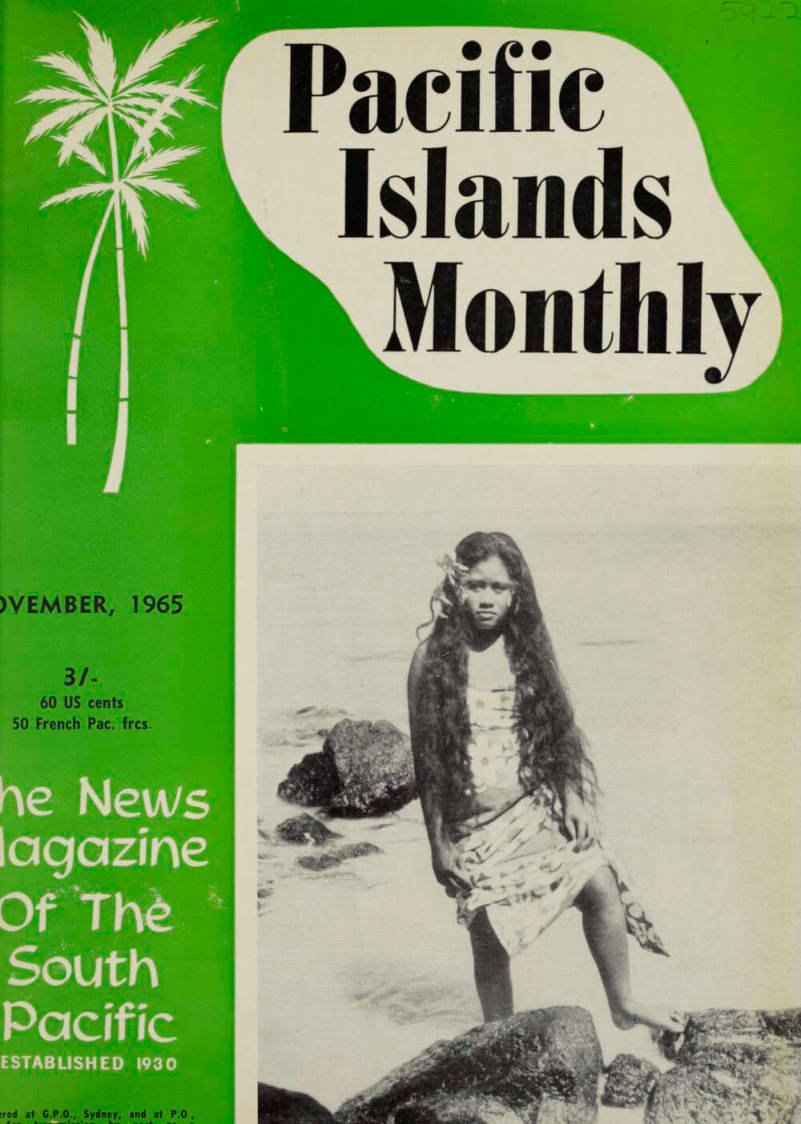 1
1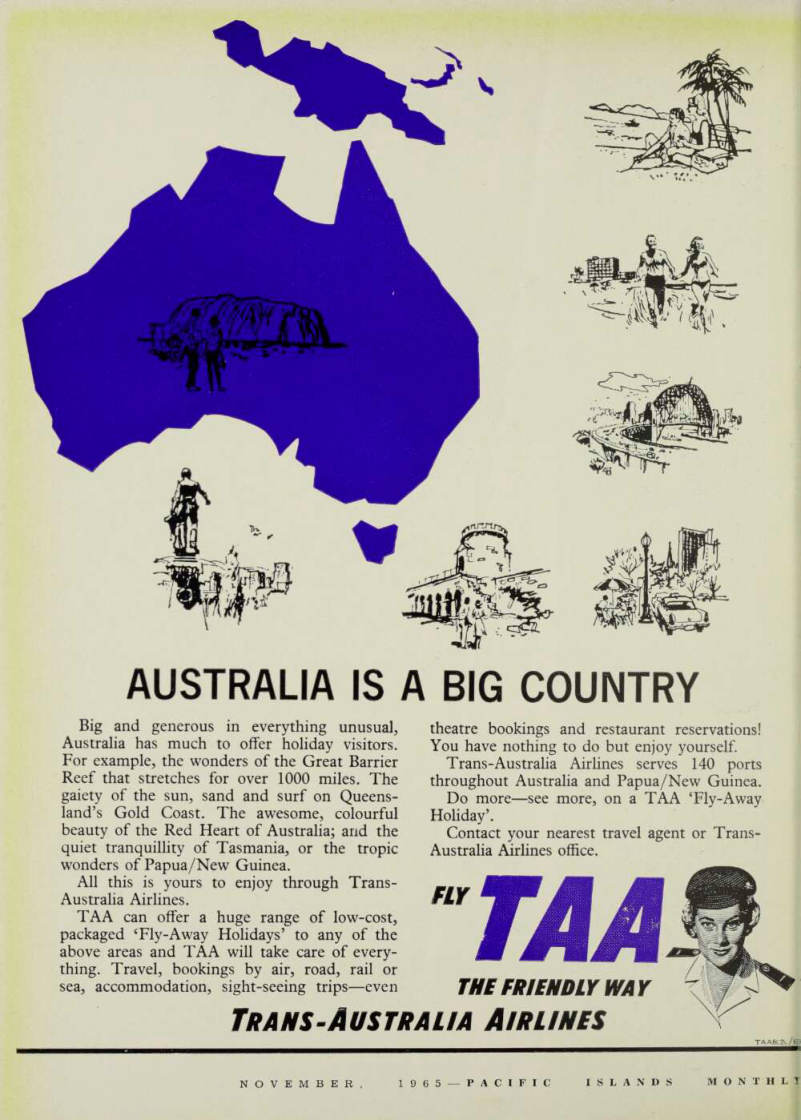 2
2 3
3 4
4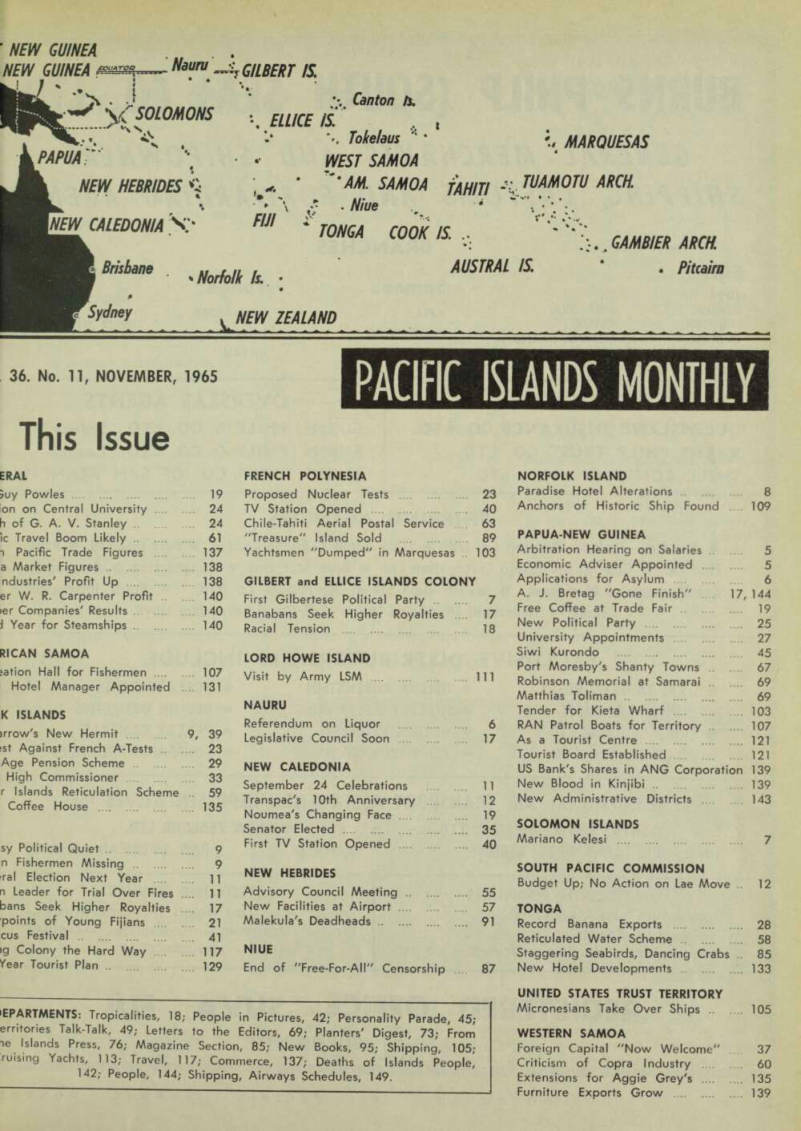 5
5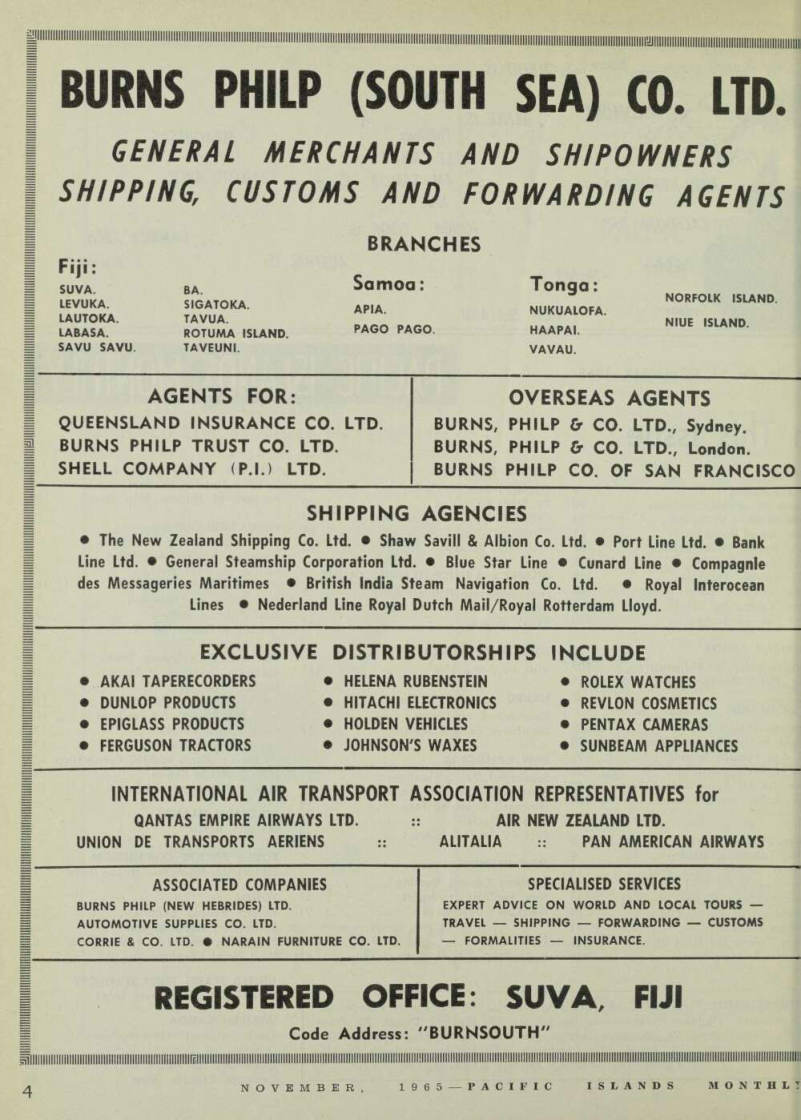 6
6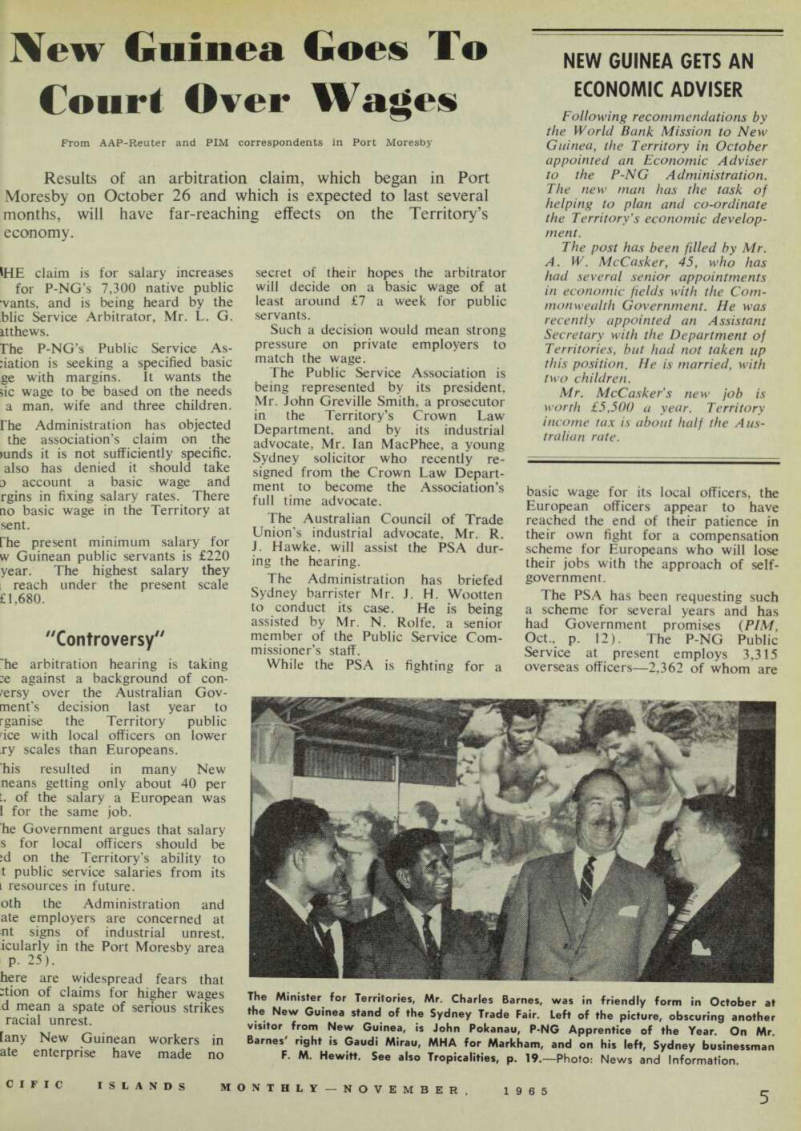 7
7 8
8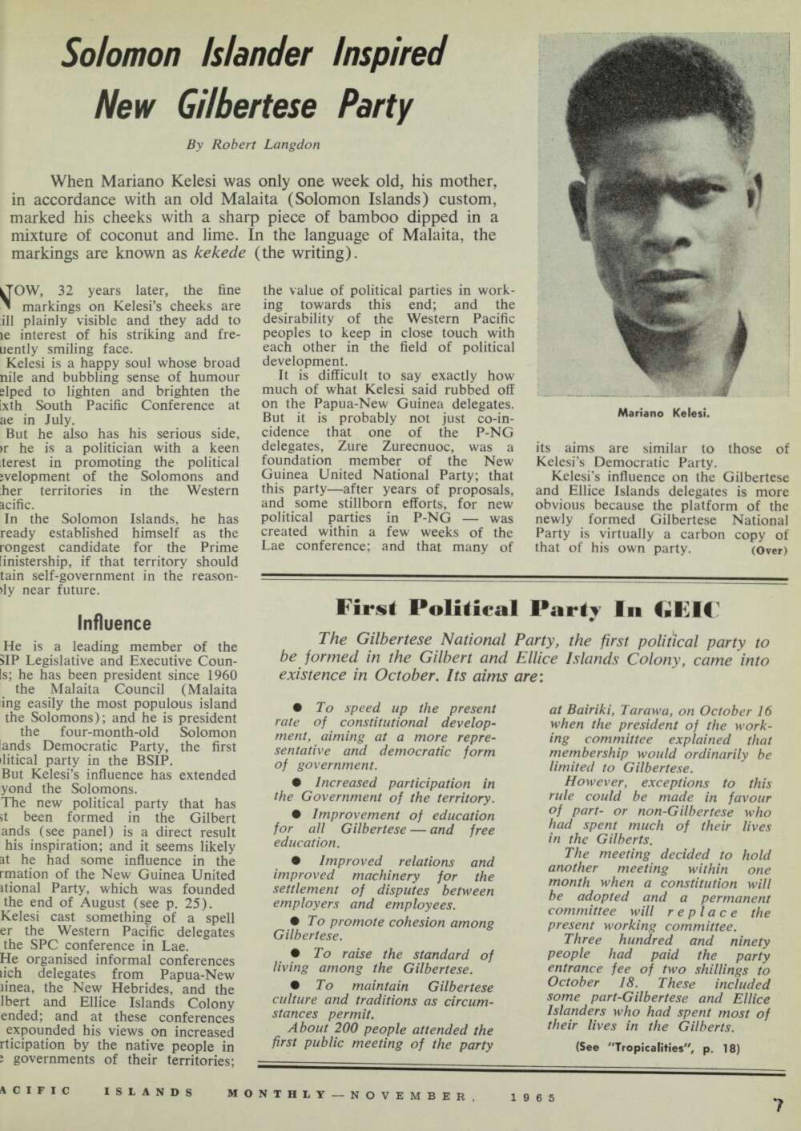 9
9 10
10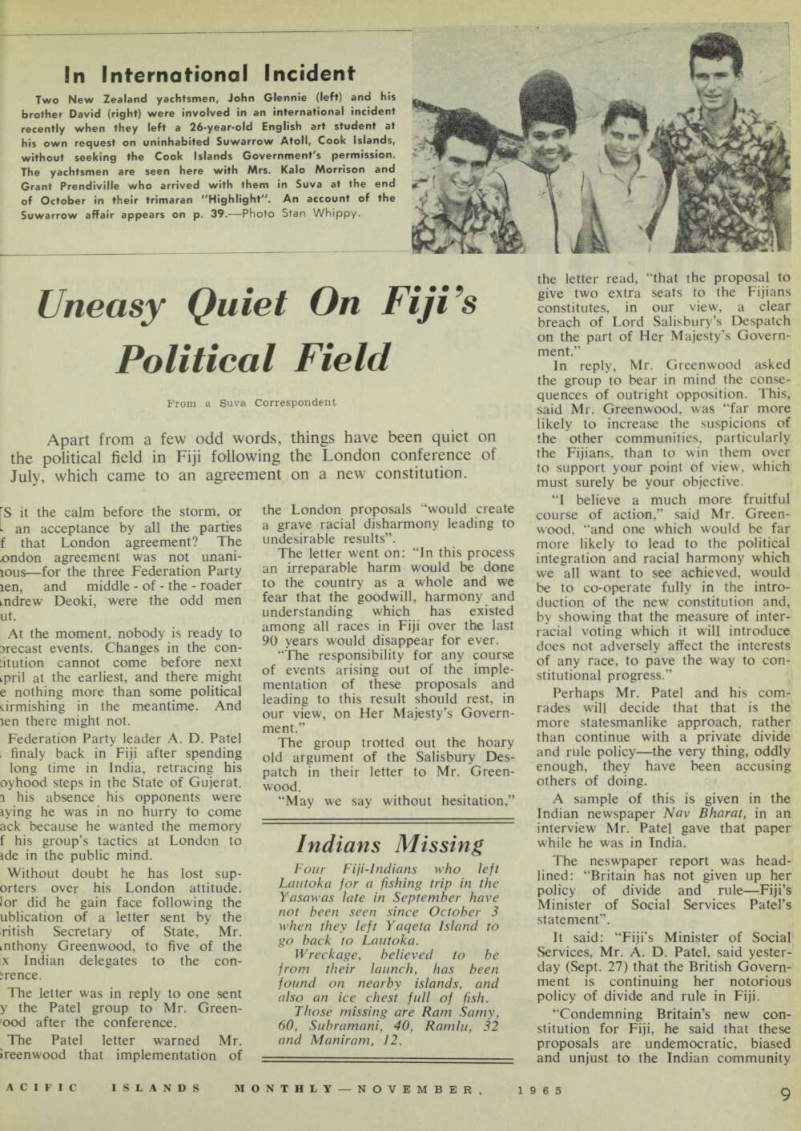 11
11 12
12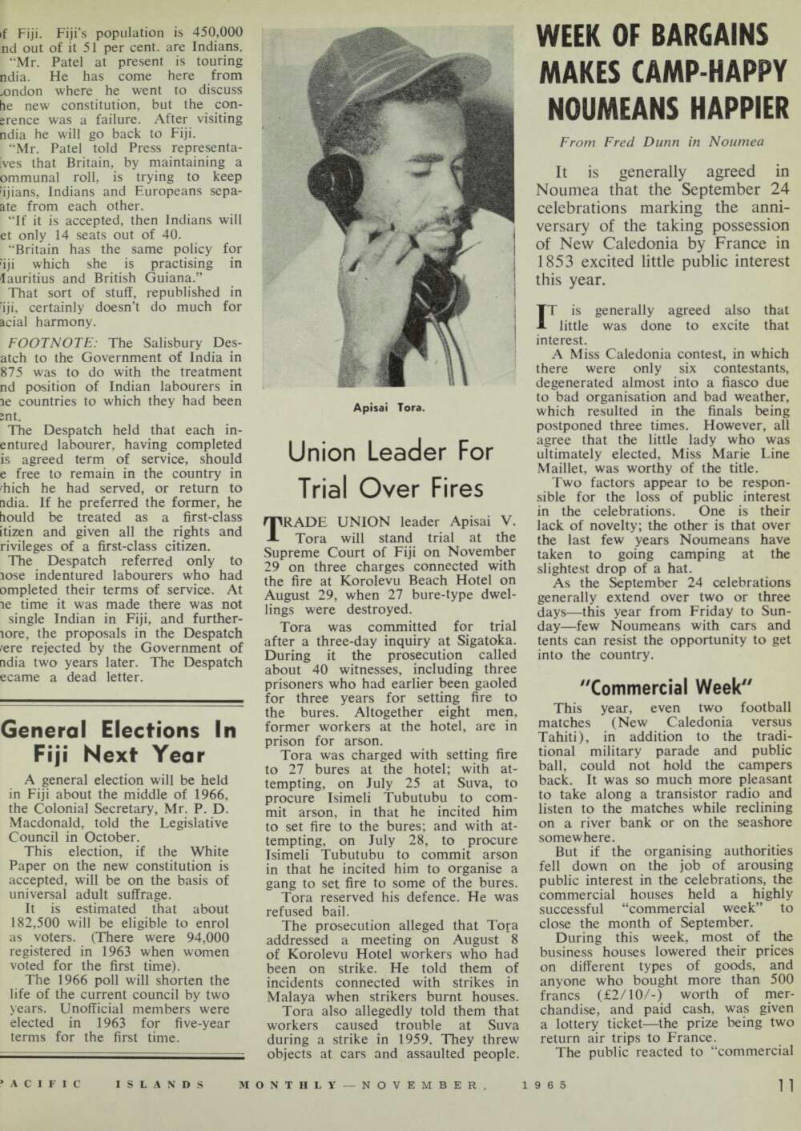 13
13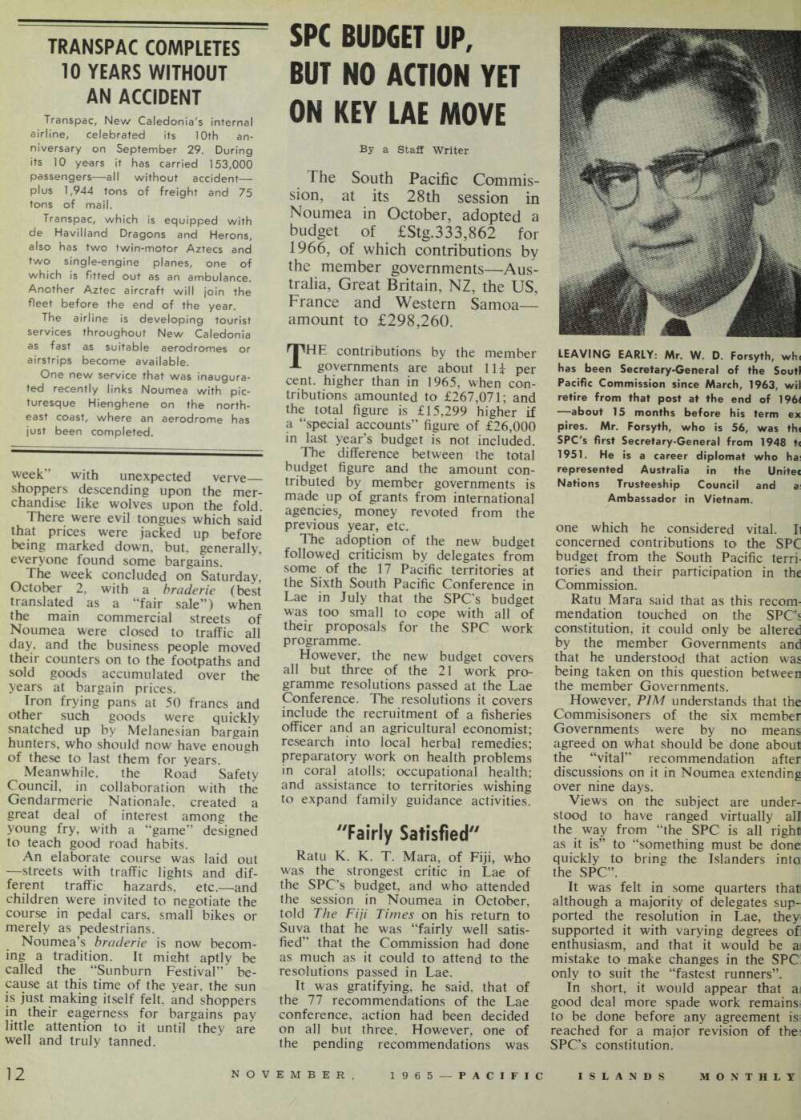 14
14 15
15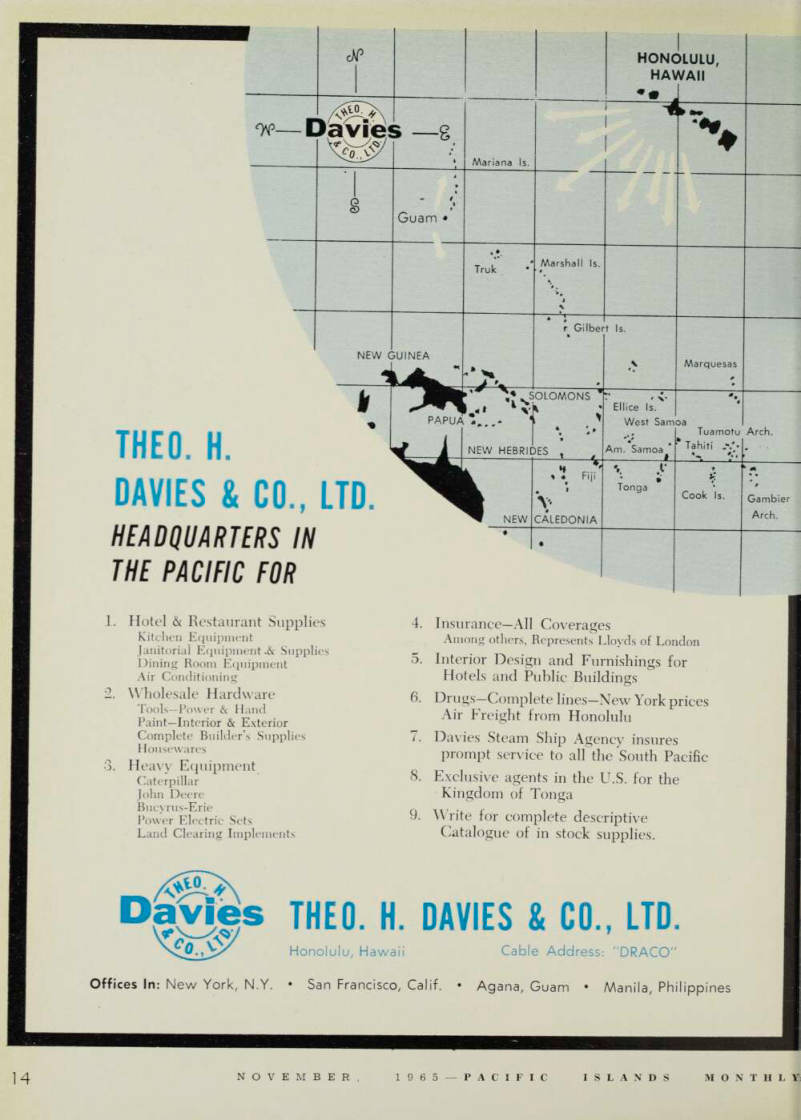 16
16 17
17 18
18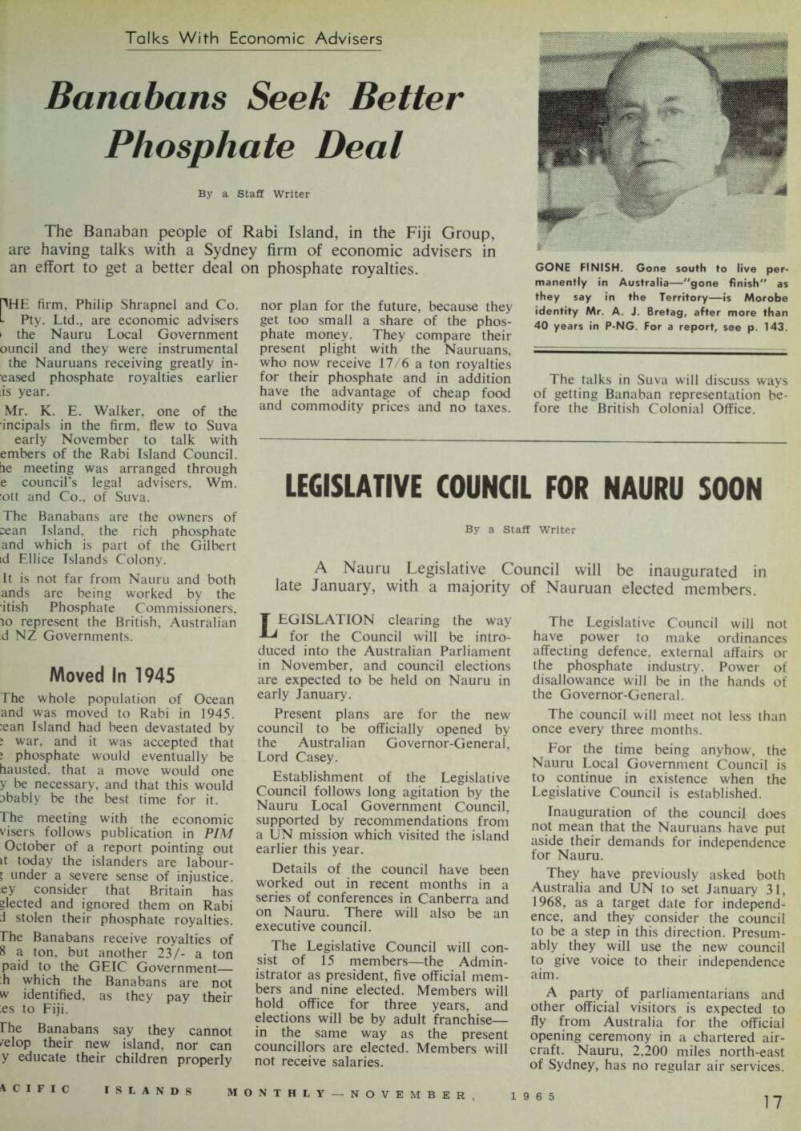 19
19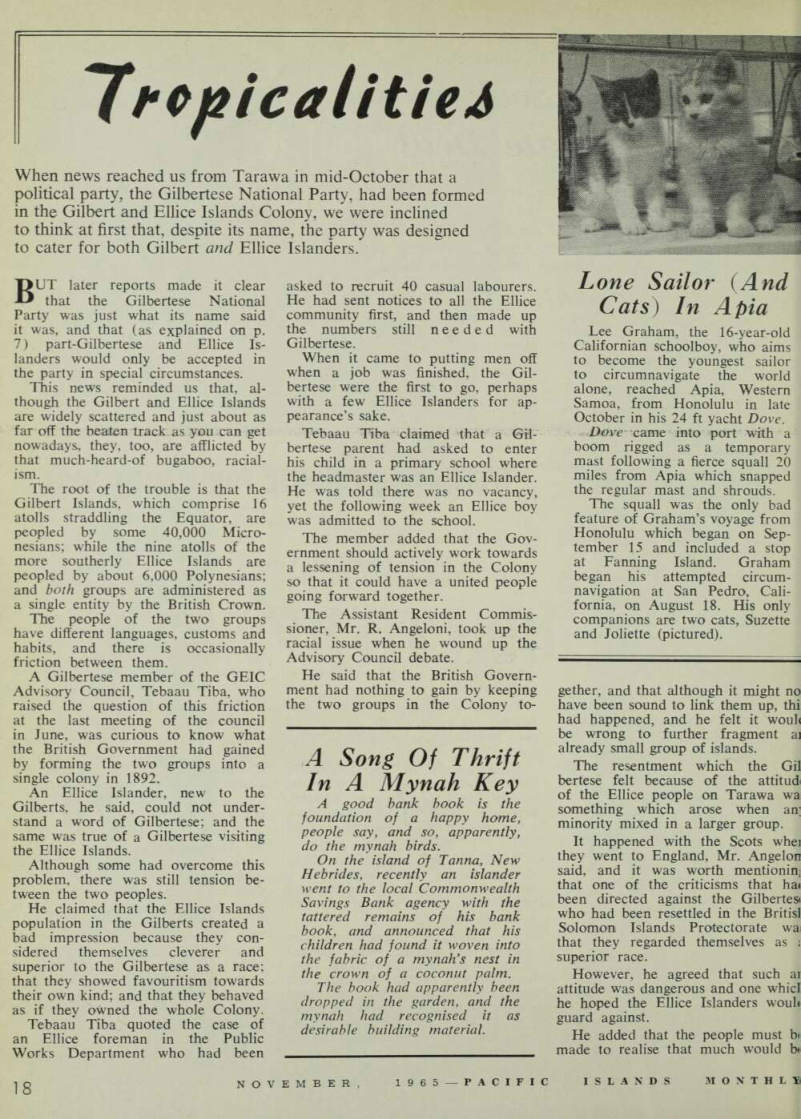 20
20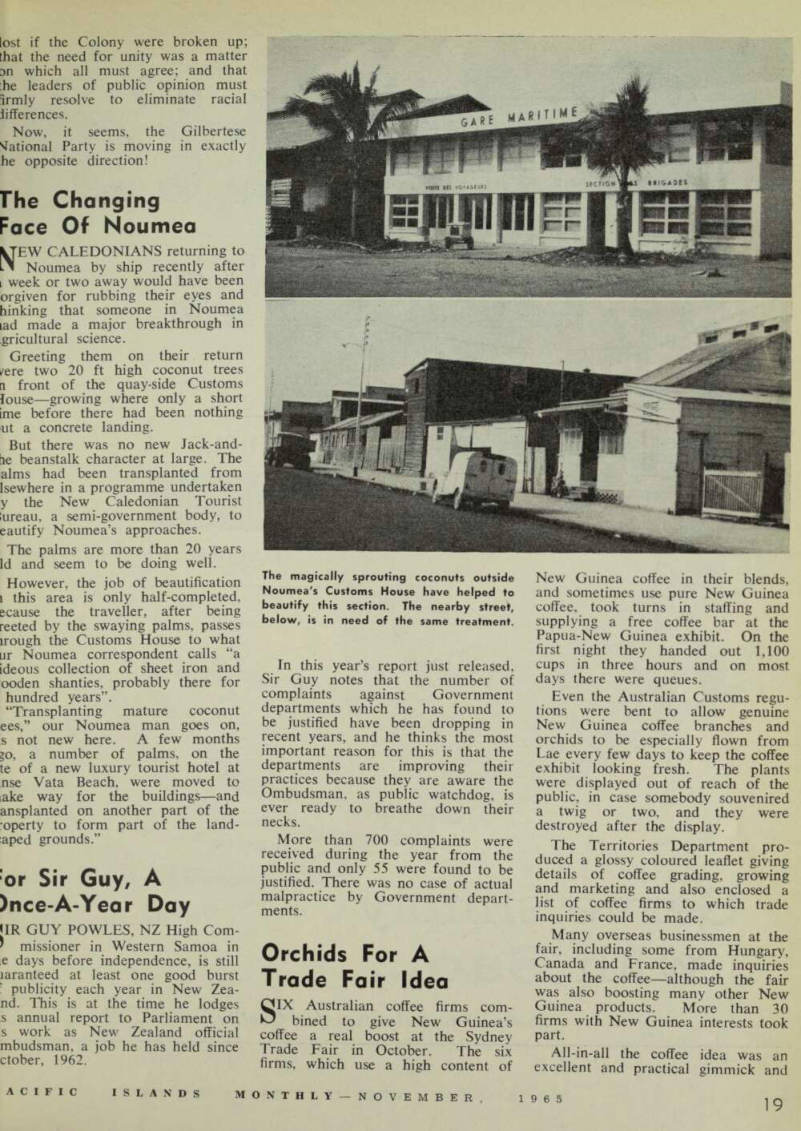 21
21 22
22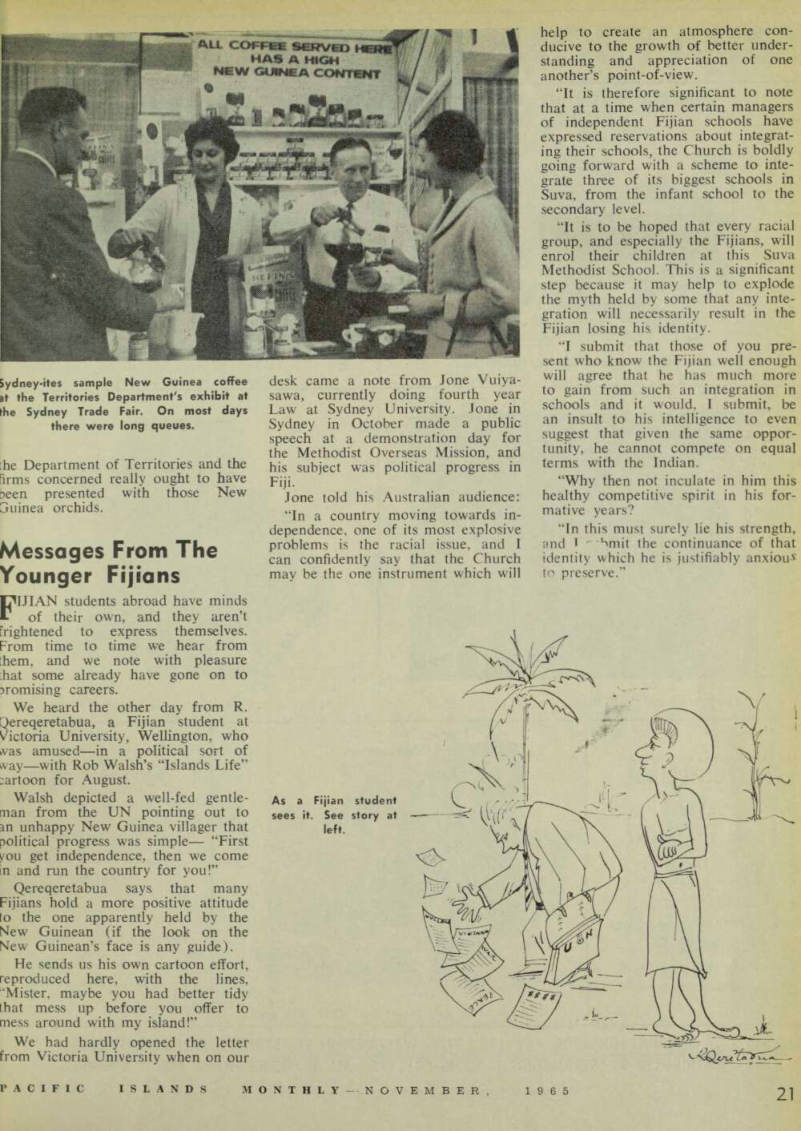 23
23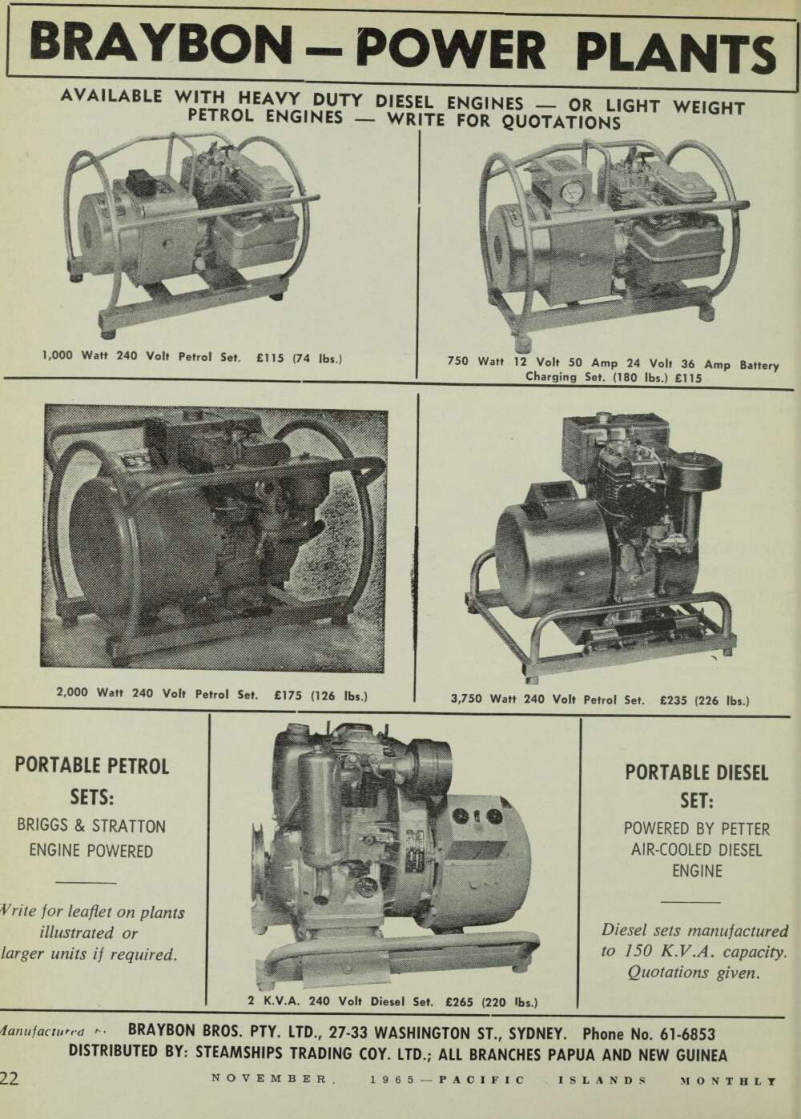 24
24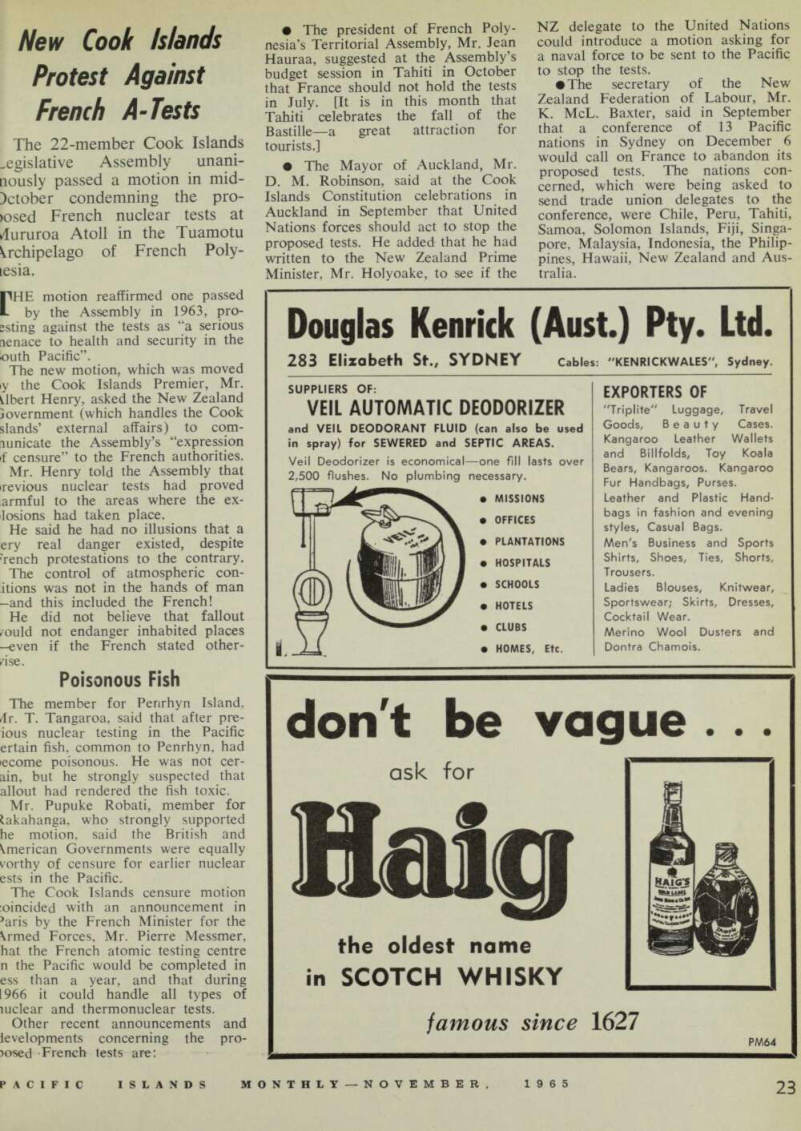 25
25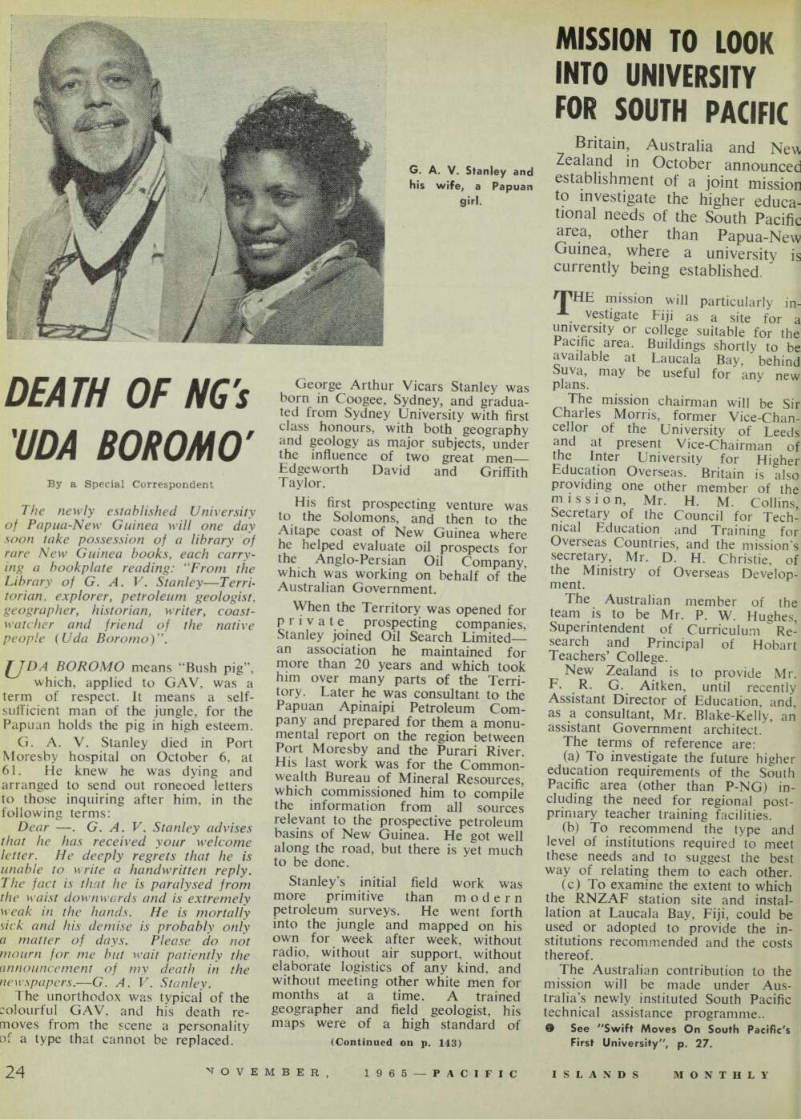 26
26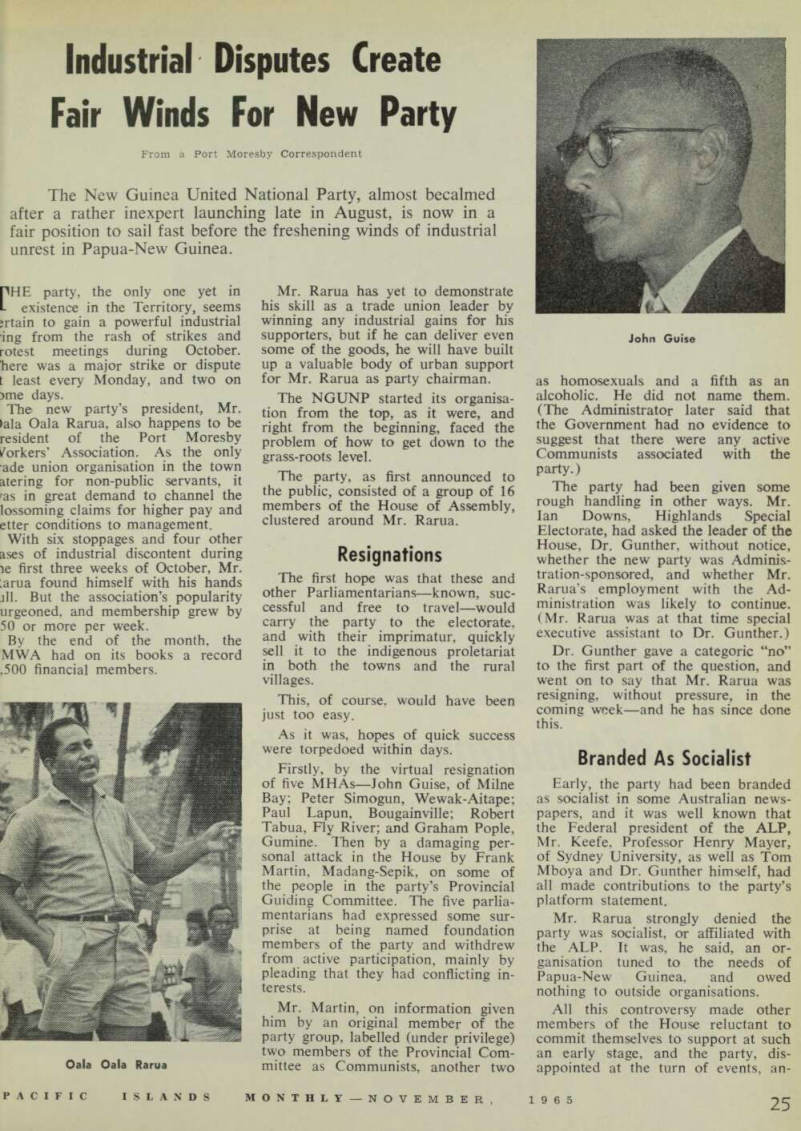 27
27 28
28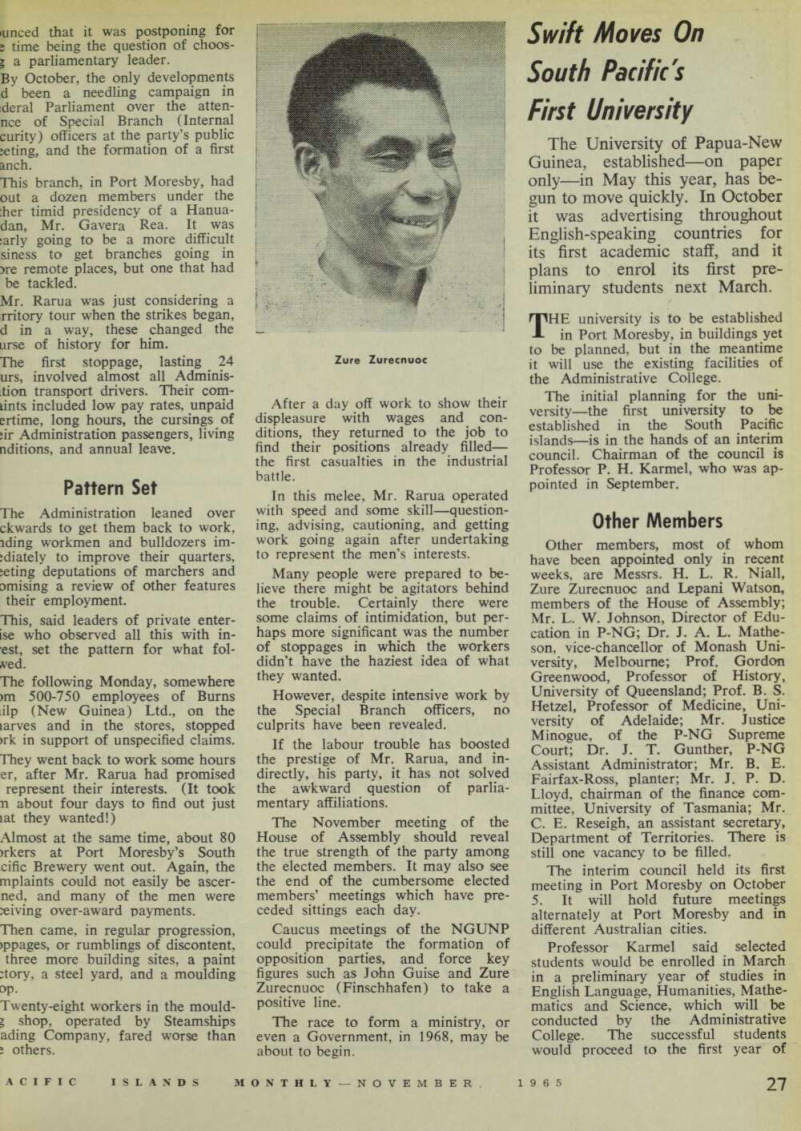 29
29 30
30 31
31 32
32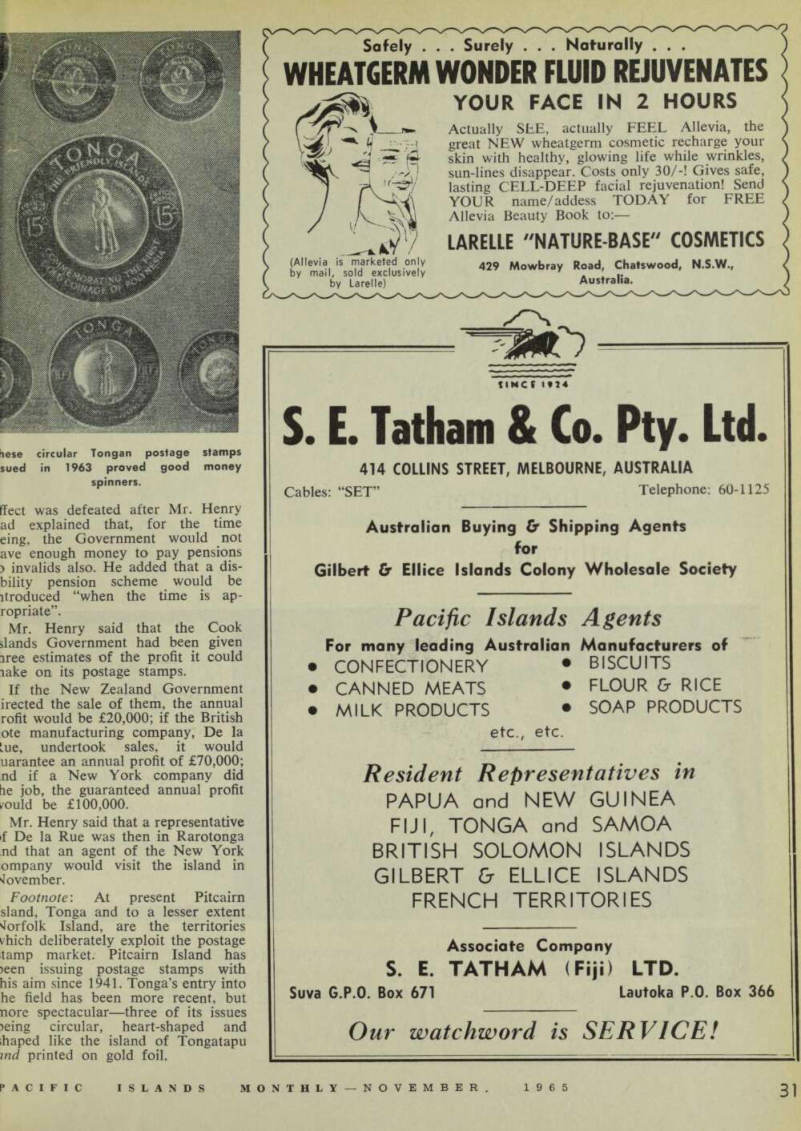 33
33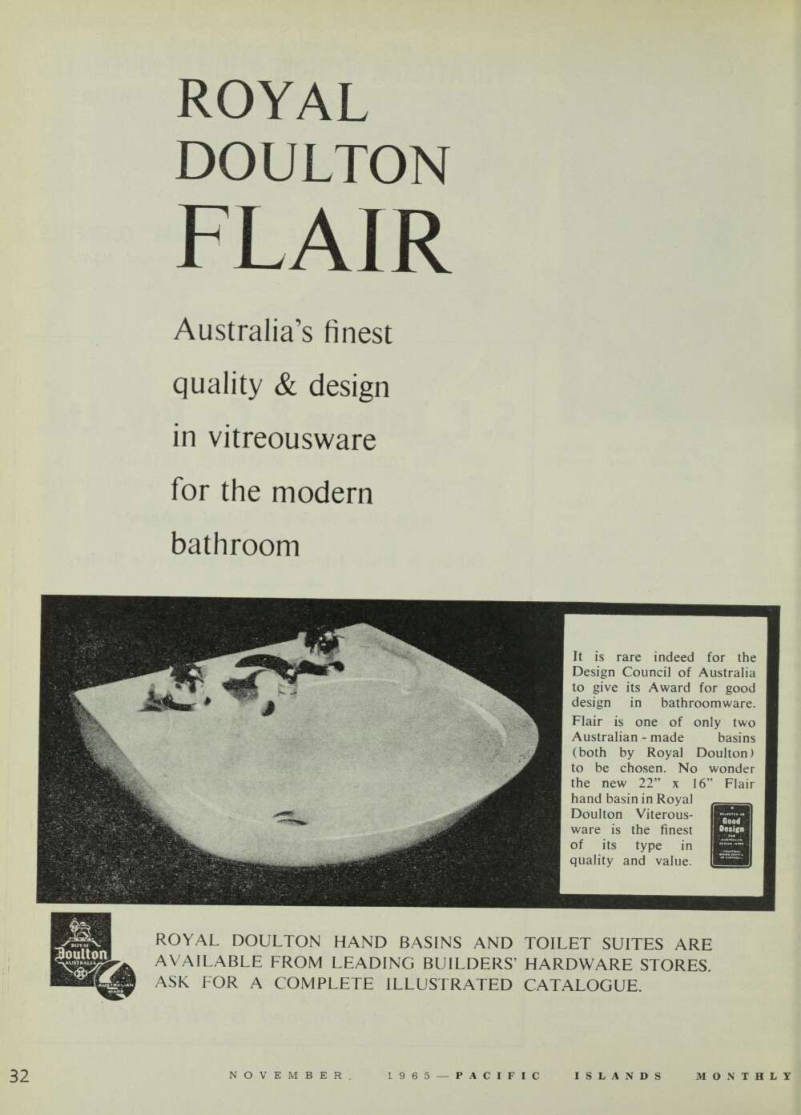 34
34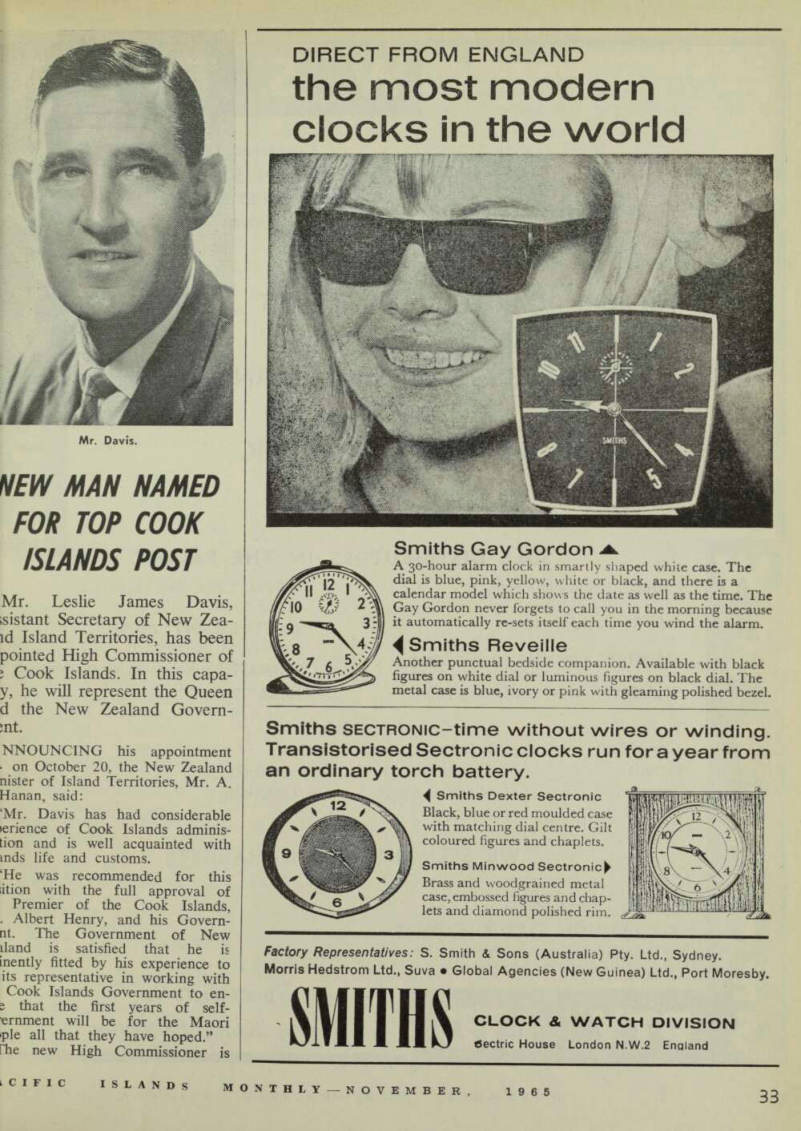 35
35 36
36 37
37 38
38 39
39 40
40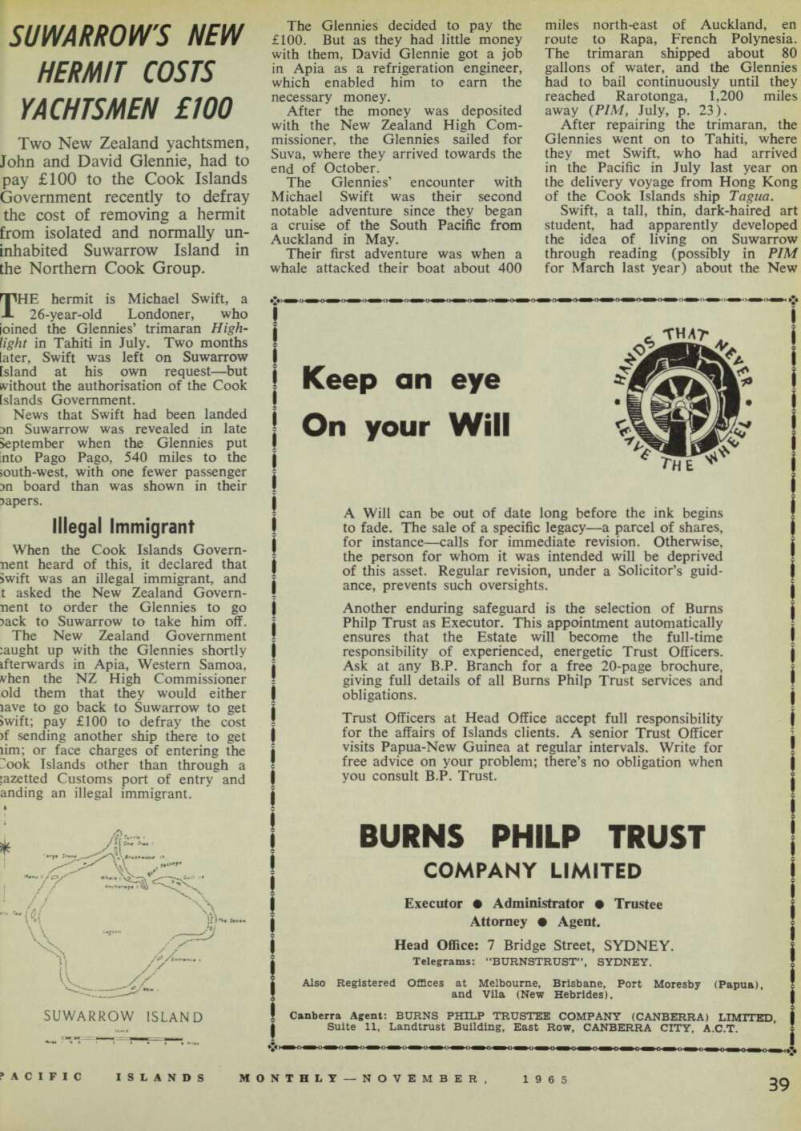 41
41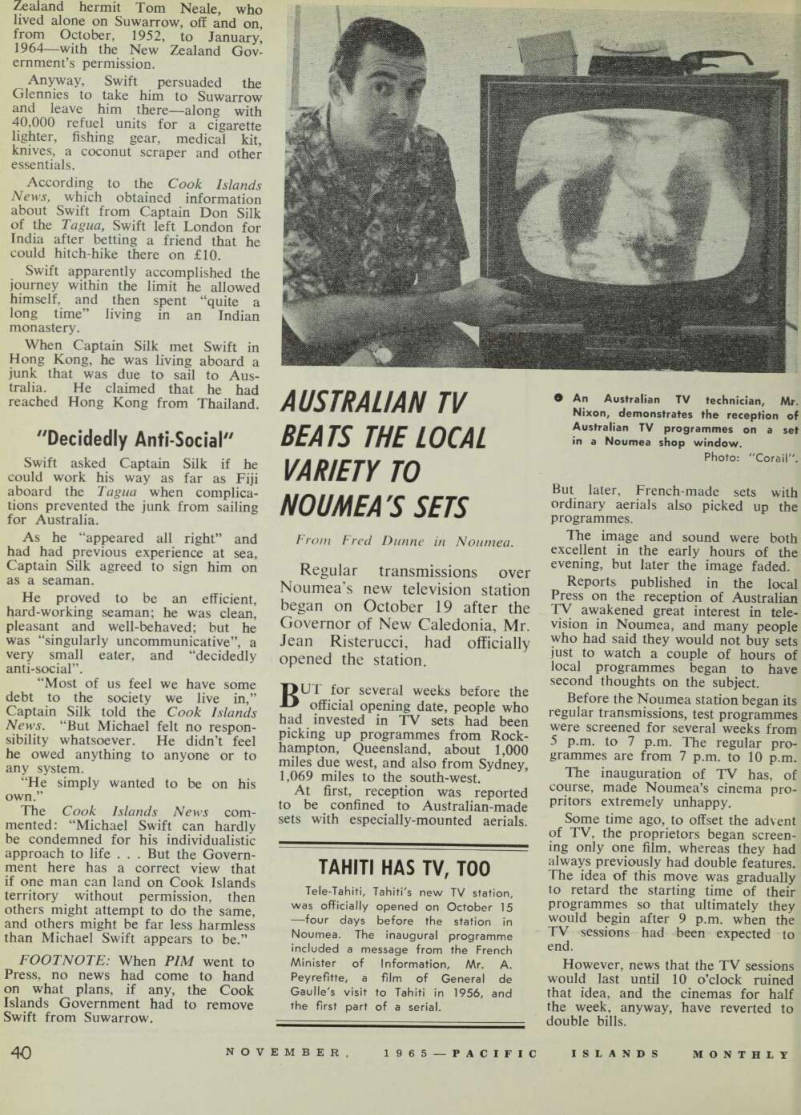 42
42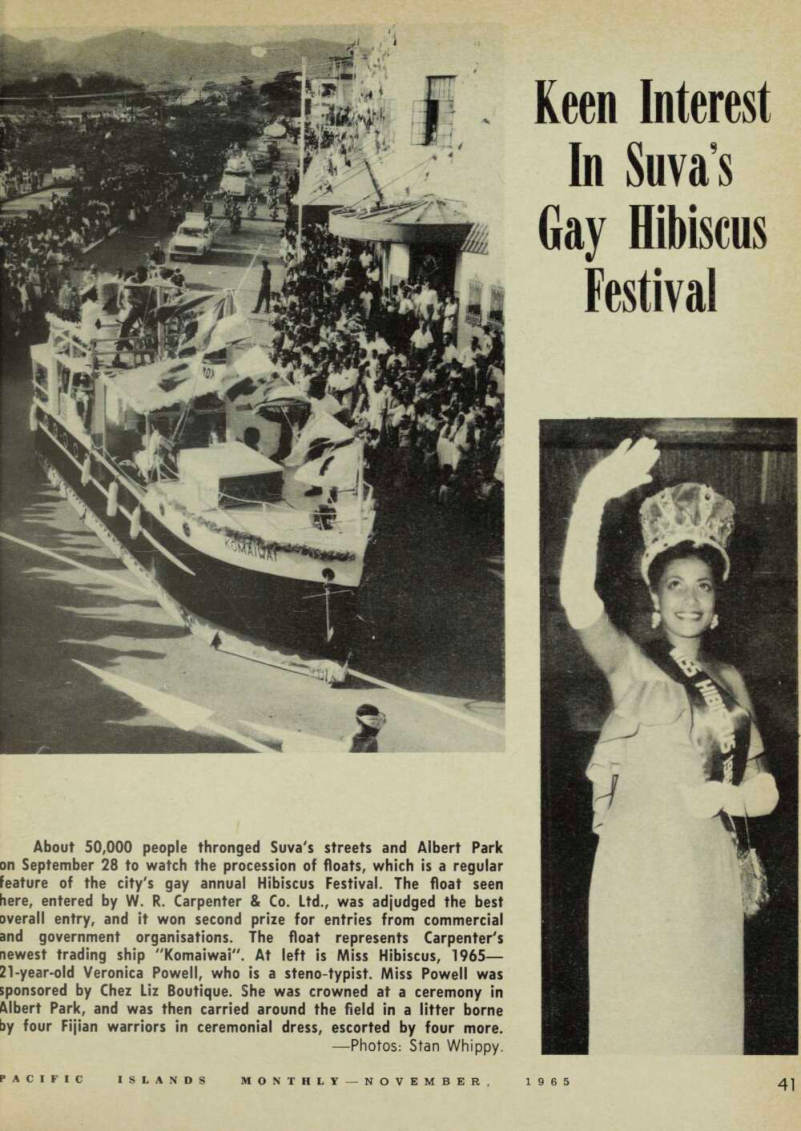 43
43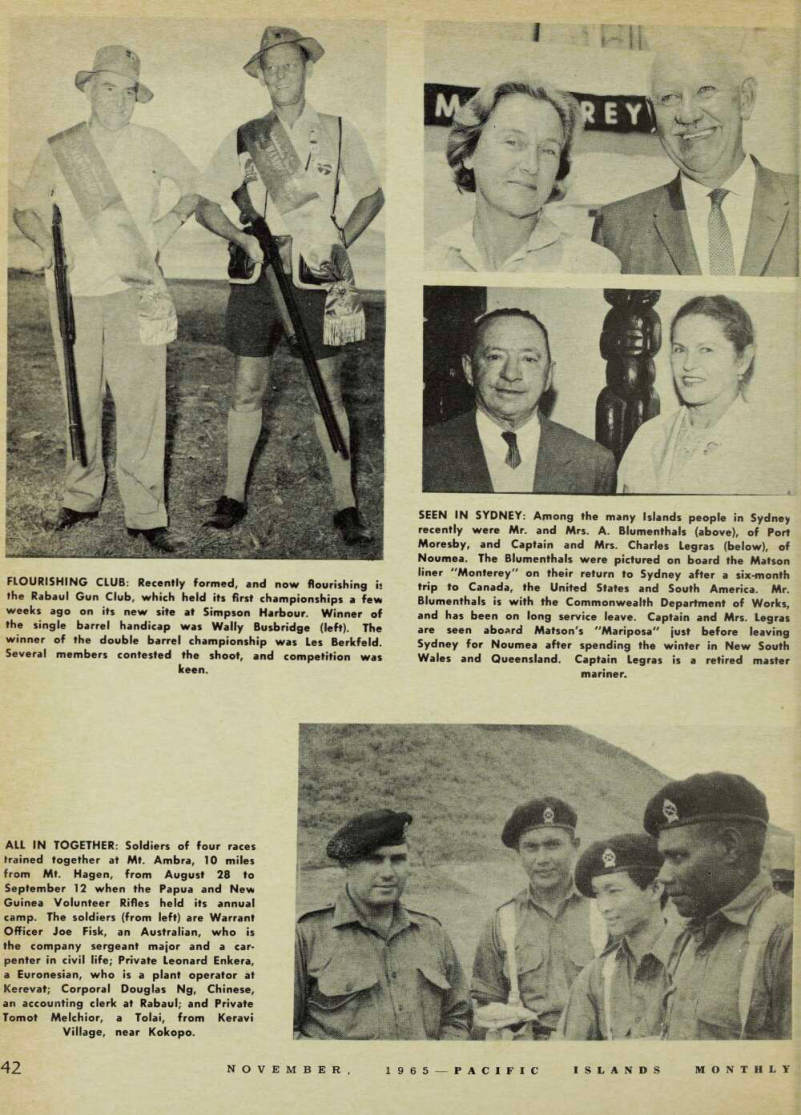 44
44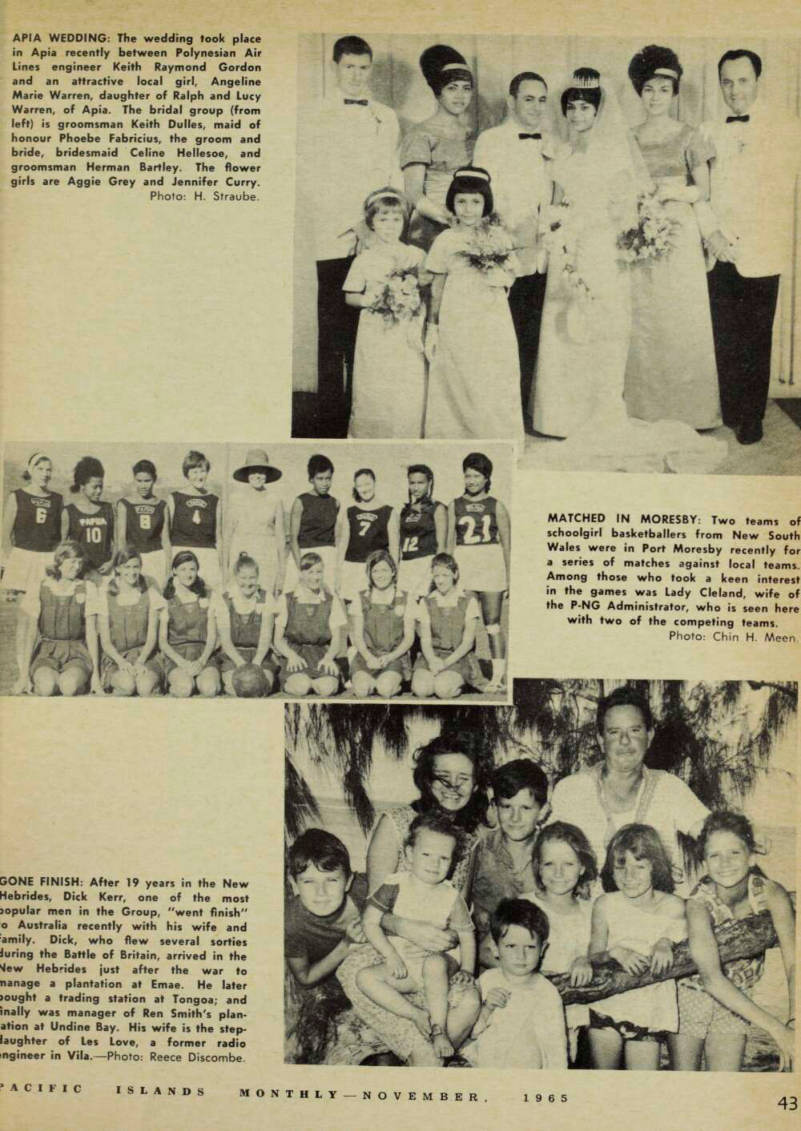 45
45 46
46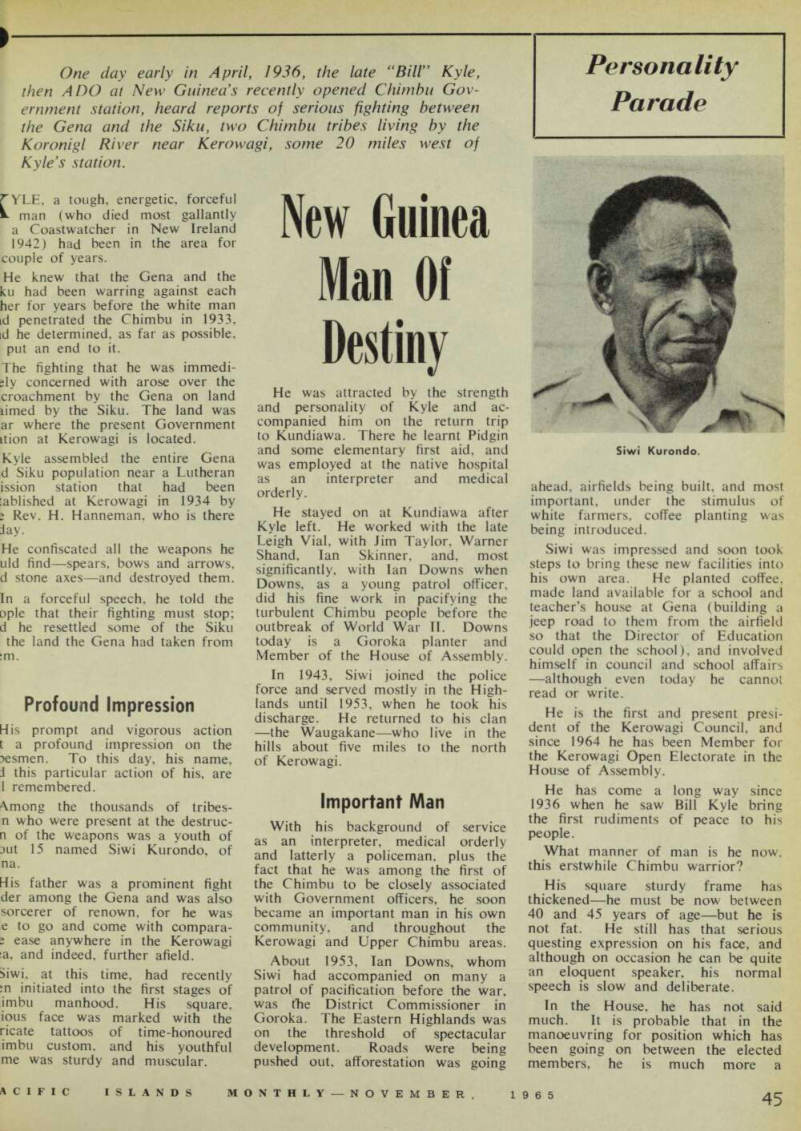 47
47 48
48 49
49 50
50 51
51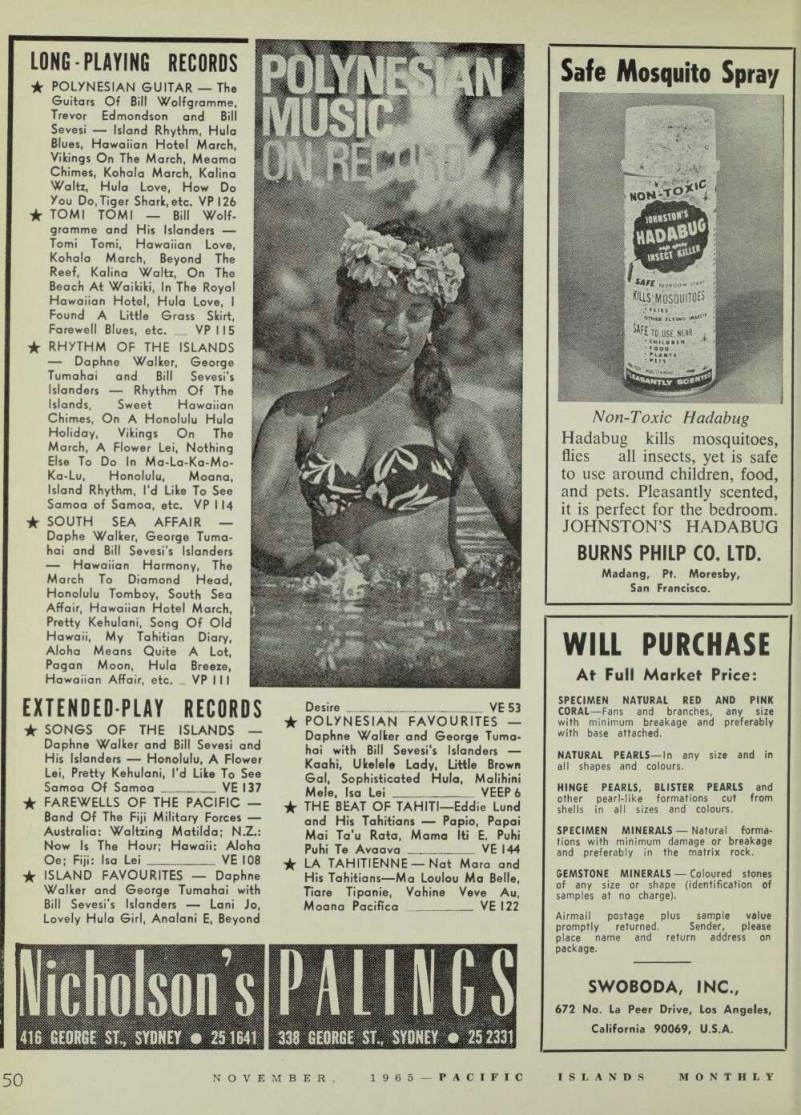 52
52 53
53 54
54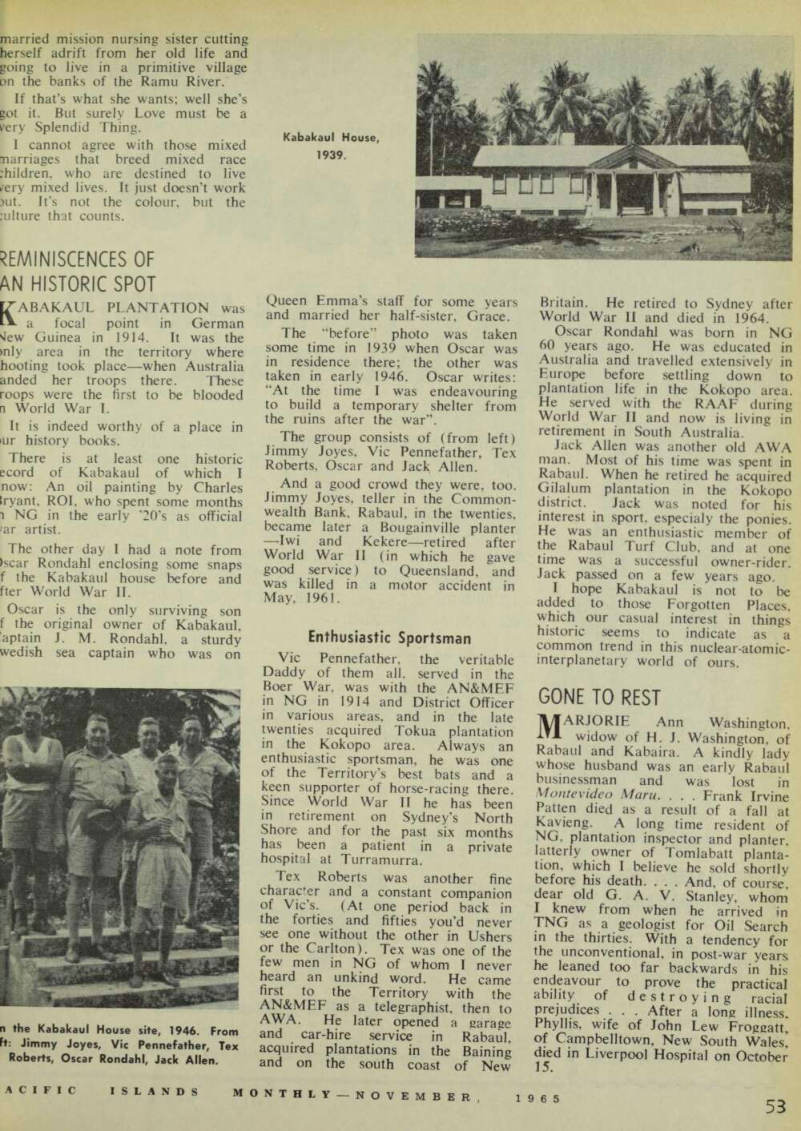 55
55 56
56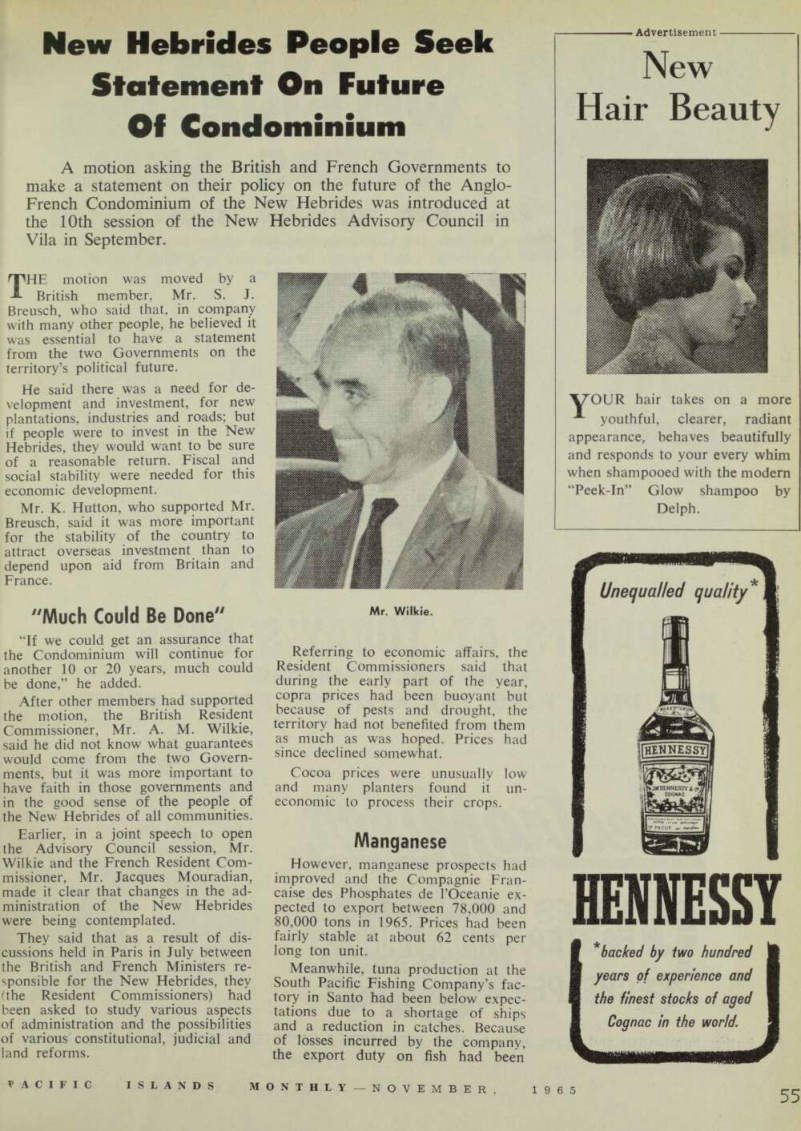 57
57 58
58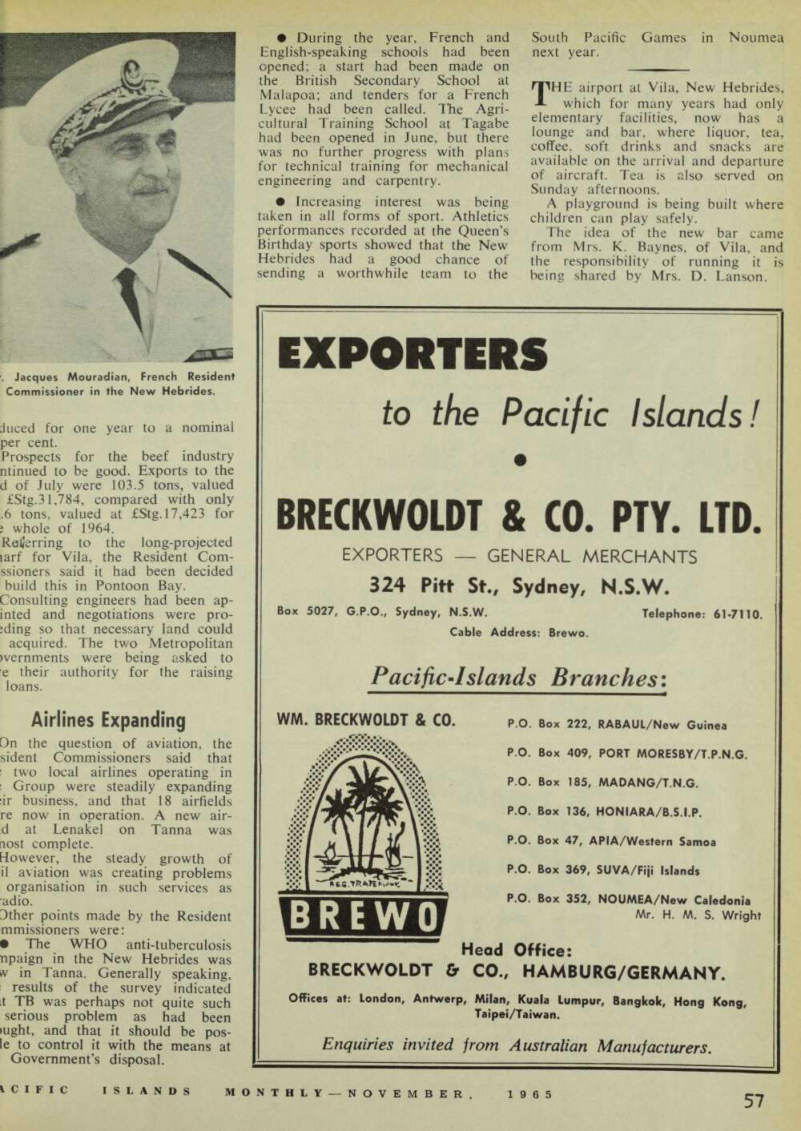 59
59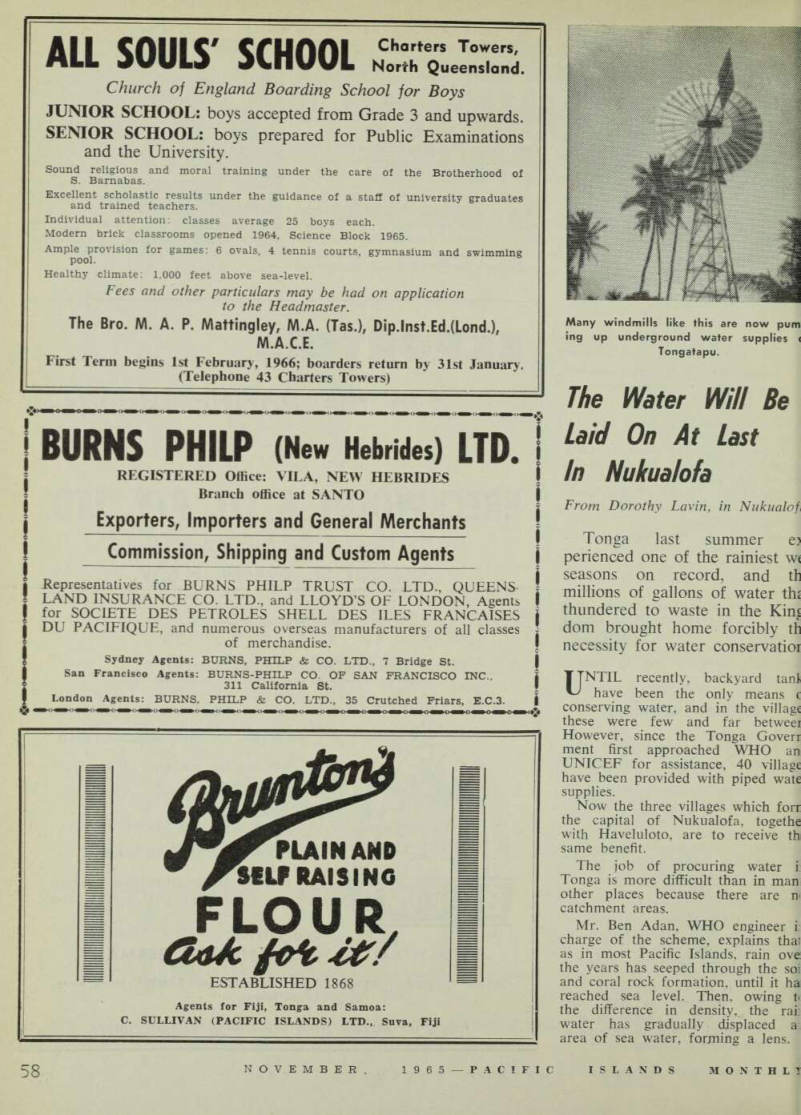 60
60 61
61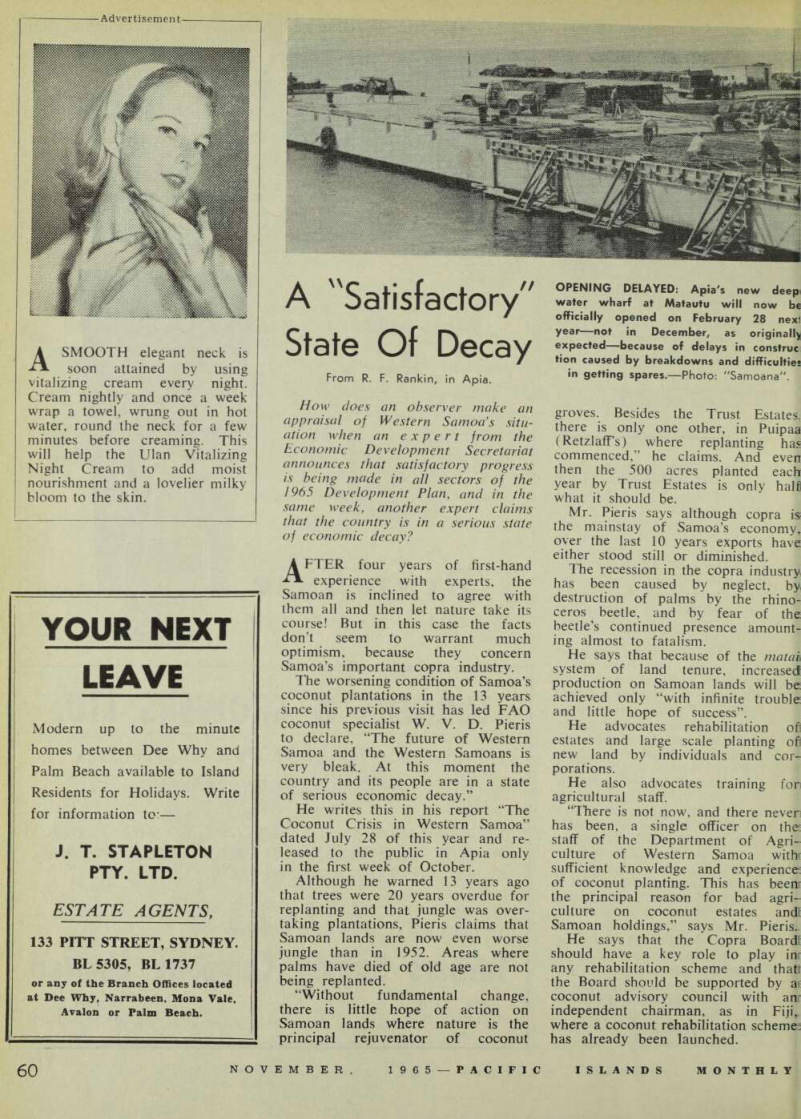 62
62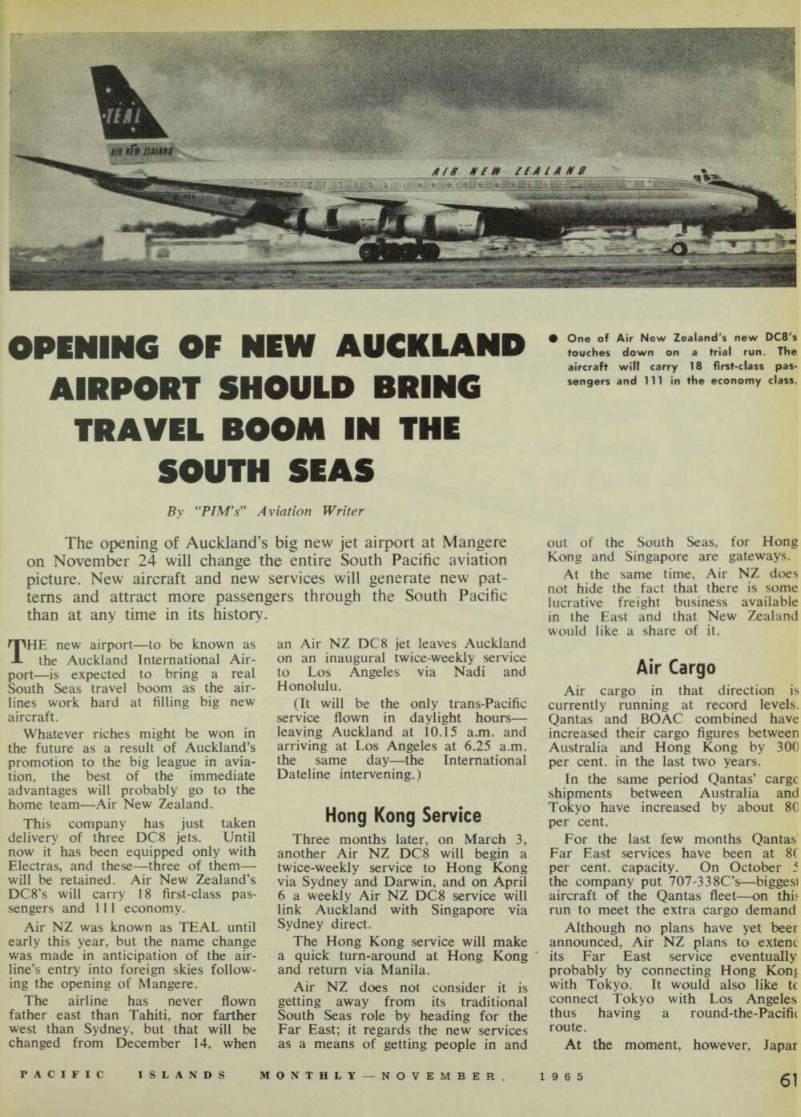 63
63 64
64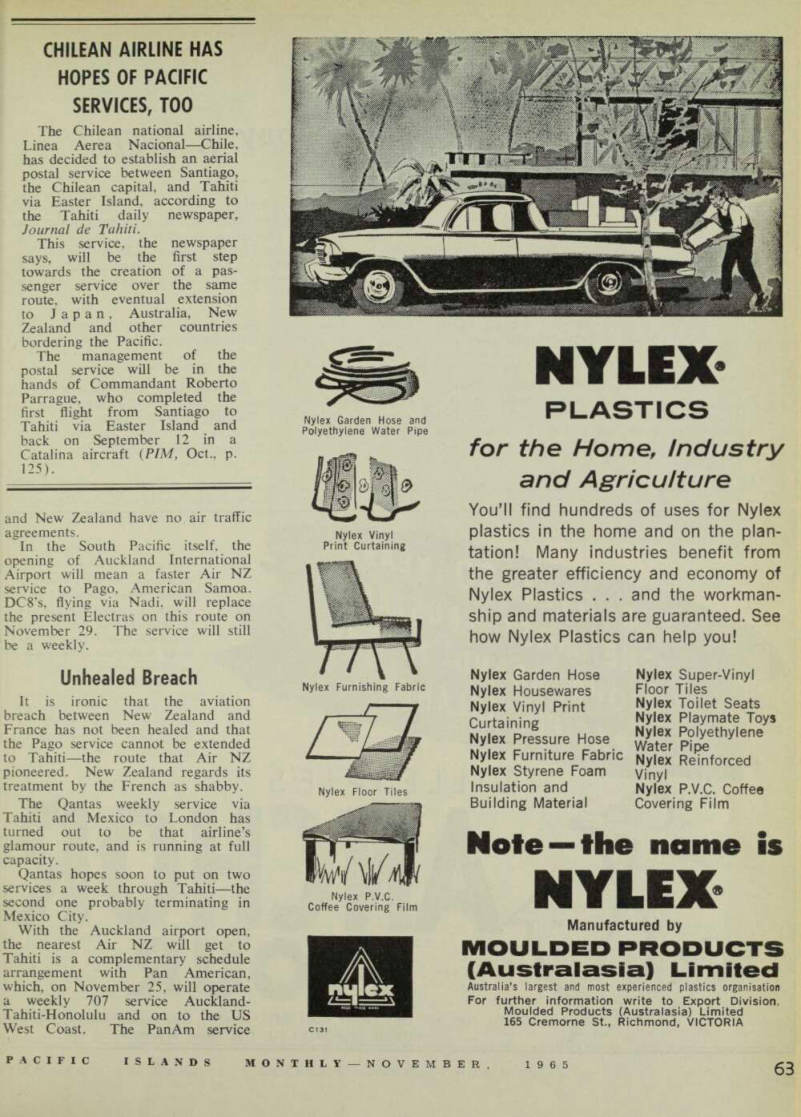 65
65 66
66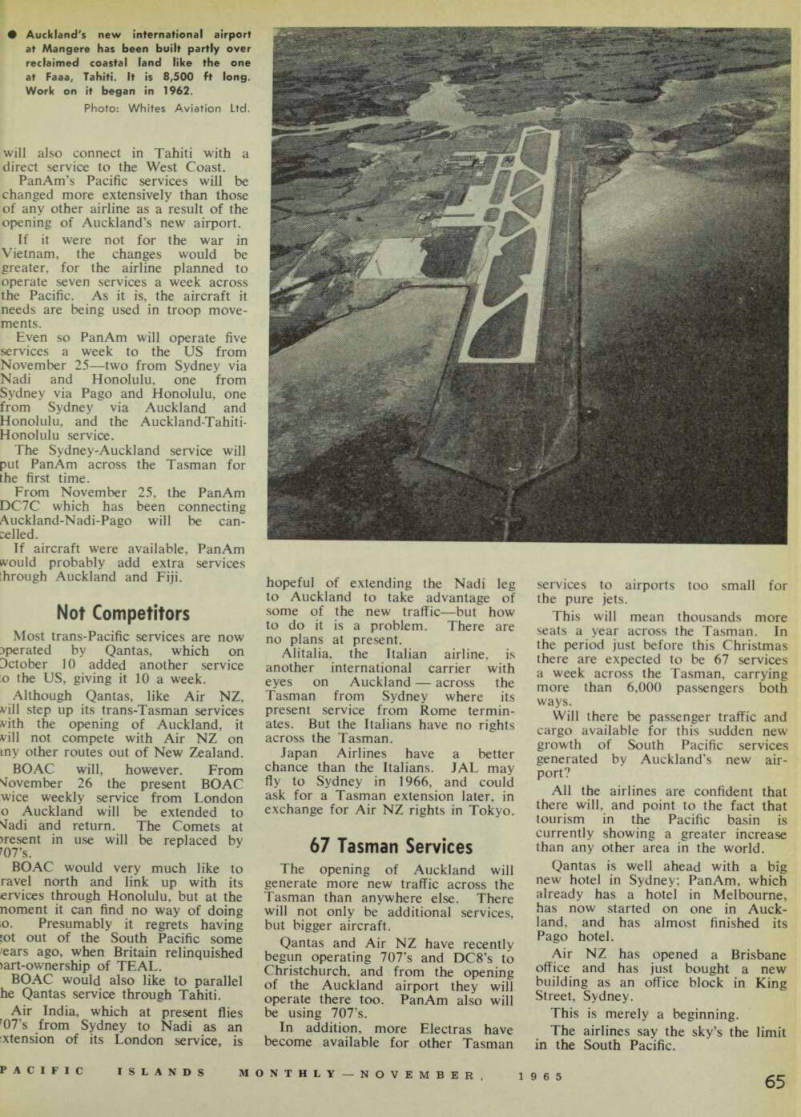 67
67 68
68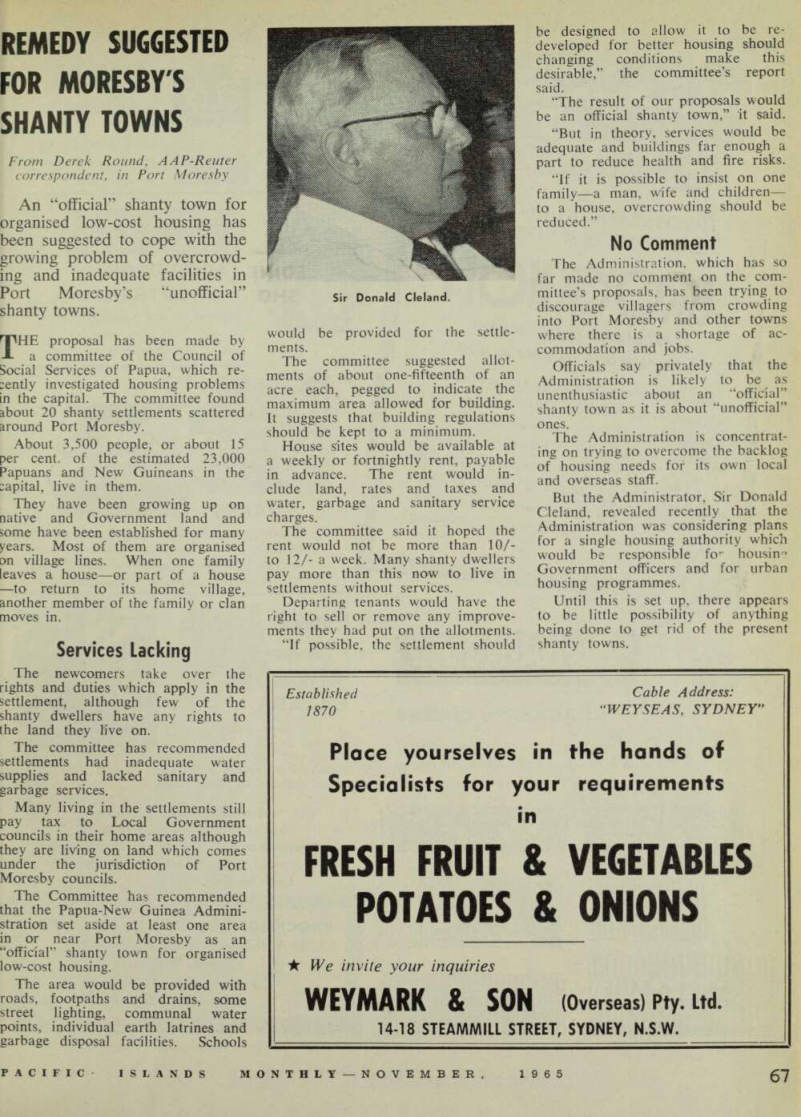 69
69 70
70 71
71 72
72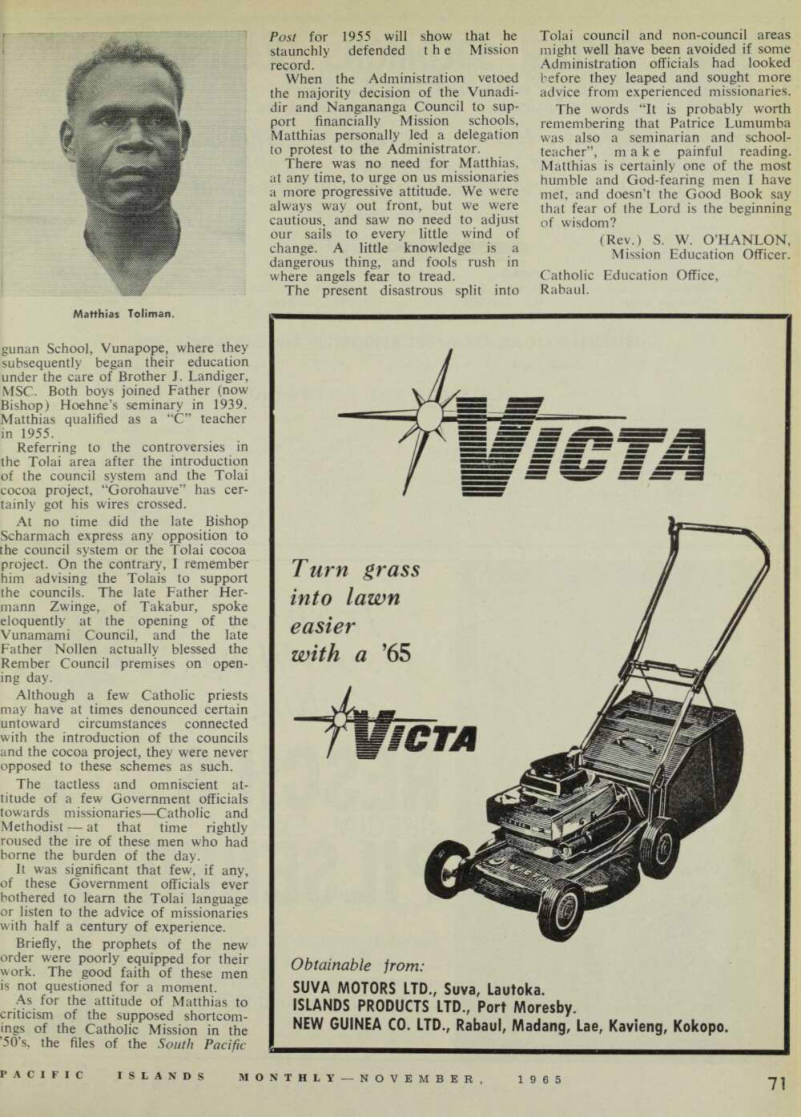 73
73 74
74 75
75 76
76 77
77 78
78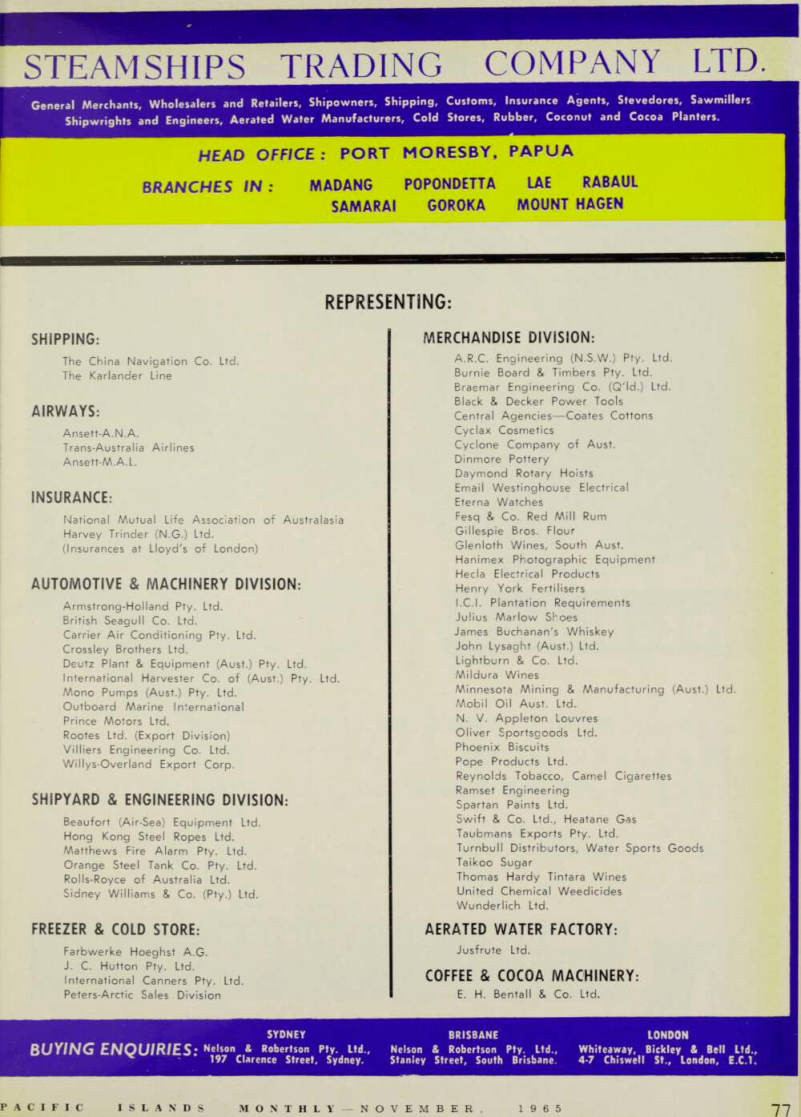 79
79 80
80 81
81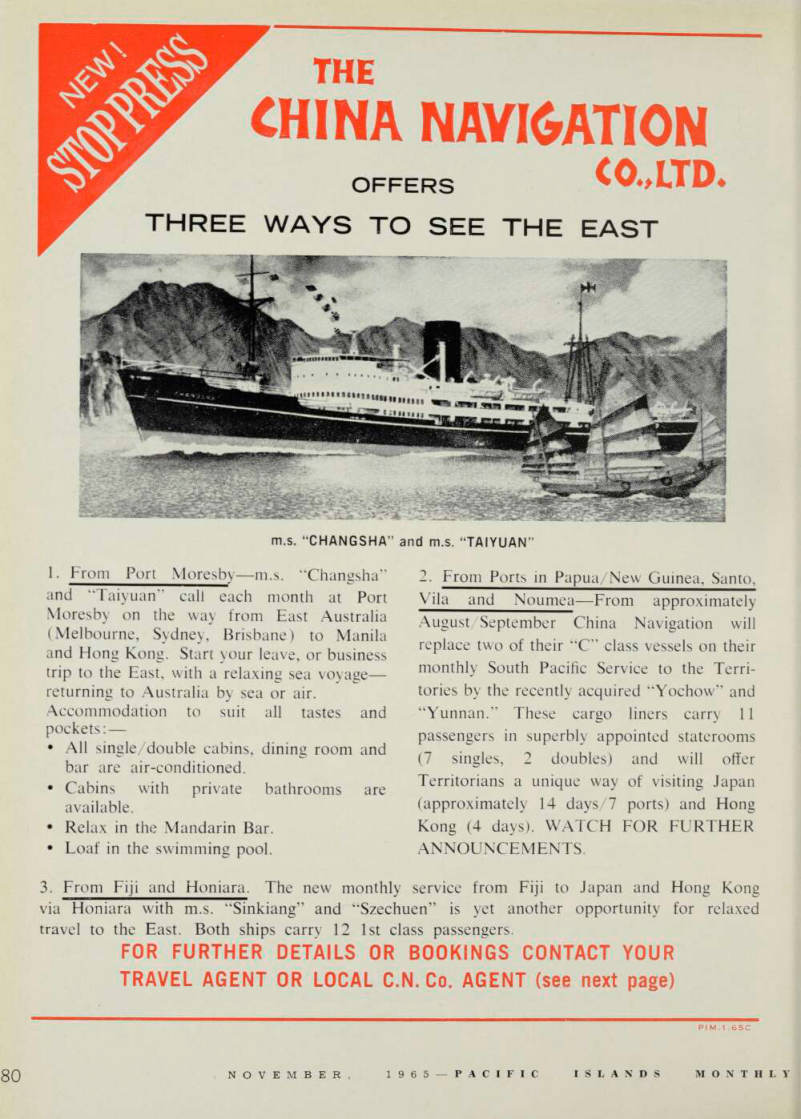 82
82 83
83 84
84 85
85 86
86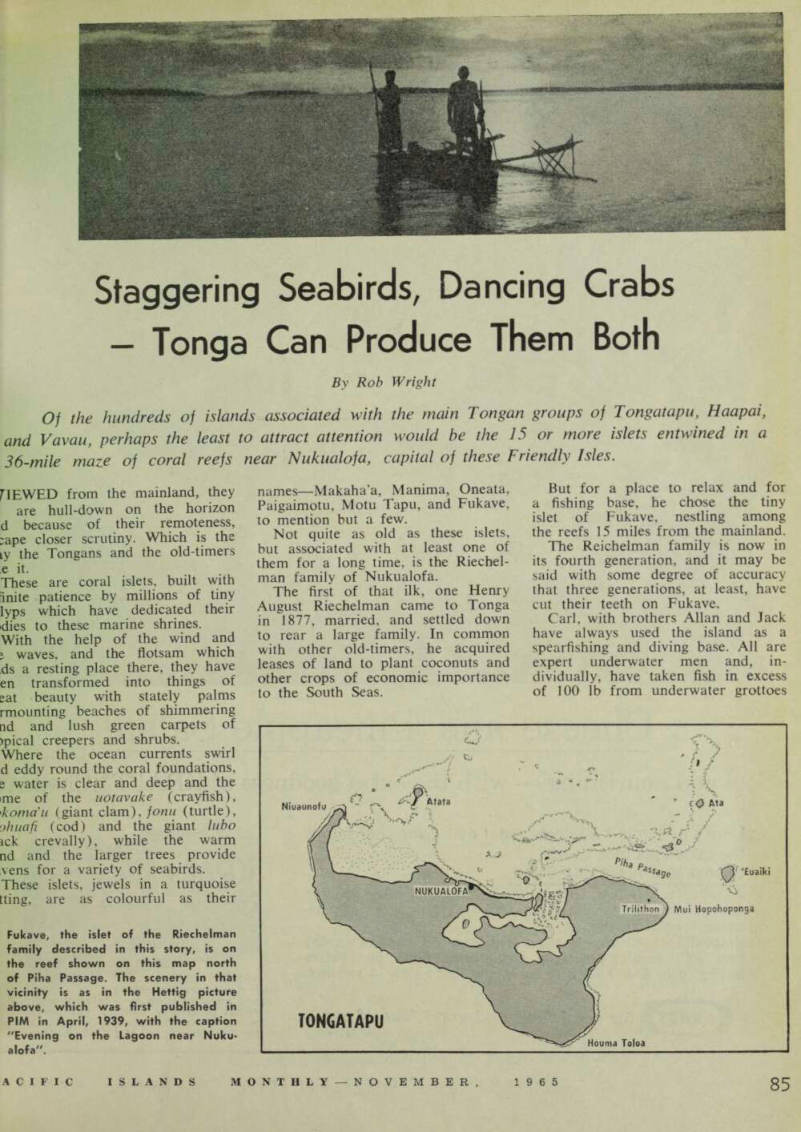 87
87 88
88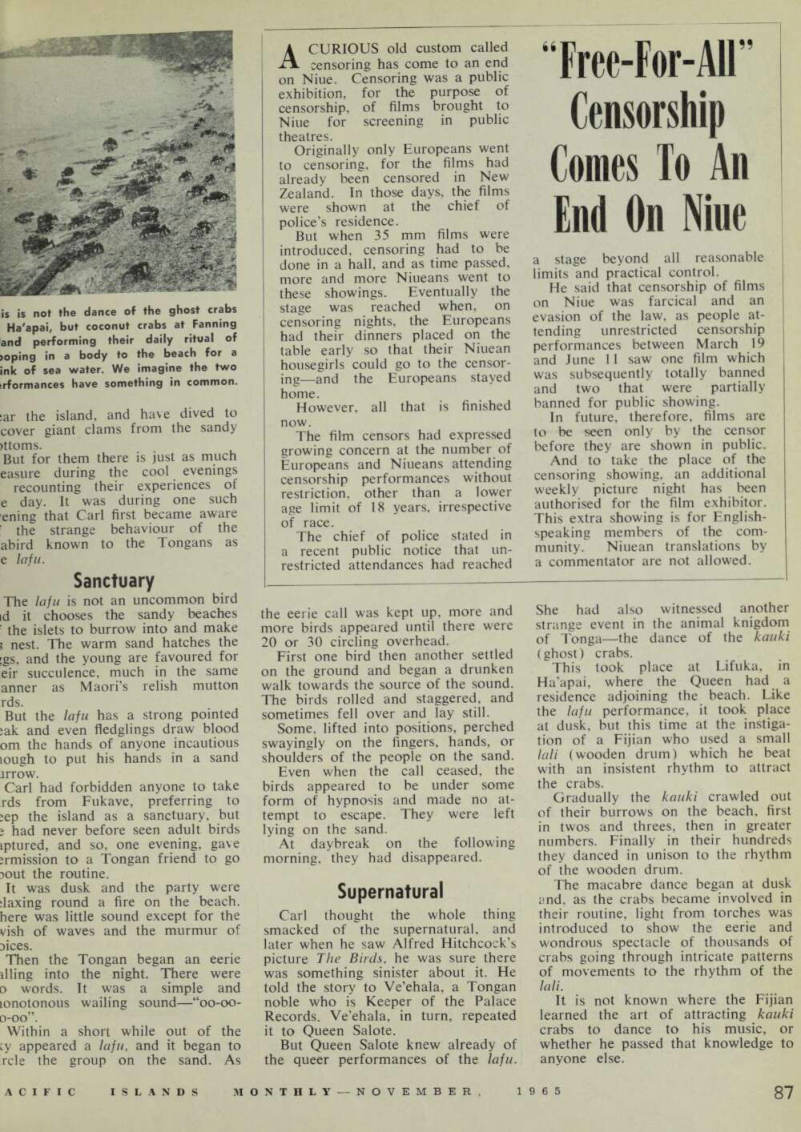 89
89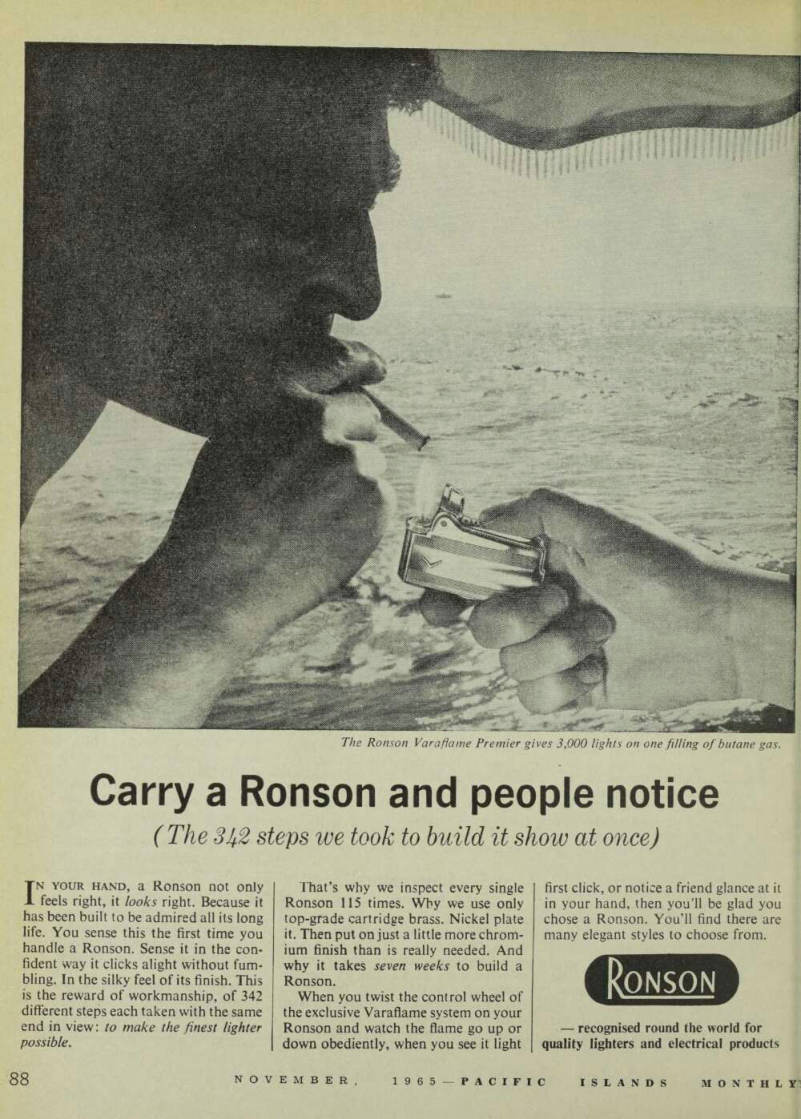 90
90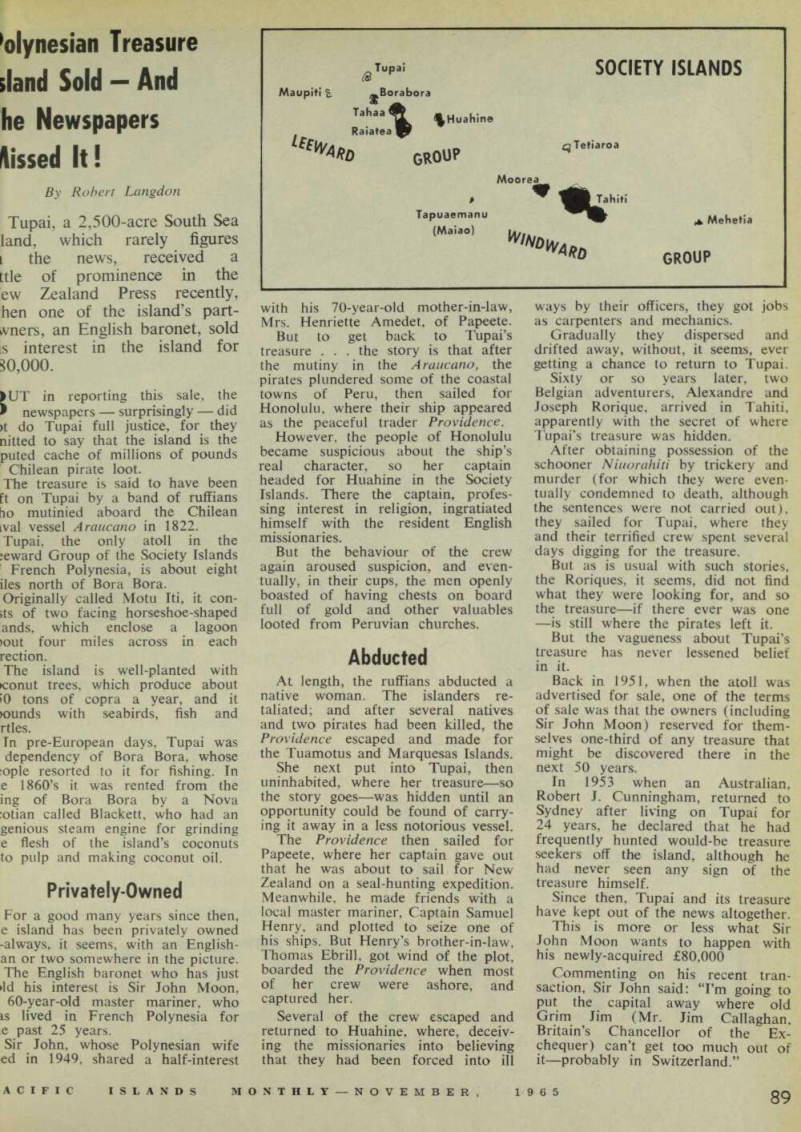 91
91 92
92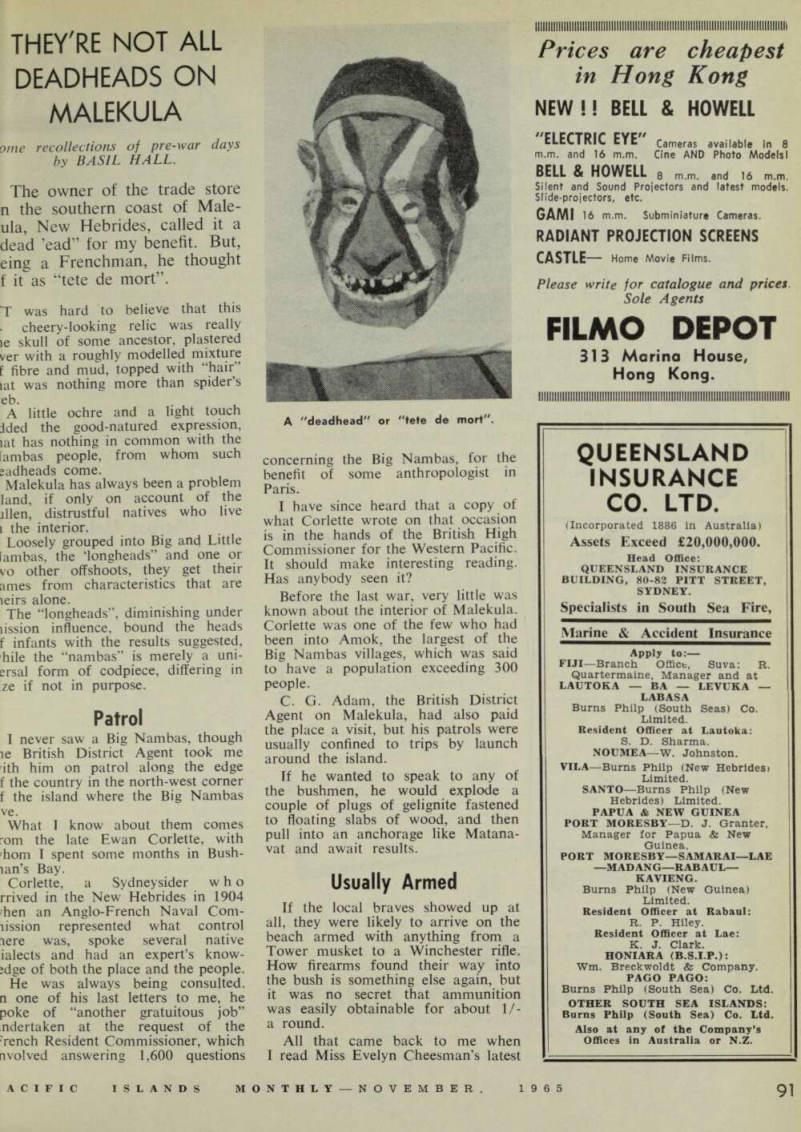 93
93 94
94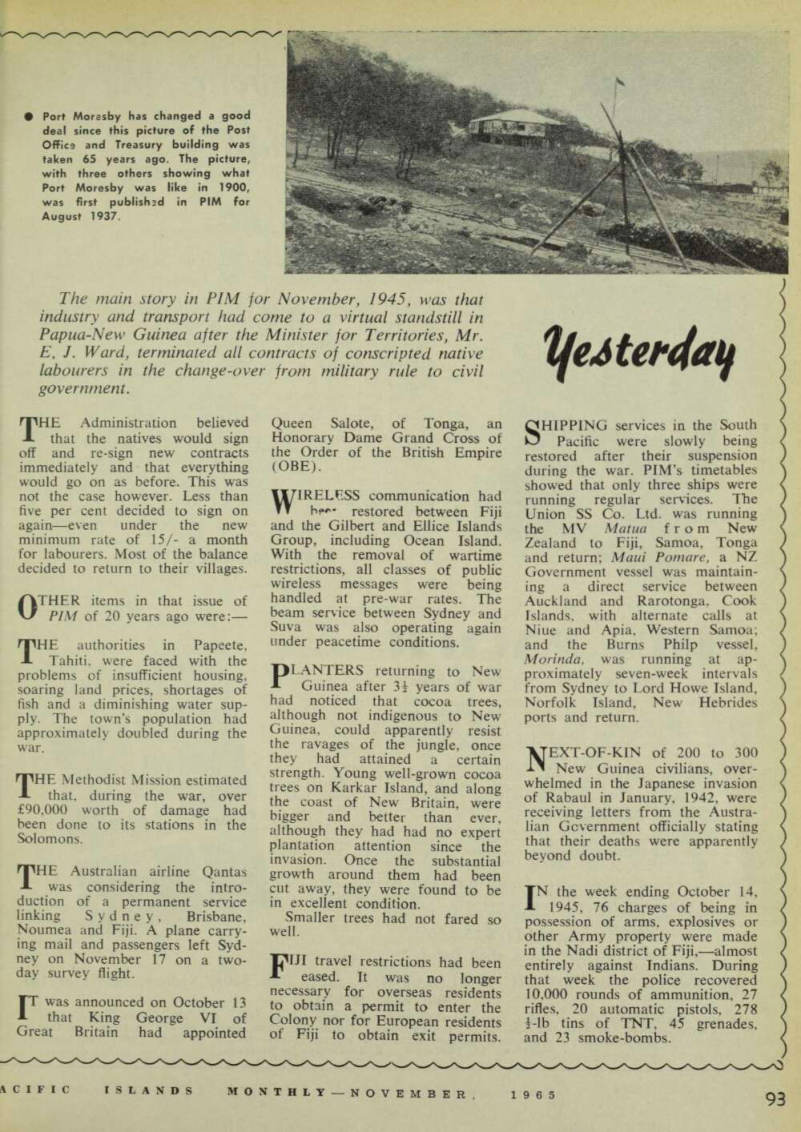 95
95 96
96 97
97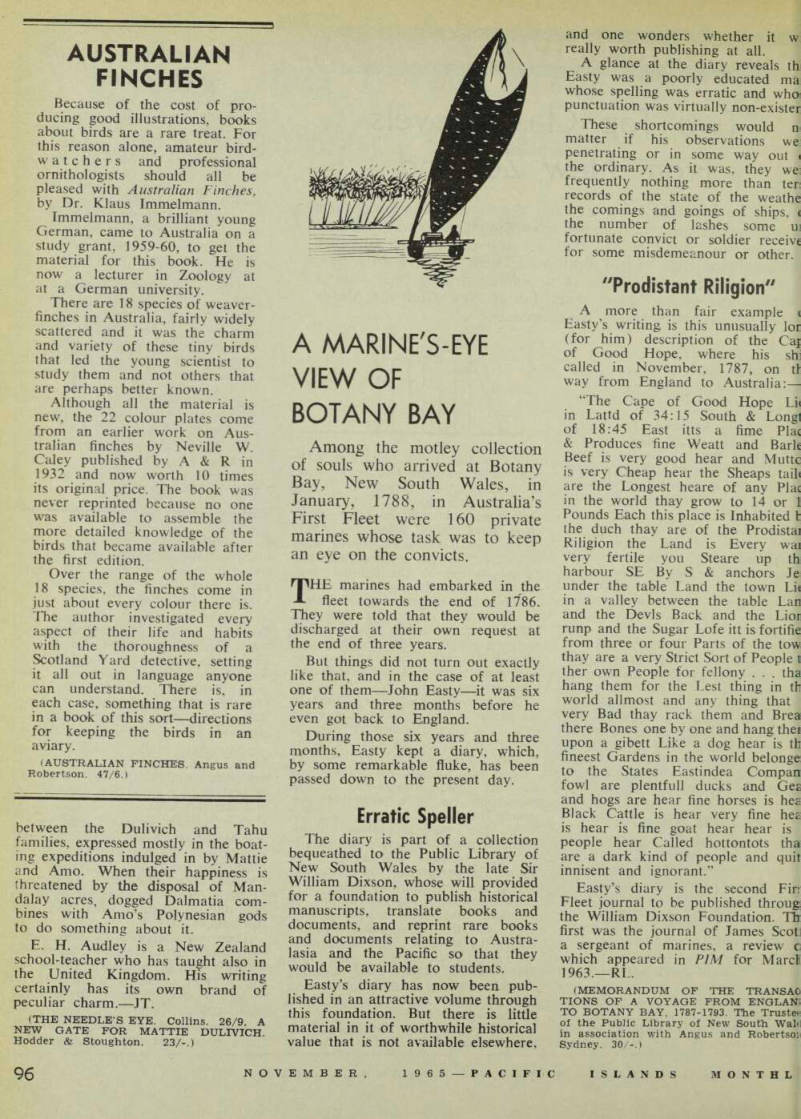 98
98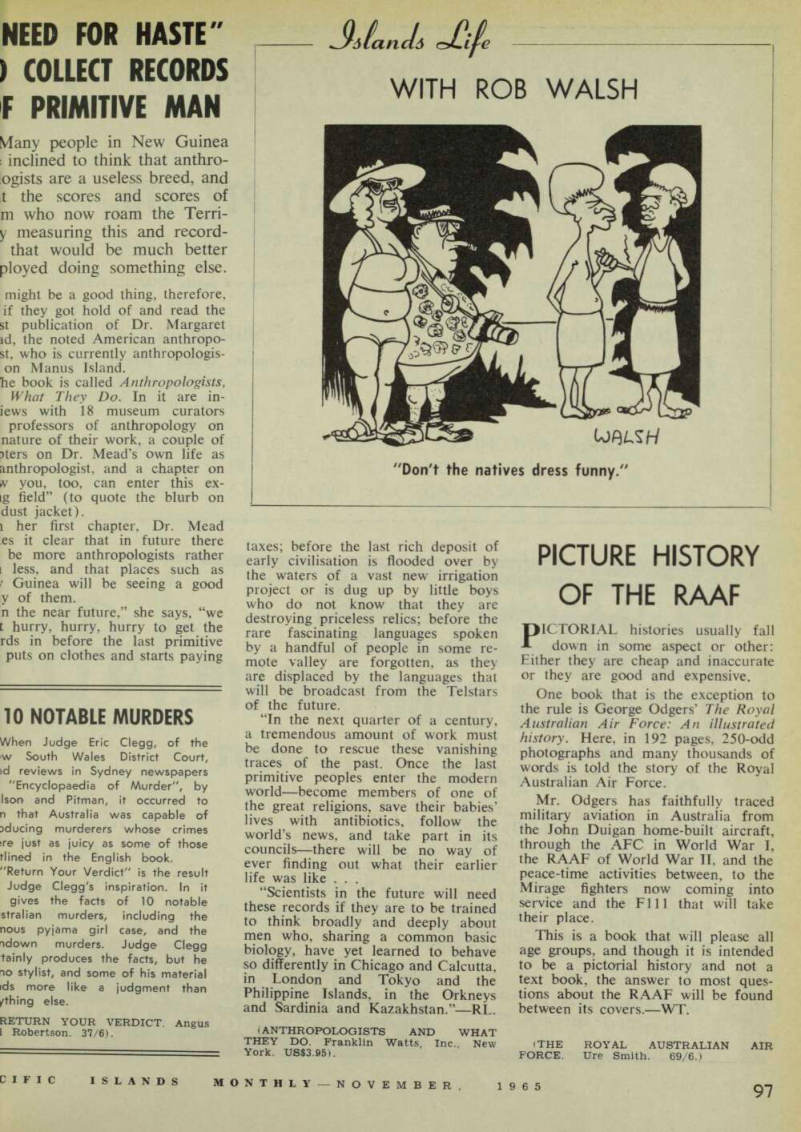 99
99 100
100 101
101 102
102 103
103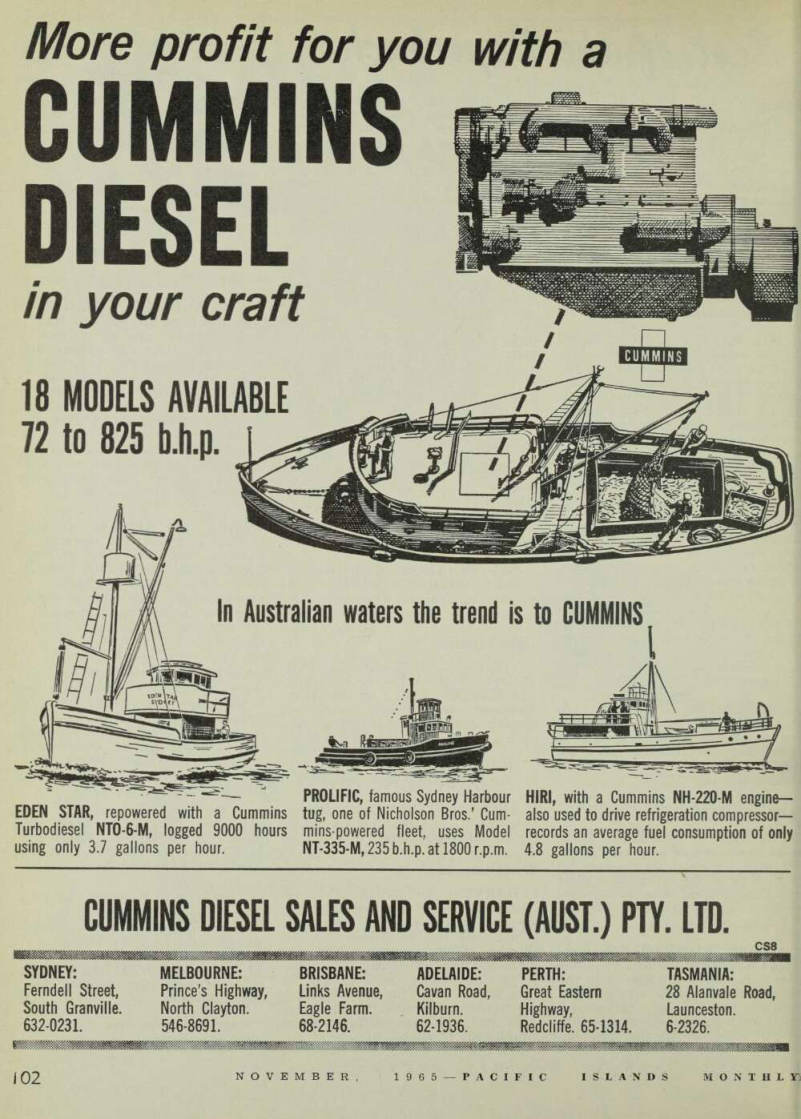 104
104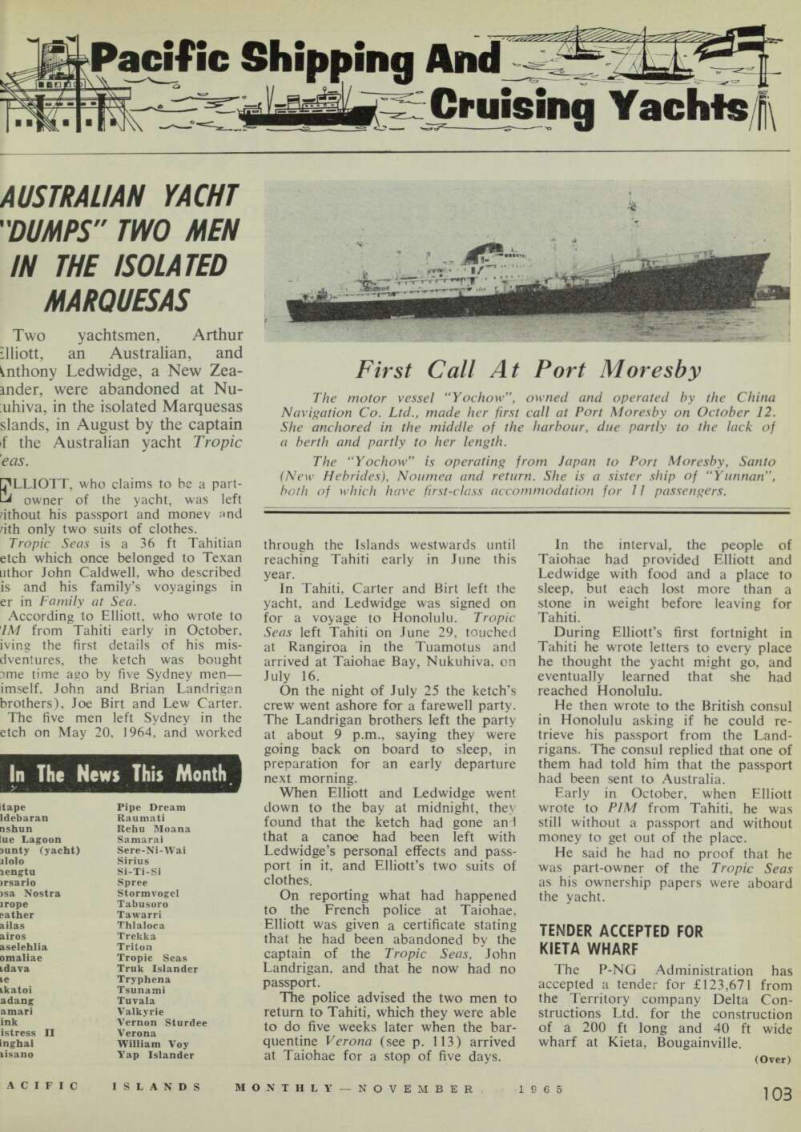 105
105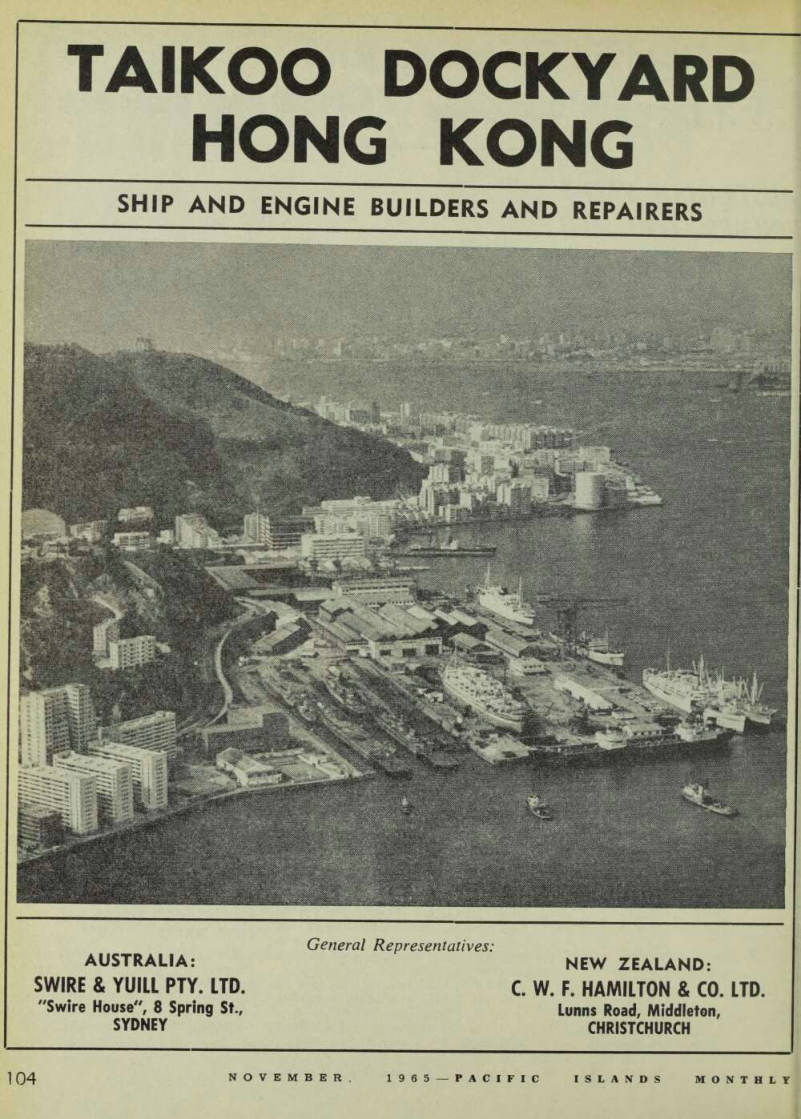 106
106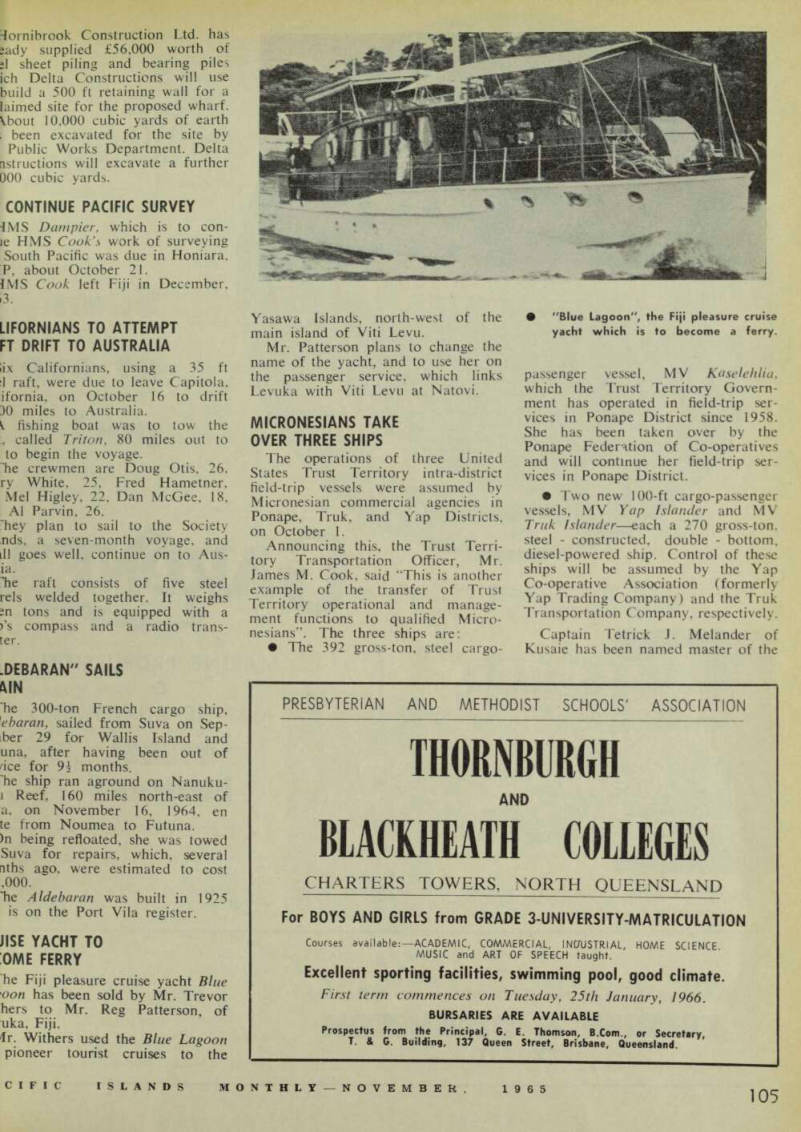 107
107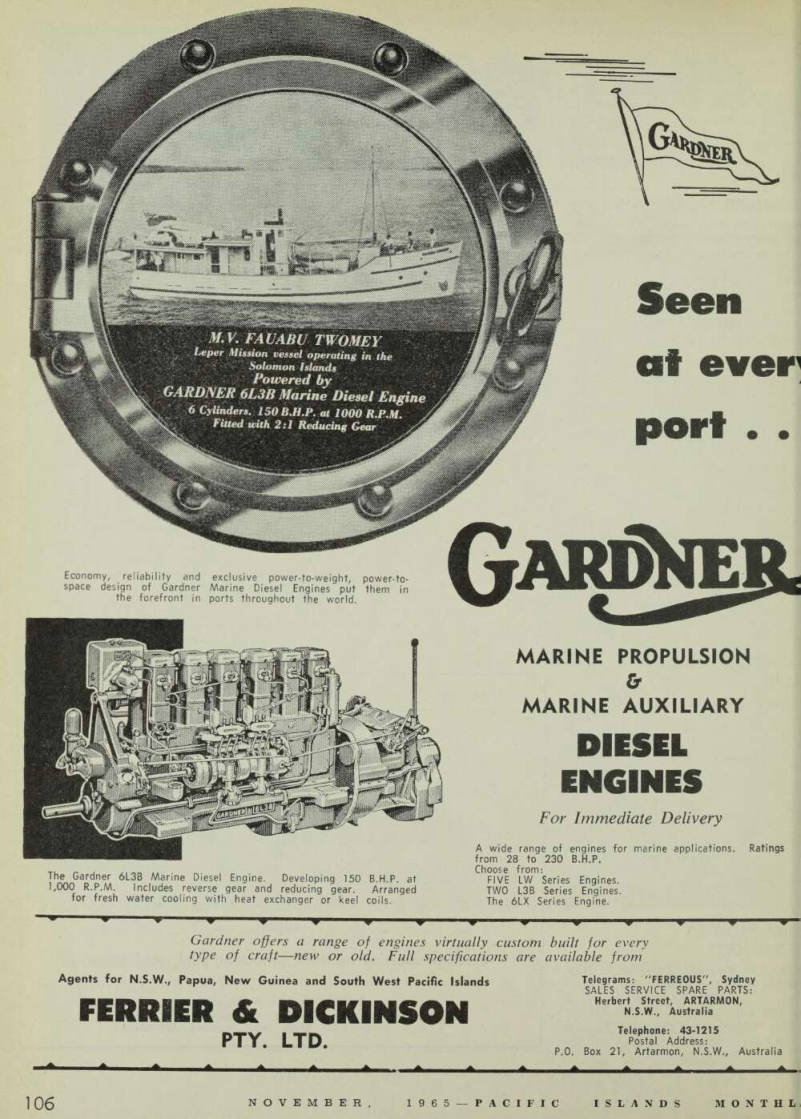 108
108 109
109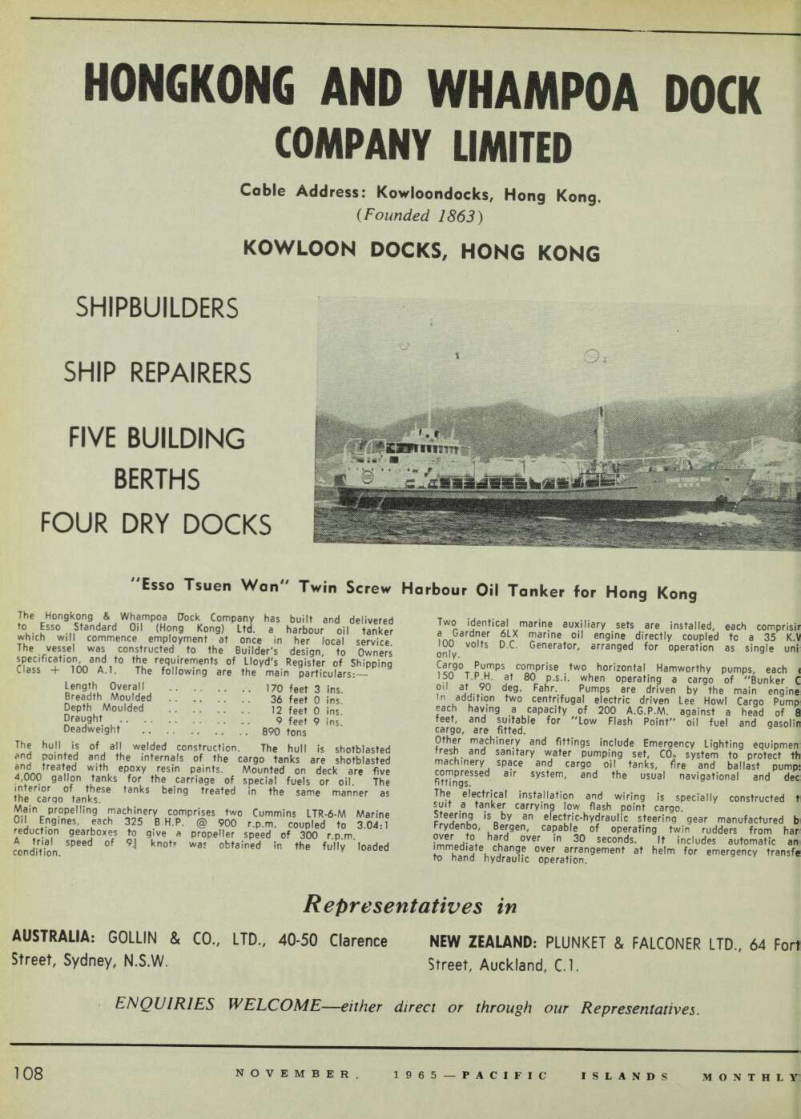 110
110 111
111 112
112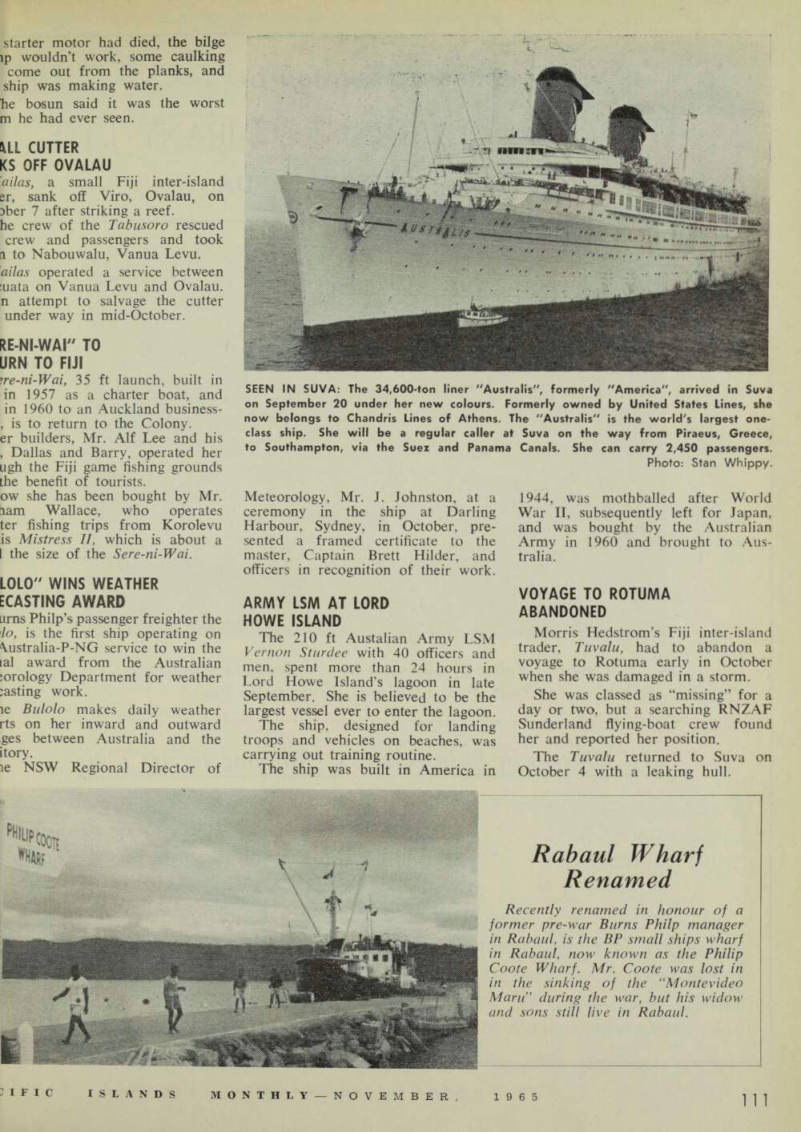 113
113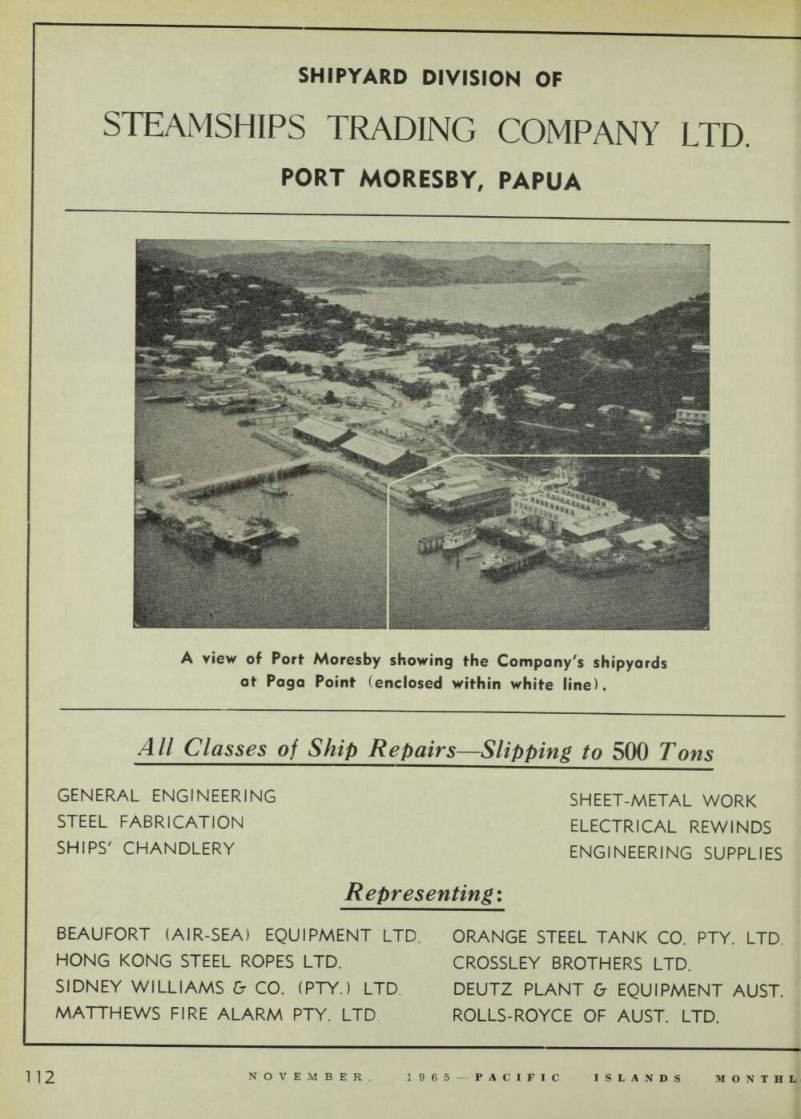 114
114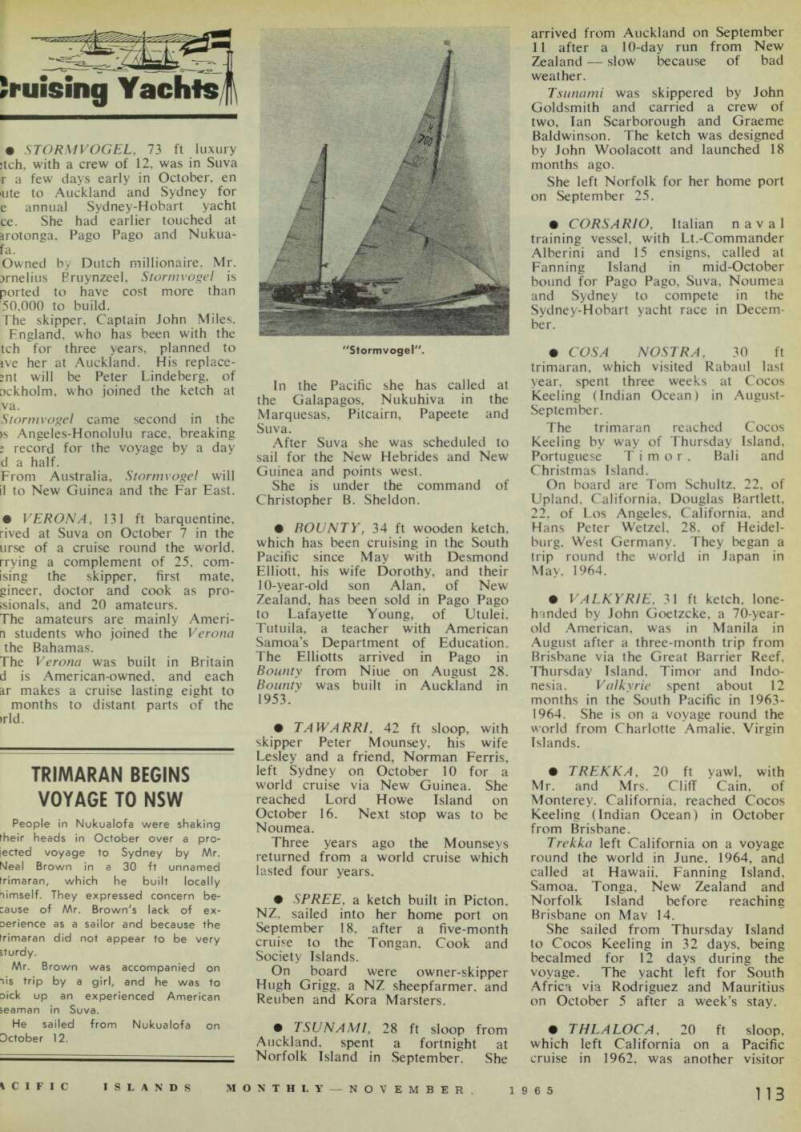 115
115 116
116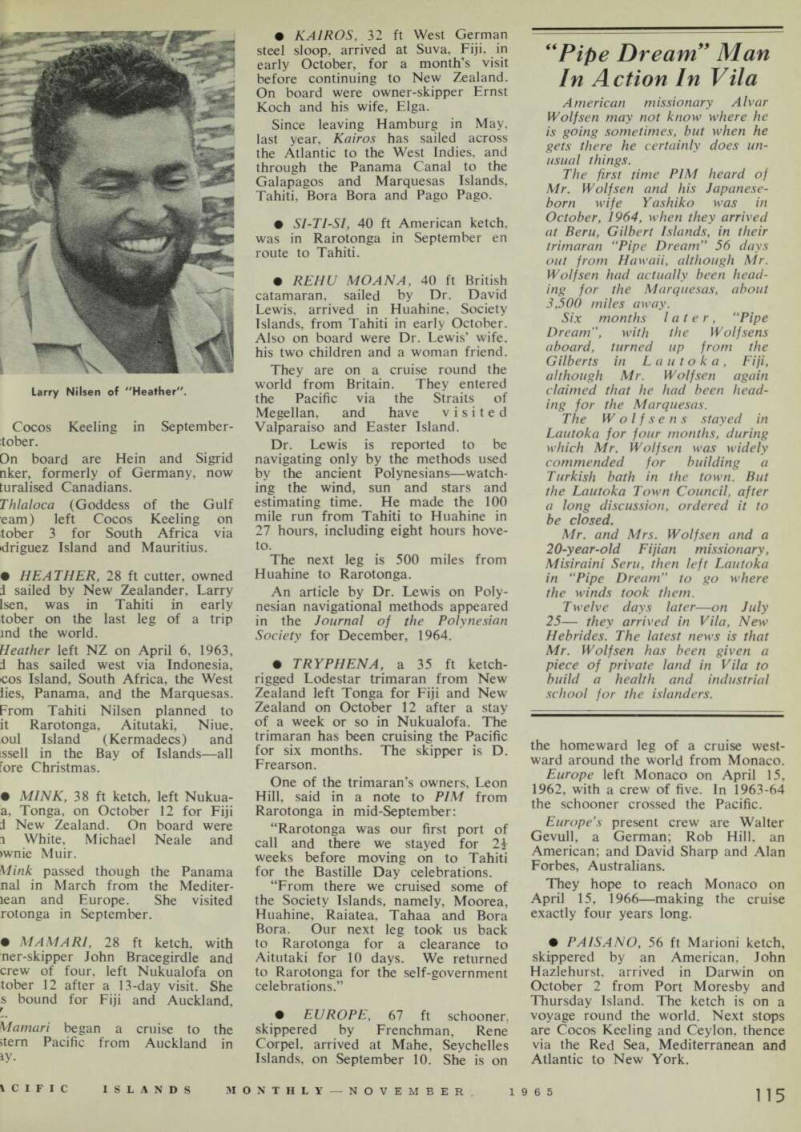 117
117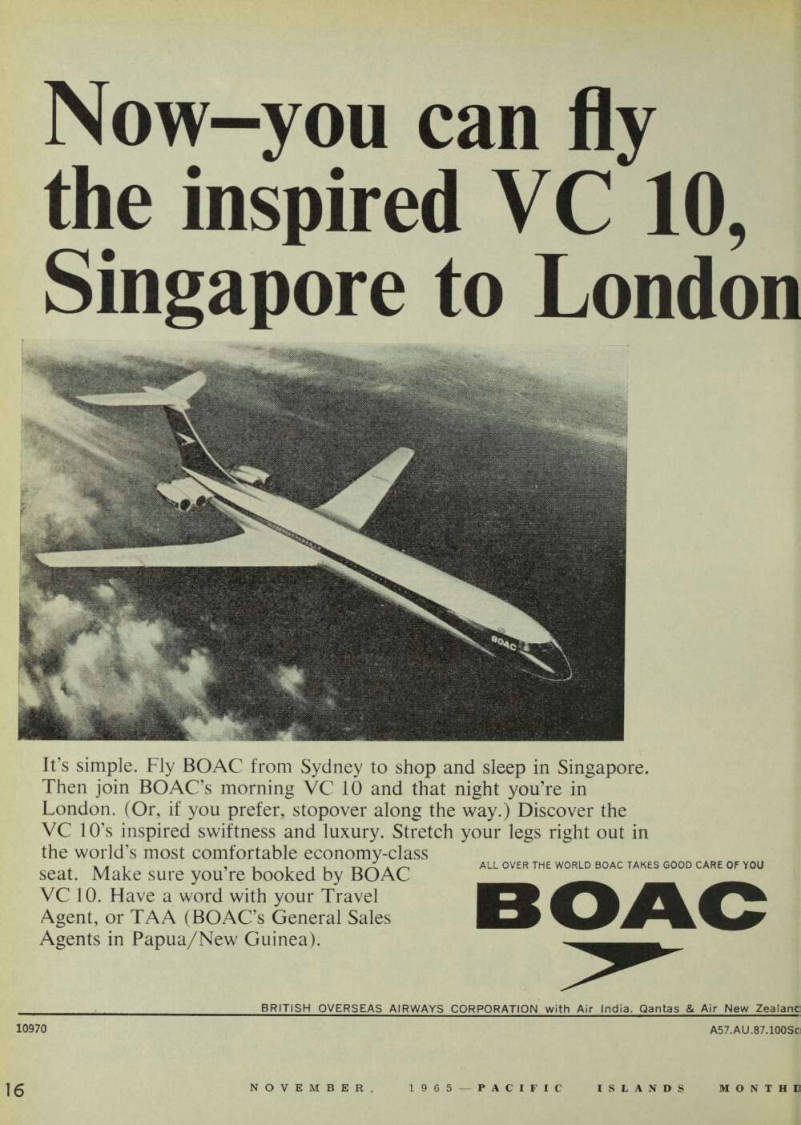 118
118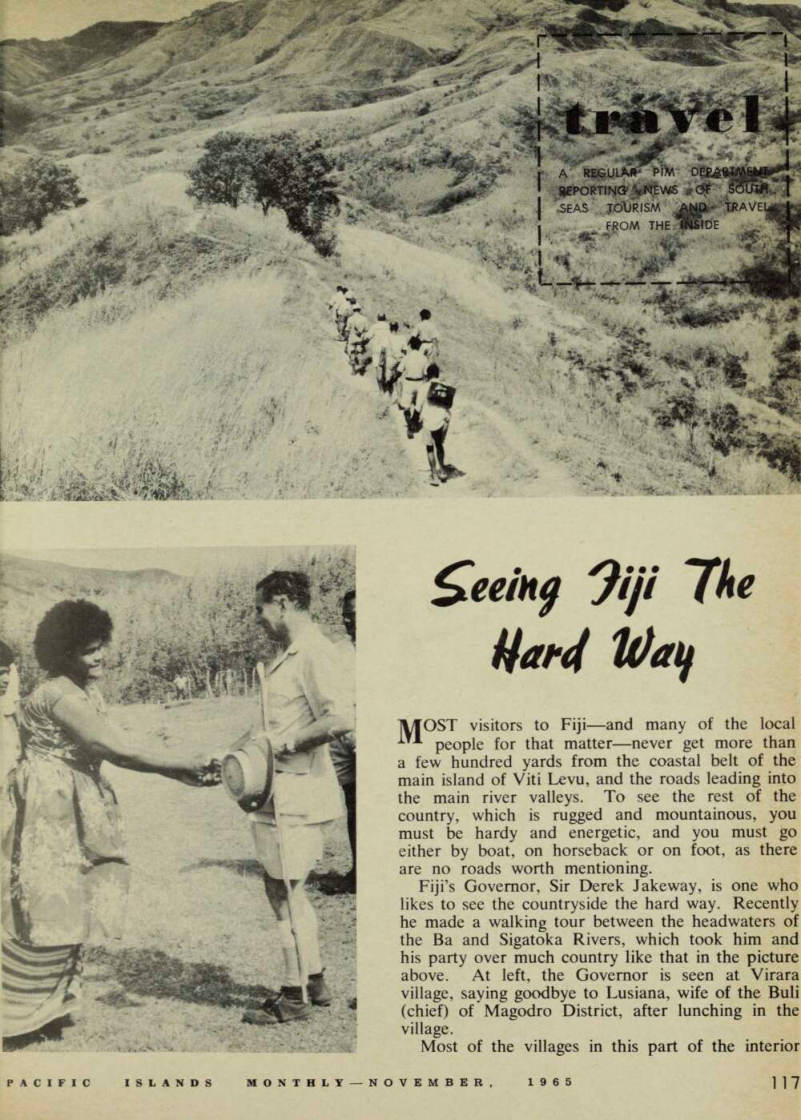 119
119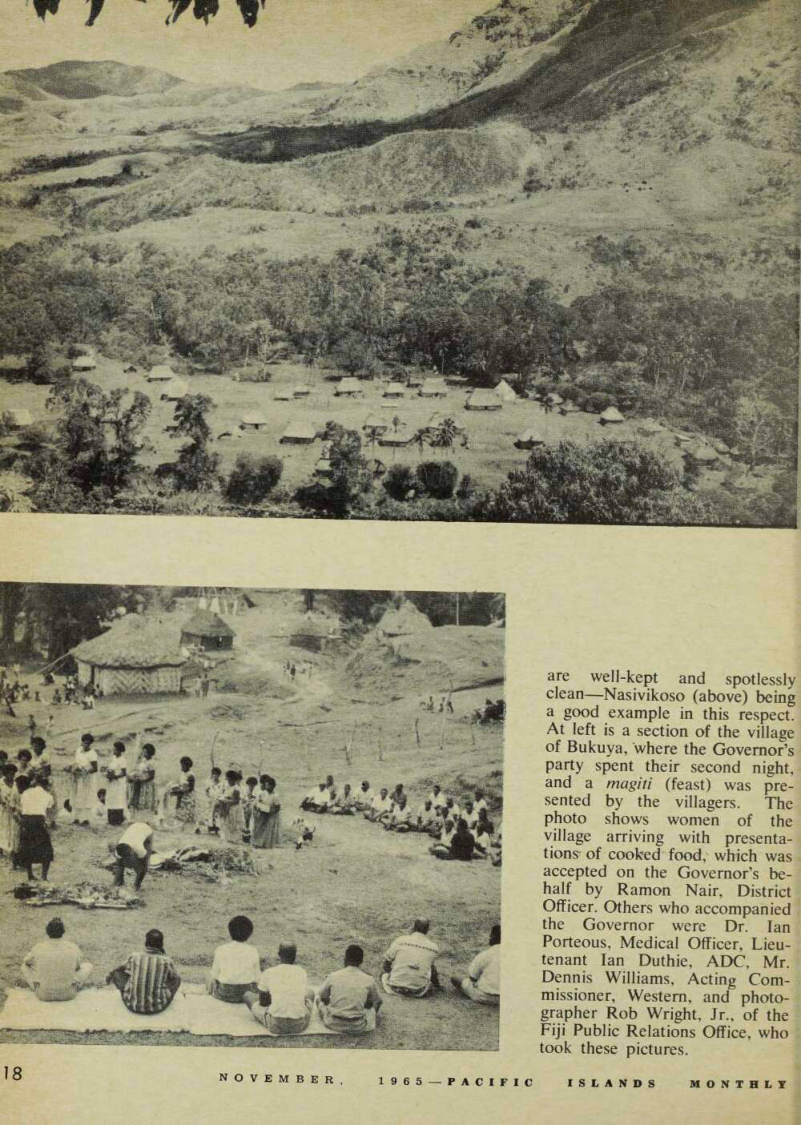 120
120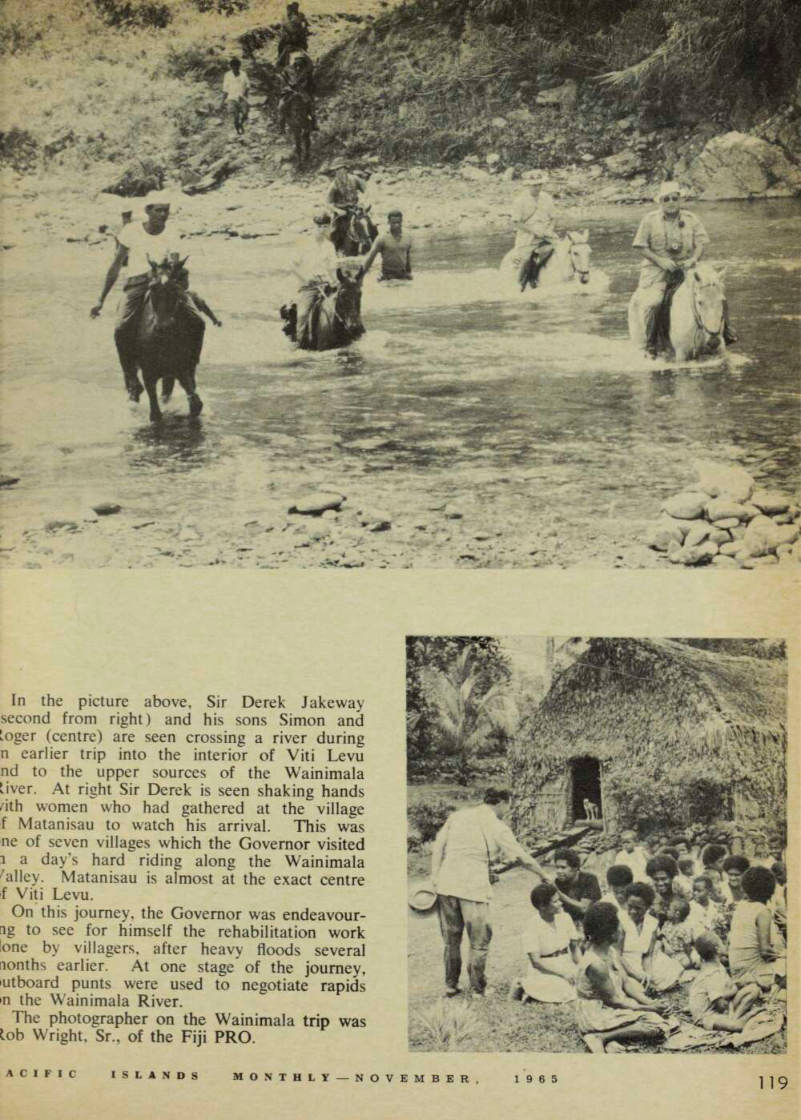 121
121 122
122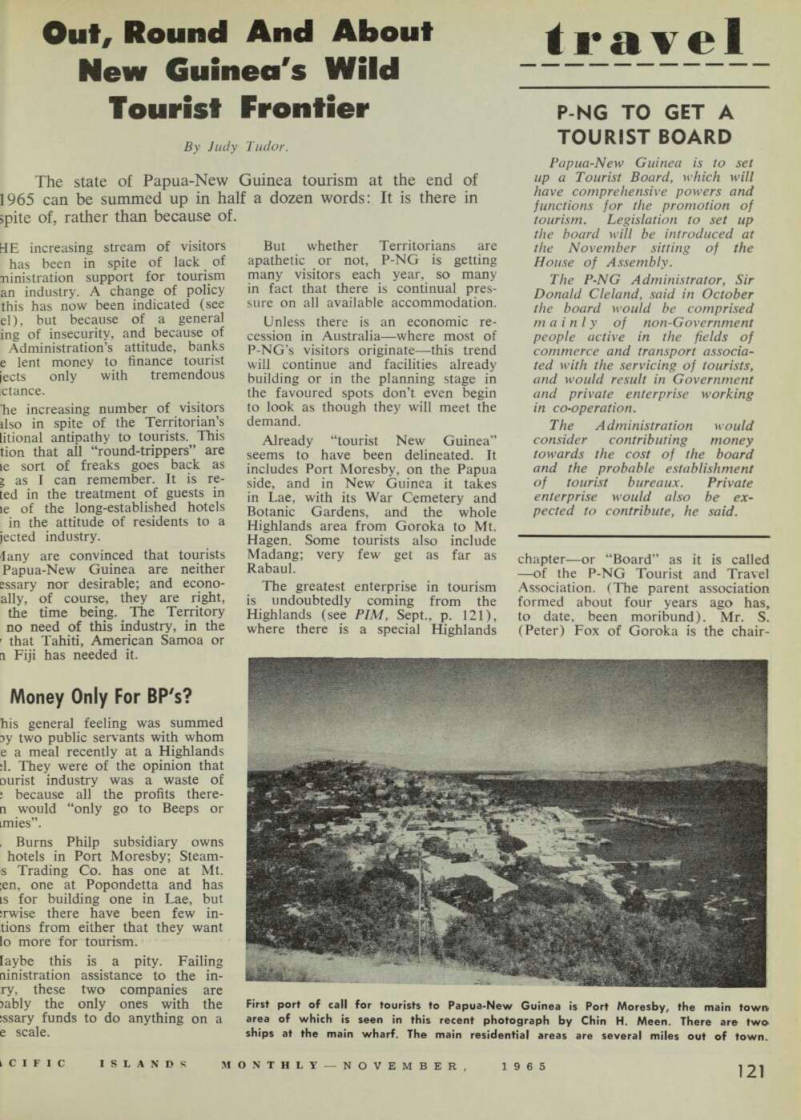 123
123 124
124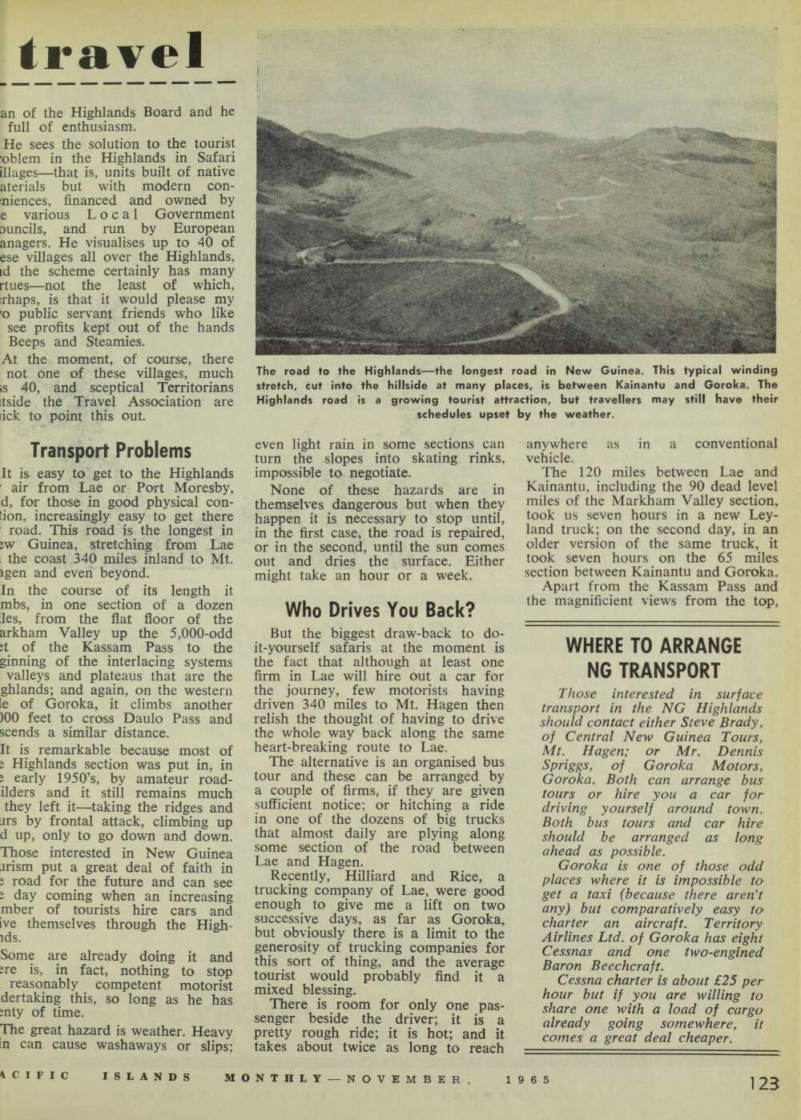 125
125 126
126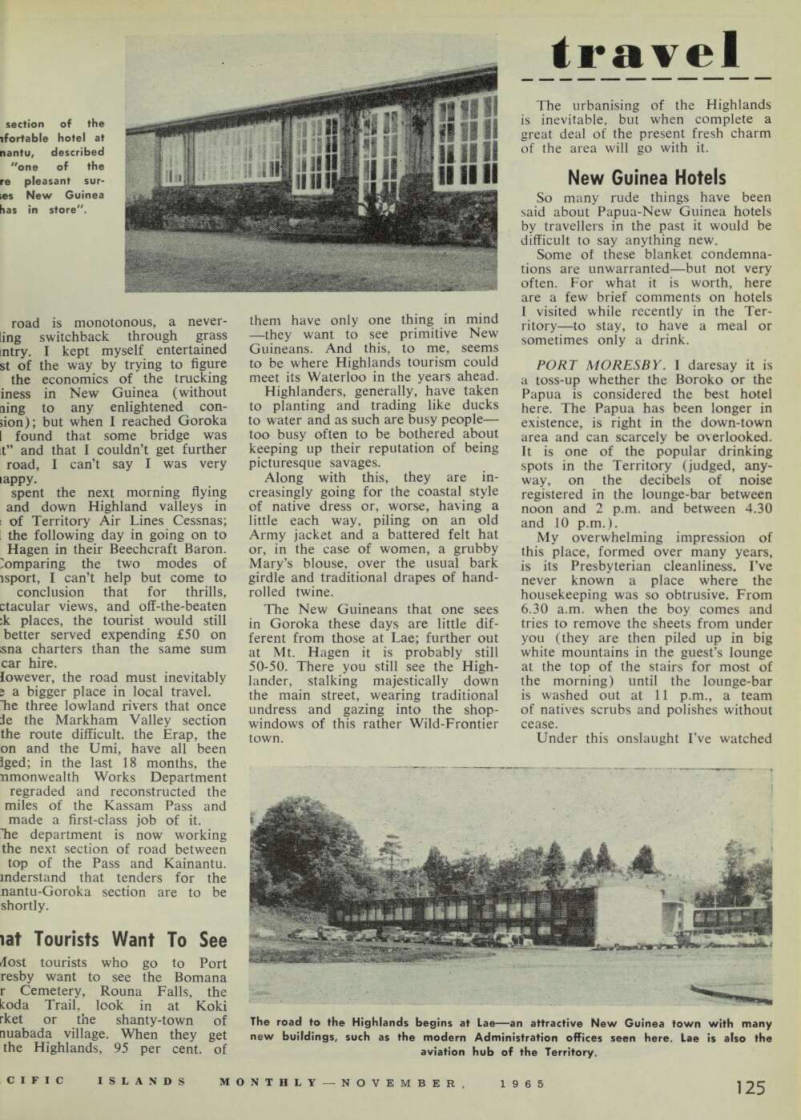 127
127 128
128 129
129 130
130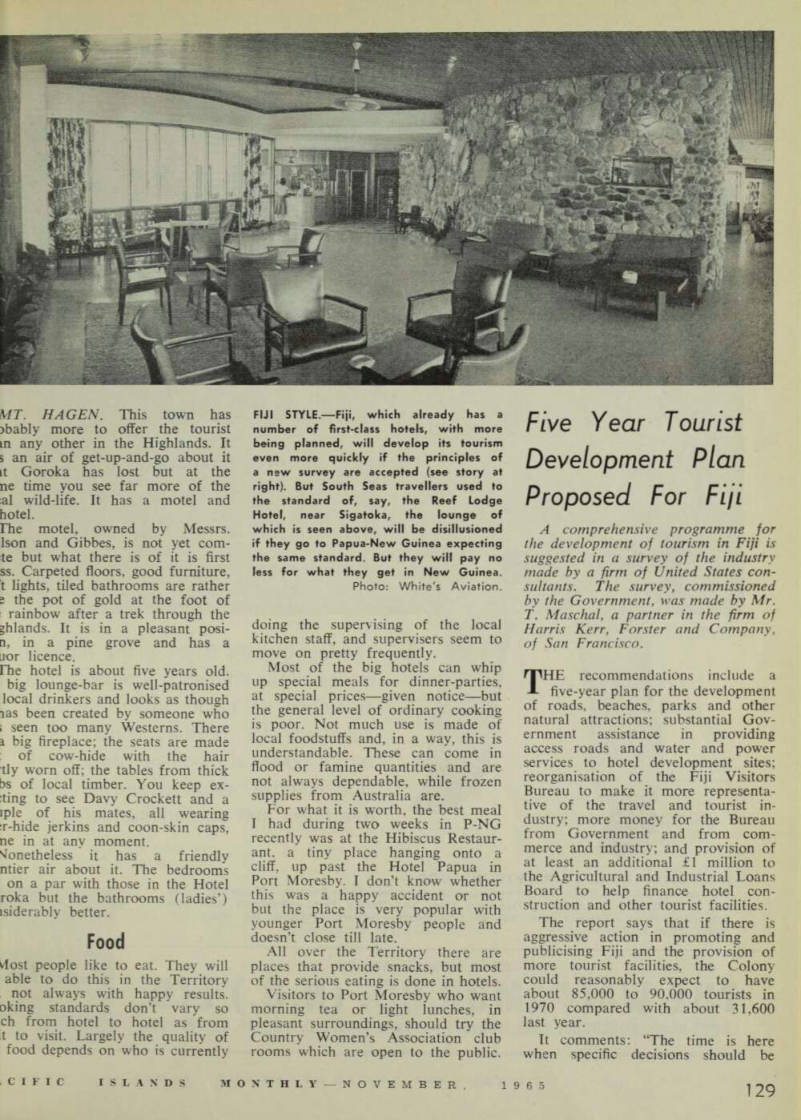 131
131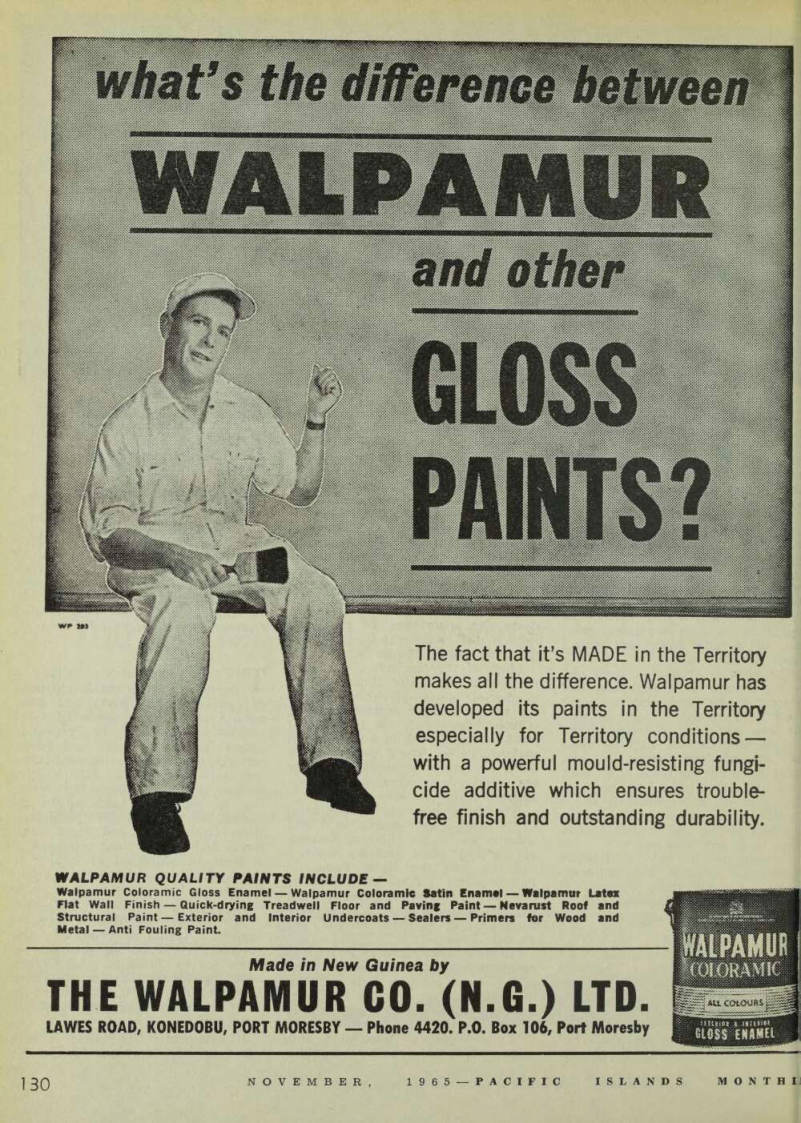 132
132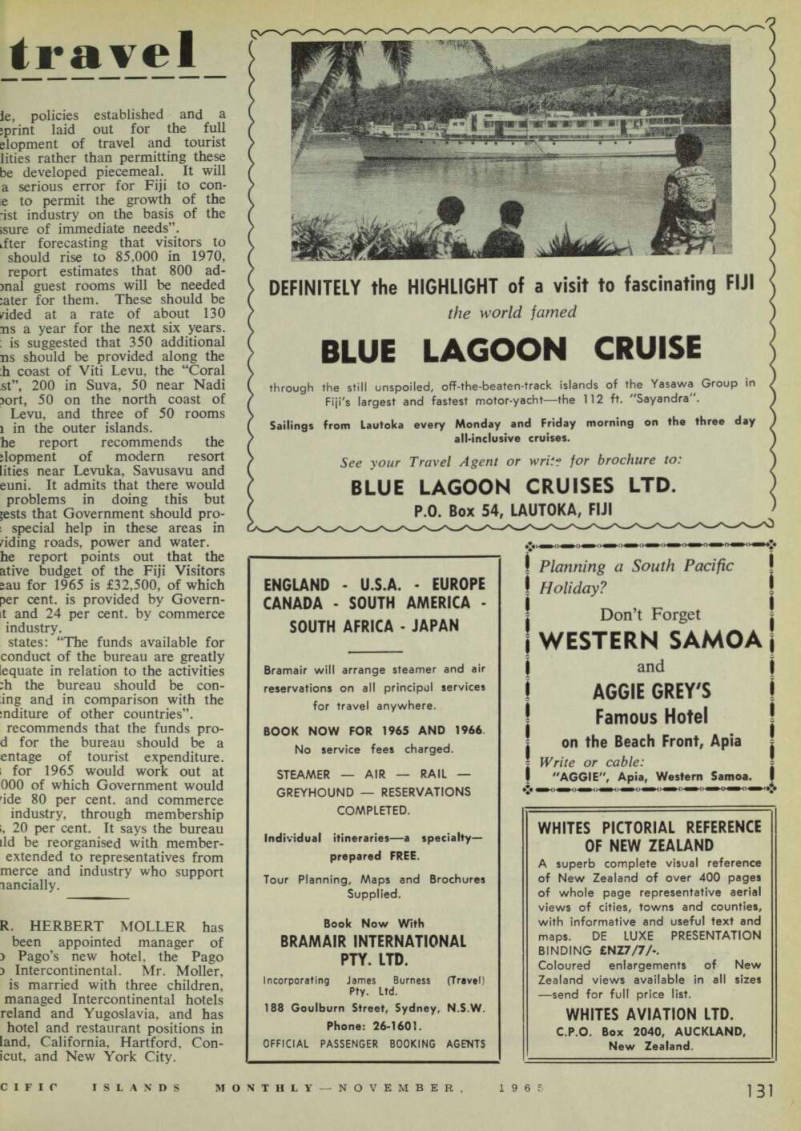 133
133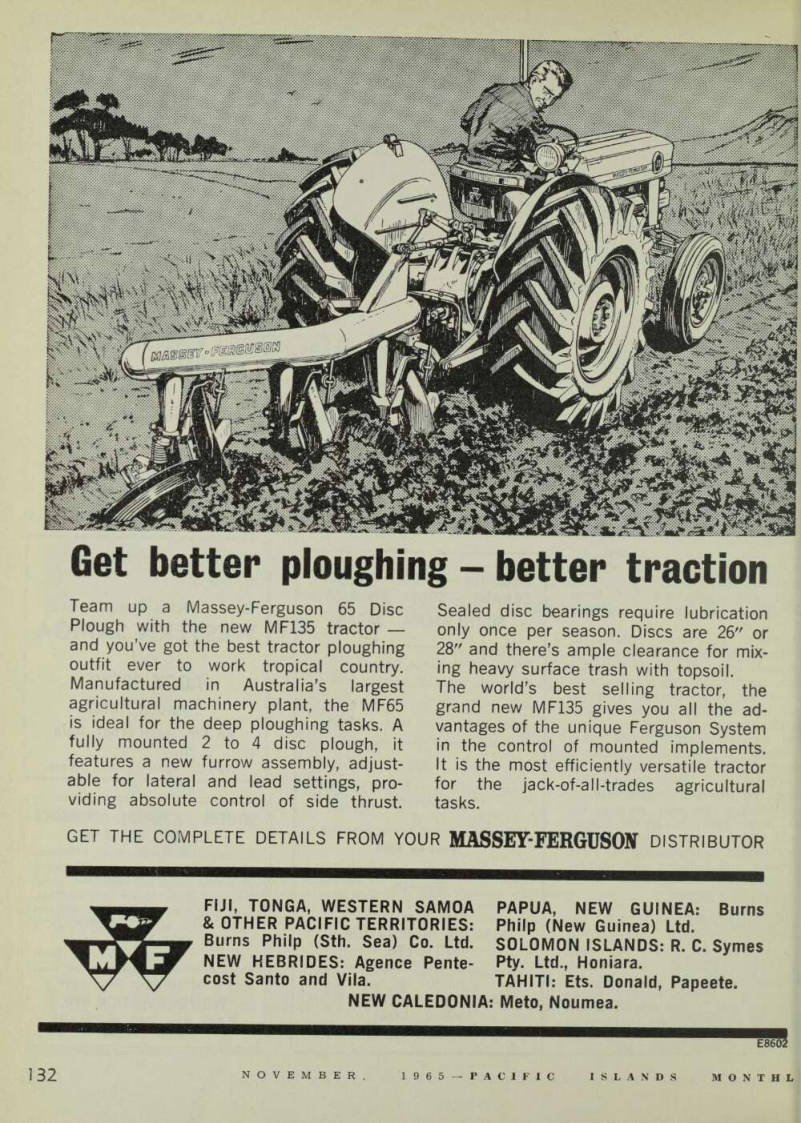 134
134 135
135 136
136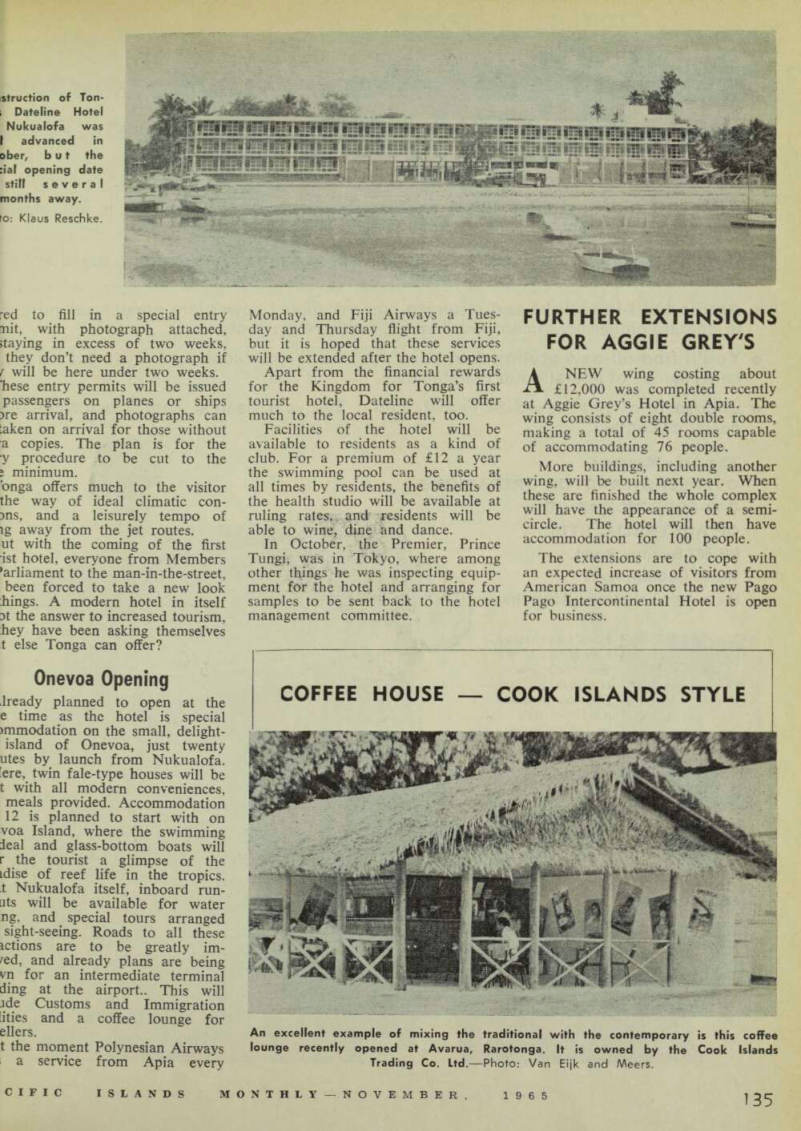 137
137 138
138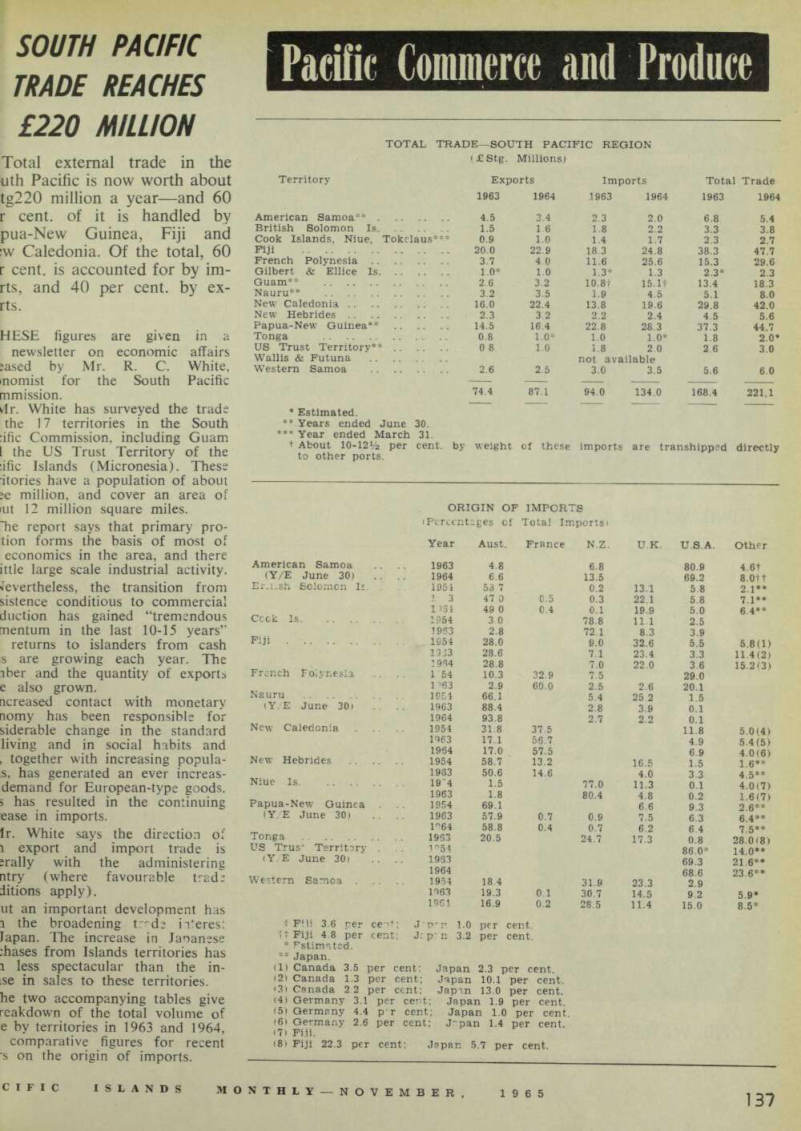 139
139 140
140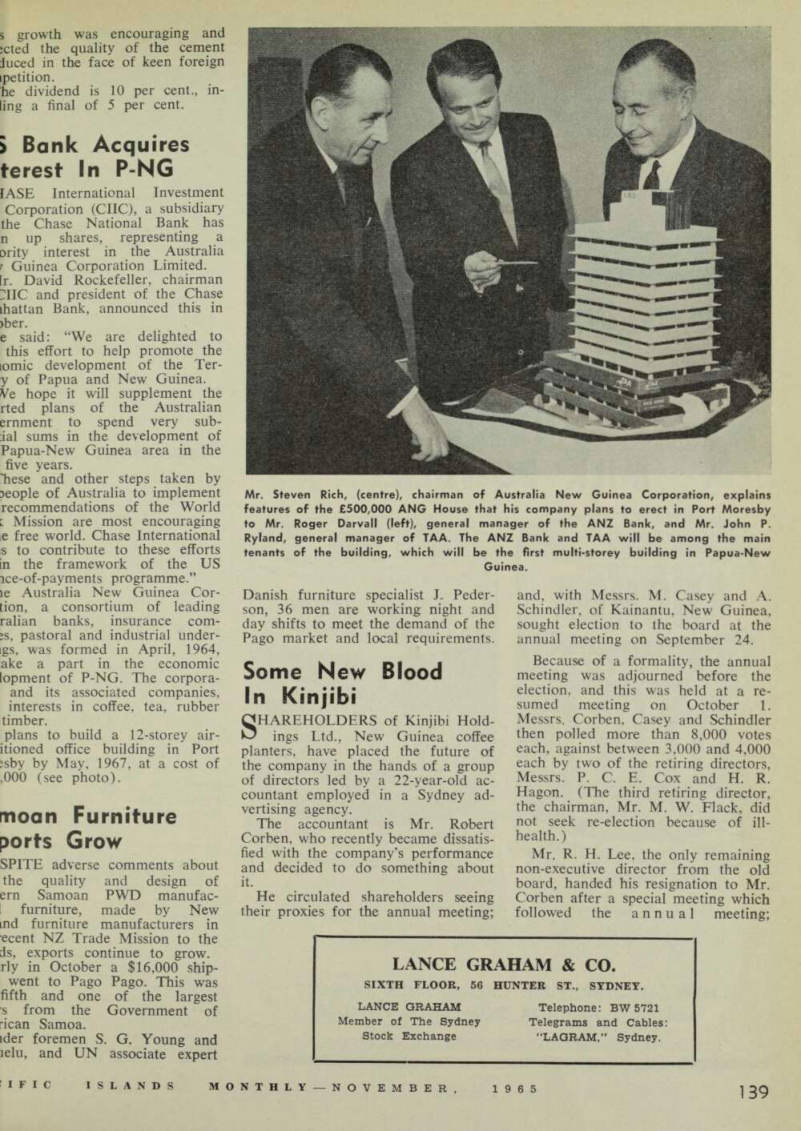 141
141 142
142 143
143 144
144 145
145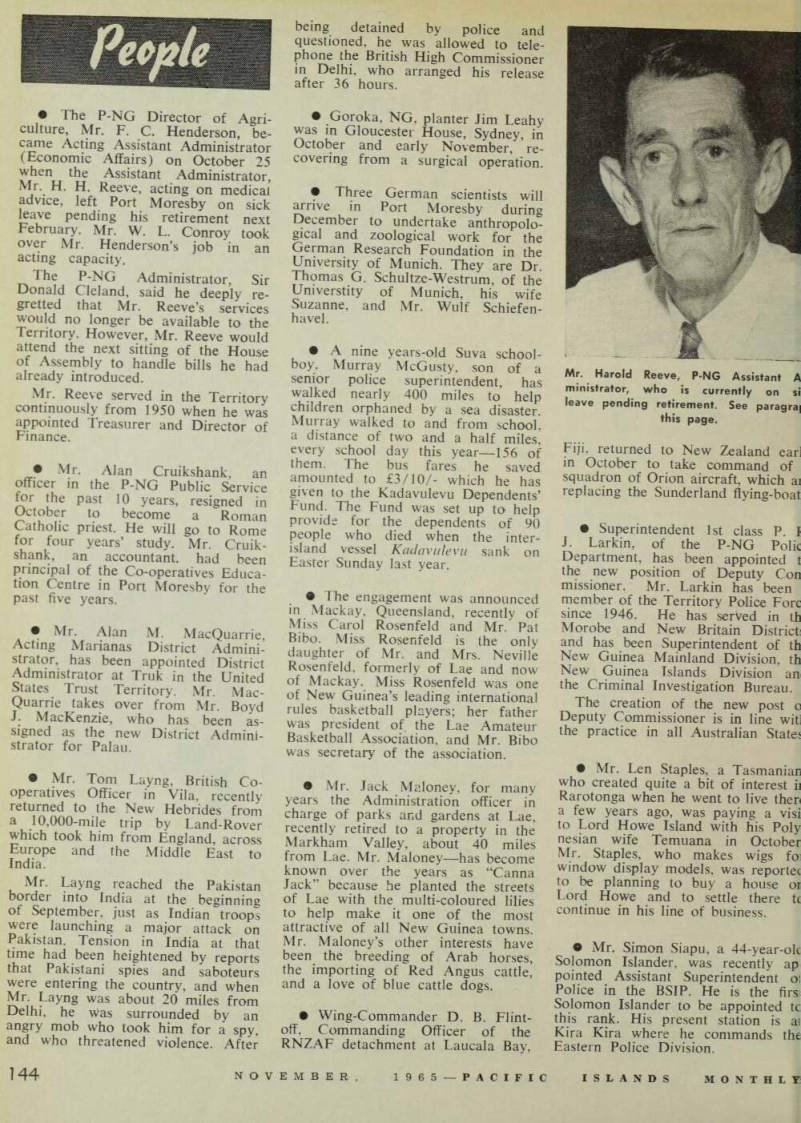 146
146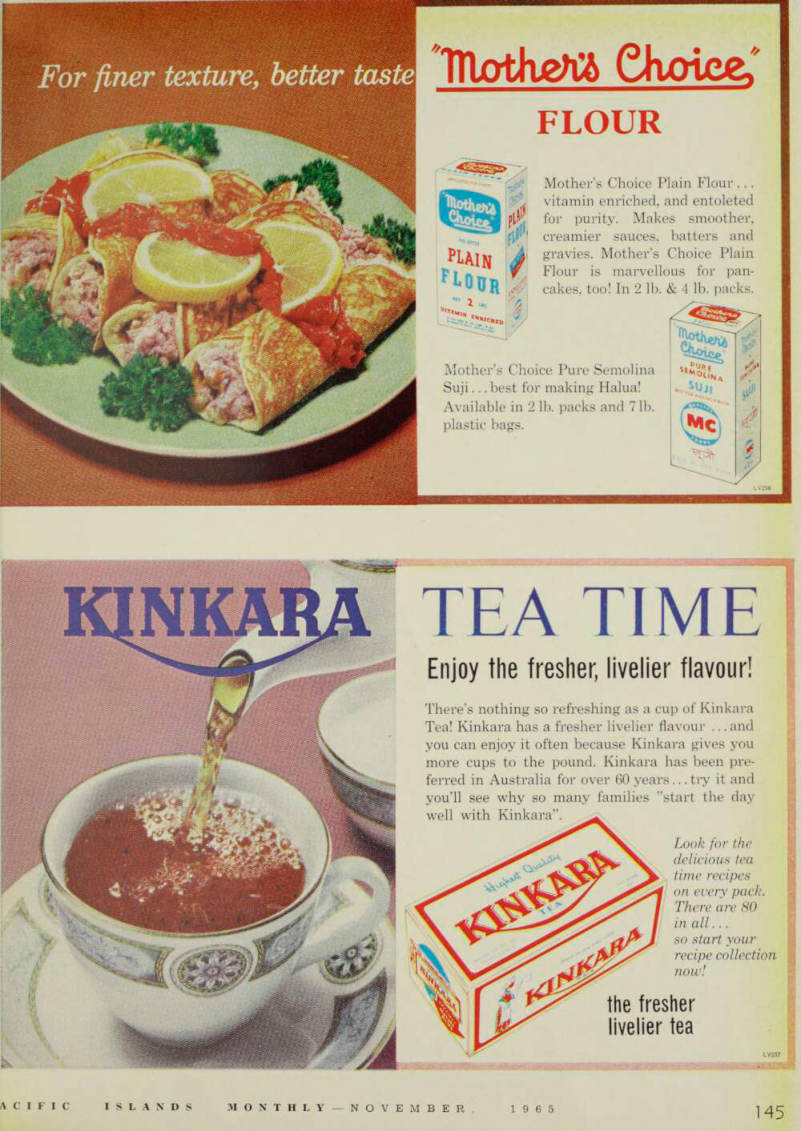 147
147 148
148 149
149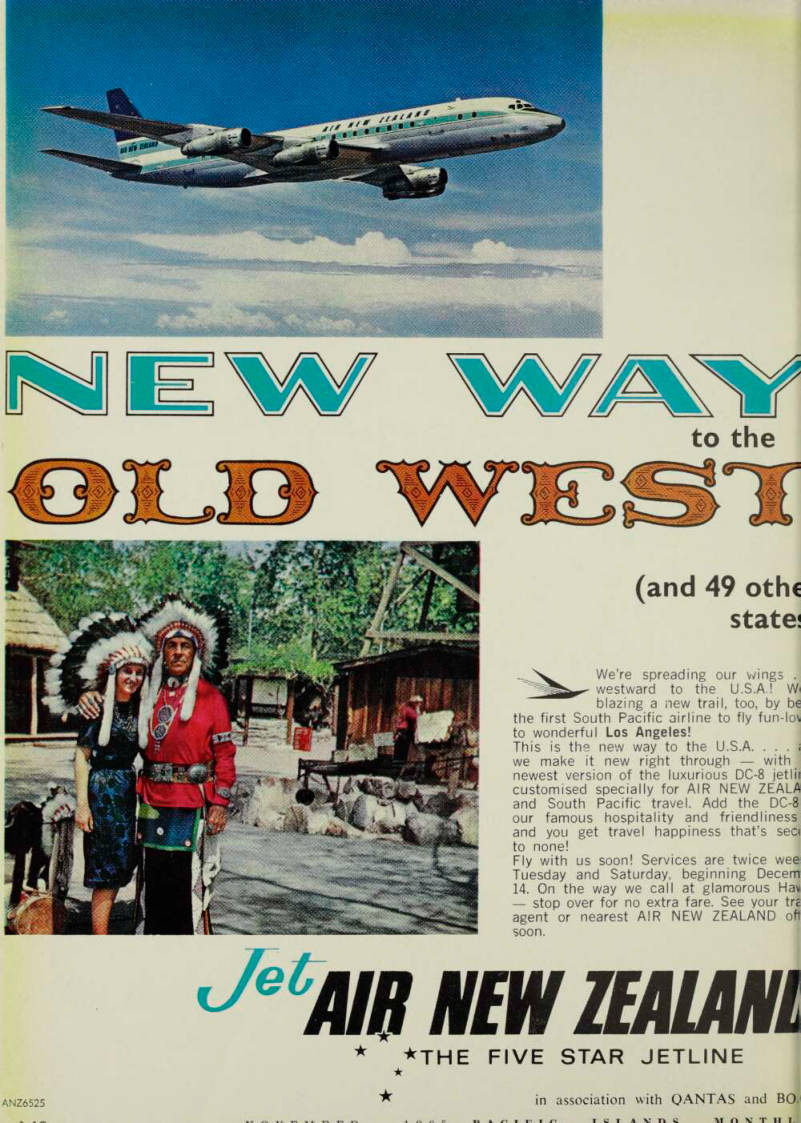 150
150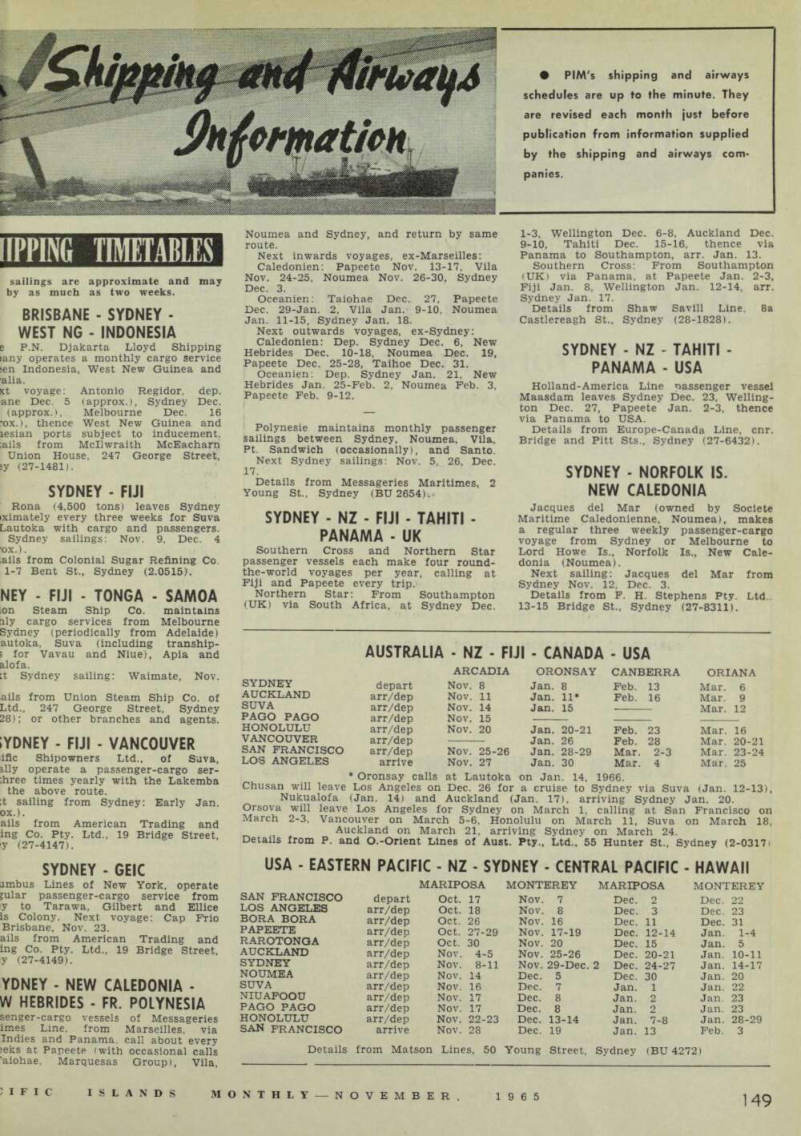 151
151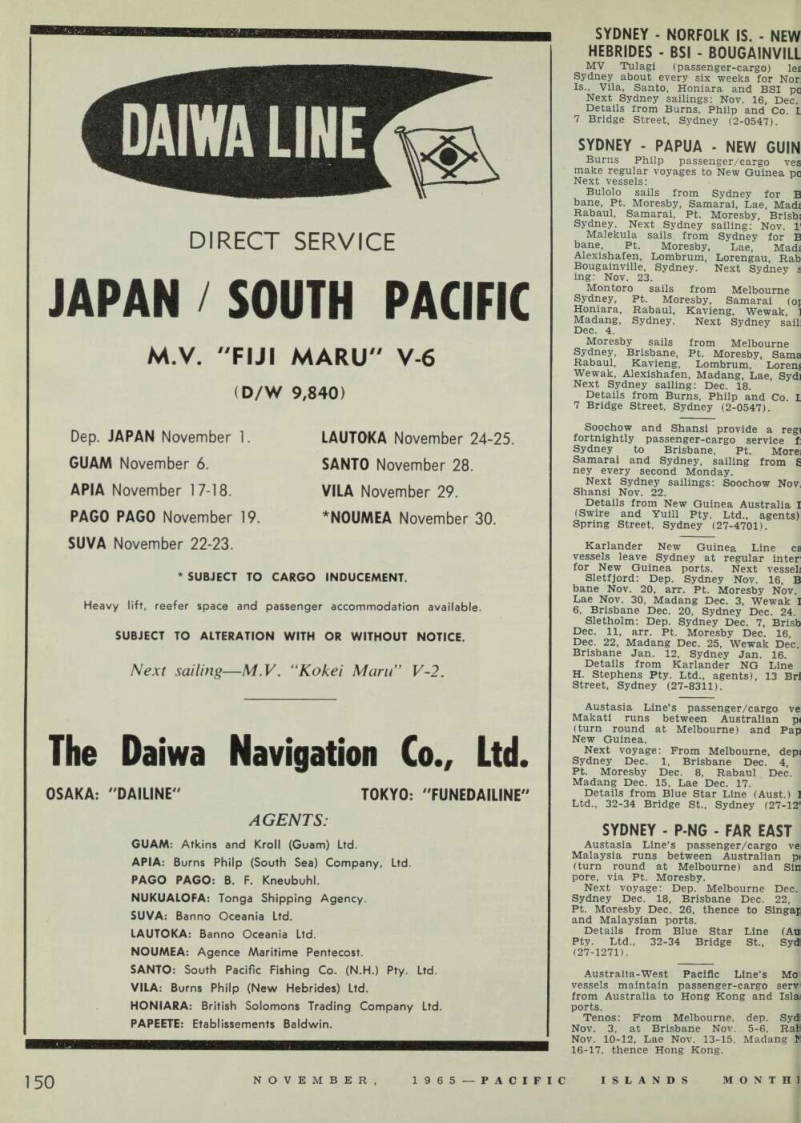 152
152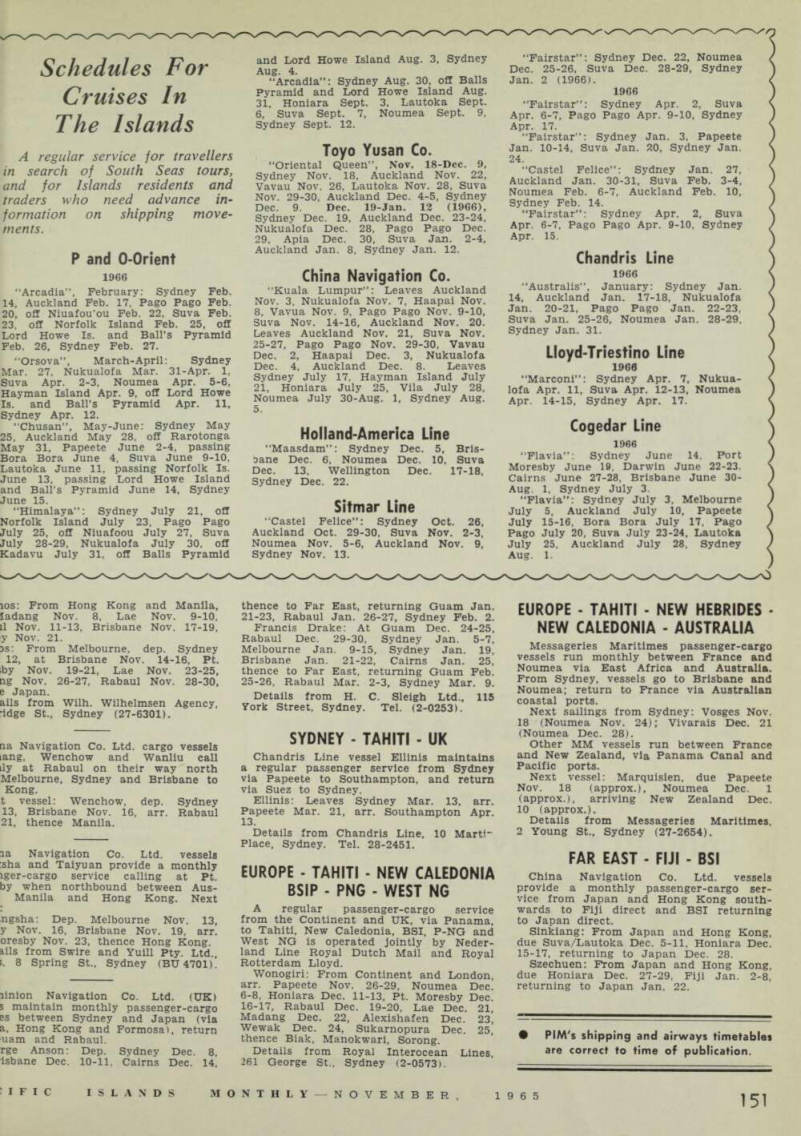 153
153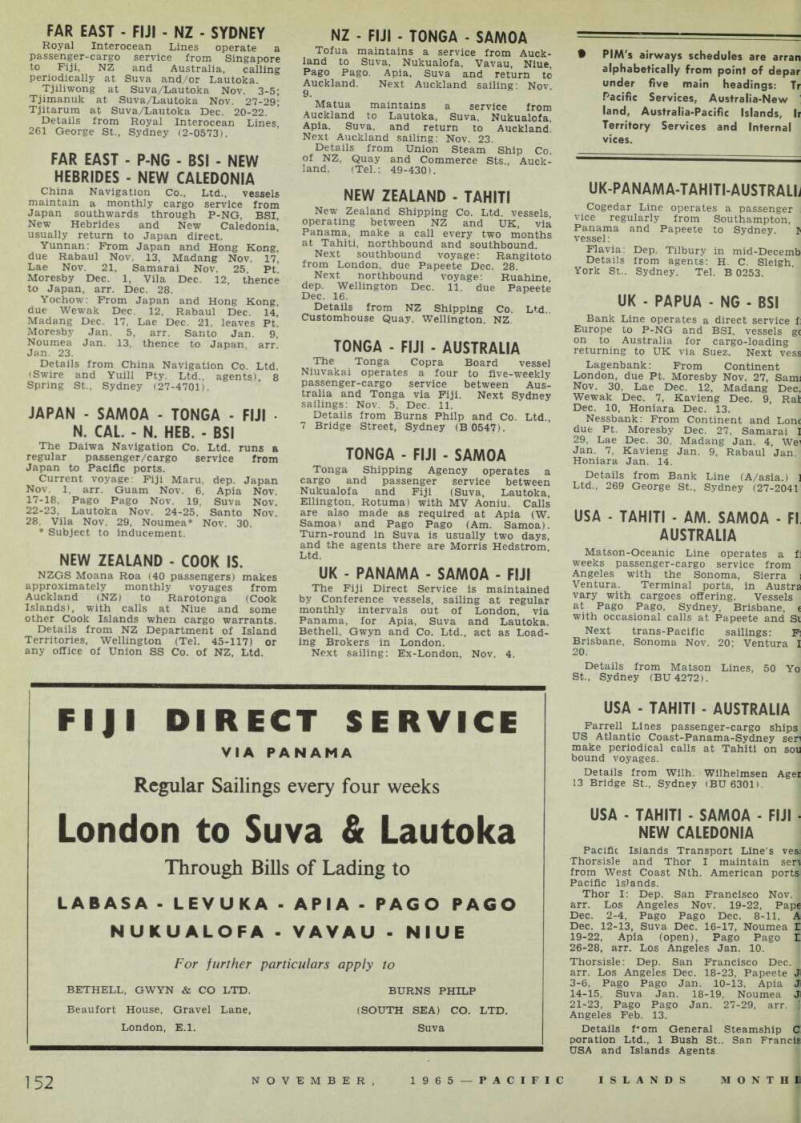 154
154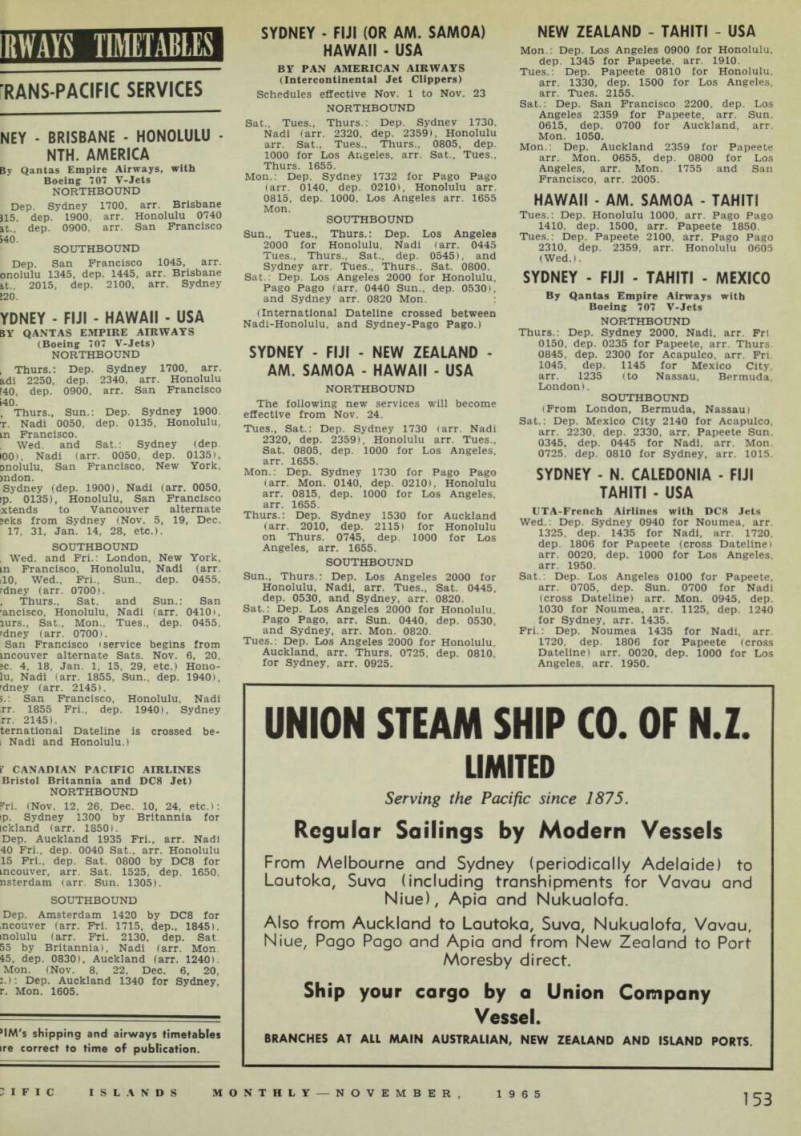 155
155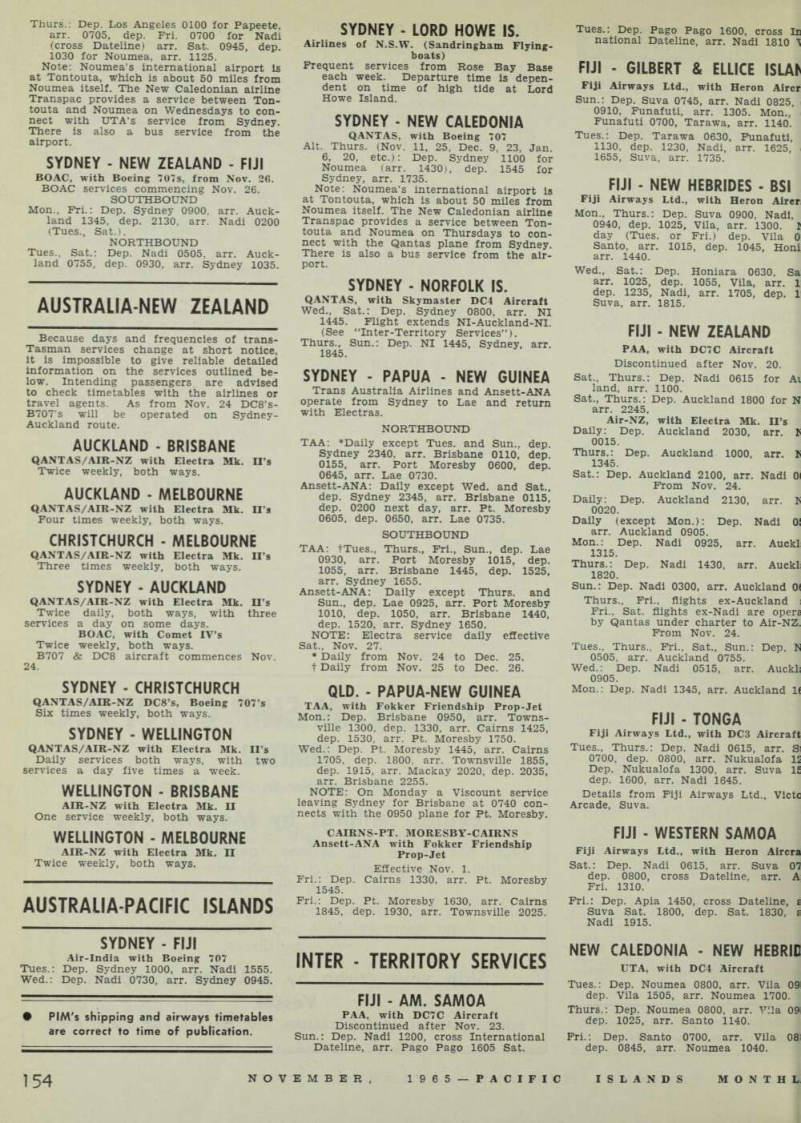 156
156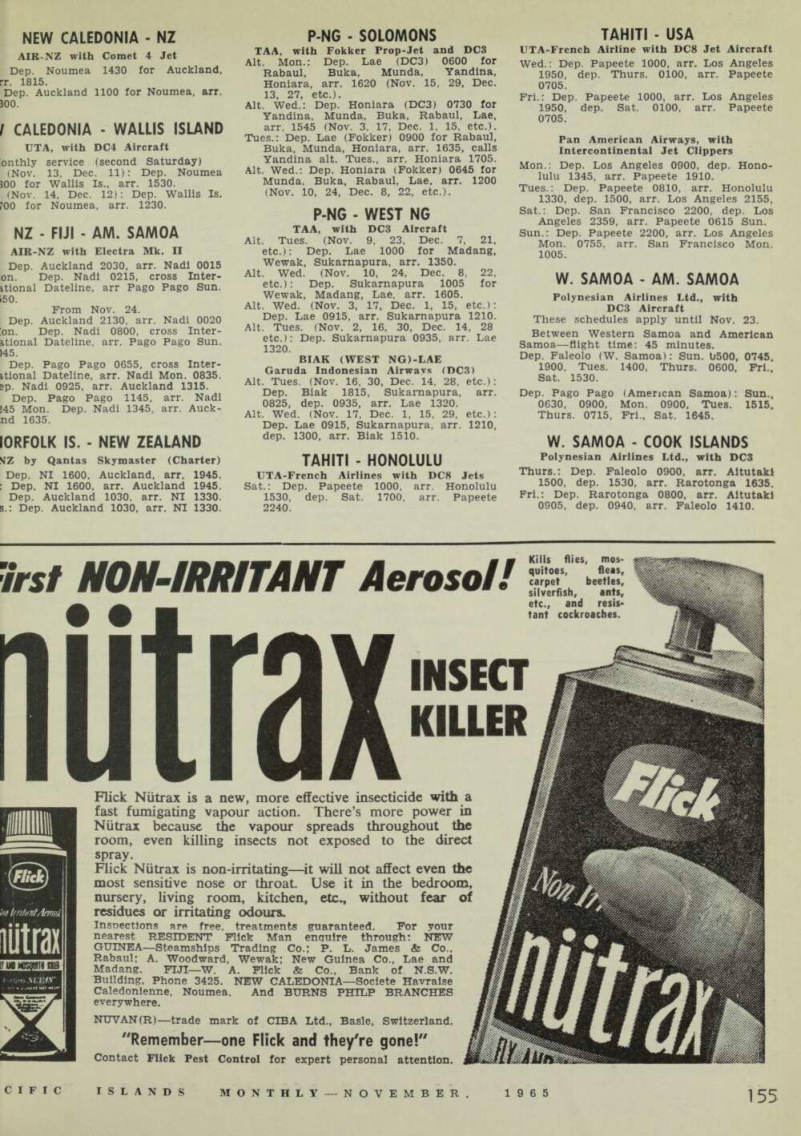 157
157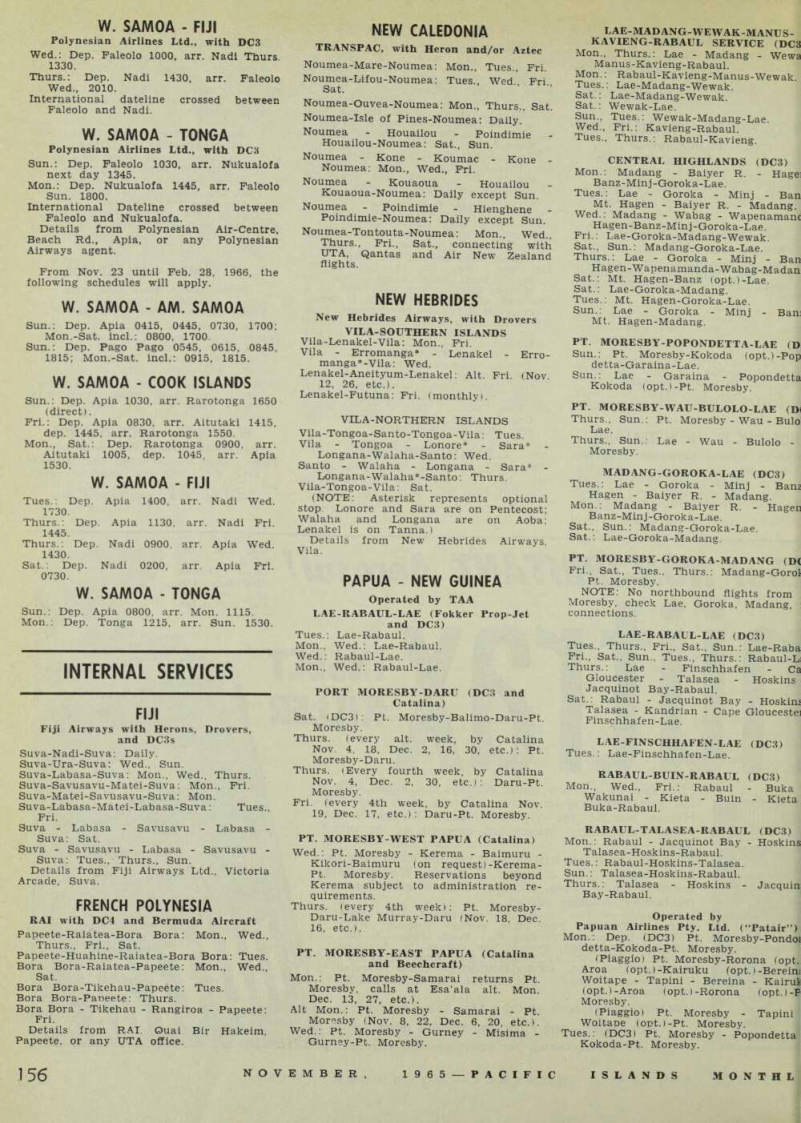 158
158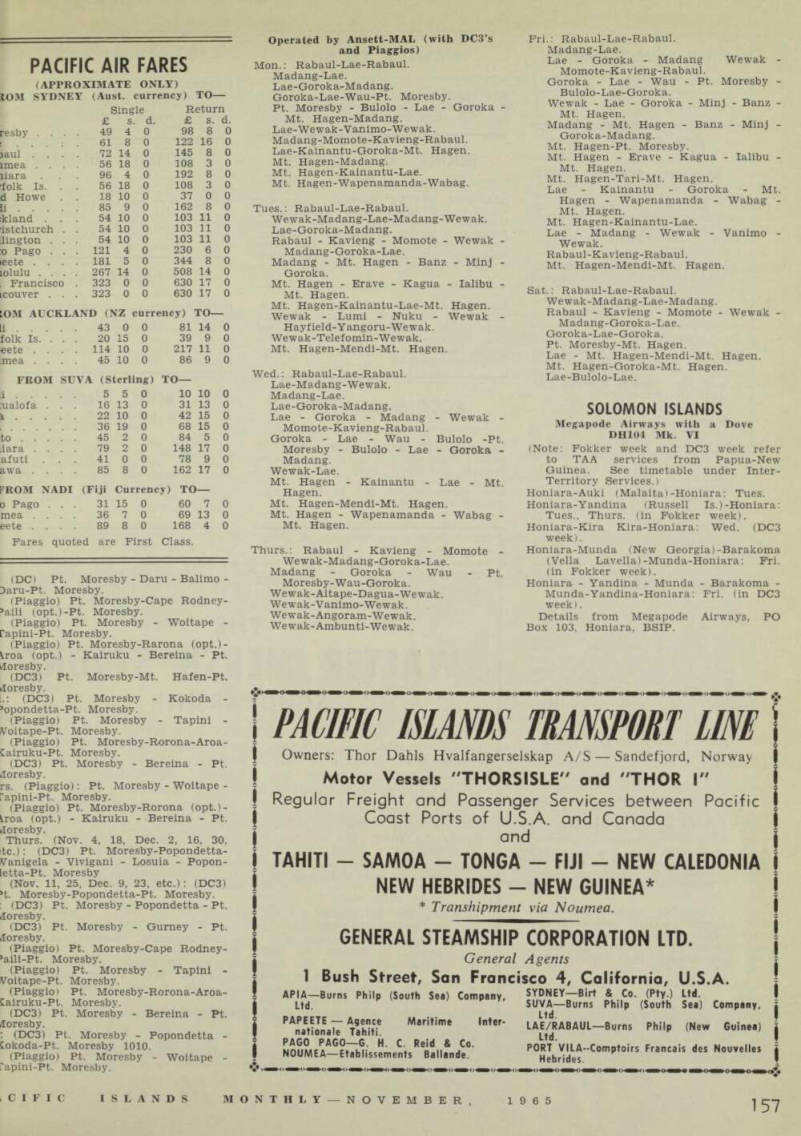 159
159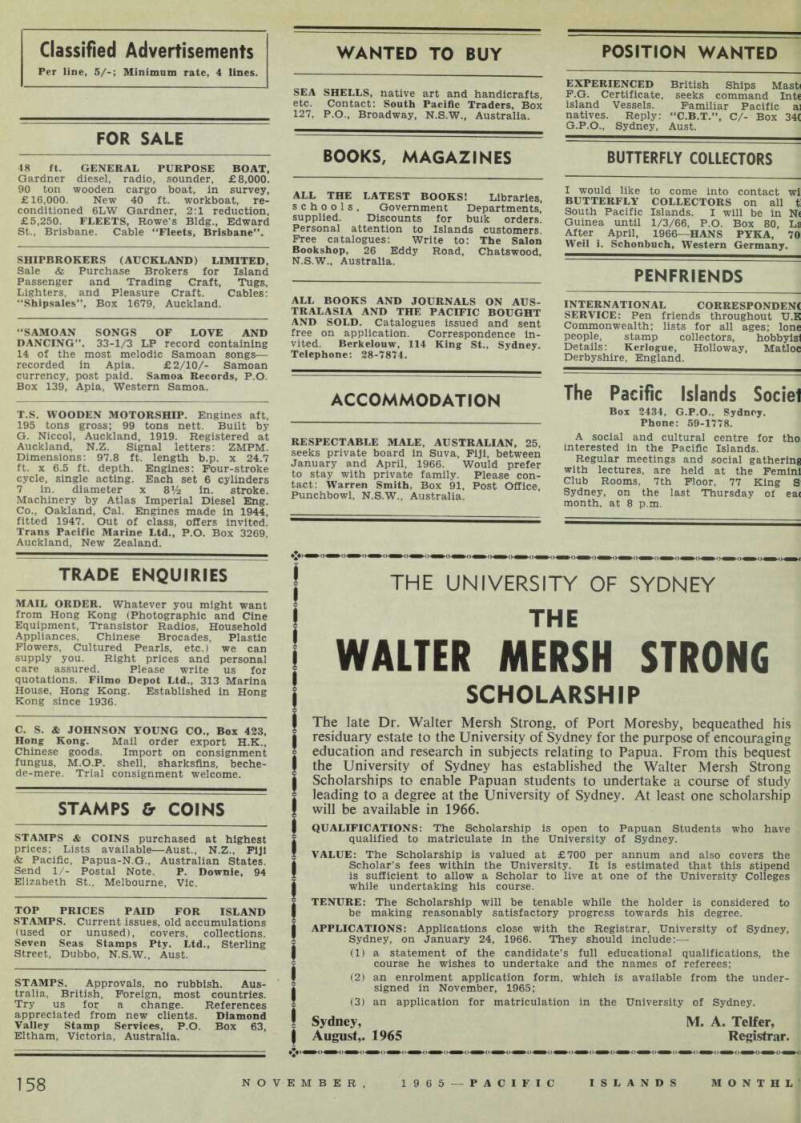 160
160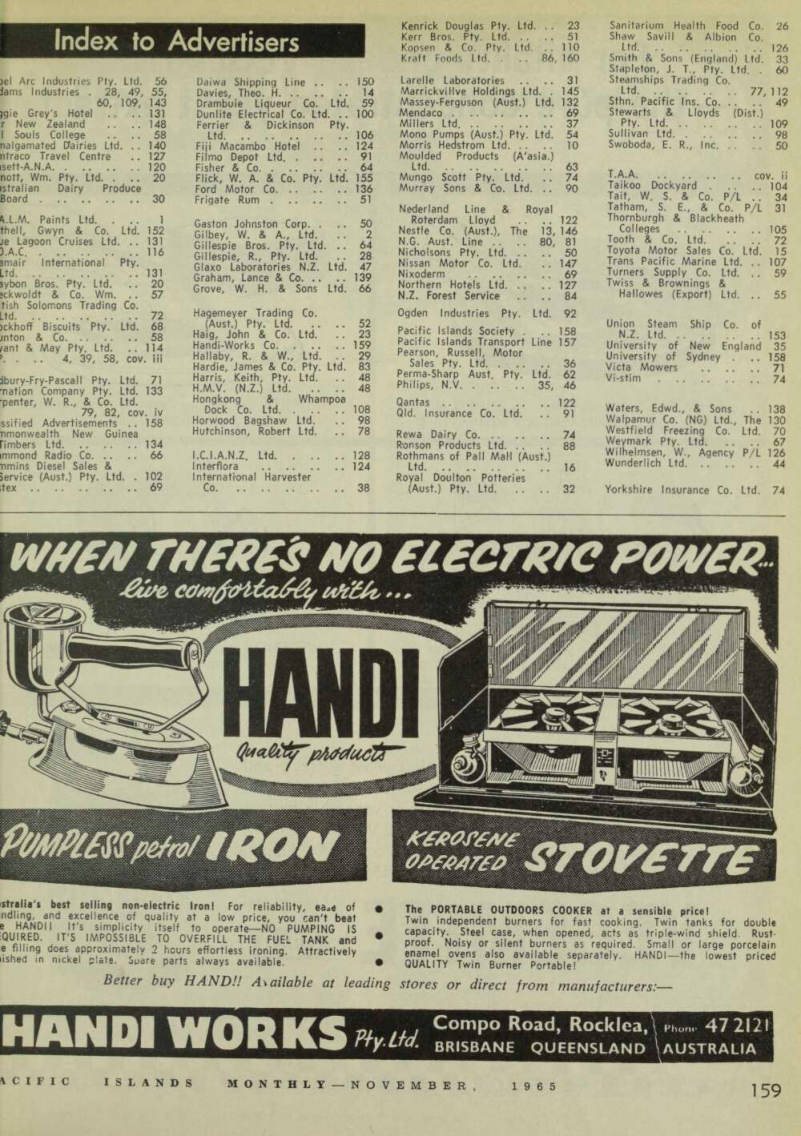 161
161 162
162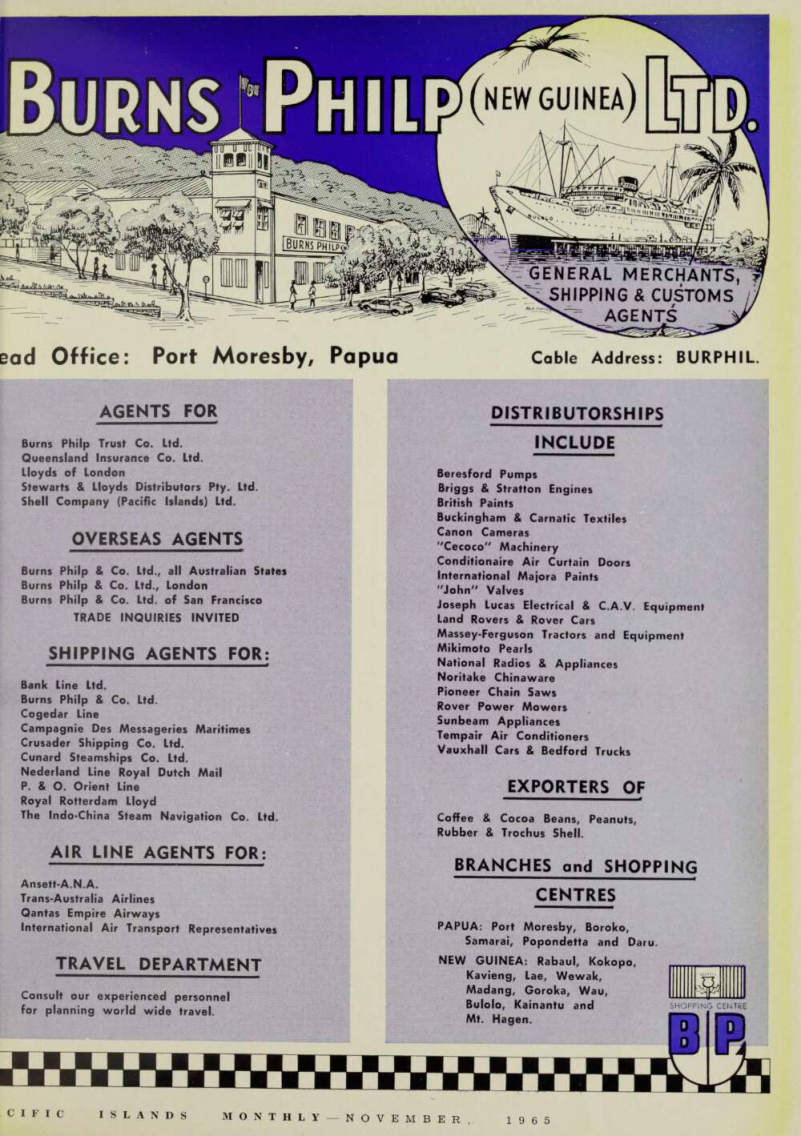 163
163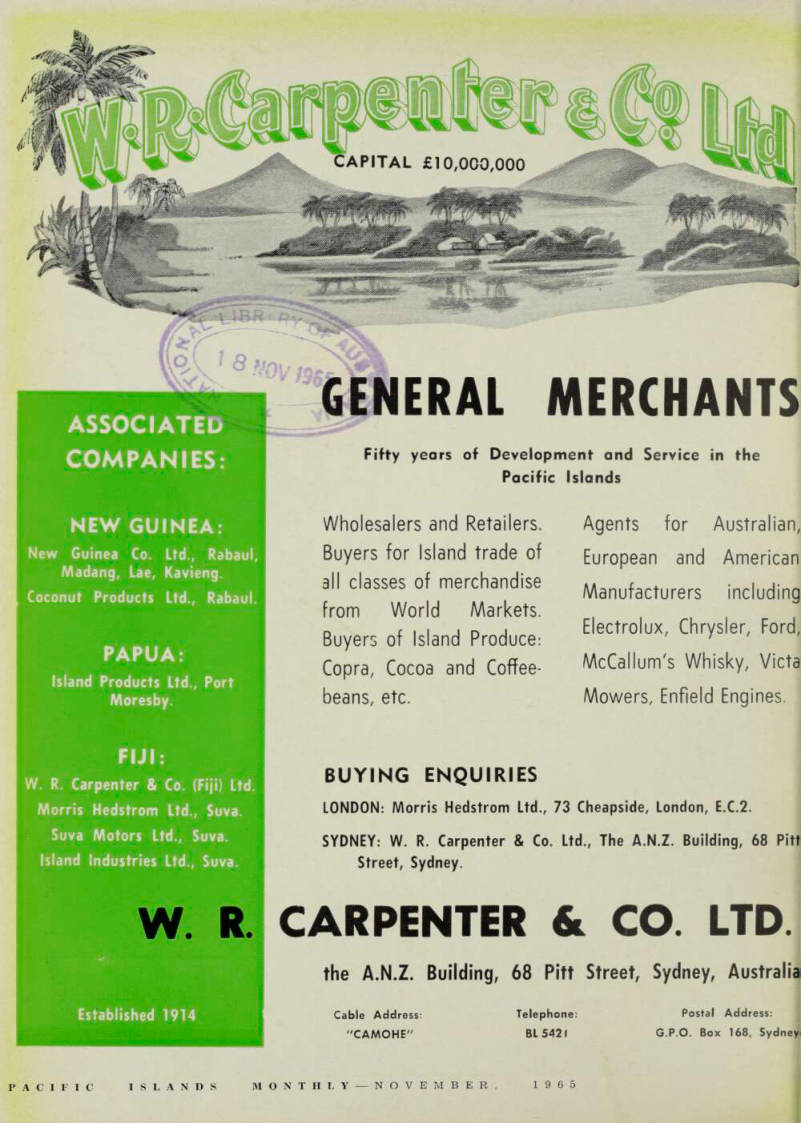 164
164